Saturday, October 10
I finally found a life drawing class in Madrid. It was difficult, there were no Meet Up Groups, and the schools didn’t seem to have anything, at least anything I could find. Mind you, most of the information is in Spanish…
One minute quickies.
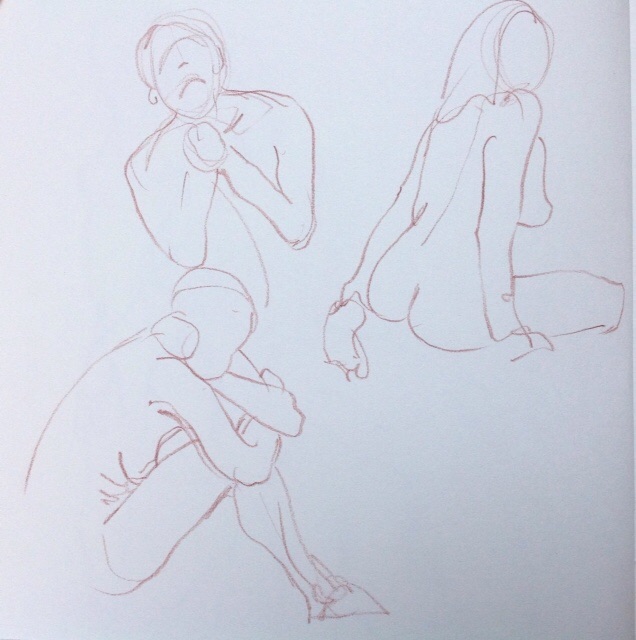 I went to Carmen La Greiga’s studio this morning. Carmen instructs and the class had a ‘Edvard Munch’ theme so our drawing assignments were related to that. Most of the instruction was in Spanish although Carmen translated for me quite often. Sometimes I wasn’t sure exactly what was wanted so then I just did my own thing.
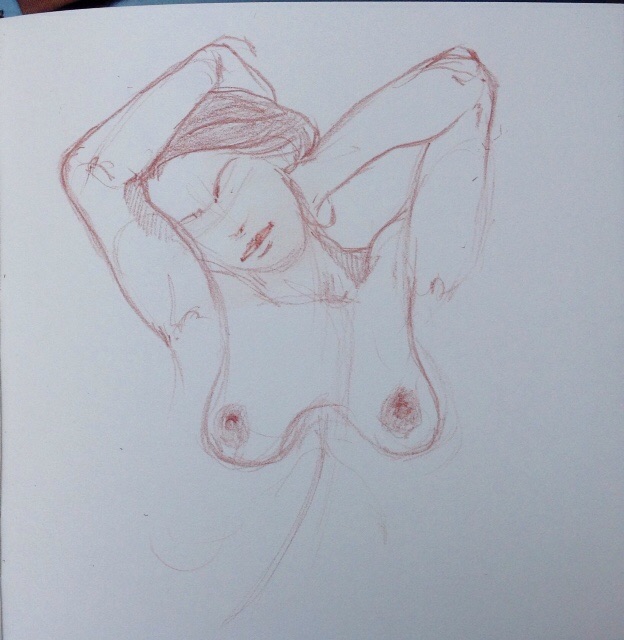 Combining three poses into one composition.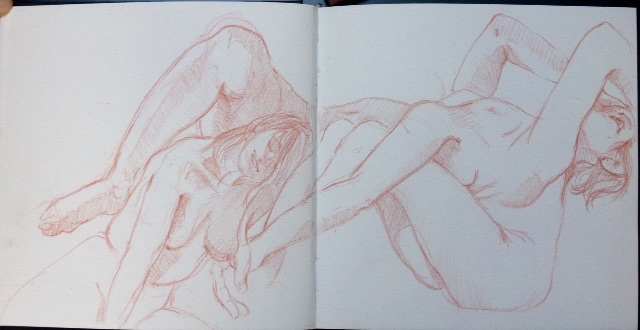
Carmen introduced me to several of the other artists and they all made me feel very welcome. There were people from all over the world who have come to live here. Madrid is much like Paris that way, it seems to attract people. Carmen has a lovely little studio, is an enthusiastic, knowledgeable instructor and also teaches life drawing for children, which I think is wonderful. If you are ever in Madrid and want to draw, check out http://www.tallerlagriega.com
Bob went off on his own to explore the Real Madrid Soccer Stadium while I was at my class, but the admission lines were very long, so he came back to meet me after my class, which was actually much longer than I expected. Carmen does a very nice critique of each person’s work at the end of class and that took over an hour. Bob and I met up in a little park near the Prado, I ate a very late lunch and we decided we would head home early for a change. Funny, we both saw this strange vehicle today, the riders peddle sideways but it goes forward, and then there were those blonde wigs? No idea what it was all about.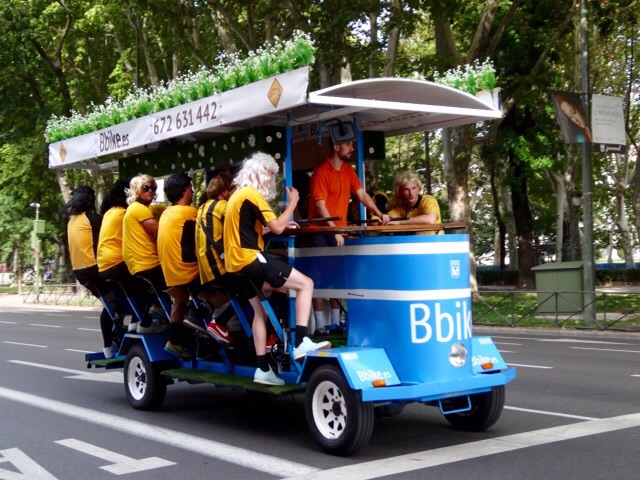
On the metro I spotted this Michael Jackson wanna-be, complete with make up and a white glove tucked into his belt. I do love the metro, such great people watching!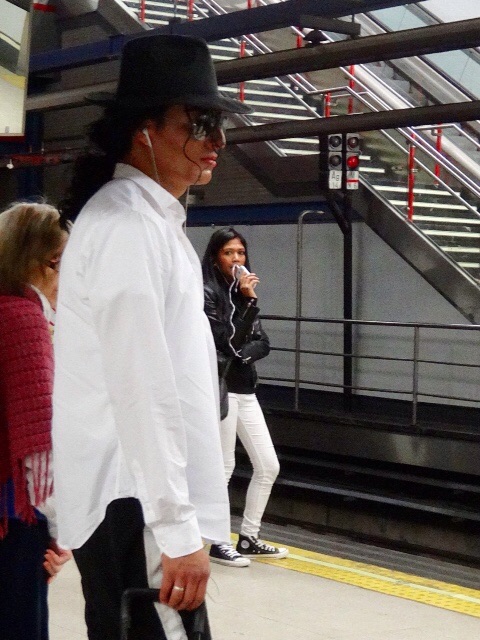
Sunday October 11
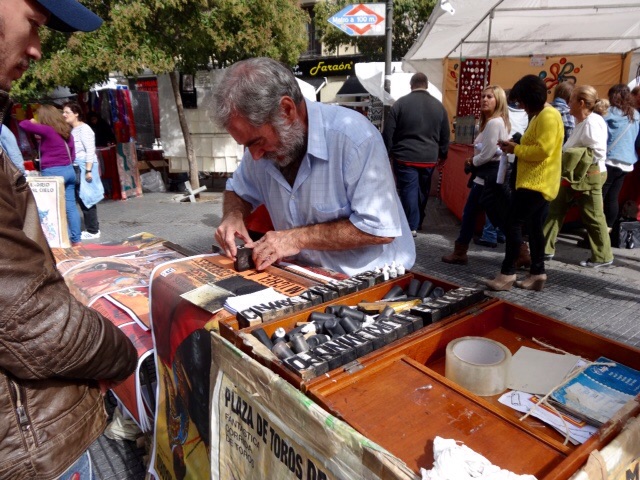
El Restro is a famous Madrid flea market whose origins date back to Medieval times. It takes place every Sunday so that is our first stop today. The streets are teeming with people everywhere we look. The market stretches for blocks with booths set up on both sides and sometimes even the middle of the streets. We wander and enjoy the sights, sounds and smells and even do a little souvenir shopping of our own.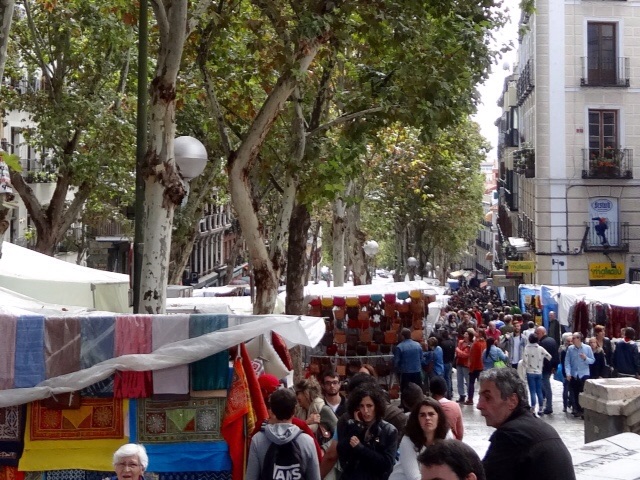 You can have a bull fighting poster with your name as the matador printed as you wait.
 We had lunch near the flower vendors and then headed off to Plaza Mayor, a popular gathering spot in Madrid.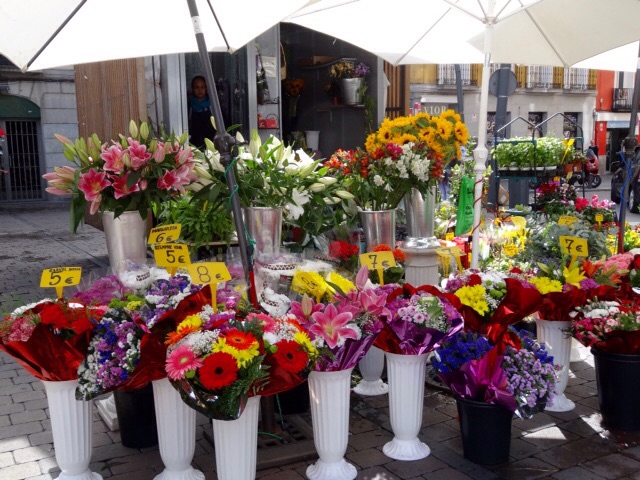
The Plaza ( which by the way is pronounced platha, there are lots of ‘th ‘sounds in Spanish, gracias is actually pronounced grathius!) is packed with people and street vendors and has interesting buildings around it, but half of them are covered with scafolding right now. We find an information booth and we are told we need to head to the Bull Fight Arena right away if we want to get tickets. So a quick metro ride and soon we are at Plaza de Toros and the Las Ventas Bulll Ring. Here is a scale model of the arena.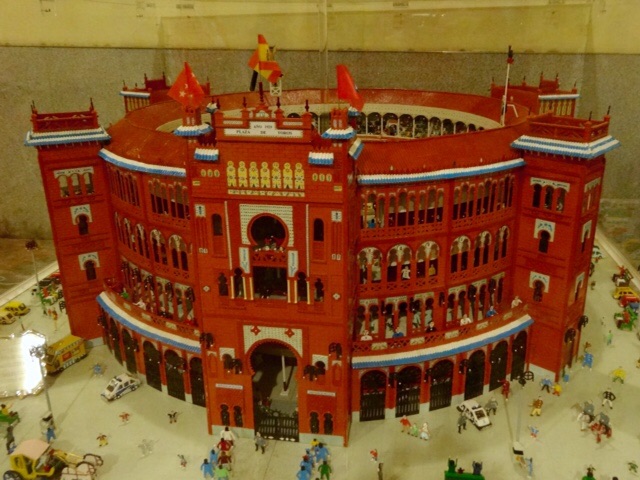
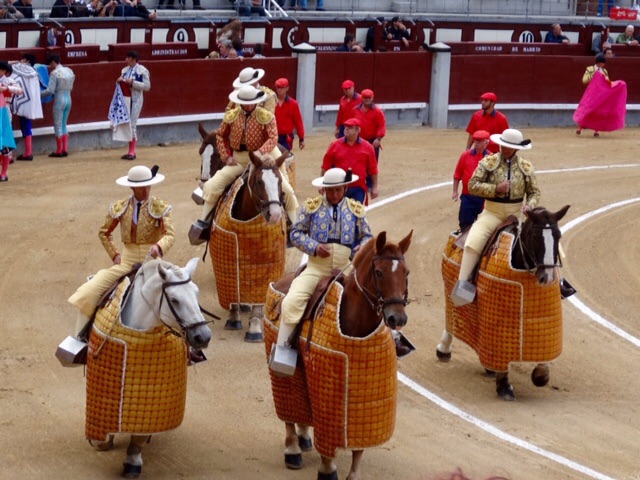
Yes, we are going to see a bullfight! I have mixed feelings about this but we have decided that it is something we should do at least once while we are in Spain. The tickets are very reasonable, only 12.60€ each gets us tickets in the fourth row. We were asked if we wanted first row tickets but I didn’t think I wanted to be quite that close to the action!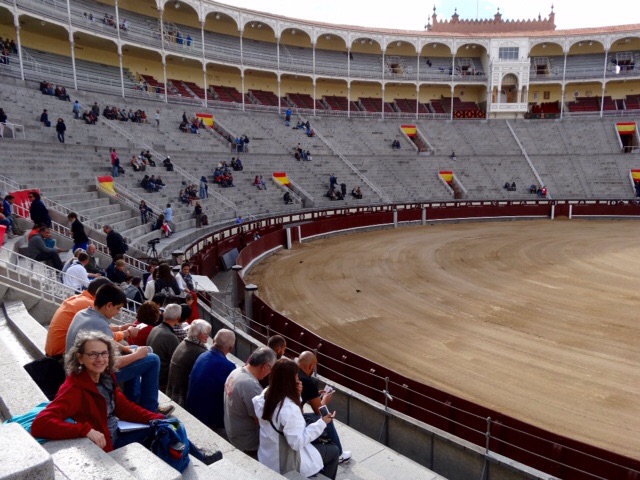 Bob looks up Los Novilleros, which is the event for today and Google Translate comes back with ‘chopped heifer’. We hope that something was lost in the translation! Soon enough the spectacle begins. The banderilleros warm up, practicing their flourishes and moves with their capes. I am surprised that they are not red. Turns out only the Novilleros or Matadores have red capes.
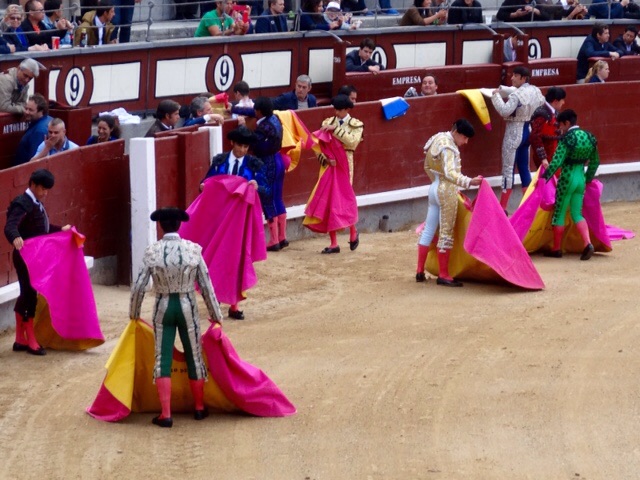 The Picadores enter the rings on their very large horses. They are draft horses as they are large and strong enough to withstand the bulls’s charge. We are surprised to see that the horses are actually blindfolded during the bullfights. There are definitely things I don’t like about all this.
 There are three Novilleros fighting today, these are bullfighters that are still in training as I find out later, and they are fighting bulls who are not aggressive or fierce enough to become ‘toros’. These bulls are three years old, not five and the young men fighting today are all 22 years old!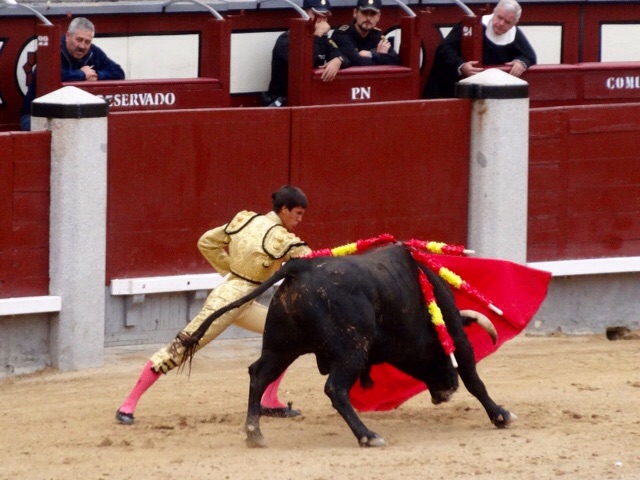
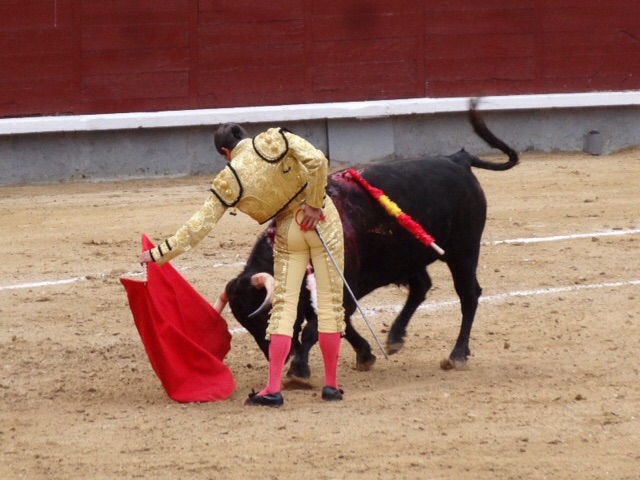
I take a lot of pictures, about three hundred! I think that helped keep me at a bit of a distance from it all. Looking through the camera seemed to blunt the reality of what was happening in front of us. Much of the action was in fact right in front of where we were sitting. I am very glad we decided against the first row seats!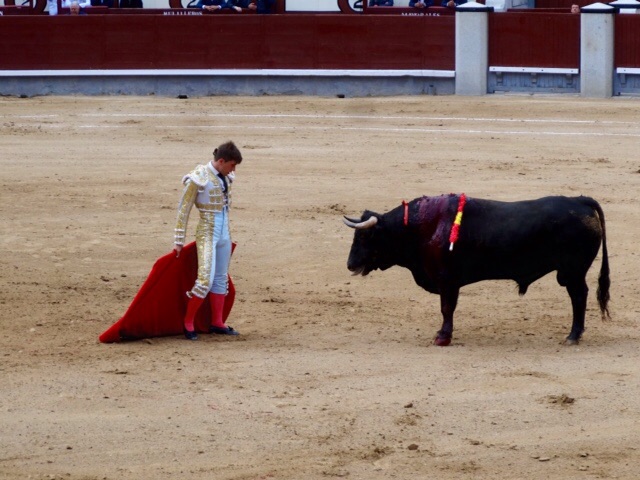
There are some tough parts. There is definitely blood, and one of the bulls sank to his knees and had to be coaxed to his feet for the final few passes and the Estocada, which is a final quick sword thrust between the bull’s shoulders and through the heart. If done correctly it results in a quick clean death. However, remember these are matadors in training so it wasn’t always quite so quick. In that case, there is the Descabello, which is a shorter sword that is used to sever the bull’s spinal cord, which kills the bull almost instantly.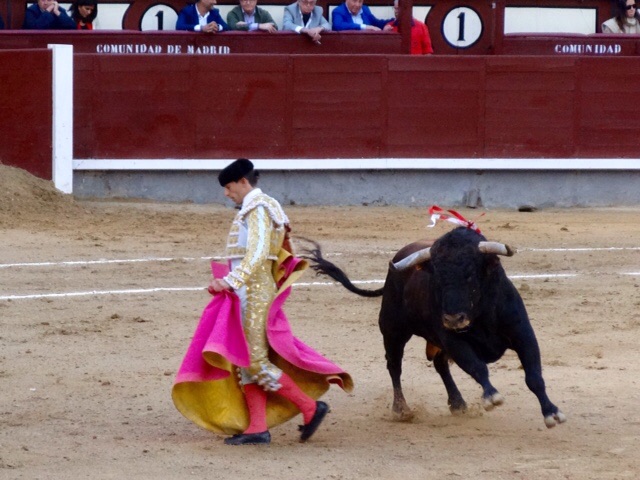
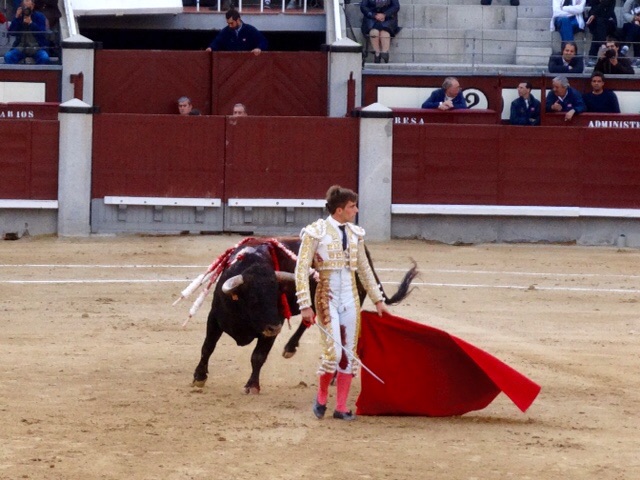
It is brutal, but it doesn’t last very long and I wonder how many animals suffer for just as long, or even longer at modern slaughter houses or when they are wounded when hunted? The bulls have a very good life up to the time they enter the bull ring, and then a half hour later it is all over, or maybe I am just trying to justify the experience?
I tell Bob that something is going to happen, the air feels absolutely electric, and sure enough a minute or so later the bull tosses the matador into the air.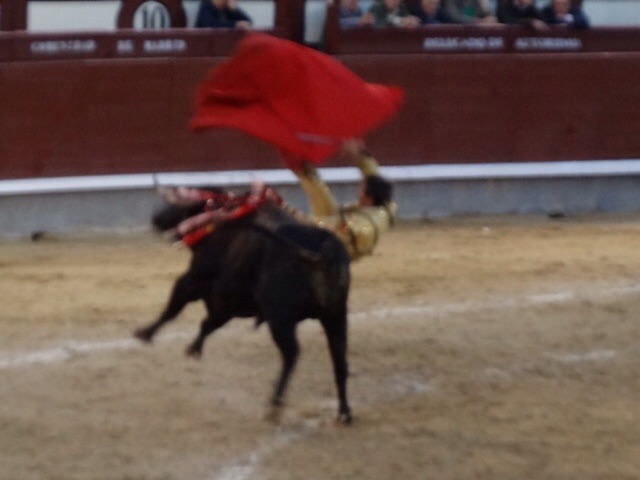 He is pinned to the ground and it takes what seems like a long time for help to arrive and distract the bull. The pictures are blurry but maybe that is for the best.
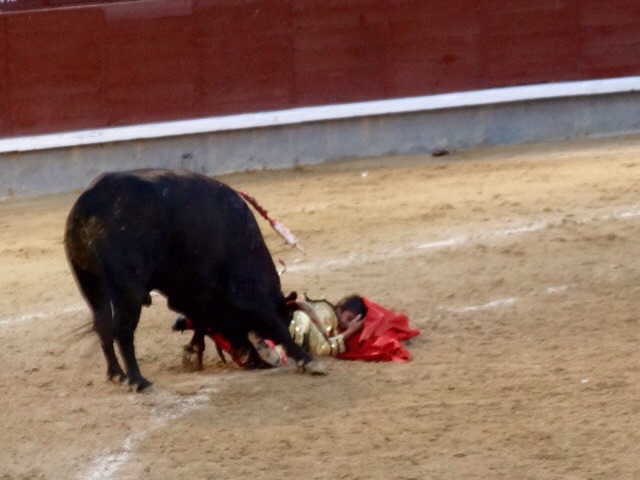 Amazingly, this young man gets to his feet and continues the fight, even defiantly turning his back on the very bull that just tried to kill him! These men are either very brave or very crazy!
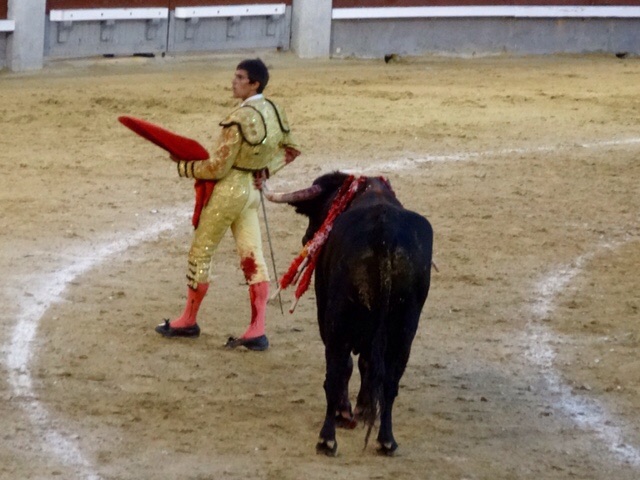 This was the last fight of the night, the arena empties quickly and we head for home. It was almost ten by the time we got home and have some soup before bed. We have to find a way to avoid these late night suppers!

 trudymason.com