Day 15, Tuesday, September 12, 2023
We drive to Bayeux to visit the Normandy war museum about D-Day. On the way I am surprised to see red poppies on the side of the road. It was a beautiful reminder of horrors of war. We were driving too quickly to take a photo but I found one online that is very much like what I saw. Photo credit Vesna D. The Normandy landings took place on Tuesday 6, June 1944 . Code named Operation Neptune and often referred to as D-Day, it was, and still is, the largest seaborne invasion in history. This is a big museum with lots of displays. There are examples of the uniforms worn at this battle.
This is a display of the surgical instruments used for operating in the field hospitals. There were 6 tables in the surgical tent and doctors would operate side by side for 12 to 18 hours at a time. Their patients would often still be in their muddy uniforms and boots. It made me think of the movie and TV show Mash. Much the same scenario only the equipment used was much more primitive during WWII.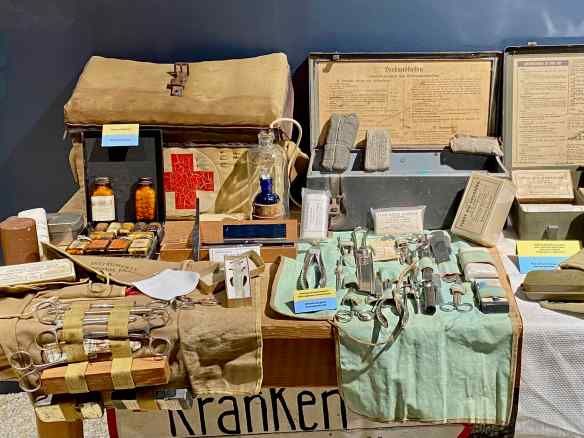
There are a lot of the tanks and guns that were used during this invasion.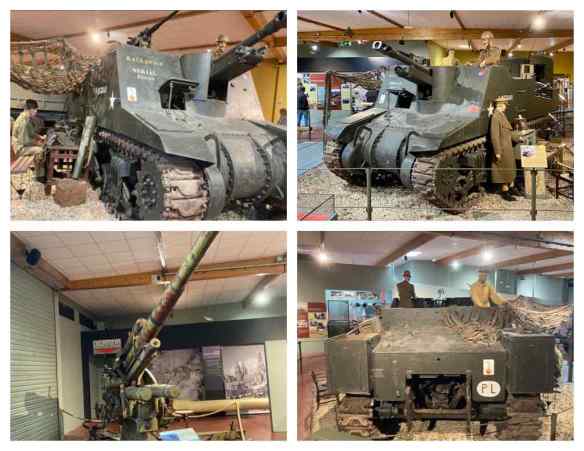
The museum is well laid out with a lot of information in an easy to read format. It was the photos that really told the story for me, especially these two. 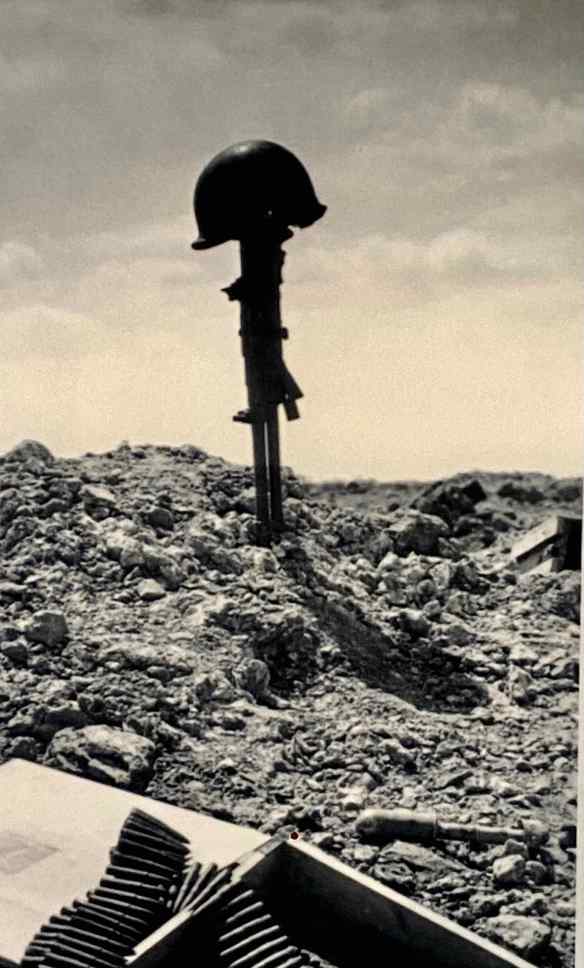
I really can’t imagine the horrors experienced by these young men in this and so many other battles.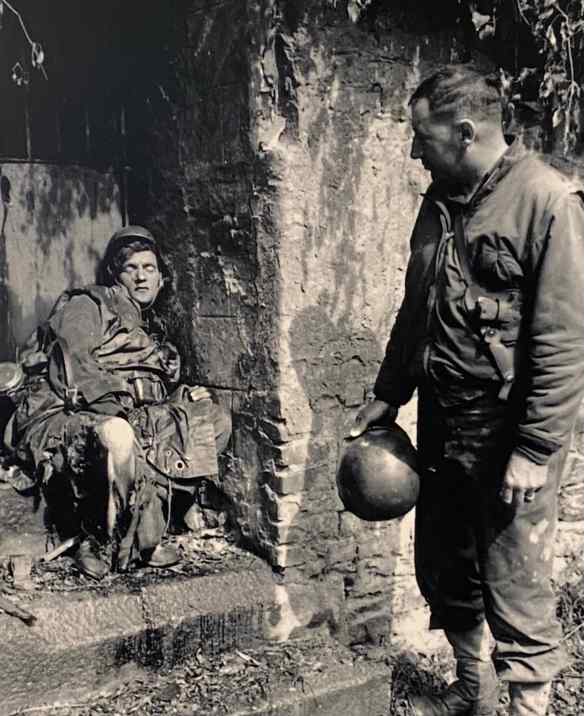
I had been wondering how the dead were gathered and buried during battle. It seemed to me to be an impossible task. There were explanations provided for this monumental undertaking.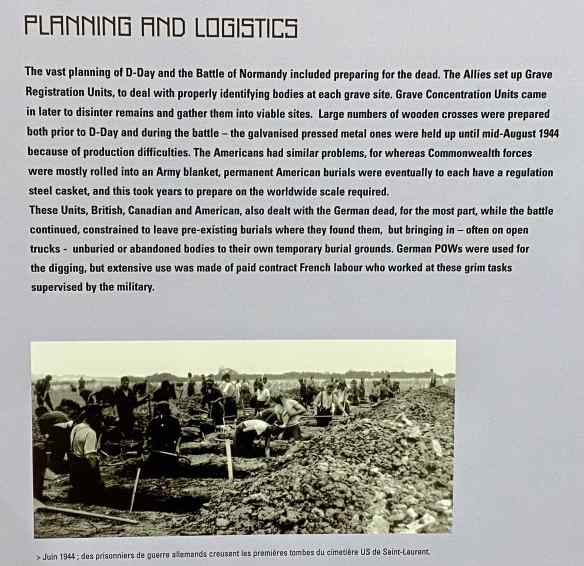
I had never thought about the necessity of include plans for taking care of the dead when planning a military battle .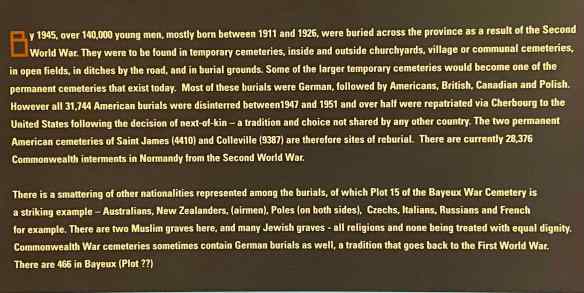
These 3 photographs of information are from the museum. It seems the easiest way to include this information.
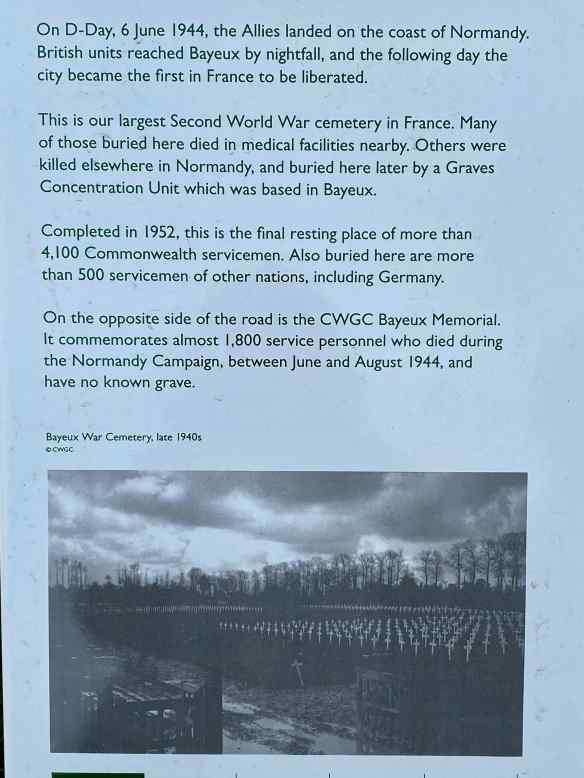
We visit the cemetery. There are indeed ‘crosses row on row’ so very many crosses. So many lives lost.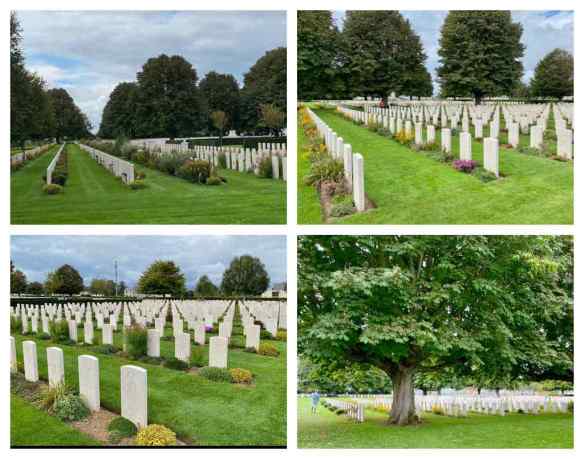
This memorial, in the centre of the cemetery, has wreathes left in memory of those who died.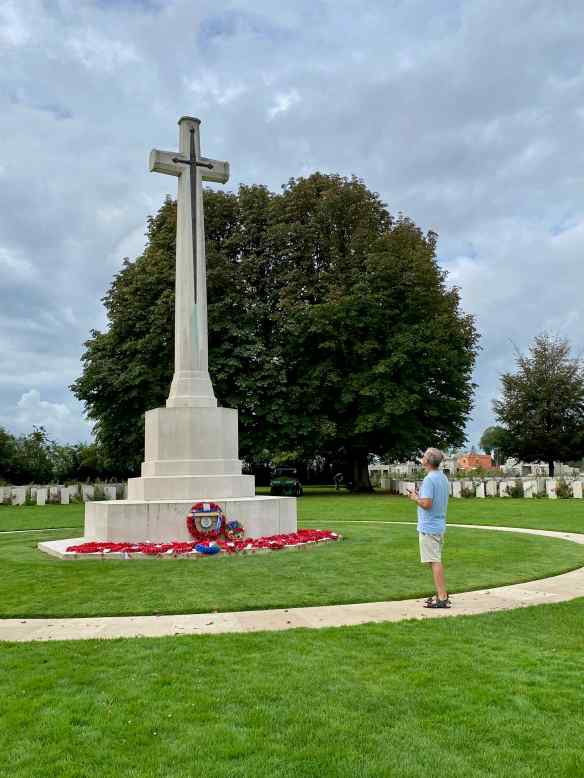
Once again a photo has such an impact. I am in tears again.

We drive to Juno Beach where the Canadians landed. This is a very heavy day. These pillars are engraved with the names of those who died on D-Day. So many names. So many dead. A total of 4,414 Allied troops were killed on D-Day, including 2,501 Americans and 359 Canadians. More than 5,000 were wounded. In the ensuing Battle of Normandy, 73,000 Allied forces were killed and 153,000 wounded. The battle — and especially Allied bombings of French villages and cities — killed around 20,000 French civilians.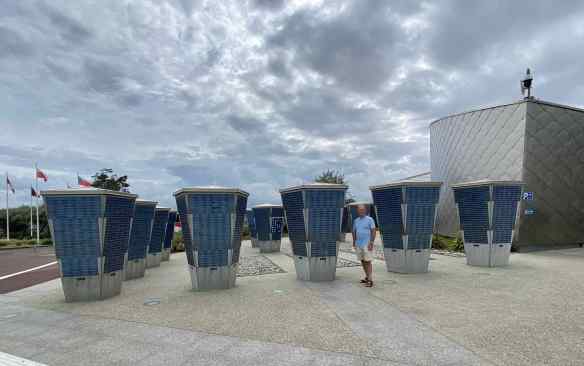
We take a tour of the bunkers on the beach and our guide is a young French Canadian from Quebec. All the guides are from Canada and they are all about the same age as the soldiers who fought and died on these beaches. 
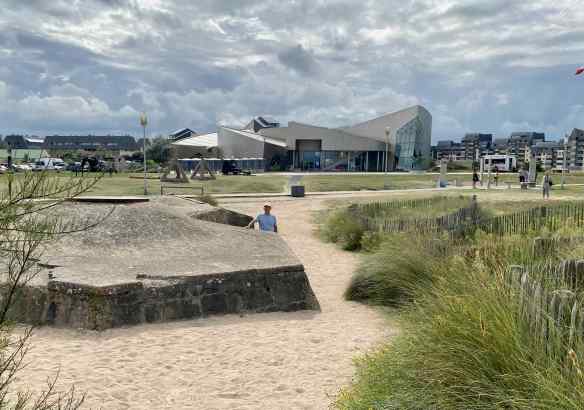
This German bunker is fairly large with several rooms.
It is a grim place, I think perhaps haunted by a ghost or two.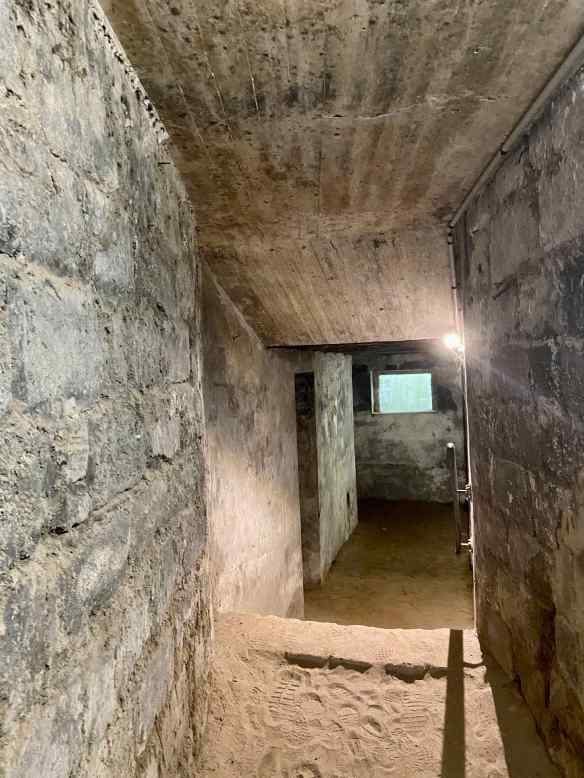
At one time the bunker was right at the water’s edge and completely visible.
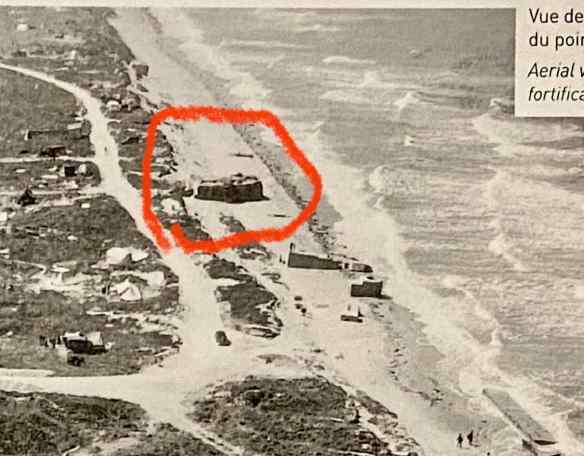
But now it is mostly covered with sand. It was only discovered and opened to the public in 2014. It had been completely covered with sand and the ocean is now several hundred feet away.
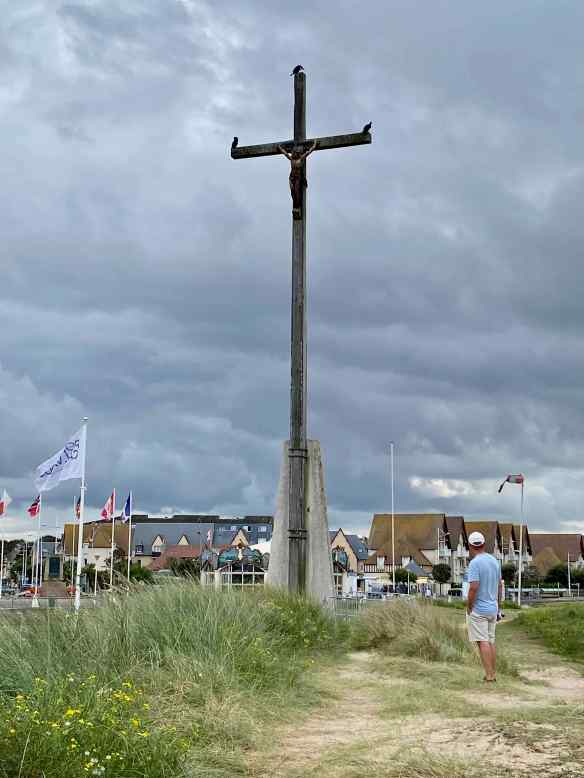
A commemorative cross has three birds sitting on it, cormorants, I think.
 trudymason.com