
Day 26, Saturday, September 23, 2023
The Loire Valley is famous for the many chateaus that dot the countryside. Many of these date from the 15th to 17th centuries when French Kings and noblemen competed to build ever more elaborate and luxurious chateaux. Today we visit Villandry Chateau, which was built between 1532 and 1536, where a 12th century fortress once stood, of which only the keep remains. 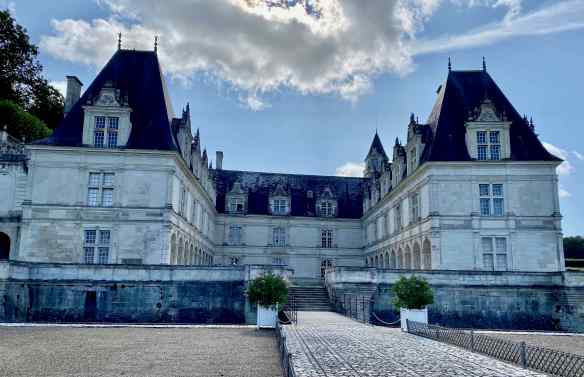
There are 17 rooms open for visit. They are all furnished and contain paintings from the collection of the present owner’s great great grandparents Joachim Caravallo and his wife, Ann Coleman. They became owners of the Chateau in 1906. Ann Coleman had family money and she spent most of it renovating and restoring the Villandry Chateau which was bought mainly as a place to show their extensive collection of paintings. Here are the drawing room, the study, the dining room and the kitchen.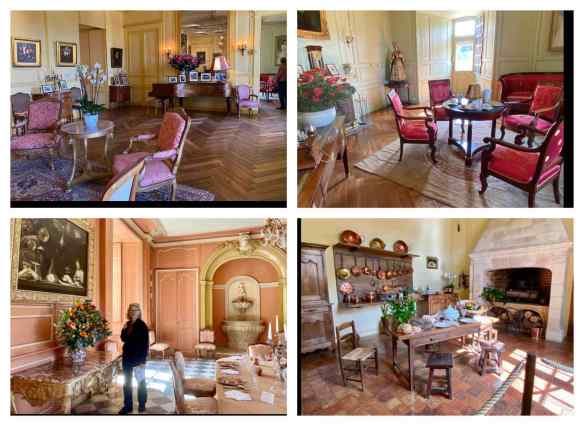
Every room and some of the hallways have beautiful fresh flower arrangements, There are big pots of orchids everywhere too. It must be full time job just taking care of the potted plants and the numerous arrangements of cut flowers.
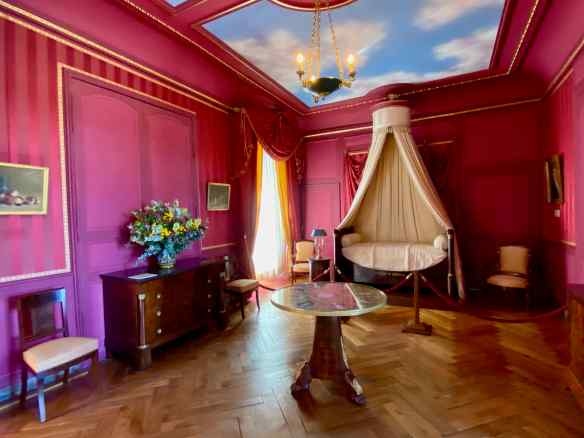
 This is Prince Jérôme’s bedroom, who was the younger brother of Napoleon I. He was the owner of Villandry for a few years.
 Villandry is most famous for its gardens. They are unbelievable! This view from Prince Jérôme’s bedroom window is of the Love Garden. Each of four box beds symbolize the four states of love: Tender Love, Passionate Love, Flighty Love and Tragic Love. The pink hearts are in the Tender Love bed.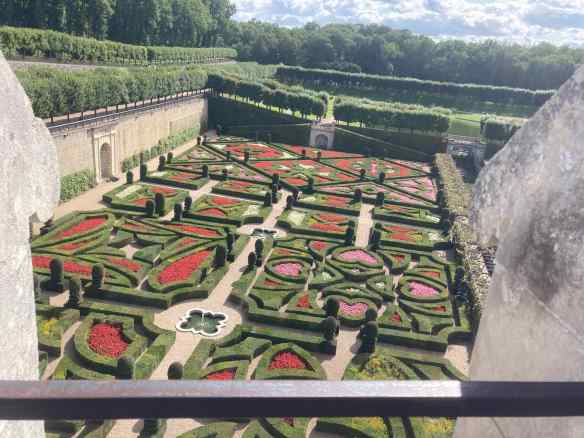
The tower bedroom has an amazing view of the Ornamental Gardens. 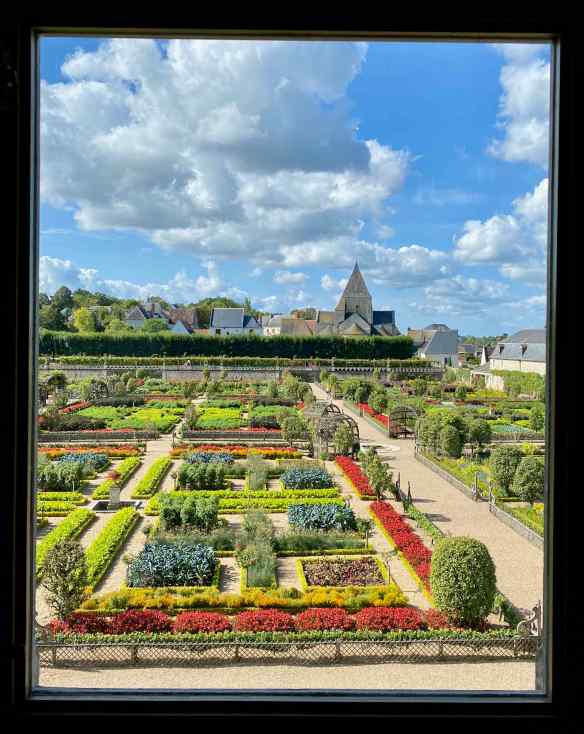
The Moat bedroom belonged to Ann Coleman, whose inherited fortune was used to restore Villandry.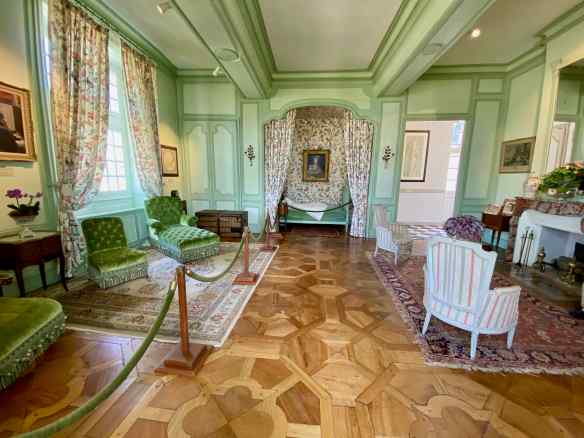
Part of the chateau devoted to the Art Gallery…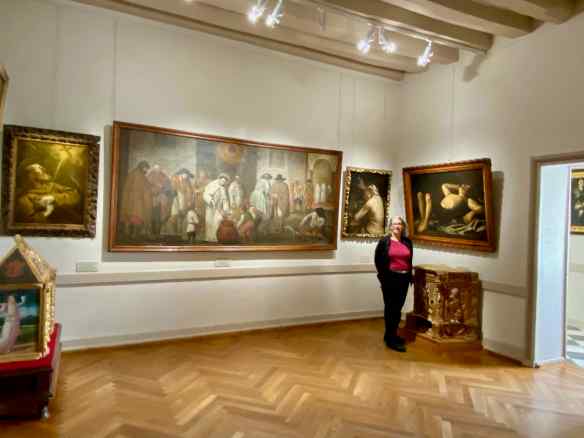
…includes this intricate ceiling which was one of four from a 15th century palace in Madrid. The other three are in museums in Madrid, London and San Fransisco. We saw the ceiling in Madrid during our trip to Spain several years ago. It is made of 3,600 pieces of polychrome wood that took a year’s work to assemble. How interesting that we see the second ceiling here.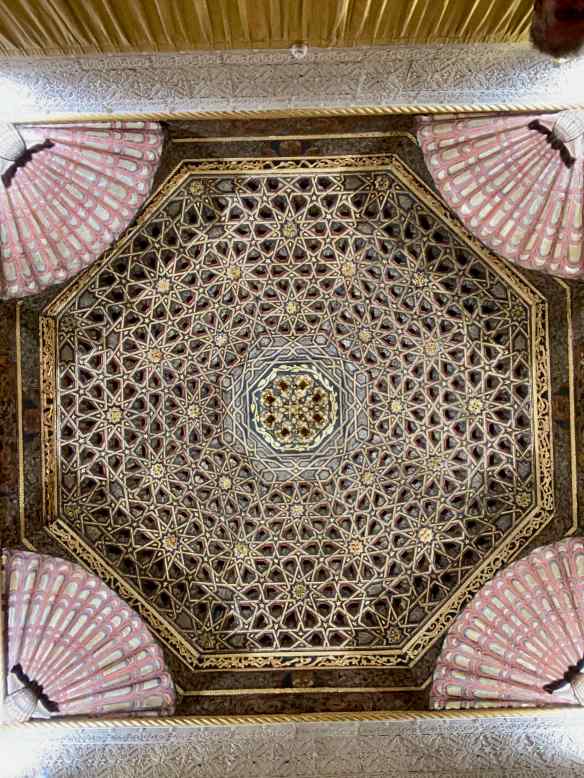
The dormer windows are all richly decorated.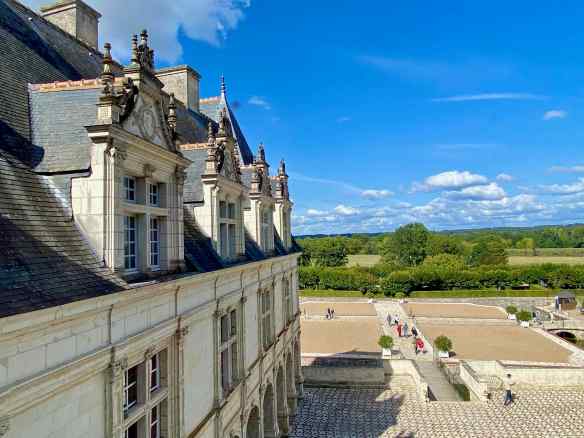
We walk up to the Keep, which is part of the original fortress and get our first panoramic views of the gardens! What can I say?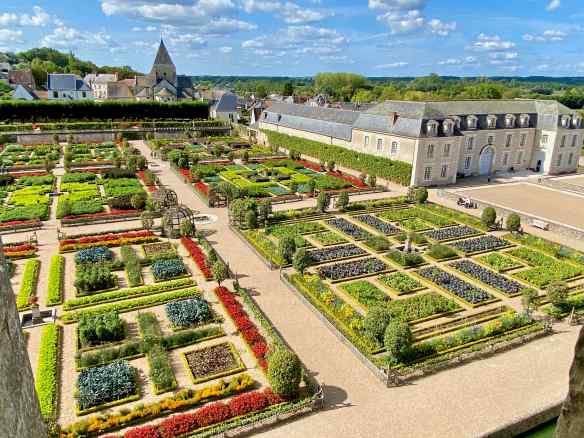
They are unbelievable! There are ten full time gardeners to take care of all this, which doesn’t seem to be near enough to maintain these ornate gardens. Later we read that they do hire more seasonal workers. 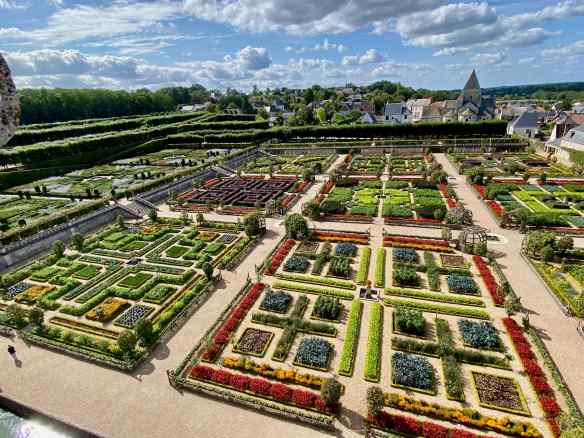
A selfie in front of the Garden of Love!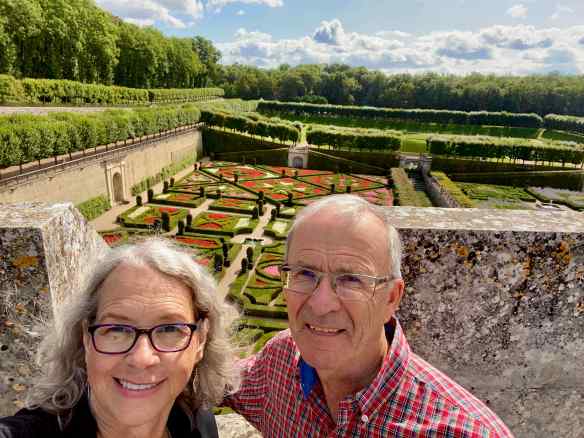
These crazy spiral stairs up to the Keep were not level, they all sloped towards the centre…it made climbing them more difficult.
This is the King Francis I bedroom, which is much like it must have been when he visited Villandry on January 17, 1543.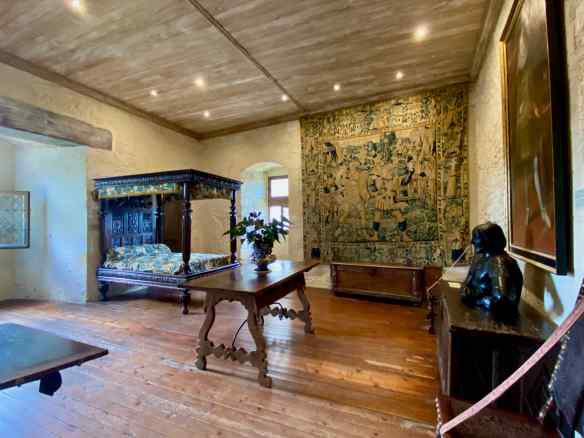 We leave the chateau and climb high above the gardens for a great view.
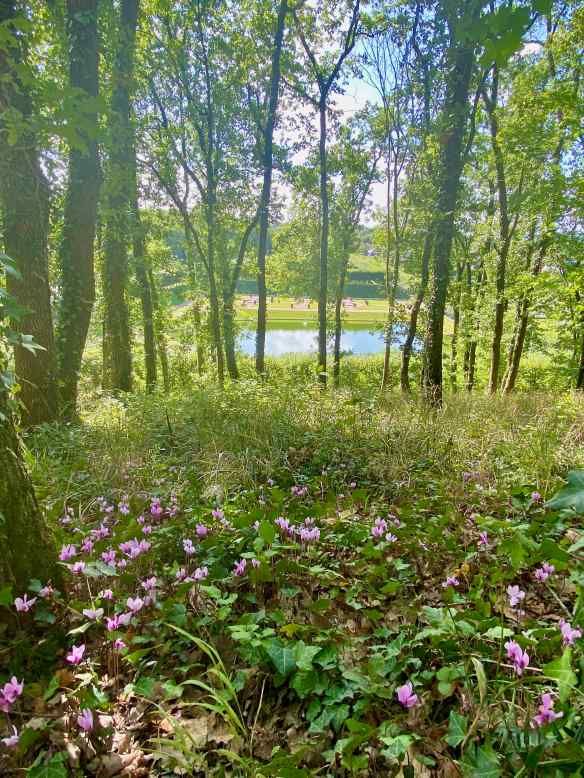
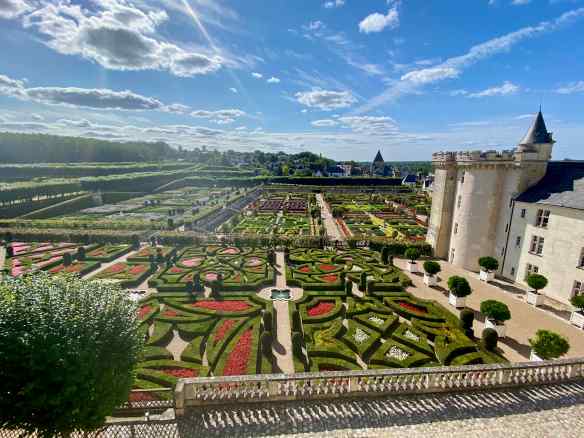 Then we walk through part of the forest. Villandry has a tall stone wall surrounding its 15 acres of forest and gardens. The forest floor is covered with pink and white cyclamens.
 The Water Garden is surrounded by lime trees. There are 1,015 lime trees in the garden that require three months of winter pruning. This is carried out by a team of four gardeners.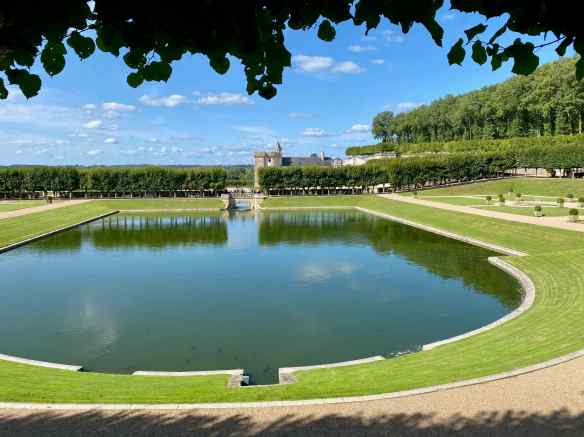
Just past the Sun Garden, oops, no photos, we walk to the centre of a maze, which symbolizes Man’s earthly journey. It is easy to get to the centre because there are no dead ends. It is more like a labryinth than a maze.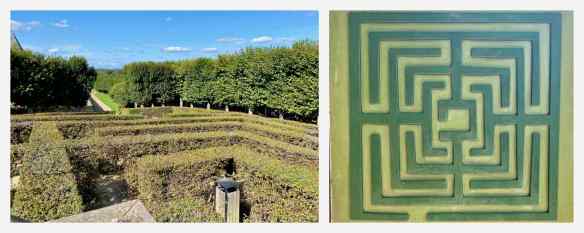
A clever combination of coleus and begonias. These gardens contain 85,000 vegetable plants and 125,000 flower plants! 115,000 of these are planted every year. The rest are perennials.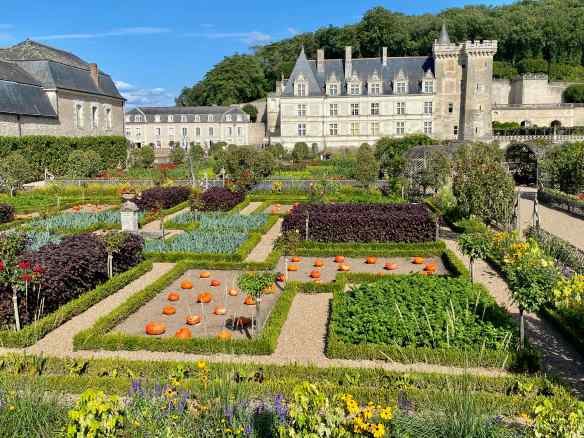
There are two planting schemes, one in the Spring from March to June and another in the summer from June to October.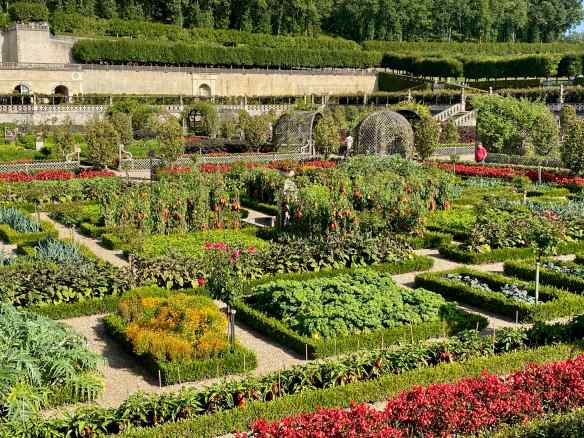
A view showing the Keep (the square tower) where we climbed the sloping stairs to reach the top, and the forest we walked through high above the gardens.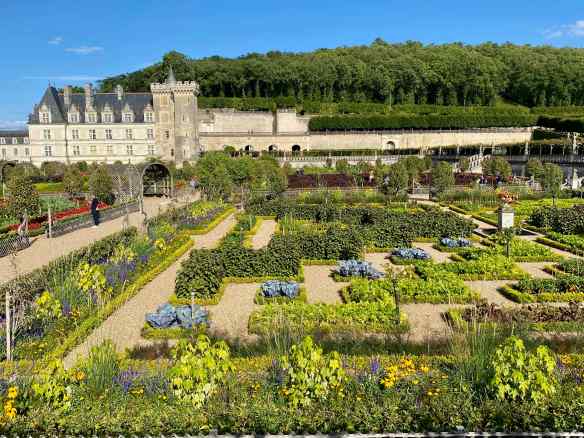
A few close ups of the many flower and vegetable beds. 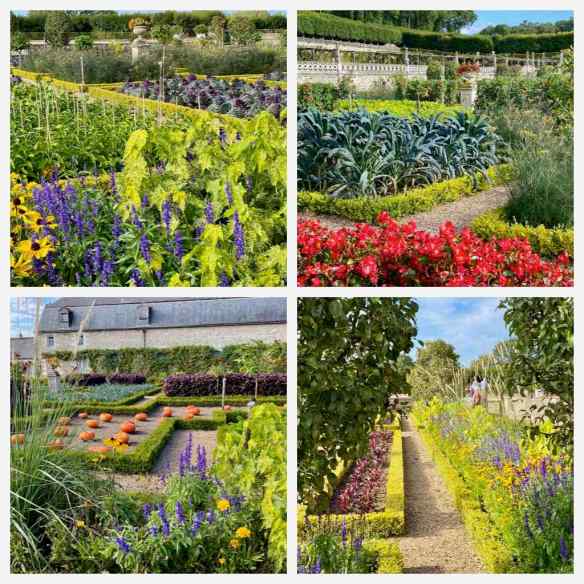
The blueish green spiky plants are leeks and those are tall tomato plants behind. When the produce is harvested it is put in a special area where it is offered for free to visitors and villagers.
I think this is one of the few castles or chateaux that we have seen with a working moat. 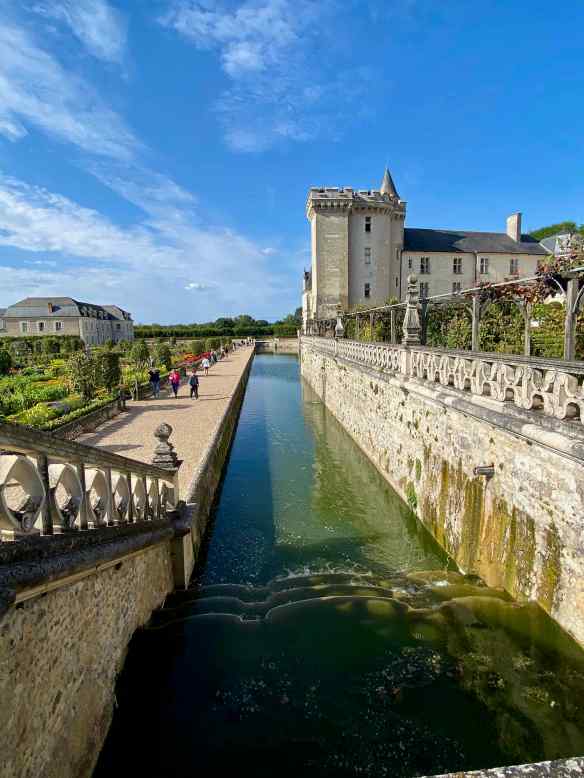
This one contains some very hungry fish!
Time to head home, we spent about 6 hours visiting this chateau. There are about 100 castles and Chateaus open to the public in the Loire Valley…I guess we will have to pick and choose just a few more to visit in the next few days.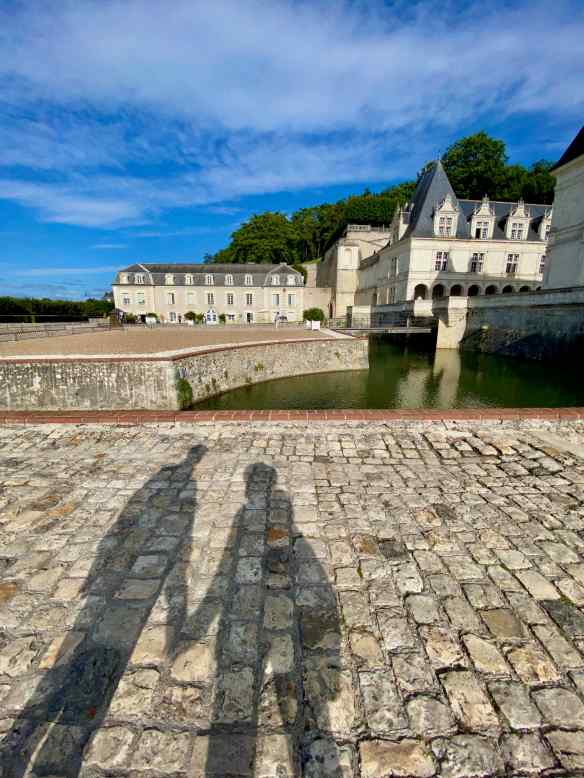
 trudymason.com