Day 65, Wednesday, November 1, 2023
On our drive to Lyon we visit the UNESCO World Heritage Site of Pont du Gard.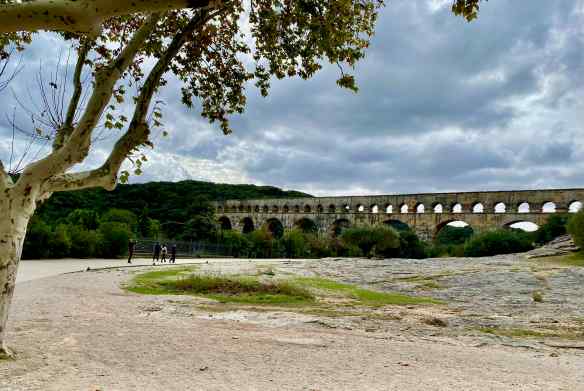
The Pont du Gard is an aqueduct bridge built by the Romans in the 1st century AD.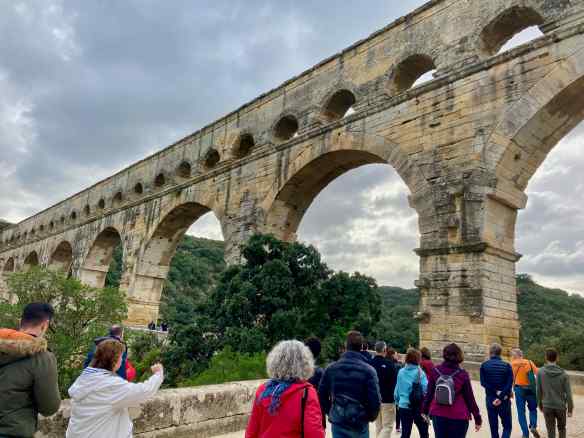
At 50 meters high, it is the highest Roman aqueduct bridge in the world. It is made up of 3 rows of superimposed arches (6 arches on the first level, 11 arches on the second level and 47 arches originally on the third level). It is in remarkably good condition and is considered a masterpiece of human creative genius. The Pond du Gard is the only example of an ancient 3-story bridge still standing today.
Our tour takes us down to the river bank to see the strong foundations that have supported this bridge through many floods. We are shown a photo of floodwaters that were higher than the level of the bridge above these bottom arches.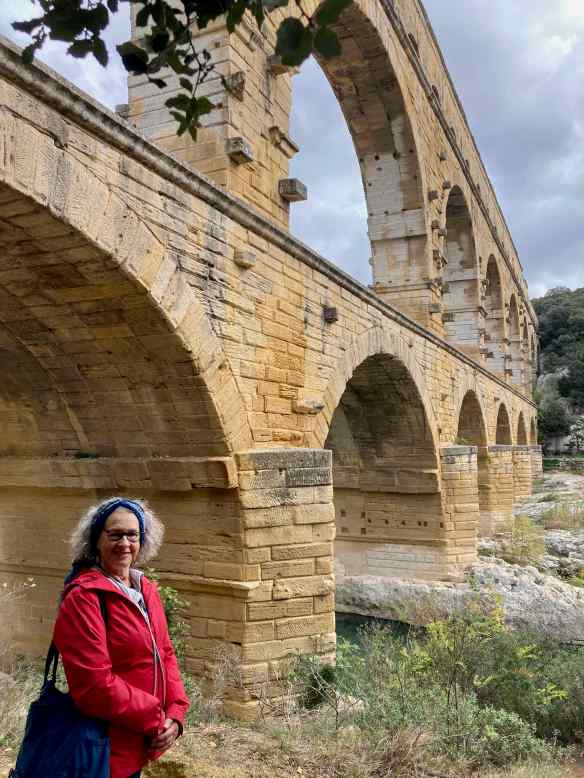
And today we are going to walk across the very top third level, inside the original water channel! This old photograph from the museum on site shows where we will be walking and just how high above the river we will be.

Nearly a thousand men worked on this colossal project, and it was completed in just 5 years! We climb up to the very top level inside a staircase for tourists that was constructed in 1842…and that little staircase took three years to complete!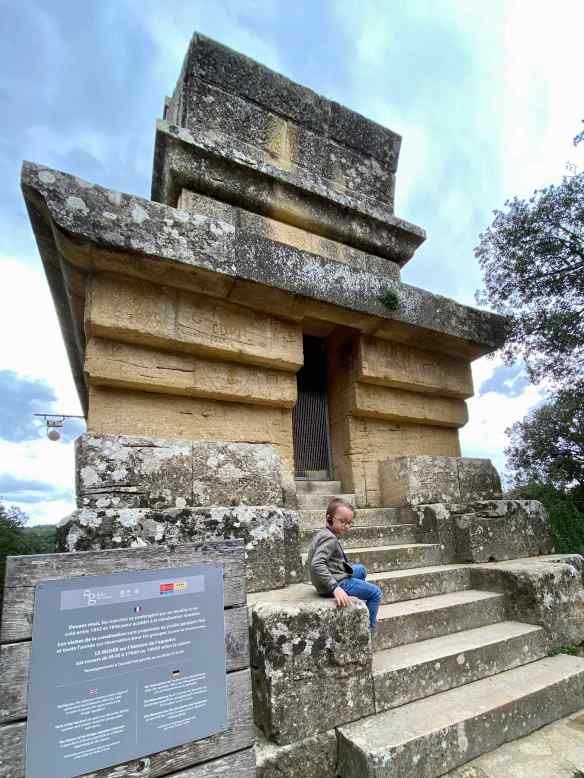
We climb the spiral staircase and emerge on the top of the bridge. WOW!! We are 50 meters above the river and the views are amazing. This is looking downstream…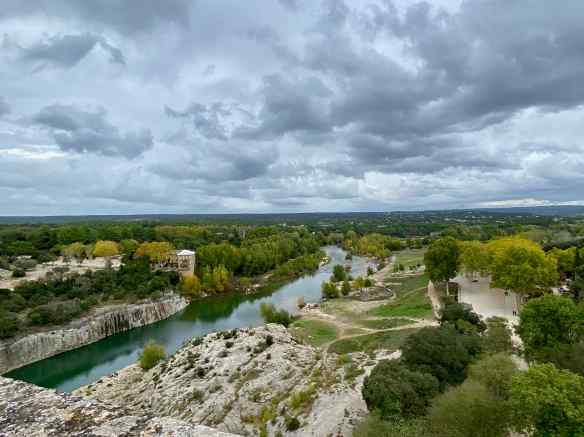
and this is upstream.
It is time to walk inside the water channel that supplied the city of Nîmes with water under pressure for 5 centuries! Can you tell I am excited?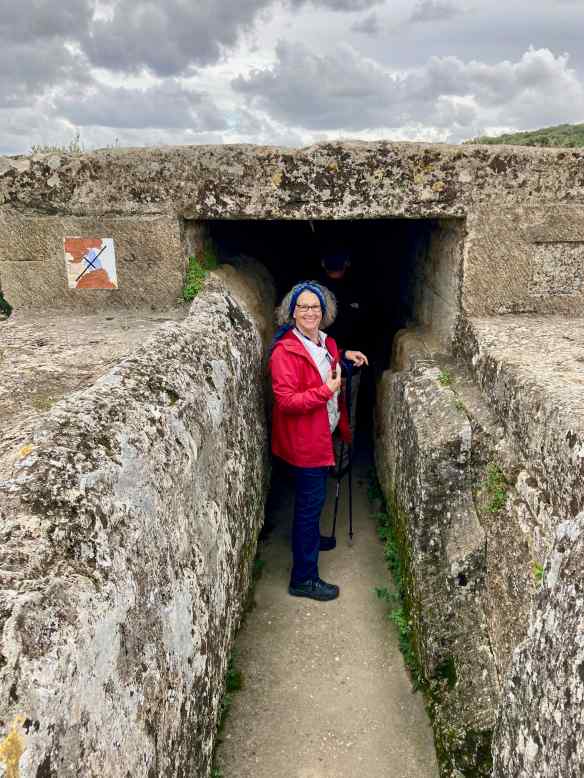
Portions of the top of the channel are open and allow us to see the calcifications that built up inside the water channel and eventually stopped the flow of water in the 6th century. Bob had to duck in a few places… 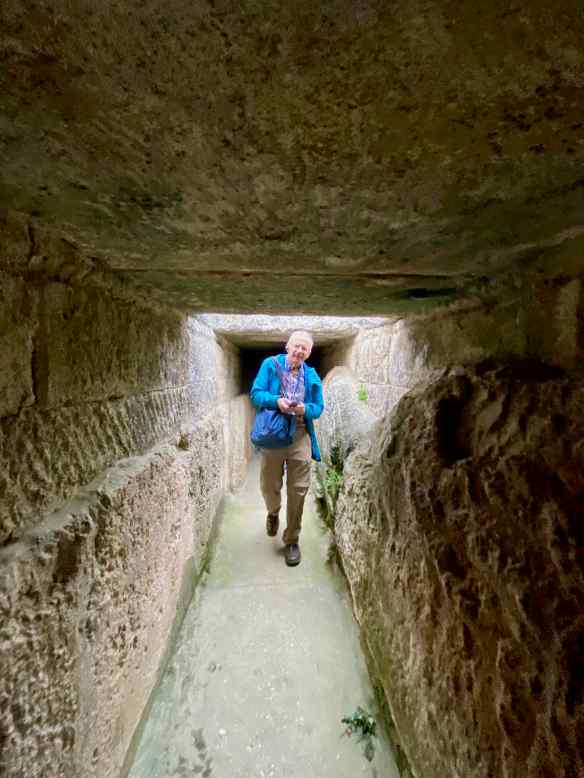
but I am just the right height!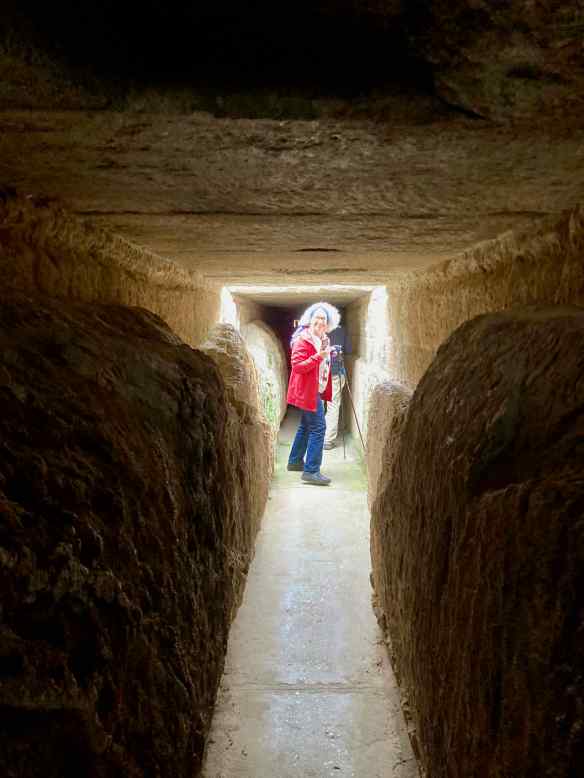
The aqueduct carried an estimated 8,800,000 gallons of water a day over 50 km, to the fountains, baths and homes of the citizens of Nîmes.
The aqueduct had an average slope of just 25 cm per kilometer, over a distance of 50 kilometers. That is an incredible feat of engineering 2,000 years ago. Bob kindly acted as packhorse so that I could take photos and use my walking poles.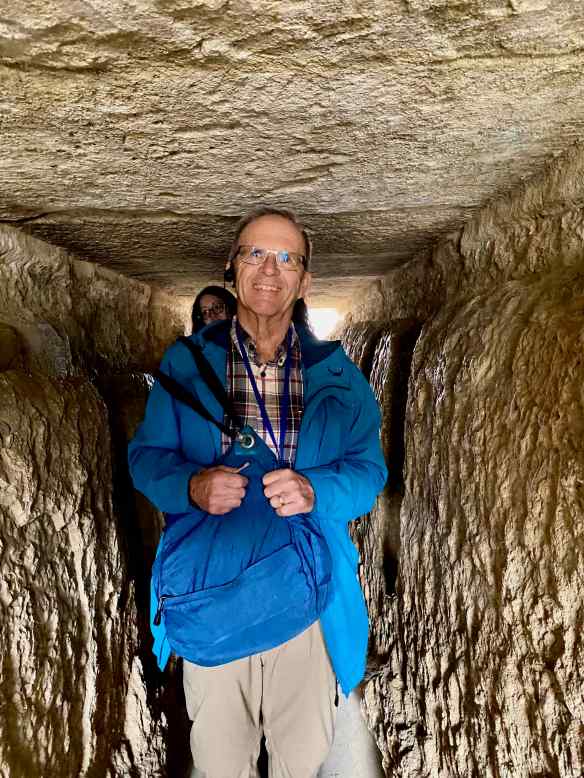
We exit on the far side of the river…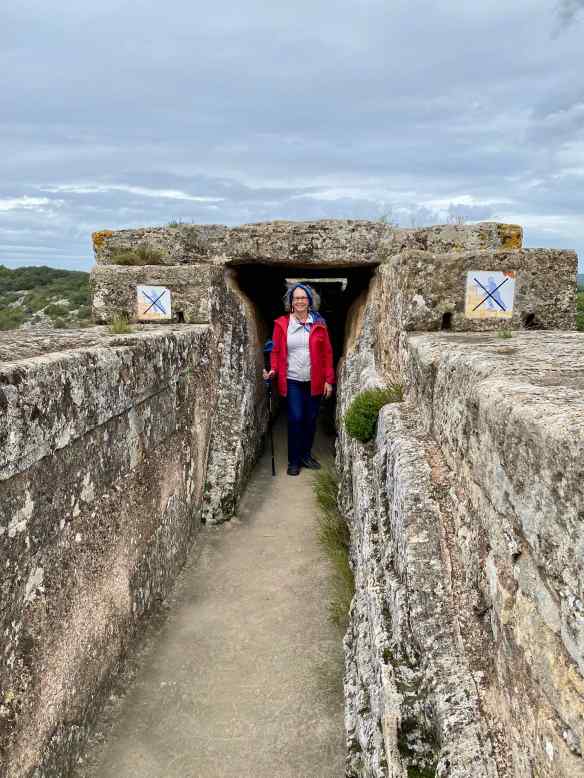
and I take one last photo of the inside of the water channel that shows how dark it was when we weren’t under one of the areas open to the sky.
Everyone lingers on this open section of the bridge, reluctant to leave. It was an incredible experience. We are so glad we decided to take the guided tour that allowed us do this.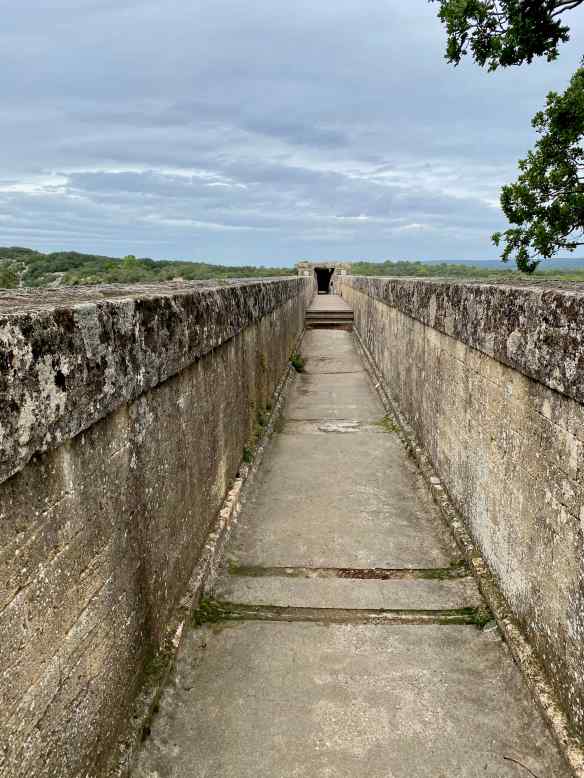
Another tourist took this photo for us, and just about cropped Bob out of the picture!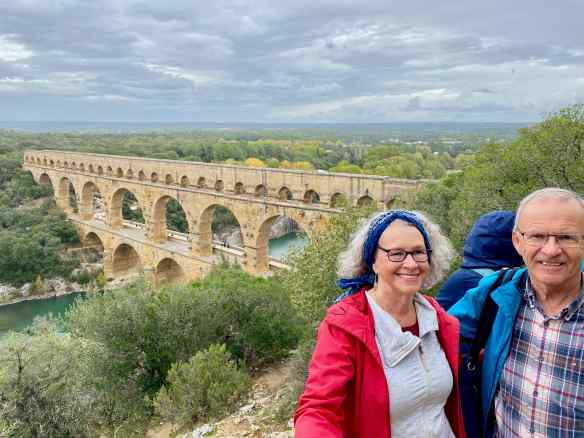
We were way up there!!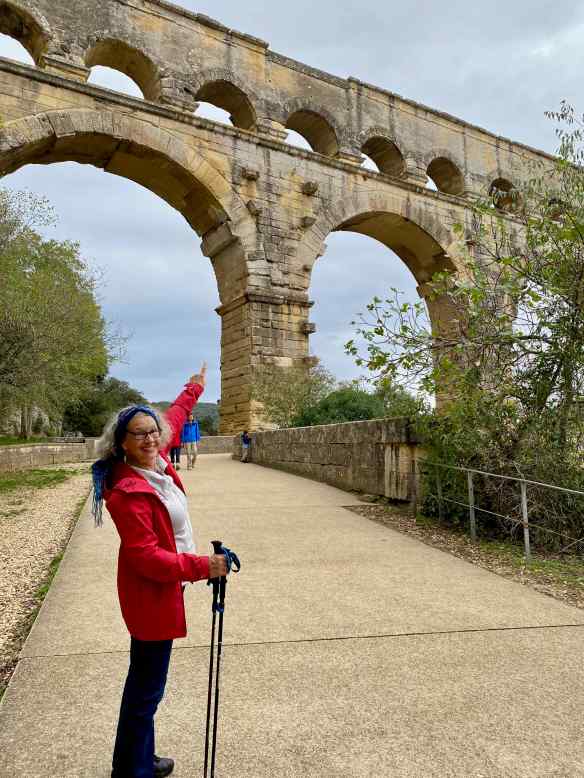
The second level of the Pont du Gard had a road bridge added in the 18th century so that it could still be used as a transport bridge as the original bridge only had a narrow ledge beside the arches to use to cross the river. Walking back along this bridge we are surprised to see a lot of soldiers walk by, both men and women. We think they are heading out for maneuvers of some sort as they are all carrying big packs and have camouflaged faces. 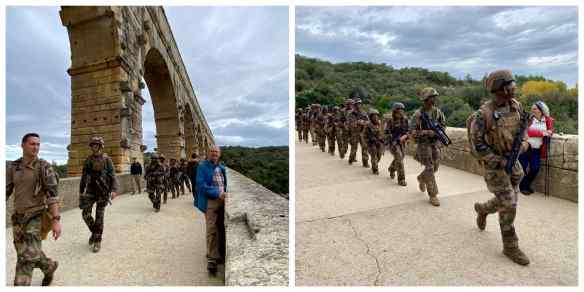
On the way back to we pass two magnificent old olive trees. The average life span of an olive tree is 500 years and some can live as long as 1500 years!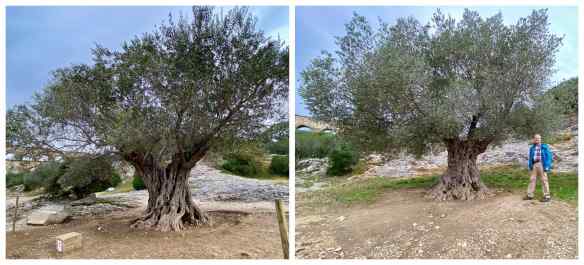 The rest of the drive to Lyon has has a lot of variety. We pass interesting rock formations, a nuclear power plant right beside wind turbines, lots of small towns and villages on the distant hilltops, all under an ever changing evening sky.
Our last restroom stop was a surprises. I love foxgloves but didn’t expect to see them on the bathroom doors.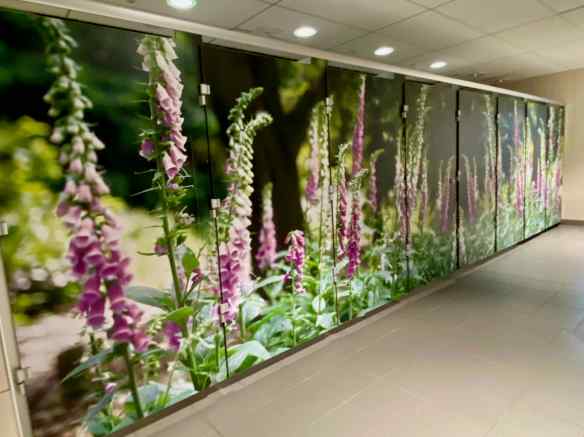
This is what the toll booths look like… and on the other side it is a free for all as all the lanes of traffic converge into just two or three lanes on the highway. It was dark by the time we arrived in Lyon and it took a bit to find our apartment. Google maps was a bit confused and tried to take us to the wrong building!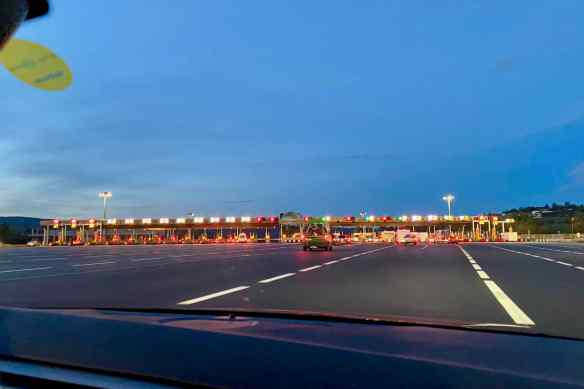
 trudymason.com