Mainz, Germany and Gutenburg Bible

Day 35    Saturday,  October 4, 2025

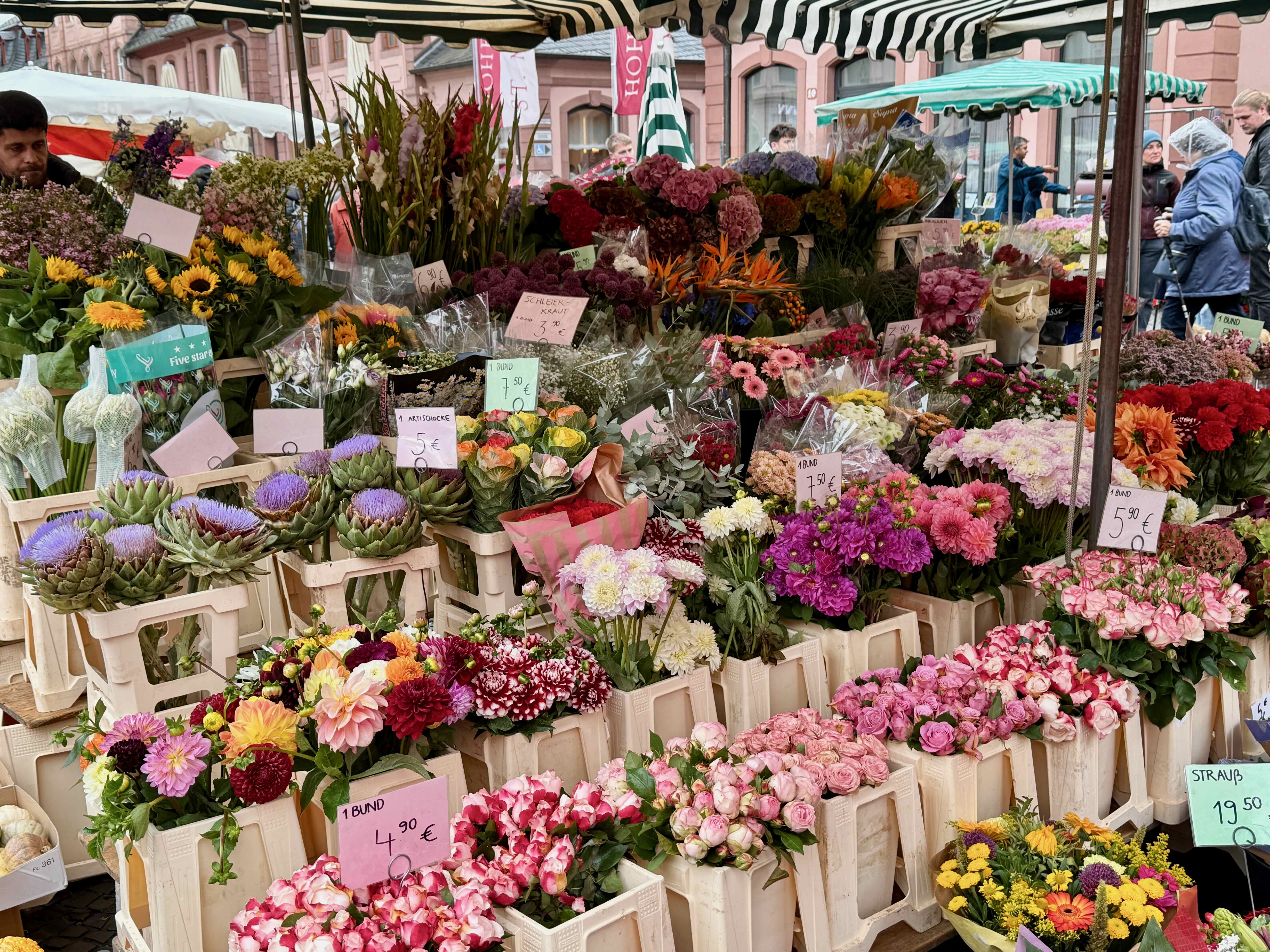
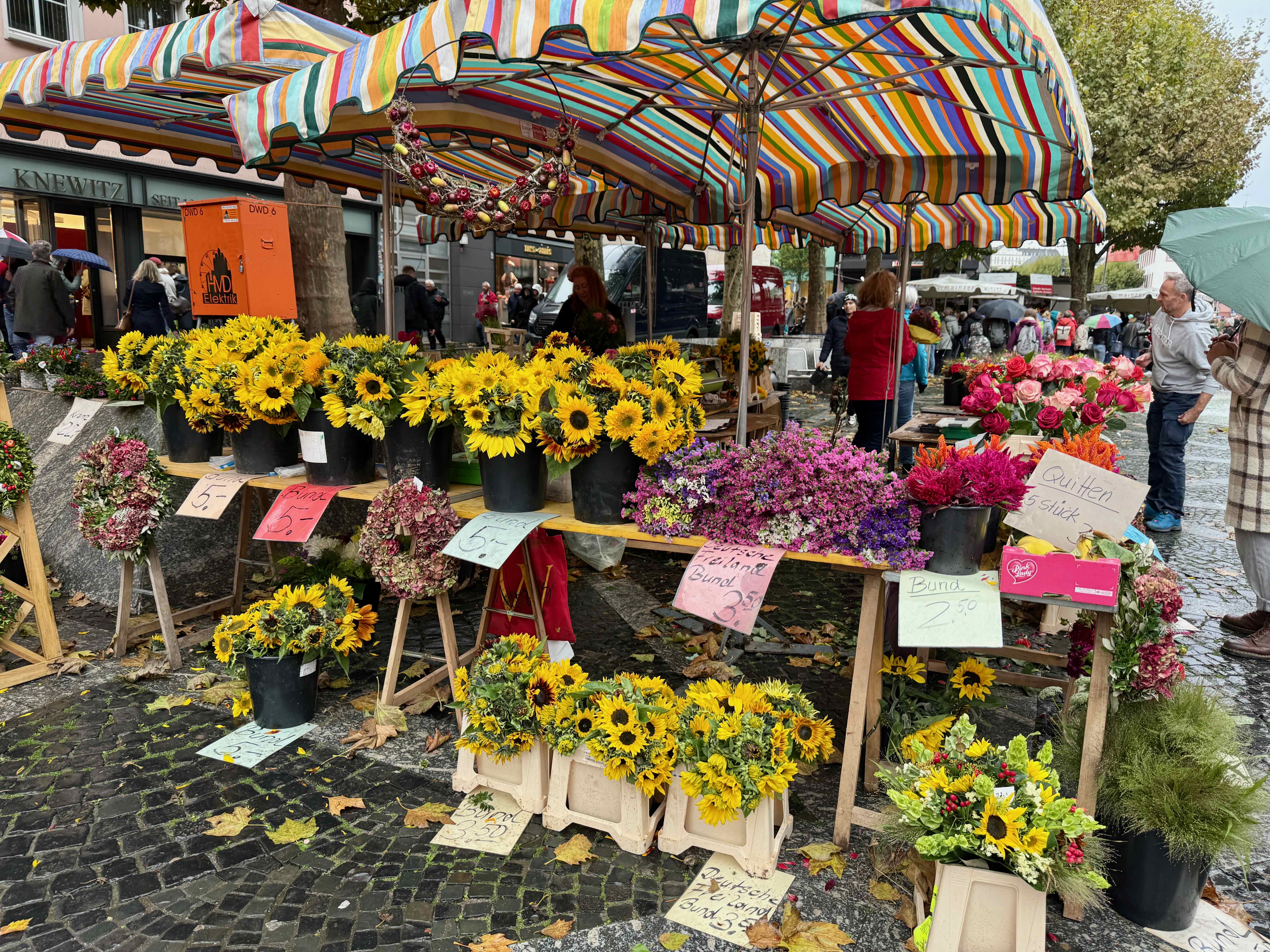
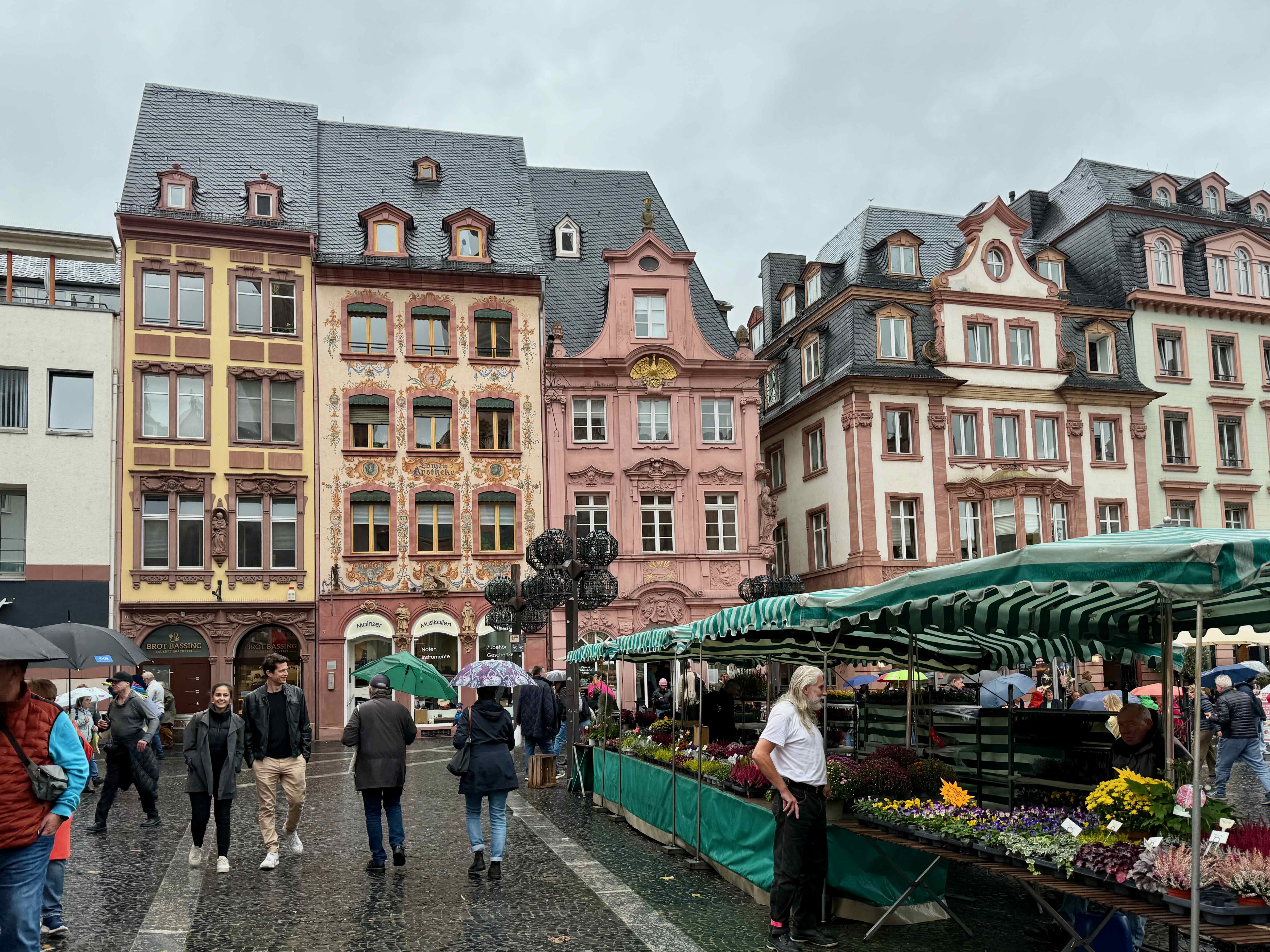
It is a 45 minute drive to Mainz, and Bob has several items on our ‘must see’ agenda. First stop is the market. The flowers at these markets are always so beautiful and very reasonably priced.
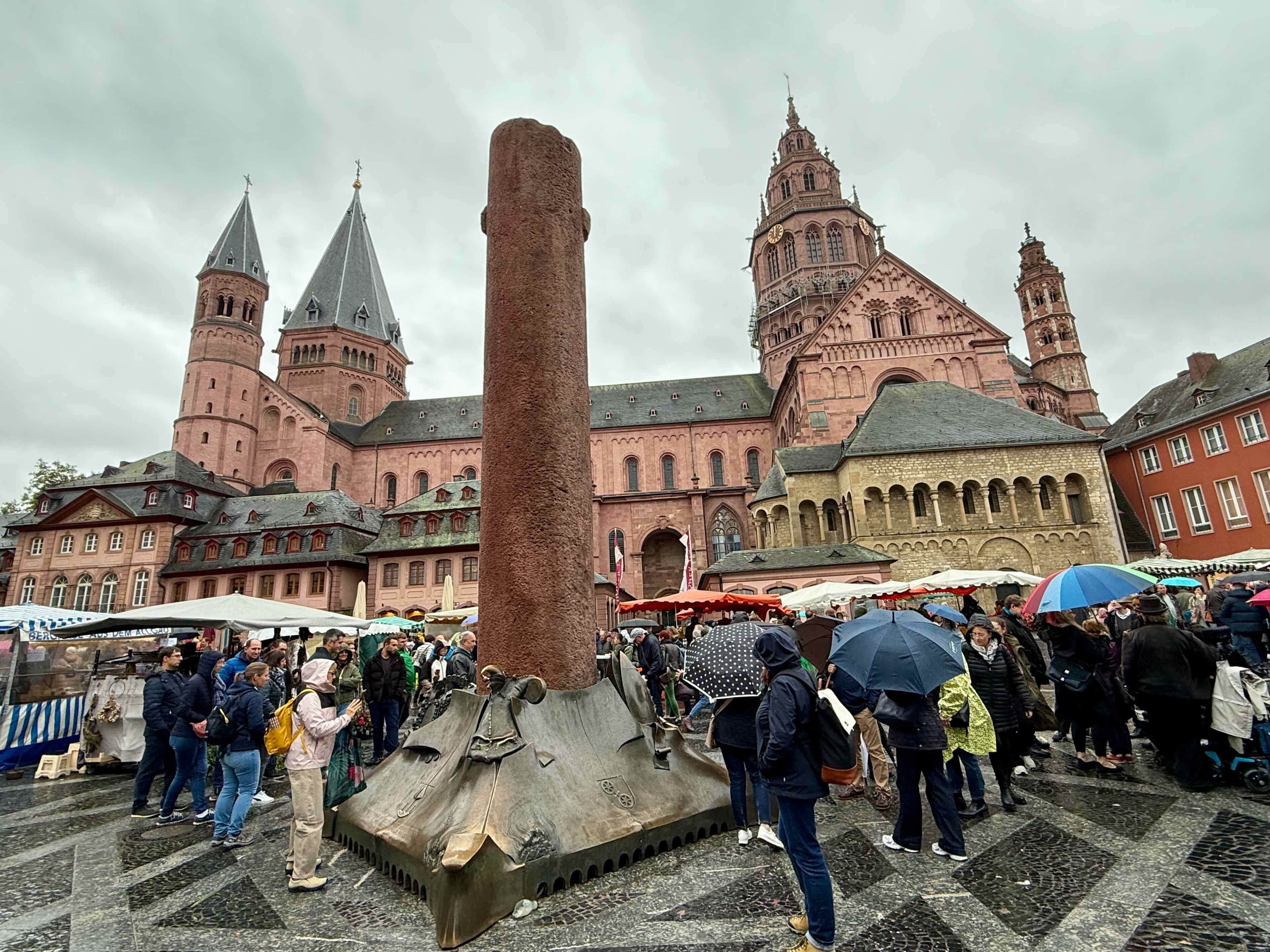
The main sculpture in the main square (market) of Mainz is the Heunensäule, or Hay Column. It is a 1,000-year-old sandstone column with a bronze casing, depicting various symbols of Mainz’s history and culture like a fool’s cap and bishop’s miter. It is in the market square in front of the Mainz Cathedral. 
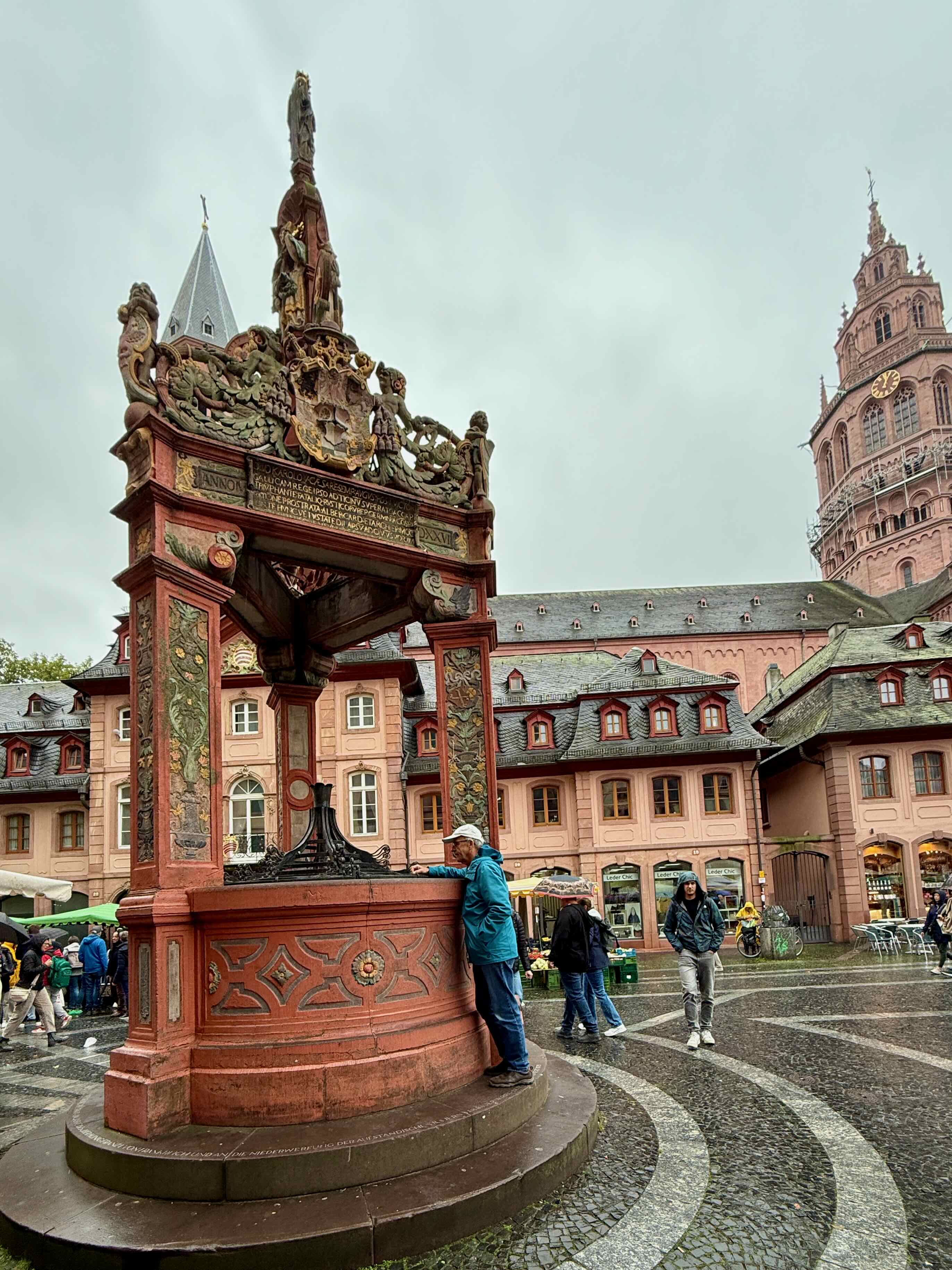
I like this wishing well and we both toss in a coin and make our wishes.
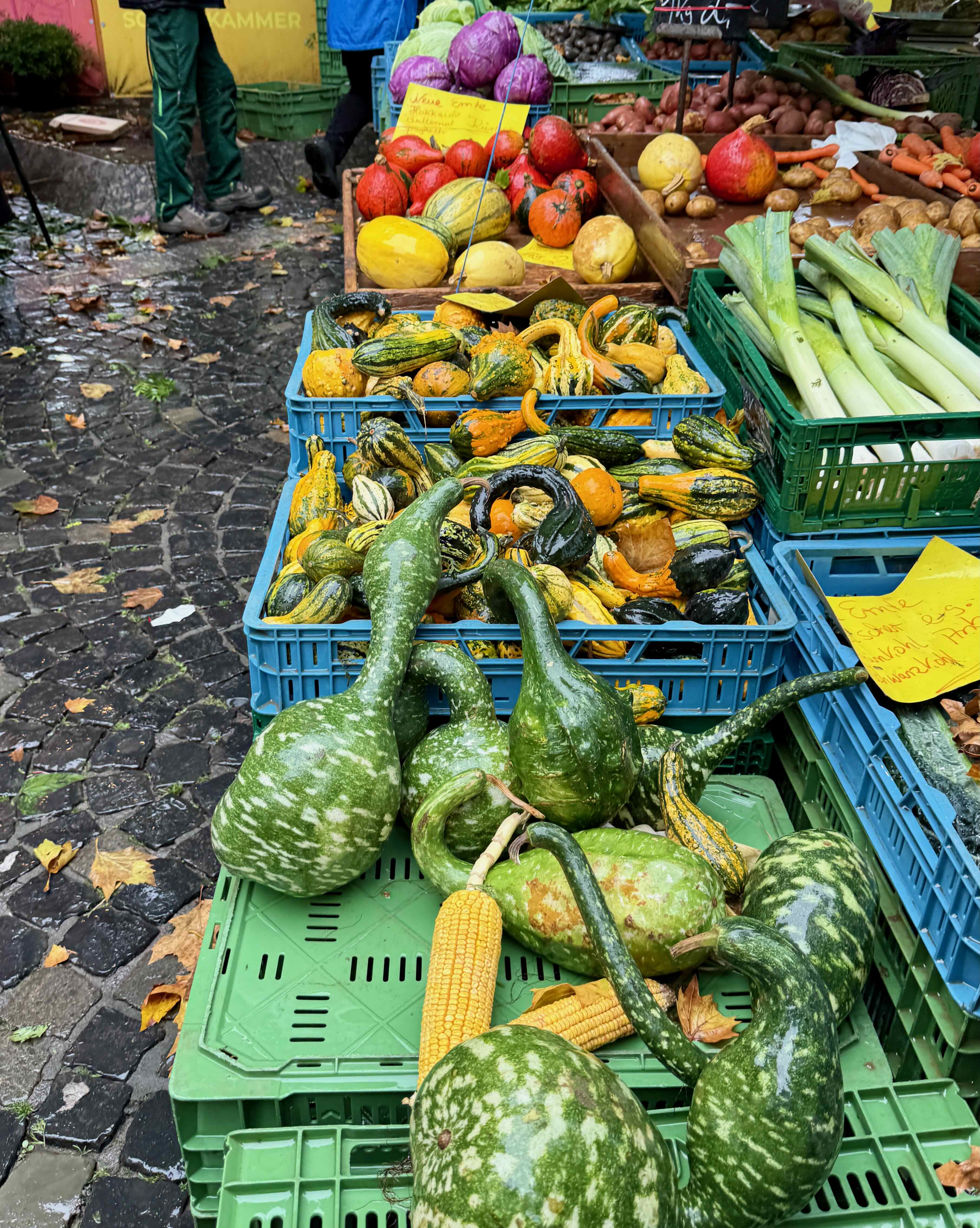
We both like the interestingly shaped squash…we might have to try growing some next year.
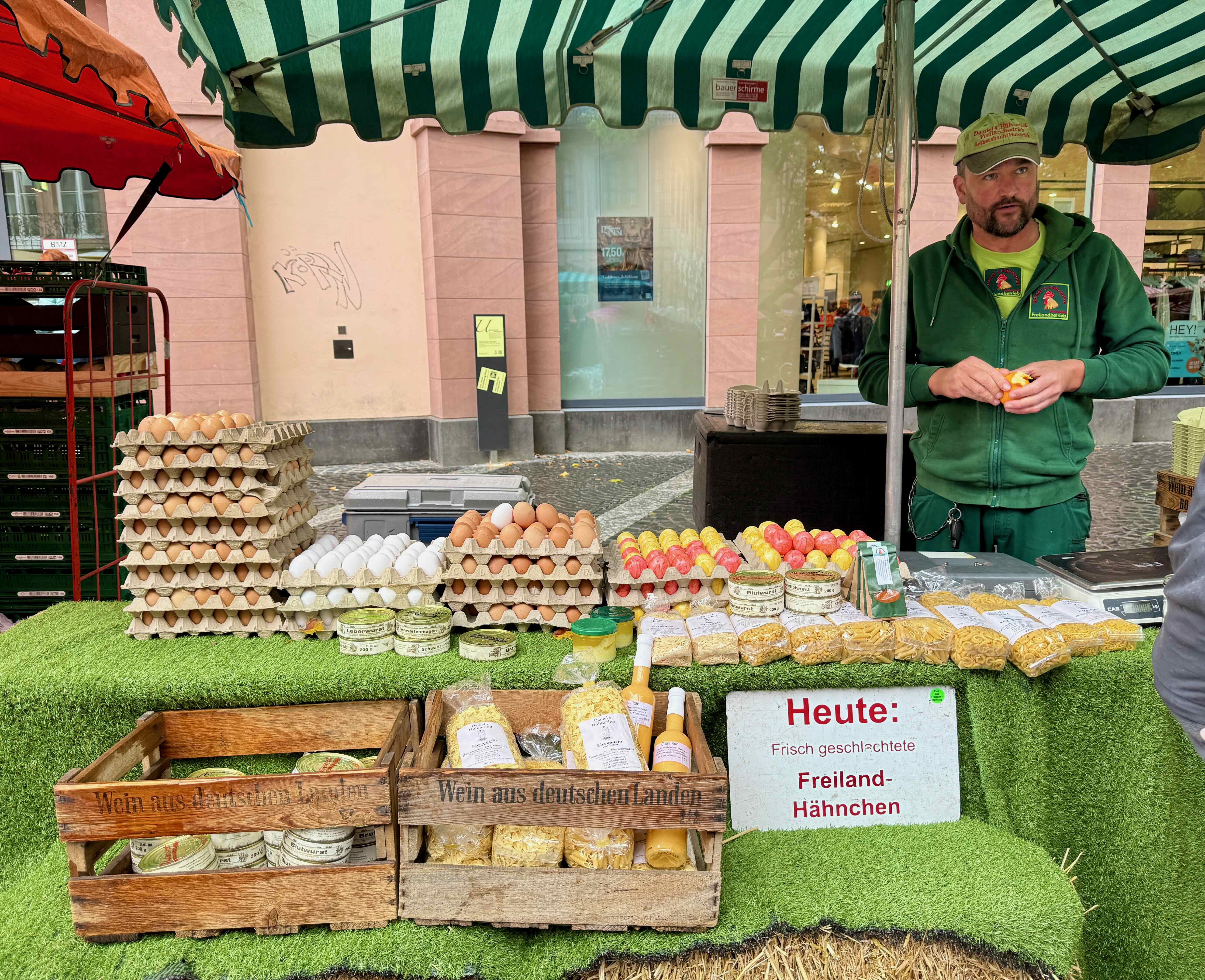
We have seen these coloured eggs in the grocery stores and wondered what they were. Turns out they are hard boiled eggs that are coated in a tinted resin that keeps them fresh for months! The colour helps to identify them as being hard boiled.
Gorgeous sunflowers!  I am definitely planting some of them in our garden next year.  They are so cheerful. Next stop in the Mainz Cathedral.  We are met at the door and told that there is a concert starting and if we enter the church we have to stay for the 45 minute concert.  Sounds perfect as it is raining and cool outside!
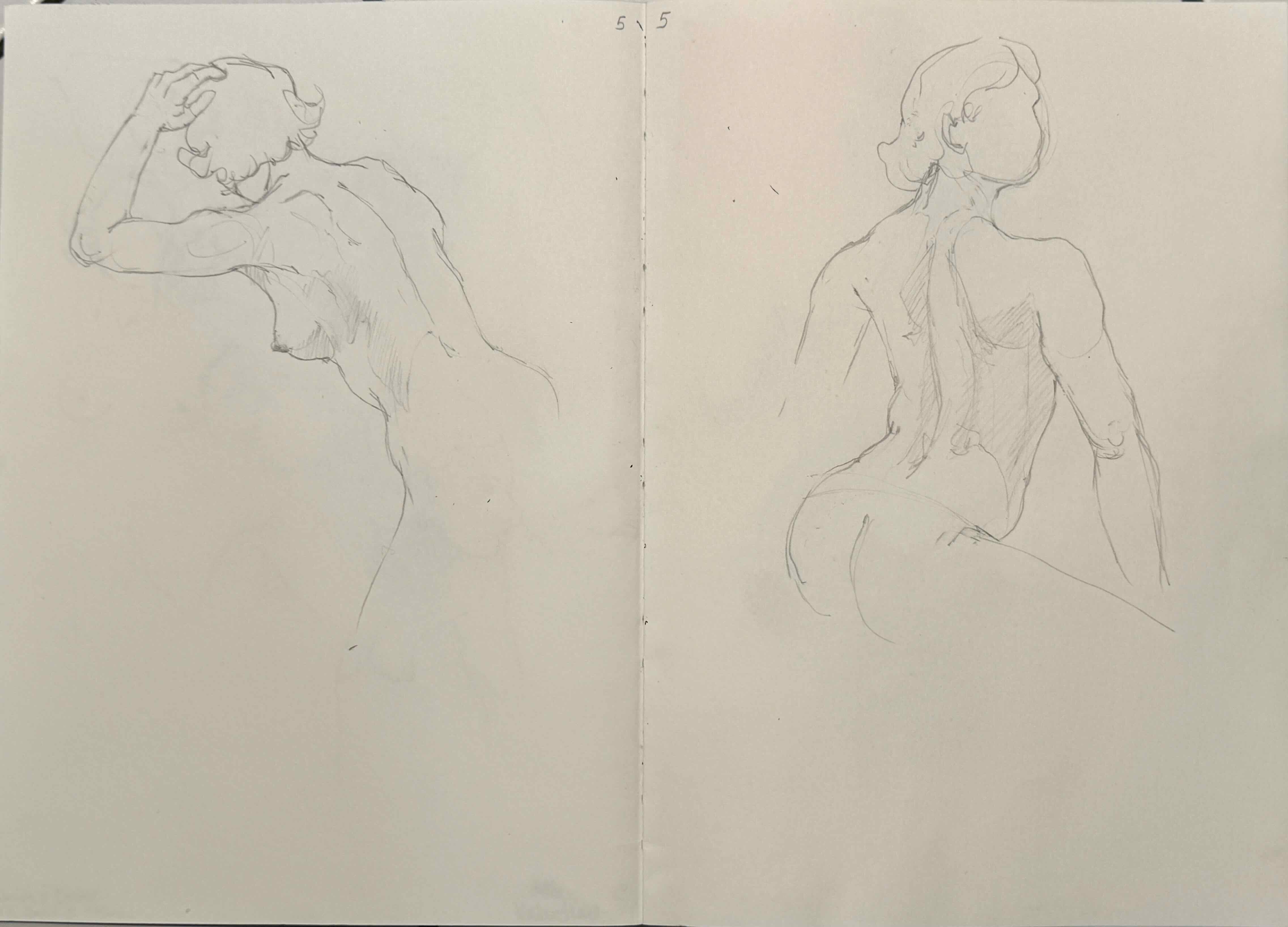
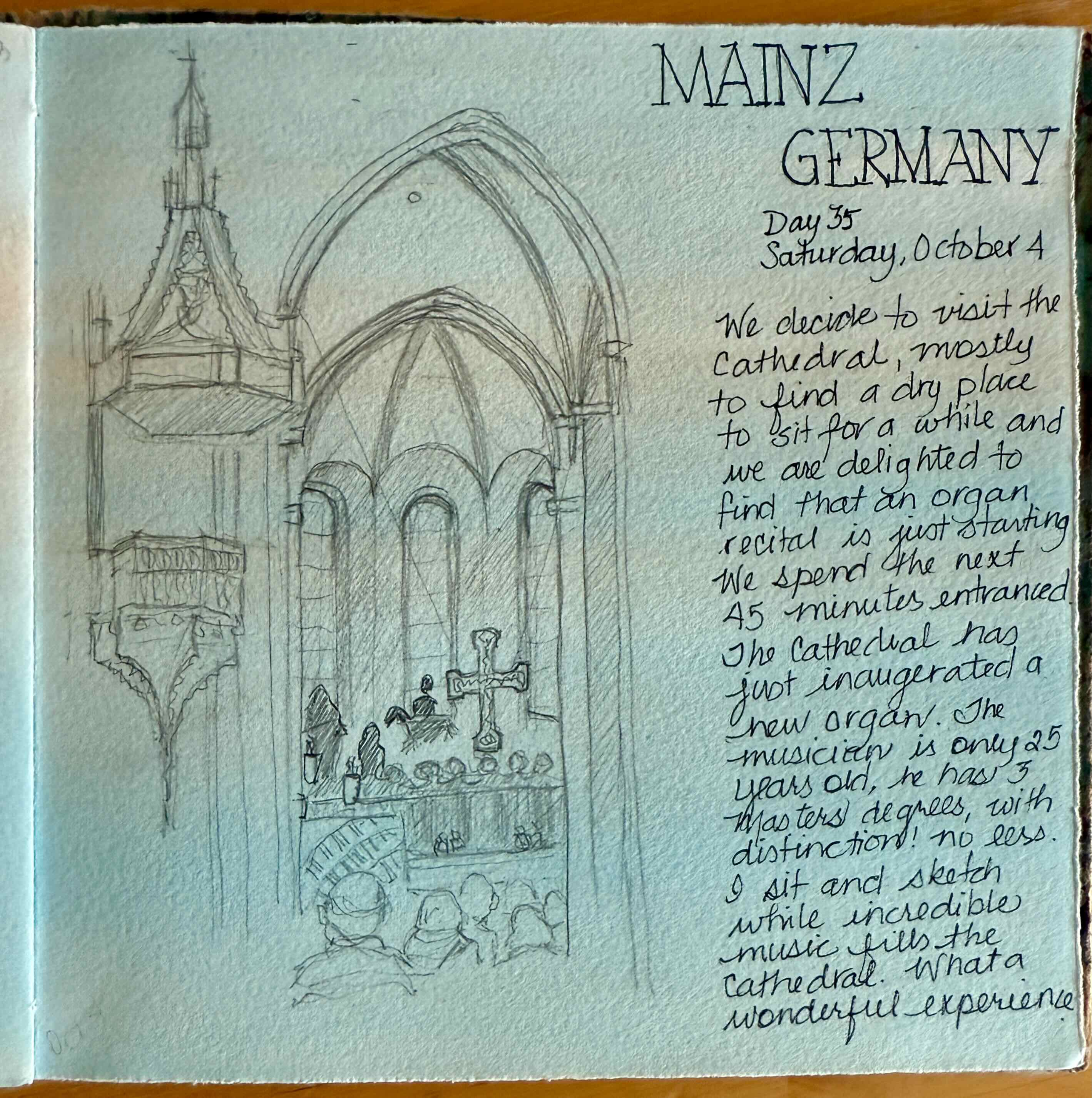
We spend the next 45 minutes listening to an amazing organ concert to commemorate the new cathedral organ.  The musician, Alexander Grün, is only 25 years old and has three Masters Degrees!  He plays some traditional organ music and then music that is innovative. The 45 minutes absolutely flew by.  I sketched for a bit while listening to the music.  Loved it. I wish I had recorded more of the music, especially the finale of the concert…it gave me goosebumps!      https://youtube.com/shorts/HykSsp-S-9E
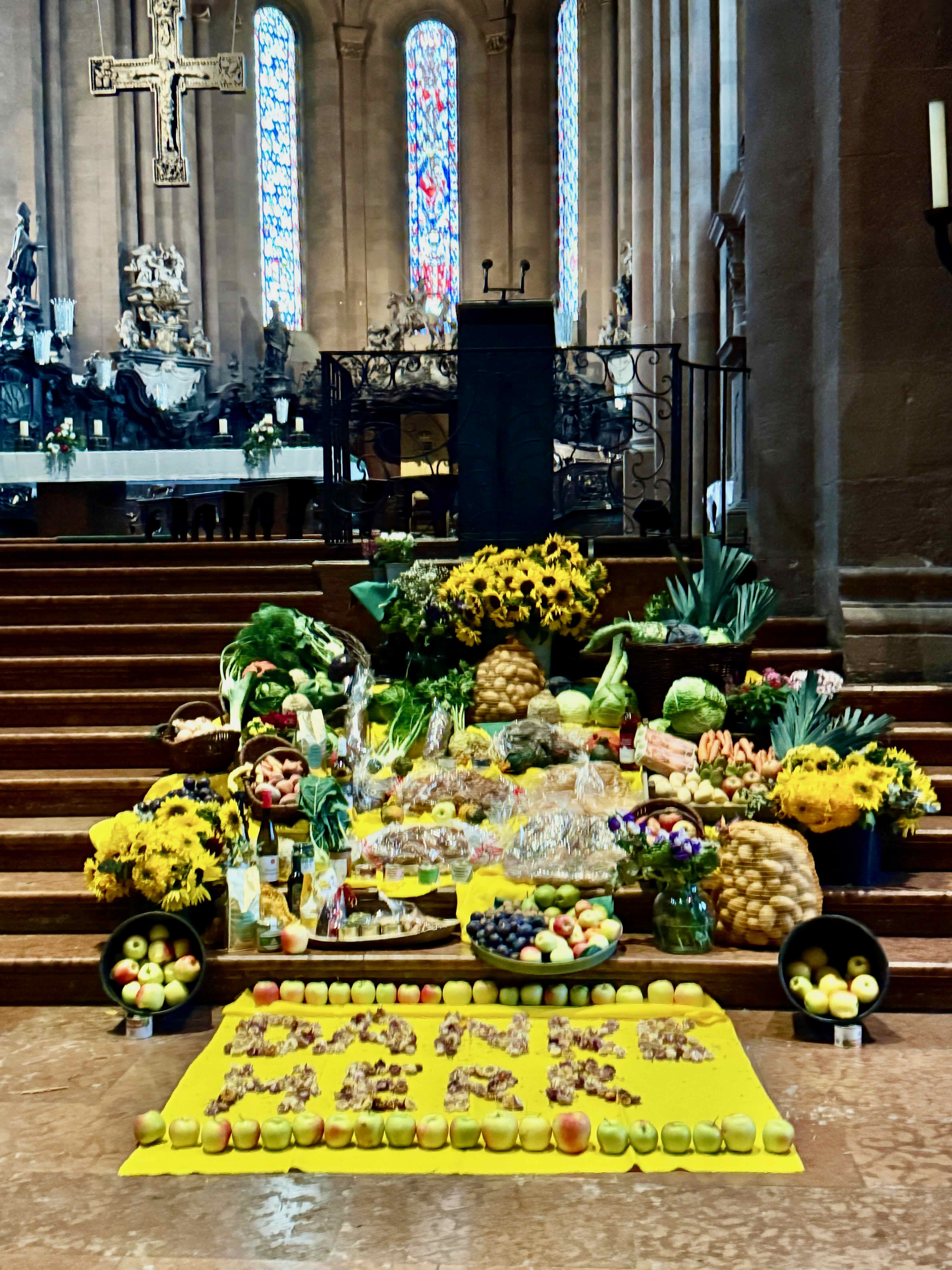
There are fall foods displayed on the steps to the altar to remind people to give thanks for the harvest, and to share with those in need.  
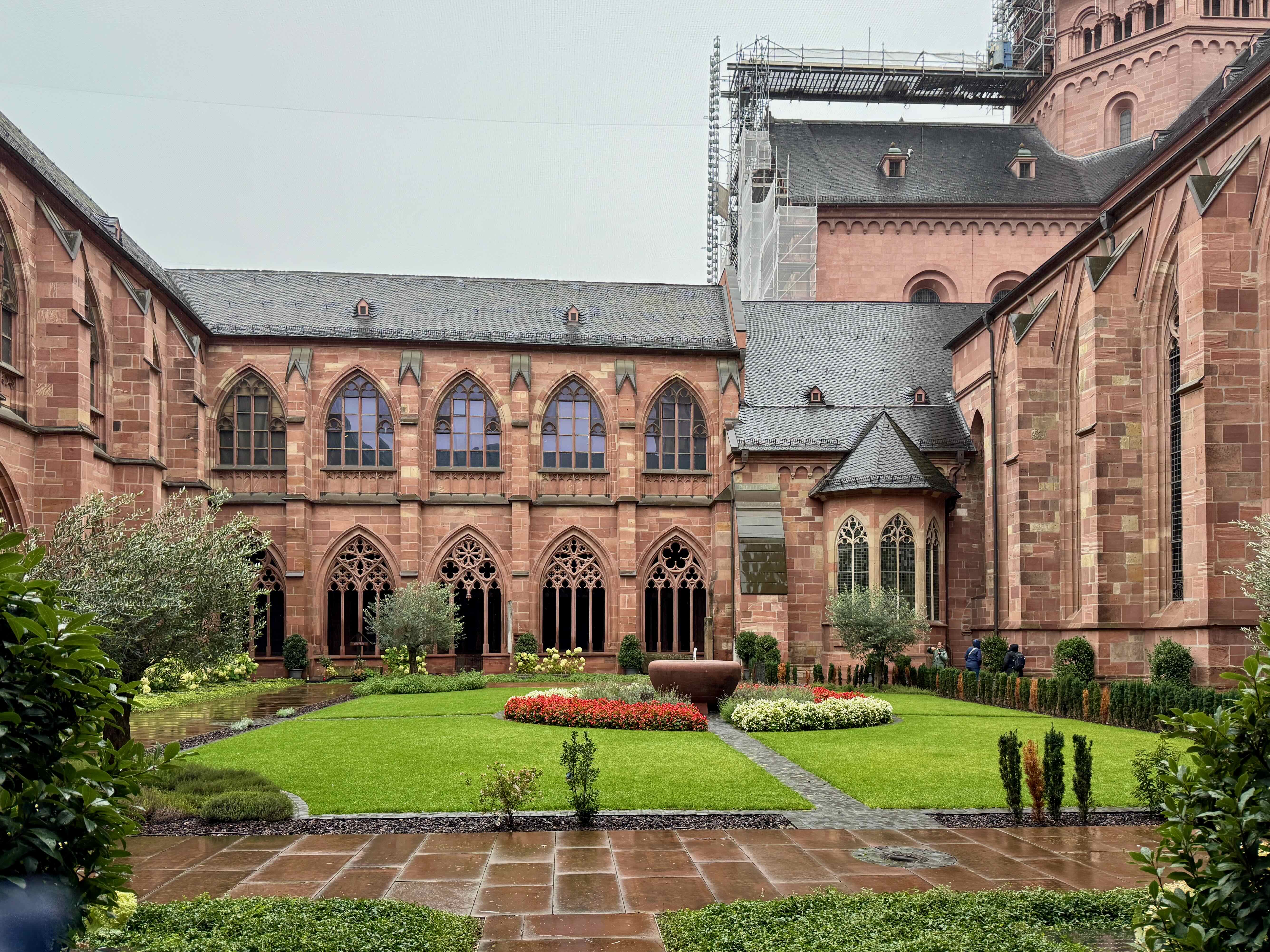
The Cathedral cloister has a beautifully tended garden,
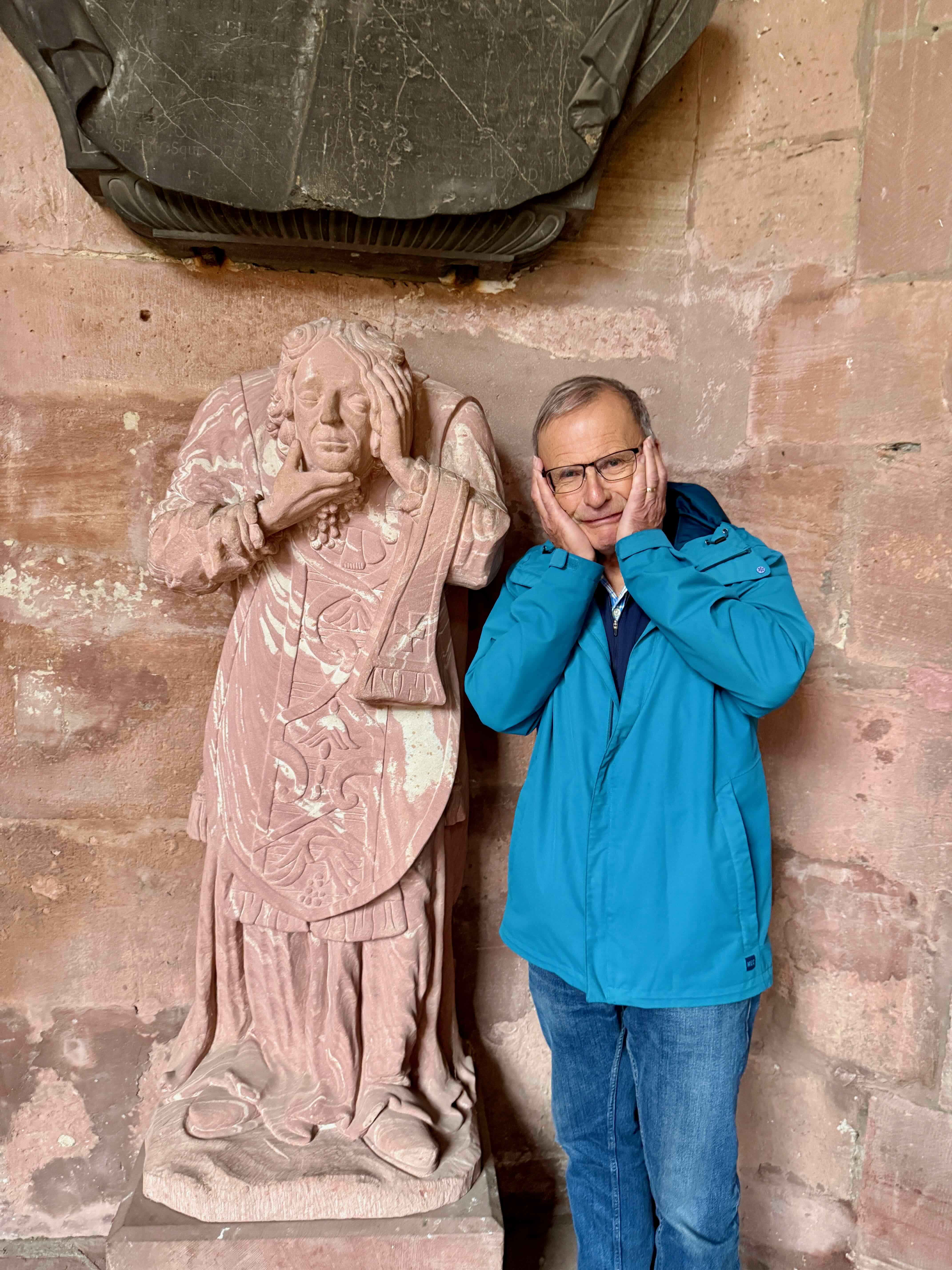
Bob liked this statue statue of a man holding his head. This is probably Saint Denis, who was beheaded but picked up his head and walked some distance, preaching the Gospel.
The buildings surrounding the market square are tall, narrow and decoratively painted.
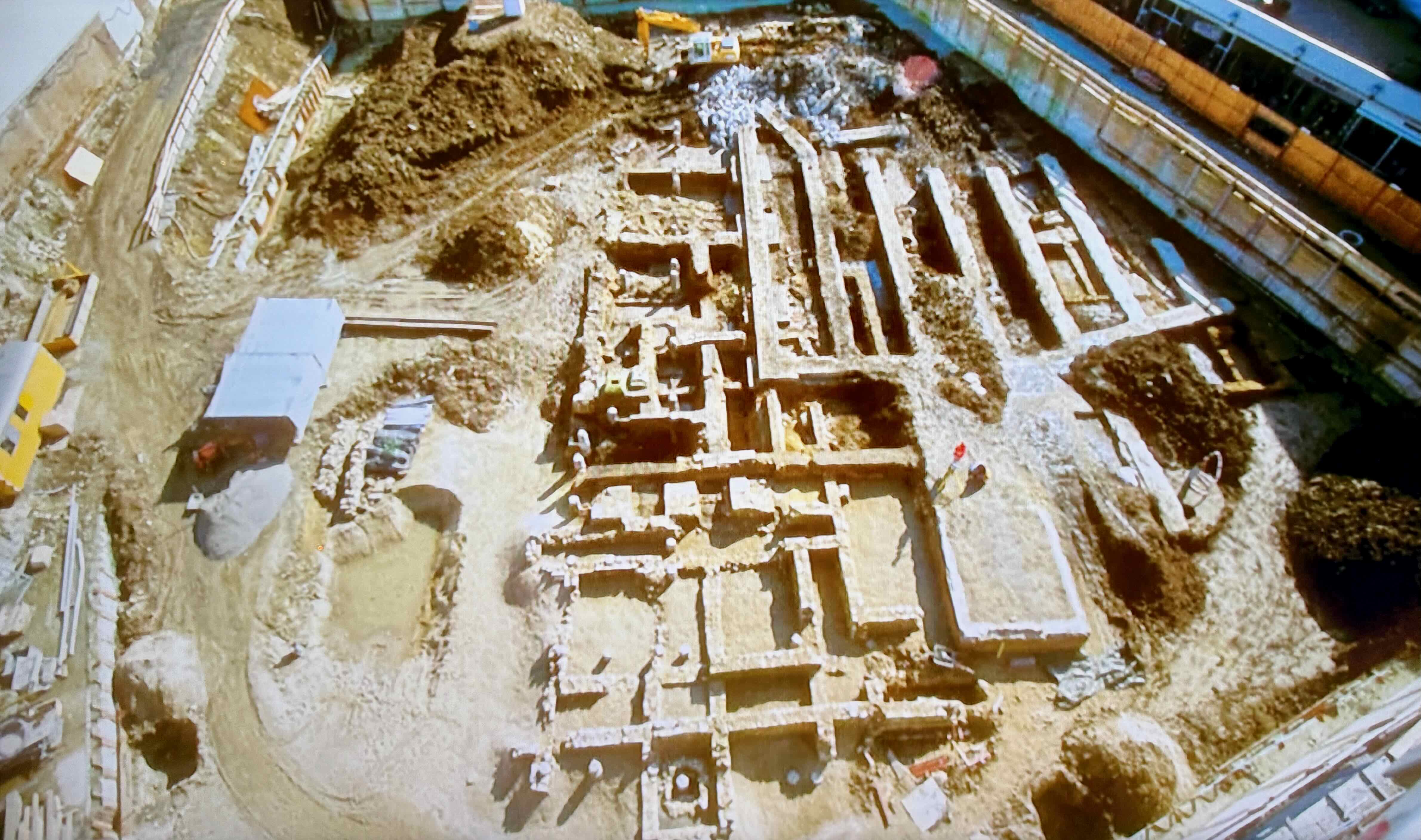
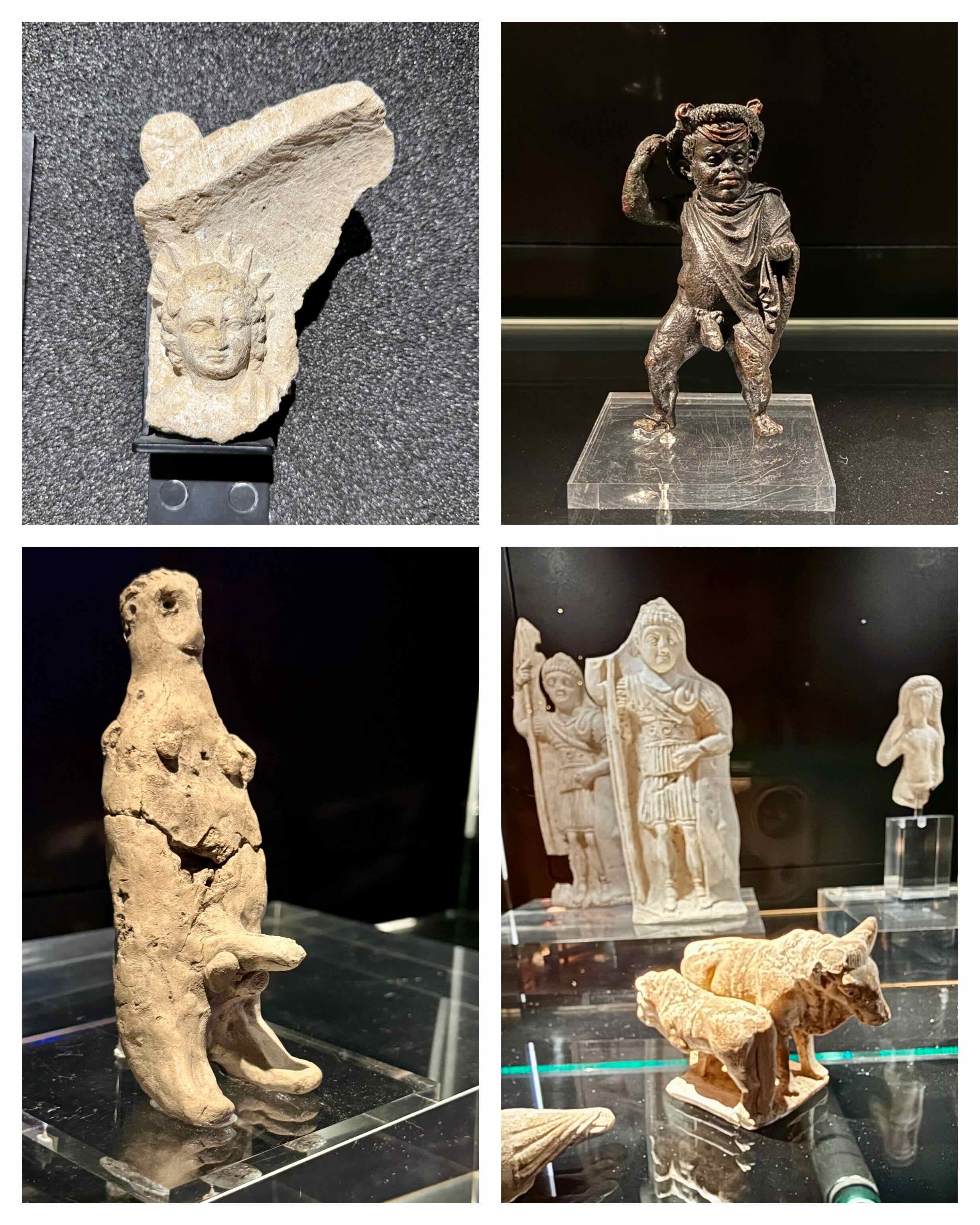
Next on Bob’s agenda is a visit to a small museum underneath a shopping mall. We see Roman ruins from before the fall of the Roman Empire in the 5th century. These ruins were discovered when excavations began for the shopping mall. The area was thoroughly excavated and recorded, but ultimately the mall was built and most of the ruins were destroyed.
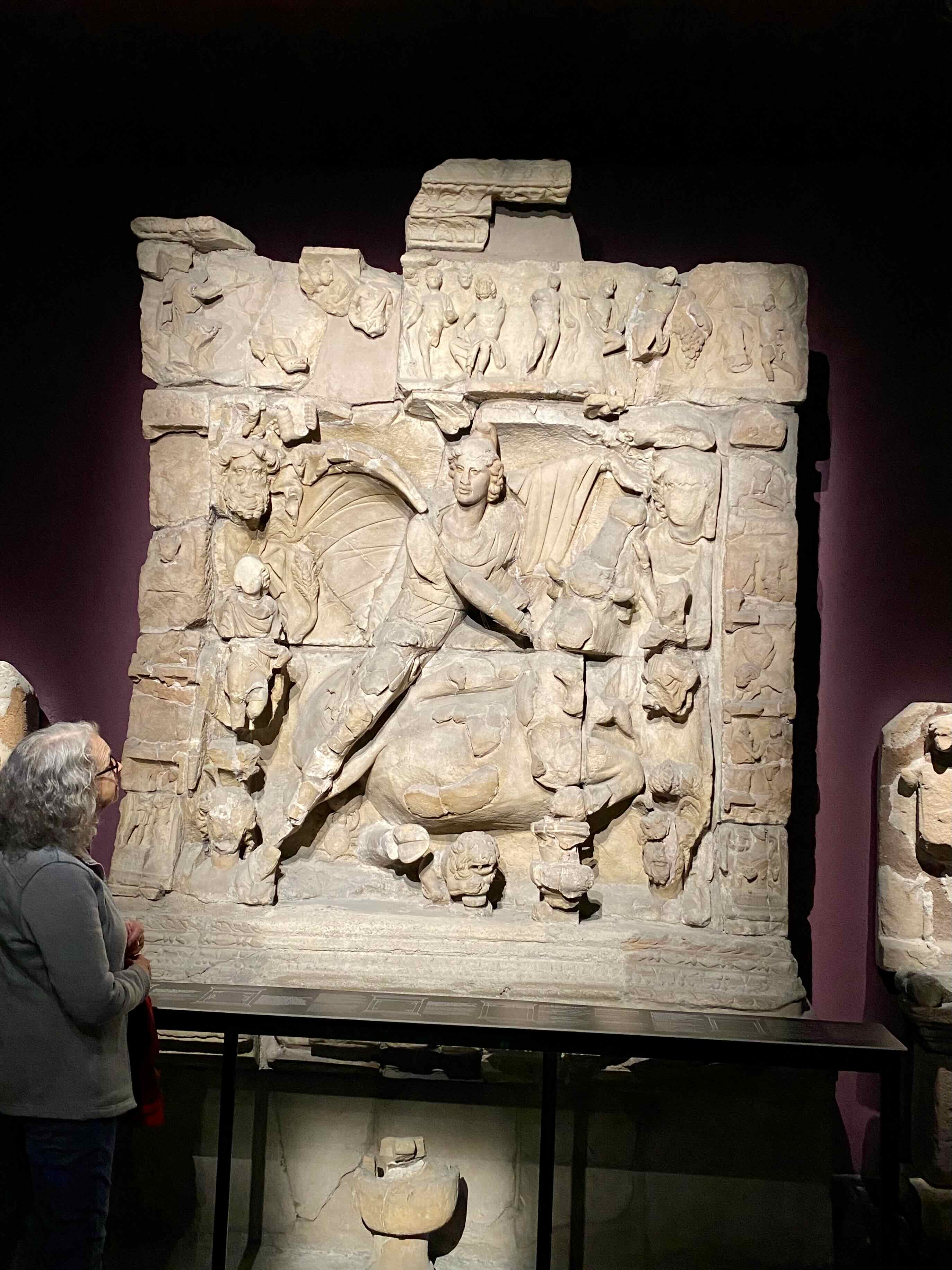
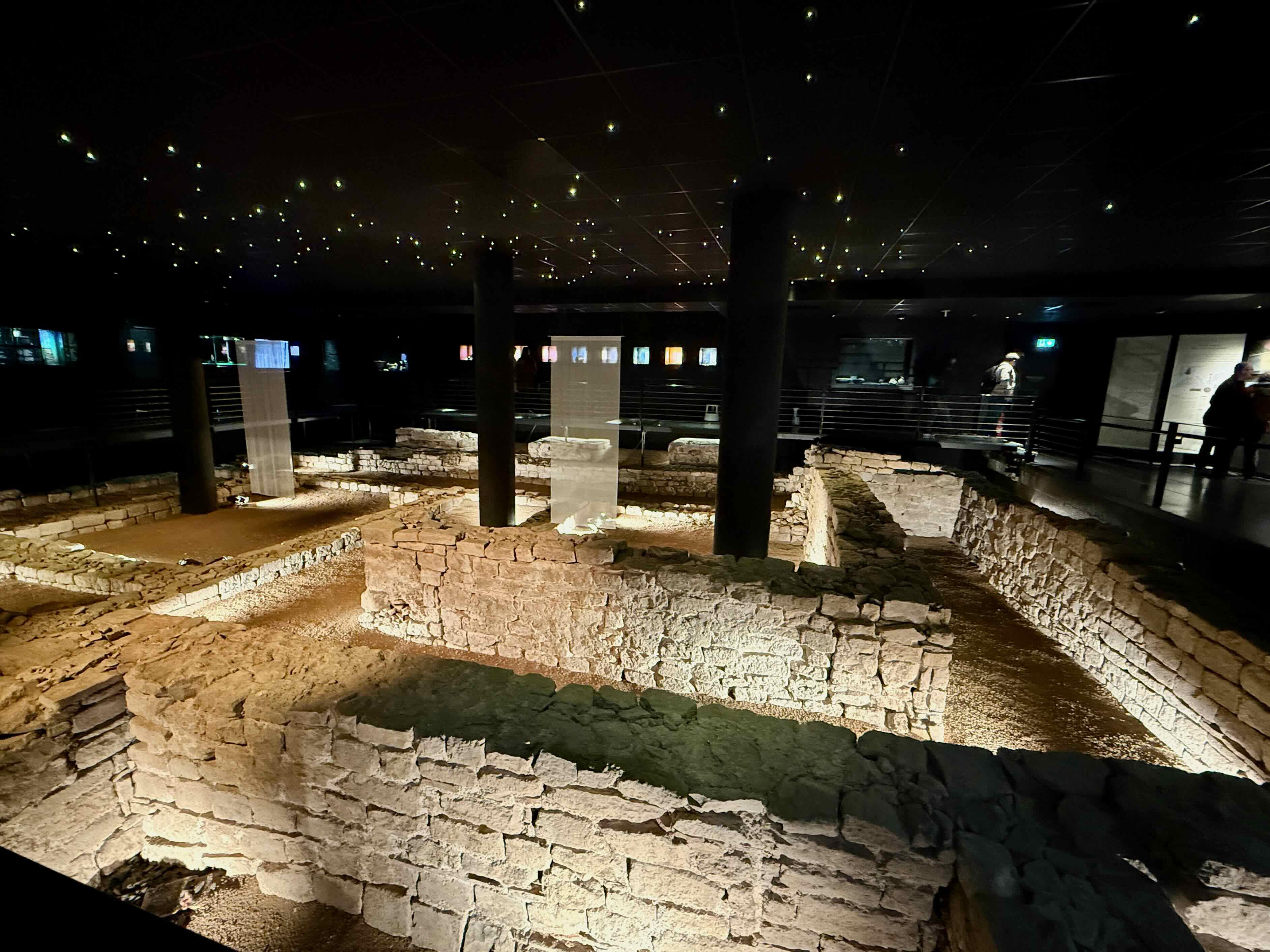
This little museum has the reconstructed ruins of a temple, under a ceiling of constellations. Some of the items found when the ruins were excavated.  Well endowed males were well represented.
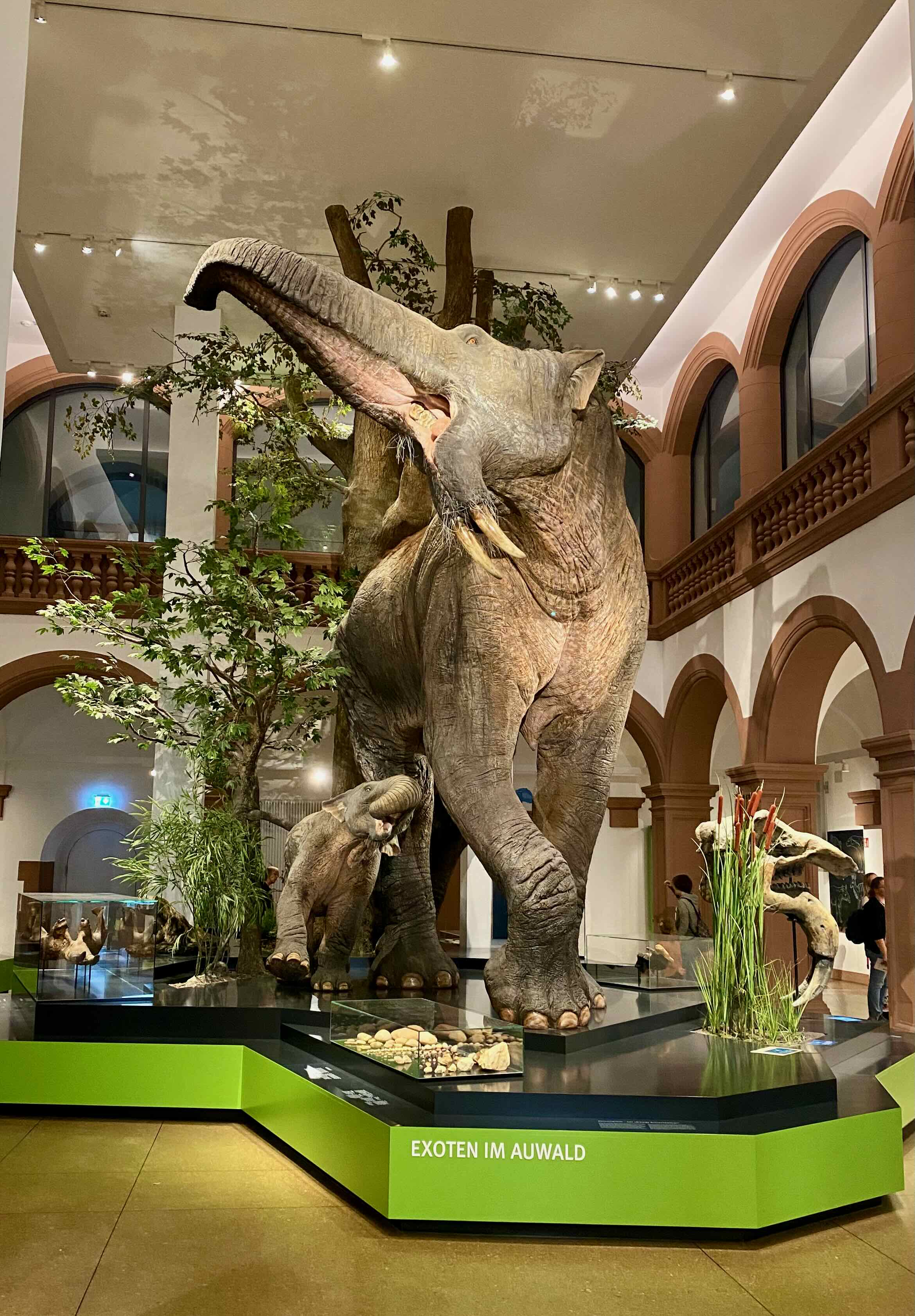
Our final stop in Mainz is to visit the Gutenburg Museum, which is connected to a small Natural History Museum. This display in the entrance is quite striking.
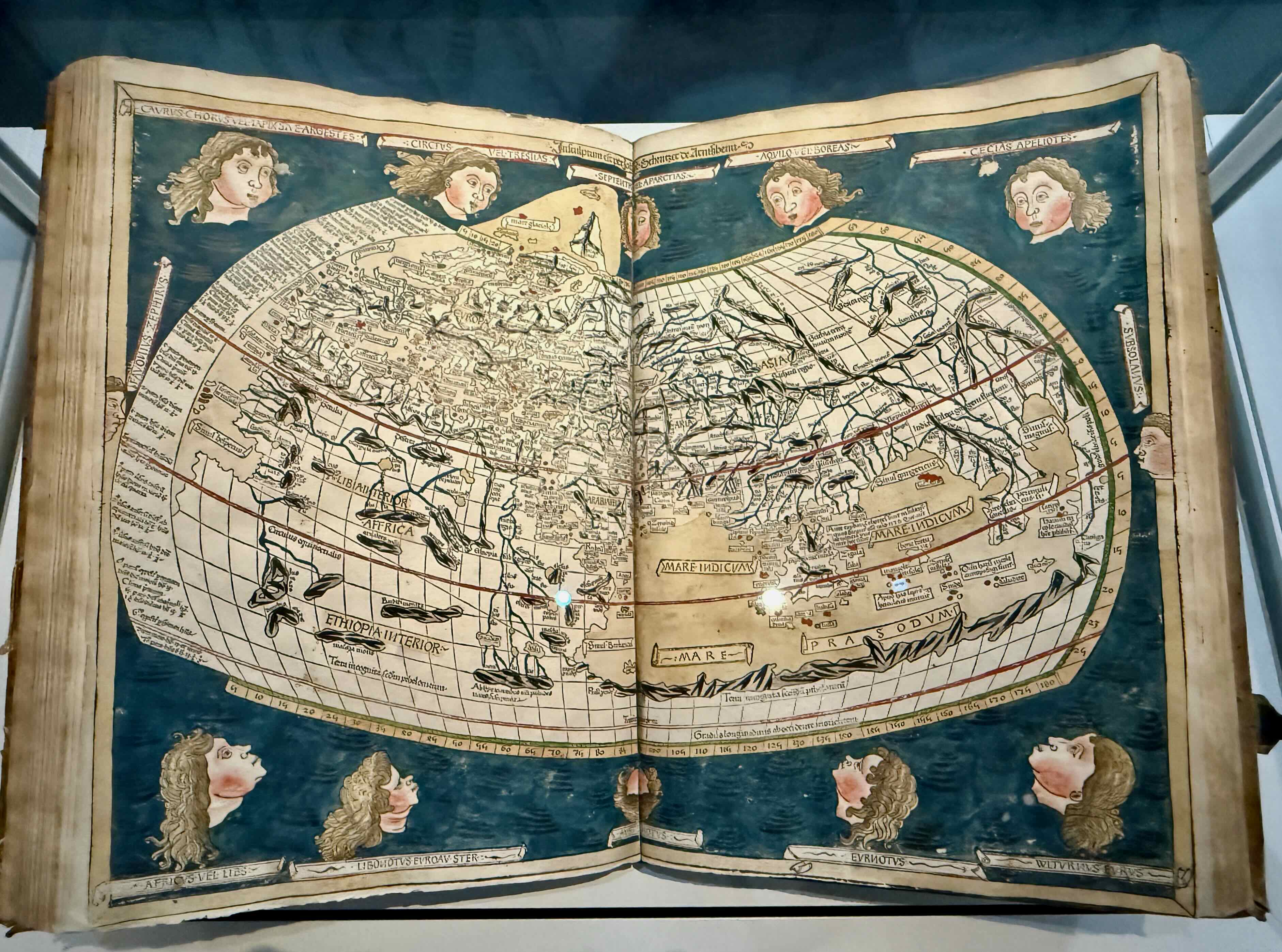
We start with the Gutenburg Museum which shows the impact of Johahannes Gutenburg’s invention of a moveable type printing press in 1440.  This press allowed for the printing of 3600 pages a day, compared to 40 by hand printing and only a few by hand copying. There were  several beautiful ancient books on display. This Atlas of the World was printed in 1482.
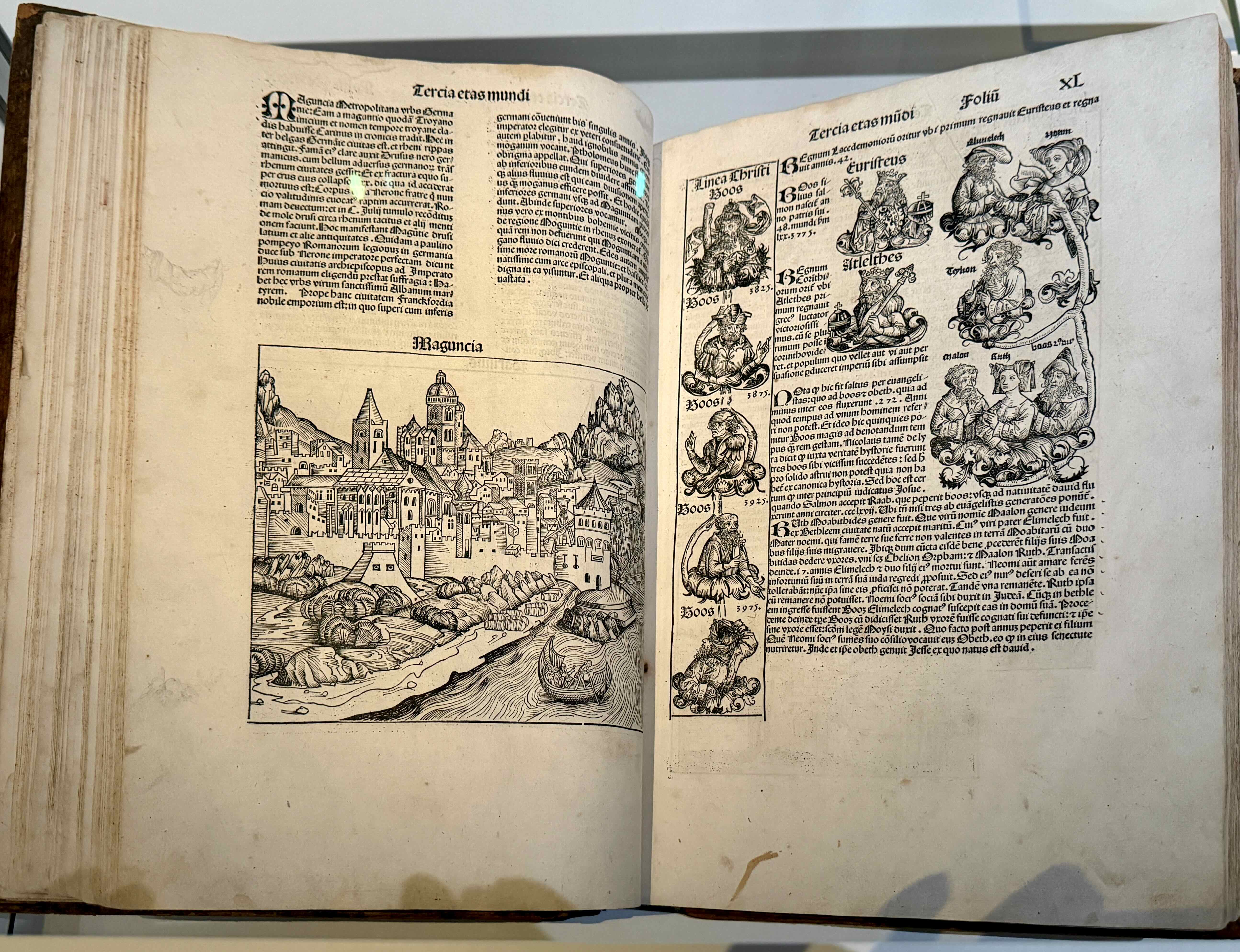
The World Chronicle is from 1493.
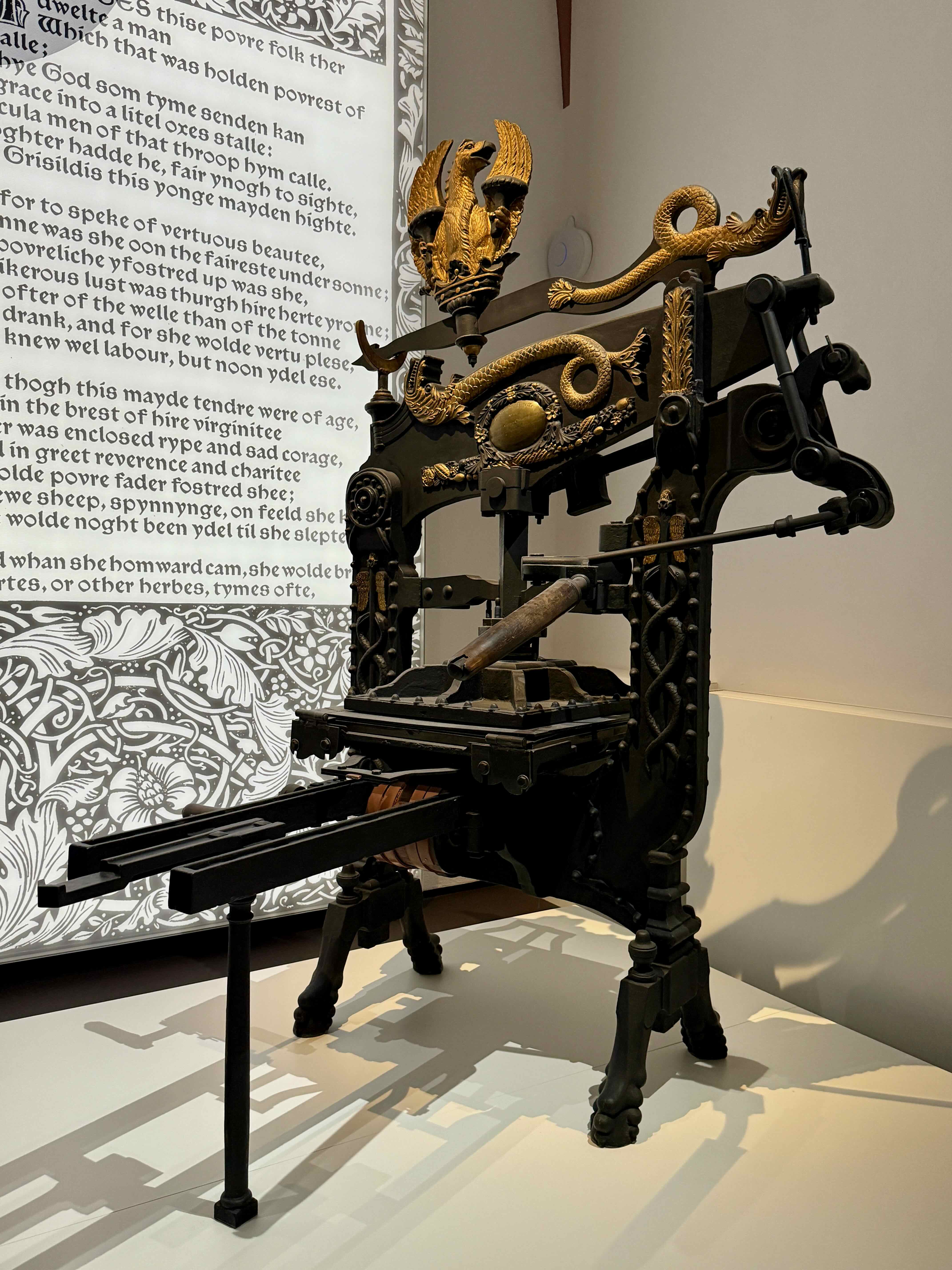
An ornate Columbia Printing Press from 1824.  
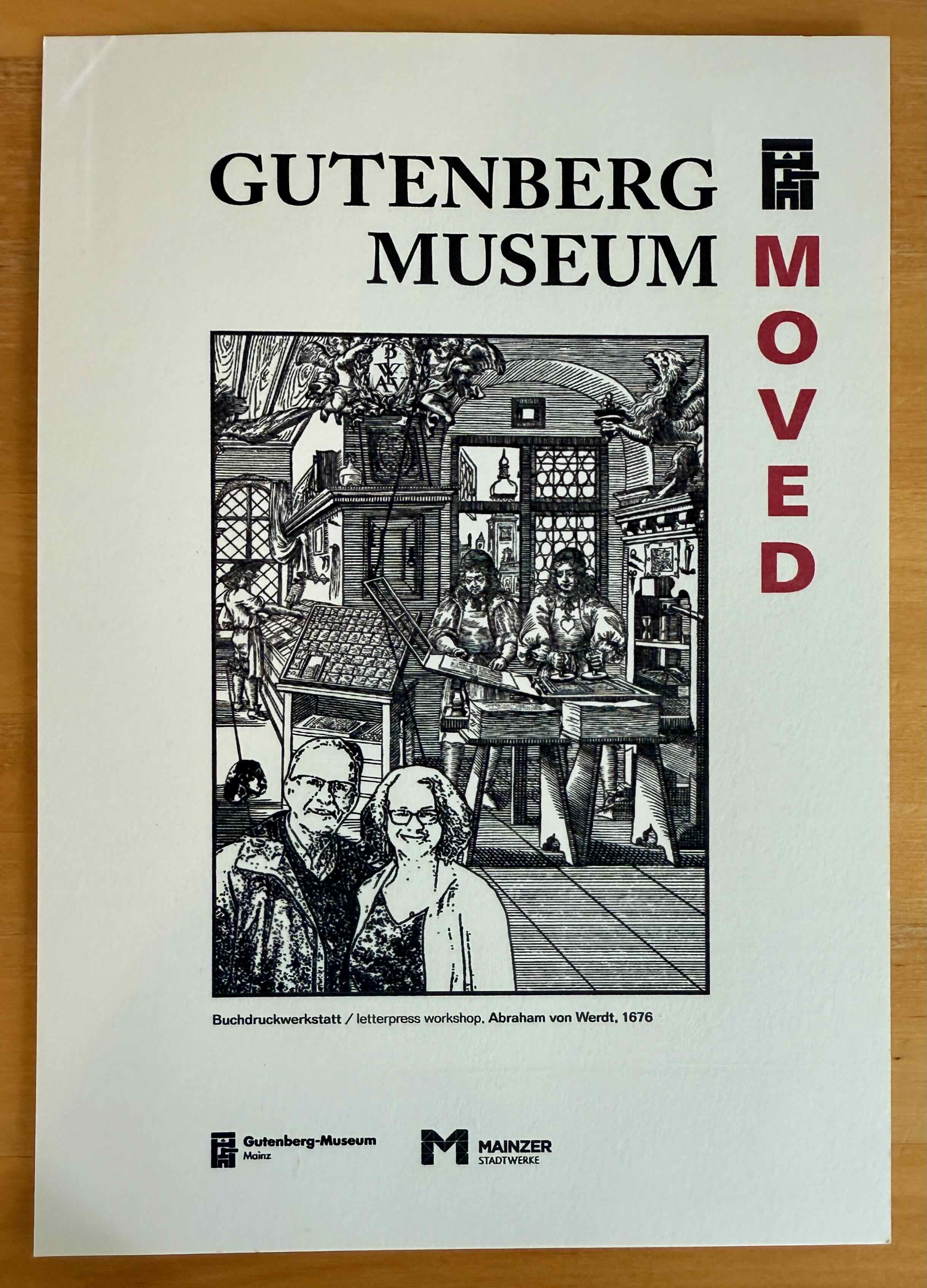
We are given a blank card that has a chip installed inside the paper when we entered the museum.  We place this card into a machine that takes a selfie of us. Then we take the still blank card to a modern printer and this is what we received.
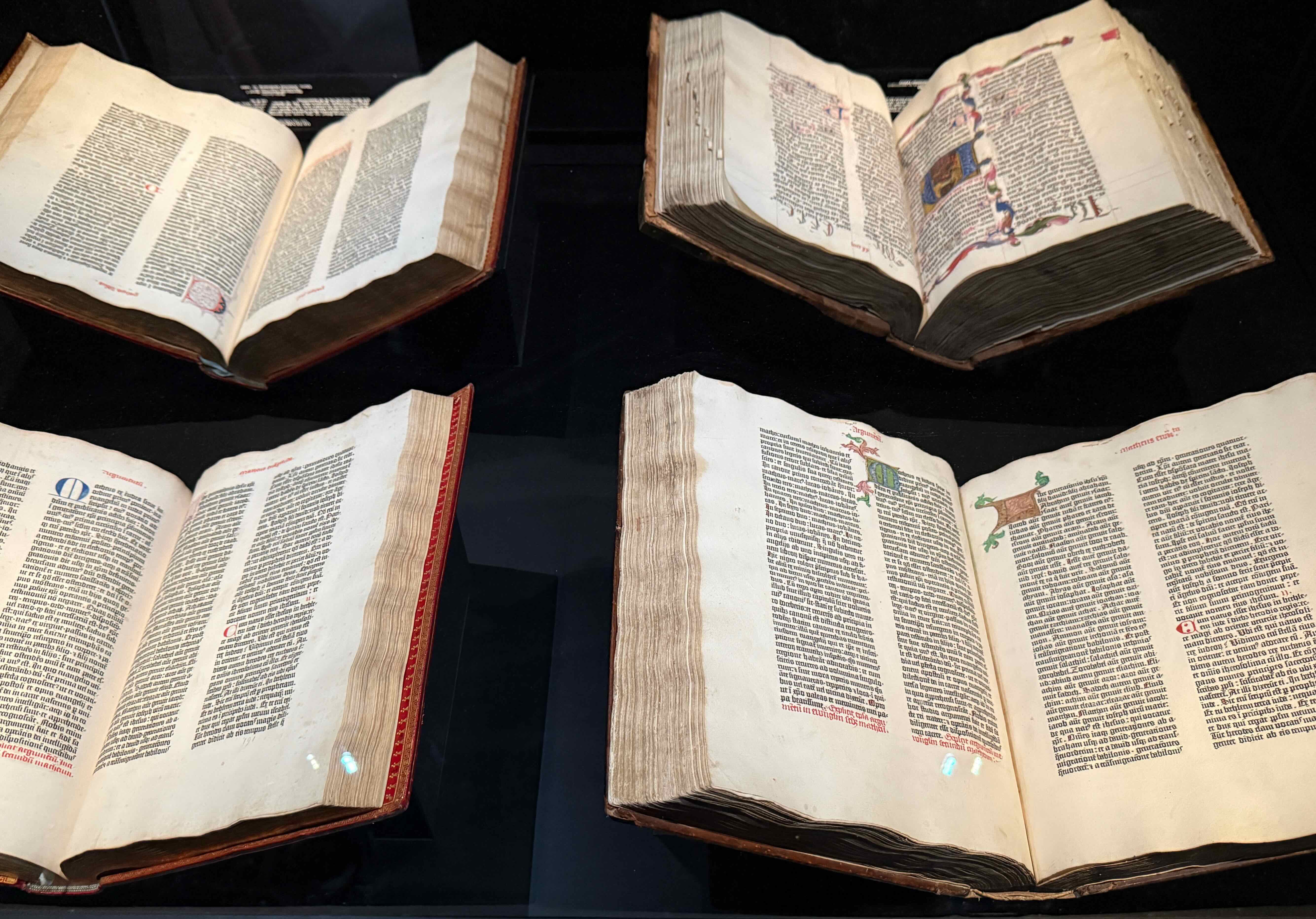
Entering a small room with dim lighting we see the Gutenburg Bibles. Only 49 of the approximately 180 printed Gutenberg Bibles have survived and the Gutenberg Museum owns two. The complete two-volume Bible shown in the bottom of this photo was added to the collection in 1978. The second Bible is incomplete, with only the second volume surviving. The book in the top right is a calligraphed manuscript.
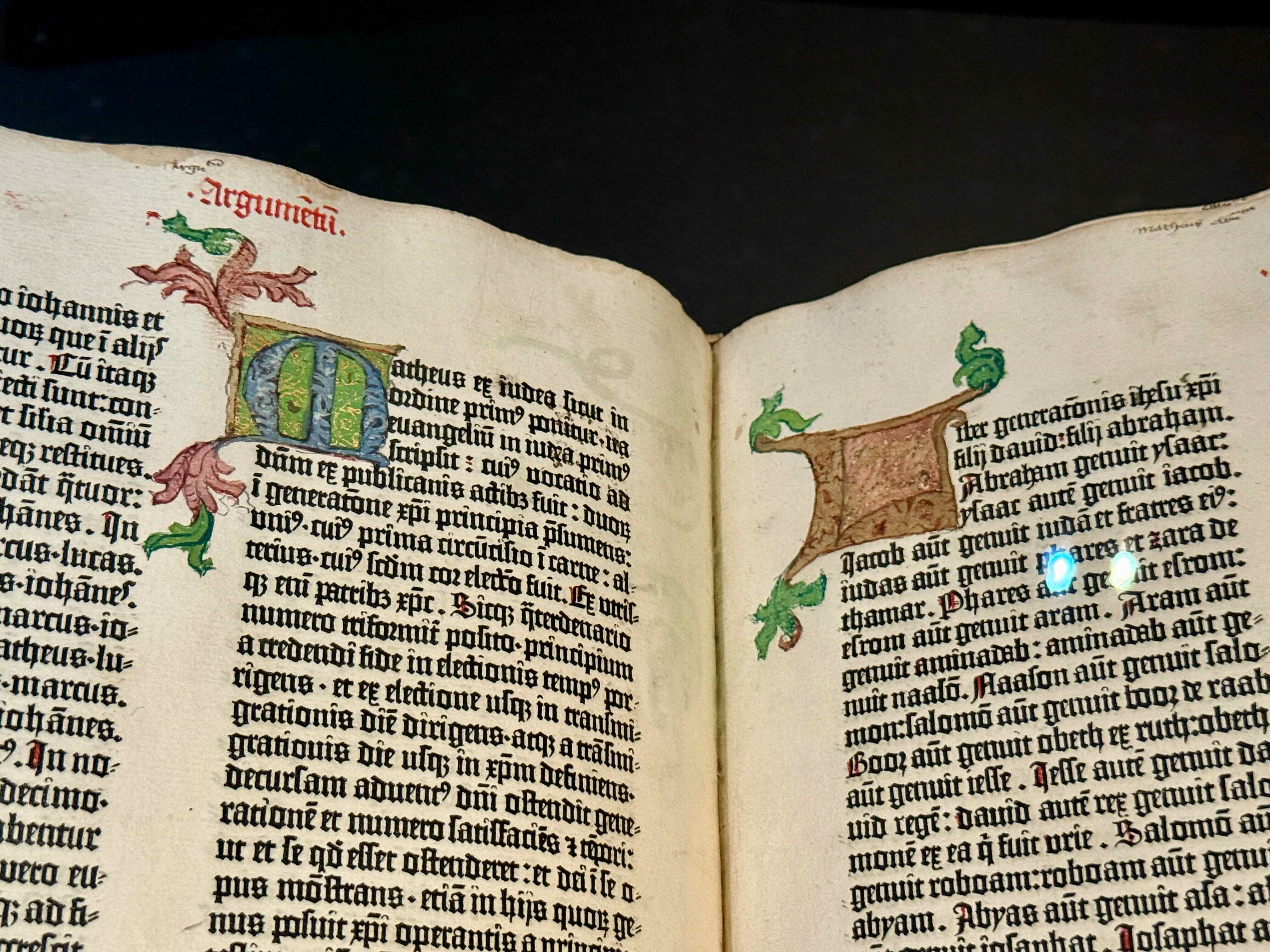
The Bibles were only printed in black ink – two or more colors would have been too time-consuming and expensive. Spaces for colored ornamentation were left empty and the books were handed over to an illumination workshop. As a result, all surviving editions have different ornamentation.
The Missale Moguntinum, was hand written on parchment between 1453 – 1459.
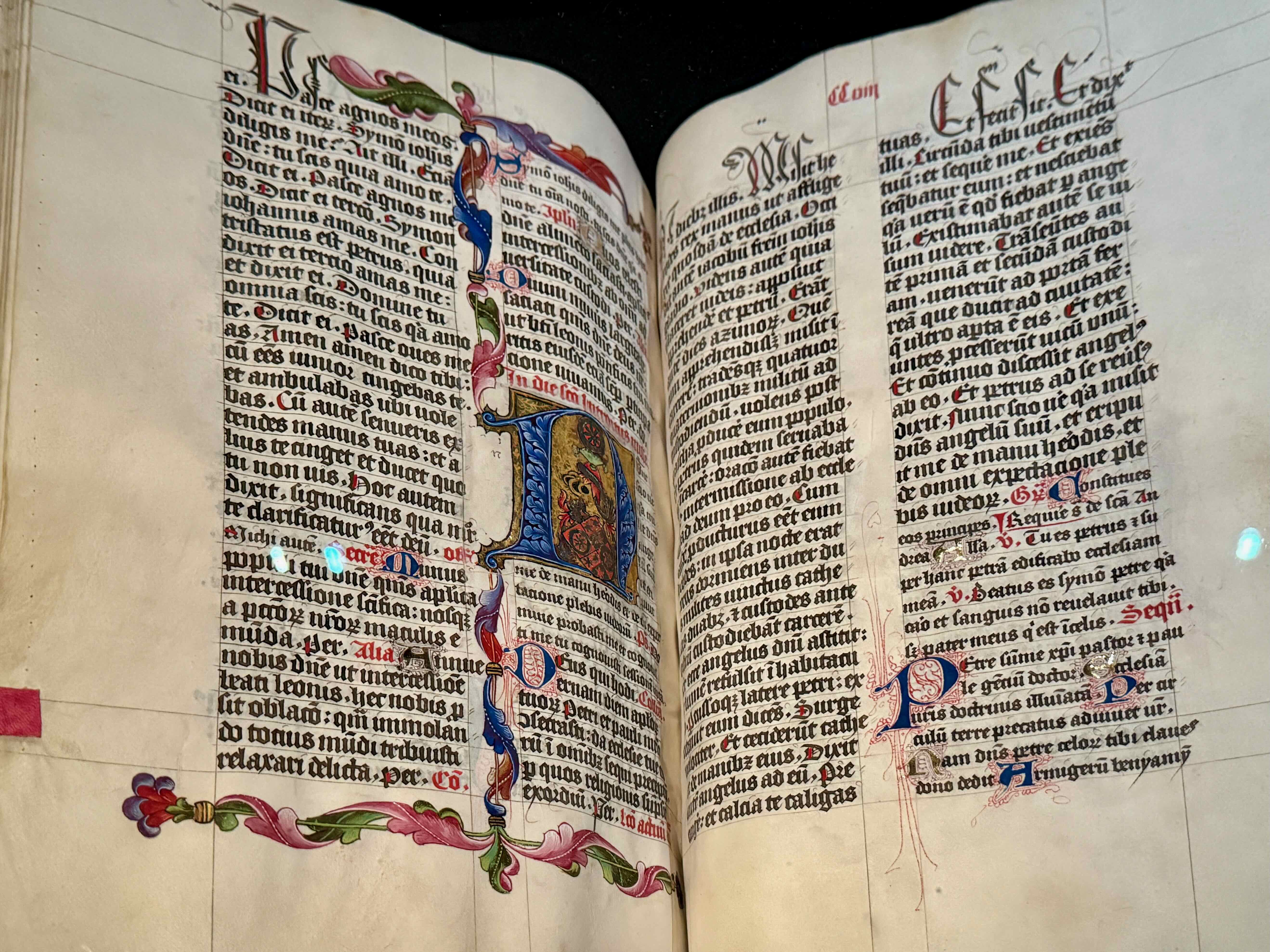
I love that the guide lines are still visible. Imagine writing this huge book. Gutenburg’s press changed how books were produced and made them available to so many more people. Seeing these bibles in person is special but I am still in awe of beautiful hand written and illustrated books.  
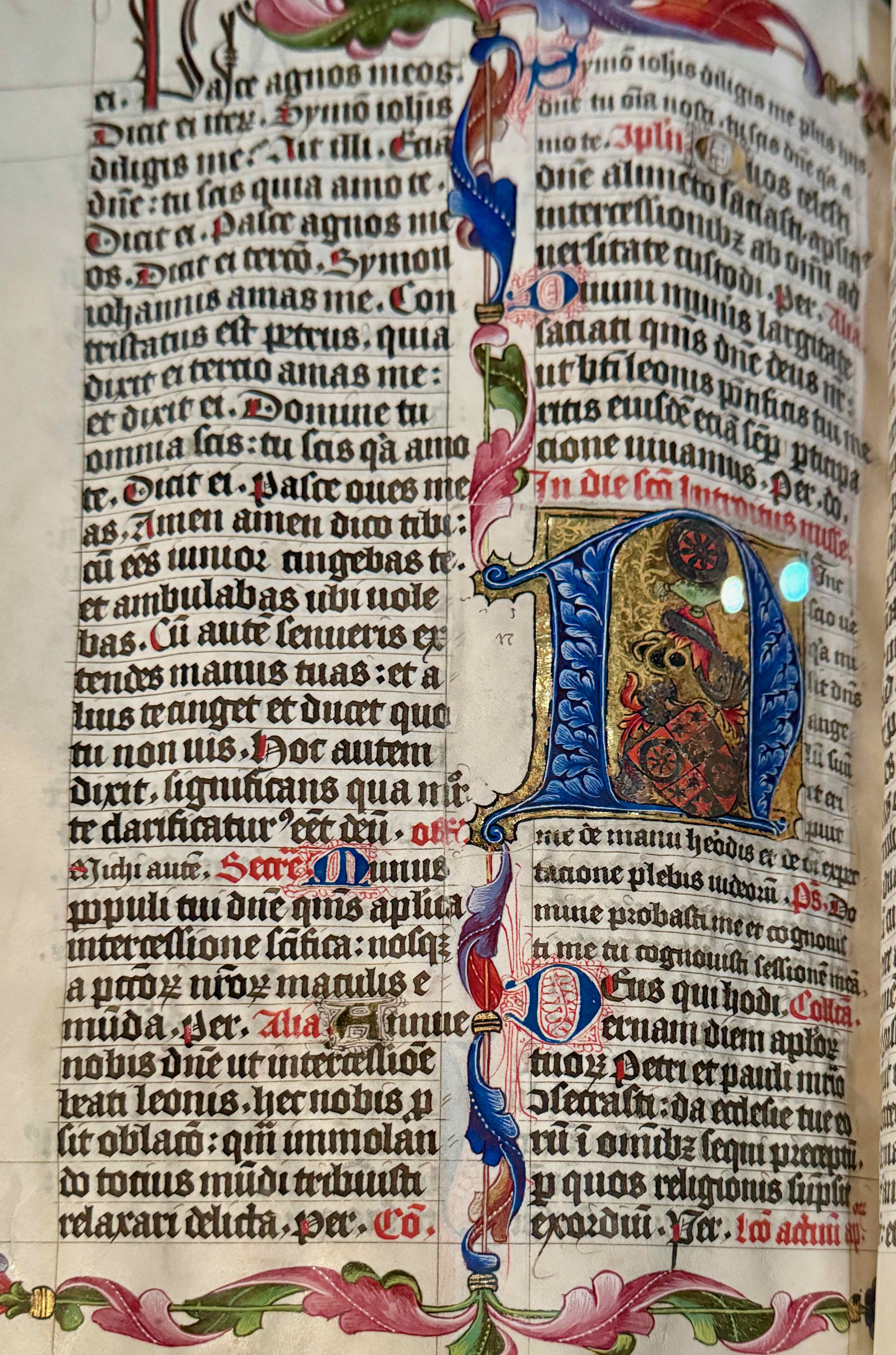
In the mid-15th century before printed books were readily available, the demand for books could not be met. One solution was to produce books faster. This was why copies of the “Speculum Humanae Salvationis” or “Mirror of Human Salvation,” were created in cursive and quick pen-and-ink drawings. The volumes are dated around 1450, making them approximately the same age as the printed Gutenberg bibles.
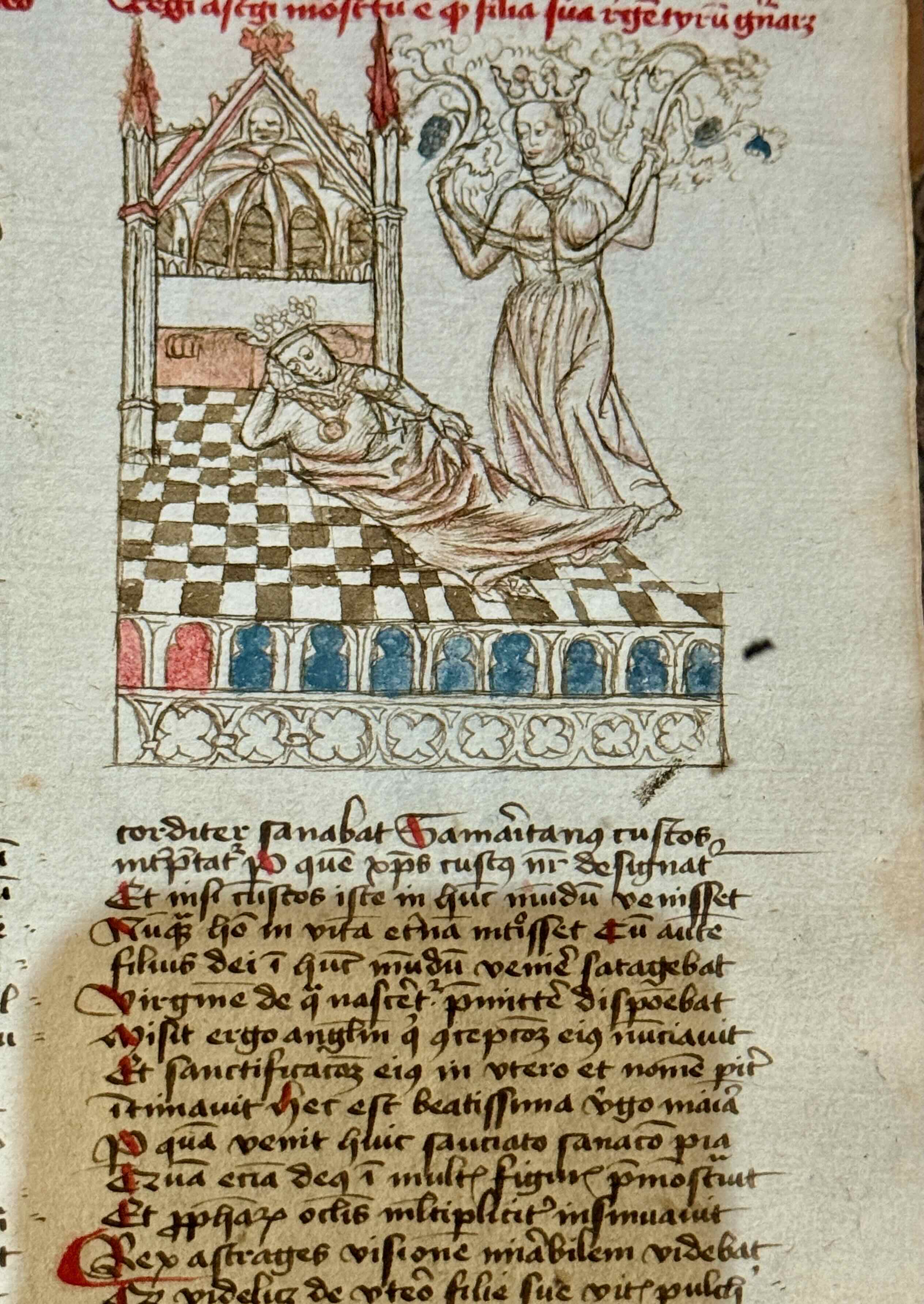
We wander through the Natural History Museum. I wonder how archaeologists are able to reconstruct skulls and bones from a pile of fragments.  It must be a very difficult puzzle.
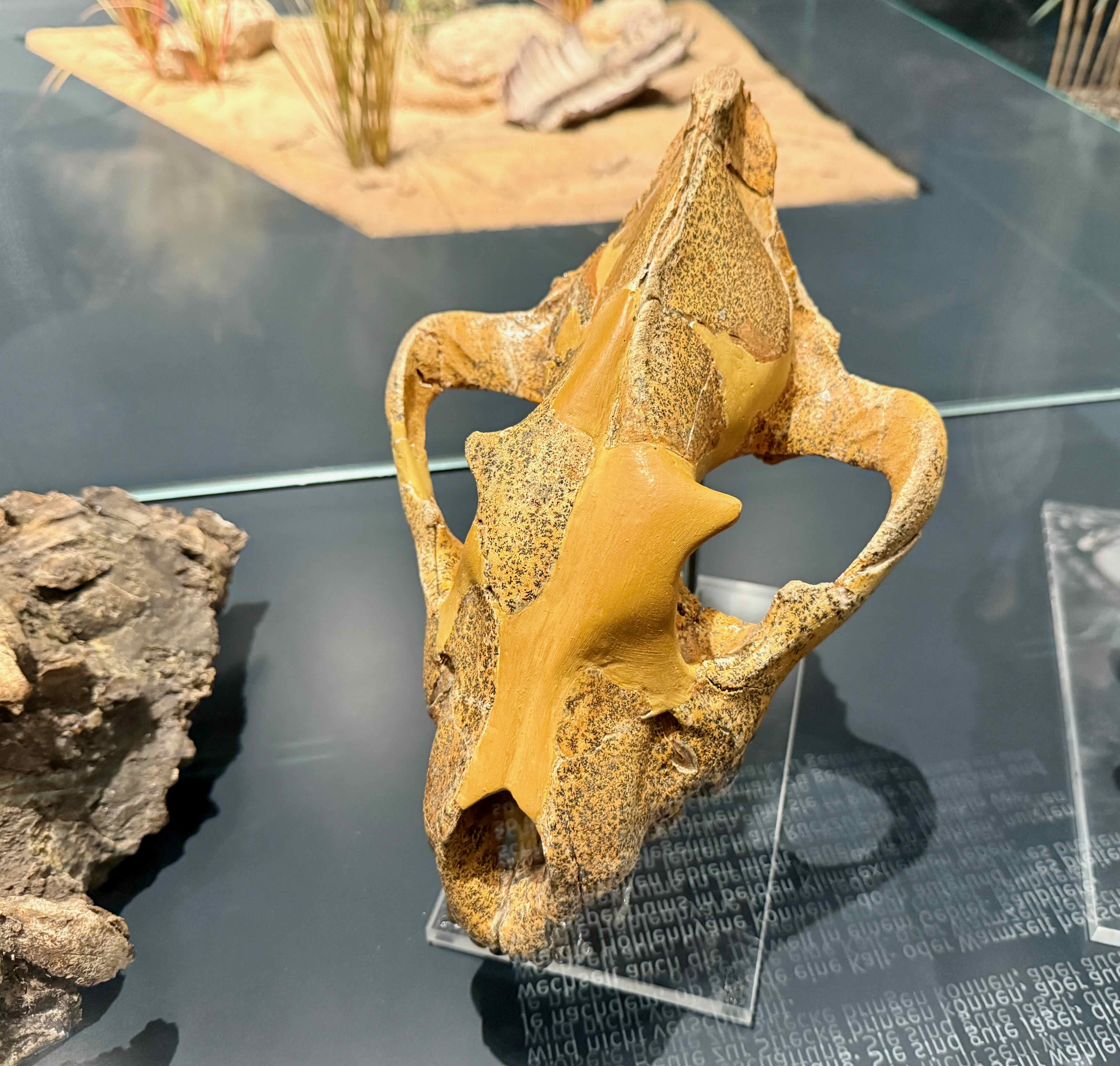
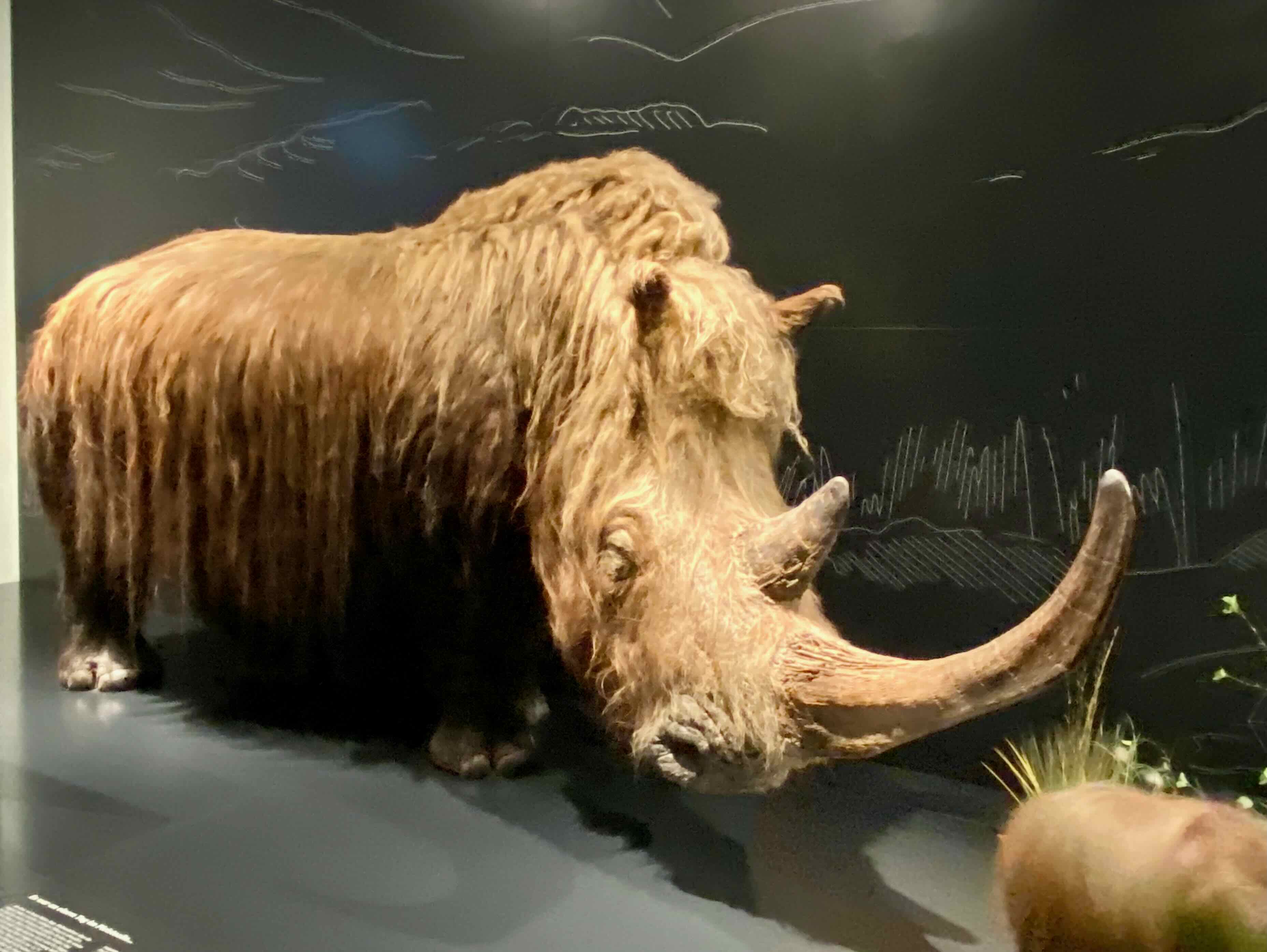
The Wooly Rhino had a huge head compared to the rest of its body.  There are samples of real wooly rhino hair on view that were found preserved in permafrost.
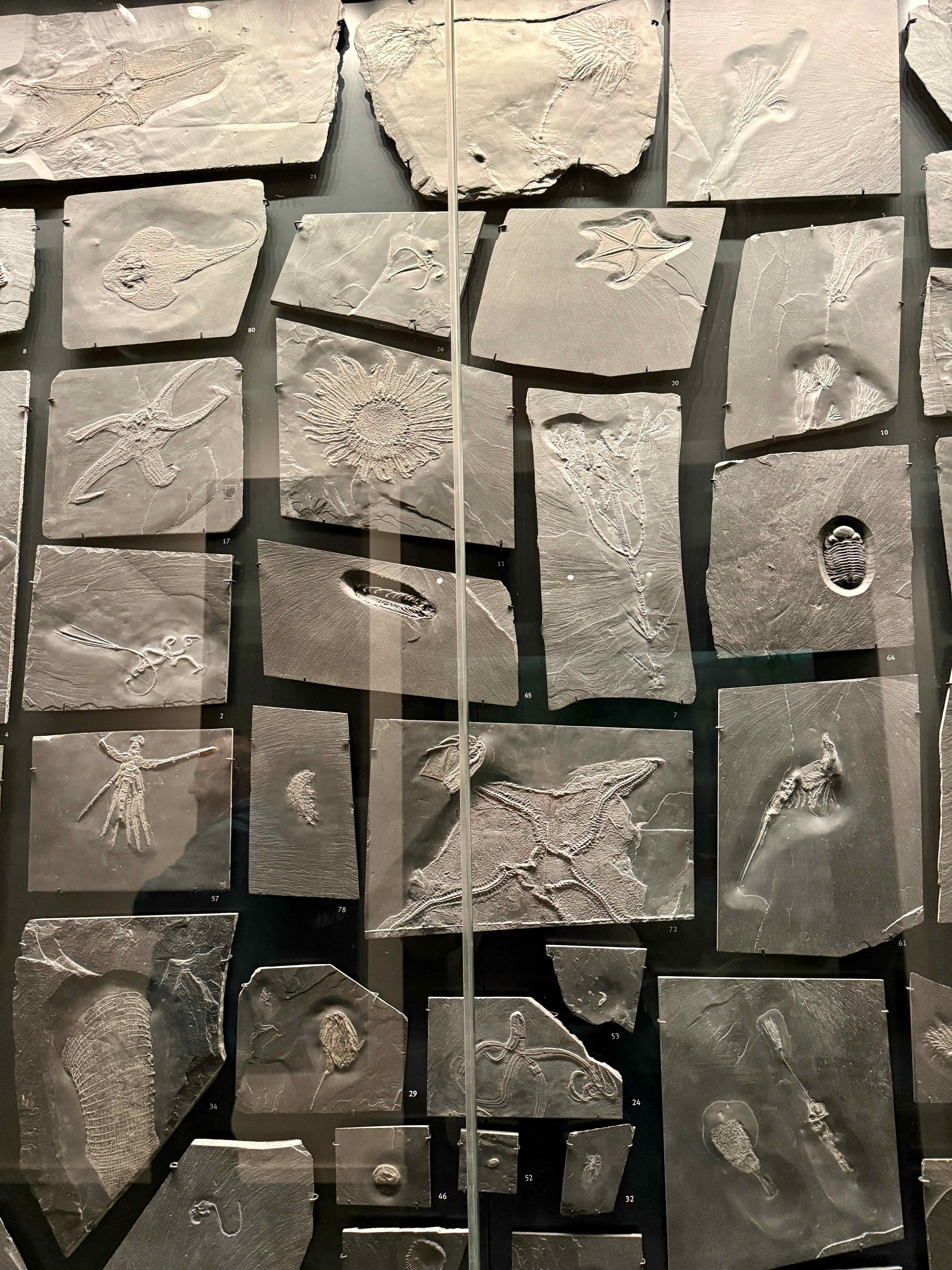
I thought these fossils were really beautiful.  The plants, insects and other animals are preserved in the finest detail. They are incredible.
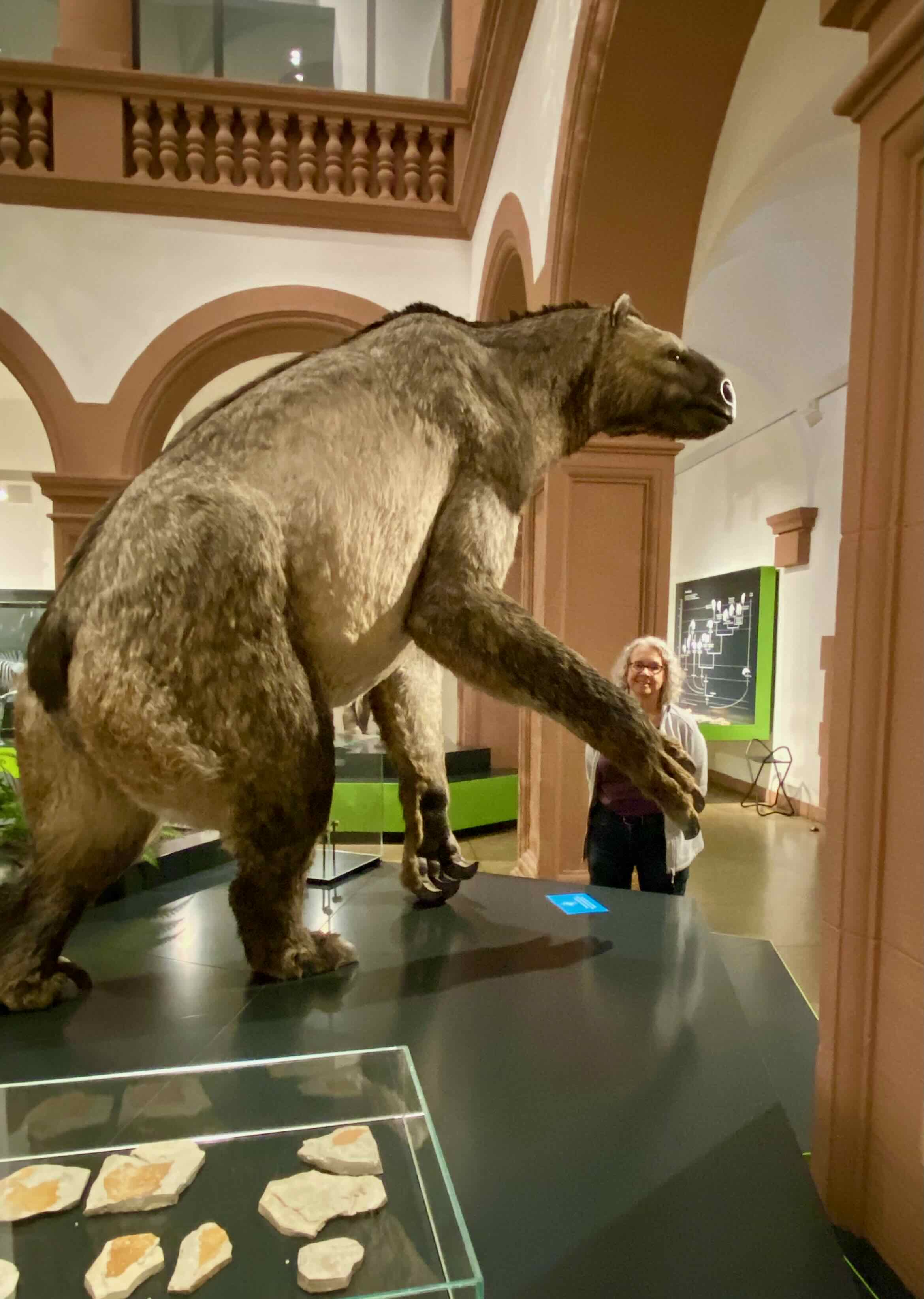
We forgot to check what this prehistoric creature was.  
There are a few more displays of stuffed animals.  I thought this one of different types of rabbits was interesting. It is a small museum so it doesn’t take too long to see everything.

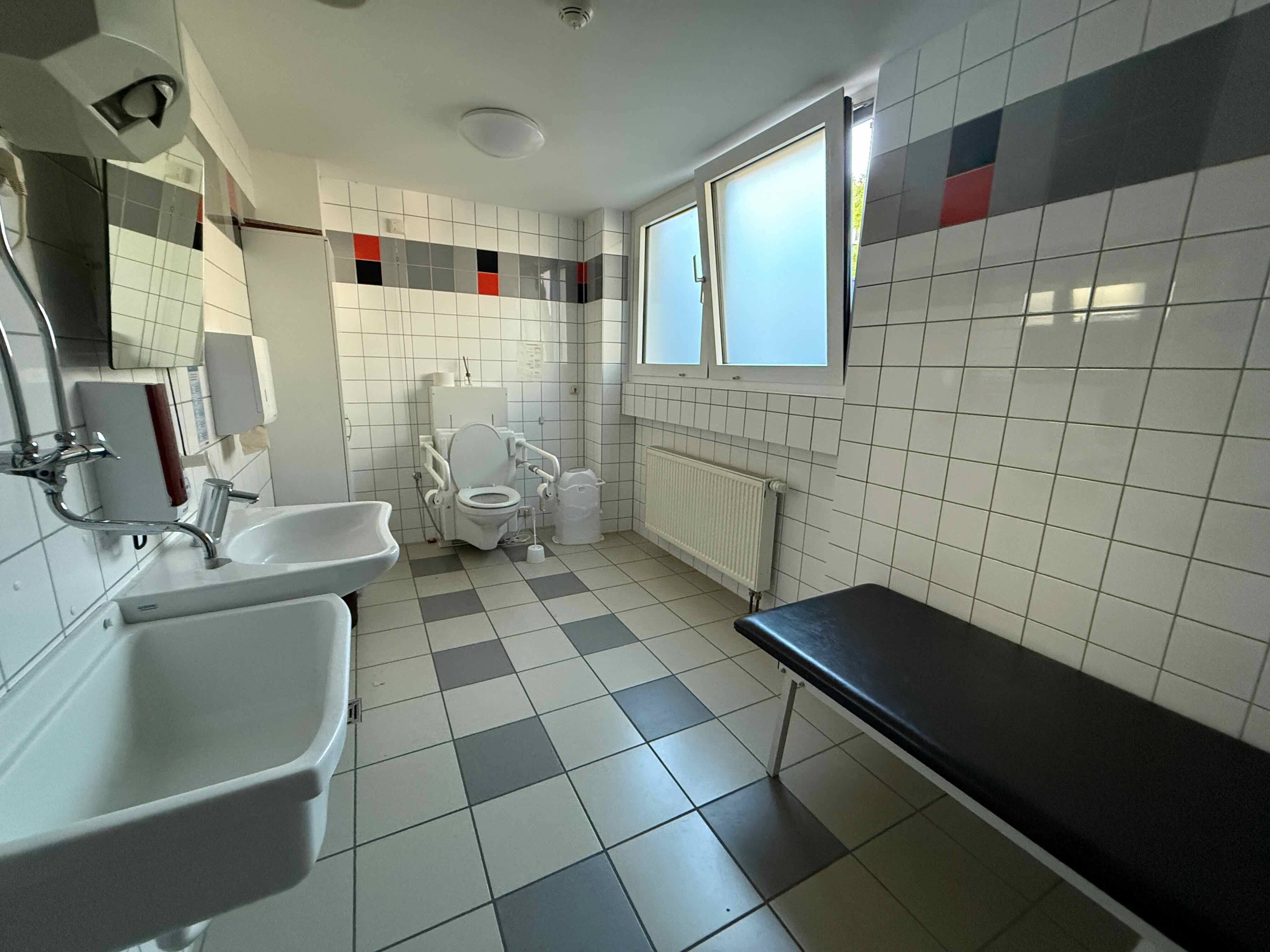
I know this is a strange photo, but this is the handicapped washroom at the museum.  I’ve never seen a public washroom like this.
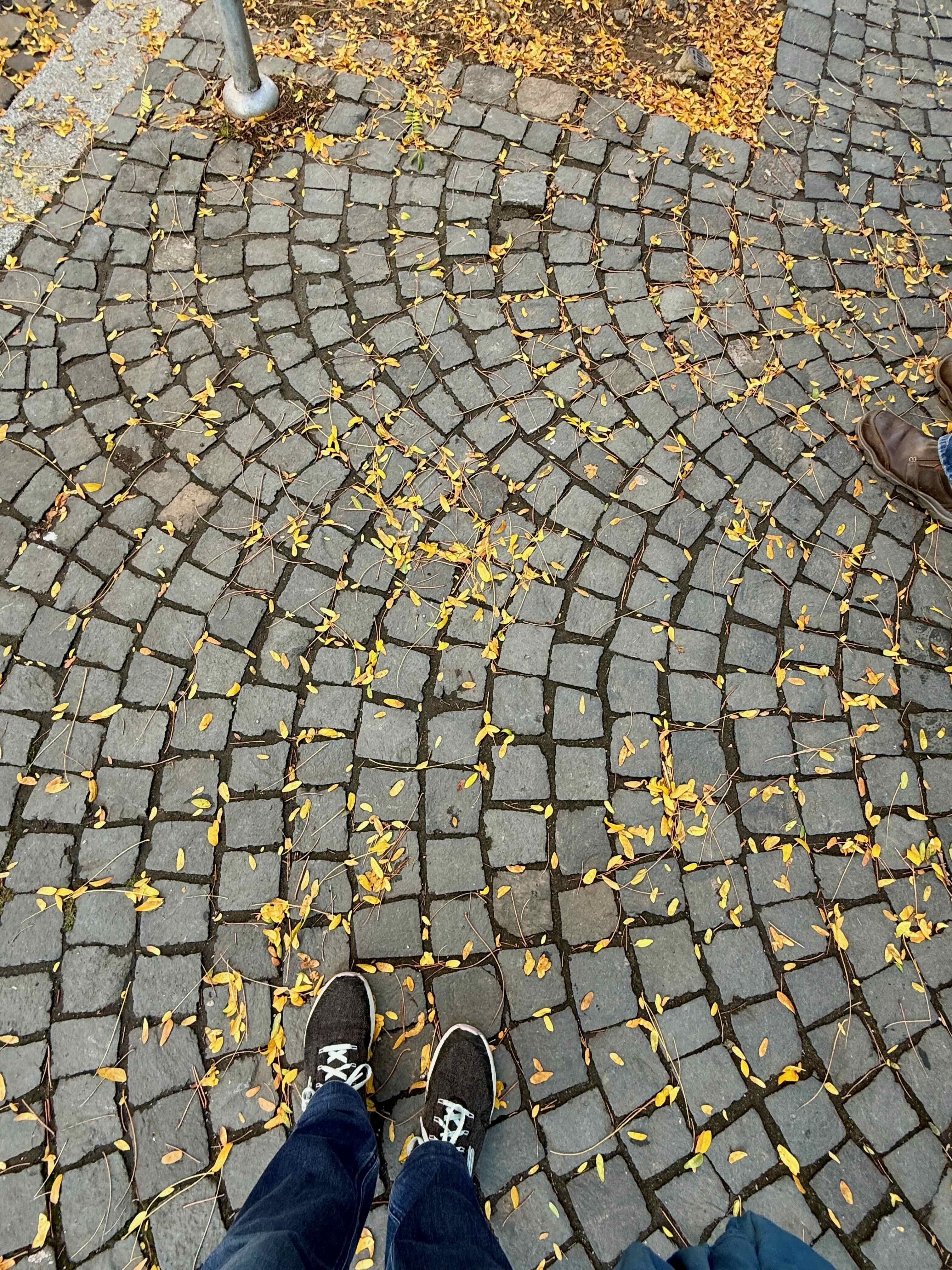
We walk along cobbled sidewalks with reminders that summer is over on our way to see the next sight on the agenda in Manz.
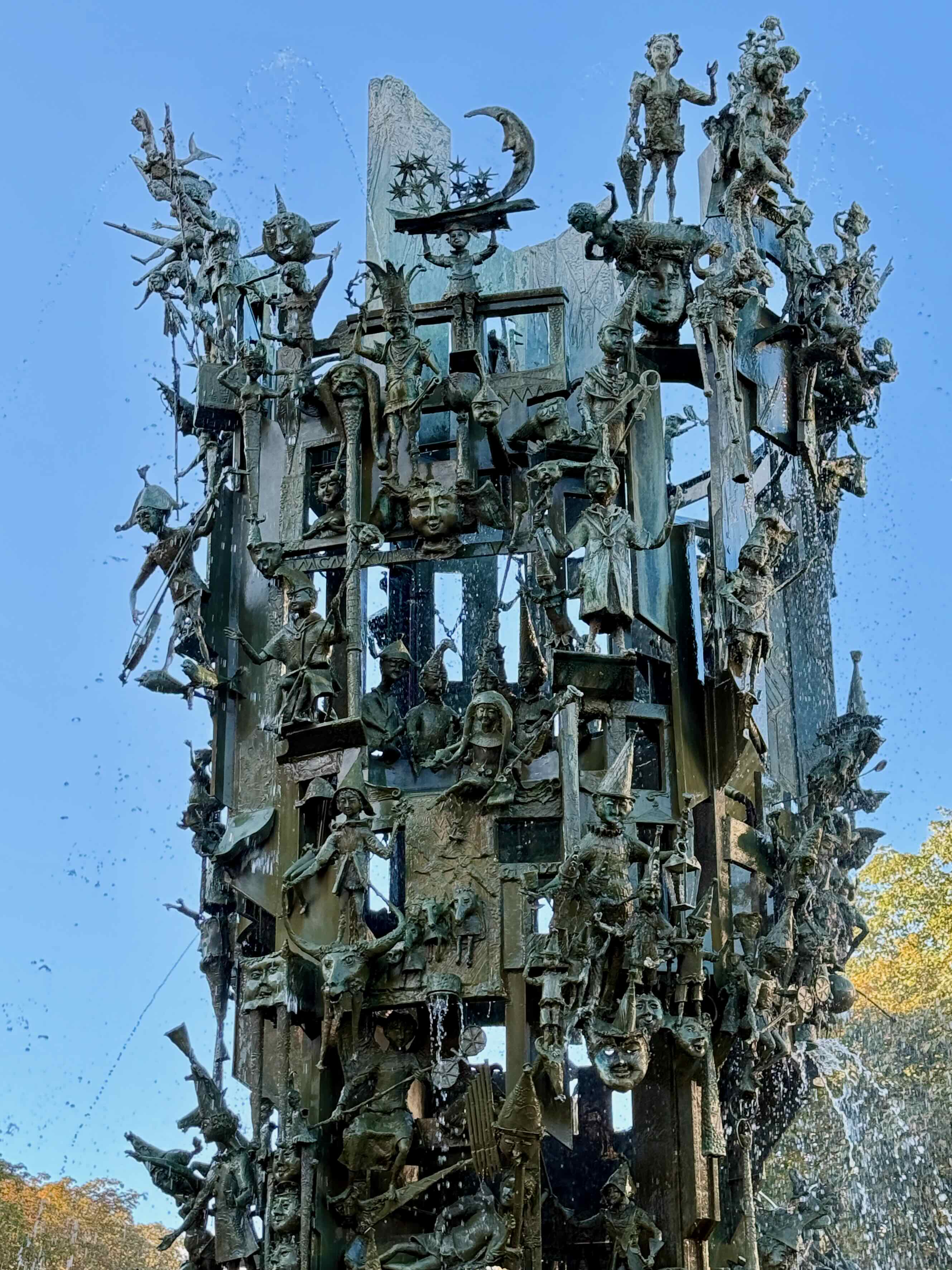
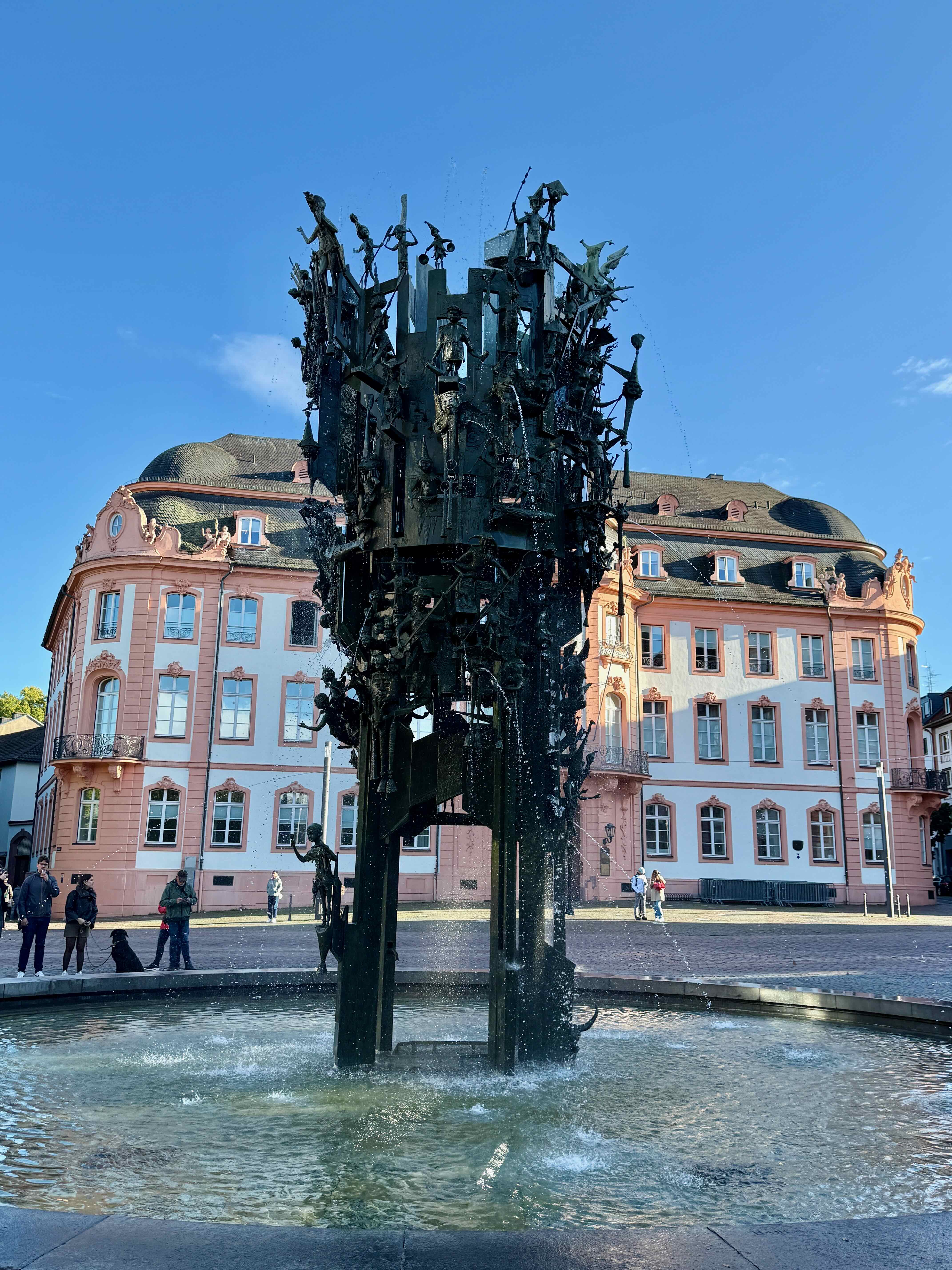
This huge fountain is the Fastnachtsbrunnen, or Carnival Fountain. It is almost nine meters high and has over 200 bronze figures from the Mainz Carnival Mythology. Every year on November 11, at 11:11 pm, people celebrating Carnival in Mainz gather here. When the clock strikes 11:11 pm the carnival officially begins.  
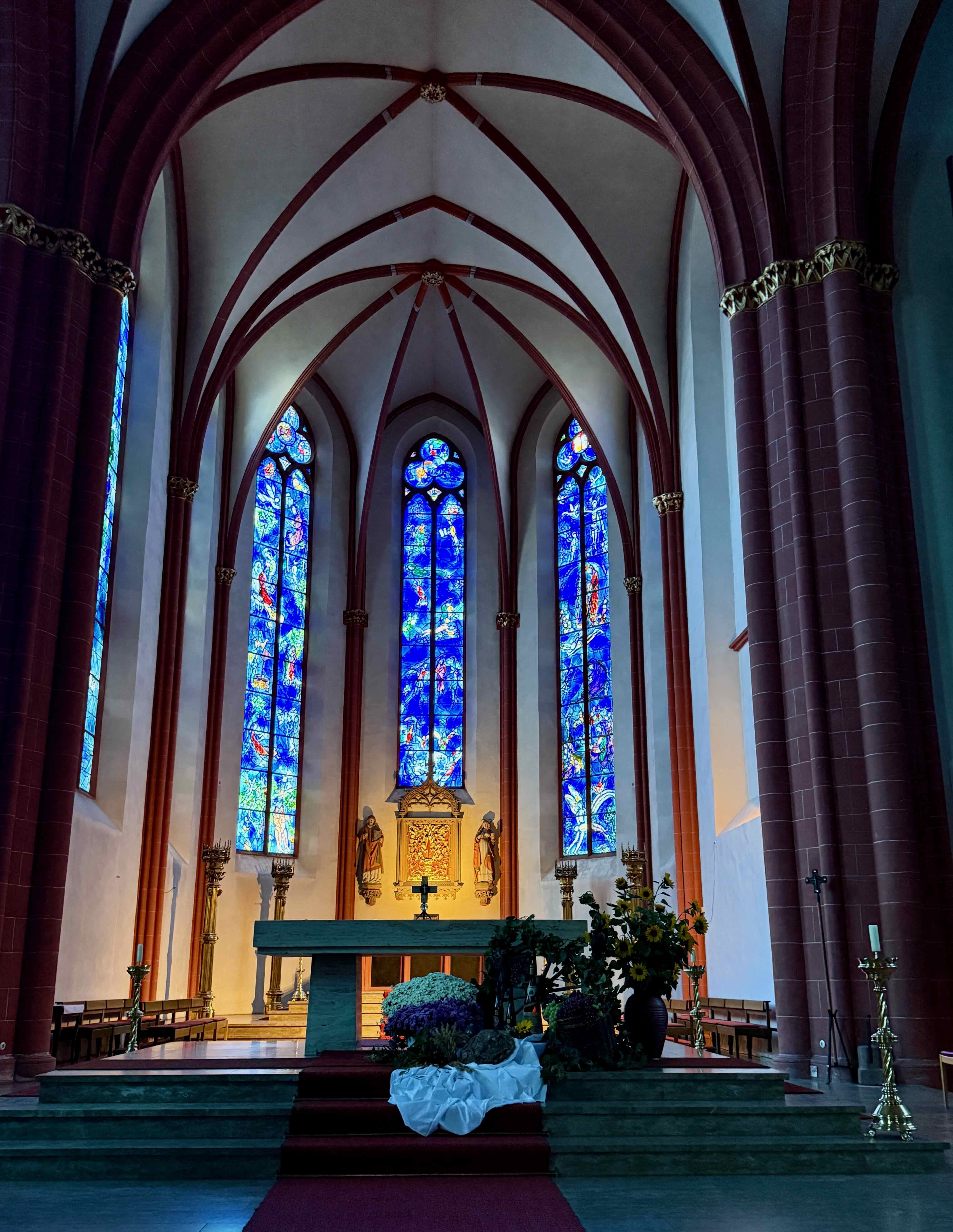
Our last stop before heading home is St. Stephen Church. This is the only German church for which the Jewish artist Marc Chagall created windows.
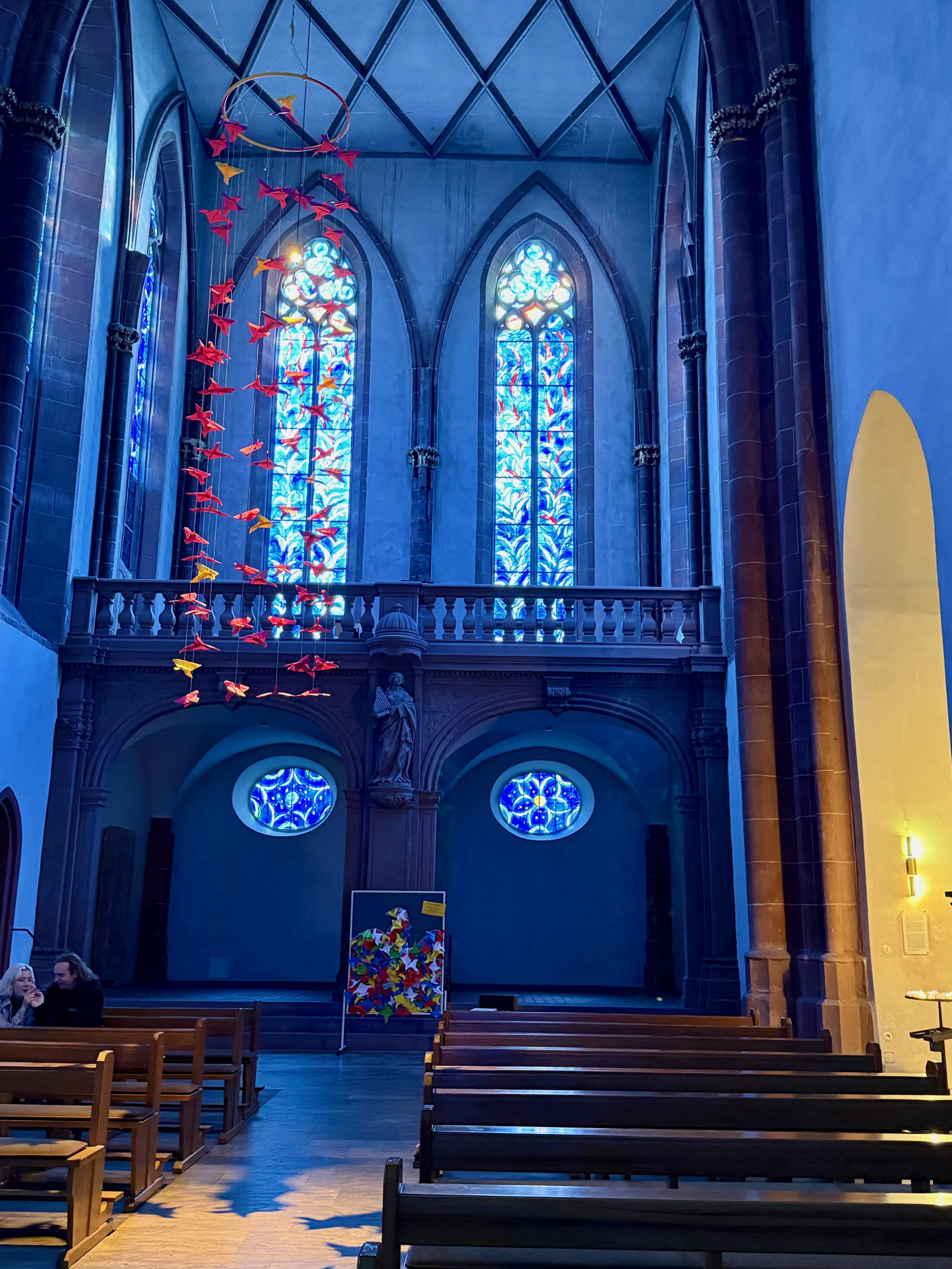
In 1978, the first window by the 91-year-old Chagall was installed. Chagall completed the final church window shortly before his death at the age of 97! Although all the windows are beautiful, I didn’t find the blue light in the church appealing…it felt too sombre,
Time to drive home…this was a very full day!
Metz, France

Day 27     Friday, September 26, 2025

I had most of this post written and somehow lost it! So I had to start all over again. Lesson learned, remember to save a draft often!!

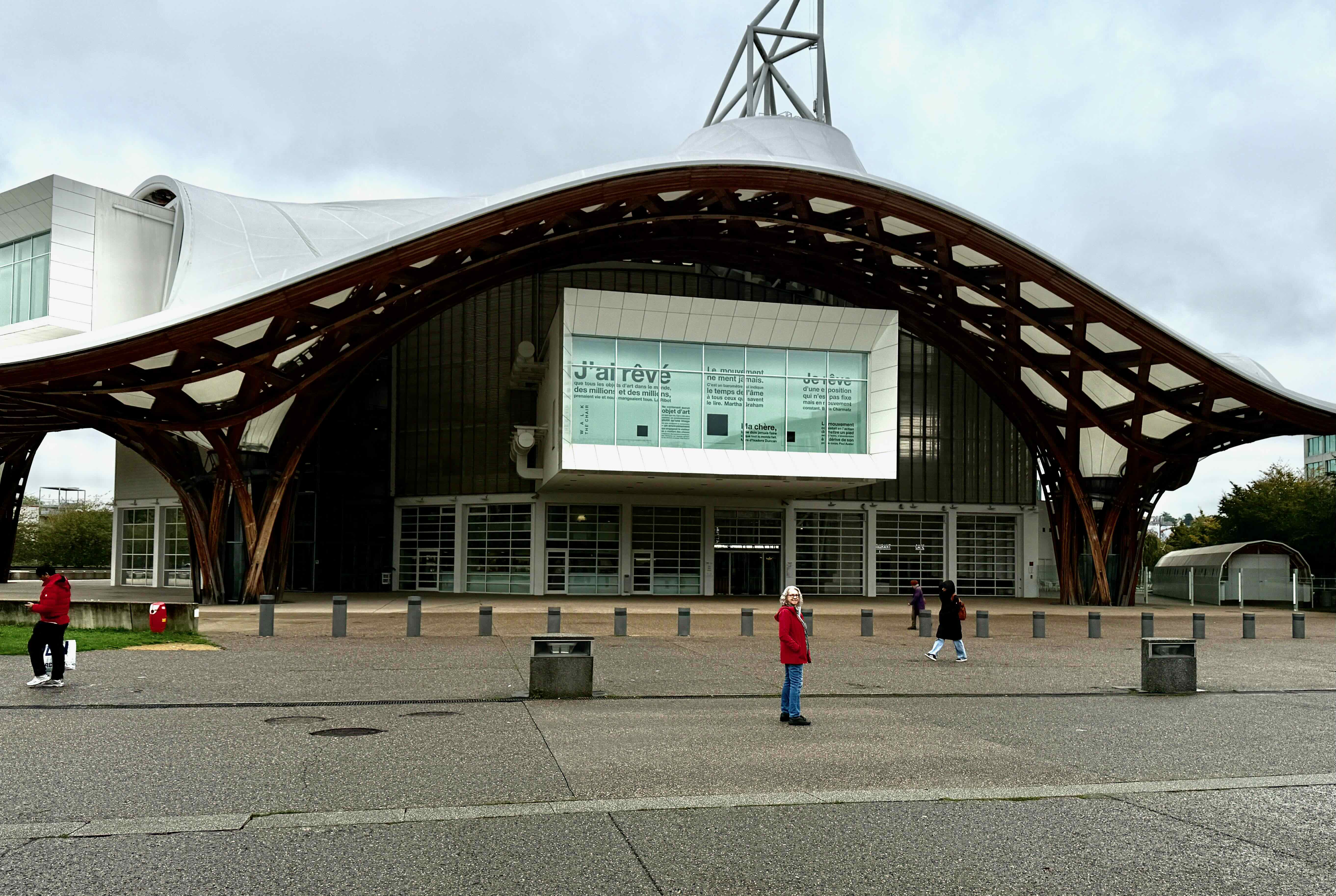
Today we drove a half hour to Metz.  First stop is the Centre Pompidou-Metz, a branch of the Georges Pompidou Centre in Paris, that displays contemporary art and hosts temporary exhibitions, events, films and presentations.  The dark lattice work supporting the roof is made of huge wooden beams.

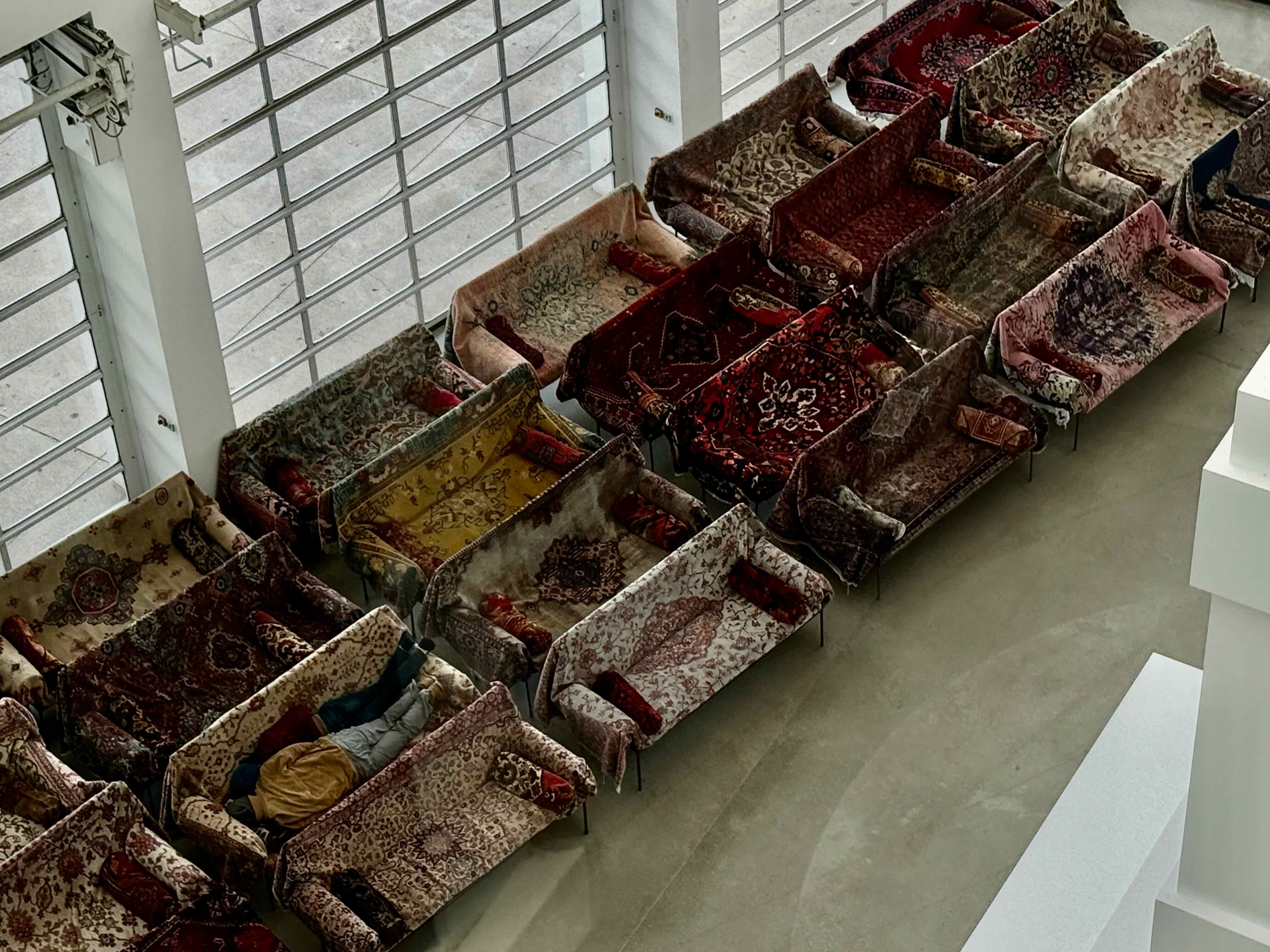
I didn’t get the artists name but can you see the two figures sleeping on one of the couches?

Maurizio Cattelan is a self-taught artist from Italy known for creating sculptures, and installations that are humorous, satirical and unconventional. Wanting to explore the power of images, Cattelan frequently appropriates uncomfortable imagery in his art.

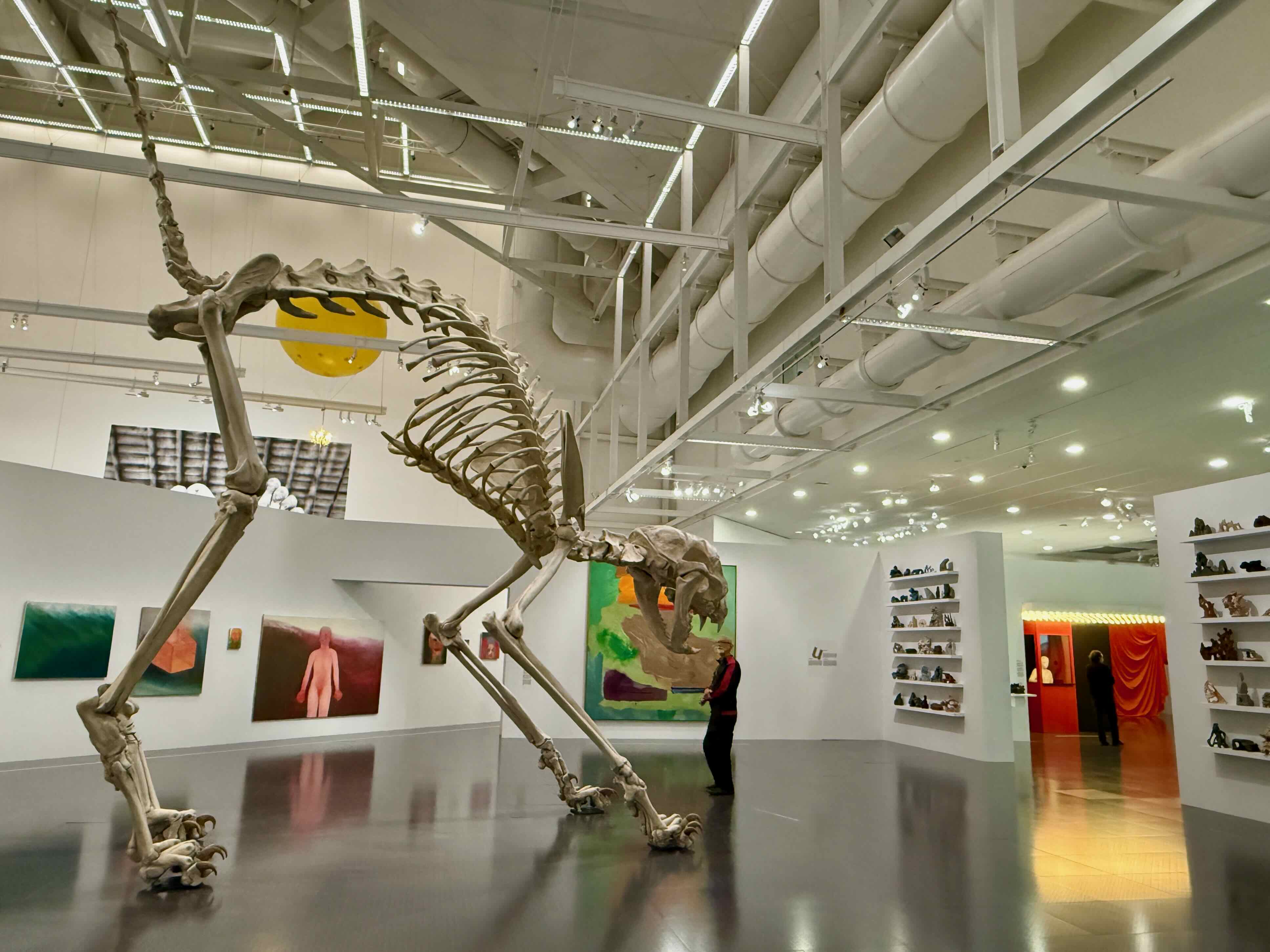
This domestic cat skeleton seems frozen with fear and its gigantic scale reminds us of the dinosaur skeletons we have seen in Natural History Museums.  Be warned, some of the images of Cattelan’s work are disturbing.  I did not include some of the works because they were so upsetting to view.

I walk around the corner, saw this and gasped. Kaput is a display of five stuffed horses with their heads in the wall to reveal the absurdity of hunting trophies.  The traditional head trophy is reversed with the entire body suspended and powerless. I do not have the words to describe how I felt when I saw this installation.

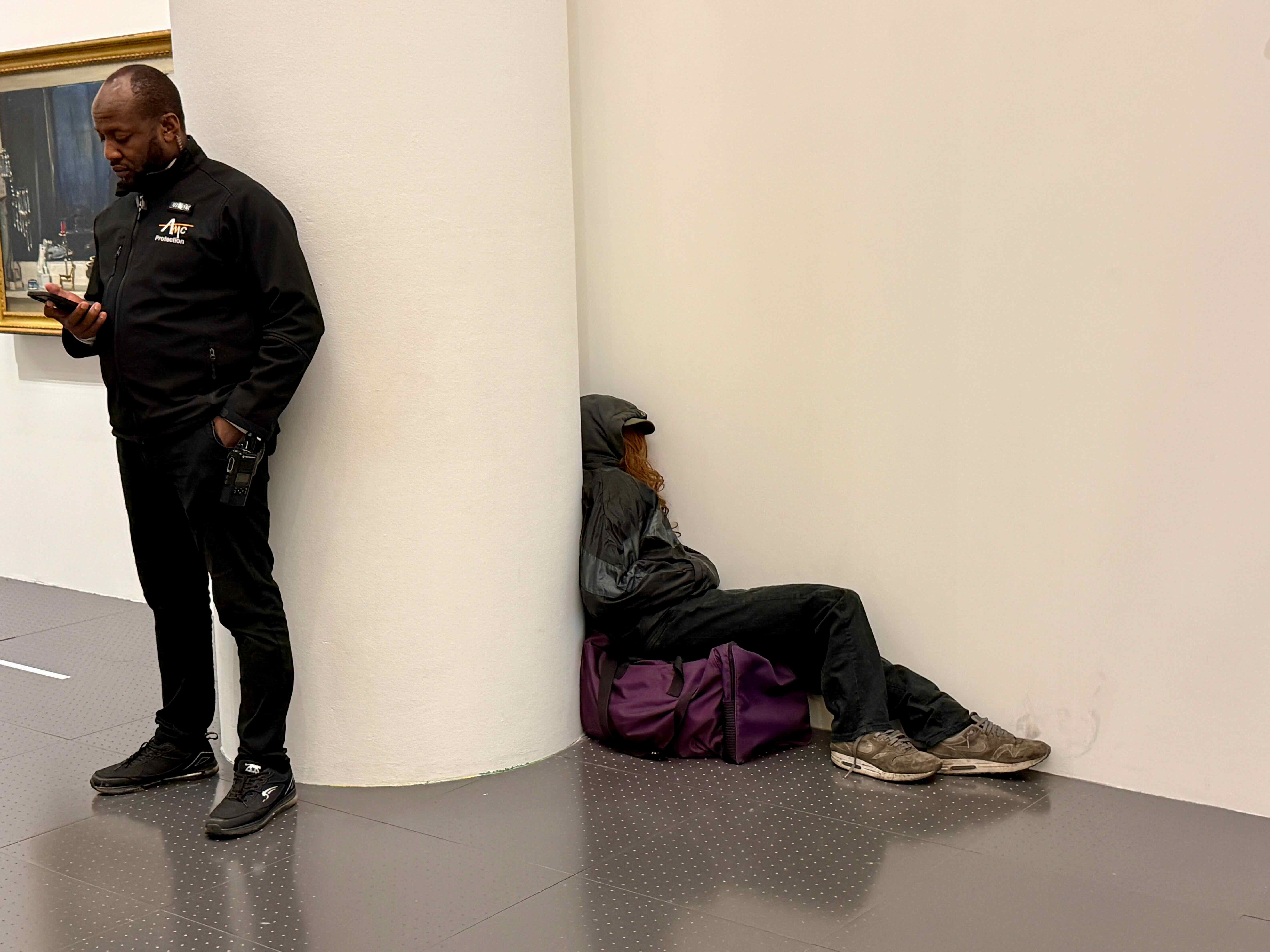
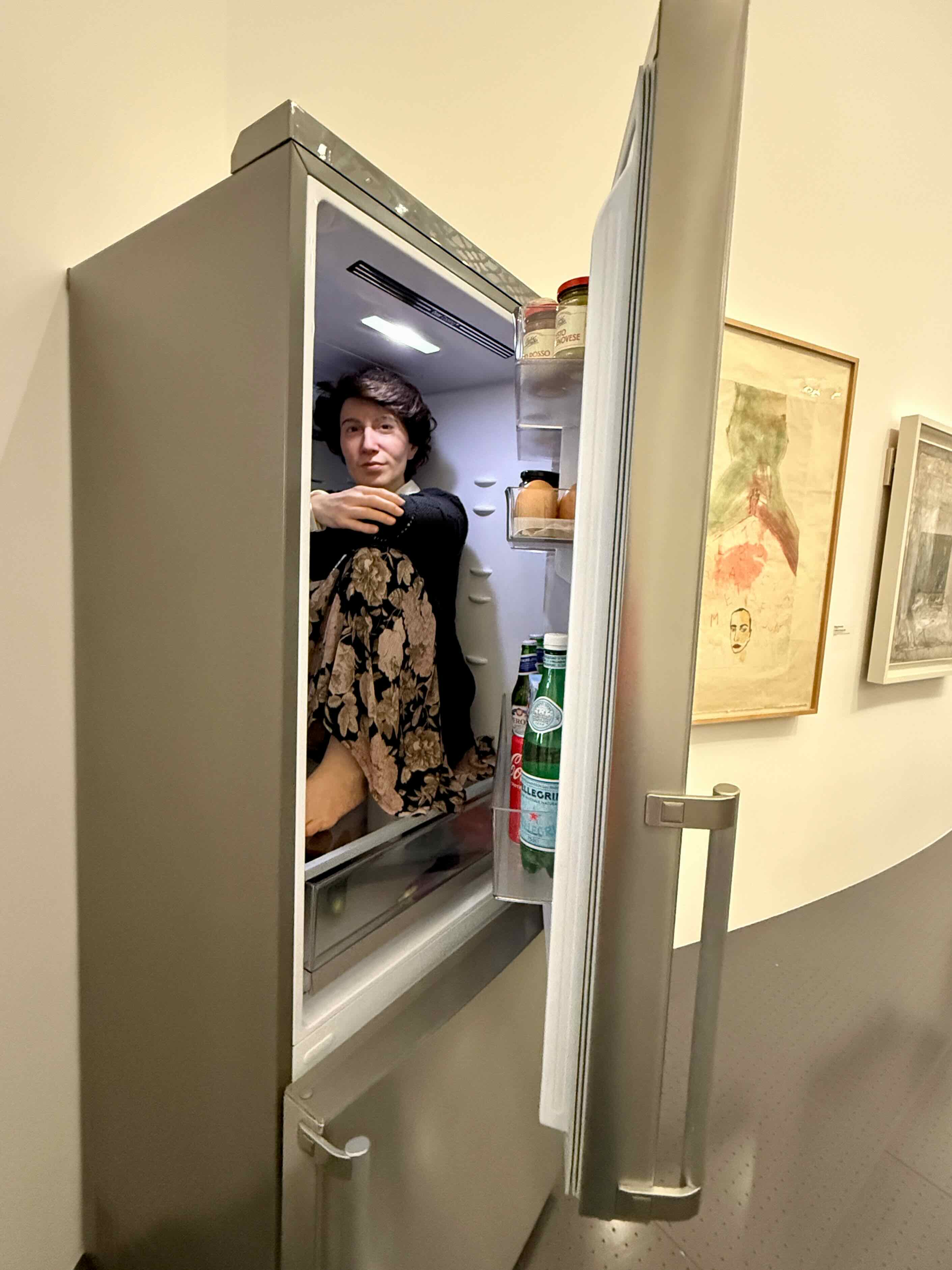
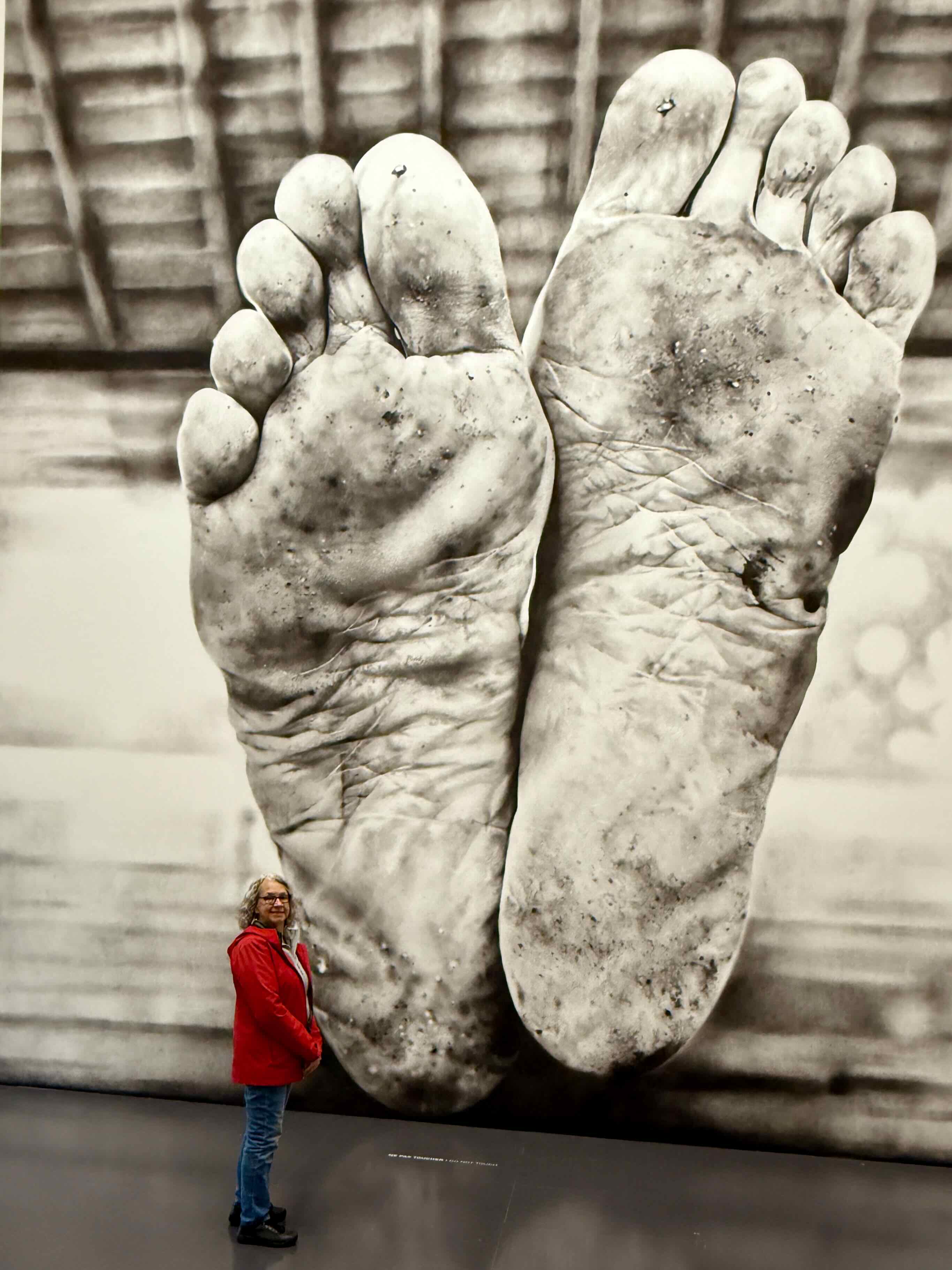
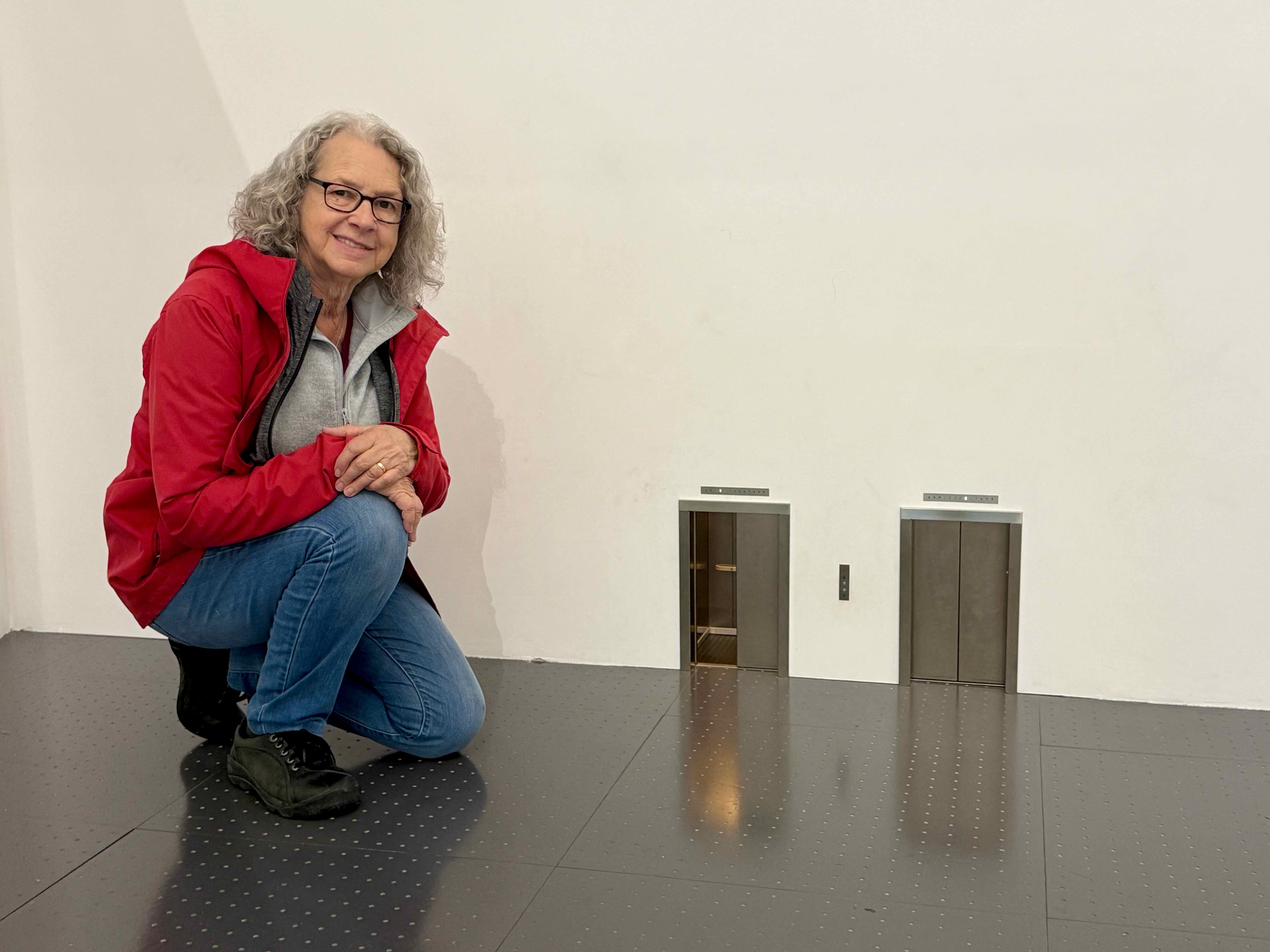
Cattelan often uses figures in his works. This person startled me, at first I thought it was a real person sleeping. ‘Father’ These bare feet stand for the whole body, a reminder of the human body and its finiteness..they become a symbol of vulnerability. This tiny elevator makes a sound, and opens and closes its doors, just as in real life. It is perfectly functional and totally unusable. One can imagine a tiny world coming to life somewhere behind these walls.
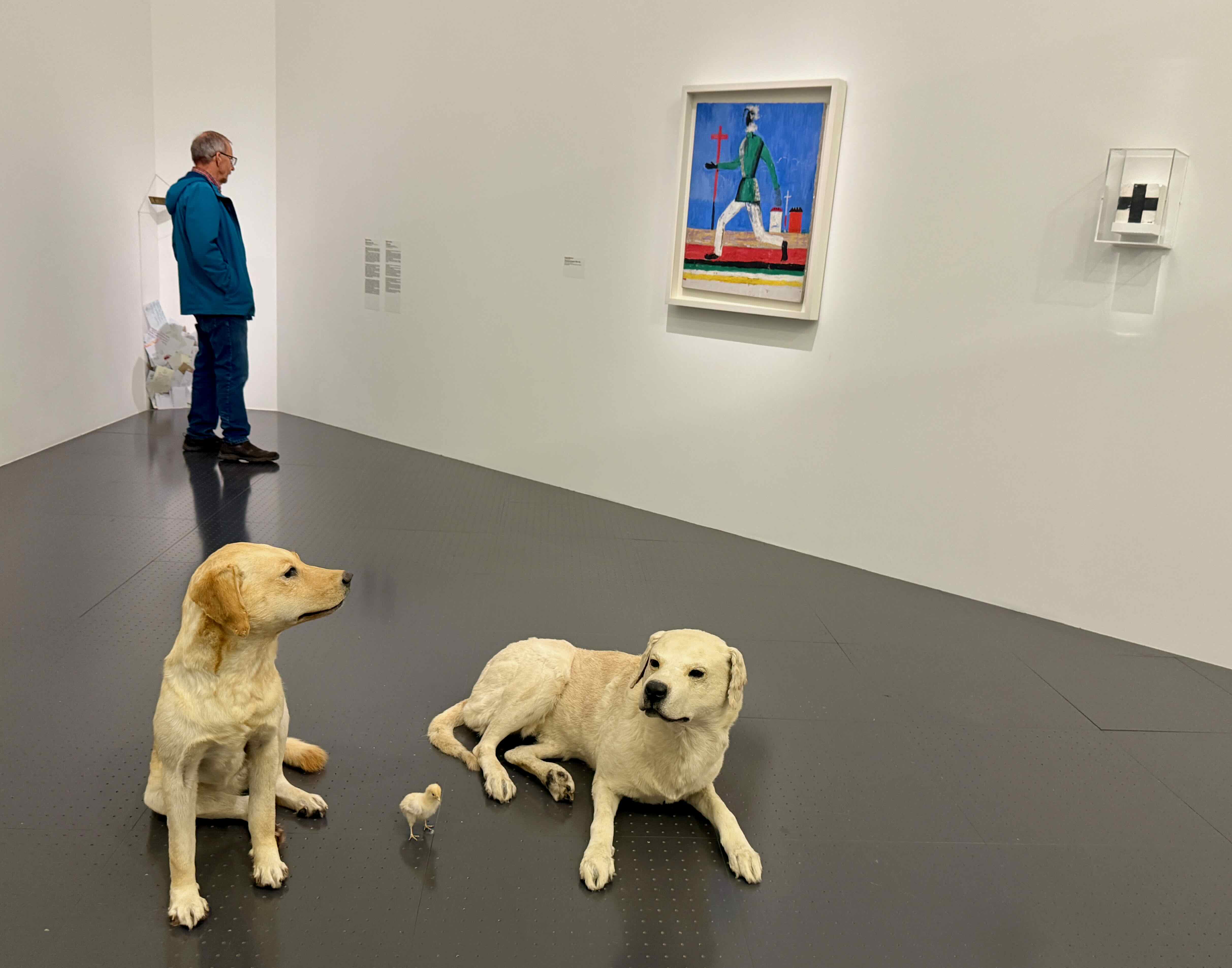
More stuffed animals, these two labradors and the tiny chick represent a reflection on power dynamics and the fragility of life.

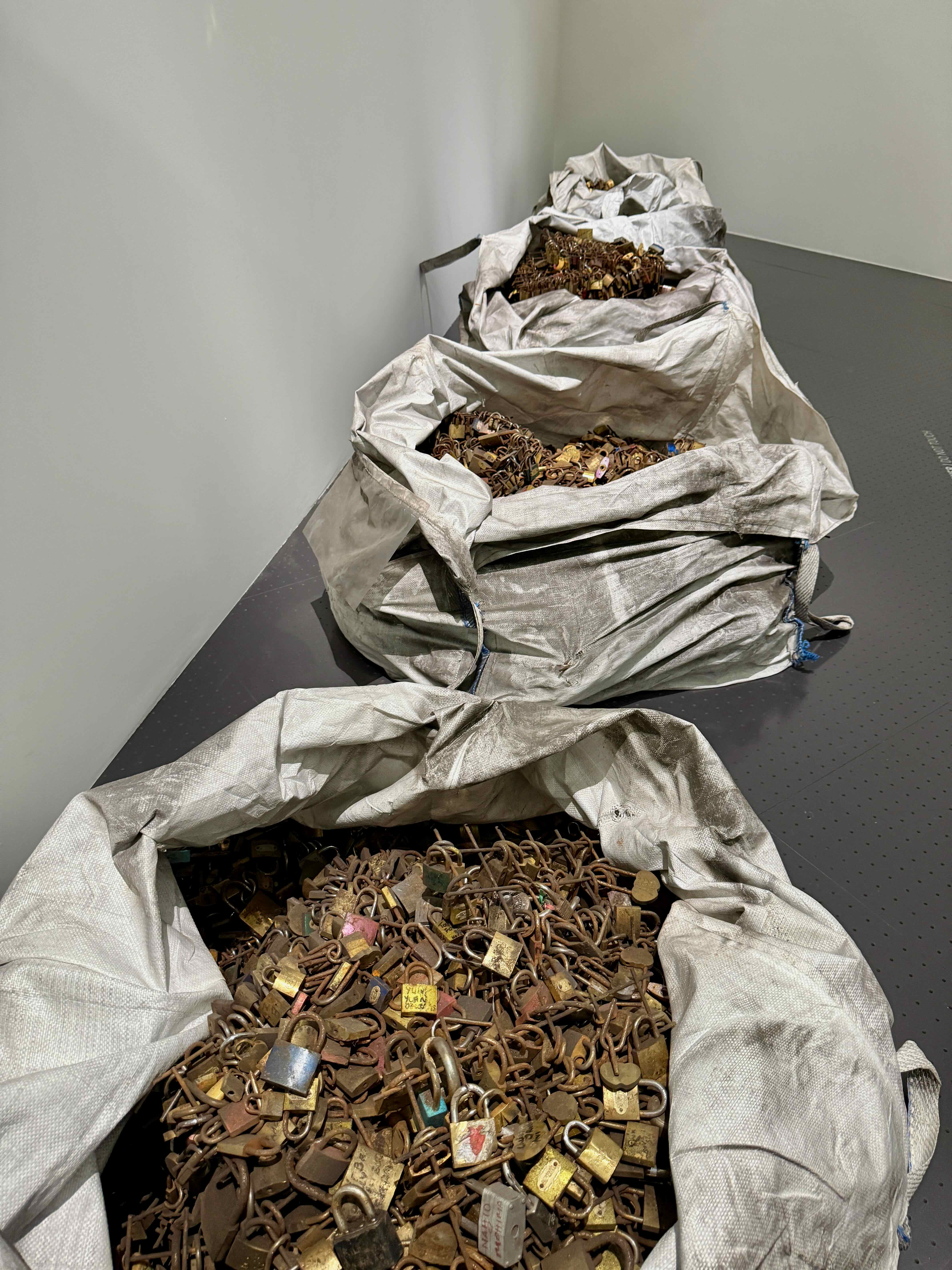
Artist Cyprien Gaillard’s five bags contain the tons of locks removed from the Pont des Arts where tourists once declared their undying love by attaching a lock to the bridge and throwing the key in to the Seine River. He displays them in construction bags, like unearthed artifacts, the rusty ruins of a bygone ritual.

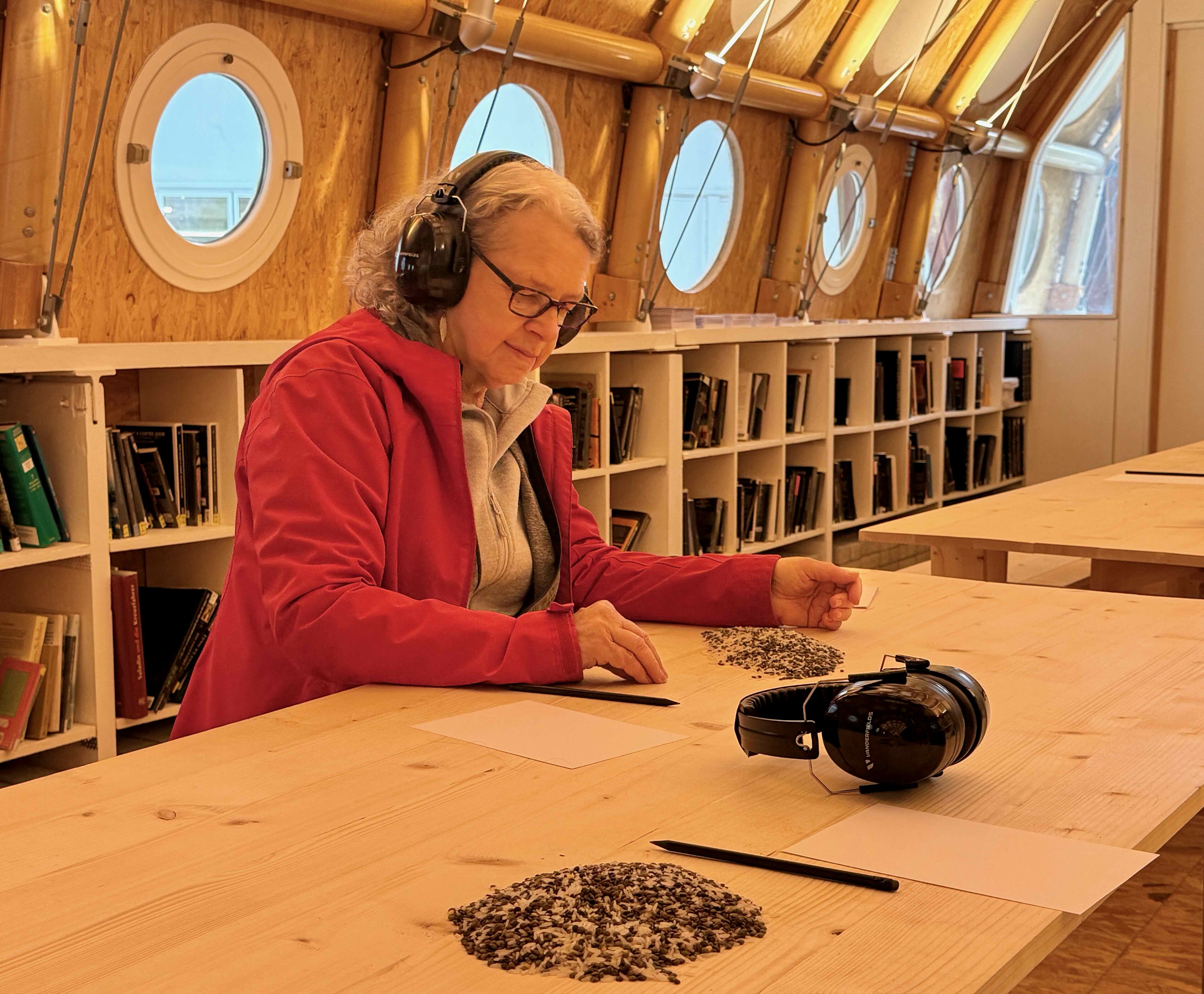
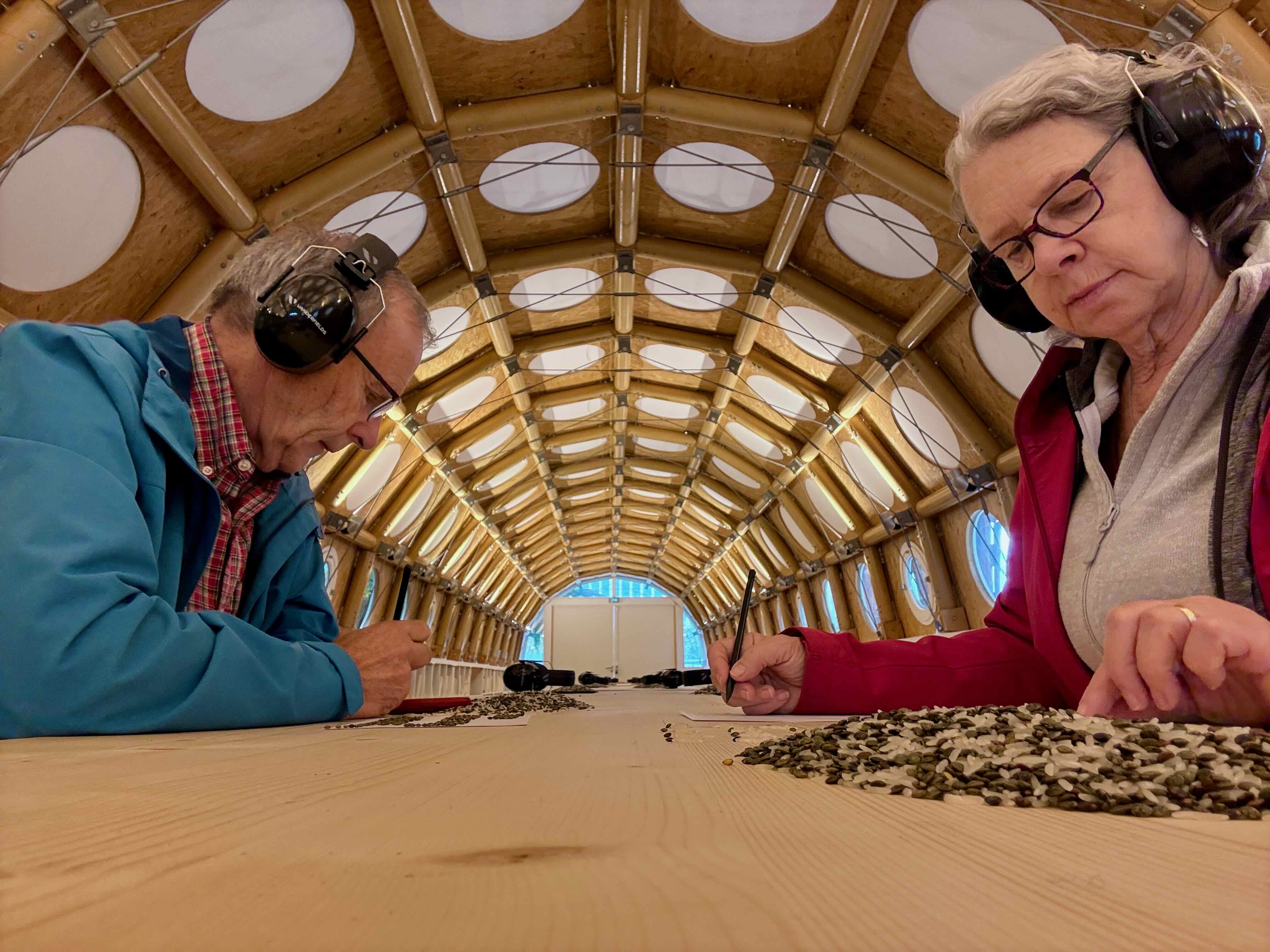
In a long white building called The Paper Tube studio there is a Marina Abramović installation called “Counting The Rice. We are invited to patiently sort grains of rice and lentils – a simple meditative gesture that calls for attention and self-awareness.  Through this repetitive task everyone can experience art as a tool for concentration, introspection and transformation.”

We begin counting the rice.

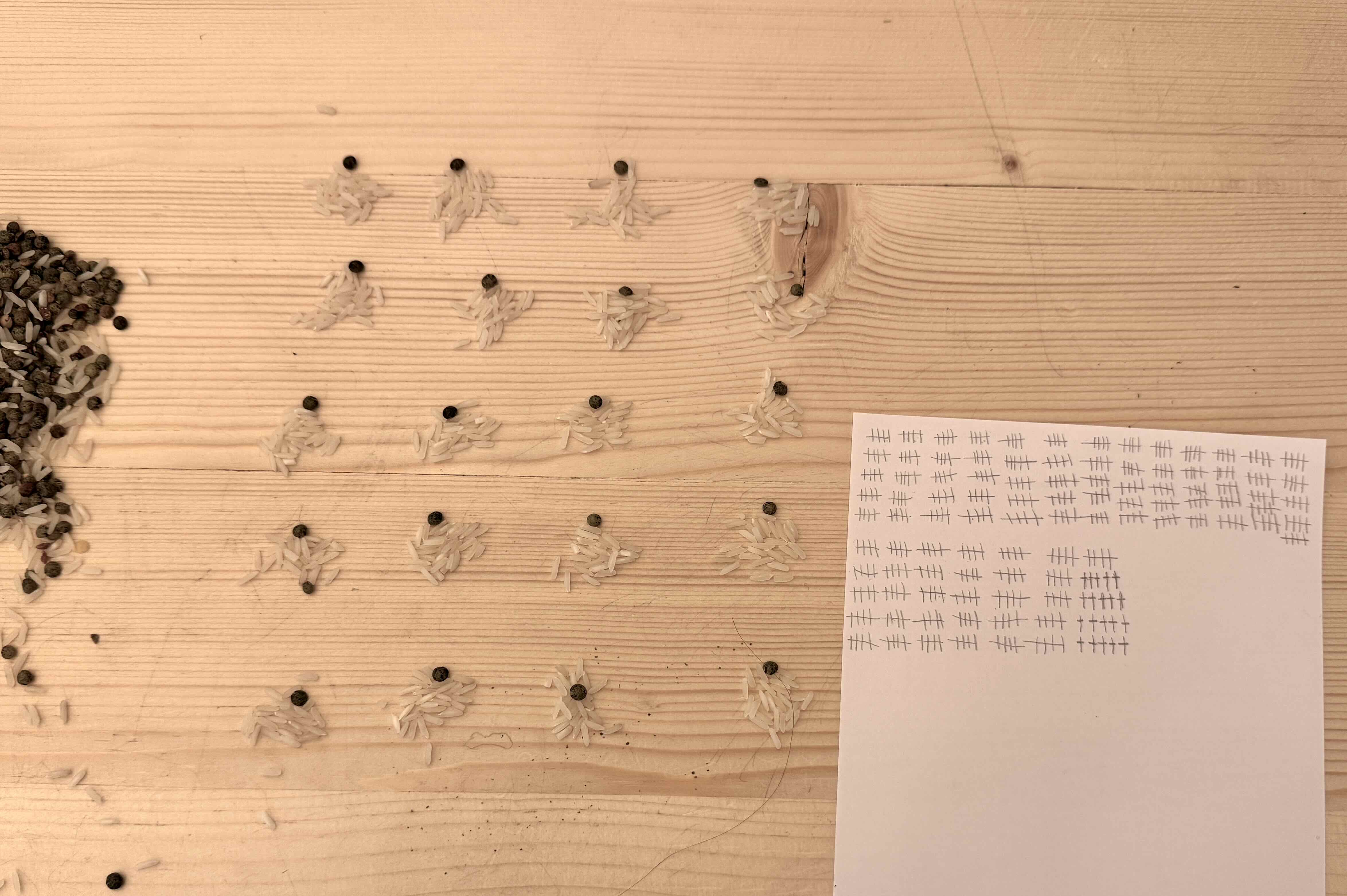
As I am counting the grains of rice and placing them in piles of 25 I have a strange experience.  I start to think of all the soldiers who died in the First World War and each grain of rice began to represent the dead body of a soldier. When I found some grains of rice that were broken I thought of the soldiers who were “blown to bits” by the intense mortar shelling during the battles. There bodies were often never found. I felt the need to identify each pile of ‘bodies’ and place a lentil at the top of each pile as a marker or headstone of sorts. I fought back tears, as my tally marks of ‘bodies’ turned into crosses.

Bob did not have the same experience as I did.  He is soon reading a book on his phone.

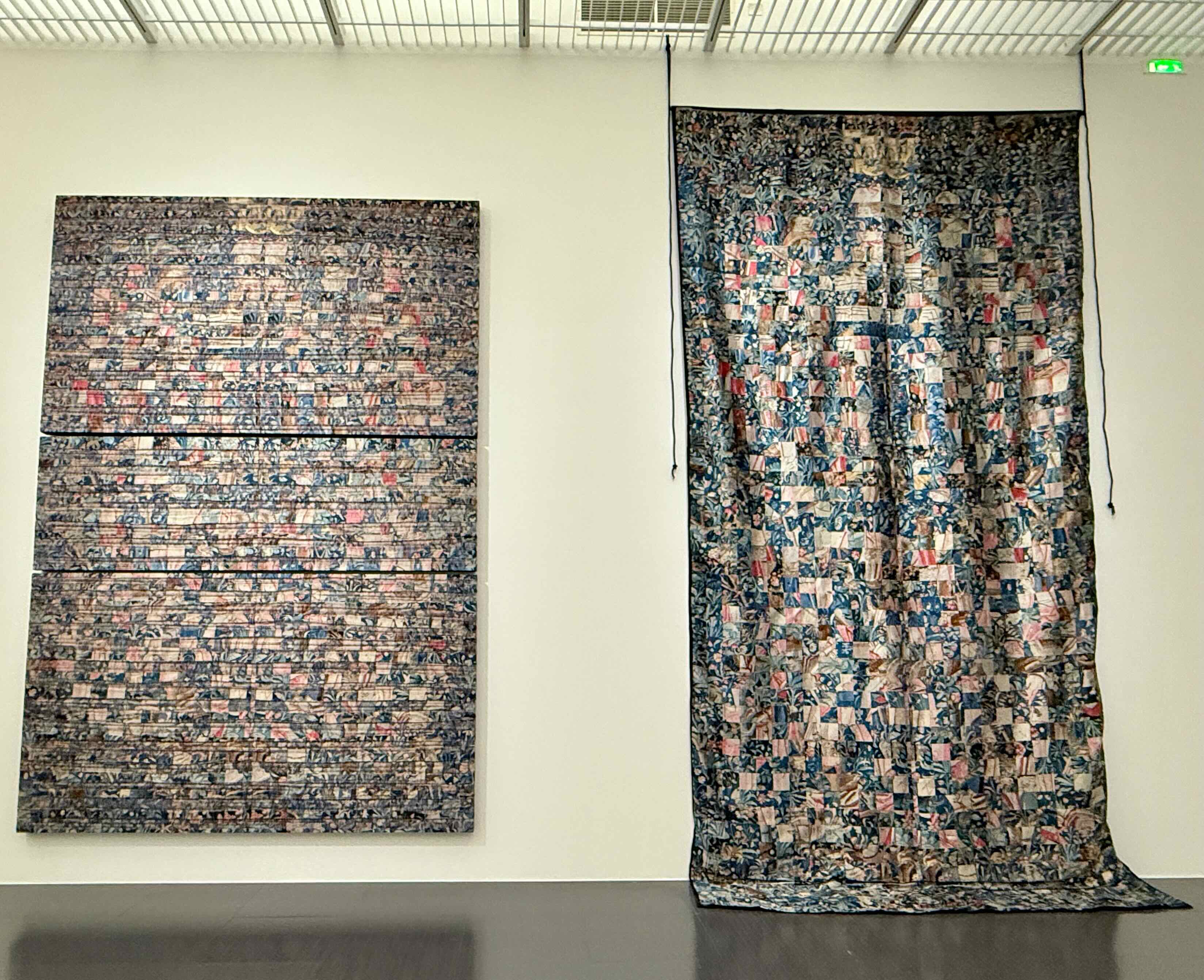
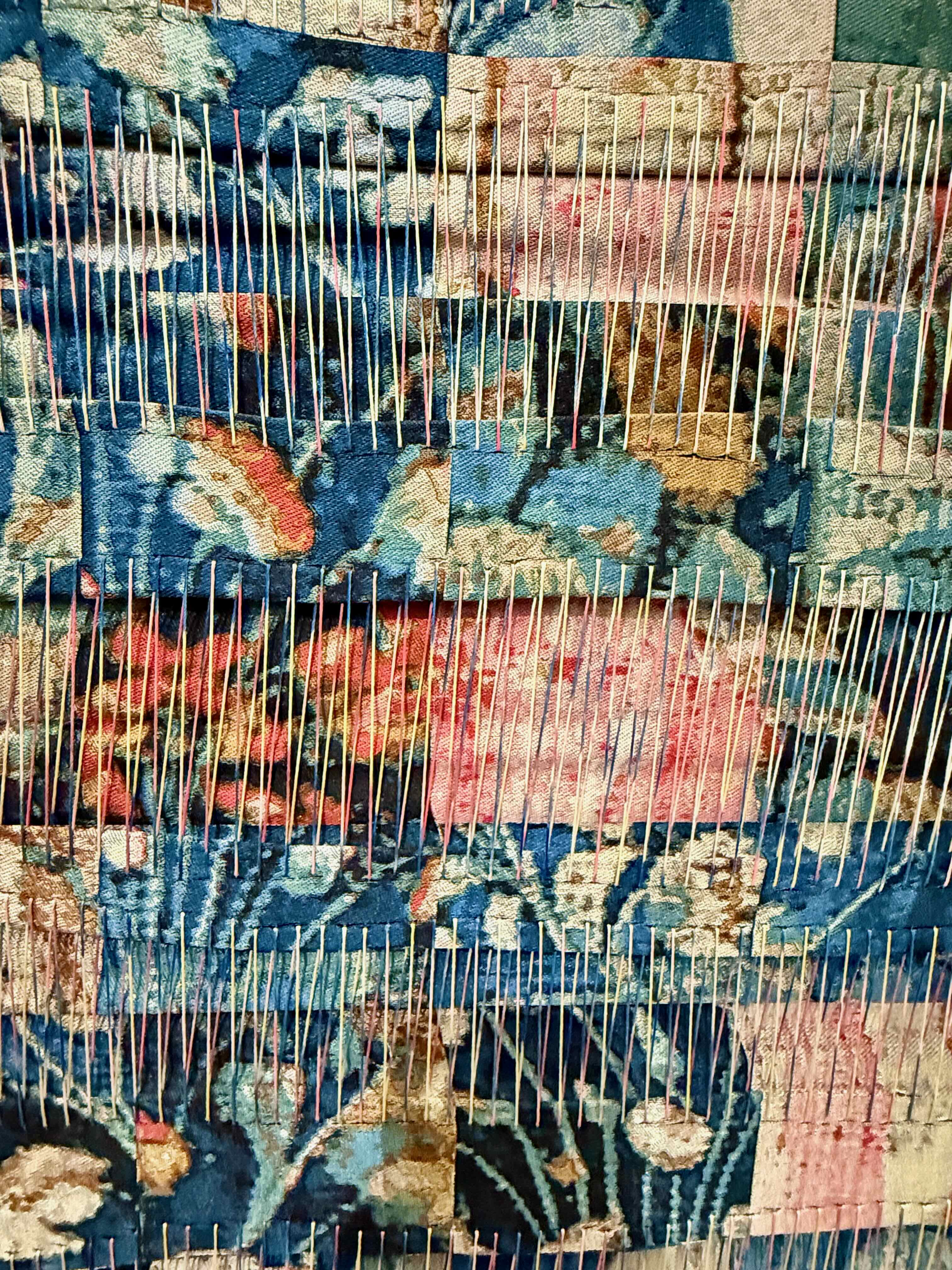
These two large textile pieces were quite interesting.  The artist, Sidival Fila, cut, overlayed and recomposed the original tapestry.  

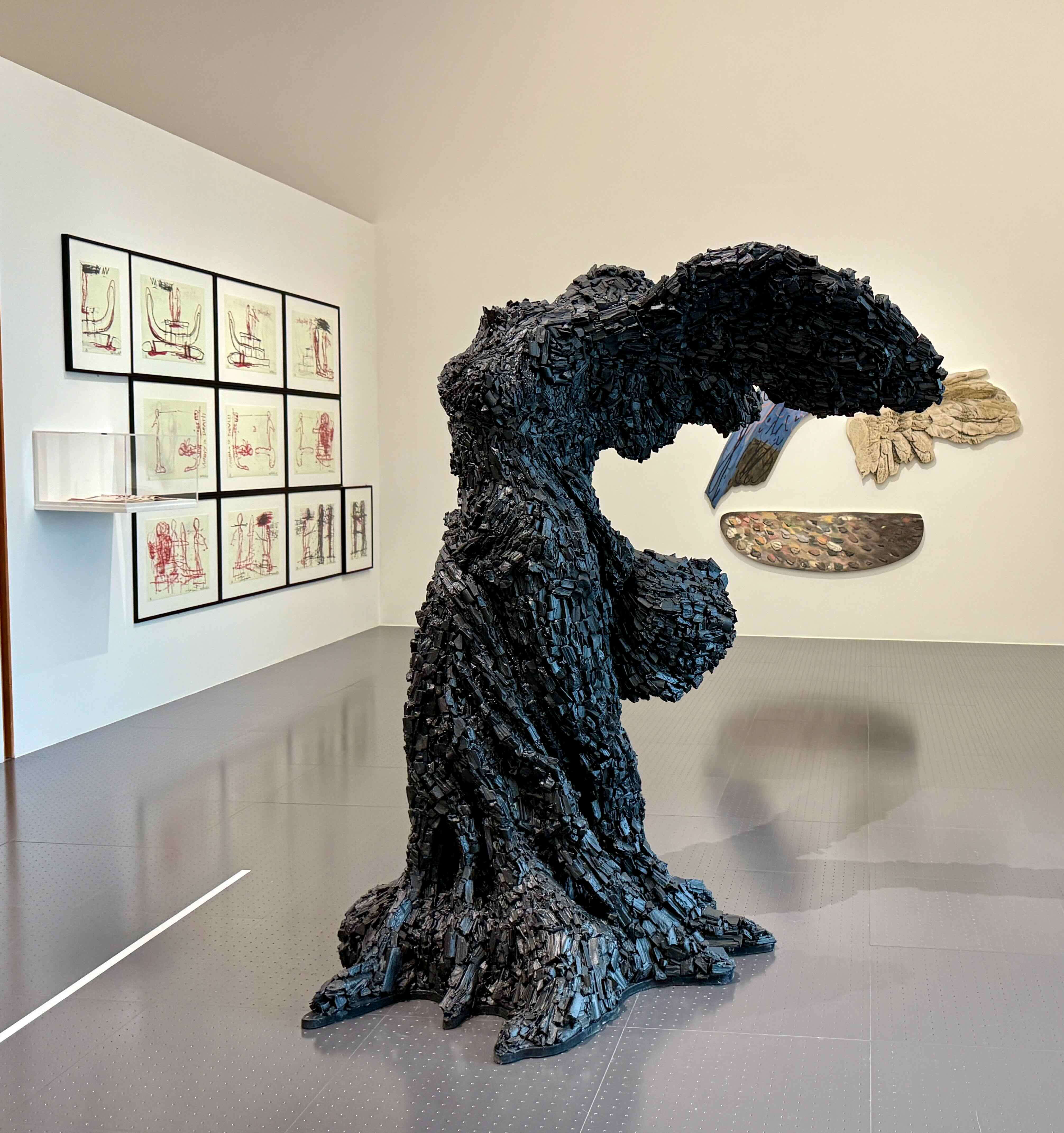
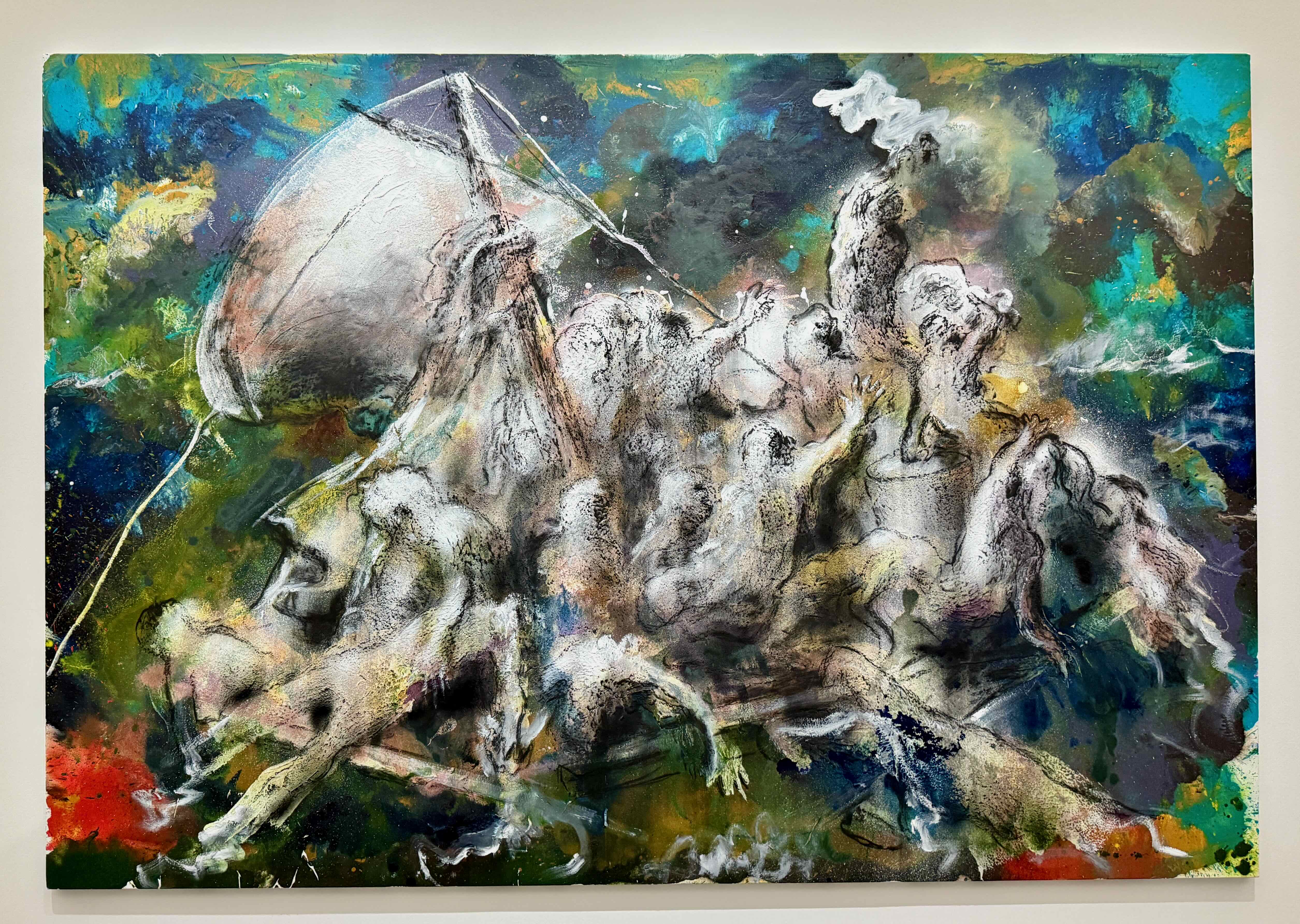
A close up of the piece on the left.The next exhibition is Copyists.  One hundred artist were invited to choose their favourite piece of art in the Louvre and use it as inspiration for their version of the work. Humberto Campana used charcoal to make this black charred version of the Victoire de Samothrace. This is a cry of alarm in the face of ecological and political crisis. Miquel Barcelo’s copy of Géricault’s Raft of the Medusa.
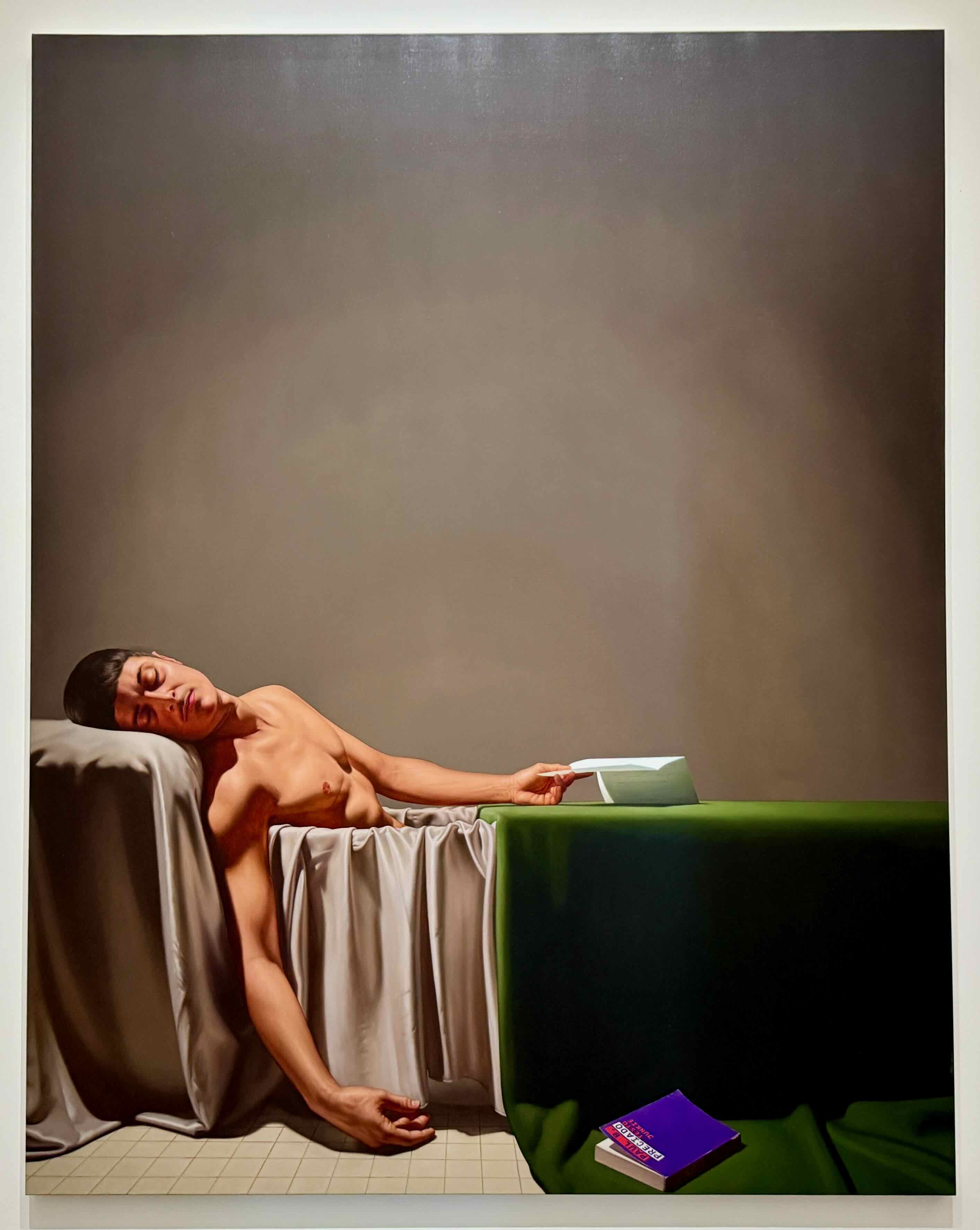
Dhewadi Hadjab’s copy of the Death of Marat becomes the death of a transgendered friend of the artist.

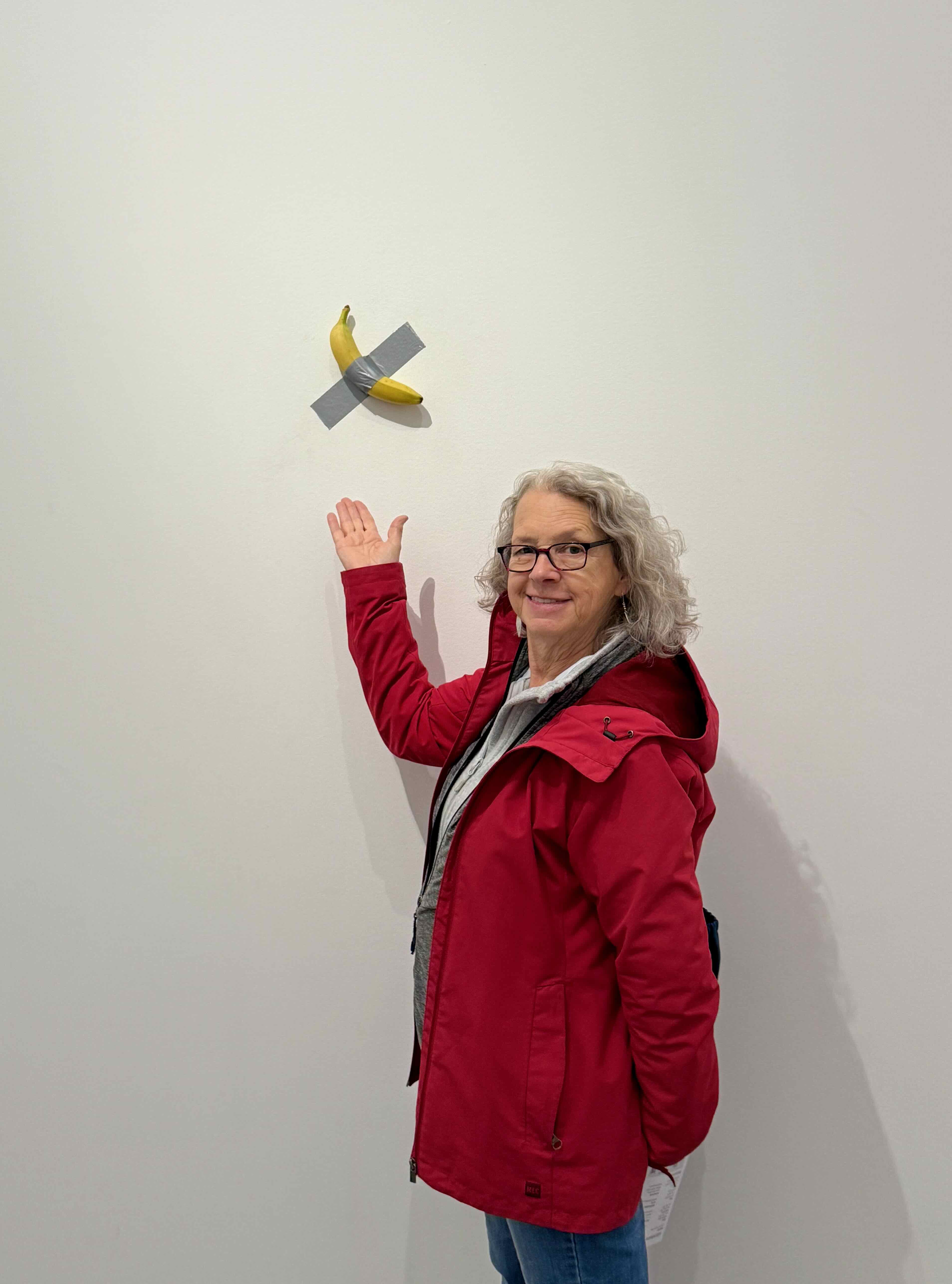
More of Maurizio Cattelan’s work. ‘Comedian’ is a fresh banana duct taped to a wall exactly 1.6 metres above the floor. The work includes a certificate of authenticity, along with detailed instructions for its proper display, for its owner to use when displaying the work. The banana and the duct tape can be replaced as needed. The Comedian sold for 6.2 million dollars!  The purchaser later ate the banana on stage!

Cattelan’s ‘Shadow’ is a work representing Cattelan’s mother who died when the artist was young.  

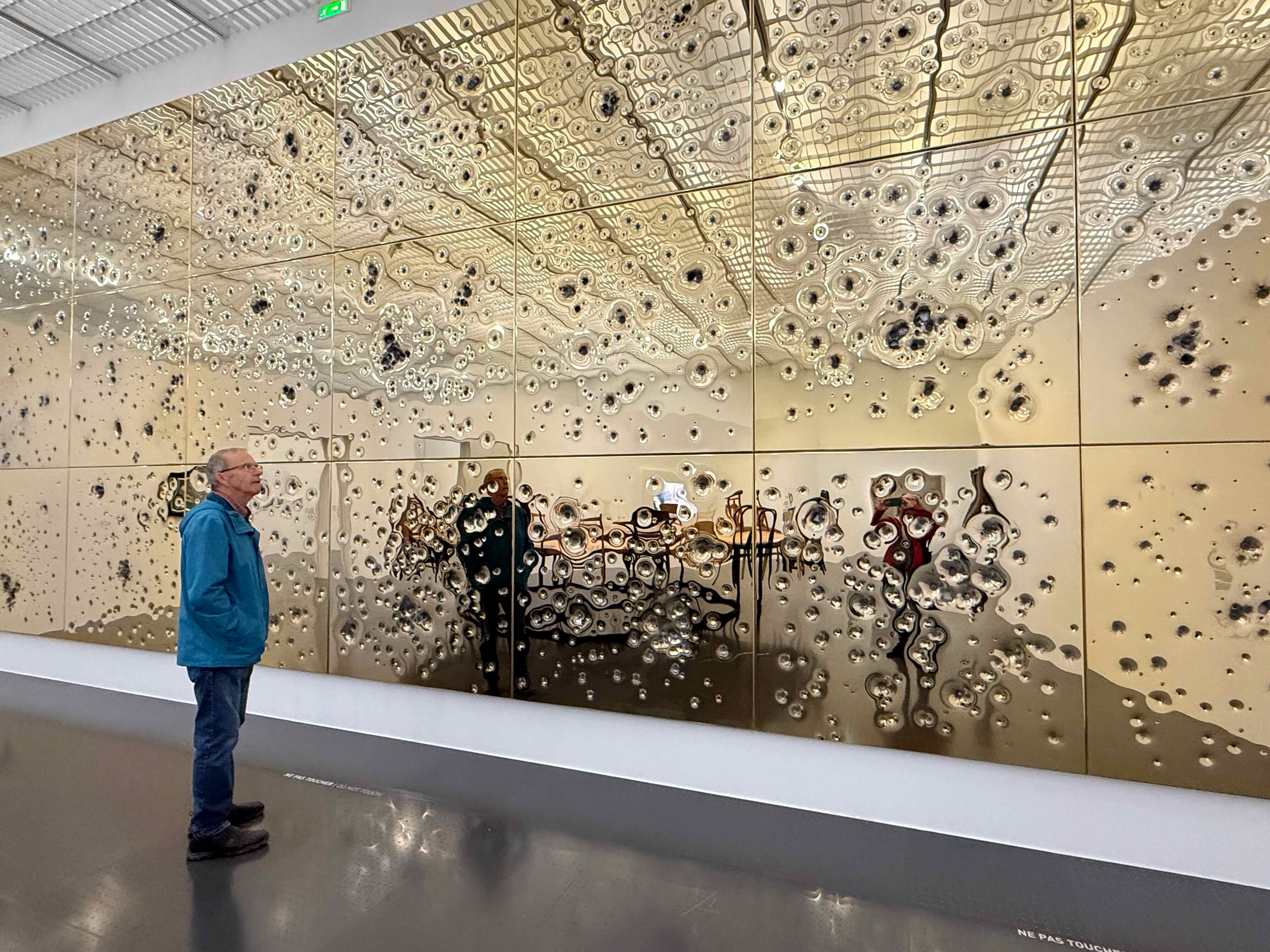
‘Sunday” invites the viewer to reflect on the economic inequality and the link between power and access to weapons.  Cattelan riddled 24 carat gold plated stainless steel panels with hundreds of bullet holes.

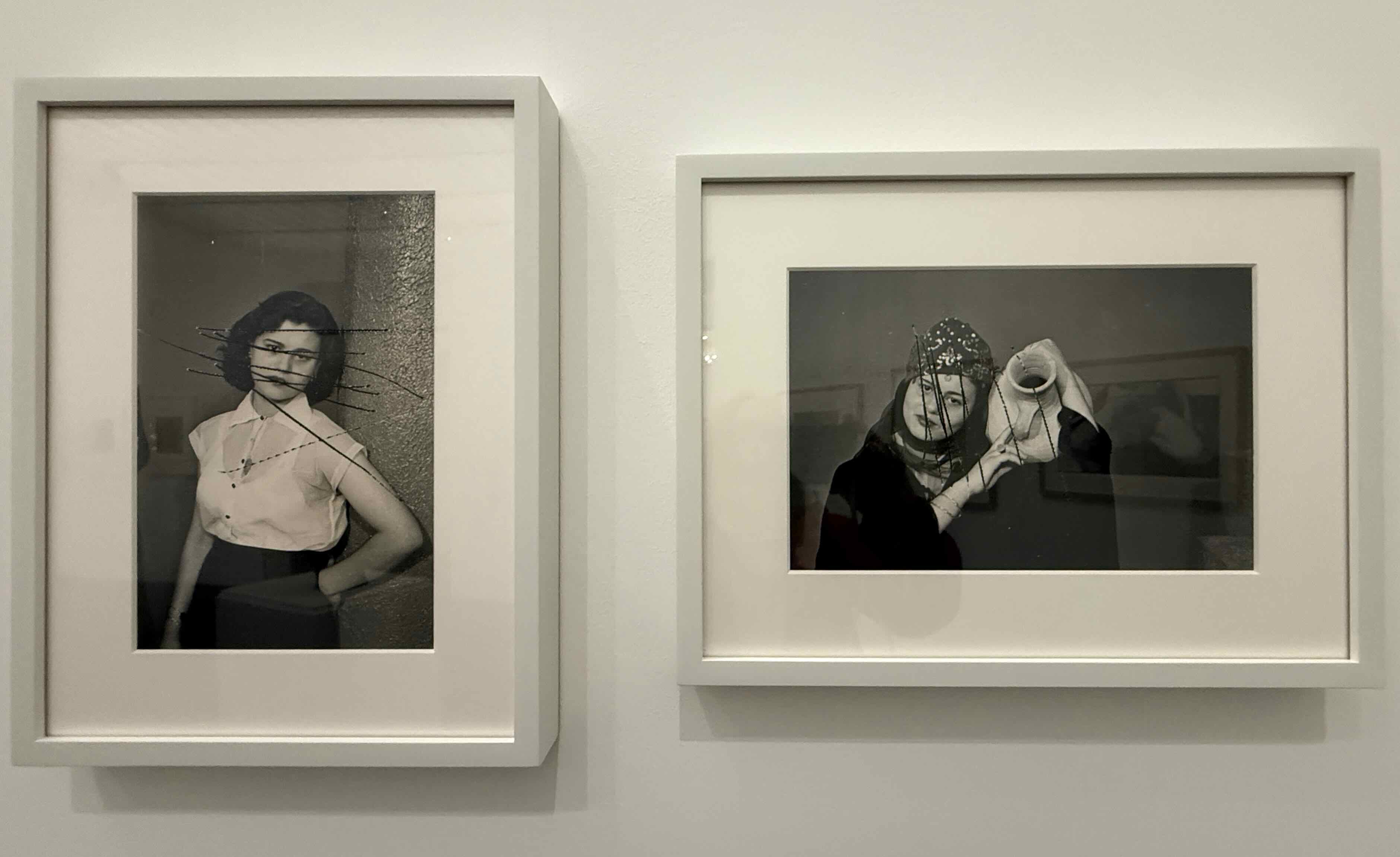
The photographer at Studio Shehrazade in Lebanon wrote…”These negatives were scratched because of a jealous husband from the Baqari family, who never let his wife go out by herself. He was upset to leam that she had come to be photographed in my studio without telling him. He came asking for the negatives. I refused to give them to him, because they were on a 35 mm roll. In the end we agreed that I would scratch the negatives of his wife with a pin, and I did so in front of him. Years later, after she had set herself on fire to escape her misery, he came back, asking for enlargements of those photographs, or other photographs she might have taken without his knowledge.”

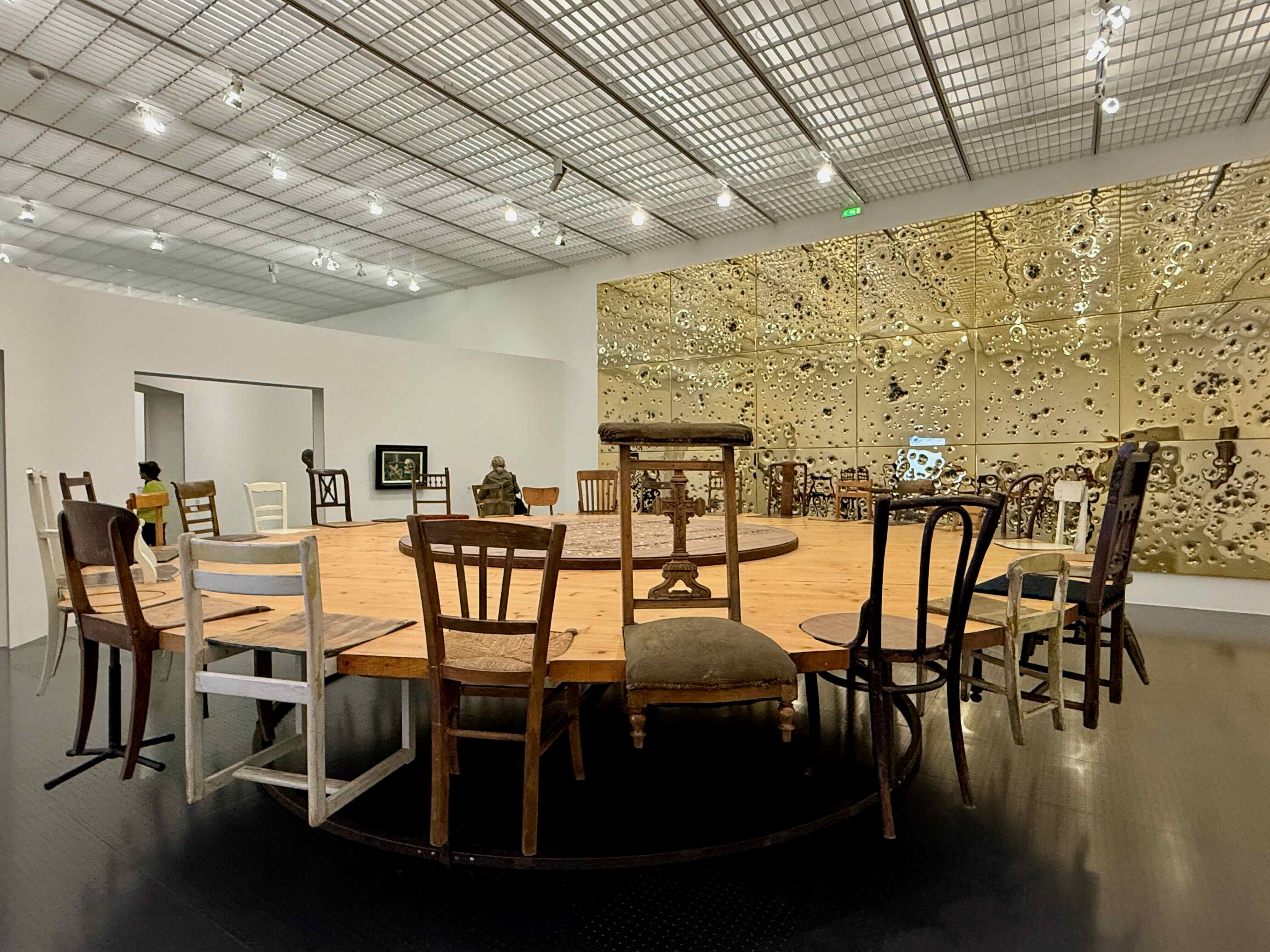
Chen Zhen invites viewers to sit at this table with 29 chairs gathered from five continents and different social classes, however they are embedded in the table and suspended from the floor…inaccessible.

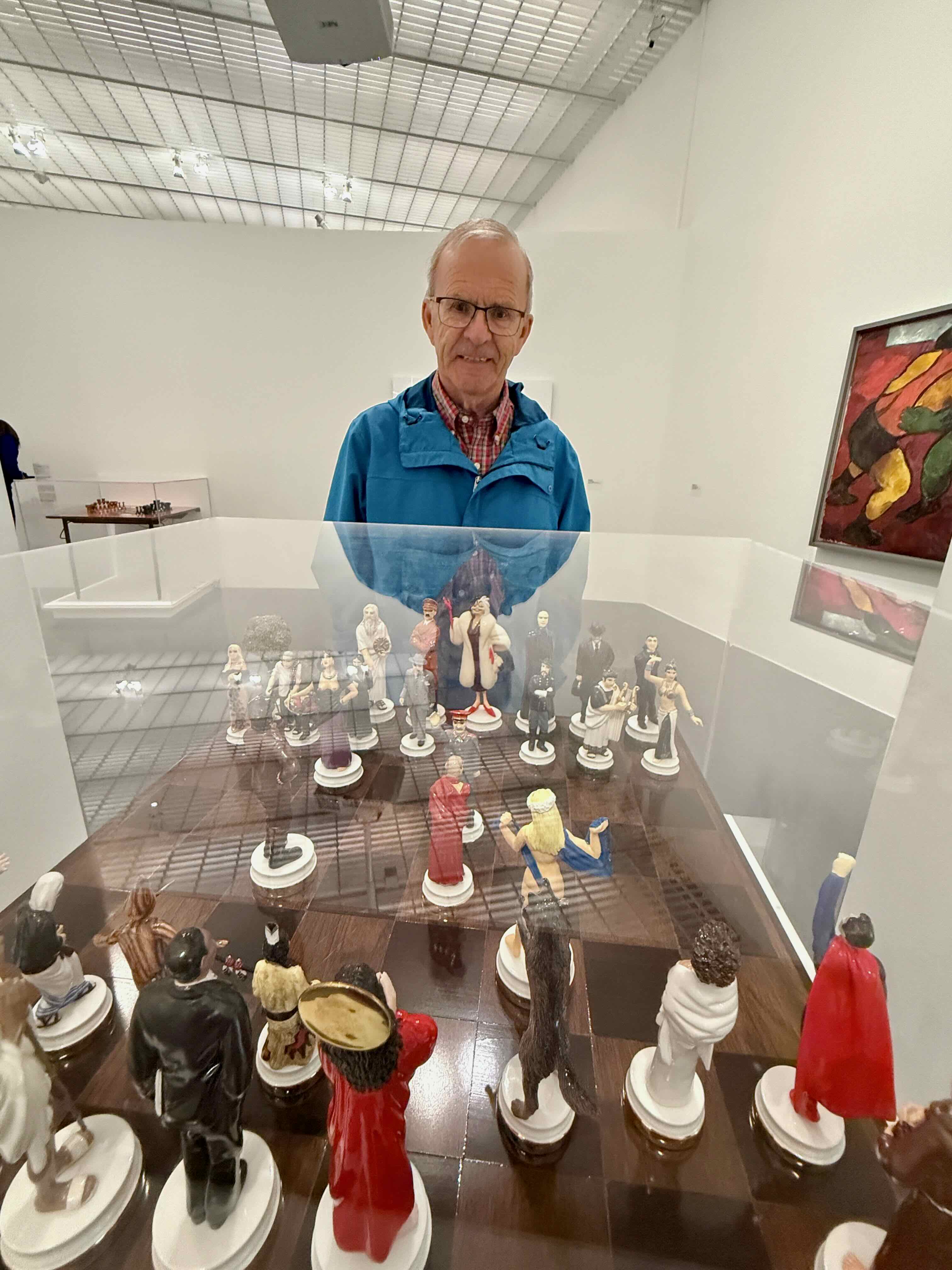
Bob like this chess “Good versus Evil” One side includes Martin Luther King Jr, the Virgin Mary and Snow White.  The other side is Adolf Hitler, Cruella de Vil and Rasputin!

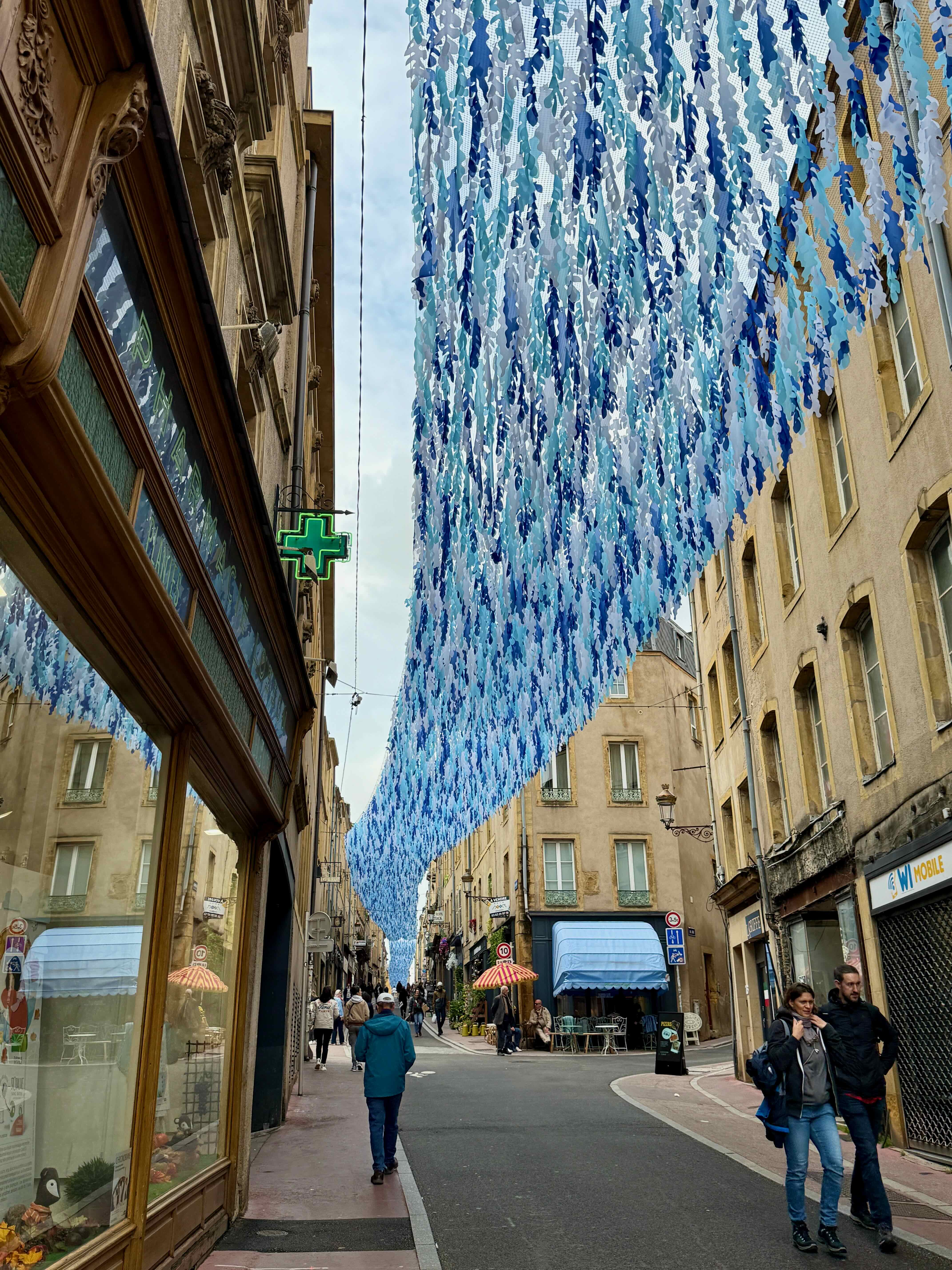
After leaving the Art Gallery we walk under these bright blue street decorations on our way to the Metz’s Notre Dame Cathedral.

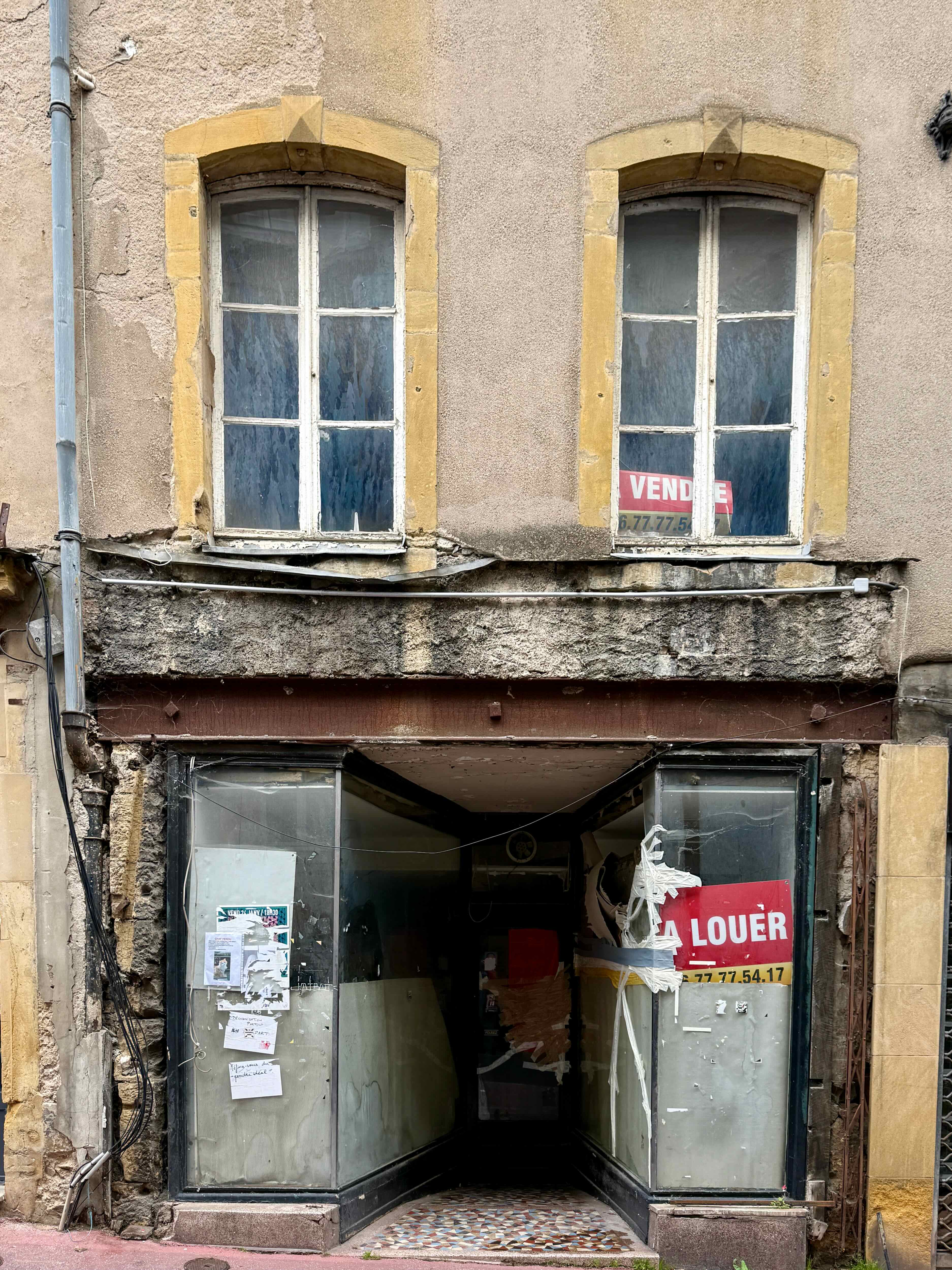
I wonder who would be interested in renting this storefront building?

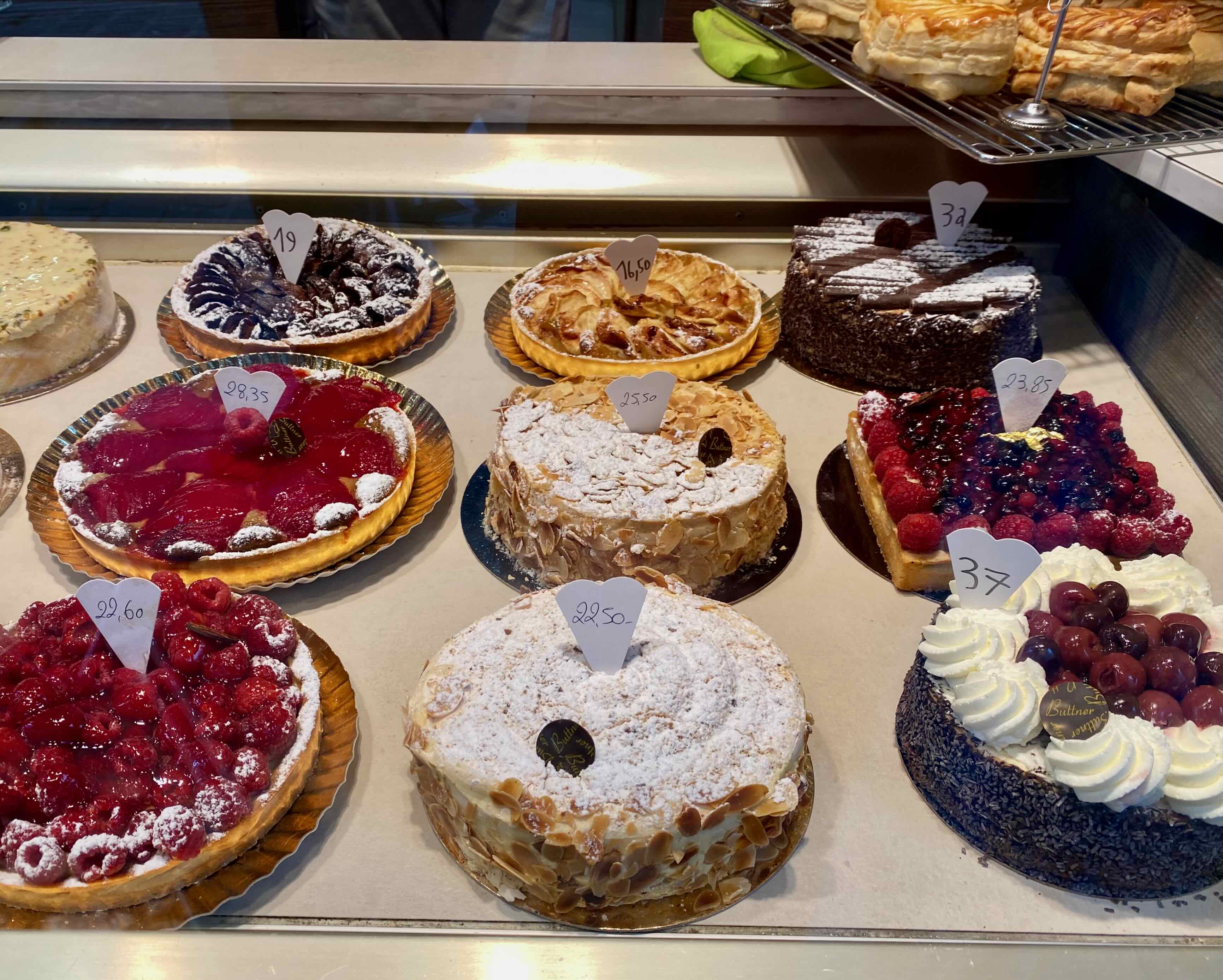
These cakes look delicious, but they are quite expensive. €37 is $60.50 Canadian!

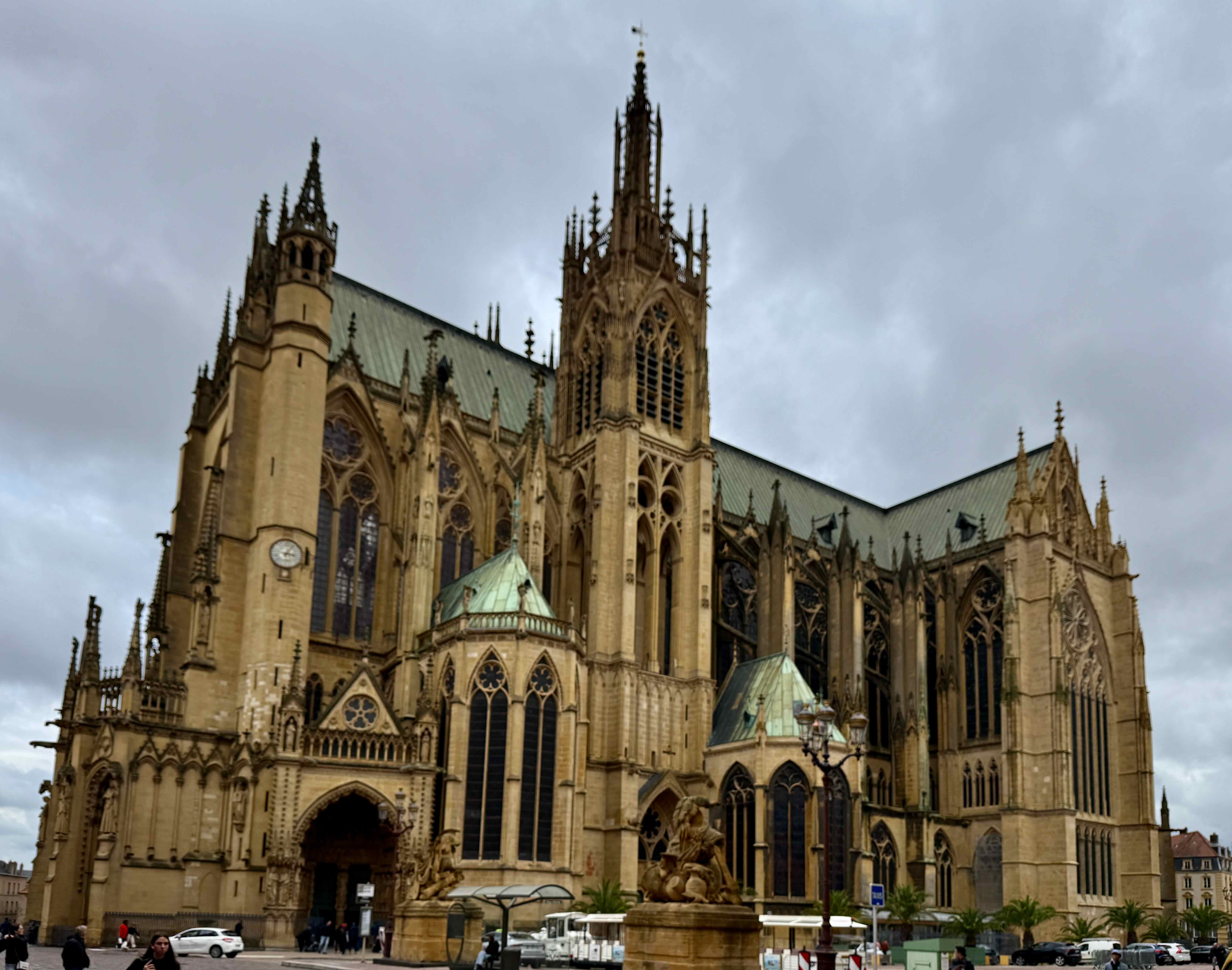
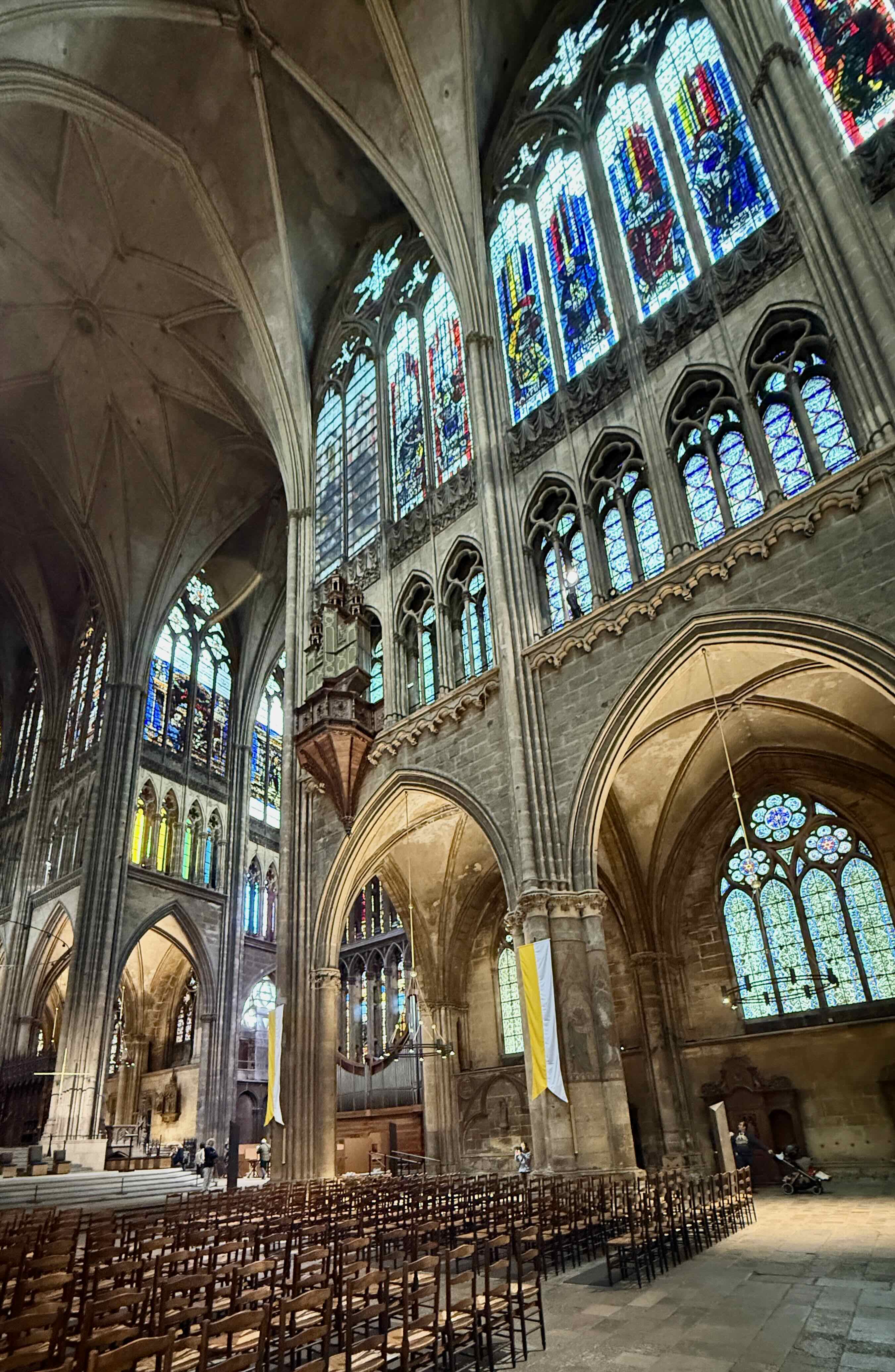
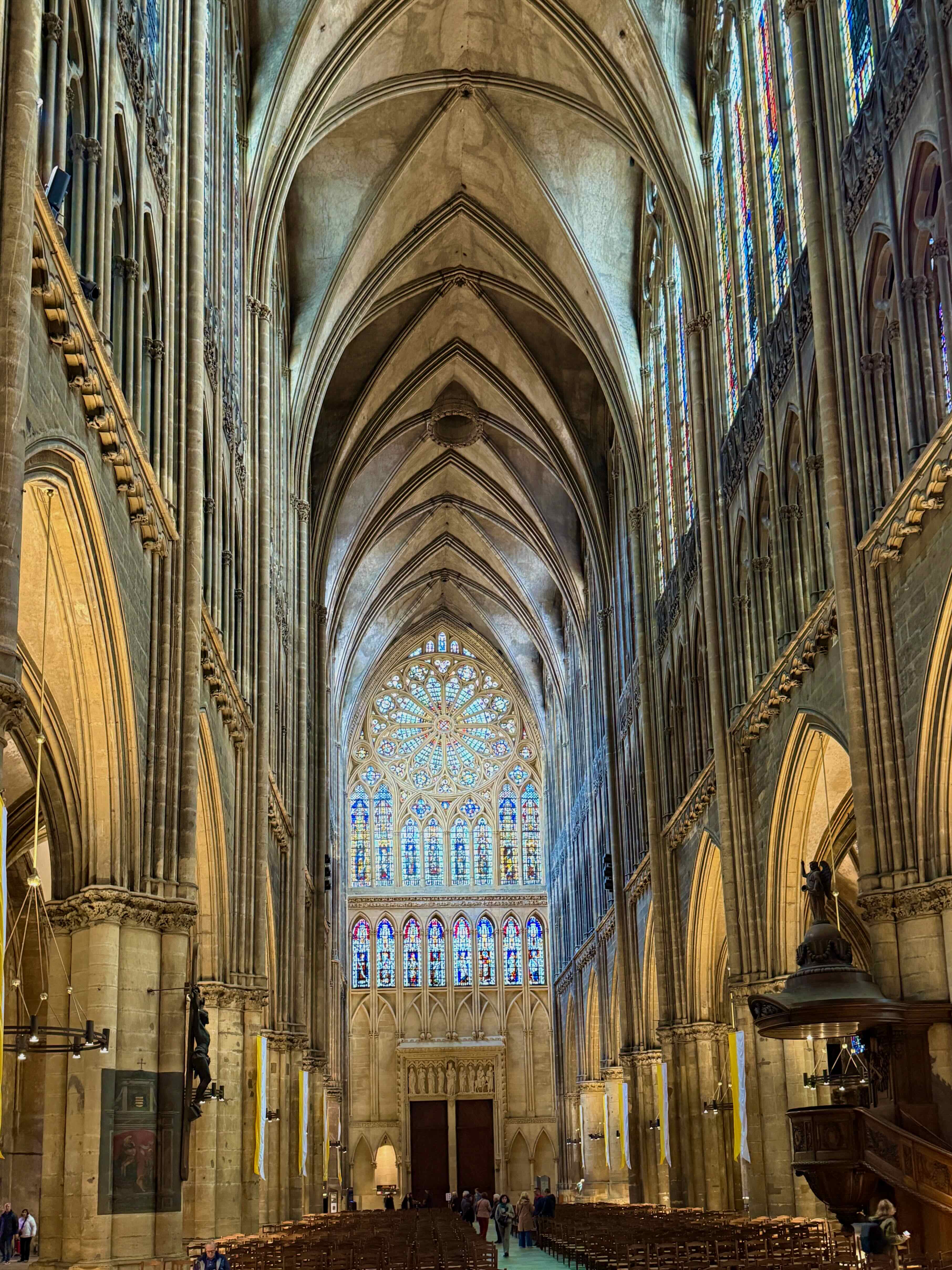
Metz’s Notre Dame Cathedral was begun in the early 14th century. This Cathedral has the third highest nave in France (41.41 meters or 135.9 ft), after the cathedrals of Amiens and Beauvais, both of which we visited earlier this month!        

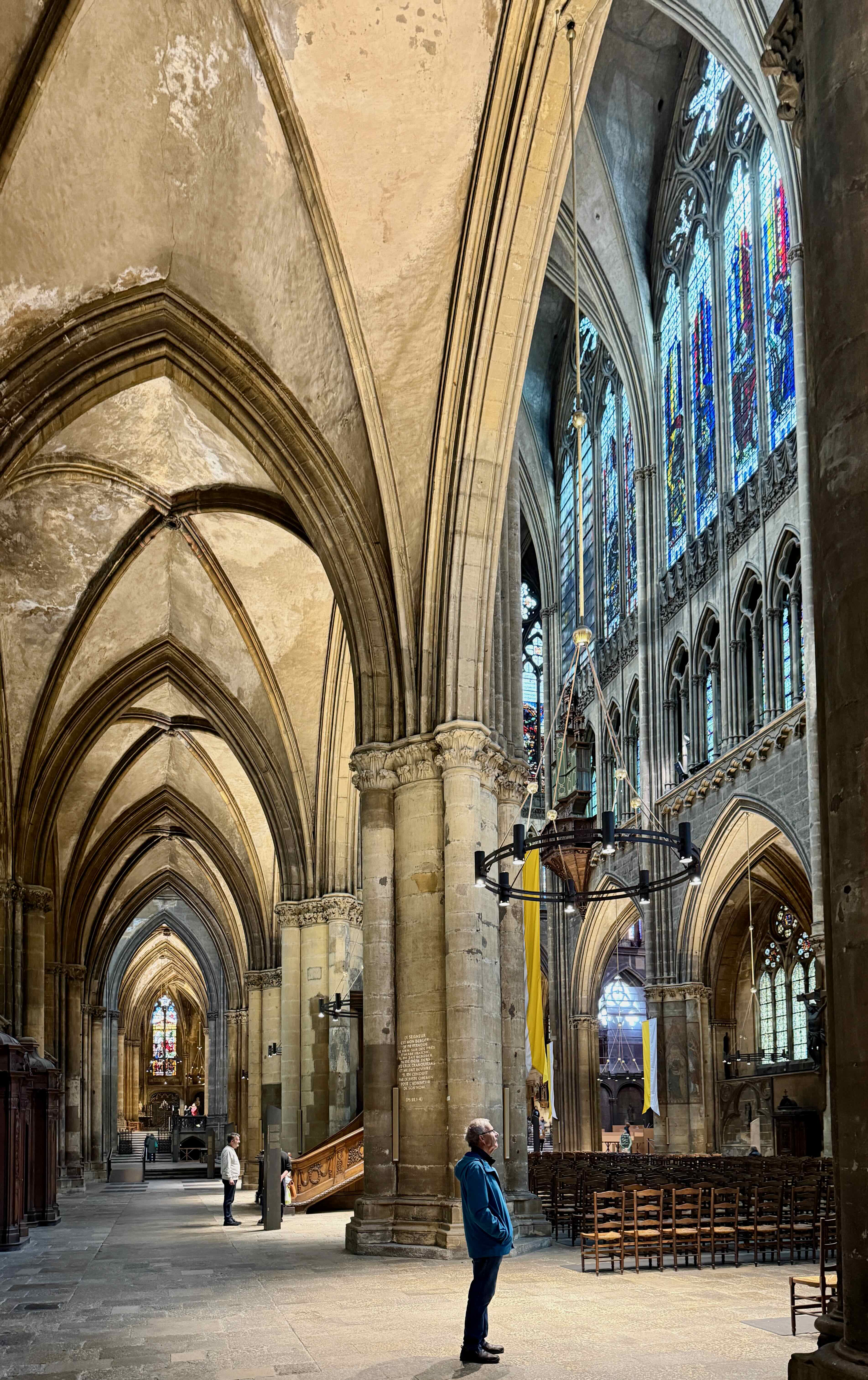
A few photos of the impressive interior. We have seen so many cathedrals but somehow we keep being drawn into seeing more. They are so different from one another and we never know what we will be seeing when we walk through the cathedral doors.

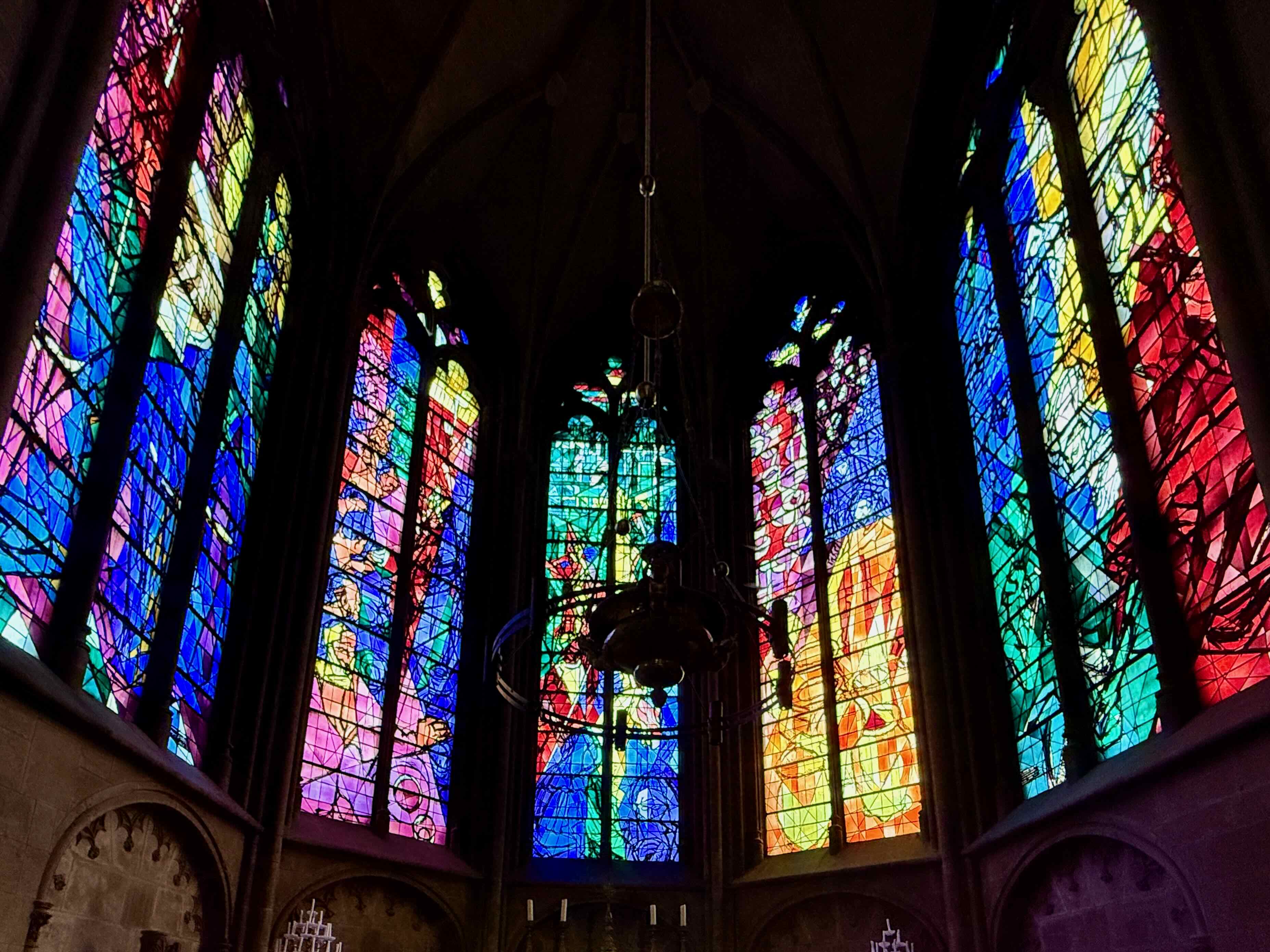
These stained glass windows were designed by Marc Chagall.

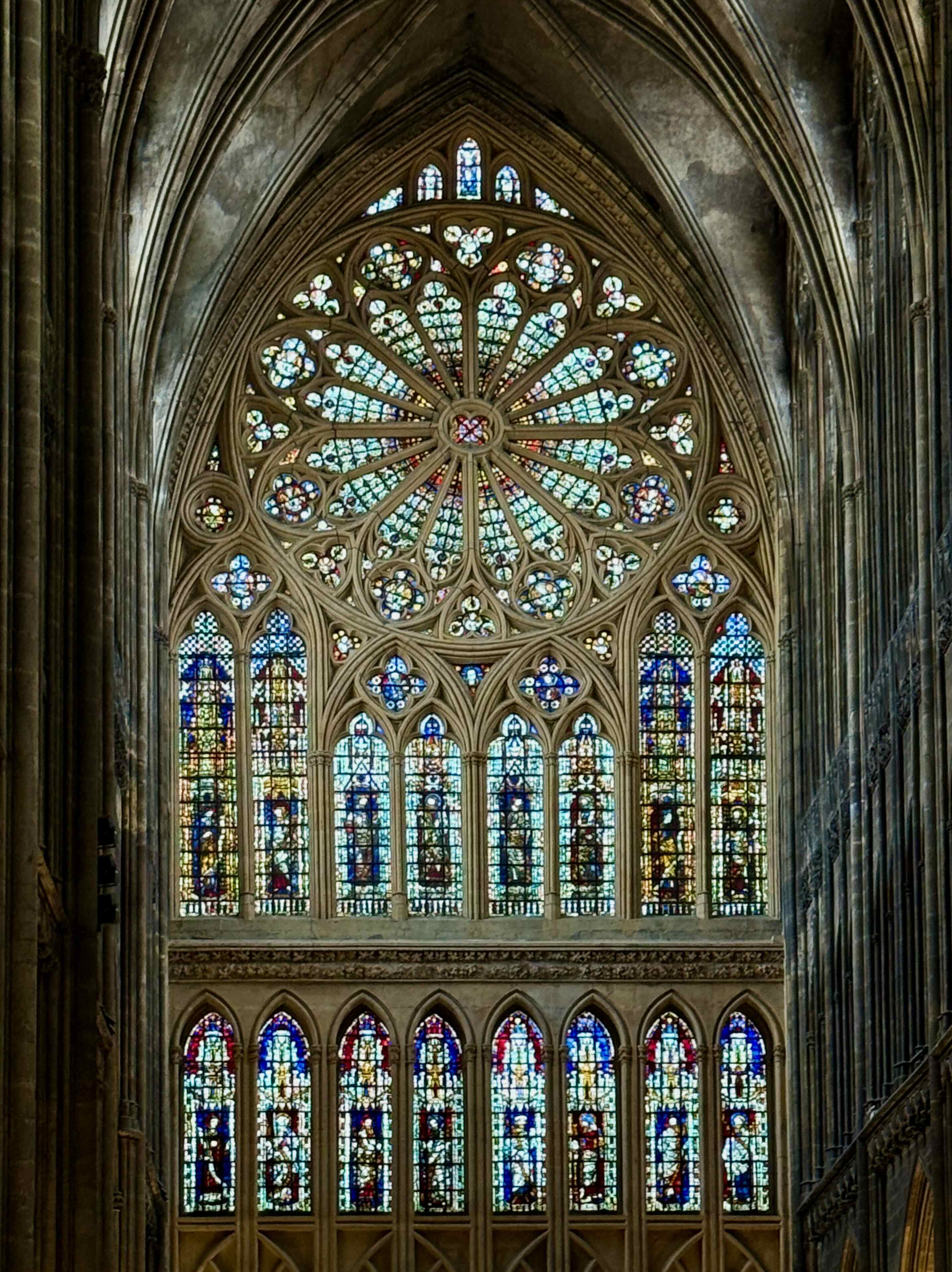
The cathedral’s Rose Window is very impressive.

More modern stained glass windows by Jacques Villon completed in 1957.

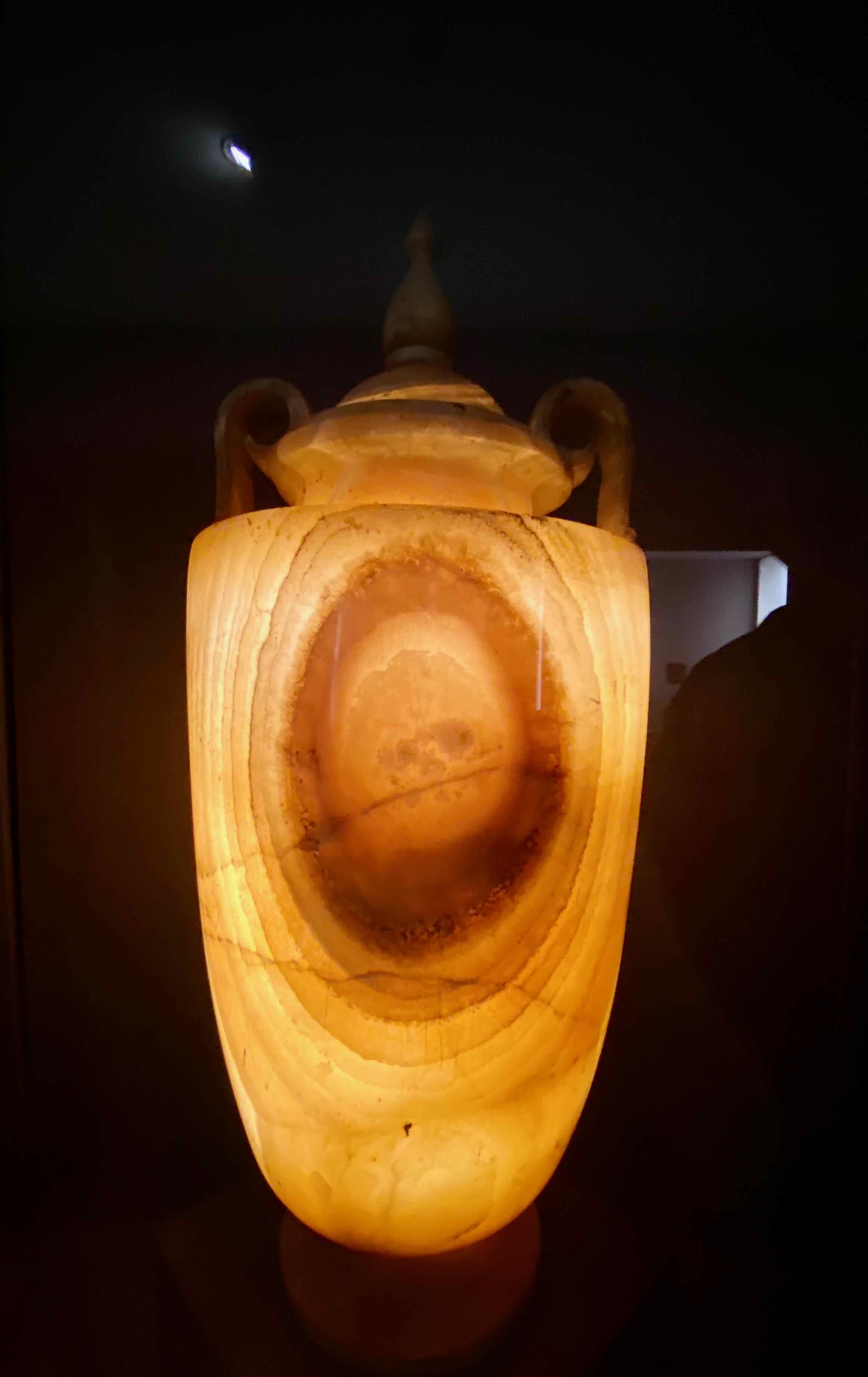
Next stop is the Musée de La Cour d’Or.  It is a maze of rooms that covers 6,000 m² of exhibition space and 2,000 years of history in the city of Metz. This incredible onyx vase is a cremation urn from the 1st century B.C.

There is so much to see….

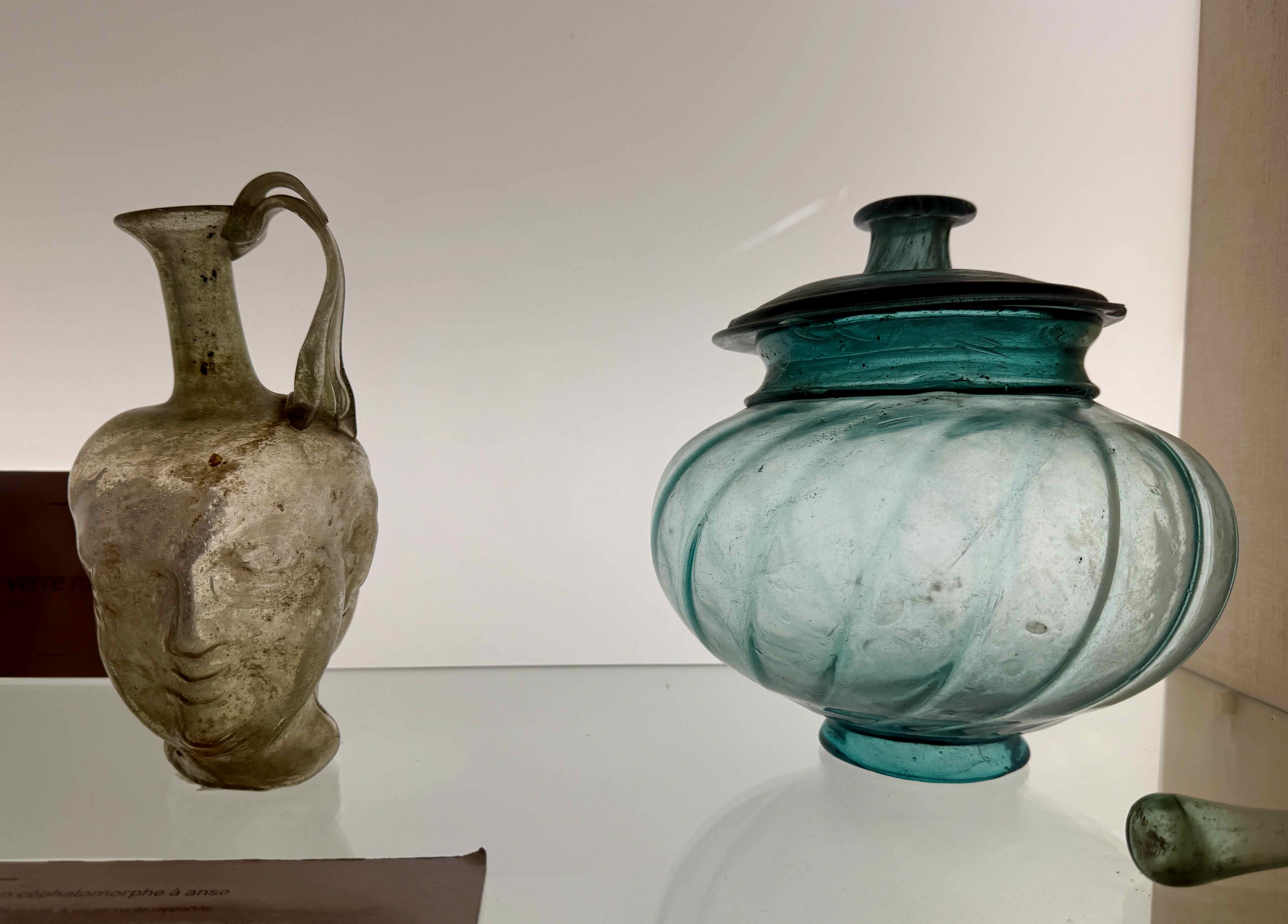
including this glass vase with a human face…

ancient locks,..

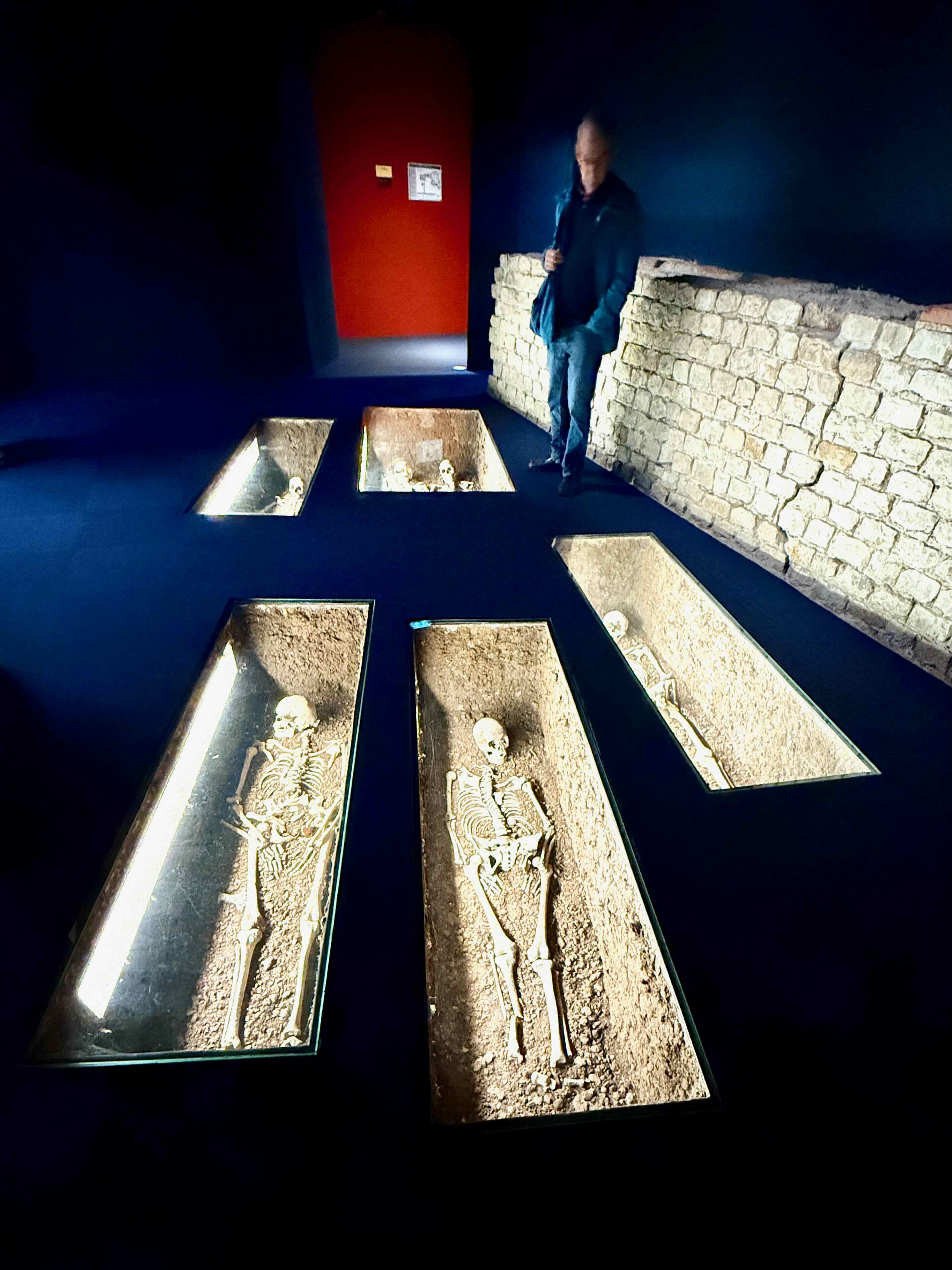
human skeletons…

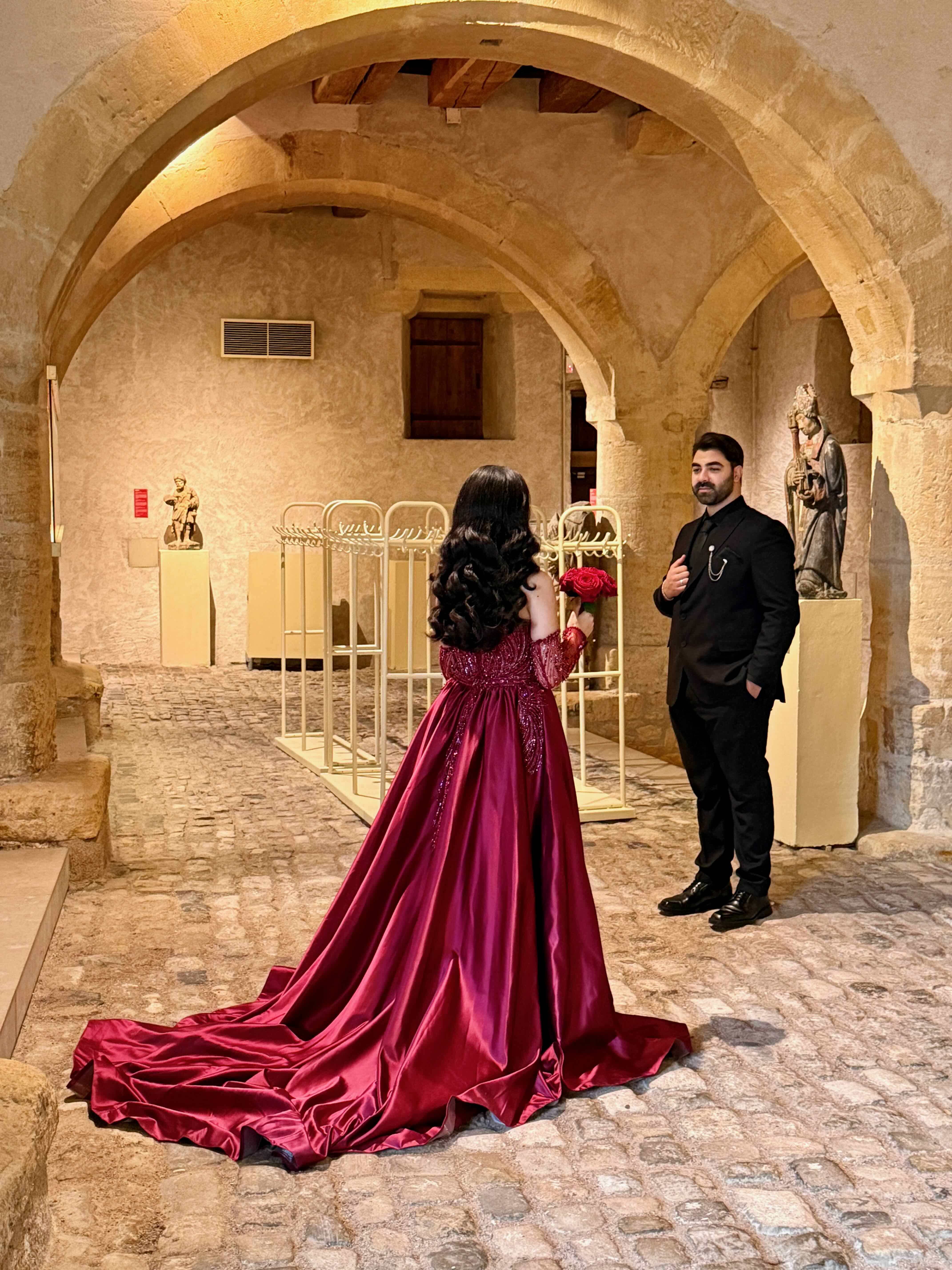
and a couple taking wedding photos!

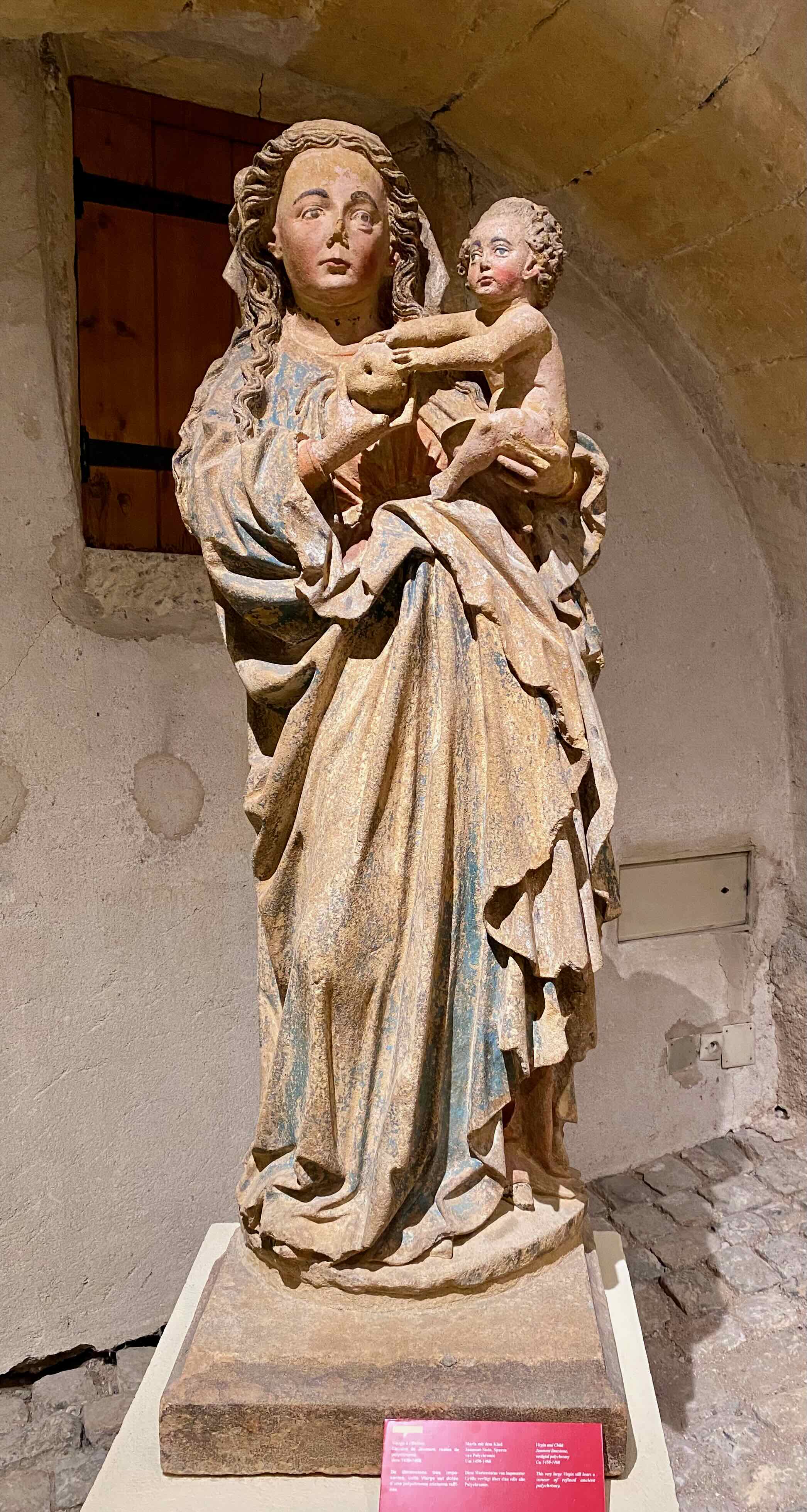
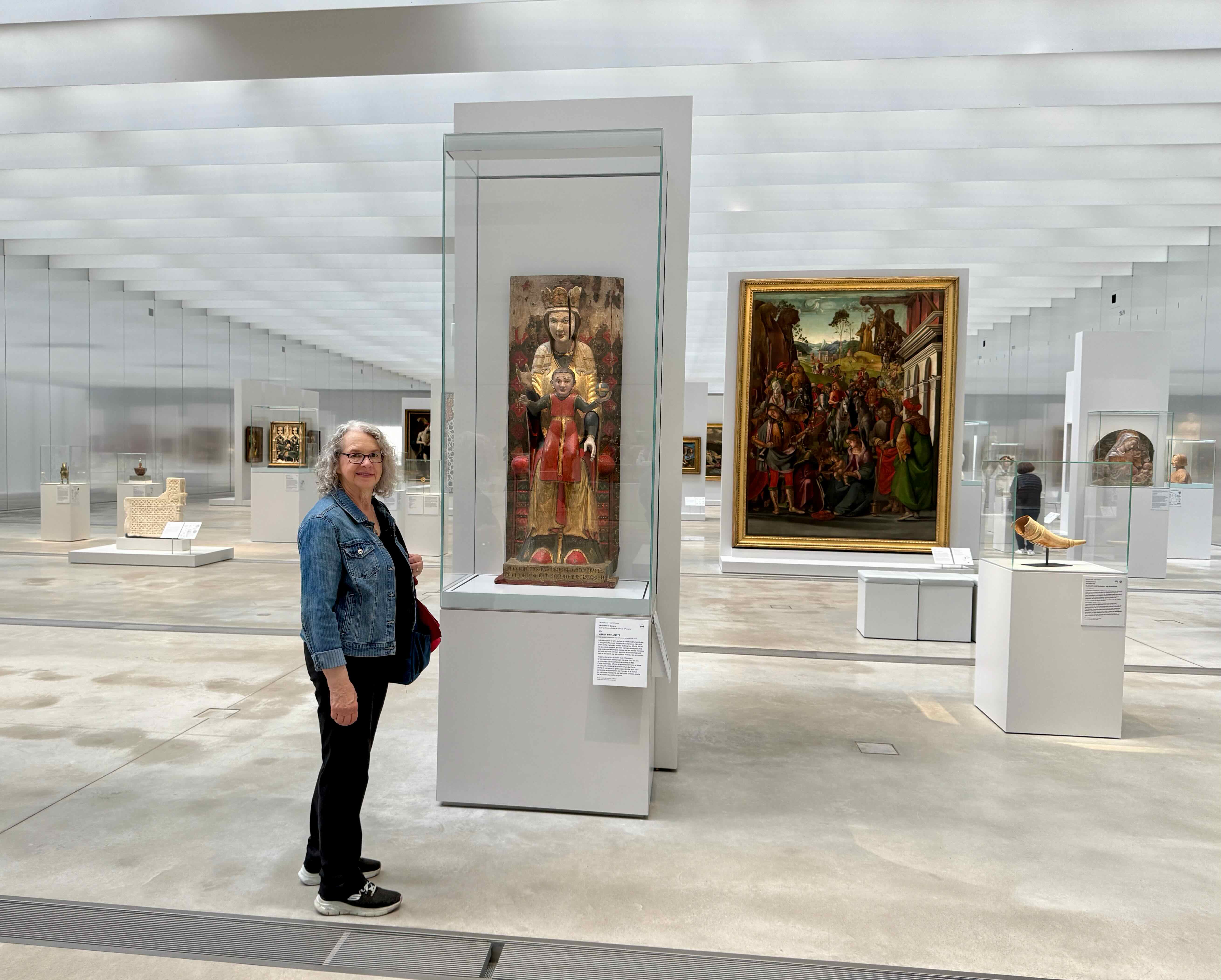
Both Bob and I took a photo of this Madonna and Child.  Something about it spoke to both of us.

These painted ceiling panels were discovered when a house was being renovated. They are from trees that were chopped down in 1218-1219.  This was determined by the thickness of the tree rings. They are the oldest preserved painted ceilings in Metz.

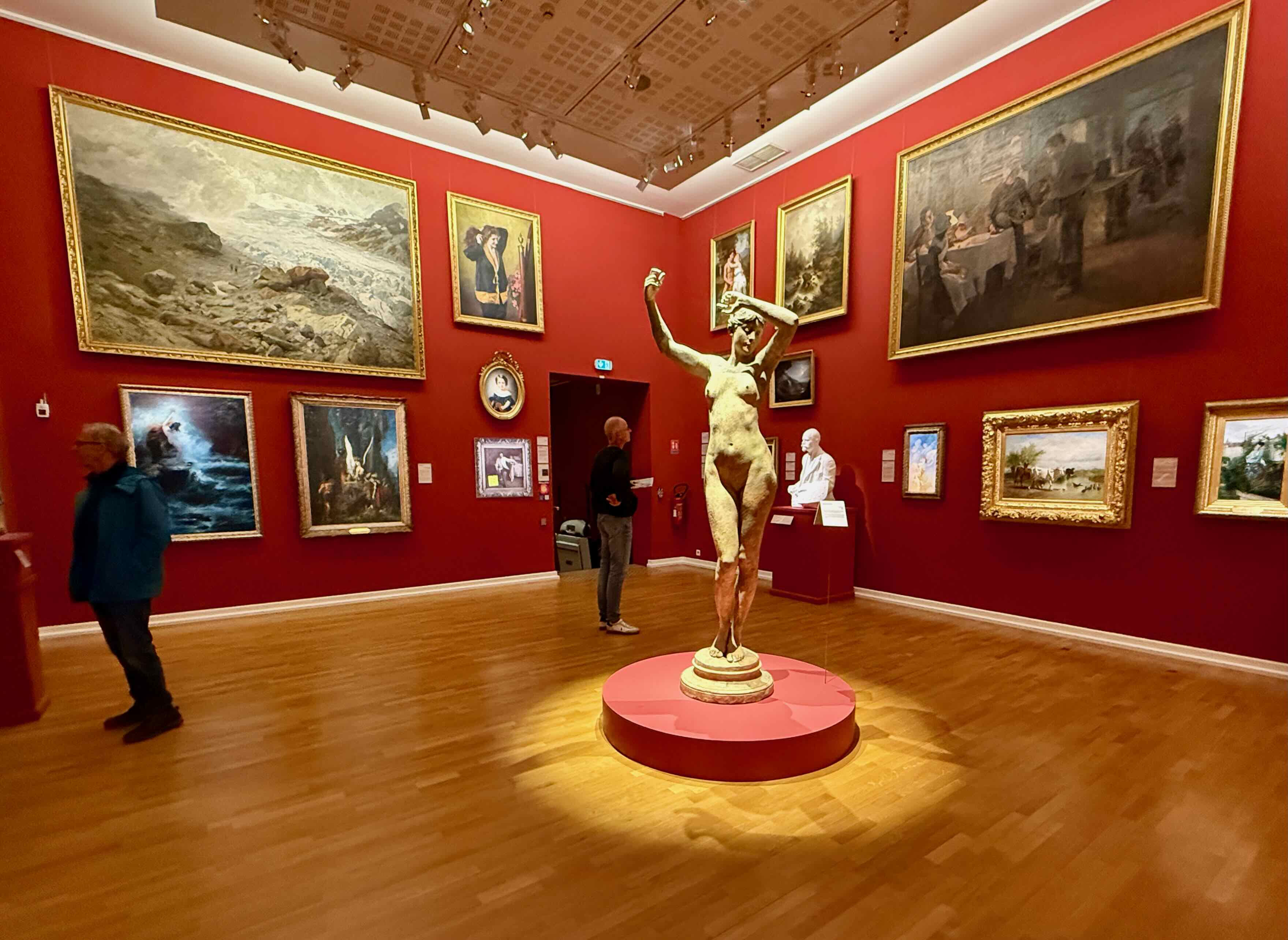
The rooms on the museum follow the chronological history of the city of Metz. It was interesting, but a lot to take in.  Finally we are in the last room.

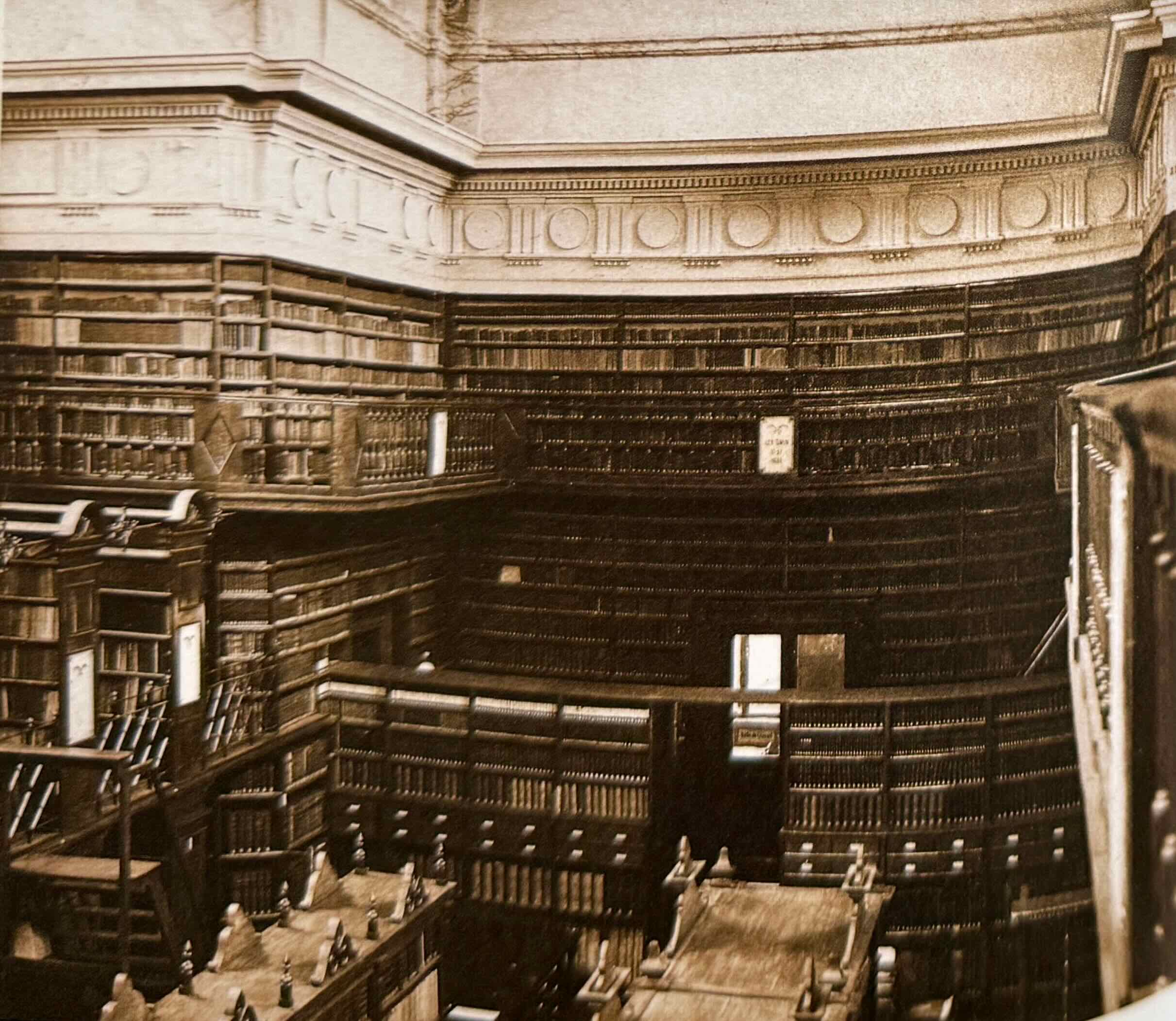
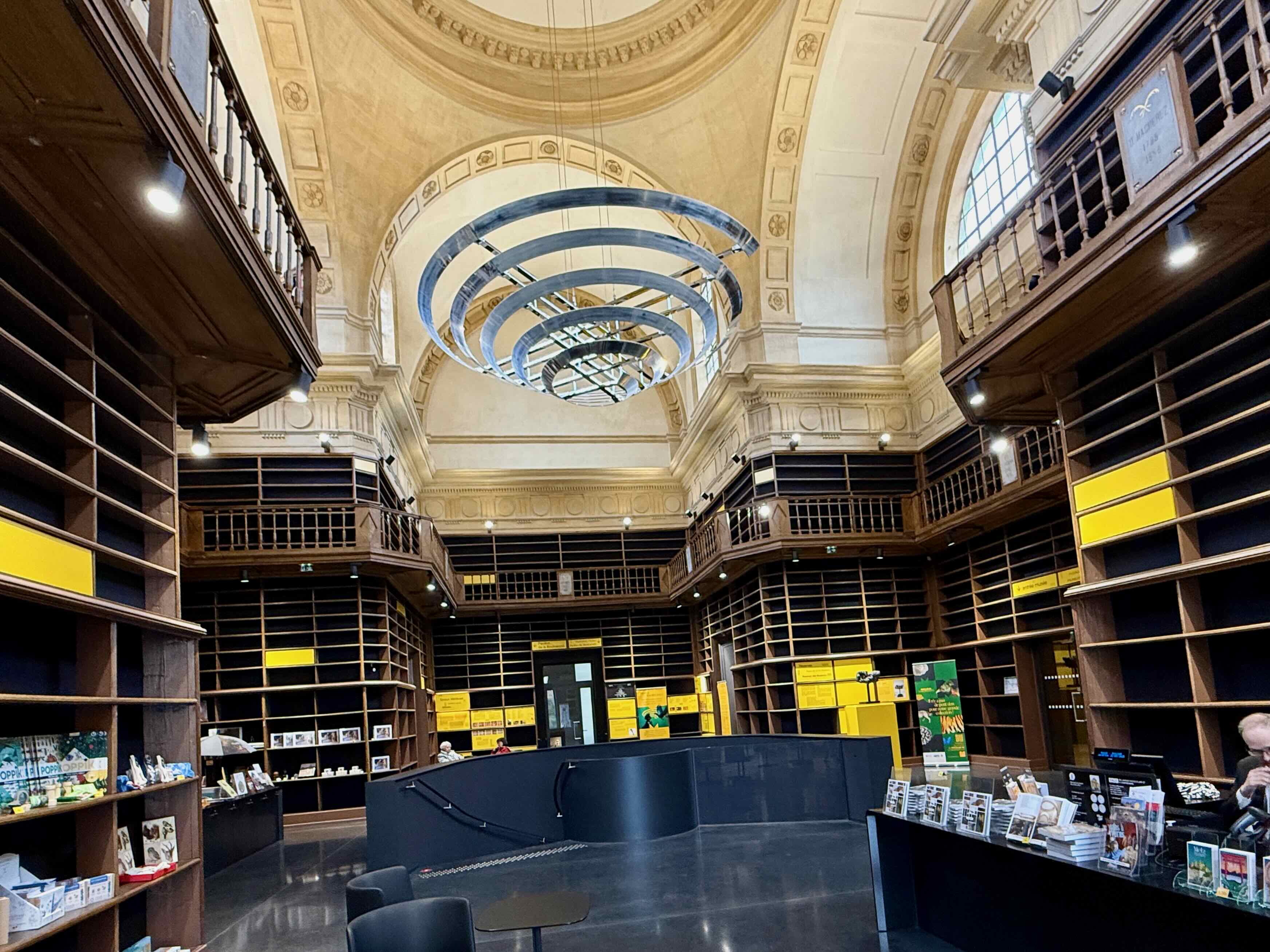
The entrance to the museum is located in what used to be a library. This is a photo of the room when it was a library, and…

this is how it looks today.

Ypres, Flanders Fields Museum, Belgium

Day 20     Friday, September 19, 2025

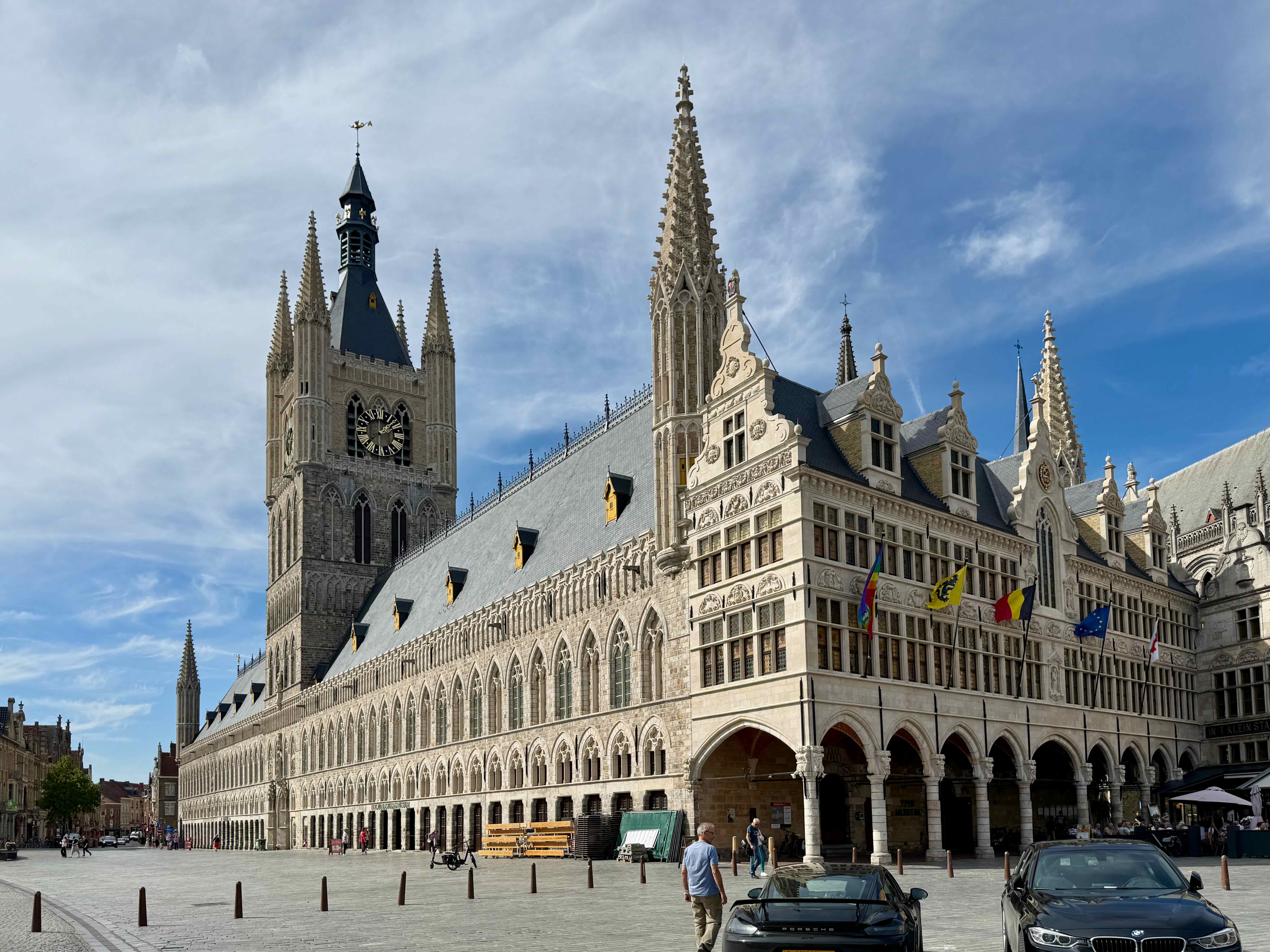
Today we visit the In Flanders Fields Museum in Ypres, Belgium.

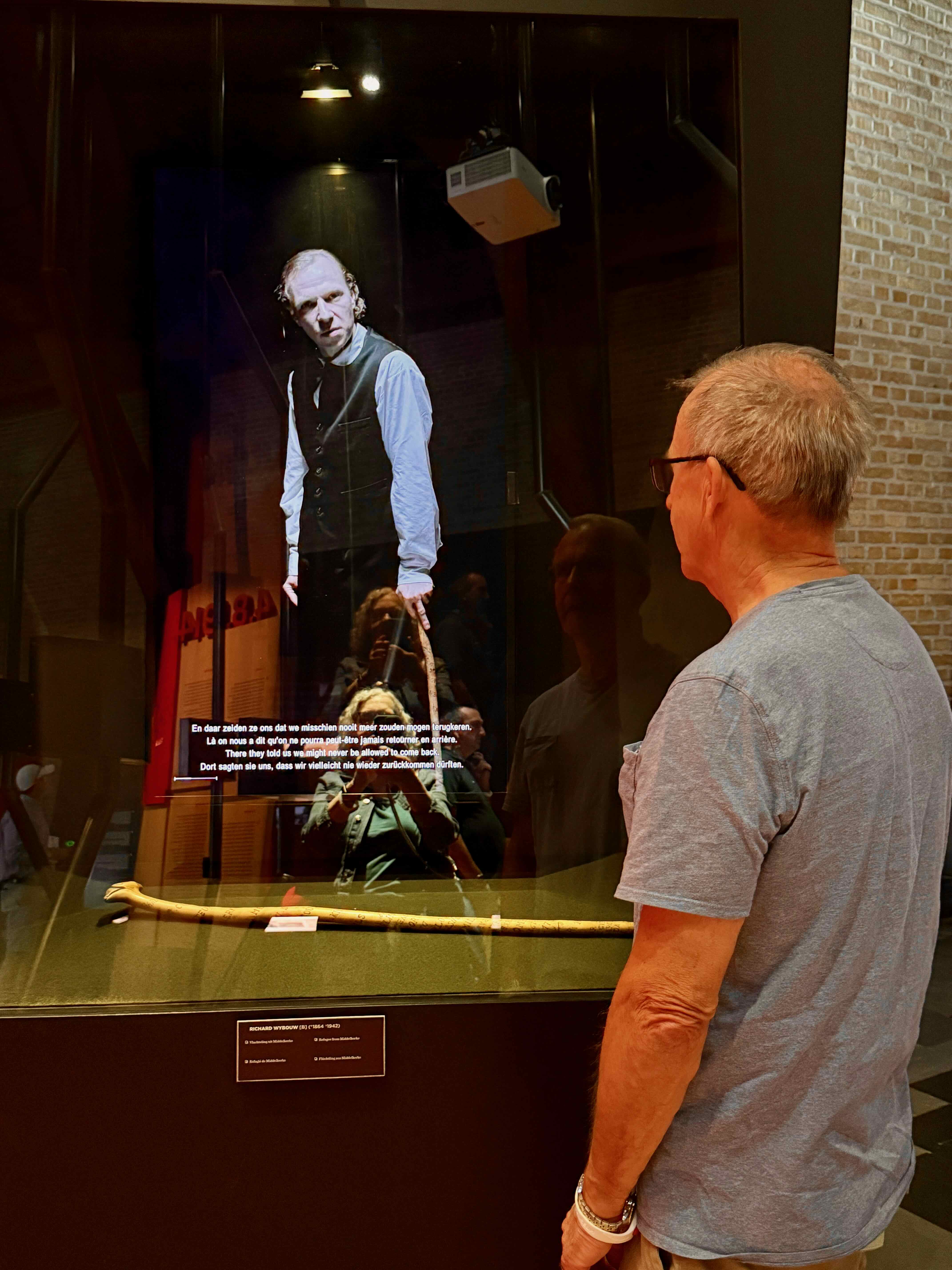
This museum uses a variety of displays to tell the story of the invasion of Belgium in World War I. There are holographs which use actors to tell the stories of actual people.

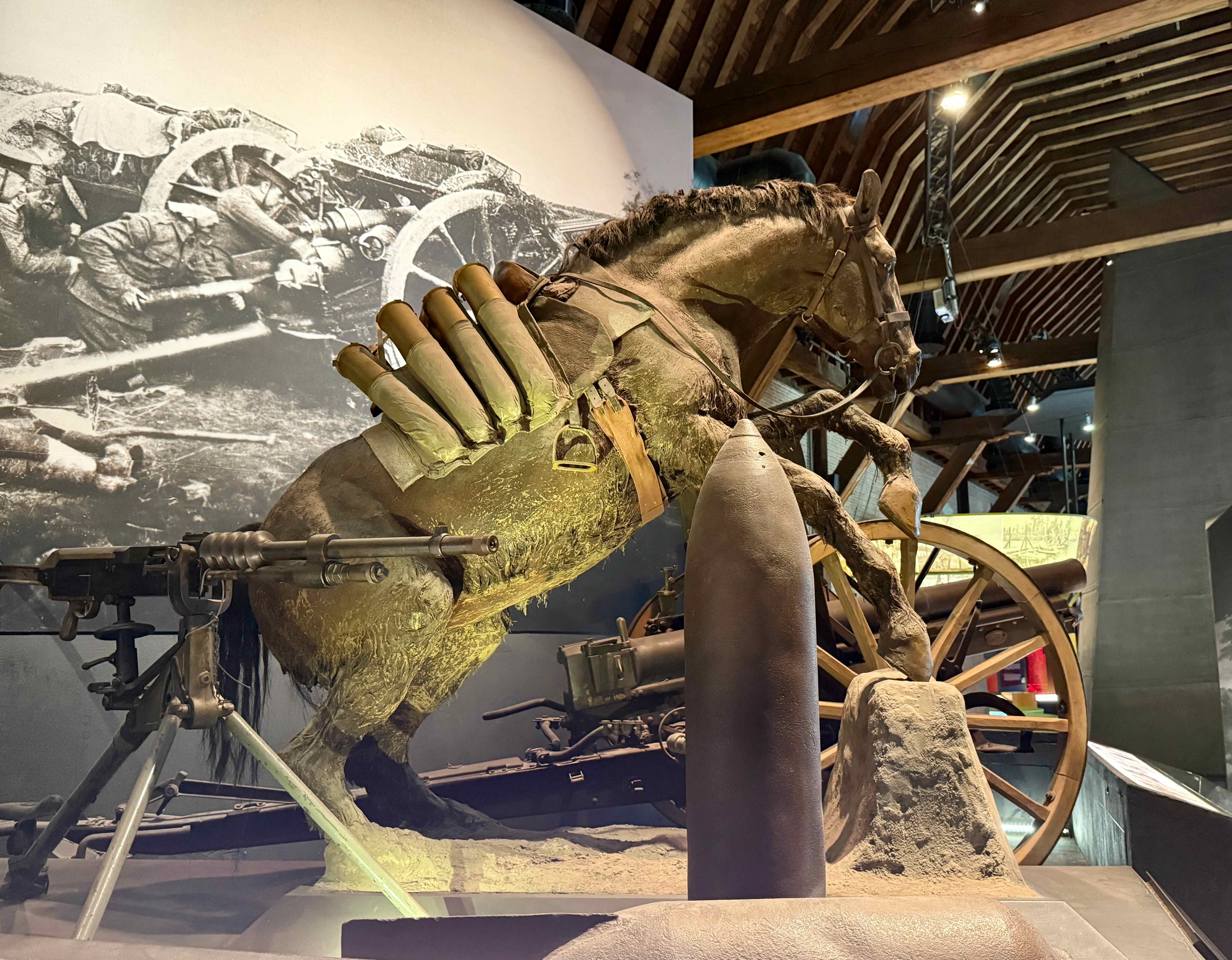
The total number of military and civilian casualties in World War I was about 40 million: estimates range from around 15 to 22 million deaths and about 23 million wounded military personnel, ranking it among the deadliest conflicts in human history. But it wasn’t just people that suffered during this war. More than 8 million horses, donkeys and mules died in WWI as well.  Such a horrendous loss of life!

These early gas masks provided some protection against chlorine gas, which was used for the first time during WWI,  but were only effective for about five minutes with concentrated doses of the gas. 

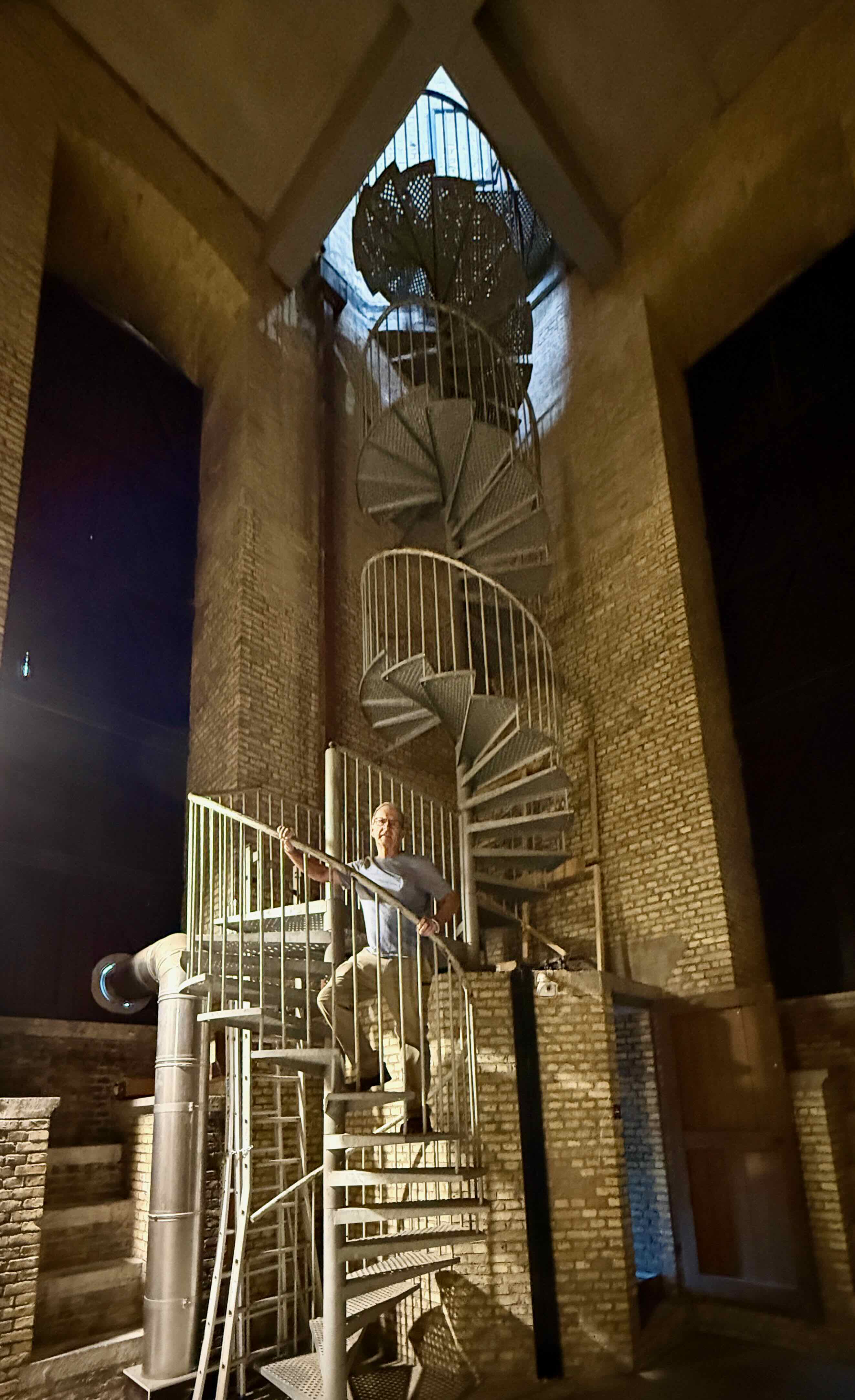
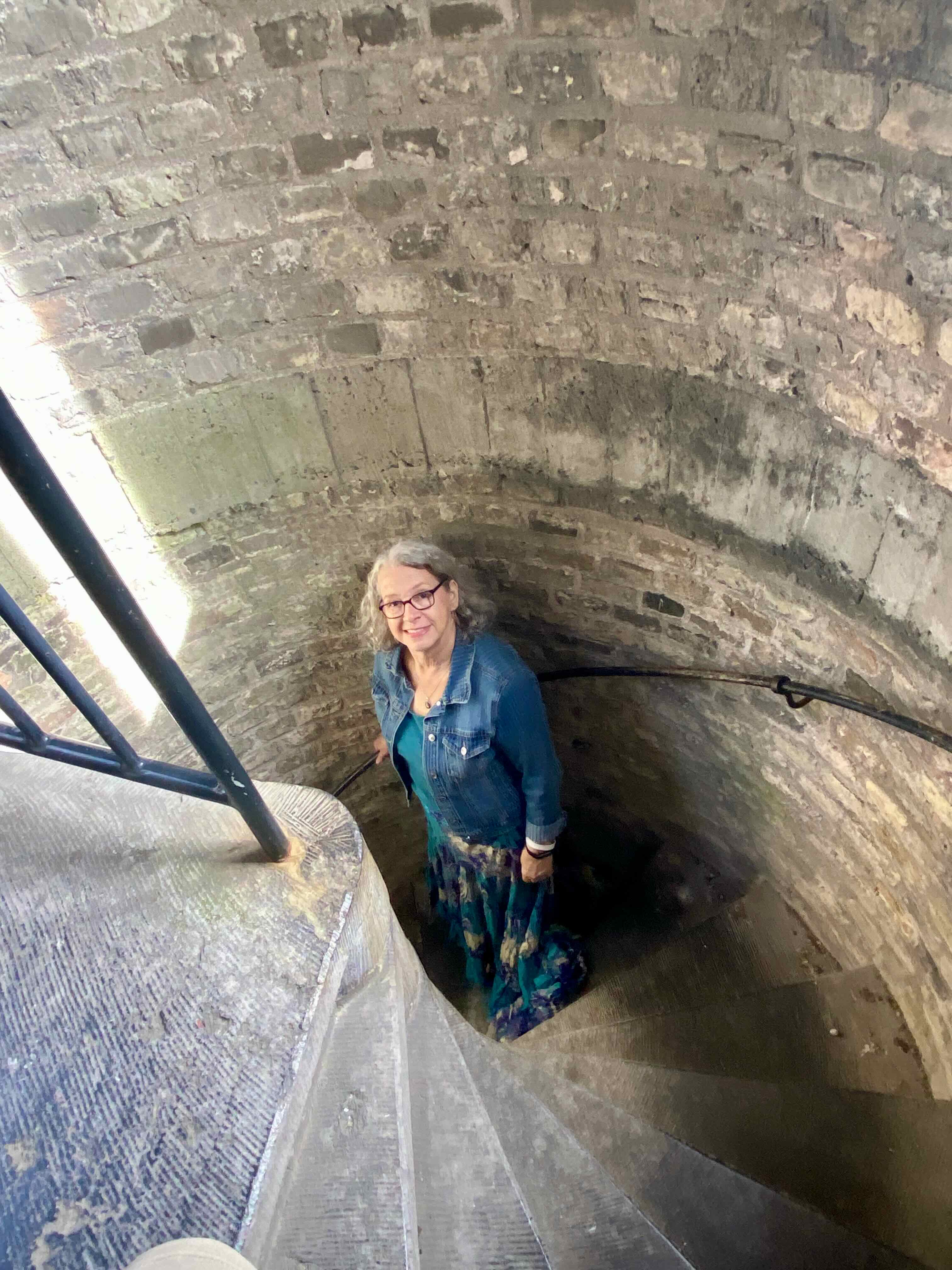
We take a break and climb 231 steps to reach the top of the bell tower. half way the steps change from a concrete spiral staircase to these metal steps, which are a bit scarier to climb.

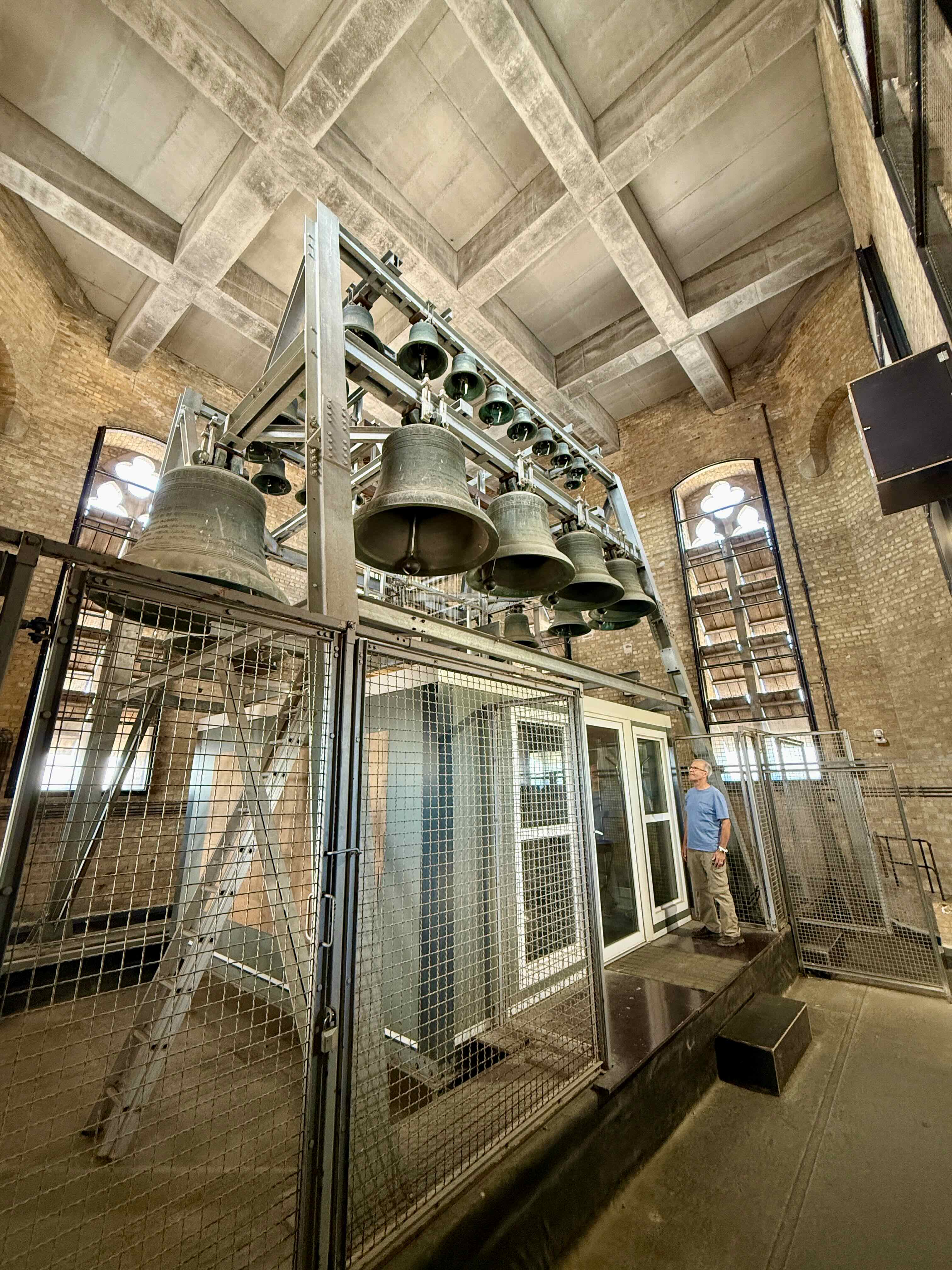
We are always amazed at the size of the bells in these bell towers.

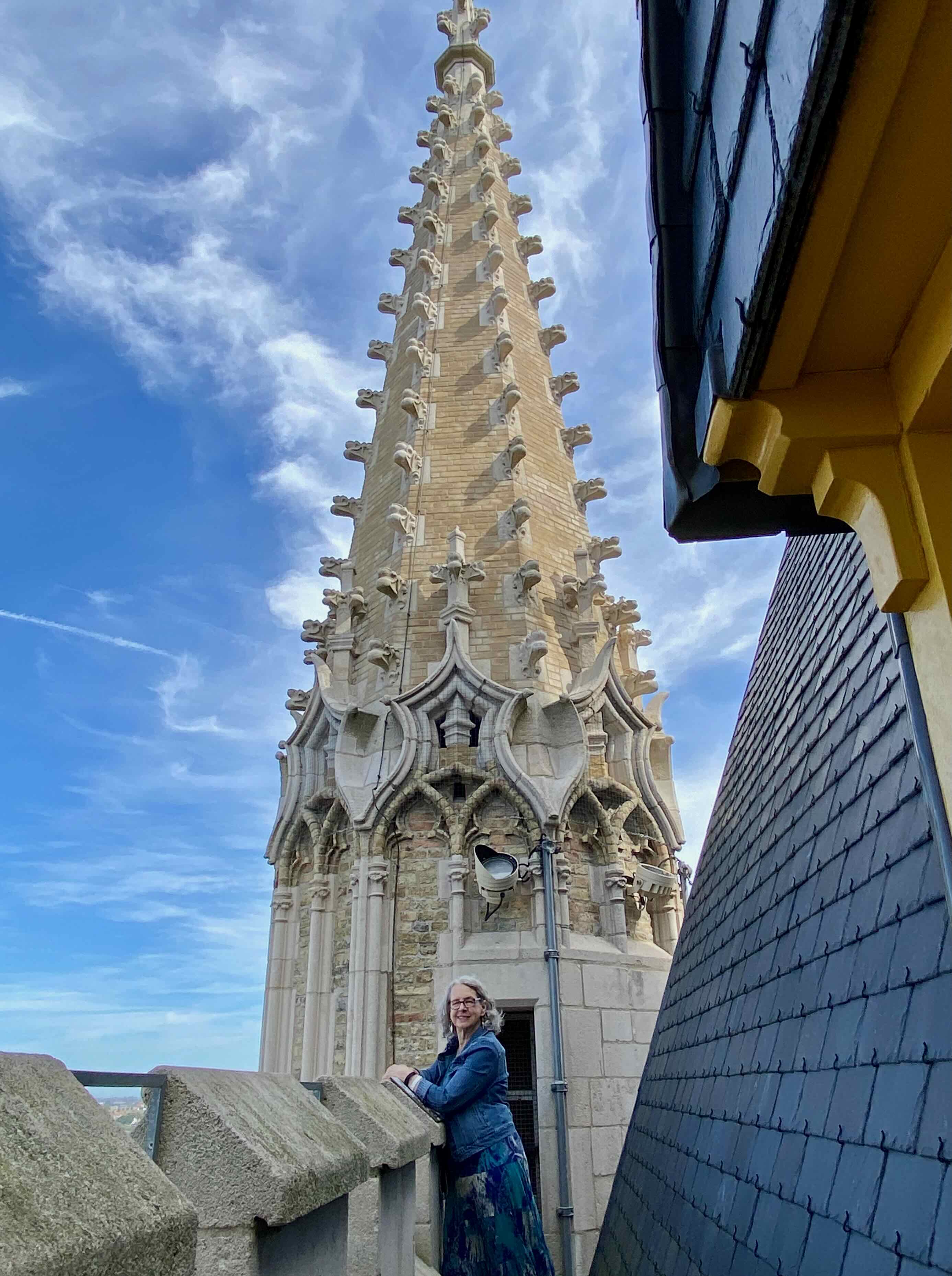
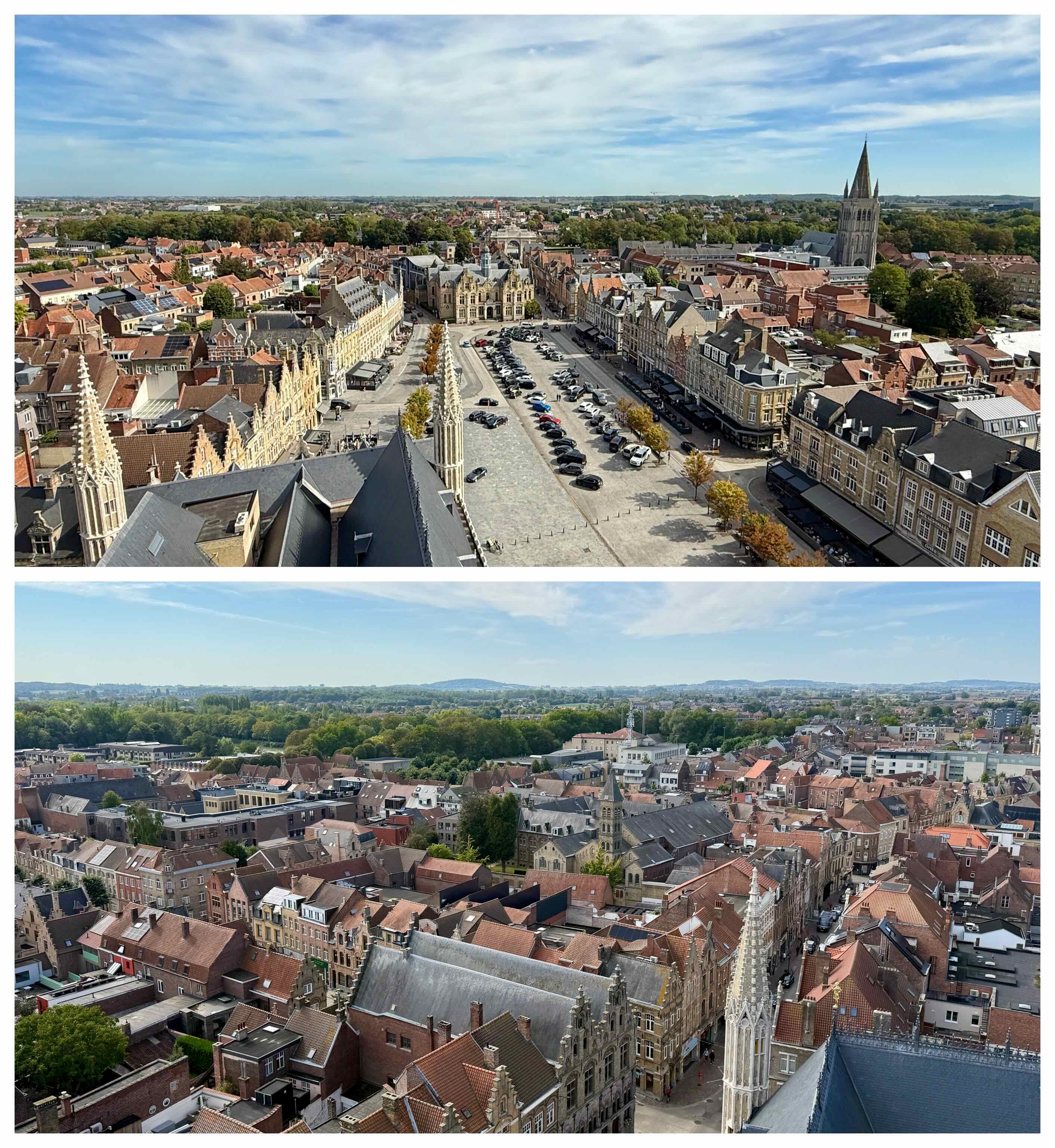
Soon we are outside taking in the views of the town and countryside.

We can see for miles.

I am very happy that the 231 steps down from the tower are cement.  I really didn’t like those metals ones.

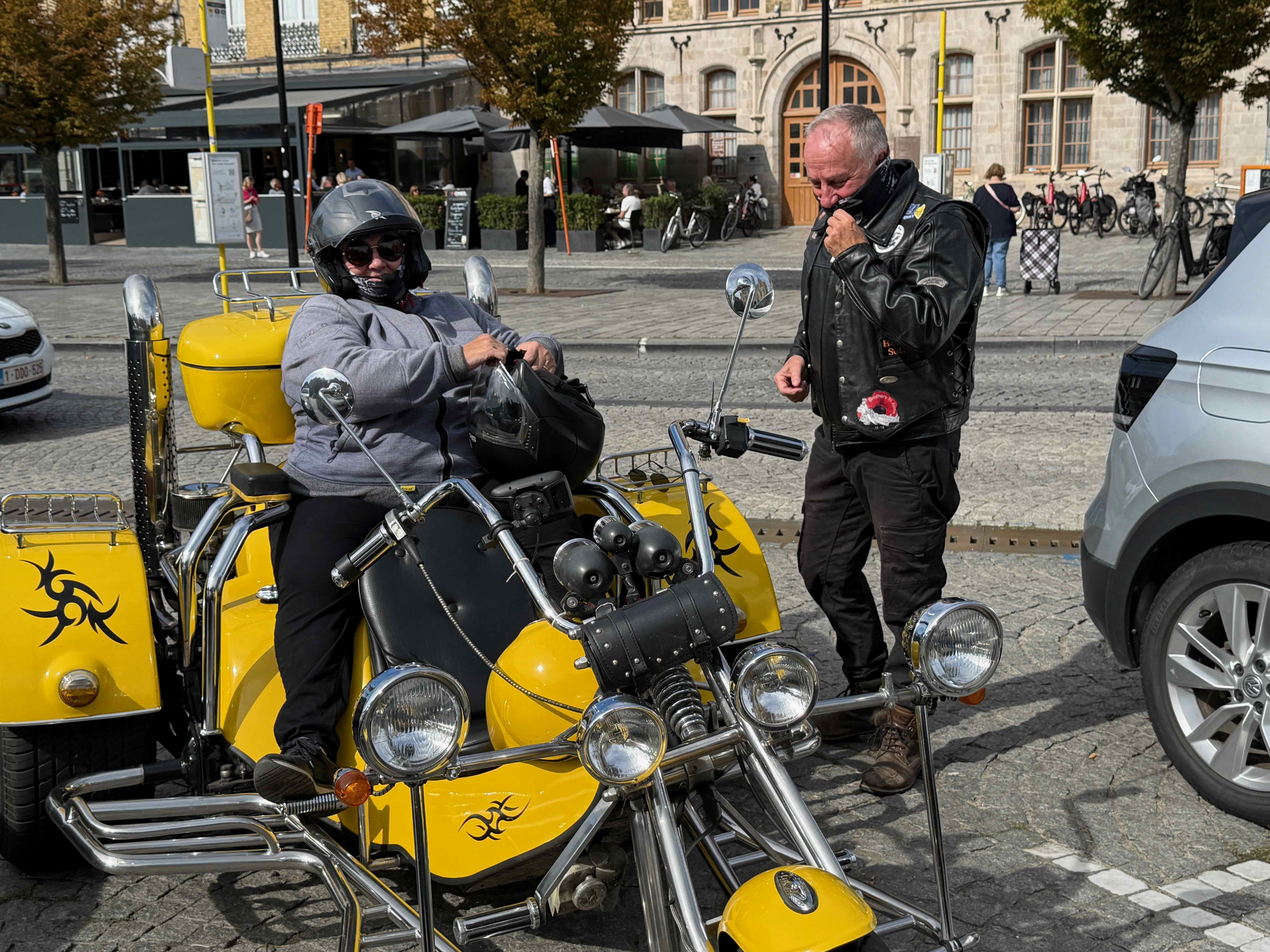
After the clim to the top of the tower we have lunch and chatted with this Belgium couple who like to travel on their colourful bike.  We were surprised as they were both quite elderly.

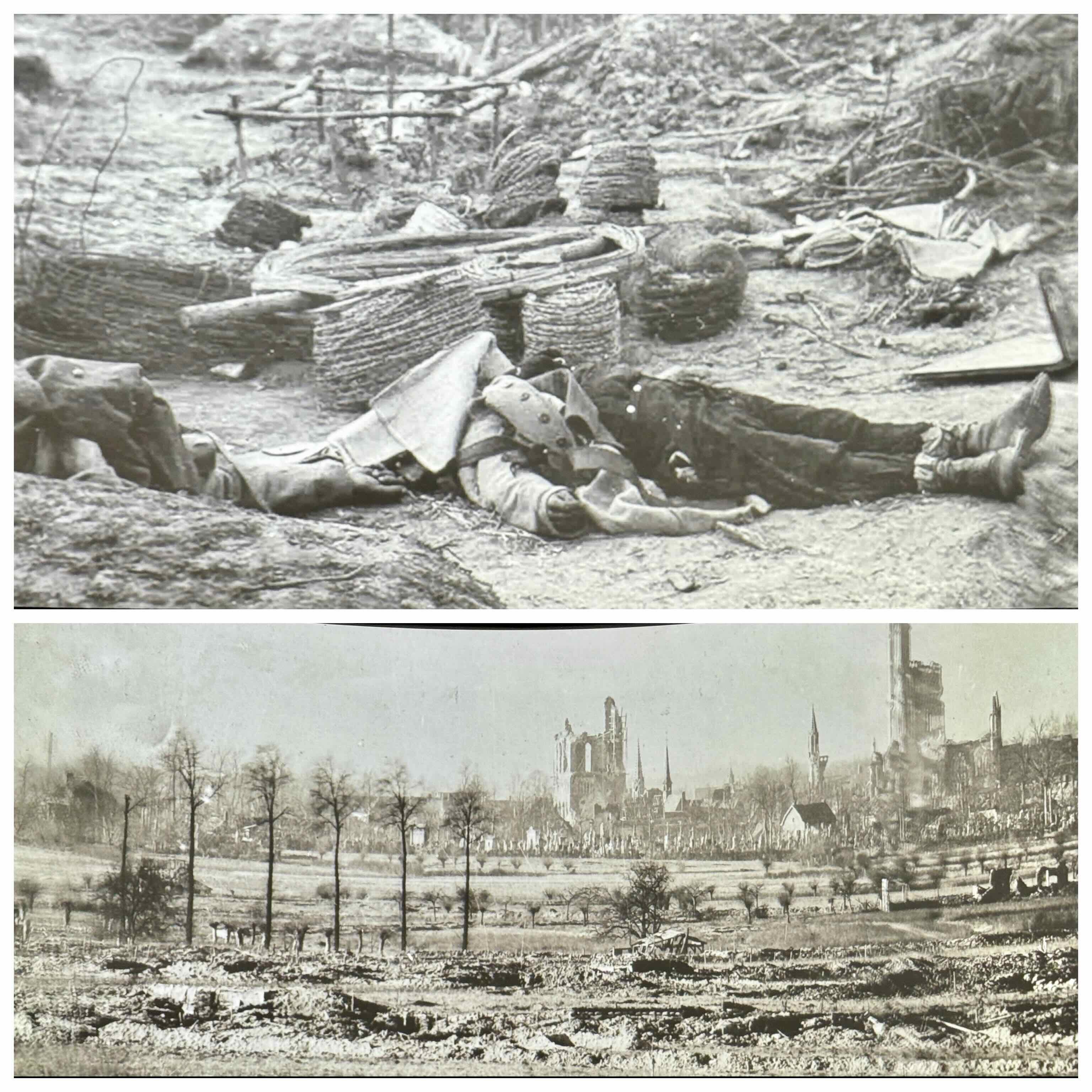
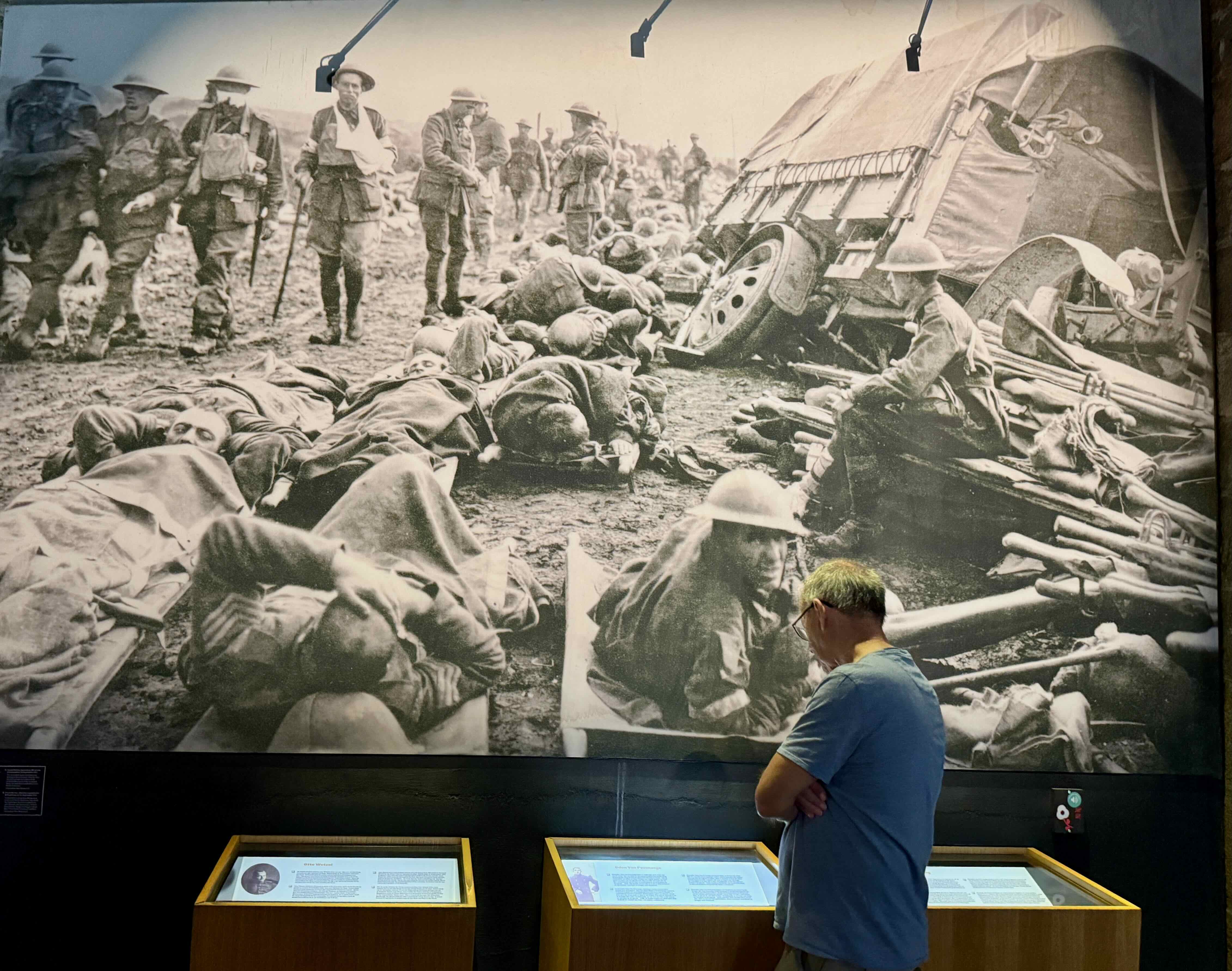
Back in the museum.  There were lots of photos and film clips from the war.  They bring the horror of the war to life.

The bottom photo shows the damage done to the building that now houses this museum.  It was rebuilt after the war.

Men sleeping in closely packed conditions underground.  

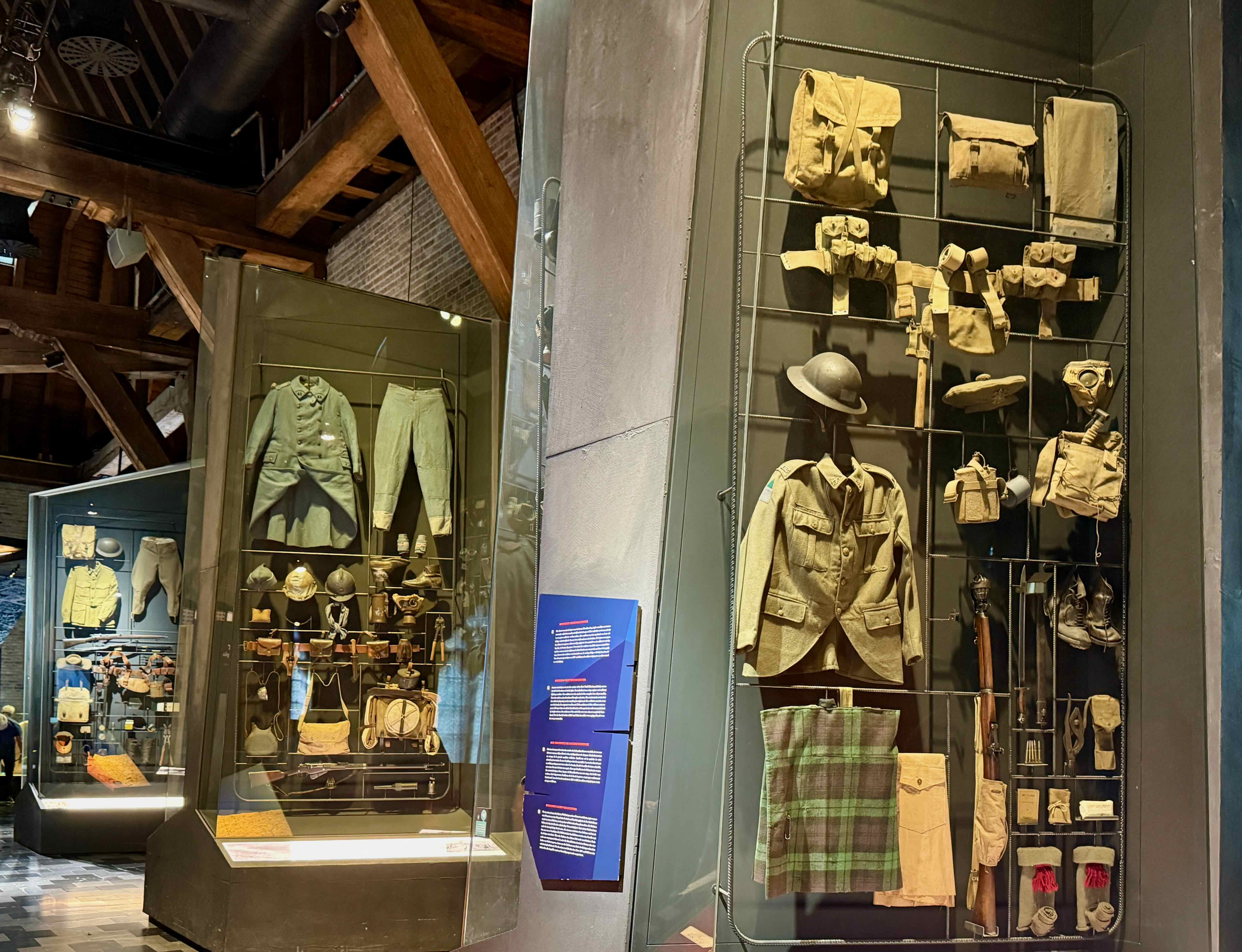
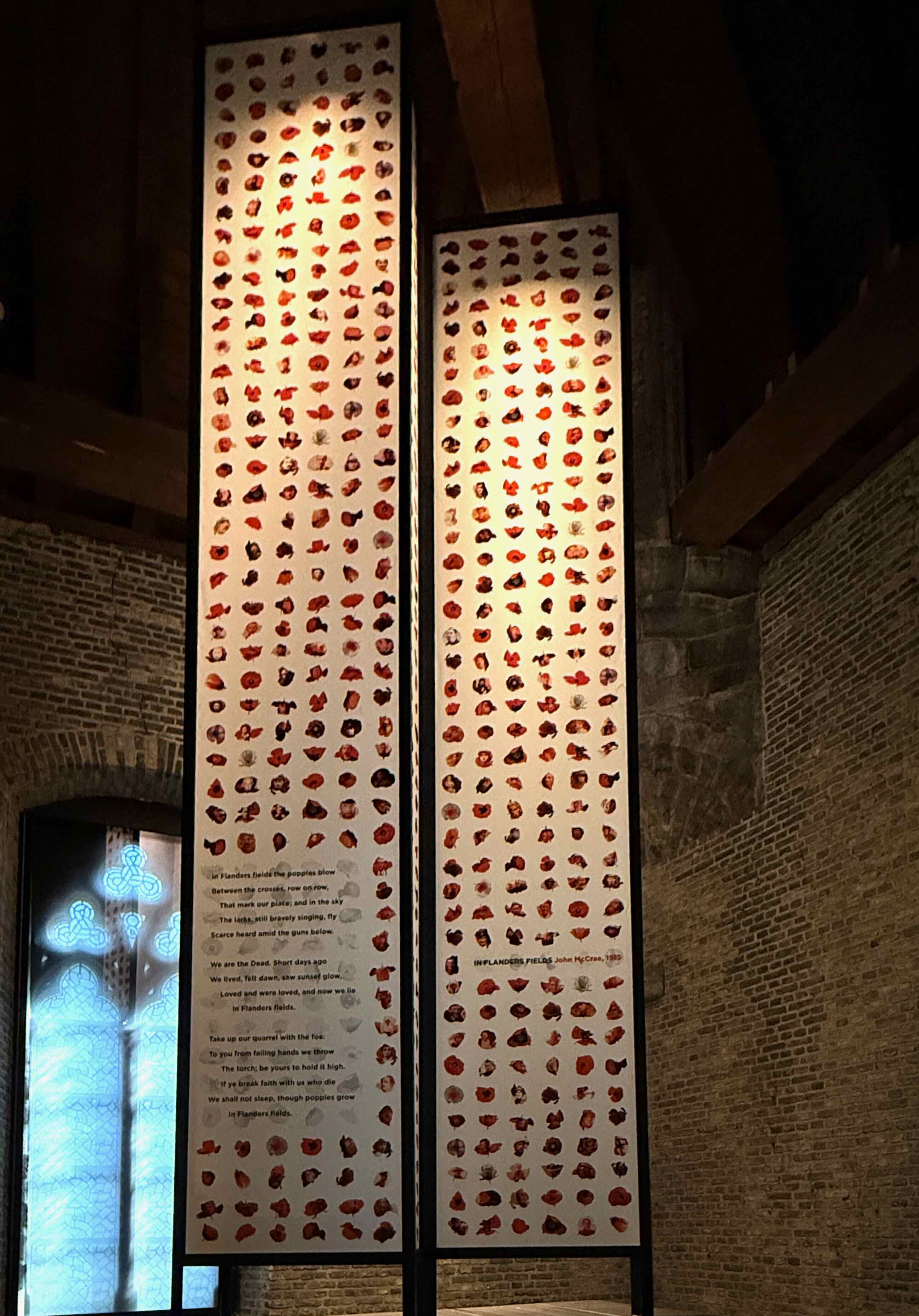
There were displays of the full kit worn by soldiers from the countries that fought in the war. The first display with the kilt is from the Canadian Black Watch Royal Highland Regiment.These banners are for John McCrae’s poem “In Flanders Fields”.

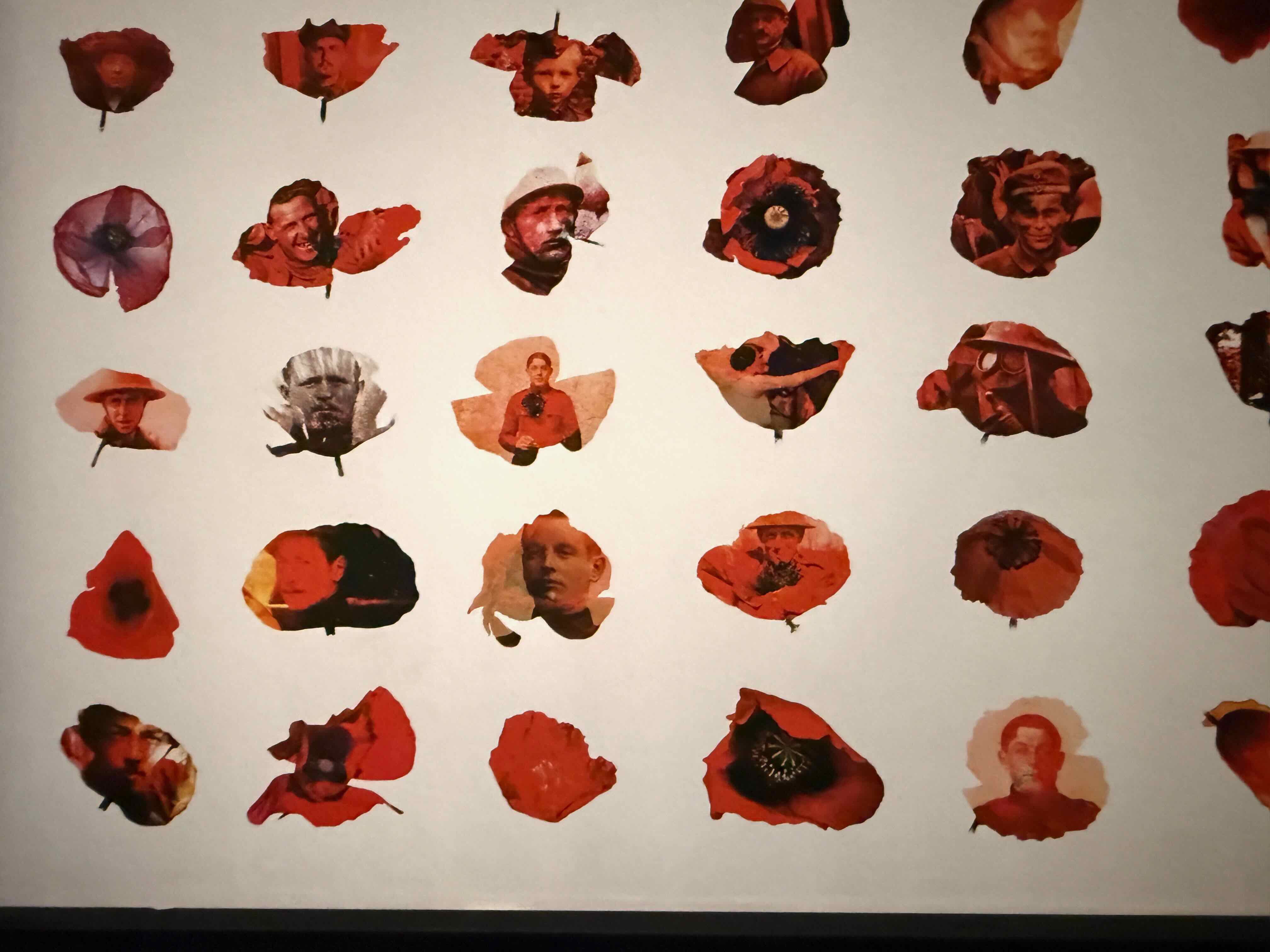
A closer look reveals that there are photos of soldiers hidden in the poppies.

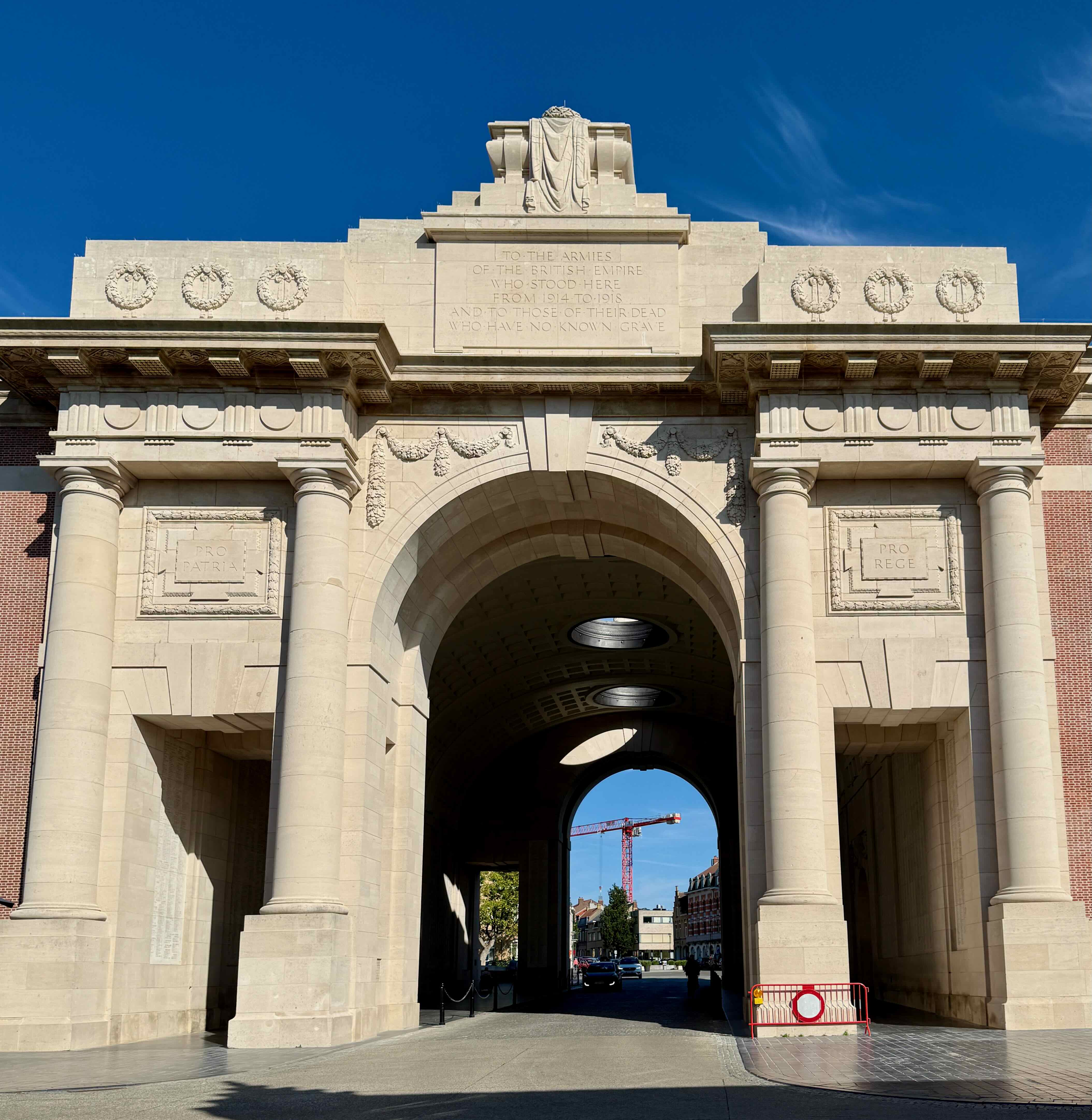
Taps is played at 8:00 every night at the Ypres Menin Gate memorial.

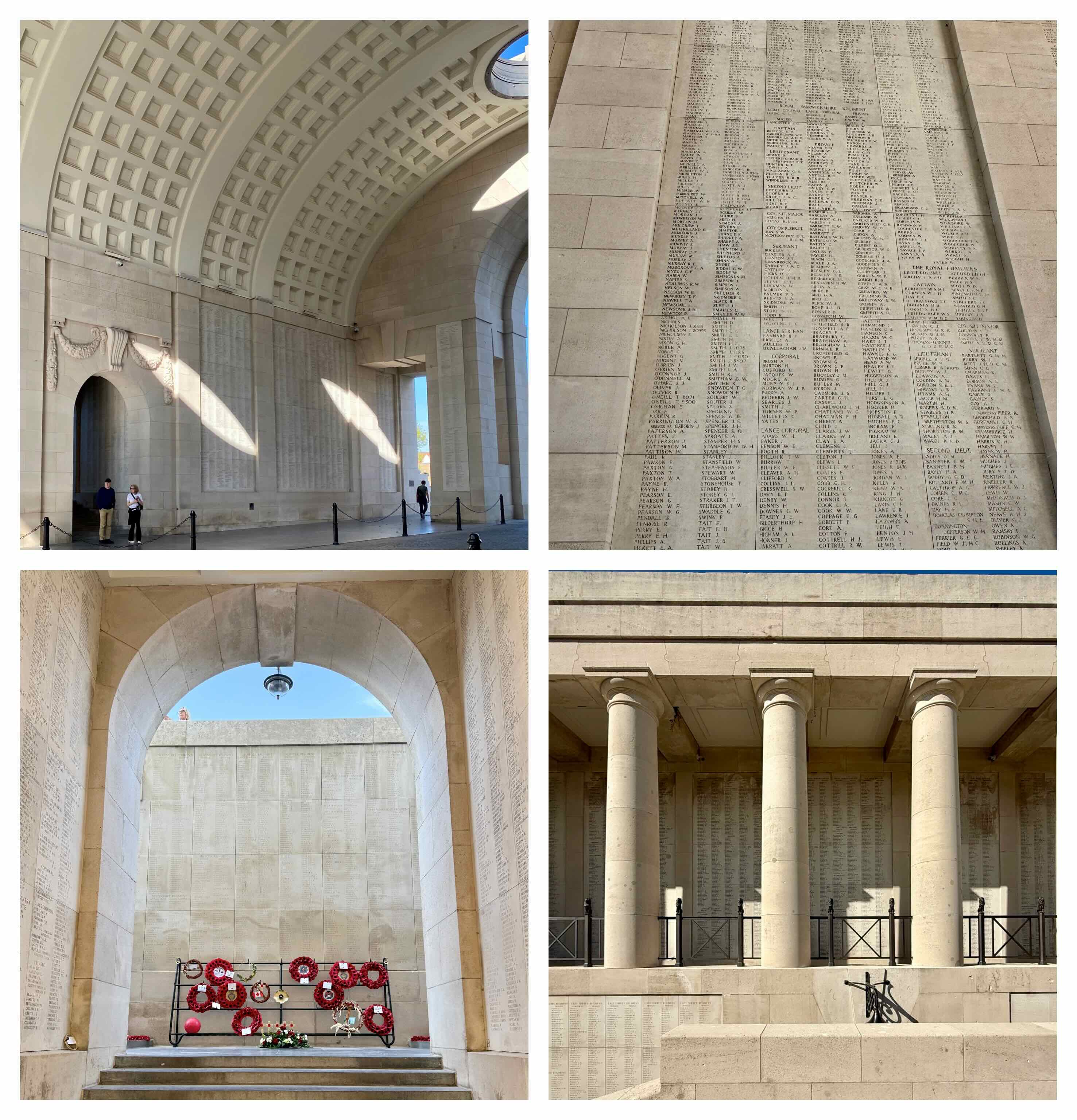
This memorial is engraved with the names of more than 54,000 officers and men whose graves are not known. I feel emotional when viewing these lists of those who died but were never found and buried.

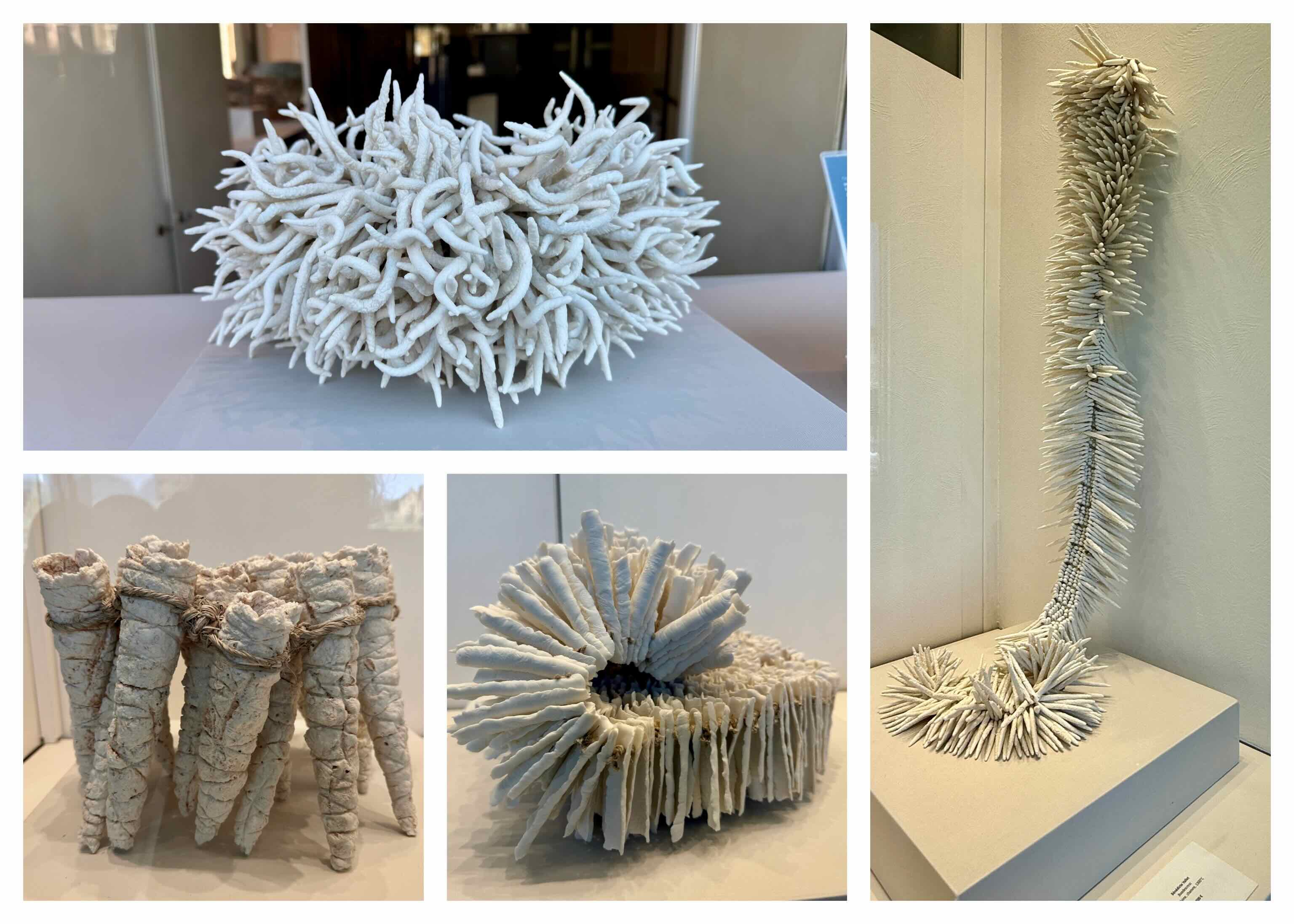
Walking back to the car we pass a gallery with these amazing porcelain sculptures by Bénedicte Vallet.

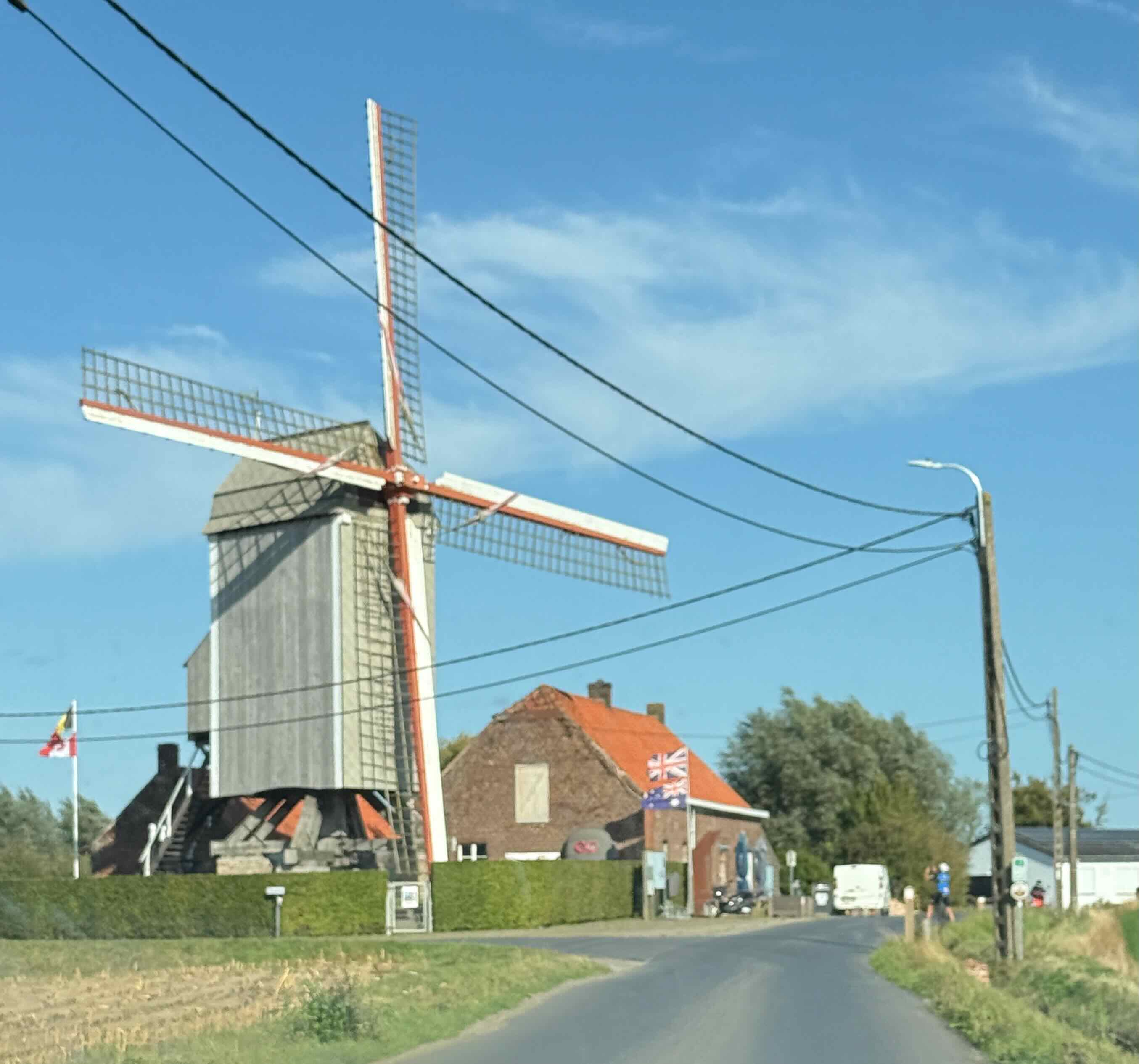
Next stop is the Essex Farm Cemetery where the Canadian doctor, Lieutenant Colonel John McCrae wrote his now famous poem “in Flanders Fields” after seeing poppies growing in battle-scarred fields. The poem was written in memory a friend who died at Ypres,  We pass some windmills on the way to the last cemetery we will visit on this trip.

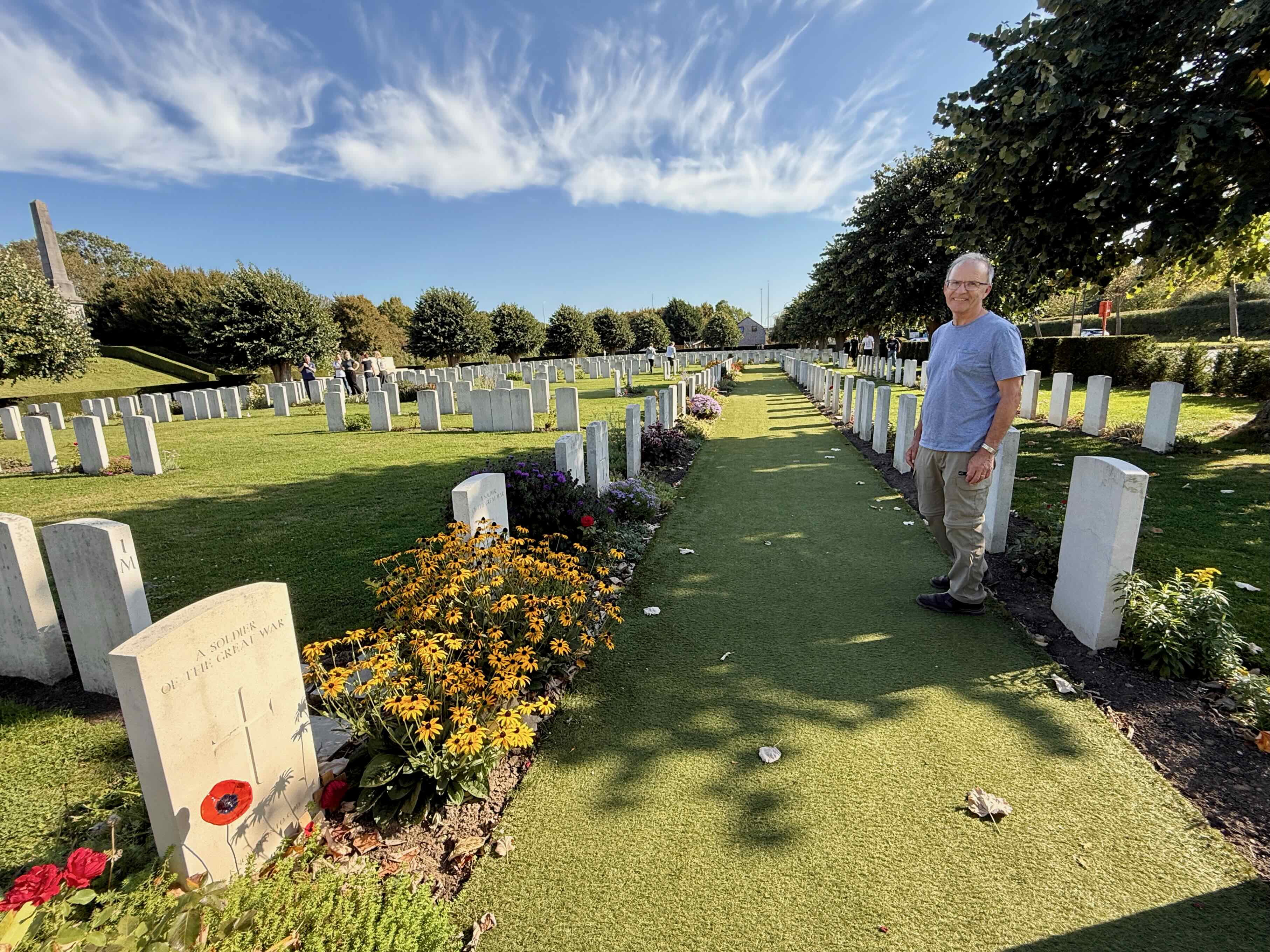
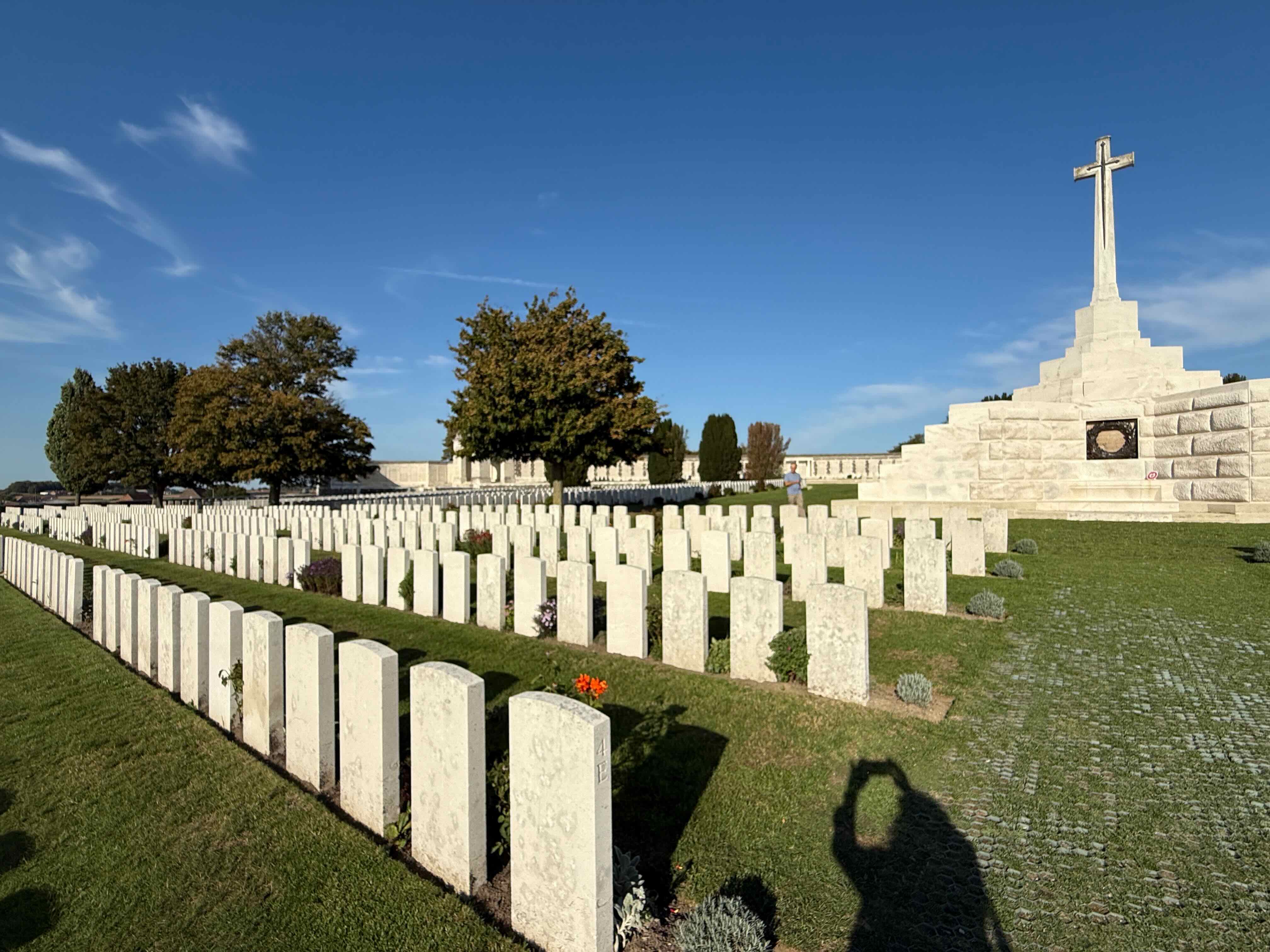
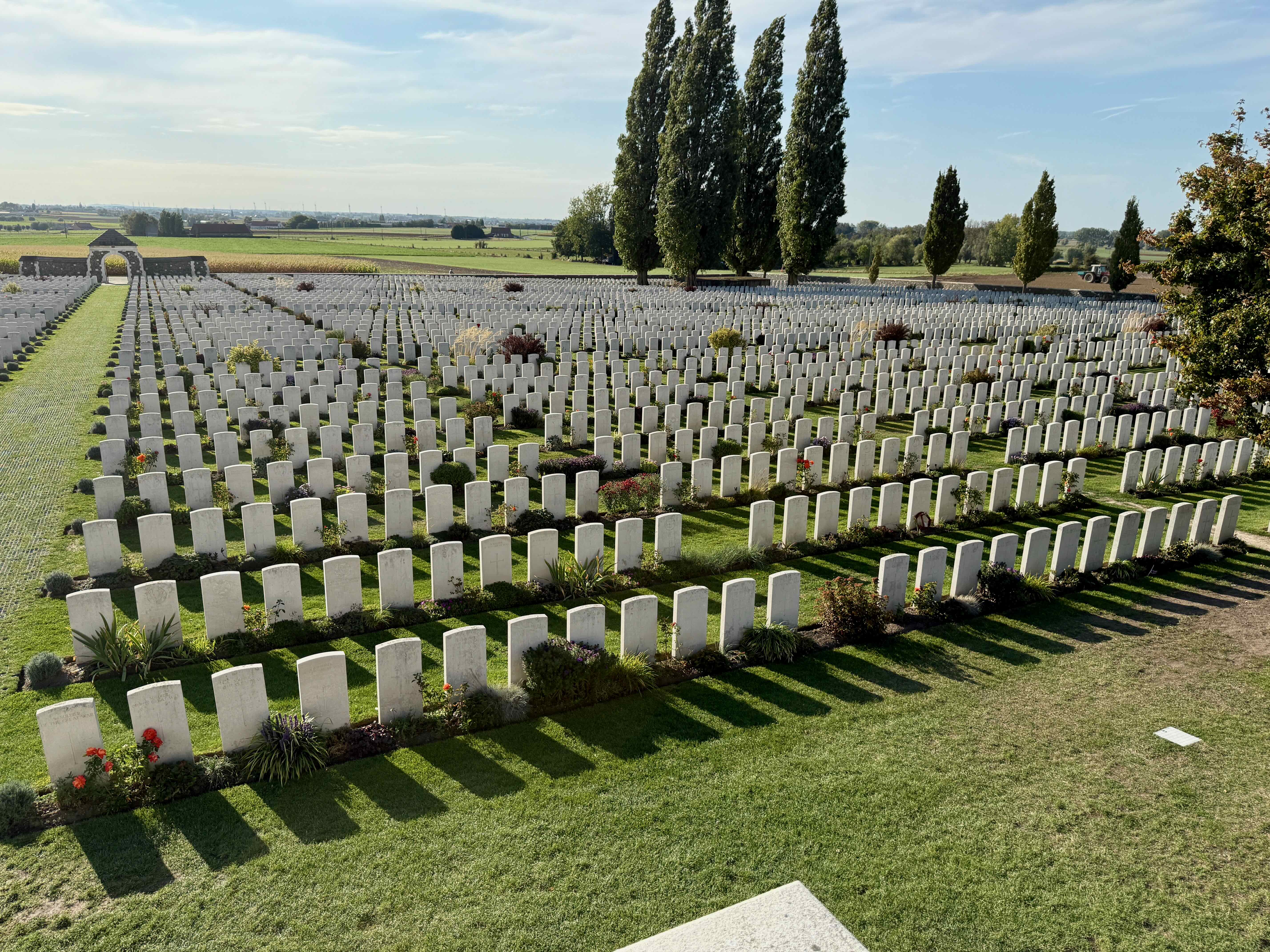
Tyne Cot cemetery, located near Ypres, is the largest Commonwealth cemetery in the world and a memorial to the missing soldiers of World War I.  It contains the graves of 11,956 Commonwealth soldiers, primarily from the Battle of Passchendaele.

So many graves and 8,367of them are unidentified British or Commonwealth servicemen.

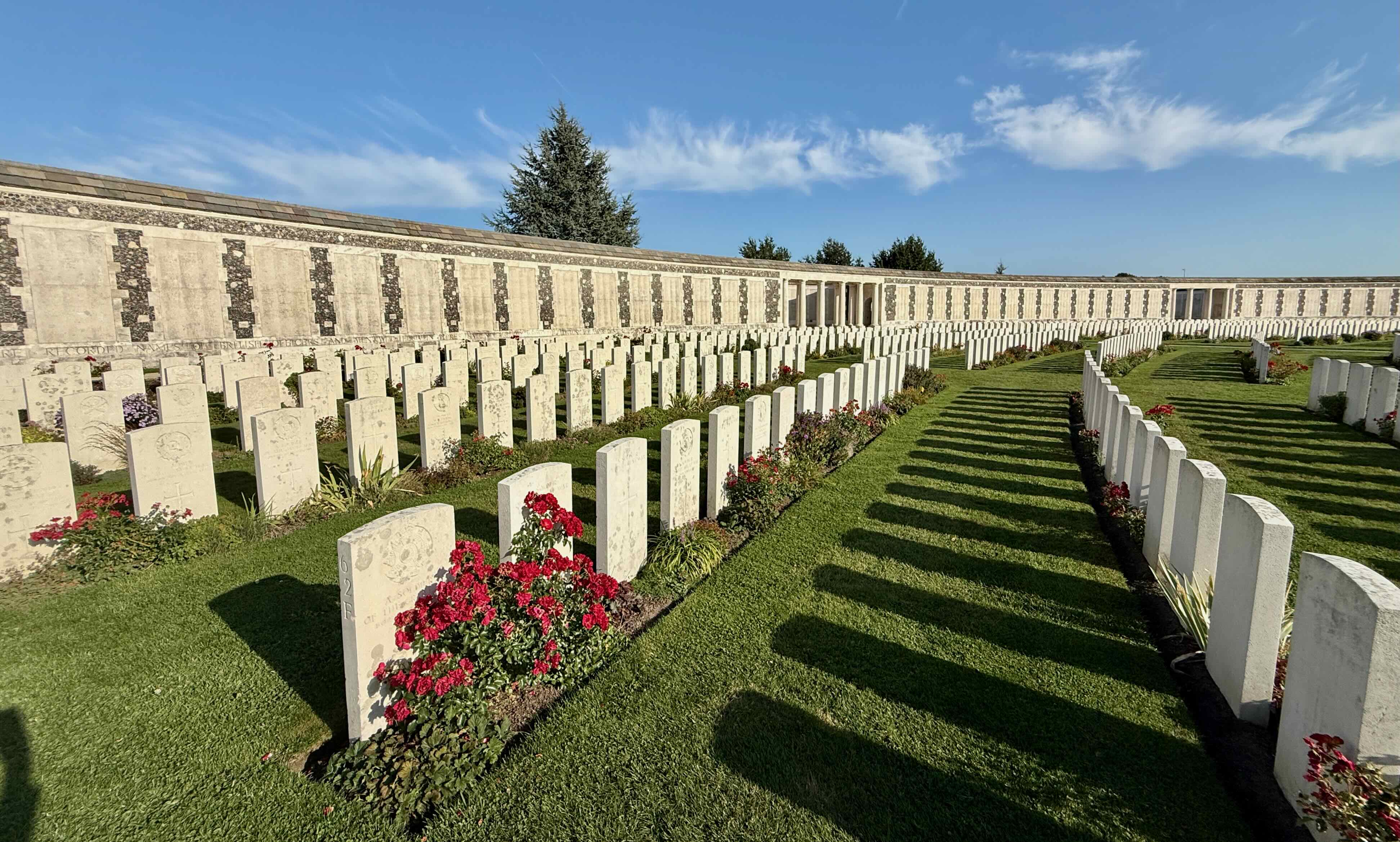
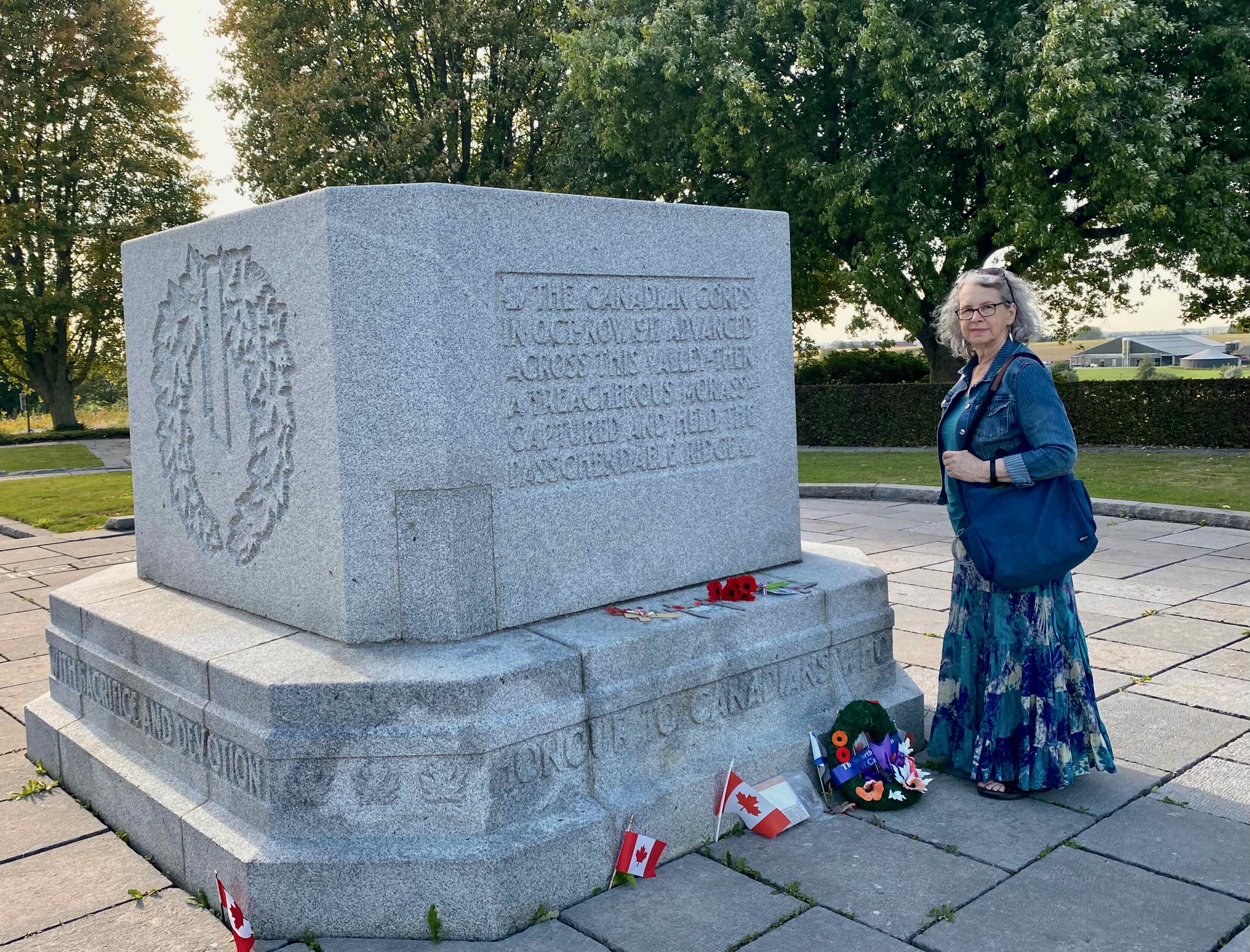
The wall in the background of this photo is engraved with the names of the 35,000 soldiers whose remains were never found or identified. One last stop at the Canadian Memorial which commemorates the actions and sacrifices of the Canadian Corps during the First World War’s Battle of Passchendaele. 

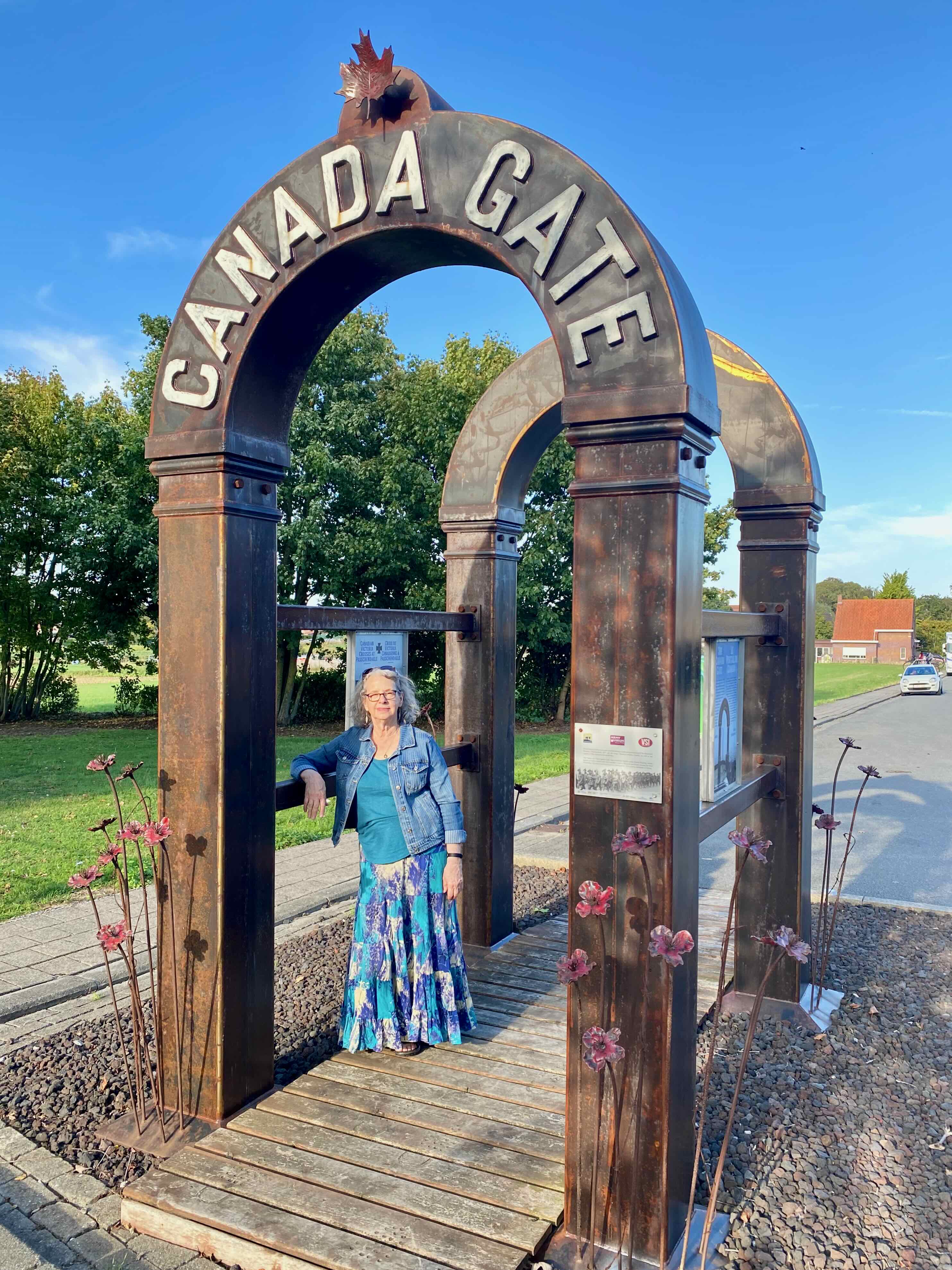
“The Canada Gate is the second of two linked ‘Portals of Remembrance’. The first is The Last Steps Memorial Arch, marking the spot in Halifax Nova Scotia where 350,000 Canadian soldiers took their last steps in Canada before embarking on ships for service overseas in Belgium and France during the First World War. For thousands, their last steps in life were taken here at Passchendaele. For those who survived, their lives were forever changed.”~ veterans.gc.ca

Another heavy duty day.

Lens Louvre

Day 12.   Thursday, November 11, 2025

I did not know that the Louvre had a satellite museum.  It is located in Lens, which is about 25 minutes from Arras.  There is free parking and the museum is free to visit.  We arrive early afternoon and walk up a tree lined lane to the entrance to the museum.

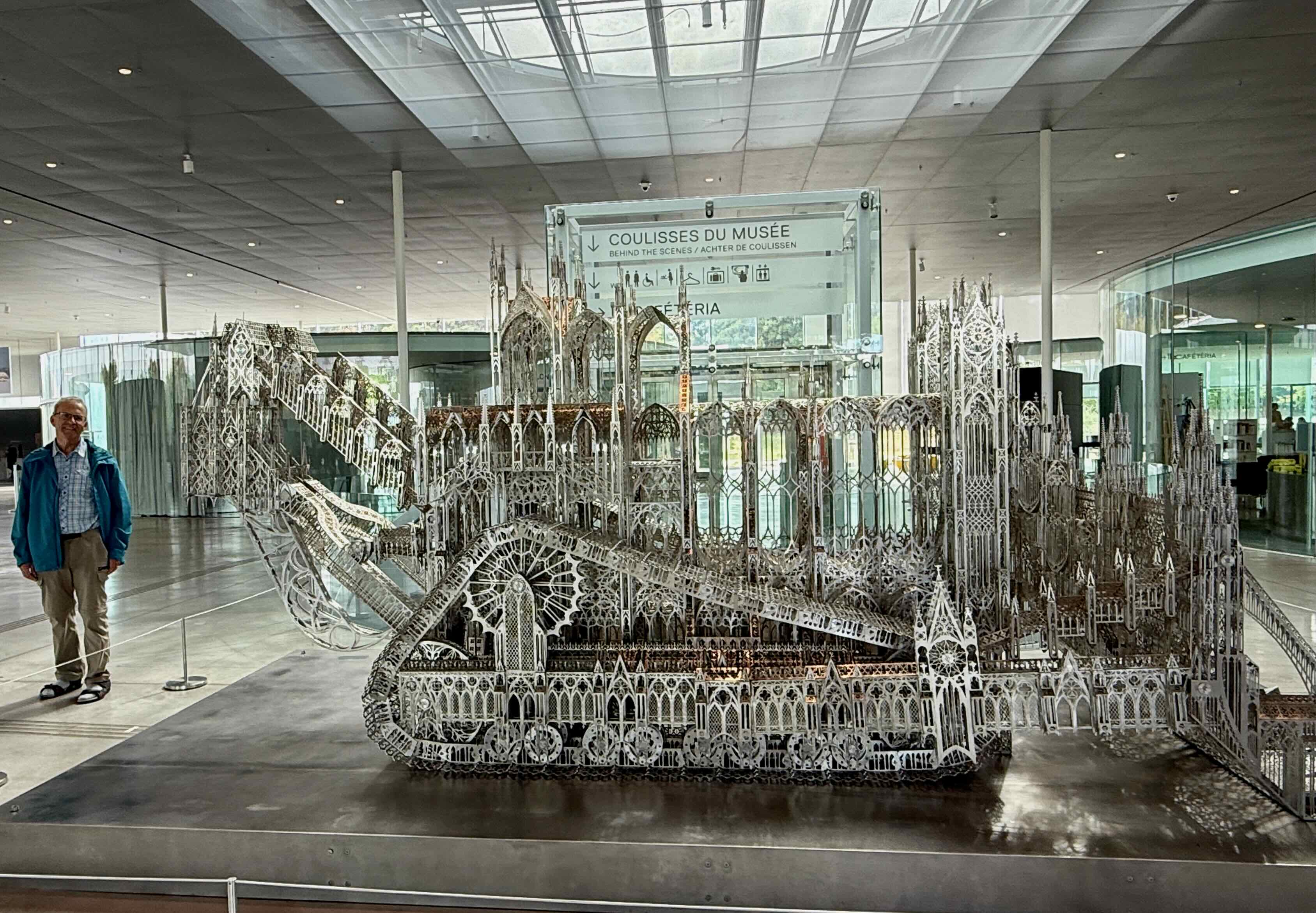
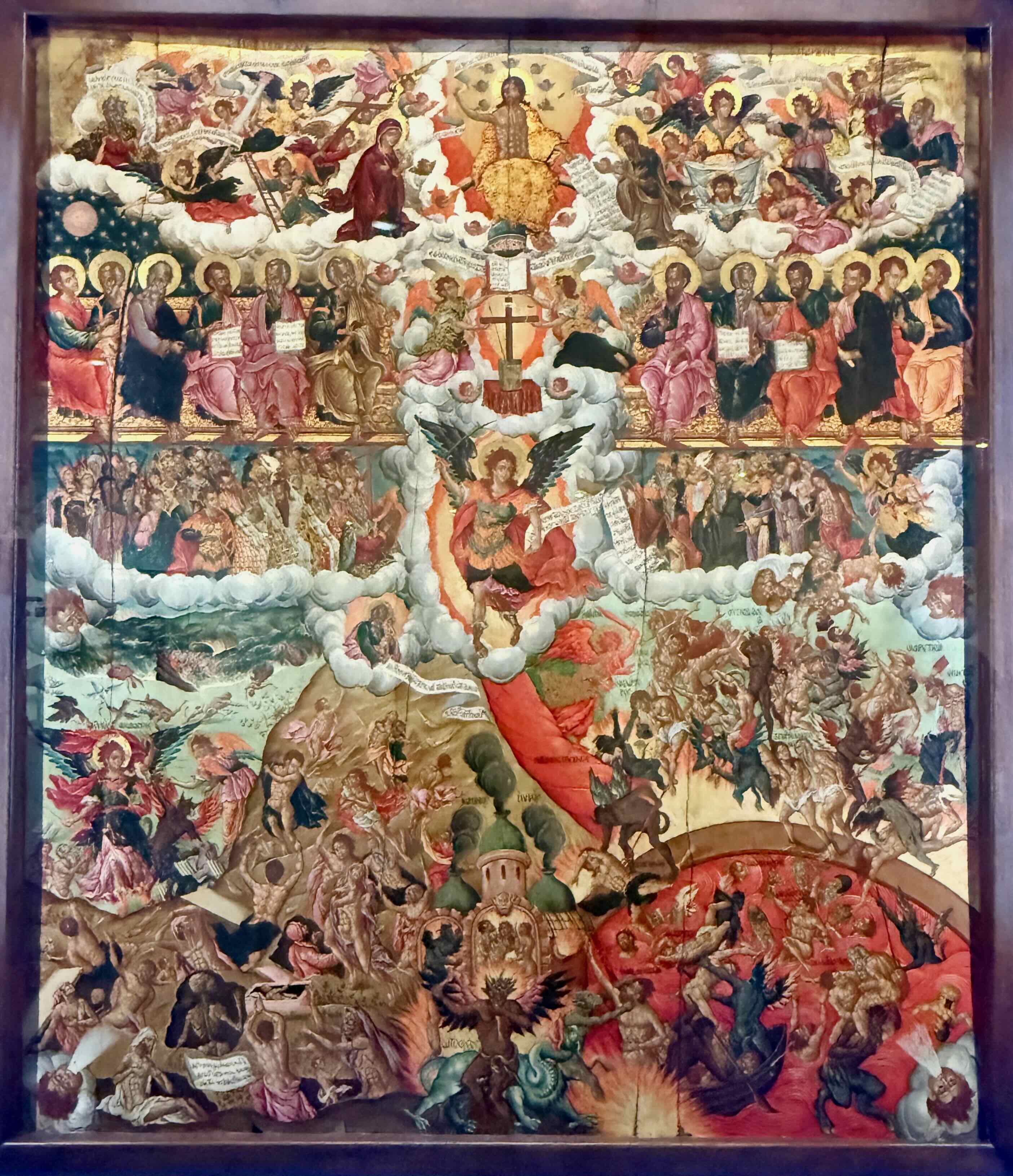
The first thing we see on entering the museum is this Gothic Bulldozer. It is very intricate and difficult to photograph.  Zoom in for a closer look.Downstairs is an exhibit of Ukrainian Icons. Today the term «icon» refers primarily to paintings made with tempera (egg-bound pigments) on a prepared wood panel. Icons are also characterised by the use of gold leaf.  Museums around the world are safekeeping artwork from the Uraine until the war ends. The Louvre-Lens has four of Ukraine’s Icon paintings on display. This is The Last Judgement by Theodore Poulakis, 1661.

Alongside this exhibition space is a glass wall that allows visitors to view works in the restoration area of the Museum.The main exhibit at the museum is The Gallery of Time.

The Gallery of Time is an original showcase for a variety of art forms from different civilisations, all of which come together in an open-plan layout covering some 3,000 square metres. Visitors are invited to immerse themselves in the story of more than 5,000 years of human history and artistic creation. The Gallery of Time takes visitors on a chronological journey from the 4th millennium BCE to the 19th century, drawing on the collections of the Musée du Louvre and on other works which combine to tell a story of human creation, from the earliest recorded times to the most recent.
 

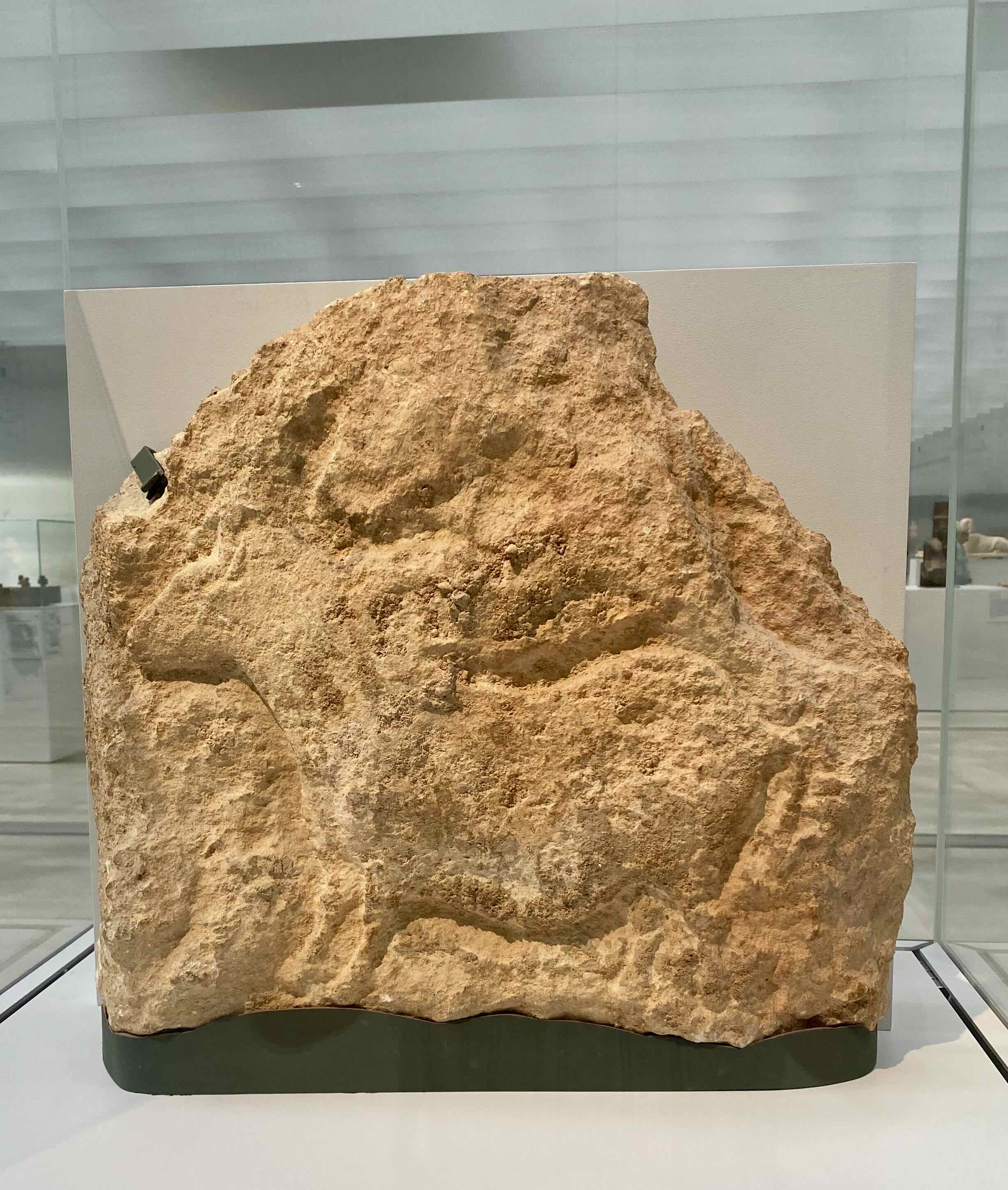
This is the beginning of The Gallery of Time. The first exhibit is the Roc-de-Sers, a stone with a carved horse that was part of a frieze found in a shallow cave in the south west of France. It is from 18,000 BC.

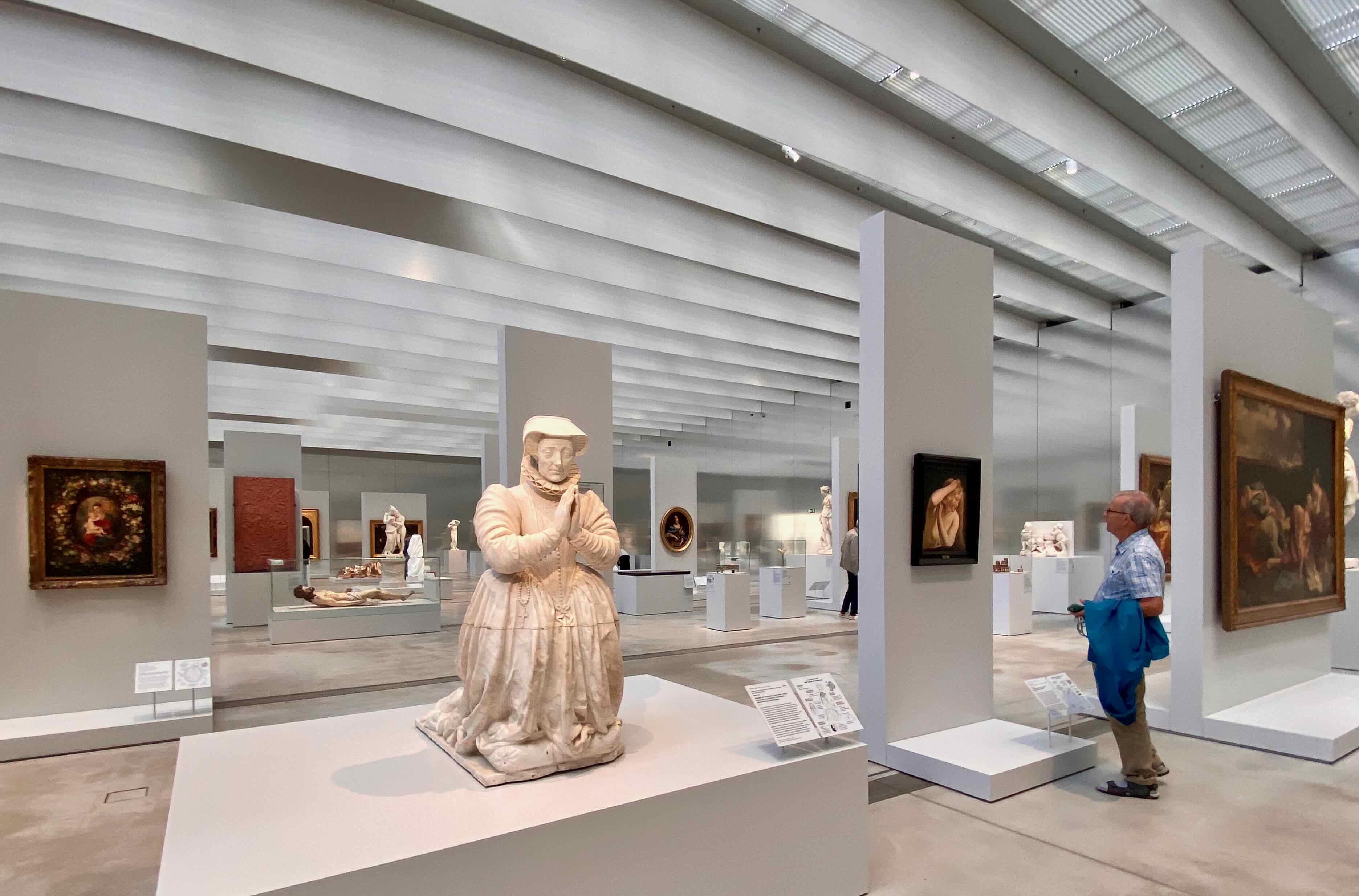
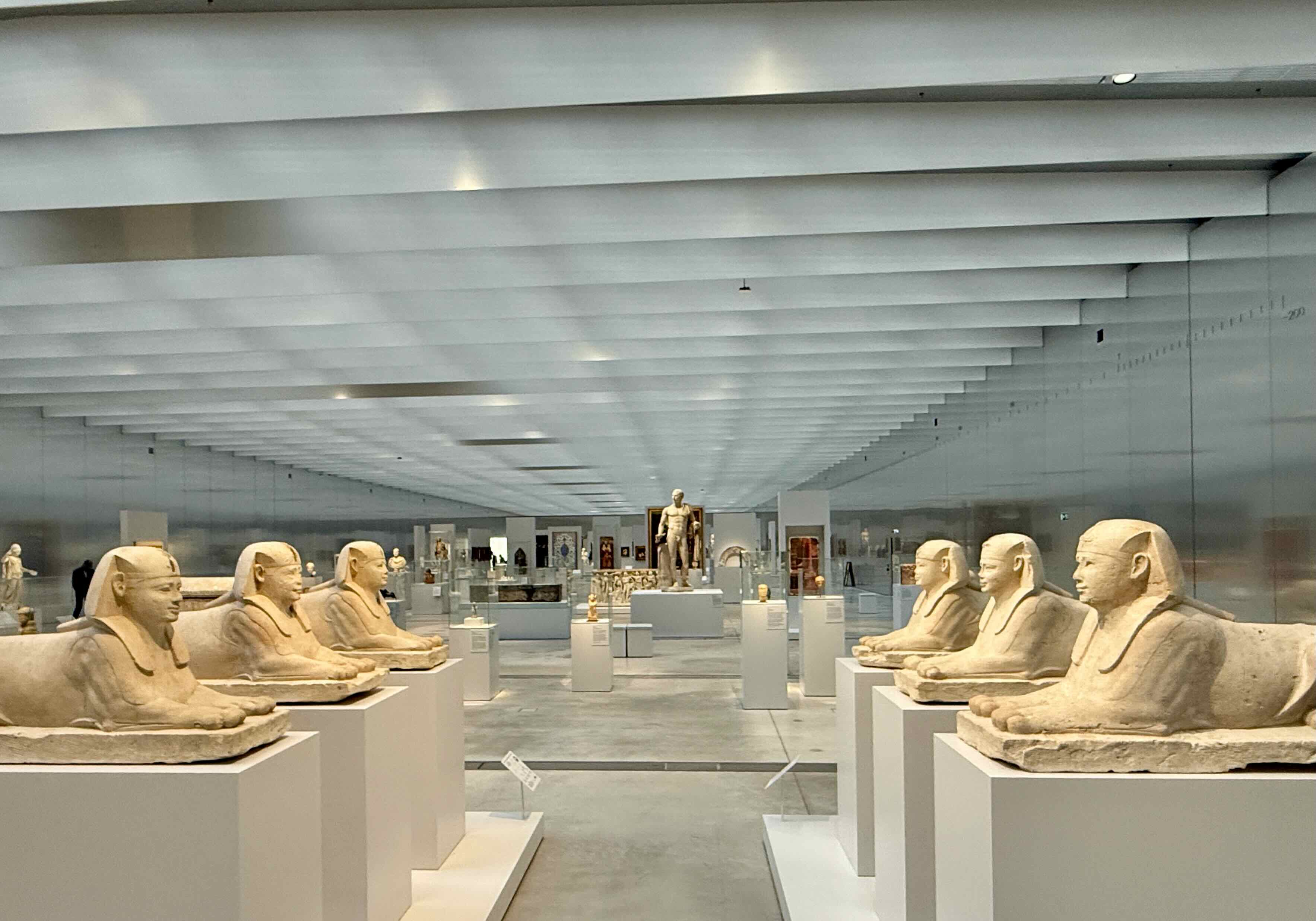
Some views of more than 250 pieces of art on display in this huge gallery.

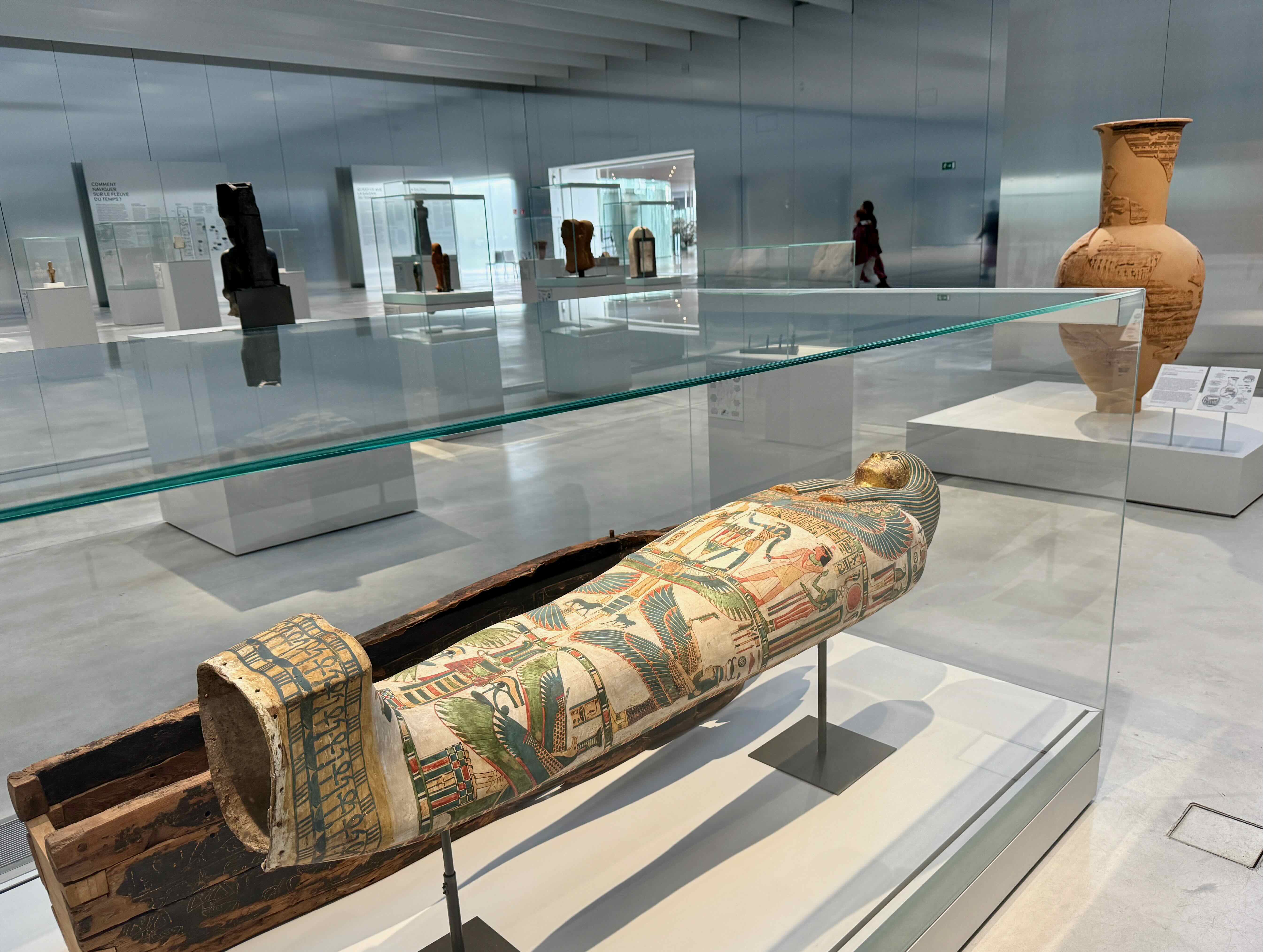
And here, in no particular order, are a few of the pieces that we found especially interesting.

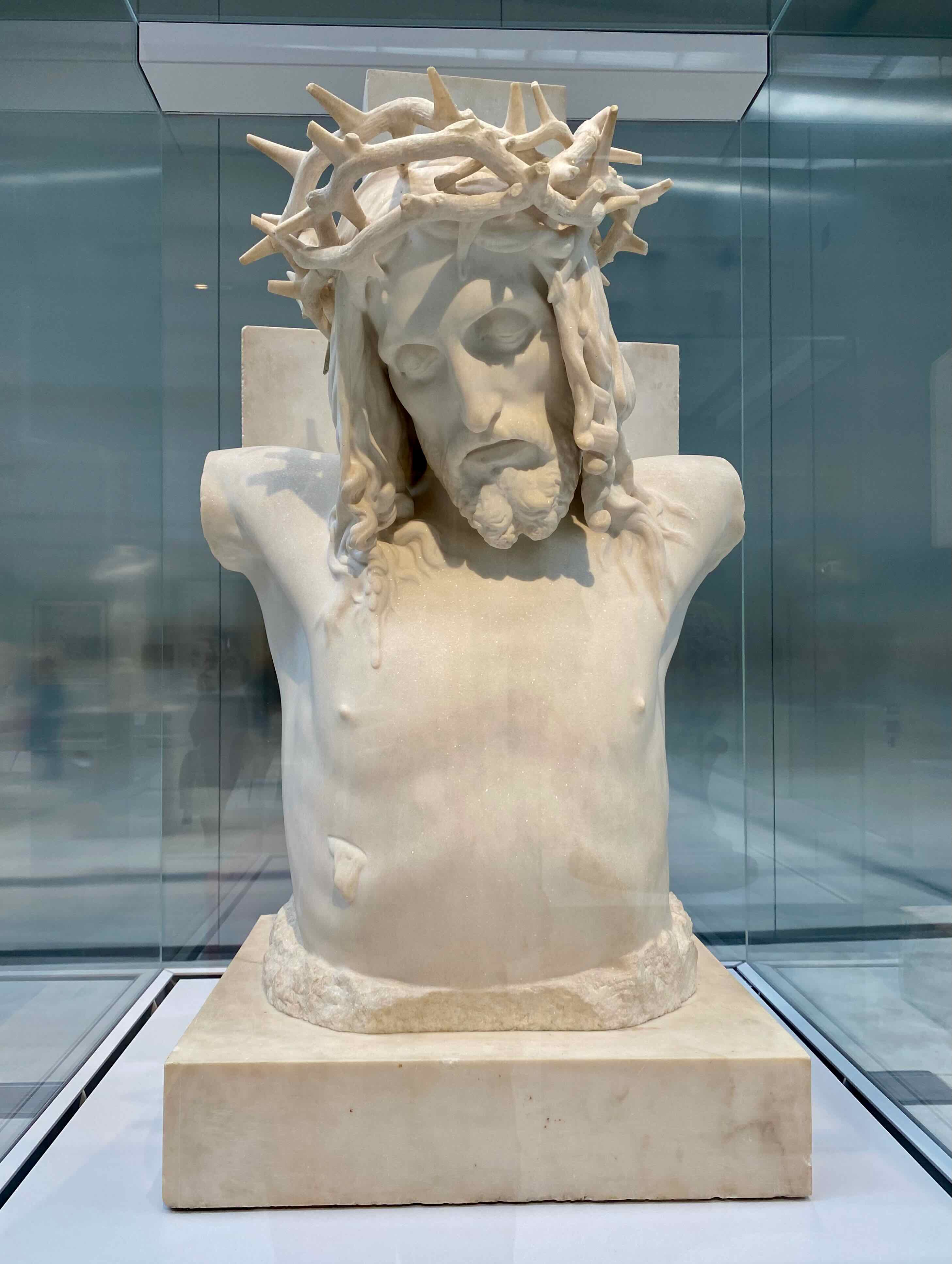
Francois Rude, Christ on the Cross.  Rude started this marble sculpture in 1885 but died before it was completed.  His student and nephew Jean Baptiste Paul Cabet completed it.  I found it very moving, and marvelled at being able to carve the crown of thorns in marble!

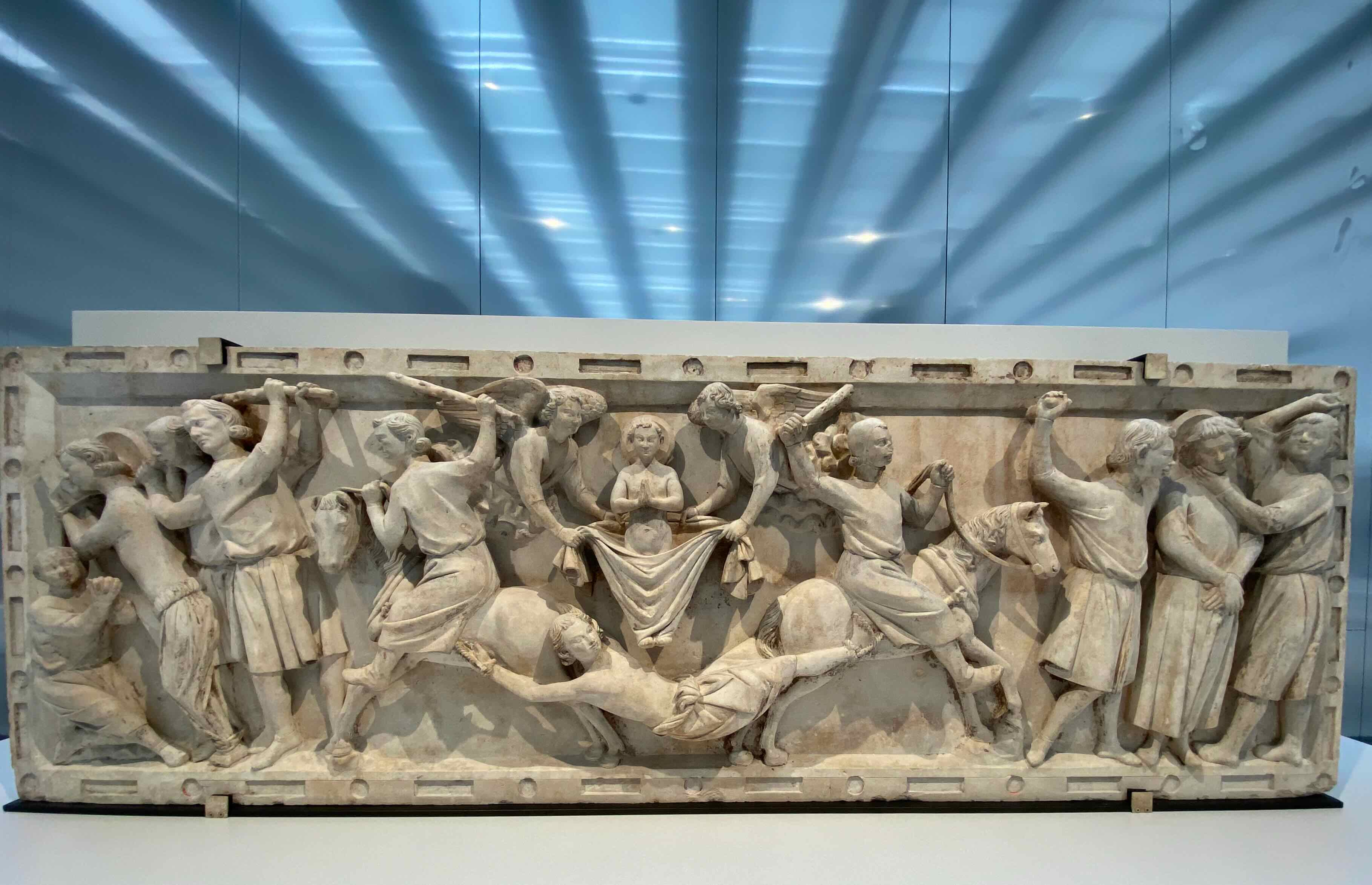
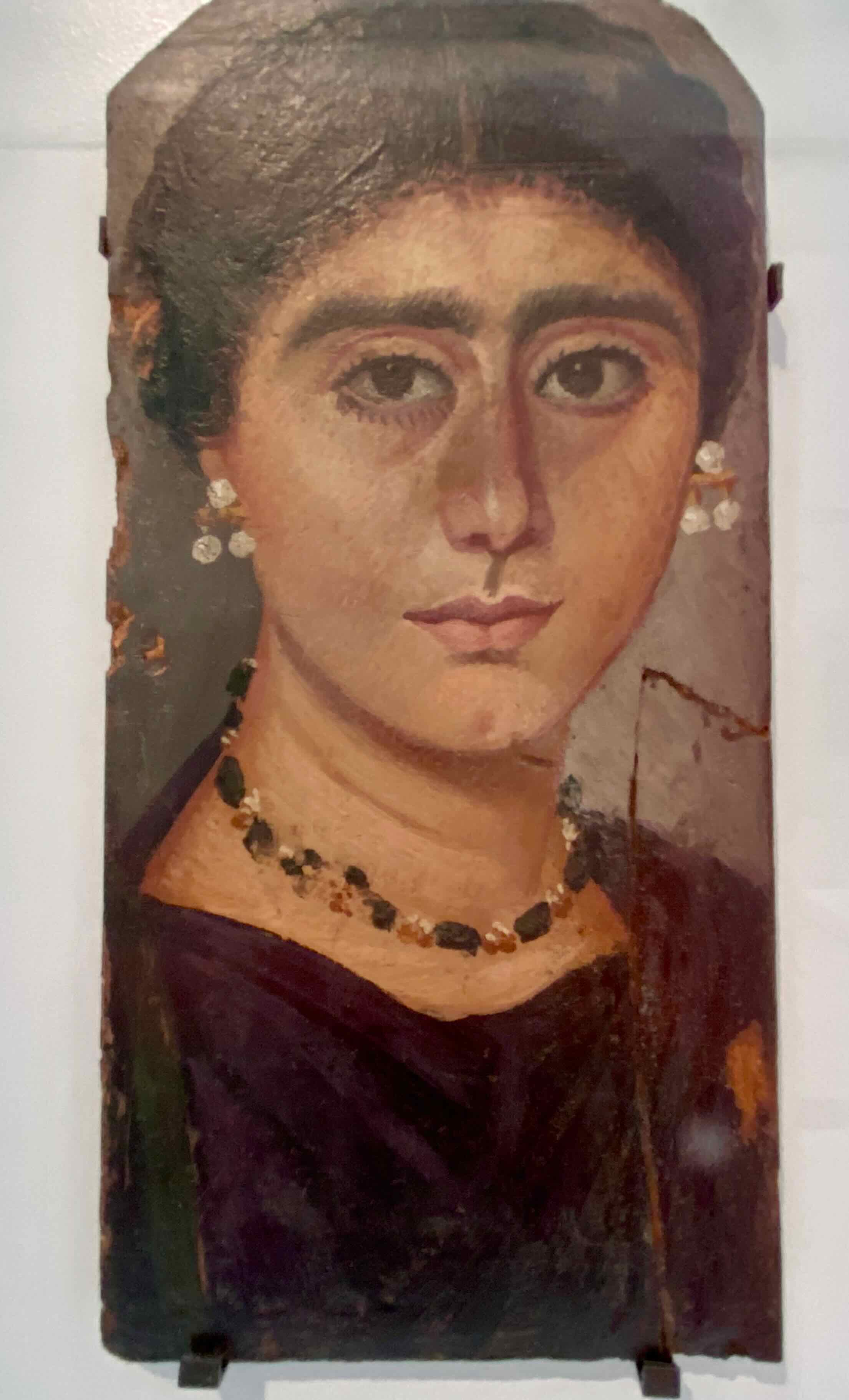
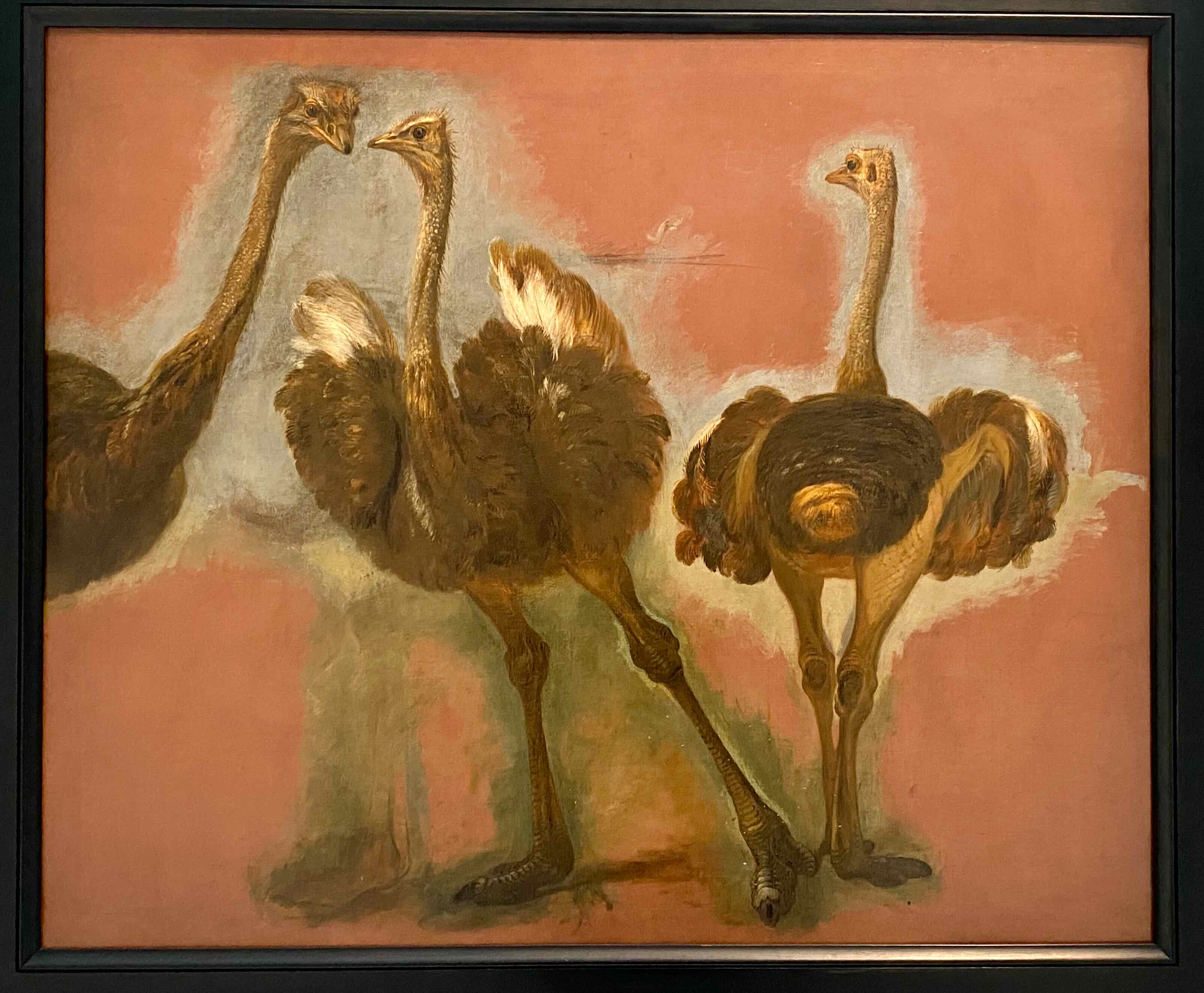
The Martyrdom of Saint Hippolyte, Cathedral of Sant-Denis, France, c. 1225-1250,  My first thought seeing this was what would it feel like to be pulled apart by horses? Egyptian Tomb Portrait of a Woman c. 150 AD.  I love these tomb paintings.  We saw several of them years ago when we visited Egypt.  Pieter Boel, c.1669-1671 Triple study of an Ostrich. 

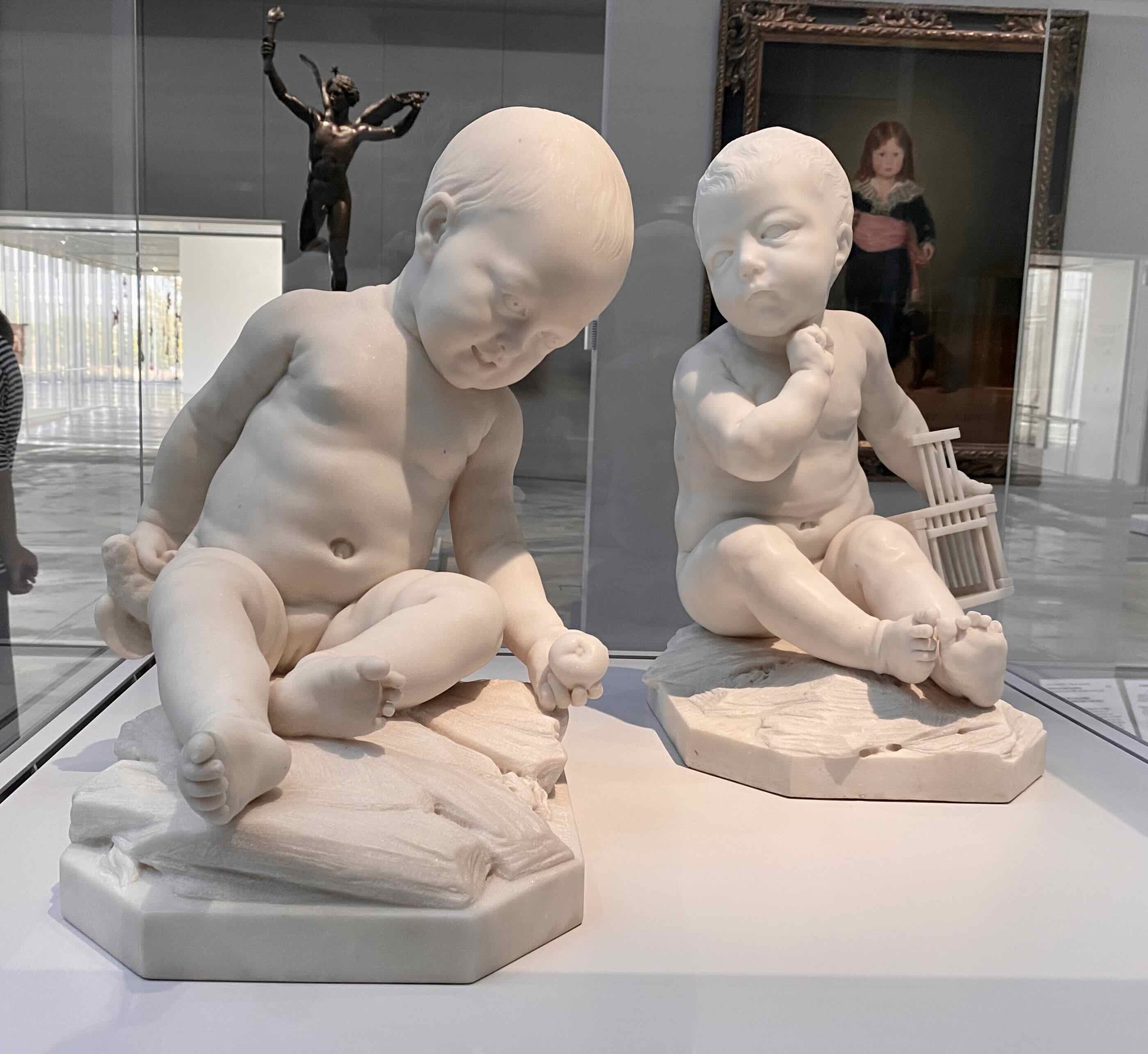
Jean-Baptiste Pigalle, Paris 1714-1785, The Child and the Cage and The Girl with a Bird and an Apple. I fell in love with this two cherubic statues.  The dimples and folds in their skin were so incredibly life-like.

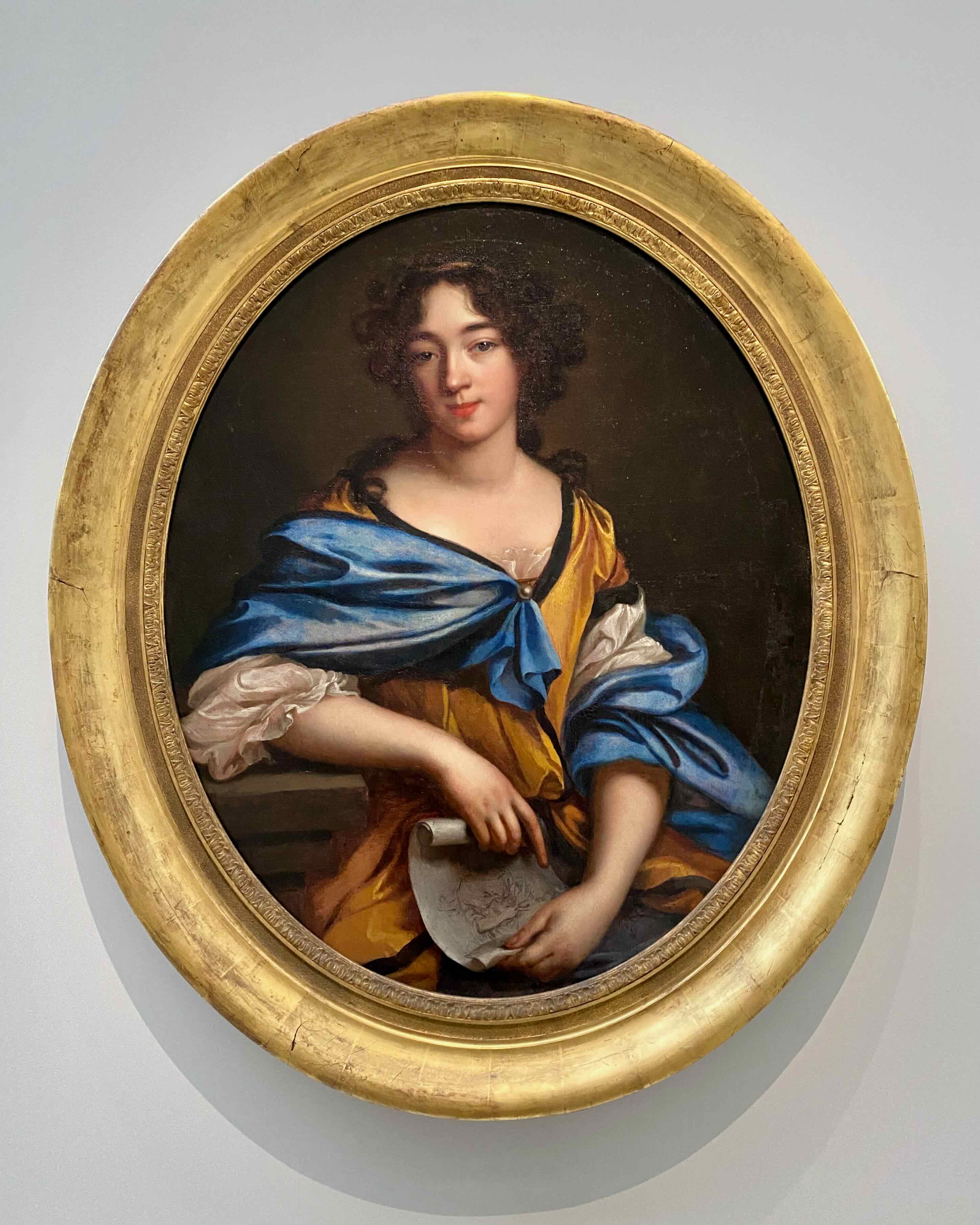
Élisabeth-Sophie Chéron, (1648-1711), 1672 Self Portrait.  This is the oldest self portrait of a French female artist in the possession of a Museum.

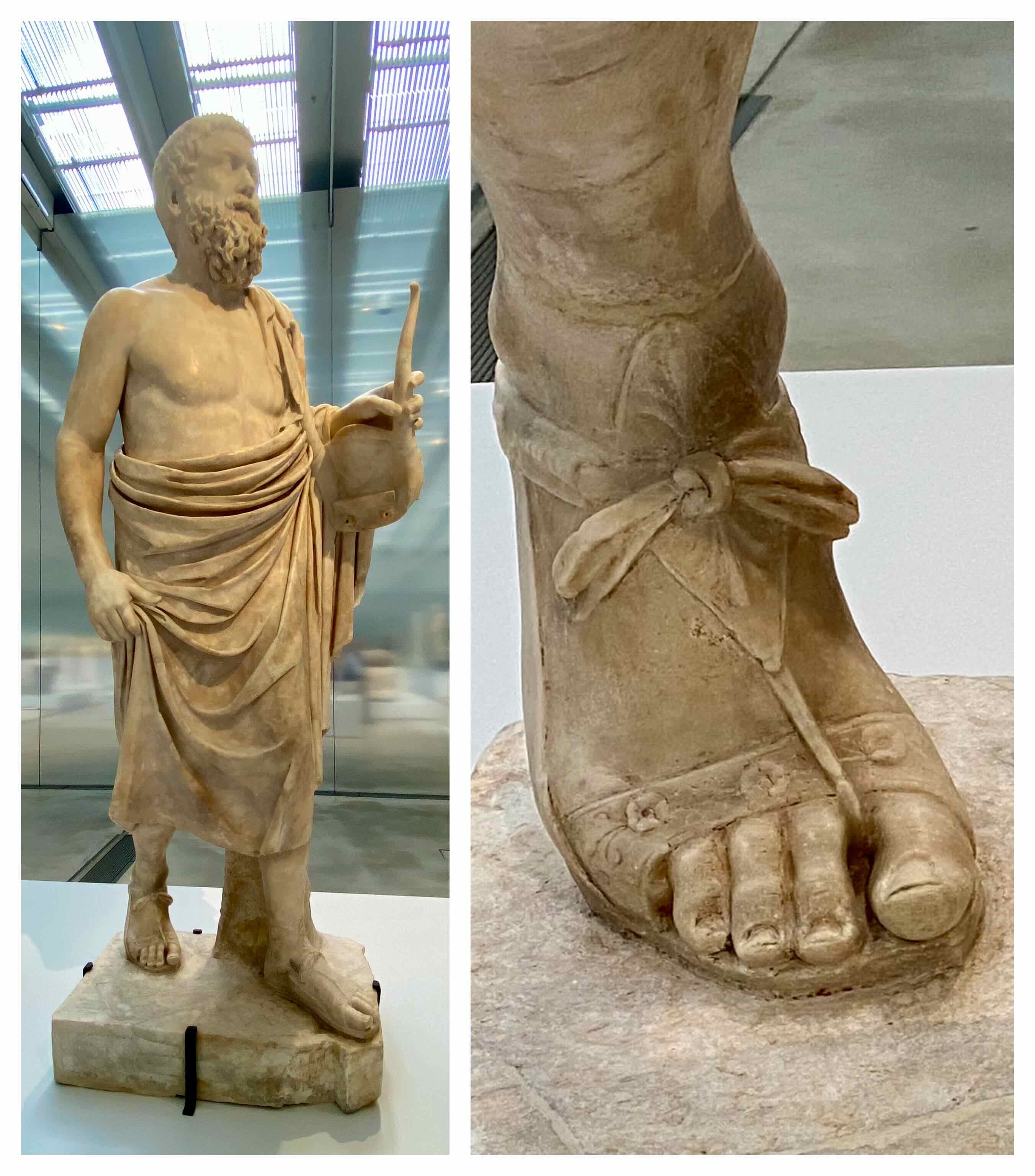
The Marching Player, 1063 AD. This statue is a replica of a Greek bronze original created around 440-400 BC.  I love the detail in his feet and toes.

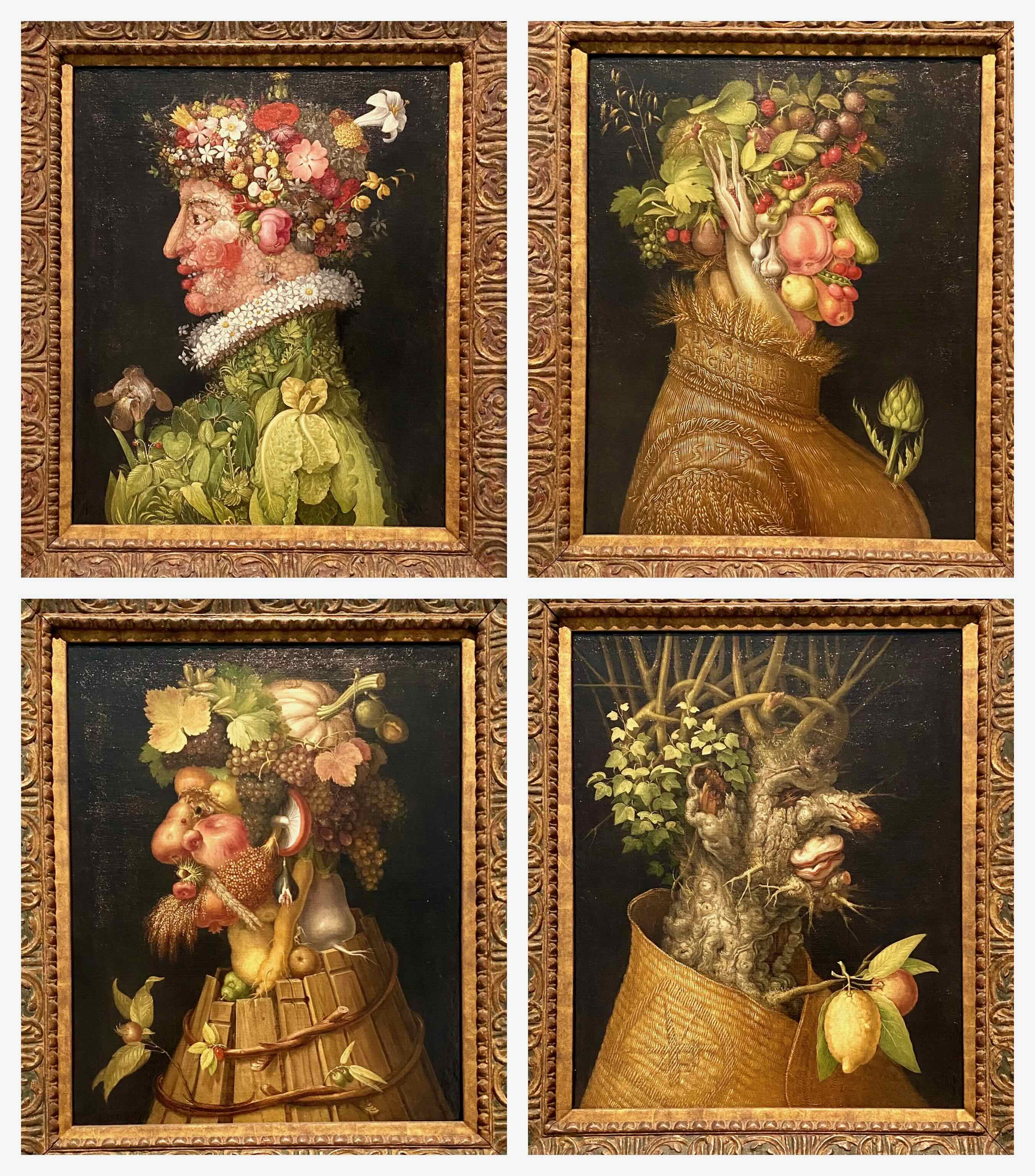
Giuseppe Arcimboldo, Milan, c. 1527-1593. We have seen other work by this artist…it is pretty distinctive. This is Spring, Summer, Autumn and Winter.

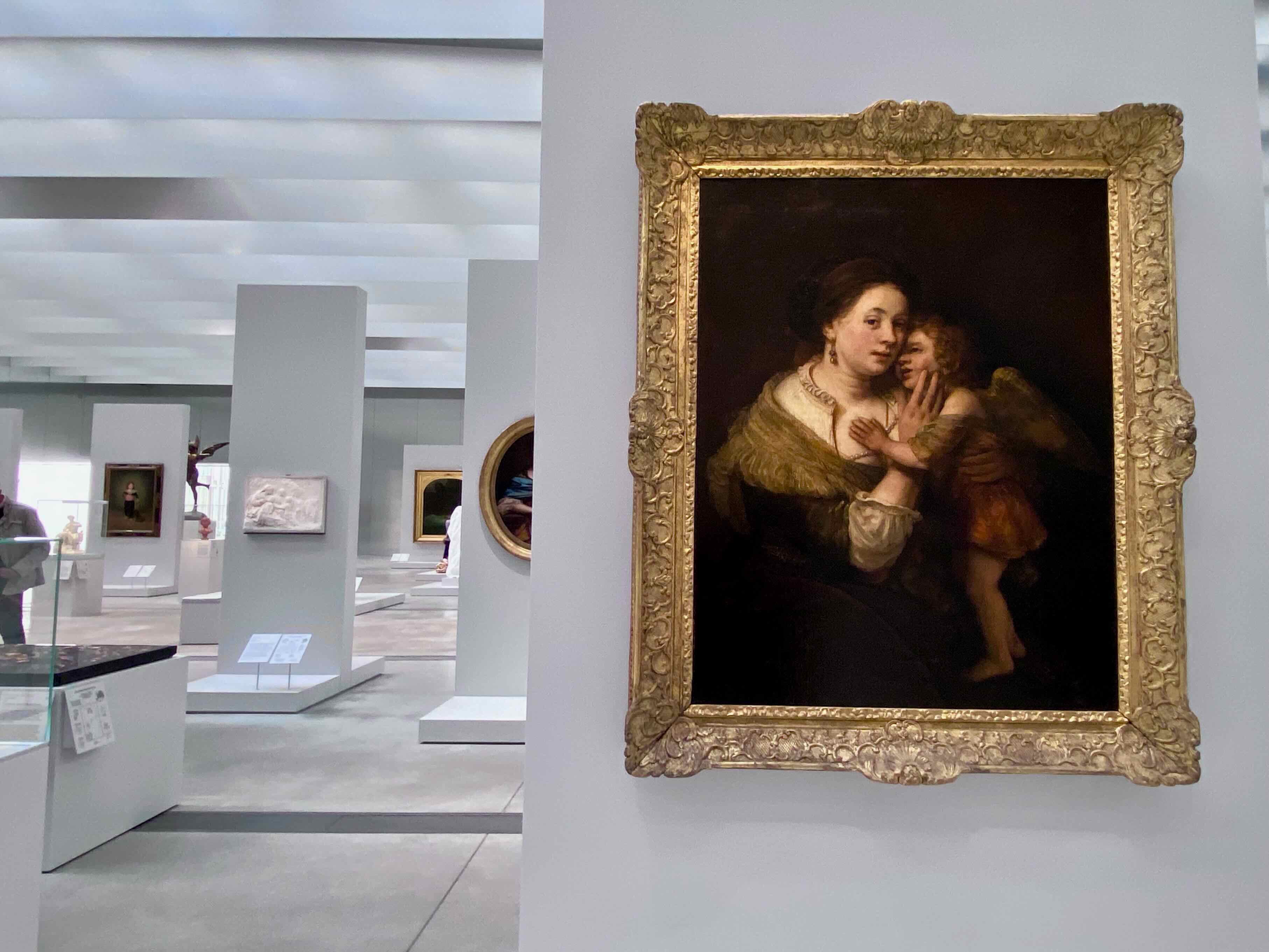
Rembrandt van Eijn, 1640-1660, Venus et L’Amour

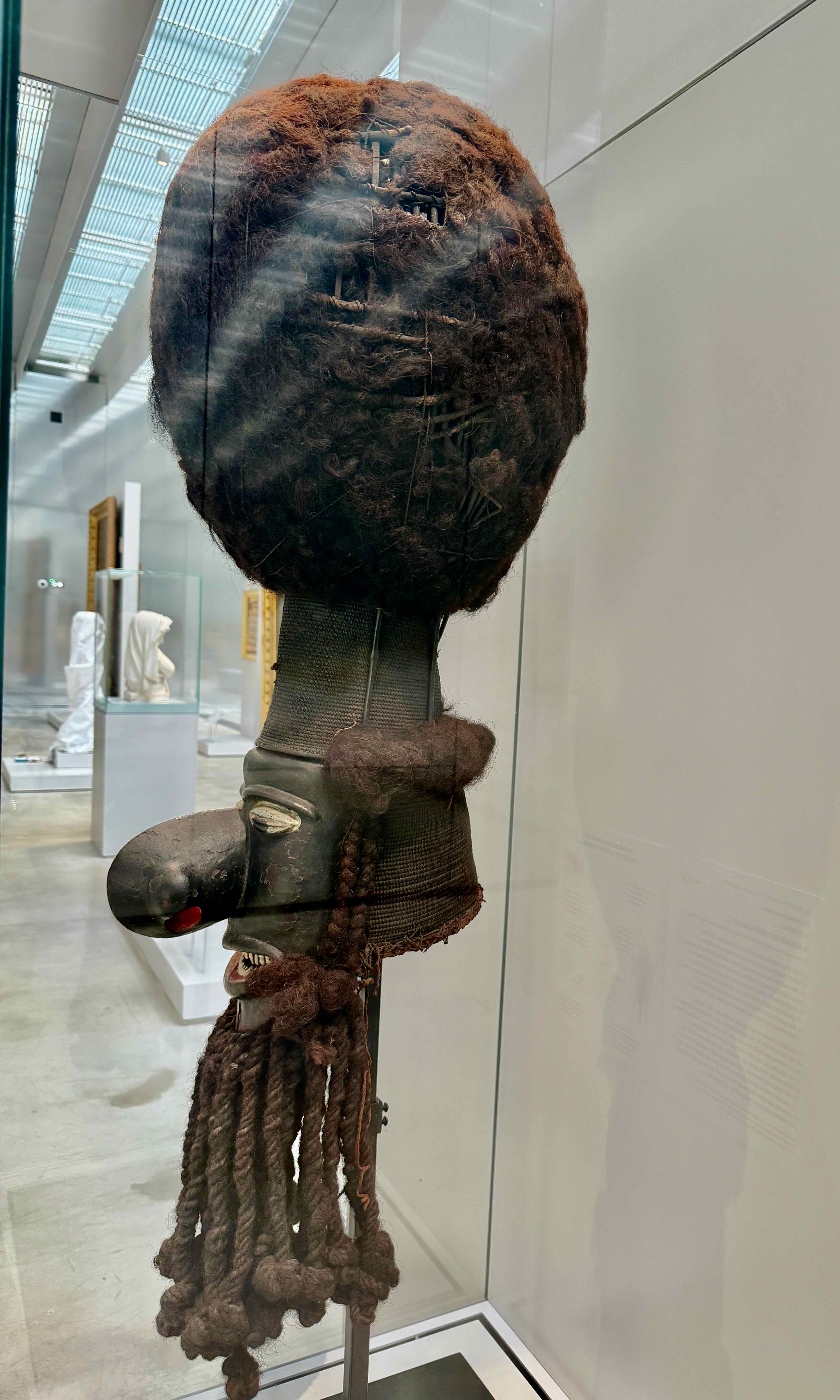
Mourner’s Mask, New Caledonia c.1850

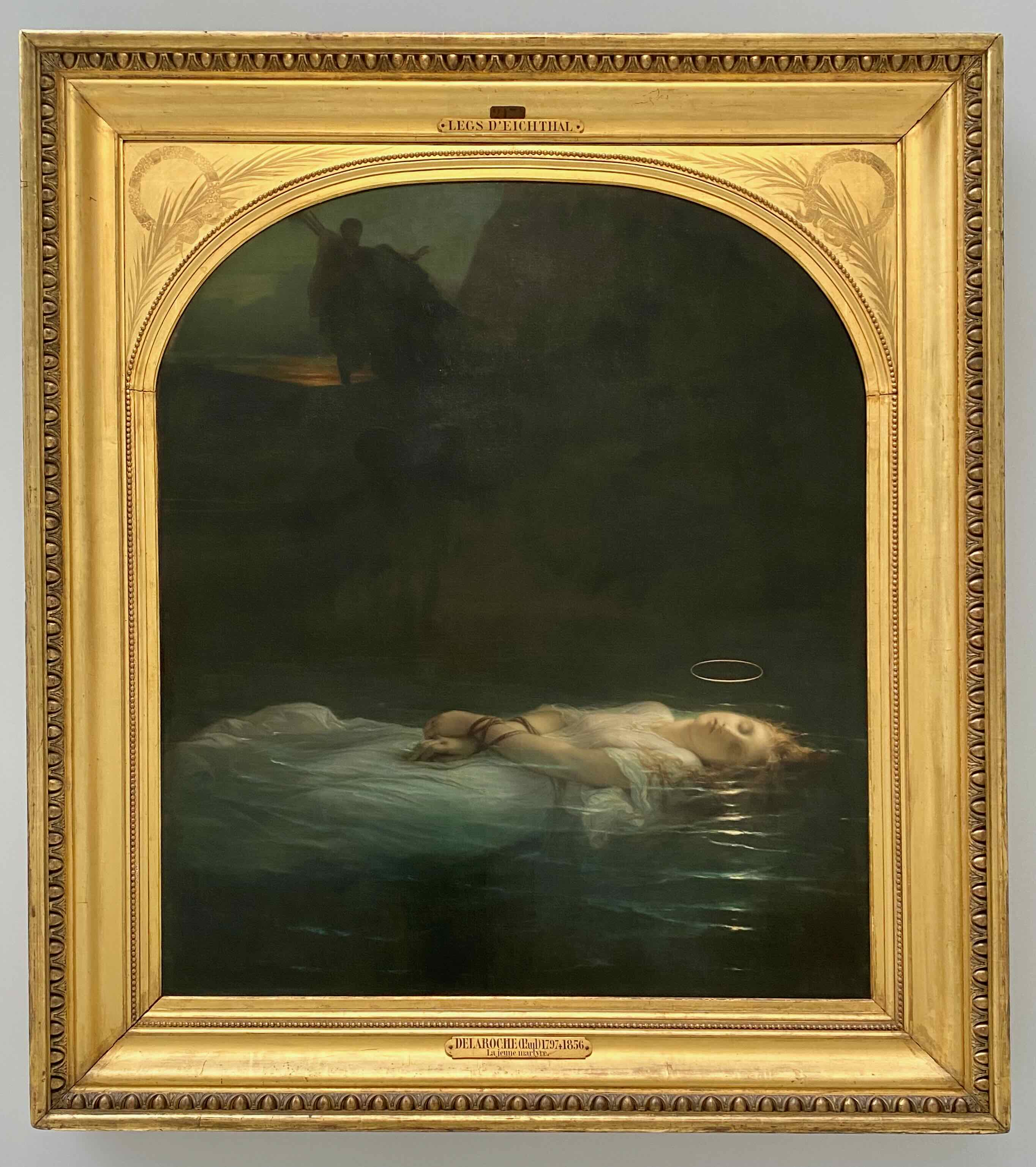
This was the last piece in the Gallery of Time.  A painting by Paul Delaroche, 1885, The Young Martyr.  A painting of a young woman who was killed for refusing to renounce her Christian faith.

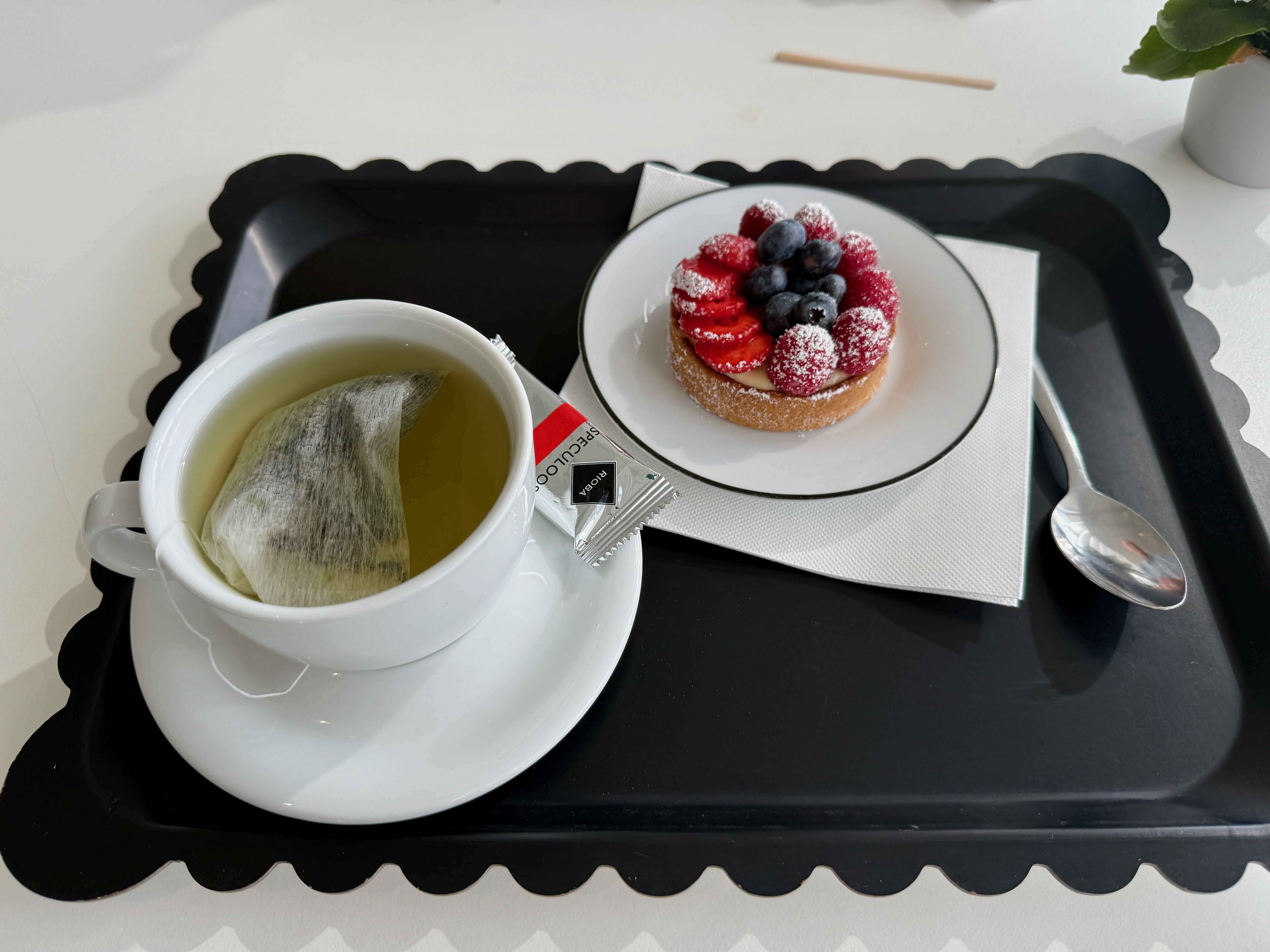
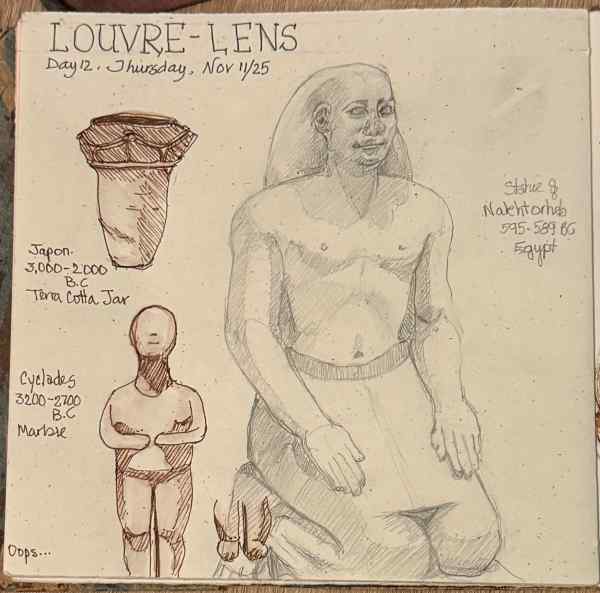
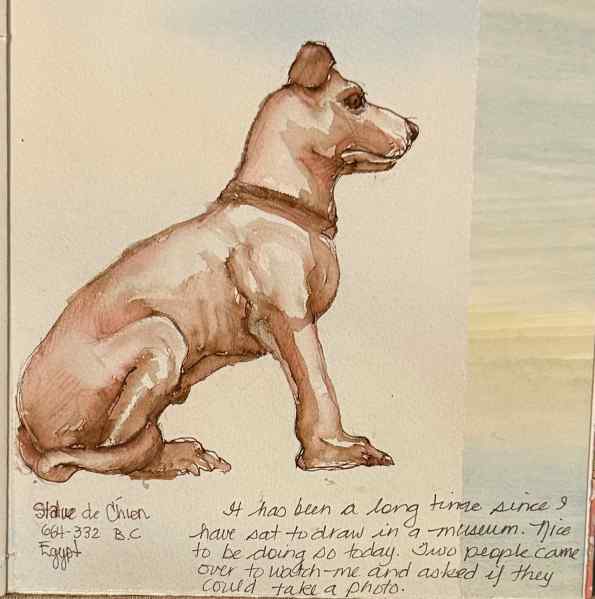
We have a much needed tea break. I asked how big the tea was and was assured that it was very big…well, this rather ‘very large” cup of tea was €5.50!  Bob finds a spot to read and I go back to the gallery to do some sketching.  They aren’t the best sketches but I had such an enjoyable time doing them.  Two people asked if they could take a photo…people are always interested in what I am drawing.

We stay until the museum closes at six and we are surprised to see it is raining outside.  The Louvre -Lens is a very modern building, so different than the Louvre in Paris.  We really enjoyed the Gallery In Time”. It was interesting, and not as overwhelming as the Louvre.

Metier Museum, Picasso Museum, and Life Drawing

Day 8.    Sunday, September 7, 2025

We picked up our car this morning, a Ford Hybrid with a nice big trunk.  Driving back from Gare de Lyon to our bnb went well, and our host let us park in his yard for the night which we really appreciated.  There are next to no parking spots on the streets in this neighbourhood.

I left for drawing in Montmartre, which was an hour away.  I arrived just in time for the session, and the organizer, Deni, remembered me from the last time I was here, two years ago!

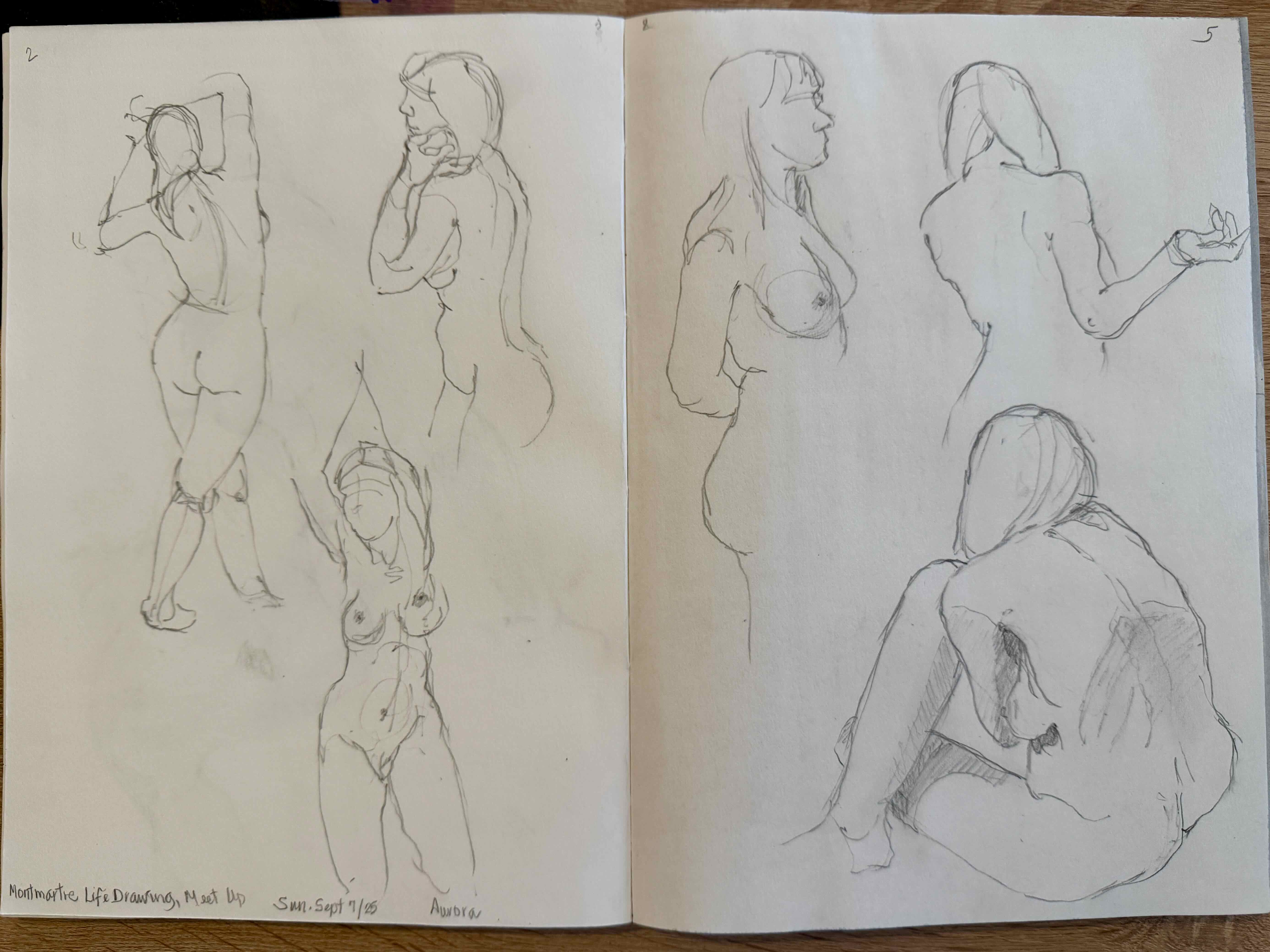
Aurora, five 2 minute poses, 1 5min pose

Two 5 minute poses, three 10 minute poses

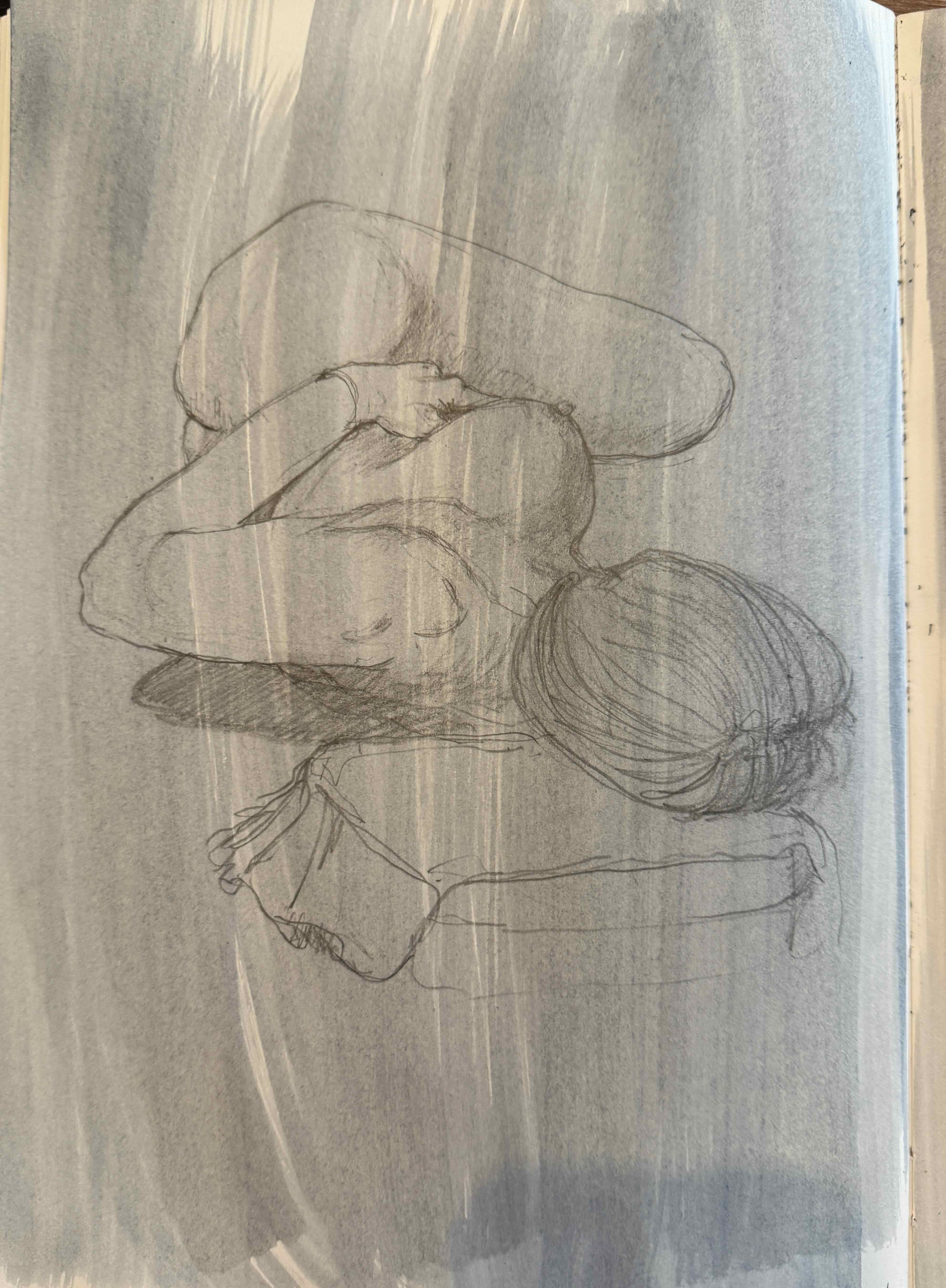
One very challenging foreshortened 25 minute pose.

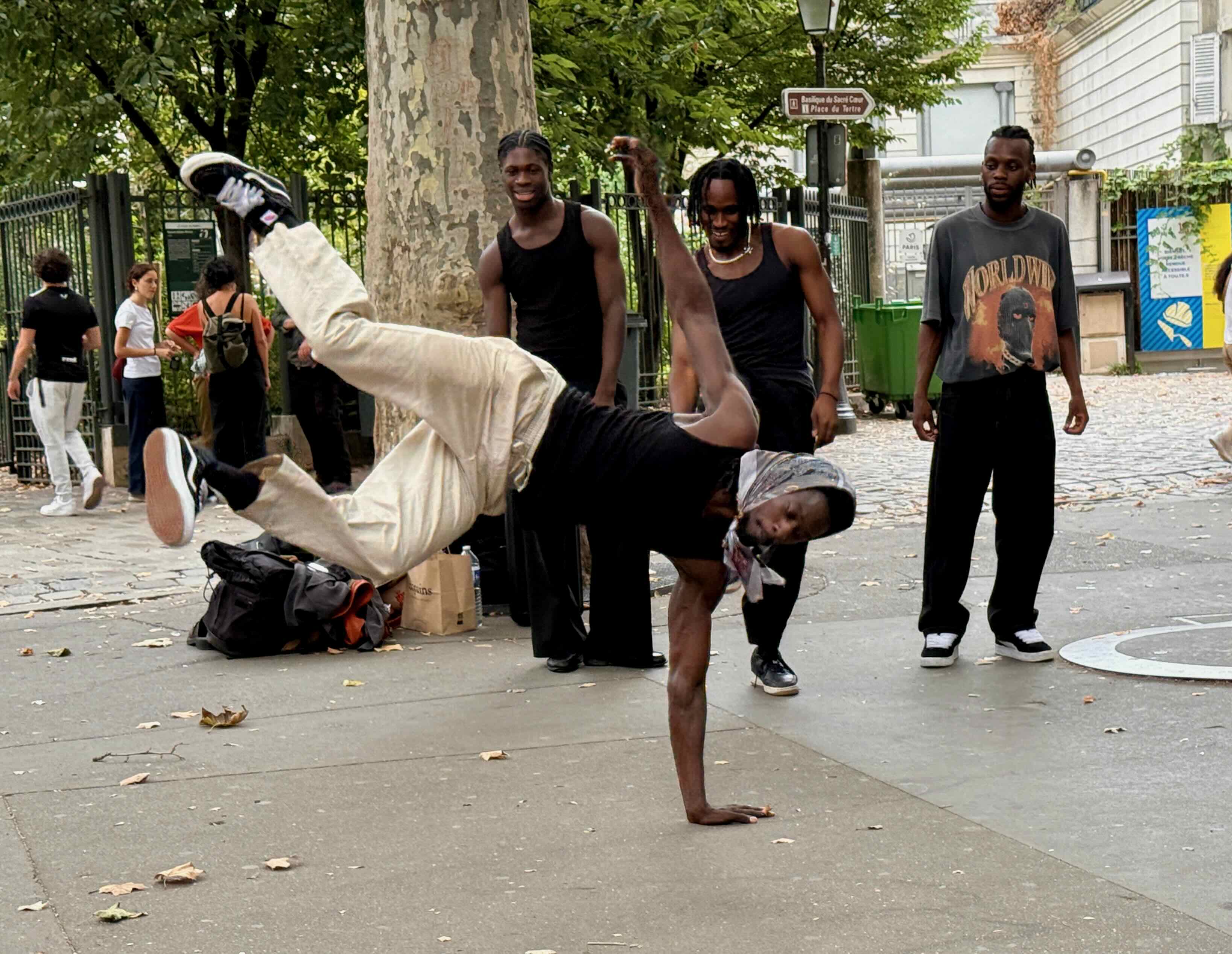
Before catching the metro home I stop to watch four very muscular handsome young men performing for donations, while I eat a yummy crepe sucré avec banane for my dinner.

There were a lot of steps on this metro trip so I decided to count them on the way home. Including these 104 spiral steps I went up and down 456 steps!!  So, going and coming from drawing I climbed up and down a total of 912 steps. No wonder French people are so healthy!  I was rather proud of myself climbing these spiral steps and passing a group of people much younger than I am huffing and puffing as they rested on one of the landings! 

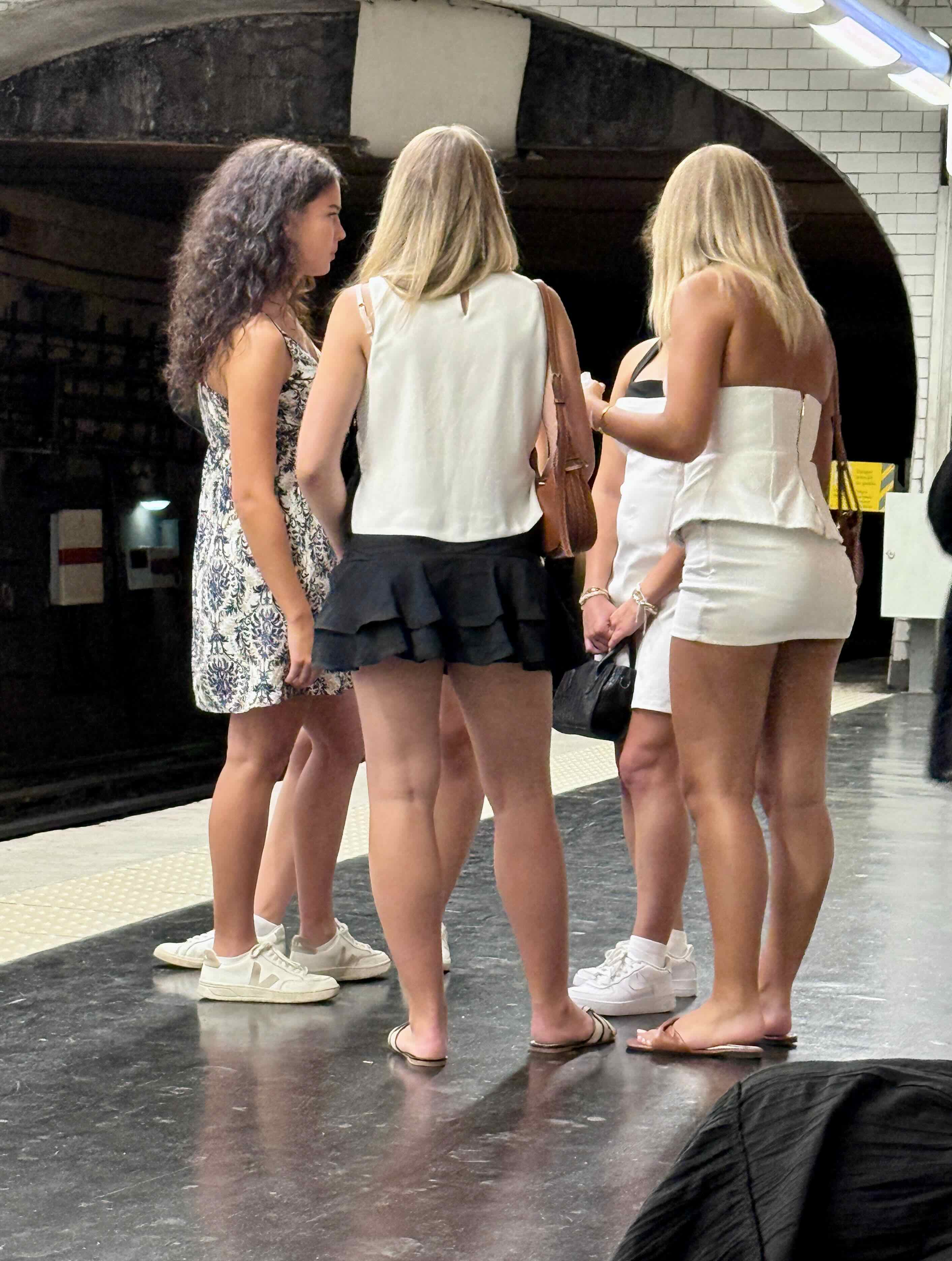
Short skirts are in fashion…very very short skirts!

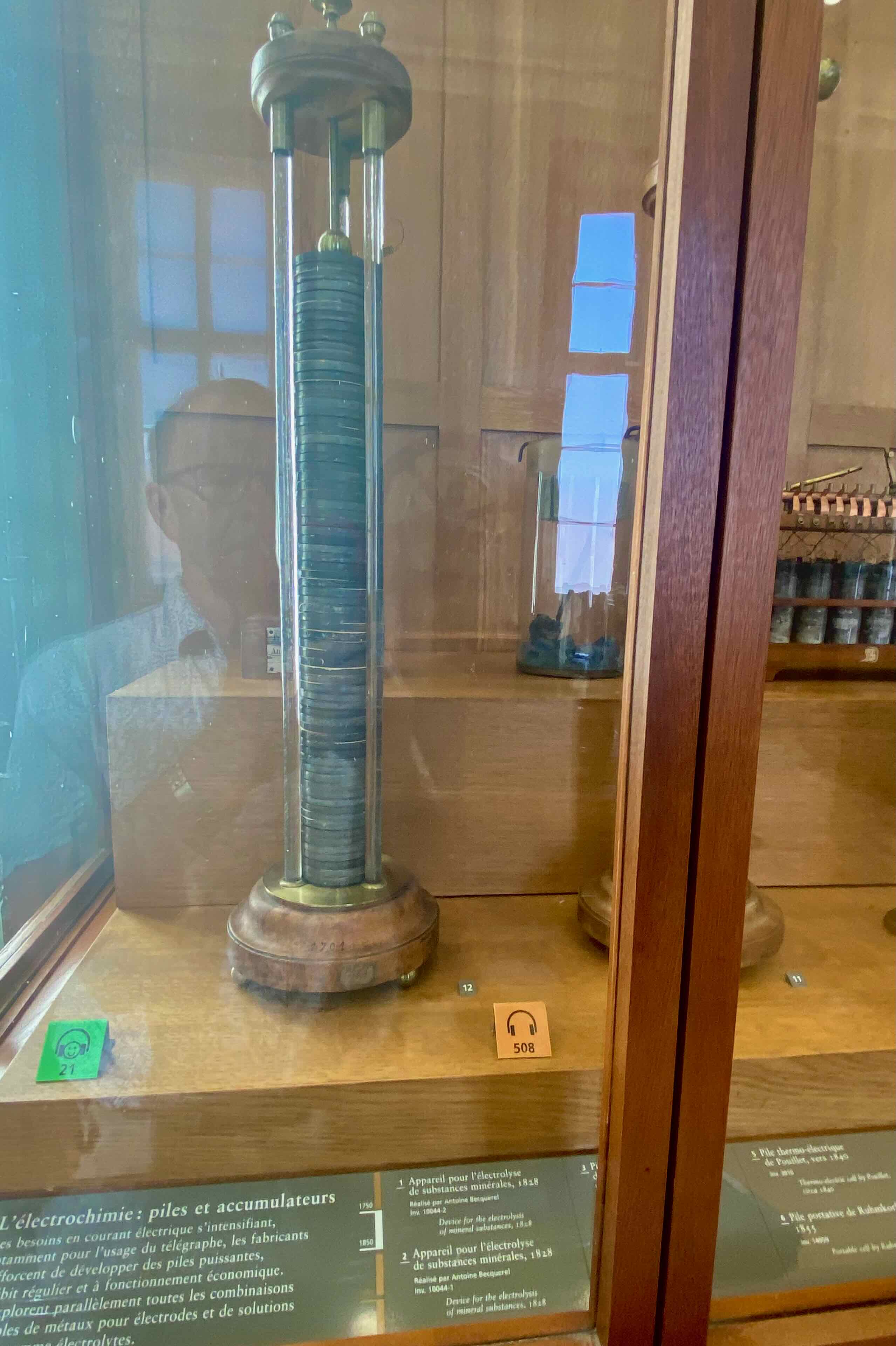
While I was at drawing Bob visited two museums.  The Musée des Arts et Métiers is a museum of technological innovation that exhibits over 2,400 inventions.  This is the first battery that was invented in 1799 by Volta.
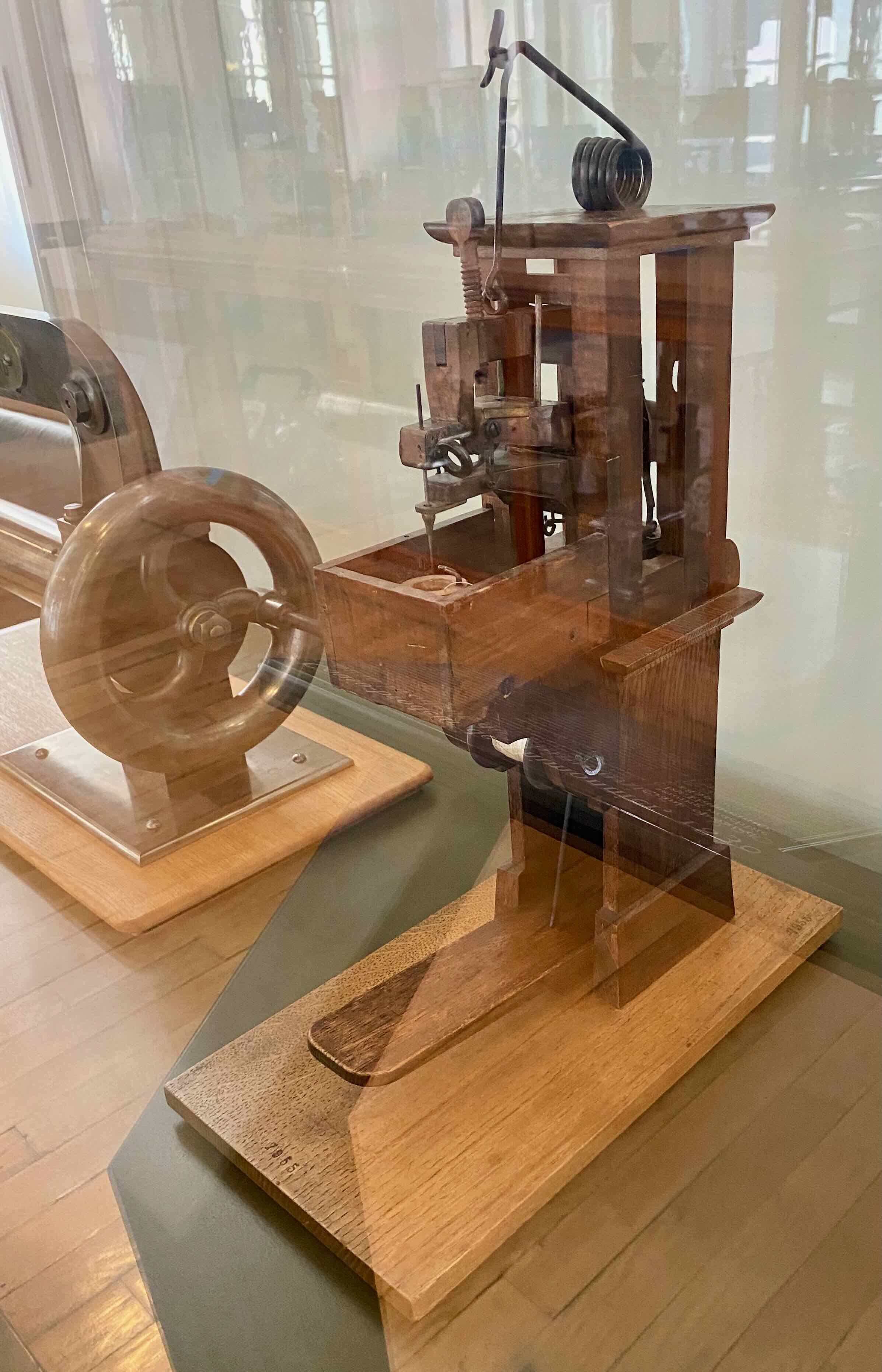
This first sewing machine was invented in 1830. Dozens of these machines were destroyed by 200 tailors in 1831 who feared for their jobs.
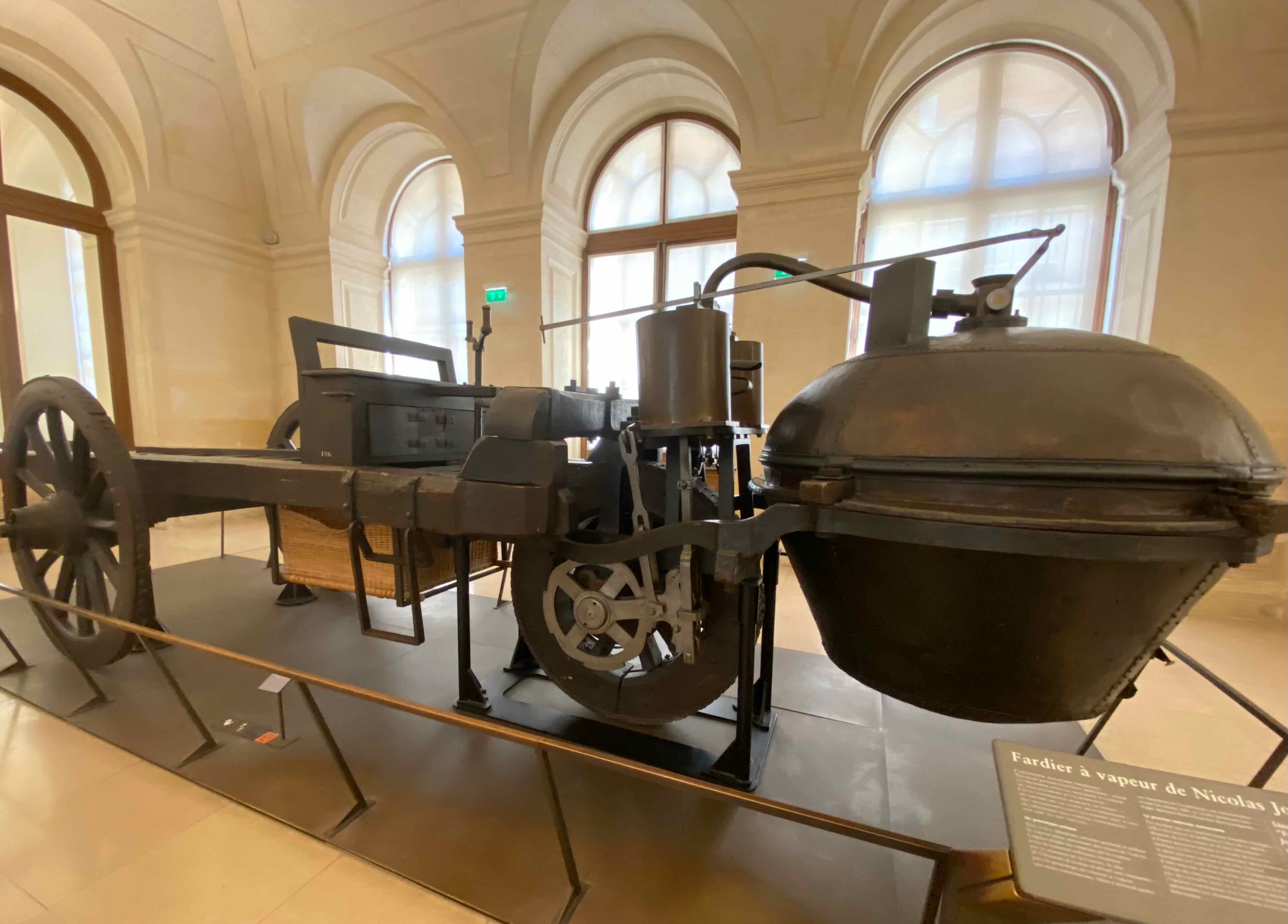
The first steam driven vehicle was invented in 1770.

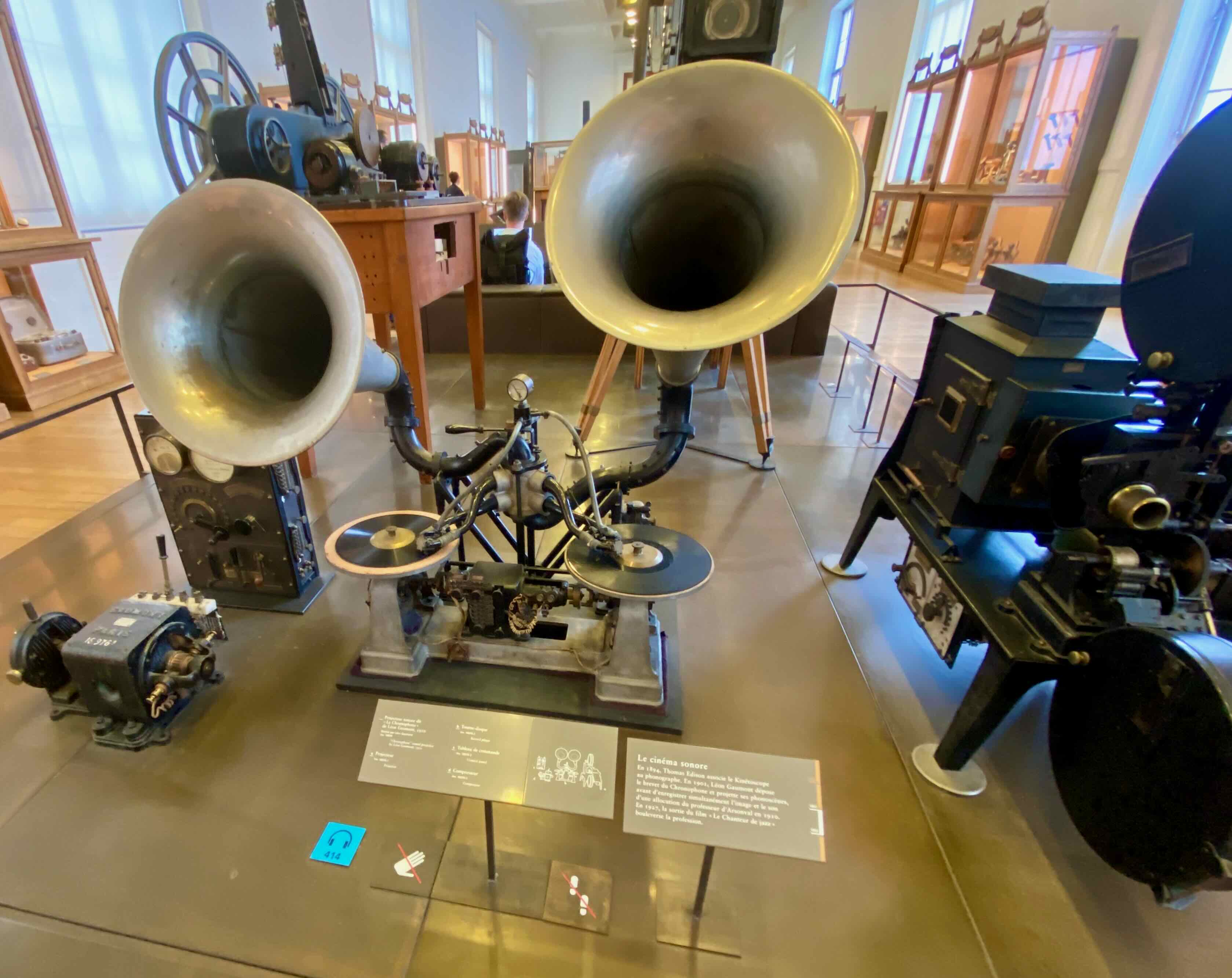
Leon Gaumont’s Sonophone combines image and sound for the first time in the history of cinema in 1900.

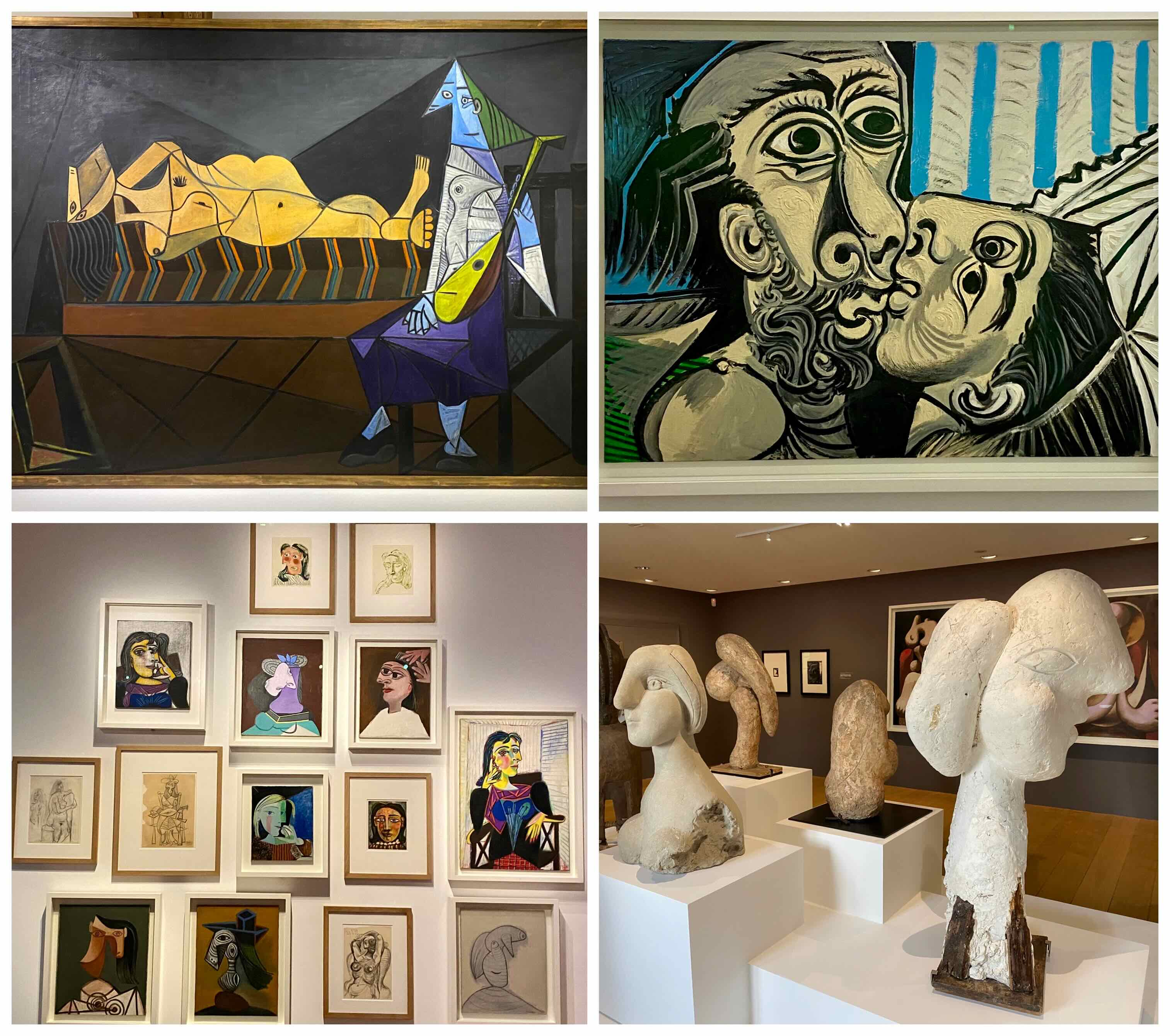
Bob spent a lot of time at the Picasso Museum…he texted me that he wasn’t sure what the exit door looks like!  The very large L’Aubade (1942) painting of two figures symbolized the violence of the war years.  Baiser, or the Kiss was painted in 1969. There was an interesting wall of portraits and a room with many of his sculptures. These are only a few of the 5,000 pieces of art at this museum.

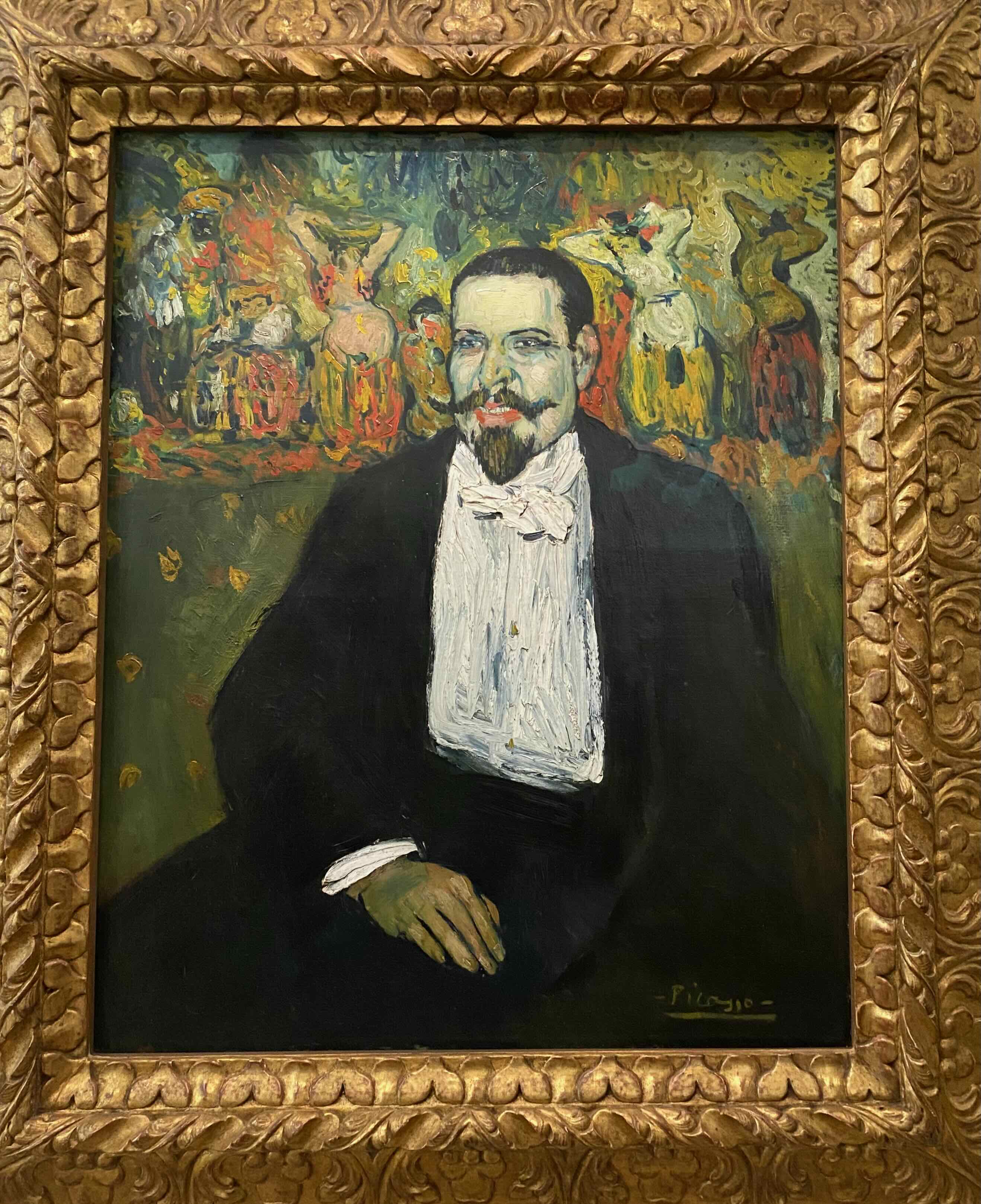
This early Picasso portrait of Gustave Coquot is from 1901.  Picasso’s started painting when he was eight years old and didn’t start cubism until his thirties.

Bob took a photo of this Modigliani just for me, because he knows that I love Modigliani’s paintings. It was in the Picasso museum because both artists were influenced by African art and Picasso admired Modigliani’s work. We drive to Arras tomorrow so tonight we pack and tidy up.  It was great being able to attend three life drawing sessions in three days but it was a bit tiring too.  I don’t think I will find many more life drawing groups for a while.
Eiffel Tower, Bourdelle Museum and Drink and Draw

Day 6,      Friday, September 5, 2025

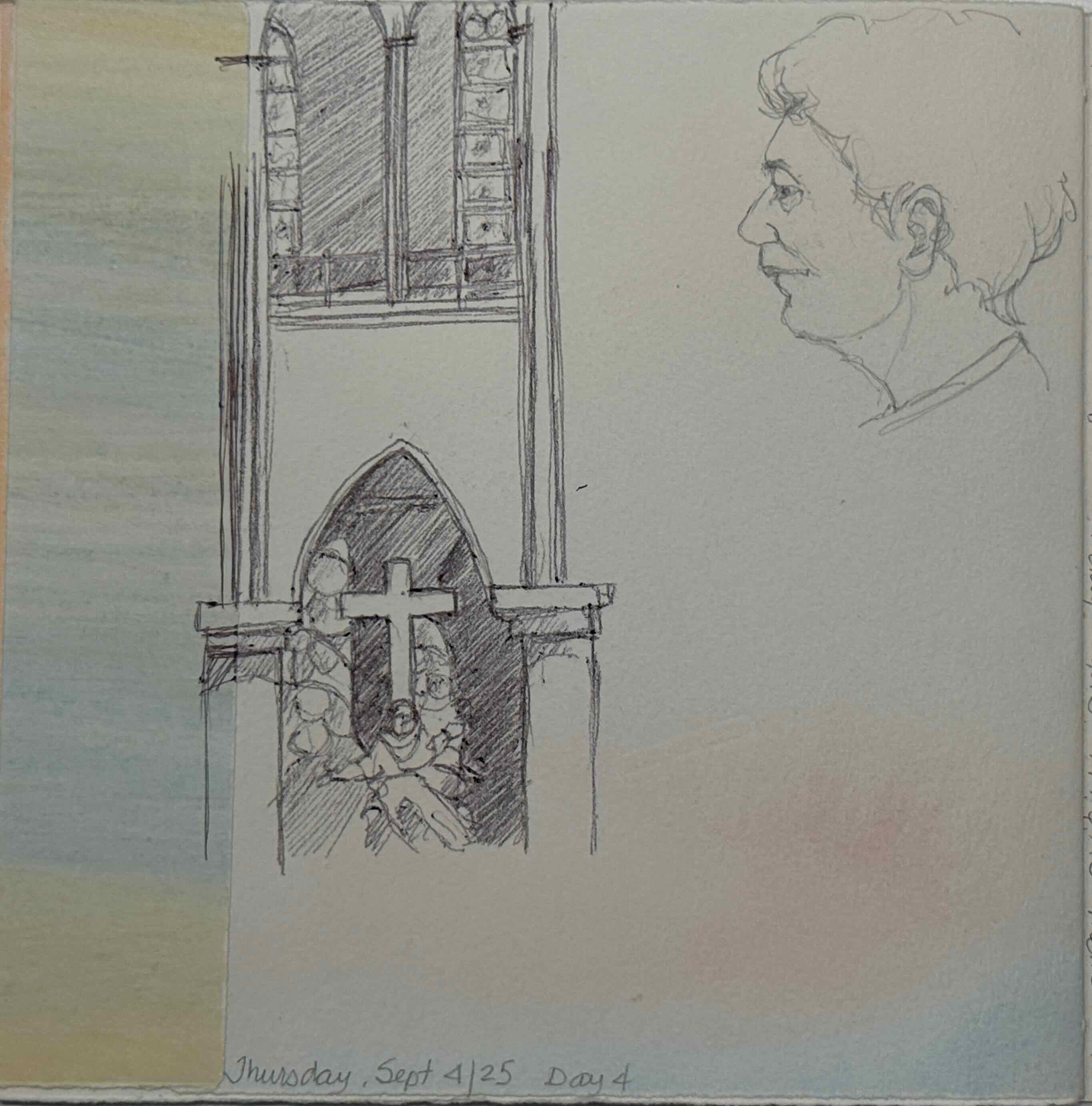
 It always takes me awhile to feel comfortable drawing when we are on holidays, and as I hadn’t done any drawing for almost a month before we left, I really had a hard time getting started.  While we were sitting in Notre Dame during Vespers yesterday I finally took the plunge.  

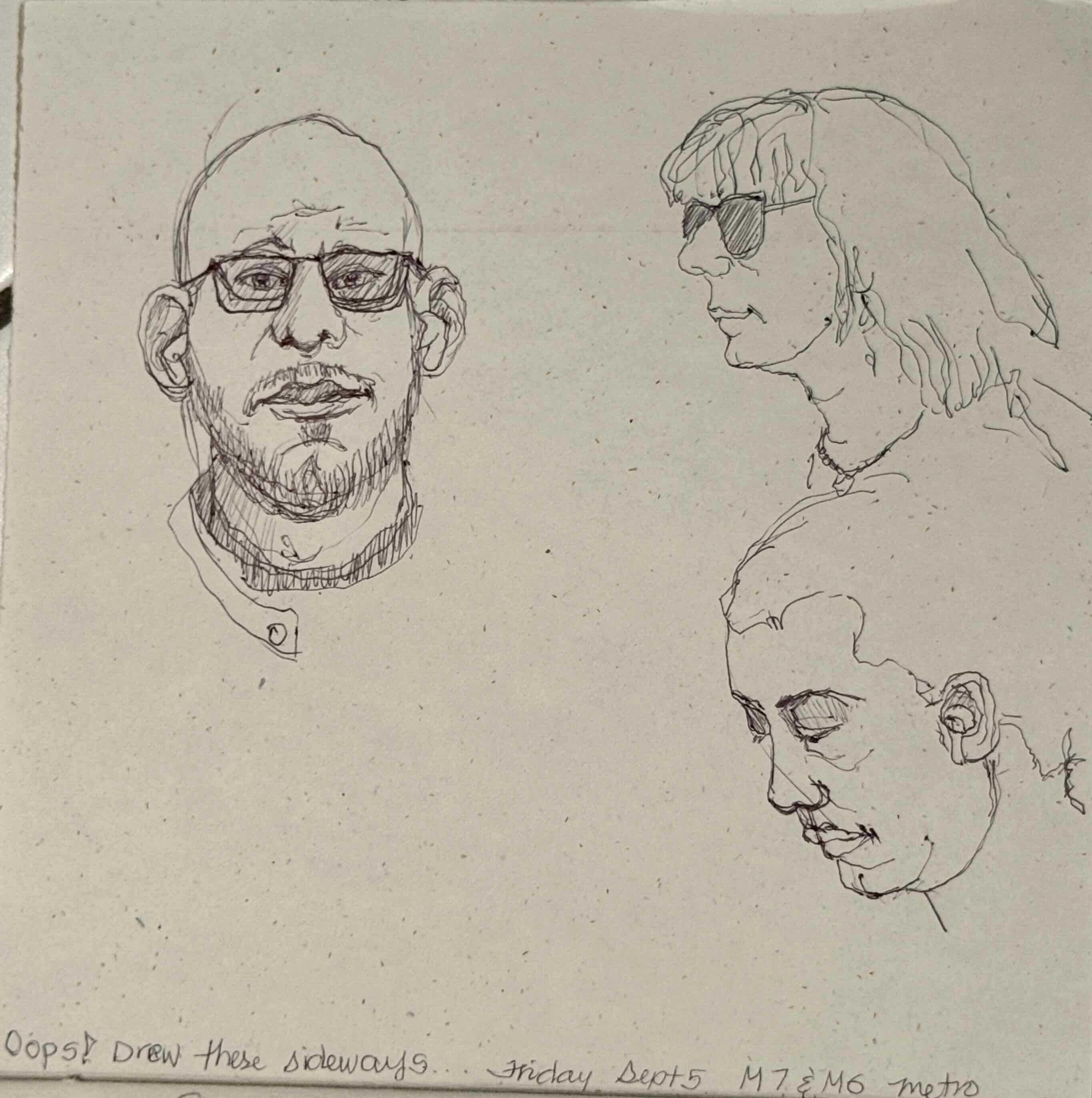
Then riding home the metro I did these quick sketches.Friday we managed to start our day at noon. Soon we were at the Eiffel Tower.  Somehow it doesn’t seem right to be in Paris and not visit this iconic landmark, even though we have visited it several times already including climbing to the second level. We will try and book a visit on our return to Paris at the end of our trip to go all the way to the very top level!  These tickets book up weeks ahead.Two years ago we picnicked on the grass near here, but there were not nearly as many people as there are today.
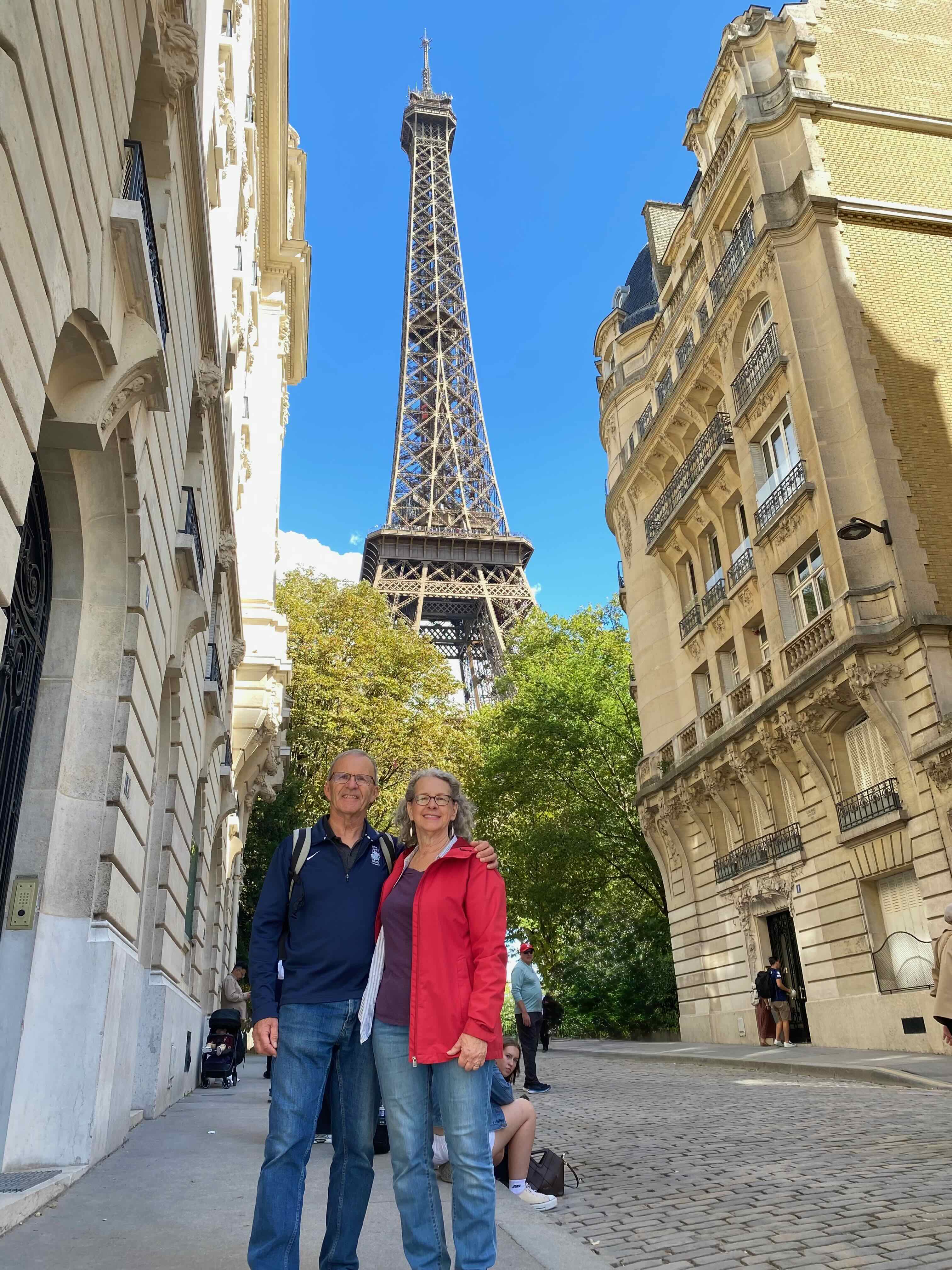
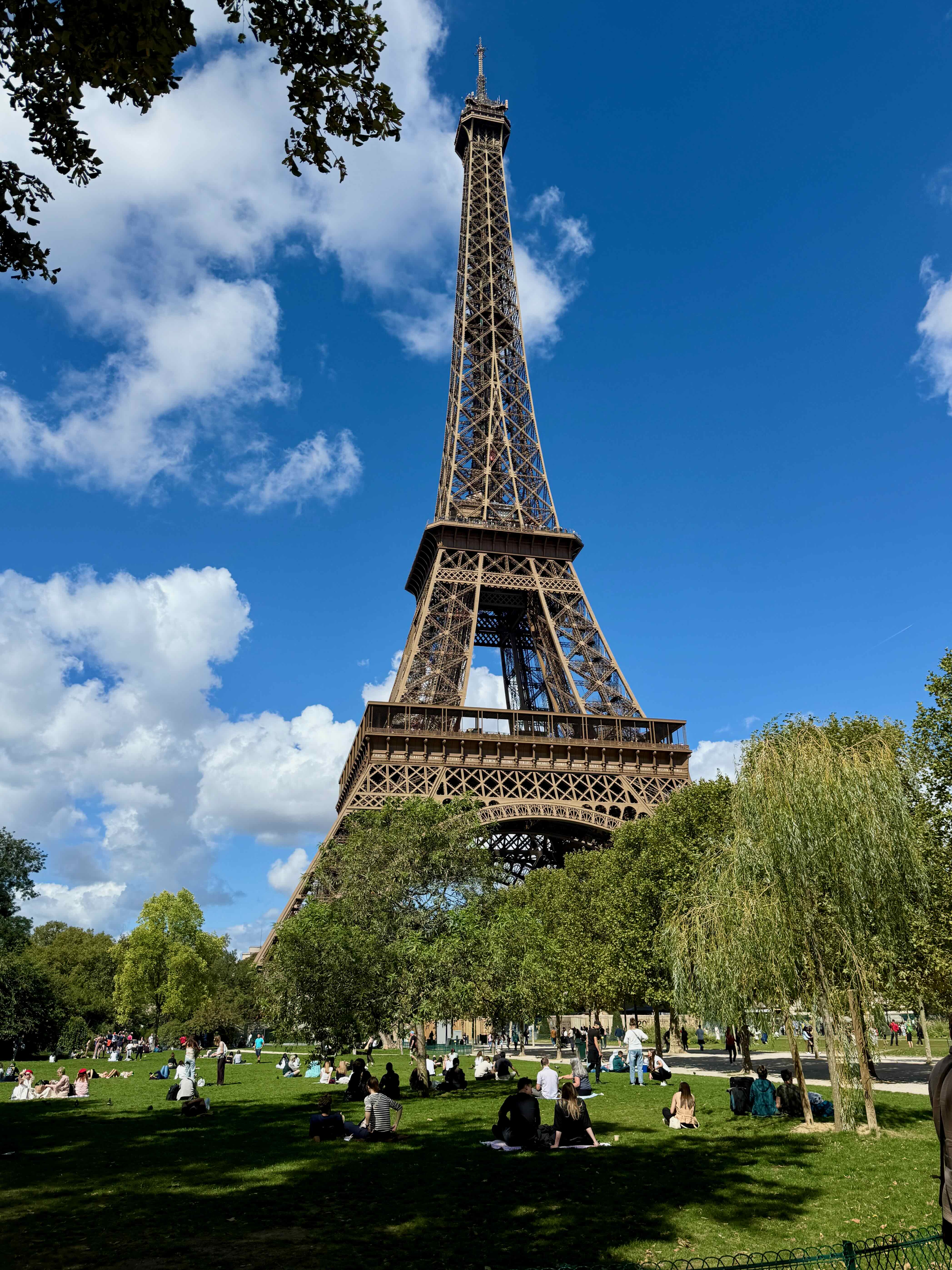
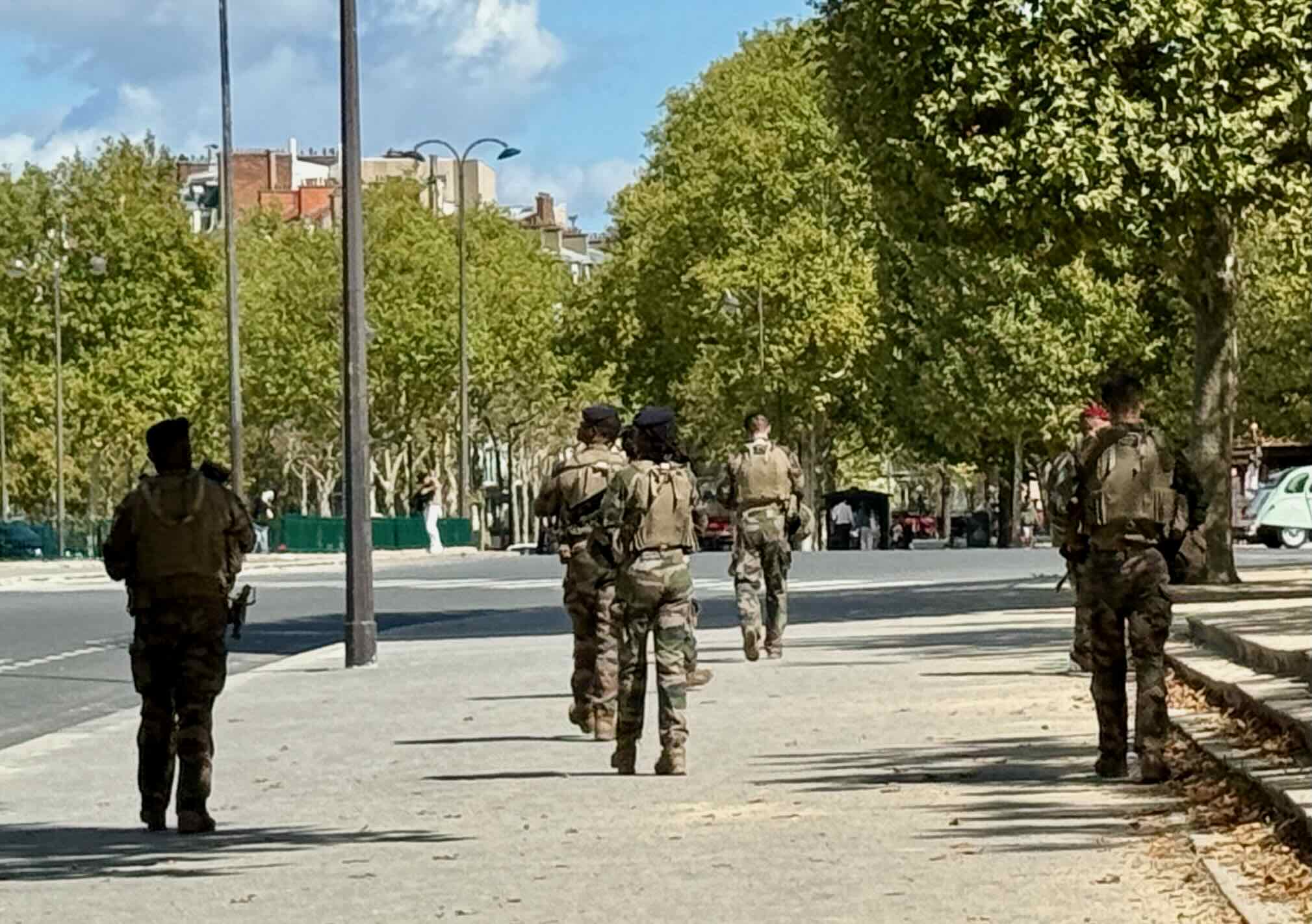
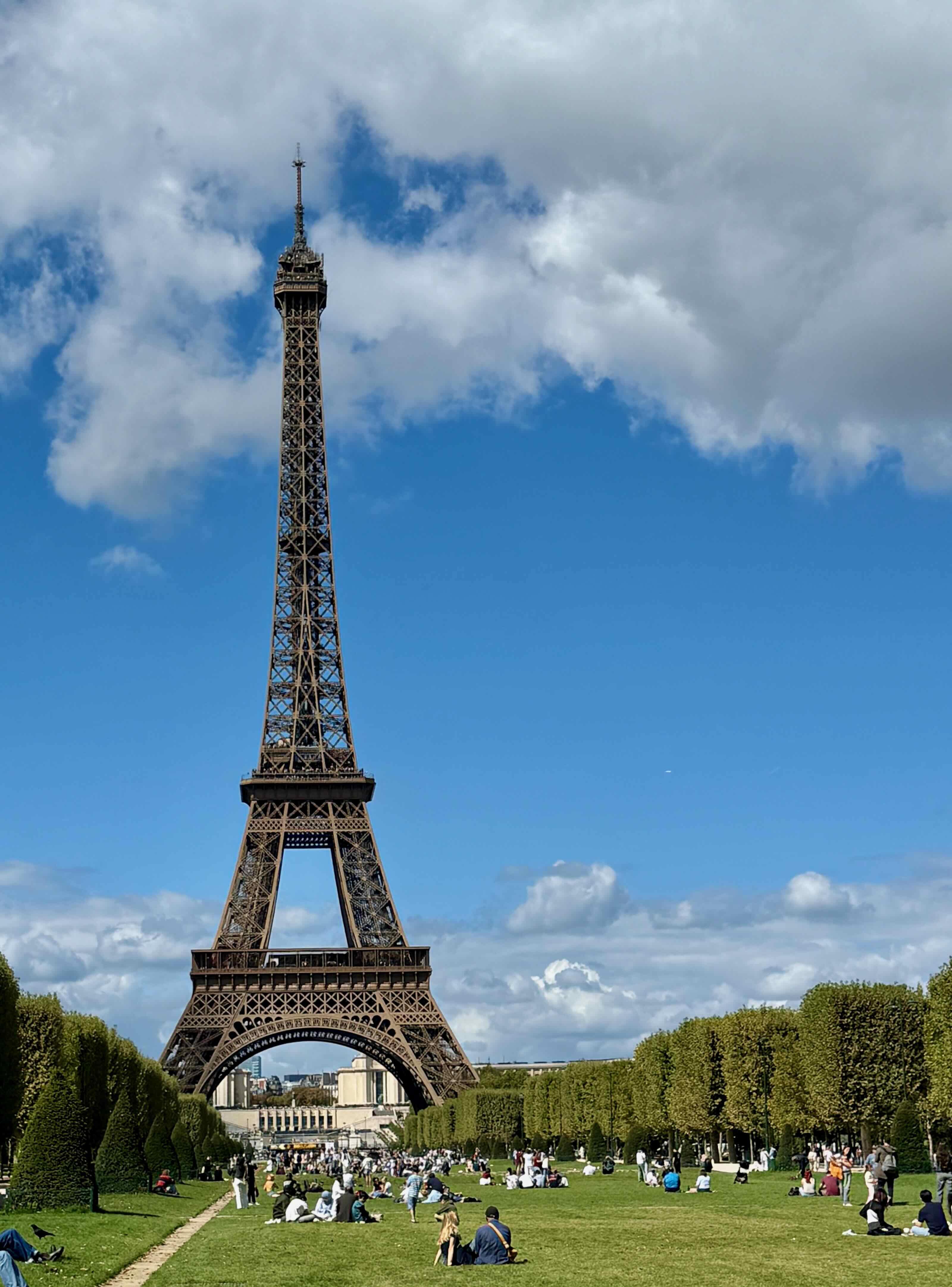
We found a bench in the shade away from the crowds to eat our lunch and watched as seven military personnel complete with machine guns approach on the path in front of us.  I held up my phone to take photo and the leader signalled towards me with his finger…then one of the men following him came over to tell us that we were not allowed to take photos.  I wonder if they do not want photos of their faces published anywhere…so after they passed and we were walking behind them I snapped this one.  France is on high alert right now, but these are the first fully armed military we have seen this trip.

One more view of the Eiffel Tower, looking towards the bridge across Seine behind it. There are people everywhere, enjoying the sunshine.  The first time we visited we could walk right under the four massive legs but now this area is all closed off behind glass panels and everyone who wants to get close has to go through a security checkpoint which includes bag checks and full body scan, just like at the airports.

It is a 45 minute walk from the Eiffel Tower to the Bourdelle Museum.  On the way we pass the UNESCO headquarters in Paris. You can still see the Eiffel Tower in the distance.

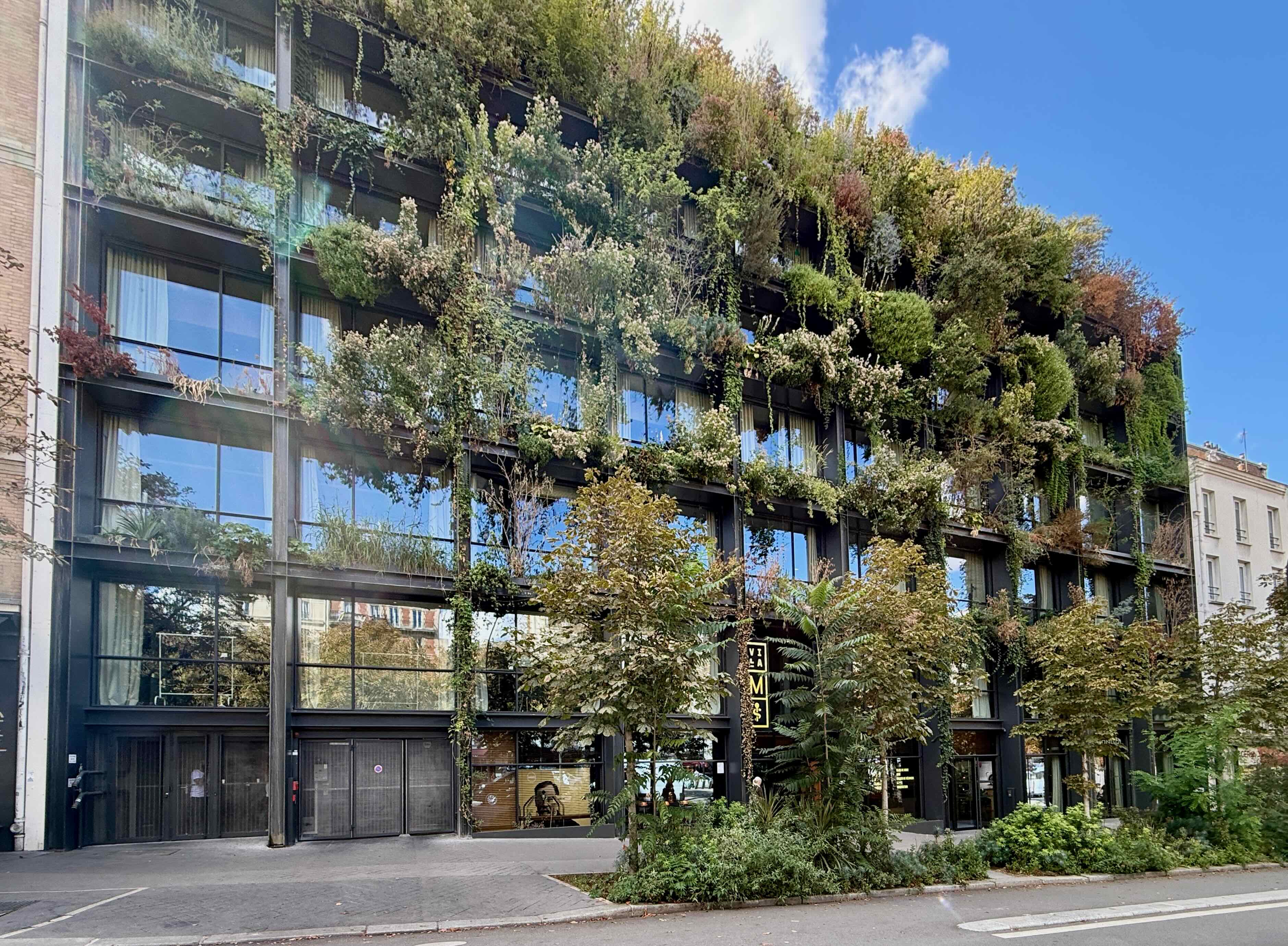
Just a bit further we pass this hotel that has trees and shrubs growing all over it.  I wonder what happens when they outgrow their planters?

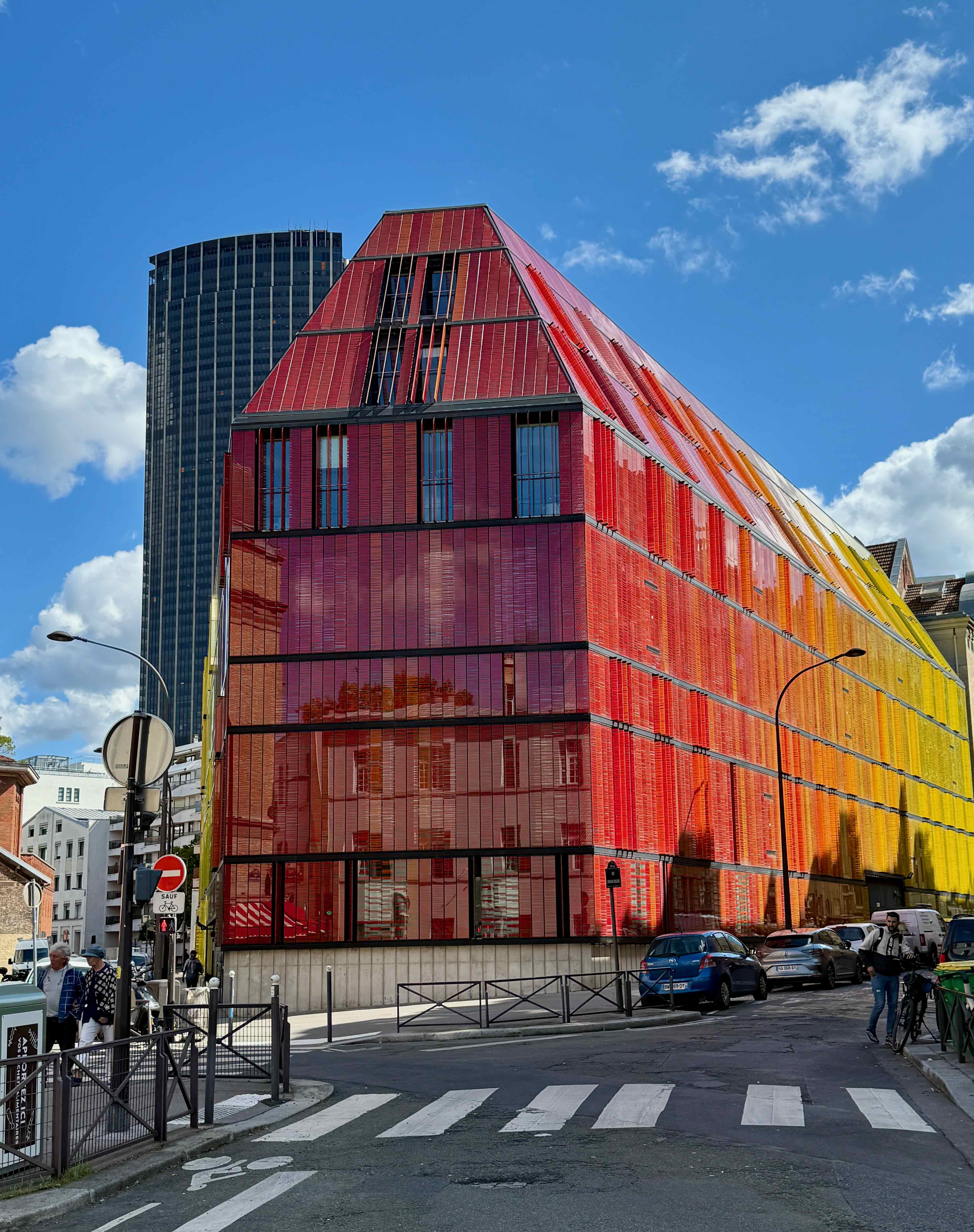
There are all sorts of interesting building in Paris.  As we near the museum we pass this car park, completely panelled in brilliant colours.

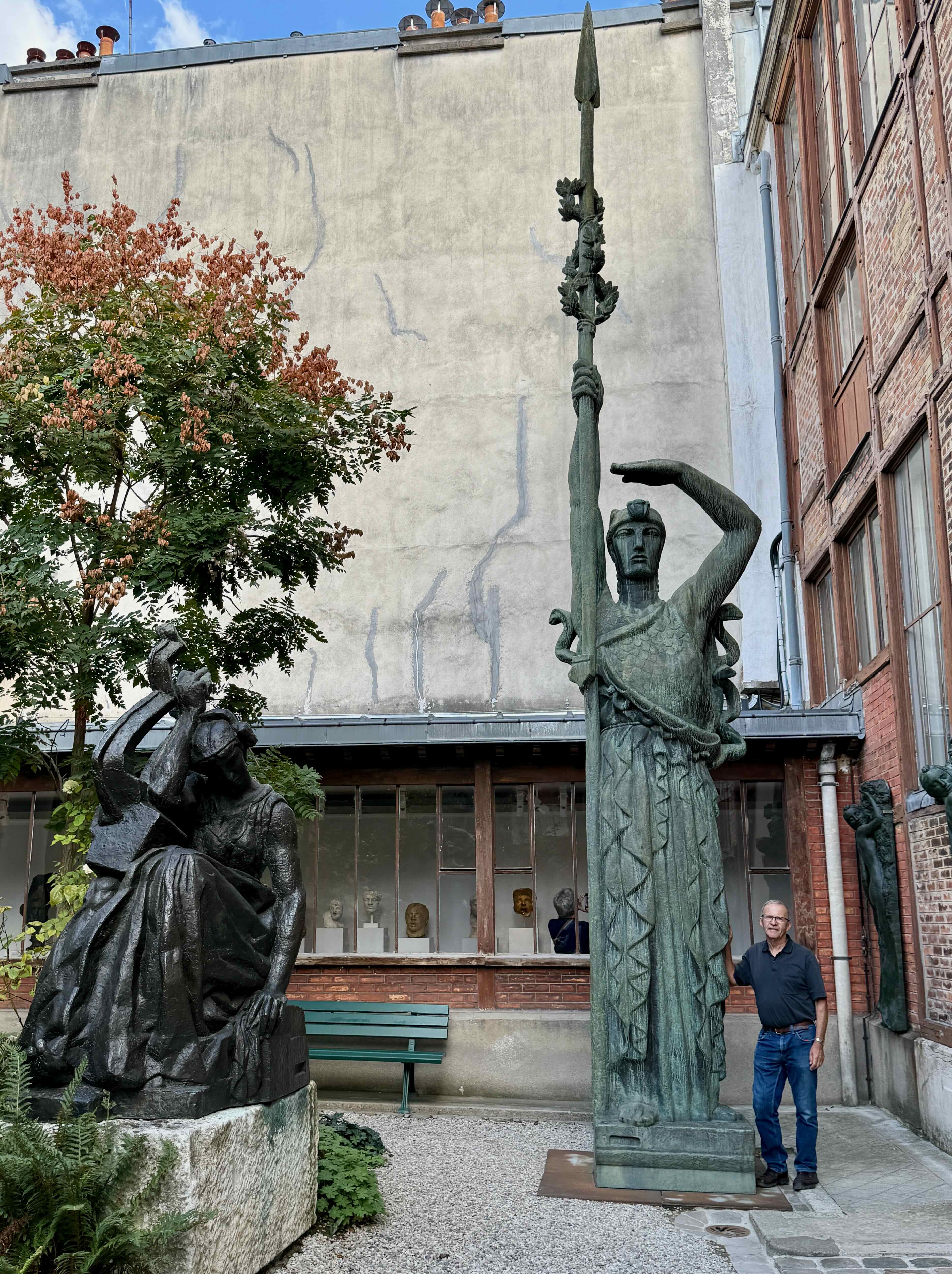
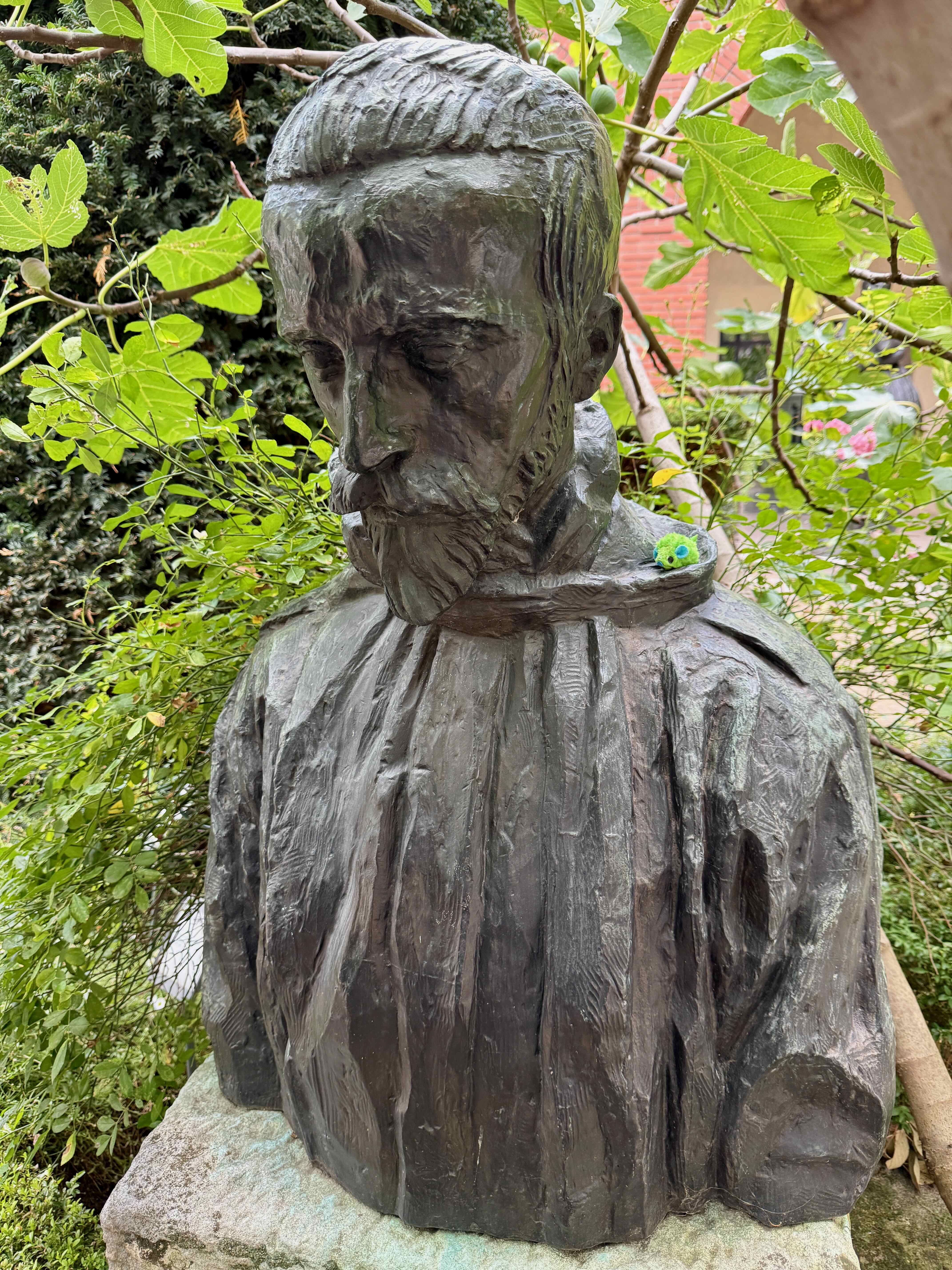
The museum dedicated to Antoine Bourdelle is free. We first find the cafe and have some tea and cookies.  It felt good to just sit and relax for a while.  Bourdelle was a student of Rodin and after Rodin’s death Bourdelle dominated the field of monumental sculpture.  We see many examples of these monumental sculptures.  The museum is at the site of Bourdelles original  studio. As he became successful he added more rooms and gardens until it appeared much as it does today.  

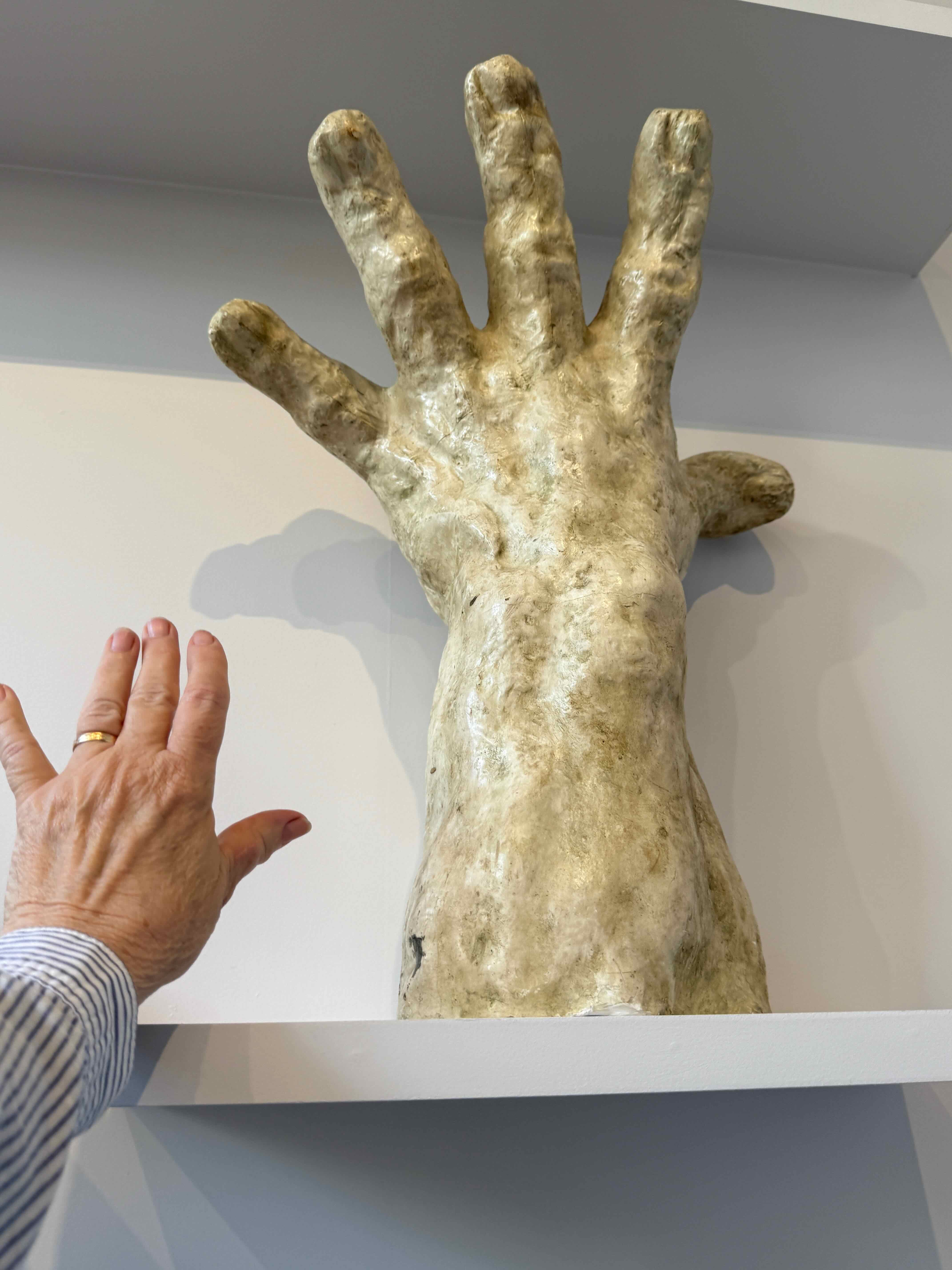
One of the studios has this huge study for a hand.

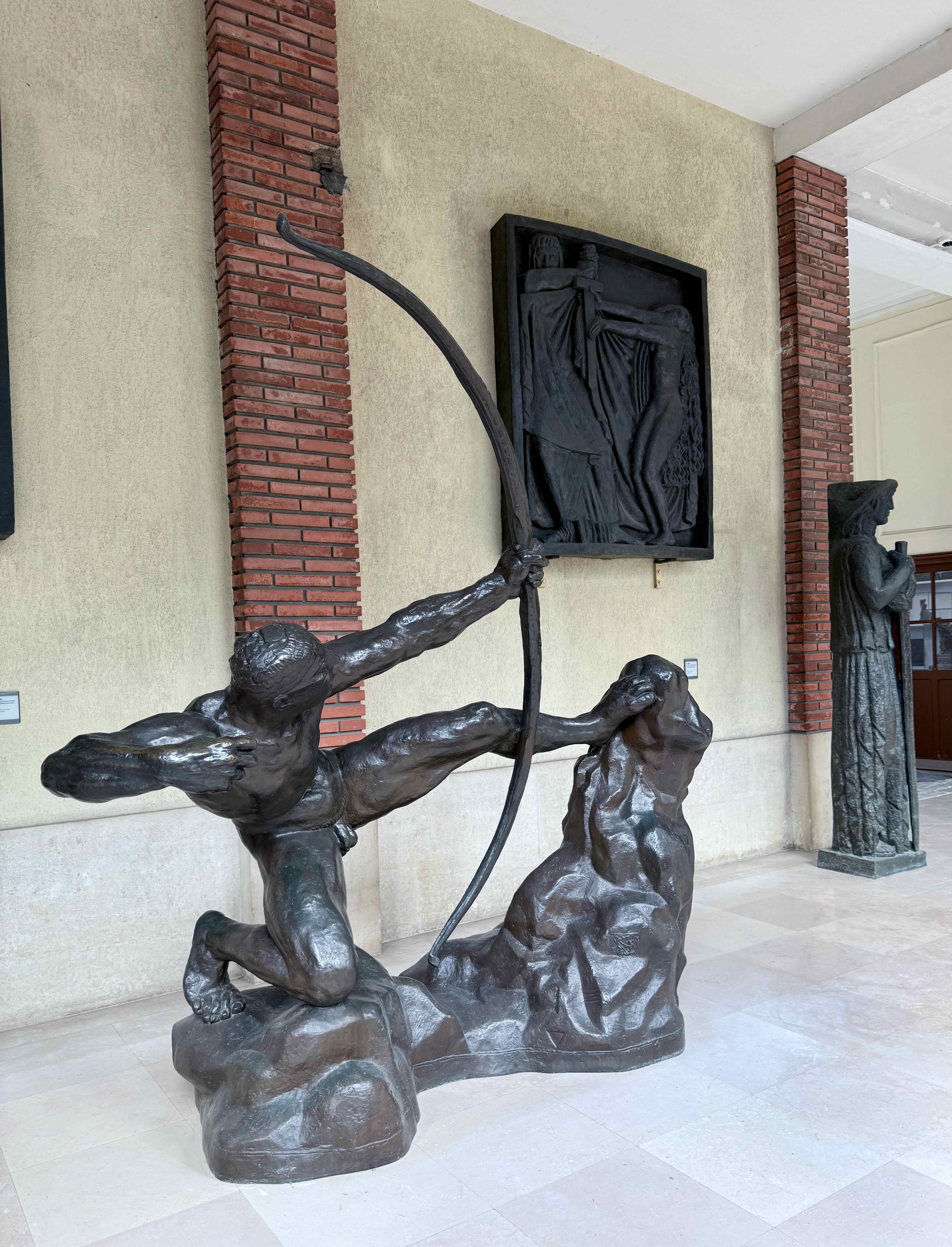
Bourdelle was 50 years old when he finally became successful thanks to his Hercules the Archer statue. It represents the Greek hero wielding his bow to shoot down the Stymphalian birds. Copies of this sculpture were created in three versions and are in numerous museums in France and abroad.

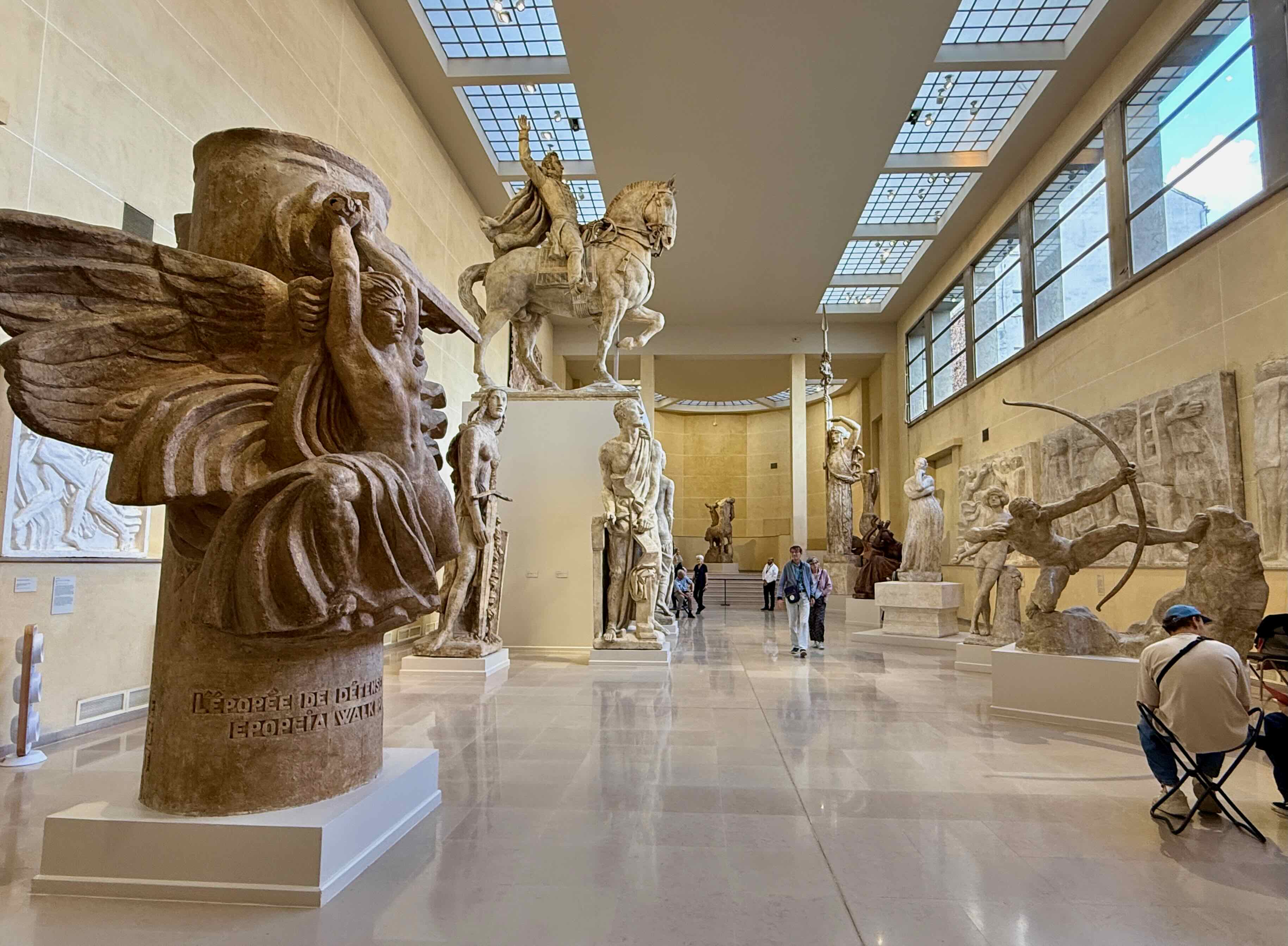
There is a room full of magnificent sculptures…

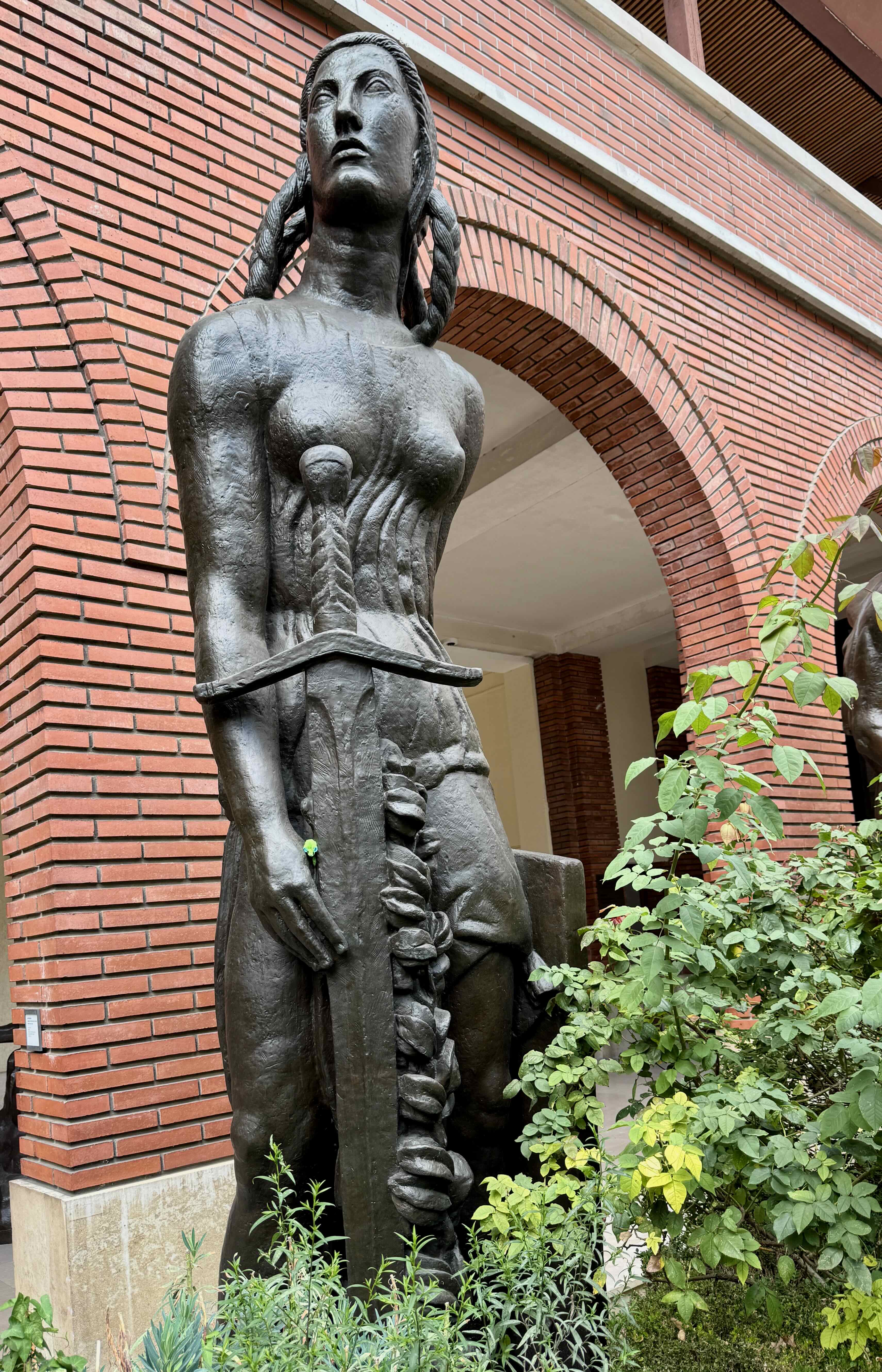
and there are more sculptures in the gardens and courtyards.  Can you see Sue? (short for souris which means mouse in French). Since this little green mouse stowed away in our luggage she insists on coming along with us on our travels.

Sue is very curious and likes to check thing out for herself.

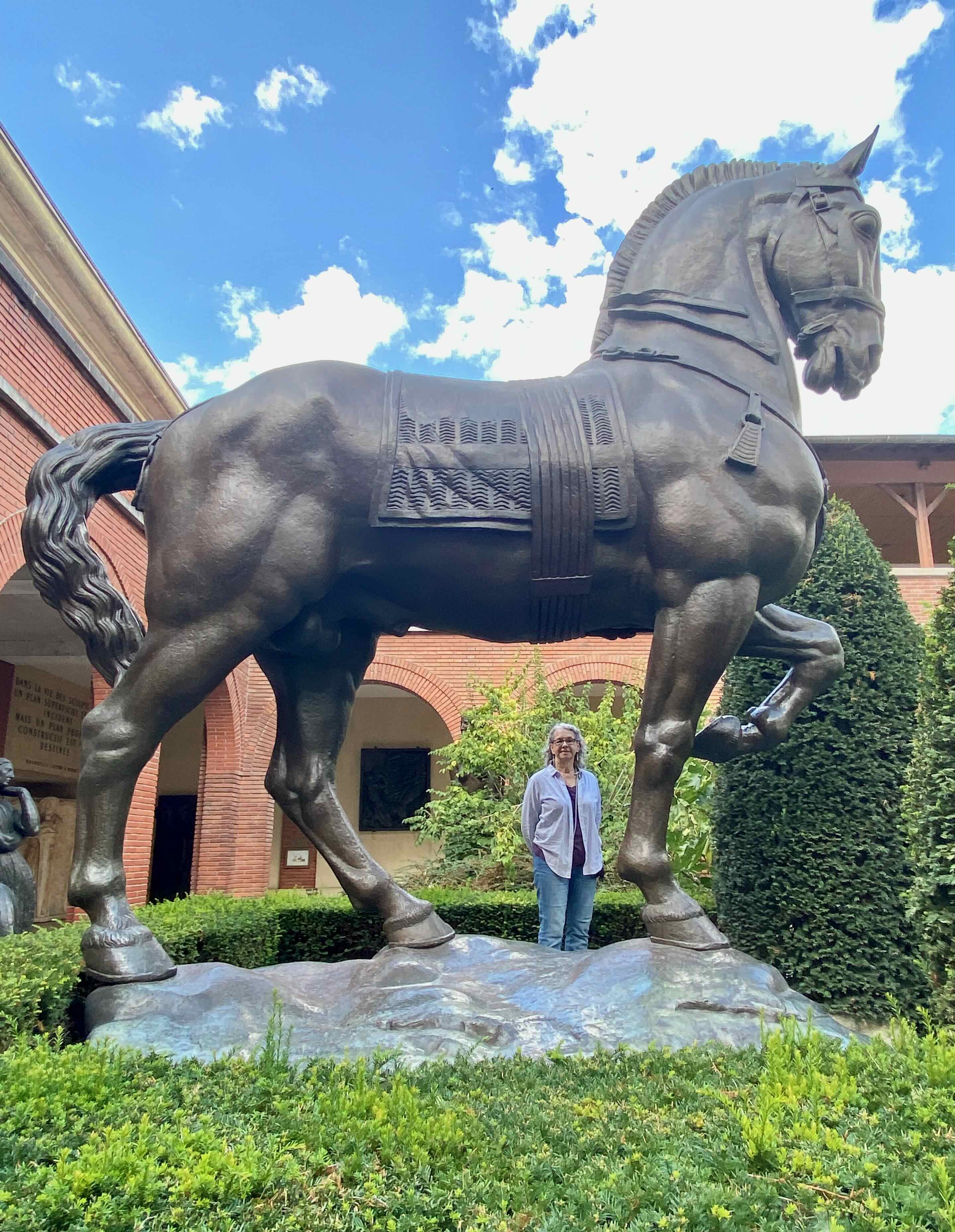
There are two of these huge horse sculptures at the museum.  

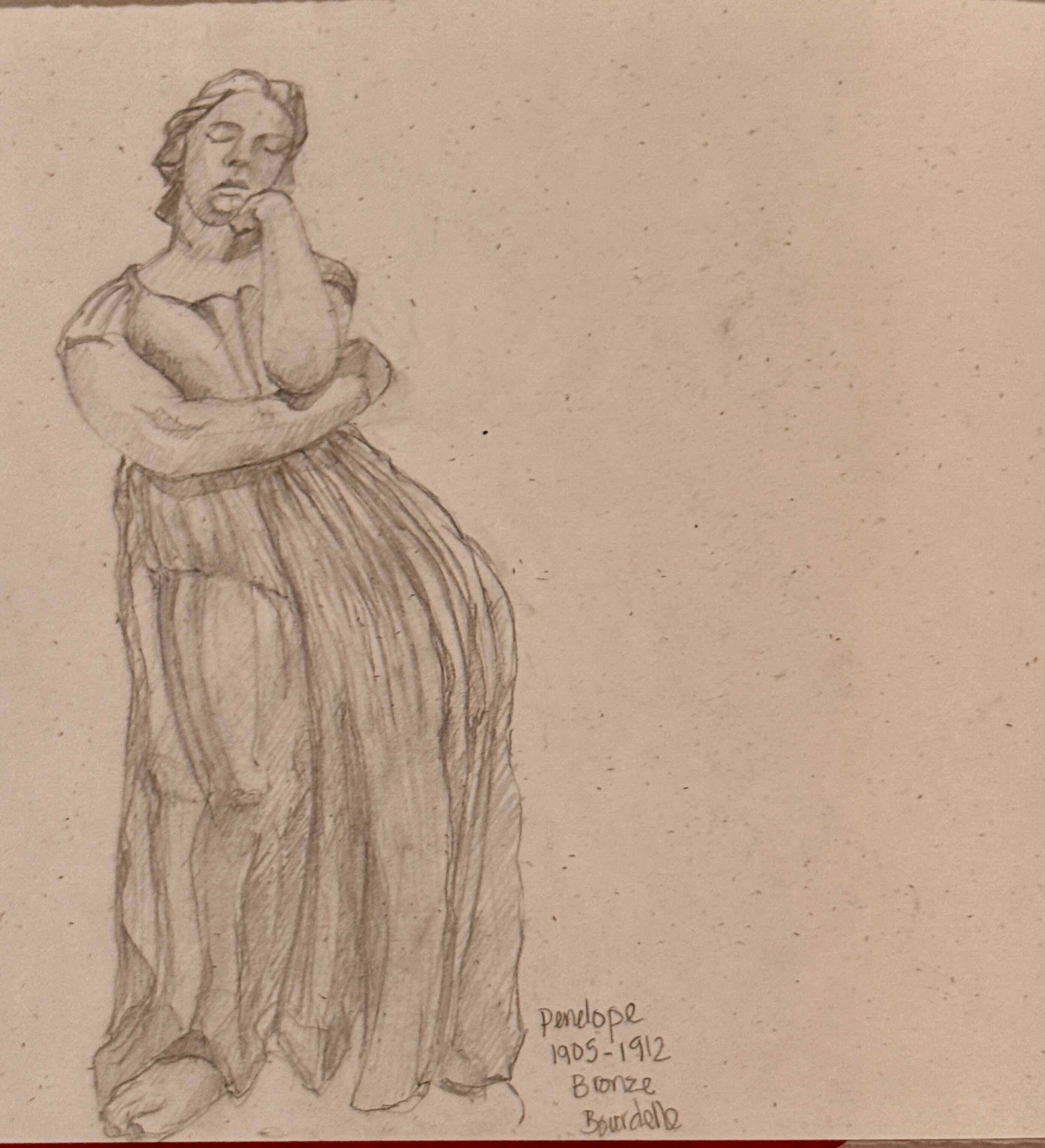
Bob sits in one of the gardens to read for a bit and I sketch one of the sculptures close by named Penelope, a larger than life size bronze of one of the wives of Odysseus, who waited faithfully for her husband to return. Bourdelle used the features of two women who loved him, he generous curves of his first wife, Stéphanie Van Parys, and the posture of his student, Cléopâtre Sevastos, the muse who would become his second wife.

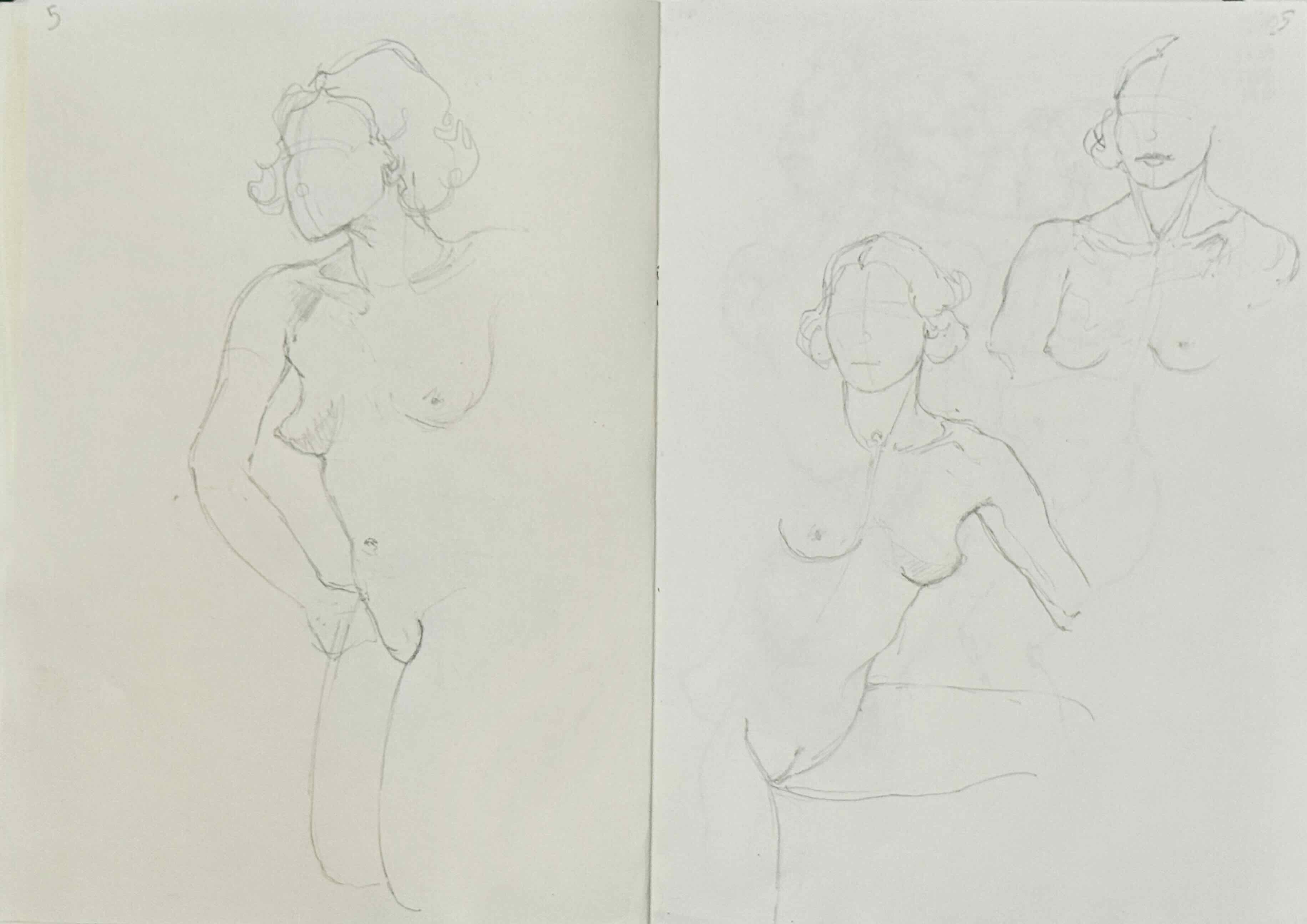
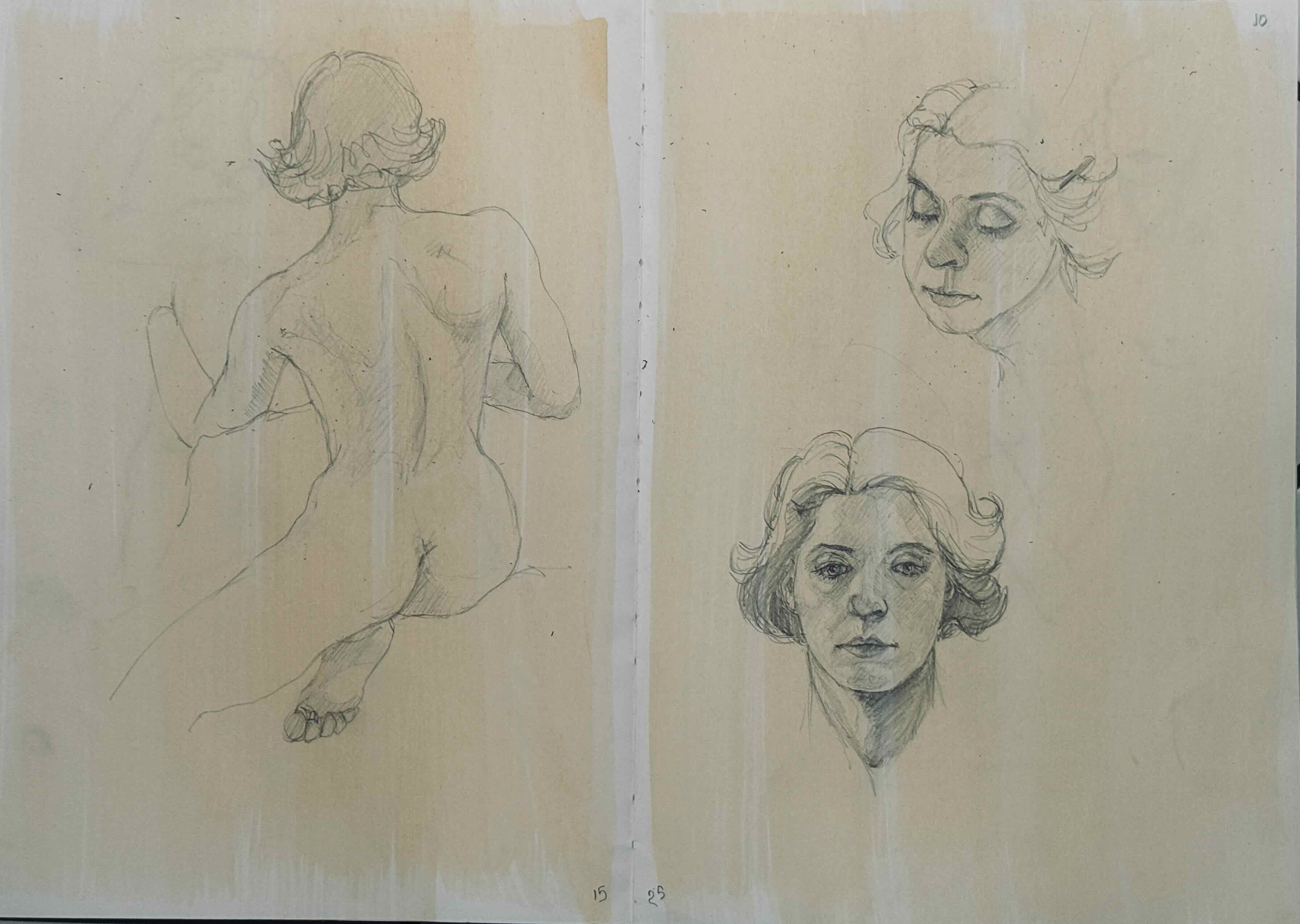
After our visit to the museum. I went to a Drink and Draw session nearby and Bob headed for home.  Here are the drawings from my first life drawing session this trip.

2 minute poses and one 5 minute pose…

two more 5 minute poses…

two 5 minute and one 10 minute pose…and a 15, a 10 and a 25 minute pose.  
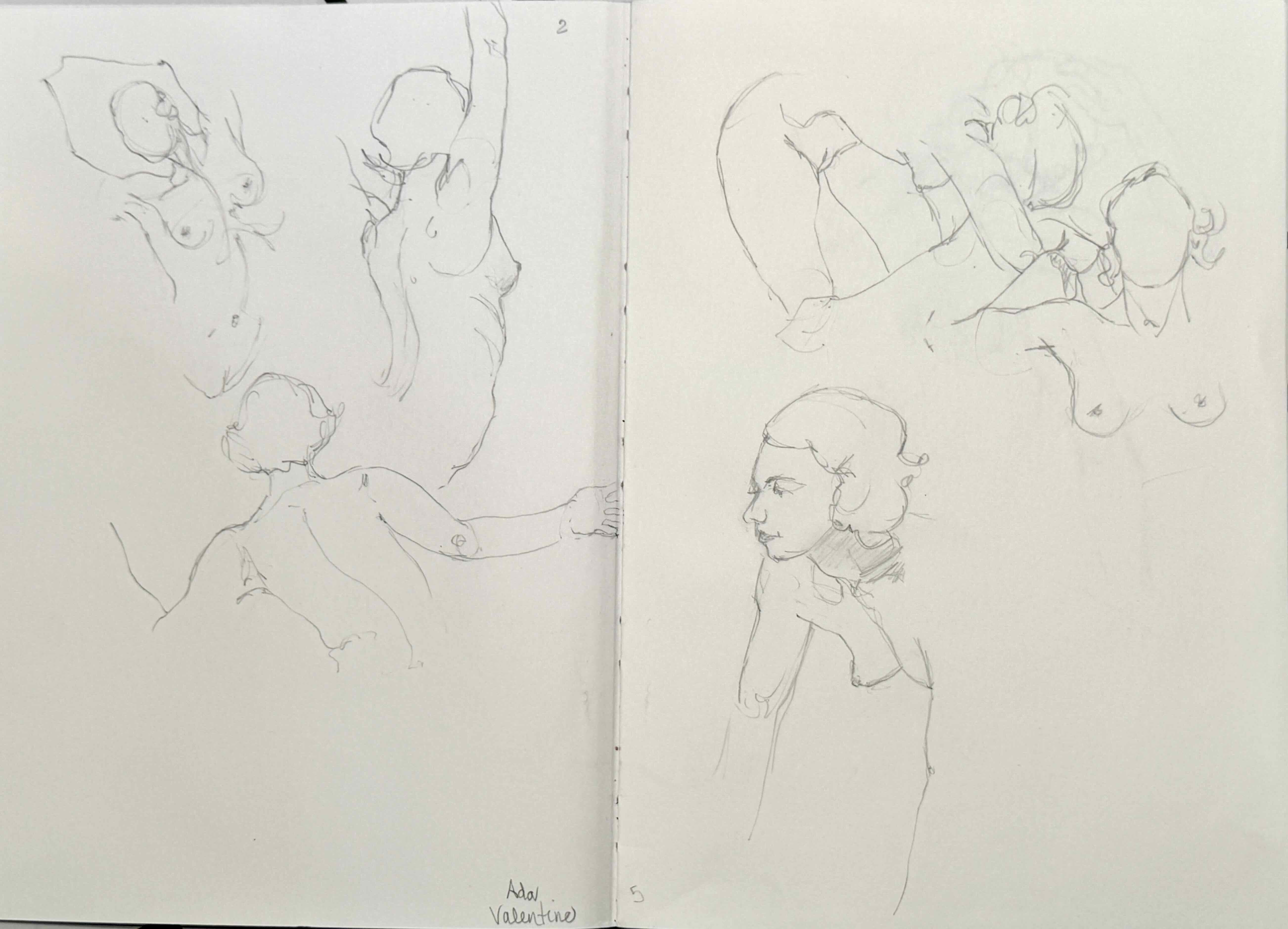
Ada is our model tonight, and I am sure that I recognize her from a previous life drawing session in Paris. She thinks that she recognizes me too! but we are unable to figure out where I might have drawn her before. I will have to check my other holiday sketchbooks when I get home. I take the metro and get home at 10:00. Bob meets me at our metro stop and carries my art stuff home for me…I am pooped…it was a ten hour 15,000 steps day!

Boat Ride on the Seine and the Orangerie

First of all, if you are a subscriber and you are having trouble seeing the photos in yesterday’s post you should be able to click on the “View on Blog” option on the top right side of your email notification, or just type trudymason.com in your browser and you can see it properly there.  No idea why the photos aren’t showing up!  Sorry.

Day 89,  Saturday, November 25, 2023

I am out of the apartment early to go shopping for those conté crayons I promised to get for my friend.  Then I need to meet Bob near the Eiffel Tower for Bob’s birthday boat ride.

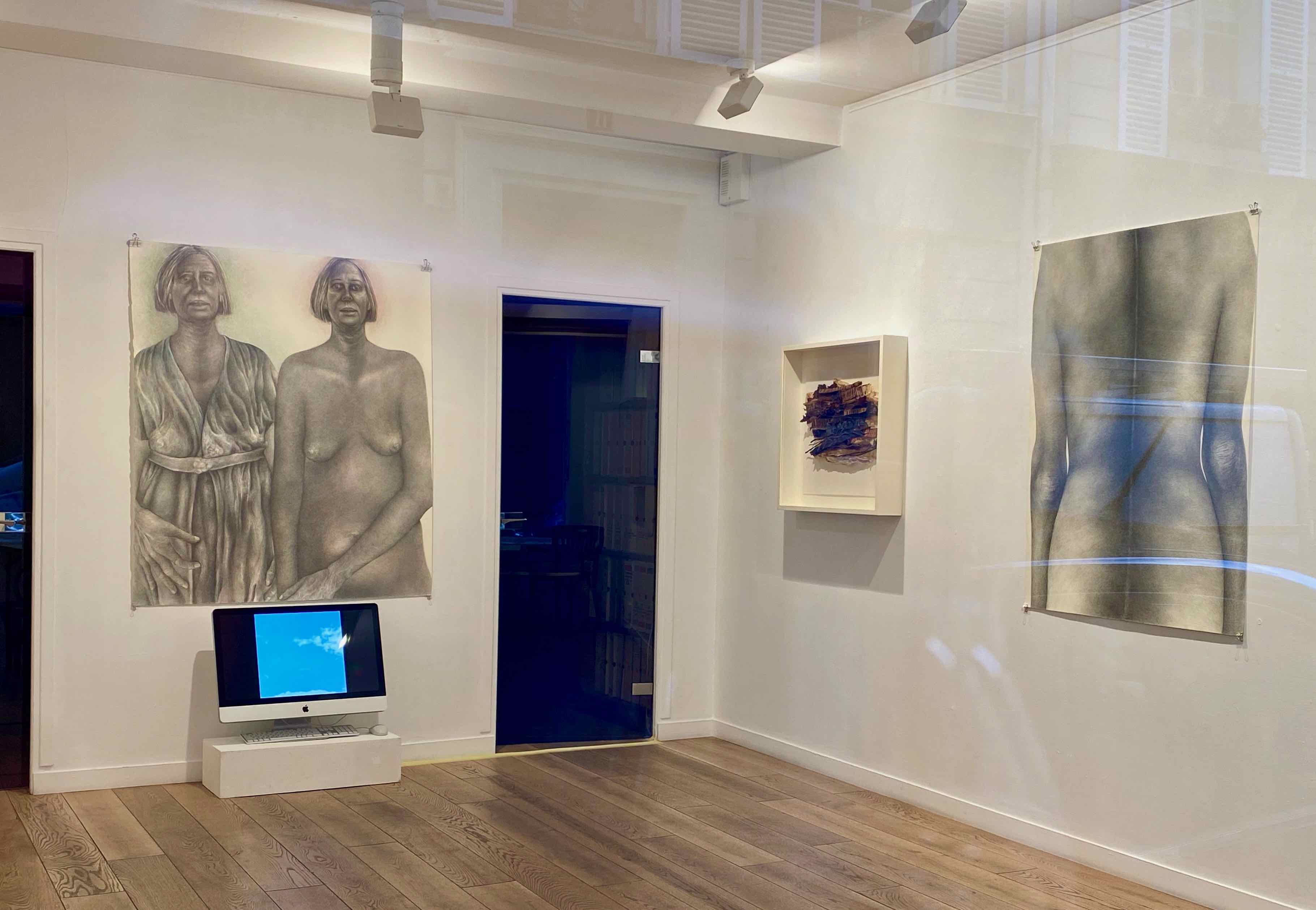
We arrived back in Paris on the 16th but other than going to my life drawing sessions I haven’t been out and about very much. Having Covid hit me much harder than Bob, and I have been pretty low energy ever since, so it is nice to wander the streets of Paris at least one more time before we head home. I check out a couple more art stores, but only find a stick or two of conté at each one! I head towards the main Sennelier store, hoping I will find what I need there.  On the way I pass several little galleries and peak in the windows.  I liked these large drawings by Diana Quinby at Galerie Arnaud Lefebvre.  I wonder if I will ever try doing such large drawings? Luckily the Sennelier store has all the conté crayons I need!  Yay!

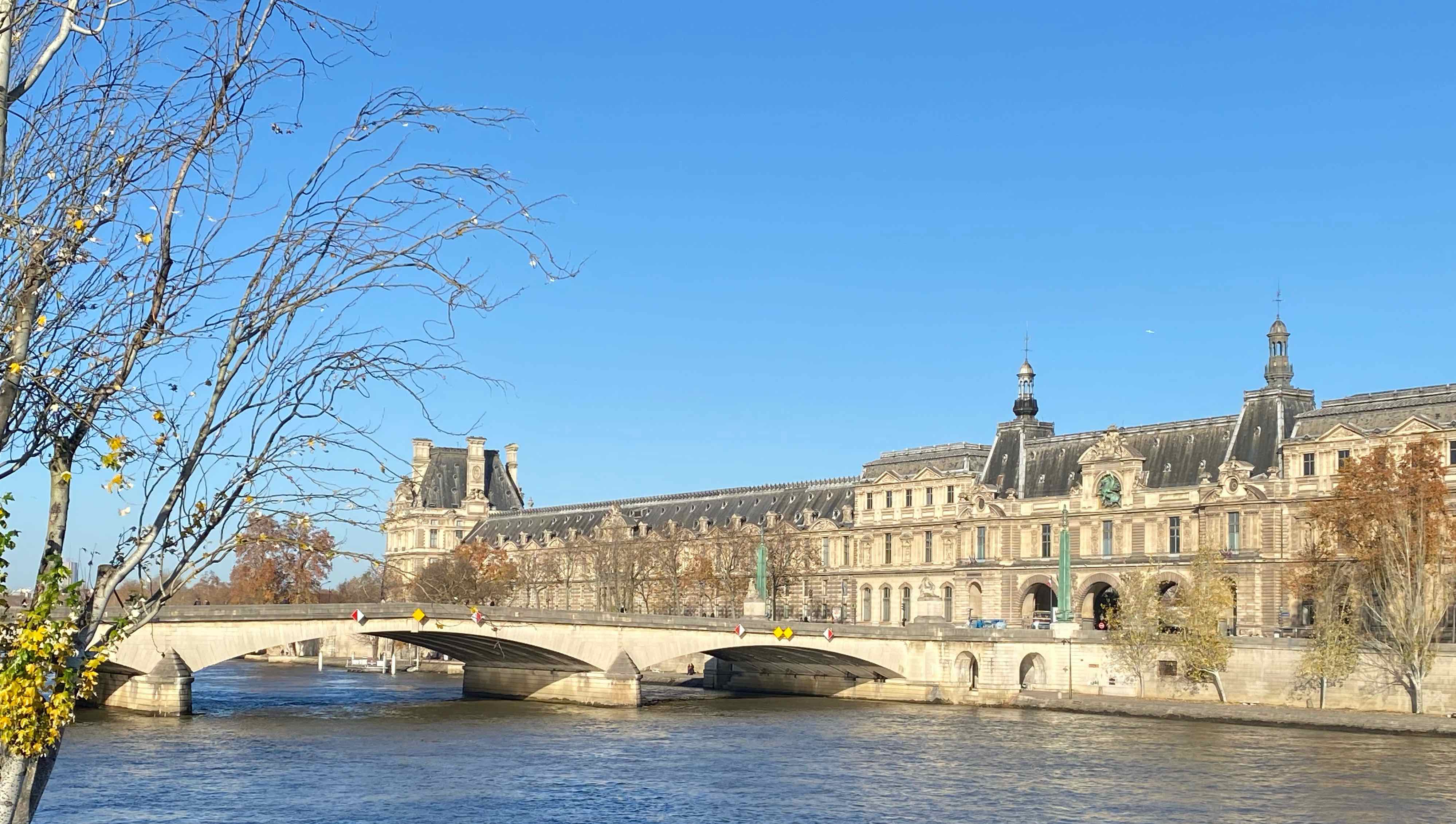
The Louvre on the other side of the river.  We didn’t even go inside this trip…just too many other things to do and see.

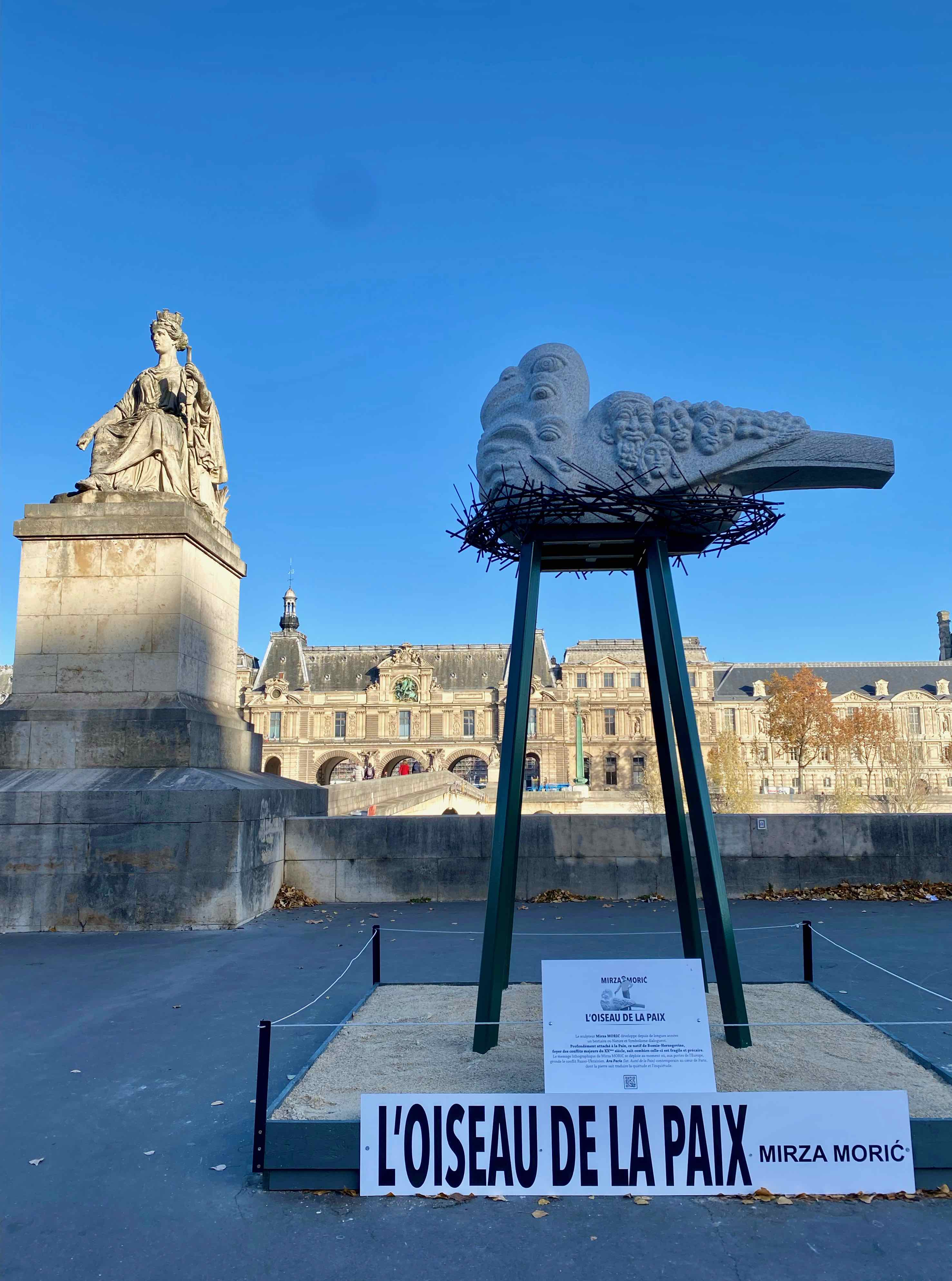
This sculpture is titled The Bird of Peace by Mira Morić.  We could certainly use a lot more peace in our world!

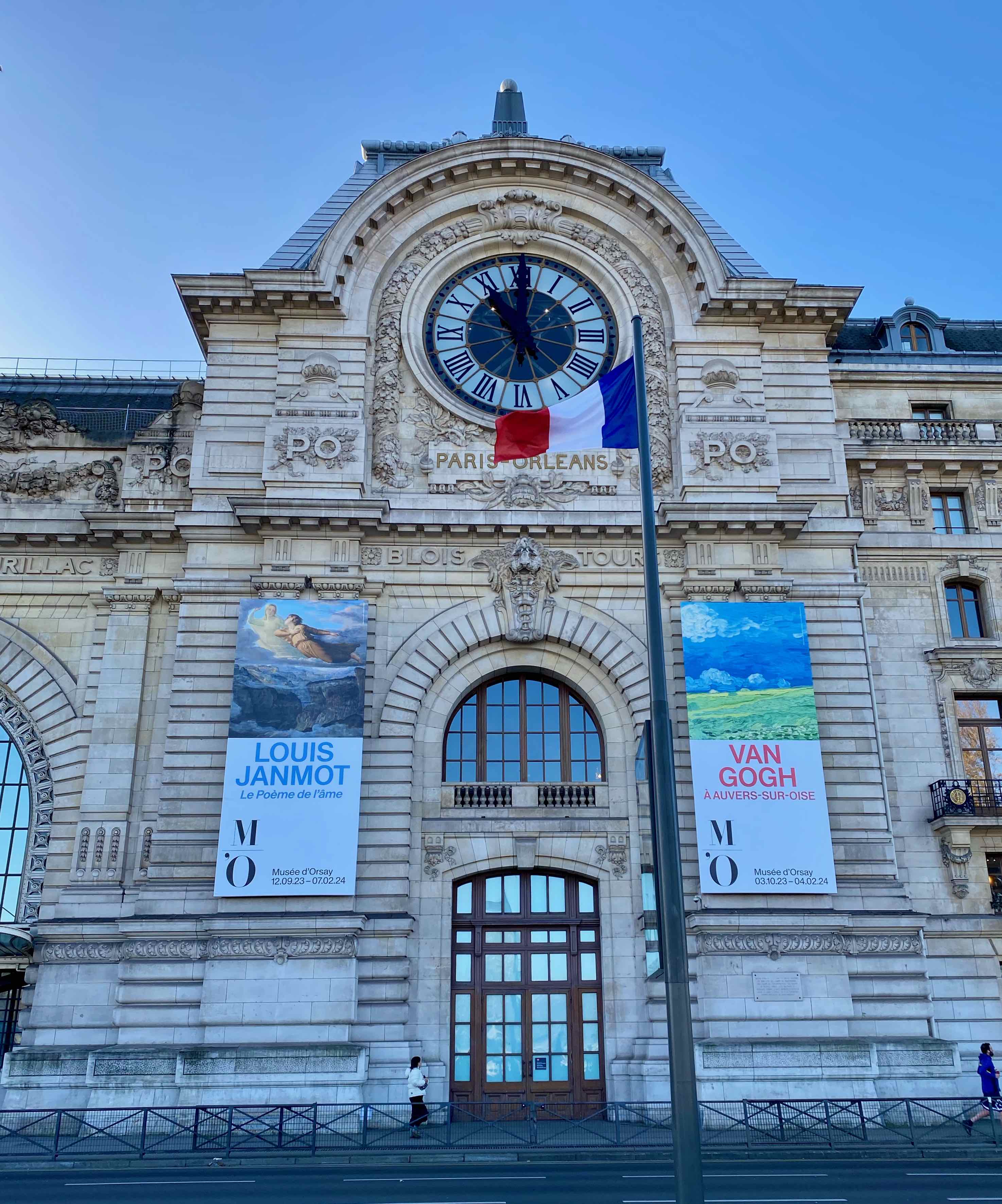
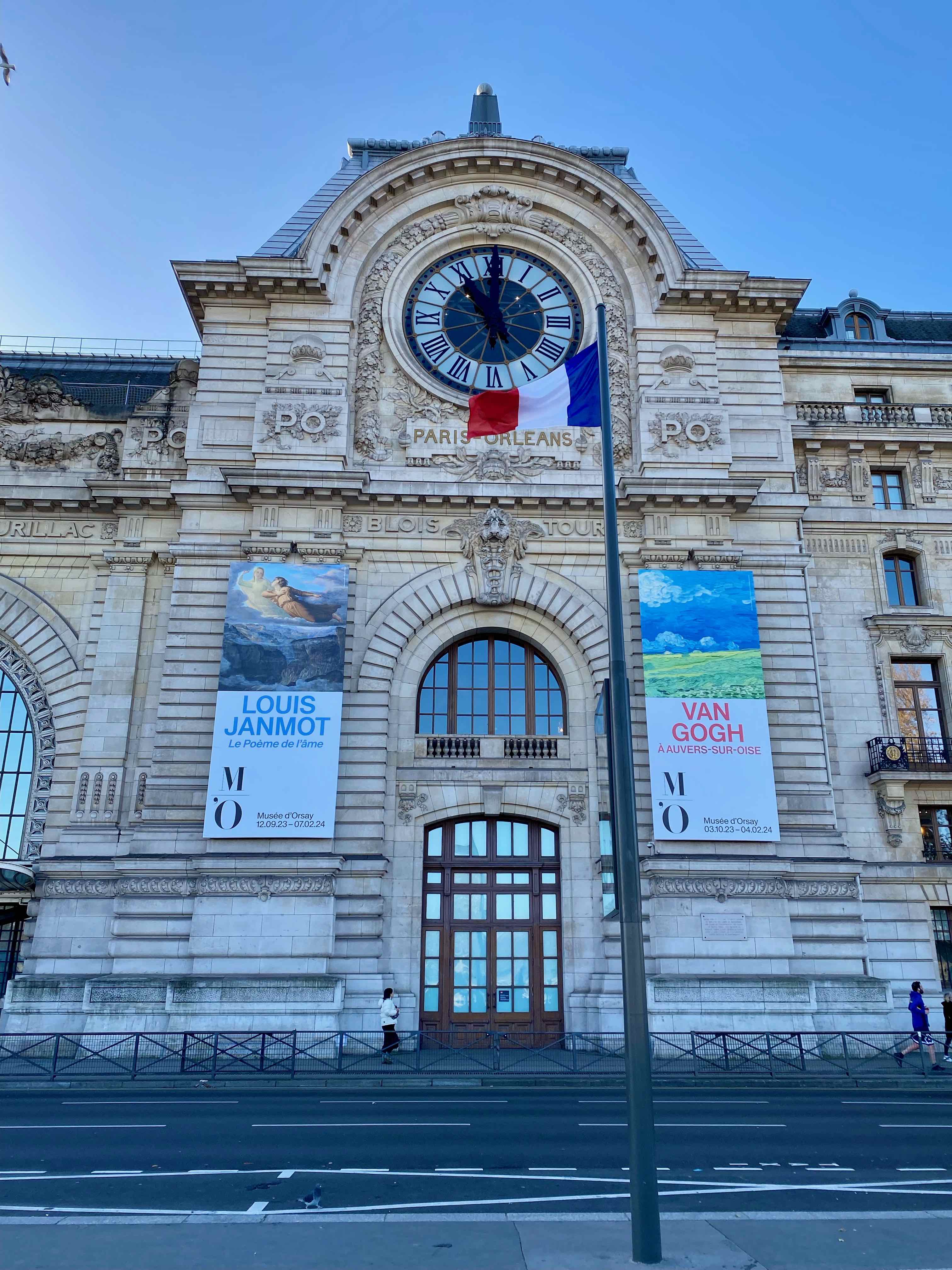
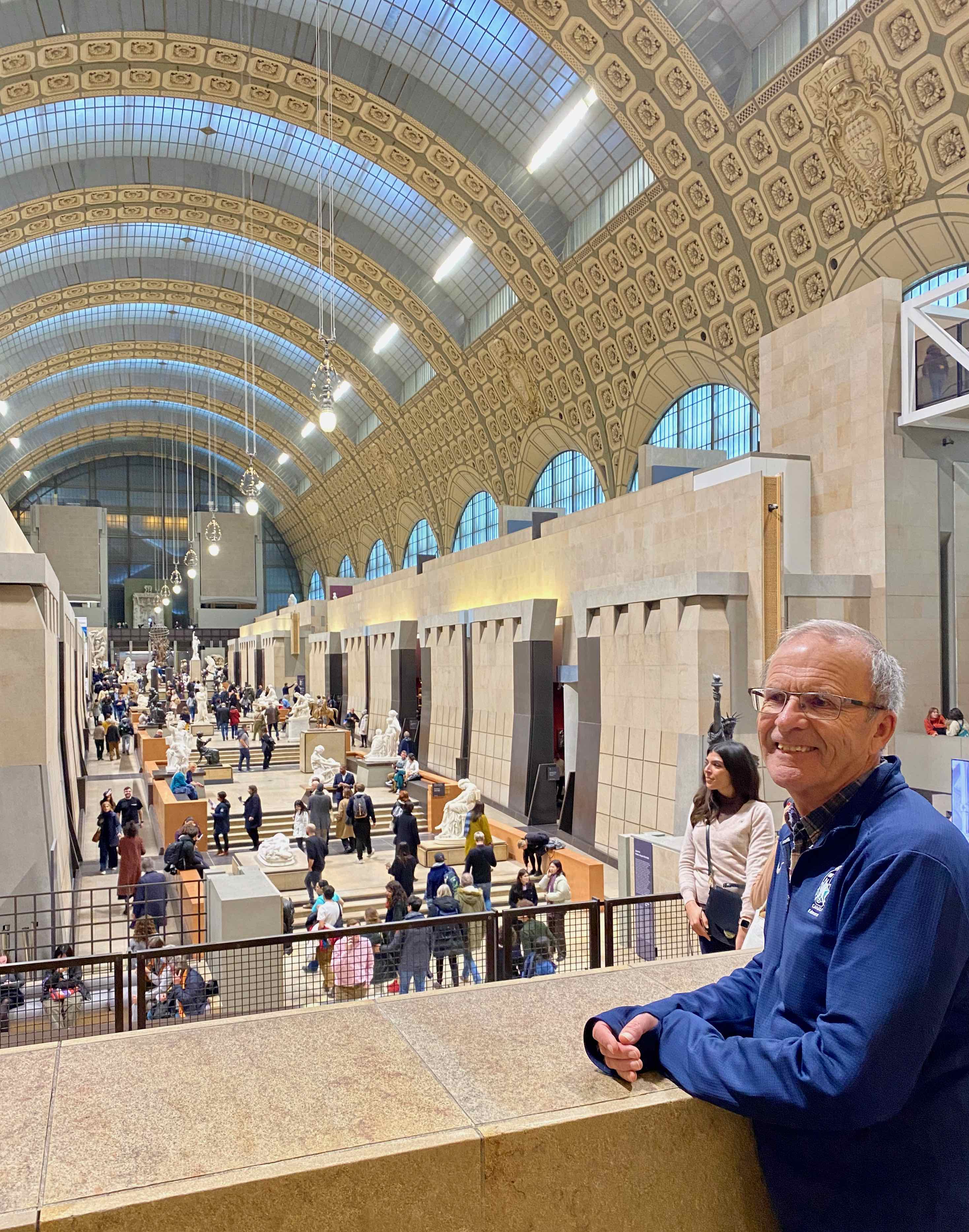
The front of the Musée D’Orsay with posters of the two shows we visited.  I do love this museum…it is big but almost doable in one day, unlike the Louvre, which is sometimes overwhelming.  The Louvre definitely needs several days to even begin to see most of the exhibits.

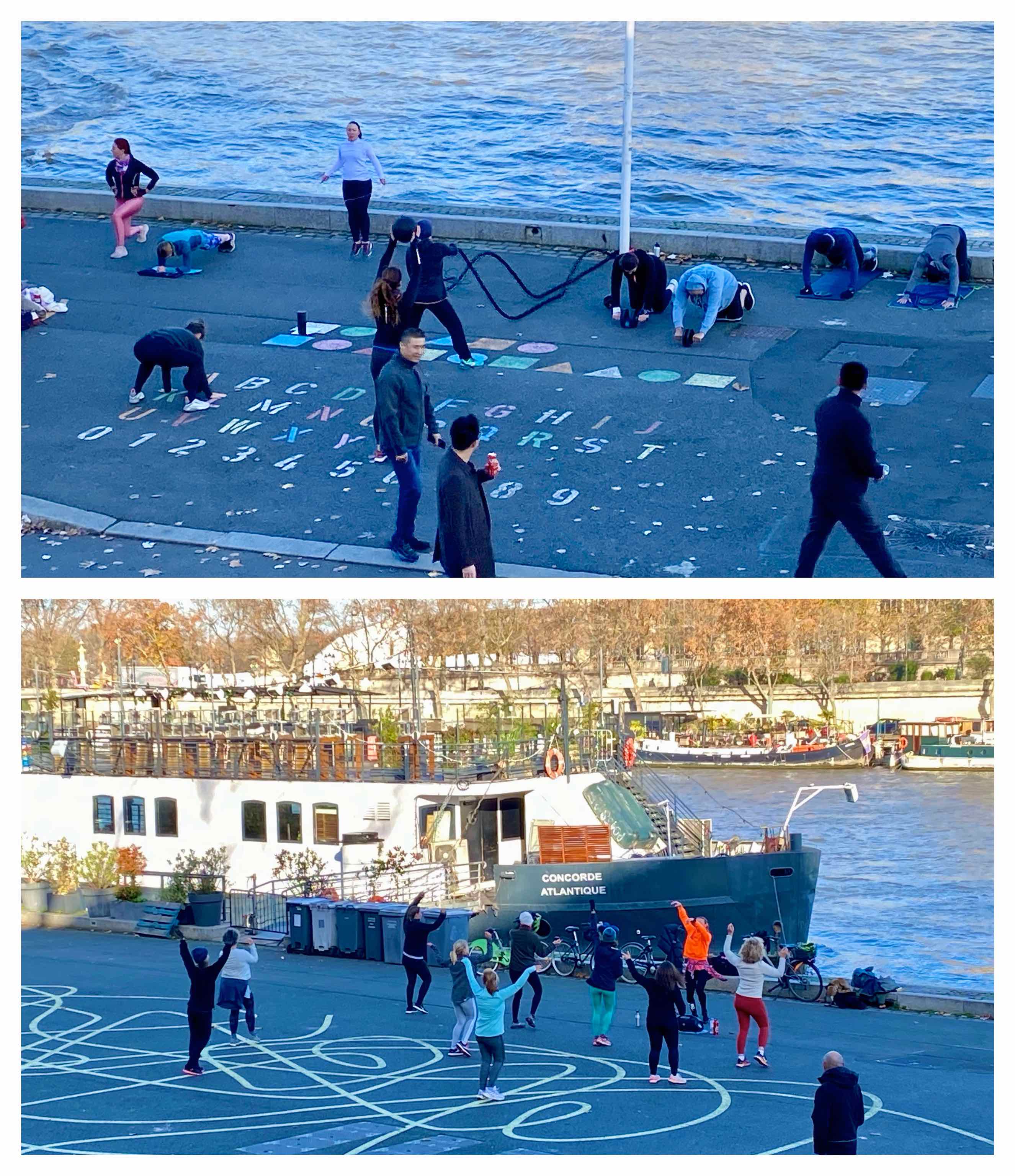
Even though it is cool today there are lots of people out walking and exercising along the Seine River. There are several group classes taking place as well as people working out individually.

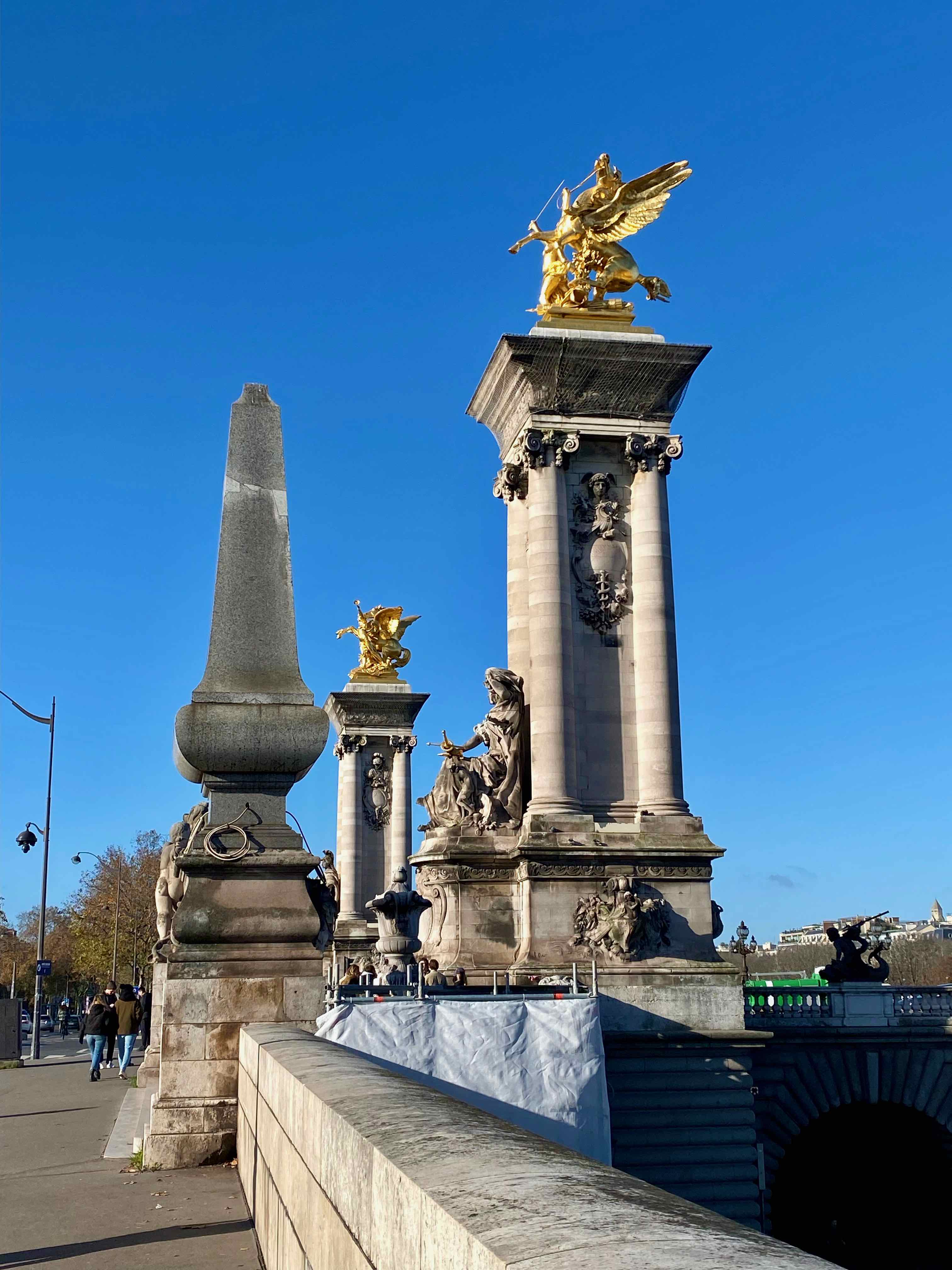
I walk by the entrance to the beautiful Pont Alexandre III, on my way to meet Bob.  I have never walked this route before so I enjoy seeing a bit more of Paris.

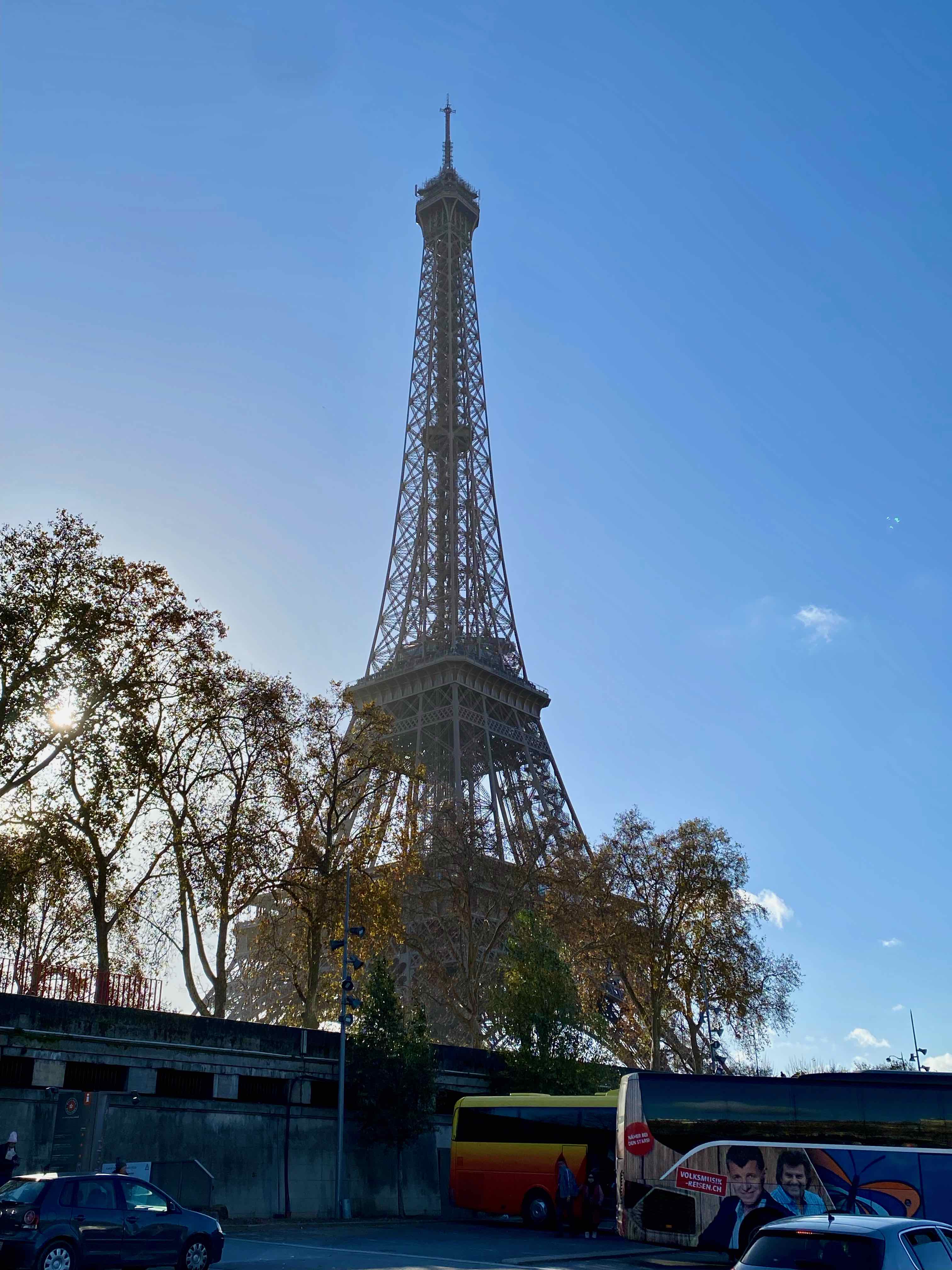
I am almost at the boat docks for Bob’s birthday lunch cruise.  It is near the Eiffel Tower.  I arrive before Bob and I am worried that we might be late, as people are already boarding, but all is well.

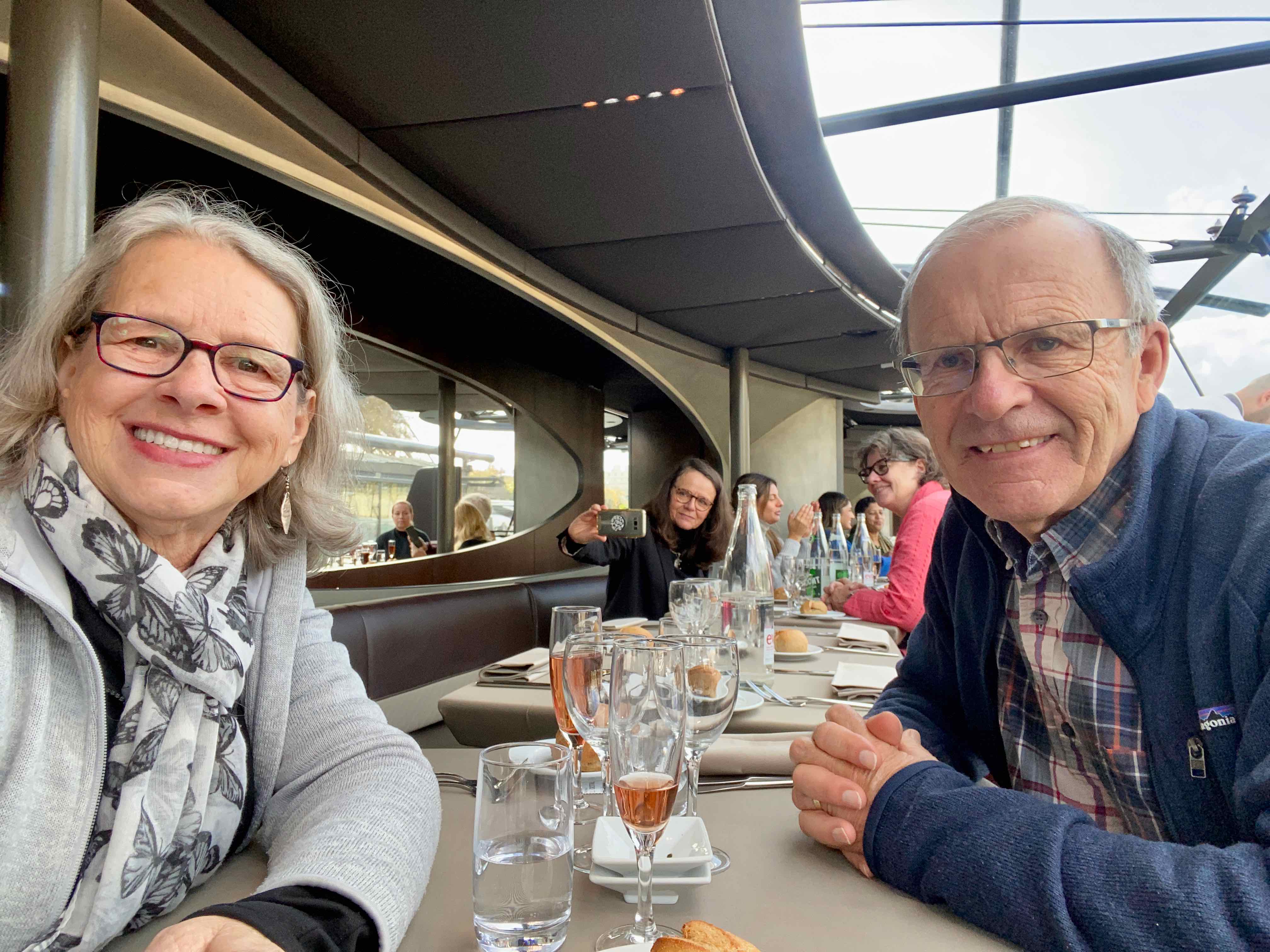
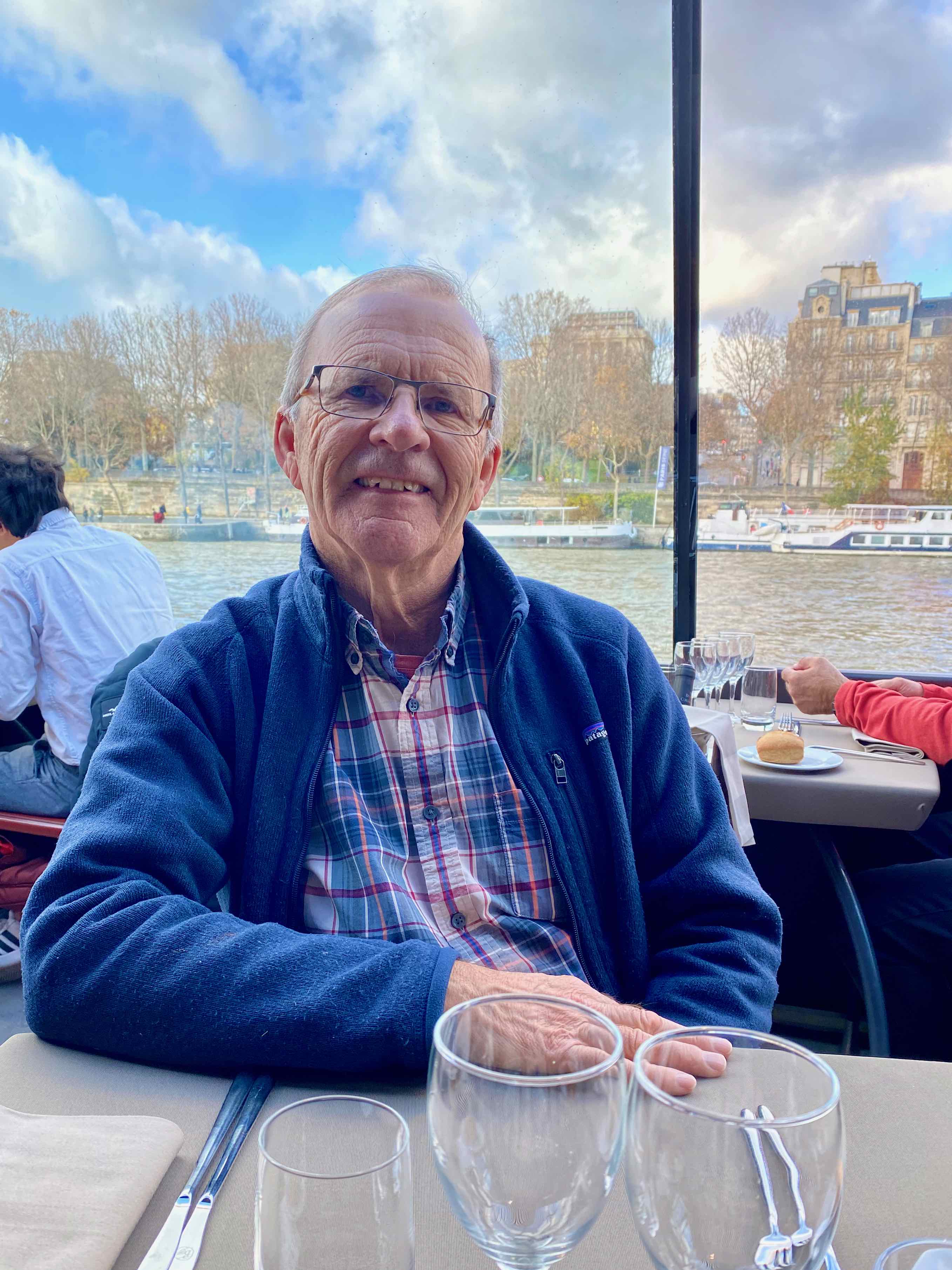
A selfie as we enjoy a glass of wine before our meal.  

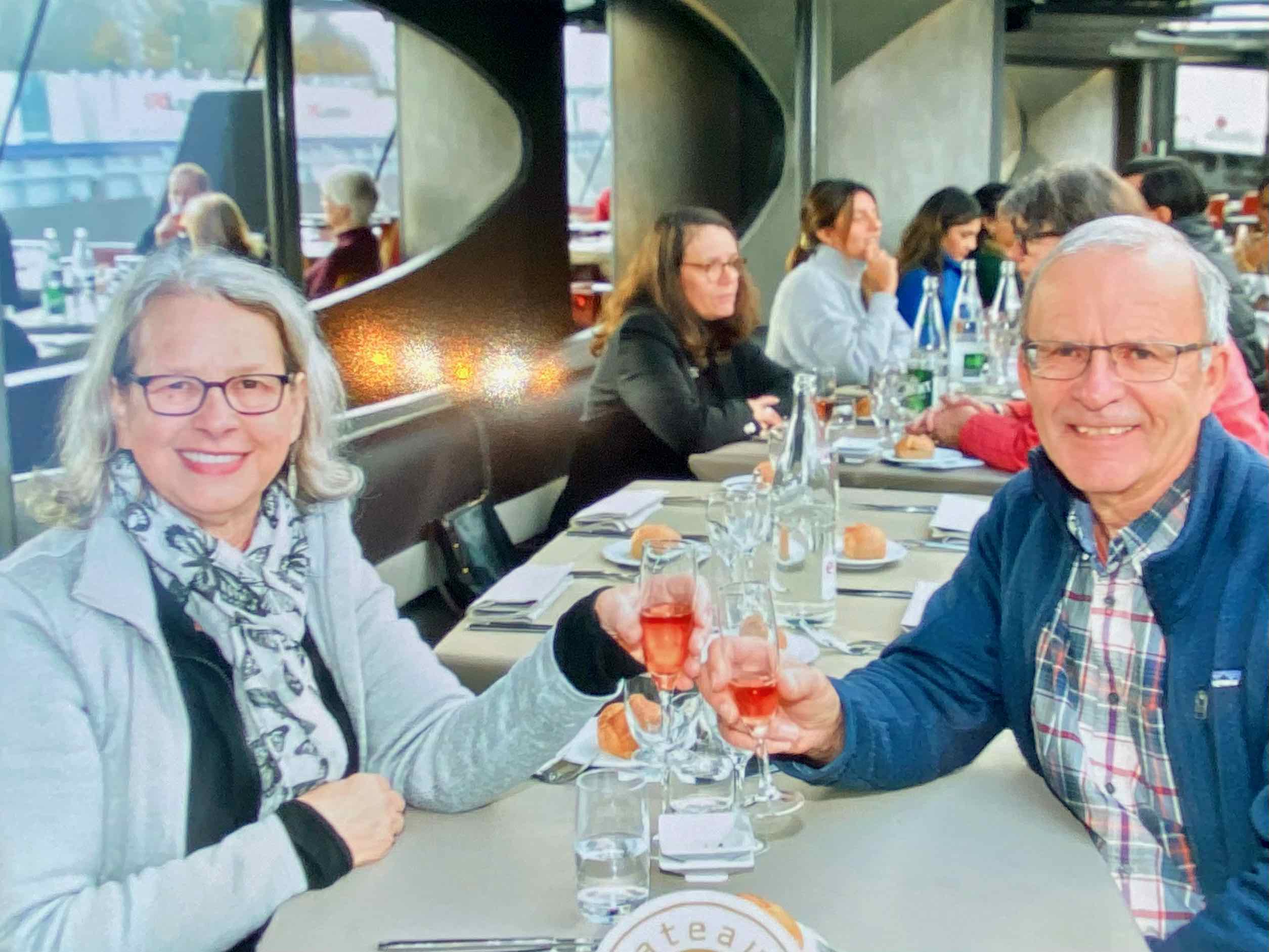
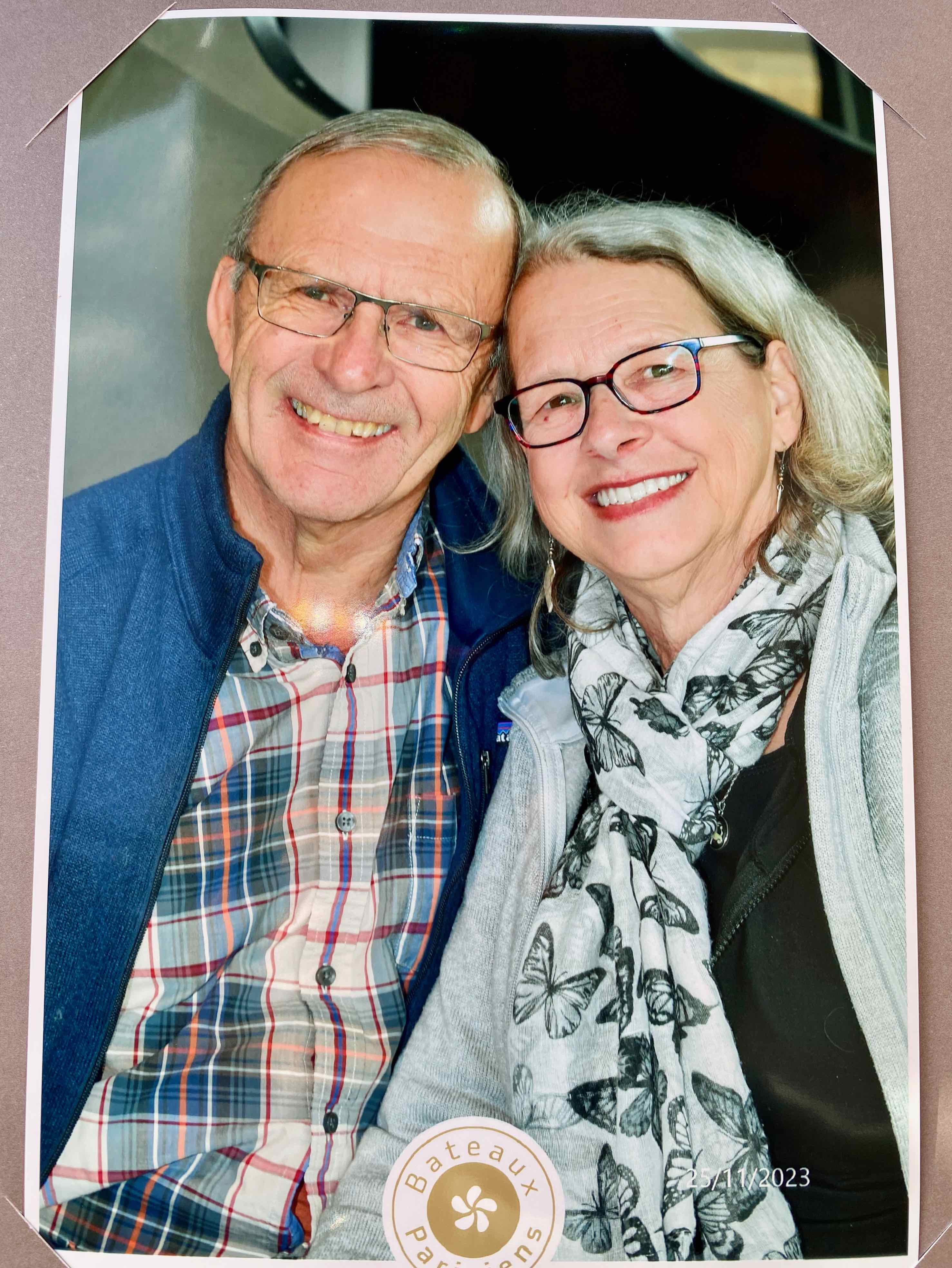
and then a photographer comes by and takes this picture for us. Because this trip is for our 50th wedding anniversary and today is Bob’s birthday we had almost a dozen photos taken of us, while everyone else only had two or three!

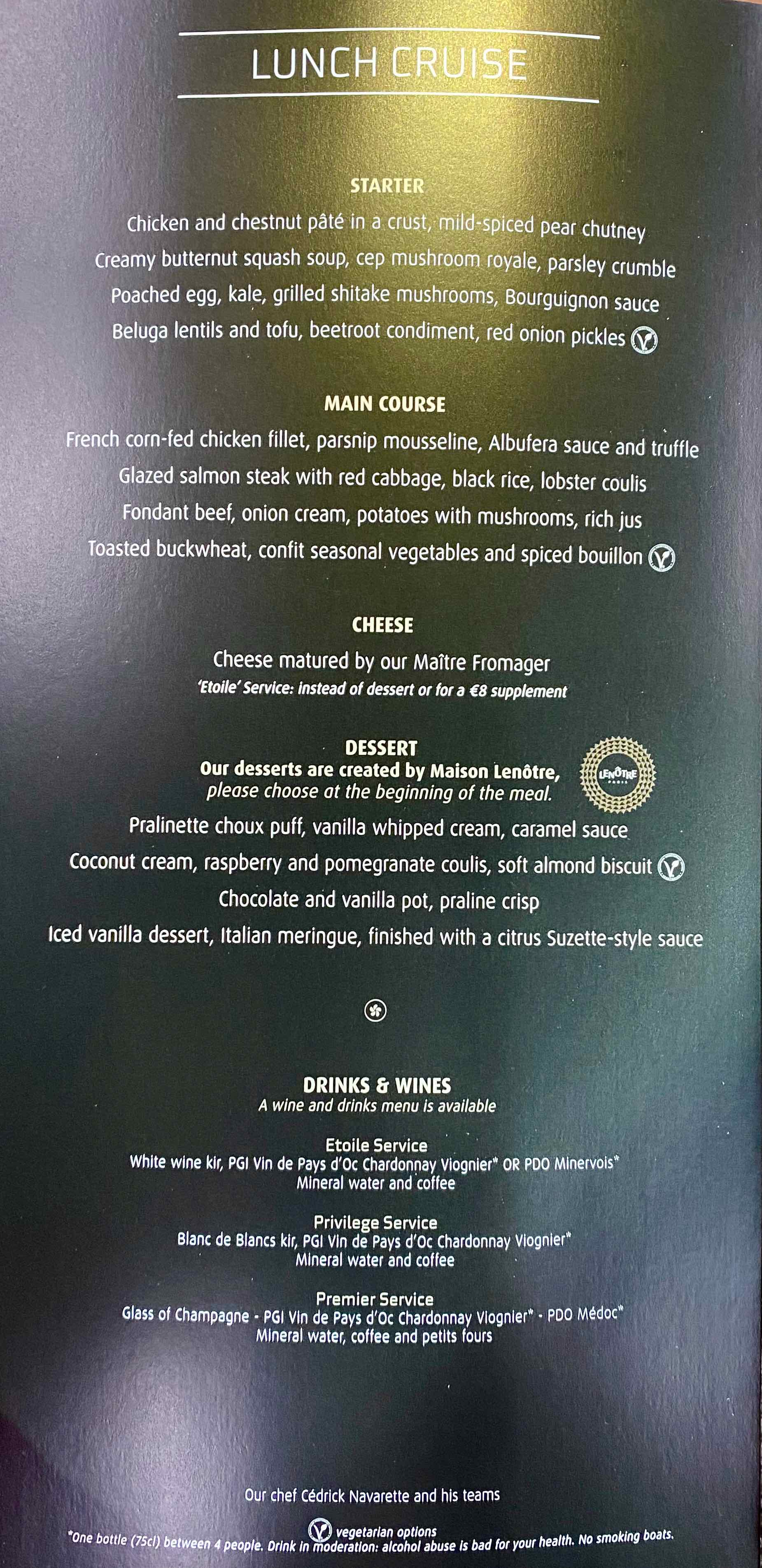
Our menu. 

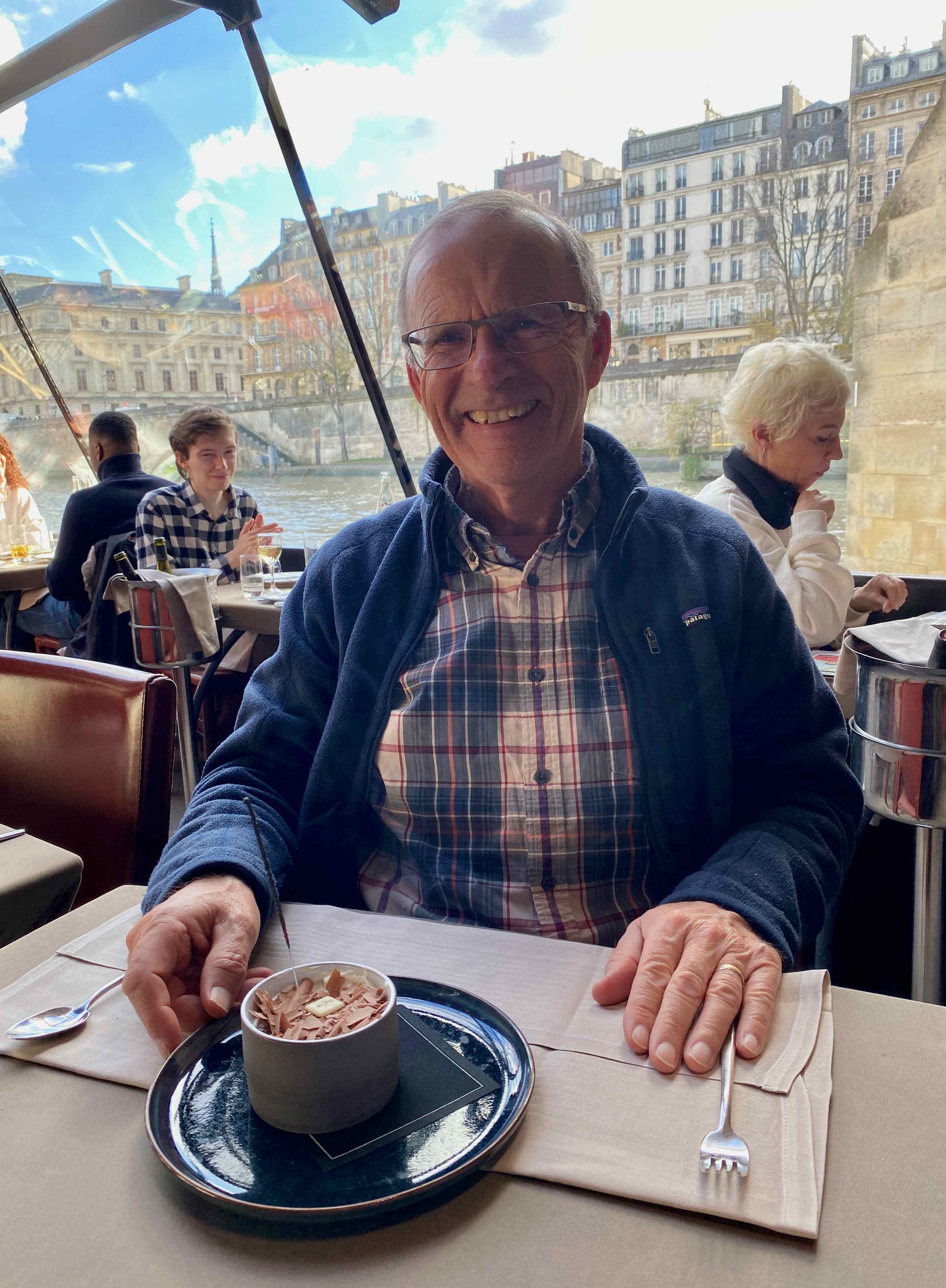
Bob is enjoying his birthday treat!

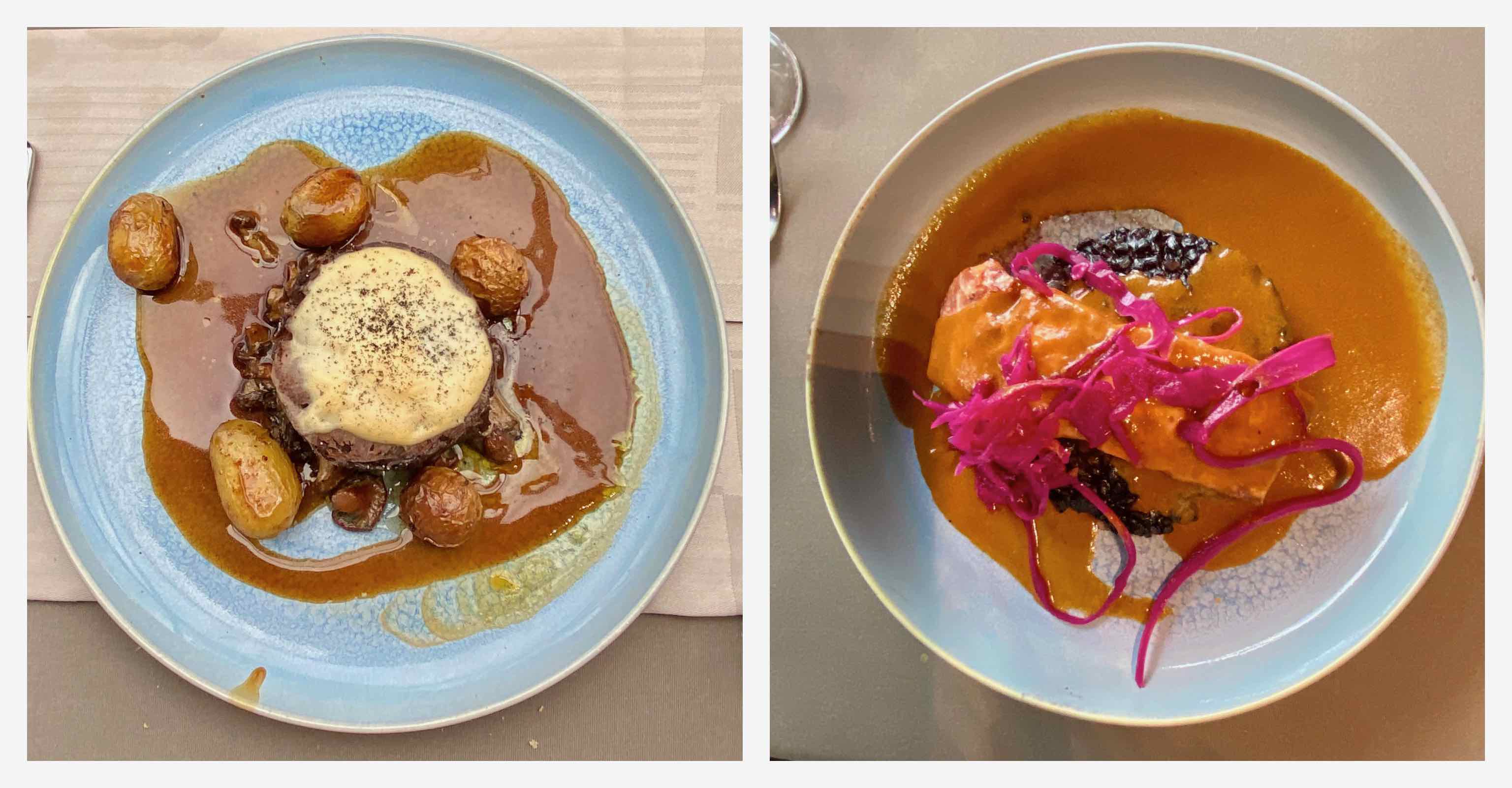
Bob’s Fondant Beef, onion cream, potatoes with mushrooms and rich jus, and my Glazed salmon steak with red cabbage, black rice and lobster coulis.  Both meals were delicious!

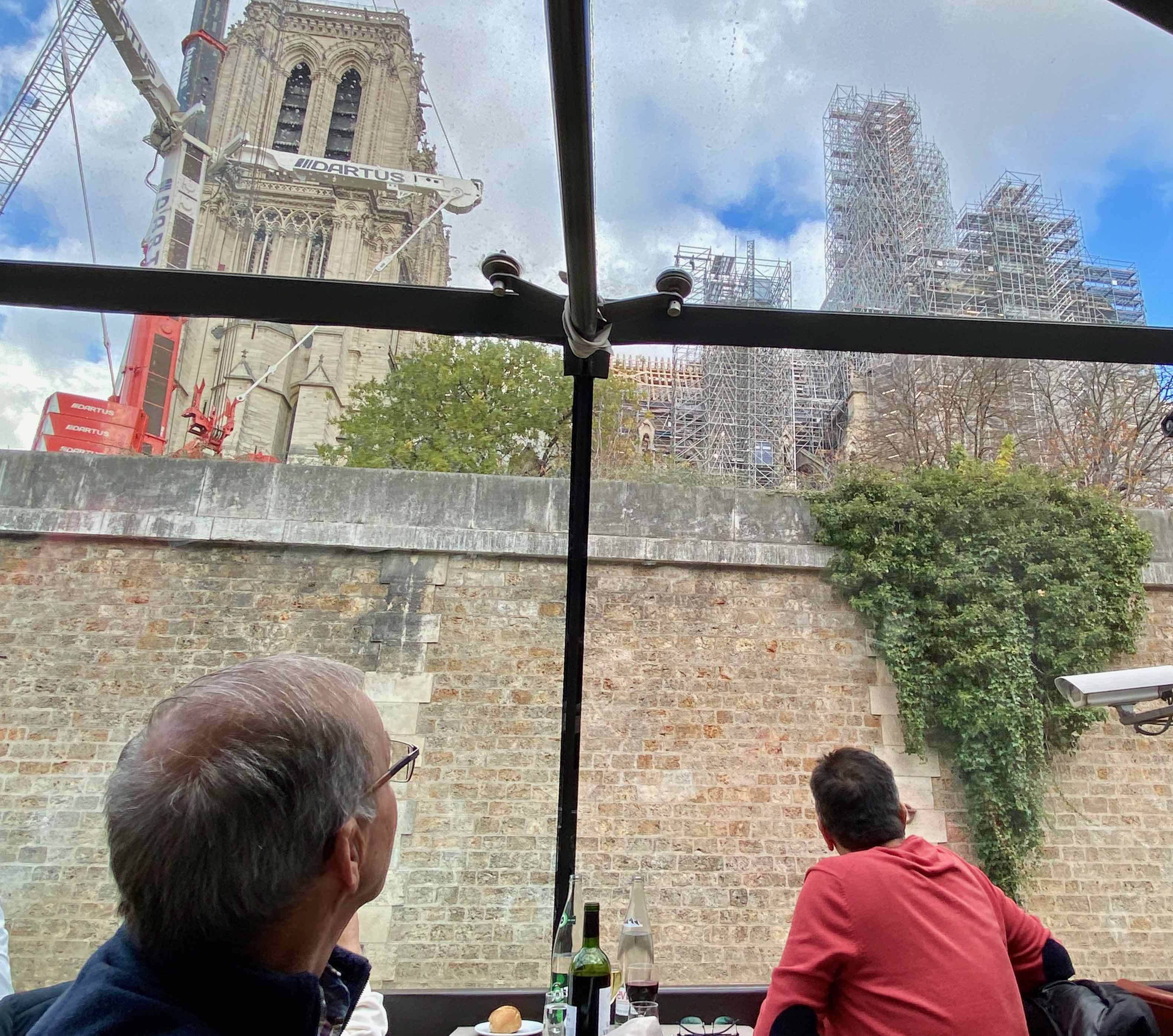
They are still working on restoring Notre dame and the building is covered in scaffolding.

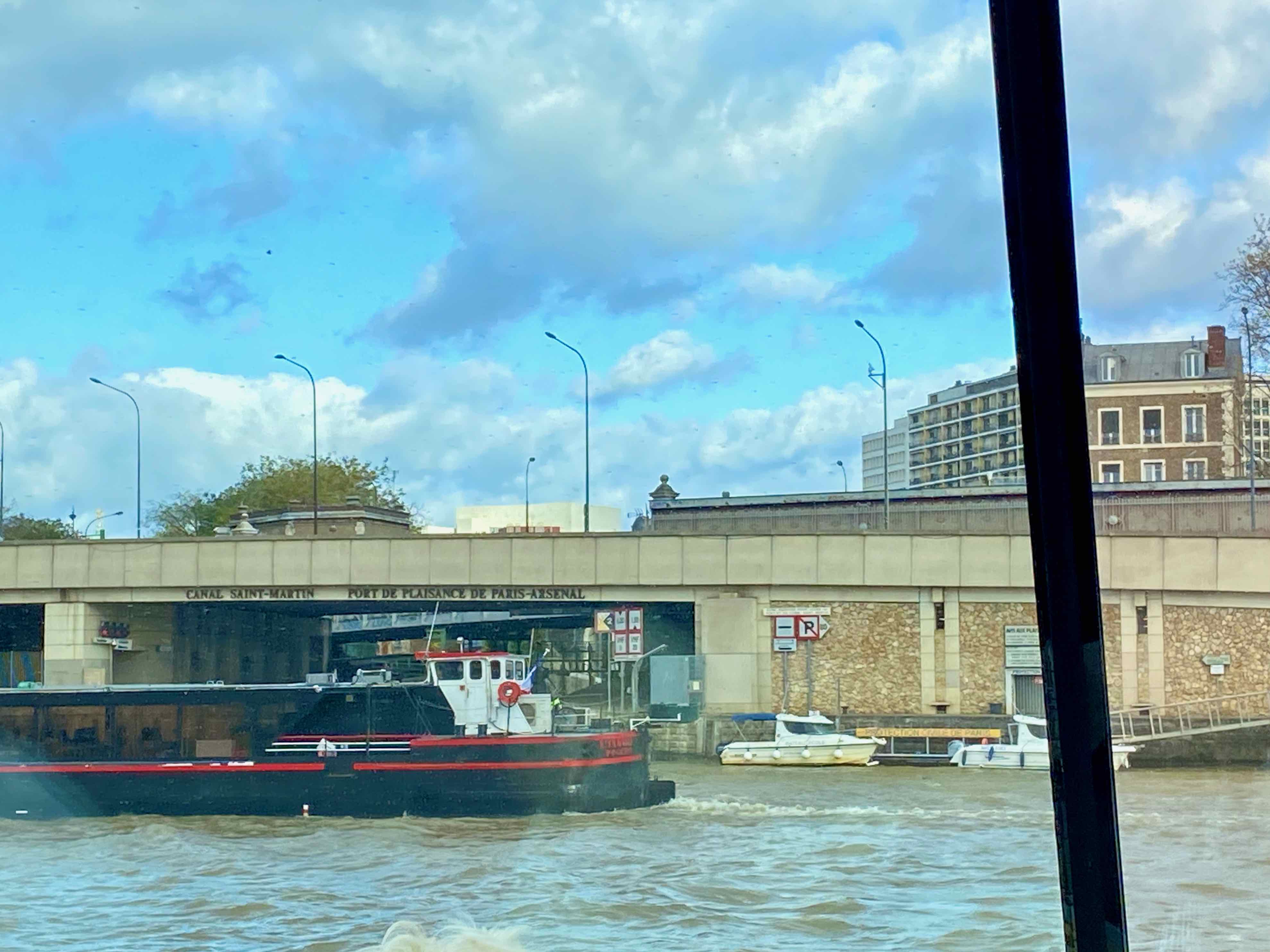
We headed east on the Seine River and see some of the more modern part of Paris before we turn around and head back towards the Eiffel Tower.

Bob’s dessert comes with a sparkler and the singing of ‘Happy Birthday’ and lots of clapping.  He definitely enjoys all the attention!

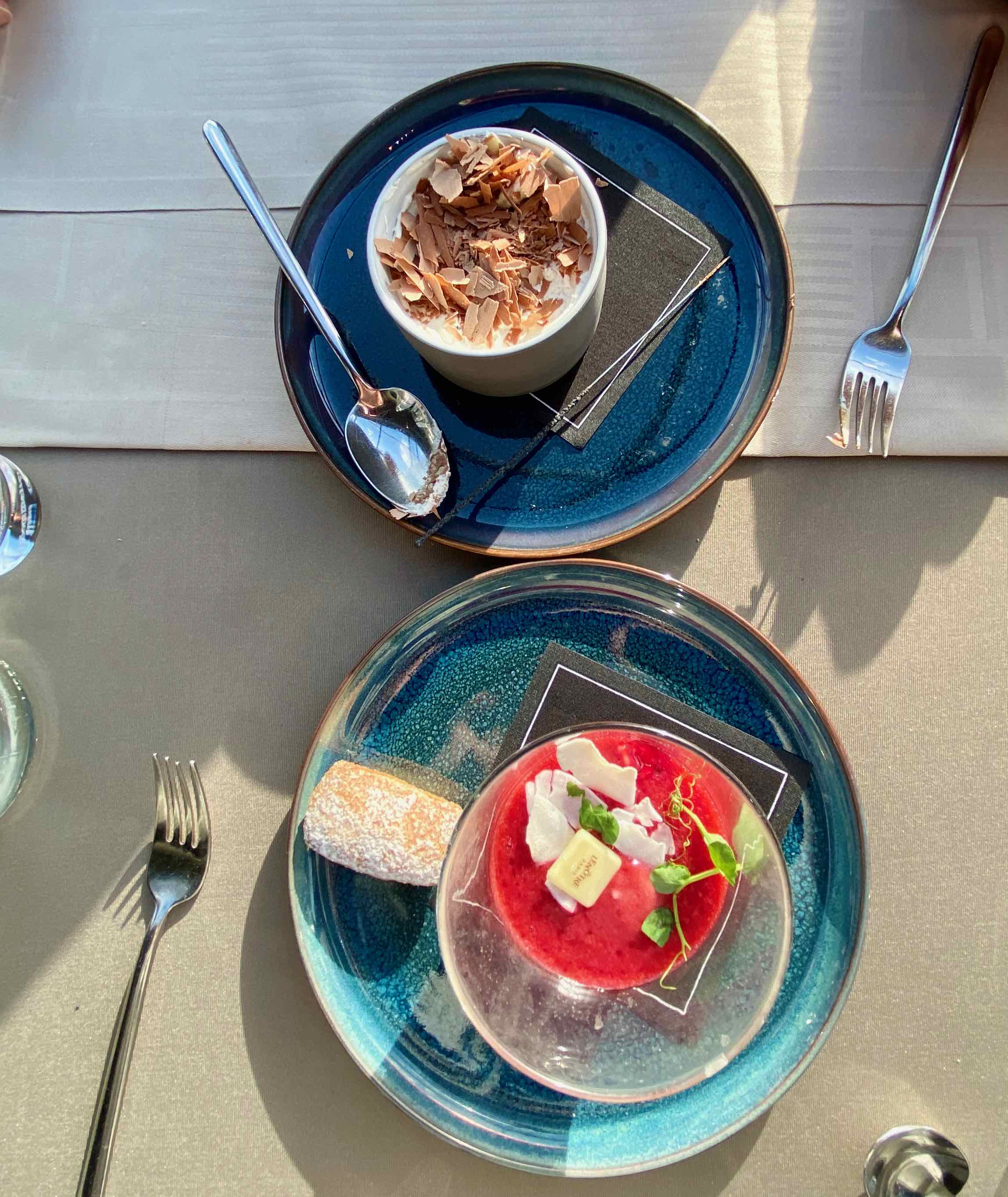
Bob has the Chocolate and vanilla pot with praline crisp and I love my Coconut cream, raspberry and pomegranate coulis with soft almond biscuit.  All our food was delicious.

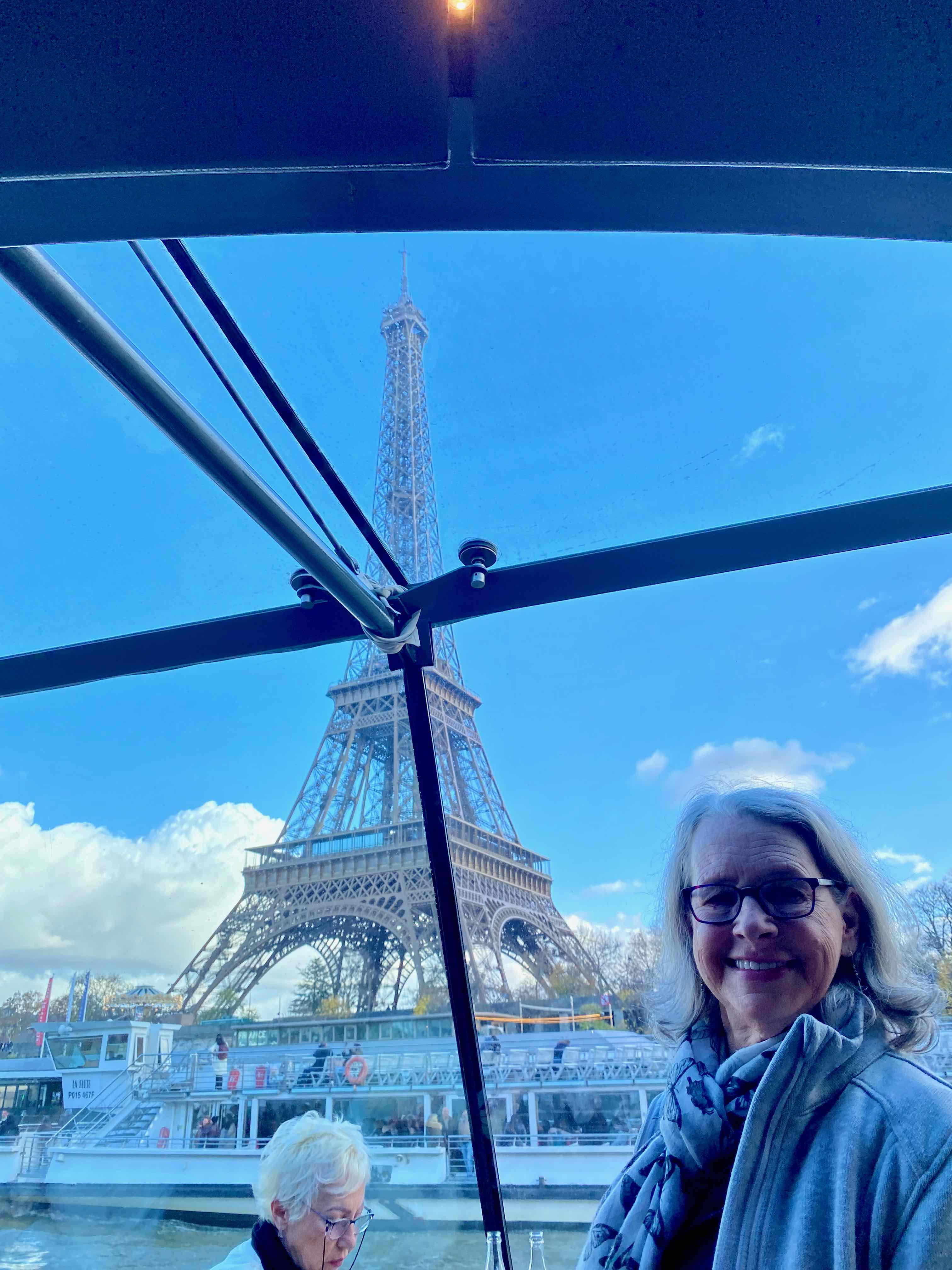
We purchased this photo as a keepsake. I would have liked to buy a few more photos but they were €20 (about $30) each!We pass the dock near the Eiffel Tower…
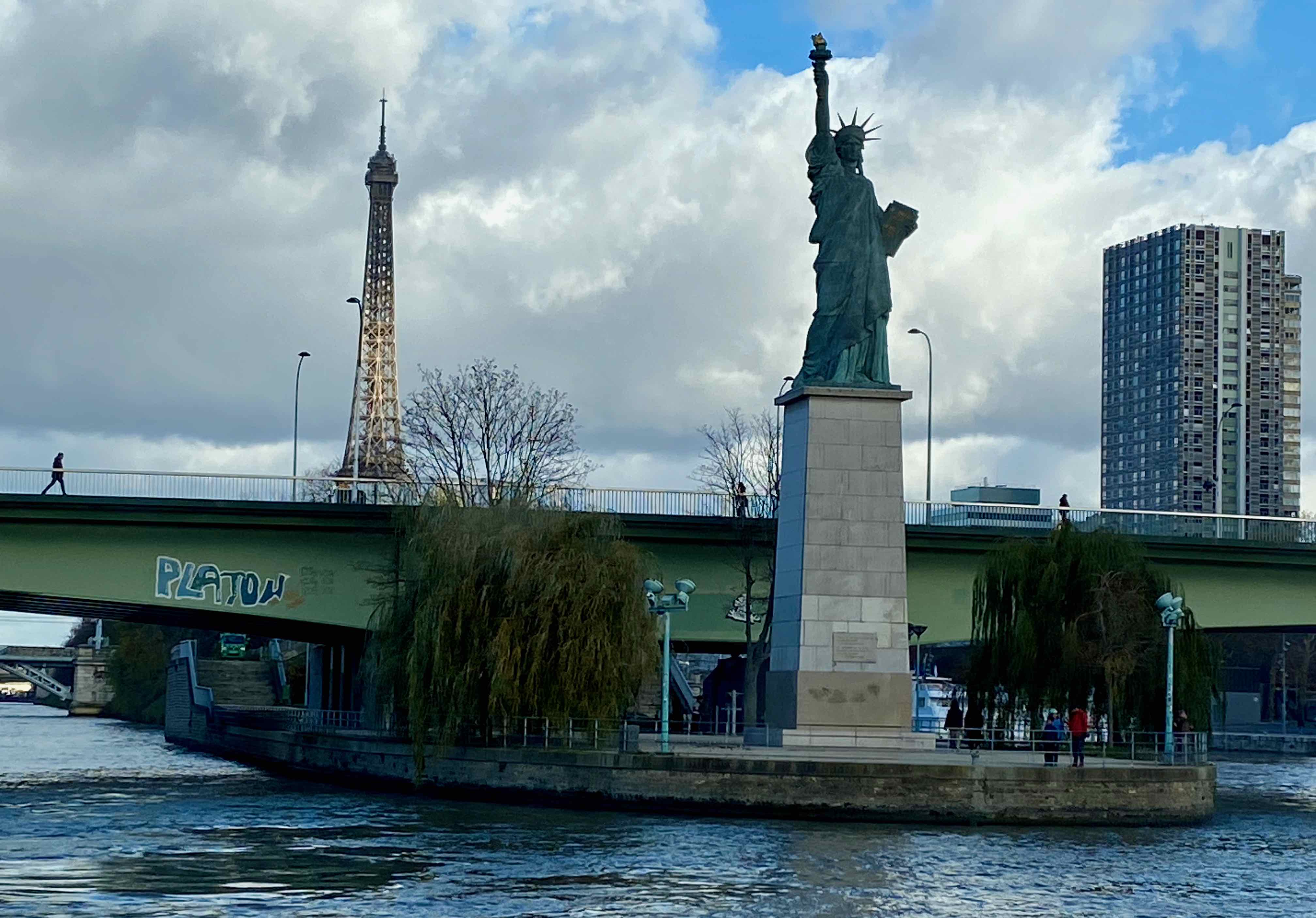
and the Statue of Liberty!  Bob was surprised to see this statue but I remembered her from my last trip.

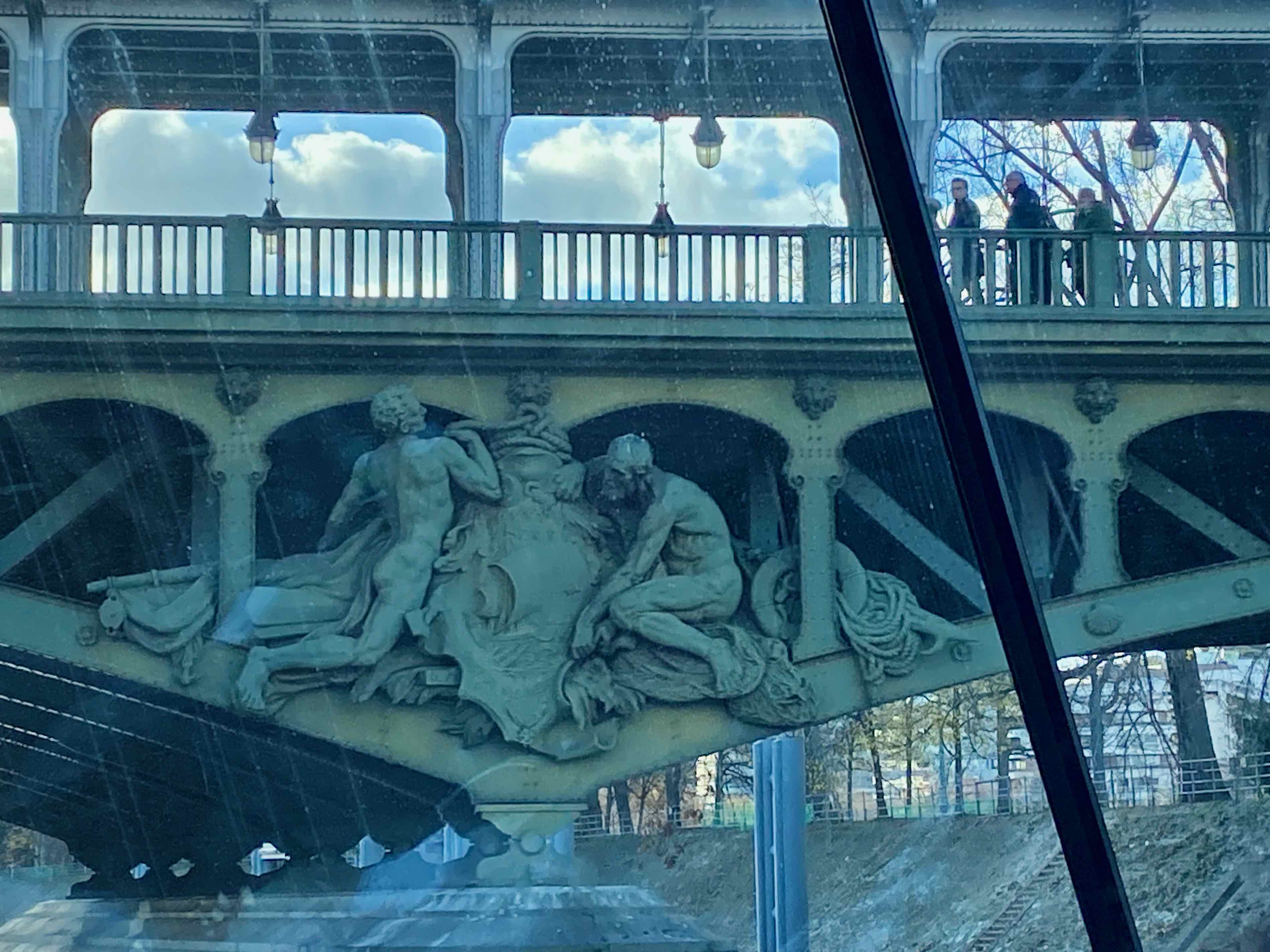
We pass under Le Pont de Bir-Hakeim with its  beautiful decorations before docking.  We both had such a great time and enjoyed seeing Paris from the Seine River.

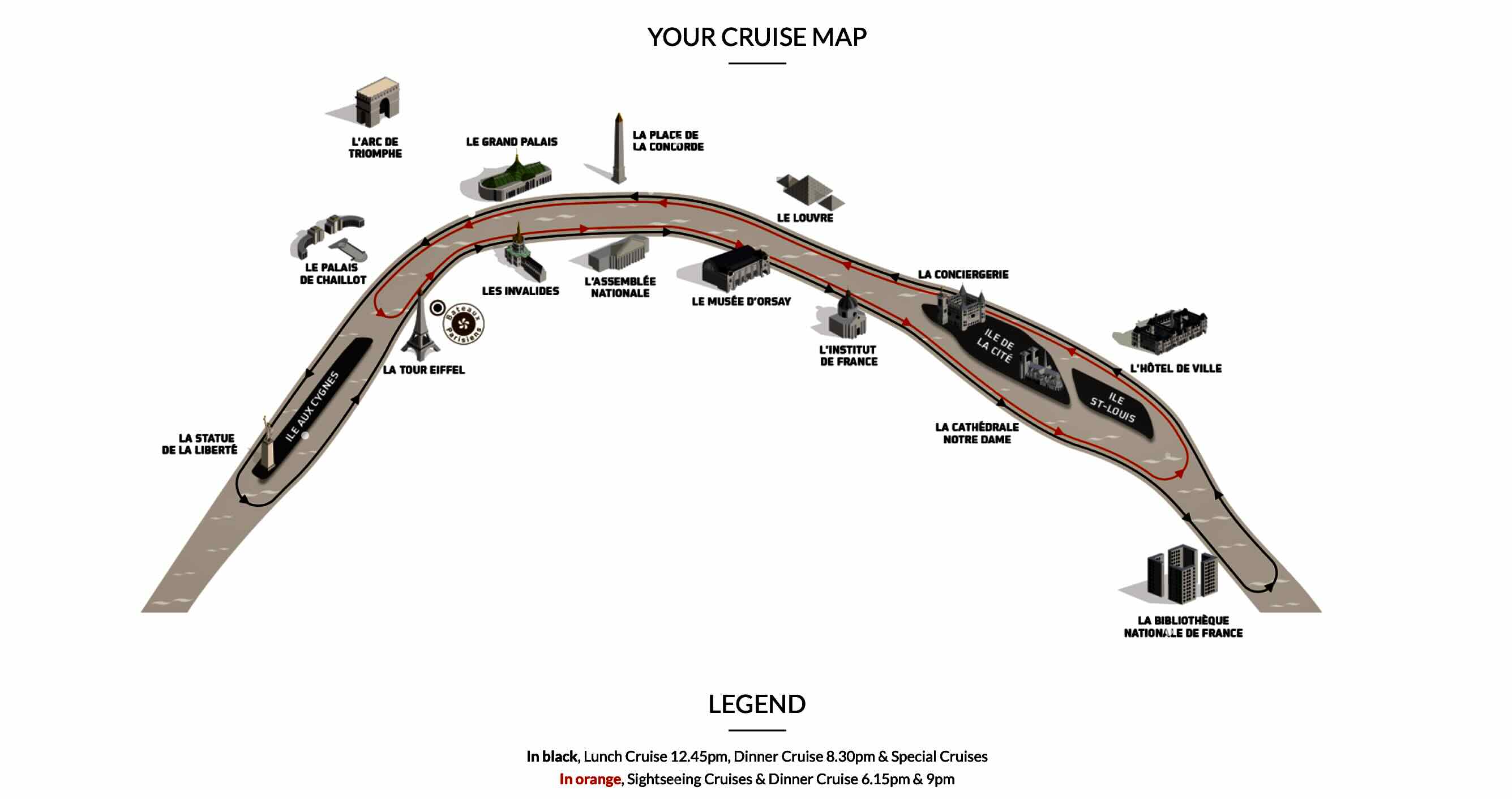
This map shows our route, the lunch cruise follows the black line on the map. You might have to zoom in a bit, I couldn’t manage to make this image any larger.

Screenshot

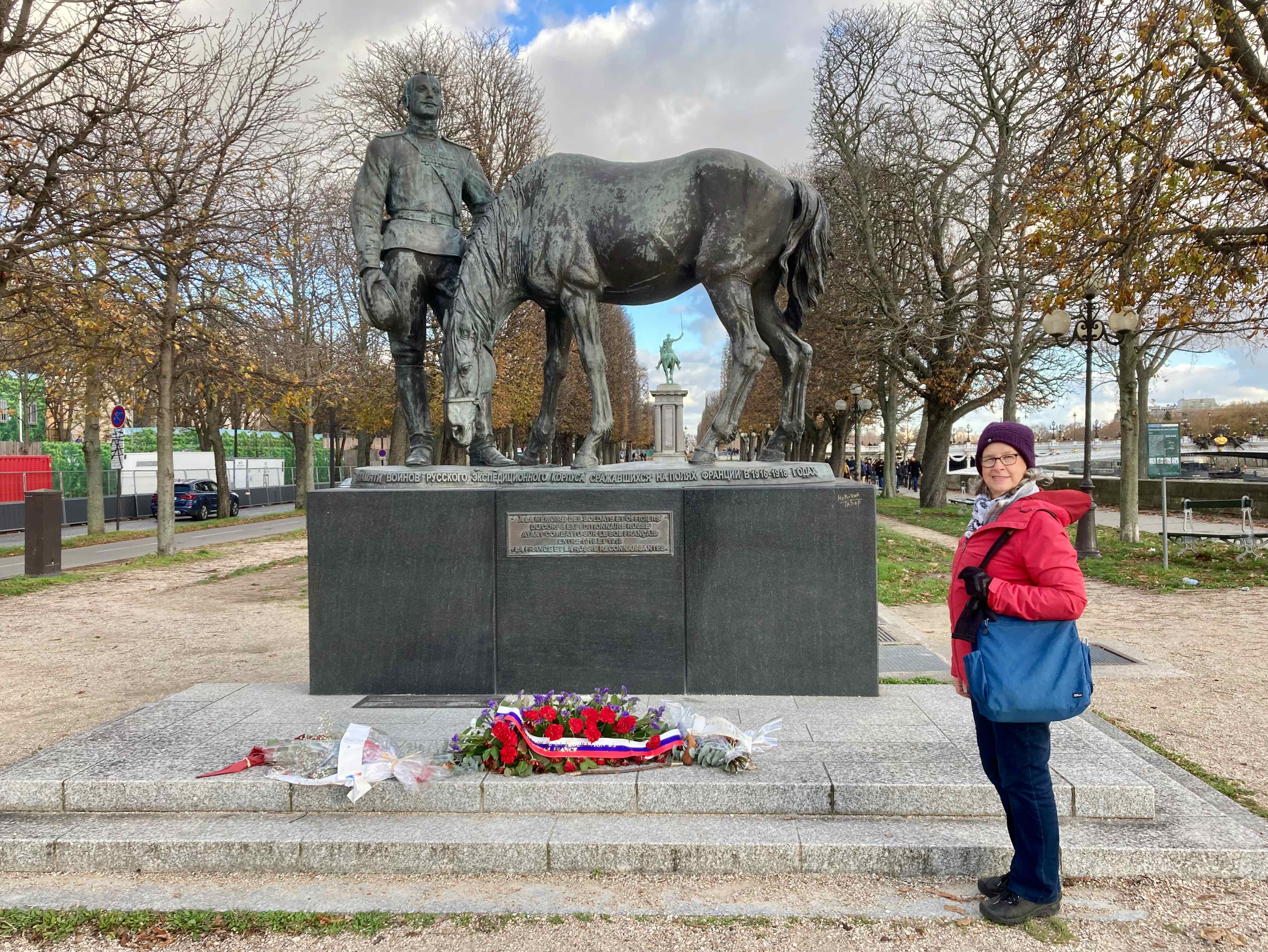
After our wonderful luncheon on the Seine we do a bit of exploring. As we walk along the north side of the Seine we see several monuments.  This one is dedicated to the Russian soldiers and officers killed on French soil between 1916 and 1918.

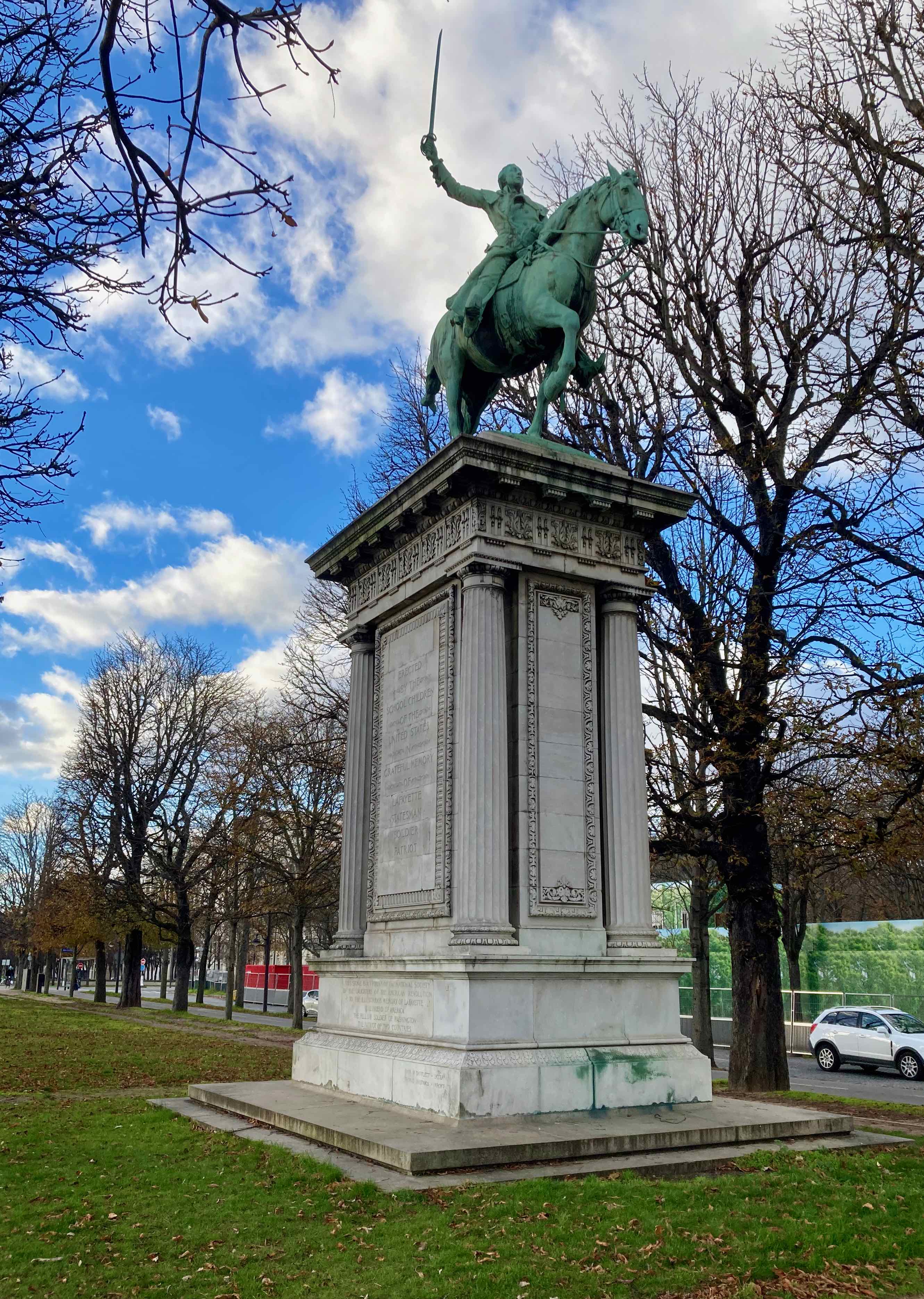
This monument was erected by the school children of the United States.  This link https://www.unjourdeplusaparis.com/en/paris-insolite/detail-insolite-statue-la-fayette shares an interesting, often overlooked detail about this monument, one we did not notice until I was doing a bit of research while writing this post.

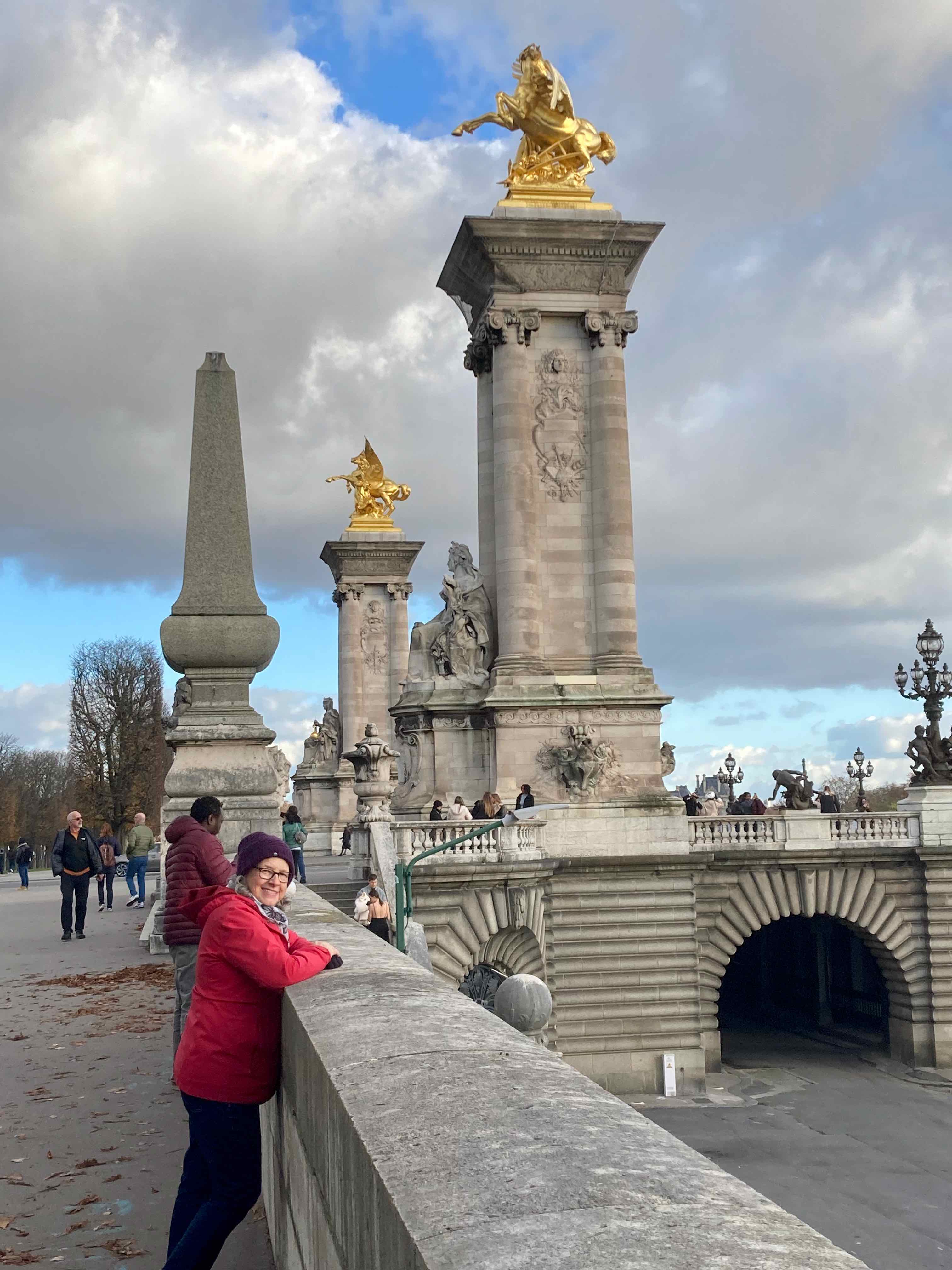
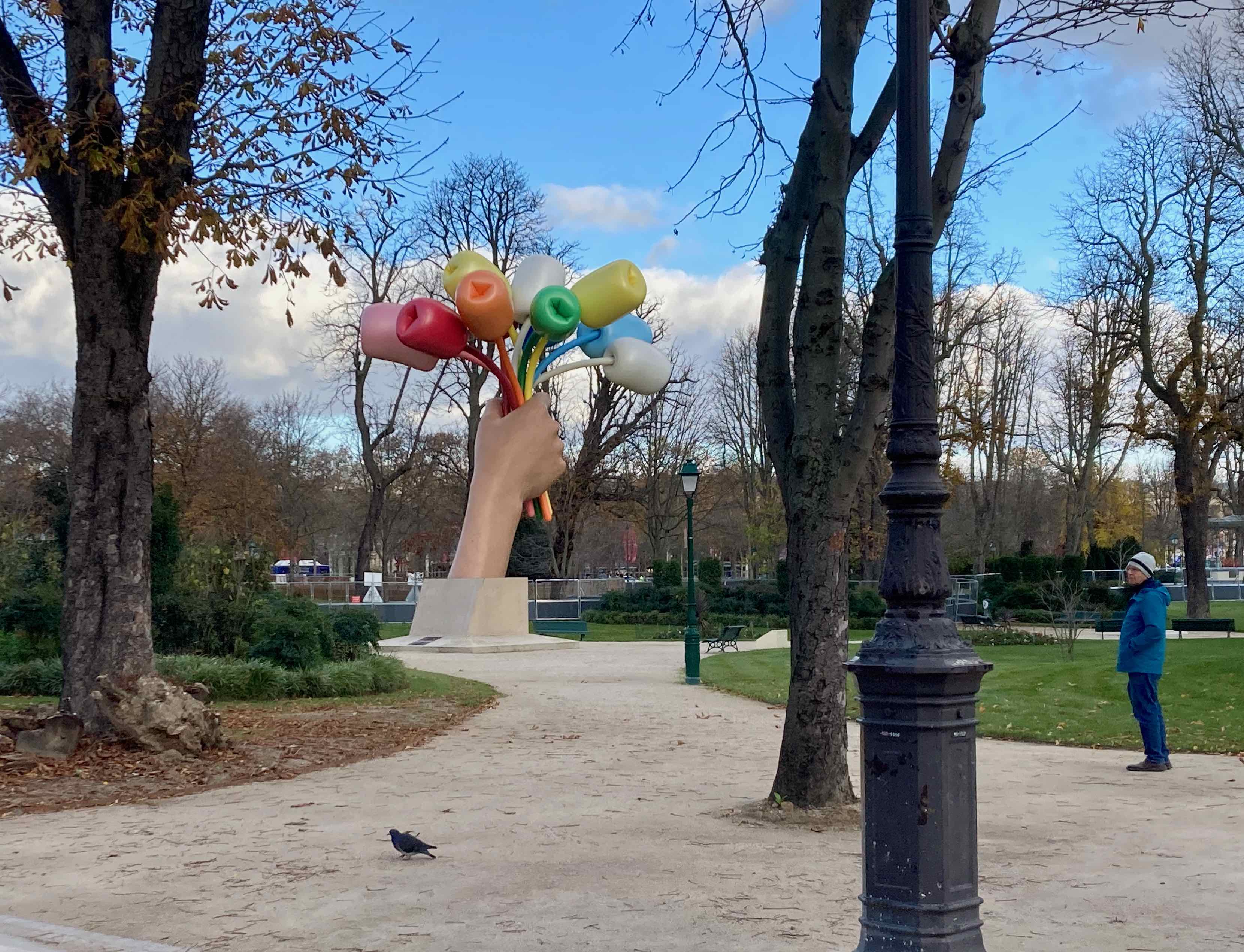
As we make our way back towards the Louvre, we stop for a photo of Le Pont Alexandre III.  It really is a magnificent bridge!Jeff Koons gifted his Bouquet Of Tulips to Paris in 2019. I did a bit or research trying to find out a bit more about this sculpture and came across this interesting article. https://www.museemusings.com/blog/jeff-koons-goes-to-paris

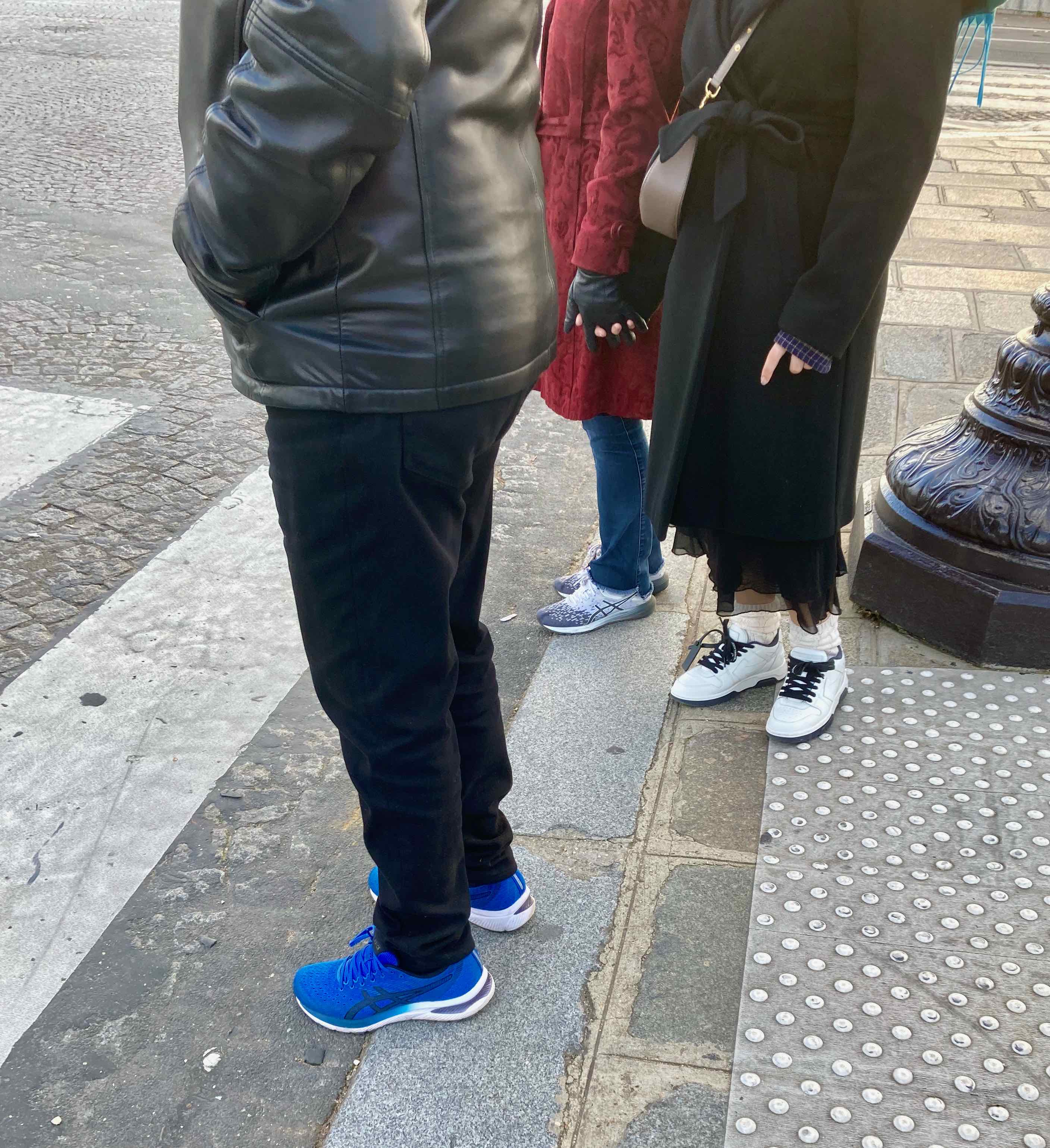
Parisien’s love their ‘baskets’ or running shoes.  Seems like everyone wears them now.

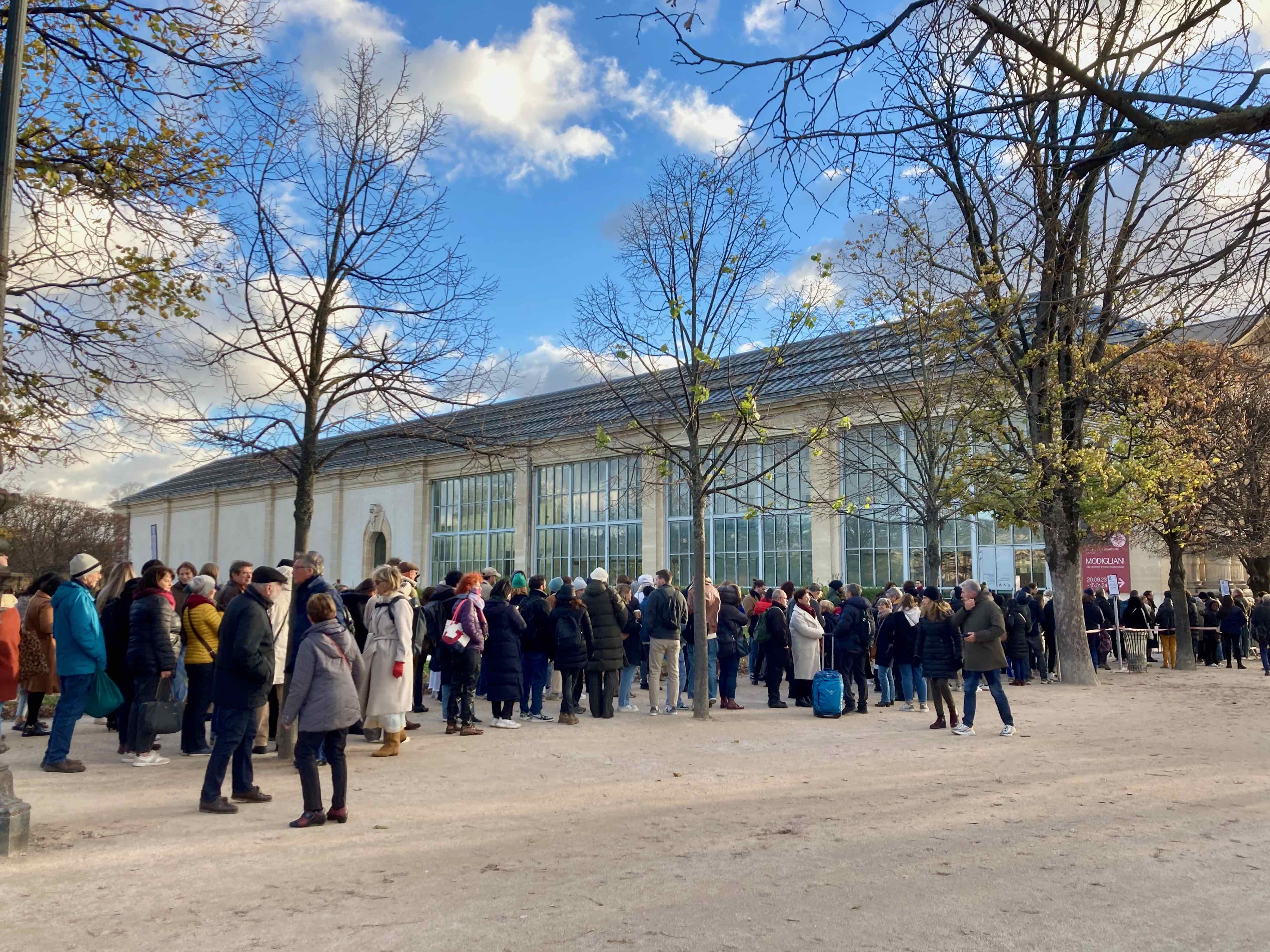
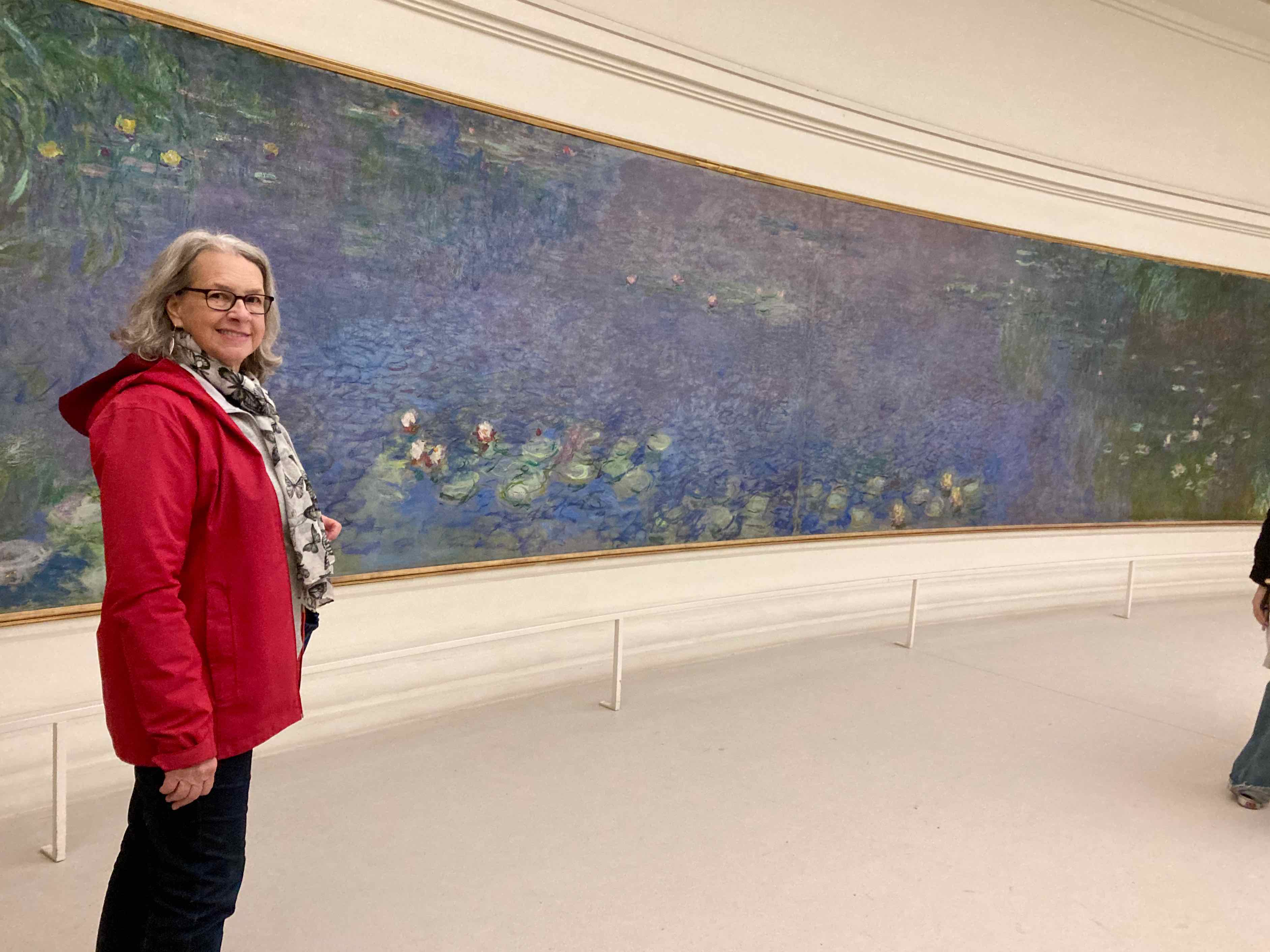
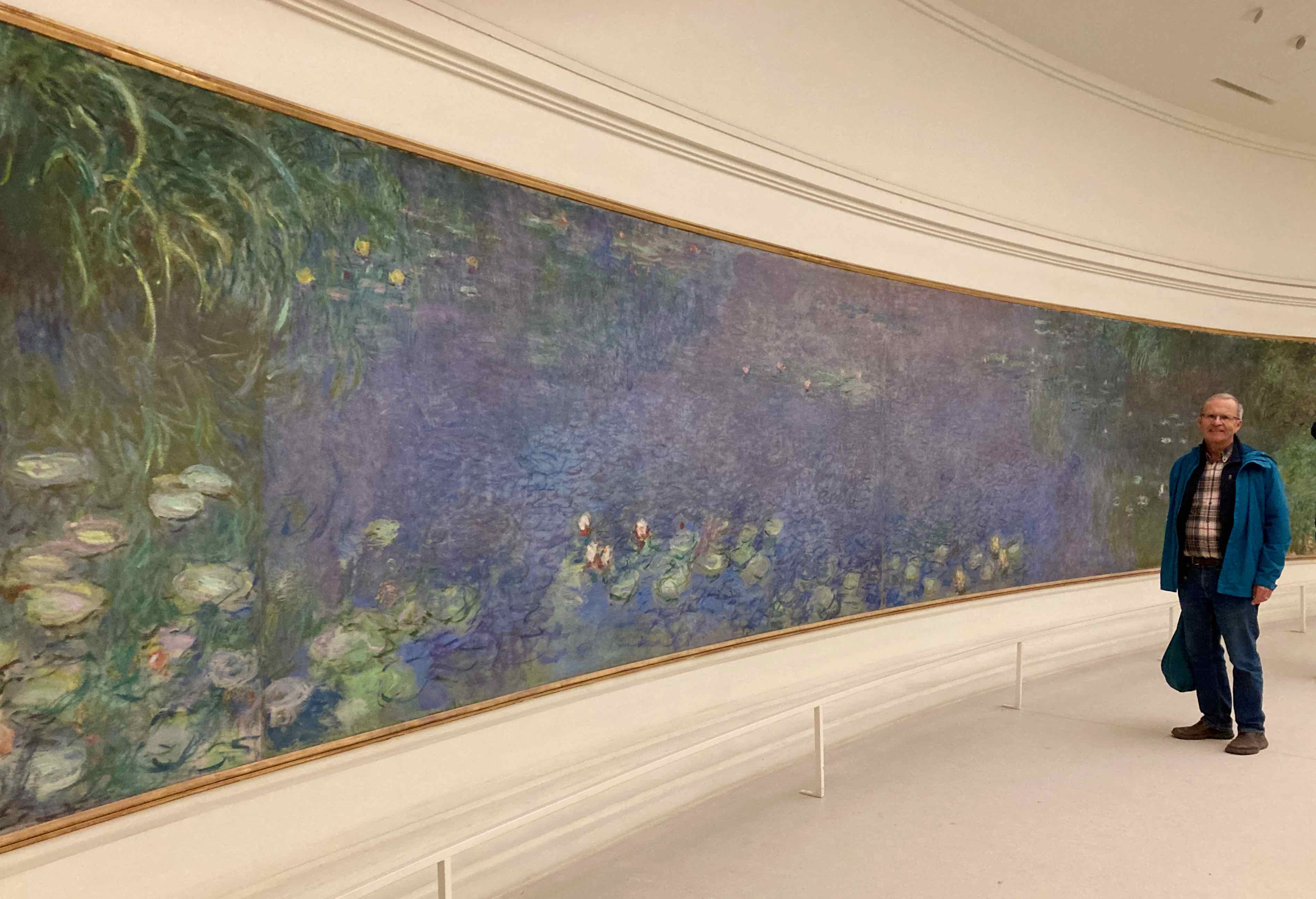
Next, we line up to enter the Orangerie to see Monet’s “Water Lilies”.  It is a good thing we have purchased our tickets in advance, because once again, the line up for those who do not have tickets is very long.  Our line was long enough…can you see Bob in his blue coat?

I was pleasantly surprised to see that it is now permissible to take photos inside the Orangerie.  When I visited in 2014 this was strictly prohibited.  

The paintings are enormous, and there are eight of them displayed in two oval rooms designed expressly for this purpose.  Bob is not as enamoured with these paintings as I am.

I was thrilled that there was a Modigliani show downstairs!  Amadeo Modigliani is one of my favourite painters and there were many paintings that I knew and many that were new to me.

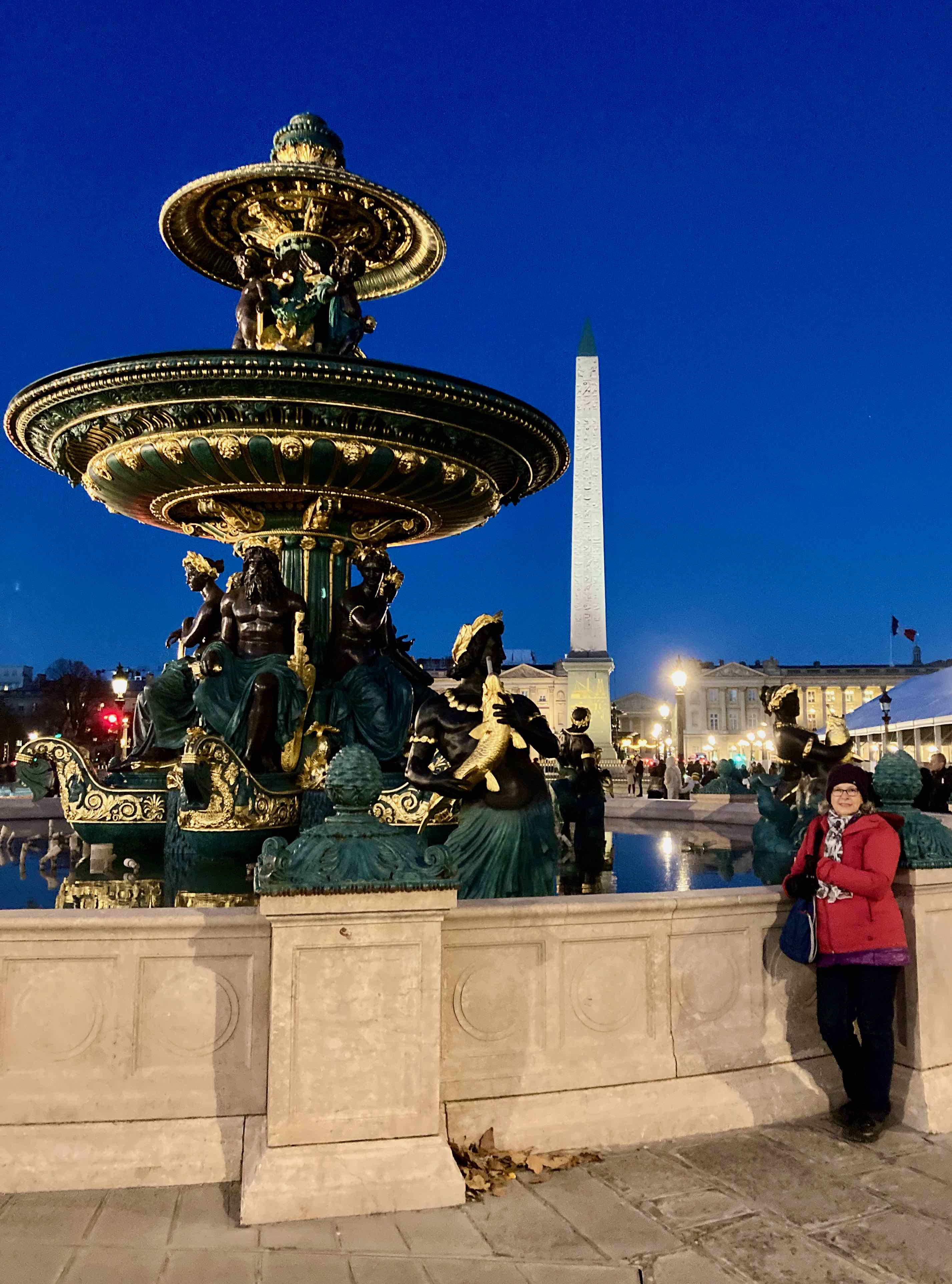
I wasn’t feeling well, so we left the Orangerie and walked a bit outside and the fresh air helped.  This is the fountain that Bob took a photo of several days ago…The Fountain of Rivers.  It is extremely ornate.

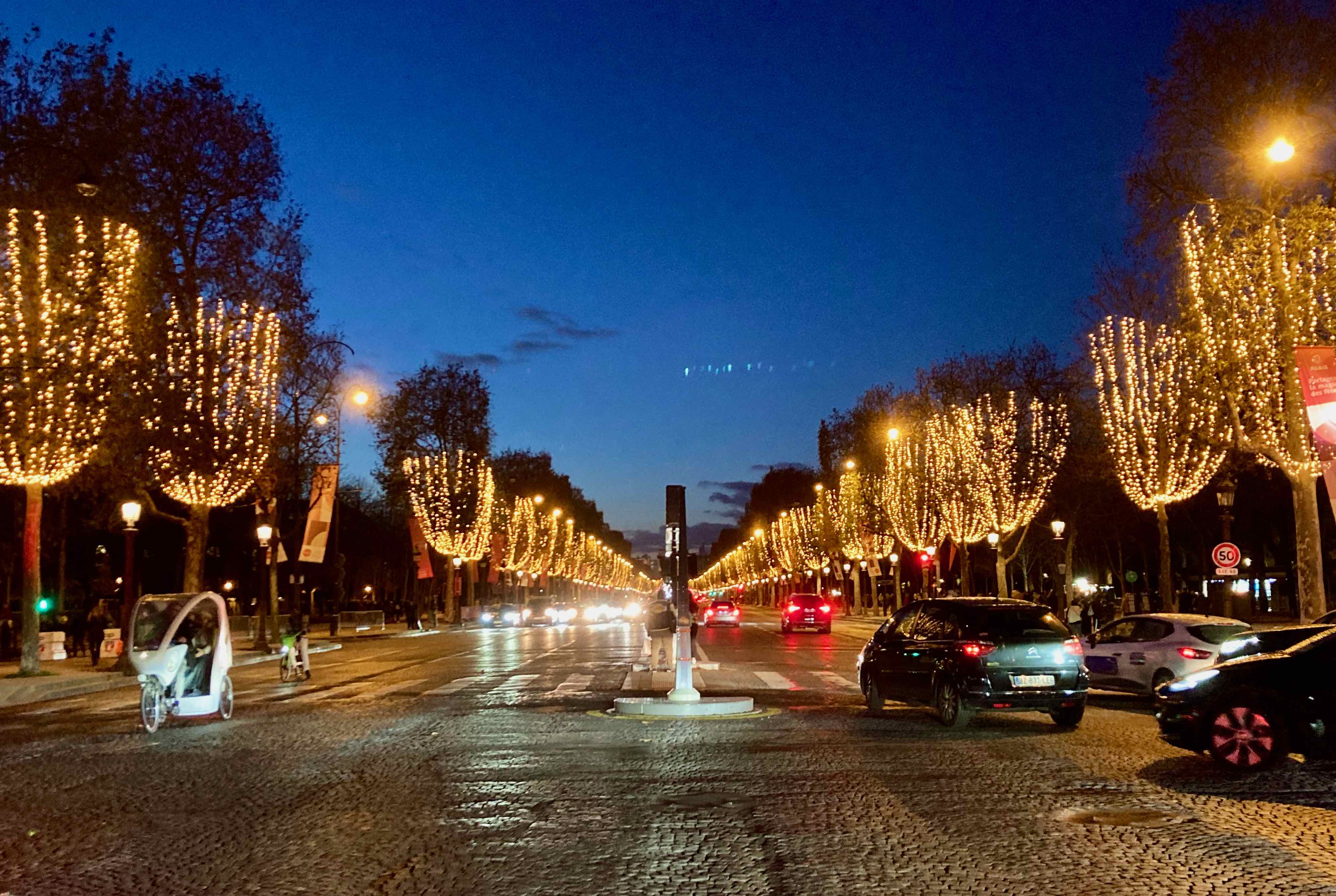
We decided to walk and see some of the Christmas lights on the Avenue des Champs Élysées before going back to our apartment.

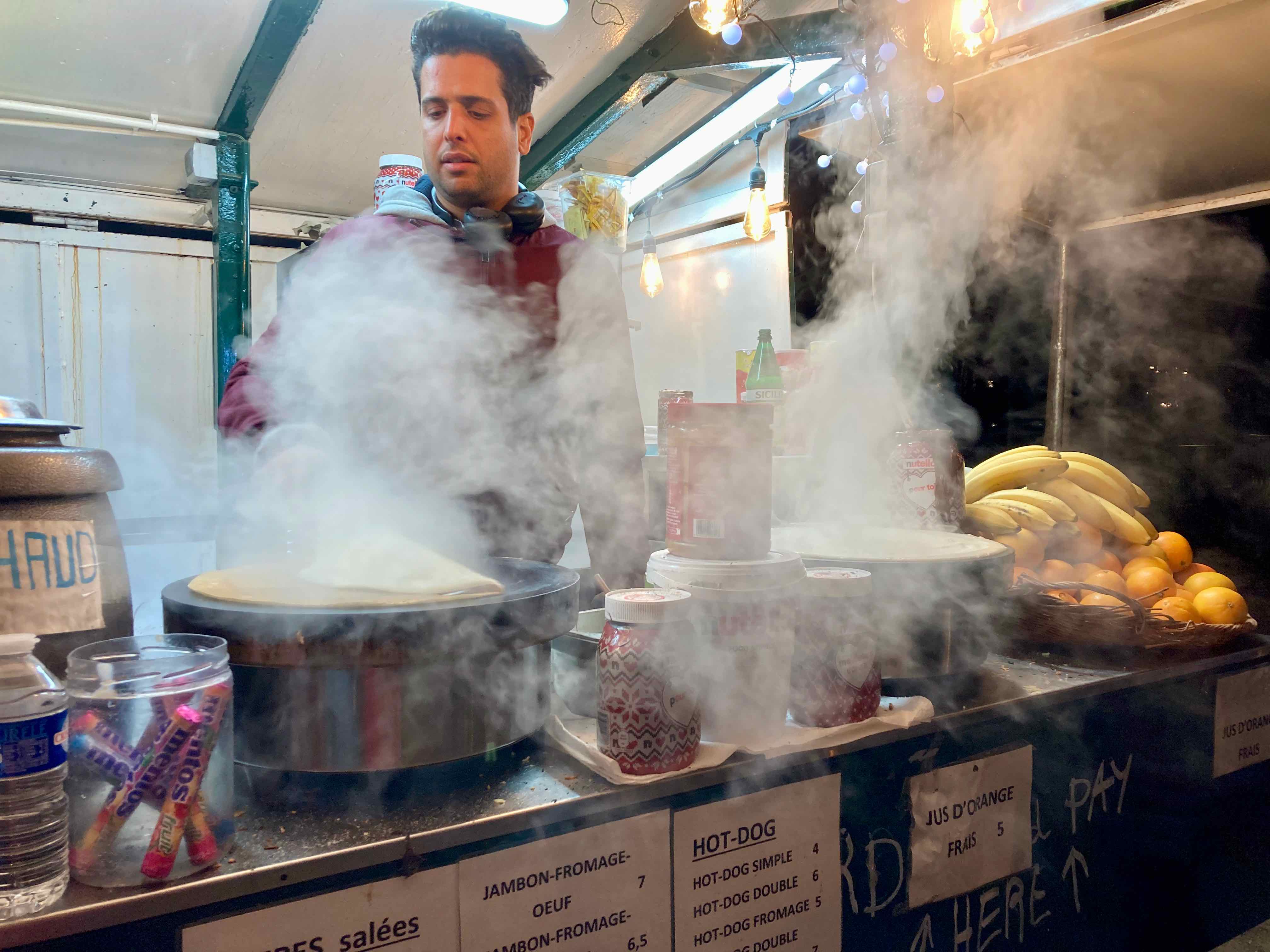
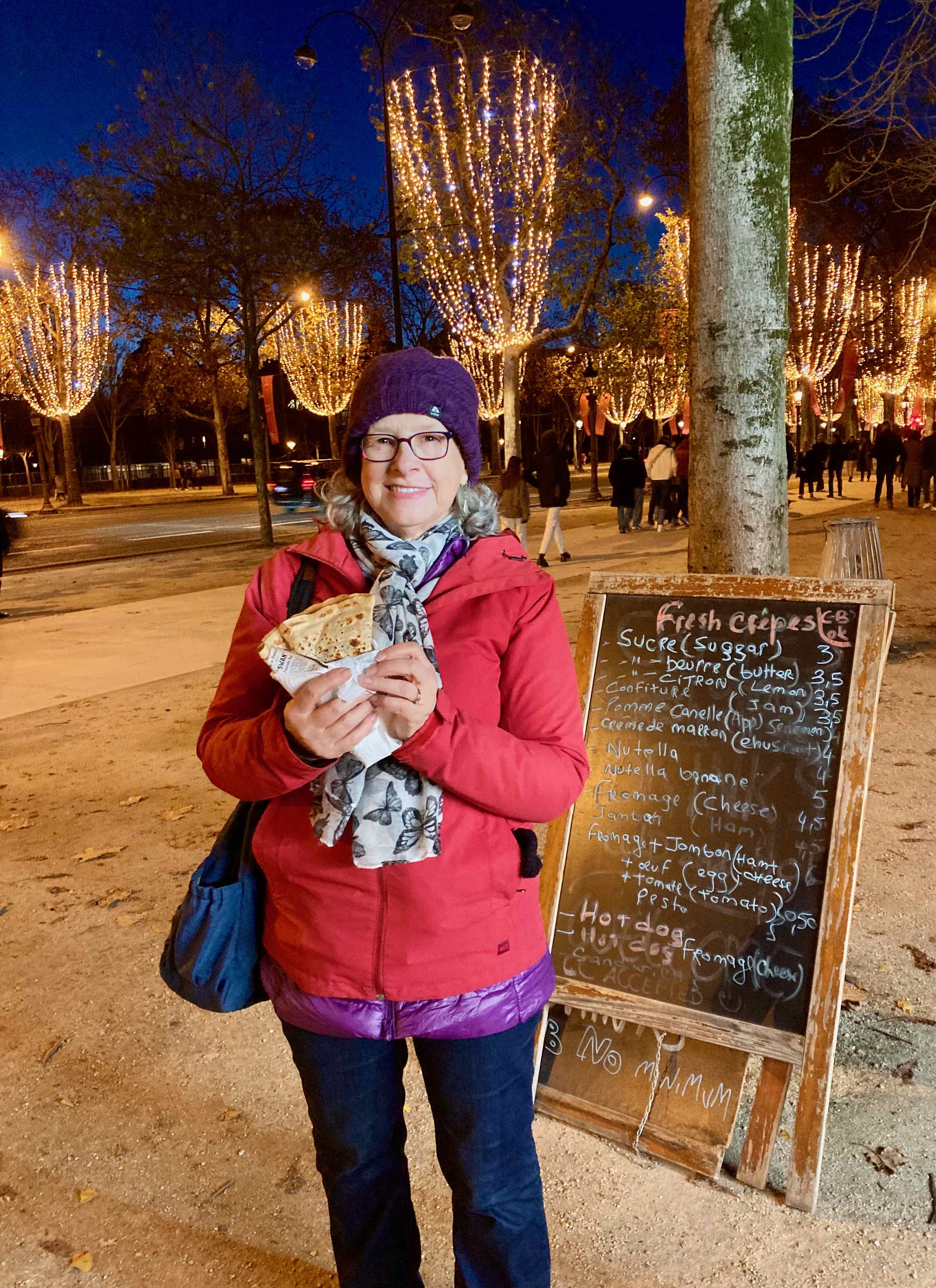
Nearby we see a small stand selling crêpes.  I simply have to have at least one crêpe, before I leave Paris… they are delicious.

It is a bit chilly but the yummy crêpe warms my hands and tummy…now we can go home.

Musée D’Orsay

Day 87,  Thursday, November 23, 2023

Today is dedicated to the Musée D’Orsay, one of my favourite museums in Paris. It is in the centre of Paris on the banks of the Seine, opposite the Tuileries Gardens. The museum is in the former Orsay railway station, built for the Universal Exhibition of 1900. So the building itself could be considered as the first “work of art” in the Musee d’Orsay, which displays collections of art from the period 1848 to 1914. There is a wonderful temporary Vincent Van Gogh exhibit that we really want to see, so we reserved a 12:00 time to enter the exhibit.  That was a wise move as the lineup without reservations is very long, and people are waiting for up to two hours to see the exhibit!  My friend, Ivy,  also told me about the Louis Janmot exhibit which she really loved, so I’m looking forward to seeing that too.

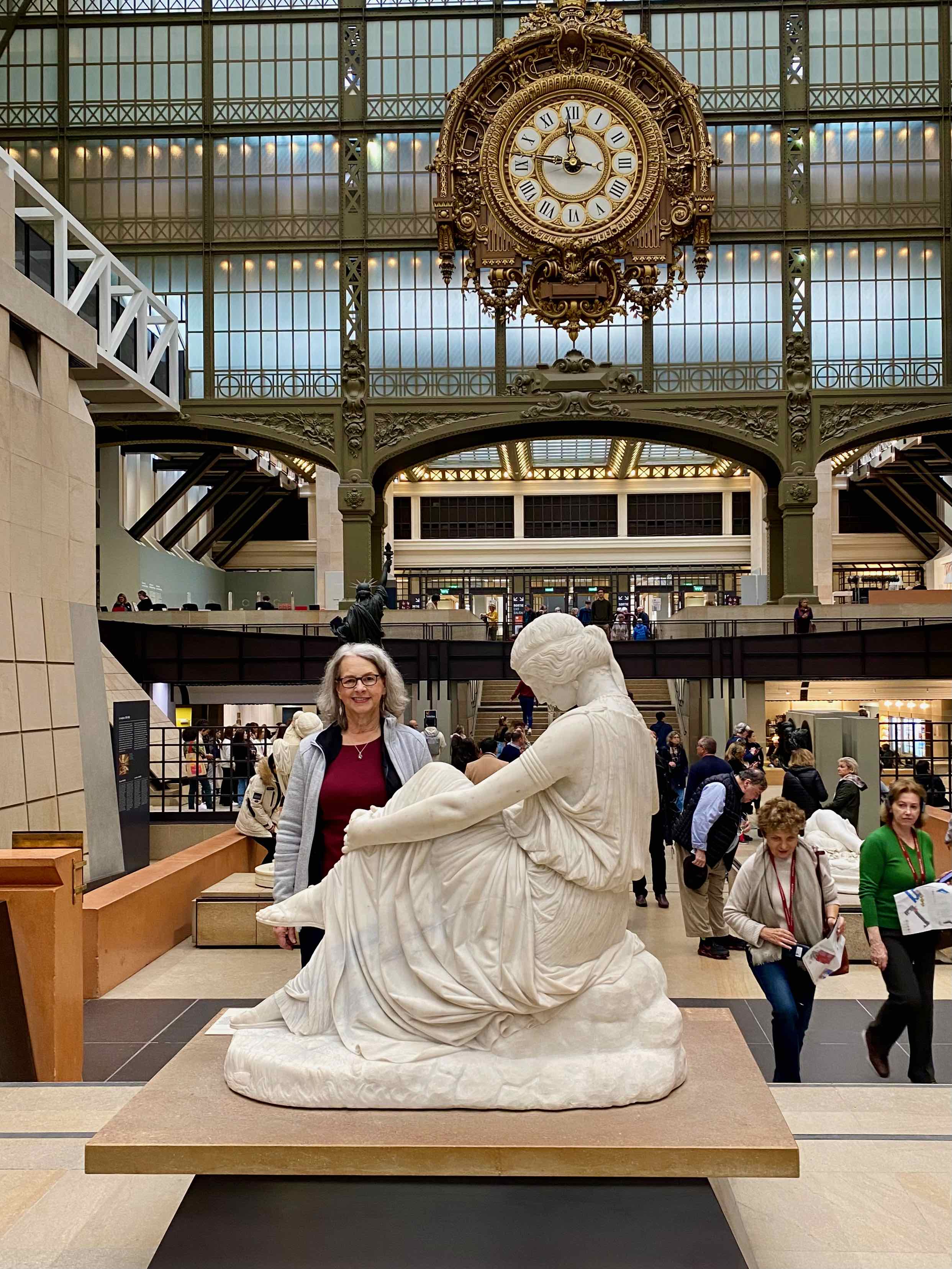
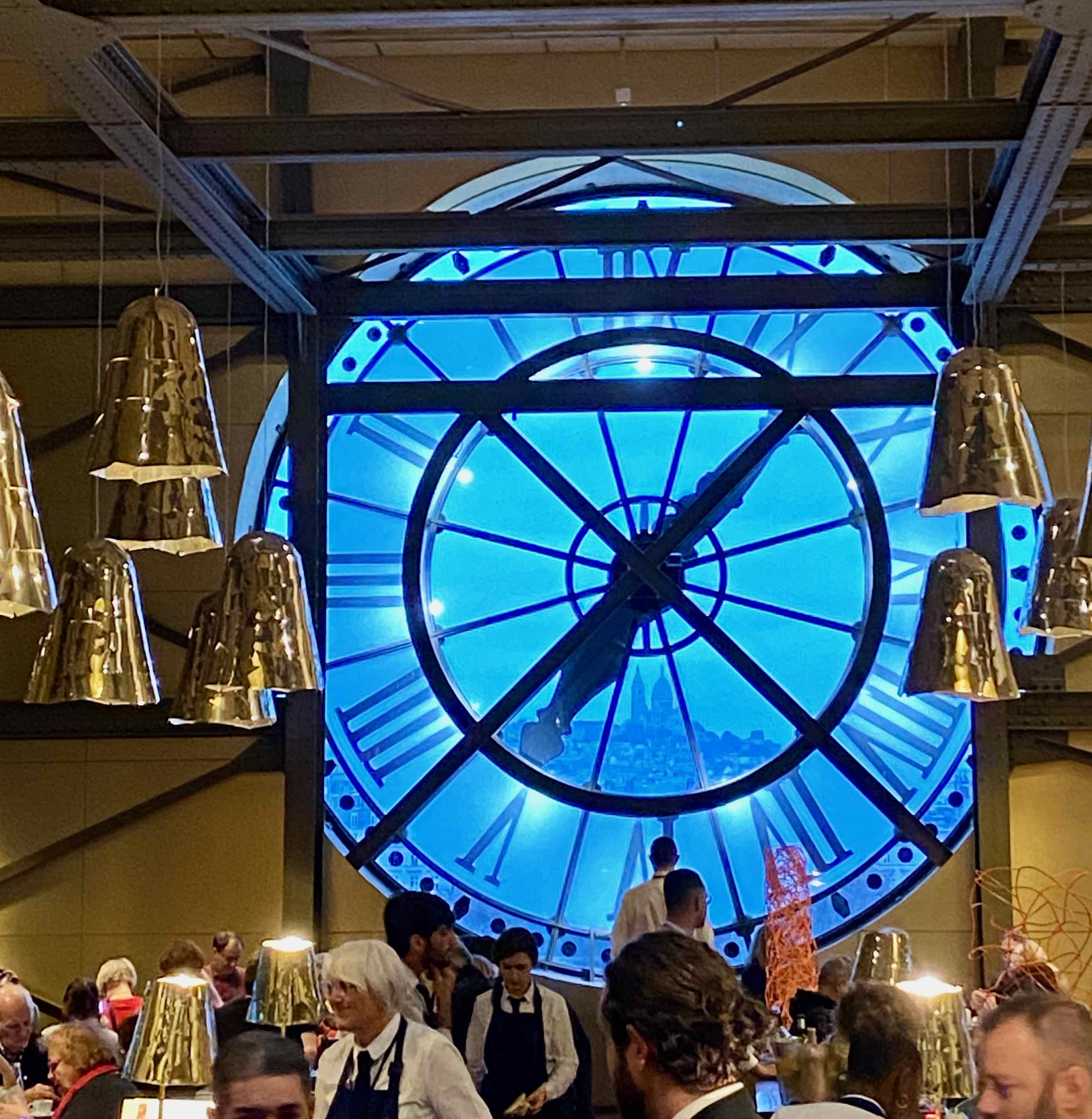
The Musée d’Orsay is a beautiful building, with two enormous clocks. It houses the largest collection of Impressionist and  post-impressionist masterpieces in the world, by painters including Berthe Morisot, Edouard Manet, Degas, Renoir, Cezanne, Seurat, Sisley, Gaugin and Van Gogh.

I think this is my fourth time visiting this fabulous museum and it is wonderful to revisit many of these paintings. There is always something new to notice and appreciate on return visits.  We are a bit early for our entry into the Vincent Van Gogh exhibit so we browse a bit. Here are a few of the main floor paintings.

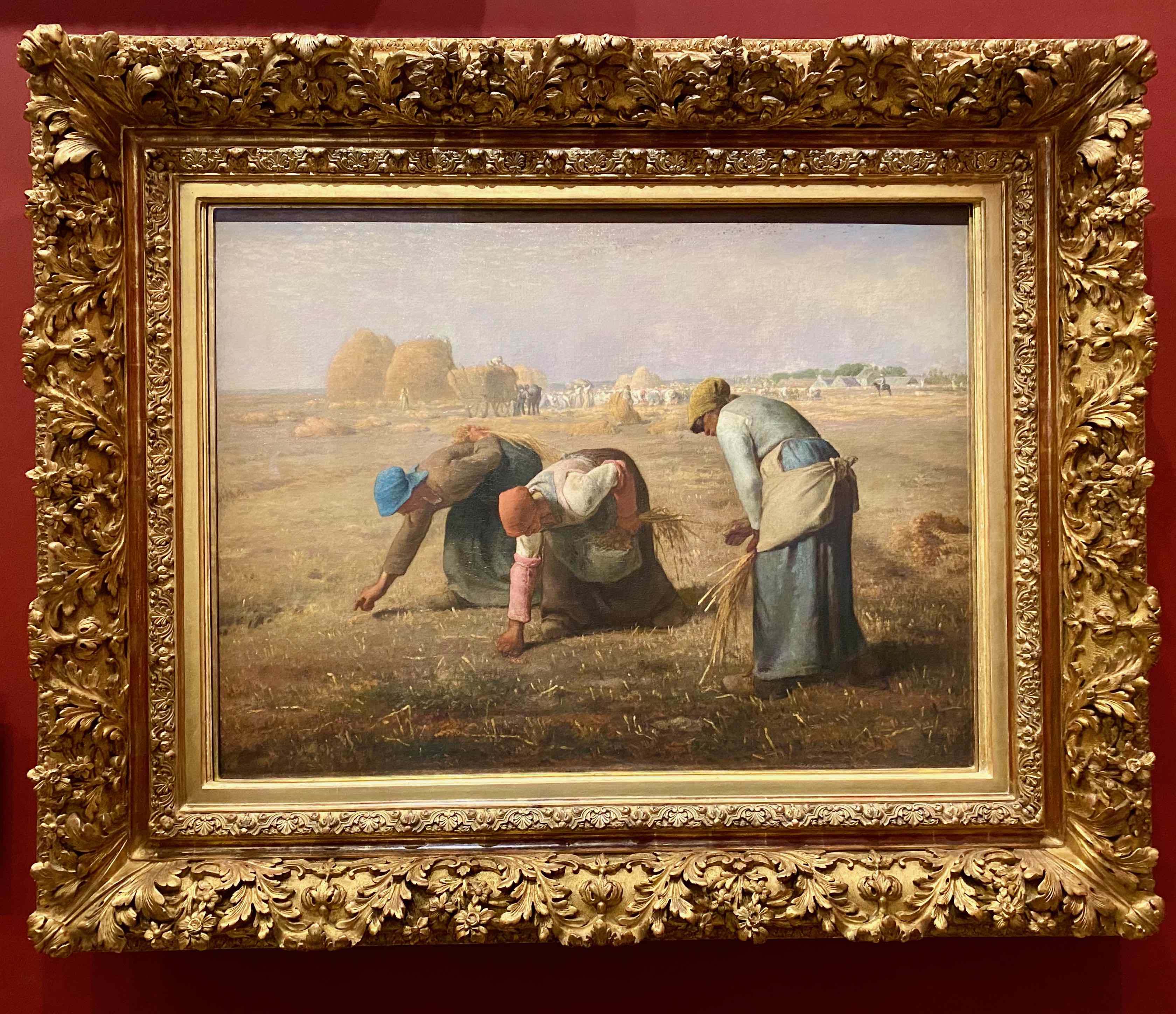
The Gleaners (1857) by Jean-François Millet

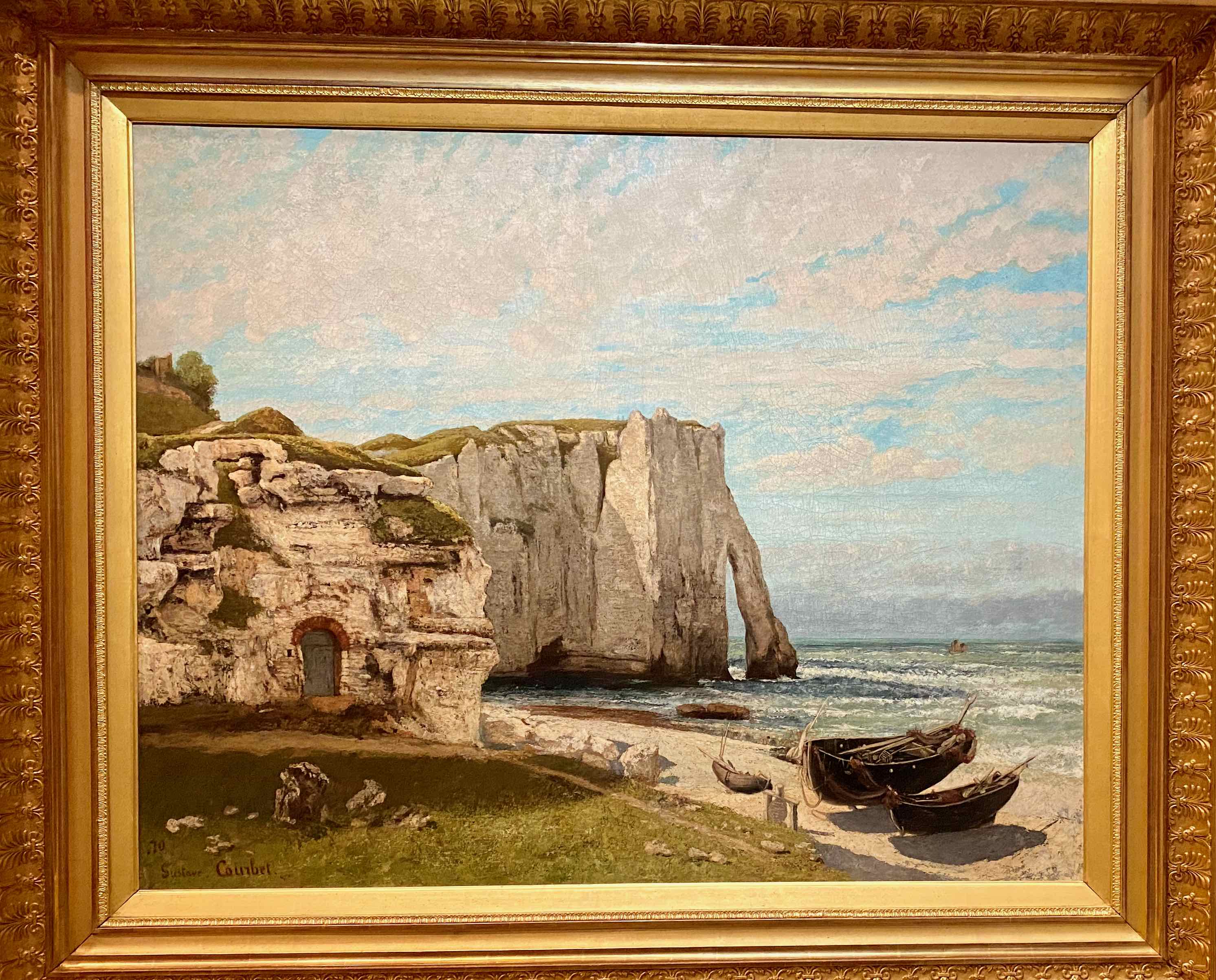
I didn’t remember seeing this painting before, Goustav Courbet’s ‘The Cliff at Etretat After the Storm’,1870 but it caught my eye.  We visited this exact location on the north shore of France earlier in our trip.  I sat and drew this very same cliff!

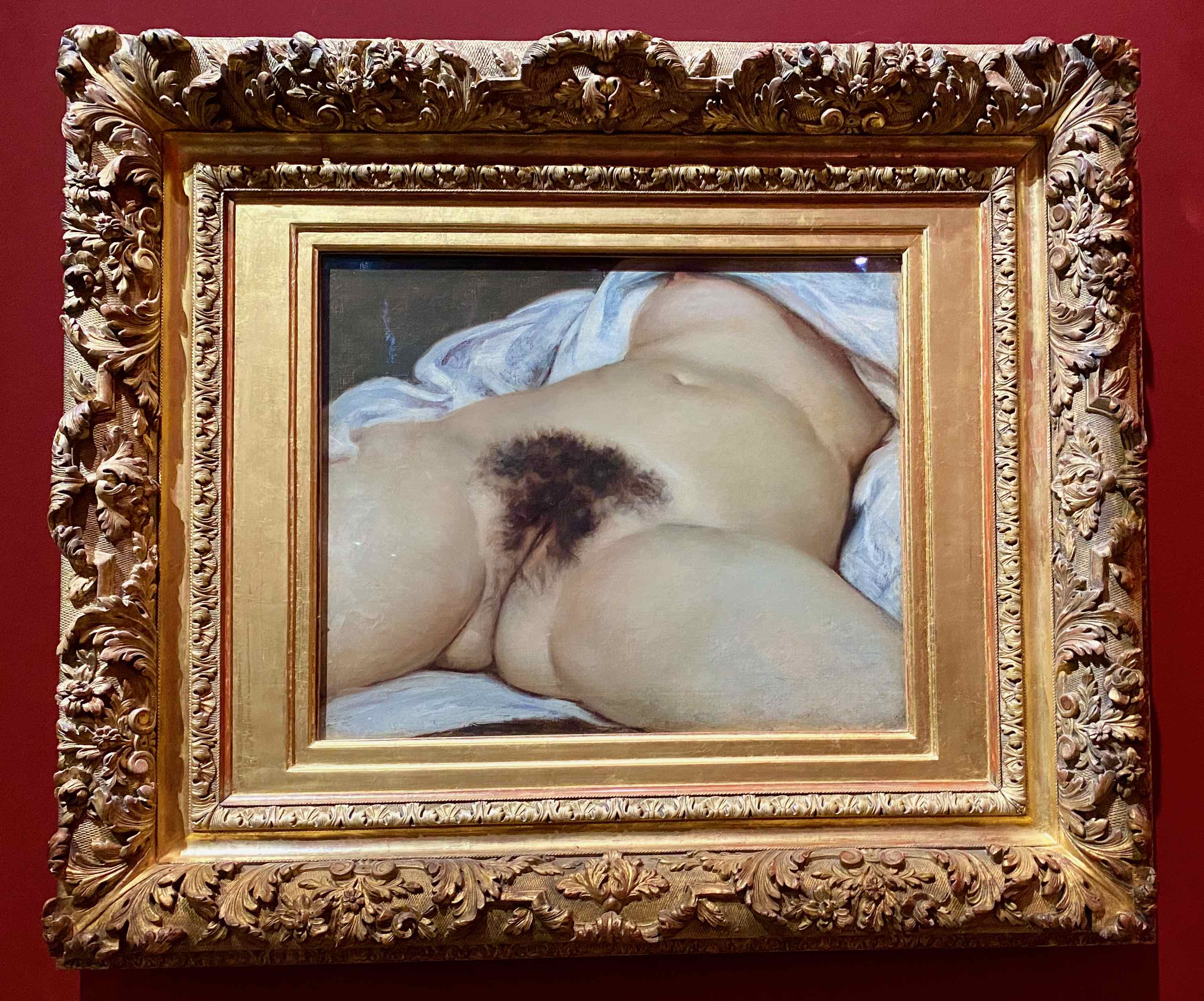
Goustav Courbet’s, The Origin of the World was daring when it was exhibited in1866 and still draws a crowd and lots of interesting comments. 

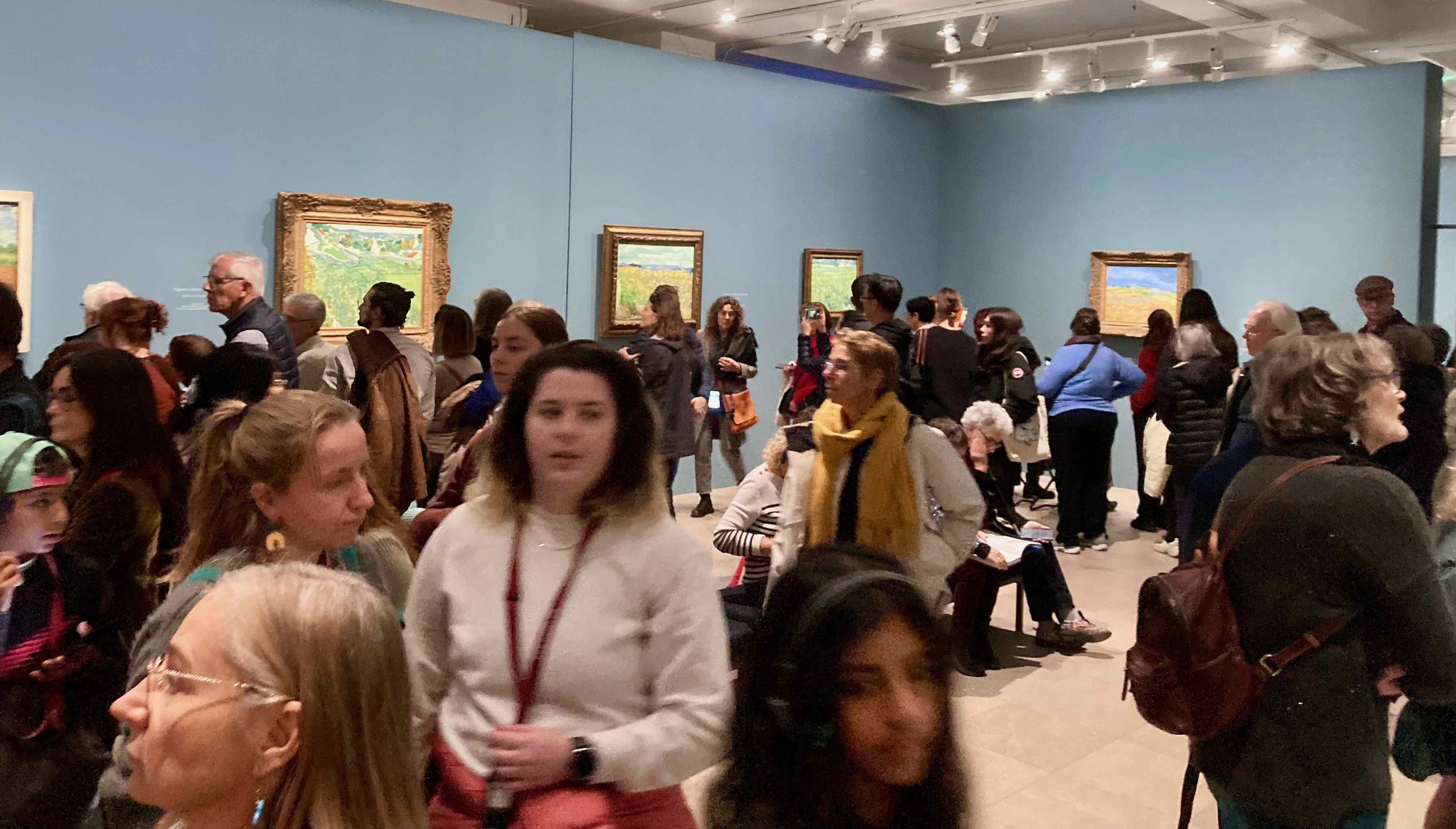
At noon we enter the Van Gogh exhibit.

“This exhibition is the first to be devoted to the works produced by Vincent Van Gogh (1853-1890) during the last two months of his life, in Auvers-sur-Oise near Paris. Vincent Van Gogh arrived in Auvers-sur-Oise on May 20th 1890 and died there on July 29th following a suicide attempt. Although the painter only spent a little over two months in Auvers, the period was one of artistic renewal with its own style and development, marked by the psychic tension resulting from his new situation as well as by some of his greatest masterpieces.”  ~Musée d’Orsay website

I found this 12 minute video that has a walk through the exhibition…It takes me right back to our visit.  https://youtu.be/ntW7zadEEl4?si=aXna2cxoHvPw4lr-

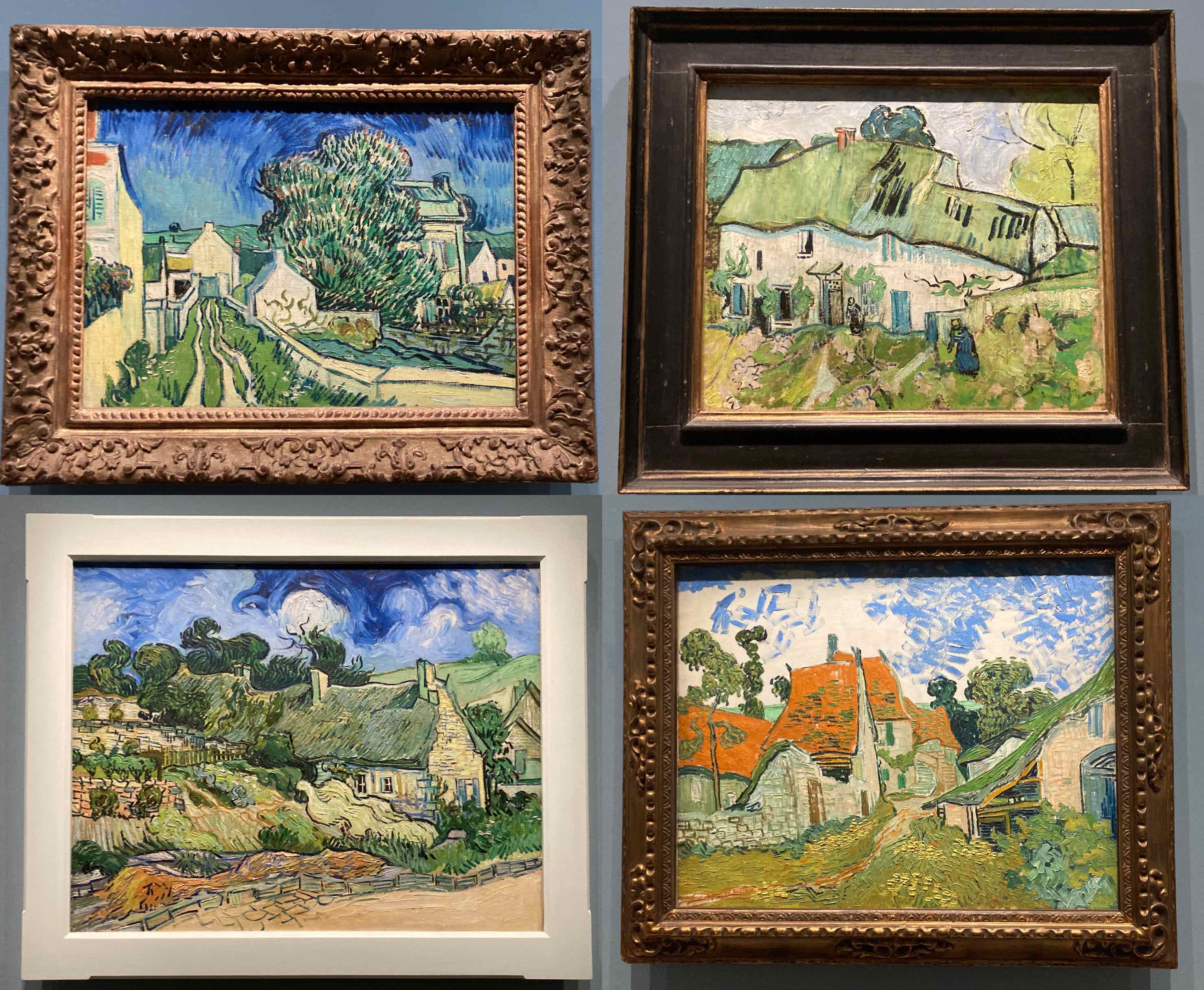
Although I knew some of the paintings on exhibit here there were many new ones to discover. Here are some landscapes….

village and farm buildings….

Oh, did I mention that it was very crowded!  Bob kindly sat and waited for me when I needed a bit more time than he did to view the paintings.

In just two months, Vincent Van Gogh produced 74 paintings and 33 drawings.   The exhibition here highlights 40 paintings and 20 drawings.

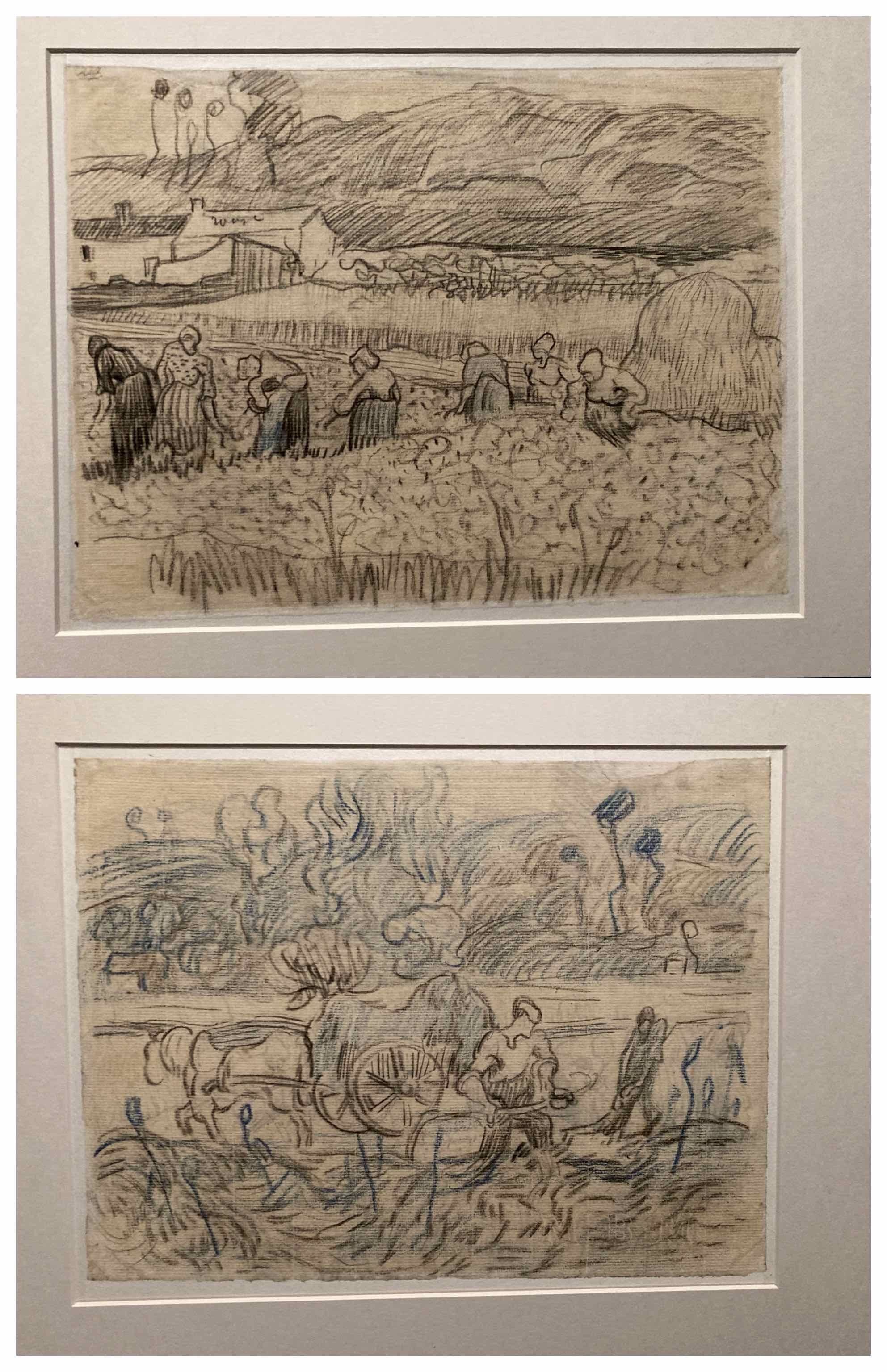
Drawings of peasants working in the fields.1890

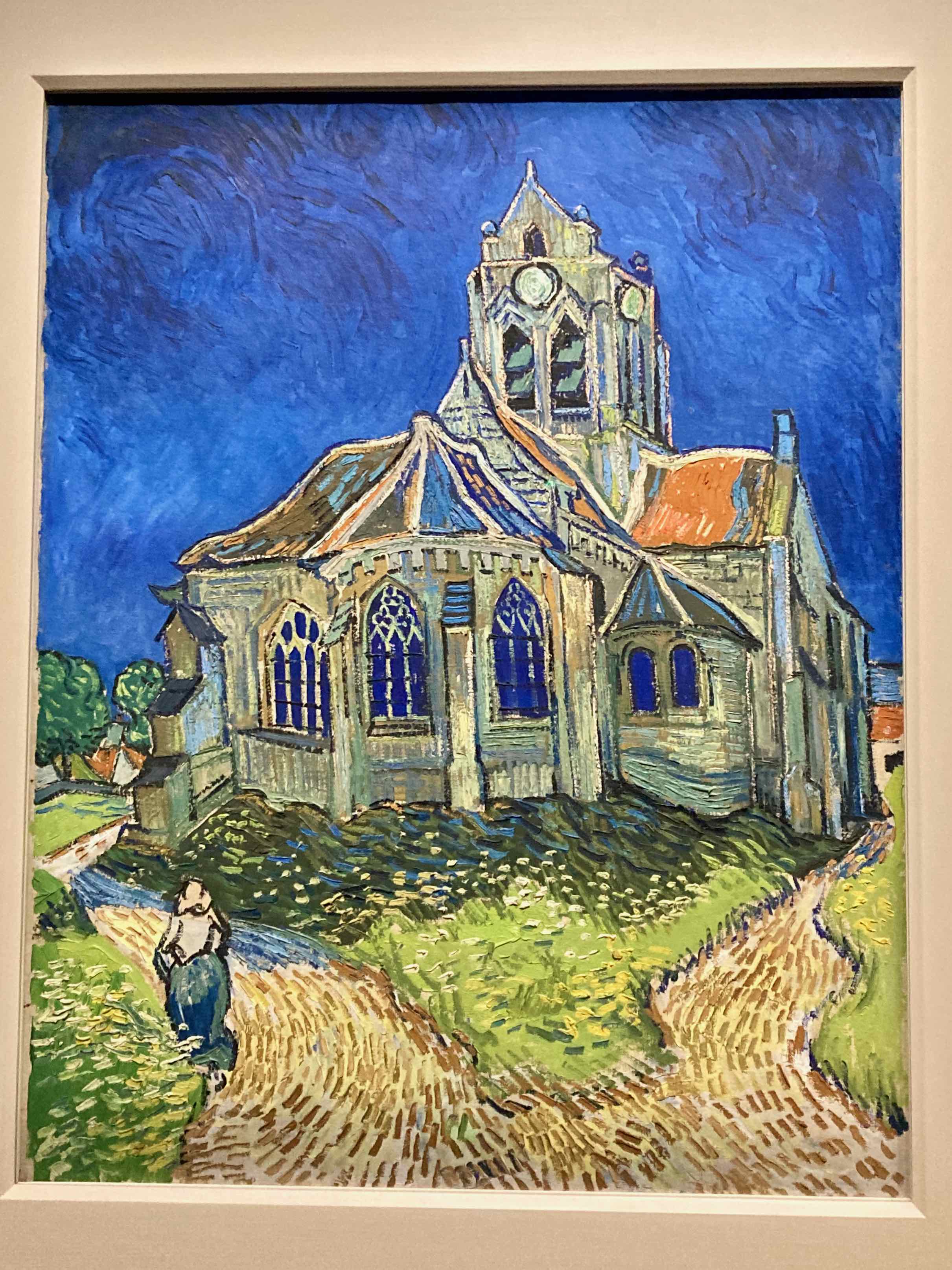
The church at Auvers-sur-Oise  

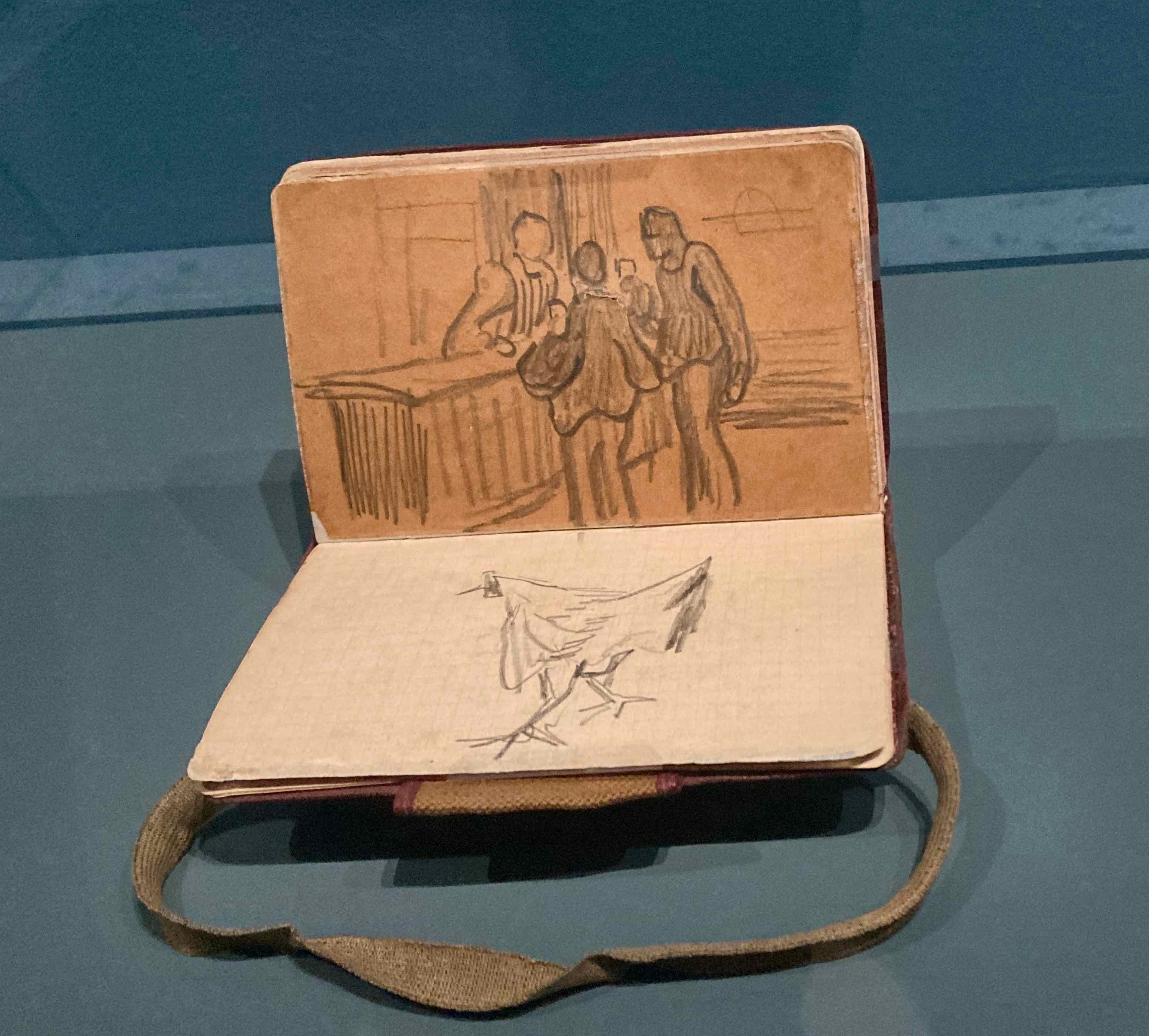
There were several of Vincent’s sketchbooks on view.  How I wished I could have held these in my hands, turned the pages and explored their contents.

One room held thirteen ‘double square’ paintings which I thought were particularly intriguing.  These paintings were produced in just over a month right before the artist’s death. I have included a close up shot to show the brushwork with each of these.  

I recognized ‘Wheatfield With Crows’ but it was much more impactful in person. I also really appreciated that I was able to stand very close to all the works and really study the brushwork and details…no museum guards came to tell me not to stand so close!

It was crowded but I was able to take my time and spend enough time up close with each painting and drawing.  It was amazing to see so many of van Gogh’s paintings and drawings.

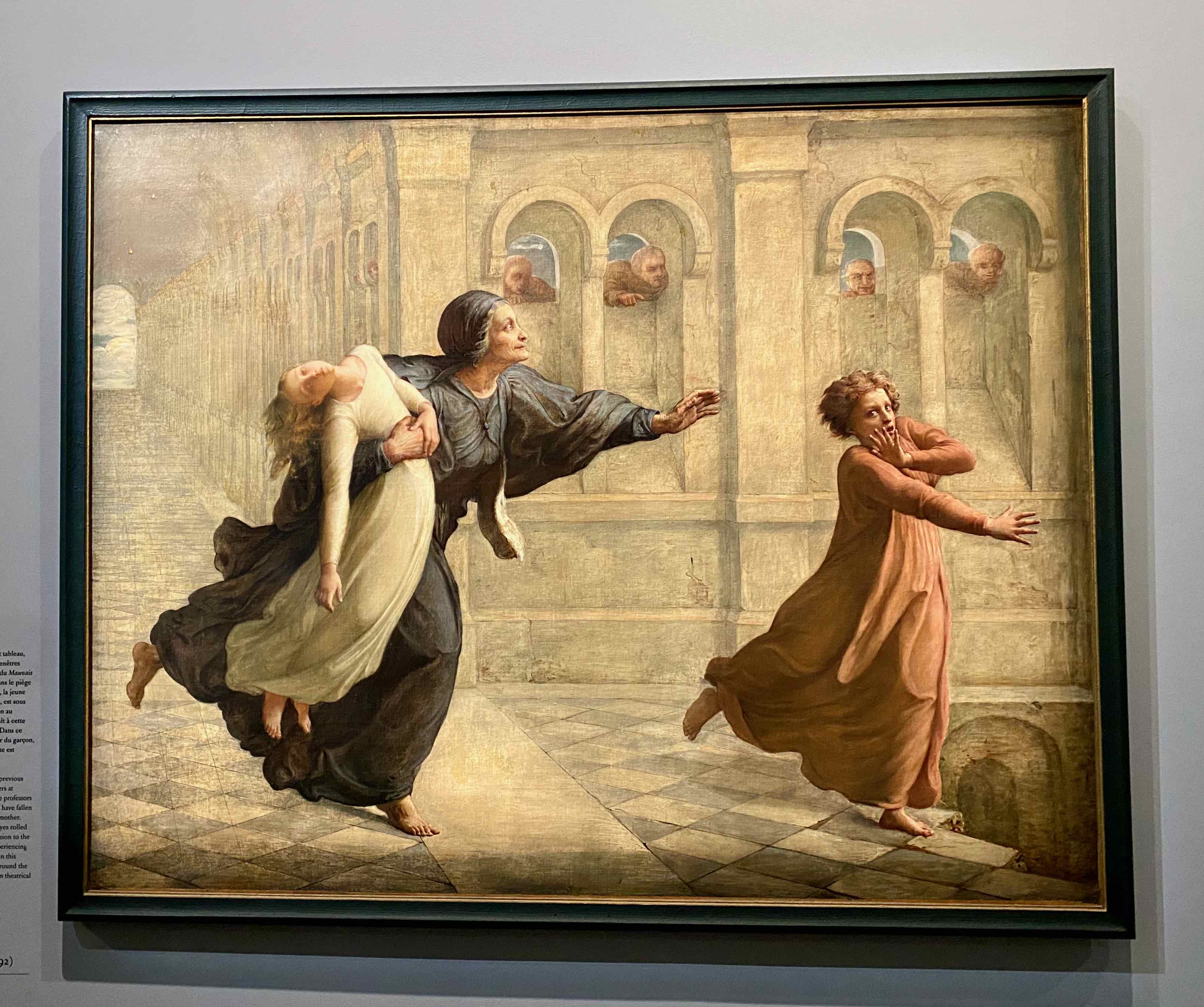
Next we visited the Louis Janmot Exhibit.  It was not nearly as crowded but it was a  wonderful exhibit as well.   I was not familiar with this artist until my friend Ivy told me about this exhibit yesterday when we went for coffee after life drawing.

‘The Poem of the Soul’ is the great life-long project of the artist Louis Janmot in the 19th century. Begun in 1835 and completed in 1881, this ambitious work, consisting of 18 paintings and 16 drawings is accompanied by a poem of more than 2,000 verses. It recounts the journey of a soul on Earth.   This video explains the story behind all the works and walks the viewer through the exhibit.  It is in French but has English subtitles. It is long, almost 38 minutes but quite interesting.    https://youtu.be/yFImBcII72Y?si=oTBIhNgg6eqHP4eX

‘Nightmare’1849-50. The paintings were interesting, and well done but I was really intrigued with the drawings.

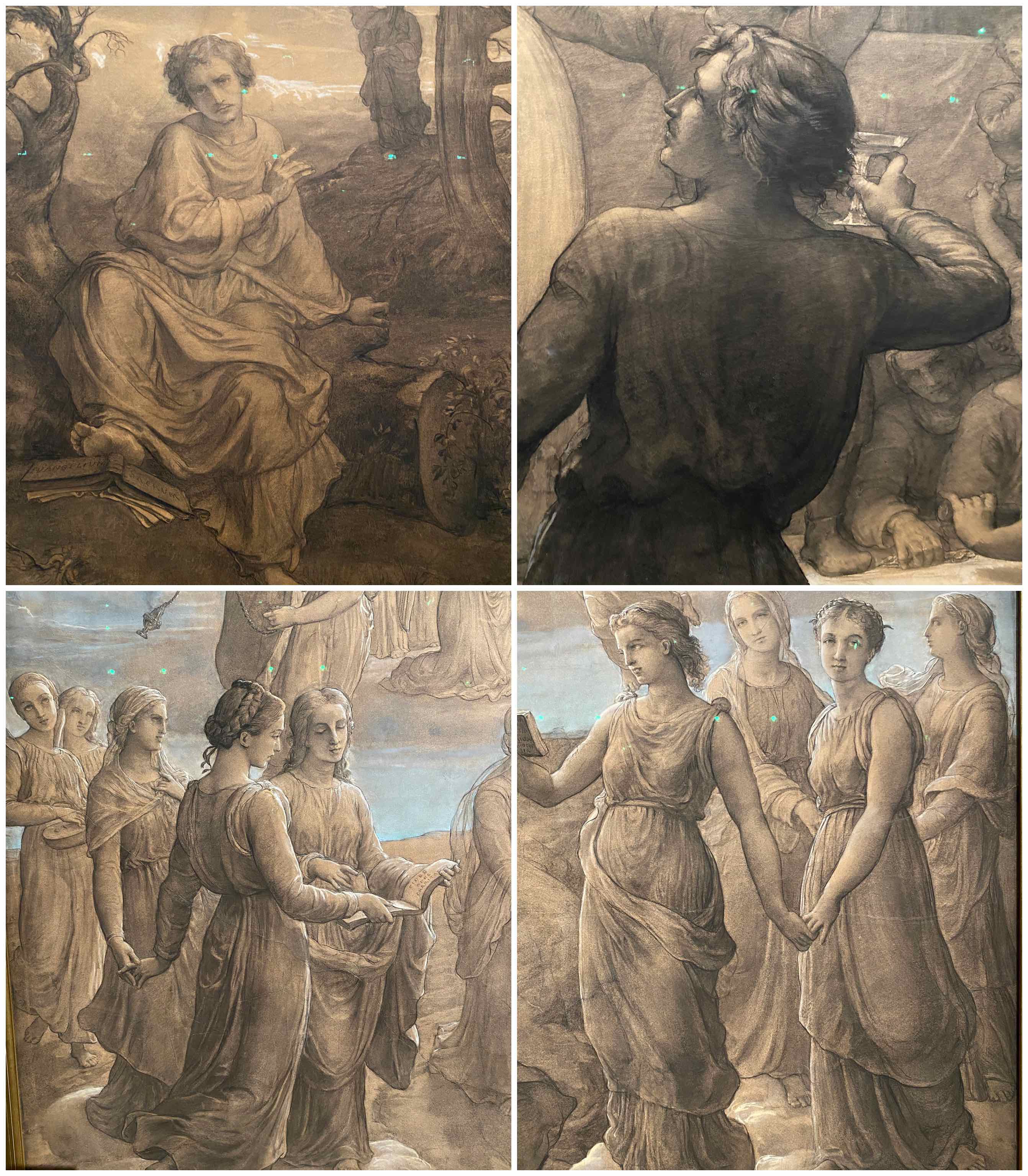
Details of some of the large charcoal drawings.  I loved them!

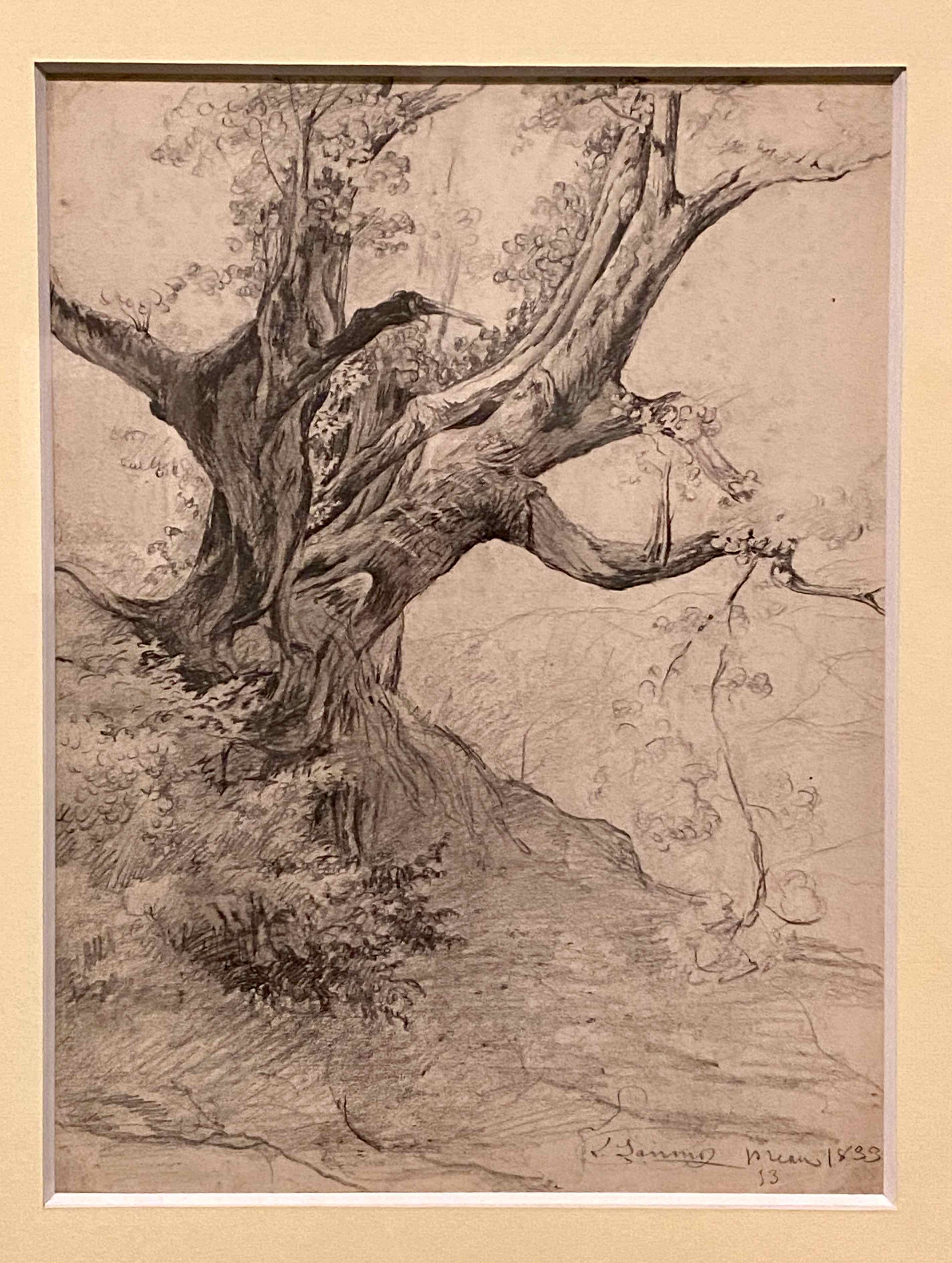
There were also studies that Janmot had made for his larger drawings.  These are particularly interesting as I can almost see the artist’s thinking and working process.

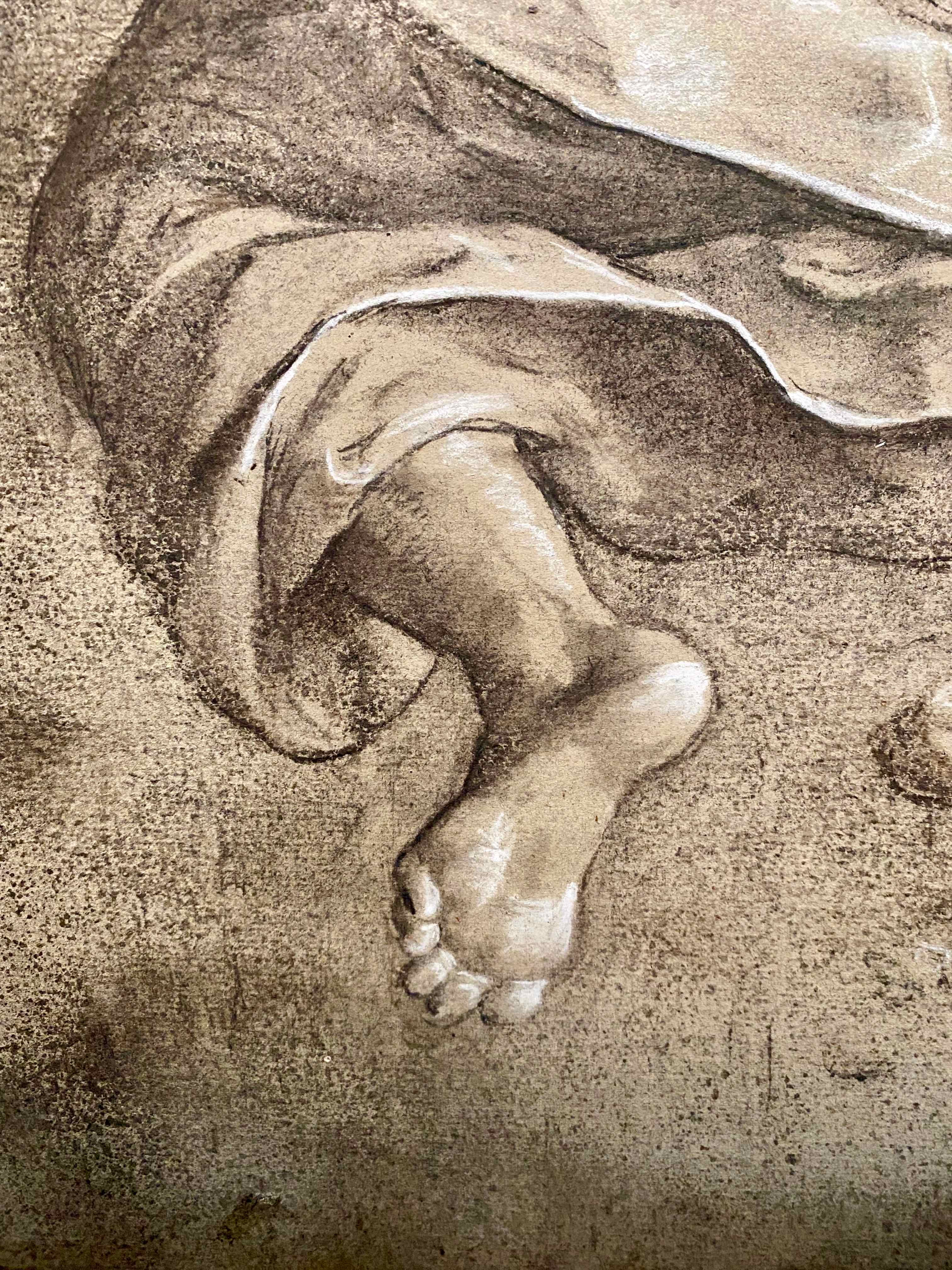
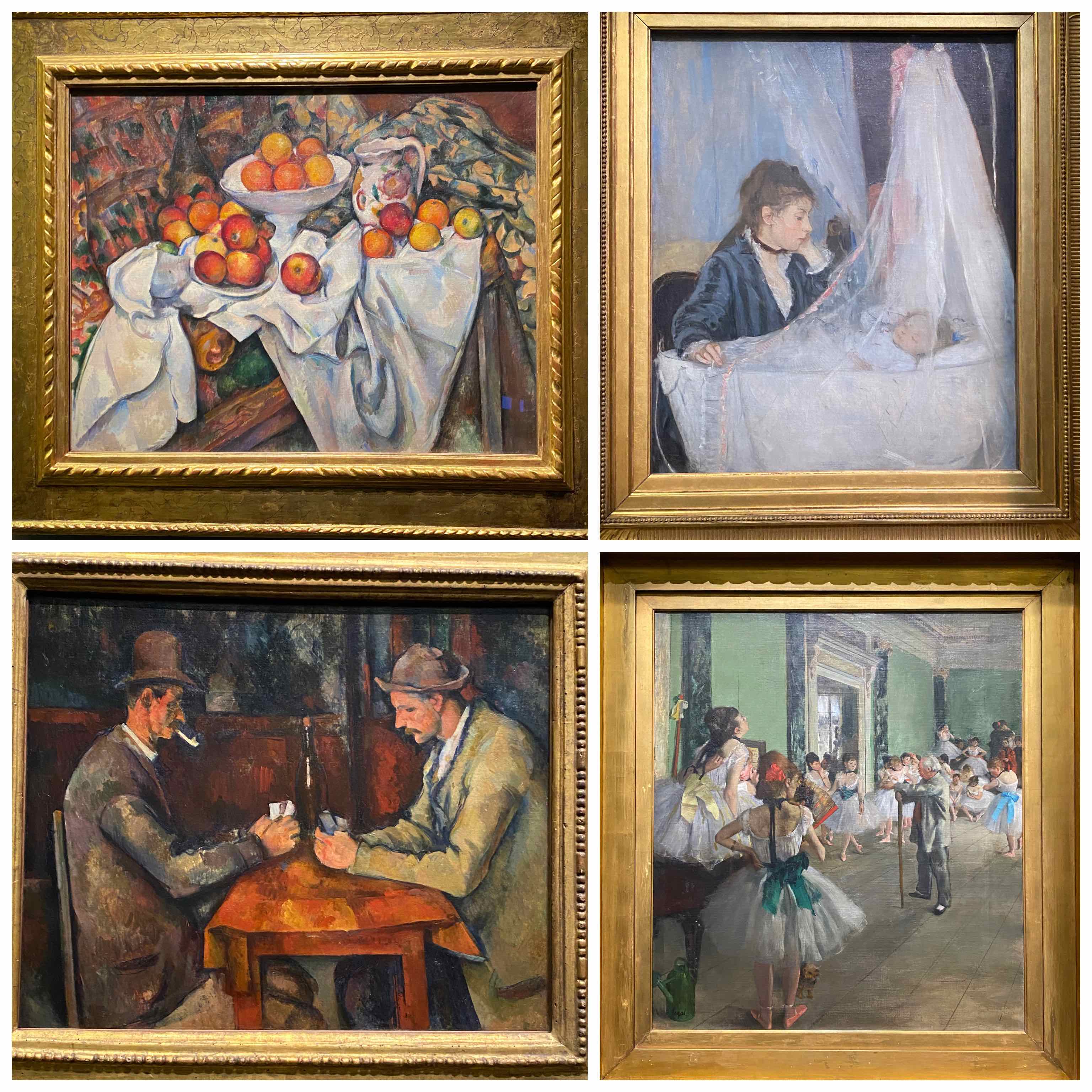
Study of a foot with interesting lighting.We decide it is time to find something to eat.  This restaurant is behind one of the Musées famous clocks but it is quite expensive and has a long line of people waiting for a table.  We do find a little cafeteria and we only have to wait about 15 minutes to get a table.  We are tired and hungry and it is so good to sit and rest for a while.  Museums are wonderful places to visit, but also very tiring.Refreshed, we head up to the top floor to see the permanent collection.  So many famous impressionist and post Impressionist paintings!  Cezanne’s ‘Still Life, Apples and Oranges’ and ‘The Card Players’, Berthe Morisot’s ‘The Cradle’ and ‘ The Dance Class’ by Edgar Degas
Gaugin’s ‘Tahiti Women’, Toulouse- Lautrec’s ‘The Clown Cha-U-Kao’, Van Gogh’s ‘Bedroom In Arles’, and an artist who I was not familiar with, Blanche Derousse’s ‘Two Little Girls’ which is a copy of Van Gogh painting.   VanGogh’s ‘Night Over the Rhone’.  We stood in the exact location where Vincent stood when he painted this. Check out the post here. http://Arles, France…Walking in Van Gogh’s Footsteps
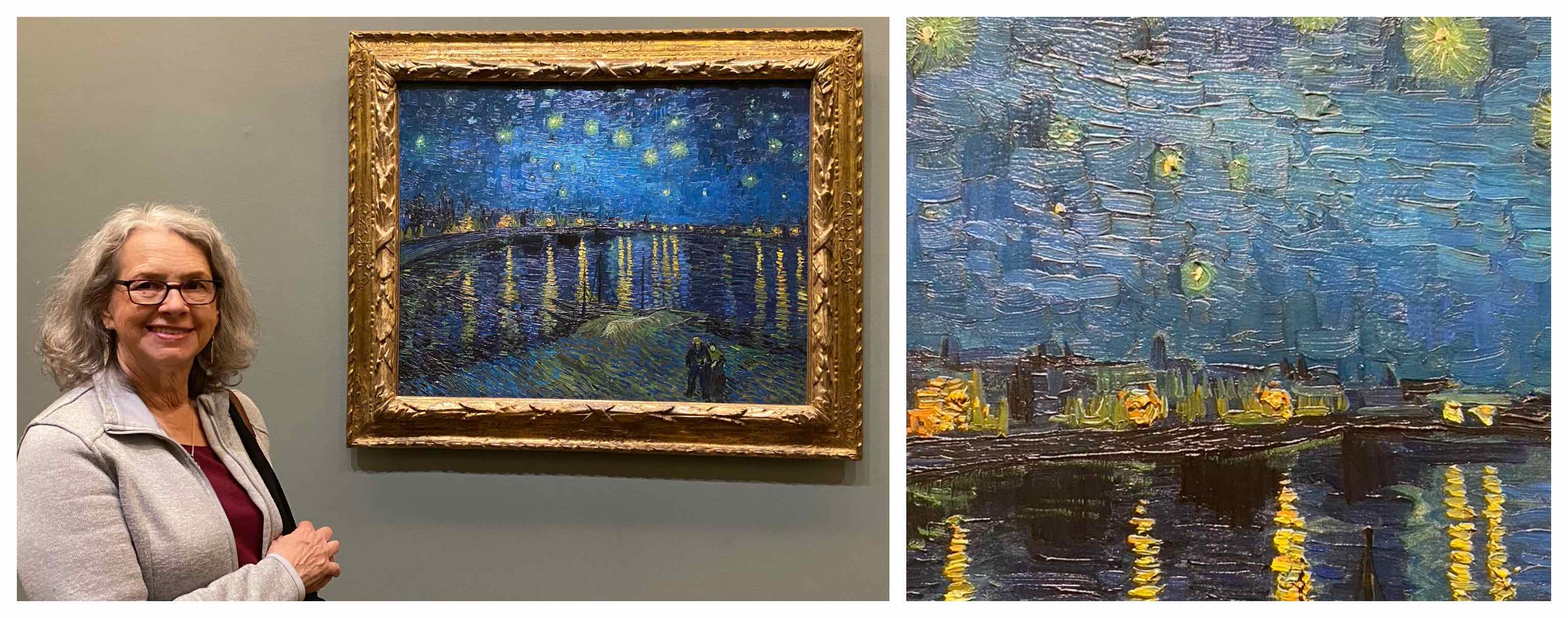
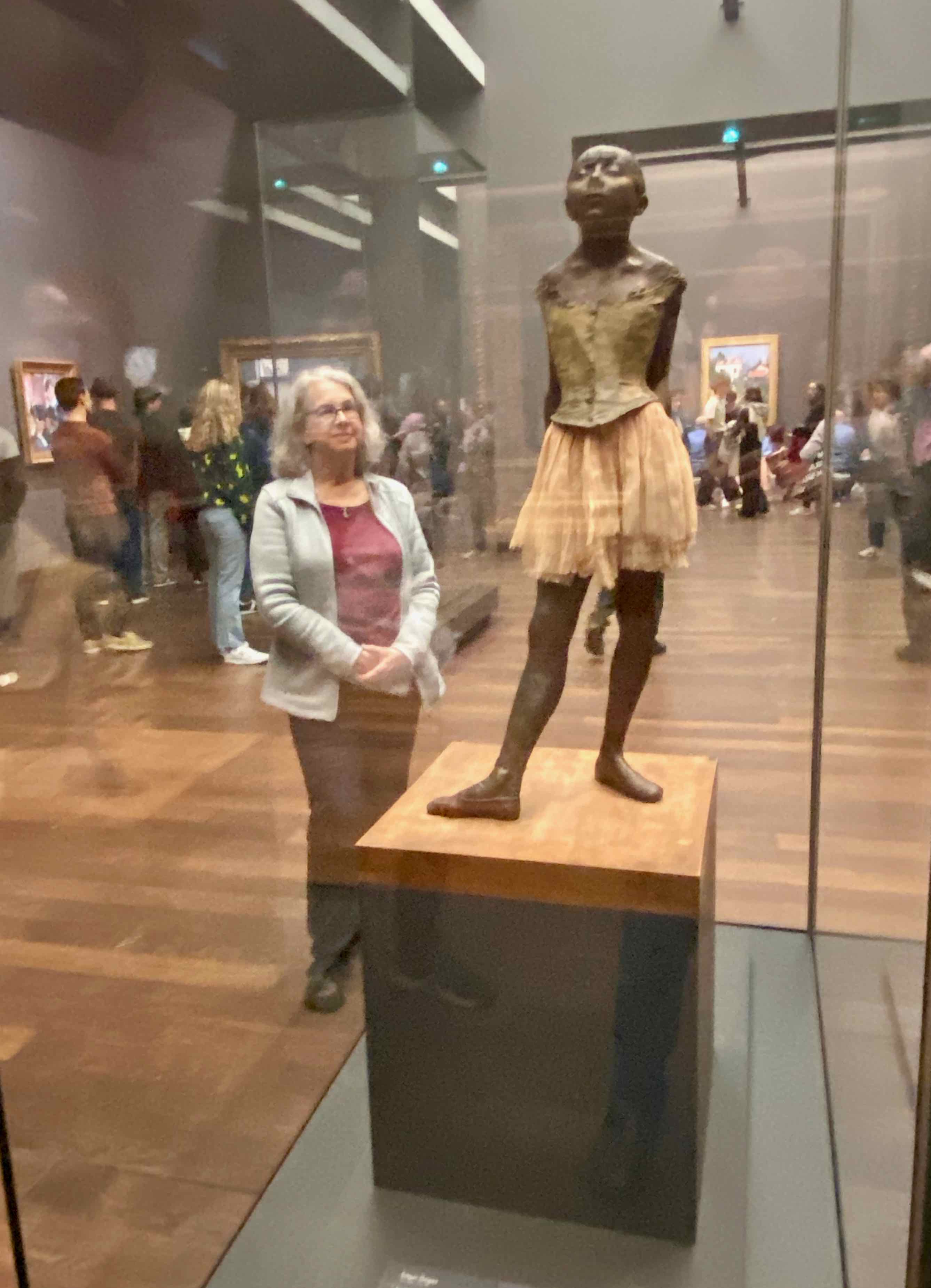
I have always loved Degas’ ‘Little Dancer’ and was pleased to have another visit with her.

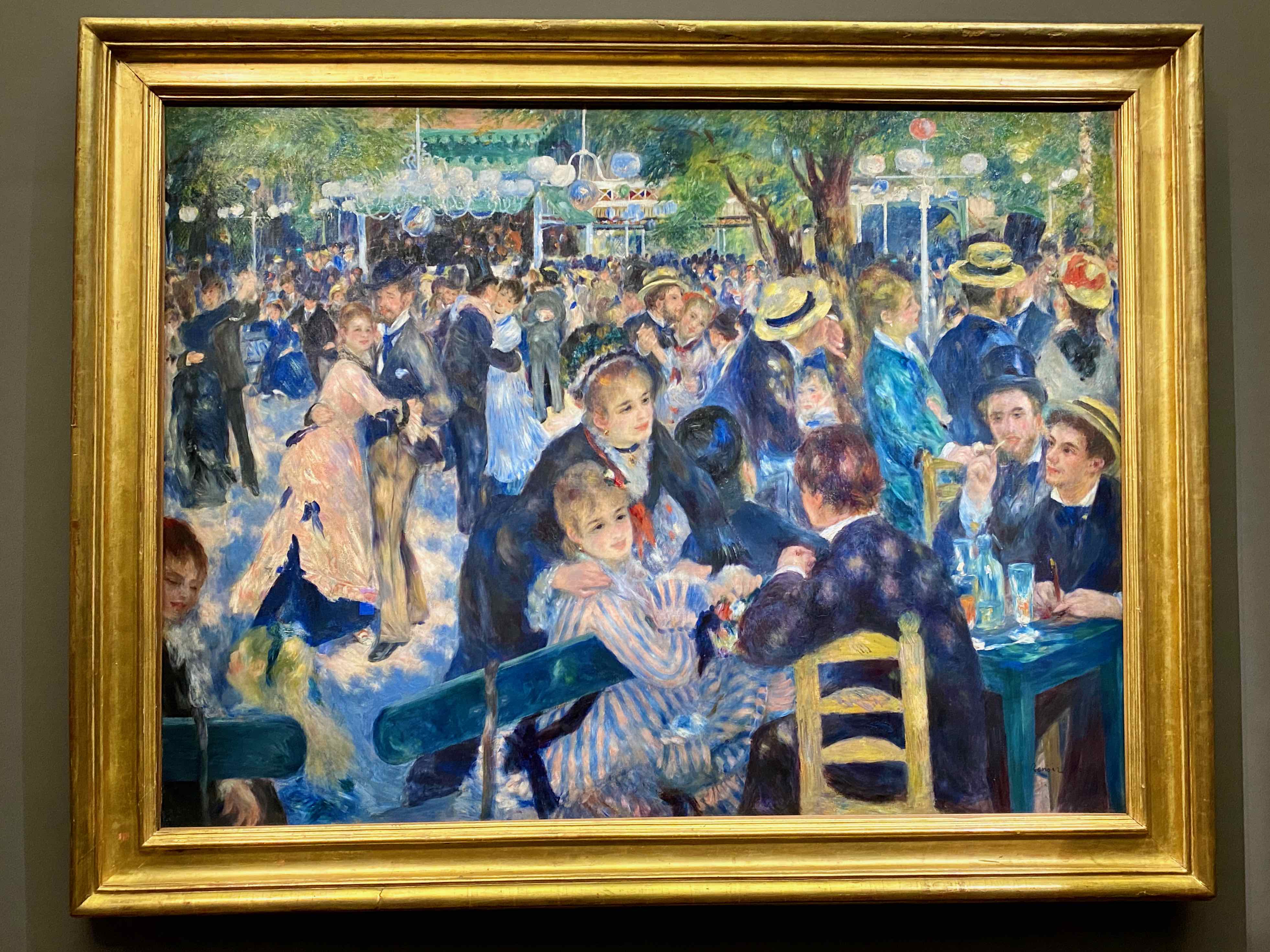
I am happy to see Renoir’s ‘Dance at the Moulin de la Galette’ once more…

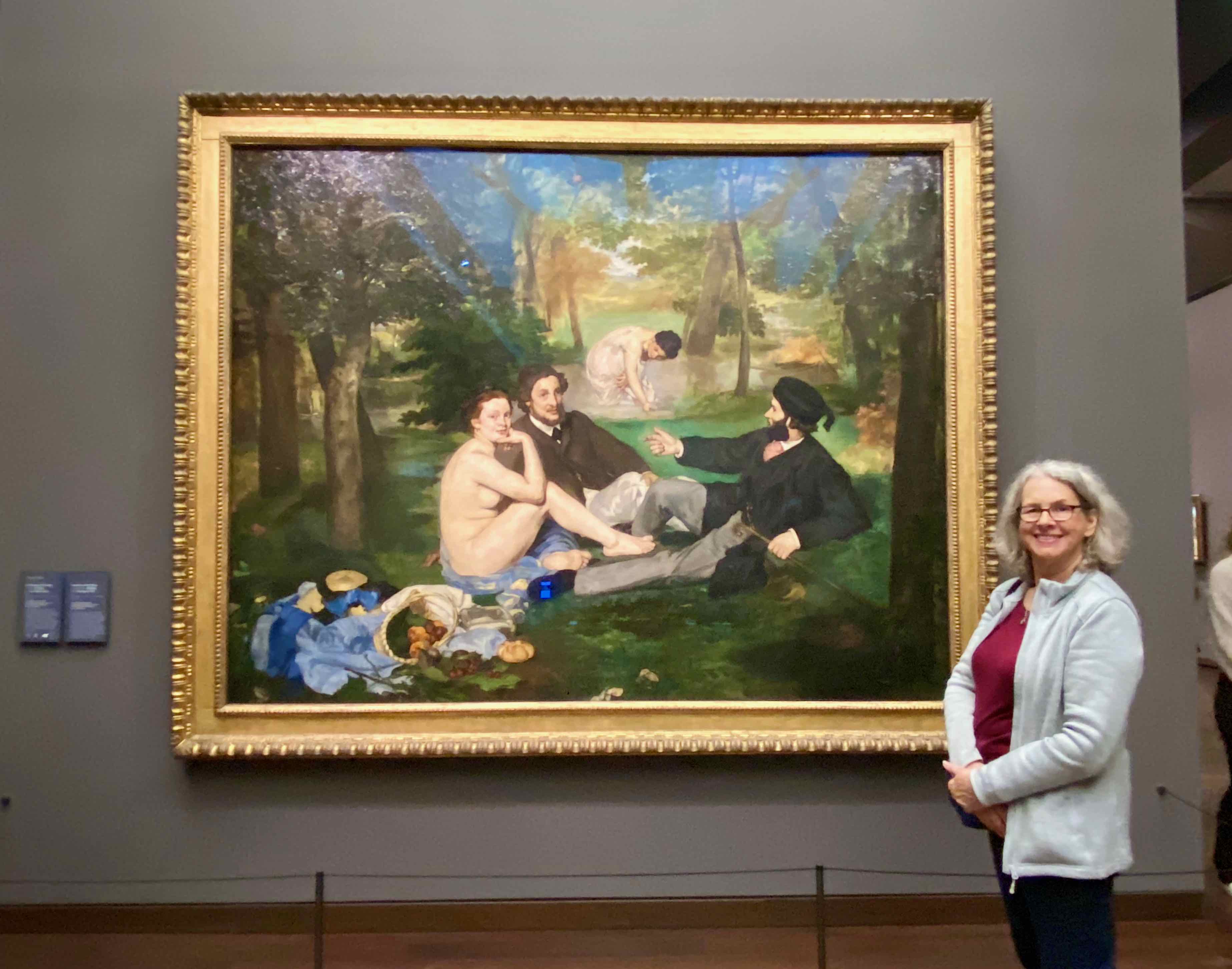
and of course Edouard Manet’s ‘Luncheon on the Grass’, which caused quite a scandal when it was first exhibited. A nude woman casually lunching with fully dressed men was an affront to audiences’ sense of propriety at the time.  

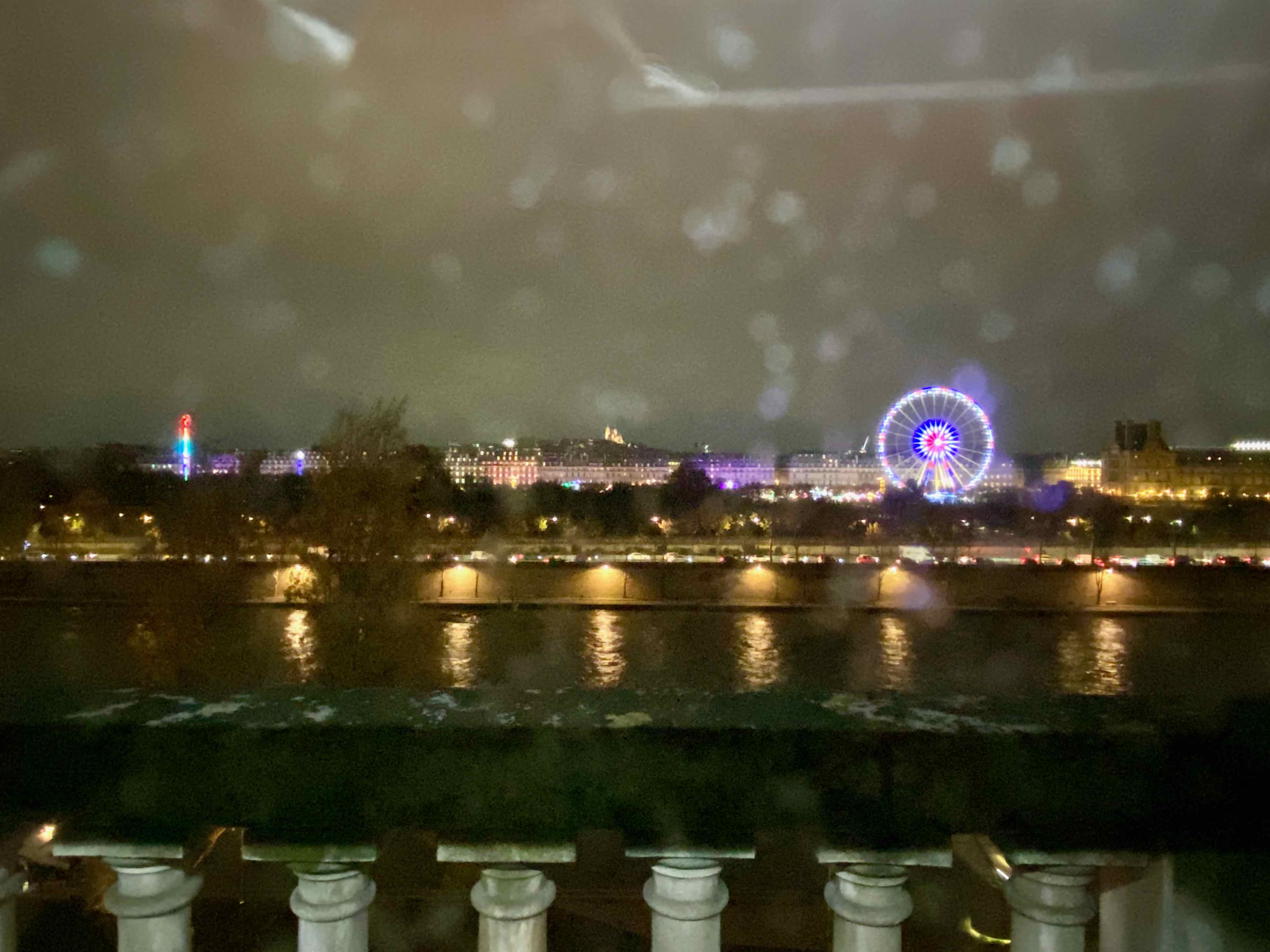
We peek out a window at the museum and discover that it is pouring rain. We can see the ferris wheel set up in the gardens just outside of the Louvre, across the Seine river.

A view of the main floor of the museum. It is time to go home.  We have been here for over seven hours, and we still didn’t manage to see everything!  I guess we will have to return to Paris someday for another visit.

Avignon, France

Day 64 Tuesday,  October 31, 2023.

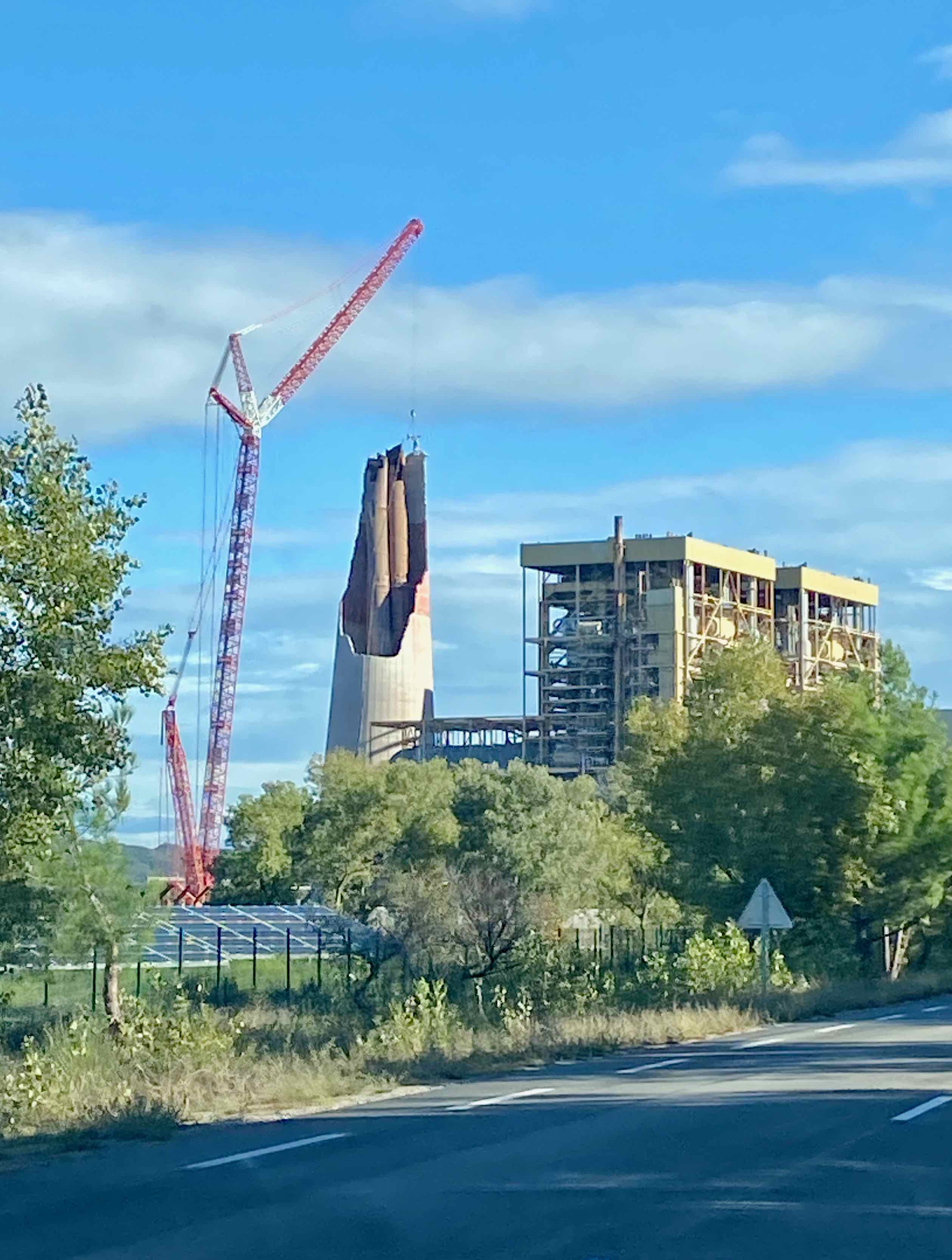
We are visiting Avignon today.  There is always something interesting to see on our drives.  I think this is an old chimney stack that is being dismantled.

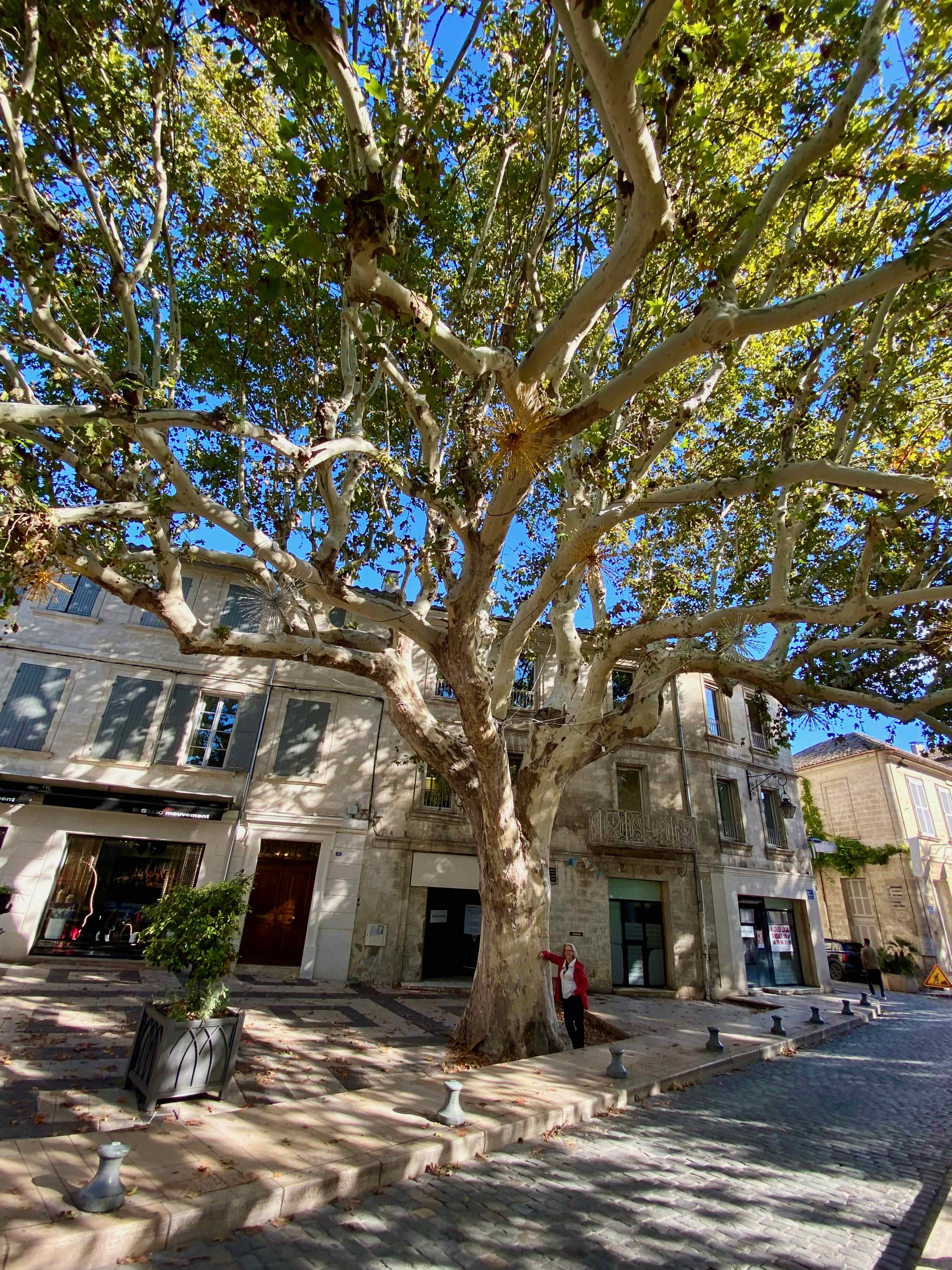
There is a free parking lot on an island near Avignon with a free bus ride into town.  The first thing we see when walk through the town gate is this magnificent tree.  I know…lots of tree photos, but I do love these beautiful huge trees.  It is too bad our winters at home are too cold for these beauties.

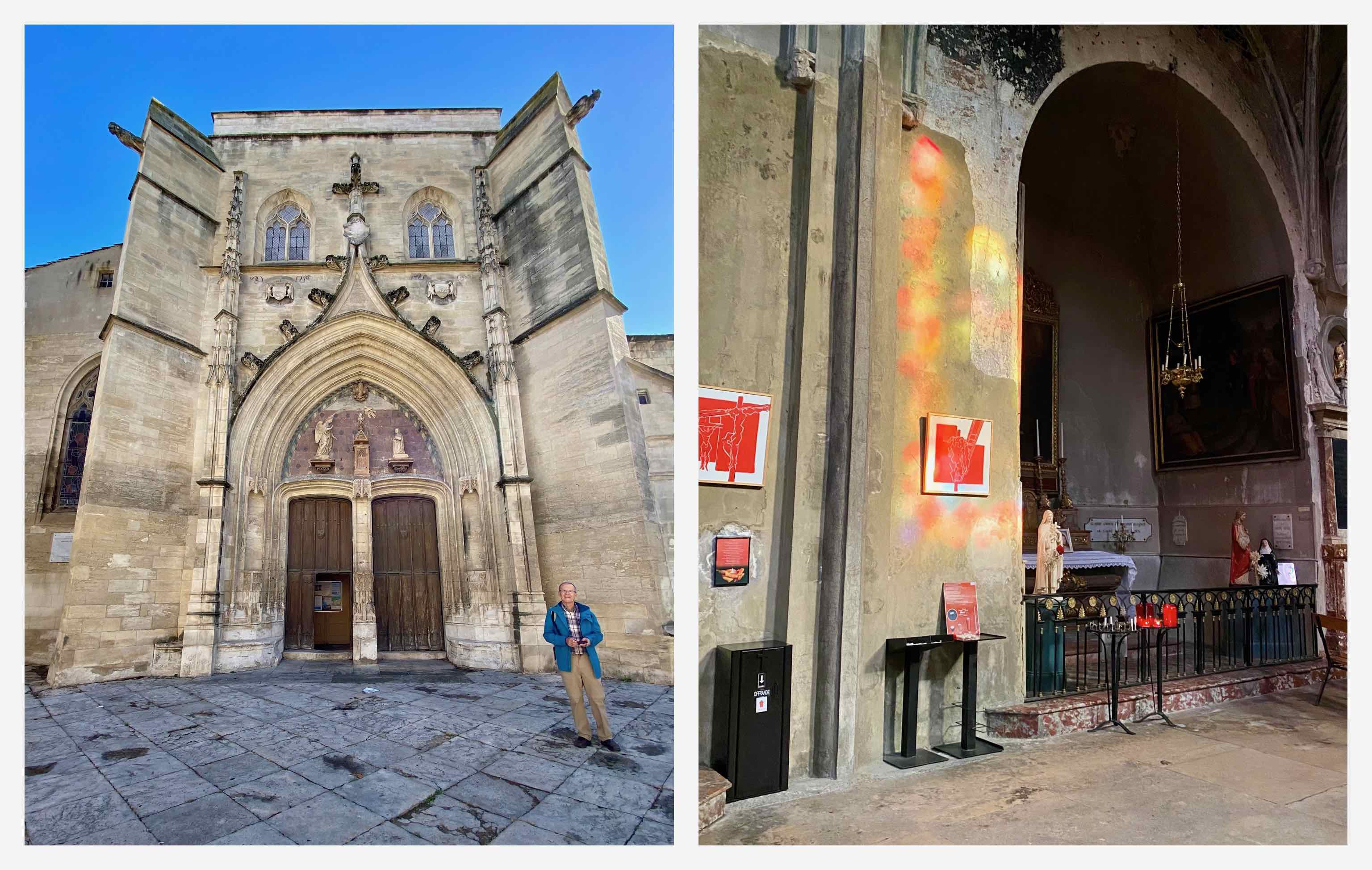
We have seen so many churches…but every time we enter another one it is different and sometimes there are little jewels to discover.  I loved the contrast between the modern paintings and this ancient Gothic church that was built in the early 1300’s…Saint Agricol Church.  There has been a church on this site since 660.  Then there is the sunlight streaming through the stained glass windows!

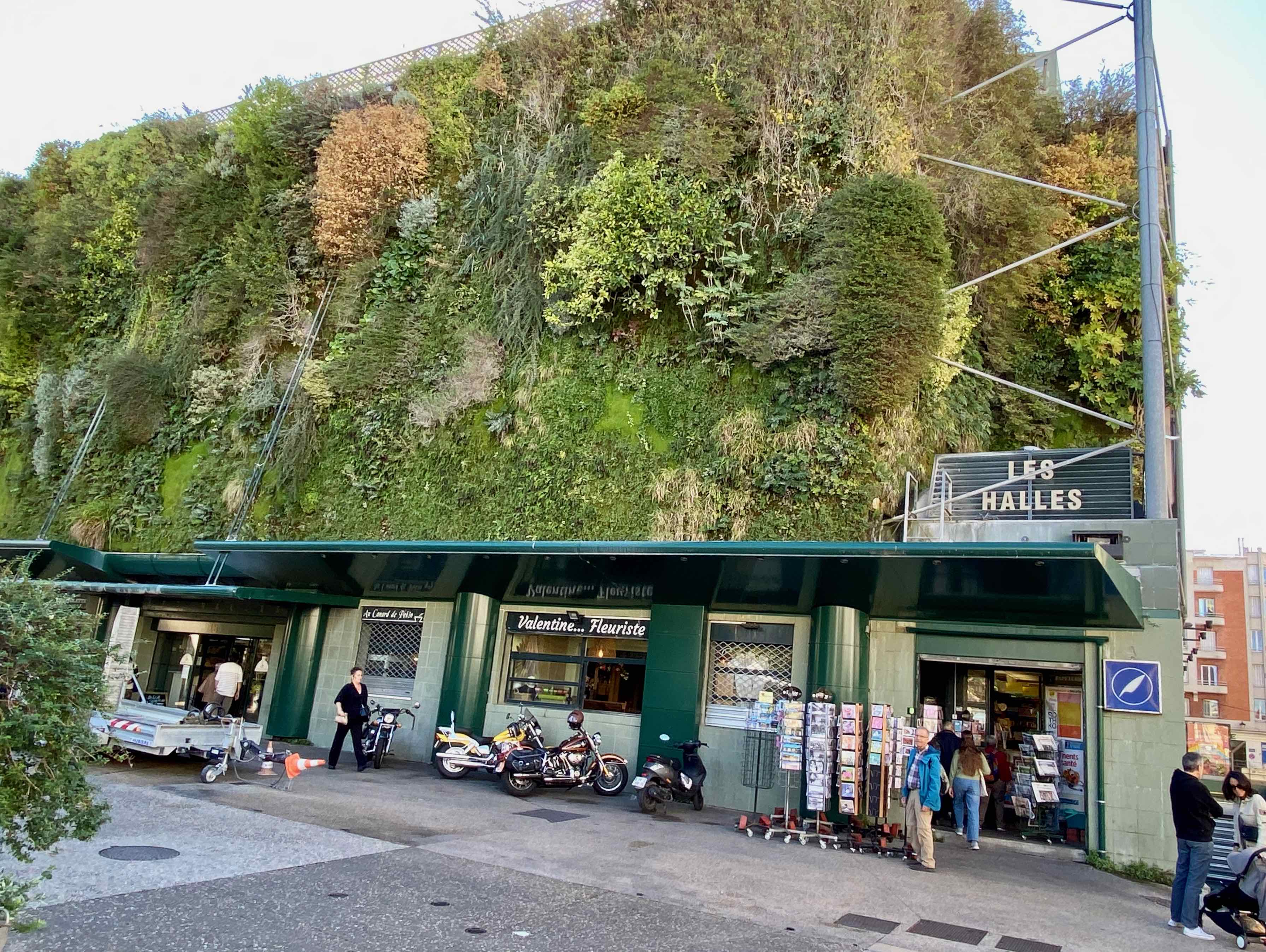
The indoor market has a living wall… and lots of seafood.  Too bad neither Bob nor I are fans.  The very last picture is of Lapin…Rabbit.  Not something we are used to seeing.  I had rabbit once many years ago and although it was OK, it isn’t something I am interested  in trying again.  

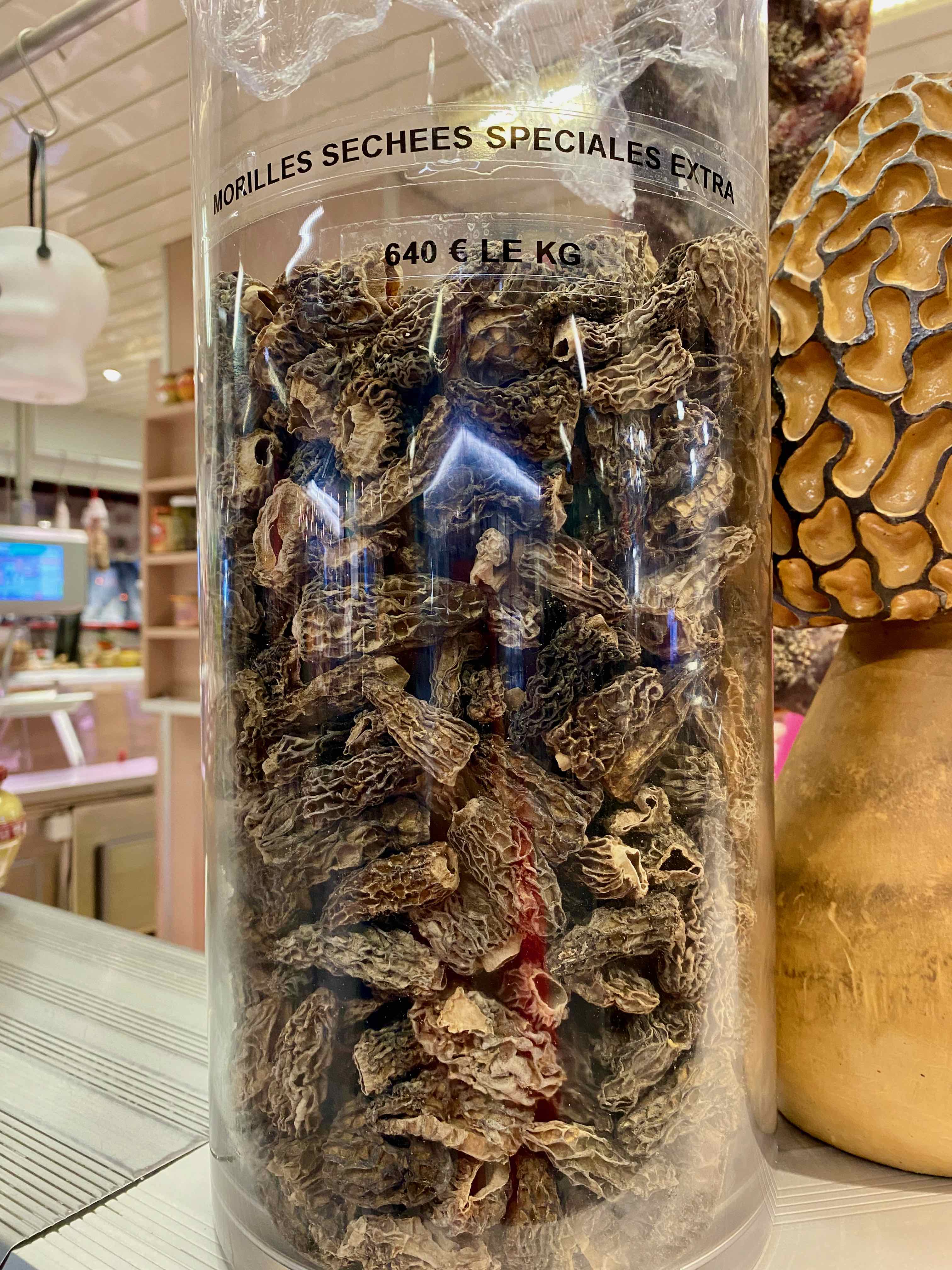
We used to pick and dry these same mushrooms.  I knew they were a delicacy but I had no idea that Morels were so expensive … 640€ a kilogram!!

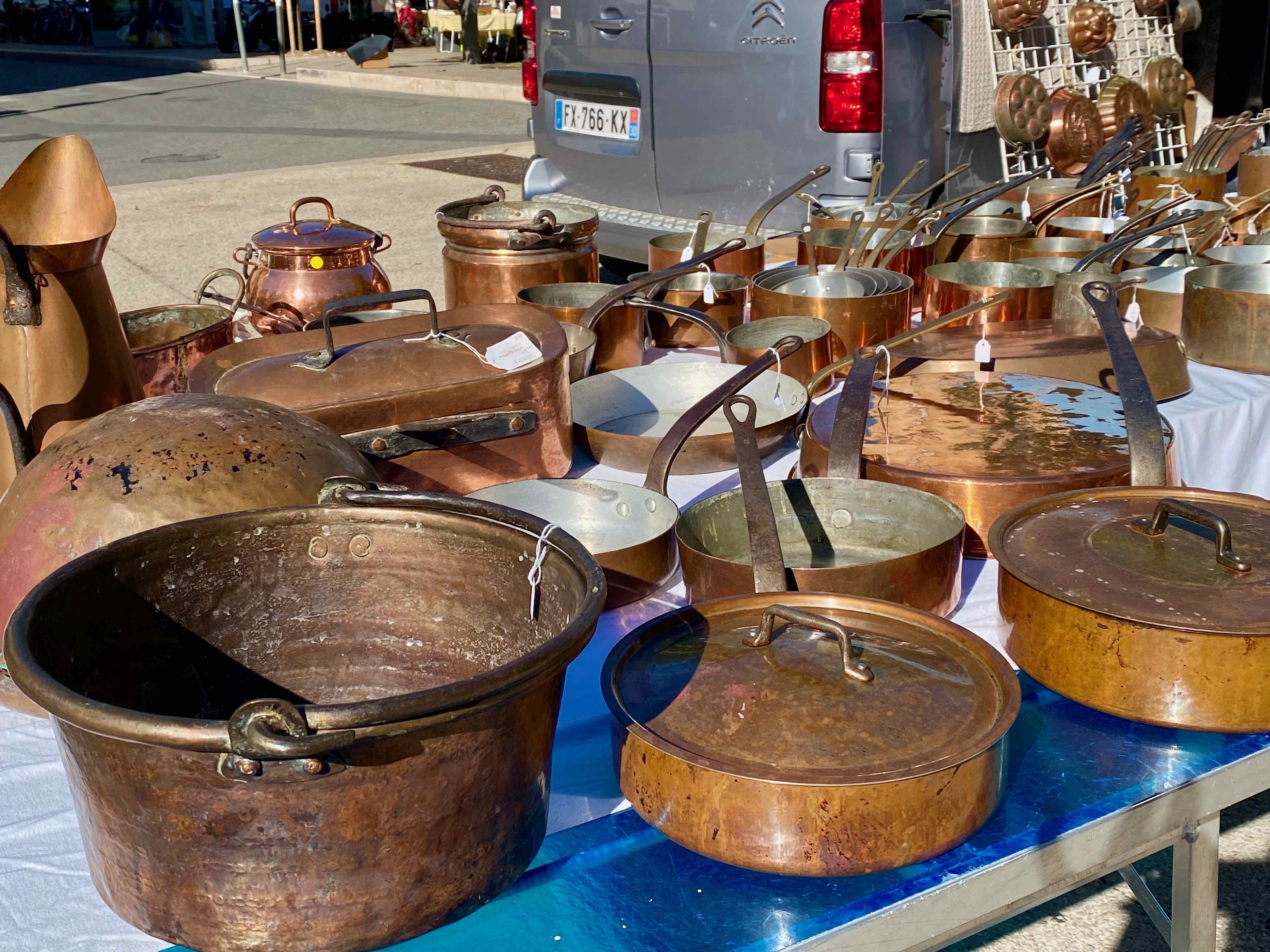
There is a flea market outside the  indoor market.  These old copper pots make me think of my grandparents and their copper pots.

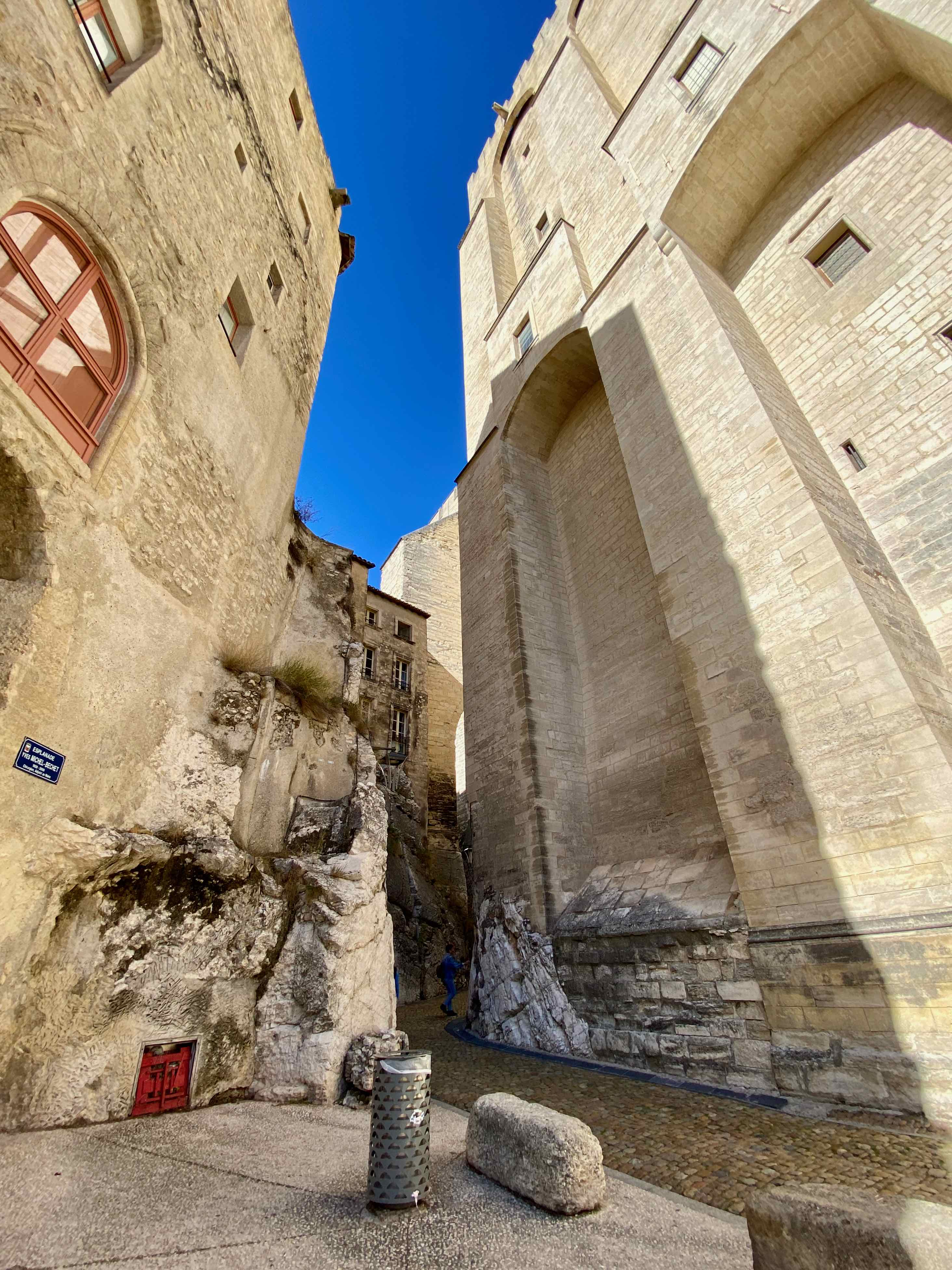
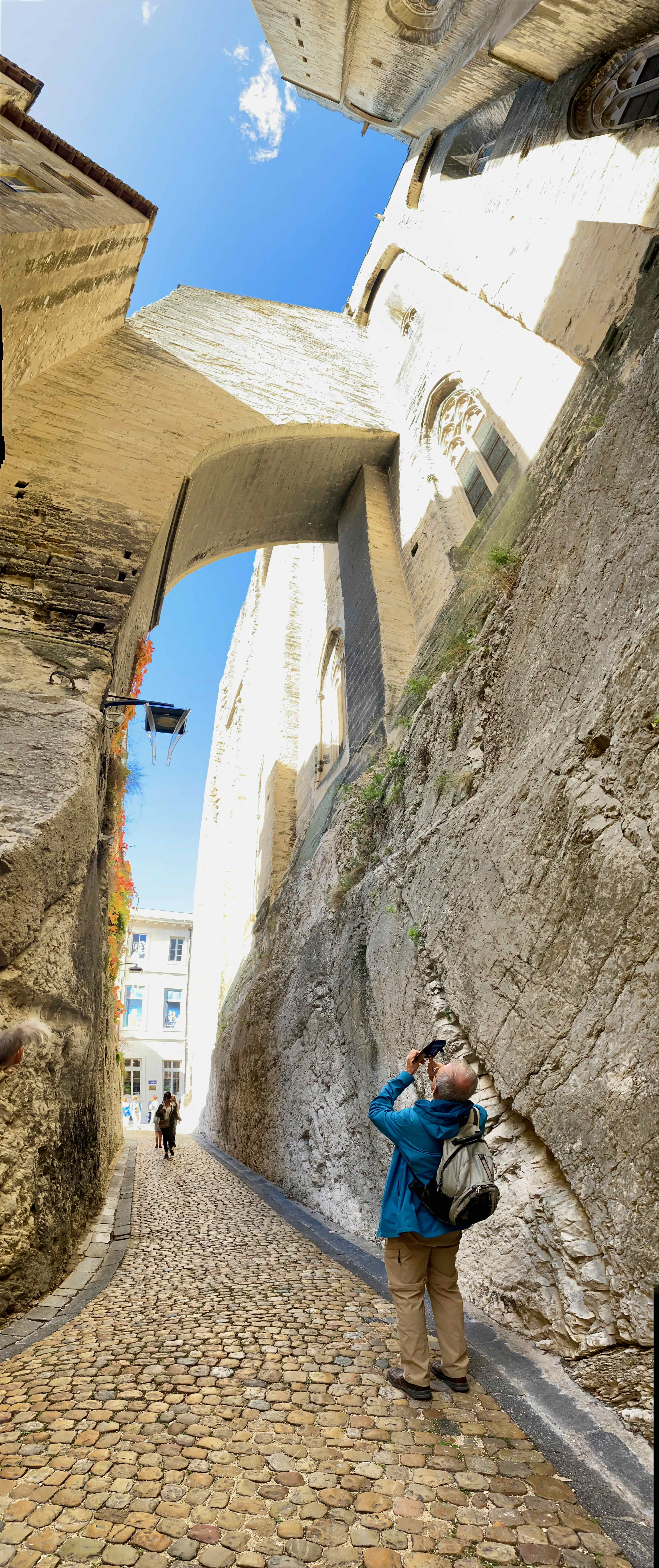
After having our lunch we walk through this narrow street built between the walls of the Popes Palace and a rock cliff.

Bob has taken some amazing photos this trip…he might become a photographer yet!

At the end of this street there are some painted windows.  We see several buildings whose windows contain paintings of people.  They make me smile.

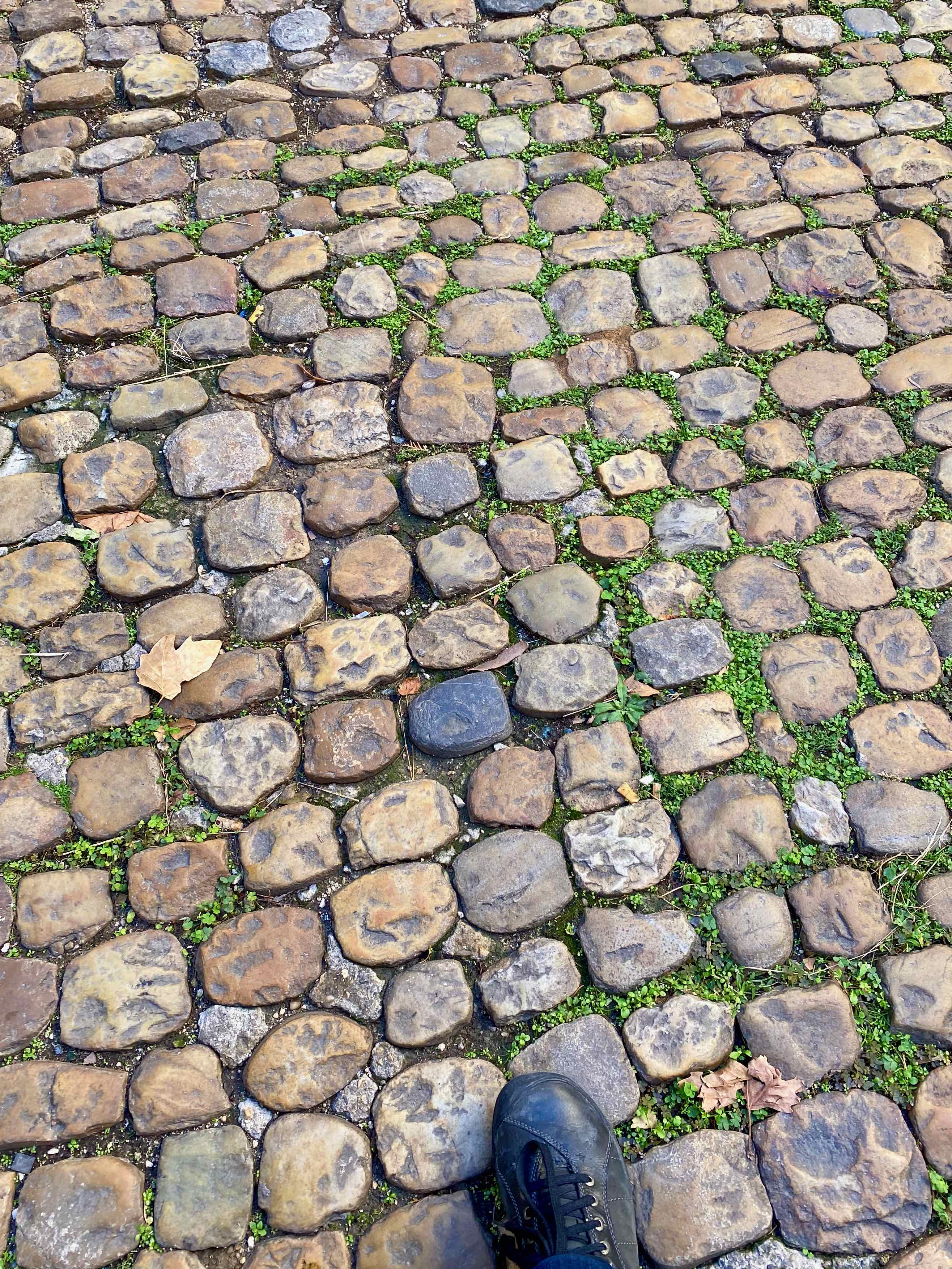
I love the look of all the cobbled streets but they sure are hard to walk on for a long time.

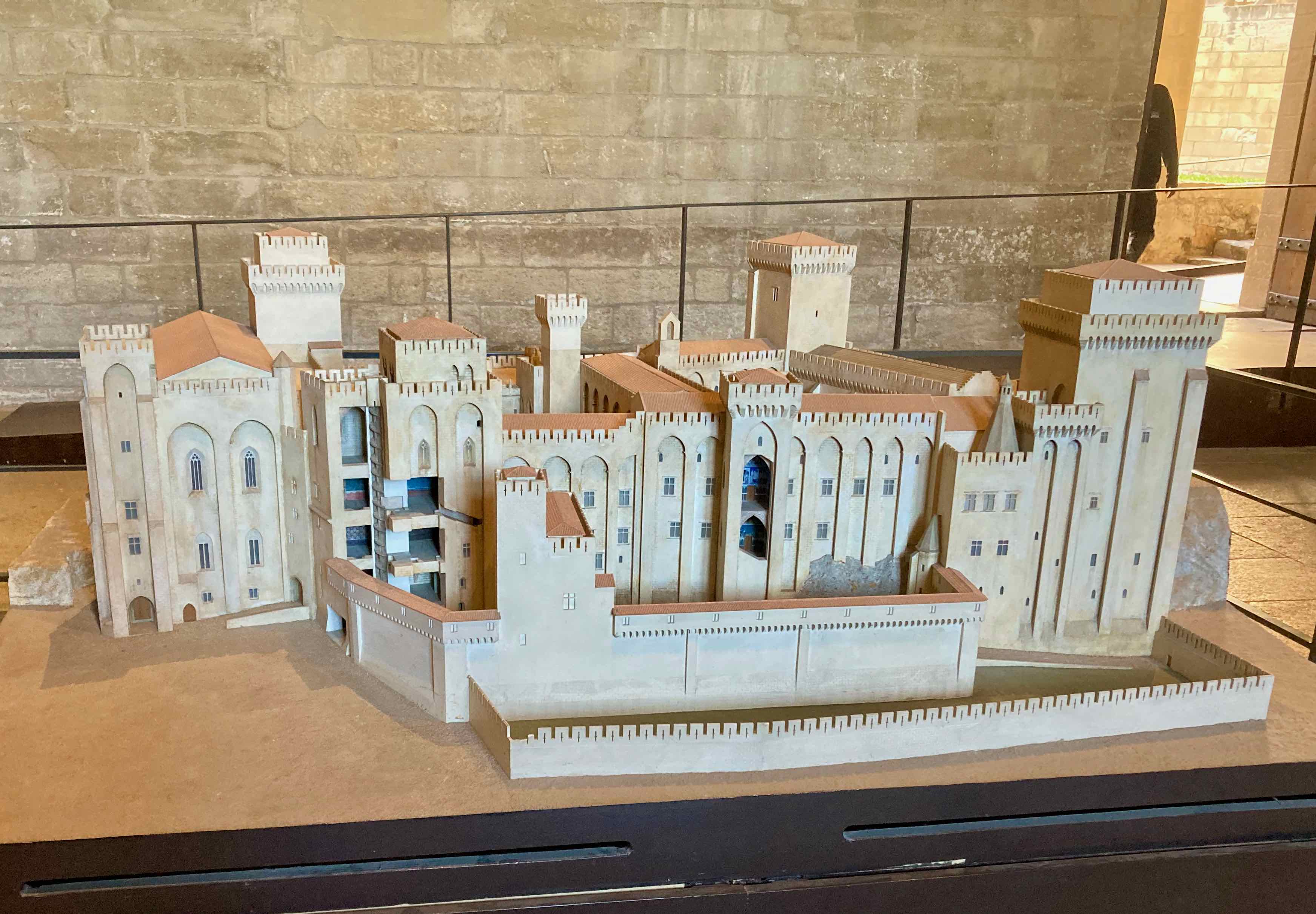
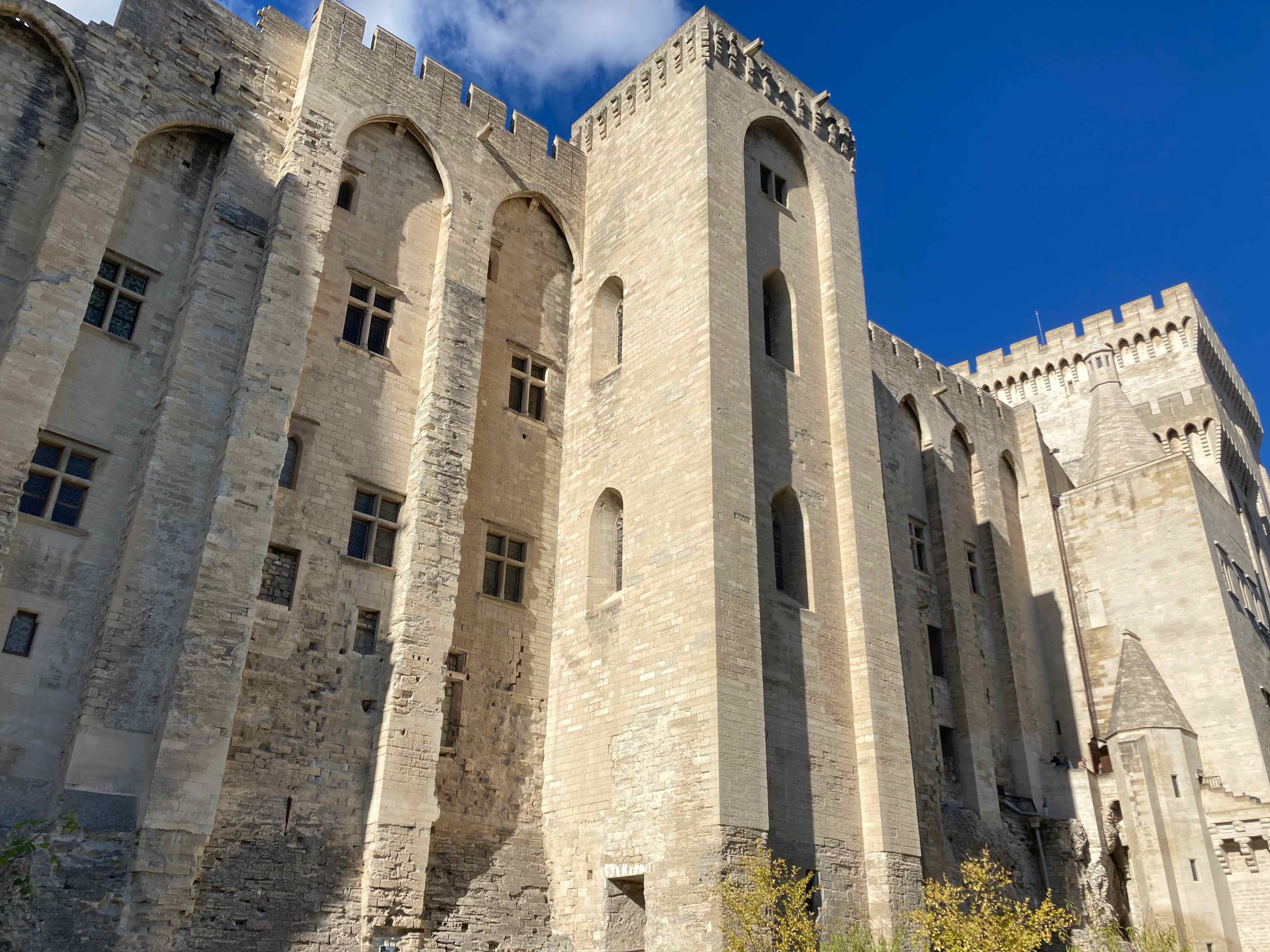
This is a scale model of Le Palais des Papes (Palace of the Popes). It is the largest Gothic building in Europe!   It was a fortress, a palace, and the seat of Western Christianity during the 14th Century.  Nine popes lived here and it is a UNESCO World Heritage Site.

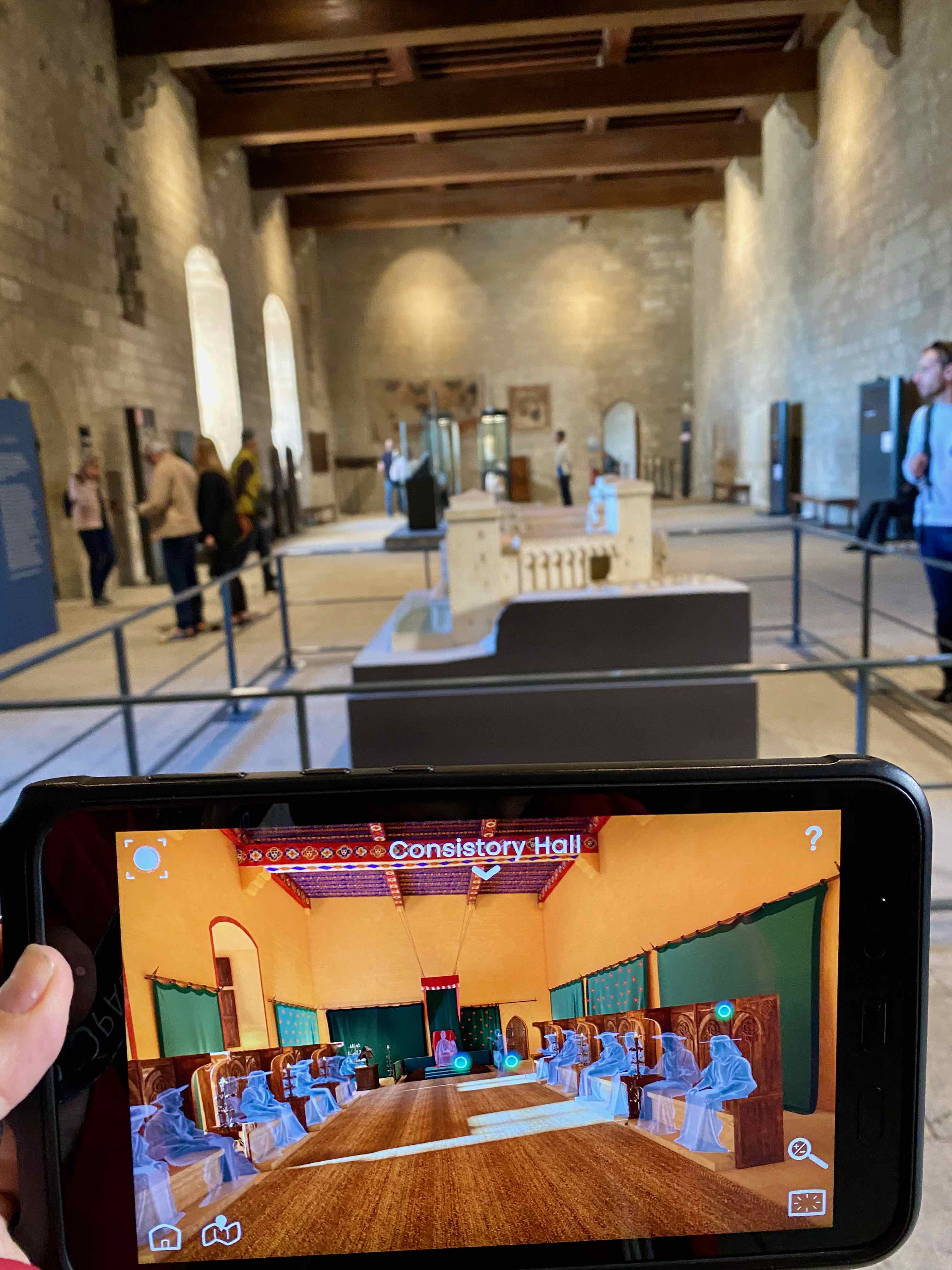
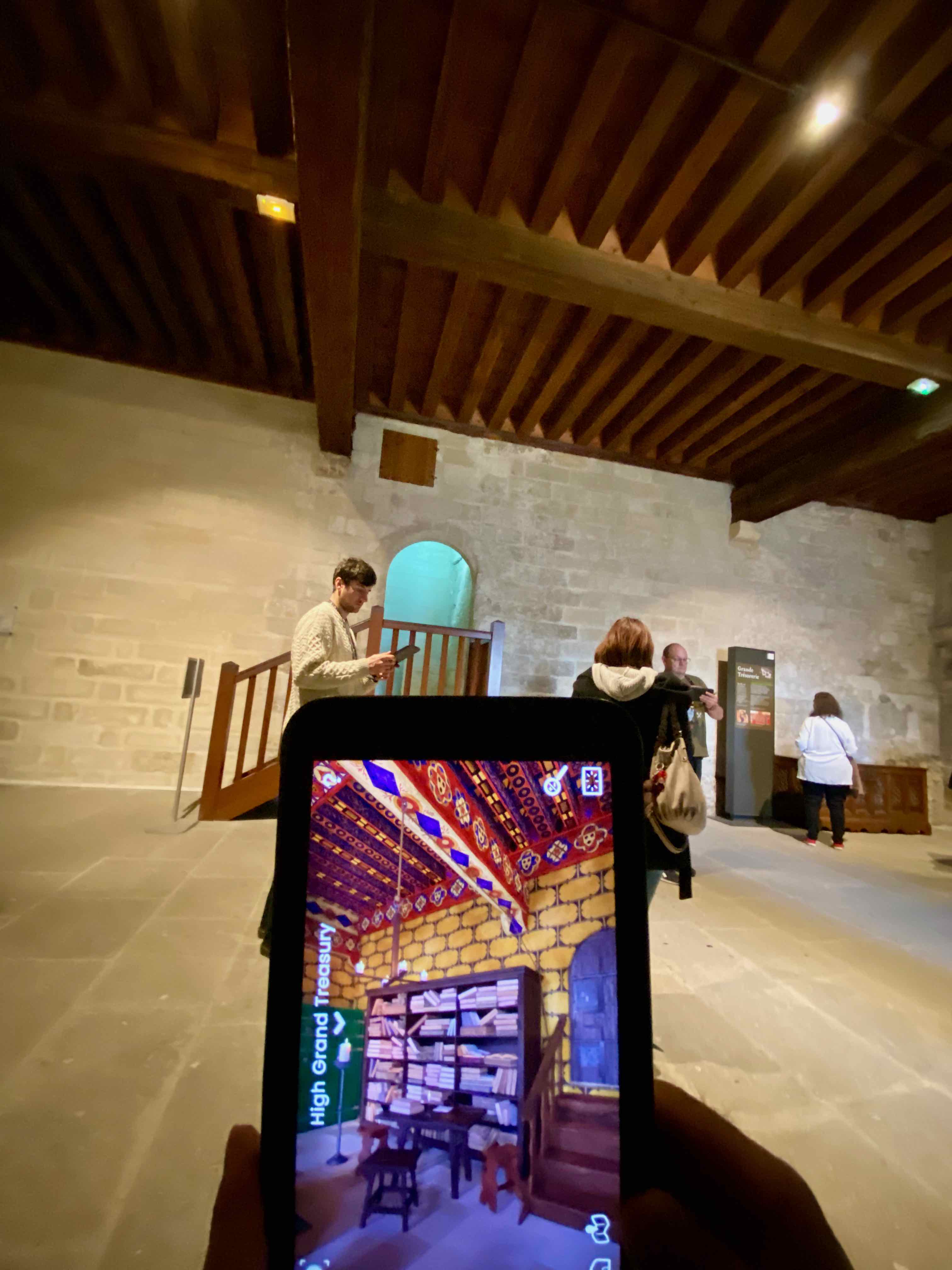
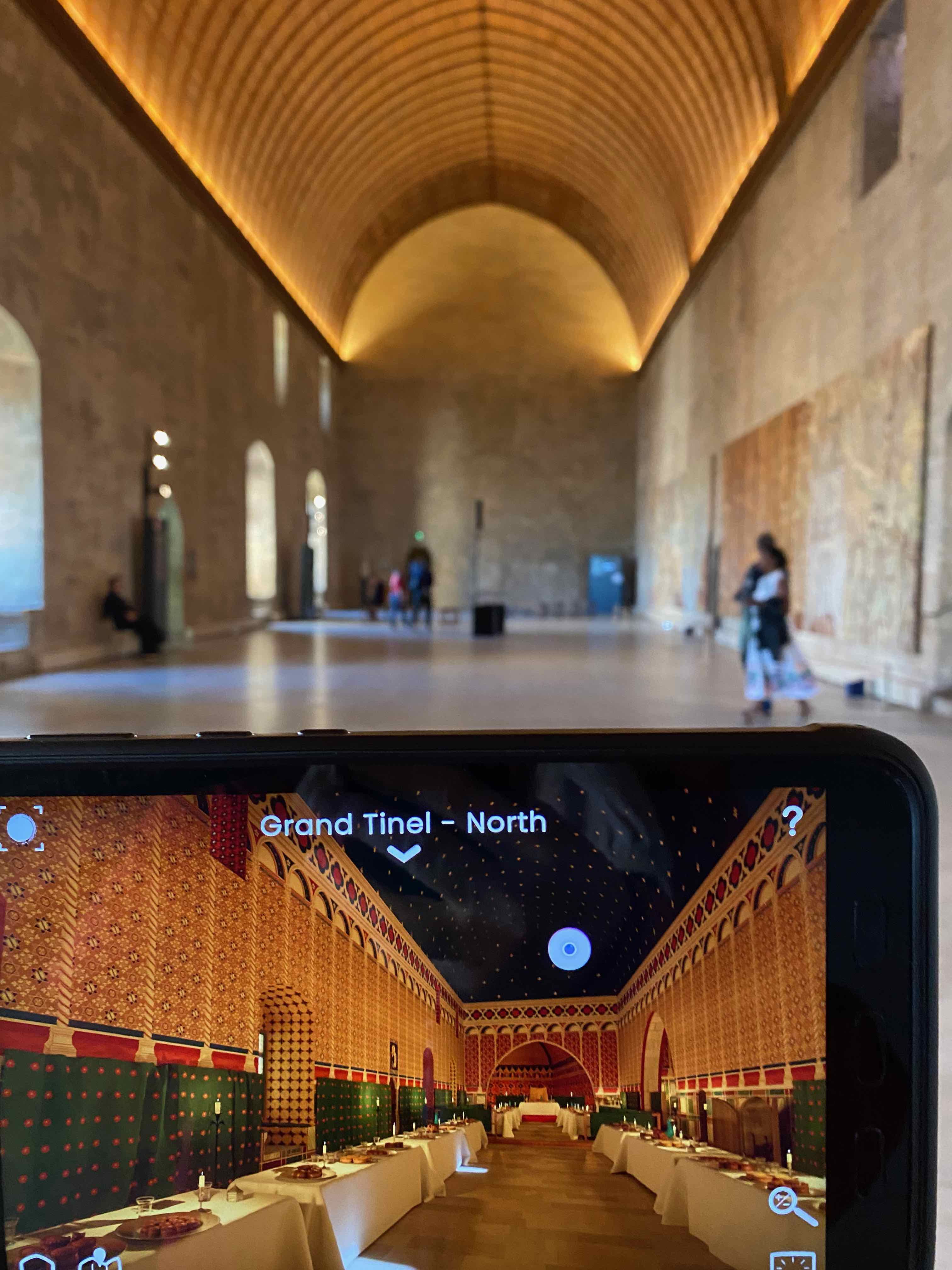
Our 12€ admission tickets includes the use of a Histopad.  This device allows us to look in any direction, as well as up or down and the Histopad screen shows us what the  room would have looked like in the 14th century.  

I usually wait and try not to have a lot of people in my photos, but it was really hard to do that today.  Everyone stands transfixed, viewing these rooms as they might have been. This room was the treasury and in 1995 a secret chamber was discovered under the stone floor, that still contained precious treasures from hundreds of years ago.  There was no information on how this chamber was discovered.  It is amazing that it would still be there after all this time.  Bob is standing beside this secret chamber in the photo.
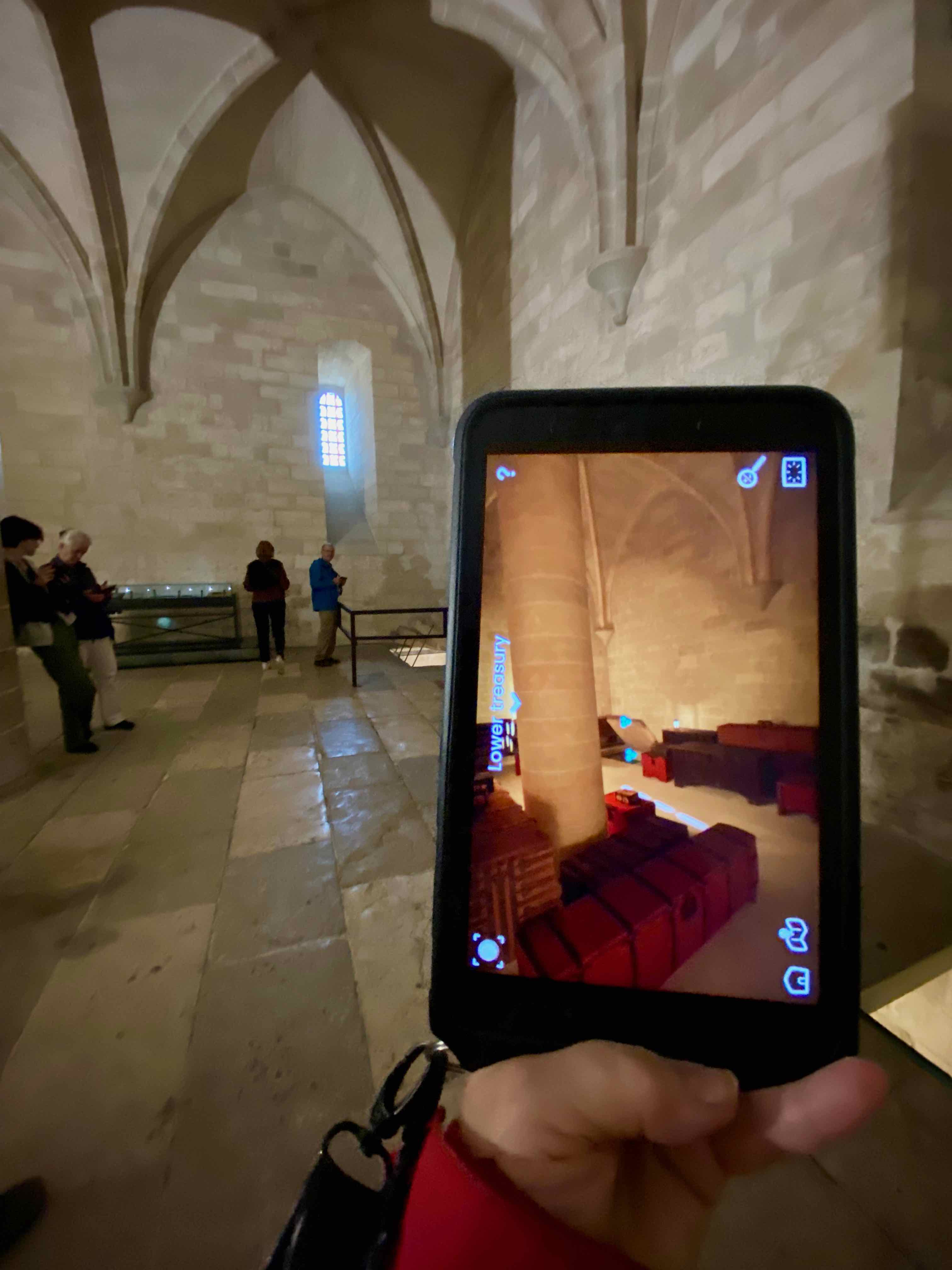
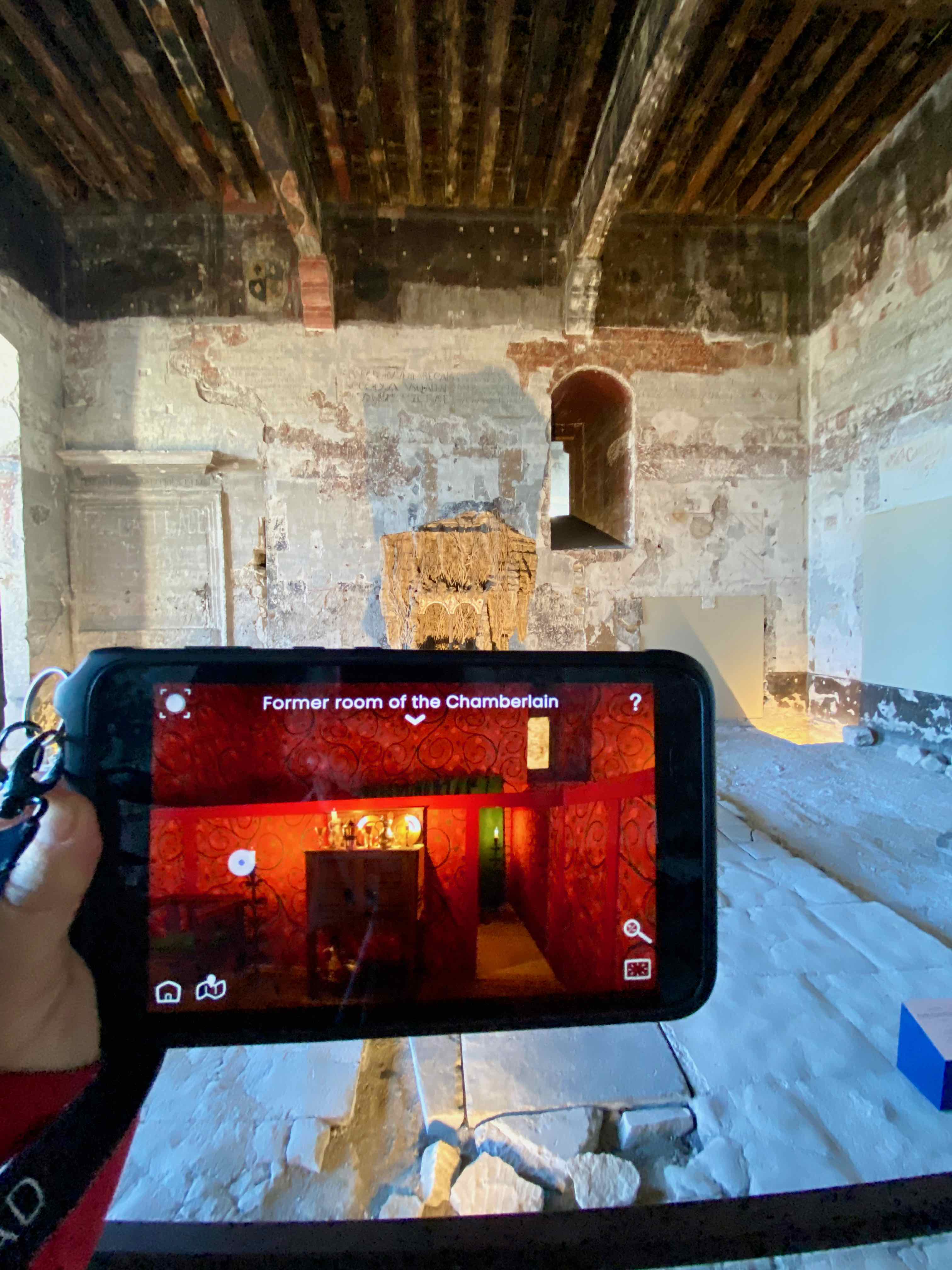
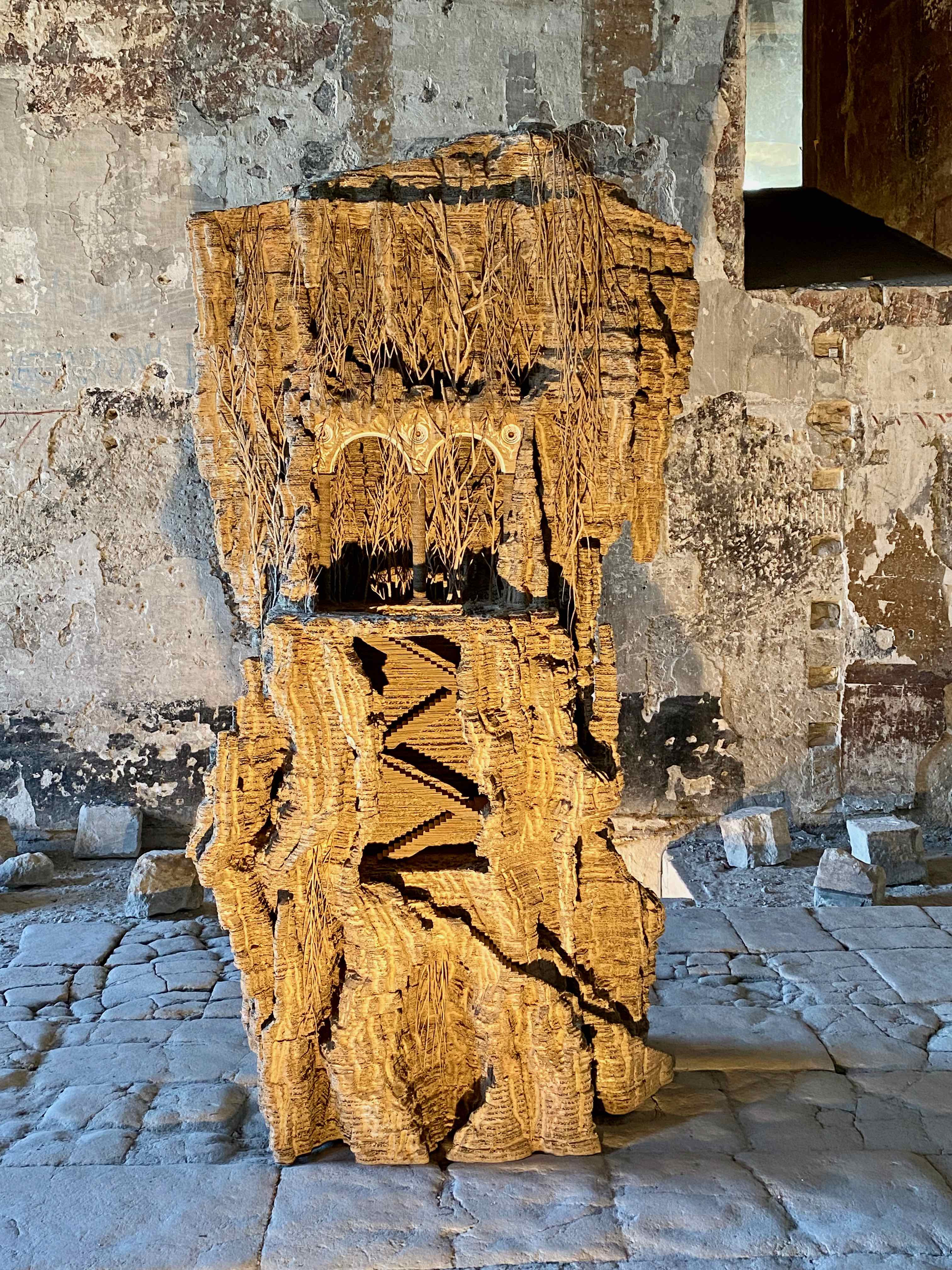
In this photo you can just see the top of a sculpture behind the Histogram…

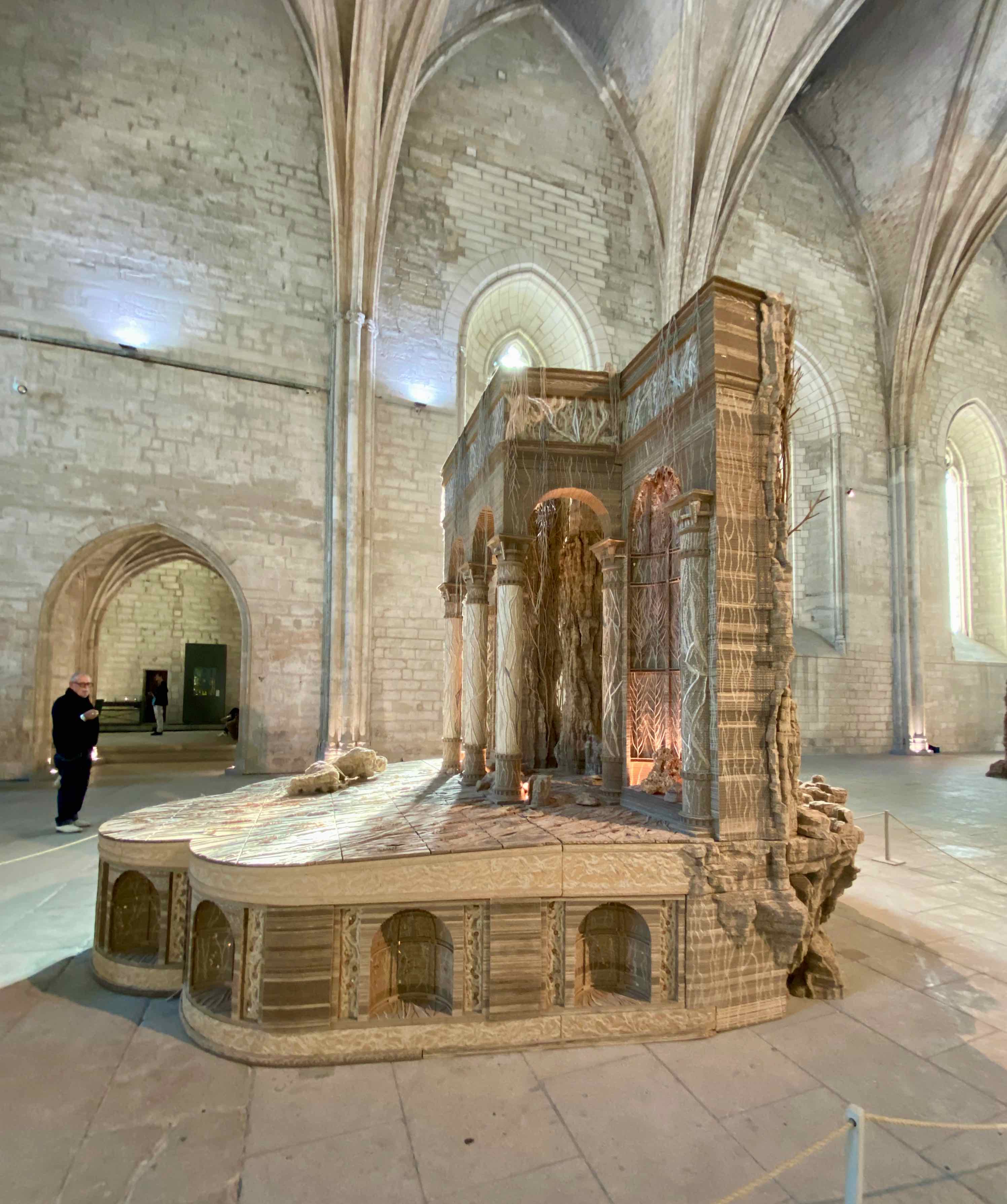
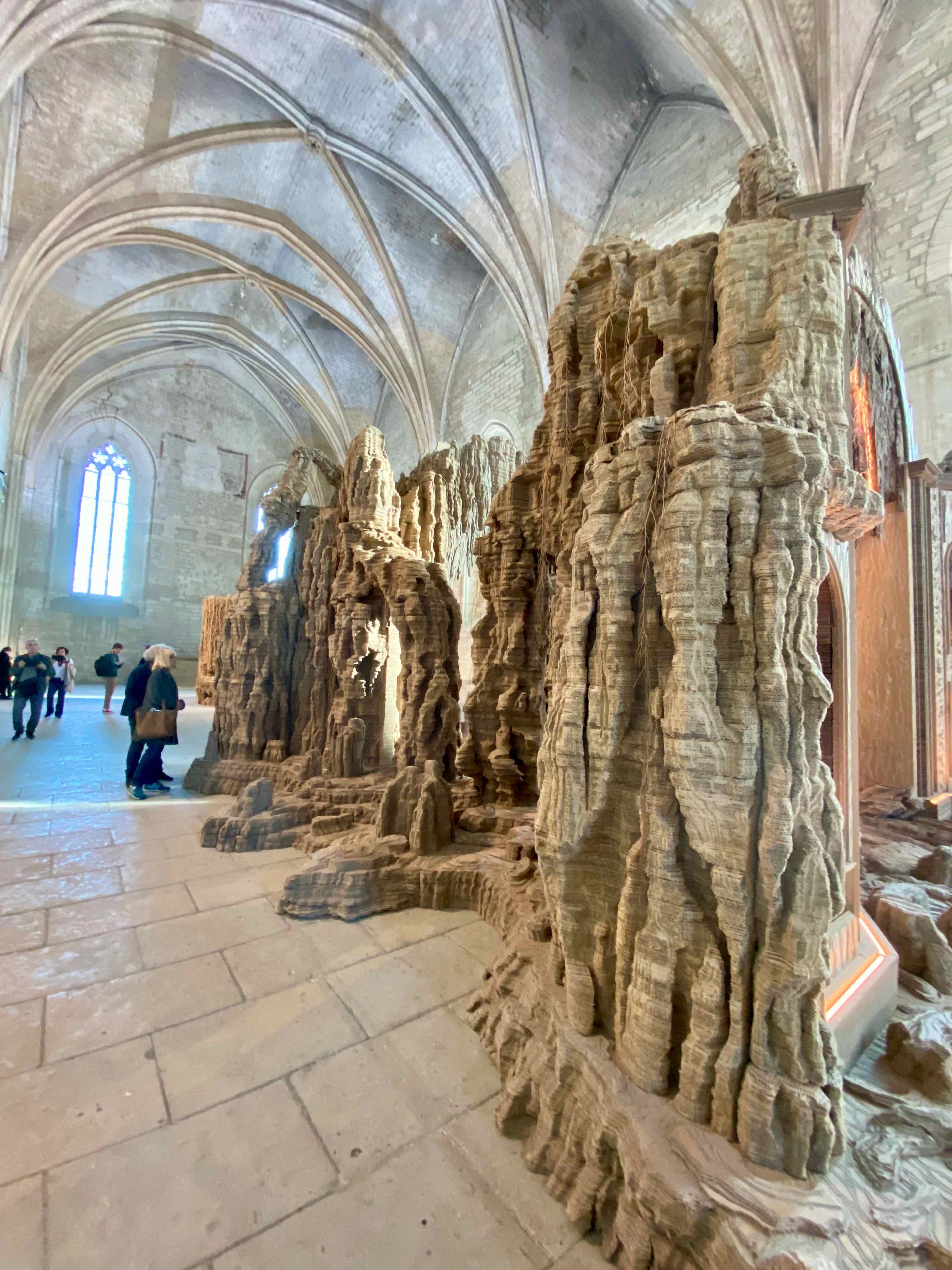
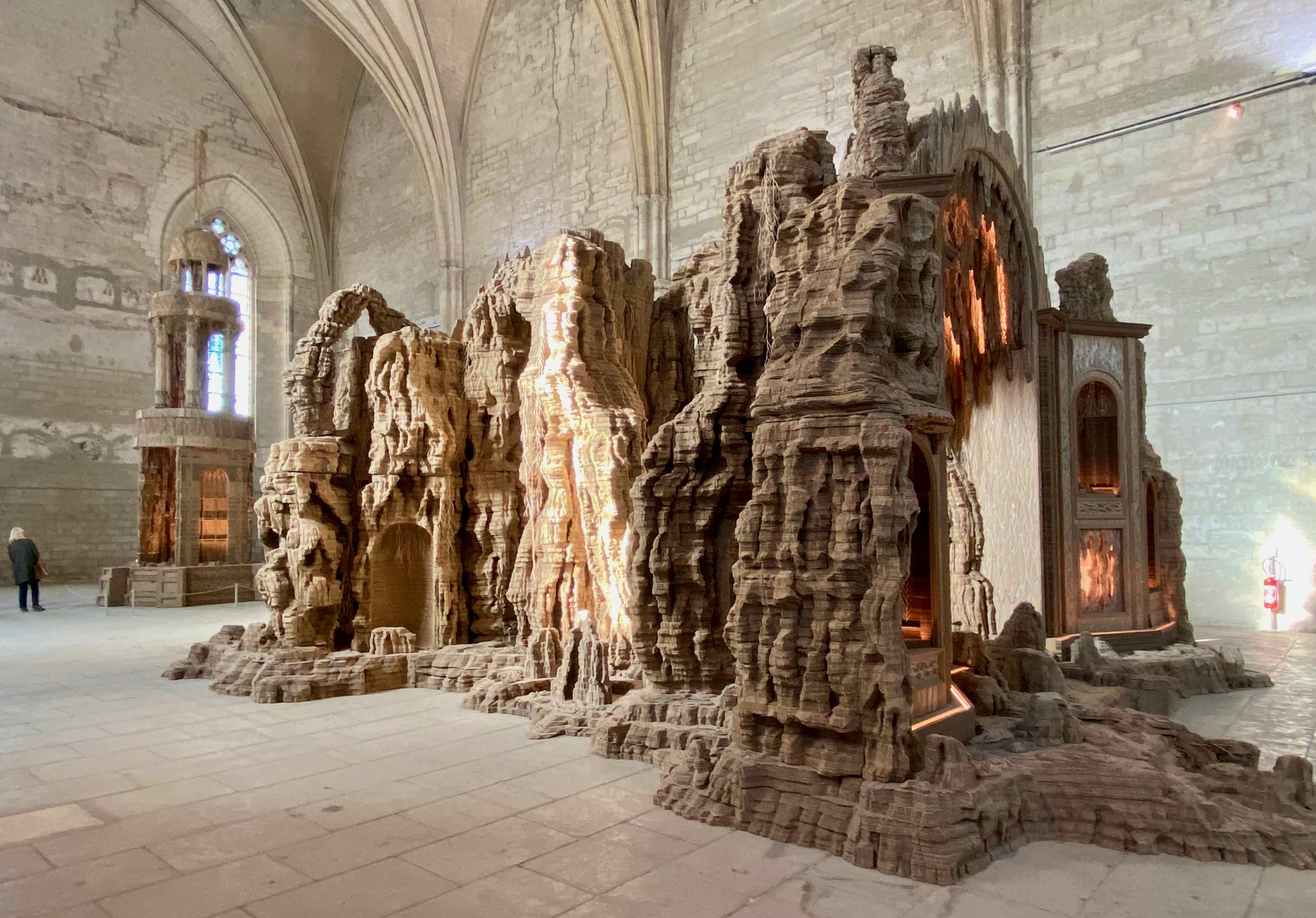
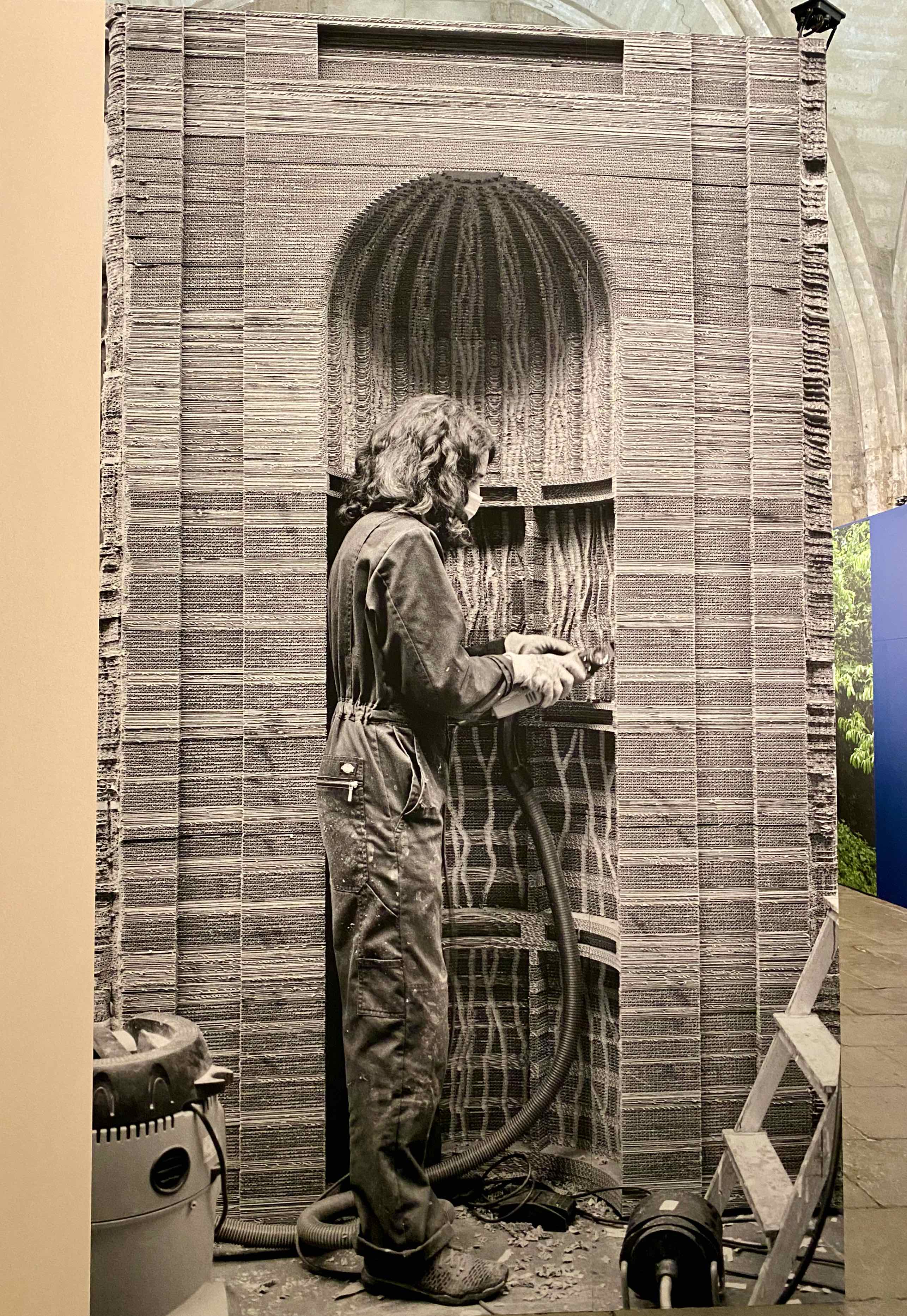
It is made from corrugated cardboard and stands about 5 feet tall by Paris artist Eva Jospin.  I think it is fascinating.  

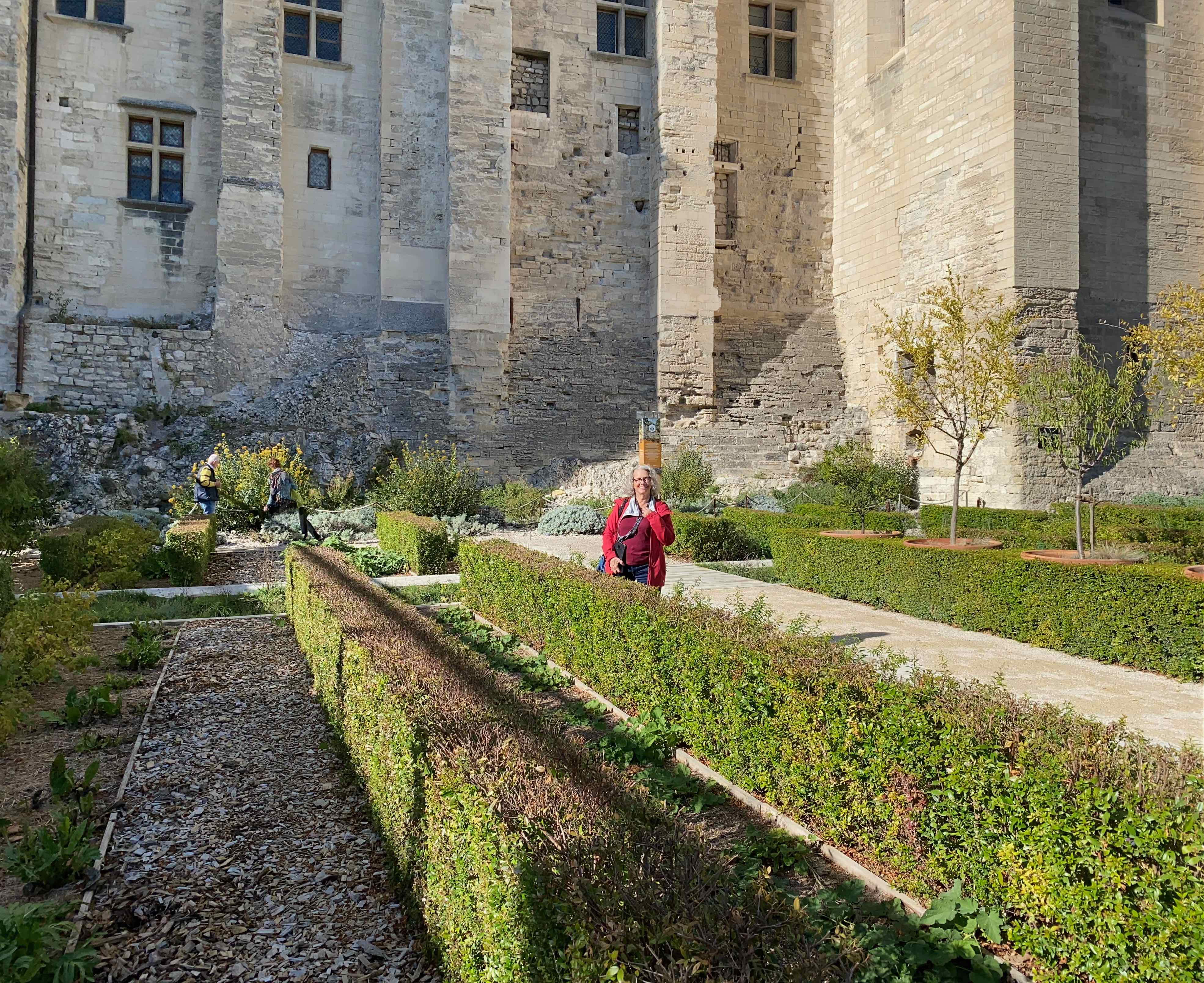
We take a break in the palace gardens and try to buy a hot chocolate from a machine that only accepts credit cards…it was beyond both of us!  No hot chocolate for us today.

The palace walls rise 52 meters above the garden!

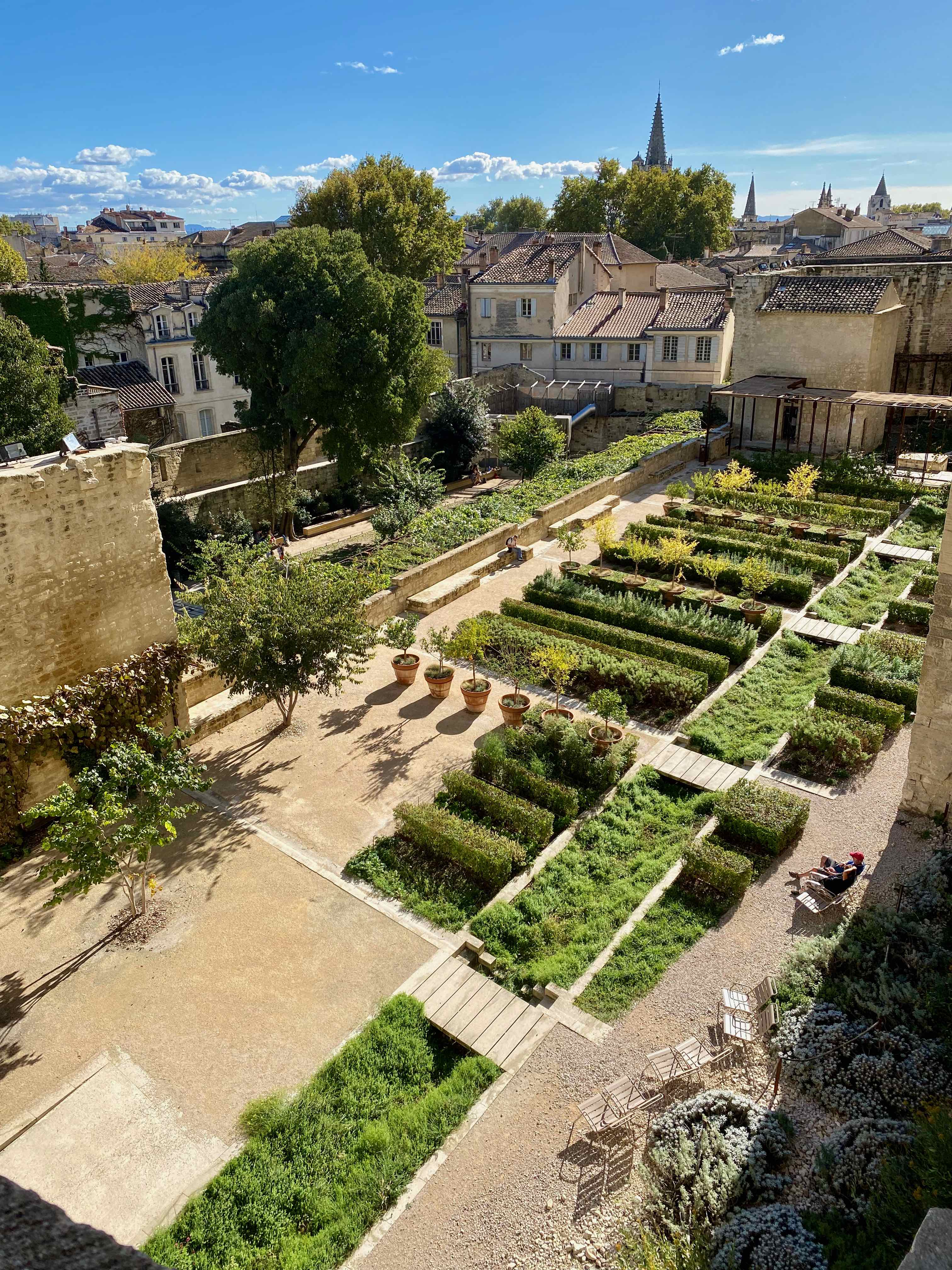
The gardens look lovely from afar but they were actually a bit neglected.  

We return to the inside for the last part of our tour.  However the Histopad photo is not what grabs my attention.
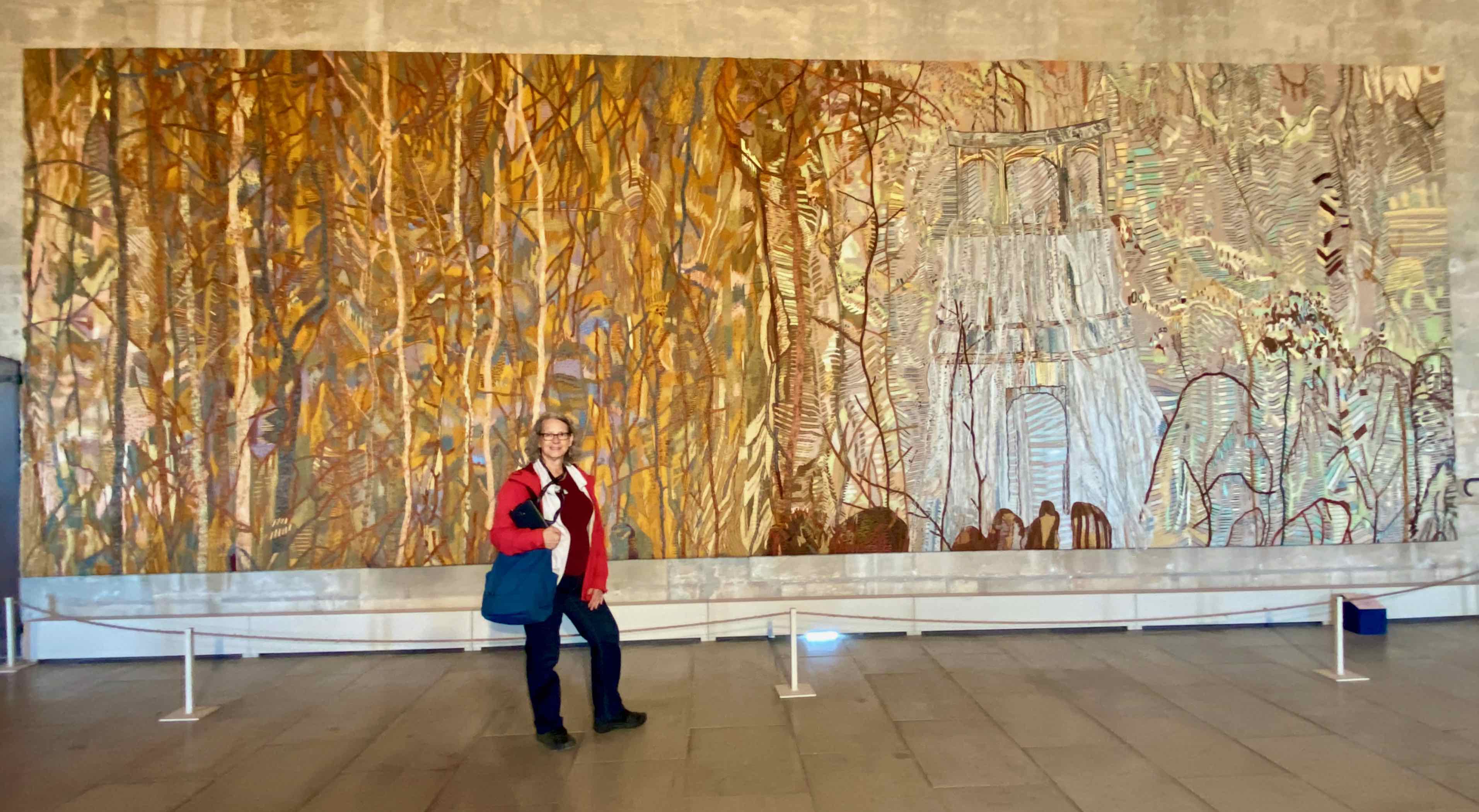
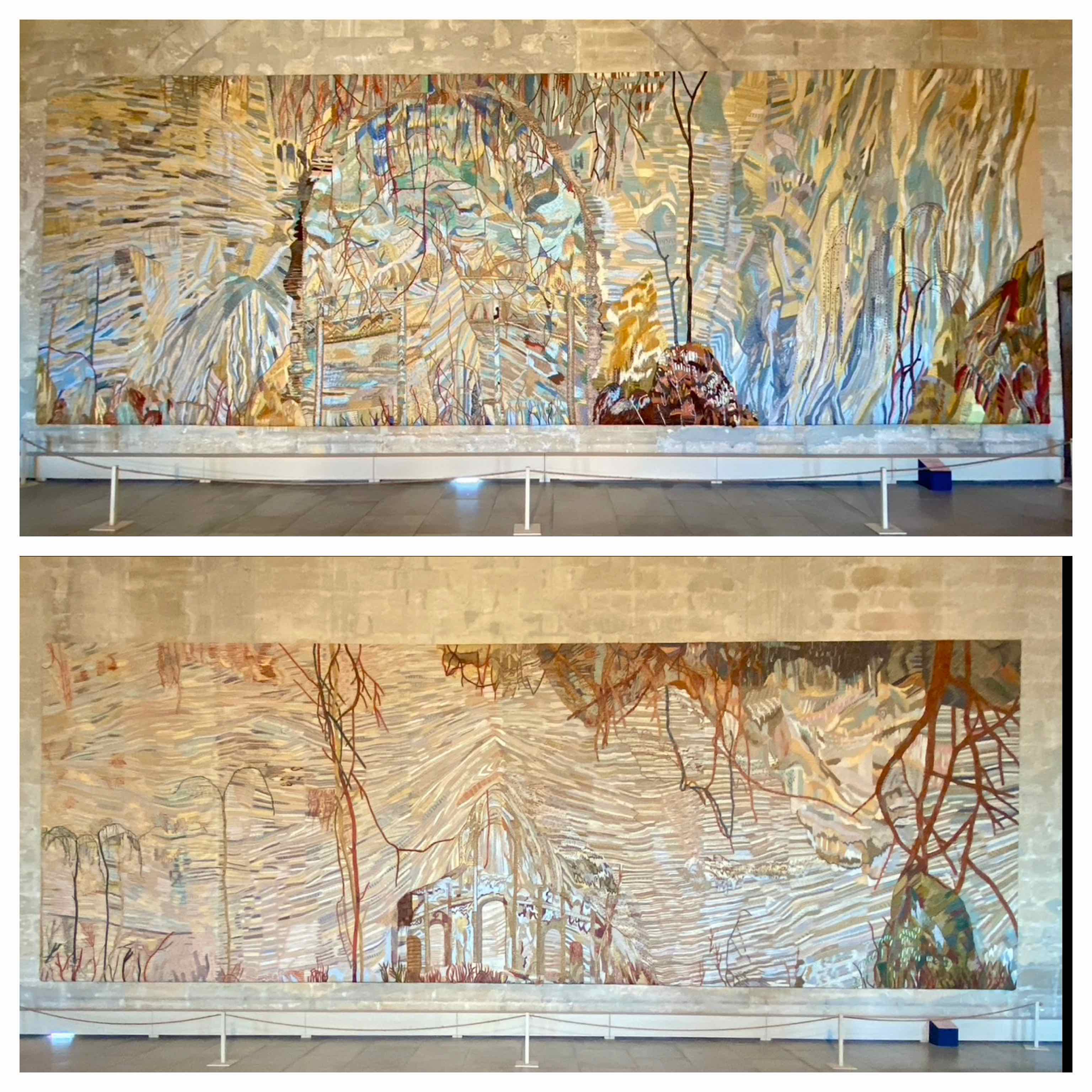
Rather it is the three enormous silk embroidered wall hangings displayed on one of the long walls.  ‘Chamber de Soie’  or ‘Silk Room’ is also created by Eva Jospin.  
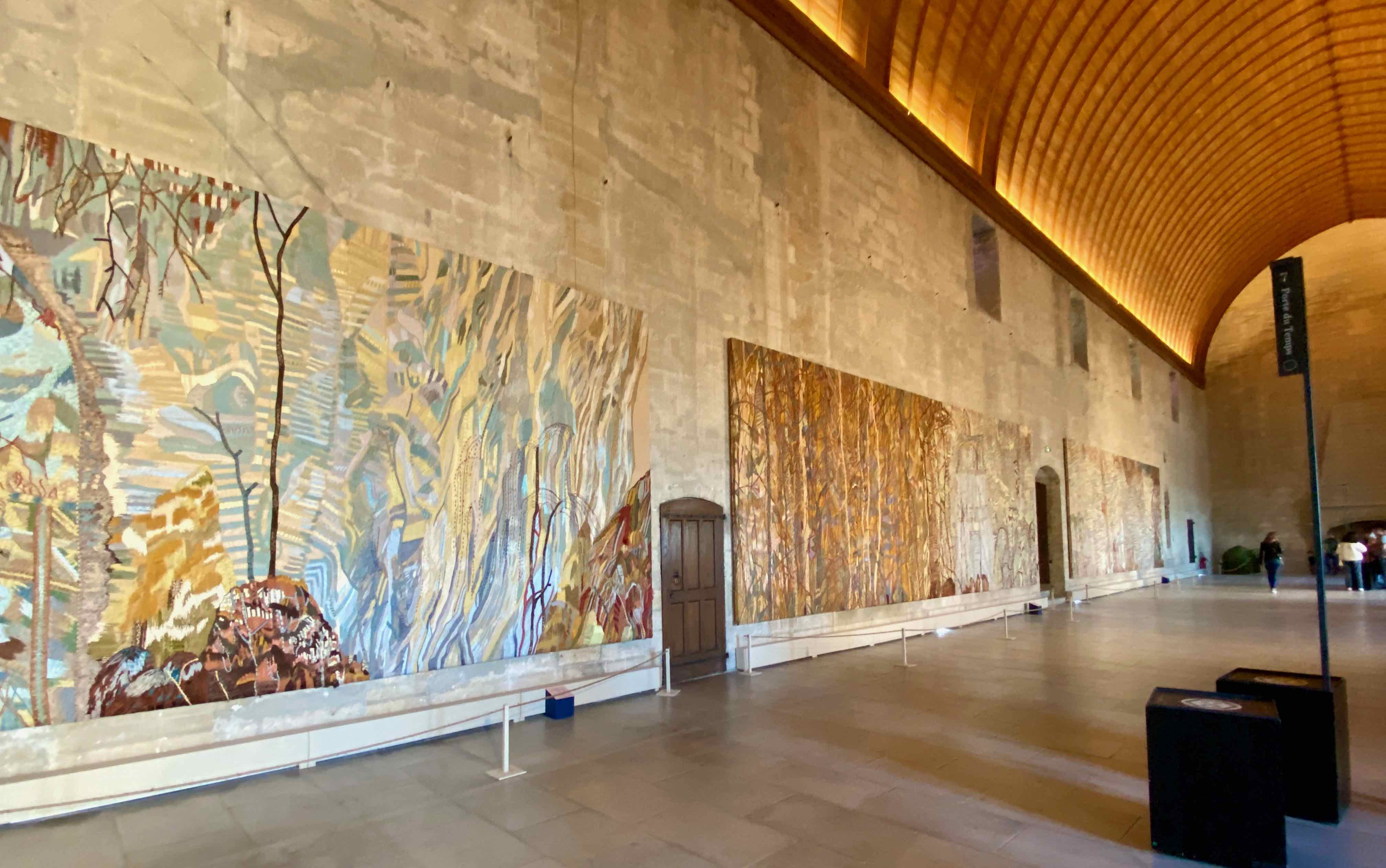
We spend a lot of time here as I walk back and forth, studying these huge embroidered panels.  I can not believe how much work it would take to make these.

Here are the other two…

along with some close-ups of the embroidery.

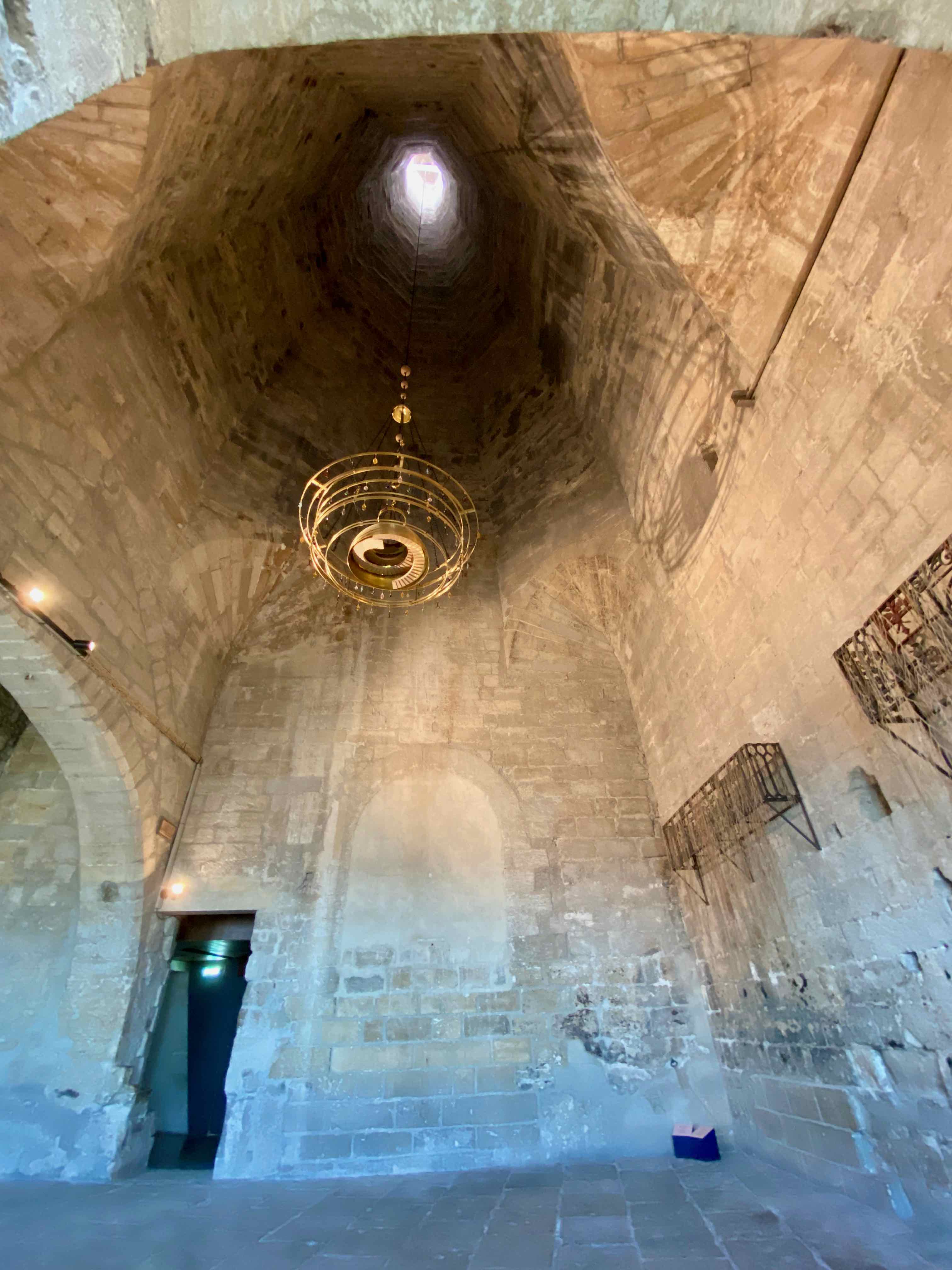
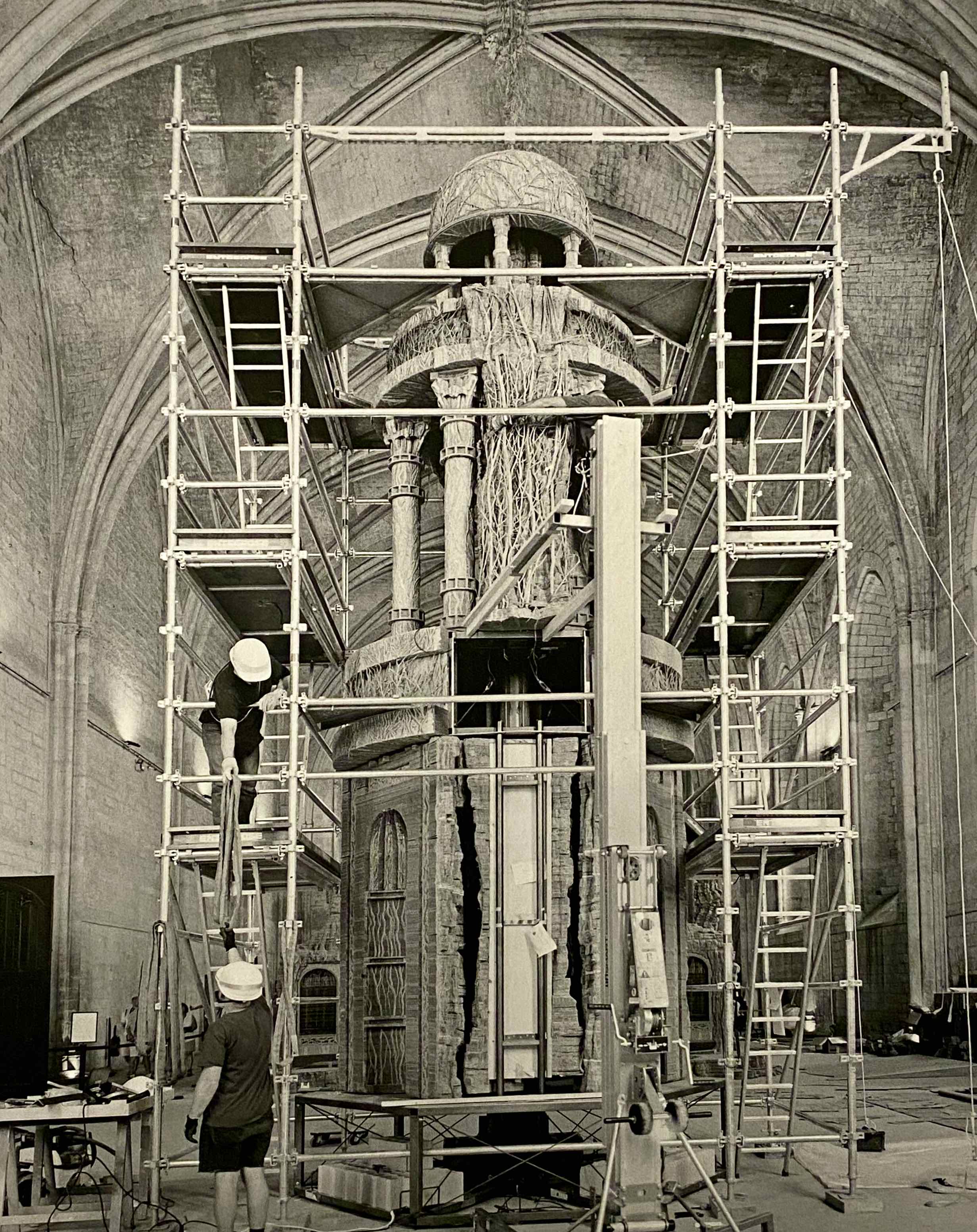
Next door is a small room that used to be a kitchen.  It also has artwork, including this sculpture, ‘Empyrée’, that is suspended from the top of the huge chimney in the center of the room.   Empyrée is from mythology and means ‘Highest part of the sky, where the gods reside’.  I am astounded to read that this is also by the same artist, Eva Jospin.

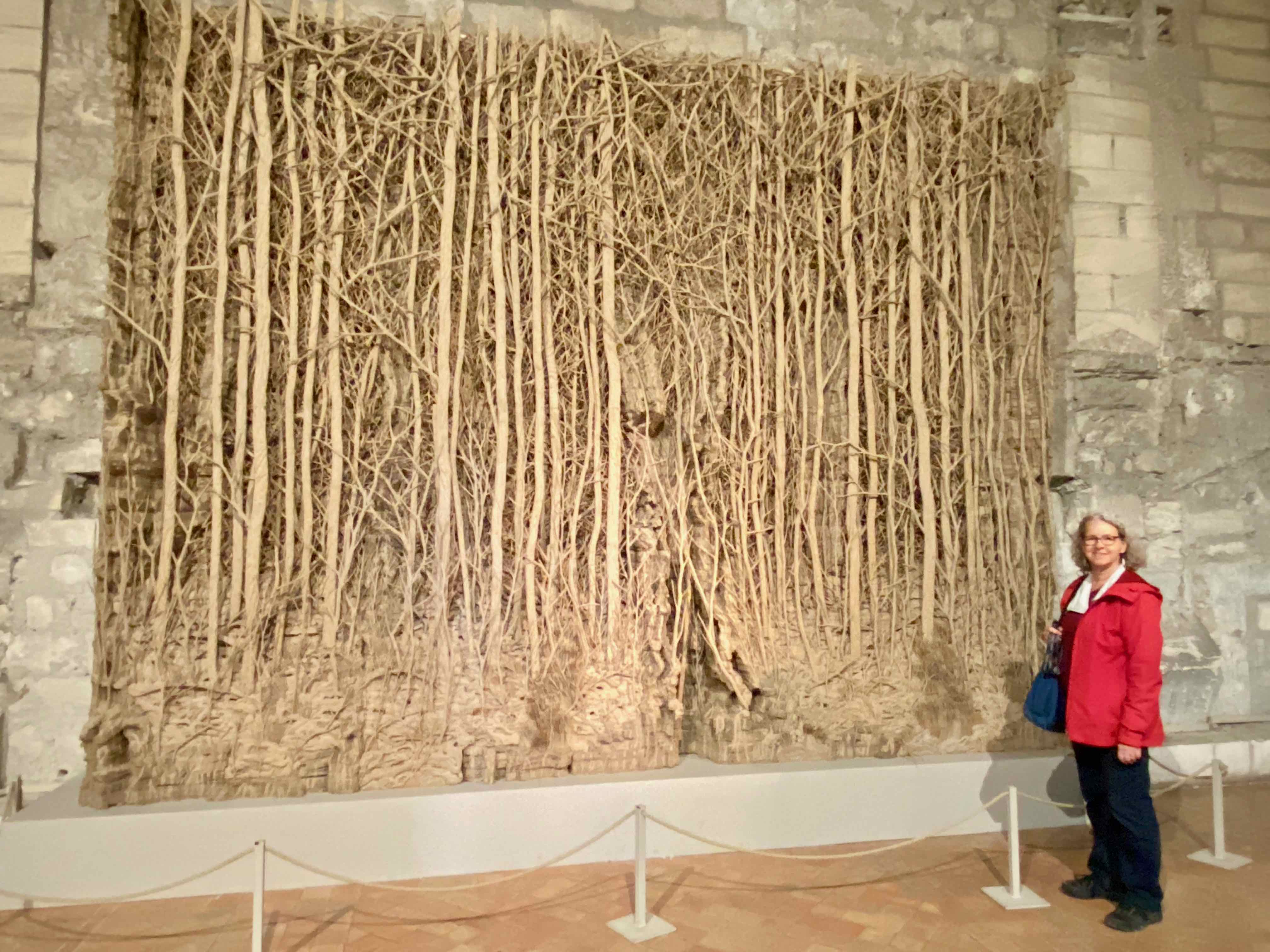
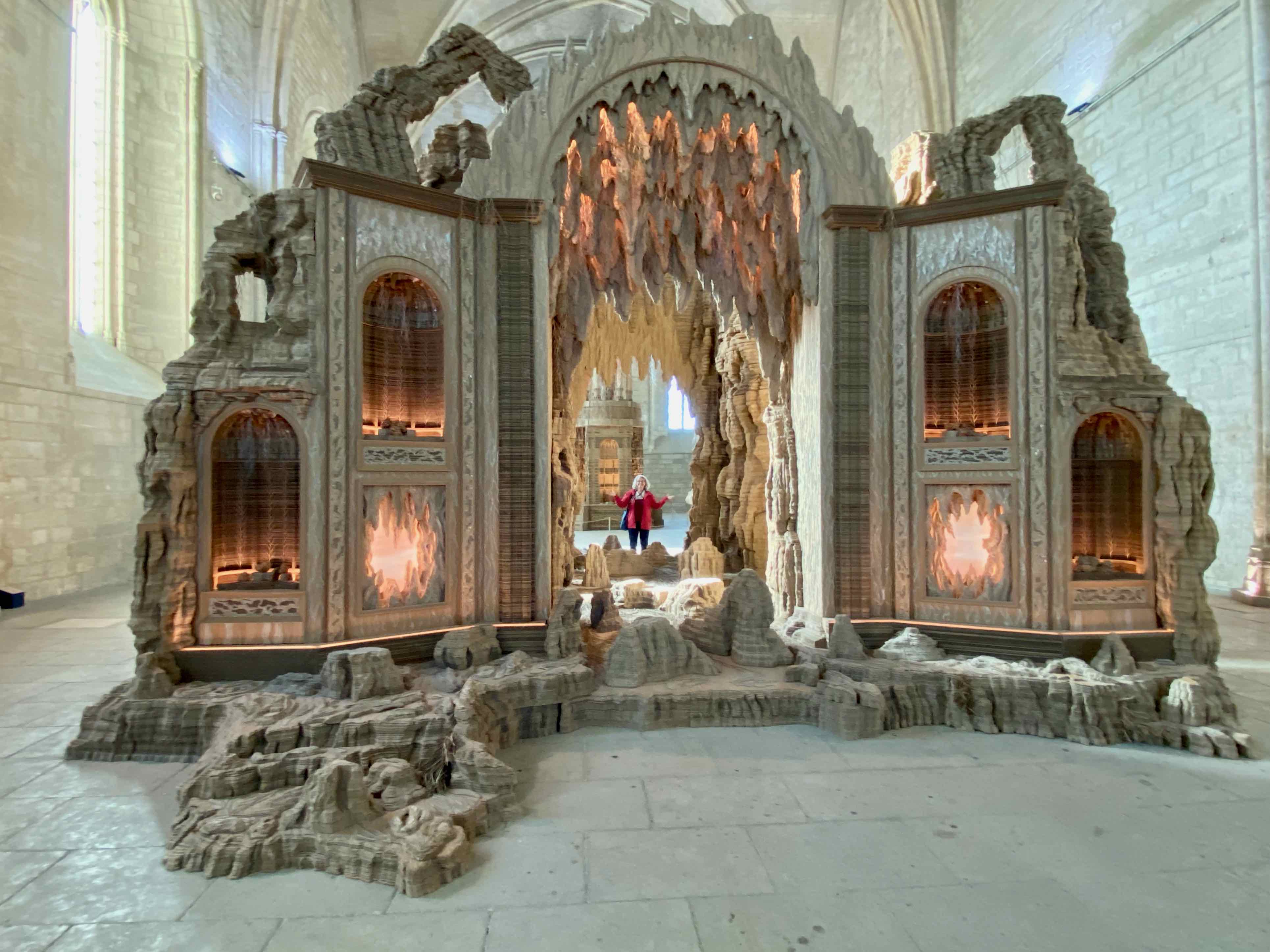
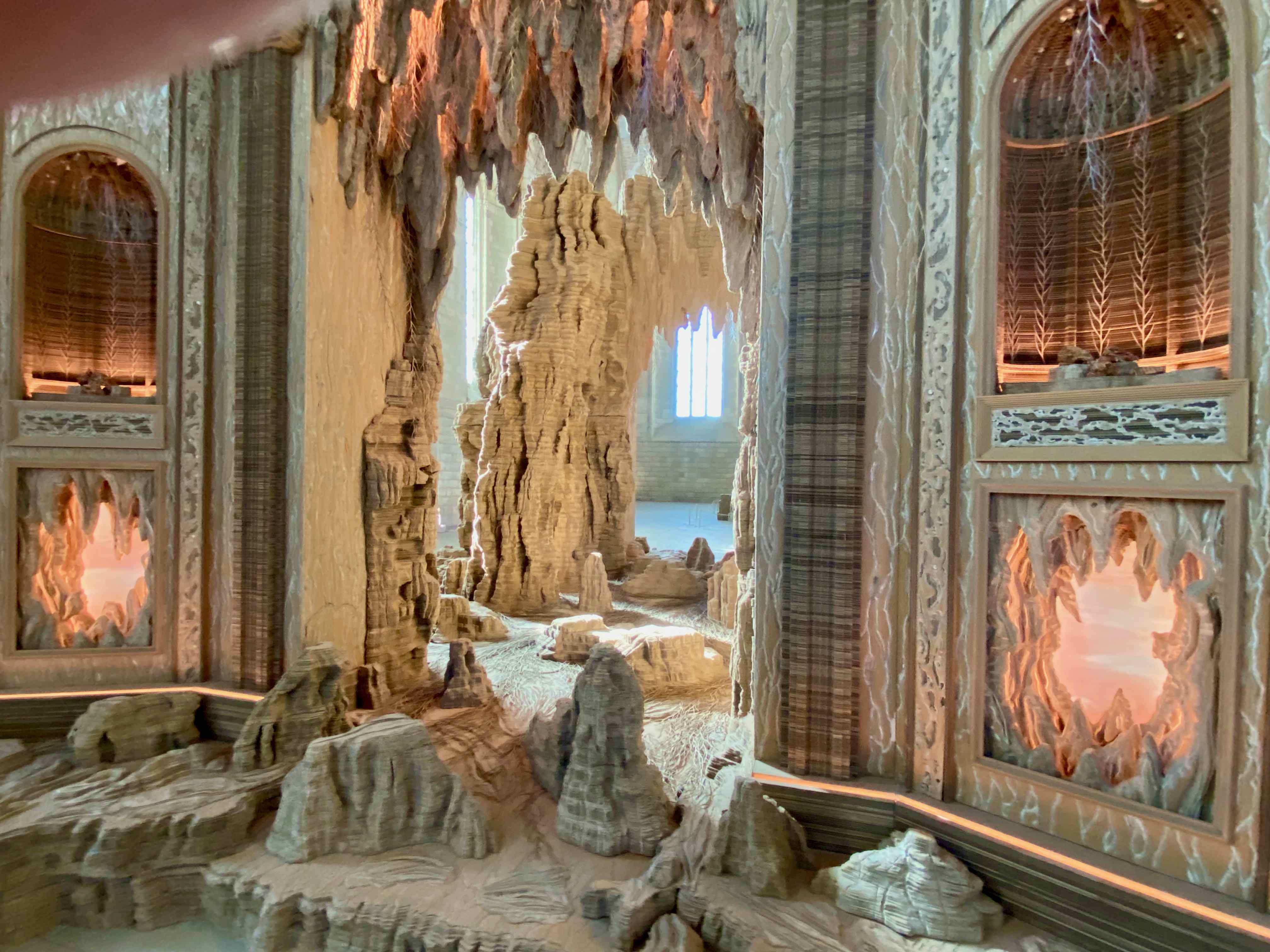
But then we walk into the next room and see this sculpture that is made completely from corrugated cardboard!  Wow, It is astounding.  I spend a lot of time here as well.  There is so much to look at in ‘Forest Galleria’, or Forest Gallery.  And who is the artist?  Eva Jospin!

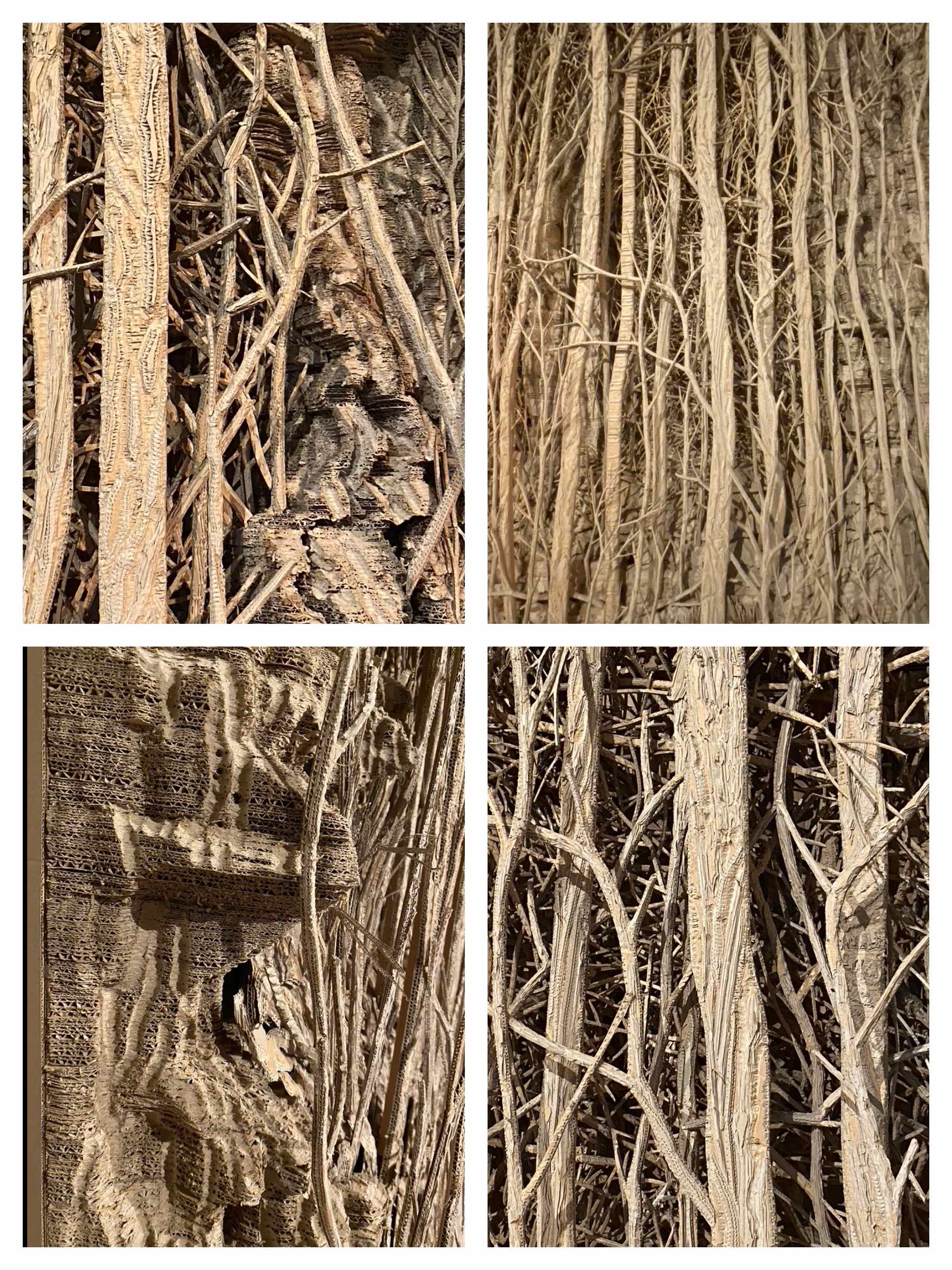
Some close-ups of the different techniques used to create this forest.  I cannot believe the size and complexity of this sculpture…

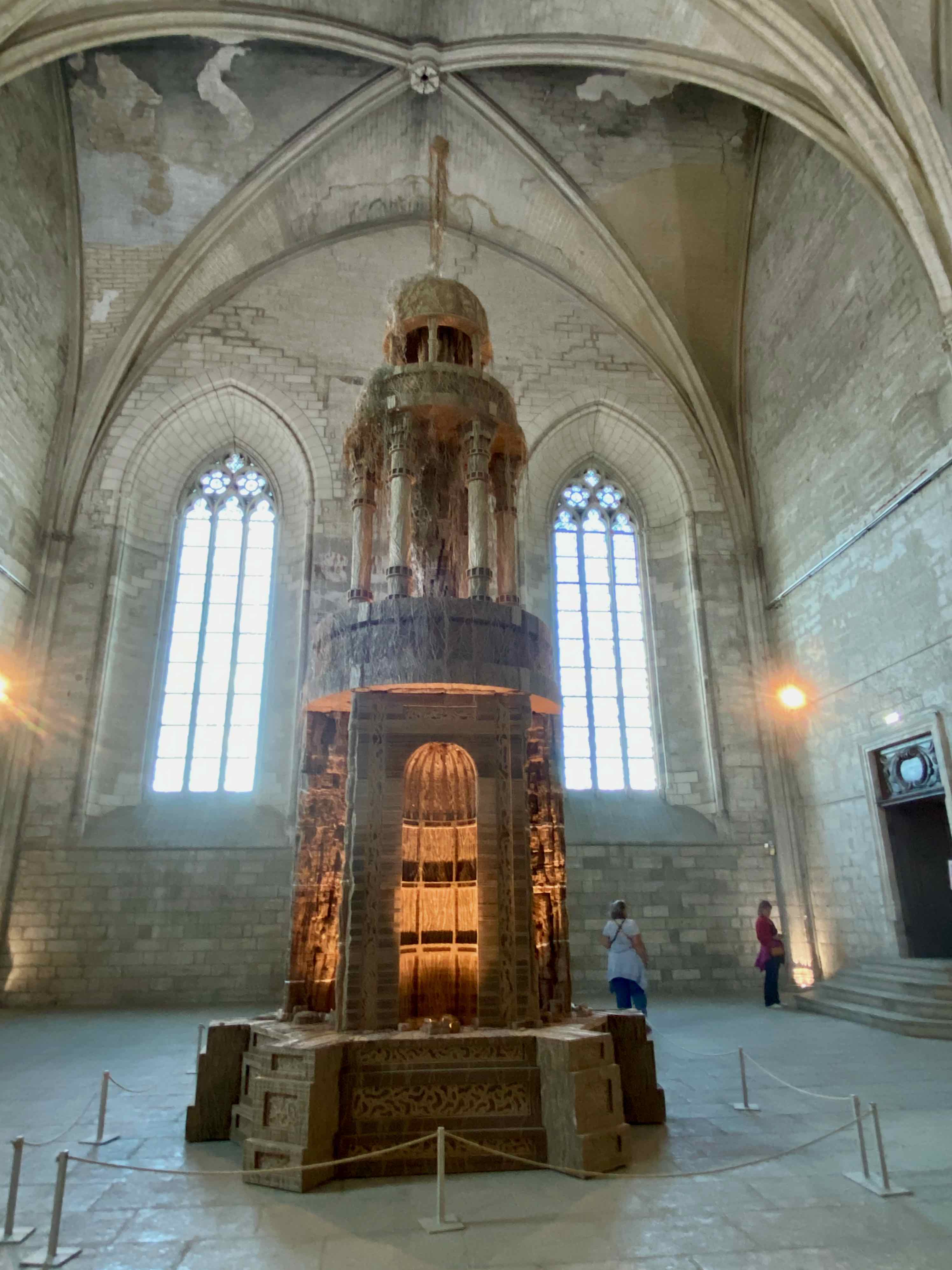
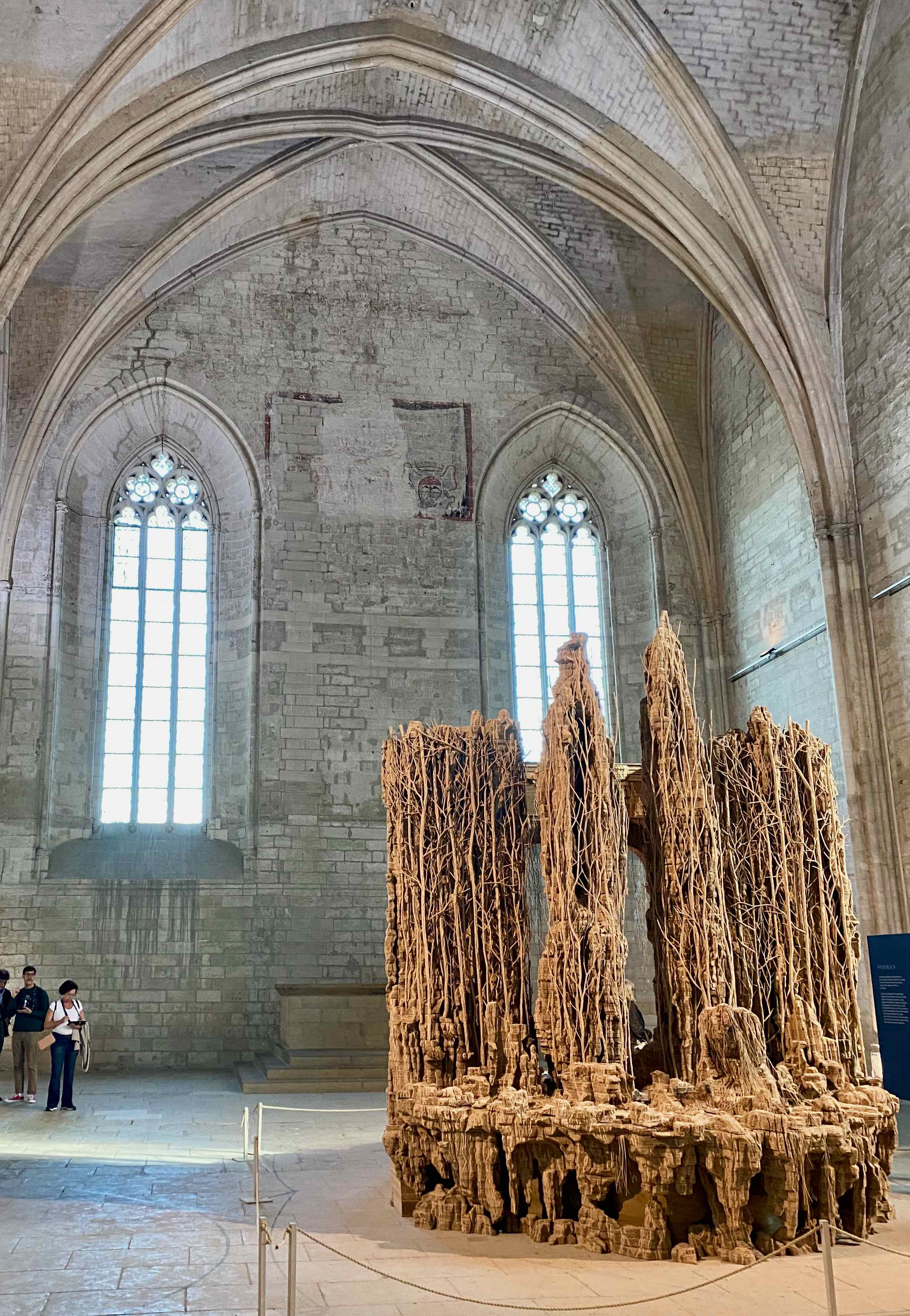
until we walk into the next huge room.  OMG!!  There are simply no words to adequately explain this work called ‘Paysages’, or ‘Landscapes’.  There are three enormous sculptures in this equally enormous chamber.  This one is actually the smallest of them all and they are all made with corrugated cardboard!

This piece is reminiscent of a classical temple on one side…

and here is the back, all overgrown with trees!

These two sculptures are astounding…but then there is this absolutely unbelievable piece that is placed between the other two.  What can I say?

A close up of part of the front…

a side view.  I did say it is very large!

And a view through the center, which reminds me of a river flowing through a rocky canyon.

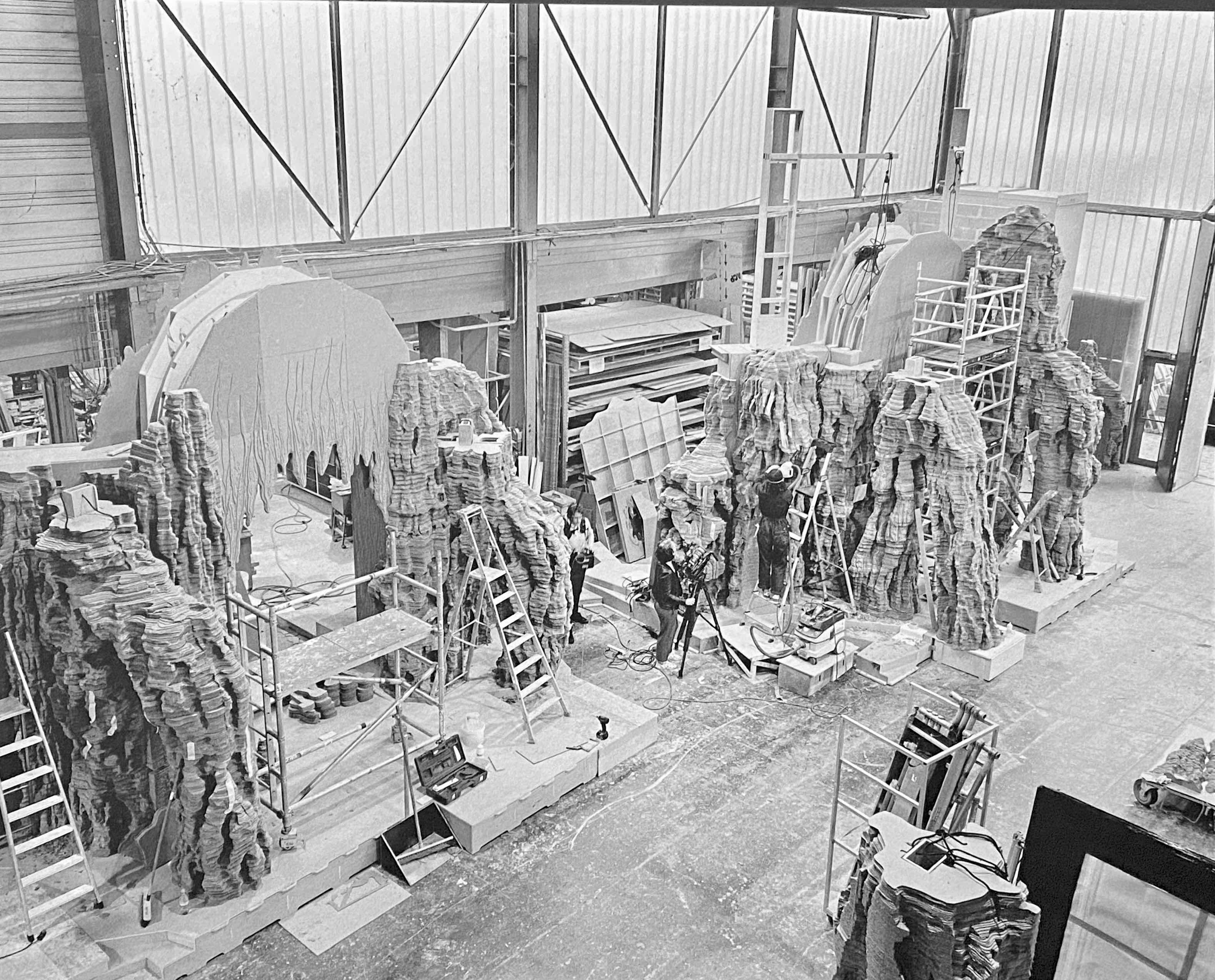
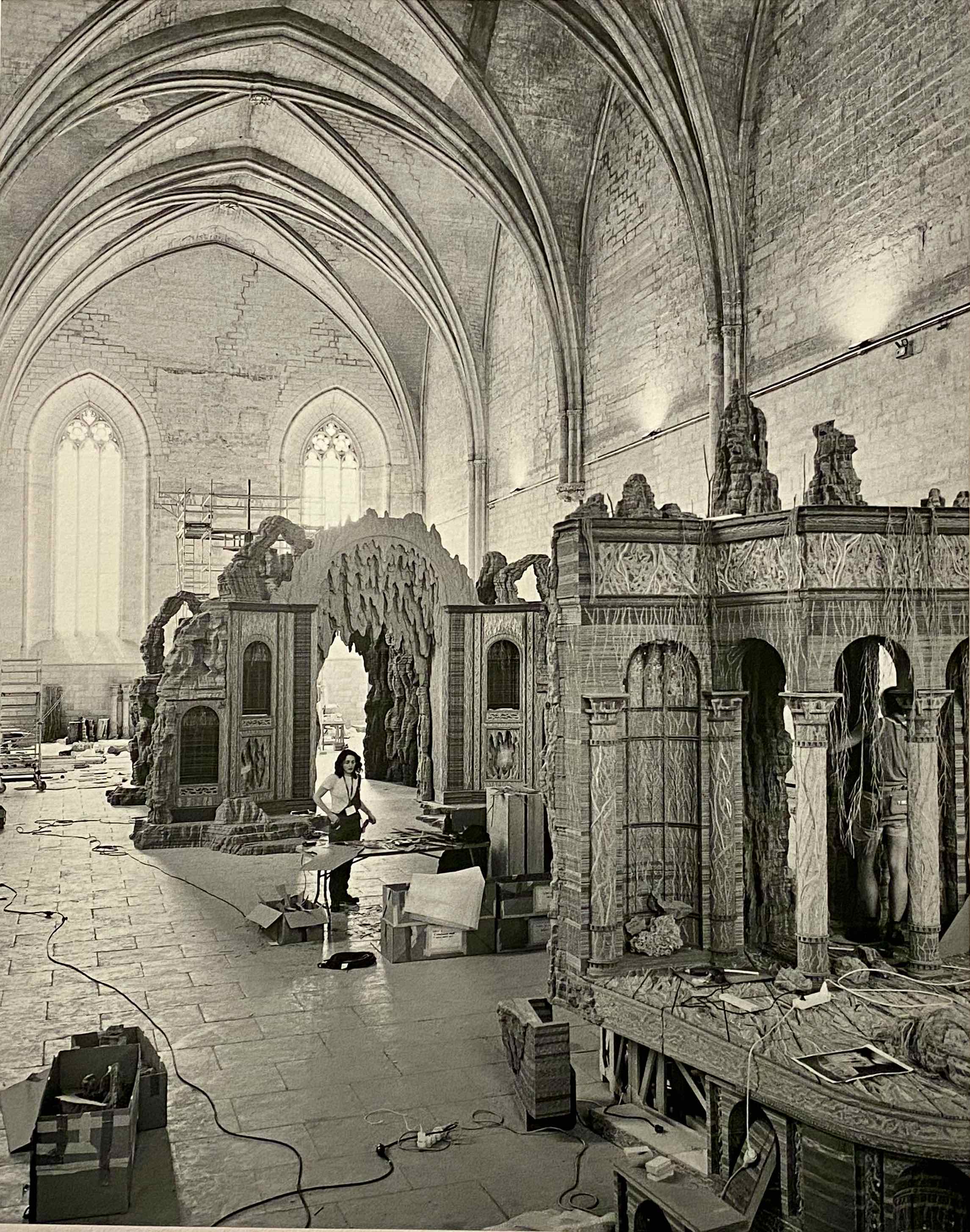
Honestly,  photos cannot capture the grandeur of this work! I did find a video explaining how these pieces are constructed with corrugated cardboard, but sorry, it is a FaceBook video so not everyone may be able to view it.   https://www.facebook.com/watch/?v=437873248434139.      
And here is the link to Eva Jospin’s website.

https://www.suzanne-tarasieve.com/artist/eva-jospin/?lang=en&show=

There was also a room with a video about Eva Jospin and some photos of the process for creating these pieces.  I am in complete awe.

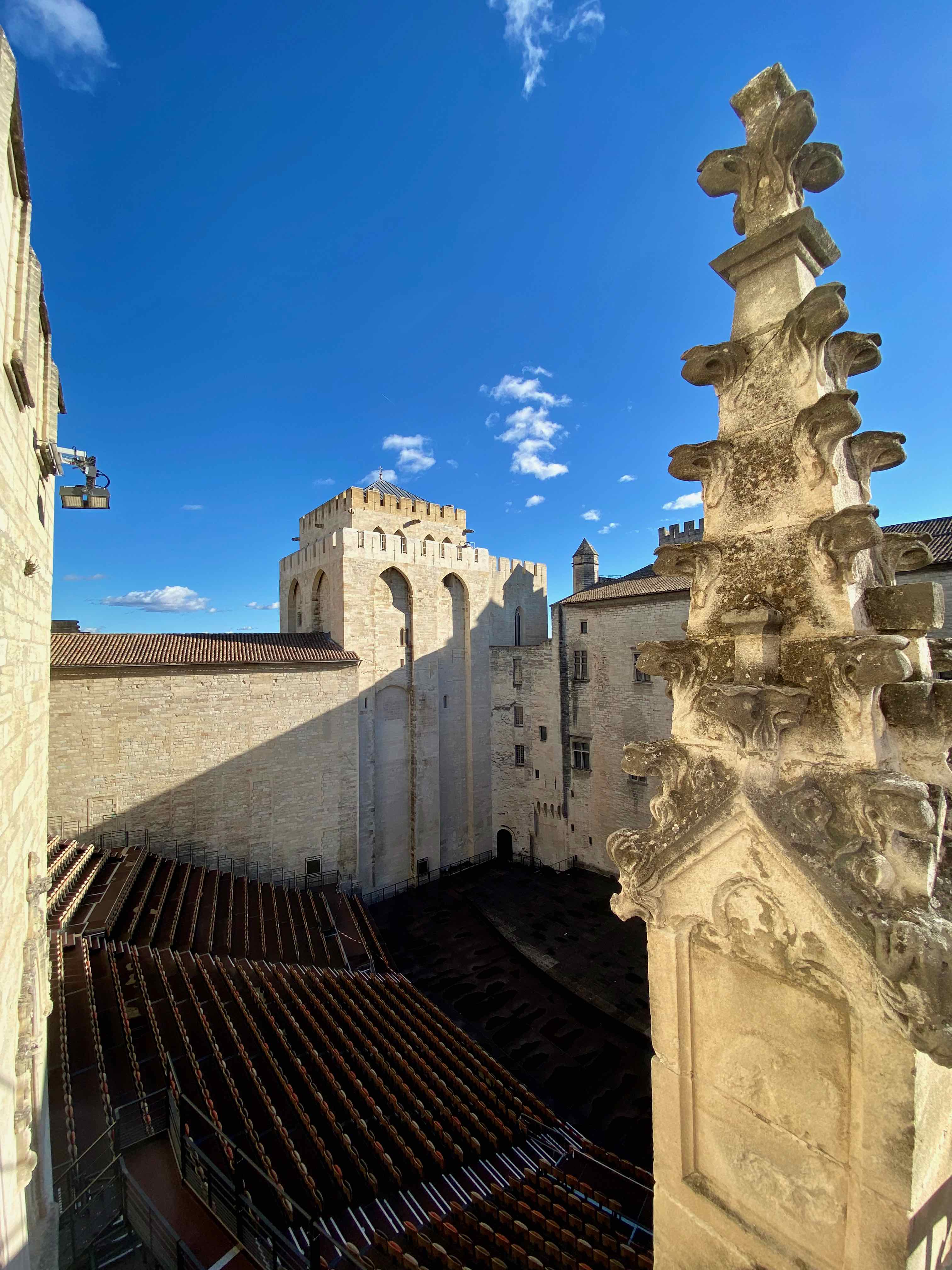
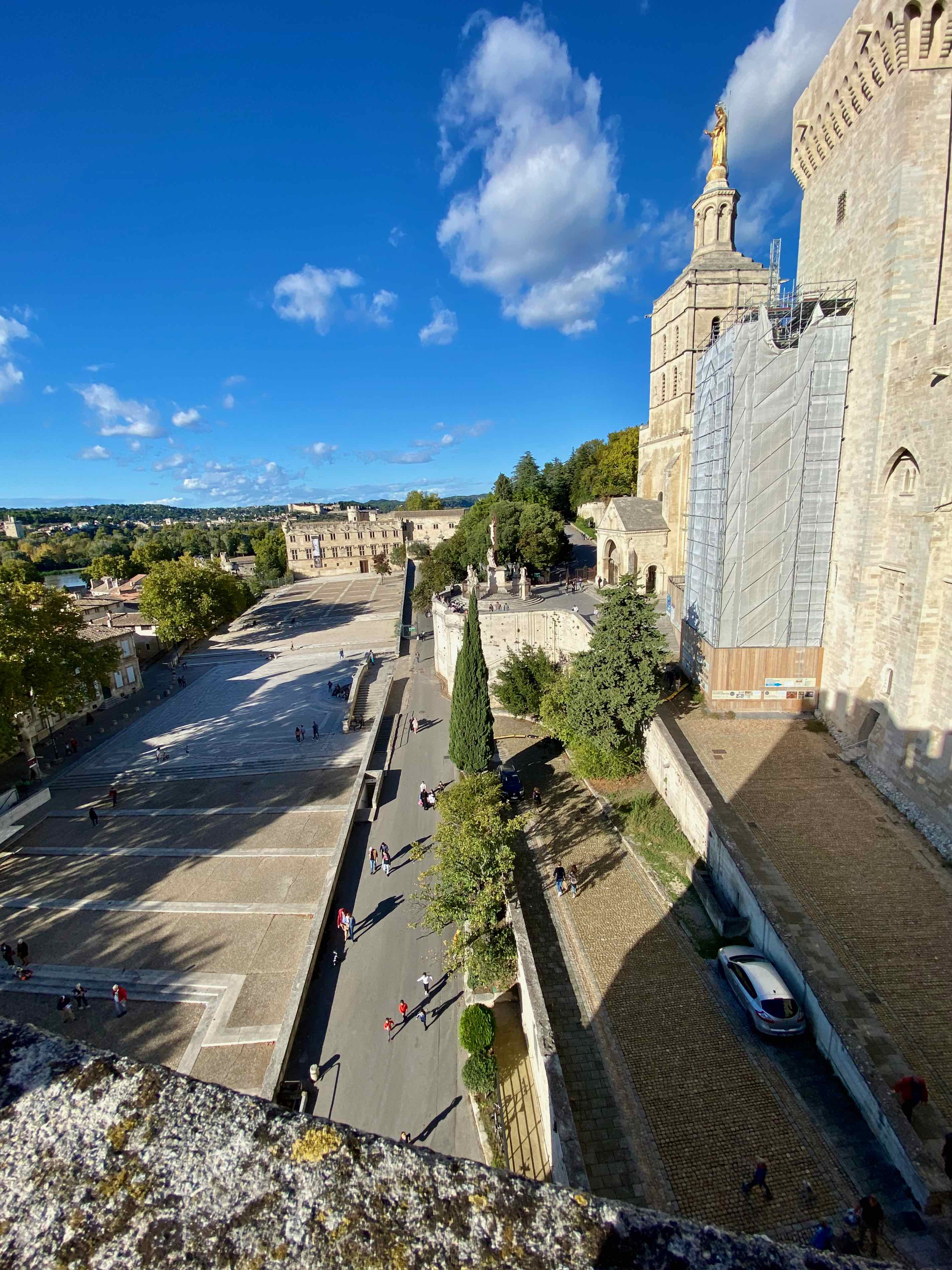
We climb lots of stairs to the roof of the palace.  We started our tour way down there, under the raised seating of this outdoor theatre.

The views from the top are amazing, but it is time to start heading back home.

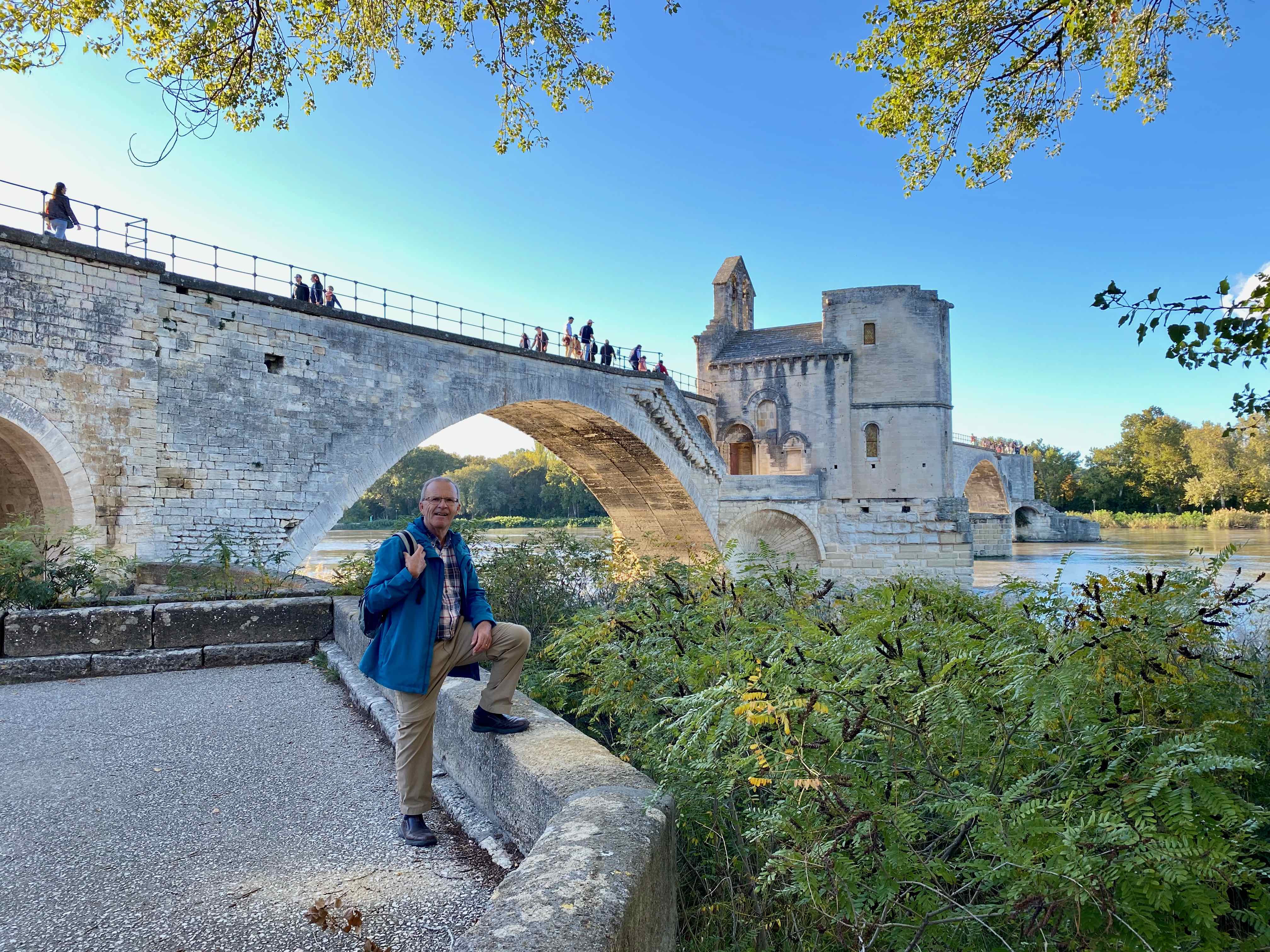
As we walk back to catch the bus to our car we walk under the Pont d’Avignon.  Bob said they used to sing the French children’s folksong ‘Sur le Pont d’Avignon’ when he was in elementary school.   https://www.youtube.com/watch?v=_r8eALyO8E4

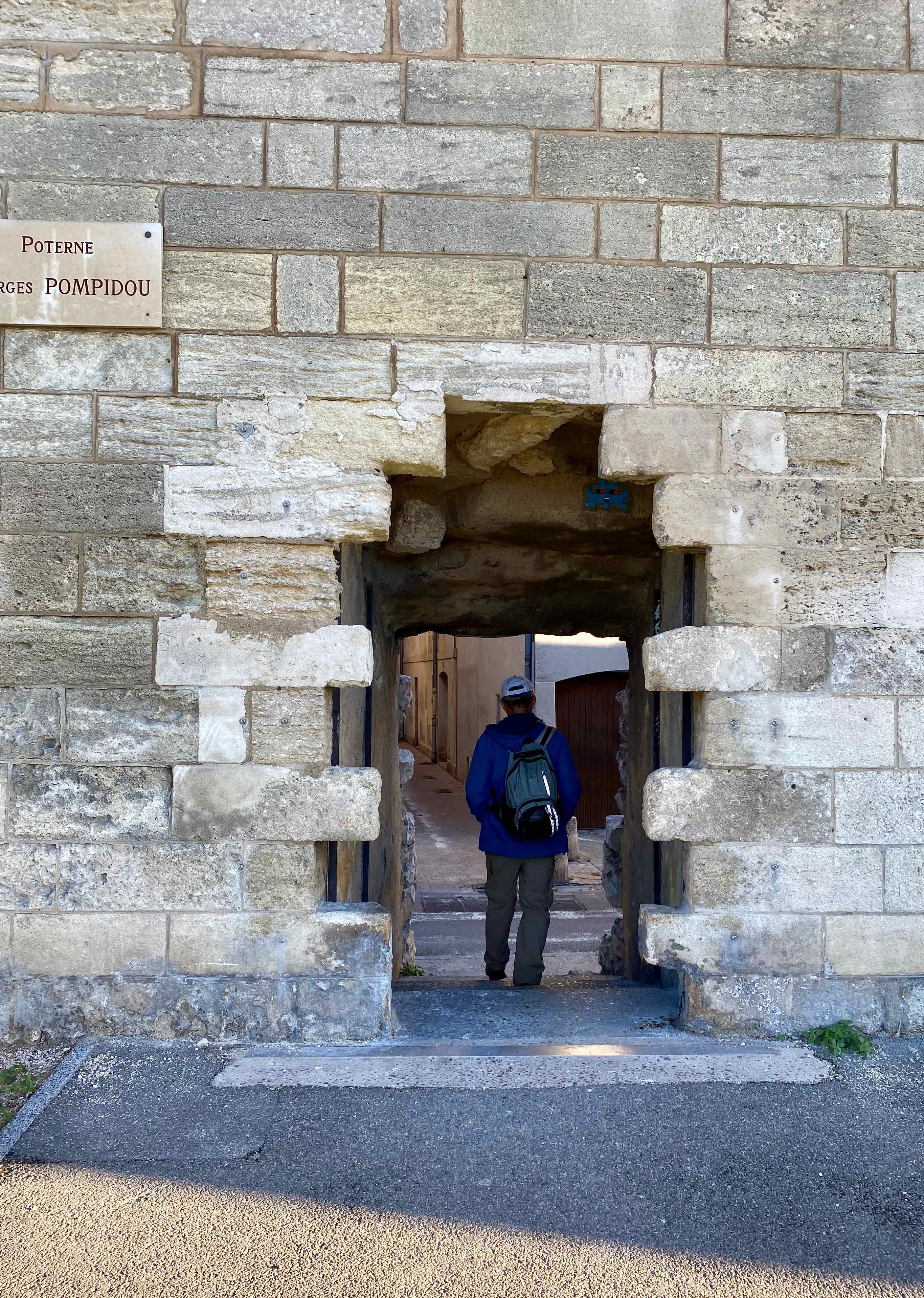
We walk through the fortified walls through this rather makeshift looking doorway.

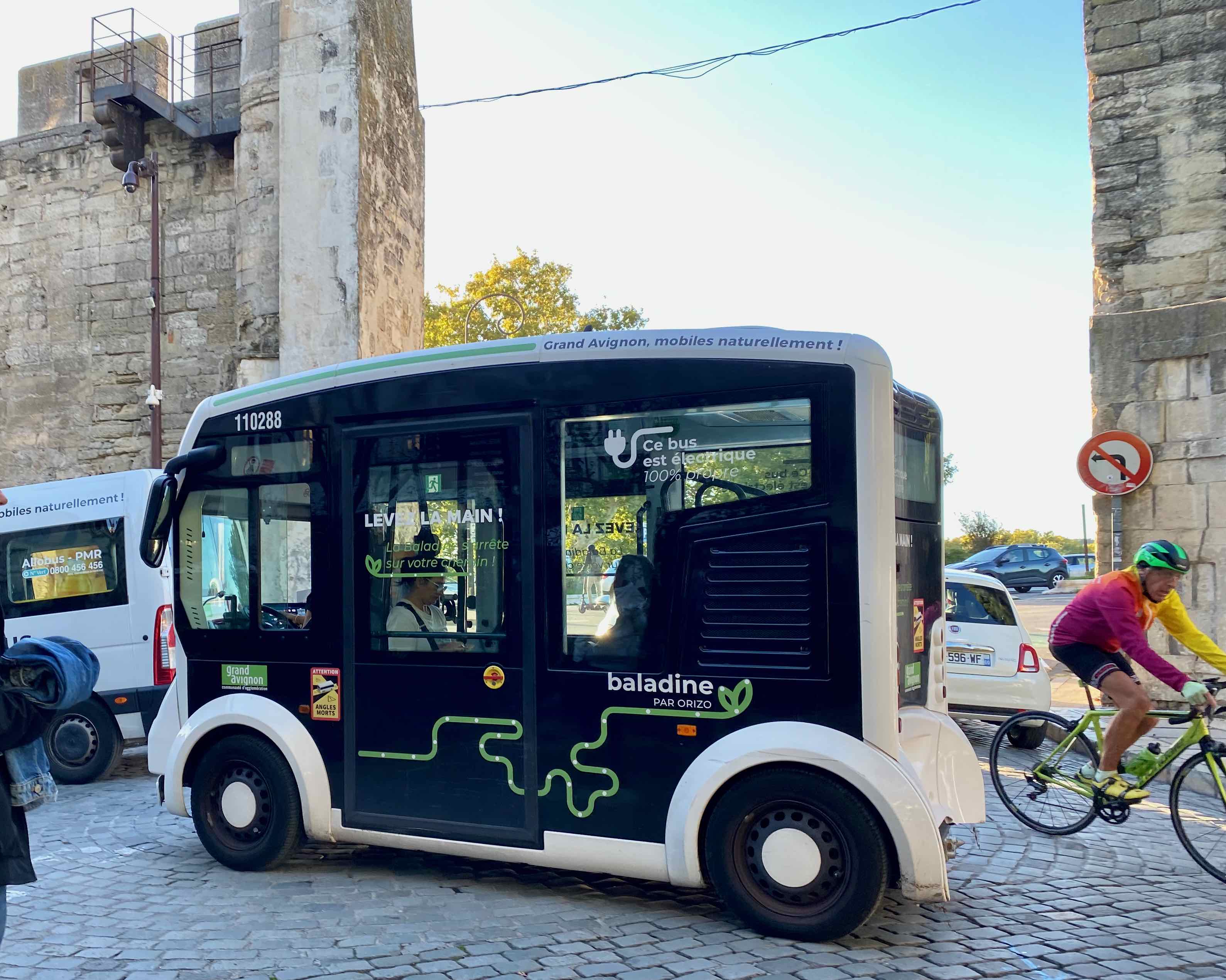
Just as we are leaving to catch our bus one of the town’s little busses passes by.  This is the tiniest bus we have ever seen.

Thanks, if you are still reading and made it this far.  I know this is a really long post, but I want to remember all of it.  I actually pruned out a whole lot more photos!

Arles, France…Walking in Van Gogh’s Footsteps

Day 62,  Sunday, October 29, 2023

“Vincent van Gogh arrived in Arles in February 1888.  This was the start of an intense period of activity for the artist, in the Mediterranean light.  Indeed, it was his most productive era and during this 15 months in Arles, Van Gogh produced over 300 paintings and drawings, thus forging one of the most important periods in the history of art.  In May, 1989, Vincent left Arles for the Saint-Rémy de Provence asylum, leaving the name of Vincent van Gogh linked to that of Arles forever.” ~ Arles Tourism brochure.

Vincent spent a year at the asylum before moving to Auvers-sur-Oise in May 1890, where committed suicide on July 27th 1890.

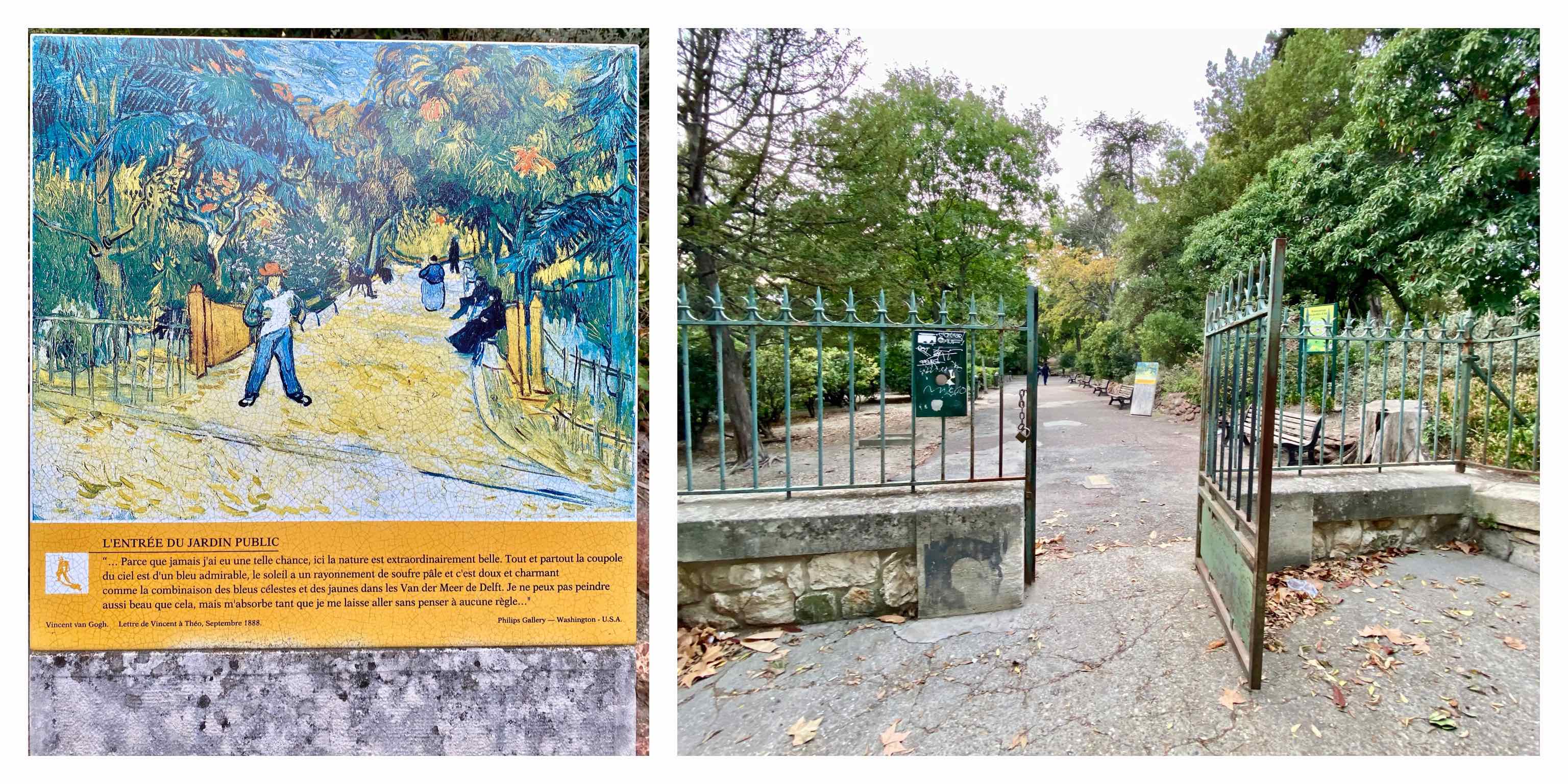
Today we are going to follow Vincent’s footsteps as we walk through Arles, looking for the places where he stood at his easel creating some of his most loved paintings. Arles has placed a copy of each of his paintings at the location where Van Gogh would have stood.

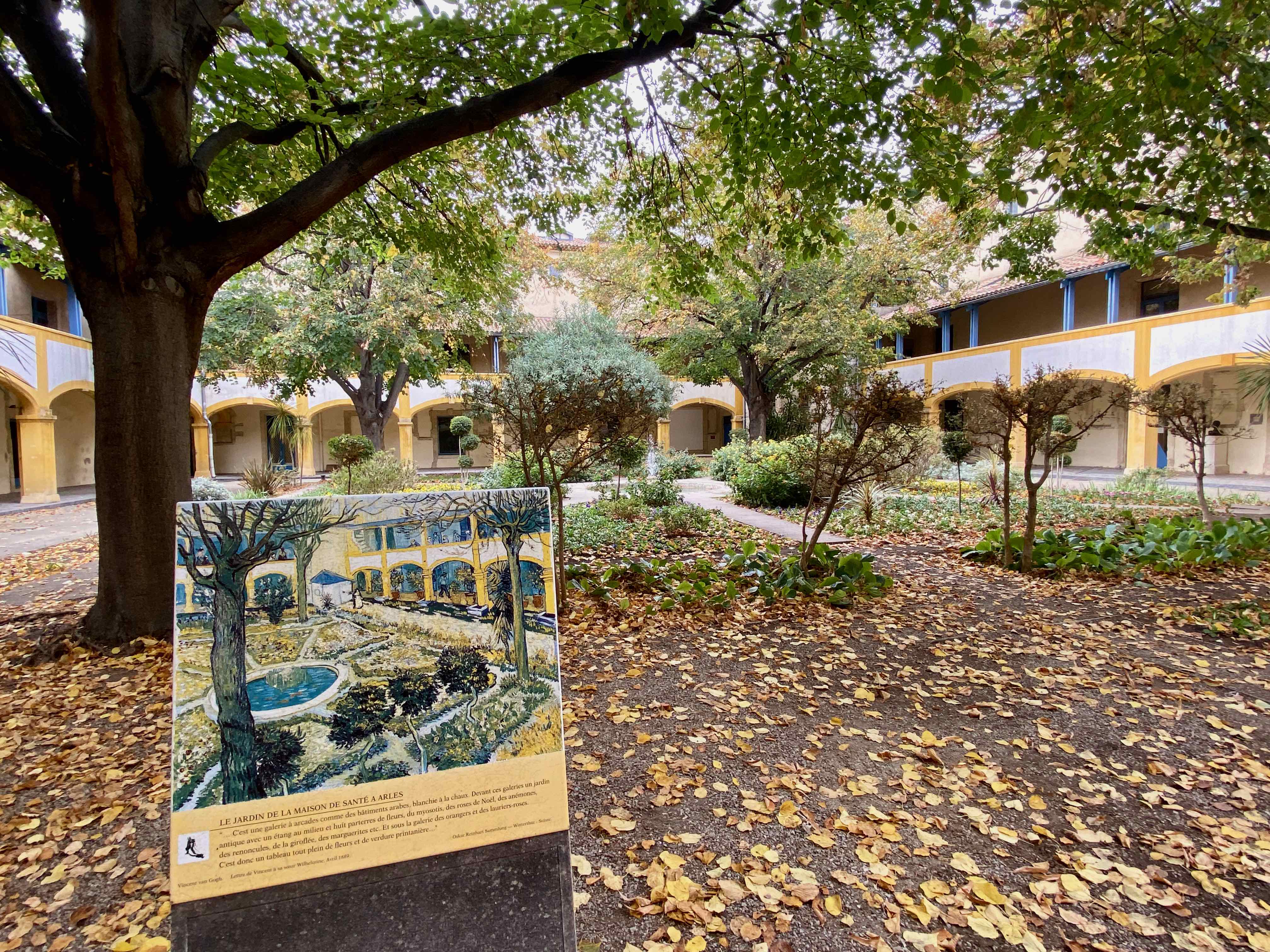
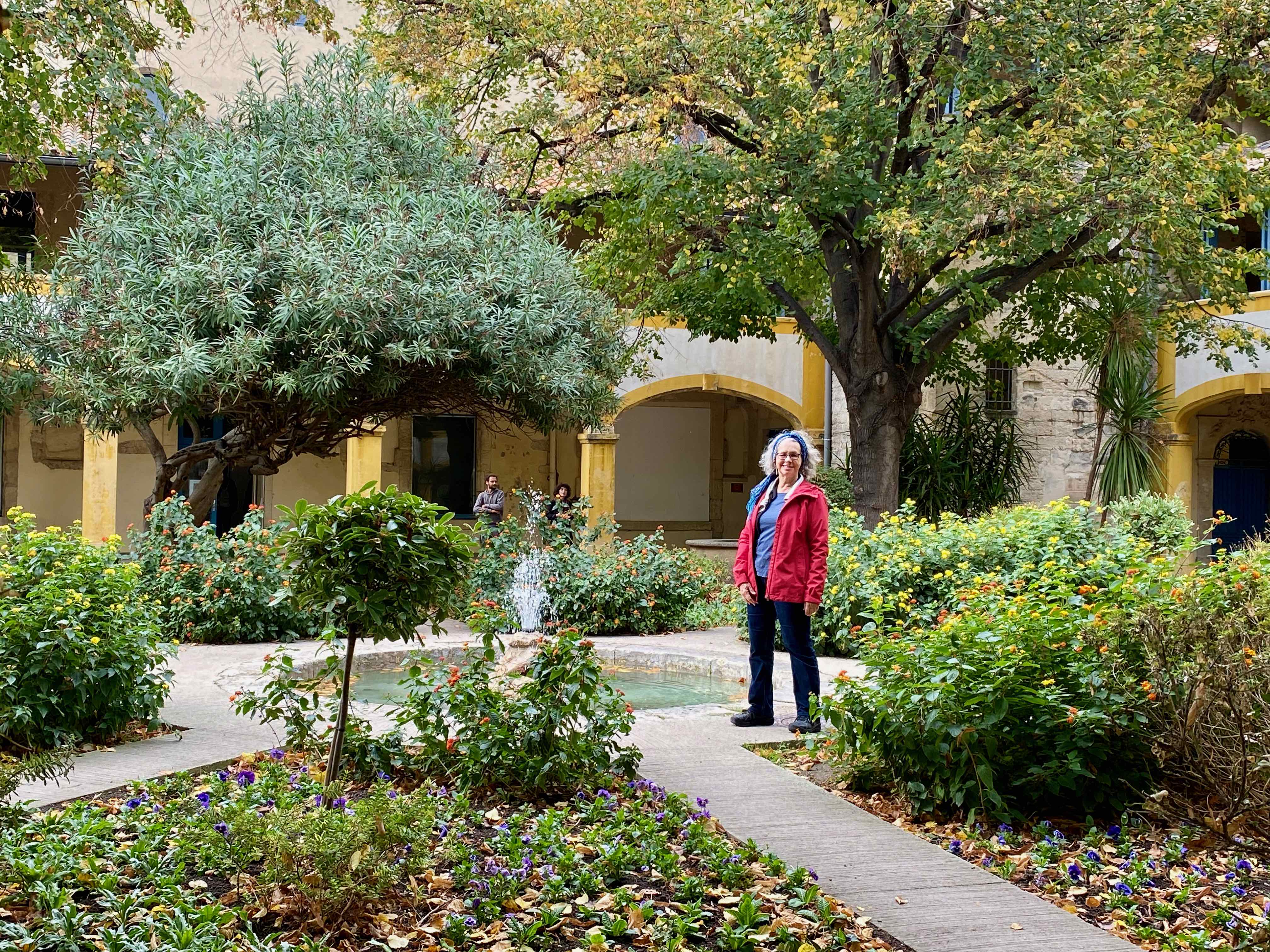
First stop is the courtyard at the hospital in Arles.  Vincent stayed at this hospital three times between December 1888 and May 1889.

I feel like I have walked into a painting…

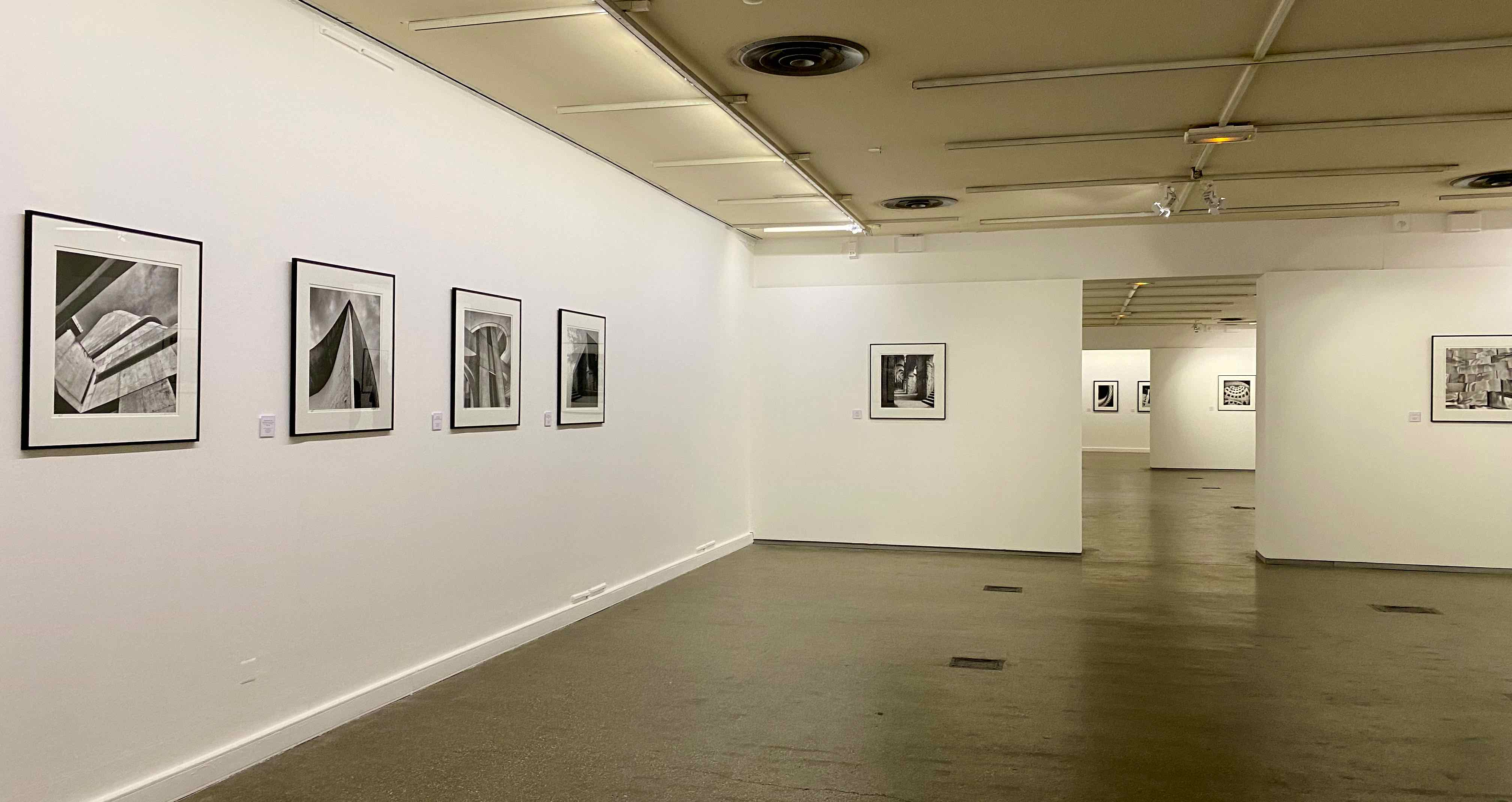
In the old hospital buildings there is also a wonderful photography exhibit by Pierre Vallet.  We later see some more of his work on display in the Arles Amphitheatre.

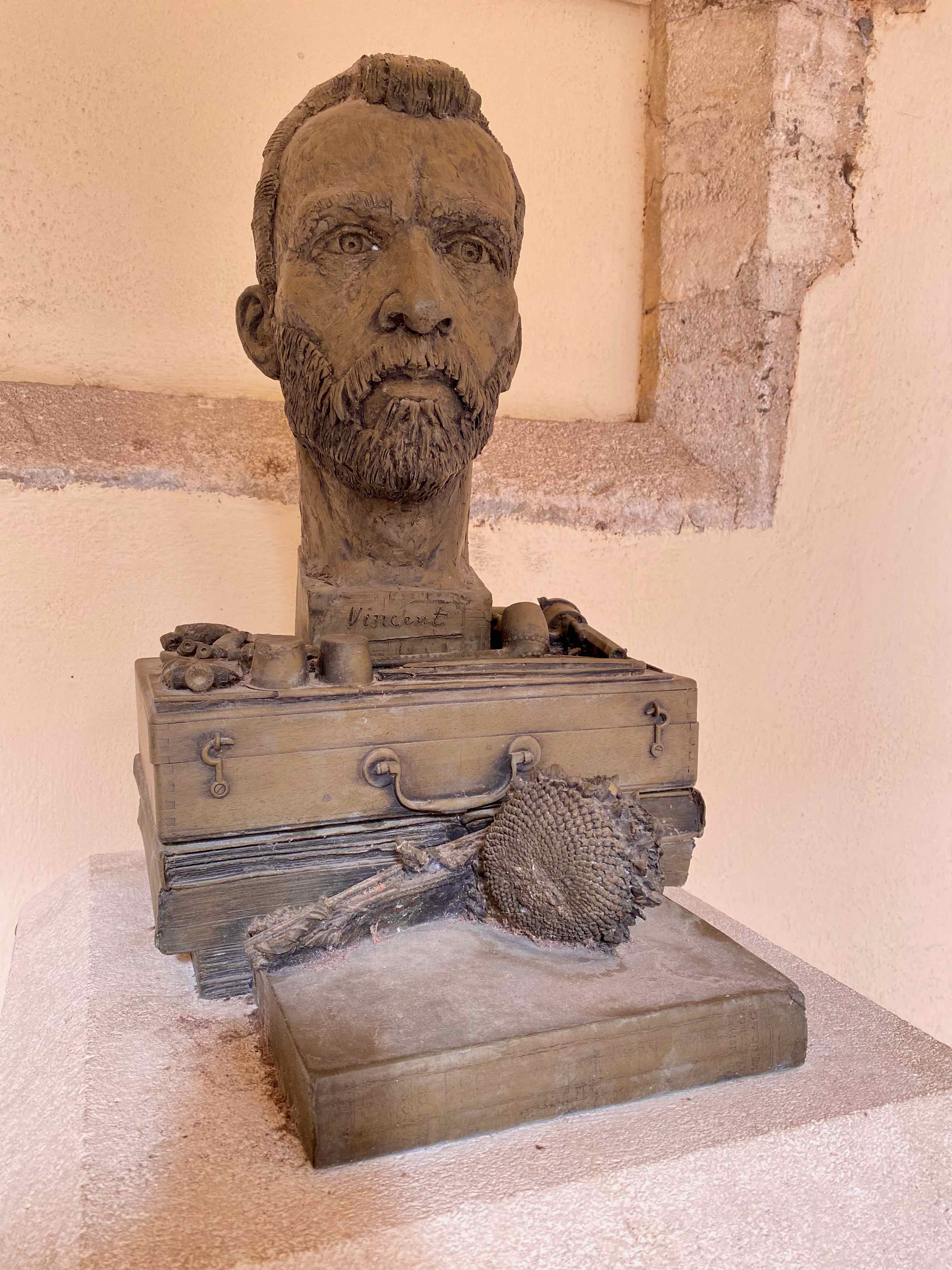
There is a sculpture of Van Gogh in the courtyard.

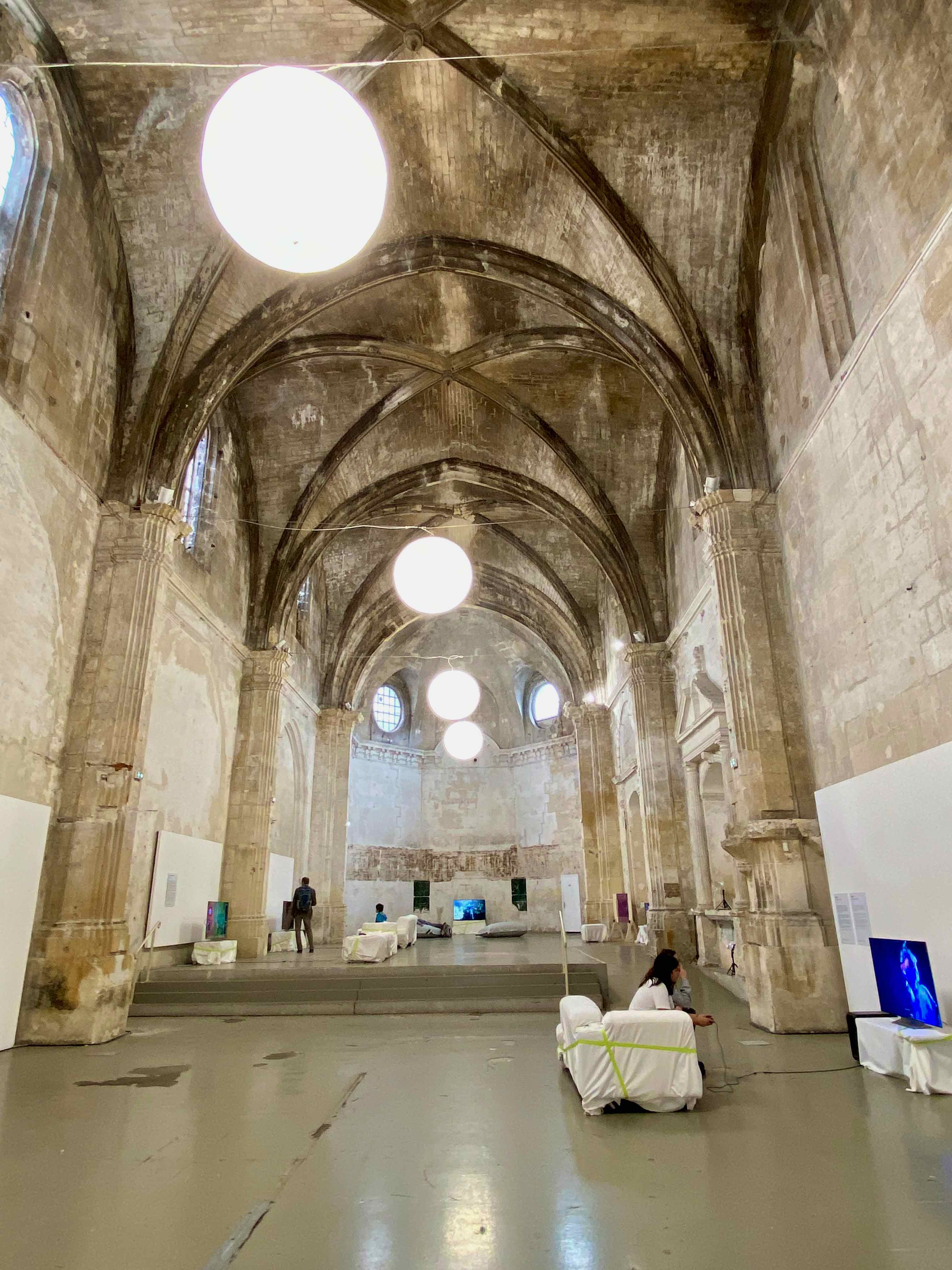
On our way to the next location we pass an old church that is hosting an AI exhibition. The audience is invited to sit and interact with these AI games.Here are the screenshots of some of the other games…notice that one of them has a character named Bob.
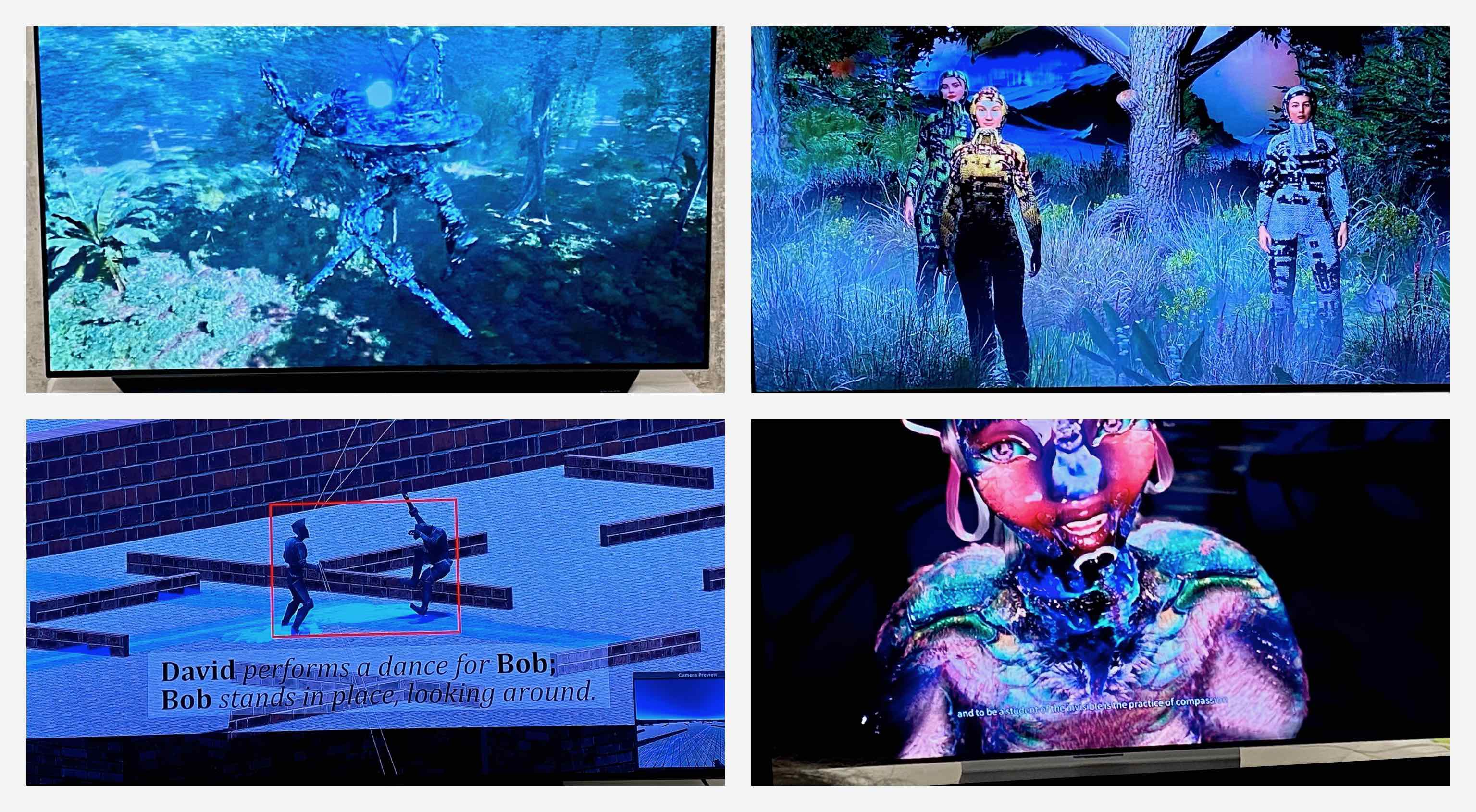
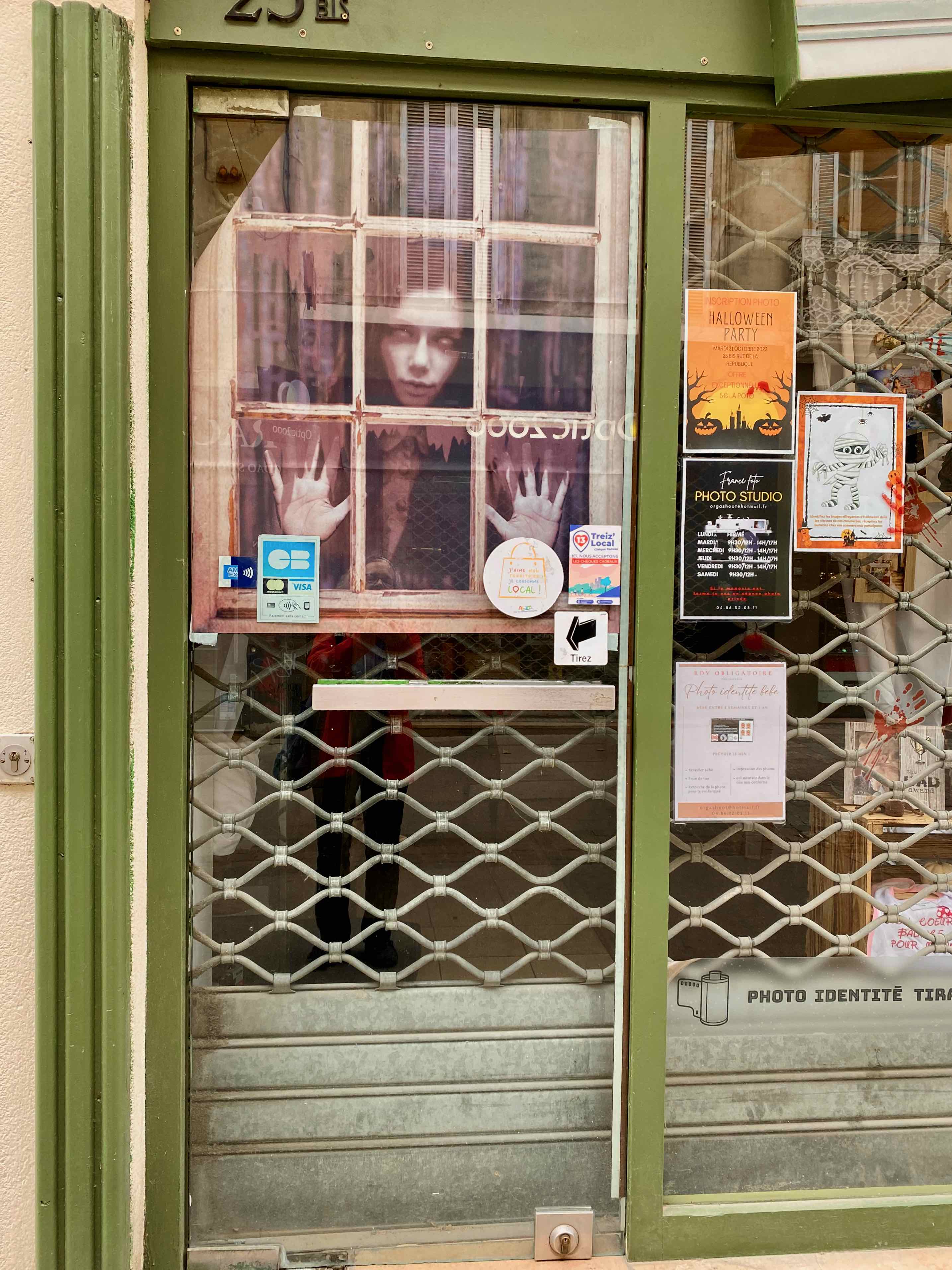
We pass a shop window with a creepy window.  Halloween is only two days away!

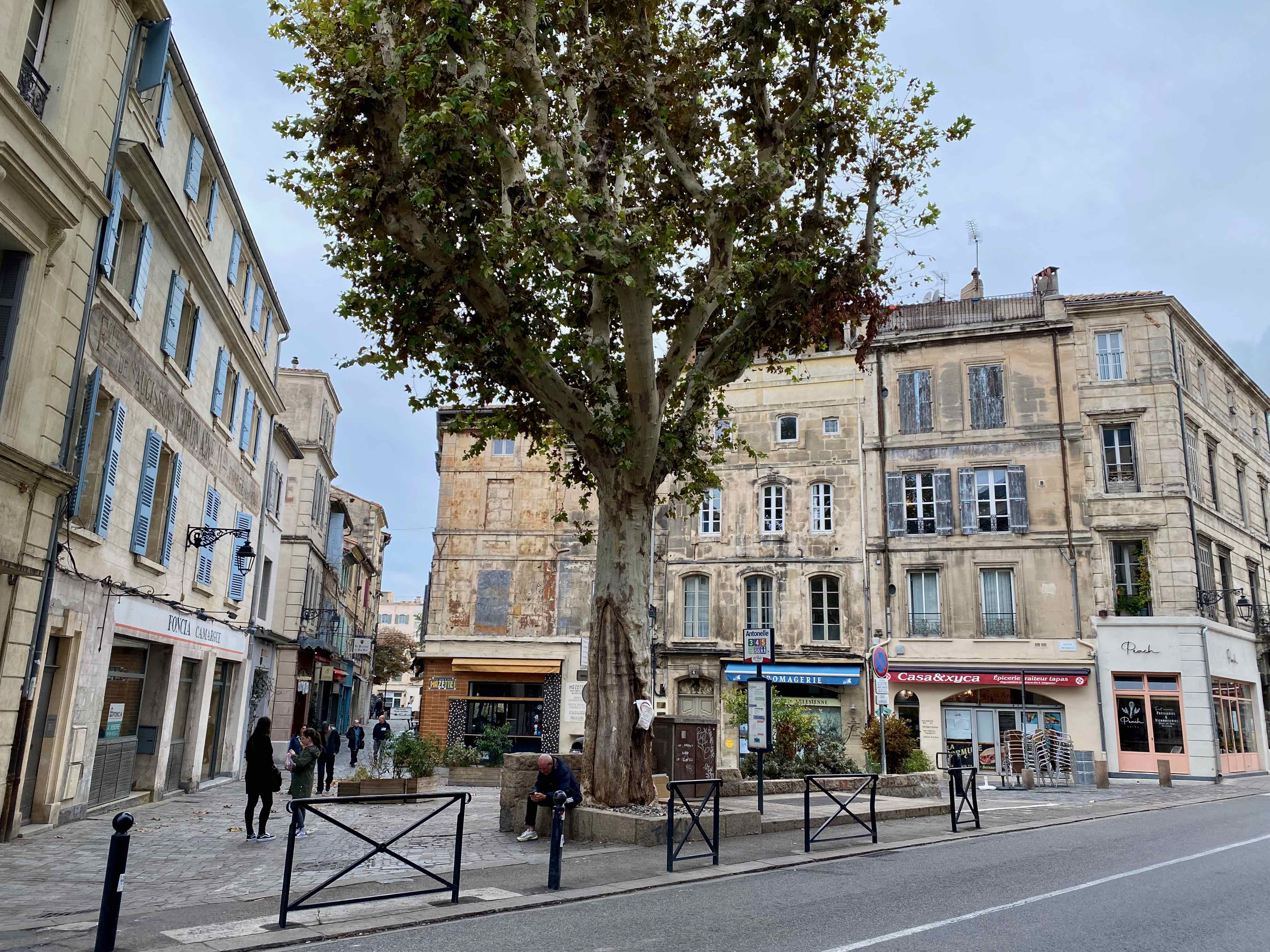
Arles is a pretty town.  We are trying to follow the not very clear map to find the next location when I notice…

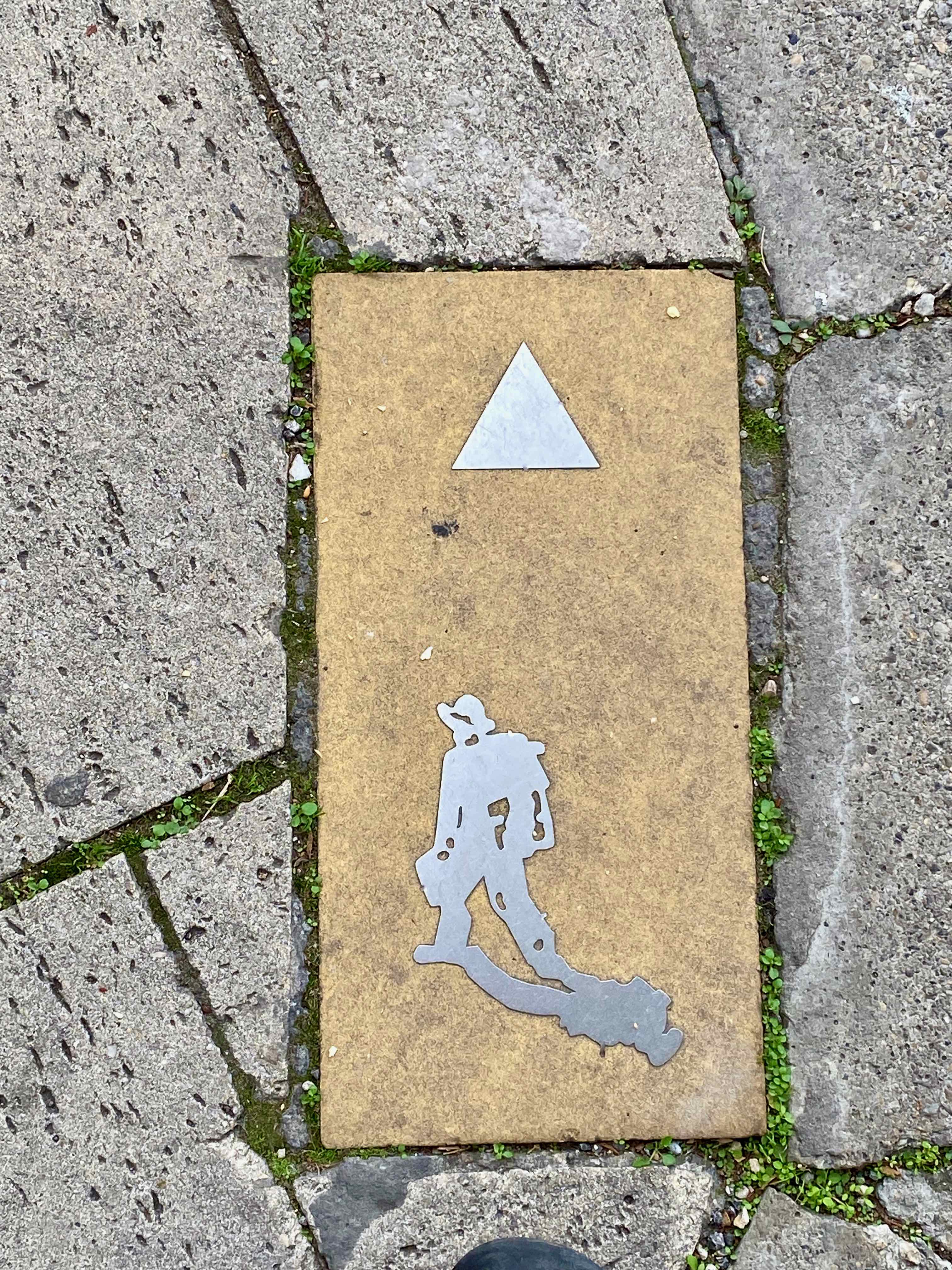
this plaque set into the sidewalk.  So now we just have to follow the plaques, and it feels like a treasure hunt!

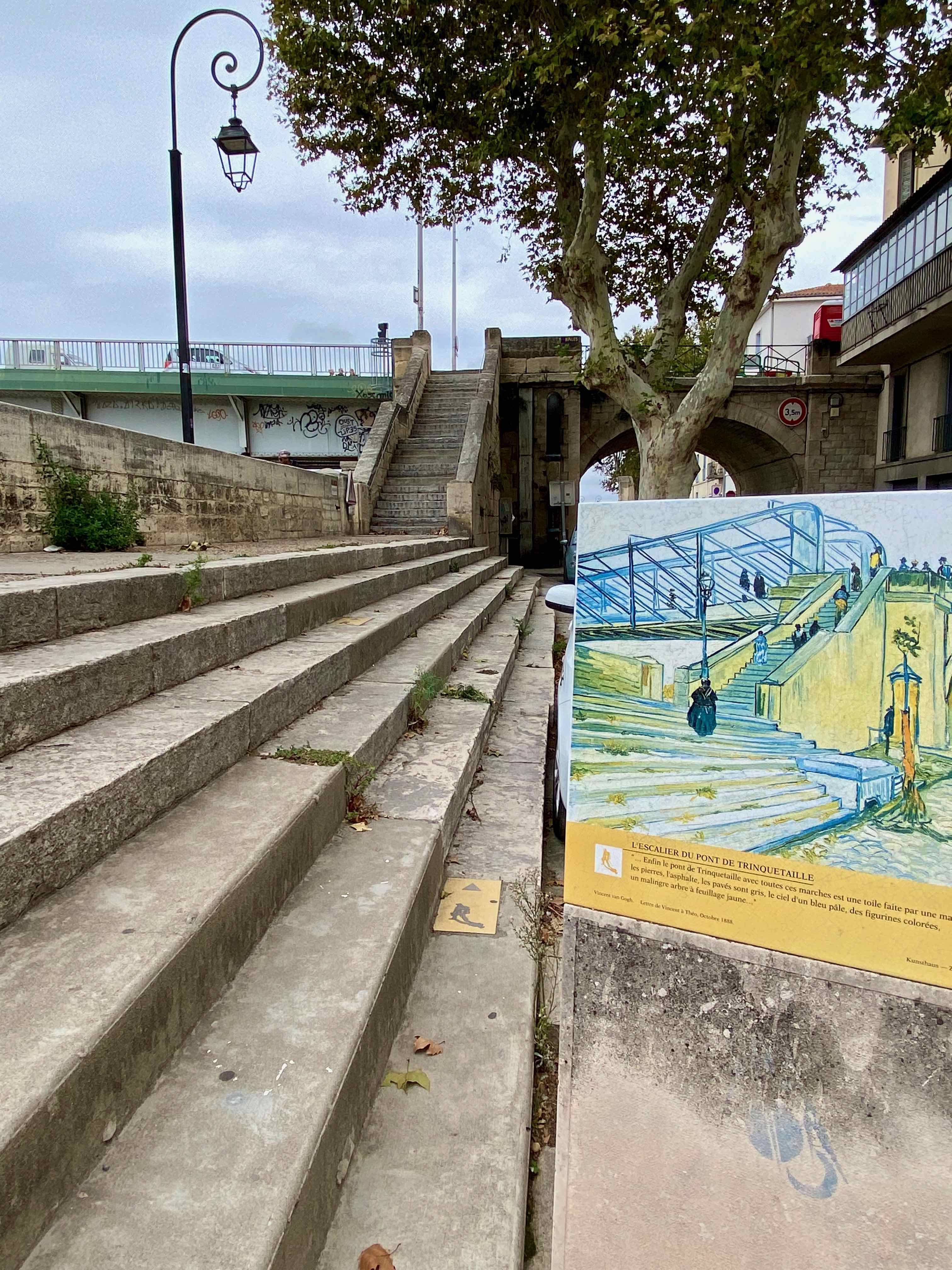
The stairs of the Trinquetaille Bridge was painted from this spot.

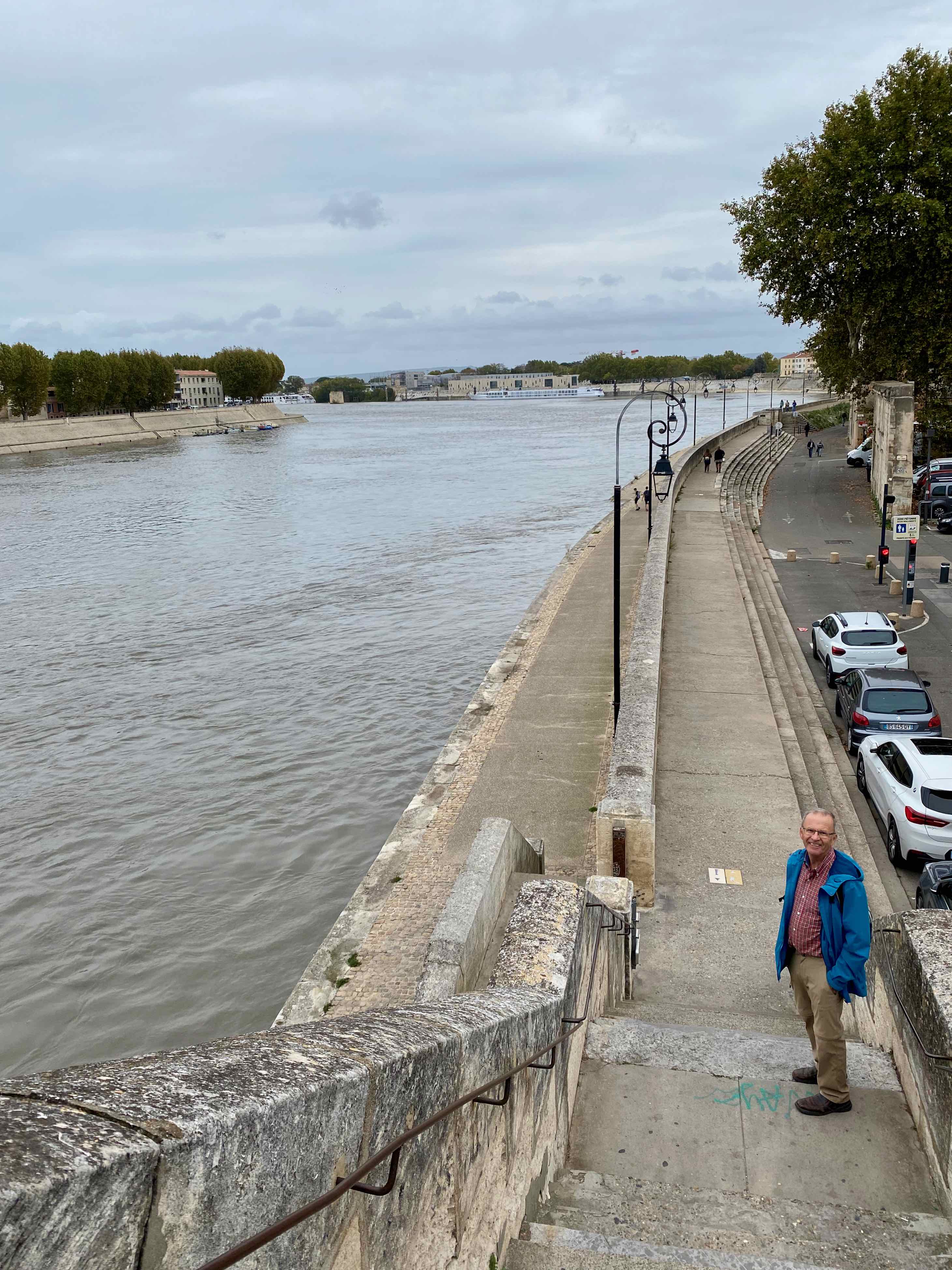
We climb the steps and cross the bridge, walking beside the Rhône River to our next destination.

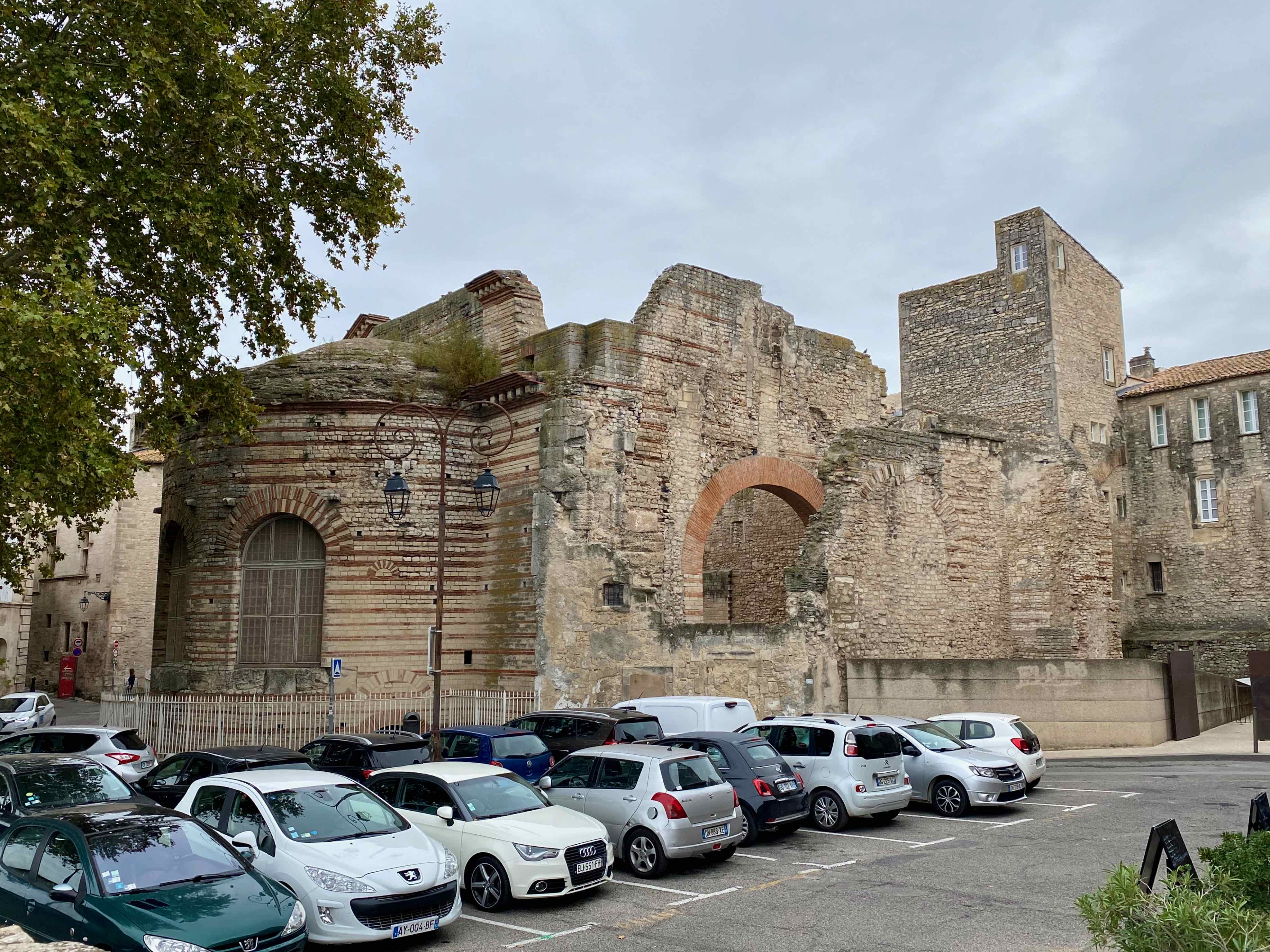
We pass these ruins which are Roman baths…looks interesting but we are on a mission.

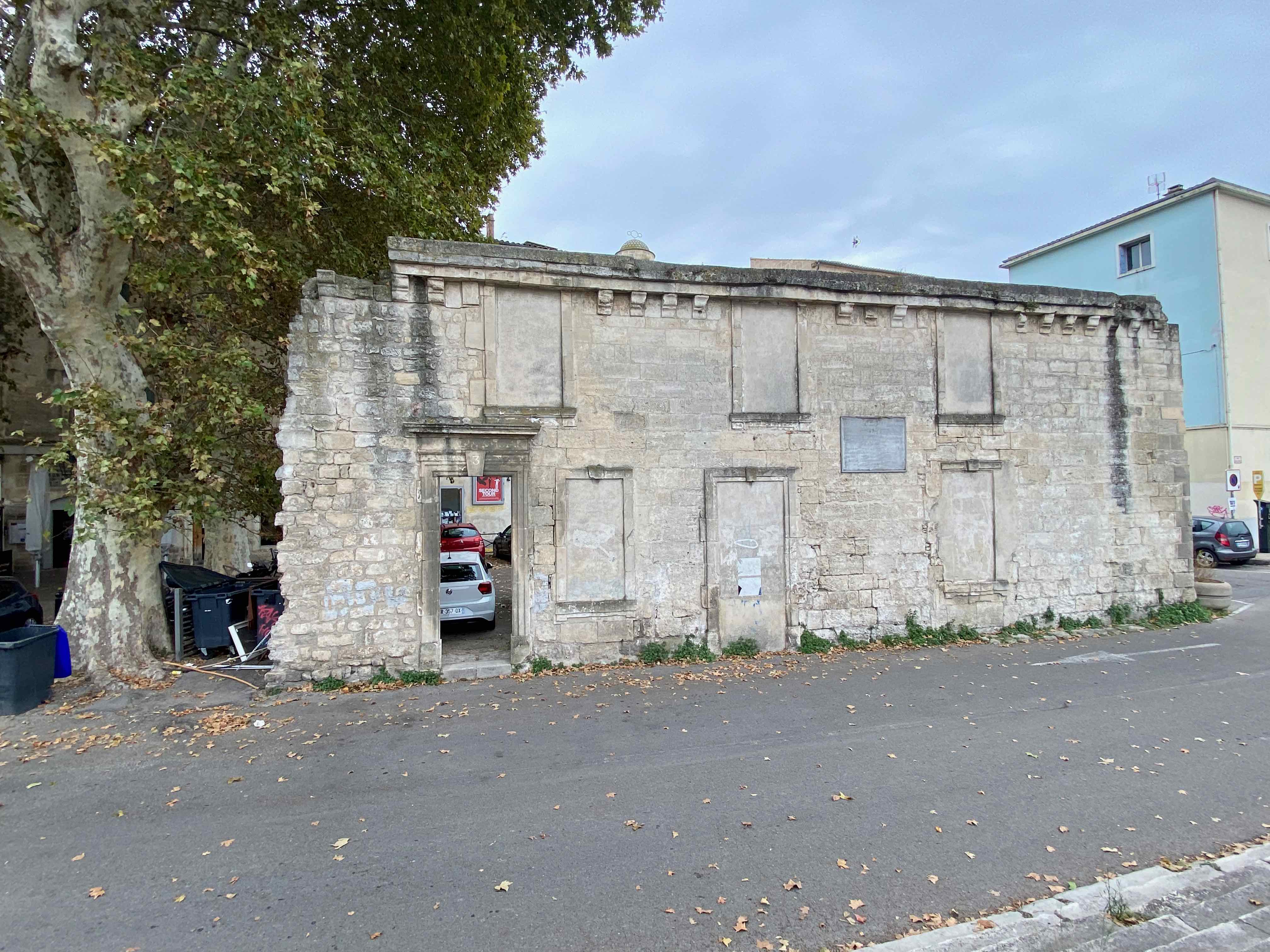
We pass a couple of old stone façades, just one wall left standing.  Back home it would have been torn down.

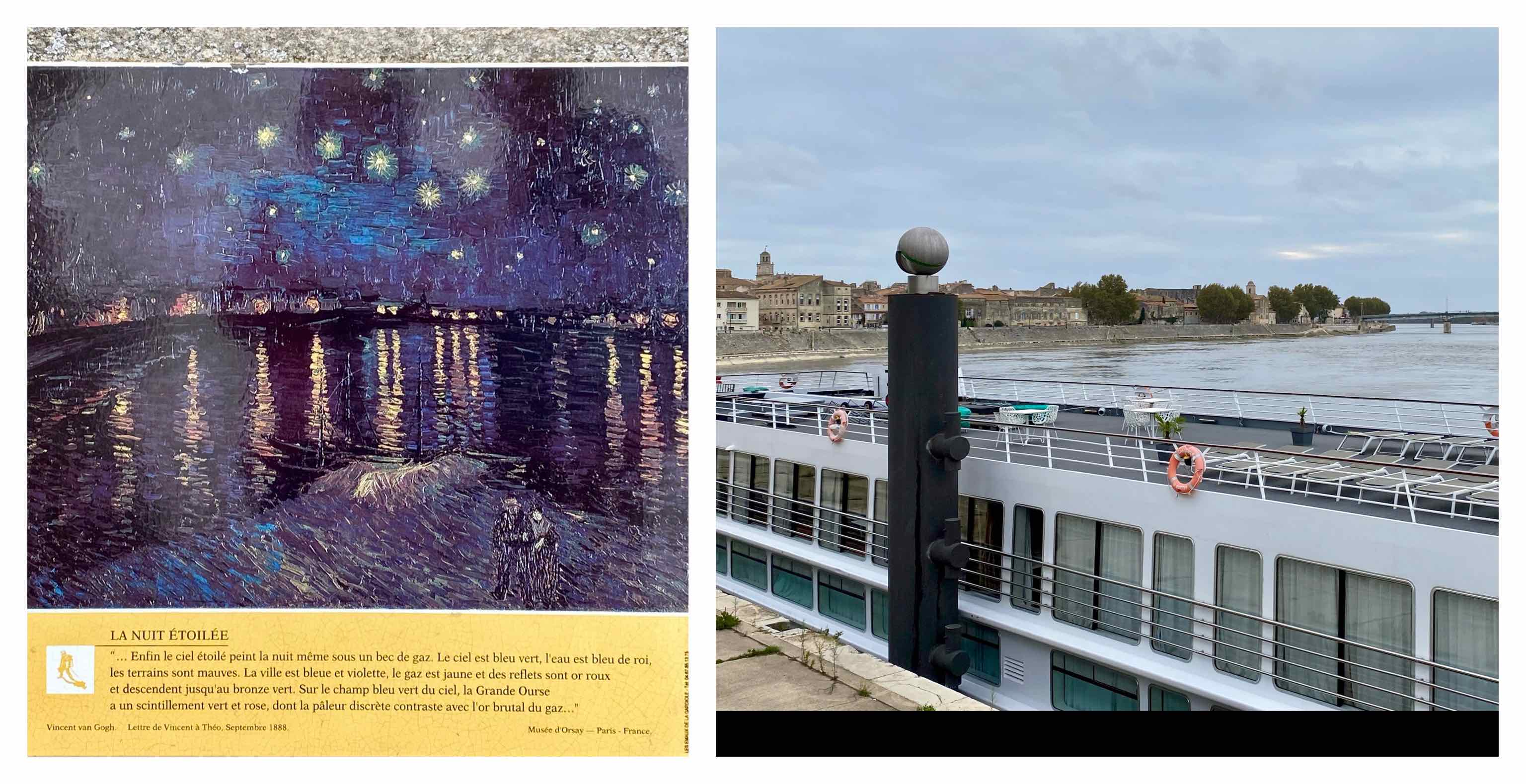
Starry Night over the Rhône…too bad the river cruise boats are in the way of our view, but we are able to pick our several of the landmarks in the painting.

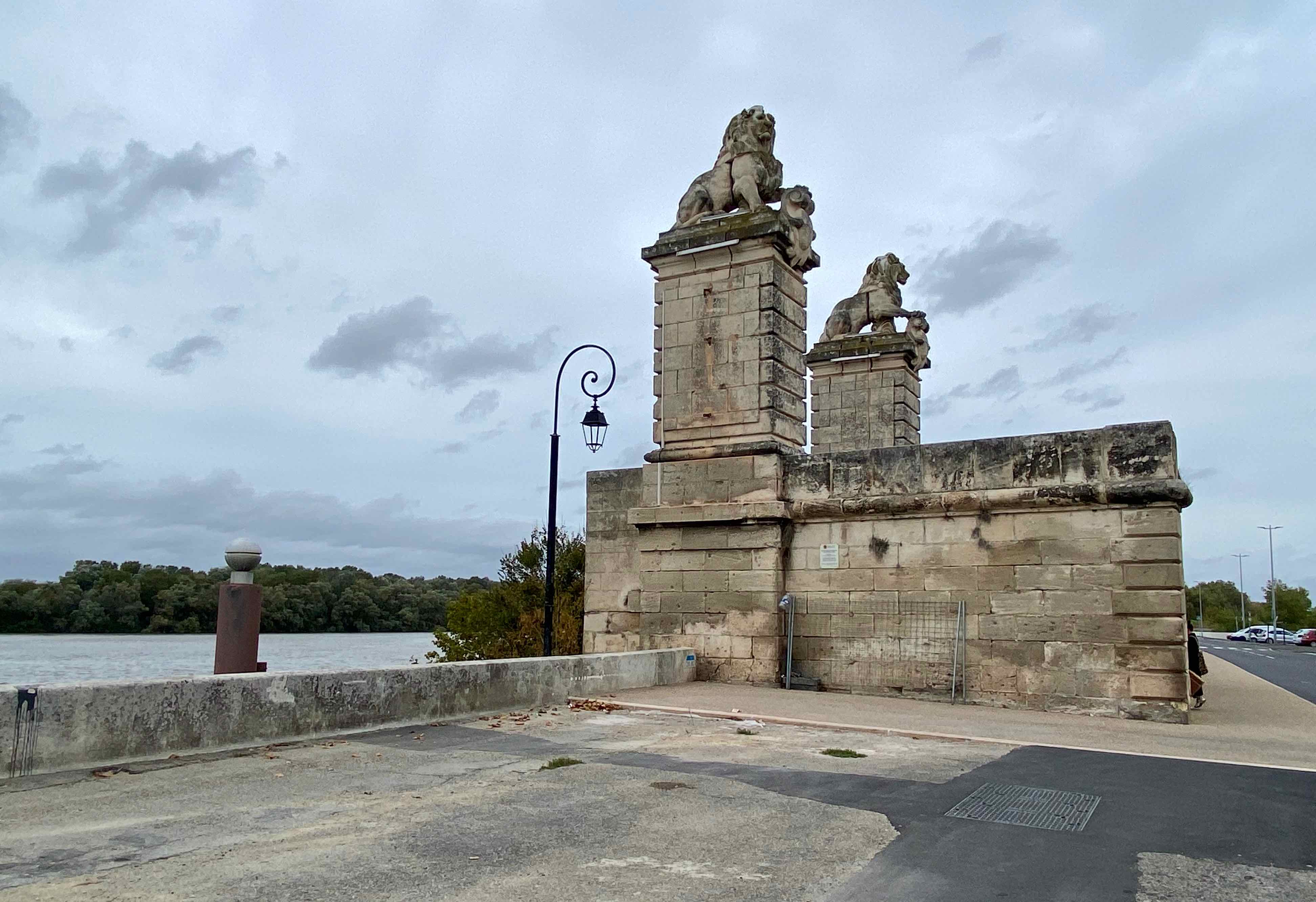
We make small detour to check out the remains of a bridge that was destroyed in the bombardment of Arles in 1944.  There are many reminders of both the First and Second World War in every town and city that we have visited.

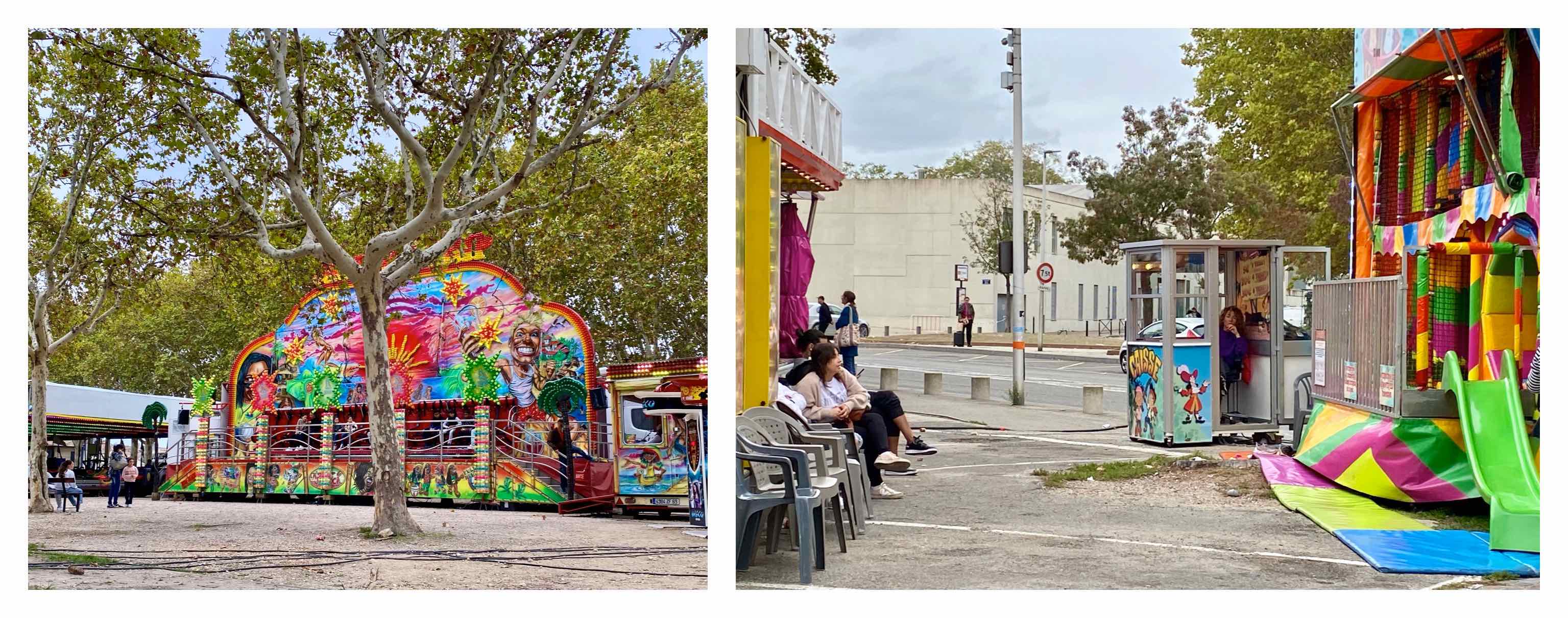
Then we pass a little carnival that was just getting set up.  I thought it was interesting that they have chairs for the parents to sit while their children are on the rides.  

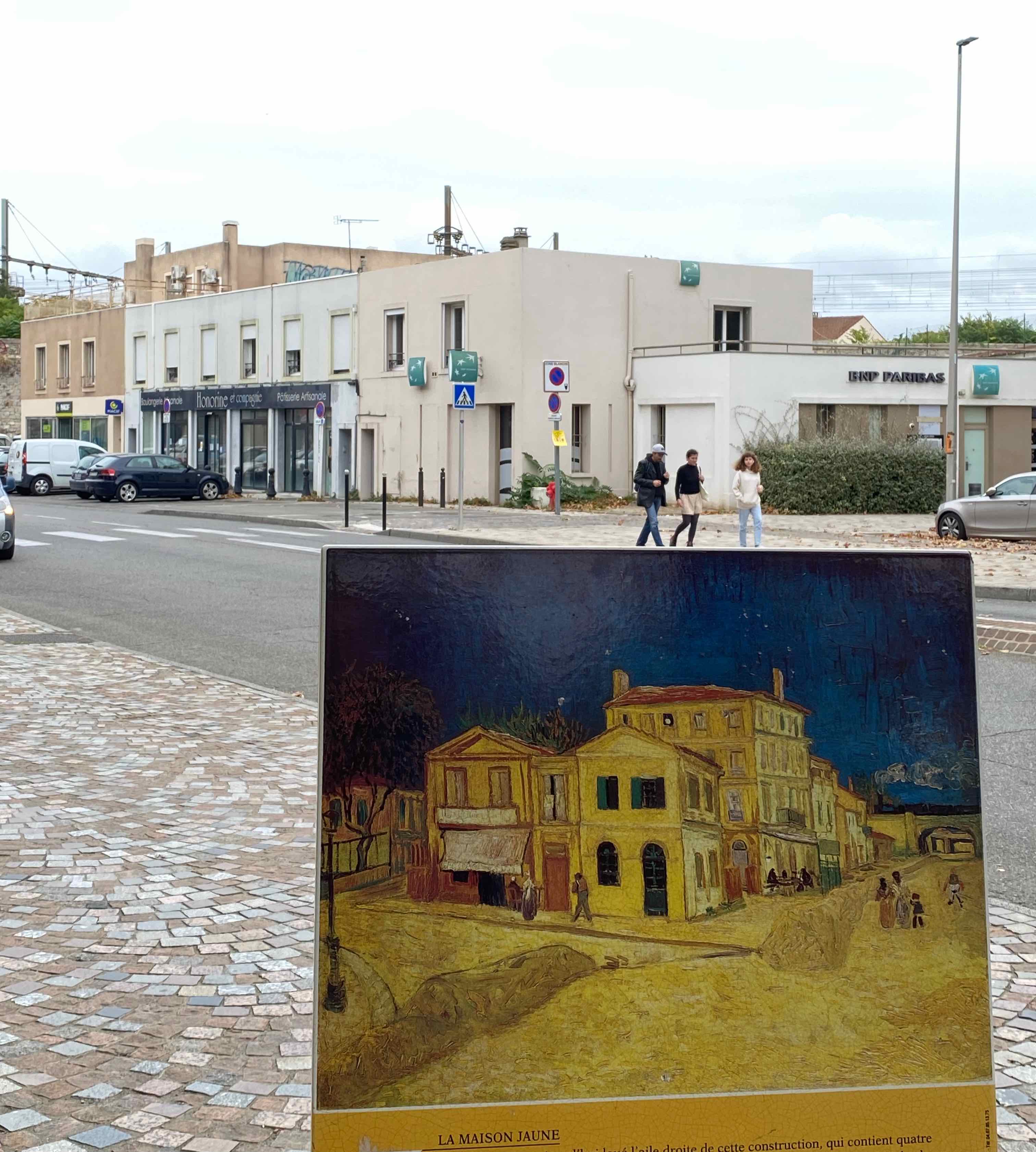
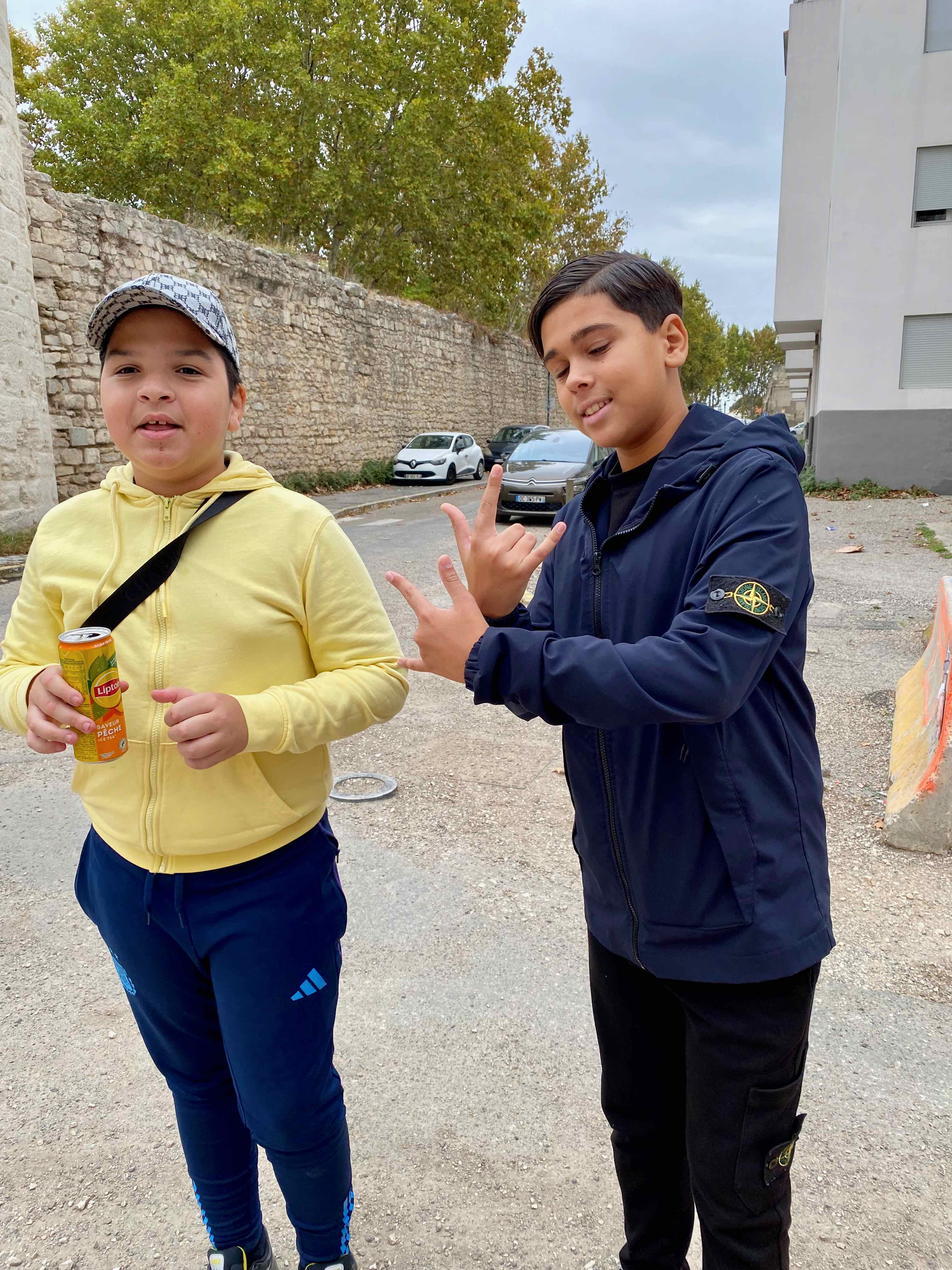
Unfortunately the Yellow House that Van Gogh shared with Gaugin was also destroyed during the bombardment. It stood on this very street corner.Several young boys were hanging about and one of them, Leron (in the blue jacket) asked me to take his photo.  They were fun.
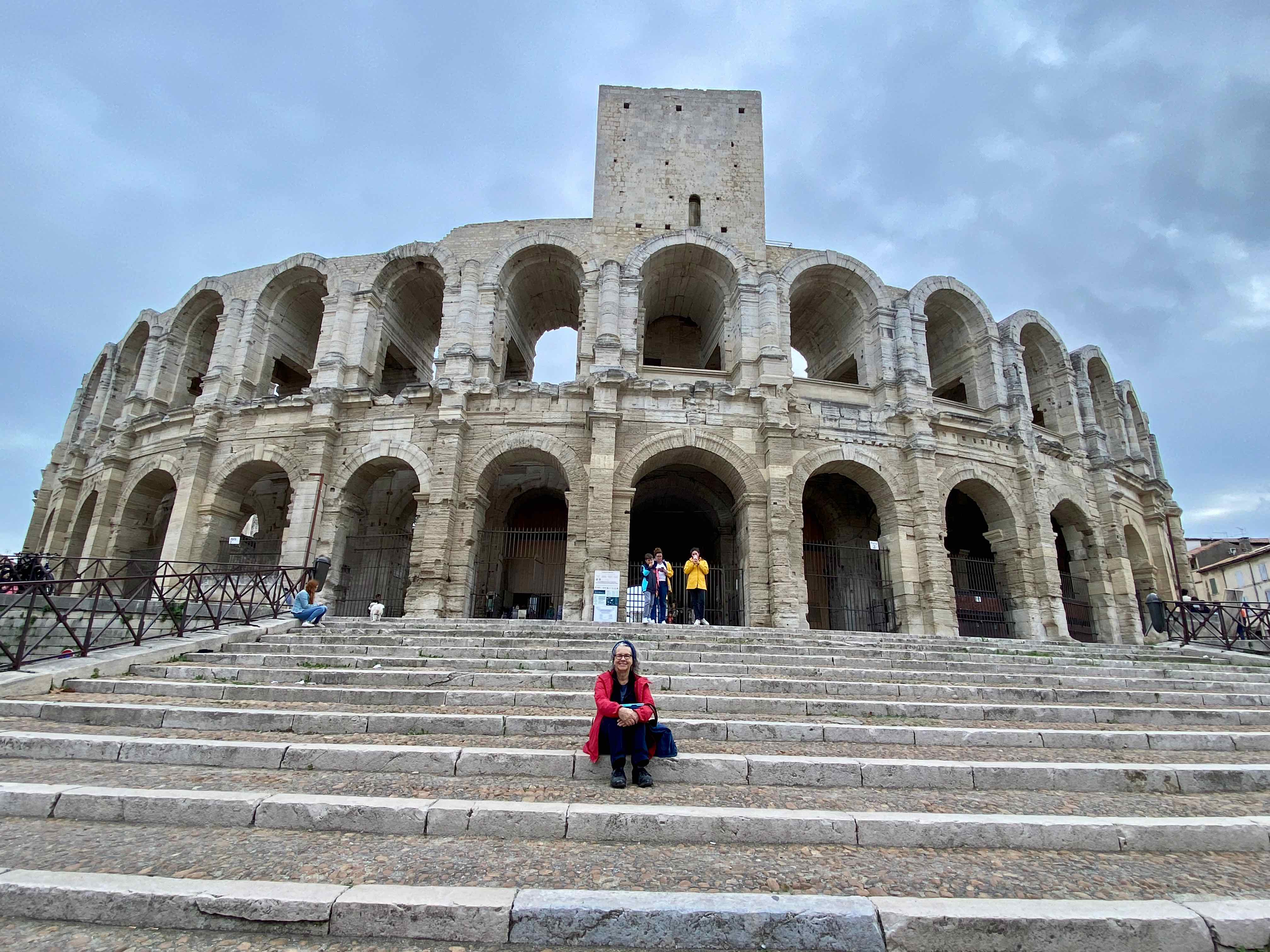
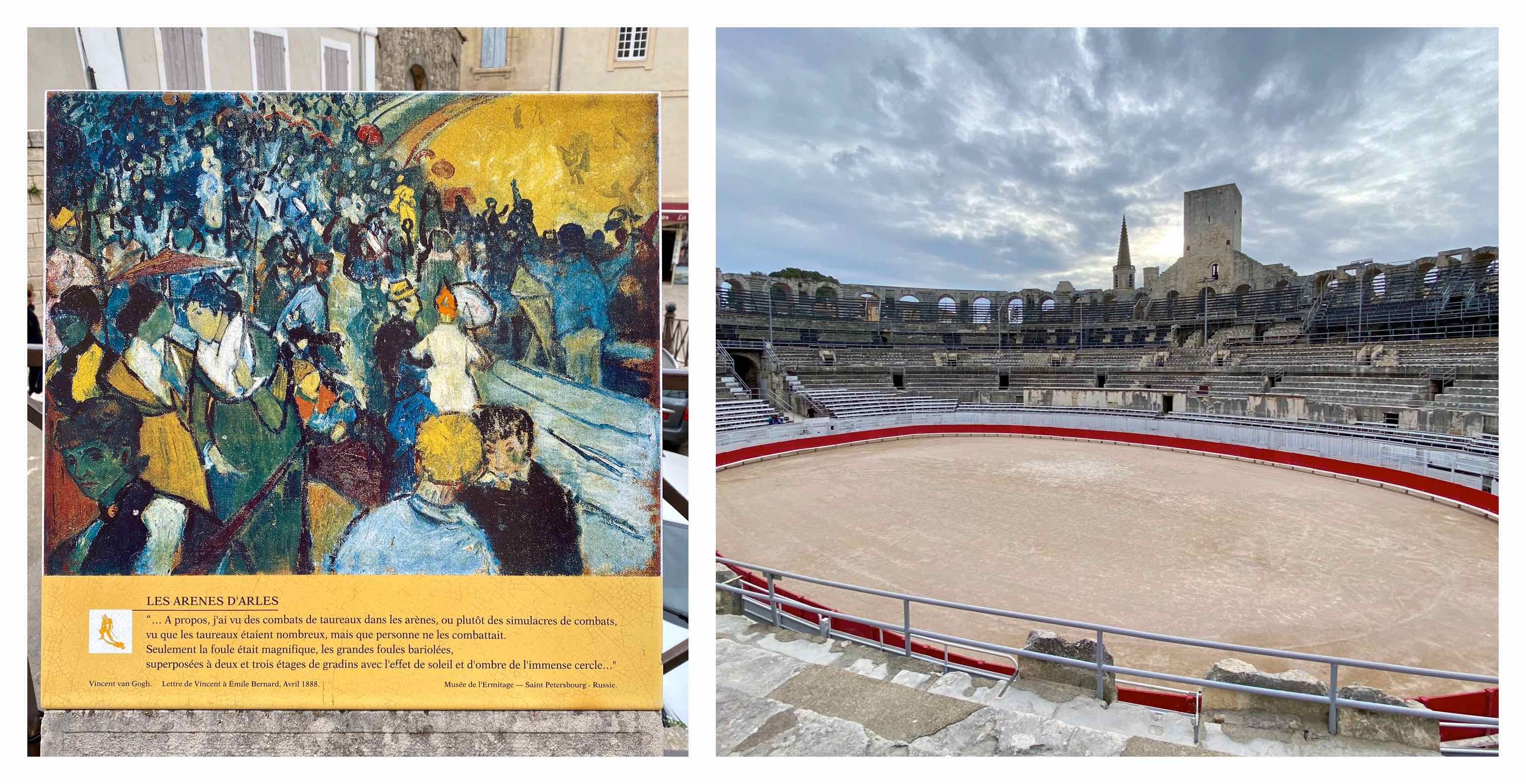
Van Gogh’s next painting was done in the amphitheater, so we buy tickets to go inside, even though the plaque is outside for tourists to see. The Amphitheatre painting shows the arena full of people, but there aren’t many people here today.
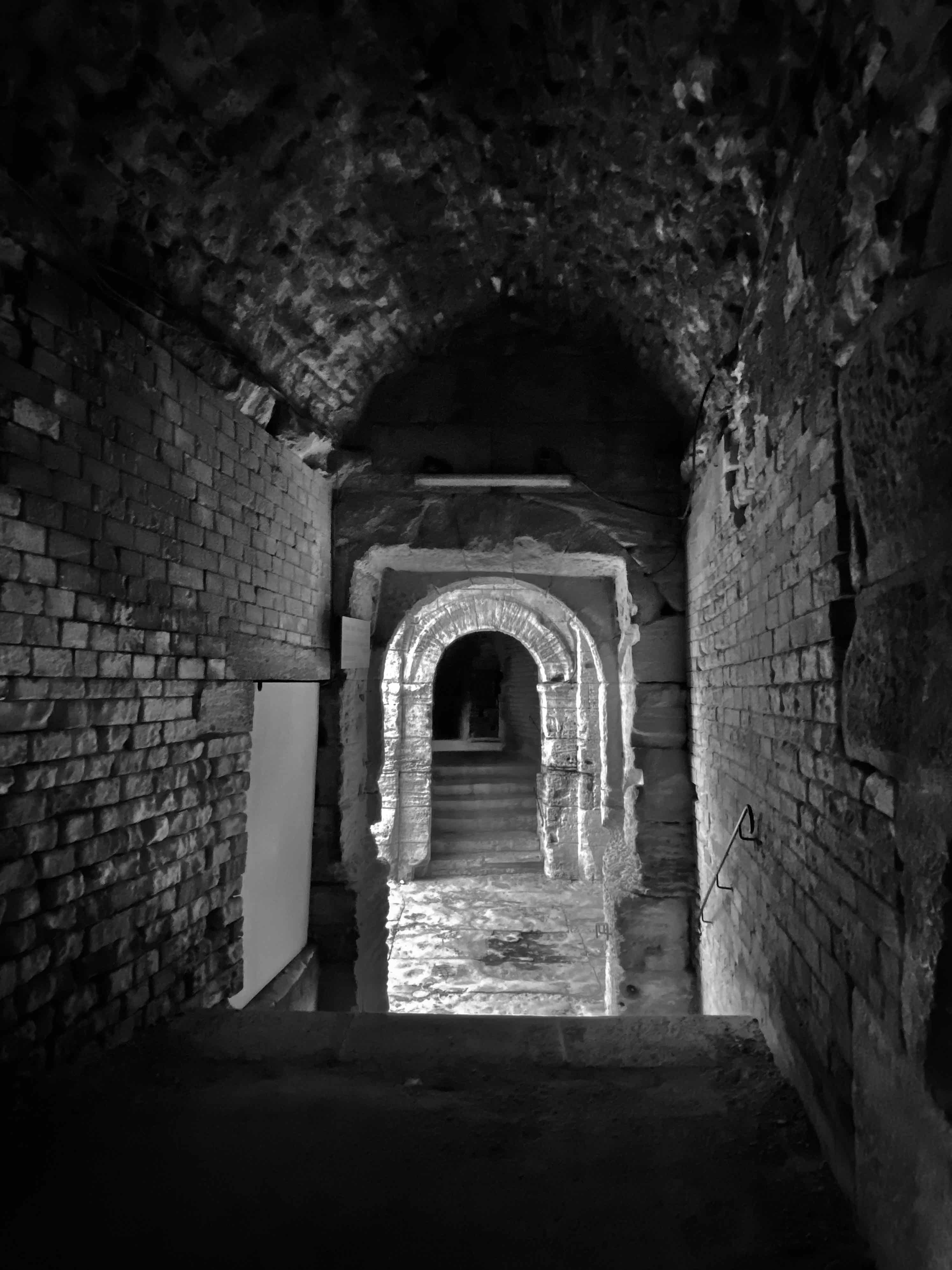
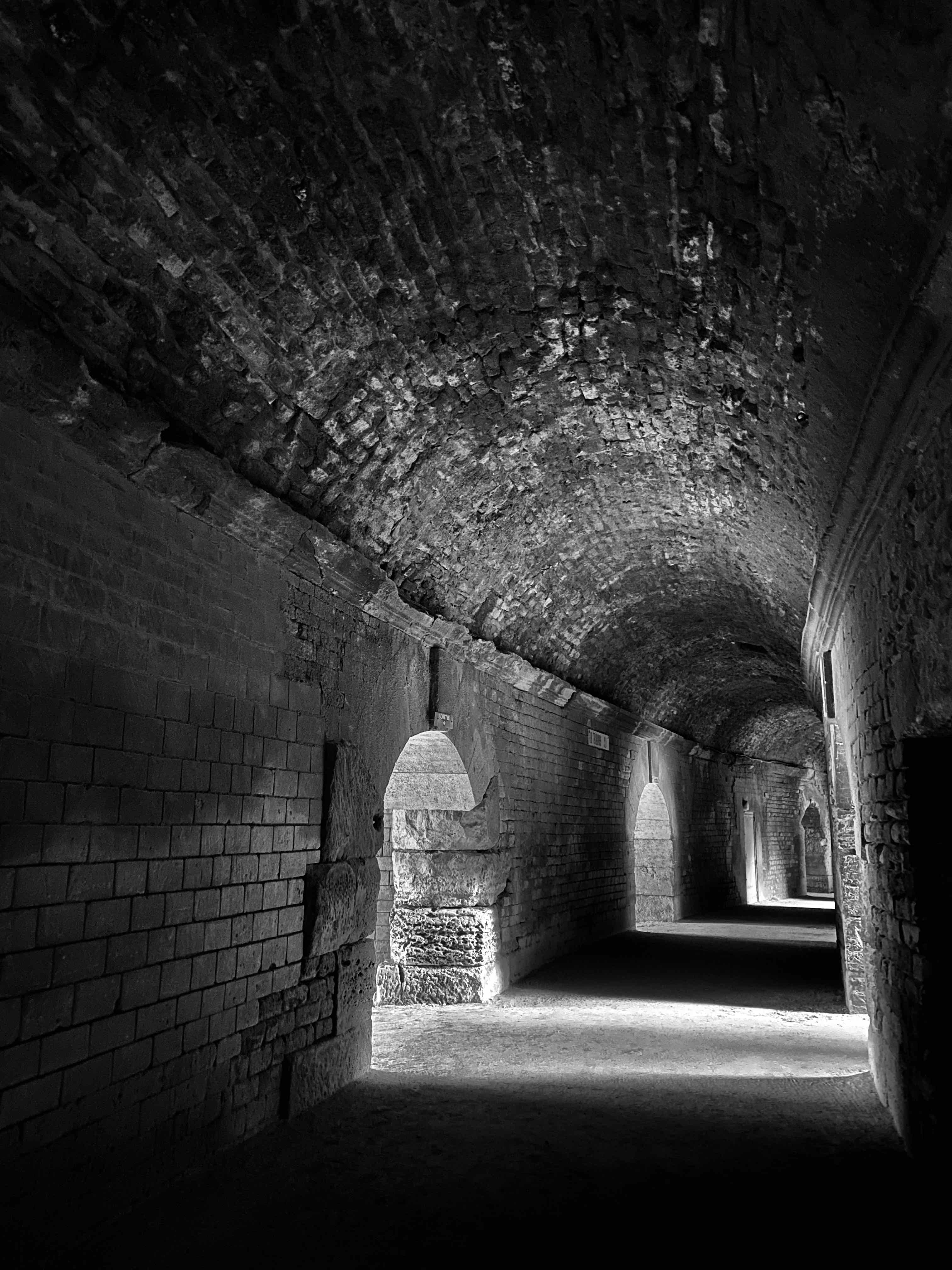
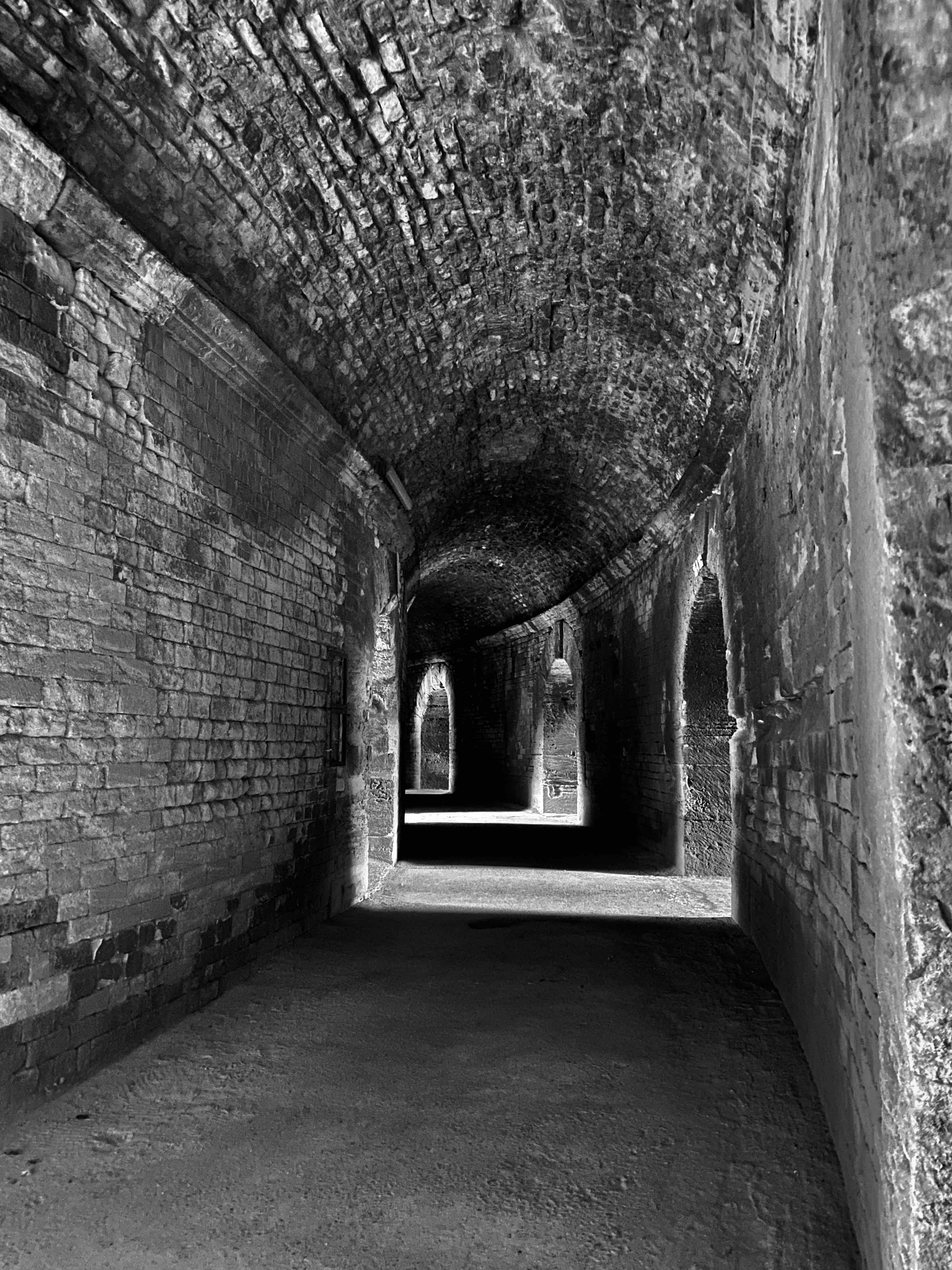
I took some black and white photos in the passageways beneath the seats.  I like how the light streamed in through the openings and all the old stones.

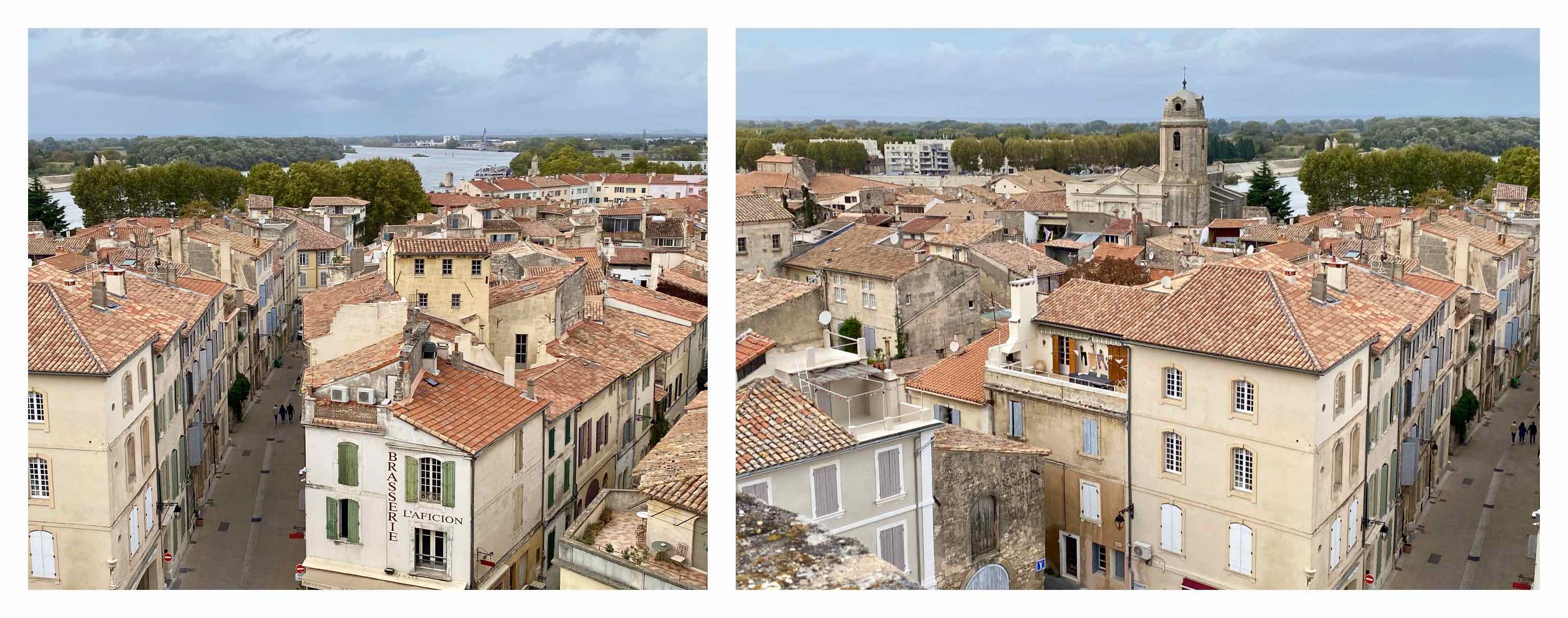
We climb to the top of the amphitheatre tower and get a great view of all the very French rooftops.

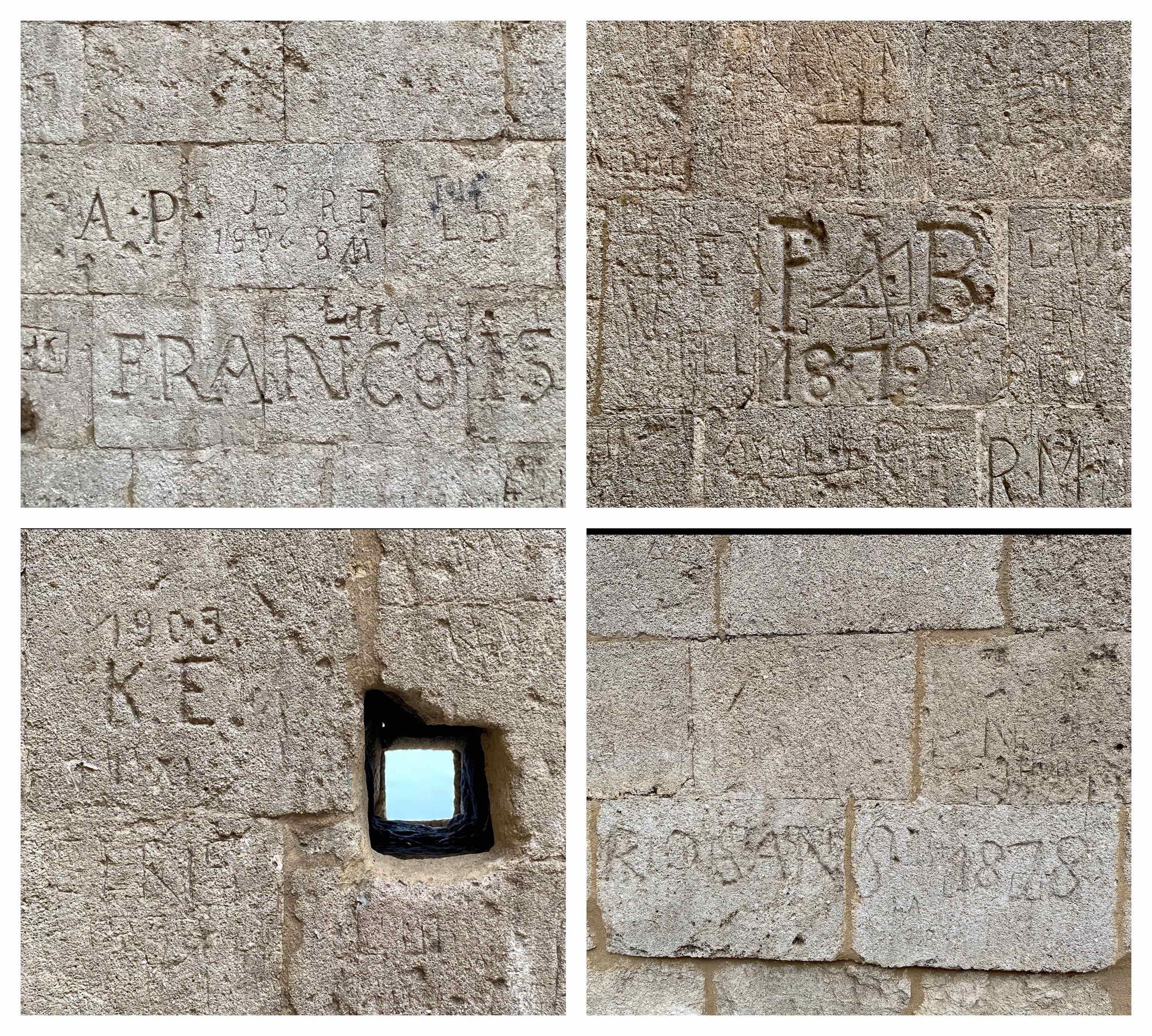
And up in the tower what do I find?  Graffiti!  It has been around for a long, long time.

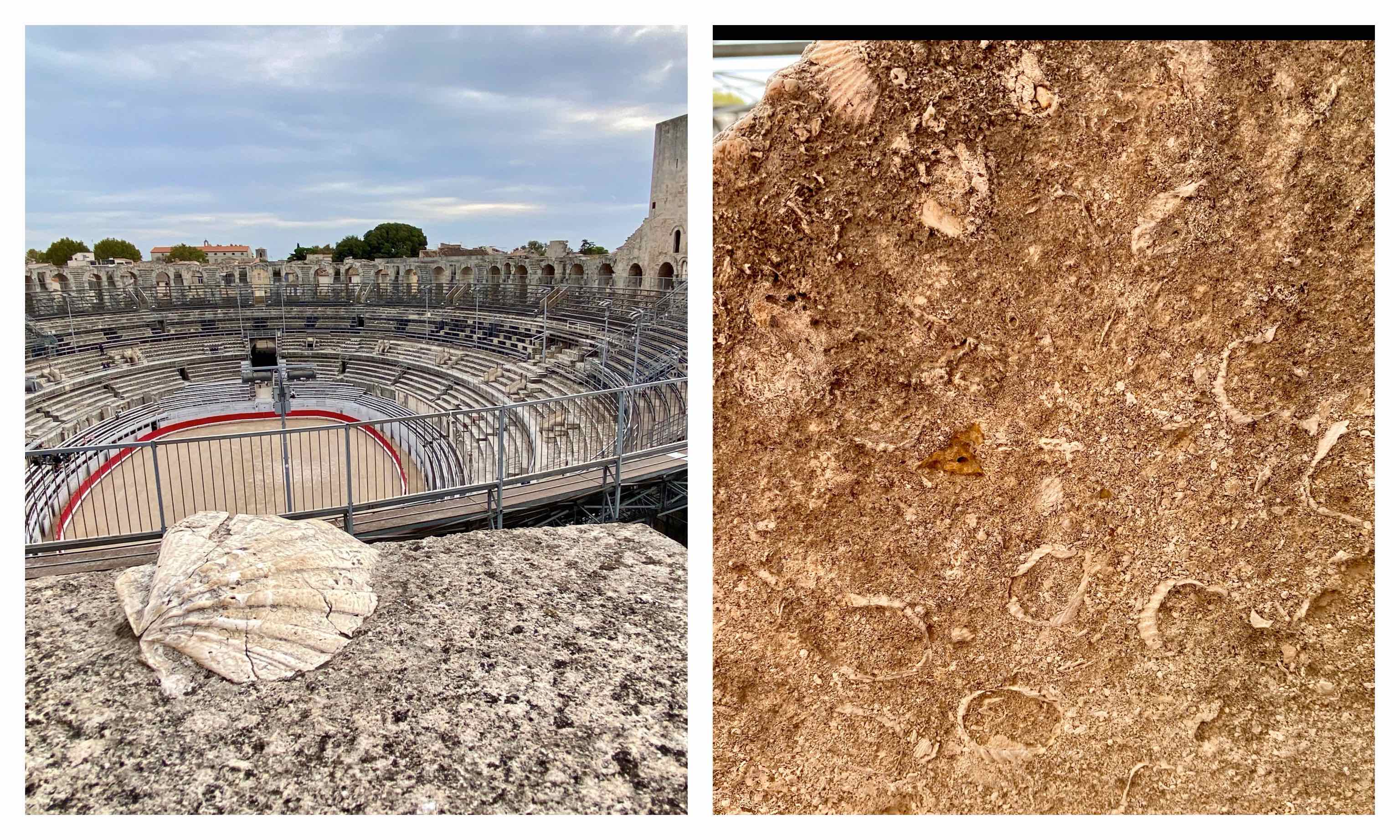
Set in one of the stones at the top of the staircase to the tower is a sea shell, partially buried in the stone and just below it another stone block that is full of smaller sea shells.  I love it when we notice these little kinds of details, details that I am sure many people don’t ever notice.

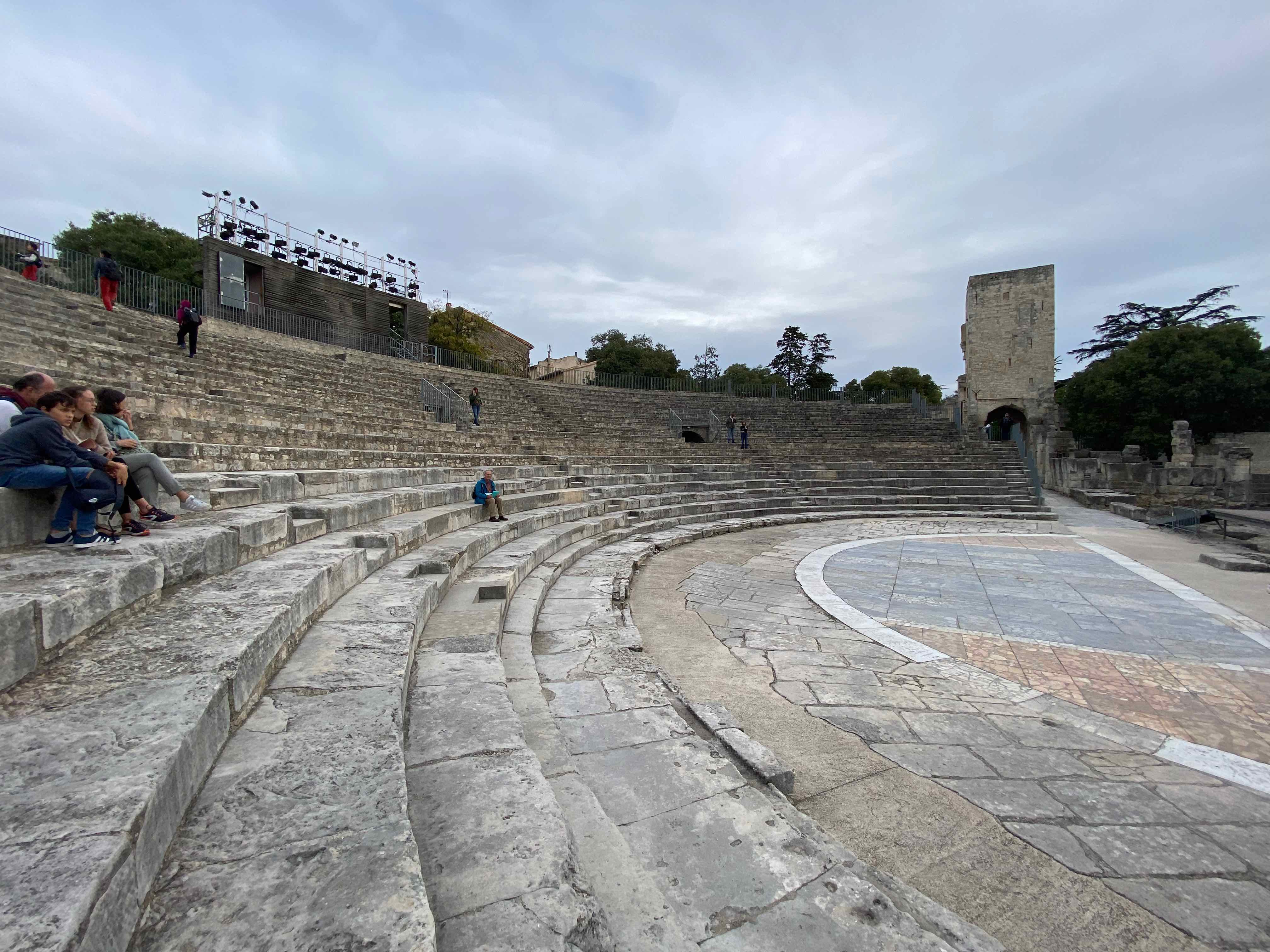
We take another detour to visit the The Roman Theatre of Arles.  It  is a 1st-century Roman theatre, built during the reign of Caesar Augustus.  Bob is sitting consulting our map to figure out where to go next, as we have wandered off the path laid out by the plaques in the sidewalk.

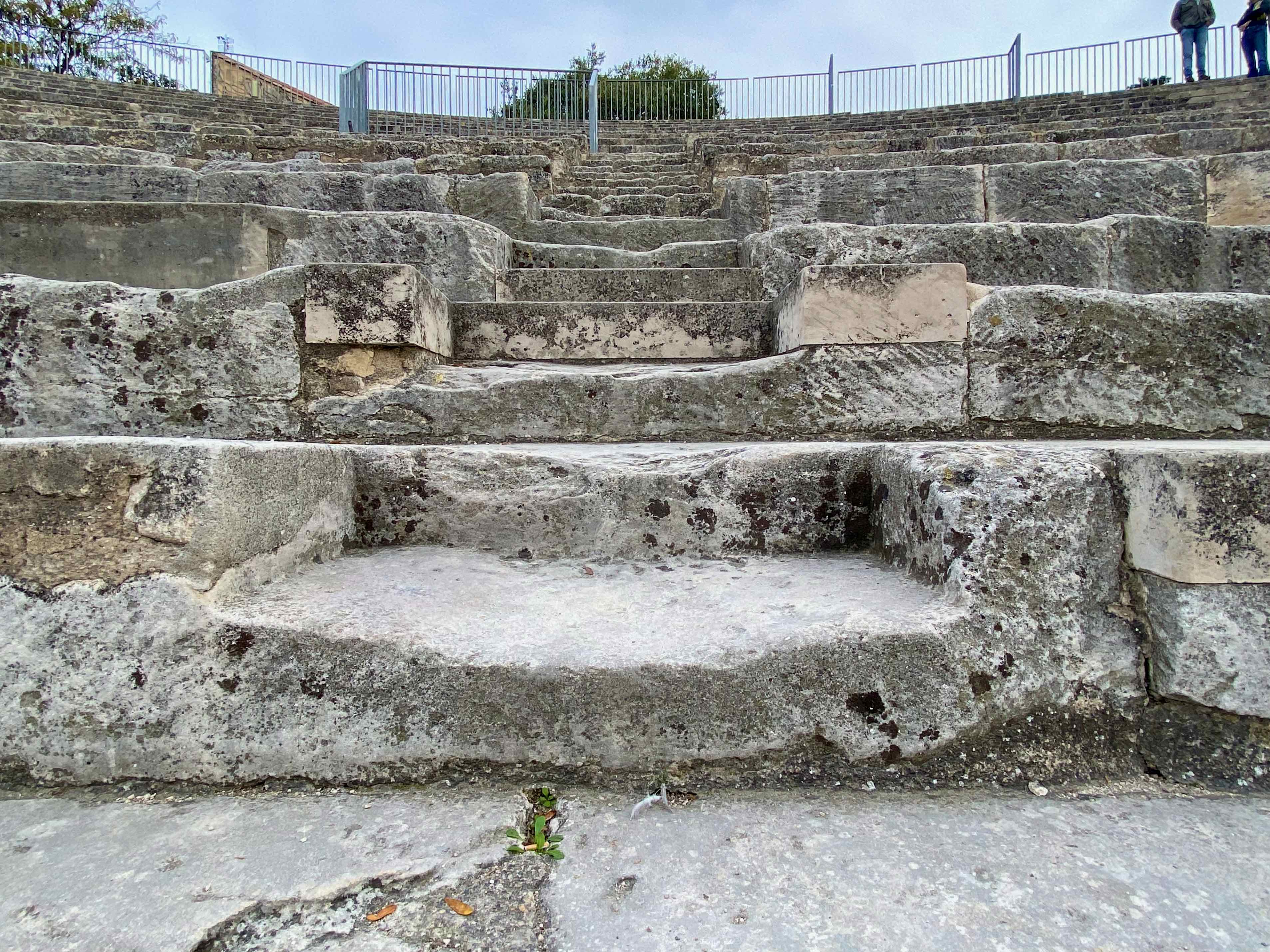
I just love the way the stone steps have been worn down by countless footsteps over the centuries.

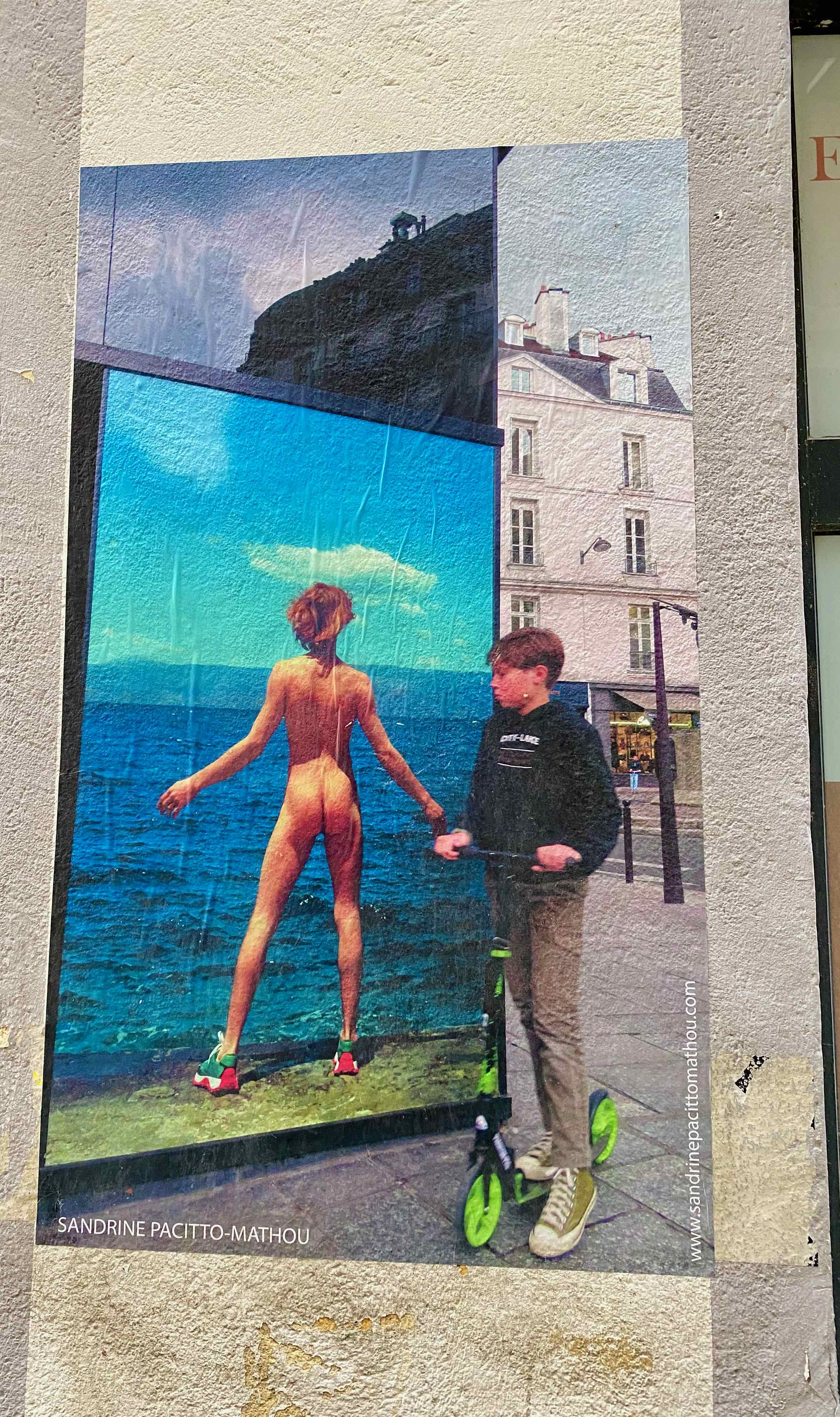
We pass this poster of a young man who is carefully looking at another poster

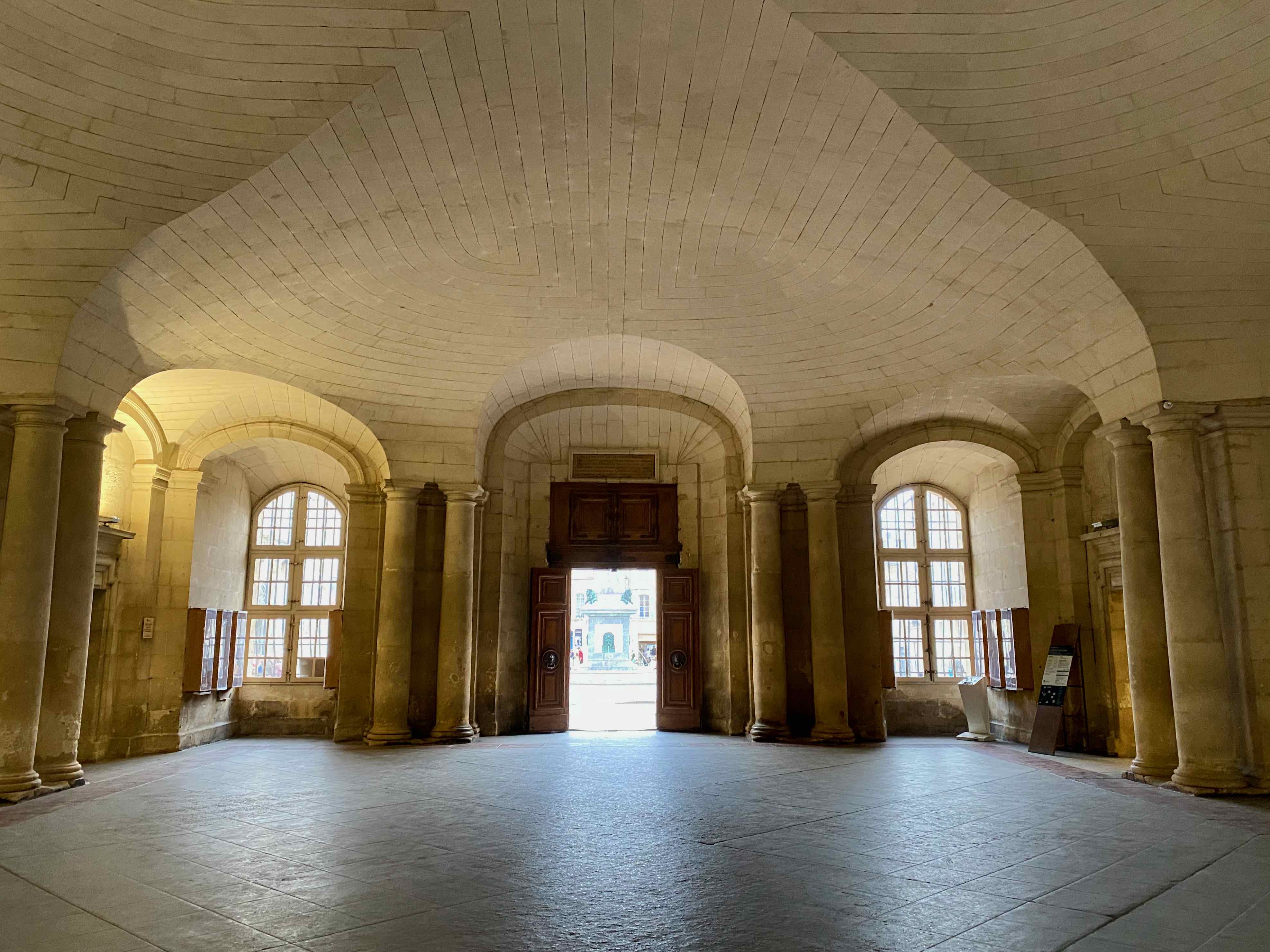
We walk through this old building to reach the square on the other side…

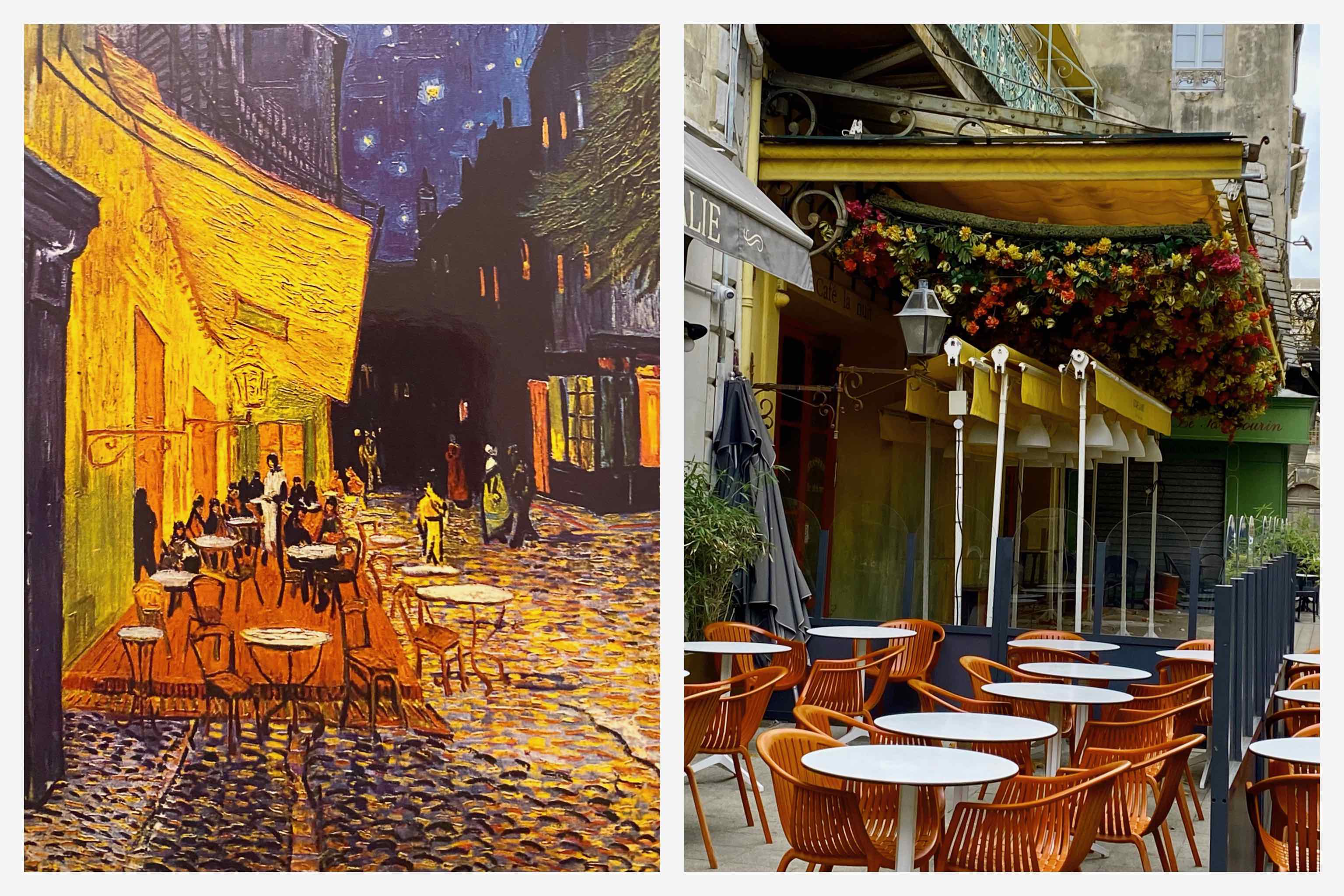
to look for the painting, Café Terrace At Night.  We find the cafe but there is no sign of the plaque with the painting.  We find the location which must have been very close to the spot where Van Gogh stood.

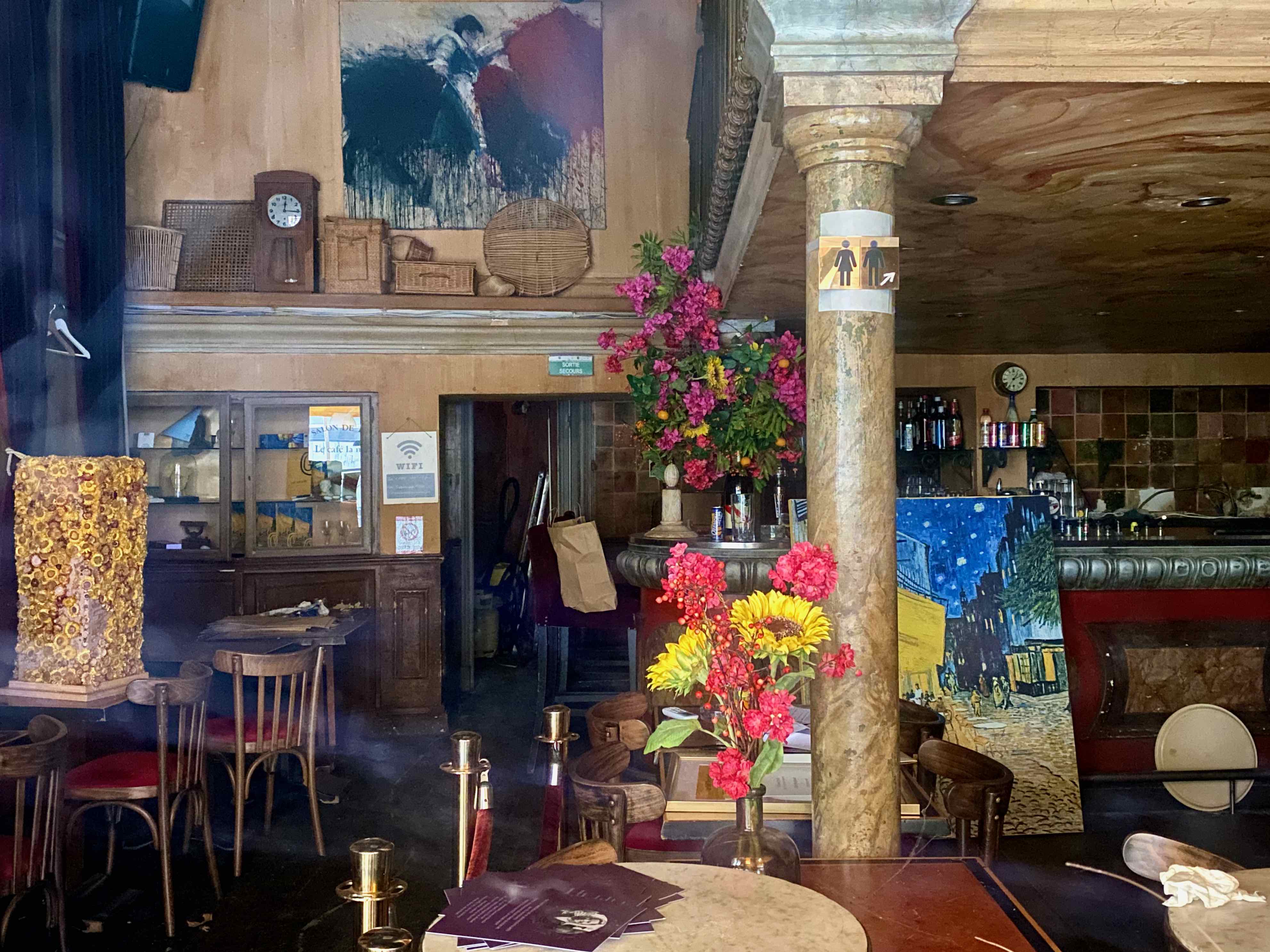
I noticed that the café isn’t open so I went up to take a peek in the windows.  Everything inside looks ready to receive customers, and there is the plaque that we were looking for!  However….

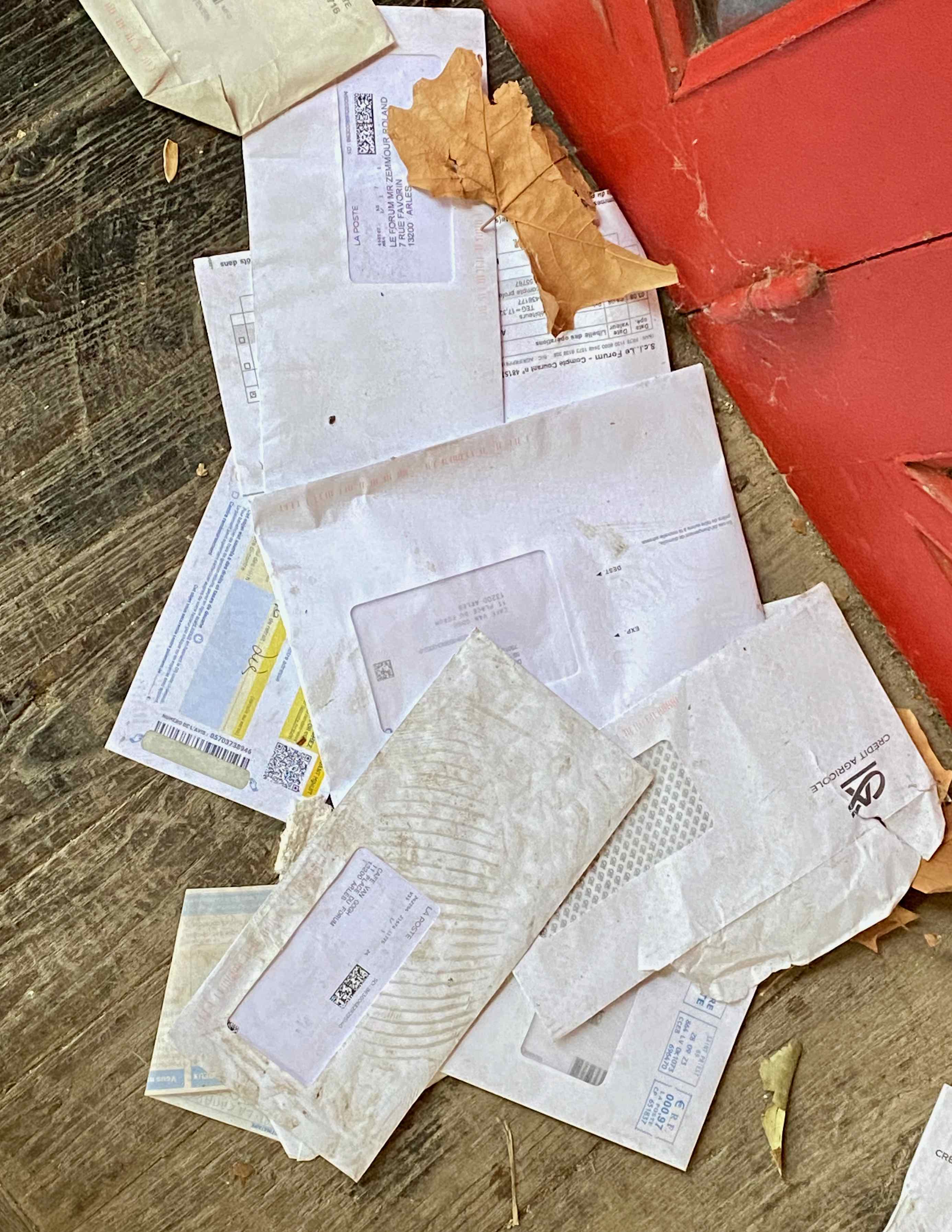
I think it has been closed for a while, as there is a pile of old  mail on the ground at the door.  Too bad, It would have been nice to go inside for a drink.Walking through this plaza I notice another photography exhibit but it is getting late and we still have one more painting spot to find, so we decide not to go in.
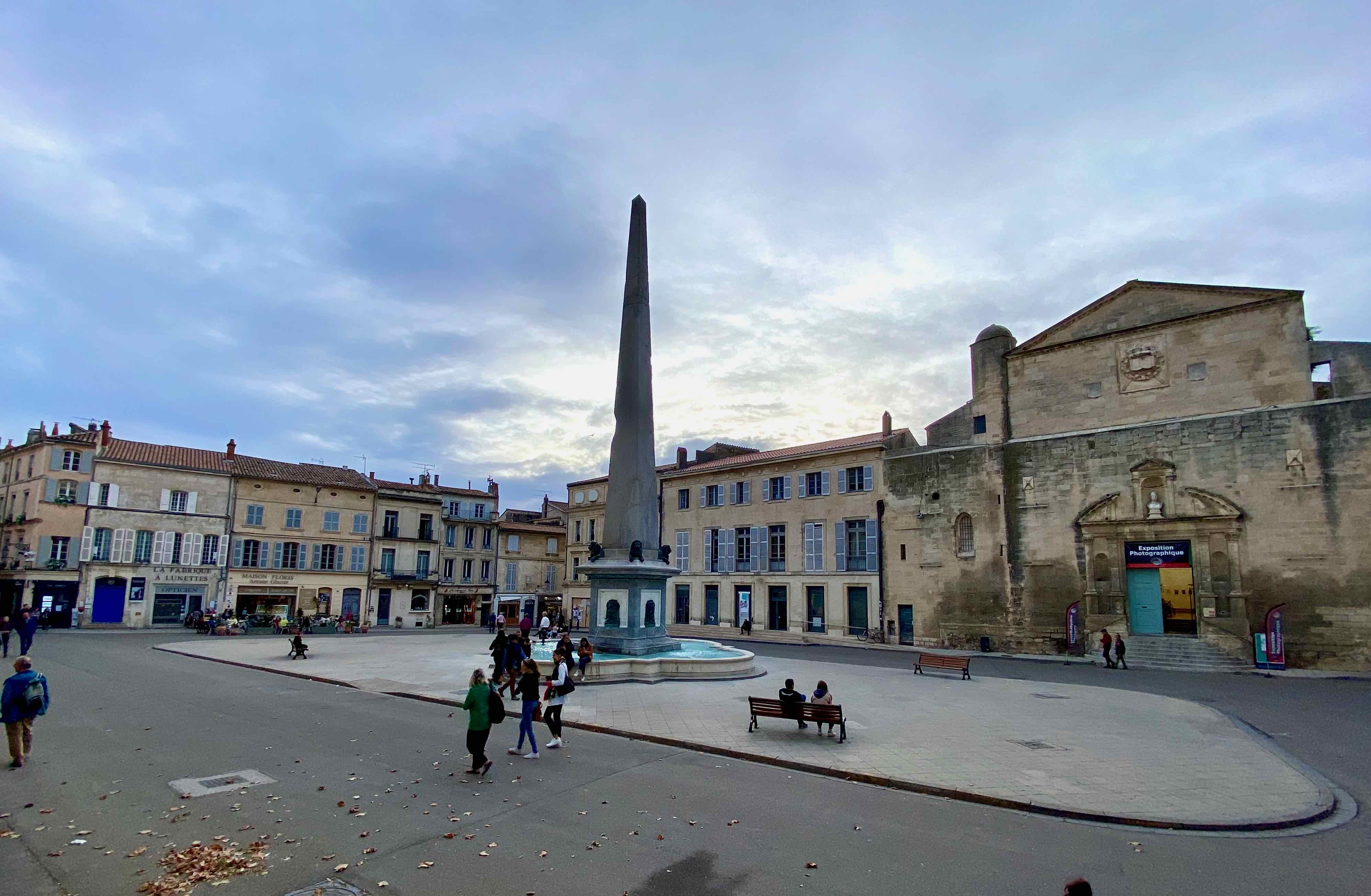
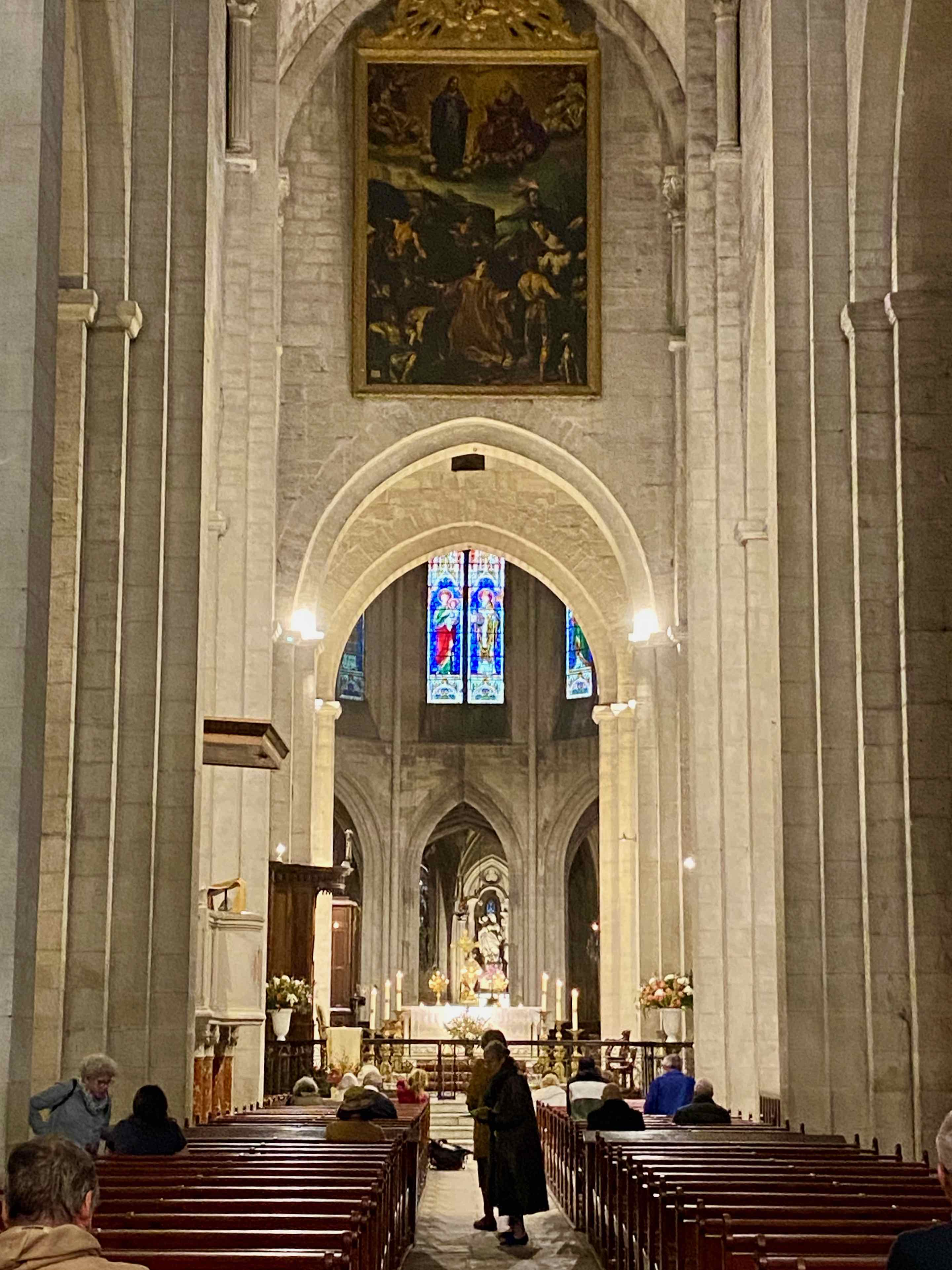
But we do a quick peek inside the Church of Saint-Trophime.  We never know what we will find behind church doors.  Every church is different, ranging from quite austere to the incredible elaborate.

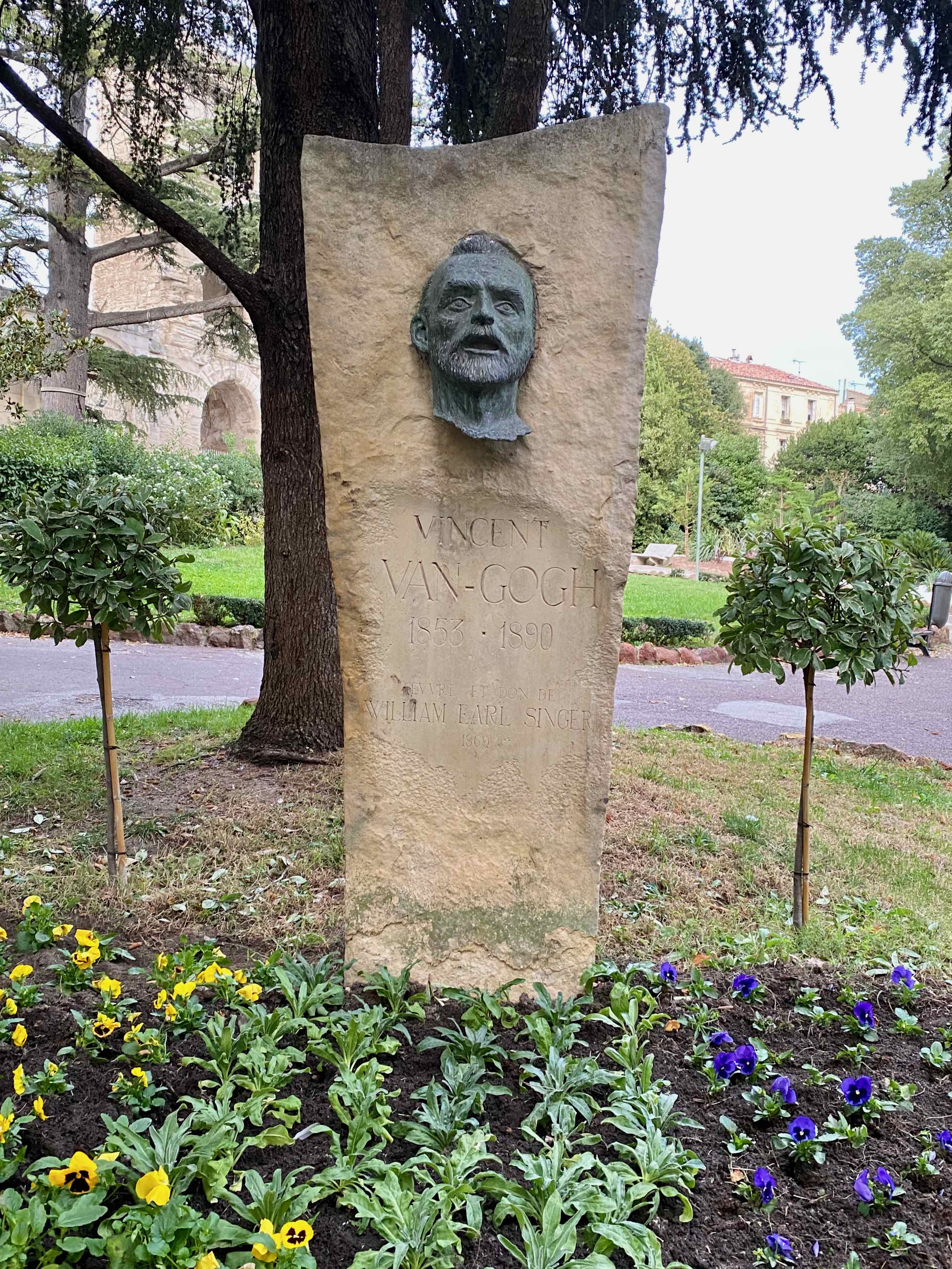
We find the park where the next painting should be located and a monument to Vincent but we can’t locate the painting.  Pansies have been recently planted for the winter garden around this monument.

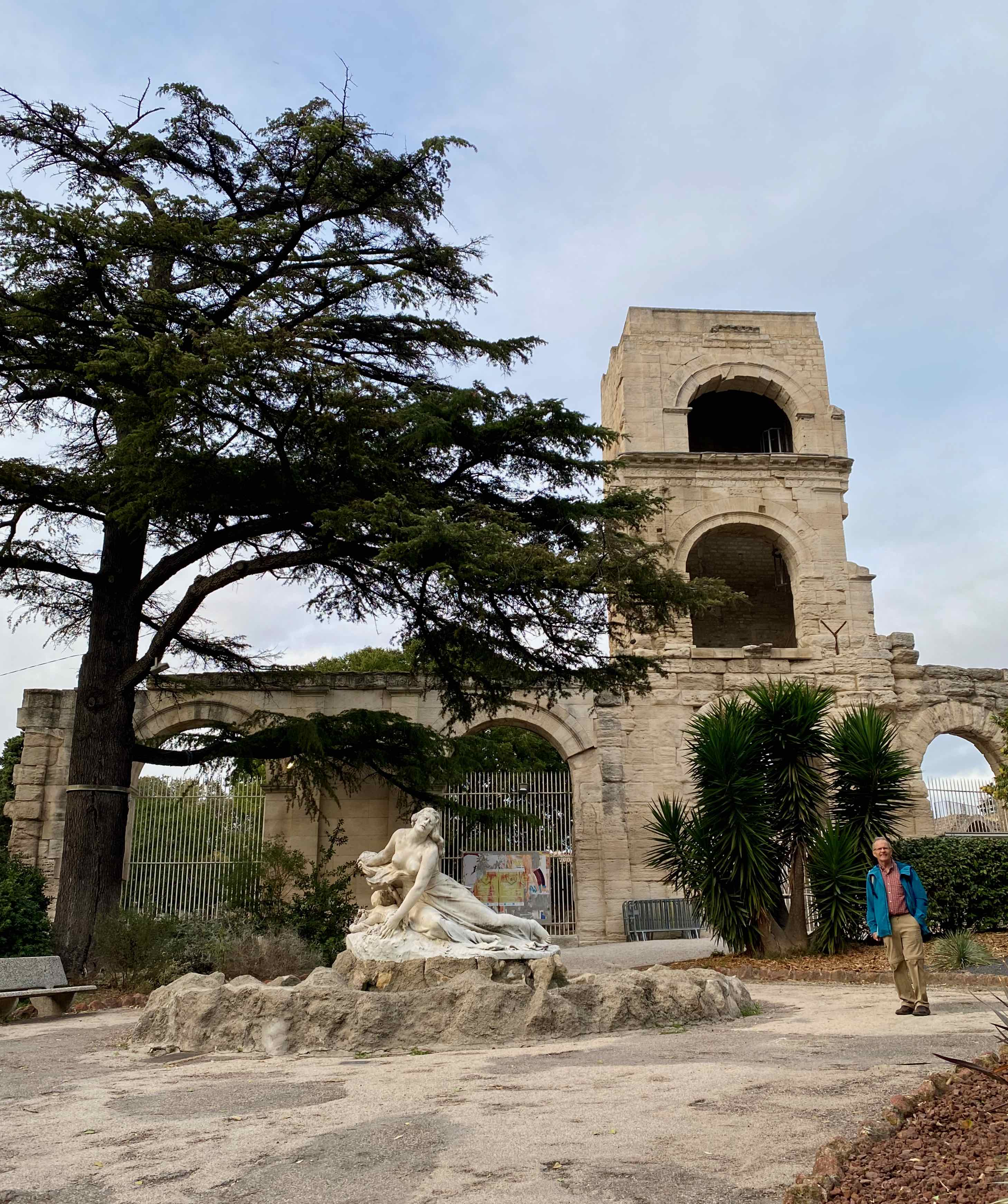
Bob checks out one part of the park and I go look in another.  The tower is part of the Roman Theatre that we sat in earlier.

Finally we find it!  But looking at these photos, I think we should have turned around and taken the photo of the garden in the other direction.  Guess we were getting tired.  There were three more spots on this walking tour but they are almost on the town’s outskirts and we have once again run out of daylight.

It is only 45 minutes to Nîmes and here we are driving in the dark once more.  One more interesting fact, the whole old town of Arles is a UNESCO World Heritage Site!