Day 57, Monday, October 21, 2019
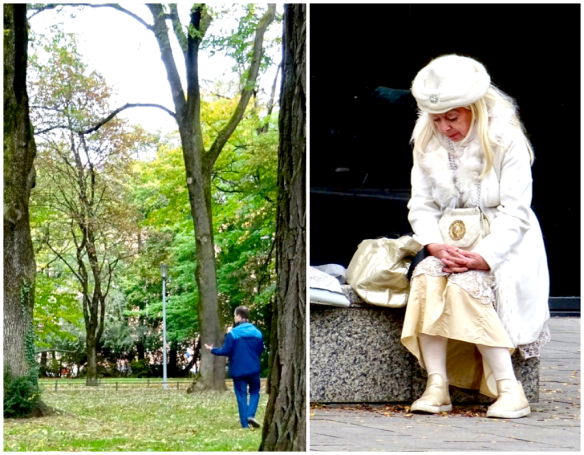
Bob found a walking tour of Munich at bigboytravel.com that we use today. On our way to the start of this walking tour we find a sculpture by Mauro Staccioli. The Ring is 12 meters in diameter and weighs 14 tons.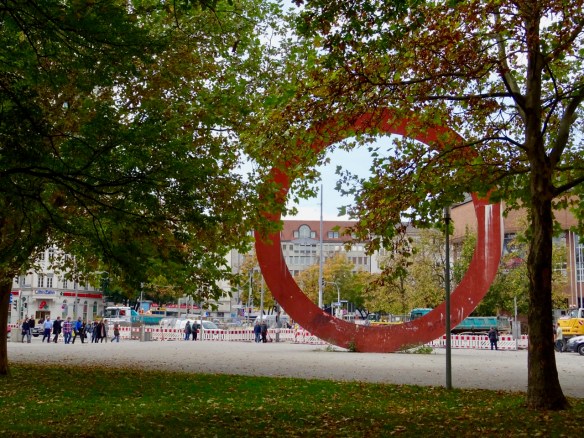 The Ring is right next to the entrance to the Old Botanical Garden where we have our lunch. We see lots of interesting people on our travels. The man below was ‘communing’ with a tree…he walked circles around it, with his hands out, making gestures towards the tree. Some police driving through the park stopped to talk to him but they let him be, guess they figured he was harmless. Nearby I spotted this lady dressed all in white. She looks like she belongs to a different place and time.
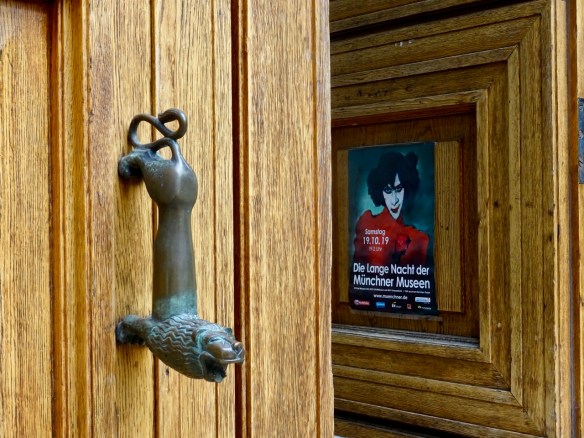
 There was a small gallery in the Botanical Gardens but they were changing exhibitions and not open. I liked both the door handle and the interesting poster, which reads, The Long Night of Munich Museums.
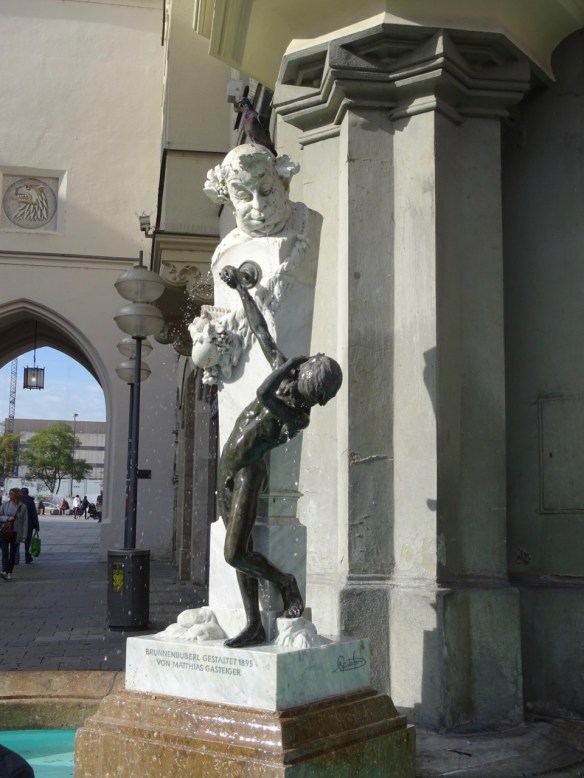
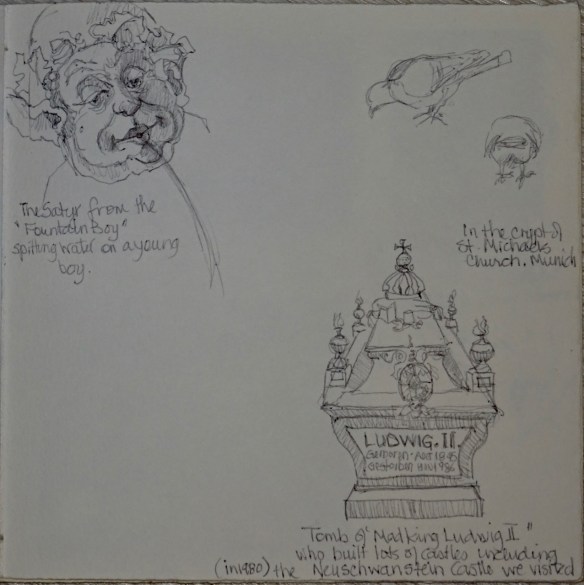
 First stop on our tour, why don’t you come along with us? The Fountain Boy depicts a satyr spitting water at a young boy who shields his face. It originally caused a problem because there was no leaf over his private parts, but it is now a favourite Munich fountain.
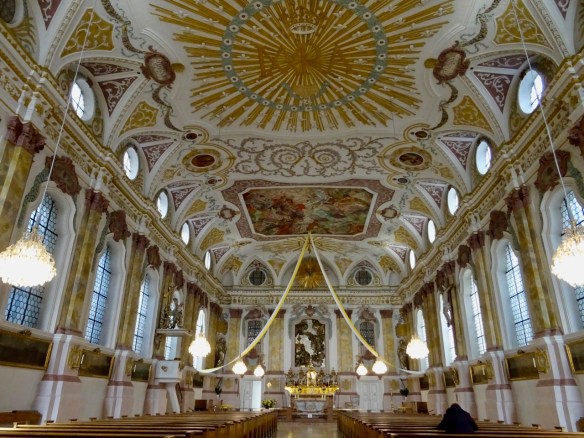
 Citizen’s Hall Church was heavily damaged during WWII but it has been rebuilt and looks exactly like it did in the 1700’s. The basement contains the tomb of Rupert Mayer, a famous Jesuit priest who stood up to the Nazis occupation and died in a concentration camp..
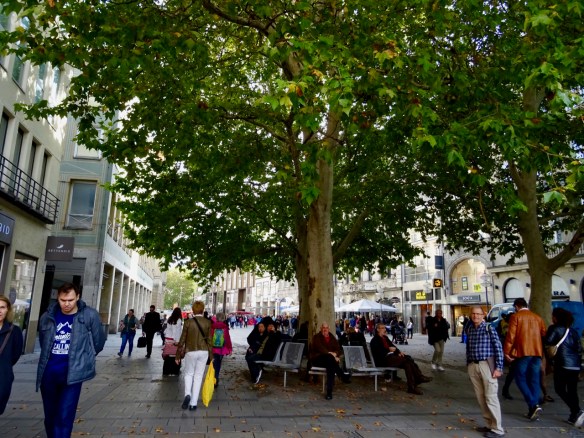
 Our walk continues down a broad pedestrian street with large trees.
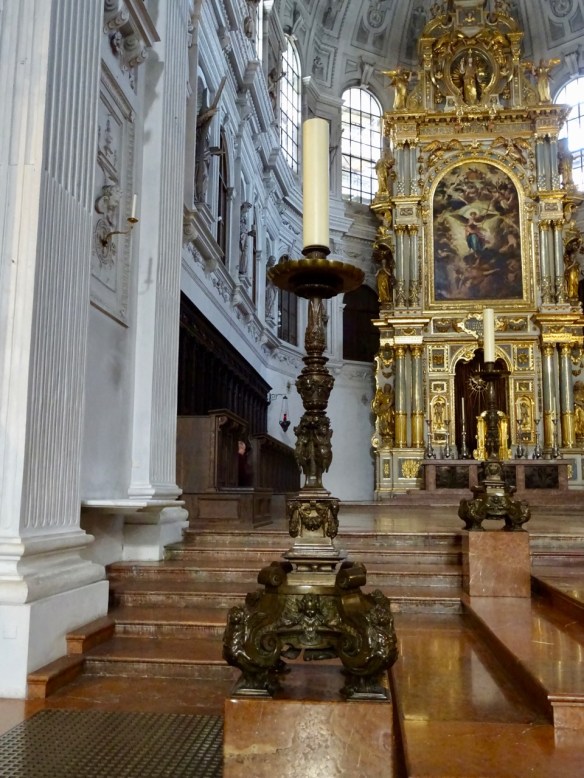
 St Michael’s Church. I liked the huge elaborate candle holders. The church contains The Royal Crypt which holds 40 tombs. The most famous of these is the tomb of “Mad” King Ludwig II. Ludwig was a big spender and built many lavish castles and palaces. We visited the Neuschwanstein Castle on our first trip to Europe almost 40 years ago. It is the castle that inspired Walt Disney’s Snow White castle.
 No photos are allowed in the crypt so I did a quick sketch of King Ludwig’s tomb. No one ever seems to mind if I draw.
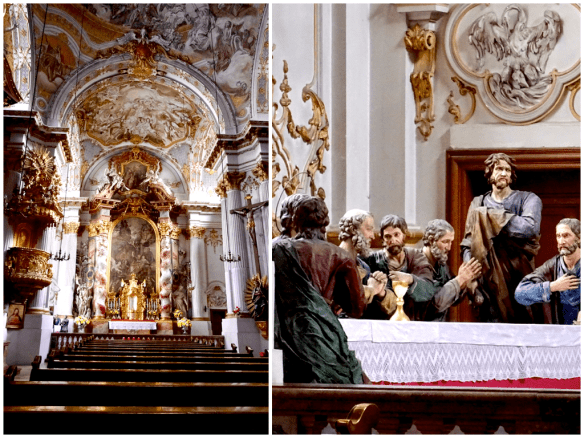
 There are a few churches on this tour! Each of them has its own distinctive feature. Saint Anna’s Church has had a chapel on this site since 1440. I thought I saw people inside, behind the locked gates, but when I zoomed in with my camera, I realized it was a life size sculpture of the Last Supper.
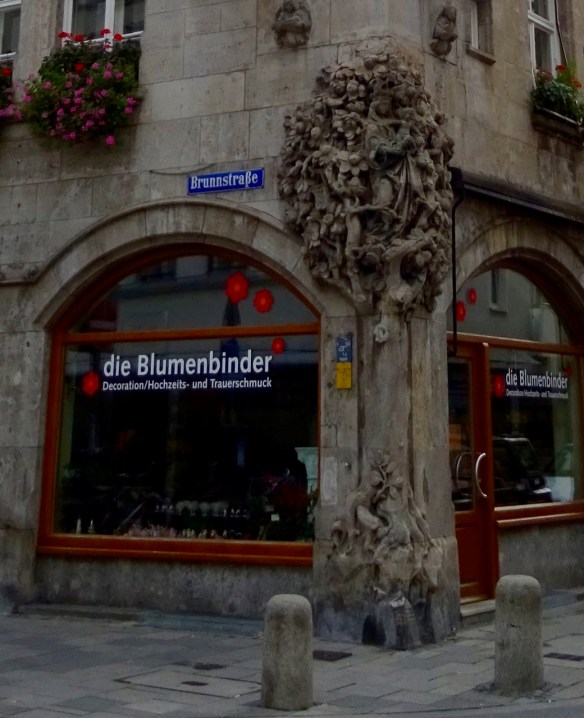
 We pass this tree sculpture on the corner of a building on our way to The Asamhof Passage.
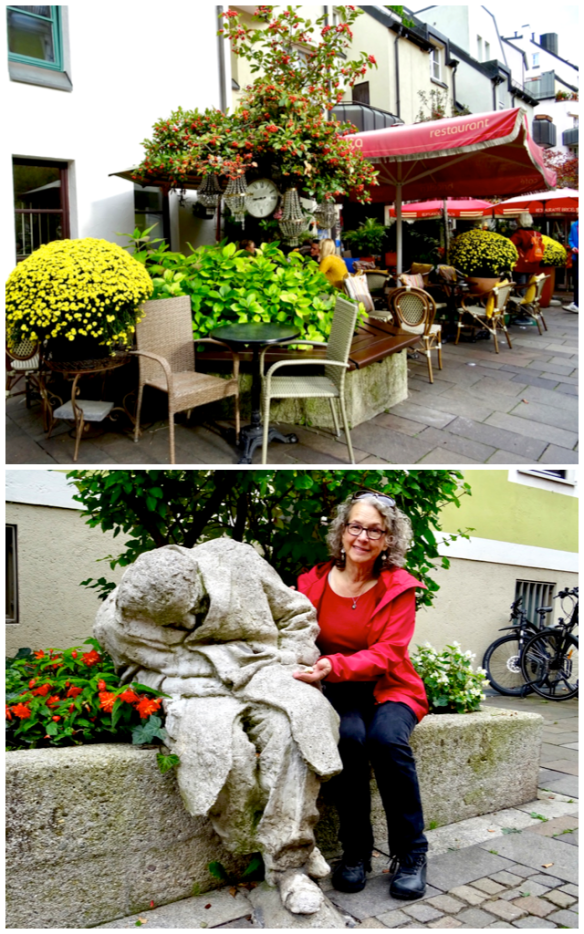
 Asamhof Passage is a little pedestrian street lined with restaurants, lots of flowers, and this poor fellow who needed my change more than I did!
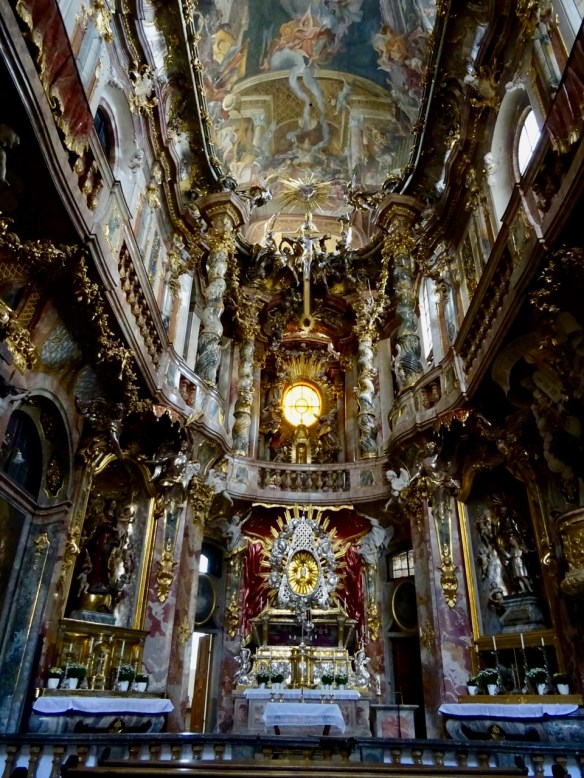
 Asamkirche was built by the Asam brothers as a showpiece for their church building skills. It is only 30 feet wide but it is so packed with over-the-top-Rococo decoration that we don’t know where to look! The entire focus of the interior leads the eye to a bright golden window meant to feel like the eye of God staring down at us.
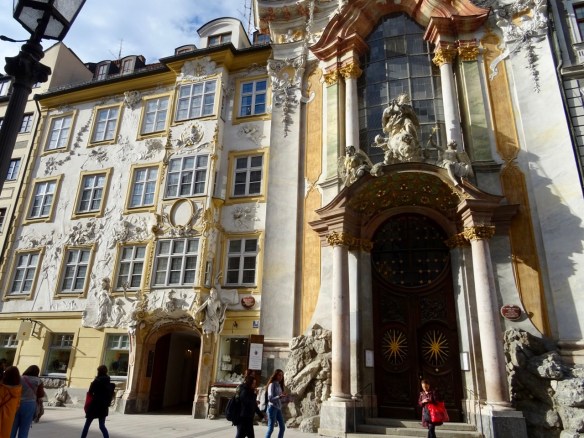
 This is the exterior of the church and the brother’s house next door, which had bedroom windows looking onto the high altar in the church.
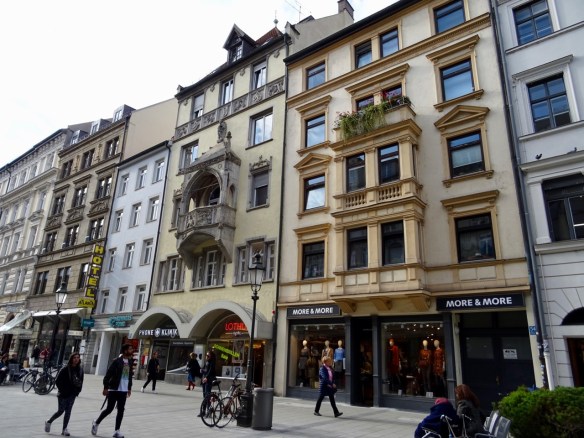
 There are lots of modern shops below the traditional apartments.
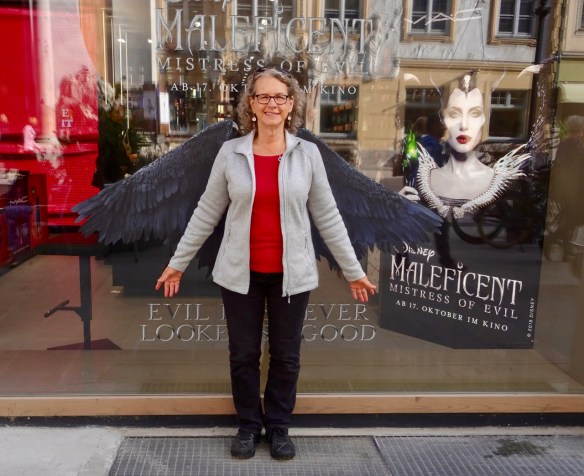
 I think I look OK with wings!
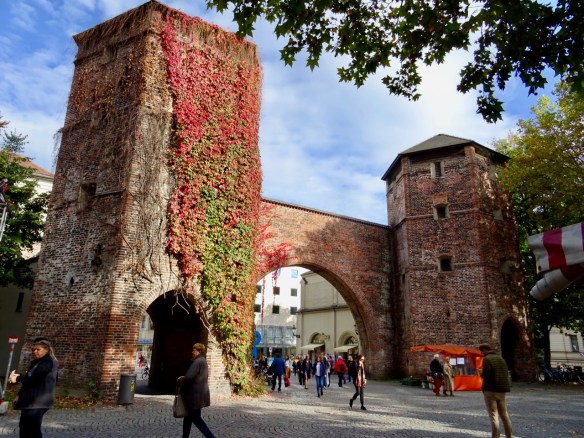
 The town gate, built in 1318 has two towers and is the oldest of the three city gates still standing in Munich.
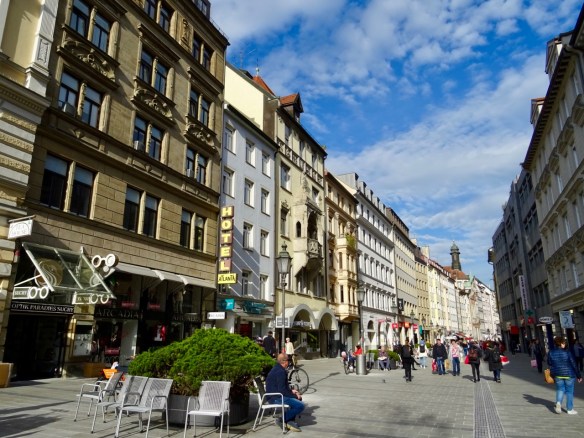
 A view down the street from the town gate.
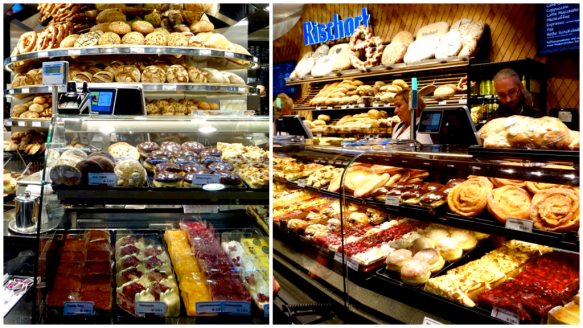
 Walking back towards Marienplatz we walk through the Victuals Market (Viktualiemarkt). This is a tough place to be when you can’t eat gluten, dairy or eggs!
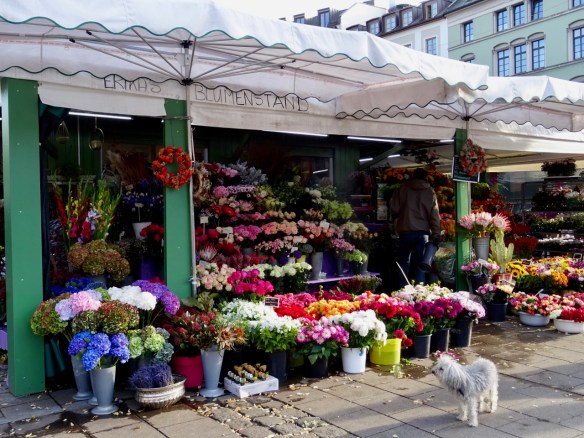
 There are lots of flower stalls. I particularly liked the little dog that seemed to belong to this one.
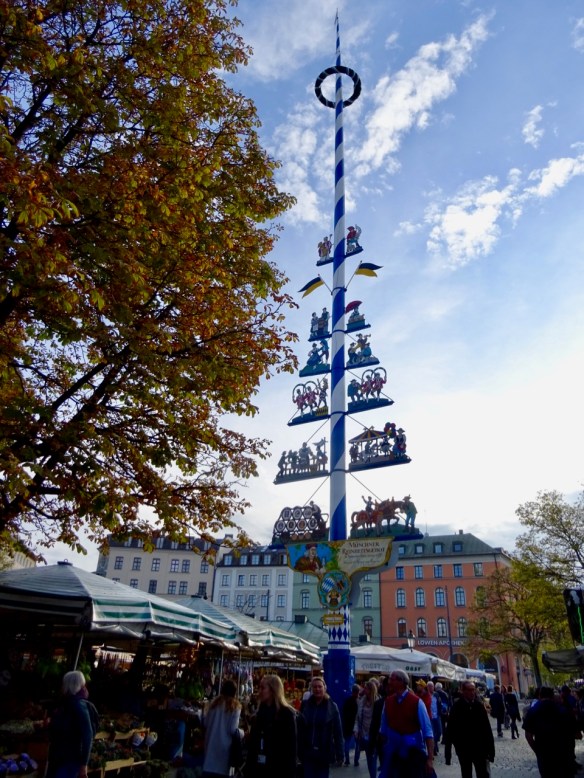
 This is the tallest May Pole we have ever seen!
 We can see the Glockenspiel Tower down a side street between two buildings.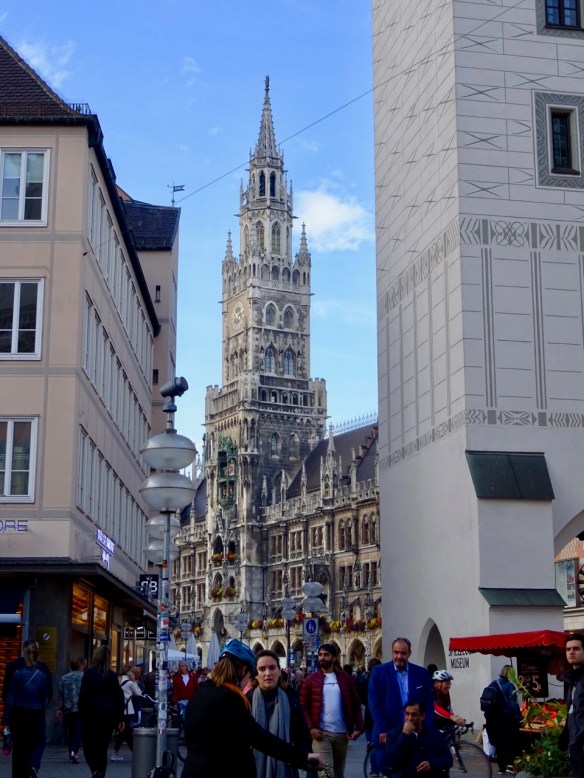
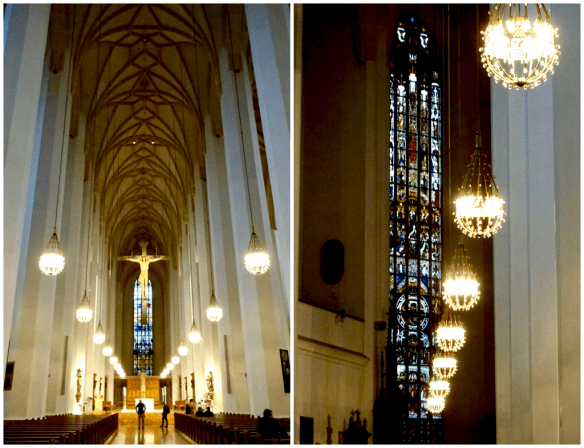
The Frauenkirche has beautiful chandeliers illuminating its interior.
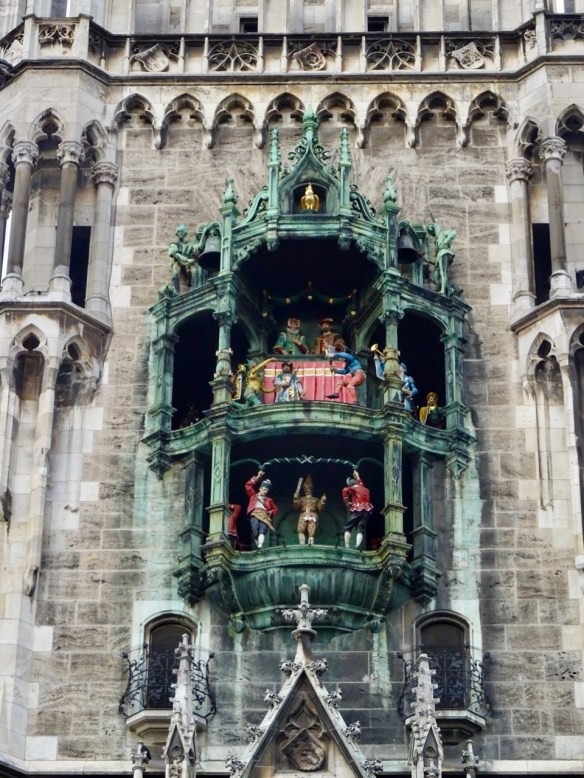
I’ve mentioned the beautiful window boxes before. This is a department store and just look at its gorgeous window boxes!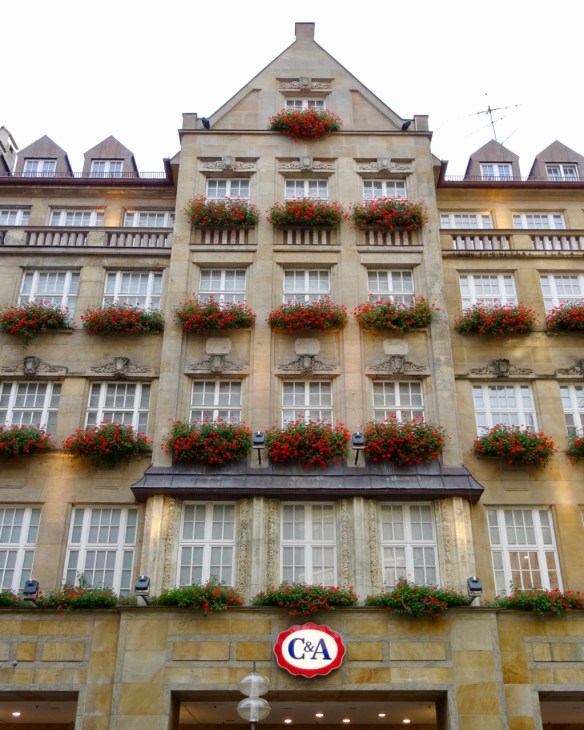 The New Town Hall’s main attraction is the Glockenspiel. This chiming clock was added to the tower in 1907. At 11am, midday, and 5pm the Munich Glockenspiel recounts a royal wedding, a jousting tournament and a traditional dance with 32 life-sized animated figures in its 260 foot tower.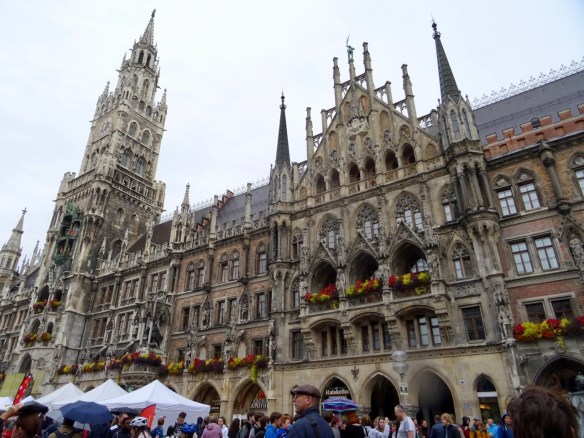
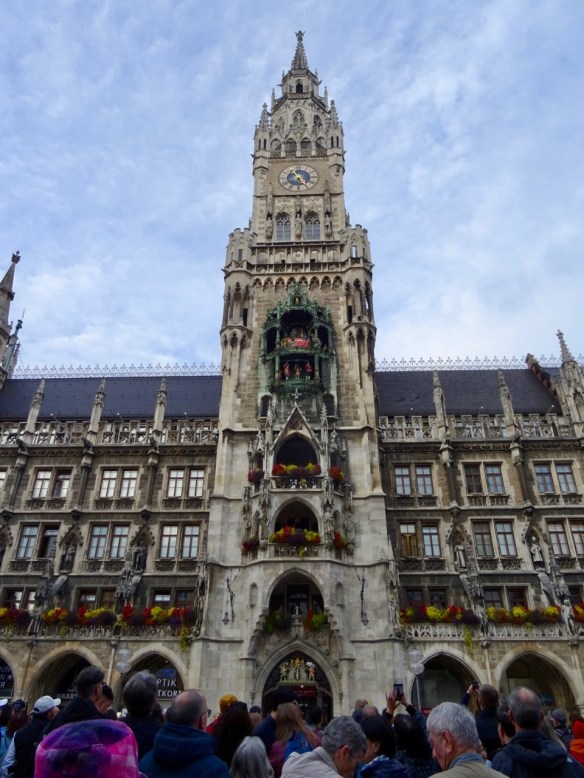 The show lasts about ten minutes, followed by the ringing of church bells.
 Bob remembered the Beck Department store from our first visit to Munich almost 40 years ago! He said it was right next to the Glockenspiel and sure enough it was!
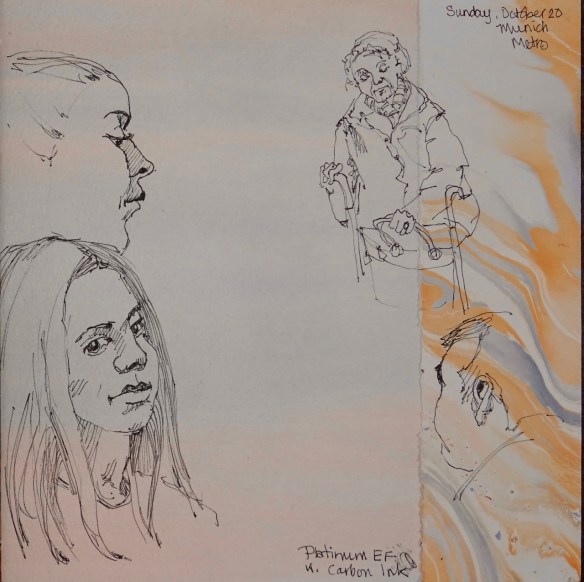
 Metro drawings from today. People kept getting off the metro before I was finished!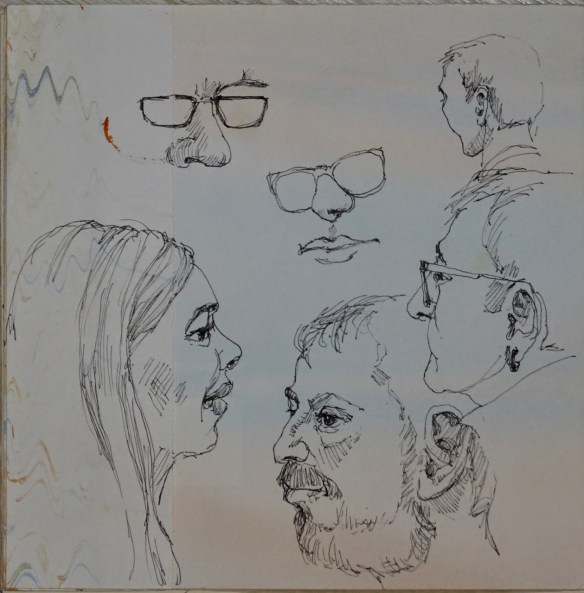
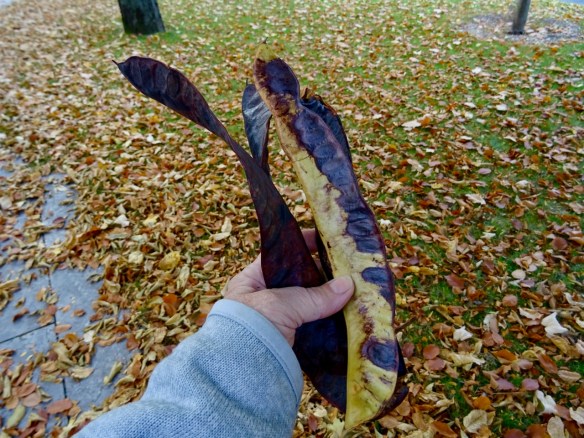
 No idea what kind of tree has these huge seed pods. Maybe someone can tell me?
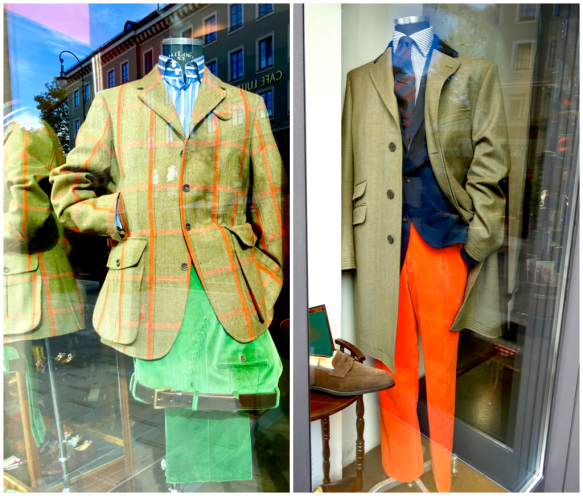
 We go past a street of shops with rather expensive merchandise, but I really wonder about these colour combinations!
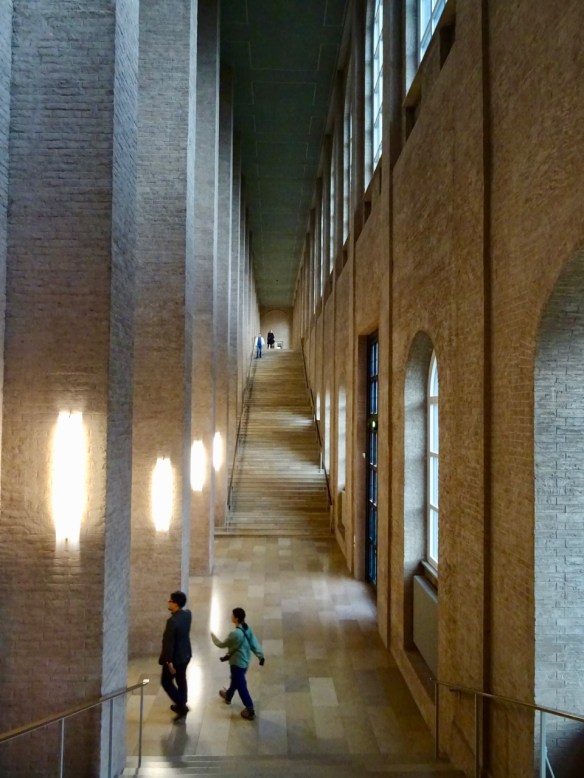
 The Alte Museum admission is only 1euro on Sundays! What a bargain. This is one half of the double staircase that leads to the exhibition rooms.
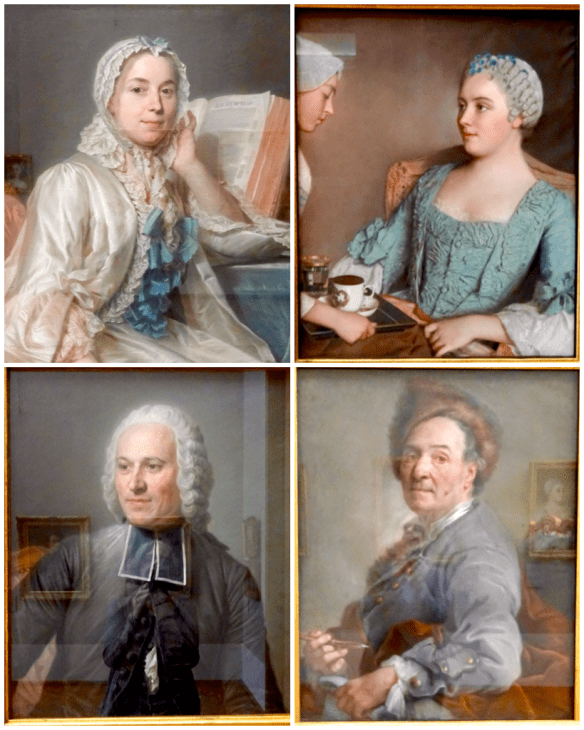
  We walk through the first door and I see these beautiful pastel paintings by Maurice Quentin La Tour, Jean-Étienne, Joseph Vivien and Rosalba Carriera! I need to find some books about these artists and study their paintings. Unfortunately there were lots of reflections in the glass covering these works. You can even see me in two of them!
 One of the 46 rooms we visited today had lots of paintings of Venice, completed in the early 1700’s. I marvelled that Venice looked just the same then as it did when we visited a couple years ago. The only difference was the number of small boats in the canals and the clothing of the people in the paintings! There were another 13 rooms that were closed due to the installation of new exhibits.
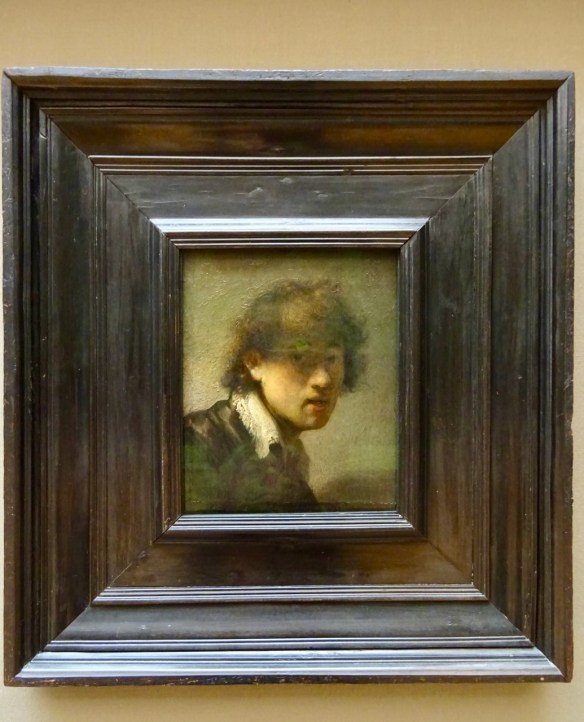
 This room was full of paintings by Rembrandt and Franz Hals…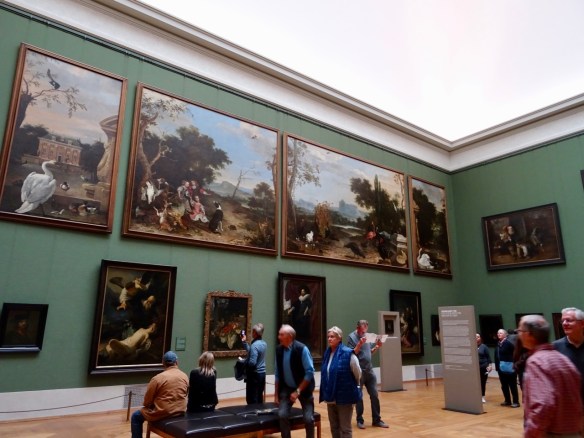
 I lost count of the number of rooms filled with work by Peter Paul Rubens…
 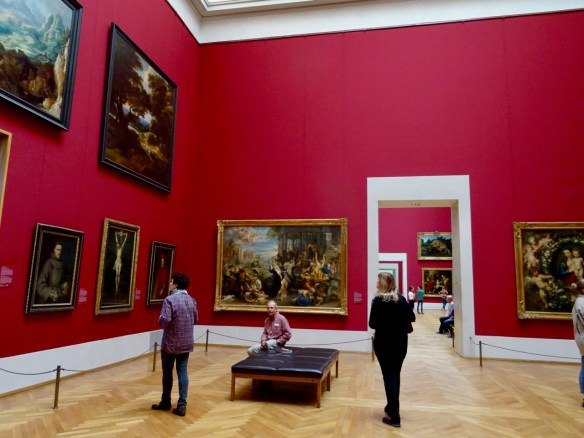 which Included a room with the huge painting of The Great Last Judgement.
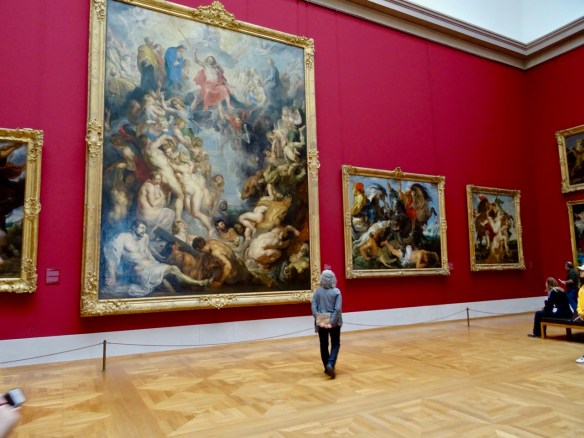 and another with The Fall of the Damned, which is also very large. Rubens was a very productive artist!
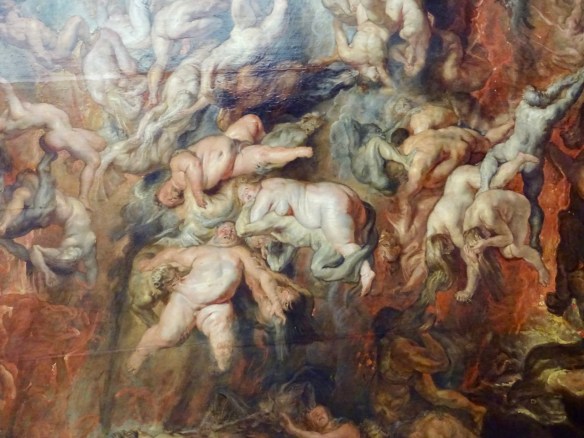
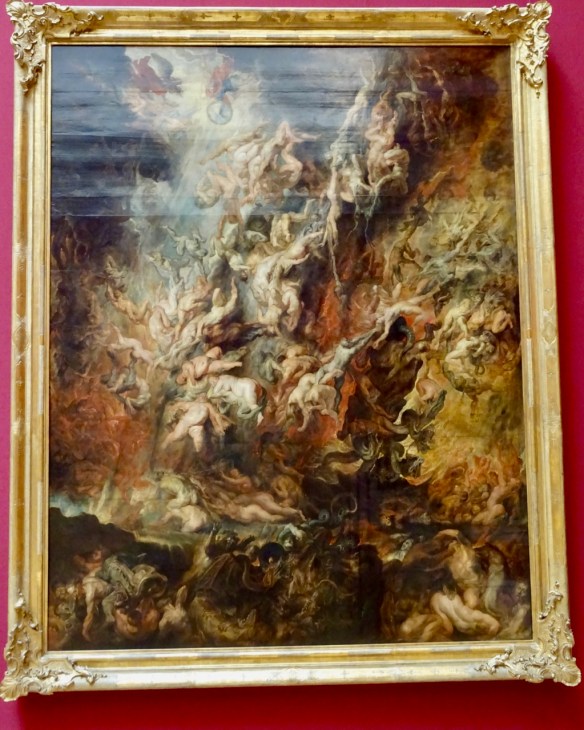 Here is a close up of some of the damned souls.
 Looking through the doorway, you can see the many more rooms we have yet to explore. There are ten large galleries in a row along the length of the museum, with many smaller galleries off of these.
 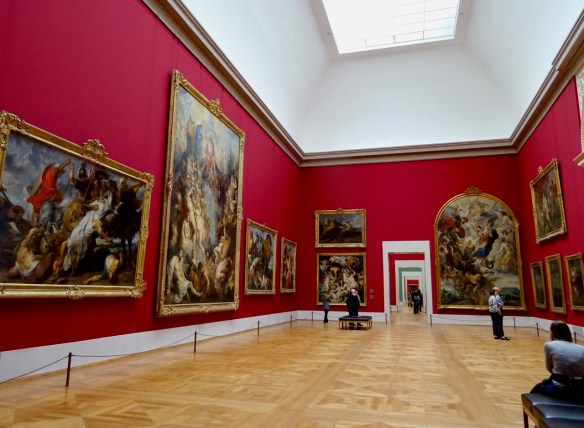 I liked how I could stand in front of the study for this Rubens painting and then look into the adjoining gallery and see the finished painting. There was a gallery full of studies, which I particularly liked. It is possible to see the way Rubens thought about and worked out his compositions.
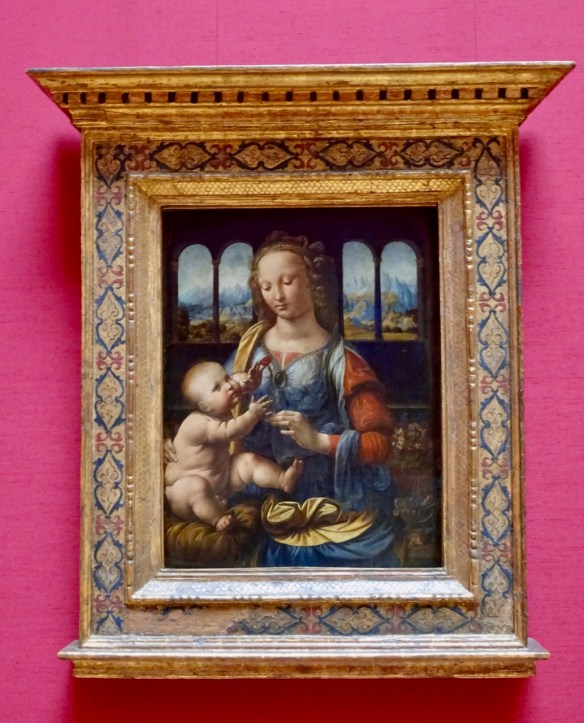
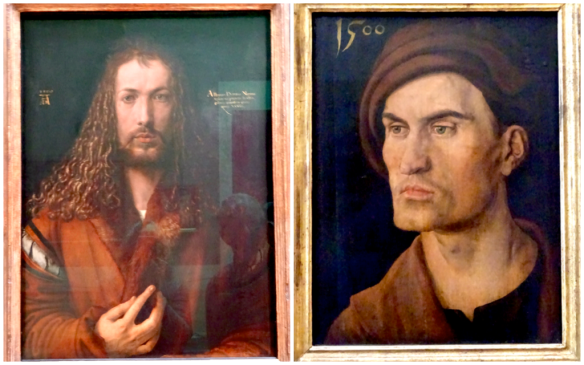 This is a painting done by Leonardo da Vinci when he was only 23. I don’t remember seeing it before (in books).
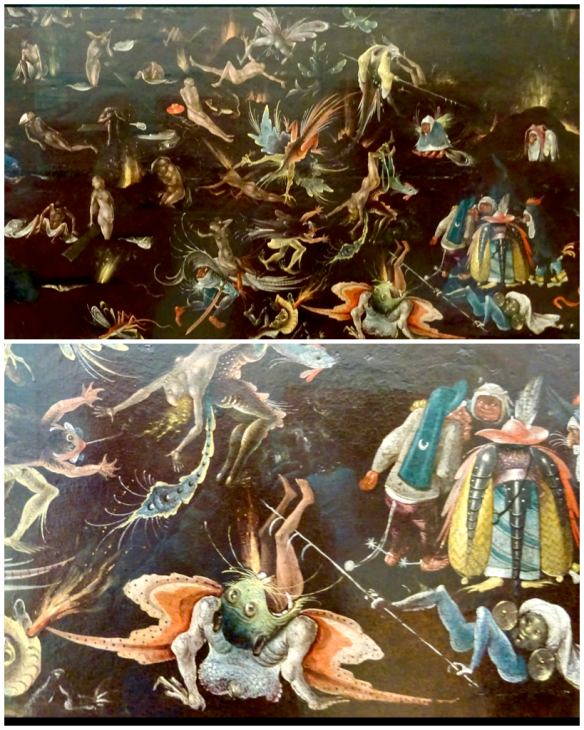
 And then there is Hieronymus Bosch with his very strange creatures, in this fragment of the Last Judgement. His works always has lots of details to examine closely.
 We saw paintings by so many other artists I am familiar with: Holbein, Raffael, Botticelli, Titian, Van Dyk, and Velázquez, as well as many new artists that I liked as well.
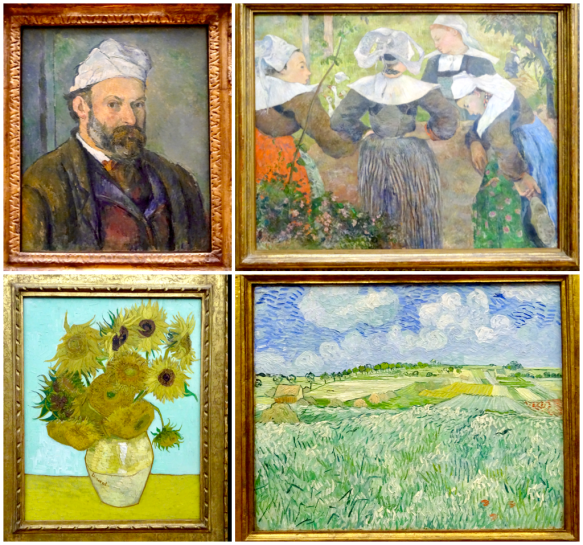
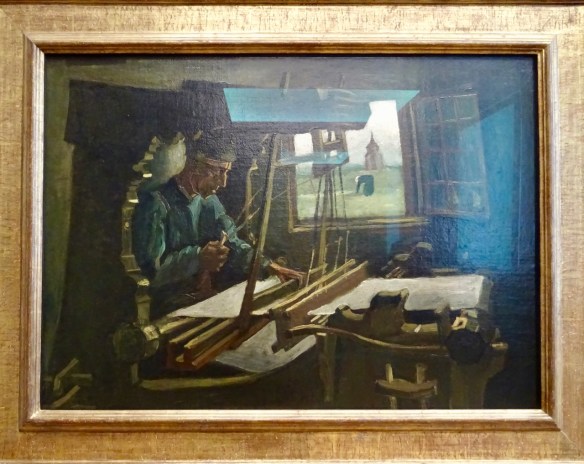 and works by Cézanne, Gauguin, and several more Van Gogh’s.
 A large painting by Ferdinand Hodler, TheTired of Life, really drew my attention. I will have to research this artist.
 There was a Klimt. I am looking forward to visiting the Klimt Museum when we return to Vienna.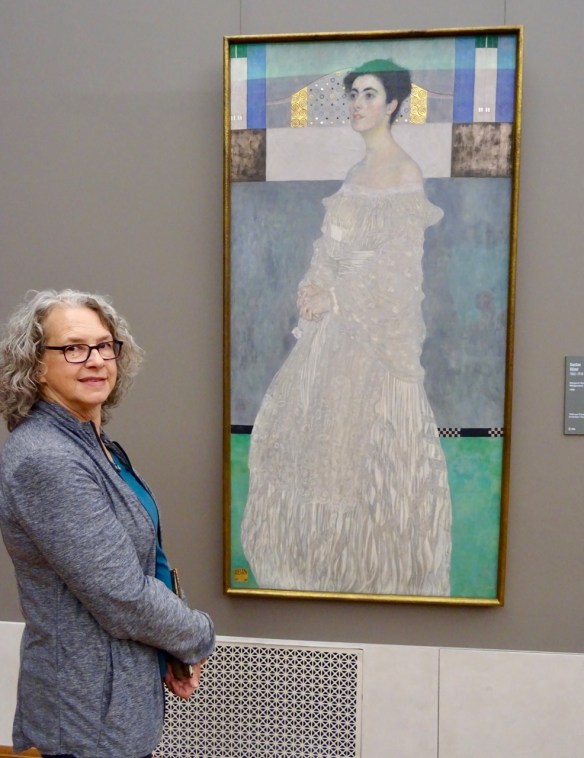
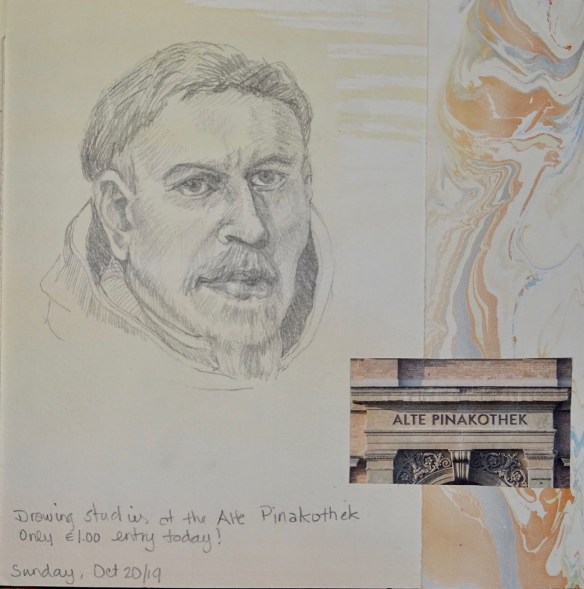
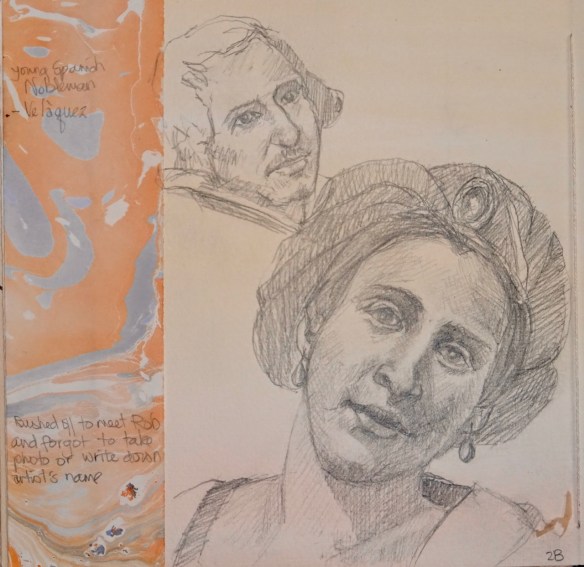
 Here are my metro drawing from today…
 and yesterdays drawings in the gardens we visited, which I forgot to post.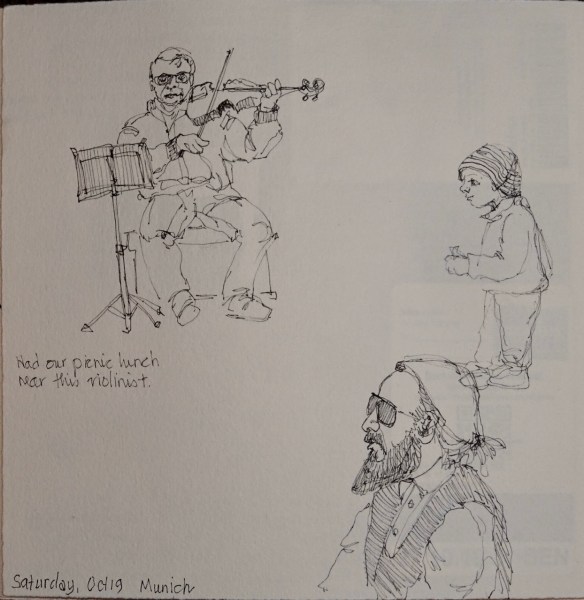
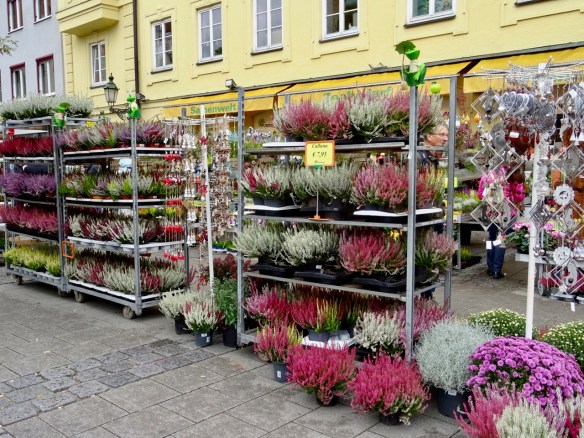
 We see lots of people carrying home these little pots of colourful heather from the street market.
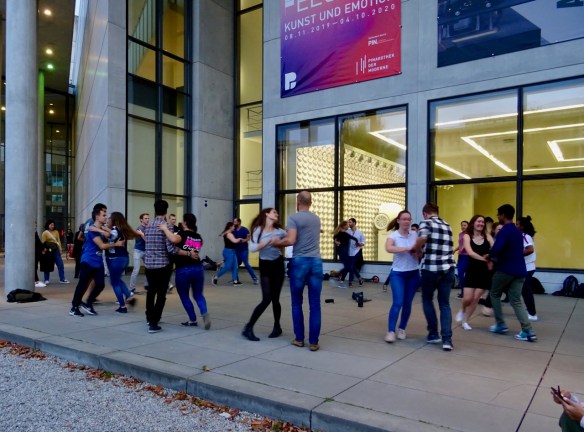
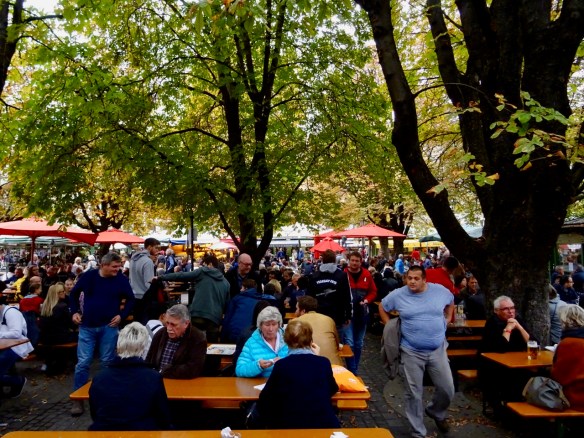
 There are lots of people enjoying the day, and drinking lots of beer, even though it isn’t that warm.
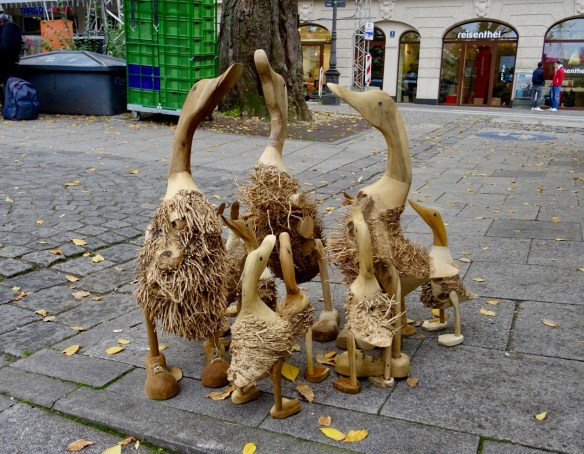
 I quite like this gaggle of geese but they are just a bit to big to fit into my suitcase!
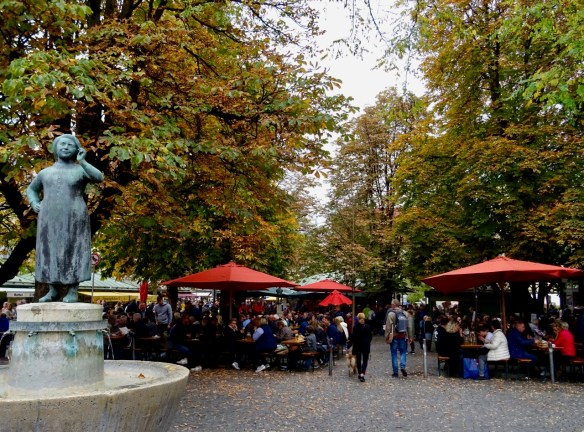
 There are many charming small fountains in Munich, like this one of Ida Shumacker, a Bavarian actress and comedian who died in 1956.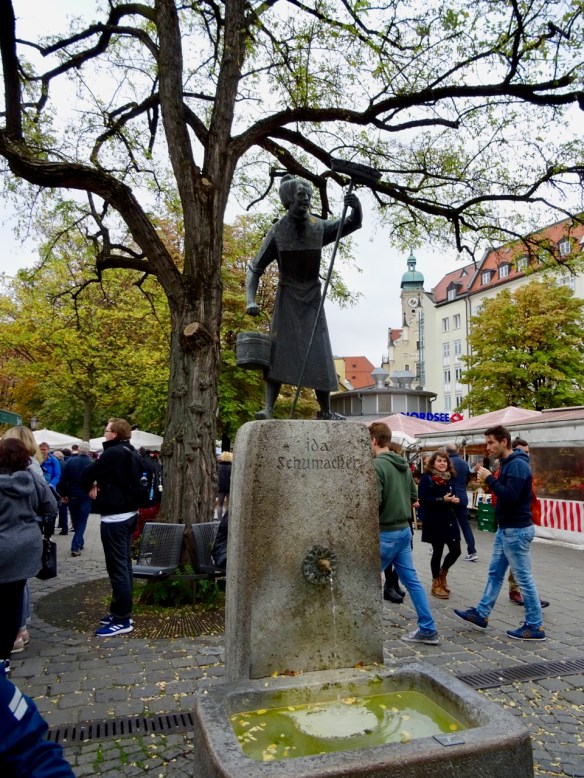
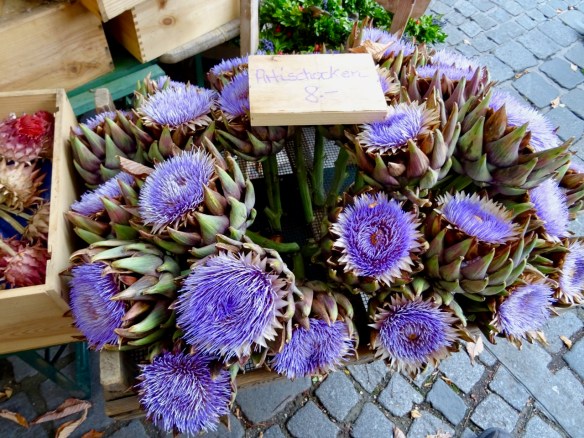
 These colourful flowers are artichokes. I had no idea they looked like this when they bloom!
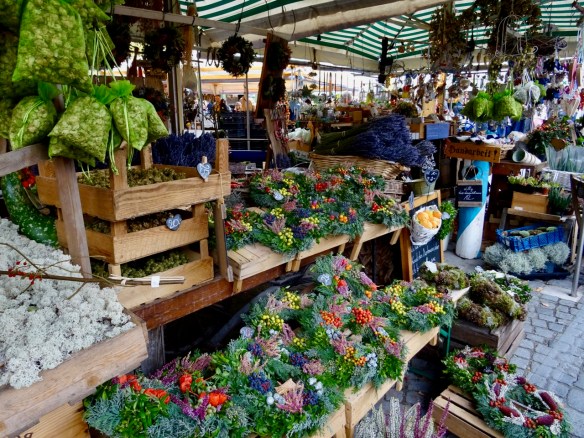
 There are lots of flower and dried flower stands.
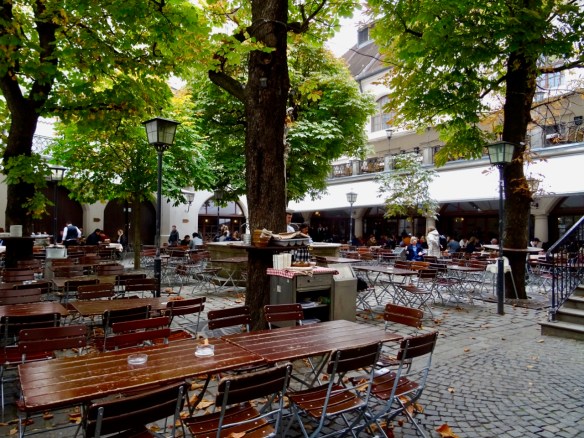
  We pop into one of Munich’s beer gardens but it is cool today so there aren’t many people. I am sure it was a different story just a few weeks ago during Oktoberfest. We were originally going to be in Munich during Oktoberfest but quickly changed our plans when we realized that. More than six million people descend on Munich to drink beer and party…not anyplace we want to be!
 This house looks like it will soon be completely covered in ivy!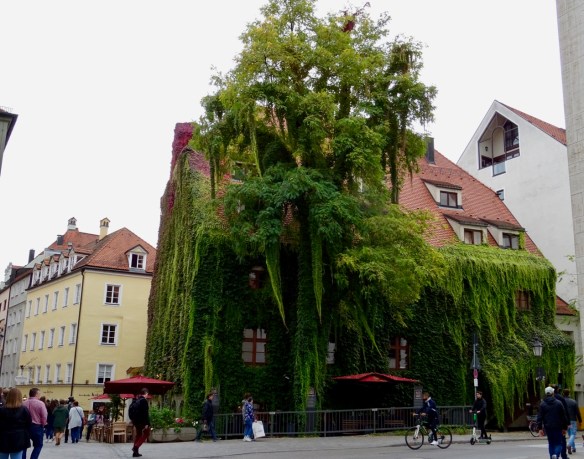
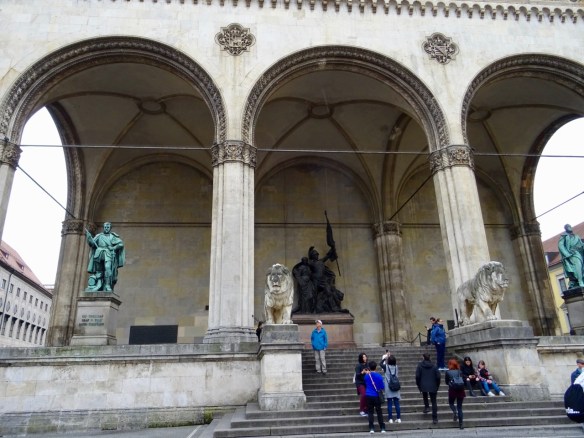
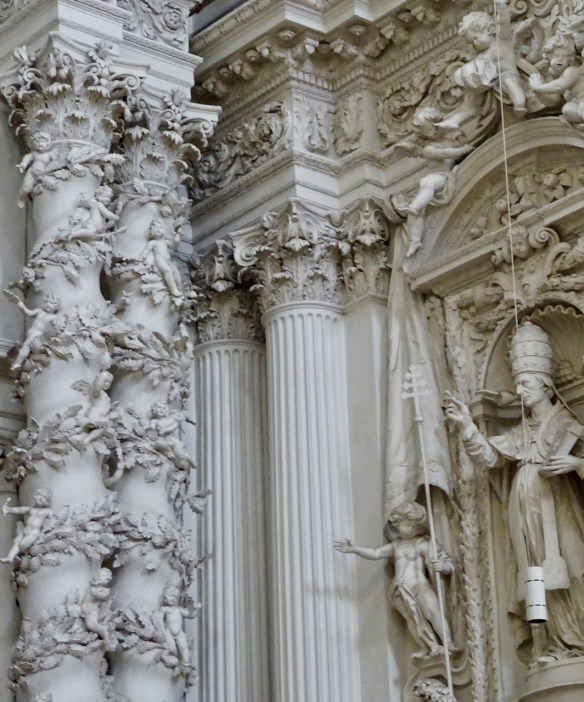
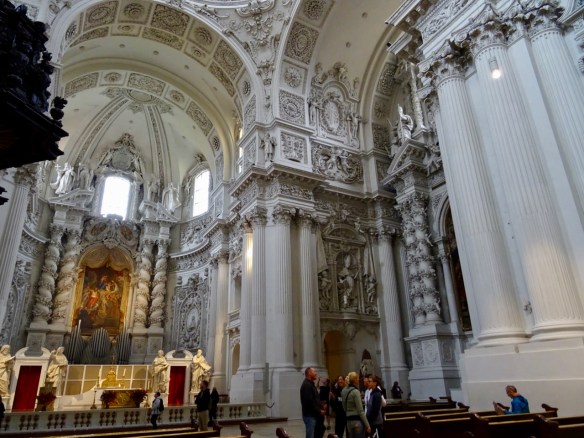 Here is a close up of some of the carving. Notice all the little angels on the columns.
 We are almost at the English Gardens, when we decide to stop and have our lunch near this pavilion instead. We listen to the violinist and watch this couple taking their wedding photos.
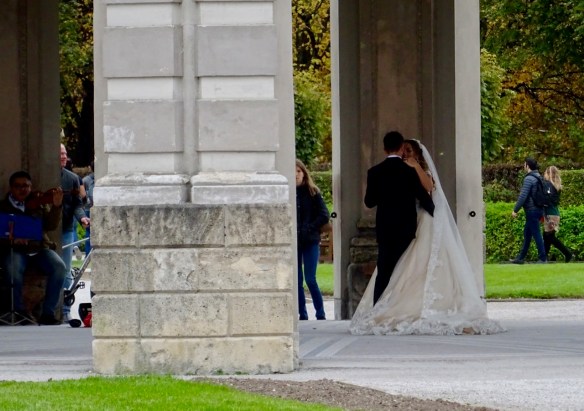 By the time we finish our lunch it has warmed up and the sun is peeking through the clouds. We continue on to the English Garden. This is an enormous park created in 1789 in the style of an English country park, hence the name.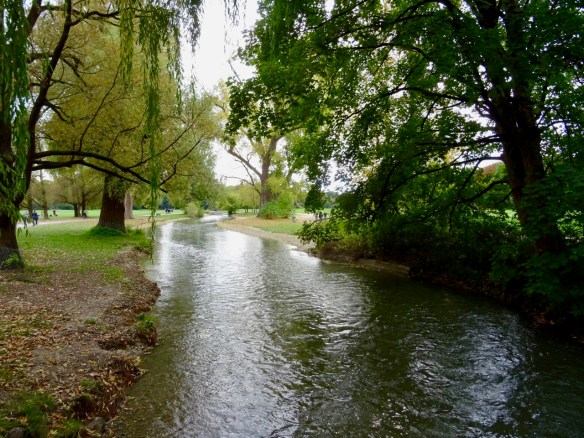
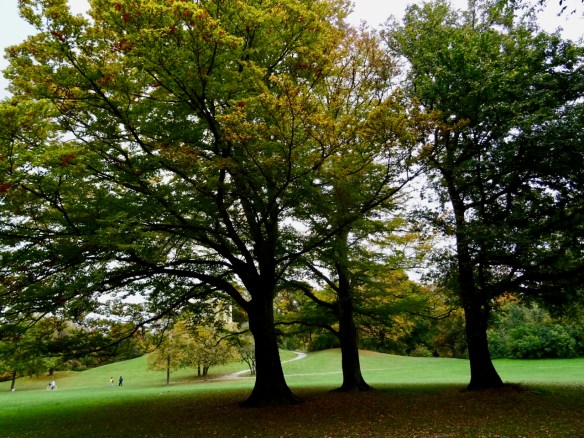 We climb up to the Monopteros, which was added to the park, along with the hill, in 1836.
 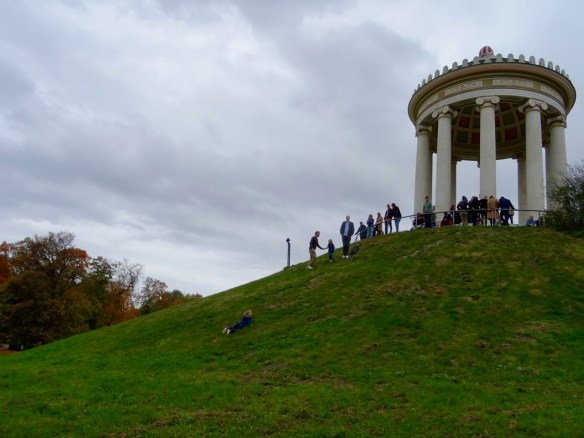 There are some views of the city from the Monopteros.
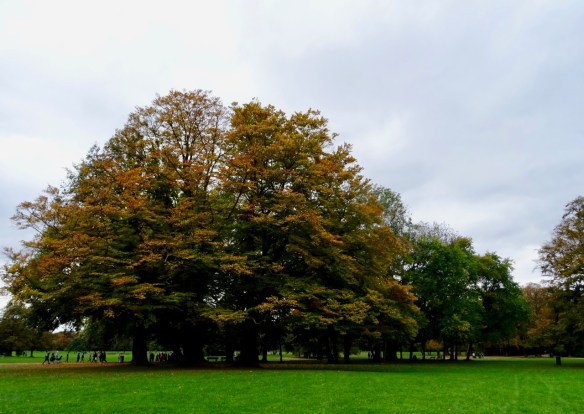
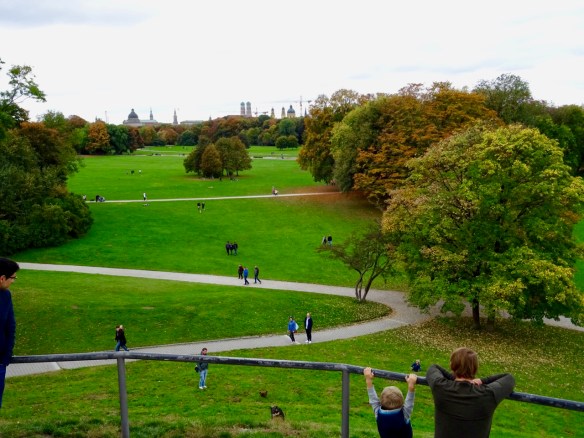 People play soccer, ride bikes, jog, picnic and even horse back ride in this park. I wish it had a few more benches!
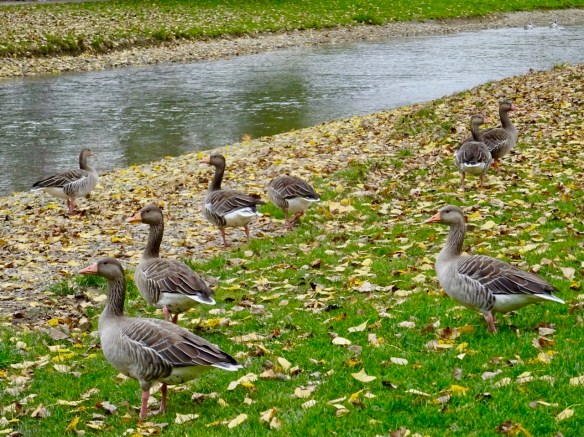
  These geese like the park too.
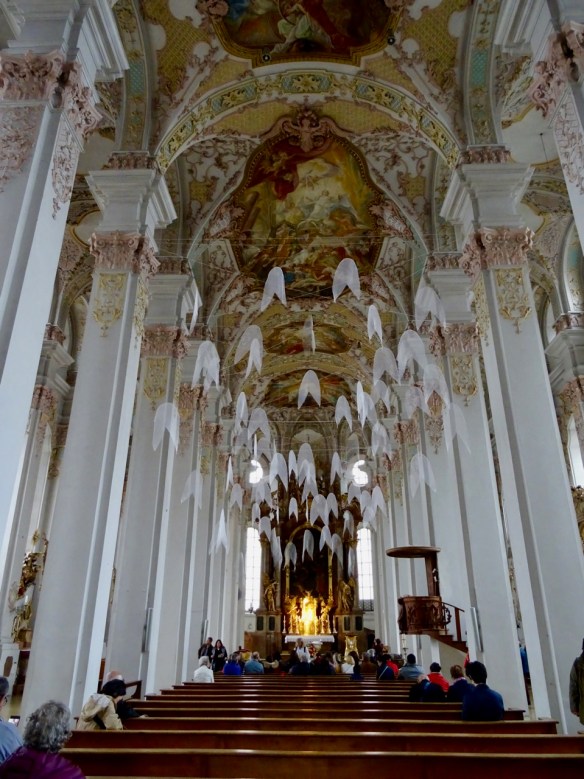
 On our way back to the metro we stop at yet another church. St. Ludwig is another venue for the Angels installation I mentioned earlier. Maybe we will be able to come back one evening and see it.
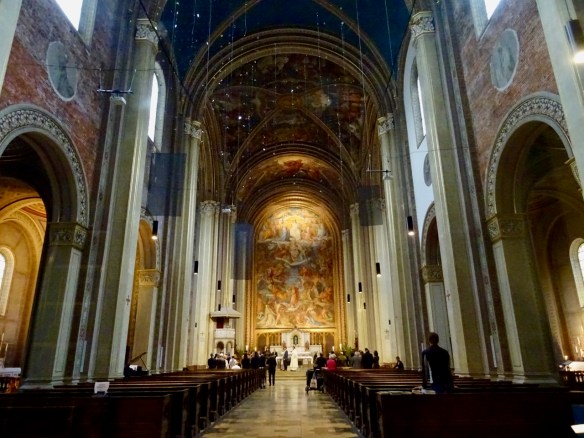 St. Ludwig is home to the second largest altar fresco in the world. The large fresco of the Last Judgement (1836-1840), by the German painter Peter von Cornelius, measures almost 19 metres by 11.5 metres! There is a service taking place so we are not able to get a close up look at this enormous fresco.
 Just before we catch the metro home we stop to visit this library. The poster outside looks pretty grand…
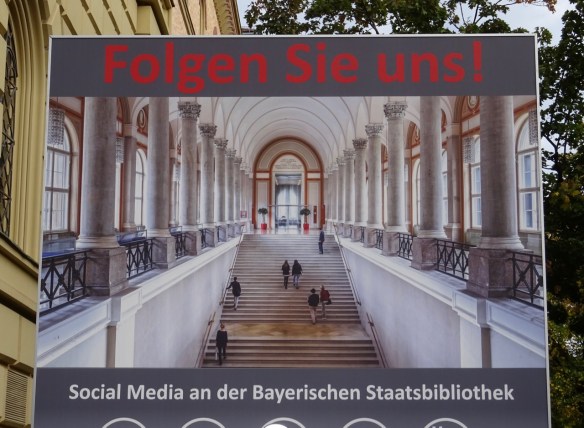 but other than the grand staircase, the inside is a bit of a disappointment. Lots of study cubicles and hardly any books! As in the library we visited in Berlin, no coats, laptop cases, backpacks or purses are allowed into the library and anything you do take in must be in a clear plastic bag. Seems strange to me.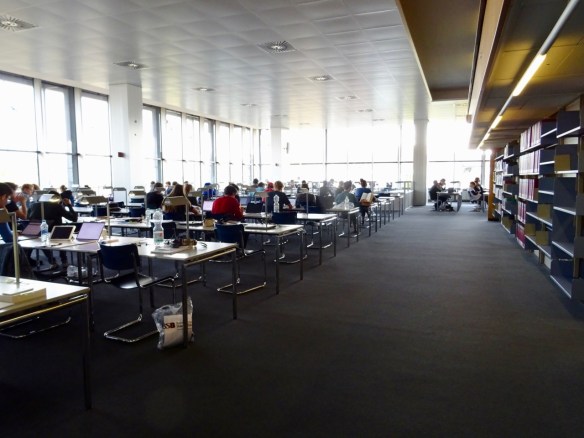
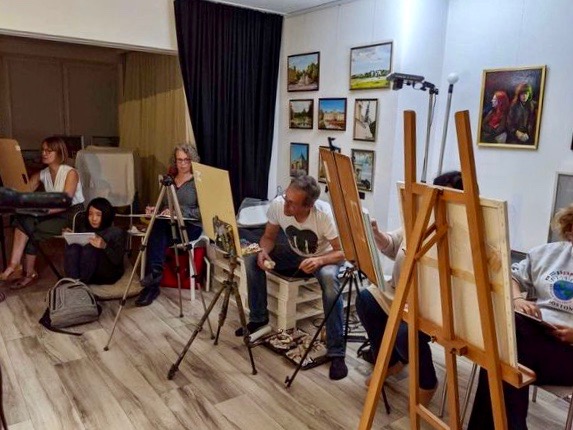 Here is our model, Bettina, she is very pregnant. How wonderful! It has been ages since I have had the chance to draw a pregnant model so this was an unexpected bonus.
 The drawing on the left is mine.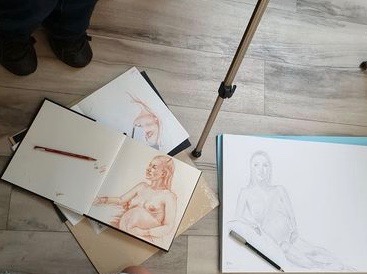
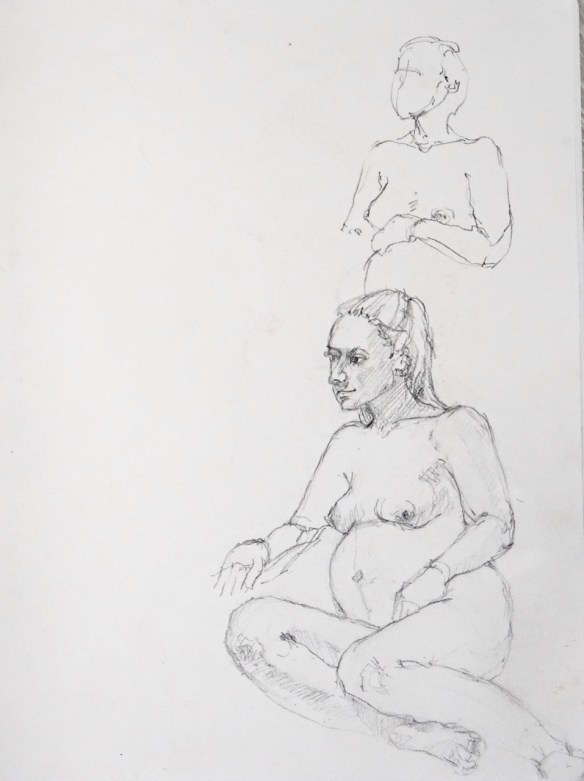
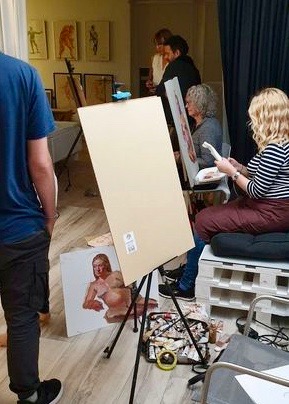 I did a couple sketches to warm up.
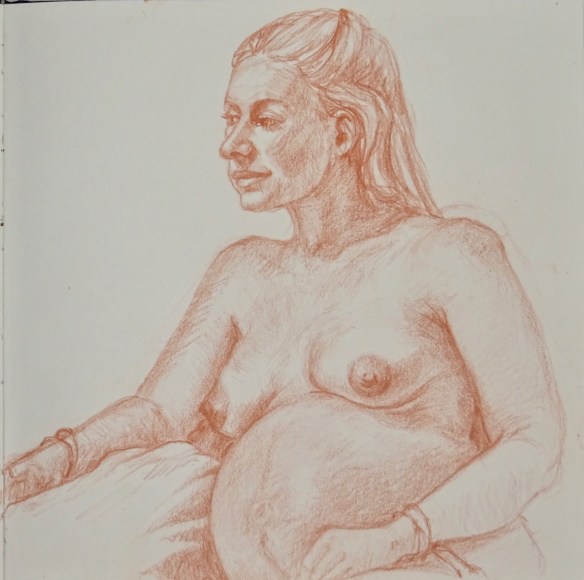
 Then spent about two hours working on this drawing.
 Bob came to pick me up after the session and on the metro ride home I did a bit more sketching.
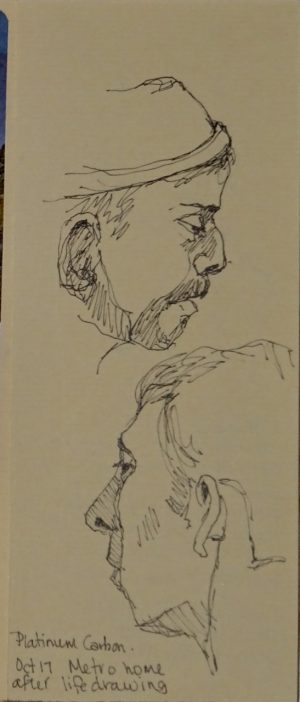 This was interesting, the older man with the facial hair was sitting right across the aisle from me and he was only on the metro for one stop so I sketched quickly hoped he didn’t notice that I was sneaking peeks at him. The young man with glasses did notice I was drawing him and he smiled at me, I smiled back and he tried not to smile as I continued sketching. As he got up to leave I showed him the sketch and he said something in German, then he smiled and said ciao, so I think he liked it.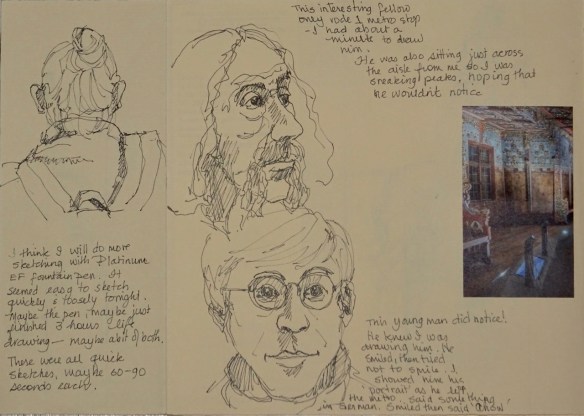
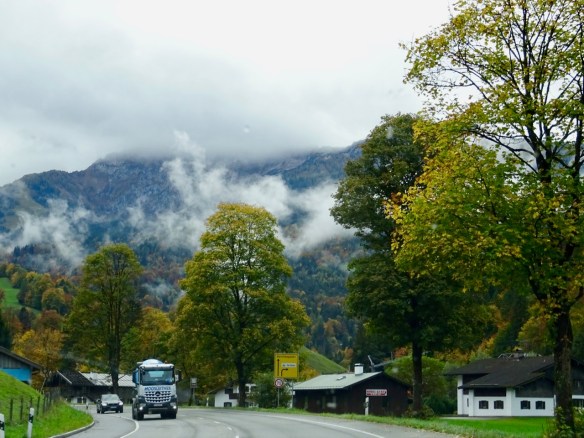 We arrive at the lake just in time to get on the next boat departure. Only electric boats are allowed on the lake. This is the view as we pull away from the dock.
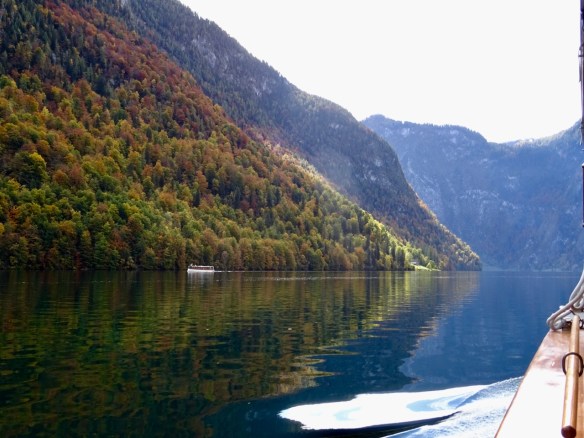
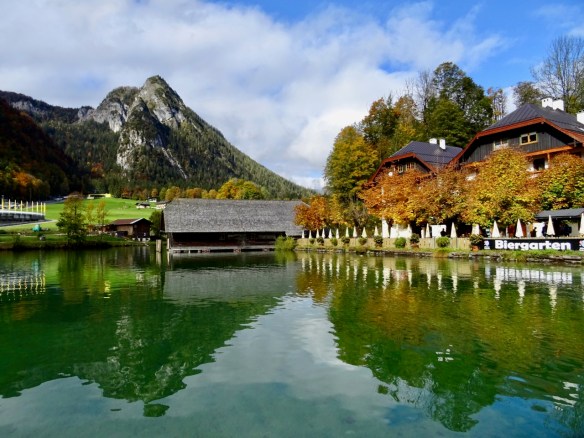 The water is crystal clear and the trees have put on their fall colours.
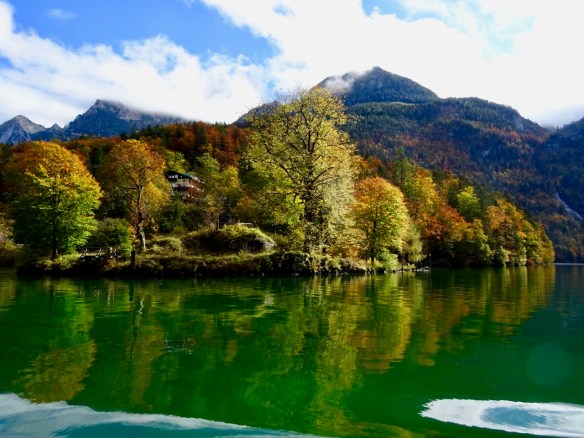 Here we are passing another boat. I love the reflections on the water. The day is perfect, warm, sunny and calm.
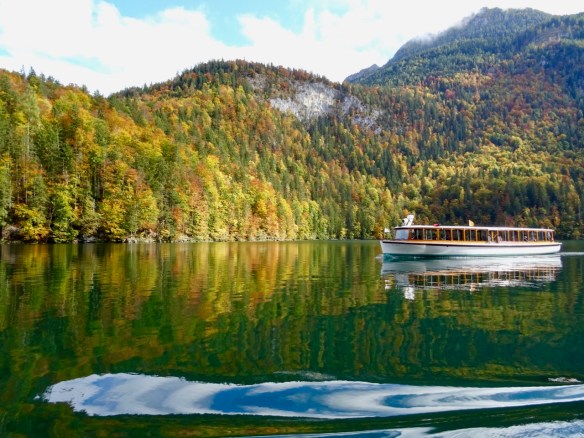 More reflections. The boat stopped in the middle of the lake and one of the boatmen stood on the deck and played a trumpet. The high rock walls of this fjord-like lake echoed back the song perfectly.
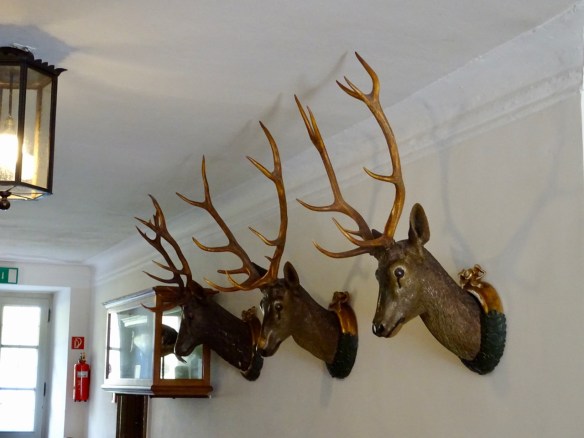
 There is a restaurant and a church about 2/3 of the way down the length of the lake. We walk about and have our lunch. There are lots of these rather strange fake trophys lining both walls in the entrance to the restaurant.
 The view down the lake back towards where we started.
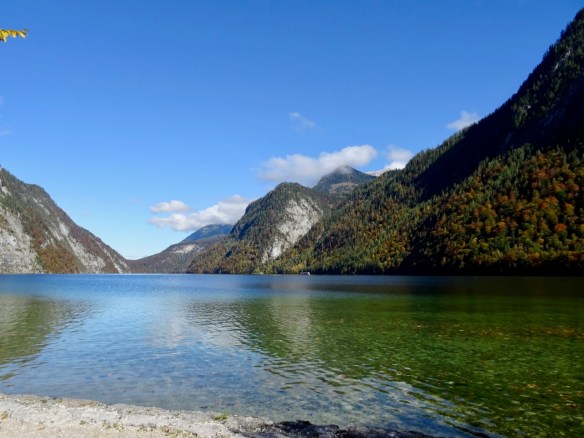 These benches offered great views while we had our lunch.
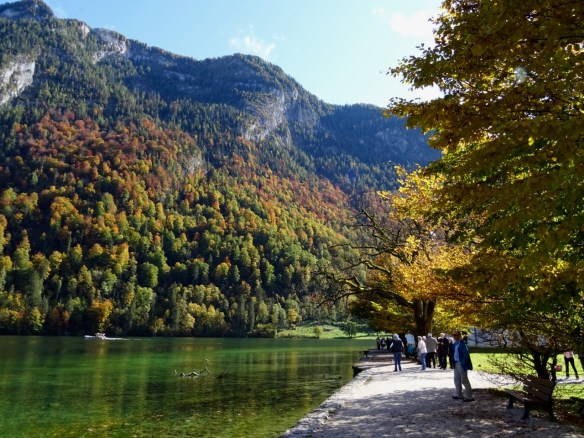 Back near the dock this old tree is thick with moss, but it is still growing.
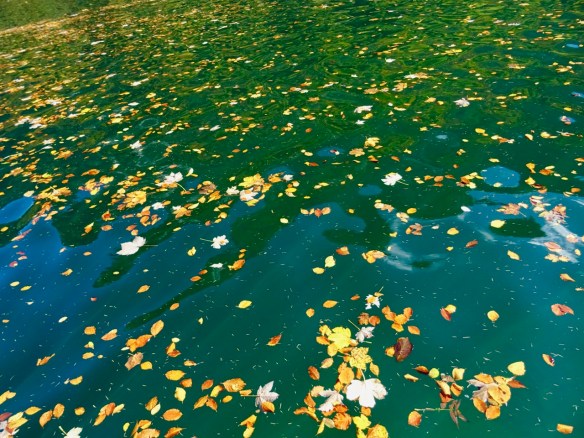
 There were lots of leaves floating on the water. I quite like the contrast between the golden colours of the leaves and the cool blue-green lake.
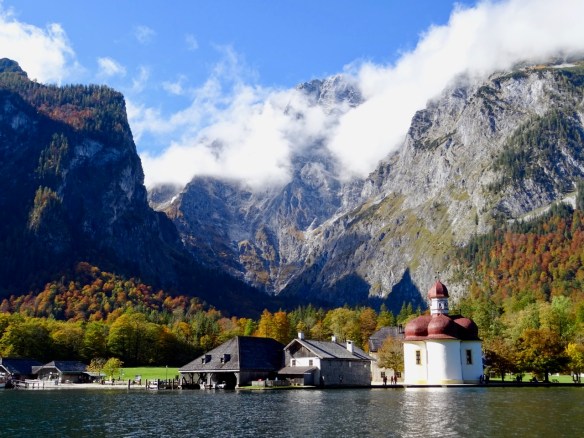
 As we pull away from the dock we get a good view of Saint Bartholomew Church. This small pilgrimage church, dating to 1697, is known for its wine-red onion domes.
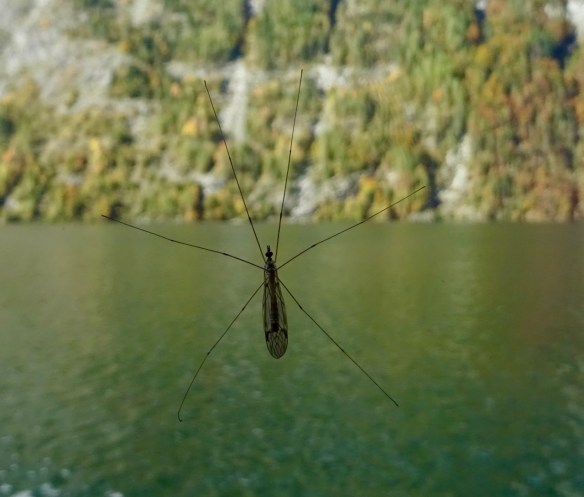
 This bug joined us for the ride back.
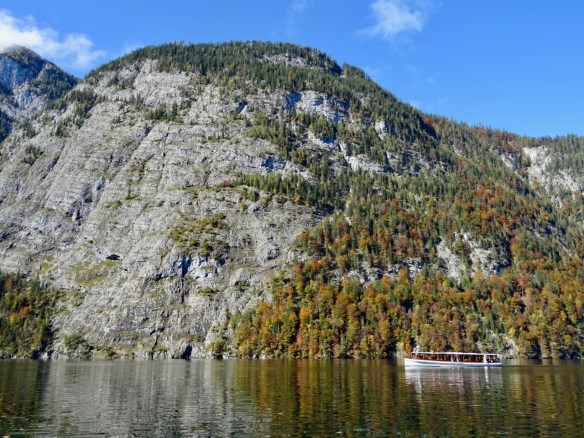
 The rock face on the right side of the lake is even steeper and has fewer trees than the other side.
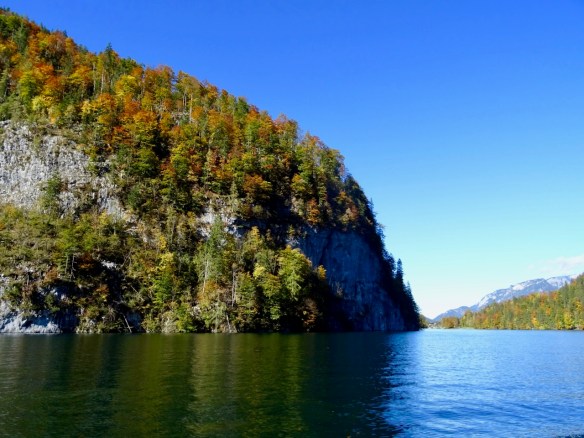
 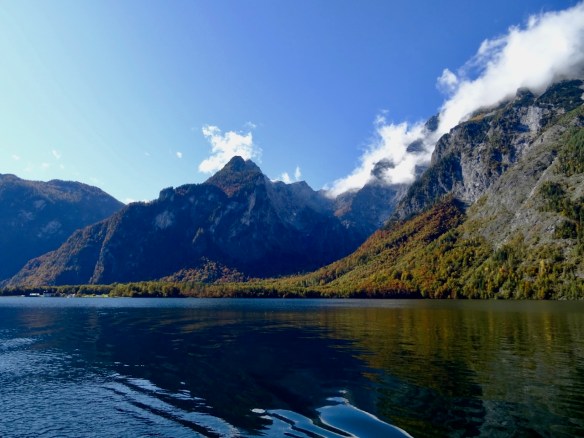 It is impossible to walk along the lake to St. Bartholomew Church as the rocks are too rugged.
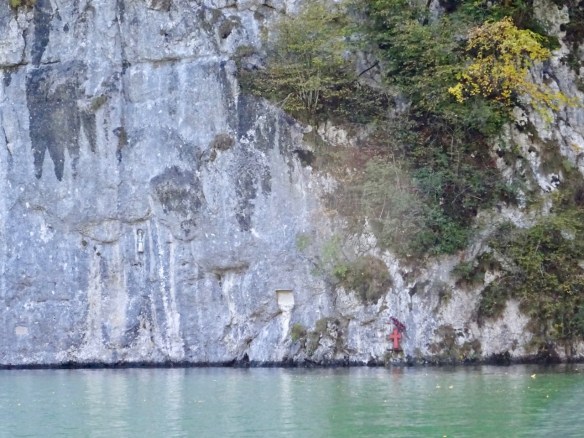
 Just around this corner we see a cross, but what catches my attention is the face I see in the rock.
 Can you see it too?
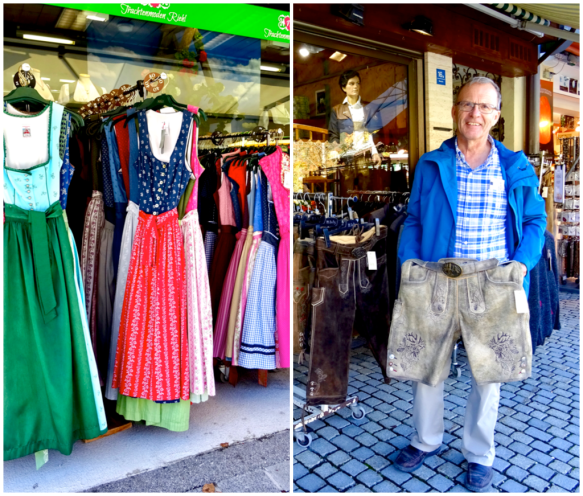
 Walking back to the car Bob wonders if we should buy some new clothes!
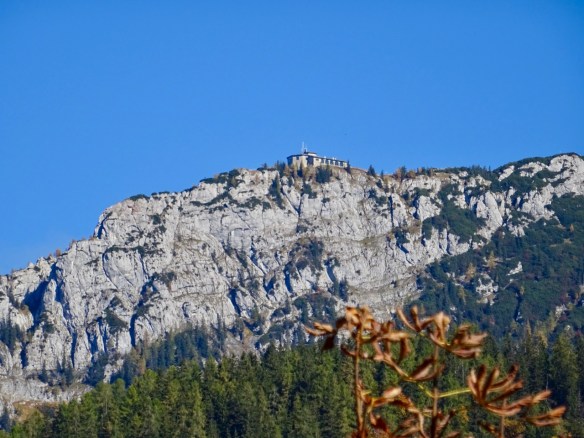
 High up on one of the mountains we spot the Eagle’s Nest. This retreat was built as a present for Hitler’s 50th birthday.
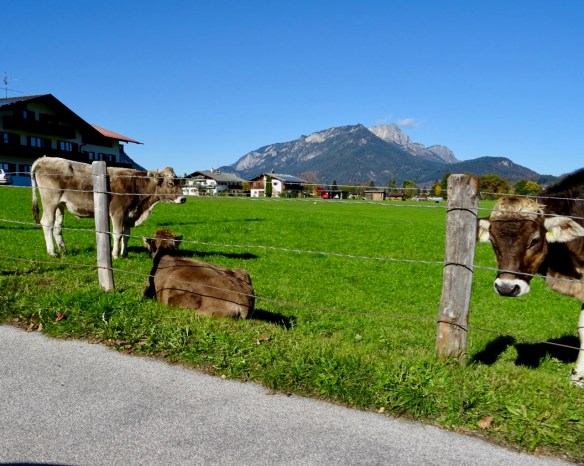
  I get a few photos of some of the local cows, but what I really want is a chance to stop and draw them. Not today, as there isn’t a safe place to park the car and we still have a ways to go before dark.
 Our next stop is to hike up to the Wimbachklamm Waterfall. The hike up to the falls is a bit steep but so worth the effort.
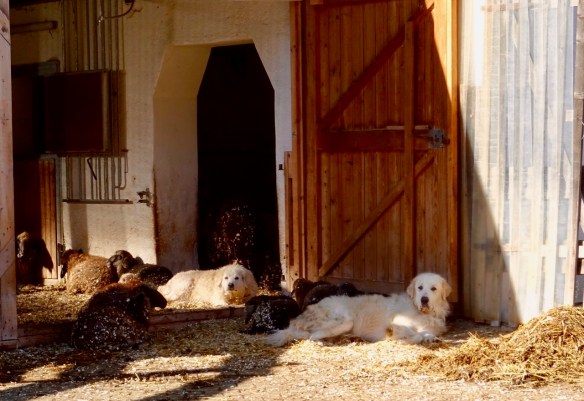
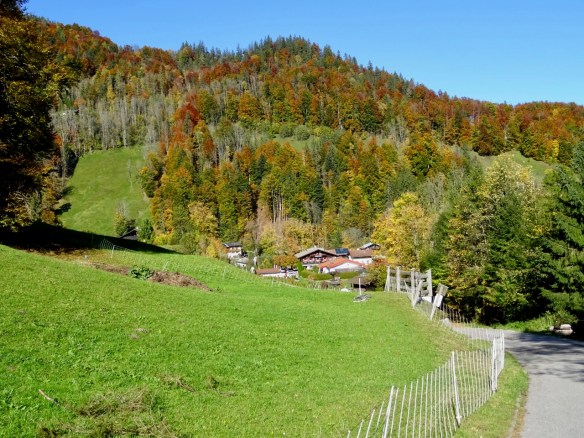 We pass a sheep farm with guard dogs for the sheep. They are very protective and when I went up to the fence to get this photo they jumped up and came running, barking loudly.
 This is the beginning of the gorge walk. The boardwalk hangs out over the water.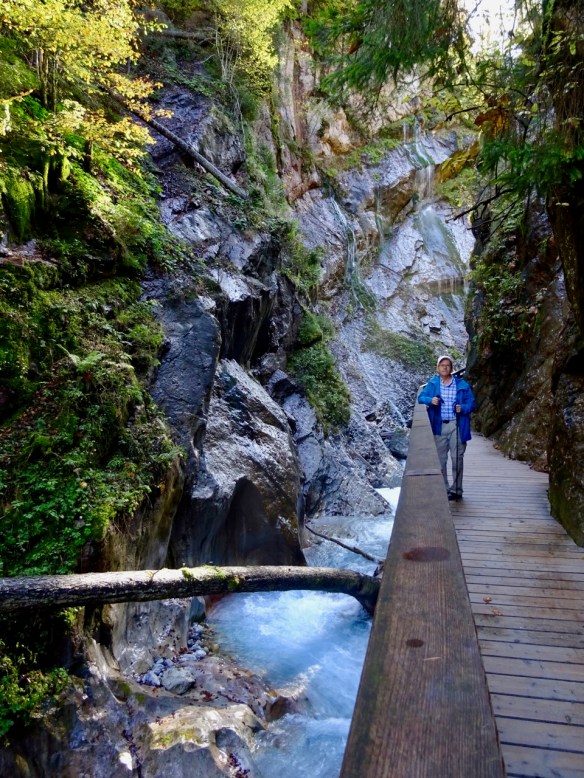
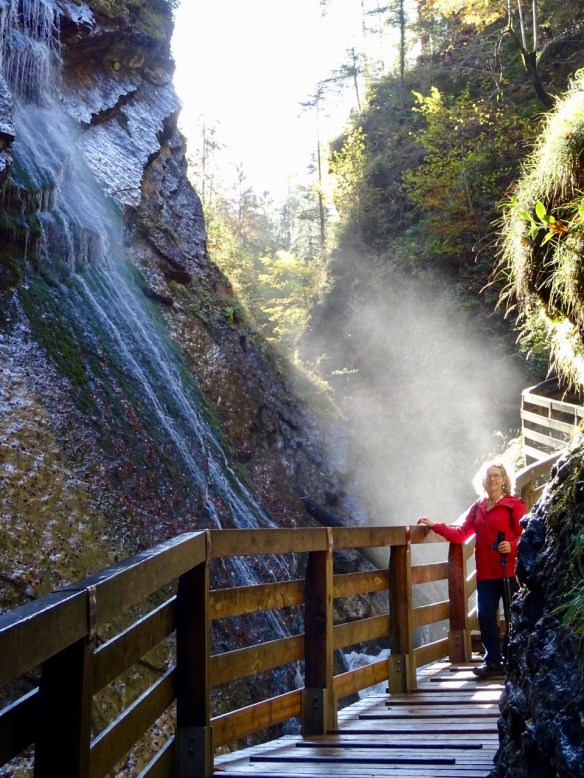 The water is very fast and loud…
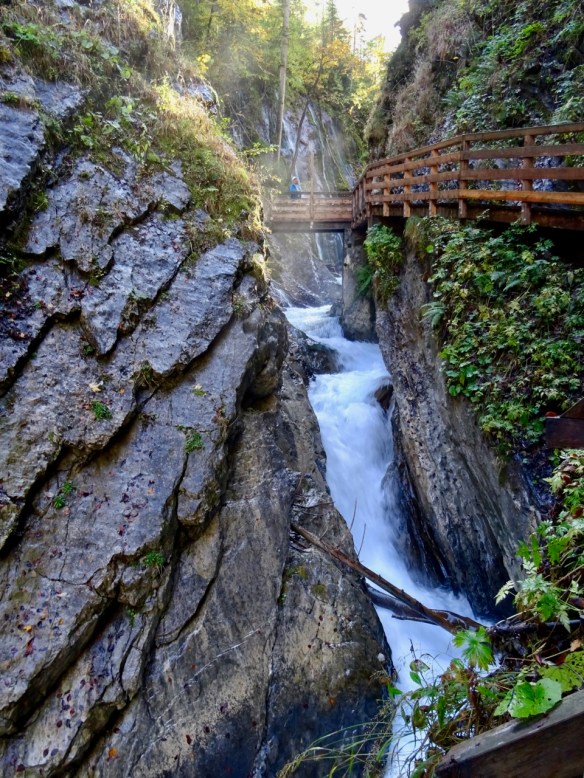 with many small waterfalls along the sides of the gorge.
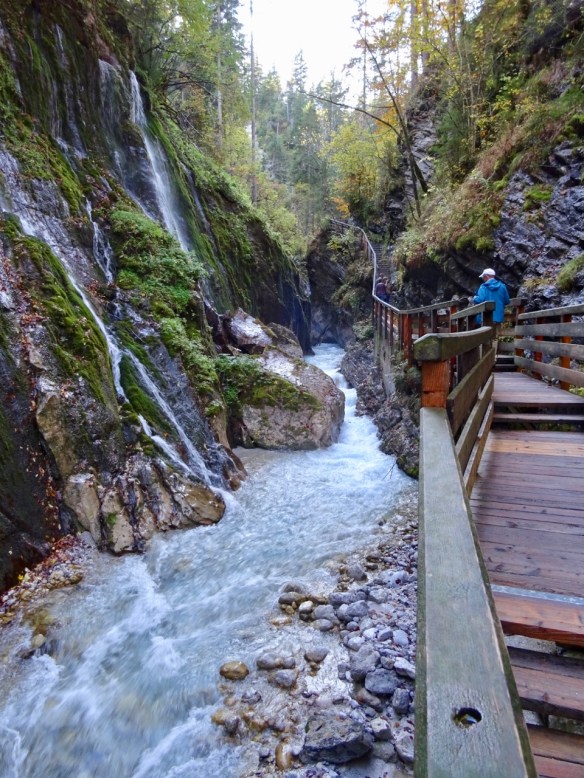 It isn’t a long walk, but we thoroughly enjoyed all of it.
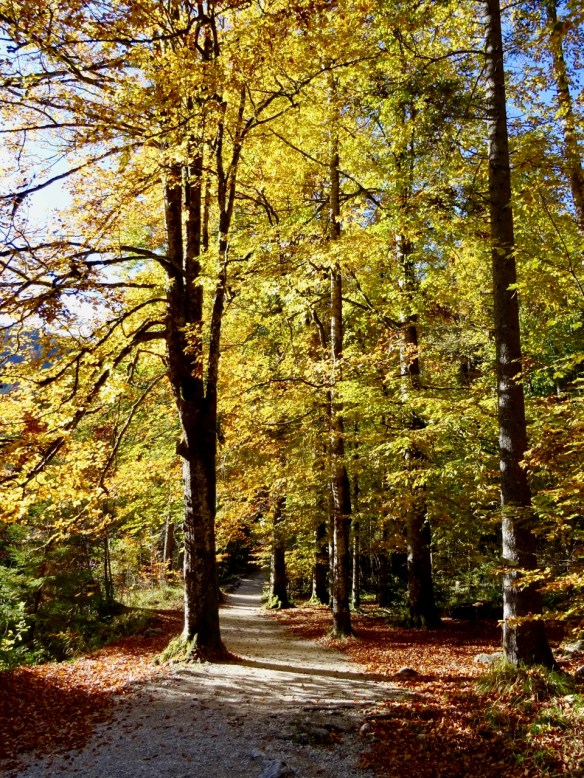
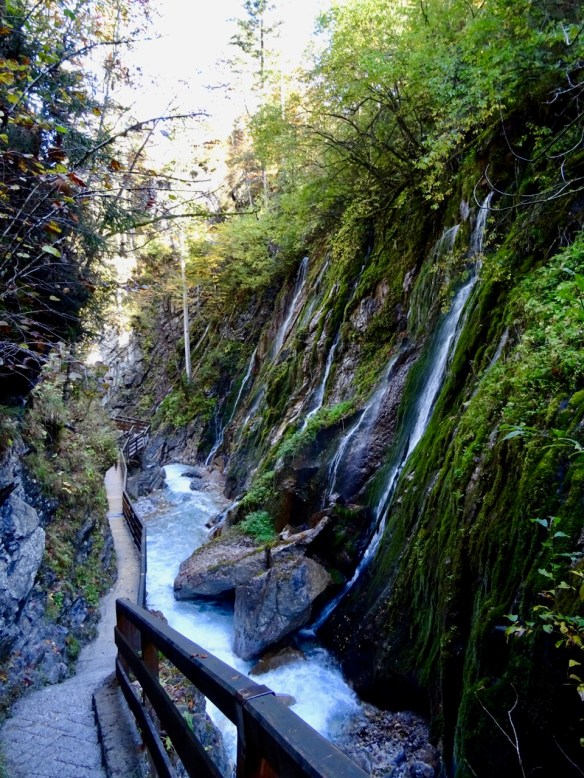 These beautiful golden trees are at the top of the gorge where we hike back down to our car. The path continues further but it is a long hike, so not for us.
 Back near the parking lot we see the hugest dahlia plant ever! It is at least eight or nine feet tall. We are soon back on the road. We drive the Deutsche Alpenstrasse, which is a scenic mountain road, and we arrive in Munich just before it gets dark.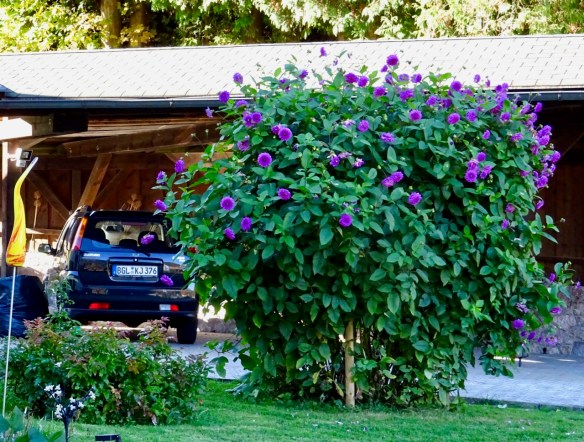
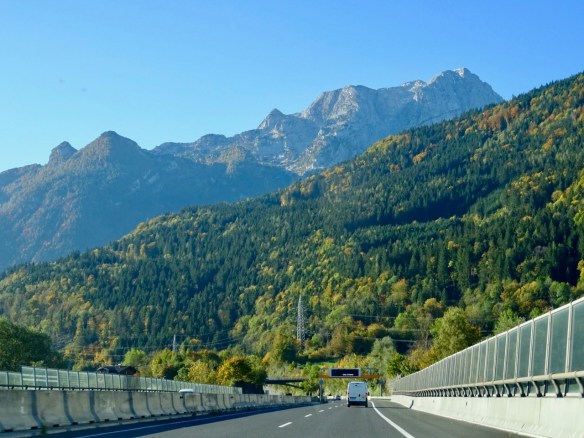 We pass many little farms and villages on the way.
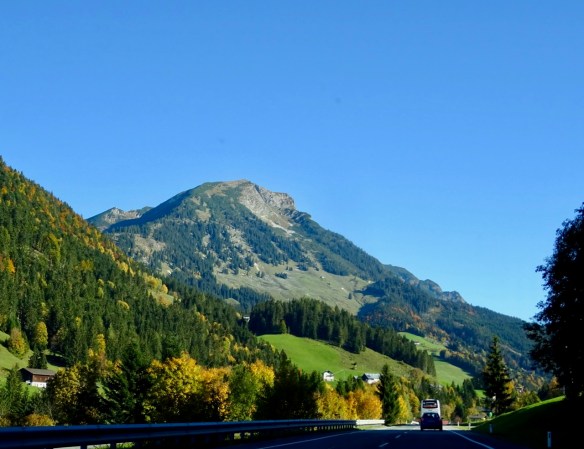 The Dachstein Krigppenstein area has t
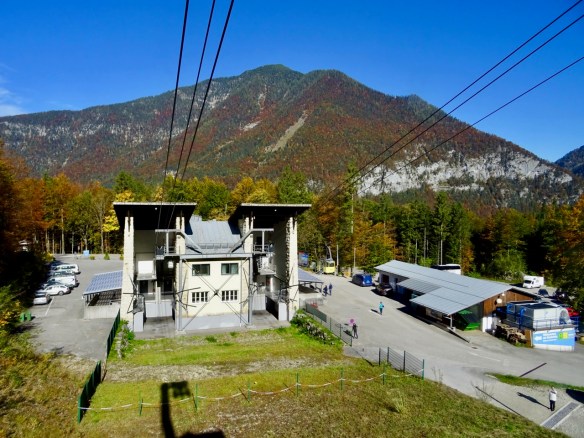 There is the base, way down there, and we aren’t even at the top of the first cable car.
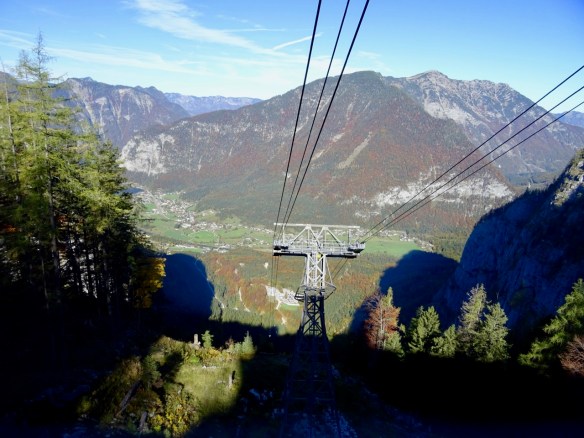 The second cable car takes us higher…
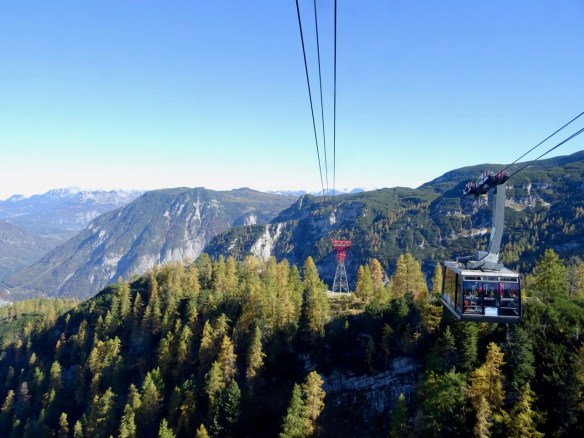 and even higher.
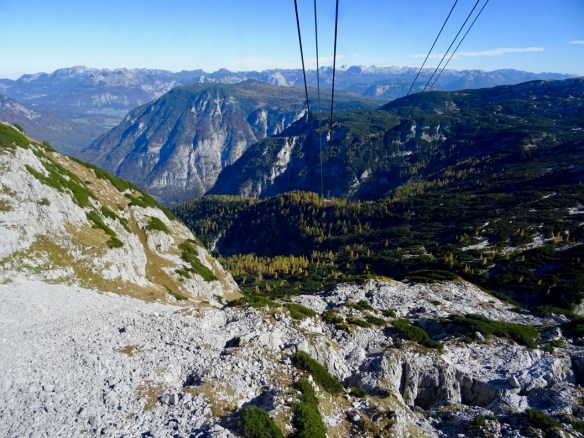 We walk from the second cable car to a viewpoint high above the valley lake below.
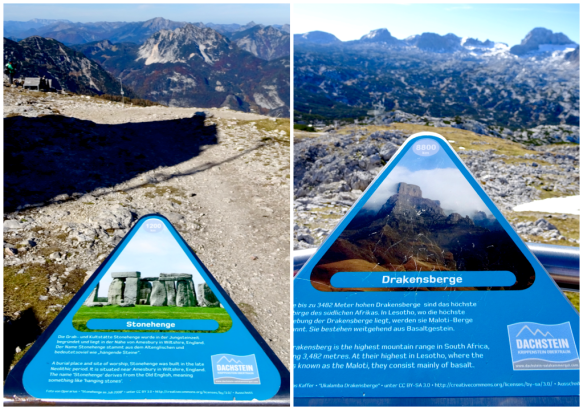
 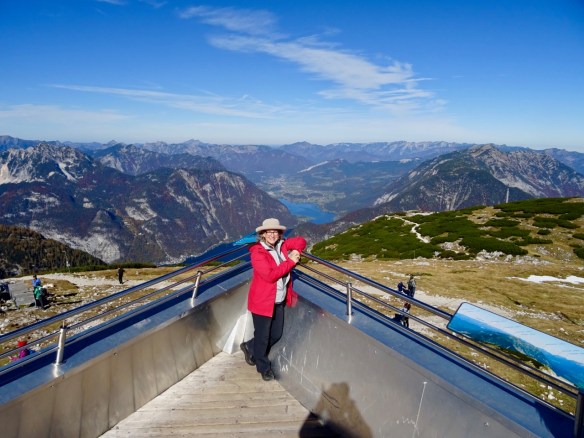 There are several arrows showing the distances to places around the world. We have visited Stonehenge (1200 km away) and the Drakenberg Mountains in South Africa (8,800 kms away). We are surprised that Stonehenge is that close. Here is
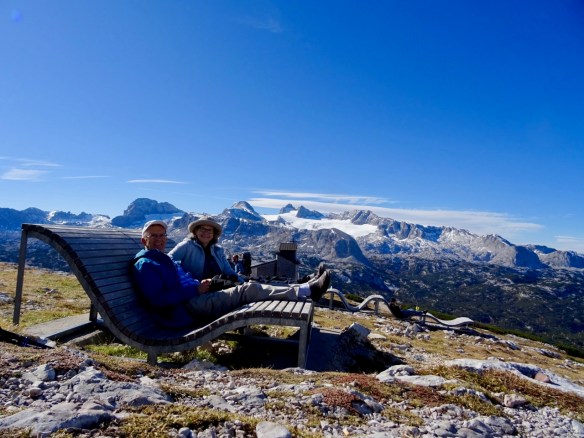
  We have tea and rest on these curvy benches to enjoy the fantastic views and sunshine.
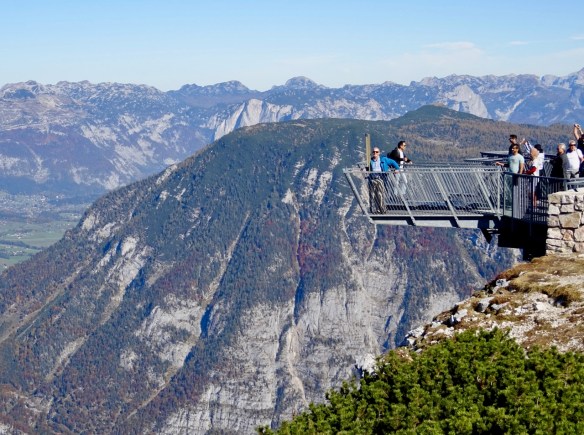
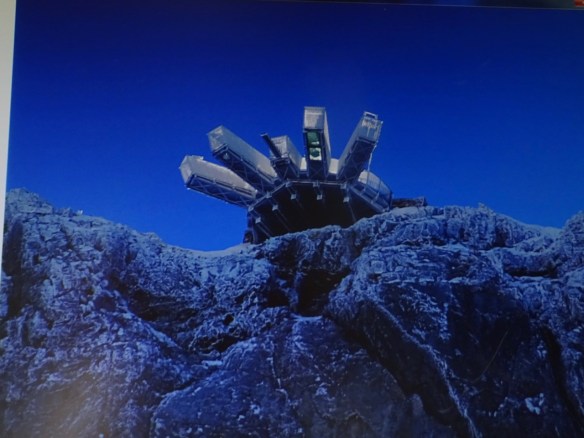
 This is called the Five Fingers. Five viewing platforms at the very top of the mountain! Bob goes ahead so I can get this photo. This area is a UNESCO World Heritage Site.
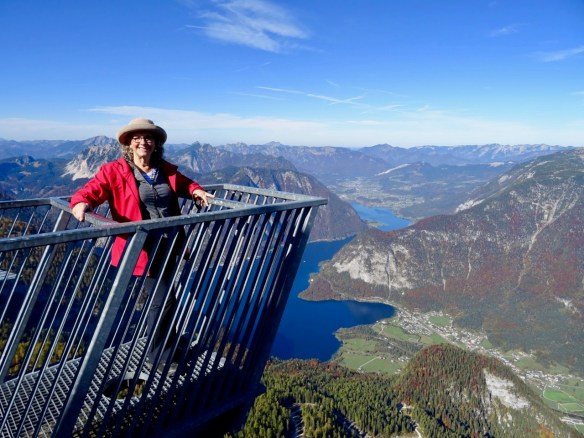
 Then I head out on one of the platforms. It isn’t too bad…as long as I don’t look down!
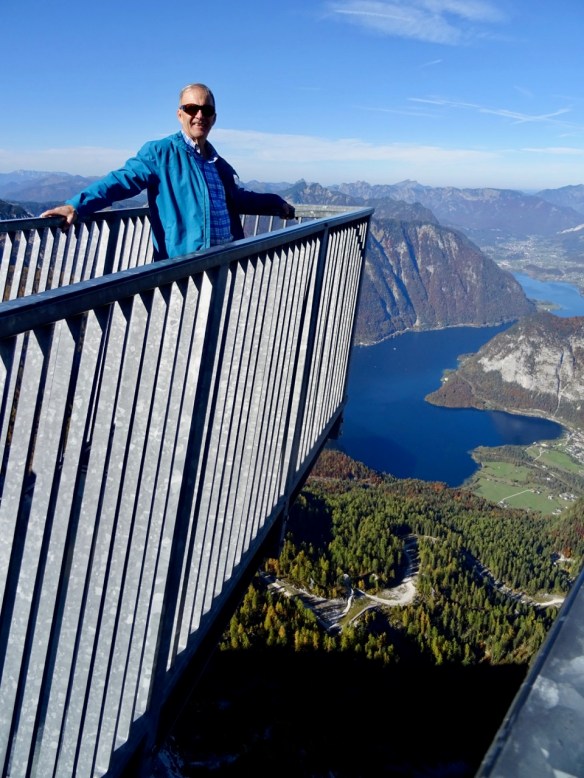
 Bob has another turn on one of the fingers.
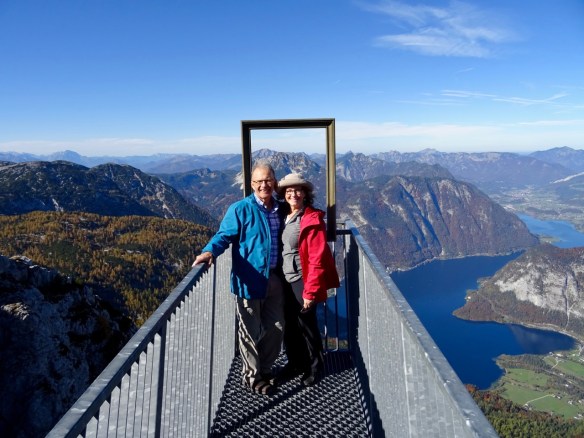
 A nice young man takes a photo of the two of us. You could stand behind the picture frame but to do so your heels hang over the edge!
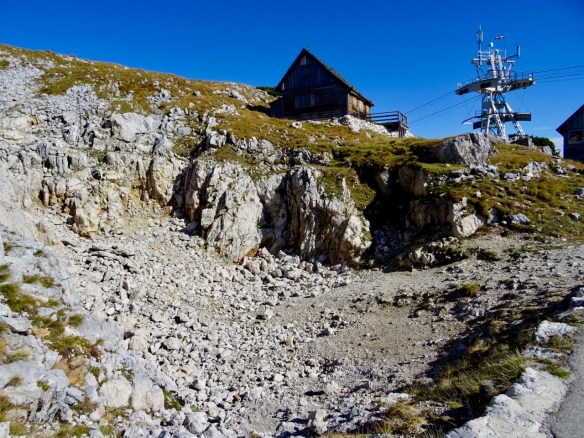
 There are sinkholes all over the mountain top. These are formed by the collapse of underground caves. There must be a lot of caves in this area because there are lots and lots of sinkholes.
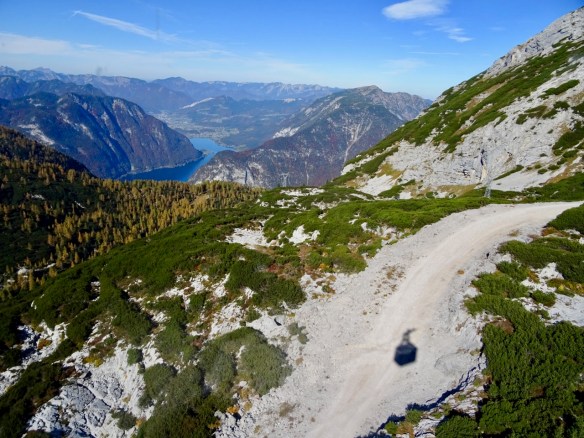
 As we take the third cable car down into a valley, our shadow follows us.
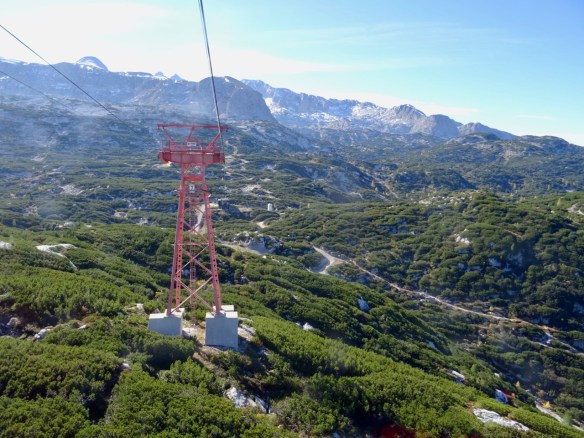
 We are headed way down to the building you can just see on the right side of the tower, about 2/3 of the way up. The wind has picked up so we decided to eat our lunch down here where it isn’t quite so windy.
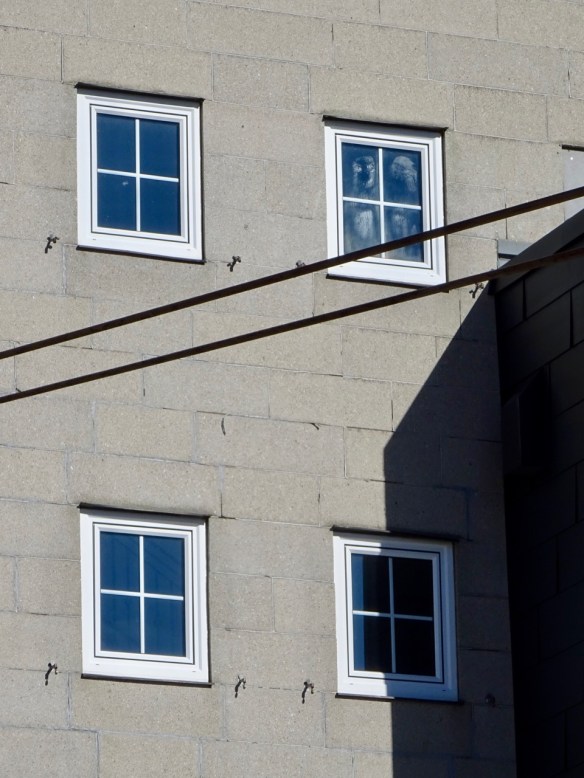
 Back at the top of the mountain I notice what looks like ghostly faces peering down at us from the cable car building! So, are they ghosts?
 Here is a photo of the five fingers taken from a photo in the cable car building. I realize that I forgot to look down when I was up there… I can’t believe I forgot to do that!
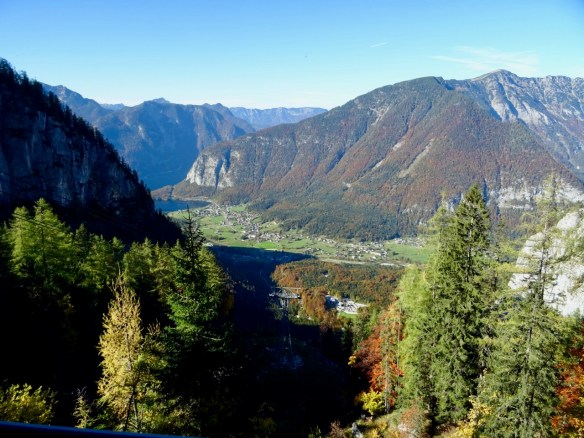
 On the way down from the mountain top we can see far up the valley.
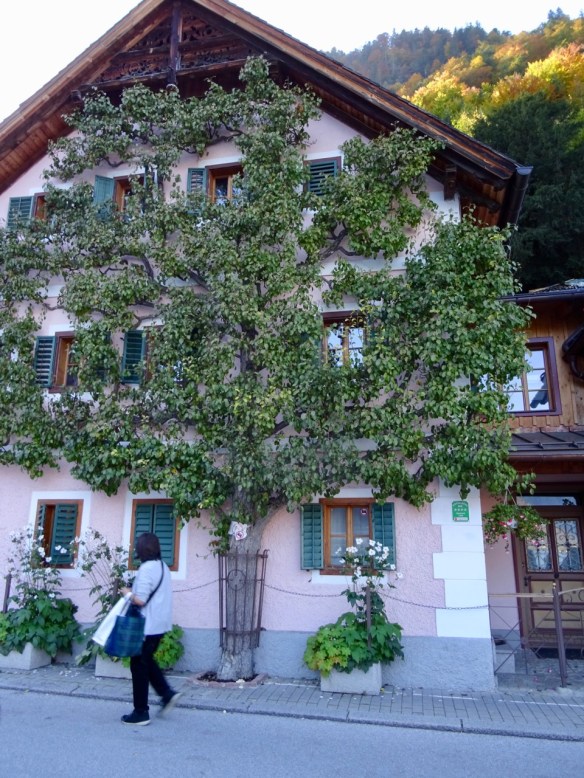
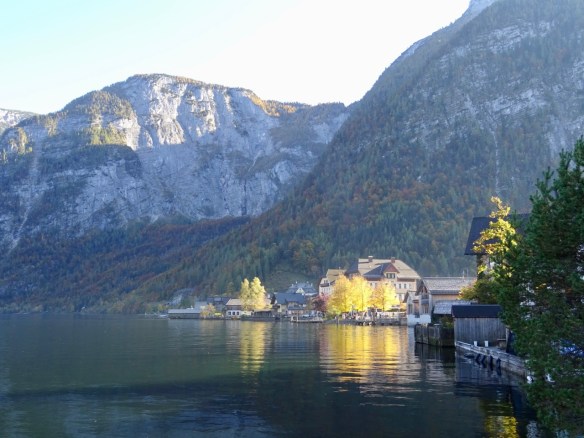
  We drive to Hallstätt, a town which exists because of the nearby salt mInes. The town is squeezed between the mountain and the lake. There is only room for espaliered trees, which are grown against the sides of houses.
 The setting sun lights up the yellow trees on the side of the lake.
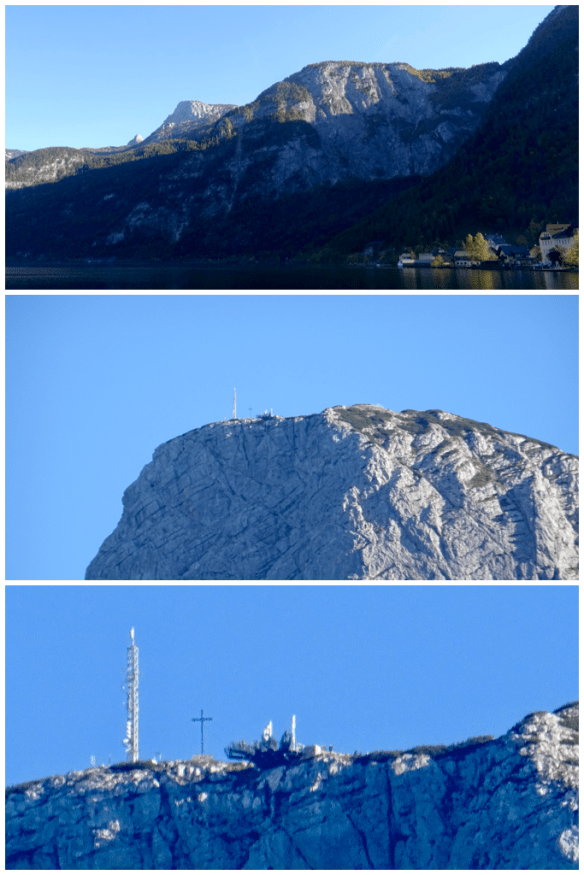
  Notice the middle mountain in the distance. Then take a look at the top of that mountain…and the close up of the top of the mountain. That is where we stood on the five fingers! Maybe it is a good thing I forgot to look down!
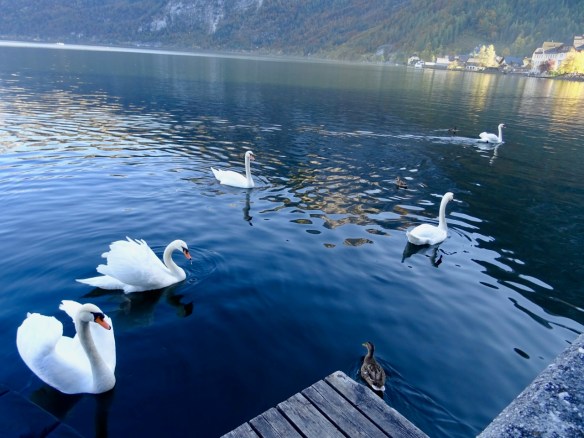
 There are swans on the lake who are happy to share some of my dried fruit and nuts. I give most of it to a young boy so he can feed them and I take photos. I would have liked to sit and draw these beautiful birds but the sun is setting…and we are still far from home.
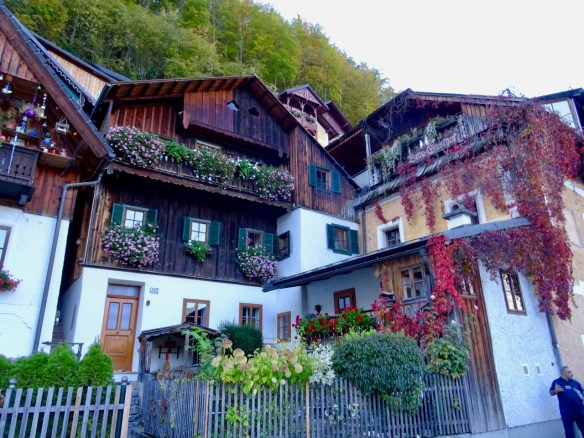
 The houses are piled one on top of the other, as there is not much land available between the lake and the mountain. The flowers in the window boxes grow so big and lush. I think it must be that the growing season here is so much longer than ours at home.
 I see this mask in a window and wonder out loud what it is. A lady walking by stops to tell us it is a Krampus.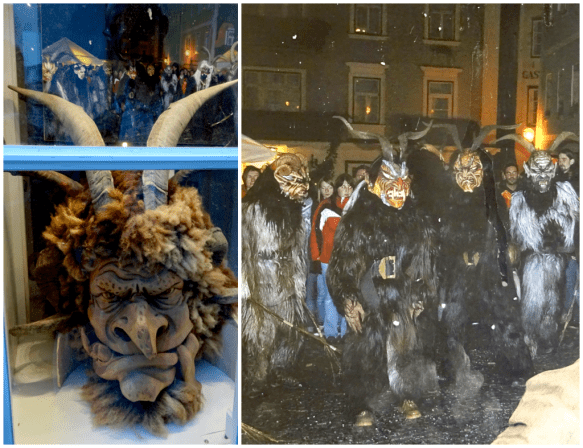
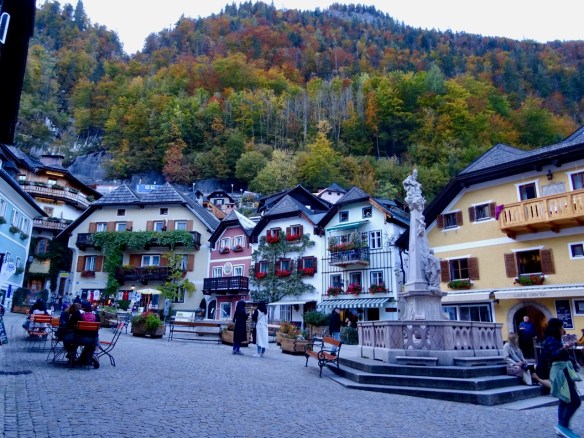 and one last view of the lake…
 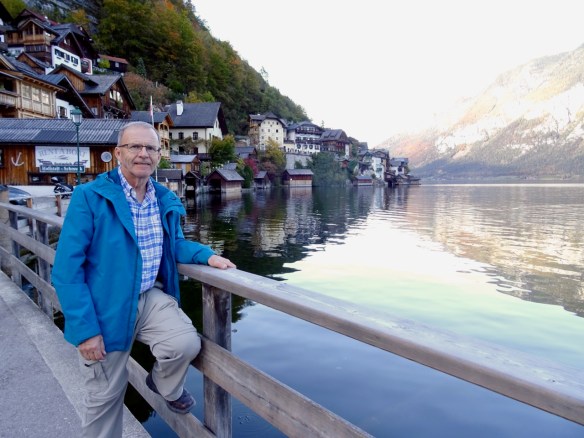 before we walk back to our car, parked way on the edge of the town, and head home.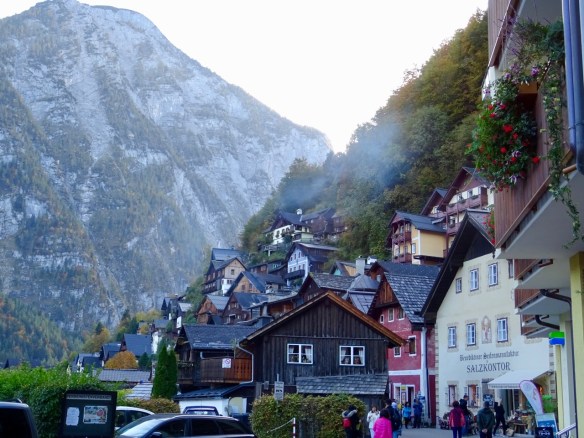
 The funicular makes short work of the steep climb to the fortress. The Hohensalzburg Fortress (Salzburg Fortress) was built in the 11th century by Archbishop Gebhard and is the largest unconquered fortress in Europe. The castle is 150 meters wide and 250 meters long, and the oldest part is over 900 years old.
  First stop at the Fortress is the top of one of the guard towers for a great view towards the mountains…
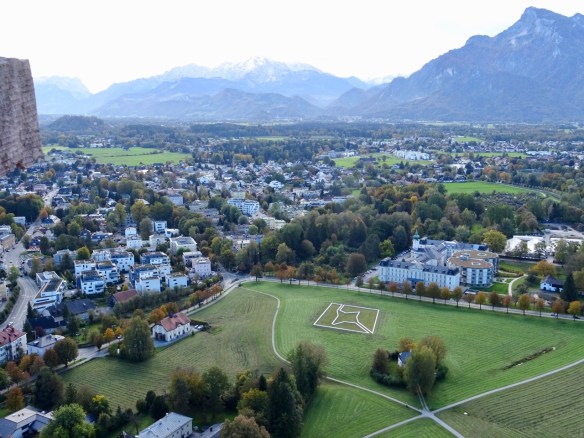 overlooking the fortress…
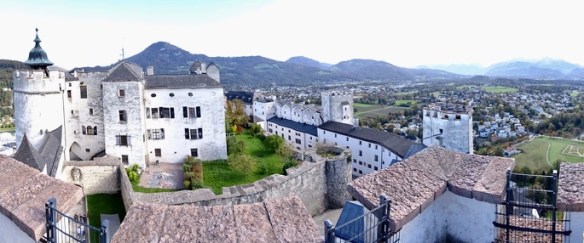 and of the old town of Salzburg. That big square is where the Bio Fest was held yesterday. You can see the golden globe with the man standing on top. Right behind the square is the Salzburg Cathedral with the big dome, where we went to hear the choir yesterday morning.
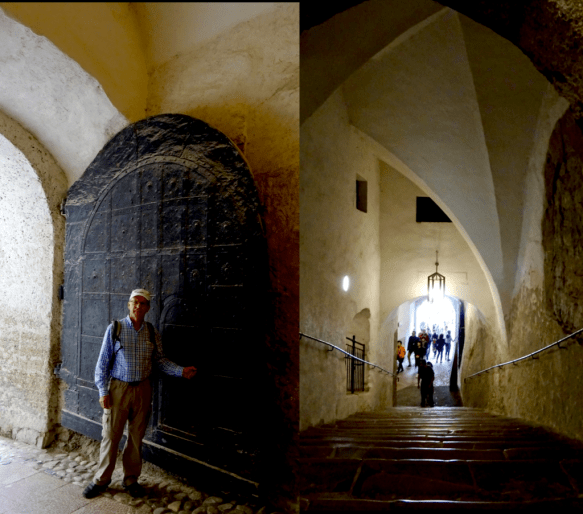
 There are lots of huge doors and interesting corridors in the fortress.
 This wheel was dropped on prisoners in order to break their bones and cause internal damage. If it didn’t kill them they were tied to it until they died an agonizing death.
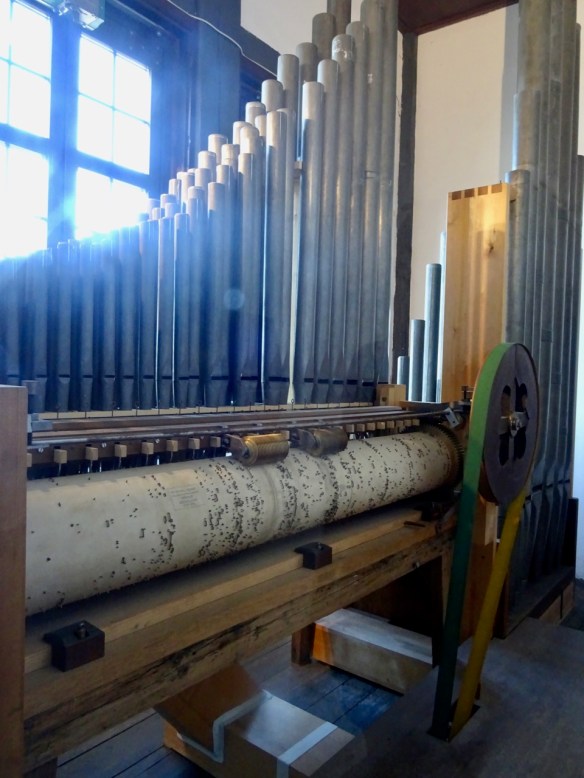
 The Salzburg Steir, or Salzburg Bull is a giant mechanical organ built in 1502. It still plays twice a day and is the last example of a Gothic organ to survive. The Stier is the oldest daily played automated musical instrument in the world. It plays melodies from Haydn and Mozart every day after the glockenspiel chimes.
  St. George’s Chapel has reliefs of the Apostles, made from marble.
 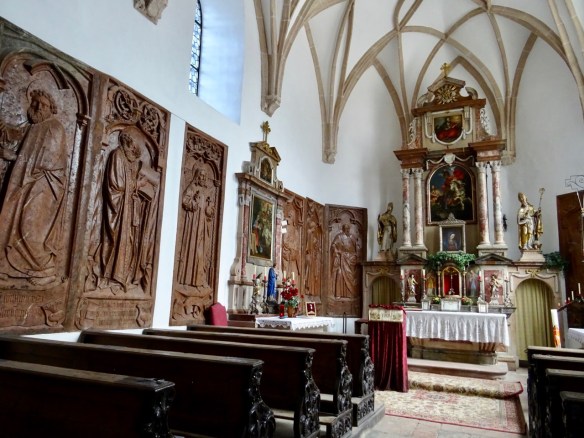 We find a bench and have our lunch in the courtyard by the chapel.
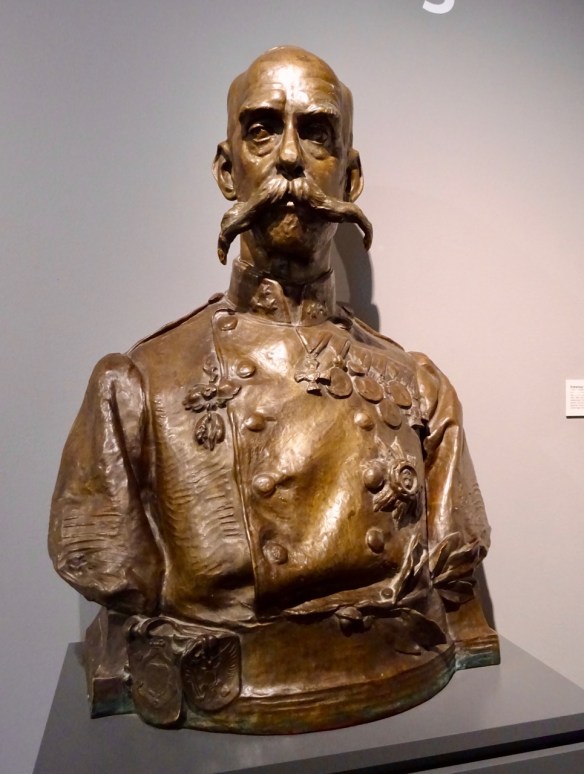
 The fortress served as a garrison for the Erzherzog Rainer Regiment in 1682. Erzherzog Rainer had quite the moustache!
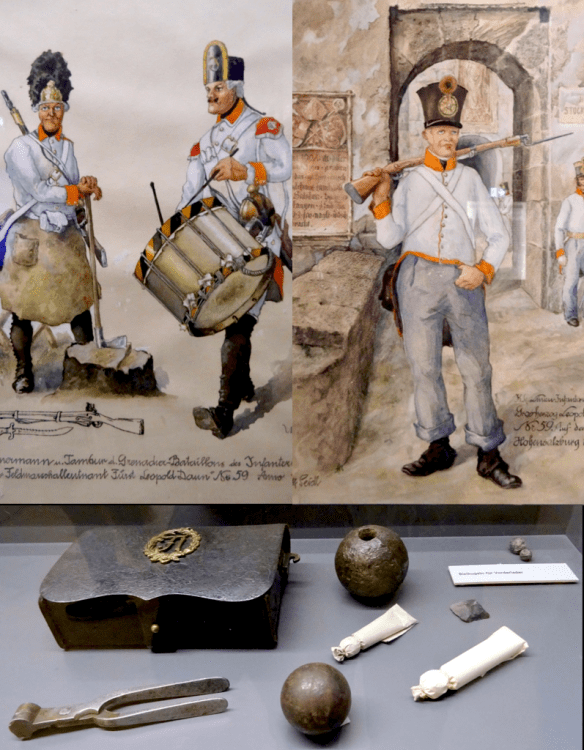
 There were watercolour paintings of the regiment over the years which I quite liked, and I thought the paper twists which held a musket ball and gunpowder were interesting.
 War has always been brutal…
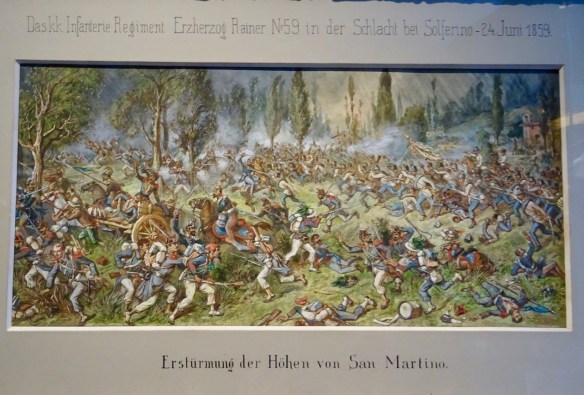 Austrian painter Karl Reisenbichler painted his fellow soldiers and portrayed images of death and suffering in WWI.
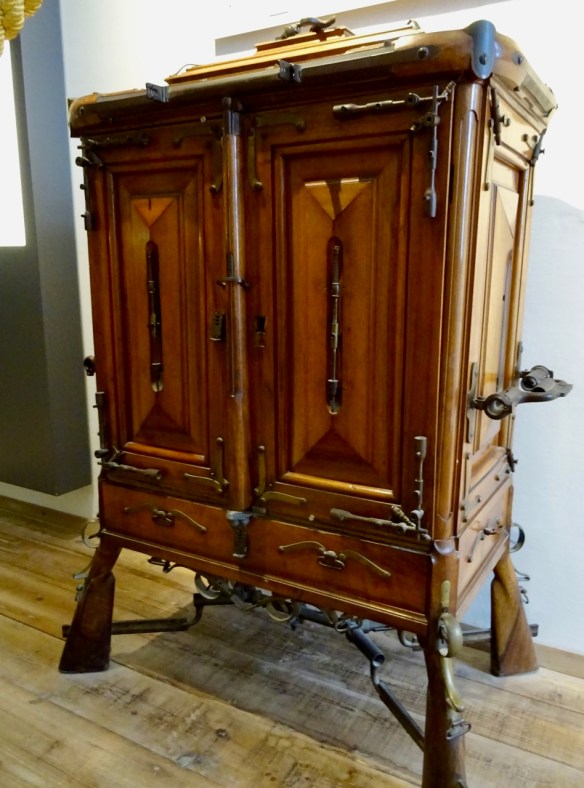
 We have seen a lot about war and death and suffering on this trip. I think that this cabinet is probably the best way to use rifles I have seen!
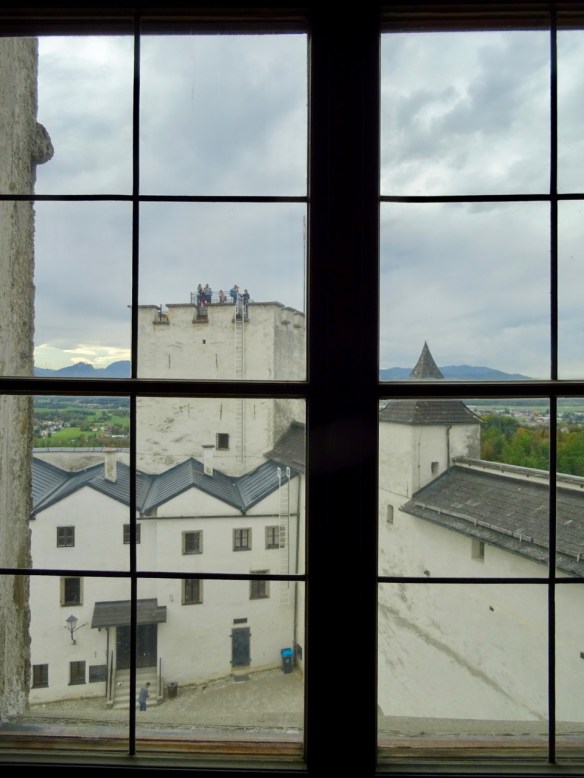
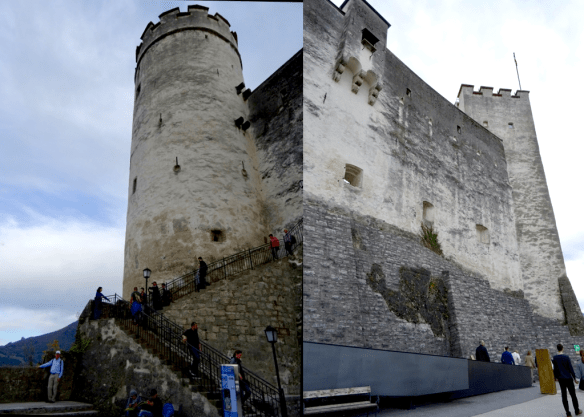
 This is a view of the fortress tower we climbed when we first arrived.
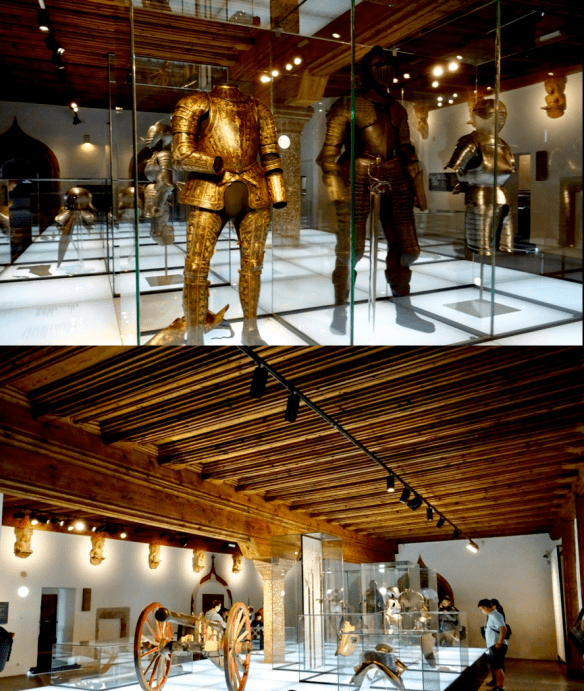
 These large fortress rooms with their huge timbered ceilings are now a museums for armour and other items used for fighting.
 This kitchen was reserved for food preparation for the Archbishop. Note the little round hole in the wall on the left that was used to throw out rubbish and drain water.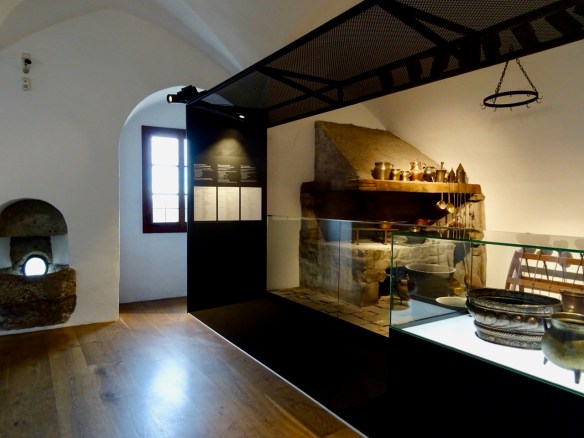
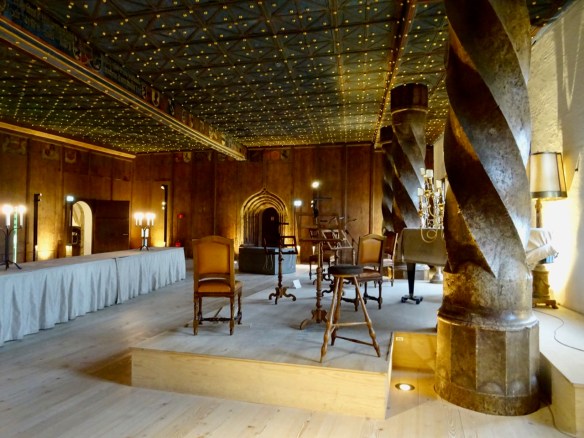
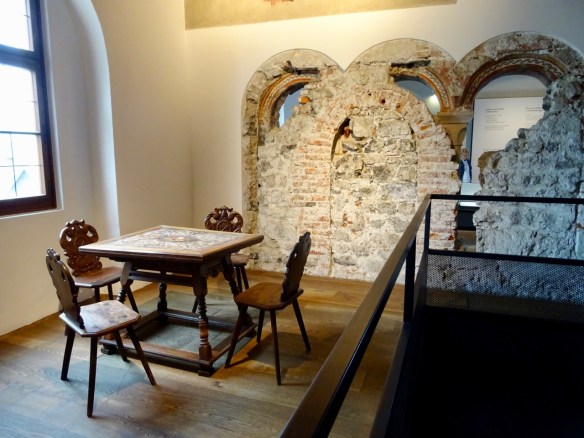 The Regency Rooms are spectacular. This is the Golden Hall with its ceilings painted blue and studded with golden balls to represent the sky and stars. It served as a ballroom and today is used for recitals.
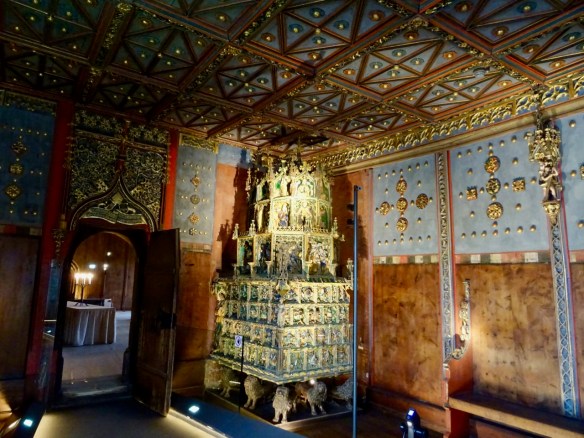
  The golden Chamber was a smaller sitting room with a small library behind the door in the corner.
 It has a magnificent medieval tiled stove that warmed this living space and reception room.
 Interestingly, the bedroom was not heated. We also learned that during the Middle Ages people slept in a semi-sitting position with many pillows because they believed that if they lay down they could suffocate. This position allowed them to have their weapons ready and attack any nighttime intruders. The doors were also low so that anyone coming in had to bend down when entering.
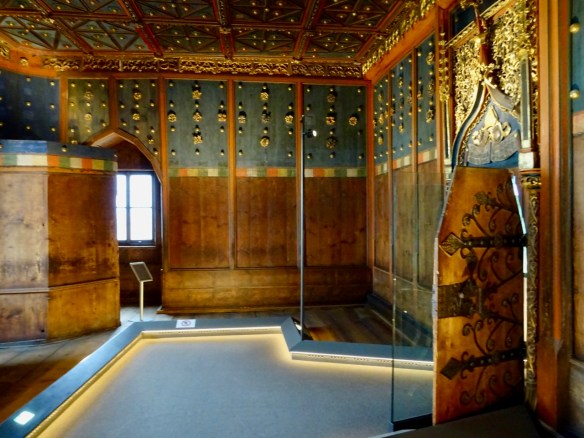 Behind this little door is the toilet, which was very modern for medieval times.
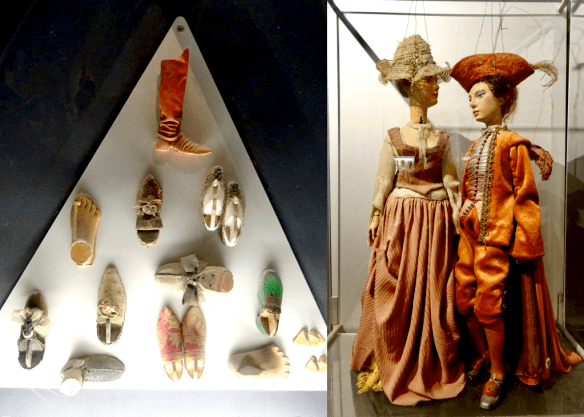
 As we leave the Fortress there is a small Marionette Museum. I love this collection of tiny feet and shoes, and thought that these two marionettes were the most beautiful, well crafted ones here.
 There is a wall of marionettes, and several dioramas…
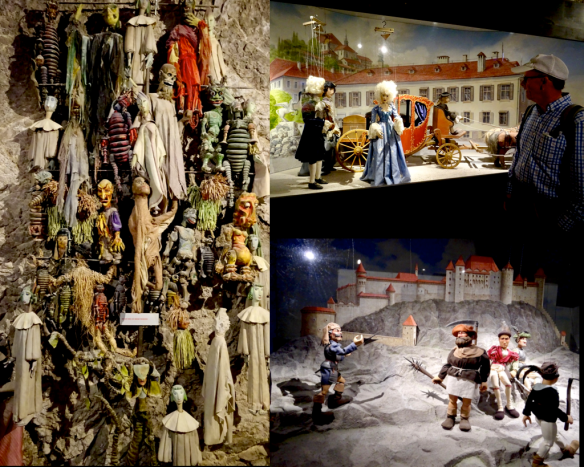 and of course, a Sound of Music scene.
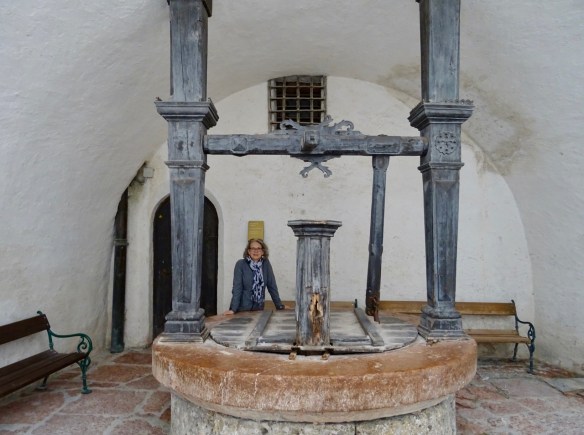
 I think this huge well was connected to the cistern that was built within the fortress walls. Now it is a giant wishing well.
 This is the entrance to the oldest part of the fortress, adjacent to the newest addition, an elevator.
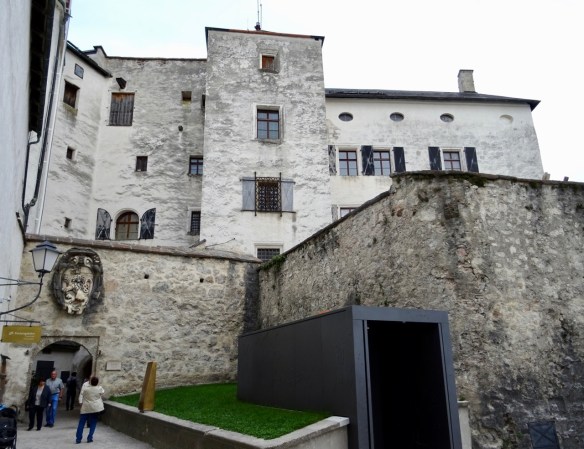 As we exit the fortress beside the bell tower, we have a view of the watch tower we climbed at the beginning of out visit. From the top we could not look over the sides to see how high up we were.
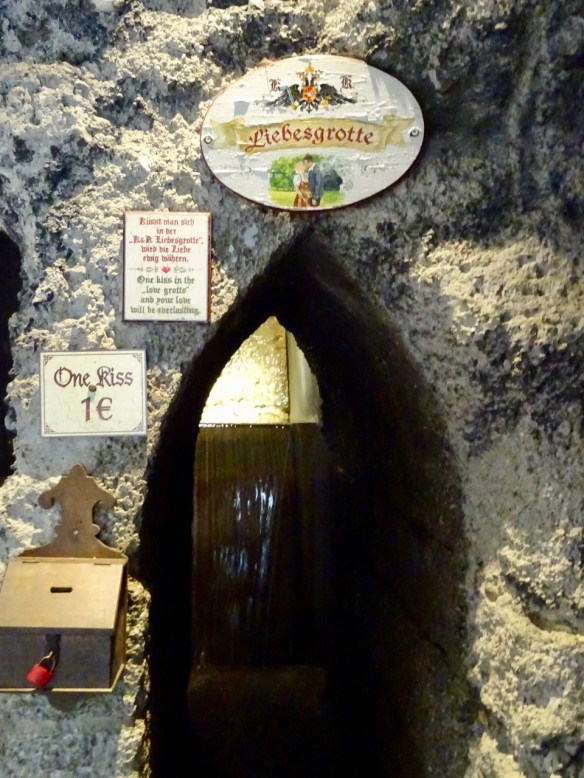
 At the bottom of the funicular we take advantage of the Love Grotto to ensure our love is everlasting!
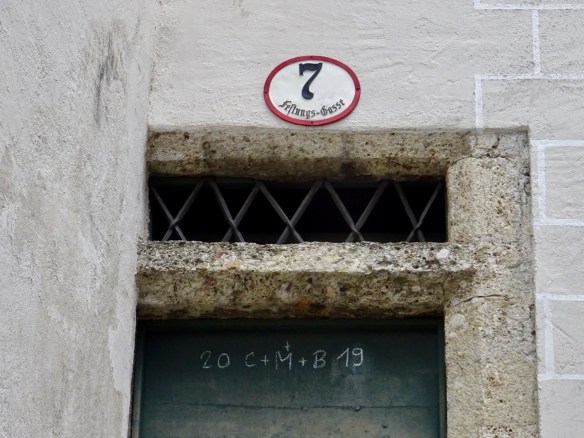
 We have seen these chalk markings on many houses, church doors, businesses and shops in Germany and Austria. I wondered what they meant. A quick search on my ‘magic library’ and I find this quote.
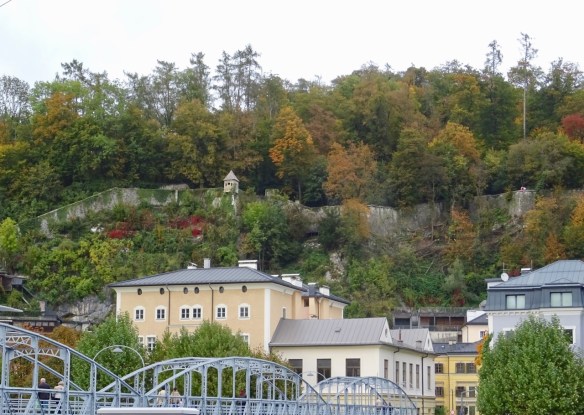
 On the bus home we can see the old medieval town walls.
 The ivy on a wall on our walk home looks like a giant red creature.
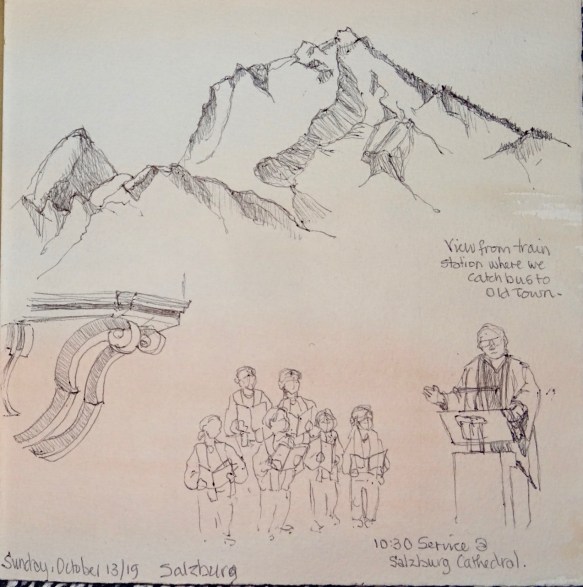
 This
This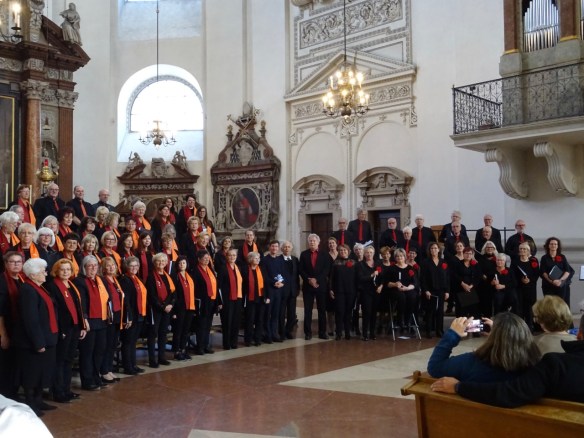 I draw while we listen to the service and choir. Of course we can’t understand any of it!
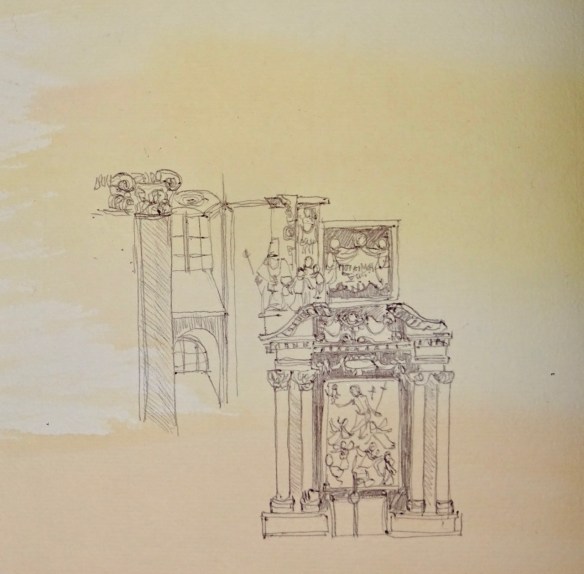
 I was tempted to finish this drawing of the altar from a photo but in the end decided to leave it just as it was.
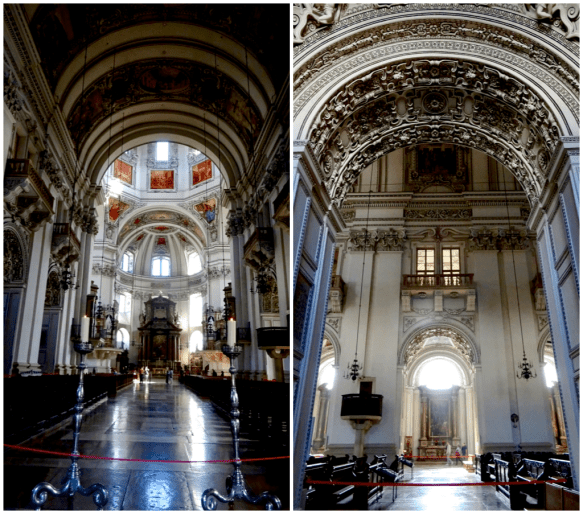
 The cathedral was badly damaged during the Second World War.
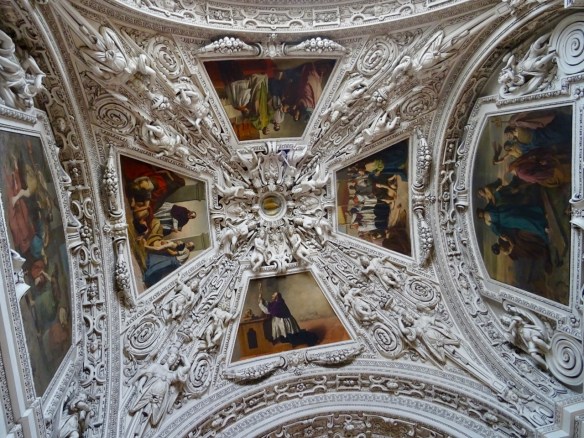
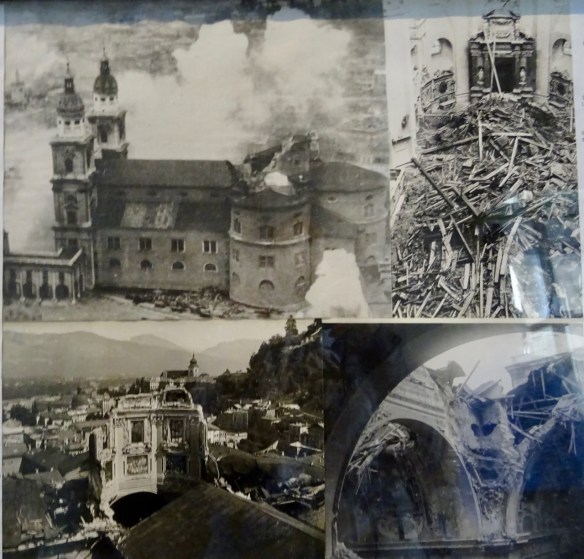 But today is beautifully restored. The ceilings are particularly ornate, this is the ceiling of one of the small side chapels.
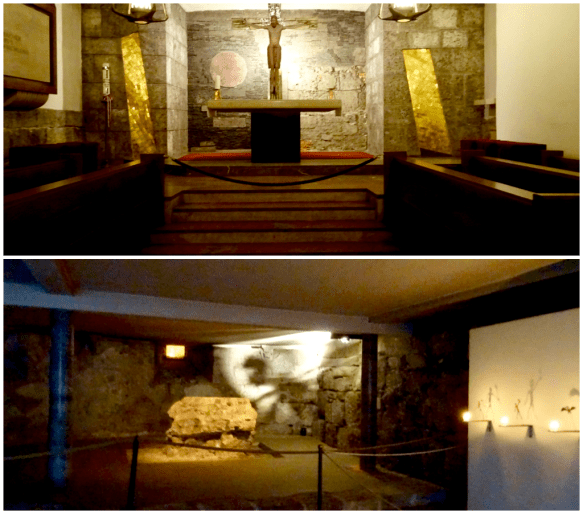
 In the basement is a crypt with a small chapel, and its very own ghostly apparition that flies around the room! Tough to catch its likeness in a photo but there it is on the back wall.
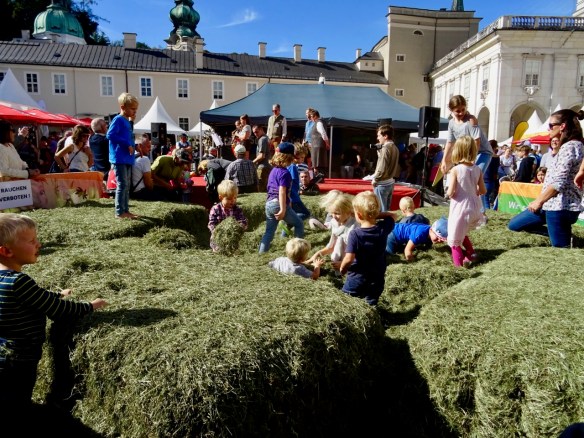
 After the service we find a Bio Fair (Organic Fair) right around the corner. There are people everywhere enjoying the sunshine, food and drinks. Great people watching today!
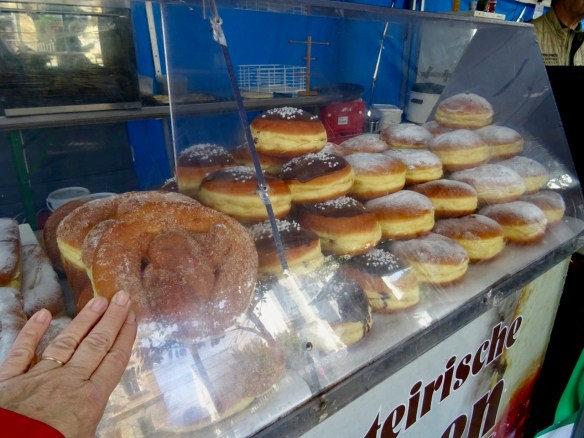
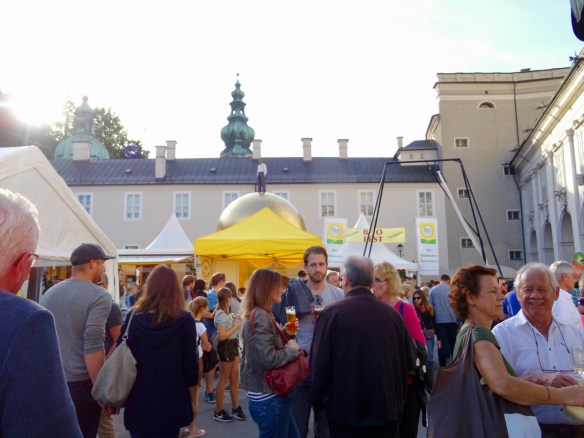 We have lunch here but are too full to have one of these giant donut-like pastries, which are served either with sauerkraut or sprinkled with sugar and filled with jam.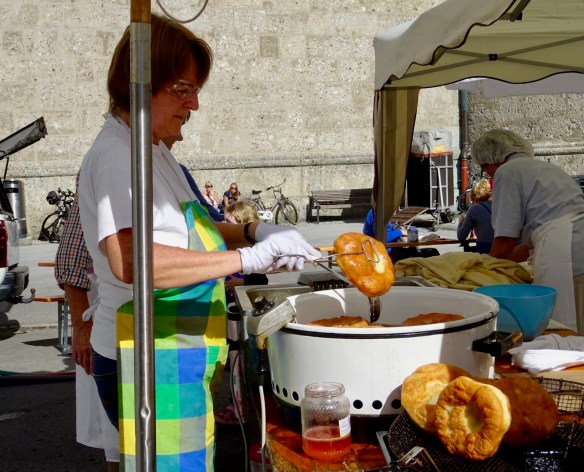
 Nearby is St. Peter’s Cemetery. Cemeteries in Austria are very neat and beautifully kept.
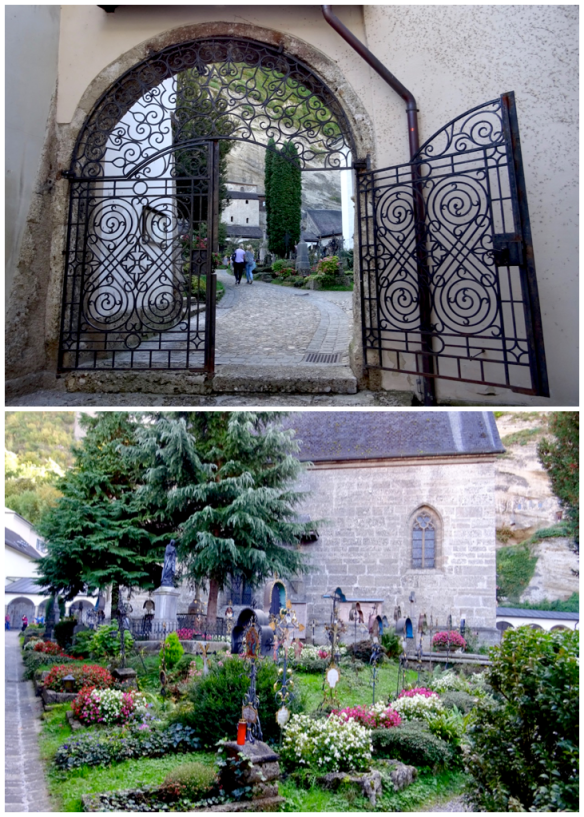 We learned that plots are rented in Austria and if the rent is not paid the bones are dug up and the plot is rented out to someone else. The remains are either moved to a mass gravesite or dug up and buried deeper in the same plot and the headstone removed so that the plot can be reused! The headstones are on the wall of the church for exactly this reason. The rent on the plot was not paid so the grave was reused and the headstones were placed here. This explains the many headstones we have seen on cemetery walls and other churches.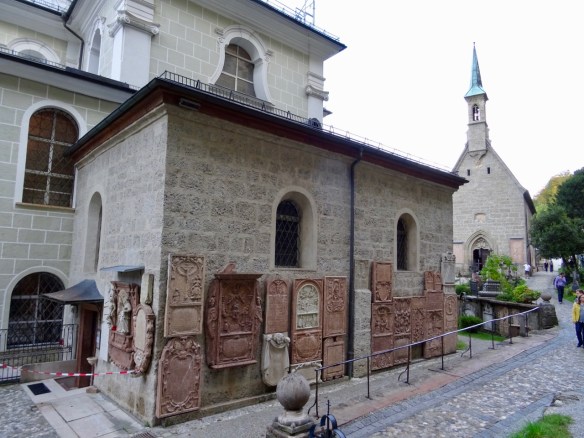
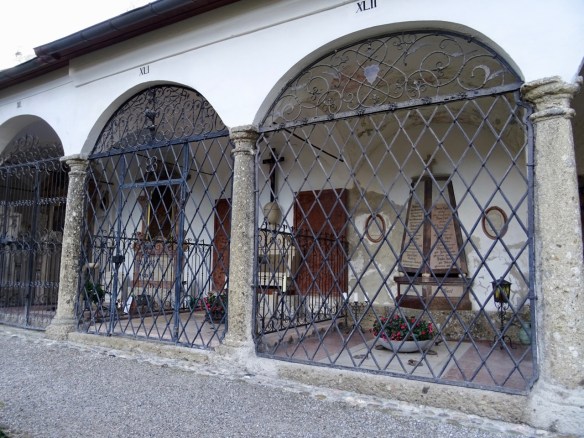 Bob insisted we needed a photo of me hiding in the cemetery!
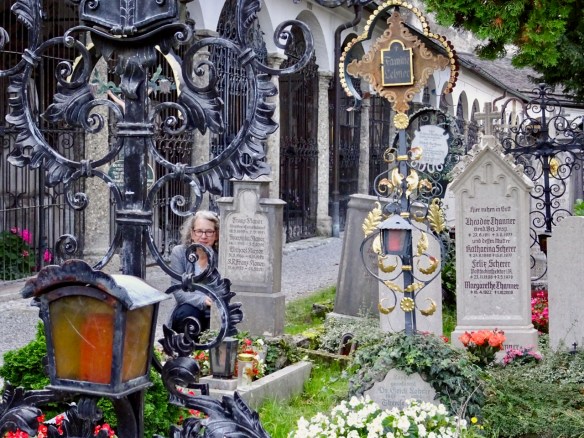 We almost miss seeing the catacombs dating from the 12th century. Can you see the windows high up in the cliff above the cemetery? Pay particular attention to the little door below the windows. This is where Saint Maximus and 50 of his followers were thrown to their death in 477AD, because of their faith.
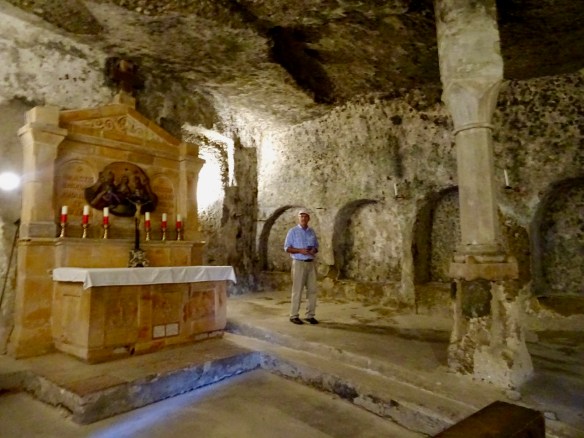
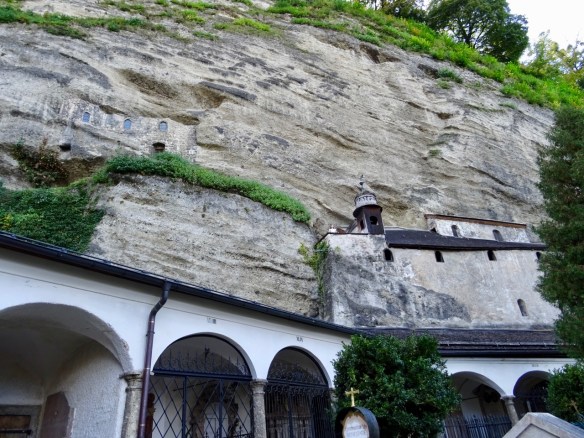 This is one of the chapels carved out of the rock high in the cliff.
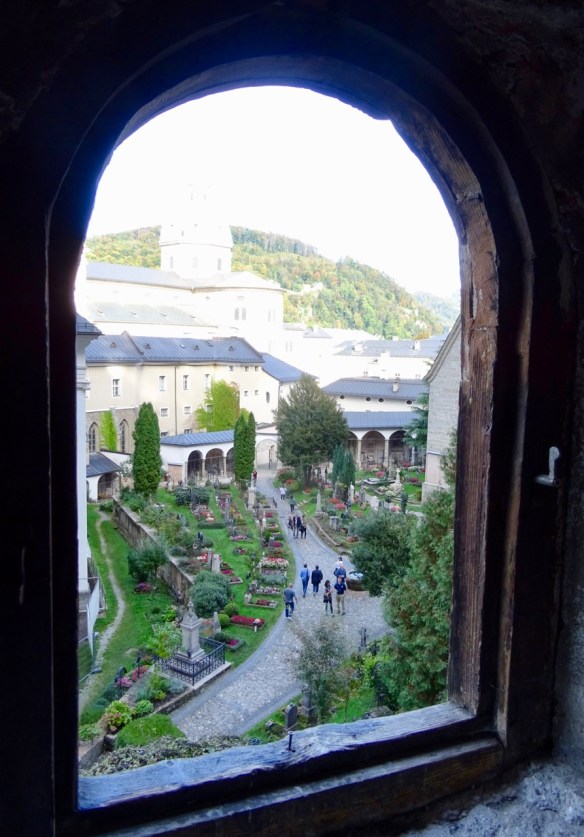
 A view of the graveyard through one of the windows as we climbed down from the stone chapels.
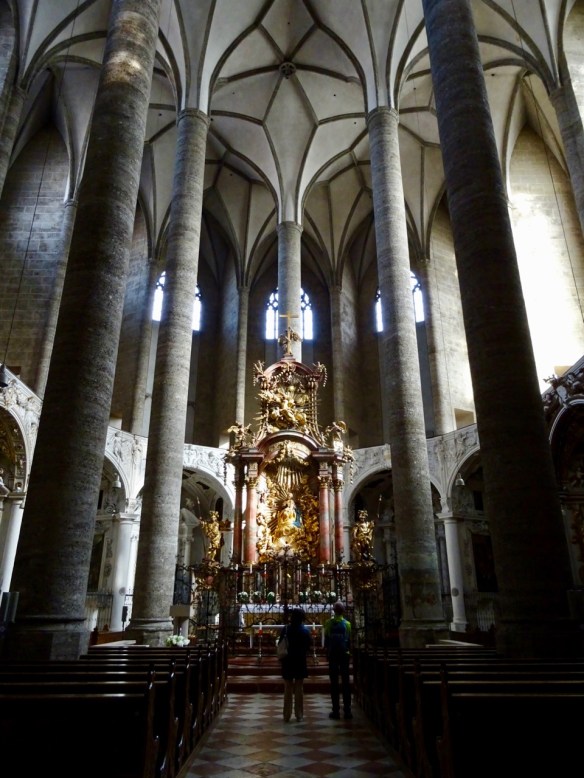
 Bob has a few more places for us to visit. The Church of Our Lady dates from 1221 AD. It was very dark everywhere except for right around the altar where there are soaring pillars and arched ceilings.
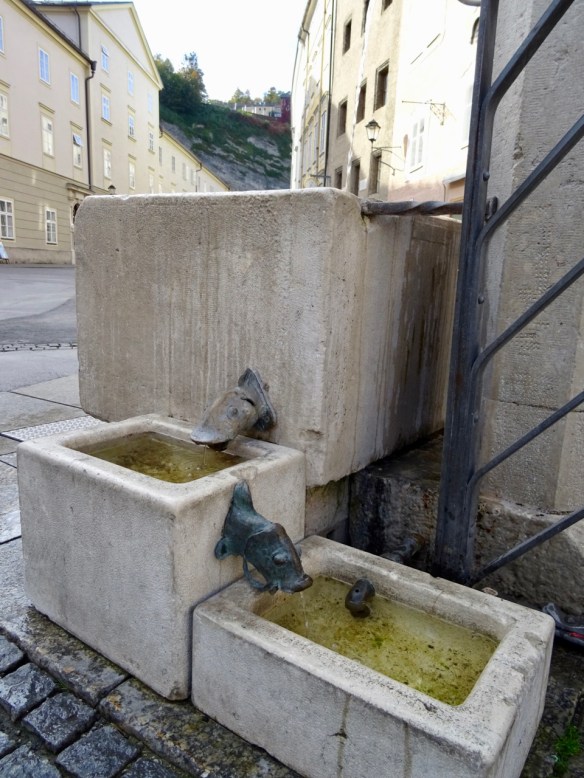
 Next is the Horse Fountain. This fountain has a ramp (the white area on the right side of the photo) so that horses could walk right into the fountain to cool off.
 This fountain is just a bit smaller!
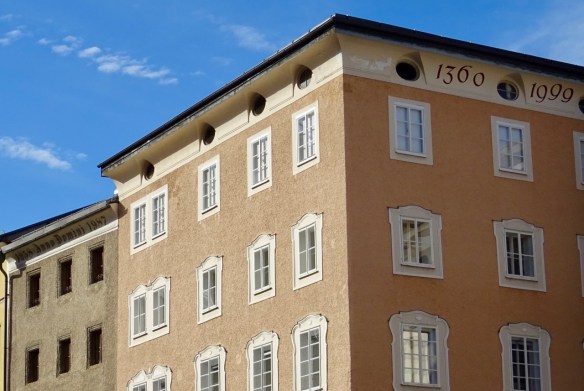
 Notice the dates on these buildings…1360 on the apricot coloured one and 1258 on the brown one. I am amazed that these houses are this old.
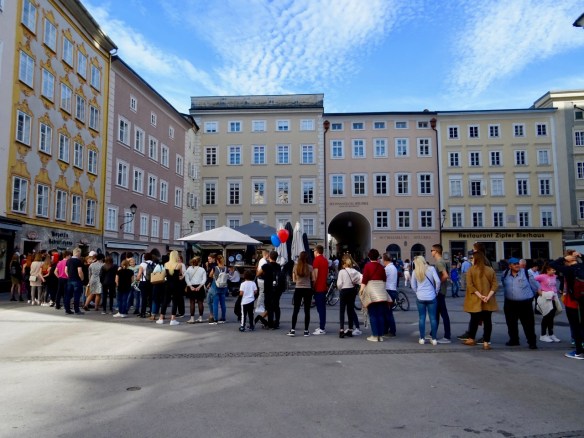
 We see a very long line up… it is people lining up for ice cream! Soft ice cream in a cup with a choice of fresh fruit and other toppings.
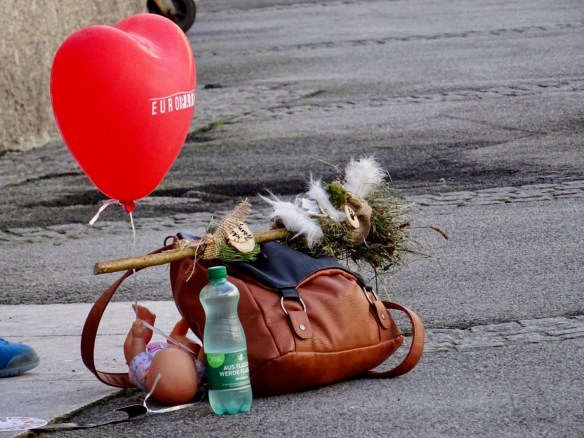
 I see this curious ‘wand’ and wonder where it is from.
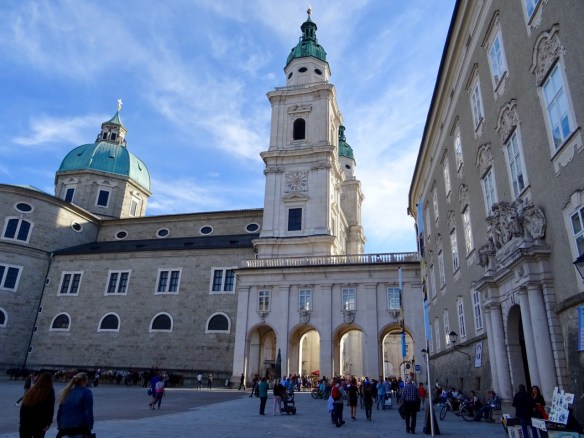
 This is a view of the side of the Salzburg Cathedral.
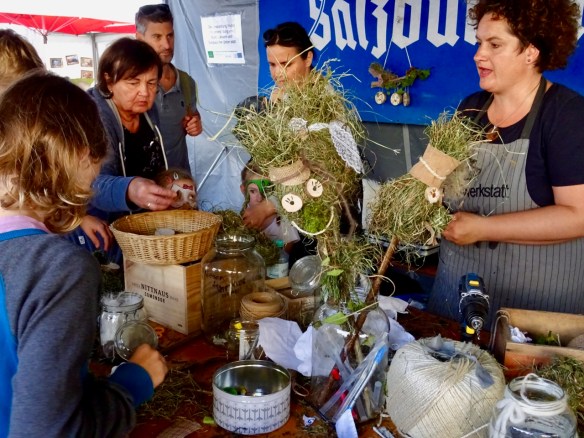
 We walk back through the Bio-Fest on our way home and now I know where the wand comes from. These look like such fun to make.
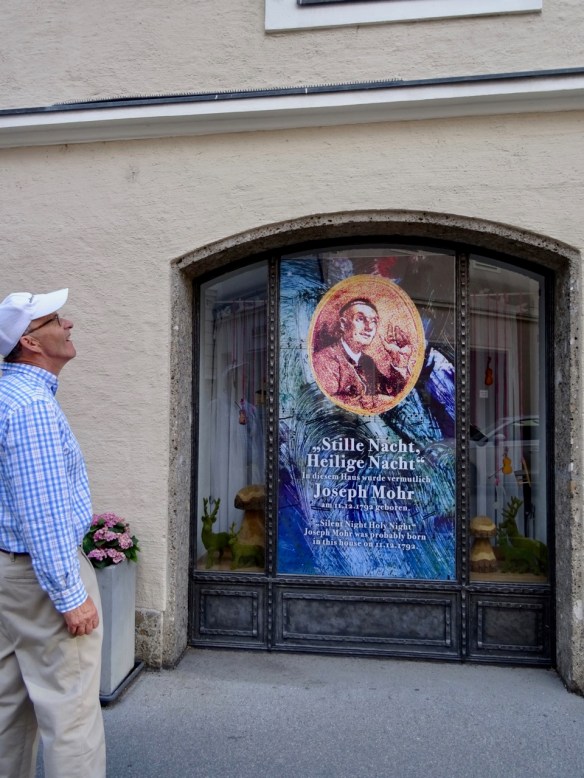
 Walking past this house we notice a sign saying that this is where the creator of the song “Silent Night’ was born.
 One more church!.. with lots of paintings and a pretty green and white ceiling. The skull was on a plaque near the door, and the little bronze plaques were in the square outside. They mark the location where a person was arrested and taken to a concentration camp. We looked for these in other cities but couldn’t find any. It has the person’s name, date of birth, date of arrest, the name of the camp and their date of death.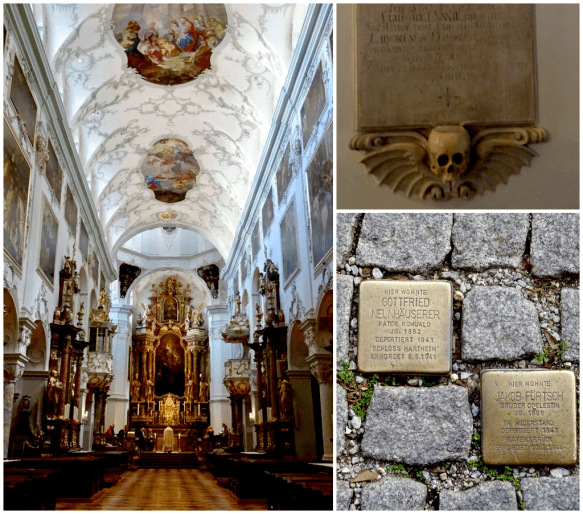
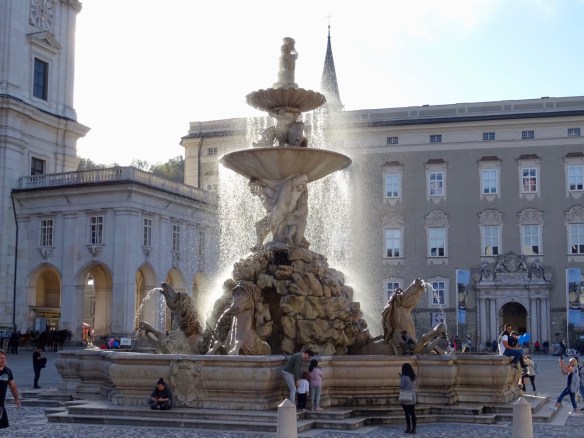
 The horse fountain in the square near the Salzburg Cathedral glows in the late afternoon sun.
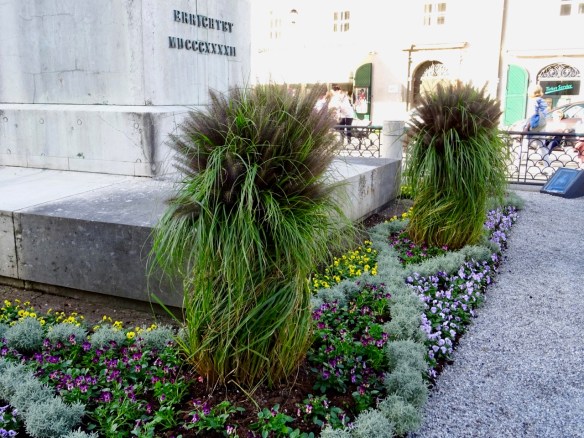
 I thought tying them up was a clever way to deal with unruly tall grasses.
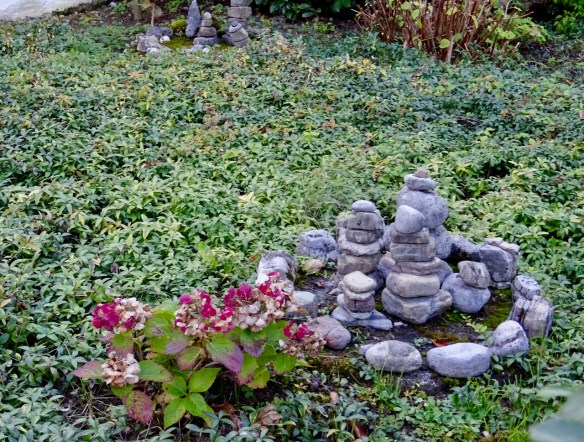
 In a yard near our Airbnb I spot these little rock gardens. I might have to make one of these in our garden at home. I am always collecting stones!
 The fall colours are brilliant in the late afternoon sun as we arrive home.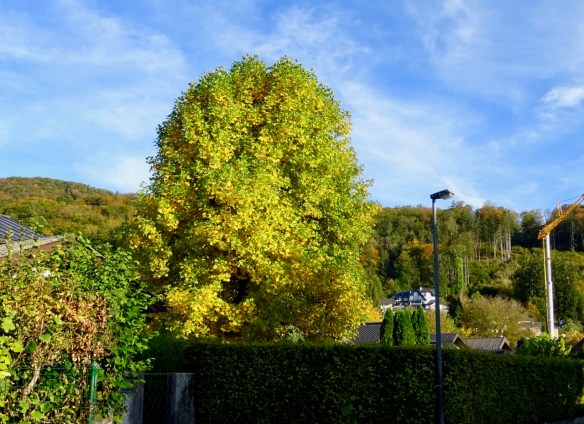
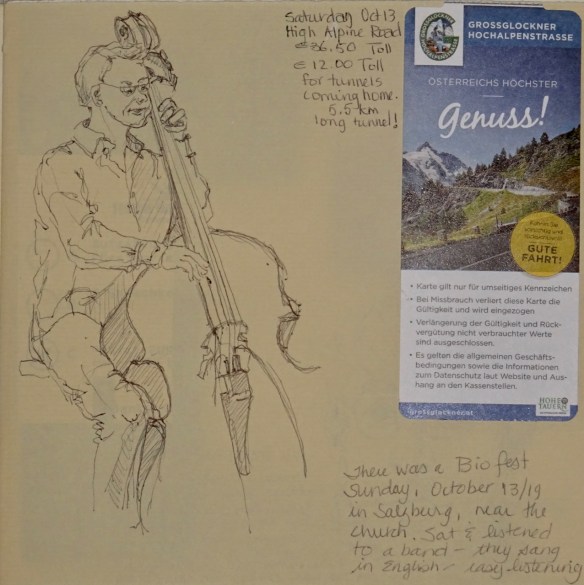
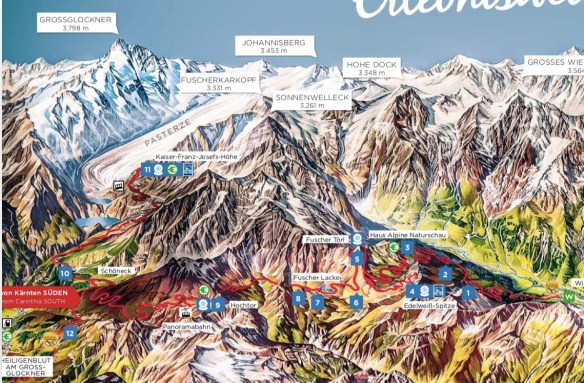
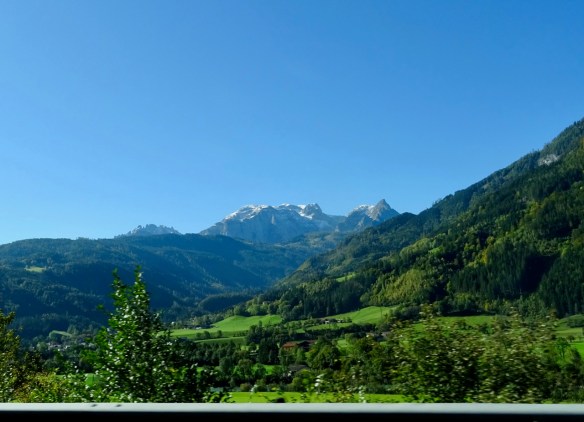 We drive through many tunnels on the way to the beginning of this highway. There were several 2 and 2.5 km long tunnels. On the way home we drive through a 5.5 km long tunnel! The toll for the tunnel road is 12 euros! Soon we are in the mountains.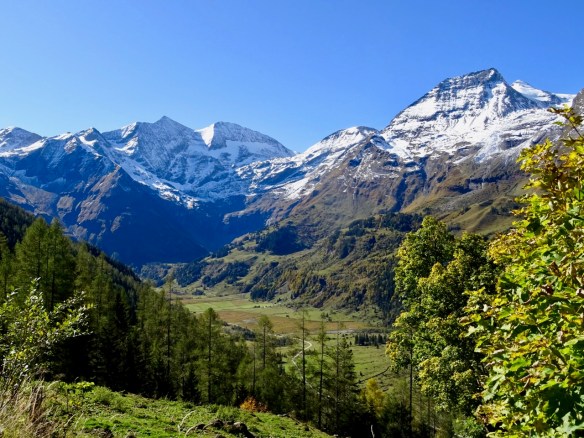
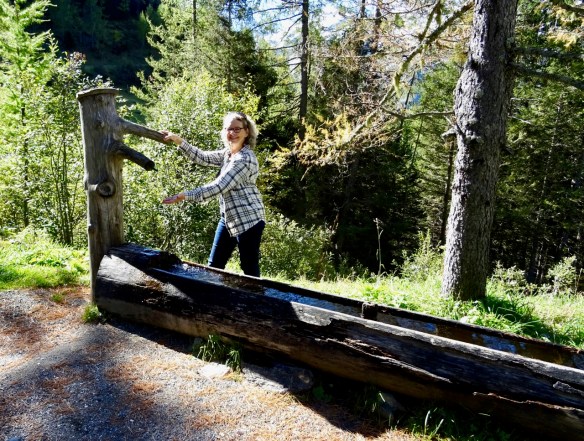
 At one of the first stops along the road I find this water trough that reminds me of the one my grandfather made years ago.
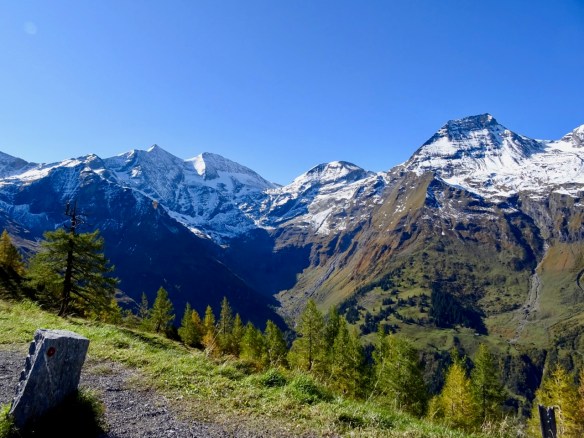
 The views are amazing.
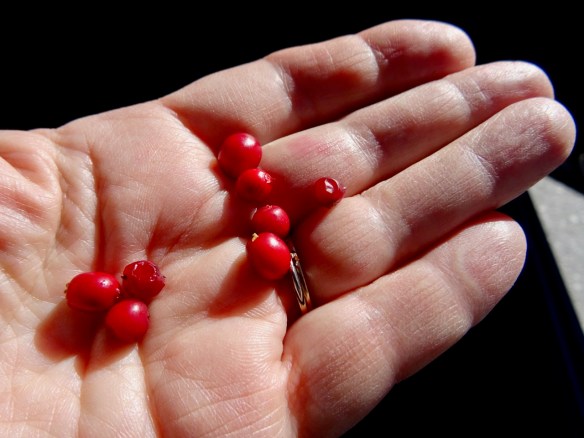
 We see a couple gathering something. When I ask them what they are picking they give me a handful of tiny tart cranberries to taste.
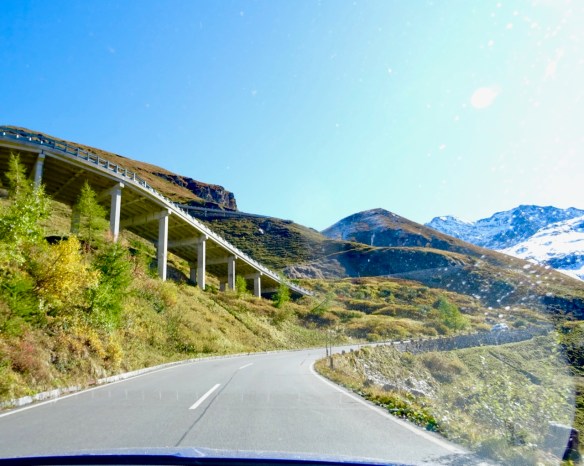
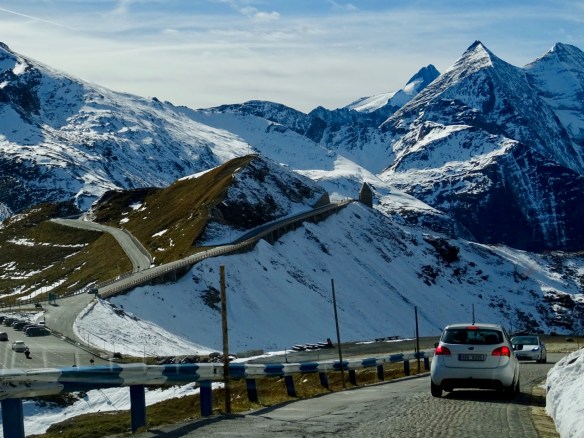
 The road winds steeply upwards. We are amazed at how fast we are climbing.
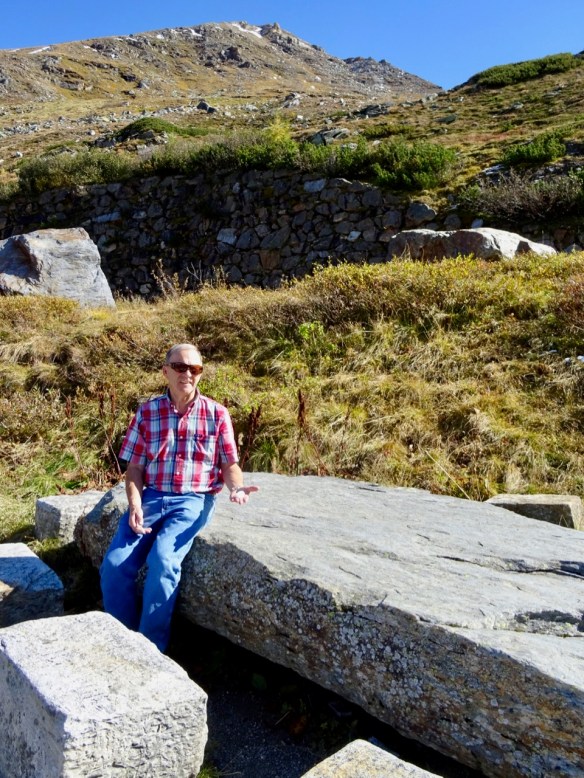
 We stop at what looks like a giant stone table and seats.
 A composite view showing the beginnings of fall colours.
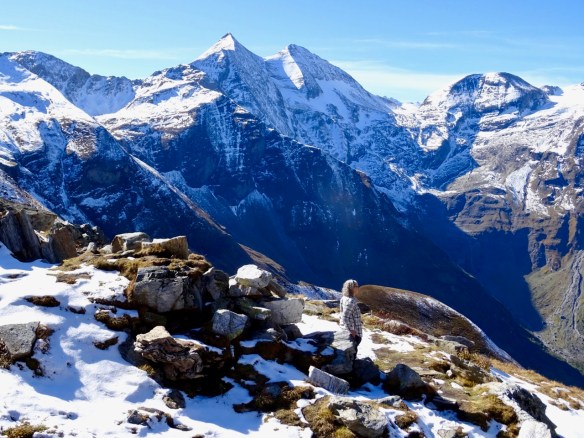
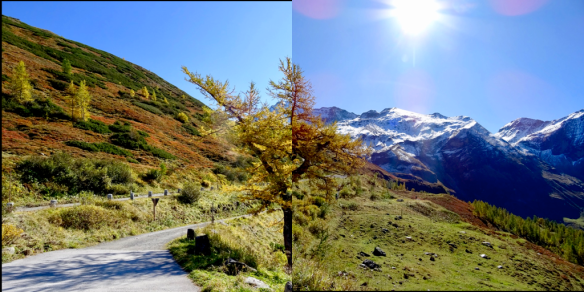 Looking far down to a deep valley.
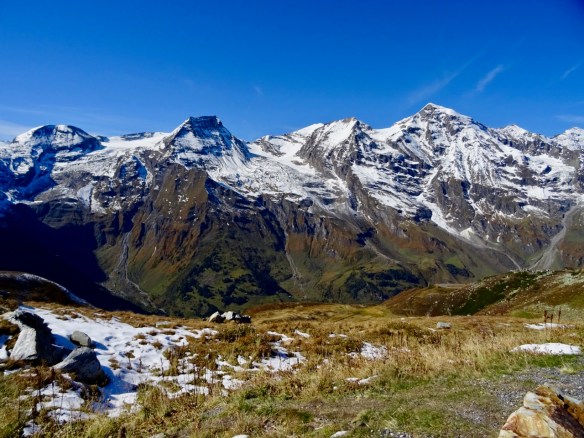 There is fresh snow up here.
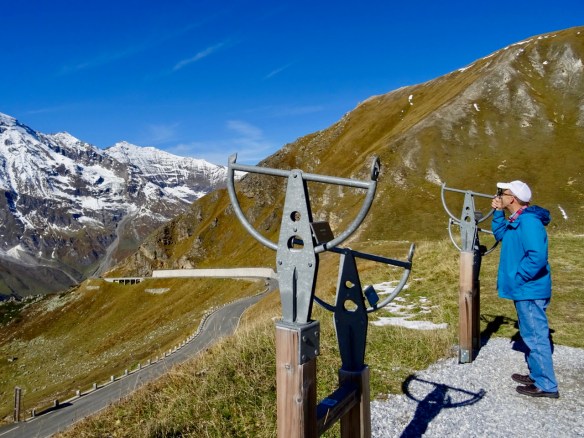
 These devices point to and give the names of the mountain peaks.
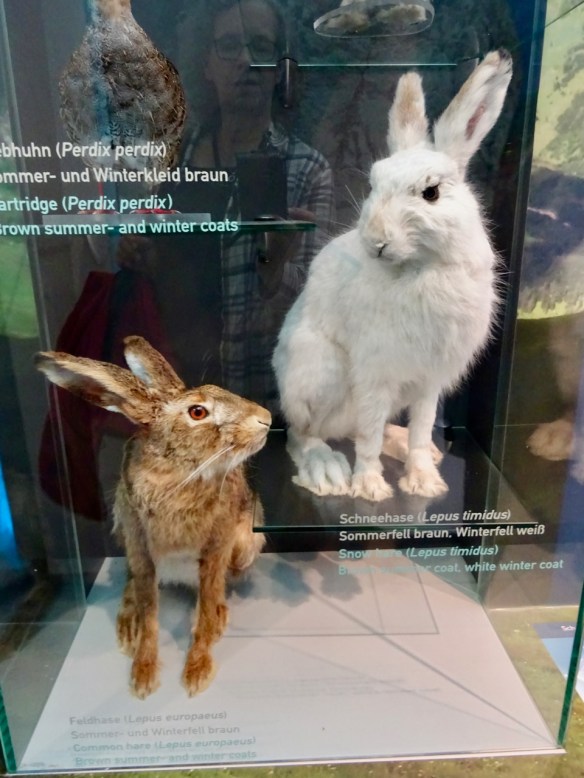
 There is a little museum with a great film about marmots and some of the other animals that live at these high elevations. Take a look at the Snowshoe Hair’s feet!
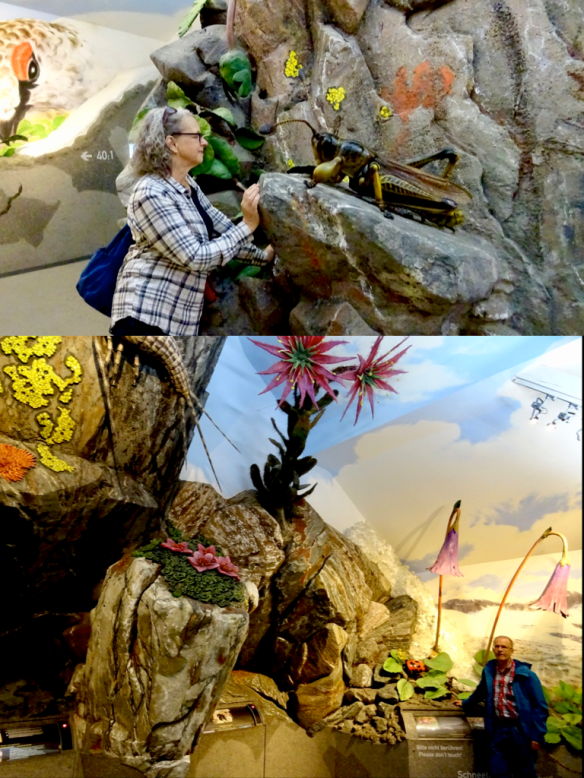
 There is also a display that lets you see what it feels like to be a small creature on a mountain hillside.
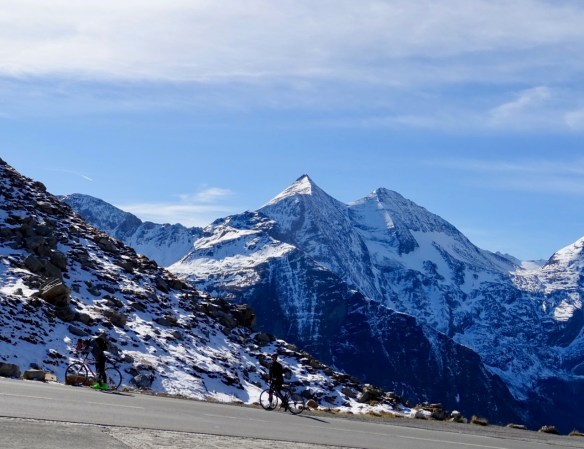
 These are a bit hard to see, but there are cyclists on this road, lots of them! Because we stop so often we pass the same bikers several times. They don’t stop and just keep climbing. I am in awe!
 We take one of the side roads to the very top of the mountain. If you look carefully you can make out the narrow steep road that winds back and forth to the top.
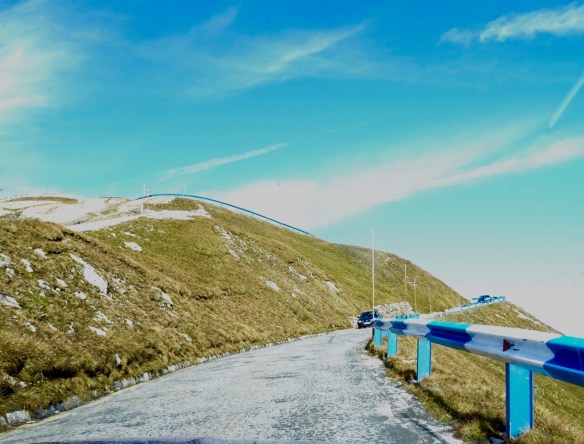
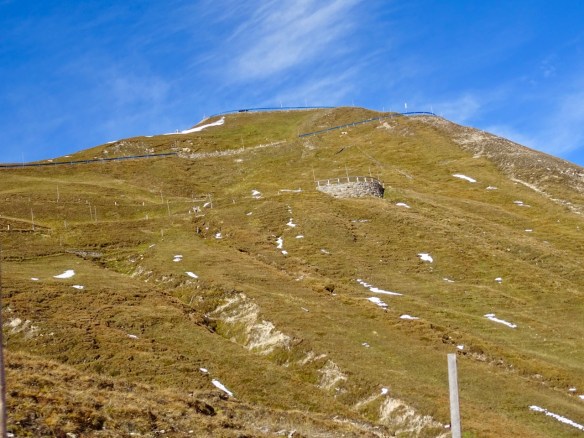 Getting close to the top! The road continues up by that blue railing!
 The view from the top.
 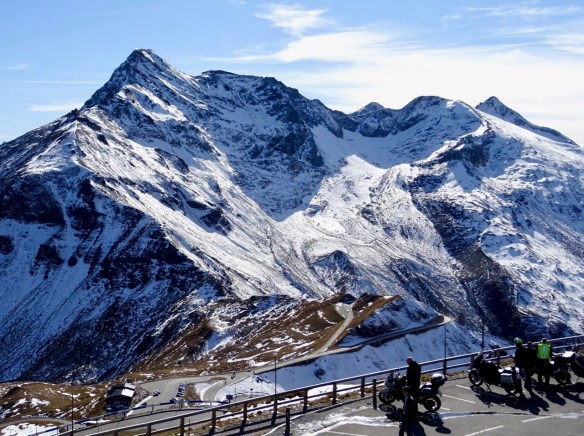 See that road way down there?
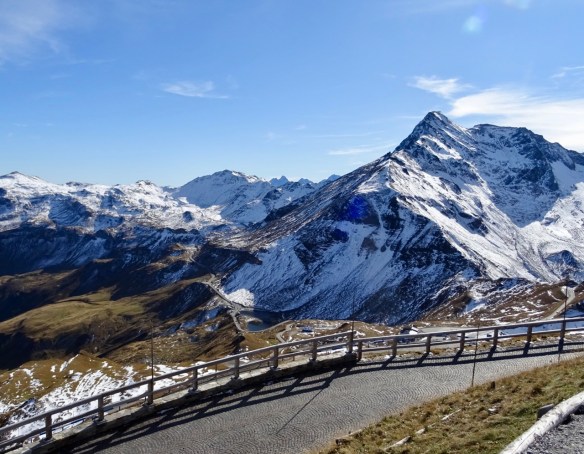 Here is a close up, that shows the road climbing again up into the snow covered pass.
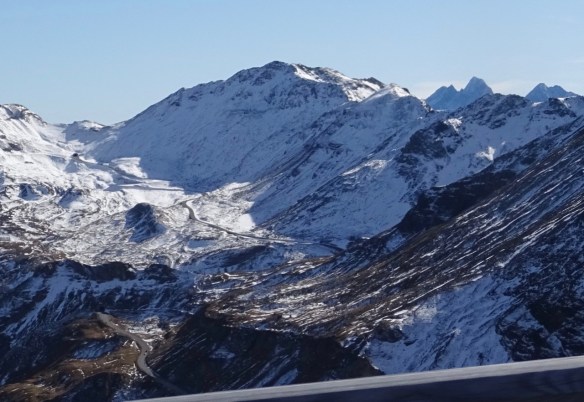 More hair pin turns on the way down from the viewpoint at the mountain top.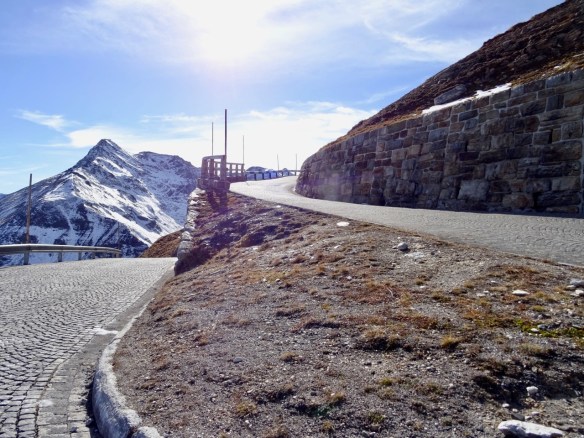
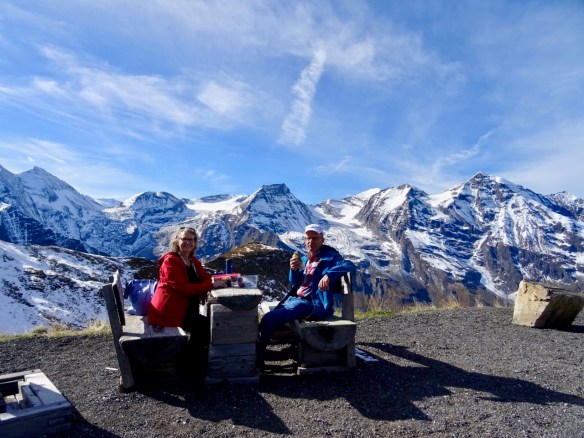
 where we have our lunch in the sunshine.
 Here is the road just below our picnic spot.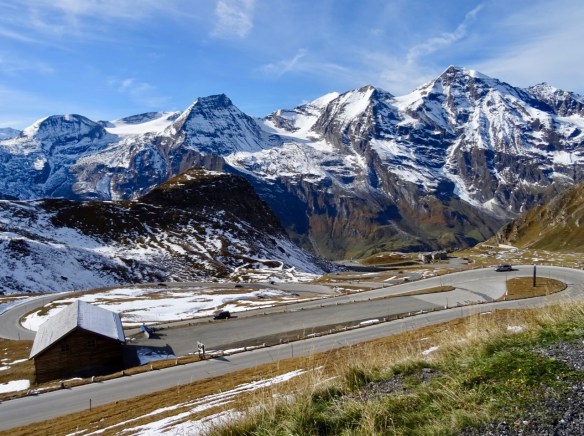
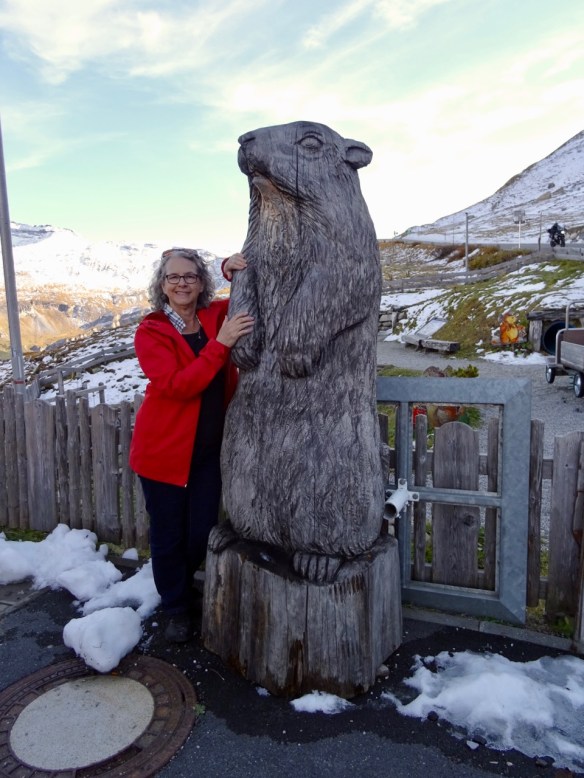
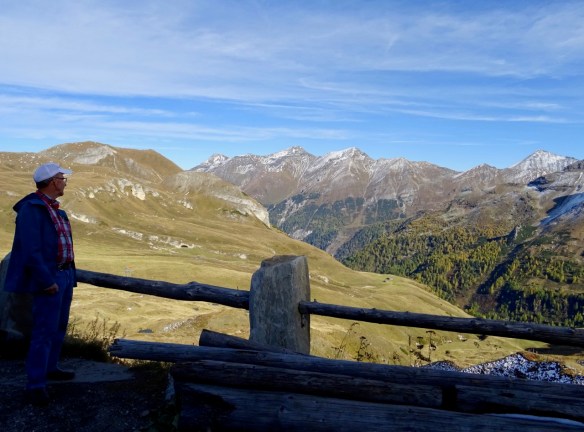 and a giant marmot!
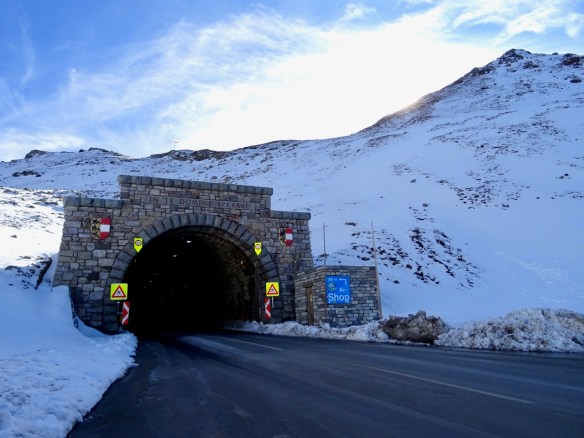
 This tunnel is at the top of the road. There are large chunks of ice forming on the inside of the tunnel, and some workmen busy breaking them off.
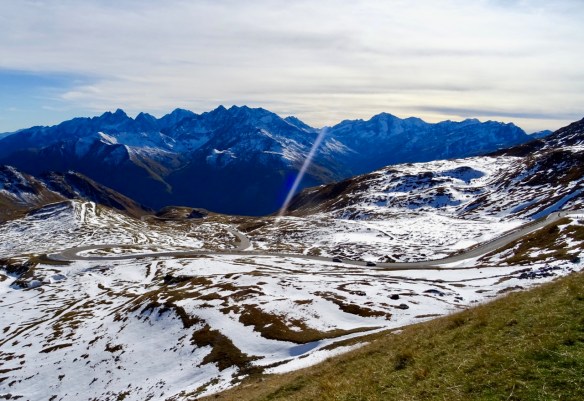
 This is a view of the road on other side of the tunnel.
 Before long we are back in the trees.
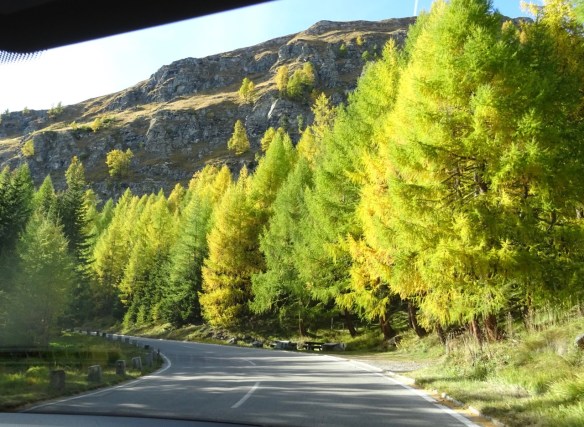
  These larch trees are starting to turn colour and glowed in the sun.
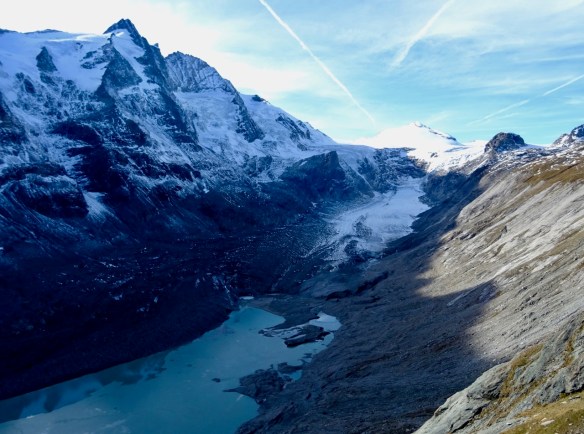
 We take the second side road up to the Pasterze Glacier.
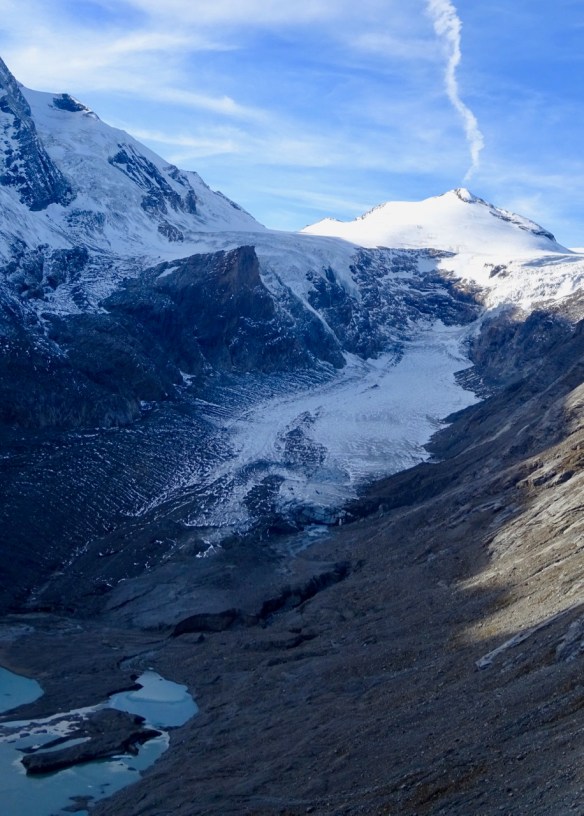
 A jet stream makes it look like the mountain is smoking!
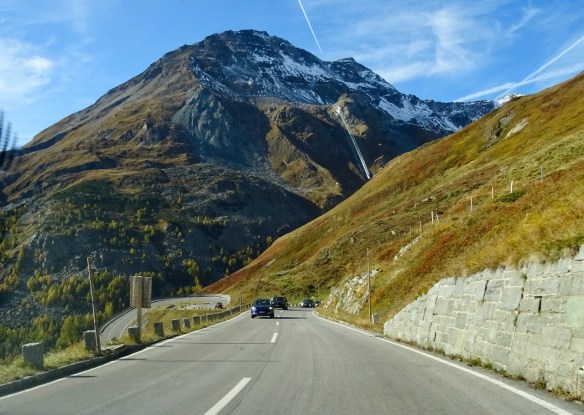
 We see some tunnel-like construction on the hillside but can’t figure out what they are, as there is no path to reach them.
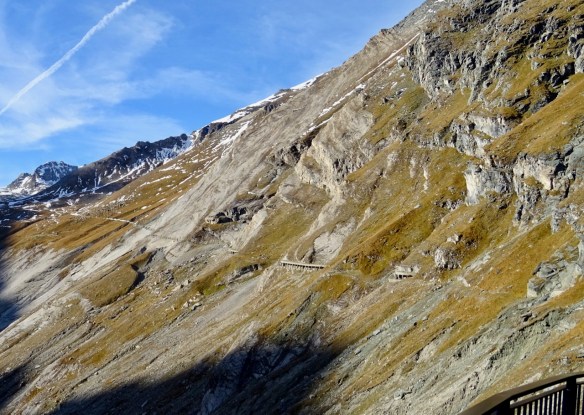 We then discover there is a tunnel that enables hikers to walk to the glacier. Those tunnel-like constructions we saw are viewpoints along the way.
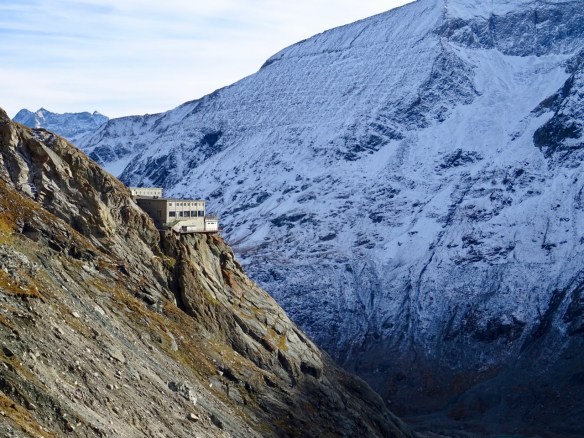
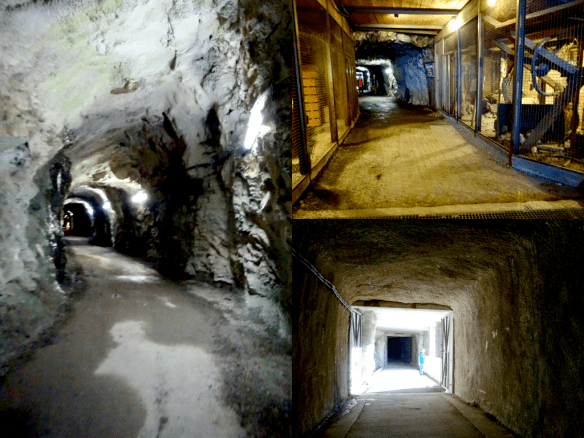 Here is our view from one of the viewpoints looking back to the glacier information centre. We only walk 500 metres into the tunnel.
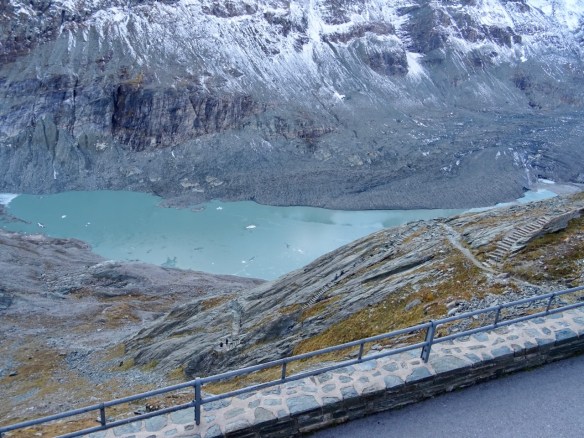
 Walking back to the car we see these stairs that lead way down to the lake at the base of the glacier.
 The sun is starting to set as we start our drive home, which is still 2 1/2 hours away. The alpine highway is only 48 kms long but it took us five hours to go those 48 kms!
 We have never seen a hay ride like this going down a highway back home!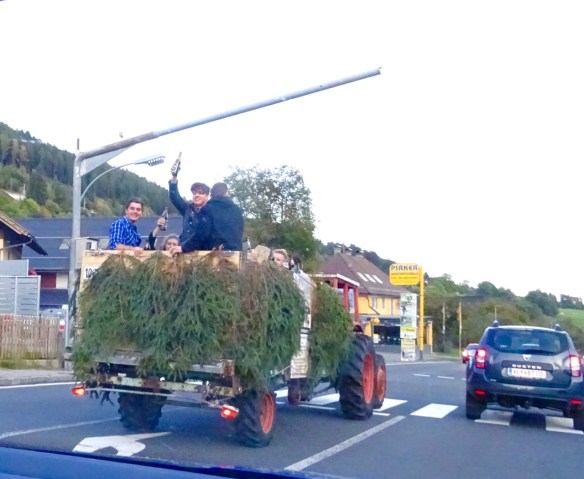
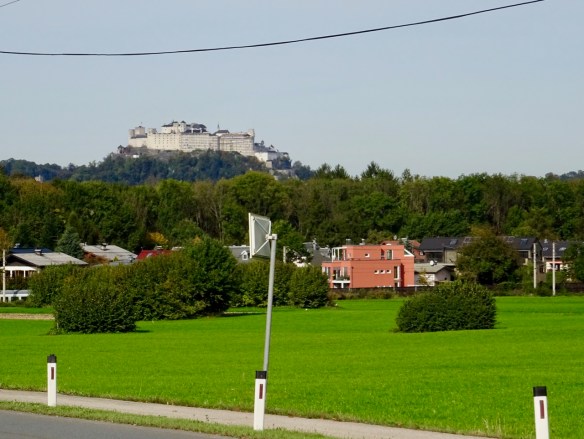
 We can see Hohensalzburg Fortress high on the hill above Salzburg. Tour guide Bob informs me we will visit there on Tuesday.
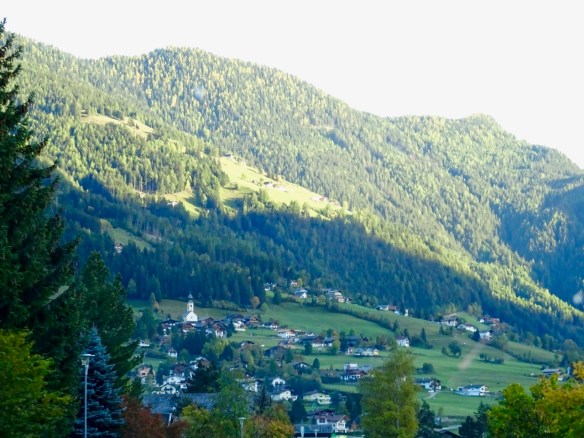
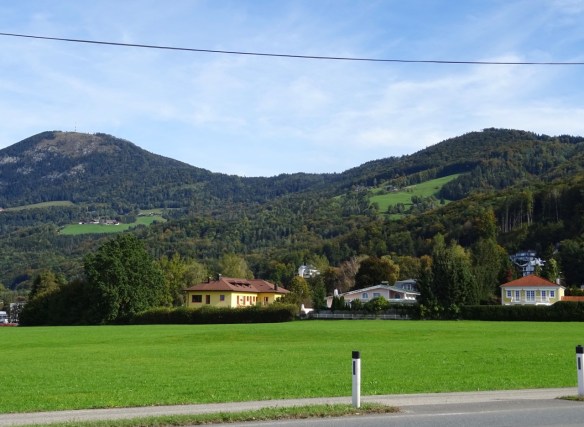
 We can see beautiful green alpine meadows in the hills above Salzburg.
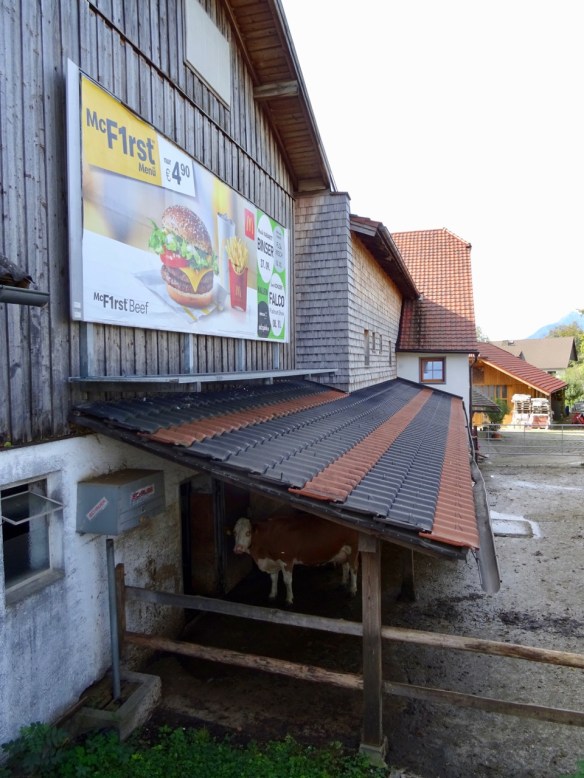
 We pass dairy cows right in town just a couple blocks from the train and bus station. The advertisement above the cows gave me a chuckle.
  We pop into a downtown church when we get off the bus. It looks like a community church from the outside, with big cheery murals on either side of the door. The inside is much less ornate than many of the churches we have visited and there is lots of information on community programs and events. Nice to see.
 We stop at some food stands selling wine and beer, and have a bit to eat. These giant doughnuts look interesting but we pass. They are as big as small plates!
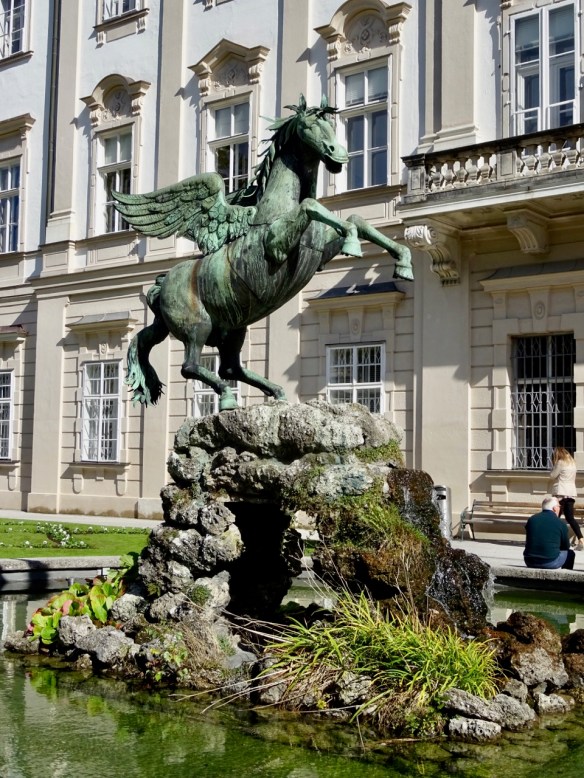
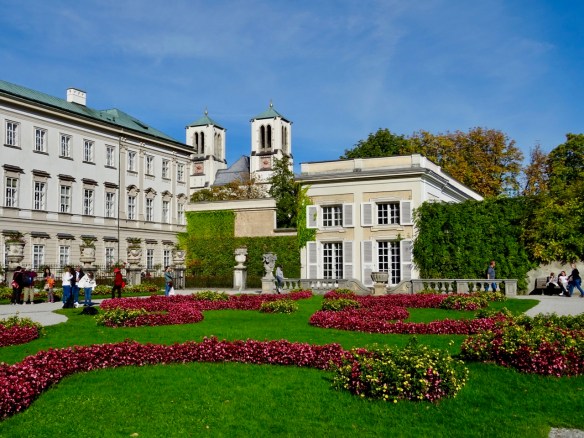
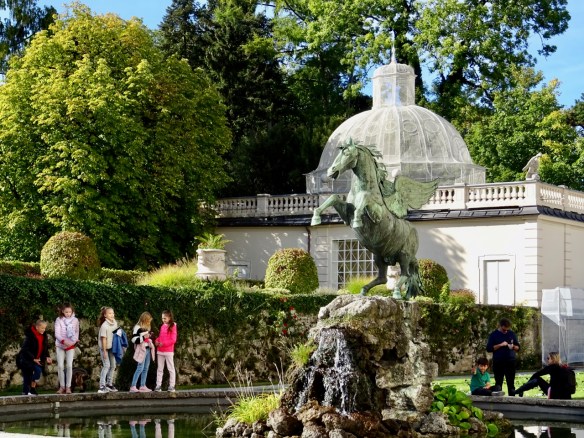
 The gardens around the Mirabell Palace are beautiful. In the movie ‘The Sound of Music’ Maria and the children dance around this Pegasus fountain and sing ‘Do Re Mi’.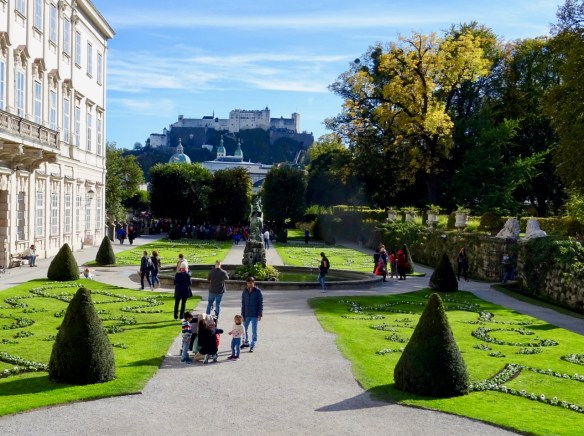
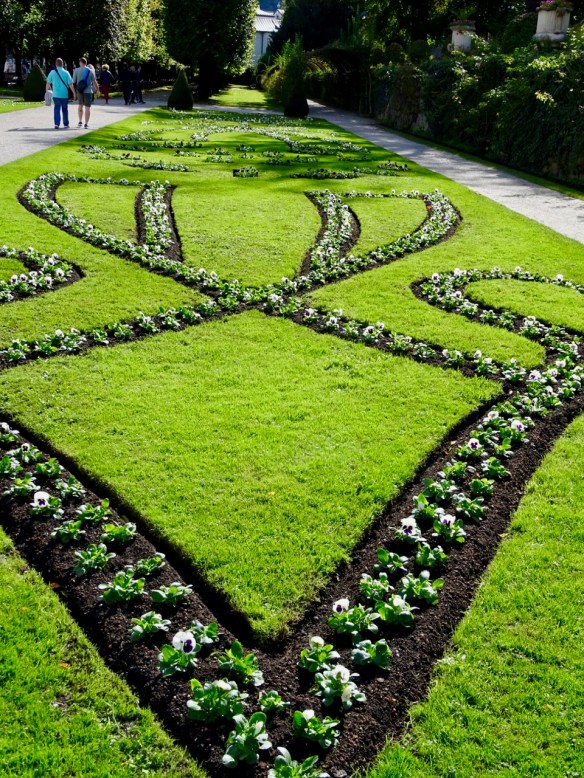
 The grass contains elaborate knot patterns decorated with flowers. These are freshly planted pansies, hundred of dozens of them!
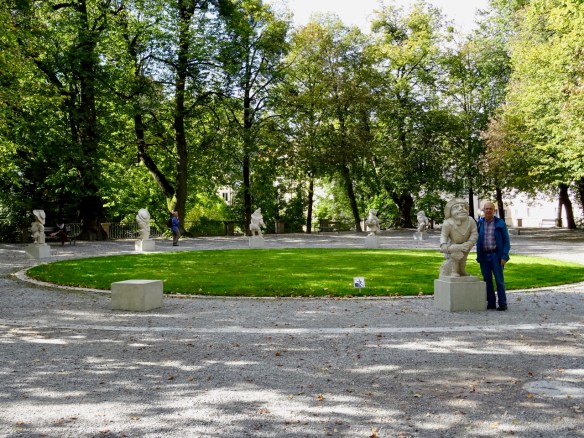
 The Zwergerigarten is a surprise. It is the oldest ‘Dwarf Garden’ in Europe and was built in 1695. Yes, a Dwarf Garden! We had no idea there was such a thing.
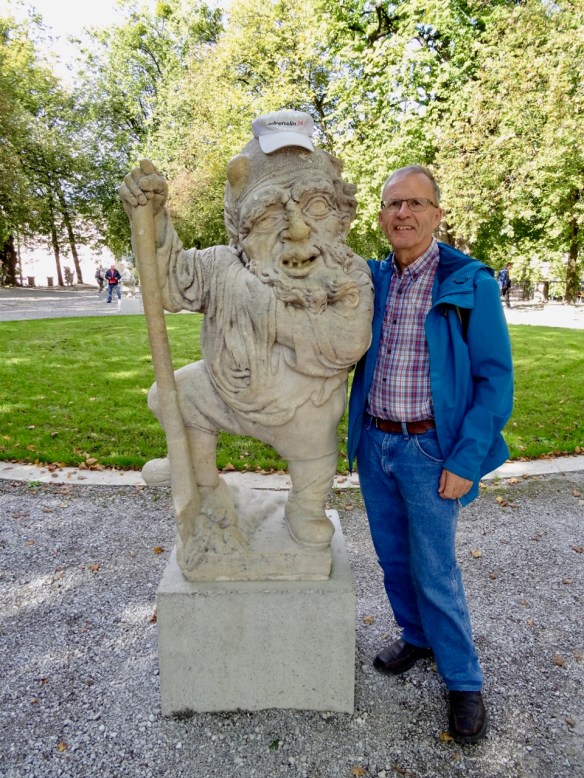
  This fellow insisted on trying on Bob’s baseball cap!
 The collection of 28 marble dwarf sculptures was sold at auction in 1811. 17 of the sculptures have been recovered and put back into the park in their original positions. Here are some of these curious sculptures.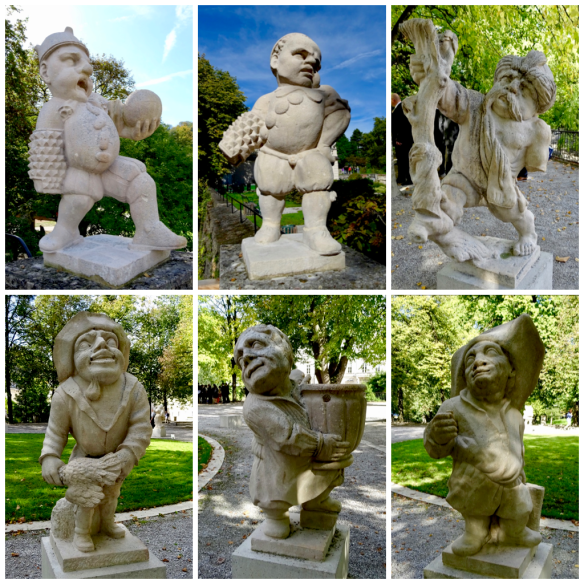
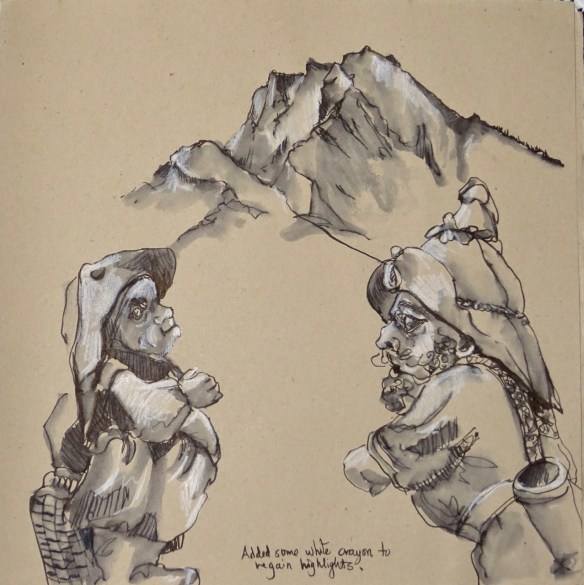
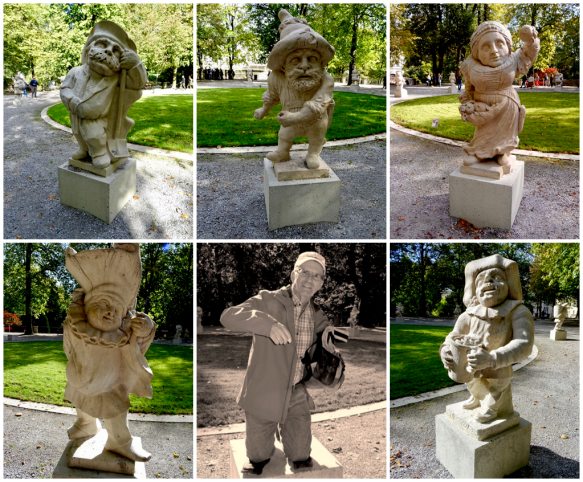 We have tea and cookies in the garden and then I draw for a while.
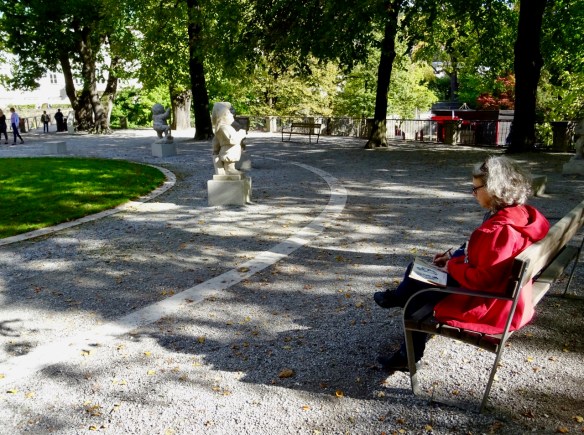 I used a new brush pen that I got just before we left for holidays. I think it is going to take a while to get used to. I used a water brush to create value with the water based ink in the pen.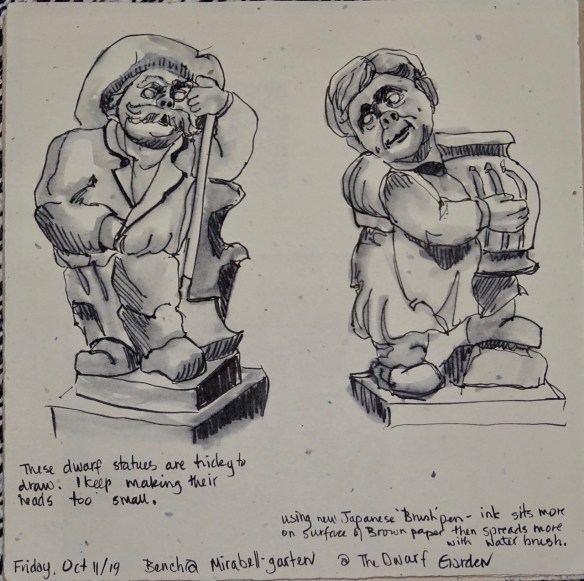
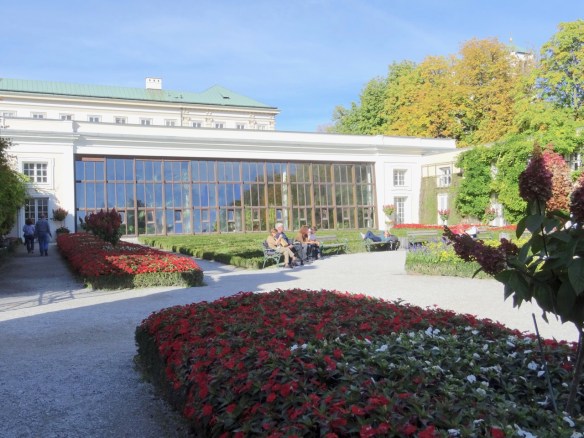
 Walking through the garden there are some more knot designs created with flowers in the grass.
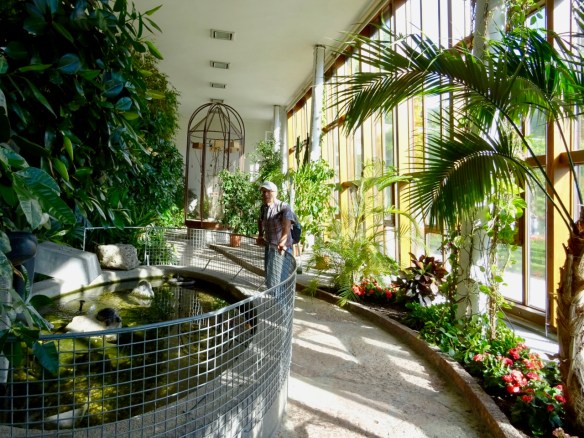
 There is a small Orangerie…
 with some goldfish, a turtle and a few birds.
 Looking back towards the Mirabelle Palace.
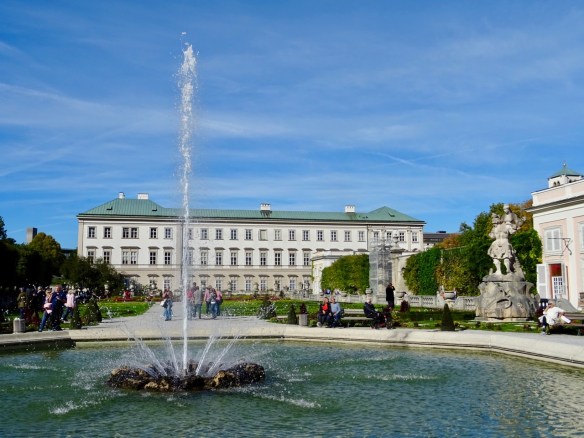 The two towers in the background belong to the church we visited earlier.
 These young girls were enjoying the Pegasus Fountain, and I enjoyed watching them.
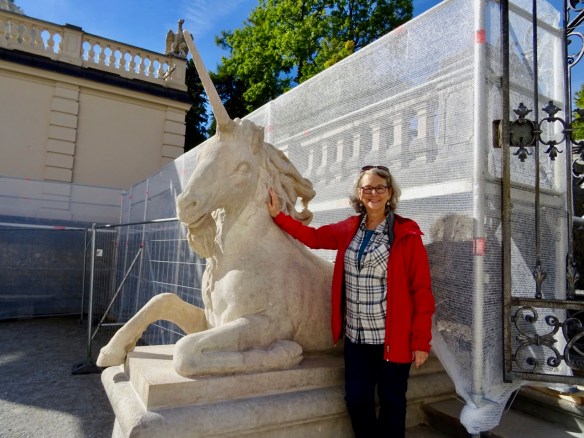
 There seems to be several unicorns here in Salzburg.
 I have time for a quick sketch of a beautiful enormous tree while waiting for Bob.
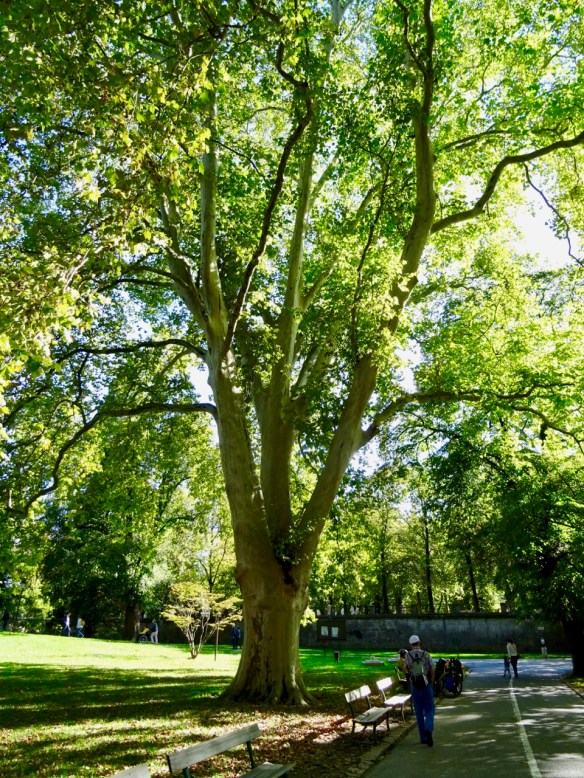
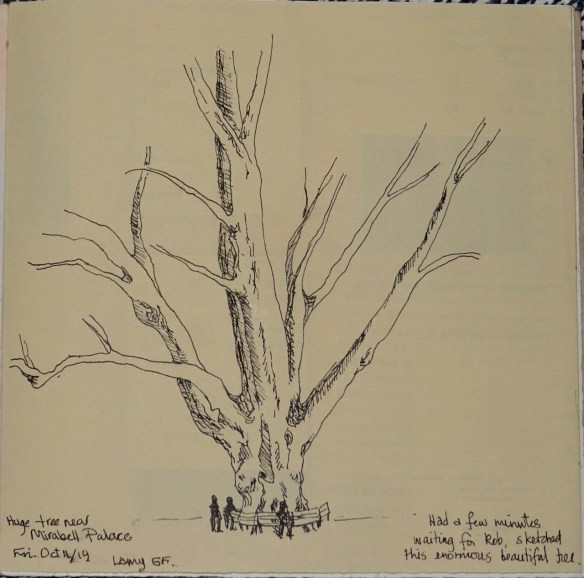 There are a lot of big trees here.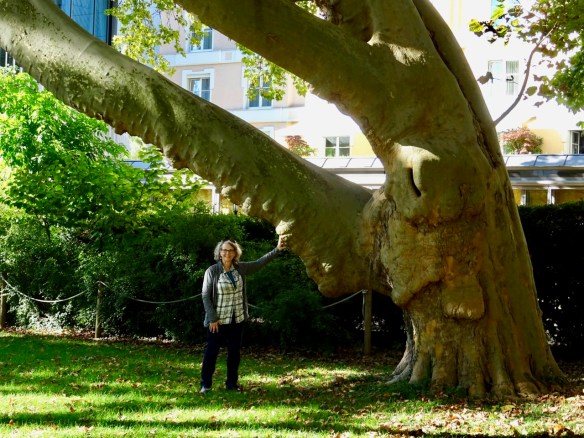
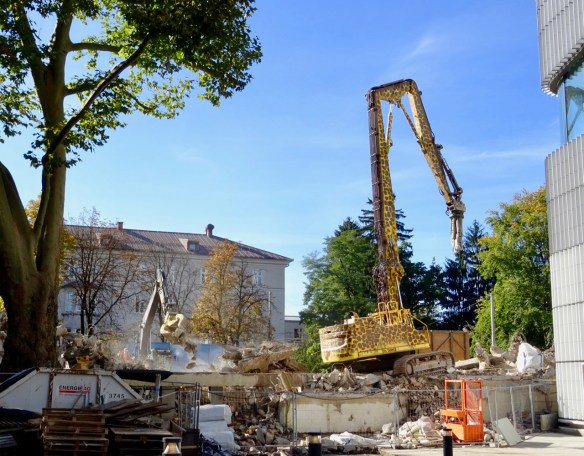
 We have never seen a giraffe quite like this before!
 We walk along the river heading towards the Old Town.
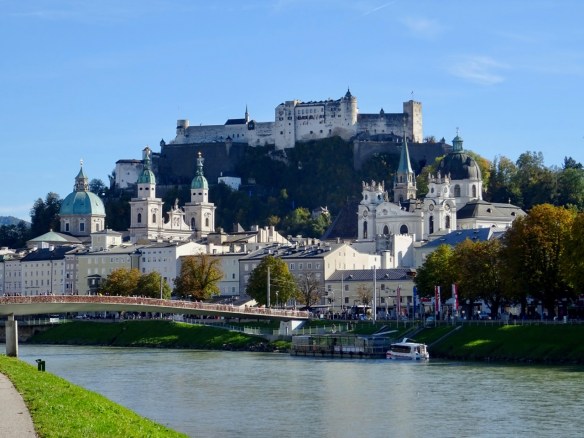
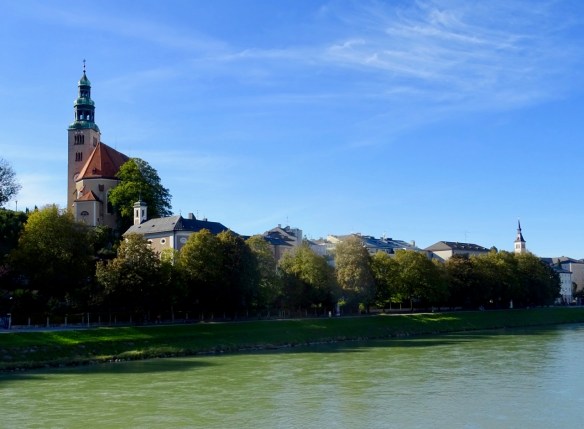 The Old Town and the Castle on the hill make a striking view.
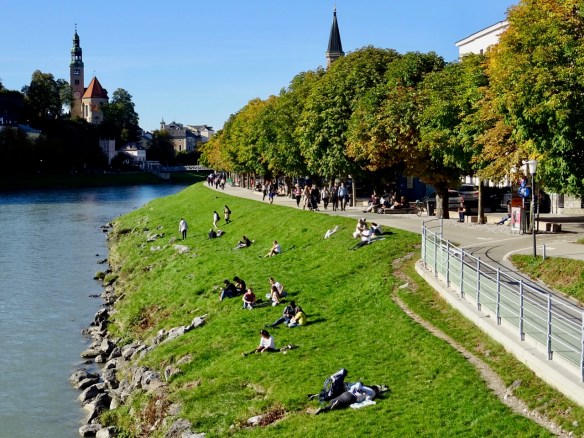
 People are out enjoying the warm weather.
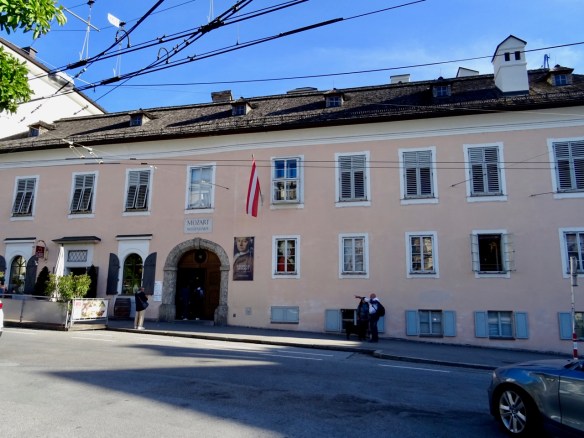
 This is the house that Wolfgang Amadeus Mozart lived in with his family until he moved to Vienna in 1781. His family occupied the entire top floor. We were looking for a free film and somehow ended up in the museum instead, so we had a quick look around.
 This street was the inspiration for the song ‘Silent Night’. It is a long street so no idea exactly where this inspiration transpired.
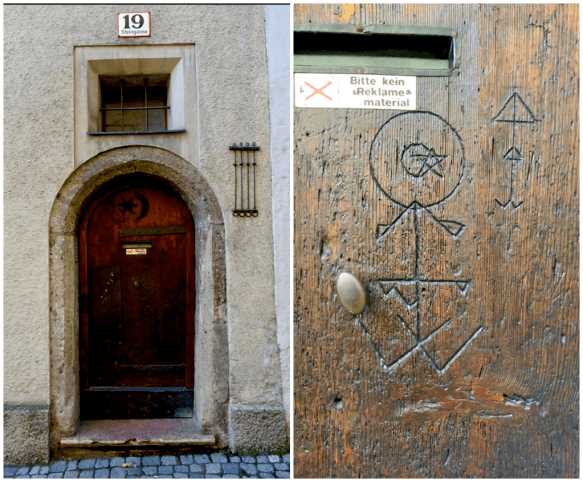
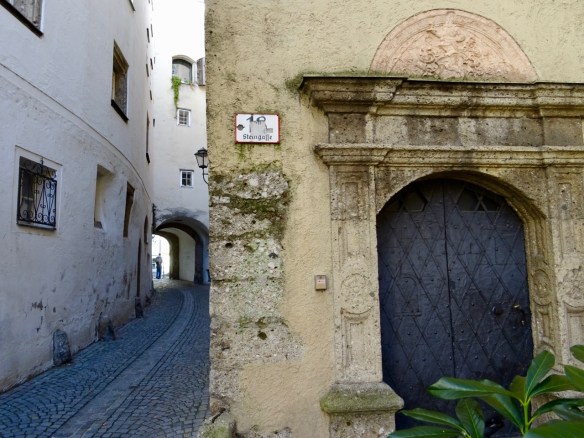 This door had interesting marks scratched on it that looks very old.
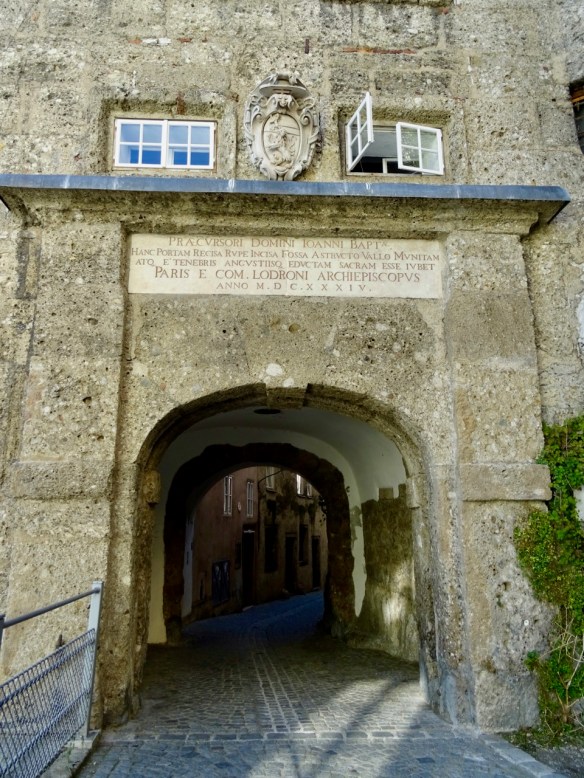
 Here is the entrance to the “Silent Night’ street.
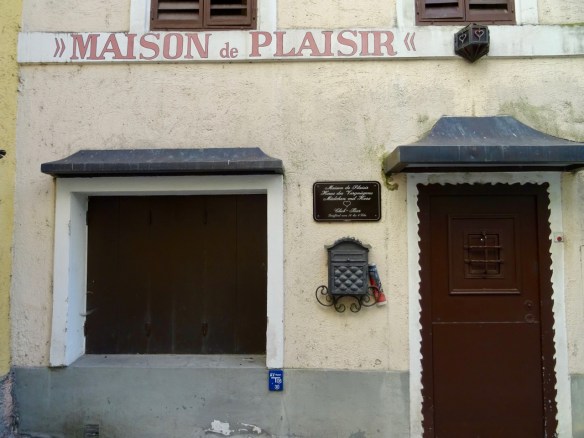
 As we explore some of the side streets, we pass this ‘House of Pleasure’, and yes, it seems to be that kind of pleasure!
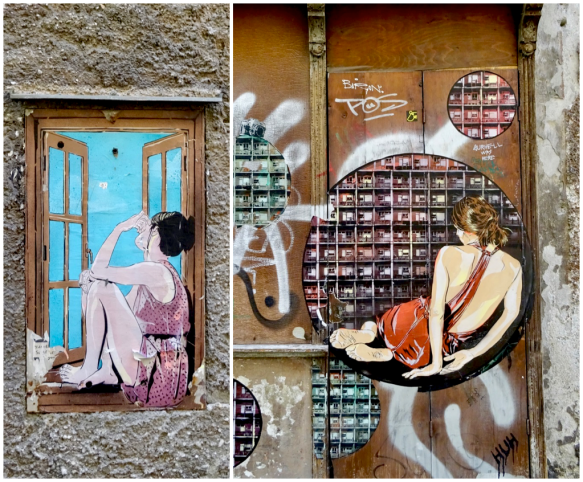
 We also see some graffiti that I quite like. Note how the little ledge is incorporated into the image. Very clever!
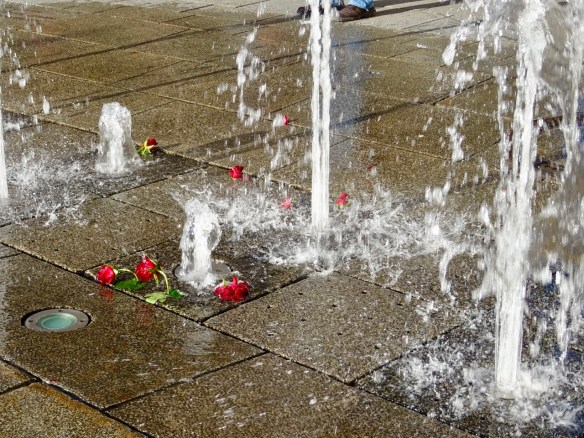
 This little sidewalk fountain had red roses stuck in small holes in the paving. I wonder why?
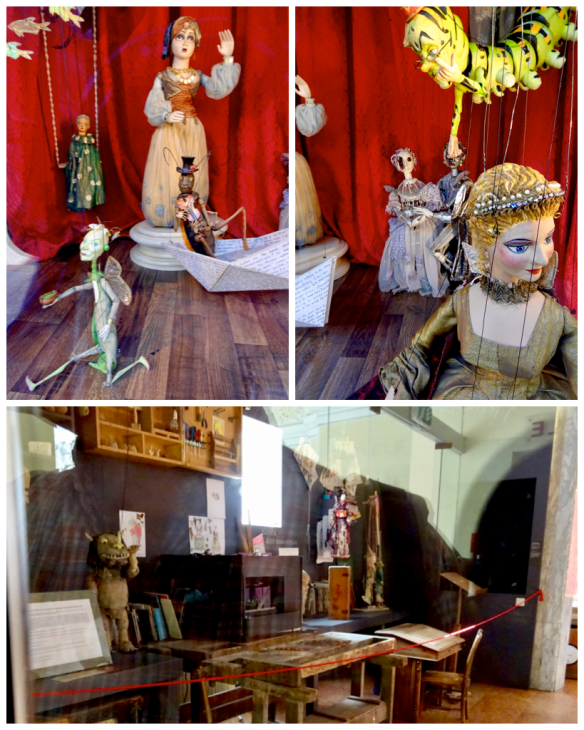
 We check out the Marionette Theatre, but unfortunately there are no performances while we are here.
 While we wait for the bus home I notice an empty store front where someone has written on the glass windows with a black felt pen. It is an interesting different sort of graffiti.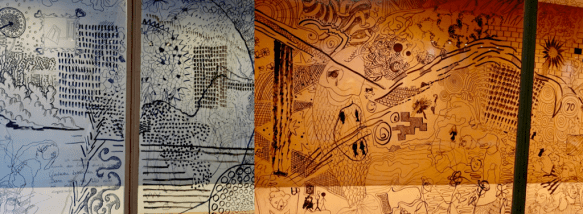
 trudymason.com