Hi, as you may have noticed, I have fallen behind on my blog posts. We have had several busy days and I just haven’t had the energy to work on a post late in the evening. We are actually in Budapest right now, and it is raining for a day or two so I am going to try to get at least a little bit caught up.
Day 69, Saturday, November 2, 2019
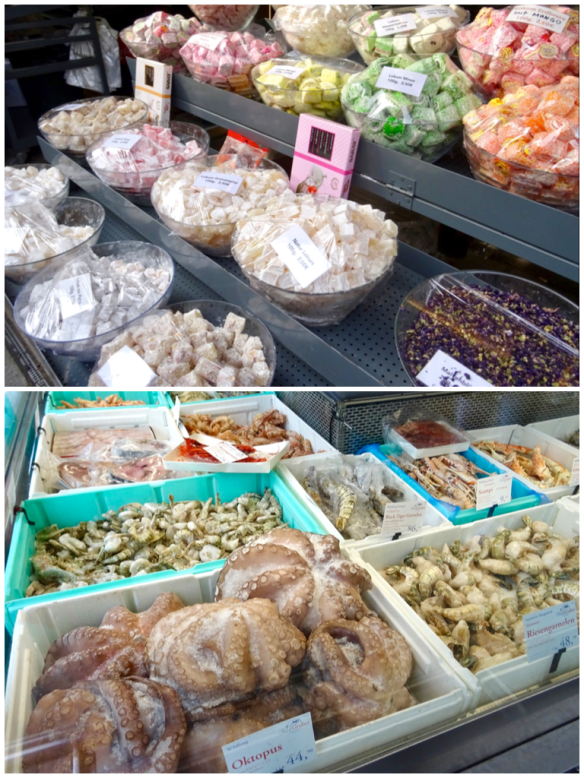
Bob found another walking tour online so we are off to check out Vienna this morning. First stop is the Naschmarkt, a local outdoor market that has been operating on this same site since the 1500’s! There are colourful stand with fruits and vegetables, olives and antipasto appetizers…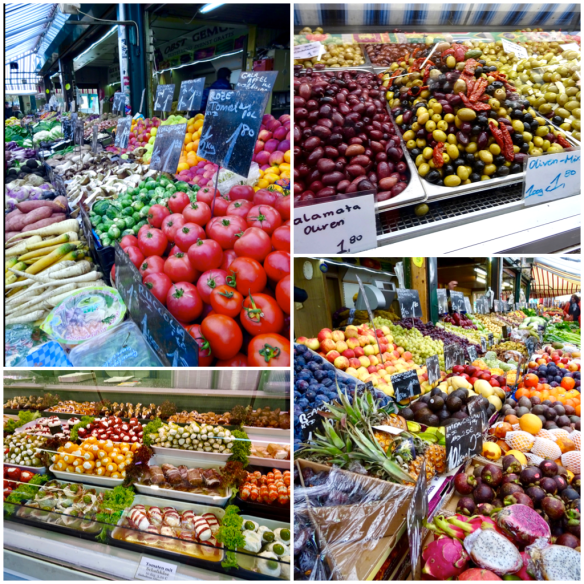 as well as all sorts of candies, dried fruits and some rather exotic looking products in the fish market section.
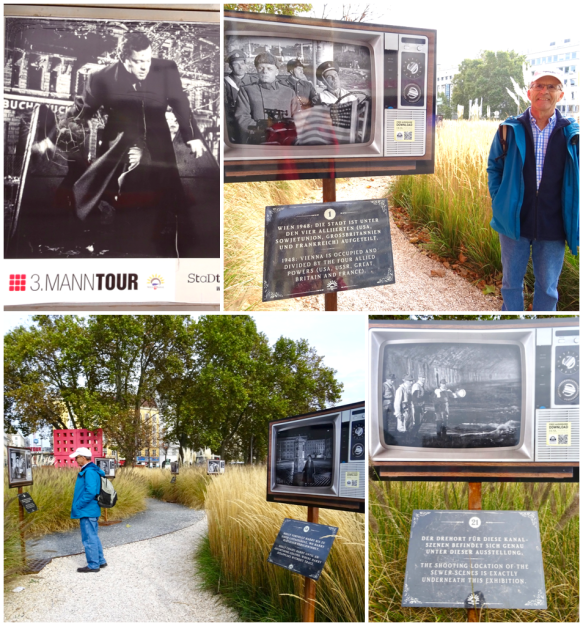
 Near the Naschmarkt we find this interesting tribute to the Orson Wells movie, The Third Man. It is possible to tour the sewers, right under our feet, where part of the movie was filmed, but we pass on that today.
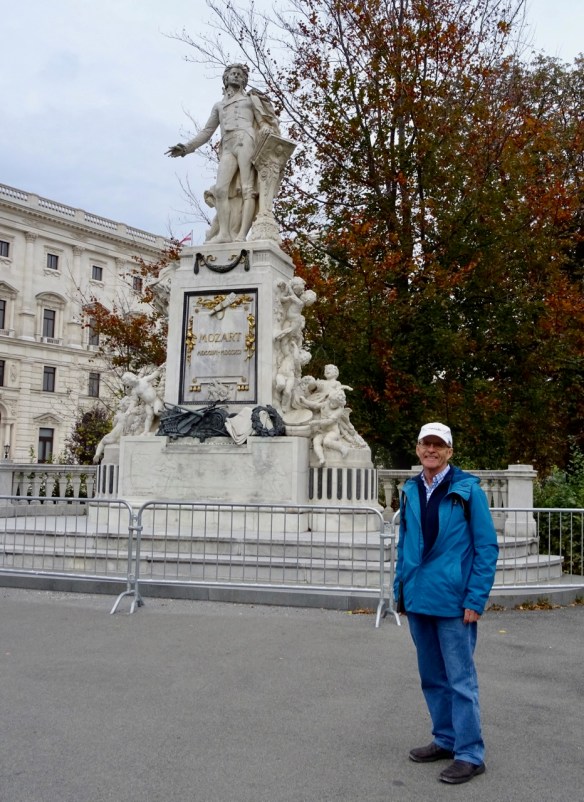
I take a photo of some wedding dresses in a shop window and a short time later we see a bride and groom. The bride seemed annoyed and her pretty dress was getting all dirty as it dragged along the street. I wanted to tell her attendants to pick up the back of her dress! Not my idea of a nice way to spend part of your wedding day, hiking along the streets towards a place for your photo shoot.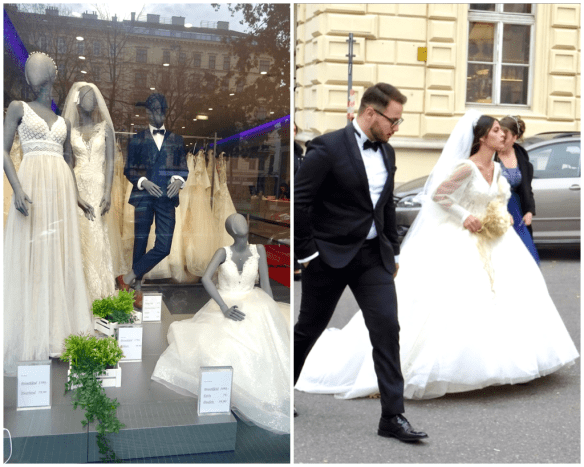 There is a statue of Mozart, right beside a Hop On Hop Off bus station. We sit and have our picnic lunch and watch tourists jump off the bus, snap a photo from quite a distance, and then jump back on the bus to get to the next destination. This sure isn’t the way we do it! We sight-see very slowly and leisurely, stopping often to look at the sights, people watch and just enjoy where we are and what we are seeing. We are very slow tourists!
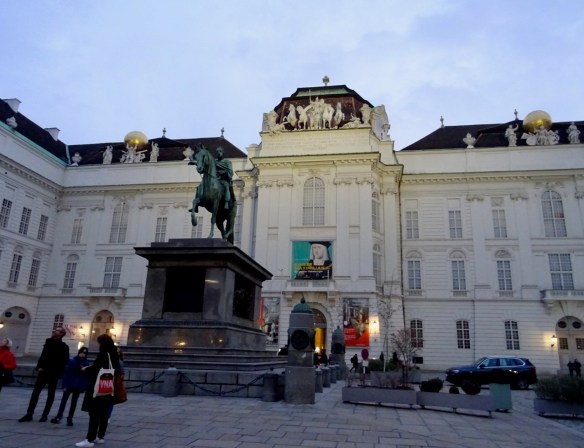
 This equestrian statue of Emperor Joseph II, erected in 1795 is the oldest equestrian statue in Vienna.
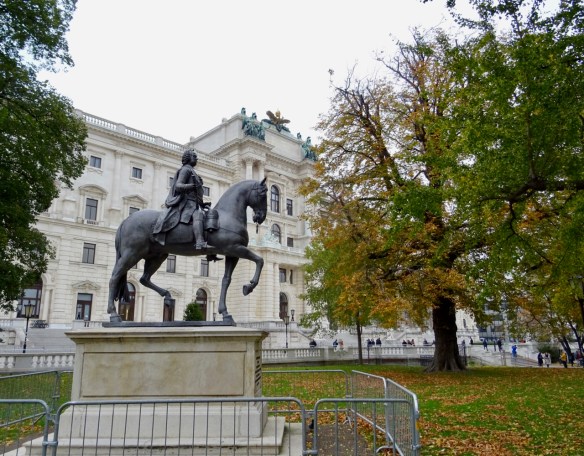
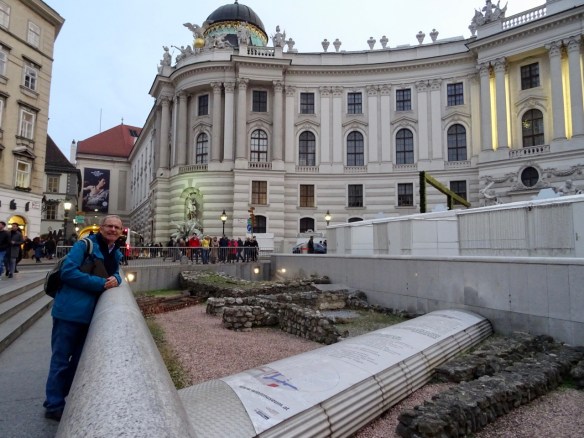
It stands in front of the Neue Burg (New Castle) Wing of the Hofburg Palace. Notice that part of the palace is still in need of cleaning. 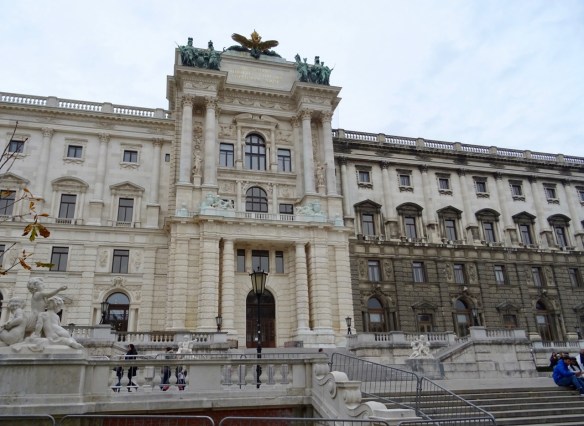 We make our way to the Albertina Museum, which we will visit another day. There is a Durer Exhibit I am looking forward to seeing. This is a street view from a corner of the Albertina.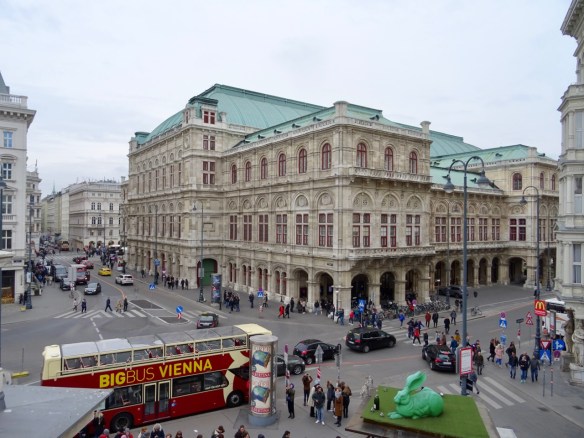
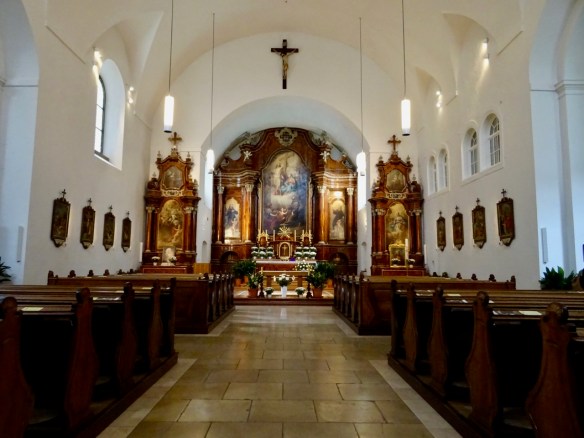
The Gates of Violence remembers victims of all wars and violence. The statues are a montage of wartime images: clubs and WWI gas masks, a dying woman birthing a future soldier, victims of cruel medical experimentation, and chained slave laborers. It is on the site of an apartment block that was destroyed in an air raid during the Second World War. Hundreds of people had sheltered in the apartment basement and their bodies were never recovered from the rubble of the destroyed building.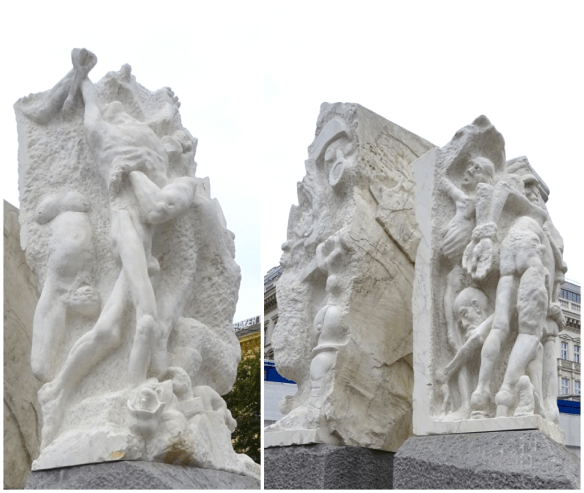 Of course there are several churches on our walk, and we visit all of them!
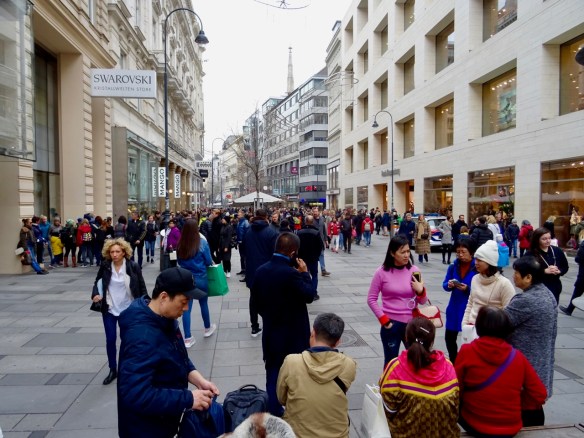
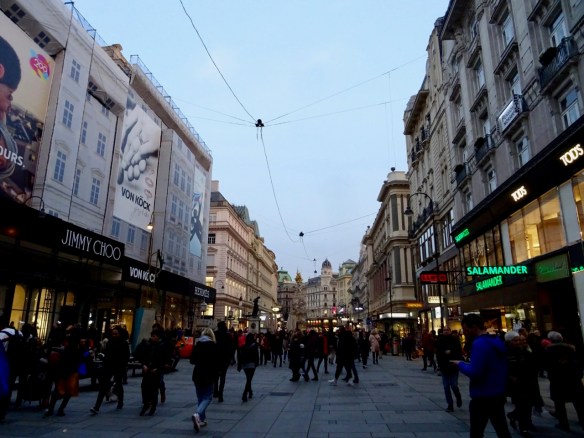
 This broad pedestrian Kärntner Strasse is packed with people and lined with shops and places to eat. This road dates to 97AD when it was a Roman road that went from Vienna to the border of Italy and Slovenia, and eventually all the way to St. Petersberg, Russia!
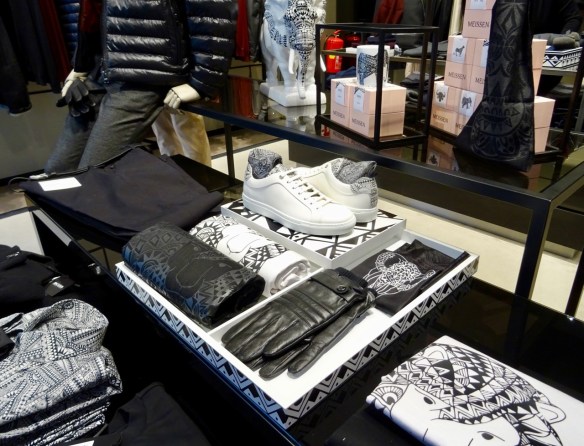
 I thought that the Zen-Doodle like designs on the clothing in this shop were interesting.
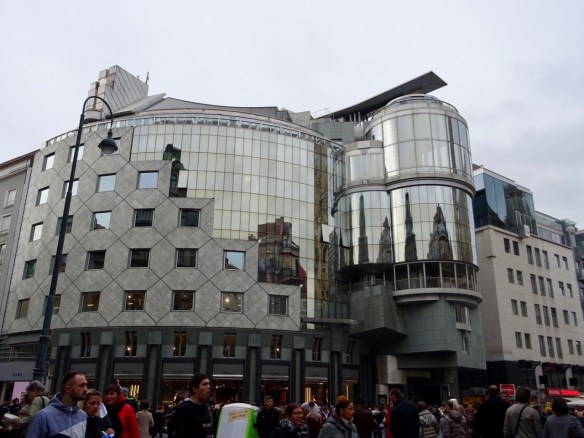
  The modern Haas House offers interesting reflections of St. Stephen’s church.
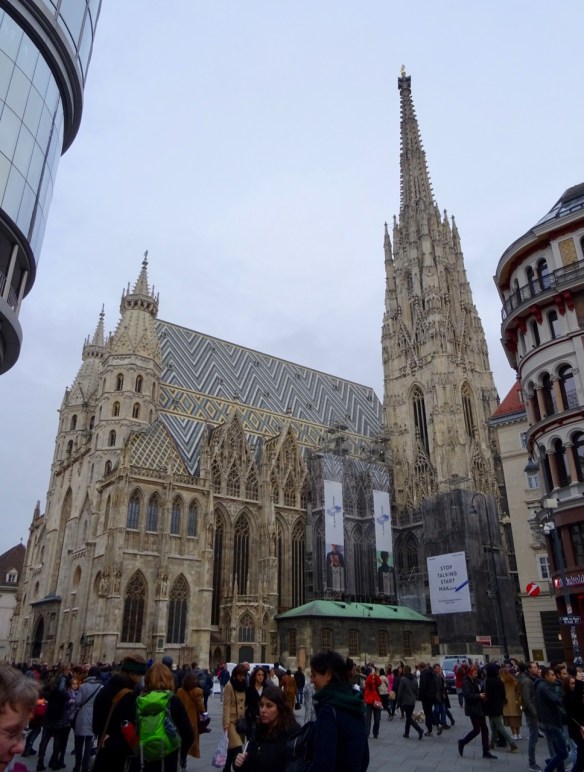
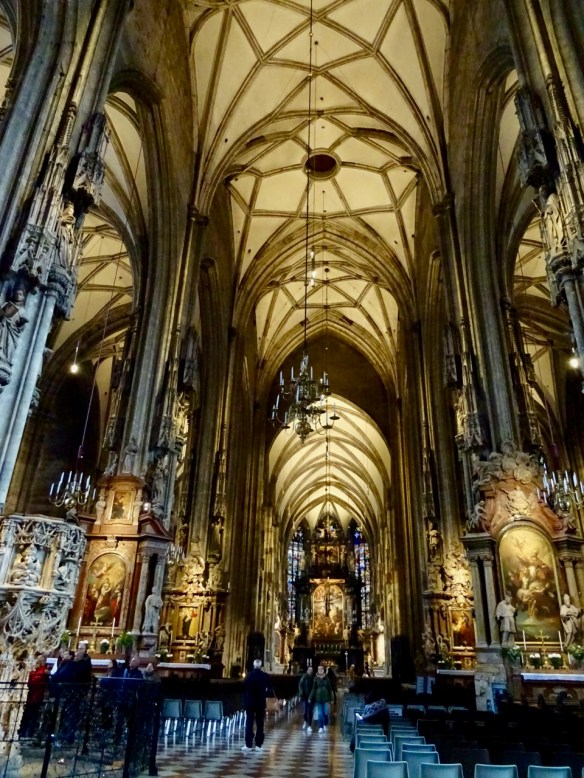
 The St. Stephen’s Cathedral is huge, and ornately decorated, outside…
  and inside.
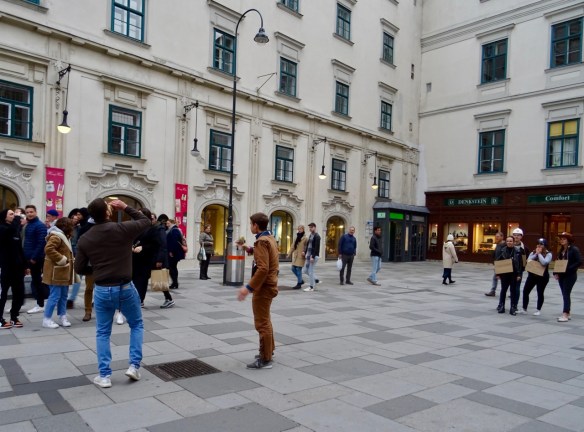
 Just behind the cathedral we see a group of people taking part in a drinking game. The guy in the blue jeans drank his big can of beer twice as quickly as the guy dressed in brown!
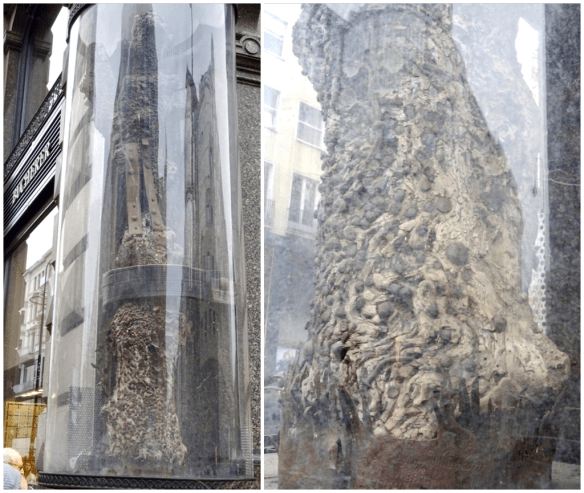
 The Stock im Eisen is part of a tree that has hundreds of iron nails pounded into it and dates from 1440. No one is sure why the nails were pounded in but it is thought that is was for good luck. It is located on the corner of a building and is protected behind plexiglass.
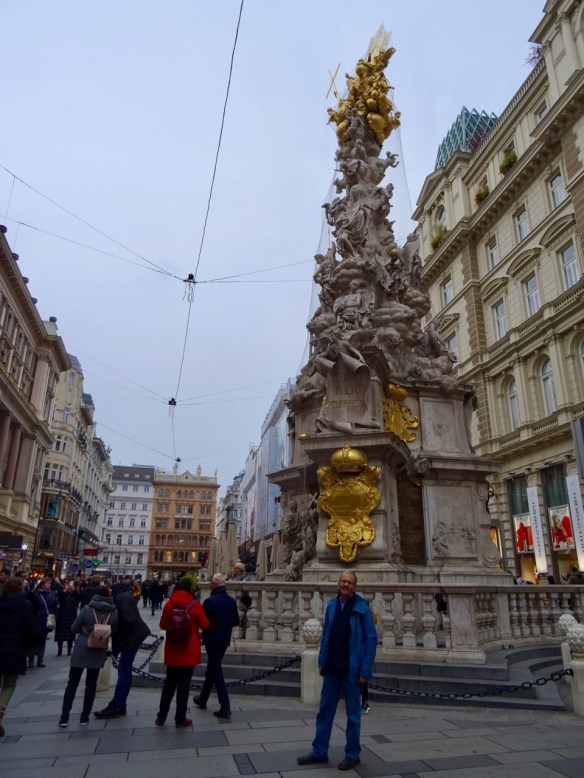
 The Holy Trinity Column, located on a street in the inner city of Vienna, was erected after the Great Plague epidemic in 1679. It is one of the most well-known sculptural pieces of art in the city.
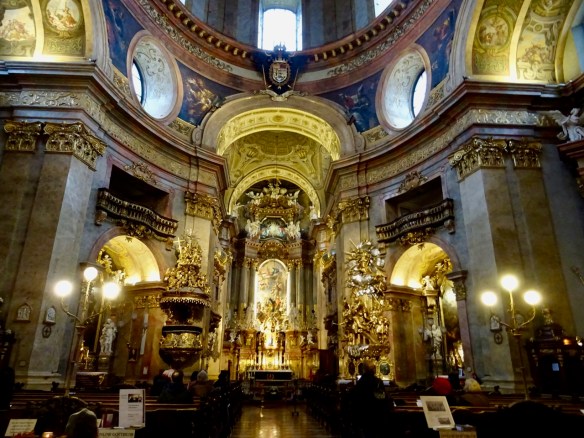
 St. Peter’s Church has an oval dome and its open layout makes it feel bigger than it actually is.
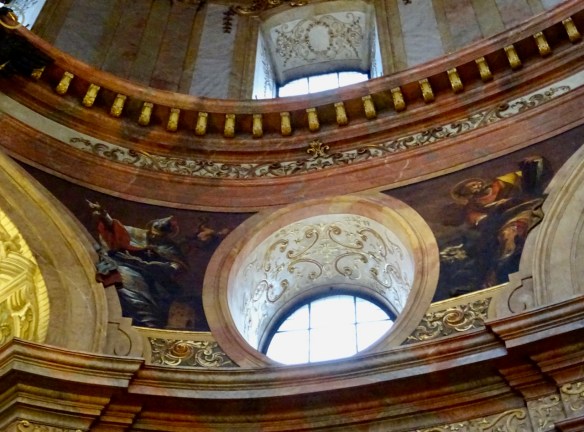
 I thought it interesting the way the paintings on the dome extended over the sculptural trim around the round windows.
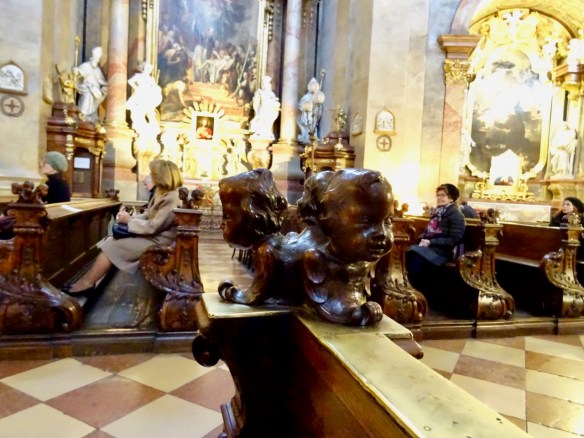
 The end of each pew is beautifully carved with different finials of three children’s heads. We sat for quite a while listening to the choir practicing.
  Back outside, there are interesting details everywhere I look, like these sculptures holding up balconies.
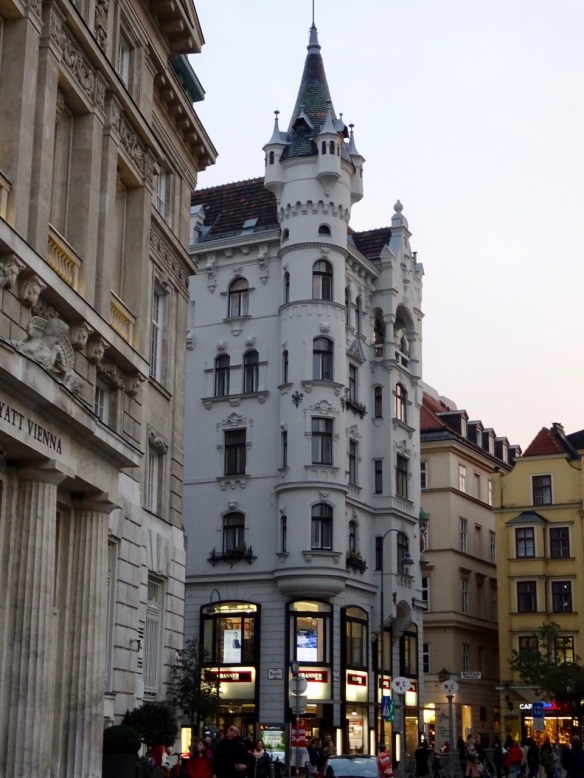
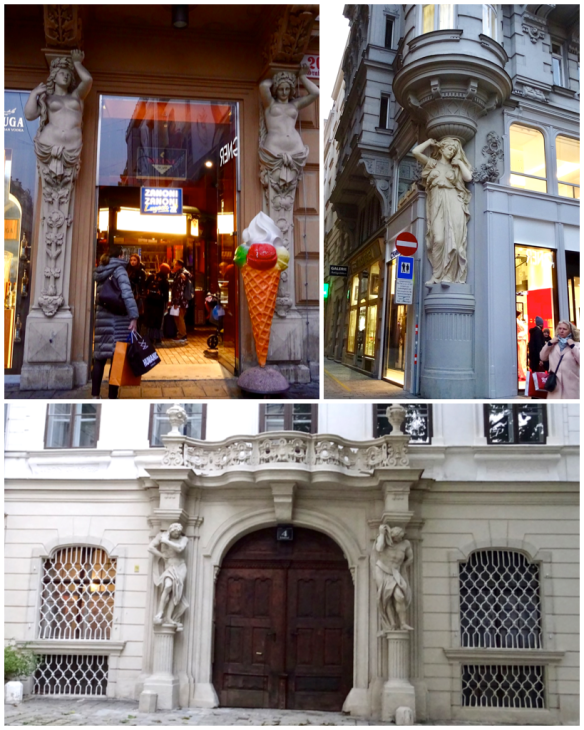 I loved this building. It looks like a castle. I wouldn’t mind living here!
  Back out on the Kärntner Strasse, there are lots of famous brand name shops, like Jimmy Choo…
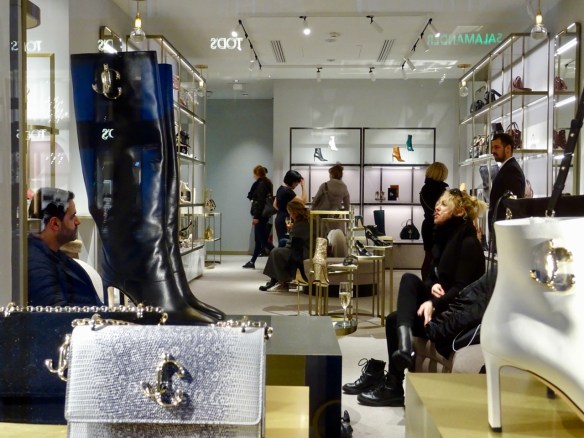
 where the customers are served champagne as they shop! Sigh…an experience I am sure I will never have!
 There are Roman ruins…
  and beautiful statues on the corners of buildings.
 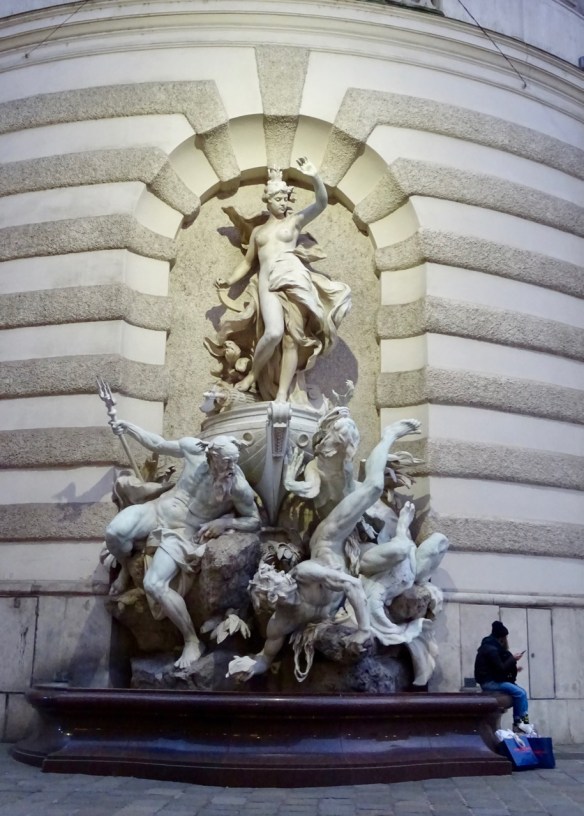 This is the building that houses the Austrian National Library, the Österreichische Nationalbibliothek, as well as the Spanish Riding School with the world famous Lipizzaner stallions. We will visit both of these on another day,
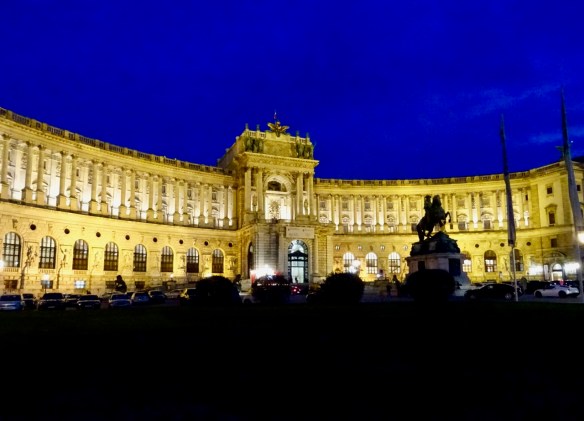
  It gets dark earlier now, at about 5;30. The buildings look pretty all lit up. This is the other side of the Neue Burg Wing of the Hofburg Palace. We saw the backside earlier in the day.
 Time to head home. This subway station has colourful murals. Our apartment is very well located on the U6 subway line, so it takes less than a half hour to get home. Somehow even our ‘easy’ days end up being quite long. We left before noon and it will be after 7:00 by the time we get home.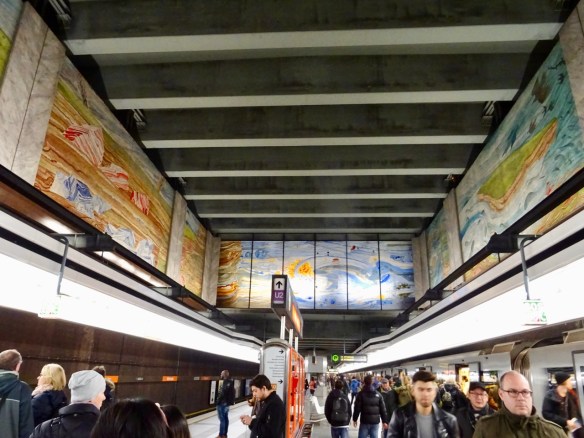
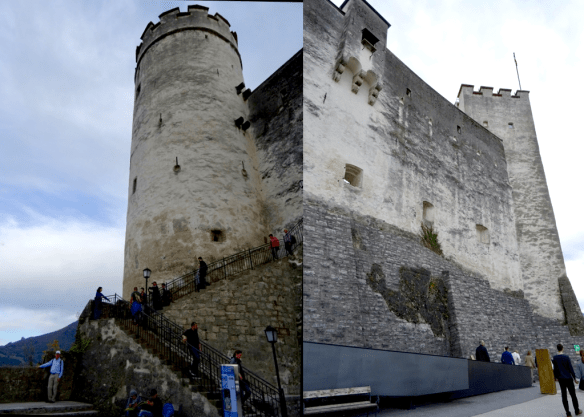
 The funicular makes short work of the steep climb to the fortress. The Hohensalzburg Fortress (Salzburg Fortress) was built in the 11th century by Archbishop Gebhard and is the largest unconquered fortress in Europe. The castle is 150 meters wide and 250 meters long, and the oldest part is over 900 years old.
  First stop at the Fortress is the top of one of the guard towers for a great view towards the mountains…
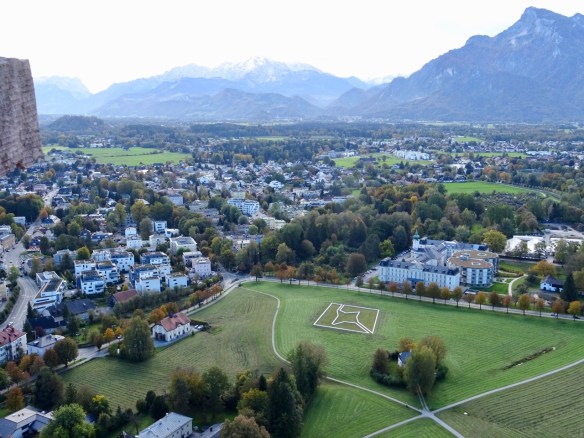 overlooking the fortress…
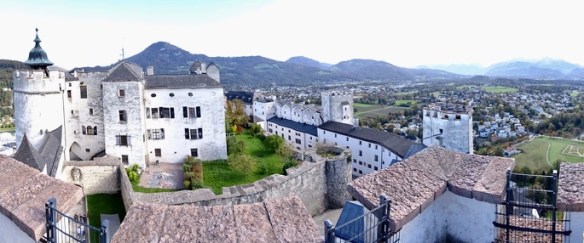 and of the old town of Salzburg. That big square is where the Bio Fest was held yesterday. You can see the golden globe with the man standing on top. Right behind the square is the Salzburg Cathedral with the big dome, where we went to hear the choir yesterday morning.
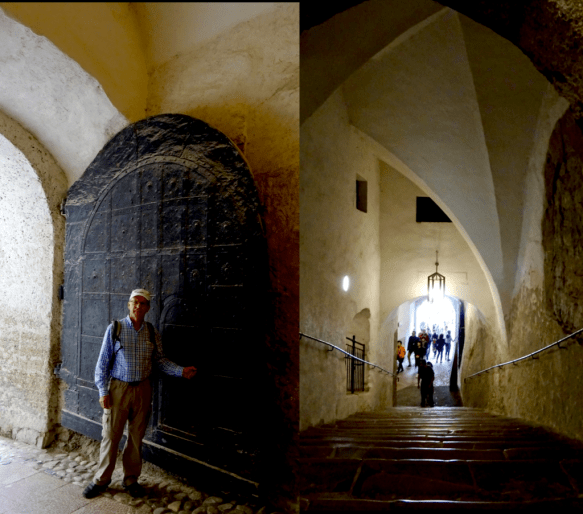
 There are lots of huge doors and interesting corridors in the fortress.
 This wheel was dropped on prisoners in order to break their bones and cause internal damage. If it didn’t kill them they were tied to it until they died an agonizing death.
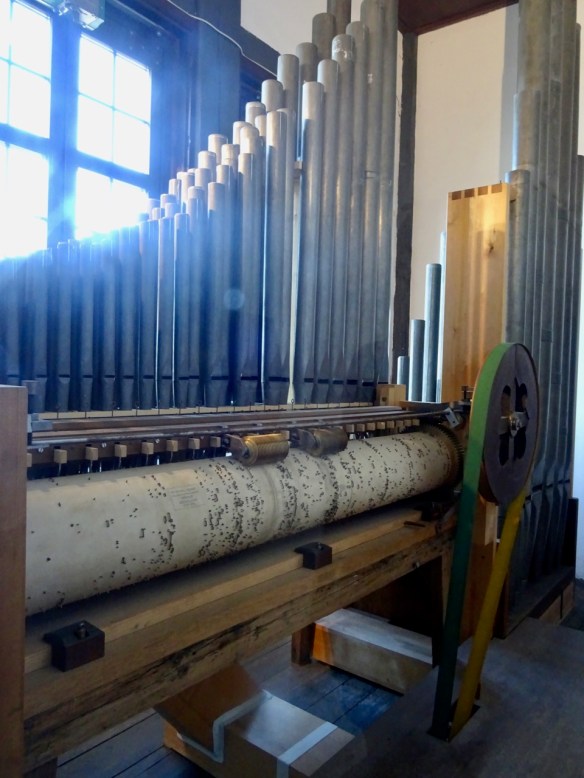
 The Salzburg Steir, or Salzburg Bull is a giant mechanical organ built in 1502. It still plays twice a day and is the last example of a Gothic organ to survive. The Stier is the oldest daily played automated musical instrument in the world. It plays melodies from Haydn and Mozart every day after the glockenspiel chimes.
  St. George’s Chapel has reliefs of the Apostles, made from marble.
 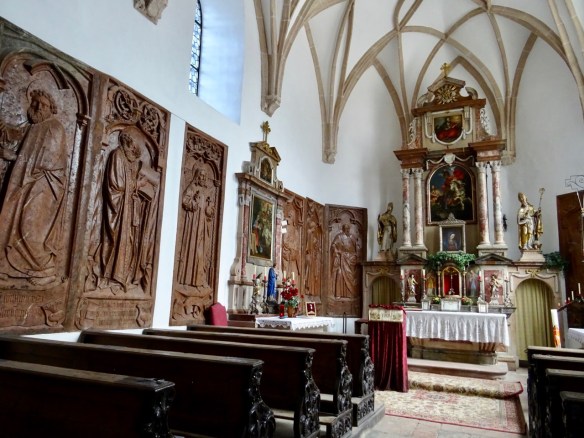 We find a bench and have our lunch in the courtyard by the chapel.
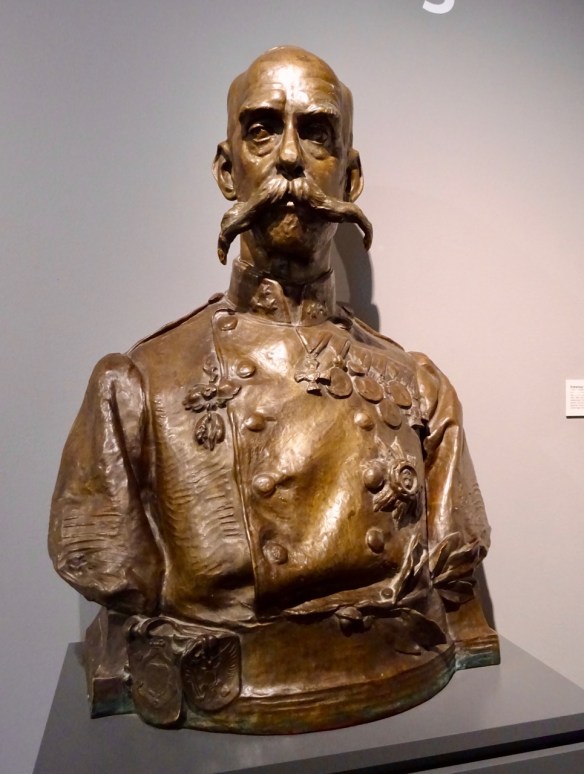
 The fortress served as a garrison for the Erzherzog Rainer Regiment in 1682. Erzherzog Rainer had quite the moustache!
 There were watercolour paintings of the regiment over the years which I quite liked, and I thought the paper twists which held a musket ball and gunpowder were interesting.
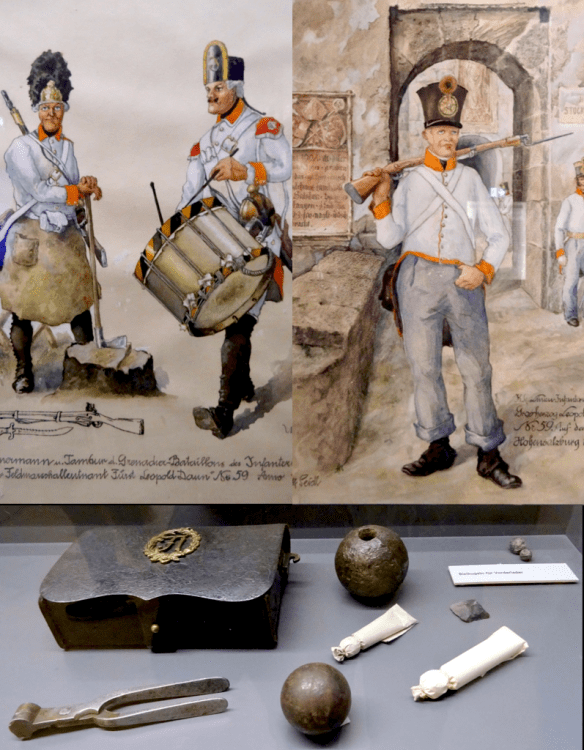 War has always been brutal…
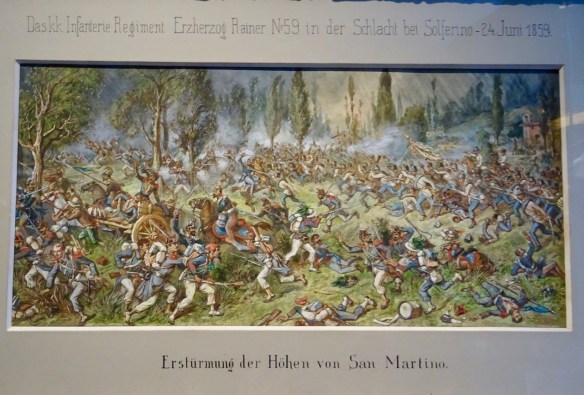 Austrian painter Karl Reisenbichler painted his fellow soldiers and portrayed images of death and suffering in WWI.
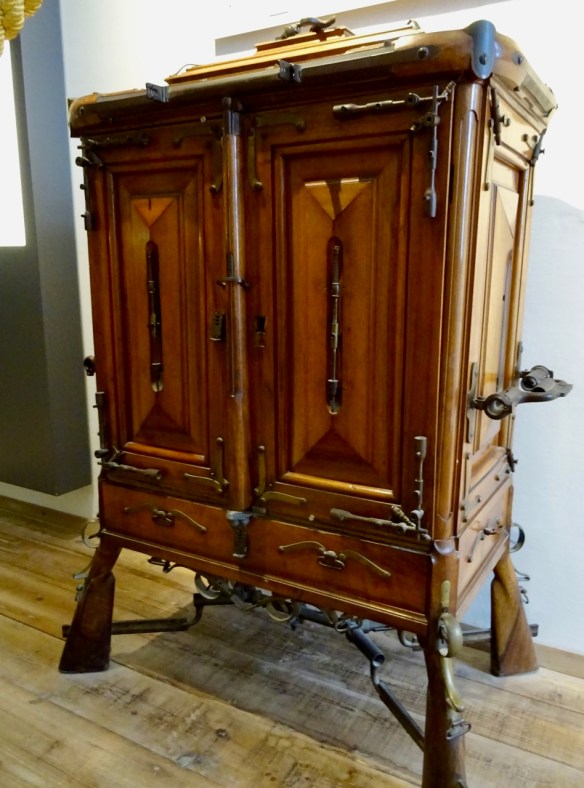
 We have seen a lot about war and death and suffering on this trip. I think that this cabinet is probably the best way to use rifles I have seen!
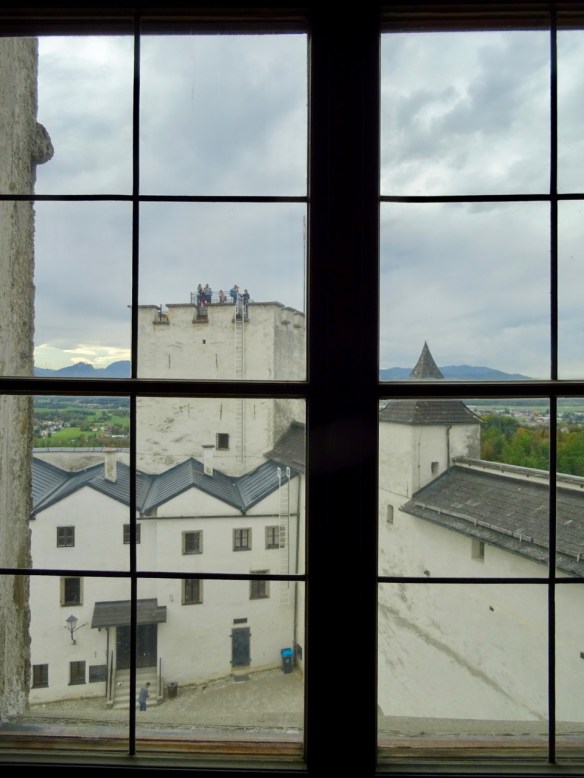
 This is a view of the fortress tower we climbed when we first arrived.
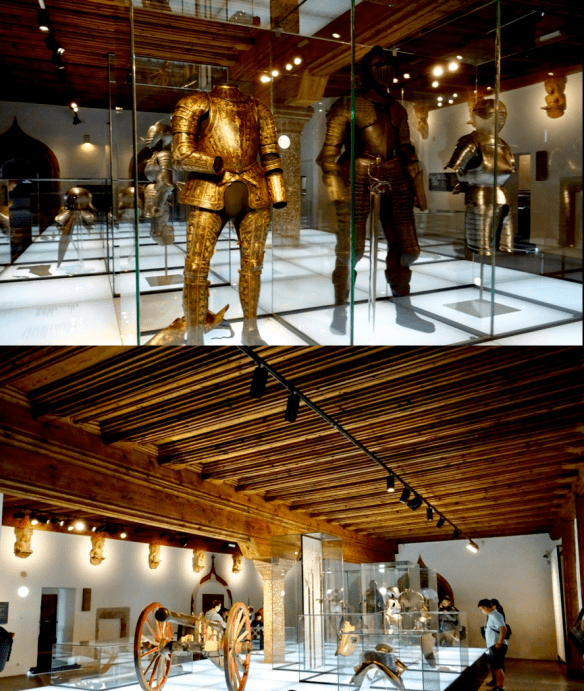
 These large fortress rooms with their huge timbered ceilings are now a museums for armour and other items used for fighting.
 This kitchen was reserved for food preparation for the Archbishop. Note the little round hole in the wall on the left that was used to throw out rubbish and drain water.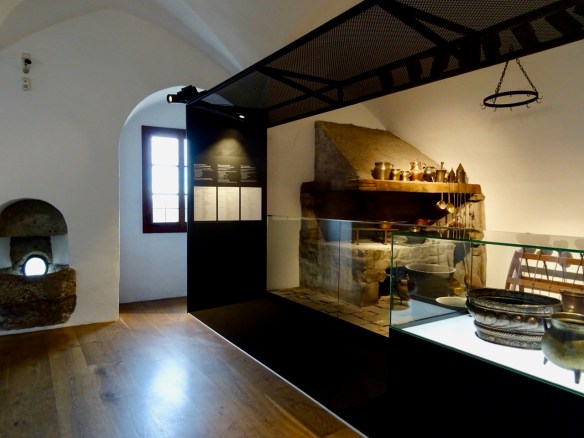
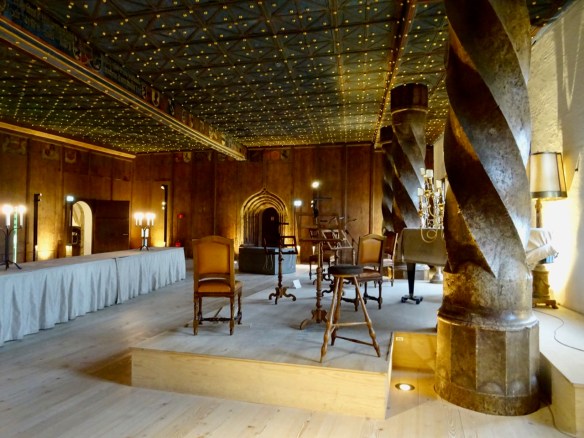
 The Regency Rooms are spectacular. This is the Golden Hall with its ceilings painted blue and studded with golden balls to represent the sky and stars. It served as a ballroom and today is used for recitals.
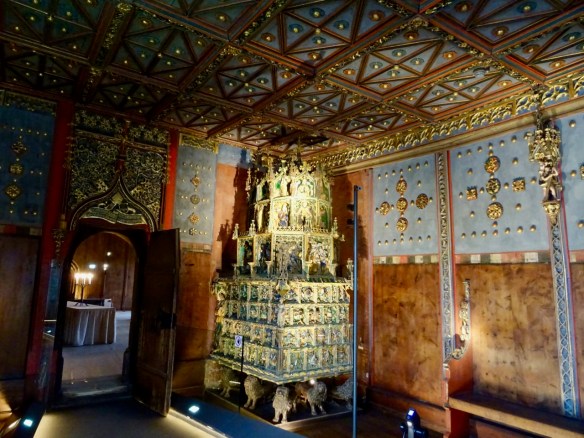
  The golden Chamber was a smaller sitting room with a small library behind the door in the corner.
 It has a magnificent medieval tiled stove that warmed this living space and reception room.
 Interestingly, the bedroom was not heated. We also learned that during the Middle Ages people slept in a semi-sitting position with many pillows because they believed that if they lay down they could suffocate. This position allowed them to have their weapons ready and attack any nighttime intruders. The doors were also low so that anyone coming in had to bend down when entering.
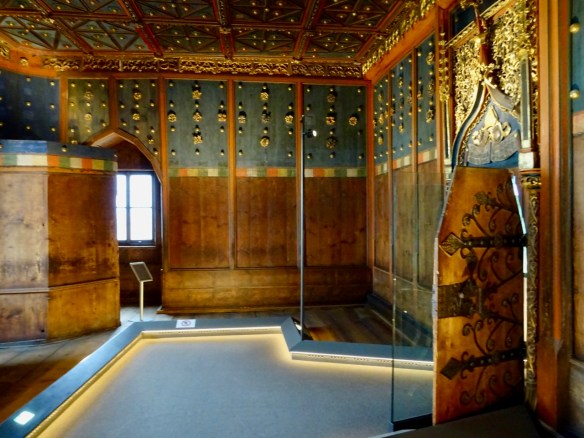 Behind this little door is the toilet, which was very modern for medieval times.
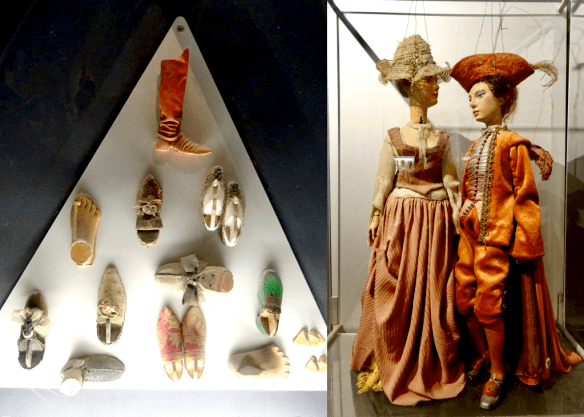
 As we leave the Fortress there is a small Marionette Museum. I love this collection of tiny feet and shoes, and thought that these two marionettes were the most beautiful, well crafted ones here.
 There is a wall of marionettes, and several dioramas…
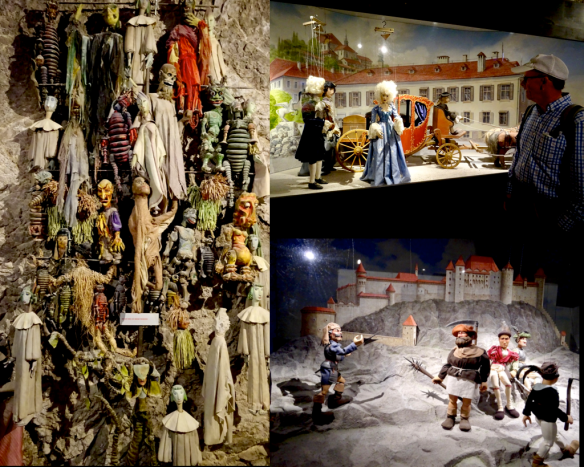 and of course, a Sound of Music scene.
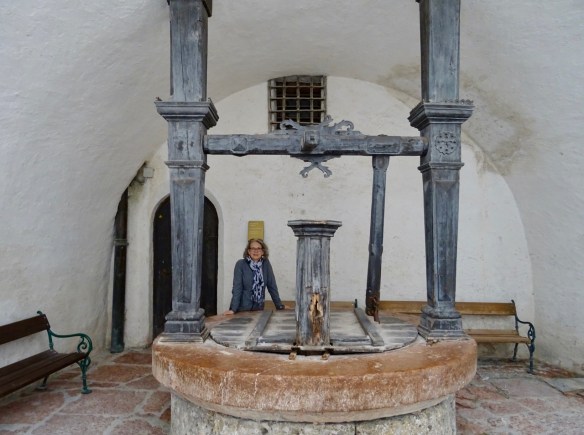
 I think this huge well was connected to the cistern that was built within the fortress walls. Now it is a giant wishing well.
 This is the entrance to the oldest part of the fortress, adjacent to the newest addition, an elevator.
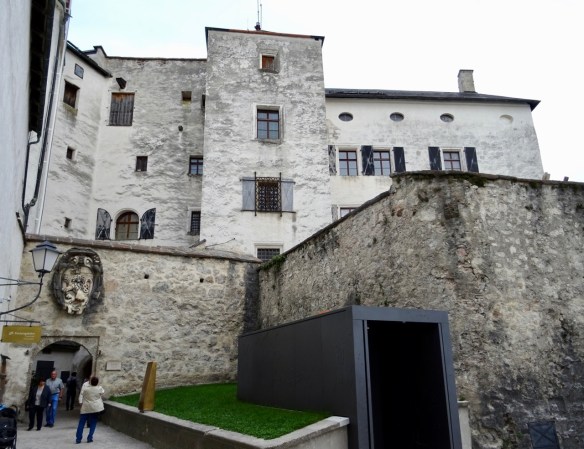 As we exit the fortress beside the bell tower, we have a view of the watch tower we climbed at the beginning of out visit. From the top we could not look over the sides to see how high up we were.
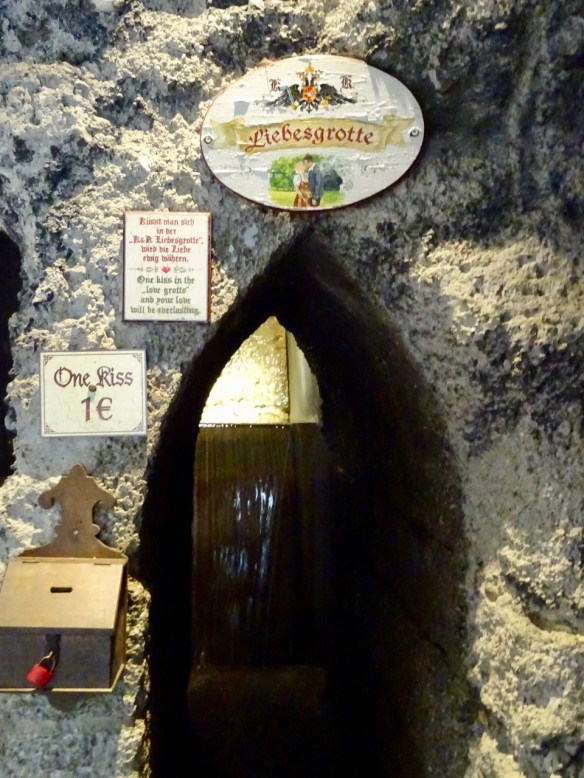
 At the bottom of the funicular we take advantage of the Love Grotto to ensure our love is everlasting!
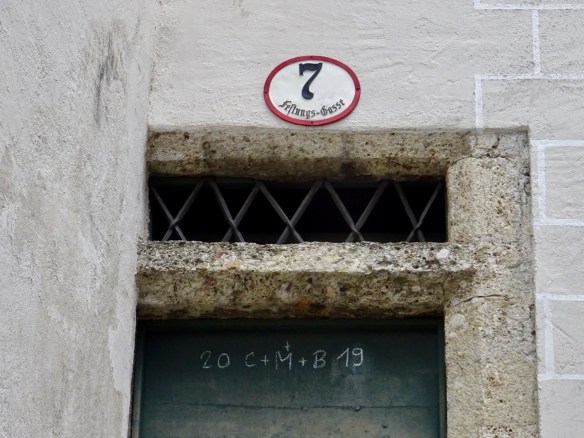
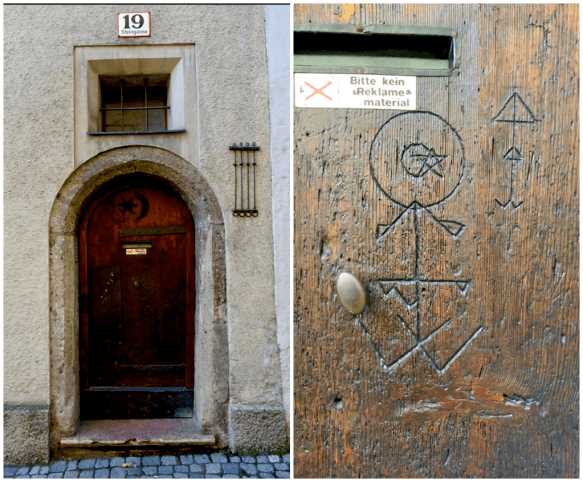
 We have seen these chalk markings on many houses, church doors, businesses and shops in Germany and Austria. I wondered what they meant. A quick search on my ‘magic library’ and I find this quote.
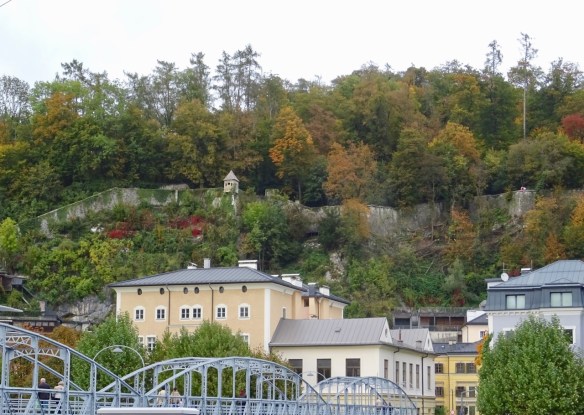
 On the bus home we can see the old medieval town walls.
 The ivy on a wall on our walk home looks like a giant red creature.
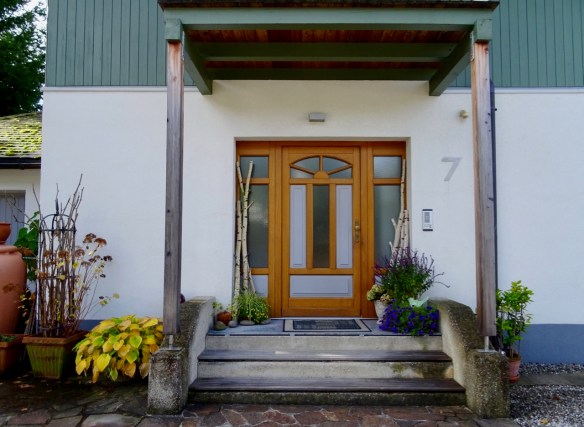 We can see Hohensalzburg Fortress high on the hill above Salzburg. Tour guide Bob informs me we will visit there on Tuesday.
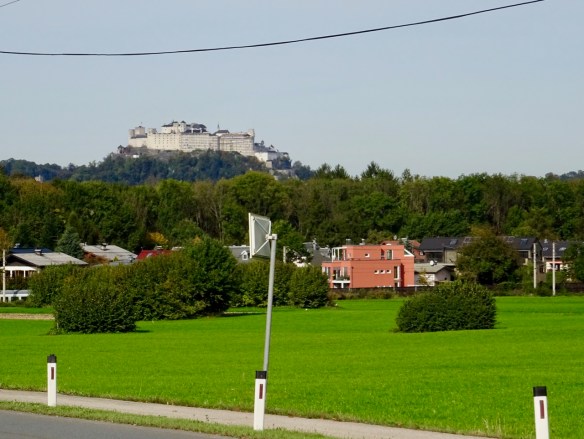 We can see beautiful green alpine meadows in the hills above Salzburg.
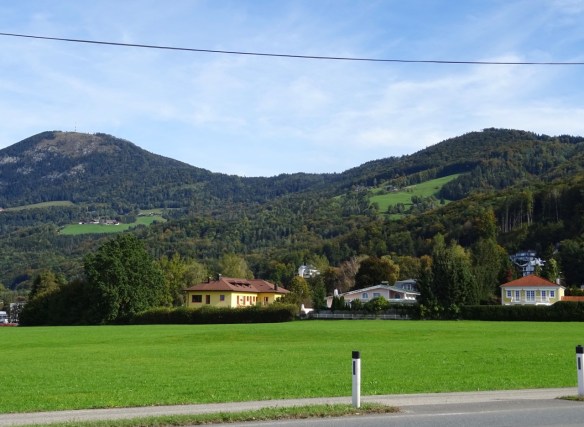 We pass dairy cows right in town just a couple blocks from the train and bus station. The advertisement above the cows gave me a chuckle.
 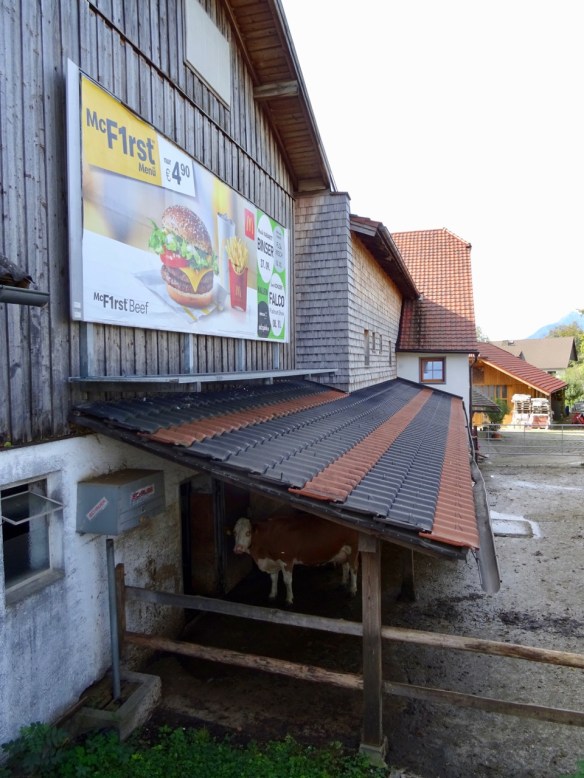 We pop into a downtown church when we get off the bus. It looks like a community church from the outside, with big cheery murals on either side of the door. The inside is much less ornate than many of the churches we have visited and there is lots of information on community programs and events. Nice to see.
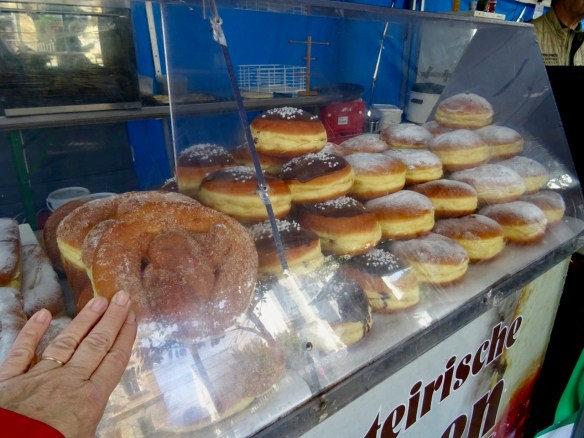
 We stop at some food stands selling wine and beer, and have a bit to eat. These giant doughnuts look interesting but we pass. They are as big as small plates!
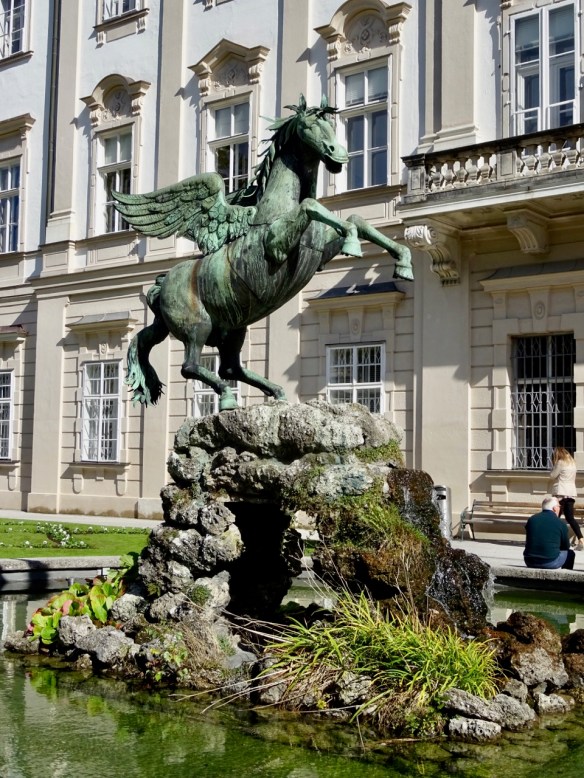
 The gardens around the Mirabell Palace are beautiful. In the movie ‘The Sound of Music’ Maria and the children dance around this Pegasus fountain and sing ‘Do Re Mi’.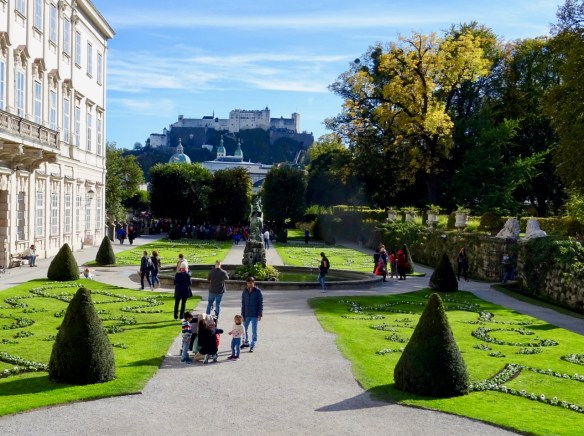
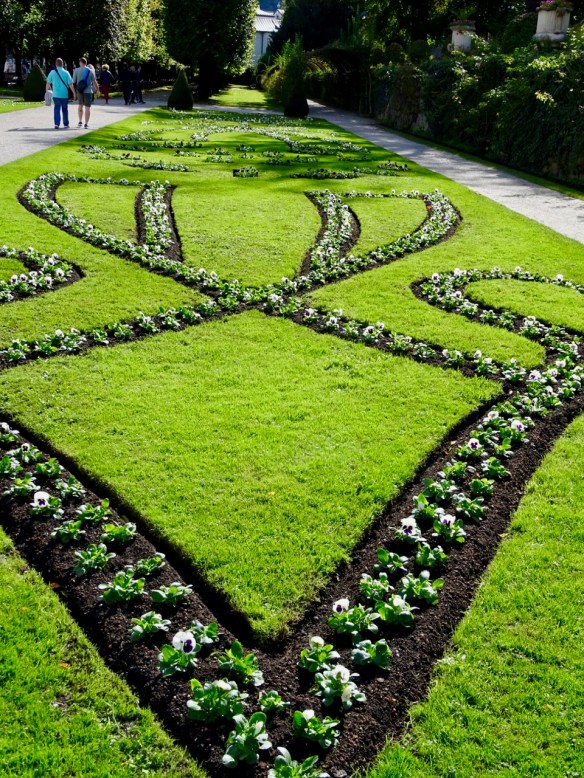
 The grass contains elaborate knot patterns decorated with flowers. These are freshly planted pansies, hundred of dozens of them!
 The Zwergerigarten is a surprise. It is the oldest ‘Dwarf Garden’ in Europe and was built in 1695. Yes, a Dwarf Garden! We had no idea there was such a thing.
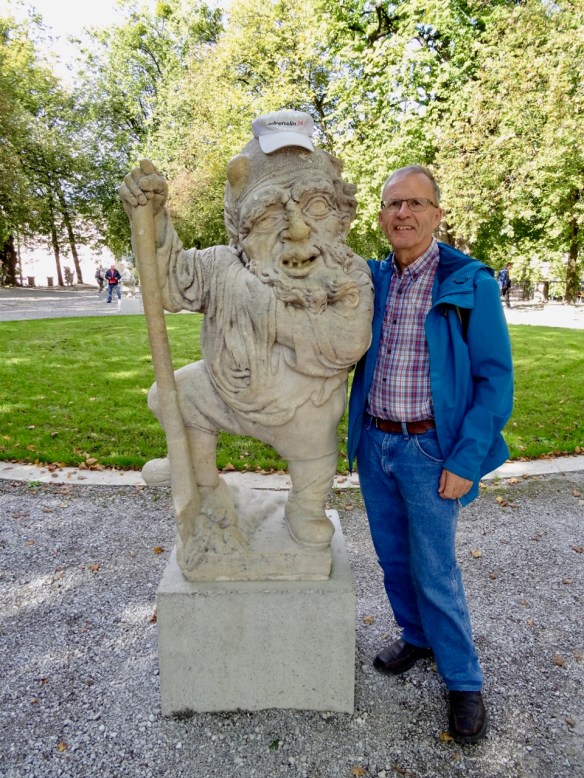
 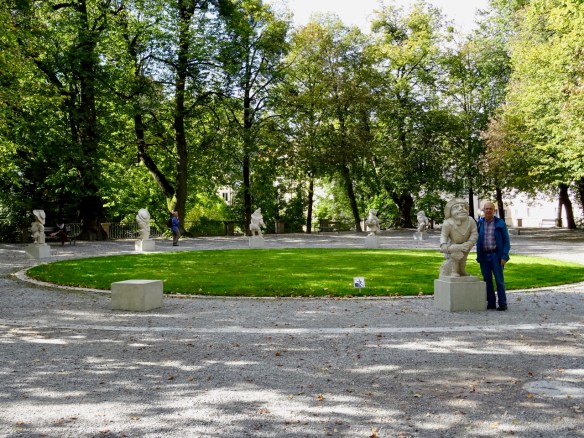 This fellow insisted on trying on Bob’s baseball cap!
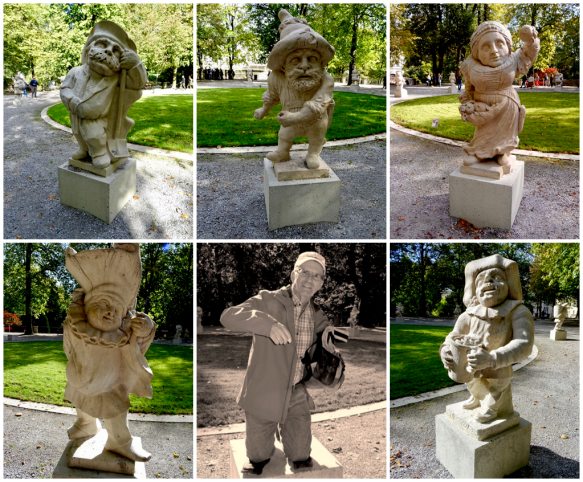
 The collection of 28 marble dwarf sculptures was sold at auction in 1811. 17 of the sculptures have been recovered and put back into the park in their original positions. Here are some of these curious sculptures.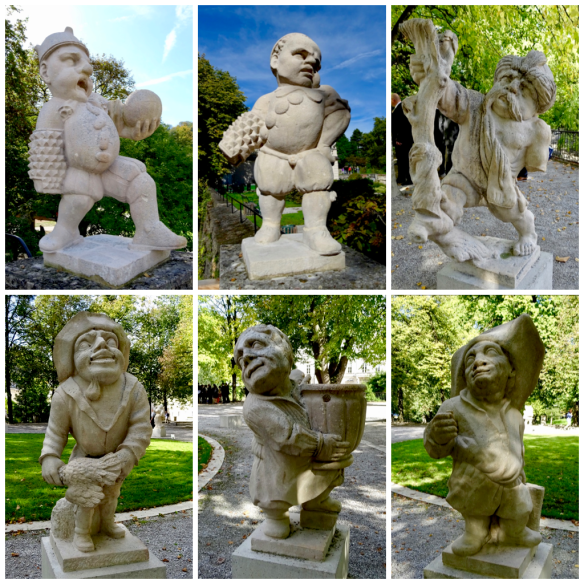
 We have tea and cookies in the garden and then I draw for a while.
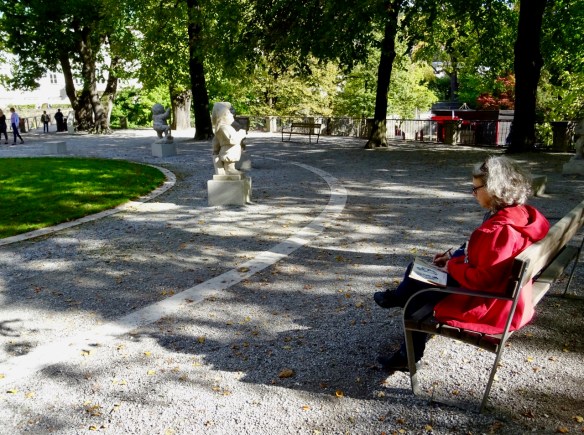 I used a new brush pen that I got just before we left for holidays. I think it is going to take a while to get used to. I used a water brush to create value with the water based ink in the pen.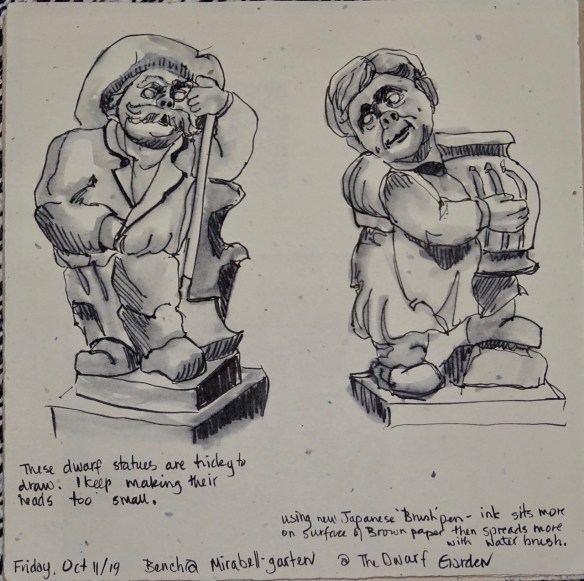
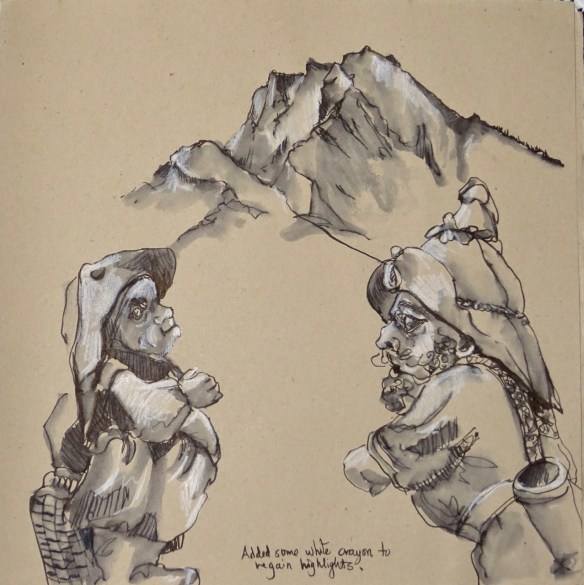 Walking through the garden there are some more knot designs created with flowers in the grass.
 There is a small Orangerie…
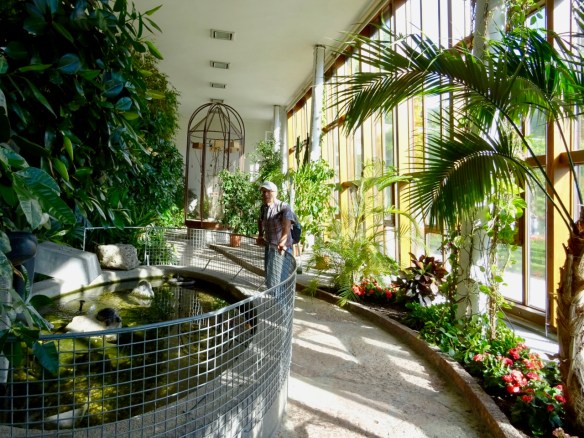
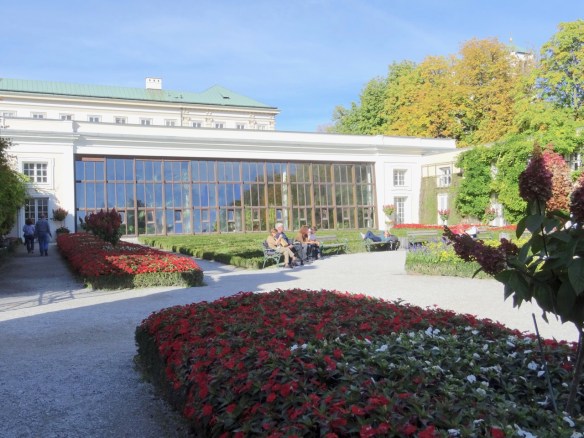 with some goldfish, a turtle and a few birds.
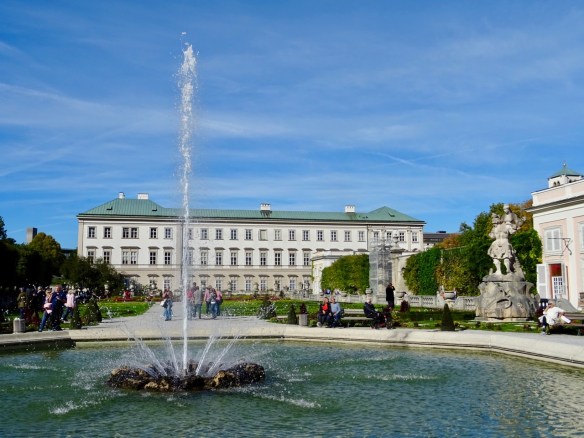
 Looking back towards the Mirabelle Palace.
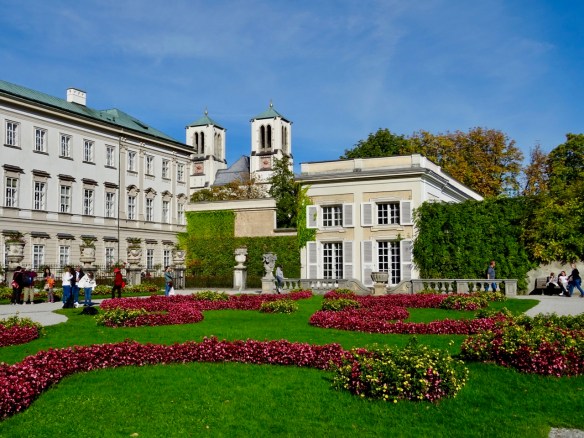
 The two towers in the background belong to the church we visited earlier.
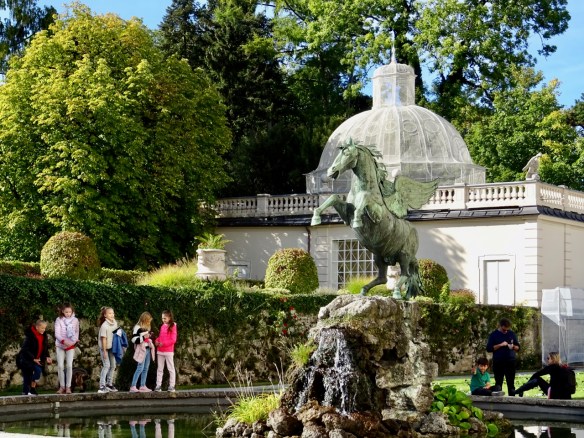
 These young girls were enjoying the Pegasus Fountain, and I enjoyed watching them.
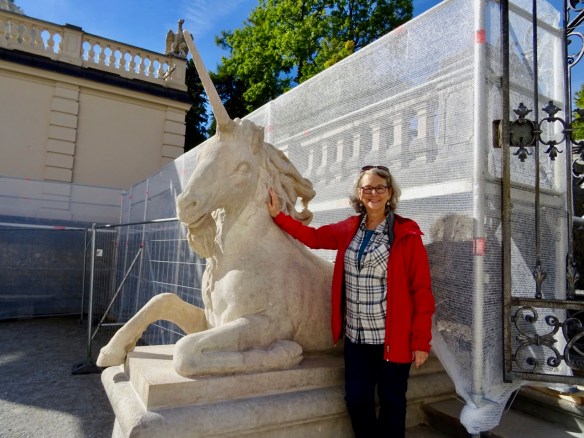
 There seems to be several unicorns here in Salzburg.
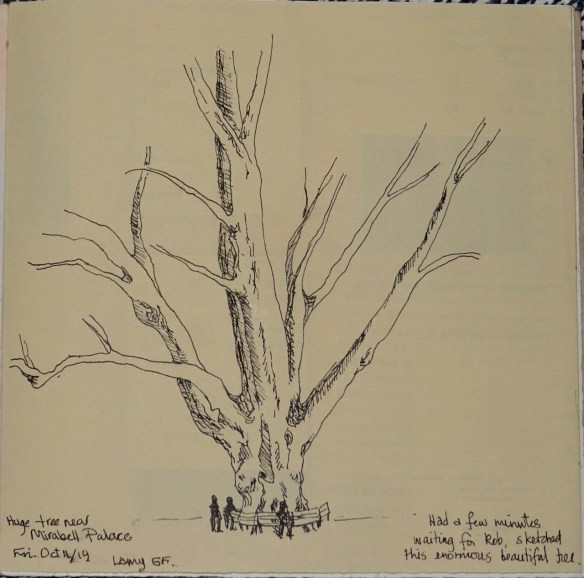
 I have time for a quick sketch of a beautiful enormous tree while waiting for Bob.
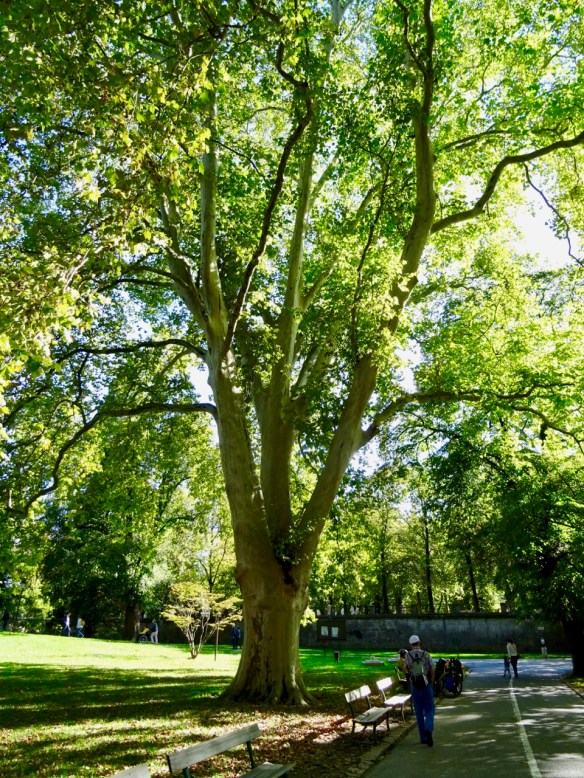
 There are a lot of big trees here.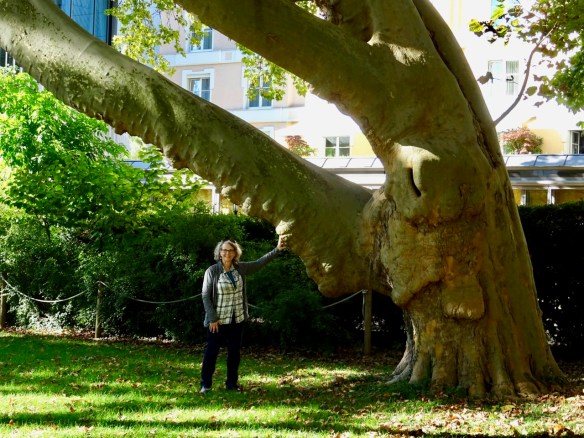
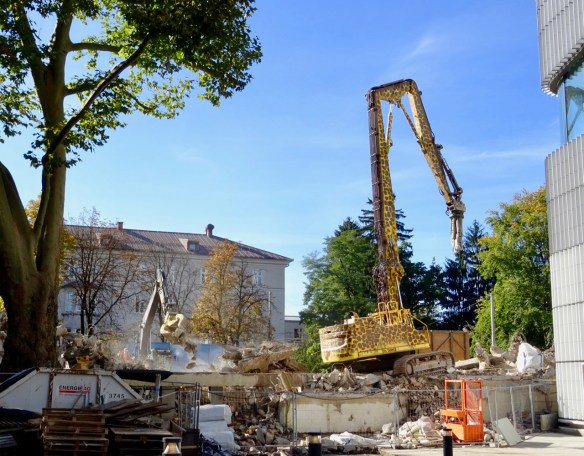
 We have never seen a giraffe quite like this before!
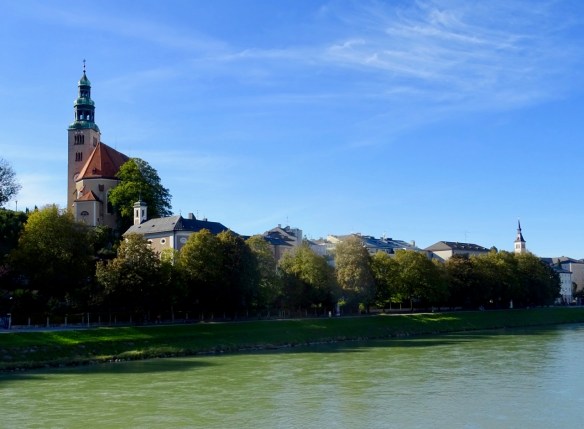
 We walk along the river heading towards the Old Town.
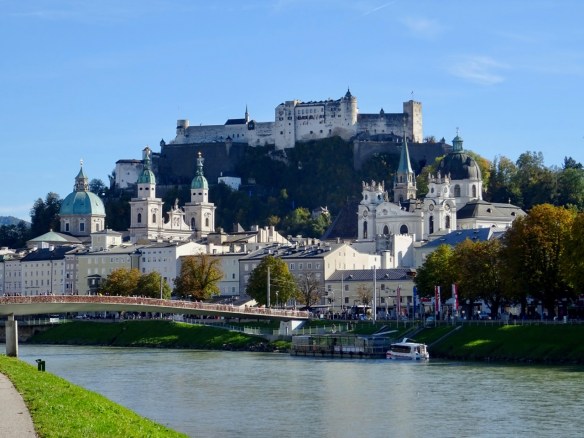
 The Old Town and the Castle on the hill make a striking view.
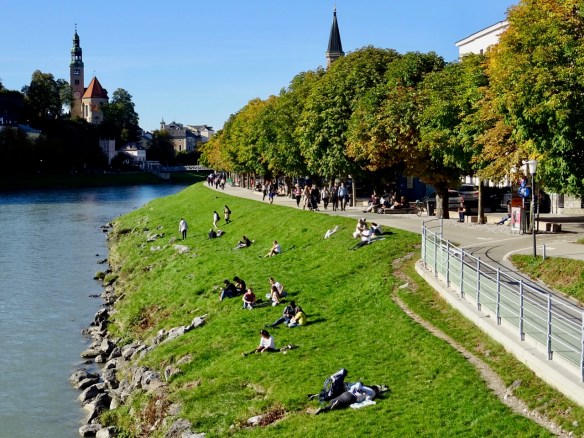
 People are out enjoying the warm weather.
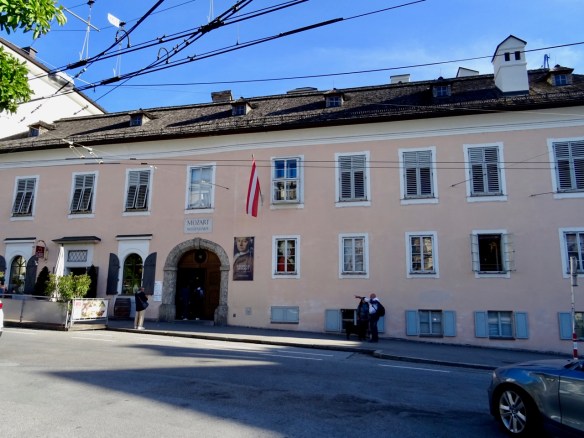
 This is the house that Wolfgang Amadeus Mozart lived in with his family until he moved to Vienna in 1781. His family occupied the entire top floor. We were looking for a free film and somehow ended up in the museum instead, so we had a quick look around.
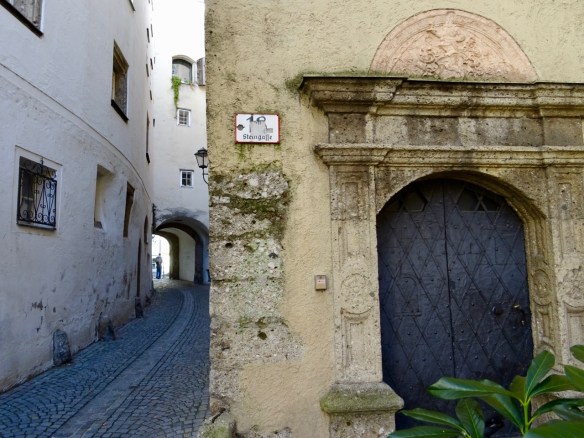
 This street was the inspiration for the song ‘Silent Night’. It is a long street so no idea exactly where this inspiration transpired.
 This door had interesting marks scratched on it that looks very old.
 Here is the entrance to the “Silent Night’ street.
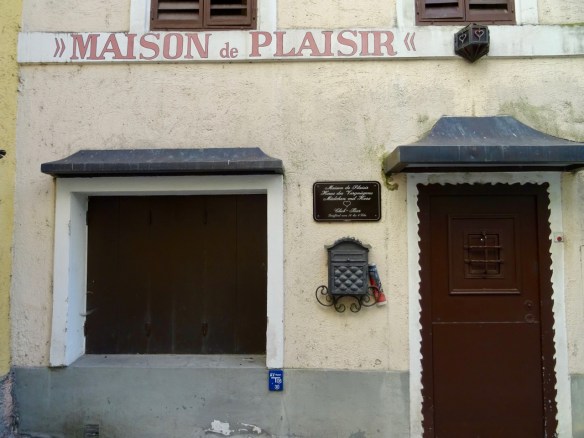
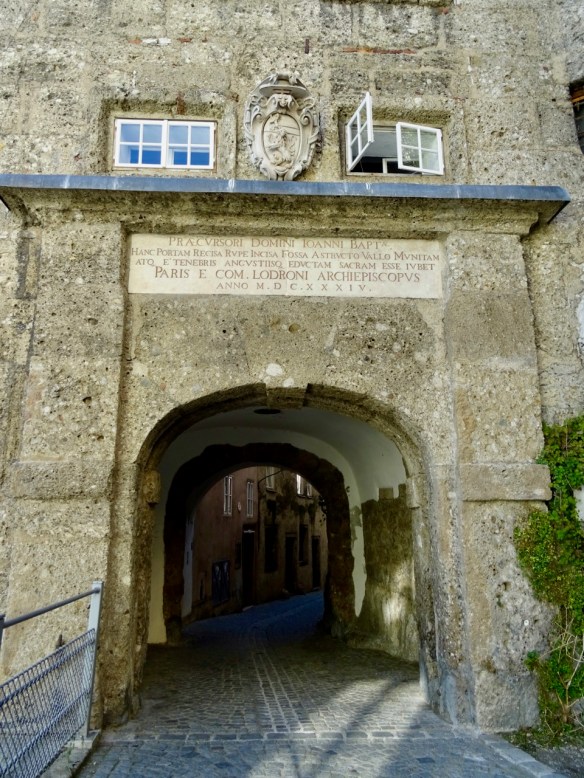 As we explore some of the side streets, we pass this ‘House of Pleasure’, and yes, it seems to be that kind of pleasure!
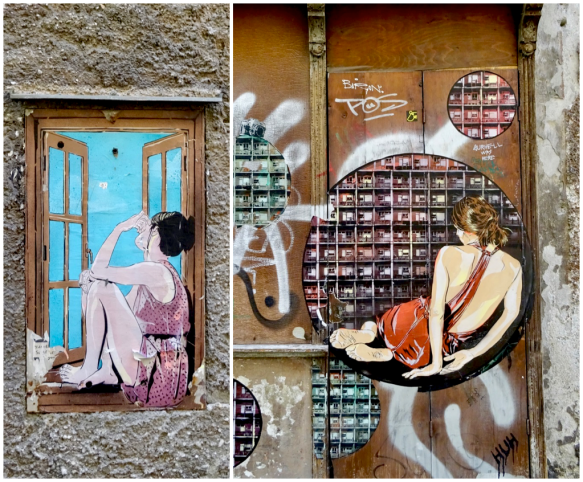
 We also see some graffiti that I quite like. Note how the little ledge is incorporated into the image. Very clever!
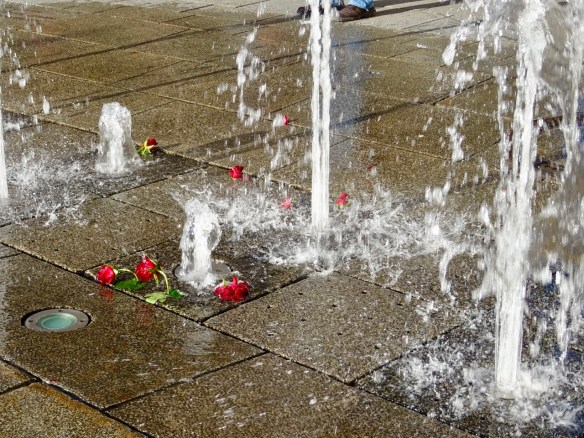
 This little sidewalk fountain had red roses stuck in small holes in the paving. I wonder why?
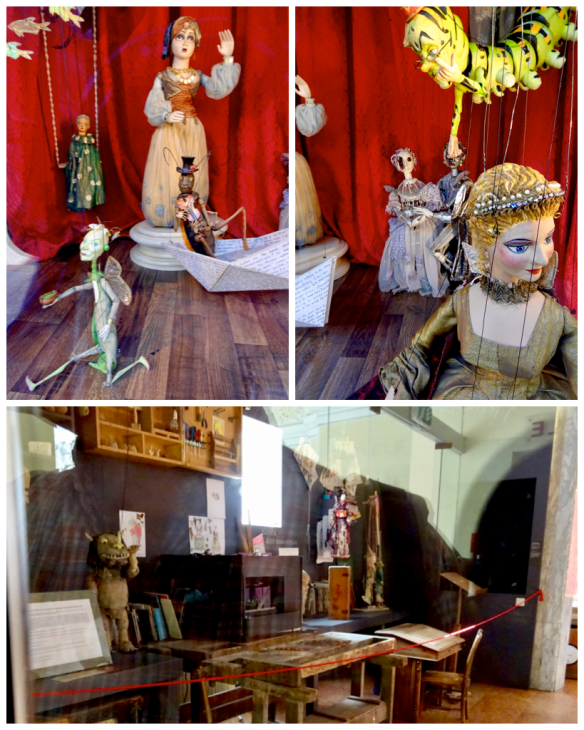
 We check out the Marionette Theatre, but unfortunately there are no performances while we are here.
 While we wait for the bus home I notice an empty store front where someone has written on the glass windows with a black felt pen. It is an interesting different sort of graffiti.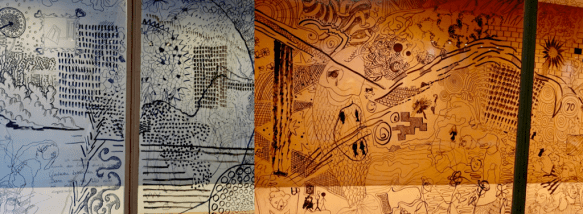
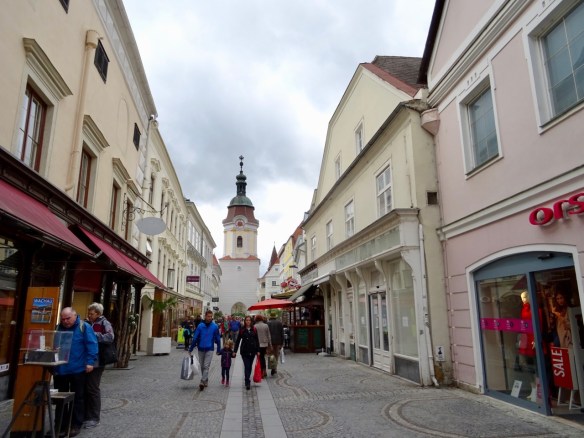 It is a long street lined with mostly modern shops. Not really what we were expecting.
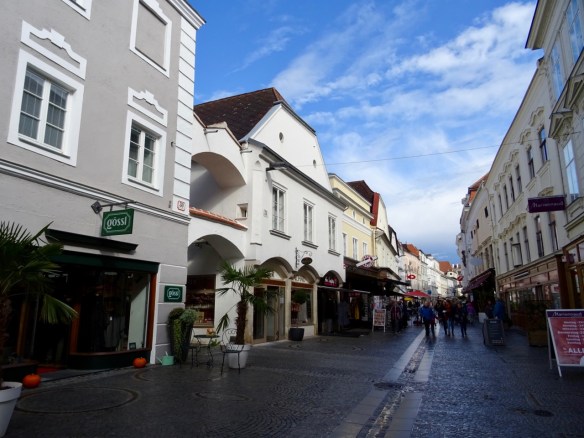 This is the gate that leads onto the shop lined street. I do wonder why the geraniums grow so well here, Everywhere in Germany and Austria there are window boxes spilling over with blossoms. Mine at home don’t do nearly as well!
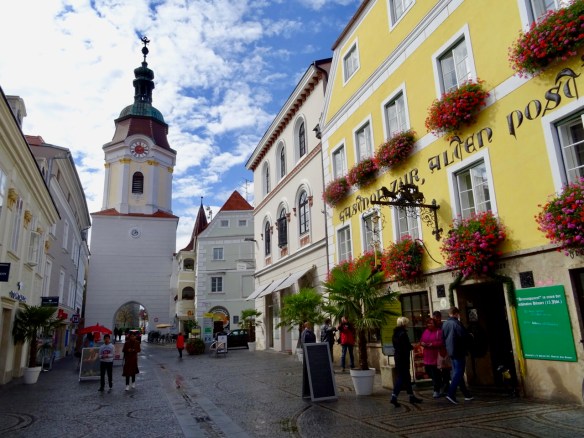 We wander through the gate, and decide it is time to leave.
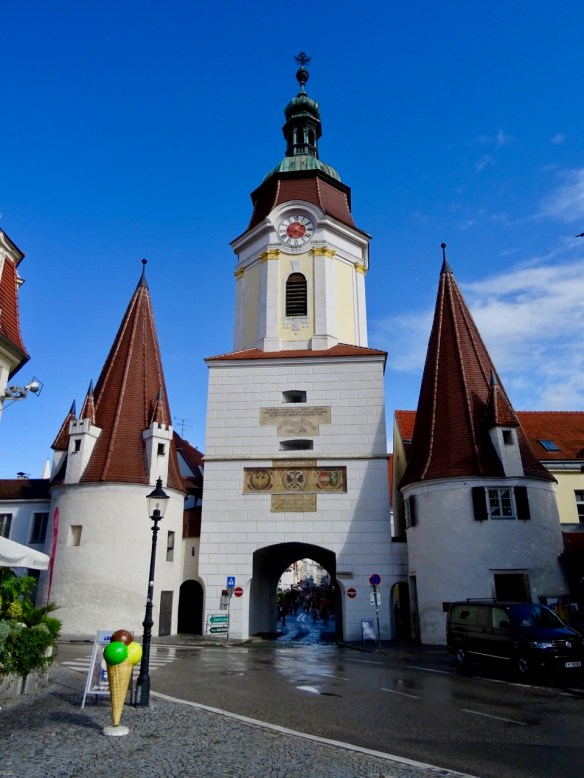 I do see these lovely prints in a little window inside the gate.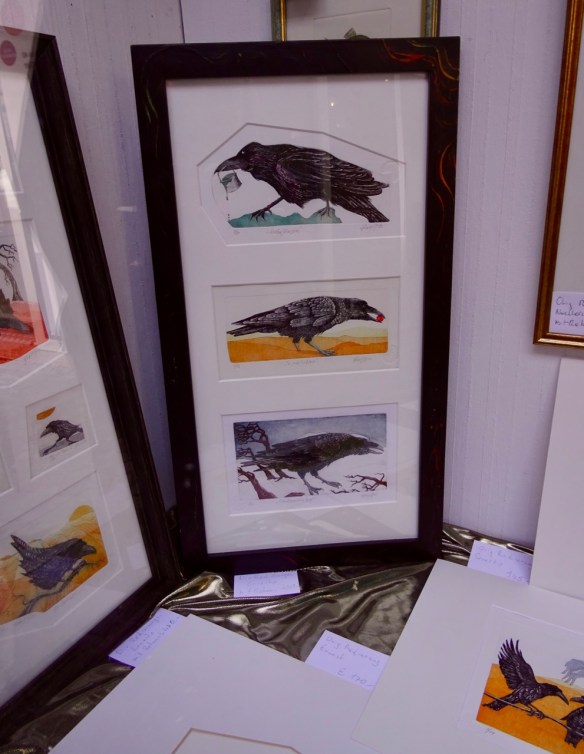
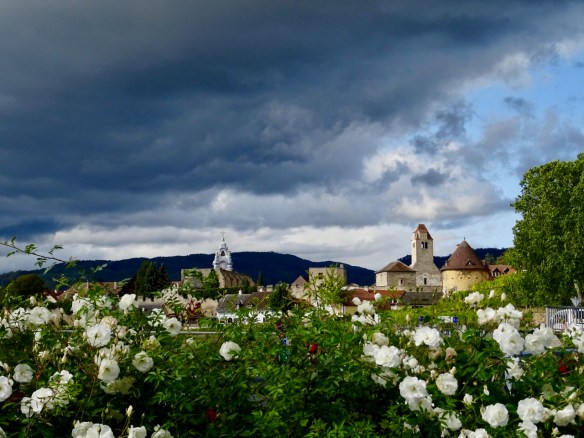
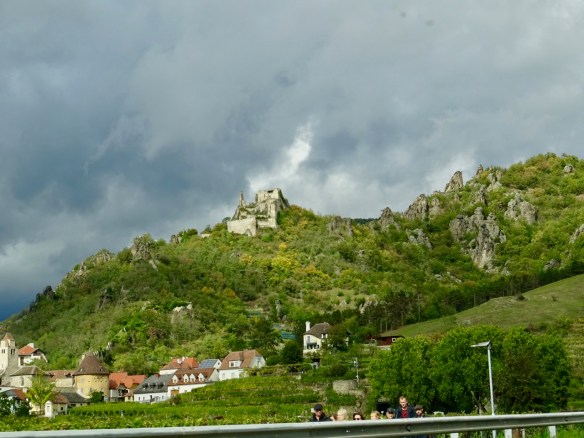 While we are getting information on how to hike to the castle the clouds get very dark and threatening.
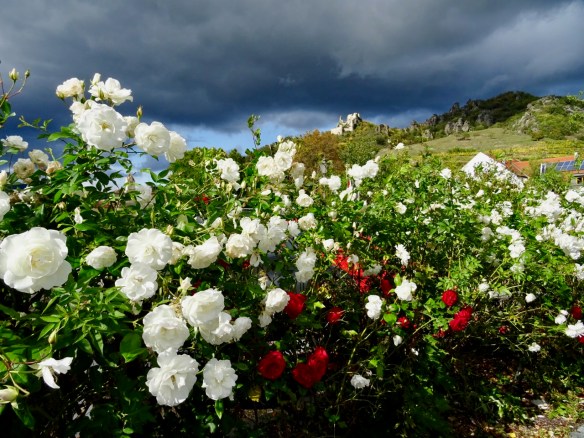 But just as quickly they start to blow over and in less than ten minutes the sky is relatively clear.
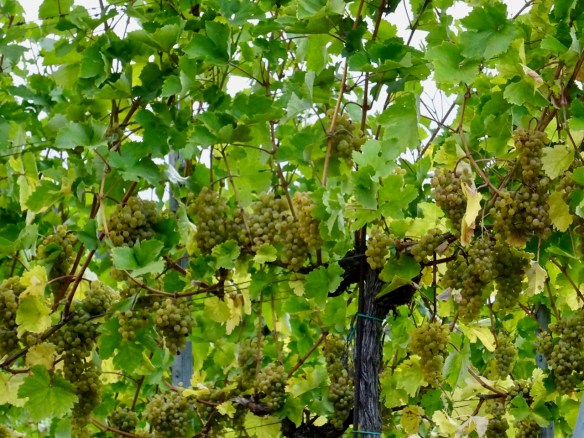
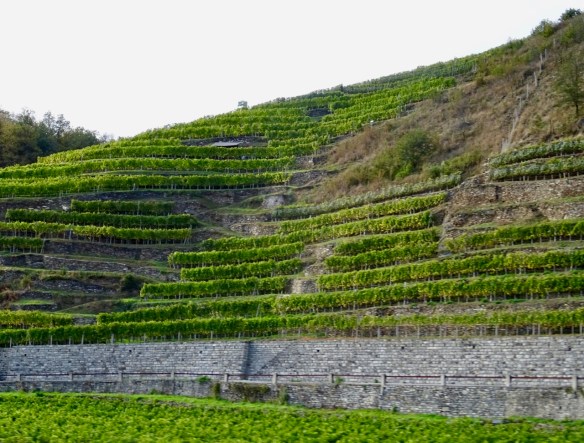
 On the path towards town from the carpark we pass vineyards with lots of green grapes. They look ready to pick.
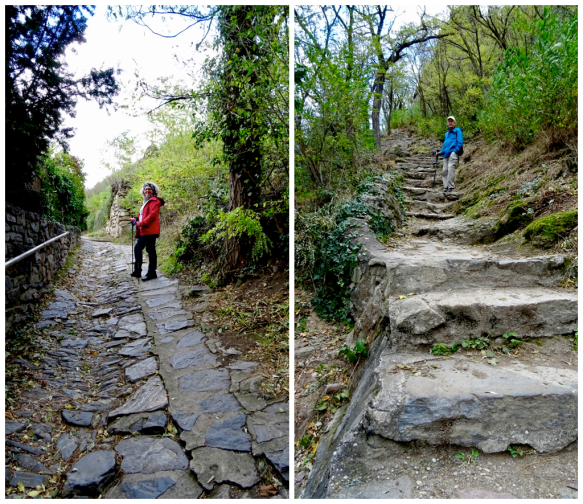
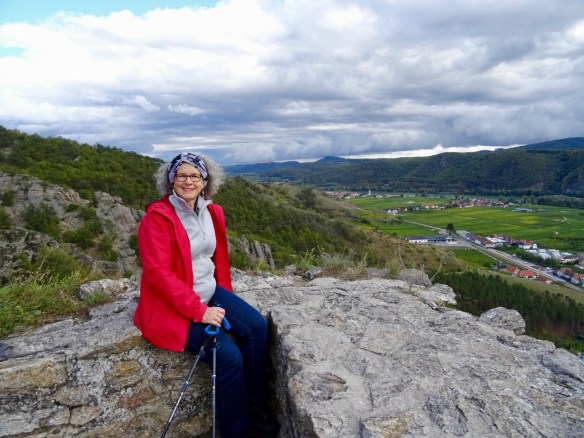
 We find the path and start our climb…and it is definitely a climb! I am so glad I have our hiking poles, they really help climbing these big uneven steps that seem to go on forever.
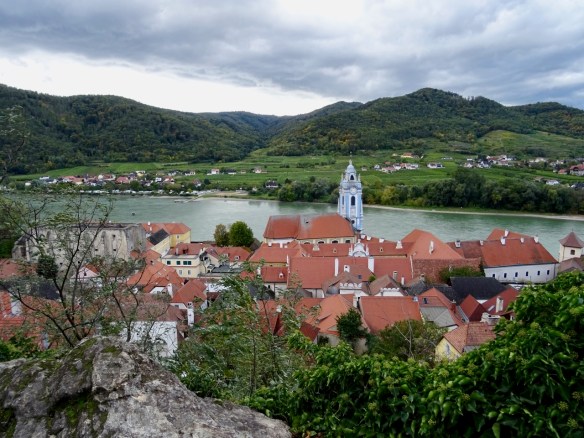
 A view of the town from a much needed little rest stop.
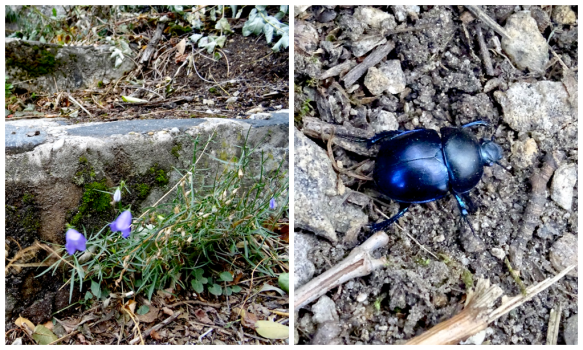
 These little blue bells are the same kind that I have growing at home. My oldest daughter brought me seeds from Dawson City many years ago and they grow quite happily in our flower garden. This gorgeous blue beetle glistened indigo and cobalt with touches of turquoise. He, or perhaps she, was about the size of my thumbnail and paused in its travels long enough to let me take its photo.
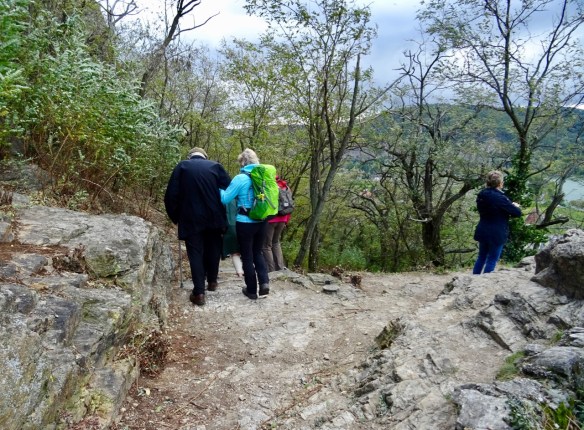
 It is hard to see, but this old gentleman and his wife (you can just make out her bandaged leg and green skirt), were being helped down the trail by some kind hikers who stopped to help them. We have no idea how they managed to get this far, as they were having difficulty walking here where the ground was fairly flat. Someone at the bottom of the trail had told us to “Look out for two old Brits on the trail…I don’t think they are going to be able to get down and will need to stay up there!” They were very fortunate that kind strangers stopped and came to their aid. I think they will be exhausted by the time they make it down, or maybe they will need even more assistance?
 This sign explains what the castle used to look like. We are able to make out a few of the areas but most of the castle has been destroyed.
 Some views of the castle.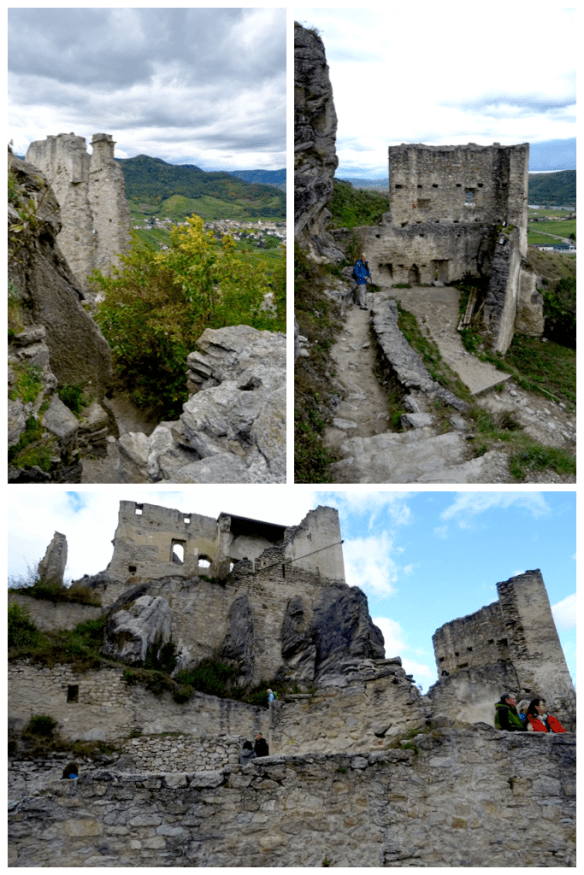
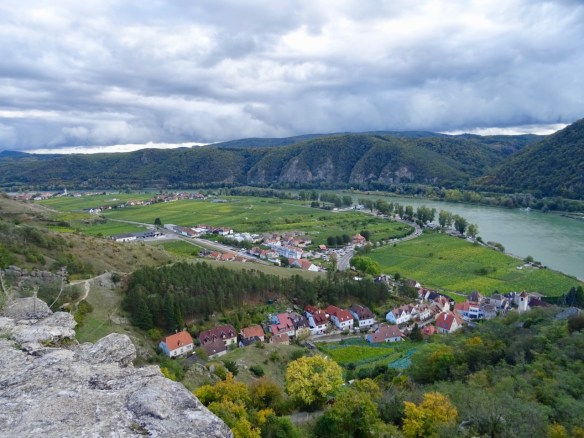
 We see a riverboat cruising by on the Danube far below. It is starting to get very windy up here.
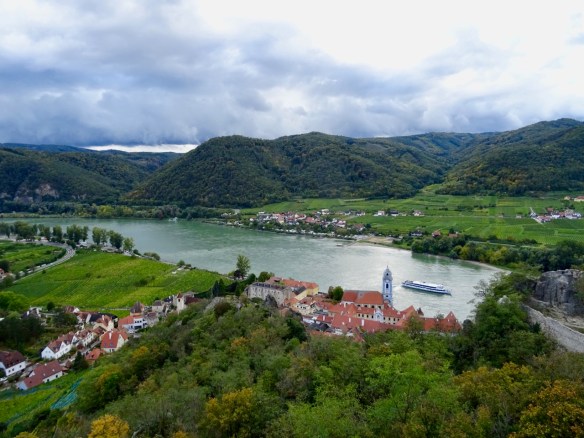 The valley is dotted with village after village as far as we can see.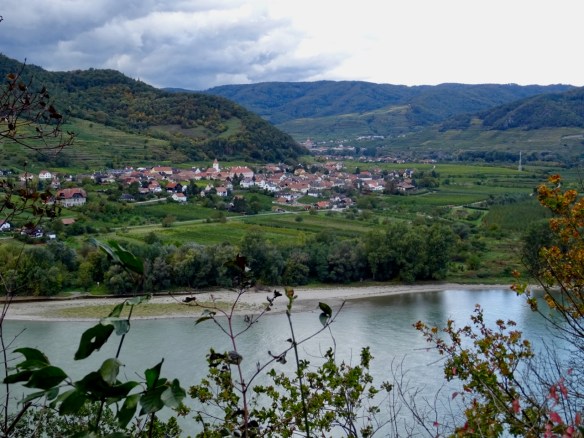
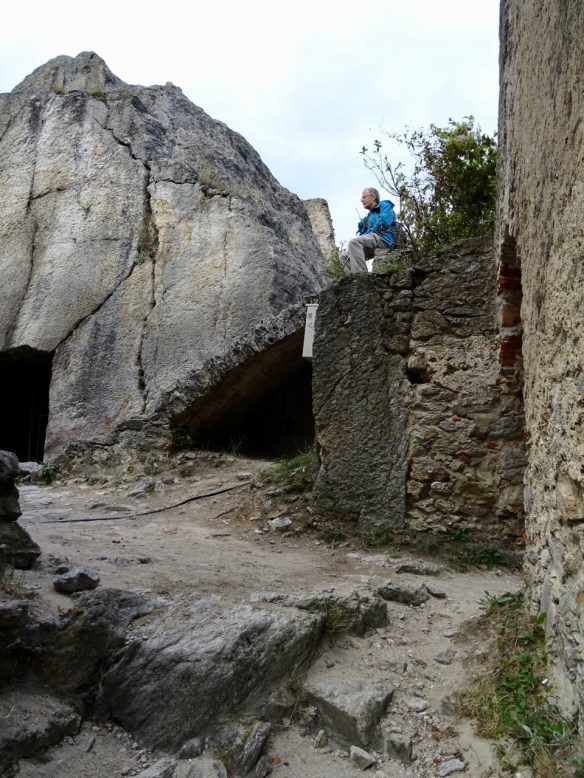 We wonder if this is where king Richard was kept prisoner?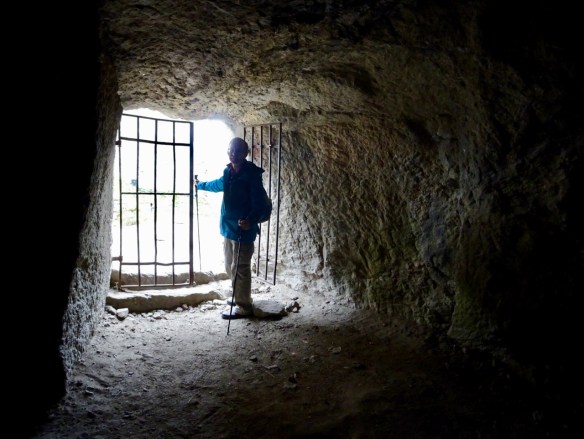
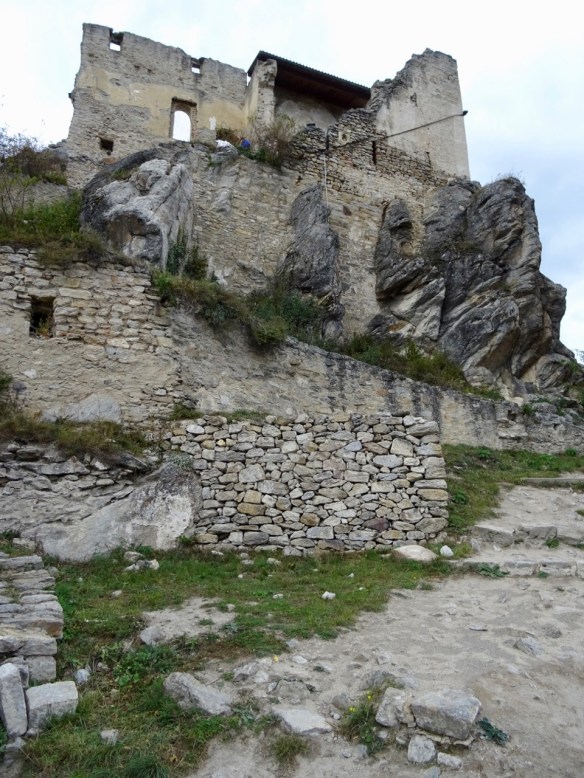
 You can see the castle walls stretching all the way down to the town.
 We head down to town on a different path, one which is a bit easier than the one we climbed up. There are displays along the path explaining about the history of the Castle and King Richard the Lionheart.
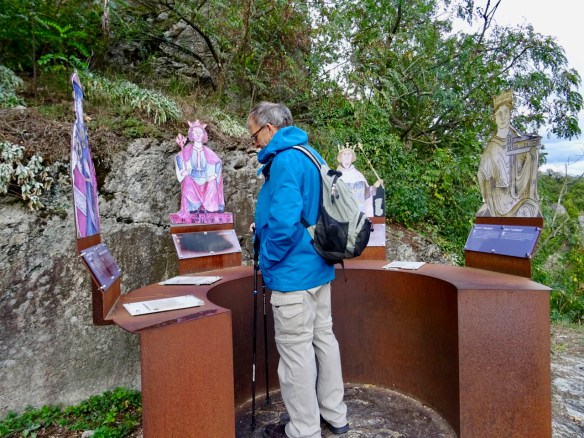 The path ends back in town.
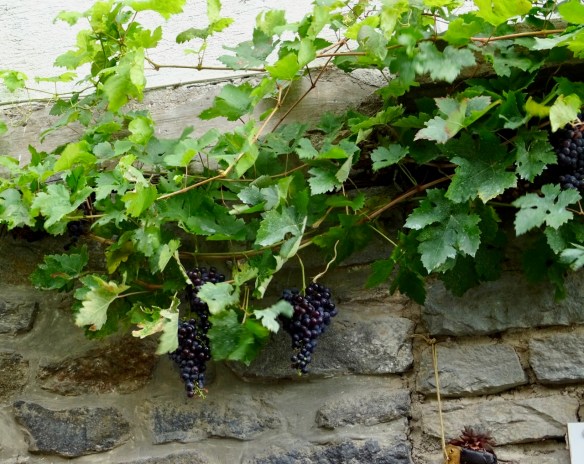
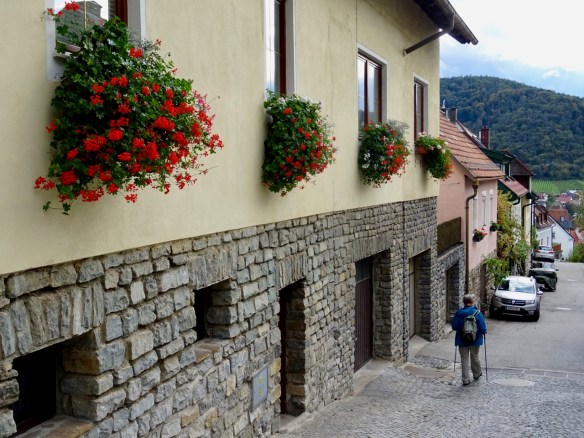 We see black grapes growing along the road and hanging on houses. They are quite tasty.
 The castle walls go through the town all the way down to the river!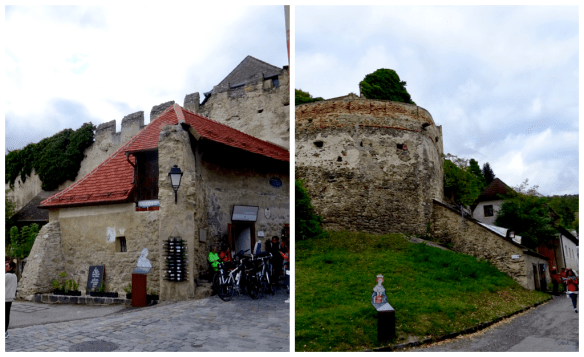
 Then we see a very large chair!
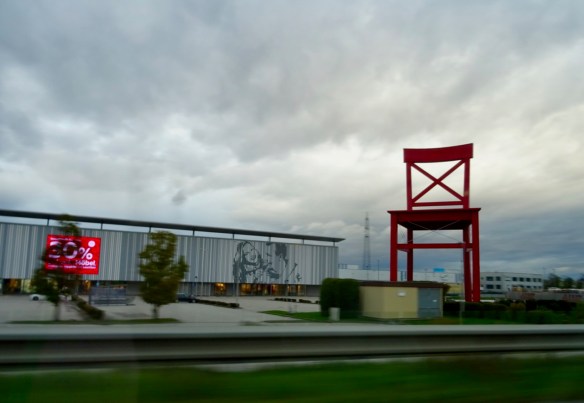 The sky is quite dramatic and it is getting dark by the time we arrive in Hörsching, our home for the next three days.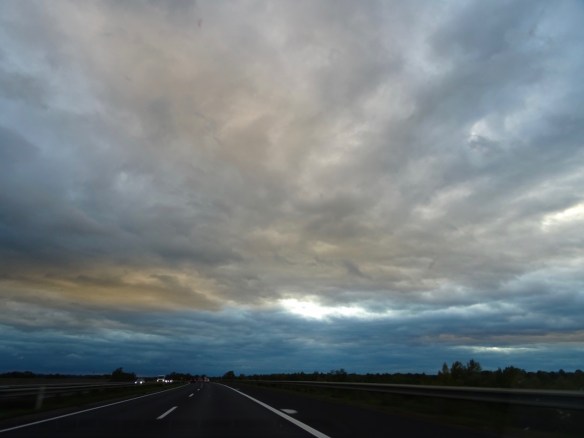
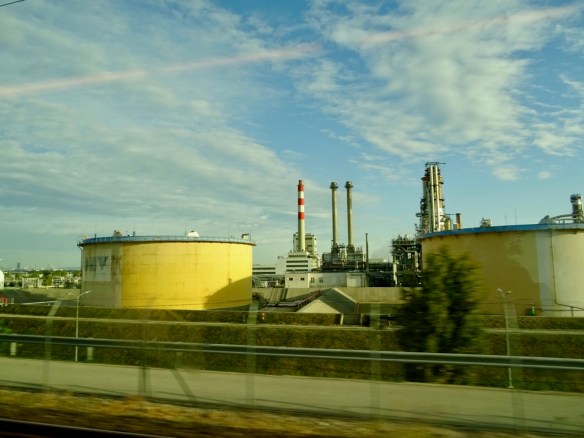
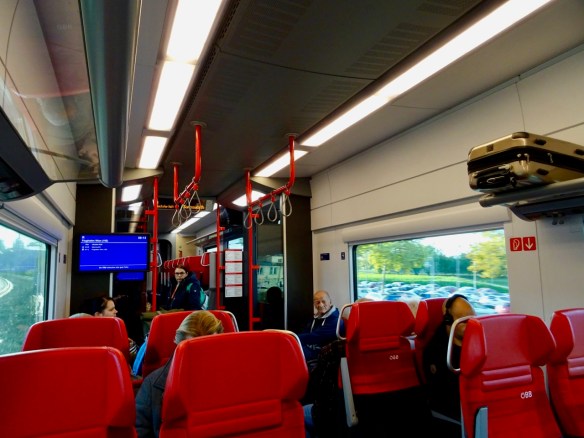 We pass refineries that stretch for more than a kilometre.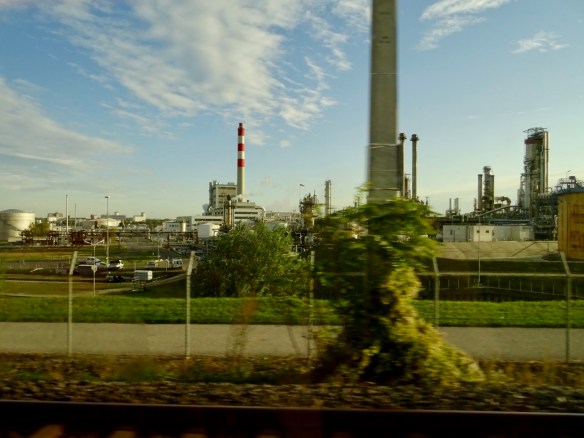
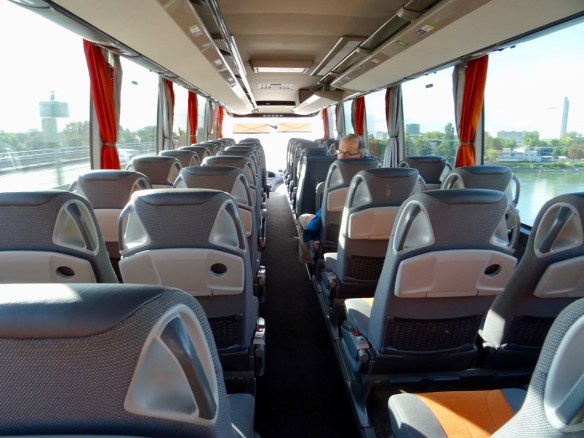
 We find our Flixbus at the airport easily and it is just on hour ride to the airport. After stopping in the town centre of Bratislava we are the only ones left on the bus. We asked the driver to make sure we were on the right bus…it seemed strange that no one else was going to the airport.
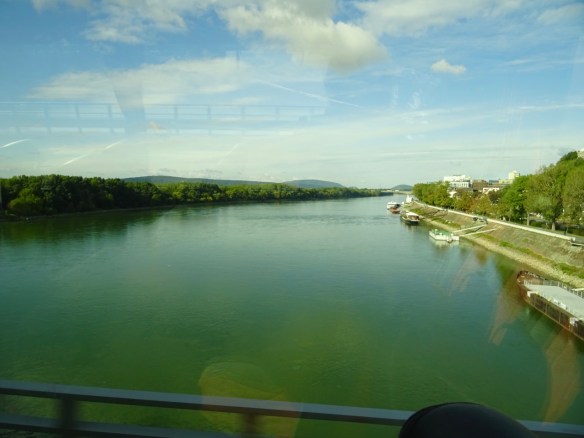
 Our first view of the Danube River.
 When we get to the airport there were maybe a dozen other people there!
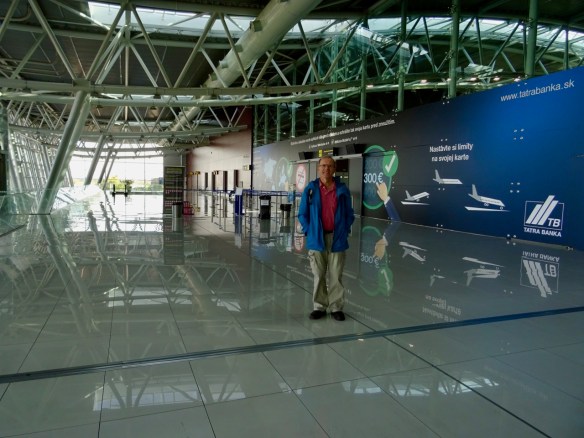 The place feels almost abandoned, but we do find an English Time magazine with Justin Trudeau on the cover, so we can catch up on the news.
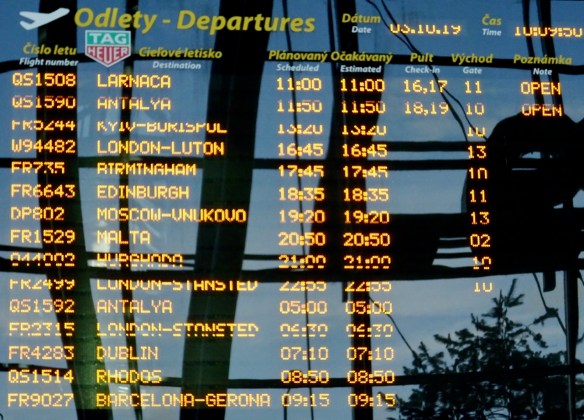
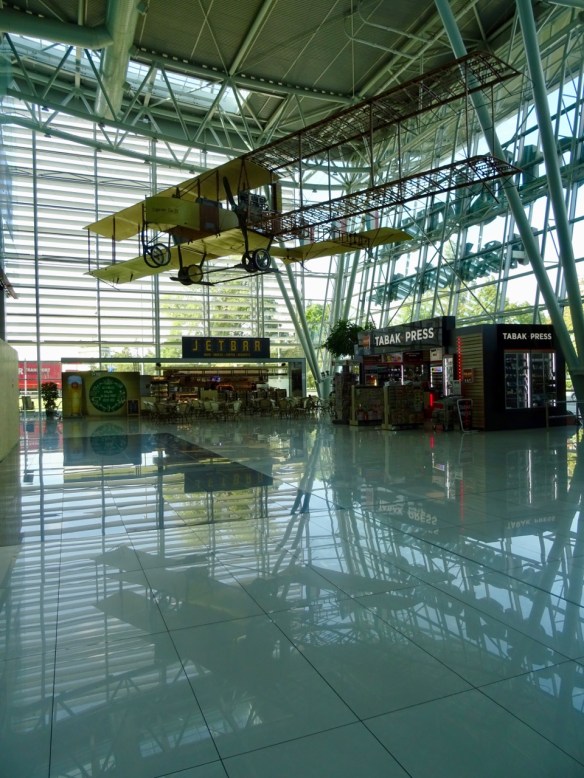 We discover why there are so few people here. There is only one flight every hour or so departing from here.
 We pick up our car rental, a nice blue Škoda Octavia, and we take a side road back to Austria. We see several hilltop castles but no time to stop and explore today.
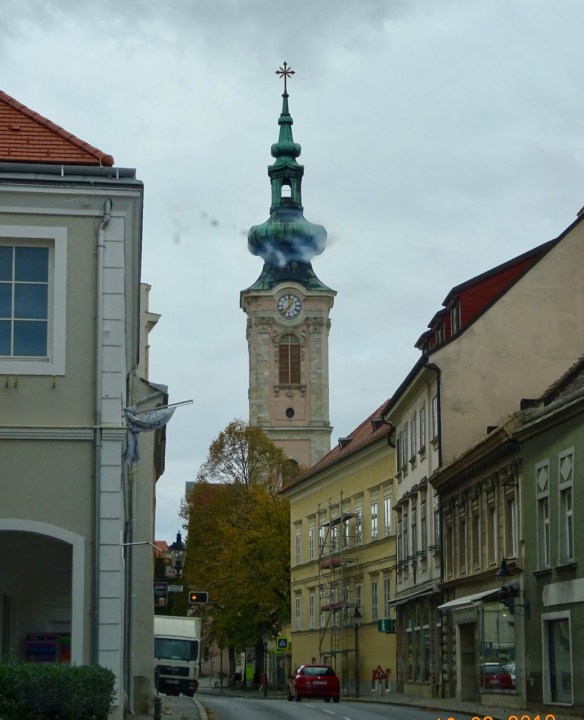
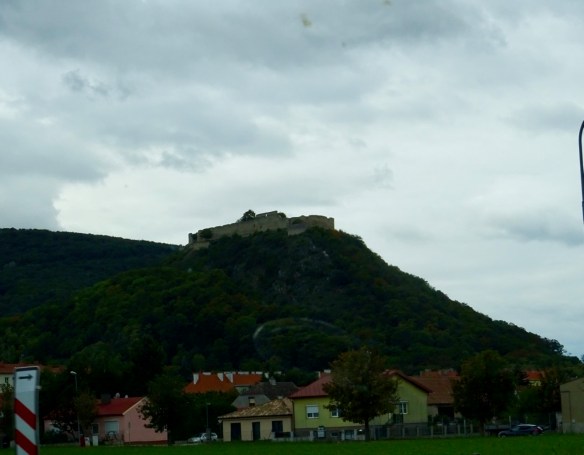 This route takes us through many small towns. We were hoping to see the Danube as we are driving right along side it, but there just isn’t any place we can find to get down to the riverside. Guess that will have to wait for another day.
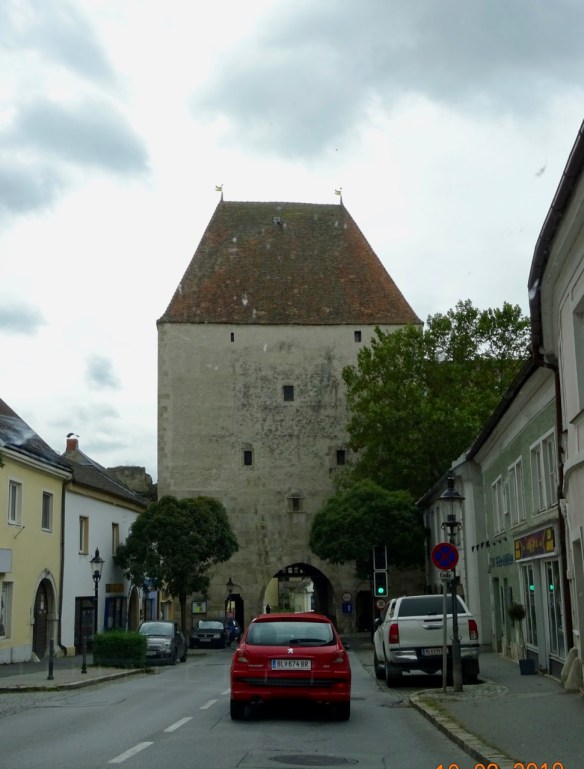
 The road narrows to one lane to go through this town gate.
  We stop for groceries on the way home and find a place to park our car on a side street near our apartment.
 We had a good laugh. Bob thought that the two guards in the guard-boxes were wax mannequins. They were so motionless!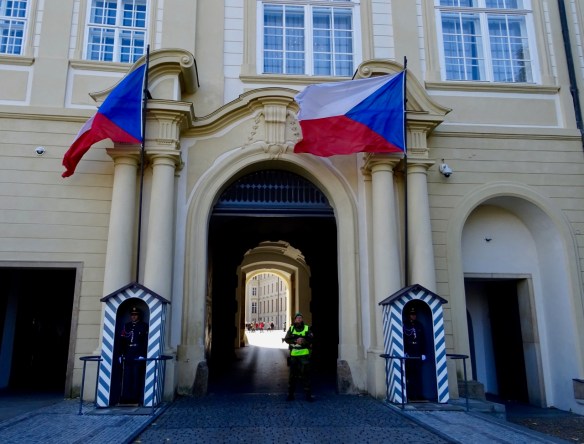
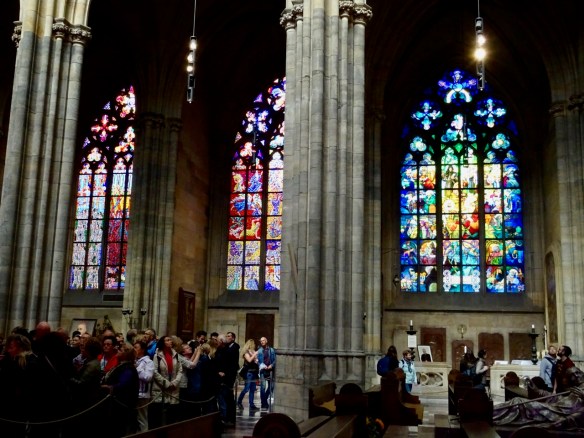
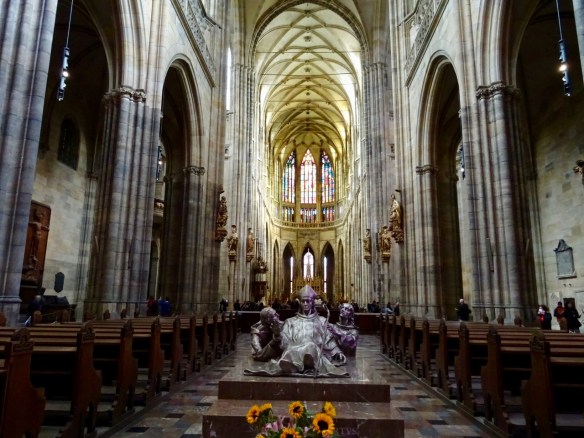
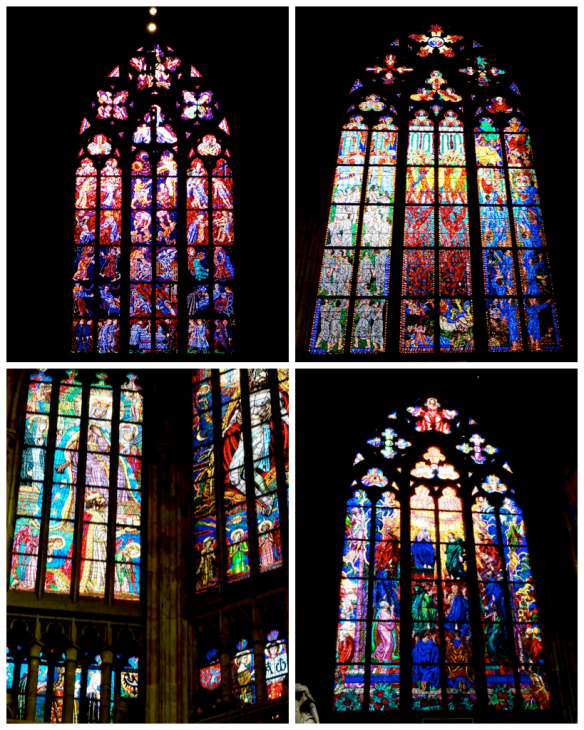
 Perhaps my favourite is the window designed by Alphonse Mucha. You may remember we saw his design drawing for this window at the Mucha Museum yesterday.
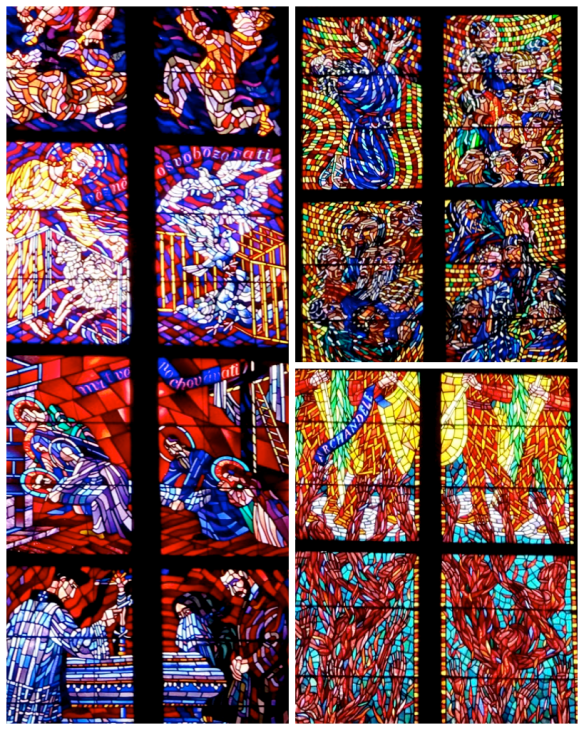
 The beautiful rose window on the entrance wall of the cathedral was completed in 1925 and took two years to complete. The inscriptions on the stained glass tell the story of Creation as told in the Bible.
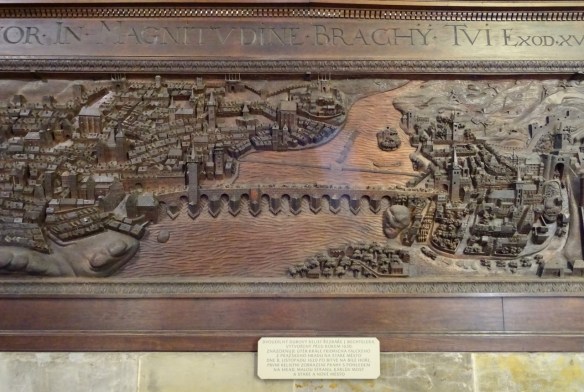
  This wooden panel from 1630 shows the St. Charles Bridge, built in 1403, that we visited on Saturday. The city doesn’t really look all that different, does it?
 St. Vitus is portrayed with a rooster by his side, because he was boiled to death in a pot with a rooster! These saints all seem to have had horrible tortuous deaths. St. Vitus never actually even visited this cathedral, but a relic, or pieces of his body, was brought here and the Cathedral was built to honour him.
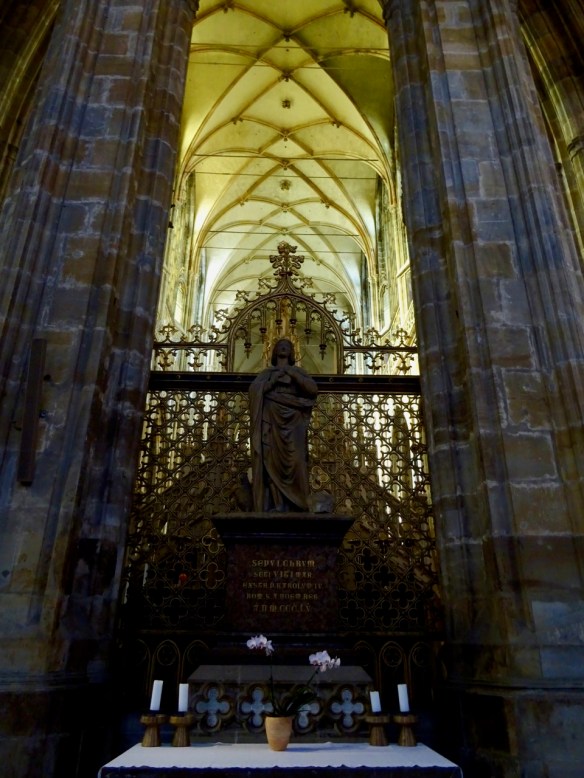 St John of Nepomuk’s tomb is an elaborate baroque silver tomb with angels supporting a draped canopy. It is said to contain two tonnes of silver. St. John is the patron saint of the Czechs. There are so many people visiting this cathedral that I had to take this photo looking back towards the tomb to get a decent shot.
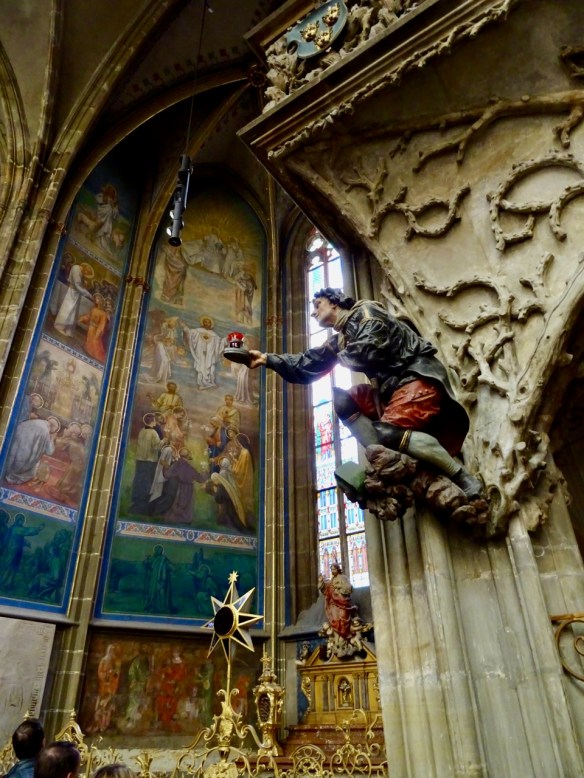 This is the chapel dedicated to St. Wenceslas, the king and patron saint of all the Czech lands. The lower part of the walls are decorated with more than 1300 gems and the joints between them are covered with gold. The walls are covered in frescoes and the relics of St. Wenceslas are kept in the red draped case.
 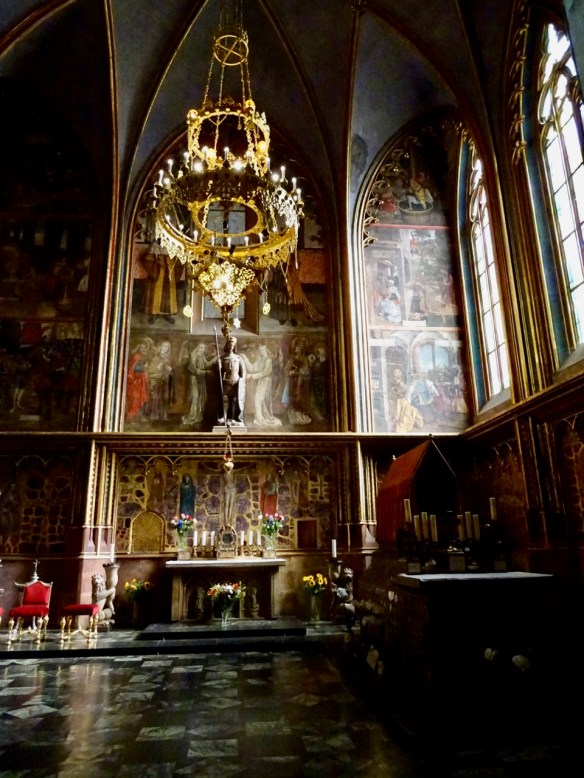 As we are leaving, the sun comes out for a bit and shines through the stained glass windows casting coloured light into the cathedral. Note the lady posing behind Bob. We seem to see her everywhere we go today and she is always posing ‘just so’ for a photo. I’m not sure her and her husband are even looking at the cathedral as anything but a backdrop for her photographs.
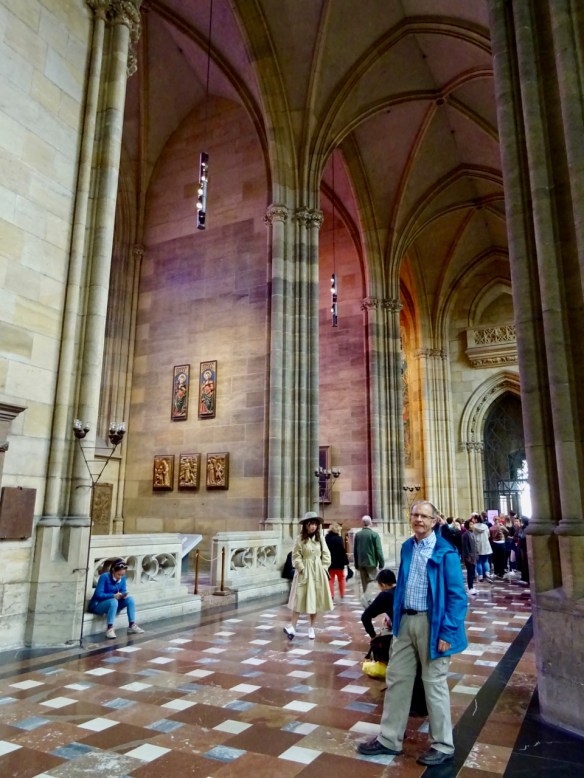 As beautiful as this cathedral is, I still love some of the simpler details that are easy to overlook with all the grandeur surrounding us.
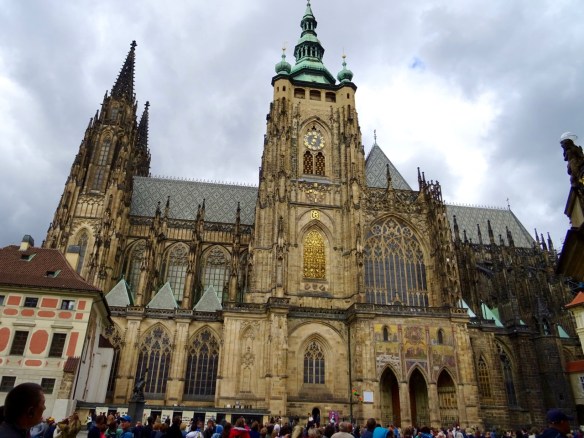
 A view of the Cathedral. This front entrance isn’t used by tourists, we entered on the end of the cathedral behind the building with orange panels.
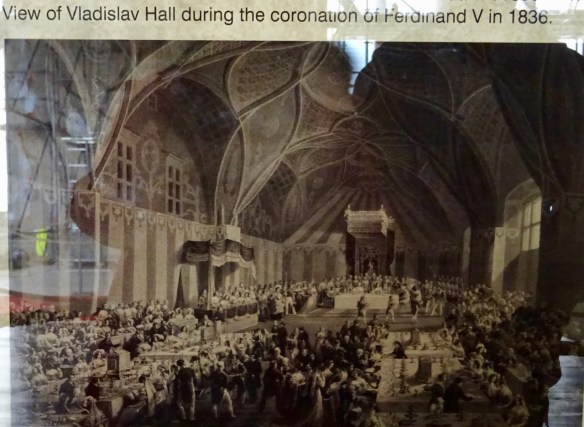
 since the 16th century, the Vladislav Hall in the Old Royal Place, was used for coronation festivities and banquets, knights’ tournaments and markets for luxurious goods. The Vladislav Hall still is used for state functions. It is an enormous room.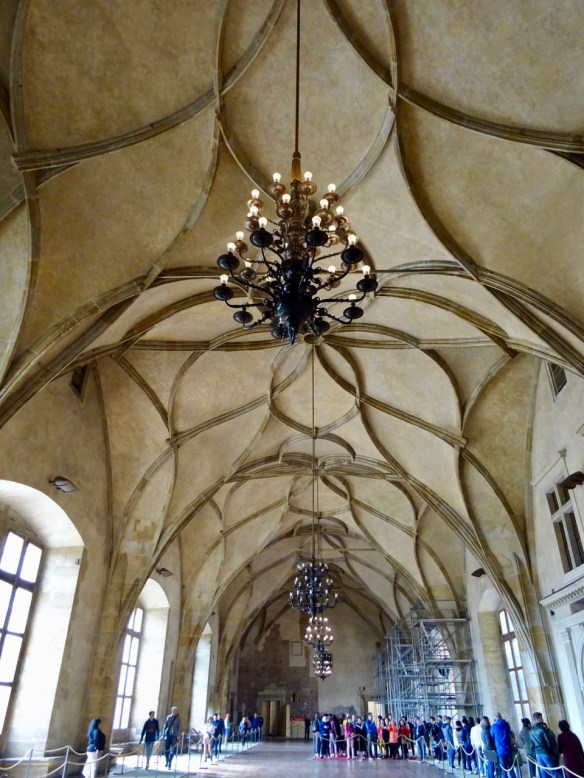
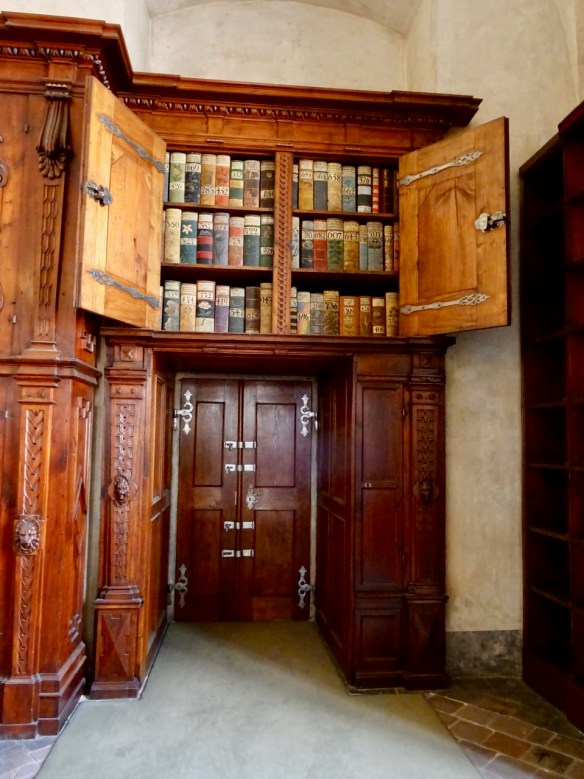
 The Old Palace contained the Land Rolls, where all matters regarding property rights and criminal law were recorded.
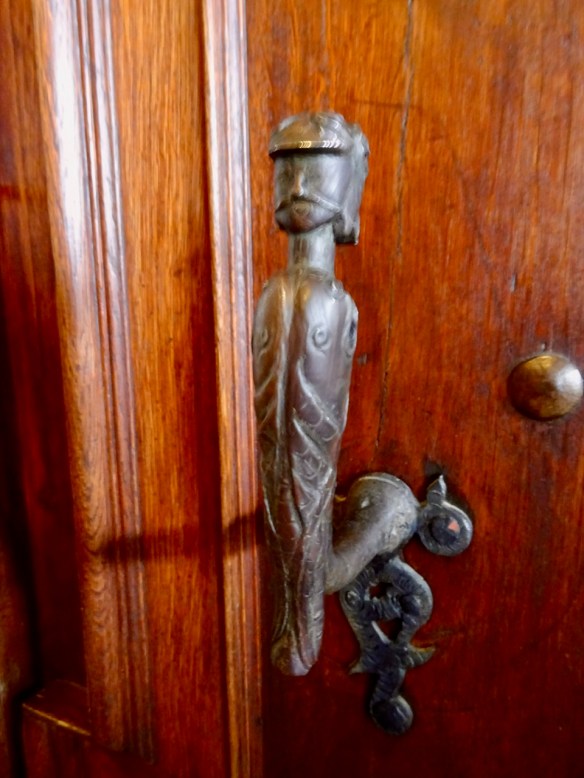
  An interesting door handle.
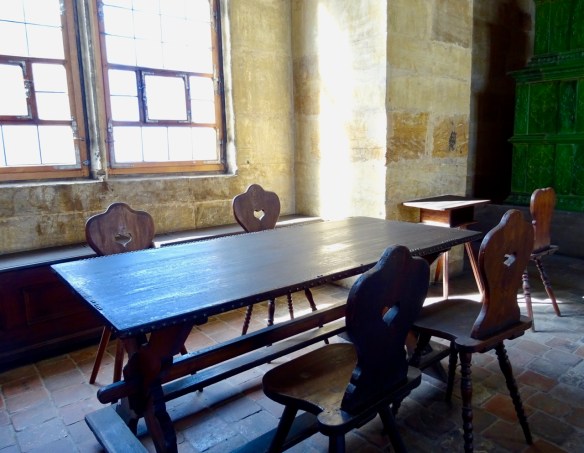
 One room had chairs which are almost the same as the ones my Swiss grandfather used to make, only he put more carving and decoration on his.
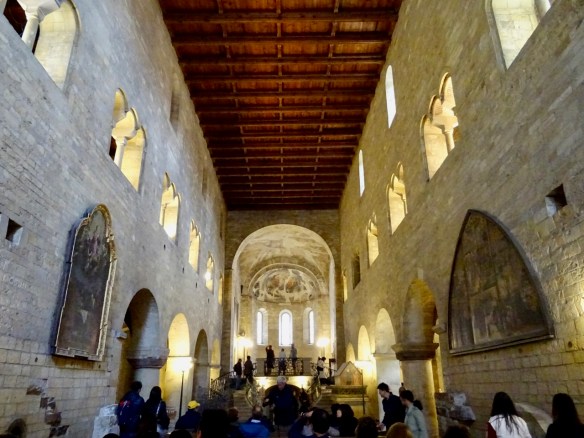
 The present day appearance of St. George’s Basilica dates to the reconstruction after a devastating fire in 1142. Now it is used for short-term art exhibitions.
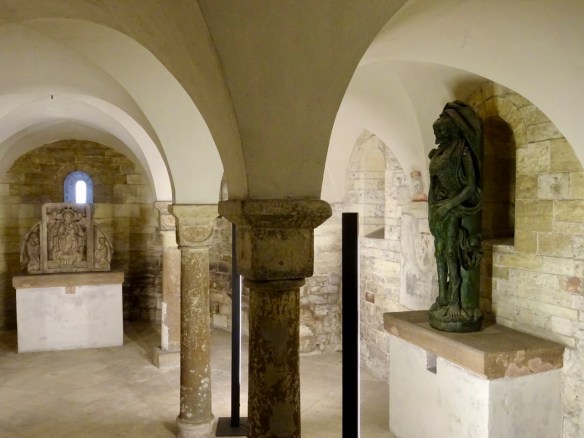
 We visit St. Georges 12th century crypt and see this rather bizarre sculpture. I did some research and discovered that it is “a Late Gothic Statue of Brigita, representing a dead and decaying girl´s body. It is a symbol of impermanence. A legend says that it was made by a sculptor, who killed his girlfriend and wanted to create her statue before he was executed. However, he was only able to make it as a dead body, because of his despair.” ~.www.prague.cz
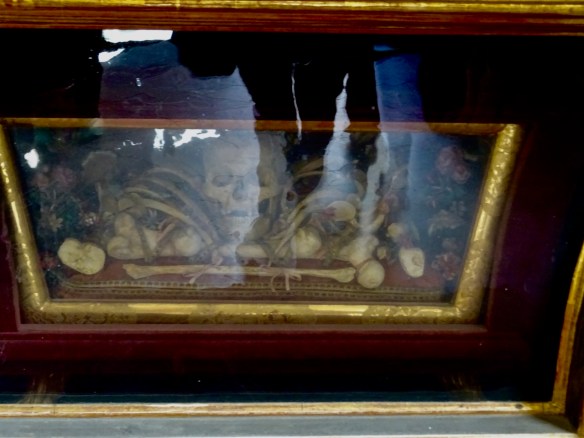
  On the way out we see this collection of relics, but have no idea who they are. These relics seem a bit bizarre. Not only was the poor person usually tortured and killed but then their bones were carted off, often to several different locations and put on display. Hmmm.
 This is the Golden Lane. This lane of tiny houses was built against the northern wall of the castle. These tiny houses were occupied until World War II and have been preserved so that the character of this lane has not changed. From 1916 to 1917 house No. 22 was inhabited by the writer Franz Kafka.
 The name of the Lane is derived from goldsmiths who used to live there. I struck up a conversation with a gentleman who told me that he and his father were both goldsmiths and that the tools have not changed at all. He also said his father died young and that he quit because some of the processes involved are very toxic.
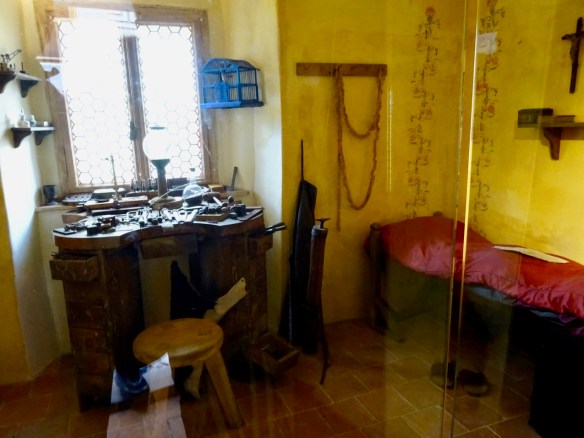 The houses are tiny and have tiny doors.
 This was a fortune teller’s house whose predictions about the early fall of the Third Reich resulted in her being arrested and tortured to death by the Gestapo.
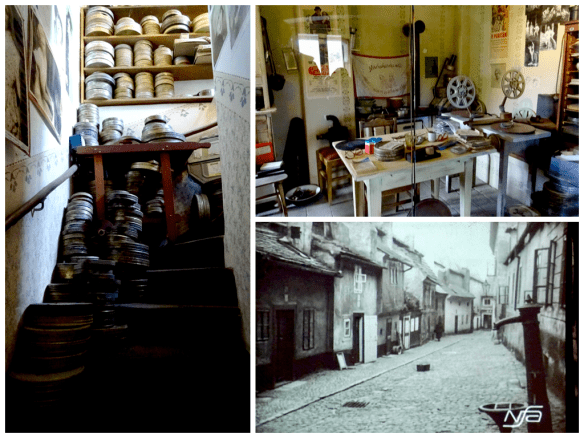
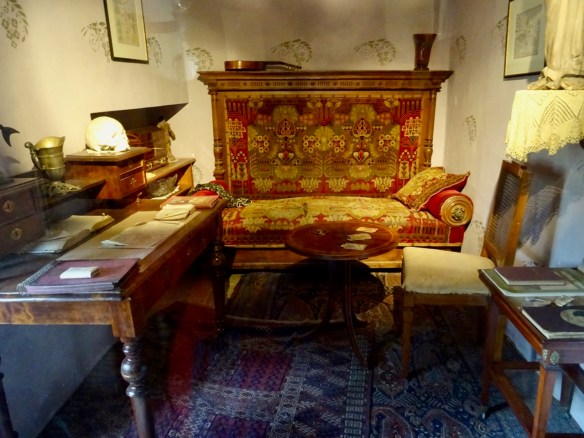 An amateur historian who saved many copies of old films that were intended for disposal during the Second World War lived here. We watch one film that showed scenes of Prague and this Golden Lane. It looks much like it does today.
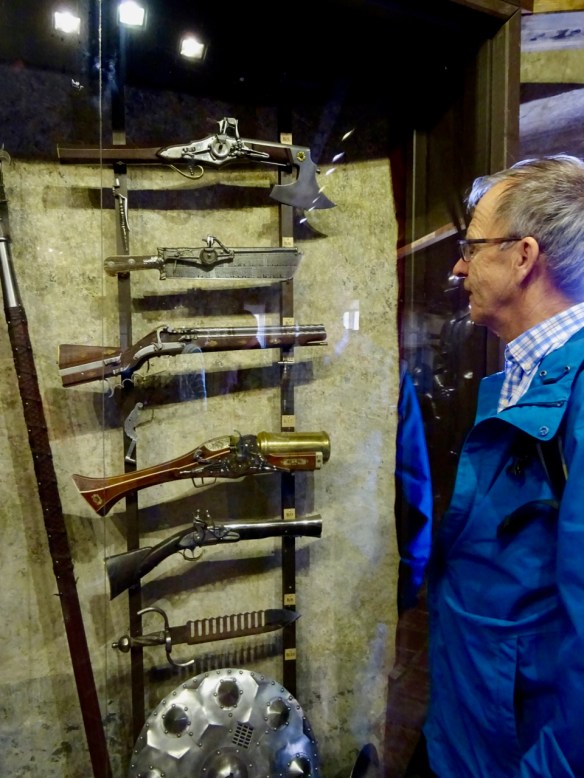
 We almost missed seeing a huge display of old armaments and armour. It was quite interesting. Some the swords have pistols built into them, or axes attached!
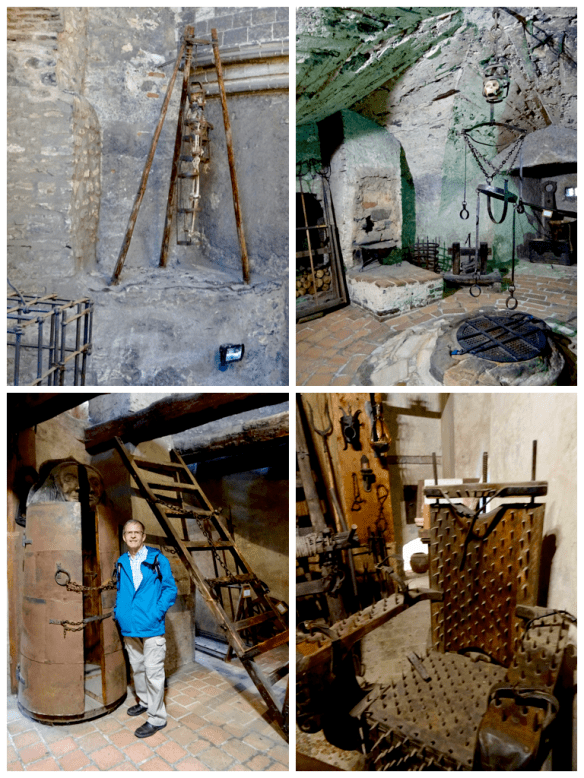
 And then there is the torture chamber. These places give me the creeps. It is just so hard ot think of people subjecting each other to such pain and terror. Bob is standing beside an Iron Maiden, which has spikes inside just long enough to pierce the body and make sure that the person inside dies a slow painful death. There are two spikes placed so that they will pierce the eyes of whoever is placed inside, and take a look at that chair! It is enough to give me nightmares.
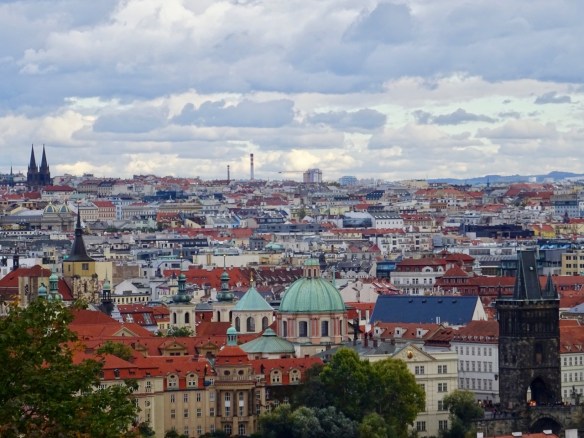
 After the torture chamber we see some great views of Prague…
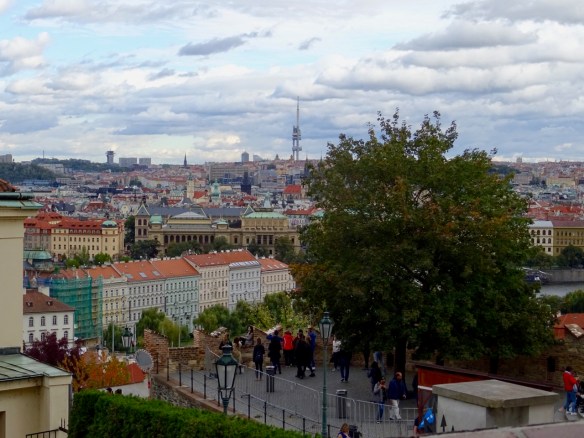
 can you spot our TV Tower? It is hard to miss.
 As we leave the castle the changing of the guards marches past. A couple of the guards have their hats blown off by the wind but they just keep marching, although they did smile! It was crazy windy today and a bit cold so it was a good day to be inside.
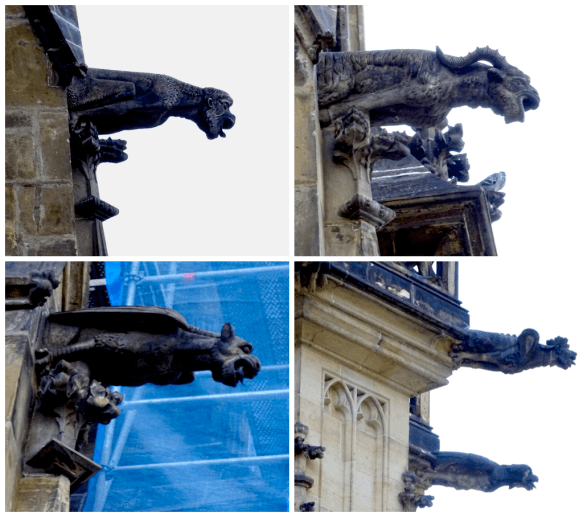
 Walking past the Cathedral towards the exit I thought to look up, and yes, there were gargoyles! I love gargoyles, in case you didn’t know.
 This shrub was near the exit. I have no idea what it is and wonder if anyone else might know?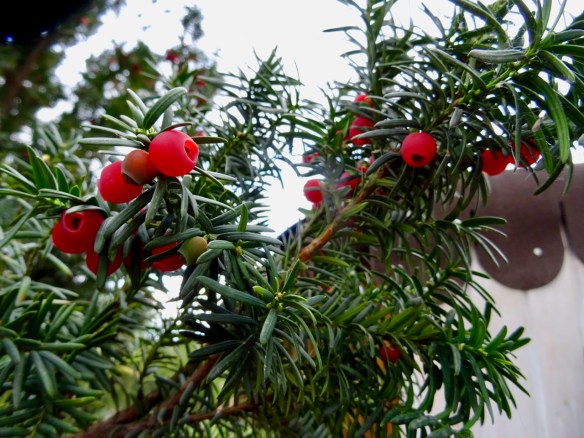




 trudymason.com