Day 20 Friday, September 19, 2025
Today we visit the In Flanders Fields Museum in Ypres, Belgium.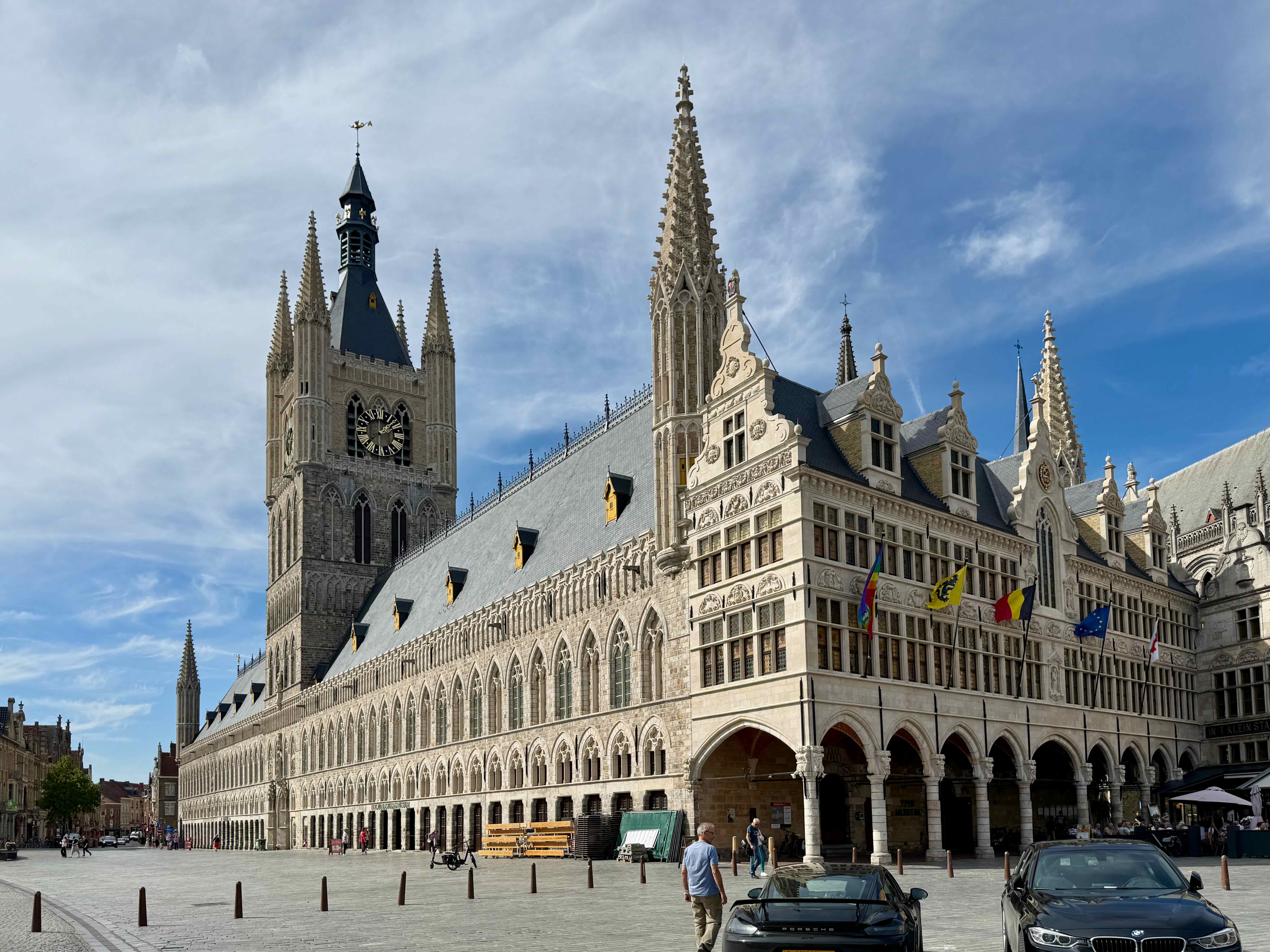
This museum uses a variety of displays to tell the story of the invasion of Belgium in World War I. There are holographs which use actors to tell the stories of actual people.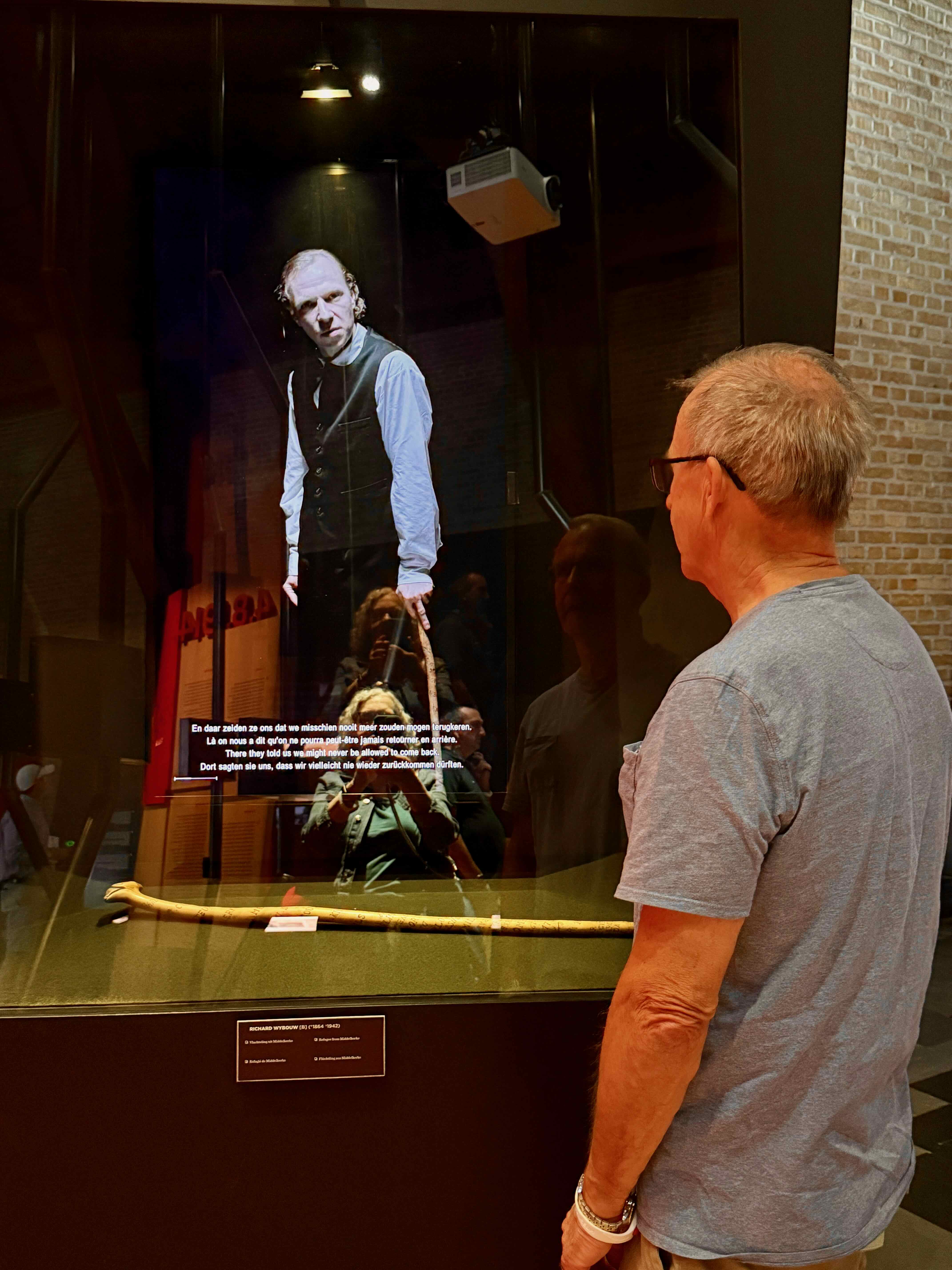
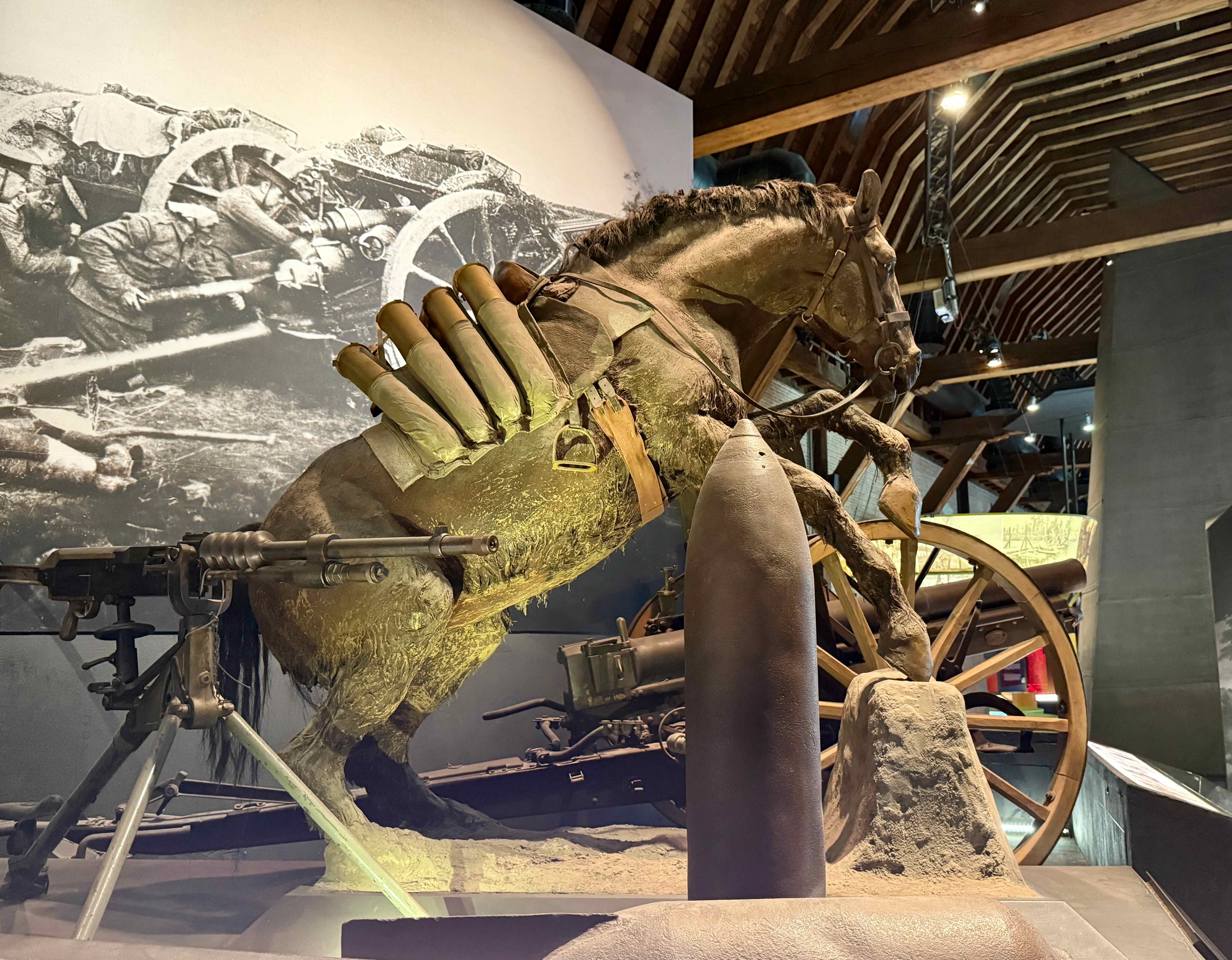
These early gas masks provided some protection against chlorine gas, which was used for the first time during WWI, but were only effective for about five minutes with concentrated doses of the gas. 
We take a break and climb 231 steps to reach the top of the bell tower. half way the steps change from a concrete spiral staircase to these metal steps, which are a bit scarier to climb.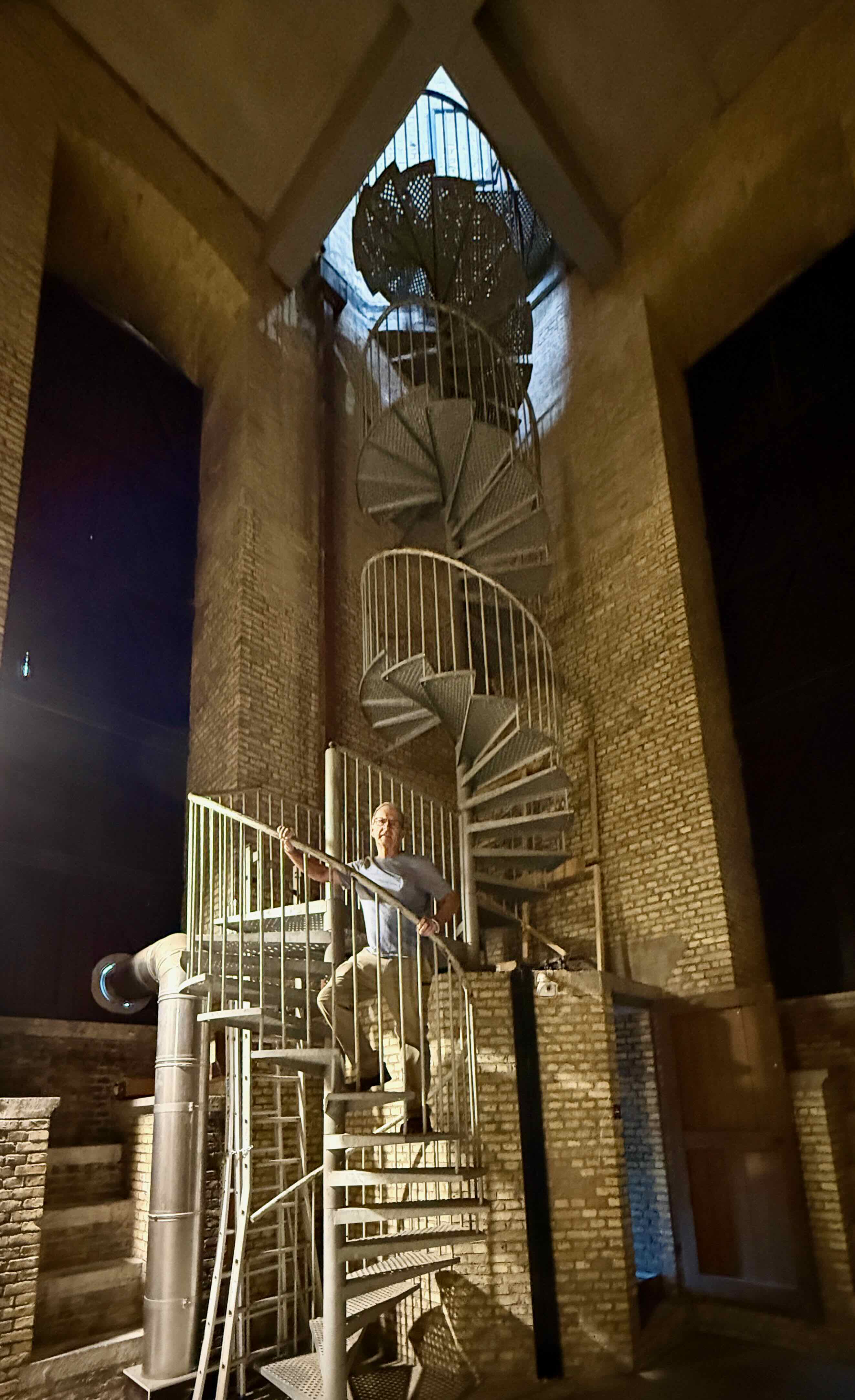
We are always amazed at the size of the bells in these bell towers.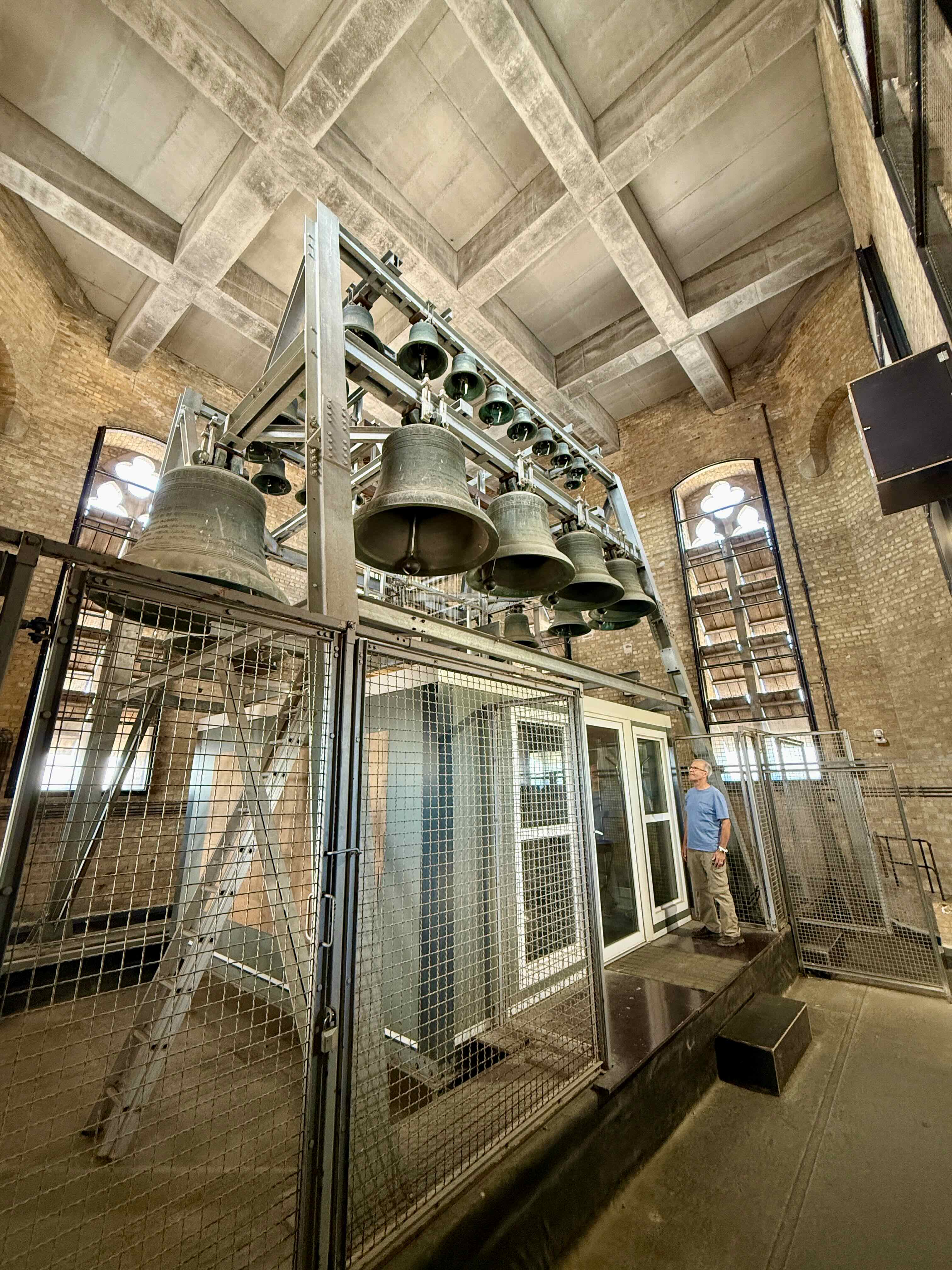
Soon we are outside taking in the views of the town and countryside.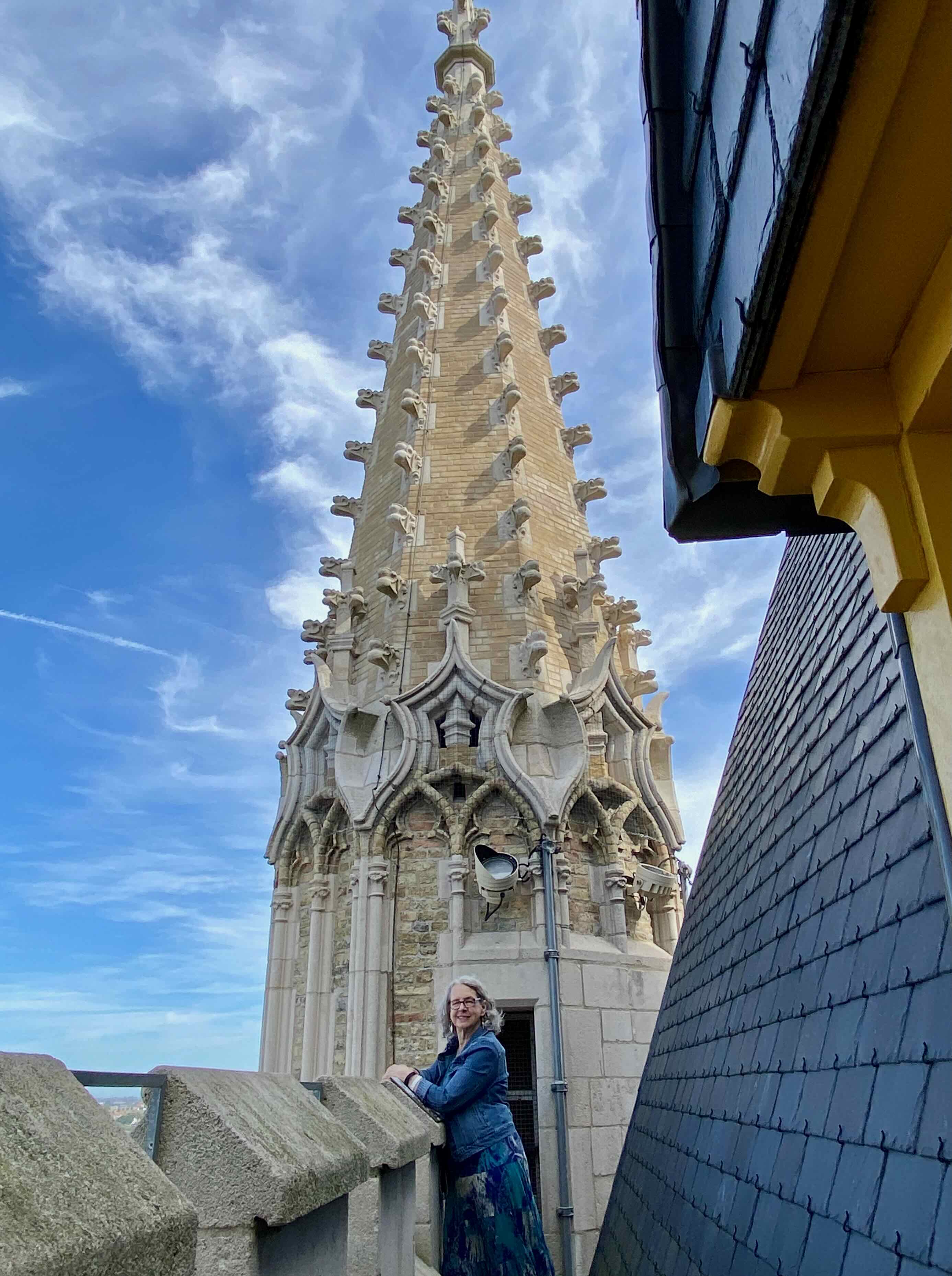
We can see for miles.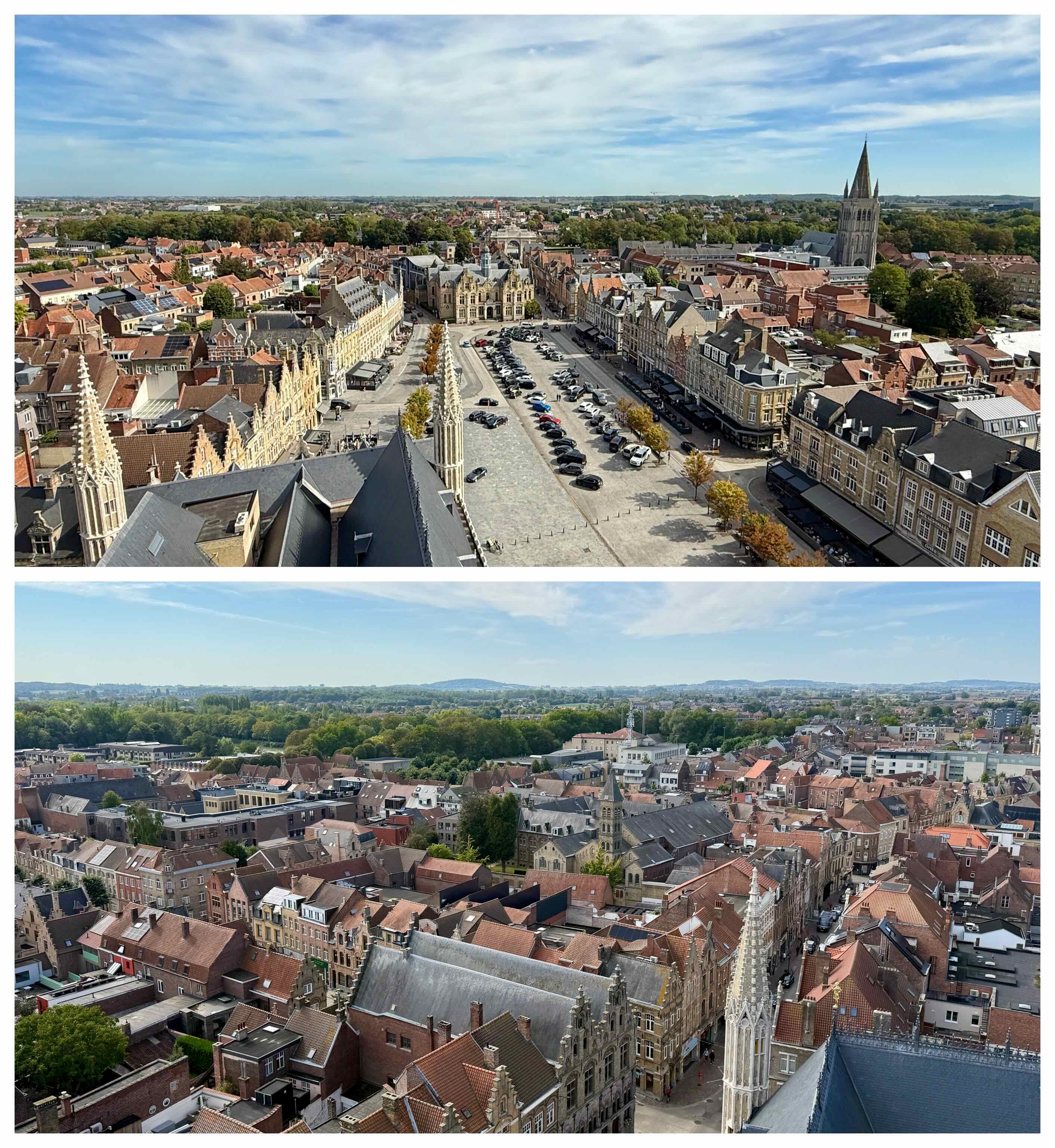
I am very happy that the 231 steps down from the tower are cement. I really didn’t like those metals ones.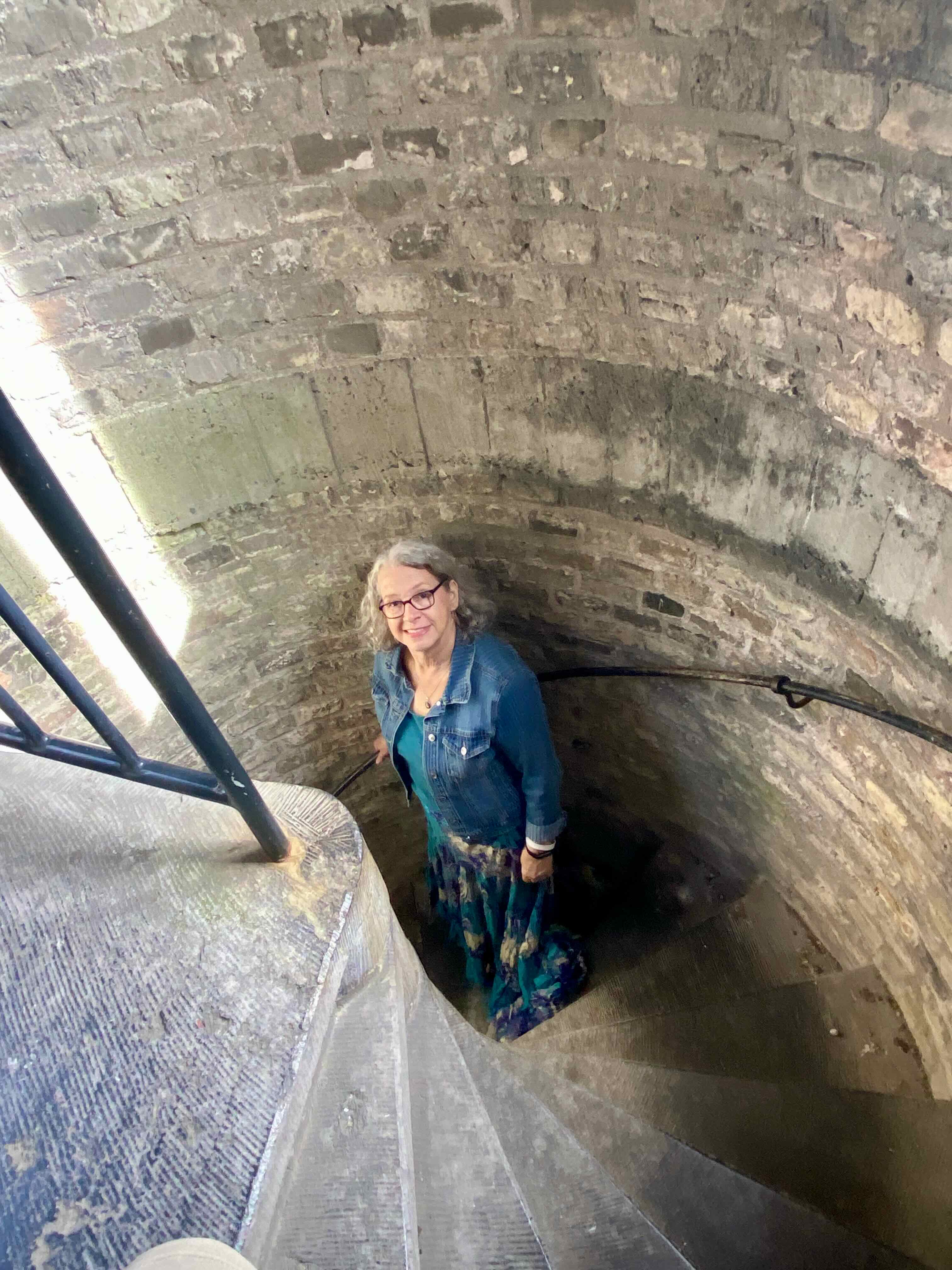
After the clim to the top of the tower we have lunch and chatted with this Belgium couple who like to travel on their colourful bike. We were surprised as they were both quite elderly.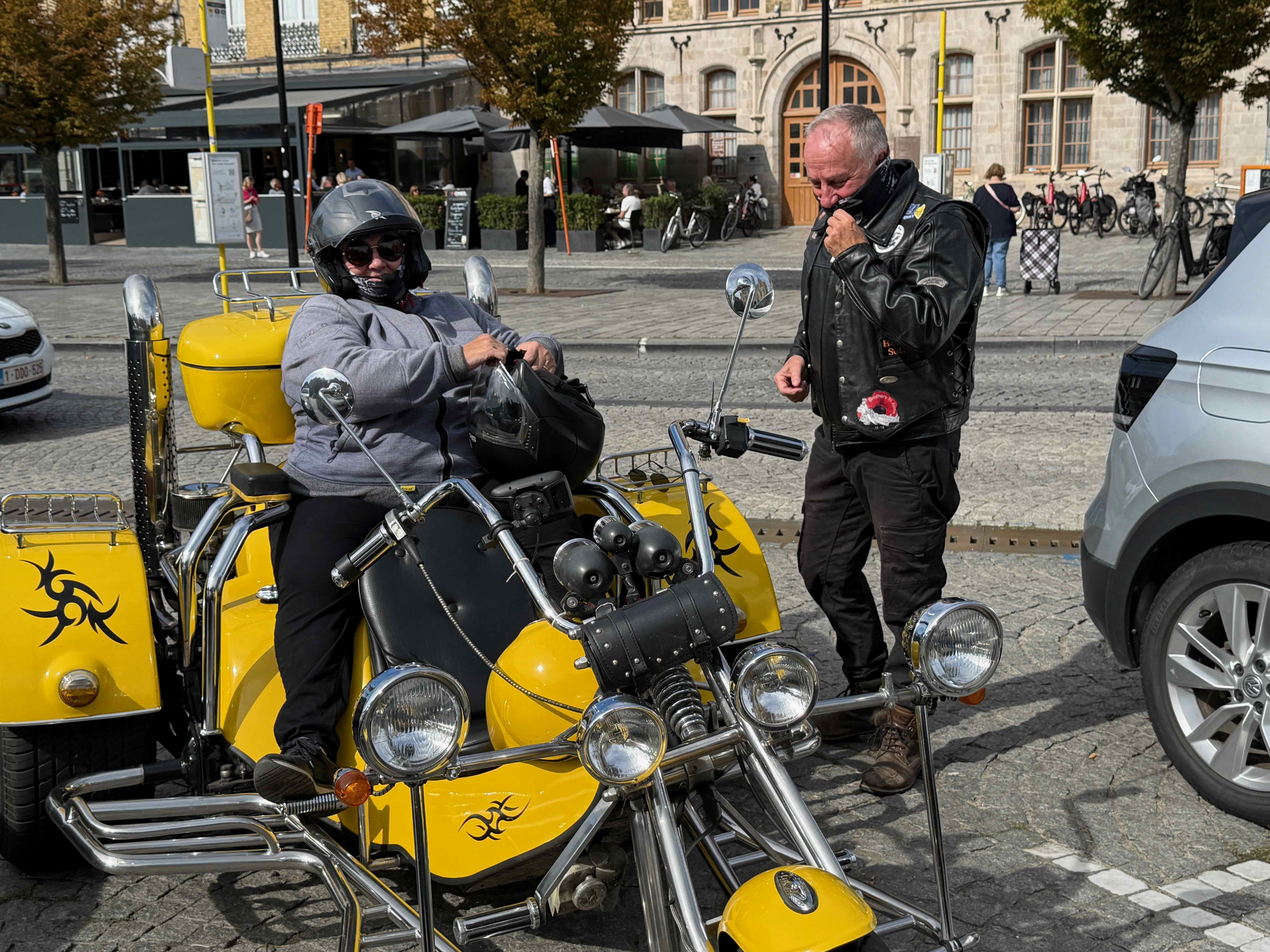
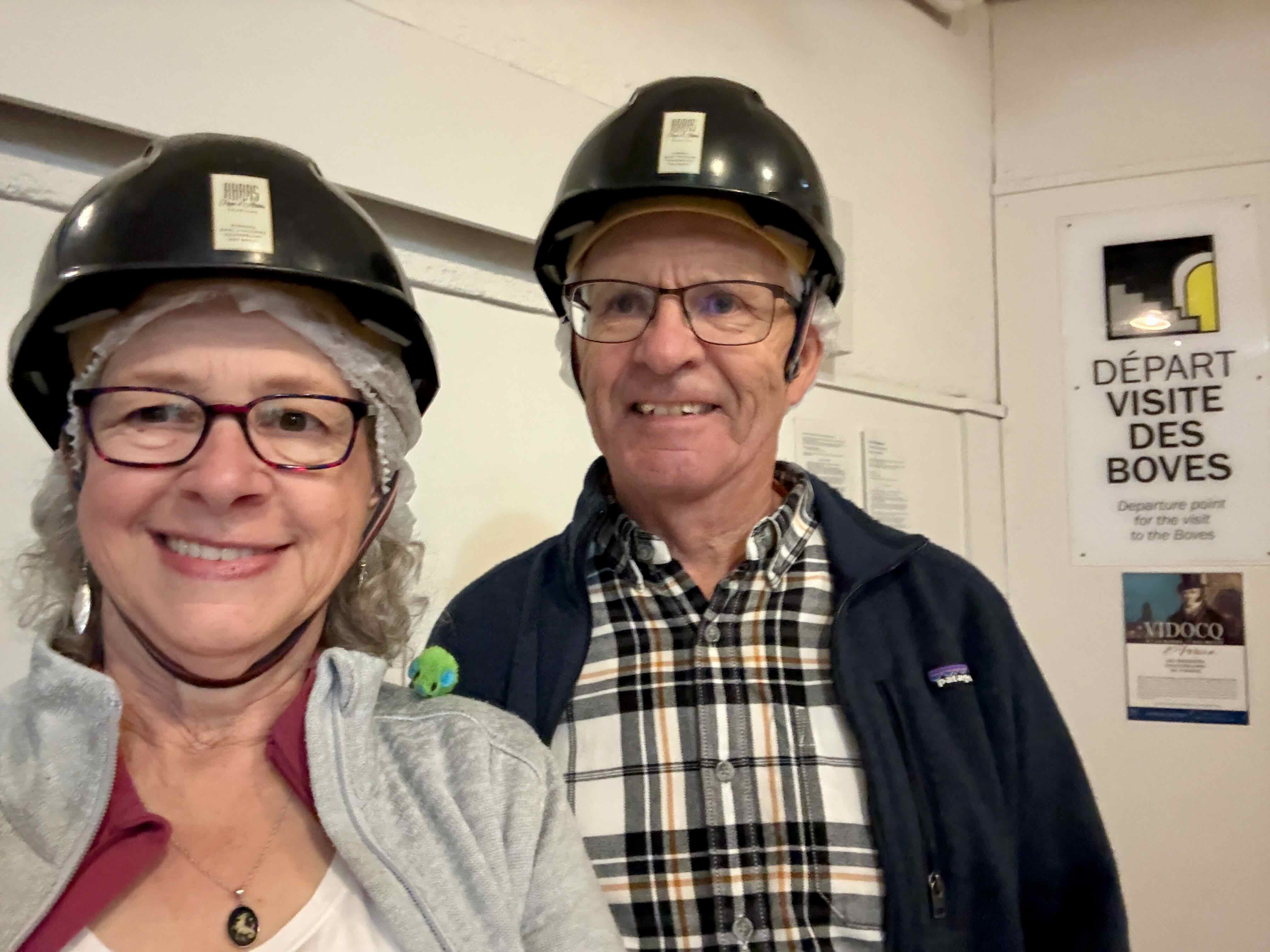
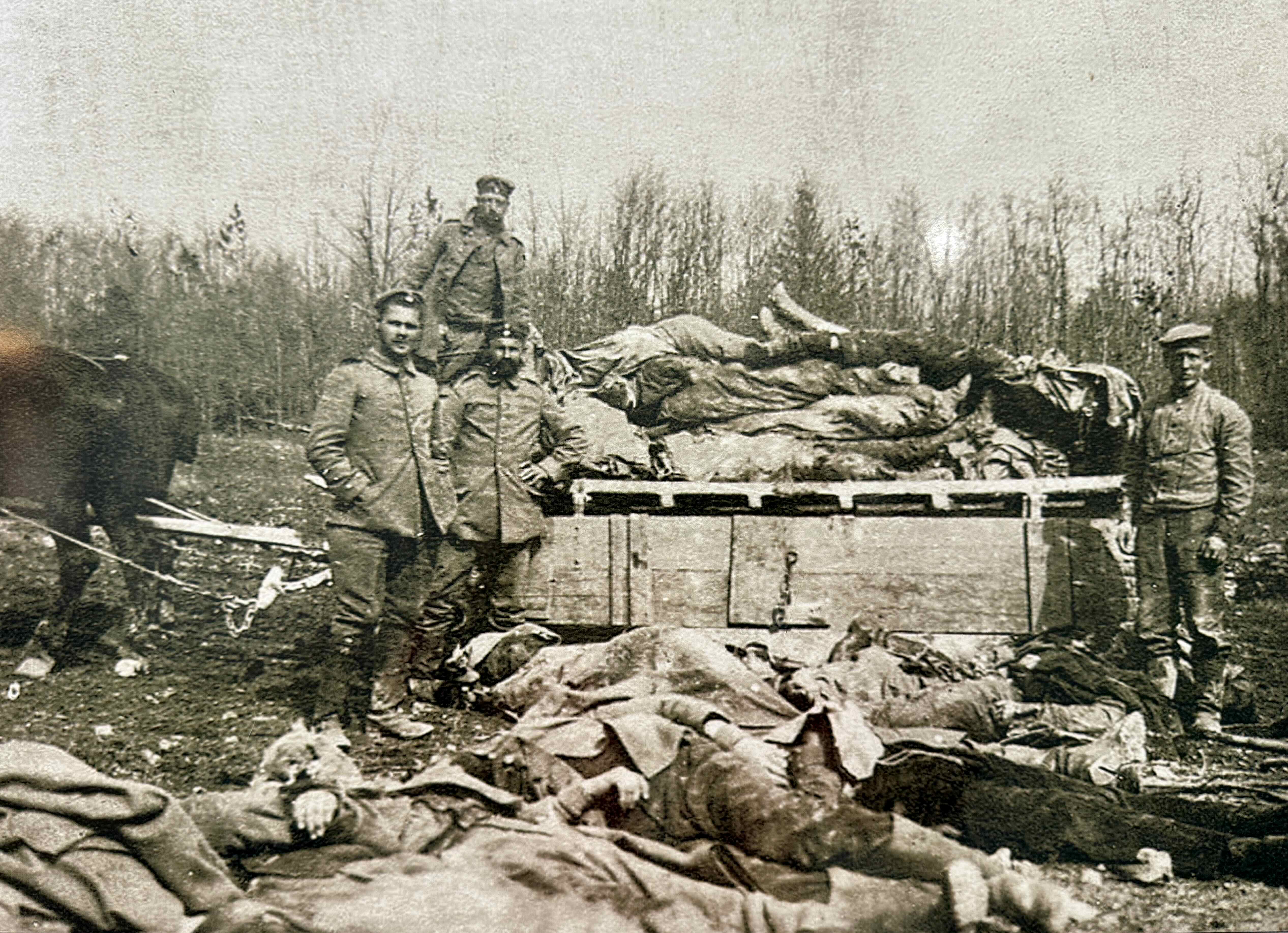
Back in the museum. There were lots of photos and film clips from the war. They bring the horror of the war to life.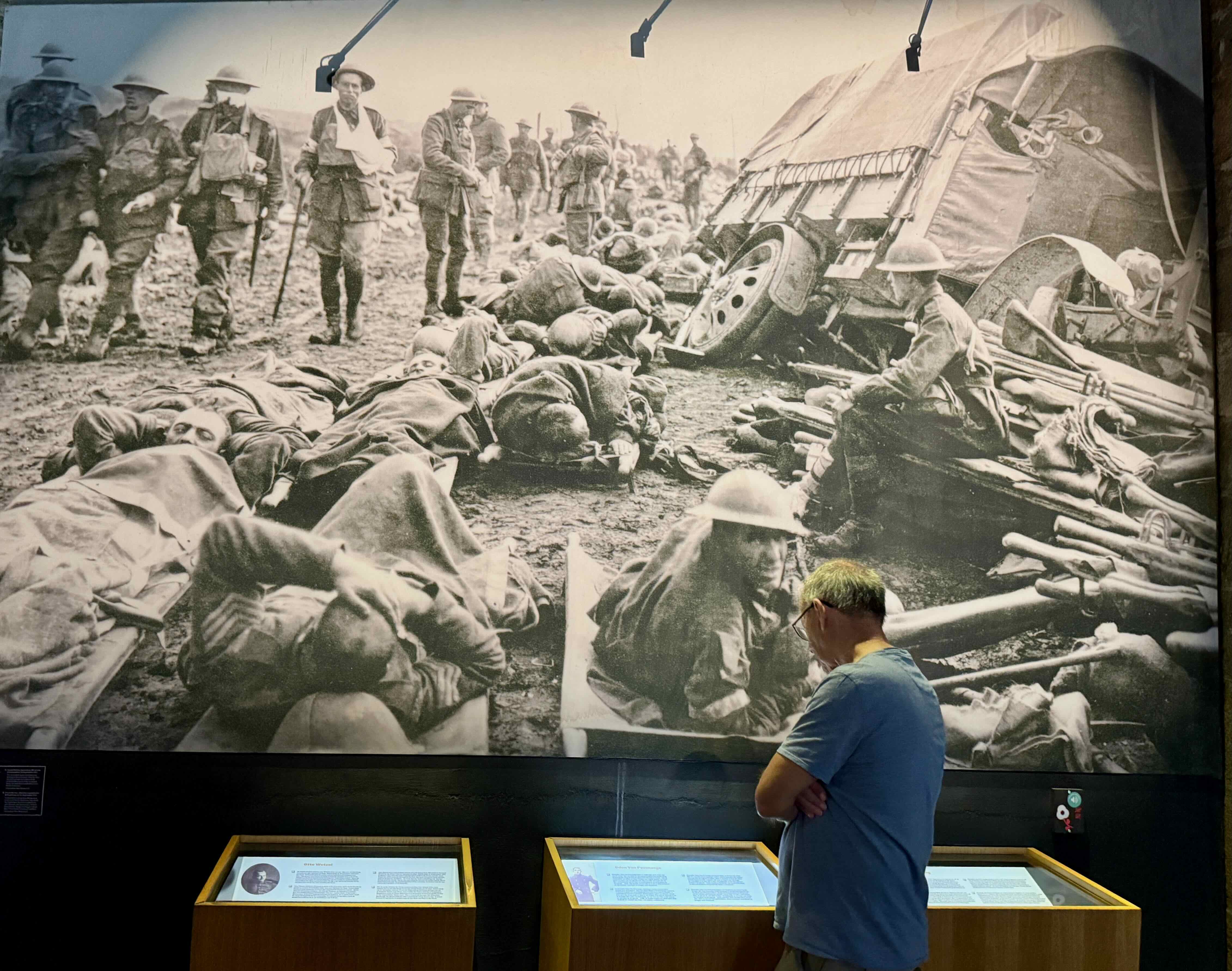
The bottom photo shows the damage done to the building that now houses this museum. It was rebuilt after the war.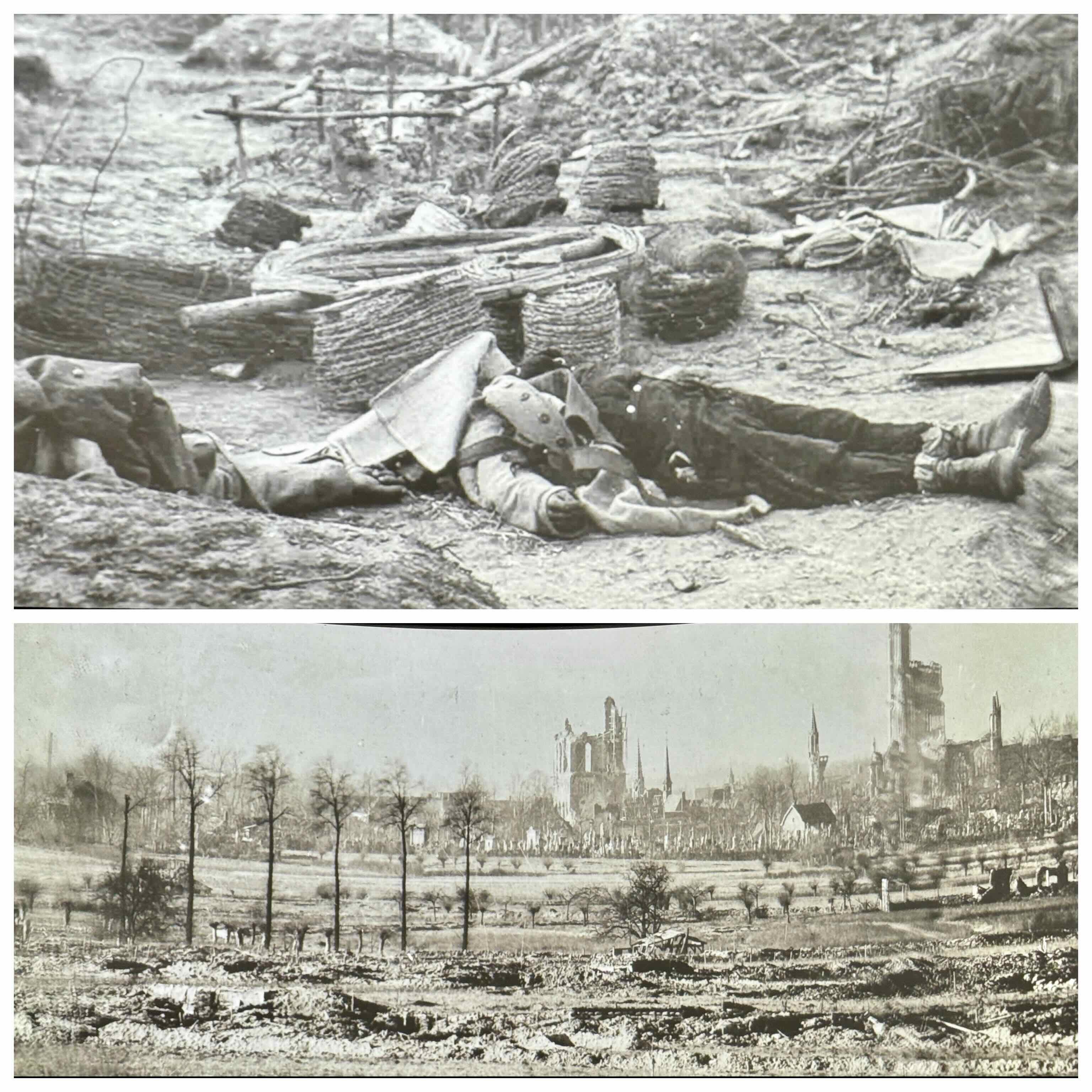
Men sleeping in closely packed conditions underground. 
There were displays of the full kit worn by soldiers from the countries that fought in the war. The first display with the kilt is from the Canadian Black Watch Royal Highland Regiment.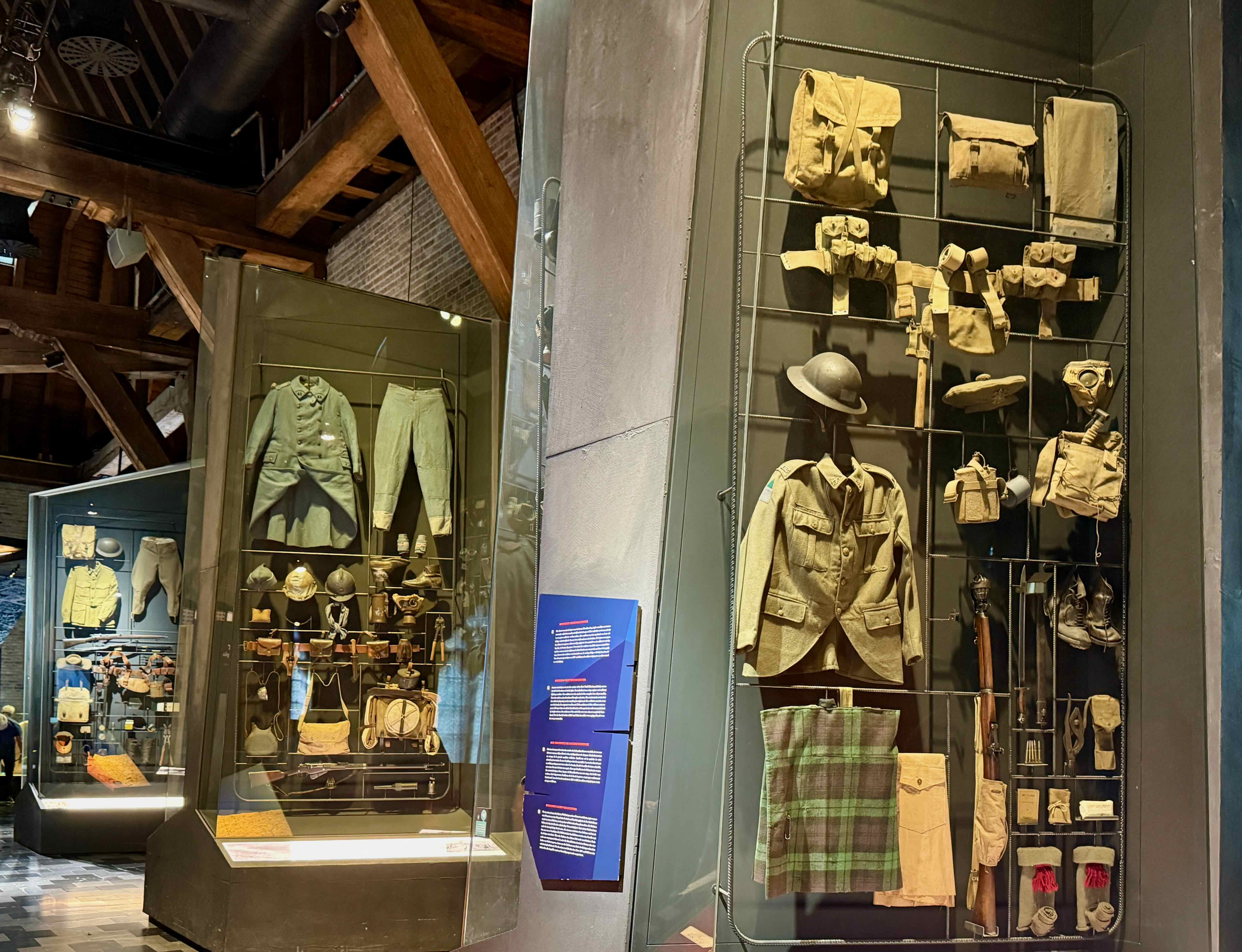 These banners are for John McCrae’s poem “In Flanders Fields”.
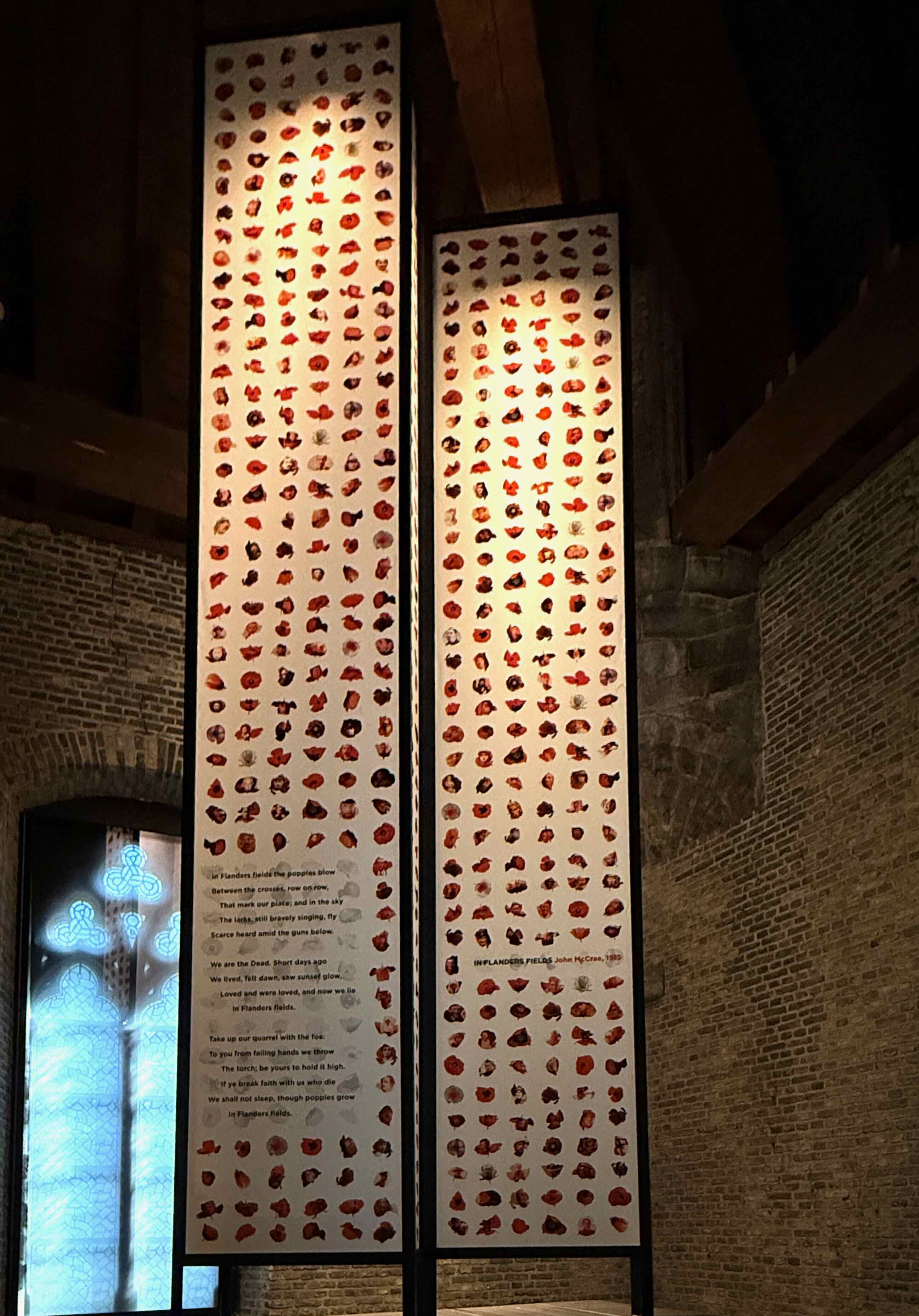
A closer look reveals that there are photos of soldiers hidden in the poppies.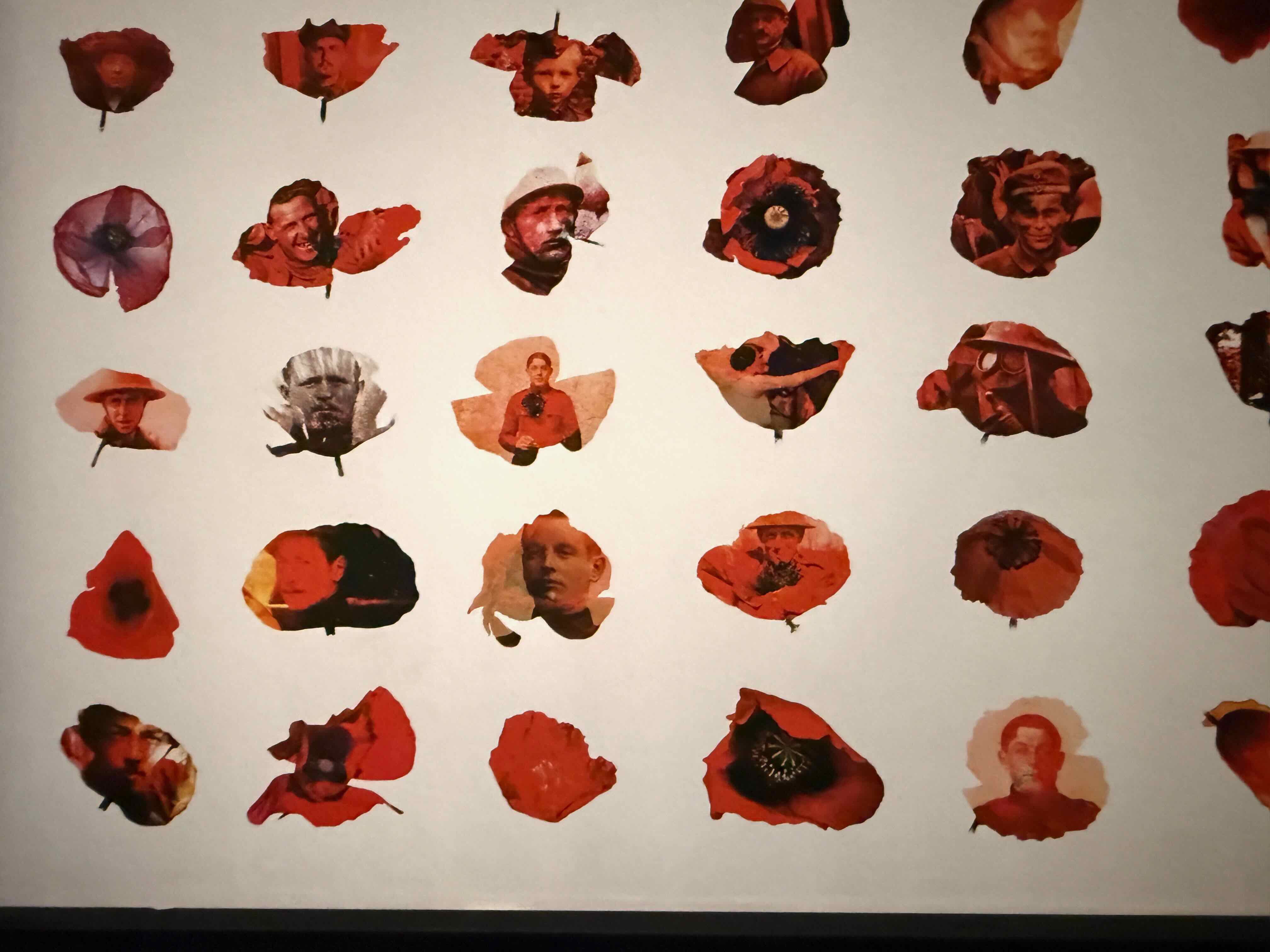
Taps is played at 8:00 every night at the Ypres Menin Gate memorial.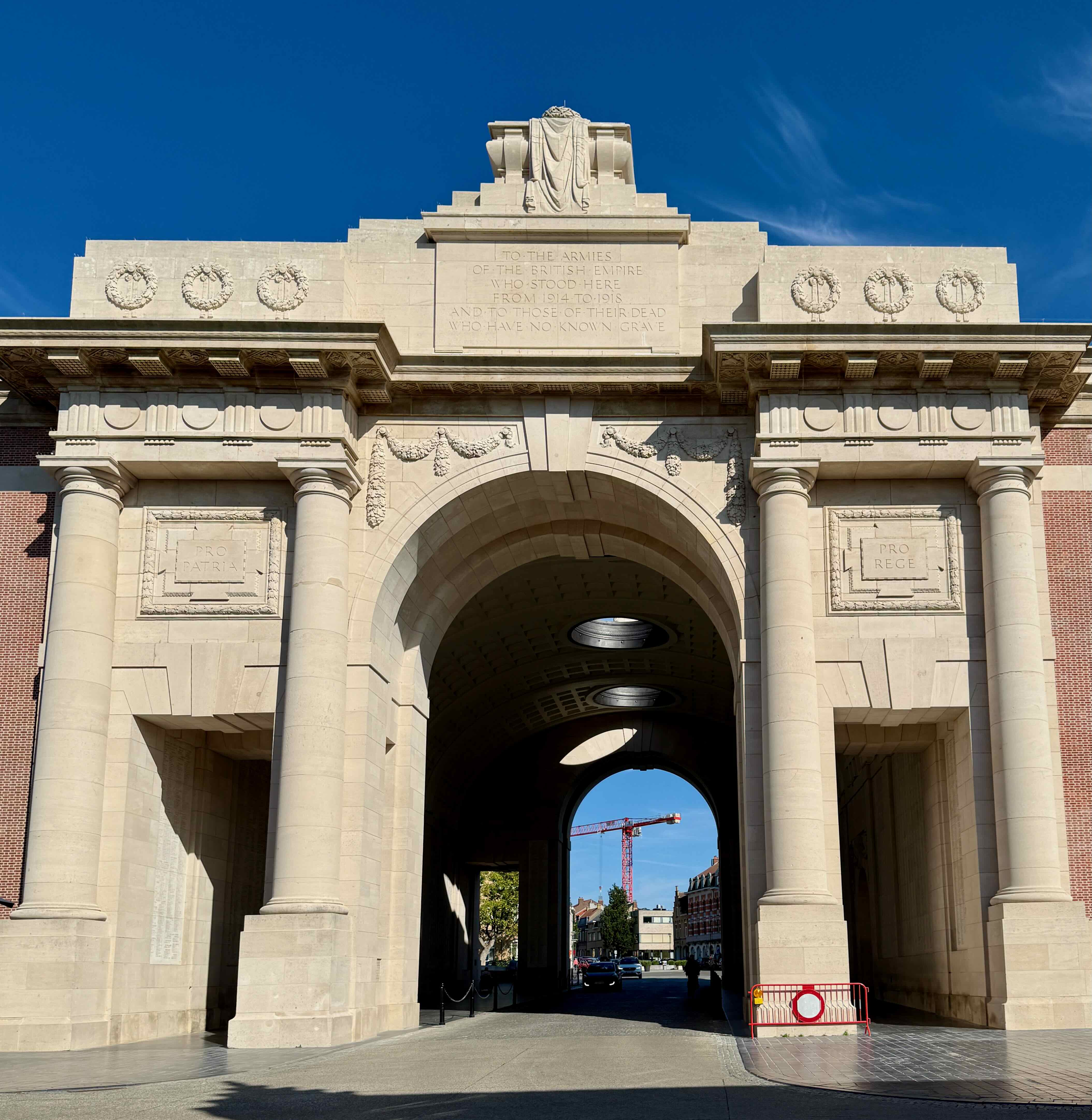
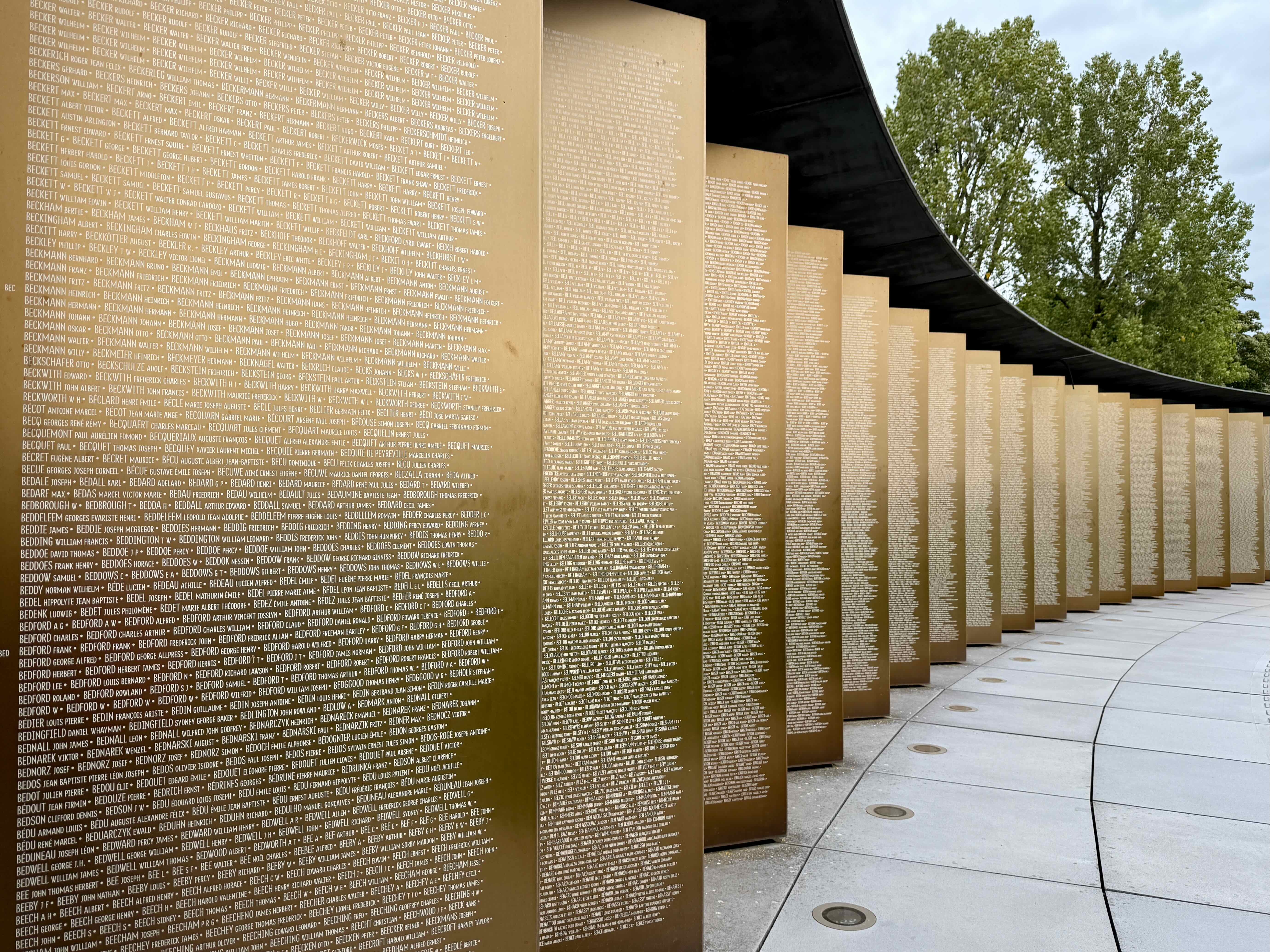
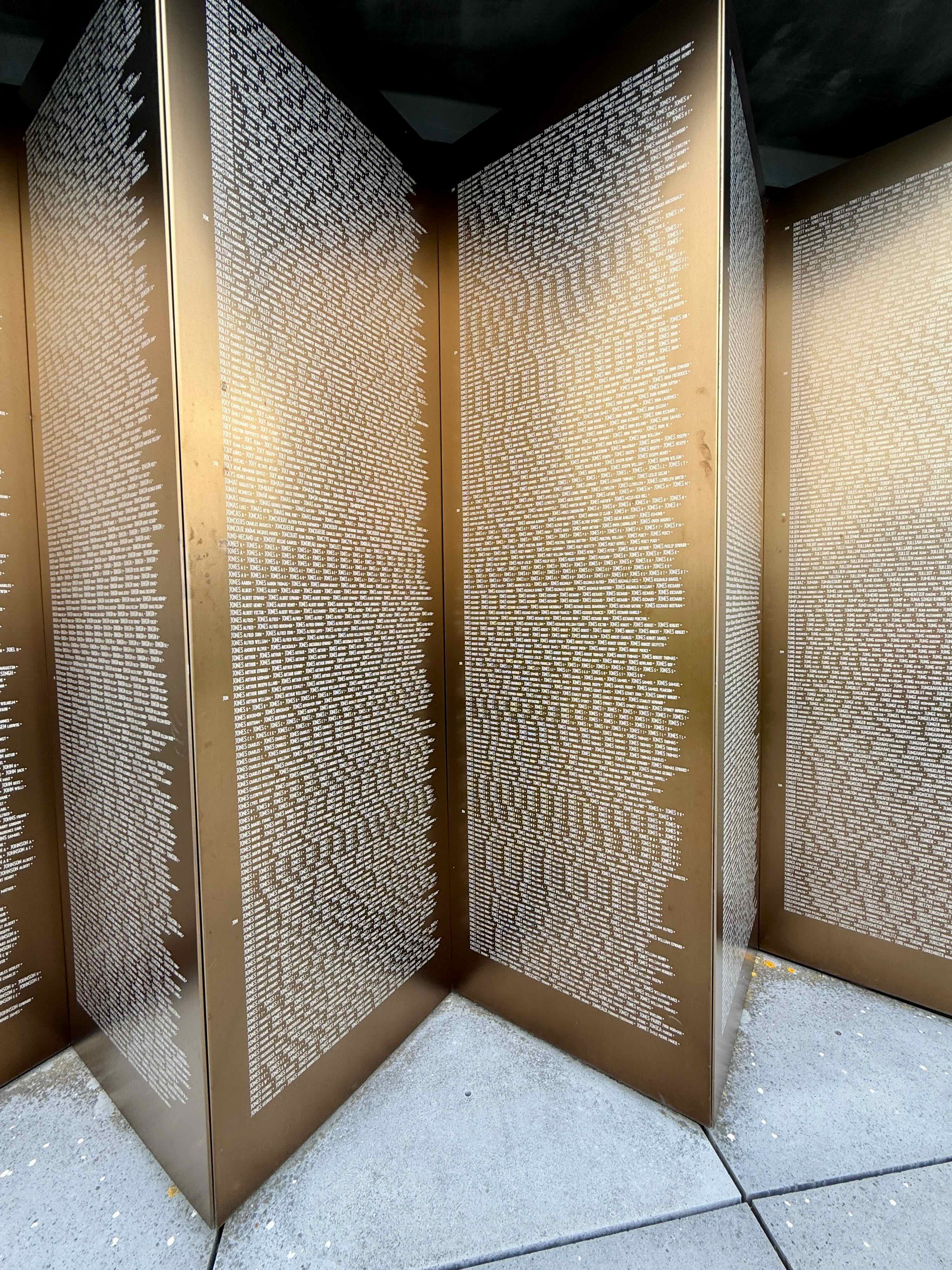
This memorial is engraved with the names of more than 54,000 officers and men whose graves are not known. I feel emotional when viewing these lists of those who died but were never found and buried. 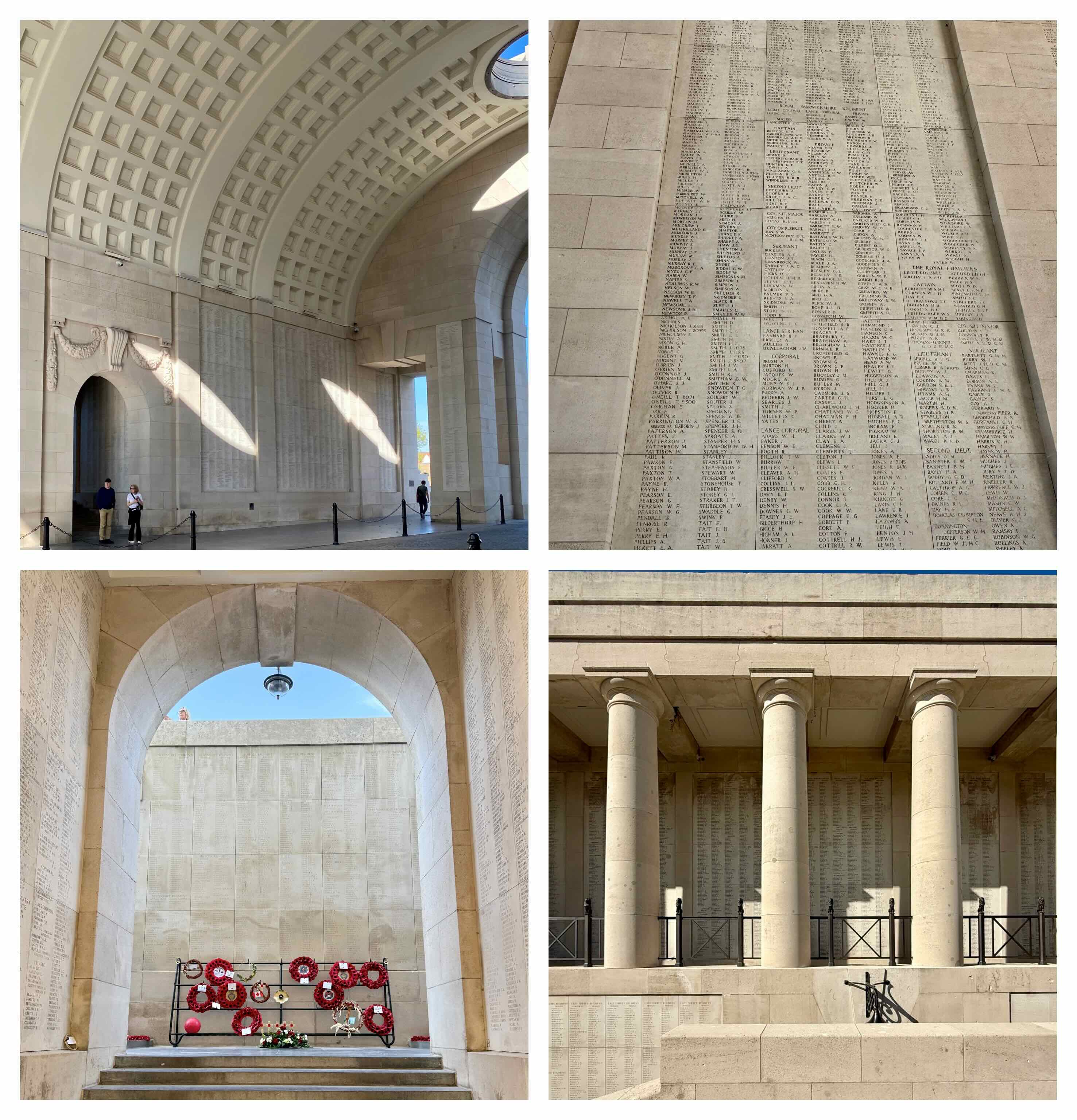
Walking back to the car we pass a gallery with these amazing porcelain sculptures by Bénedicte Vallet.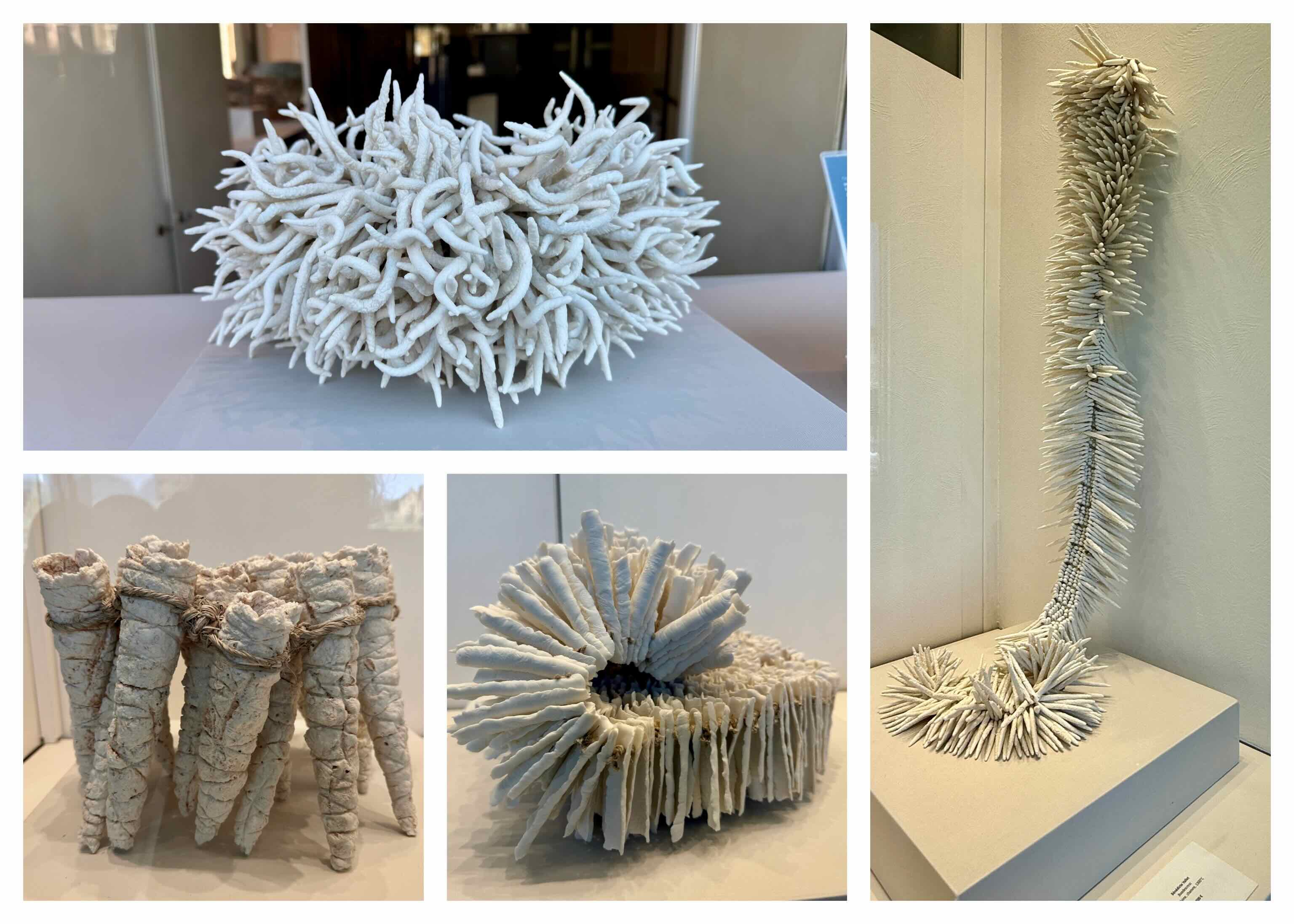
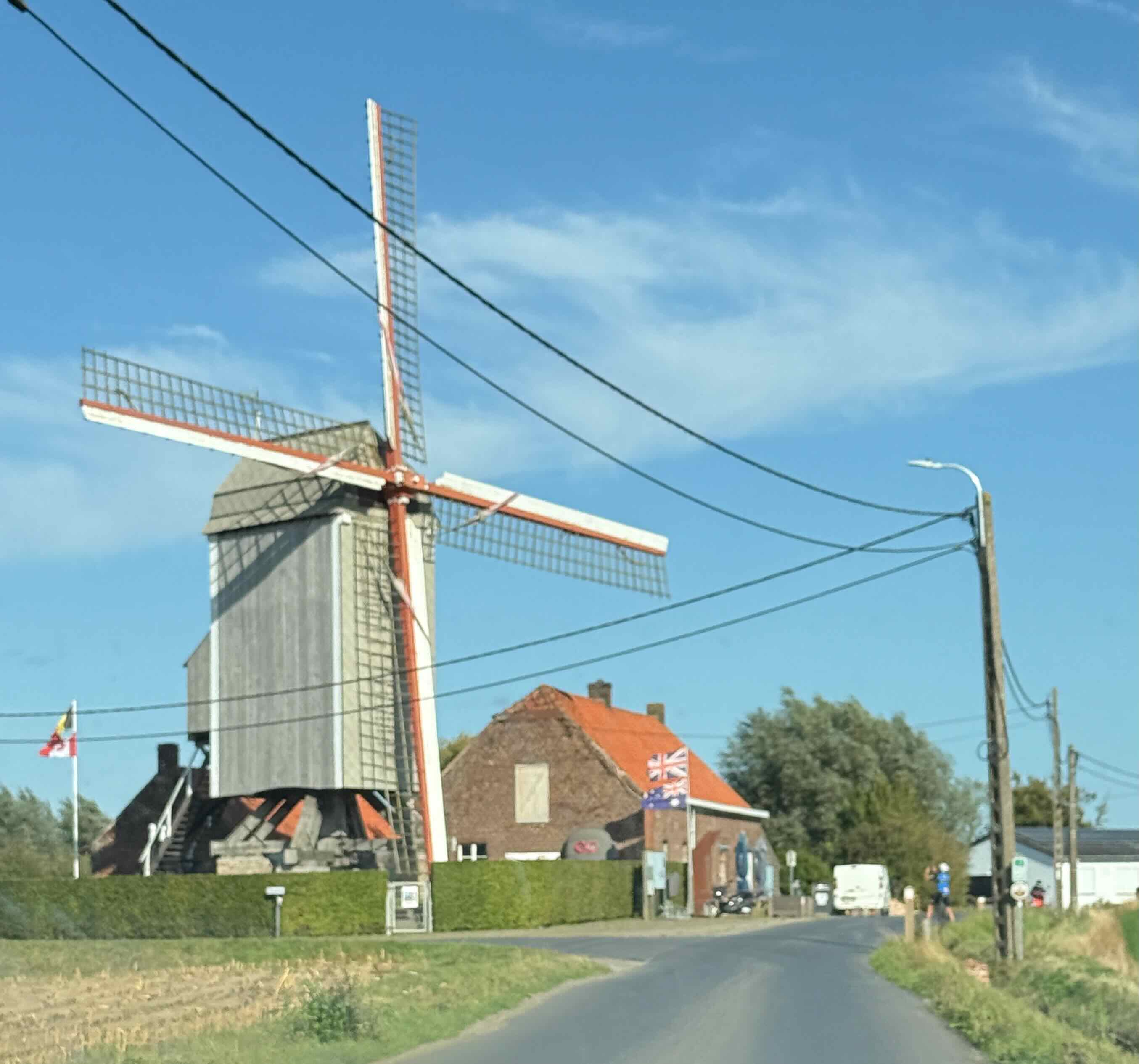
Next stop is the Essex Farm Cemetery where the Canadian doctor, Lieutenant Colonel John McCrae wrote his now famous poem “in Flanders Fields” after seeing poppies growing in battle-scarred fields. The poem was written in memory a friend who died at Ypres, 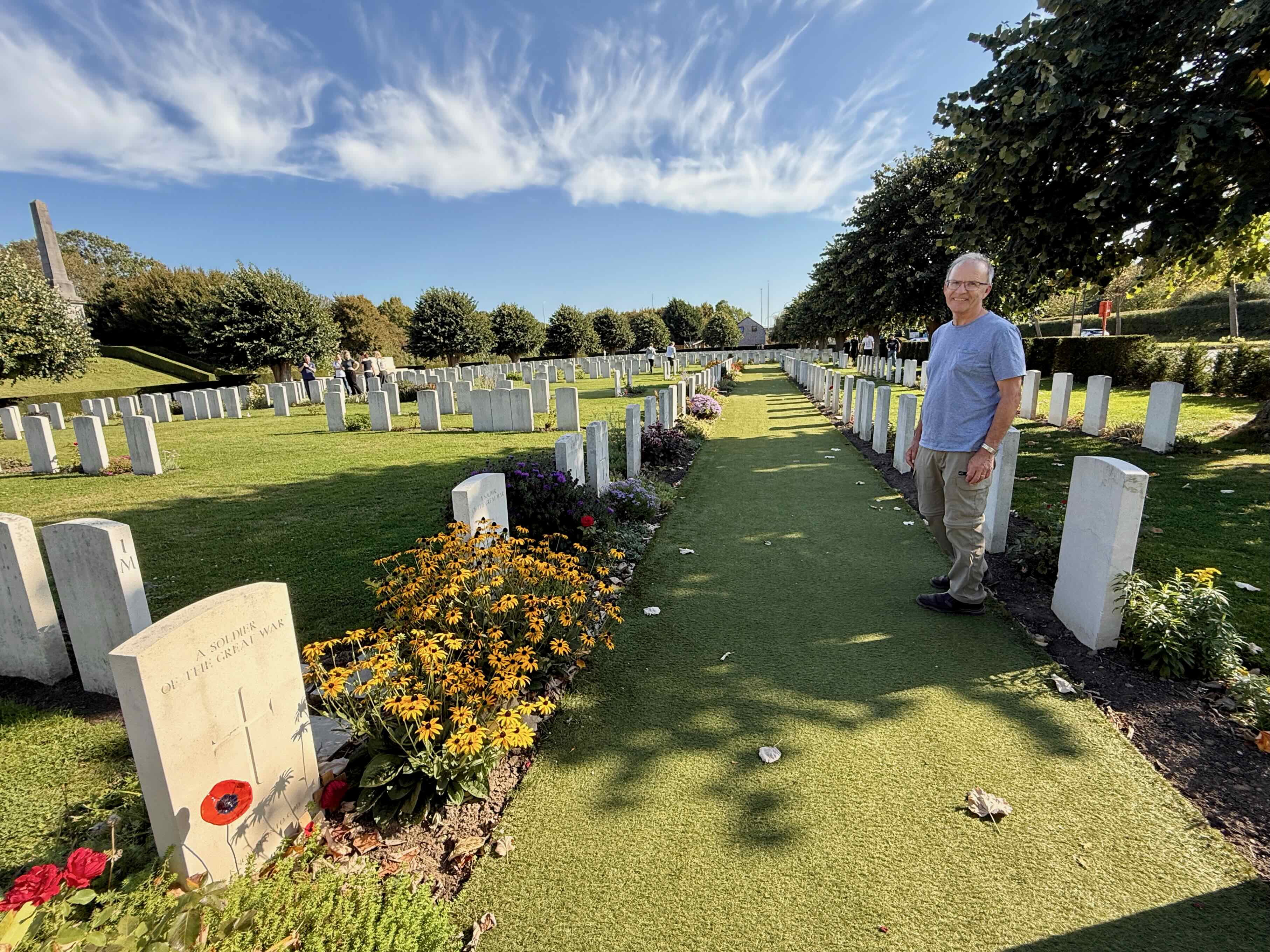 We pass some windmills on the way to the last cemetery we will visit on this trip.
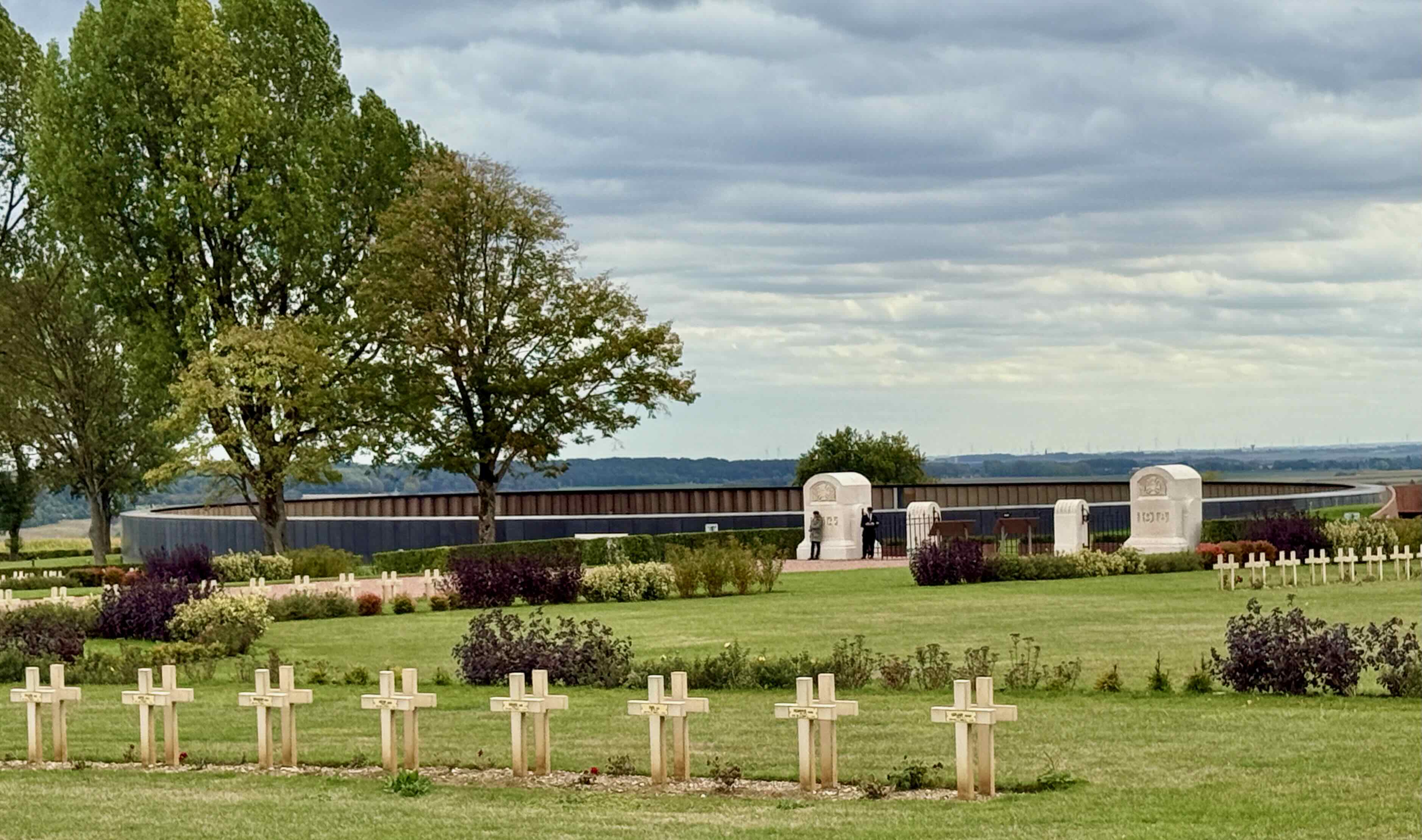
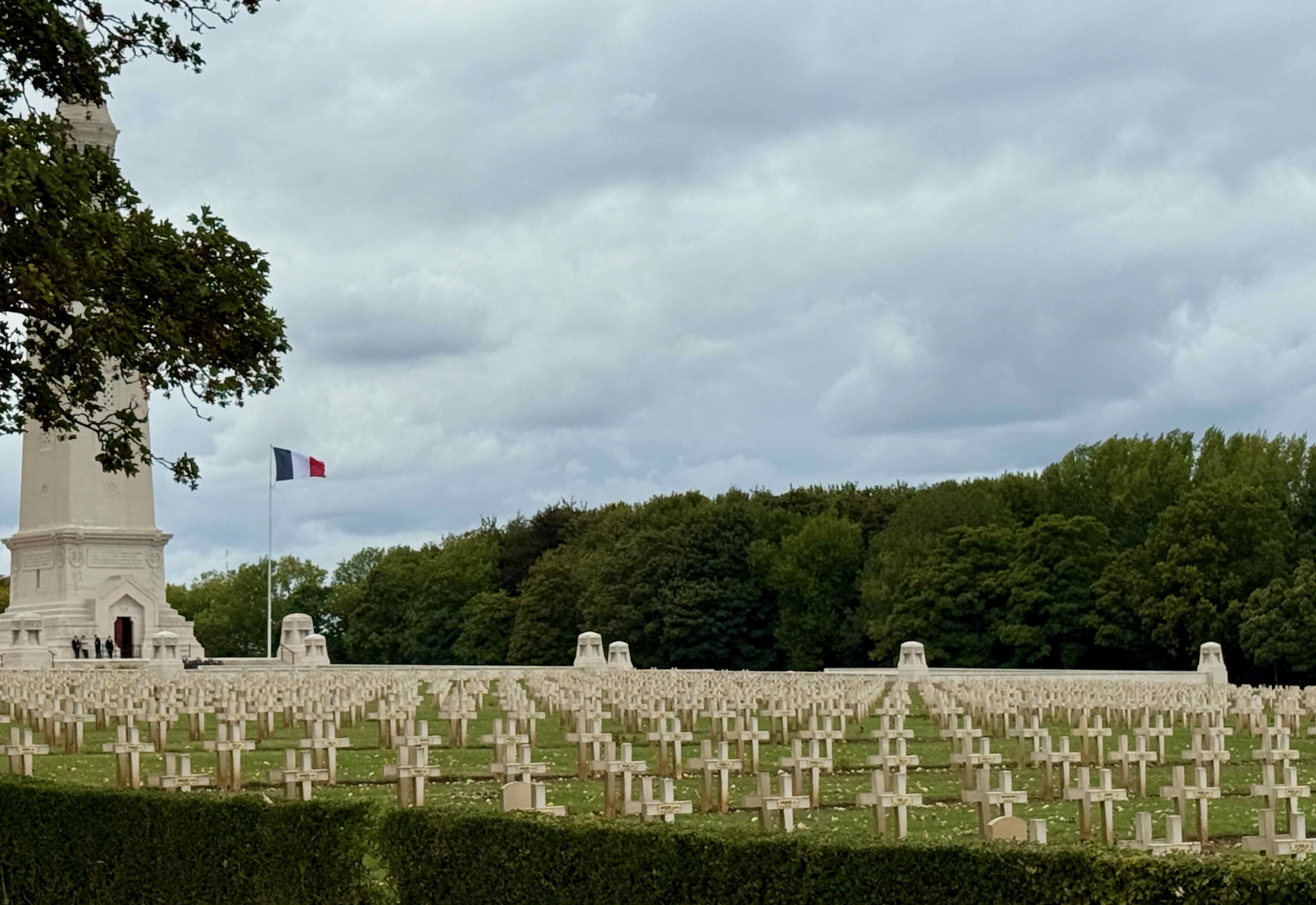
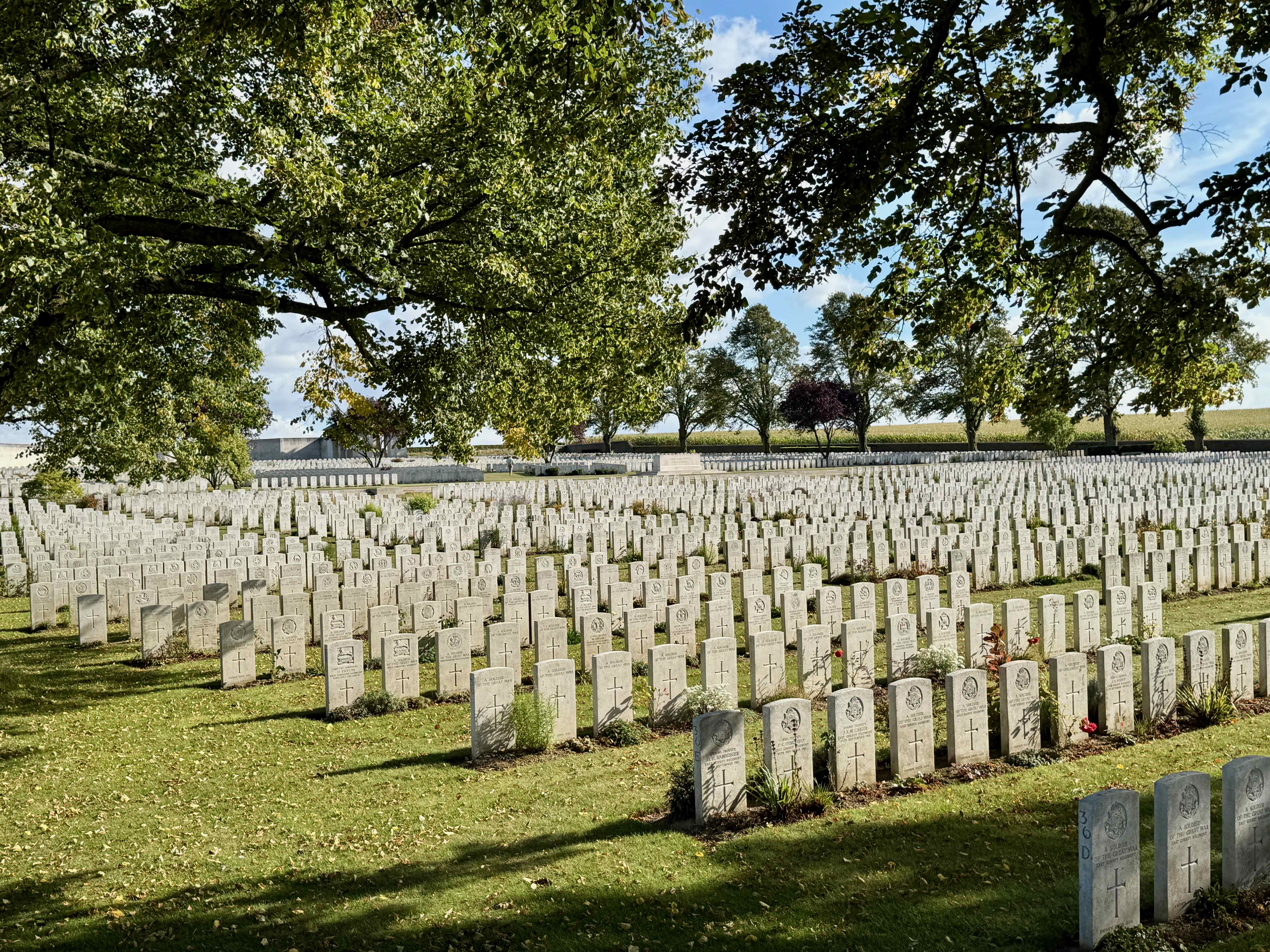
Tyne Cot cemetery, located near Ypres, is the largest Commonwealth cemetery in the world and a memorial to the missing soldiers of World War I. It contains the graves of 11,956 Commonwealth soldiers, primarily from the Battle of Passchendaele. 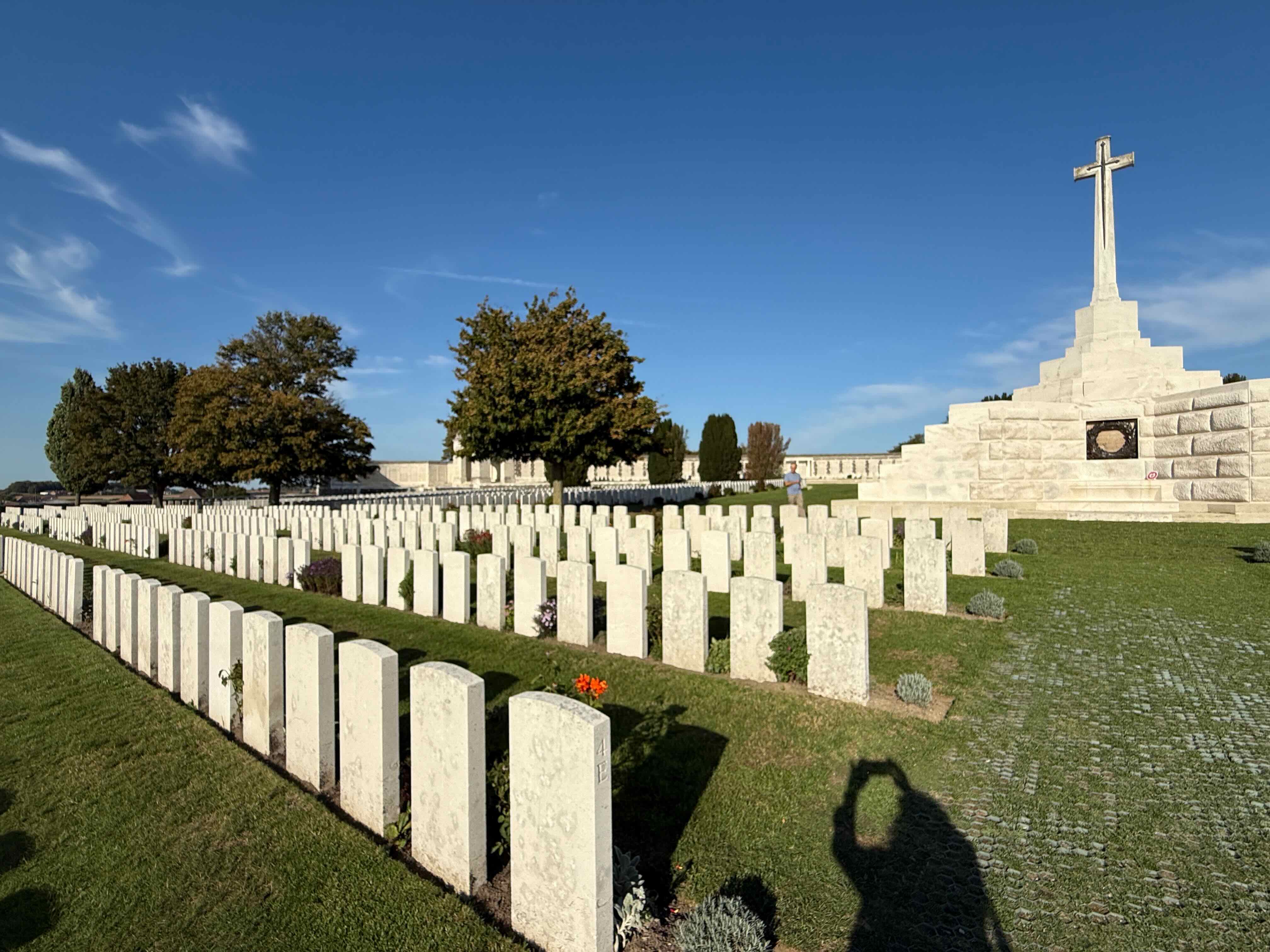
So many graves and 8,367of them are unidentified British or Commonwealth servicemen.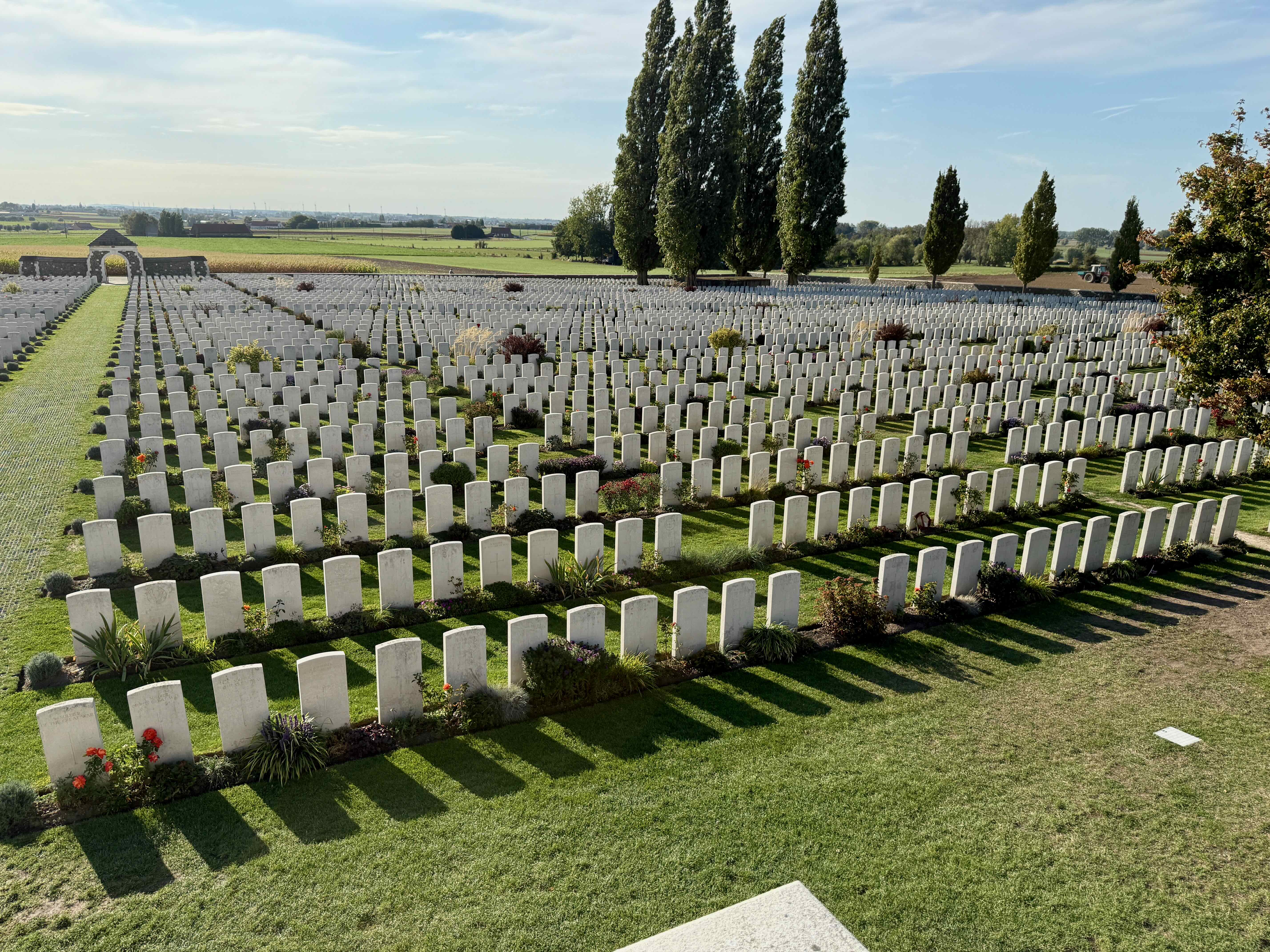
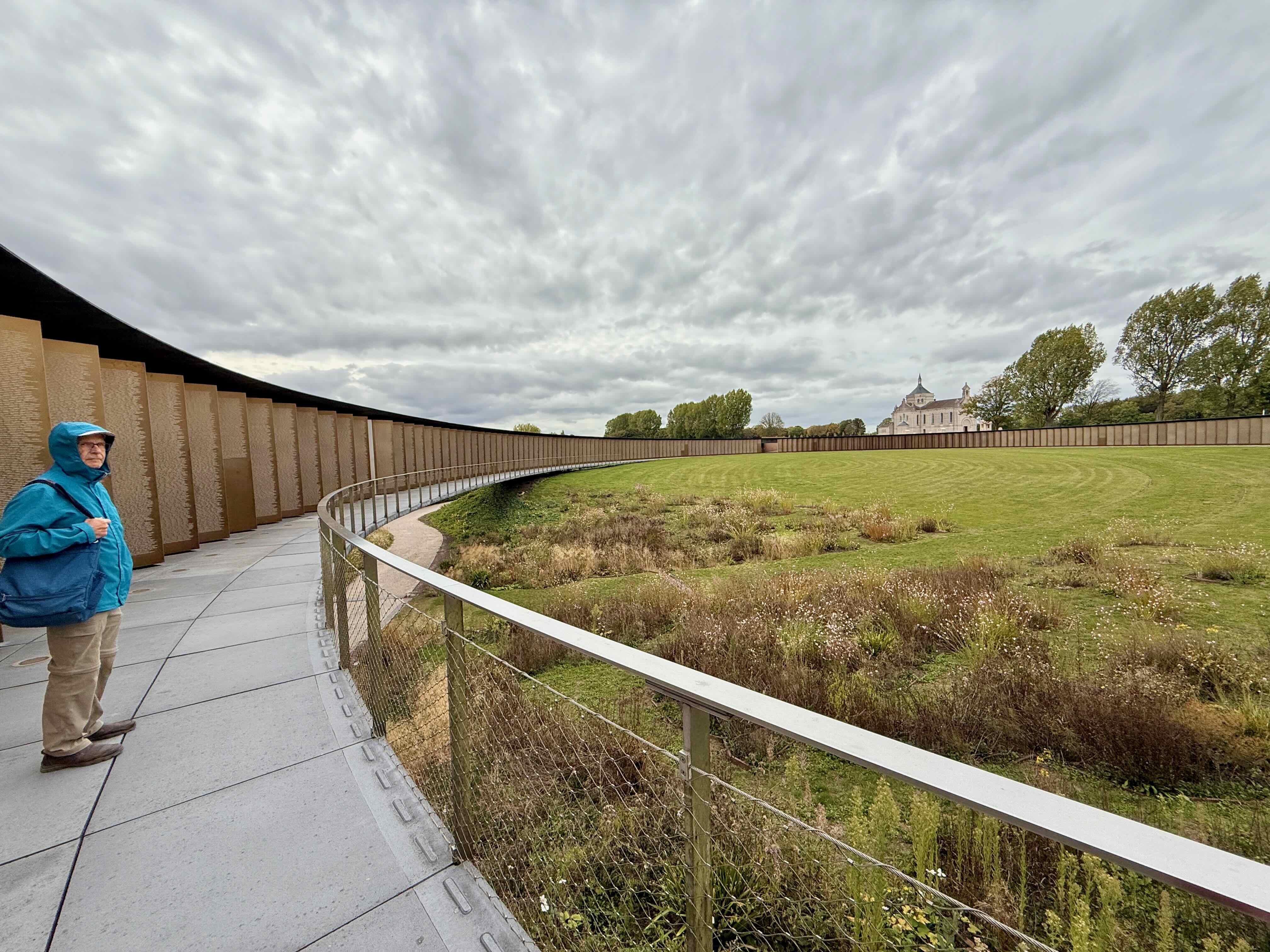
The wall in the background of this photo is engraved with the names of the 35,000 soldiers whose remains were never found or identified.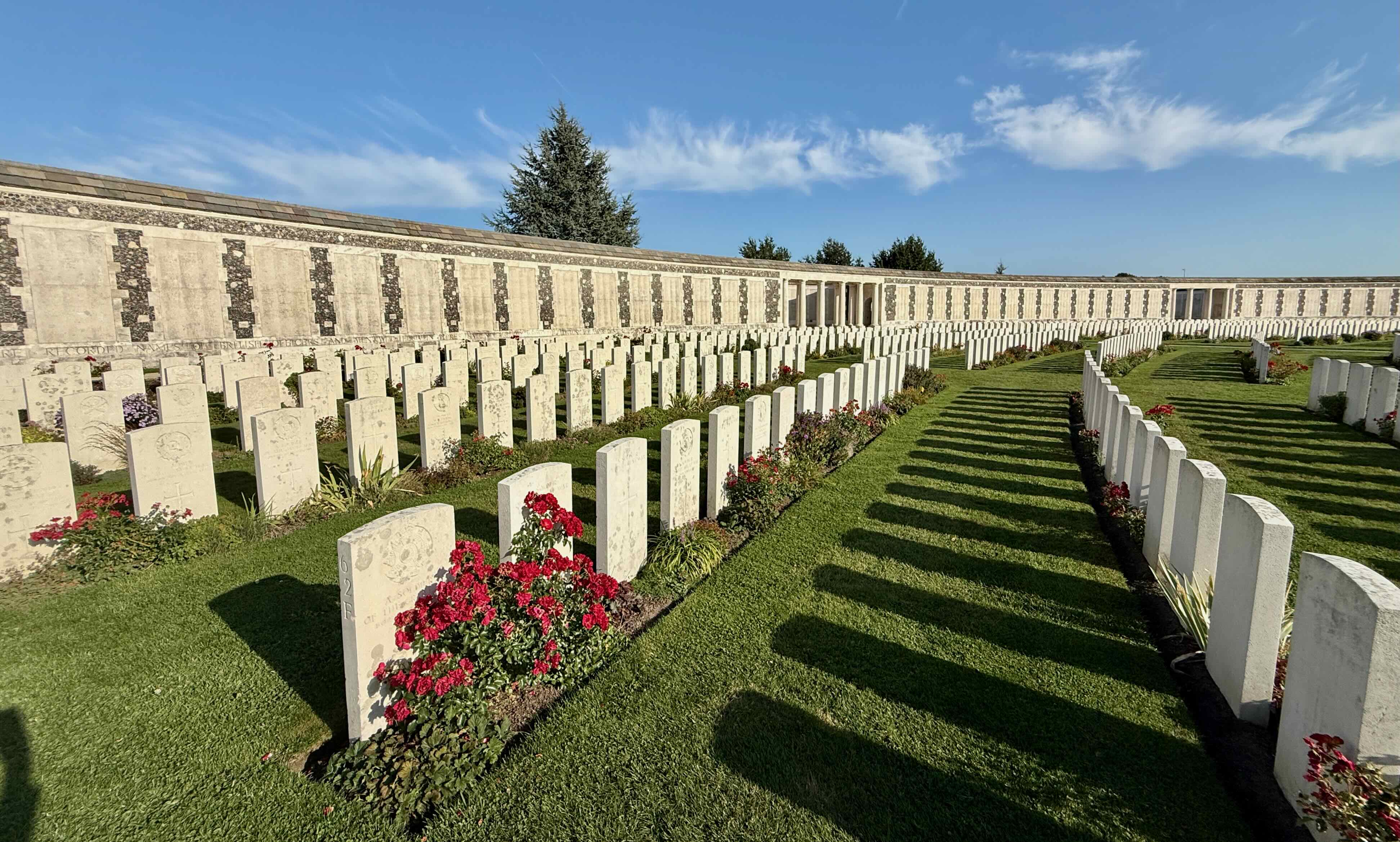 One last stop at the Canadian Memorial which commemorates the actions and sacrifices of the Canadian Corps during the First World War’s Battle of Passchendaele.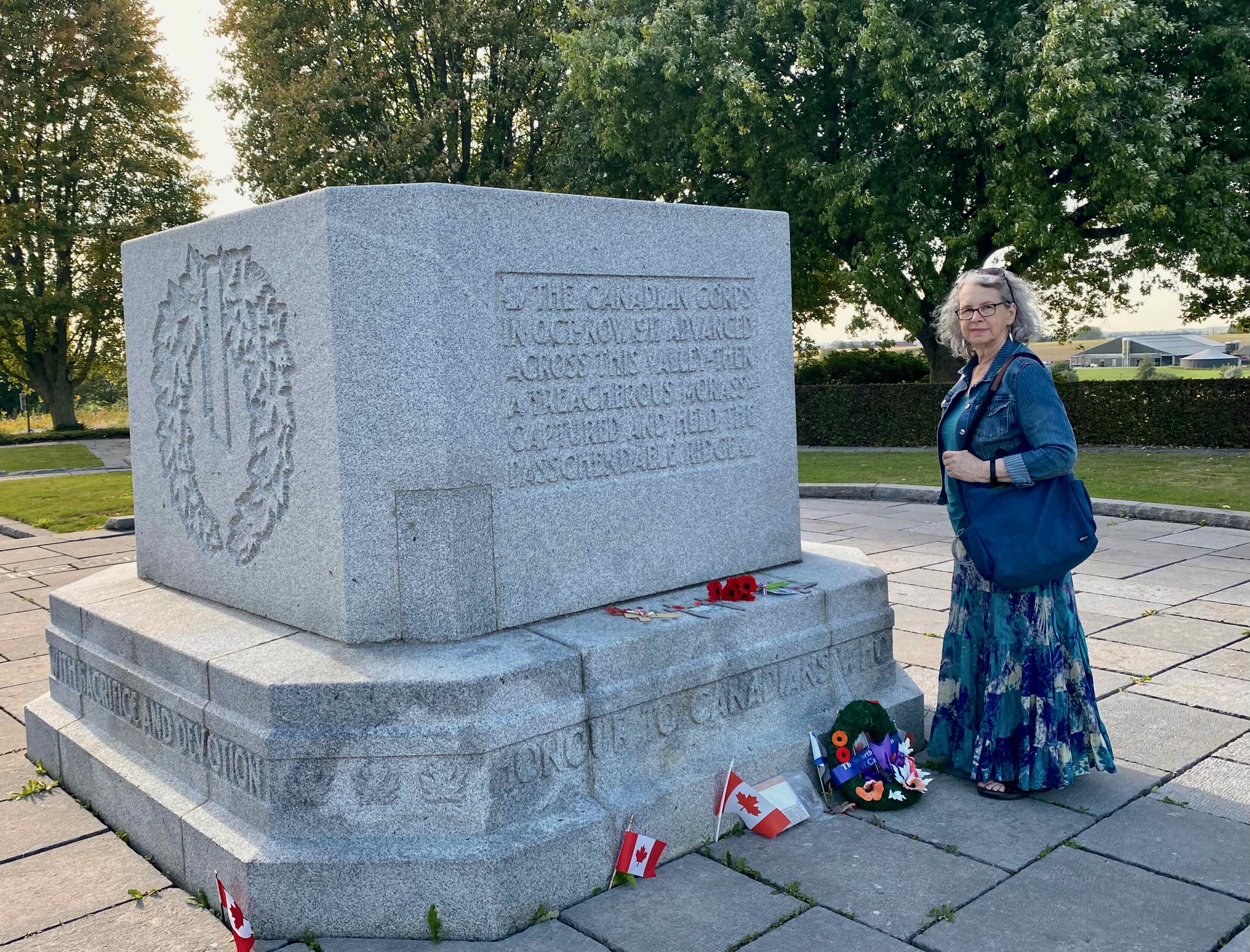
“The Canada Gate is the second of two linked ‘Portals of Remembrance’. The first is The Last Steps Memorial Arch, marking the spot in Halifax Nova Scotia where 350,000 Canadian soldiers took their last steps in Canada before embarking on ships for service overseas in Belgium and France during the First World War. For thousands, their last steps in life were taken here at Passchendaele. For those who survived, their lives were forever changed.”~ veterans.gc.ca
Another heavy duty day. 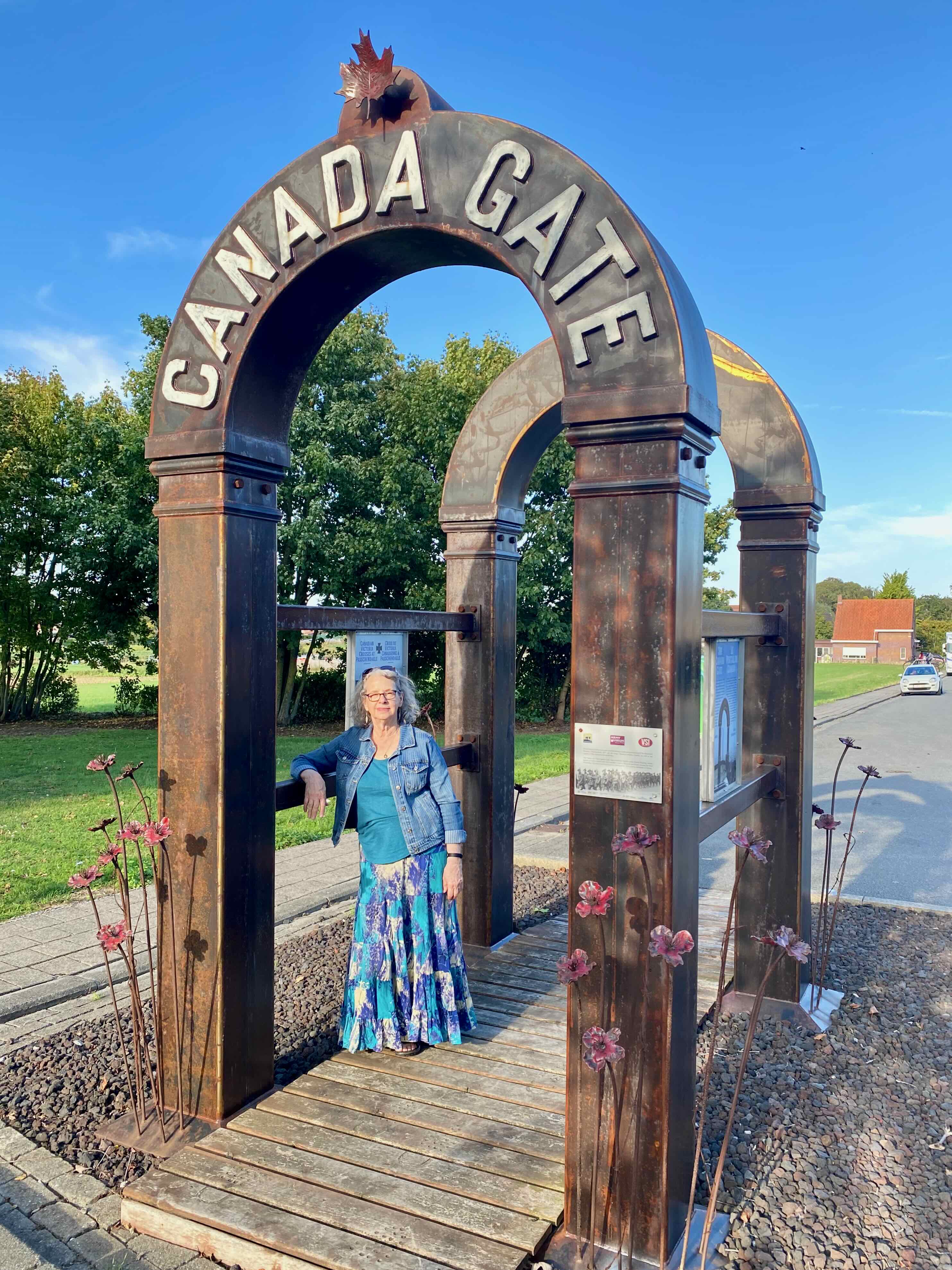
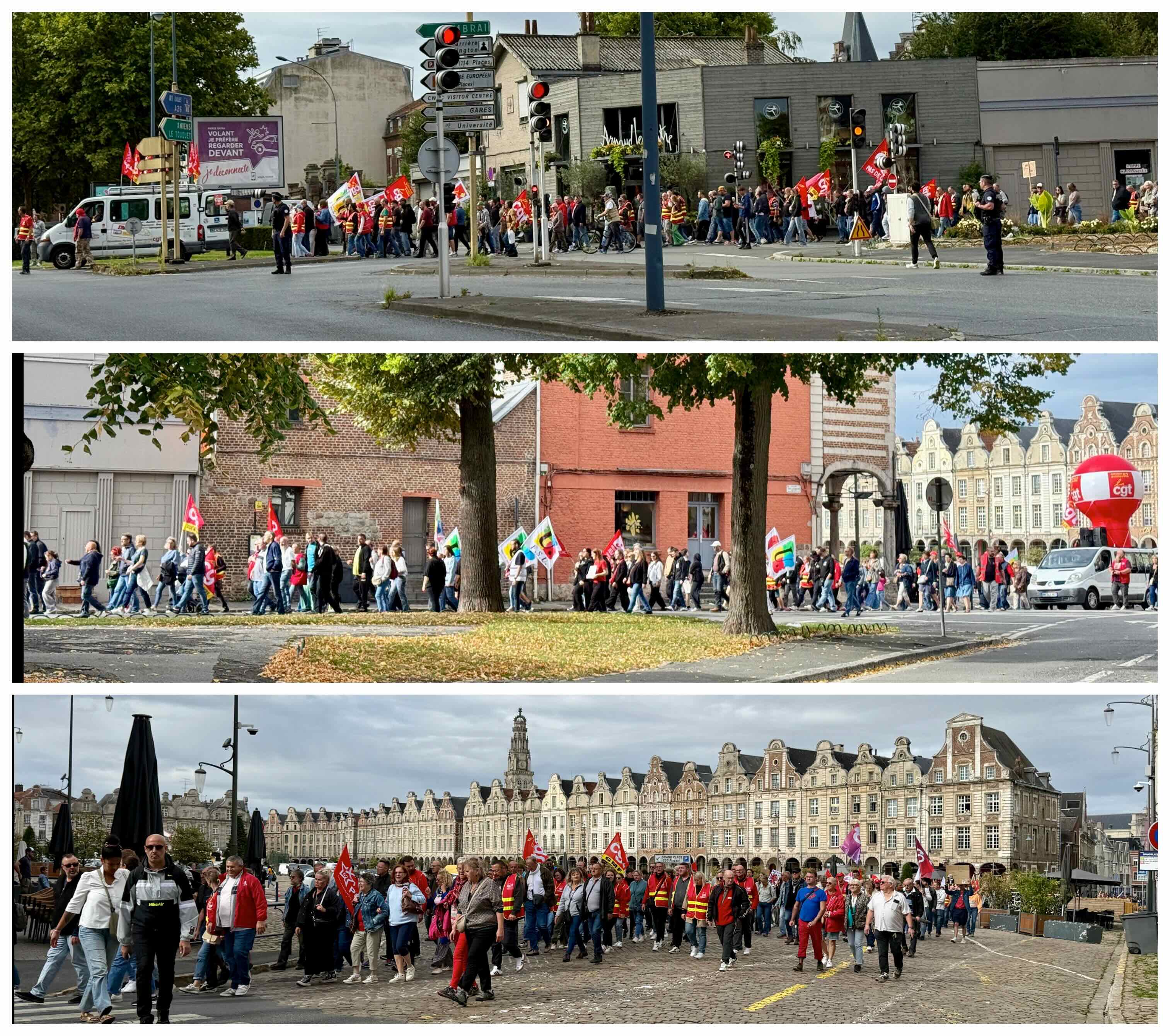
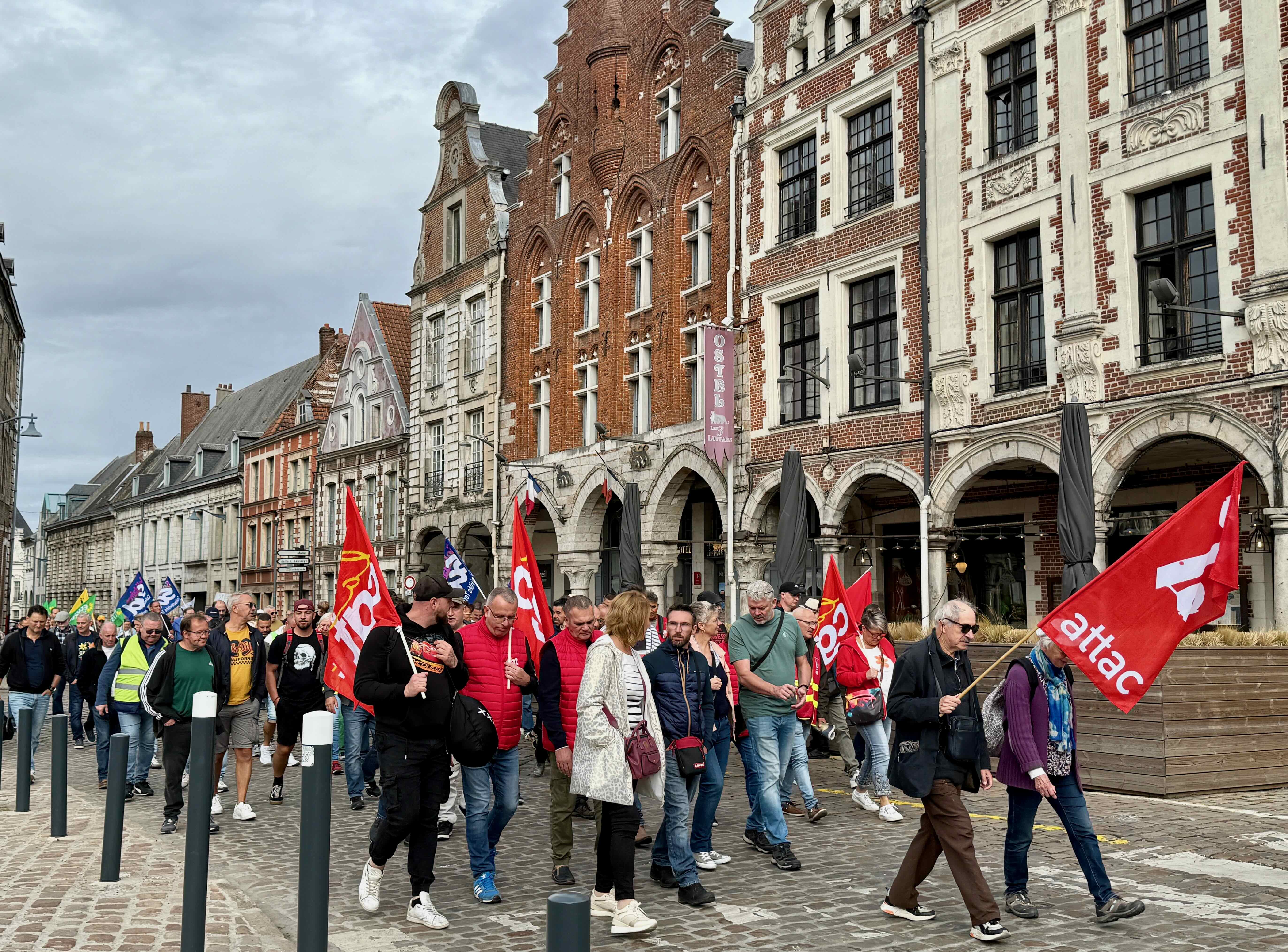
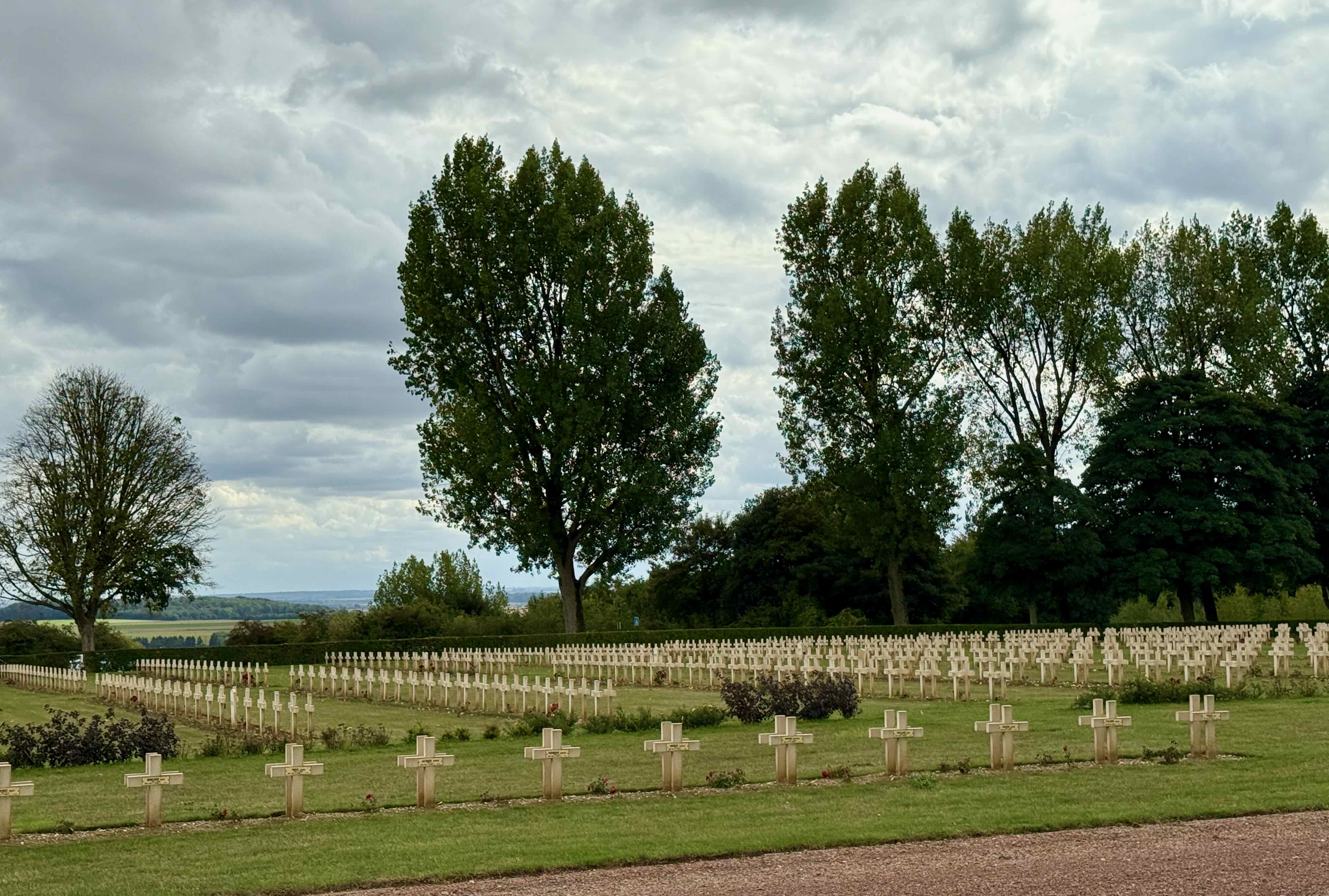 There is a basilica onsite…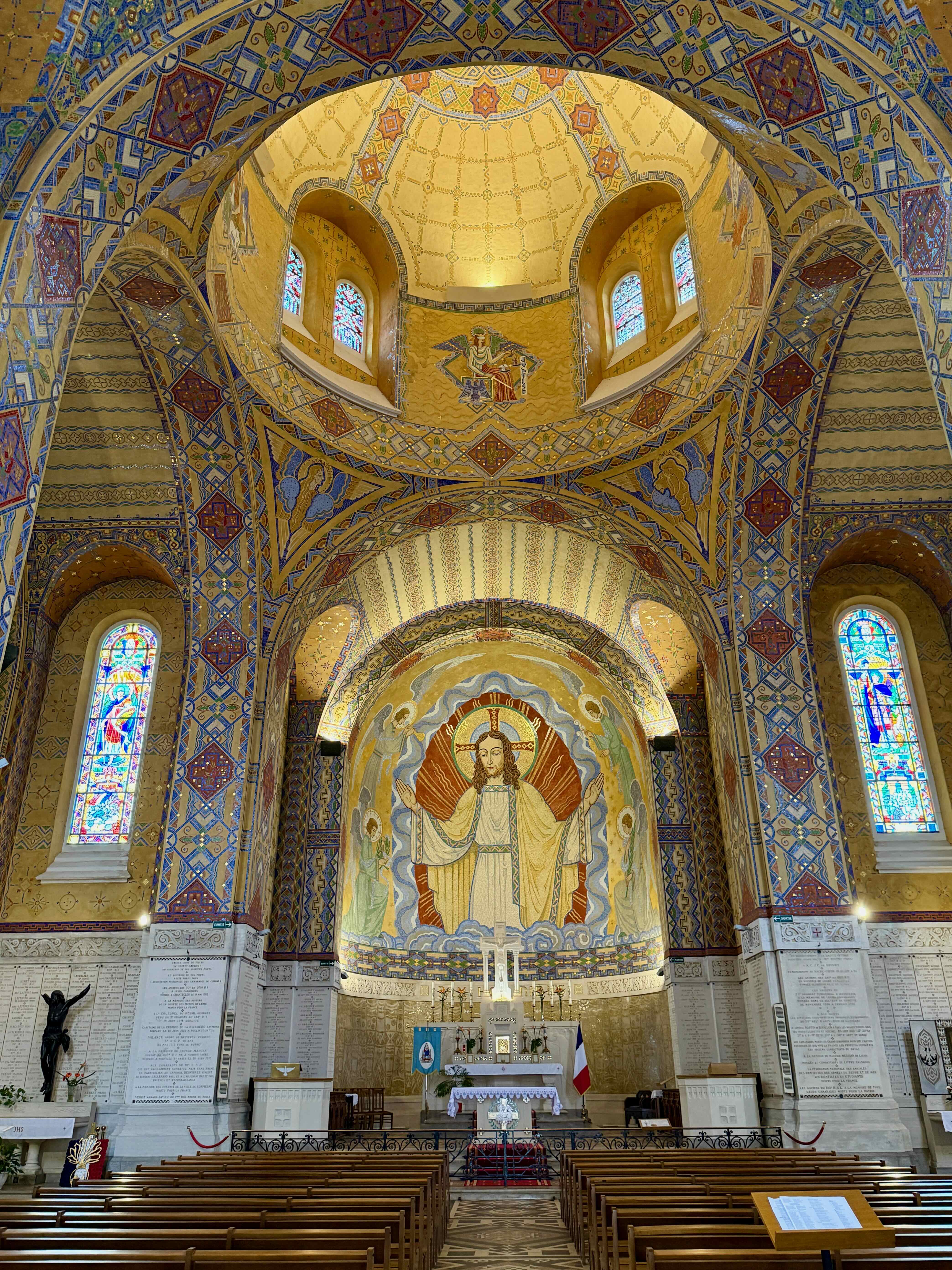
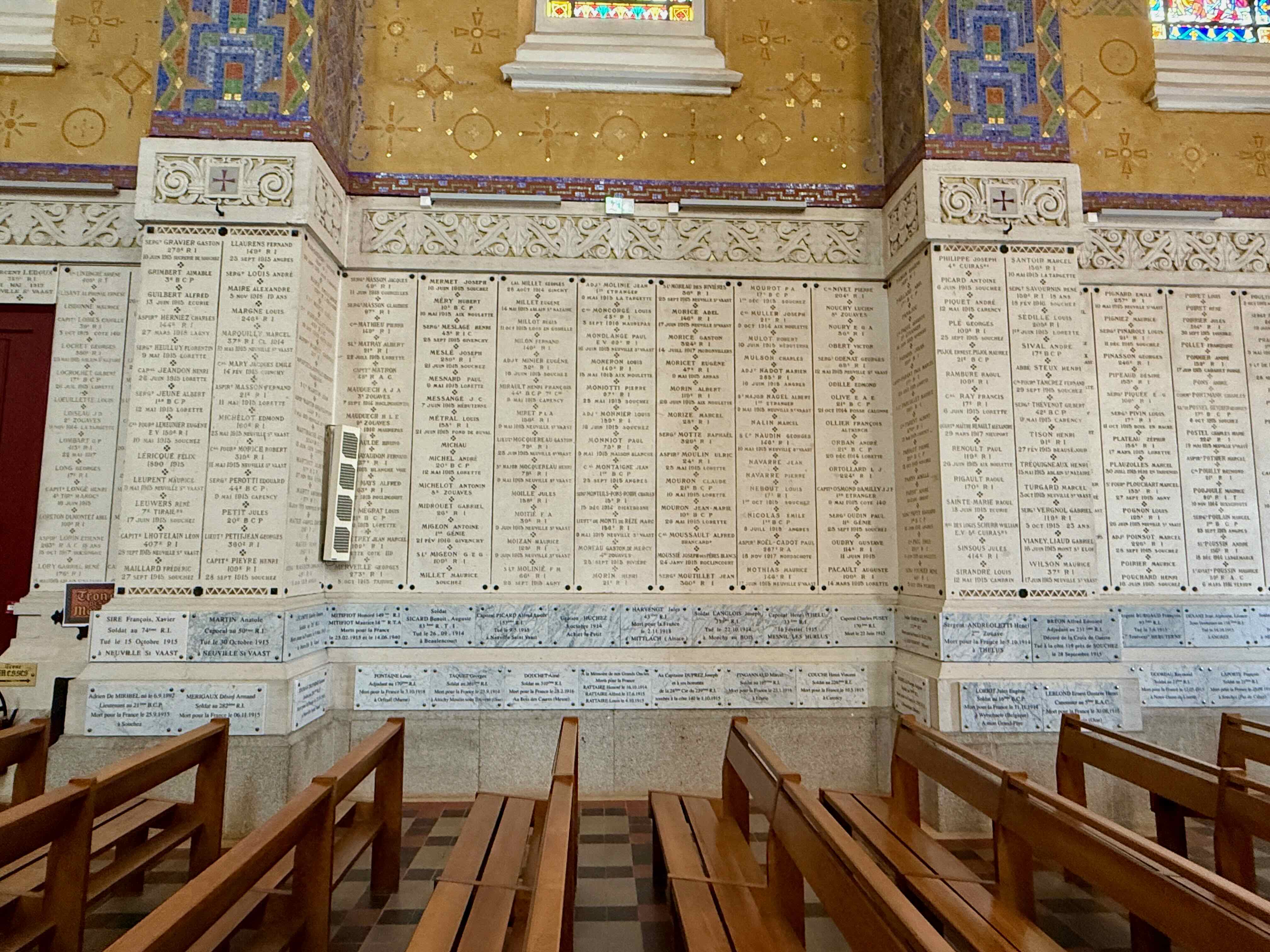
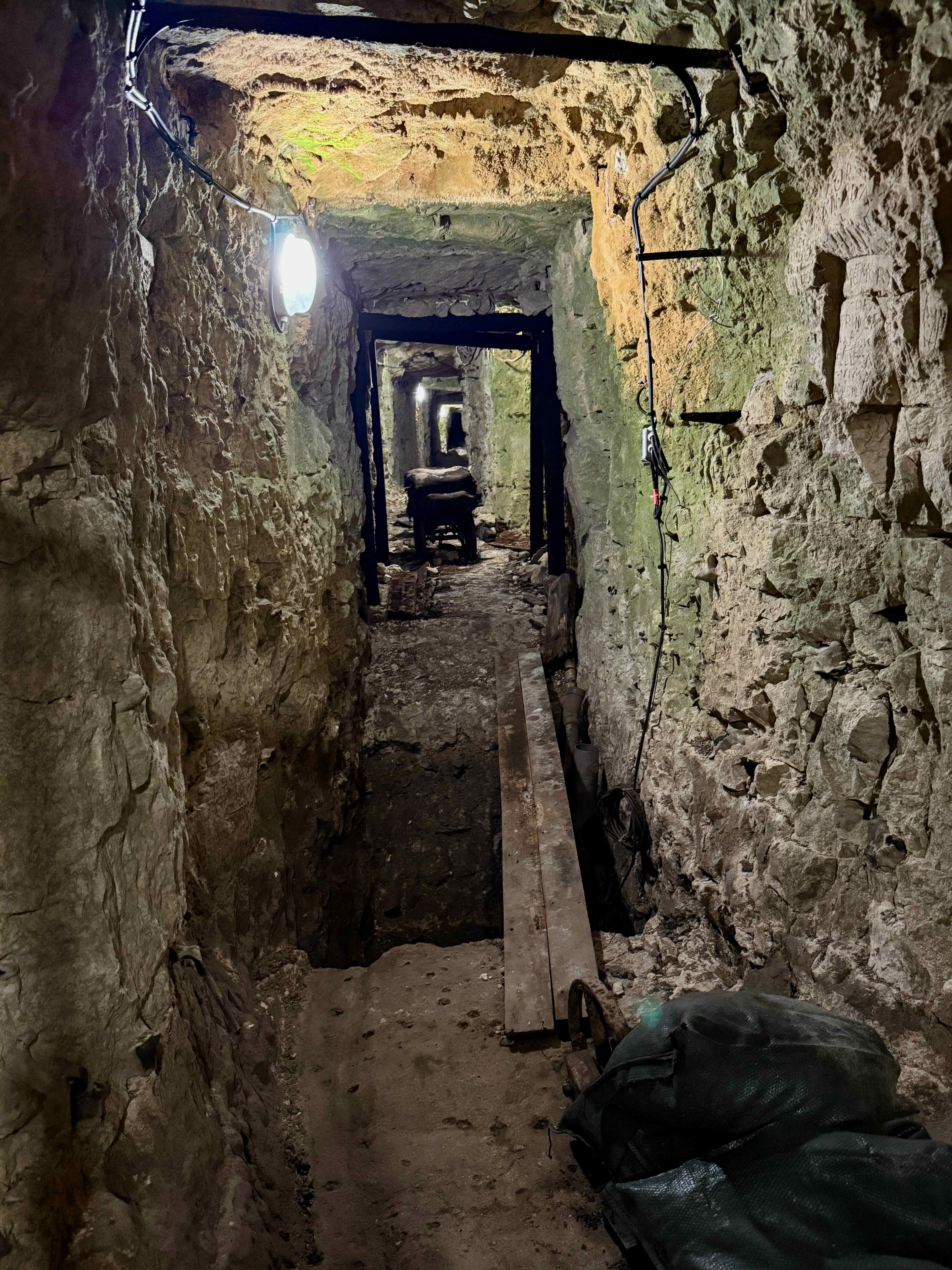
 There is a small museum the Lantern Tower with personal items, photos and excerpts form diaries. They are upsetting to see. I can not imagine having to live through these experiences.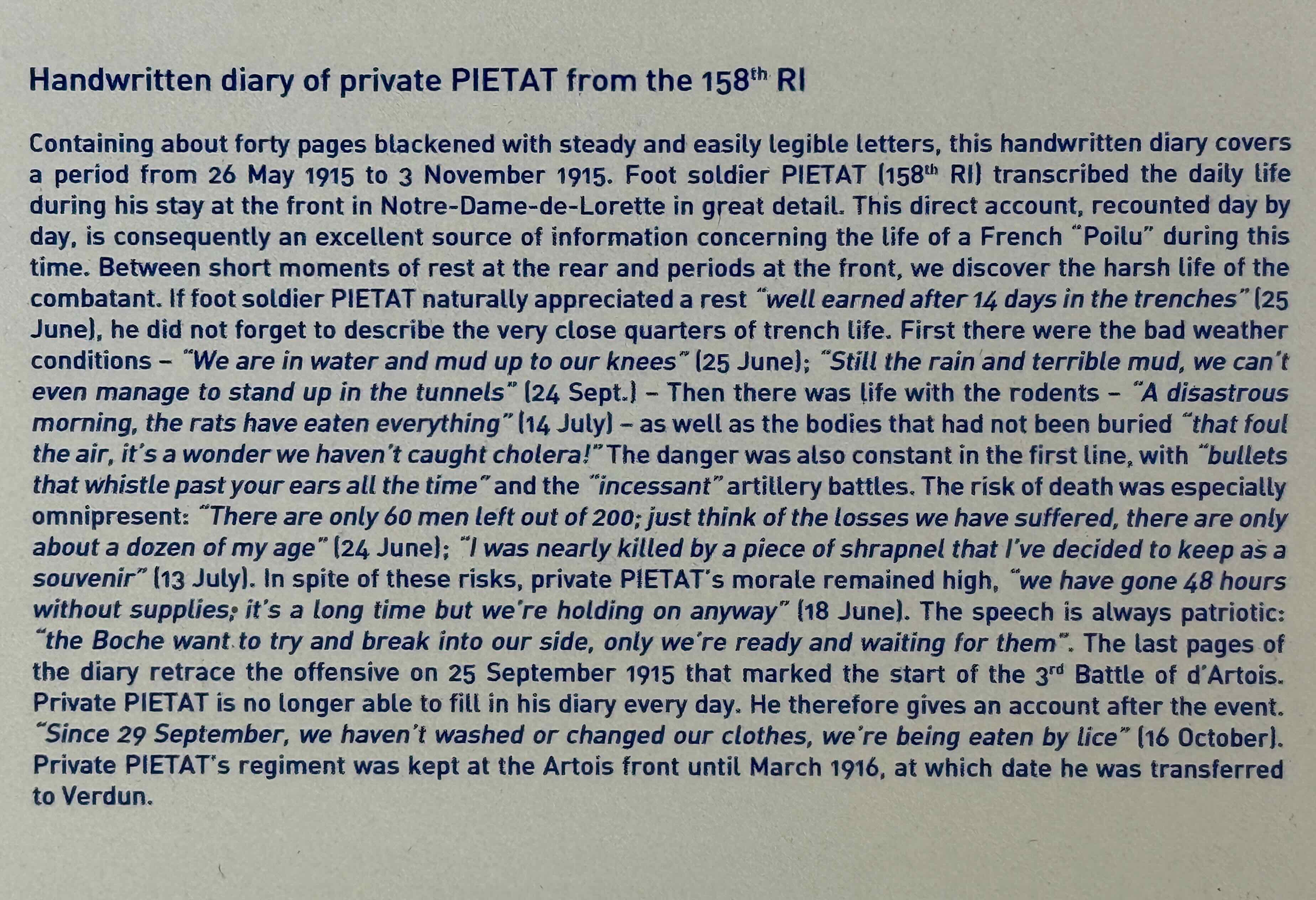
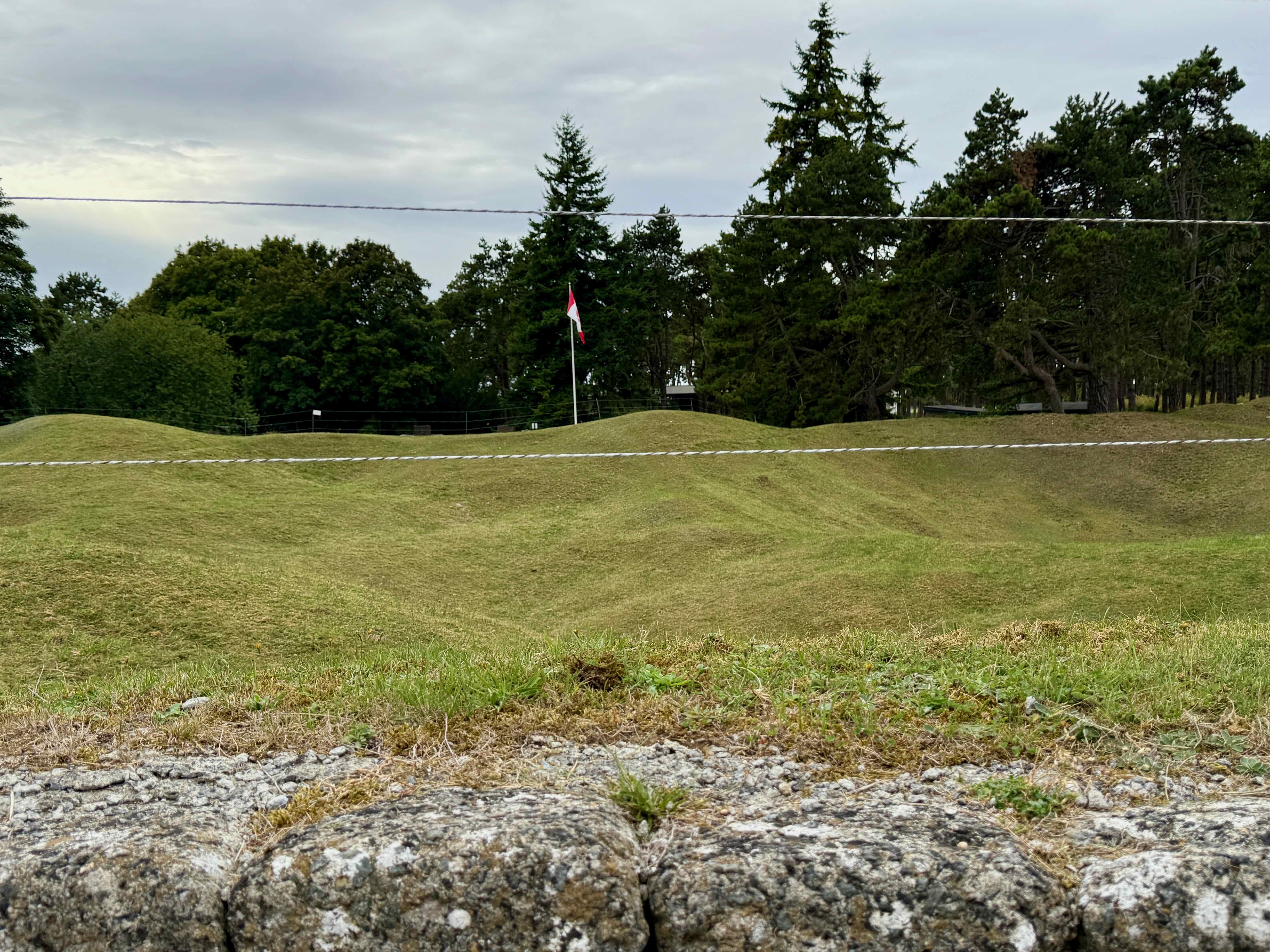
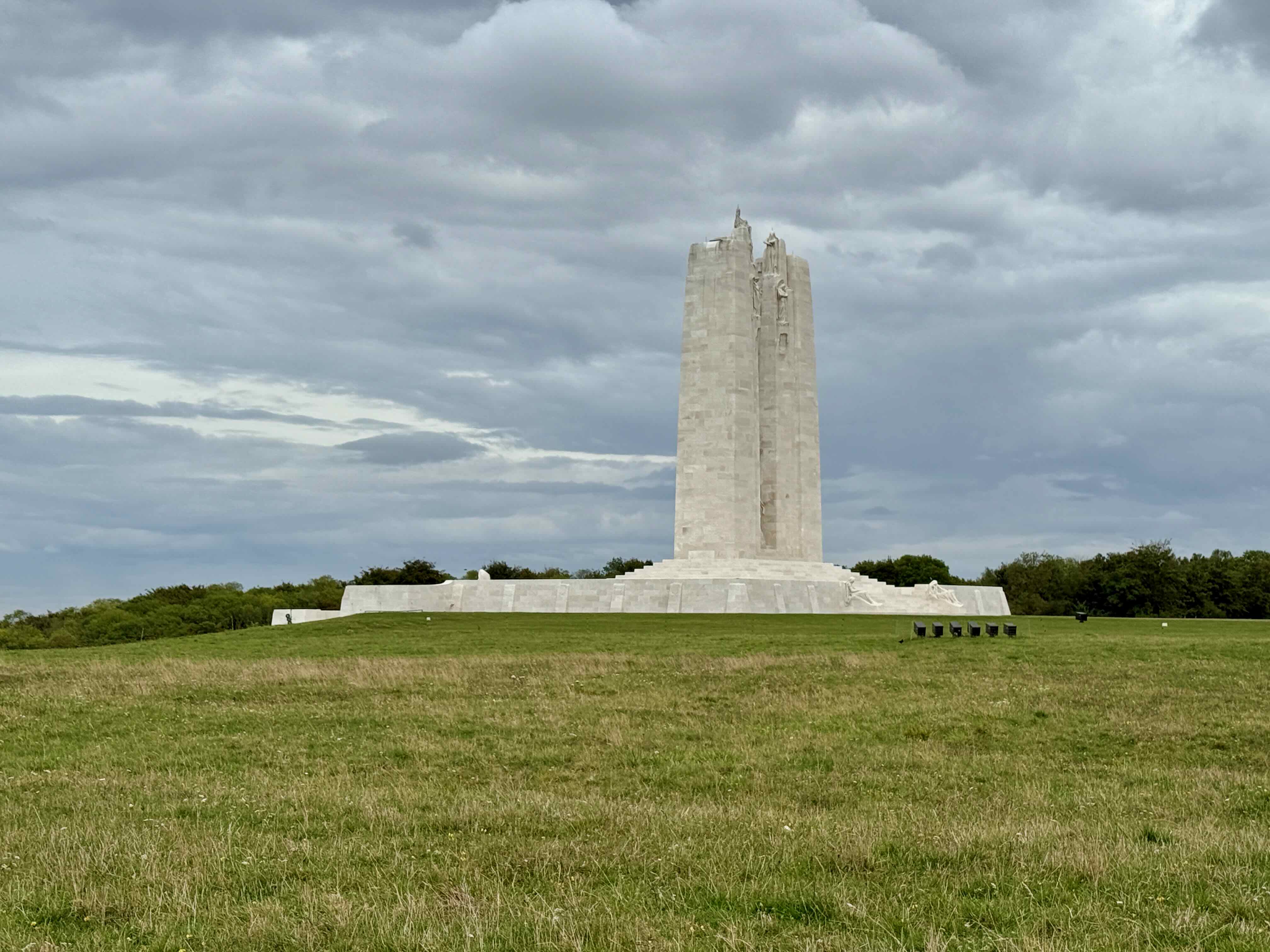 We didn’t see the front walk so took the long way around to the back of the memorial.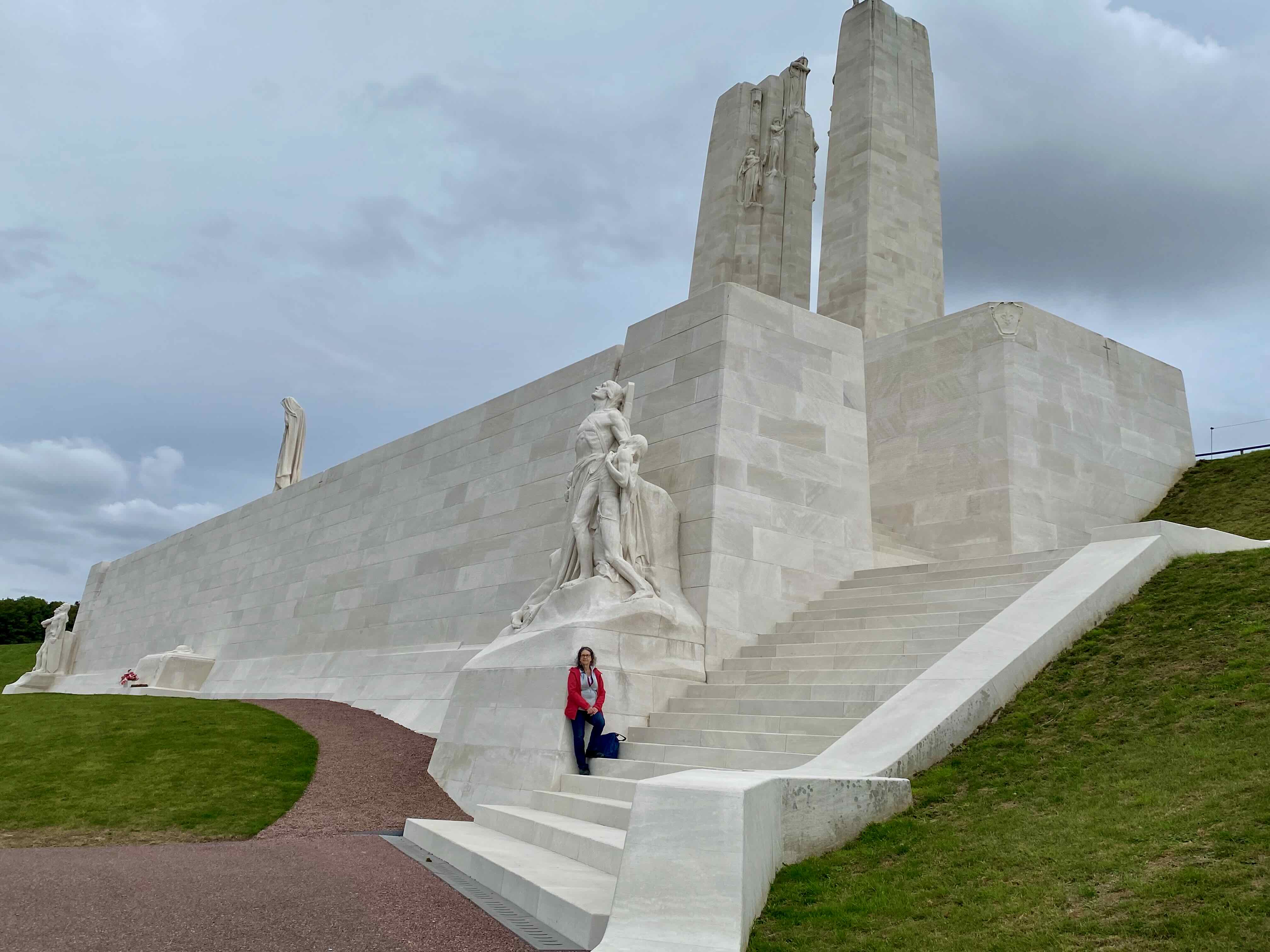
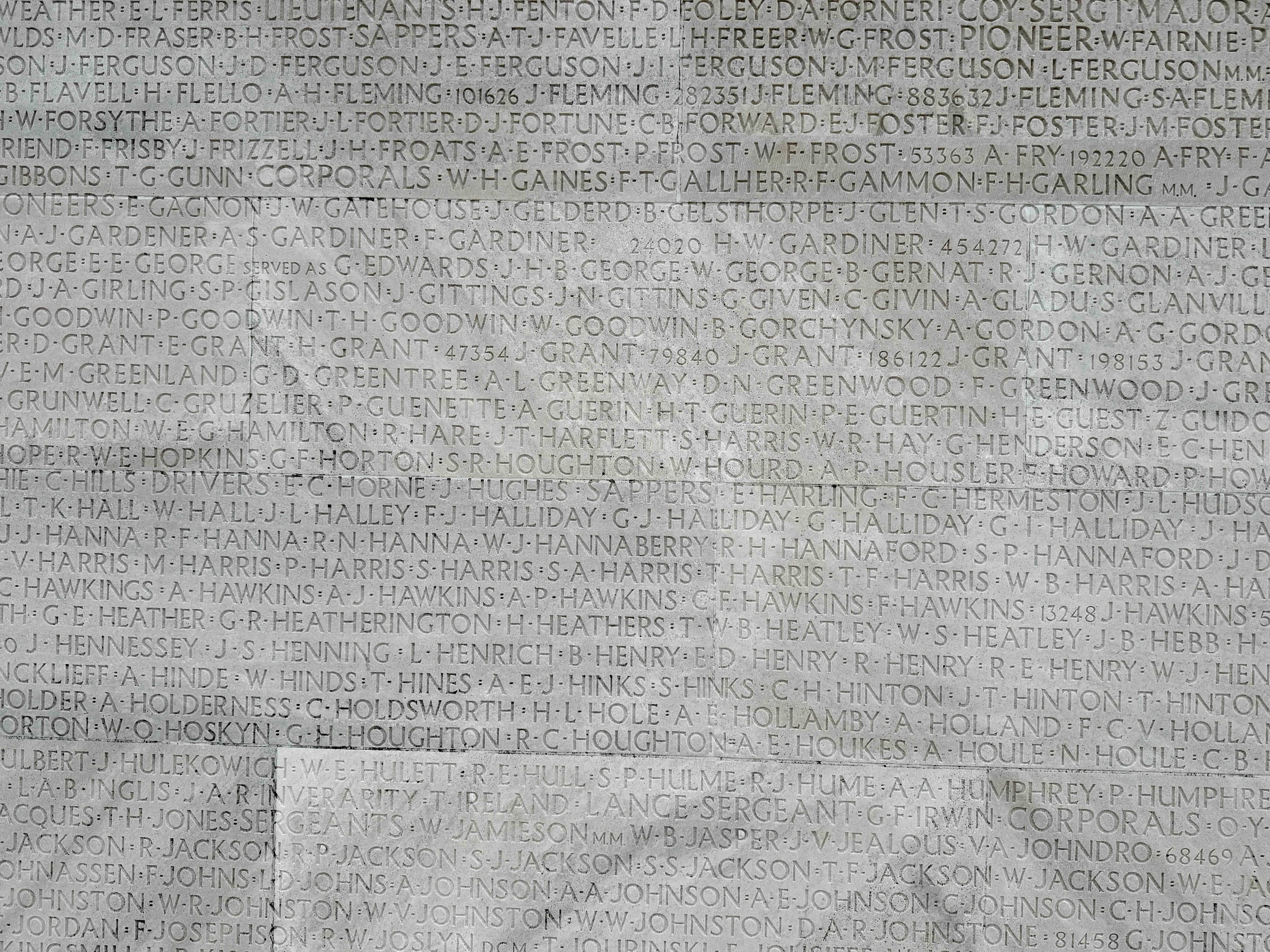
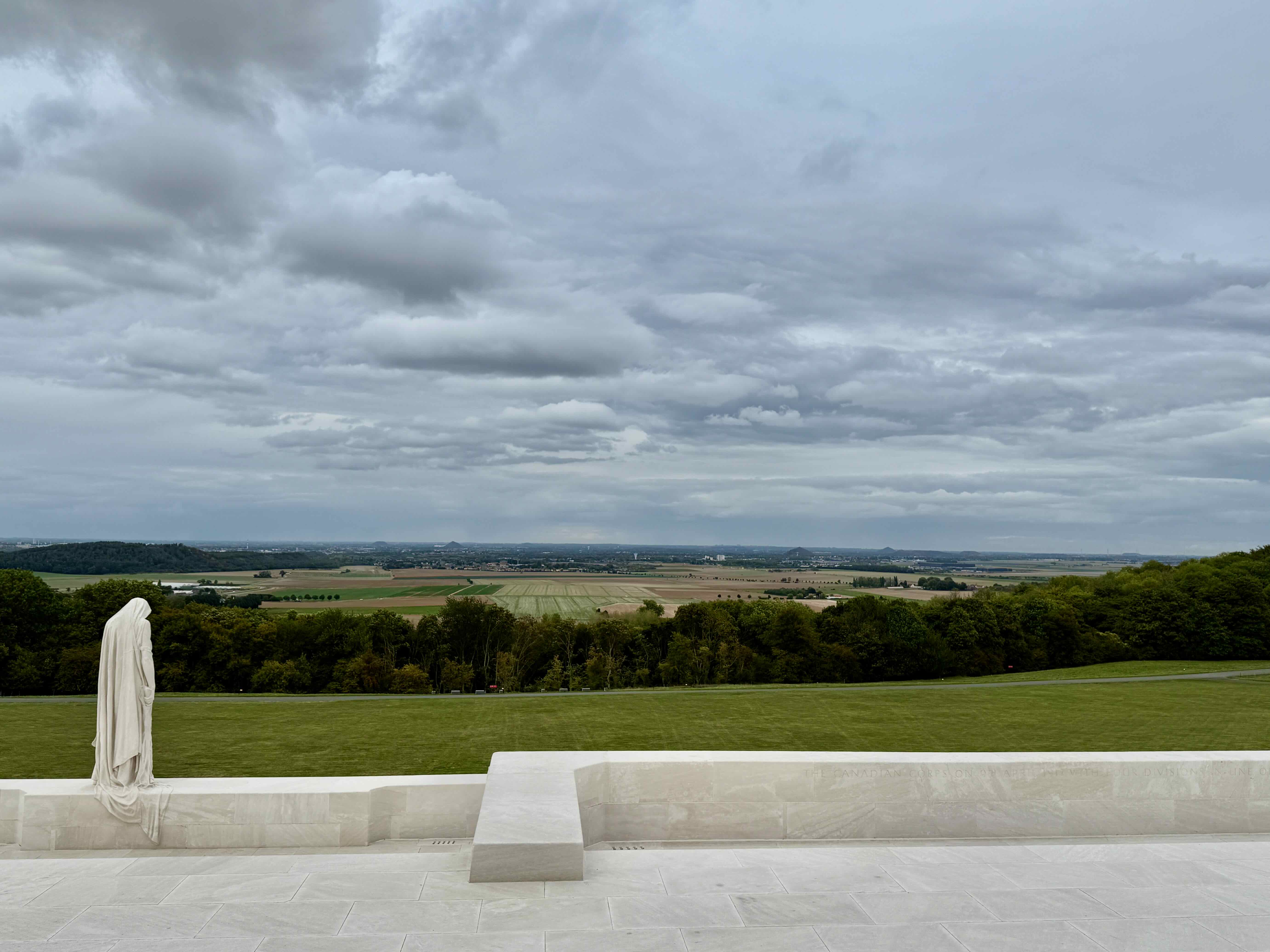
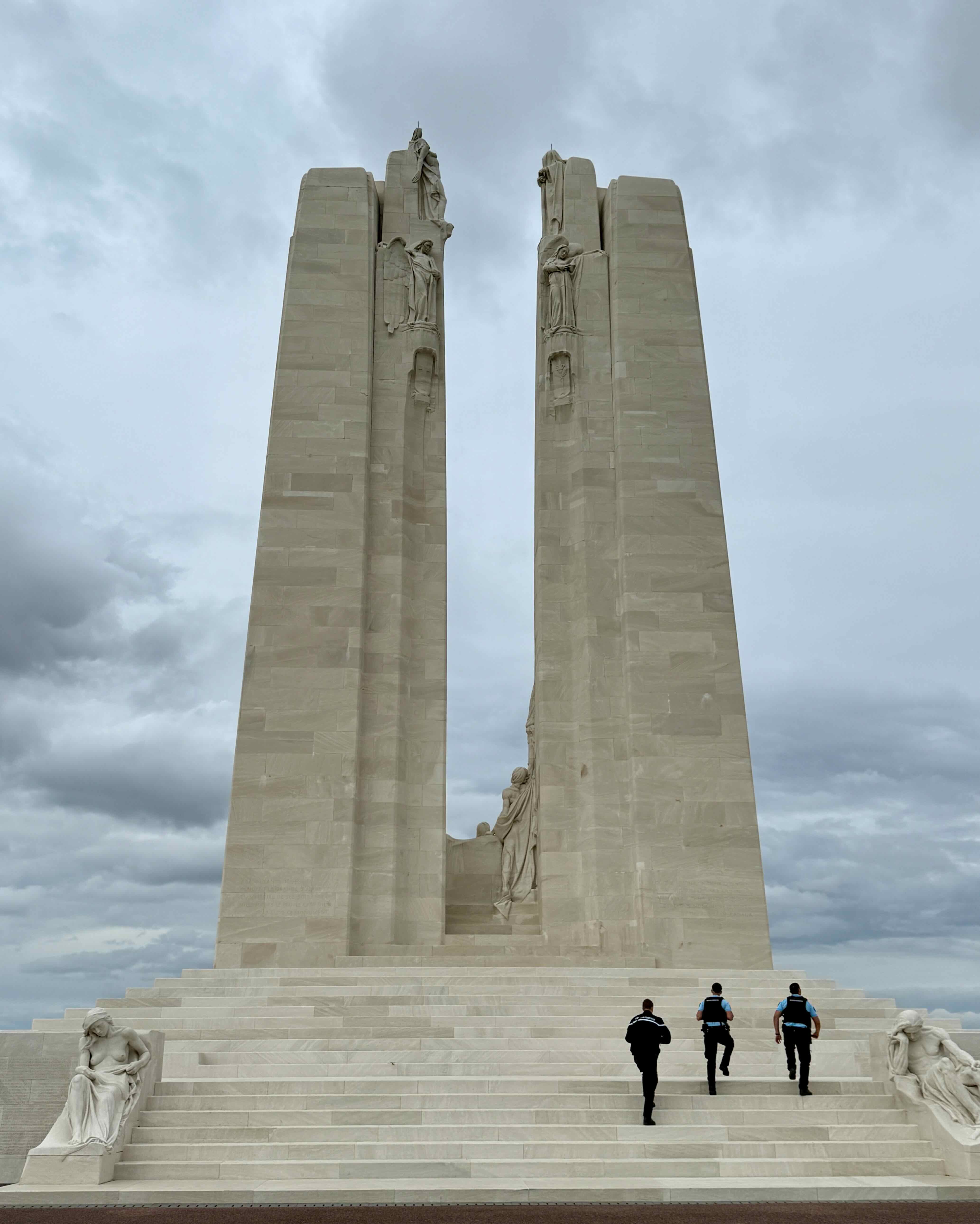 The three policemen are barely visible on the left side of the monument as we head back to our car and head home. it has been a heavy duty day.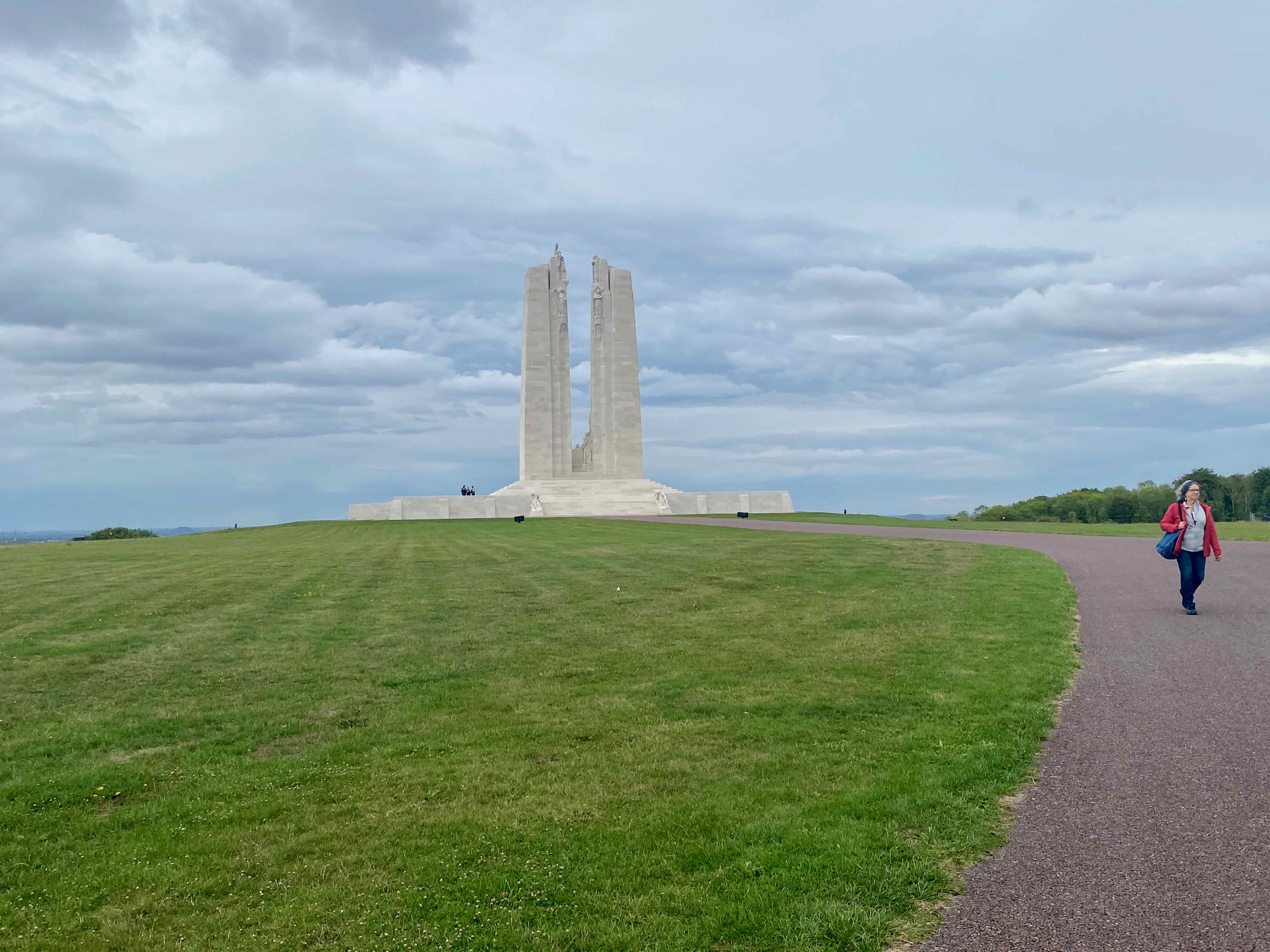
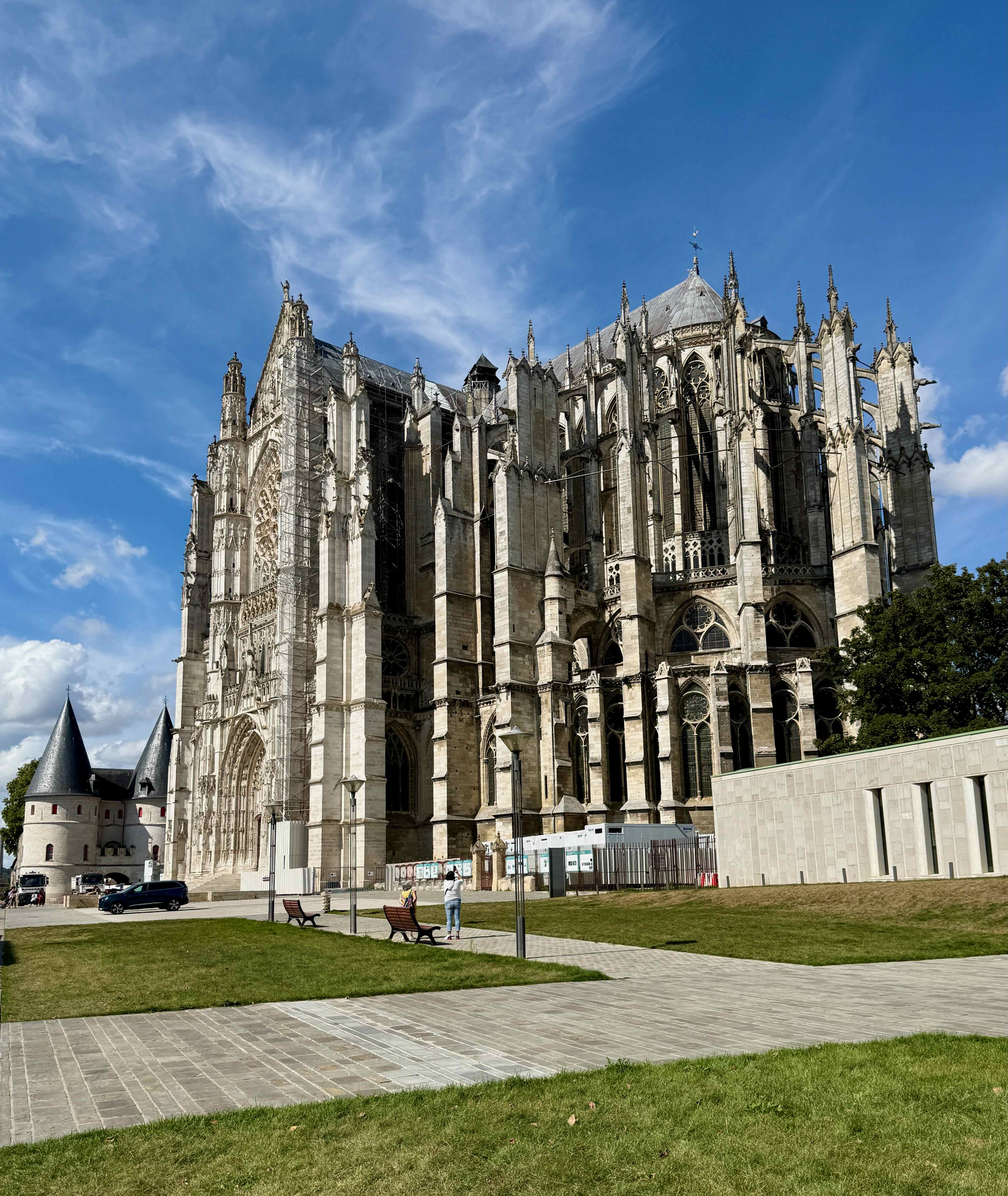
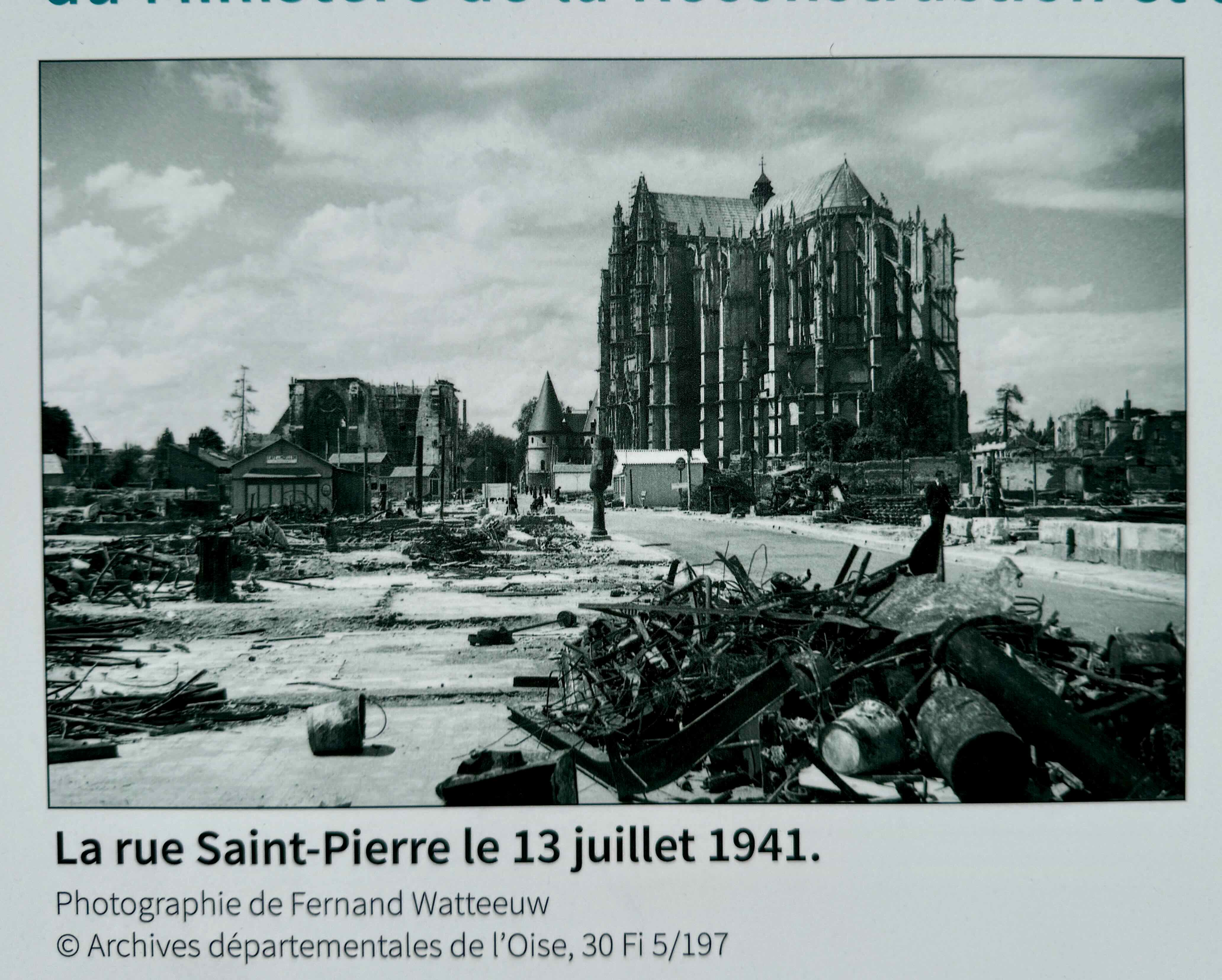 The inside soars high above our heads and the light streams through the stained glass windows.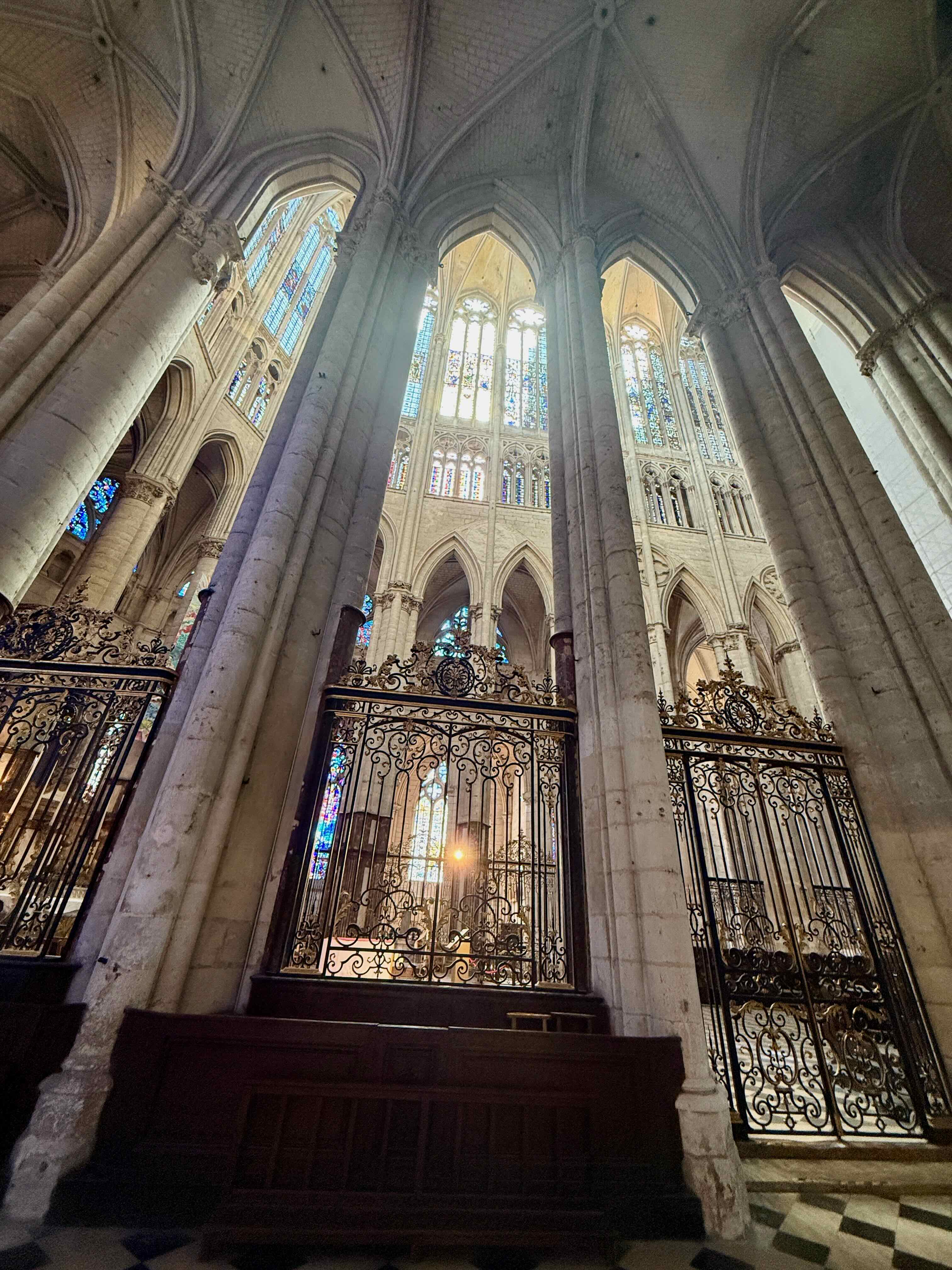
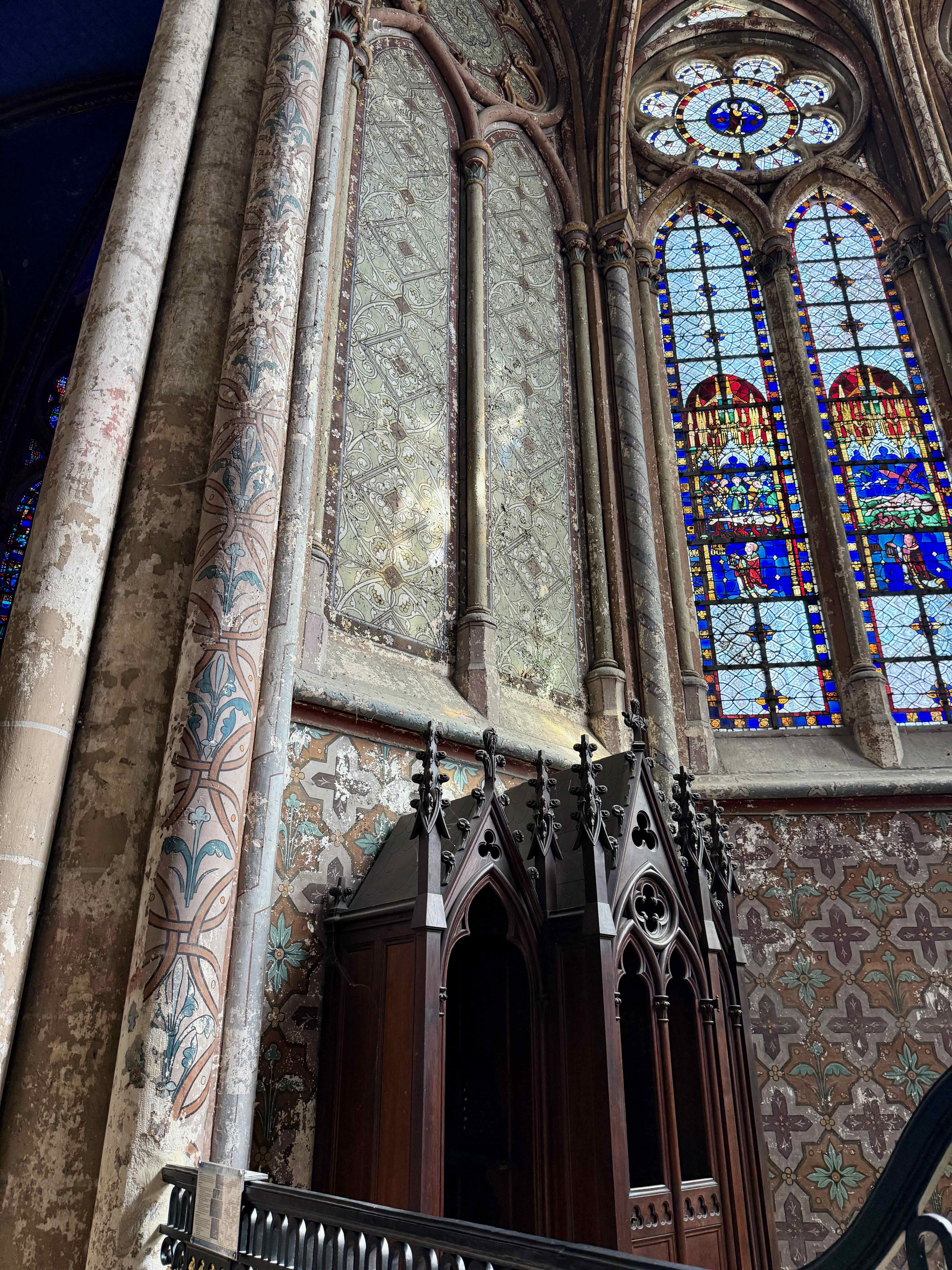
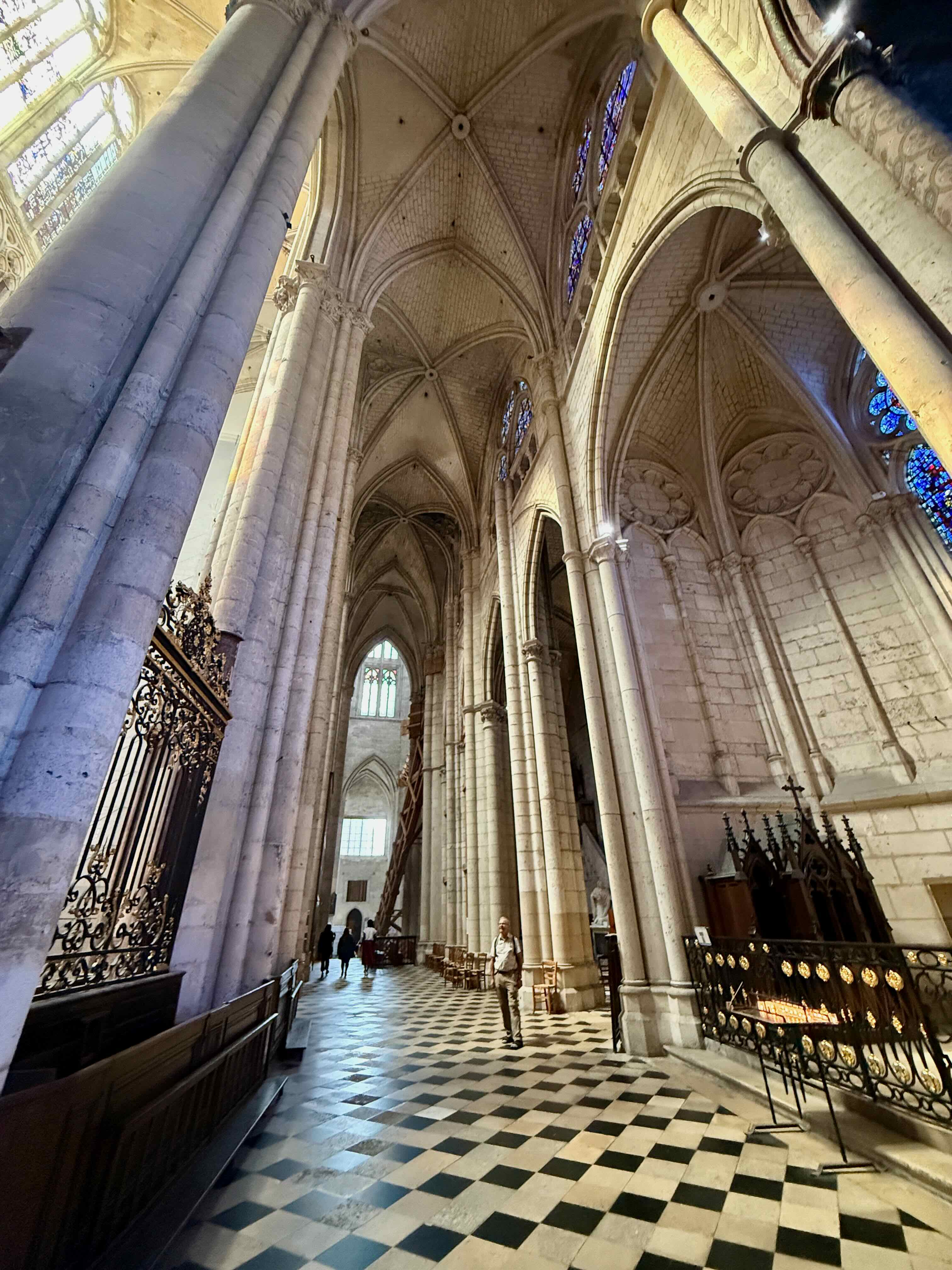
 Bob took this photo with this light shining through the stained glass windows into this side chapel.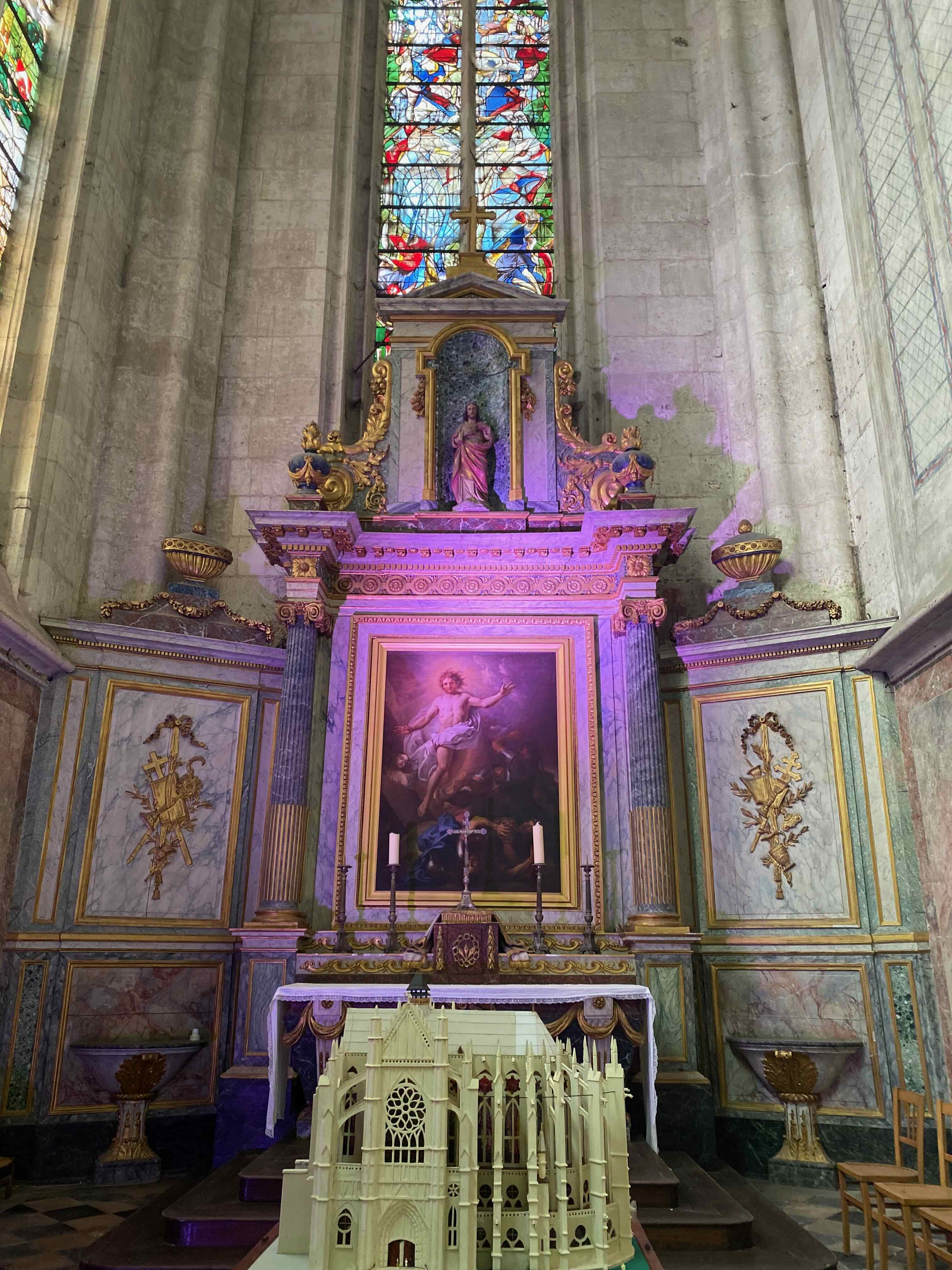

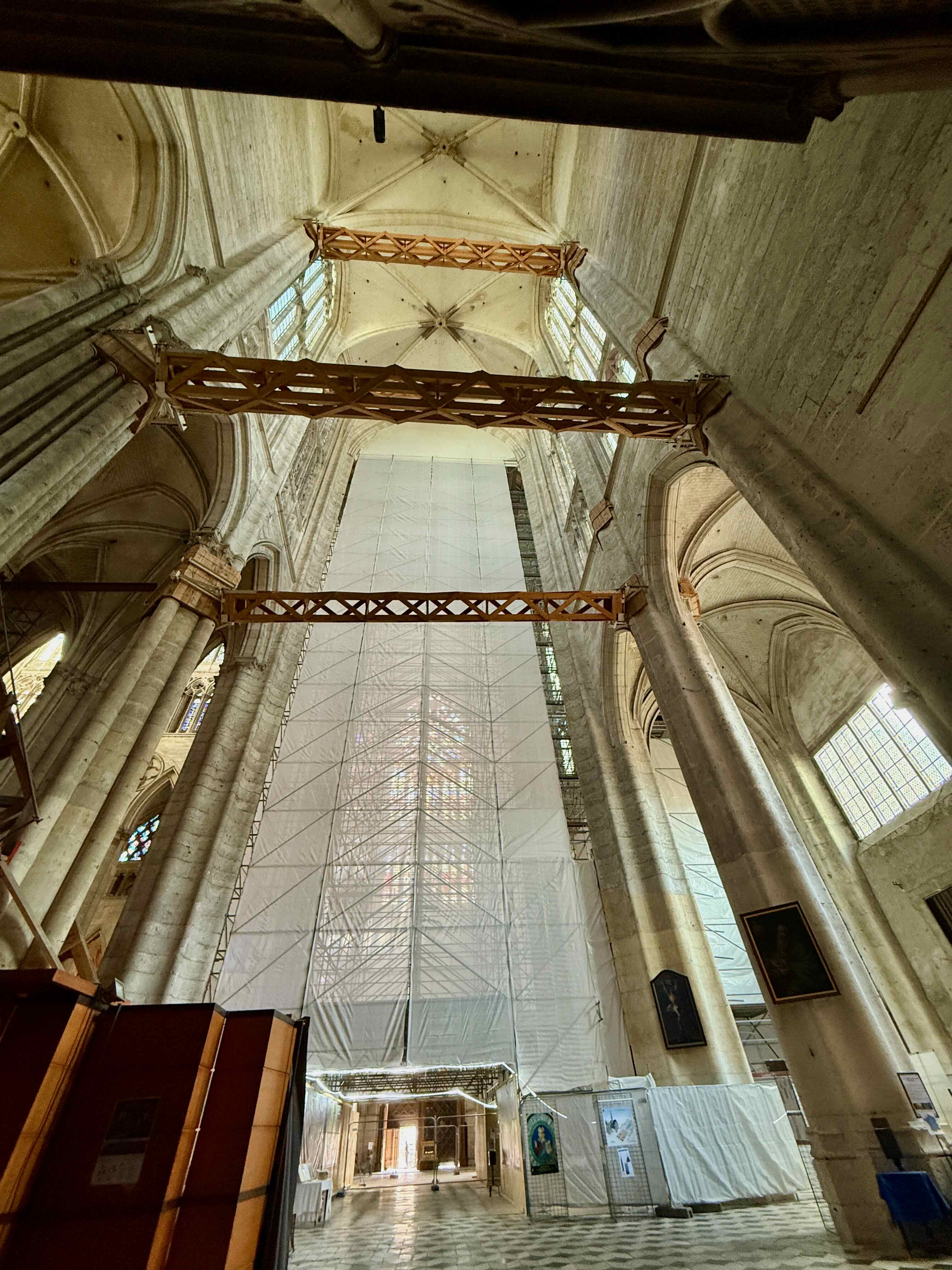
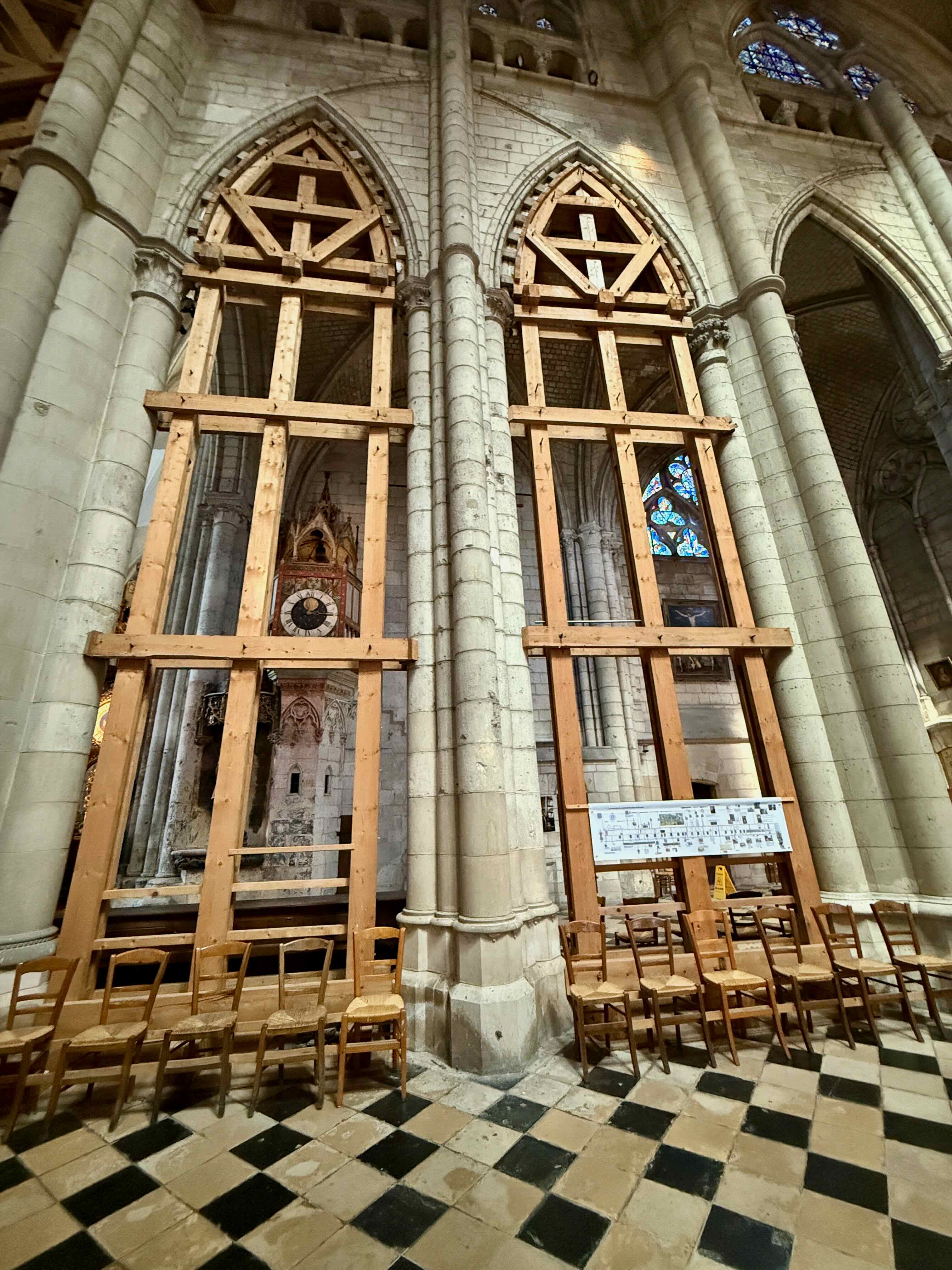 Also, the main floor of the transept is punctuated by a much larger brace that juts out of the floor at a 45-degree angle. It was placed as an emergency measure to give additional support to the pillars in an effort to stave off any further movement. Presently, Columbia University is performing a study on a three-dimensional model using laser scans of the building in an attempt to pinpoint where the weaknesses are greatest to see what further can be done to shore up the building.” ~Frenchmoments.ca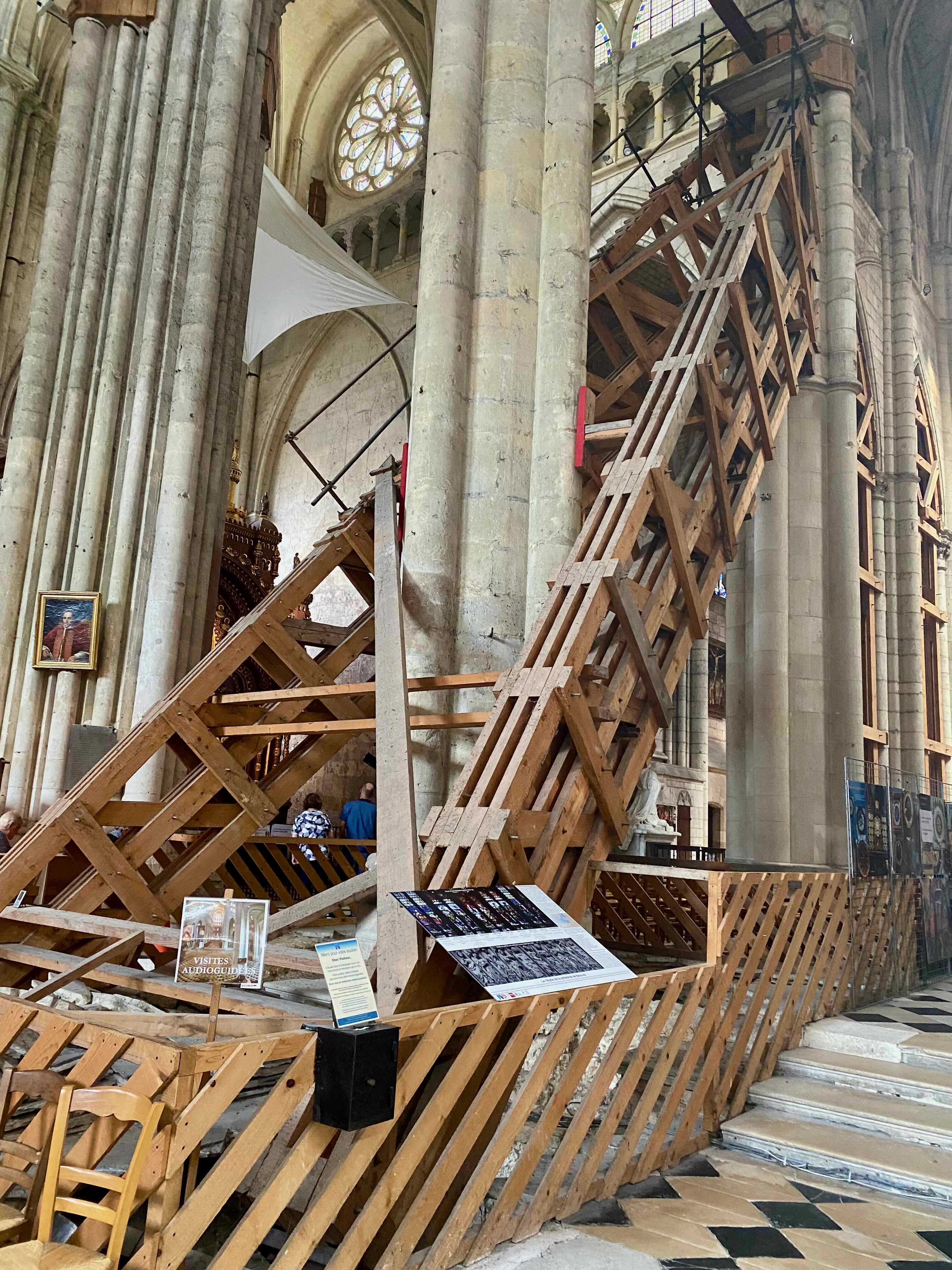

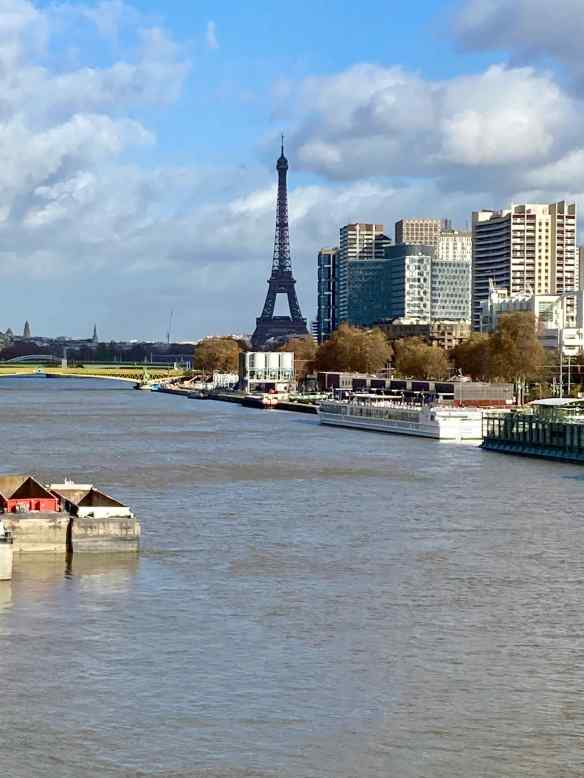
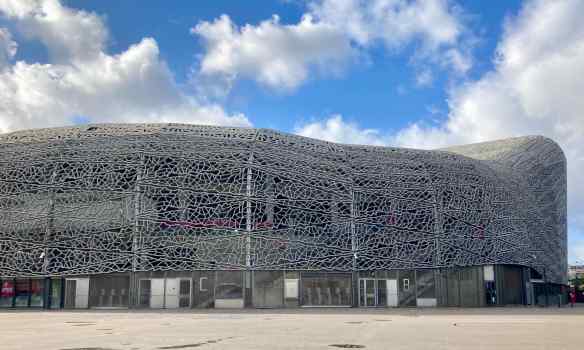
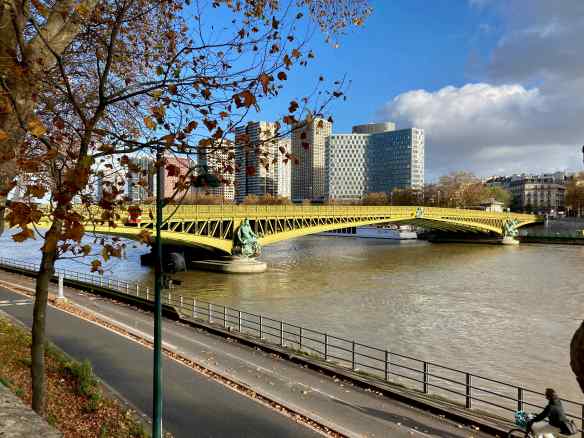
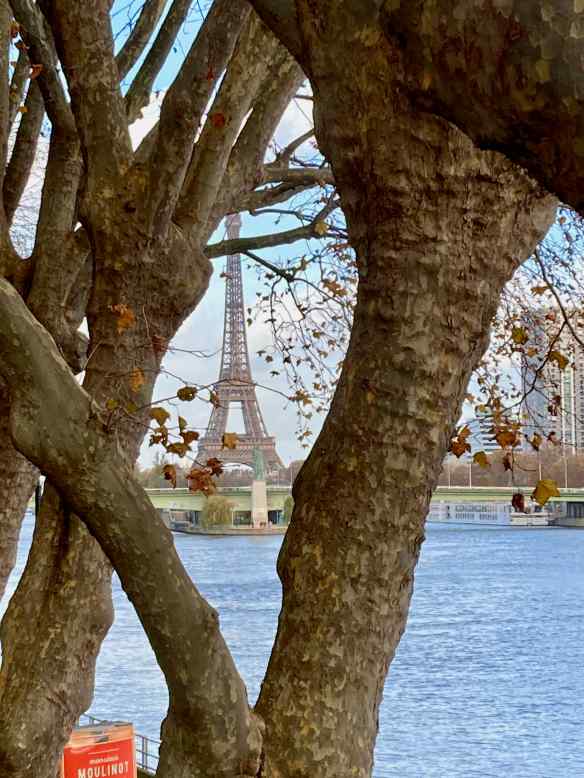
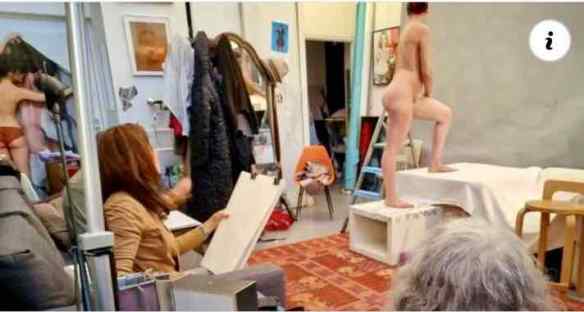
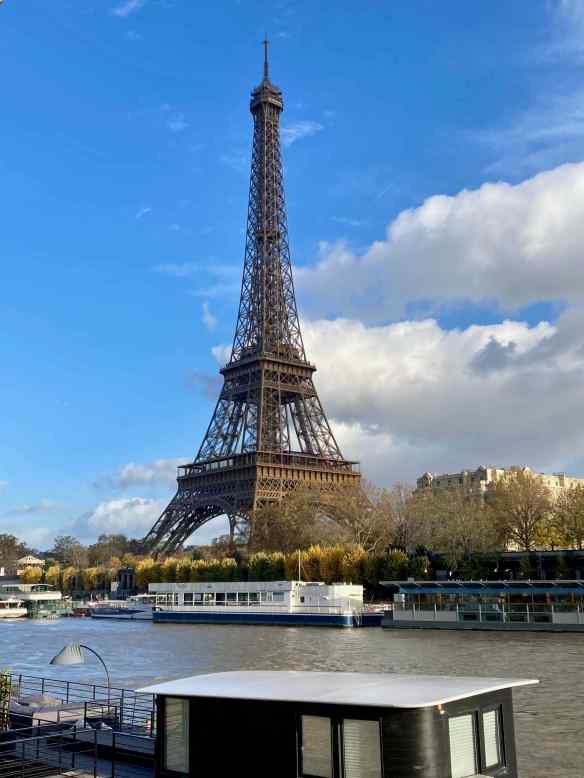 I attended sessions with the Montmartre Life Drawing group in September so no problem finding their location even though I was coming from a different starting point. The first thing I see when I leave the metro is this impressive statue in the centre of a traffic circle.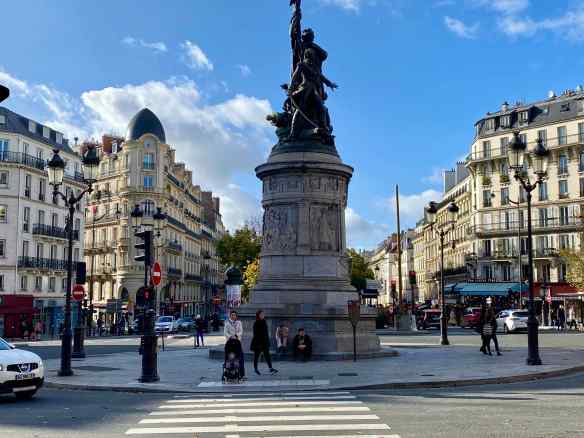

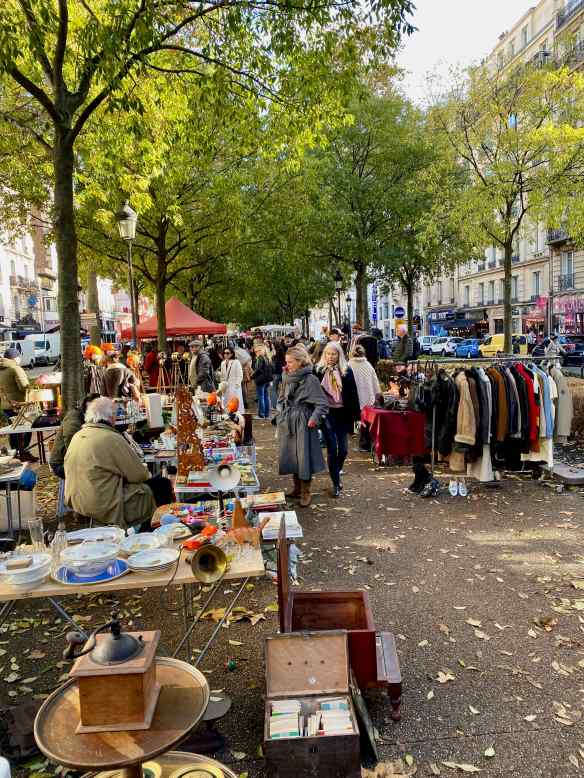
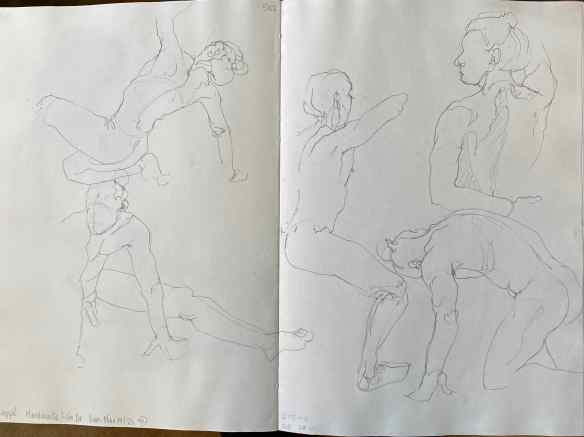
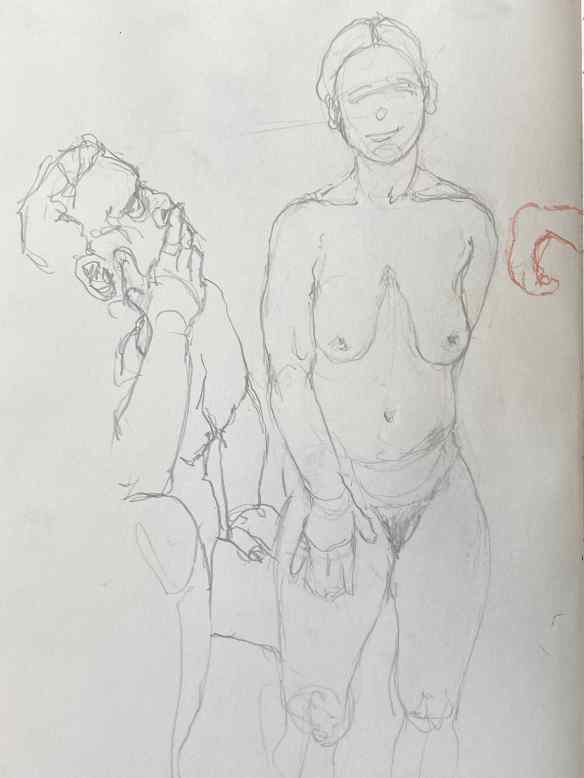
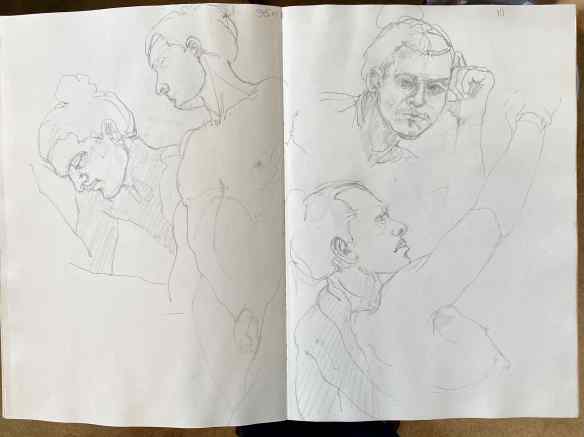 A 25 minute pose…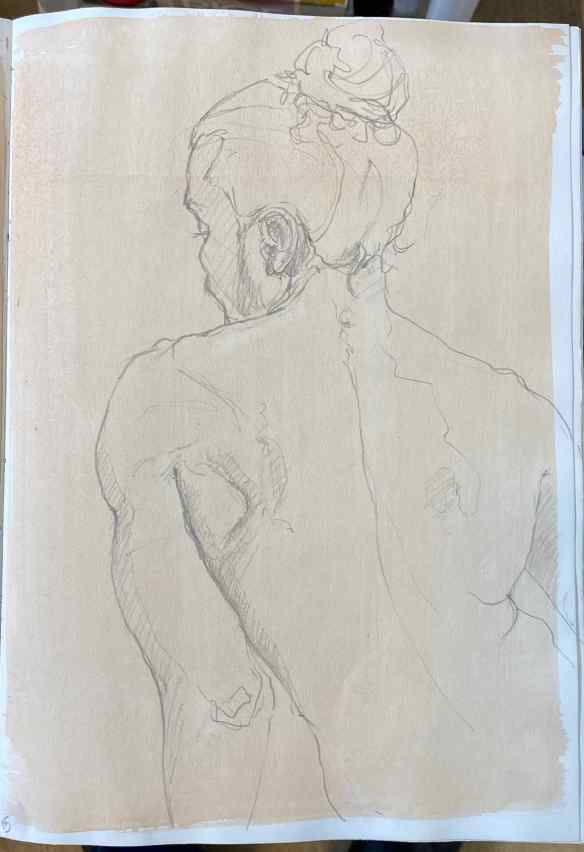
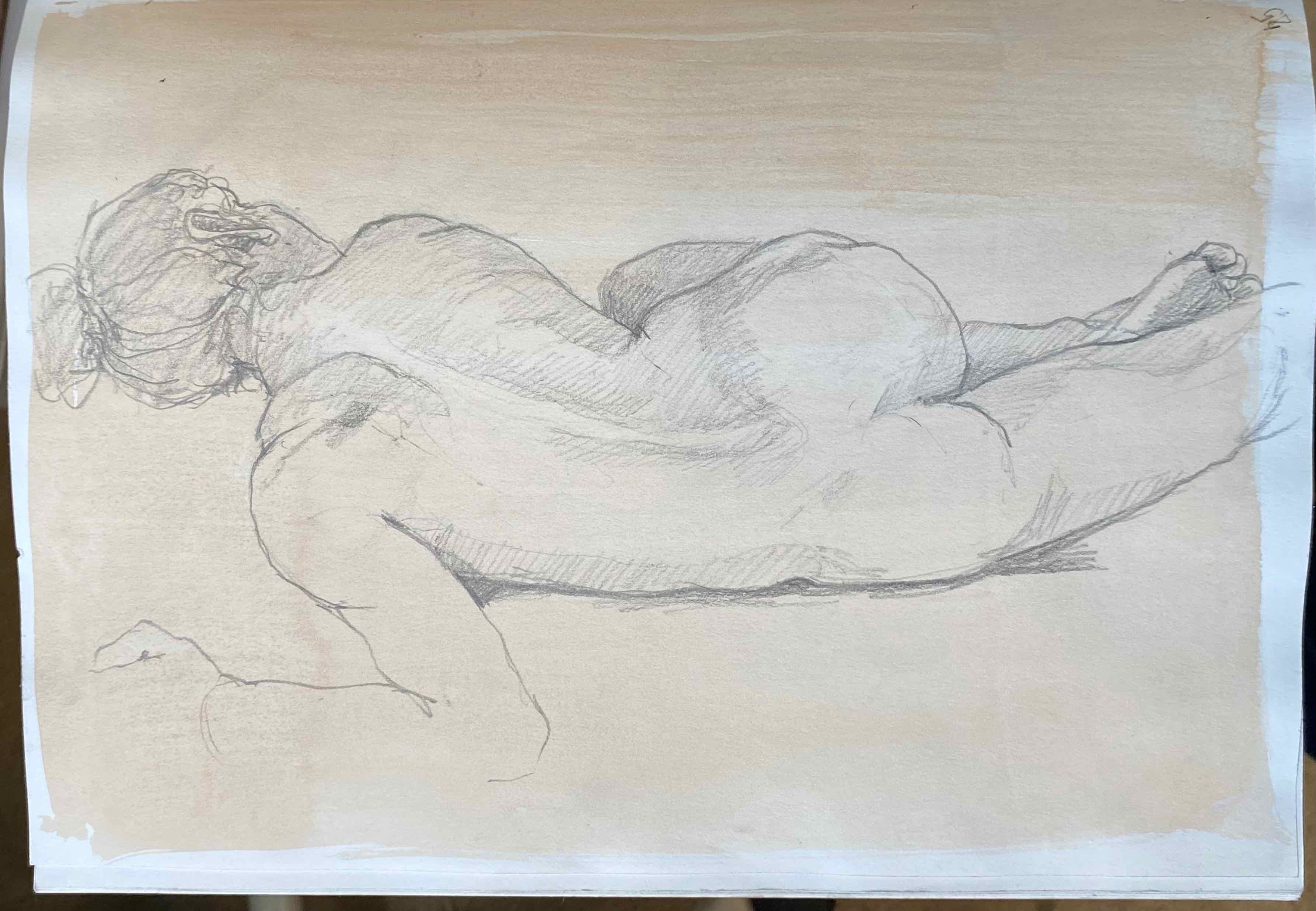
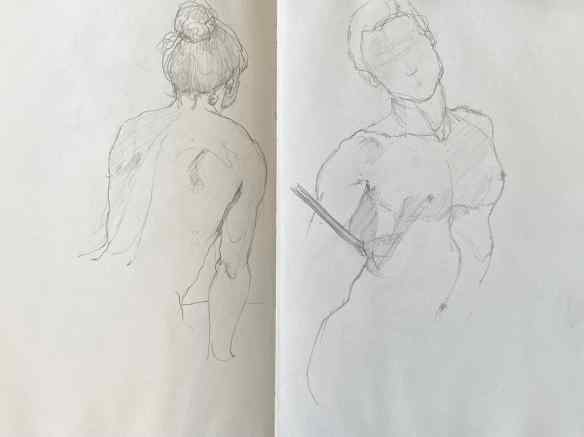
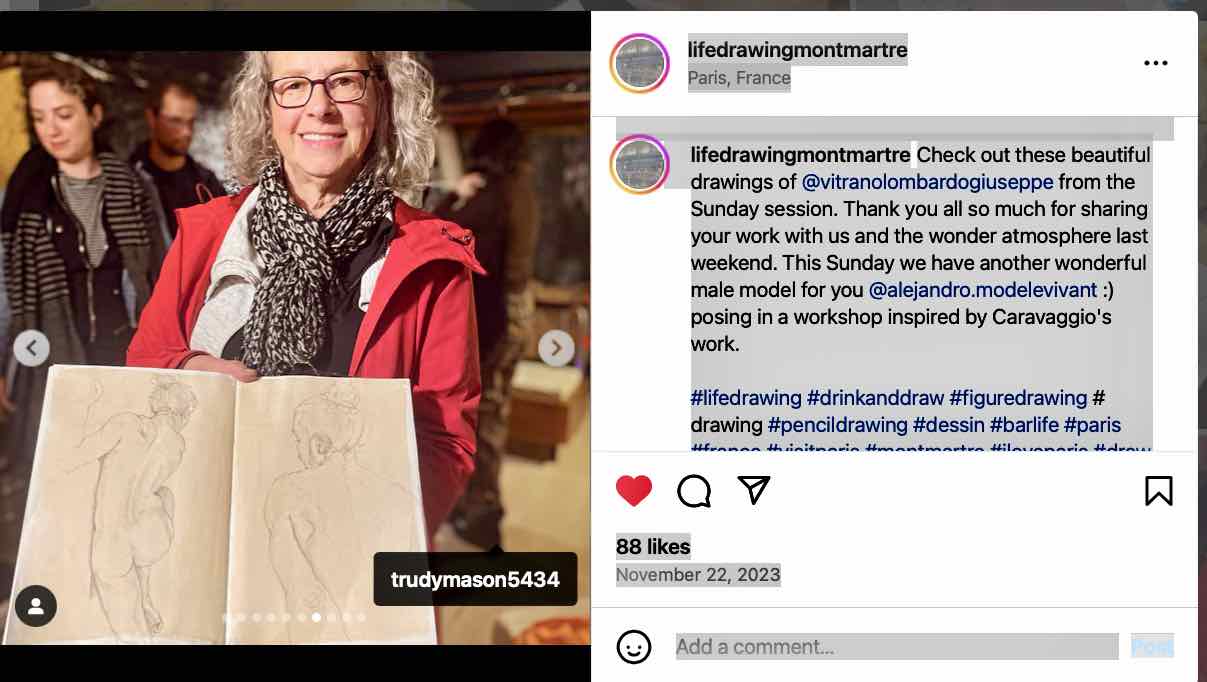
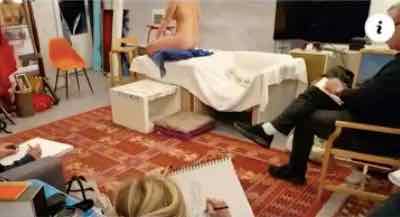
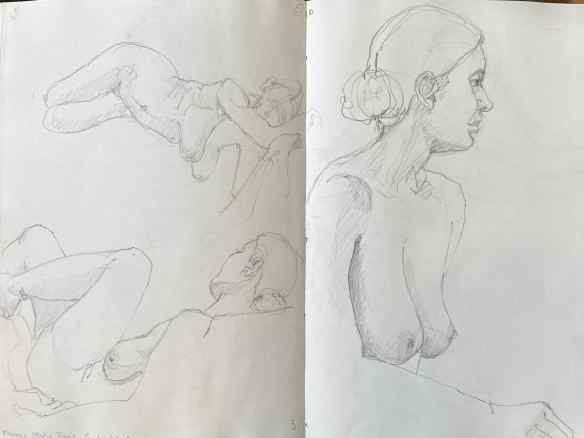
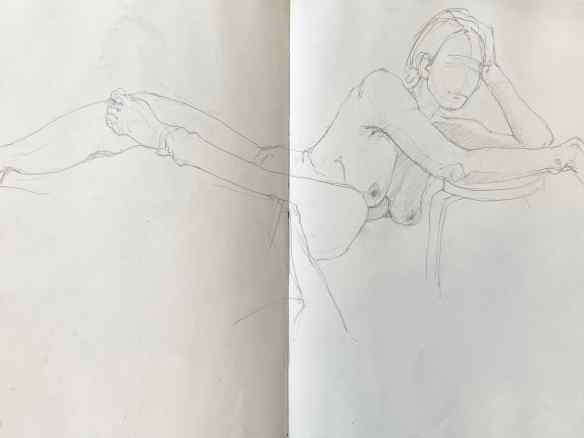
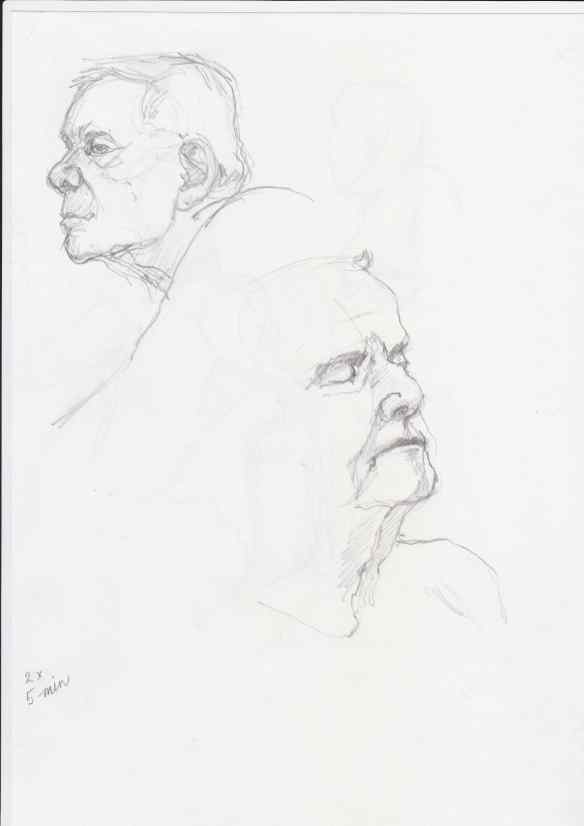 two 3 minute and one 5 minute pose. Then we drew both models together in a 10 minute pose,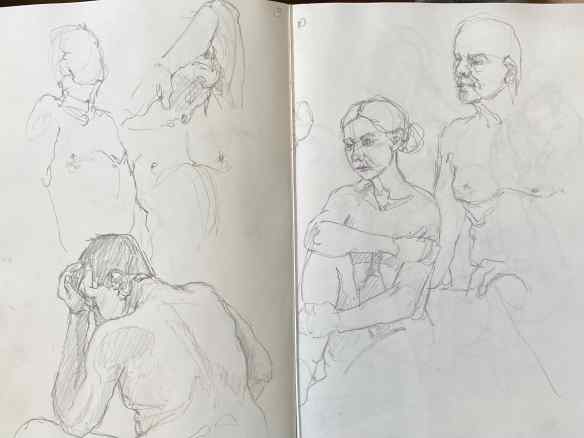
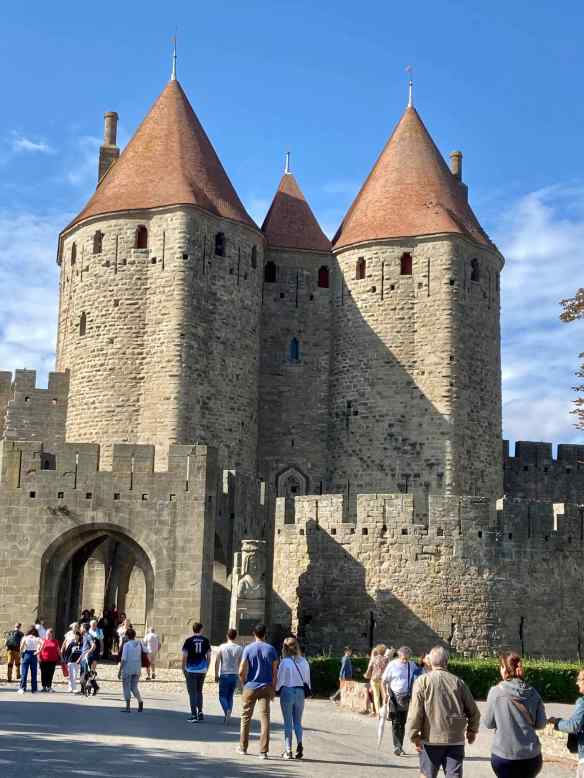
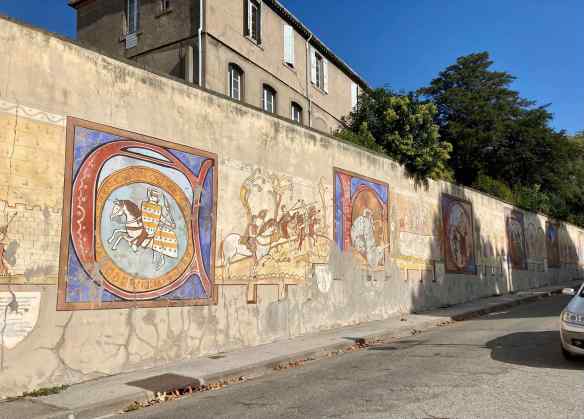

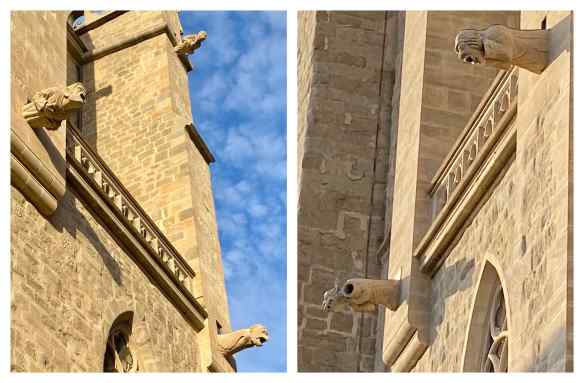
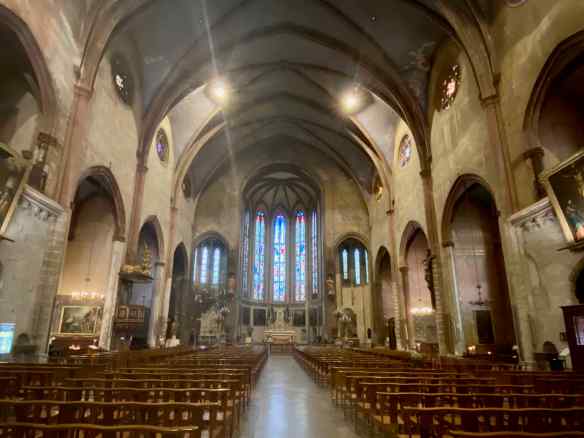 discover that we can climb the bell tower for just 2.5 euros! I’m not wanting to do it today but I hope we can get back another day. We have climbed a lot of bell towers on our other trips, but so far not a one this time.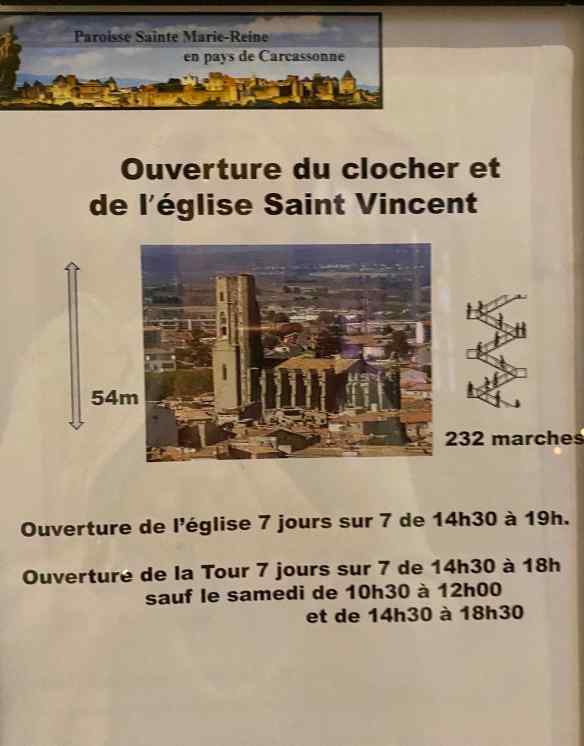
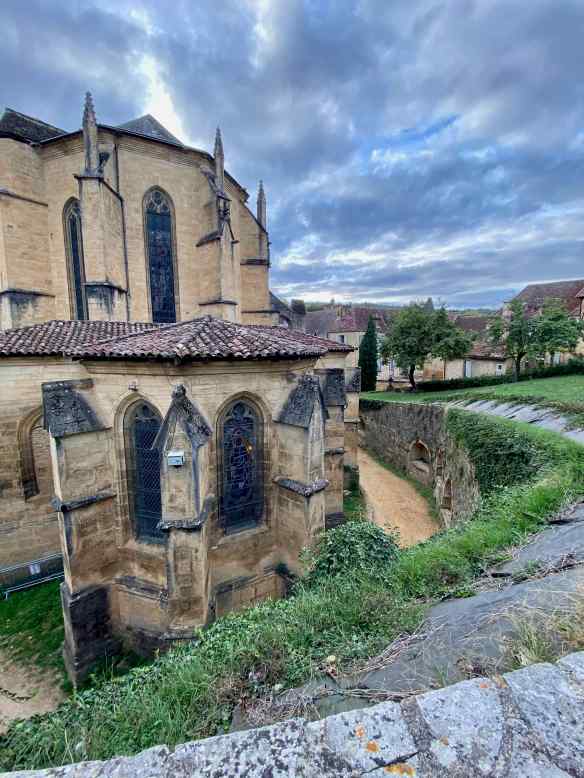
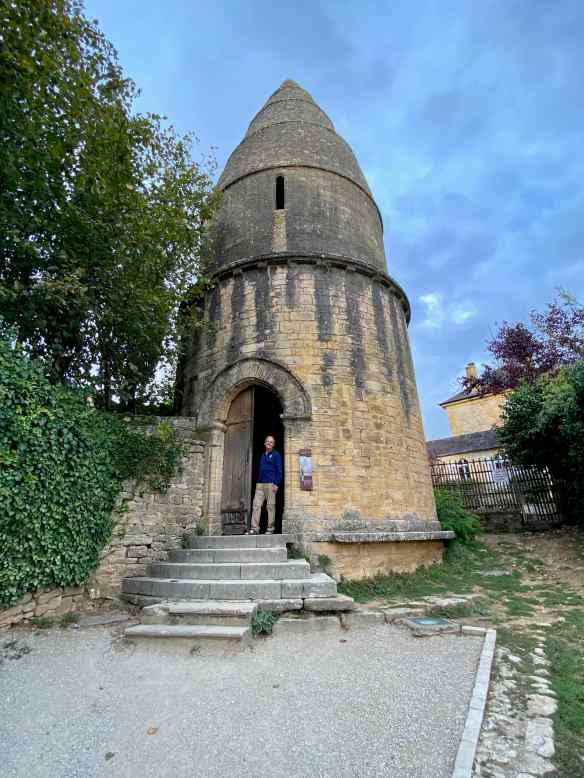
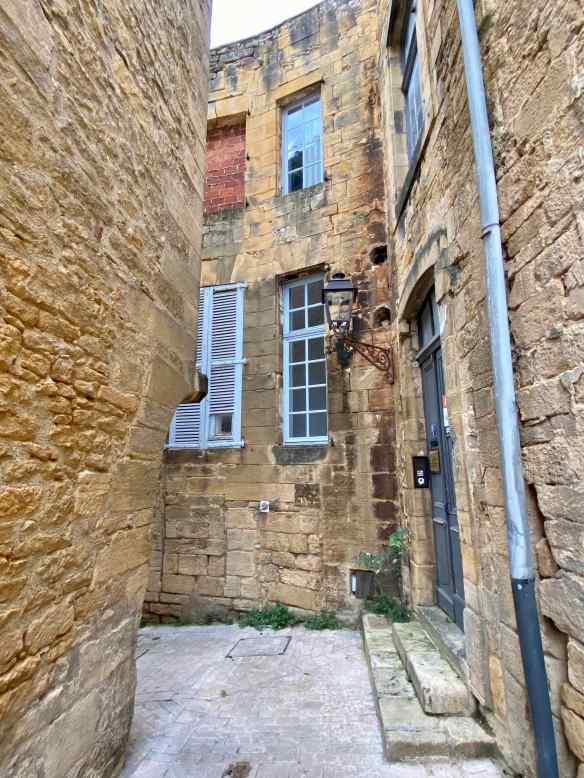
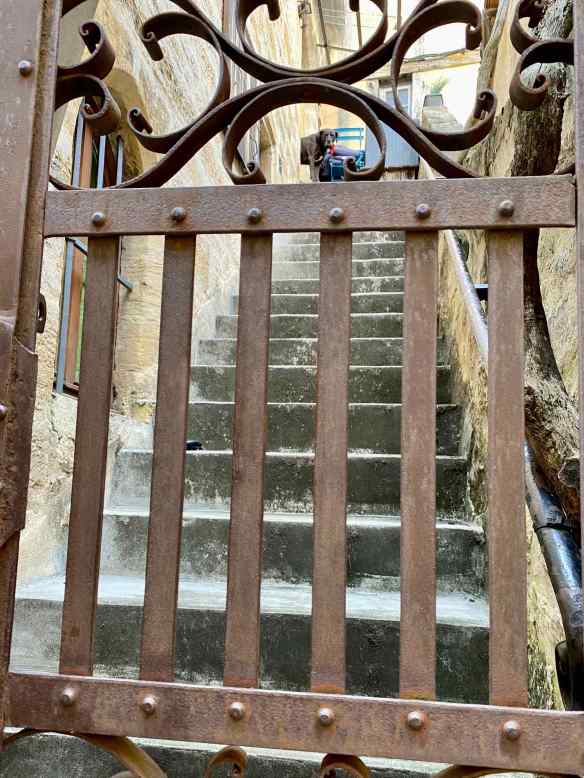
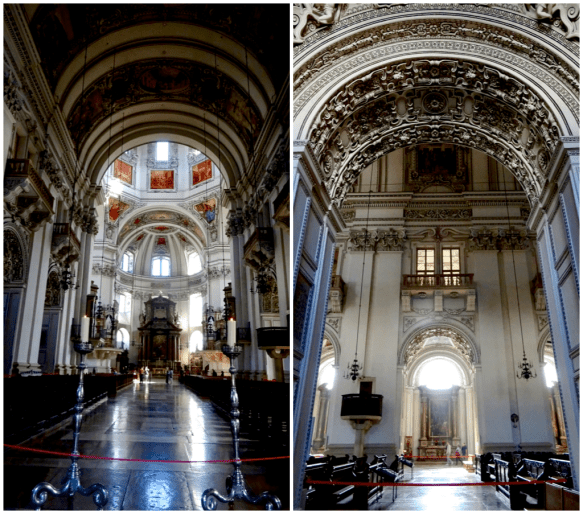 This
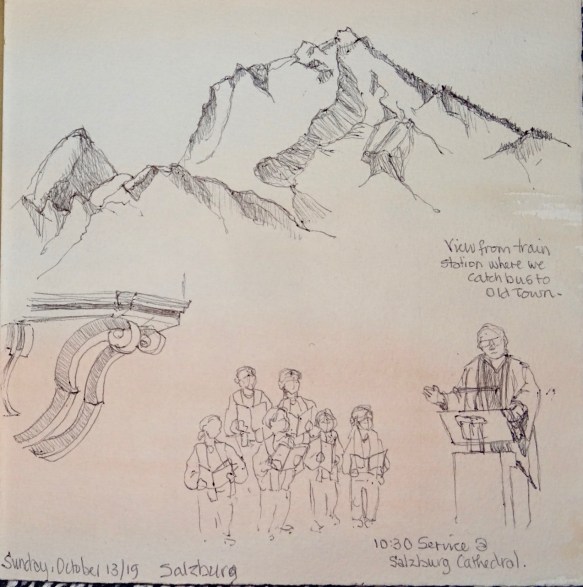
This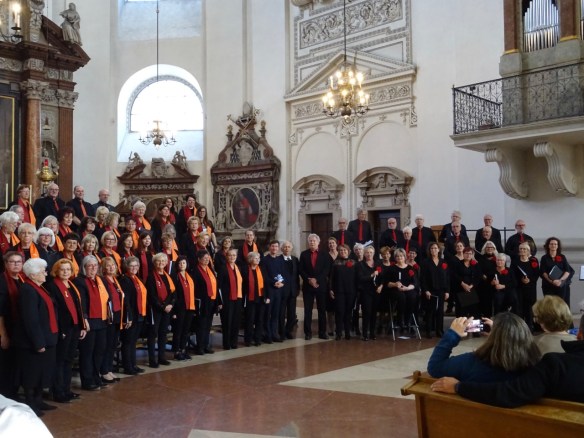 I draw while we listen to the service and choir. Of course we can’t understand any of it!
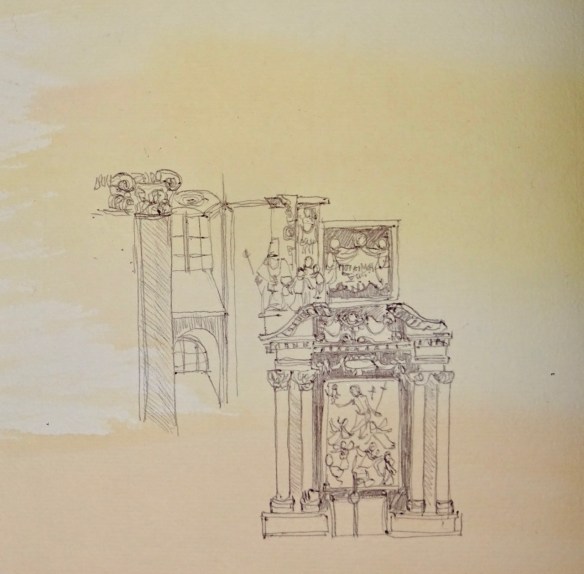
 I was tempted to finish this drawing of the altar from a photo but in the end decided to leave it just as it was.
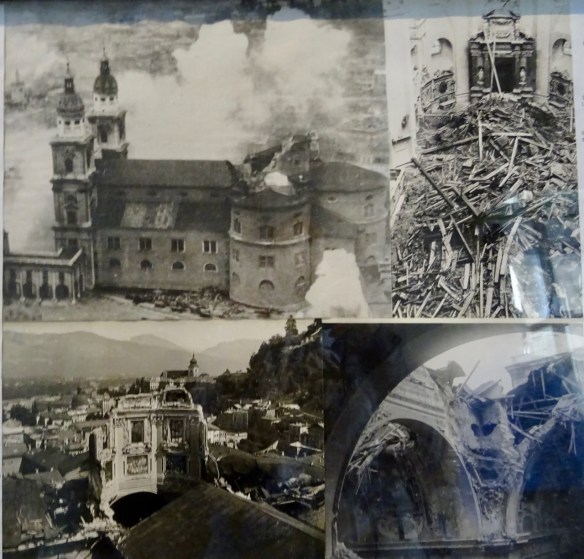
 The cathedral was badly damaged during the Second World War.
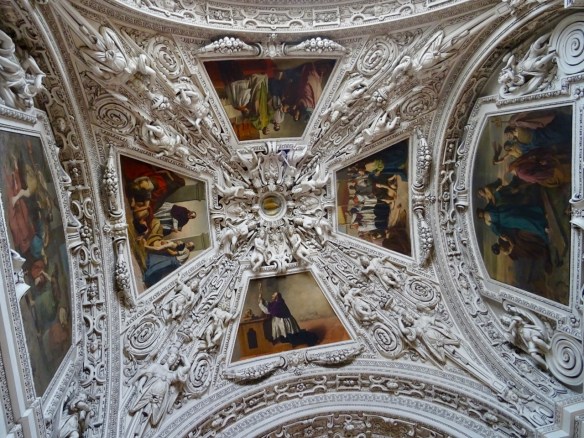
 But today is beautifully restored. The ceilings are particularly ornate, this is the ceiling of one of the small side chapels.
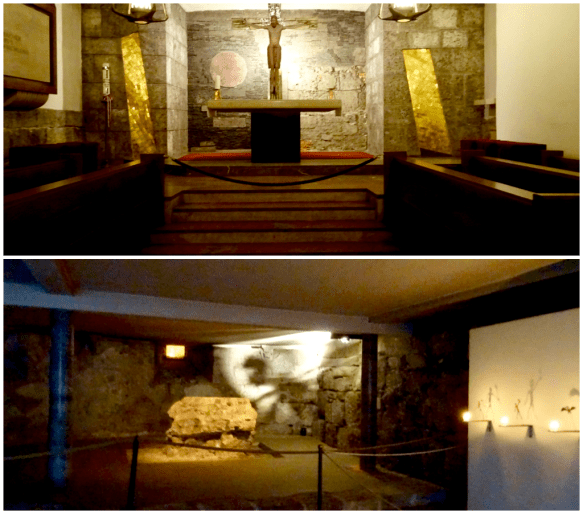
 In the basement is a crypt with a small chapel, and its very own ghostly apparition that flies around the room! Tough to catch its likeness in a photo but there it is on the back wall.
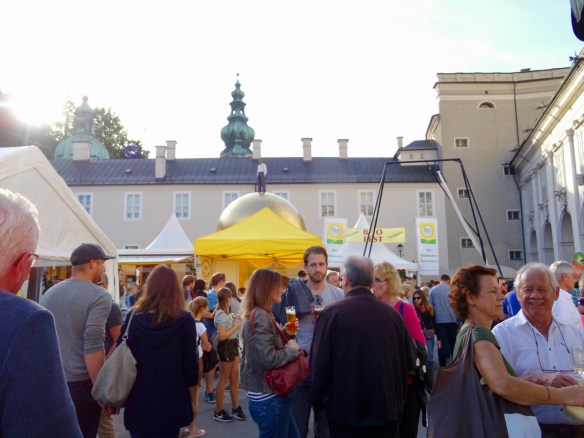
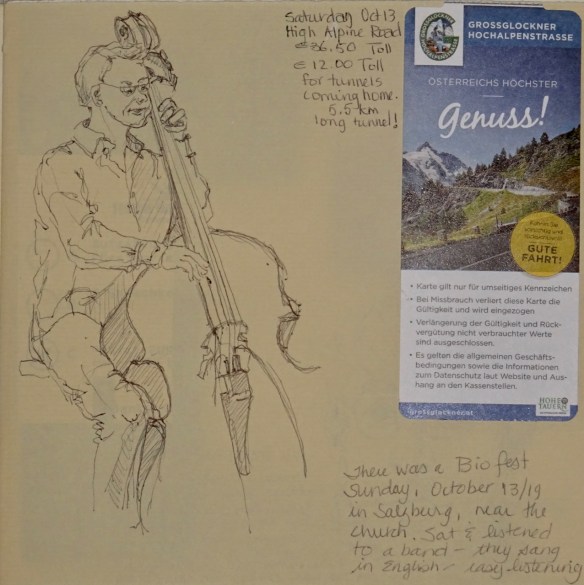
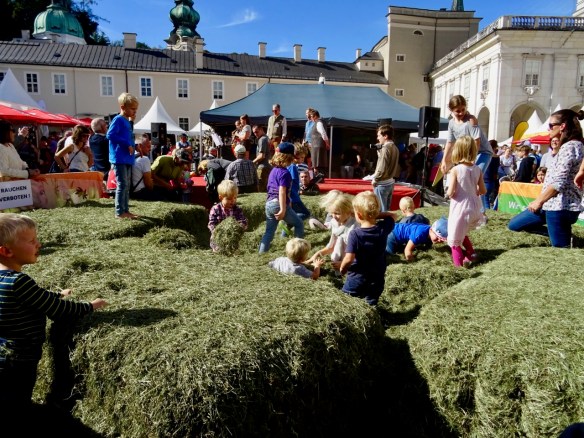
 After the service we find a Bio Fair (Organic Fair) right around the corner. There are people everywhere enjoying the sunshine, food and drinks. Great people watching today!
 We have lunch here but are too full to have one of these giant donut-like pastries, which are served either with sauerkraut or sprinkled with sugar and filled with jam.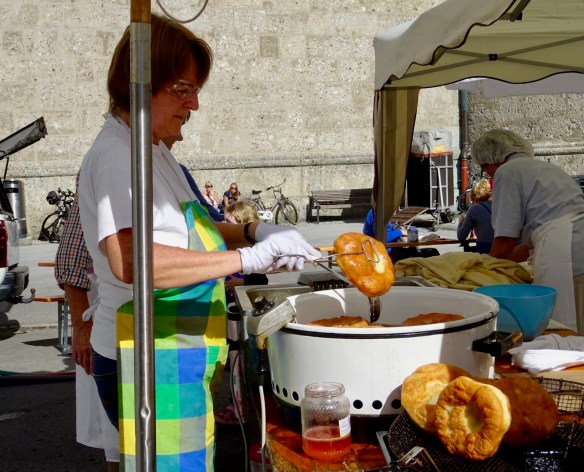
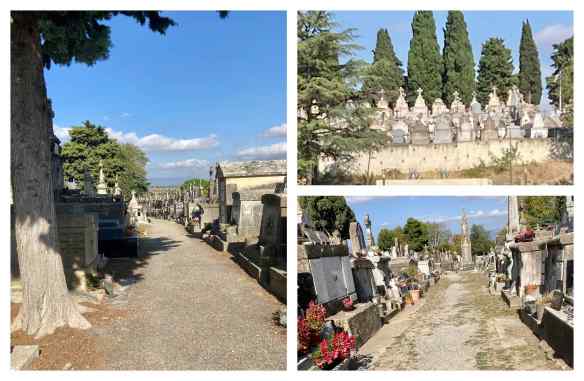
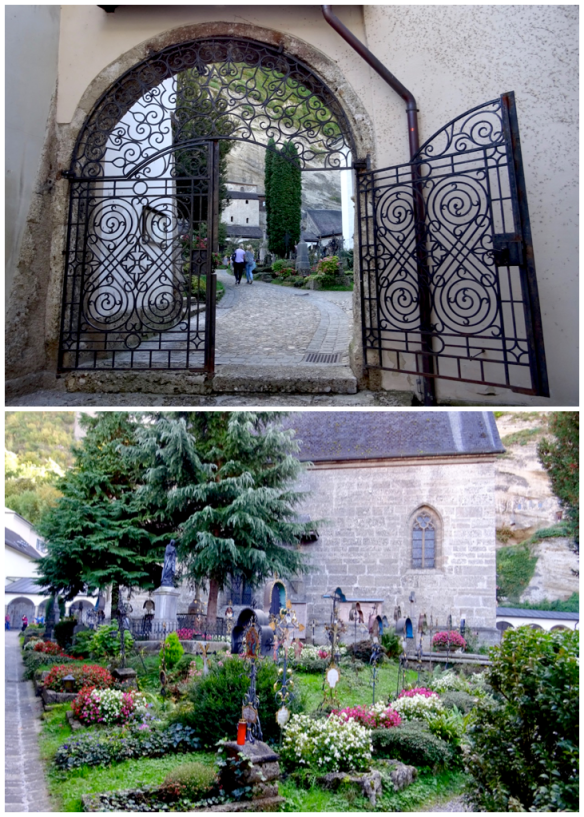
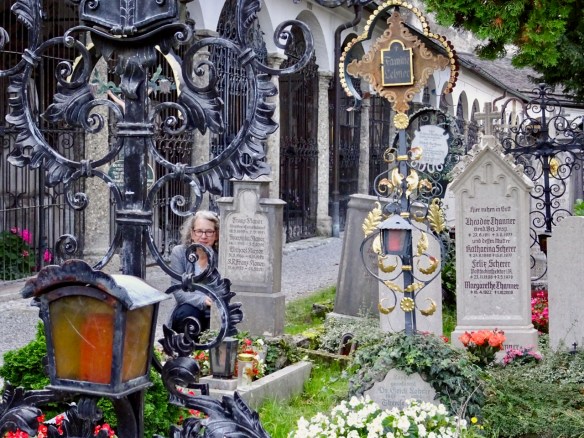
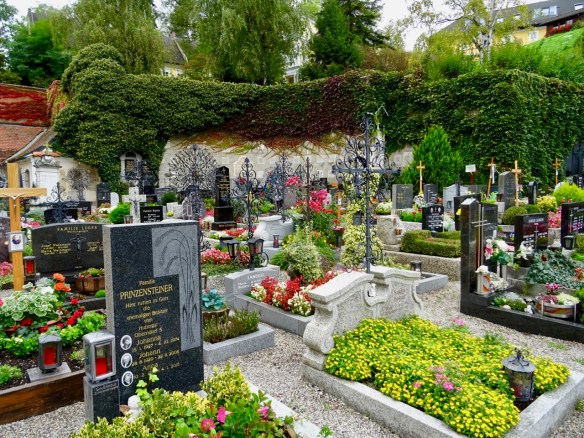
 Nearby is St. Peter’s Cemetery. Cemeteries in Austria are very neat and beautifully kept.
 We learned that plots are rented in Austria and if the rent is not paid the bones are dug up and the plot is rented out to someone else. The remains are either moved to a mass gravesite or dug up and buried deeper in the same plot and the headstone removed so that the plot can be reused! The headstones are on the wall of the church for exactly this reason. The rent on the plot was not paid so the grave was reused and the headstones were placed here. This explains the many headstones we have seen on cemetery walls and other churches.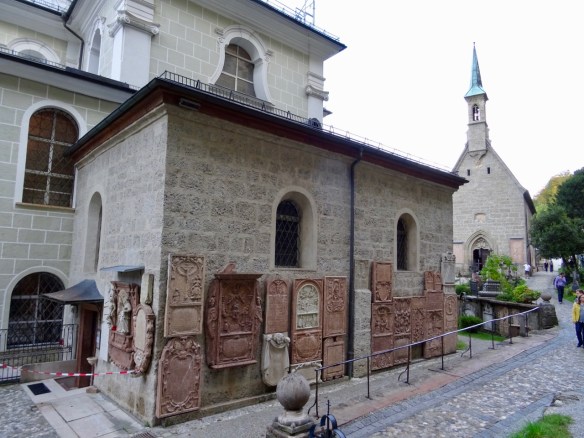
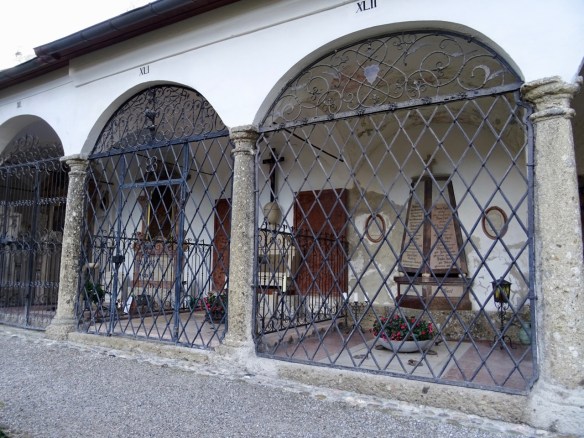 Bob insisted we needed a photo of me hiding in the cemetery!
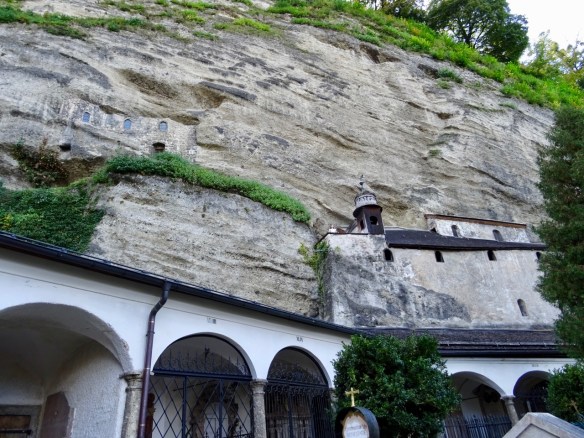
 We almost miss seeing the catacombs dating from the 12th century. Can you see the windows high up in the cliff above the cemetery? Pay particular attention to the little door below the windows. This is where Saint Maximus and 50 of his followers were thrown to their death in 477AD, because of their faith.
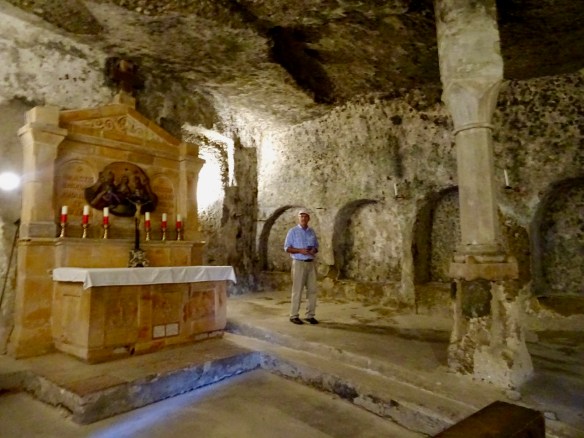
 This is one of the chapels carved out of the rock high in the cliff.
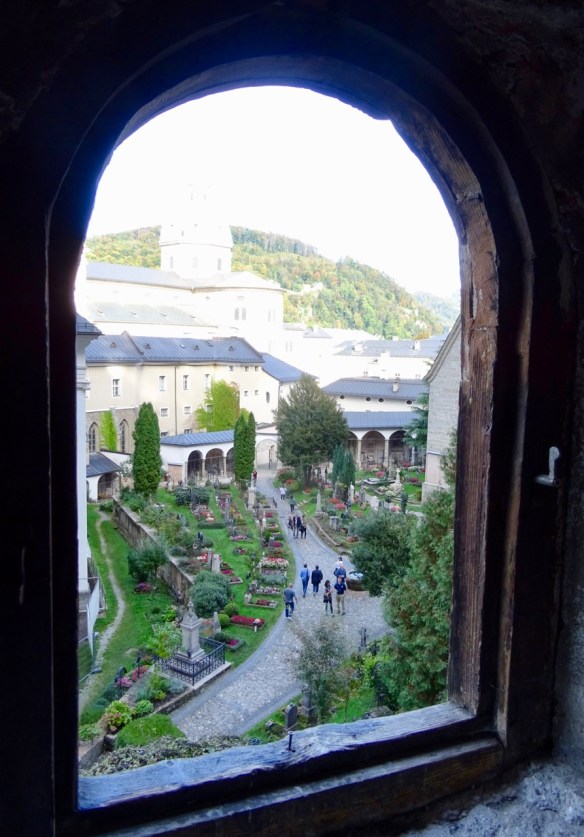
 A view of the graveyard through one of the windows as we climbed down from the stone chapels.
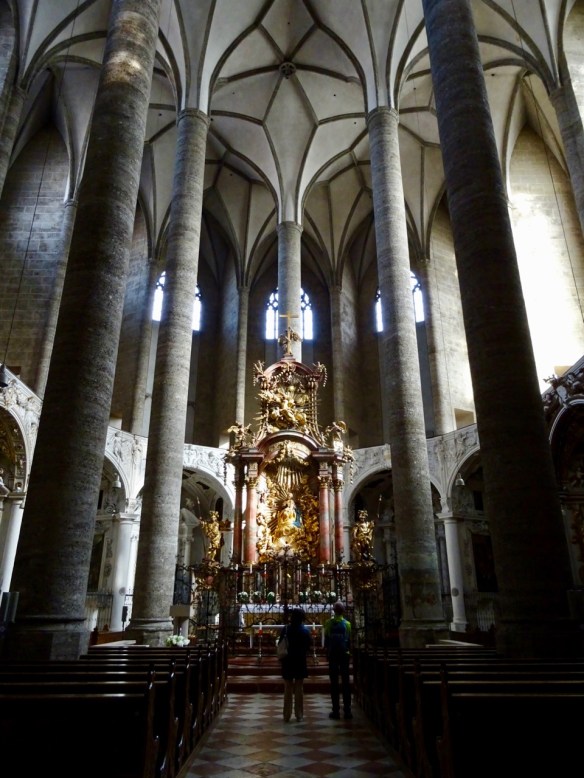
 Bob has a few more places for us to visit. The Church of Our Lady dates from 1221 AD. It was very dark everywhere except for right around the altar where there are soaring pillars and arched ceilings.
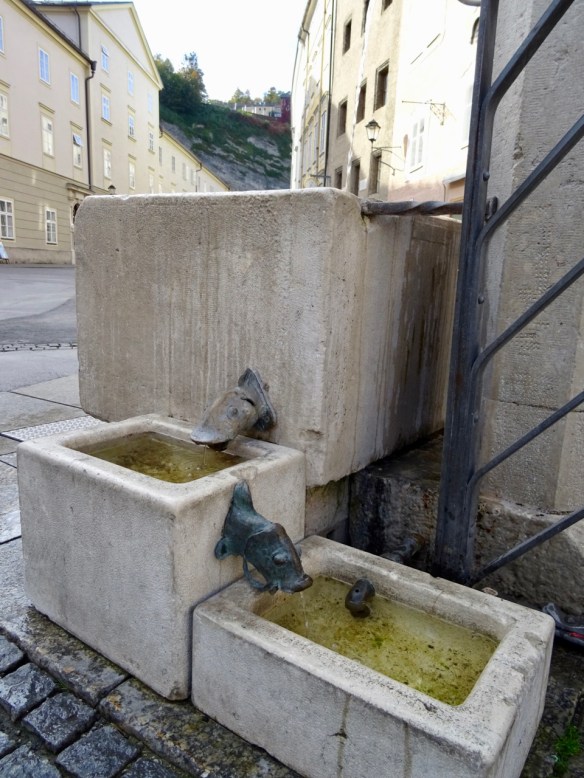
 Next is the Horse Fountain. This fountain has a ramp (the white area on the right side of the photo) so that horses could walk right into the fountain to cool off.
 This fountain is just a bit smaller!
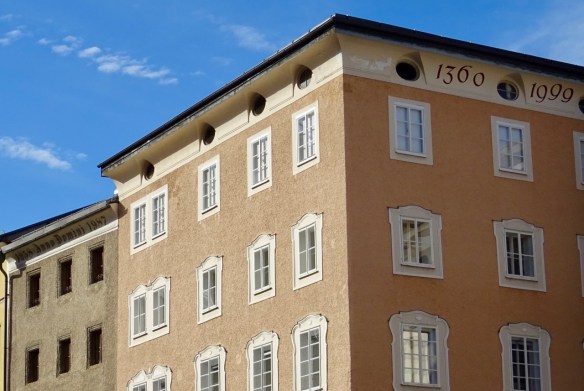
 Notice the dates on these buildings…1360 on the apricot coloured one and 1258 on the brown one. I am amazed that these houses are this old.
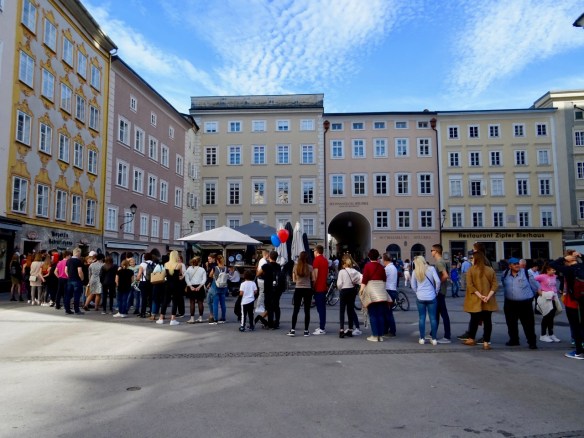
 We see a very long line up… it is people lining up for ice cream! Soft ice cream in a cup with a choice of fresh fruit and other toppings.
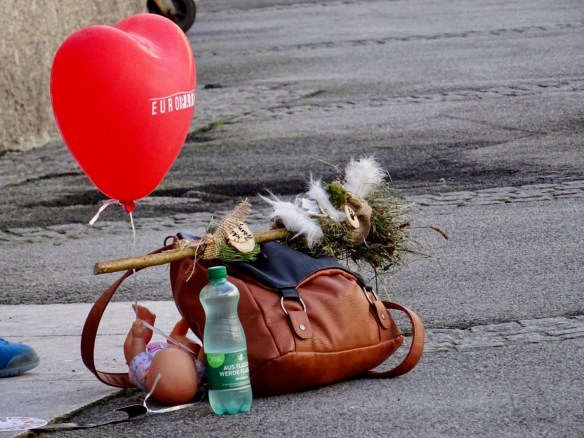
 I see this curious ‘wand’ and wonder where it is from.
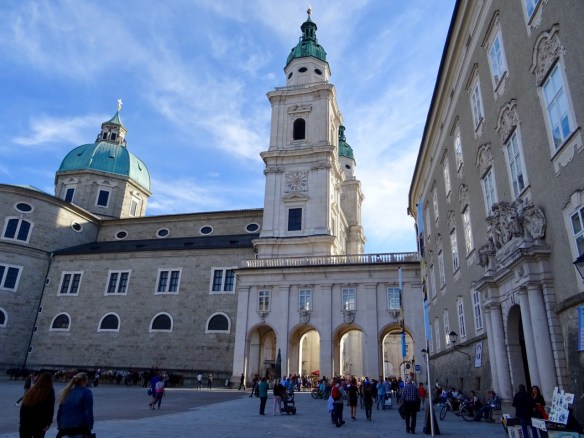
 This is a view of the side of the Salzburg Cathedral.
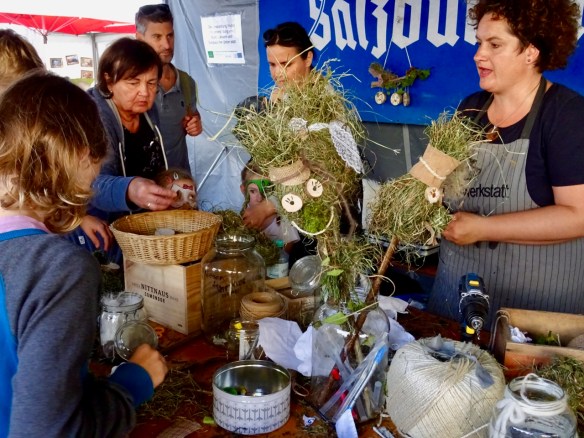
 We walk back through the Bio-Fest on our way home and now I know where the wand comes from. These look like such fun to make.
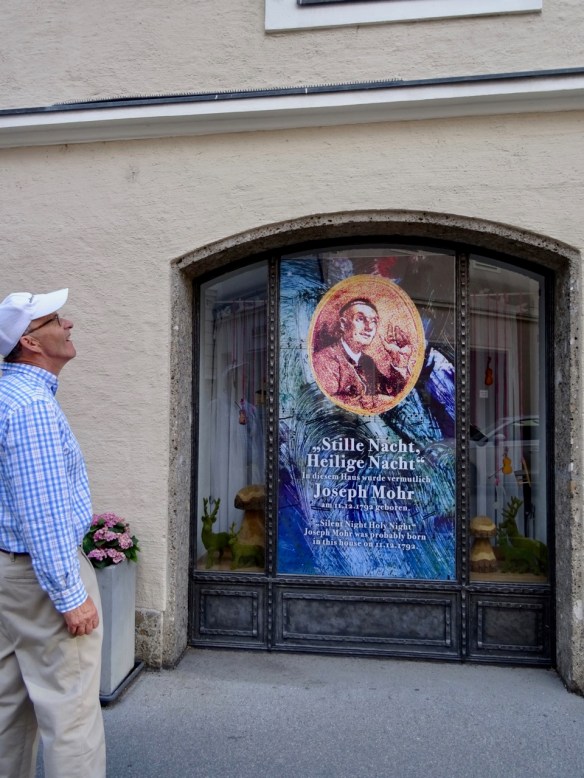
 Walking past this house we notice a sign saying that this is where the creator of the song “Silent Night’ was born.
 One more church!.. with lots of paintings and a pretty green and white ceiling. The skull was on a plaque near the door, and the little bronze plaques were in the square outside. They mark the location where a person was arrested and taken to a concentration camp. We looked for these in other cities but couldn’t find any. It has the person’s name, date of birth, date of arrest, the name of the camp and their date of death.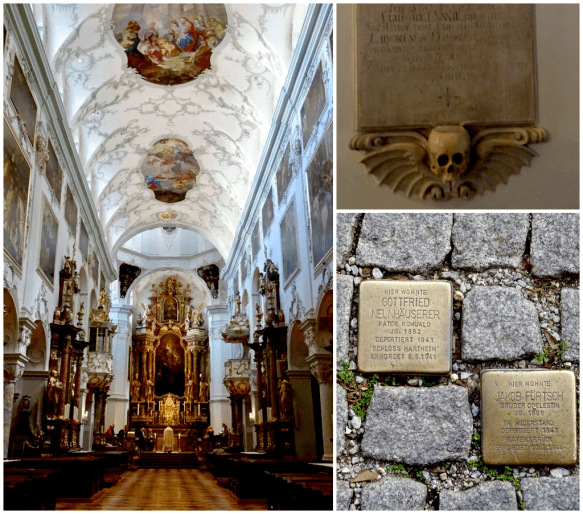
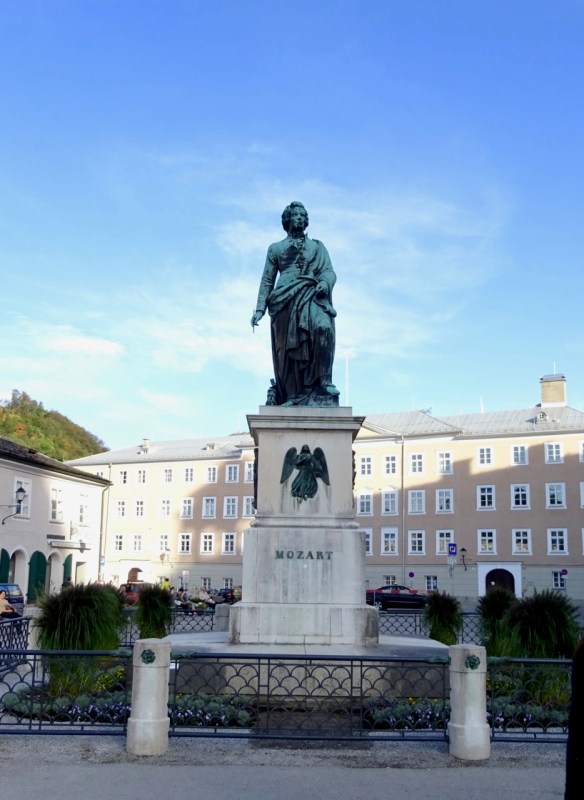 The horse fountain in the square near the Salzburg Cathedral glows in the late afternoon sun.
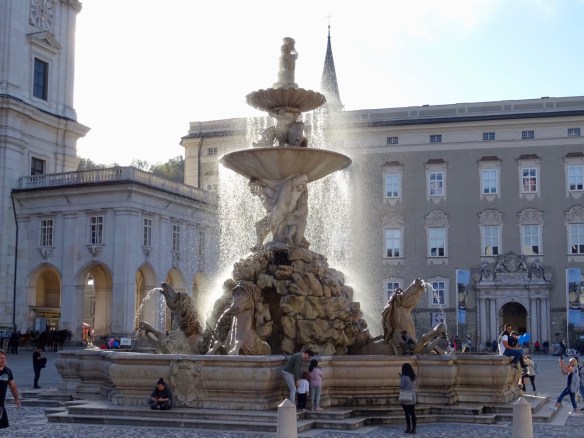 I thought tying them up was a clever way to deal with unruly tall grasses.
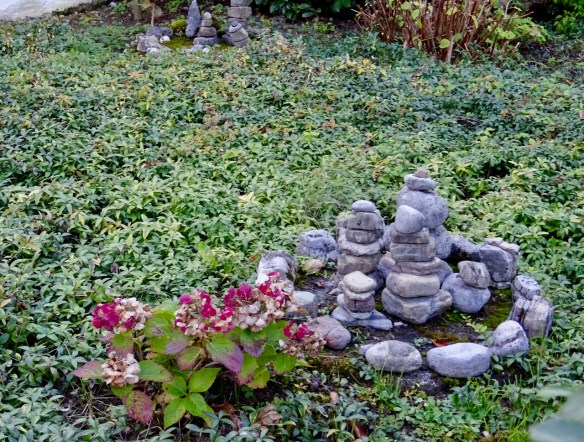
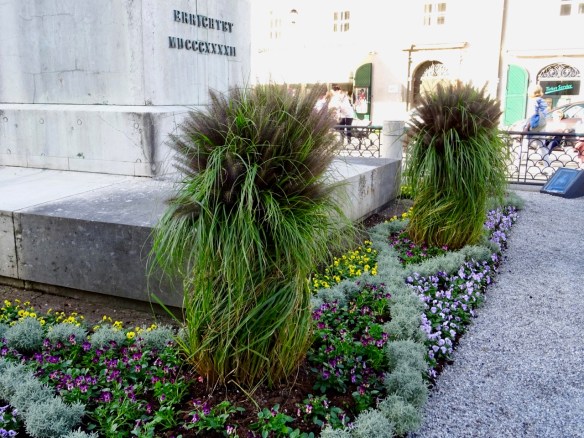 In a yard near our Airbnb I spot these little rock gardens. I might have to make one of these in our garden at home. I am always collecting stones!
 The fall colours are brilliant in the late afternoon sun as we arrive home.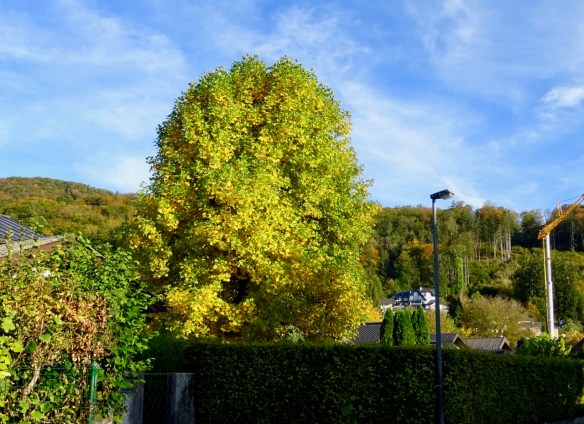
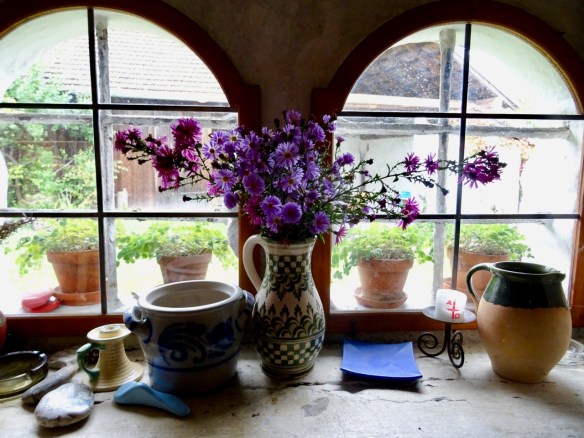
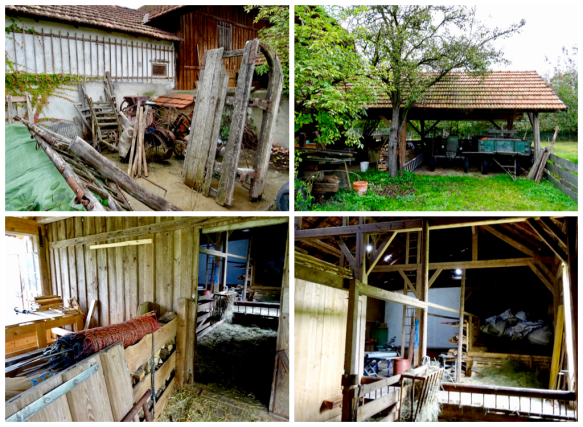
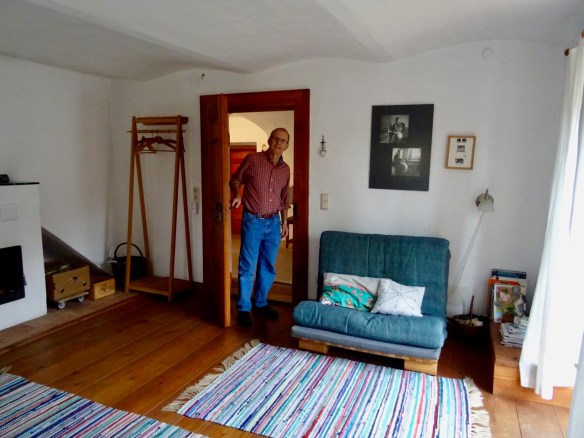 On the way to say goodbye to my friends the sheep I snapped a few more photos of the farm buildings. There were certainly lots of interesting things to see here.
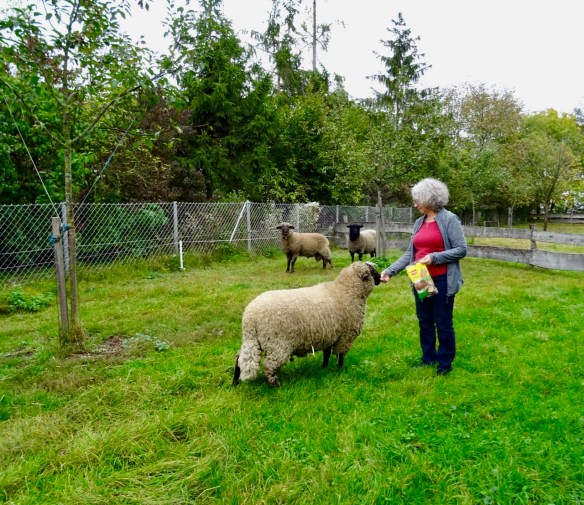
 Only the young fellow destined for the table came up to see me today. The other two were playing shy.
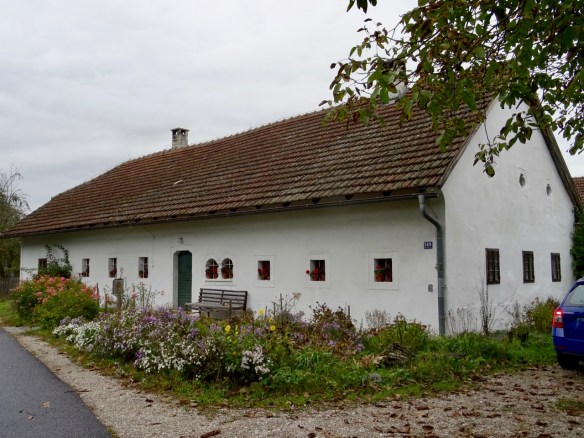
 This shows how long the front of the house is. The attic full of stuff ran almost the whole length of it. On the far end was the smaller attic above the two bedrooms in the auntie’s house.
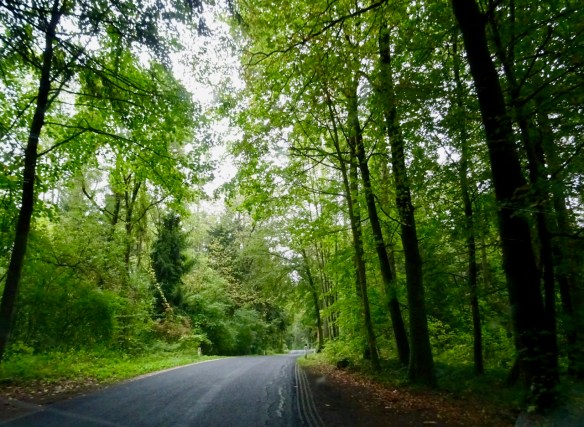
 Part of the route to St. Florian Monastery, which is our next stop, is a very narrow road through some woods.
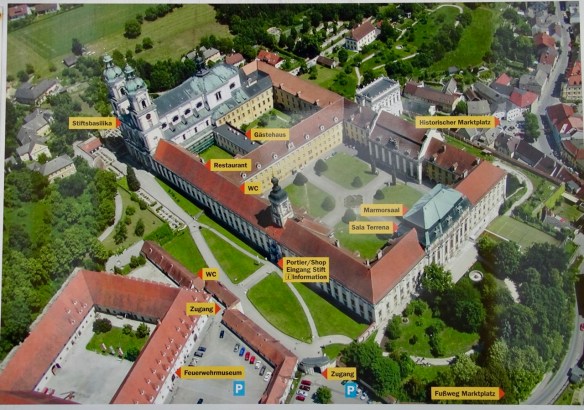
 The monastery is very large. The stretch of red roof from the church to the front corner is 200 metres long. It covers a corridor that runs its length.
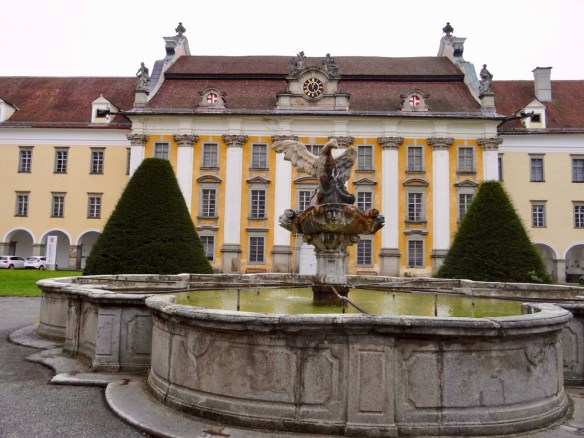
 This is the fountain in the middle of the large courtyard.
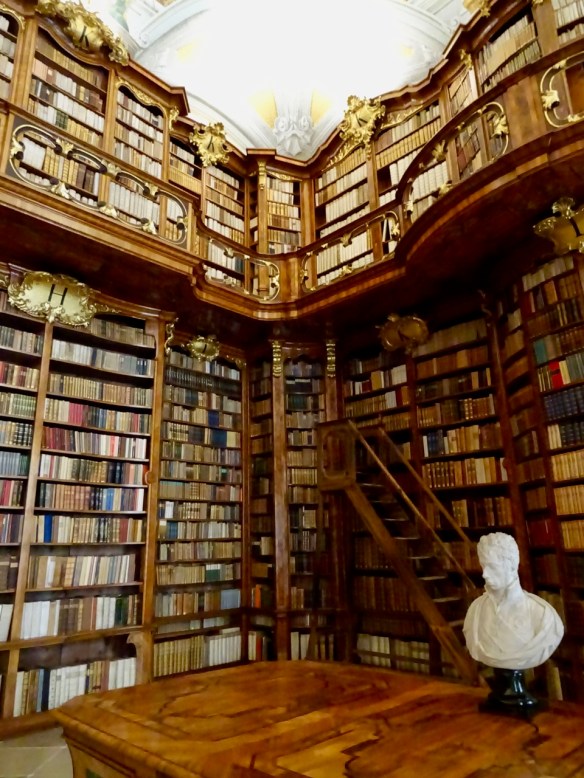
 I am so excited…we actually get to go into a library. This library has 150,000 books, 35,000 of which are in this one room. They are mainly books on Religion and History.
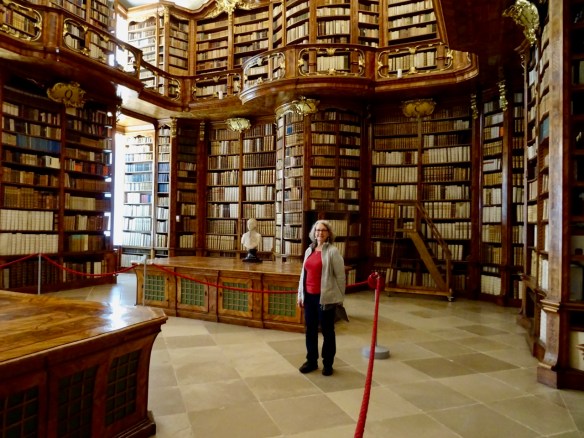 You can see the bookcase door that opens to another room. The spiral staircase to the second floor is in that room. There are many more rooms full of books but we only get to visit this one. We are told that this library is available for the public to use. Wish I lived closer!
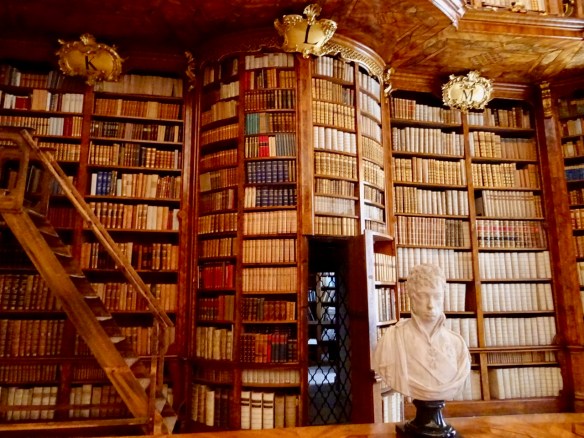 I love the library ‘ladders’ used ot reach books on high shelves. Heck, I pretty much love everything about this library!
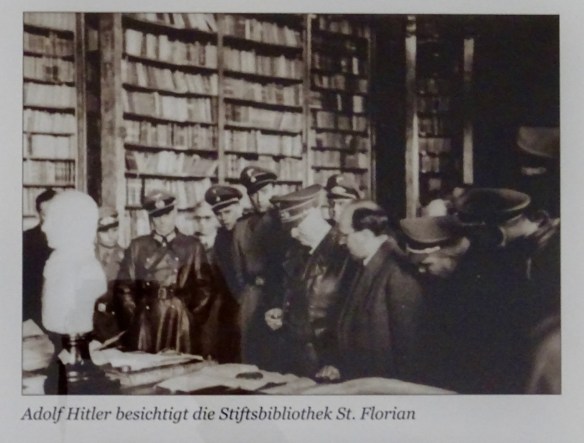
 Later on during the tour we see this photo of Adolph Hiltler standing in the same place we had just stood. It is a strange thought…that we were someplace that he was.
 Of course this library also has a magnificent ceiling.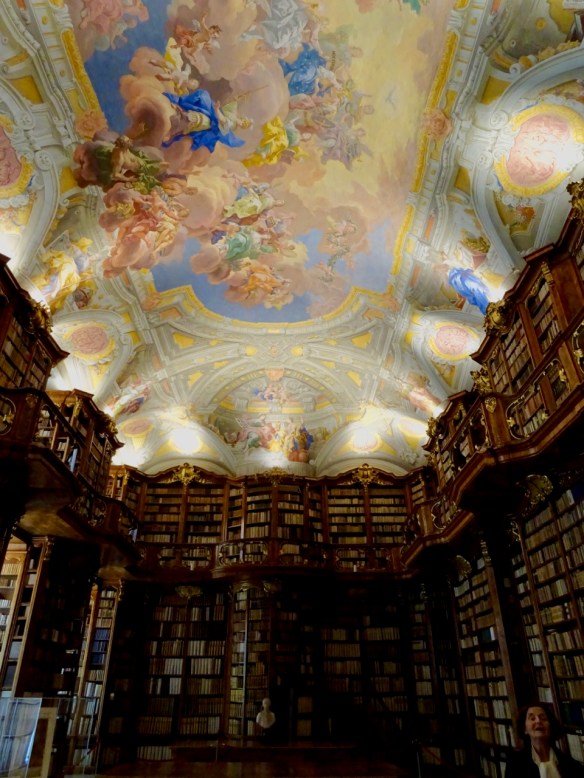
 This is why I end up with a sore neck after sightseeing!
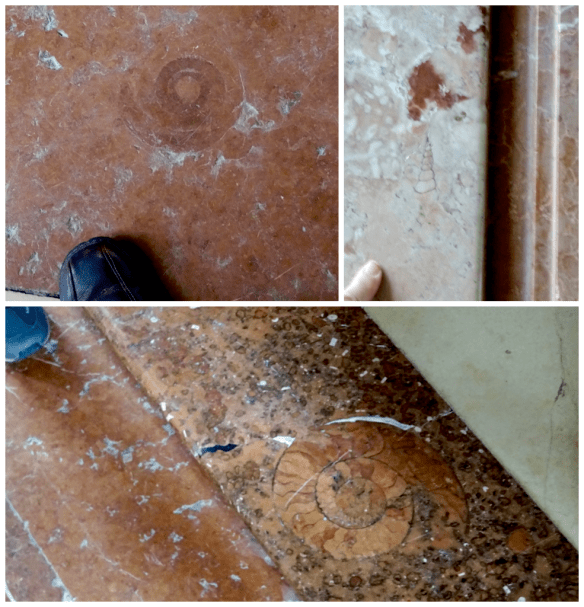
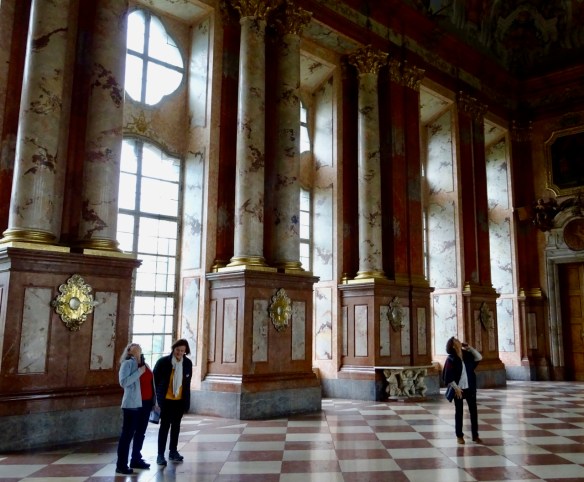 Our guide pointed out some of the many fossils that are in the marble on the floors and walls. I never thought of marble as being a stone the came from ancient oceans. The big ammonite was on the fireplace hearth, notice the toe of a shoe in the corner for scale.
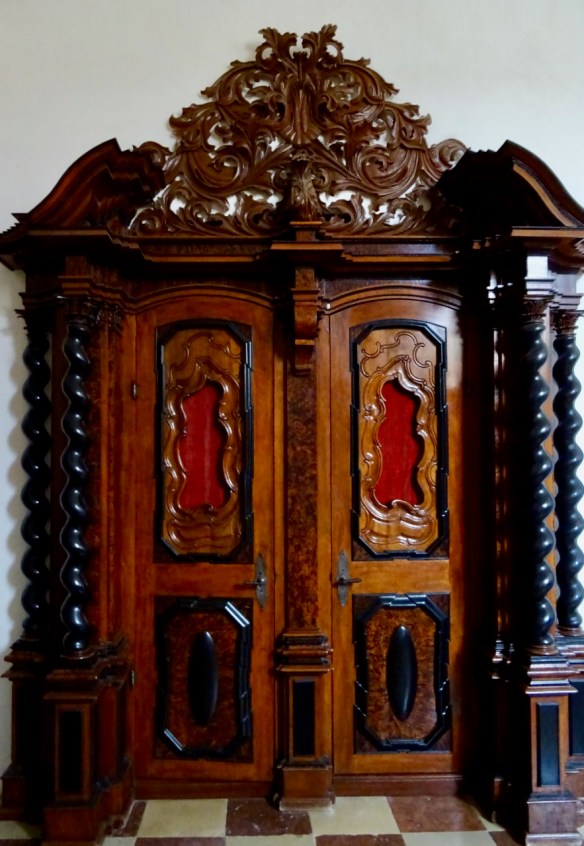
 One of the many very ornate carved wooden doors in the monastery.
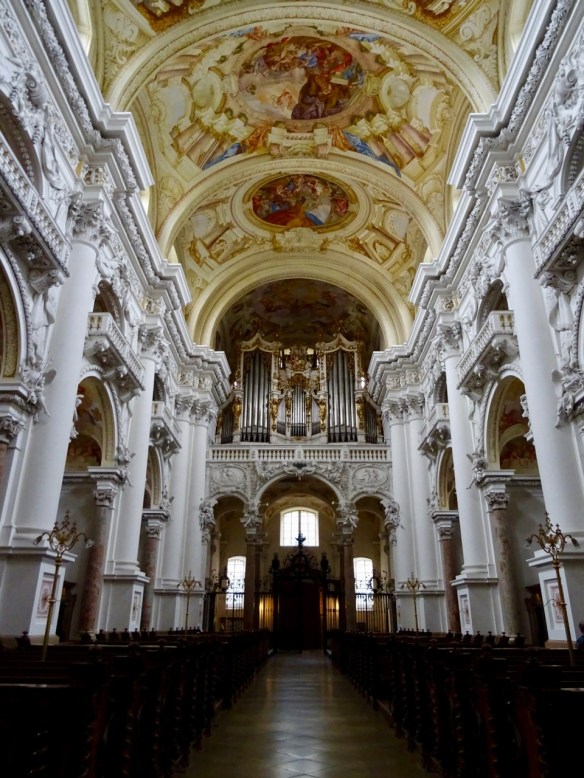
 The Monastery church is grand. Lots of carved white stone and dark carved woodwork.
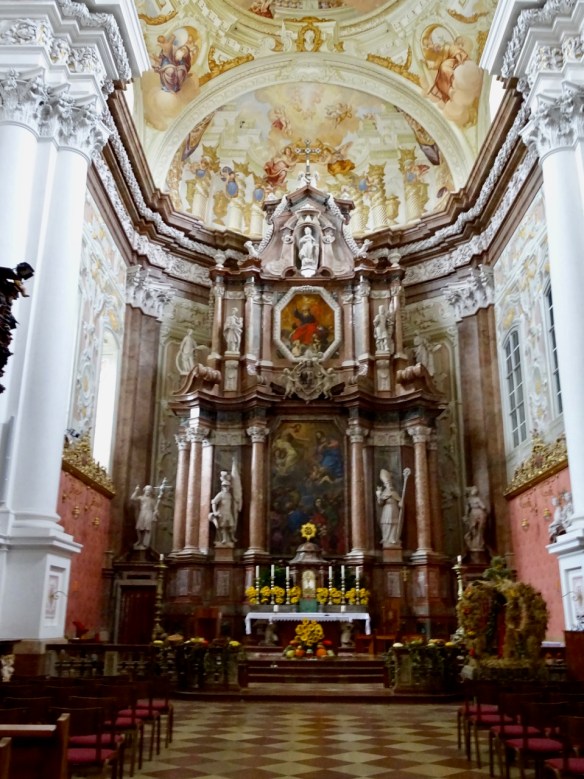 The altar is decorated with bouquets of sunflowers.
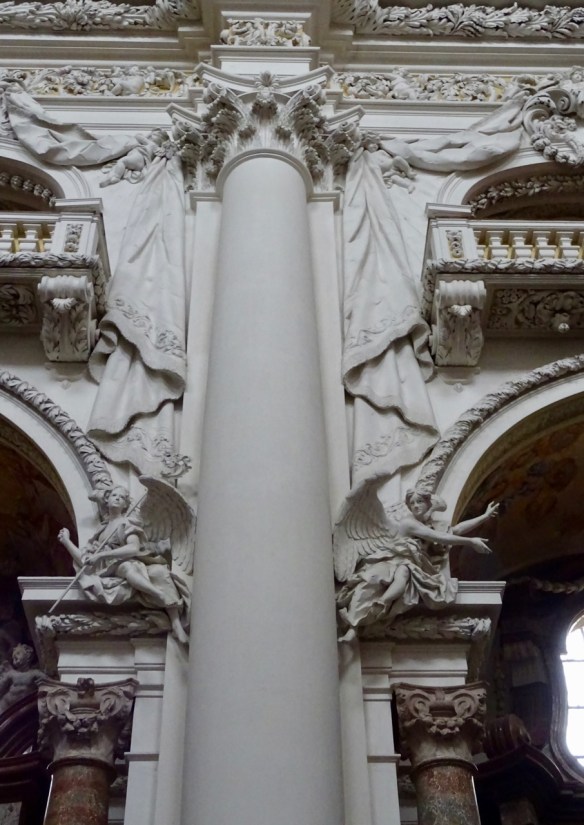
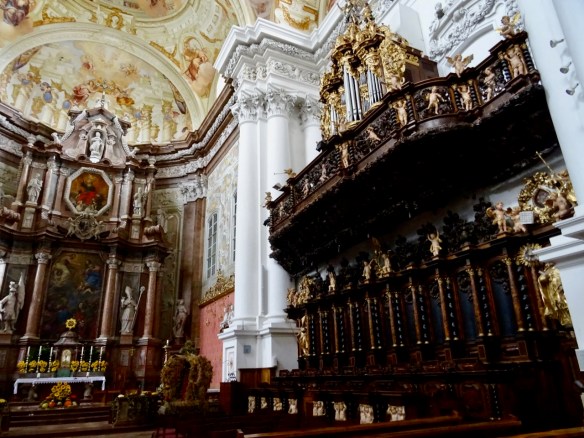 We have never seen drapery carved in stone in a church before. Everything in this church looks so very well preserved, there are no broken or dirty bits. In fact everywhere in this monastery is very well taken care of. We wonder where the money to maintain a place this large comes from.
  The church organ was built in 1774 and it is one of the largest working organs in Austria. It is known as the Bruckner Organ as it was played by composer and organist Anton Bruckner. He had been a choir boy at the monastery, and he was the church organist, between 1848 and 1855.
 I do not know much about classical music so did not know anything about Anton Bruckner. He was a famous Austrian composer, organist, and music theorist best known for his symphonies and masses. On the floor directly below the organ is a memorial plaque and …
 in the crypt directly below this plaque is his sarcophagus. His wish was to be buried here at St. Florian Monastery even though he lived and died in Vienna.
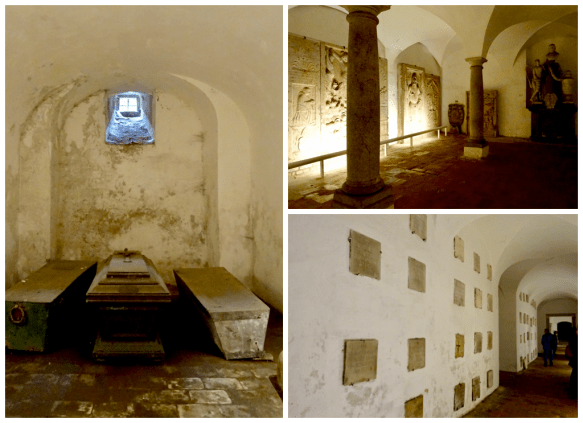
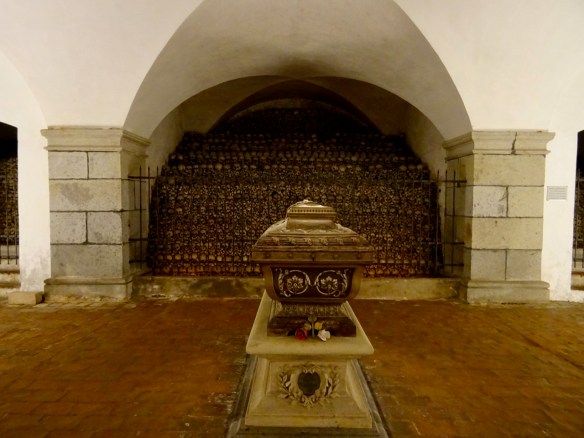 Yes, those are bones behind the sarcophagus, the bones of over 6,000 people, dating back to the 4th century. It is thought that the bones of St. Florian could possibly be in here.
 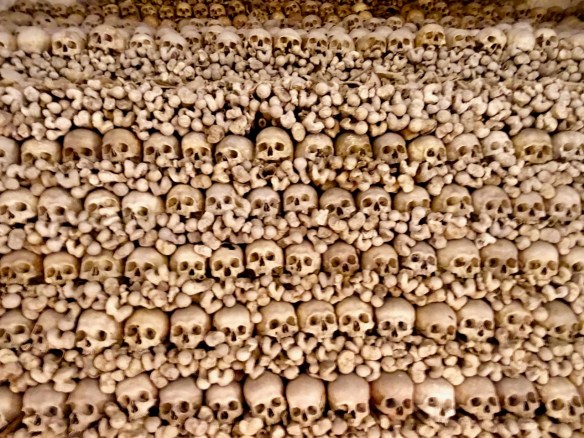 A few more pictures of the 700 year old crypt which is still used today as a burial place for the monastery monks. The windows open to outside, there is no glass. I wonder if this was so decomposing bodies were ventilated?
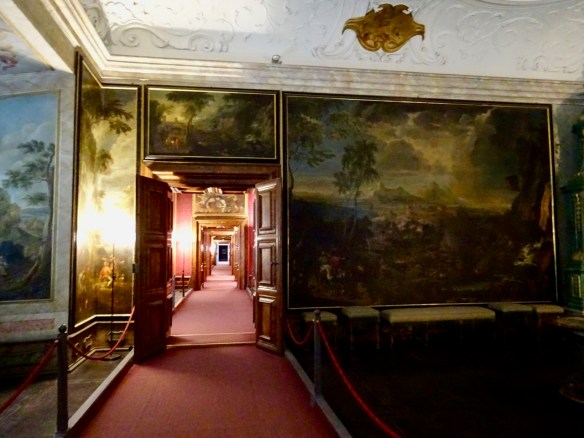
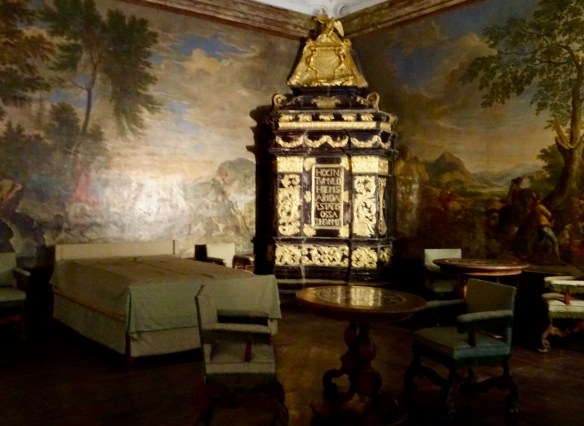
 We visit twelve guest rooms in the monastery. These rooms have not been used since the mid 18th century and have been preserved as a museum. These elaborately decorated rooms were reserved for royalty who might visit the monastery. These doorways connect all the rooms.
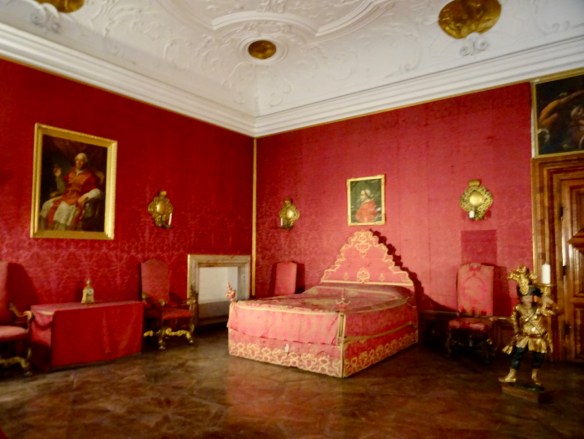
 The red bedroom was reserved for Pope Pius VI, although he only spent one night here.
 The walls and chairs in this room are covered in matching tapestries. There is a big masonry stove in each of these rooms.
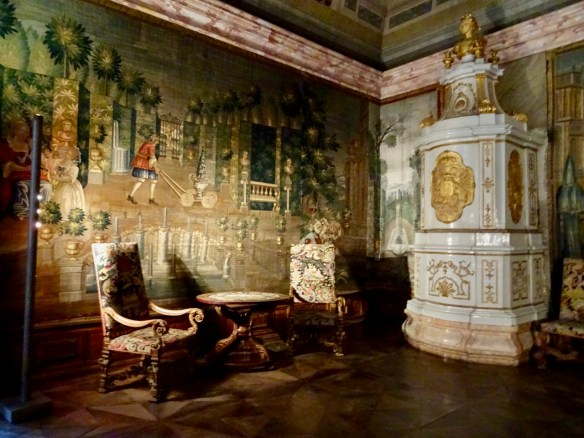 Each room is lavishly decorated.
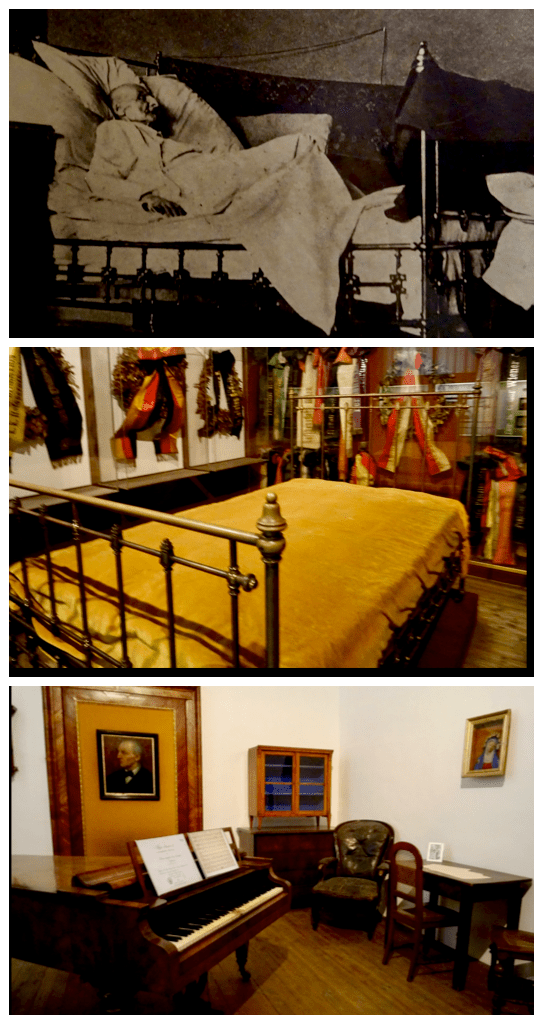
  The last two rooms are a shrine to Anton Bruckner. The photo shows him in his bed in his Vienna apartment. He died in this bed, which is now on display here along with his other furniture.
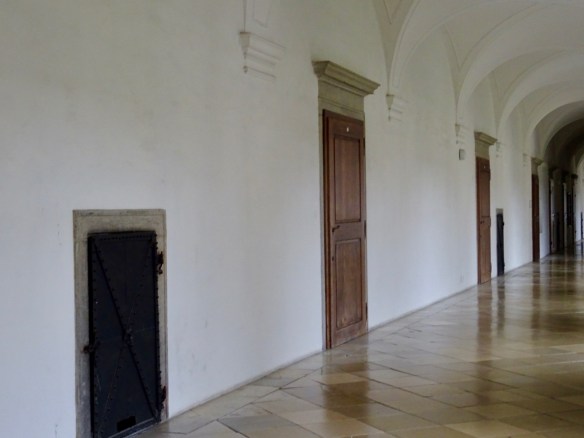
 Remember those big masonry stoves in the royal apartments? These metal doors in the hallway open to the inside of the stoves. This is how the fires in the stoves were cared for by servants without bothering the apartment occupants.
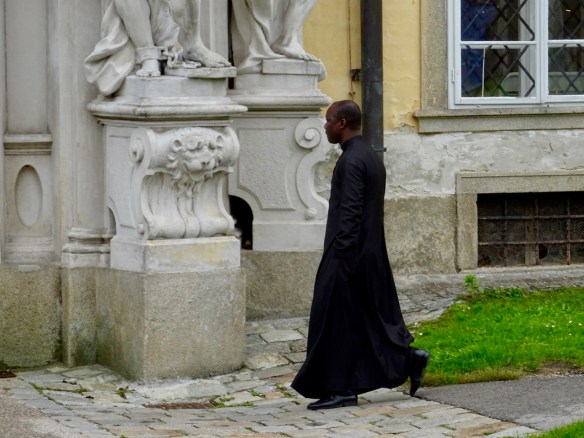
 There are thirty monks at this monastery. Only thirteen live here full time, the rest live in neighbouring parishes. Over the last 950 years the monastery had 108 monks at its peak and only three at its lowest. I am told that thirty monks is quite good ‘these days’. There is one young monk, several in their fifties and sixties and the rest are older. We see this monk as we are leaving and assume he is the one young one.
 The cemetery beside the church is the prettiest, most well cared for one we have ever visited.
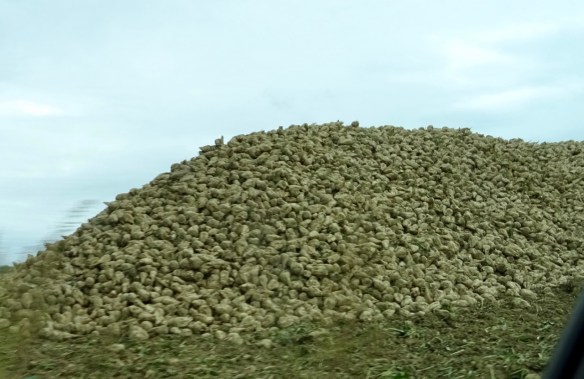
 As we drive towards Salzburg we pass several huge piles of sugar beets in the fields. Austria grows more than 3 million tonnes of sugar beets every year.
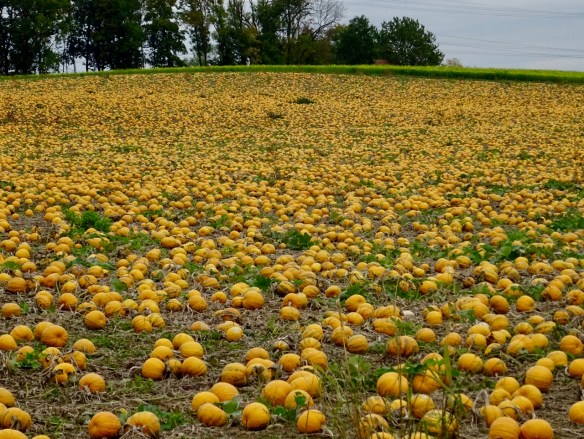
 Finally we find a safe place to pull off the road so I can get a photo of one of the fields of pumpkins we have seen along the way.
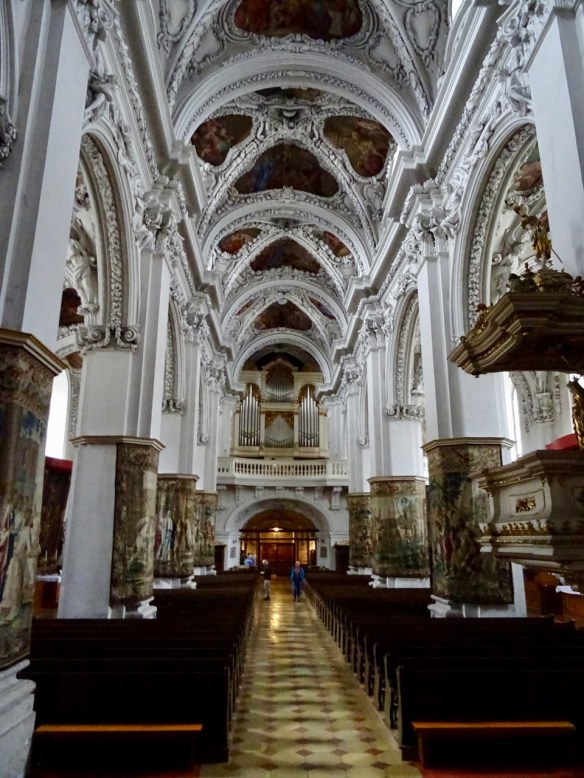
 We make a quick stop at Kremsmunster Monastery but it can only be visited by guided tours and we don’t have time. The church is open and it is the only one we have seen that has tapestries wrapped around its pillars.
 Back on the road, from a distance, I thought this was another field of pumpkins or maybe squash, but they are sunflowers.
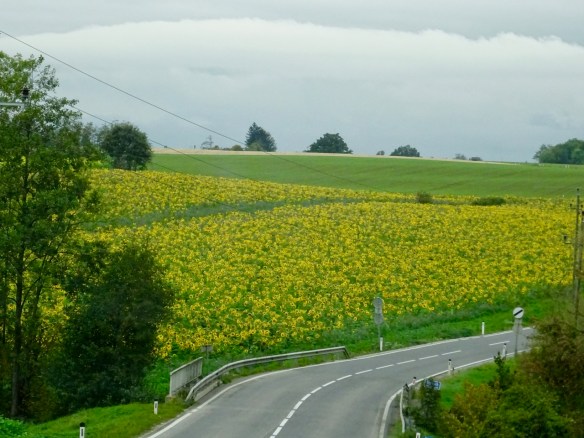 Good thing the sun wasn’t shining or I would have wanted to stay much longer and take many more photos. What a beautiful sight it was to see so many gorgeous sunflowers.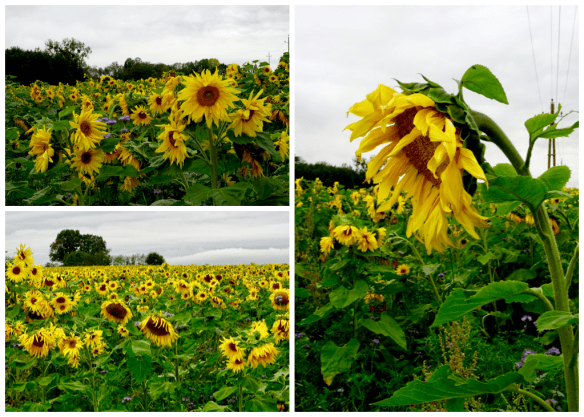
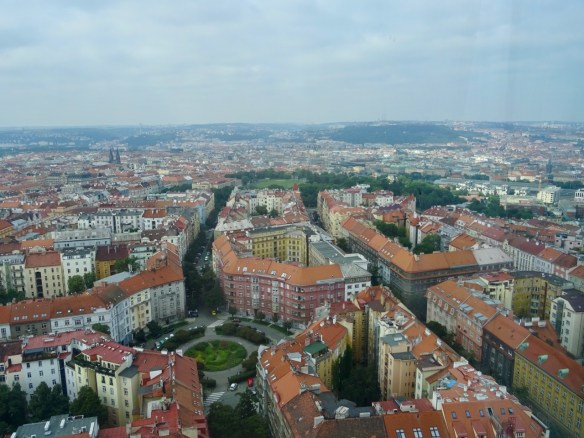
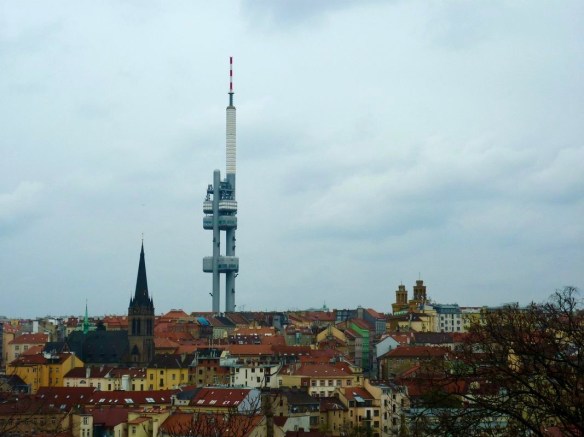 If you look down in the lower right corner you can just make out some of the headstones of the old Jewish Cemetery which located beneath all the trees in the bottom of this photo.
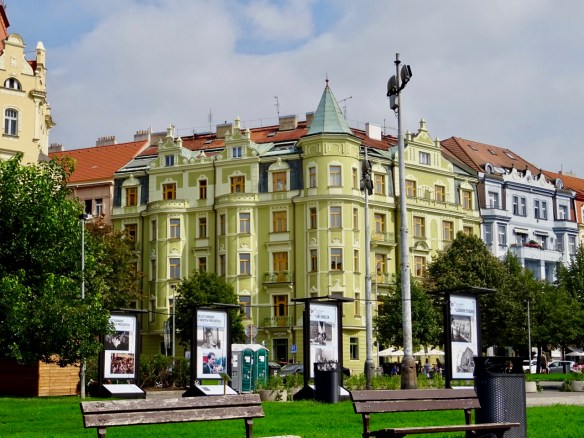
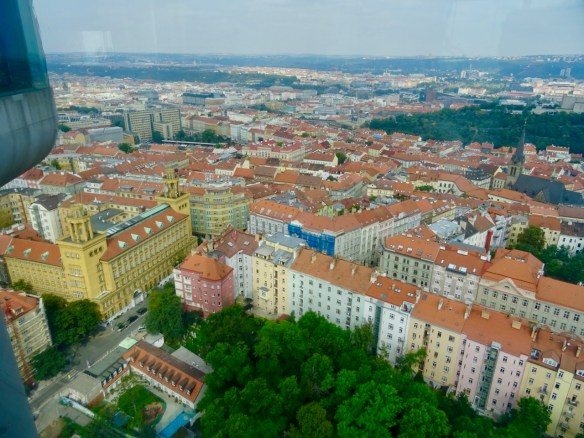 Prague is a pretty city with lots of parks and green spaces.
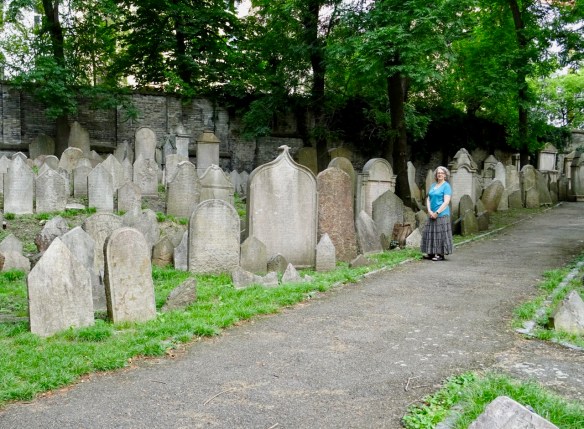
 The old
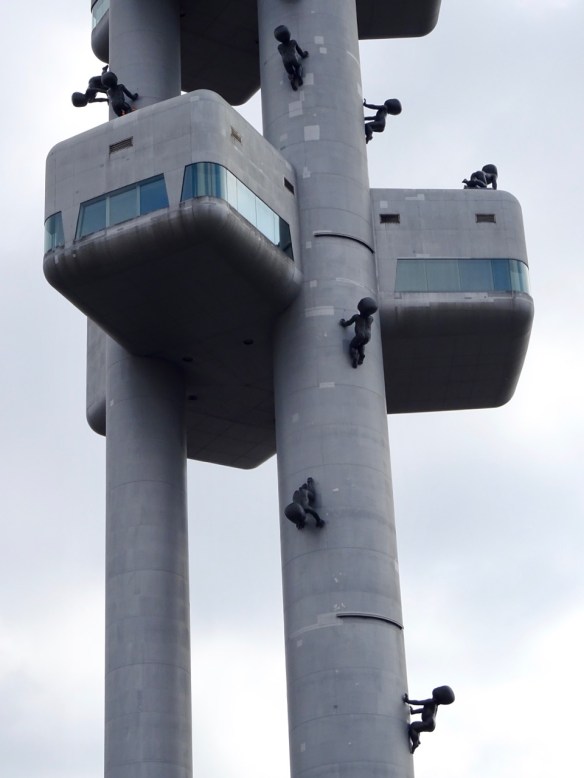
  There are ten six foot tall babies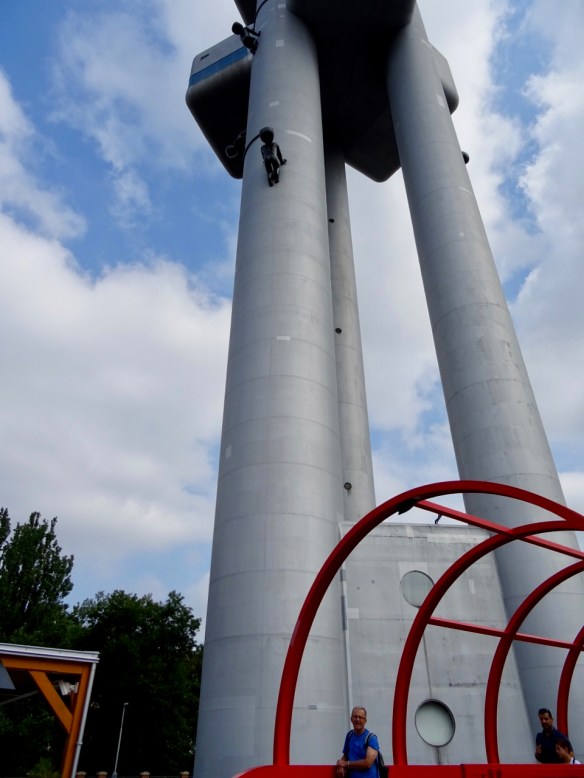
 We go home to pack for the beginning of our road trip tomorrow through the Czech Republic, Poland and Germany, .
 trudymason.com