Stuttgart, Germany to Mulhouse, France

Day 44     Monday, October 13, 2025

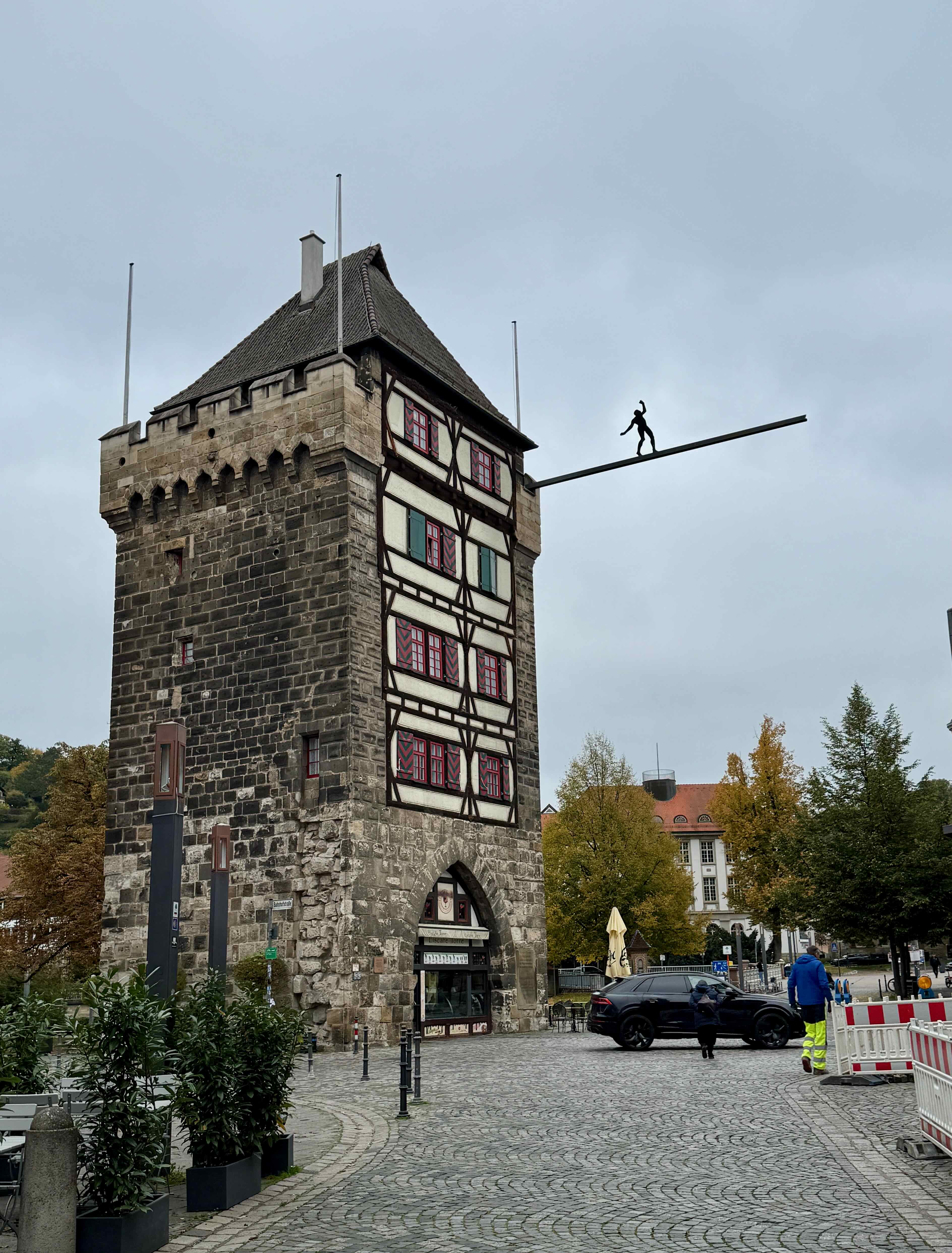
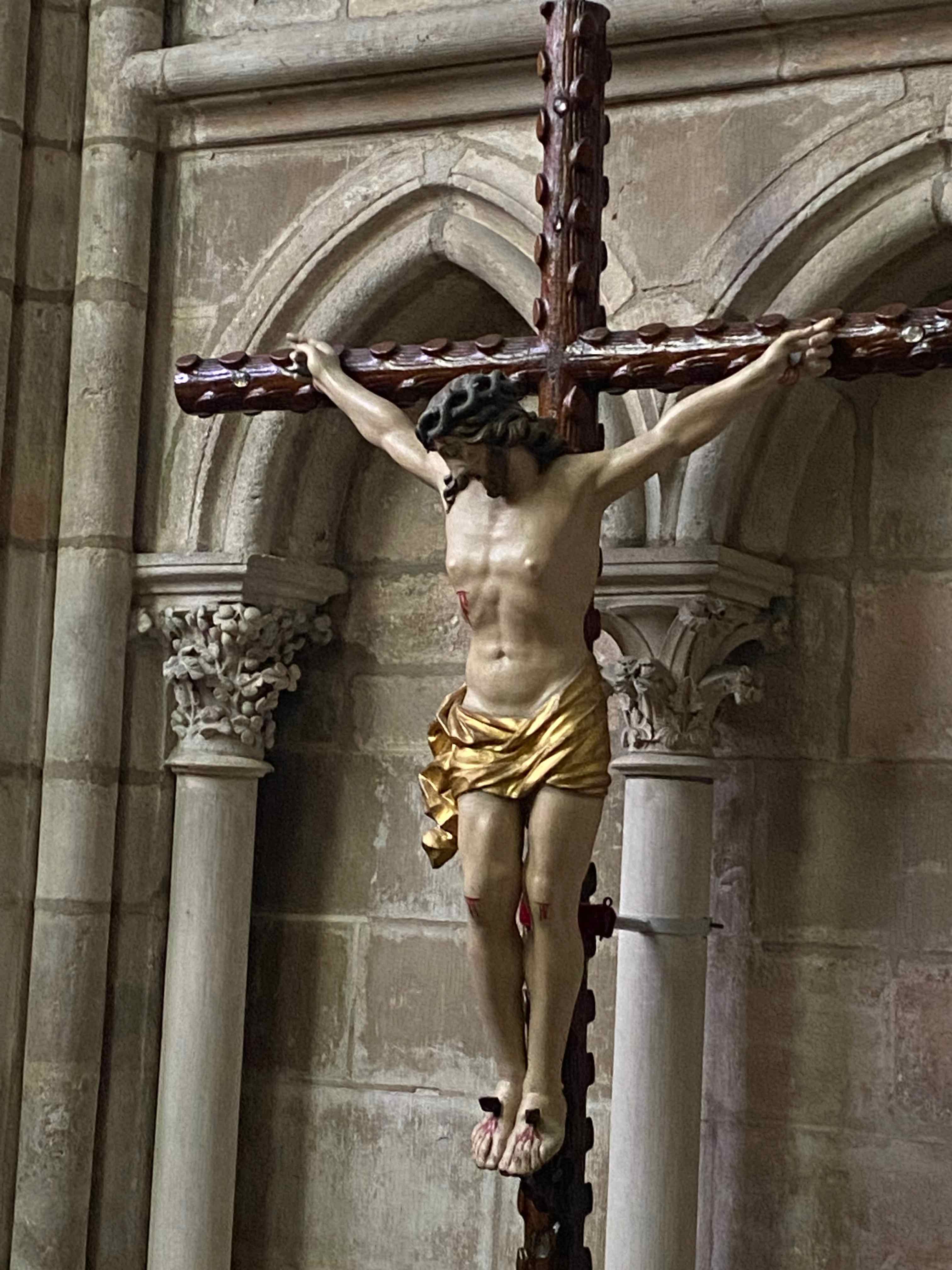
First stop on our way to Mulhouse is a pretty little town called Esslingen.  At first sight we thought this was a real person!
Our Airbnb in Stuttgart had a calendar with almost this exact photo.  It was the impetus to visiting Esslingen.
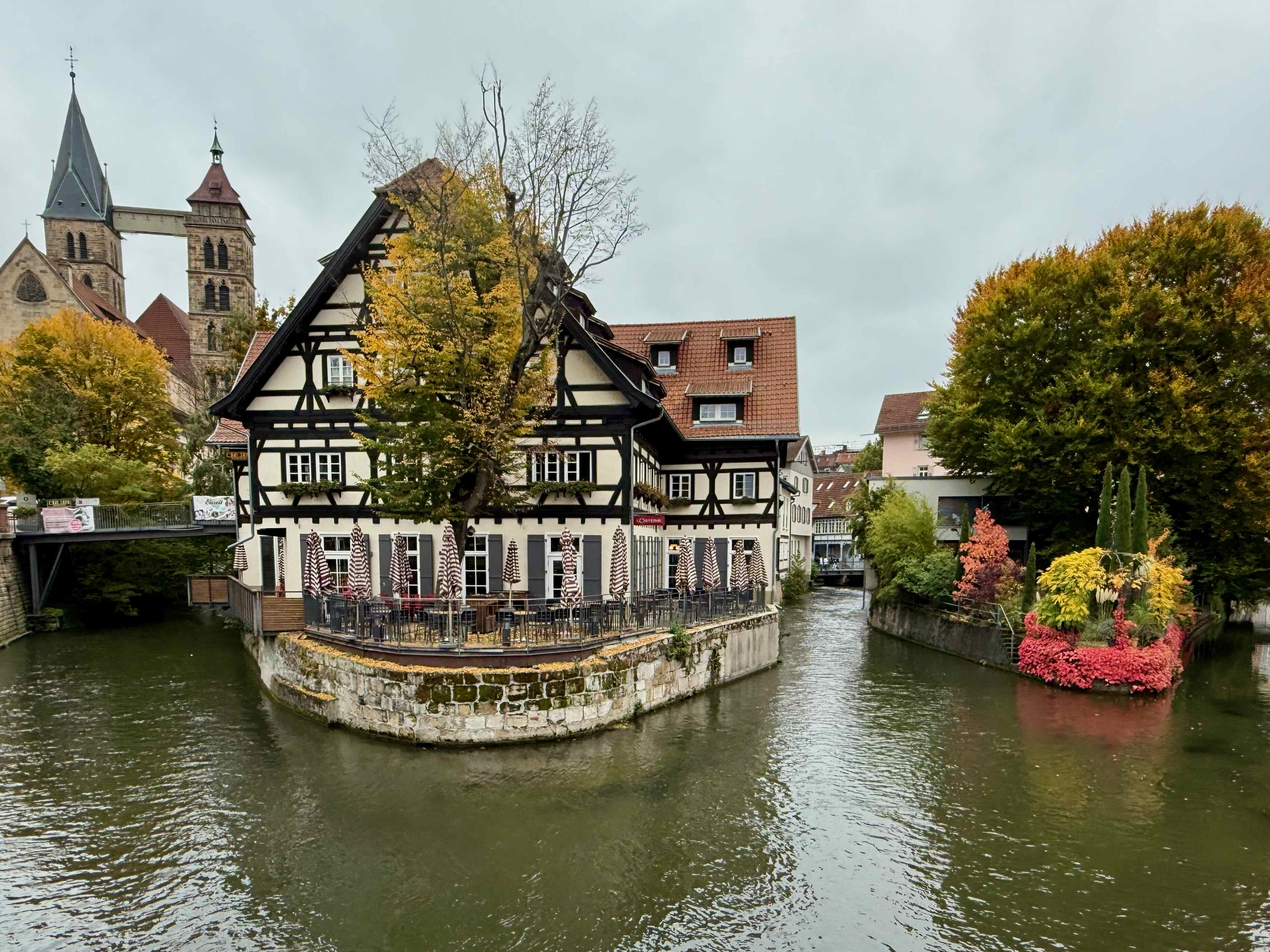
Autumn has definitely arrived.  I love walking through the fallen leaves.
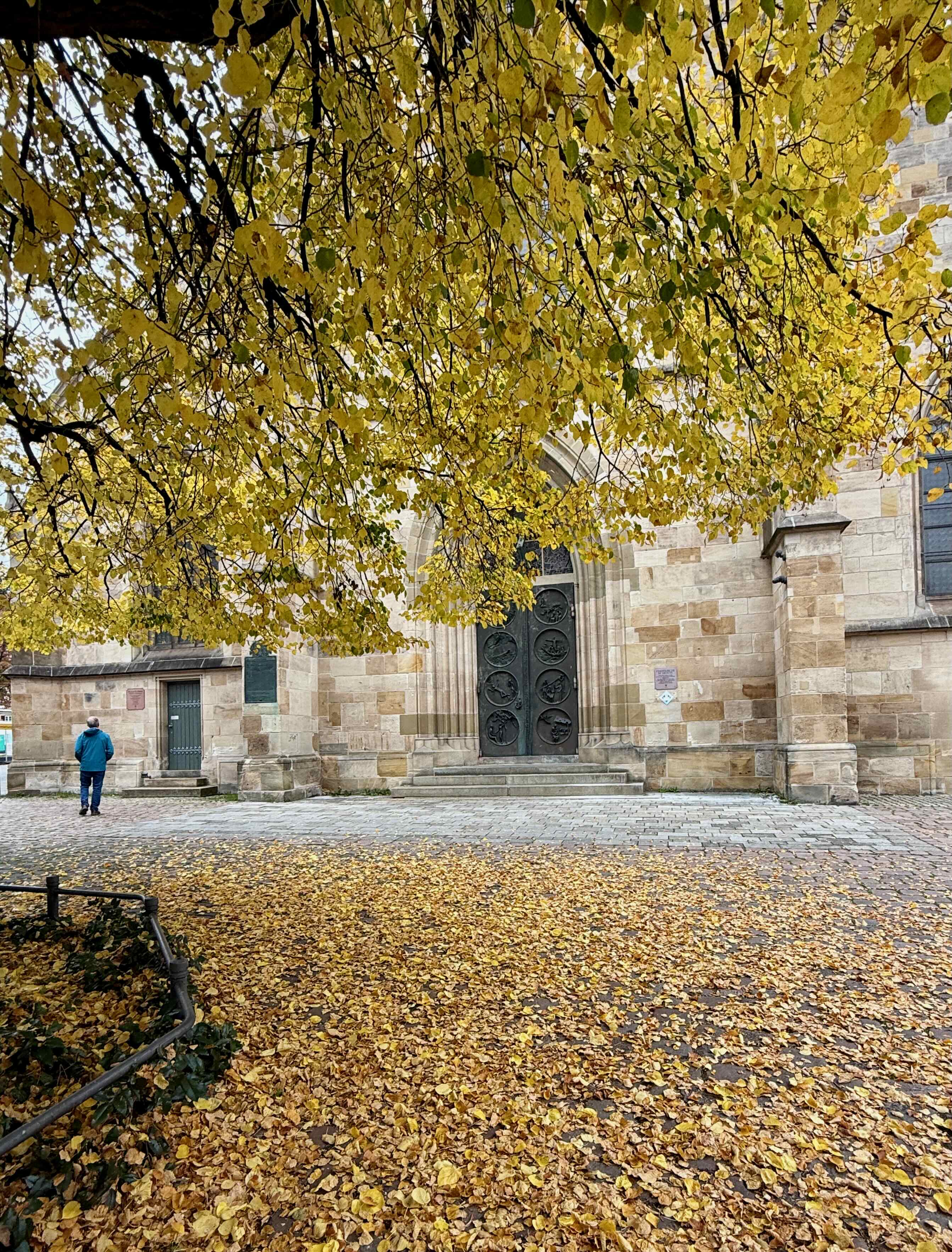
We walked into this church because its doors were so interesting,

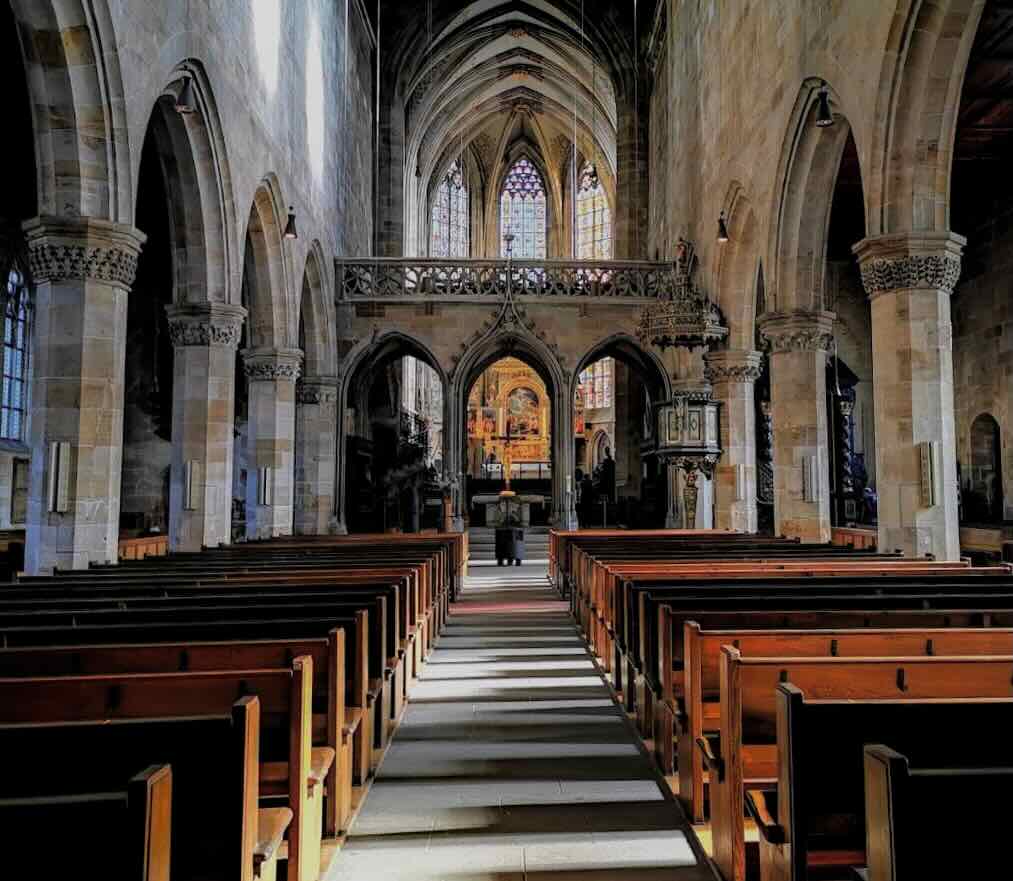
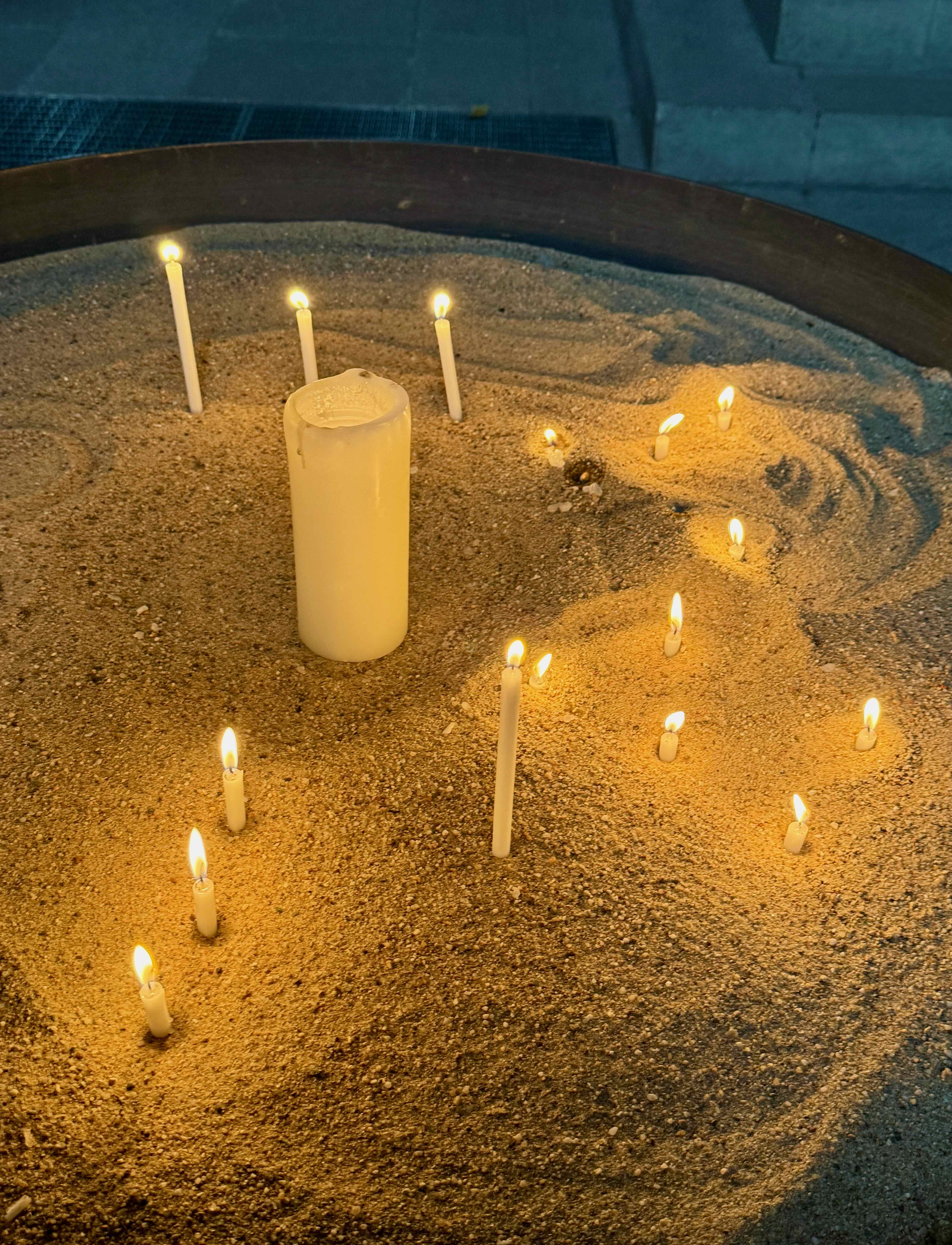
I didn’t record the name of this church, but it had a very austere dark interior……but the area to light candles was small and intimate and appealed to me.  We lit a candle for all our family members and friends who are facing health challenges right now, and spent a few moments in silent contemplation.
Back outside, we see Esslinger Castle in the distance. But this castle isn’t actually a castle, it is a well-preserved part of the medieval city fortifications, located high above the city centre. Originally expanded in the 13th century, it was reinforced in the 16th century with walls up to 5 meters thick. We can see people up there but we don’t have time to go and explore. Travel days don’t allow for in depth exploration and only give us a chance for brief visits to sites along the way.

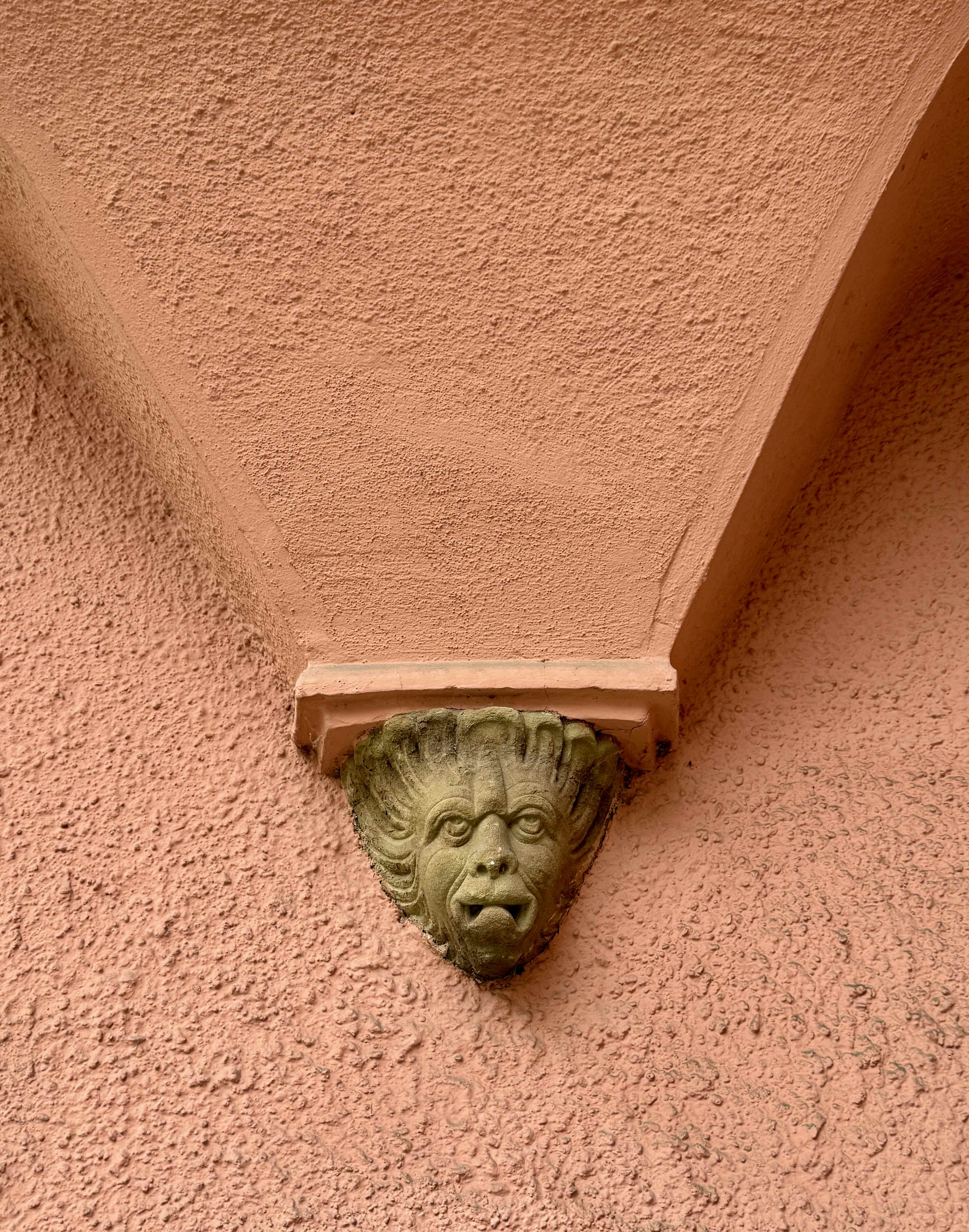
One thing I love about European cities and towns are the unexpected little things, like the face on this wall. There is always something interesting and different to discover.
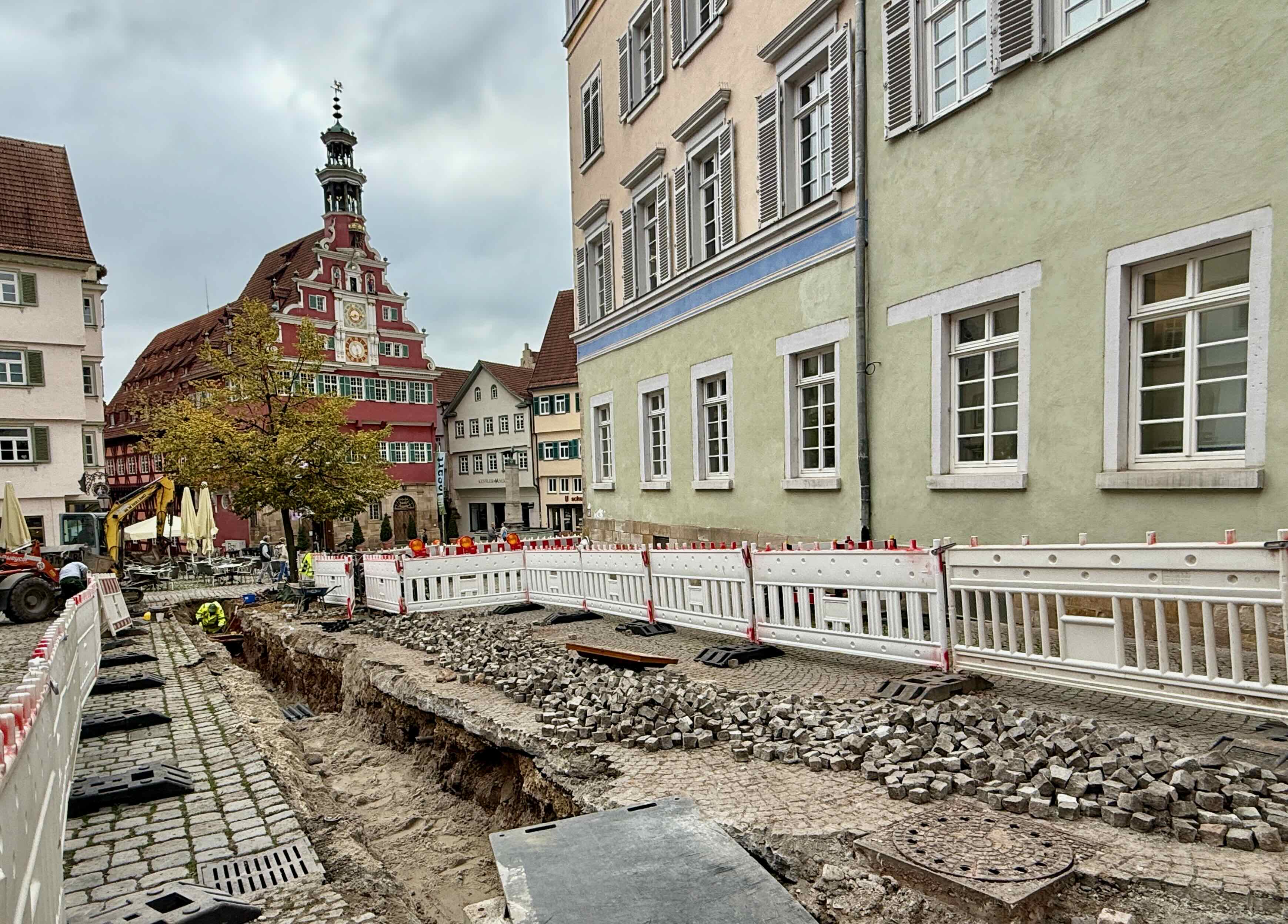
We pass this road construction site. I think they were replacing some pipes.  All the little stones from the cobbled sidewalks and streets are piled up and then relaid in the pattern that matches the rest of the in place stones.  Very labour intensive, but such a wonderful final result.
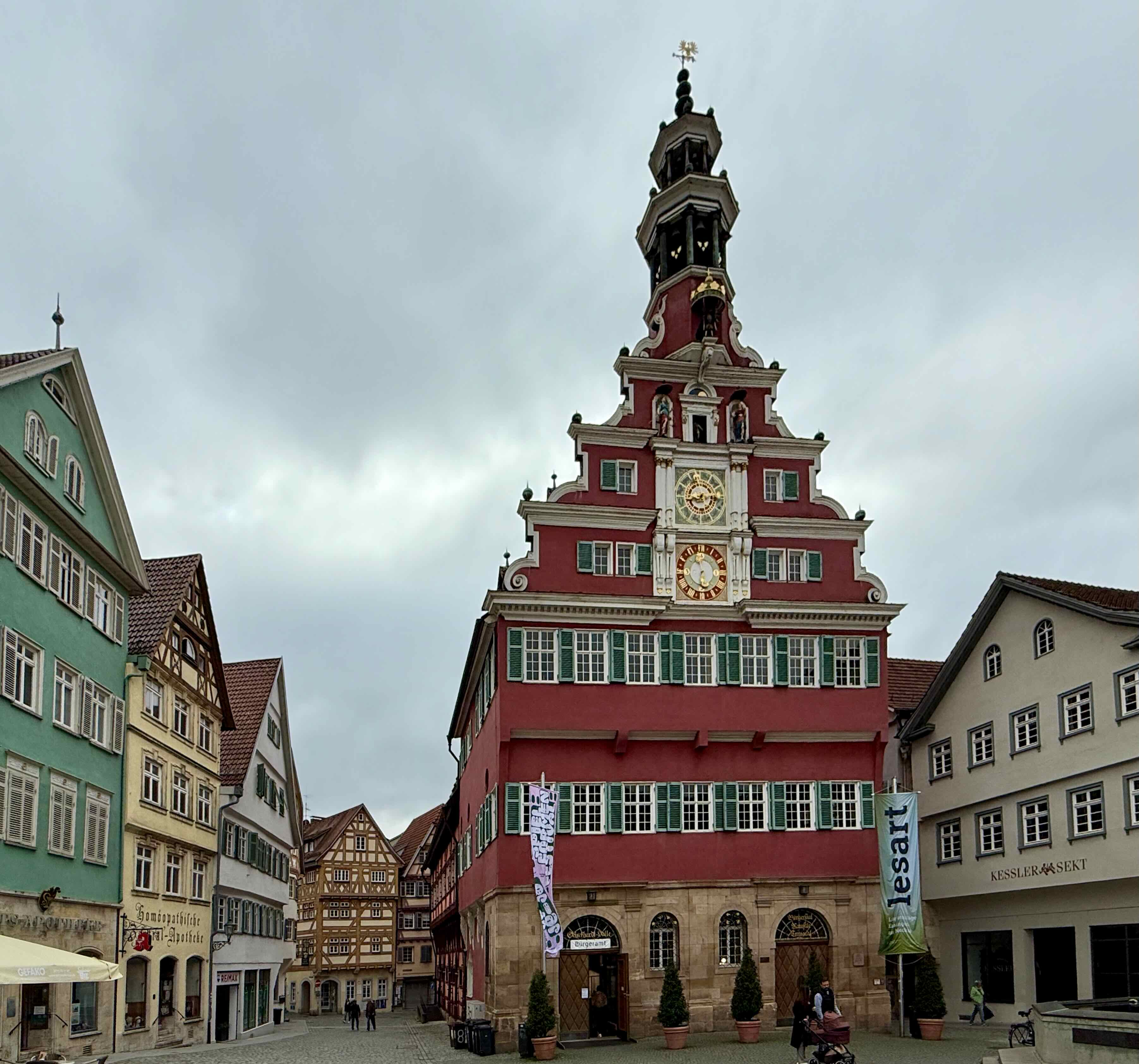
Built in 1423 as a sales hall and tax house this building is the Old Esslingen Town Hall. We were hoping to hear the Glockenspiel and see the figures on the clock move but later discovered that only happens five times a day. We are out of luck.
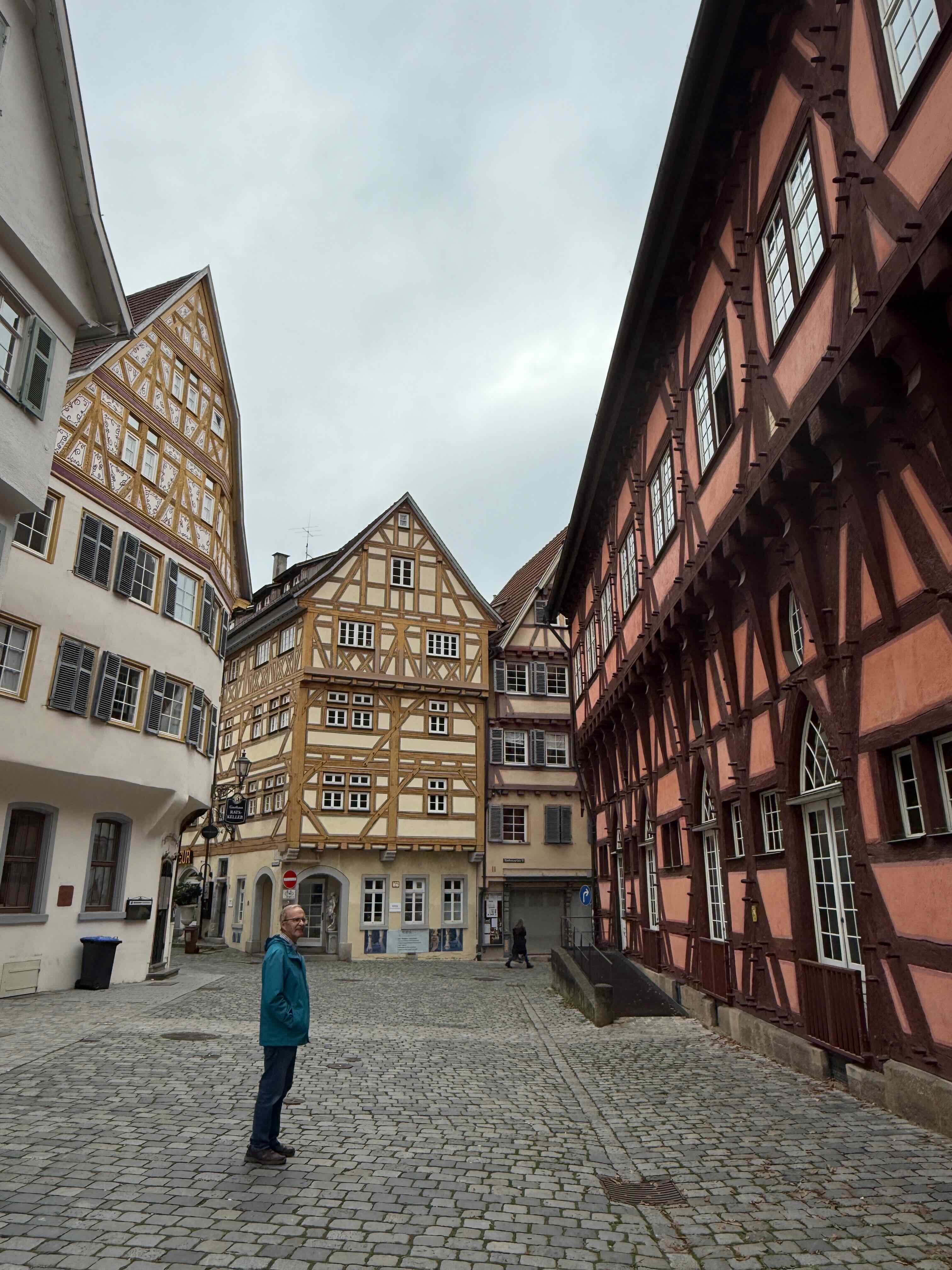
The cobbled streets are lined with ancient timbered houses…
…and there are canals here too.  We could have piloted our own electric boat for a trip on the canals but they stopped operating the end of September.
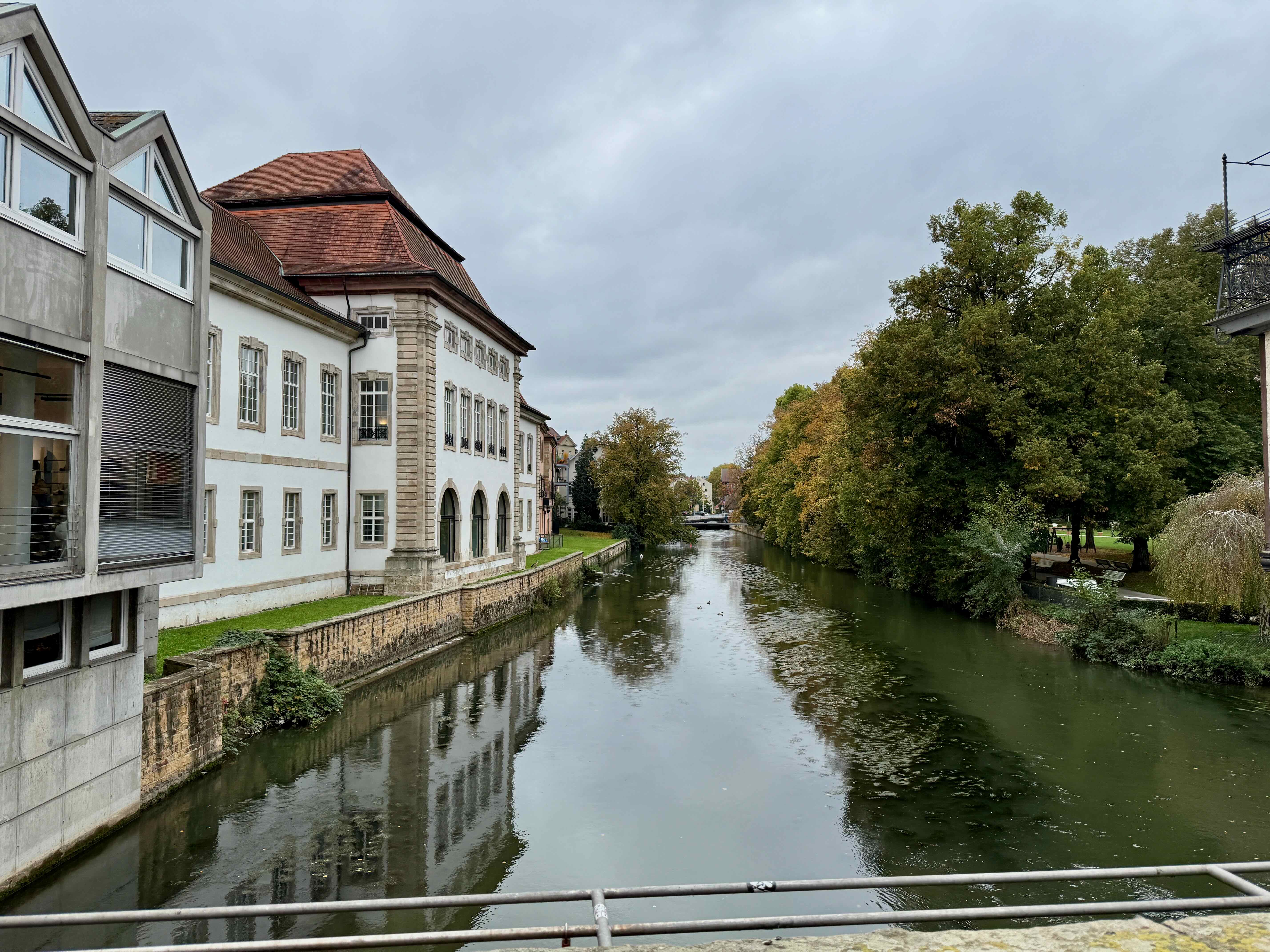
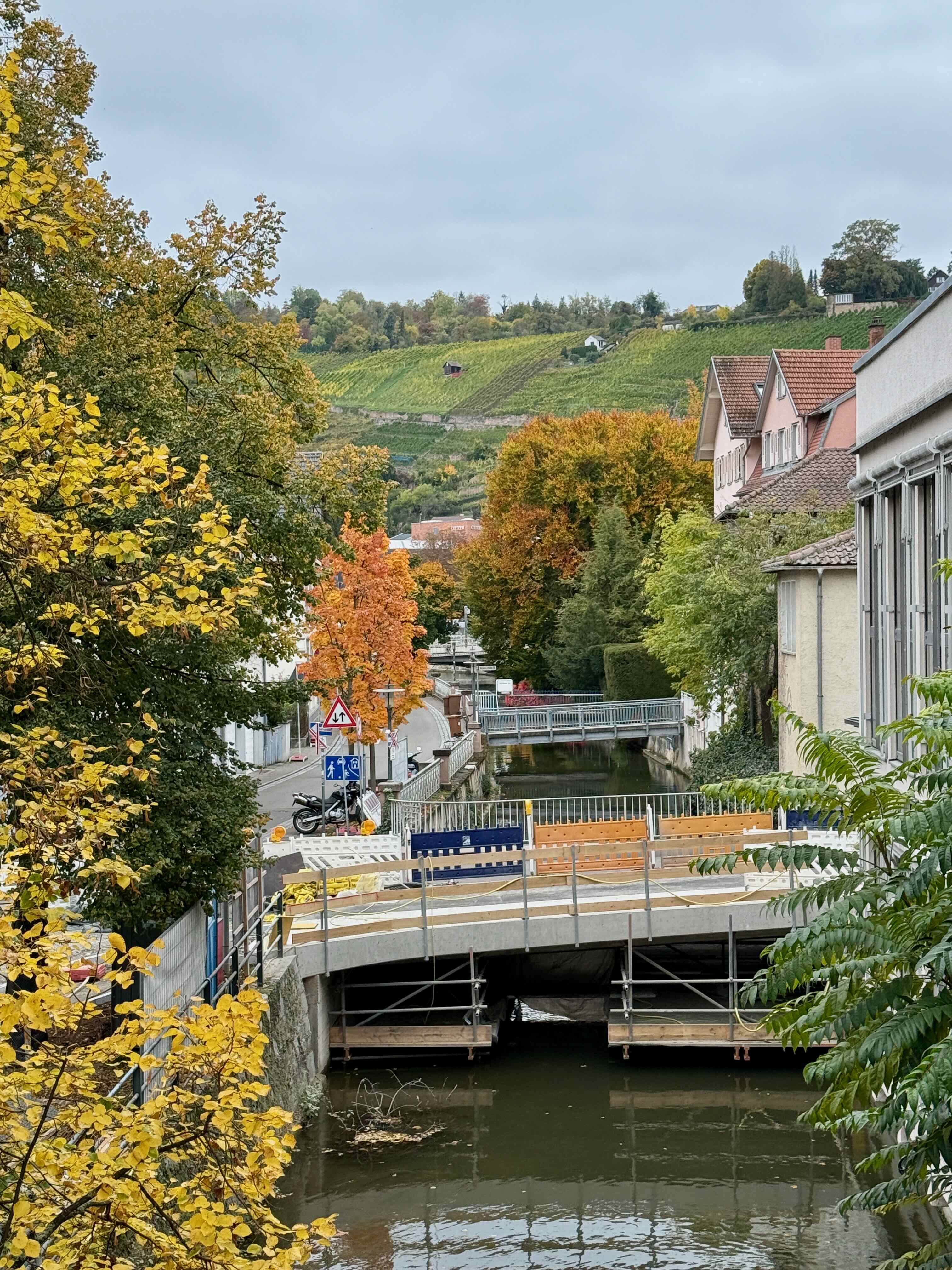
The town is surrounded by vineyards.
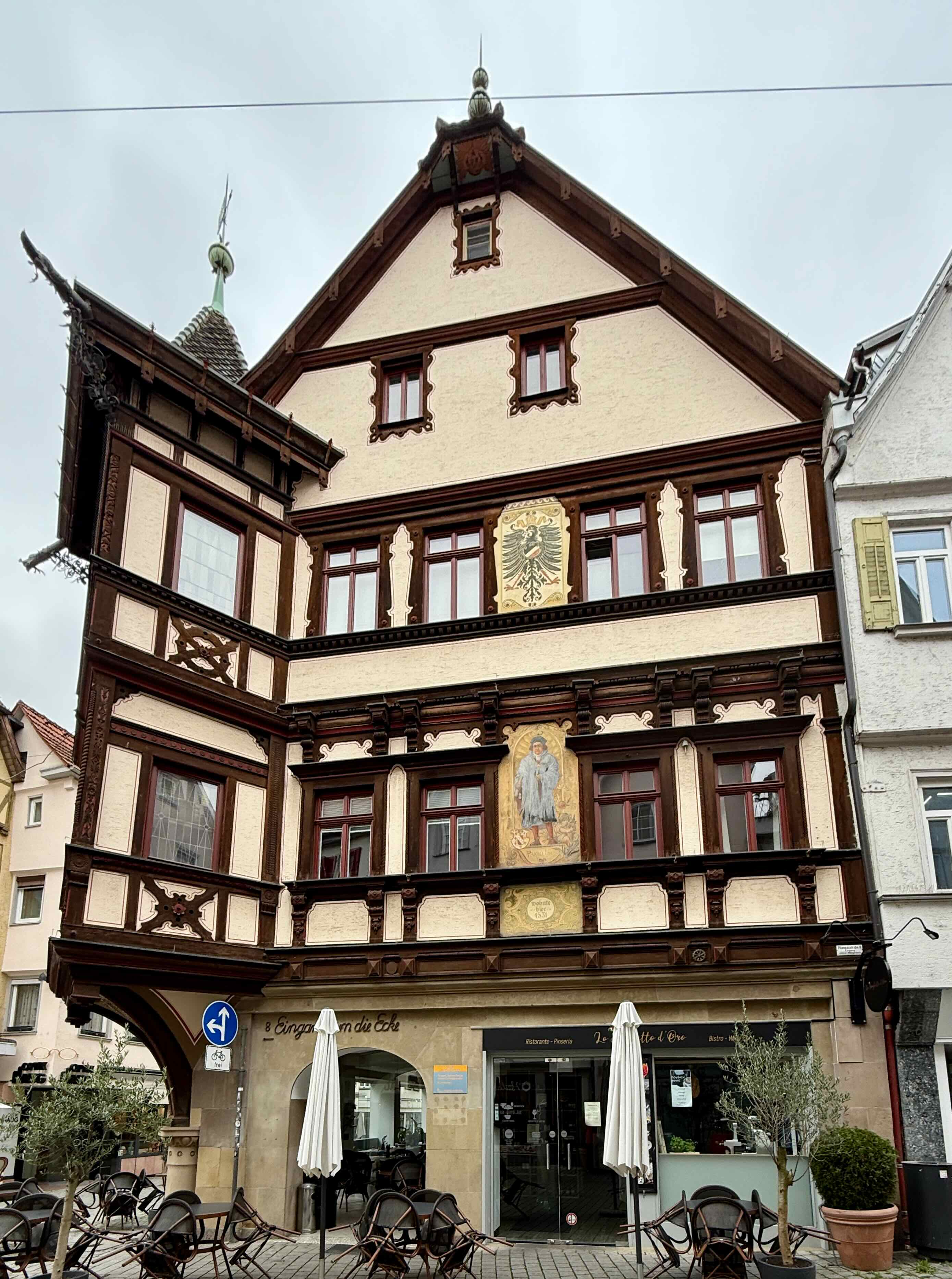
I thought this house was particularly spectacular. It is dated 1531!
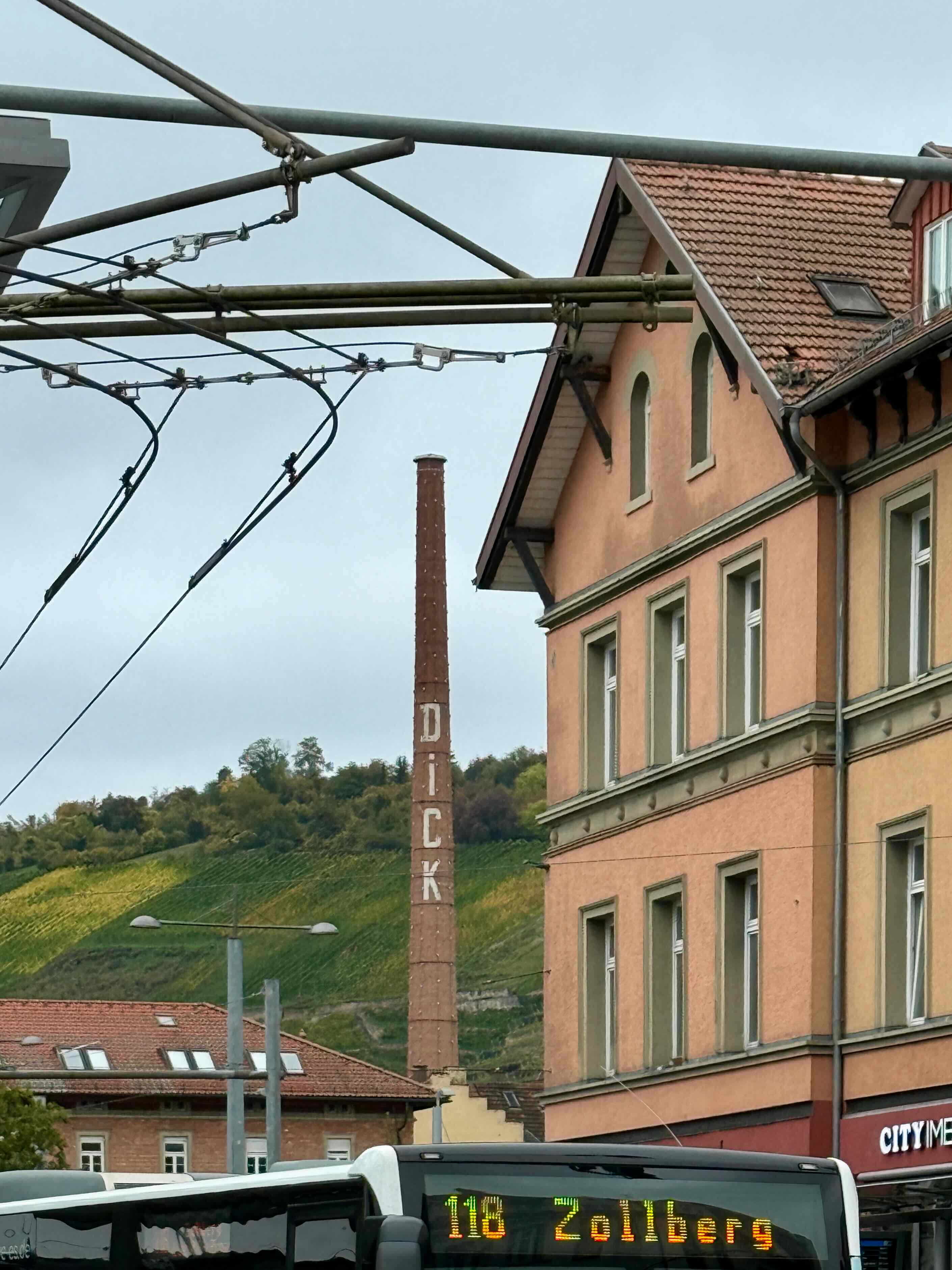
As we are leaving Esslingen I quickly snap this photo from the car window!  I just googled it and dick means thick in German, but also discovered that F. Dick is a German cutlery manufacturer that owns this smokestack…too funny!
Next stop is Baden Baden. We spent some time in Baden Baden a long time ago so we thought we should stop there for a visit. There are flowers everywhere, but bathrooms are few and far between!  We spent 45 minutes trying to find a bathroom. Using Google maps we walked several blocks to where there was a WC…but we couldn’t find it. Turns out it was in a parking garage and both of us walked right past the doors to the washroom twice without seeing them! They were on either side of the of the parking payment machine with a tiny sign on each door!

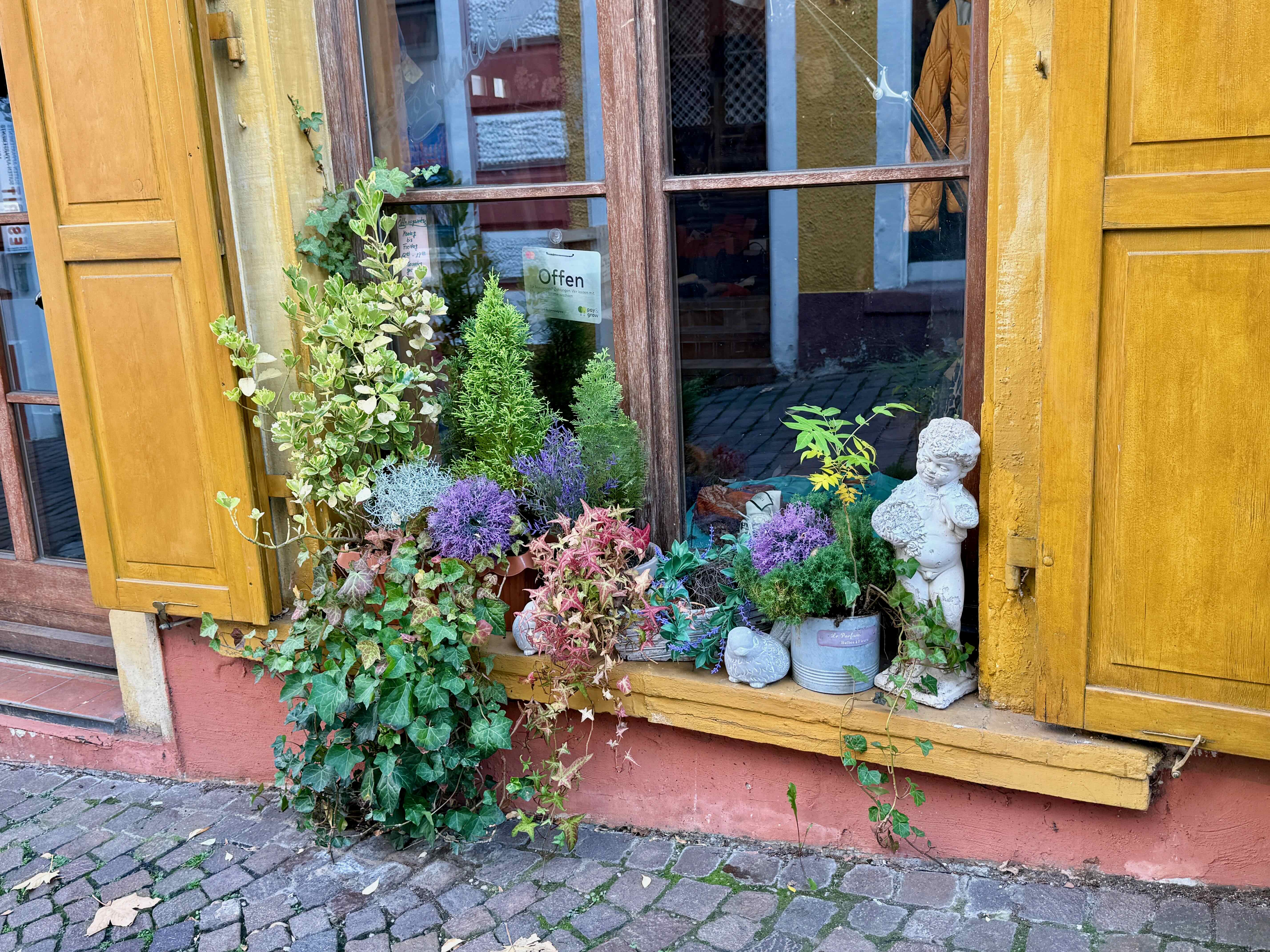
I love how people have tiny potted gardens on their window ledges or on the street beside their doors. 
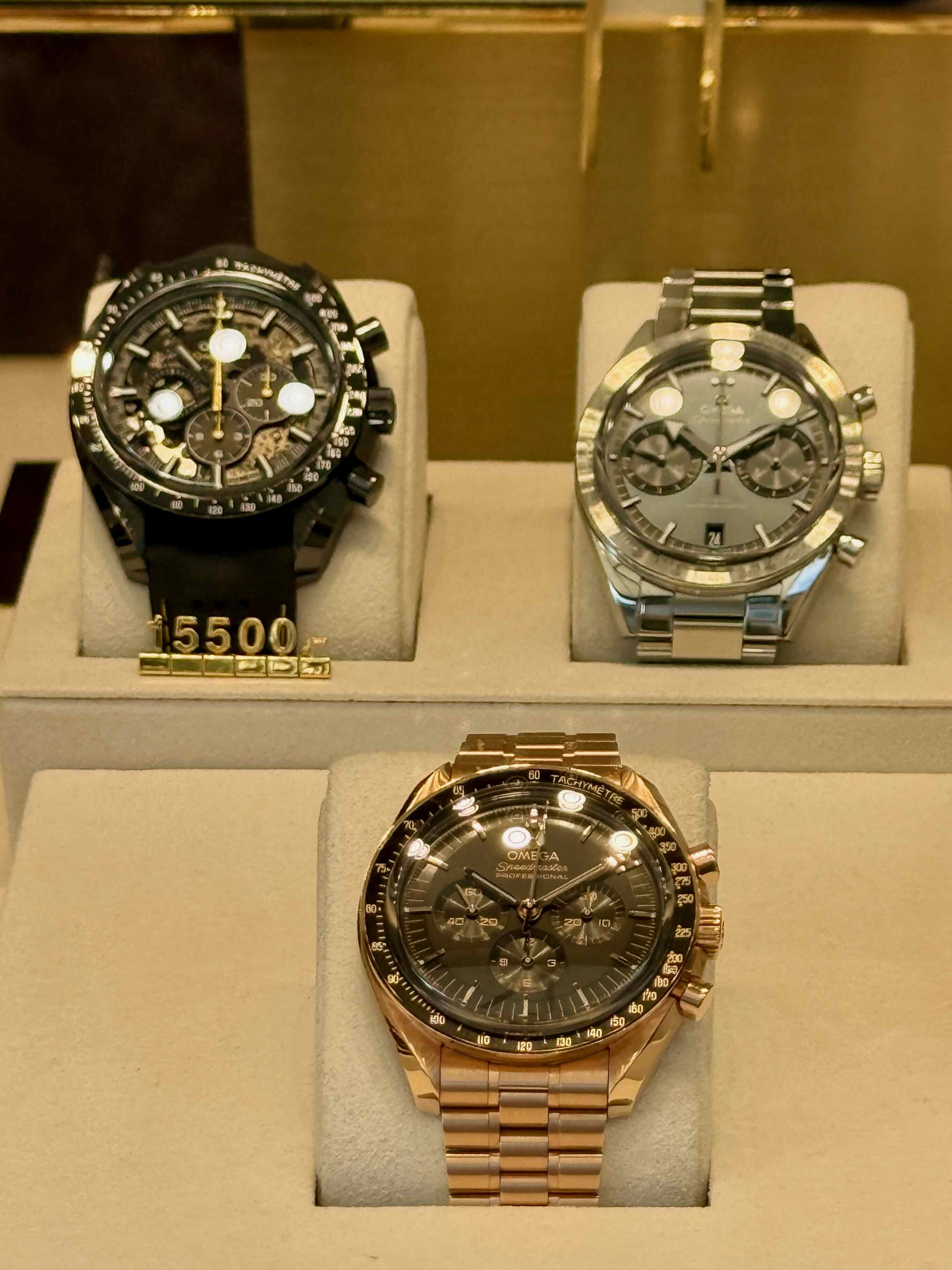
Baden Baden has a lot of very high end shops.  This watch is priced at €15,500…no prices on the others. I presume they are even more expensive.  We also see small diamond earring studs that range from €399 to €820 and there were no clothing items on display in the shop windows below €100!  A bit too pricey for us, but it is fun to window shop.
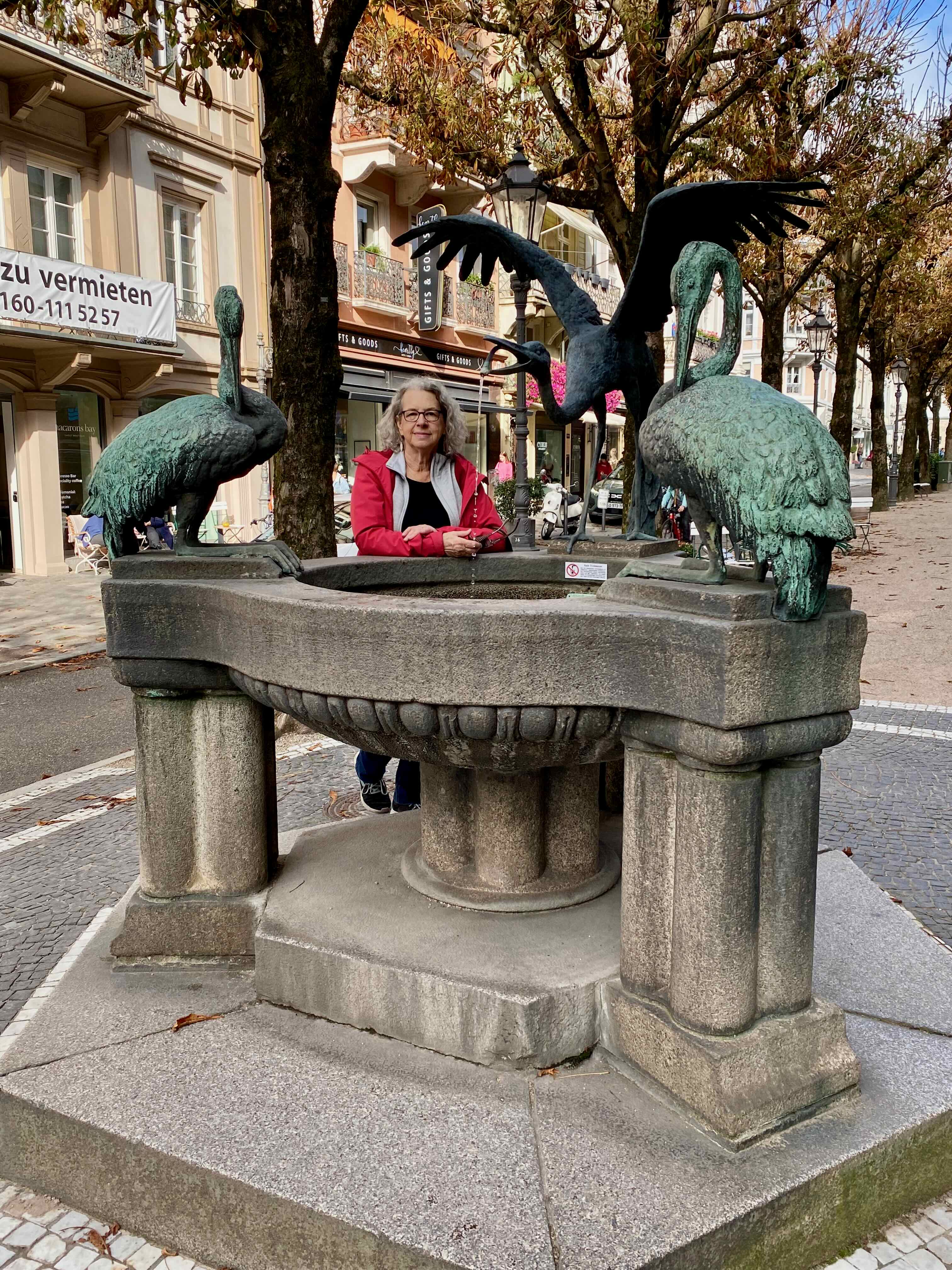
Loved this stork fountain!
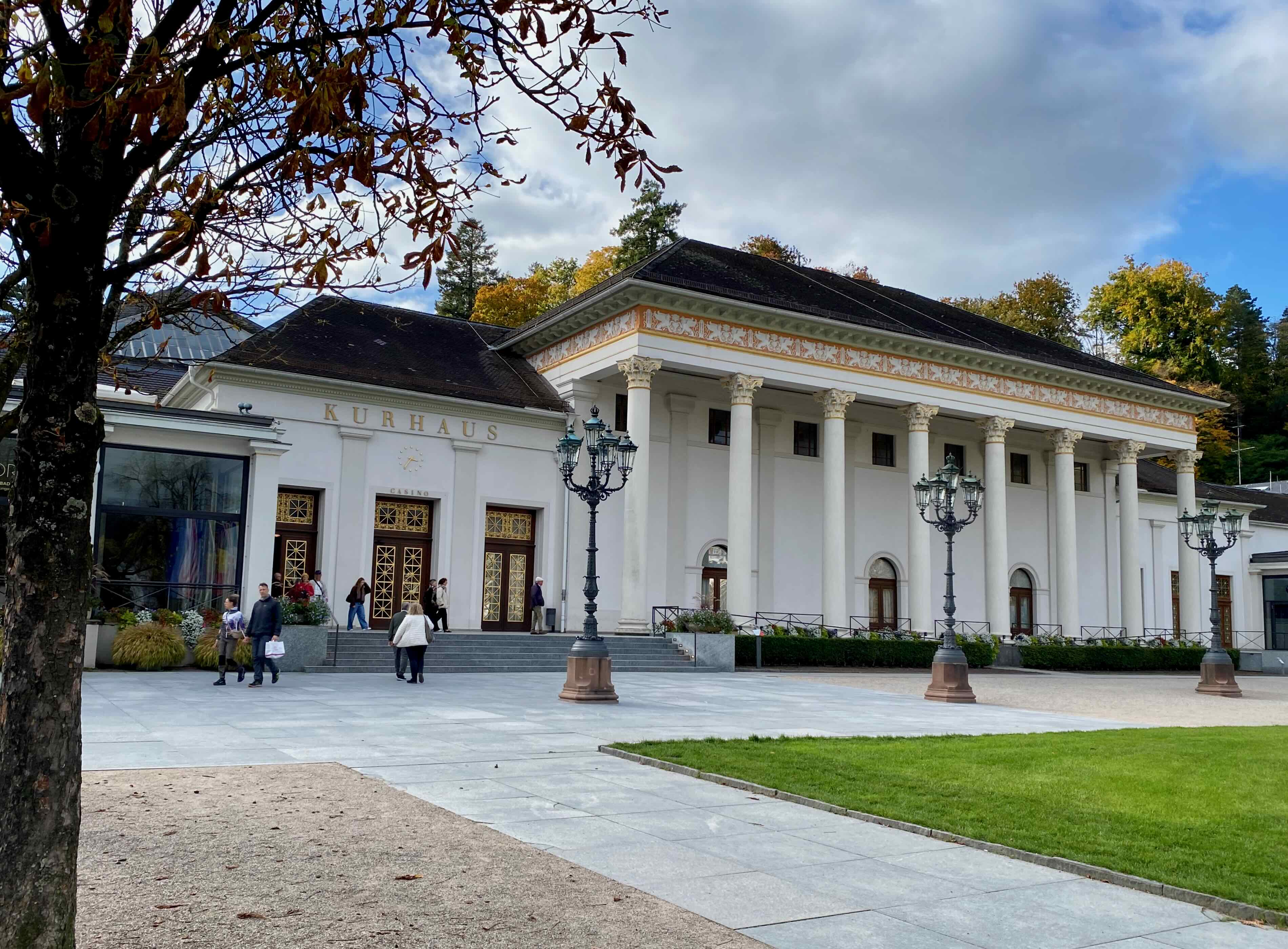
This is the Baden Baden Casino.  Bob thought we could go in and tryout luck but men must wear a suit jacket and tie.  We wouldn’t be allowed in with our jeans and casual sweaters.
The drive from Baden Baden to Mulhouse in France was interesting.  I see these strange structures on Google maps while navigating…turns out they are huge shopping malls with parking on the roofs of the buildings.
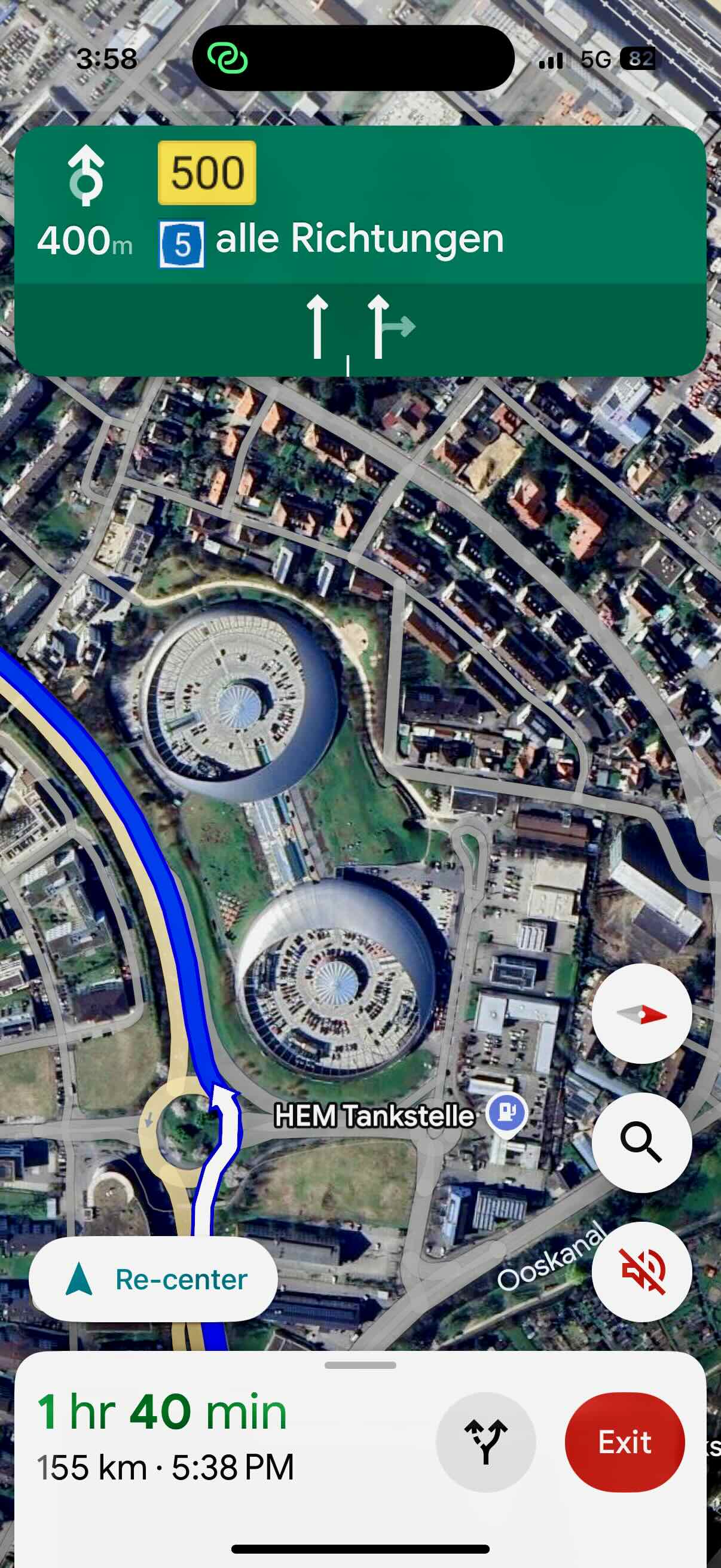
Screenshot

Just a few kilometres down the road I see this huge truck rest stop on Google maps. I count 86 trucks stopped for a break! Bob’s biggest complaint about driving in Europe is all the trucks on the roads. The right lane is one truck after another and when a truck pulls into the car lane to pass a slower moving one all the cars have to slow down until it manages to pass and get back into the truck lane.  
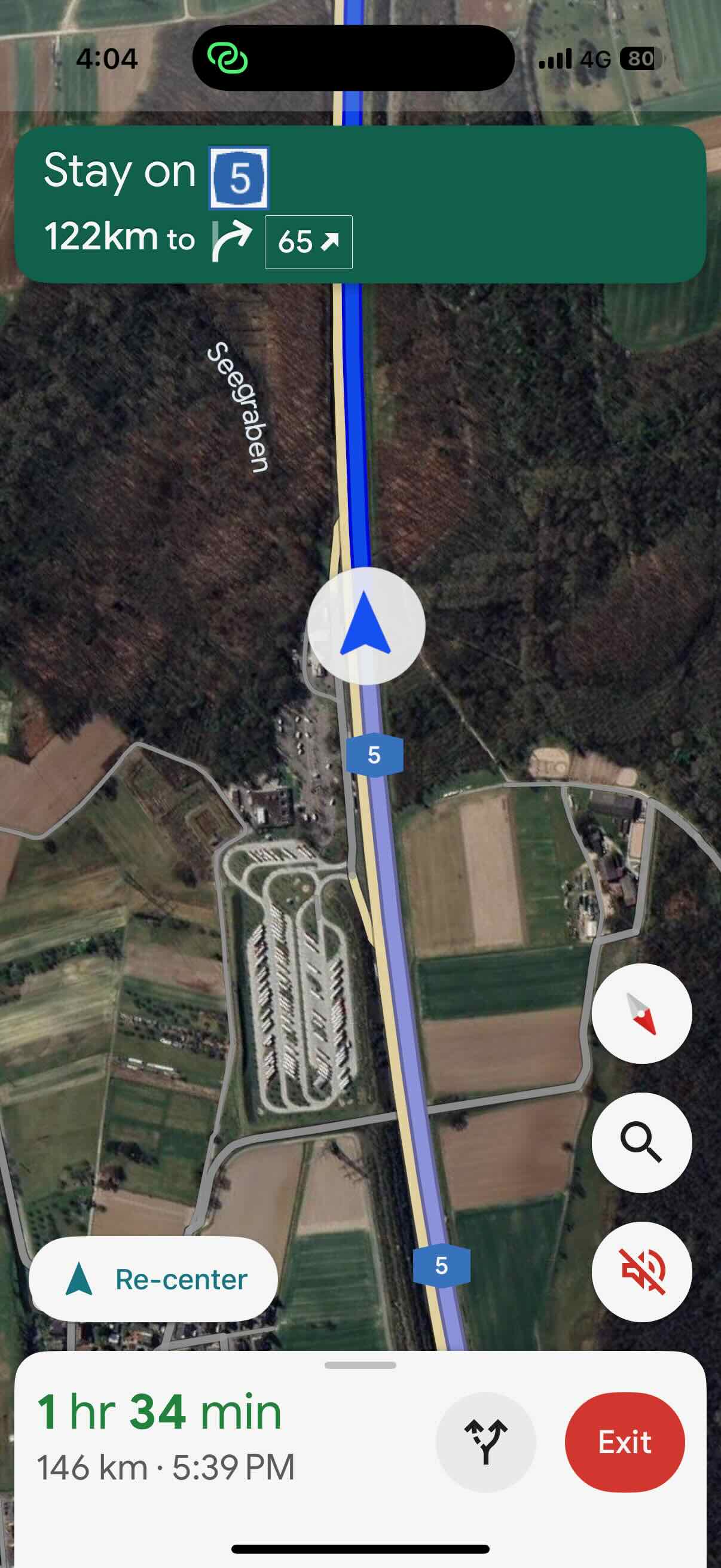
Screenshot

Remember the German highway speed limit is usually 130 km and often there is no speed limit so a truck pulling into your lane at 90 km is actually quite dangerous.  Bob does enjoy the chance to drive at 156 km/h though!
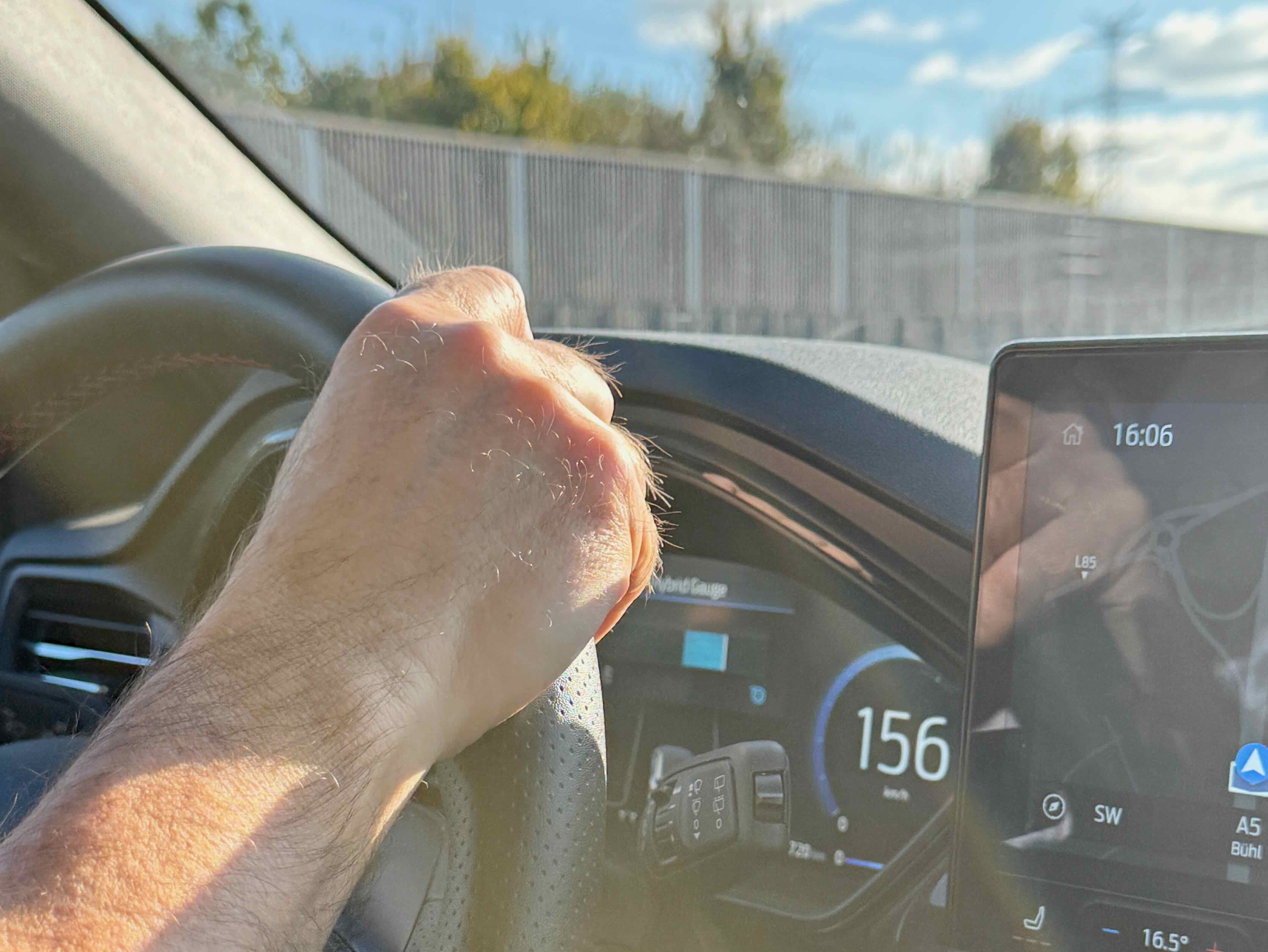
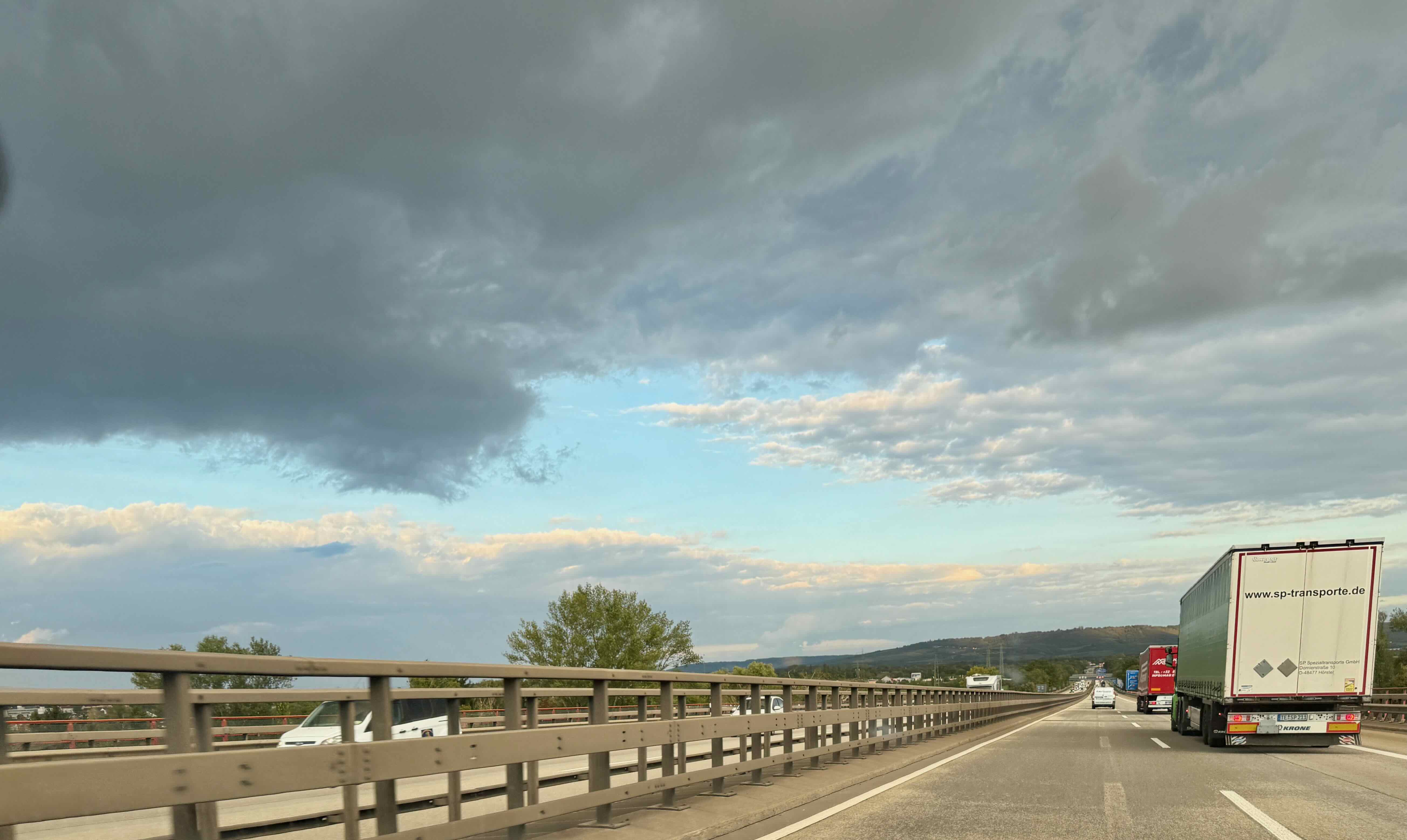
We get caught in traffic for almost half an hour, moving just a car length at a time.  We finally figure out why. This huge boat was trying to move through a rather small covered bridge so all traffic was stopped during this operation.  Notice our speed now…1.6 km/h!

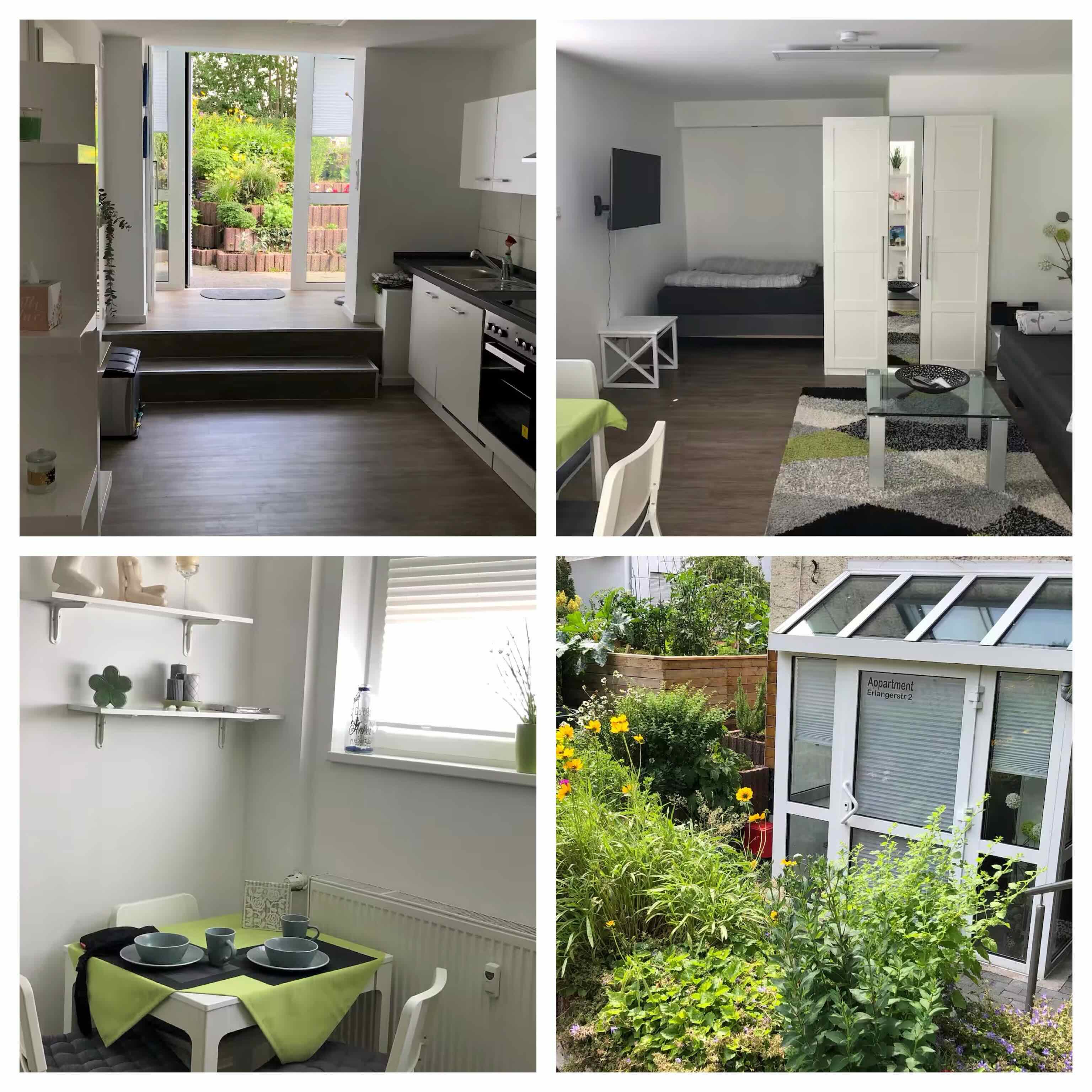
We arrived just in time to meet our Airbnb host, but our planned stop for groceries has to wait for another day.
Mainz, Germany and Gutenburg Bible

Day 35    Saturday,  October 4, 2025

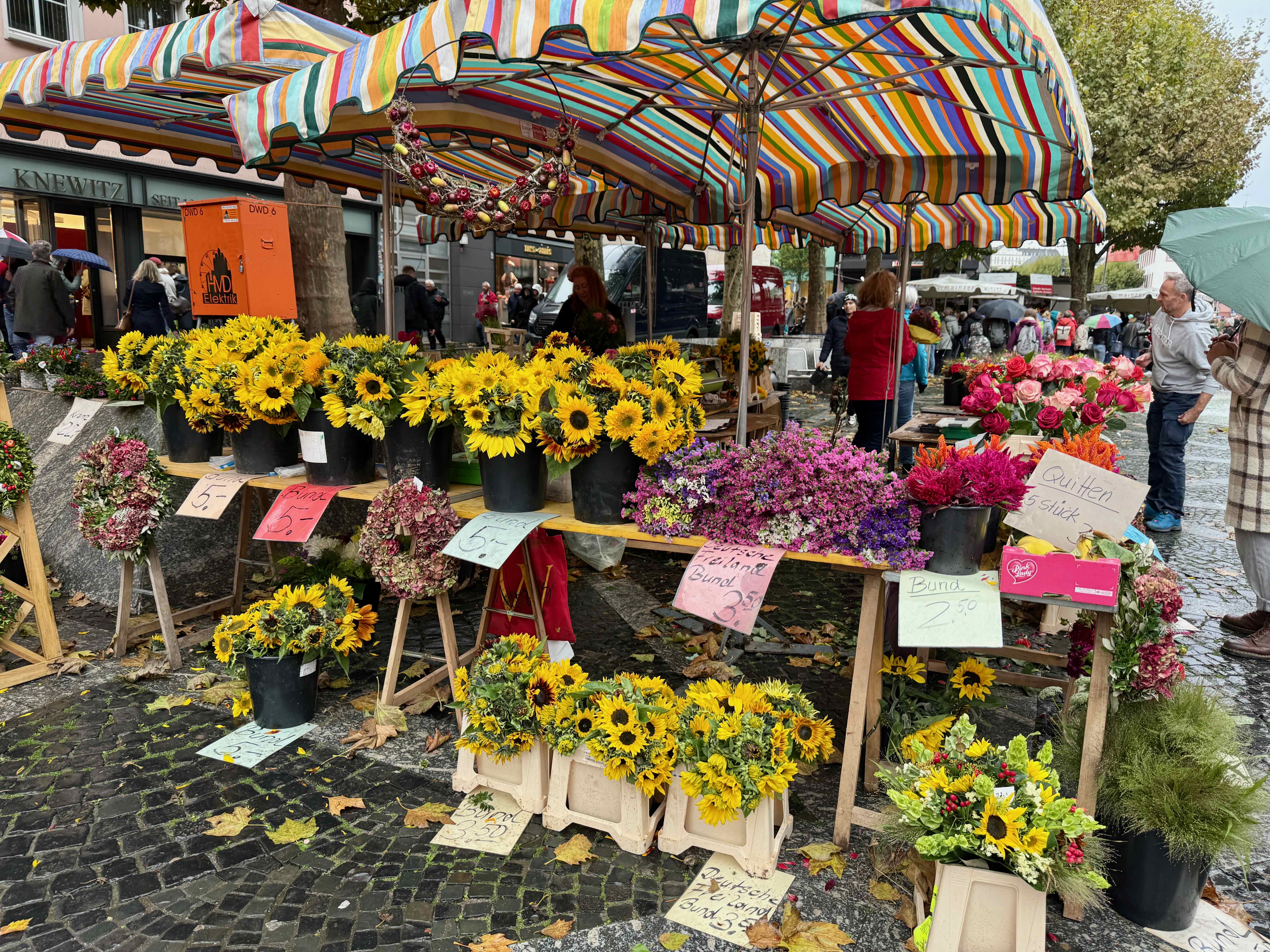
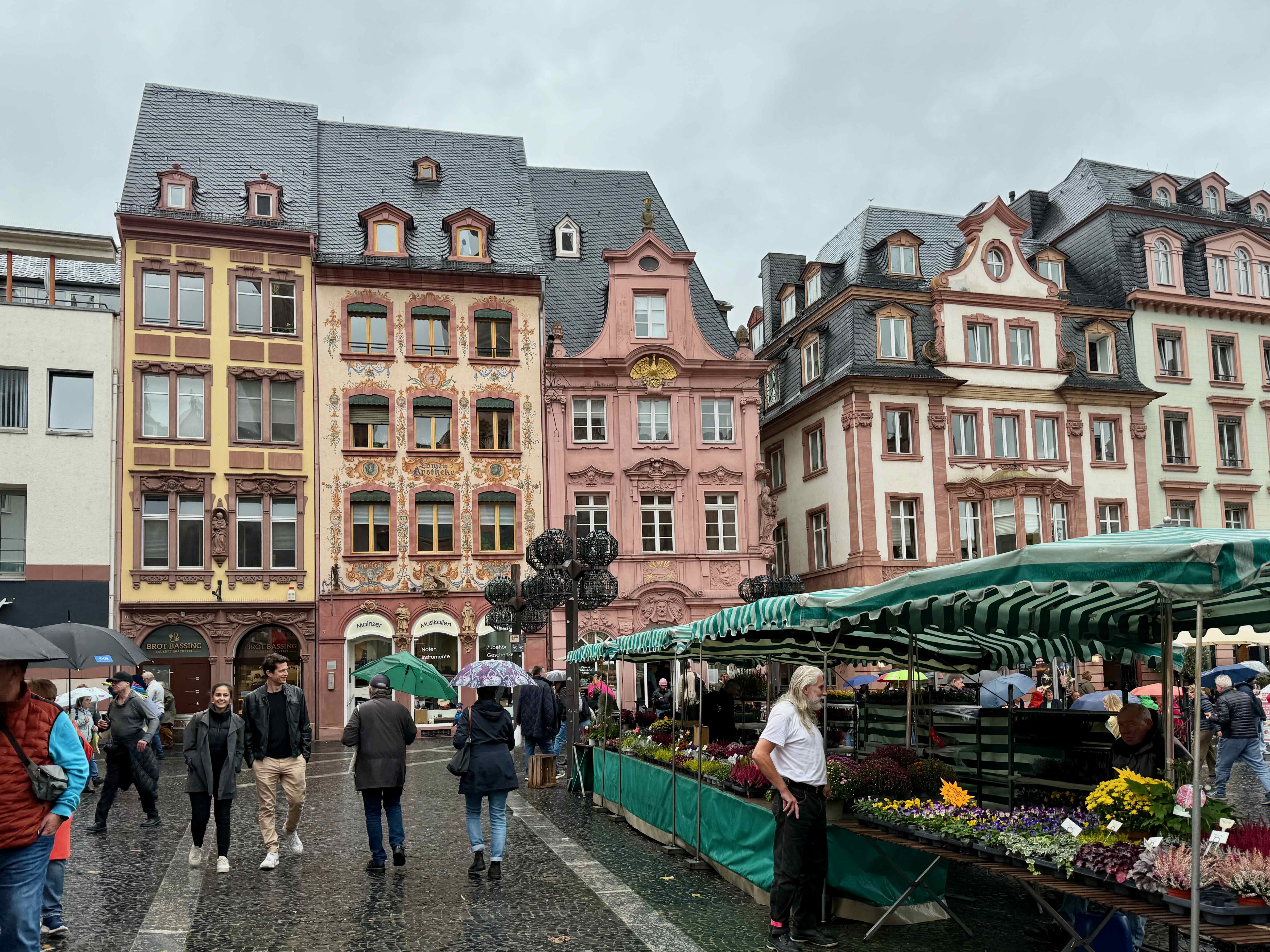
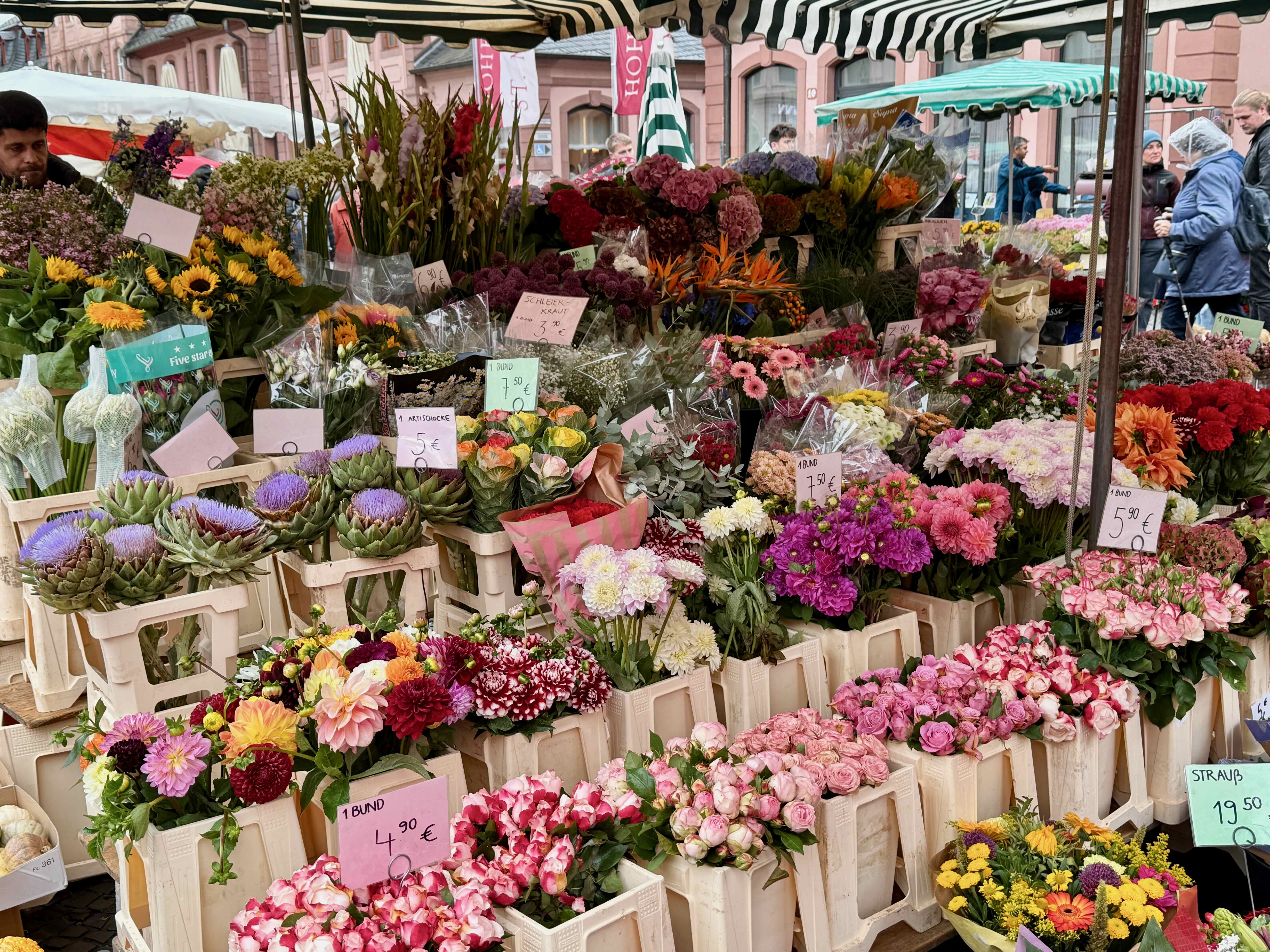
It is a 45 minute drive to Mainz, and Bob has several items on our ‘must see’ agenda. First stop is the market. The flowers at these markets are always so beautiful and very reasonably priced.

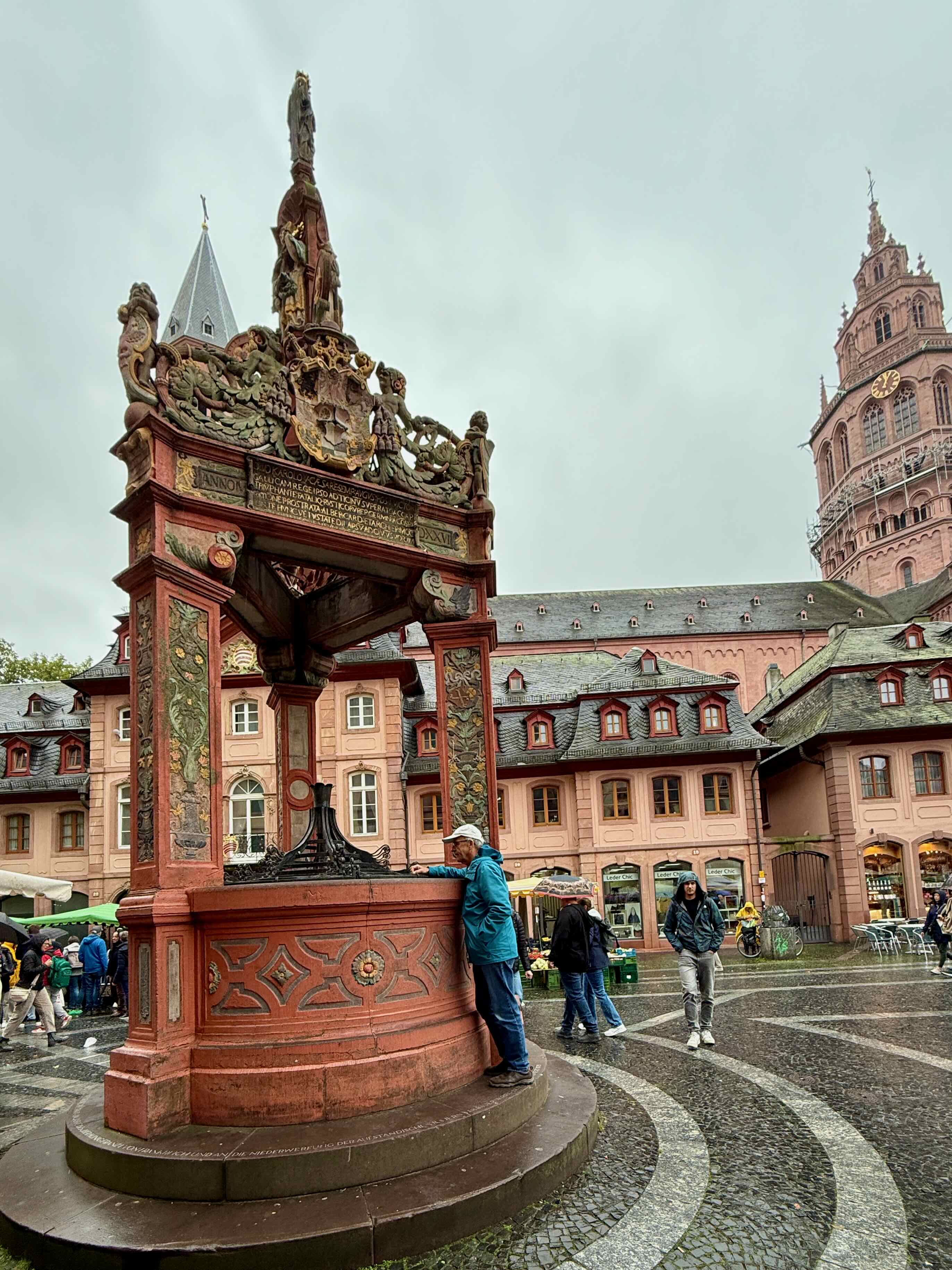
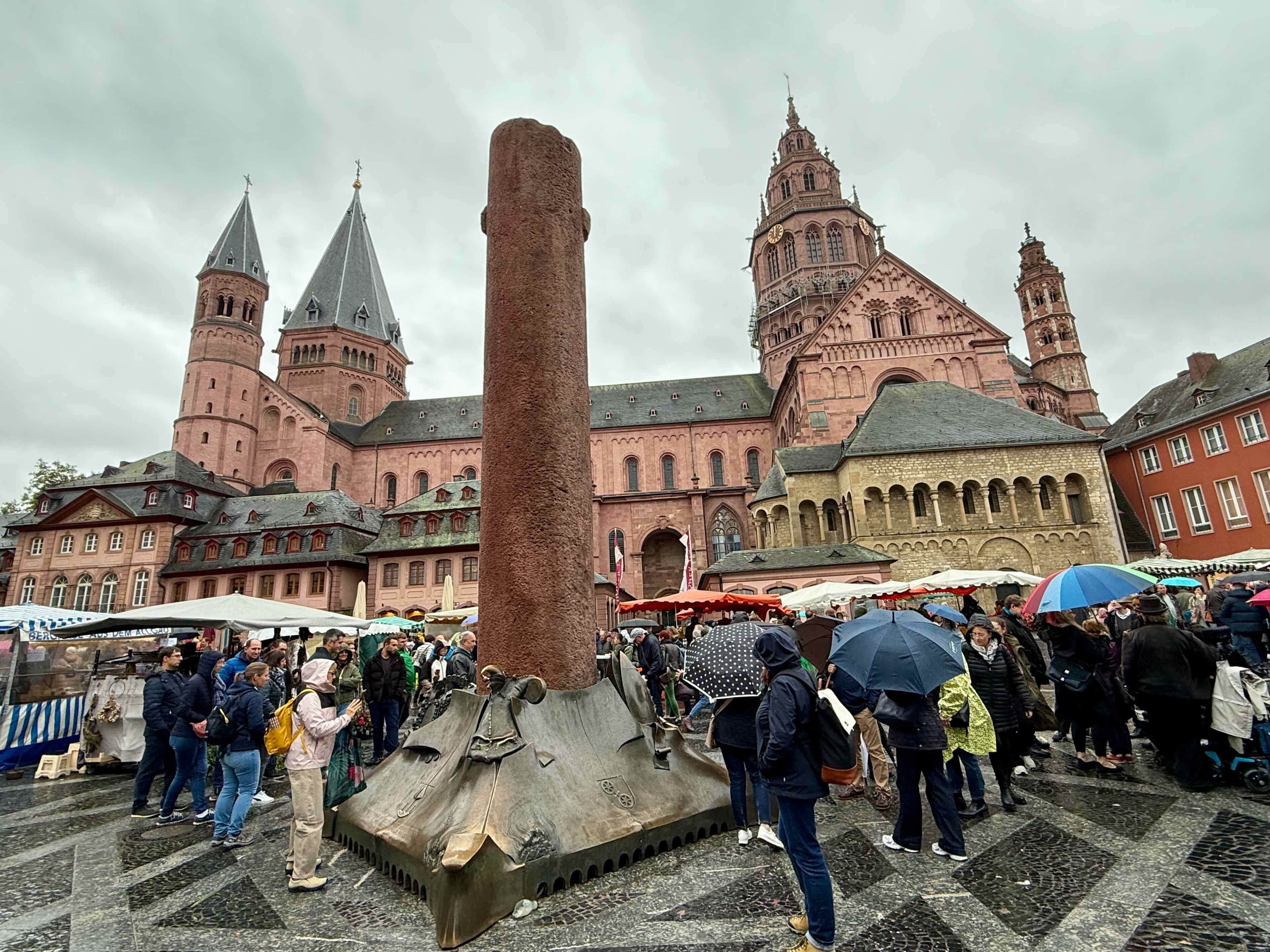
The main sculpture in the main square (market) of Mainz is the Heunensäule, or Hay Column. It is a 1,000-year-old sandstone column with a bronze casing, depicting various symbols of Mainz’s history and culture like a fool’s cap and bishop’s miter. It is in the market square in front of the Mainz Cathedral. 

I like this wishing well and we both toss in a coin and make our wishes.

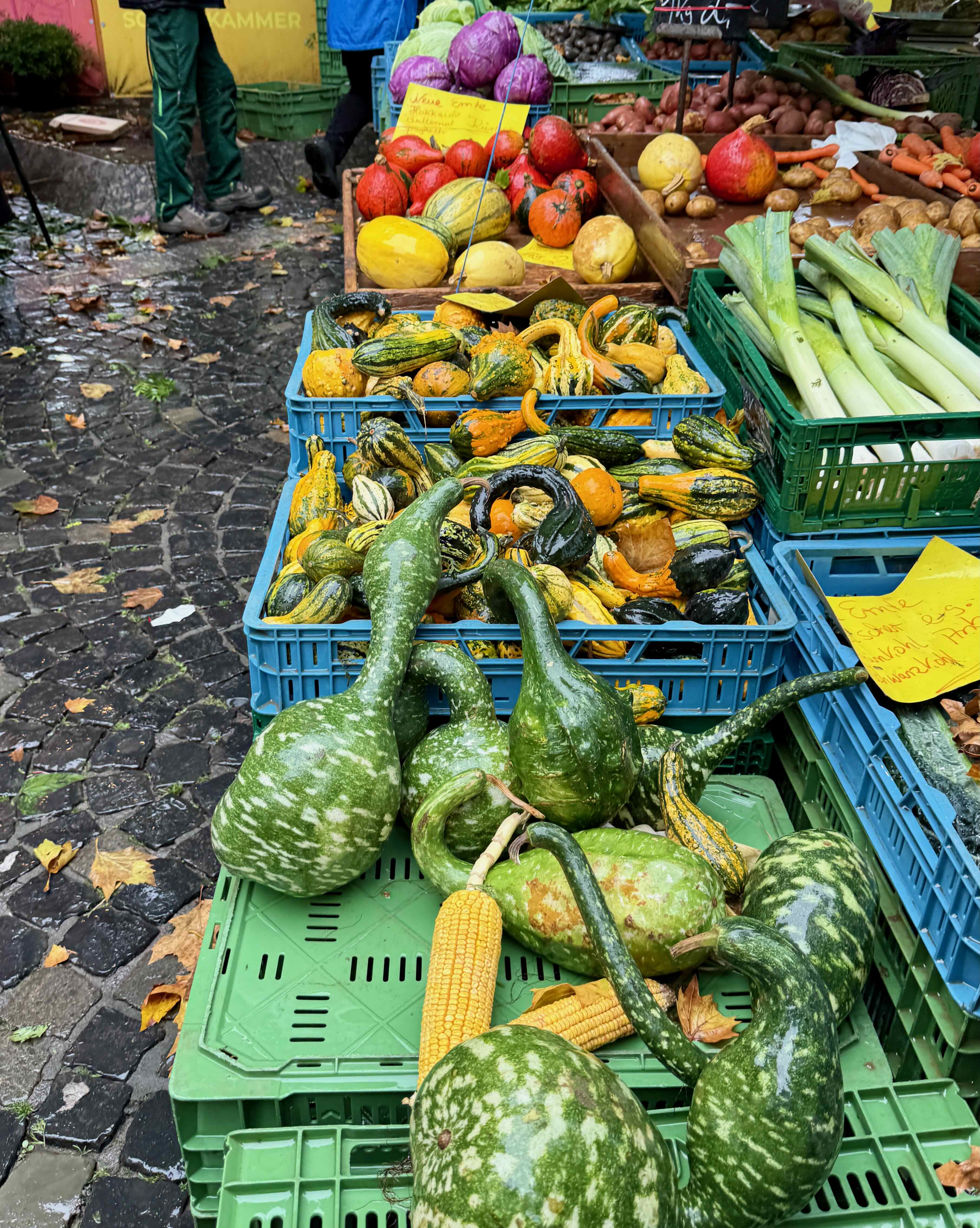
We both like the interestingly shaped squash…we might have to try growing some next year.

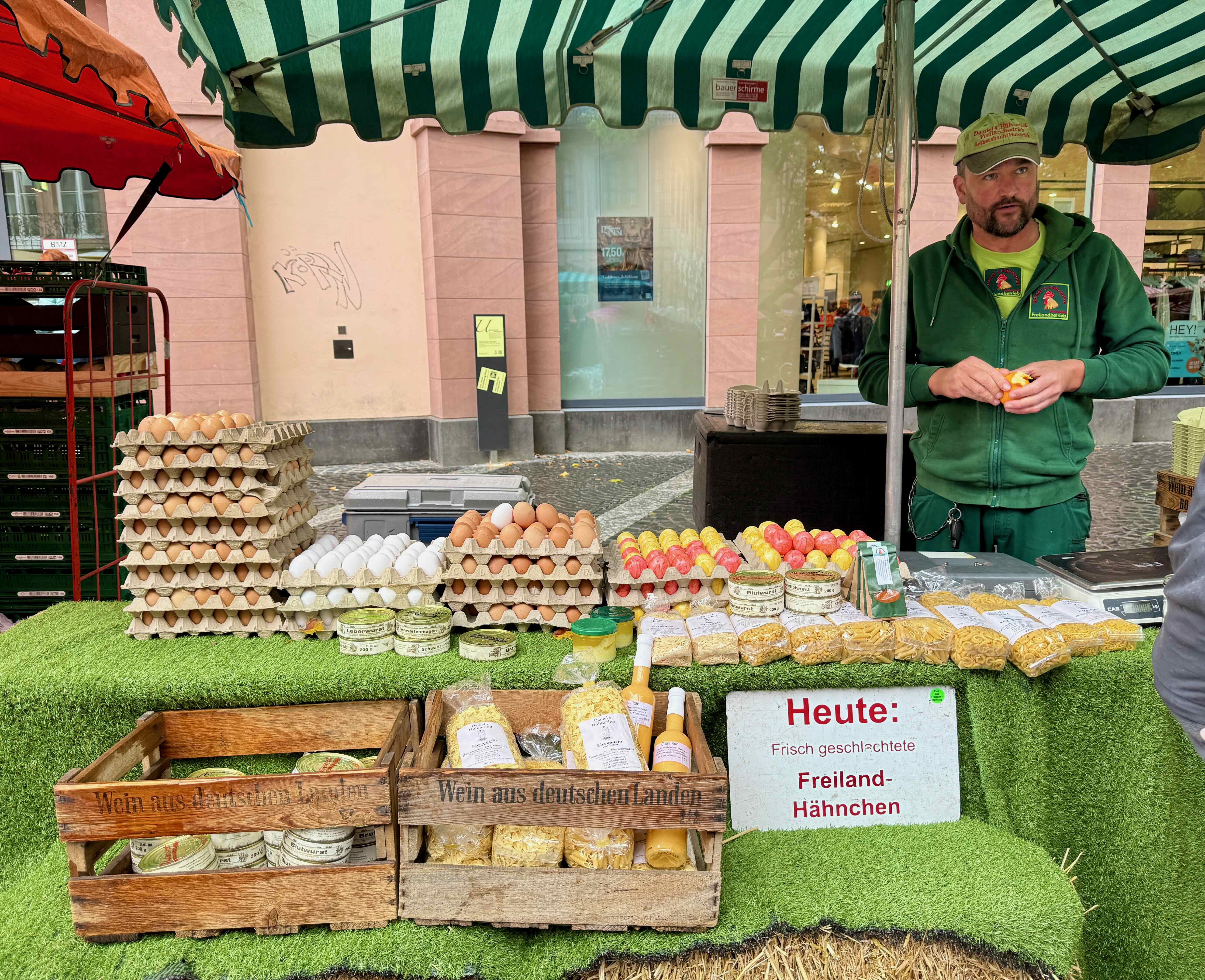
We have seen these coloured eggs in the grocery stores and wondered what they were. Turns out they are hard boiled eggs that are coated in a tinted resin that keeps them fresh for months! The colour helps to identify them as being hard boiled.

Gorgeous sunflowers!  I am definitely planting some of them in our garden next year.  They are so cheerful. Next stop in the Mainz Cathedral.  We are met at the door and told that there is a concert starting and if we enter the church we have to stay for the 45 minute concert.  Sounds perfect as it is raining and cool outside!
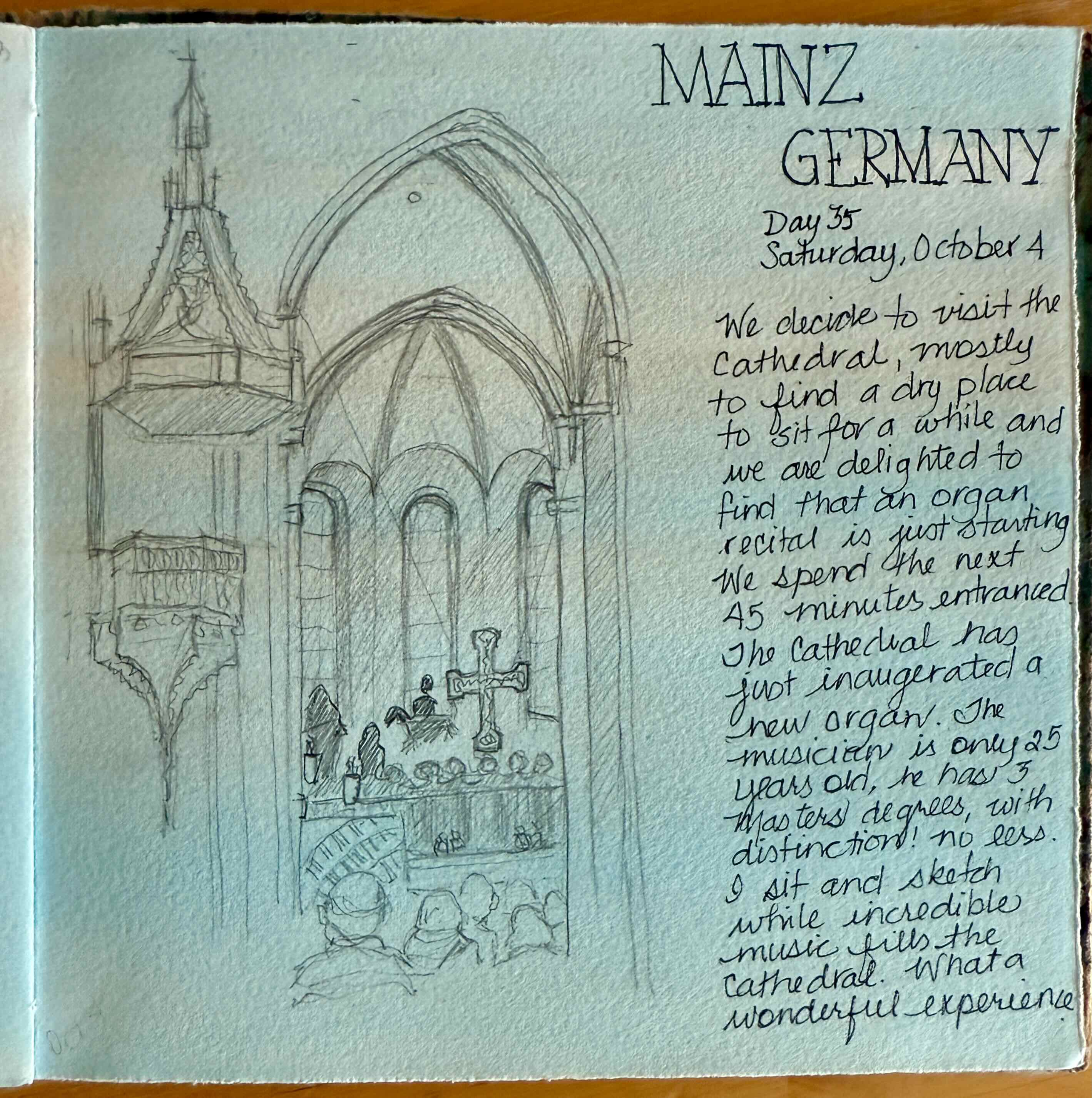
We spend the next 45 minutes listening to an amazing organ concert to commemorate the new cathedral organ.  The musician, Alexander Grün, is only 25 years old and has three Masters Degrees!  He plays some traditional organ music and then music that is innovative. The 45 minutes absolutely flew by.  I sketched for a bit while listening to the music.  Loved it. I wish I had recorded more of the music, especially the finale of the concert…it gave me goosebumps!      https://youtube.com/shorts/HykSsp-S-9E

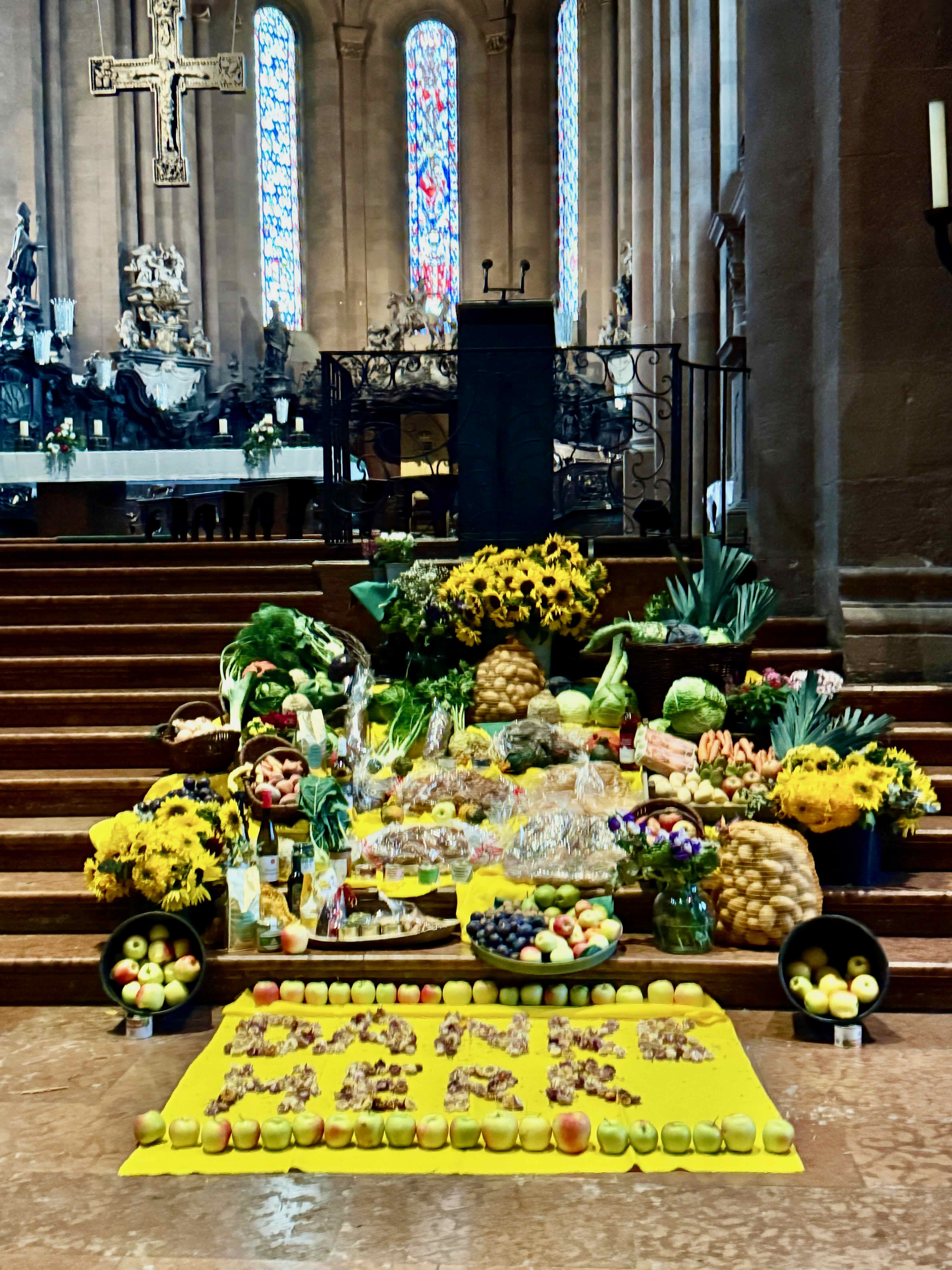
There are fall foods displayed on the steps to the altar to remind people to give thanks for the harvest, and to share with those in need.  

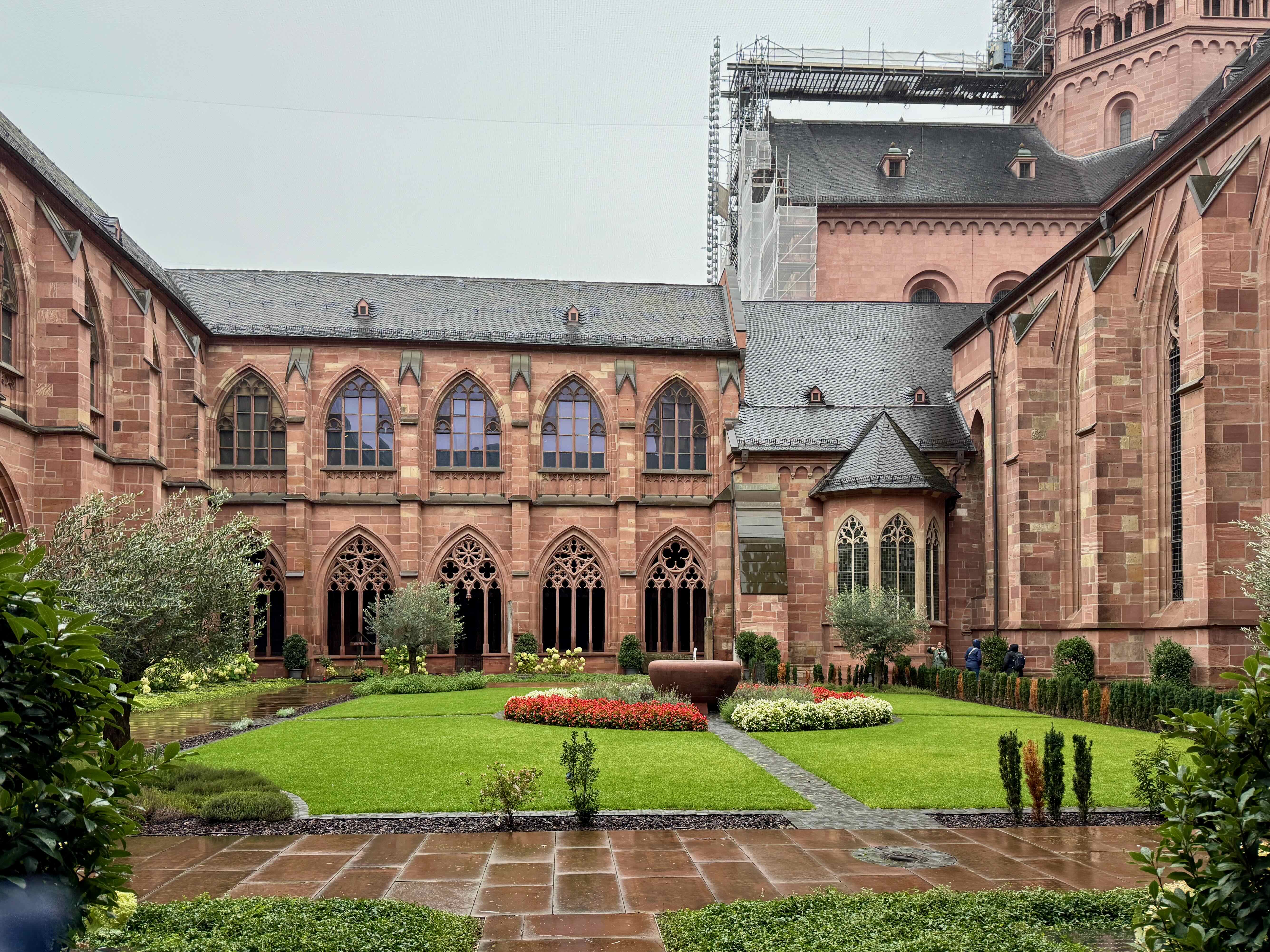
The Cathedral cloister has a beautifully tended garden,

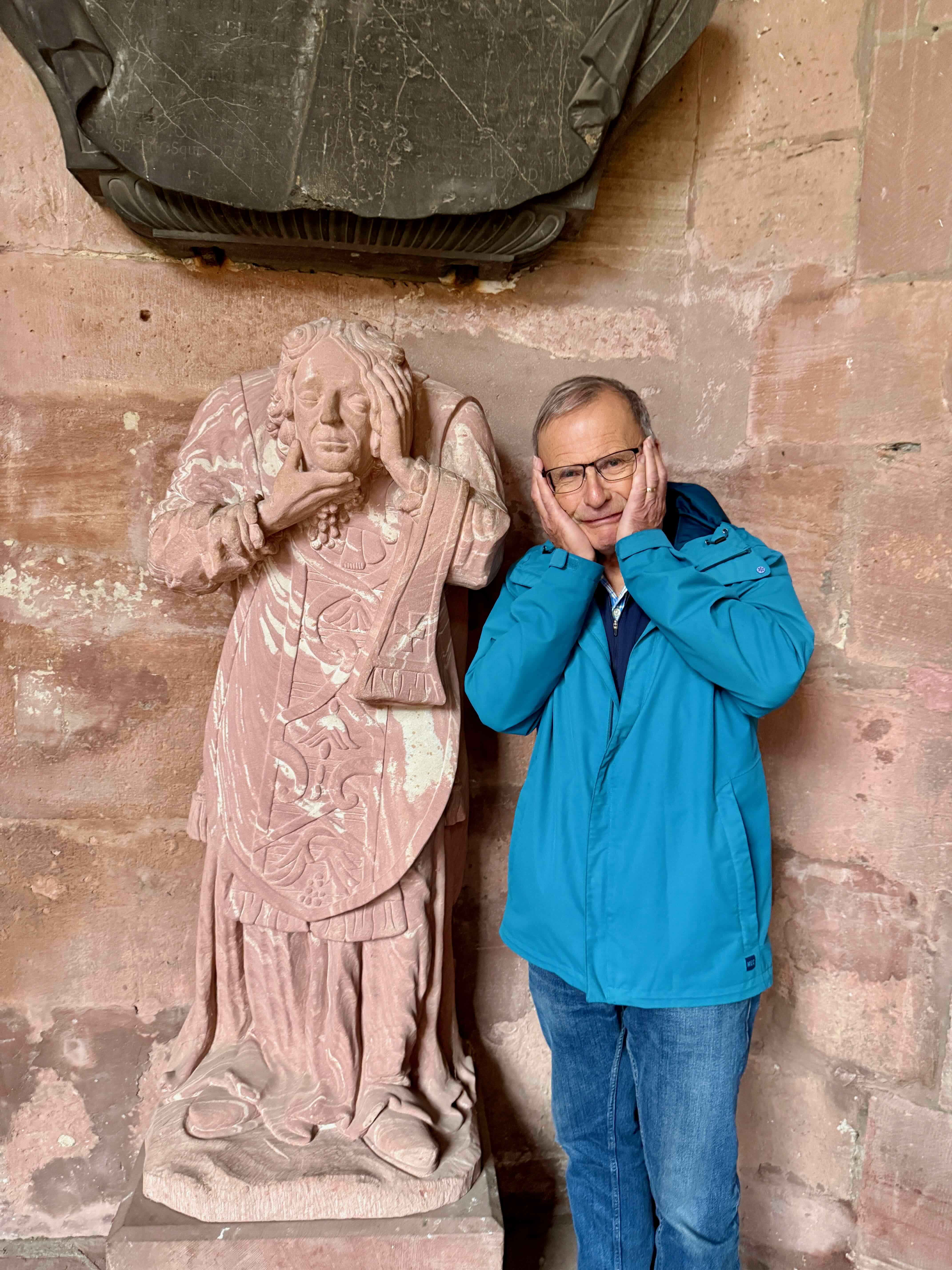
Bob liked this statue statue of a man holding his head. This is probably Saint Denis, who was beheaded but picked up his head and walked some distance, preaching the Gospel.

The buildings surrounding the market square are tall, narrow and decoratively painted.
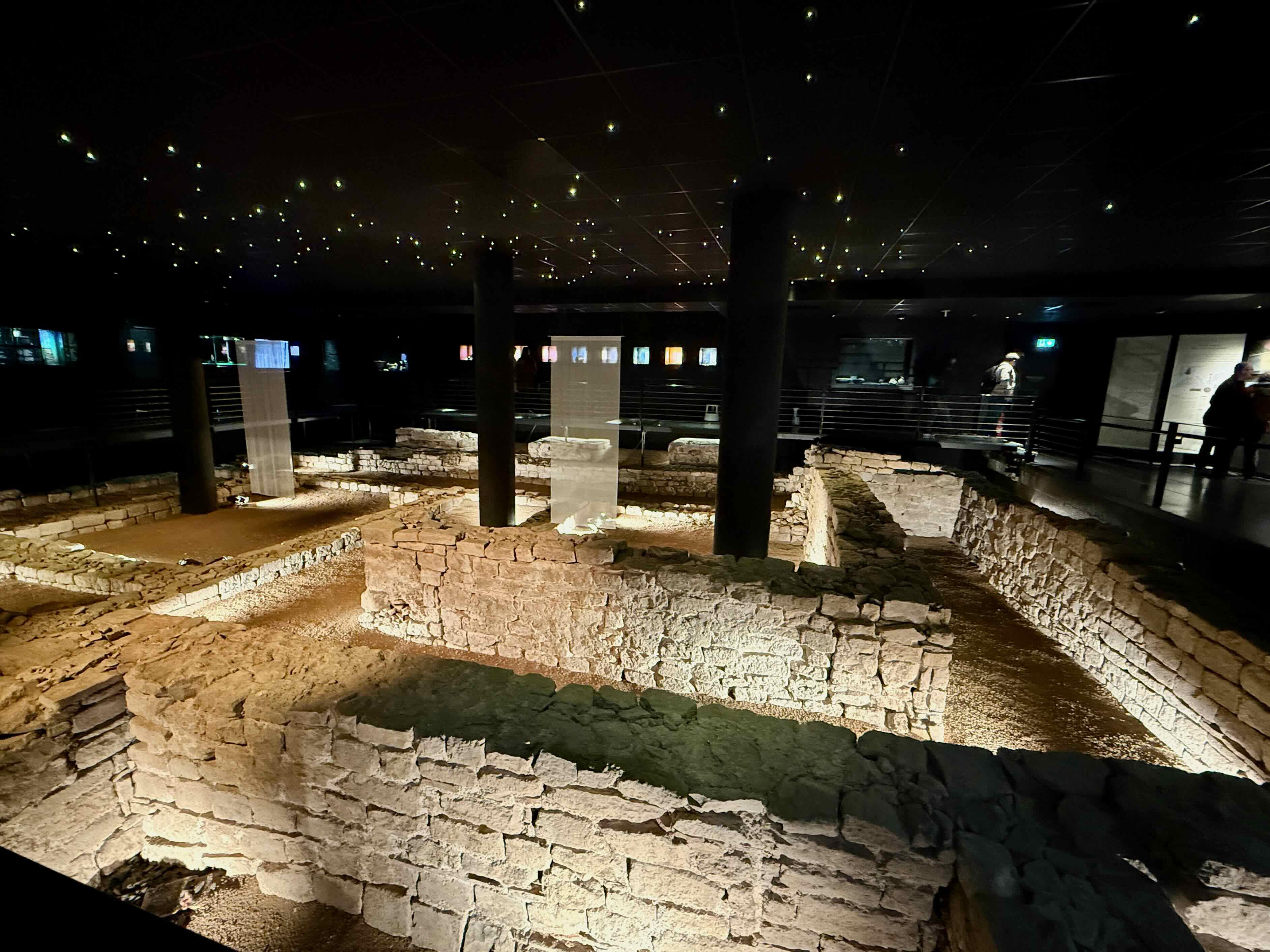
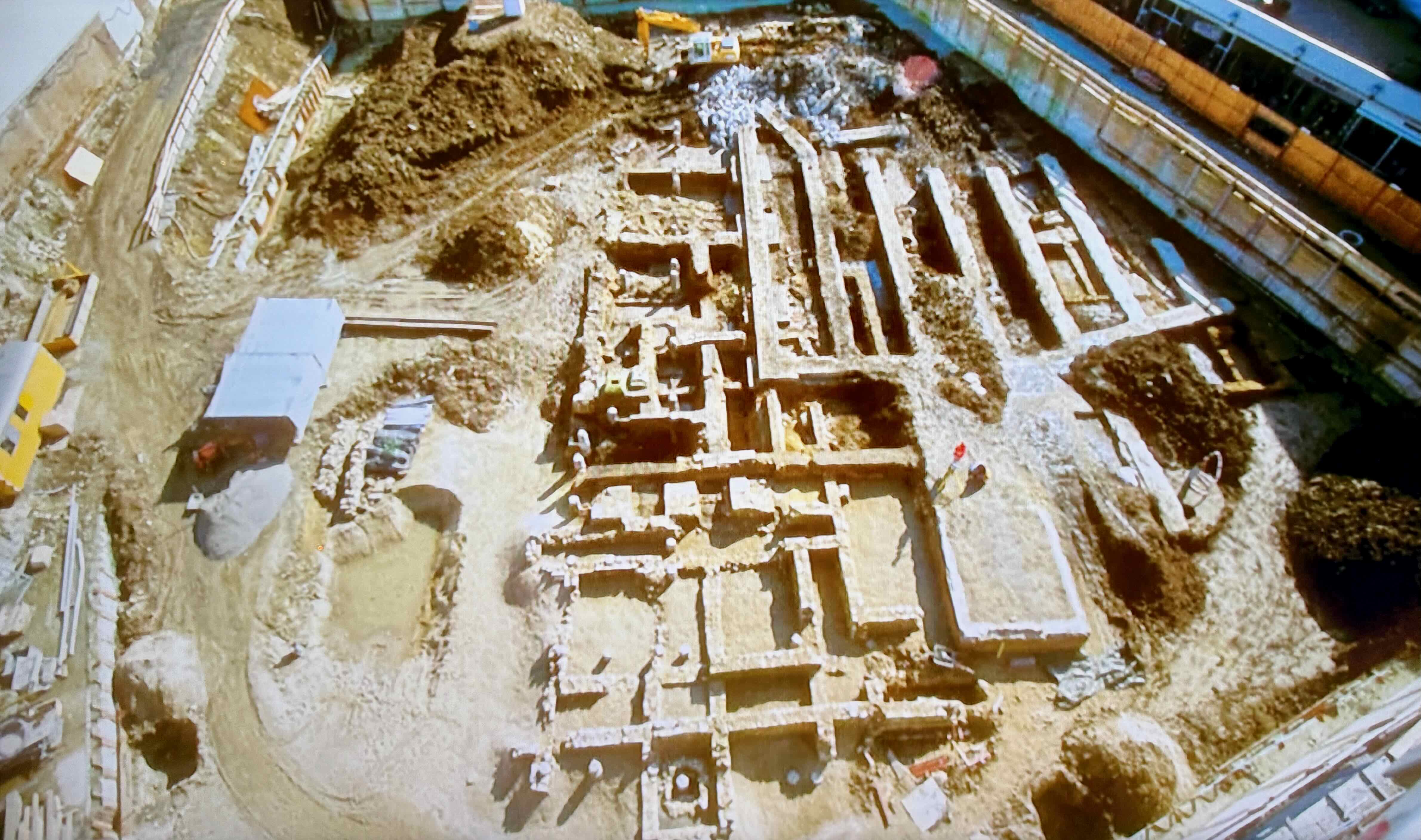
Next on Bob’s agenda is a visit to a small museum underneath a shopping mall. We see Roman ruins from before the fall of the Roman Empire in the 5th century. These ruins were discovered when excavations began for the shopping mall. The area was thoroughly excavated and recorded, but ultimately the mall was built and most of the ruins were destroyed.
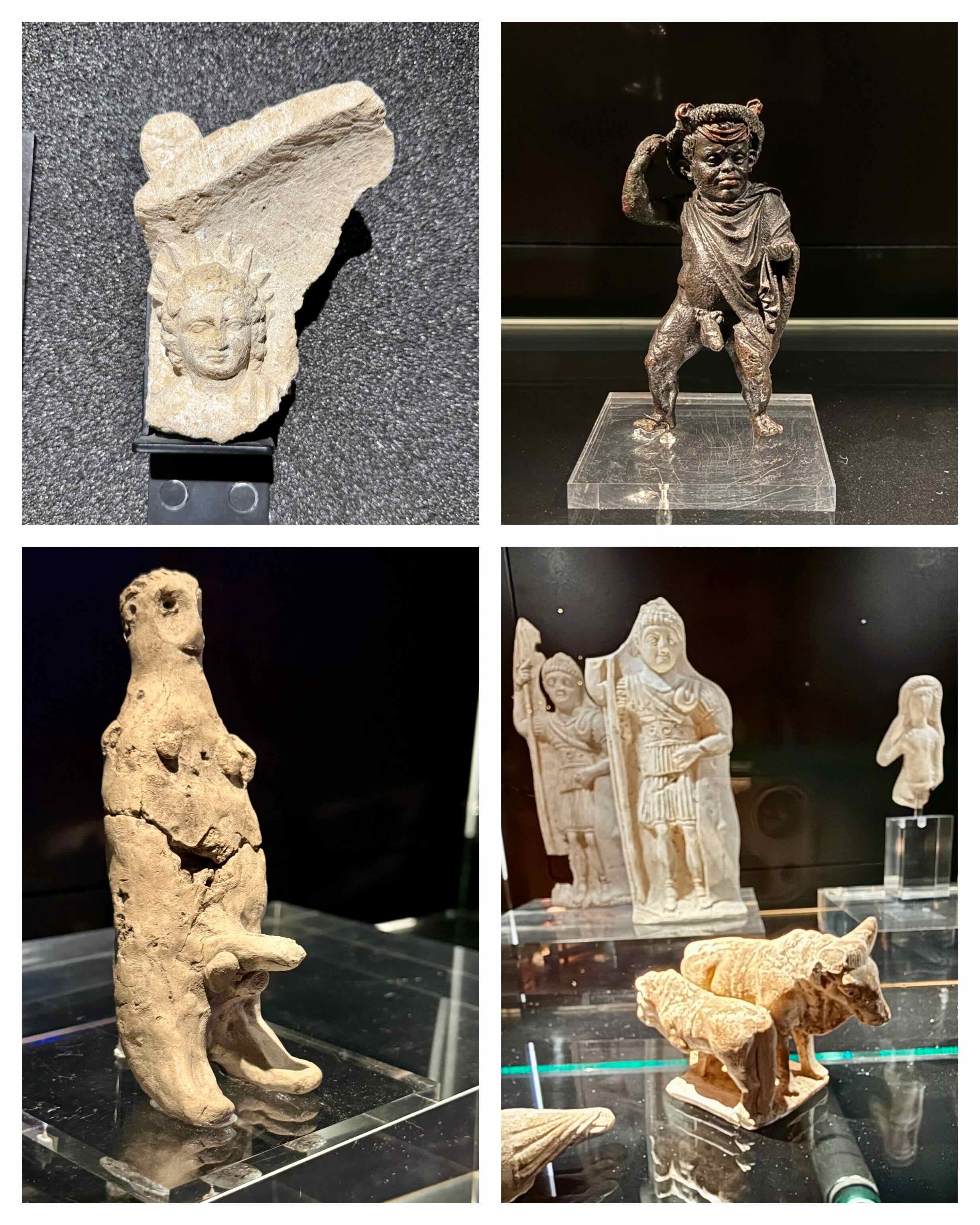
This little museum has the reconstructed ruins of a temple, under a ceiling of constellations. Some of the items found when the ruins were excavated.  Well endowed males were well represented.
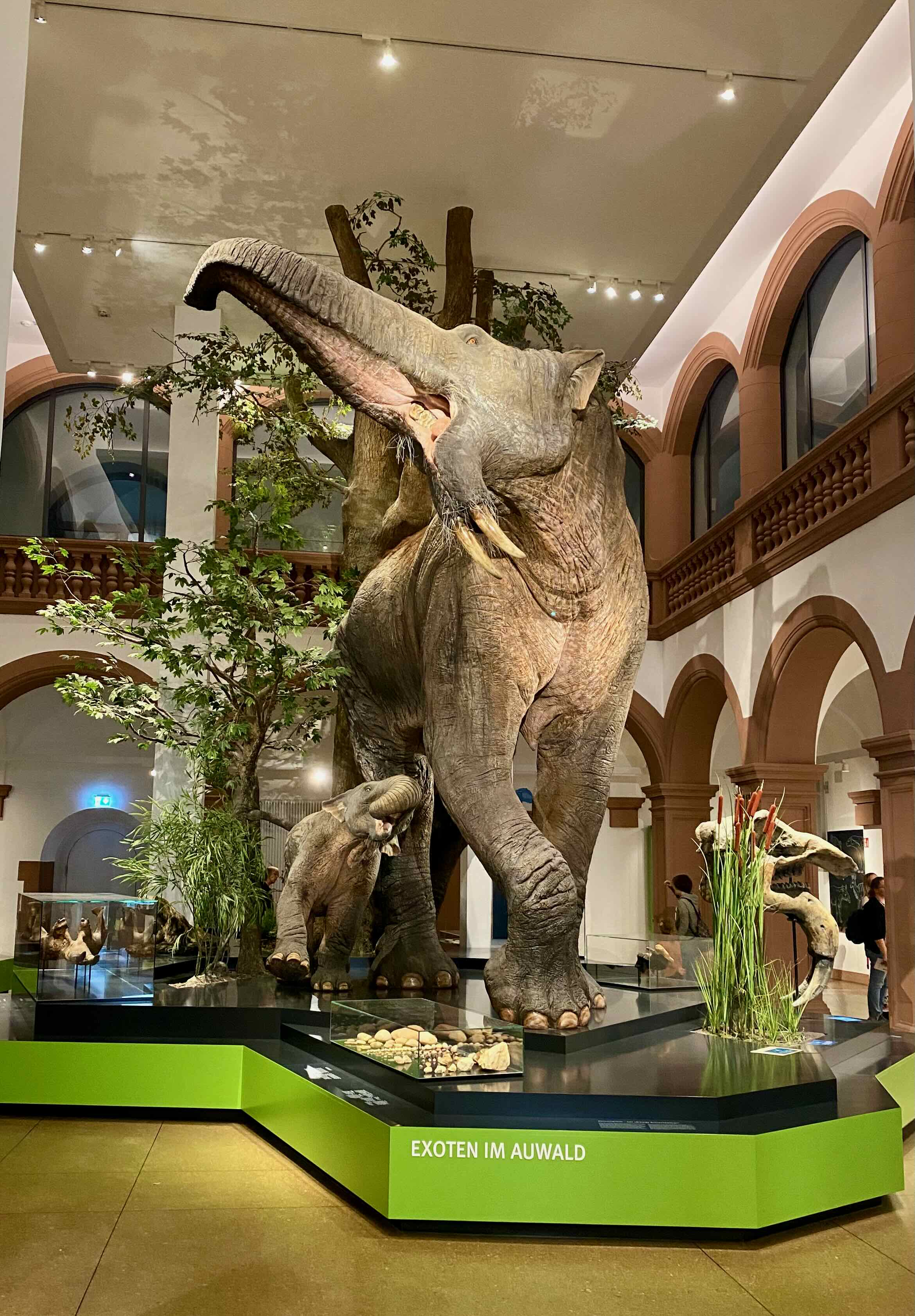
Our final stop in Mainz is to visit the Gutenburg Museum, which is connected to a small Natural History Museum. This display in the entrance is quite striking.

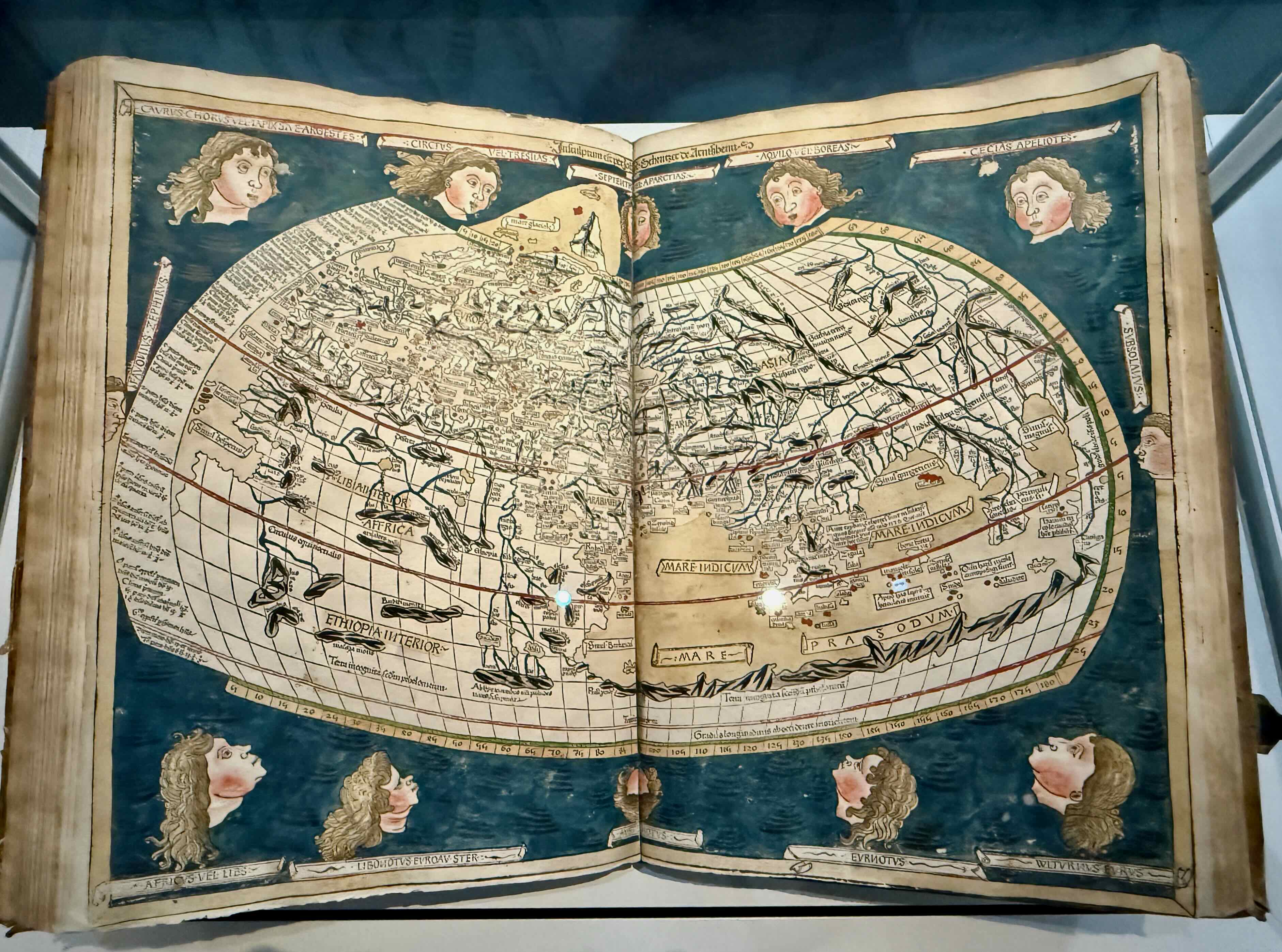
We start with the Gutenburg Museum which shows the impact of Johahannes Gutenburg’s invention of a moveable type printing press in 1440.  This press allowed for the printing of 3600 pages a day, compared to 40 by hand printing and only a few by hand copying. There were  several beautiful ancient books on display. This Atlas of the World was printed in 1482.

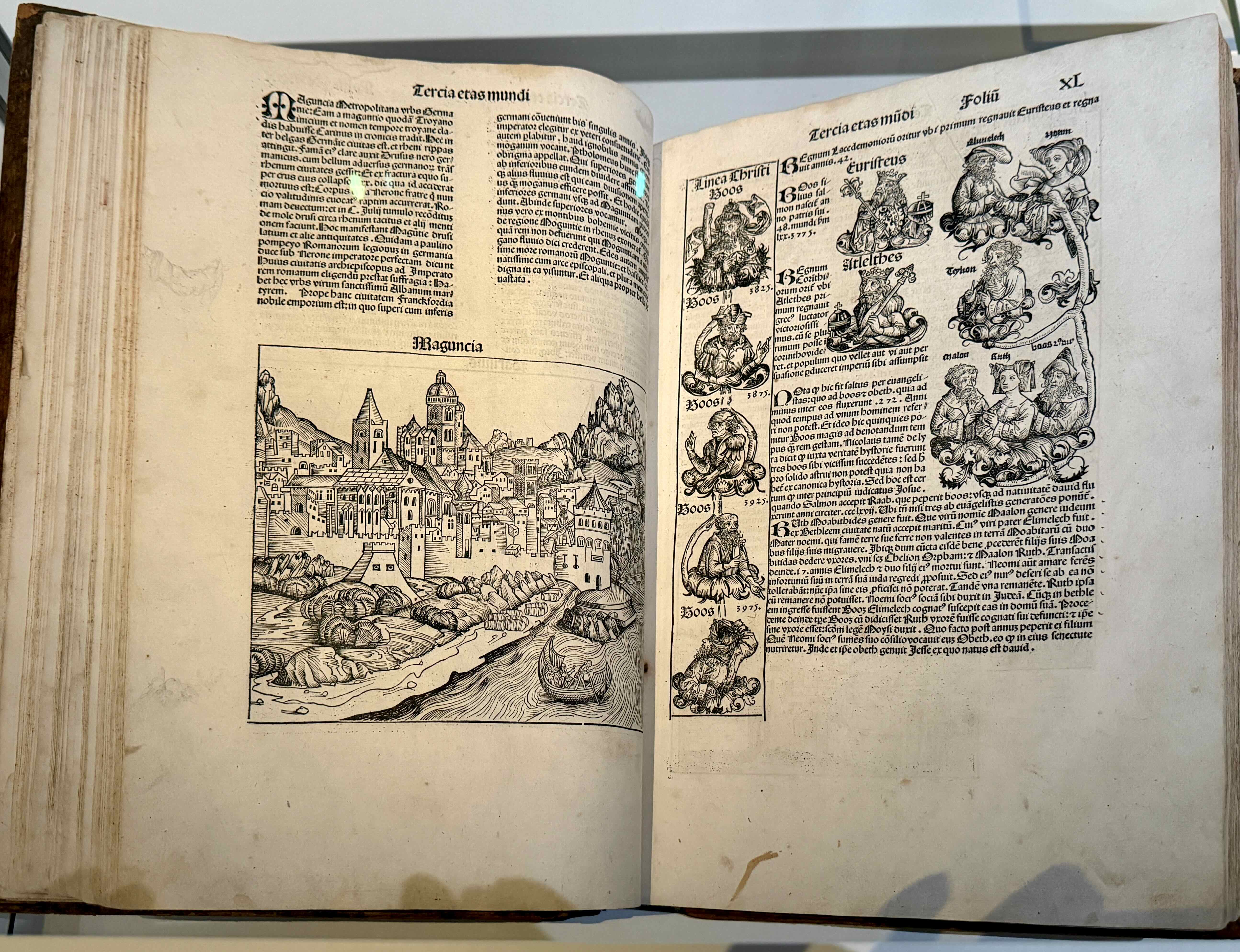
The World Chronicle is from 1493.

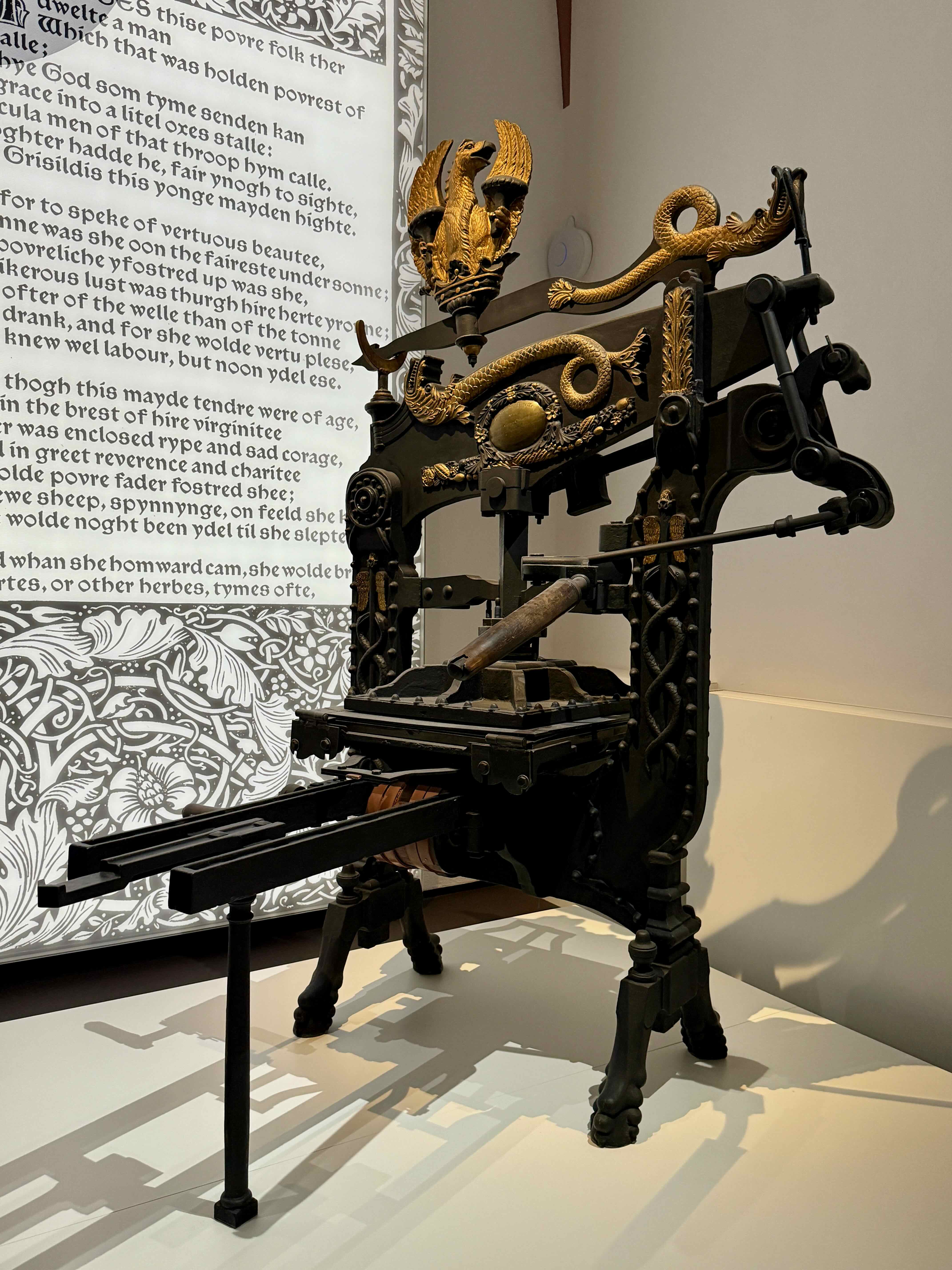
An ornate Columbia Printing Press from 1824.  

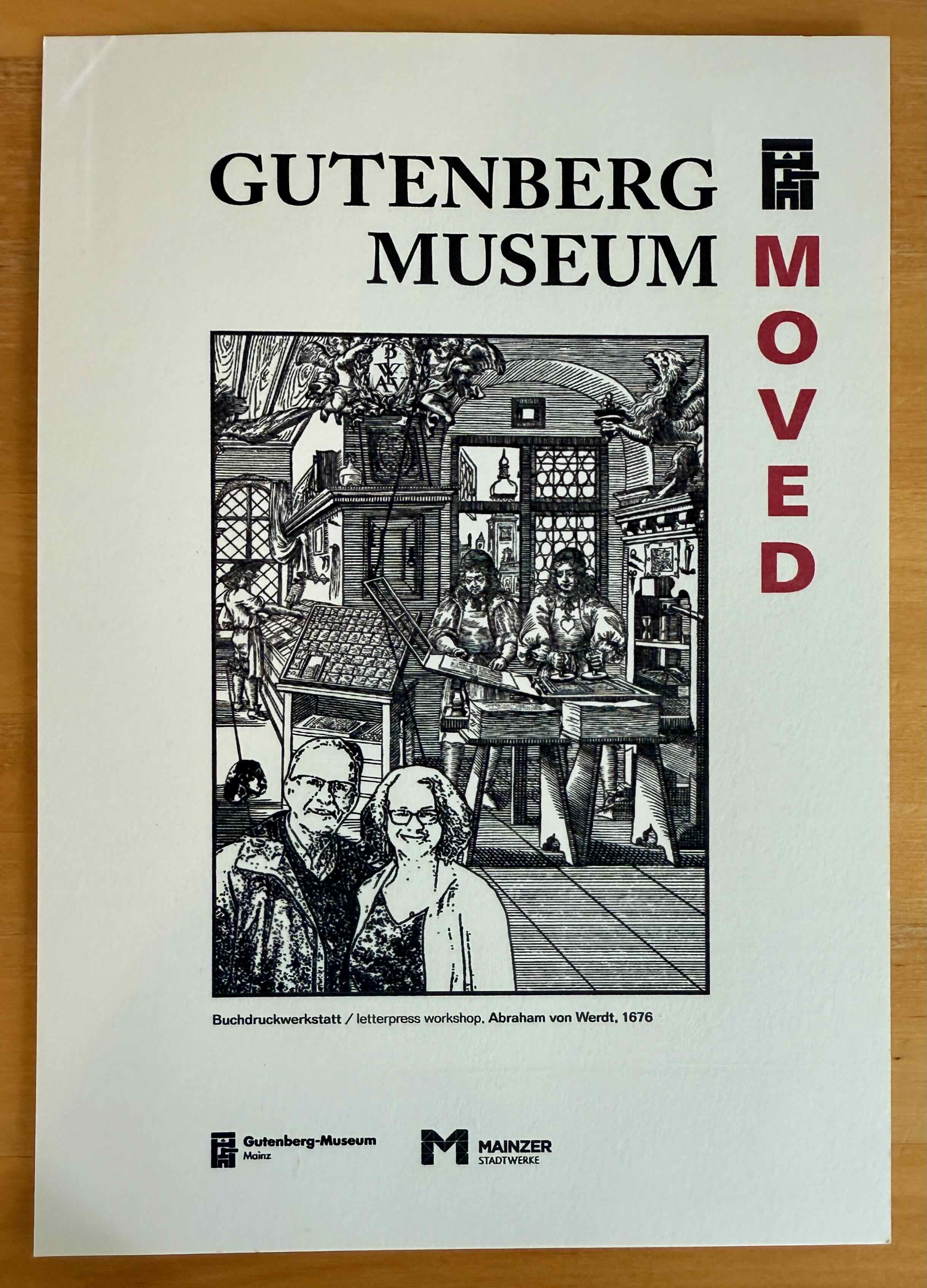
We are given a blank card that has a chip installed inside the paper when we entered the museum.  We place this card into a machine that takes a selfie of us. Then we take the still blank card to a modern printer and this is what we received.

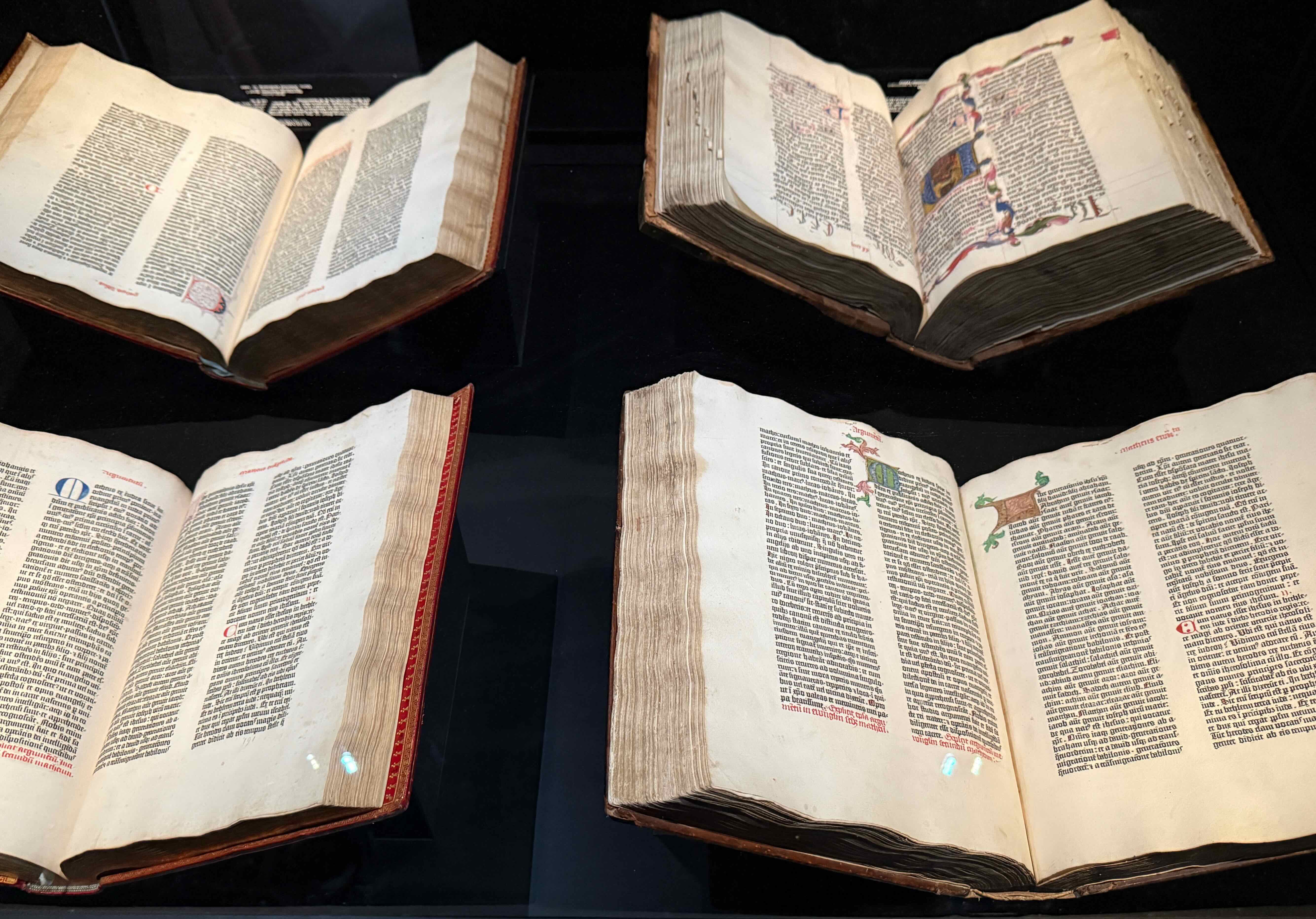
Entering a small room with dim lighting we see the Gutenburg Bibles. Only 49 of the approximately 180 printed Gutenberg Bibles have survived and the Gutenberg Museum owns two. The complete two-volume Bible shown in the bottom of this photo was added to the collection in 1978. The second Bible is incomplete, with only the second volume surviving. The book in the top right is a calligraphed manuscript.

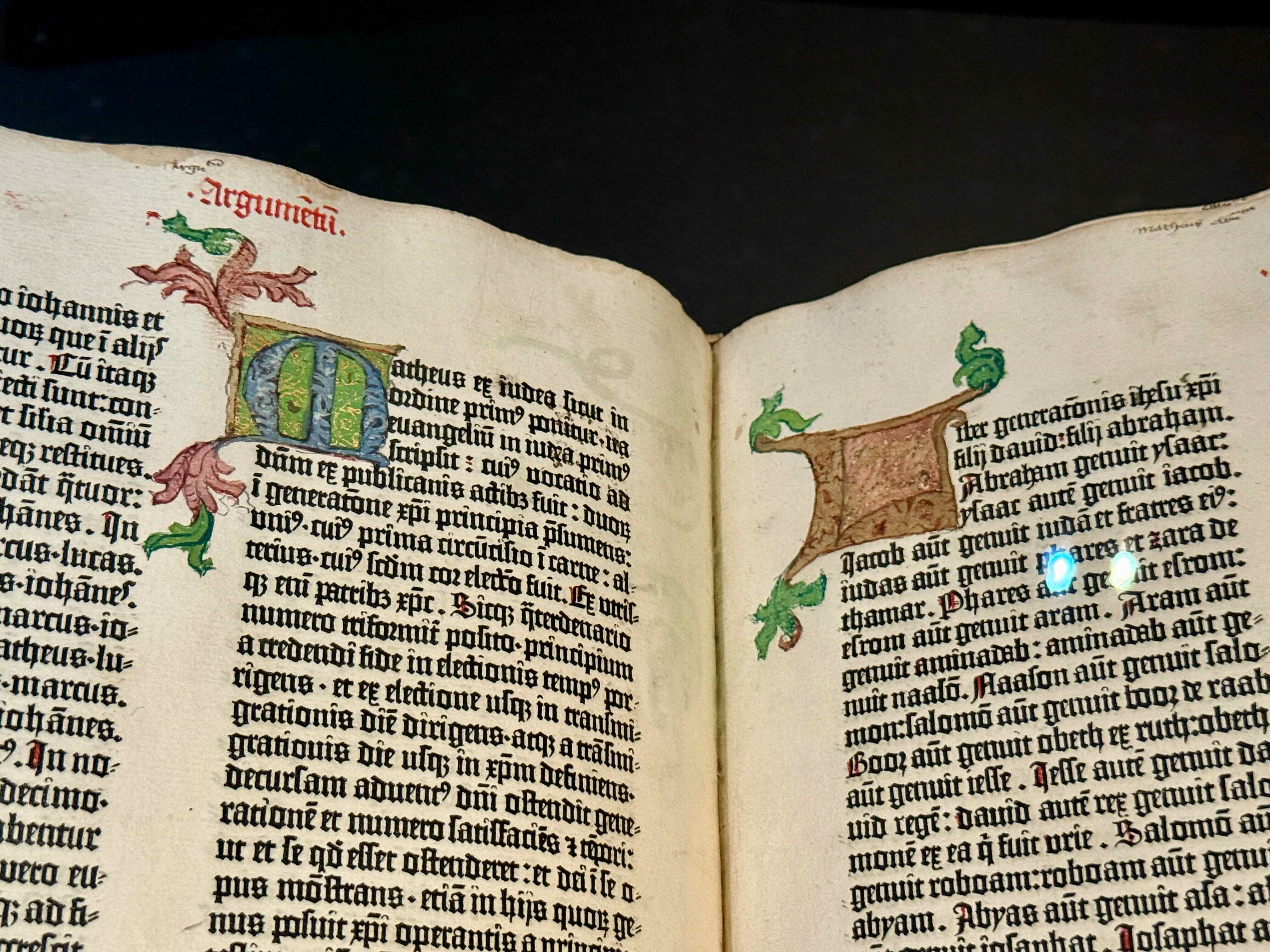
The Bibles were only printed in black ink – two or more colors would have been too time-consuming and expensive. Spaces for colored ornamentation were left empty and the books were handed over to an illumination workshop. As a result, all surviving editions have different ornamentation.

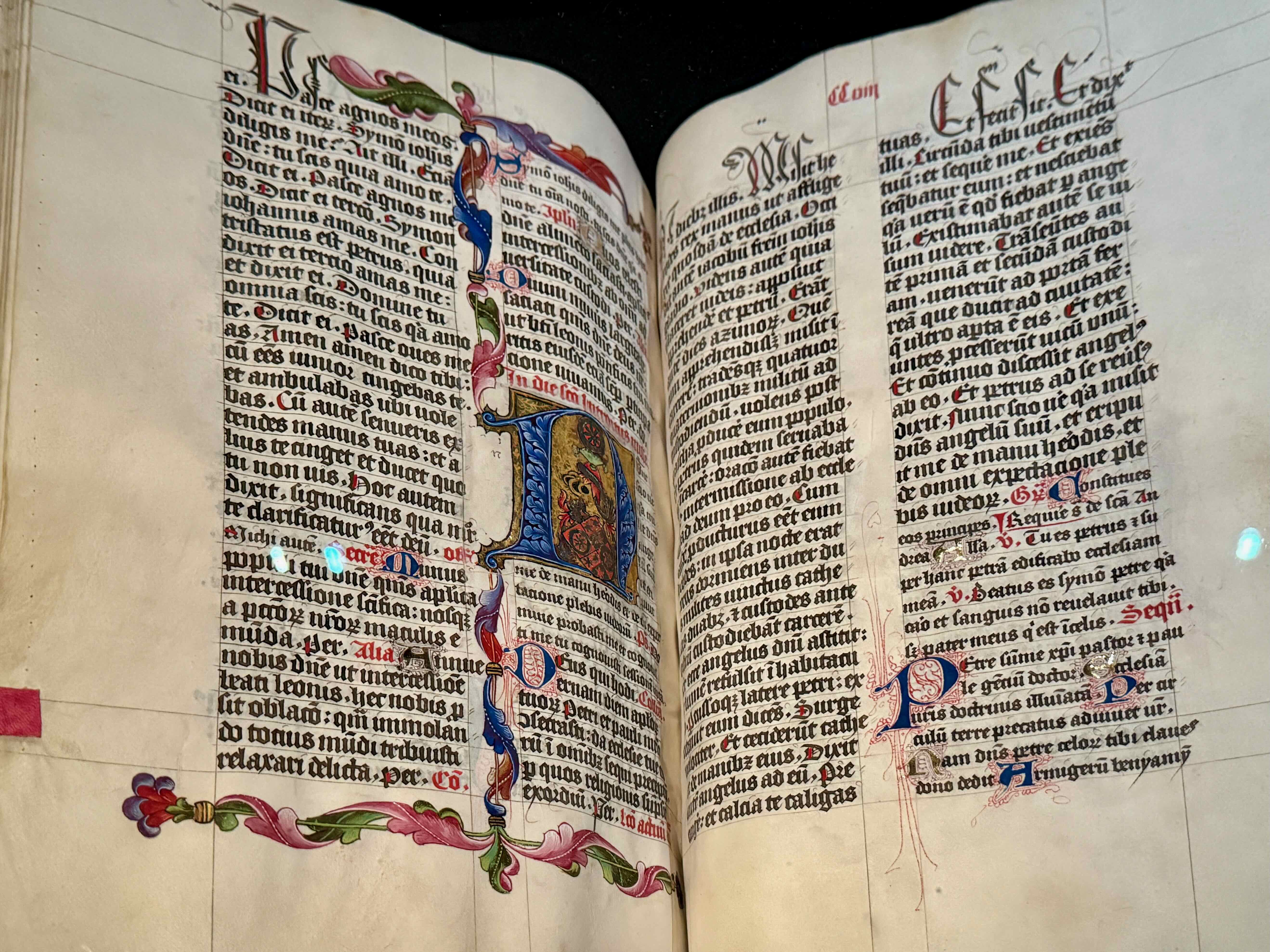
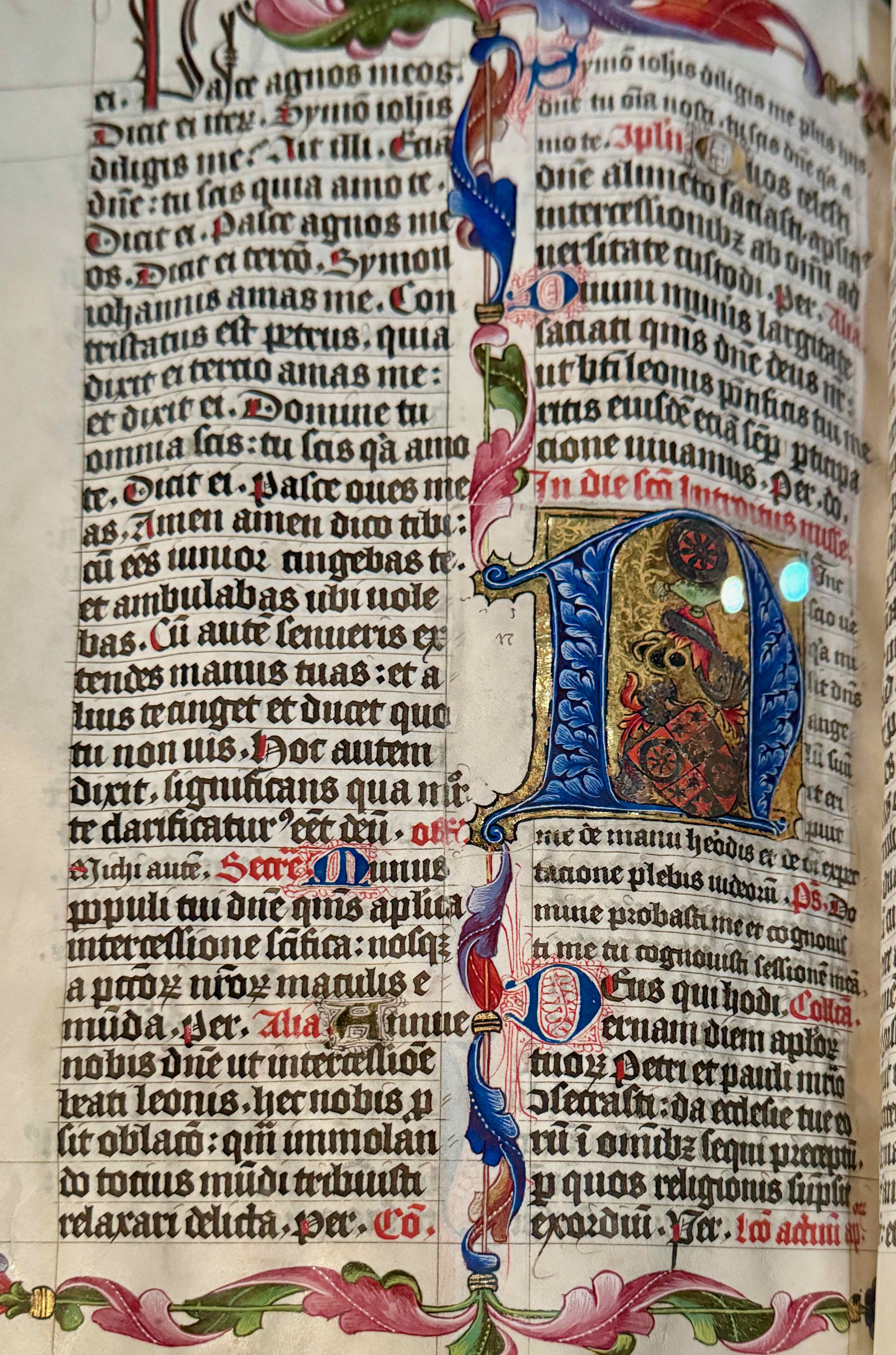
The Missale Moguntinum, was hand written on parchment between 1453 – 1459.

I love that the guide lines are still visible. Imagine writing this huge book. Gutenburg’s press changed how books were produced and made them available to so many more people. Seeing these bibles in person is special but I am still in awe of beautiful hand written and illustrated books.  

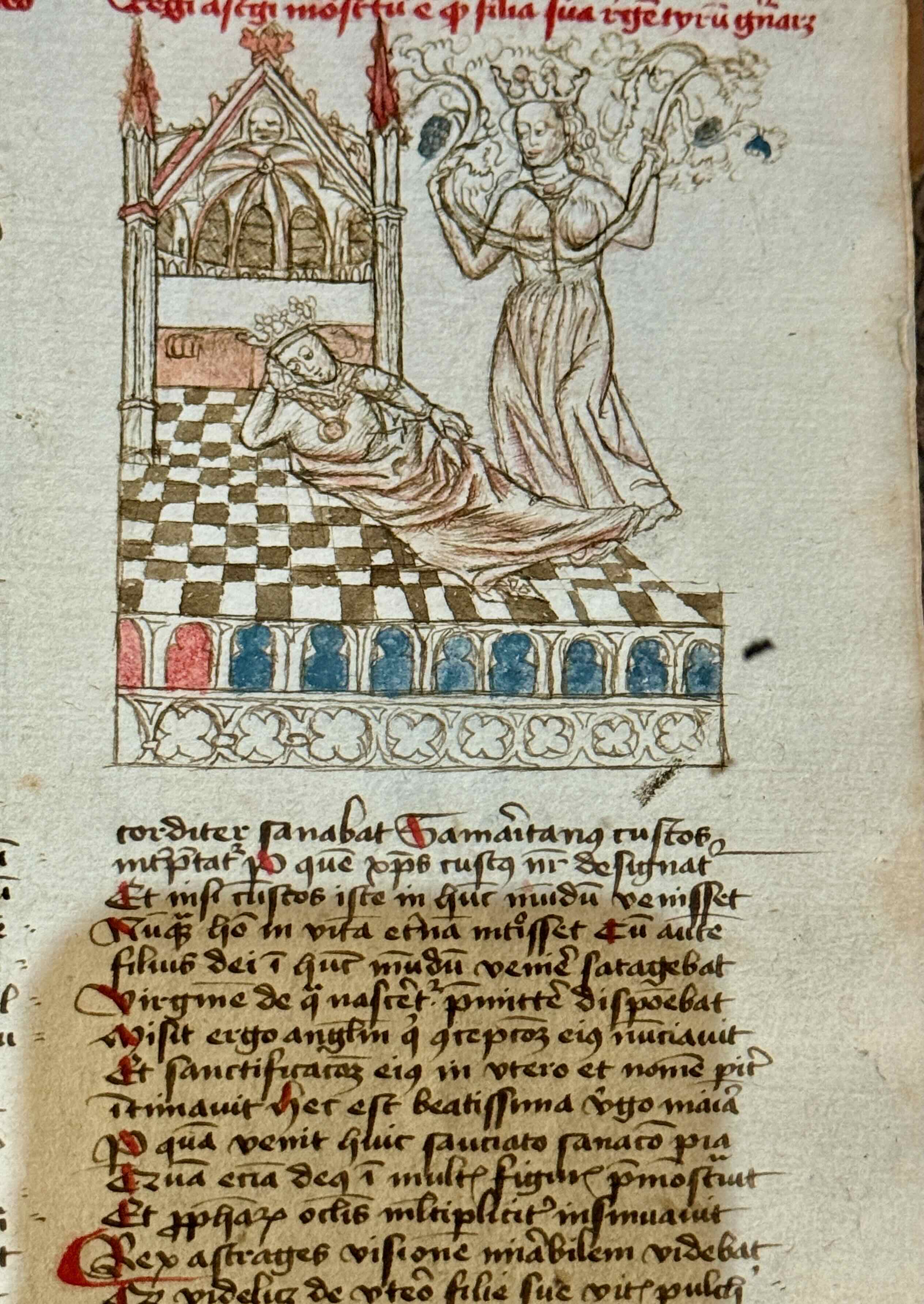
In the mid-15th century before printed books were readily available, the demand for books could not be met. One solution was to produce books faster. This was why copies of the “Speculum Humanae Salvationis” or “Mirror of Human Salvation,” were created in cursive and quick pen-and-ink drawings. The volumes are dated around 1450, making them approximately the same age as the printed Gutenberg bibles.

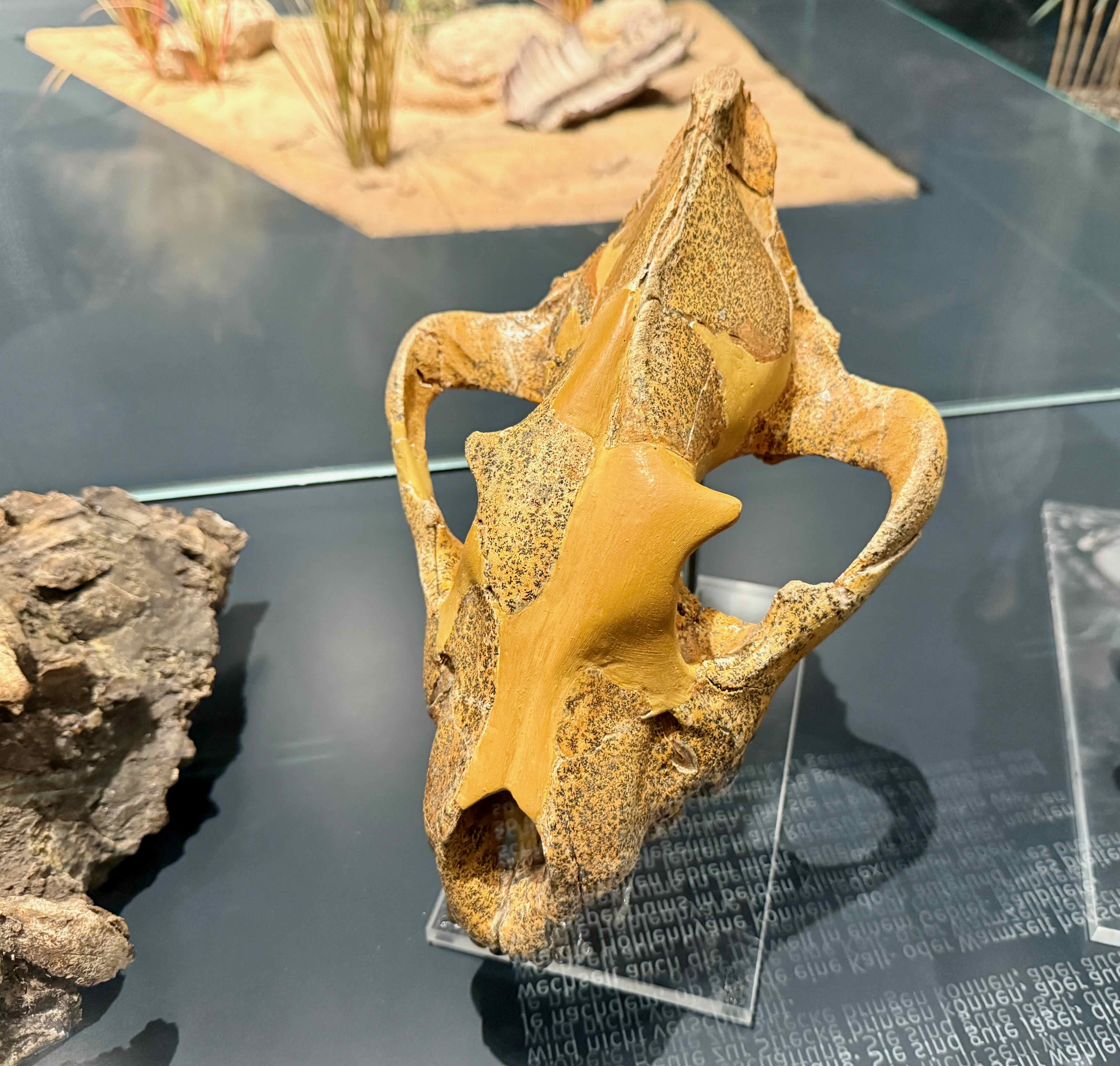
We wander through the Natural History Museum. I wonder how archaeologists are able to reconstruct skulls and bones from a pile of fragments.  It must be a very difficult puzzle.

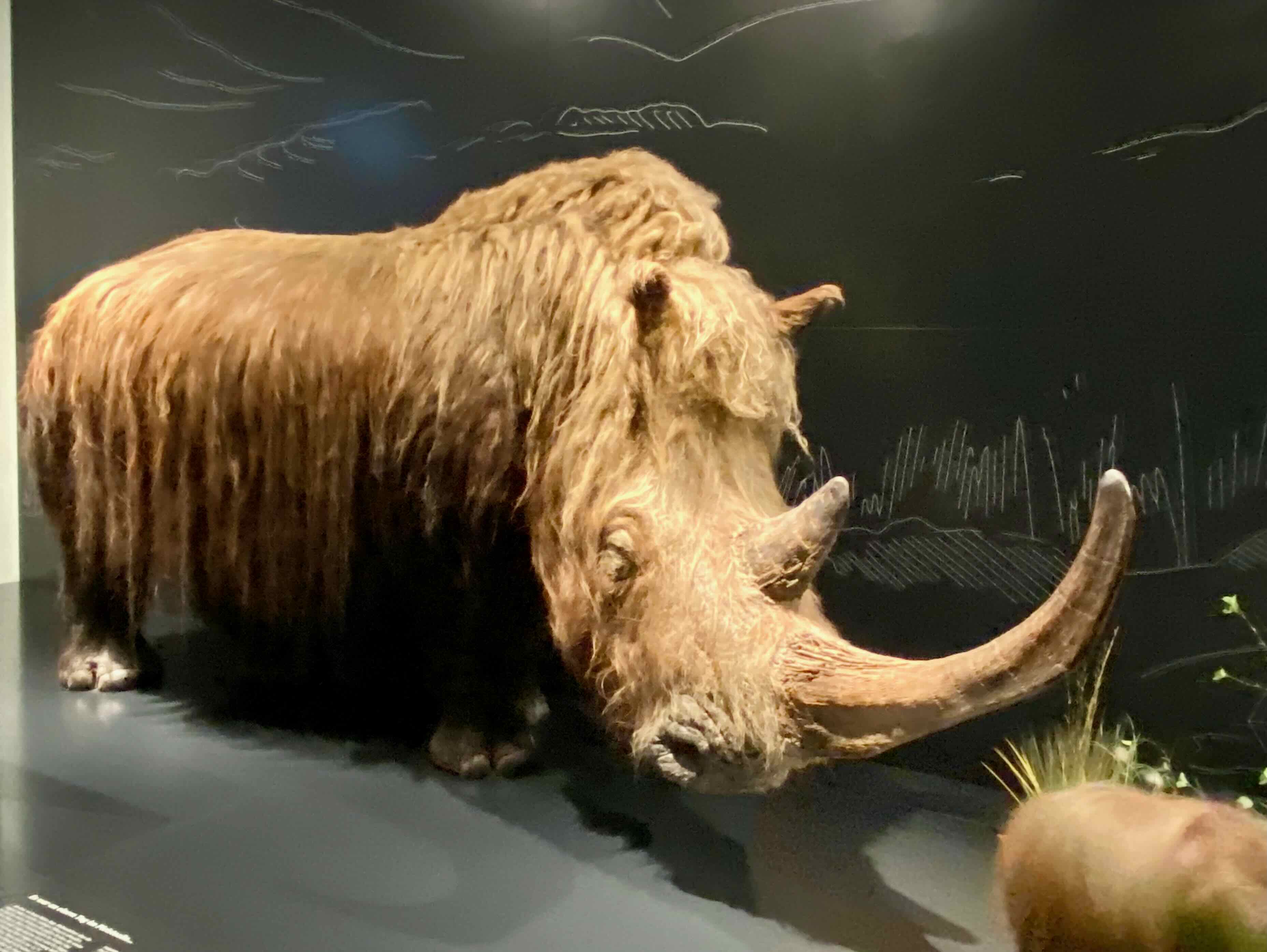
The Wooly Rhino had a huge head compared to the rest of its body.  There are samples of real wooly rhino hair on view that were found preserved in permafrost.

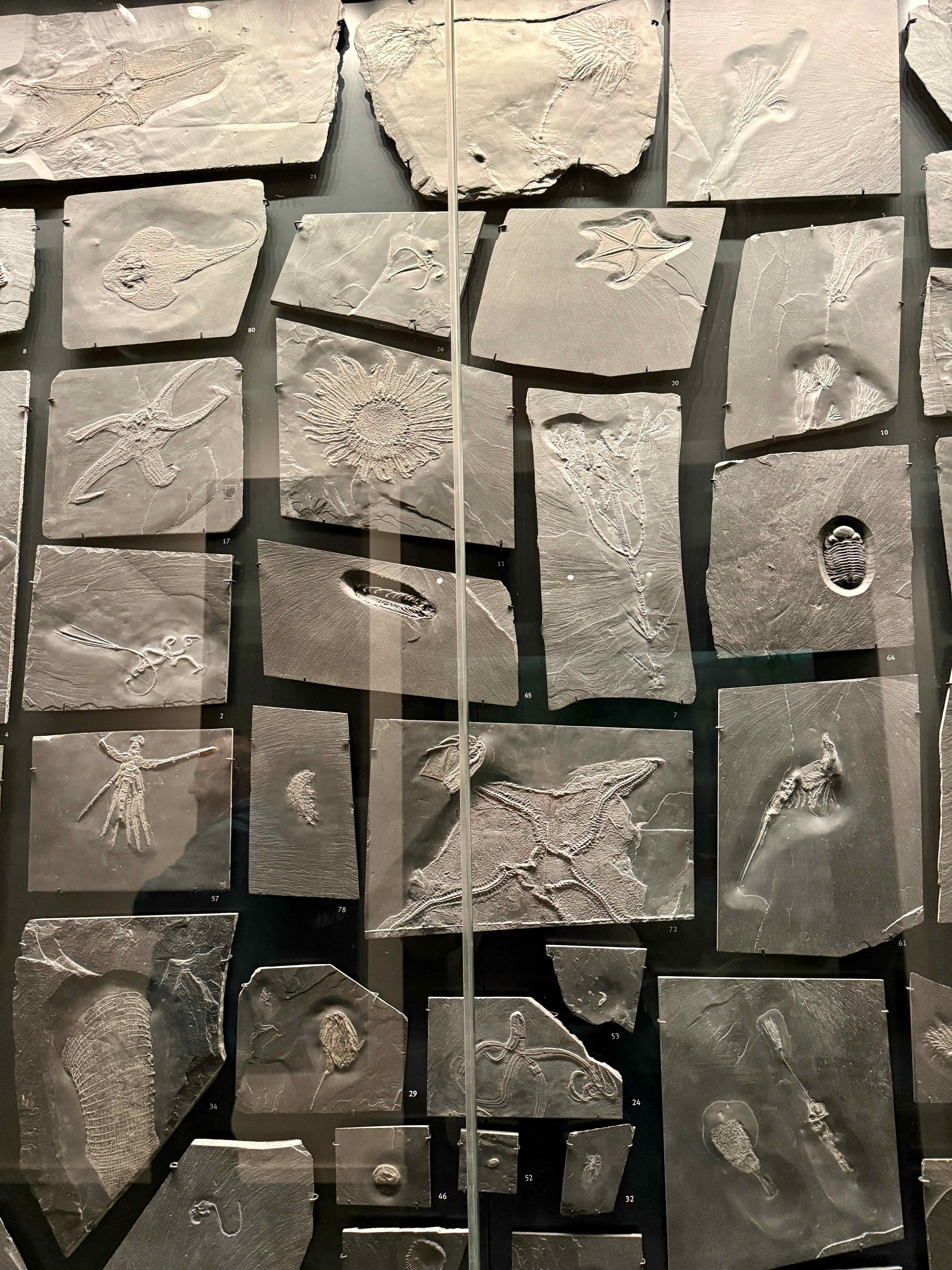
I thought these fossils were really beautiful.  The plants, insects and other animals are preserved in the finest detail. They are incredible.

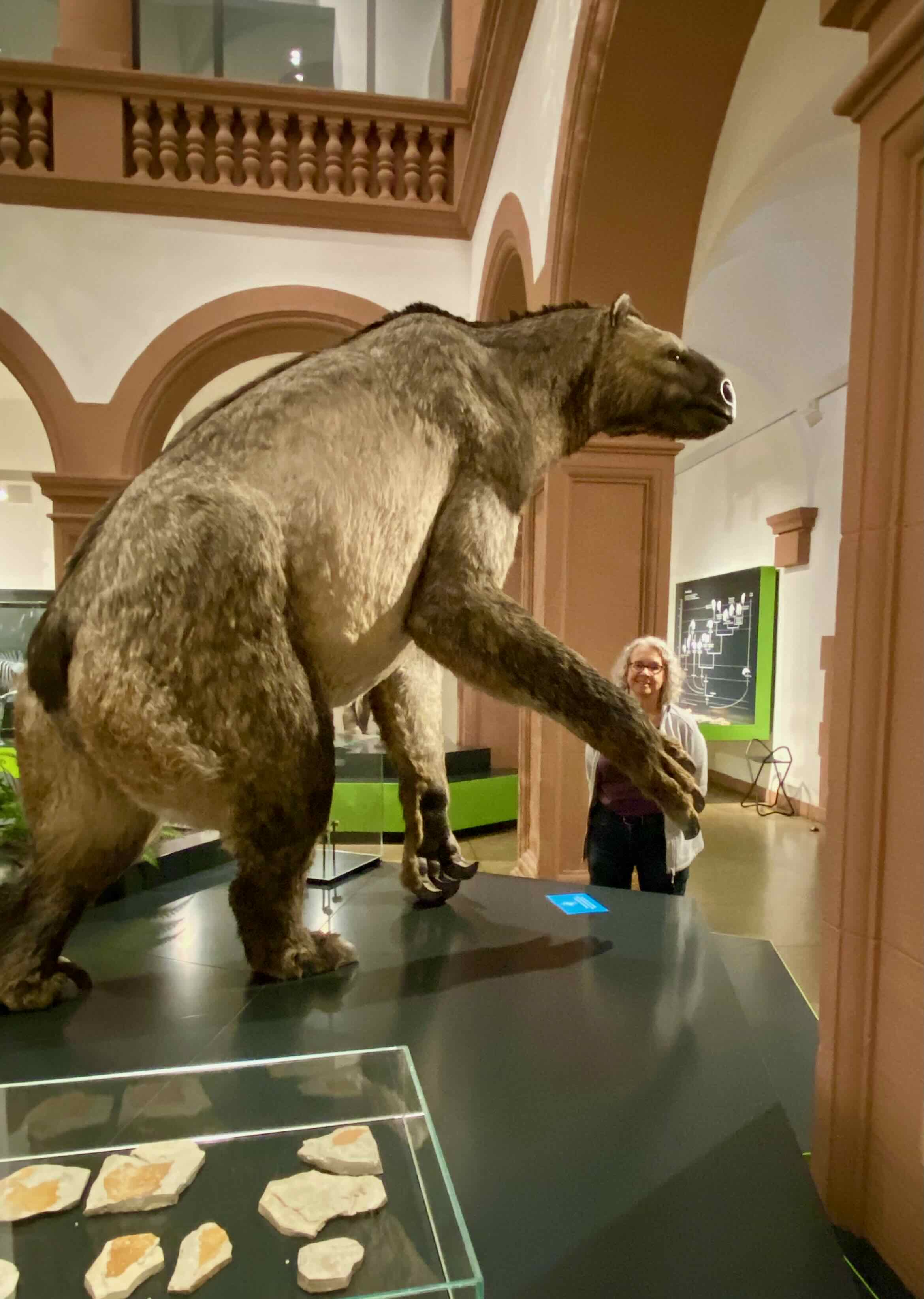
We forgot to check what this prehistoric creature was.  

There are a few more displays of stuffed animals.  I thought this one of different types of rabbits was interesting. It is a small museum so it doesn’t take too long to see everything.

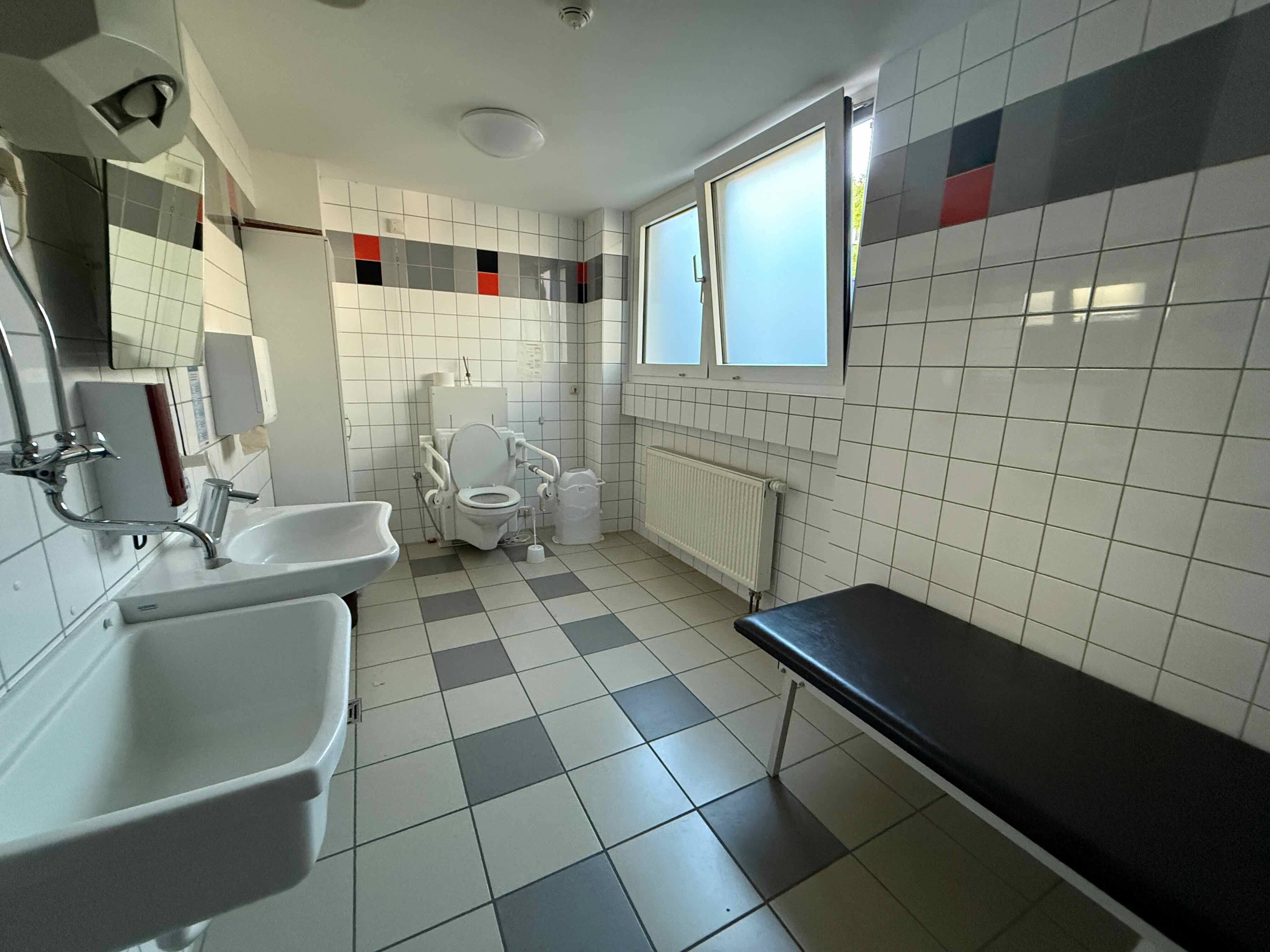
I know this is a strange photo, but this is the handicapped washroom at the museum.  I’ve never seen a public washroom like this.

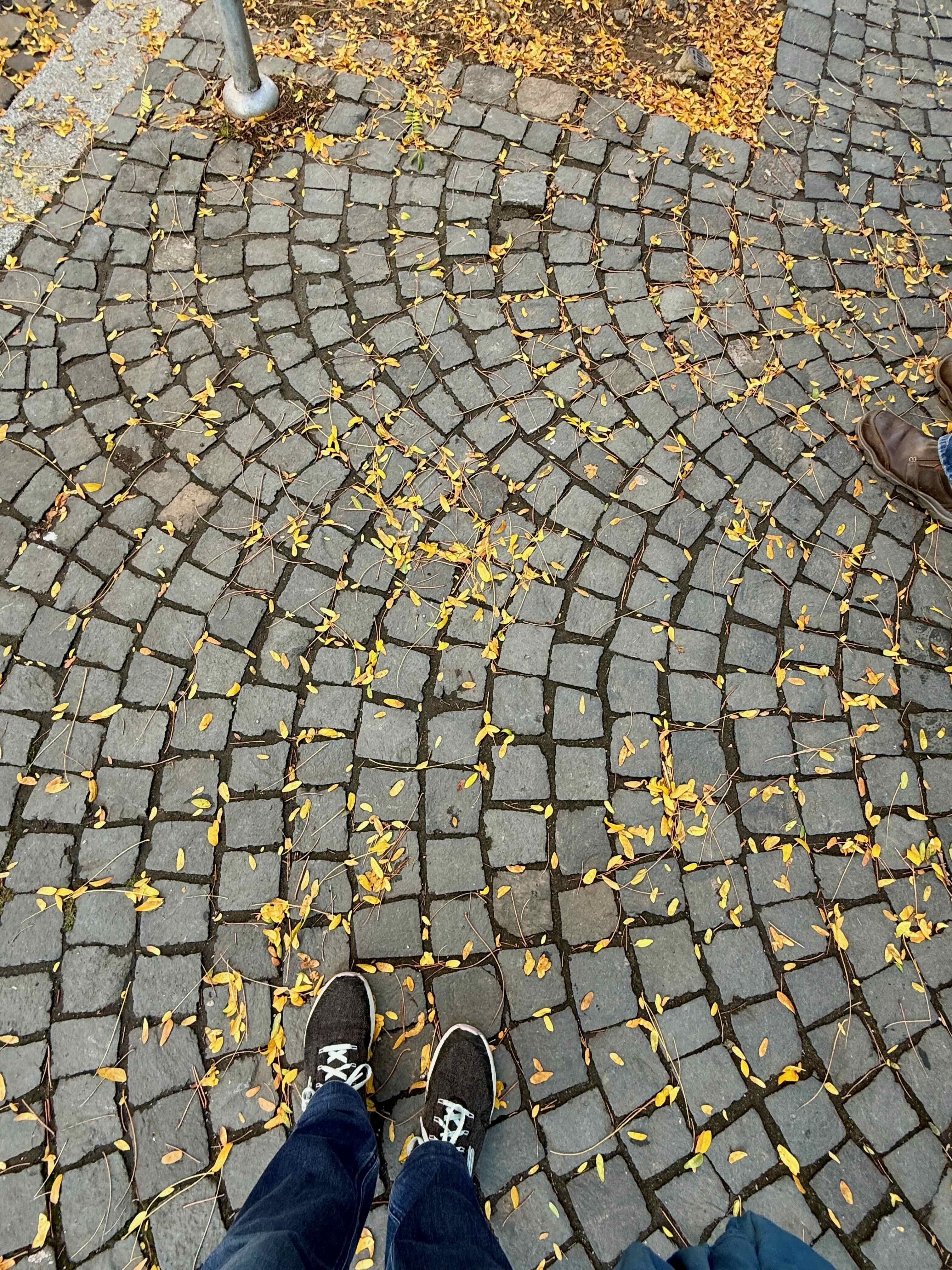
We walk along cobbled sidewalks with reminders that summer is over on our way to see the next sight on the agenda in Manz.

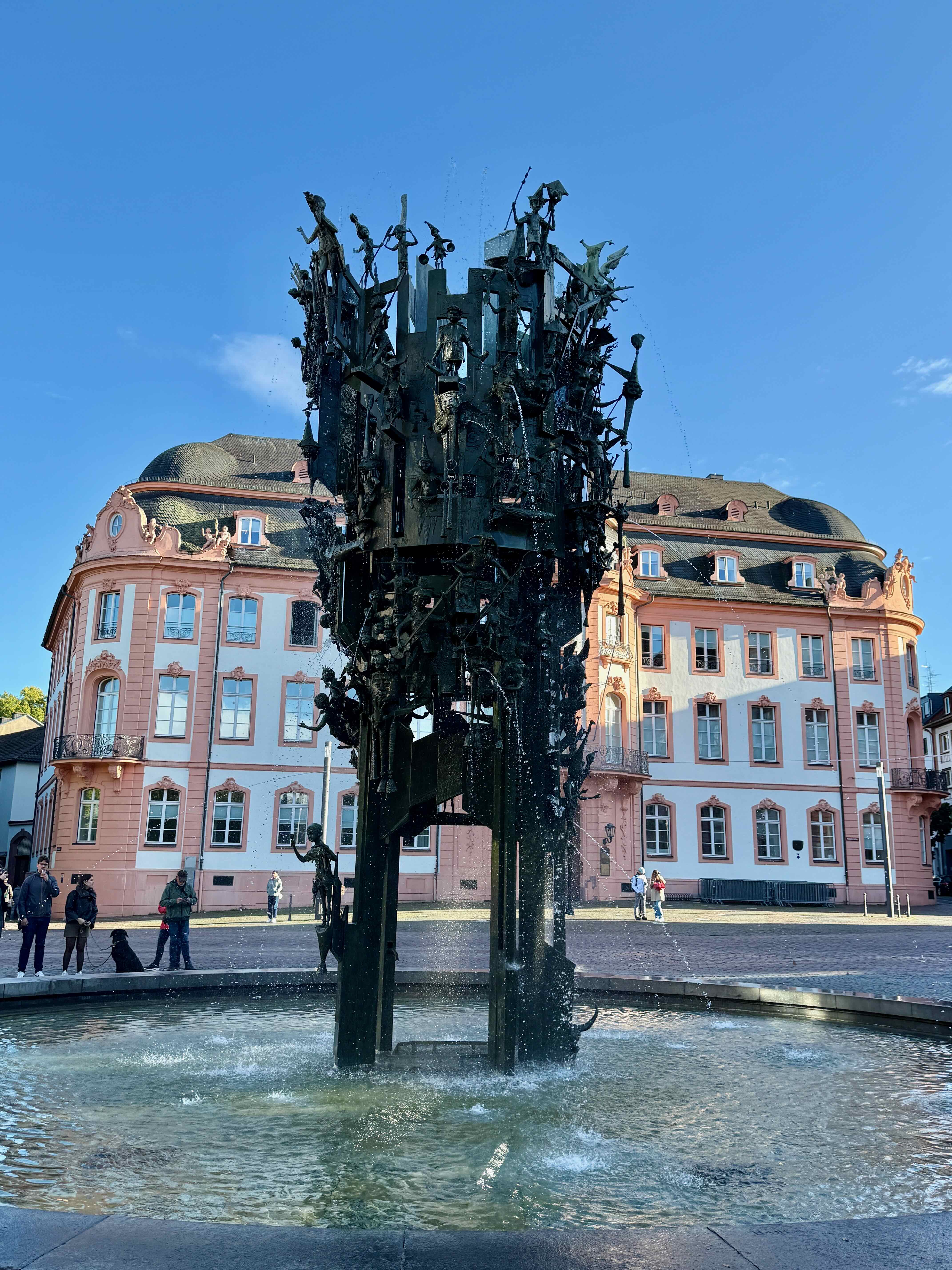
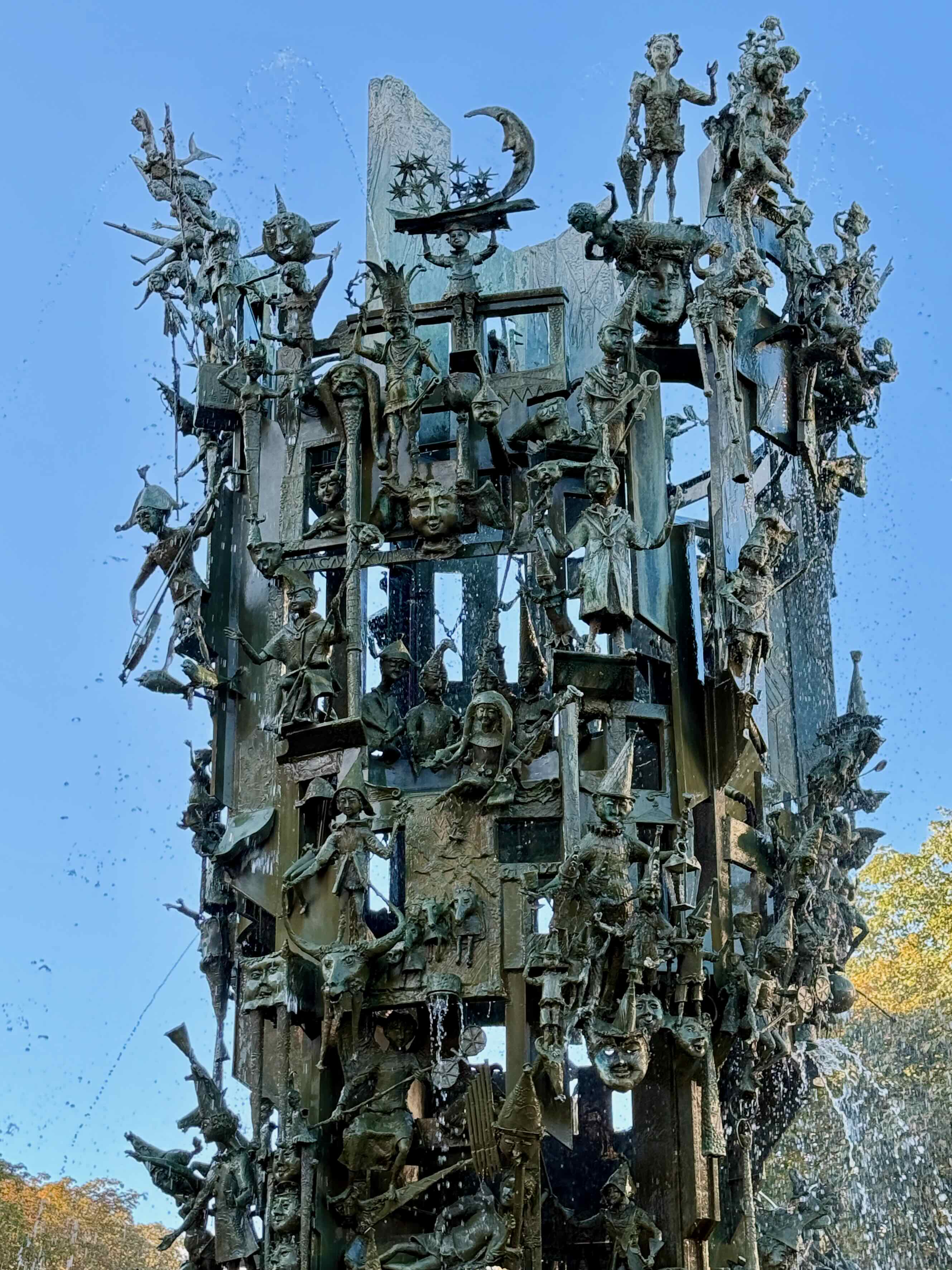
This huge fountain is the Fastnachtsbrunnen, or Carnival Fountain. It is almost nine meters high and has over 200 bronze figures from the Mainz Carnival Mythology. Every year on November 11, at 11:11 pm, people celebrating Carnival in Mainz gather here. When the clock strikes 11:11 pm the carnival officially begins.  

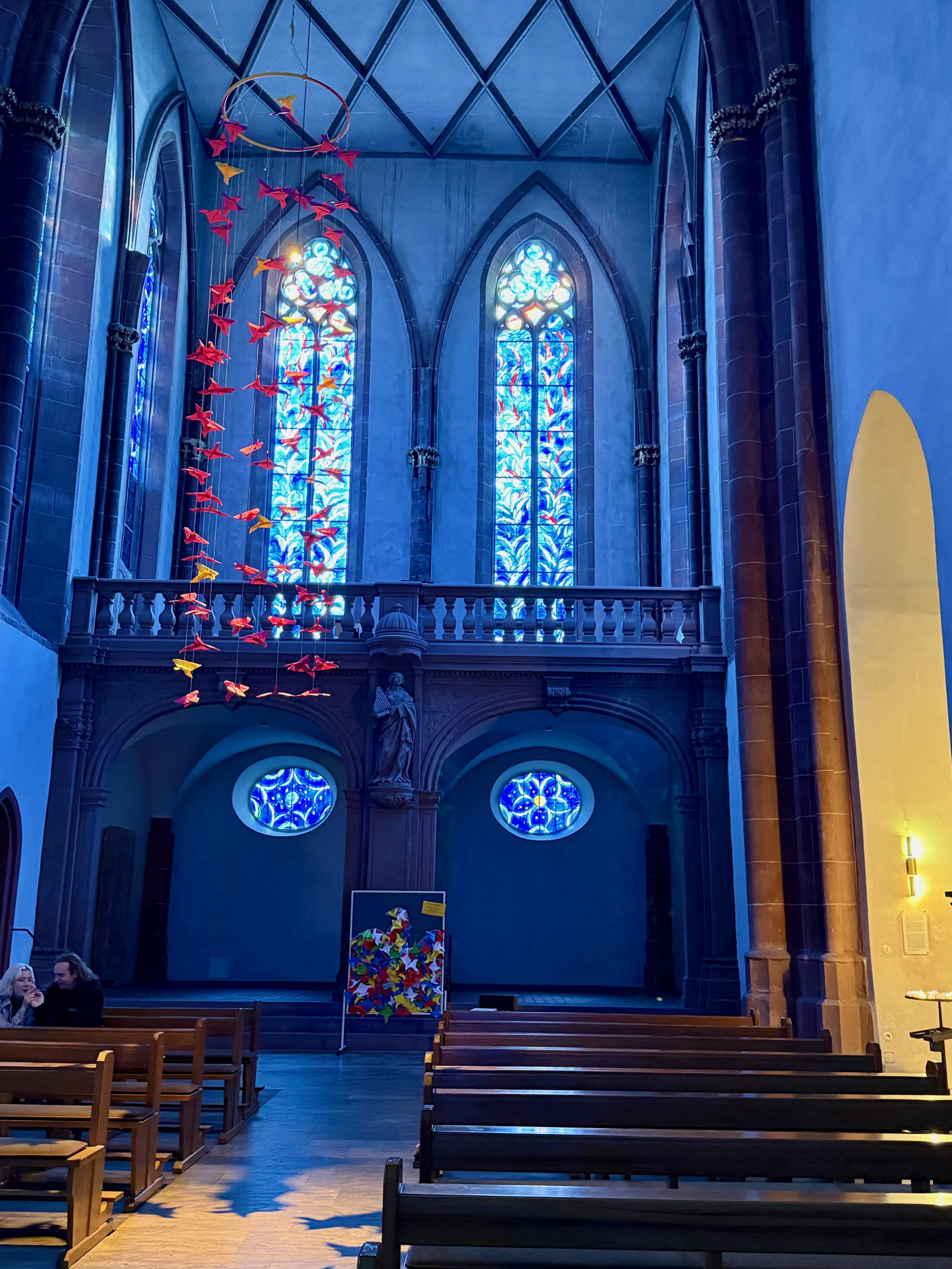
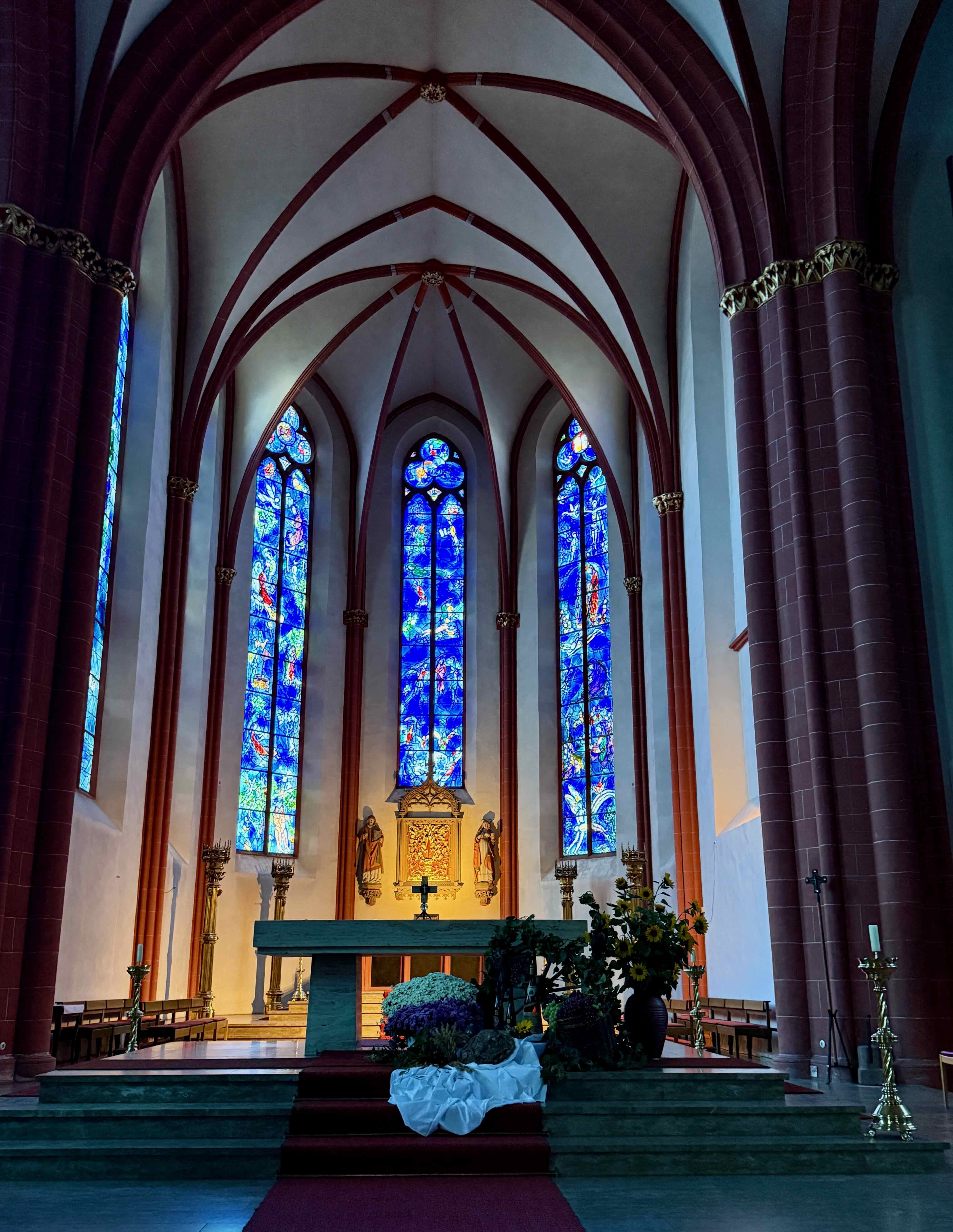
Our last stop before heading home is St. Stephen Church. This is the only German church for which the Jewish artist Marc Chagall created windows.

In 1978, the first window by the 91-year-old Chagall was installed. Chagall completed the final church window shortly before his death at the age of 97! Although all the windows are beautiful, I didn’t find the blue light in the church appealing…it felt too sombre,

Time to drive home…this was a very full day!

Fontoy, France to Frankfurt, Germany

Day 30    Monday, September 29, 2025

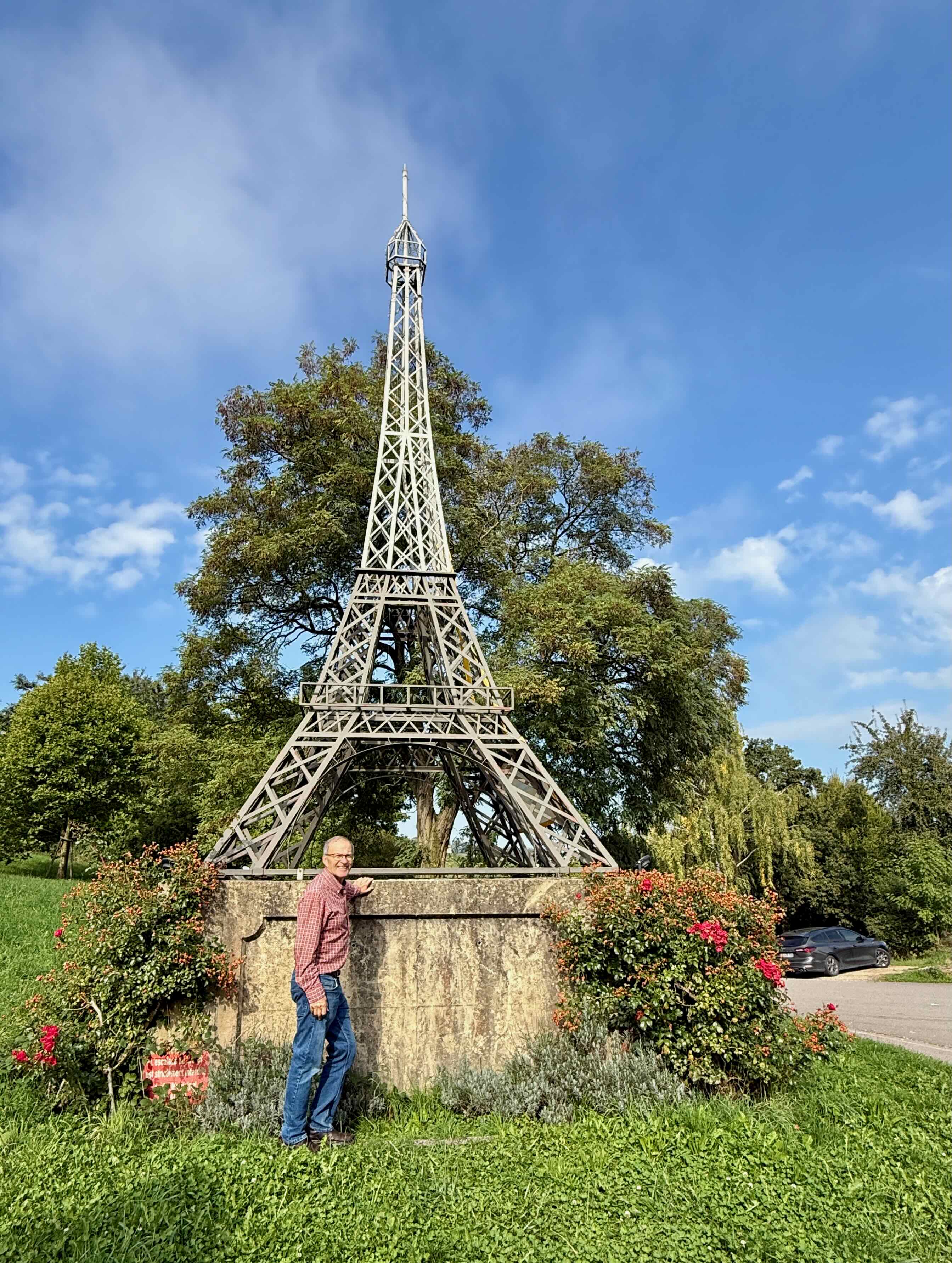
Today is a travel day to Frankfurt Germany and we have been travelling for month already. Bob says we have to stop and see another Eiffel Tower along the way but it is not quite as impressive as the one in Paris!

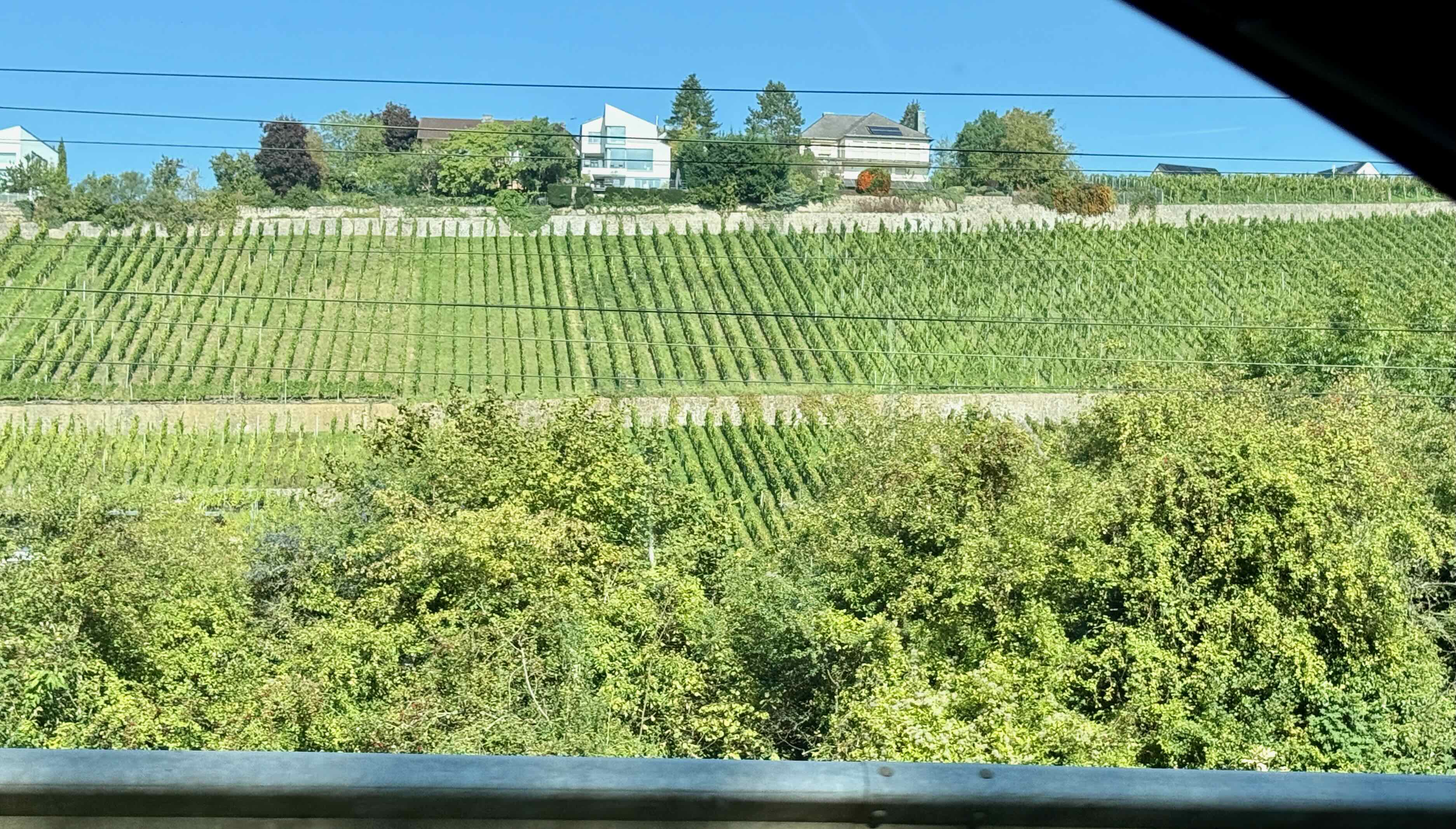
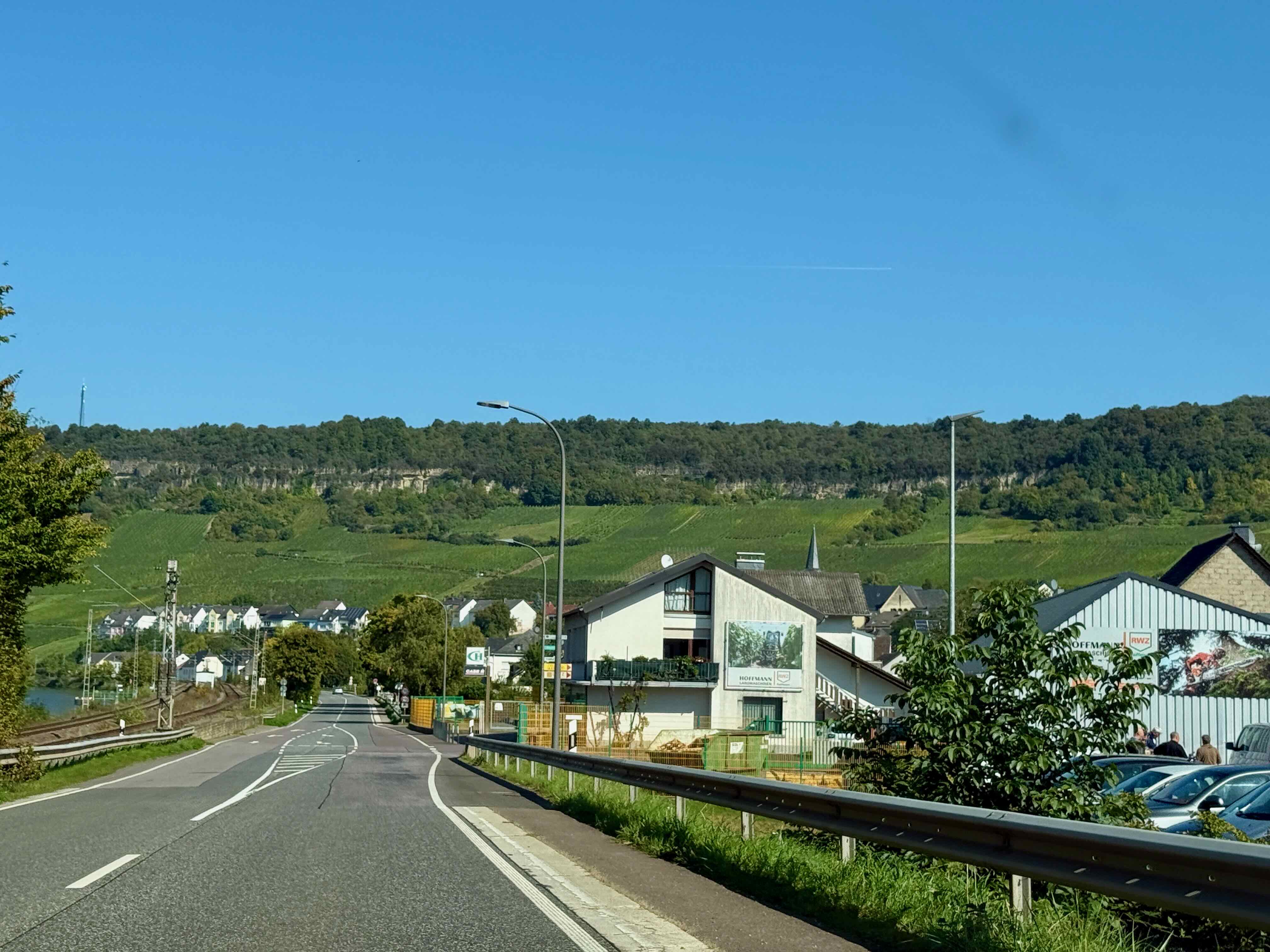
We had no idea that this is wine country.  There are vineyards on both sides of the road as far as we can see.

The hills around each town we pass are all growing row after row of grapes.  We see the odd group harvesting grapes but the main harvest occurred earlier this month.

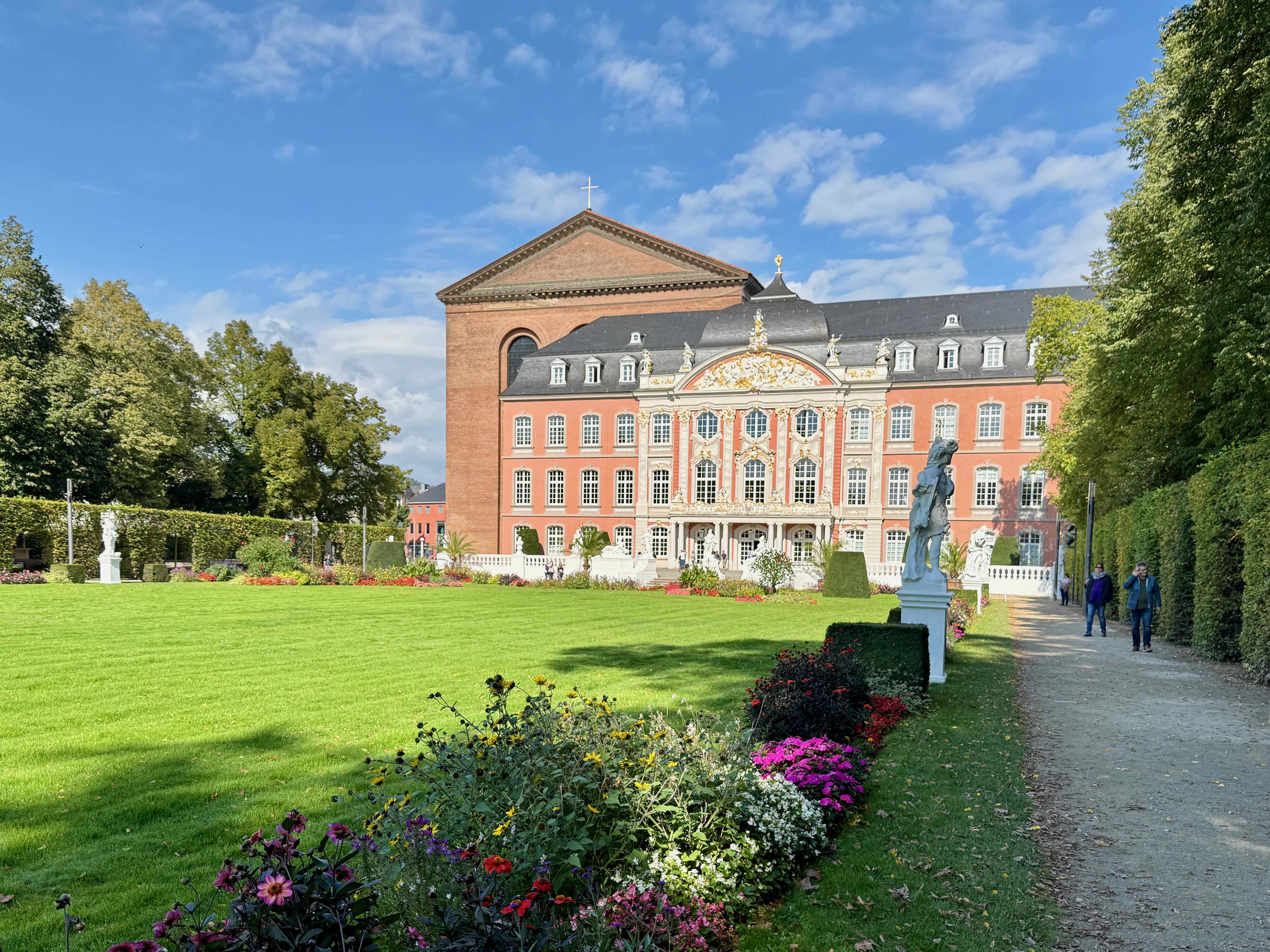
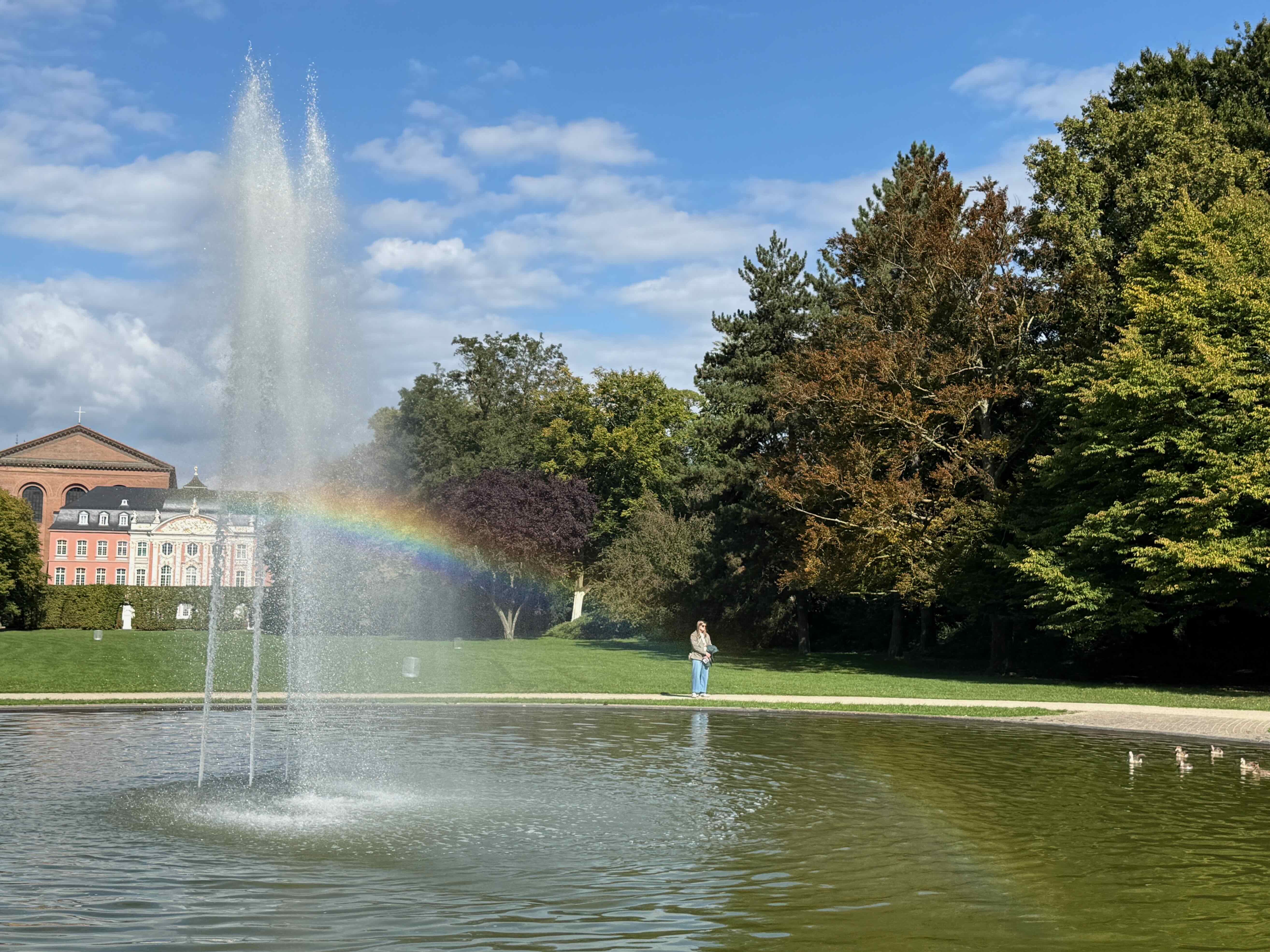
We stop in Trier and have our picnic lunch on a bench with this view.

The breeze blew water spray and made a rainbow just as I took this photo.

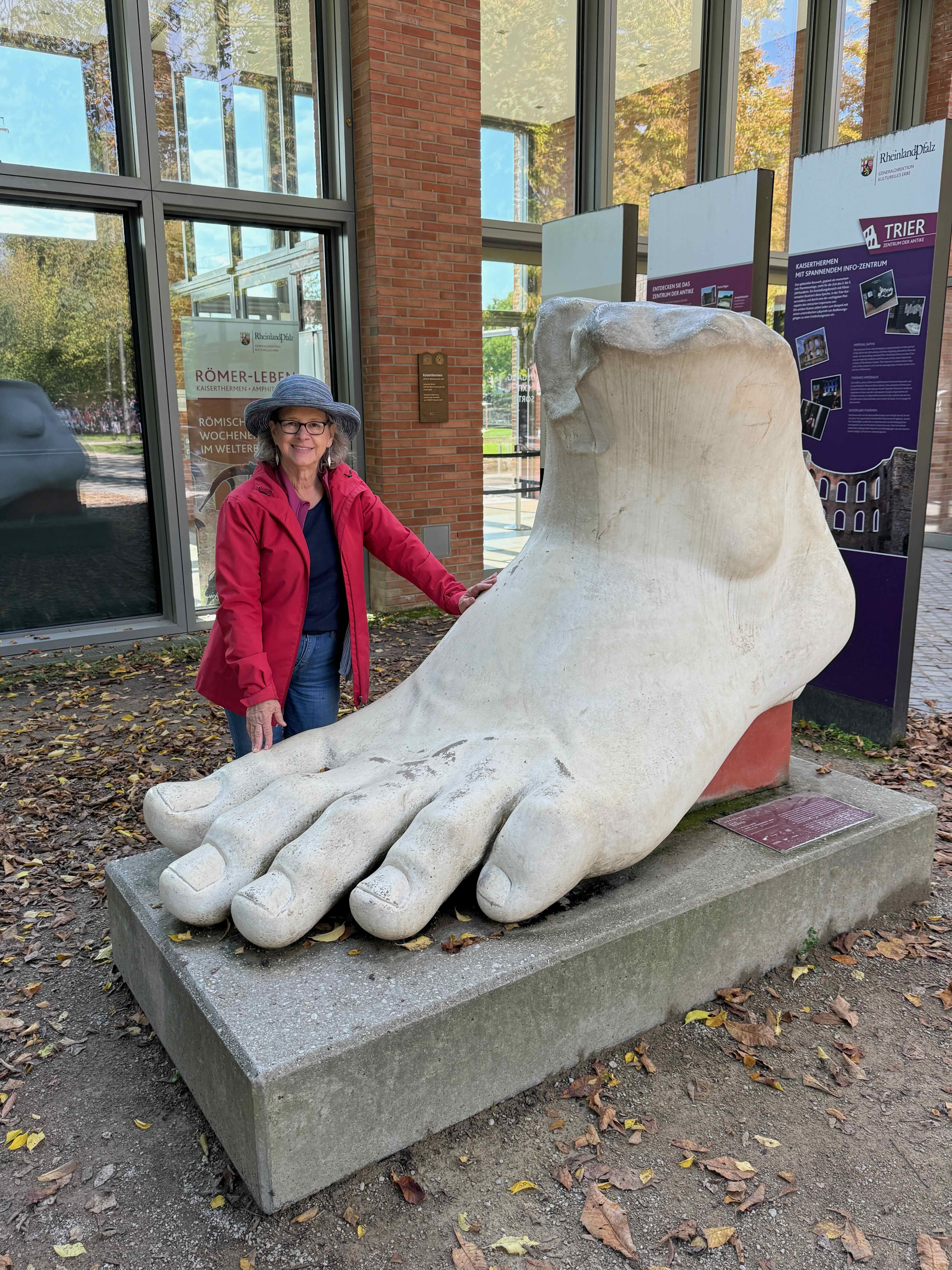
This foot of Emperor Constantine is a replica of one of the largest marble foots to have survived since antiquity. It was part of a 12 metre high seated statue of Constantine.

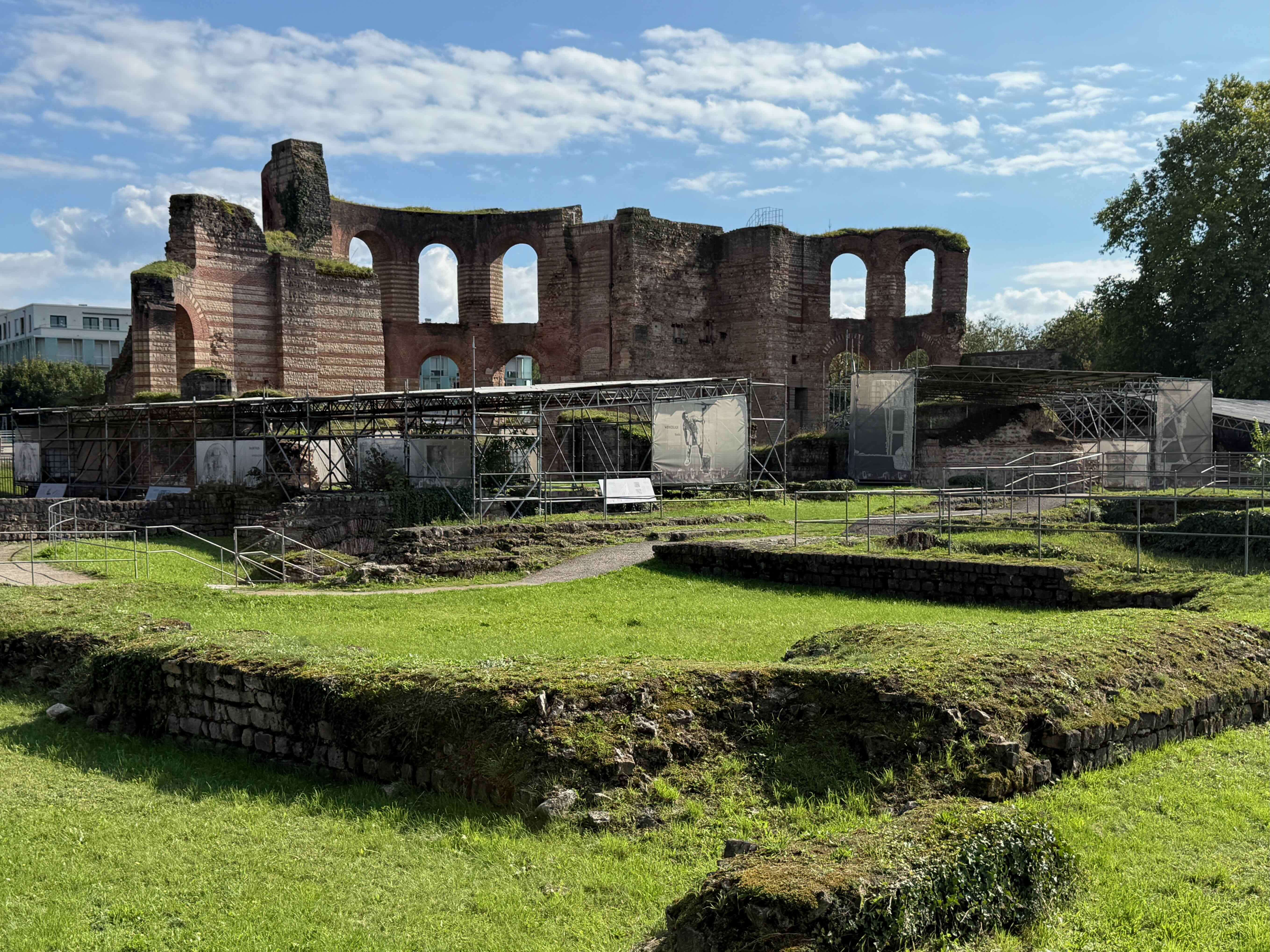
The Roman Baths are considered to be the largest Roman baths outside of Rome. 

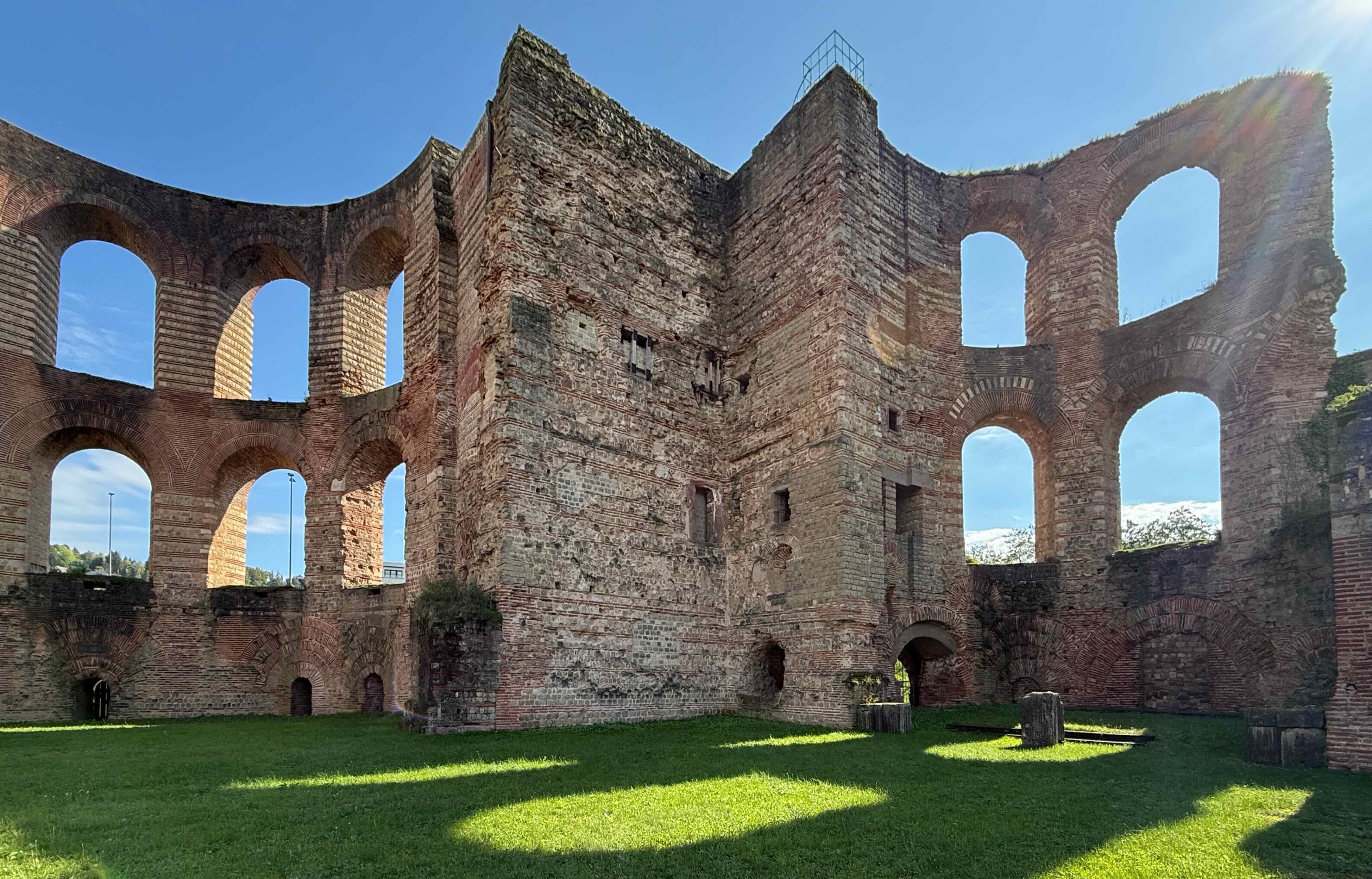
The ruins are impressive!

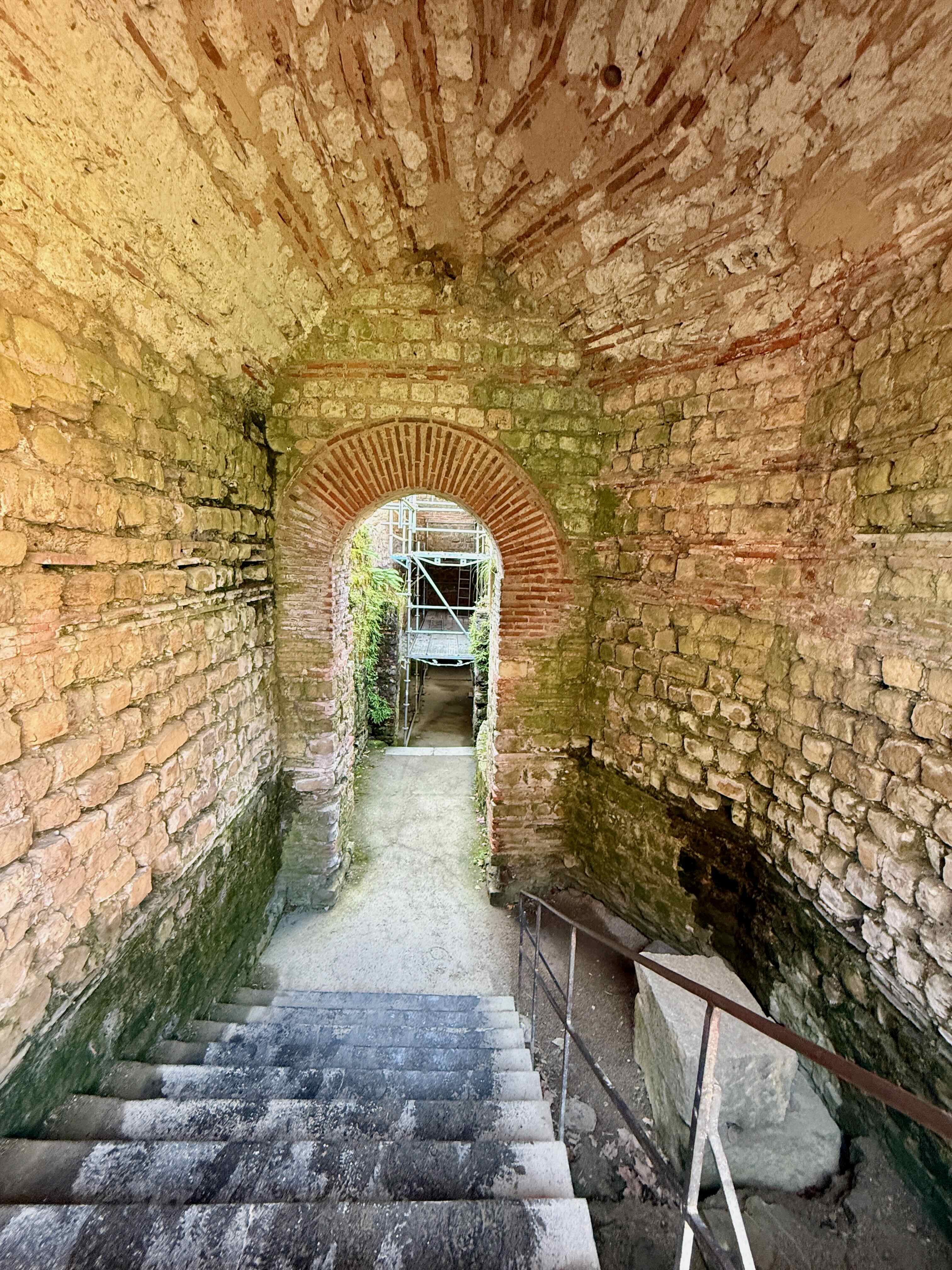
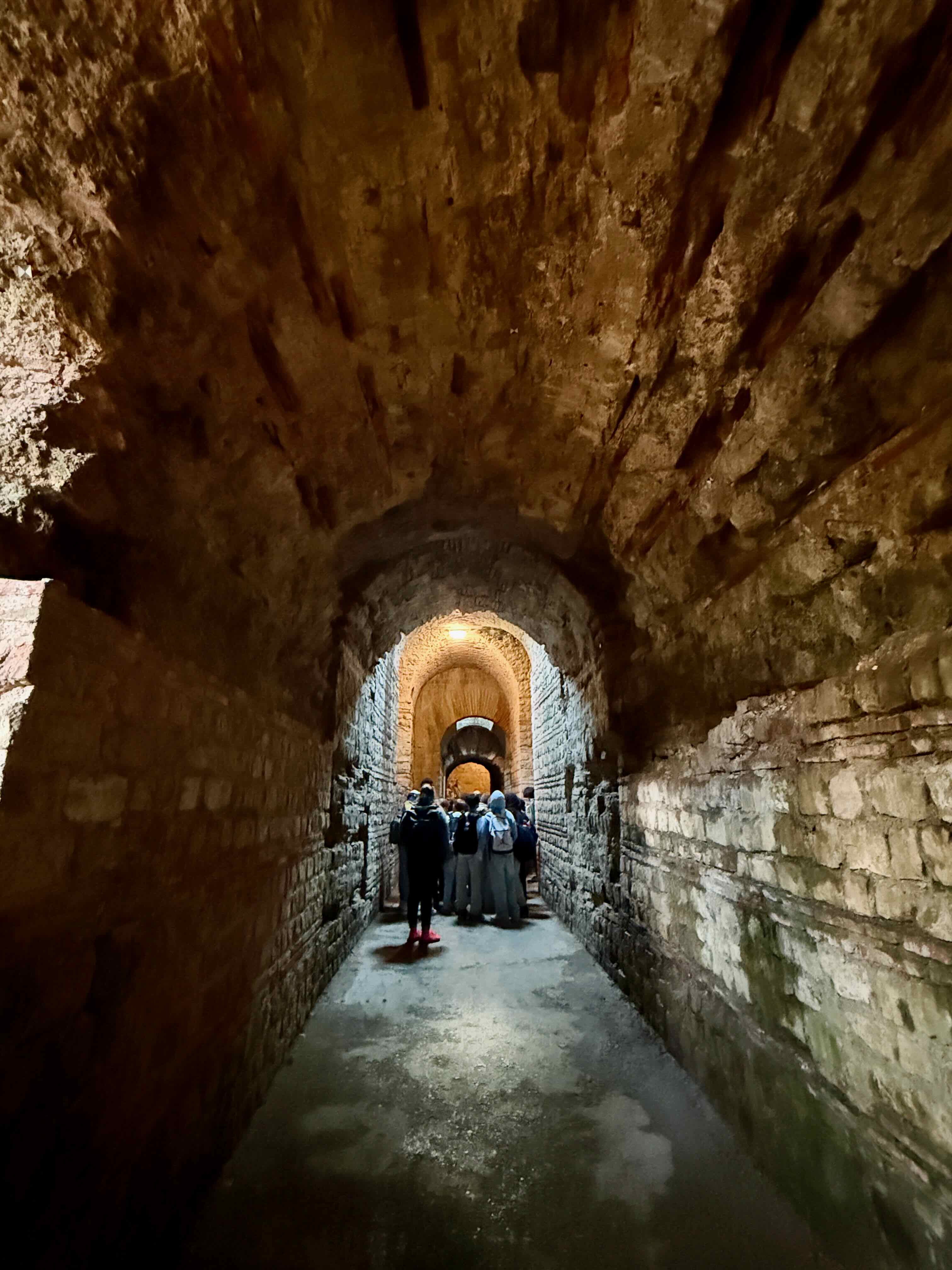
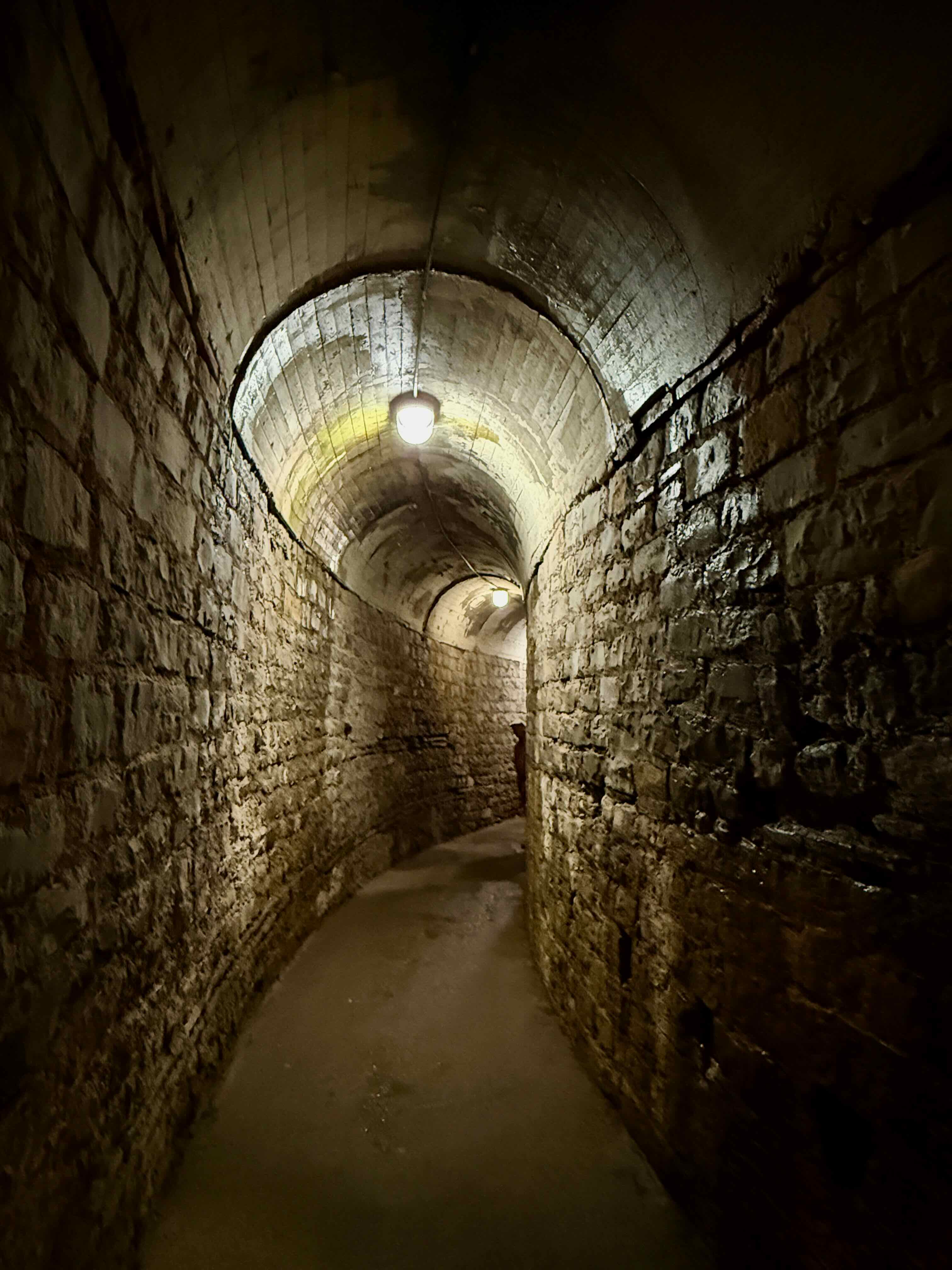
We are able to walk through the underground tunnels that would have been used as a service level for the maintenance of the bath’s heating system. This is the entrance to the tunnels.

There was a group of schoolchildren ahead of us…probably the loudest group we have encountered on our travels! We took a side tunnel to avoid walking behind them. There are a maze of tunnels and we are free to explore as we wish. That is Bob peeking around the bend in the tunnel.
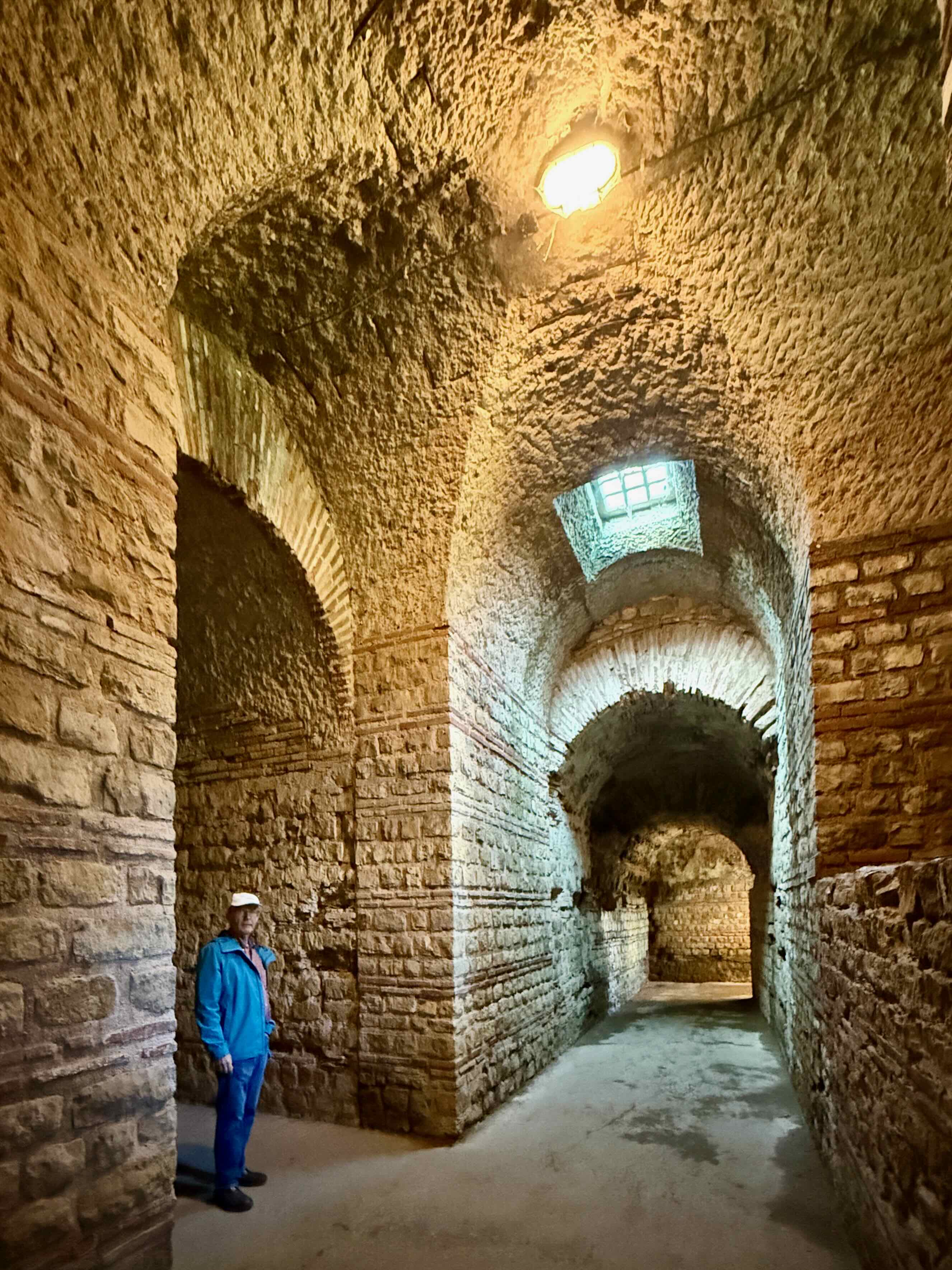
We do get a bit lost down here, but it was a lot of fun exploring these interesting tunnels.

Which way should we go!

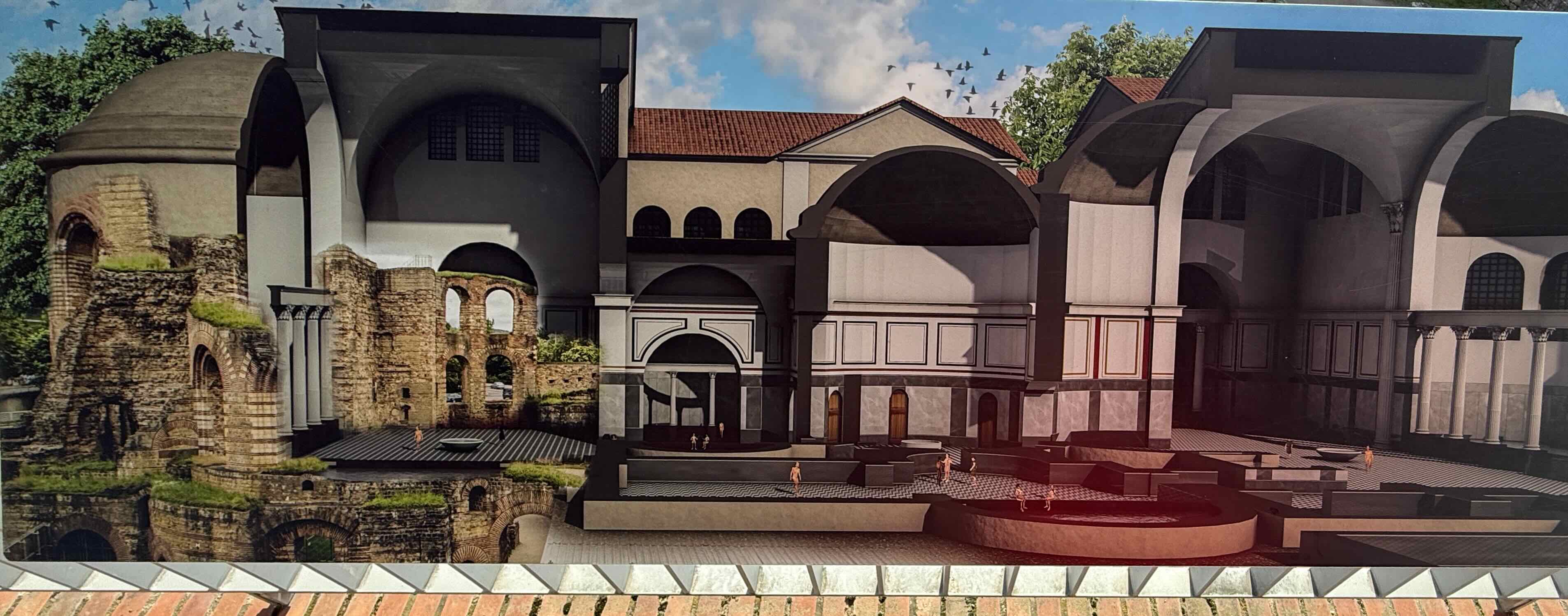
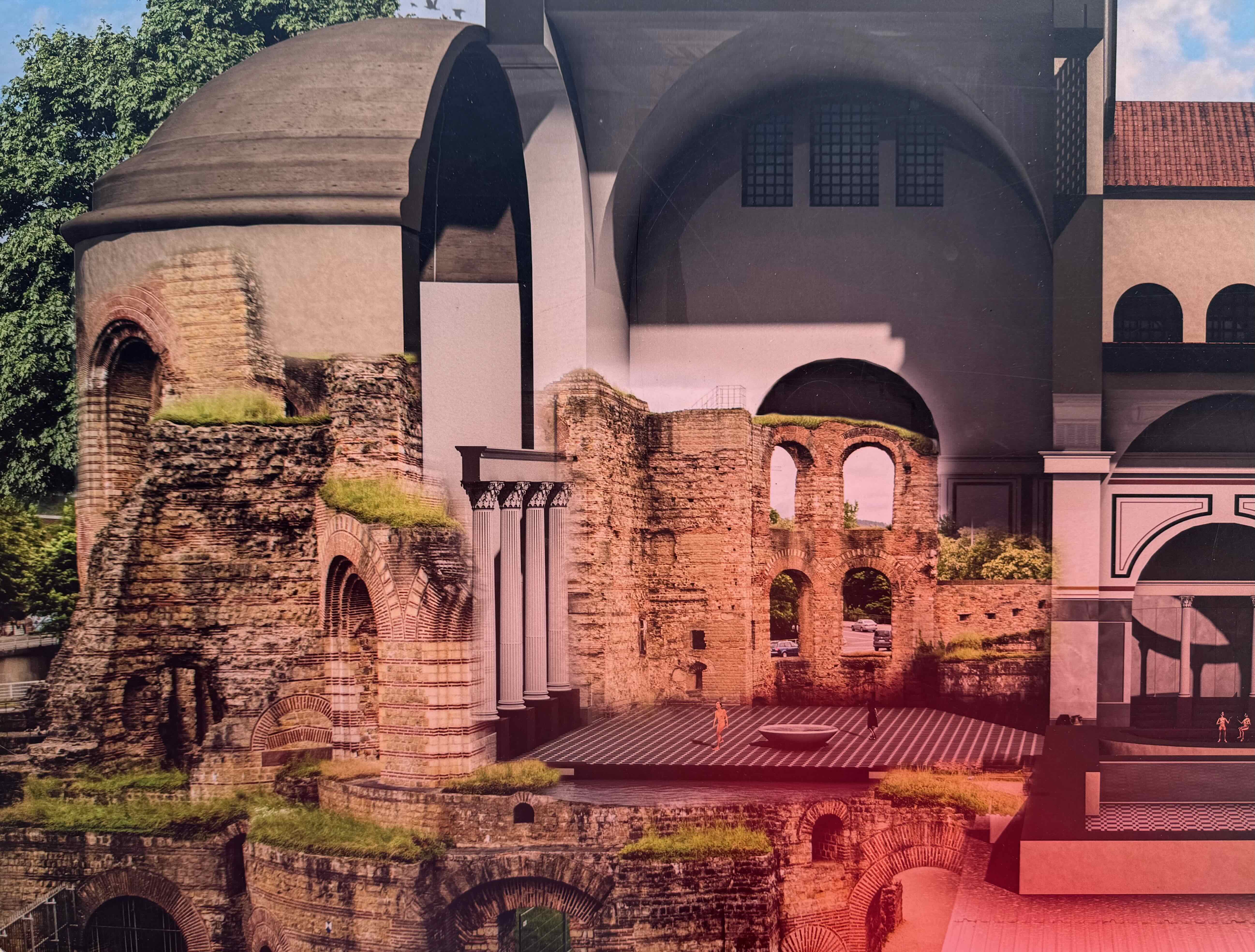
This photo shows the size of the original baths, although they were never actually completed. The ruins of today are superimposed on the original baths.

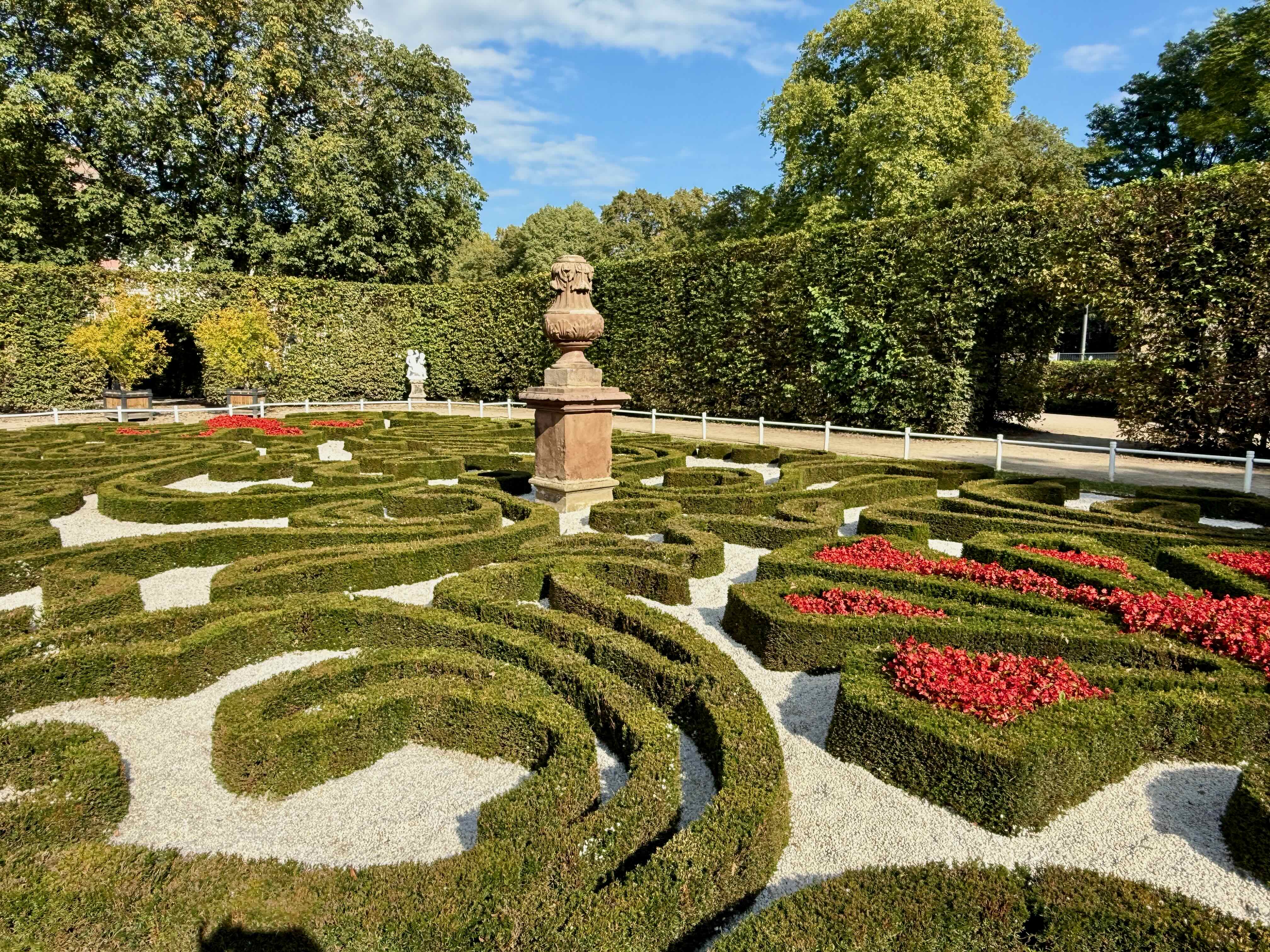
The ruins are impressive, but they are only half the height of the original structure! We pass this lovely garden on the way to visit Trier’s cathedral.
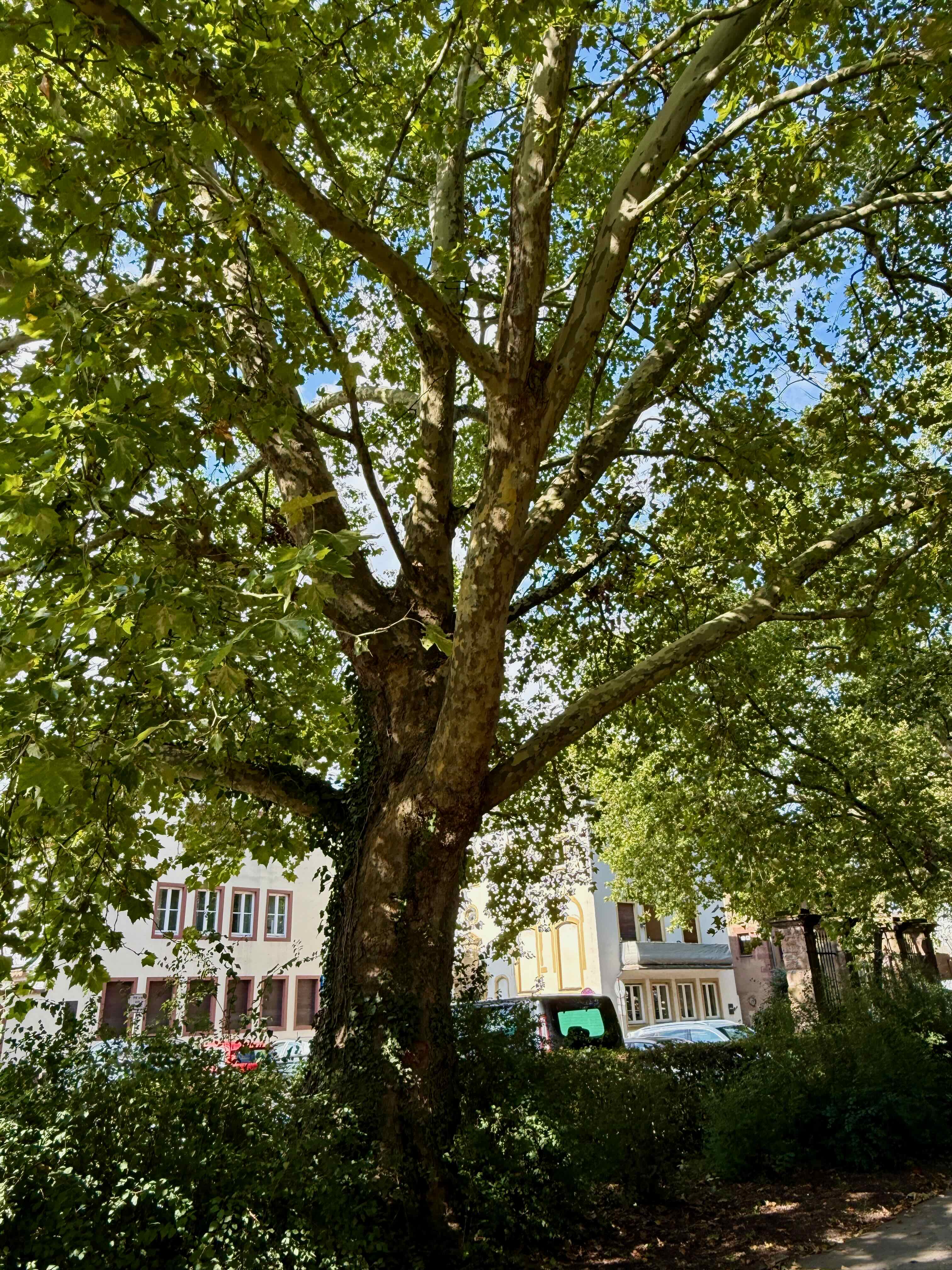
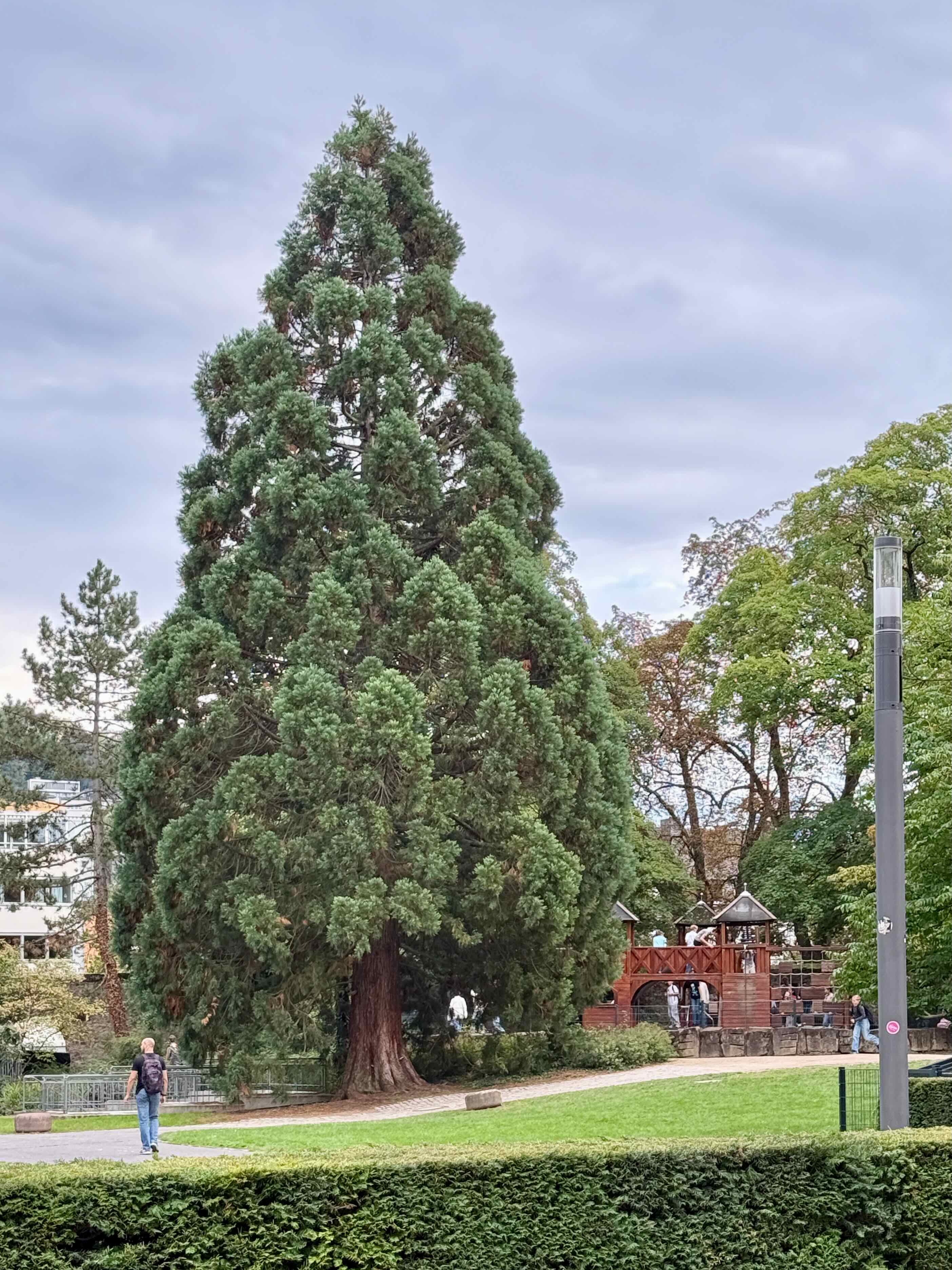
Photos really do not show how beautiful and enormous the trees are. I wish we were able to grow trees this large back home. These trees wouldn’t survive our colder climate.

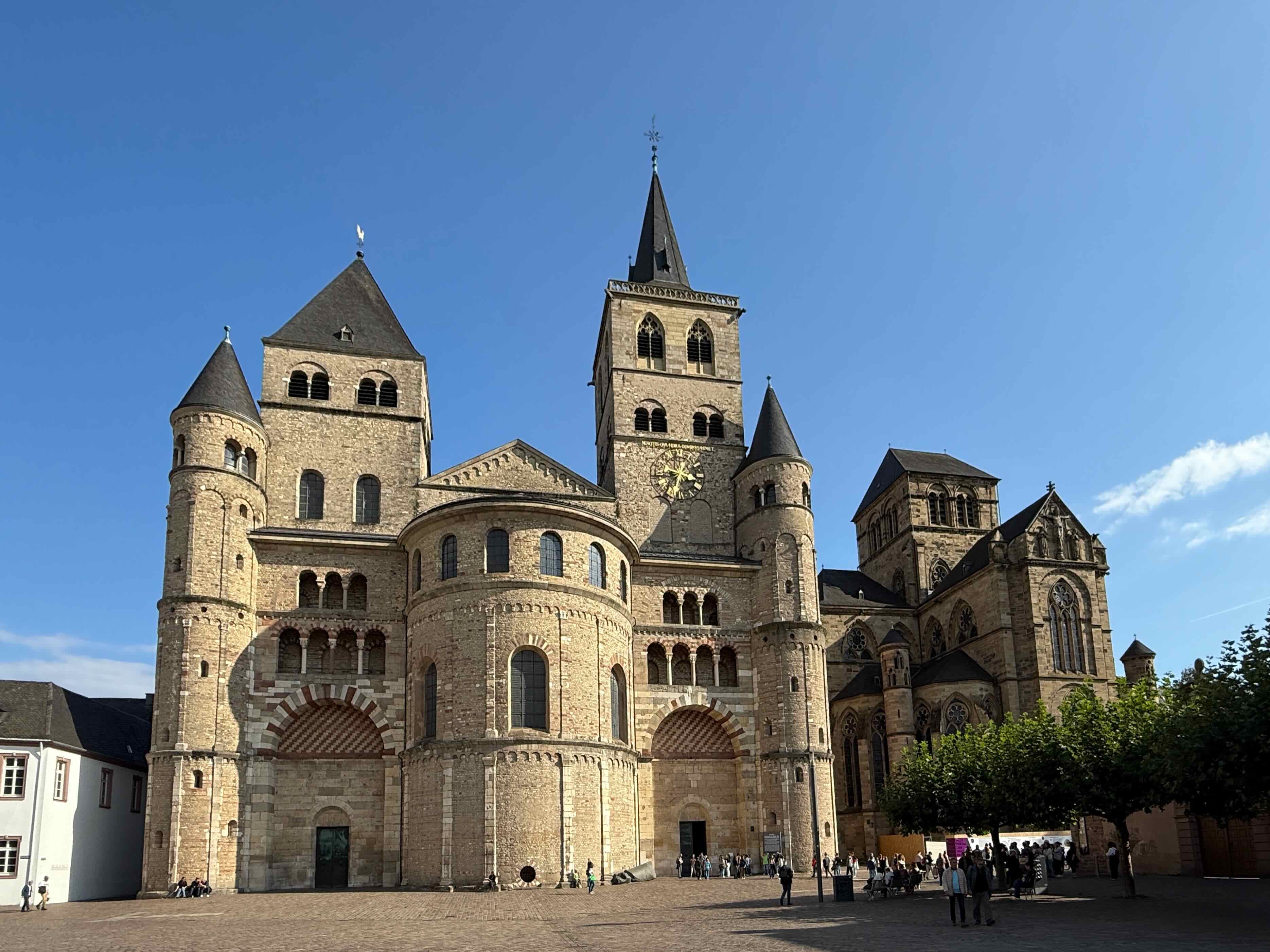
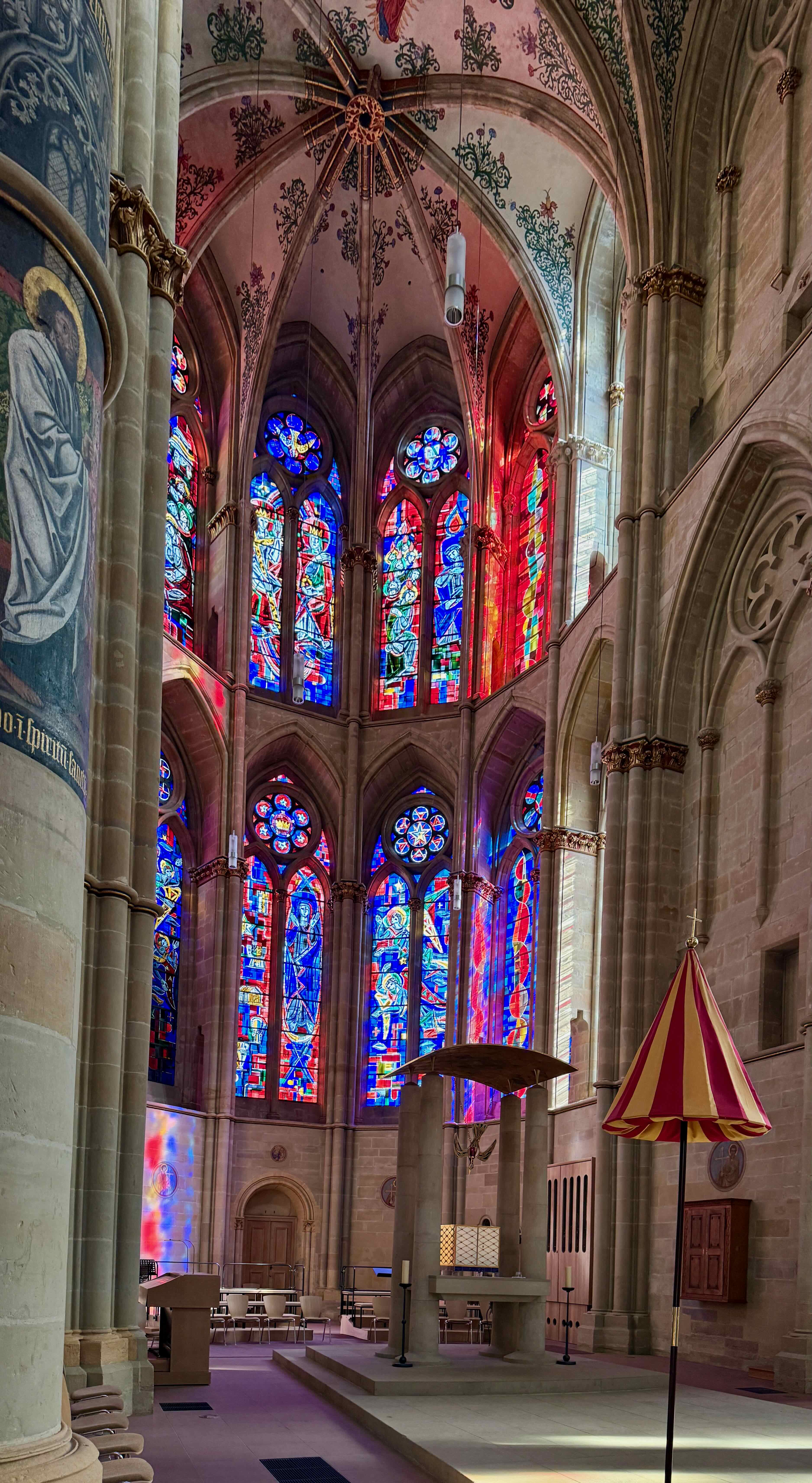
Trier Cathedral is a UNESCO World Heritage Site and the oldest cathedral in Germany. Construction started in the 4th century and it was built upon the foundations of ancient Roman structures.

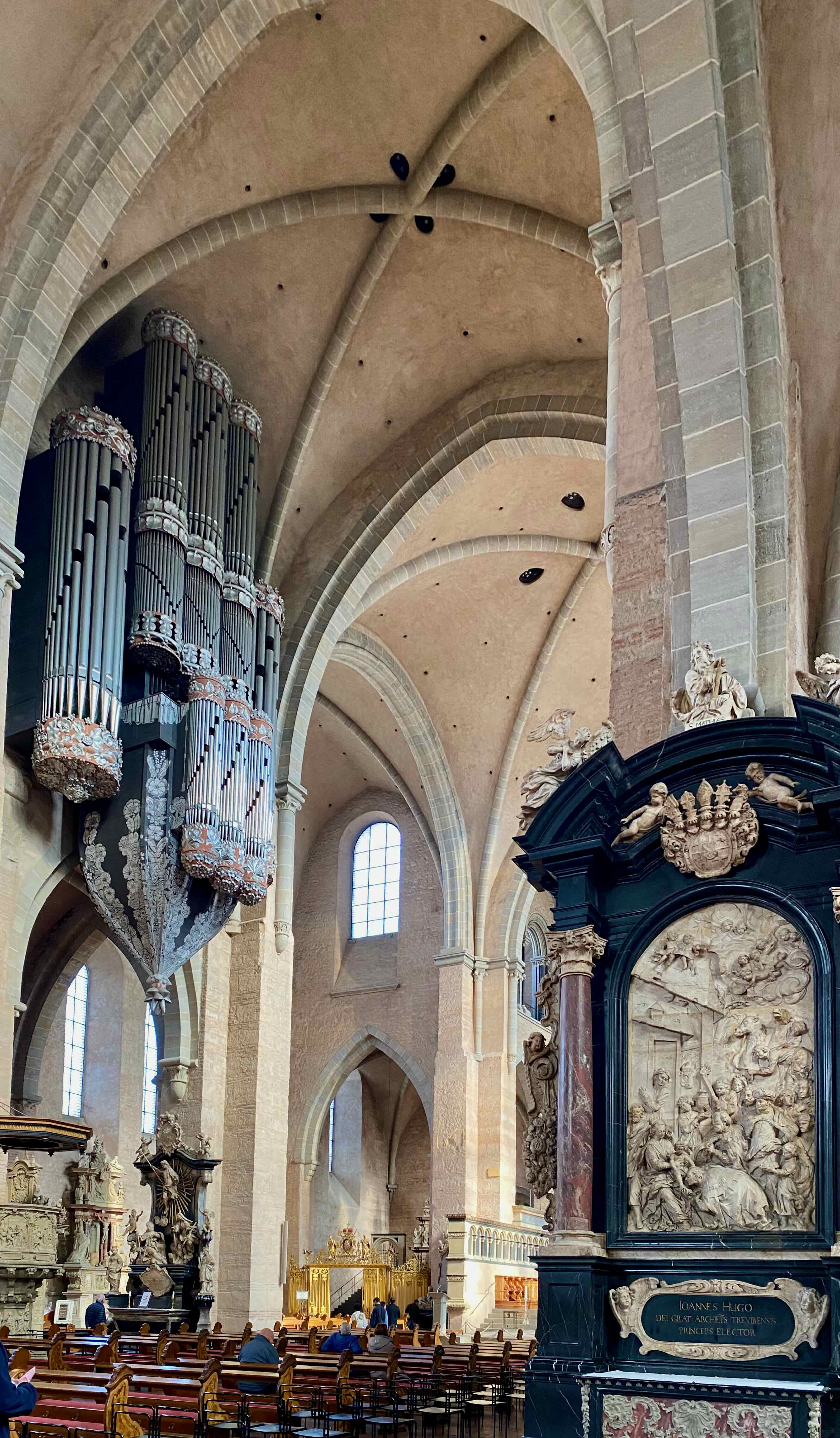
And yes, the inside of the cathedral is very impressive.

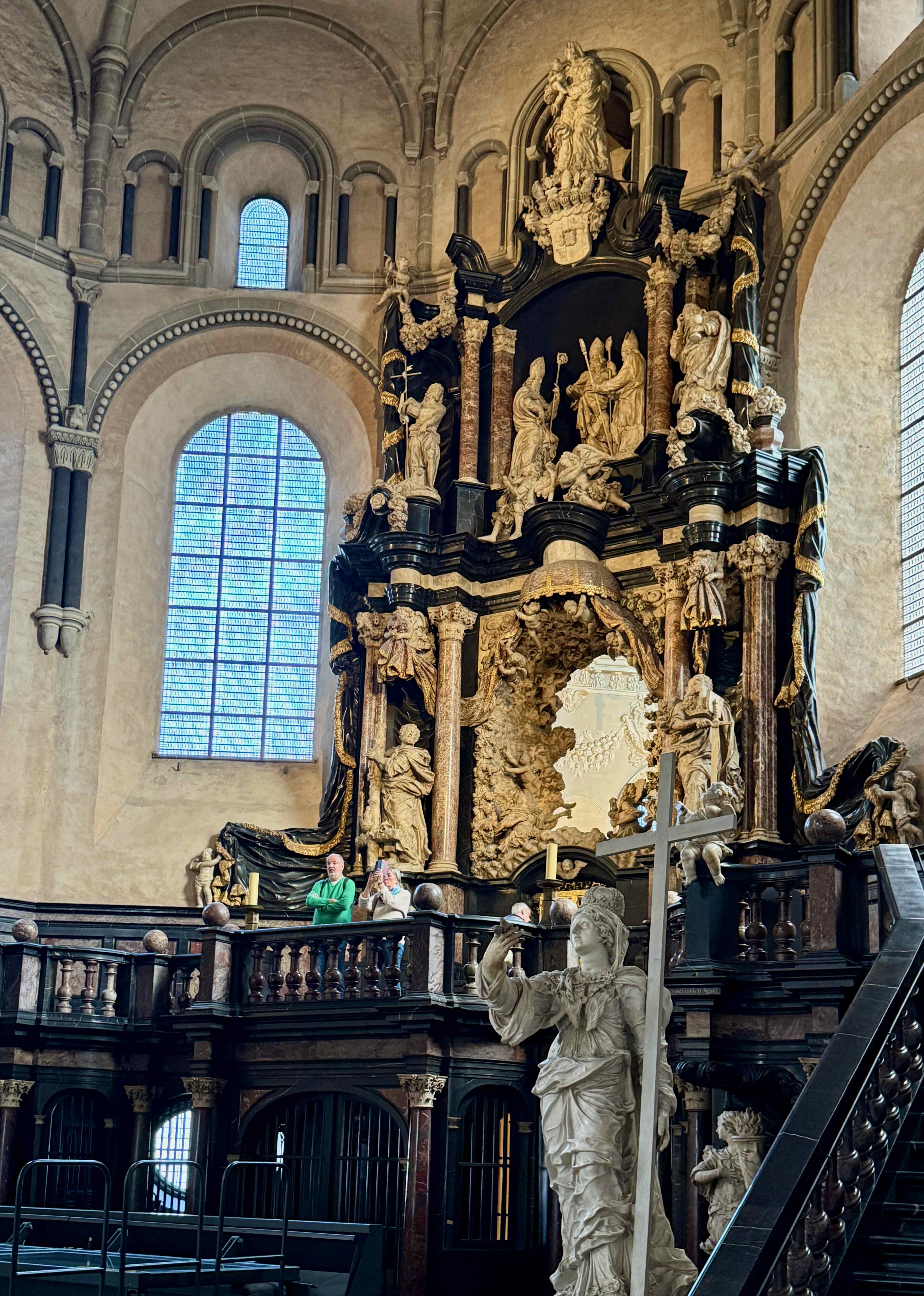
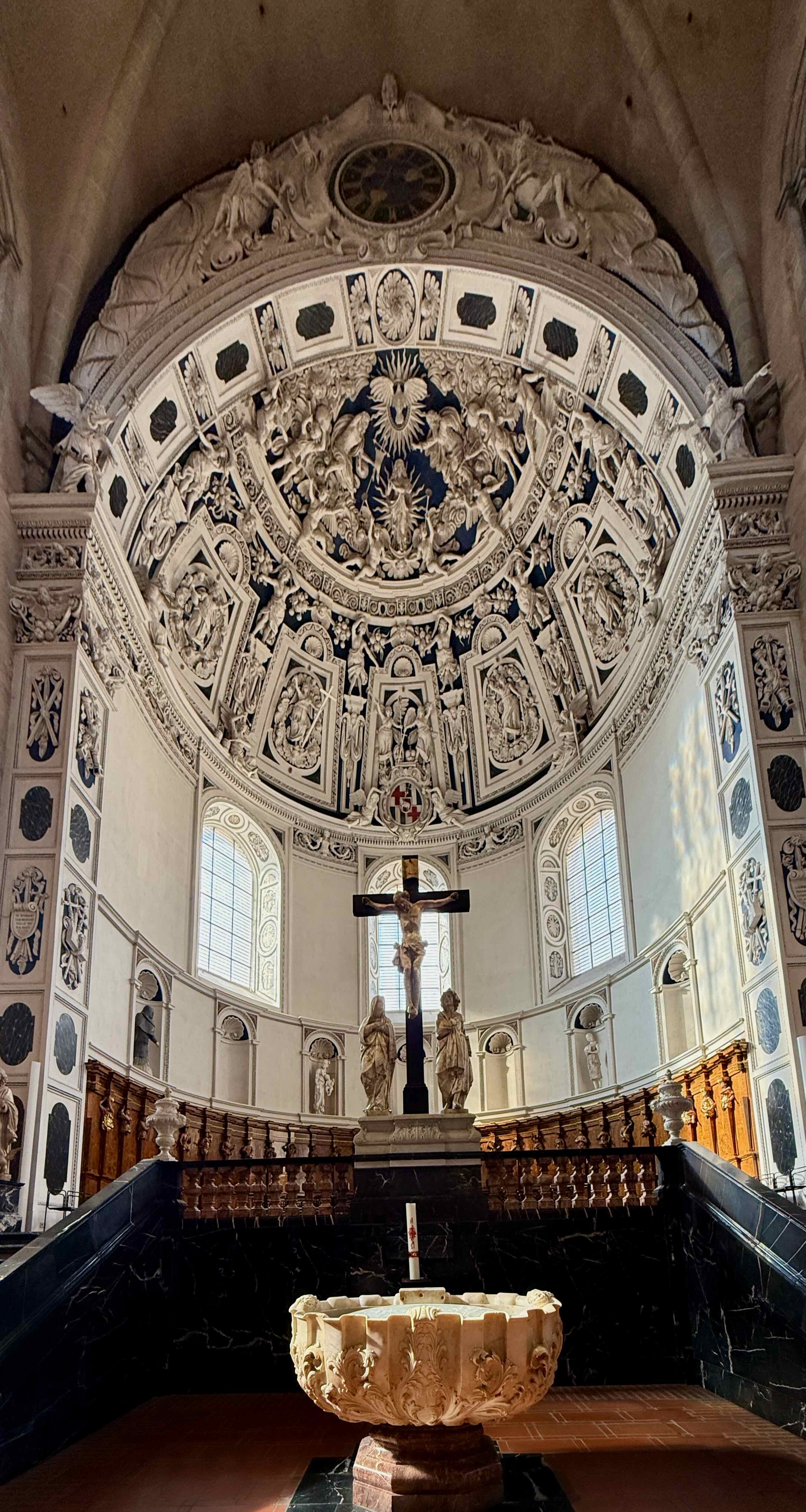
It has one of the most ornate organs we have seen… and many huge sculptures with multiple figures. We walk up these stairs for a view of the nave. This beautiful blue and white Baroque stucco work decorates the choir loft of the Cathedral. It is stunning and unusual. This is the first time we have seen anything like this in a cathedral.
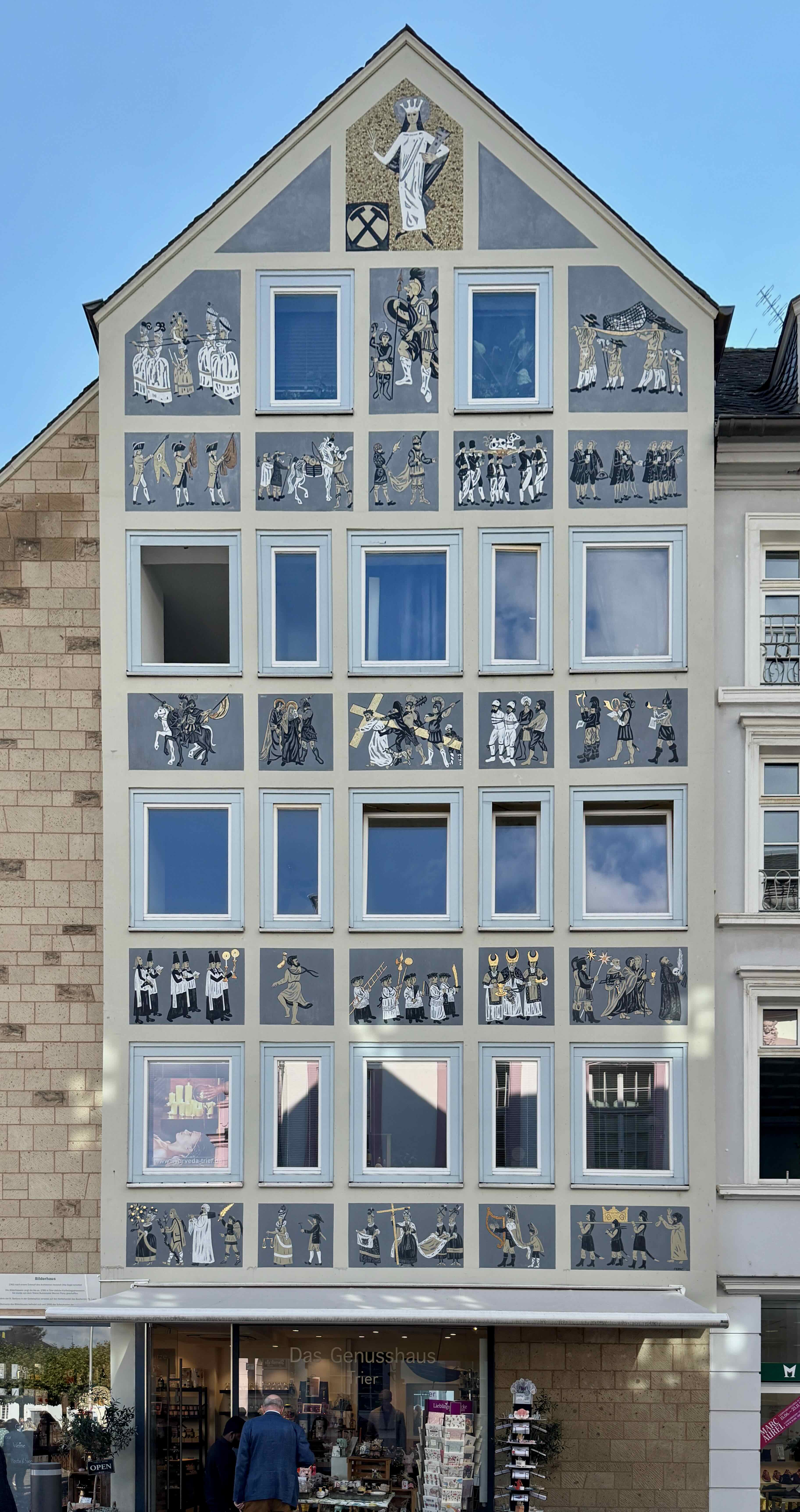
We pass this building on the way to the Nigra Gate. There are many ornately decorated buildings in Trier.

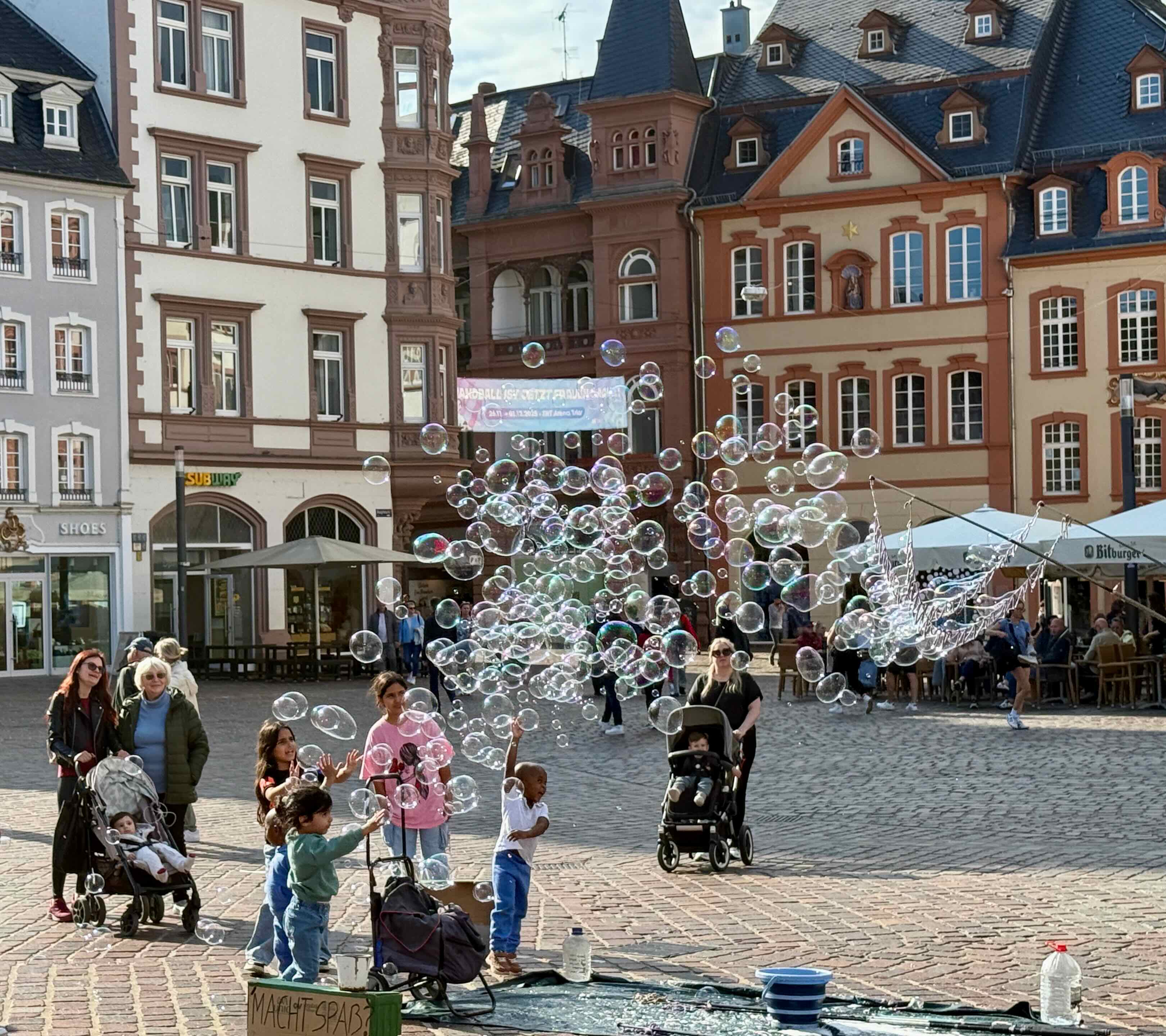
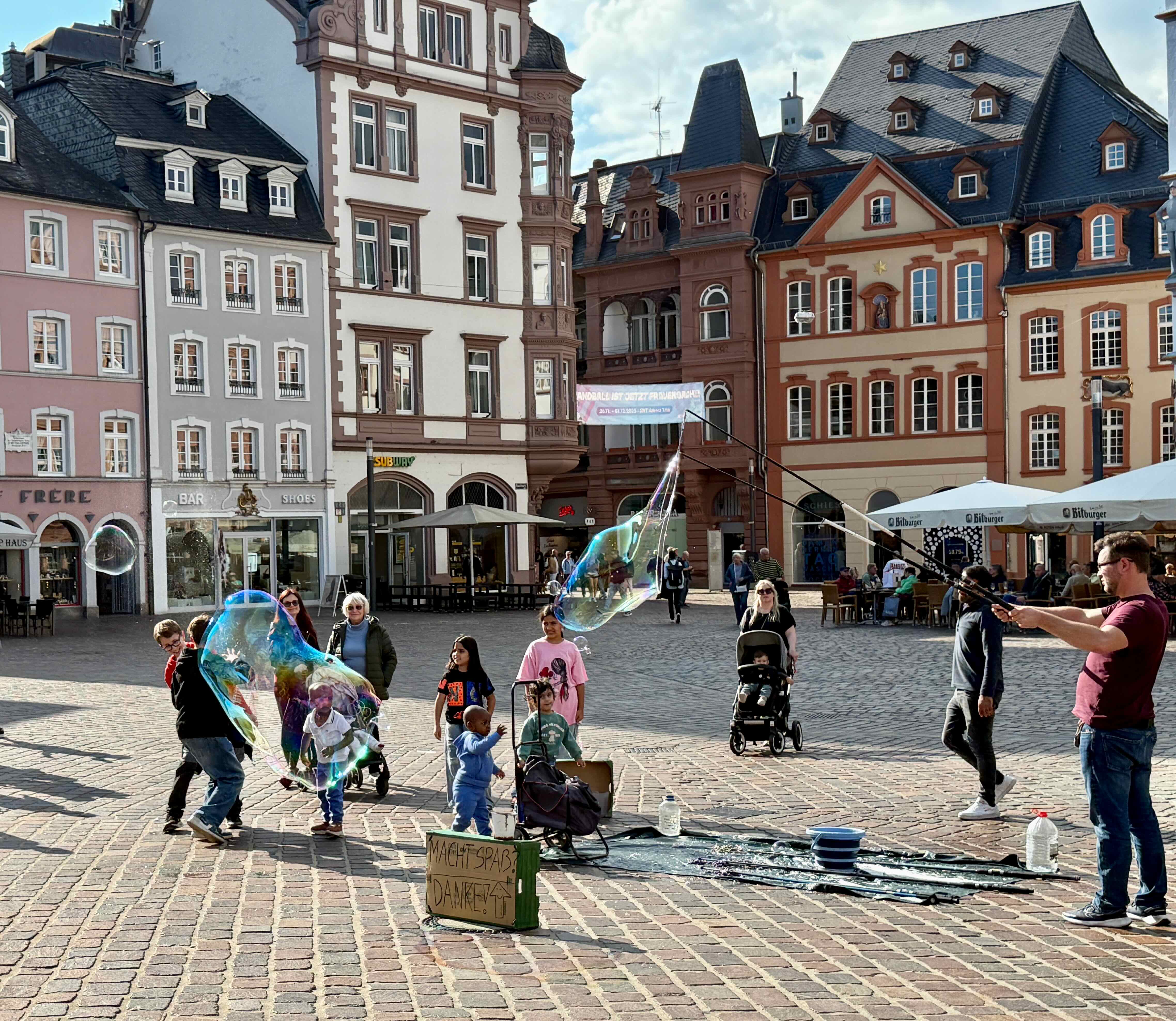
I love watching the bubble makers, and the children trying to catch the bubbles. This fellow made huge bubbles…

and lots of smaller bubbles.  I would love to know how to do this.

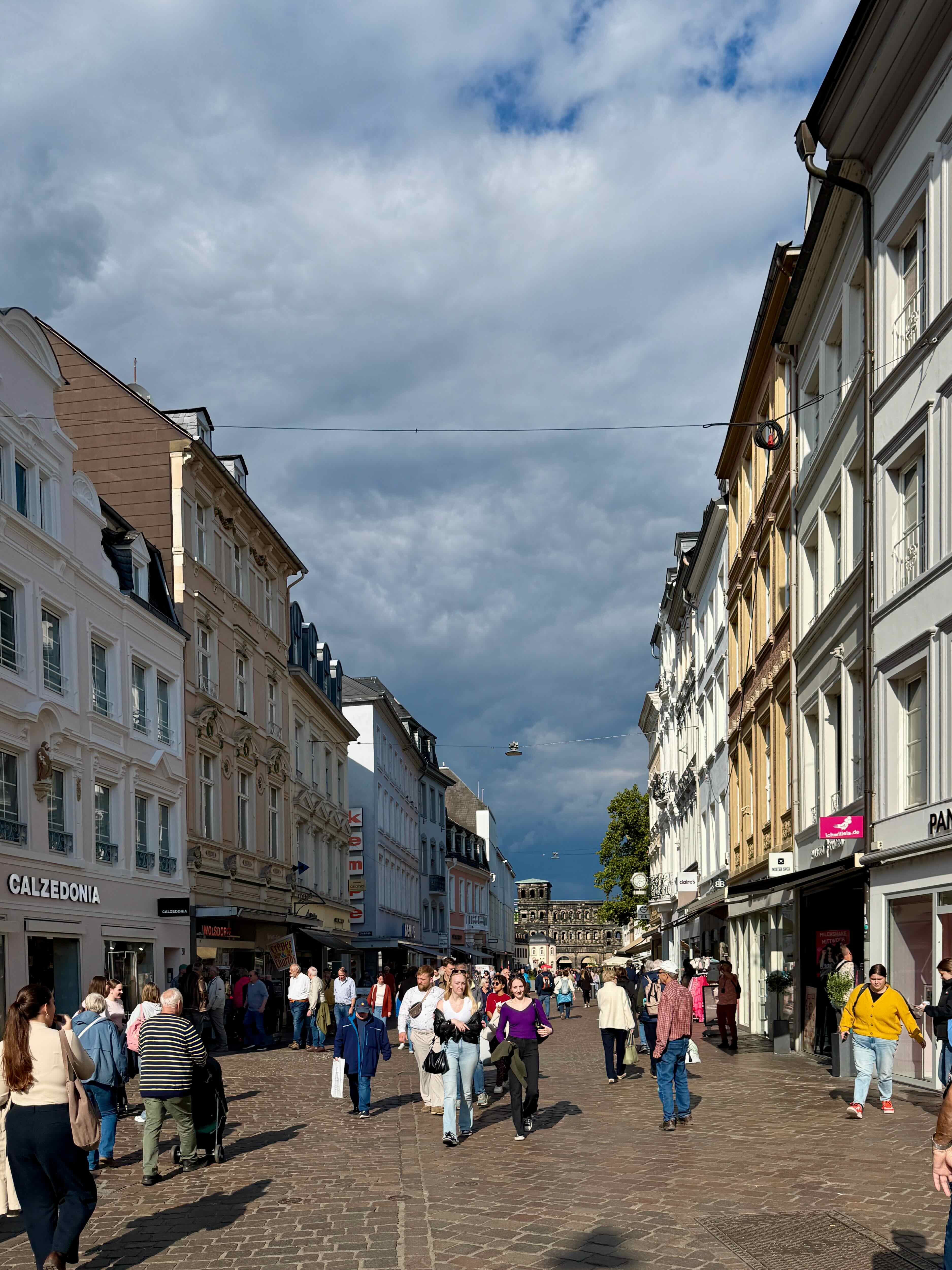
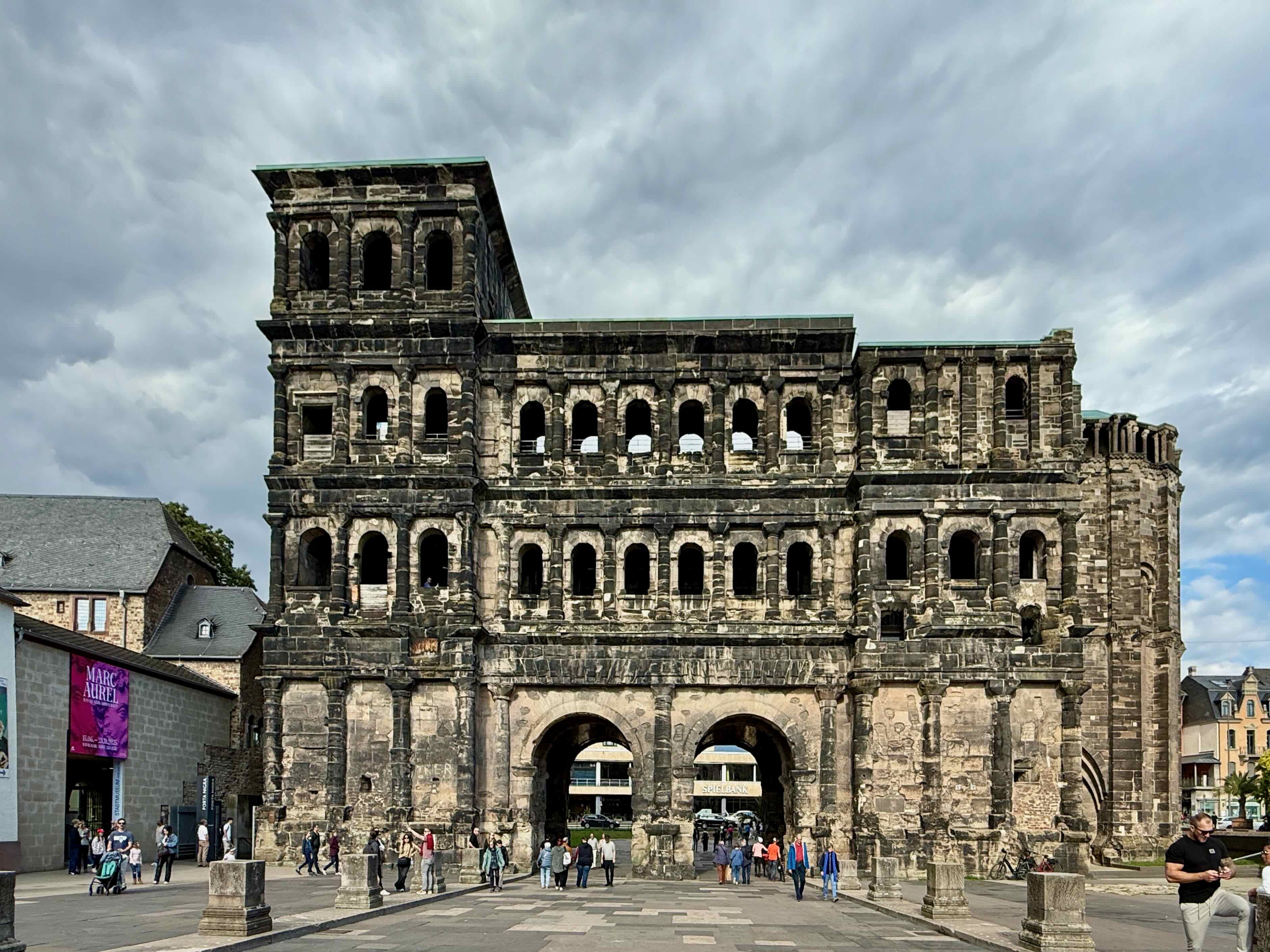
At the end of the street we can see the Nigra Gate, another UNESCO World Heritage Site.

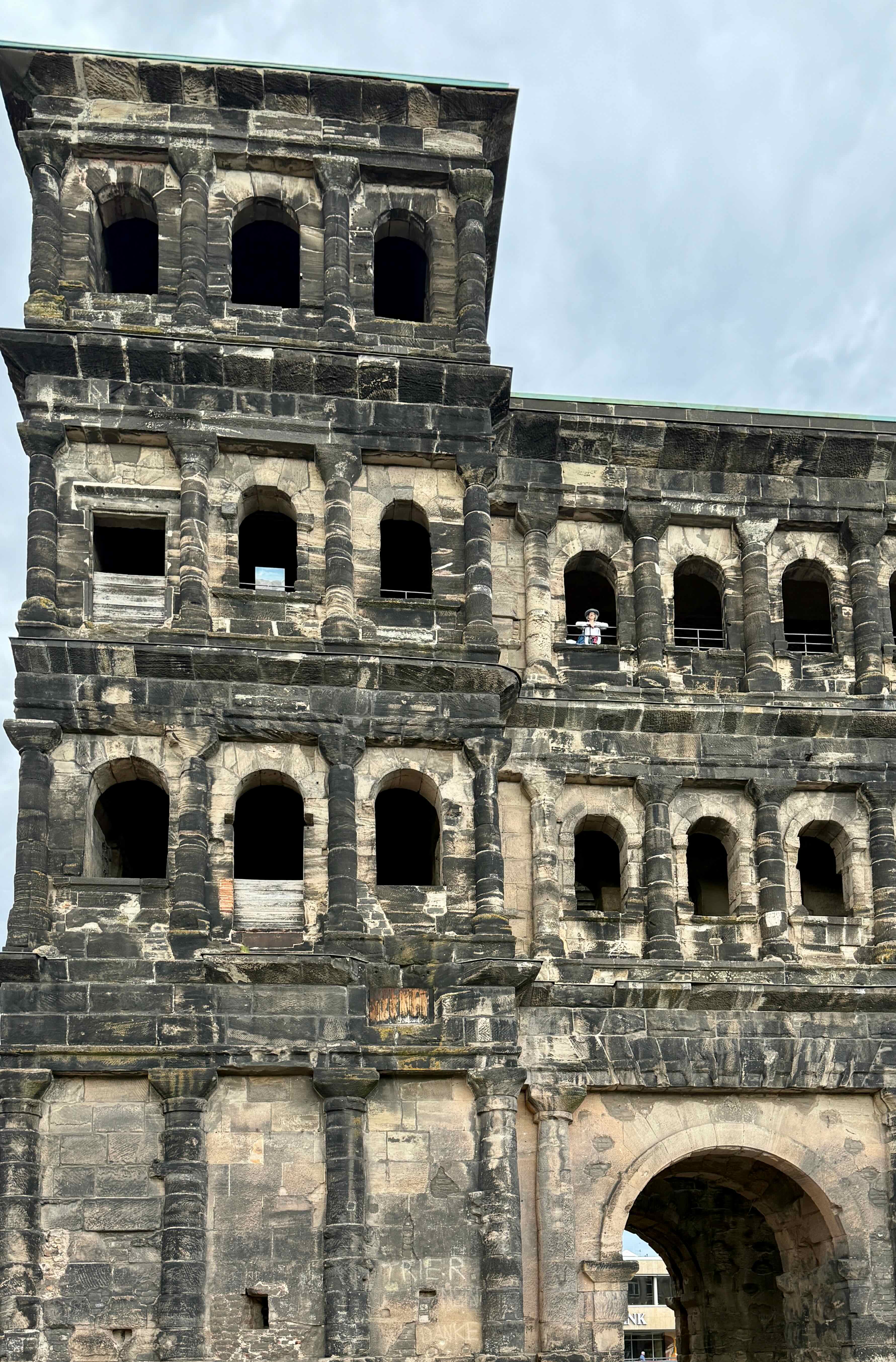
The Porta Nigra, or Black Gate, is the largest Roman gate in Northern Europe.  It was part of the defensive walls and gates that surrounded Trier in 200AD. It is  incredibly well preserved, especially when you consider that it was completed around 200AD, and it almost two thousand years old!

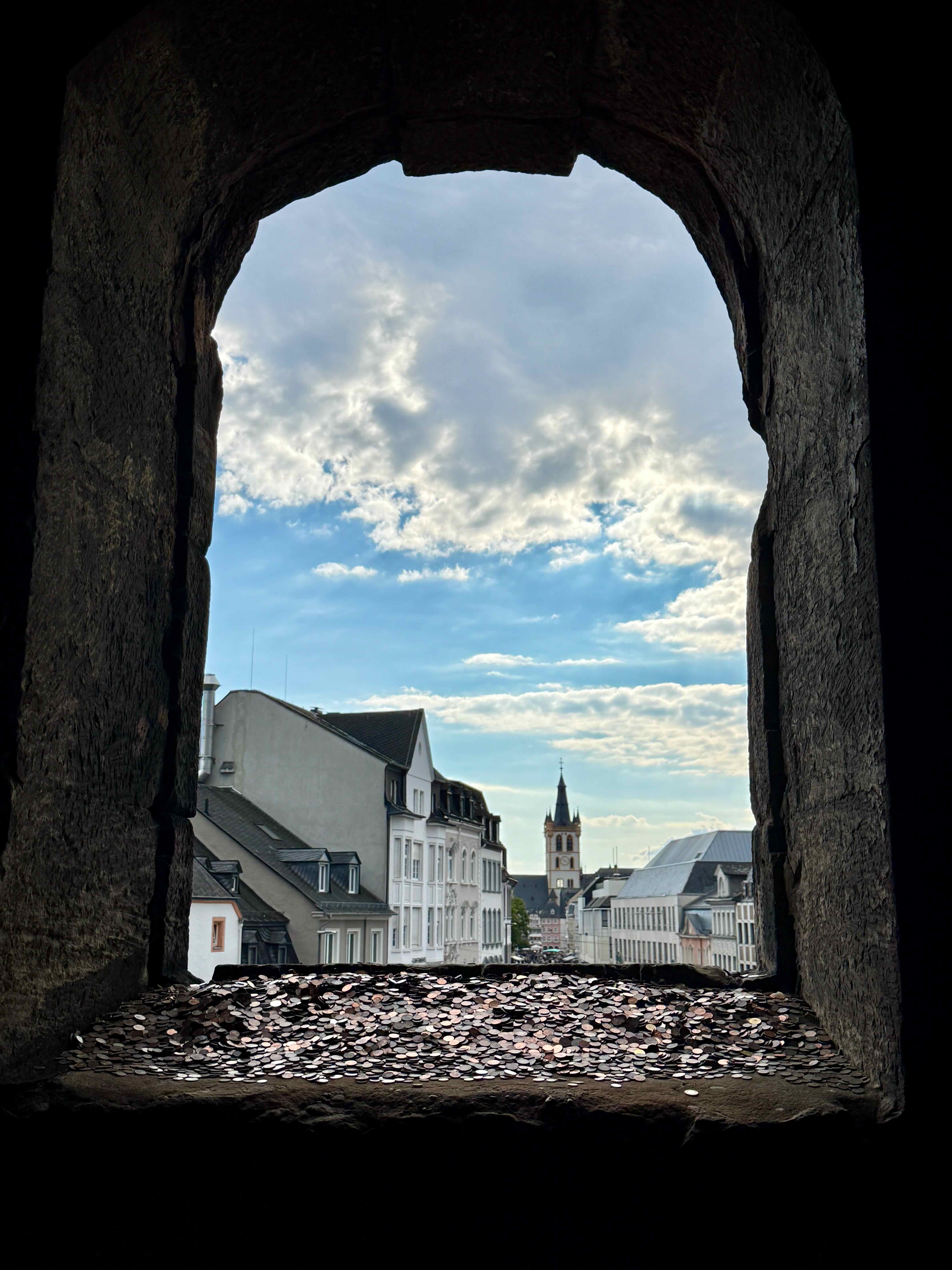
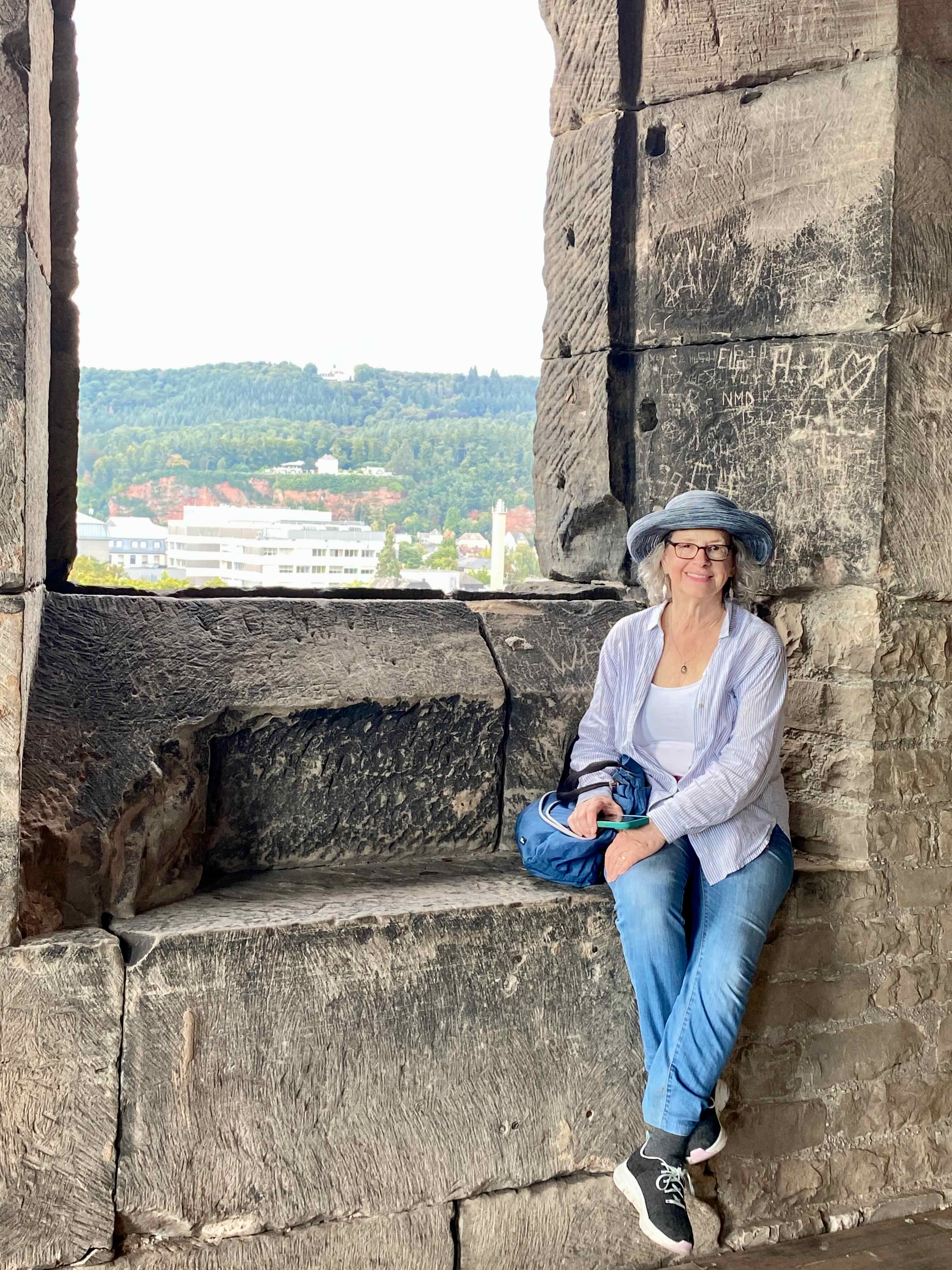
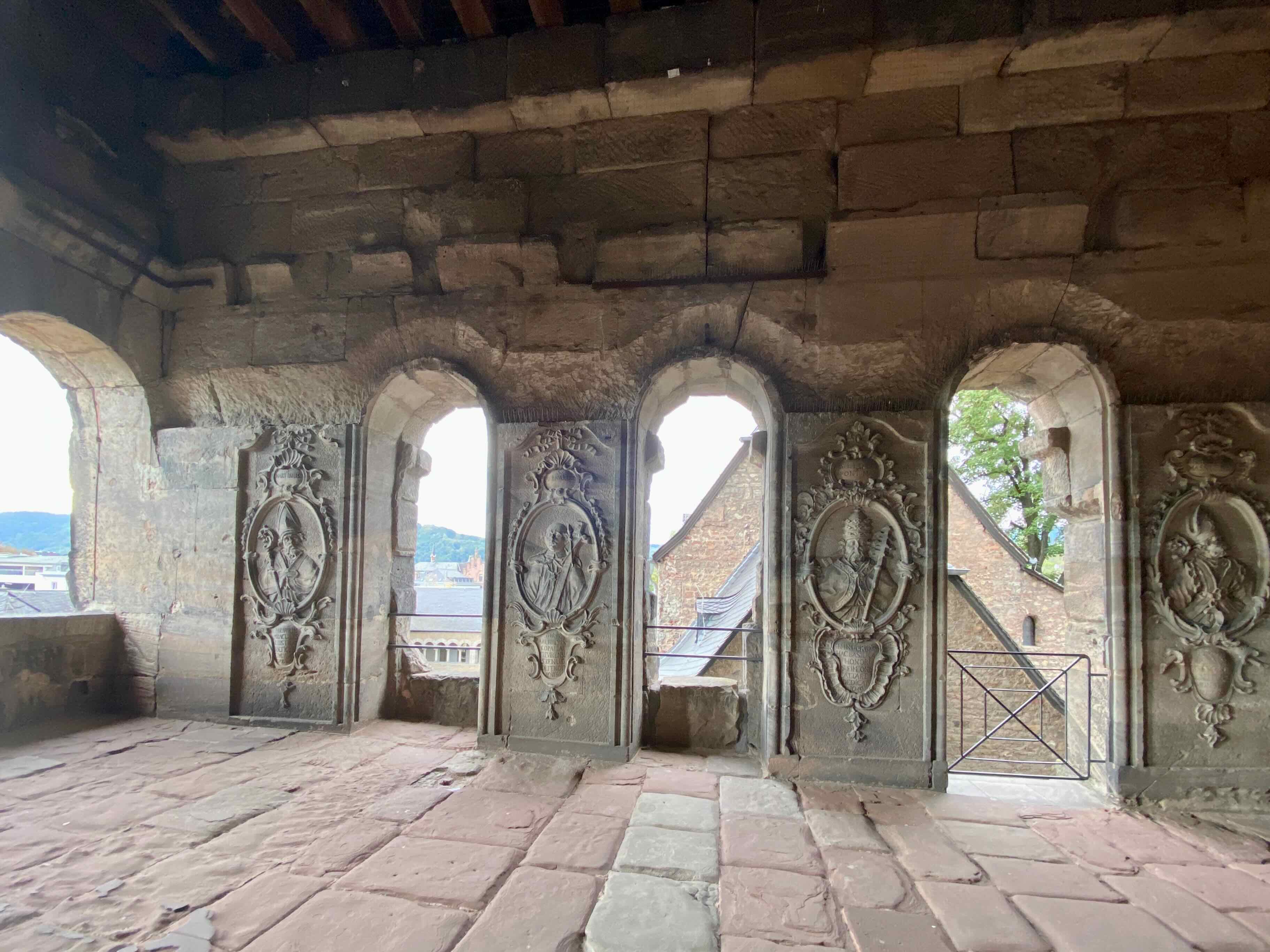
We pay 6€ each to climb inside the gate. This ‘window’ has a pile of coins, perhaps people making a wish?

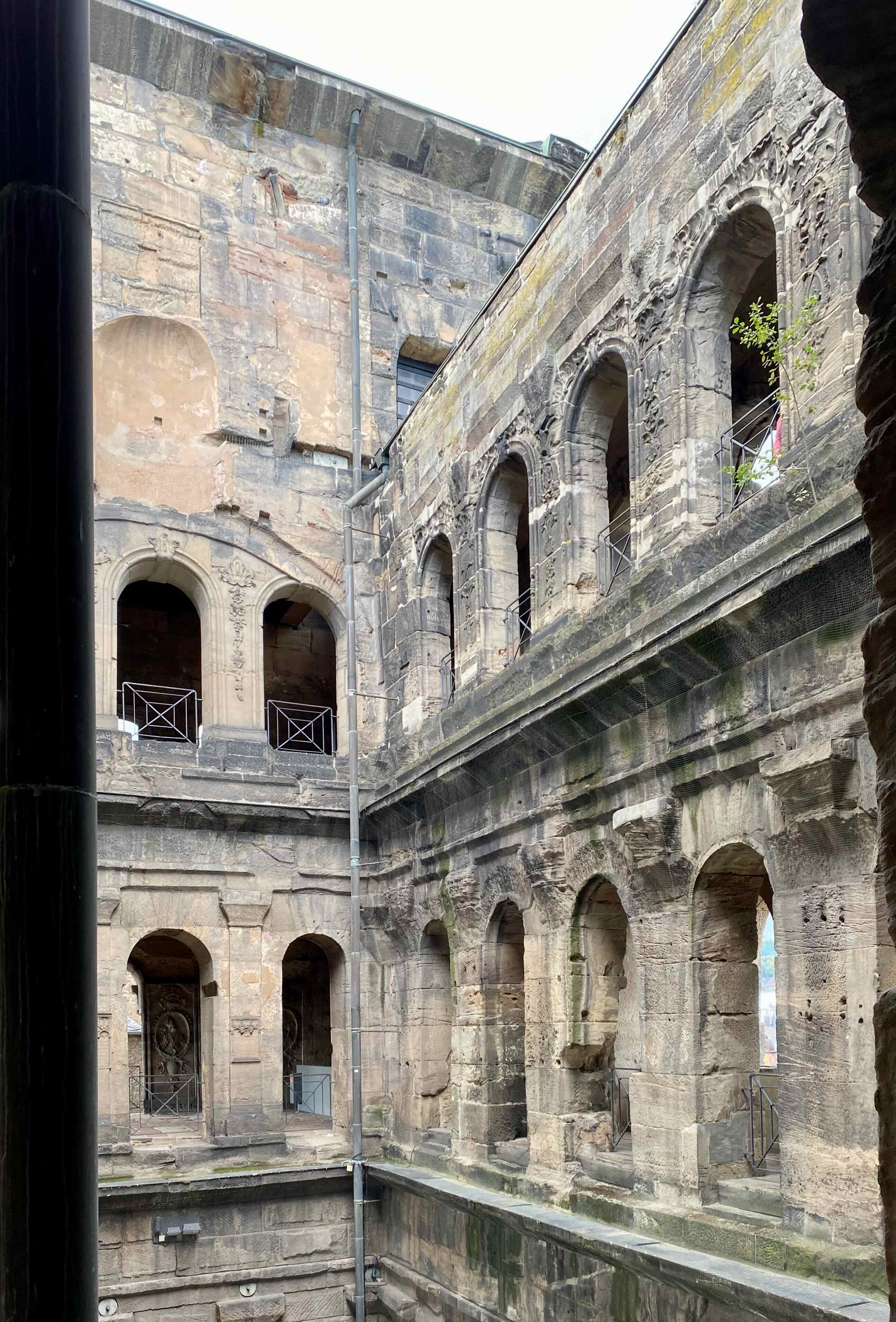
A view inside the gate.

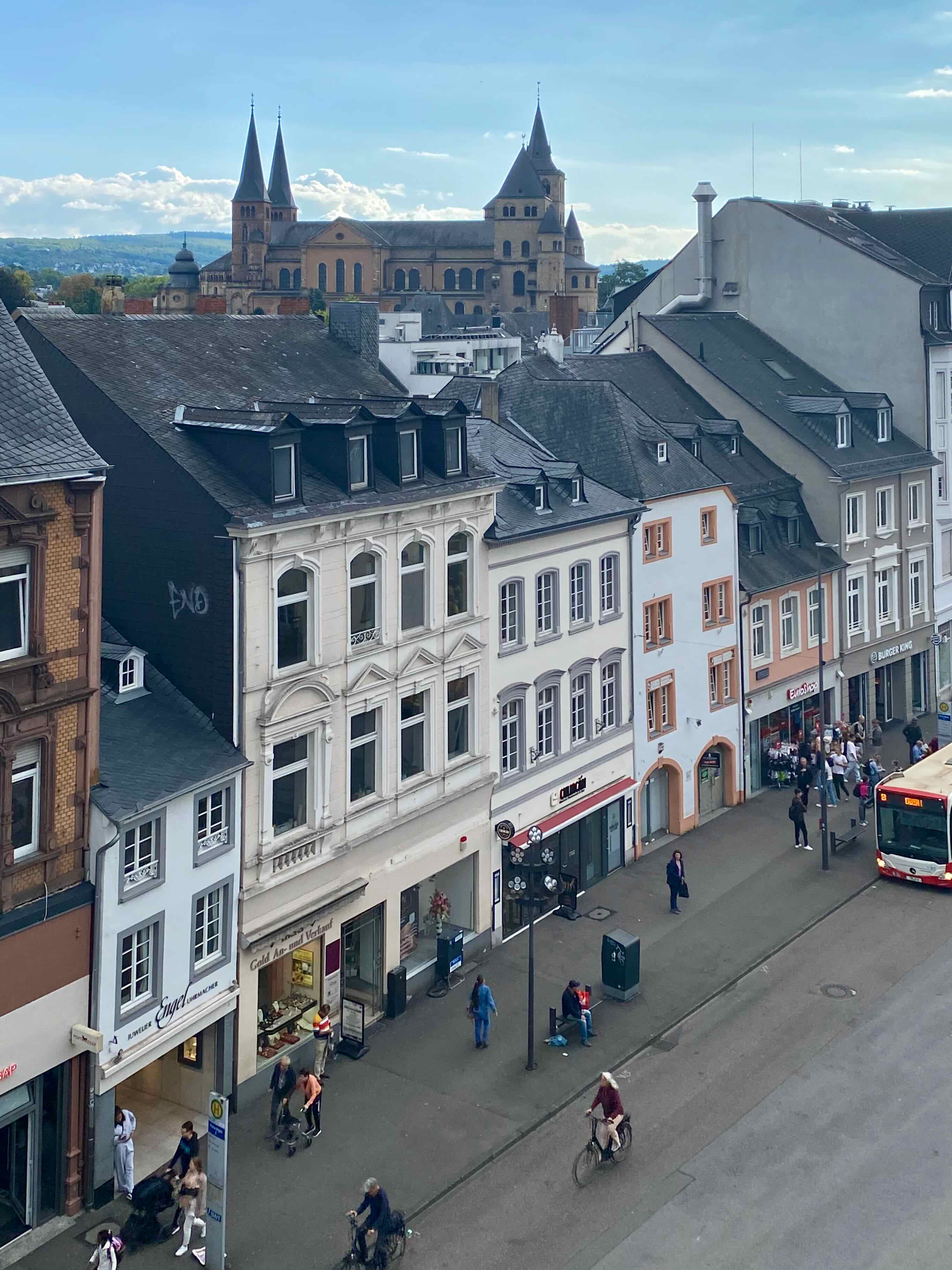
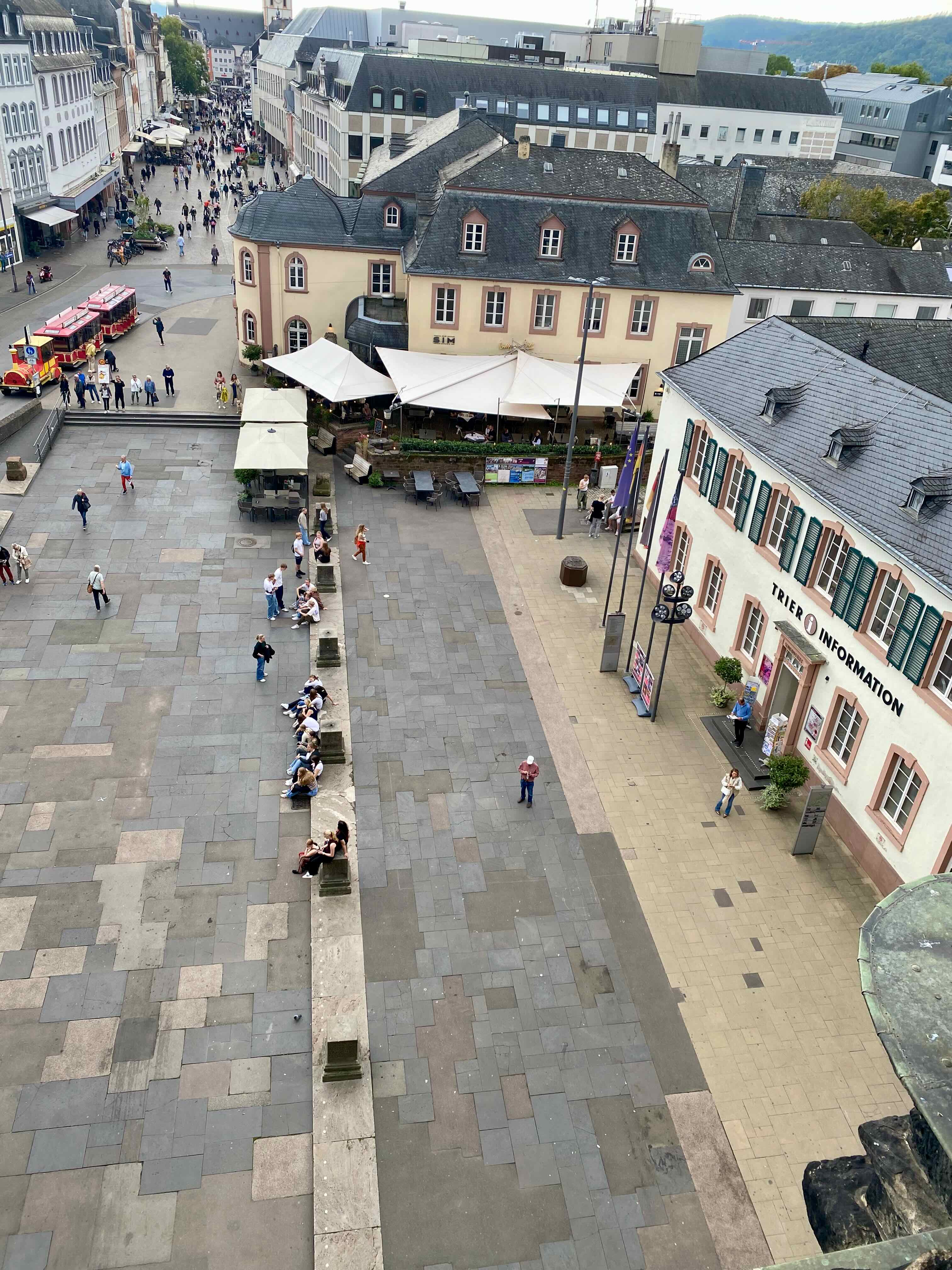
We can see the Trier Cathedral from the second level of the gate.

Grafiti has been around for a long time.  Some of the dates on the walls are hundreds of years old.  I do really hate this practice of defacing monuments.

There is Bob, I sent him down to the street so he could take a photo of me in one of the gate arches.

Here I am.These carved decorations are still in remarkably good condition.
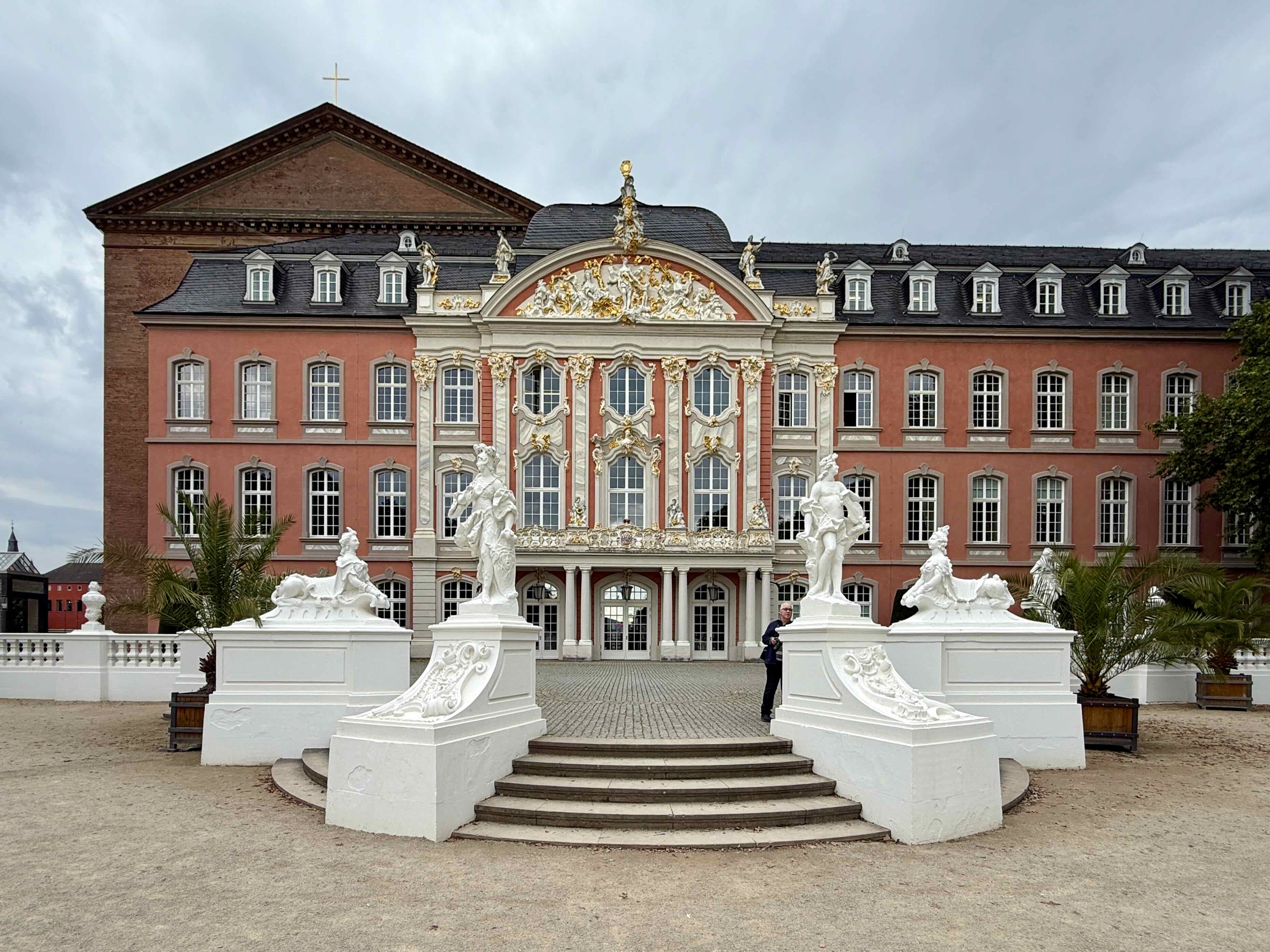
Walking back to our car we stop for a photo of the Electoral Palace. We had our lunch in its beautiful gardens which have many white statues and small ponds.

Another gorgeous tree.

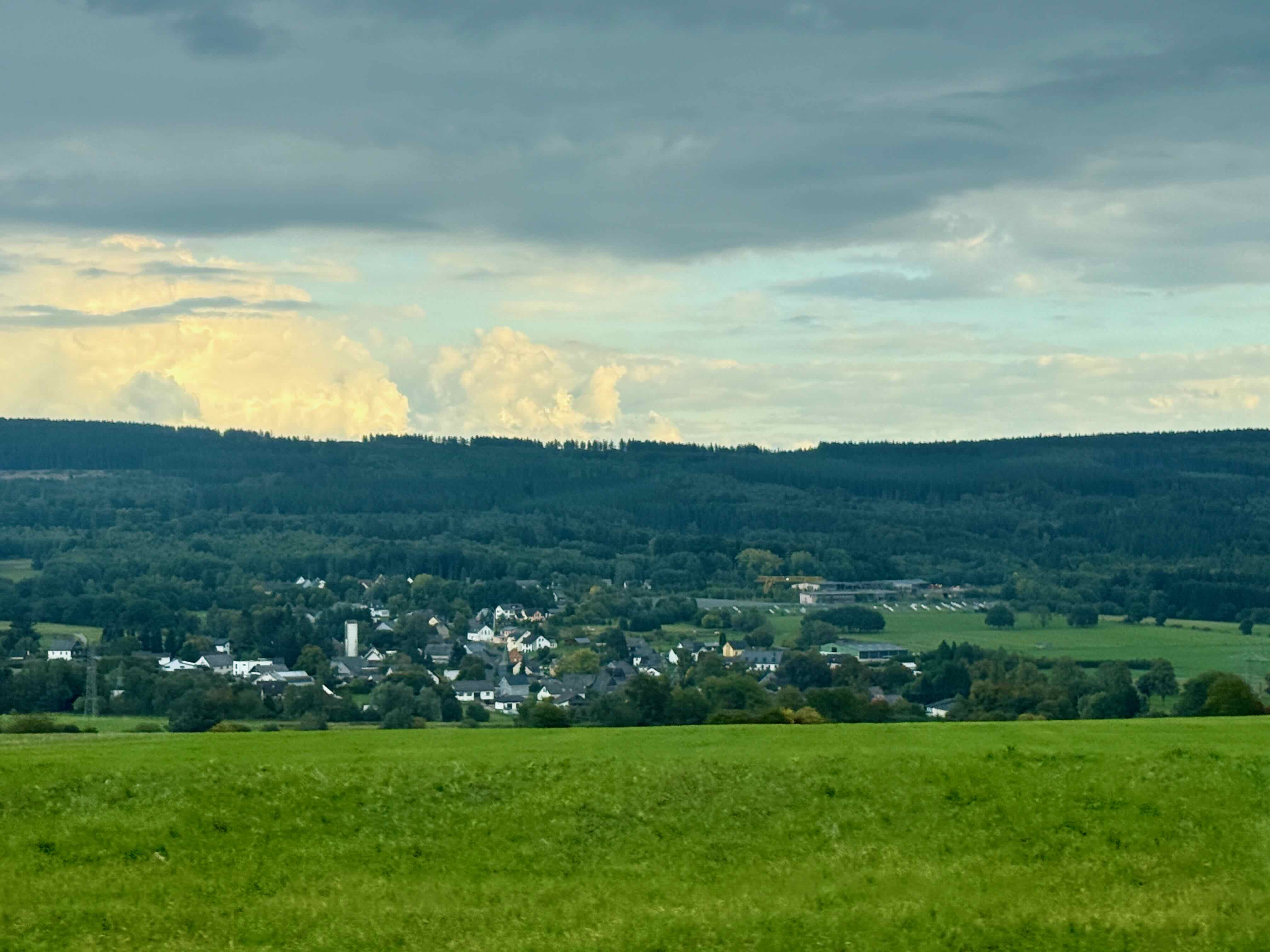
The clouds are moving in on our drive home.

Big black ominous clouds.

We arrive at our Airbnb in Frankfurt. It is smaller than our last place but cozy and has everything we need.

Bruges, Belgium

Day 21     Saturday, September 20, 2025

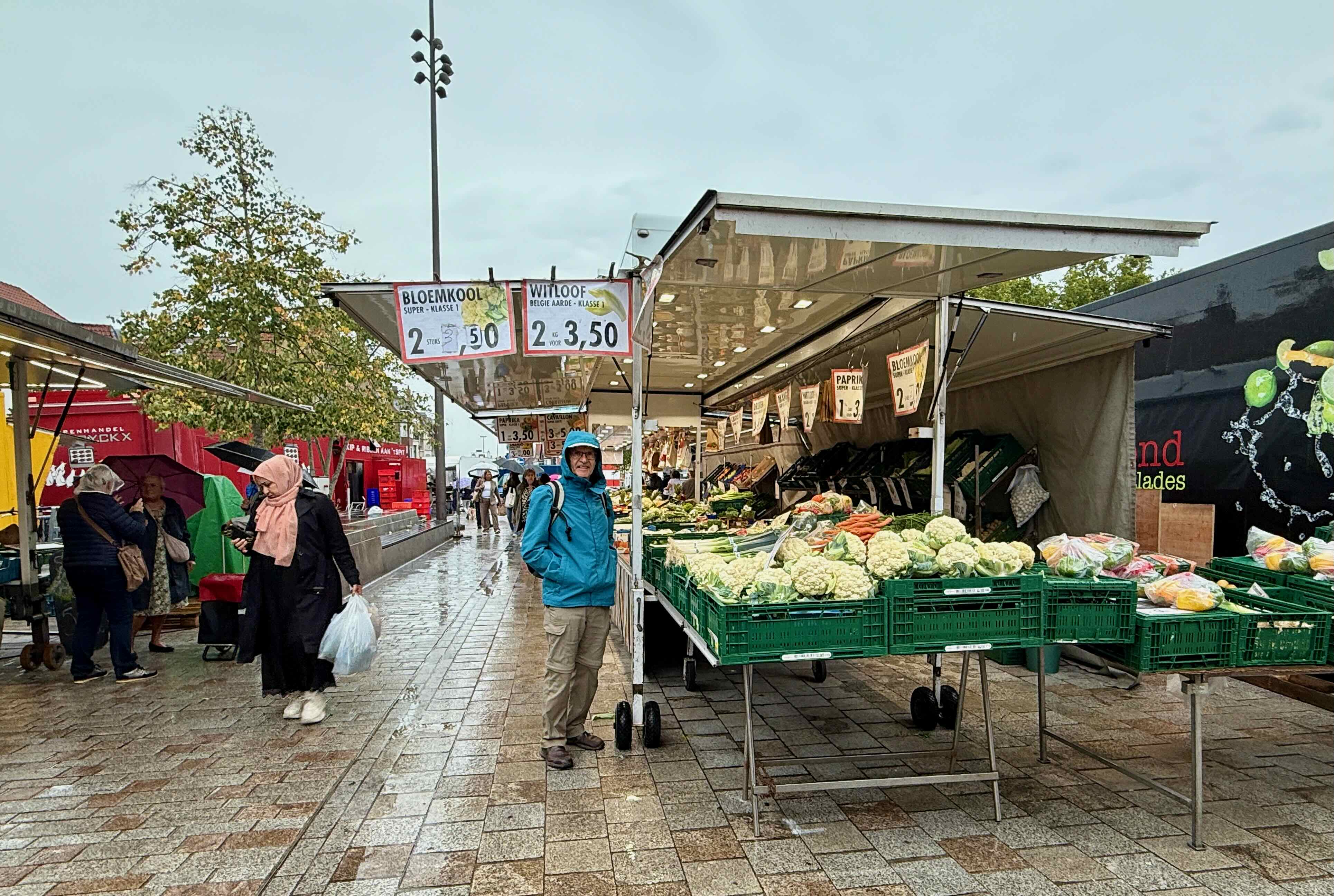
We drive an hour and a half to visit Bruges.  First stop is the market which was supposed to be open for another hour but most vendors are packing up because of the cold and rain.

We see this huge contraption which I am sure is a spider, but it is not moving. I just looked up Bruges Giant spider and found this little video on Instagram…I was right, it is a spider! https://www.instagram.com/reel/DO3Y573jK1r/ 

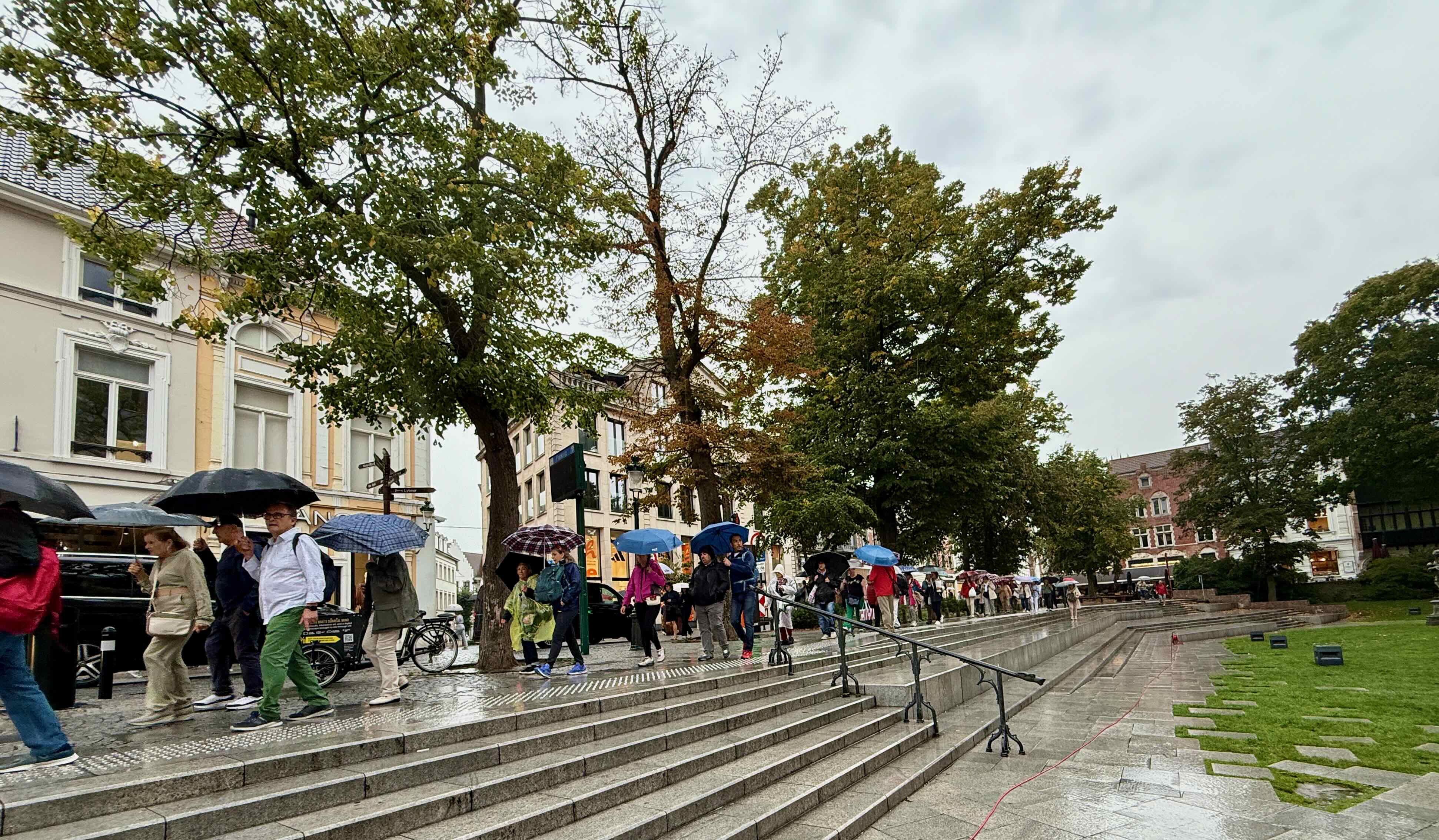
It is miserable out, lots of umbrellas, lots of rain and it is cold.

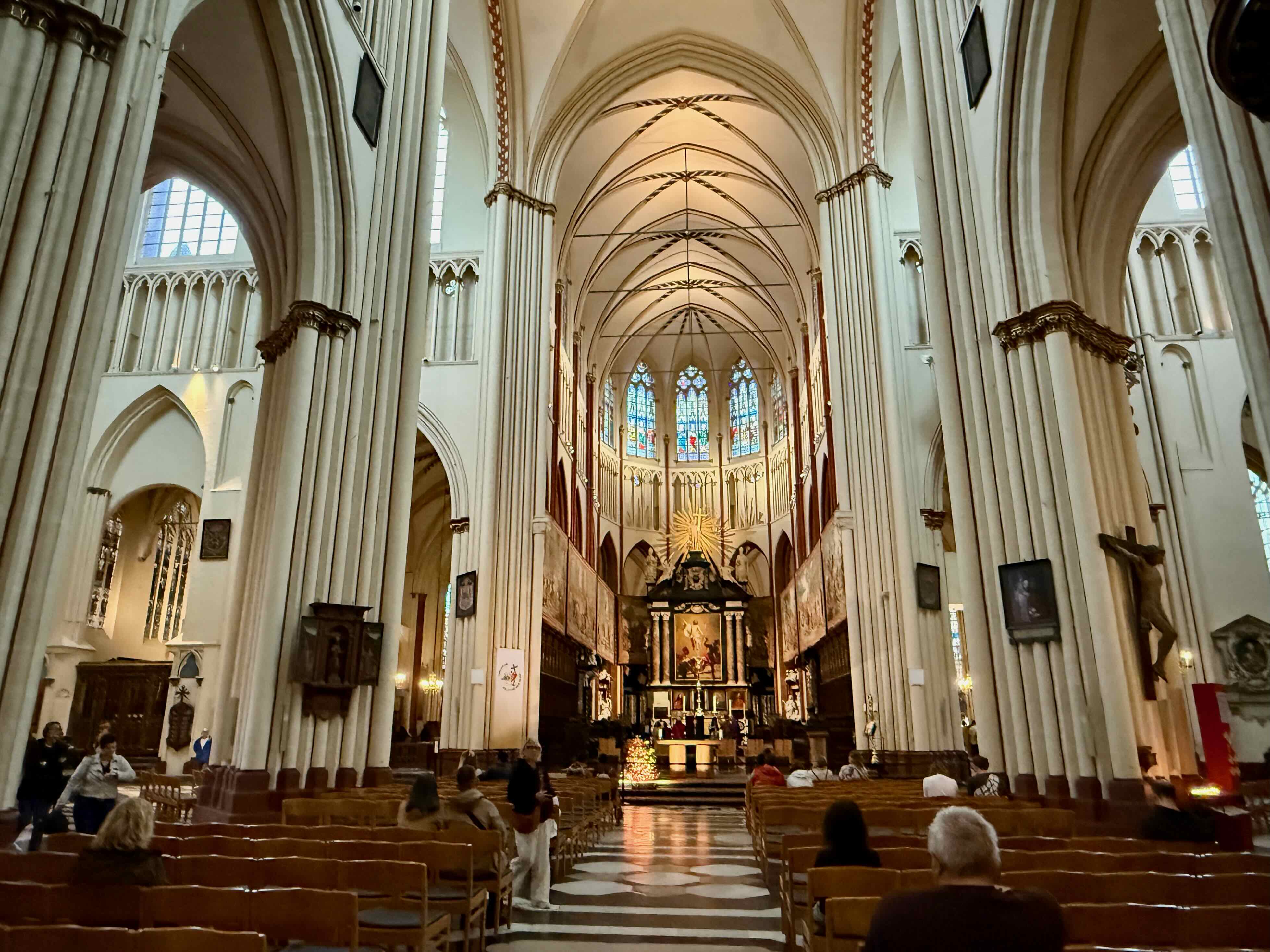
We take refuge in this cathedral along with a lot of other people.  It isn’t very warm but it is at least dry. I sit and write in my journal and Bob checks out the cathedral.  I am content to just sit and rest for a bit.

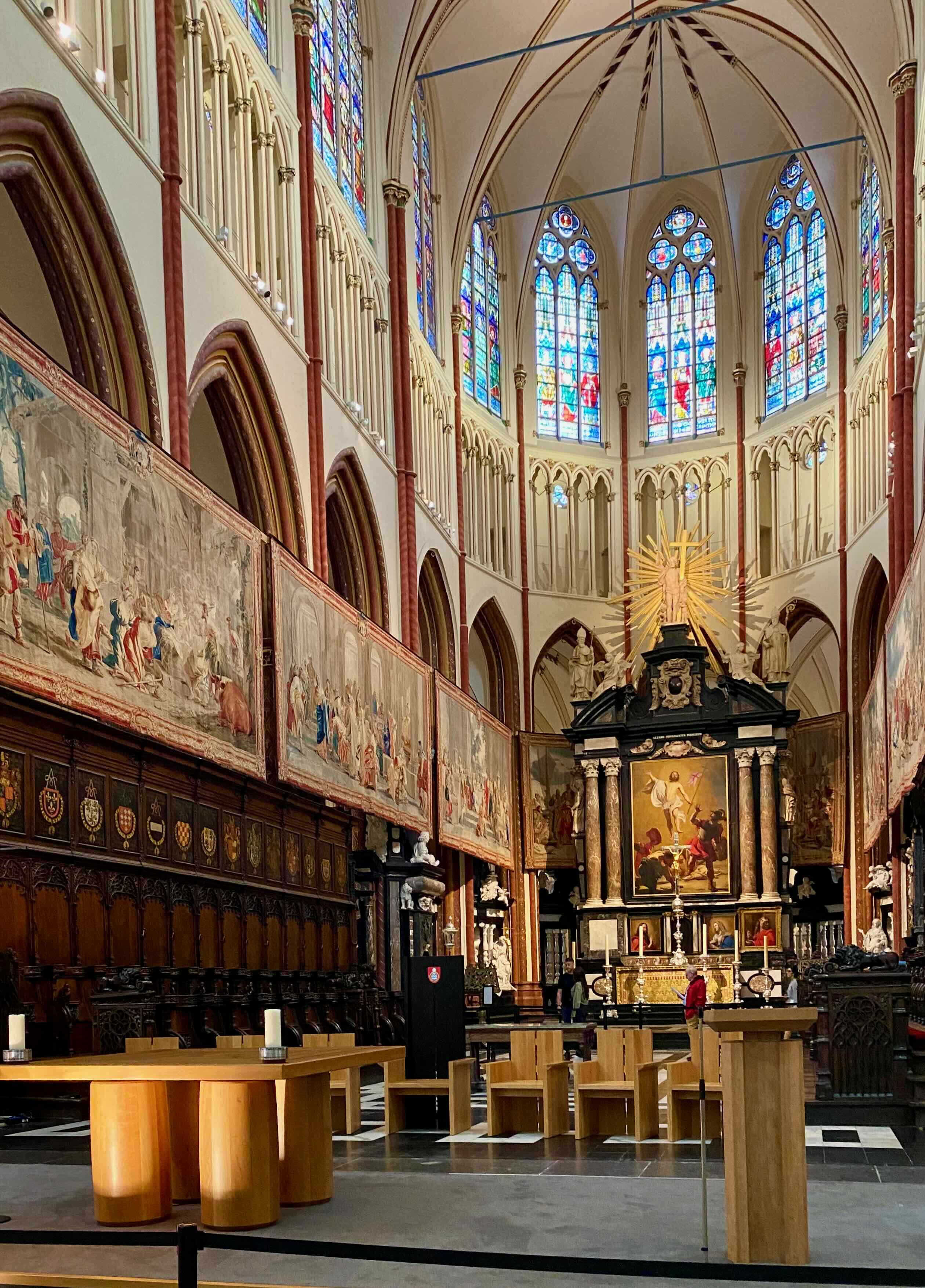
There are large beautiful tapestries on both sides of the altar.

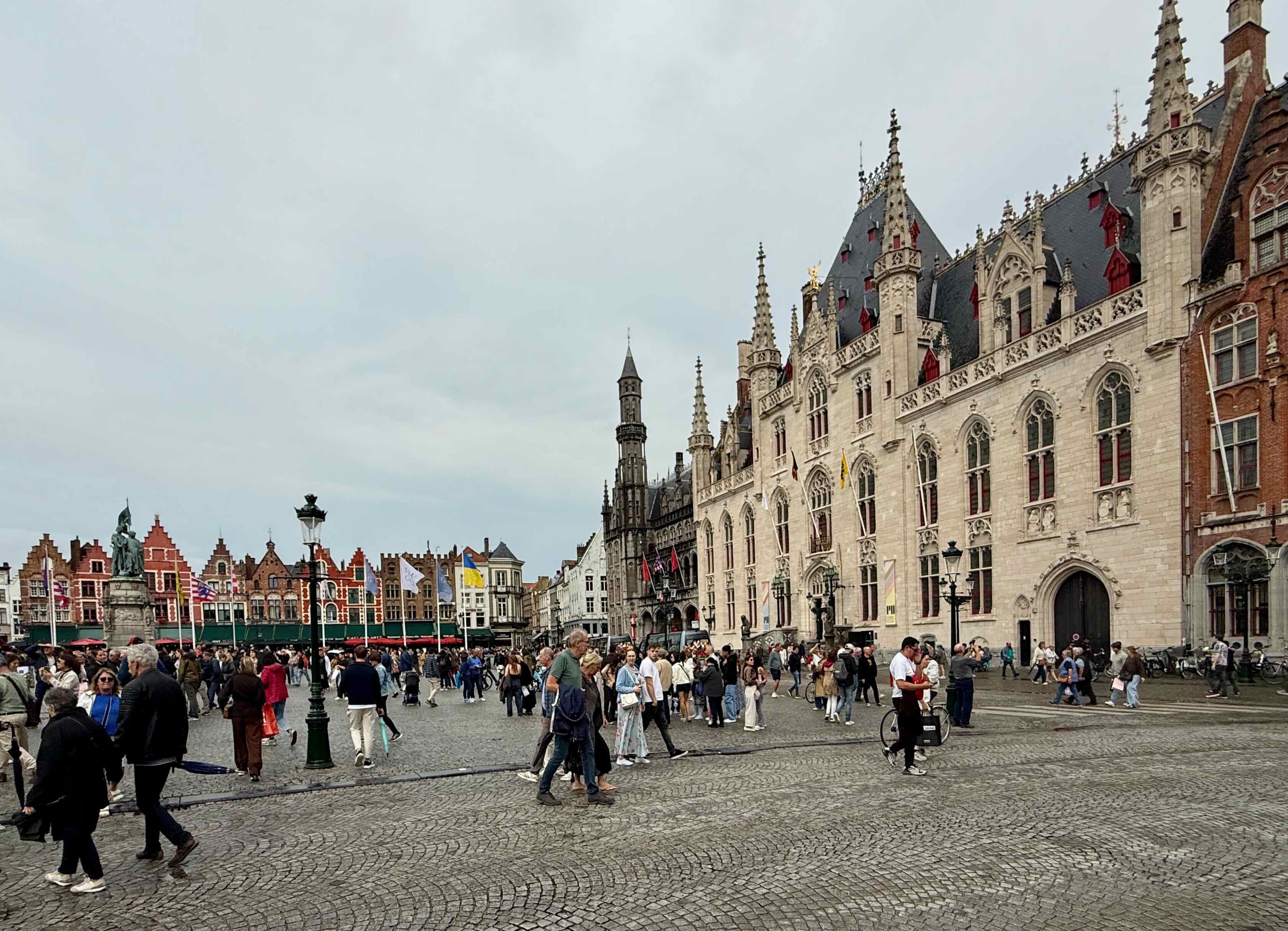
There is an announcement in several languages that the church is closing and will reopen in a couple hours after lunch.  So we walk to the huge central square, lined with beautiful old buildings.  It had stopped raining. The entire old city of Bruges is a UNESCO World Heritage Site.  The city was not damaged in either of the two World Wars so much of its Medieval heritage remained intact.

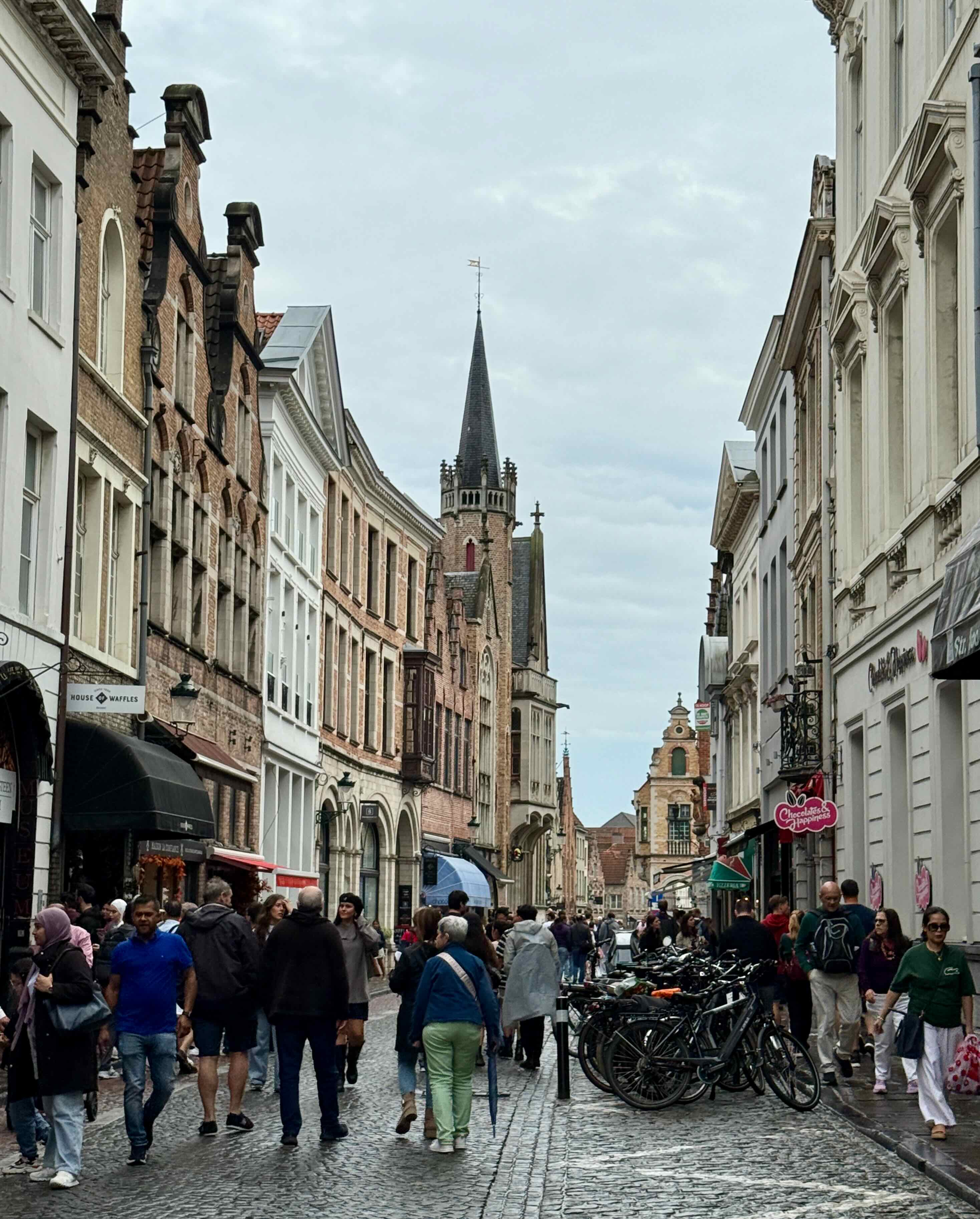
The streets are packed with tourists and it starts to rain again so we find a MacDonalds and hide out there for an hour and have our lunch.  It is dry and warm and no one cares how long we sit here.

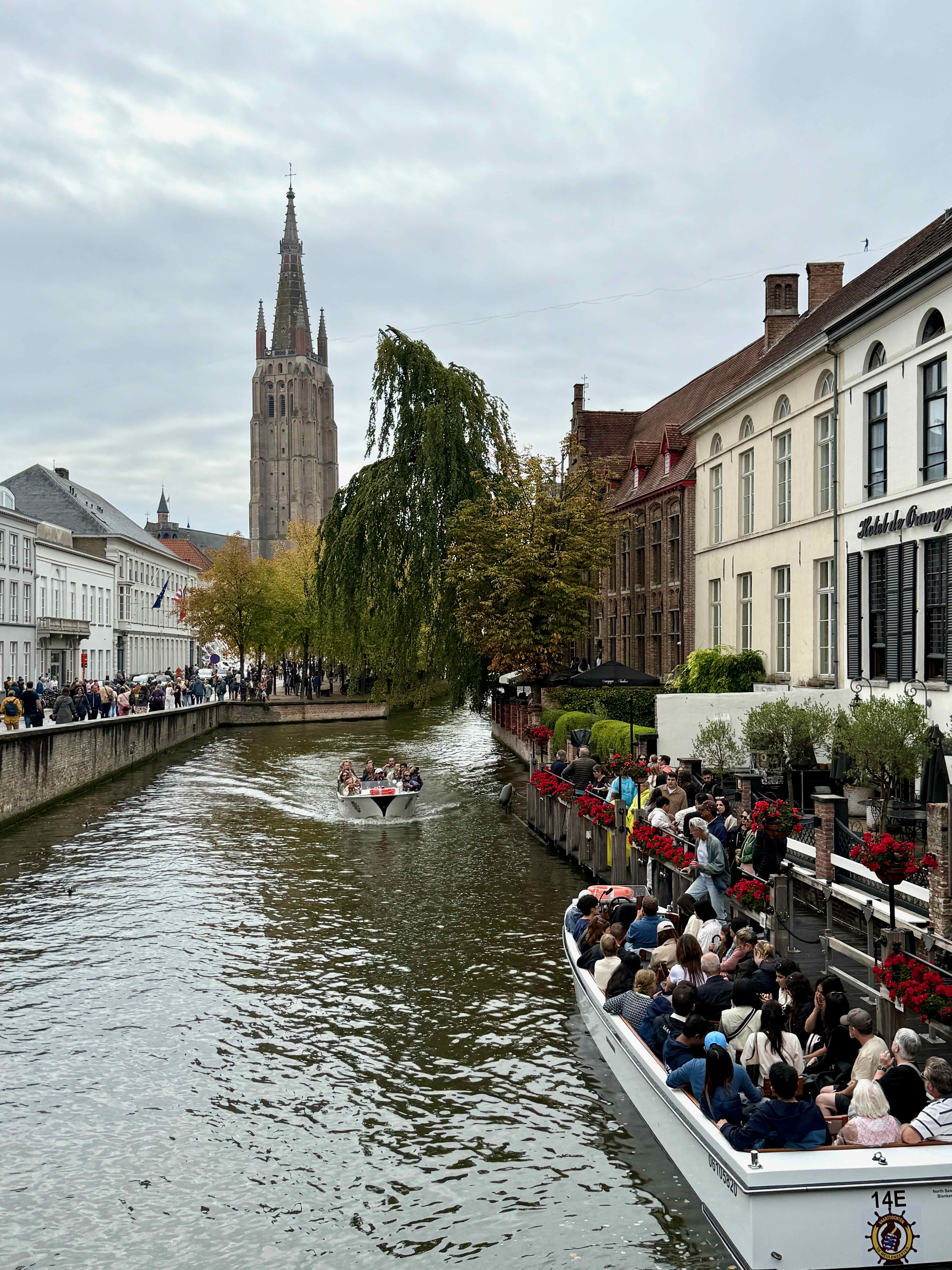
The rain stops and we decide to get tickets for a canal boat ride.  There is a line but it moves fairly quickly and we watch the boats coming and going while we wait in line.

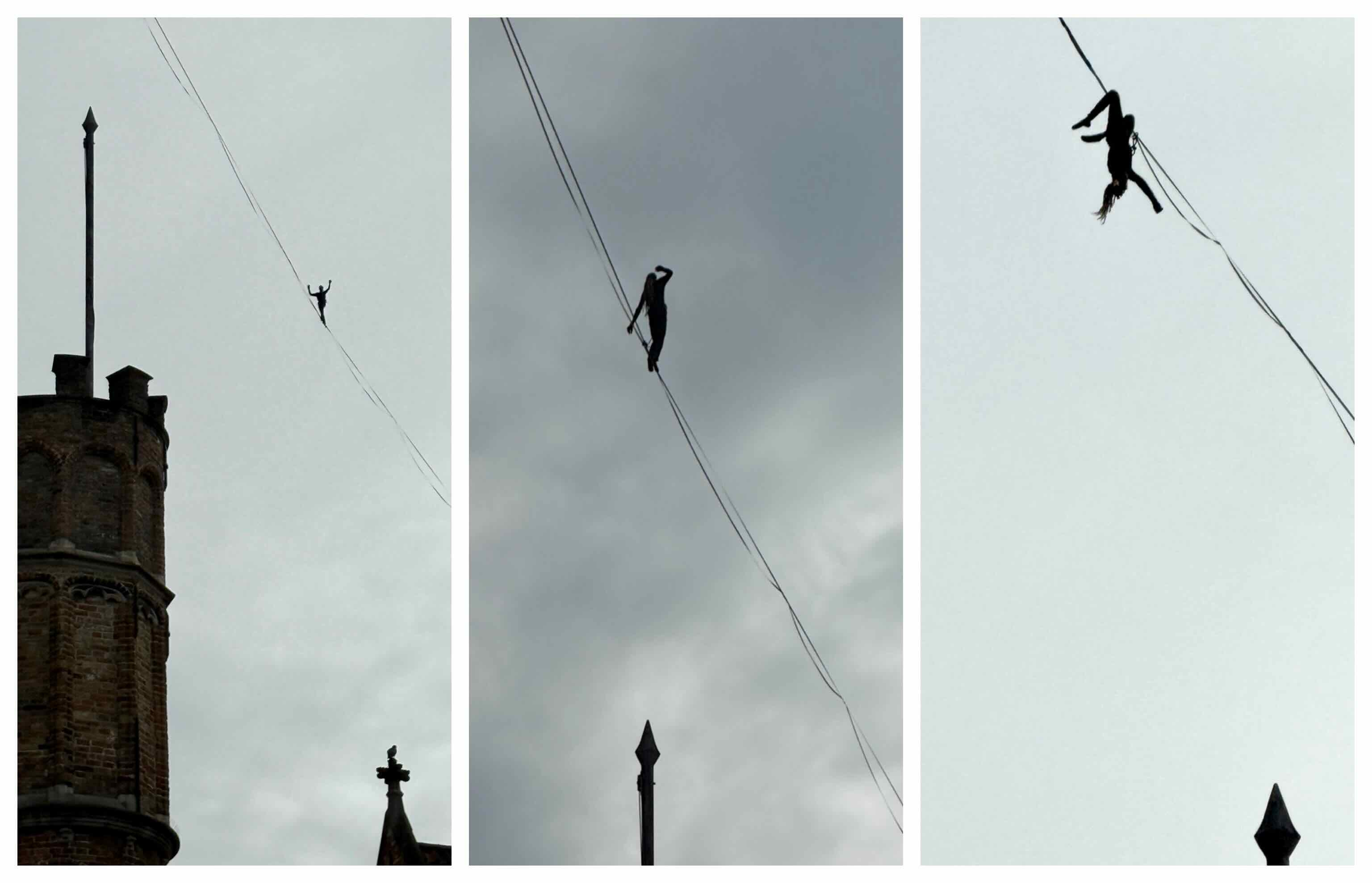
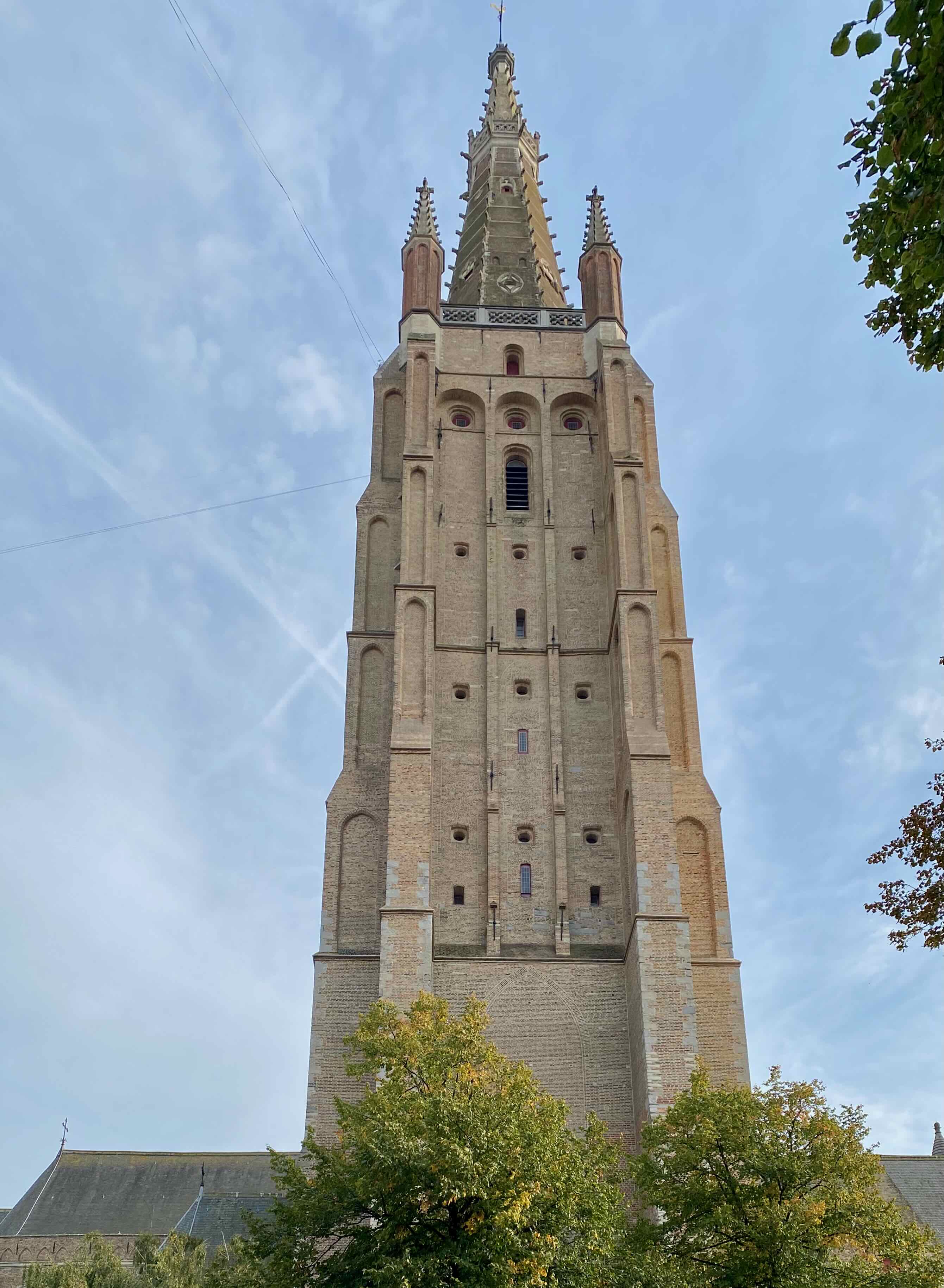
While we are waiting  I notice that there is a tight rope walker high in the sky!  If you look carefully at the previous photo you can see her in the top right corner just above the rooftops.  Yes, it is a woman, when she hangs upside down we see a ponytail. A rope almost 400m long was stretched at a height of 70m between the Belfry and the Church of Our Lady.

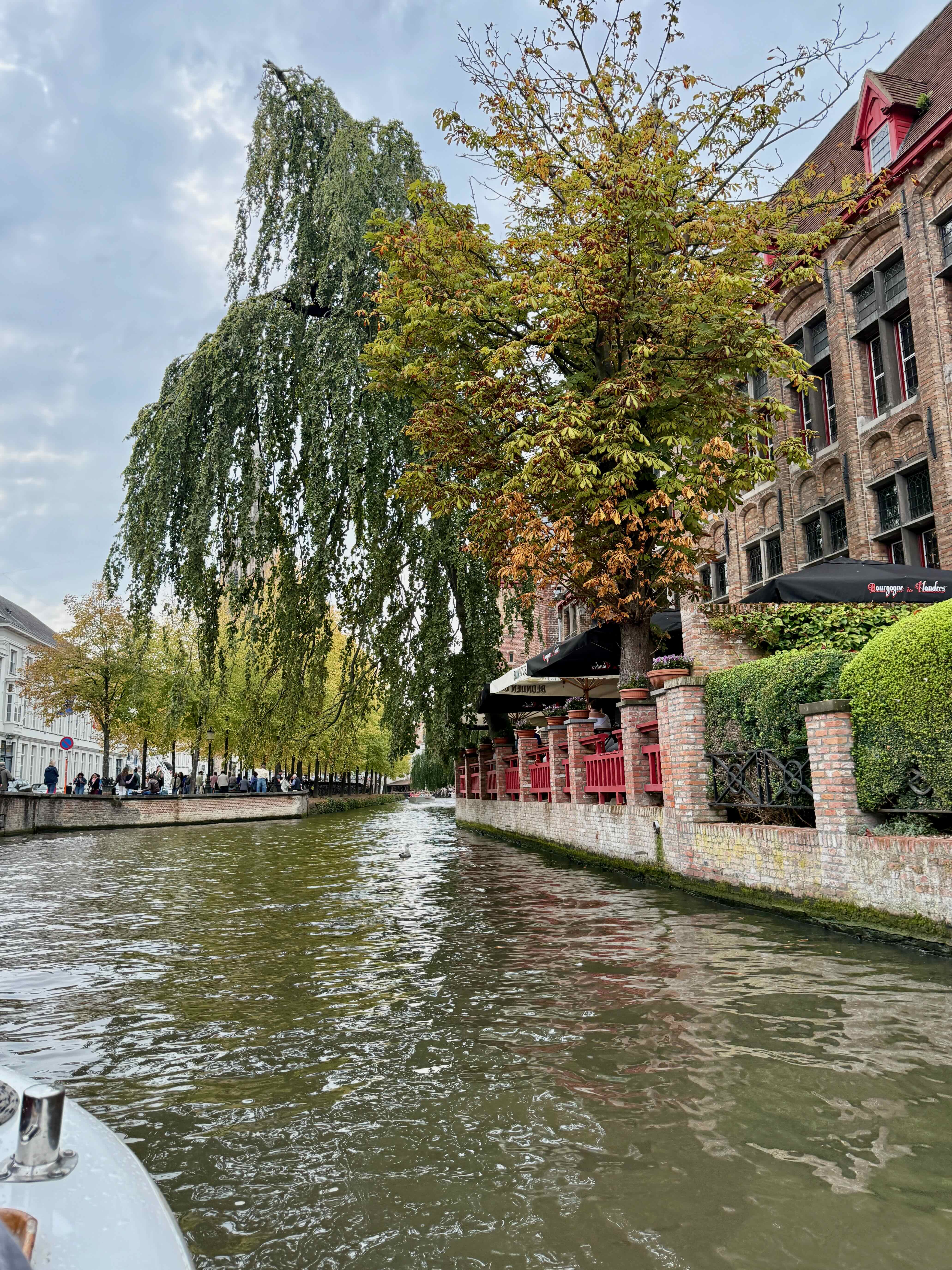
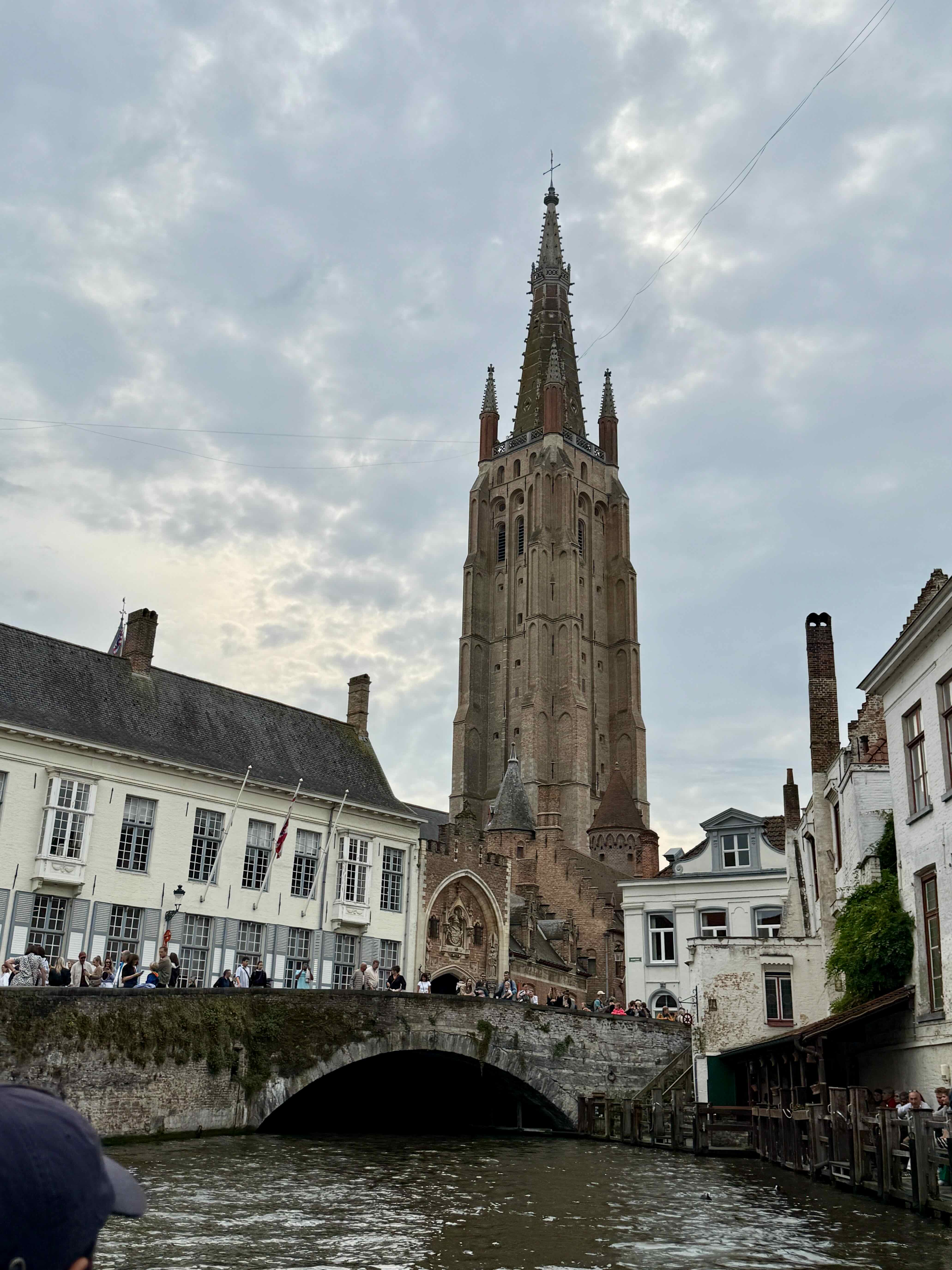
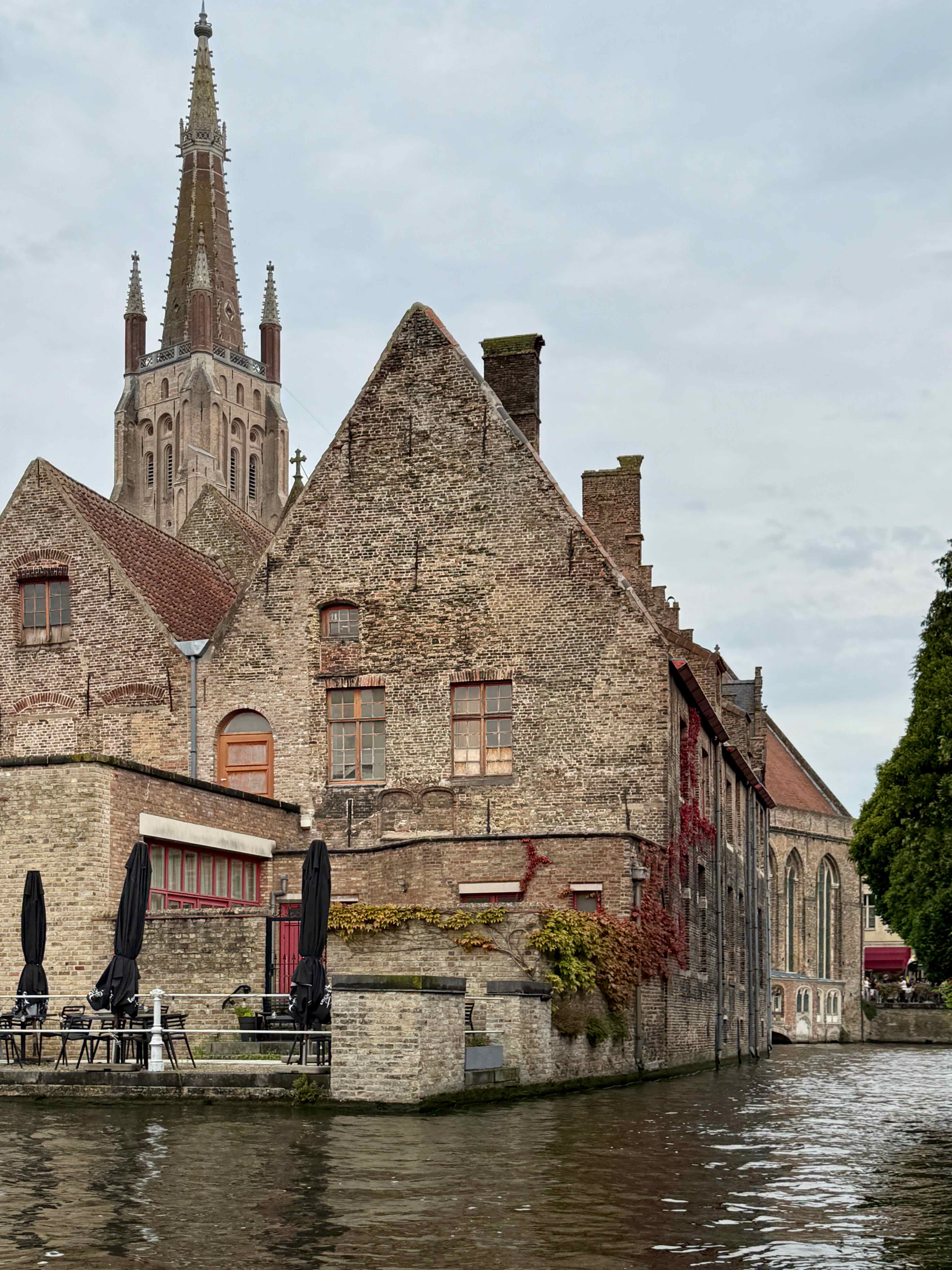
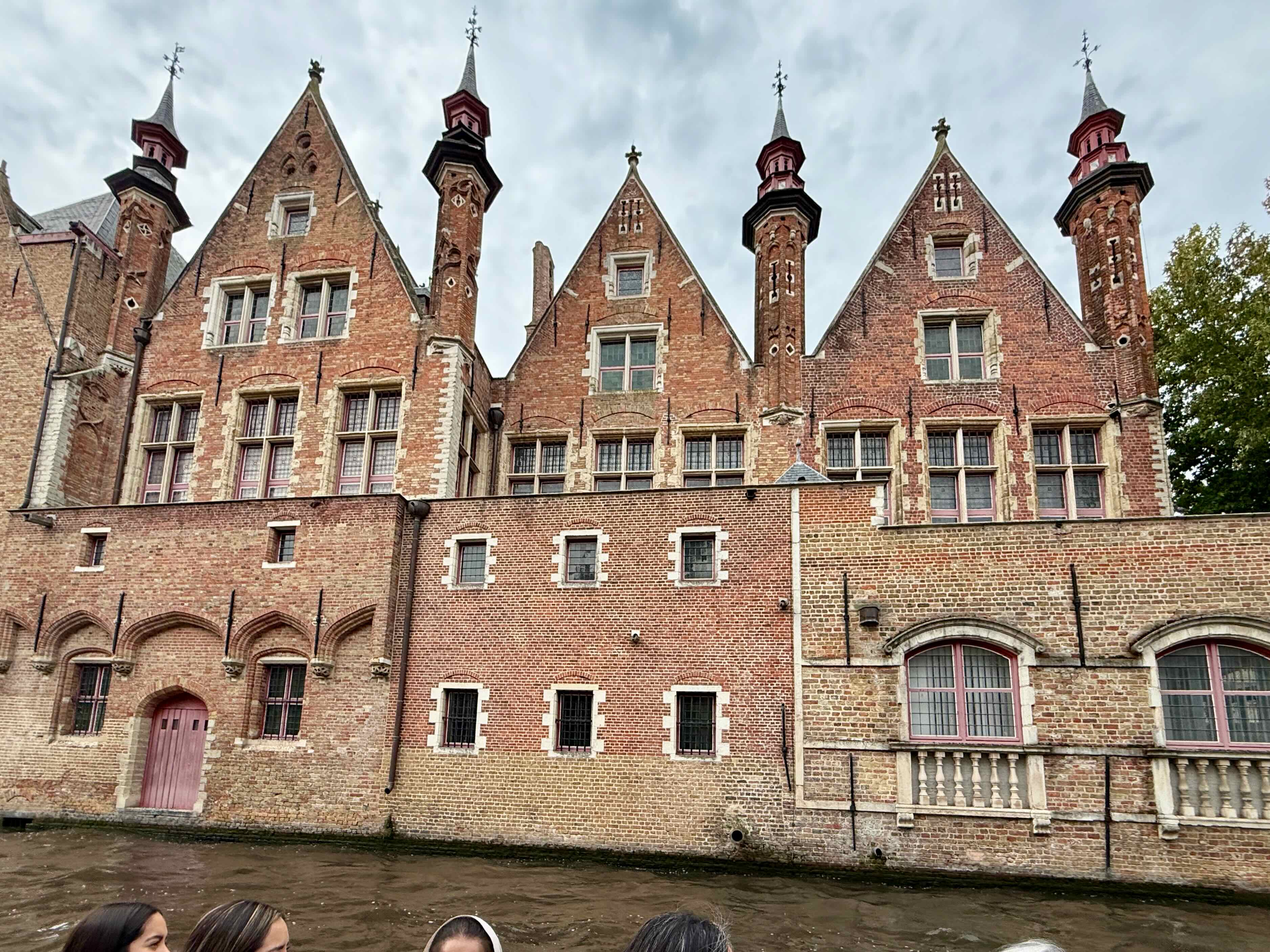
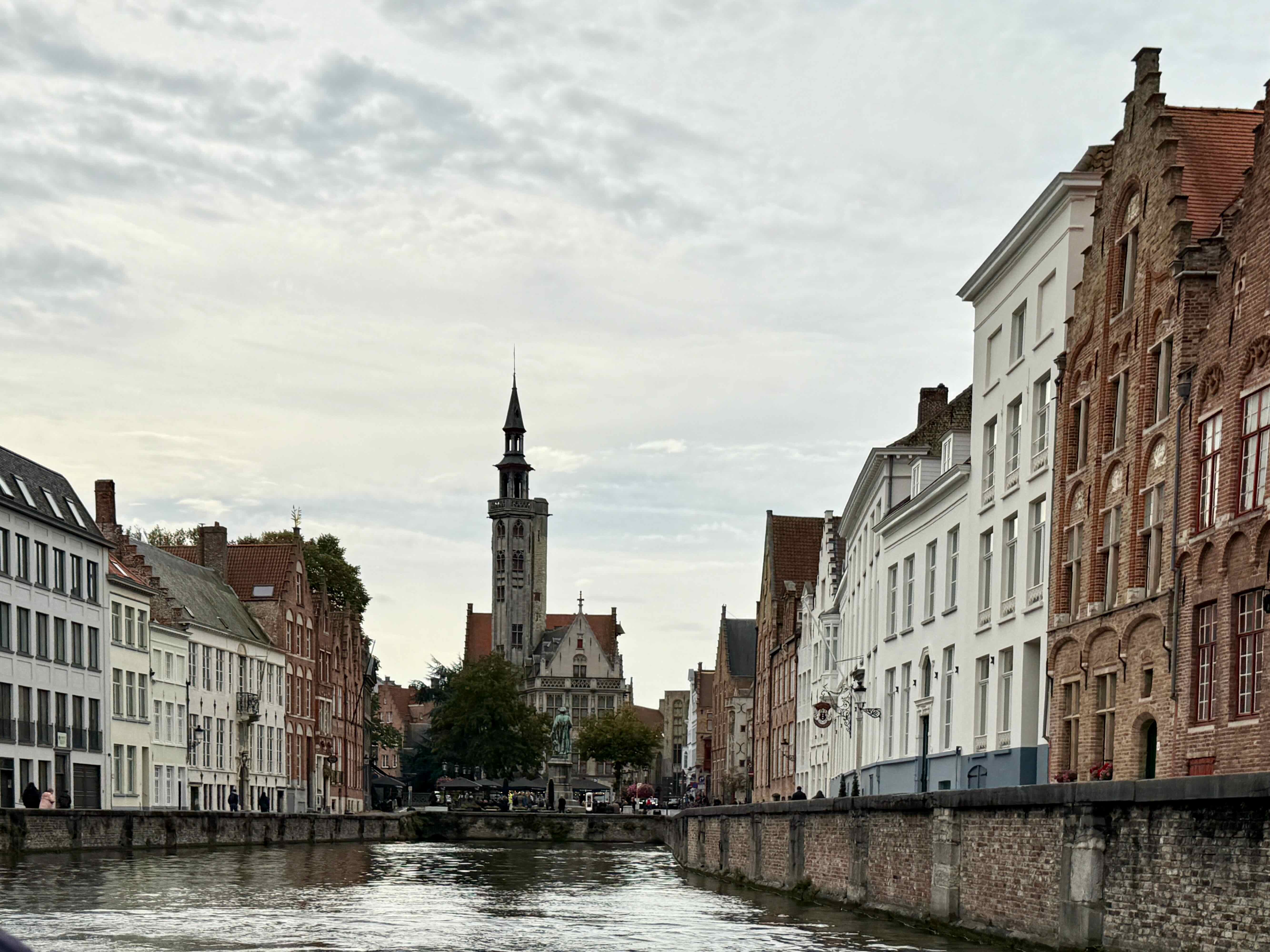
Soon we are travelling on the canals which give us a great view of many of the buildings in Bruges.

You can see the high wire attached to the cathedral tower.

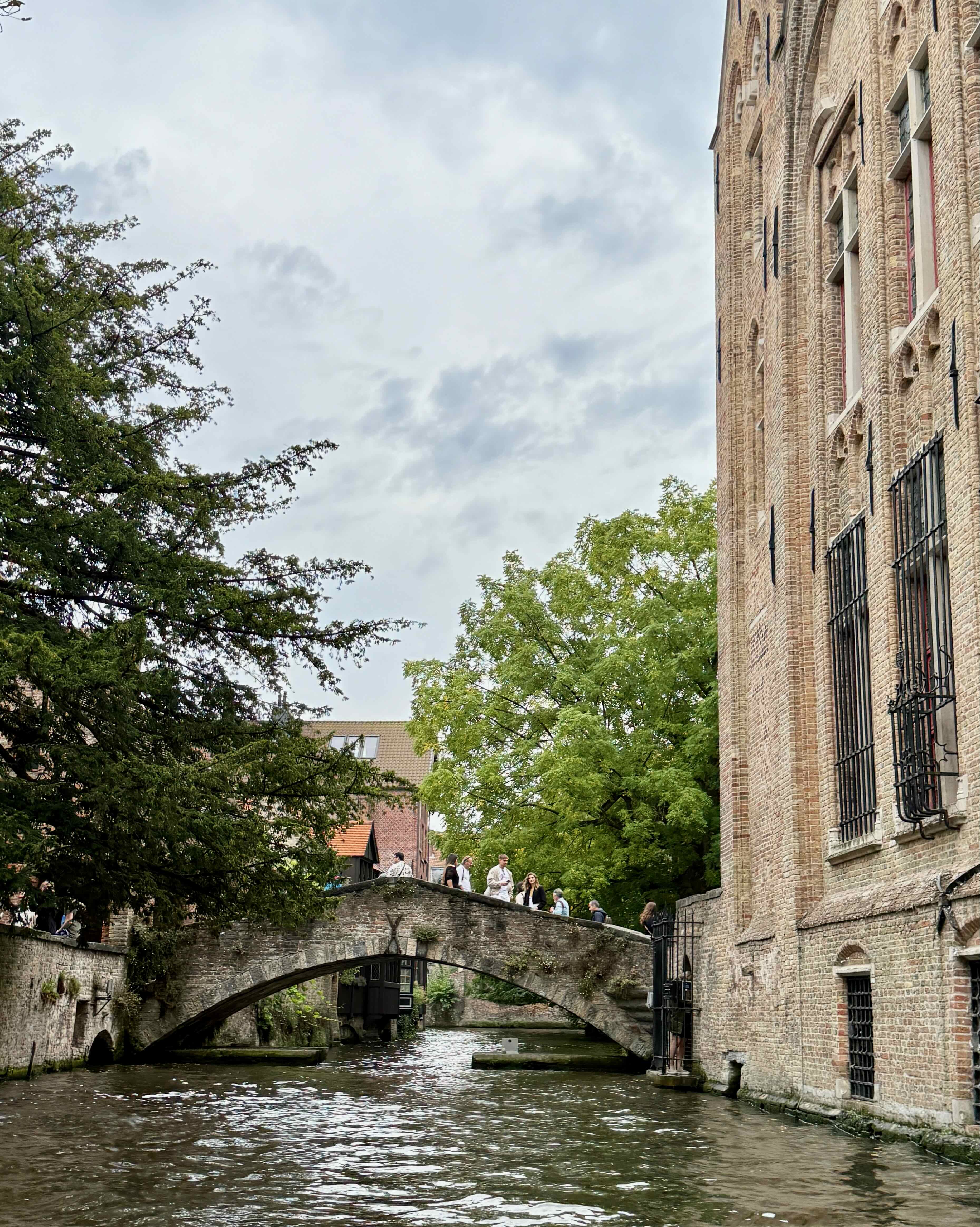
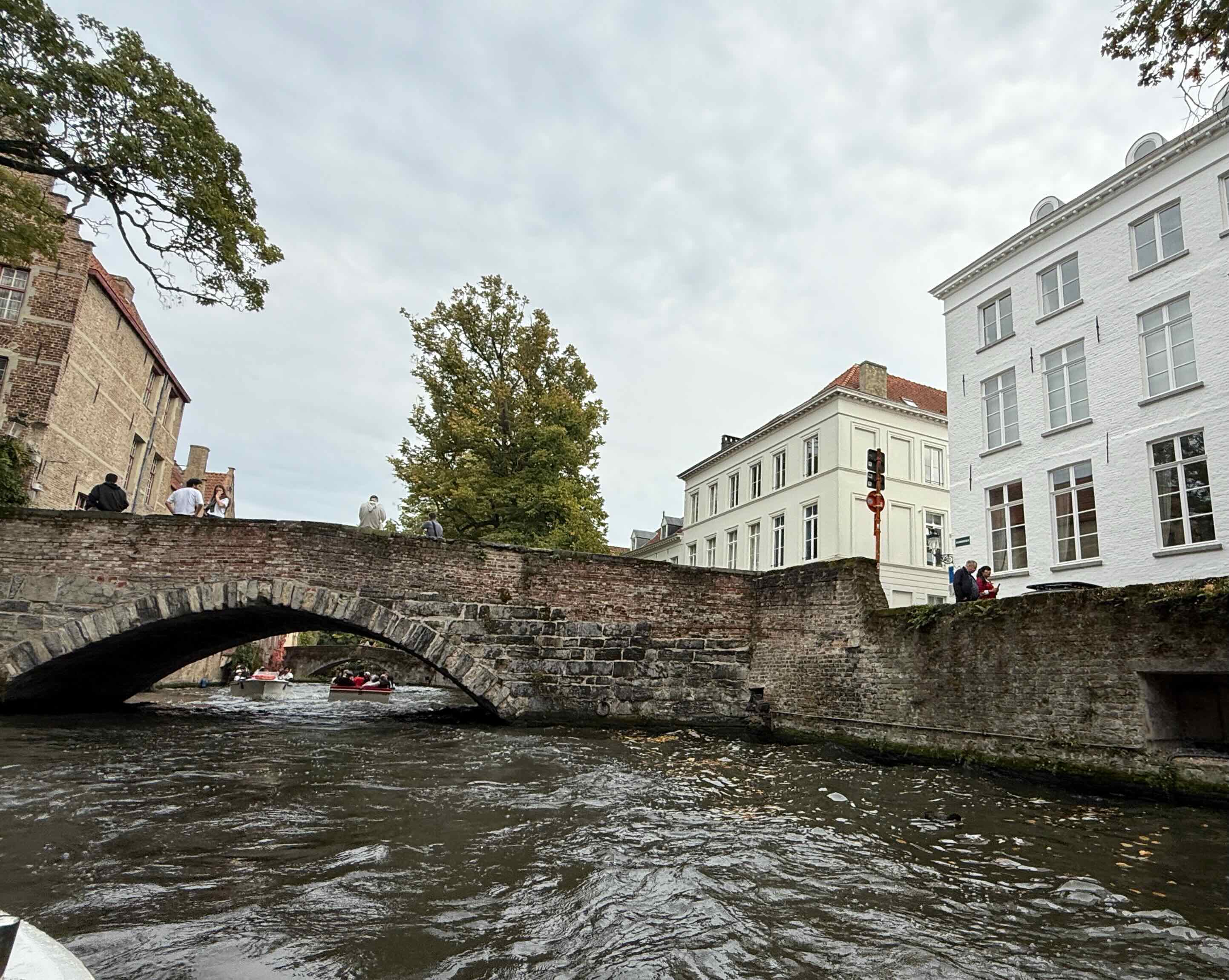
We pass under many bridges, some of them so low we need to duck our heads.

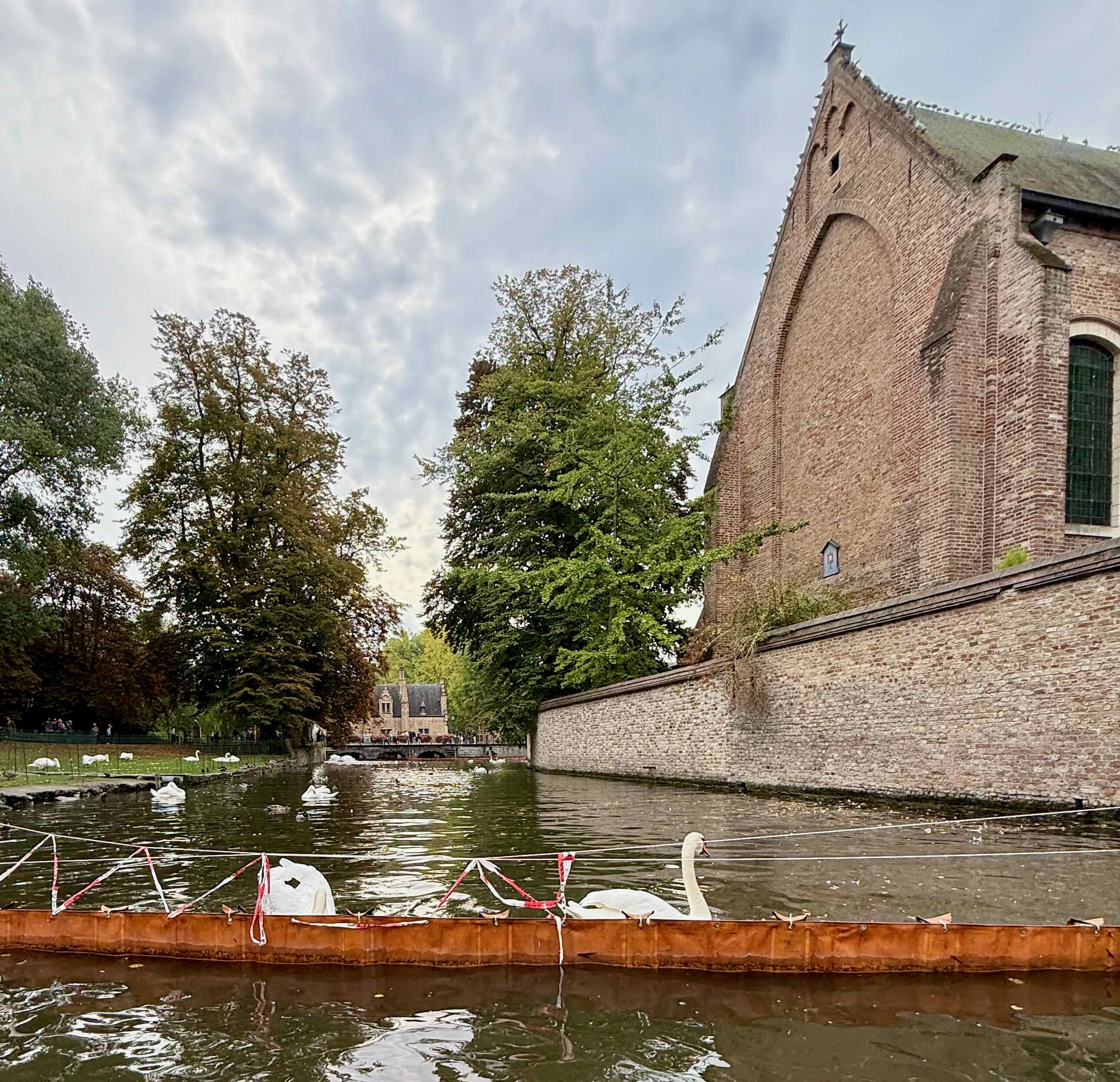
The geese on the canals are owned by the city of Bruges and the penalty for killing one is five years in jail!

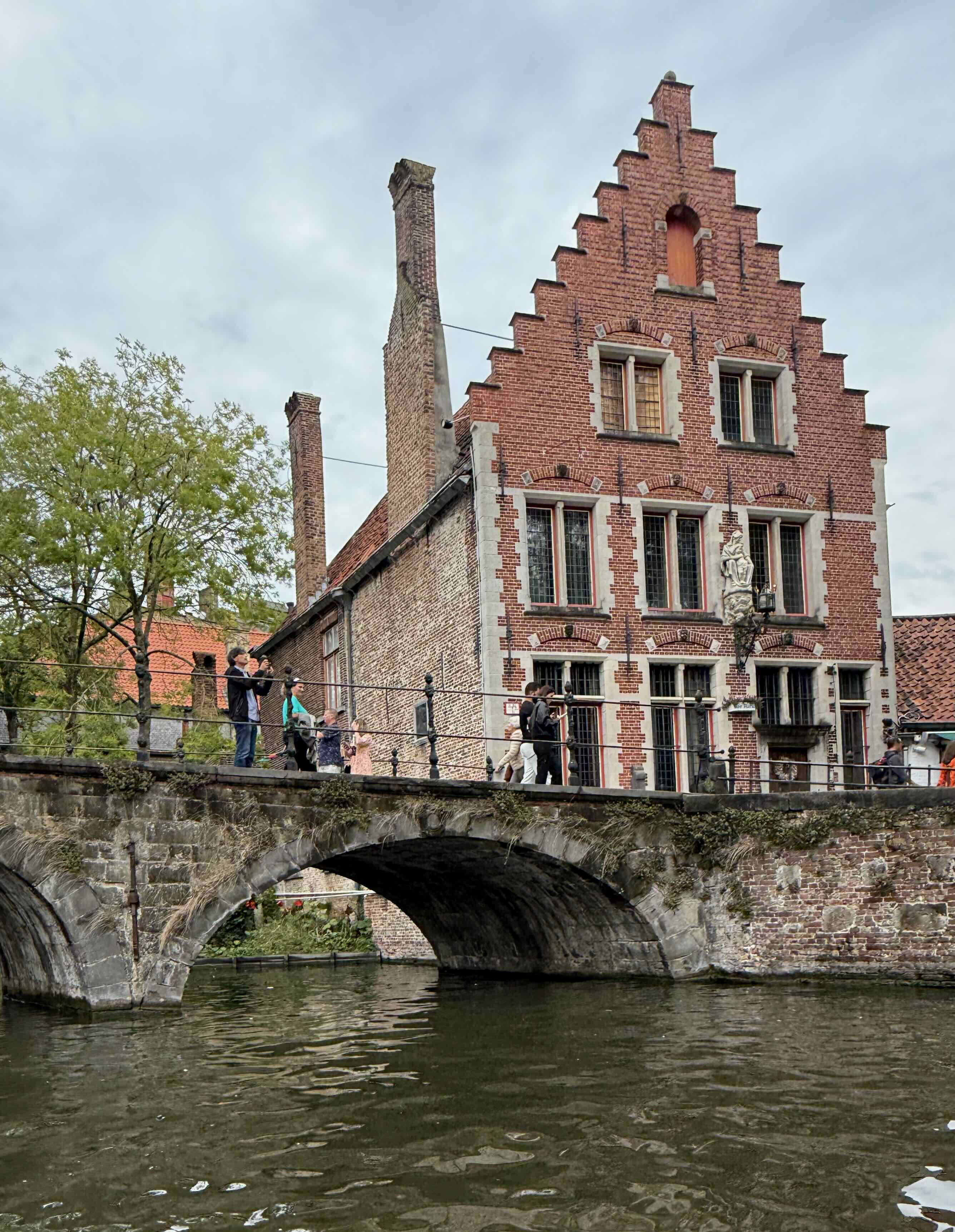
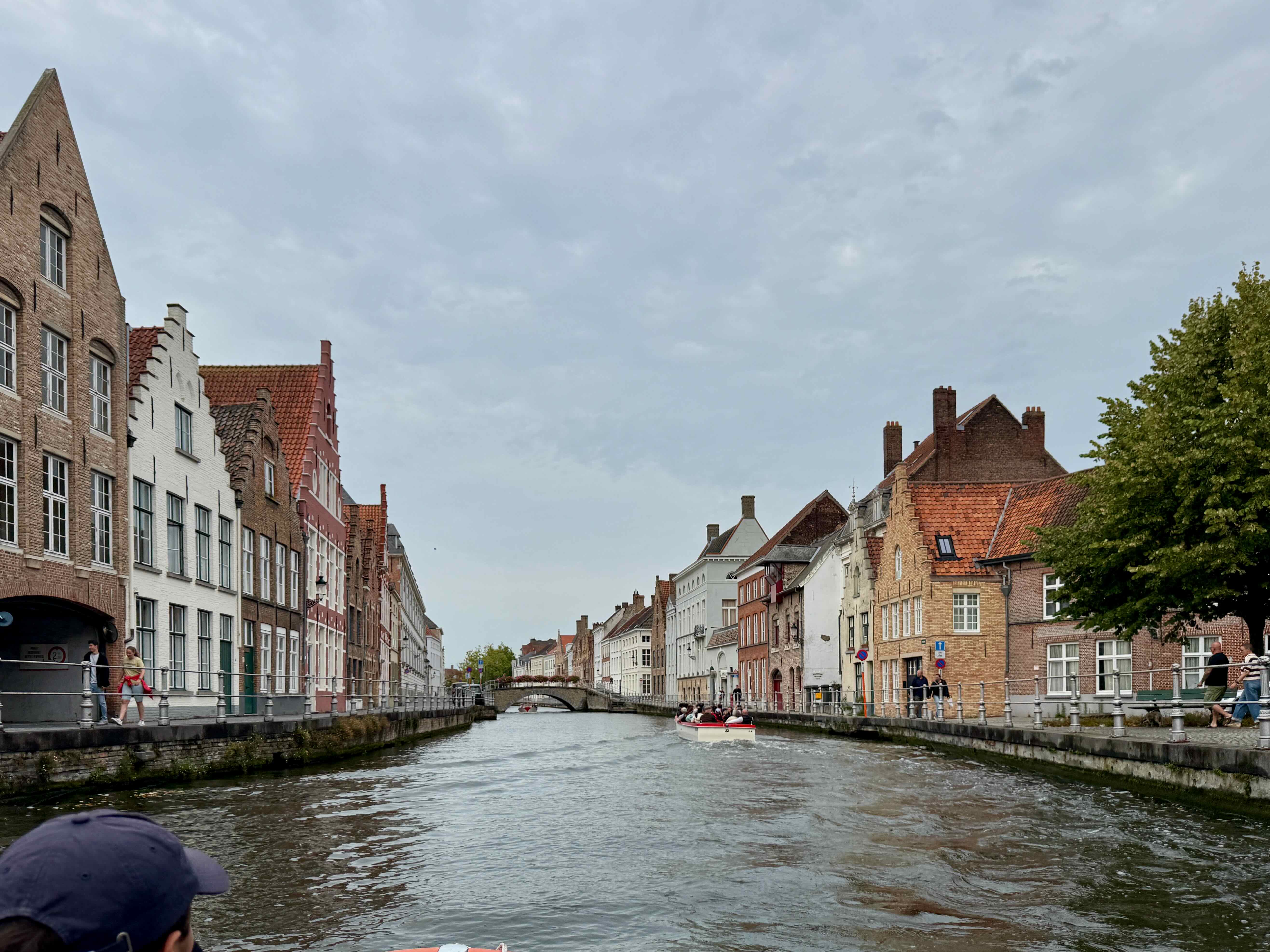
The city of Bruges is famous for its well-preserved medieval architecture, including many buildings featuring stepped gables.  Houses with lots of steps on the gables showed that the owner was rich.         
I wonder if the houses on the canal are damp, with the water lapping at their foundations.

This is the oldest bridge in Bruges and our driver/guide tells us that if you kiss under this bridge you will have everlasting love.  We kiss.

There are a variety of interesting buildings along the canals…

..and some great views.

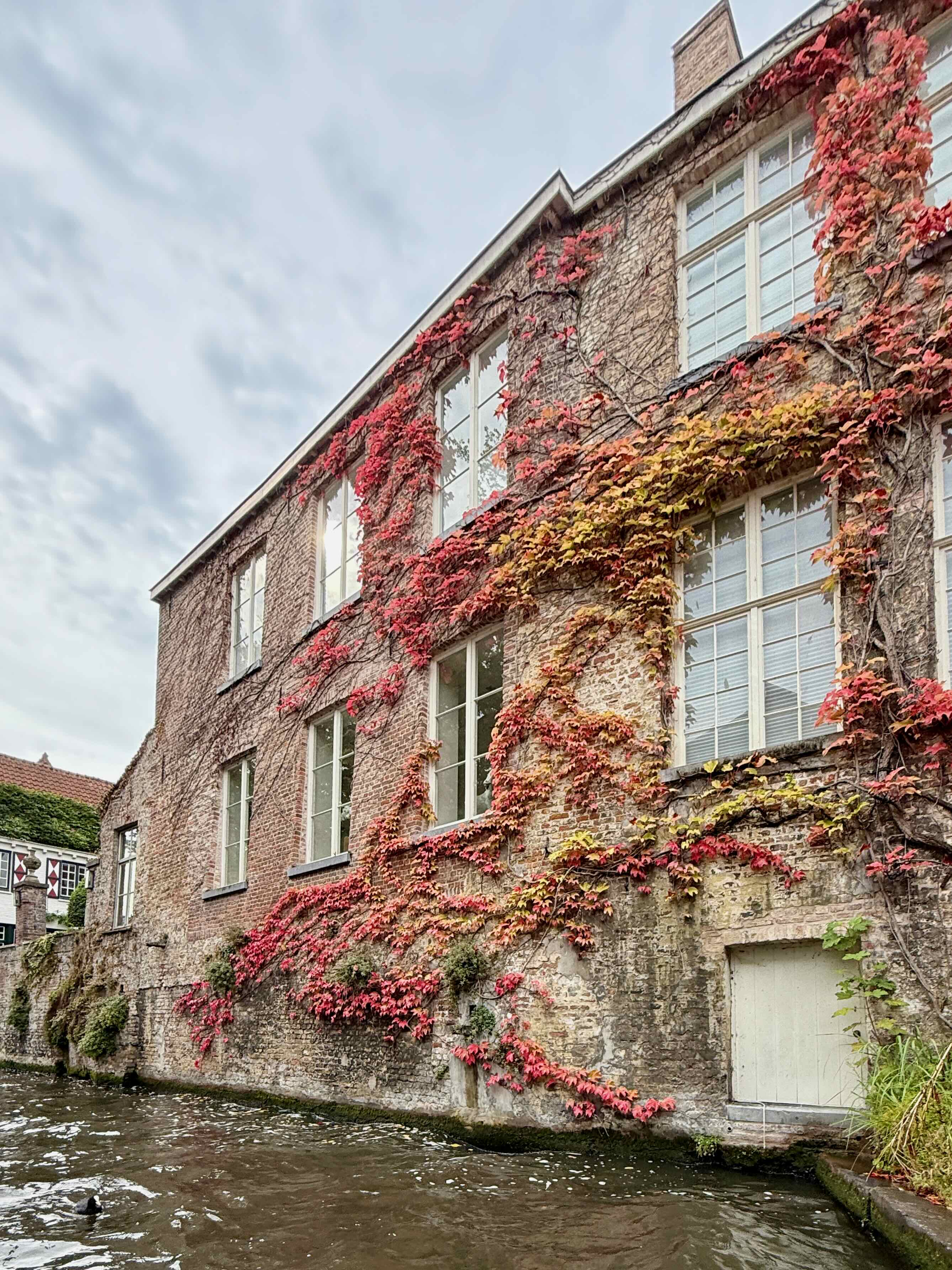
There are also signs that Autumn is here.

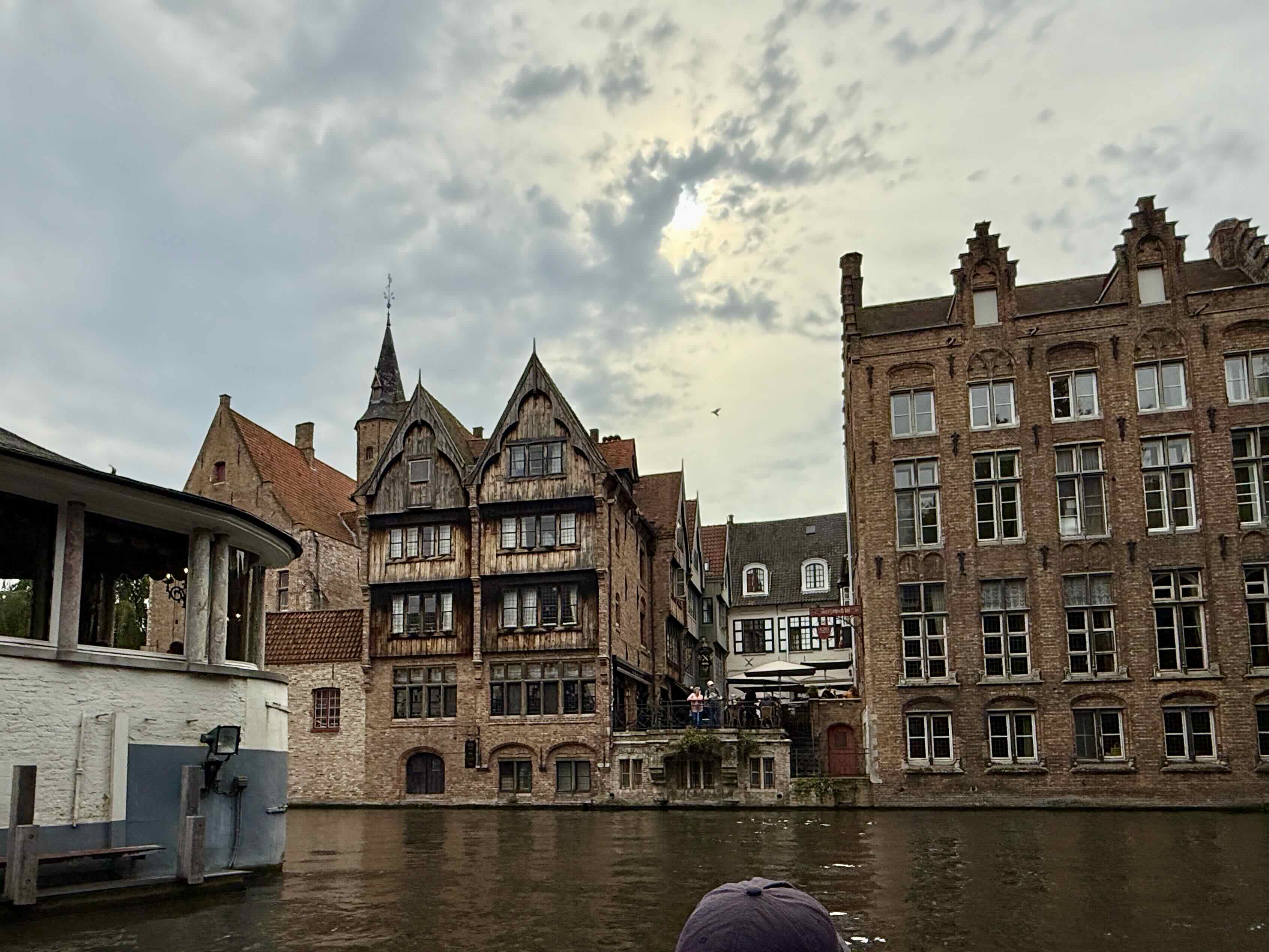
This medieval building was built using wood, which was a fire hazard.  Most buildings in Bruges were built in a style known as Brick Gothic. 

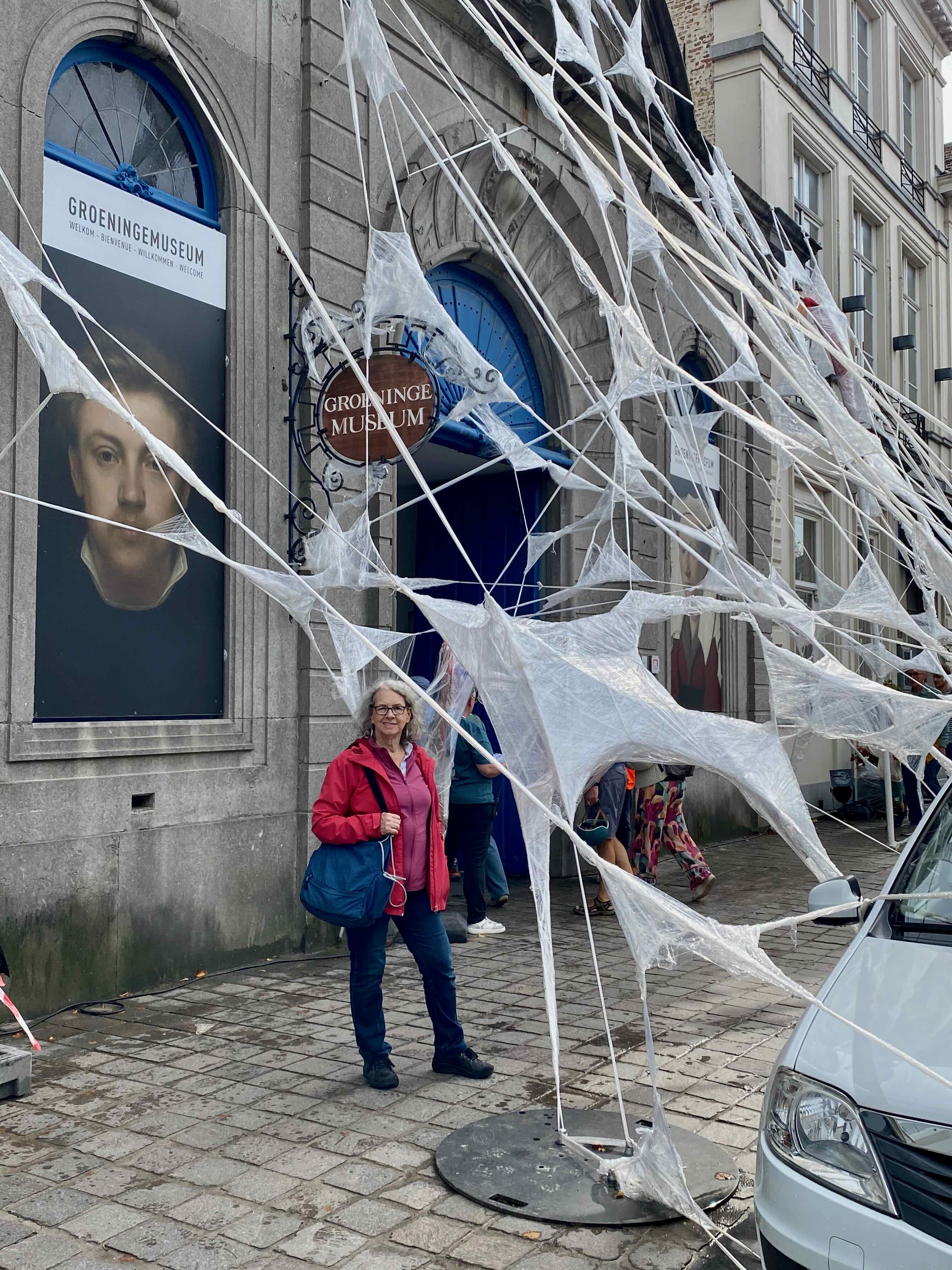
After our boat ride we wander the streets and see this.  Lots of people are entering the building so Bob says we should follow them.  

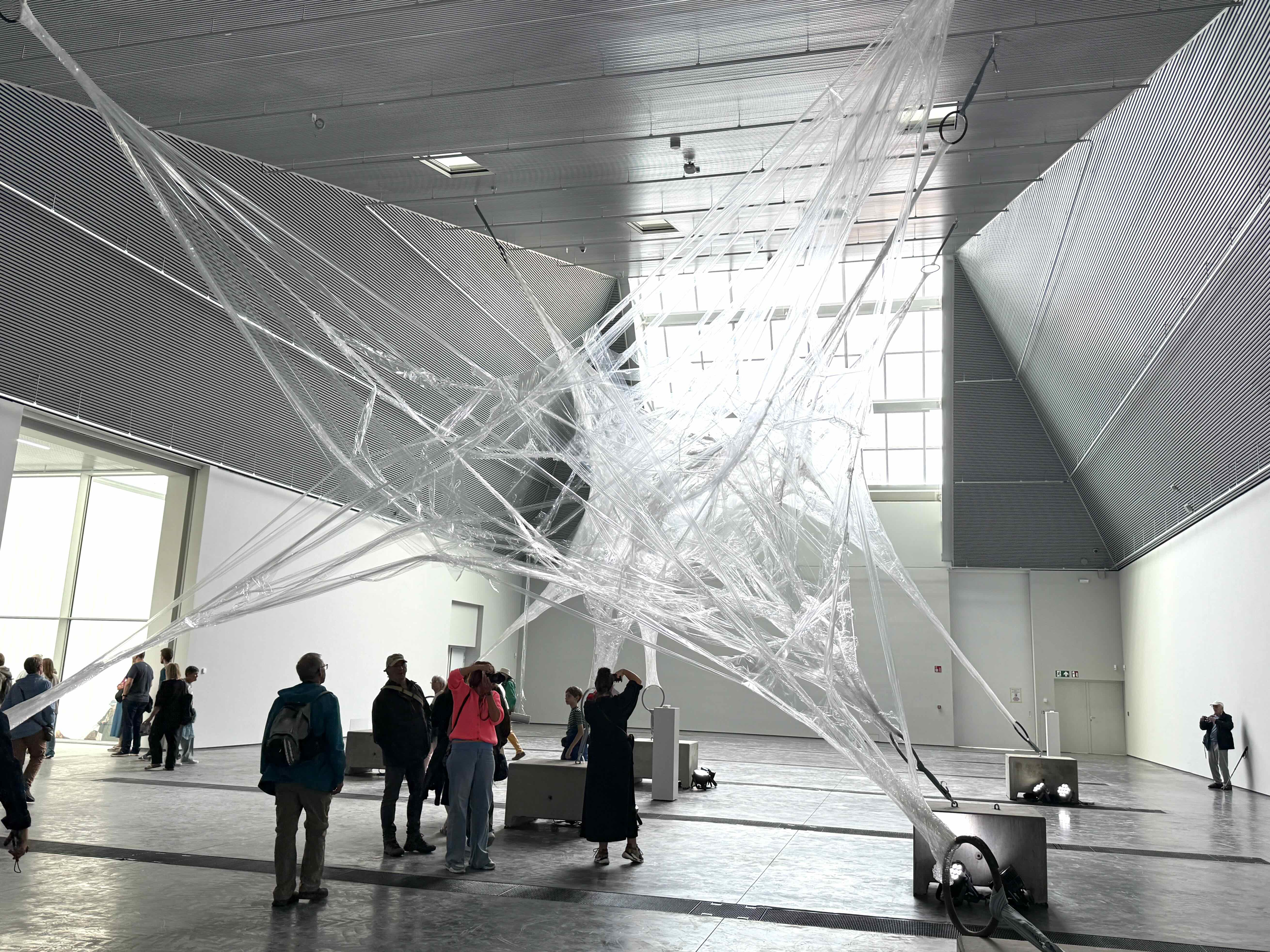
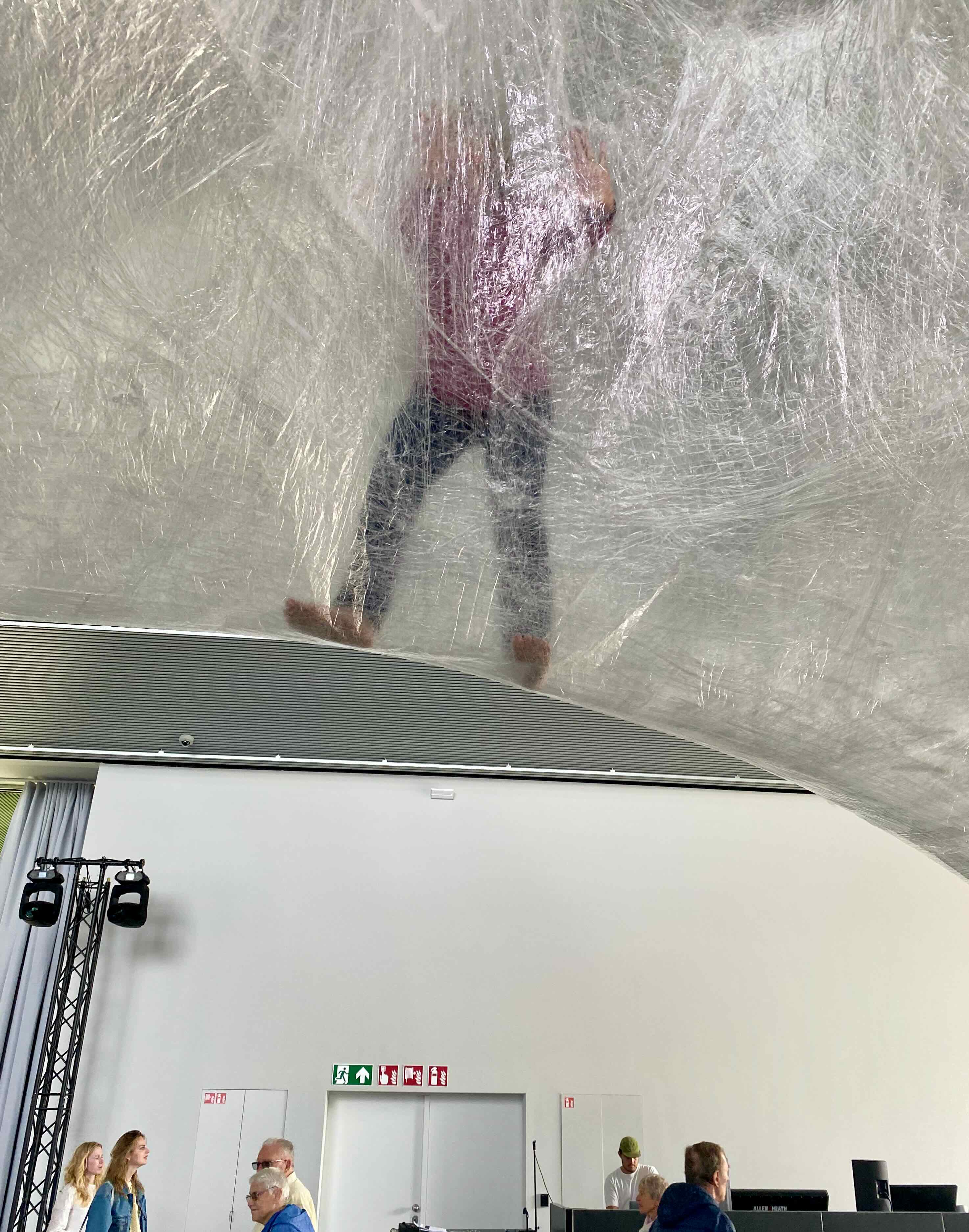
It is an open house for the  new Brusk Art Gallery which will open in 2026.  We enter a room with shipping plastic wrap.  We aren’t sure what it is supposed to be…

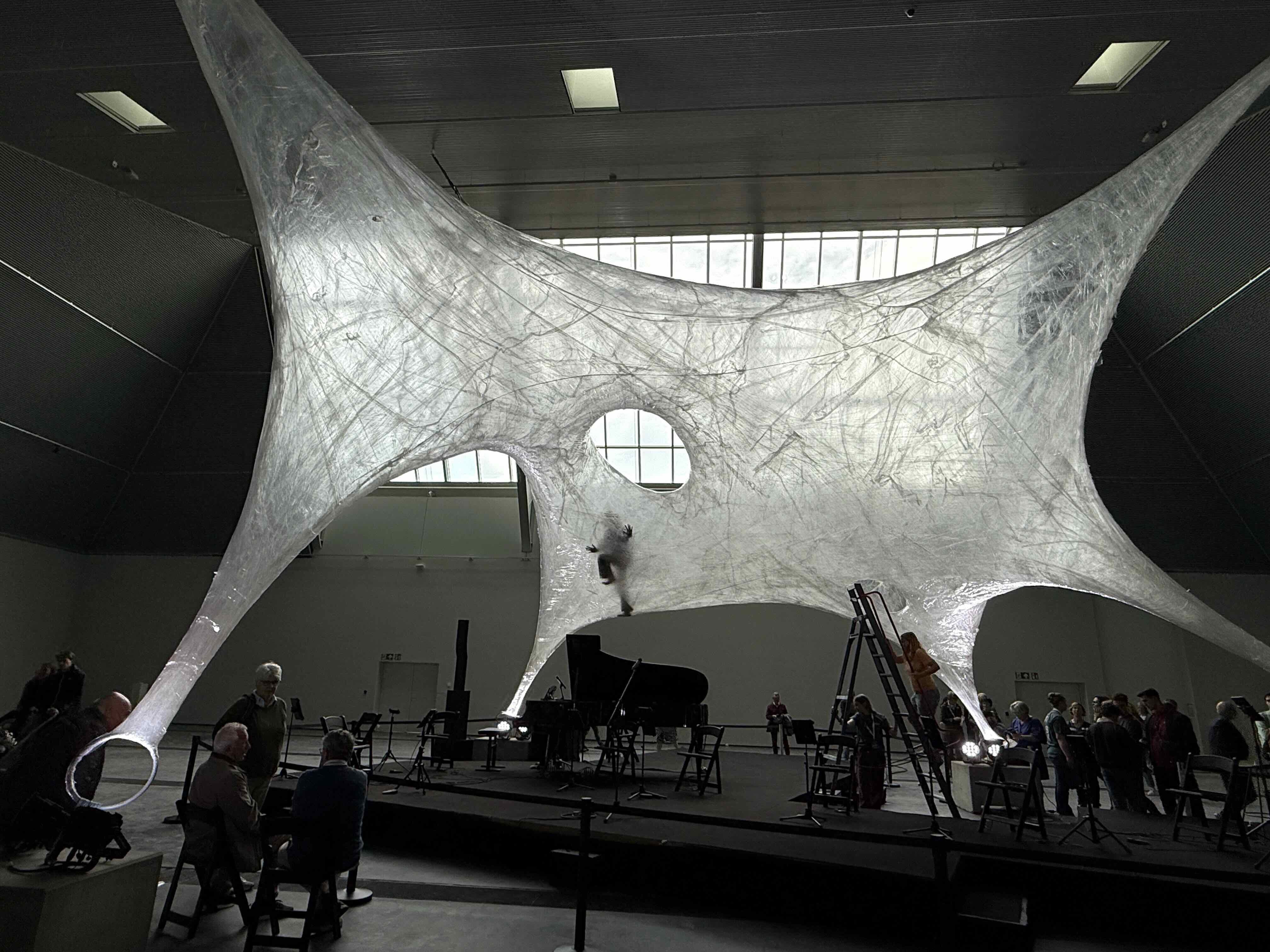
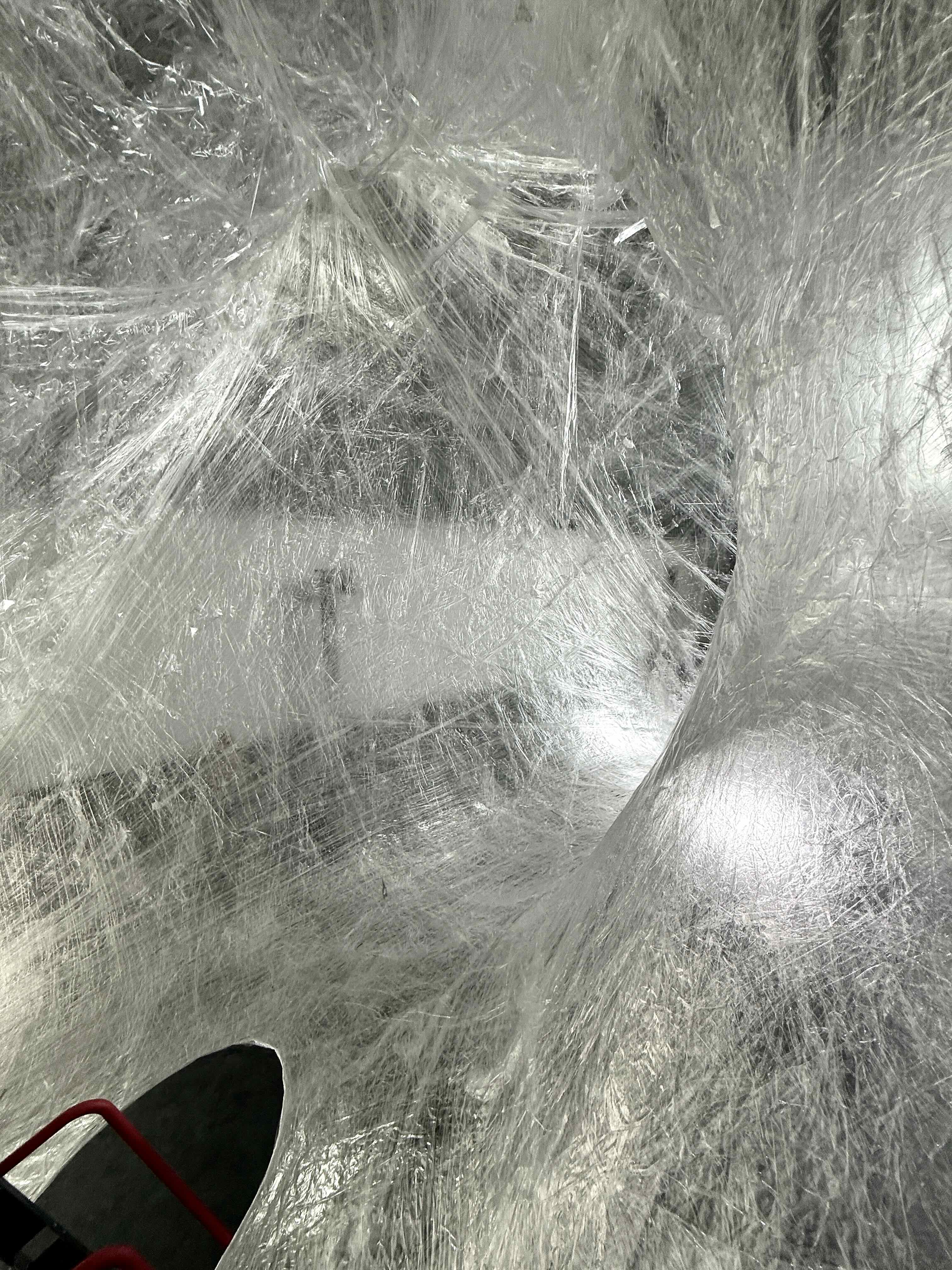
…until we enter the next room and there is a  large tape art installation in the form of a web structure, and there are people climbing inside of them!  All of a sudden the giant spider we saw earlier makes sense.

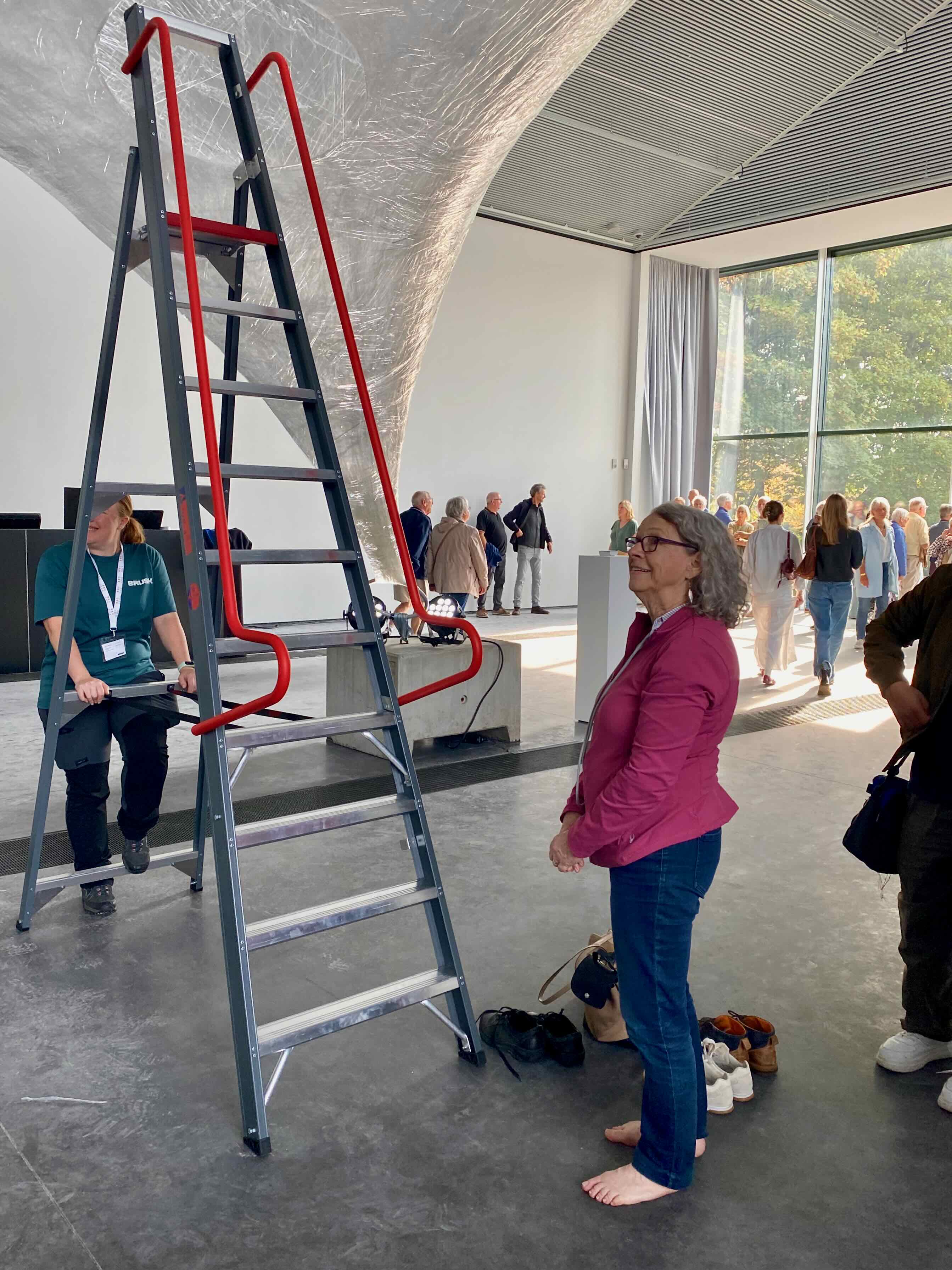
I want to climb inside…my turn next!

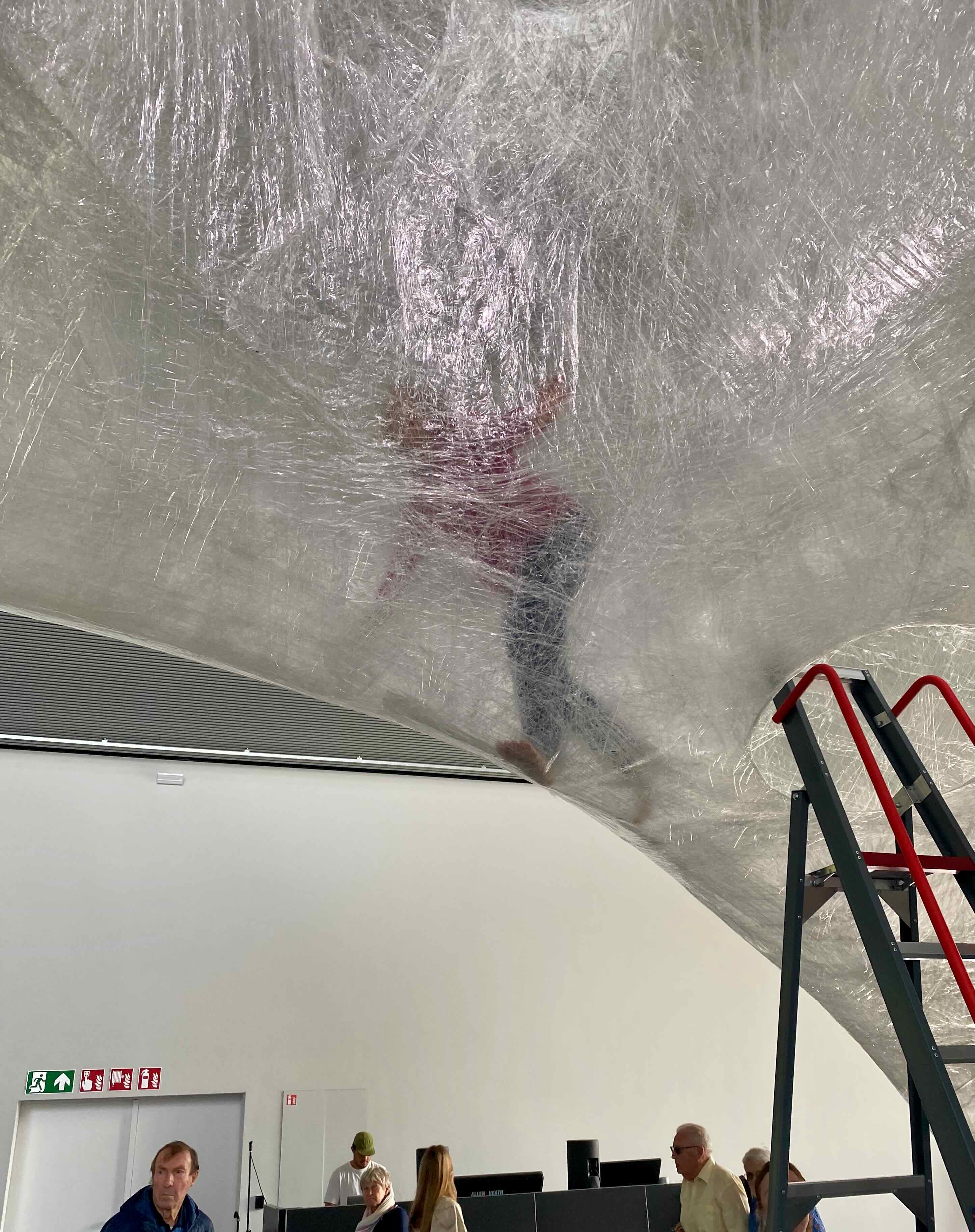
It was interesting trying to walk around, but not really all that difficult.

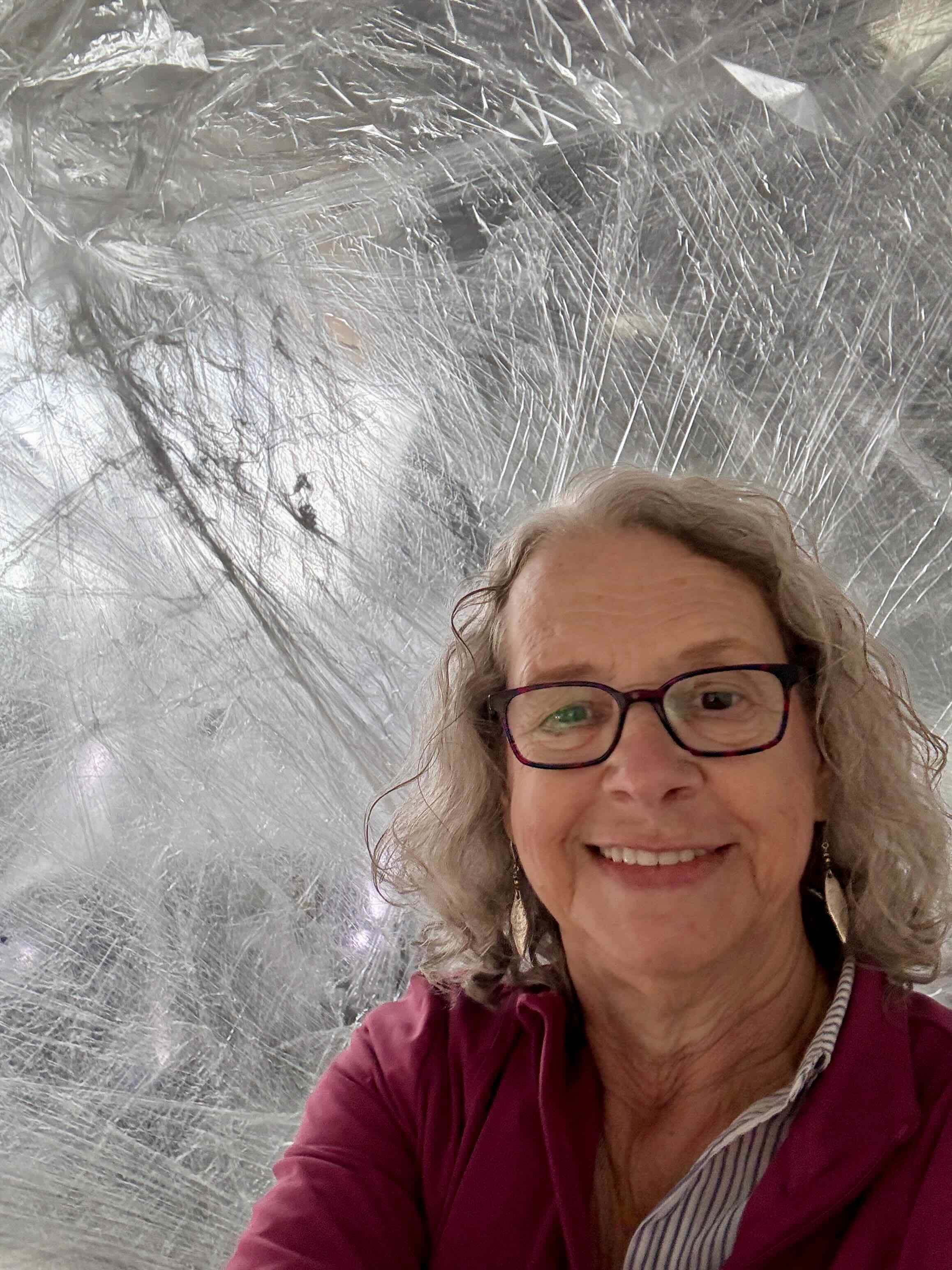
This was so much fun!  Here I am inside this giant web-like structure.

There is the hole I climbed through to get inside.All too soon it is time to climb down. This was such fun.
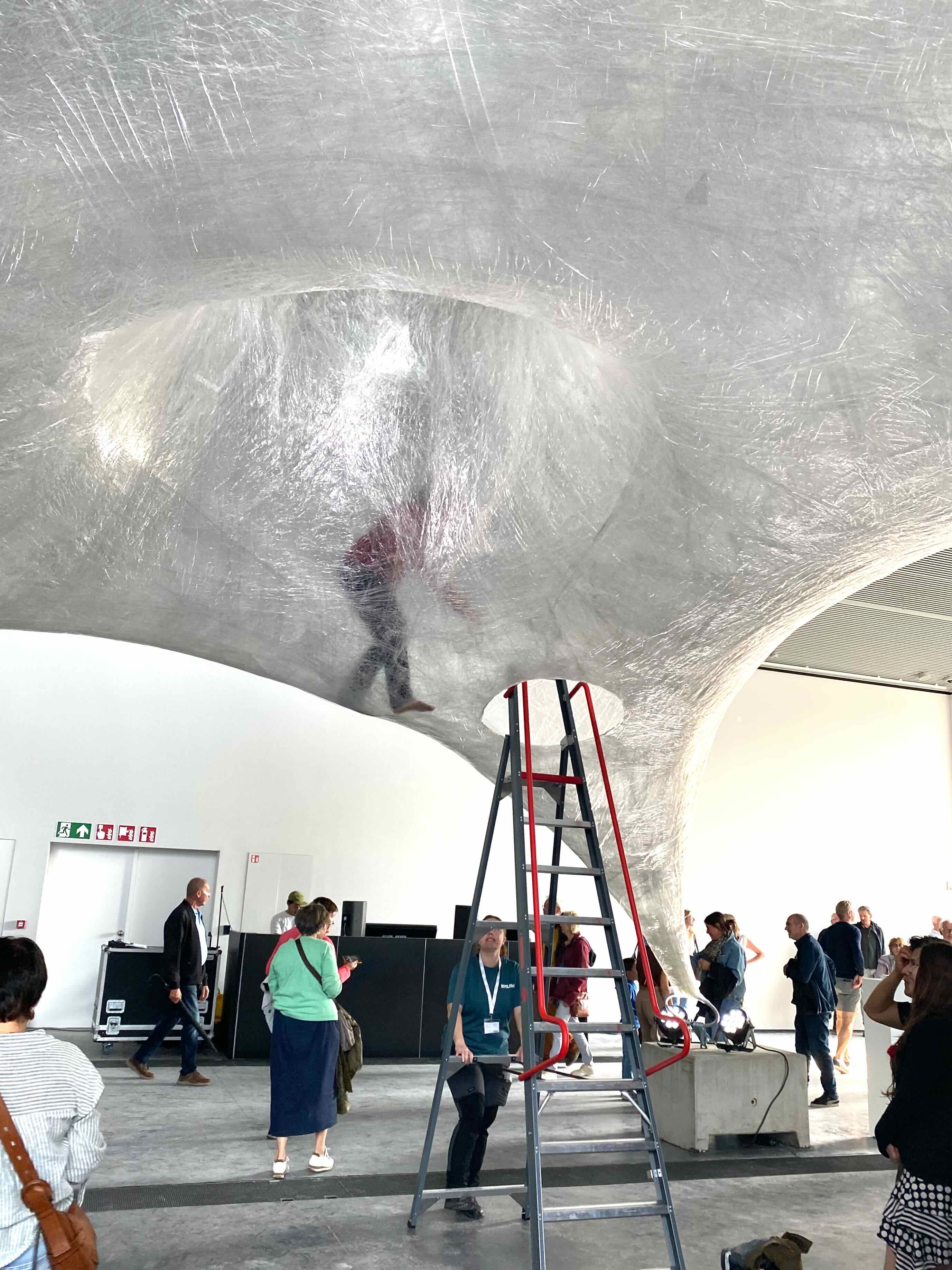
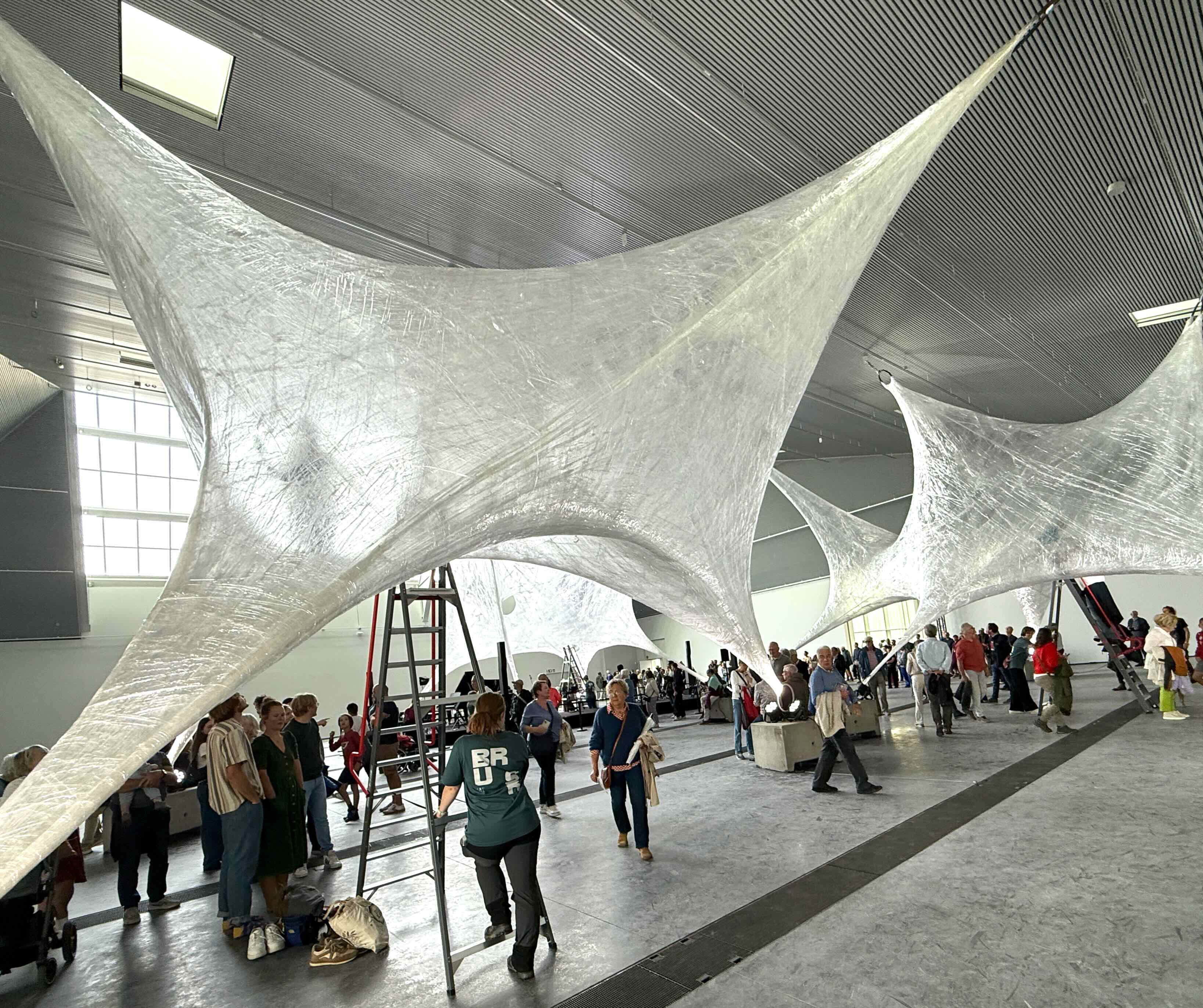
There were several of these ‘webs’ in this huge room. What a clever idea.

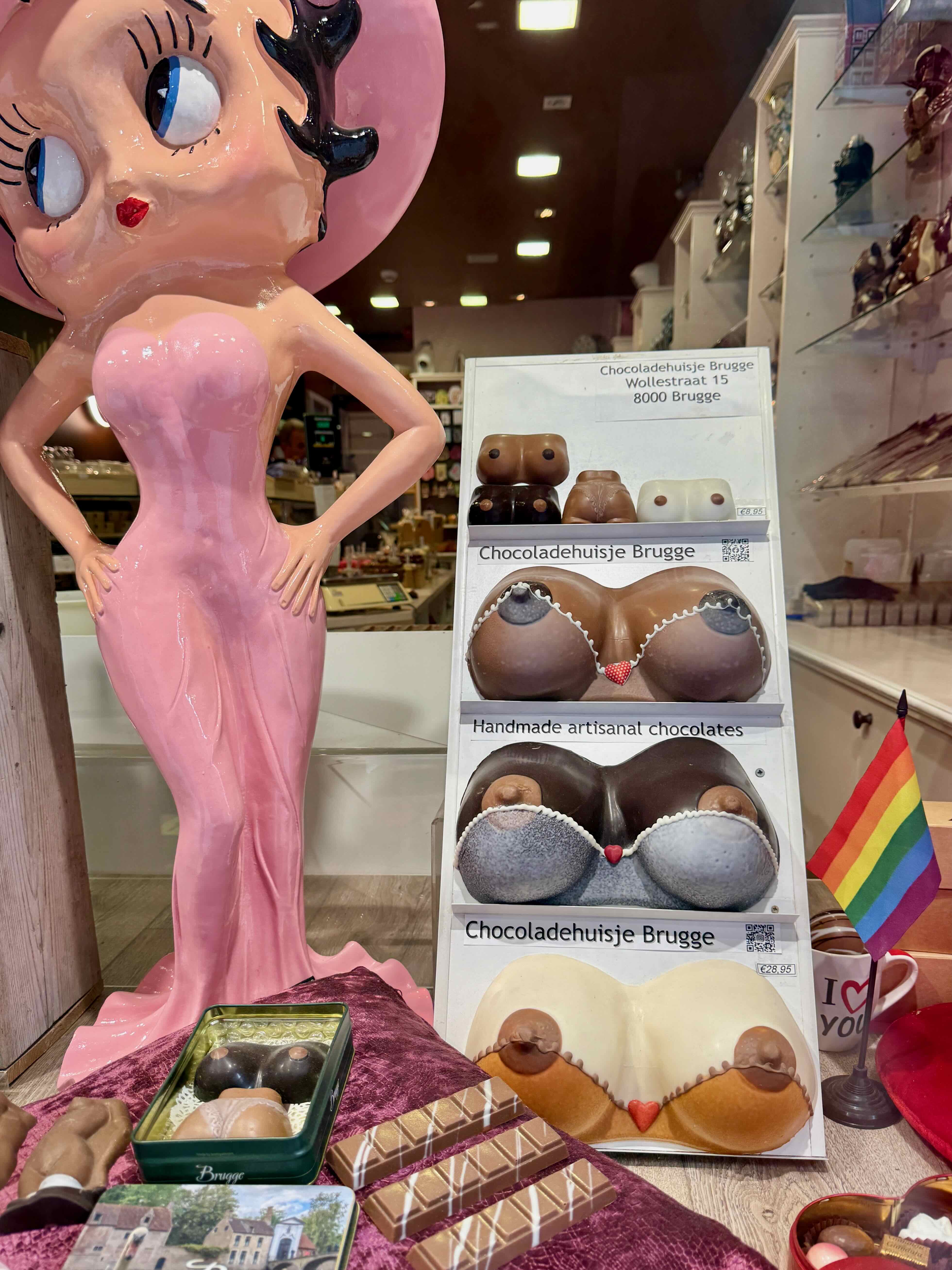
Belgium is famous for its chocolate, which comes in all shapes and sizes!

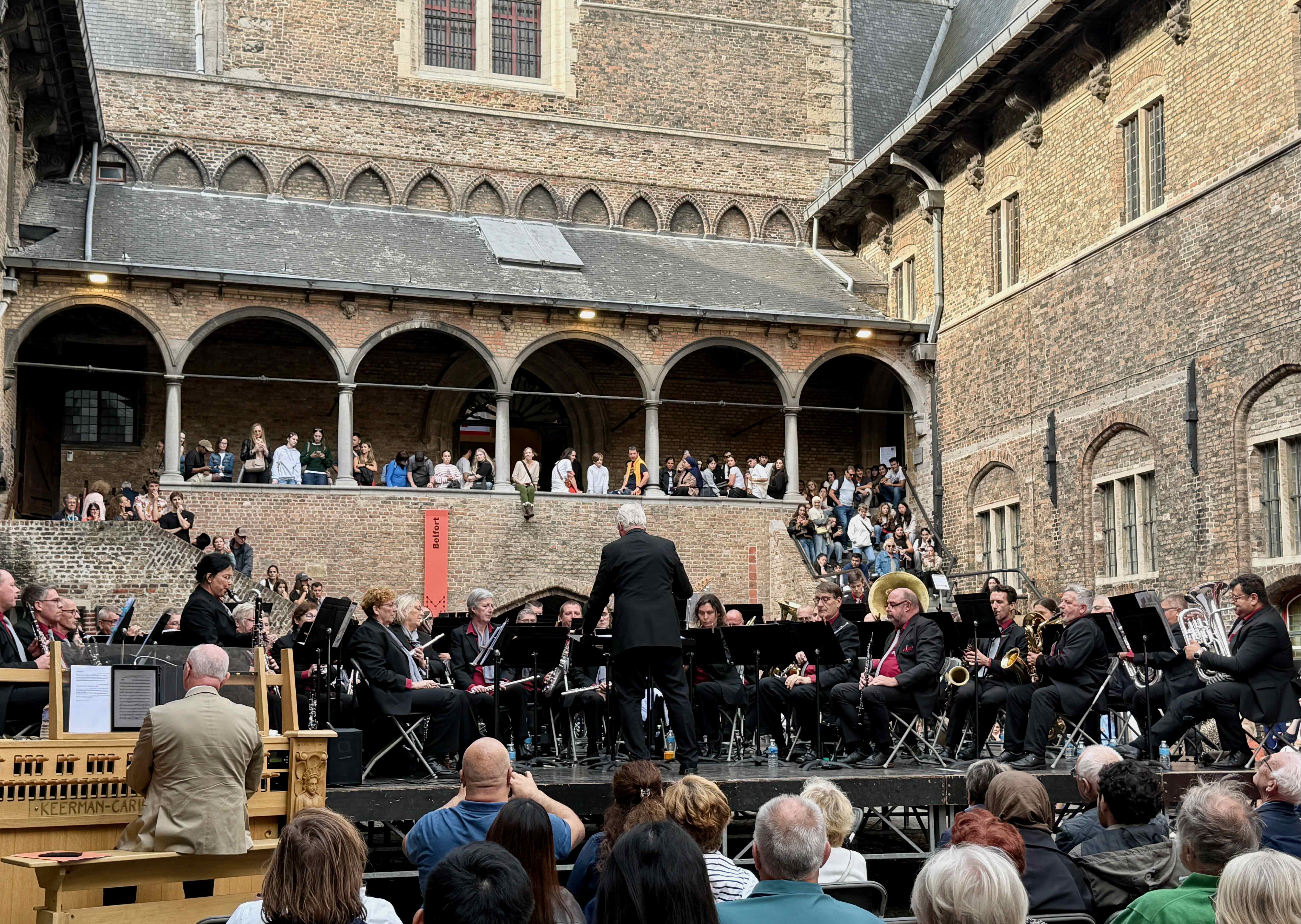
There is a Carillon performance at 4:00.  We find a spot to sit just as it starts and listen to a variety of music for the next hour. The carillon is a piano like instrument that plays 47 bells.

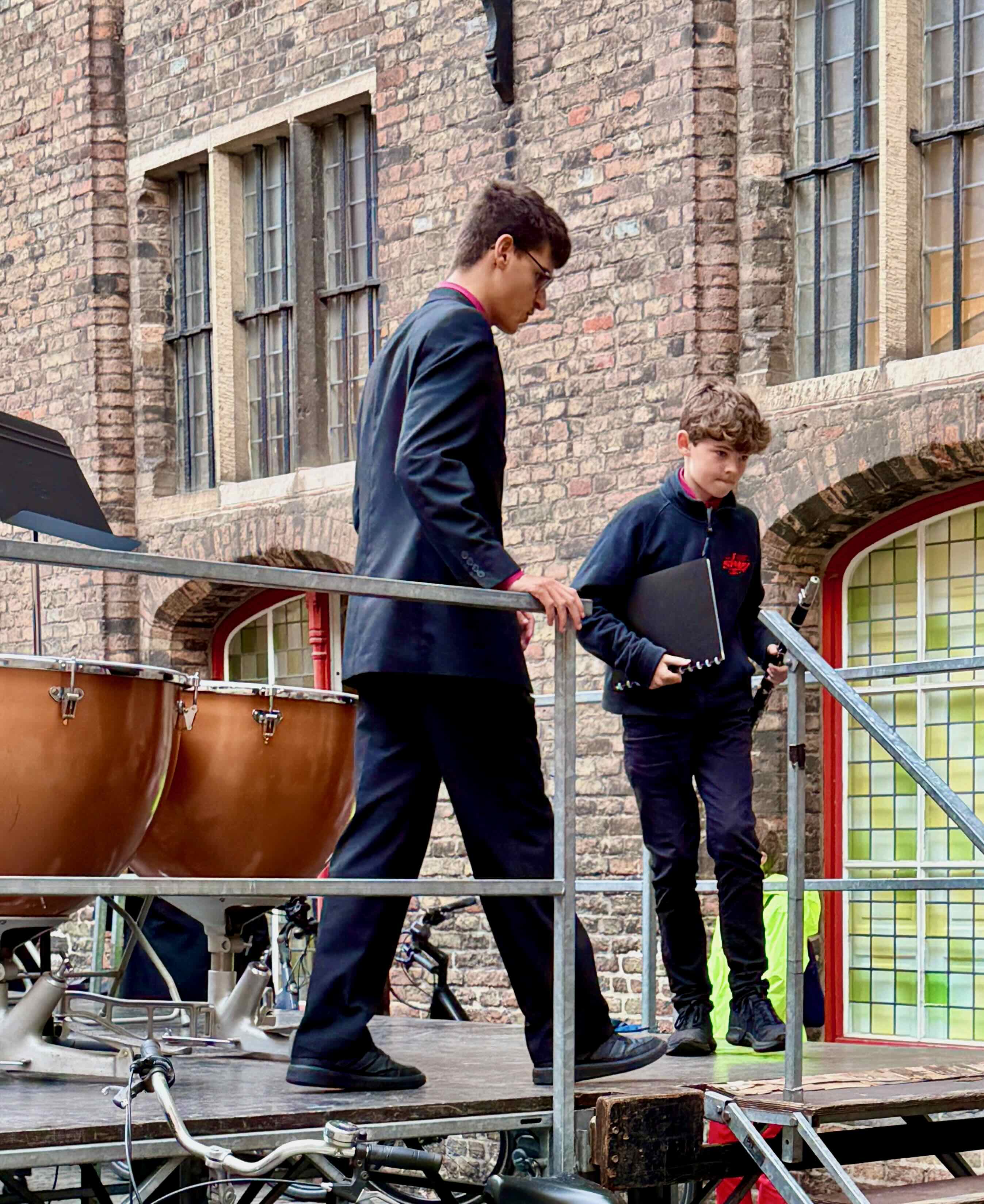
One of the musicians was very young.

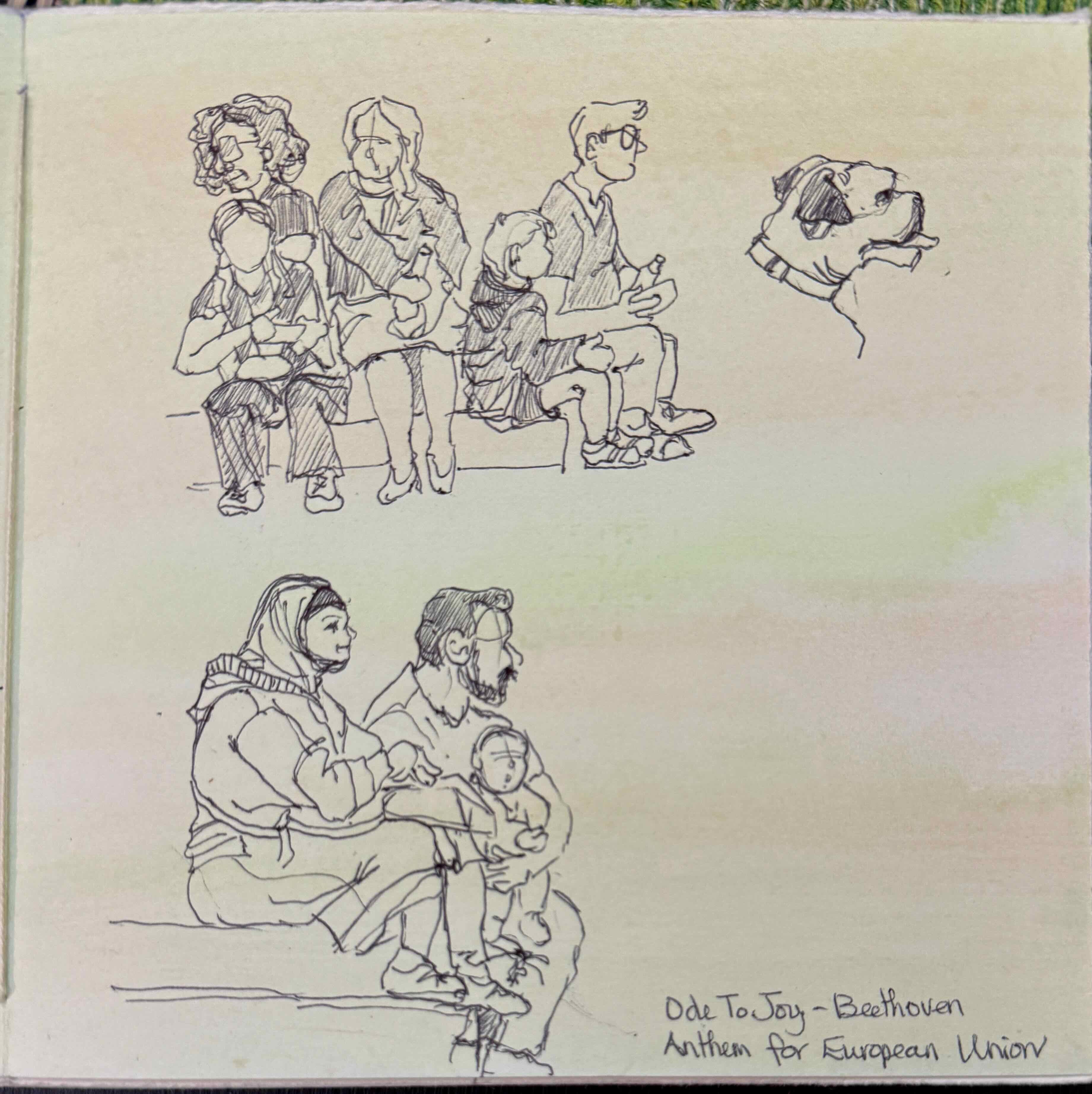
I do a bit of pen sketching while I listened to the music.  The last song played was Beethoven’s Ode To Joy and most of the audience stood up. The lady beside me told me that it is the anthem for the European Union, which has its headquarters in Brussels.  

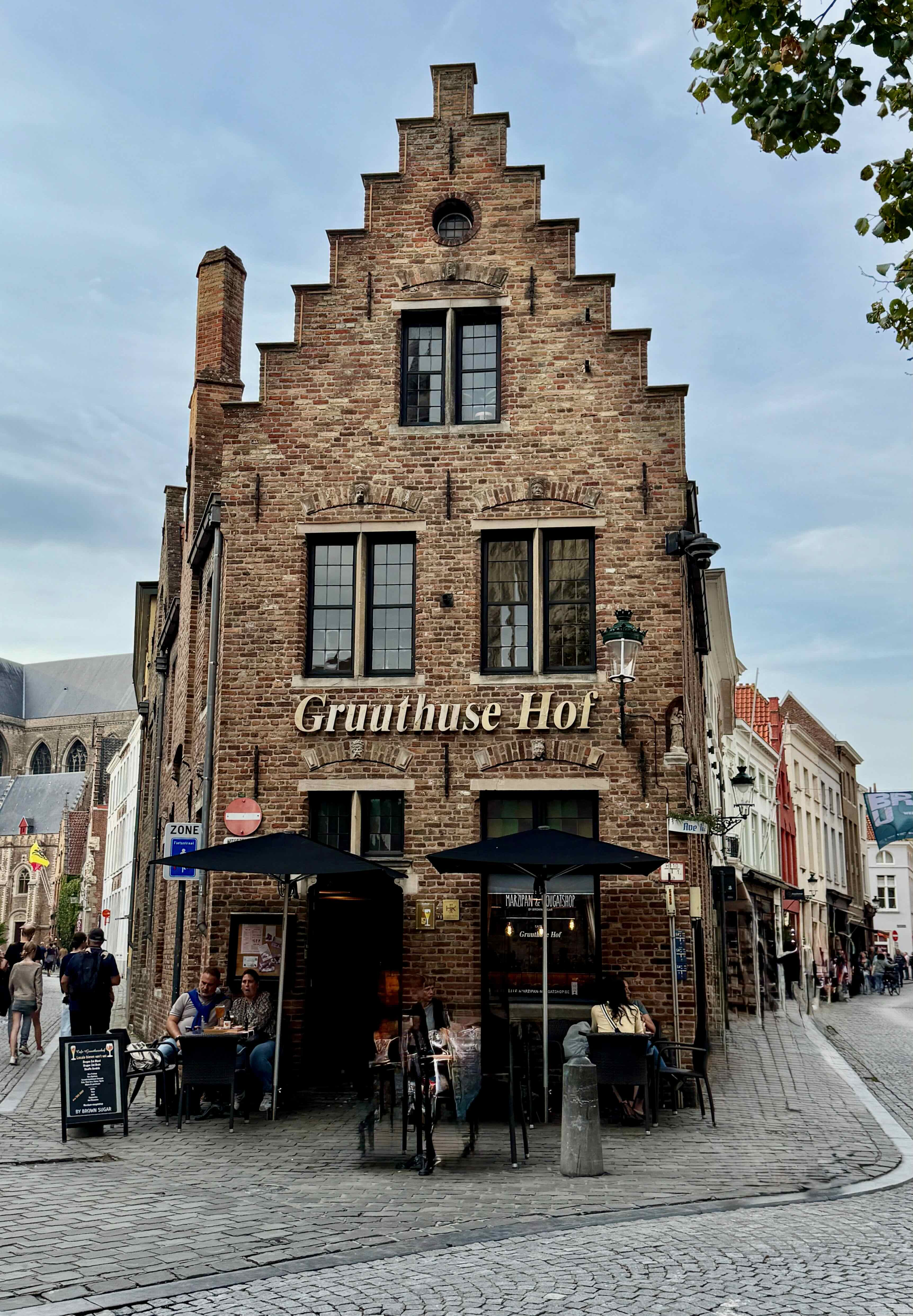
This is an interesting building, skinny at the front and then widening out as along the streets on either side. 

We wanted to visit the Church of Our Lady which houses The Madonna and Child by Michelangelo. This world-famous white marble statue is the only work by Michelangelo that left Italy during his lifetime. But the church closed at 5:00 so we are out of luck.

We have to settle for viewing this poster.

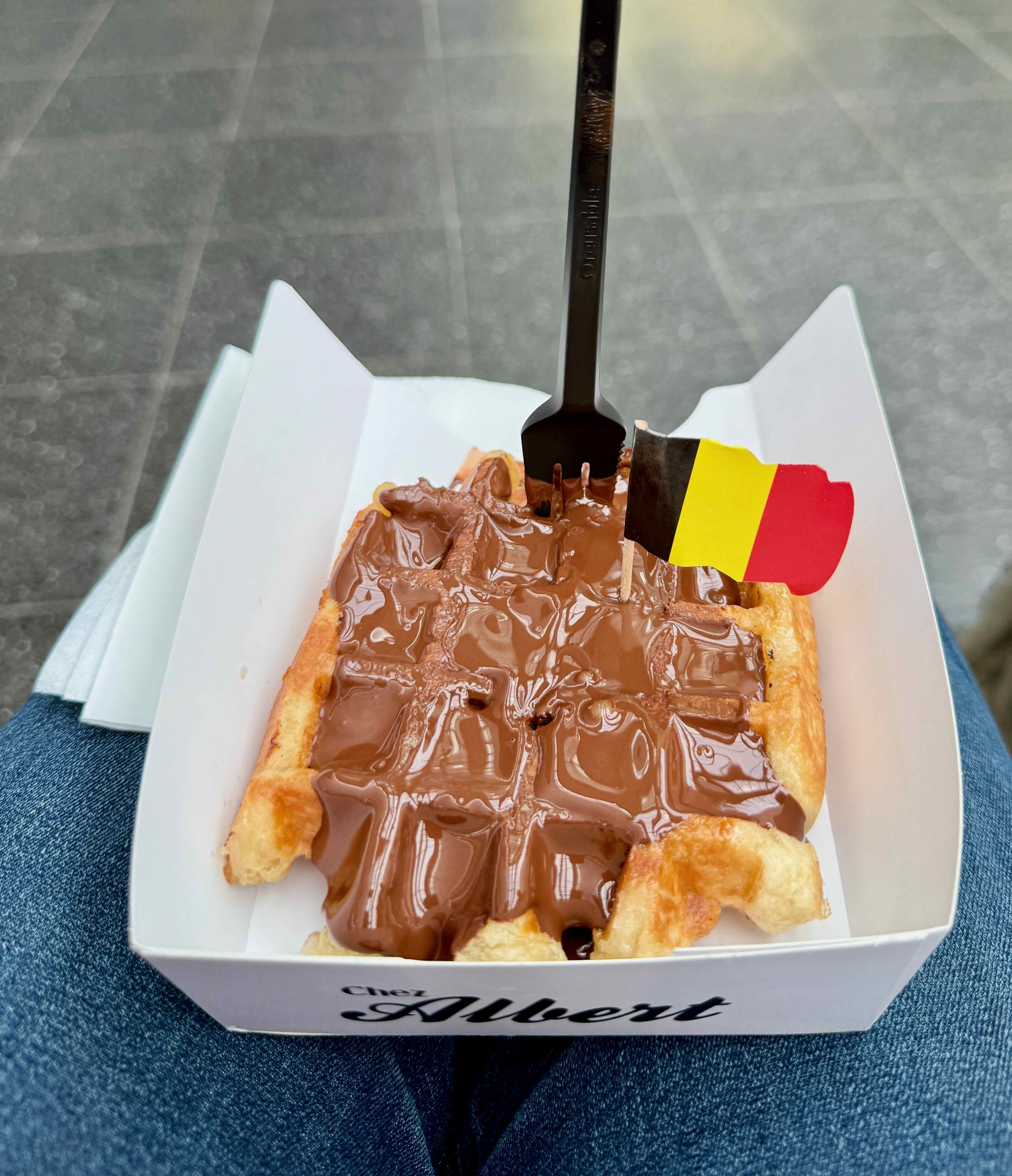
We order a waffle with dark chocolate to share before the long drive back to our bnb. It  had a bit too much chocolate for us, but was still delicious.

Waterloo, Belgium and the Defeat of Napoleon

Day 19     Thursday, September 18, 2025

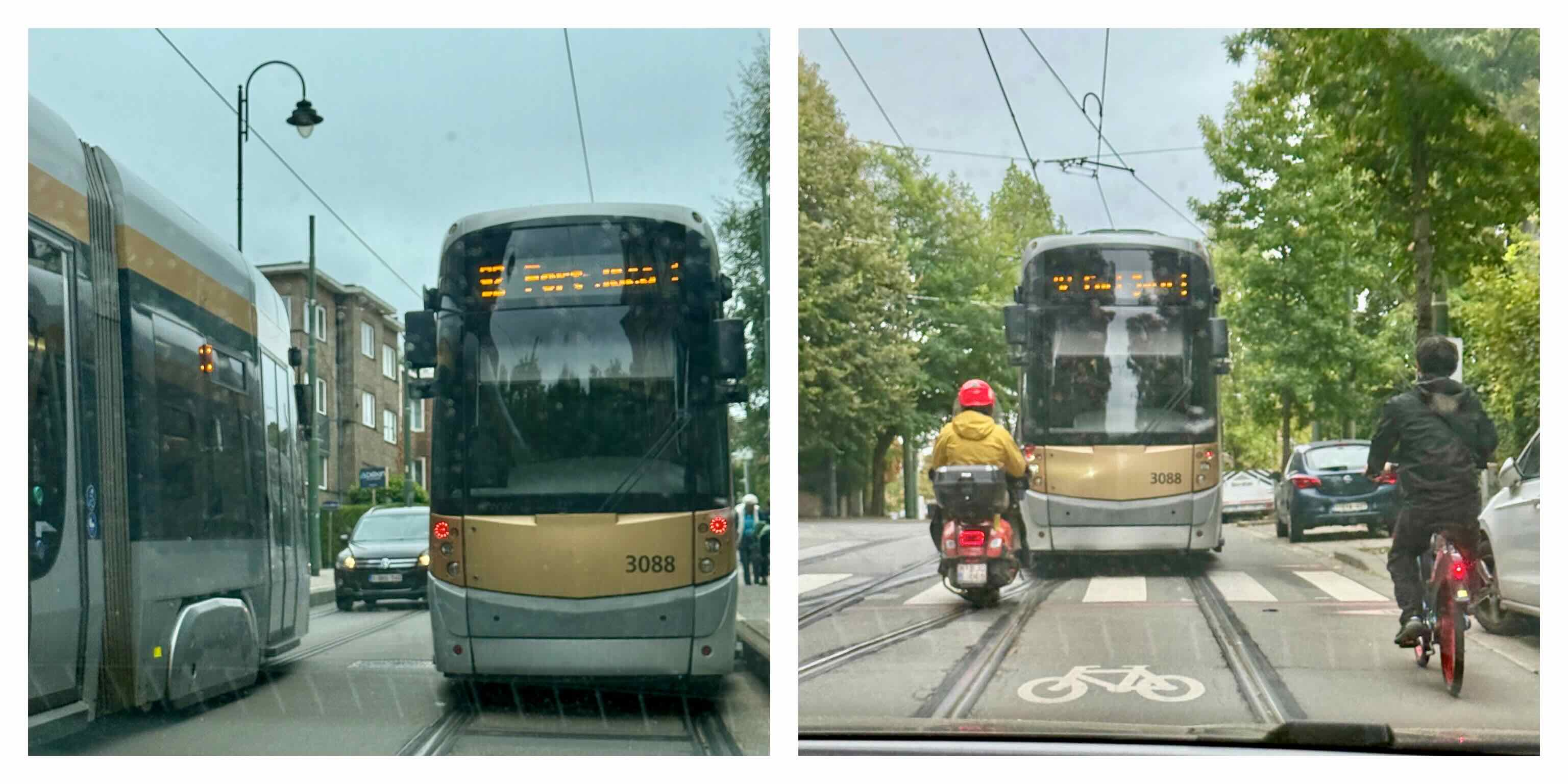
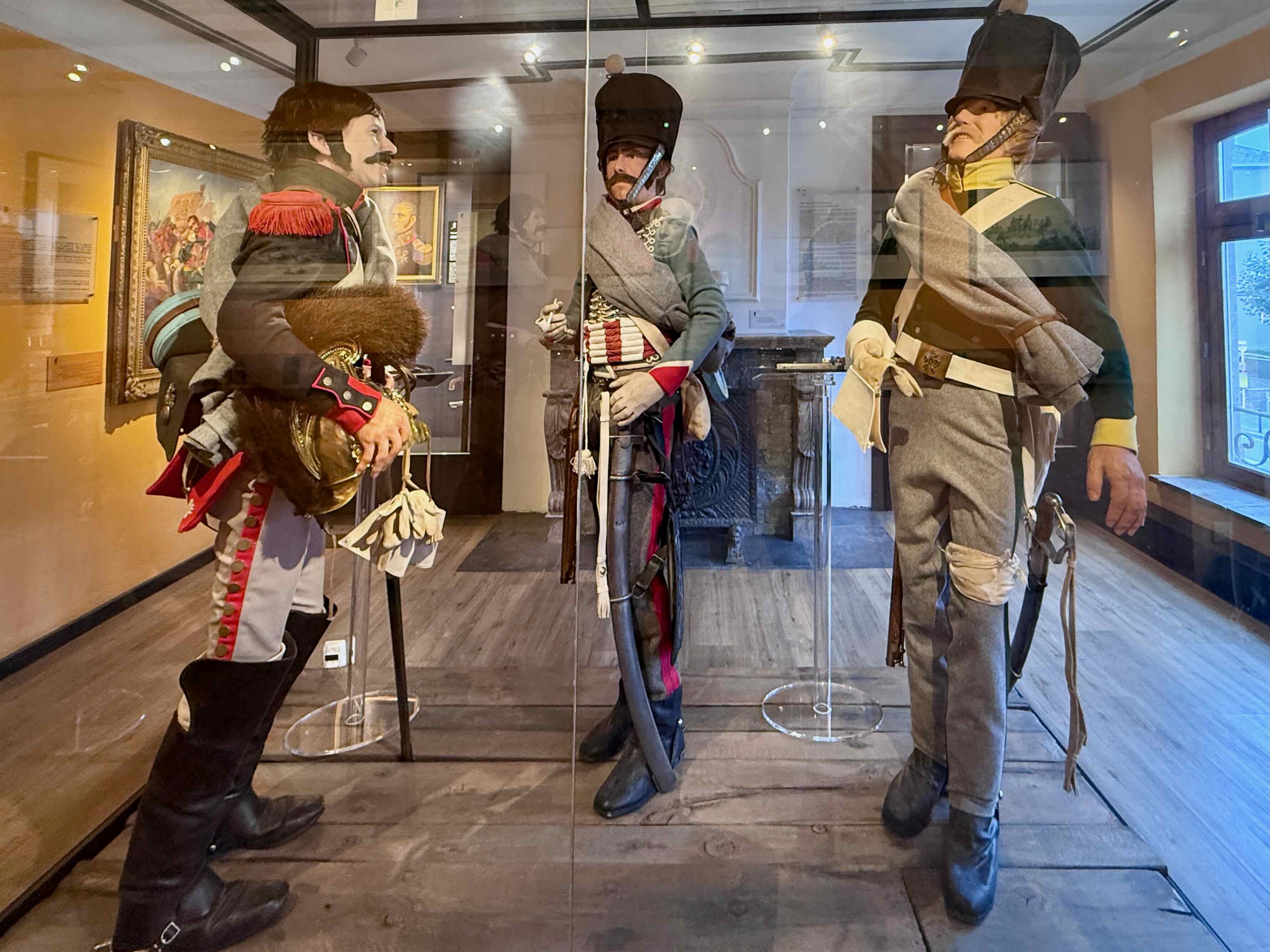
We are on the road by 10:00, heading to Waterloo which is the site of the famous Battle that ended Napoleon’s French Empire. The roads can be challenging to drive. Many are fairly narrow and today we share the road with trolley cars, automobiles, trucks, motorcyclists and bicyclists! There is a lot to pay attention to and Bob its doing an amazing job driving.  I am usually a good navigator but I didn’t have the best night and today we get to Waterloo in spite of my navigating!! The Wellington Museum was easy to find and there was free parking nearby.  The museum is located in the building that the British Duke of Wellington used as his headquarters when he defeated Napoleon at Waterloo in1815.  The soldiers uniforms displayed are, from left to right, the French Carabiniers, the British Light Dragoons and the British 8th Hussars.
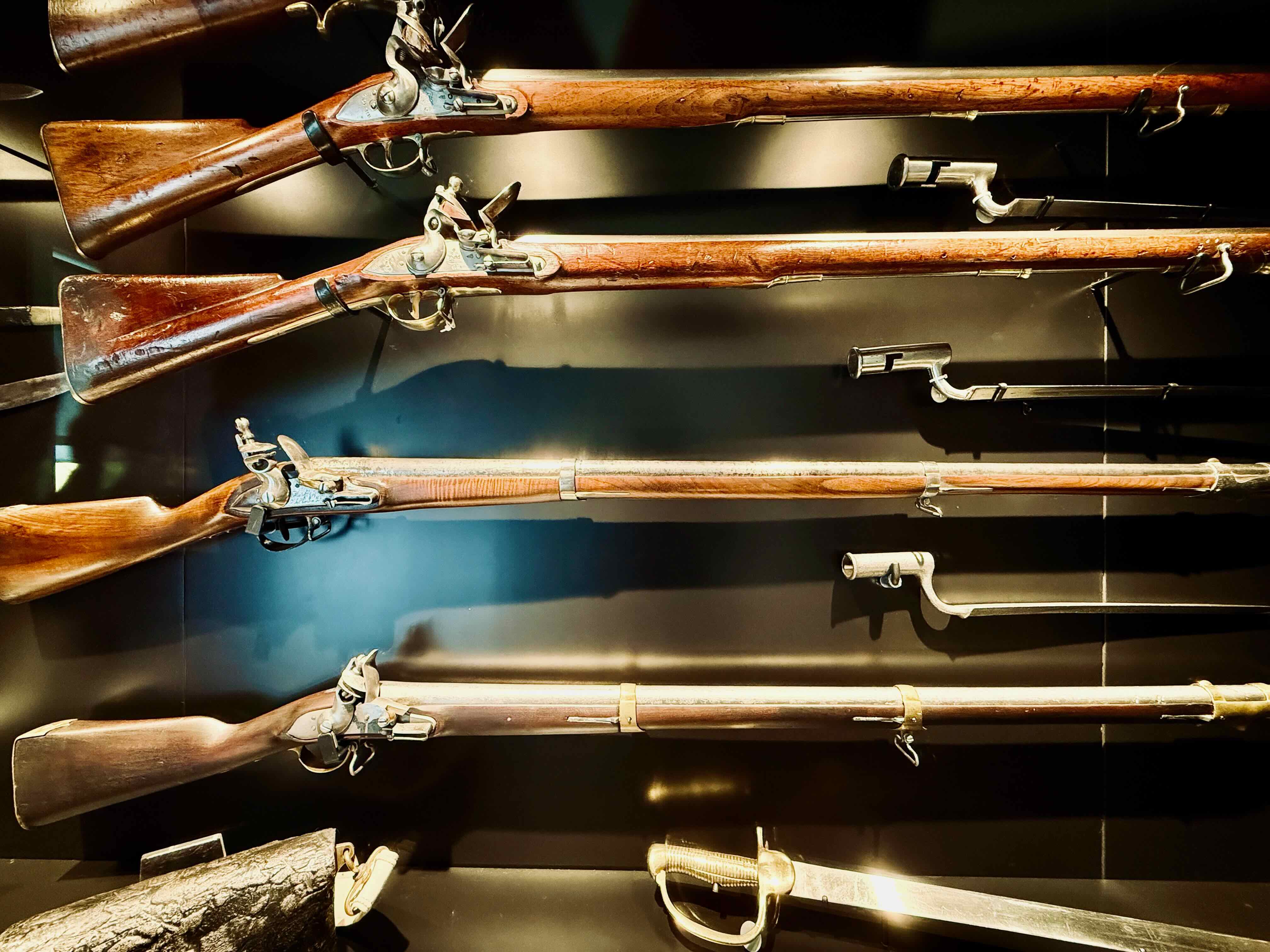
The museum has a room with weapons used during the Battle of Waterloo.

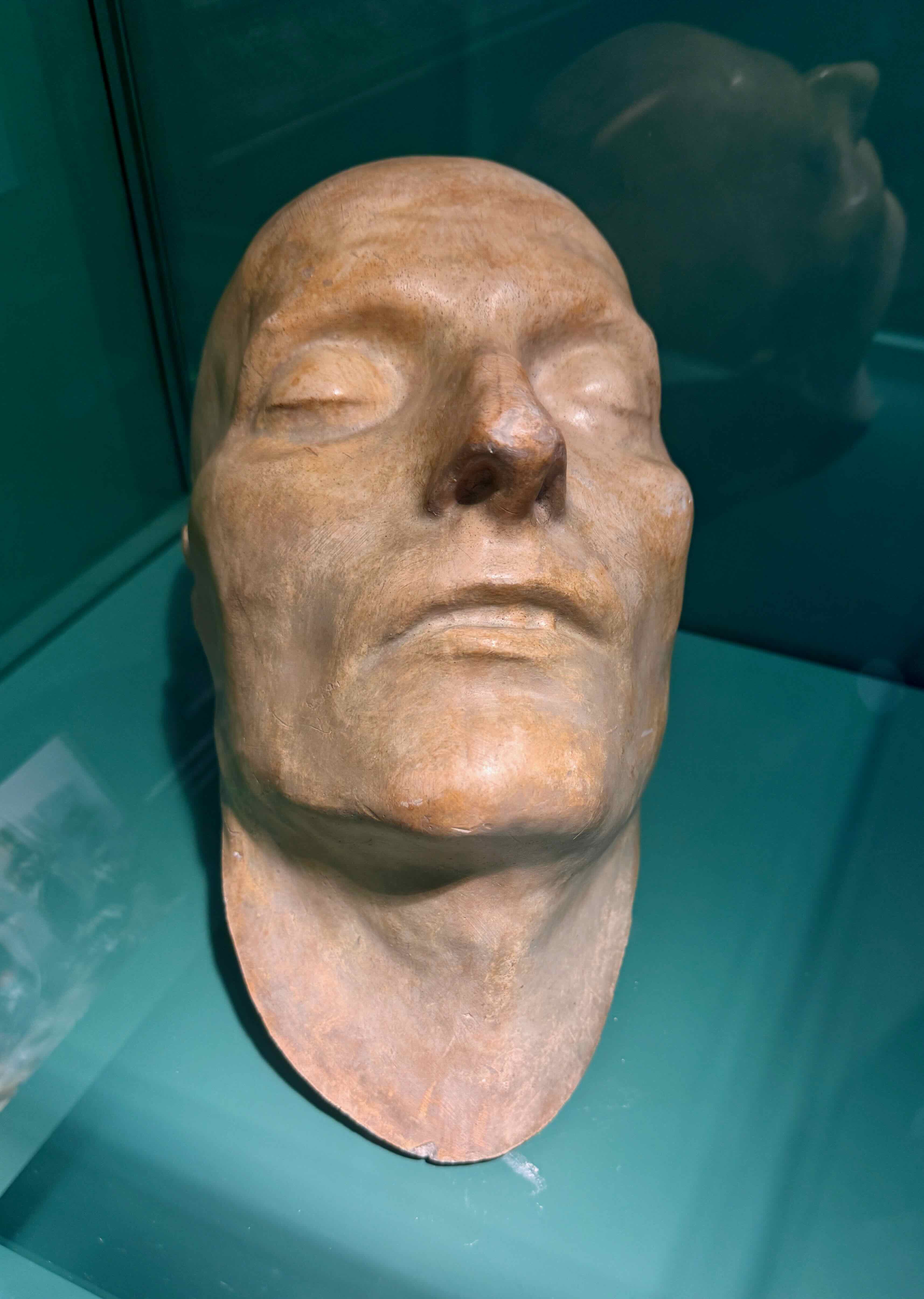
A lot of artwork, paintings and information about the battle and even the death mask of Napoleon which I find rather unsettling.

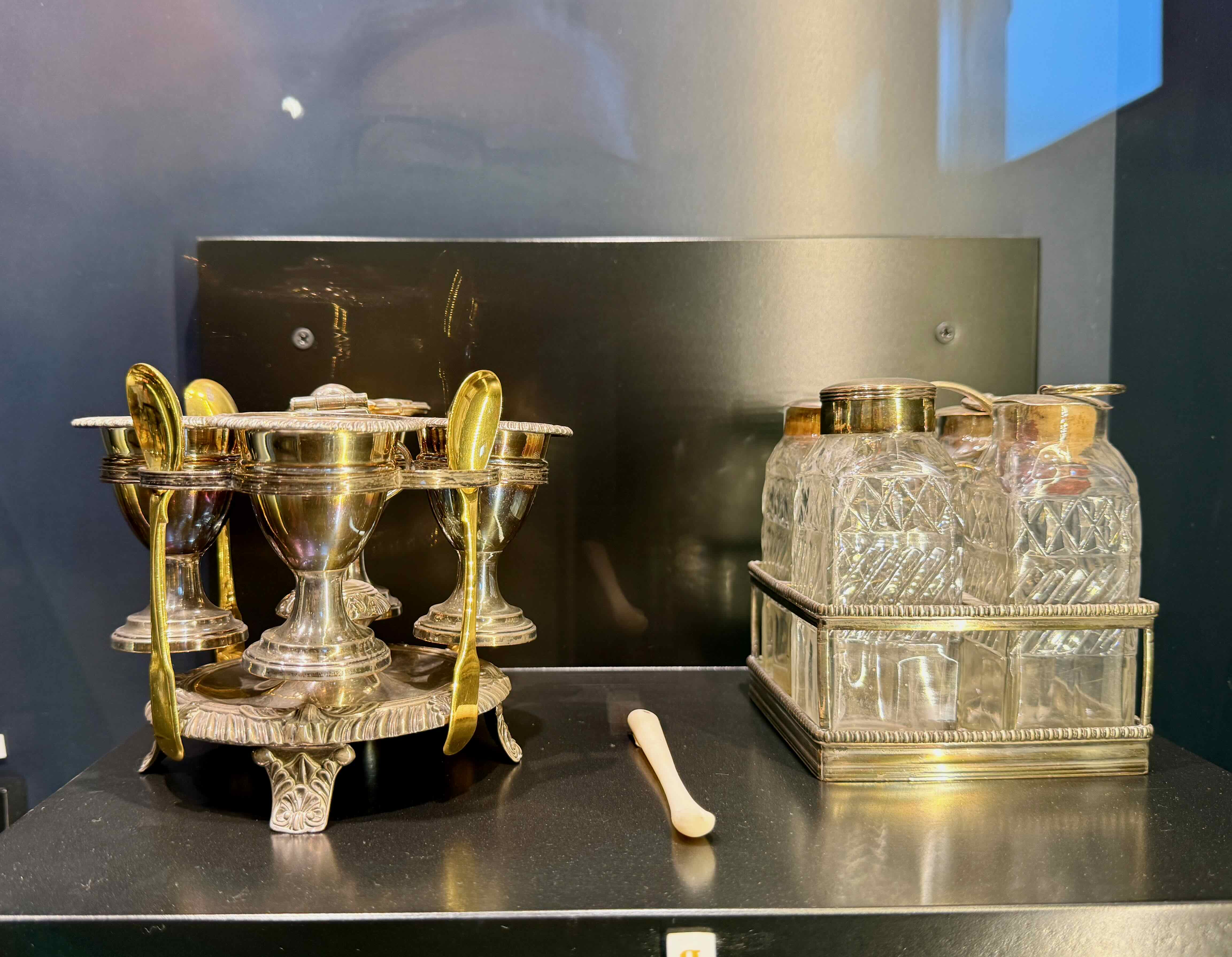
The French troops had to forage to survive, and many soldiers died of disease, malnutrition and exhaustion brought on by the extremely difficult conditions they endured.  Meanwhile the French generals travelled with dining sets that included items like crystal containers and silver and gold plated egg cups and spoons!

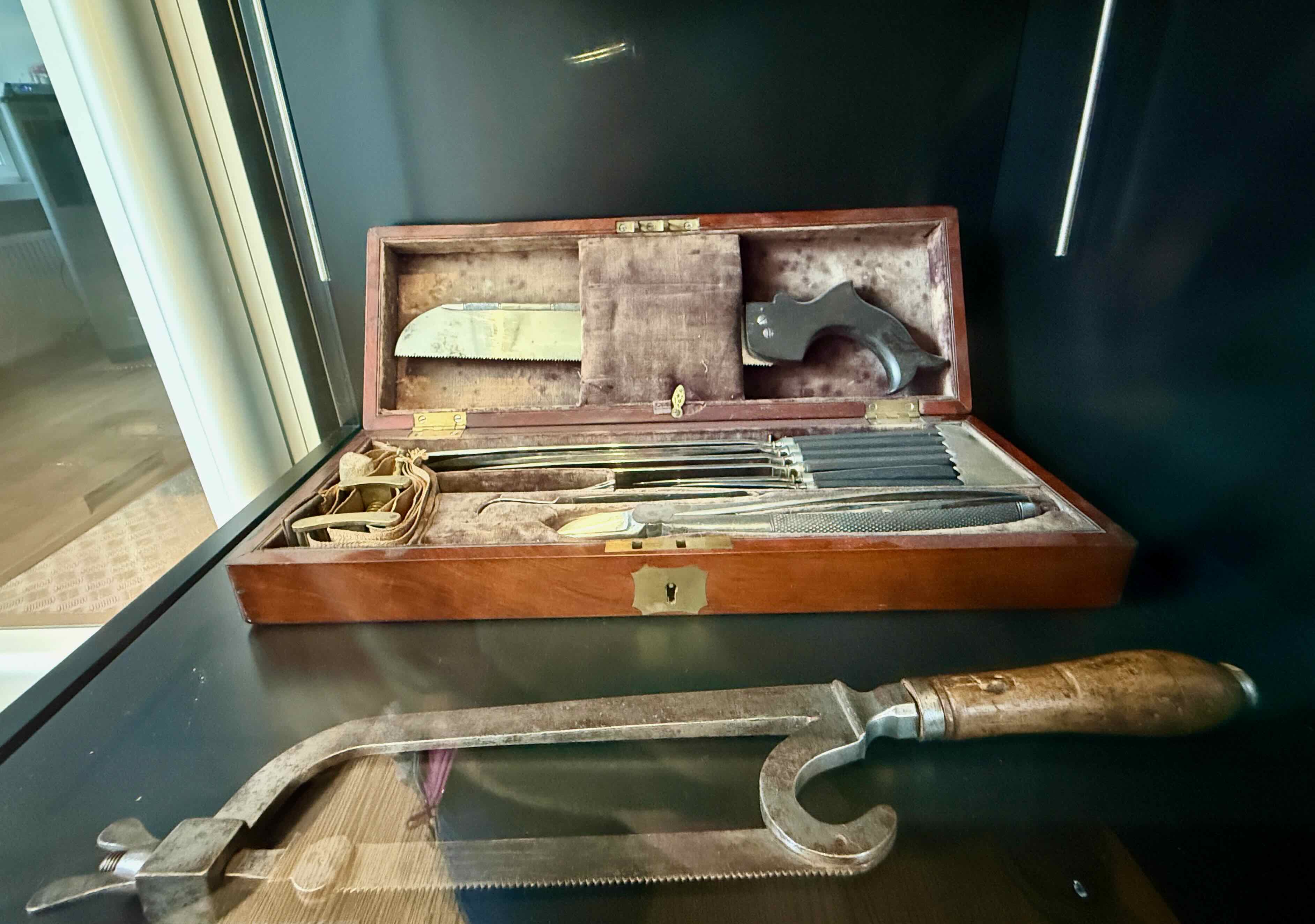
Soldiers were treated by amputating injured limbs to prevent gangrene. This is a typical surgeons kit for amputations which were performed quickly without anaesthetic and in five minutes. The saws and other medical equipment were not cleaned between patients so the post operative mortality rate was very high.

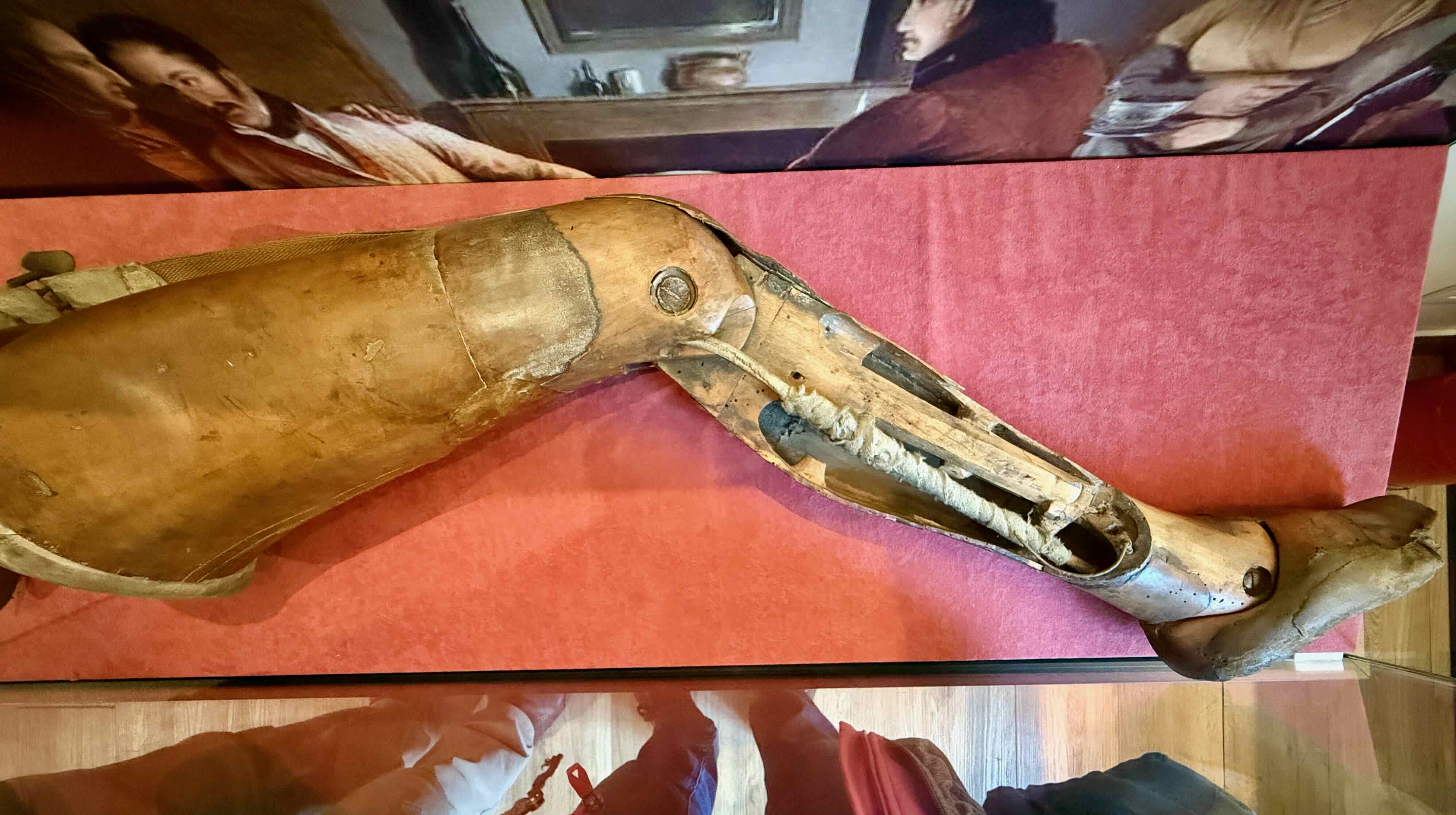
If you survived the amputation and had enough money your prosthetic leg could look like this.  I imagine most common soldiers made do with some sort of simple wooden peg leg.

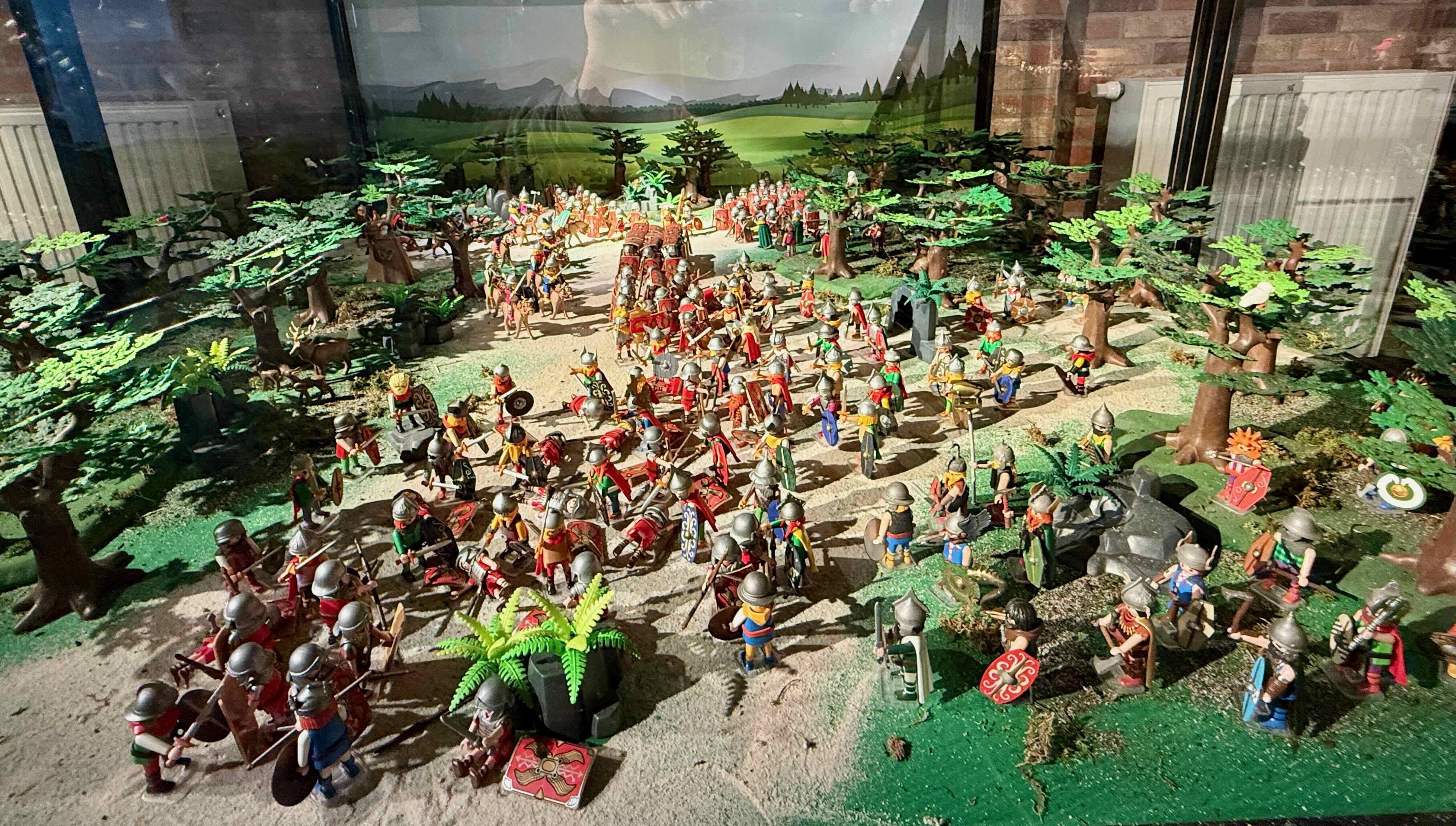
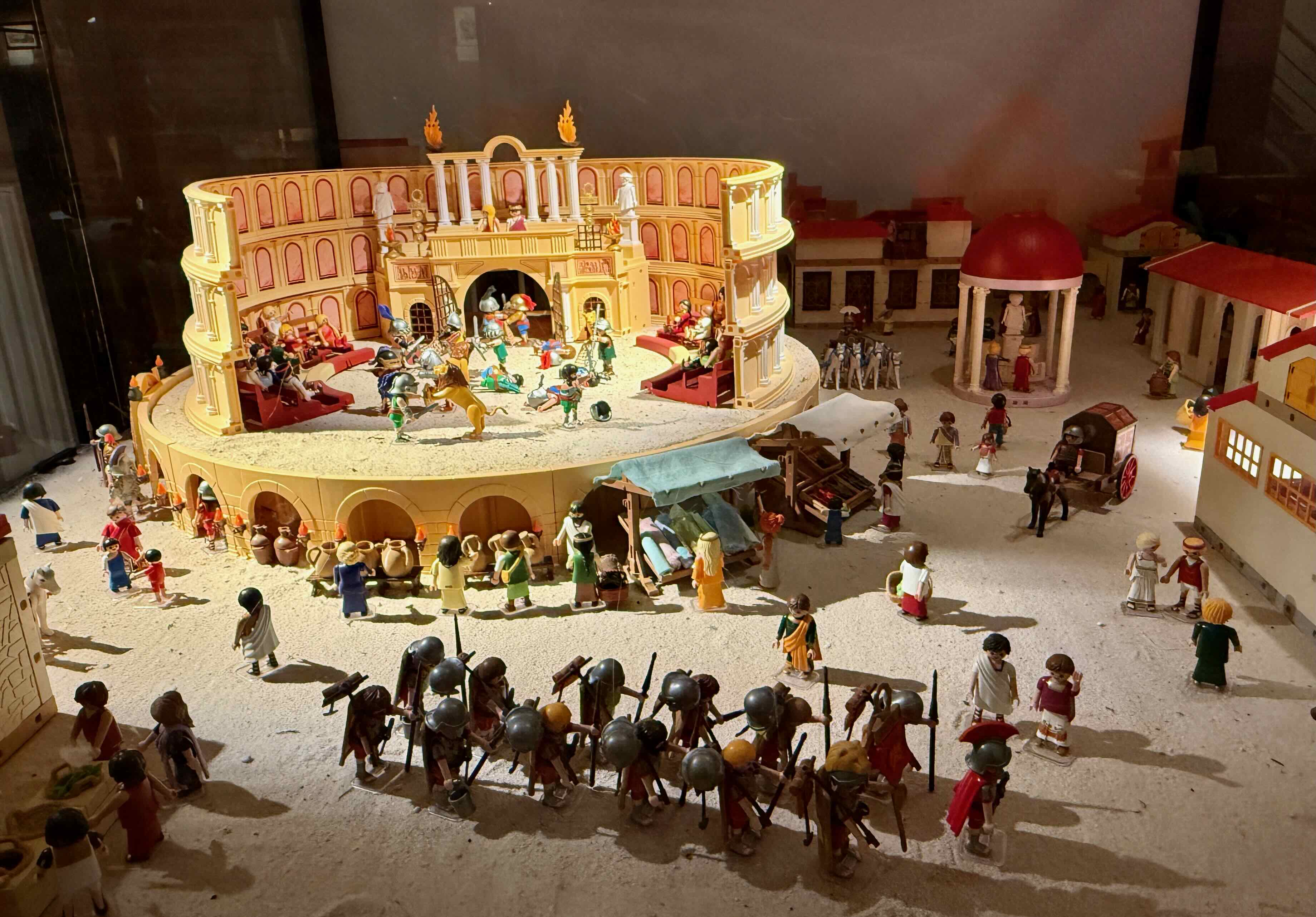
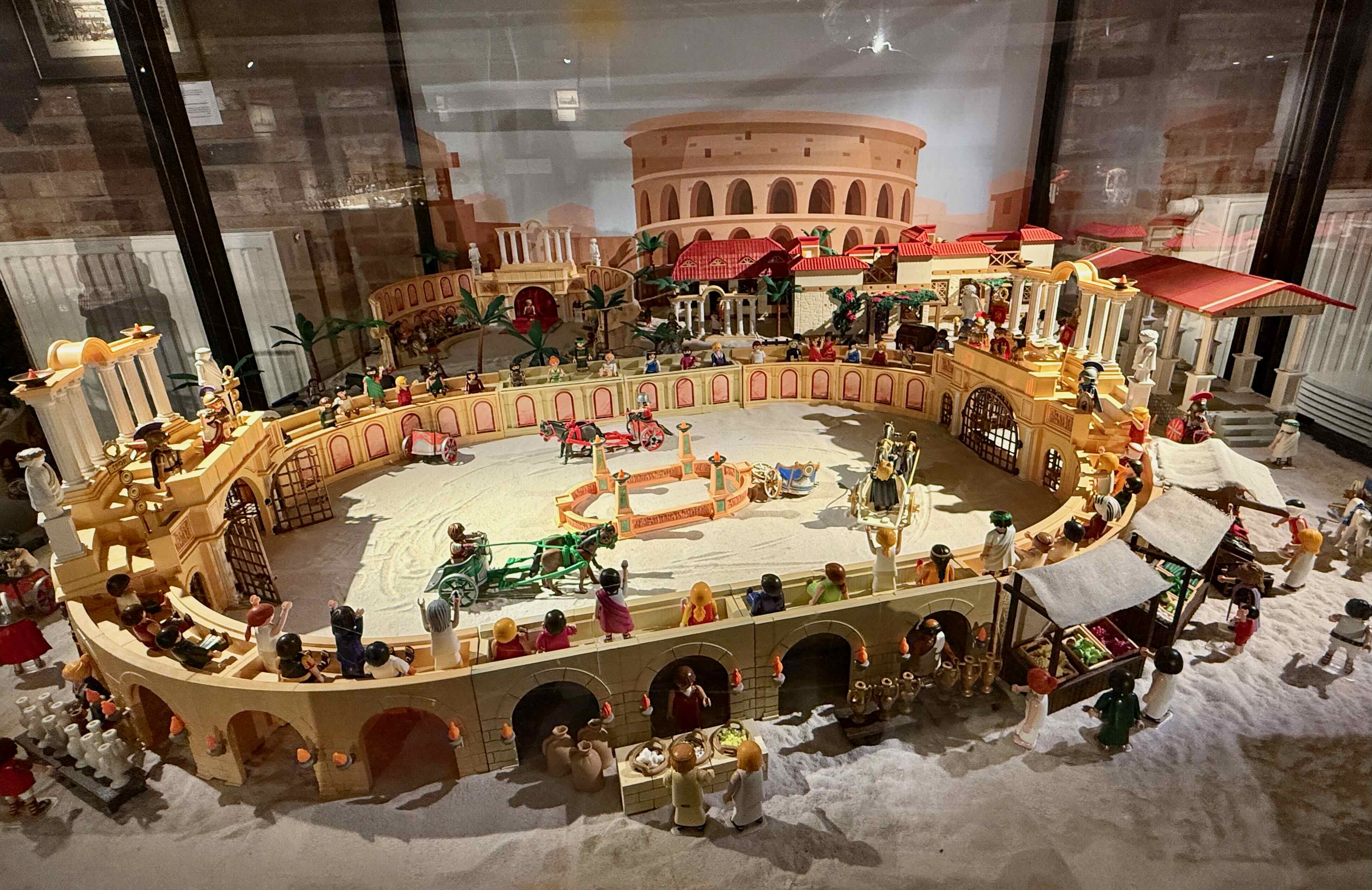
We cross a patio to enter another part of the museum and are surprised to find a huge Playmobile exhibition titled ‘A History of Empires’.  There are 16 display cases, each depicting a different time in history.

The war between Julius Caesar and the Gauls in 54 B.C. Rome’s first race course built in 599 B.C.
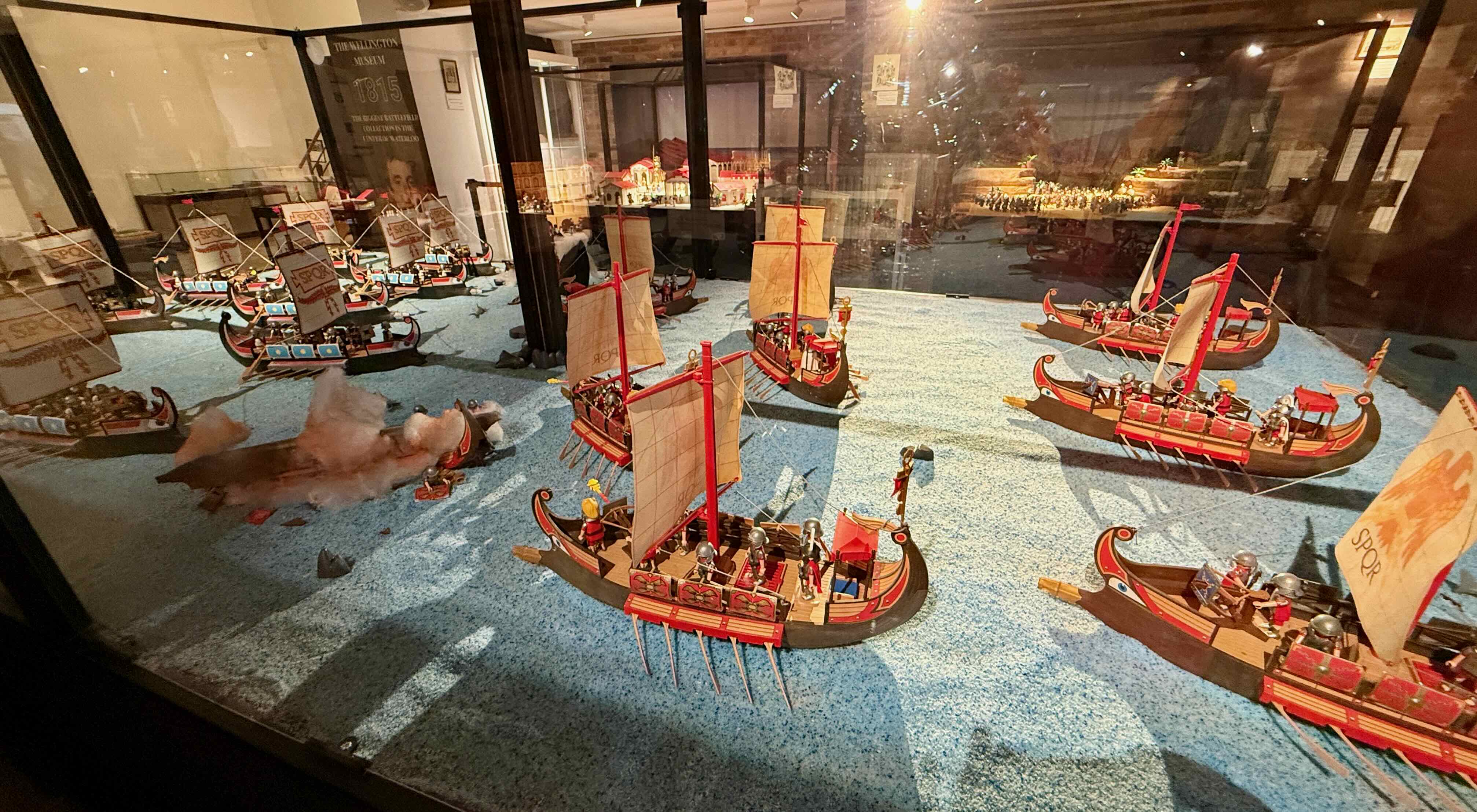
A naval Battle but I don’t remember which one.

The Roman Coliseum. We really enjoyed this unusual exhibit and marvelled at the thousands and thousands of Playmobile figures and accessories that were used to create these dioramas. This very old St. Joseph Church from 1690 is right across the street so we had a look.
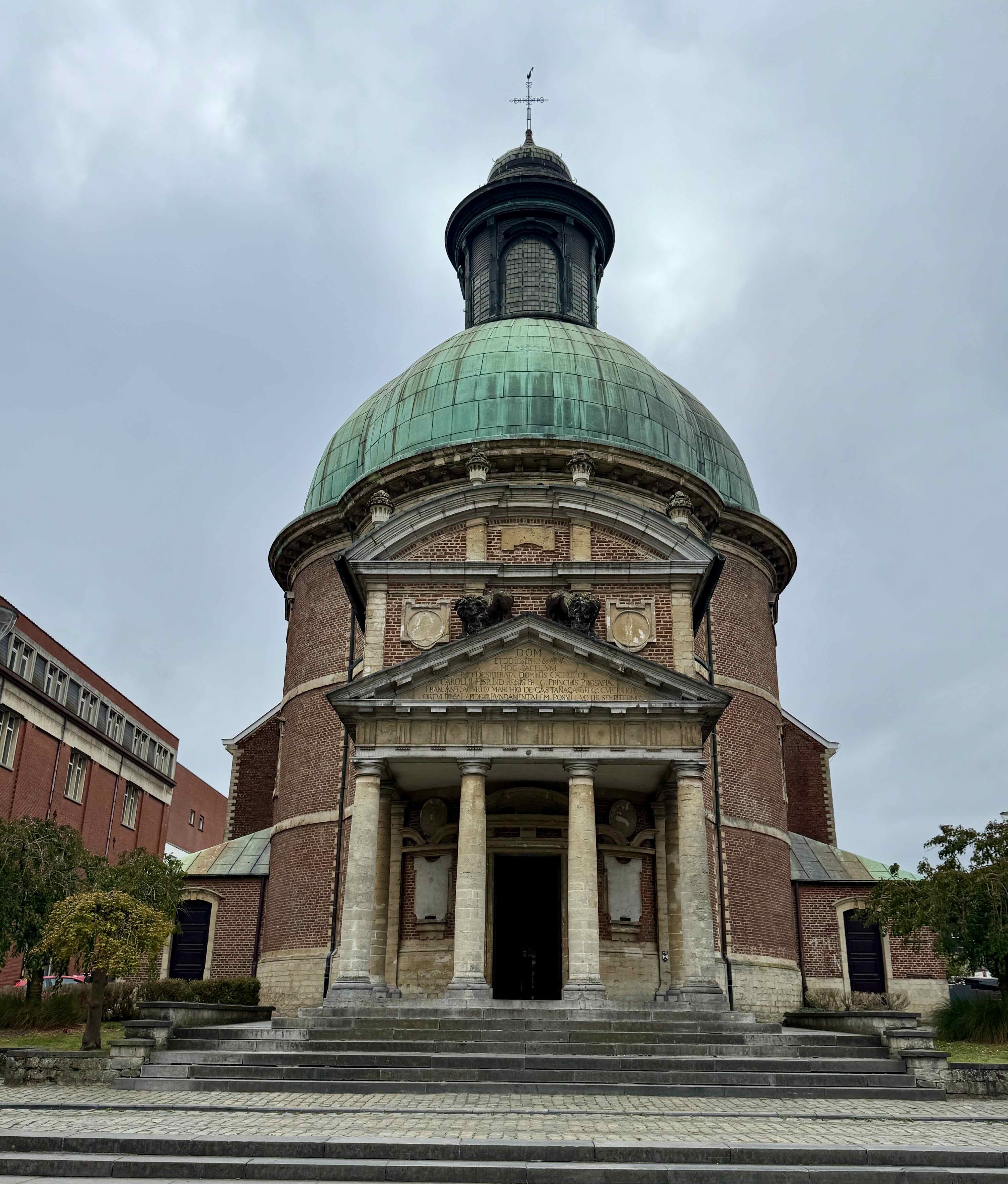
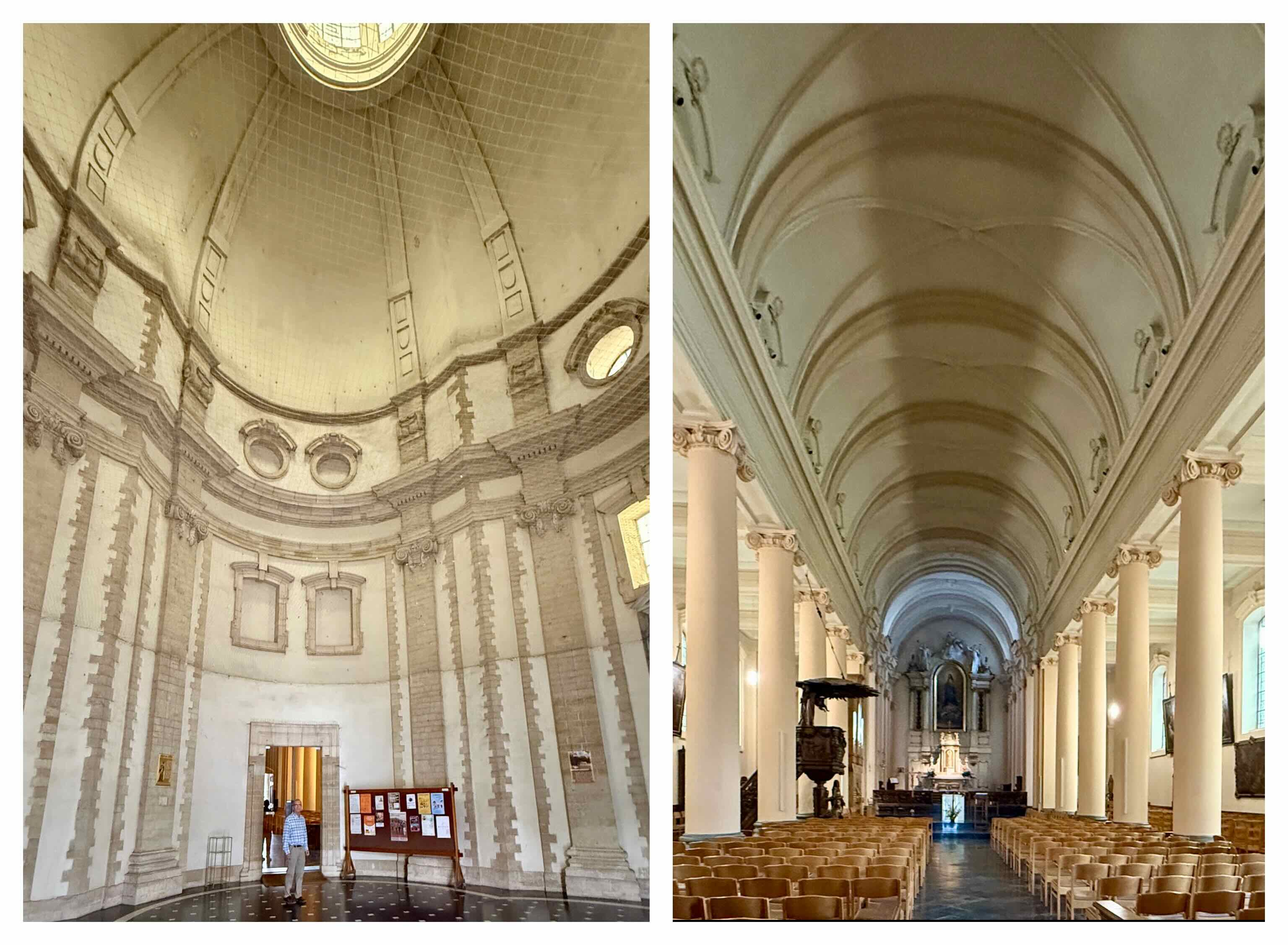
The area under the dome is huge and the church itself has large columns on either side of the nave. We have visited many churches and Cathedrals on our travels, but they are all so different from one another.  

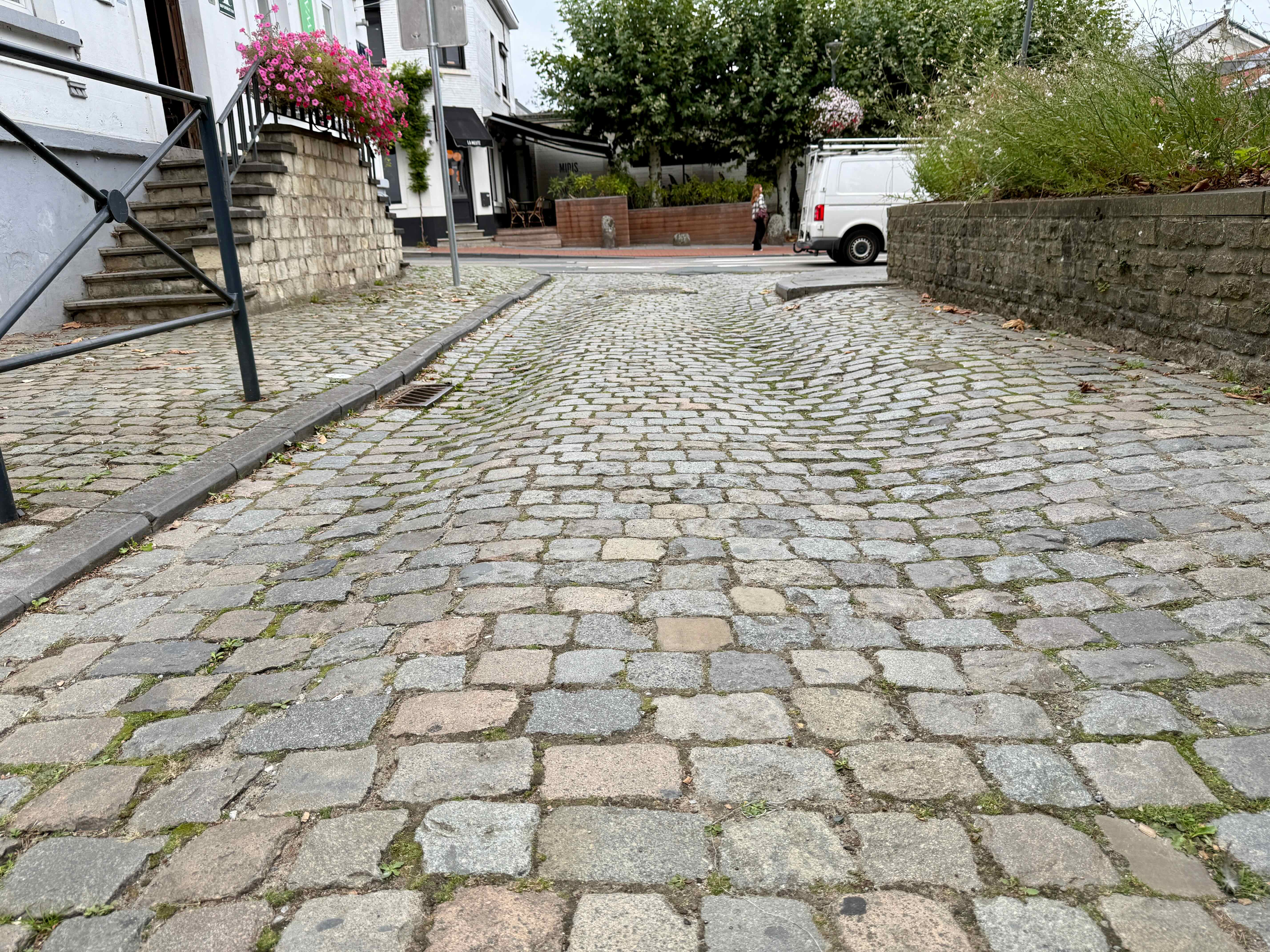
The road in front of the Church is cobble-stoned and we can see the depressions in the road made over the years by cart wheels.

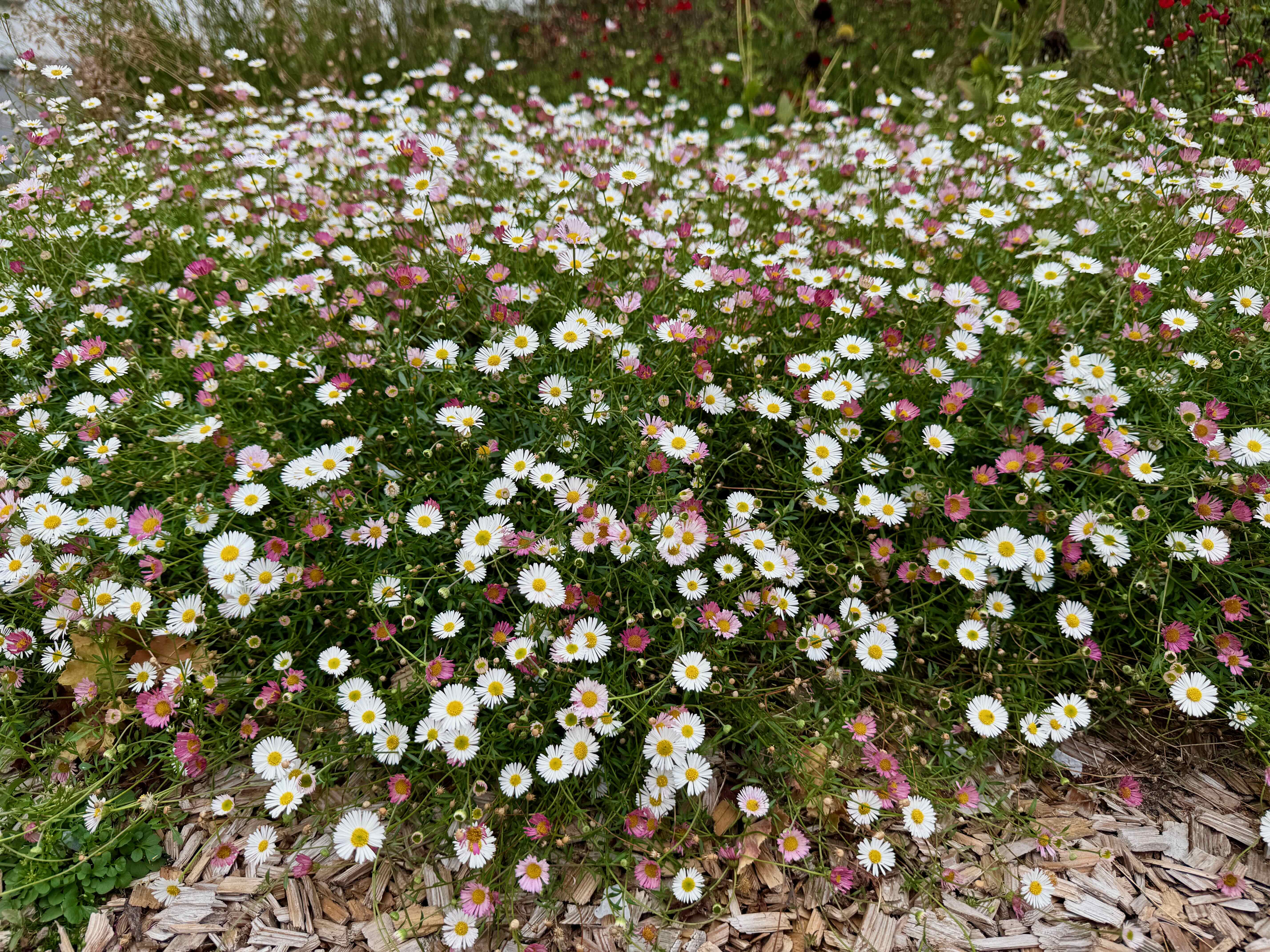
I adore these white and pink small daisy-like flowers.  No idea what they are called but wish we could grow them back home.

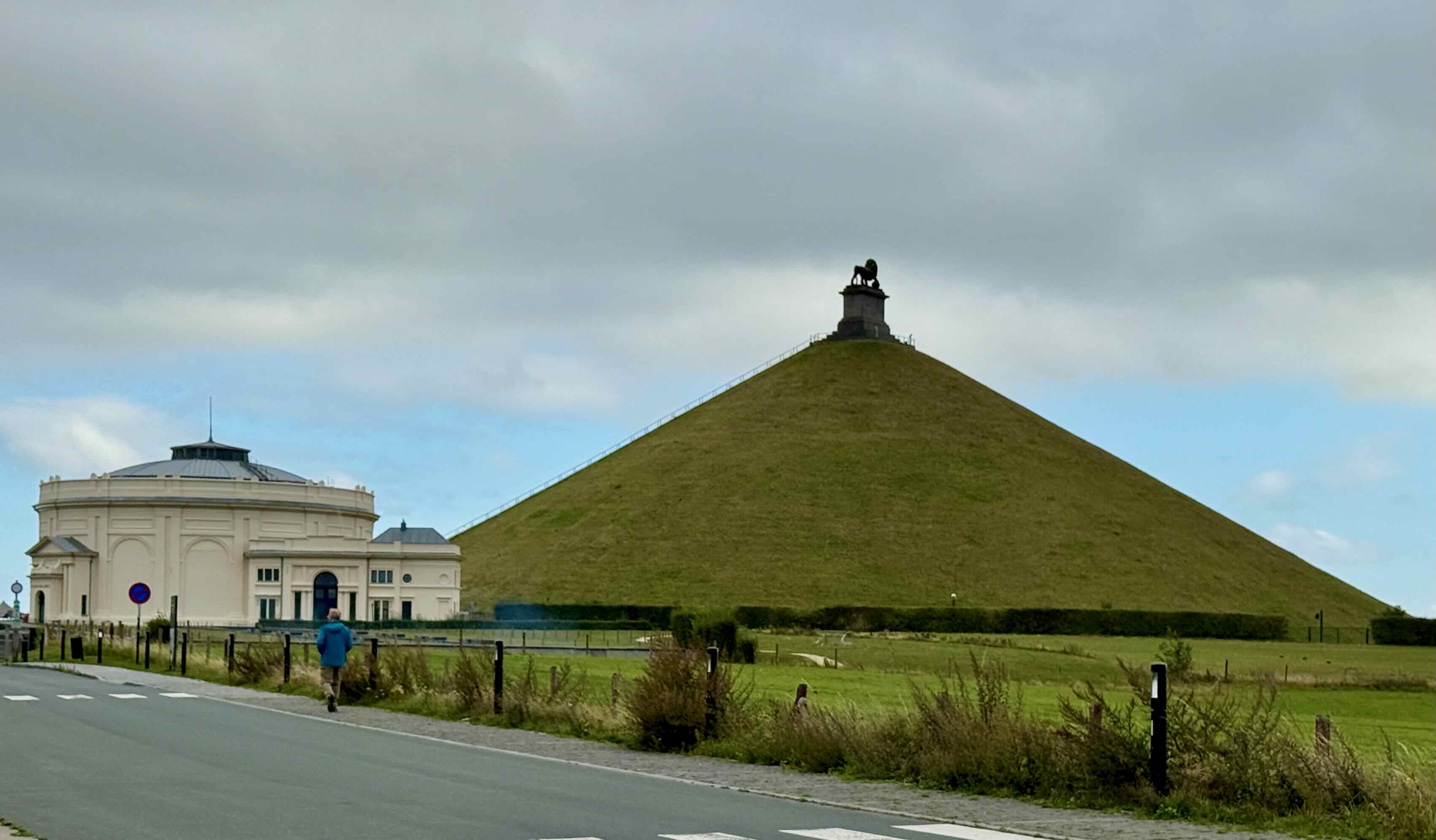
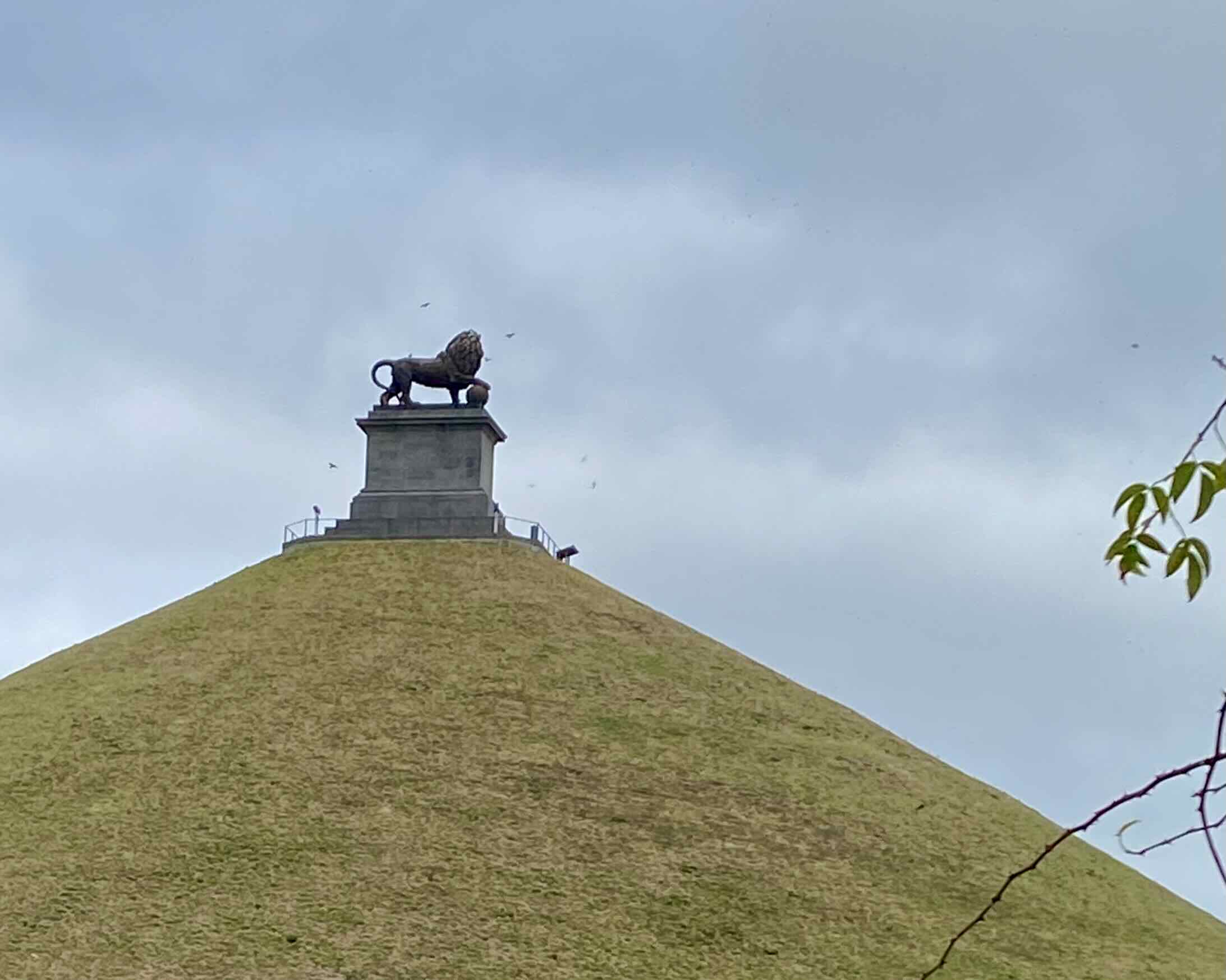
Next we drive to ‘The Lion’s Mound’ which is located at the site of the Waterloo Battle. This earthen cone is 169 m in diameter and 41 m high. An enormous lion, 4.50 m long, 4.45 m high and weighing 28 tons is located on the top of the mound.

It symbolizes the victory of the monarchies; its open mouth is turned towards France, defeated; its paw resting on the terrestrial globe represents the peace that Europe has won. Bob went for a walk all the way around the  mound but I was tired and it was cold and windy so I stayed in the car. We hit rush hour on the way home. I am so glad I am not driving!

Arras, France

Day 10     Tuesday. September 9, 2025

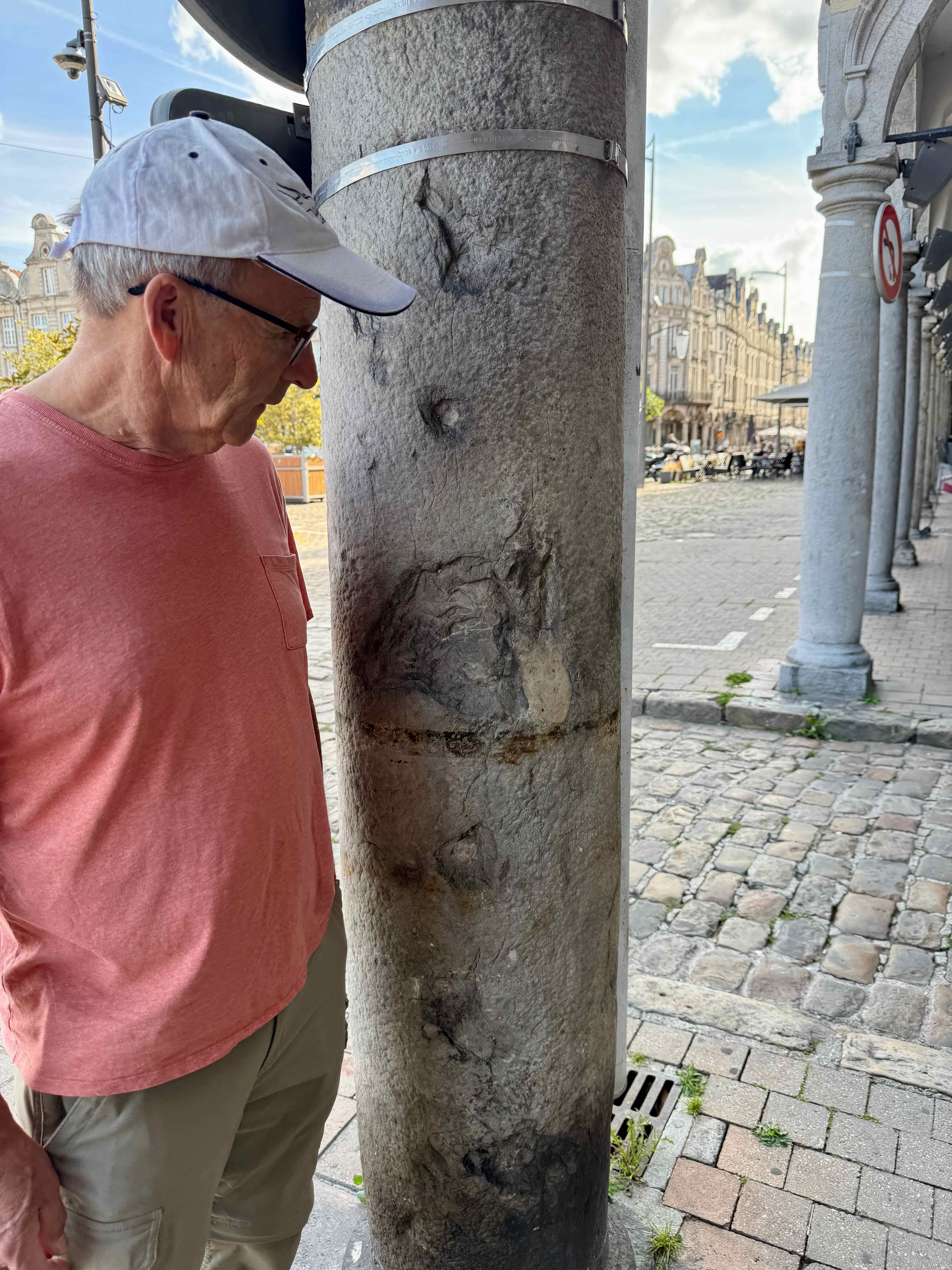
Bob went for a walk this morning and I had a much needed sleep in. After lunch we go for a little walk to checkout the two big squares near our bnb.  As we walk along the side of the Grand’Place we read that during WWI the buildings on the right side were destroyed by bombs.  After the war this area was identically reconstructed.  We see some of the original columns with shrapnel marks and the smooth newer columns .

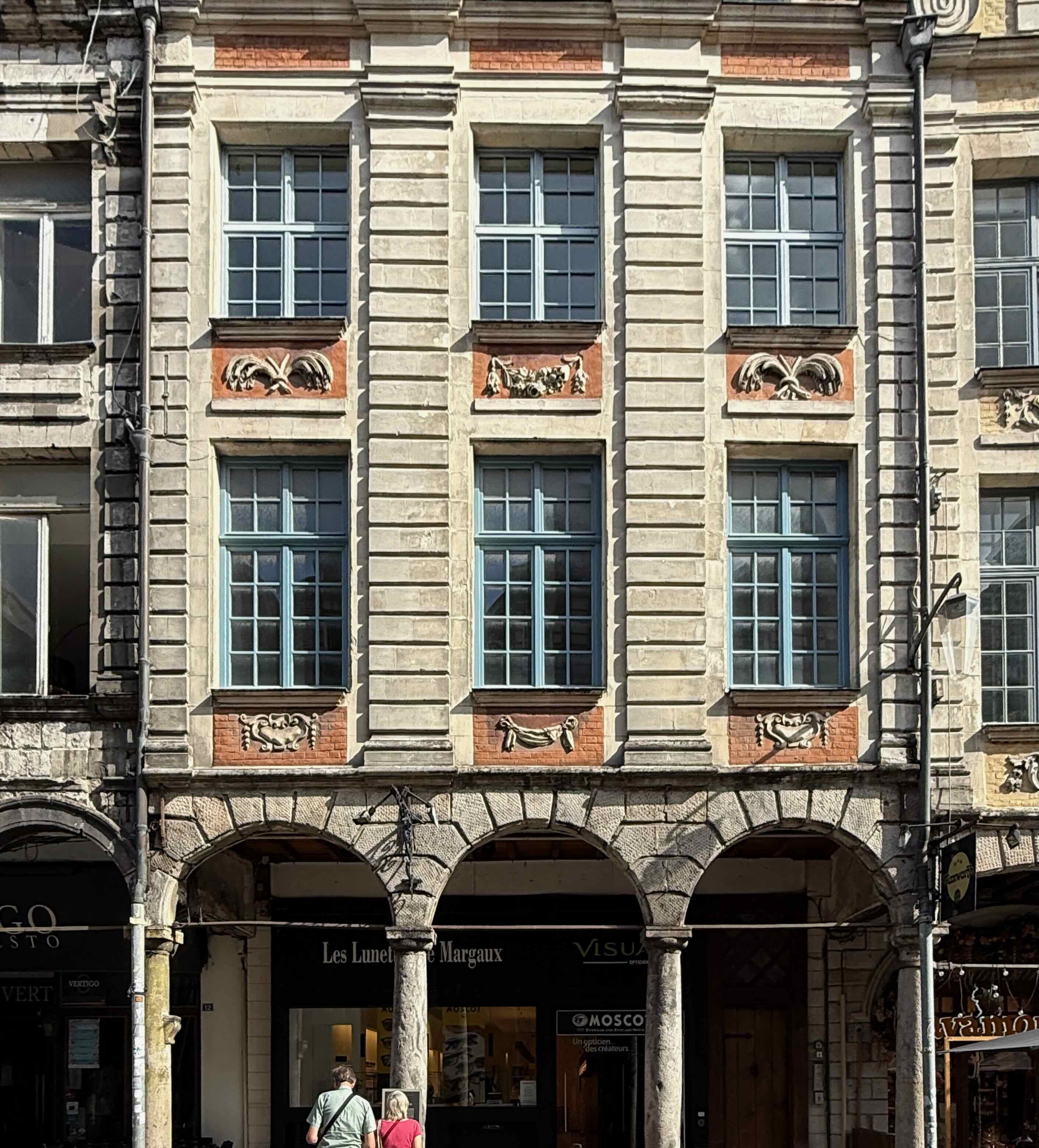
The Grand’Place was laid out to accommodate huge markets and was the site of one of the largest grain markets in France.  The wheat sheaves sculpted on the buildings facades are an indication of this.

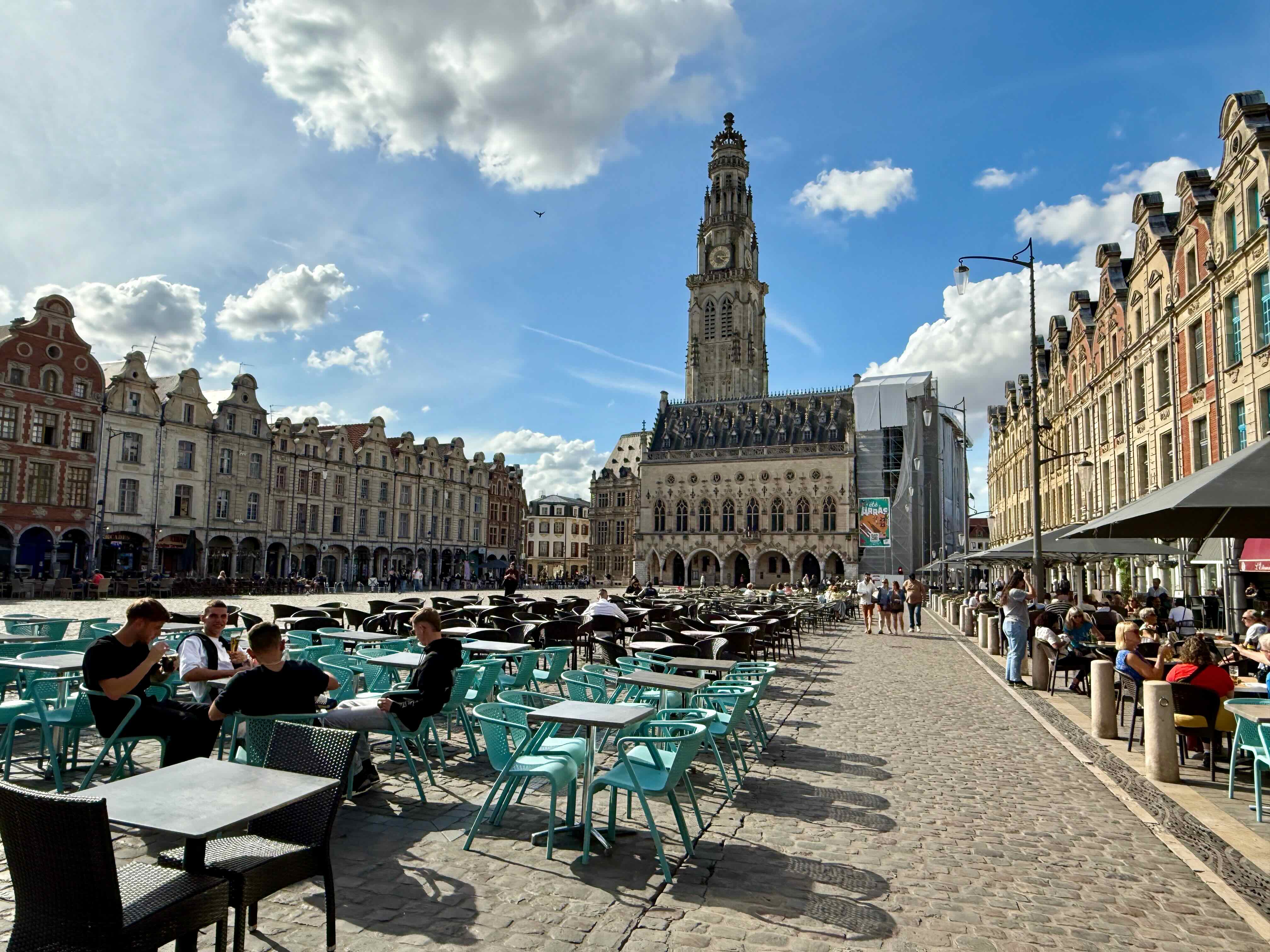
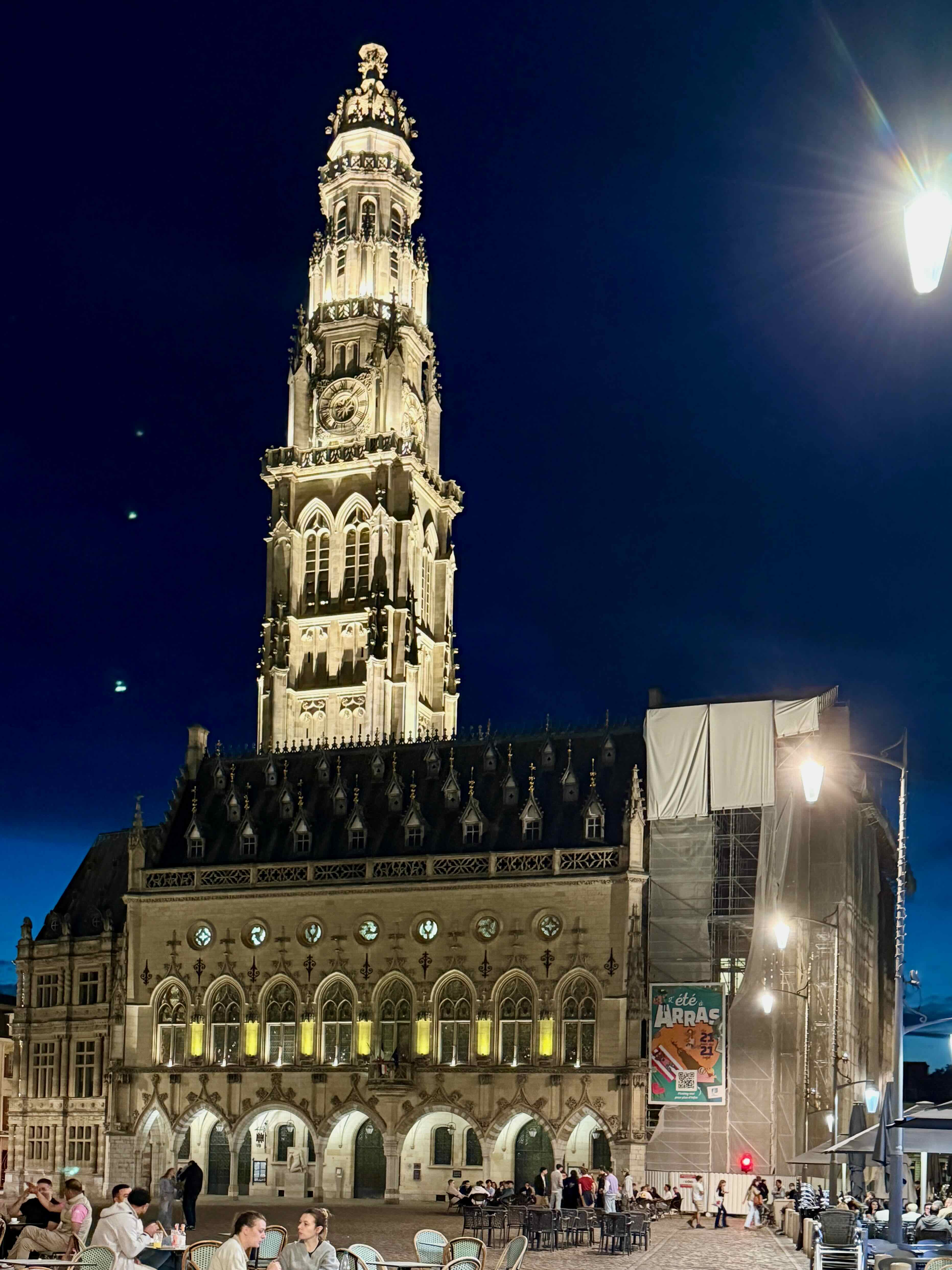
The UNESCO listed Belfry soars high above the town hall at one end of the Place des Heros.  The square is bordered on three sides with Flemish-Baroque buildings.  Unfortunately the elevator to visit the Belfry is broken so we aren’t able to climb to the top for what must be a fantastic view.

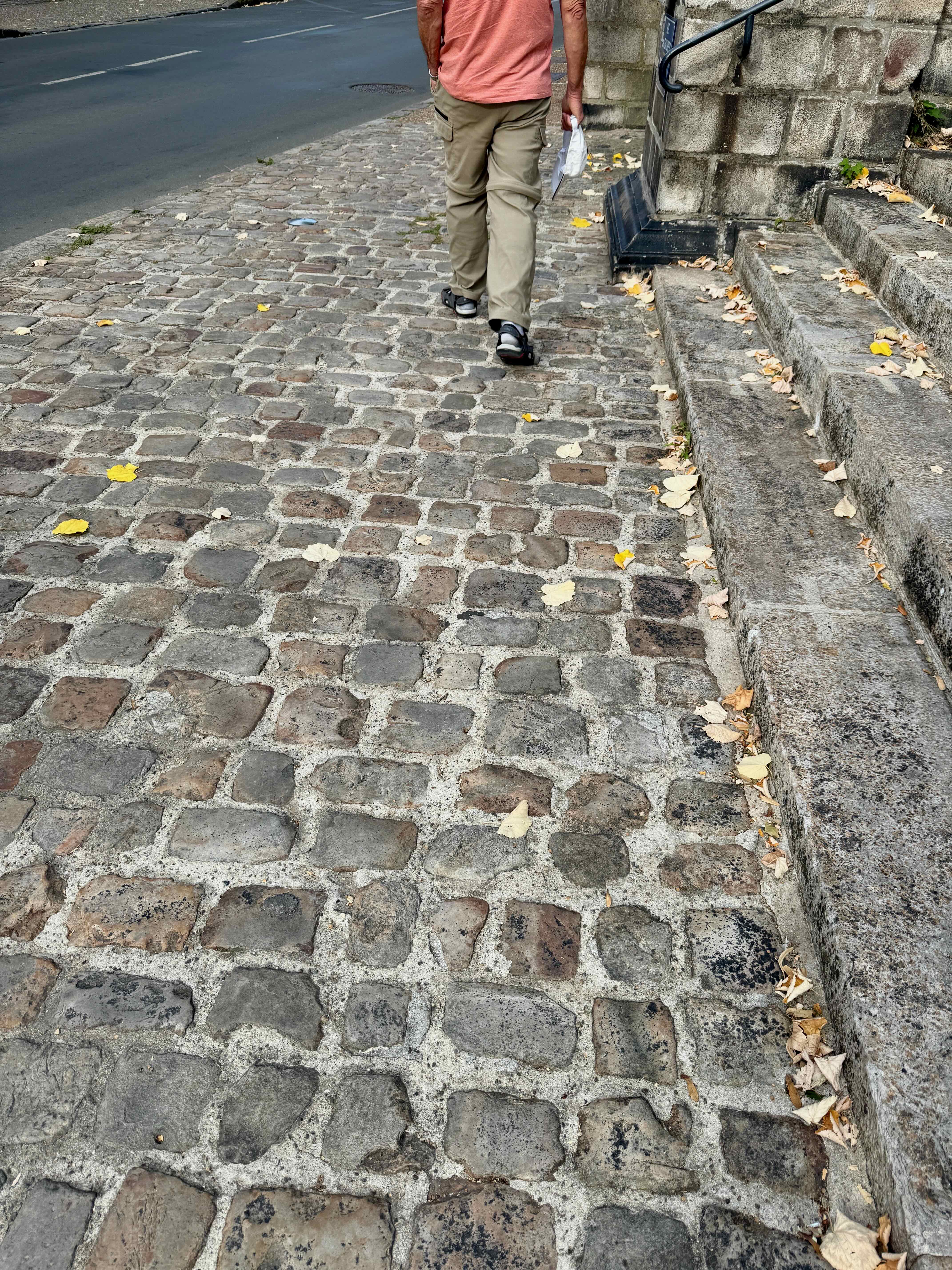
Many of the streets and sidewalks are cobblestones…they are picturesque but can make walking a bit difficult.

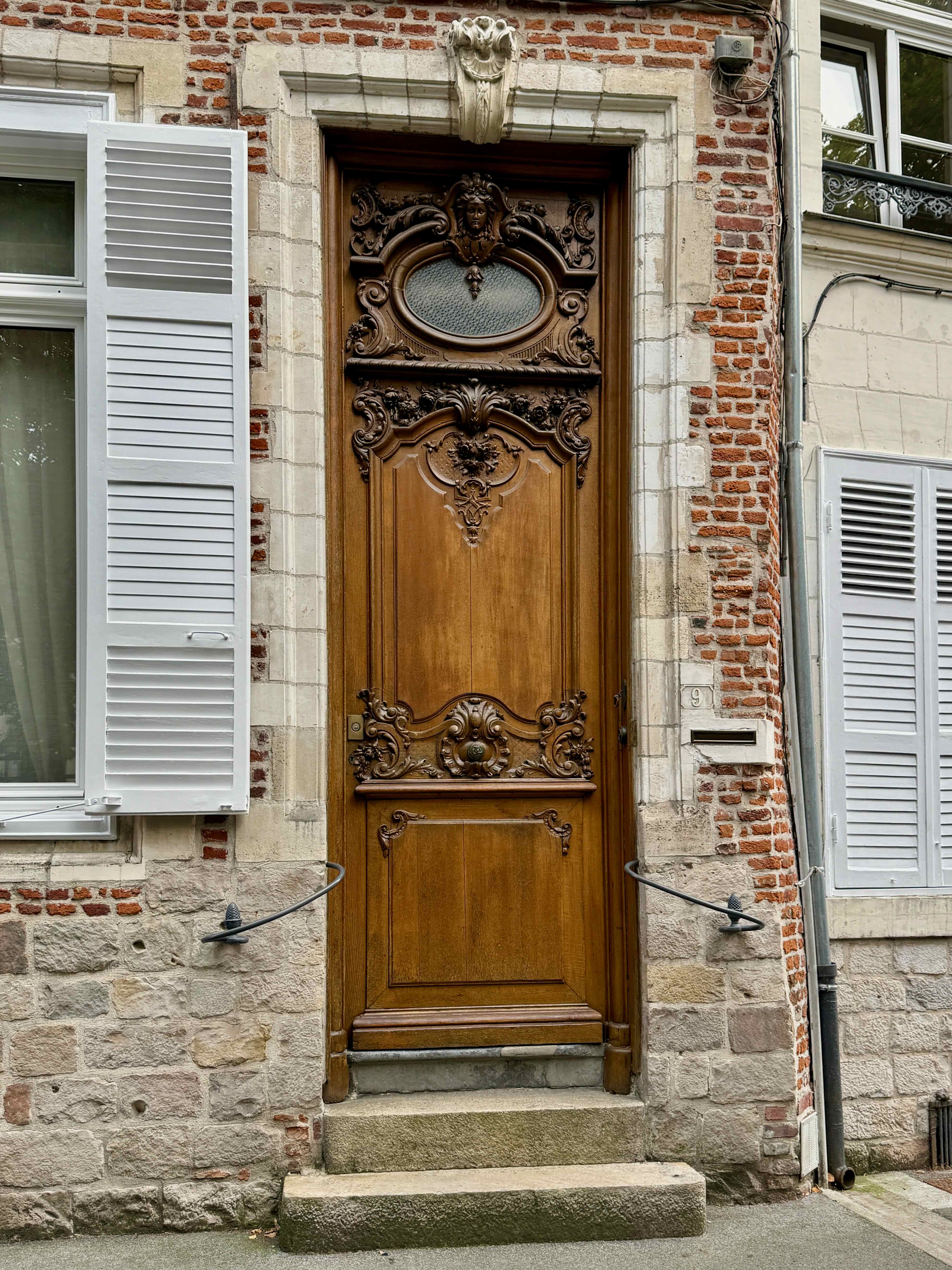
This beautiful door must be at least four meters tall!  French doors are amazing.

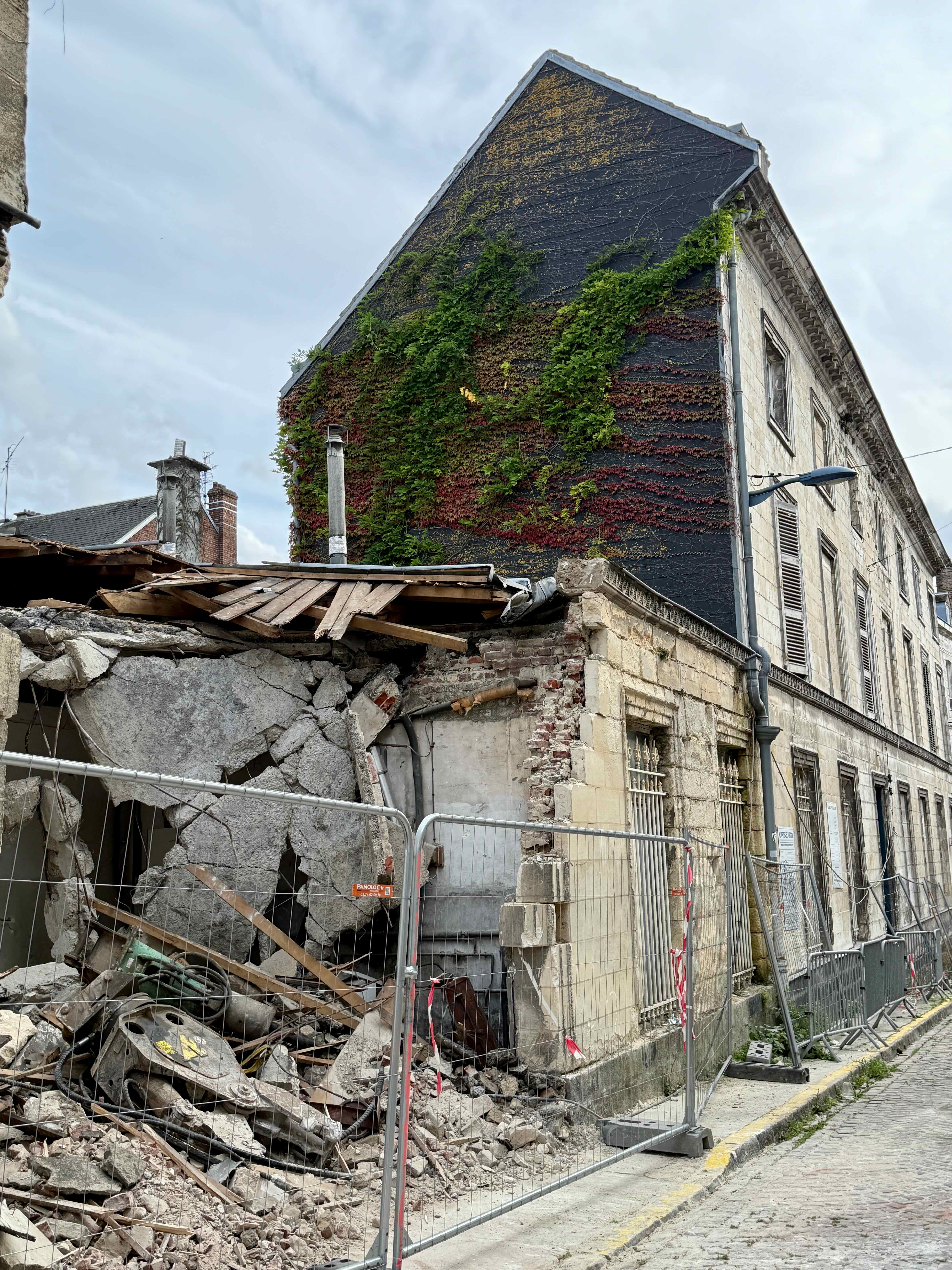
We walk along the streets and get a bit lost but all roads seem to lead back to the Town Hall with its majestic Belfry.  It isn’t often that we see an old building actually being torn down.  Seems to us that they are usually eventually renovated instead. This one is definitely coming down.   I love the ivy growing up the side of the neighbouring building.  It is already starting to turn red….I suppose autumn is not far away.

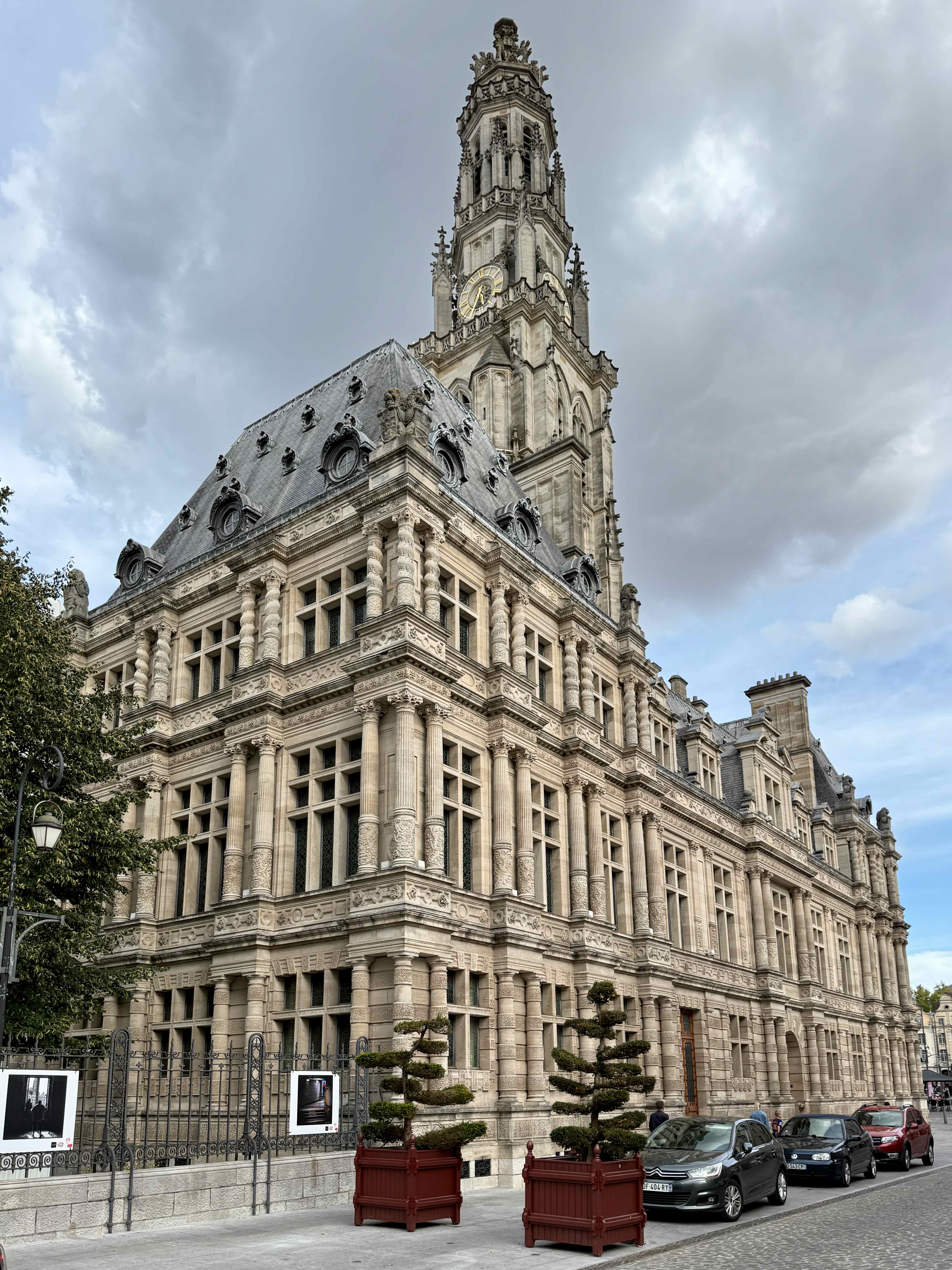
The back of the town hall is pretty impressive as well.

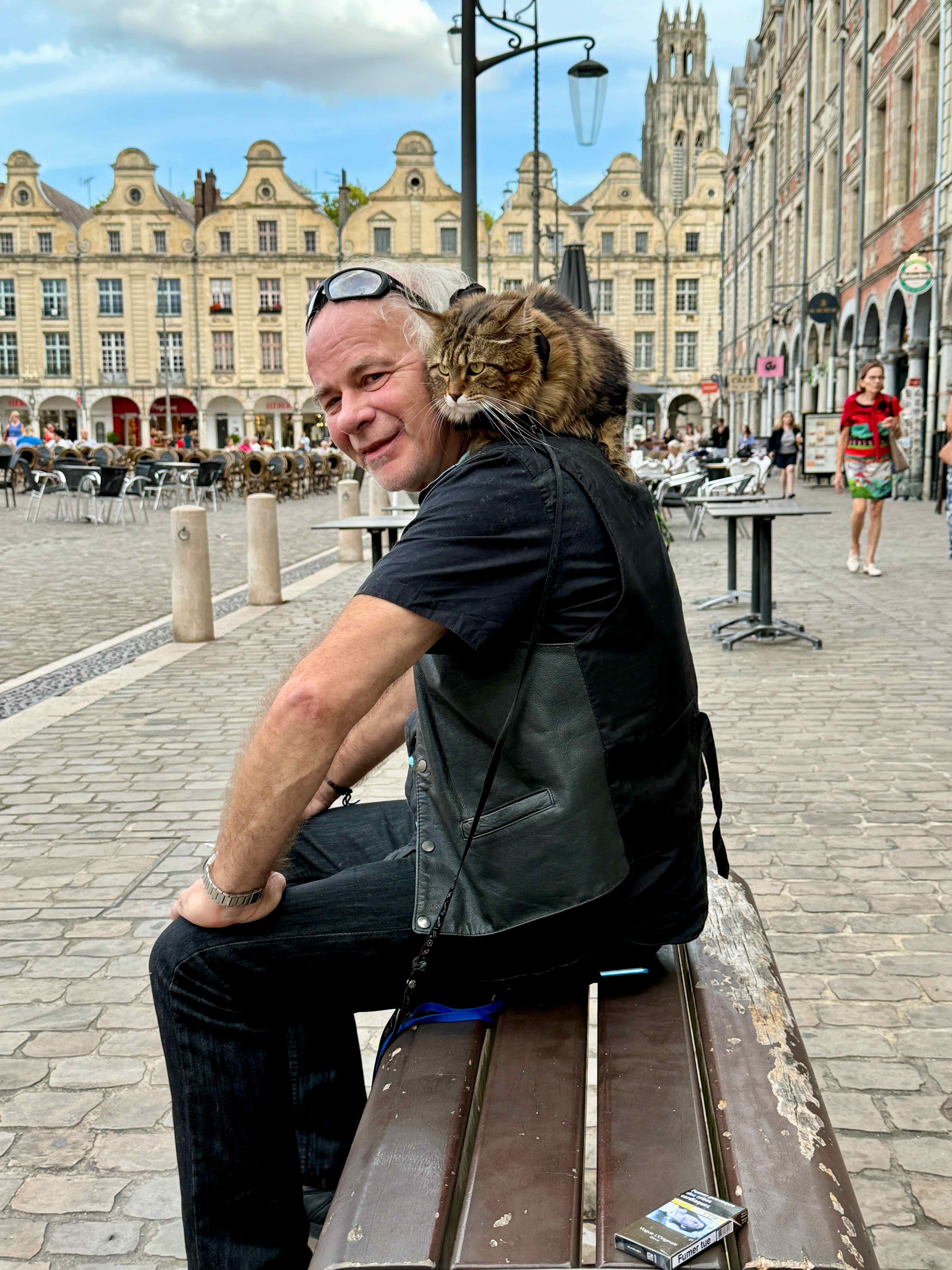
We saw this gentleman walking around with his cat on his shoulders earlier.  We sit beside him on the bench and I ask if I can take his photo.  He tells us that he loves cats and he loves Canadians…in that order!

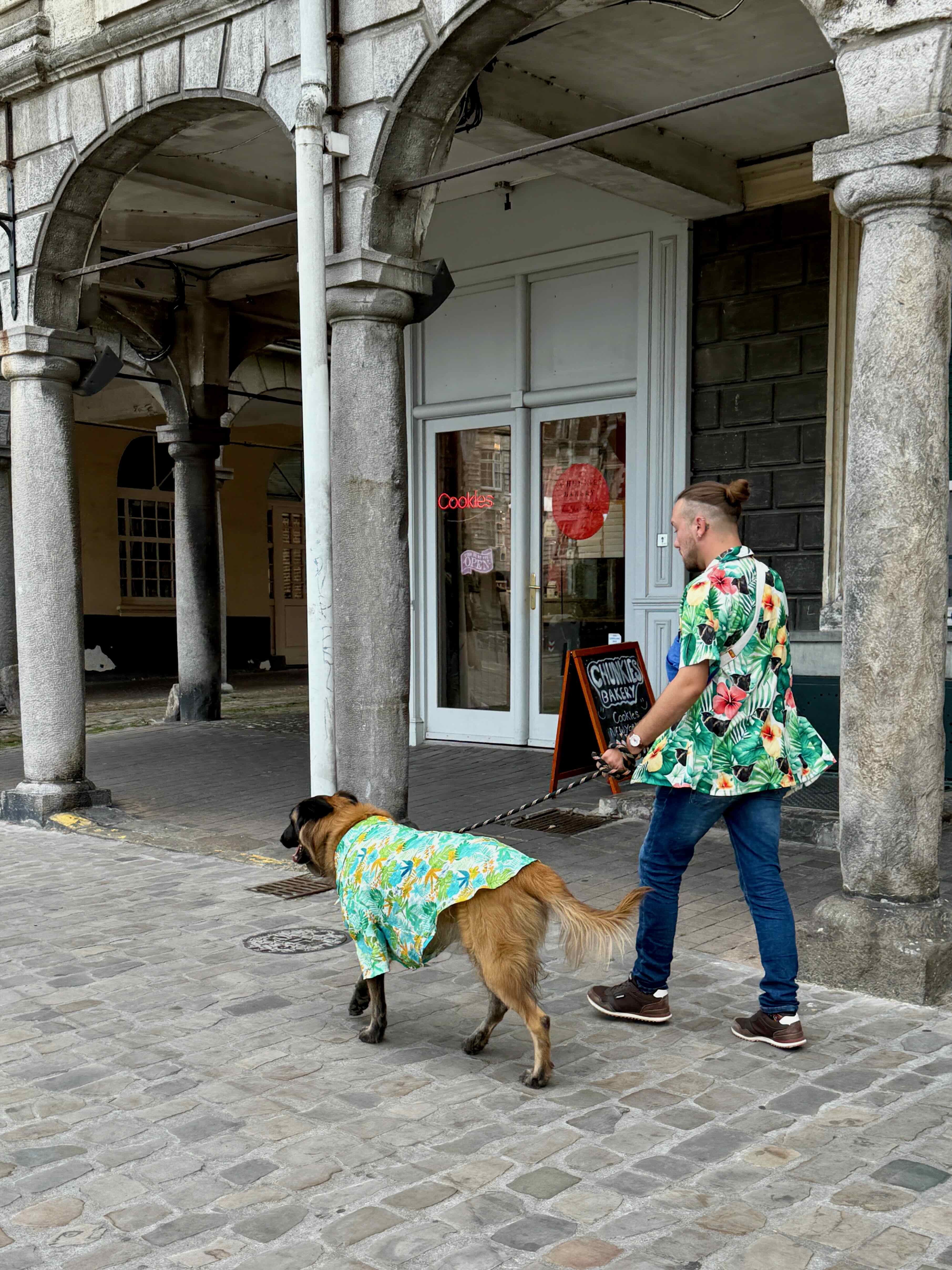
There are lots of interesting people, and I love people watching.  We see this young man and his dog, both dressed in Hawaiian shirts.

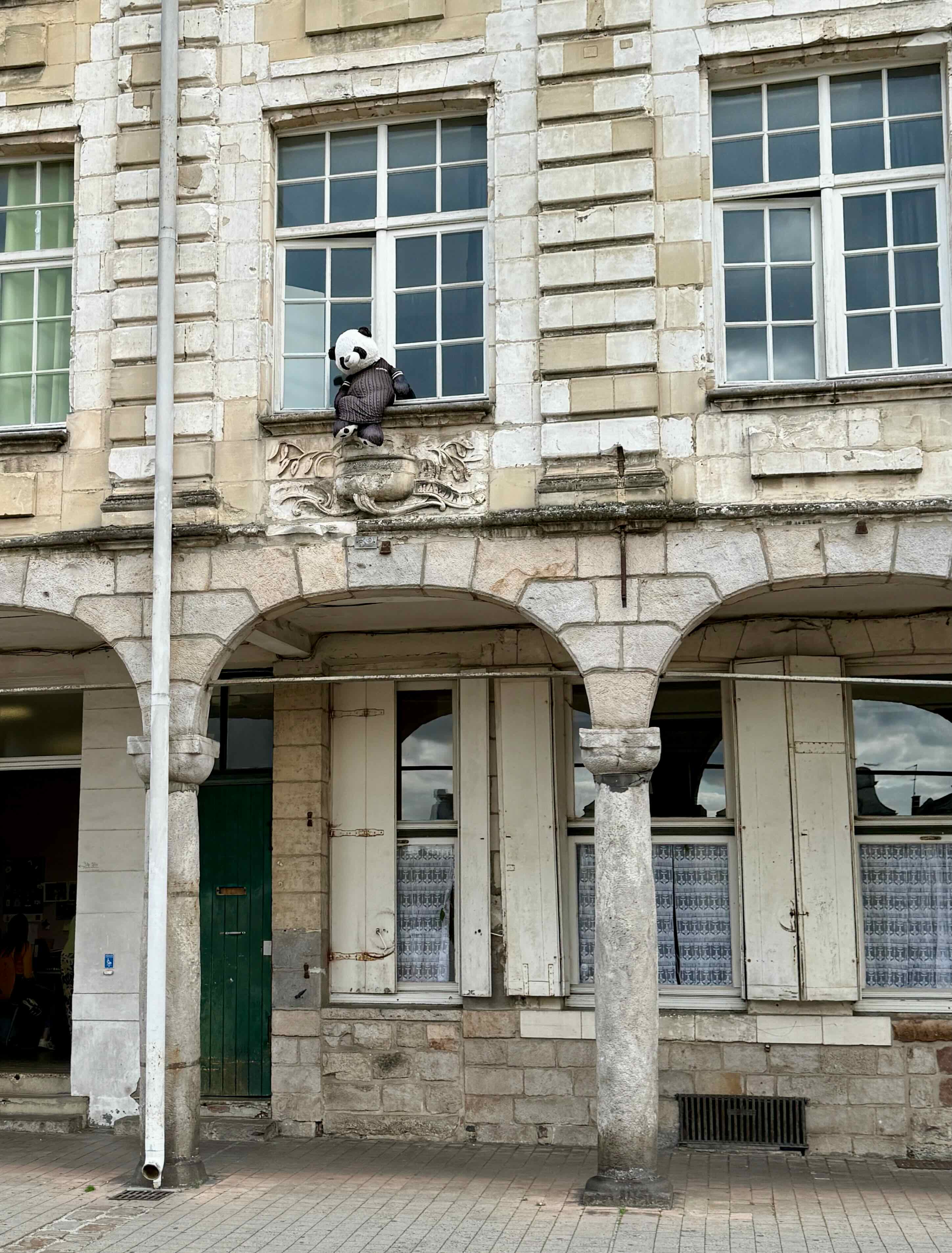
People here seem to like Teddy bears. We have seen several of them either sitting on chairs or hanging out of windows.

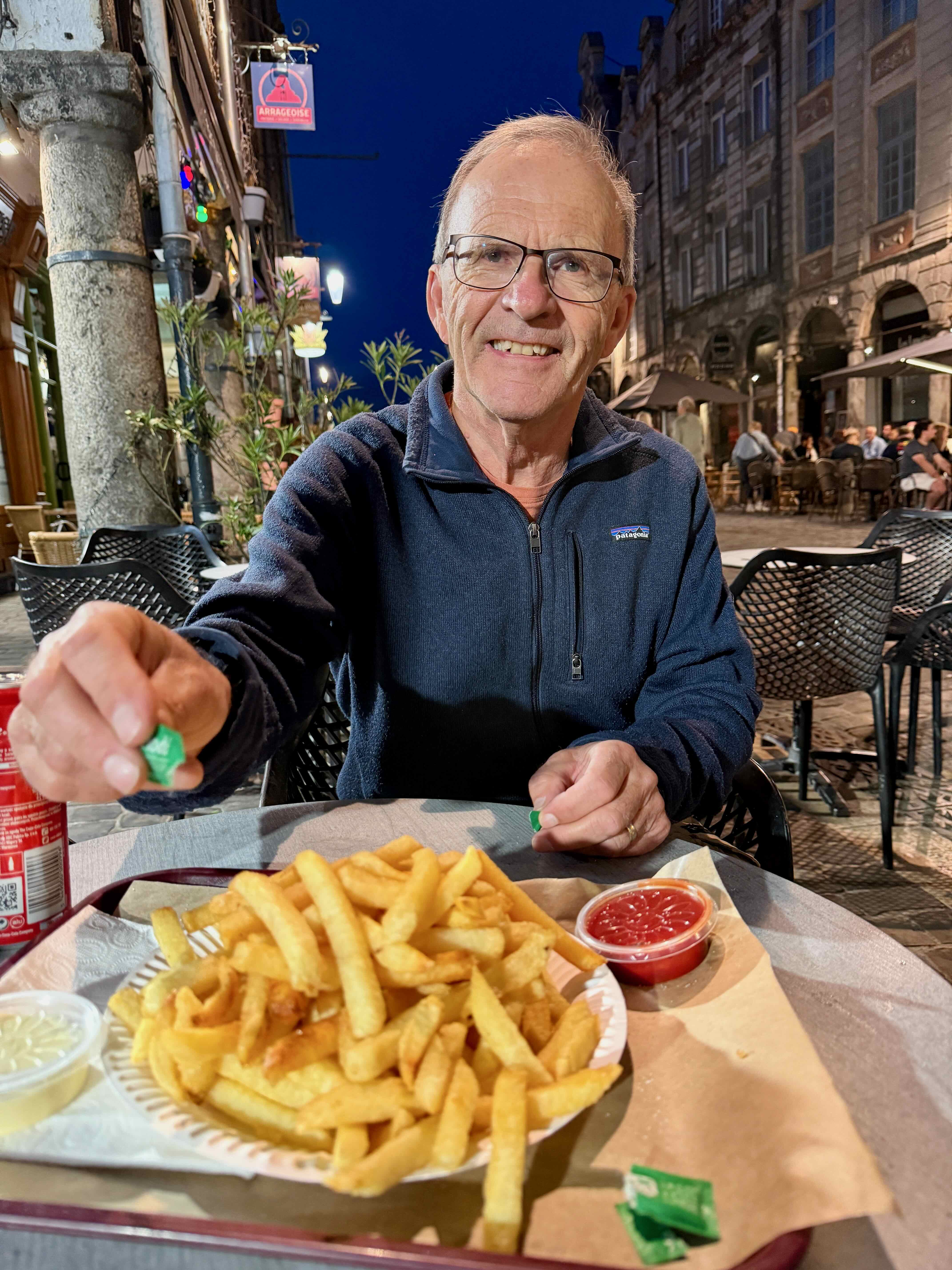
We go back to our bnb for a bit of a rest and then head back to the Place de Heros to try some of Arras’s signature fries for dinner at 9:00.  Many of the restaurants and bars don’t open in the evening until 8:00.  Does Bob look happy?

The Belfry looks spectacular all lit up…

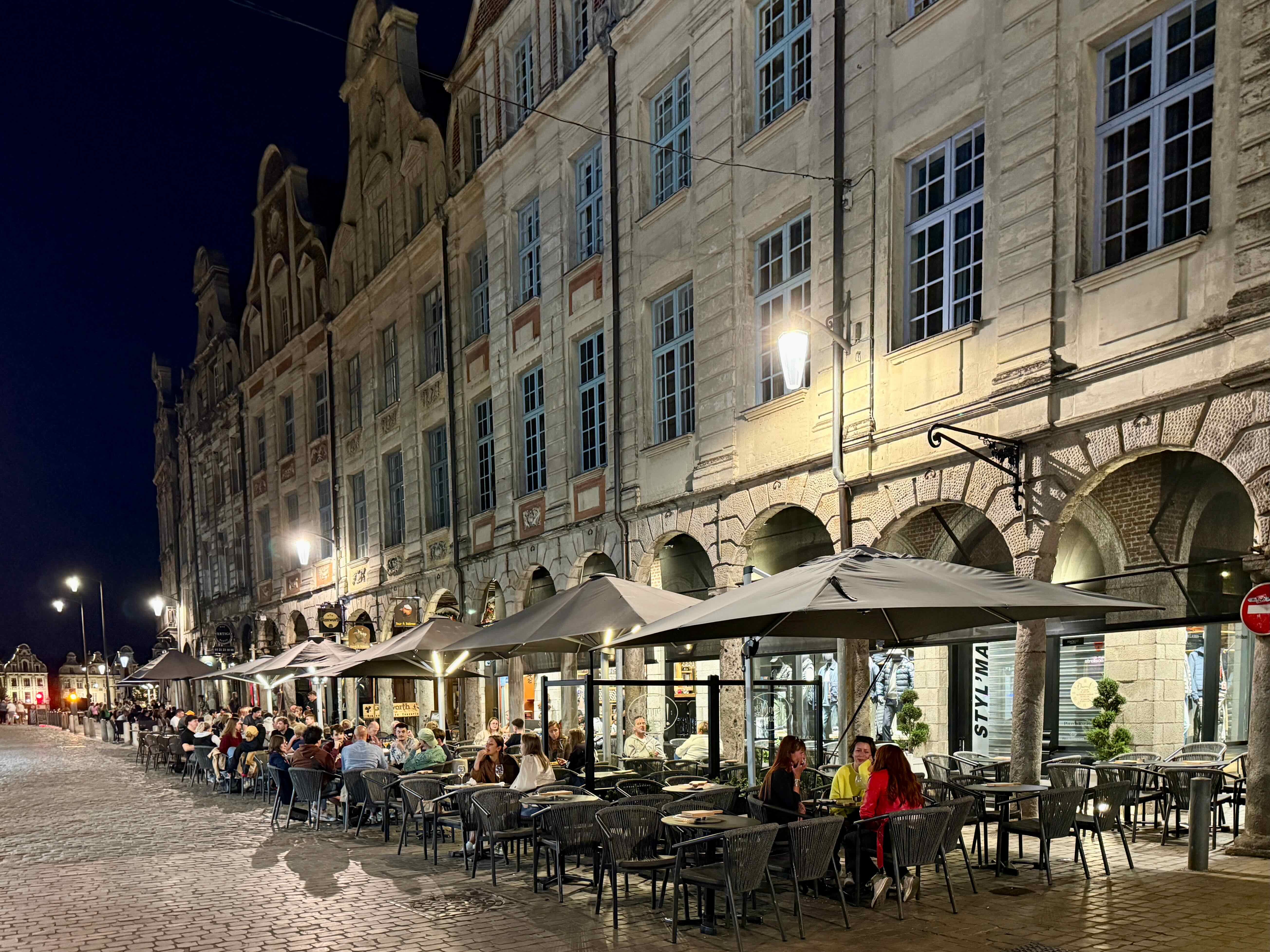
and there are lots of people enjoying the evening.

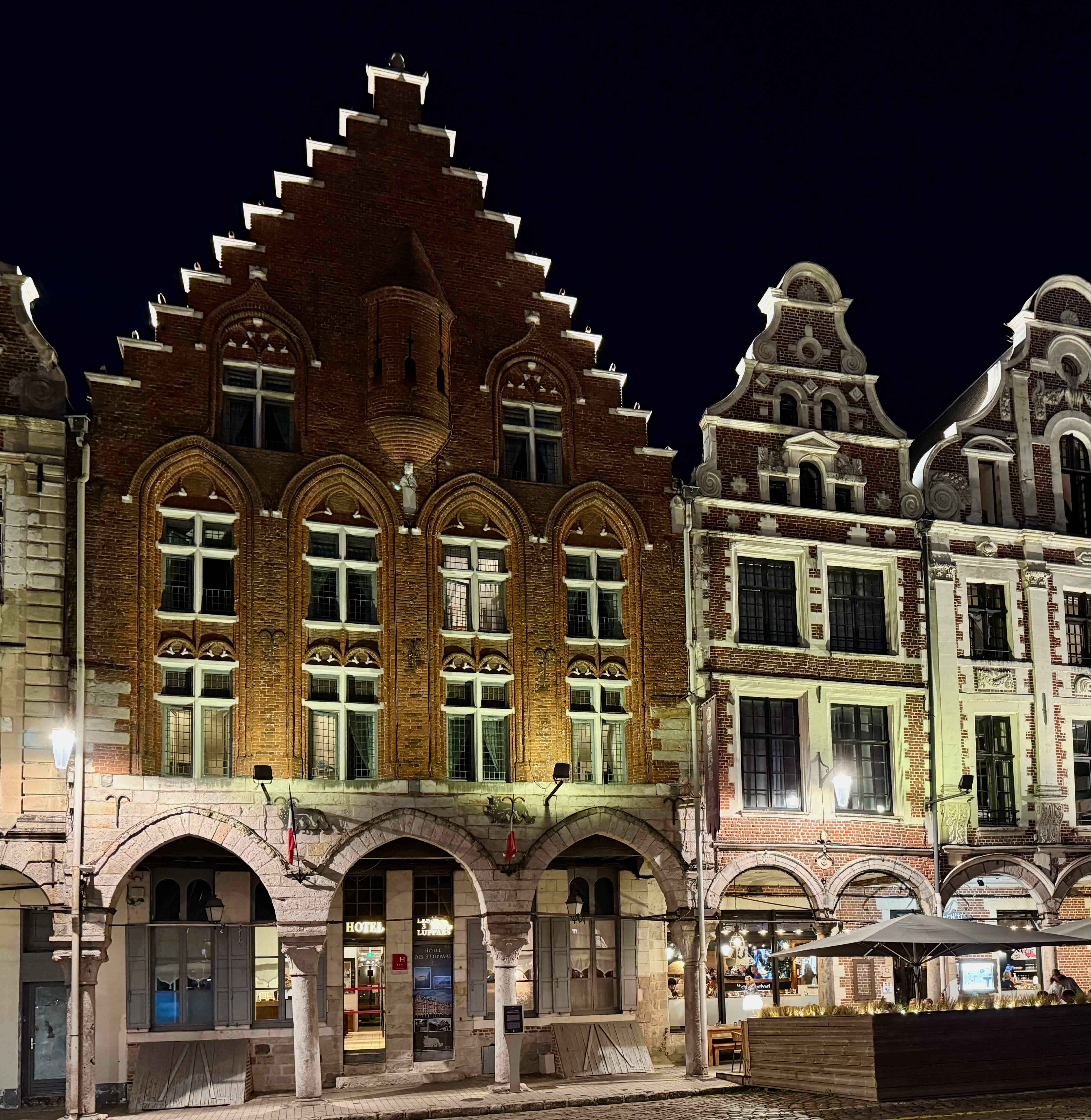
The Trois Lappars  is the oldest house on the Grand Place, it was reconstructed in 1467 and its facade has what is known as a stepped gable.  Our bnb is only a couple of blocks from these two squares and all the shops and restaurants.

Le Mans, France

Day 85,  Tuesday, November 21, 2023

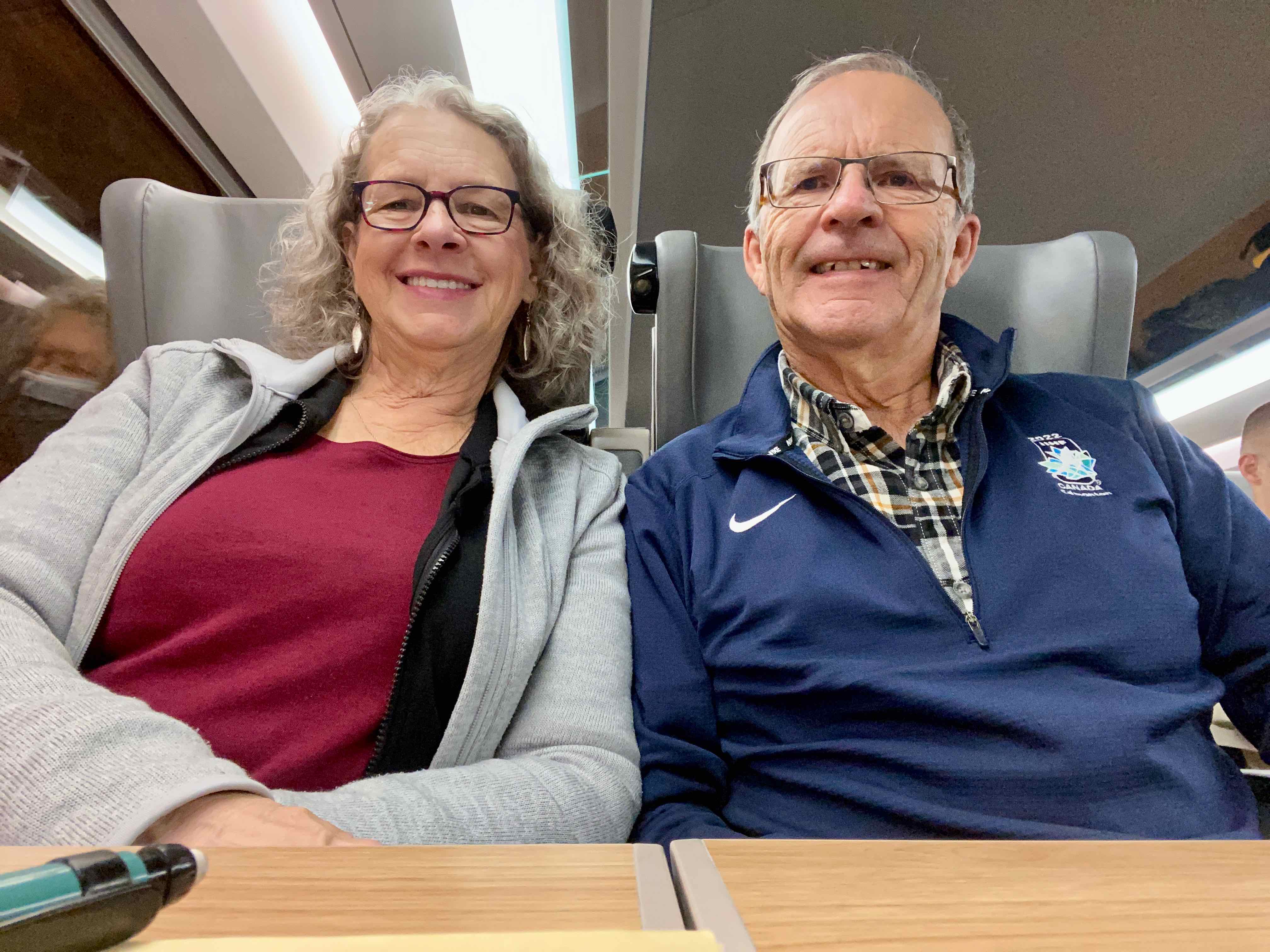
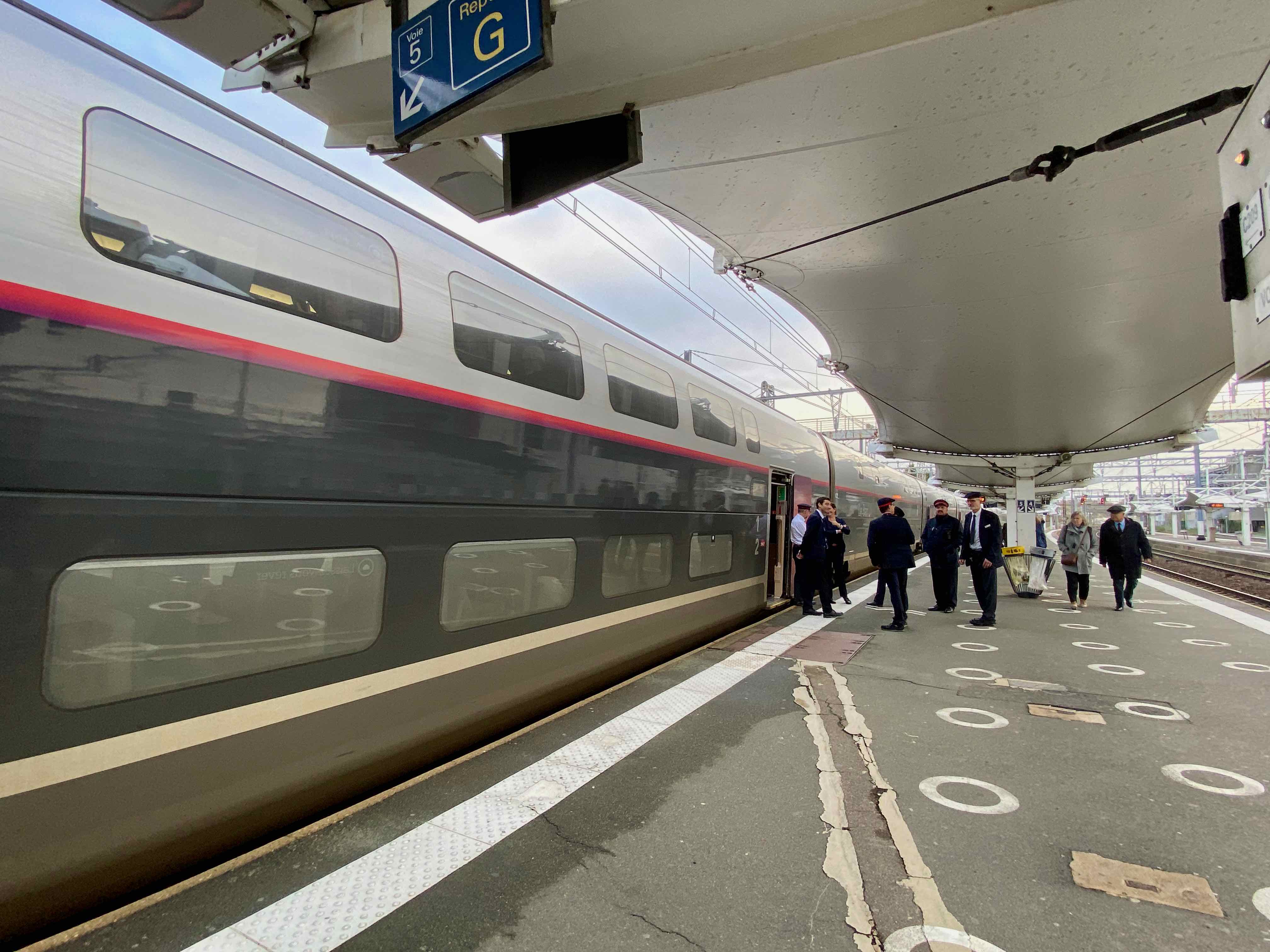
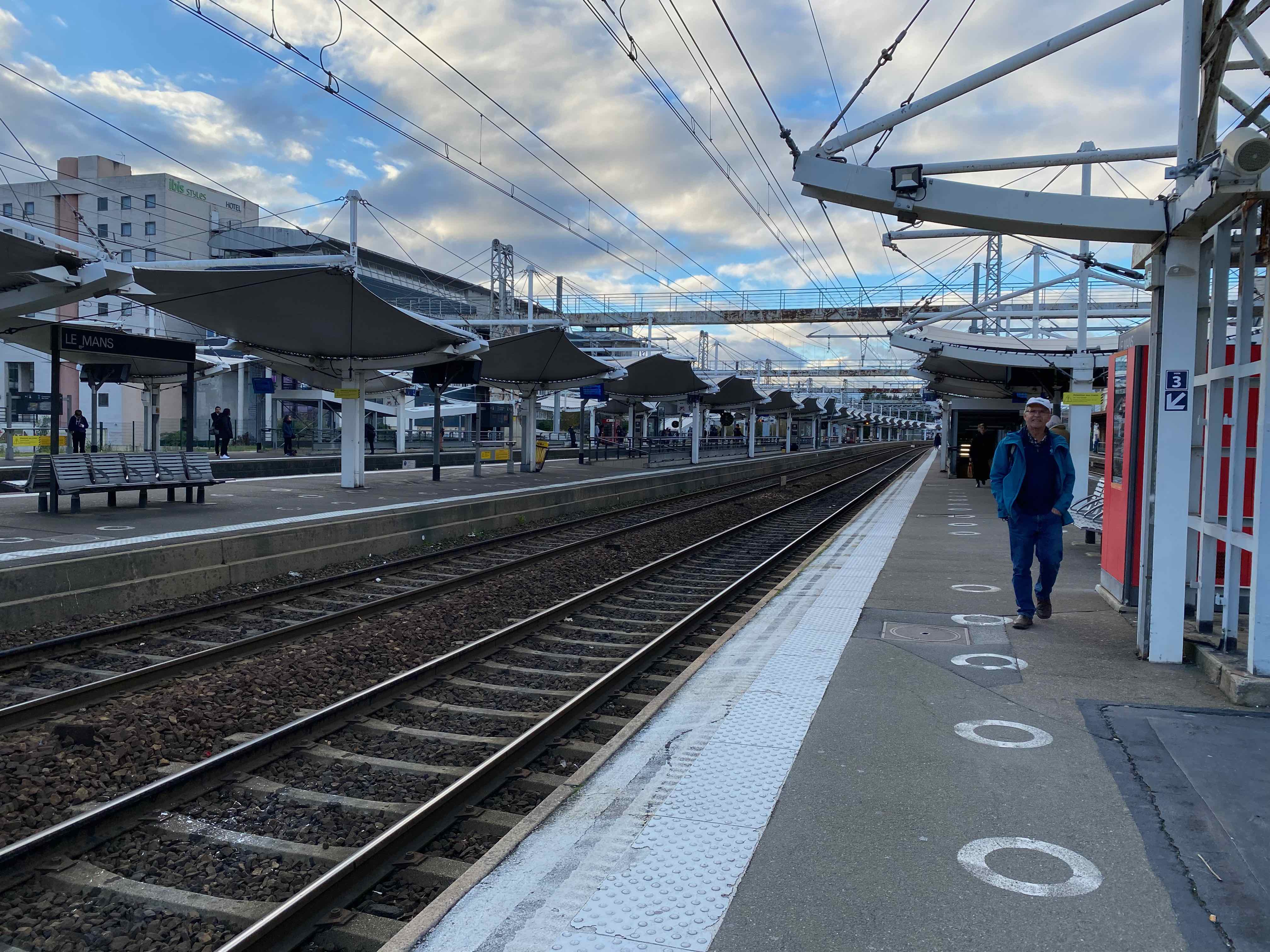
We are taking the TGV High speed Train to Le Mans.The train station with all the tracks and overhead electric lines that power the trains.
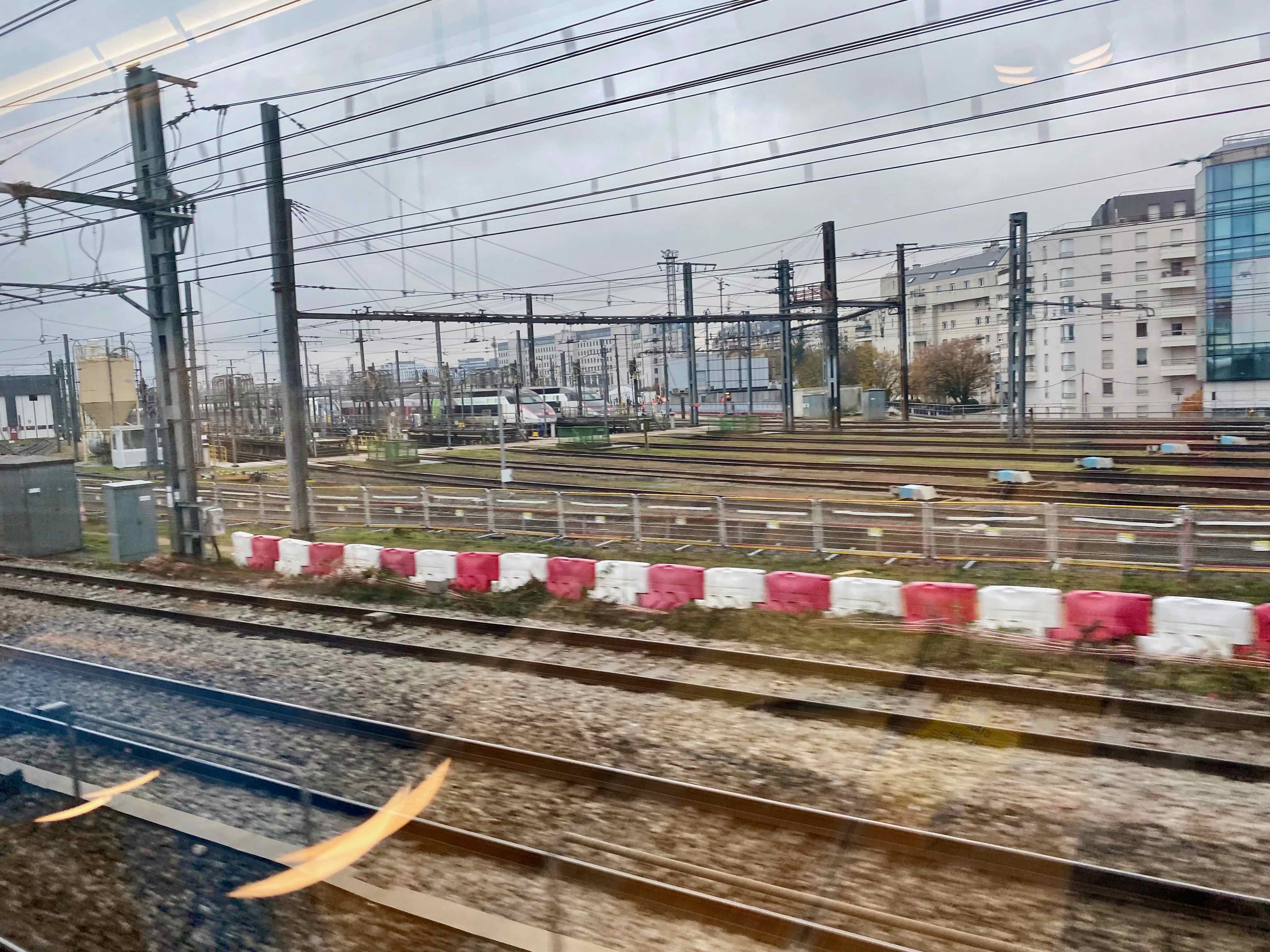
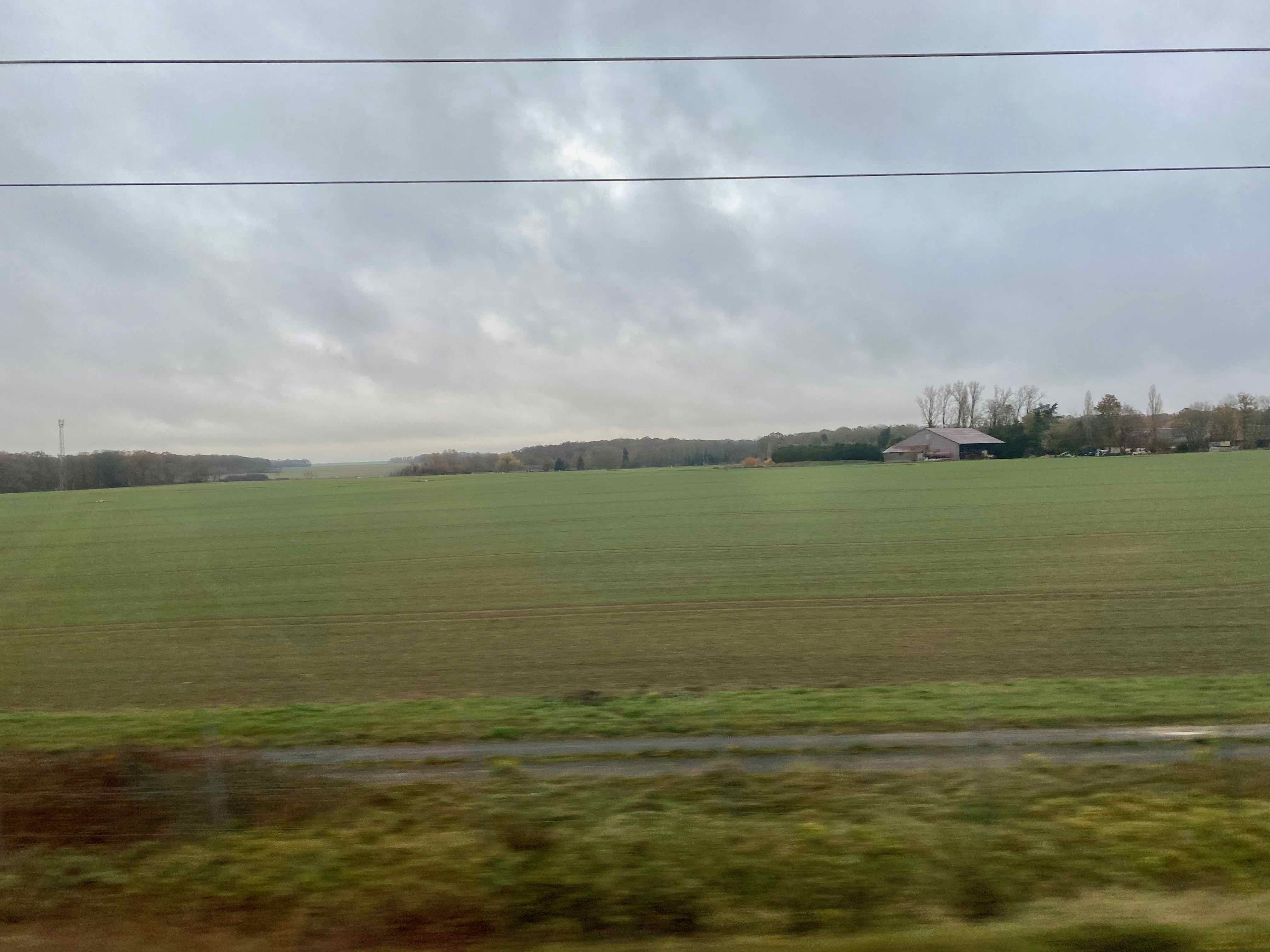
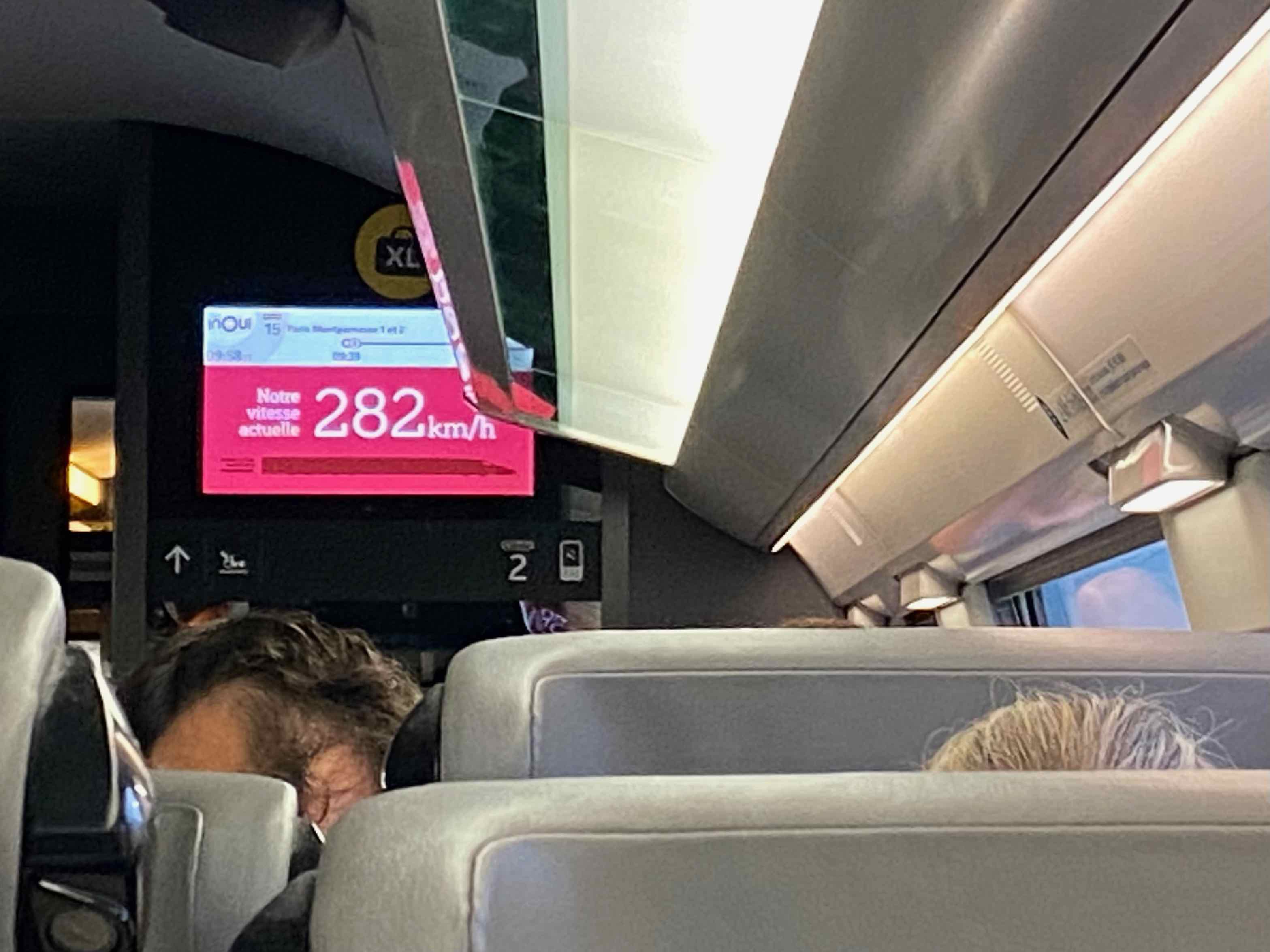
This link to a short video which shows how fast the countryside was flying by.  The vehicles on the highway are going 130 km an hour and we fly past them!  https://www.youtube.com/watch?v=0wt-AzdJG54

We are travelling 282 km an hour!

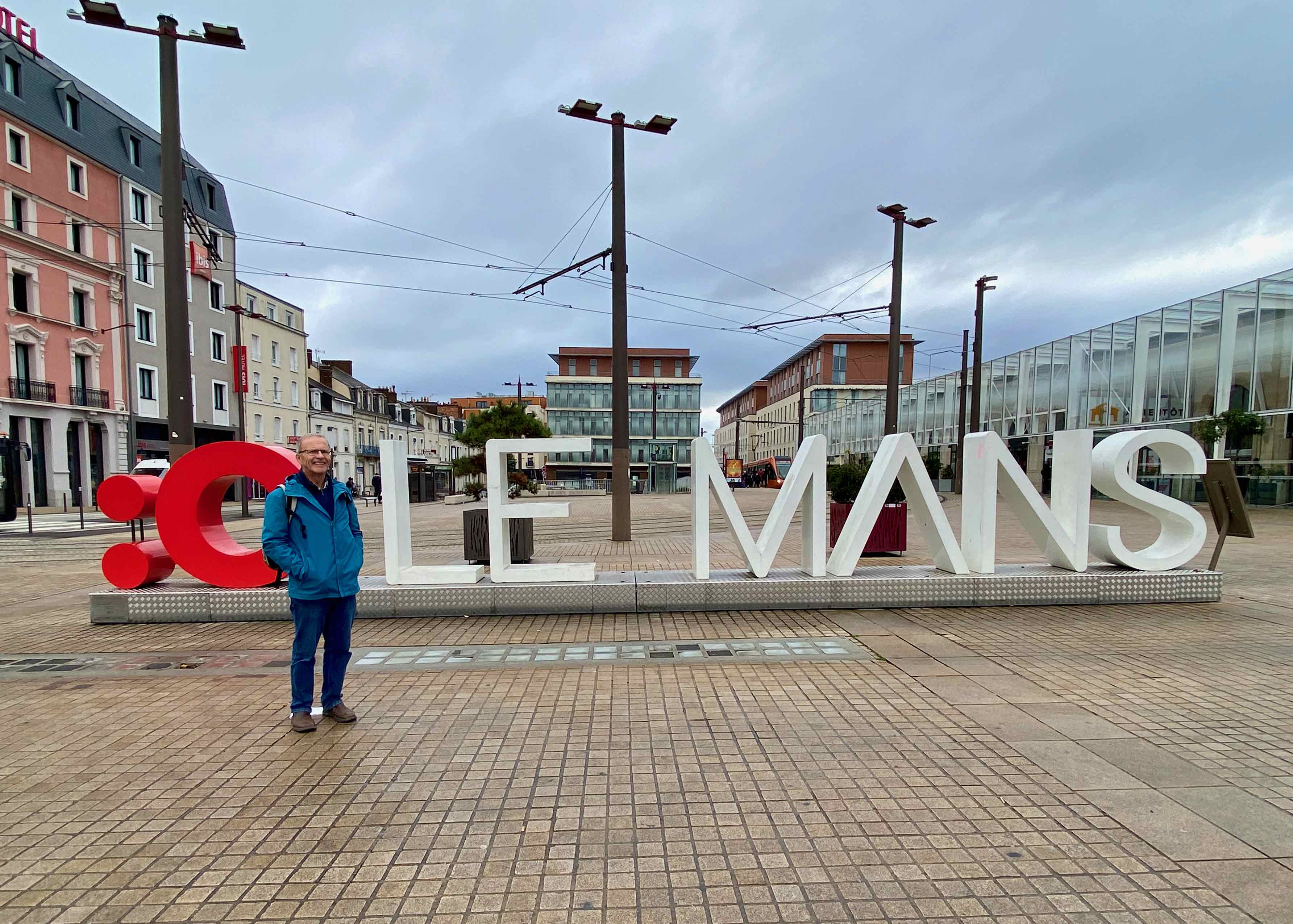
I thought I should snap a photo of our train.We are in Le Mans.

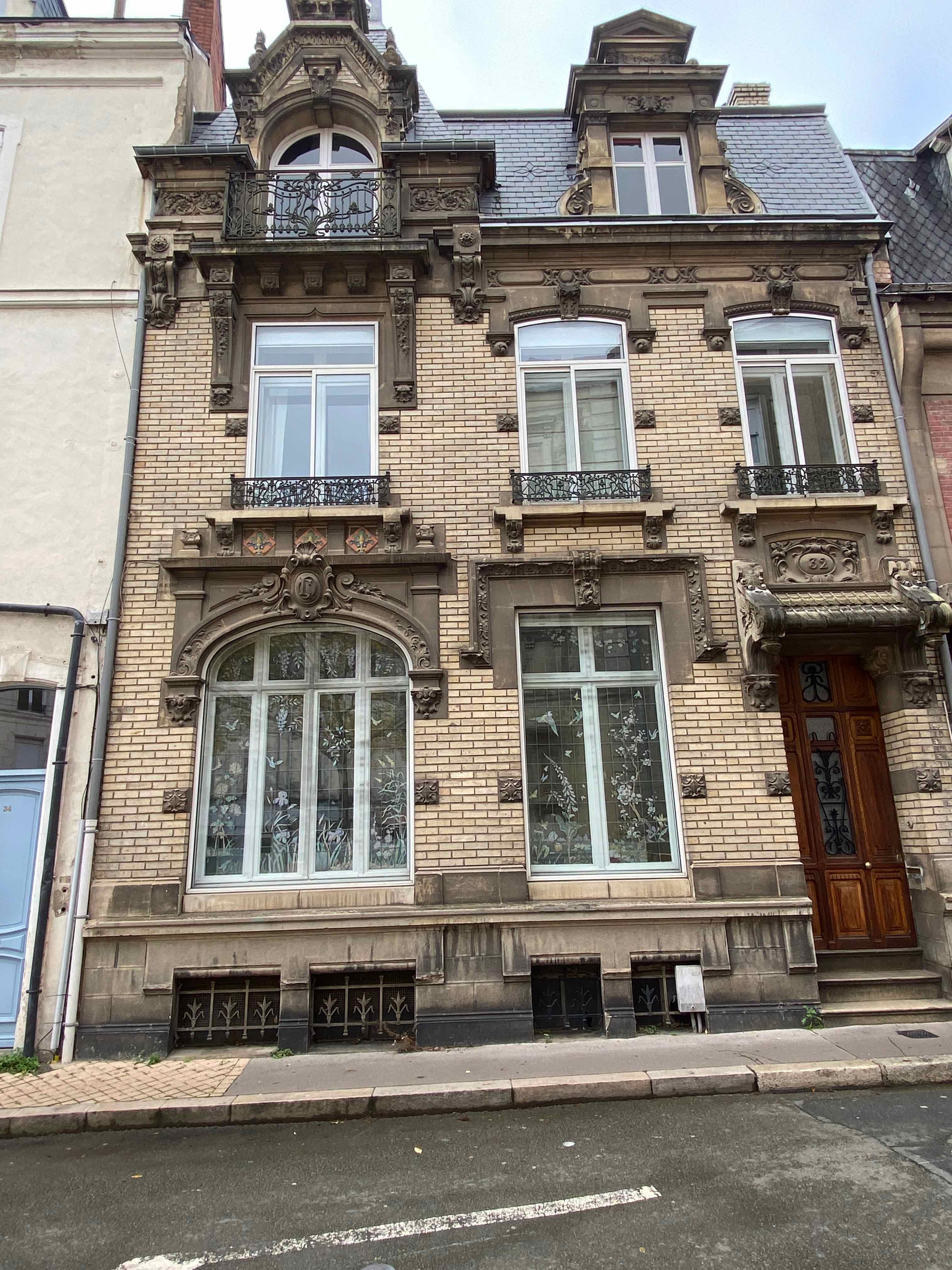
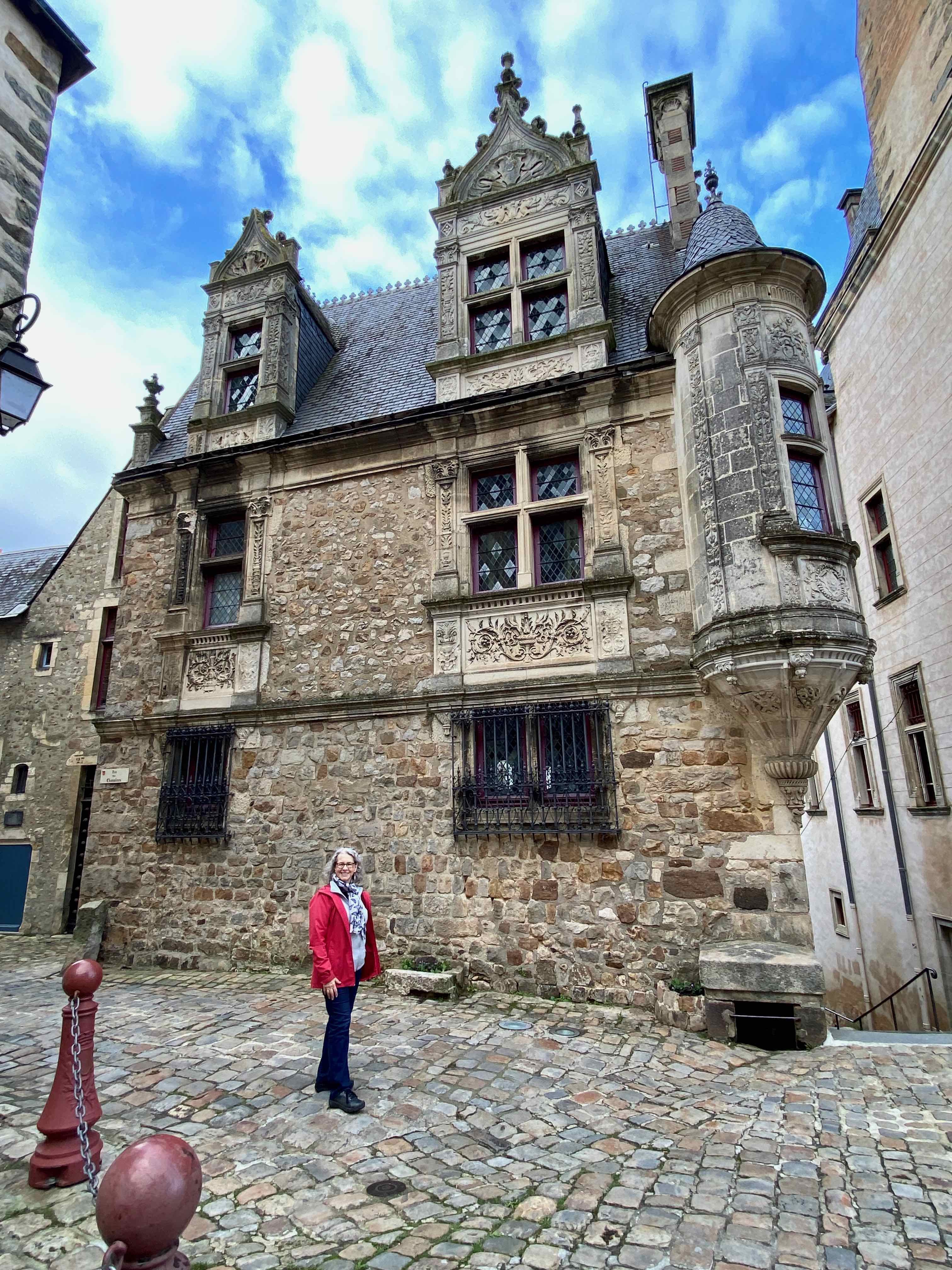
Just one of the many beautiful buildings in Le Mans.

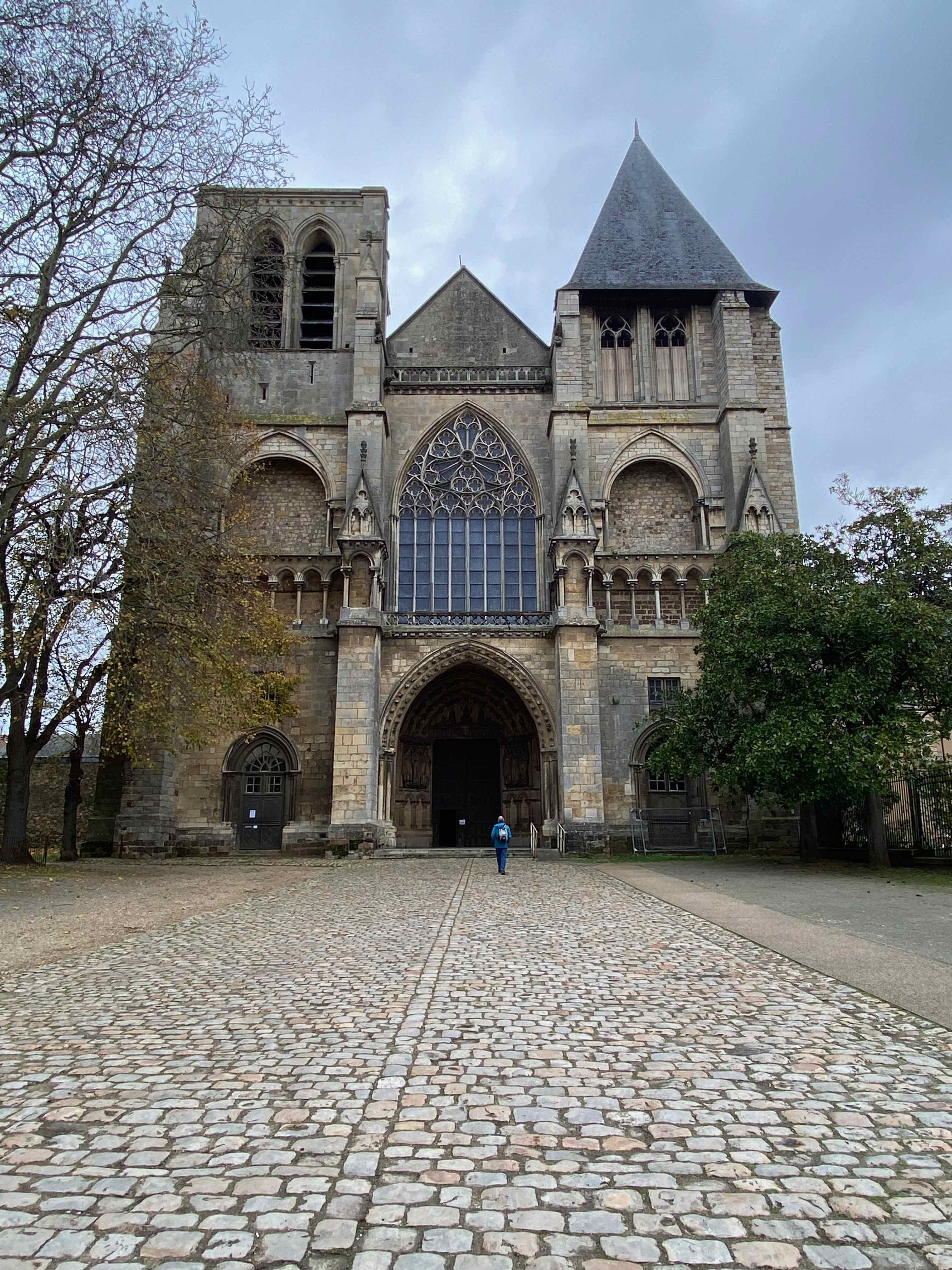
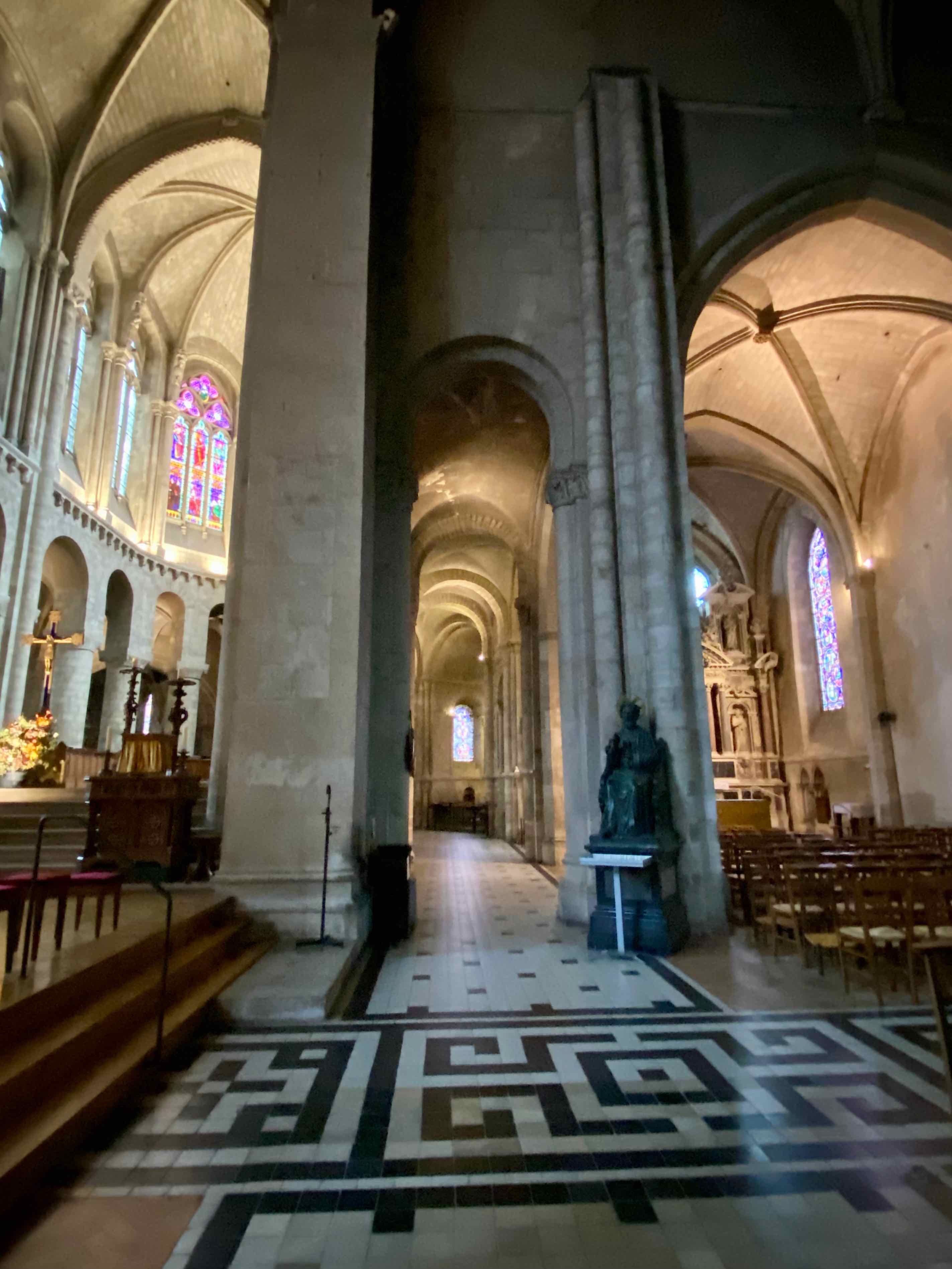
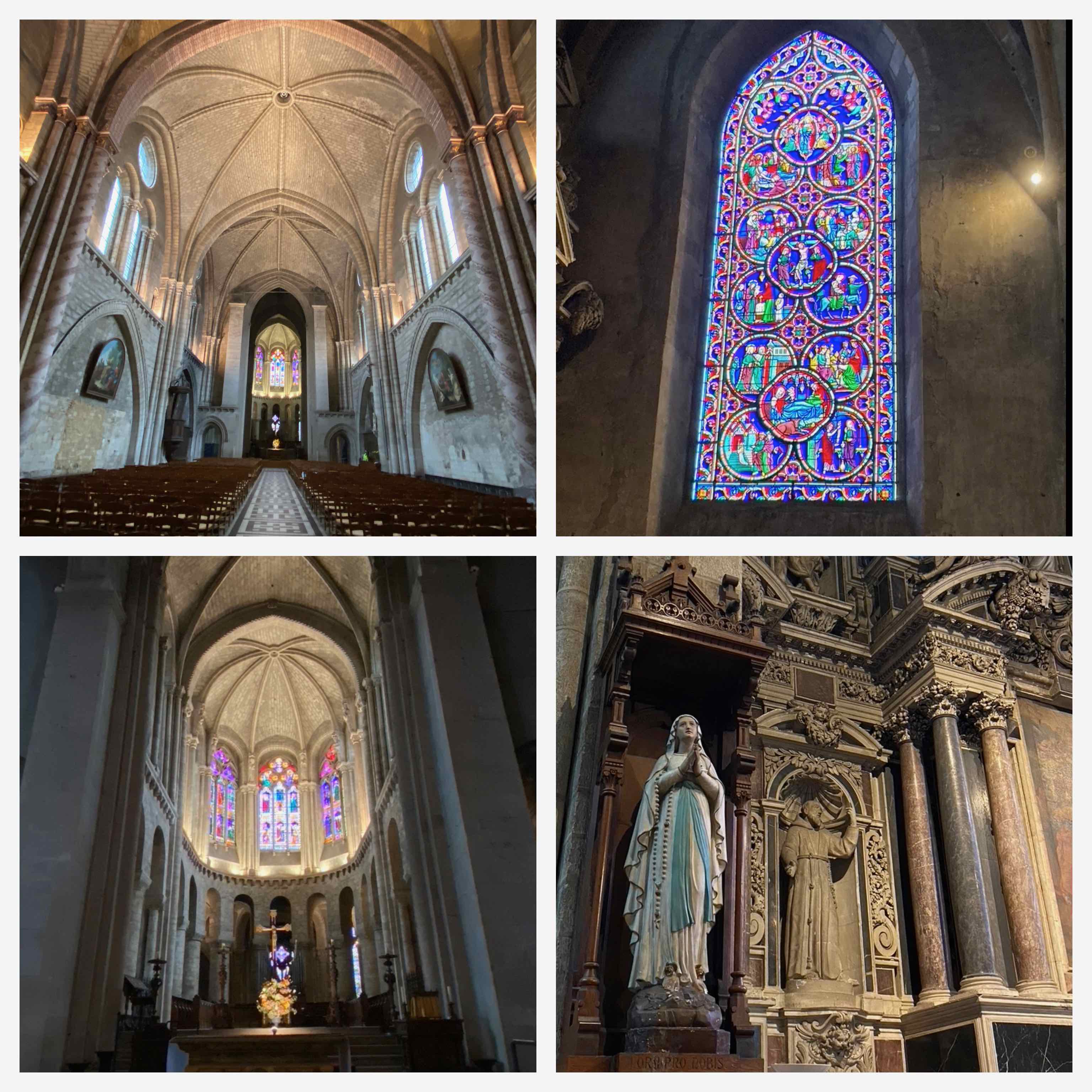
We decide to wander and see where we end up.  Notre Dame de la Couture dates mostly from the 12th century.

We were the only people visiting the church, which seems even larger inside than it did outside.

The pillars in the church are beautifully decorated.

We don’t really get tired of visiting all these magnificent old churches.  Each one has something different and interesting to see.

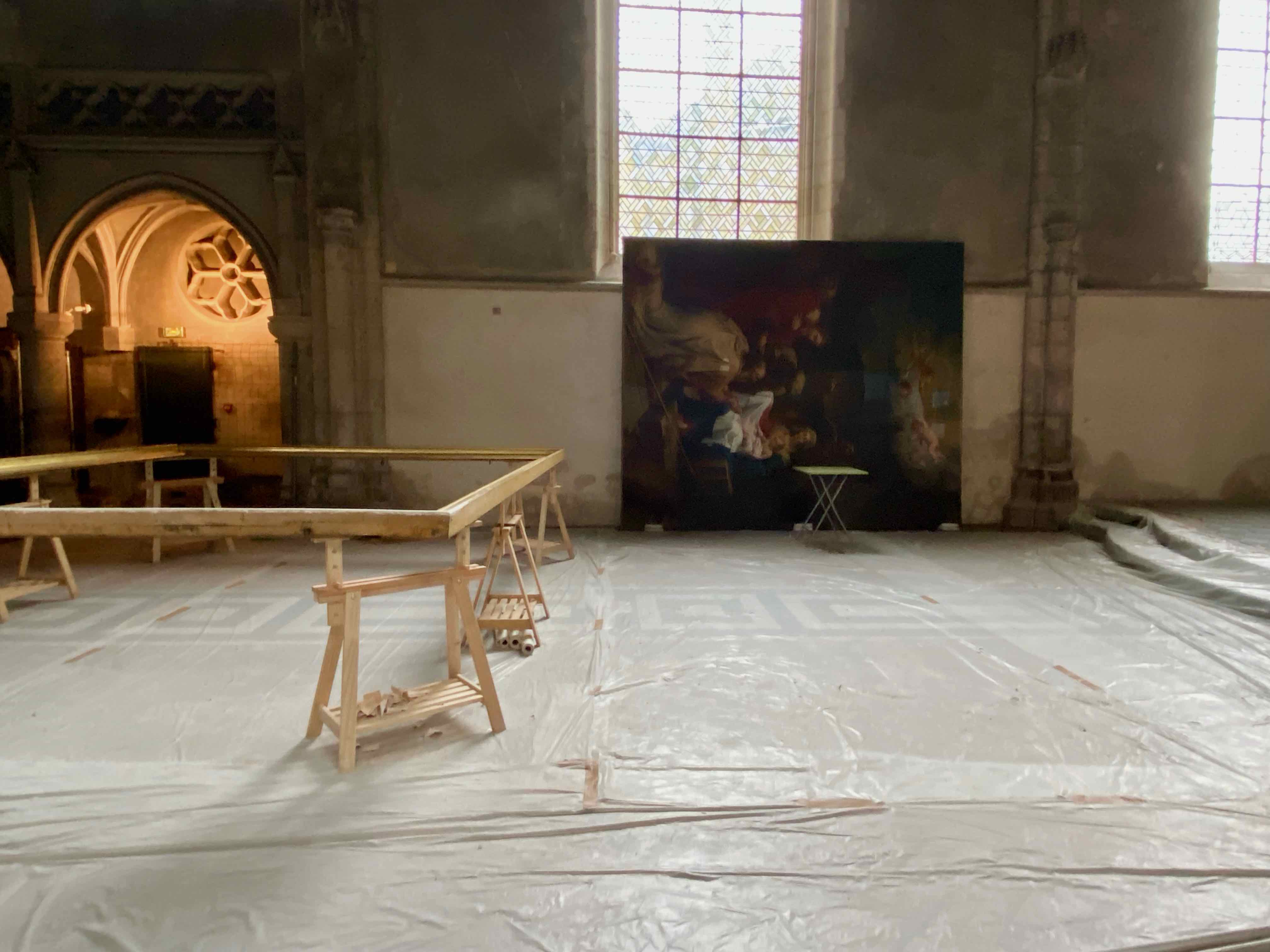
So many of the churches we have visited are undergoing restoration of some type, this one is no different.  I think if you are in the restoration business in France there is no shortage of work.

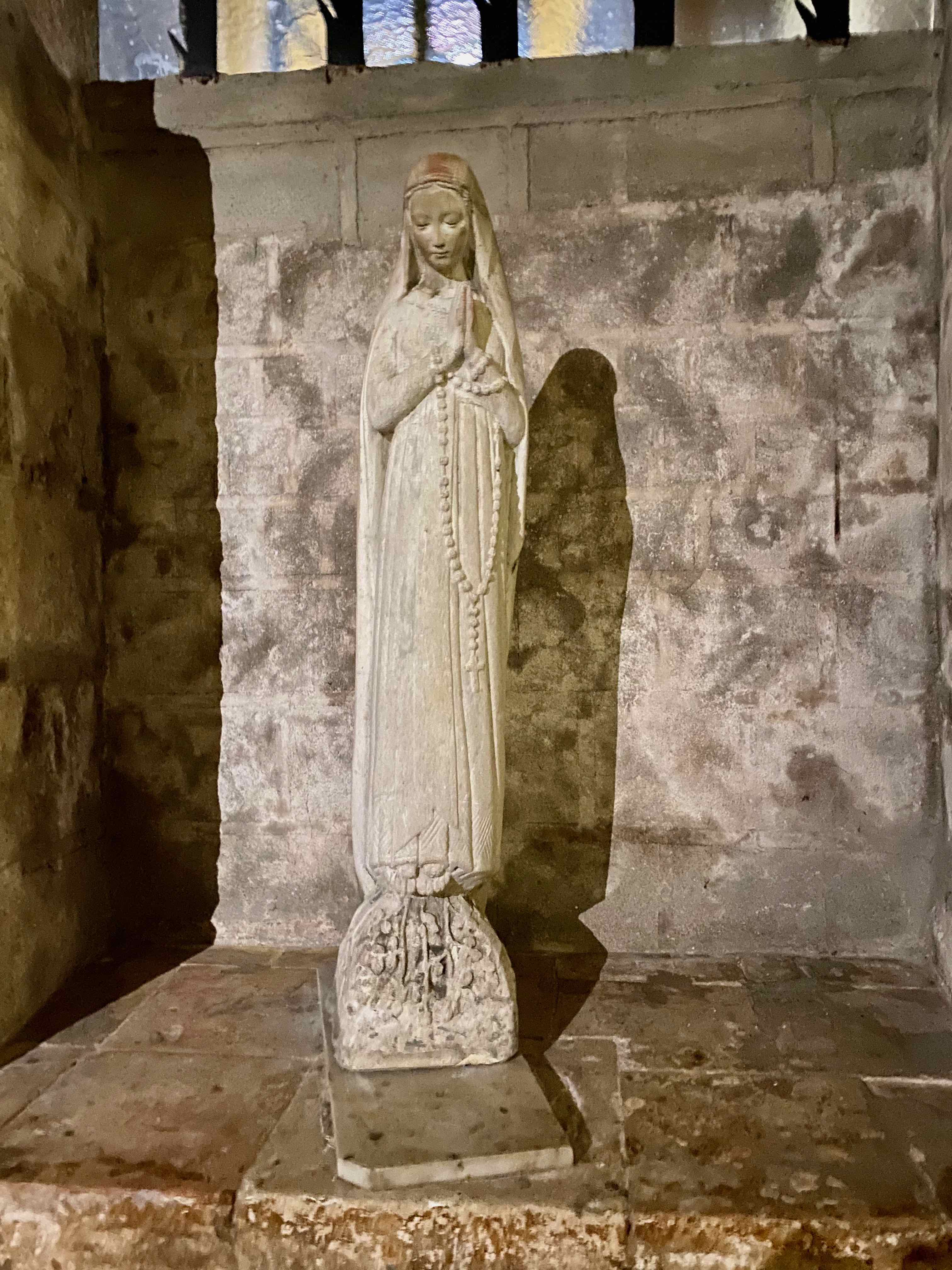
I loved this simple sculpture.

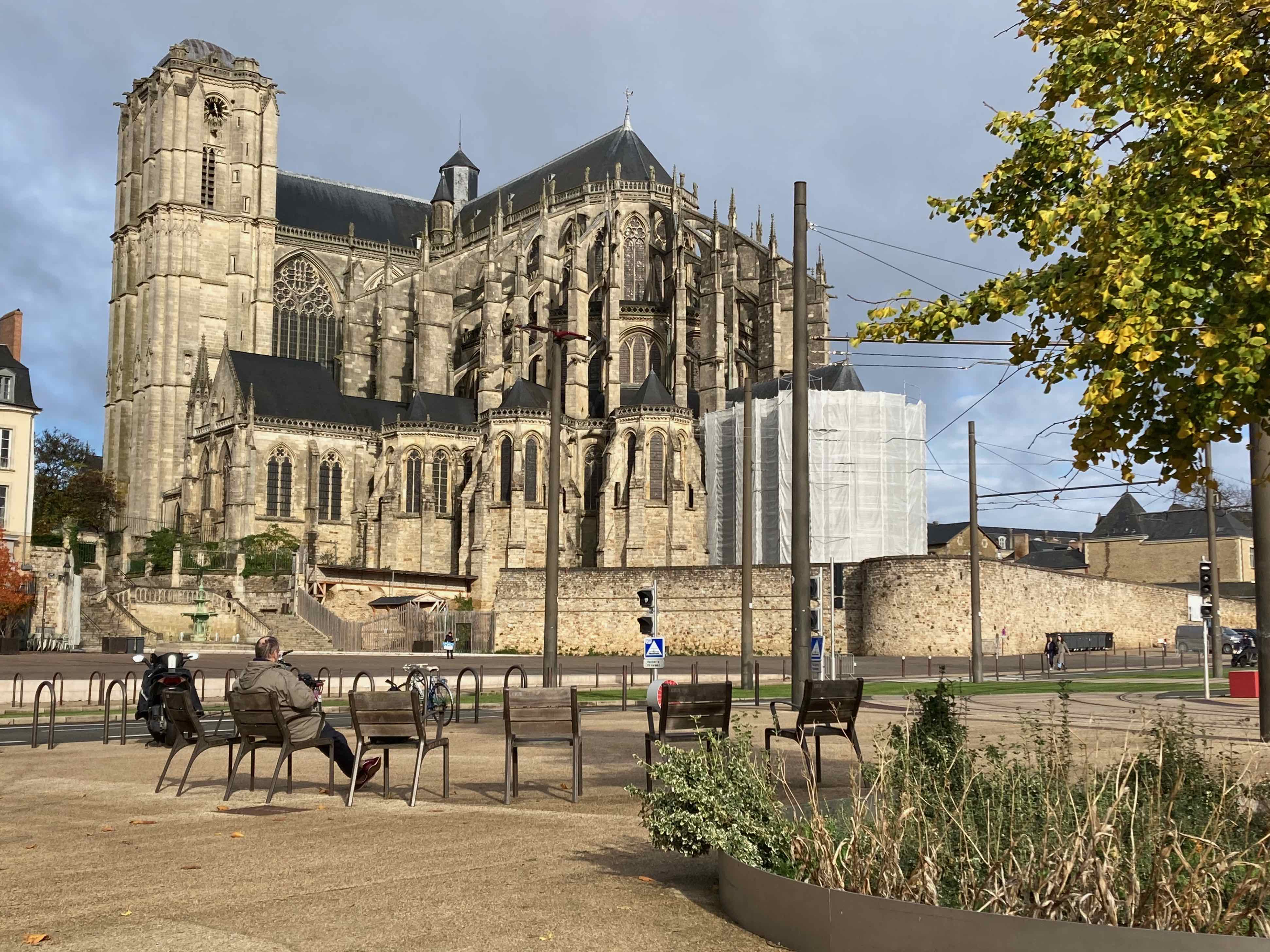
We sat in the sun with a view of the Cathédrale de Saint-Julien de Mans to enjoy our picnic lunch.

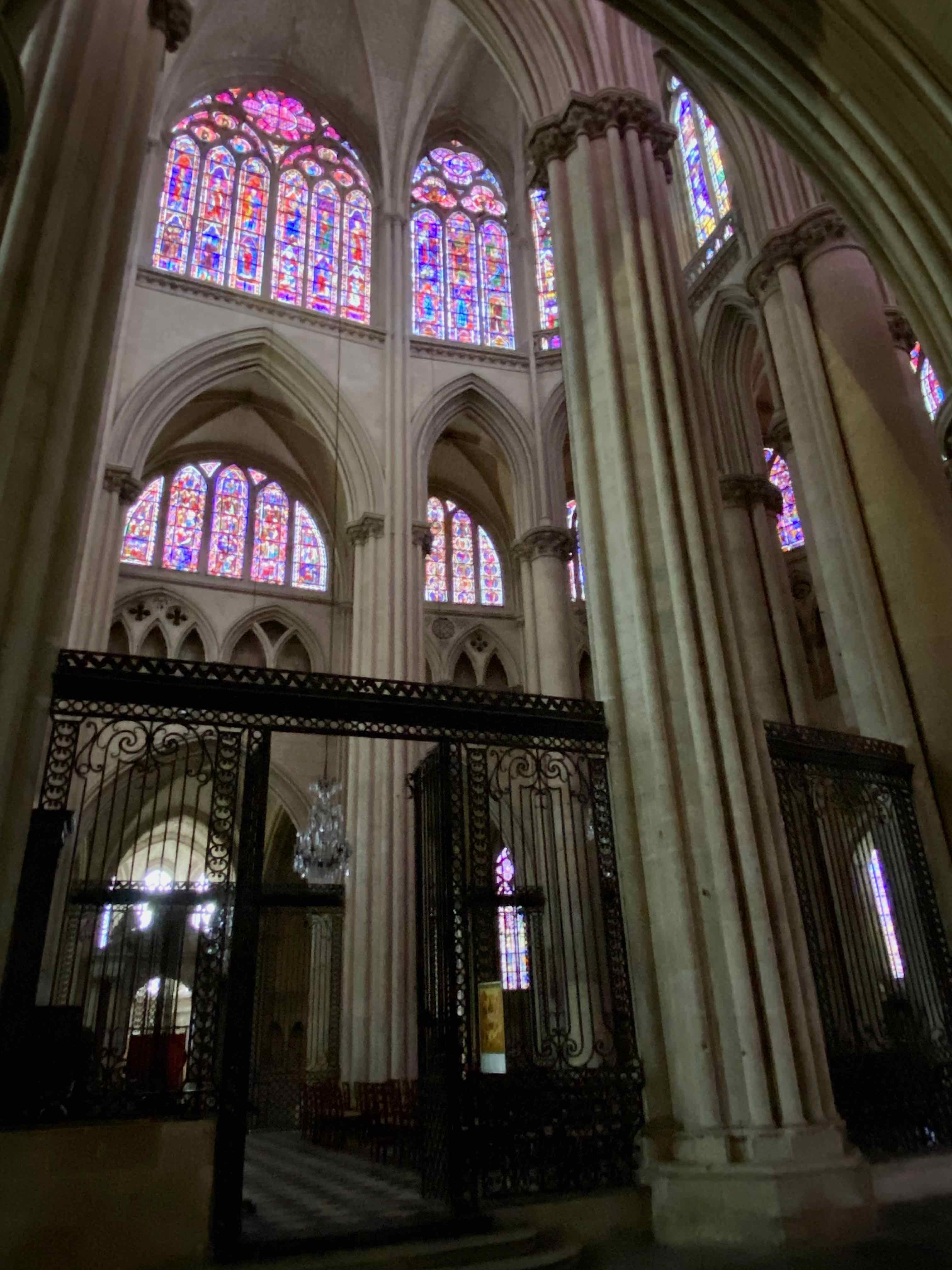
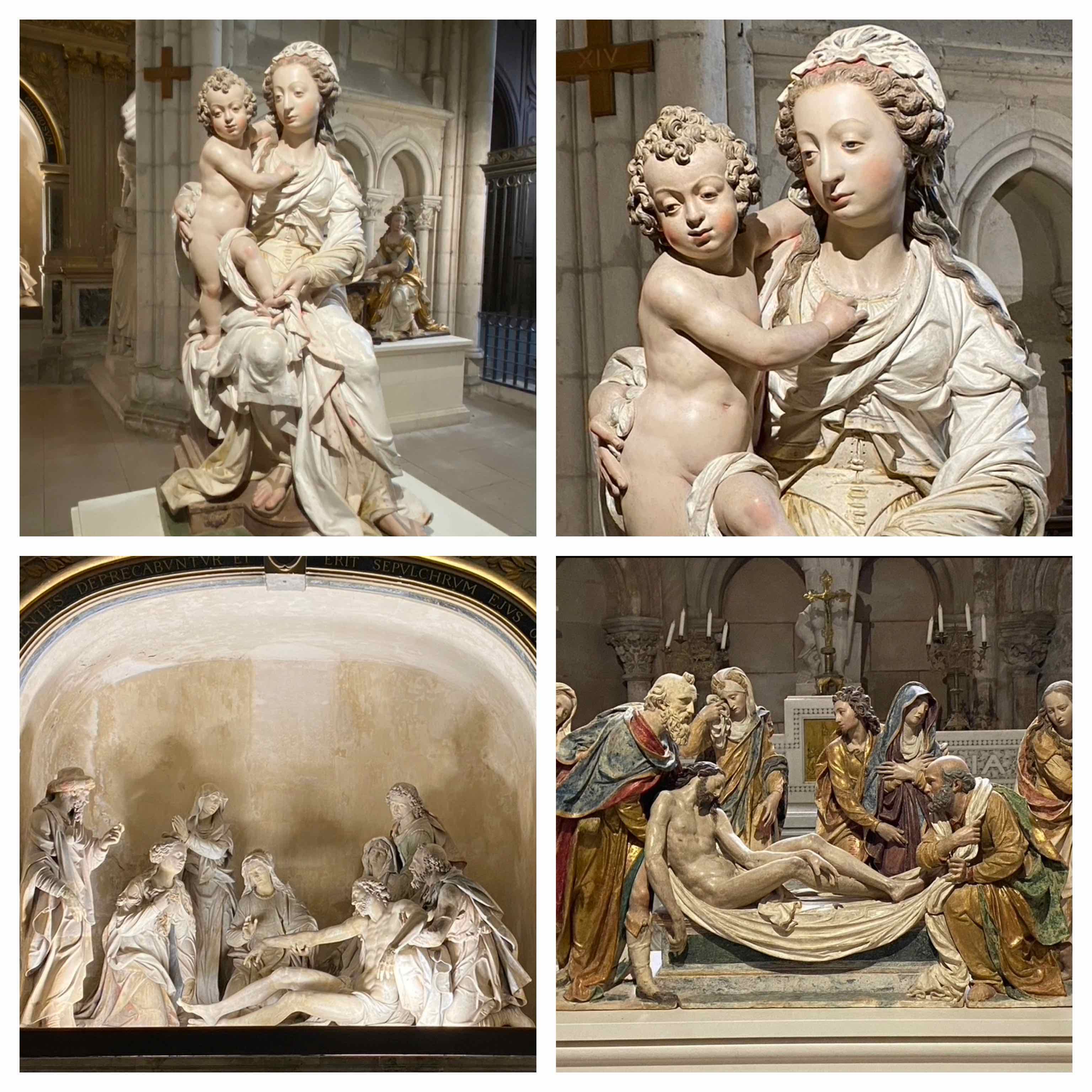
This cathedral was built between the eleventh and the fifteenth century in a mixture of architectural styles and has some of the oldest stained glass windows in France still in their original location.There are also many sculptures in this church that retain their original polychrome finish.  We are so used to seeing bare stone sculptures that it is easy to forget that many if not most sculptures were originally painted in realistic colours.  These are some of the most beautiful that we have seen on this trip.
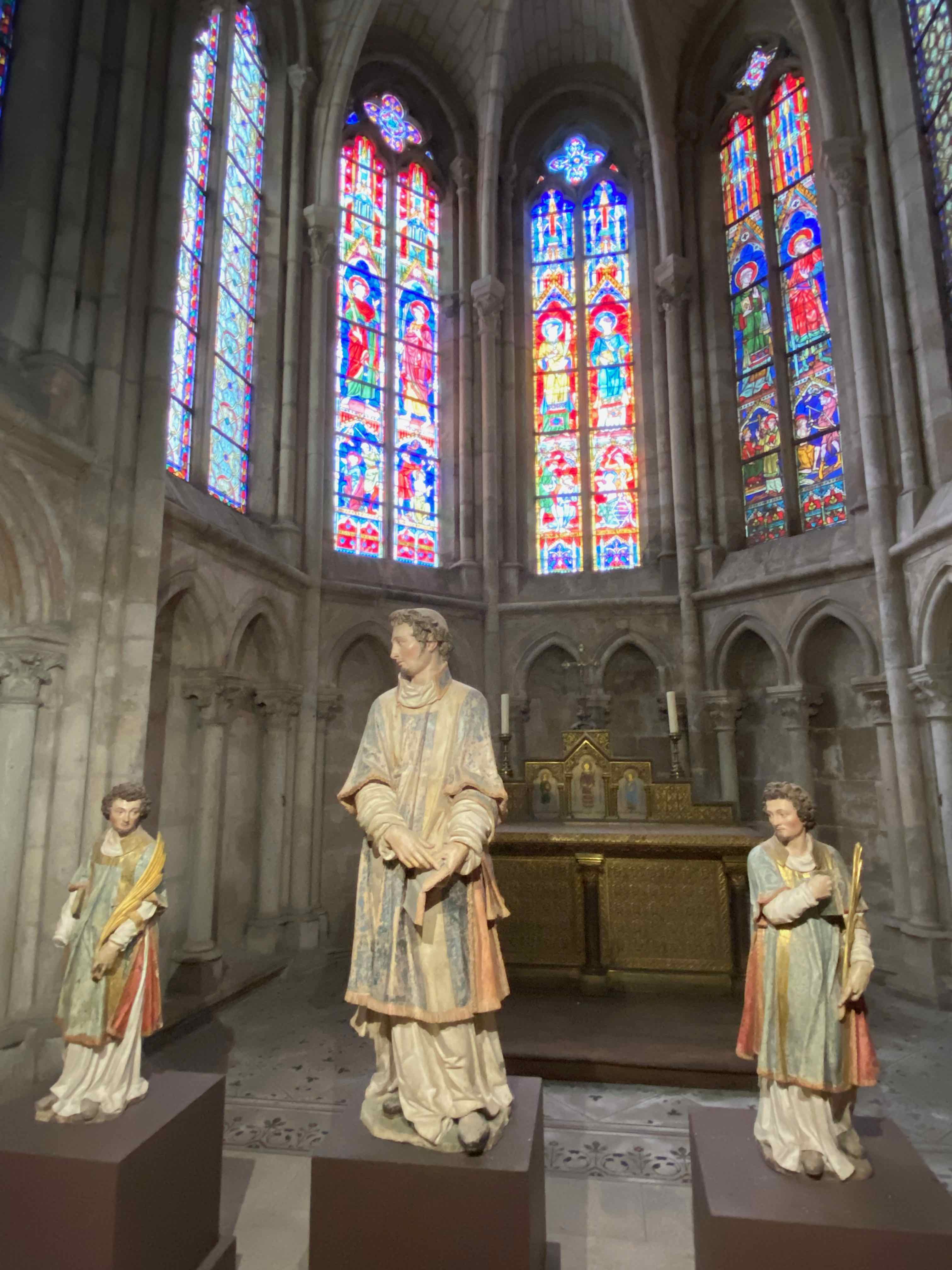
This Madonna and Child was stunning, as were the other polychrome sculptures in this church.

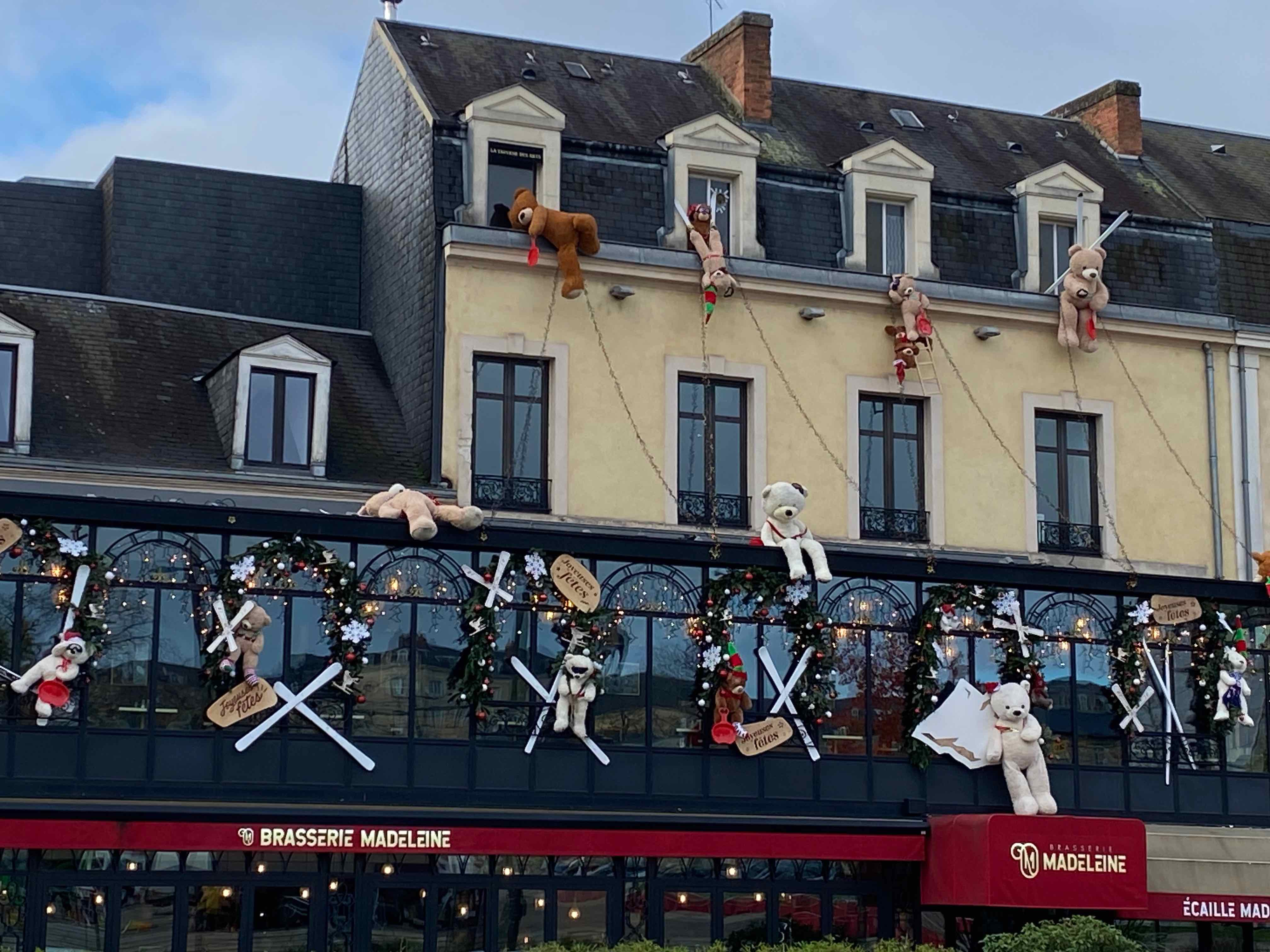
Some of the buildings in town have started to decorate for Christmas.  This one was rather unique!

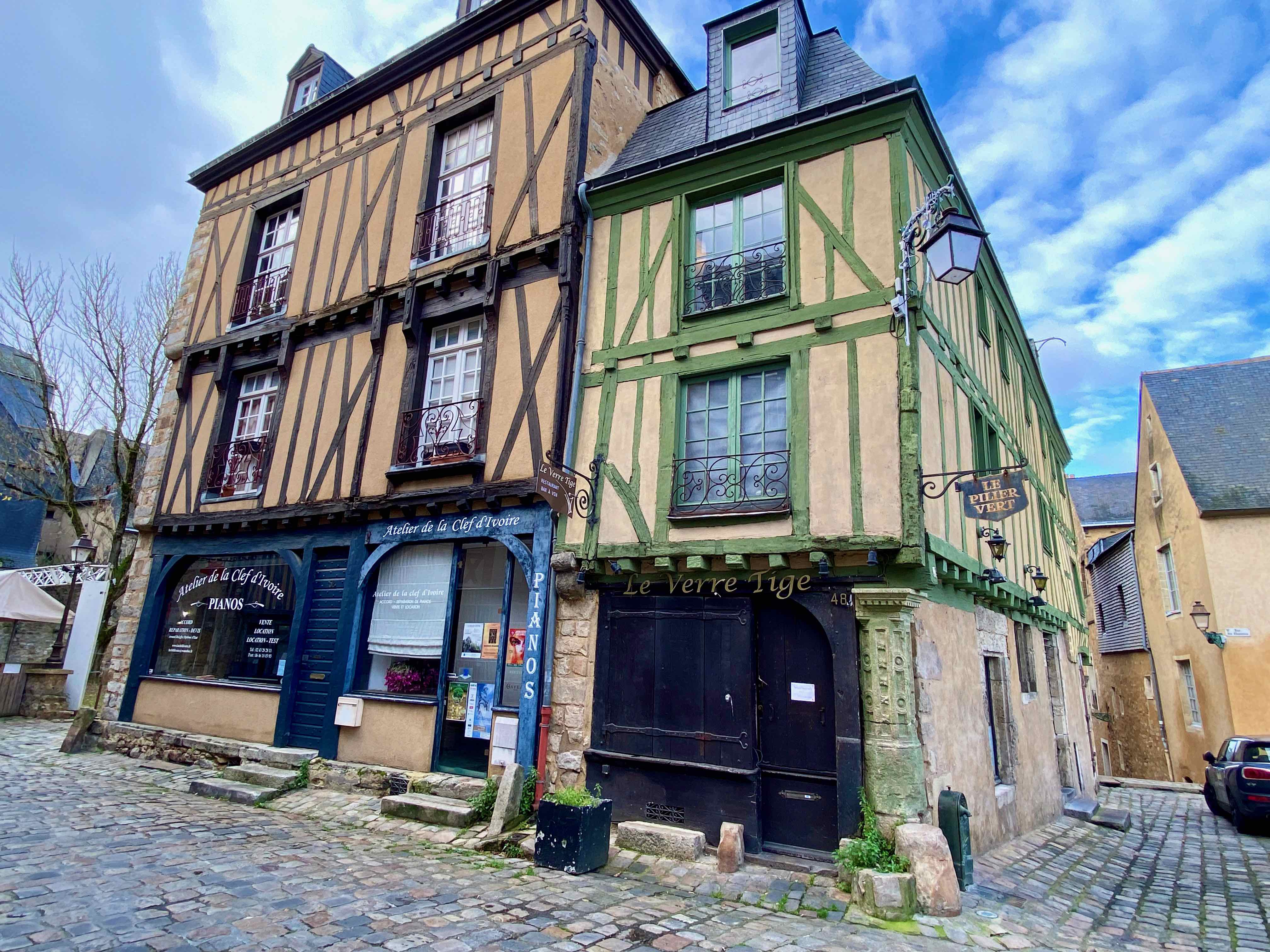
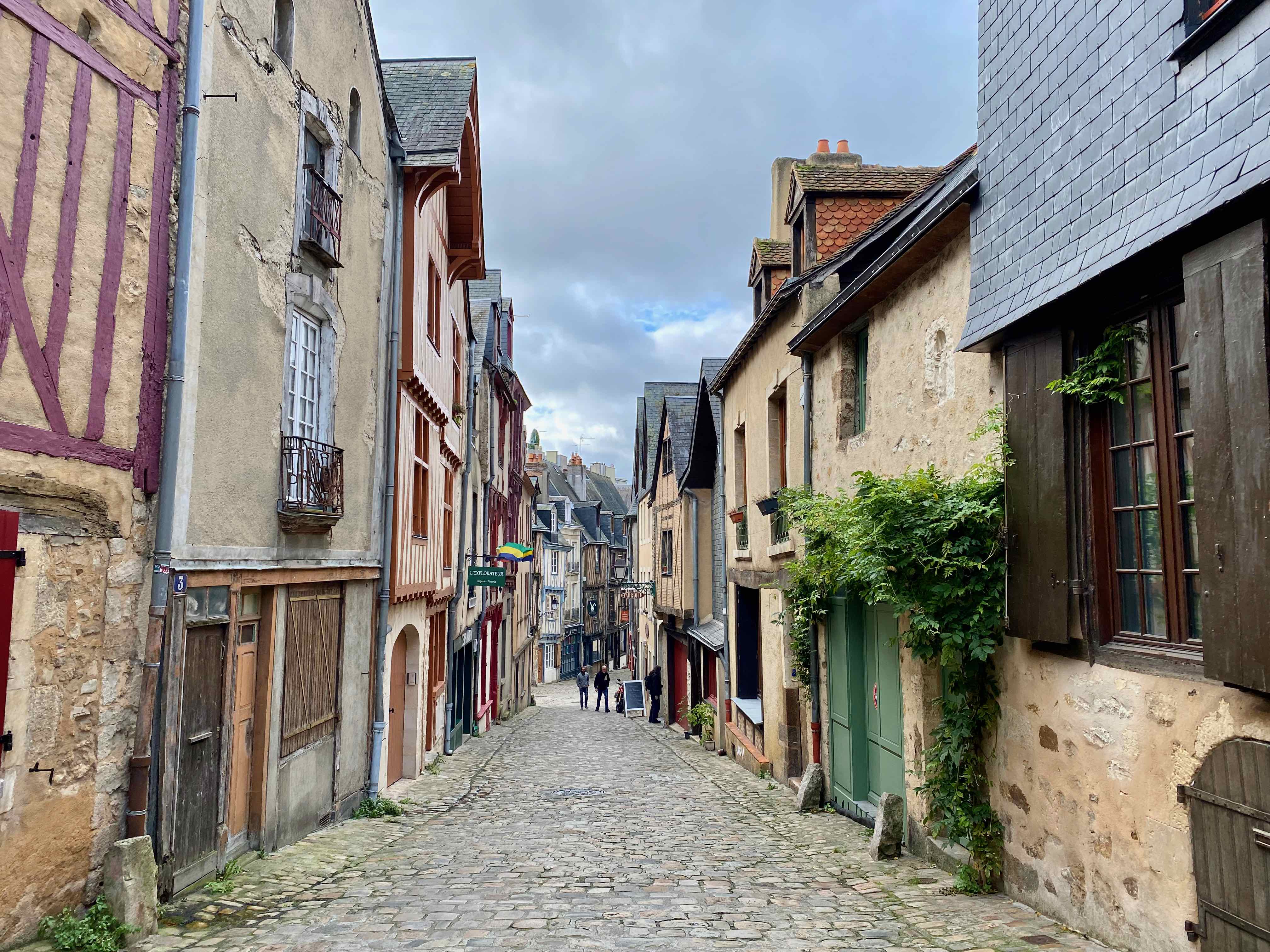
Another interesting old building…I wonder what the inside looks like? There are cobbled streets everywhere,

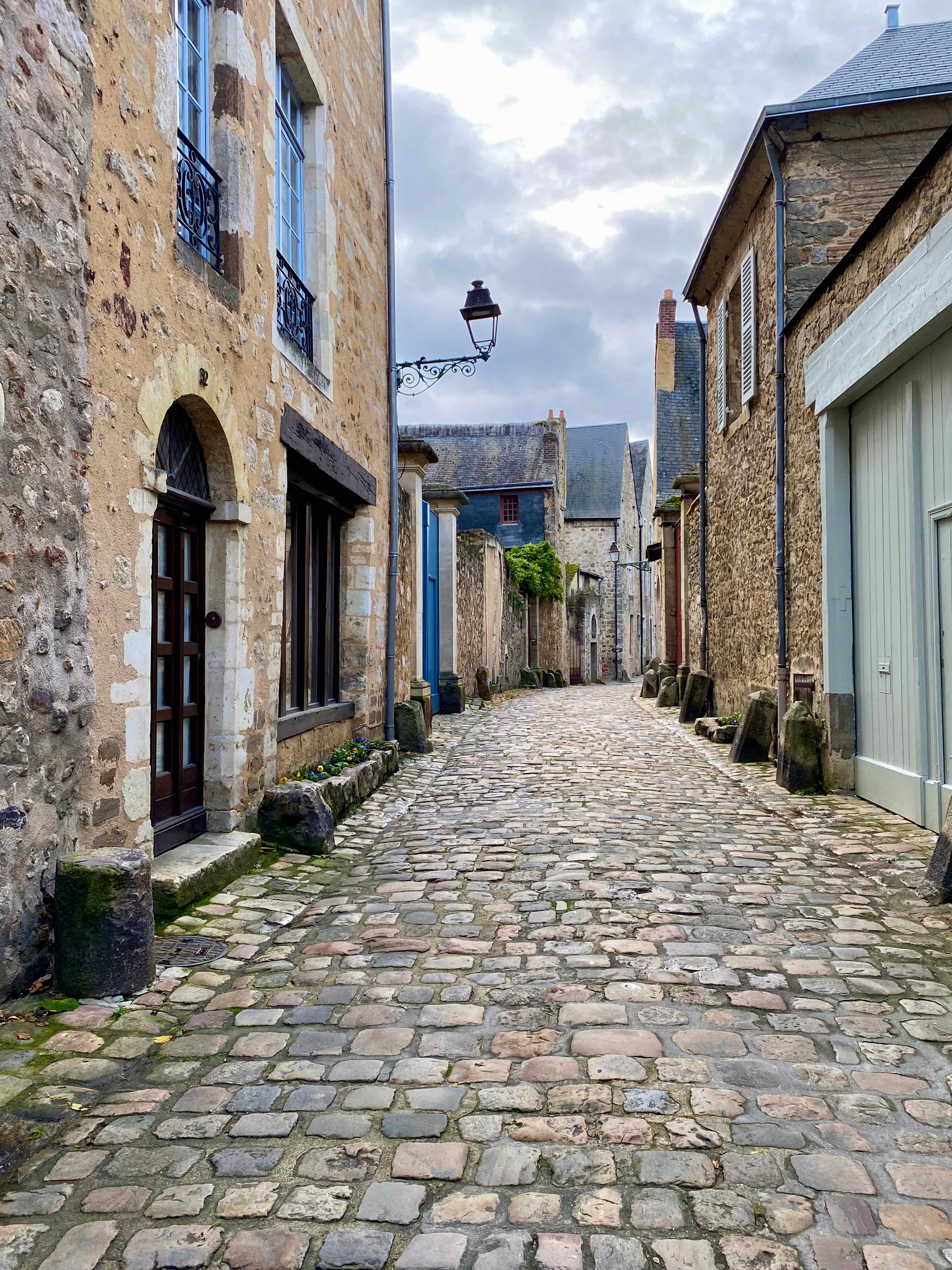
There aren’t many people out and about in the old town…we are the only people on the these streets.  It feels strange, like the place is abandoned.

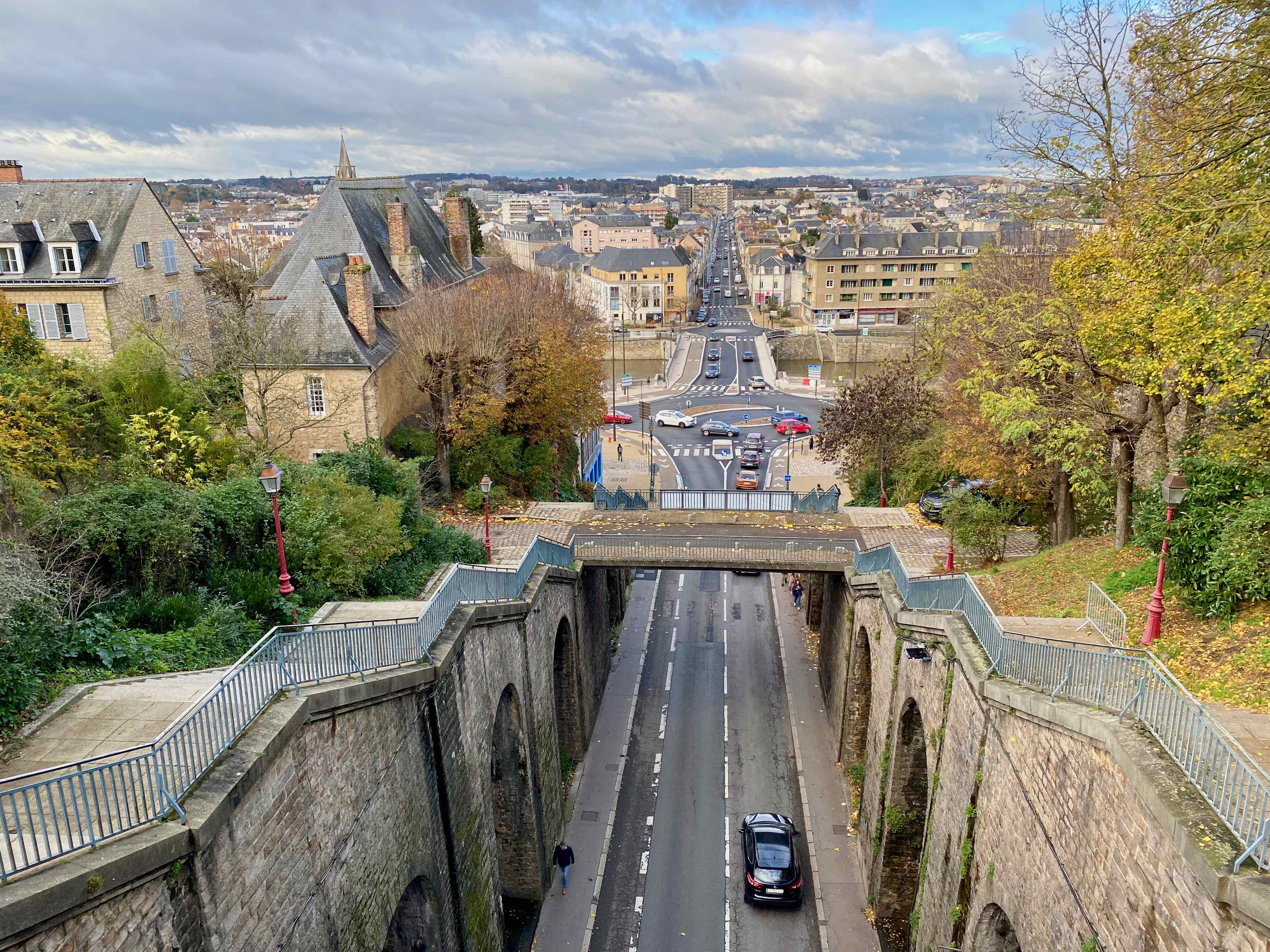
The old town is on high ground and we walk over this road which somehow passes beneath us…a tunnel perhaps?

More very old buildings, but everything is closed…too bad.

We finally see a few other people!

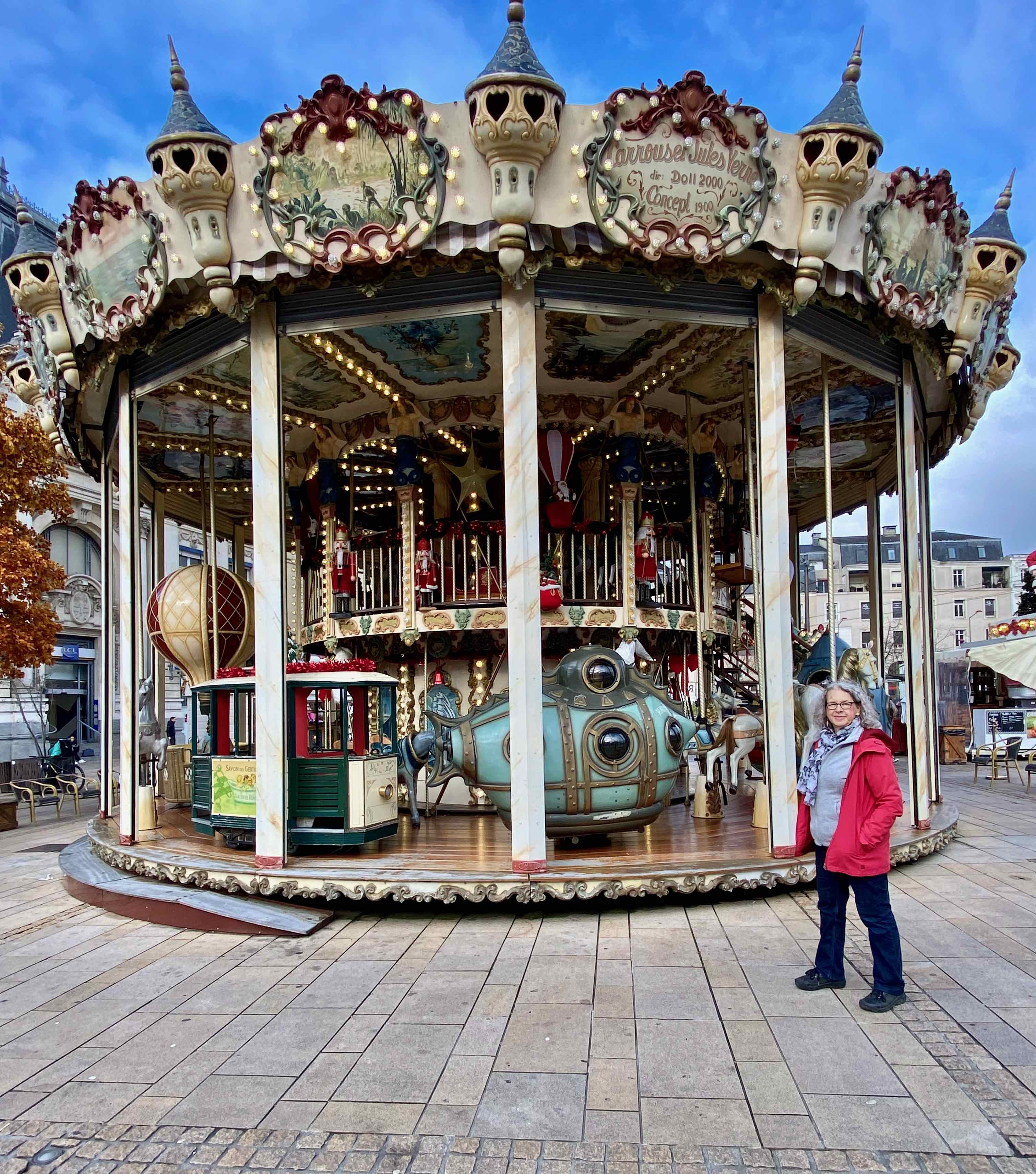
Even this beautiful, ornate merry-go-round is closed!  I love riding merry-go-rides. Too bad I won’t be able to try this one out.

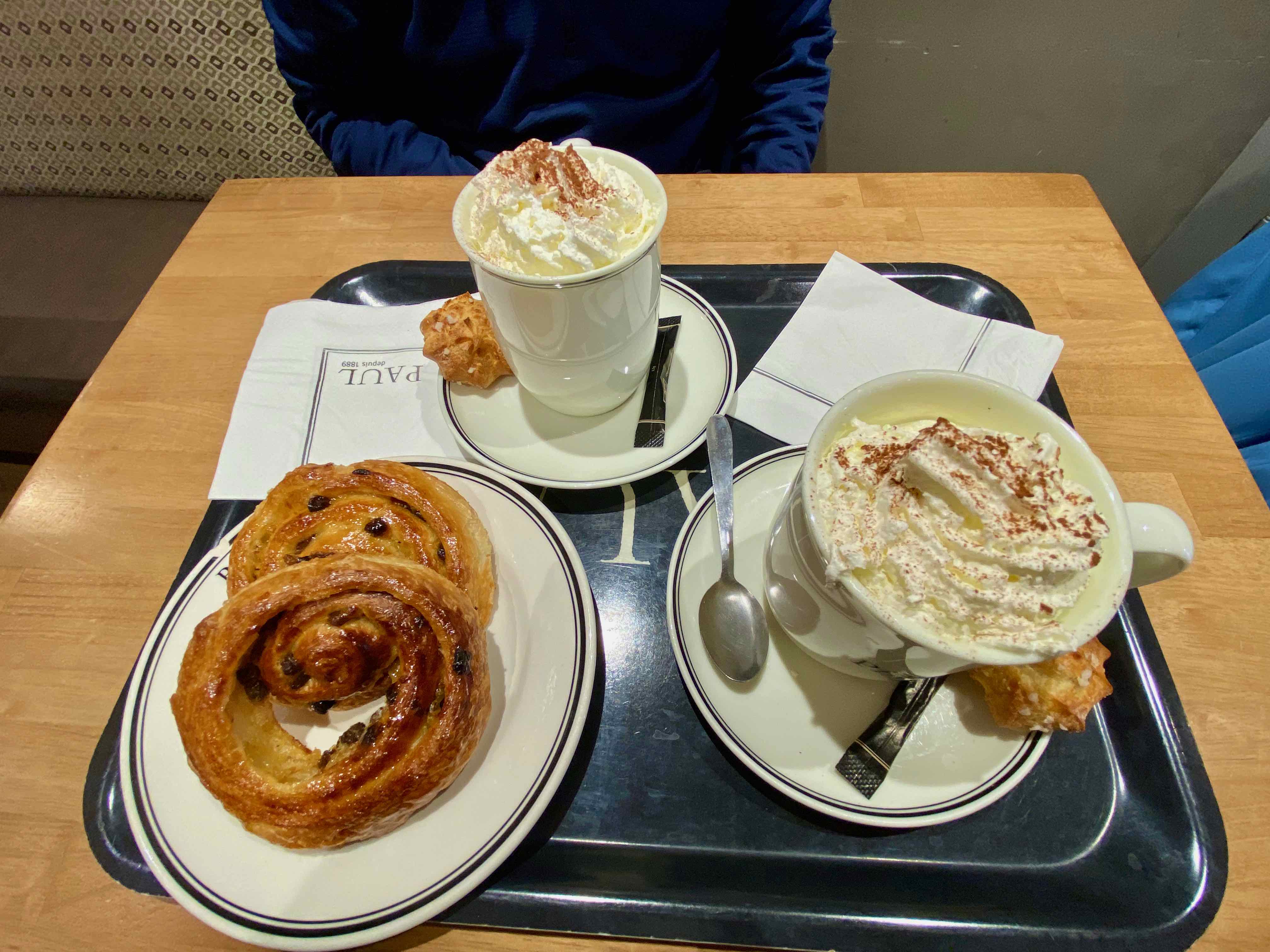
After much searching we find a Paul’s and have some hot chocolate and yummy pastries….only 22 euros, or $32.00 Canadian!!  At least it was all delicious.

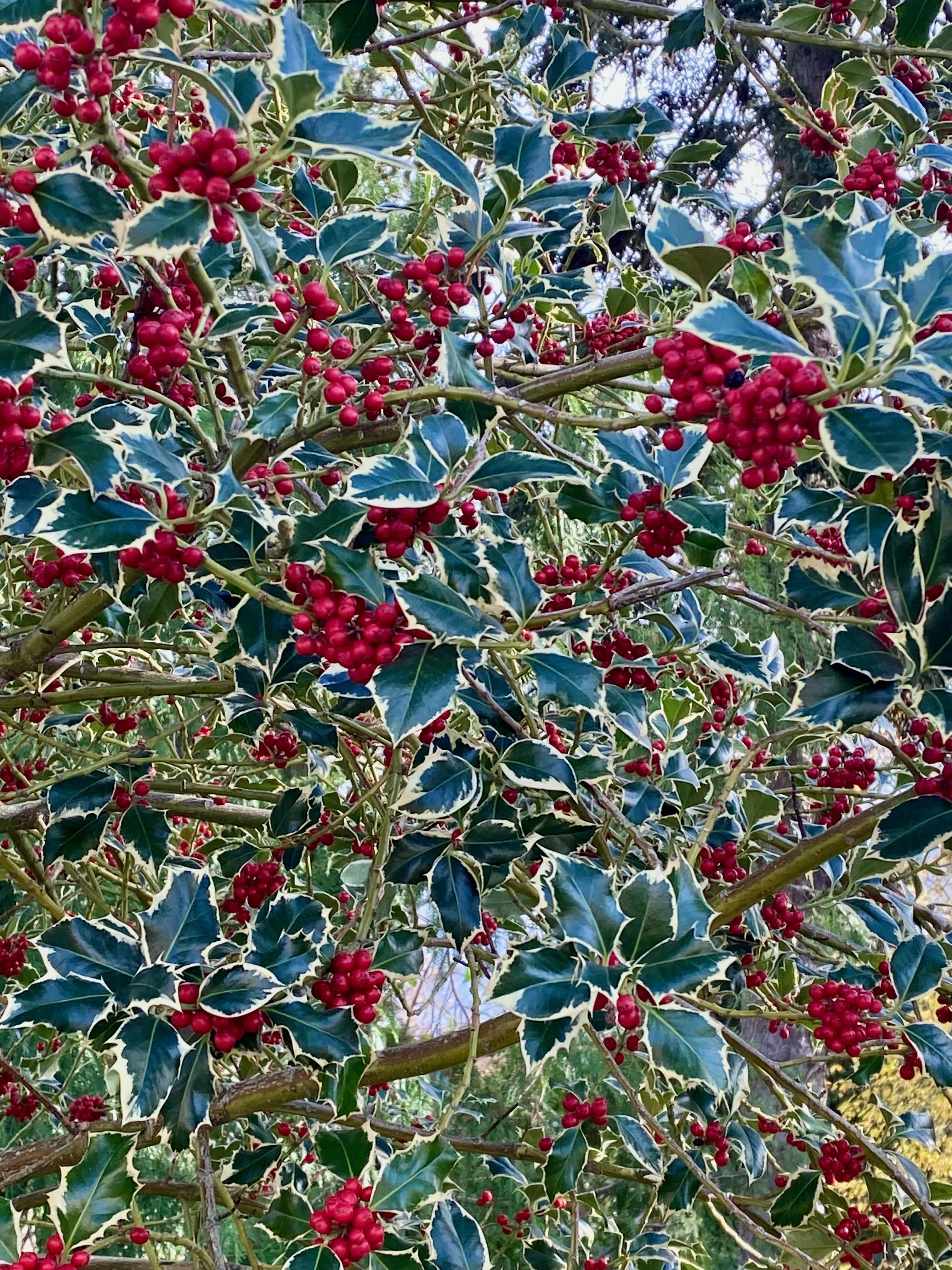
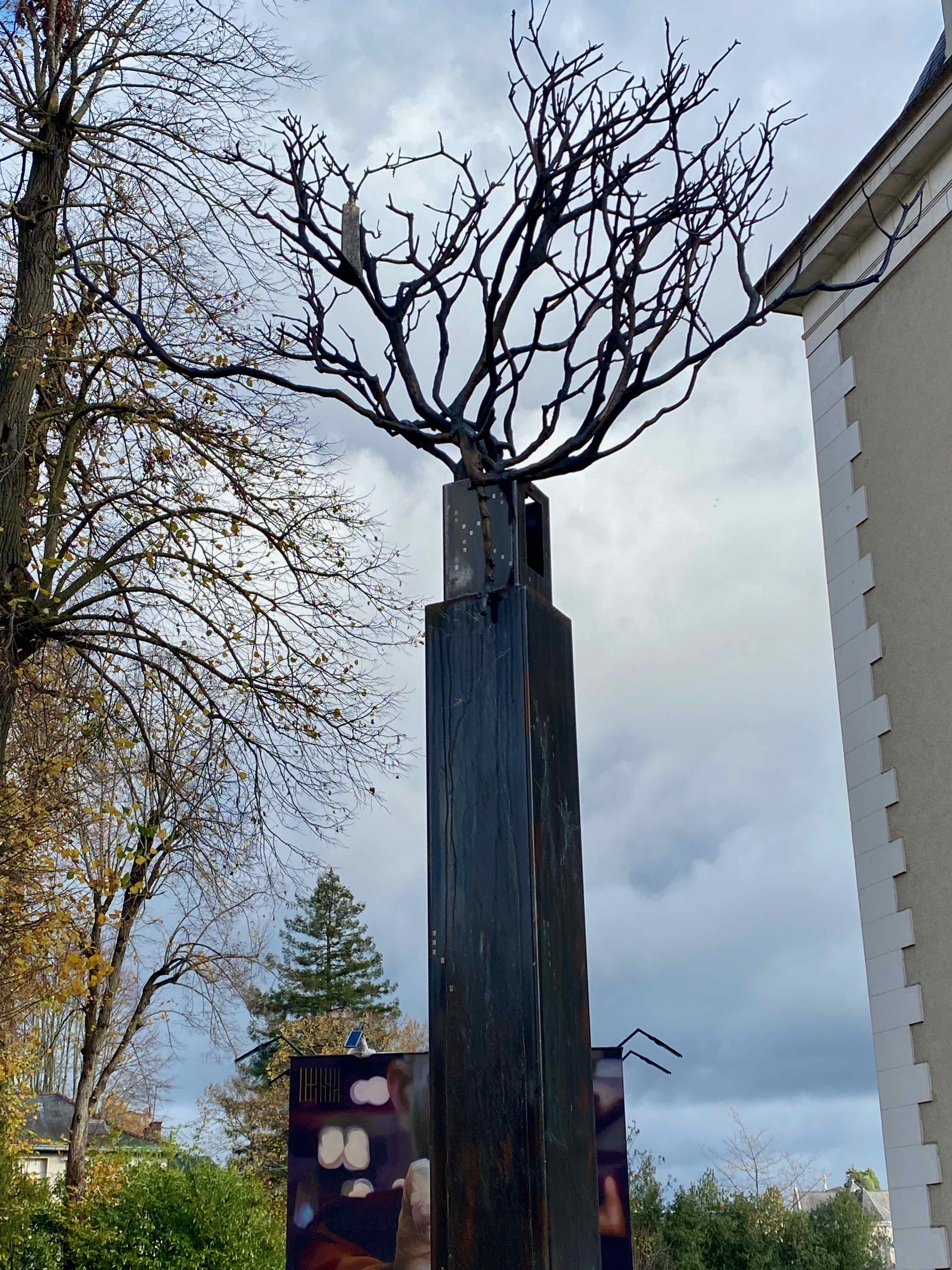
We walked past this beautiful variegated holly bush which was very Christmassy on our way to find the Musée de Tessé.We have seen several tree sculptures in different towns by this artist, whose name I have forgotten!  I quite liked them all.
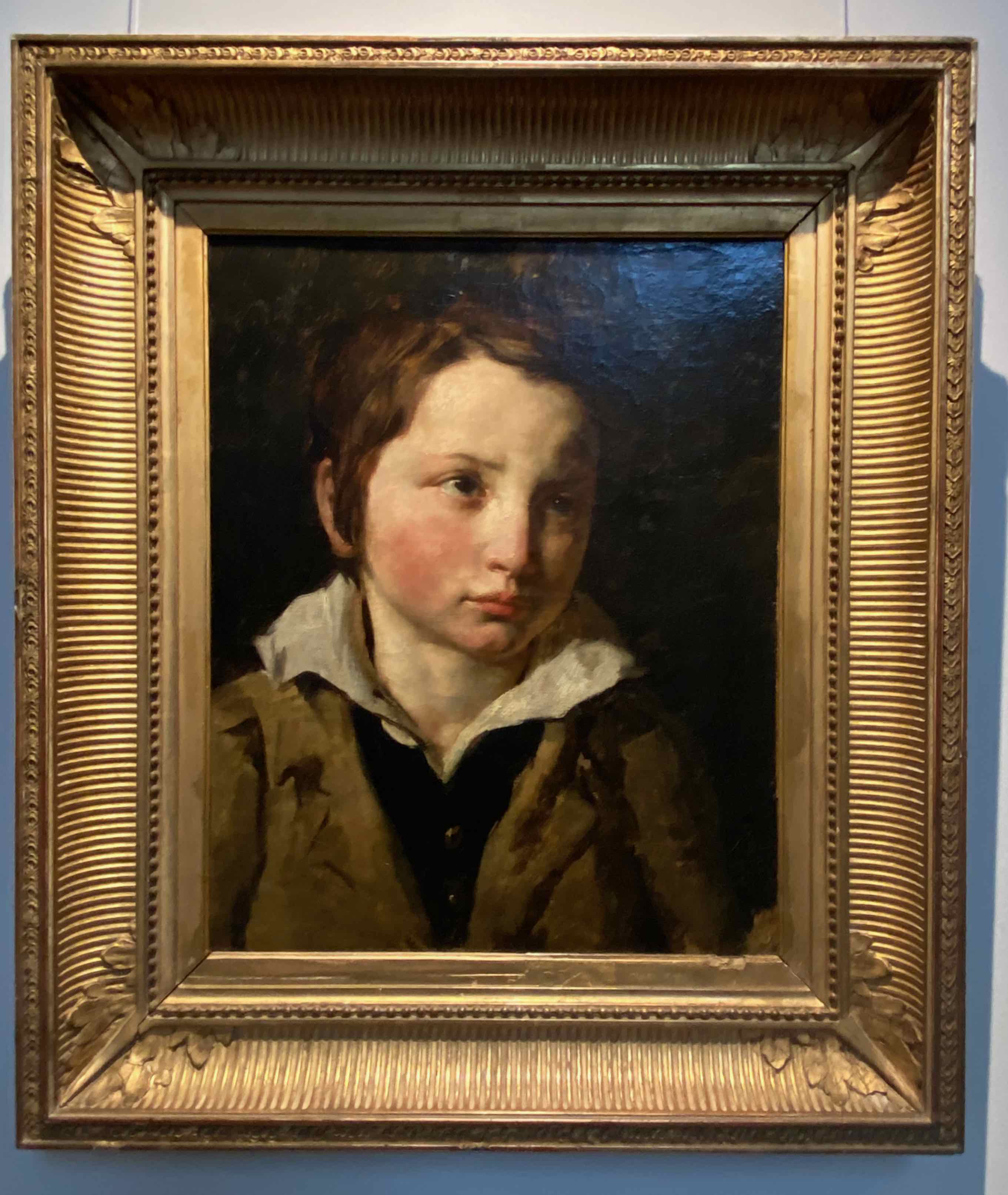
We find the Musée Tessé and are surprised that there is no admission fee.  It isn’t a big museum, but it is just the right size for an afternoon visit.  This museum opened in 1799, and is one of the oldest in France. It has a collection of French, Italian and Flemish paintings from the 14th to the 20th century and a unique space dedicated to ancient Egypt.  Each era has a room dedicated to that period with a nice selection of work…not too overwhelming which suits us well today.

I liked this little portrait by Théodore Gericault…

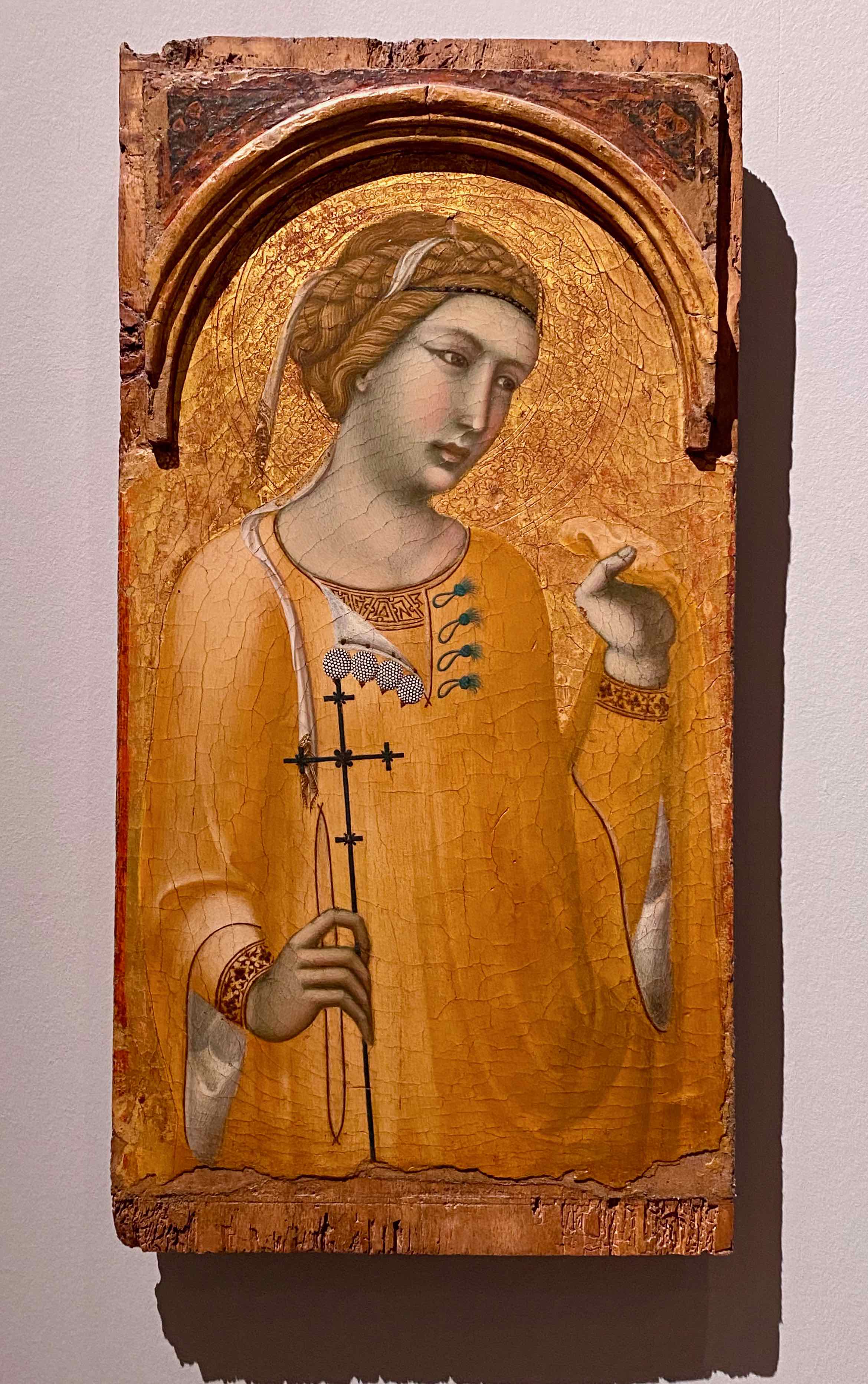
this tempera on wood painting of Saint Agathe from 1315…

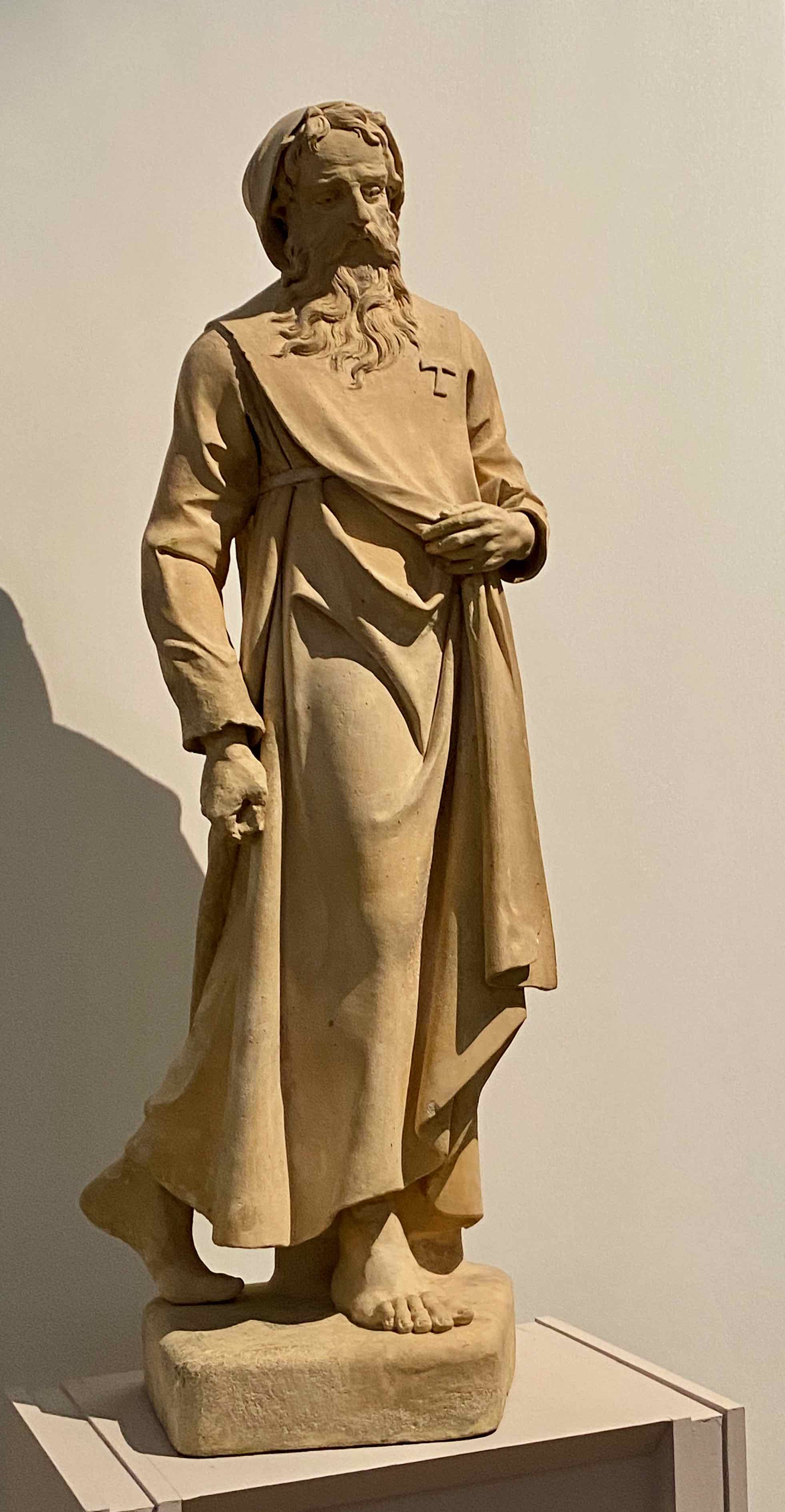
and this terra cotta sculpture of Saint Antoine from the last half of the 17th century.

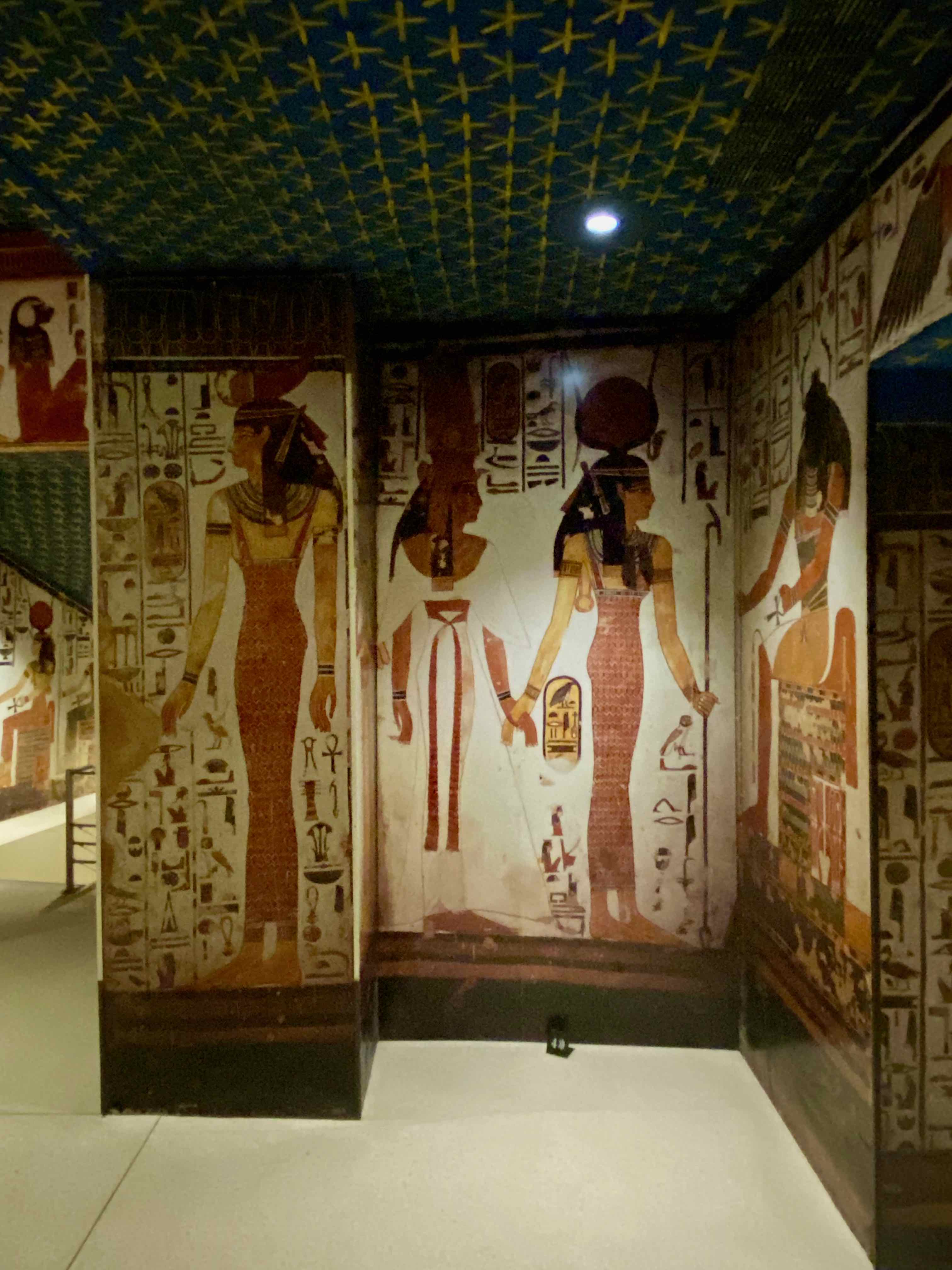
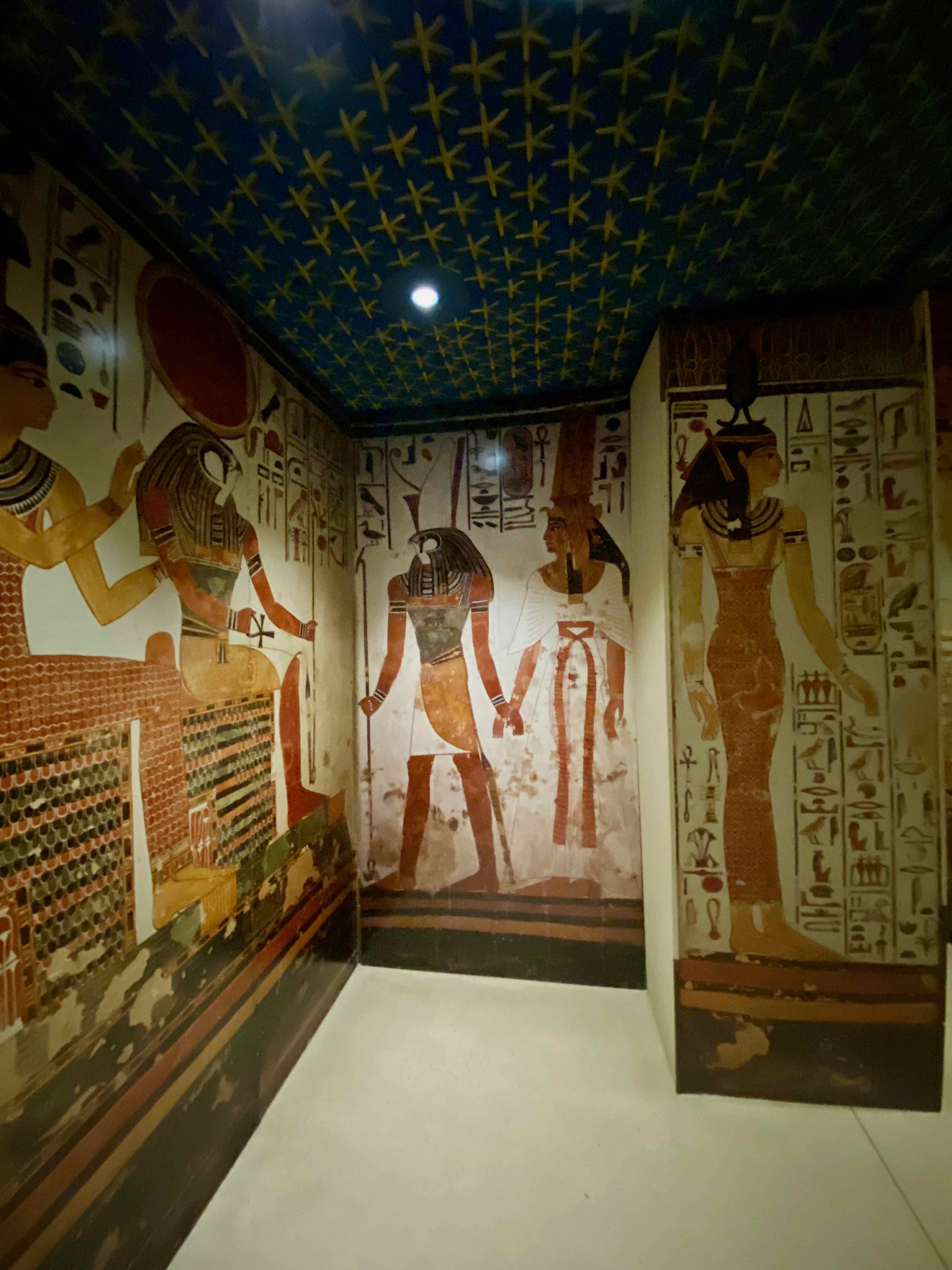
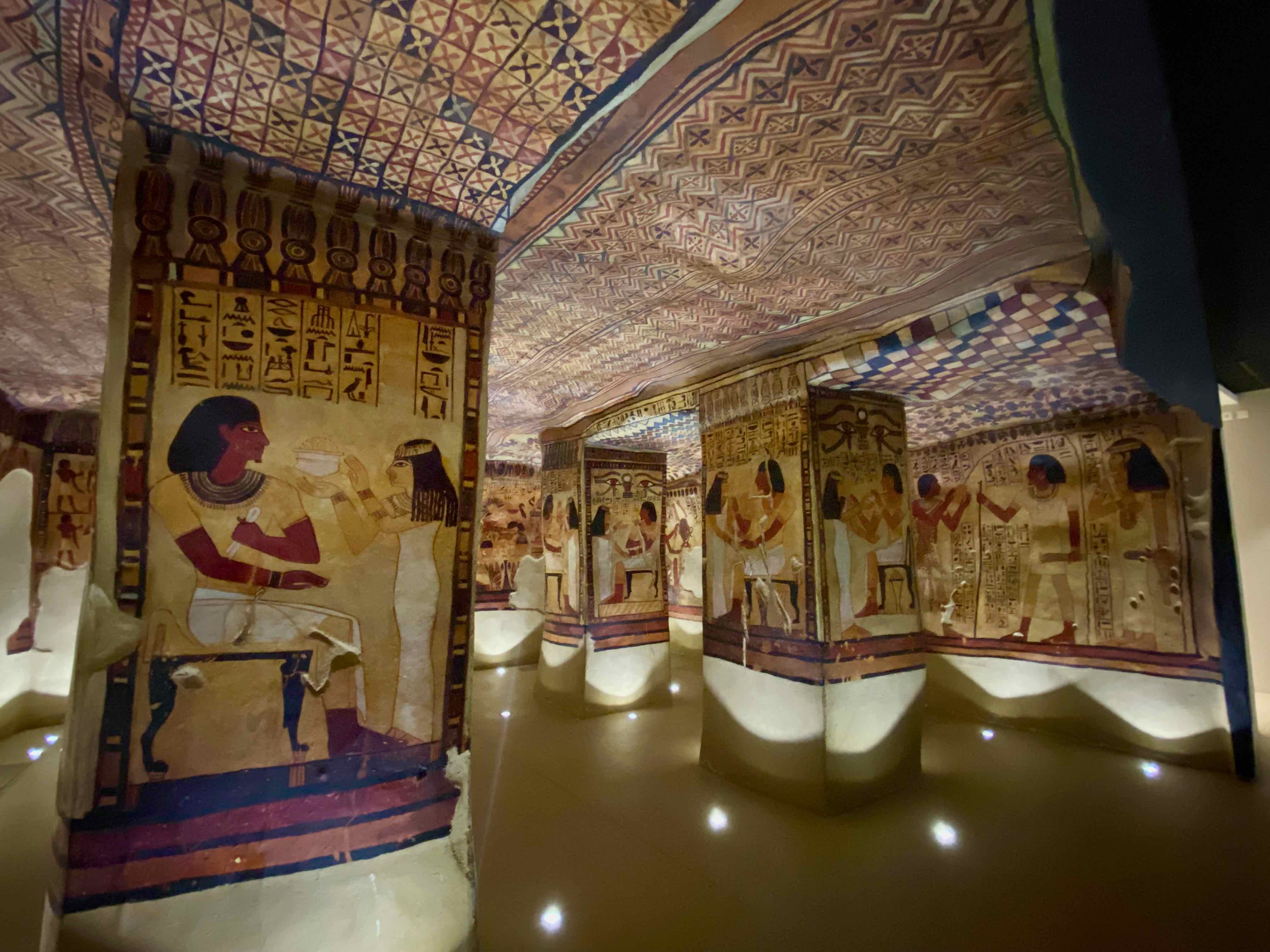
We make our way to the basement down several flights of stairs to discover an area which has the reconstructed tombs of Nefertari and Sennefer.  The photos with their light reflections do not do this area justice.  It really reminded us of our time in Egypt. We were able to visit the tomb of Nefertari in the Valley of the Queens.  This reconstruction is not the same as being in the real tomb but we really enjoyed seeing it all anyways.

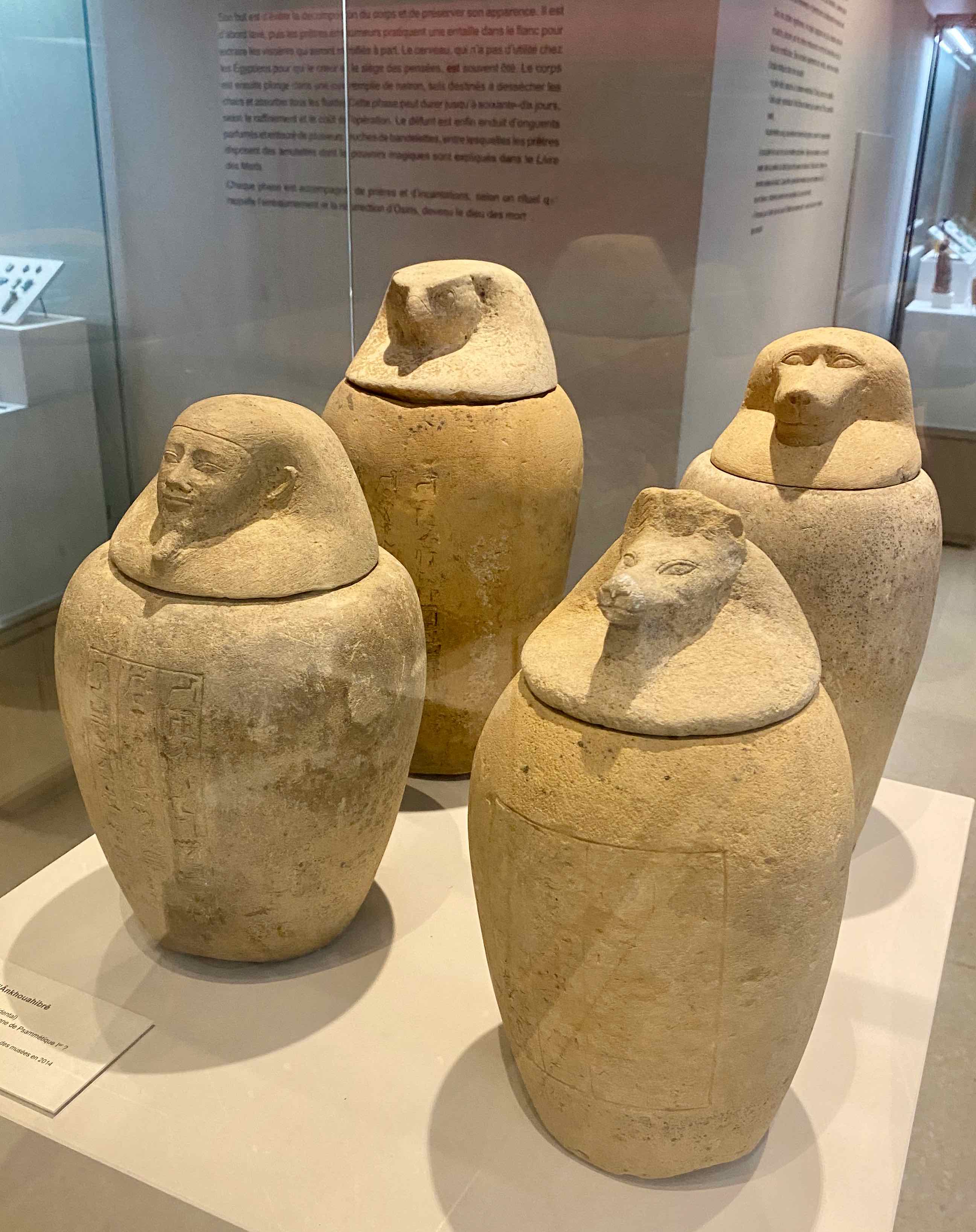
These are canopic jars that contained the organs of’Ânkhouahibrê  that were removed from the body in the process of mummification: the lungs, liver, intestines, and stomach.

I thought these bird mummies were interesting.  I have seen cat mummies before but cannot remember seeing any bird mummies.

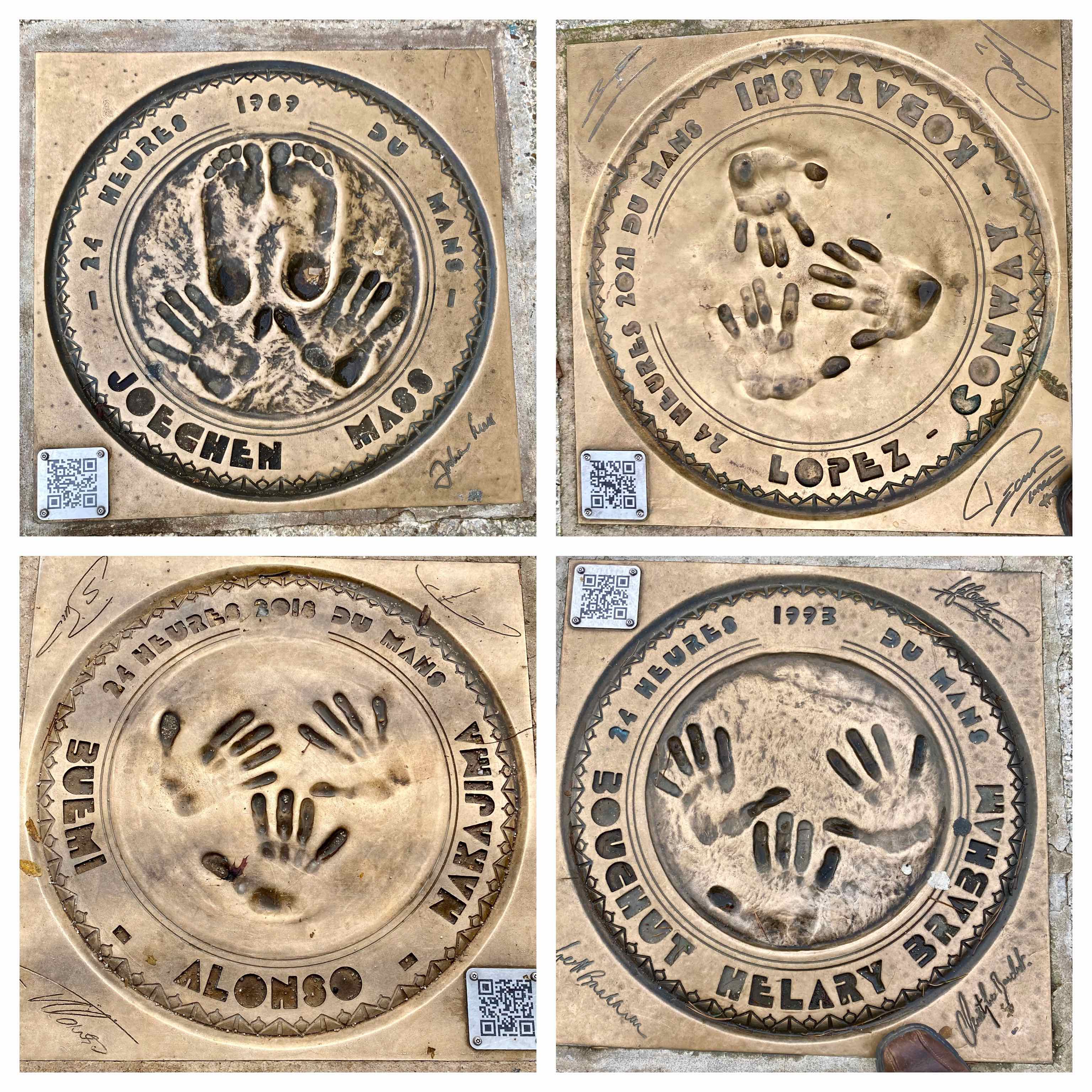
There are  bronze plaques of the ’24 Hours of Le Mans Race’ winning team’s hand prints set into the sidewalks of Le Mans.

All too soon it is time to catch the train back to Paris.  We didn’t have time to go visit the Le Mans Race museum as it was on the outskirts of town and it would have taken too long to go and visit, but we are happy with our day in Le Mans.

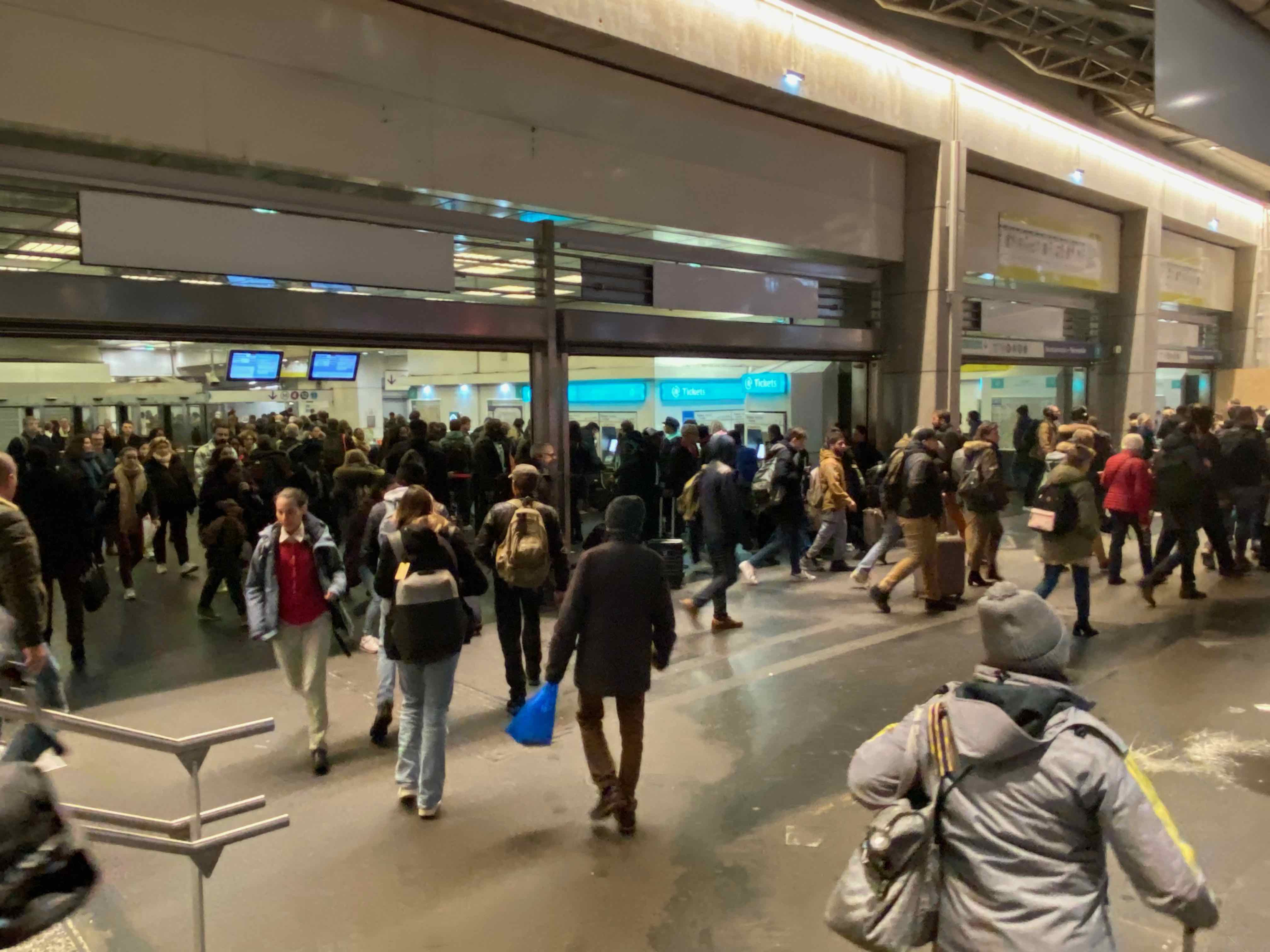
Catching the metro home…the station was very busy!  It has been full day and we are happy to be back home in our Paris apartment.

Avignon, France

Day 64 Tuesday,  October 31, 2023.

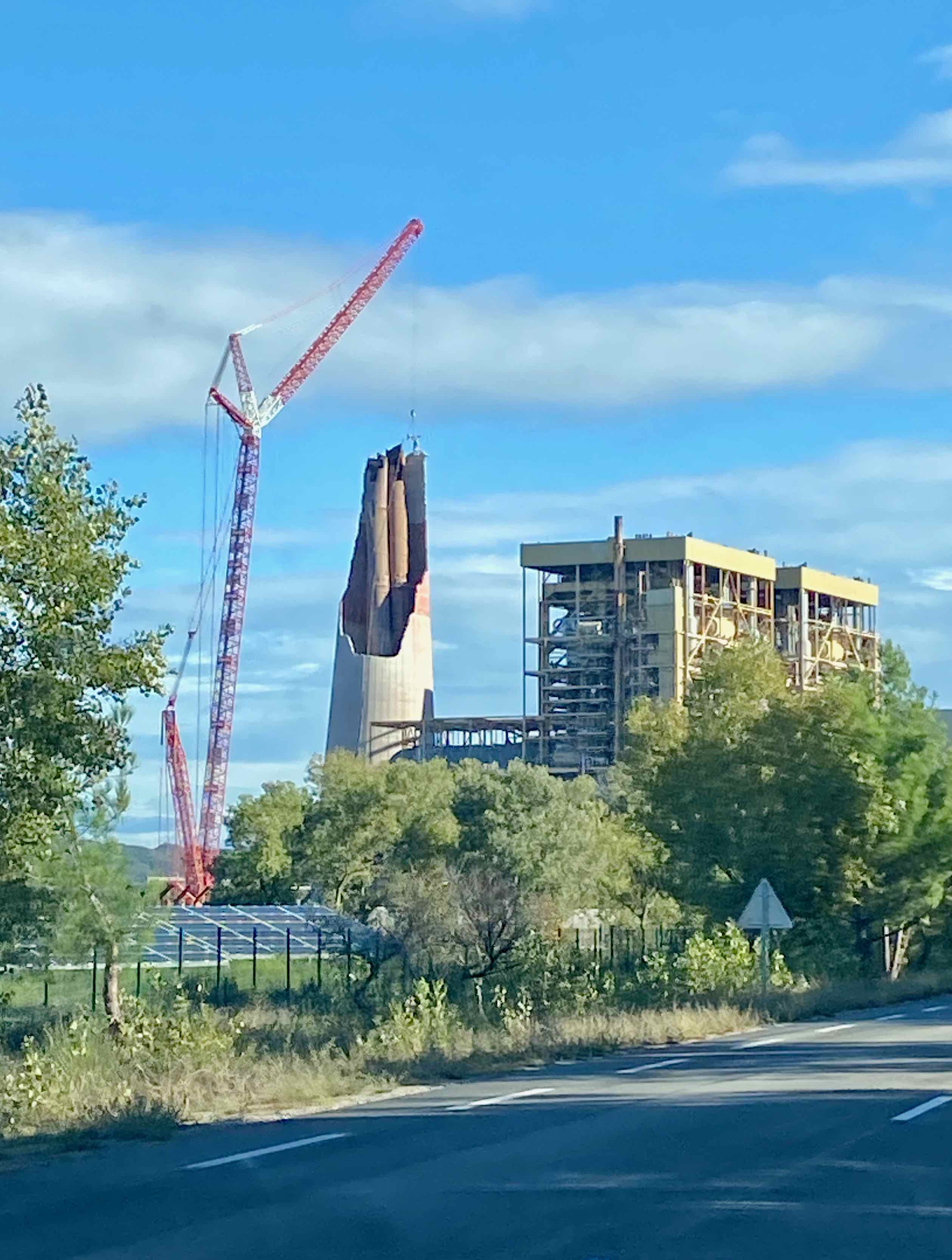
We are visiting Avignon today.  There is always something interesting to see on our drives.  I think this is an old chimney stack that is being dismantled.

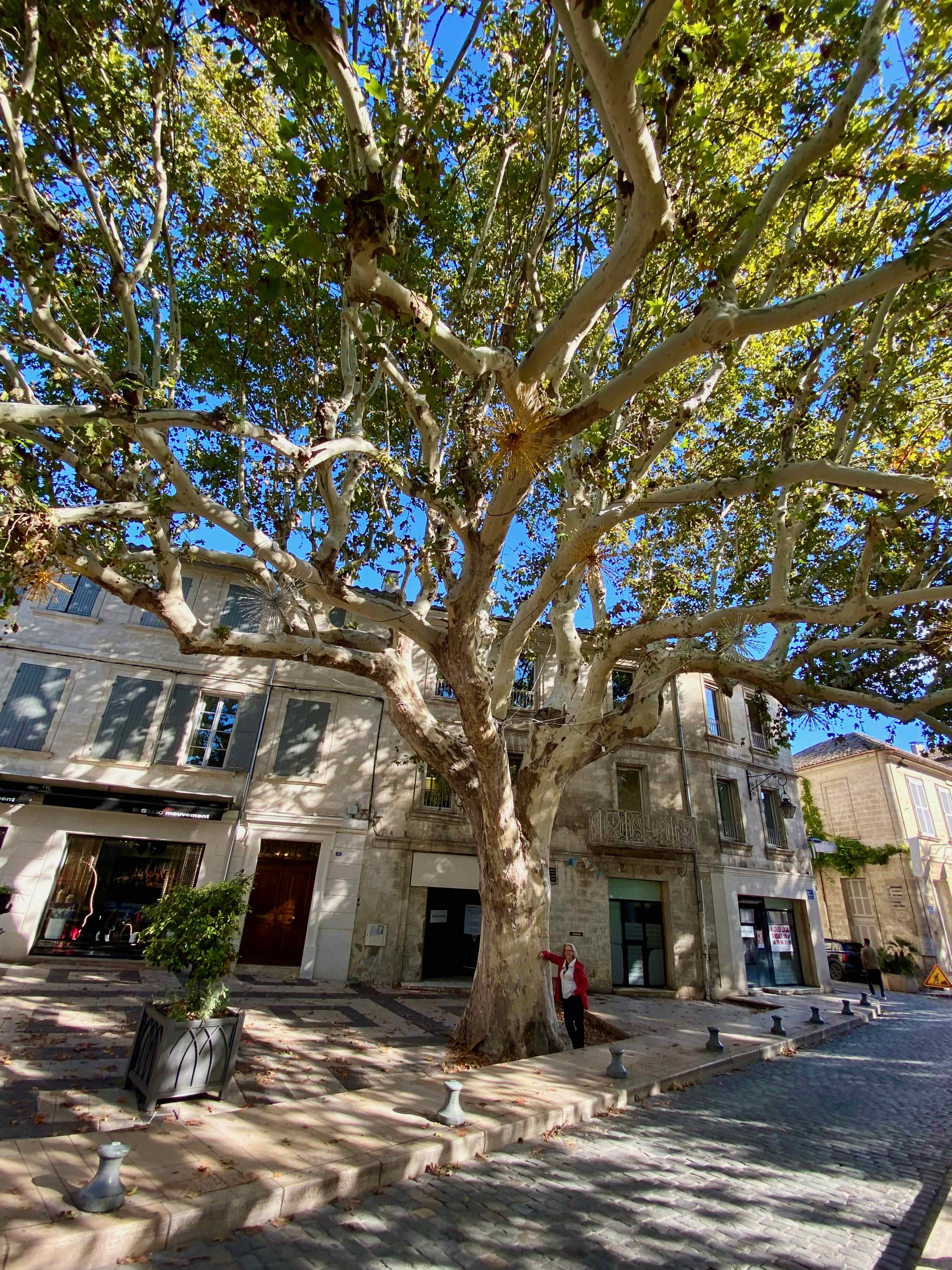
There is a free parking lot on an island near Avignon with a free bus ride into town.  The first thing we see when walk through the town gate is this magnificent tree.  I know…lots of tree photos, but I do love these beautiful huge trees.  It is too bad our winters at home are too cold for these beauties.

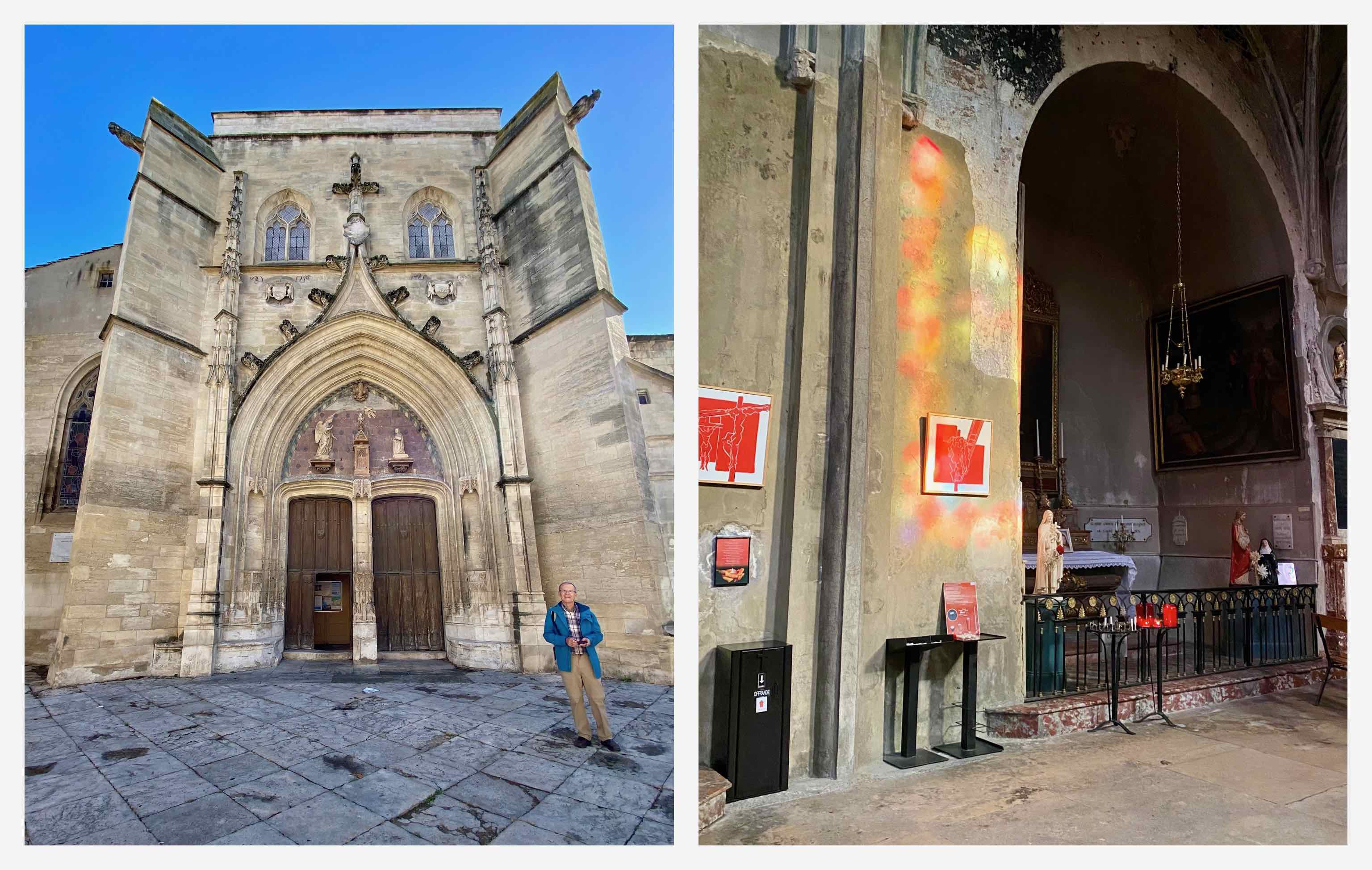
We have seen so many churches…but every time we enter another one it is different and sometimes there are little jewels to discover.  I loved the contrast between the modern paintings and this ancient Gothic church that was built in the early 1300’s…Saint Agricol Church.  There has been a church on this site since 660.  Then there is the sunlight streaming through the stained glass windows!

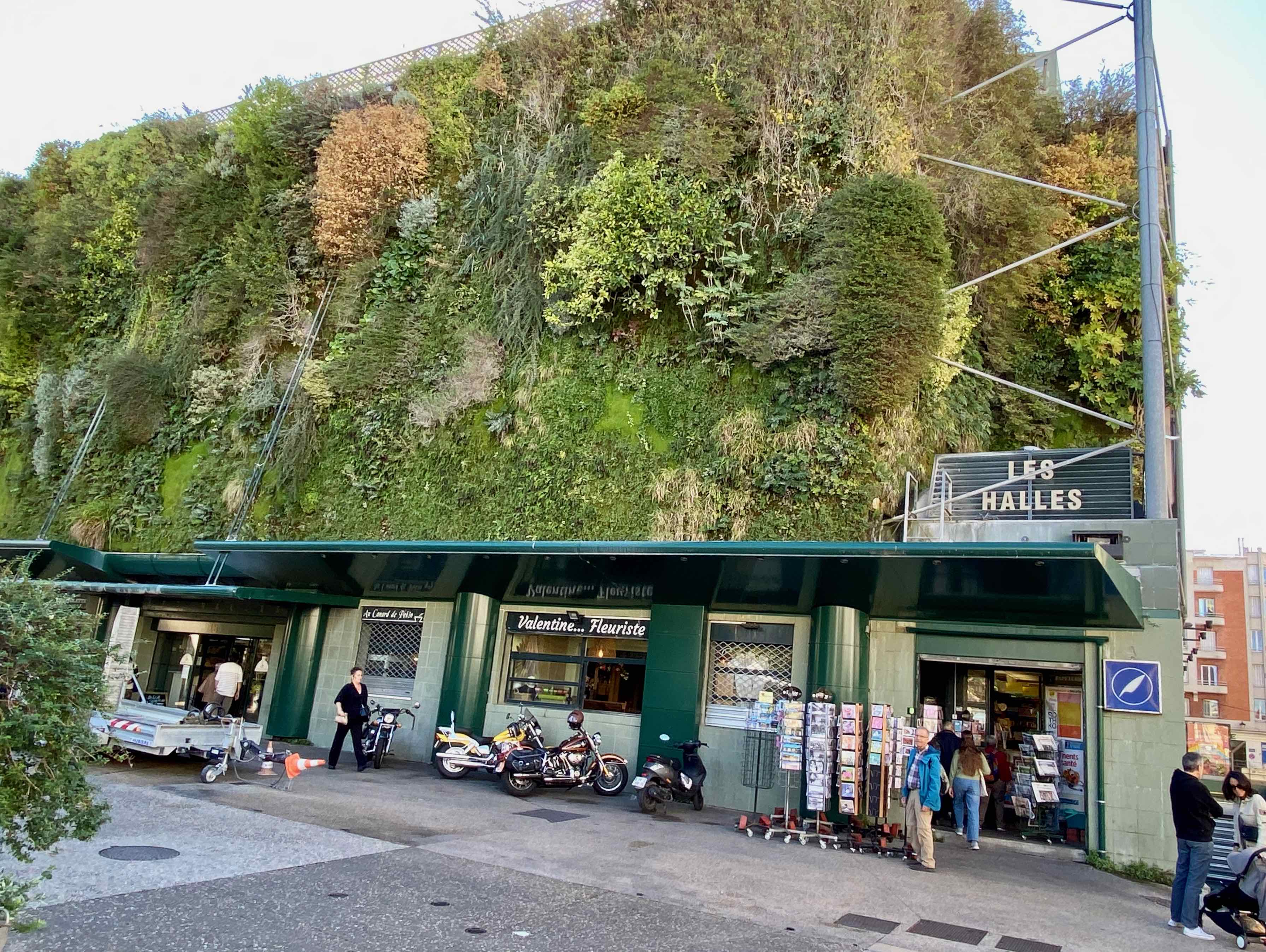
The indoor market has a living wall… and lots of seafood.  Too bad neither Bob nor I are fans.  The very last picture is of Lapin…Rabbit.  Not something we are used to seeing.  I had rabbit once many years ago and although it was OK, it isn’t something I am interested  in trying again.  

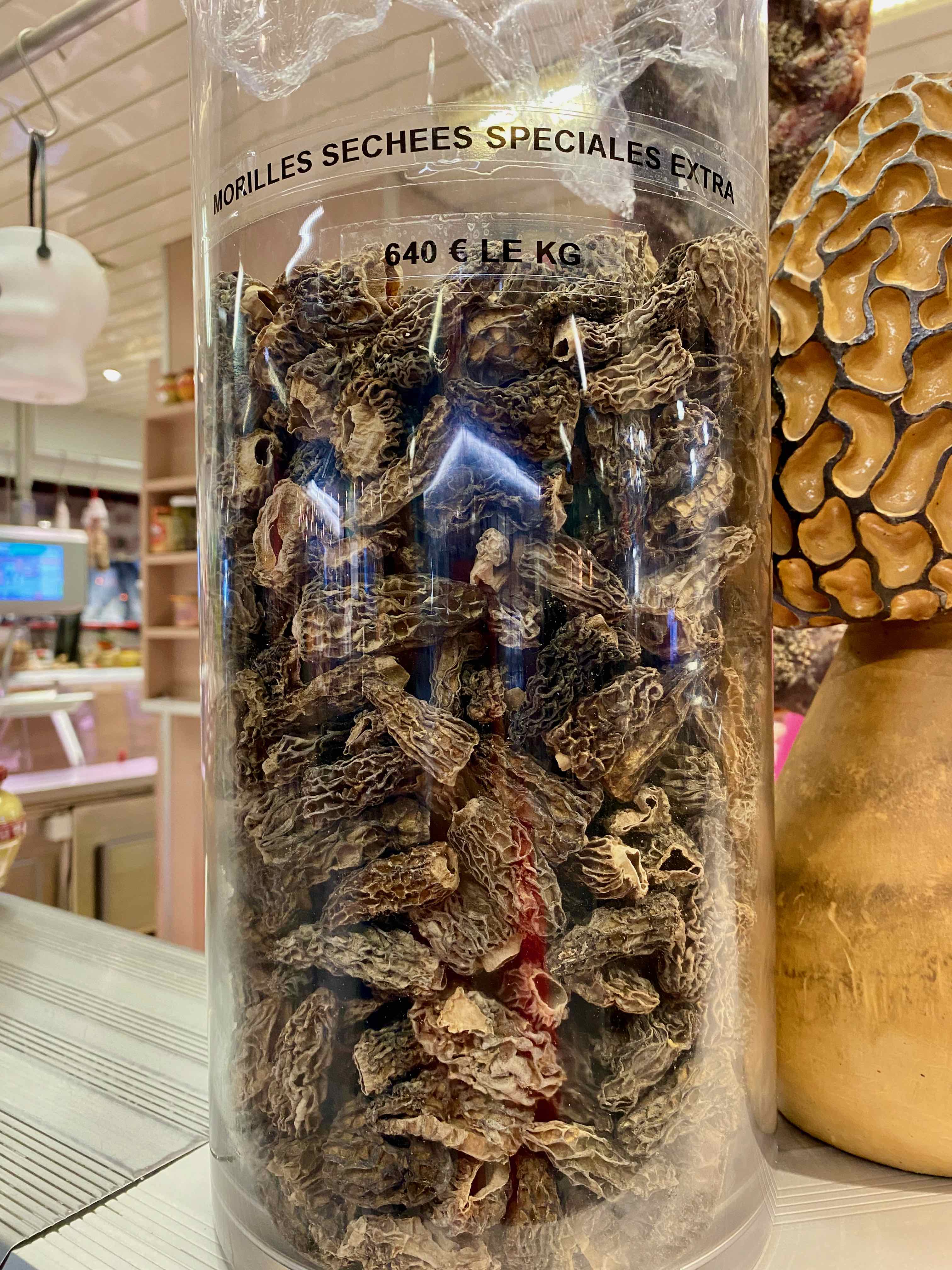
We used to pick and dry these same mushrooms.  I knew they were a delicacy but I had no idea that Morels were so expensive … 640€ a kilogram!!

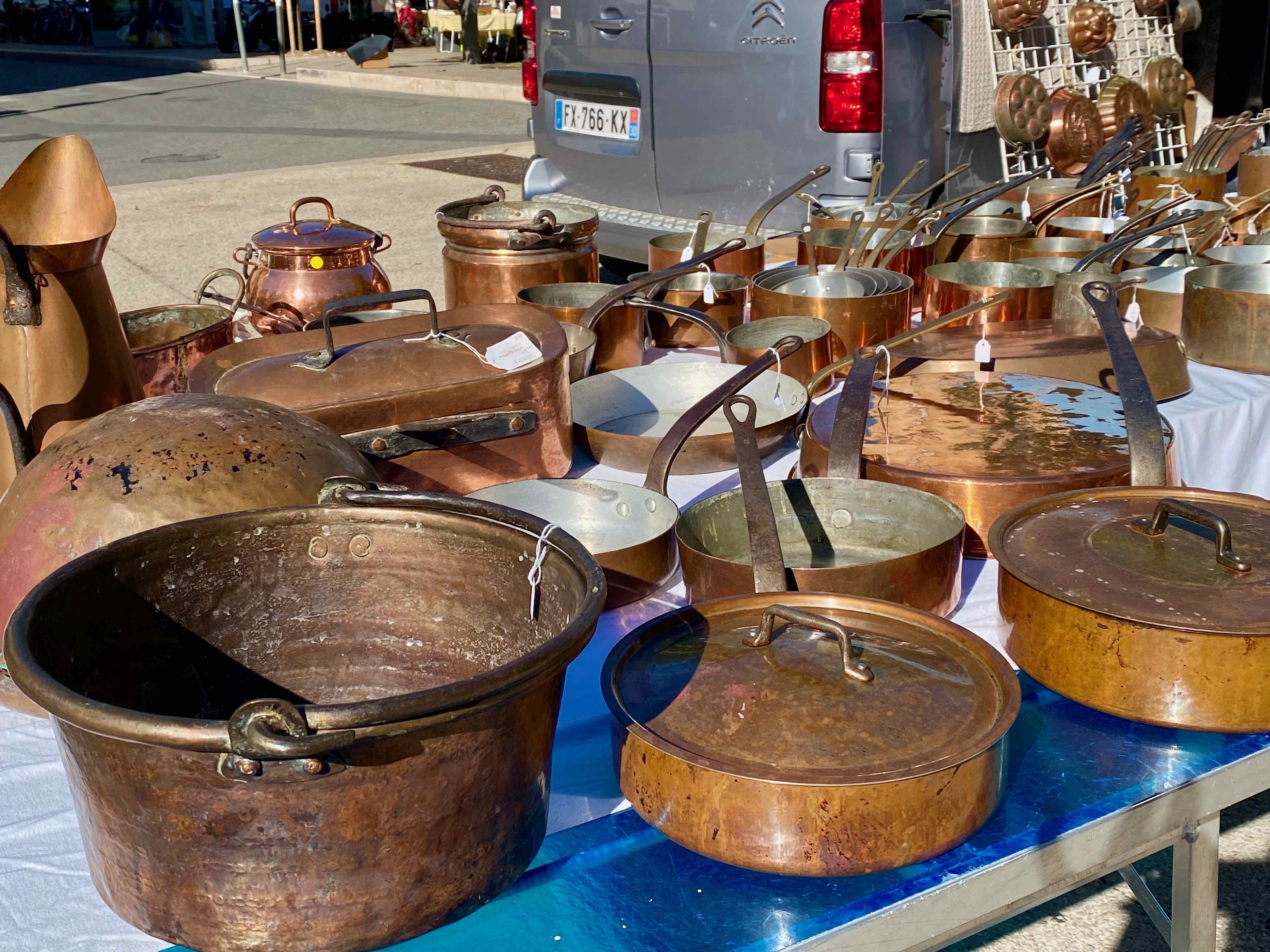
There is a flea market outside the  indoor market.  These old copper pots make me think of my grandparents and their copper pots.

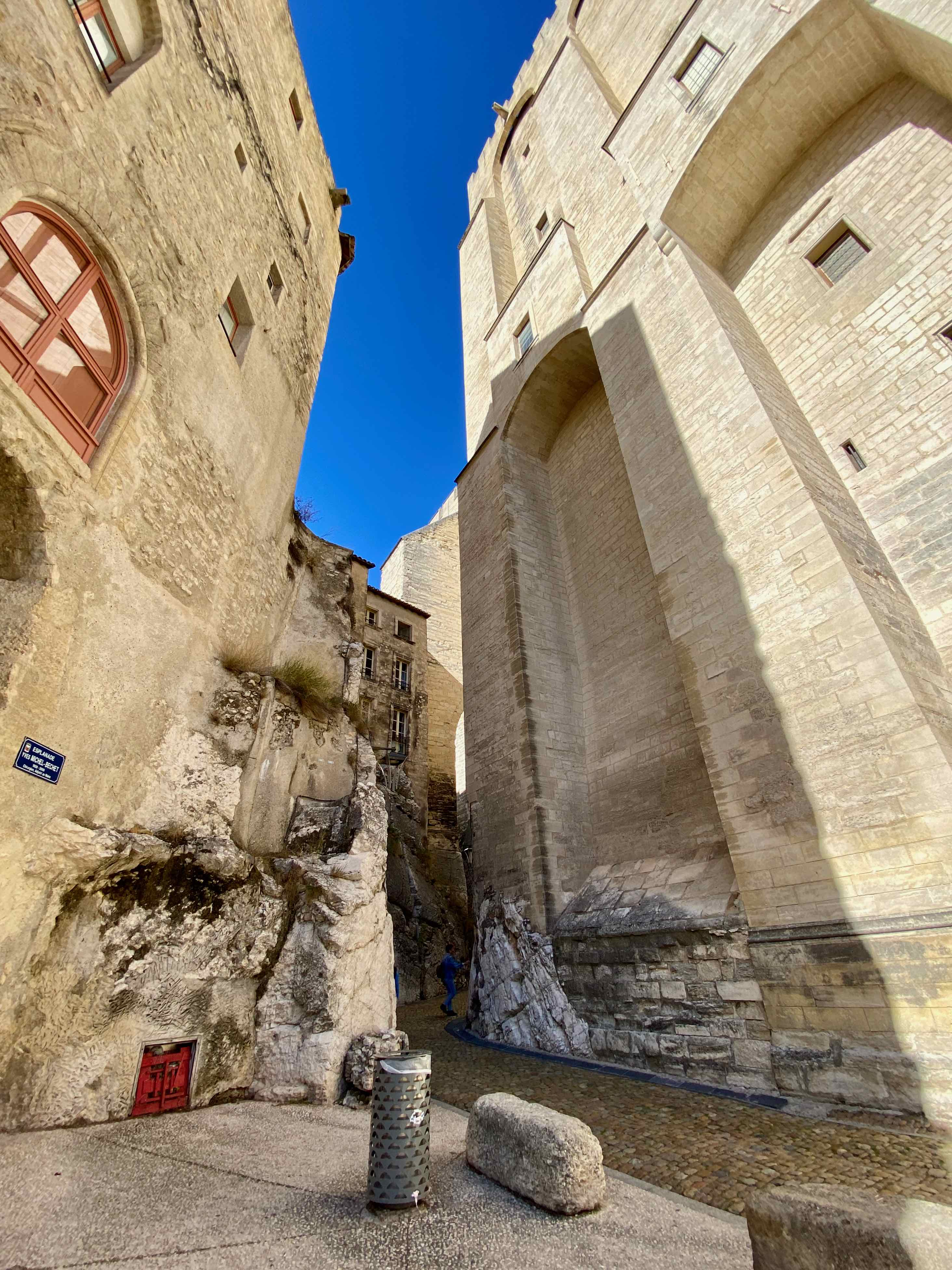
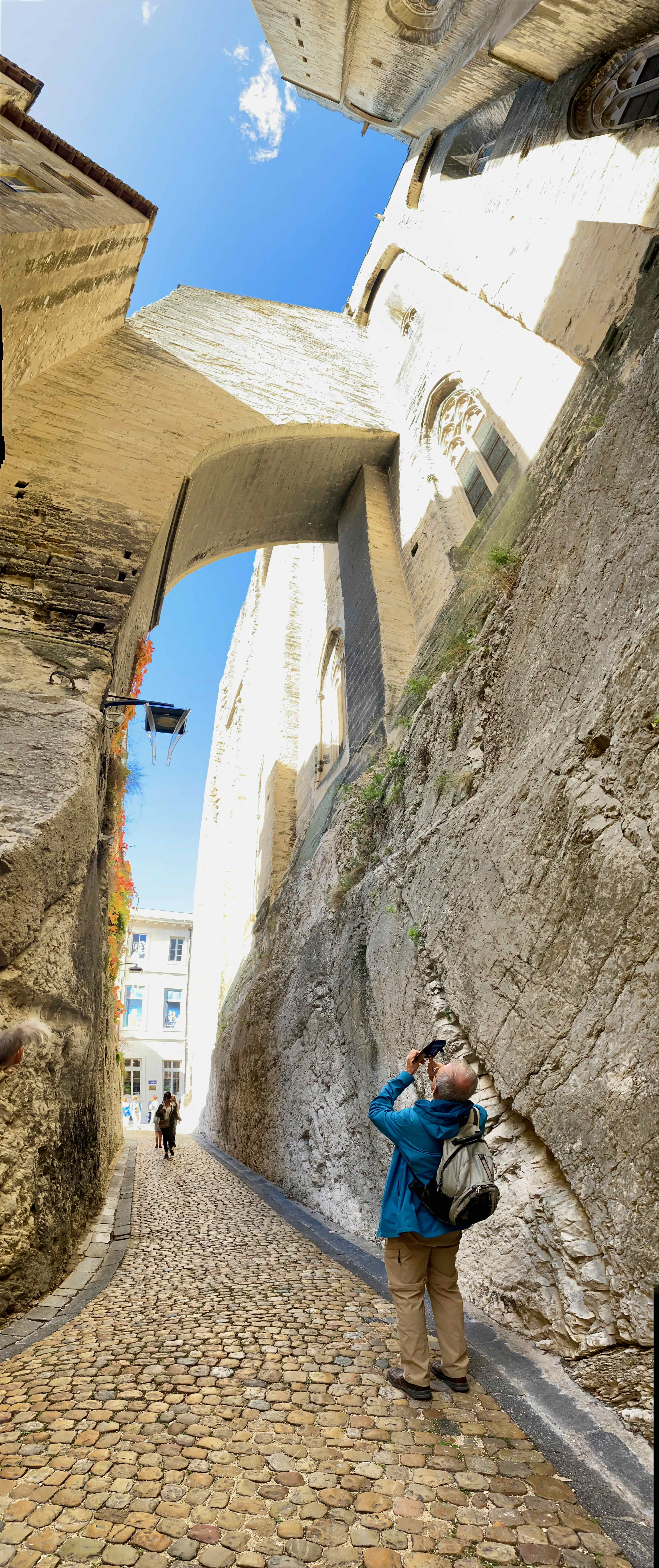
After having our lunch we walk through this narrow street built between the walls of the Popes Palace and a rock cliff.

Bob has taken some amazing photos this trip…he might become a photographer yet!

At the end of this street there are some painted windows.  We see several buildings whose windows contain paintings of people.  They make me smile.

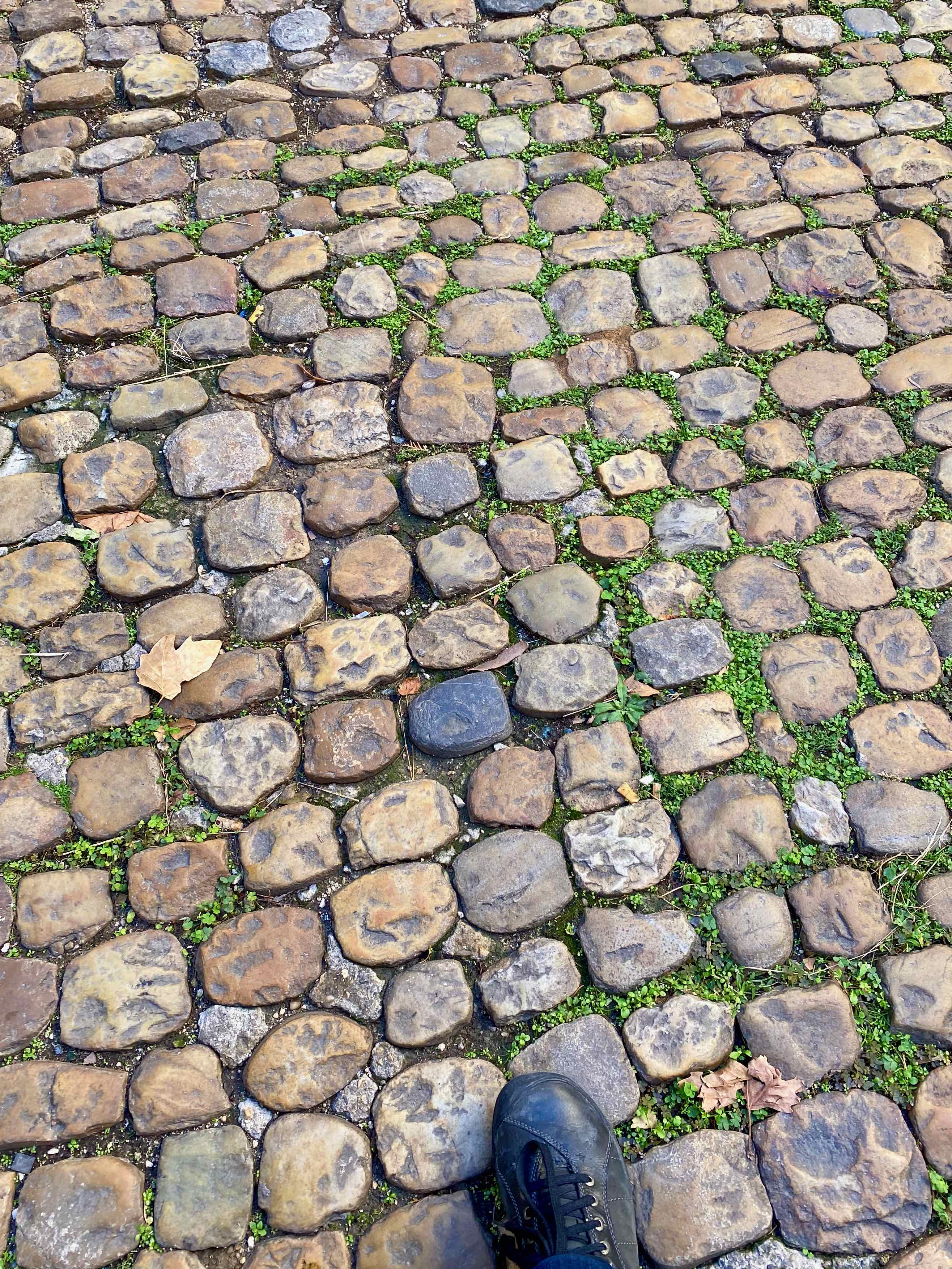
I love the look of all the cobbled streets but they sure are hard to walk on for a long time.

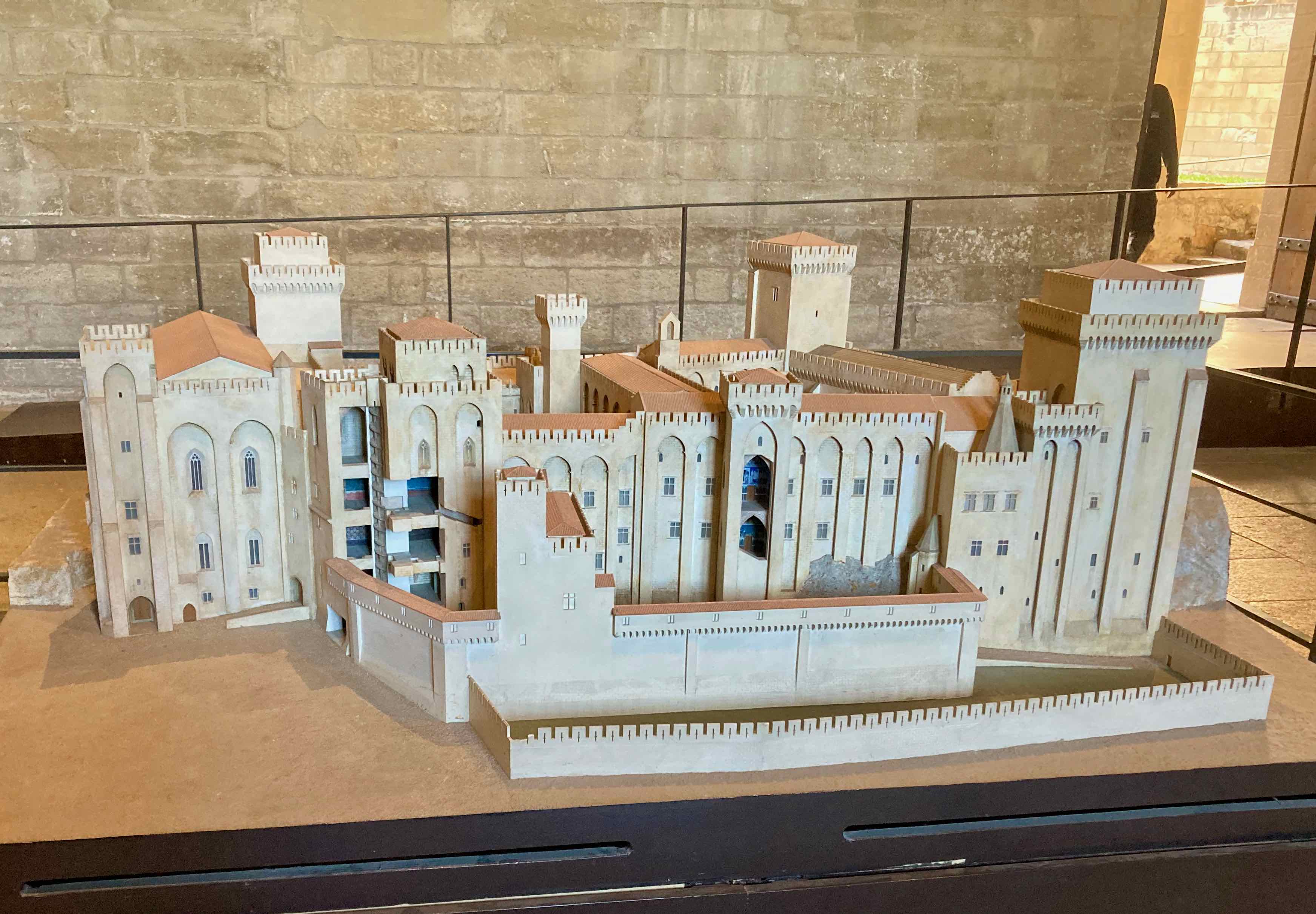
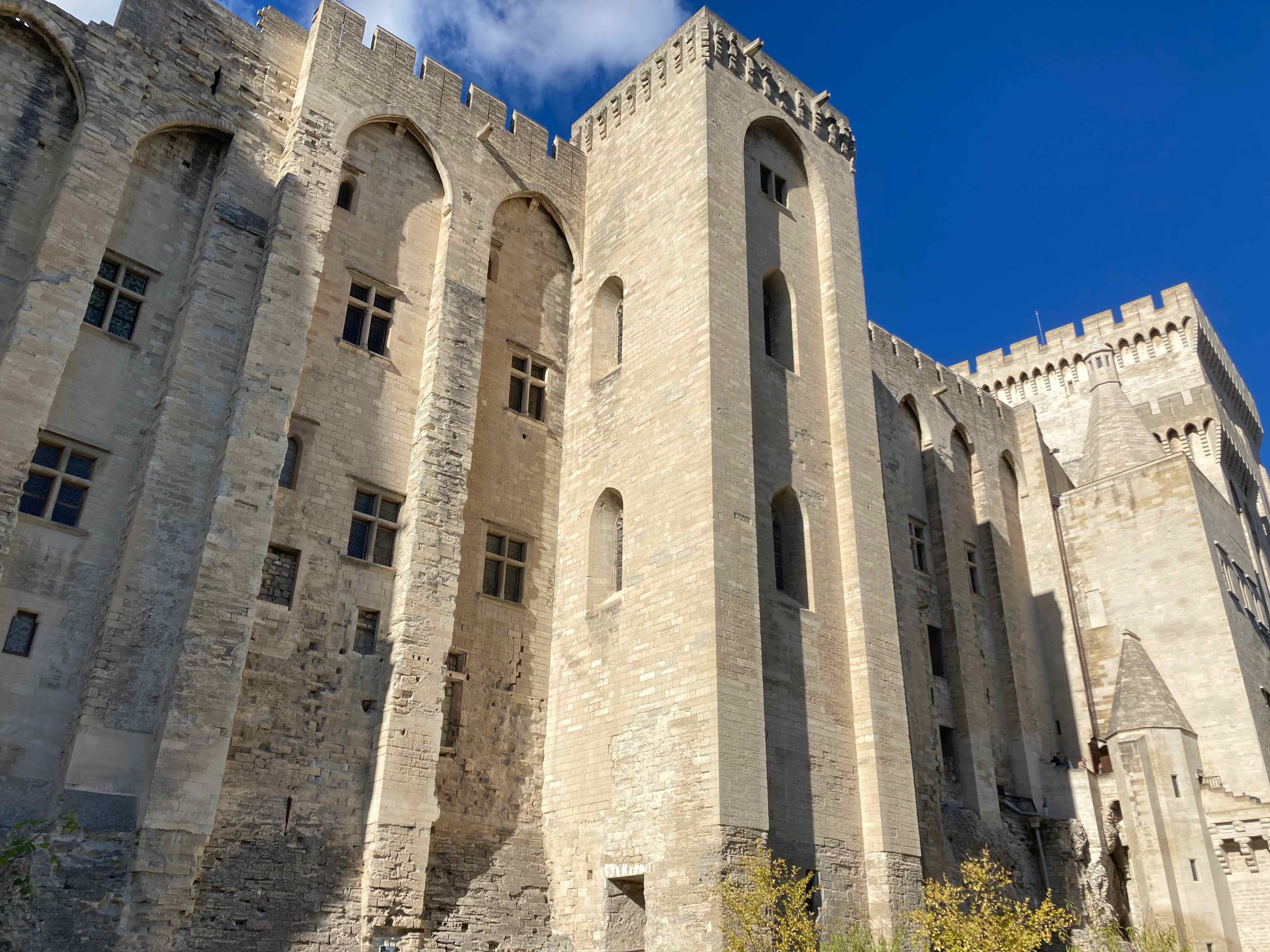
This is a scale model of Le Palais des Papes (Palace of the Popes). It is the largest Gothic building in Europe!   It was a fortress, a palace, and the seat of Western Christianity during the 14th Century.  Nine popes lived here and it is a UNESCO World Heritage Site.

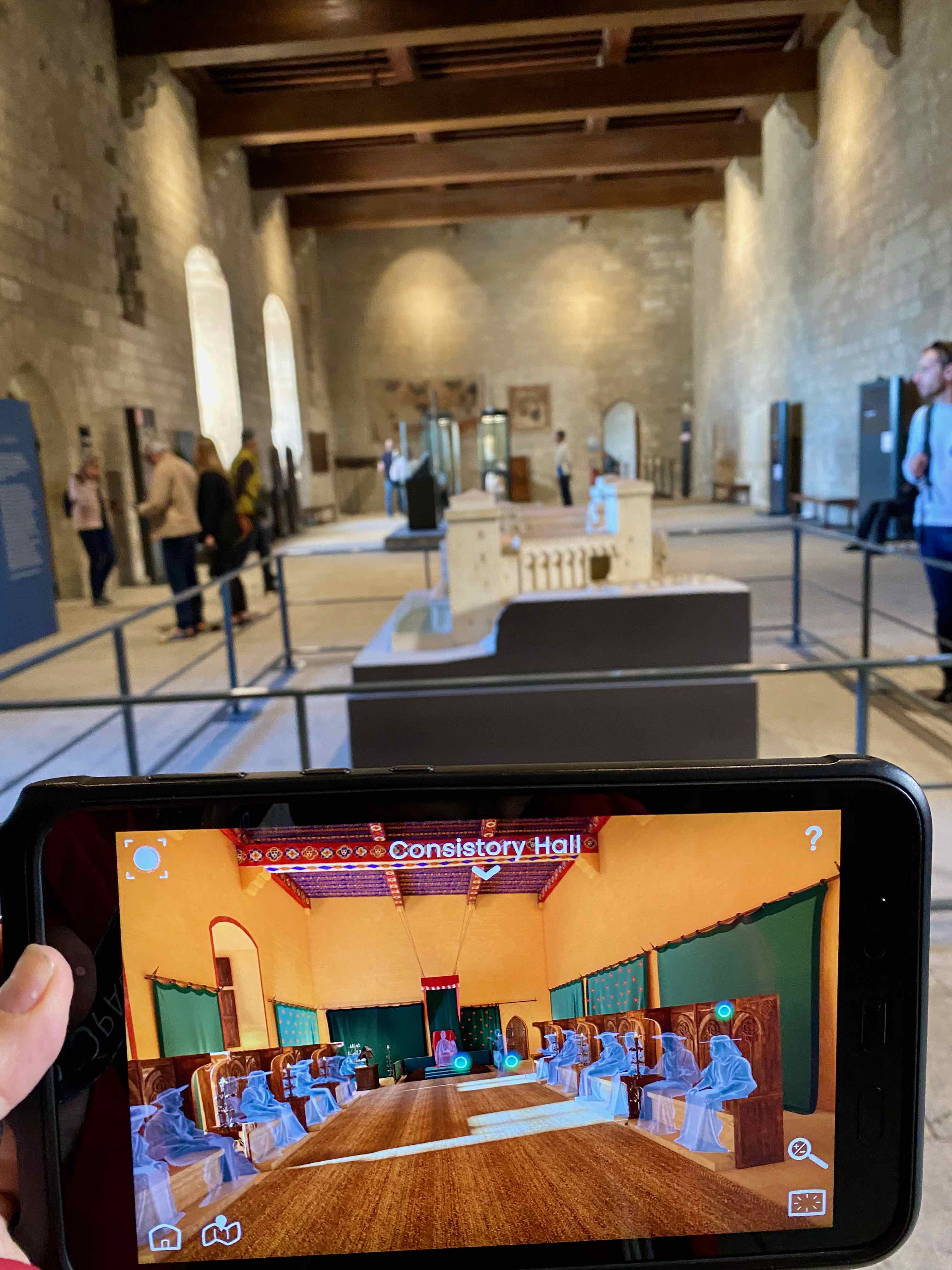
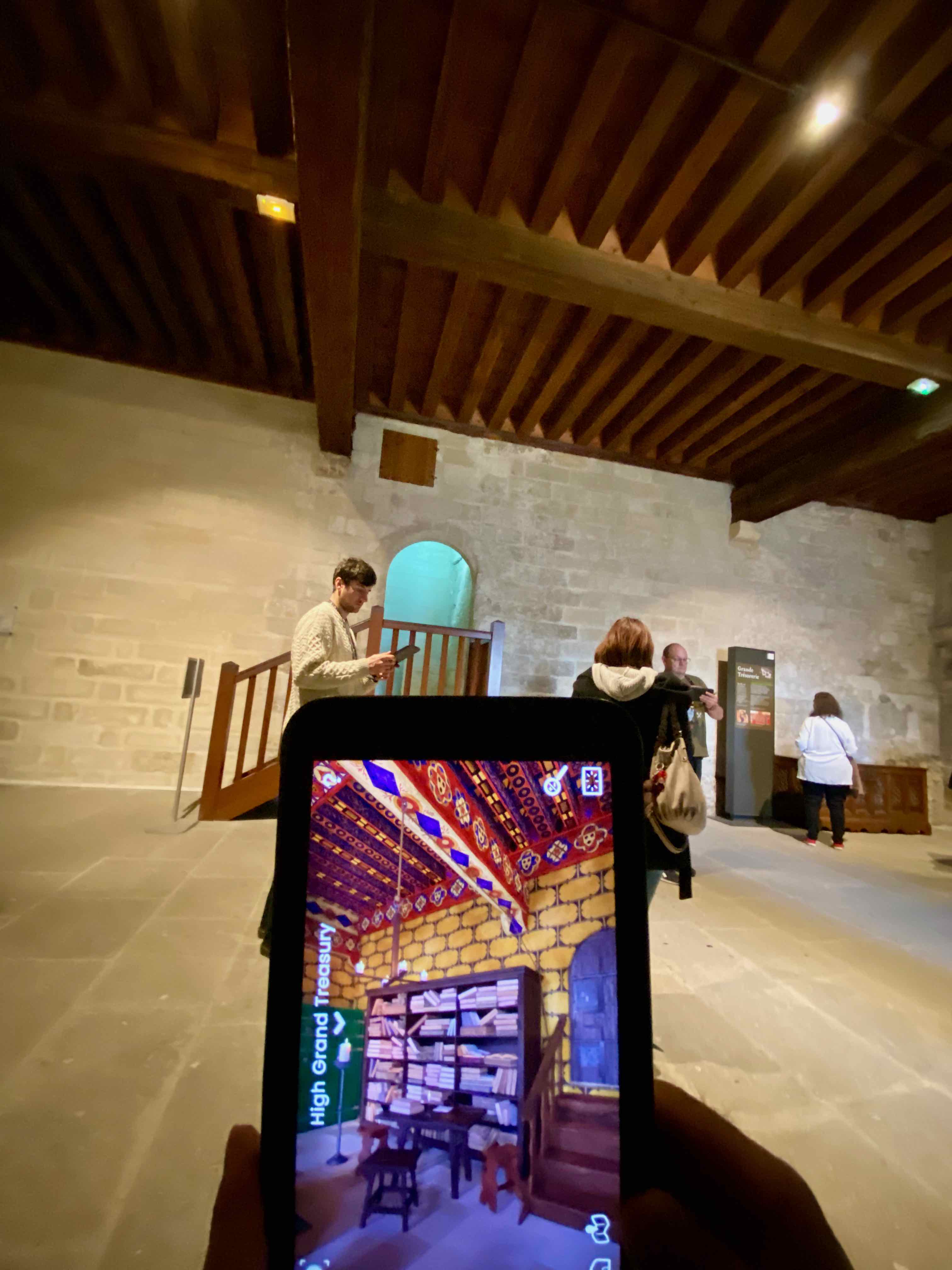
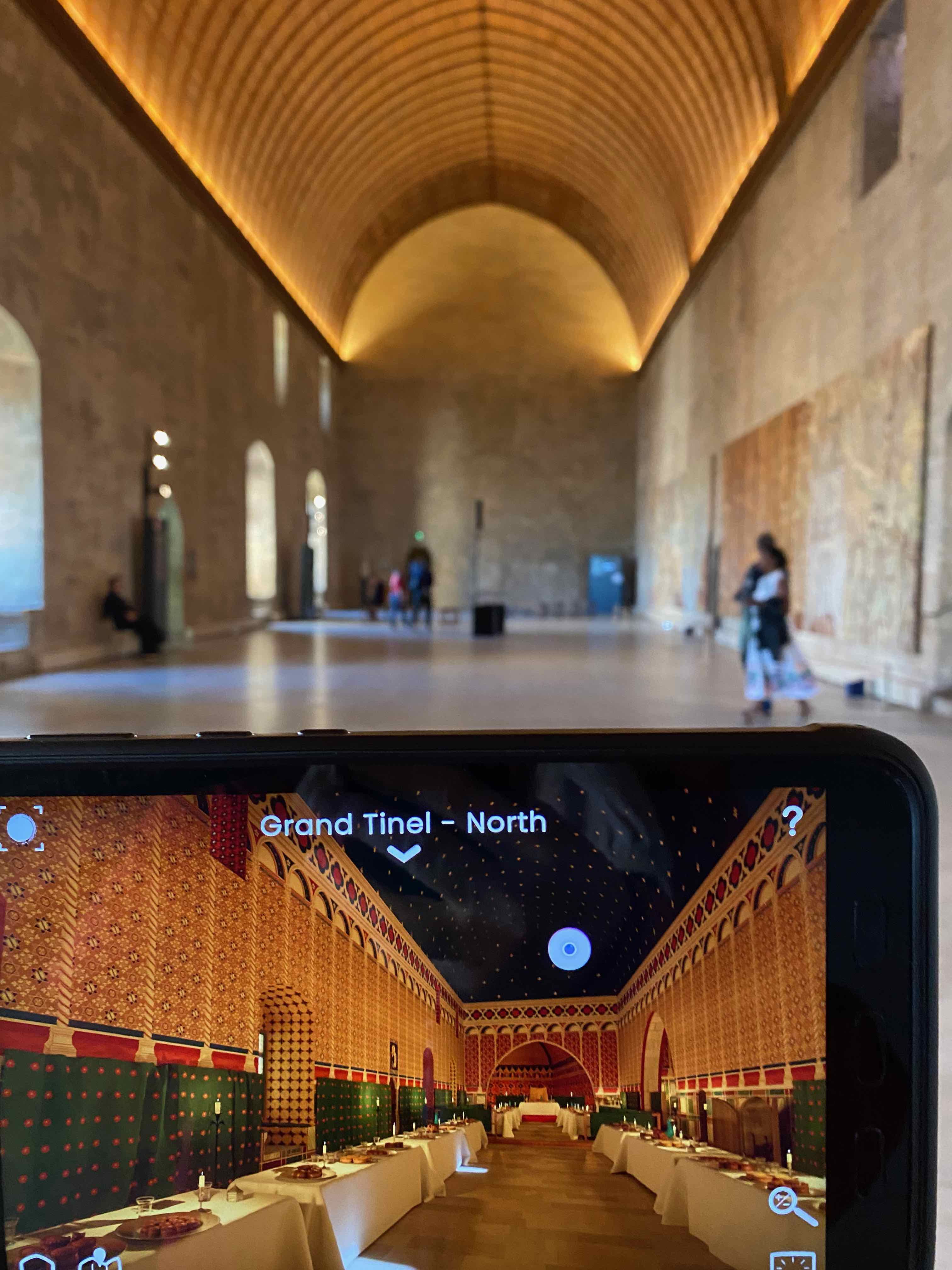
Our 12€ admission tickets includes the use of a Histopad.  This device allows us to look in any direction, as well as up or down and the Histopad screen shows us what the  room would have looked like in the 14th century.  

I usually wait and try not to have a lot of people in my photos, but it was really hard to do that today.  Everyone stands transfixed, viewing these rooms as they might have been. This room was the treasury and in 1995 a secret chamber was discovered under the stone floor, that still contained precious treasures from hundreds of years ago.  There was no information on how this chamber was discovered.  It is amazing that it would still be there after all this time.  Bob is standing beside this secret chamber in the photo.
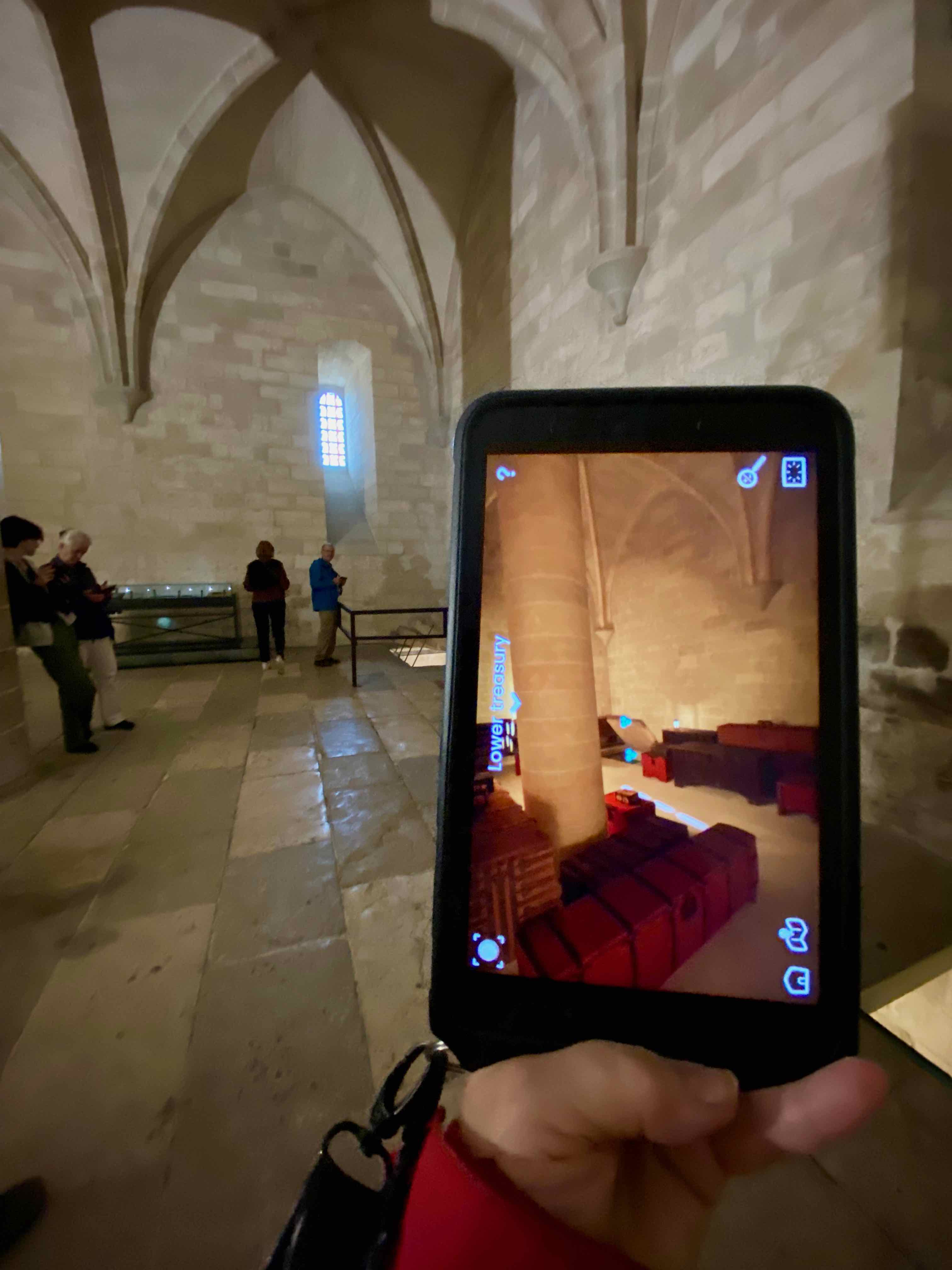
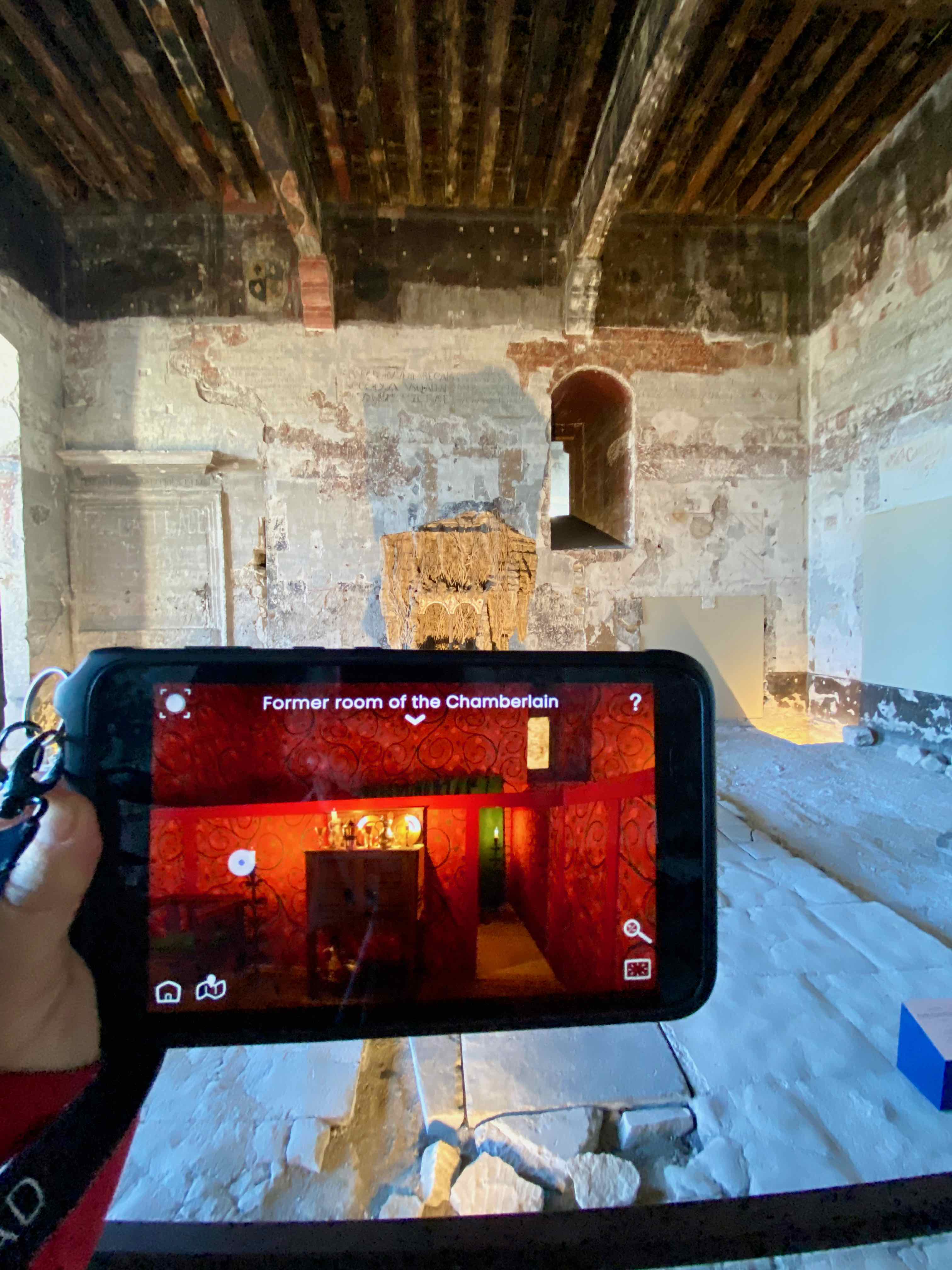
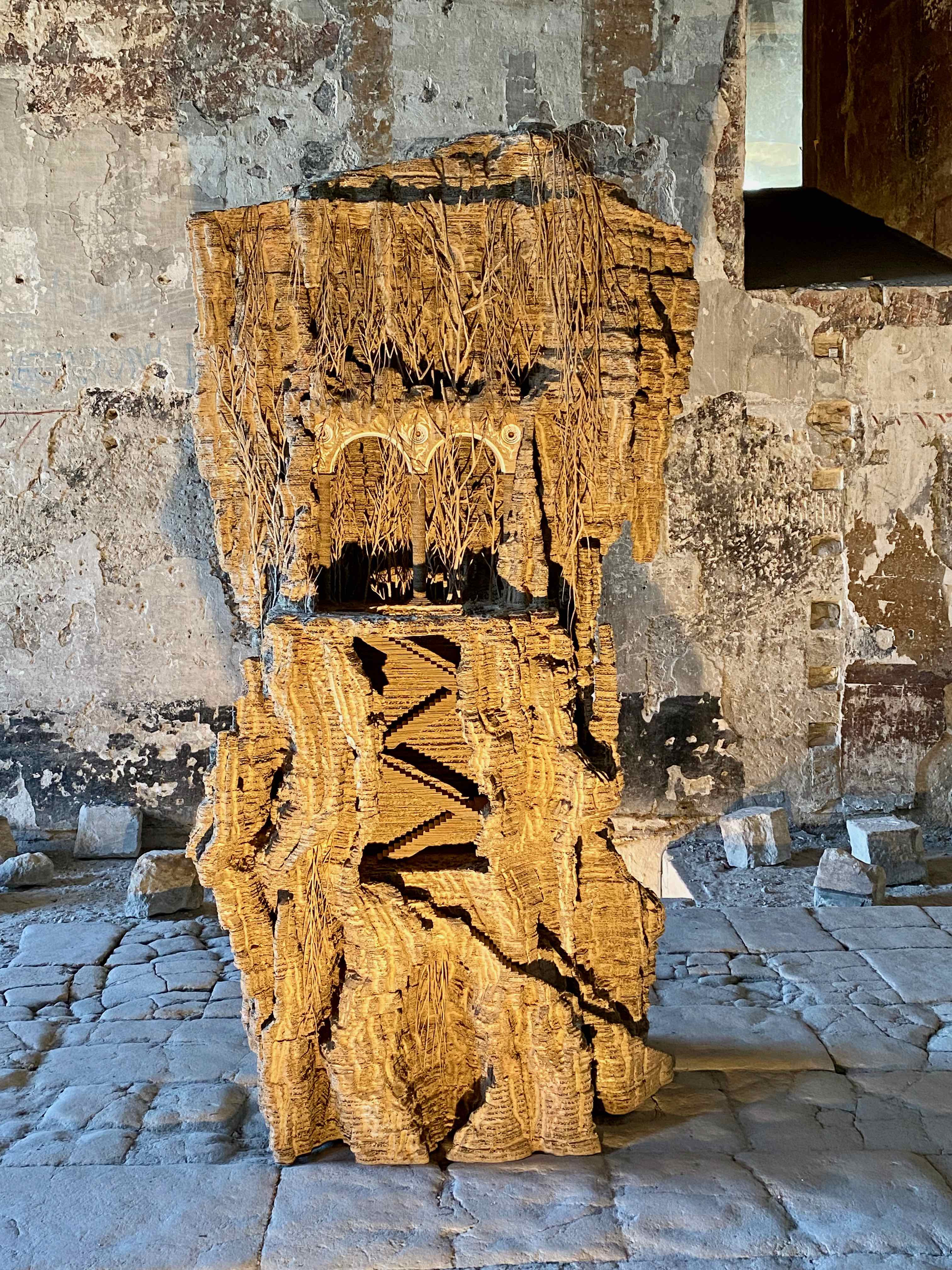
In this photo you can just see the top of a sculpture behind the Histogram…

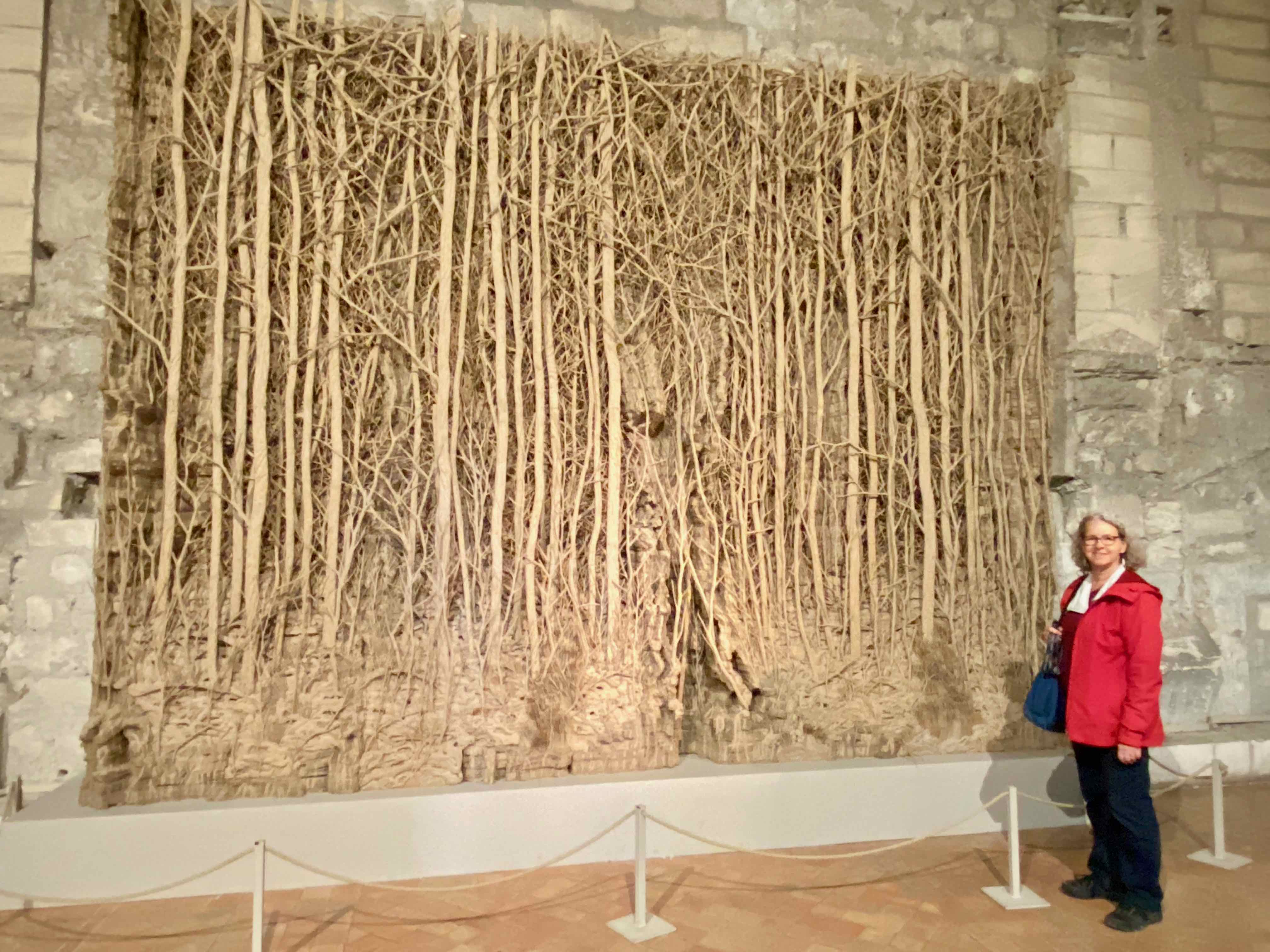
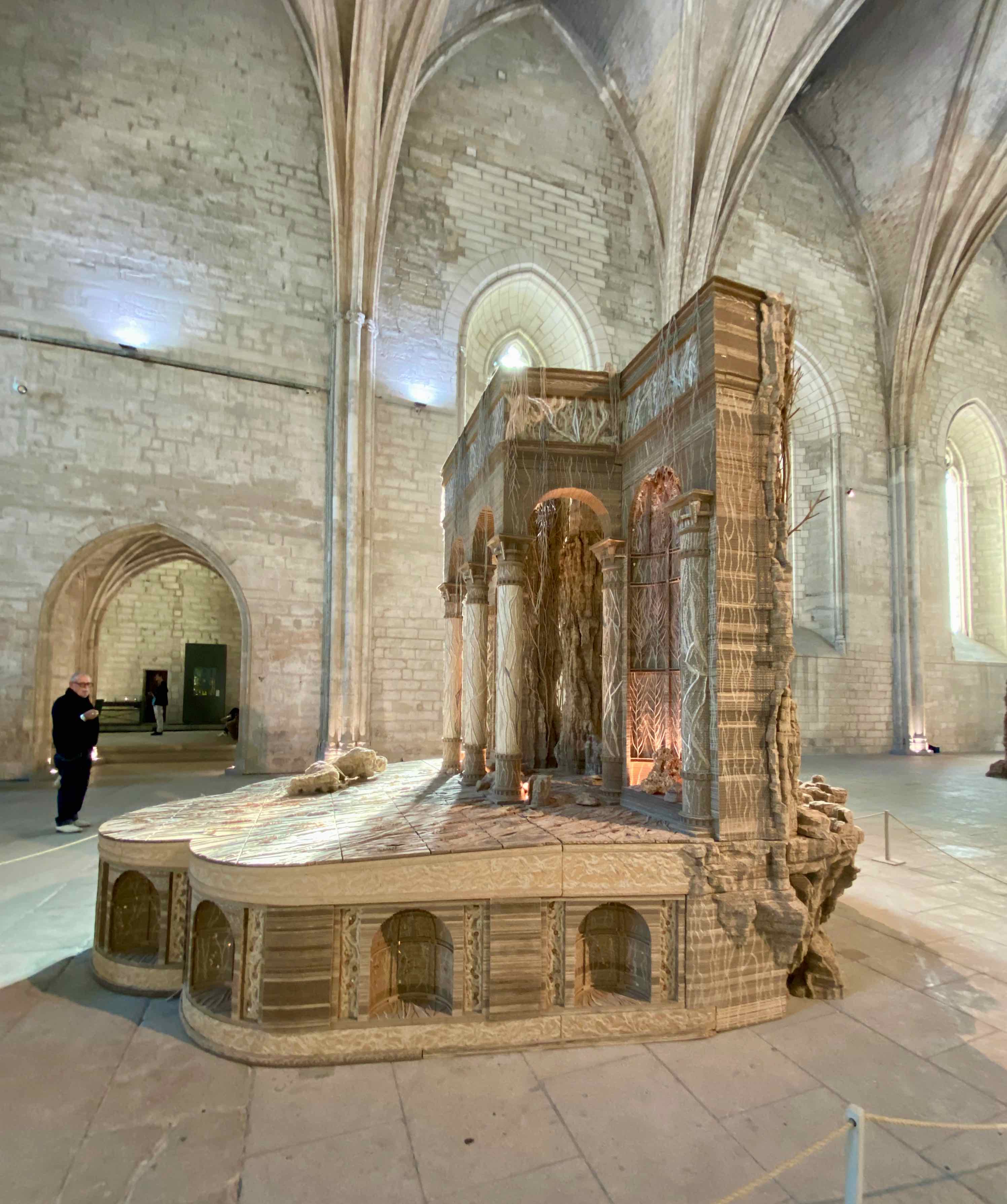
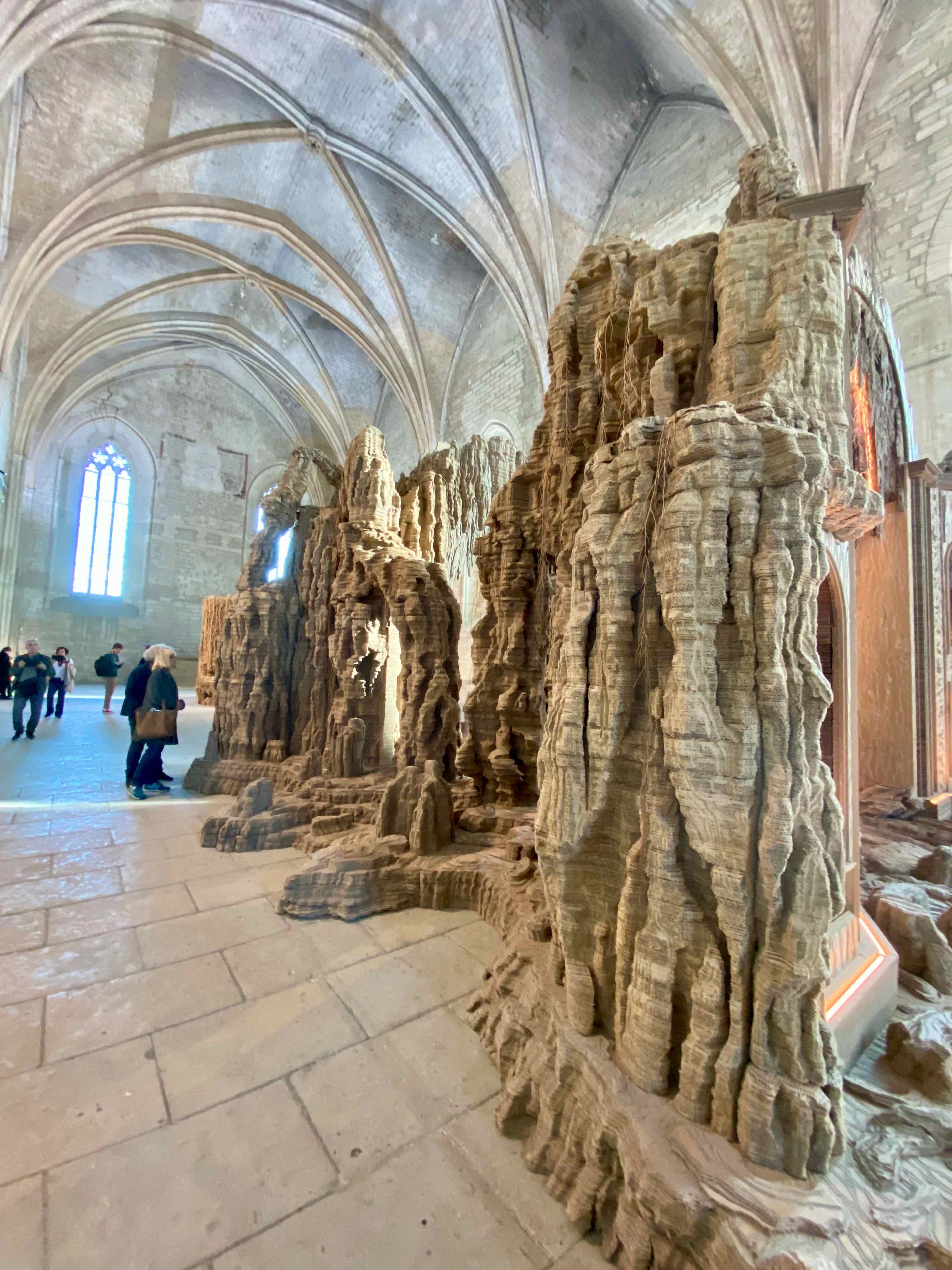
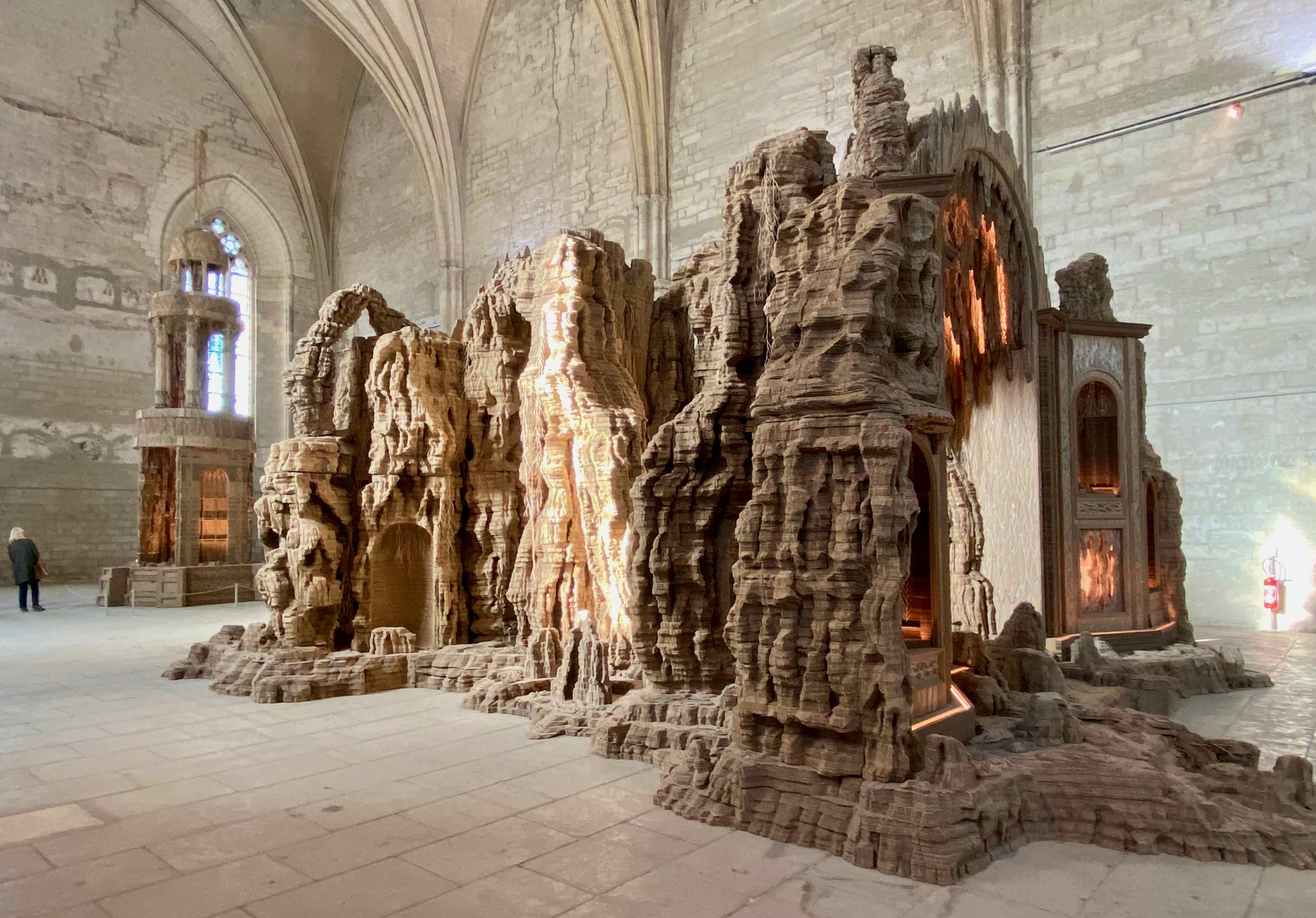
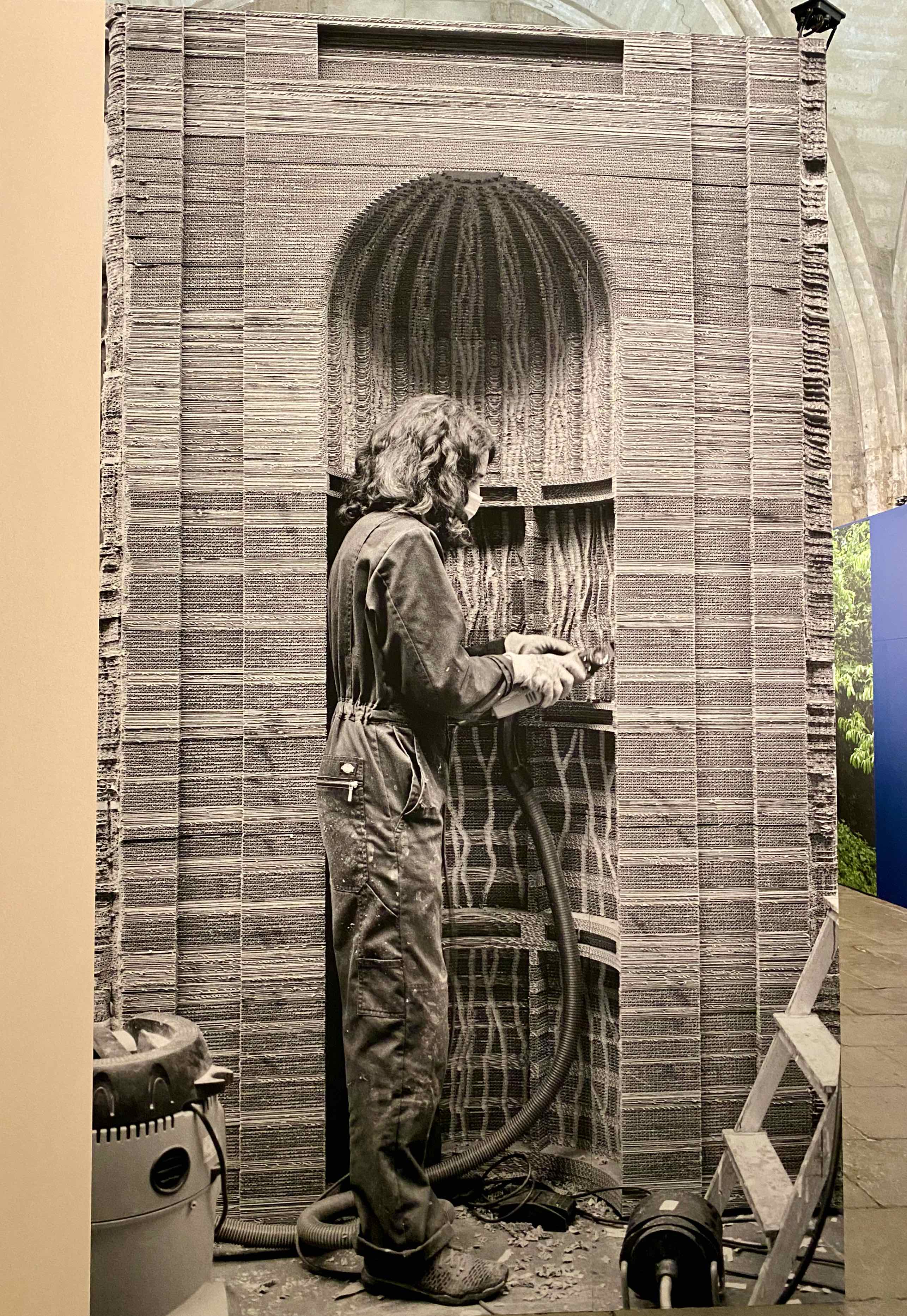
It is made from corrugated cardboard and stands about 5 feet tall by Paris artist Eva Jospin.  I think it is fascinating.  

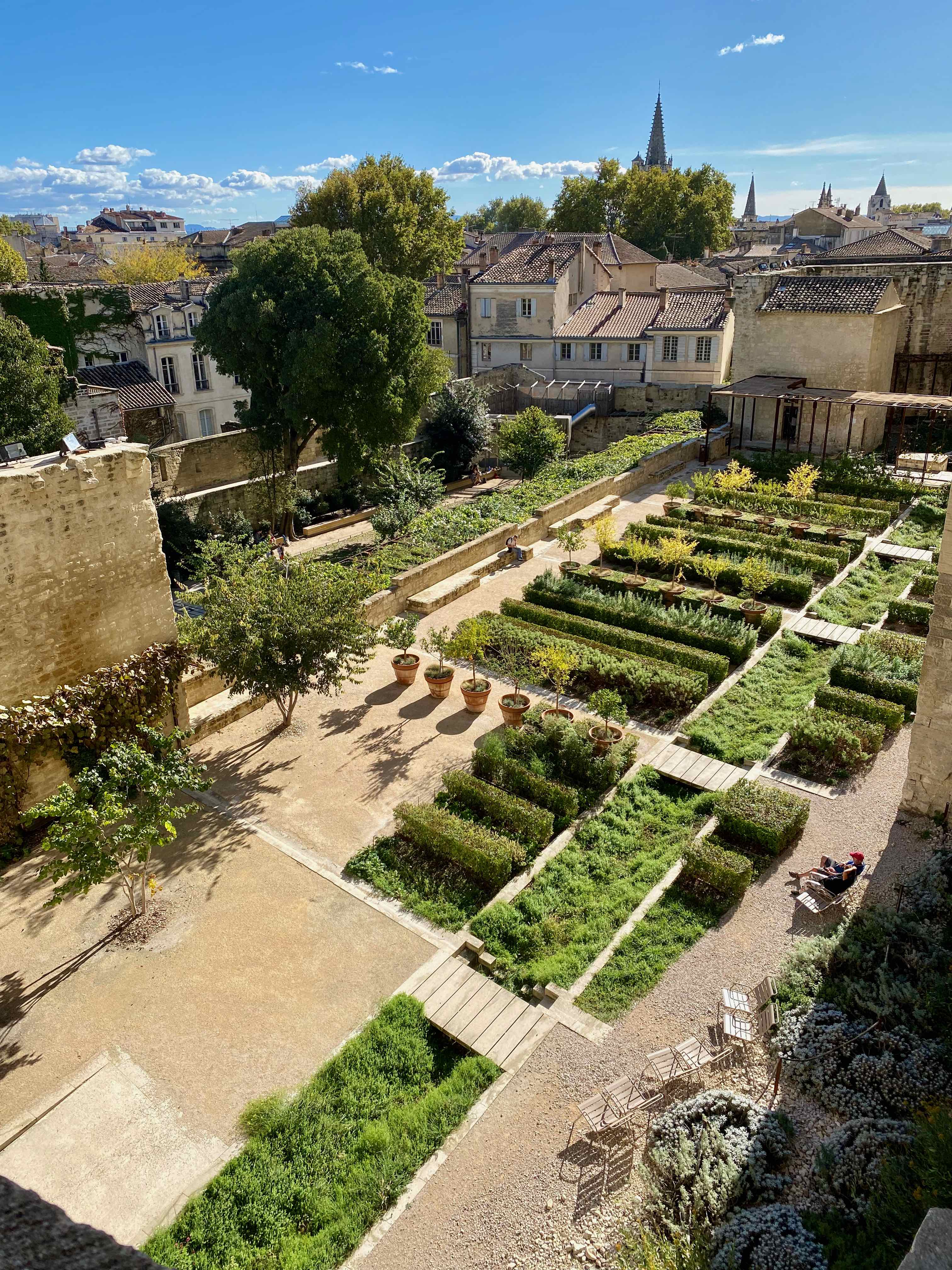
We take a break in the palace gardens and try to buy a hot chocolate from a machine that only accepts credit cards…it was beyond both of us!  No hot chocolate for us today.

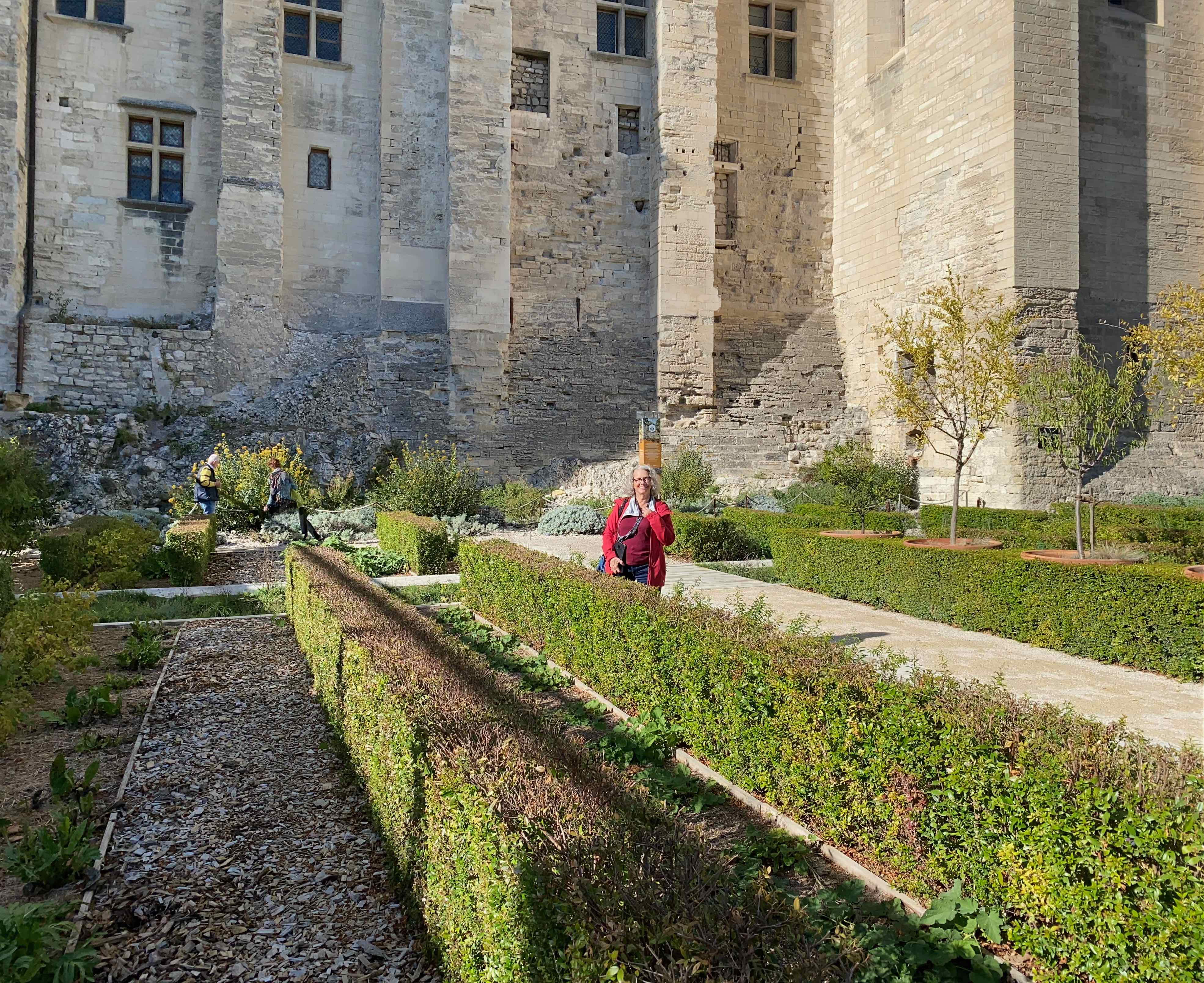
The palace walls rise 52 meters above the garden!

The gardens look lovely from afar but they were actually a bit neglected.  

We return to the inside for the last part of our tour.  However the Histopad photo is not what grabs my attention.
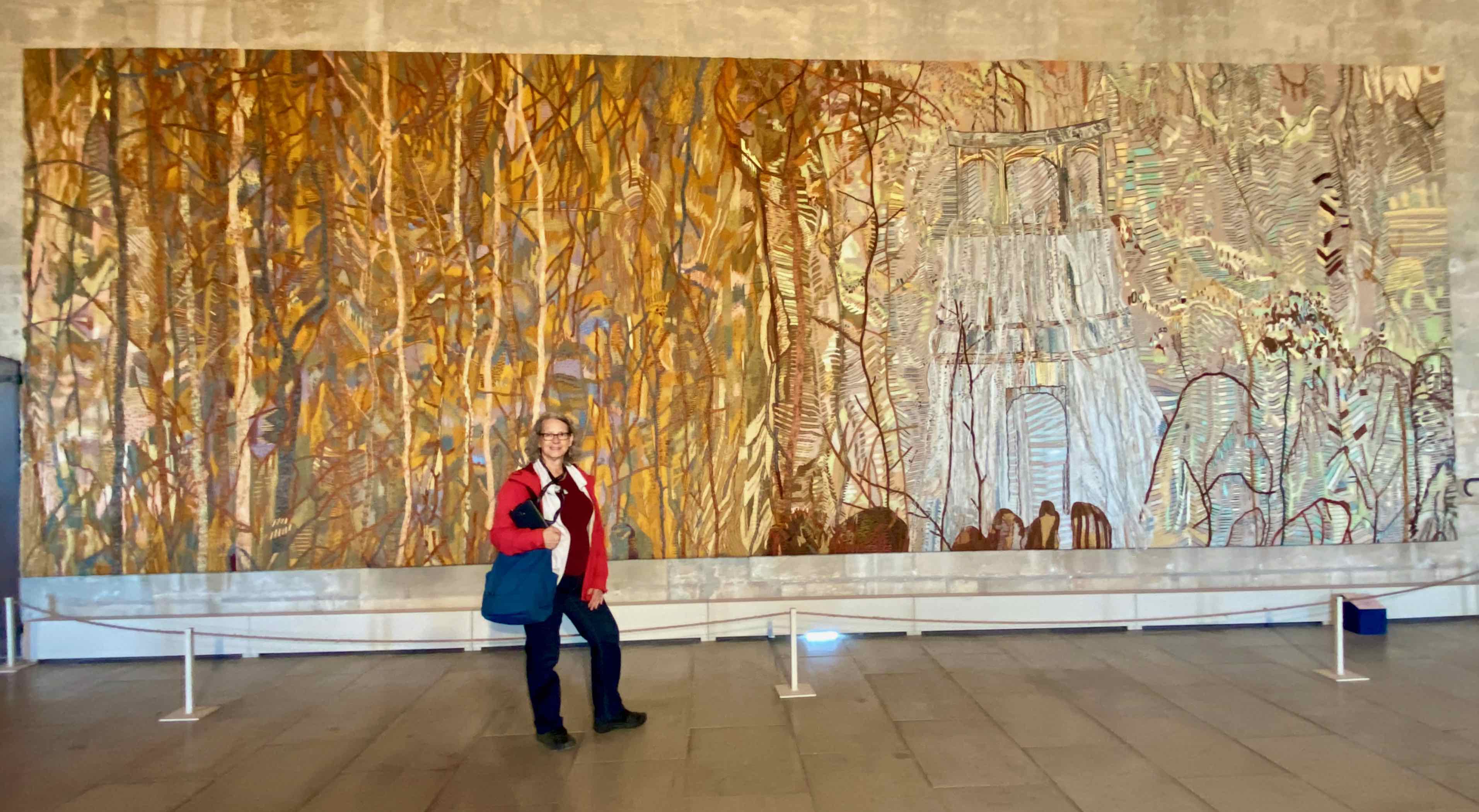
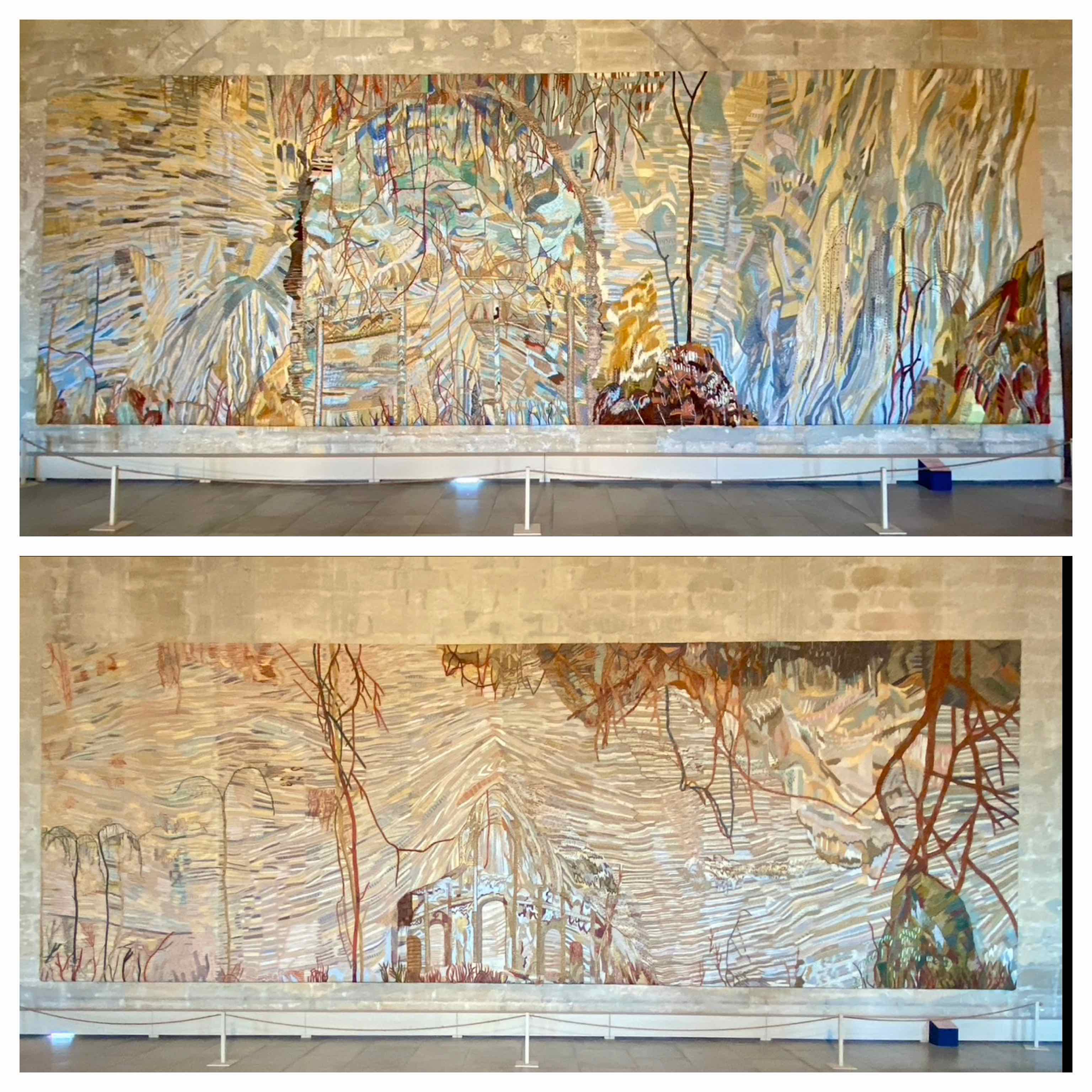
Rather it is the three enormous silk embroidered wall hangings displayed on one of the long walls.  ‘Chamber de Soie’  or ‘Silk Room’ is also created by Eva Jospin.  
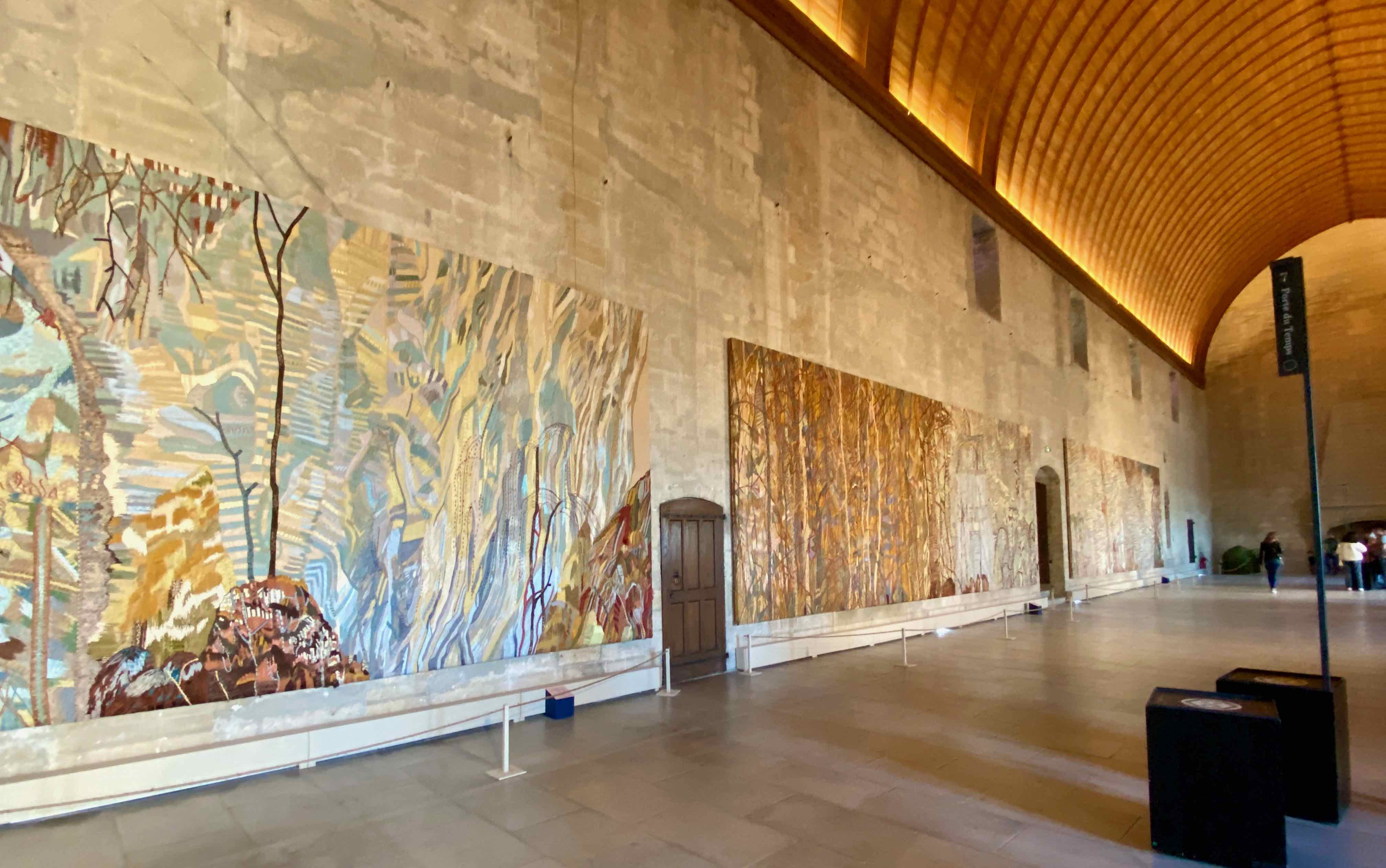
We spend a lot of time here as I walk back and forth, studying these huge embroidered panels.  I can not believe how much work it would take to make these.

Here are the other two…

along with some close-ups of the embroidery.

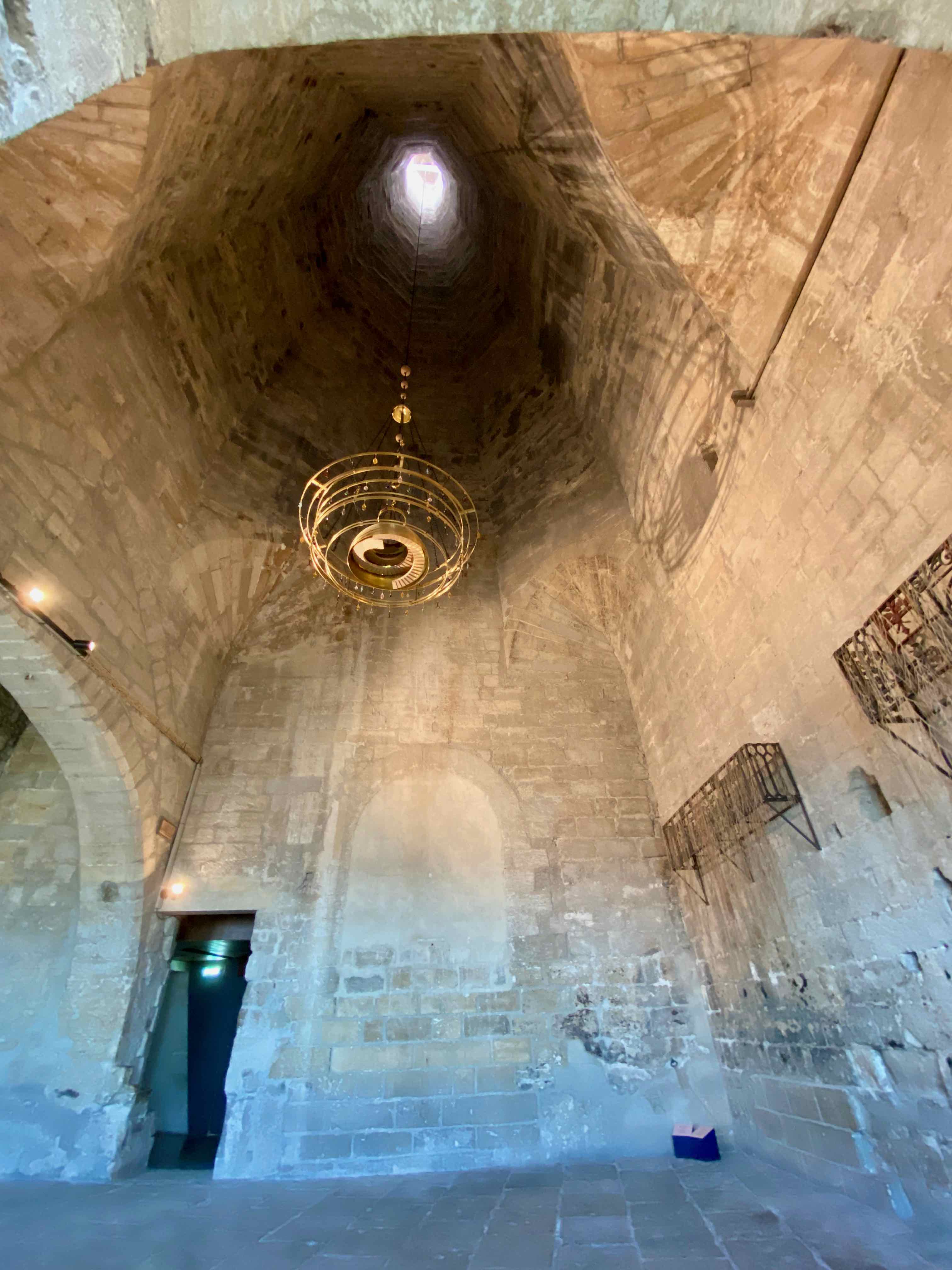
Next door is a small room that used to be a kitchen.  It also has artwork, including this sculpture, ‘Empyrée’, that is suspended from the top of the huge chimney in the center of the room.   Empyrée is from mythology and means ‘Highest part of the sky, where the gods reside’.  I am astounded to read that this is also by the same artist, Eva Jospin.

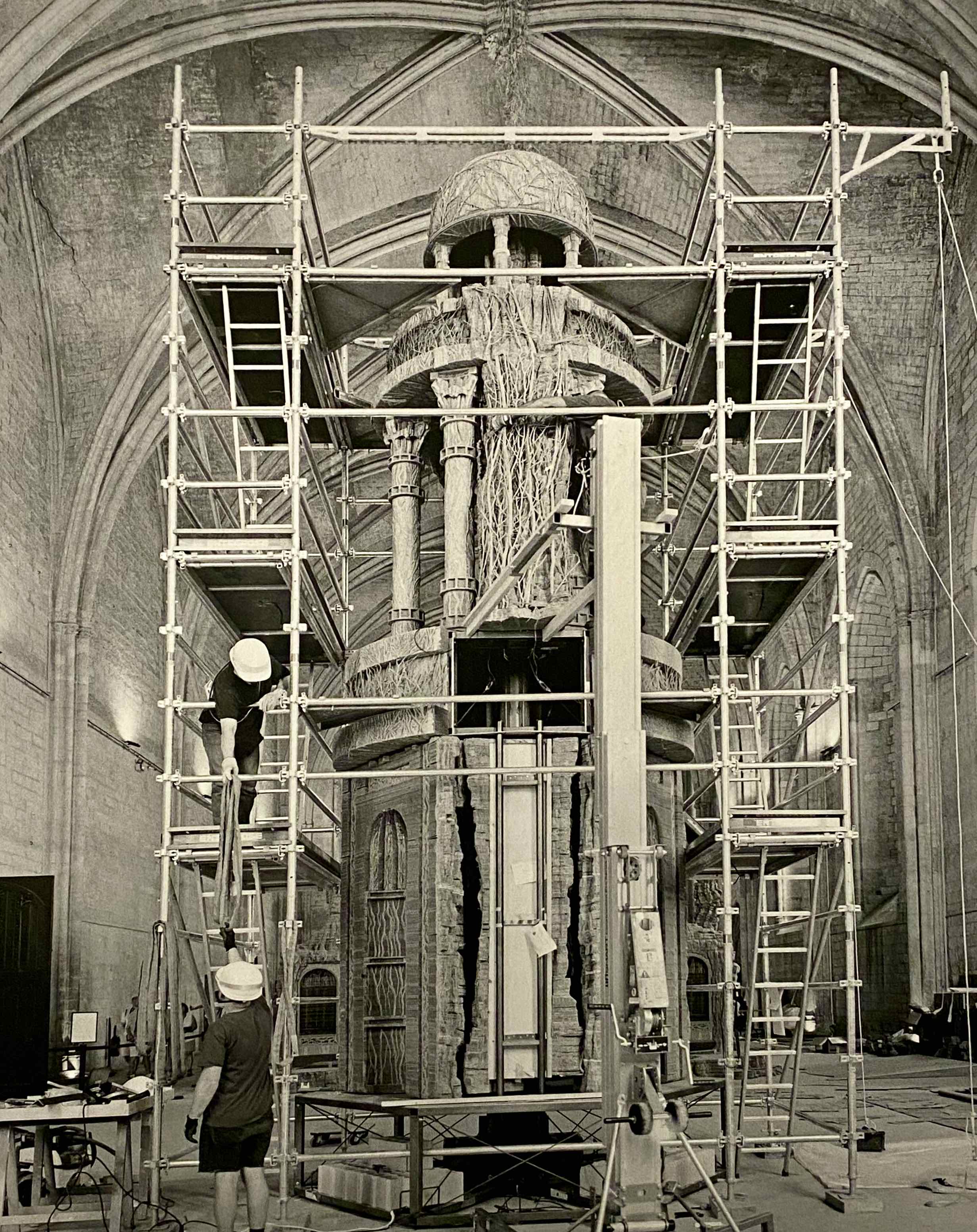
But then we walk into the next room and see this sculpture that is made completely from corrugated cardboard!  Wow, It is astounding.  I spend a lot of time here as well.  There is so much to look at in ‘Forest Galleria’, or Forest Gallery.  And who is the artist?  Eva Jospin!

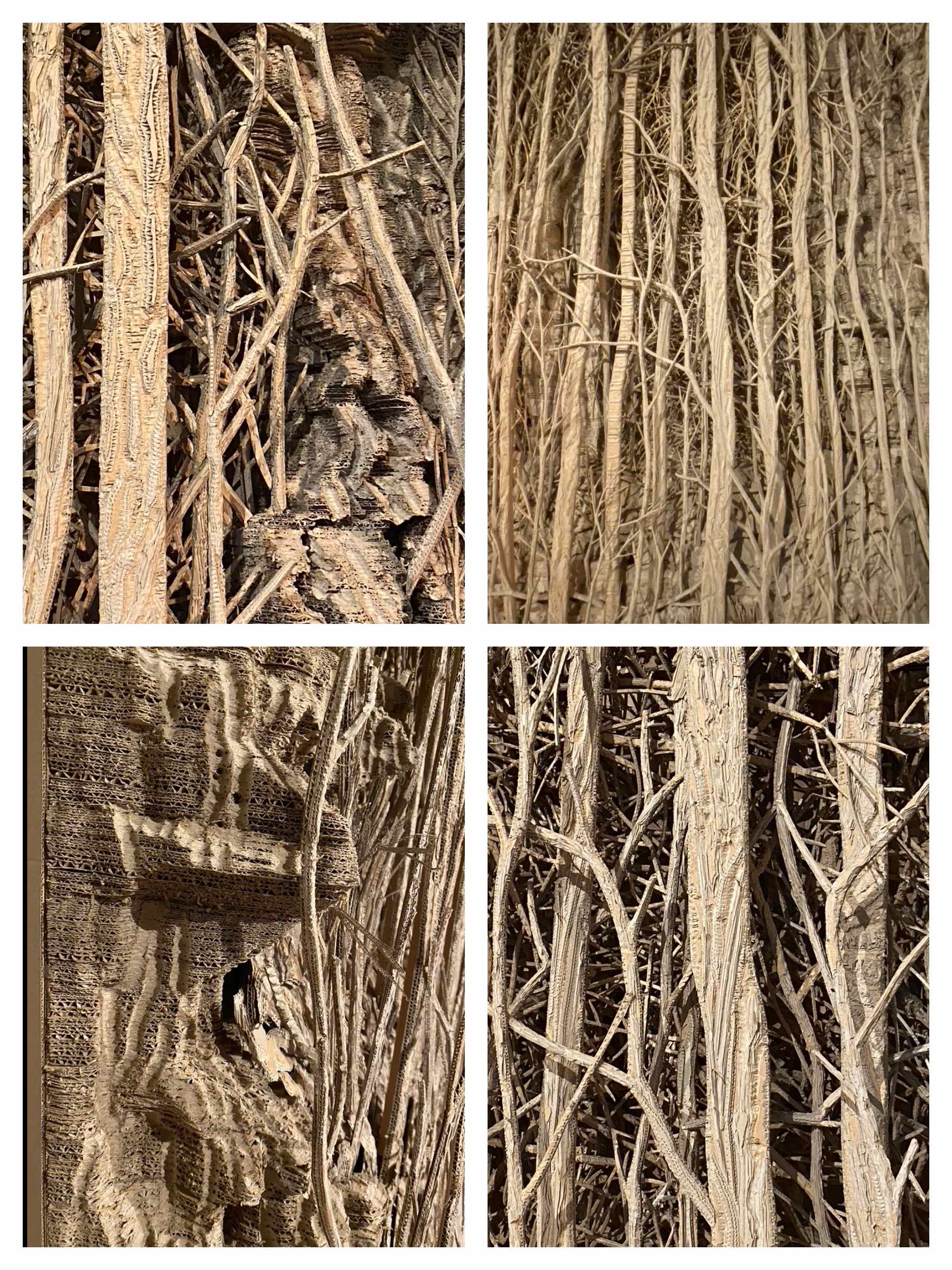
Some close-ups of the different techniques used to create this forest.  I cannot believe the size and complexity of this sculpture…

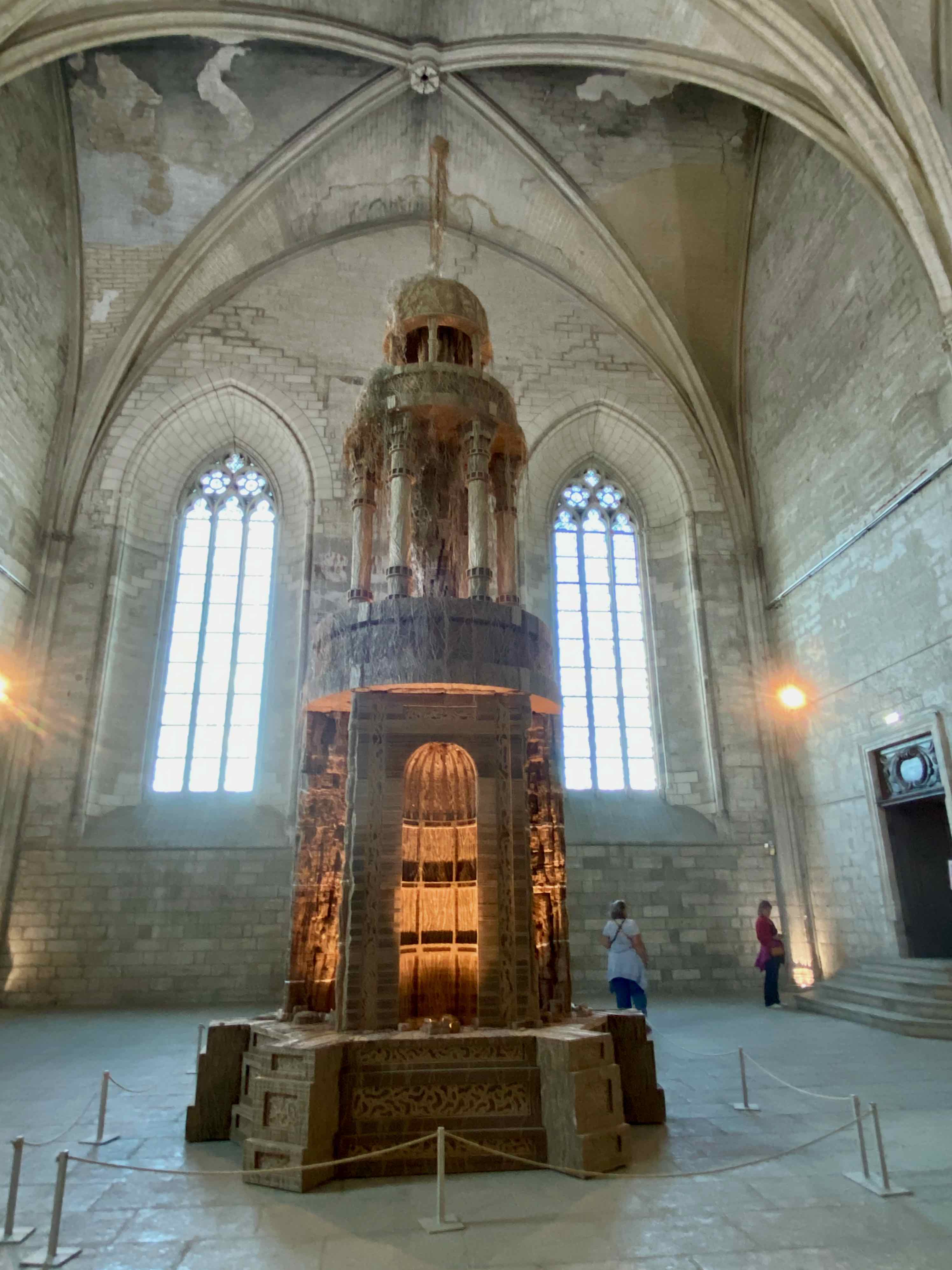
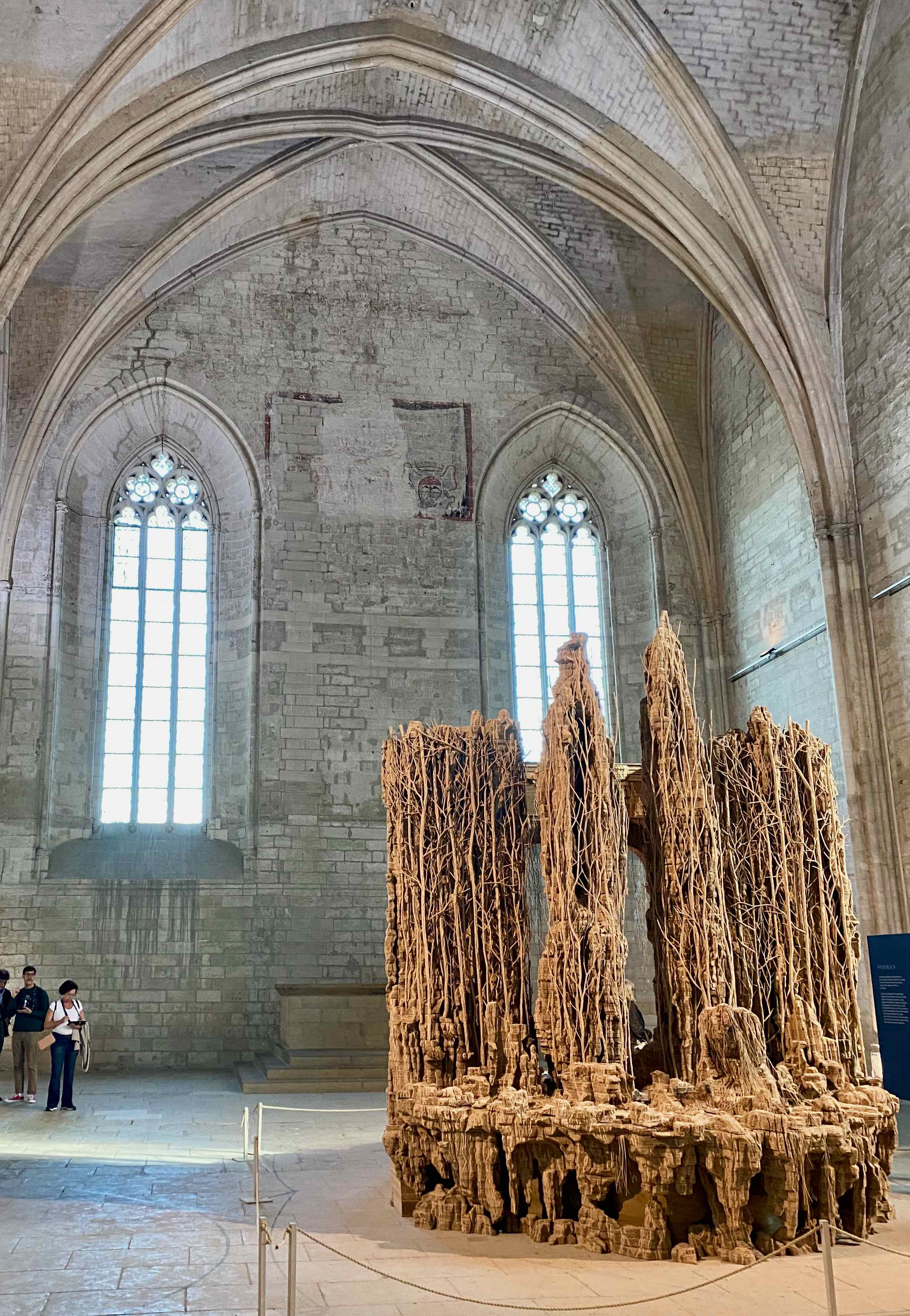
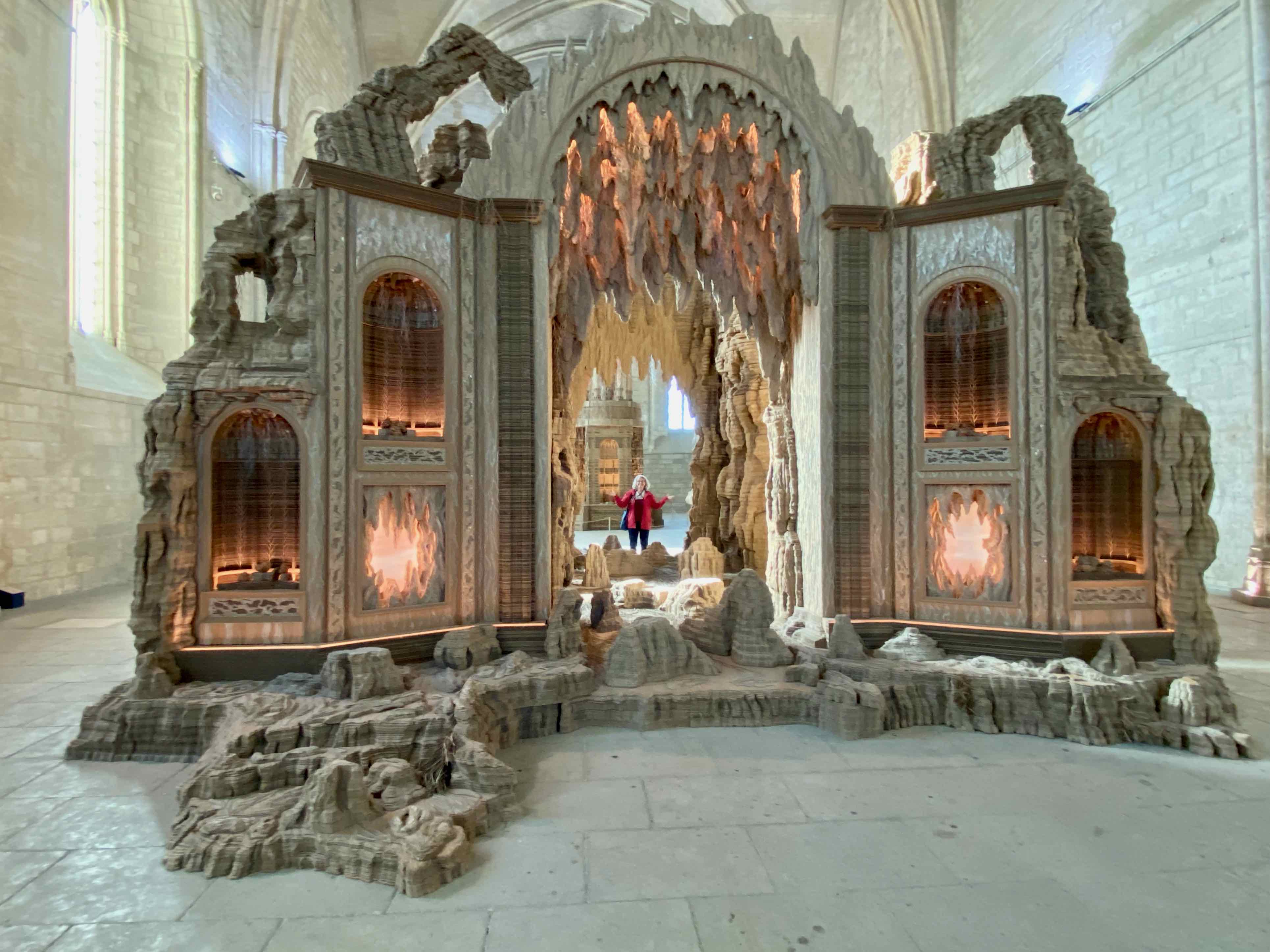
until we walk into the next huge room.  OMG!!  There are simply no words to adequately explain this work called ‘Paysages’, or ‘Landscapes’.  There are three enormous sculptures in this equally enormous chamber.  This one is actually the smallest of them all and they are all made with corrugated cardboard!

This piece is reminiscent of a classical temple on one side…

and here is the back, all overgrown with trees!

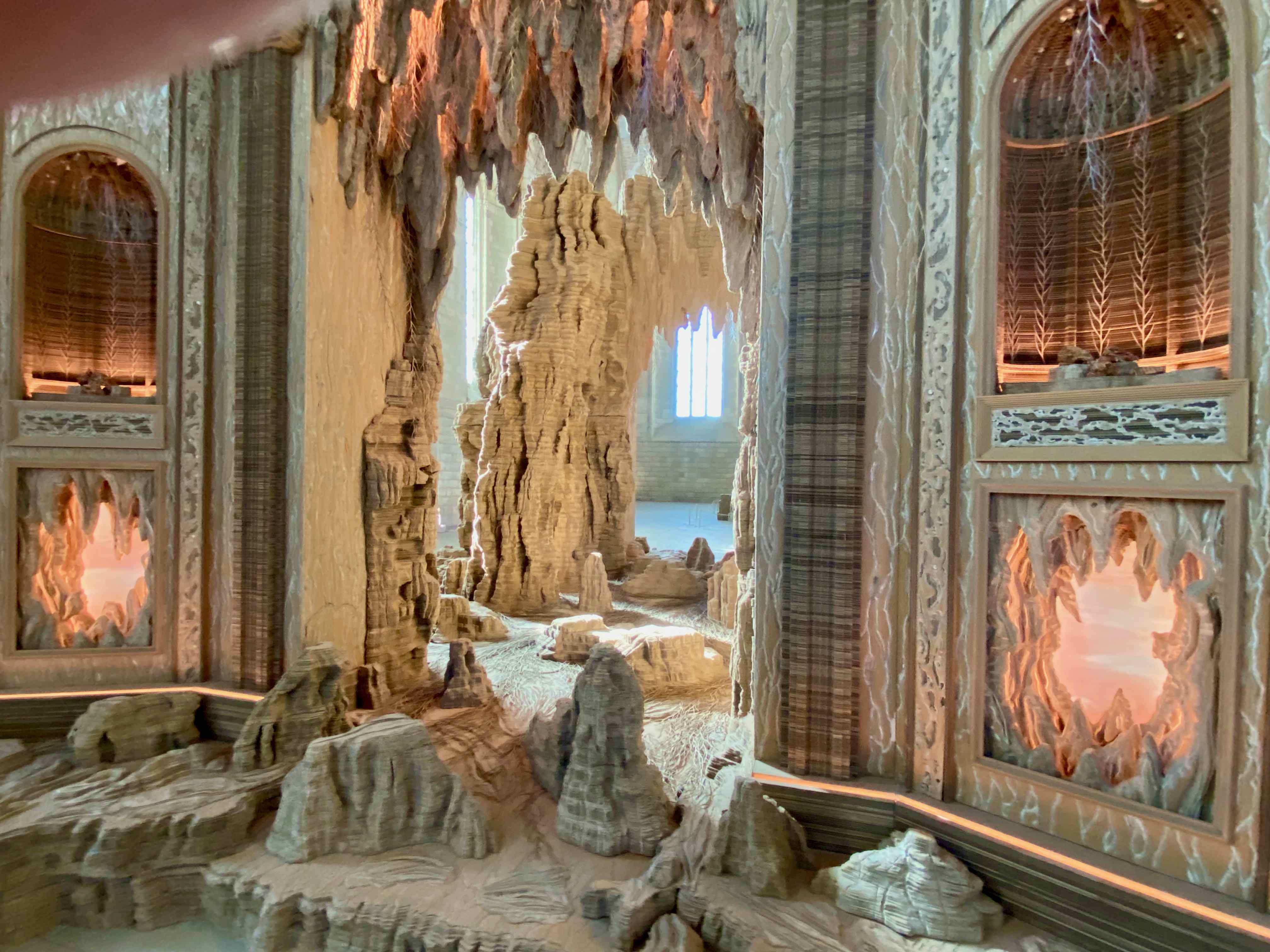
These two sculptures are astounding…but then there is this absolutely unbelievable piece that is placed between the other two.  What can I say?

A close up of part of the front…

a side view.  I did say it is very large!

And a view through the center, which reminds me of a river flowing through a rocky canyon.

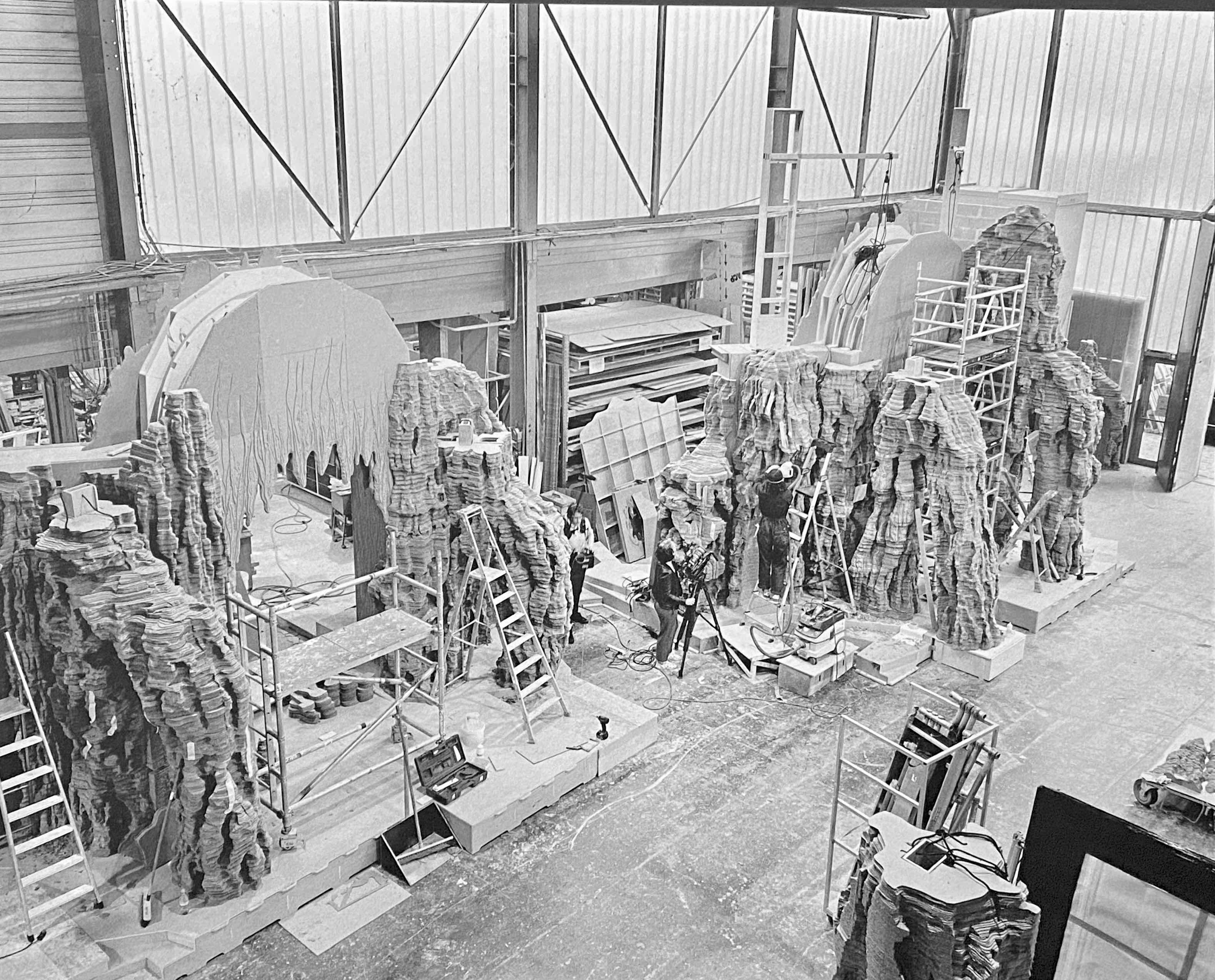
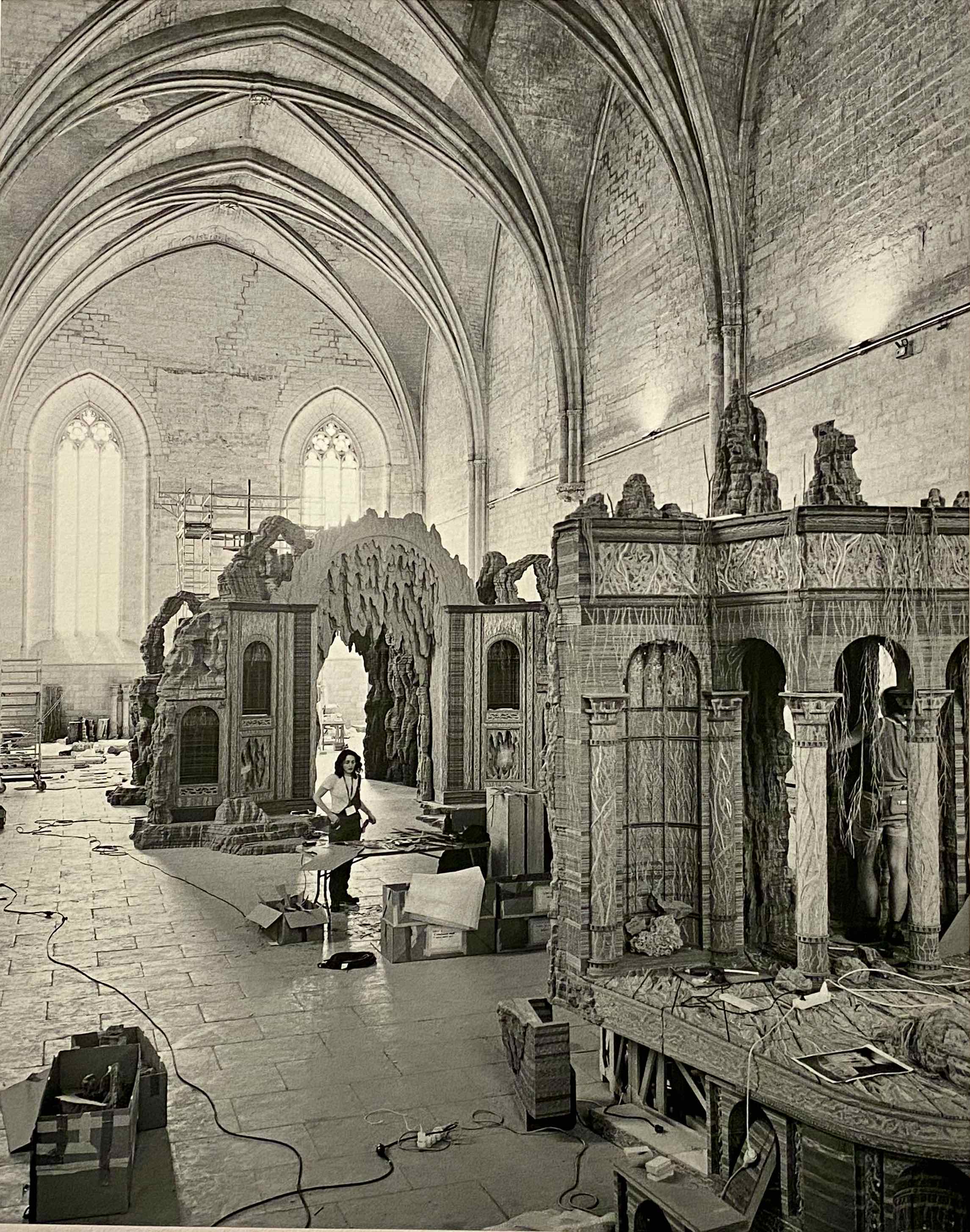
Honestly,  photos cannot capture the grandeur of this work! I did find a video explaining how these pieces are constructed with corrugated cardboard, but sorry, it is a FaceBook video so not everyone may be able to view it.   https://www.facebook.com/watch/?v=437873248434139.      
And here is the link to Eva Jospin’s website.

https://www.suzanne-tarasieve.com/artist/eva-jospin/?lang=en&show=

There was also a room with a video about Eva Jospin and some photos of the process for creating these pieces.  I am in complete awe.

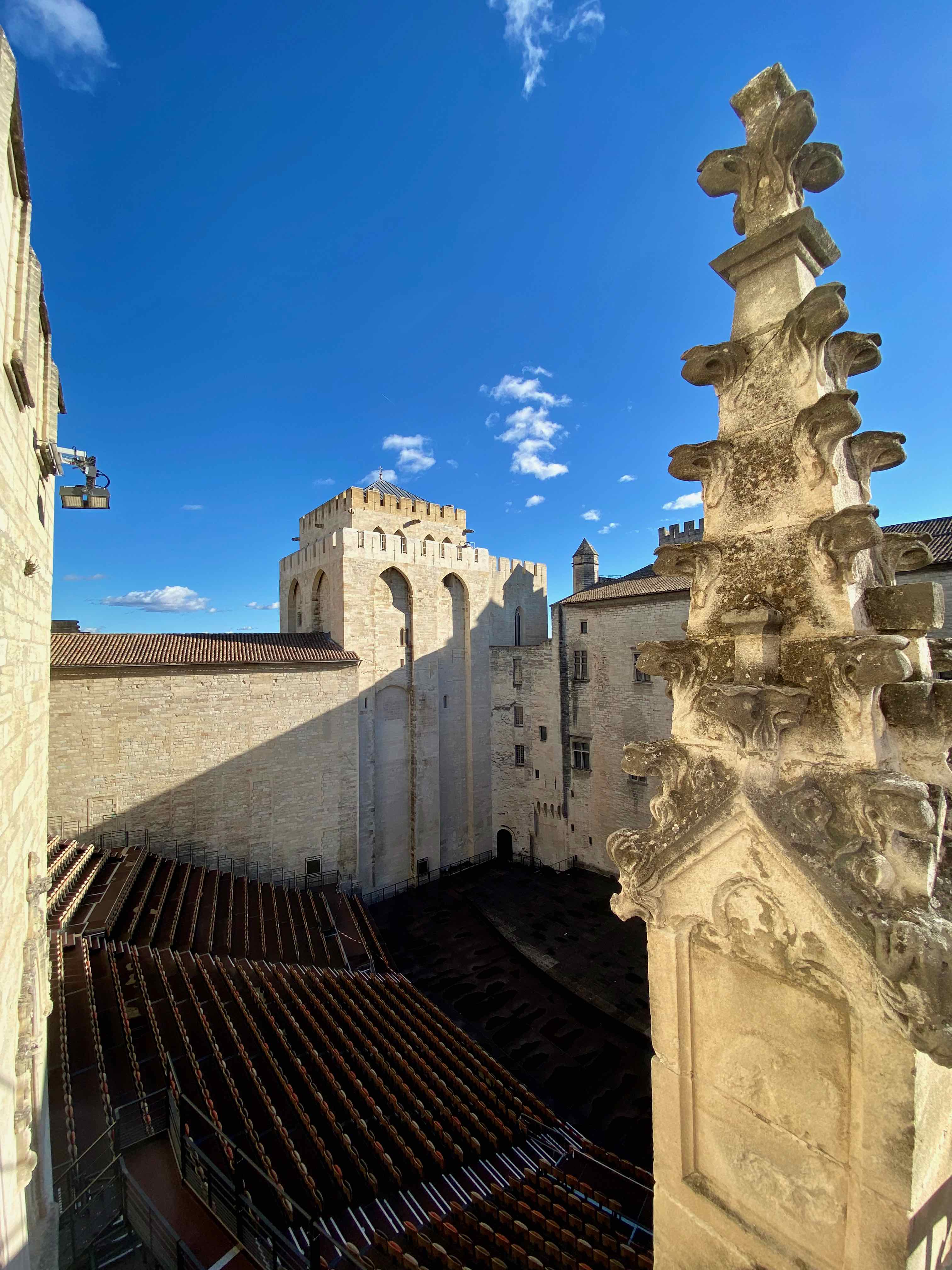
We climb lots of stairs to the roof of the palace.  We started our tour way down there, under the raised seating of this outdoor theatre.

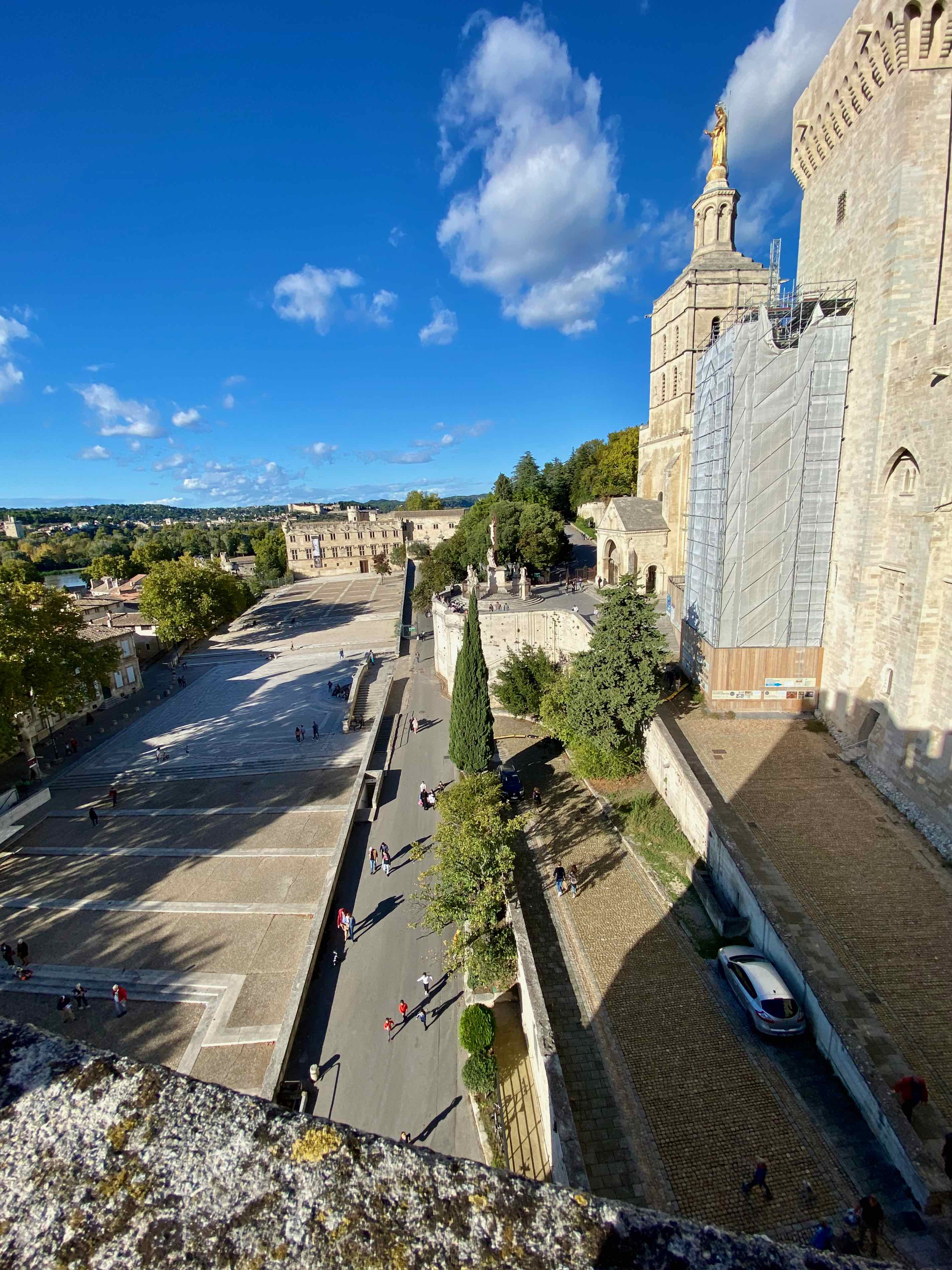
The views from the top are amazing, but it is time to start heading back home.

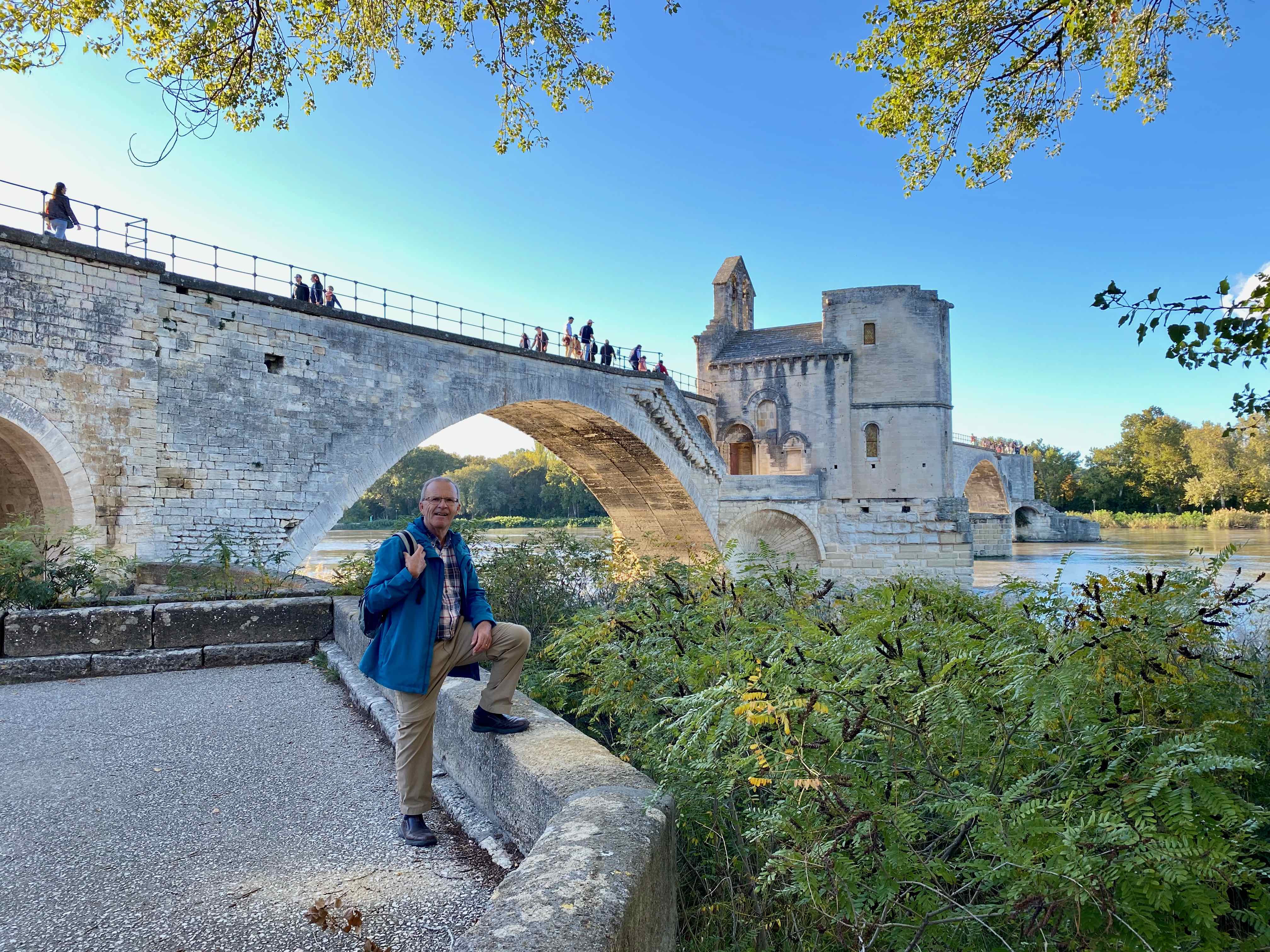
As we walk back to catch the bus to our car we walk under the Pont d’Avignon.  Bob said they used to sing the French children’s folksong ‘Sur le Pont d’Avignon’ when he was in elementary school.   https://www.youtube.com/watch?v=_r8eALyO8E4

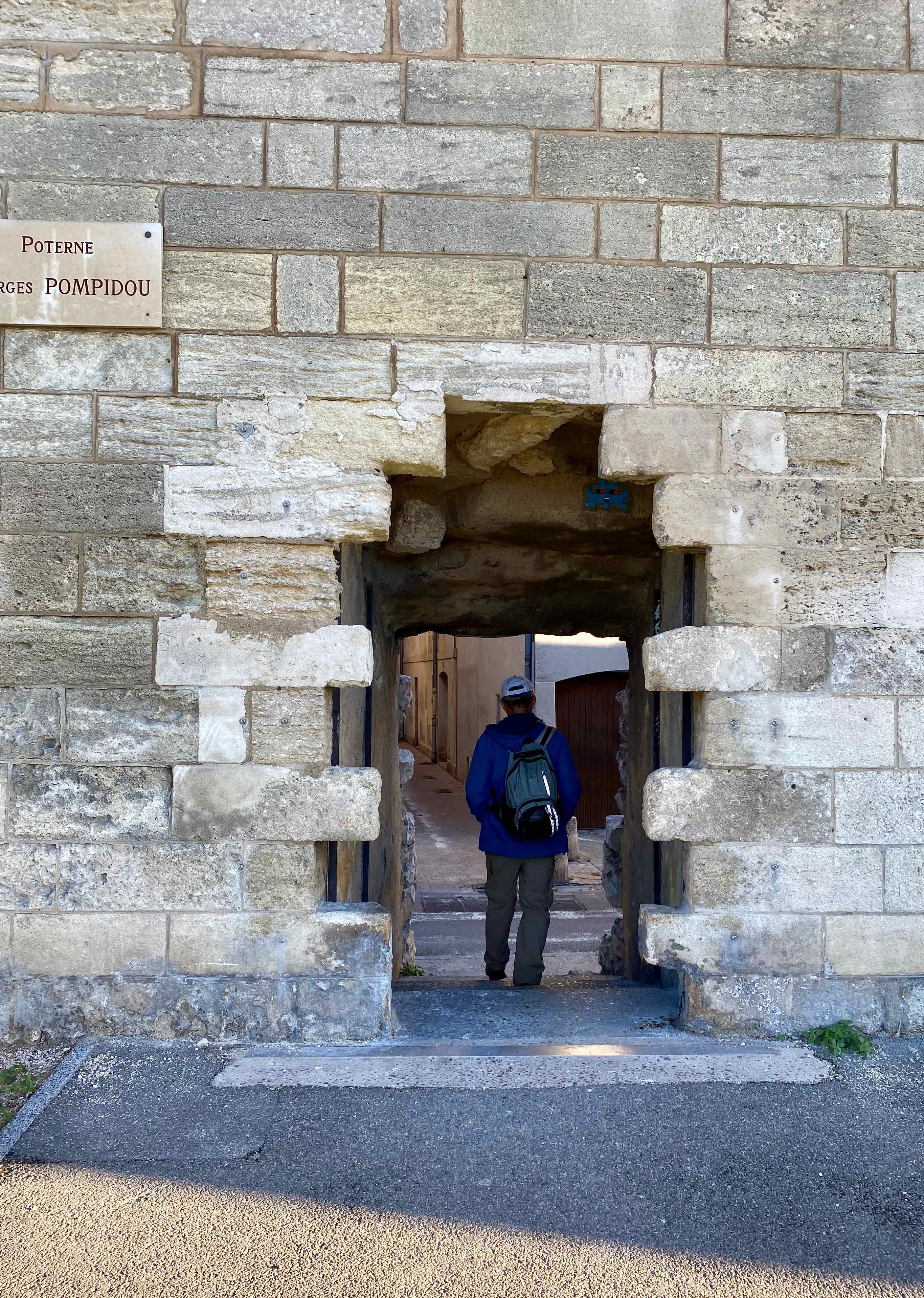
We walk through the fortified walls through this rather makeshift looking doorway.

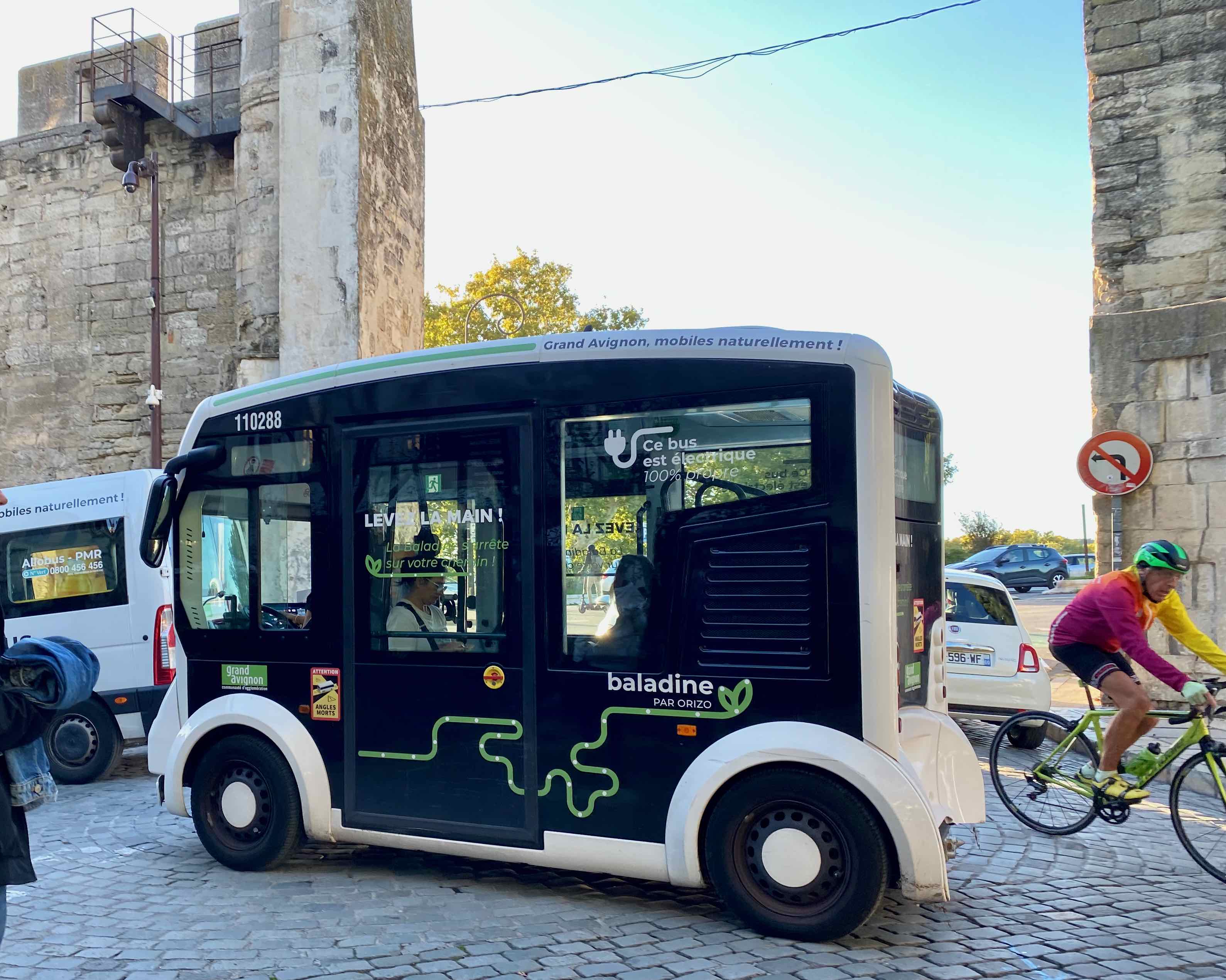
Just as we are leaving to catch our bus one of the town’s little busses passes by.  This is the tiniest bus we have ever seen.

Thanks, if you are still reading and made it this far.  I know this is a really long post, but I want to remember all of it.  I actually pruned out a whole lot more photos!

Medieval Cité in Carcassonne, France

Day 45, Thursday, October 12, 2023.

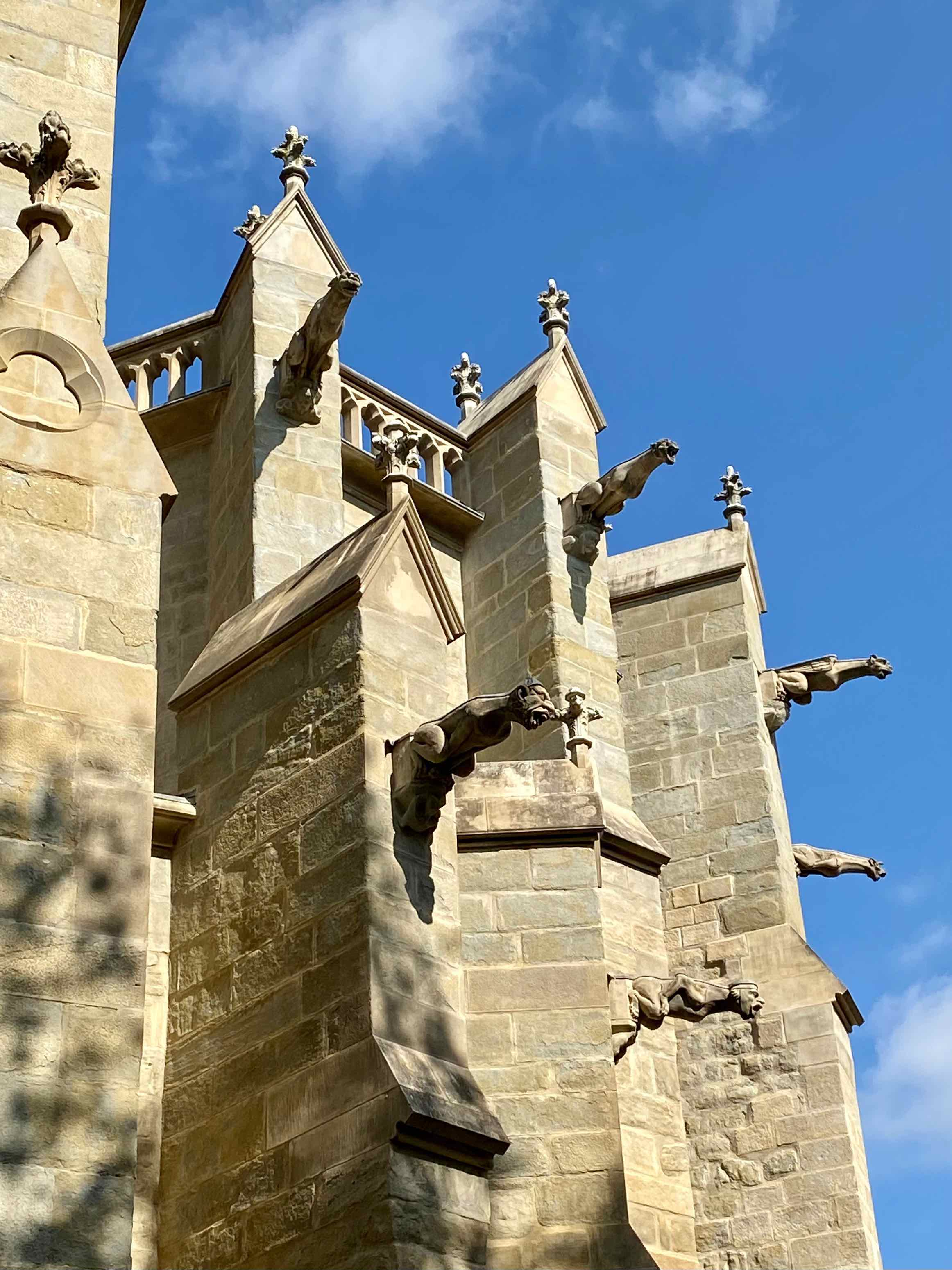
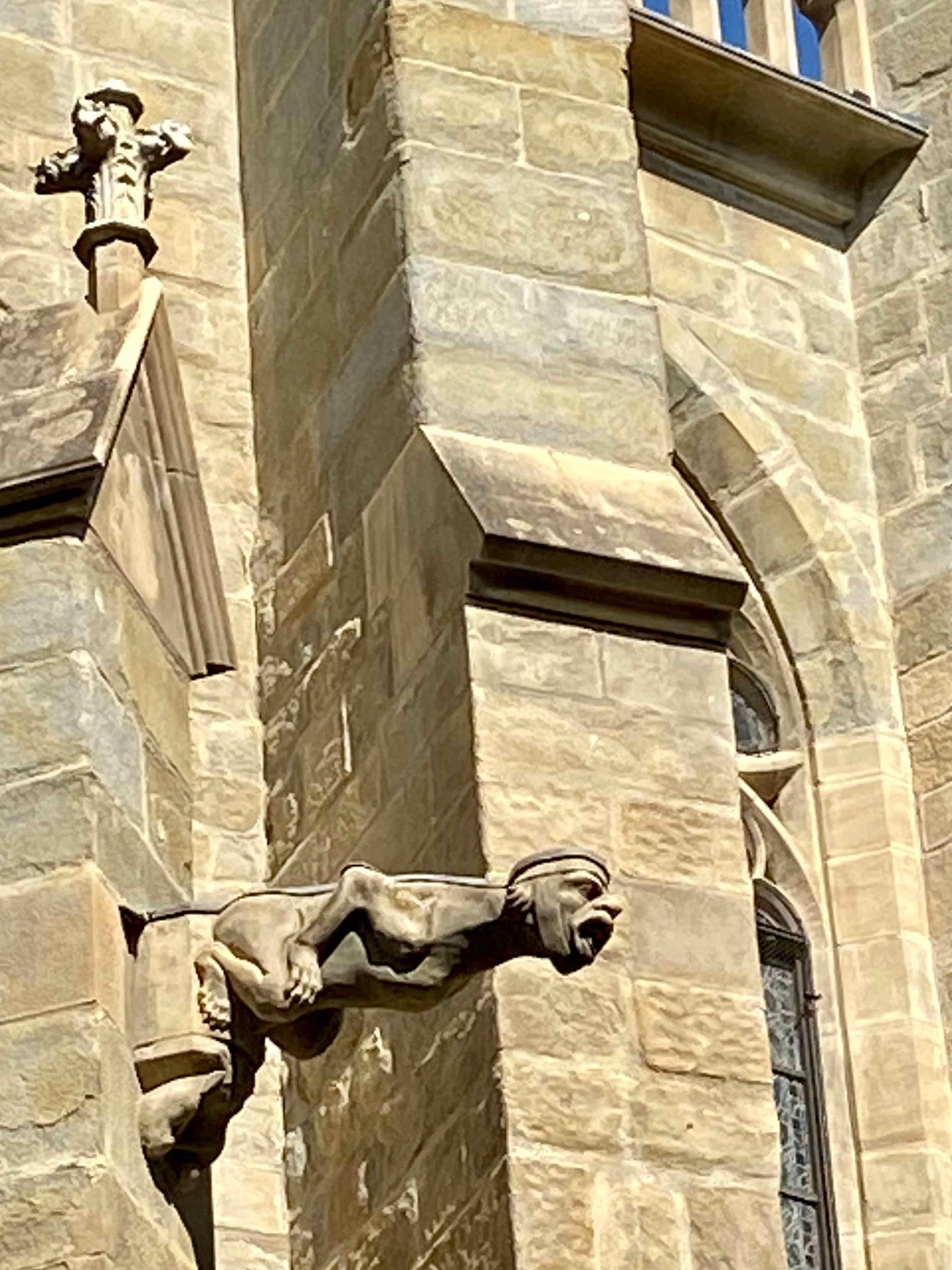
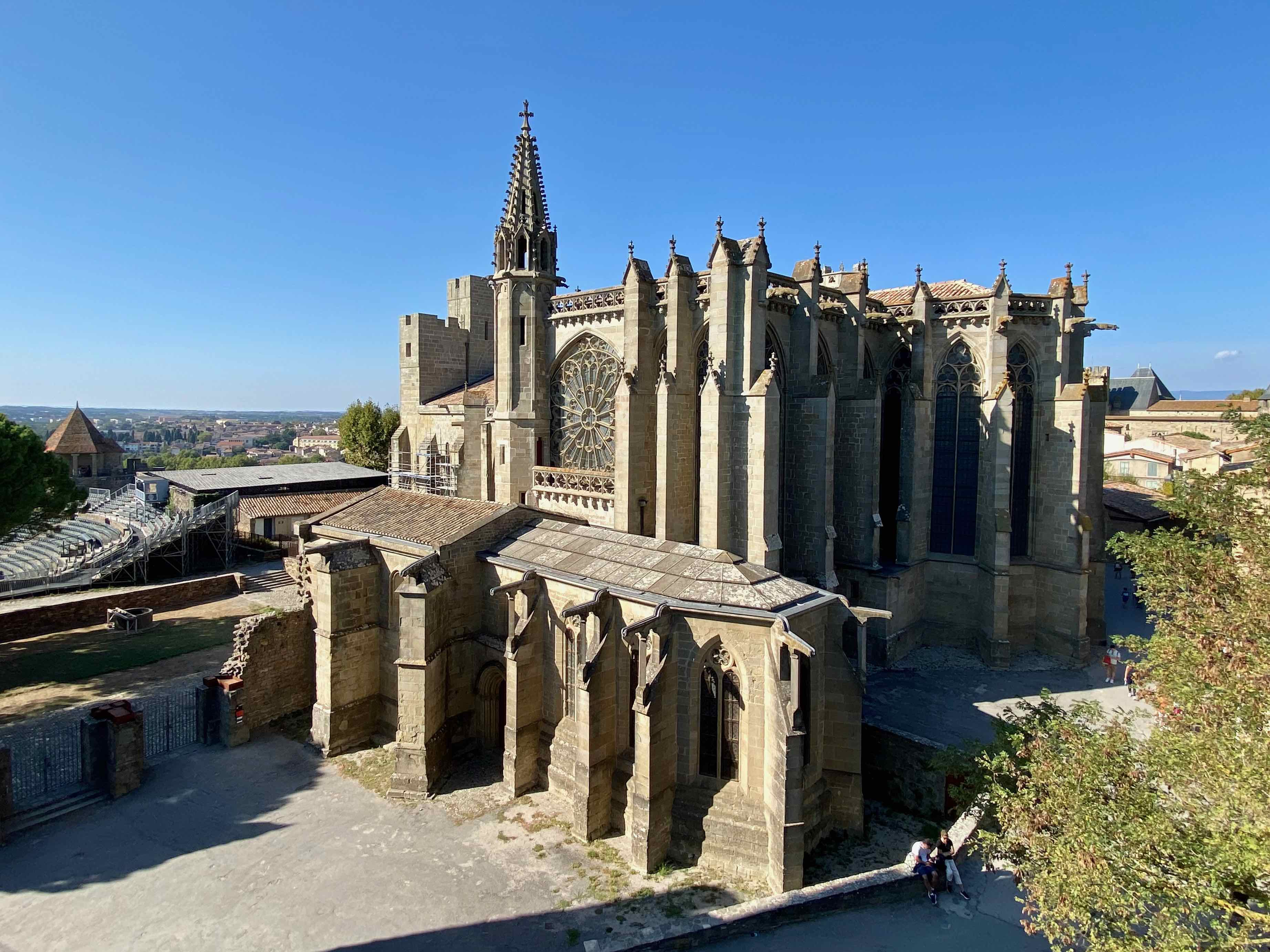
I’m feeling bit better this morning so we go visit the medieval citadel called la Cité.  It is a half hour walk and we pass a church on the way that has incredible gargoyles.  I love gargoyles.

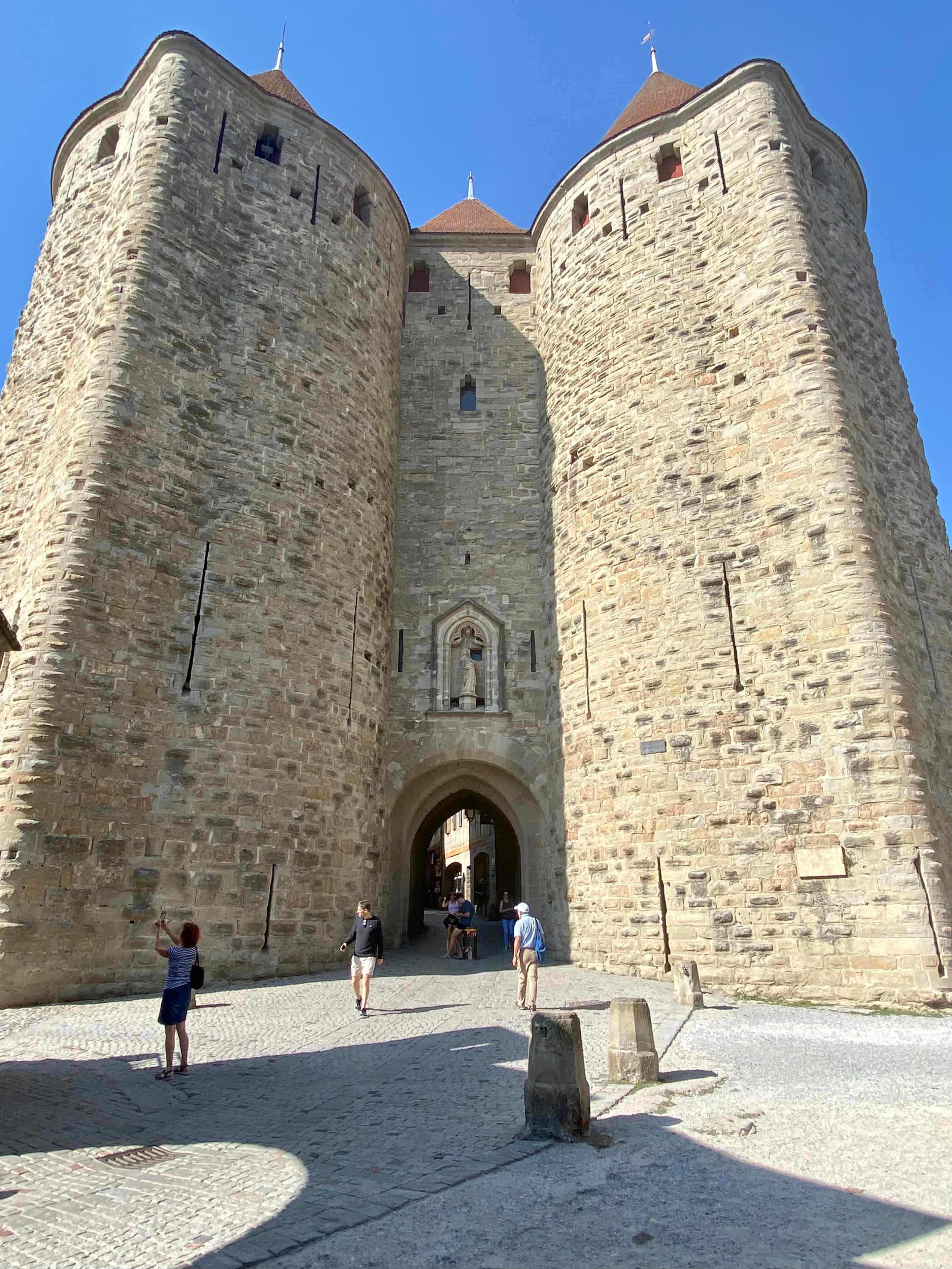
I thought this one was particularly interesting. This is one of the entrance gates to the old city of Carcassone.
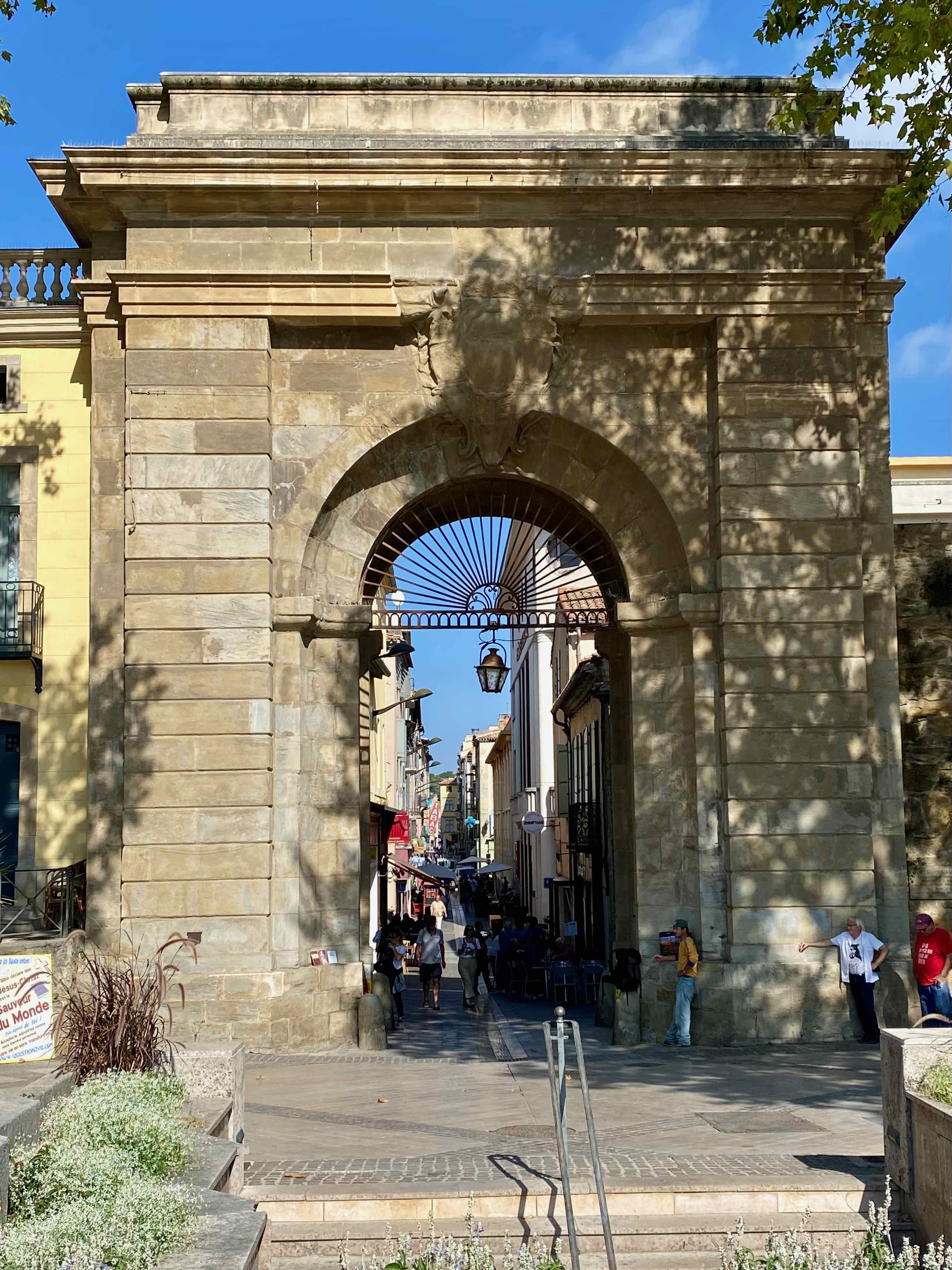
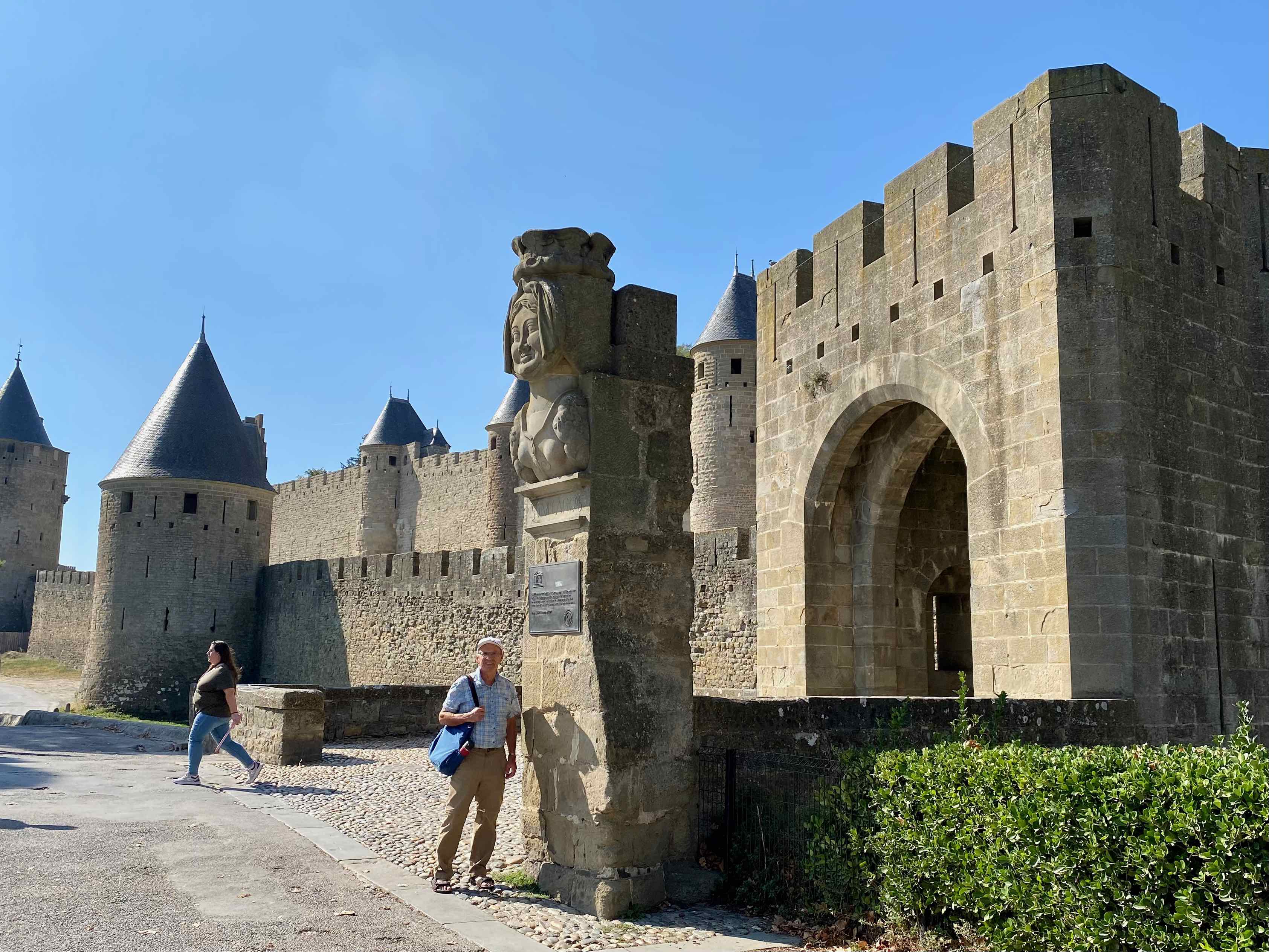
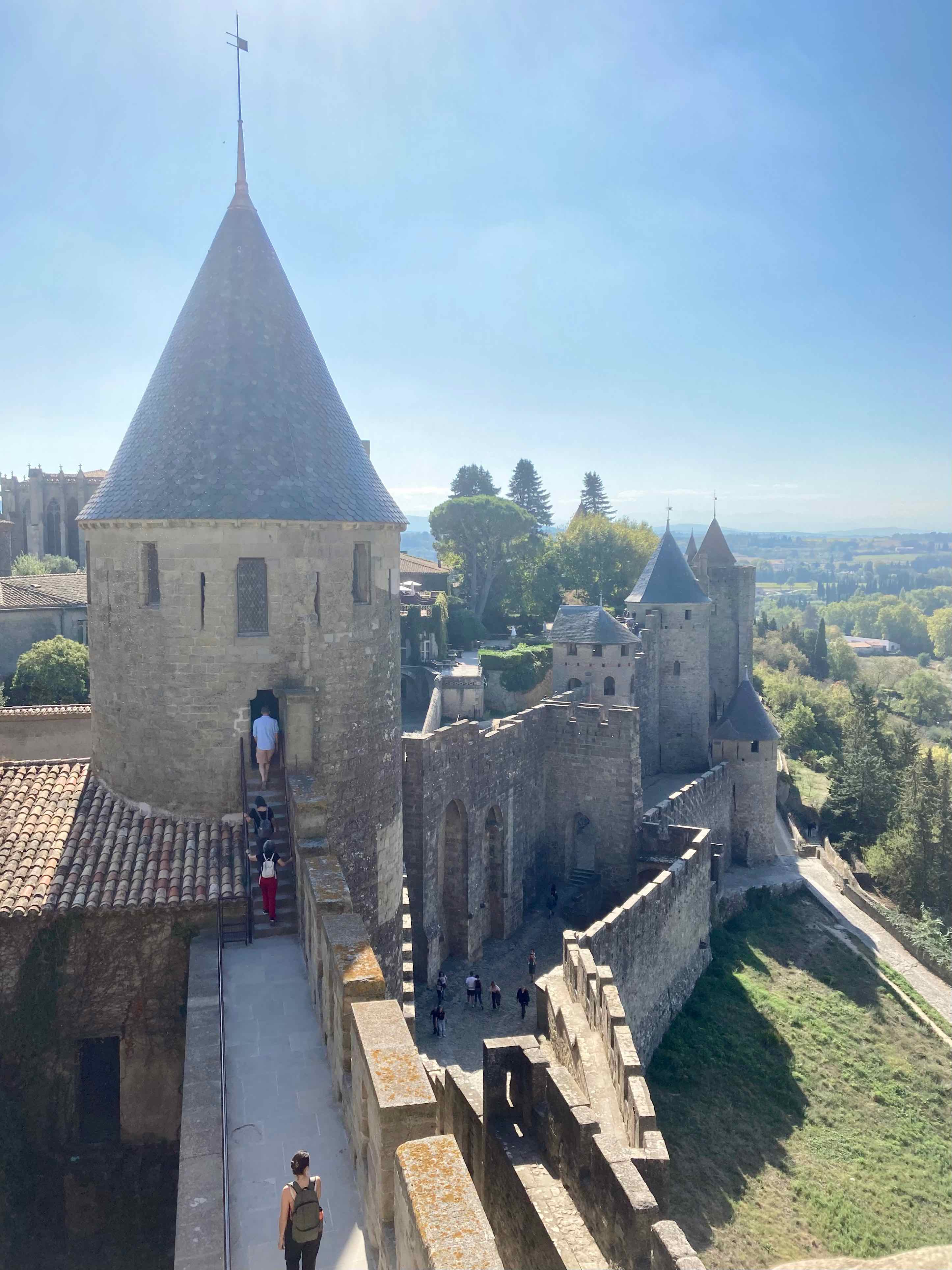
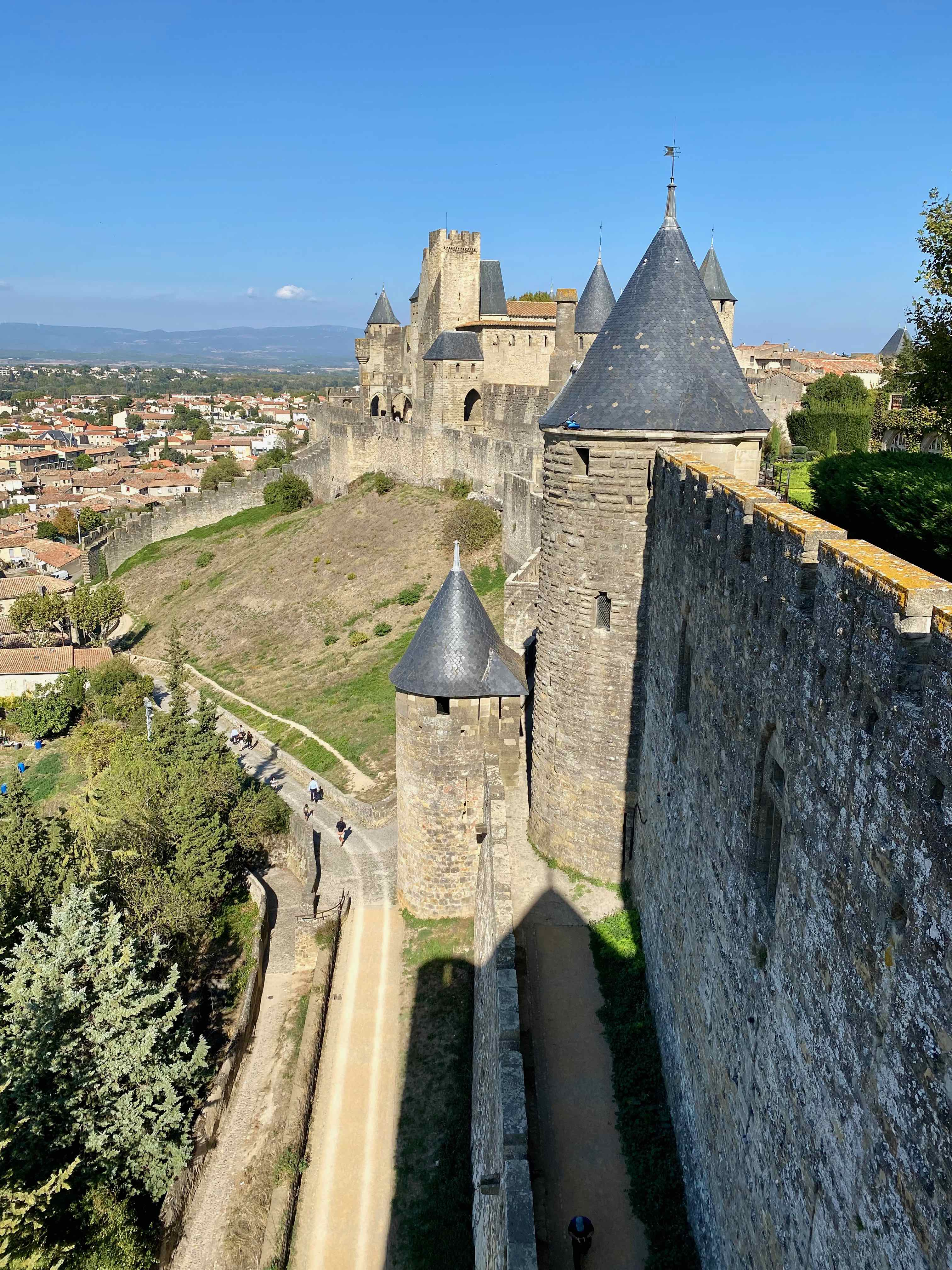
The medieval city, a UNESCO World Heritage site, has 52 towers and 2 ramparts.  Bob is standing beside a sculpture of Dame Carcas who ruled the city when it was attacked by Charlemagne in the 8th Century.   After being under siege for five years, there was only a sack of grain and one pig left to eat.  Dame Carcas fed the sack of wheat to the pig and threw it over the ramparts at the enemy, who thought that they must have a lot of food left if they could throw it over the walls, so they called off the siege and left. Dame Carcas had the bells of the city rung in victory, “Carcas… sonne” means  “Carcas is ringing”.

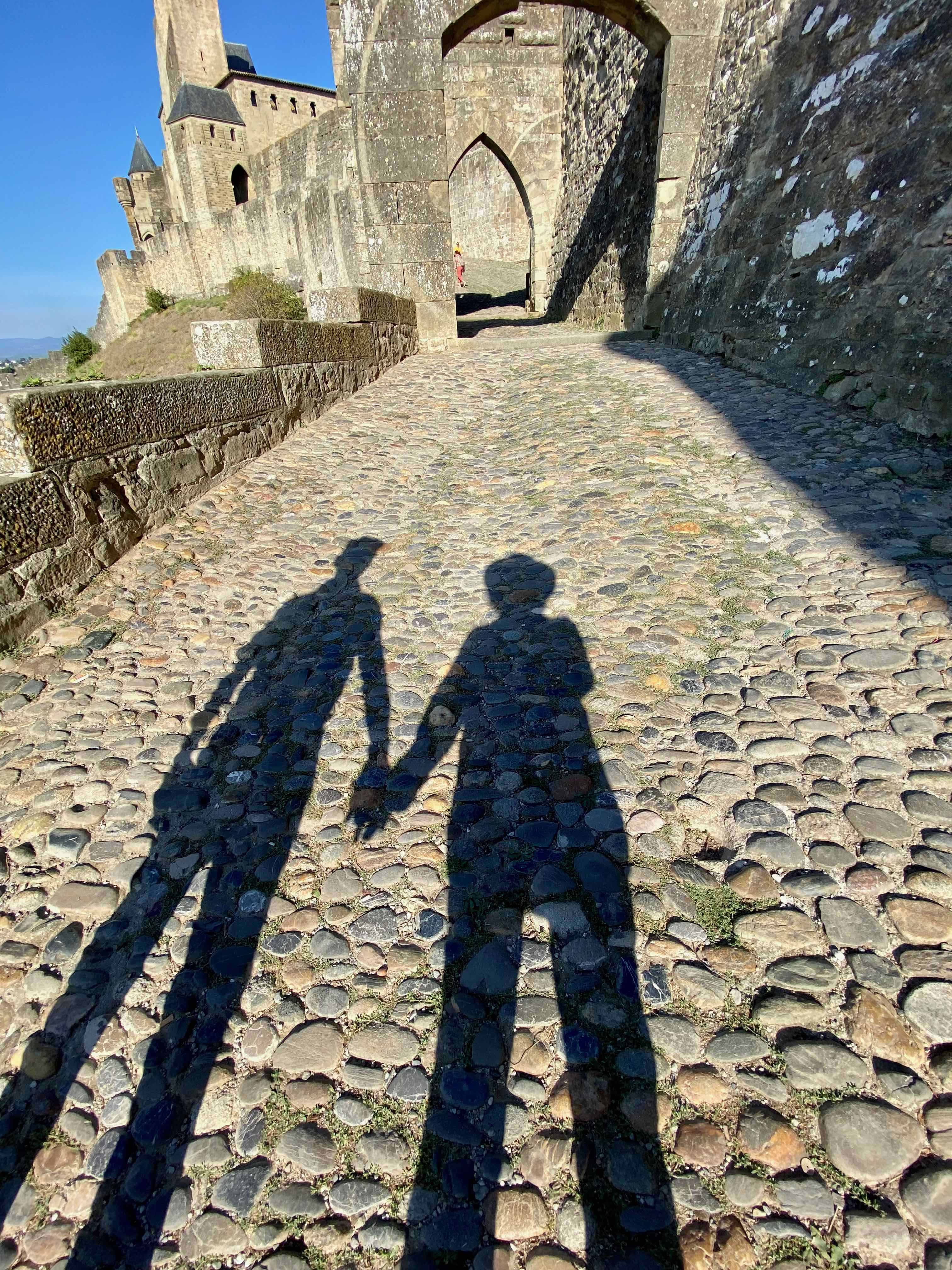
This is the massive entrance past the outer ramparts into the Cité.  This citadel has two sets of walls and two ramparts for protection.

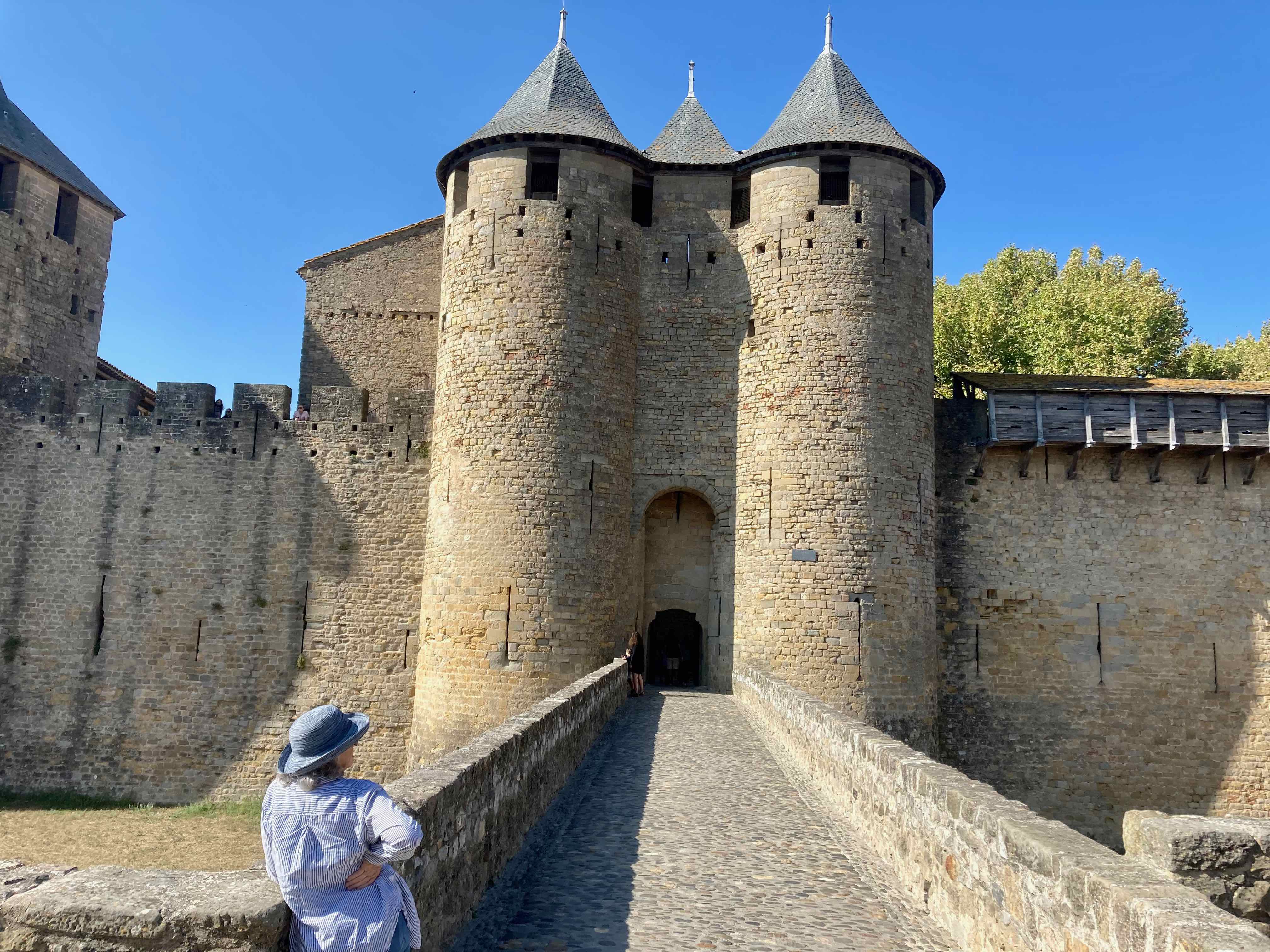
and I am standing at the entrance to the residence of the ruling family built inside the fortress in 1130.

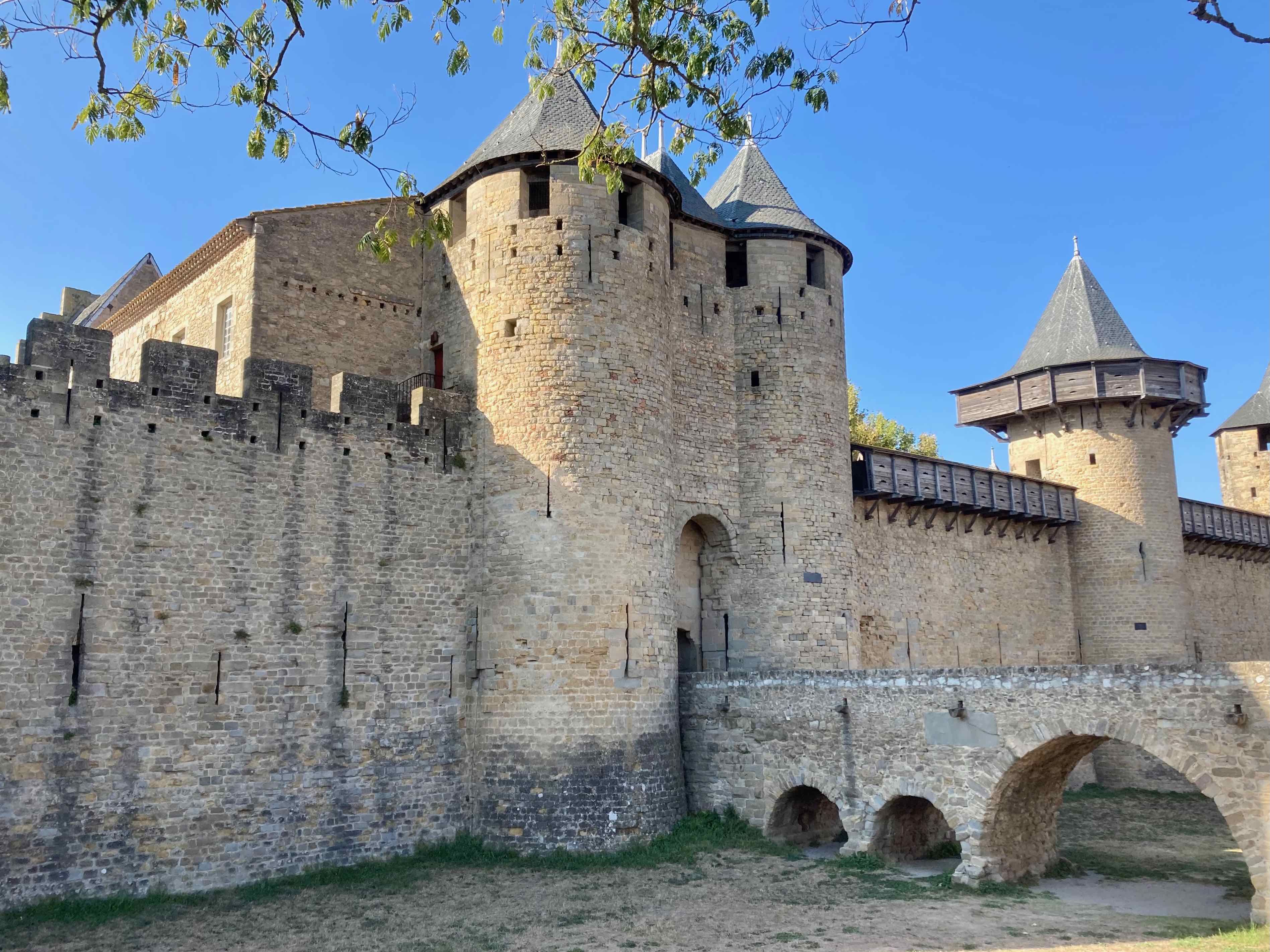
Here is another view of what is really a fortress within a fortress.

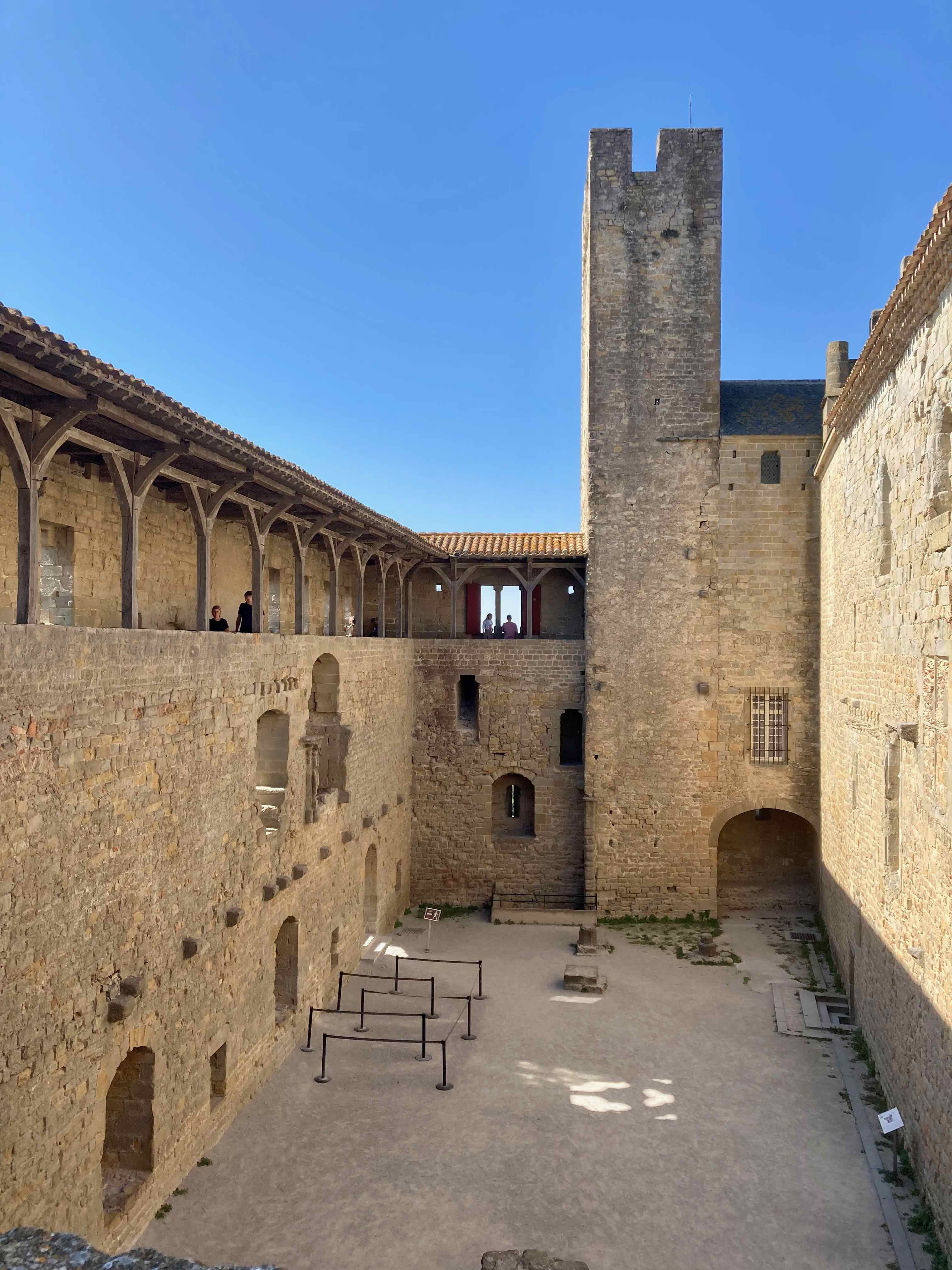
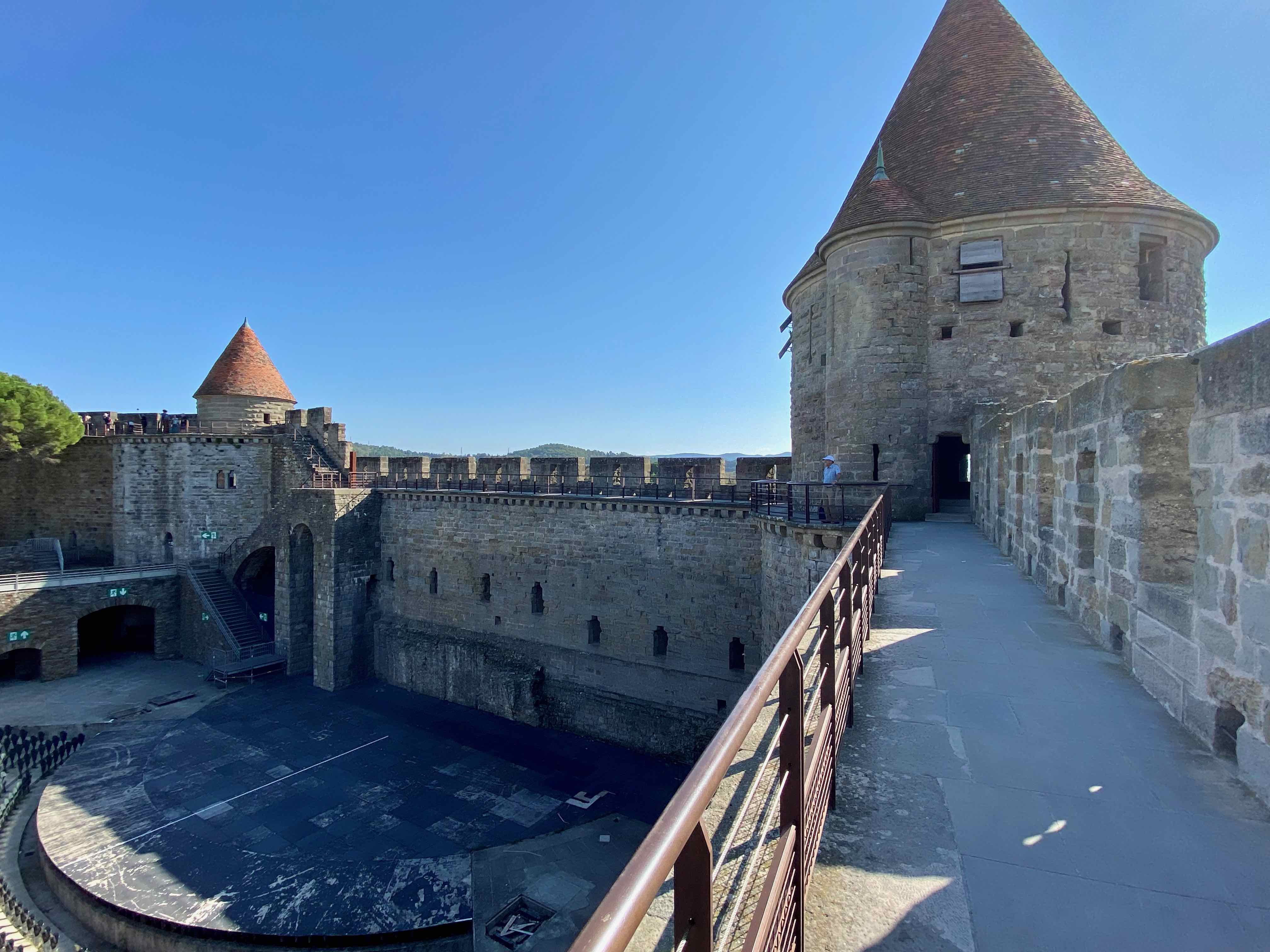
Our visit starts with a walk along part of the ramparts overlooking an interior courtyard…

and continues through some of the buildings and towers.

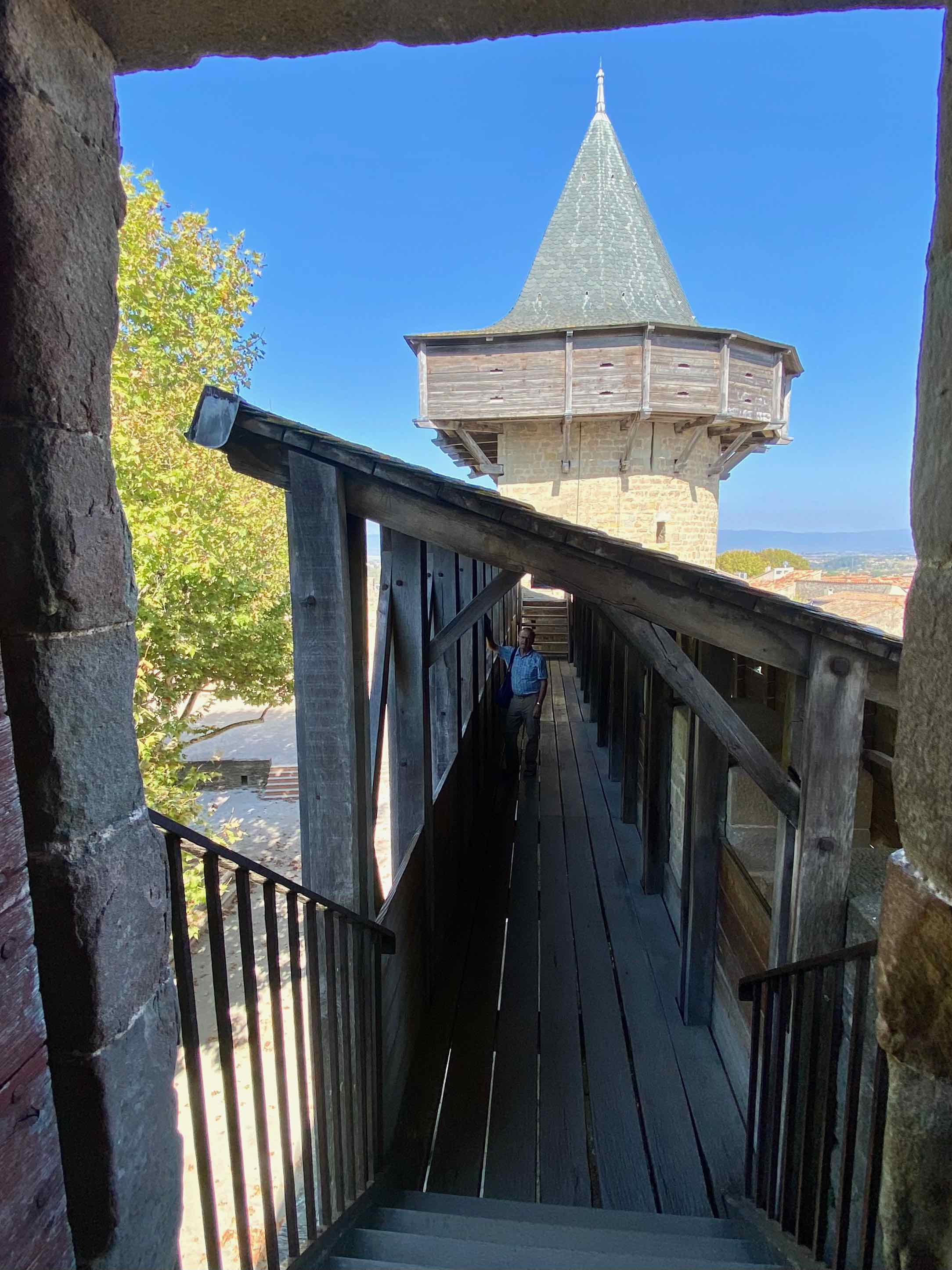
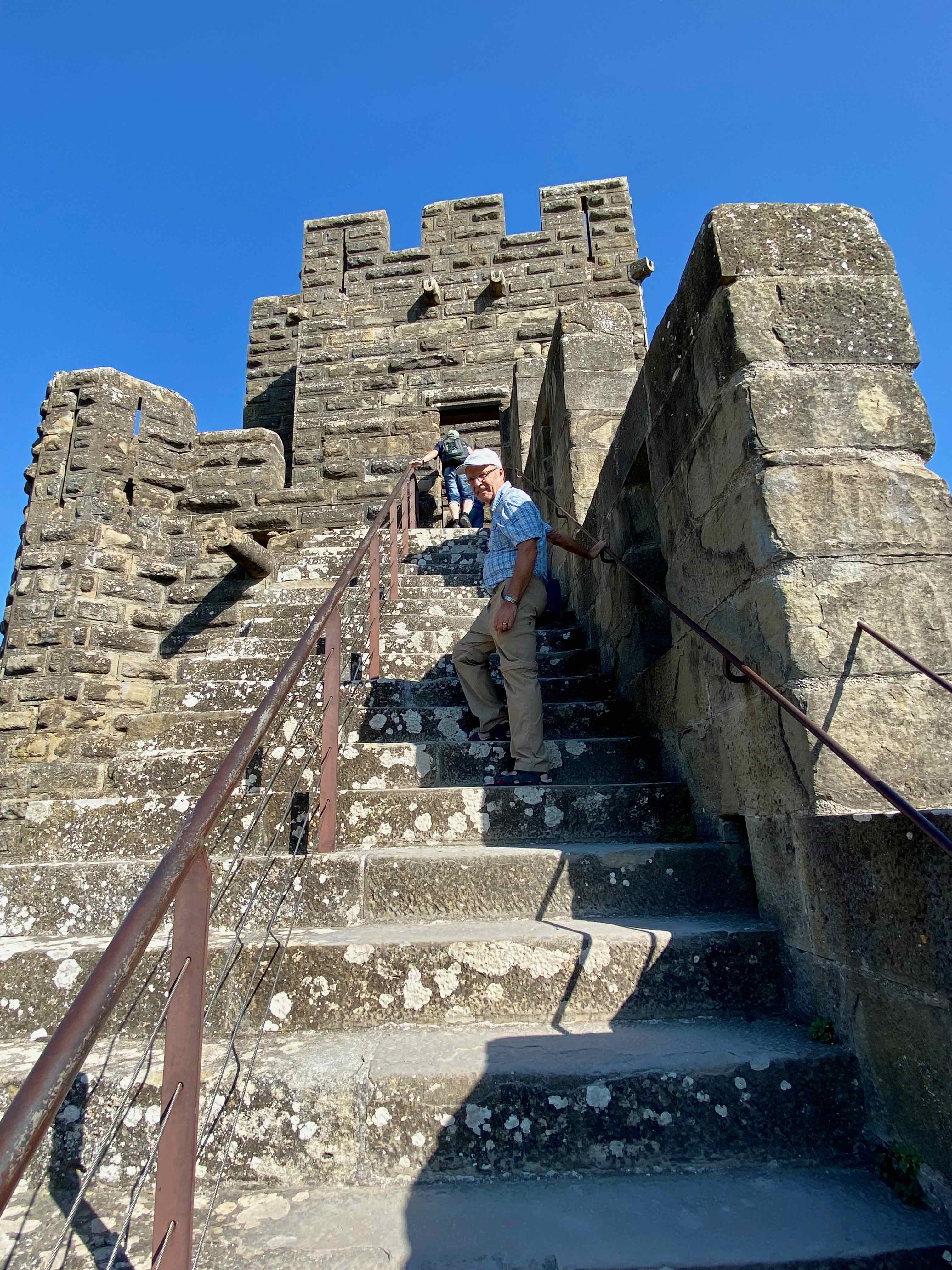
These wooden additions to the ramparts allowed soldiers to attack the enemy from above.  There are holes in the floor to allow attack from above on anyone trying to enter the fortress.

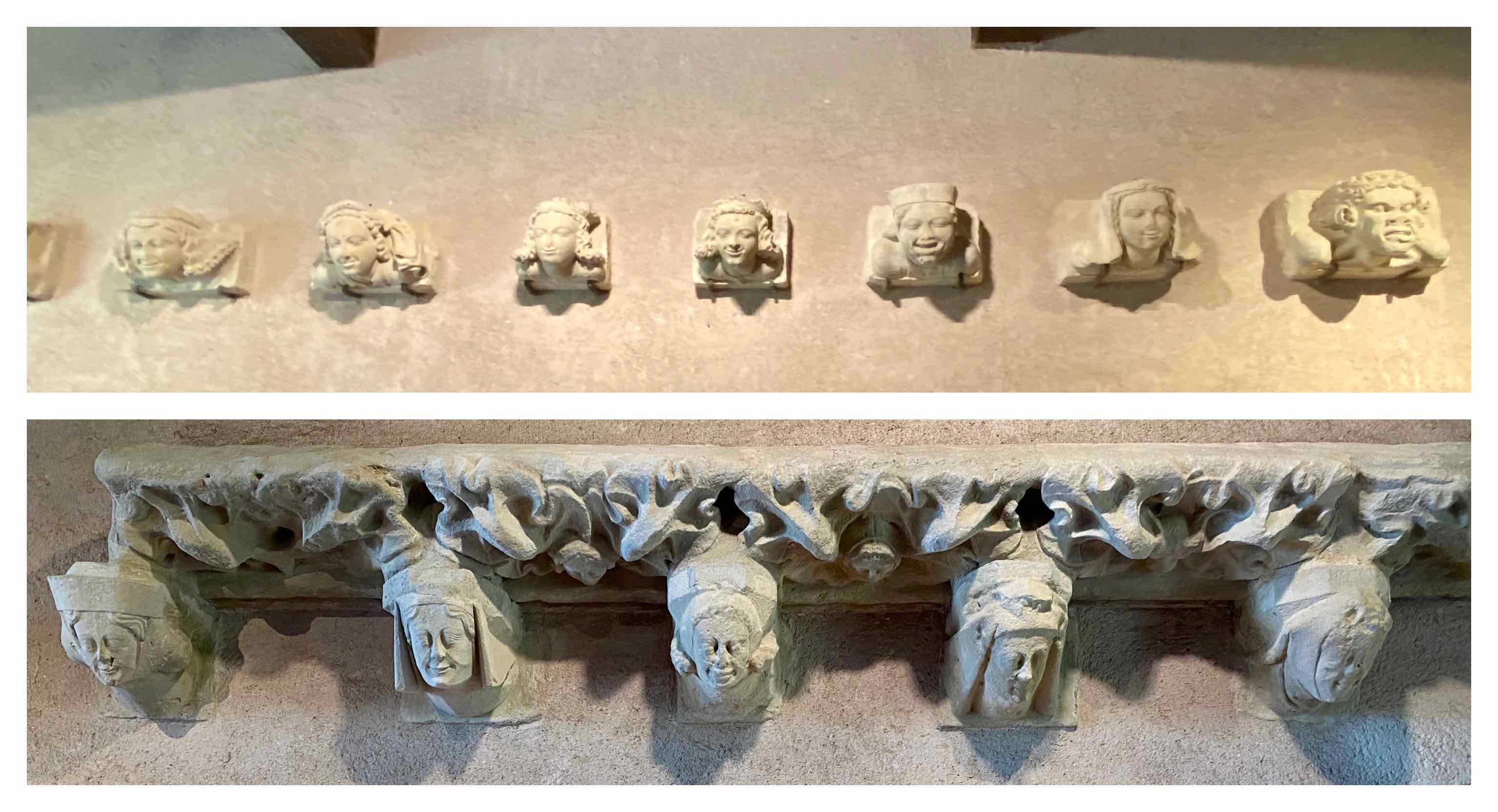
I was expecting to see furnished rooms, similar to our visits to the chateaus of the Loire Valley but any rooms we walk through are unfurnished.  A couple room have sculptures that were removed from Saint-Nazaire Church during the restoration of this walled city in 1846 and placed here for preservation.  I particularly liked these carved heads that were part of the exterior cornice.  They are all smiling cheerfully.This is mostly an opportunity to see the fortifications that make this citadel so unique.
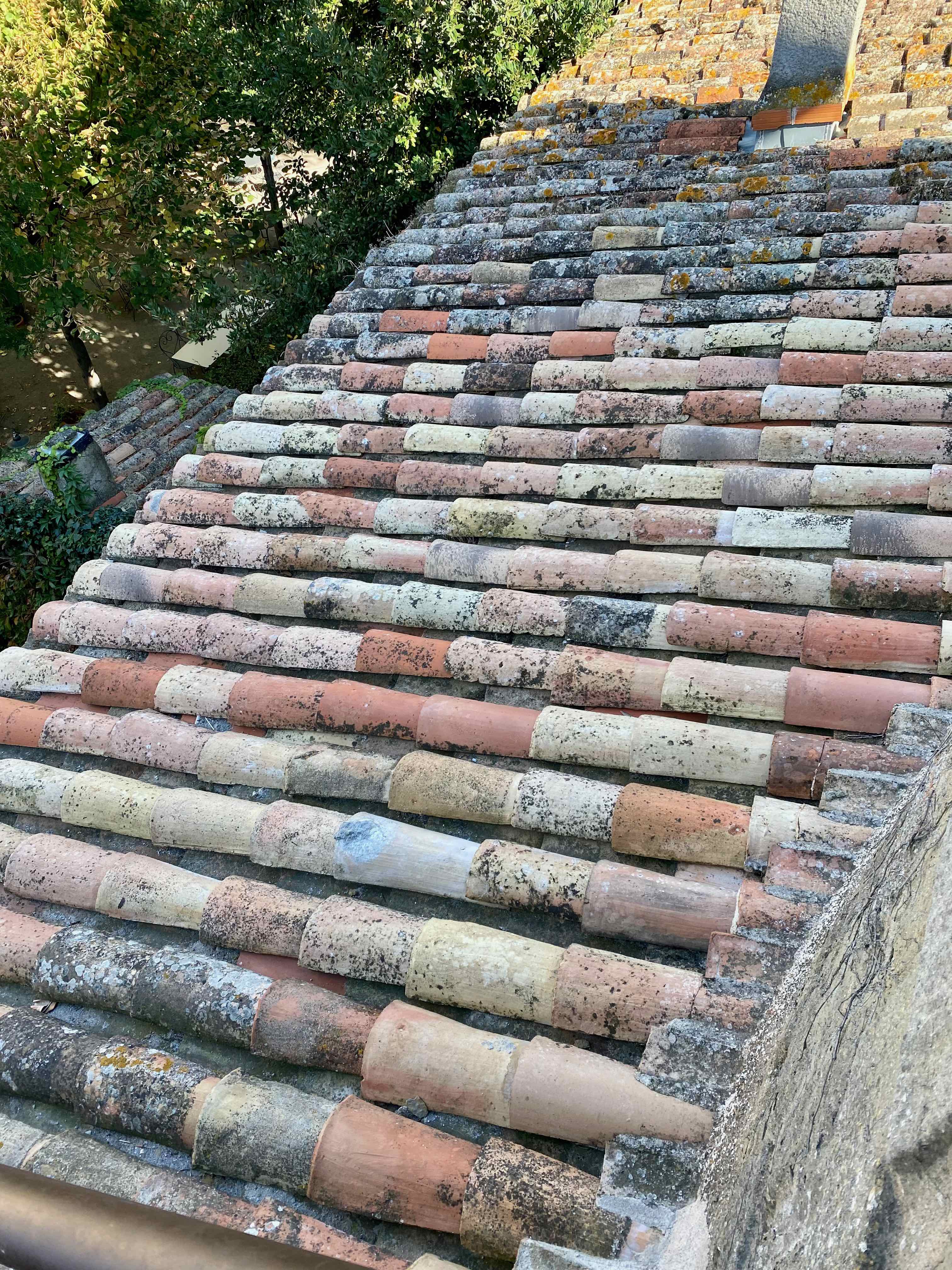
I love all the colours on this old tiled roof.

From the ramparts we can see the path we will be taking when we leave the citadel, however we found a set of stairs near the beginning of this long ramp that is a much shorter route.Carcassonne  is now considered to be the largest and best conserved medieval fortress in Europe.  It is impressive with its set of double walls and ramparts.  Both sets of walls and the area between them can be seen in this photo.
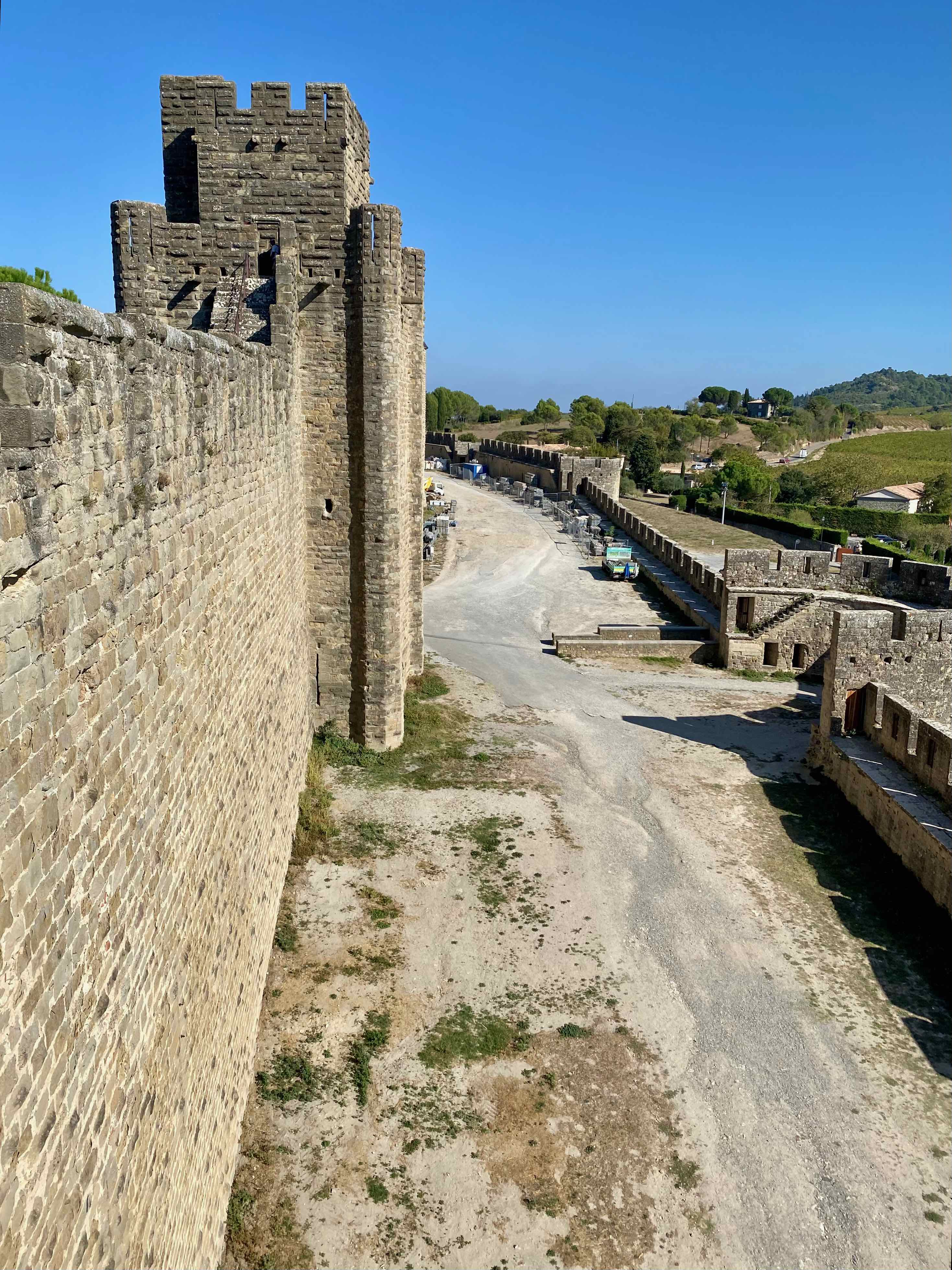
This one tower looked out of place, it was built with different stone blocks and had a different look that the rest.  

The Saint-Nazaire Basilica has an outdoor theatre that was built where the cloister once stood.  It is just visible behind the church and has 5,000 seats and is in use for productions every summer.

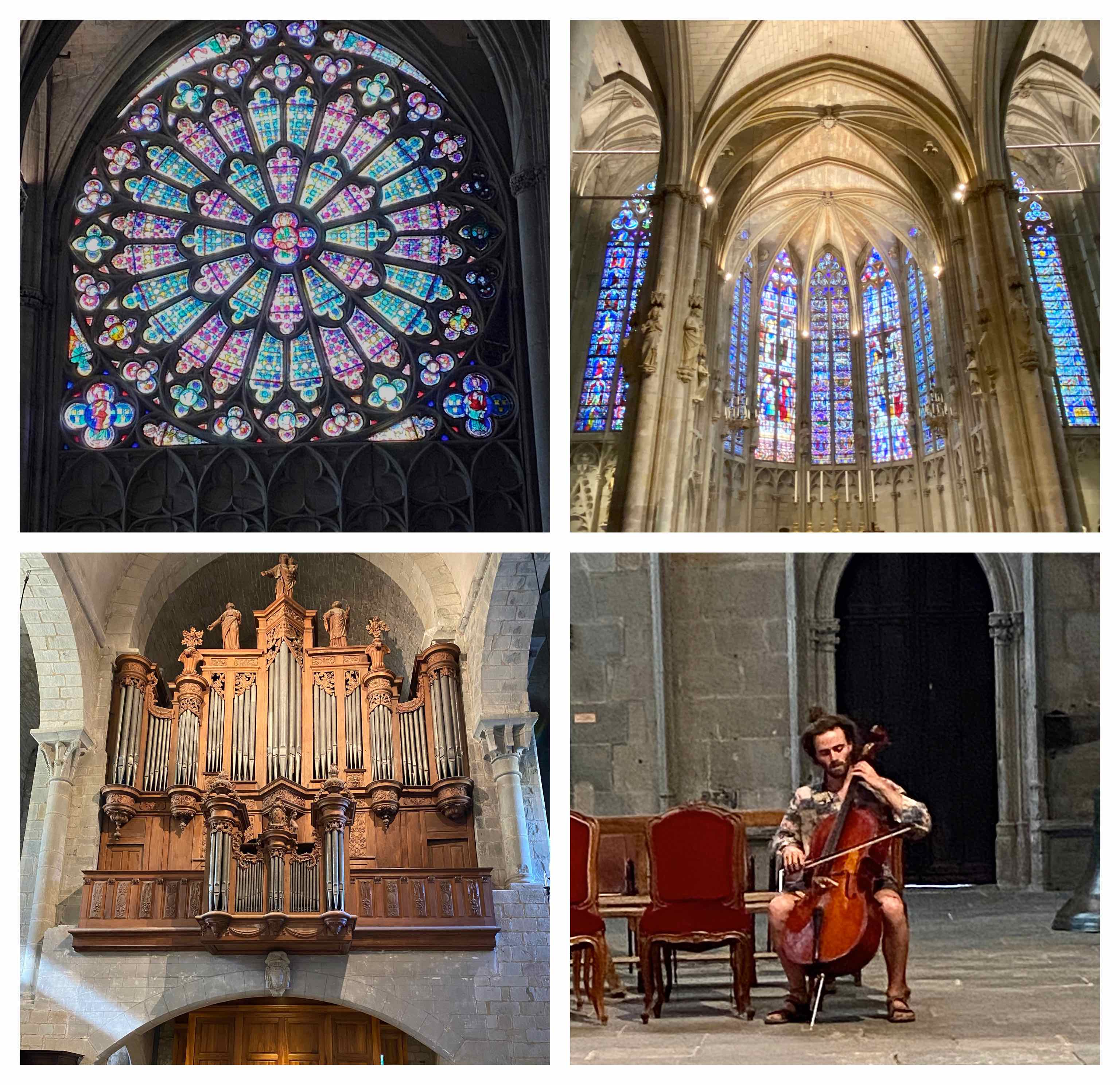
We sit for a while inside the church listening to beautiful cello music.  I think the musician just liked the acoustics…he played several songs and then just got up and left.

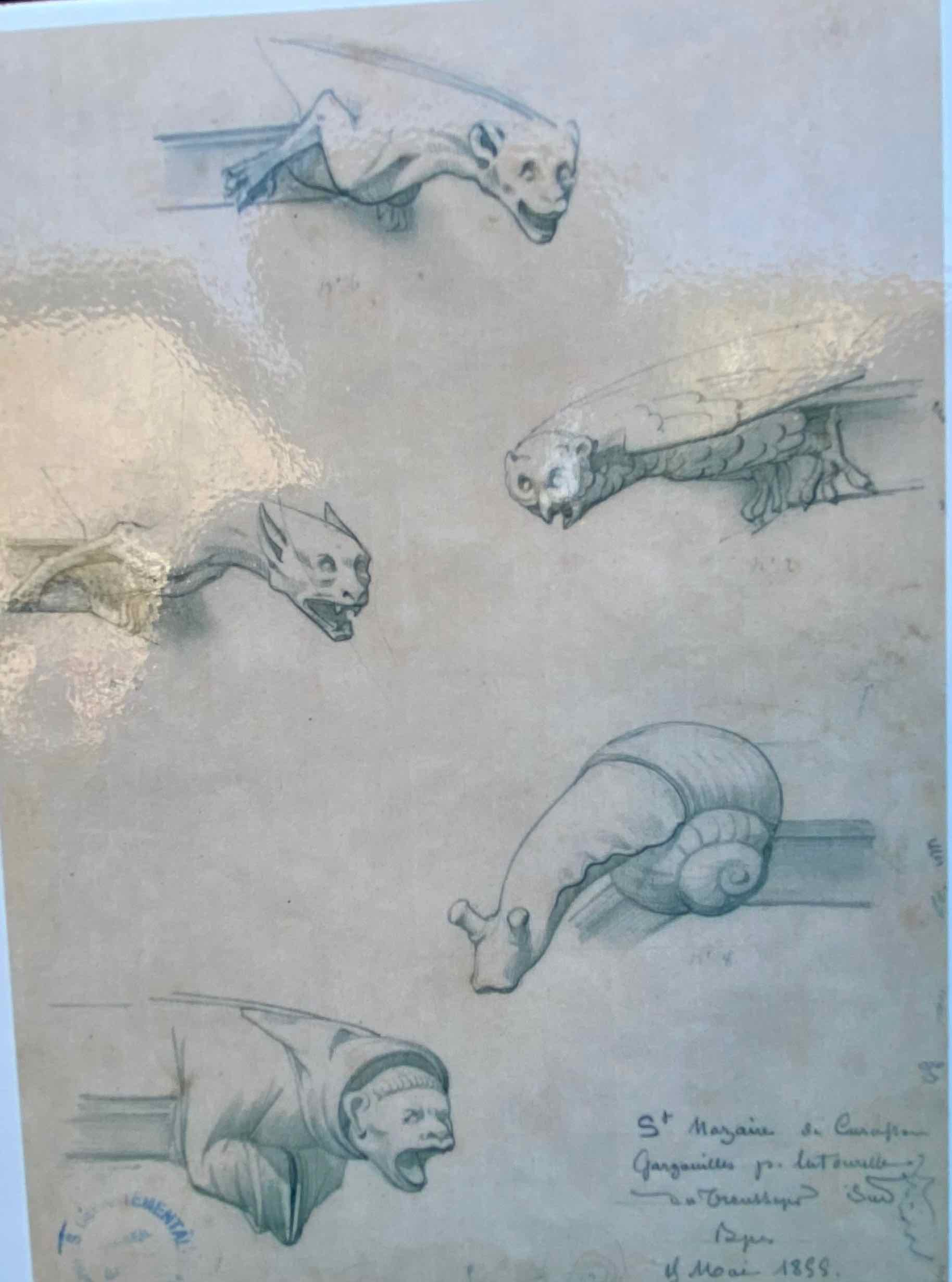
On a plaque outside the church is a reproduction of drawings of some of the church’s gargoyles drawn in 1858.  I guess I am not the only one who likes gargoyles!

On our way home.


Sarlat le Canéda, France

Day 36, Tuesday, October 3, 2023

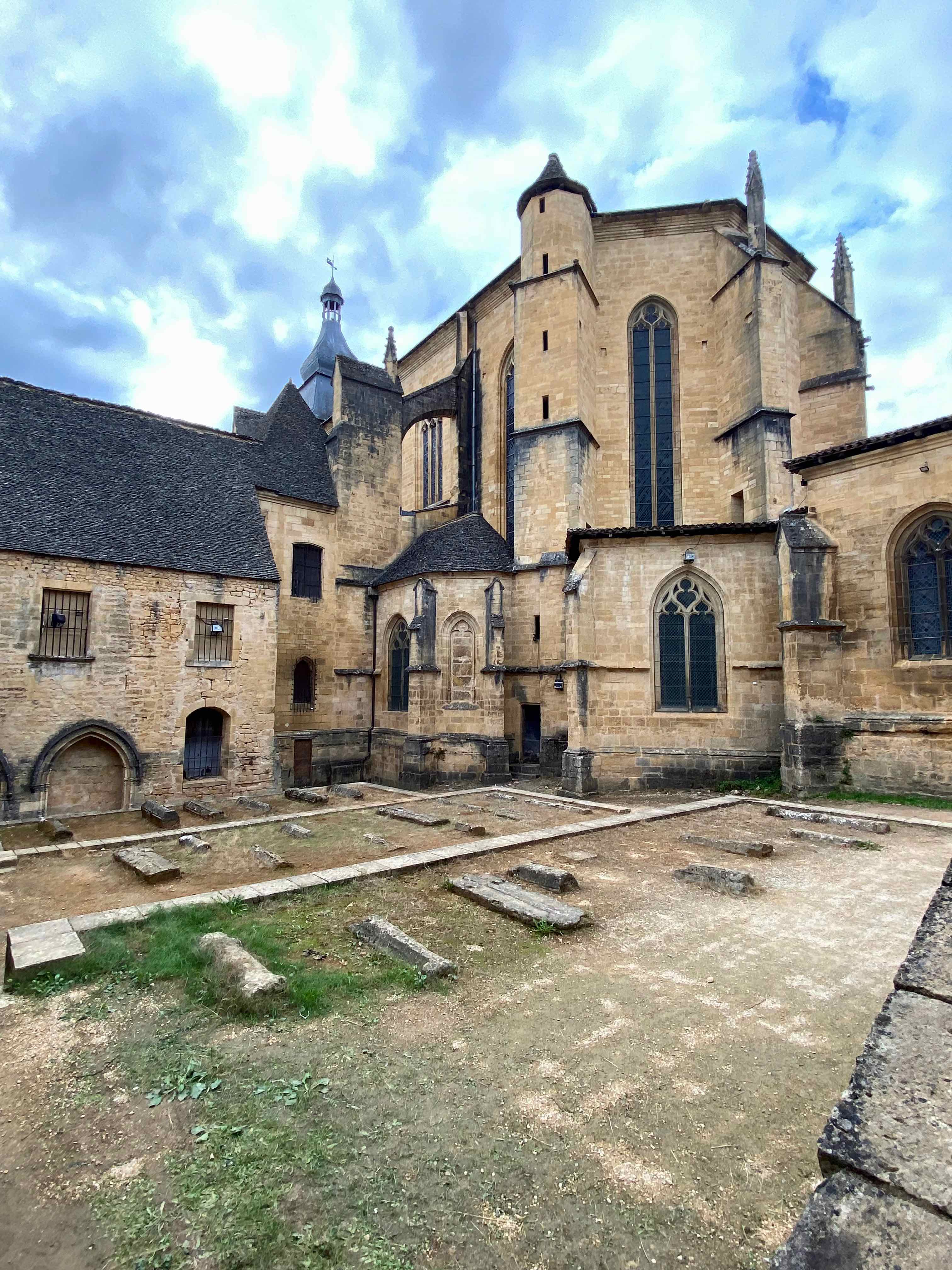
Bob is out early exploring the streets of Sarlat and he comes home to tell me how interesting this medieval town is. We both go out in the afternoon for a walk. Sarlat Cathedral, just around the corner from our apartment is a Roman Catholic church.  It is a national monument and was established in 1317!  We hear its bells chiming several times a day. It is a nice wake up call at 7:05 am when the bells chime for several minutes.  The ringing of the bells at 7:05 am and 7:05 pm each day is called “Angelus,” and that it is an ancient pattern of bell-ringing that is a call to prayer for Catholics to pray a particular prayer.  This is the back of the church, with several ancient sarcophagi, which I discovered is the plural form of sarcophagus.

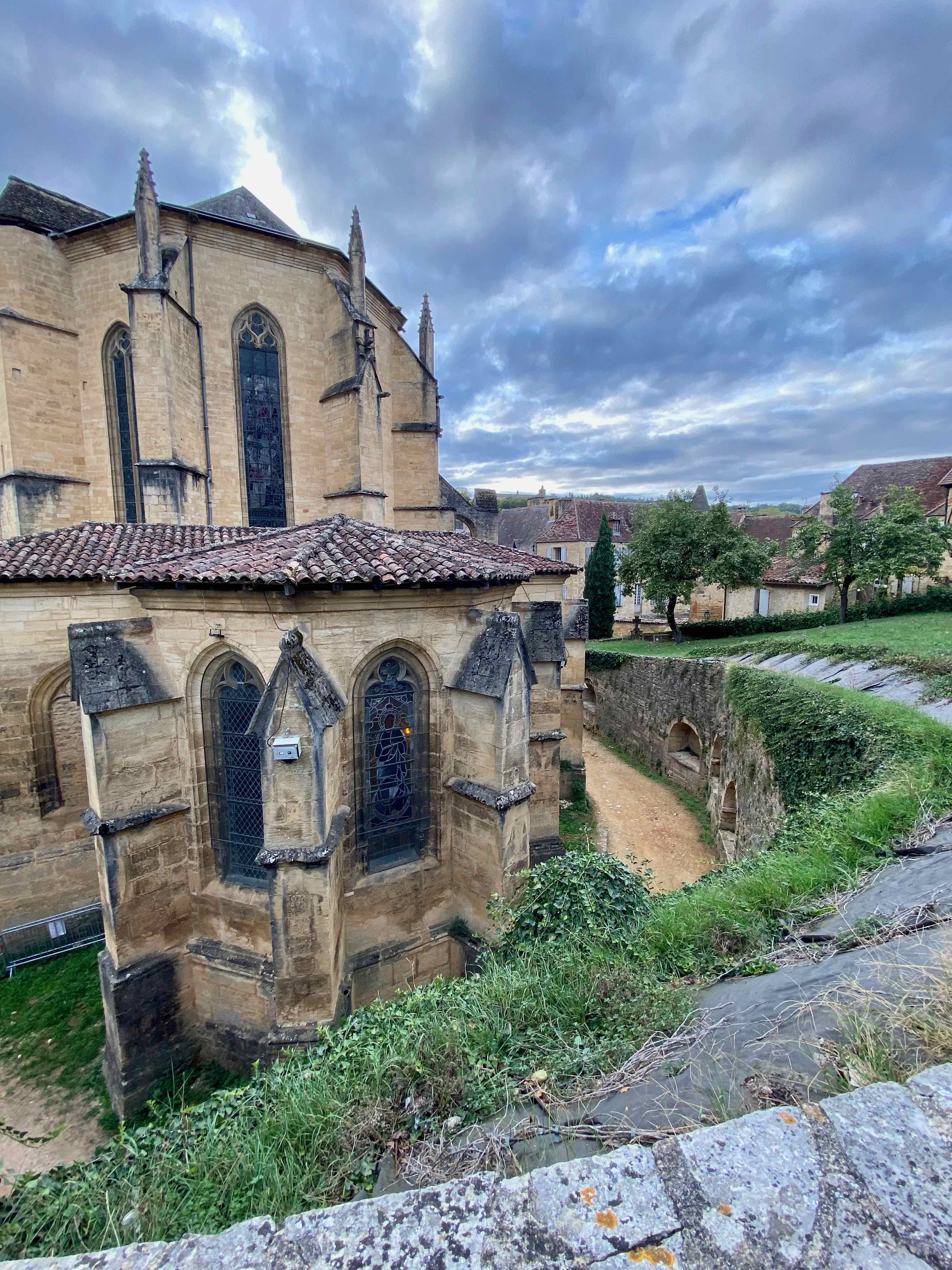
We climb the steps behind the church and I notice a light shining through the stained glass window, although the church is closed at the moment.

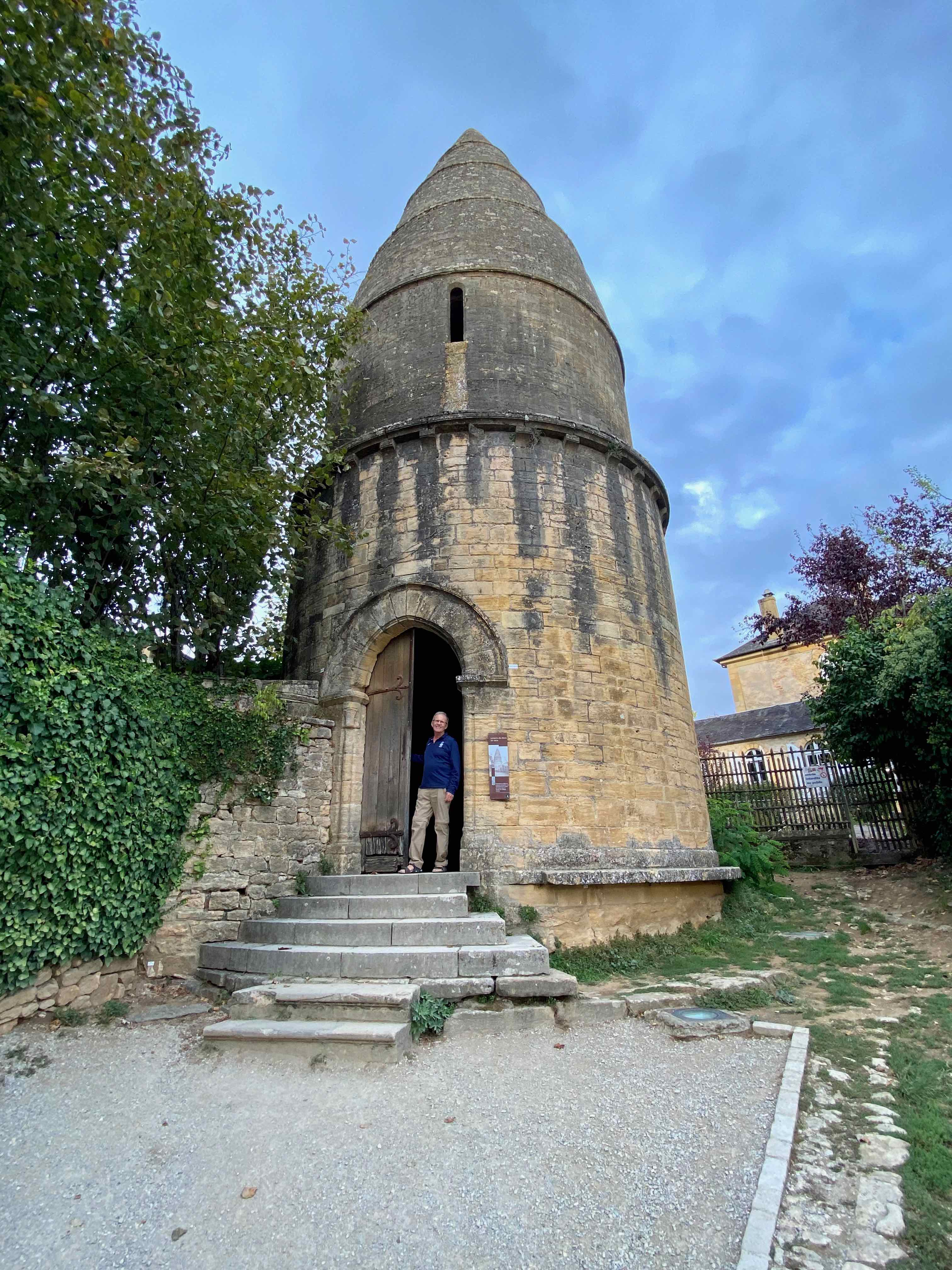
At the top of the steps behind the church we find this Lanterne des Mortes, which means Lantern of the Dead. Lanternes des Mortes are small stone towers. “Pierced with small openings at the top, a light was exhibited at night to indicate the position of a cemetery, hospital, or leper colony. These lanterns were originally constructed to warn passers-by of the danger of infection, as well as to illuminate cemeteries where it was feared that repenting souls, ghosts, and criminals could hide. Later, they were also erected at the intersections of important routes and roads.”  ~Wikipedia

Bob checks it out but there are no repenting souls, ghosts or criminals about.

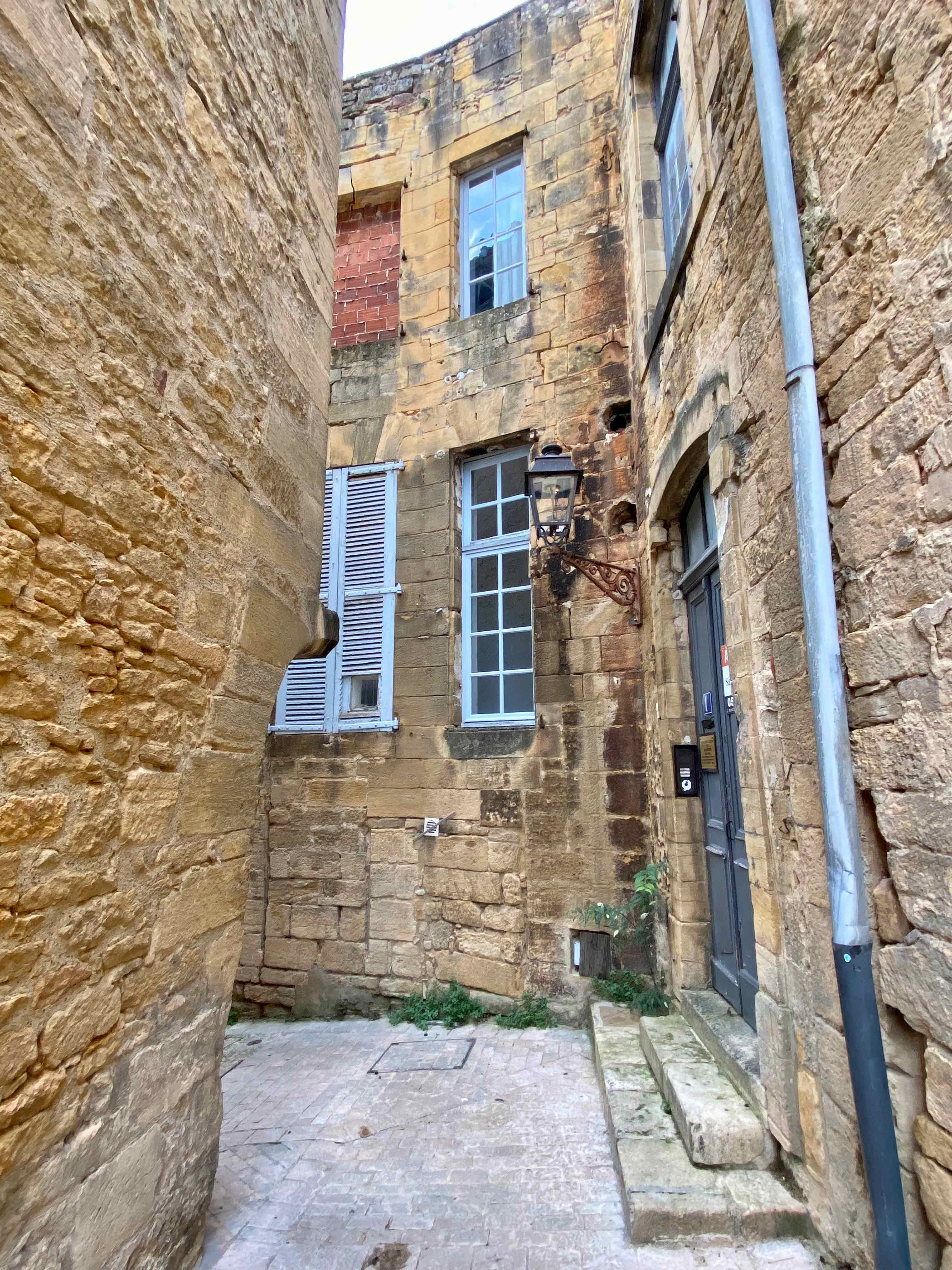
We continue to explore the old narrow streets.

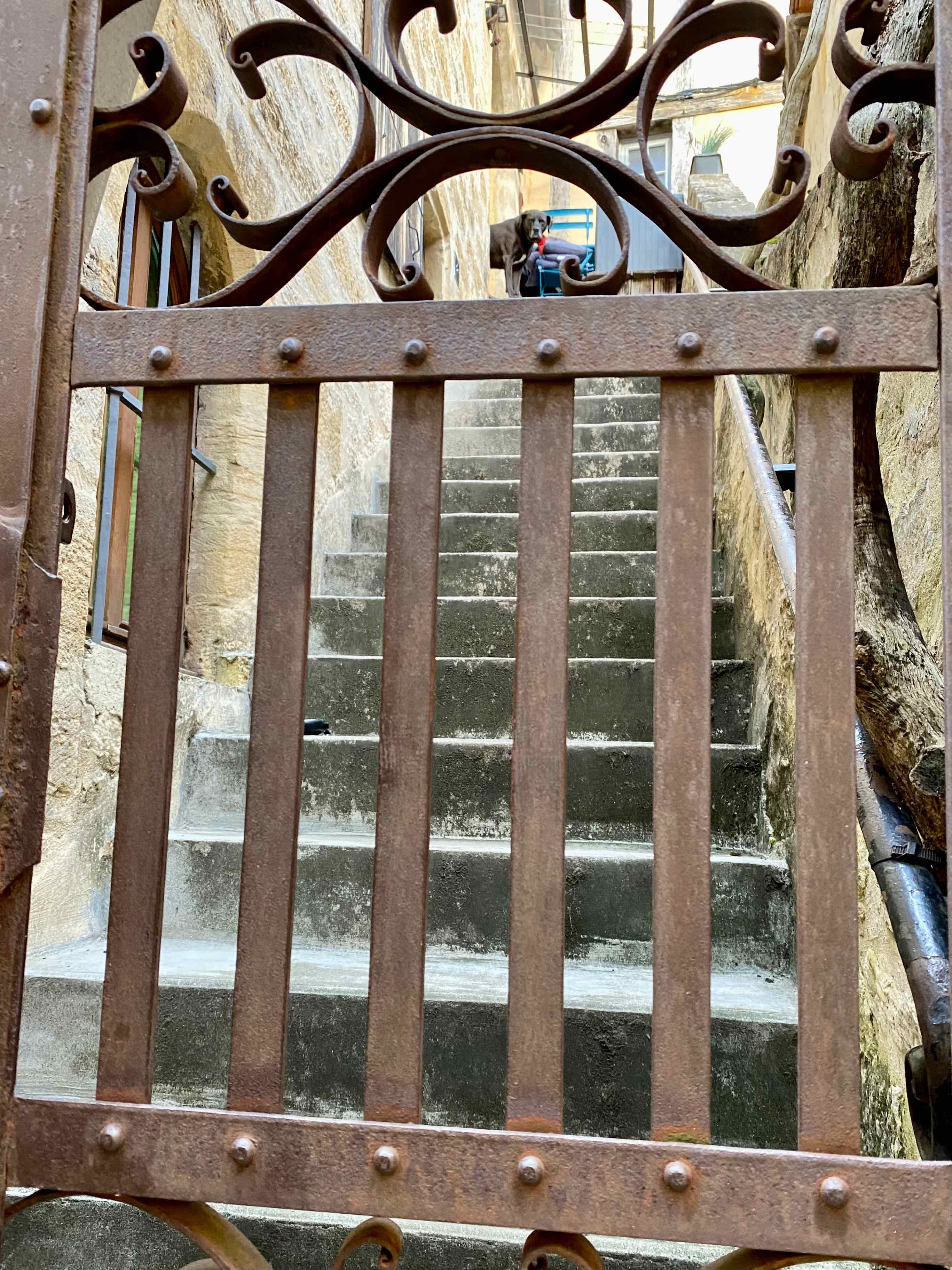
This very large dog just quietly watched us peek through the gate, even when I called to him he didn’t move a muscle.

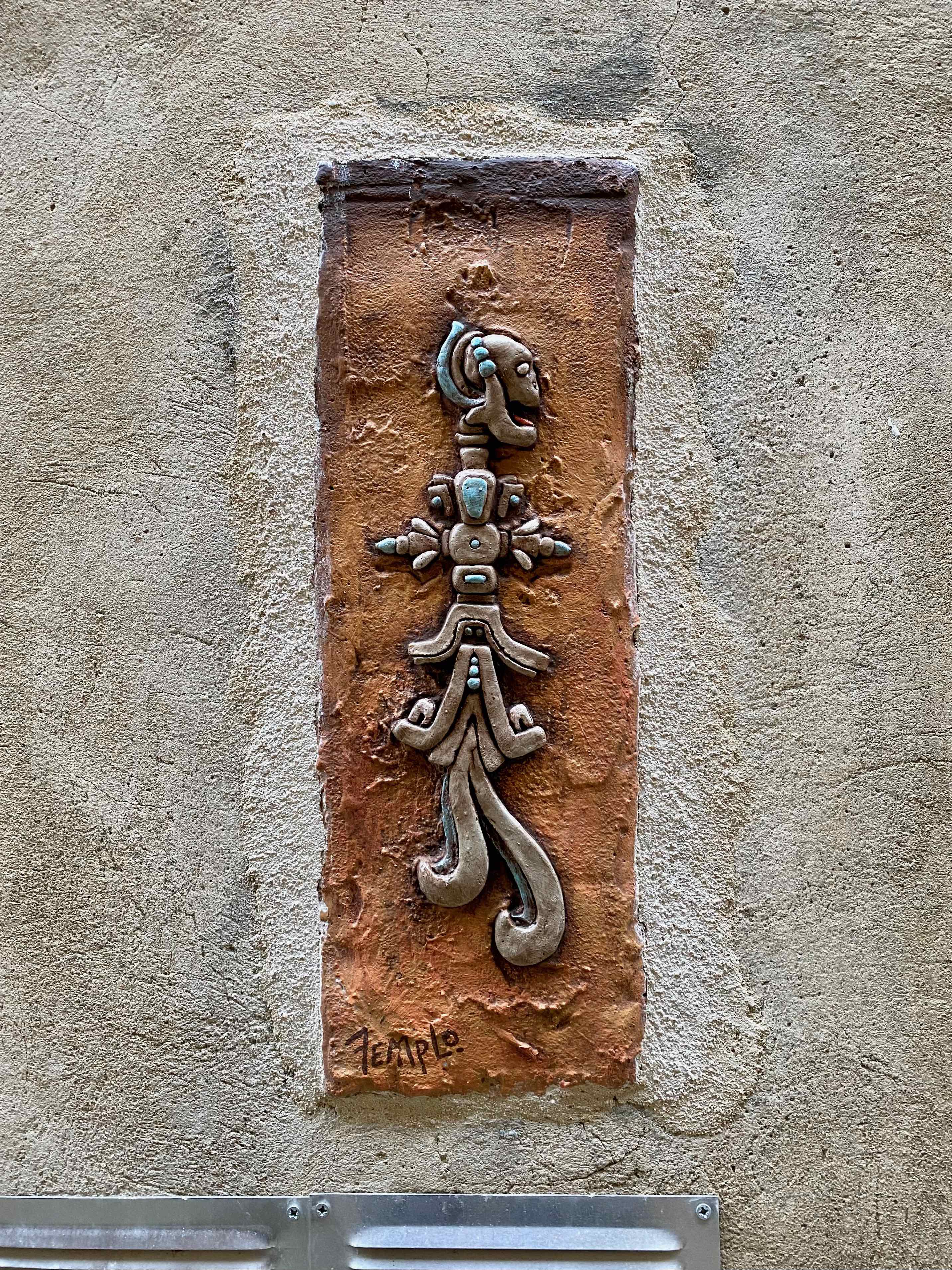
Someone cemented a little piece of art onto the wall on one of the side streets. It makes me smile.

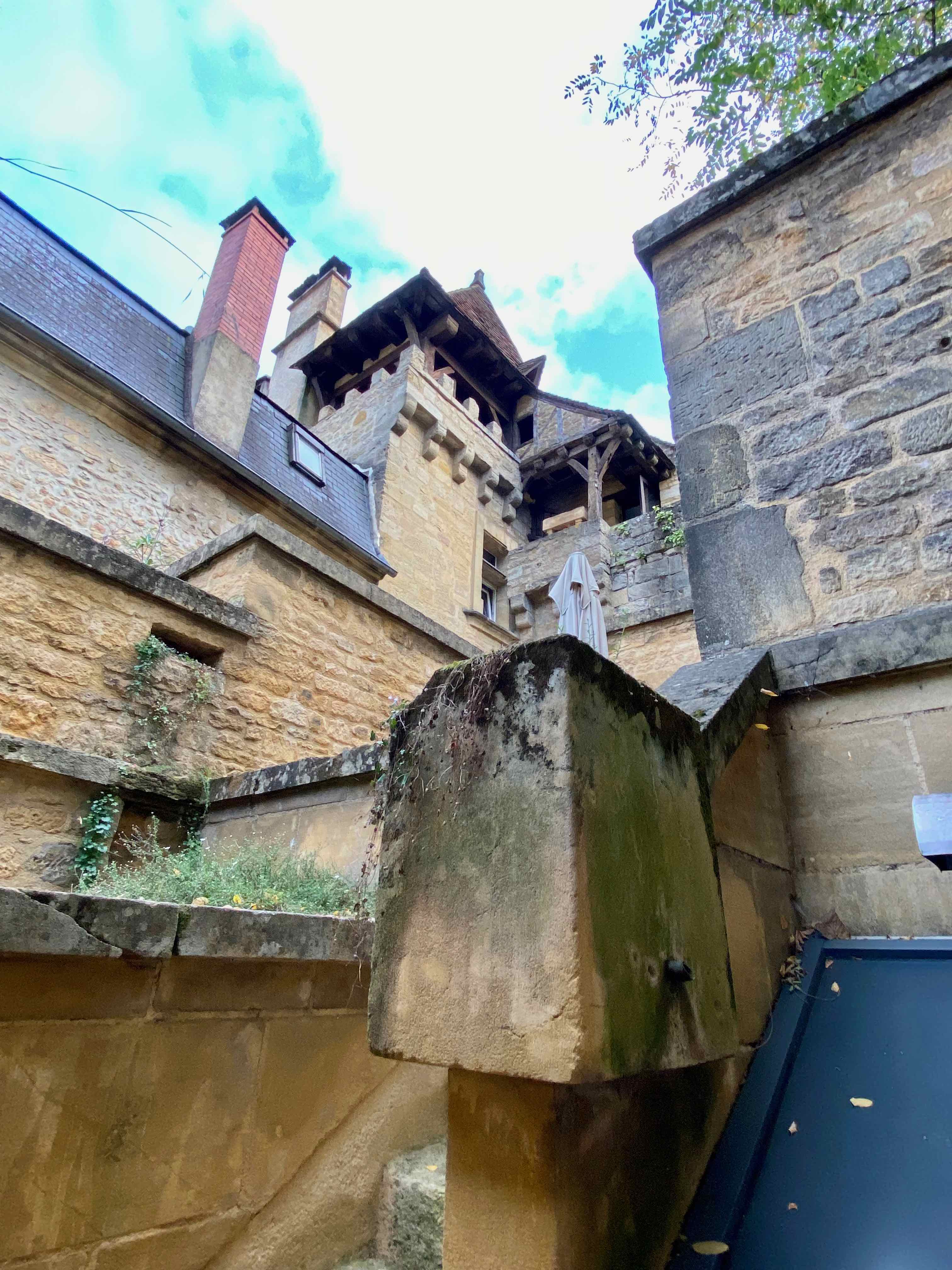
Everywhere we look the old buildings are crammed together, often one on top of another up the hillsides.  This one looks a bit castle like.

This charming little stained glass room is on the roof of the Présidial, which was built in the17th century.  At the time it was a sort of Court House where a Royal Officer would hear complaints and make rulings.  

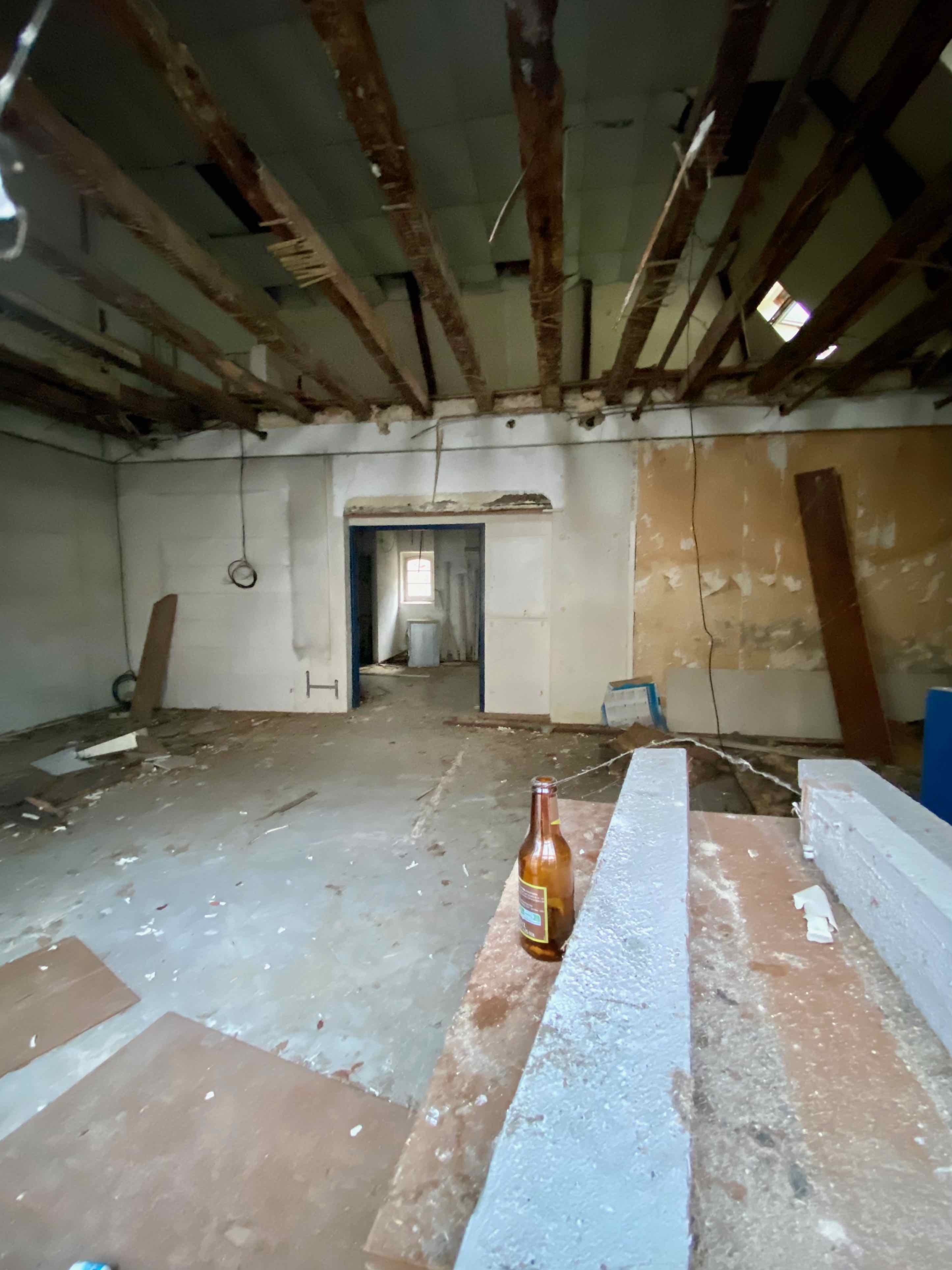
I have mentioned that I love peeking in windows and courtyards whenever it is possible.  I don’t think this is being renovated, it just sits empty.  

A block or so away a renovation is definitely taking place. there even was a box with old dishes sitting on the sidewalk, free for the taking.

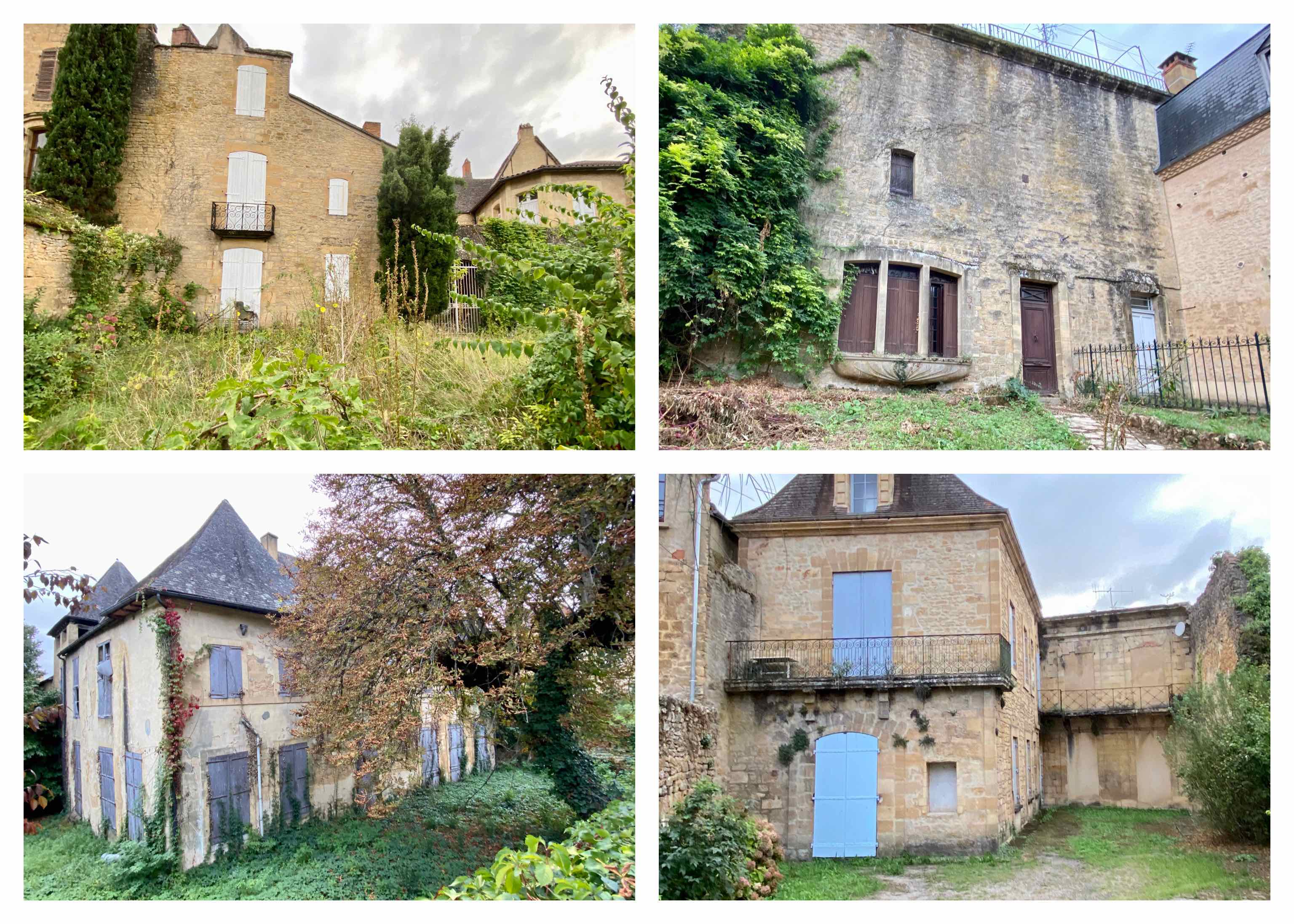
There are so many old houses boarded up and for sale.  I think we could probably buy one quite reasonably, but the renovations would be terribly expensive. If they are historic buildings, which they probably are, there are many restrictions on what renovations are able to be done and how they are done.  Guess we will pass on owning a little piece of Sarlat.

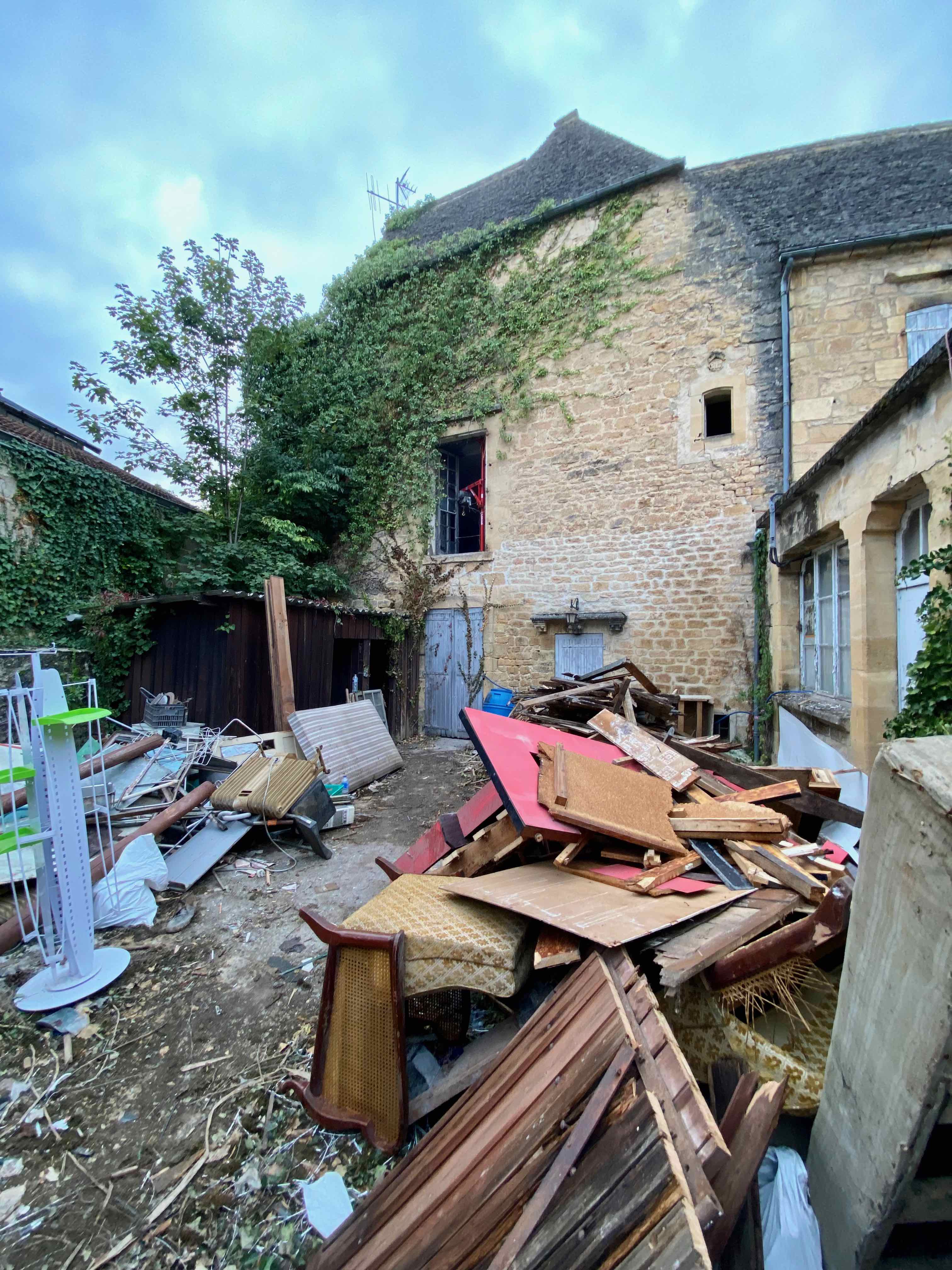
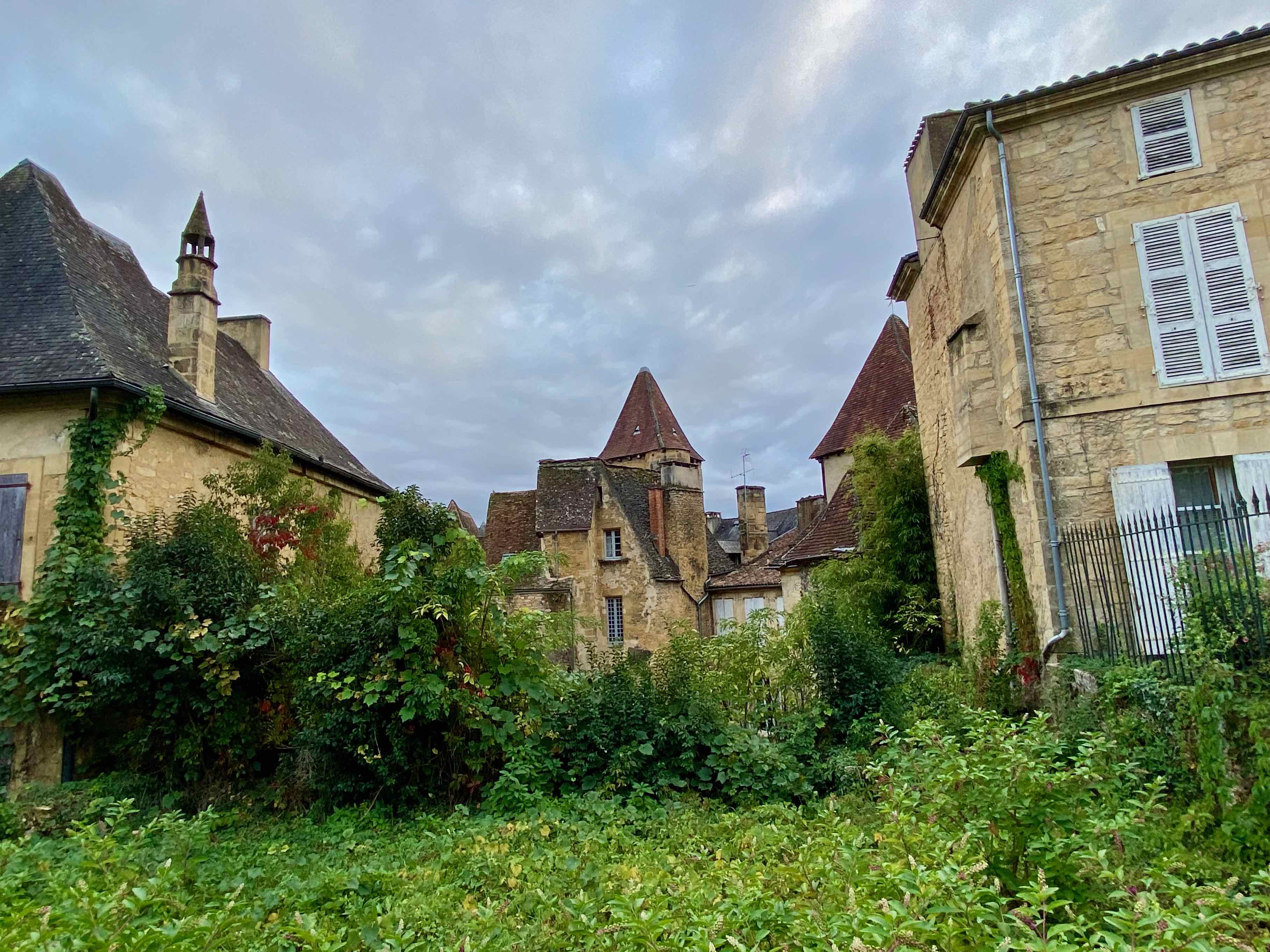
Most of the yards in this area are very overgrown and unkept.  Tidy gardens are not the norm here.

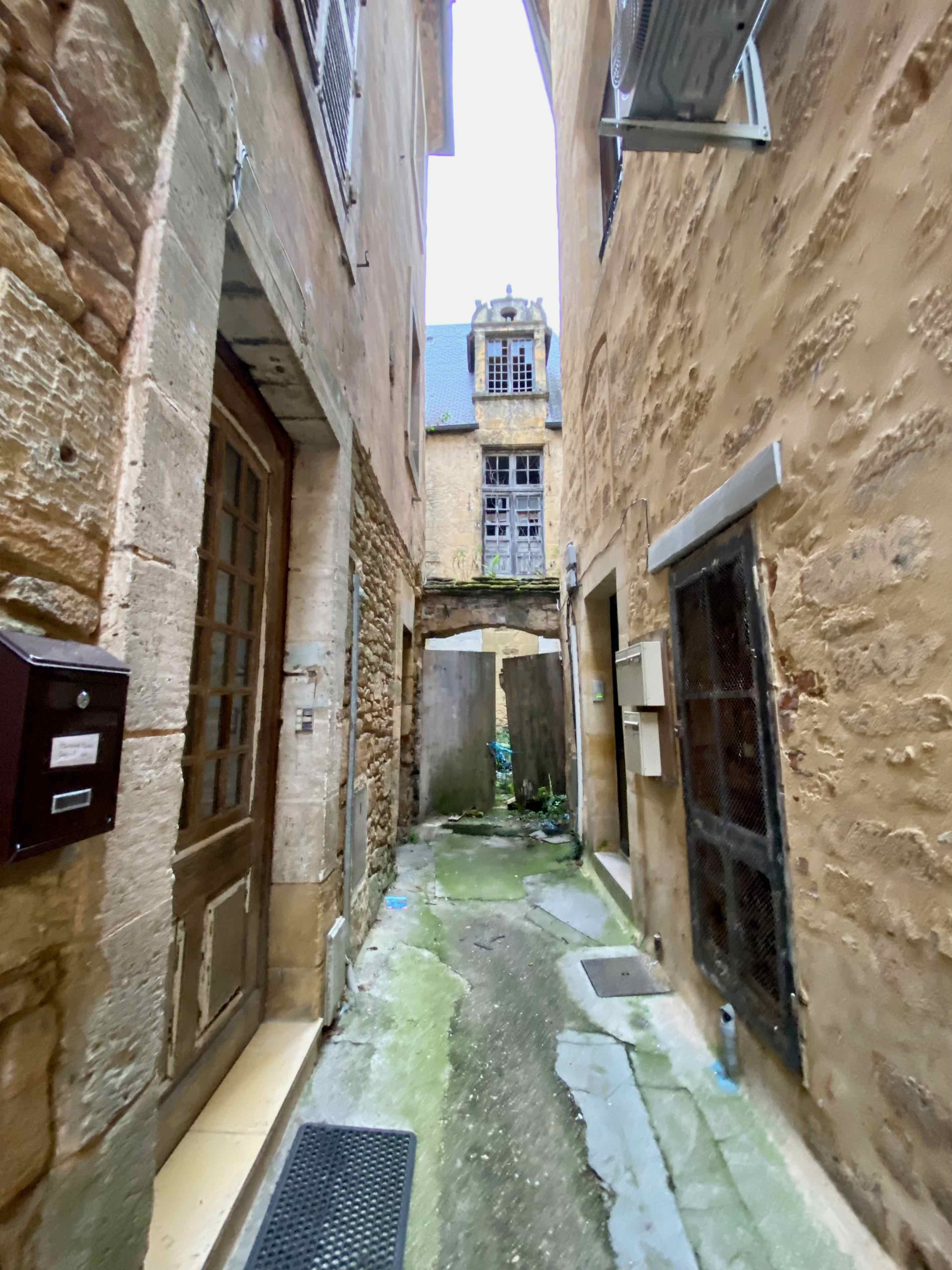
This narrow street ends in an abandoned overgrown yard and building with a lot of ‘stuff’ lying about.  Kind of creepy but just before the broken gate leading to this are doorways to apartments with new mailboxes and doors.  I wouldn’t want to be walking home at night here.

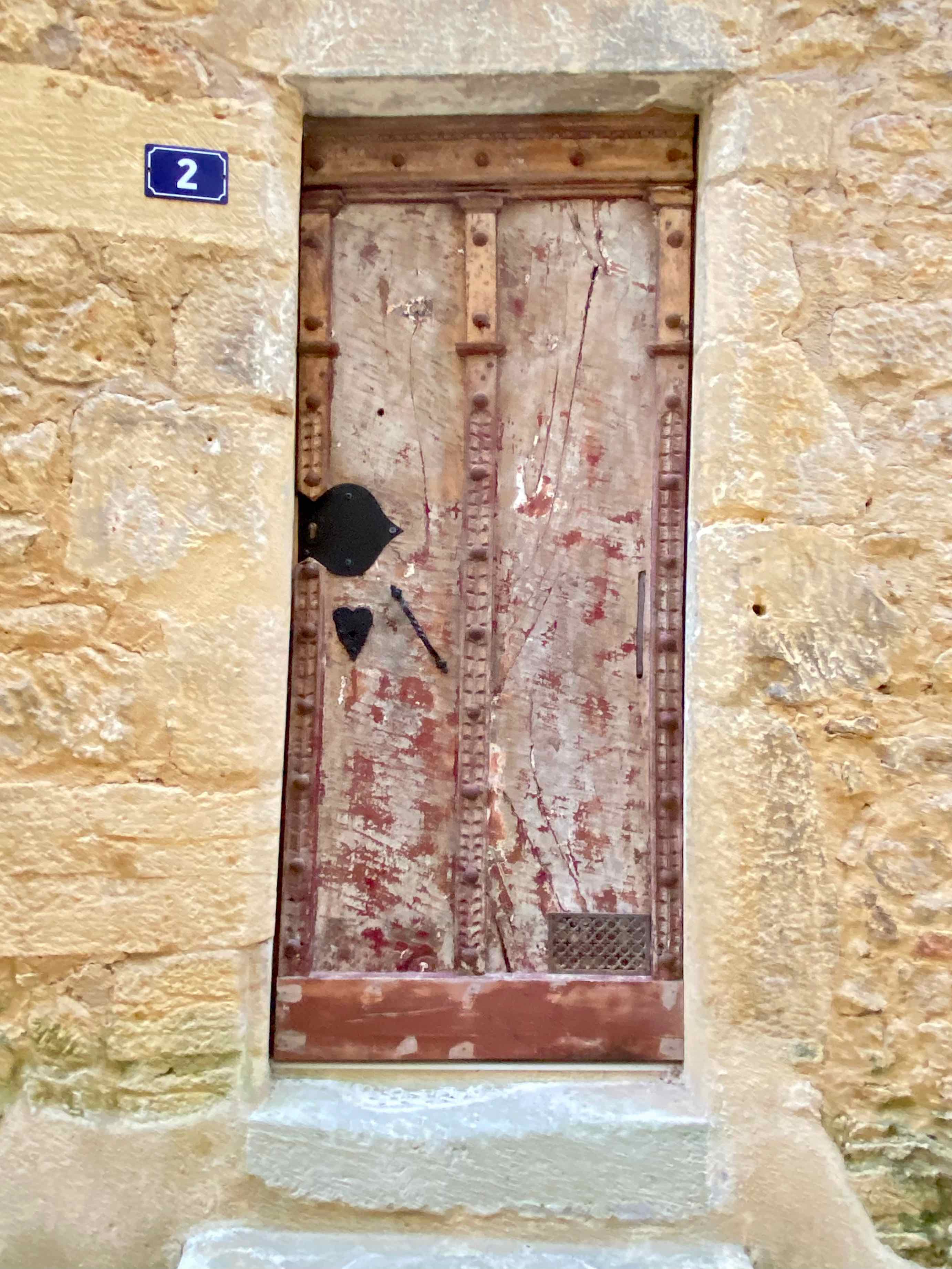
I don’t know what it is about French doors, but so many of them are very very old, and have peeling paint like this one.  But notice, it has nice new hardware…just not a new paint job.  There seems to be some sort of pride in having a very ancient looking door.

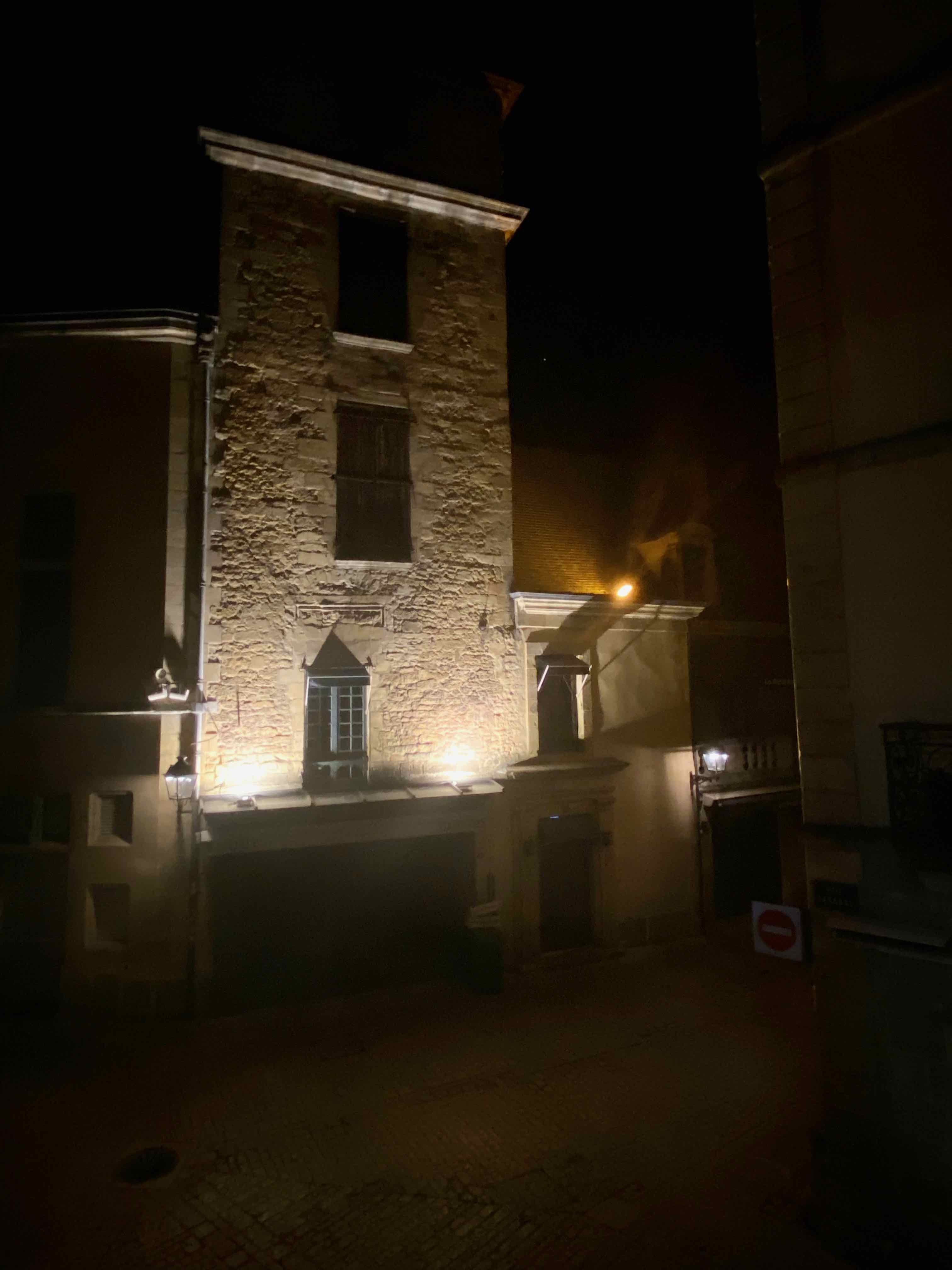
I forgot to take a daytime photo from our apartment window but this is the view when it is dark.