Day 23, Tuesday, September 17, 2019
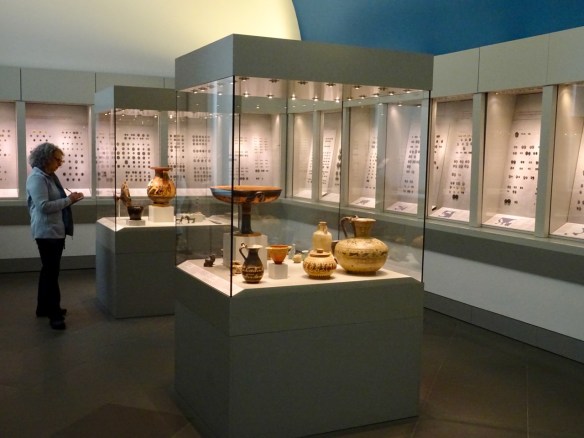
The Altes Museum displays treasures of the classical world with Greek, Etruscan and Roman art.
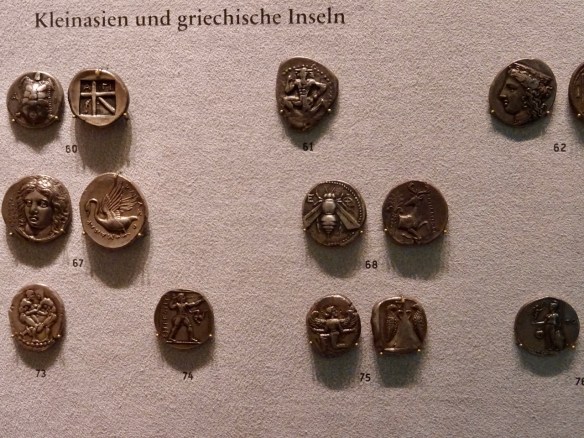
I often forget that the white marble Greek sculptures were originally painted in life-like colours. This fragment of a grave stele retains some of its original colour.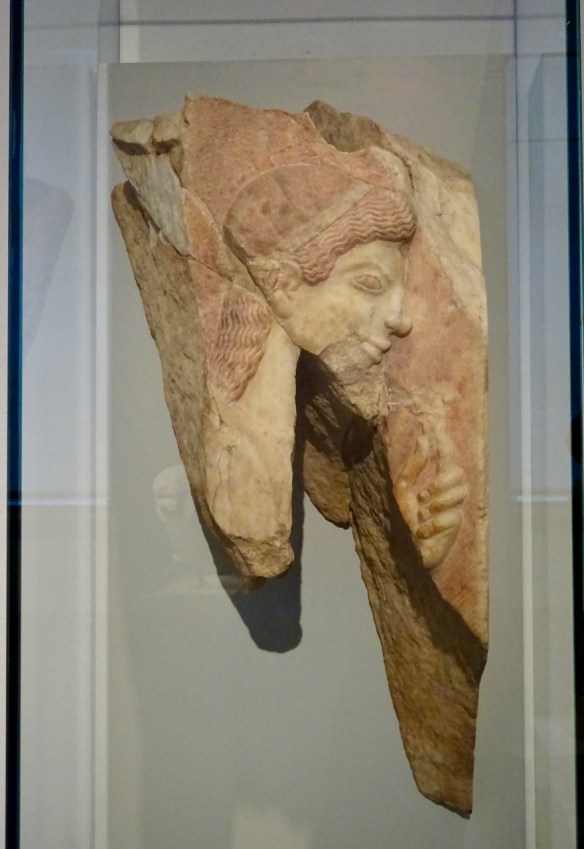 We were surprised at the detail of some of the1,300 ancient coins on display. The museum has more than 150,000 coins in its collection!
 Bob snaps a photo of me sketching…
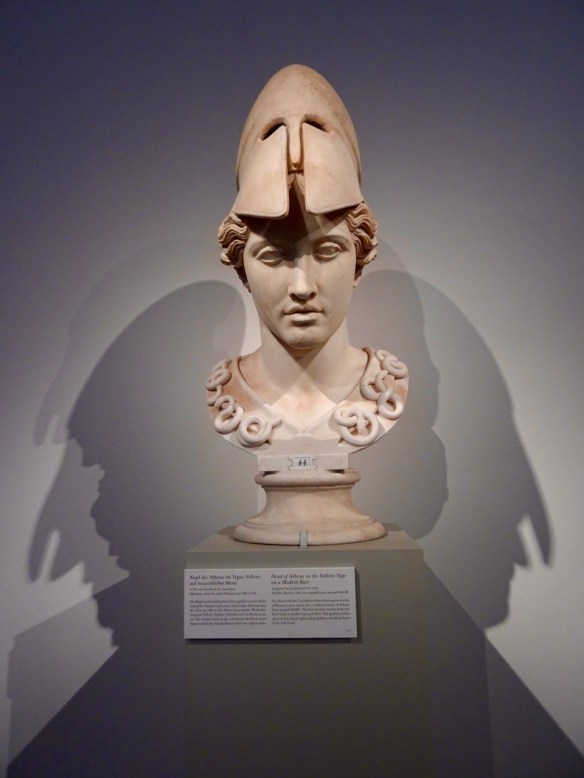
 and then notices the shadows behind this bust. He is getting very ‘artsy’!
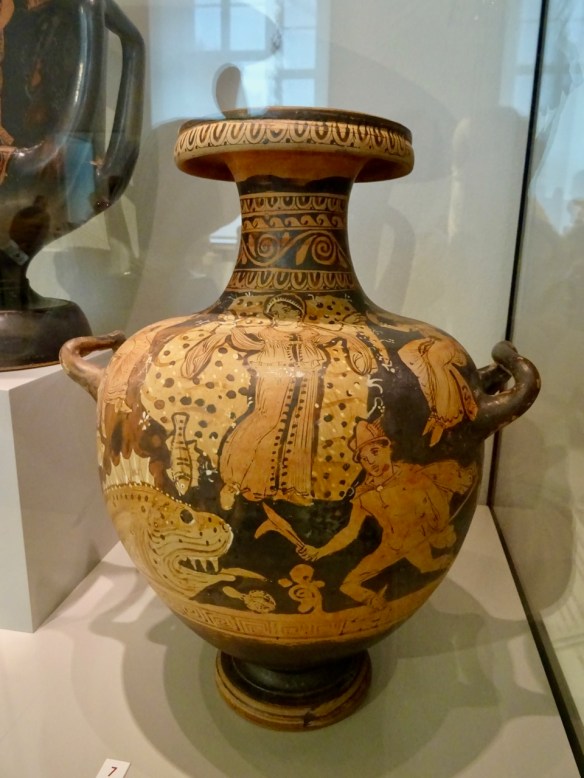
 This Greek vase from 350 BC showing Perseus slaying a sea monster with a sickle is quite different in design than most of the vases we have seen.
 The rotunda has a huge dome with a round skylight and has an incredible collection of sculptures on both levels.
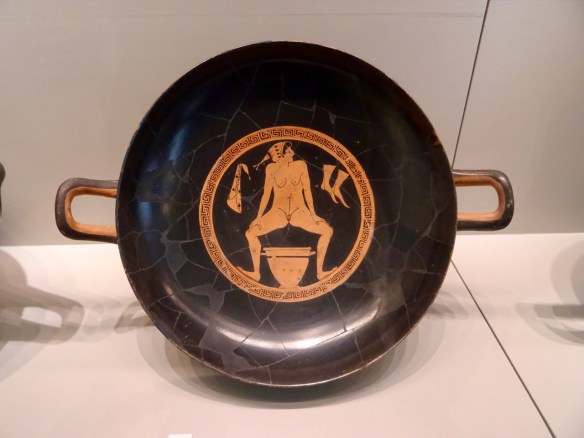
 In the next room this rather unusual drinking cup, is titled Hetaera Above the Chamber Pot!
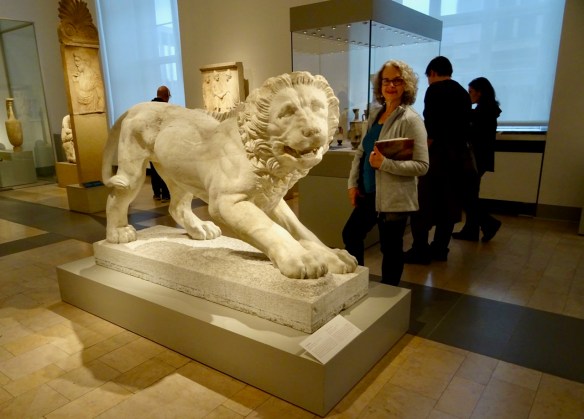
 This Funerary Lion just makes me smile…
 and I love this statue of a mourning female servant from 330 B.C.
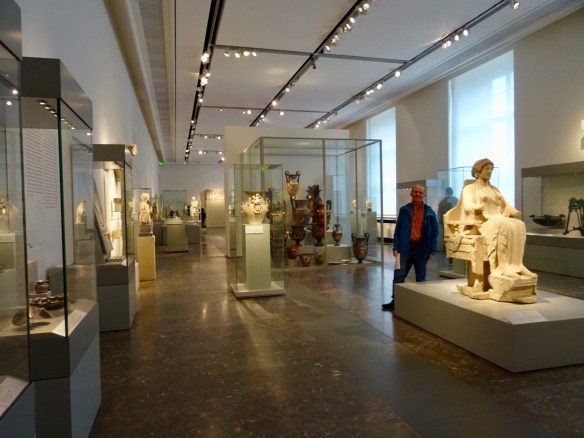
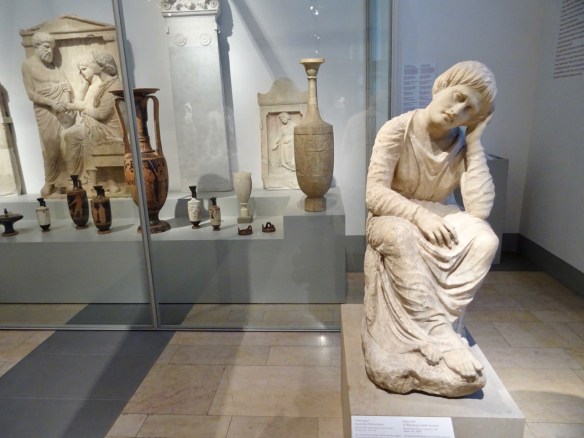 There is so much to see here, room after room filled with beautiful art.
 The Torso of an Old Fisherman, from 200 B.C. is an example of Hellenistic sculpture representing ordinary people.
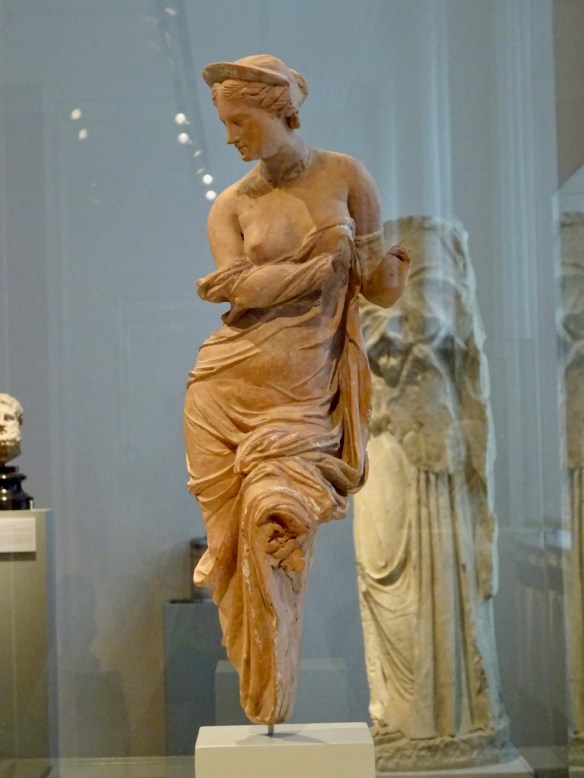
 This statue of Aphrodite, 2nd Century B.C., is thought to be one of the most beautiful ancient terracottas in existence.
 I think this collection of Middle Class Women from 325-150 B.C. is amazing. They were about 8 ” tall and are so detailed.
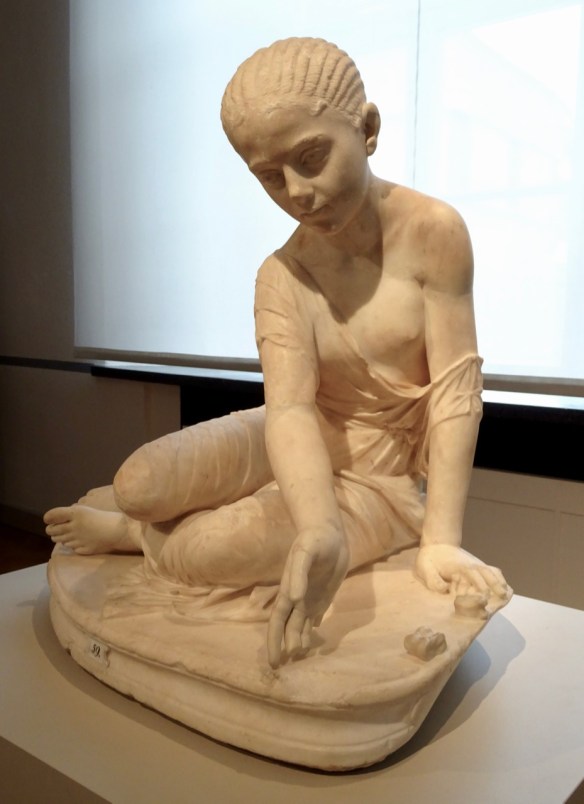
 The Girl Playing Astragal, or knucklebone, is likely a funerary sculpture.
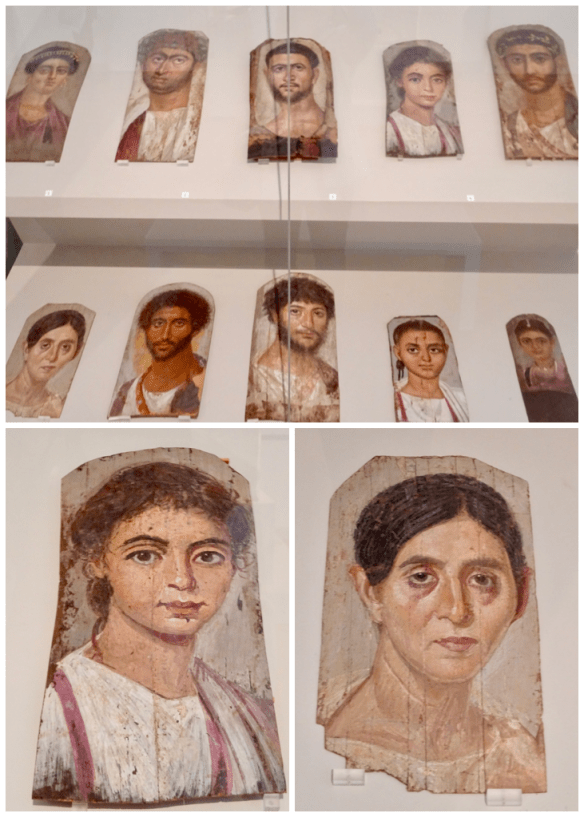
 These 3rd Century A.D.mummy portraits from Roman tombs in Egypt were a surprise. We had never seen anything like them. They were painted with wax and tempera.
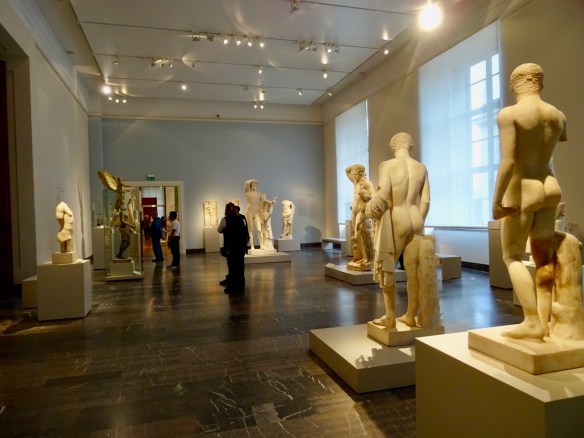
 Another sculpture filled room.
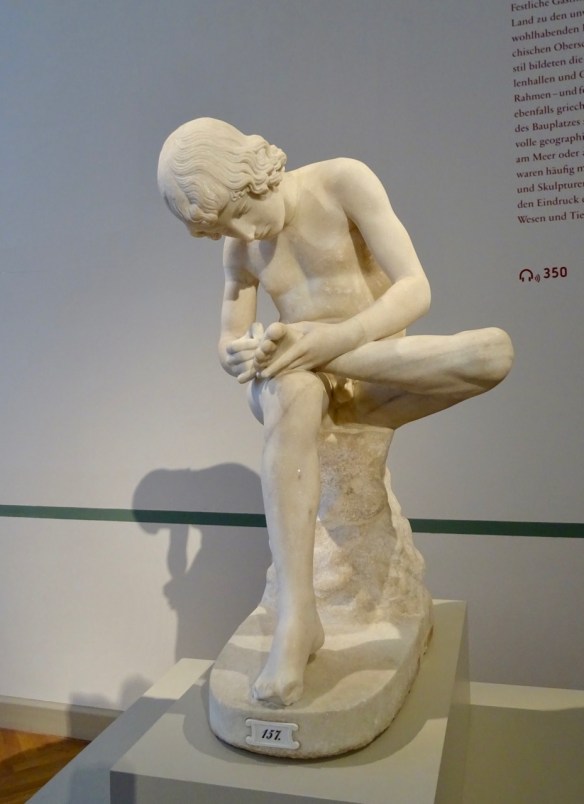
 We have seen Boy with a Thorn, or Spinario, several times in our travels…at the Uffizi Gallery in Florence, in Rome and in Paris. In Rome we saw the original bronze sculpture that inspired the marble copies, It is a favourite of mine.
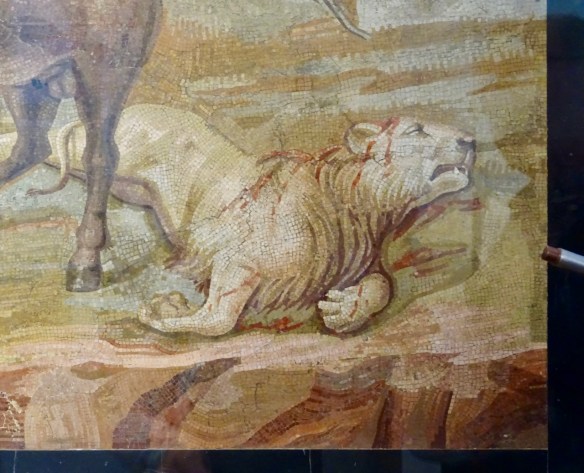
 This looks like a painting,
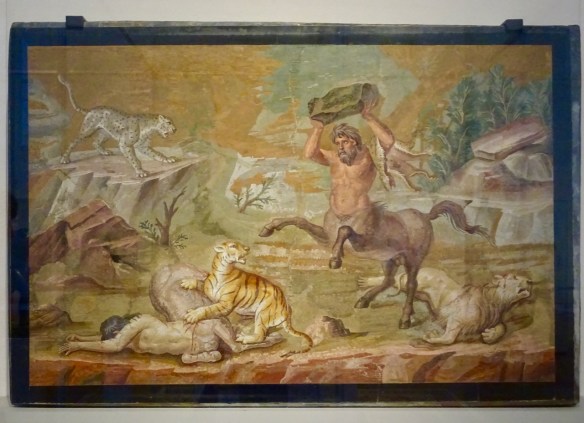 but it is actually a mosaic! I held up a pen in the corner for scale so you can see how tiny the mosaics pieces are.
 This sad little boy was likely on a tomb for a child.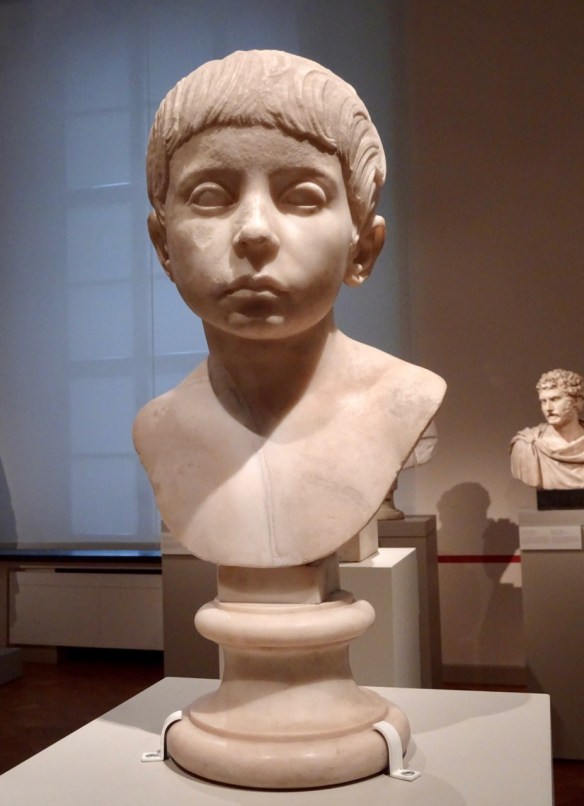
Next is a room with erotic pottery! 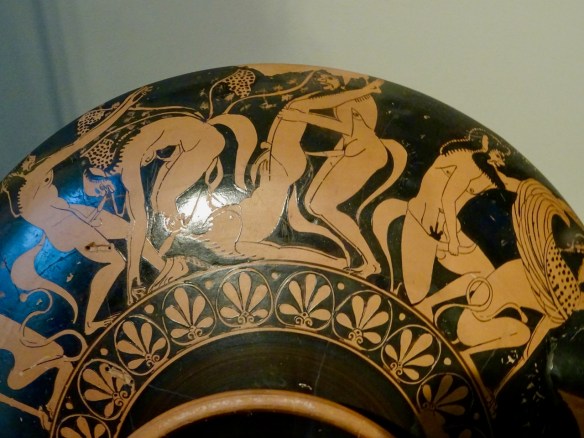 On a long covered walkway to the next museum we see a wedding photo shoot.
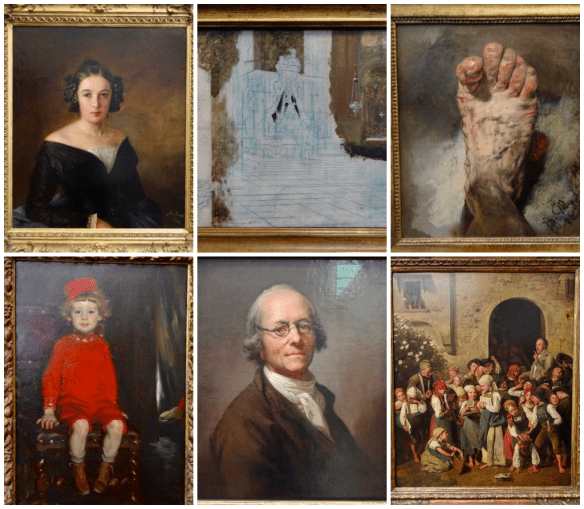
 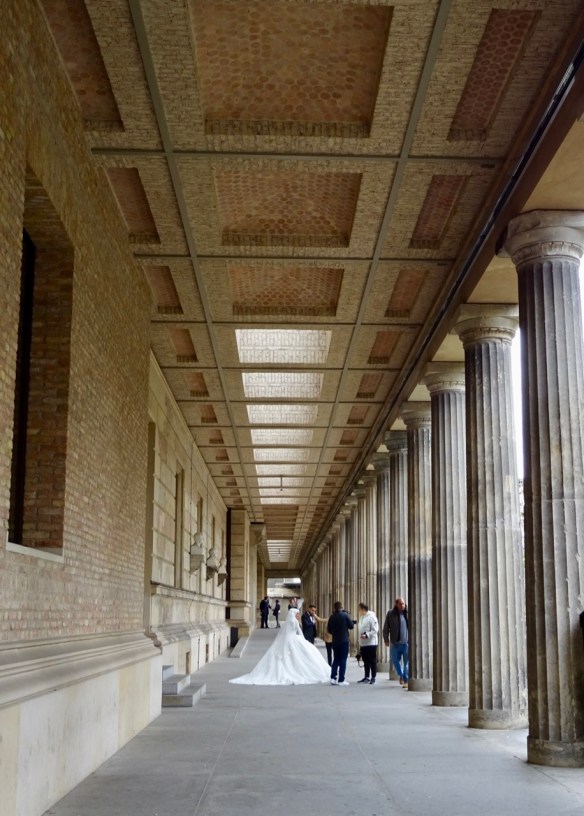 The Alte National Museum in Berlin features Nineteenth Century art with works by famous painters and sculptors. These are a few paintings that caught my eye, all by German painters that I am not familiar with. There were several paintings that are only partly finished. I found these very interesting, as it is possible to see how the artists approach the painting process.
 There were some Renoirs, Pissaro’s and Carravagios, as well as Rodin’s The Thinker.
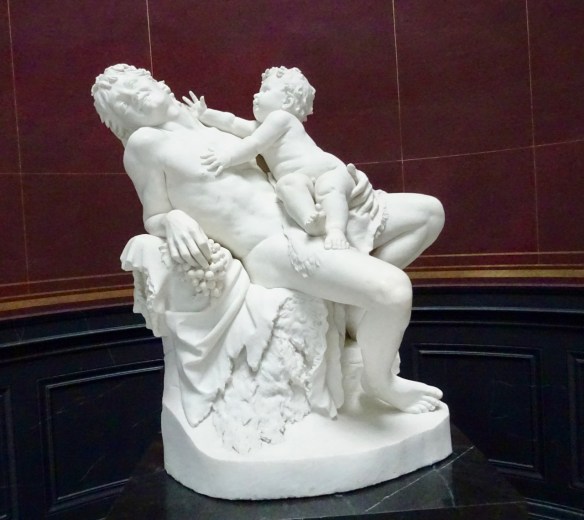
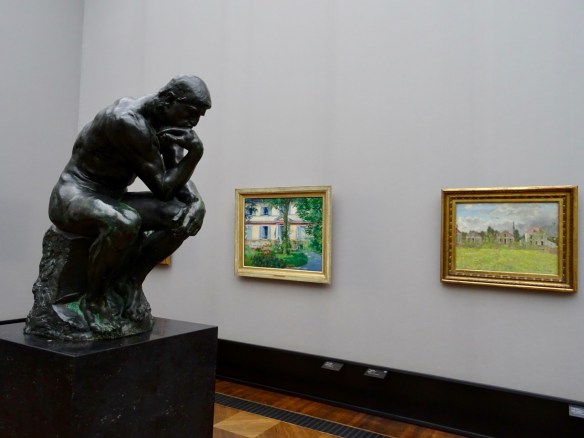 This sculpture was so lifelike and the pose was so natural. There is so much to see, and we have been at these two museums for over five hours!
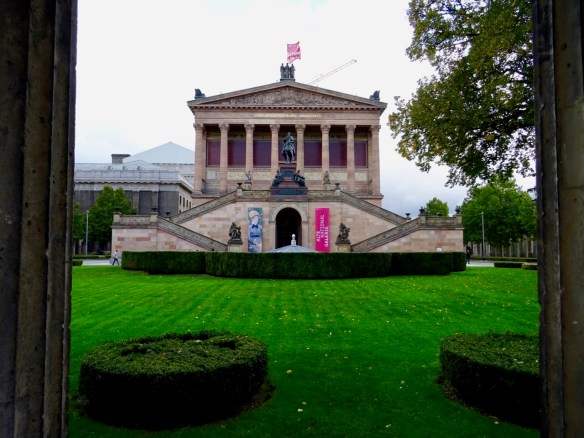
 This is the Alte National Museum, seen from the covered walkway.
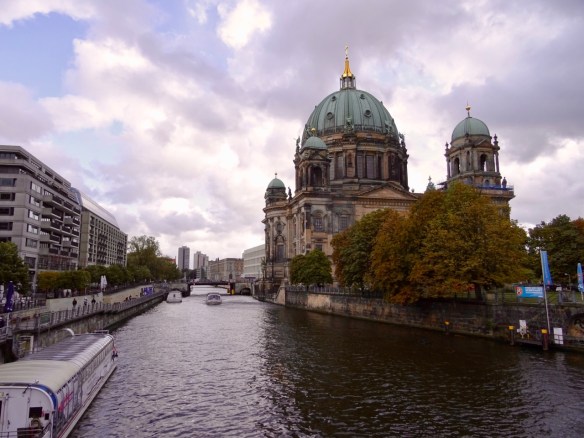
 As we walk to the bus we pass the Berliner Dom, the largest church in Berlin. This photo somehow makes me think of Notre Dame in Paris.
  I am went drawing tonight at a Meet Up Life Drawing session. Our model, Josephine, was very tall and thin which was challenging to draw. These are two minute poses.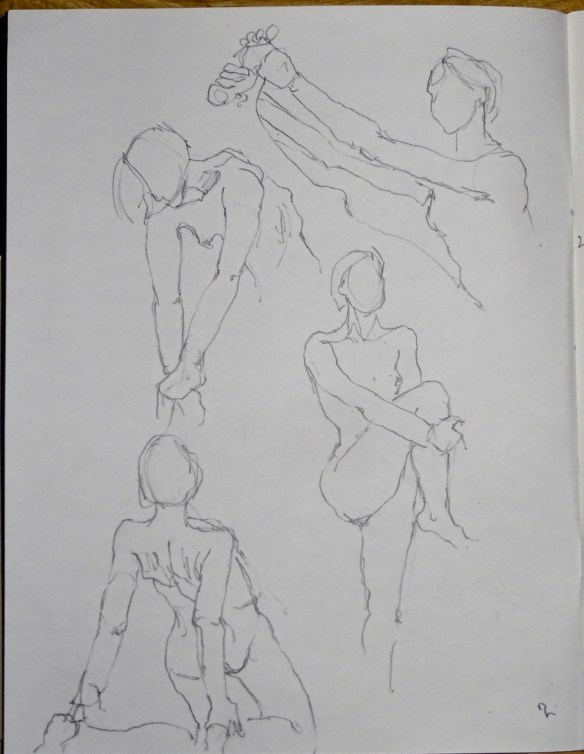
A two and a five minute pose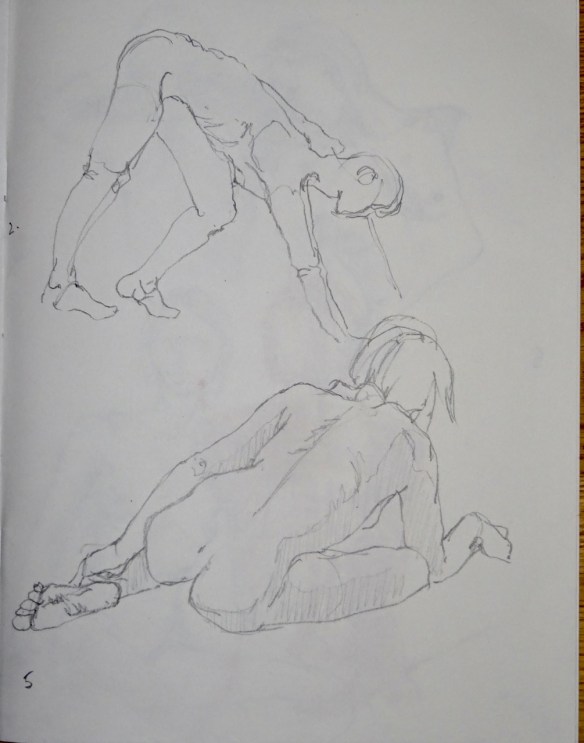
A five and ten minute pose.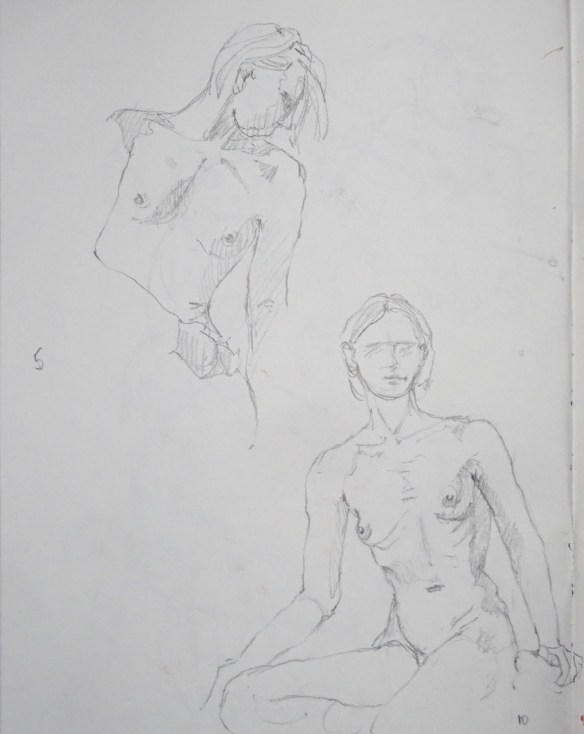
Ten minute and twenty minute poses.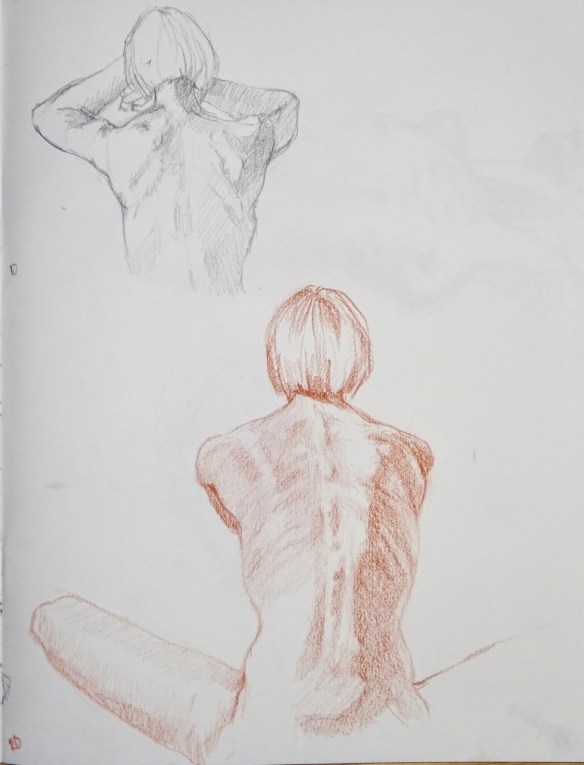
And finally two twenty minute poses. 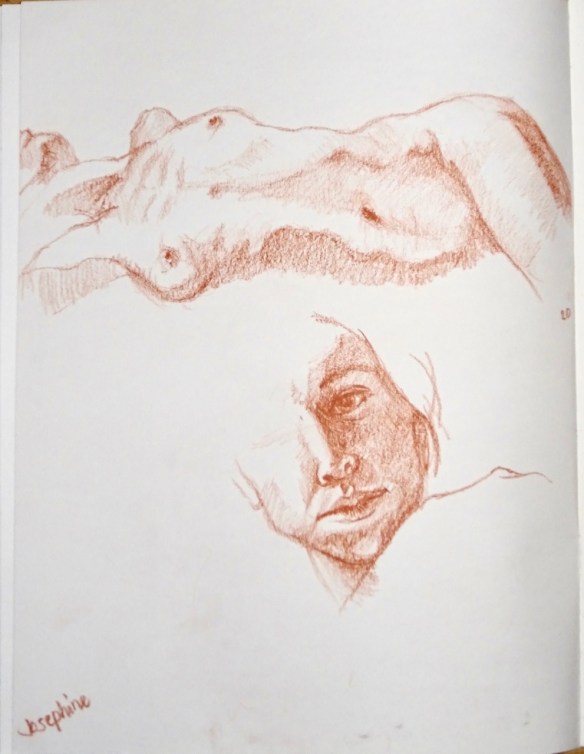
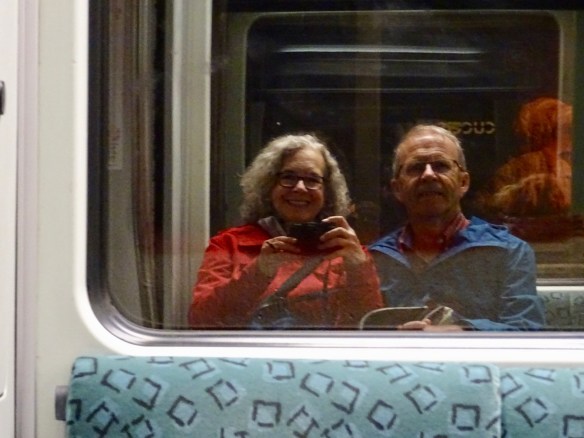
Bob went to visit a German Spy Museum while I was drawing. He saw an Enigma machine and failed a spy aptitude test. I guess he is not James Bond material! On the way home I capture our reflections in the subway window.
 This is something we don’t see at home…taking your IKEA purchase on public transportation! It has been a long busy day and we are both a bit tired.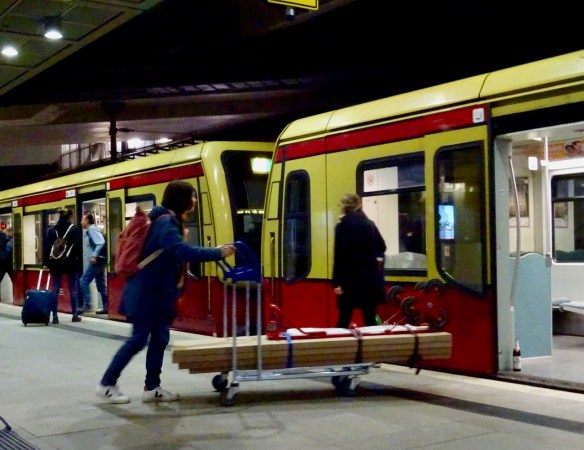
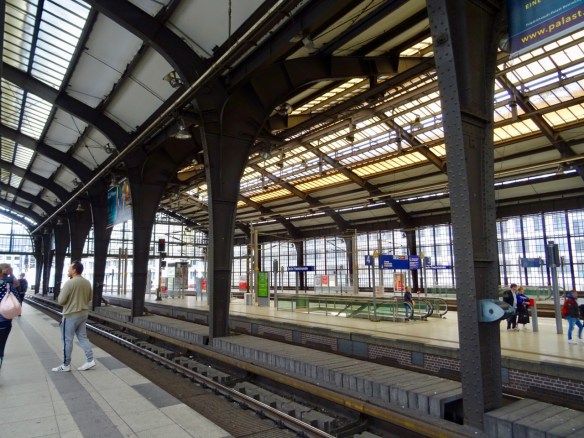
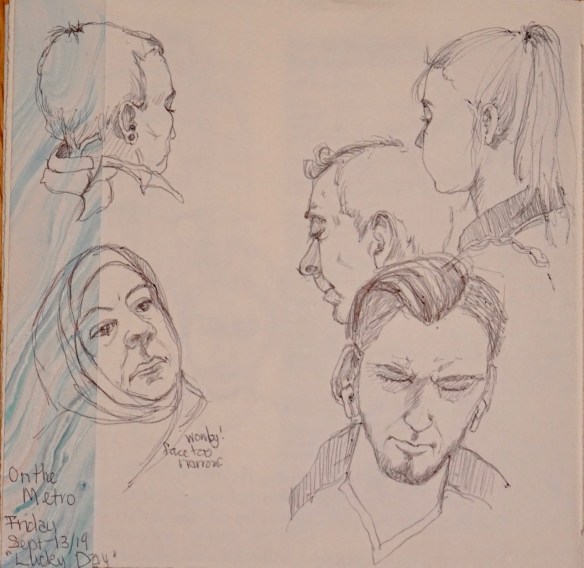 I like to use a Bic Fine Ballpoint pen for these subway drawings. A pen forces me to commit to what I put down, no erasing makes it challenging.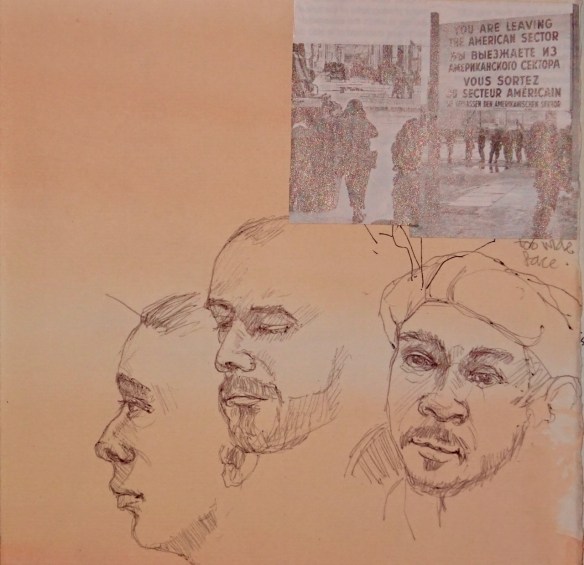
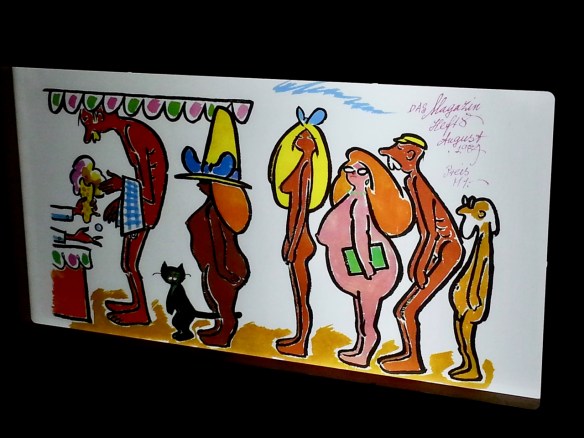
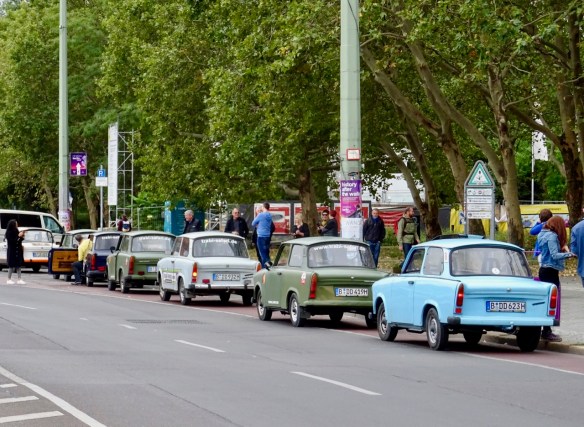
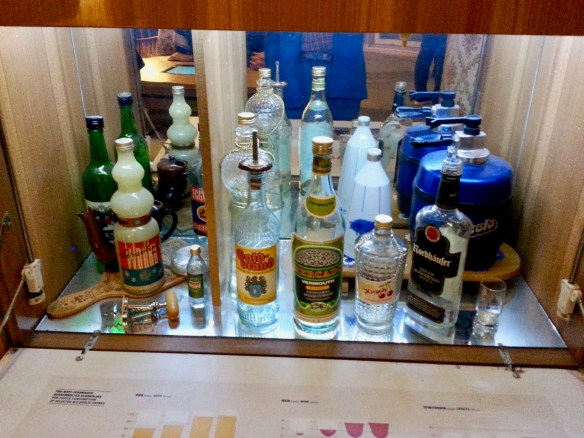 We saw these Trabants on the way to the DDR museum. While there Bob discovered that the cars’ bodies were made from a material called Duroplast. This was a composite material made from cotton fleece and granulated phenol, which was heated under pressure and formed into a rigid component for use on the exteriors of the cars.
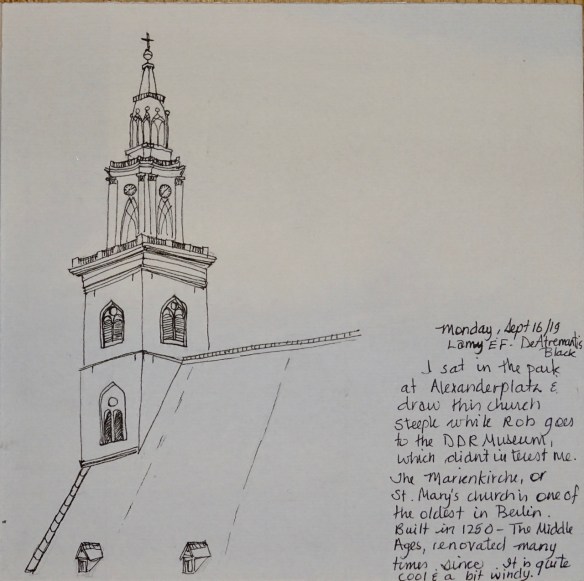
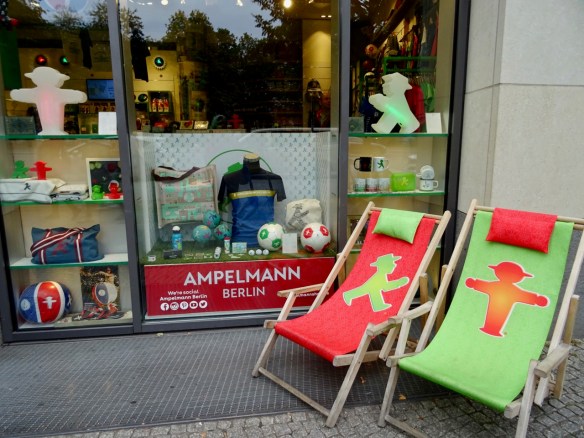
 While walking to a nearby park to draw I passed this store dedicated to the Ampelmann, the little character that lets pedestrians know when it is safe to walk.
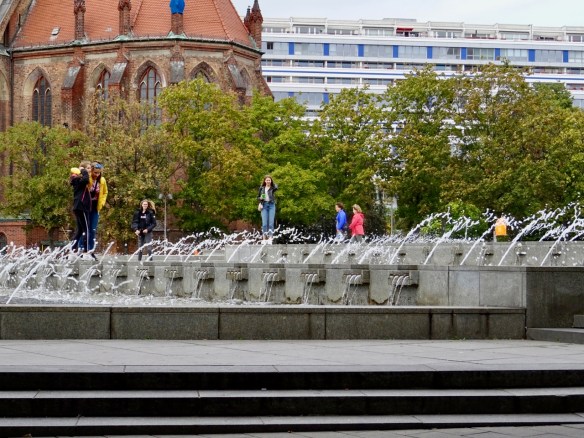
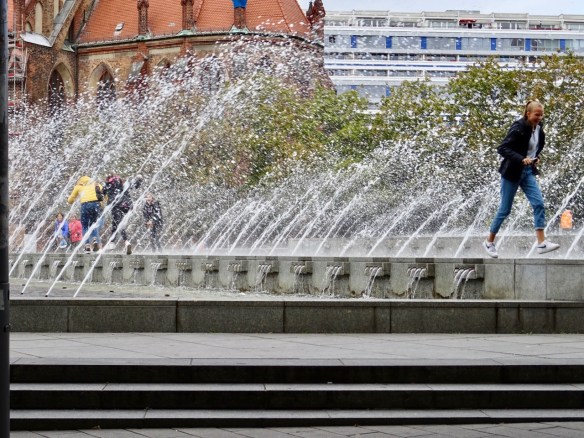
 While I sat drawing the church I watched these young ladies walk out onto the nearby fountain for some photos. I quickly got my camera out because I knew what was going to happen next.
 Surprise!! I laughed so hard, as did all their friends!
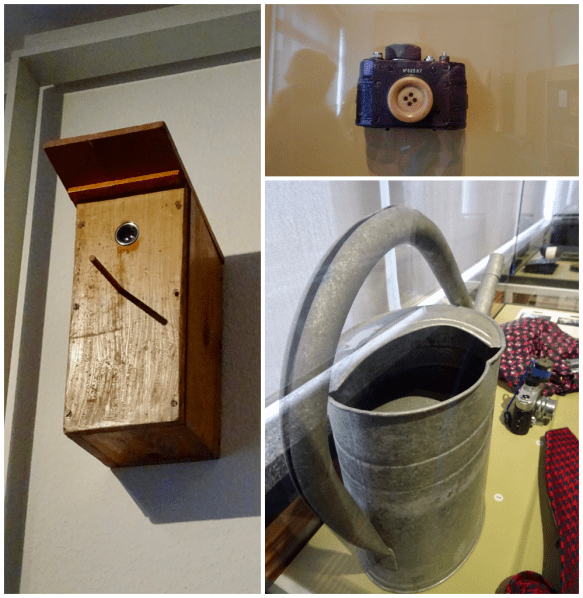
 We had a picnic lunch and then headed to the Stasi Museum. This museum is located on the former grounds of the headquarters of the GDR State Security. We had a two hour tour that talked about how the lives of the East Germans were controlled, manipulated and repressed by the political police system of the former East Germany. Seems like everyone was spying and informing on everyone else, and almost every aspect of people’s lives was controlled by the state. It must have been impossible to trust anyone. Most of the exhibits were like this office room below, not very interesting I thought, but our guide’s talk was very interesting. He told us anecdotes about his life as well as his parents and grandparents lives during this time.
 I hung out at the back of our tour group and did some sketching of people in the tour while I listened.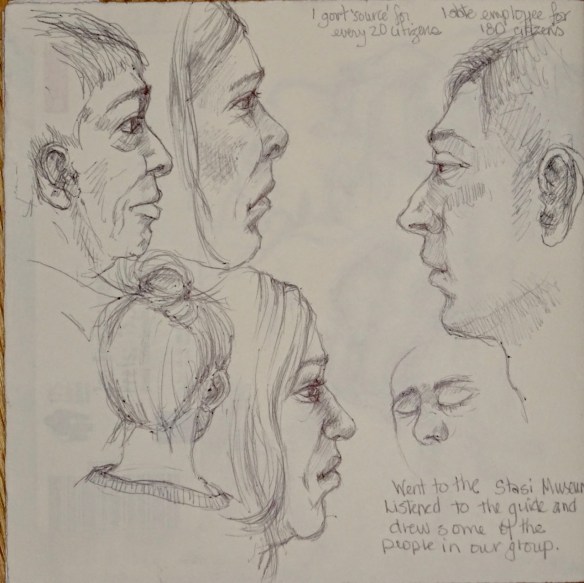
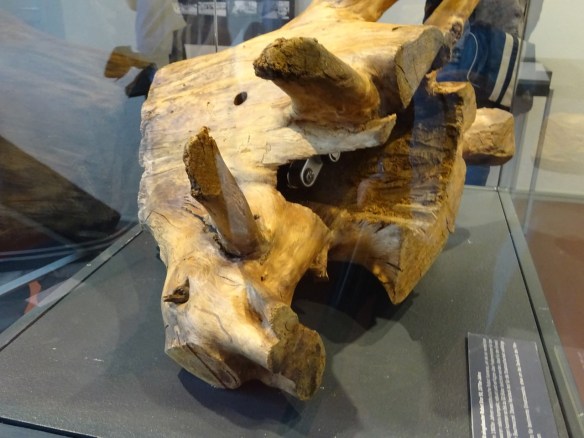
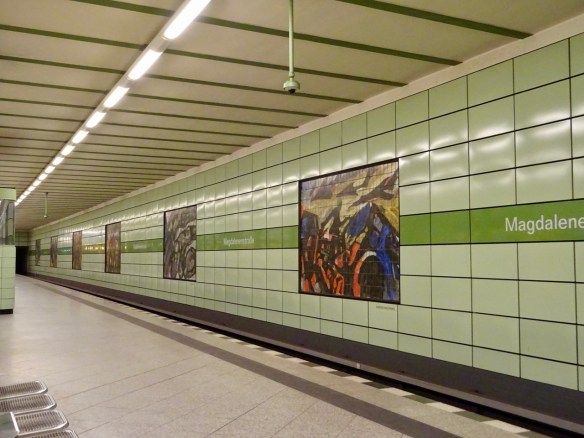
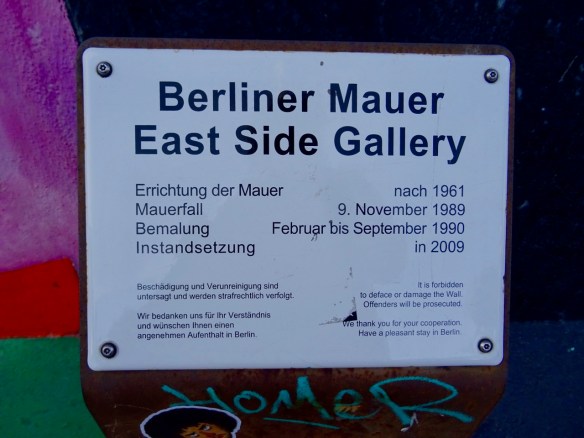


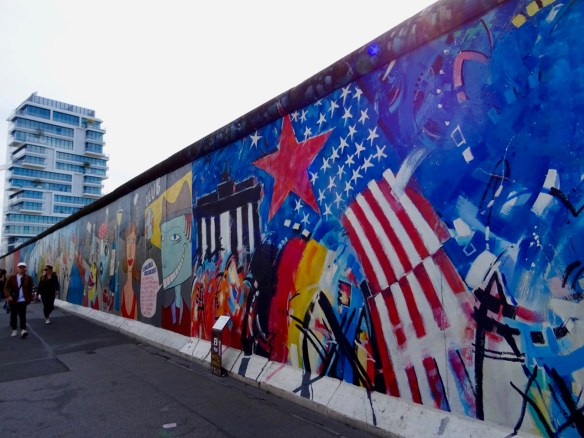
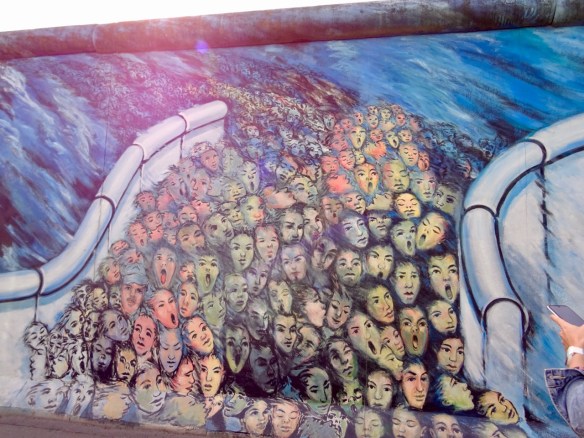
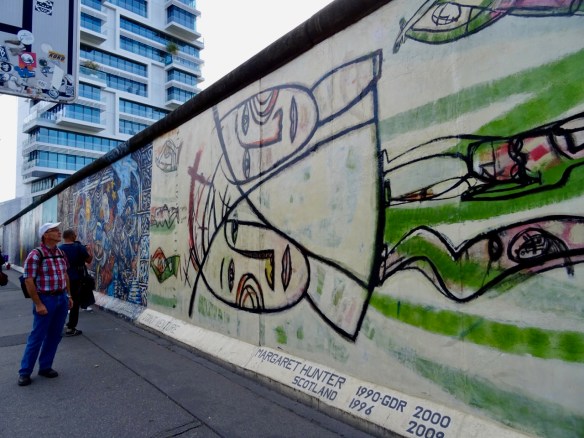
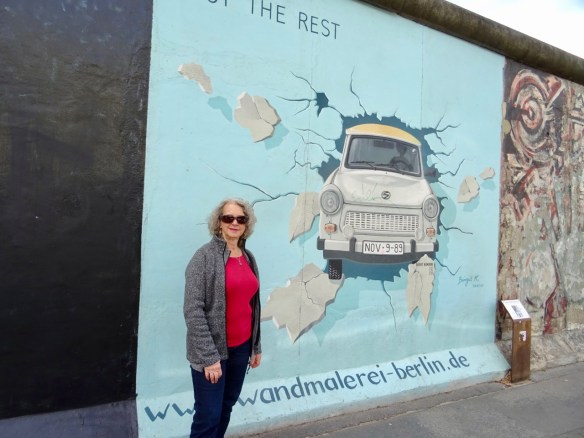 We see a white Trabant soon after seeing this.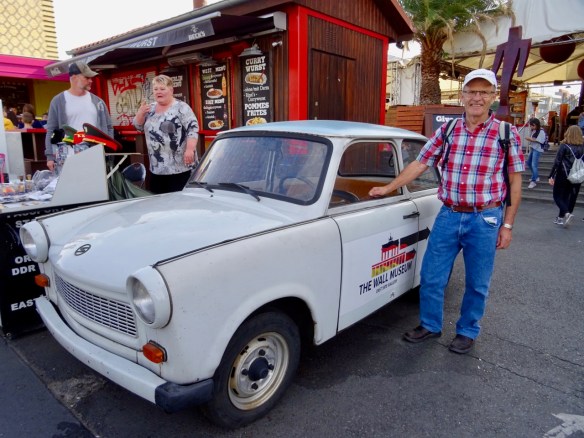
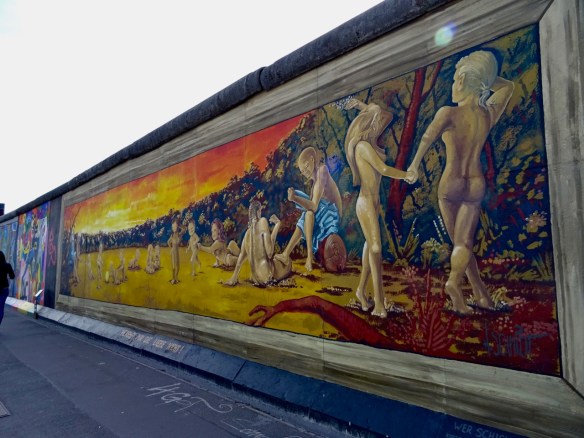
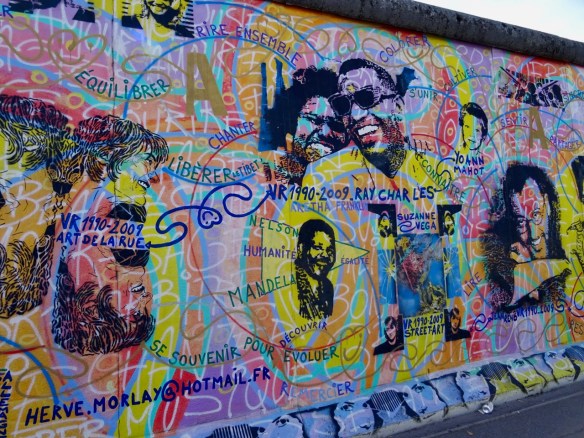
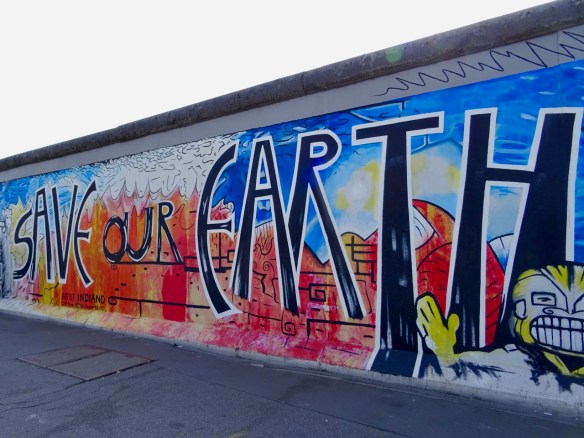
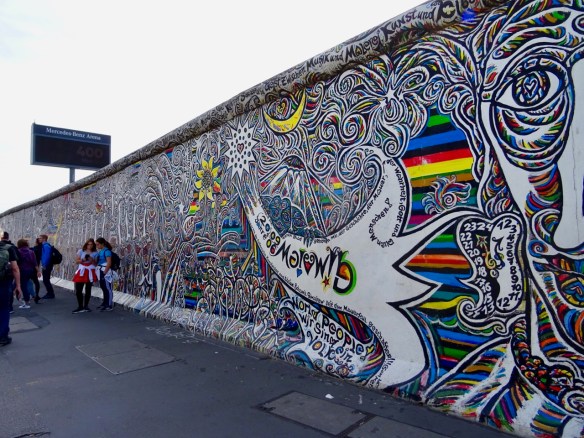 The graffiti n the back-side of the East Side Gallery is interesting too.
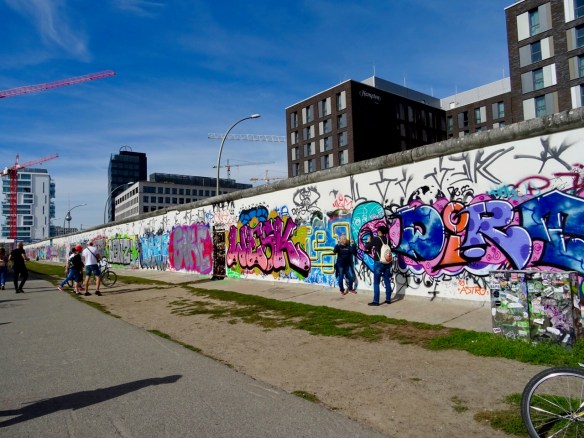 We stop for a snack and listen to some music along the banks of the Spree River before continuing our walk along the open air gallery.
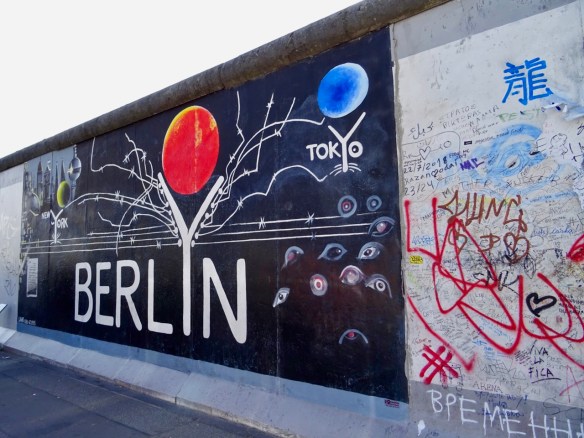
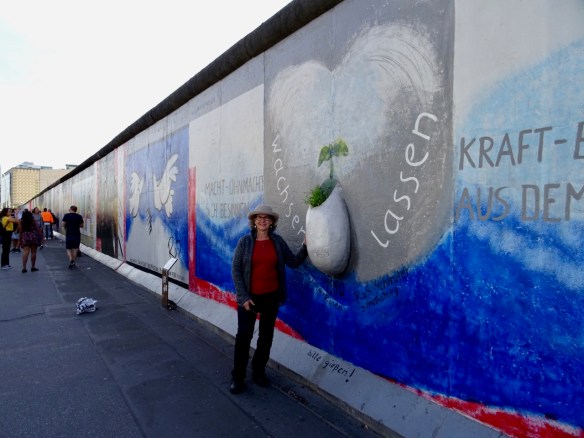
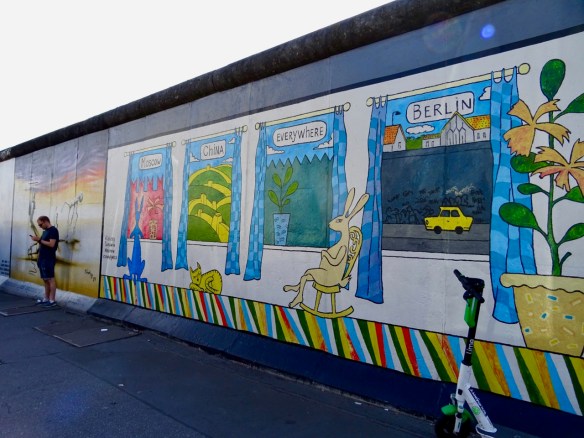
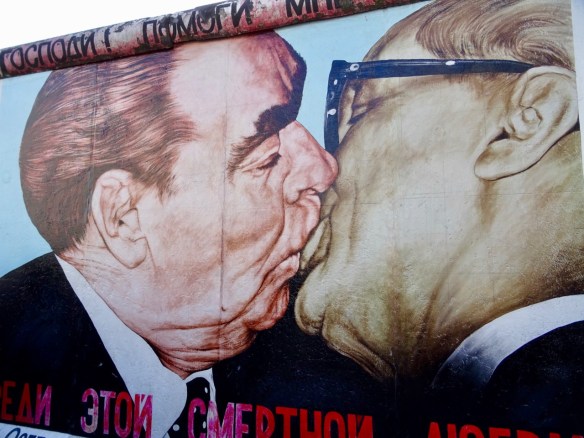
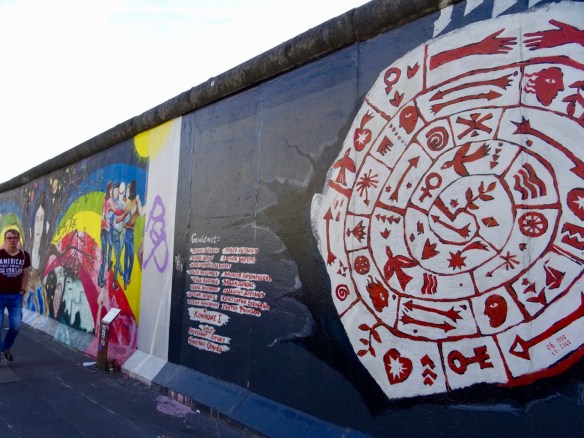

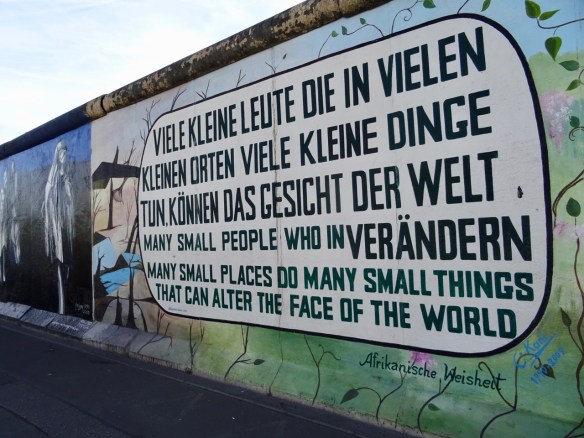
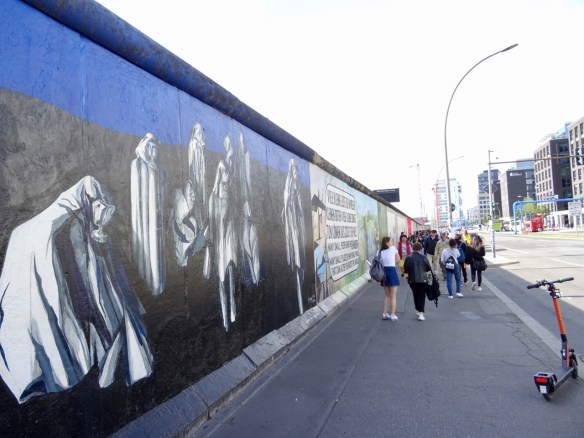

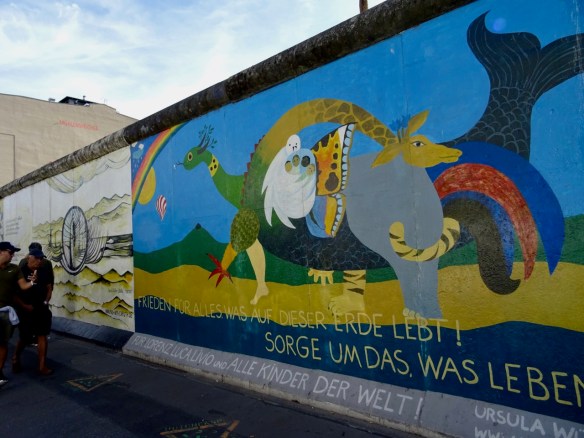
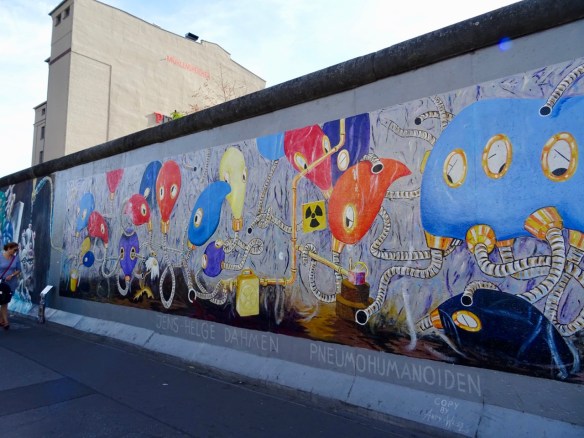
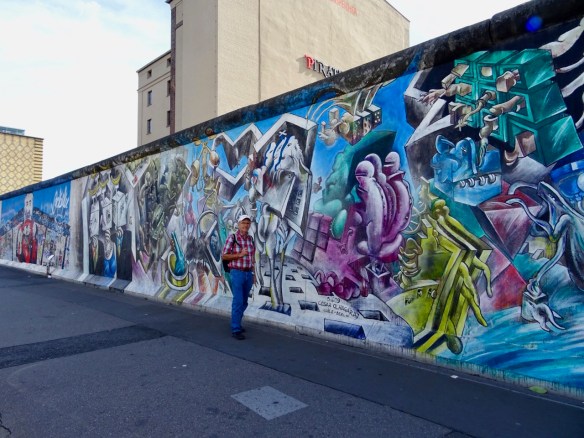 At the end of the wall we walk across the historic Oberbaum Bridge.
 Apparently all the hanging shoes are street art.
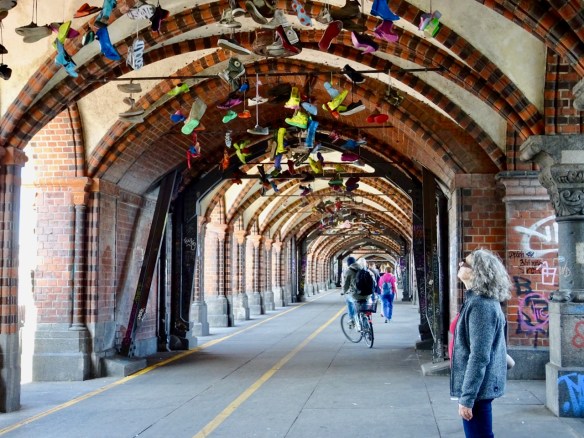 Next we take one of the old trams to Mauer Park which is the site of a huge flea market and a gathering place for Berliners and tourists alike.
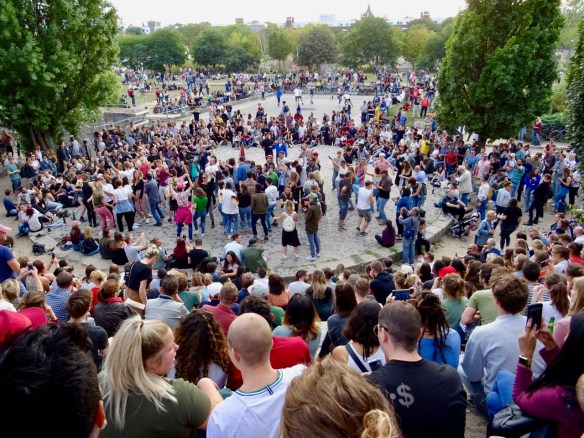
 There are people everywhere!
 The people on the hillside are watching karaoke performances, which happen here every Sunday. There is also an ongoing 3 on 3 Basketball game in the foreground. Did I mention that there are people everywhere? Bob figures probably over 20,000 people in the park today and I think we are older than 99% of them!
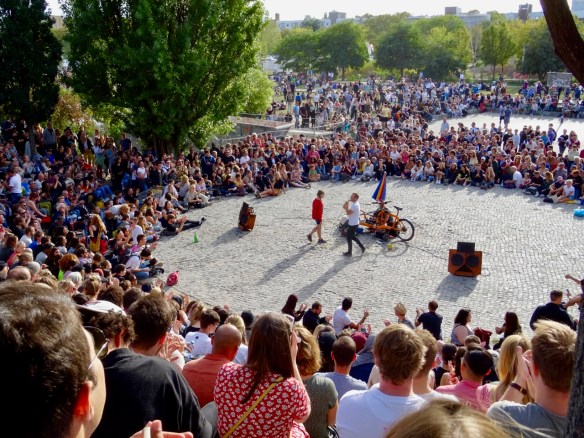
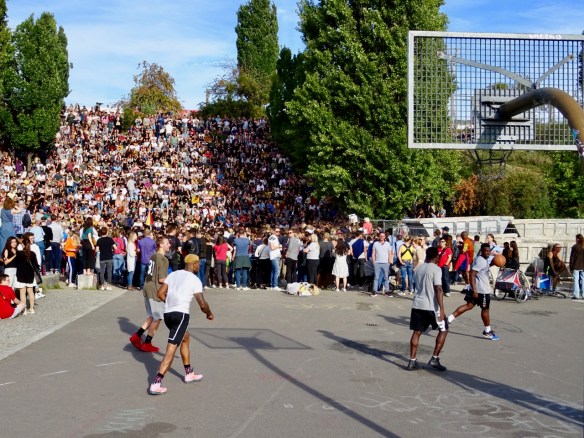 After sampling some of the food trucks wares, we make our way up to the karaoke viewing on the hillside and have fun watching the performers. Some were not the best, but the audience was very supportive and everyone gets a big round of applause. Here is
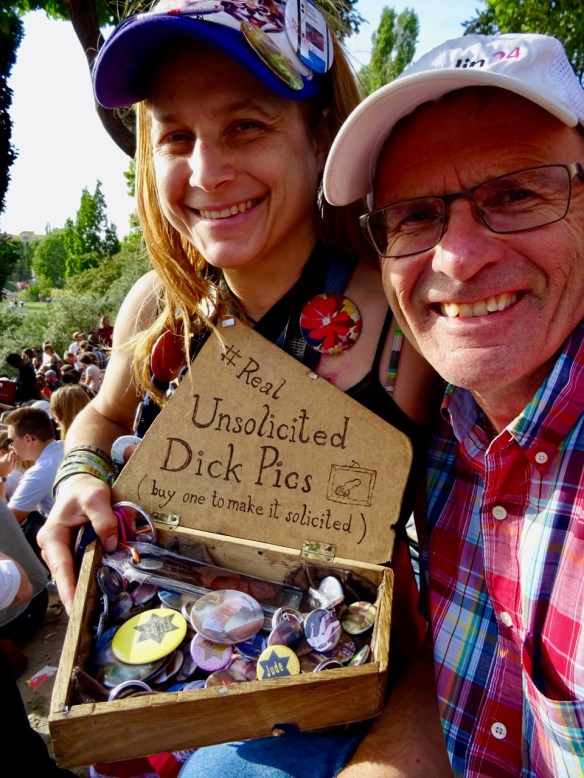
  This lady was selling some rather interesting pins, and offered to let me take her photo for a small donation, and yes, they were those kind of dicks!
 This guy from the Dominican Republic got a great round of applause, but more for his dancing than his singing.
 Some of our fellow audience members.
 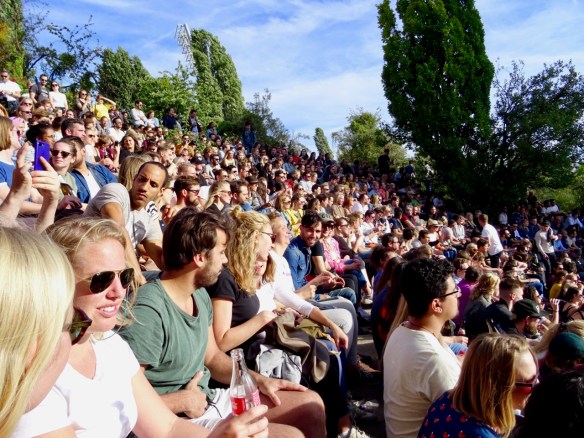 One of the performers from Afganistan got lots of people up dancing.
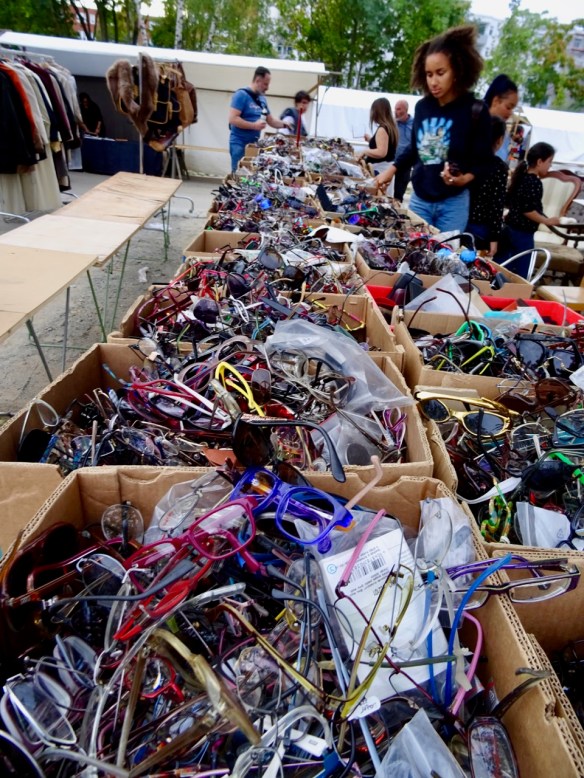
 The flea market was closing by the time we got around to visiting it. As we passed by this booth I overheard a guy say to his girlfriend “All these glasses and you still can’t see my point of view!”
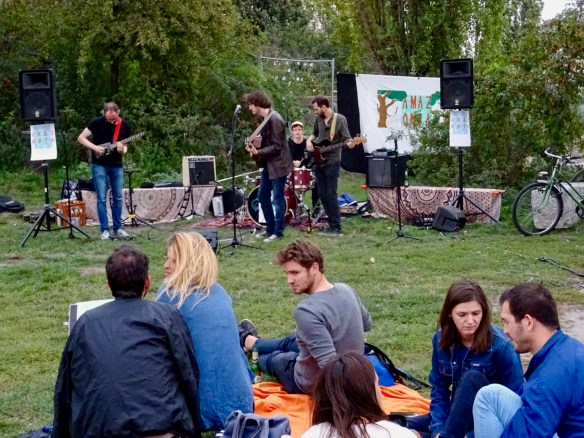
 There were lots of groups of performers. Here is one
 This sign on an artist’s booth makes me laugh. Today was a nice change from the sight seeing we have been doing. It was really relaxing, a lot of fun, and great people watching!.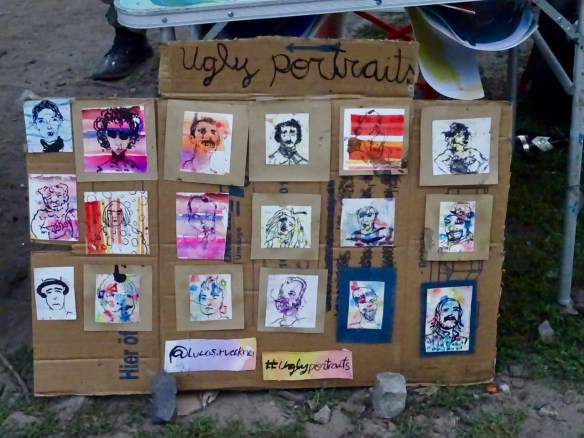
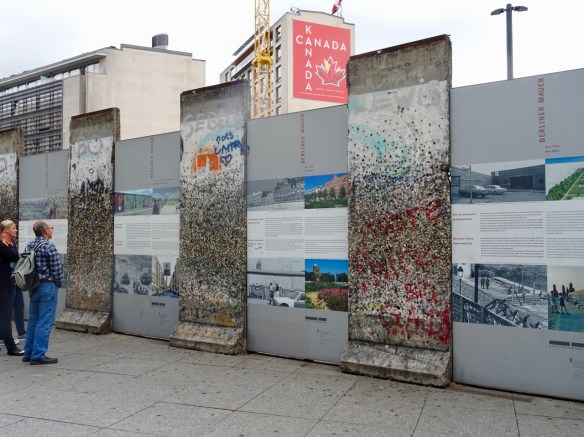
 There are some pieces of the Berlin Wall here and for some strange reason they are plastered with wads of chewing gum left by visitors. Notice behind the wall is the Canadian Embassy.
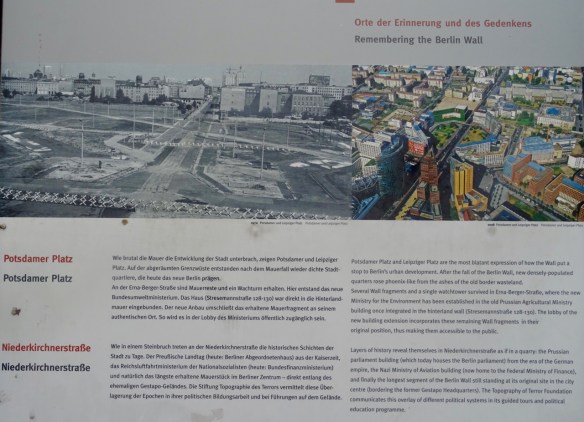
 The display was very informative. Bob knows a lot more about the history of Berlin than I do so I found these panels quite interesting. This one shows the Dead Zone, which was the unoccupied area around the Berlin Wall, and the developed area now.
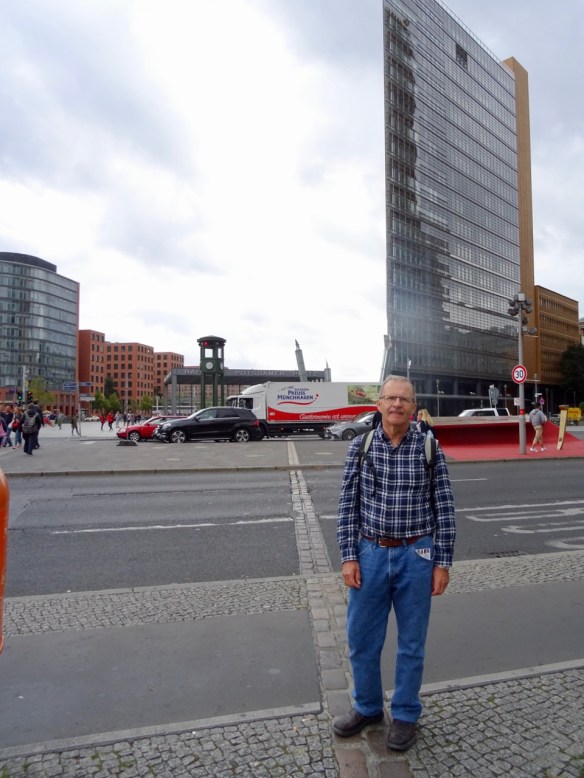
 The cobbled line Bob is standing on is where the Berlin Wall used to be located.
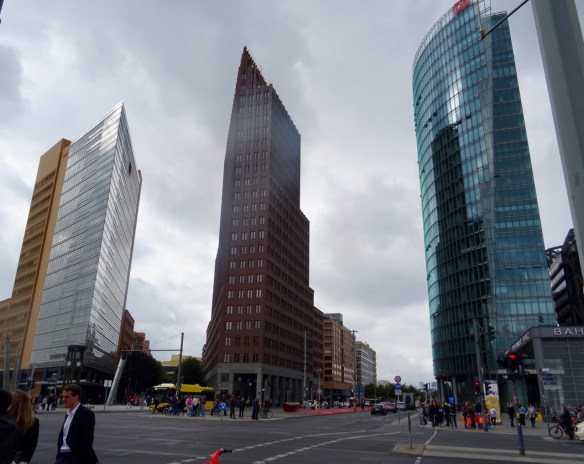
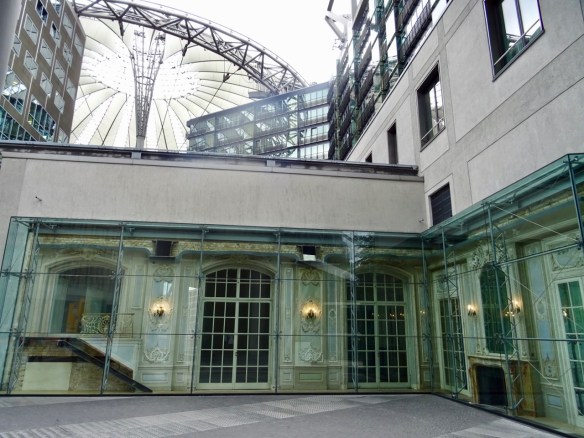
 We walk to the Sony centre and find this interesting building that has part of an old hotel interior enclosed in glass as part of its exterior wall.
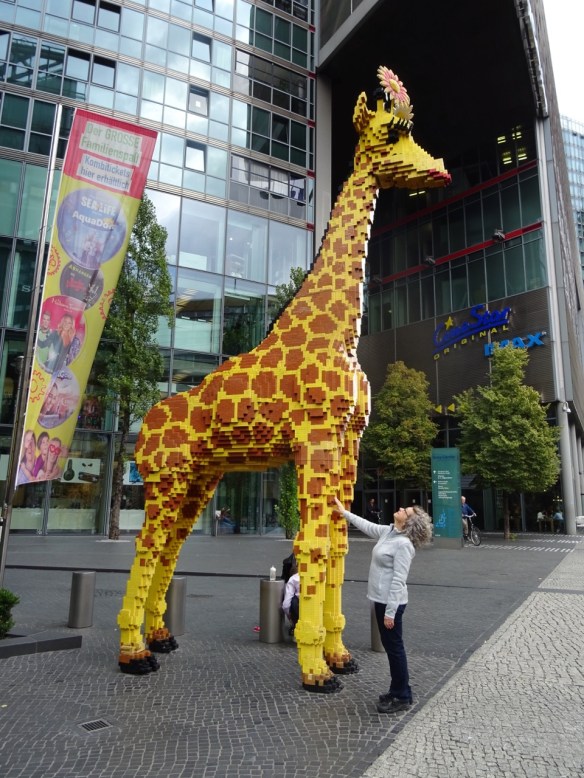
  Wow! This LEGO giraffe is the biggest giraffe I have ever seen…
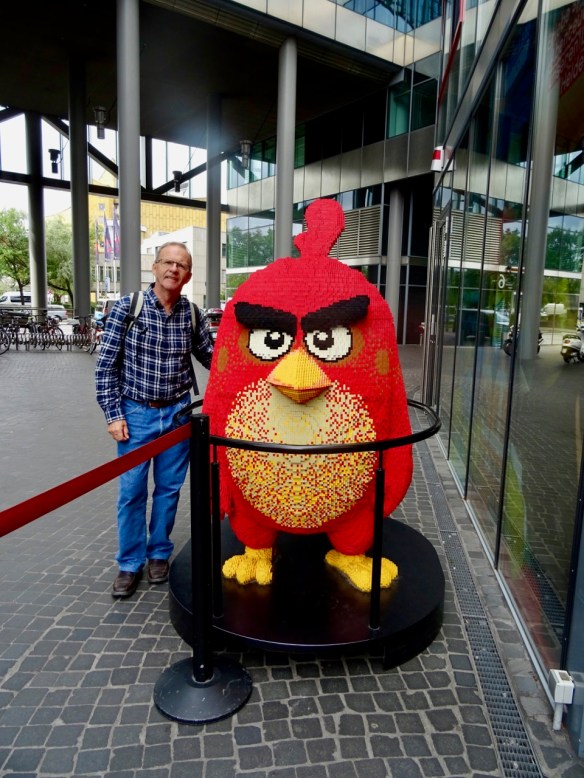
 and Bob found a pretty huge Angry Bird!
 We make our own Hop-On Hop-Off tour by catching the #100 bus. First stop is the Kaiser Wilhelm Memorial Church. It was destroyed by the bombing in WWII and is now an anti-war memorial to peace and reconciliation.
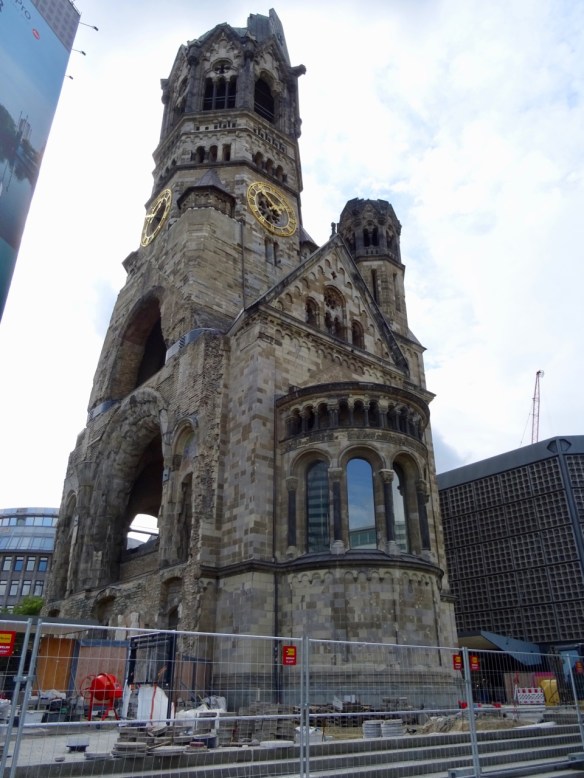 This is what the church used to look like.
 The little bit of the interior that remains is covered in beautiful mosaics…
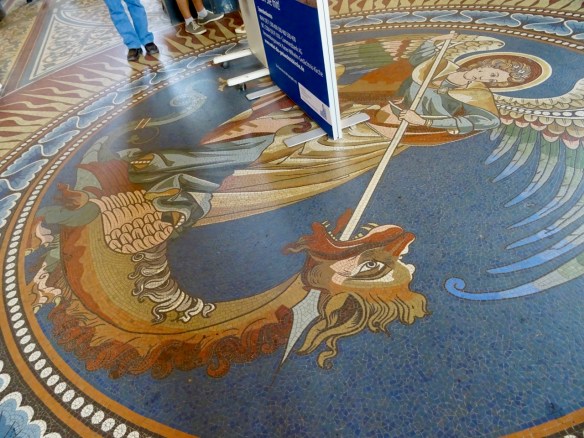
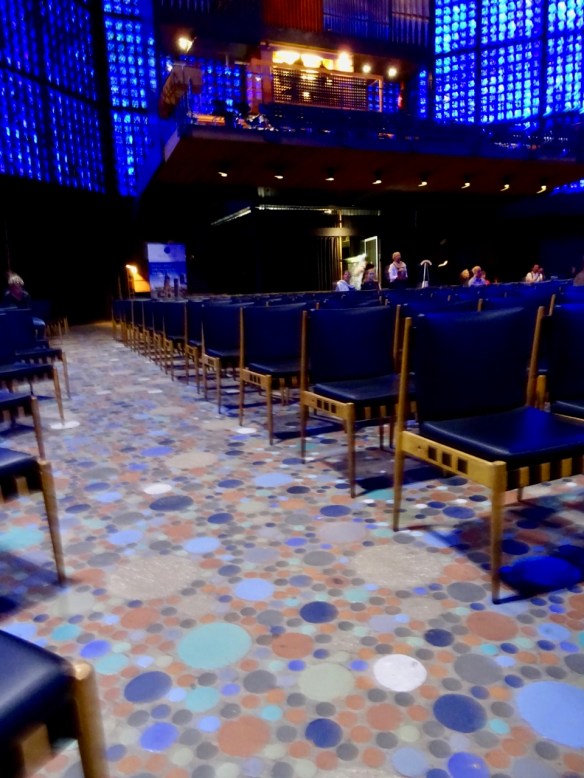
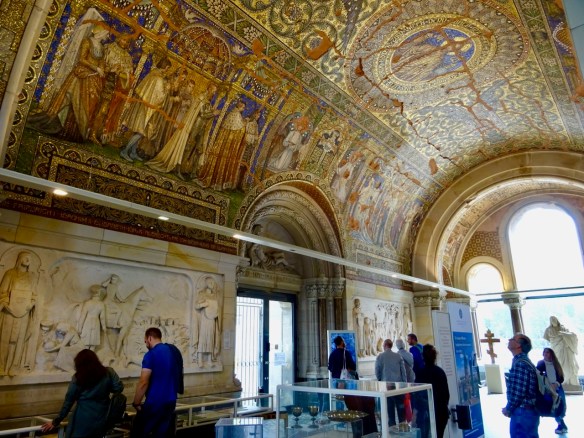 even the floor is completely decorated with mosaic tiles. It must have been an incredibly beautiful church.
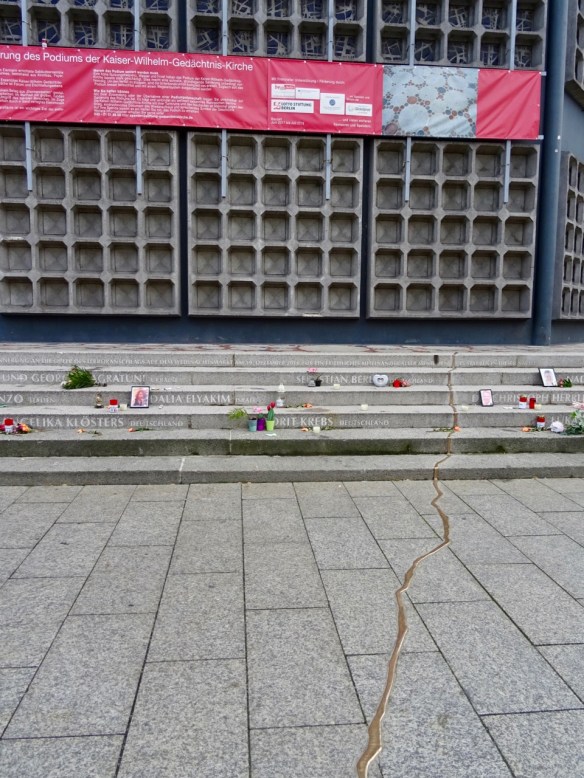
 Outside we see this memorial for the victims of a terrorist attack on December 19, 2016 on the steps of the Memorial Church, A stolen truck was driven into the crowd at the Christmas Market and twelve people were killed and seventy were seriously injured. The names of the deceased are engraved on the steps and the bronze crack represents the fracture the attack inflicted on society. It is like a scar and shows that healing and everyday life are possible, but we should not ignore or forget the scars we bear and what caused them.
  We walk inside the Memorial Church and I am quite overcome. Something about this space moved me to tears. It is unlike anything I have seen before.
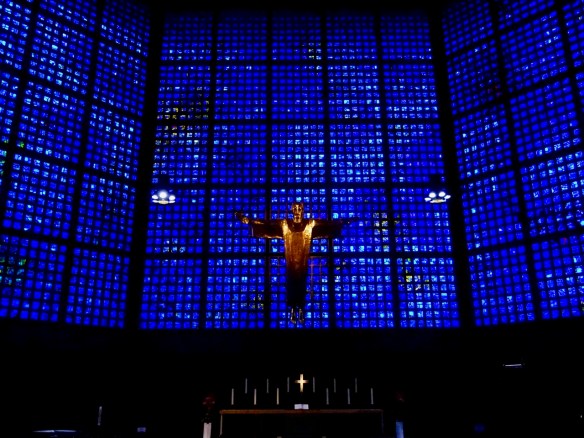 This Christ figure was beautiful.
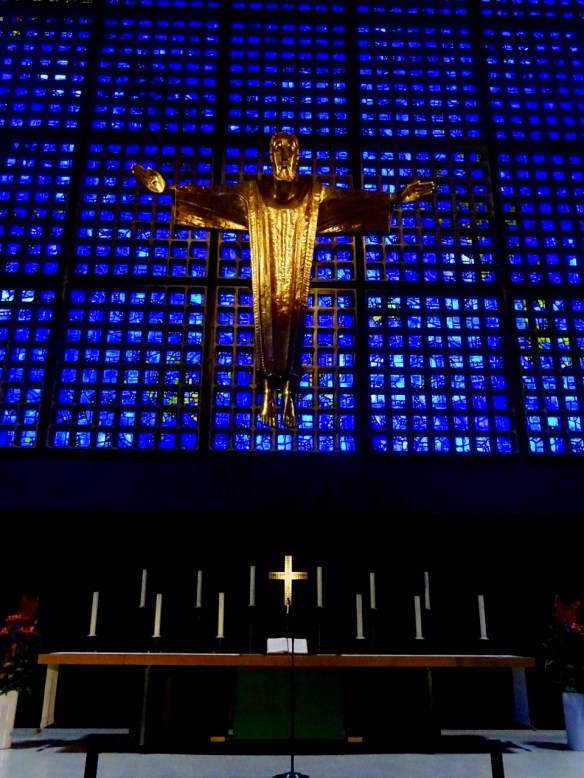 There is a concert here tonight and we sit for a while listening to the two organists practicing for tonight’s performance. You can see them in this photo. To listen to the organ music
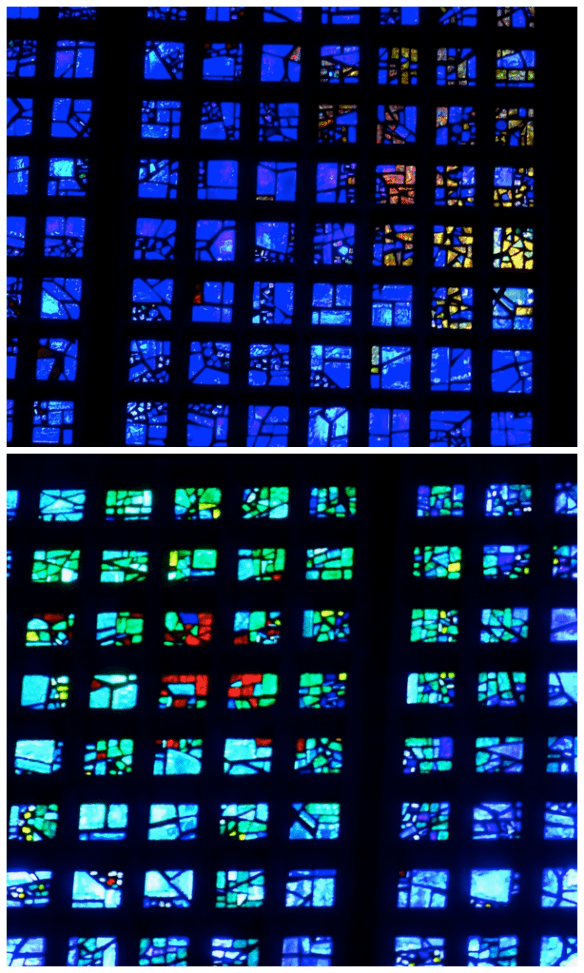
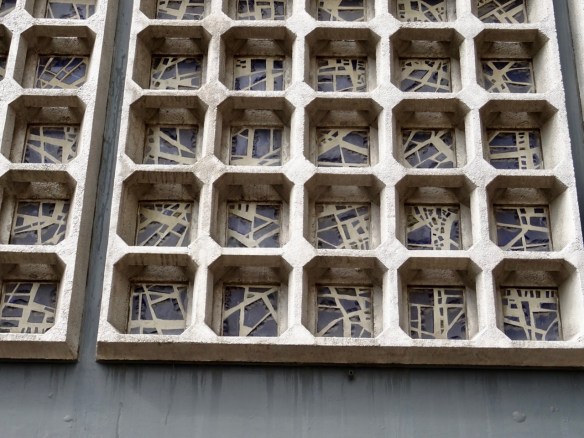
 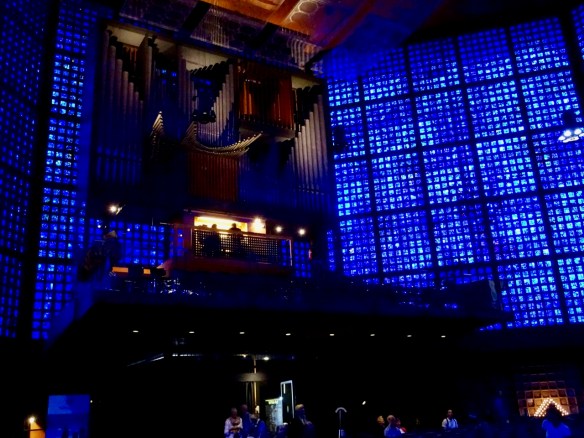 The walls are made of 22,200 panes of stained glass and each pane is made of many individual glass pieces.
  The floor is covered in circles of many colours and sizes. It made me think that all those little pieces of glass and all the circles on the floor could represent people who have died and are memorialized in this church.
 The outside walls show how each piece of glass is embedded in mortar within each individual pane. The outside of this church gives no hint of the vibrant colours inside.
 We walk down the broad boulevard between the lanes of traffic. Here is a view looking back towards the bombed church.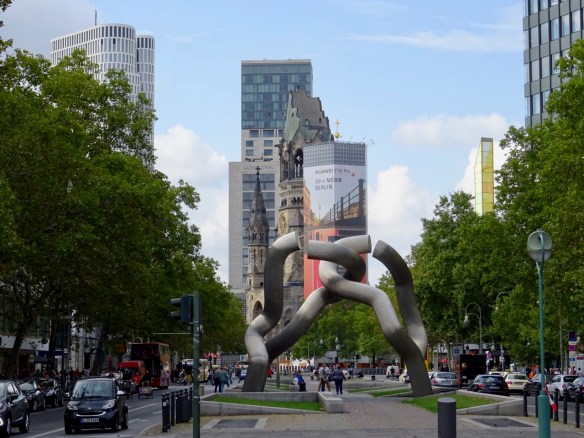
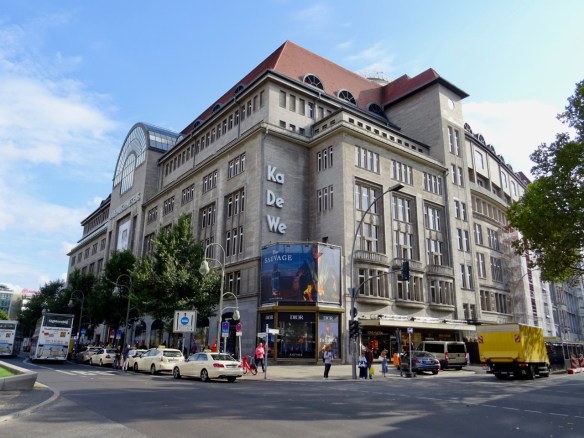 We make our way up to the sixth floor and find a whole floor of yummy things to eat. Too bad there are no gluten, dairy and egg free options for me.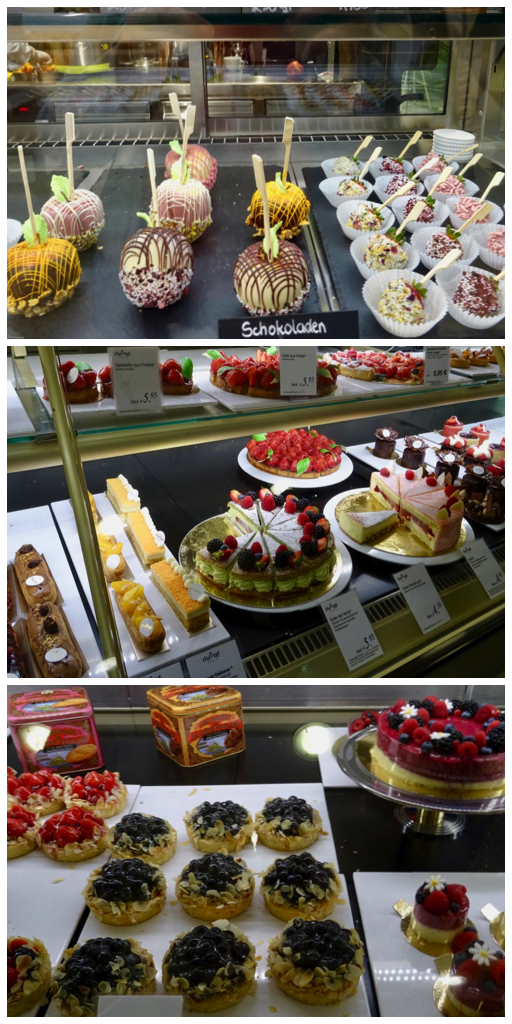
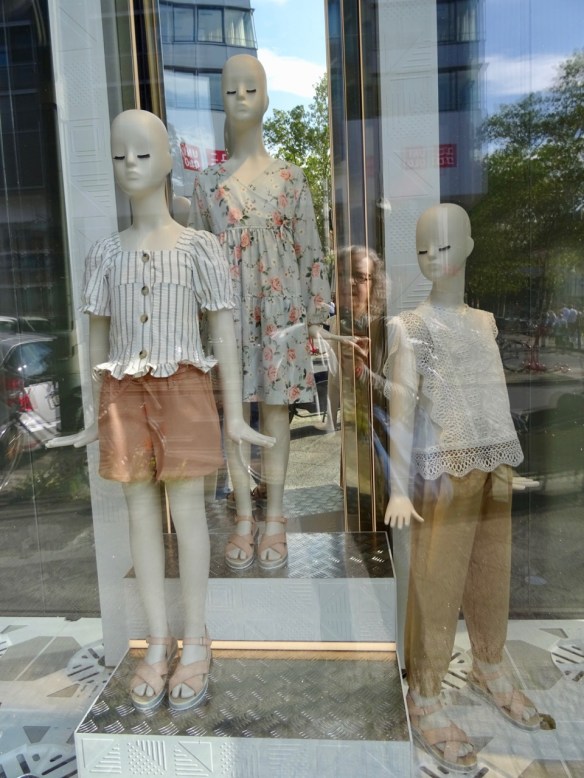
 Here is what fashionable girls are wearing in Berlin.
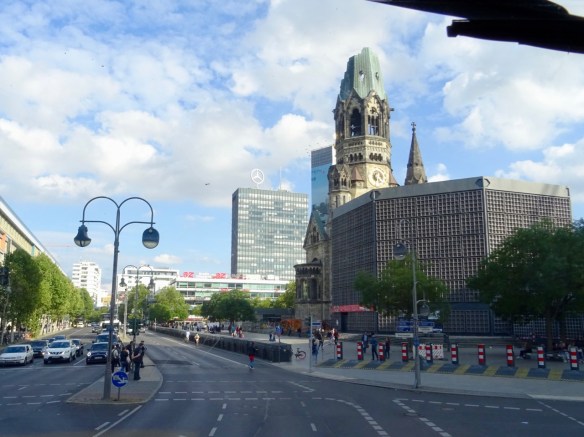
  We continue our tour on a double decker bus. This is the first time we have sat up front on the top of one of these busses. !t does give a different viewpoint.
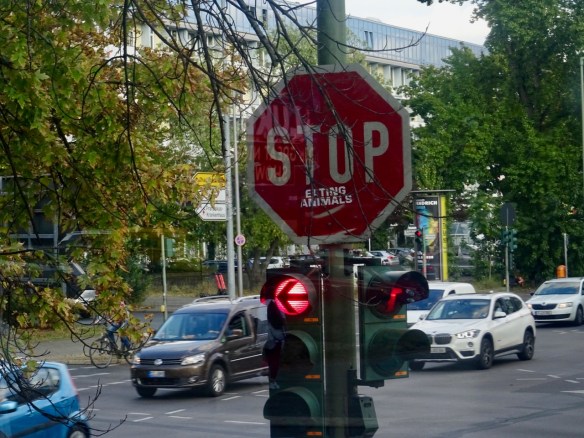
 Bob notices something strange about this stop sign.
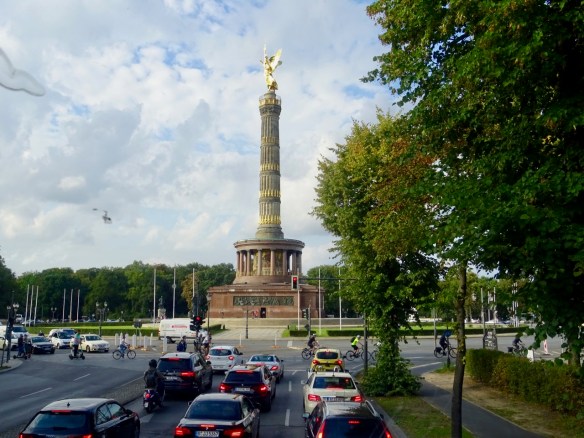
 We drive through the centre of a huge park and around this monument. The Victory Column with Victoria, the Goddess of Victory in the centre of the Tiergarten park is one of Berlin’s most famous landmarks.
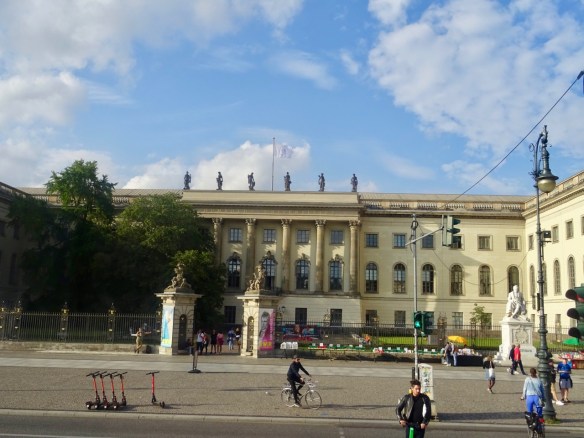
 We drive past the spot where the old book market was yesterday. Bob did a bit of research and discovered that this is the University where Eisnstein and the Brothers Grimm taught and where Karl Marx and Friedrich Engles studied . It was also the site of the burning of thousands of books by the Nazis in 1933.
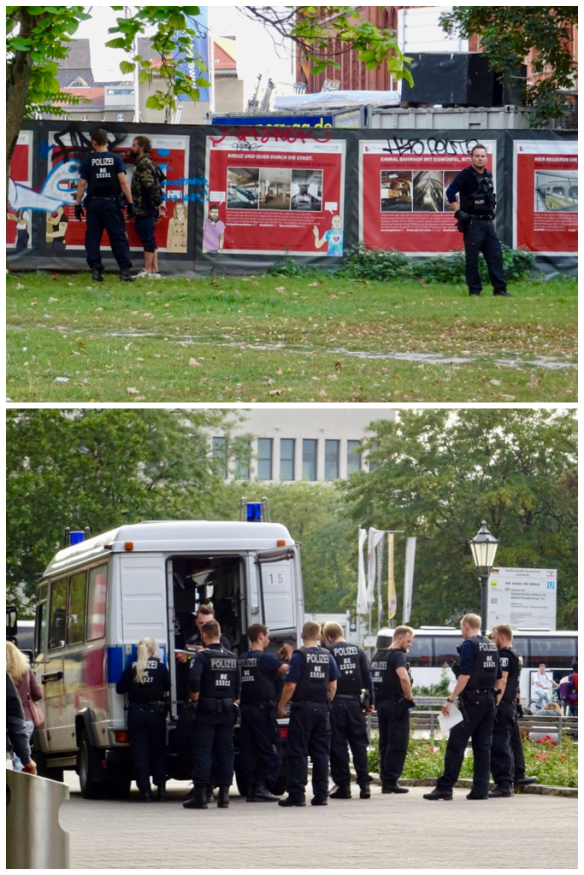
 Next stop is Alexanderplatz, a large public square and popular gathering place in Berlin. We find a bench for a tea break and witness a little drama unfolding behind us. It took eleven police officers over half an hour to move this fellow in handcuffs from beside the fence to the police wagon. There was lots of interviewing of bystanders and note taking but we don’t have a clue what it is all about.
 This is the view in front of us.
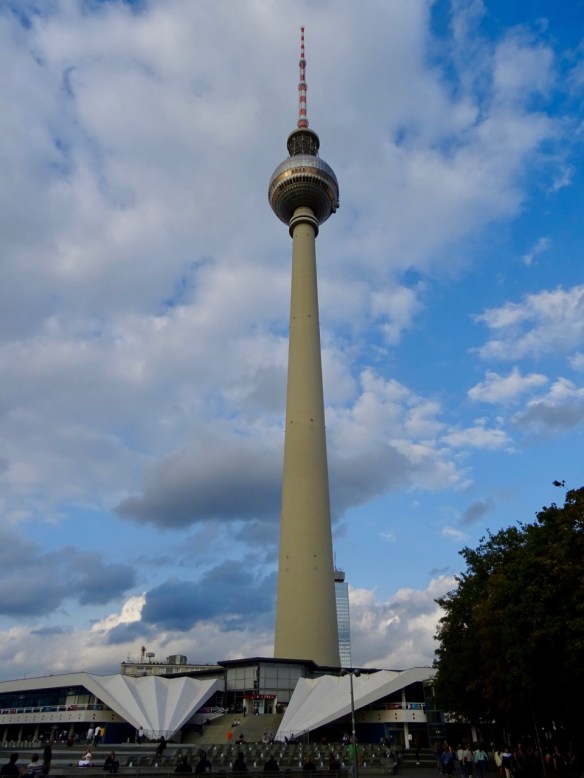
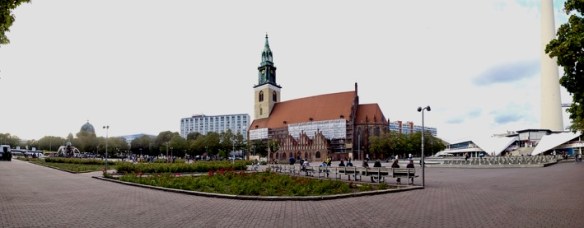 I wanted to go to the top of the Berlin TV Tower but it cost €16 which is almost $24 each. That seemed a bit too much.
 The Neptune Fountain is is very ornate.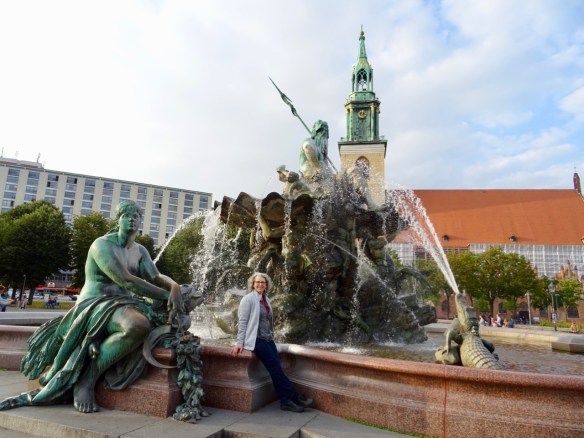
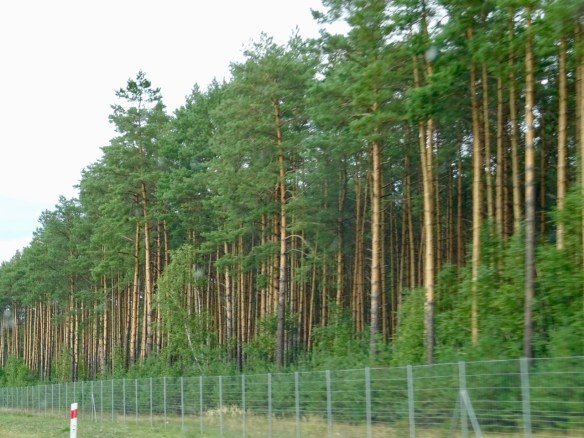
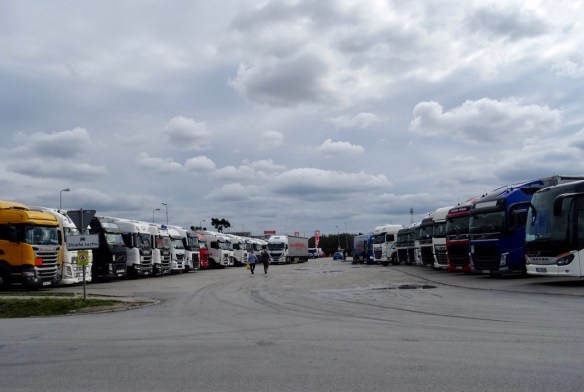 We pass by lots of trees that appear to be grown for timber. Their lower branches have been trimmed so that the trunks grow straight.
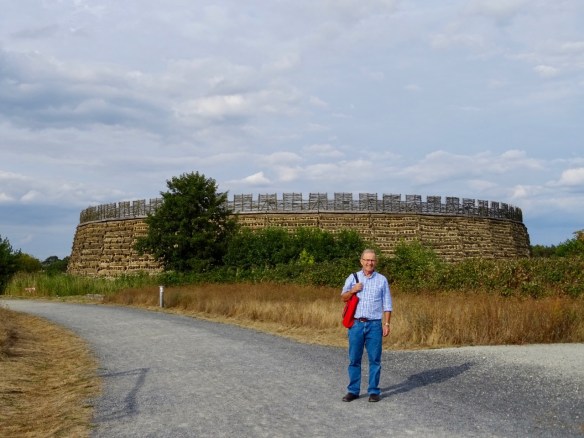
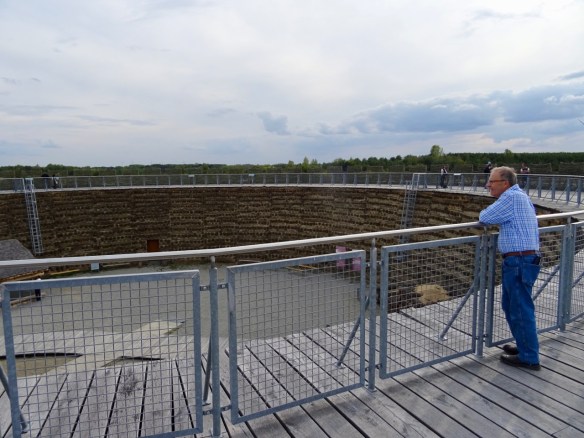
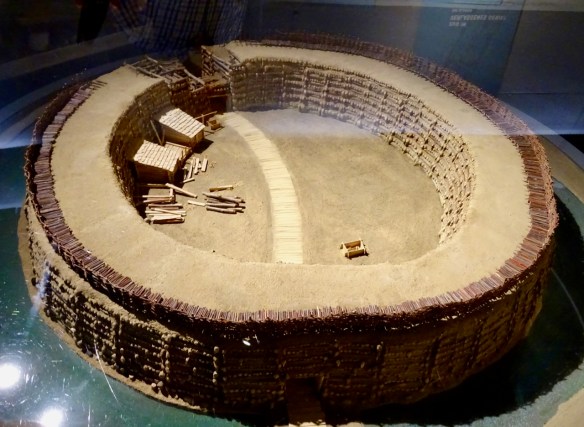
 Not far into Germany we stop at Slawenburg Raddusch, which is a reconstruction of a fort built by Slavic people in the 9th and 10th Centuries. It is surrounded by a moat for added protection.
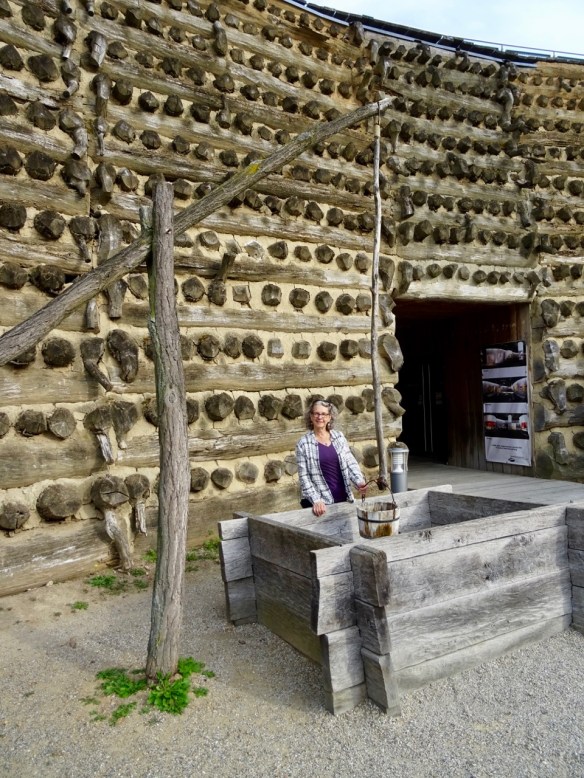
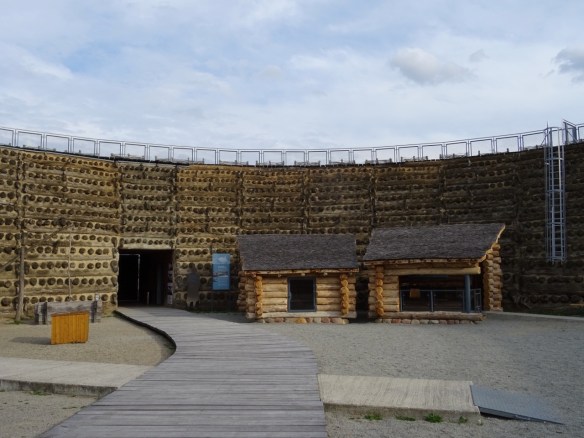 This well is 40 feet deep.
  We climb to the top of the wall which offers a great view of the surrounding landscape.
  This model shows what the original fort would have looked like…
 and how it was constructed. The dirt used to fill the walls came from around the base of the fort and created the moat.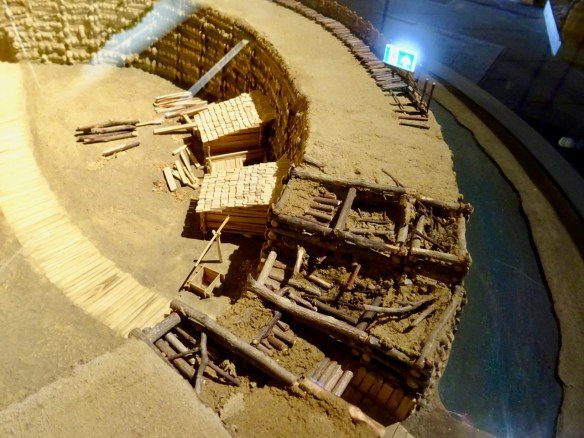
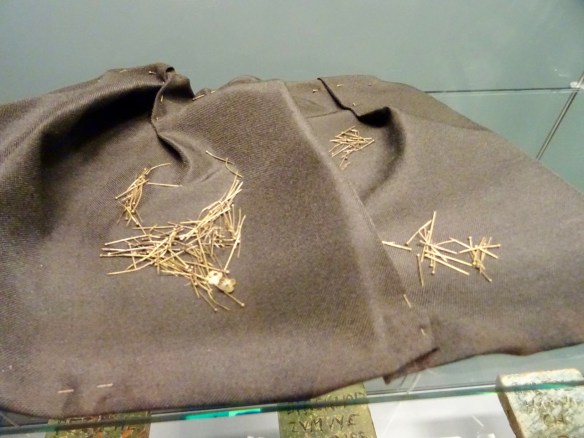
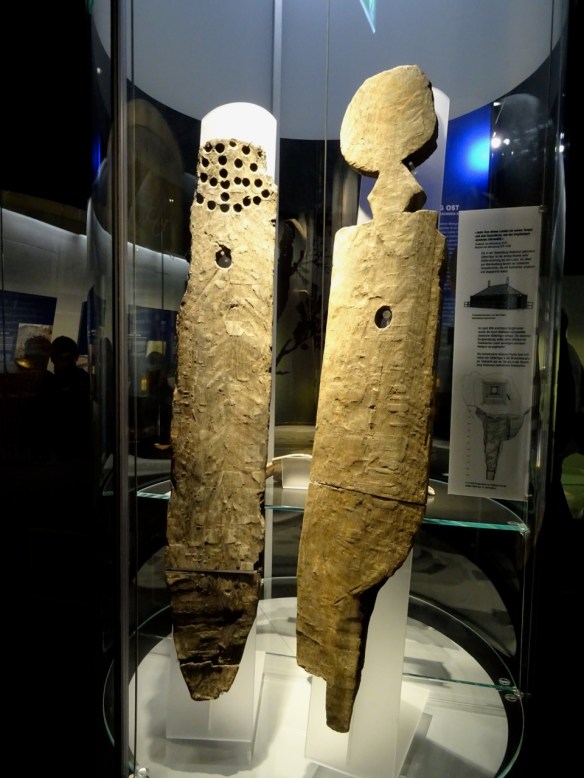 I thought these straight pins for sewing were pretty amazing, considering they are so ancient.
 Here is a view of part of the museum with its large display of pottery,,,
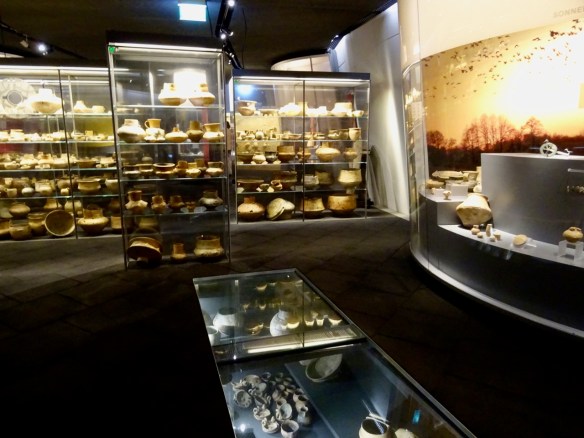 and burial pits, where cremated remains were placed along burial gifts for the deceased.
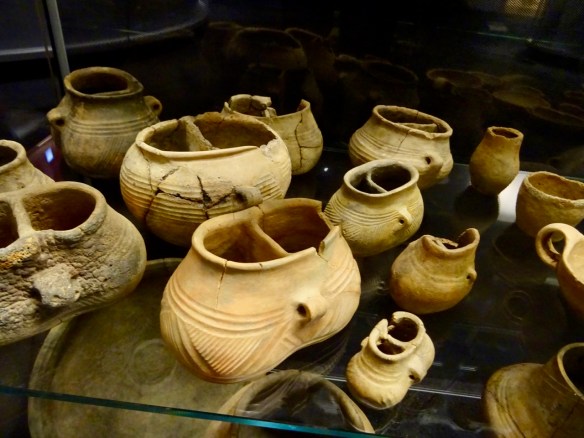
 I was intrigued by the shapes of some of the pottery. All the pottery was made by hand without the aid of a potter’s wheel.
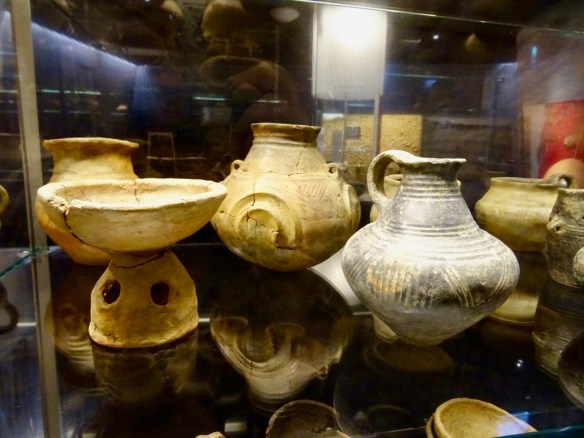 I wonder what these pots were used for?
 The tour was great. We rented an audio guide for €1.5 and it was very well done. We got so much more out of the display because it. We managed to finish our visit through the museum just as it was closing at 6:00 pm. We see lots of wind-farms on our way to Berlin. We arrive in Berlin as it is getting dark and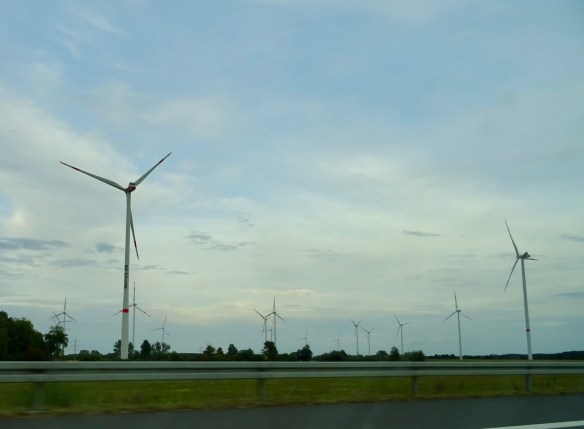
 trudymason.com