Stuttgart, Germany to Mulhouse, France

Day 44     Monday, October 13, 2025

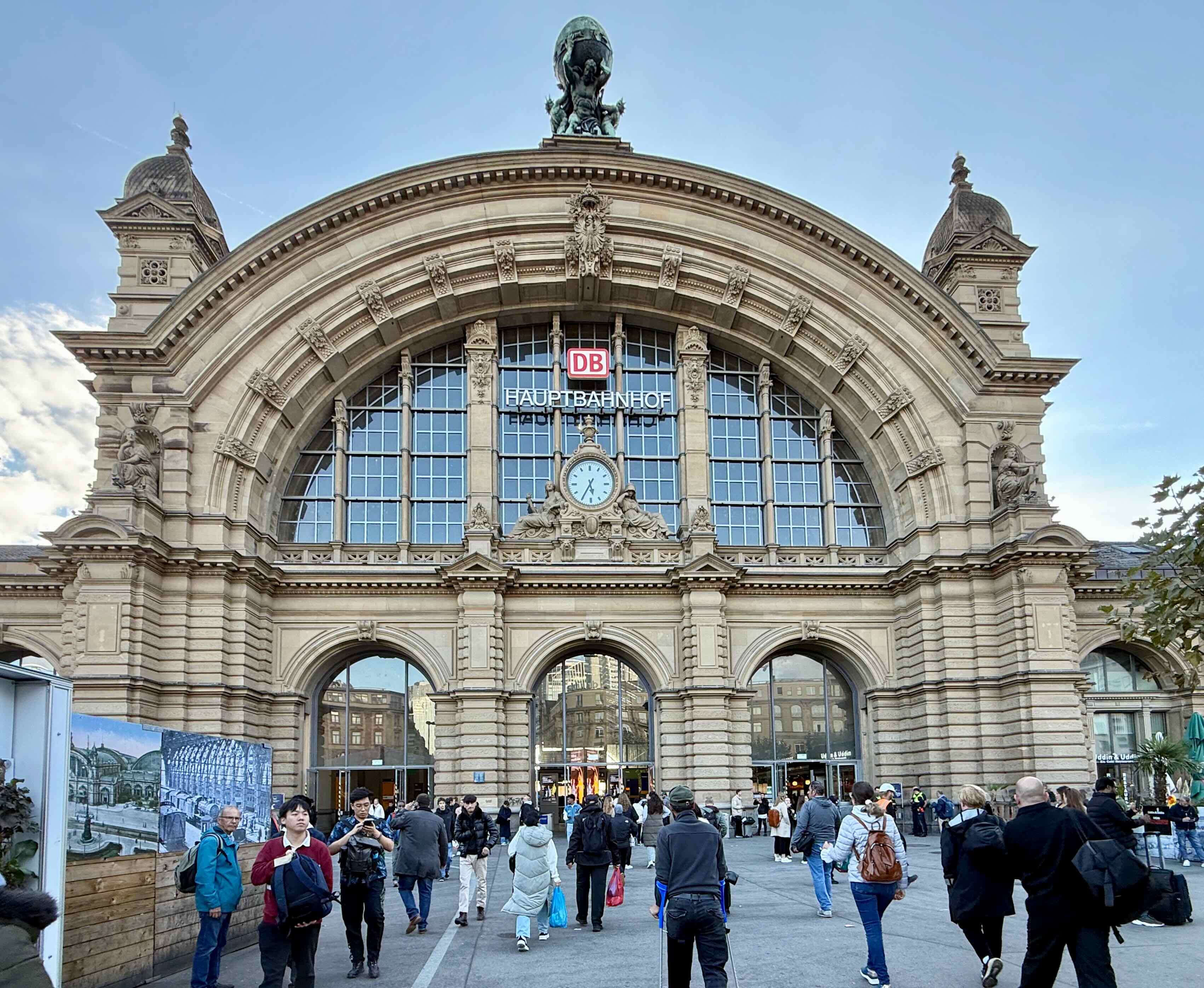
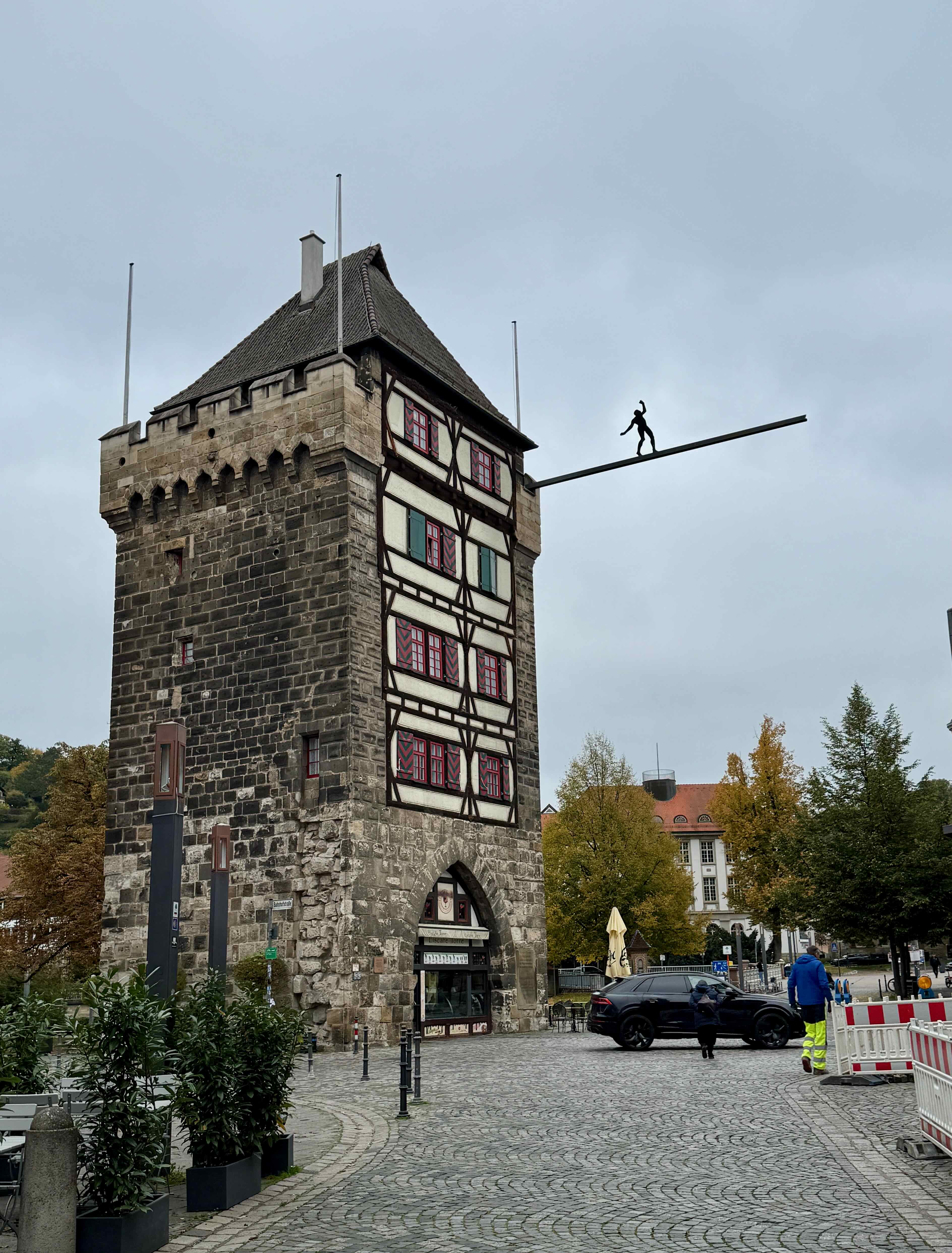
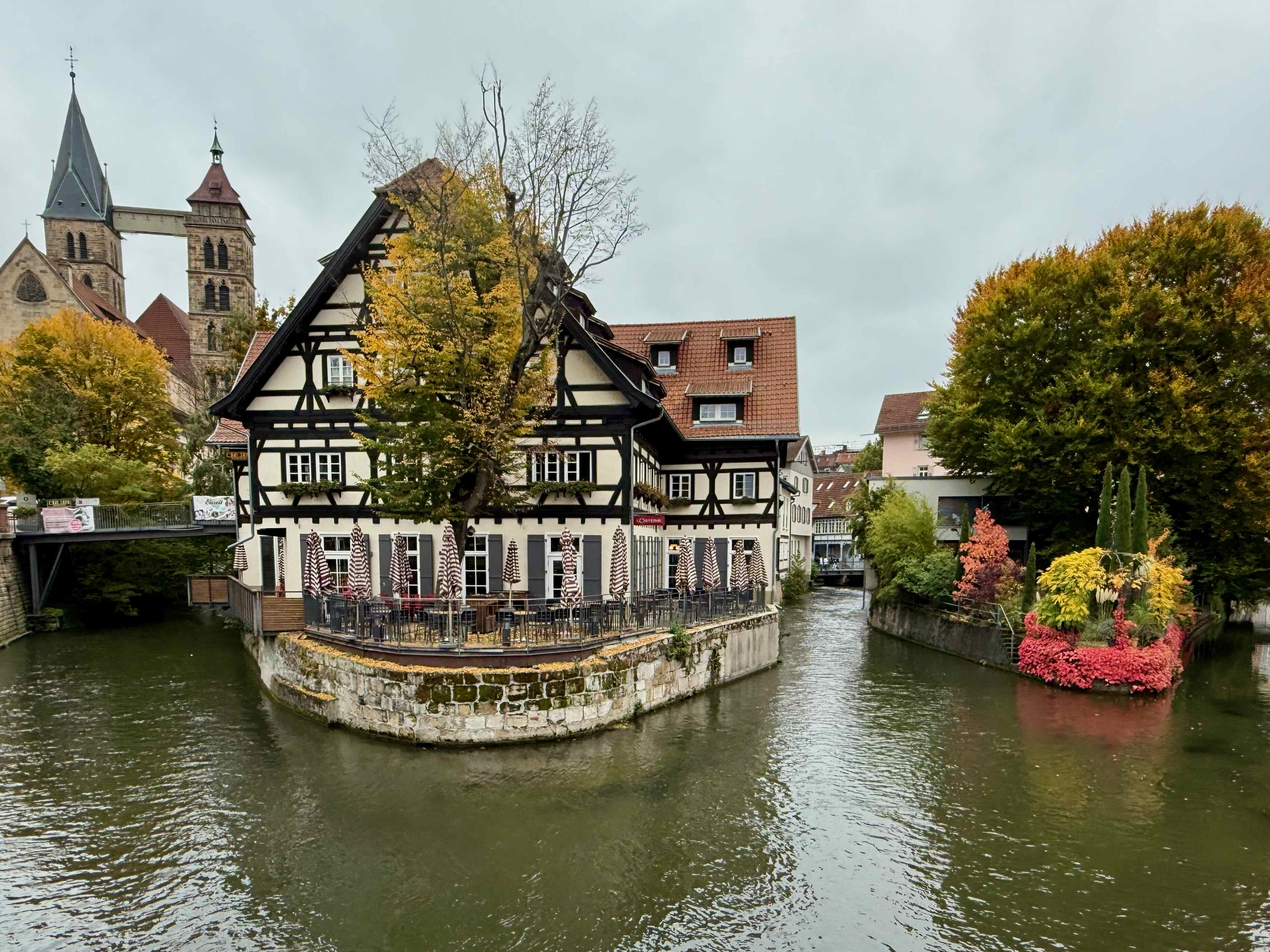
First stop on our way to Mulhouse is a pretty little town called Esslingen.  At first sight we thought this was a real person!
Our Airbnb in Stuttgart had a calendar with almost this exact photo.  It was the impetus to visiting Esslingen.
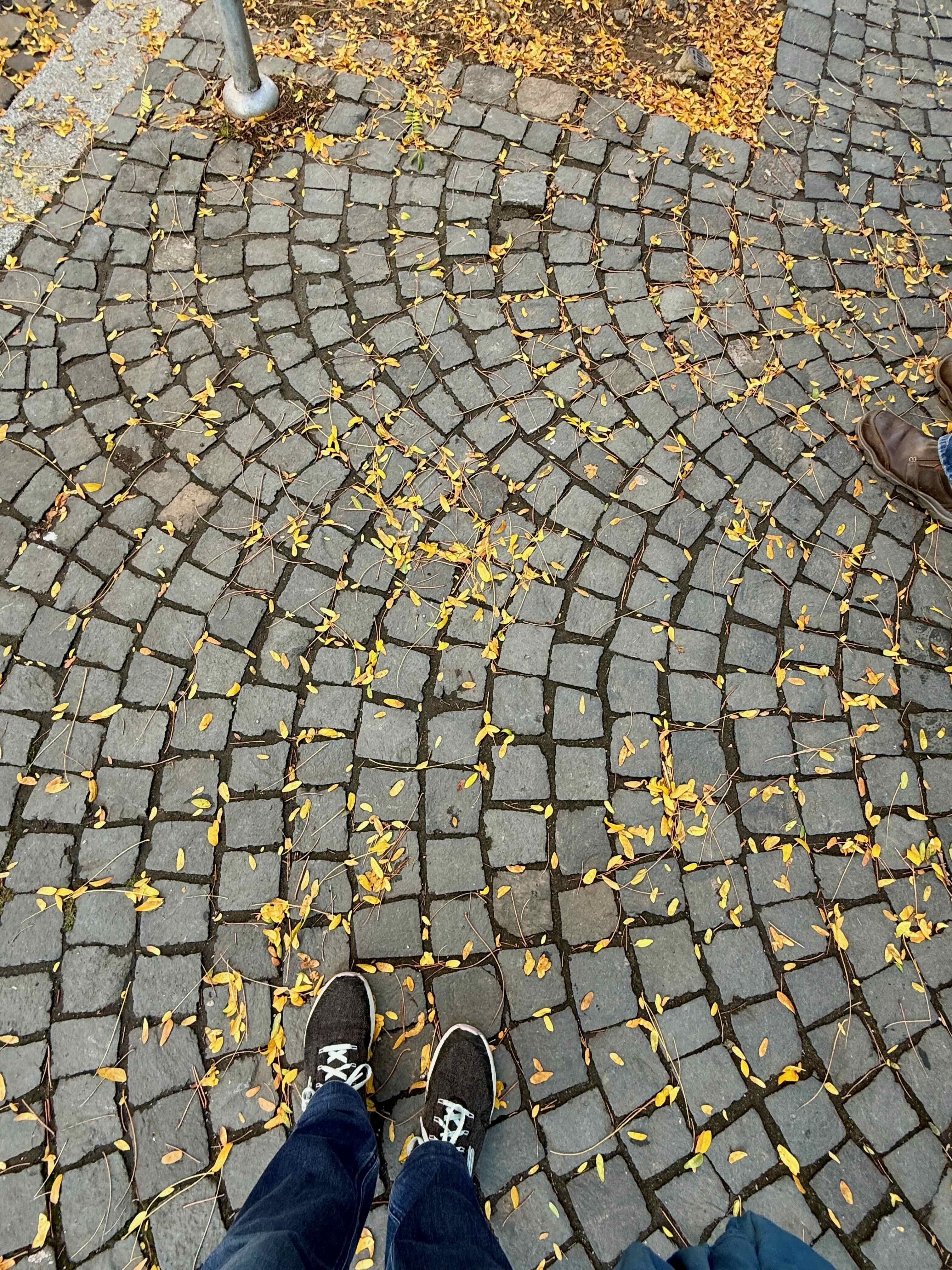
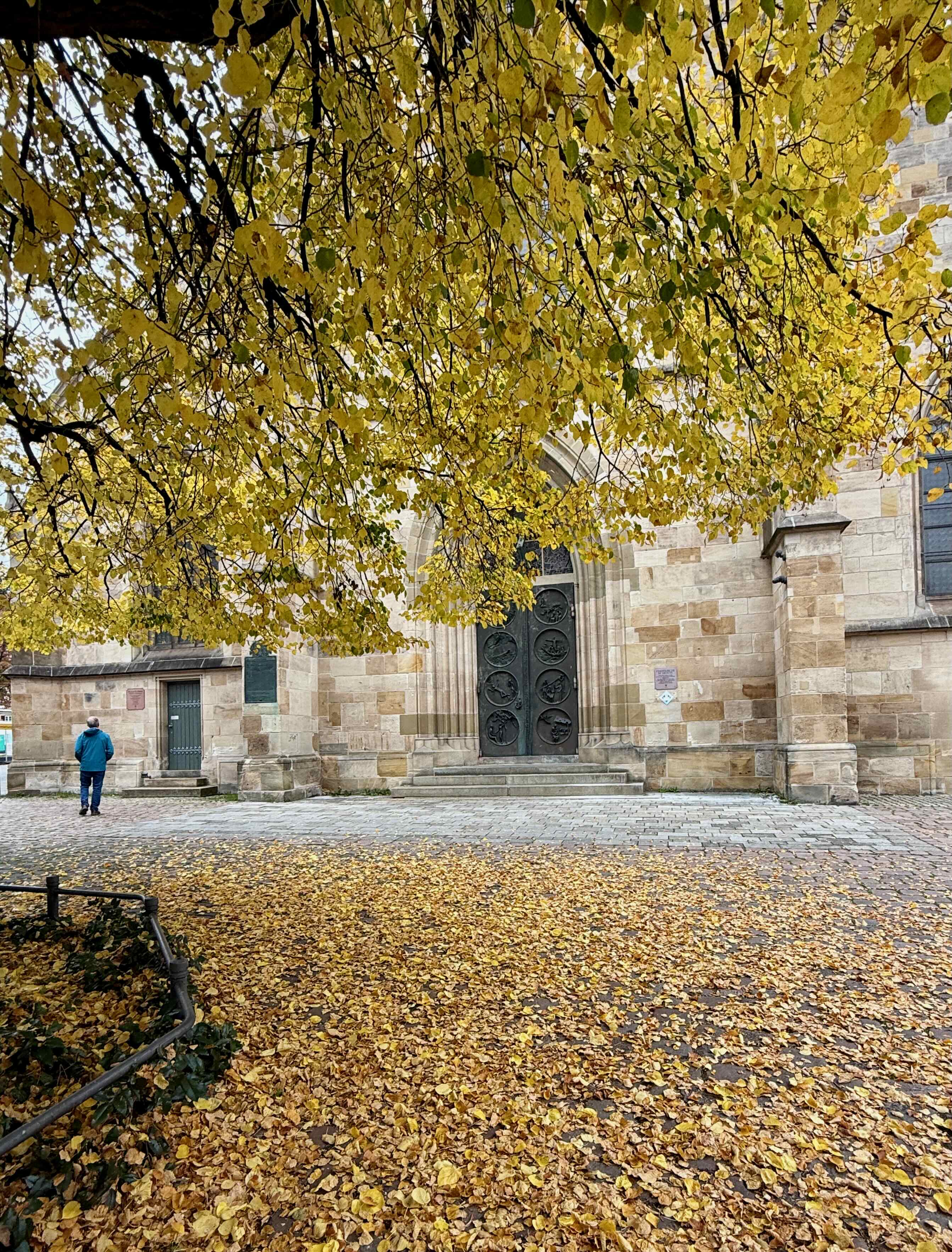
Autumn has definitely arrived.  I love walking through the fallen leaves.
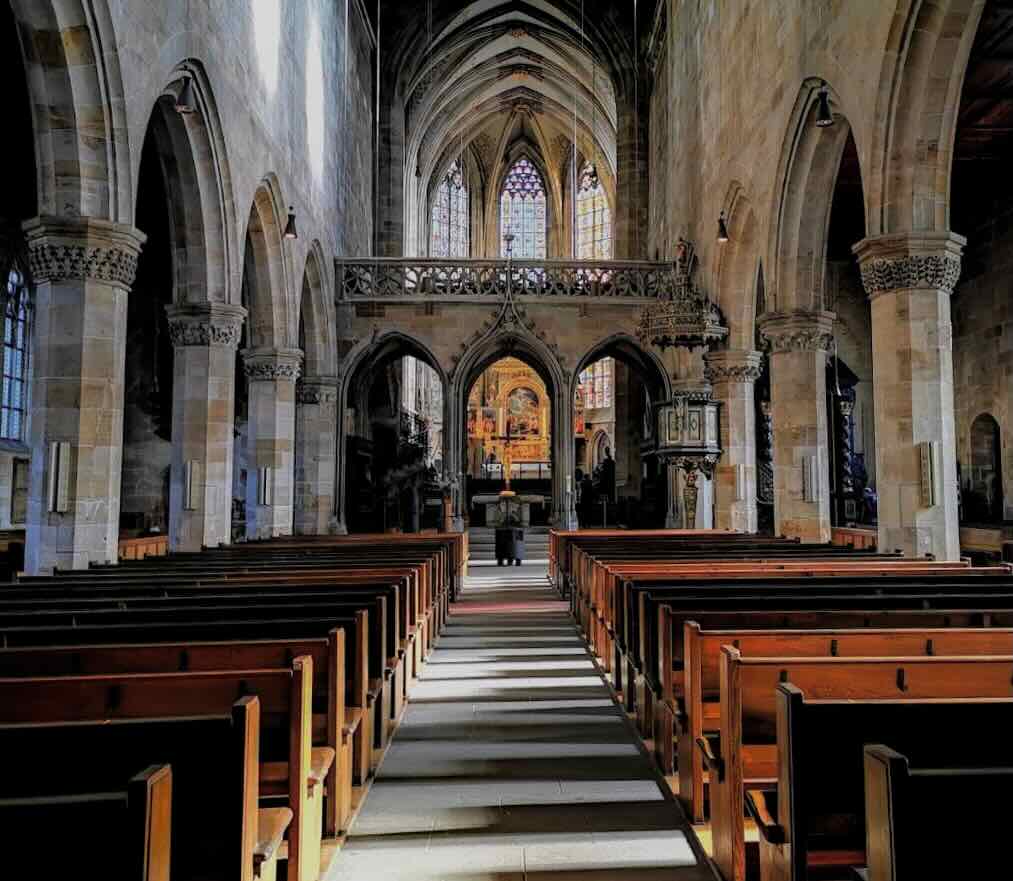
We walked into this church because its doors were so interesting,

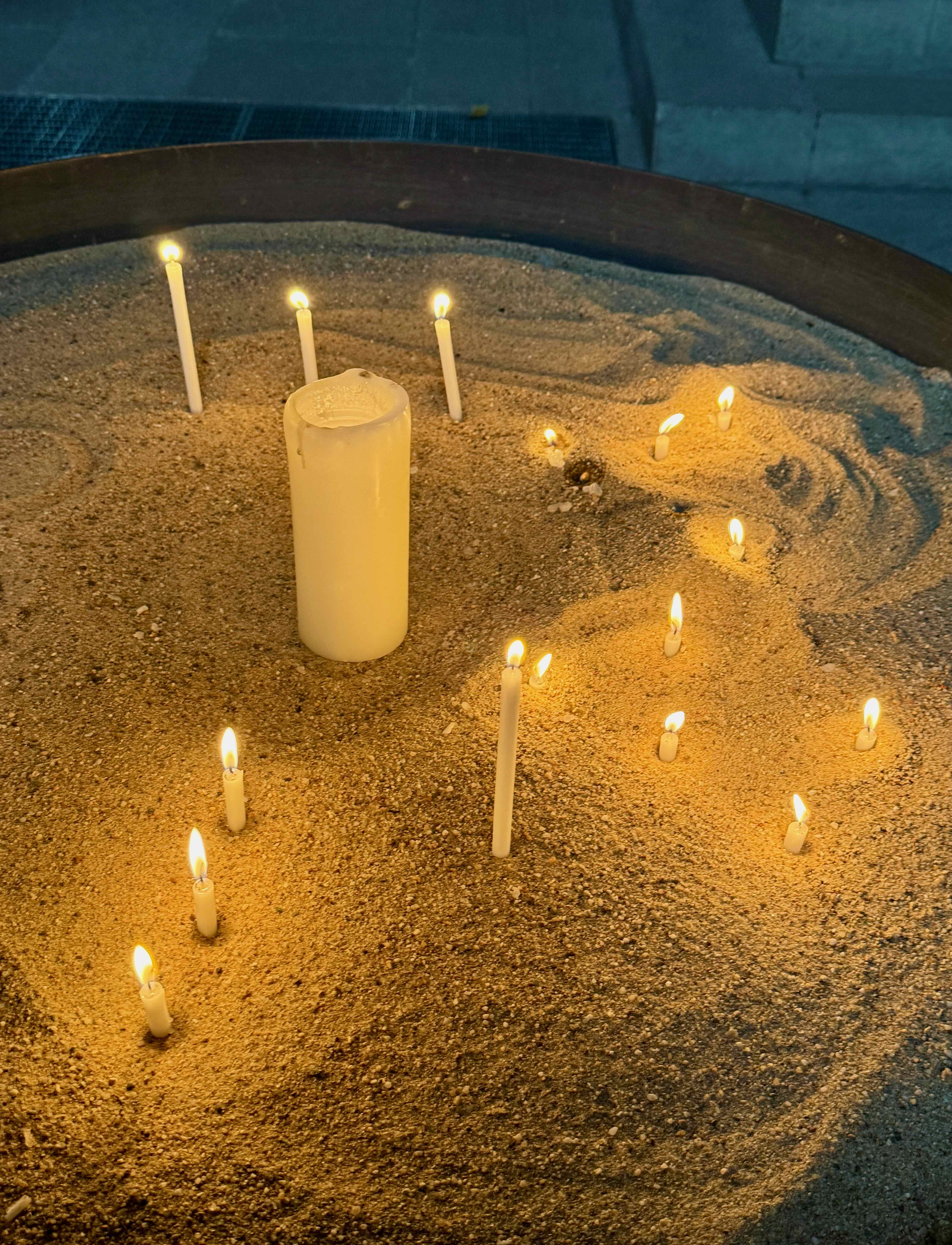
I didn’t record the name of this church, but it had a very austere dark interior……but the area to light candles was small and intimate and appealed to me.  We lit a candle for all our family members and friends who are facing health challenges right now, and spent a few moments in silent contemplation.
Back outside, we see Esslinger Castle in the distance. But this castle isn’t actually a castle, it is a well-preserved part of the medieval city fortifications, located high above the city centre. Originally expanded in the 13th century, it was reinforced in the 16th century with walls up to 5 meters thick. We can see people up there but we don’t have time to go and explore. Travel days don’t allow for in depth exploration and only give us a chance for brief visits to sites along the way.

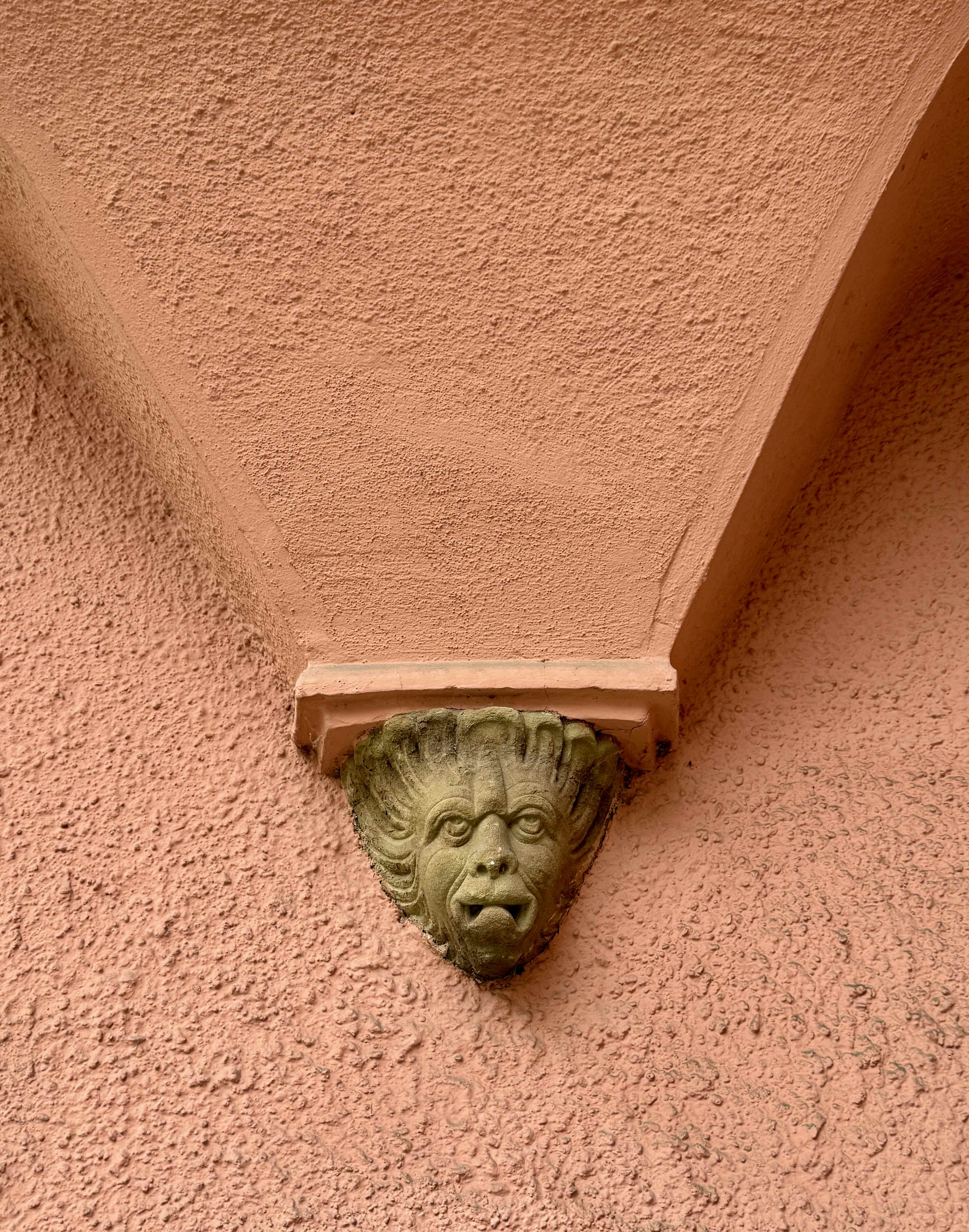
One thing I love about European cities and towns are the unexpected little things, like the face on this wall. There is always something interesting and different to discover.
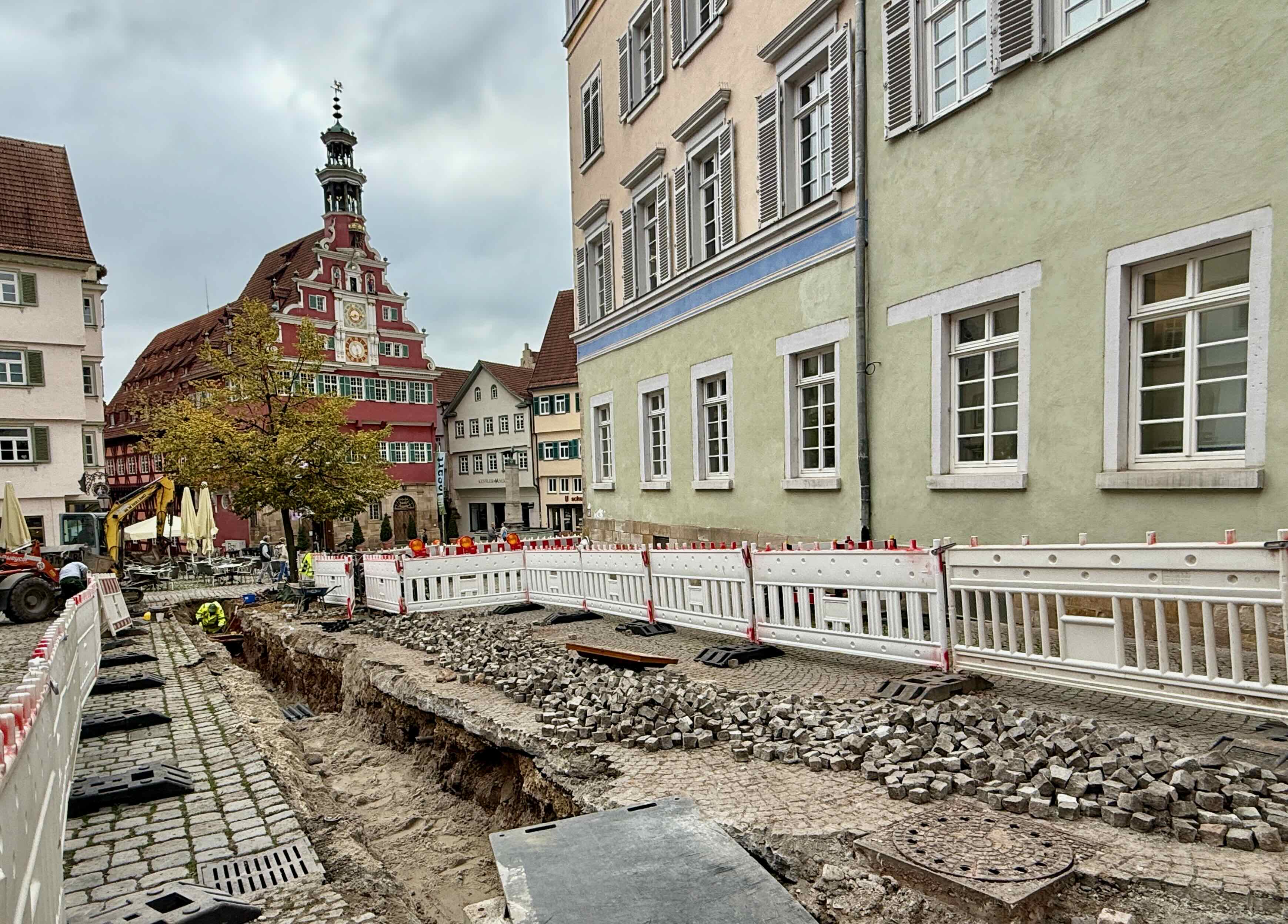
We pass this road construction site. I think they were replacing some pipes.  All the little stones from the cobbled sidewalks and streets are piled up and then relaid in the pattern that matches the rest of the in place stones.  Very labour intensive, but such a wonderful final result.
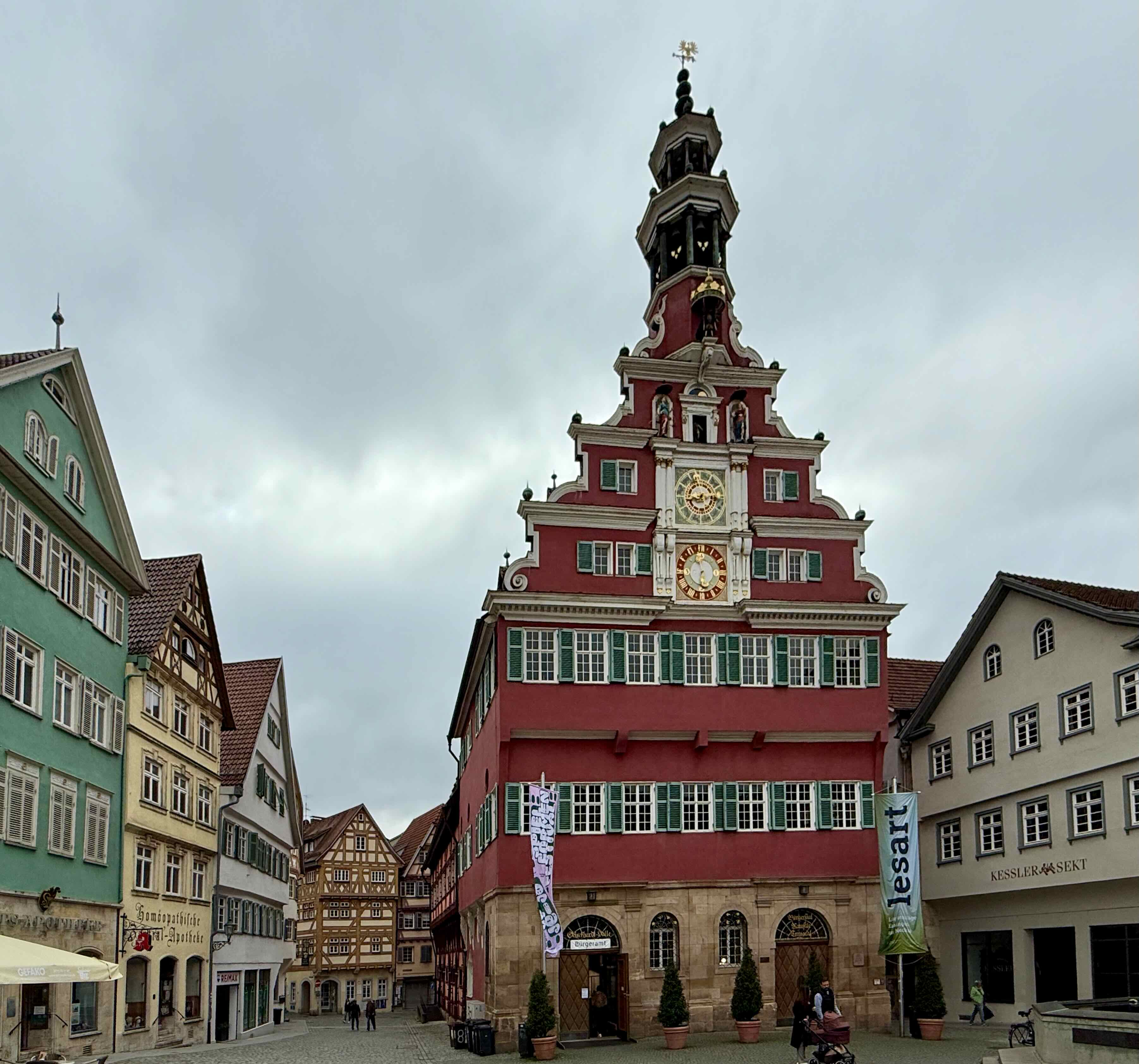
Built in 1423 as a sales hall and tax house this building is the Old Esslingen Town Hall. We were hoping to hear the Glockenspiel and see the figures on the clock move but later discovered that only happens five times a day. We are out of luck.
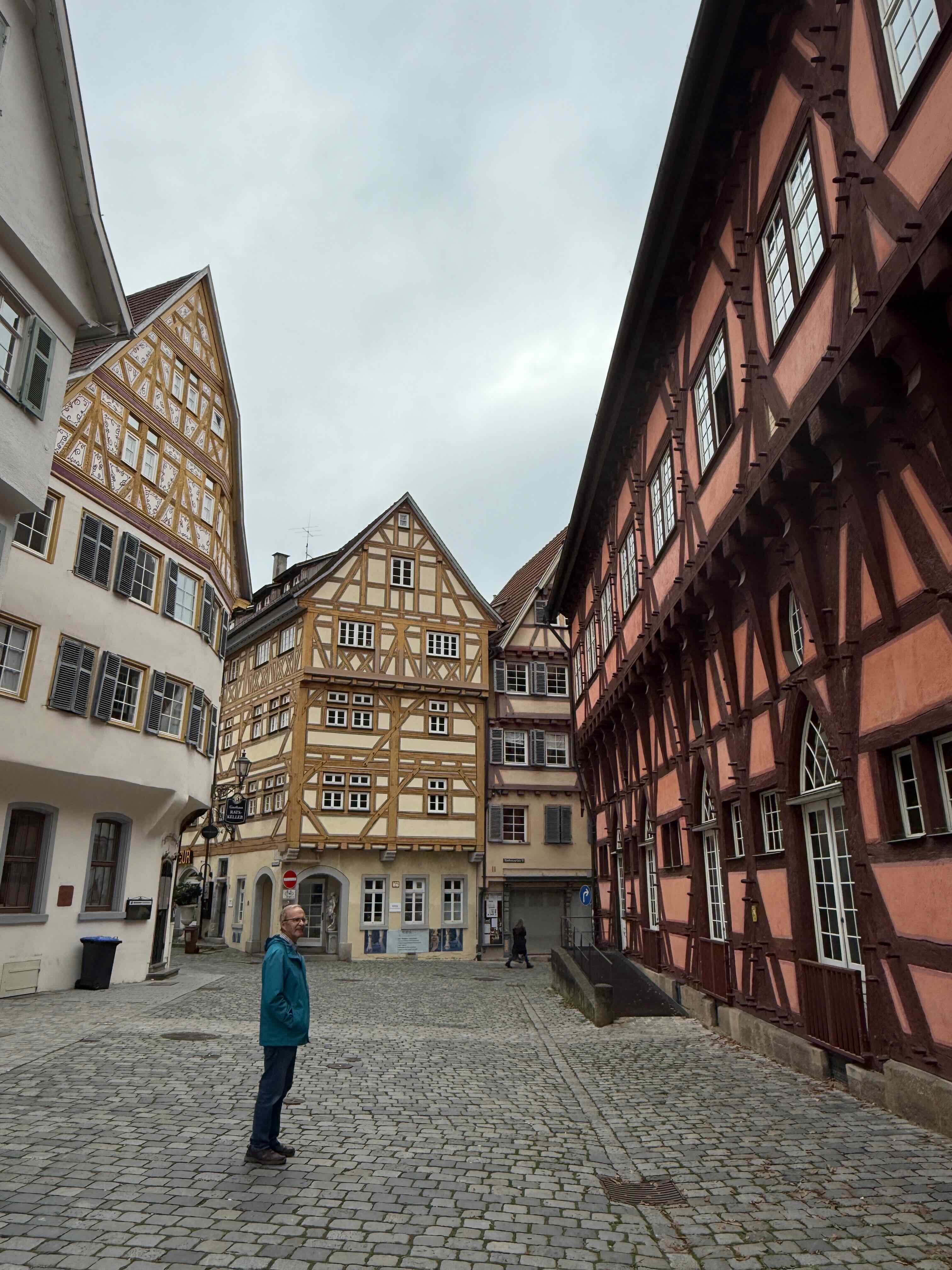
The cobbled streets are lined with ancient timbered houses…
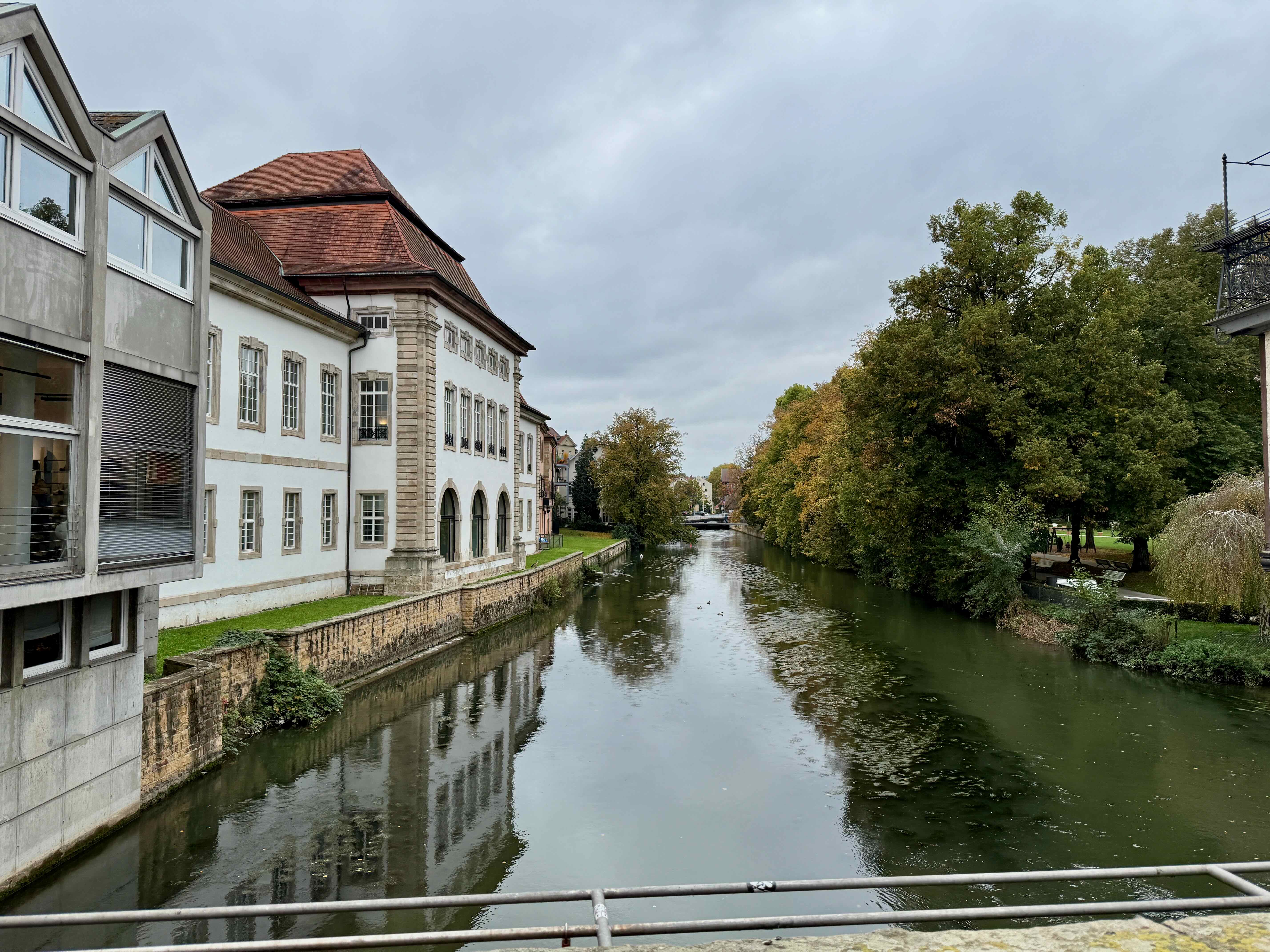
…and there are canals here too.  We could have piloted our own electric boat for a trip on the canals but they stopped operating the end of September.
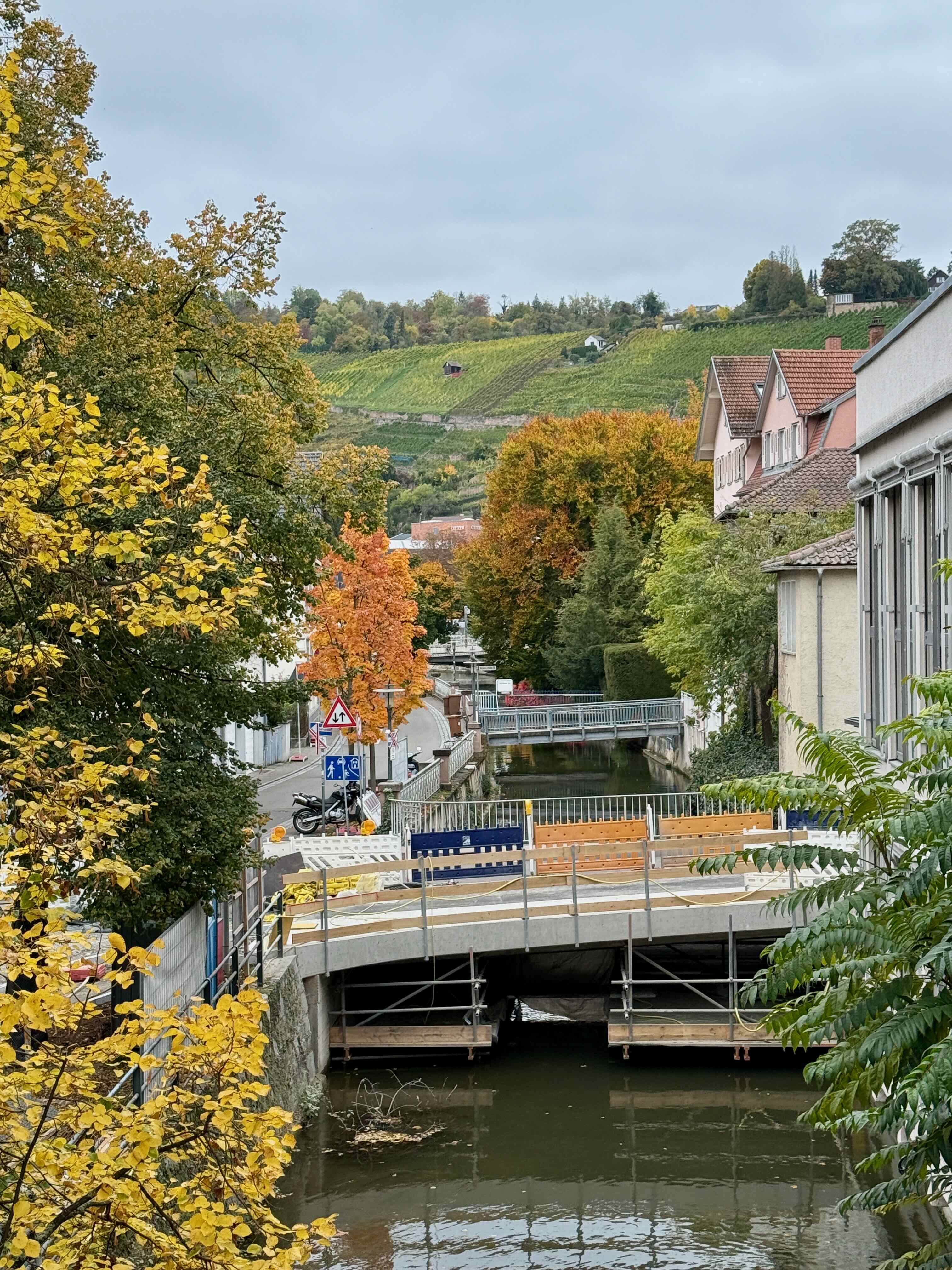
The town is surrounded by vineyards.
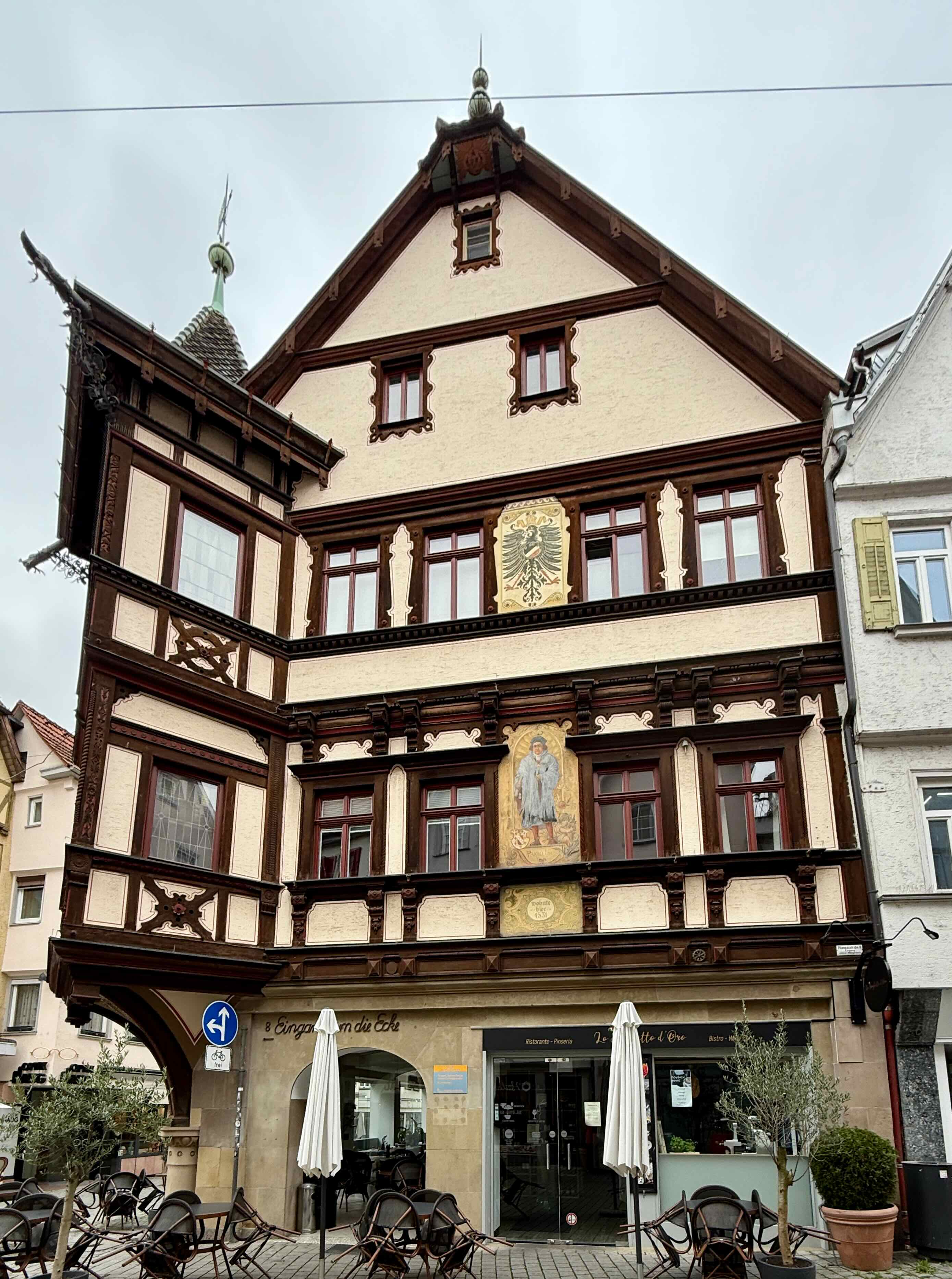
I thought this house was particularly spectacular. It is dated 1531!
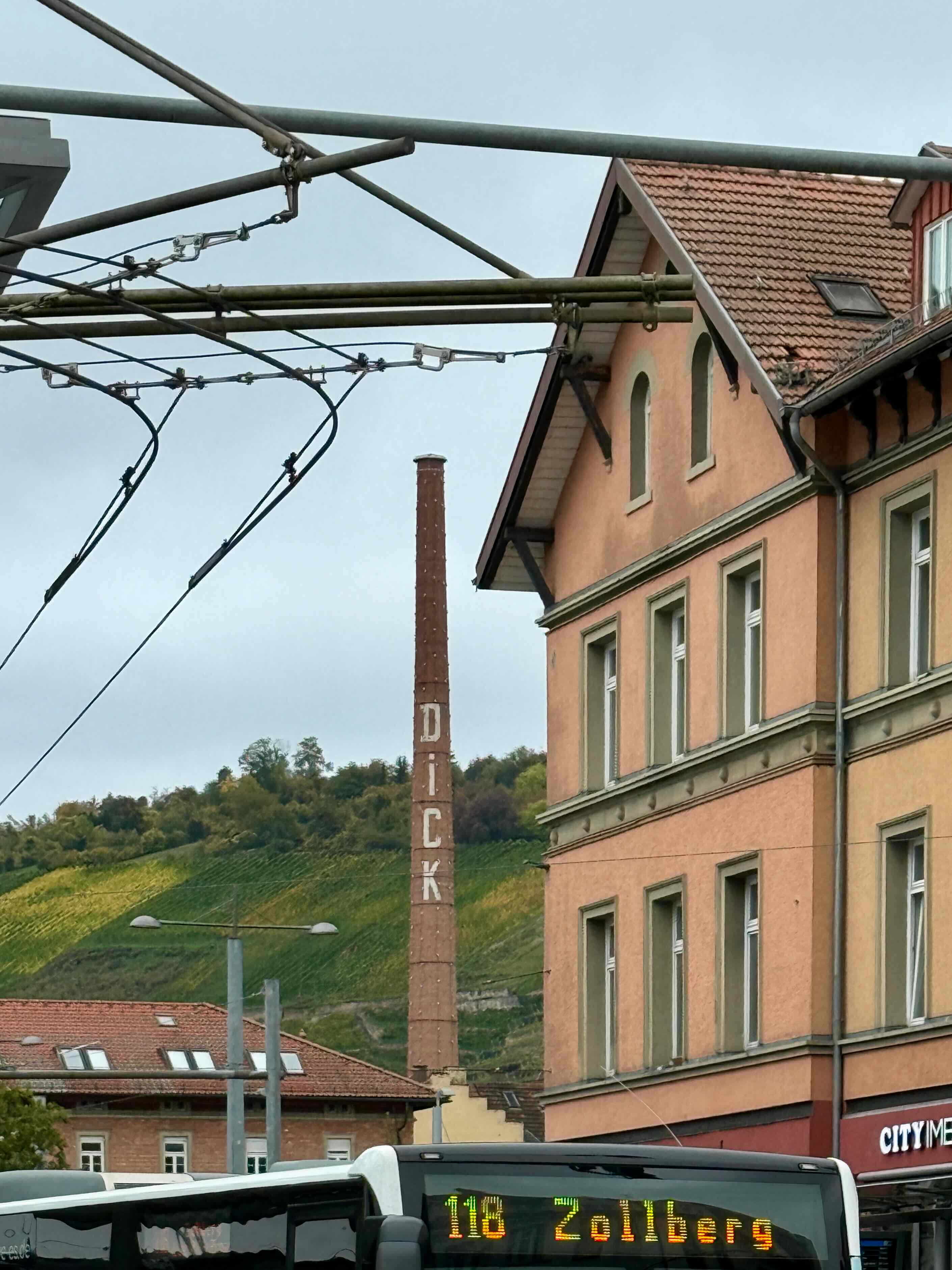
As we are leaving Esslingen I quickly snap this photo from the car window!  I just googled it and dick means thick in German, but also discovered that F. Dick is a German cutlery manufacturer that owns this smokestack…too funny!
Next stop is Baden Baden. We spent some time in Baden Baden a long time ago so we thought we should stop there for a visit. There are flowers everywhere, but bathrooms are few and far between!  We spent 45 minutes trying to find a bathroom. Using Google maps we walked several blocks to where there was a WC…but we couldn’t find it. Turns out it was in a parking garage and both of us walked right past the doors to the washroom twice without seeing them! They were on either side of the of the parking payment machine with a tiny sign on each door!

I love how people have tiny potted gardens on their window ledges or on the street beside their doors. 
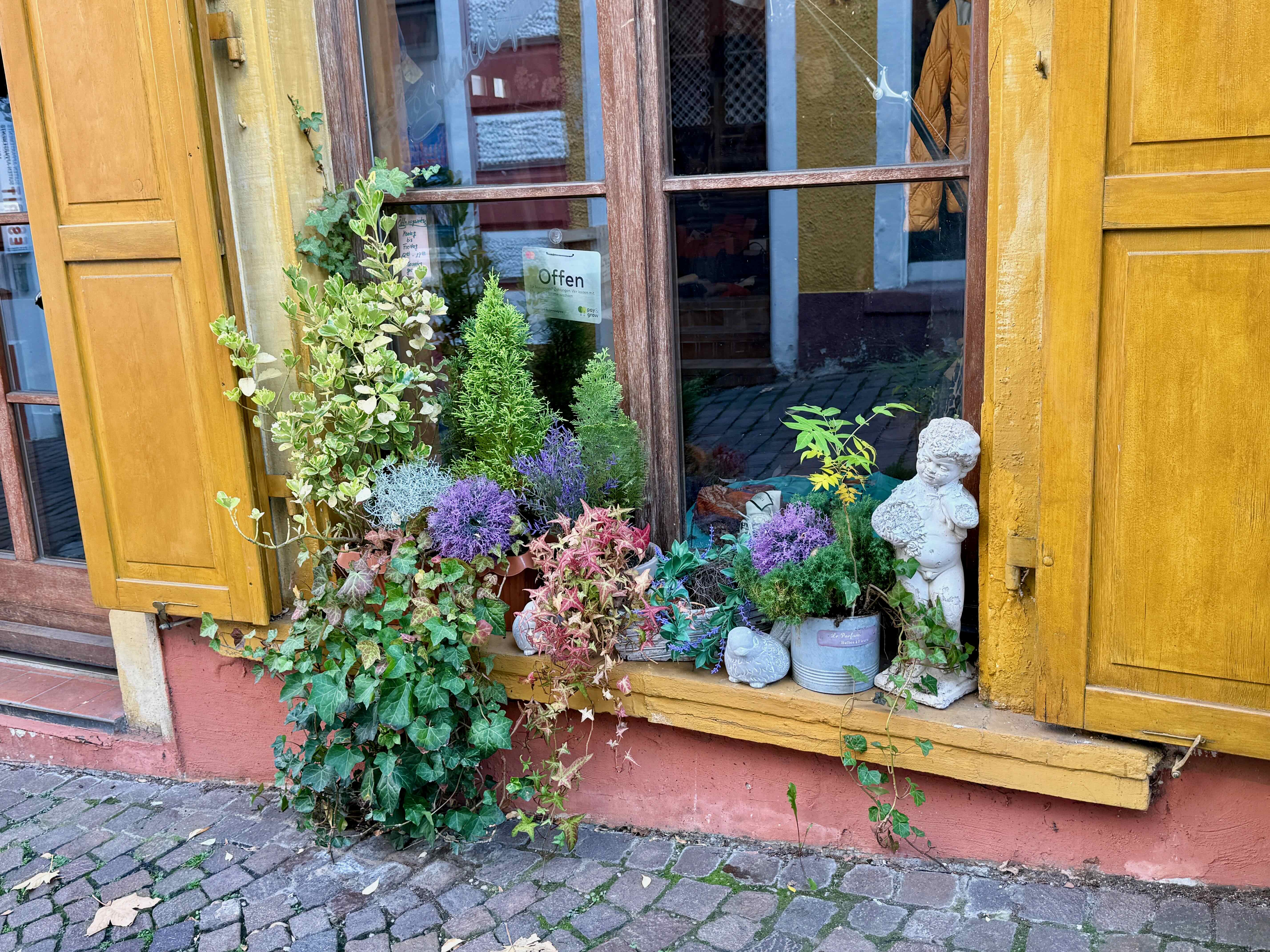
Baden Baden has a lot of very high end shops.  This watch is priced at €15,500…no prices on the others. I presume they are even more expensive.  We also see small diamond earring studs that range from €399 to €820 and there were no clothing items on display in the shop windows below €100!  A bit too pricey for us, but it is fun to window shop.
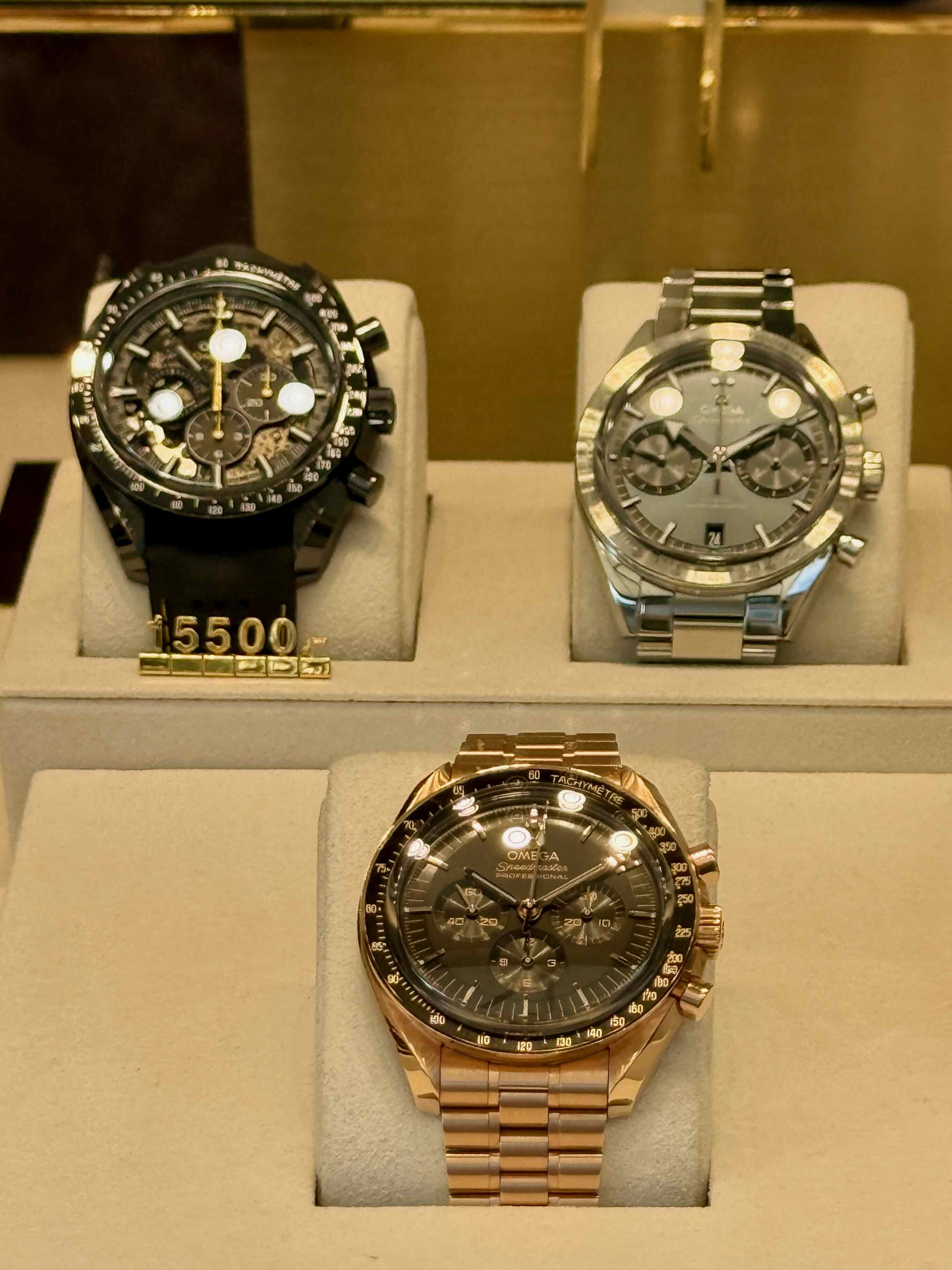
Loved this stork fountain!
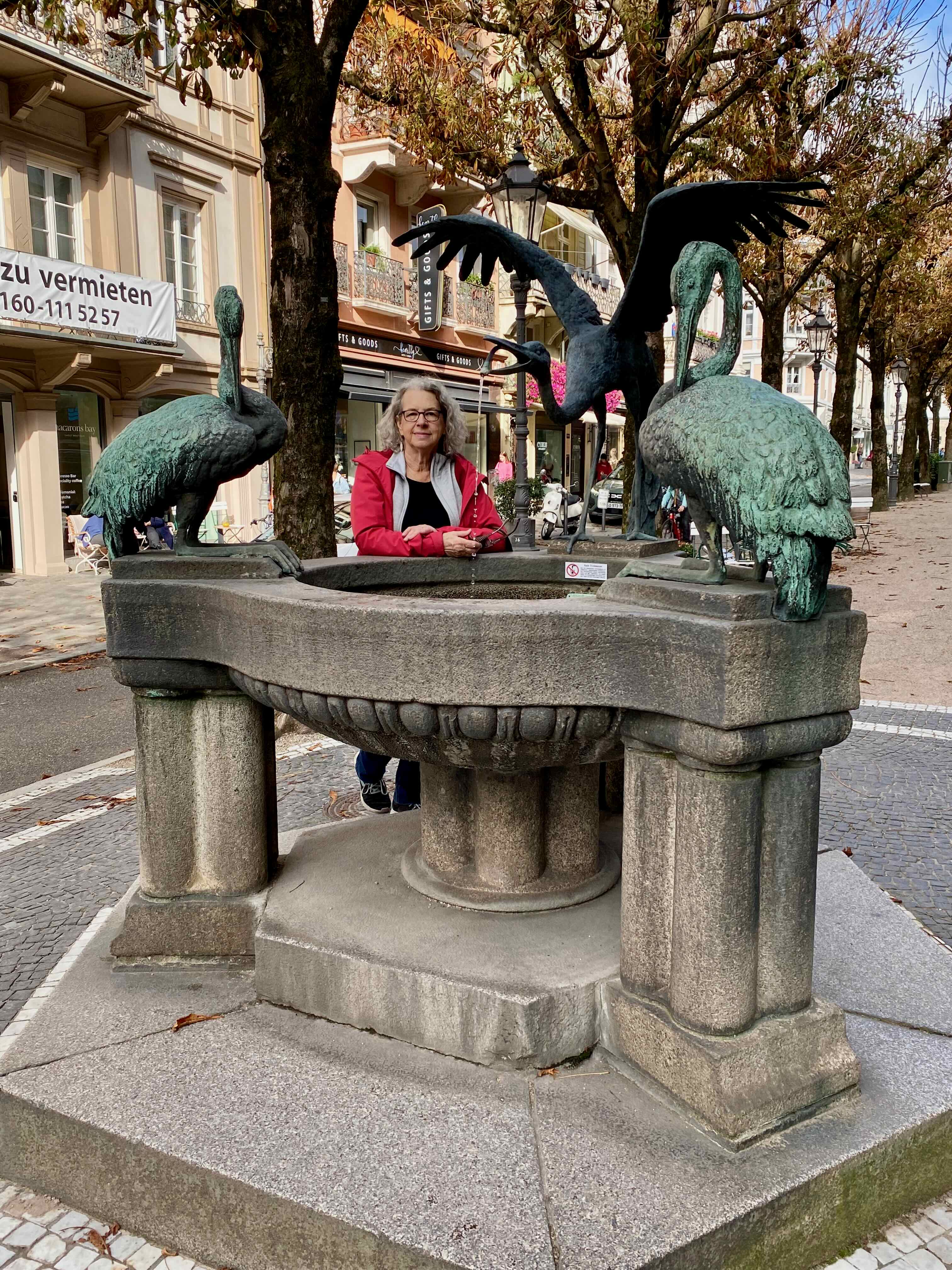
This is the Baden Baden Casino.  Bob thought we could go in and tryout luck but men must wear a suit jacket and tie.  We wouldn’t be allowed in with our jeans and casual sweaters.
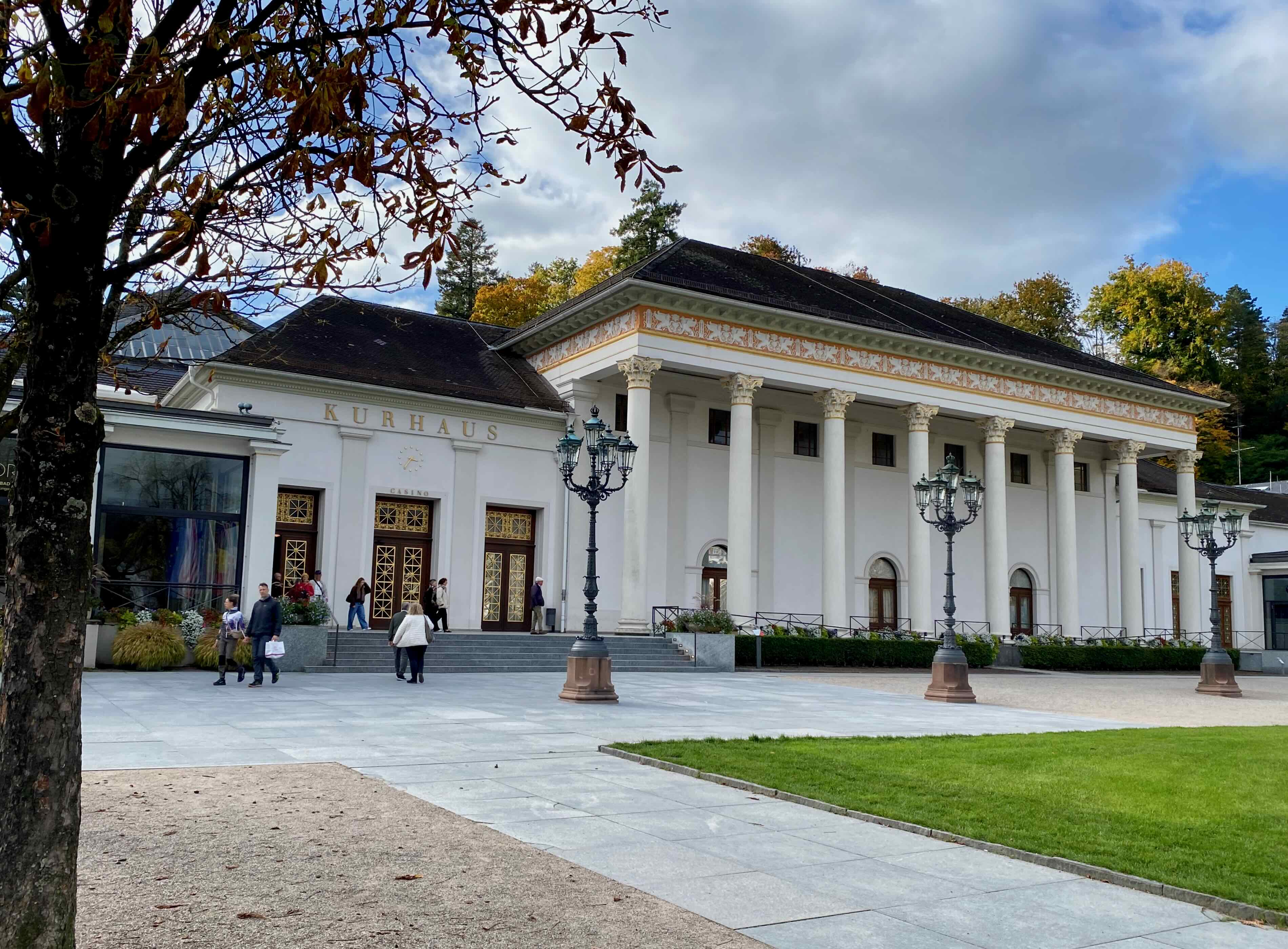
The drive from Baden Baden to Mulhouse in France was interesting.  I see these strange structures on Google maps while navigating…turns out they are huge shopping malls with parking on the roofs of the buildings.
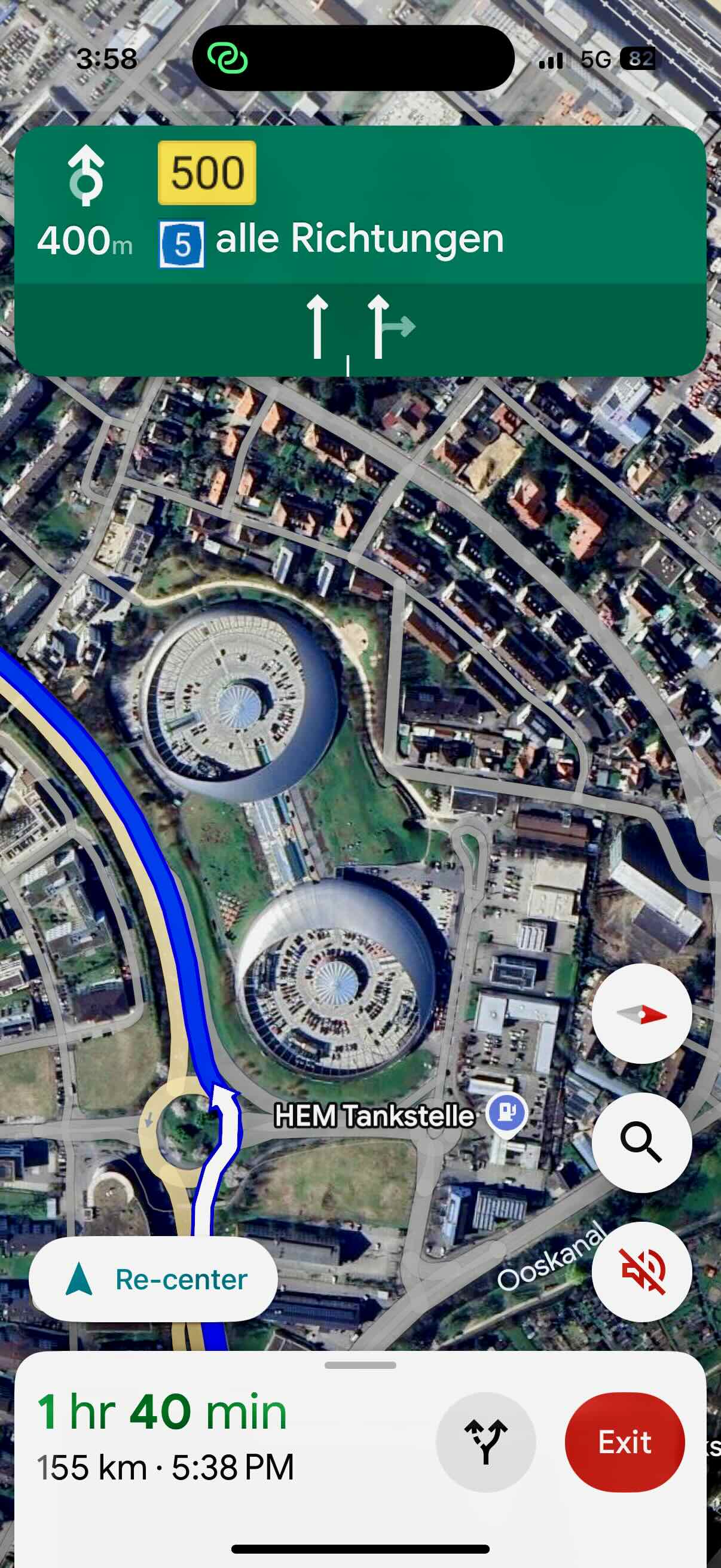
Screenshot

Just a few kilometres down the road I see this huge truck rest stop on Google maps. I count 86 trucks stopped for a break! Bob’s biggest complaint about driving in Europe is all the trucks on the roads. The right lane is one truck after another and when a truck pulls into the car lane to pass a slower moving one all the cars have to slow down until it manages to pass and get back into the truck lane.  
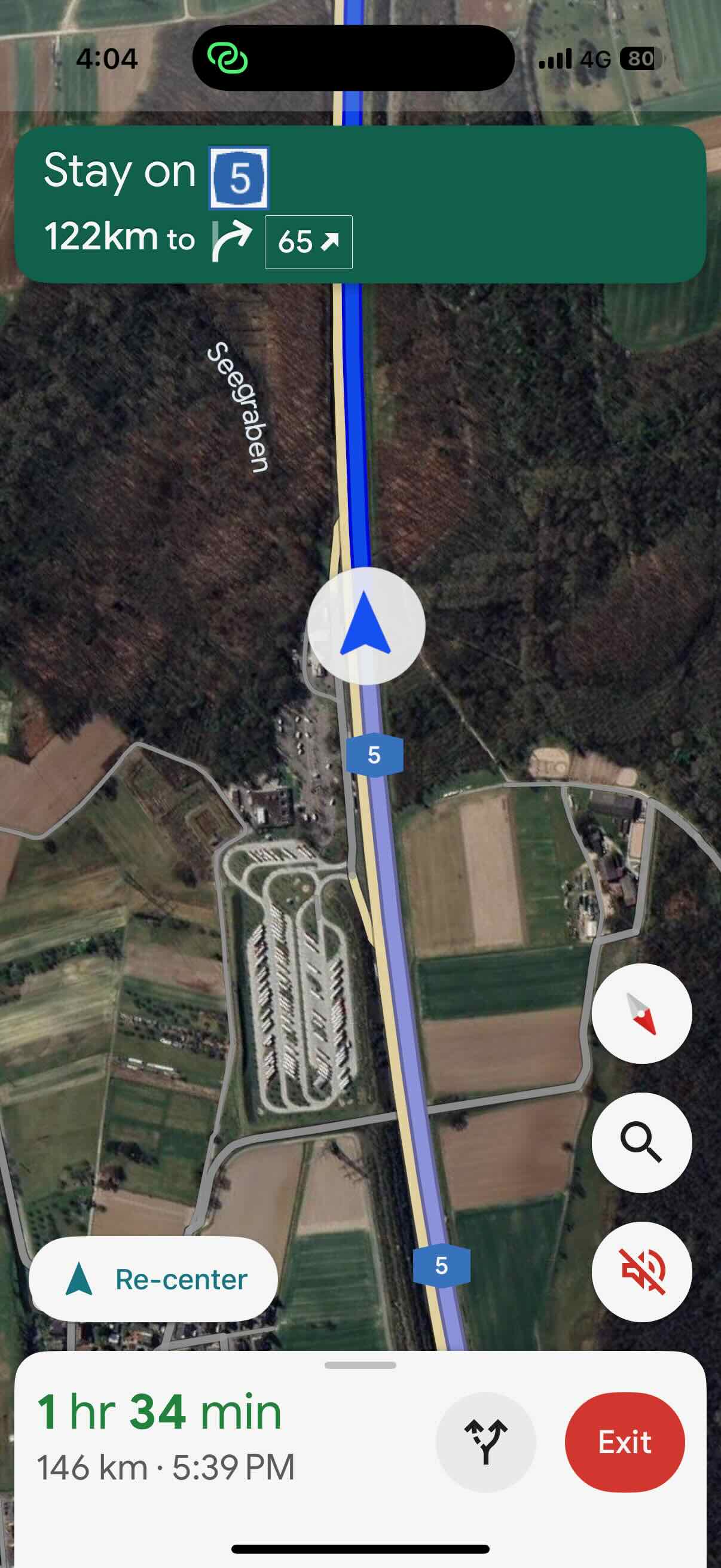
Screenshot

Remember the German highway speed limit is usually 130 km and often there is no speed limit so a truck pulling into your lane at 90 km is actually quite dangerous.  Bob does enjoy the chance to drive at 156 km/h though!
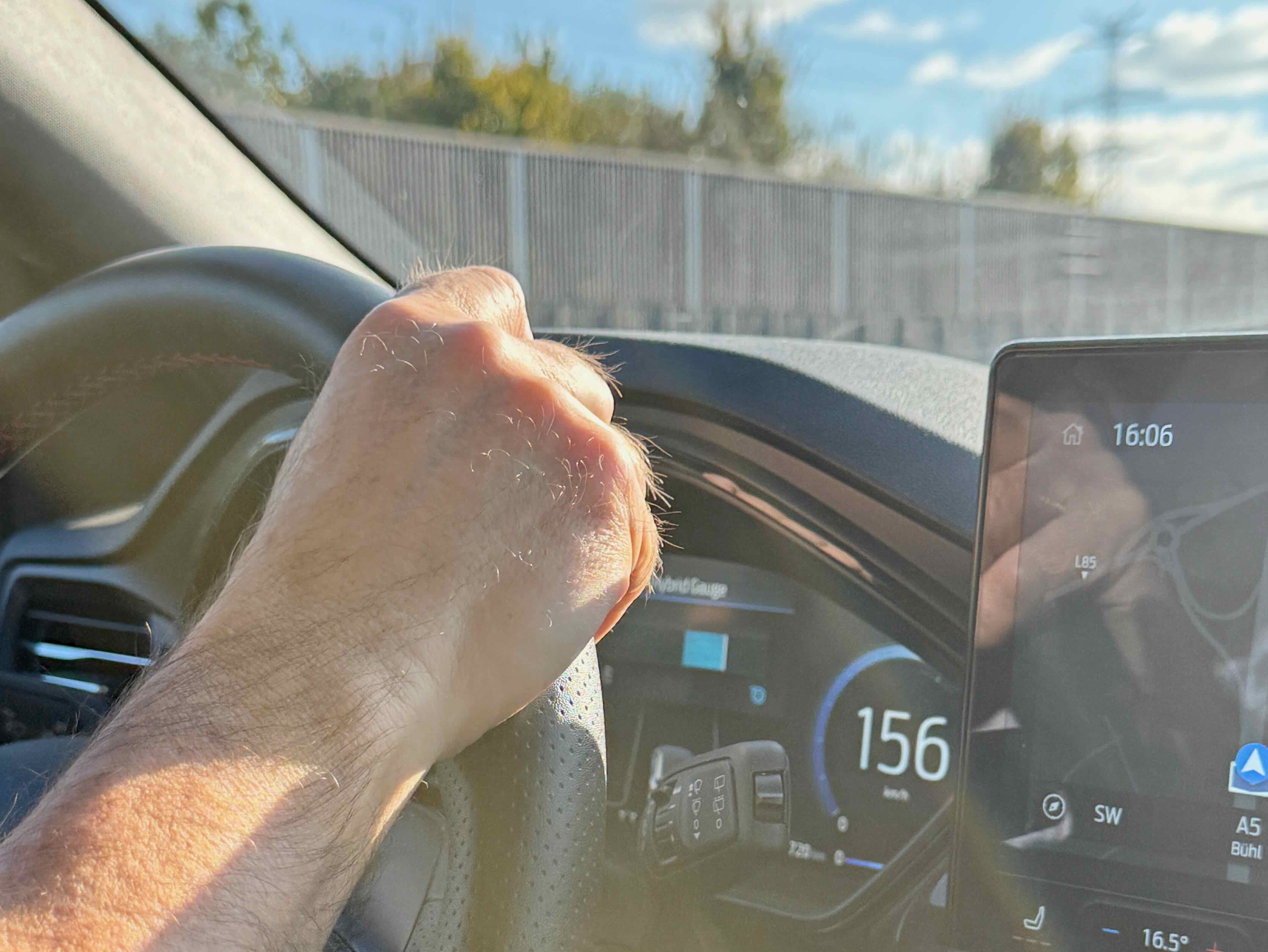
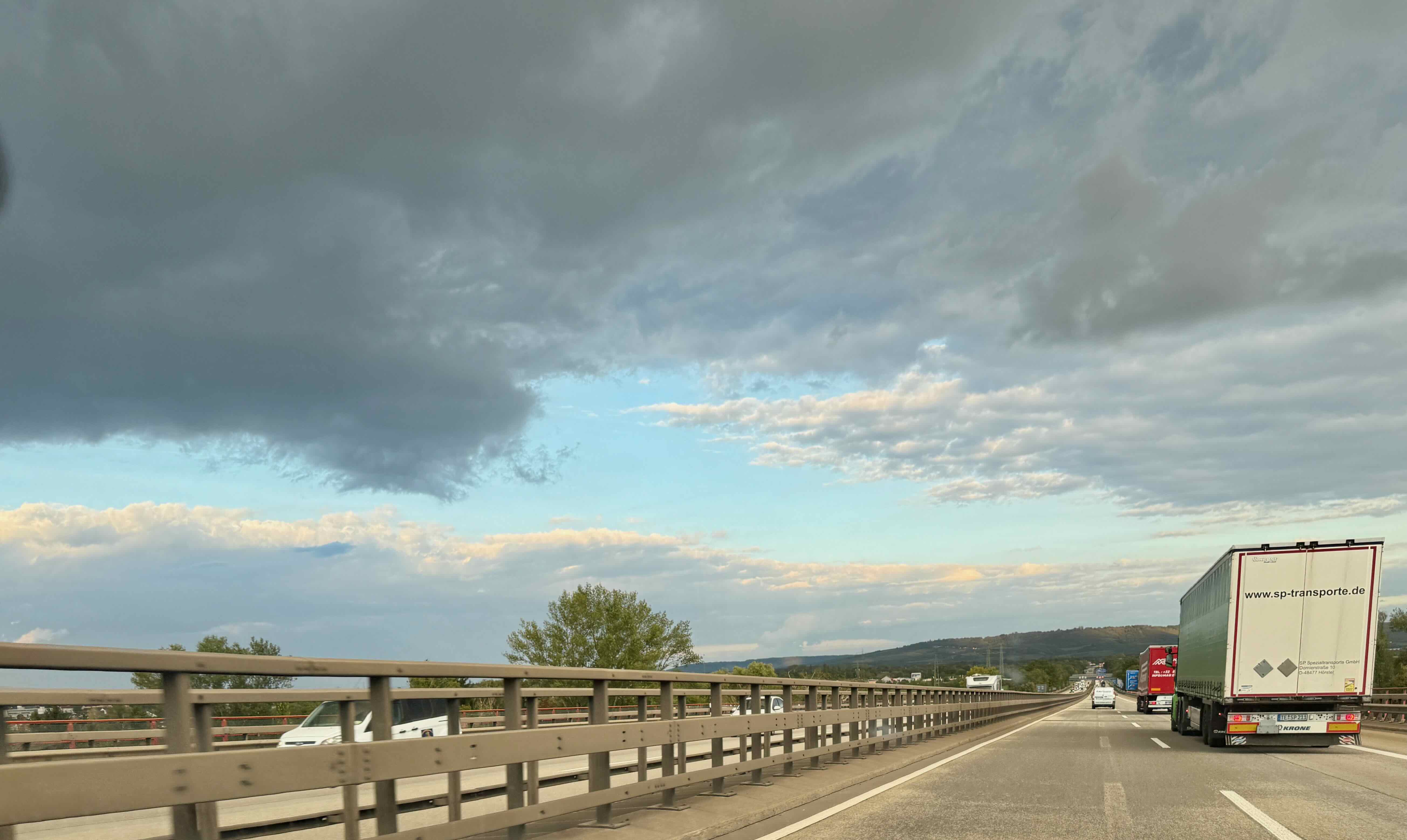
We get caught in traffic for almost half an hour, moving just a car length at a time.  We finally figure out why. This huge boat was trying to move through a rather small covered bridge so all traffic was stopped during this operation.  Notice our speed now…1.6 km/h!

We arrived just in time to meet our Airbnb host, but our planned stop for groceries has to wait for another day.
Frankfurt to Stuttgart, Germany

Day 37     Monday, October 6, 2025

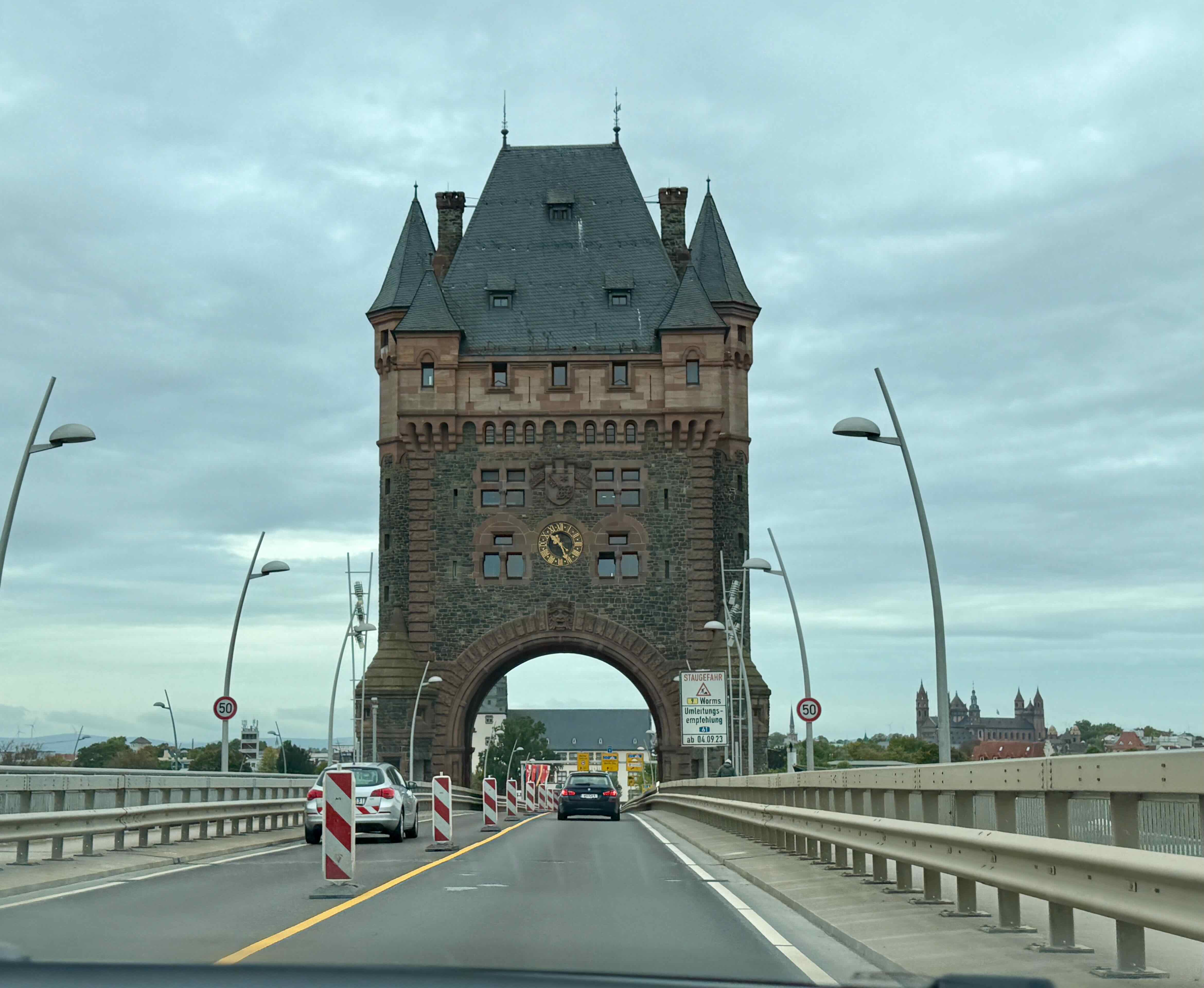
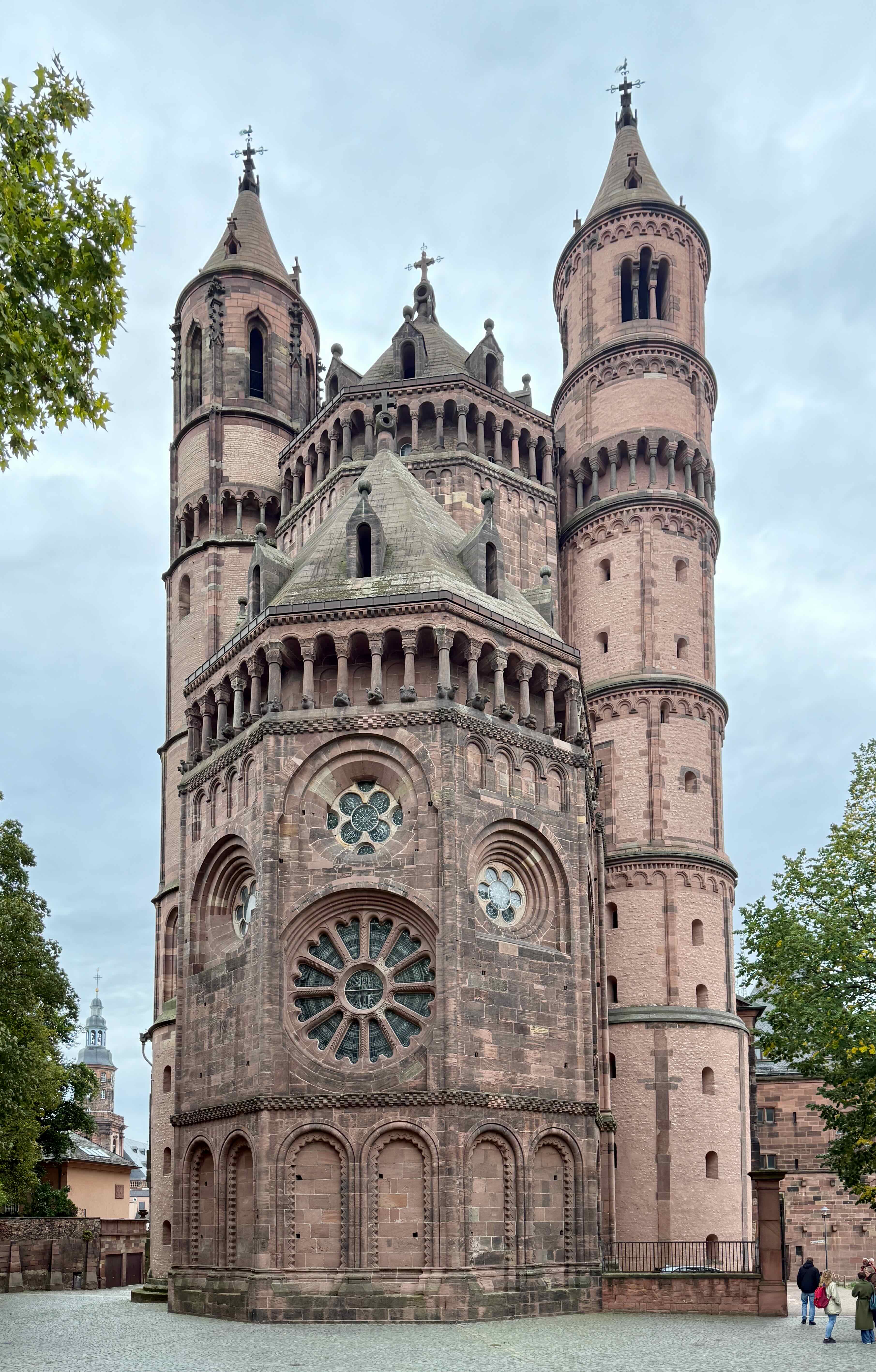
On our drive to Stuttgart we stop at Worms, Germany. Worms is pronounced Vurmz. We passed through this huge gate on the bridge over the Rhine River.

We find a place to park on the street but have to move to a parkade because the street machine won’t take our euros…big surprise!  St Peter’s Cathedral is our first stop but we can’t find the door to get inside!  

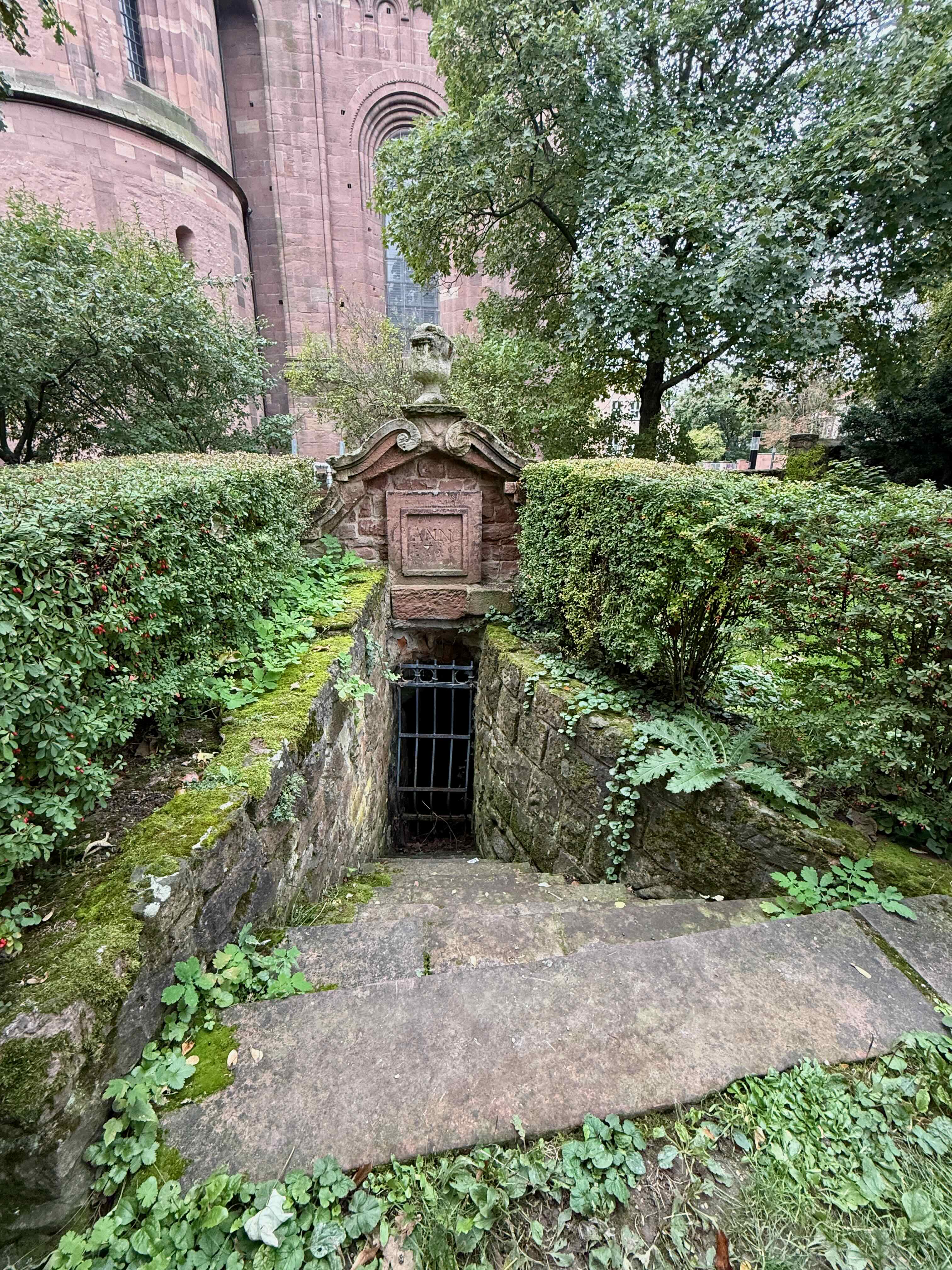
In our walk around the church I see steps leading into what looked like a private area, but I take a look anyways and it is actually a public garden so we go inside. When I see something like this I am so curious. I wonder what it is, why it is there and where does it lead to?

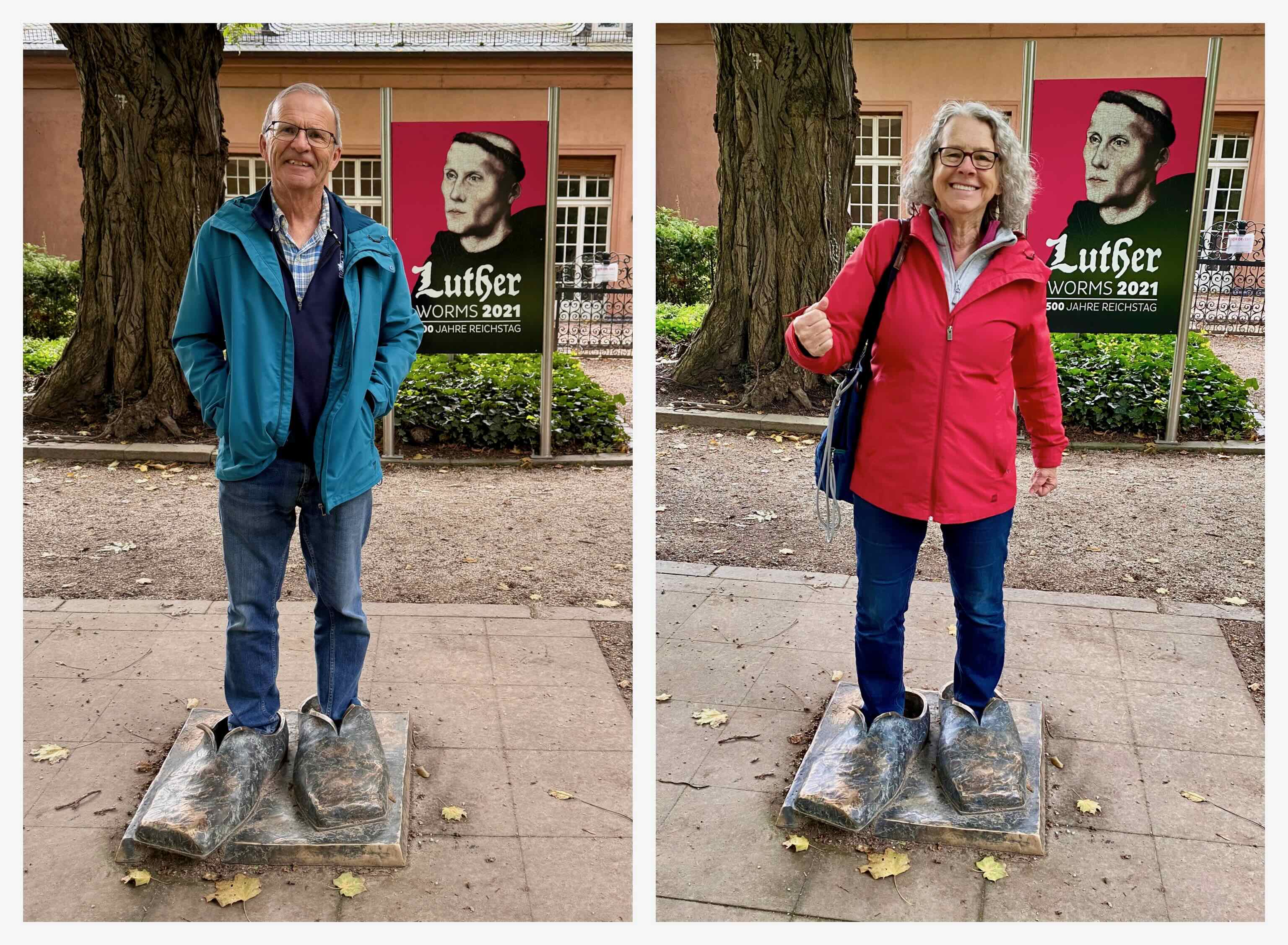
Turns out this garden marks the location where Martin Luther refused to recant his beliefs at the Diet of Worms in 1521. This was the beginning of the Protestant Church and its split from the Catholic Church. These large bronze shoes in Worms’ Heylshof Park shoes are part of a 2017 memorial sculpture, which allows visitors to symbolically “step into Luther’s shoes” at the spot where he stood and defended his doctrines.

 A ‘Diet’ was an assembly or meeting of authorities to make decisions on important matters. The Diet of Worms of 1521 was convened to determine how political and religious authorities should respond to Martin Luther’s teachings. Because the Diet was held in Worms, it is know as the Diet of Worms which still makes me smile because of course I think of eating worms.

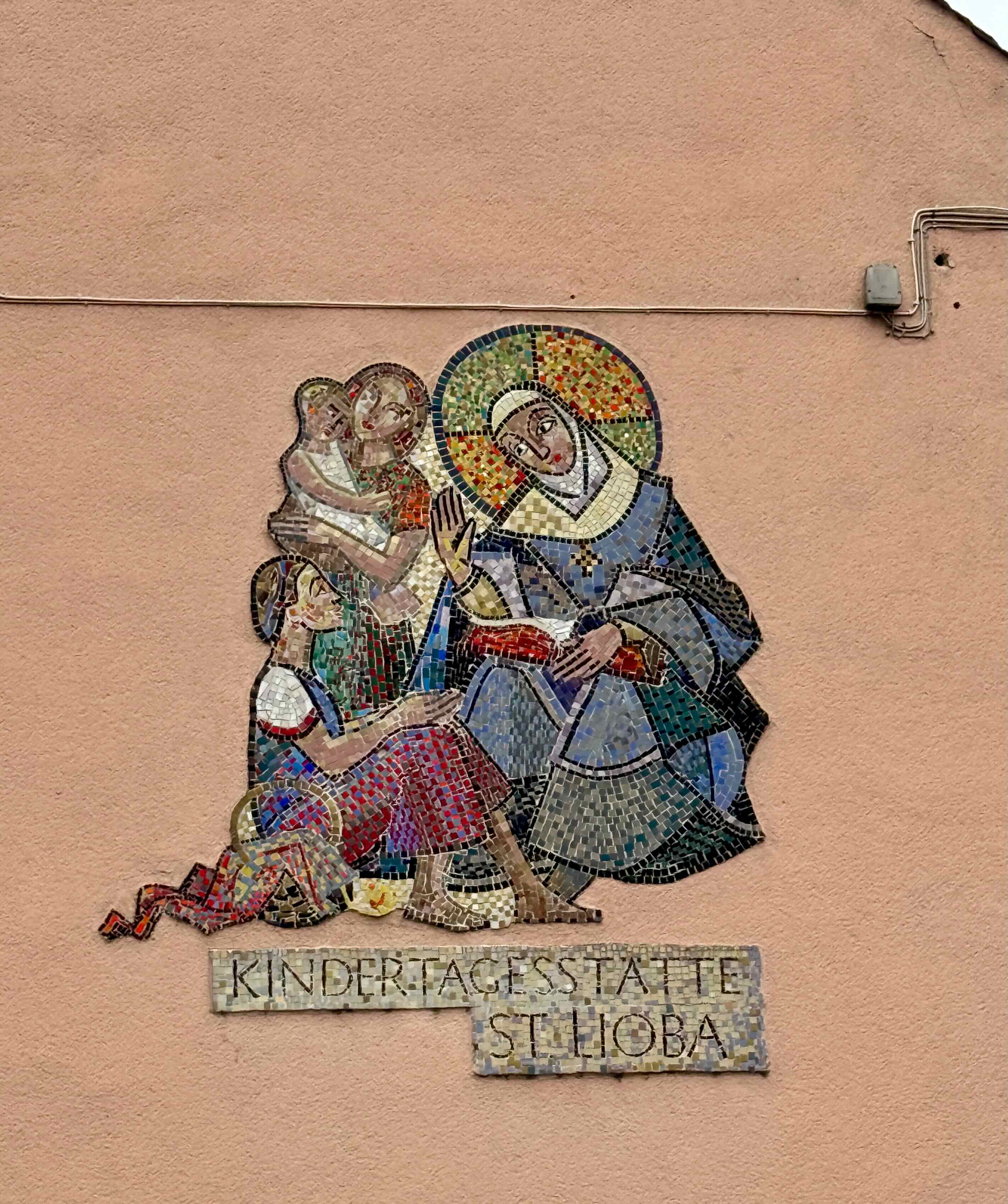
We leave the garden and go back to the church, passing a kindergarten with this colourful mosaic mural.

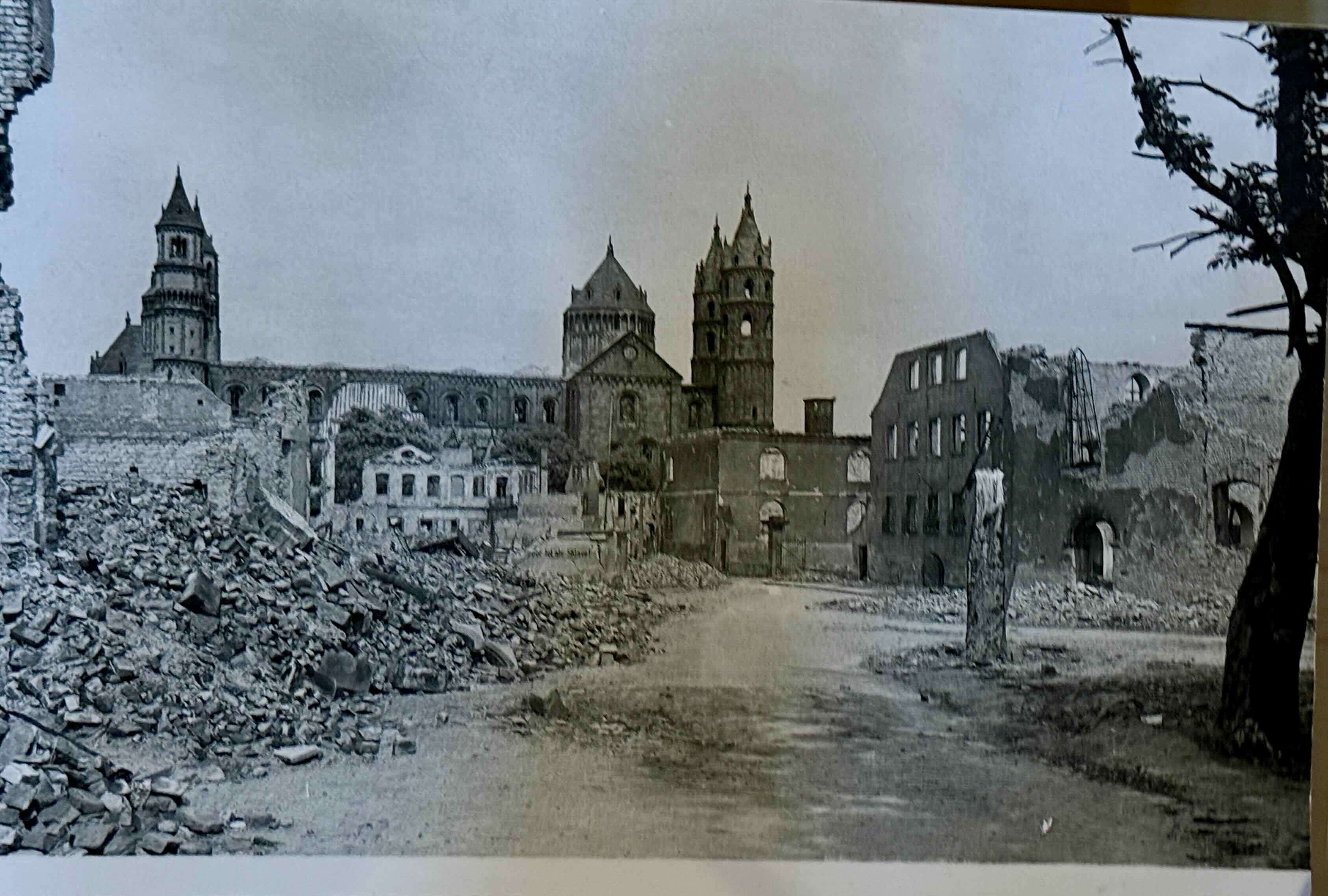
St Peters Cathedral is another cathedral that escaped destruction during the war.  Curious, I did a bit of of research and learned that the high belltowers and steeples of cathedrals were used by the Allies as navigational landmarks and that sometimes military planners made conscious efforts to protect major cultural and religious sites. So perhaps not divine intervention after all?

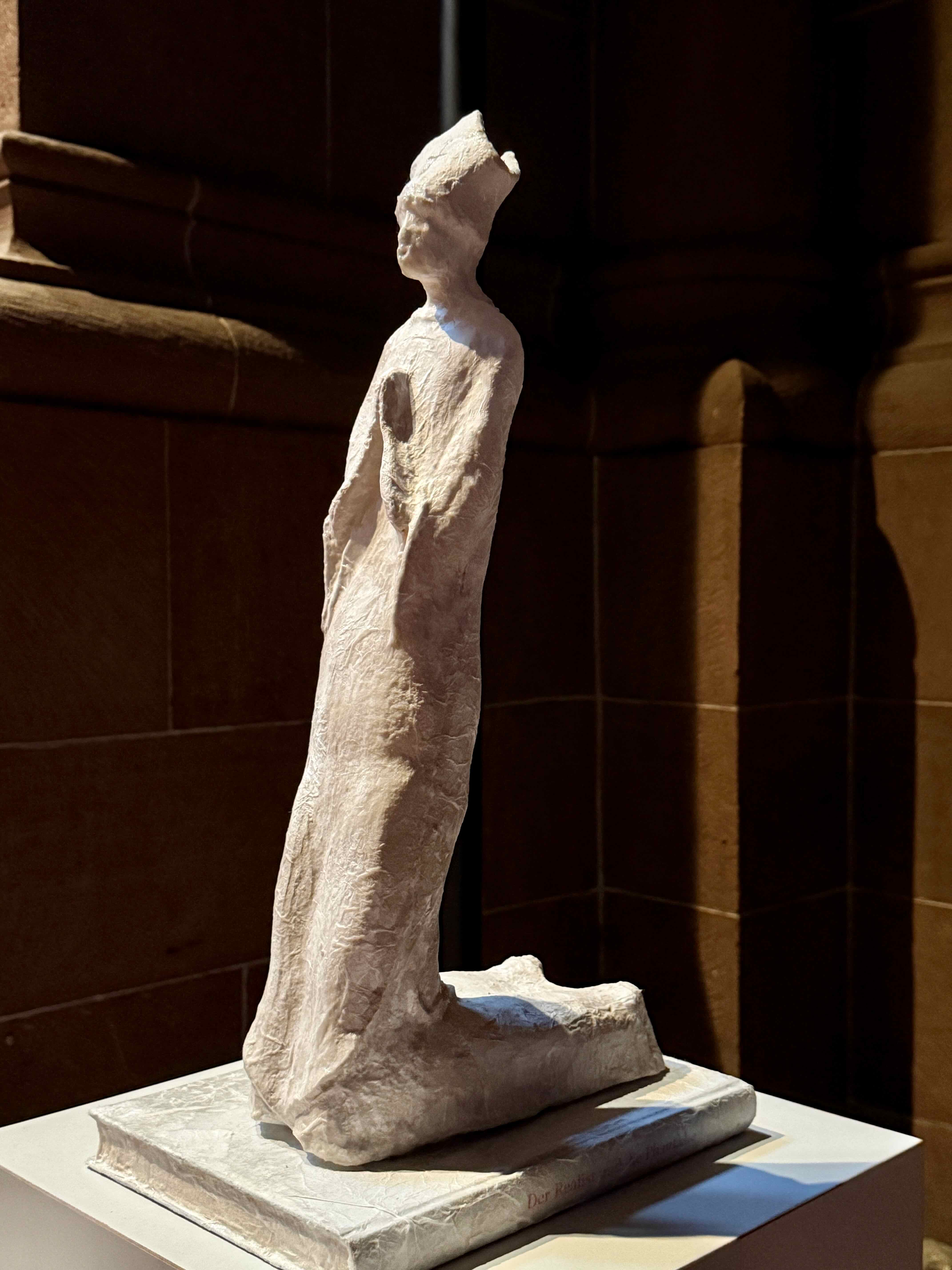
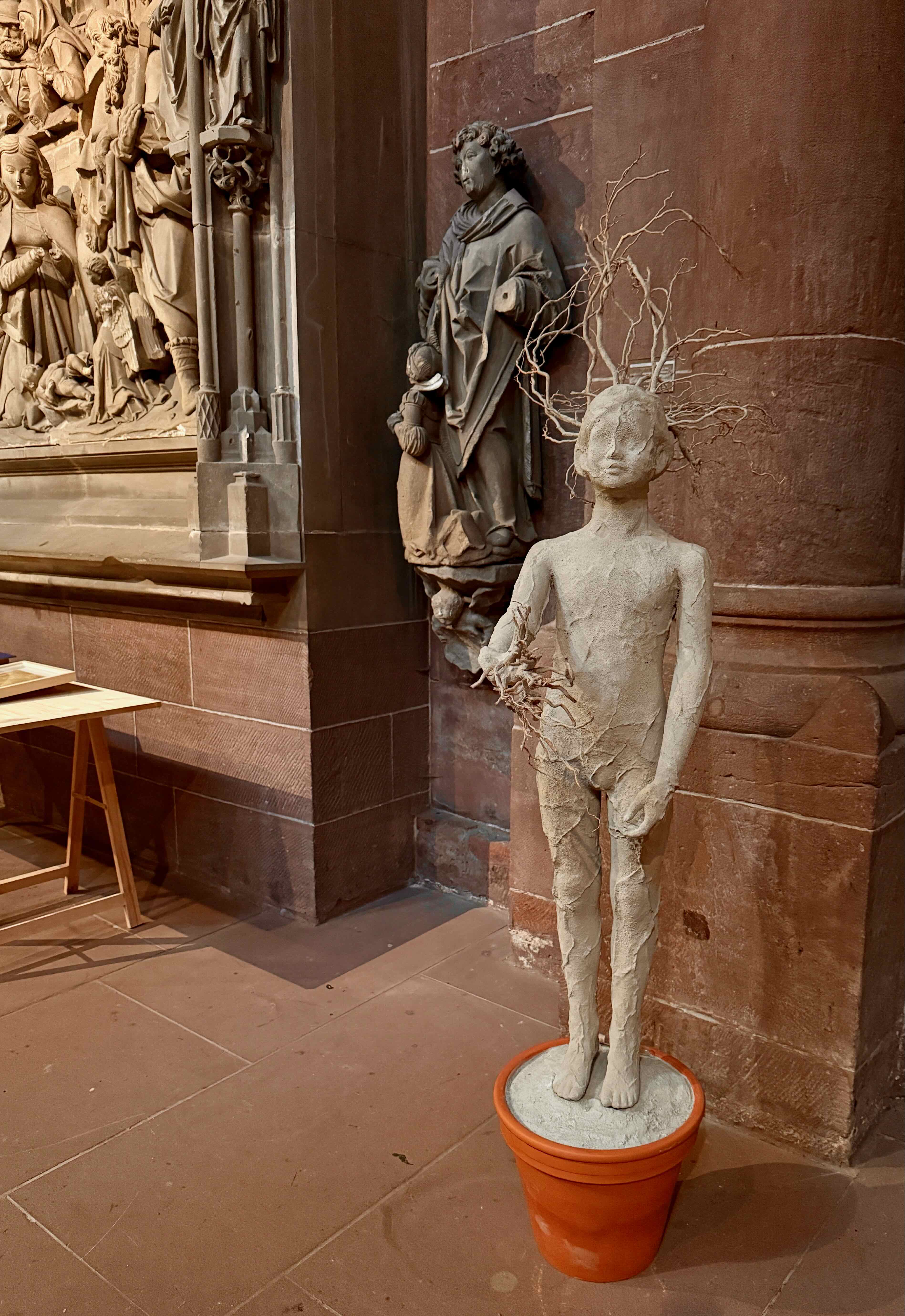
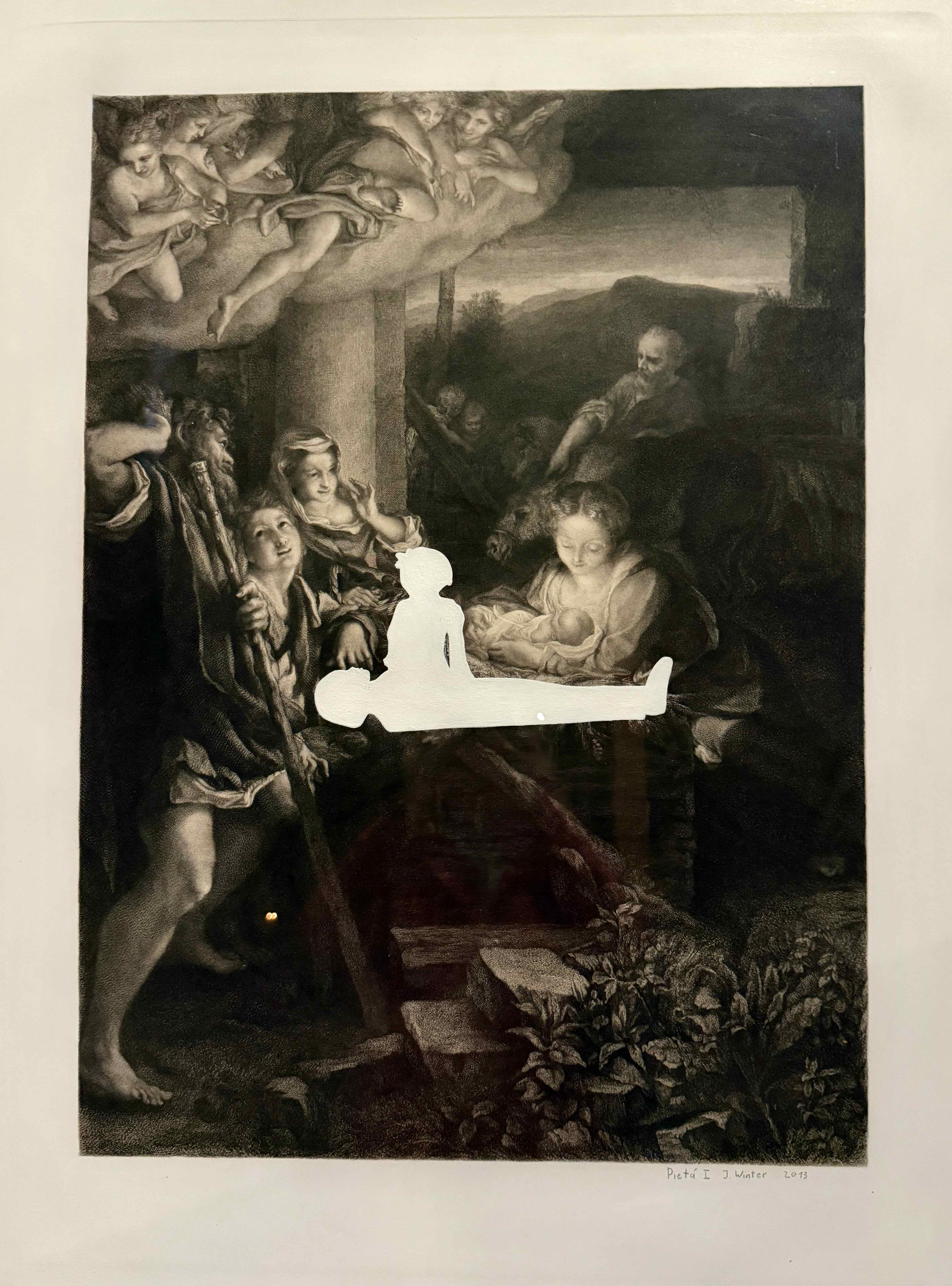
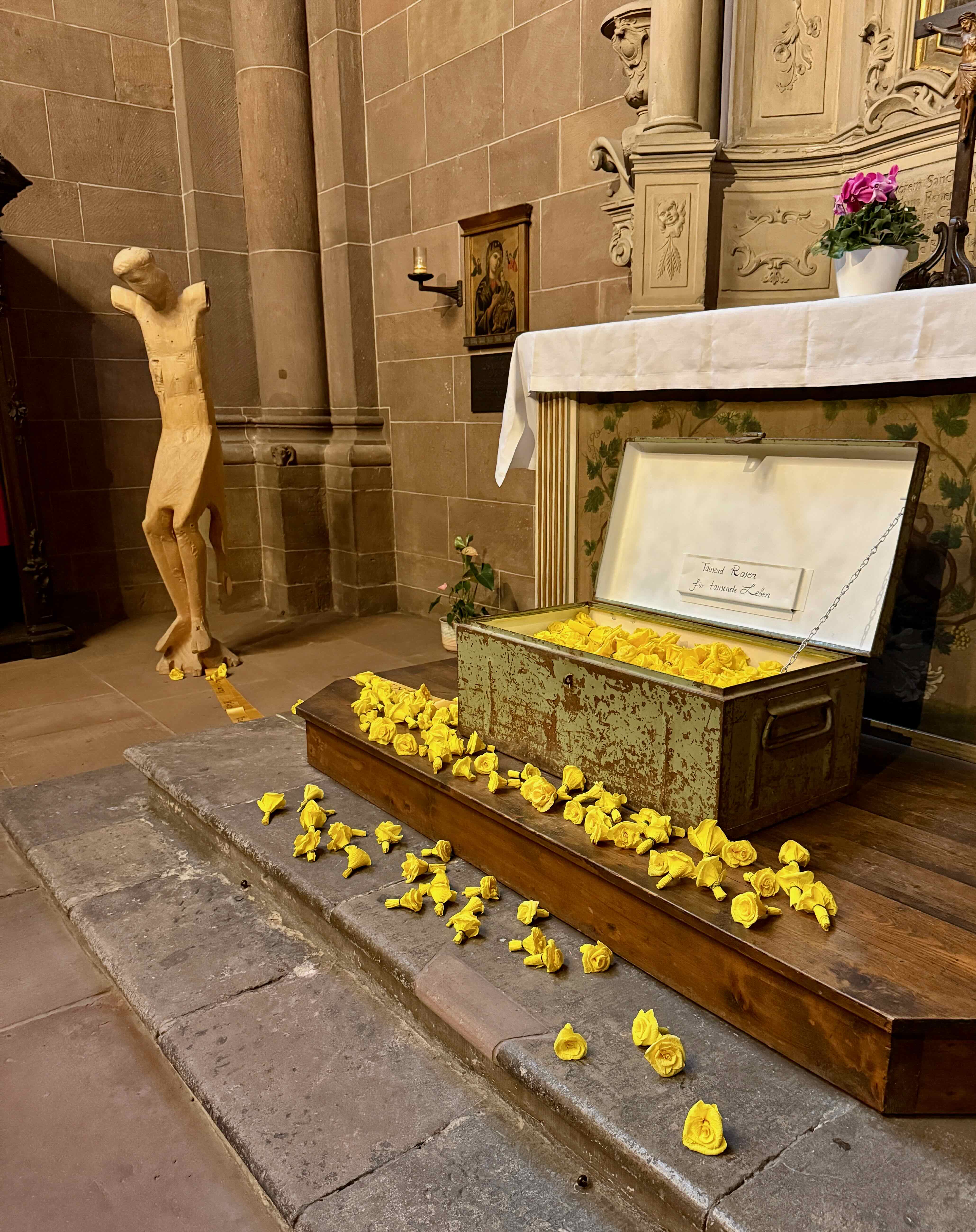
We do finally find small side door that allows us entrance to the church. There is an art display in the cathedral by a group called Atelierblau.  There are some really interesting pieces. Unfortunately I couldn’t find the names of the artists or the works they created. Here are a few of them.

The sign on the trunk reads “A thousand roses for a thousand lives”.
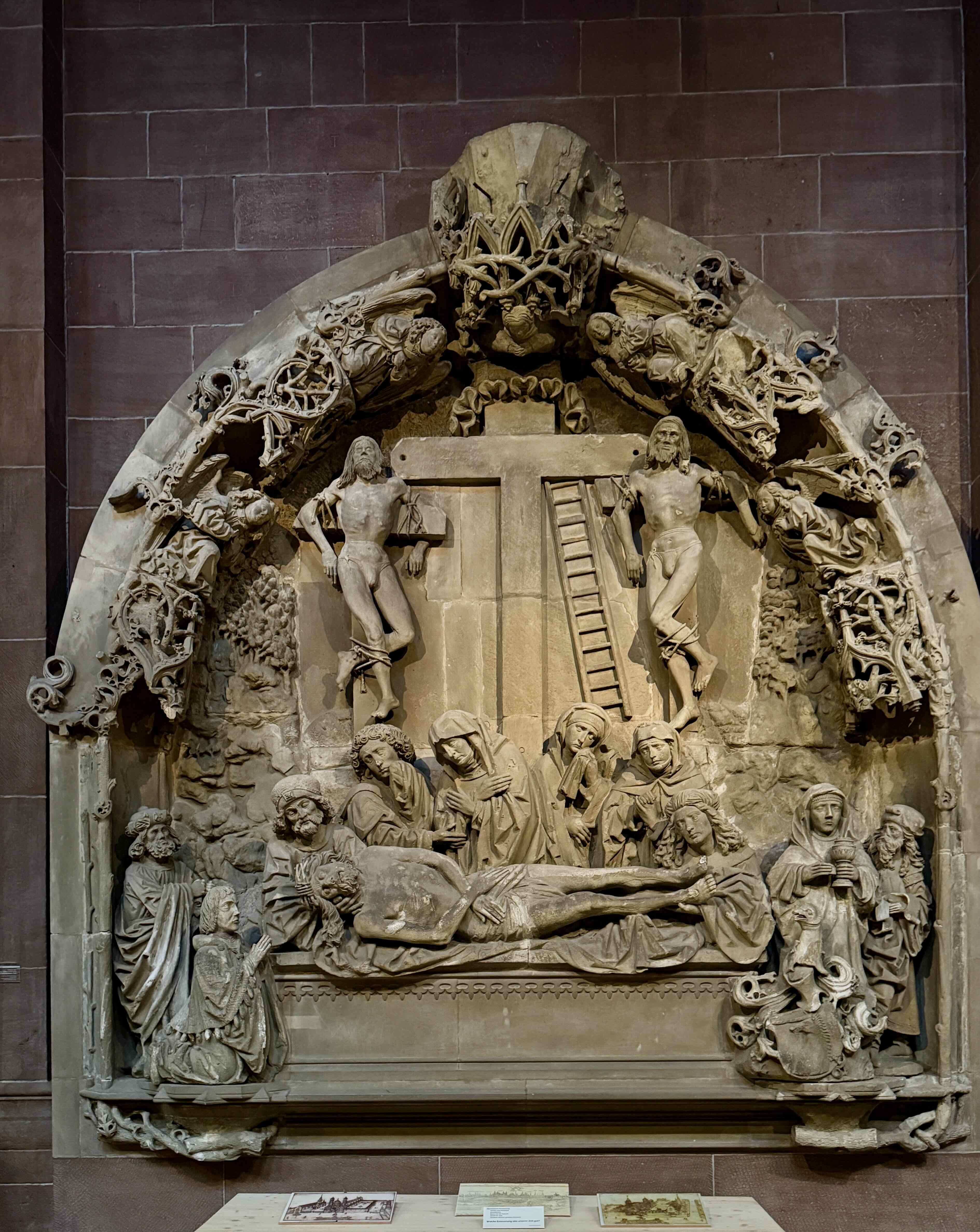
There are several large sculptural pieces that are from the church cloister.  I think they were placed inside the church as a method of keeping them safe from damage.

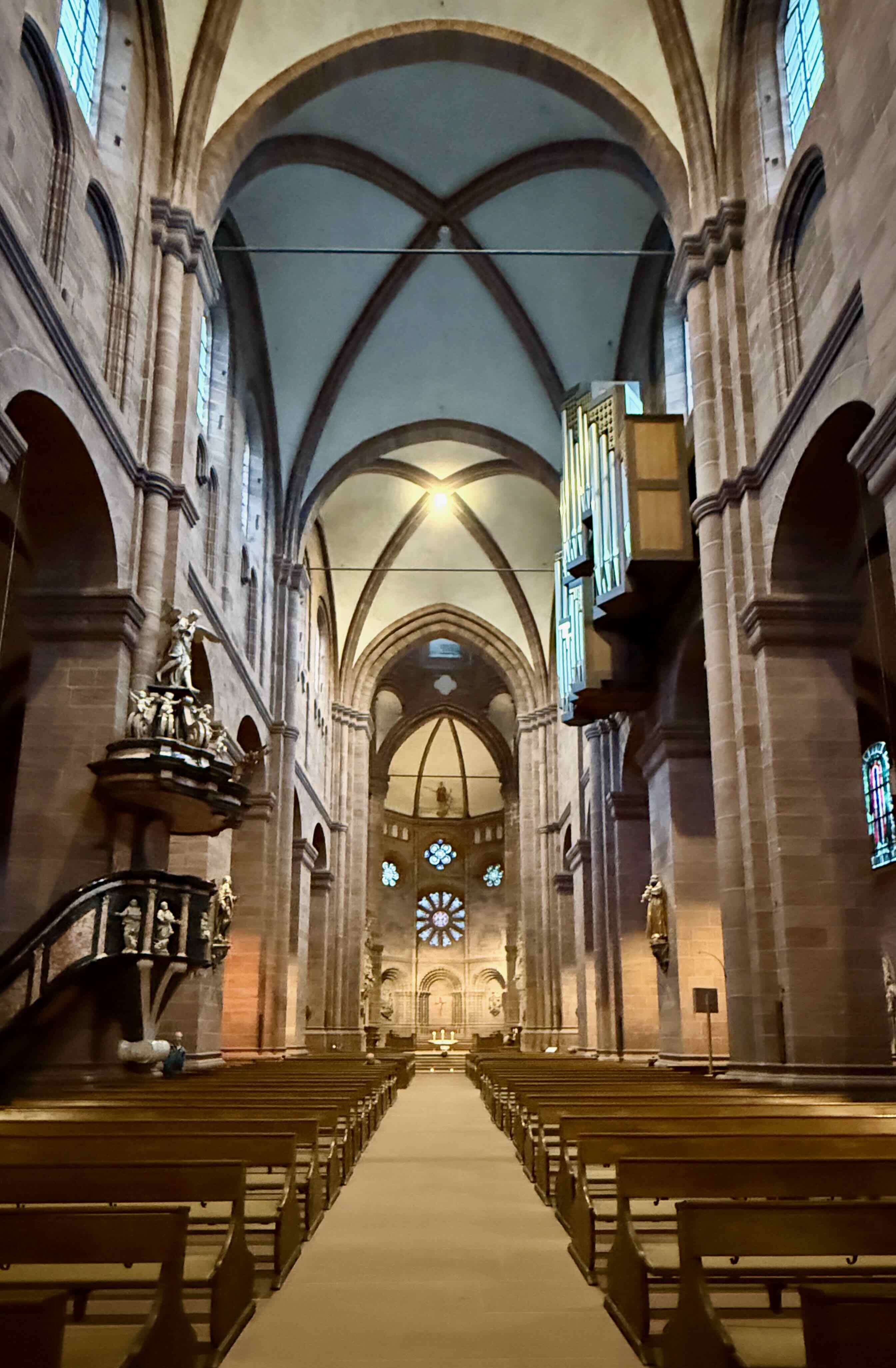
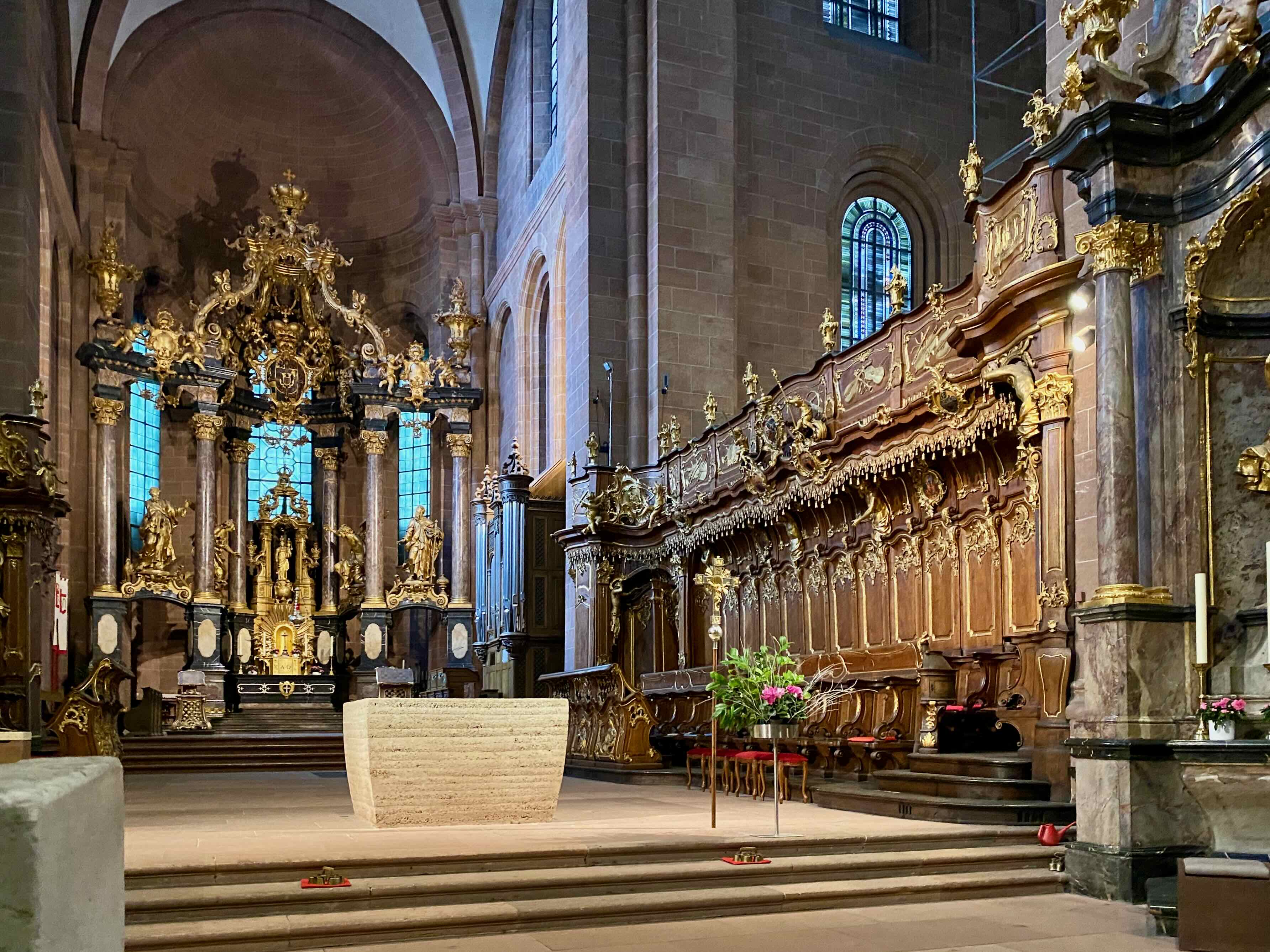
Built with red sandstone between the years 1130 and 1181, the church has a relatively simple interior……except for the choir and altar.
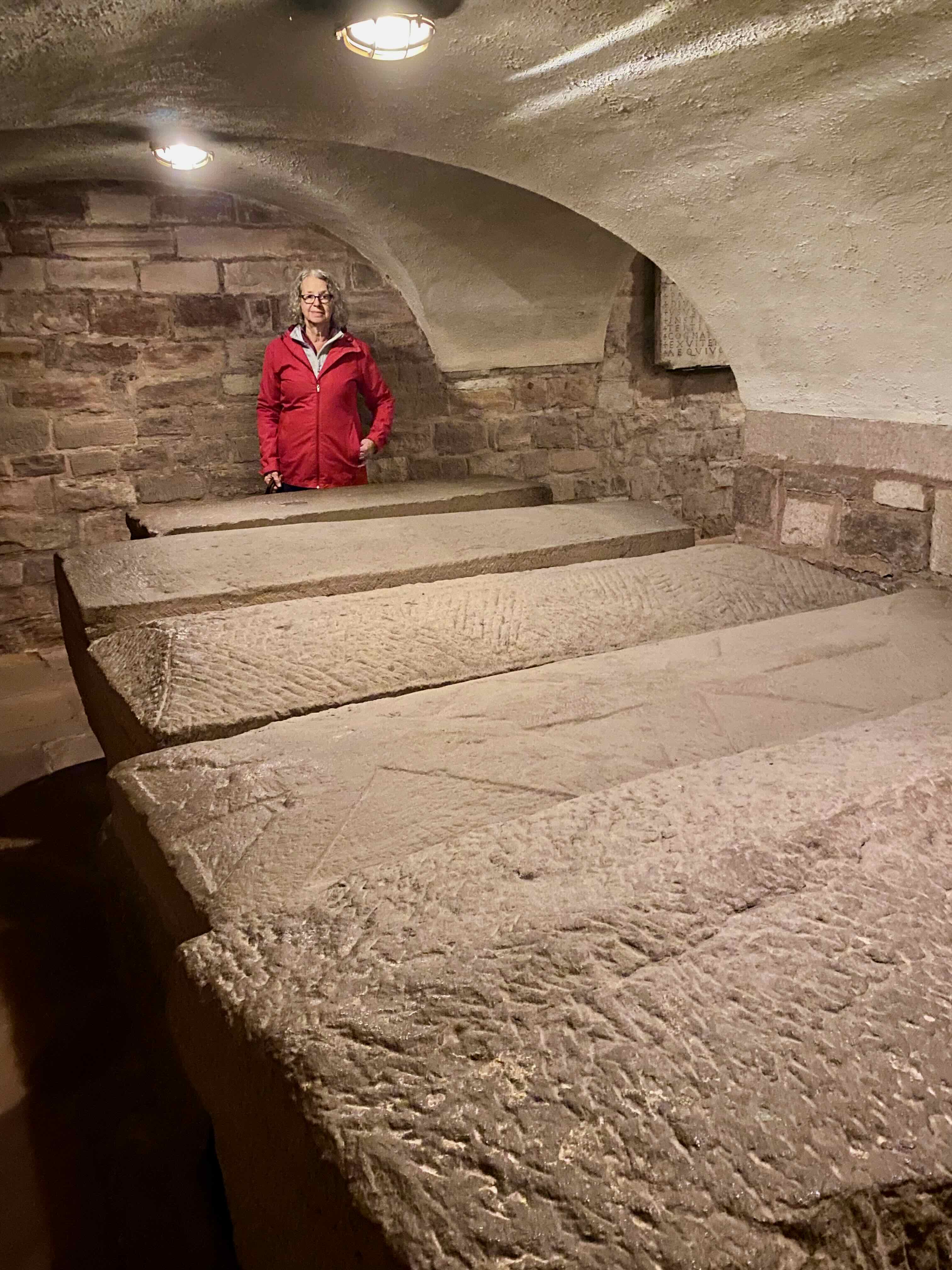
Bob noticed a side entrance to the crypt which contains the tombs of early rulers from 990 to 1040 AD.
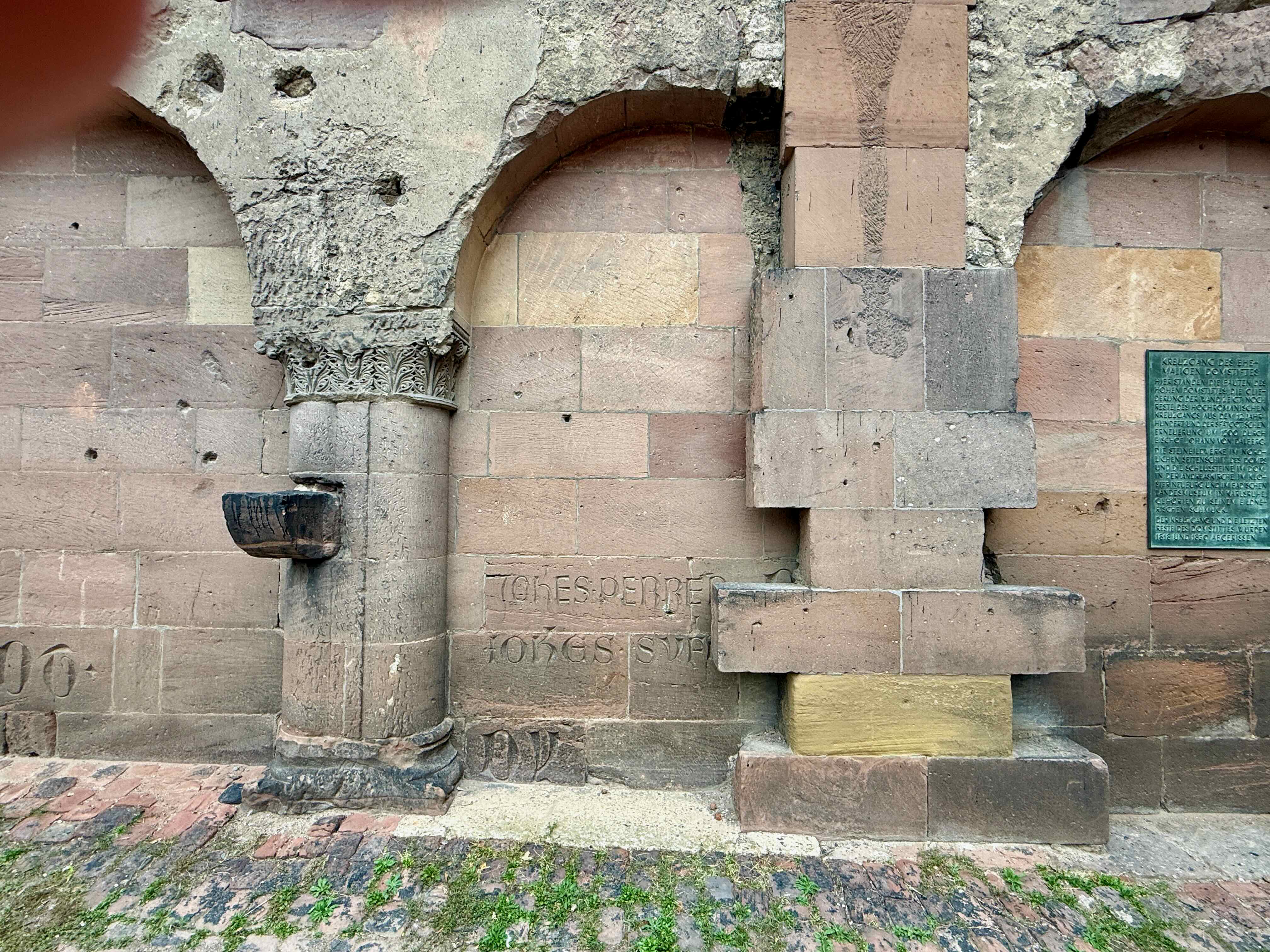
Outside I see what appears to be ancient graffiti.
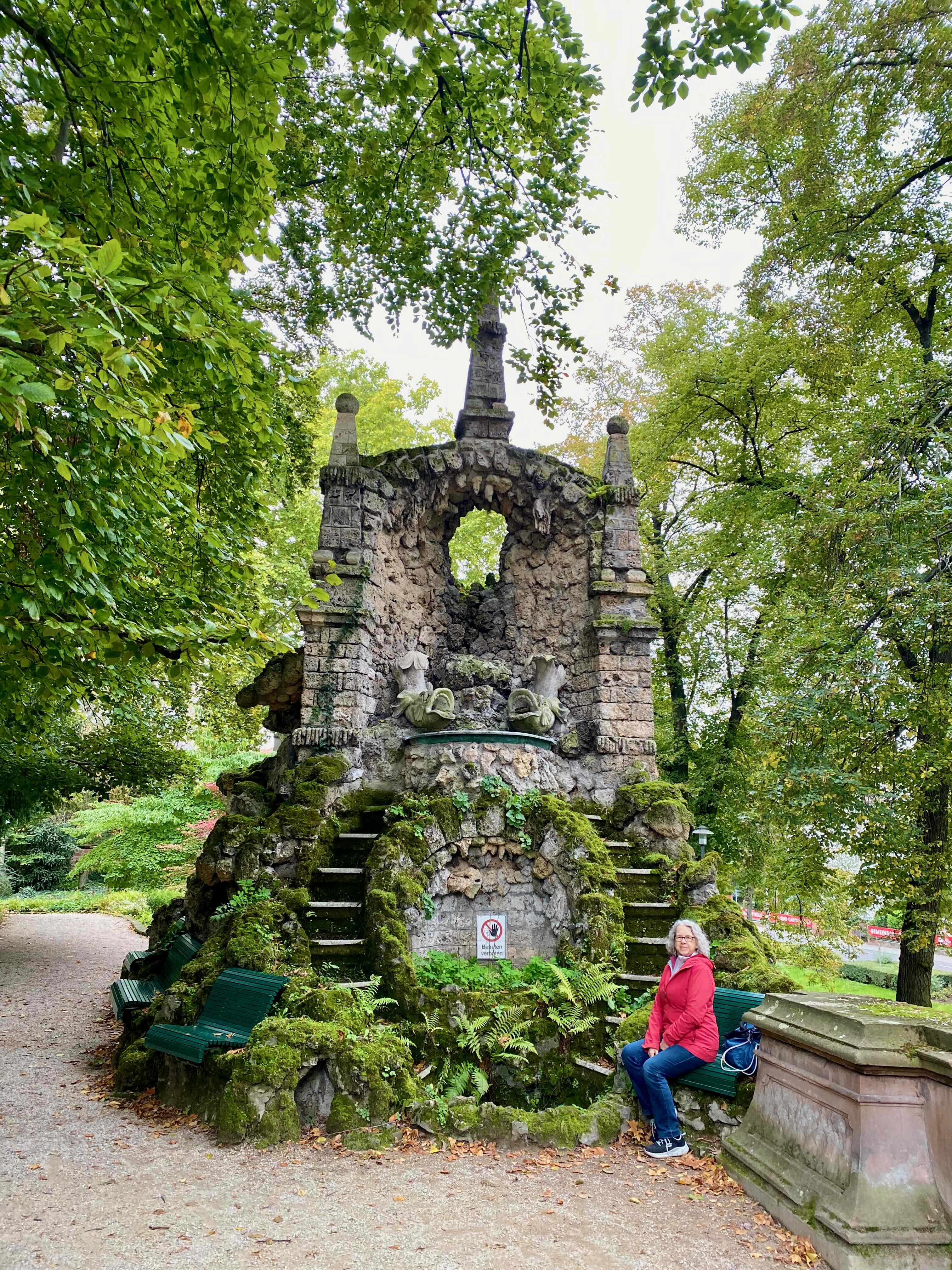
This fountain is at the end of part of the old town wall.

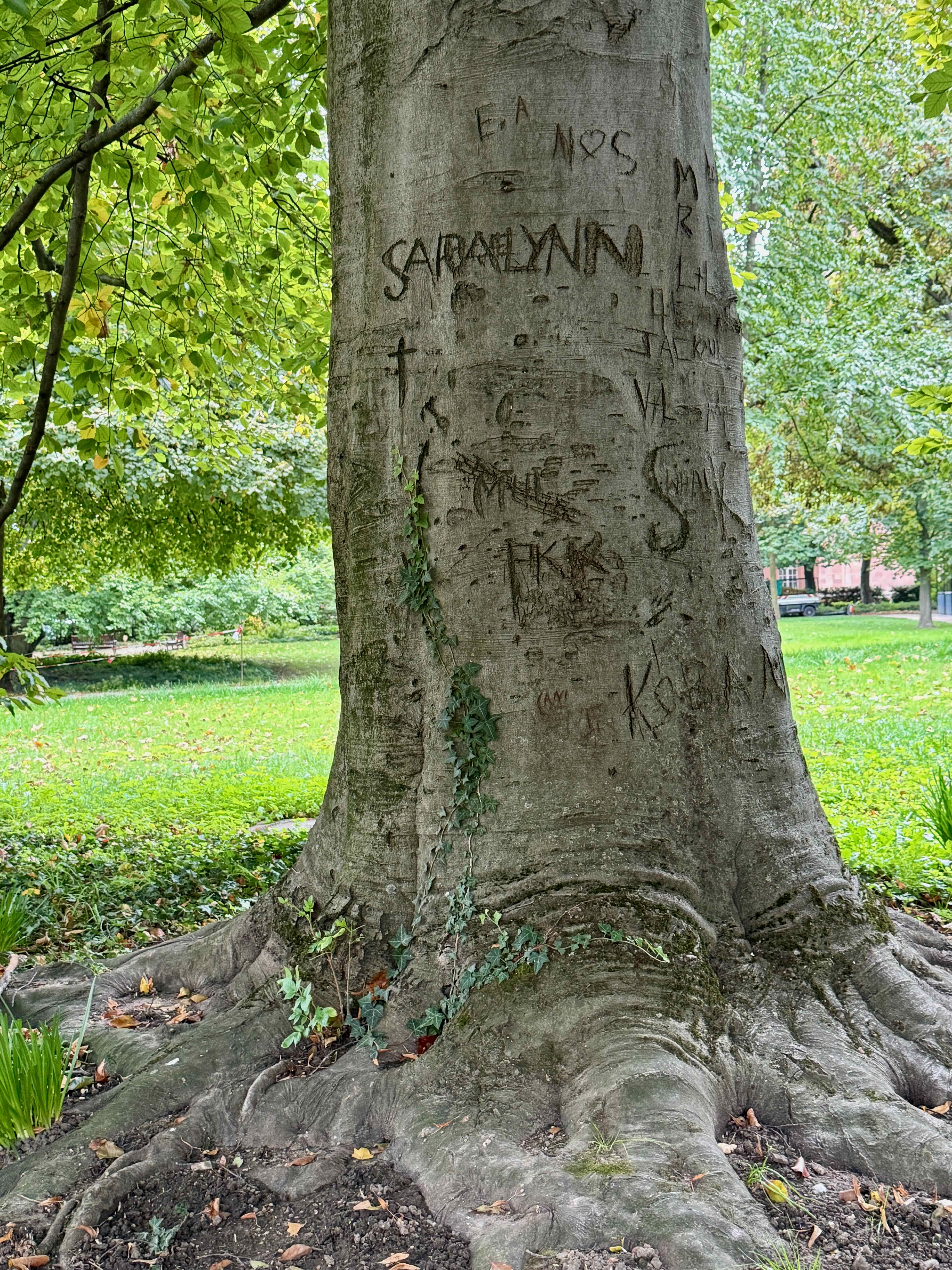
More graffiti, only on a tree this time.

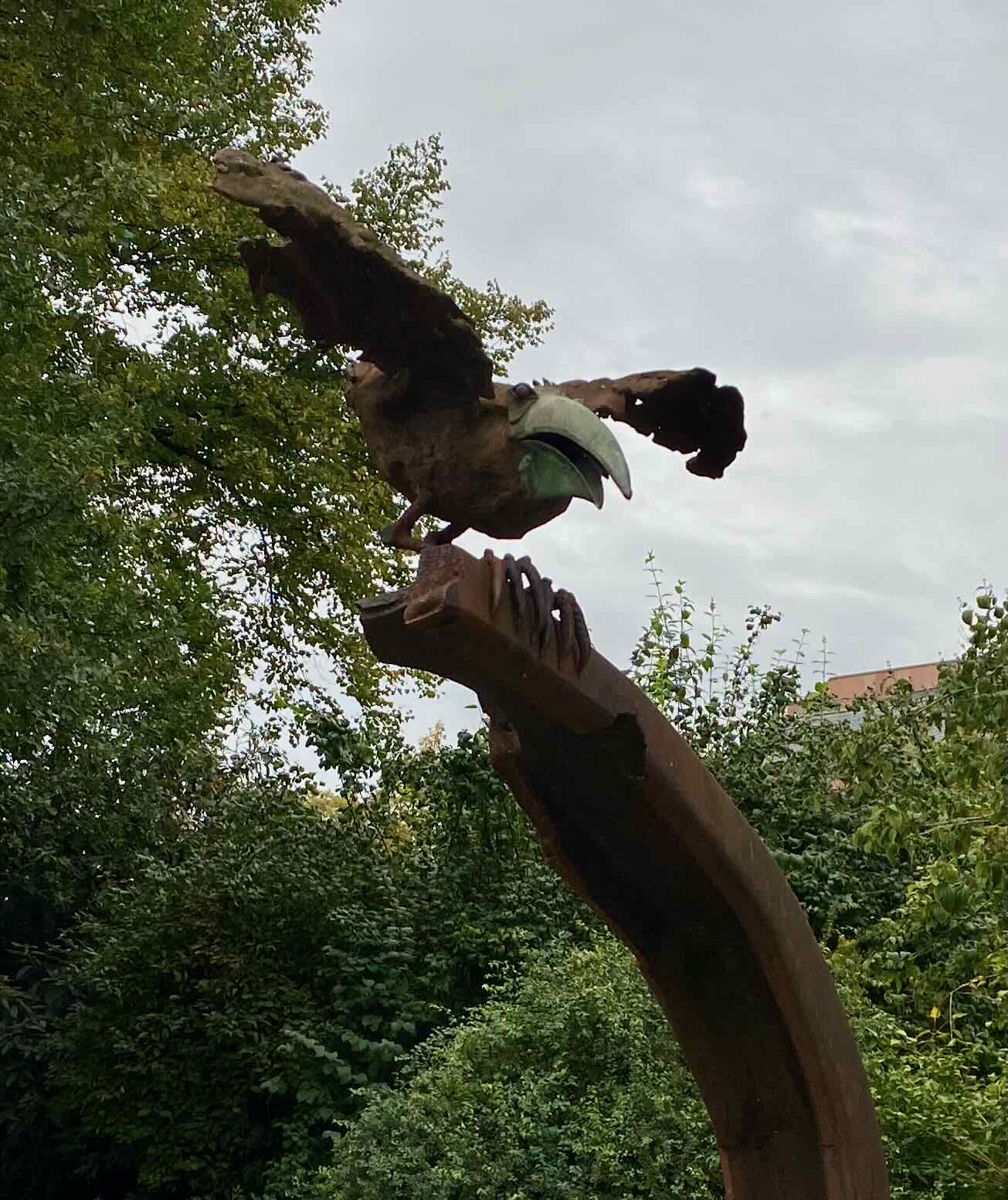
This little bird sculpture with its huge beak, ragged wings and stubby body caught our eye…we both really liked it.

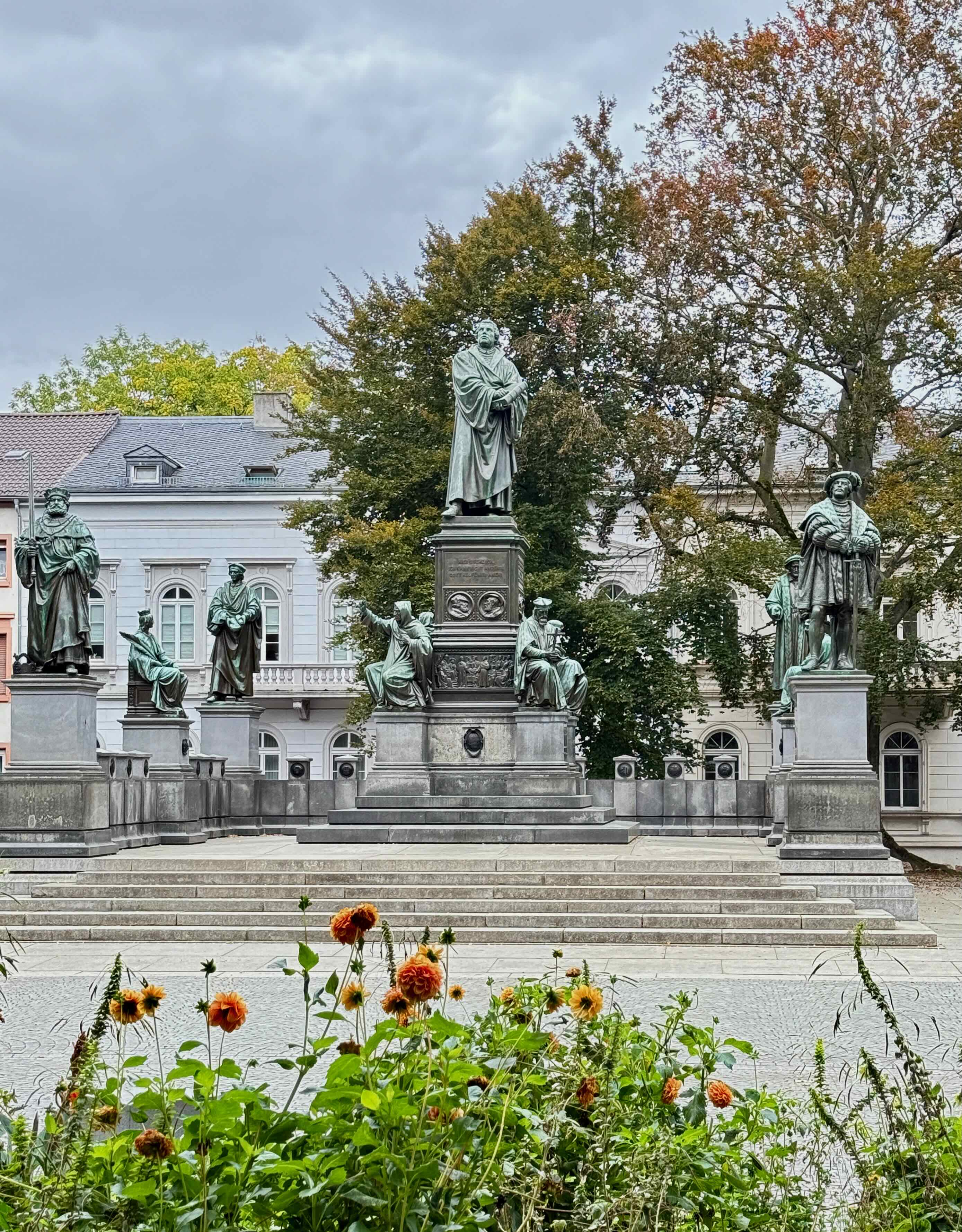
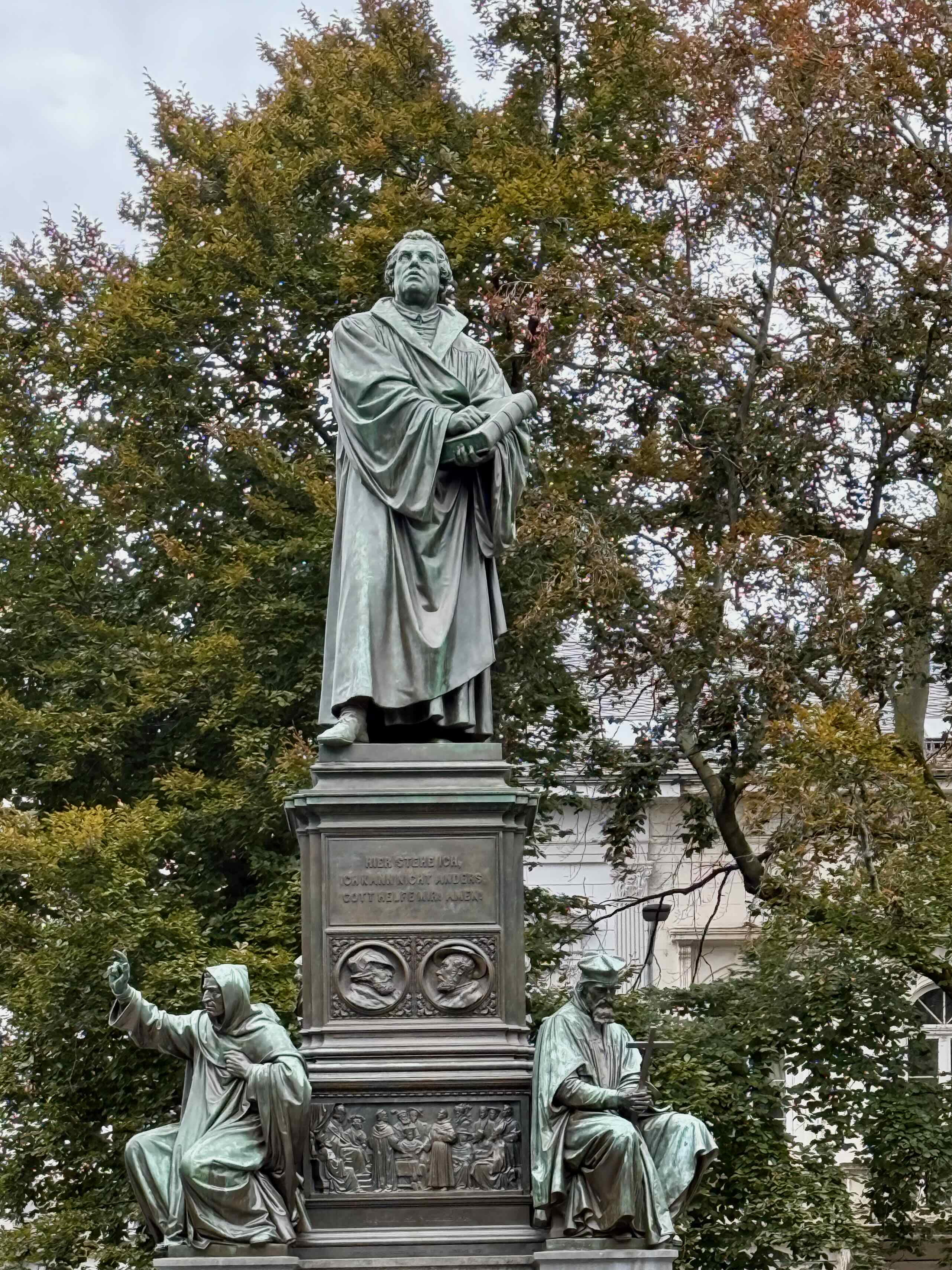
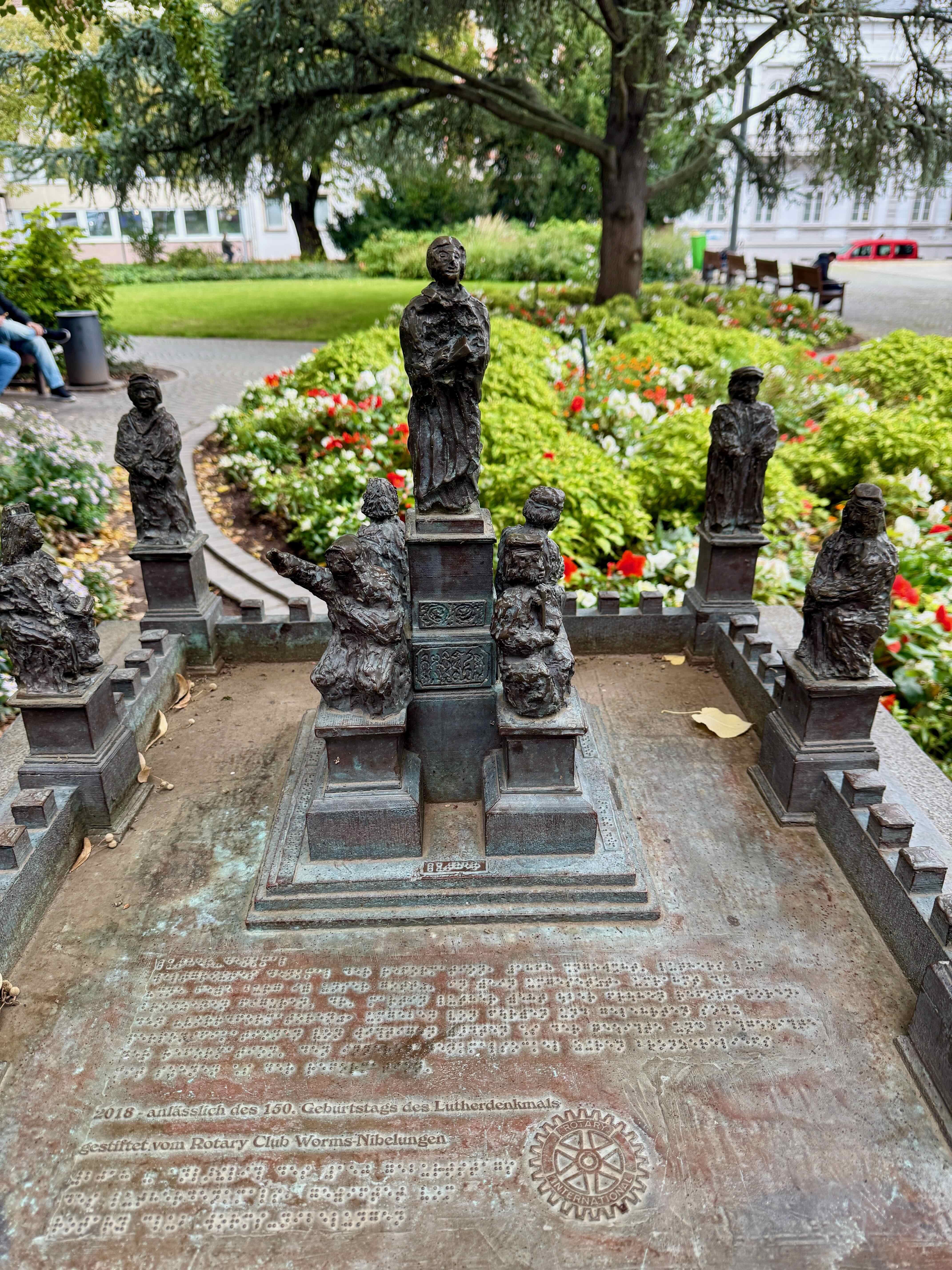
The Luther Monument is a group of statues. Martin Luther stands surrounded by bronze statues of the individuals that supported him. Plaques of the towns that supported Luther and the Protestant Reformation are placed on the walls of the monument.

This monument is in a lovely park near the Cathedral. There is a model of the statue with information in Braille, which was unique.
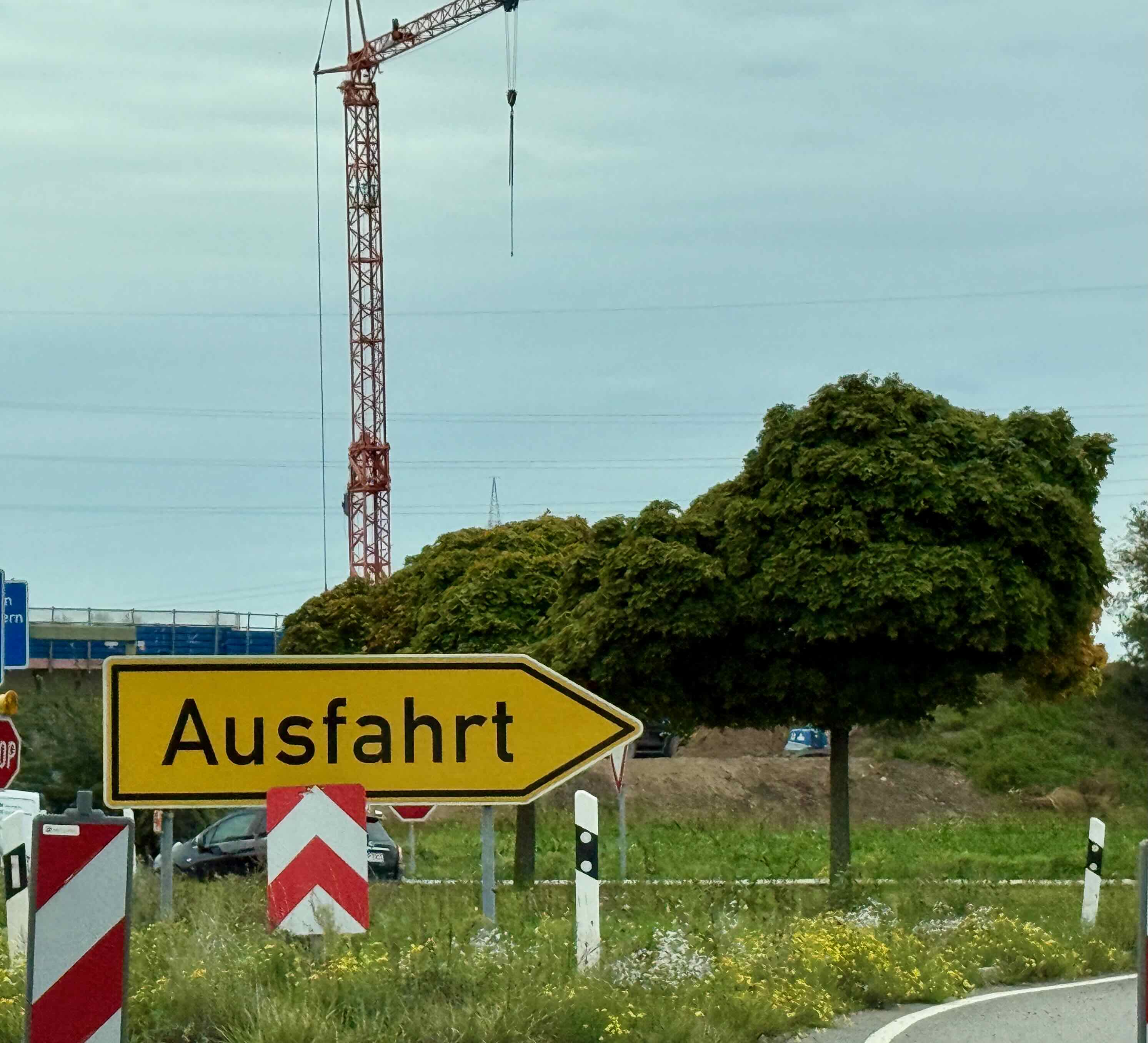
Back on the road I finally manage to get a photo of the Ausfahrt sign…which simply means Exit. I remember that we found this quite hilarious on our first trip to Germany with our daughter many years ago.
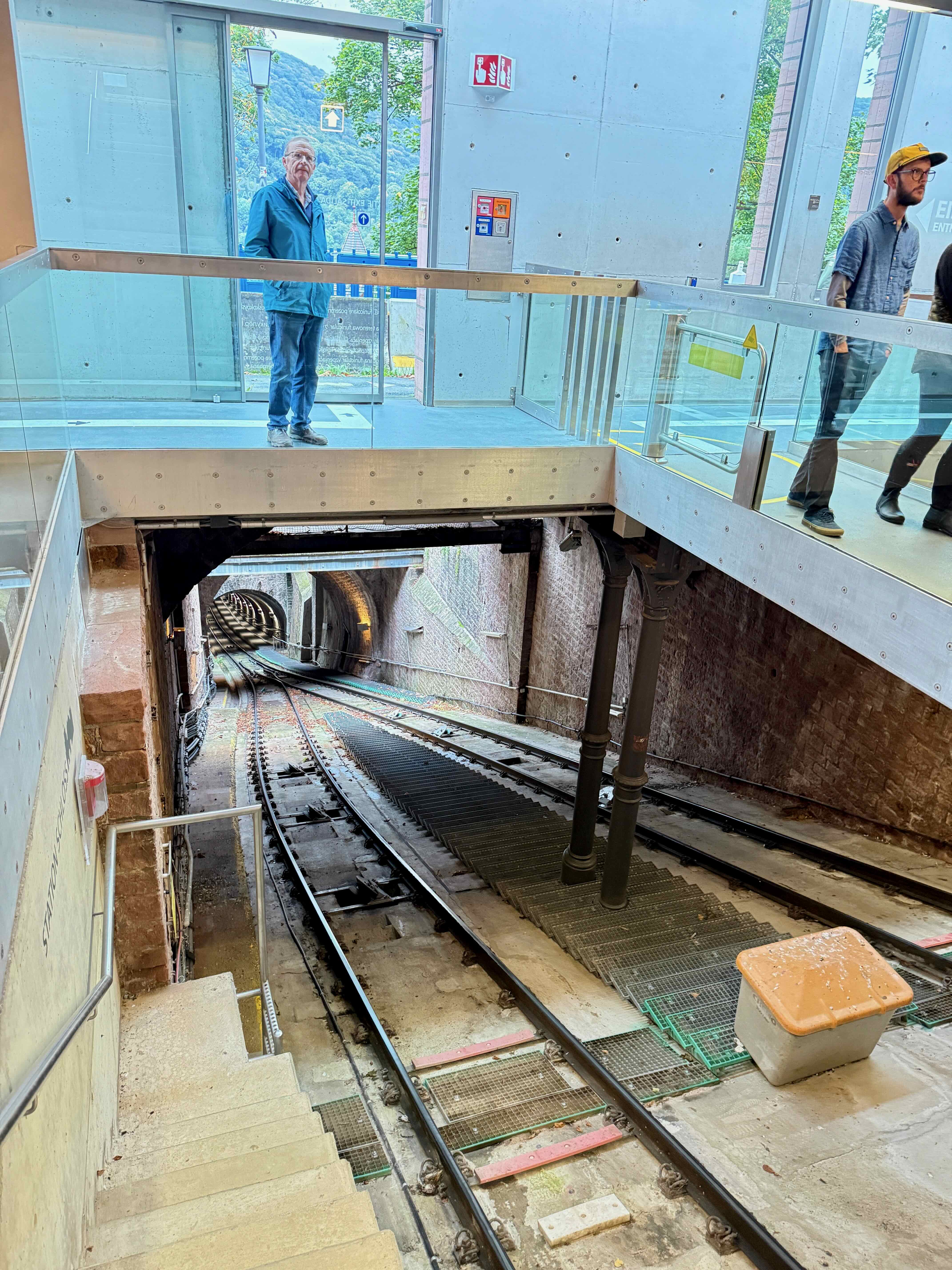
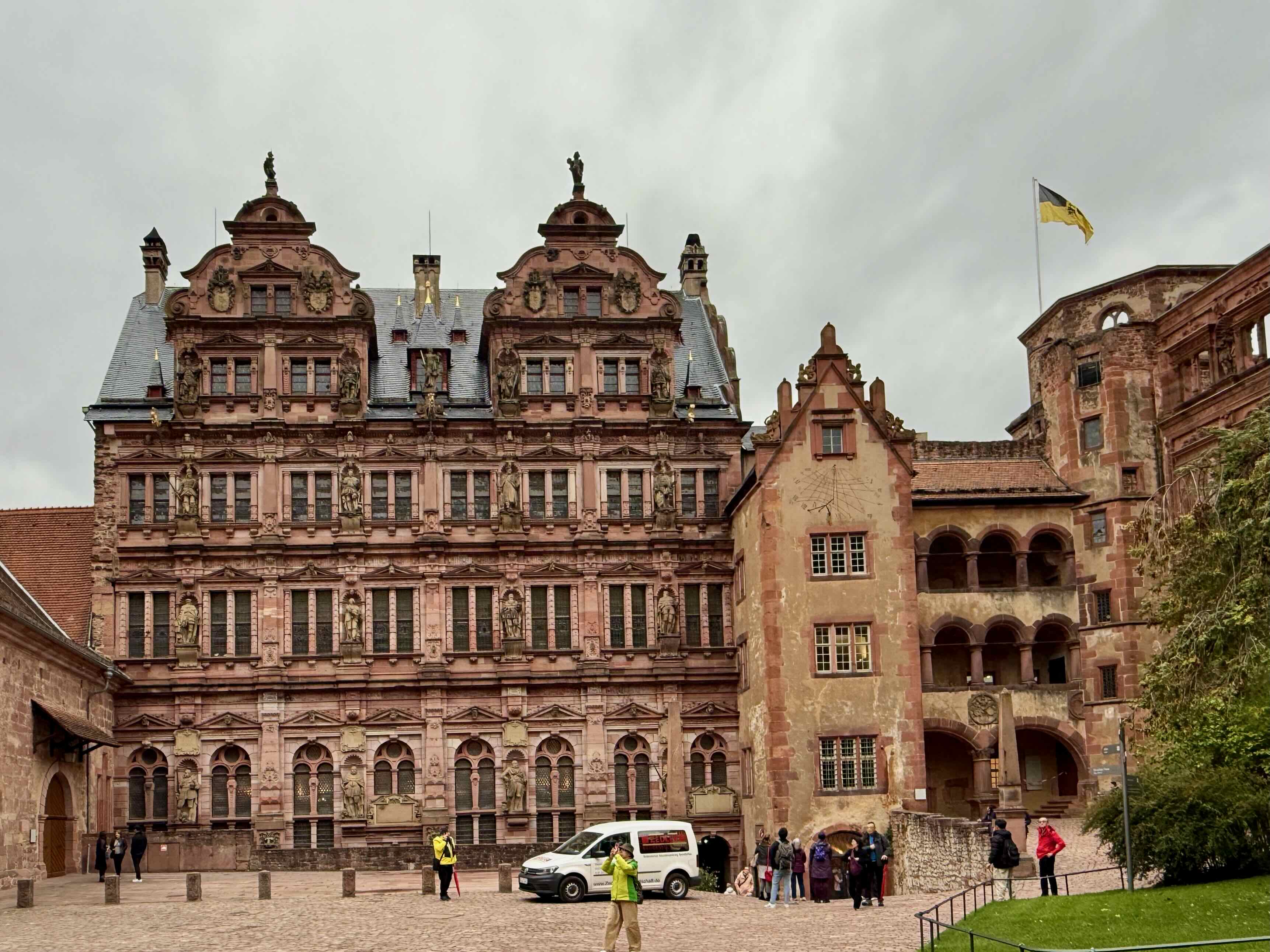
Next stop is Heidelberg where we are going to visit Heidelberg Castle that Bob says is like Versailles. We have a hard time finding the entrance to the funicular, even using Google Maps!  Finally I notice a small picture of a train on the wall of what looks like the entrance to a mall…we only walked past it two times! The part of the journey we take is all underground.

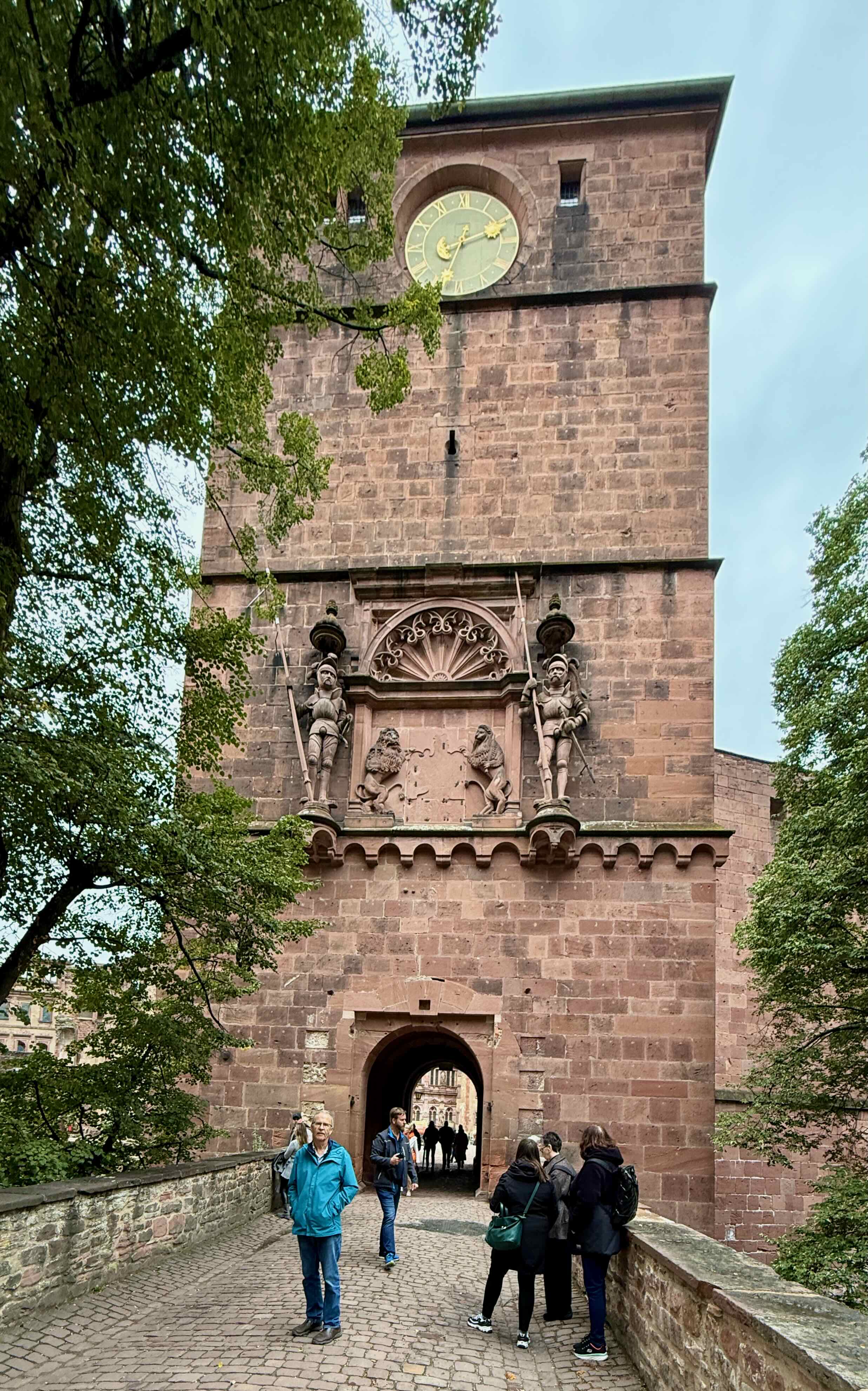
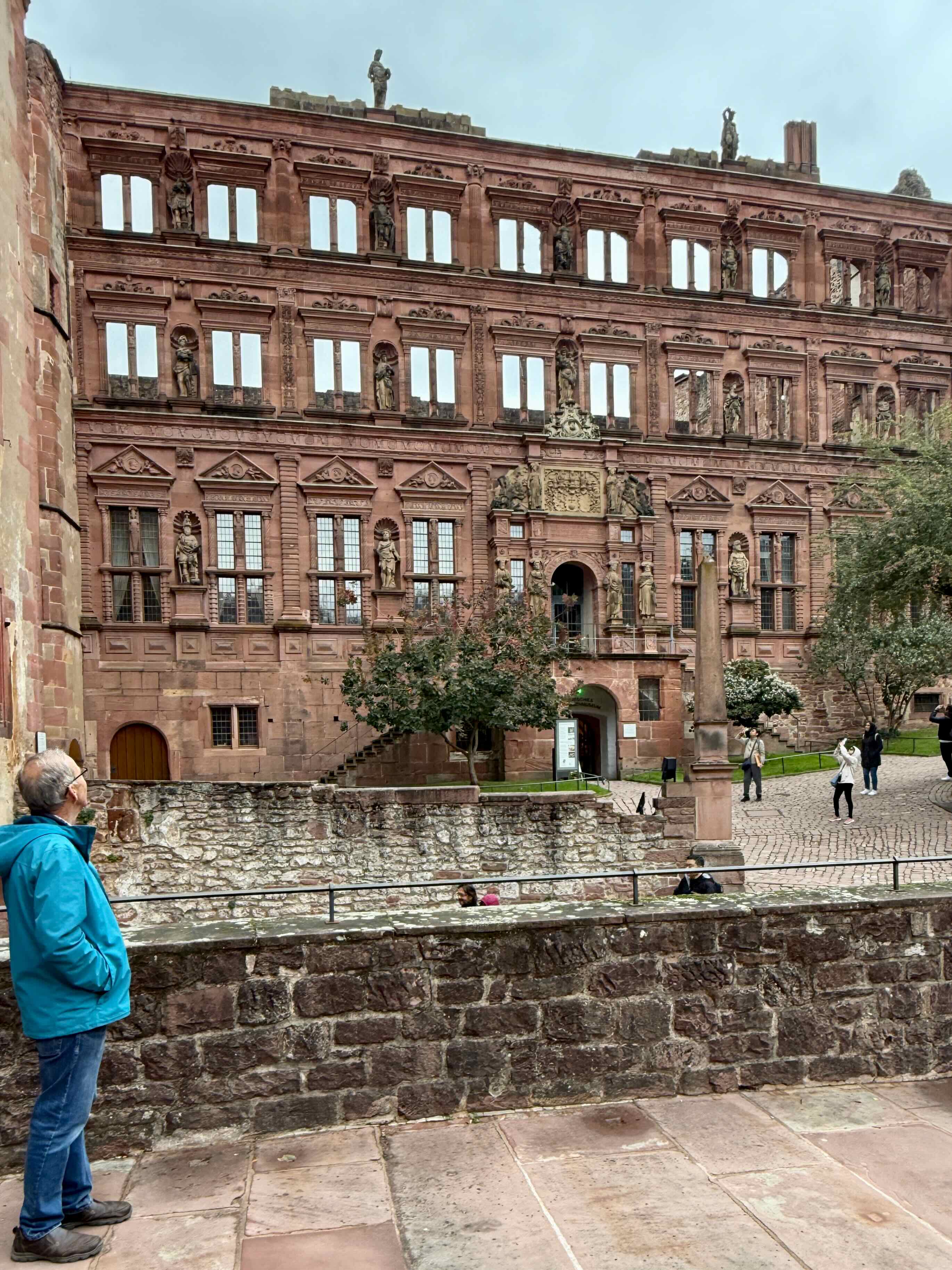
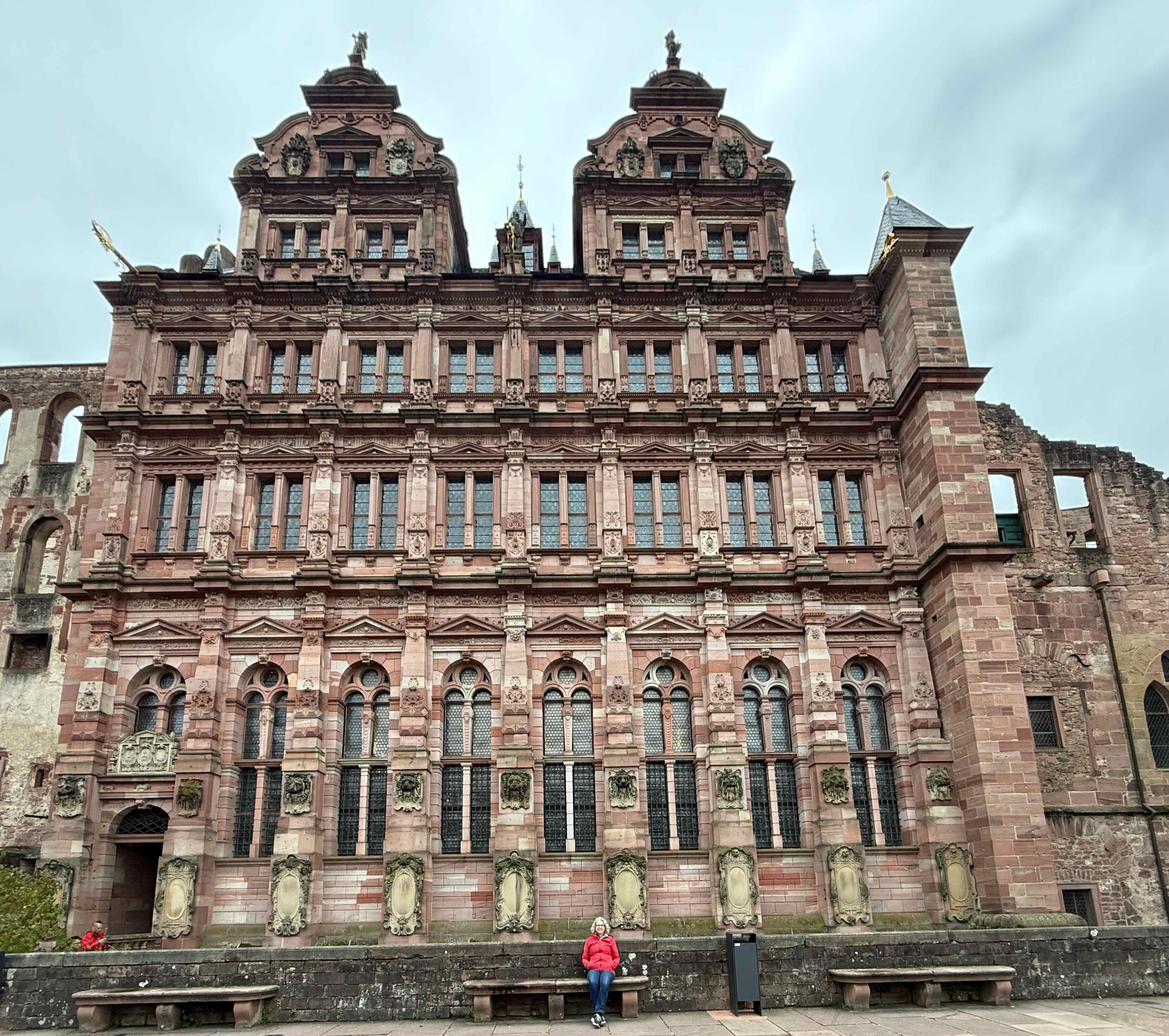
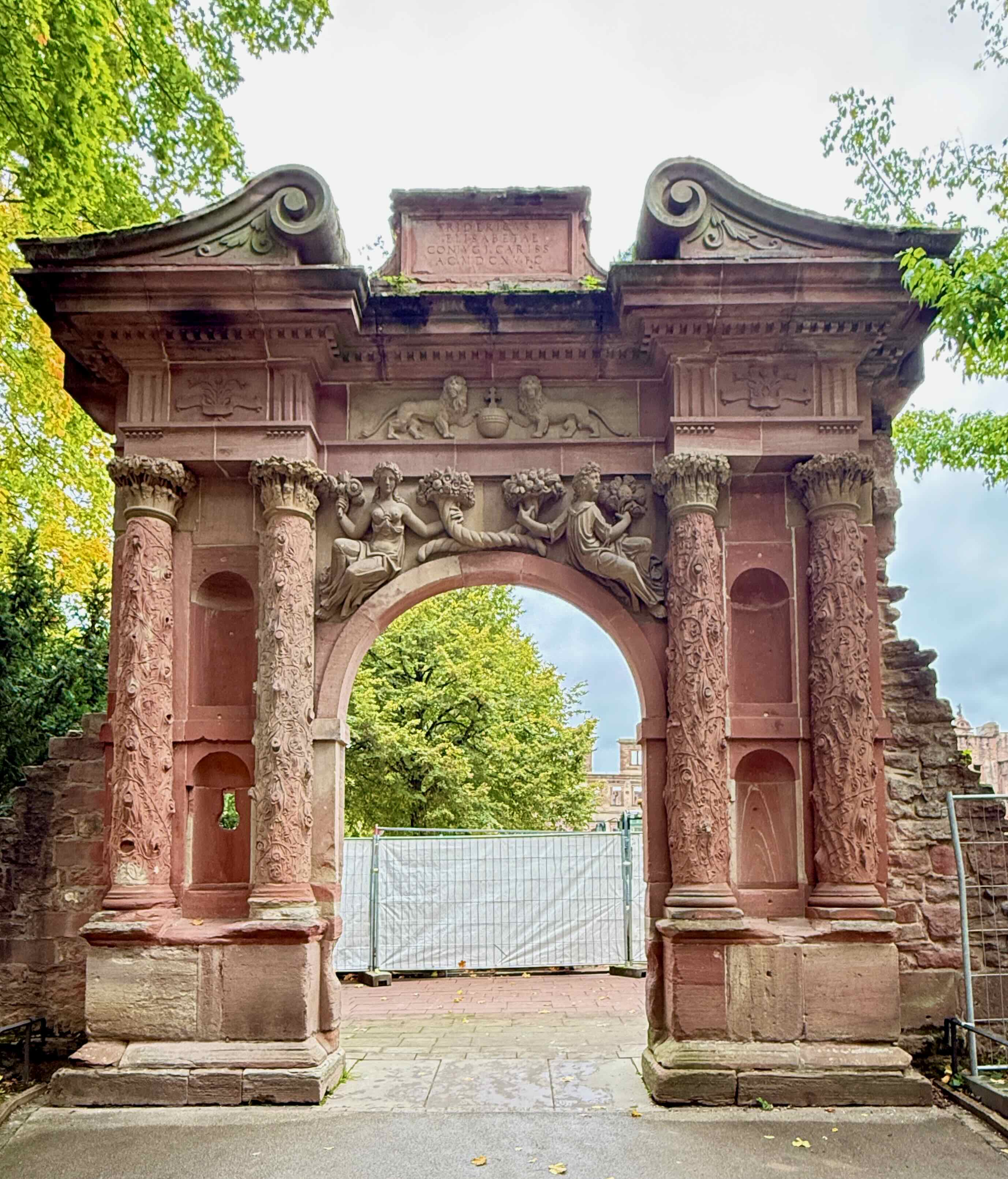
We walk to the castle but all we see is ruins…turns out Bob mixed up his castles!  It is fine though as this looks interesting anyways.  There is an in depth tour through the ruins in an hour and a half but we decide to just wander and see what we can.  This gate was built in one night by King Frederick V for his wife as a birthday present.

Our funicular ticket gives us access to the courtyard, the German Pharmacy Museum, and the Big Wine Barrel.  We walk through the gate to the courtyard…

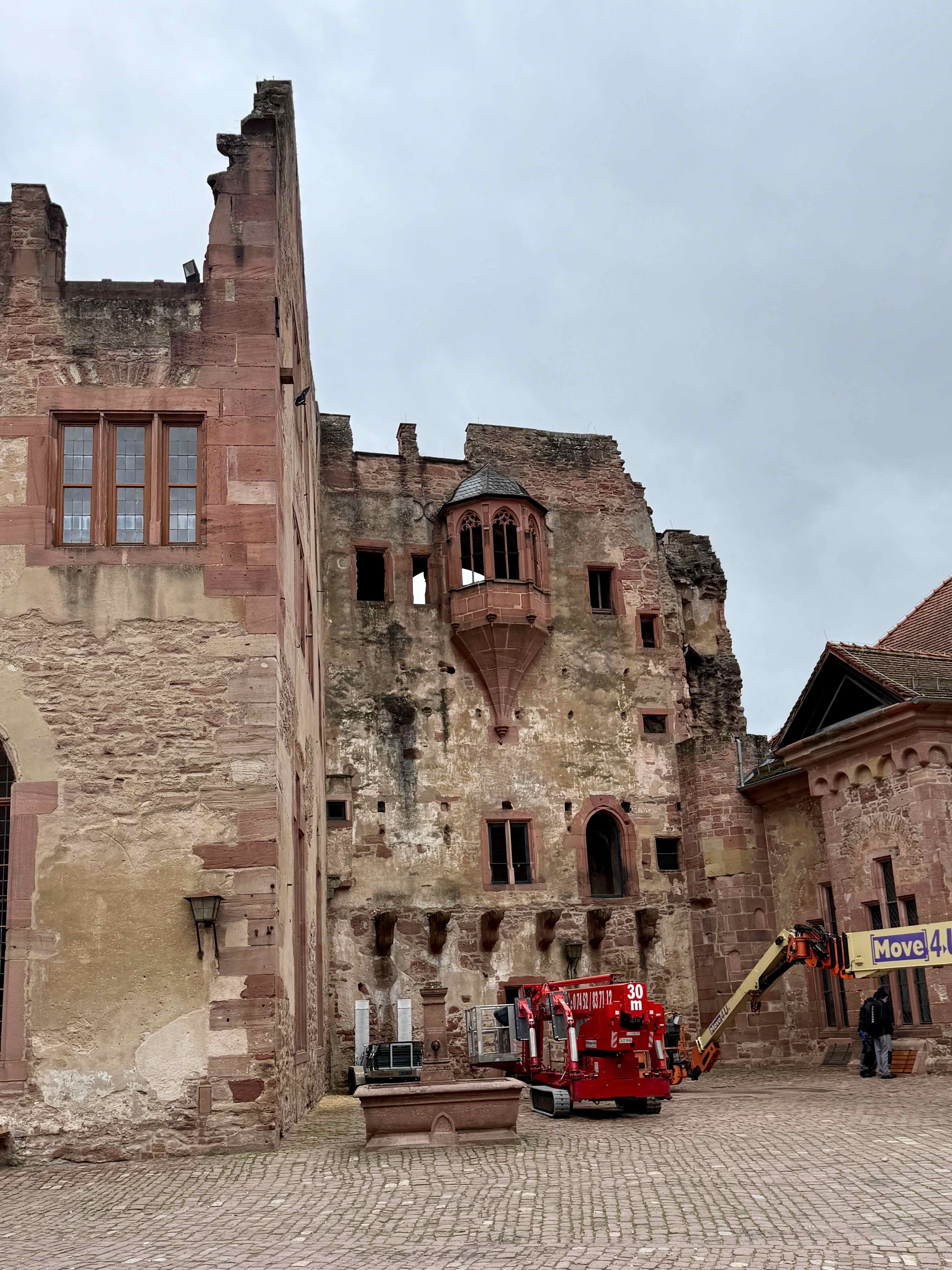
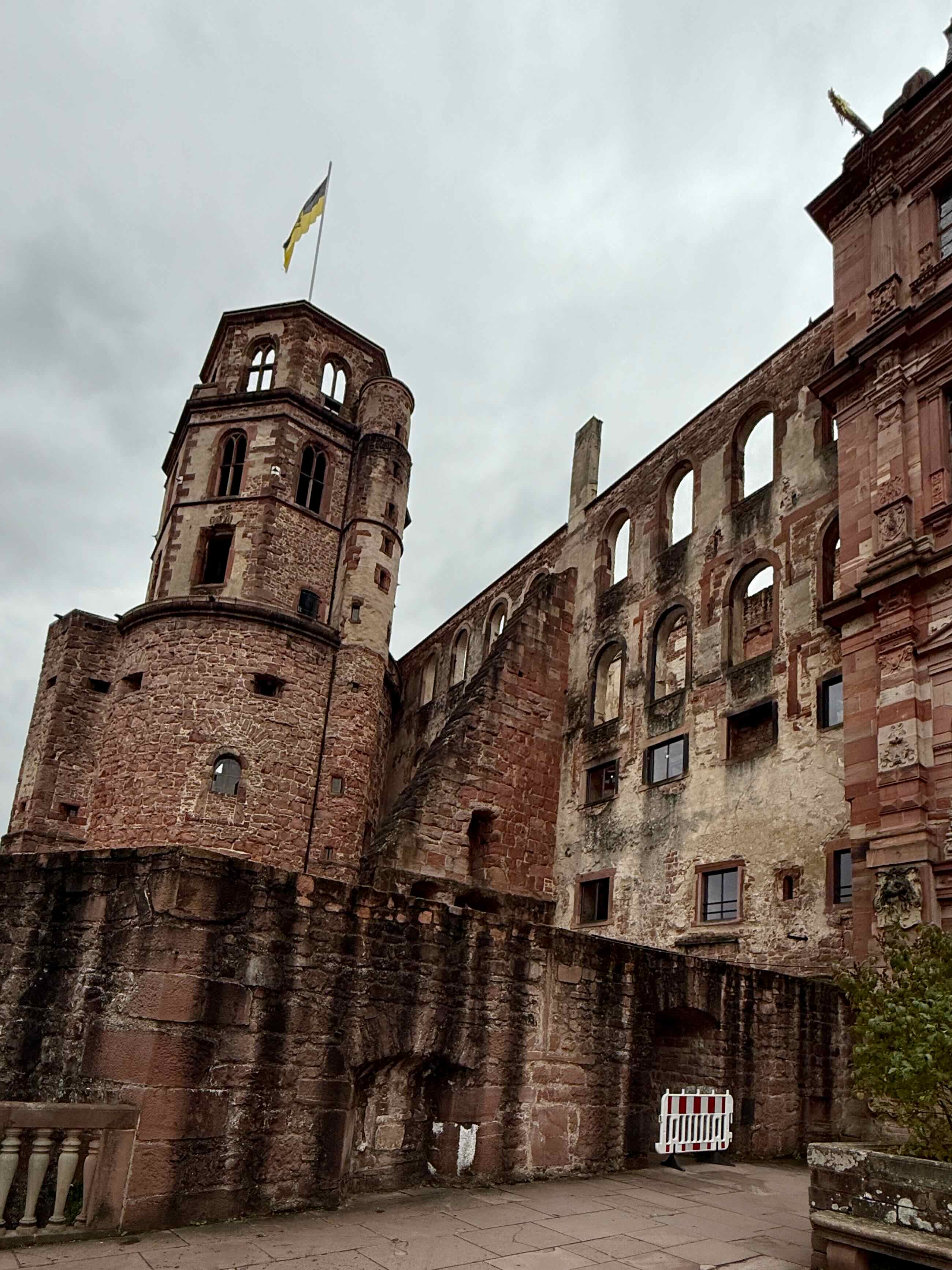
…and we are greeted with views of the ruins of what must have been a very impressive castle

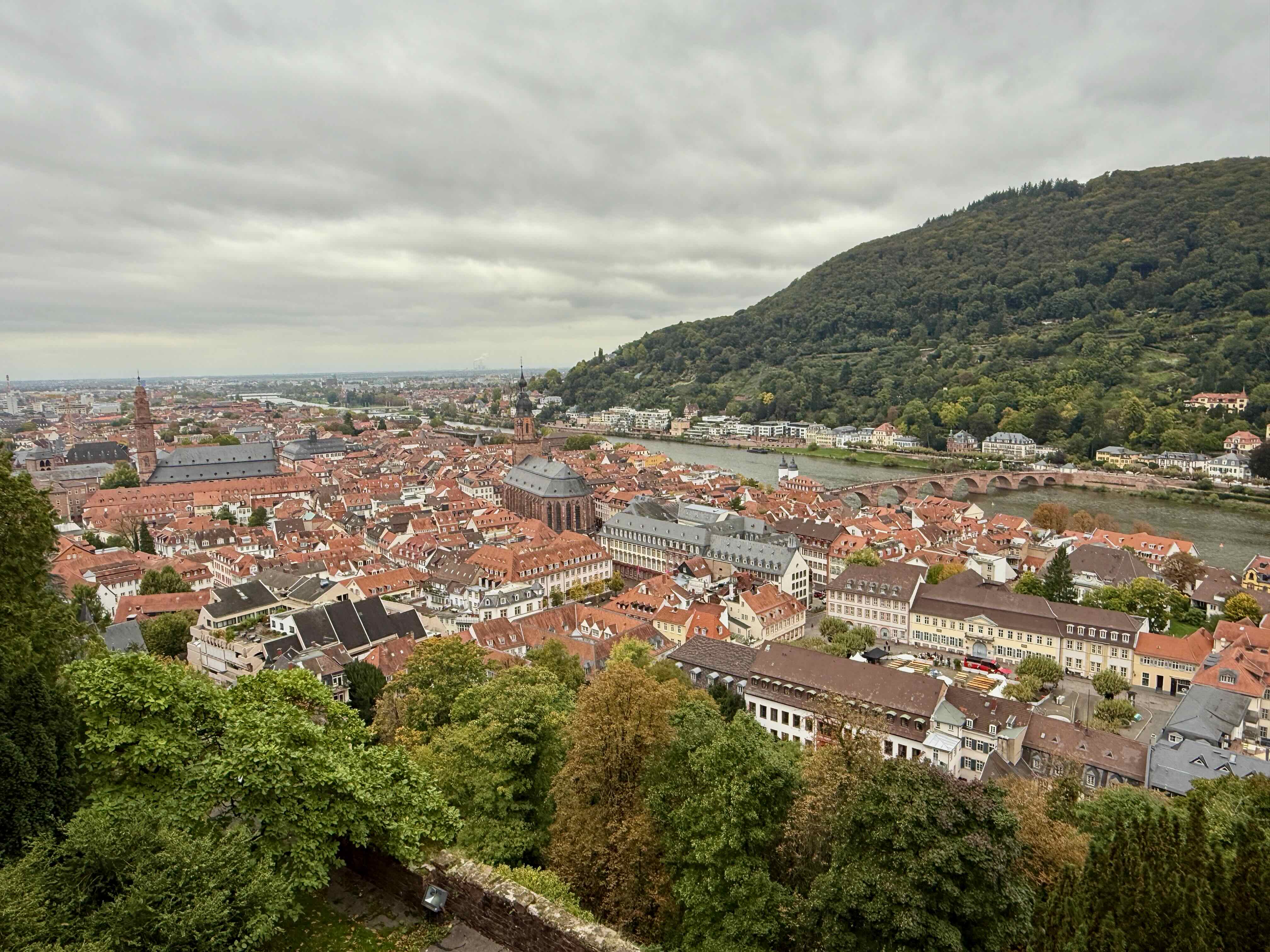
Walking through the doorway in the above photo we arrive on a huge balcony overlooking the Rhine River with views of Heidelberg below.A view of the ruins as seen from the balcony.

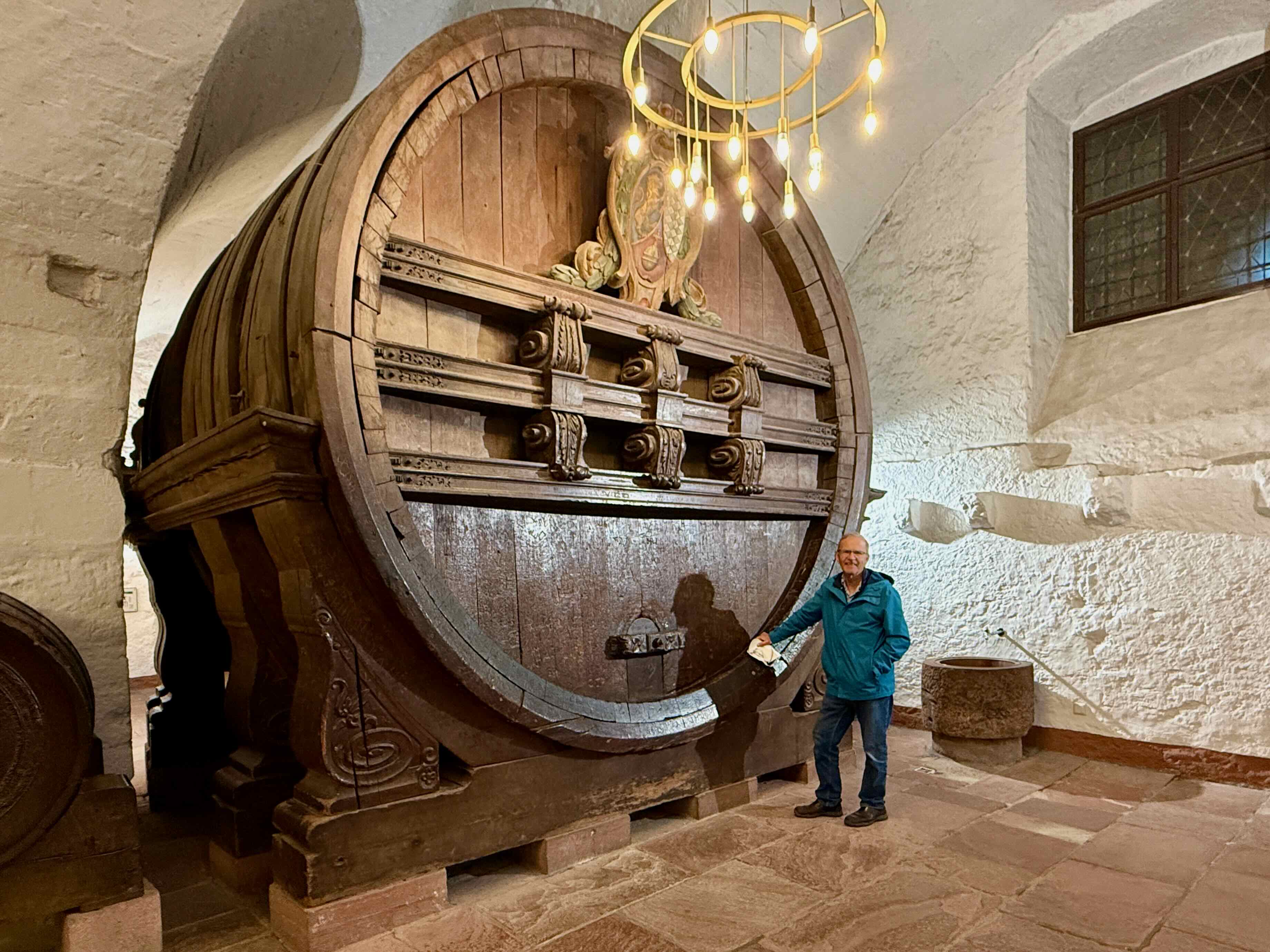
It is cold out so we go inside to see the Big Wine Barrel.  It is pretty impressive and I take this photo and then walk around the corner while Bob is inspecting the barrel. I come back and tell him “You need to come and see the BIG Wine Barrel!

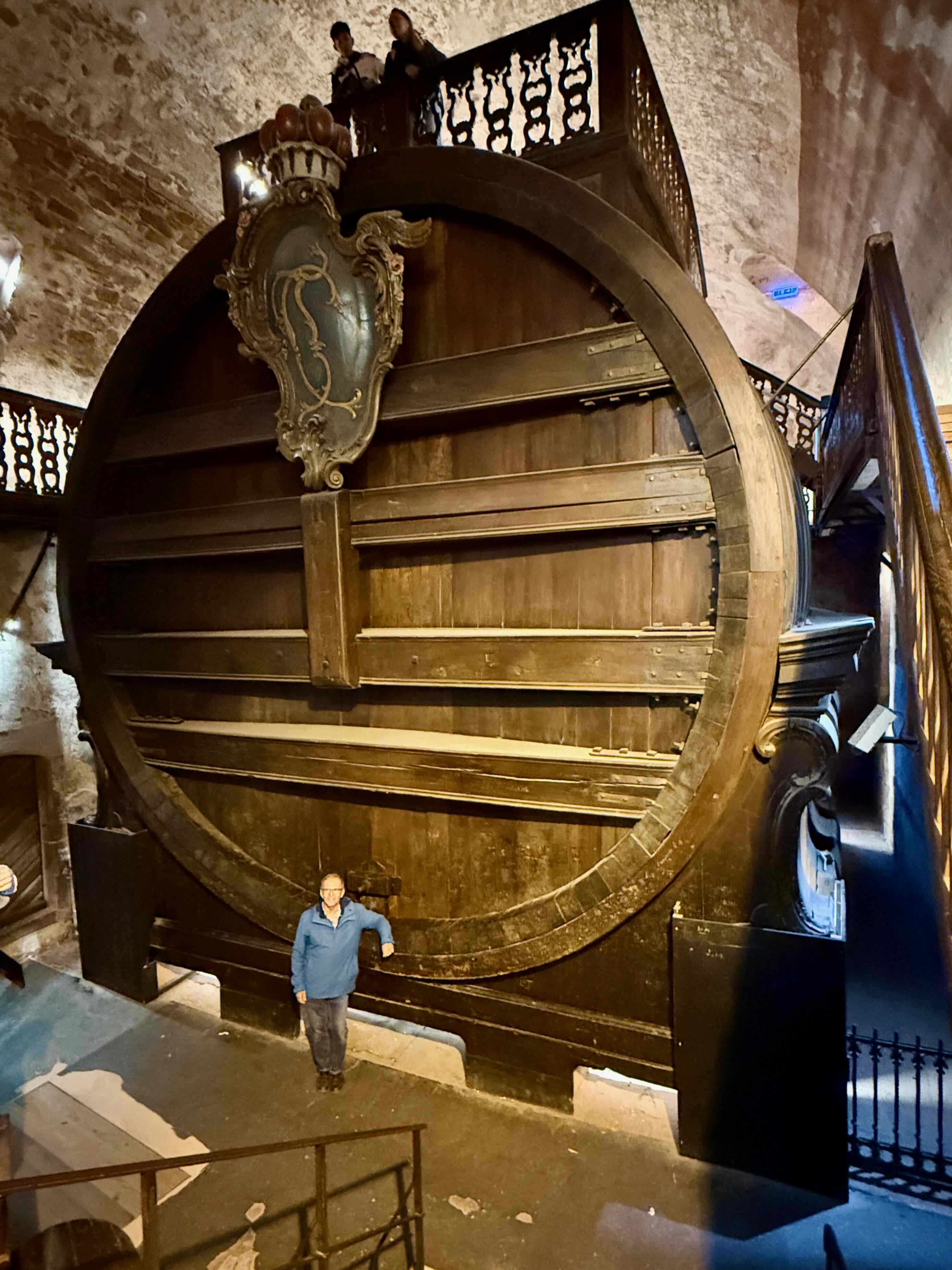
Here it is!

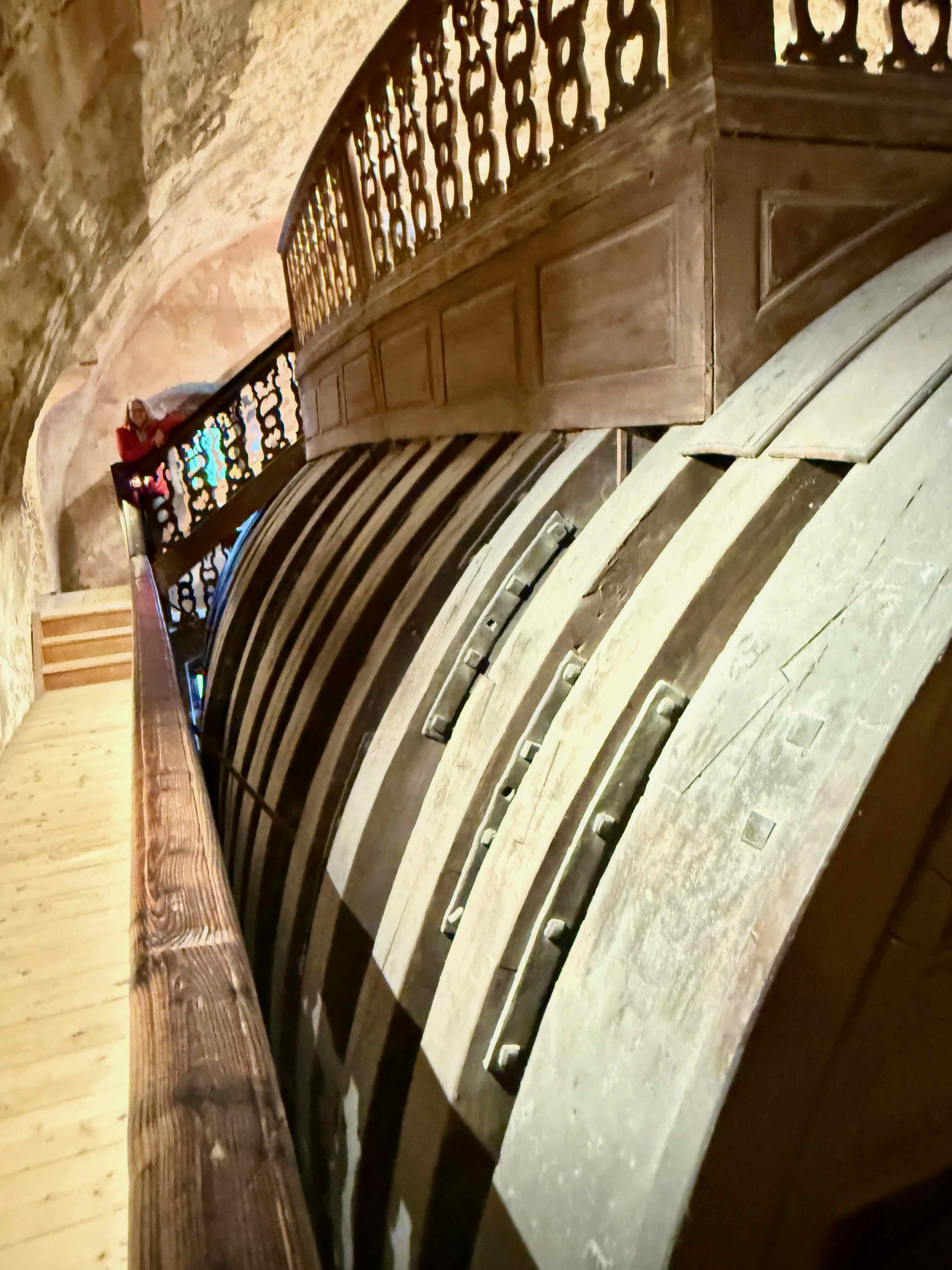
This wine barrel held 220,000 liters of wine. The stairs I am standing on lead to a platform above the barrel that was likely used as a dance floor! 

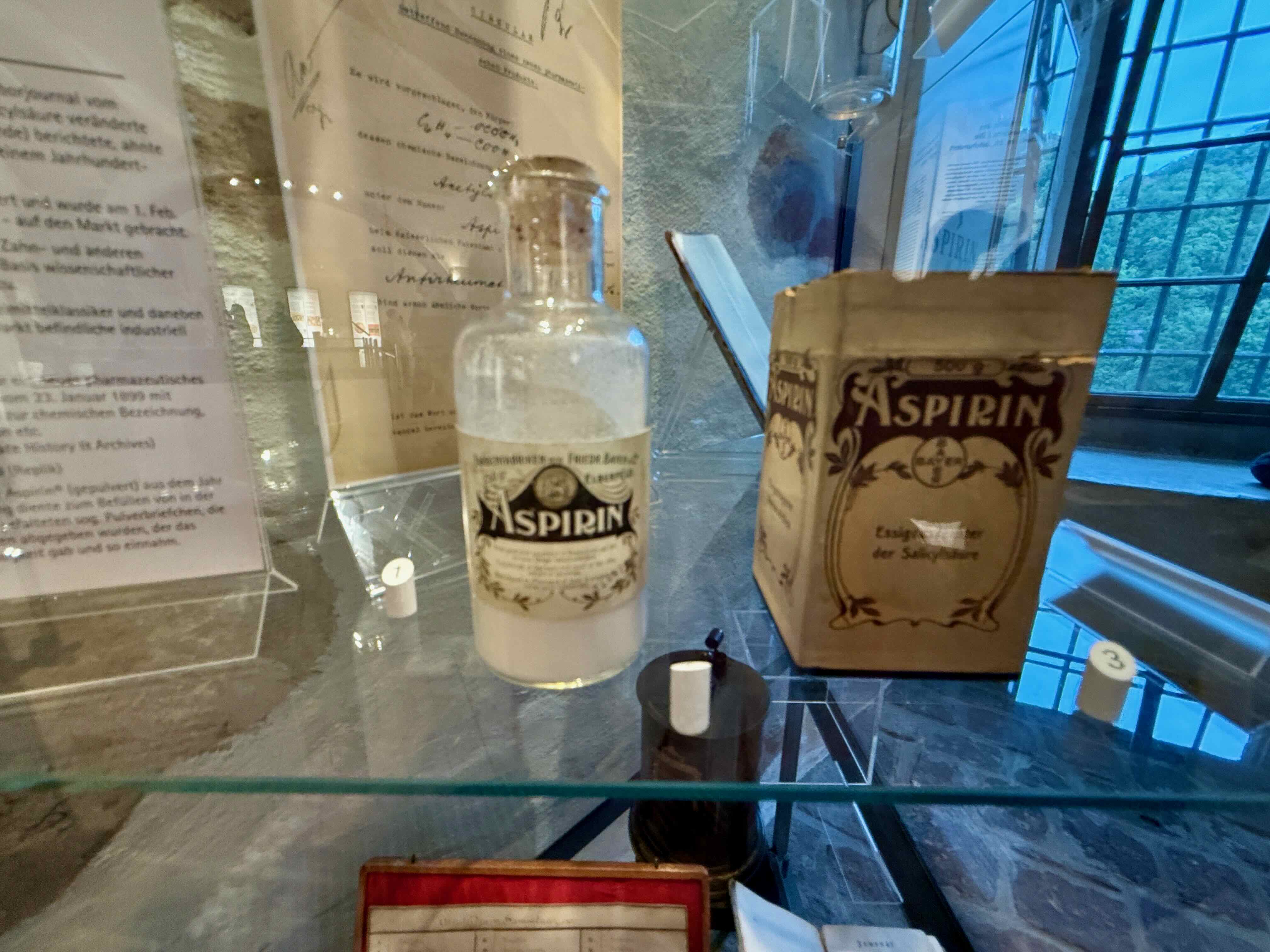
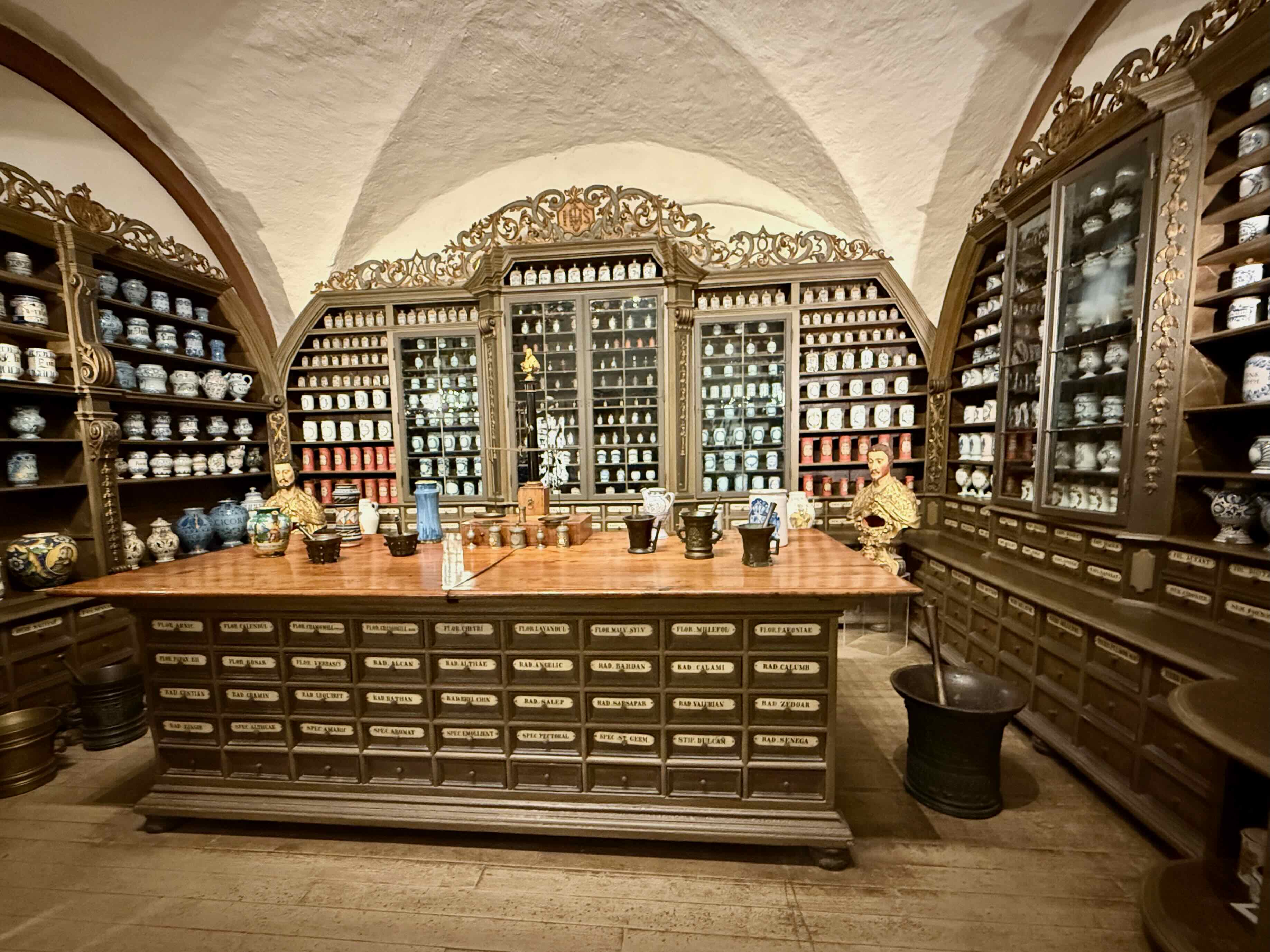
Last stop is the German Apothecary Museum. It is warm inside, which I really appreciate.  Aspirin was a commercially sold product in 1889. 

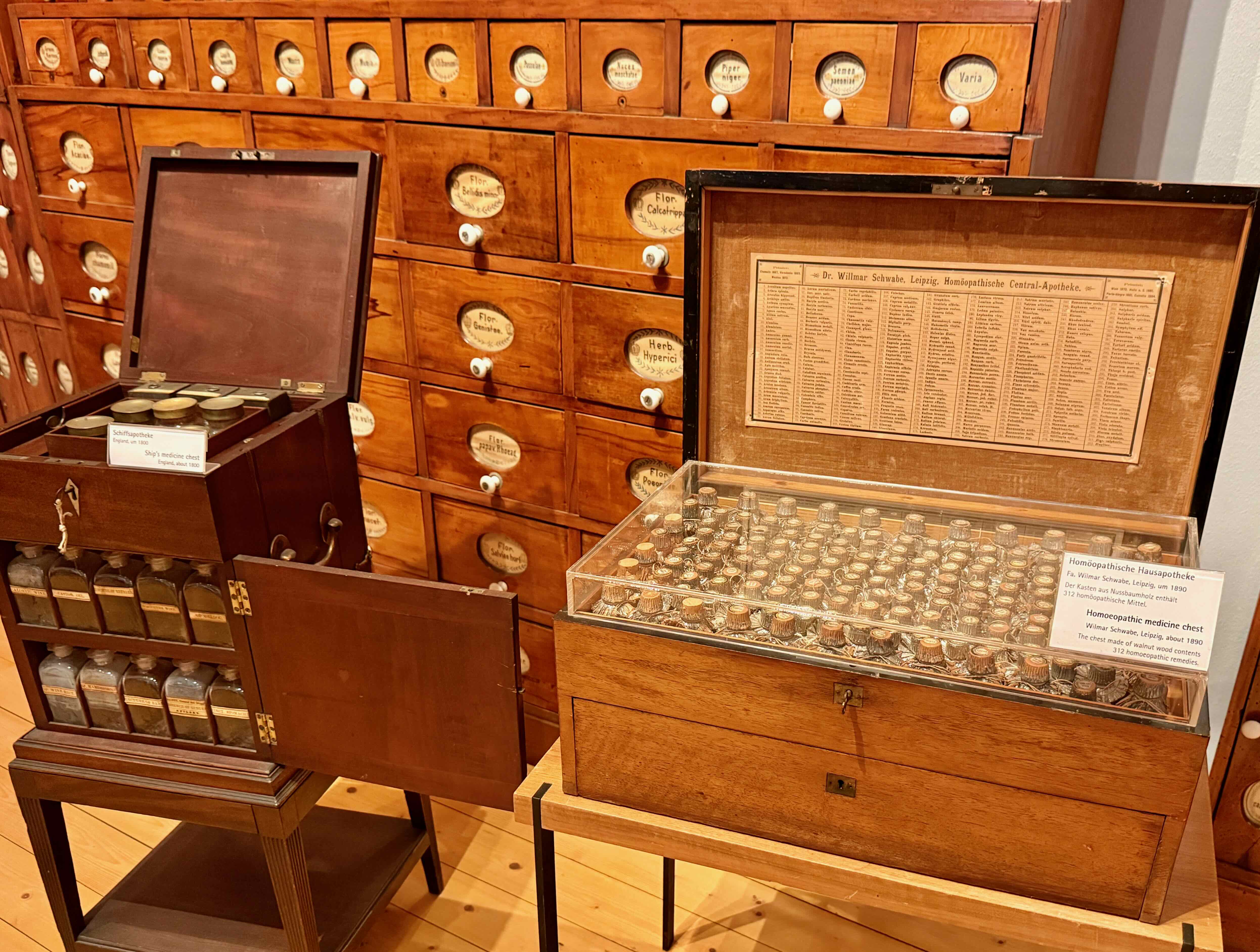
This chest of homeopathic medicines from 1890 contains 312 vials of homeopathic remedies.

What is it about chests with lots of little drawers that I find so appealing?

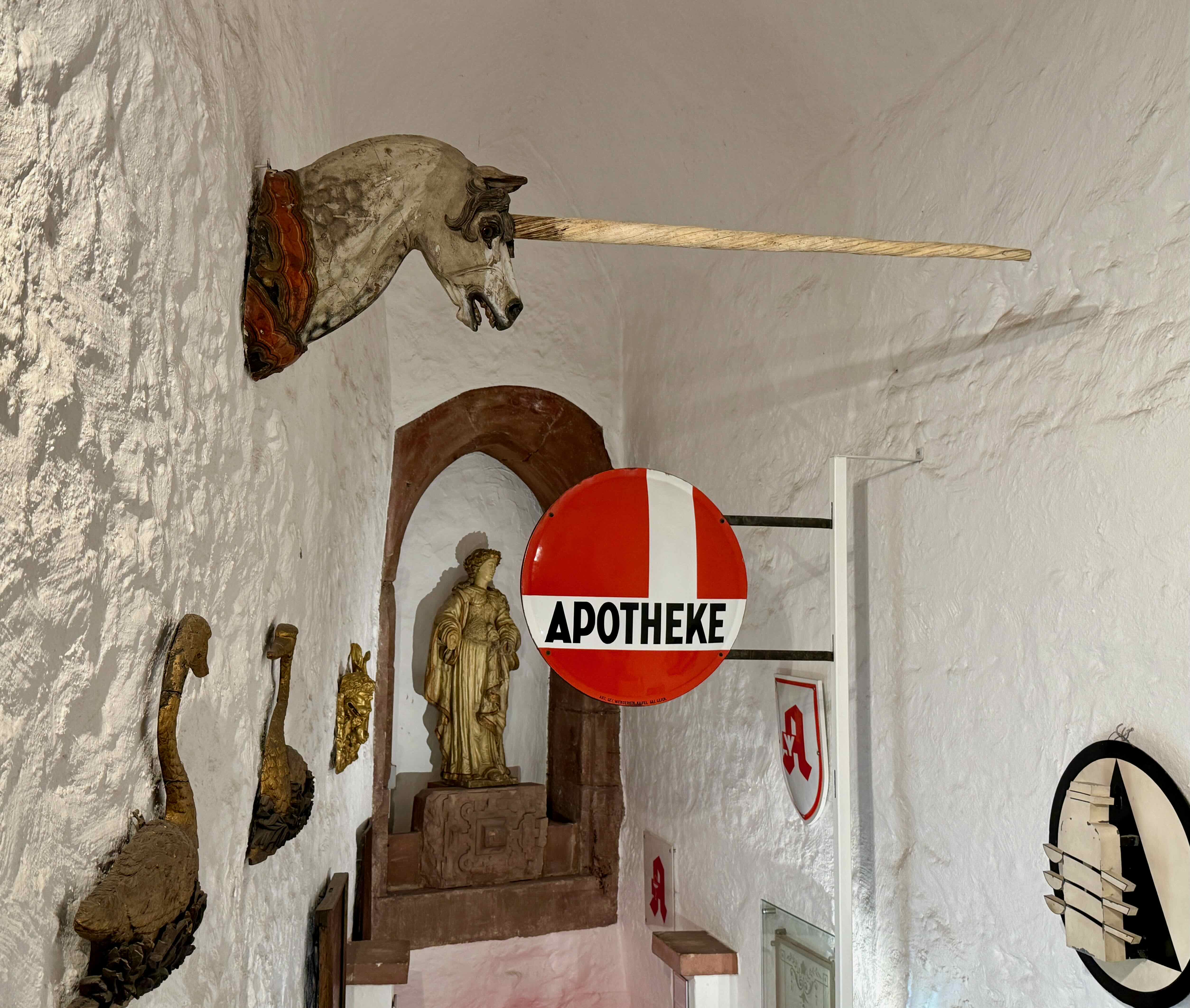
Of course, ground unicorn horns were in big demand as a cure for ailments such as fever, plaque, poisoning convulsions and epilepsy! Unicorn horns were just long tusks from narwhals or other animals but they were an expensive medication reserved for royalty and the very rich.

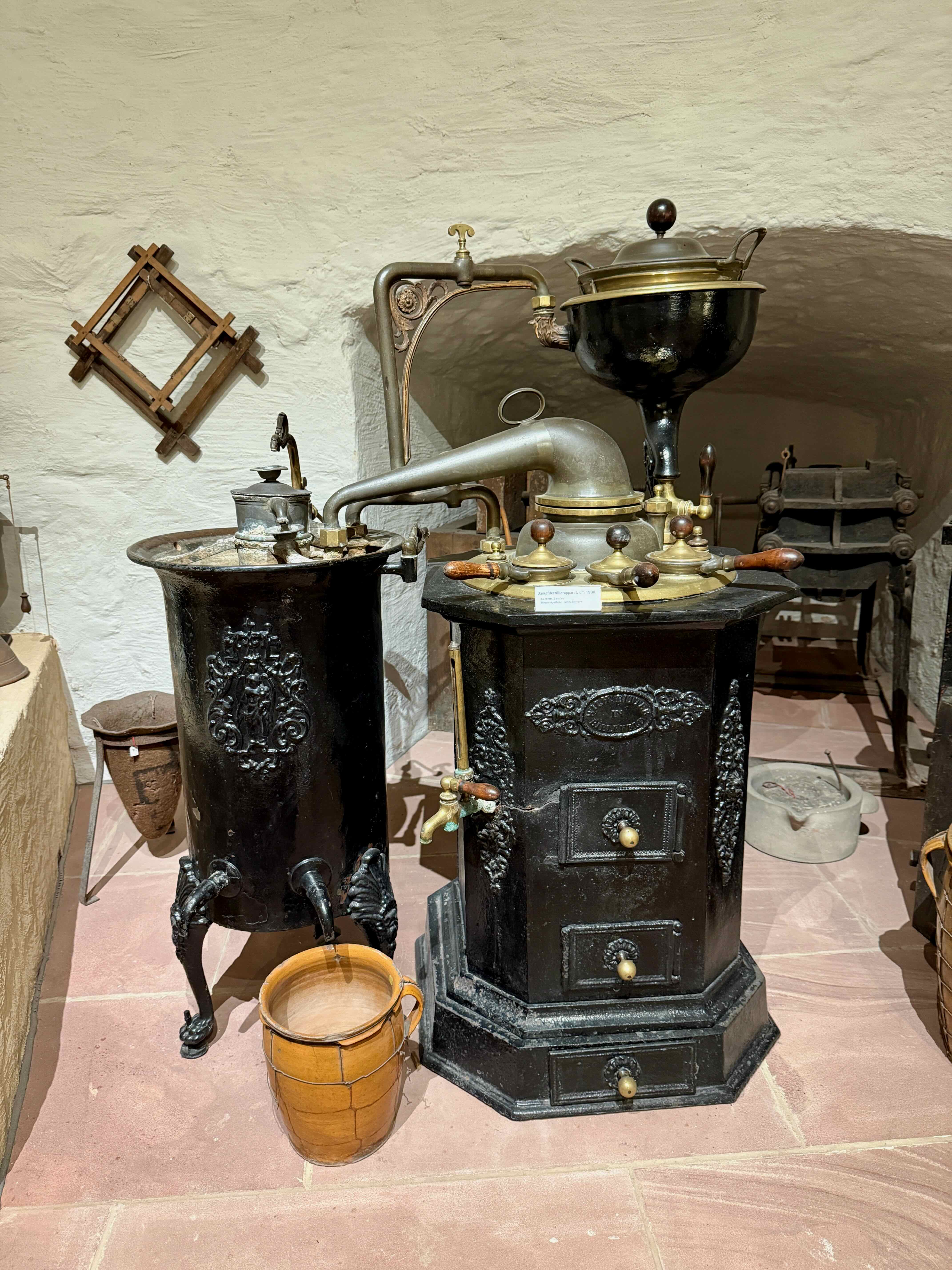
An early distillery…

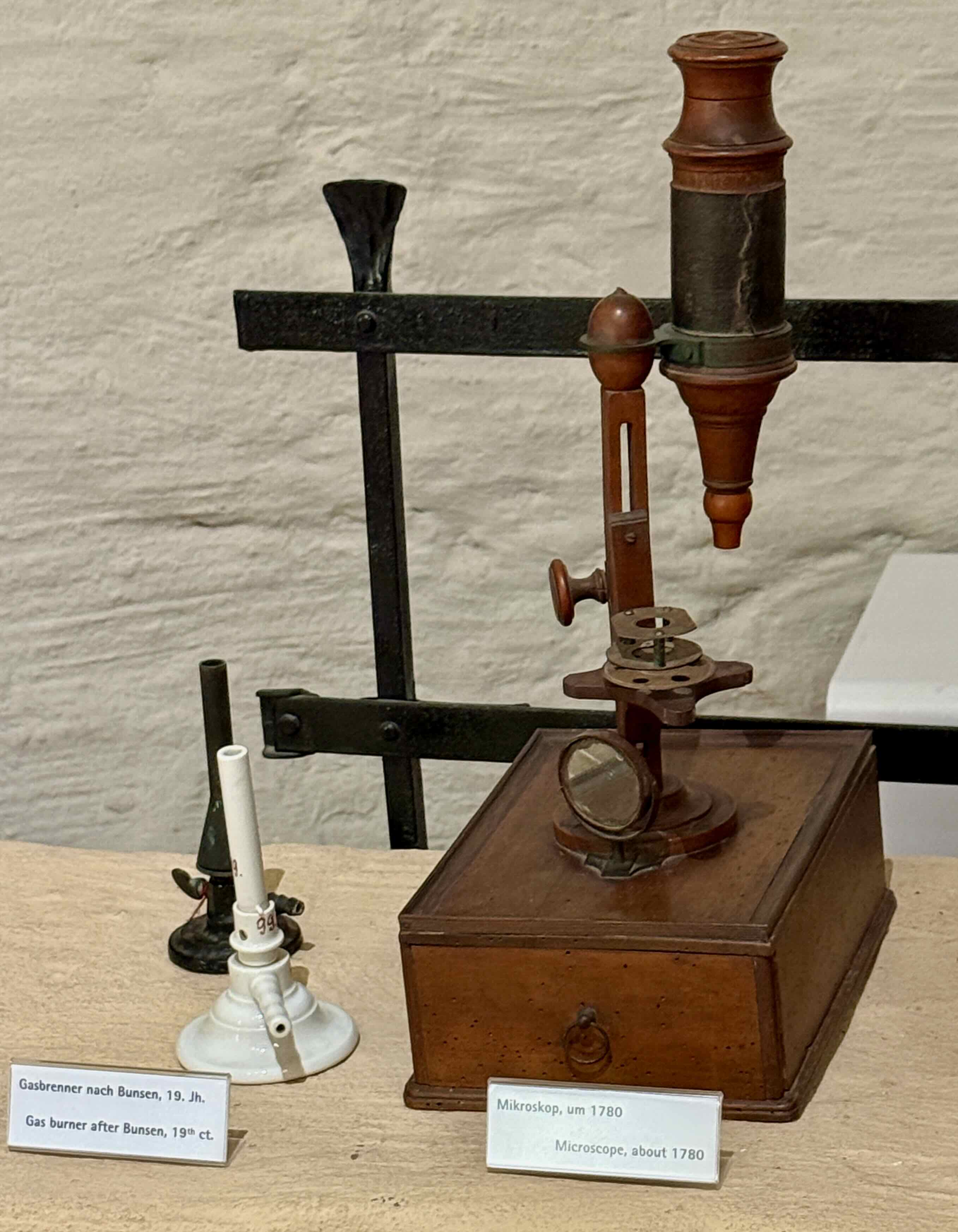
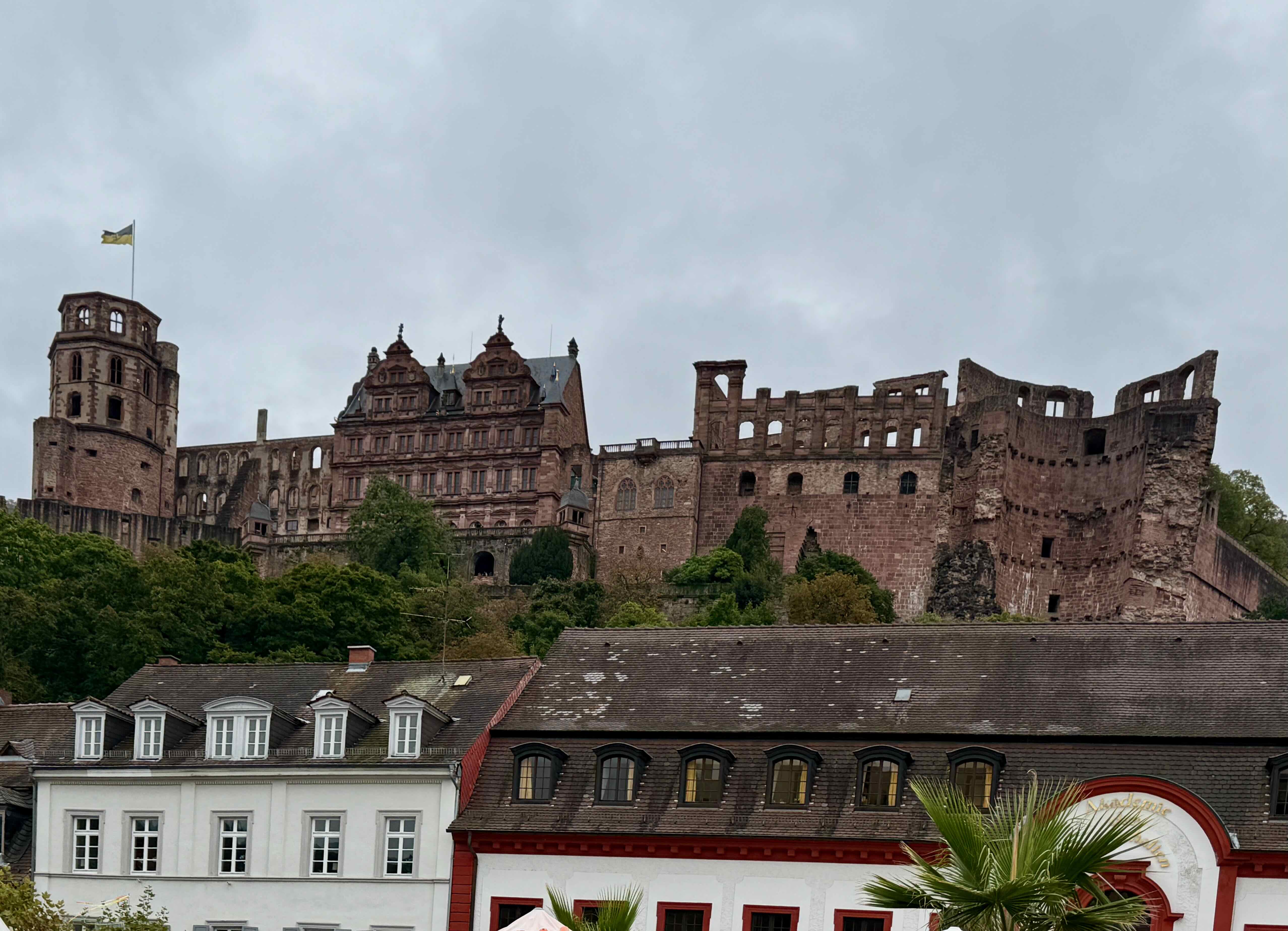
…bunsen burners and a telescope from 1780.We had such a hard time finding the entrance to the funicular and wondered where this castle was located…well, on our way back to the parkade I Iooked up…and there it was!  We both laughed, but then we couldn’t find the entrance to the parkade!  We looked everywhere and finally walked down the out ramp, and there was the door to the exit.  We checked it out and the stairs outside were right beside the ramp we just walked down…no sign or markers though!
Back on the road to stuttgart…and it is raining again.

Jewish Museums in Frankfurt, Germany

Day 36     Sunday, October 5, 2025

I have a much needed quiet day and Bob visits two Jewish Museums in Frankfurt. He is writing today’s post.

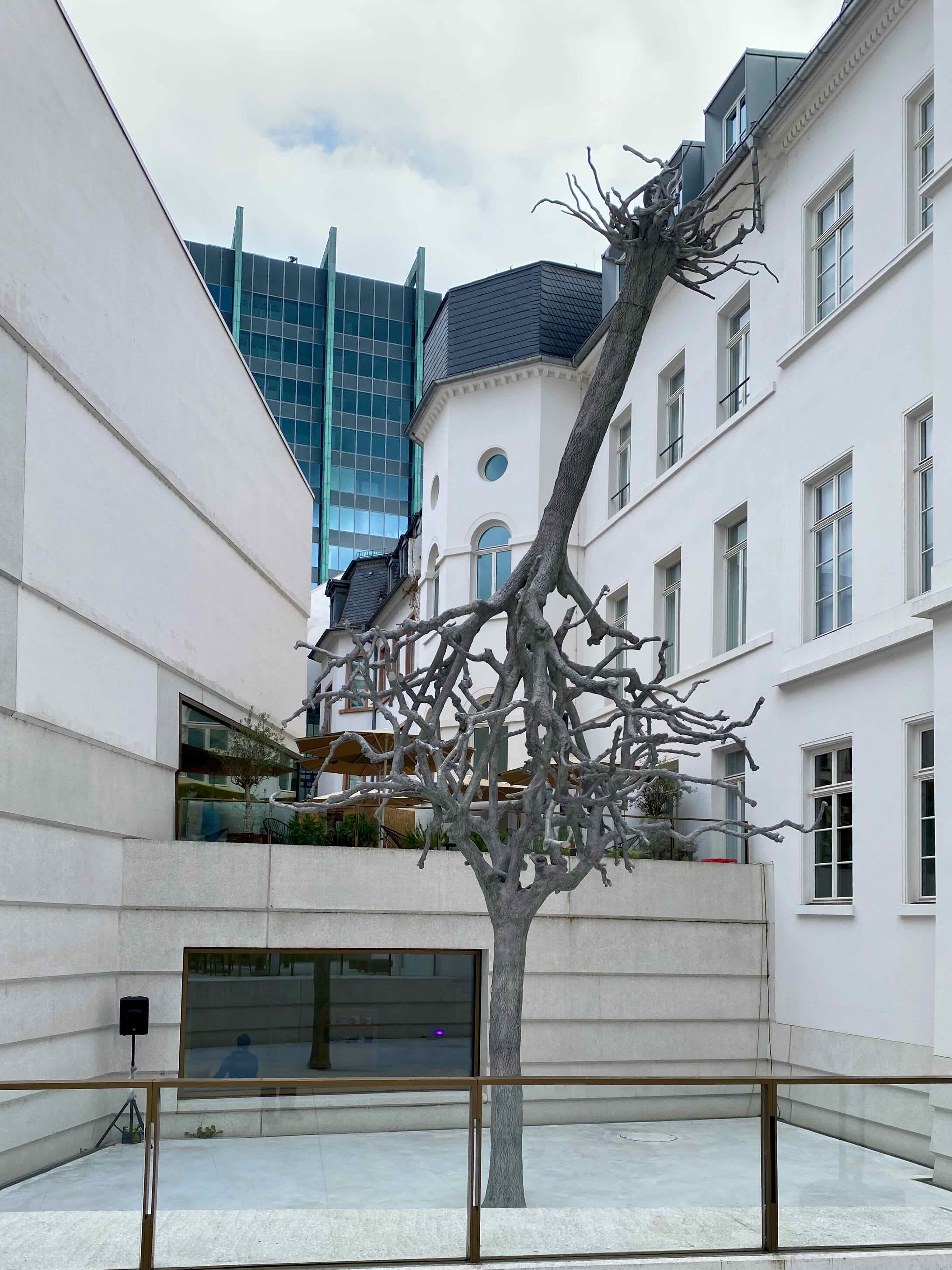
At the entrance to the Jewish Museum is a sculpture that symbolizes the uprooting of the Jewish community during WWII. Of the 30,000 Jews in Frankfurt at the start of the war, 13,000 died in German concentration camps, many were uprooted and only 150 remained after the war.

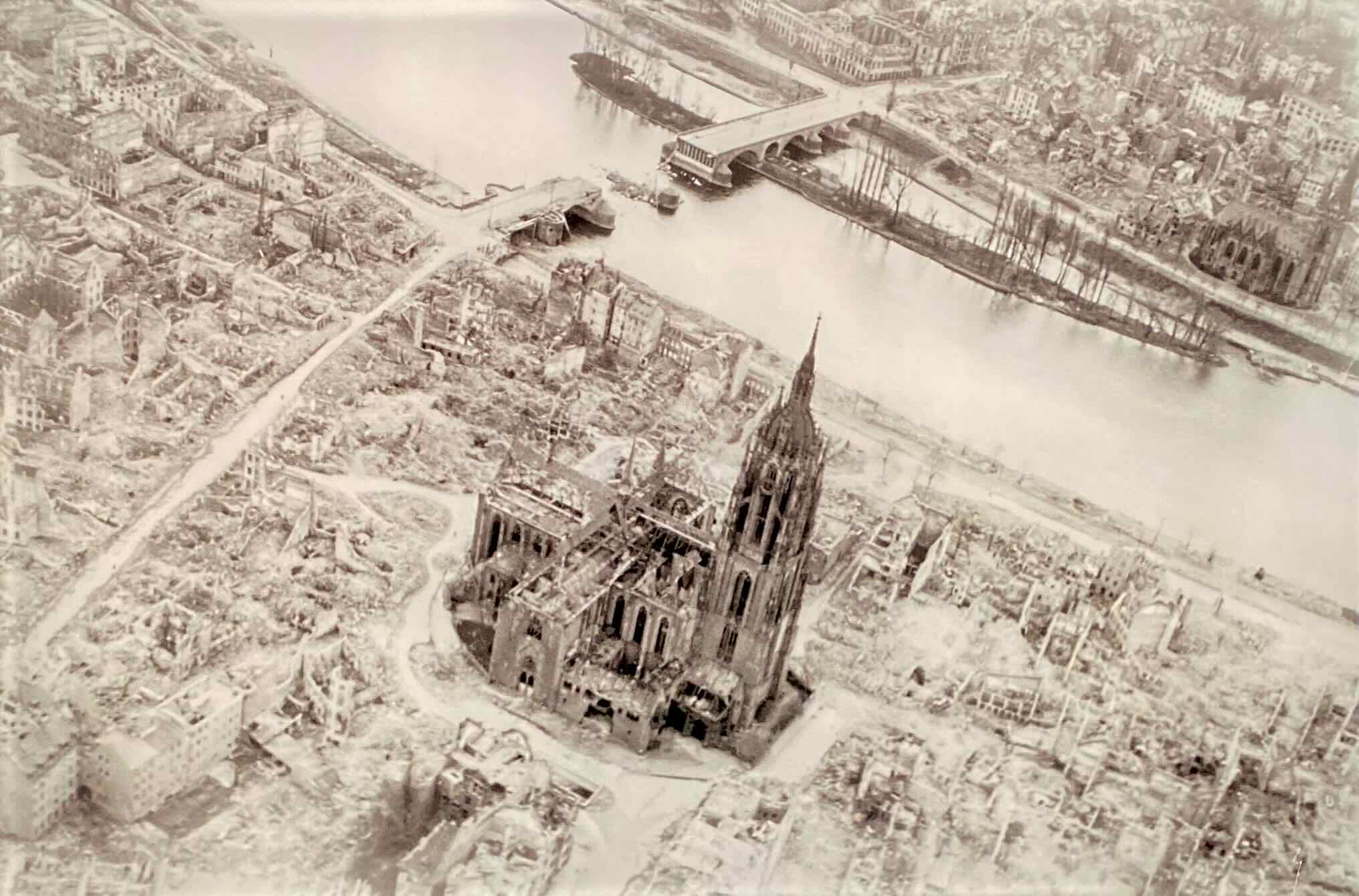
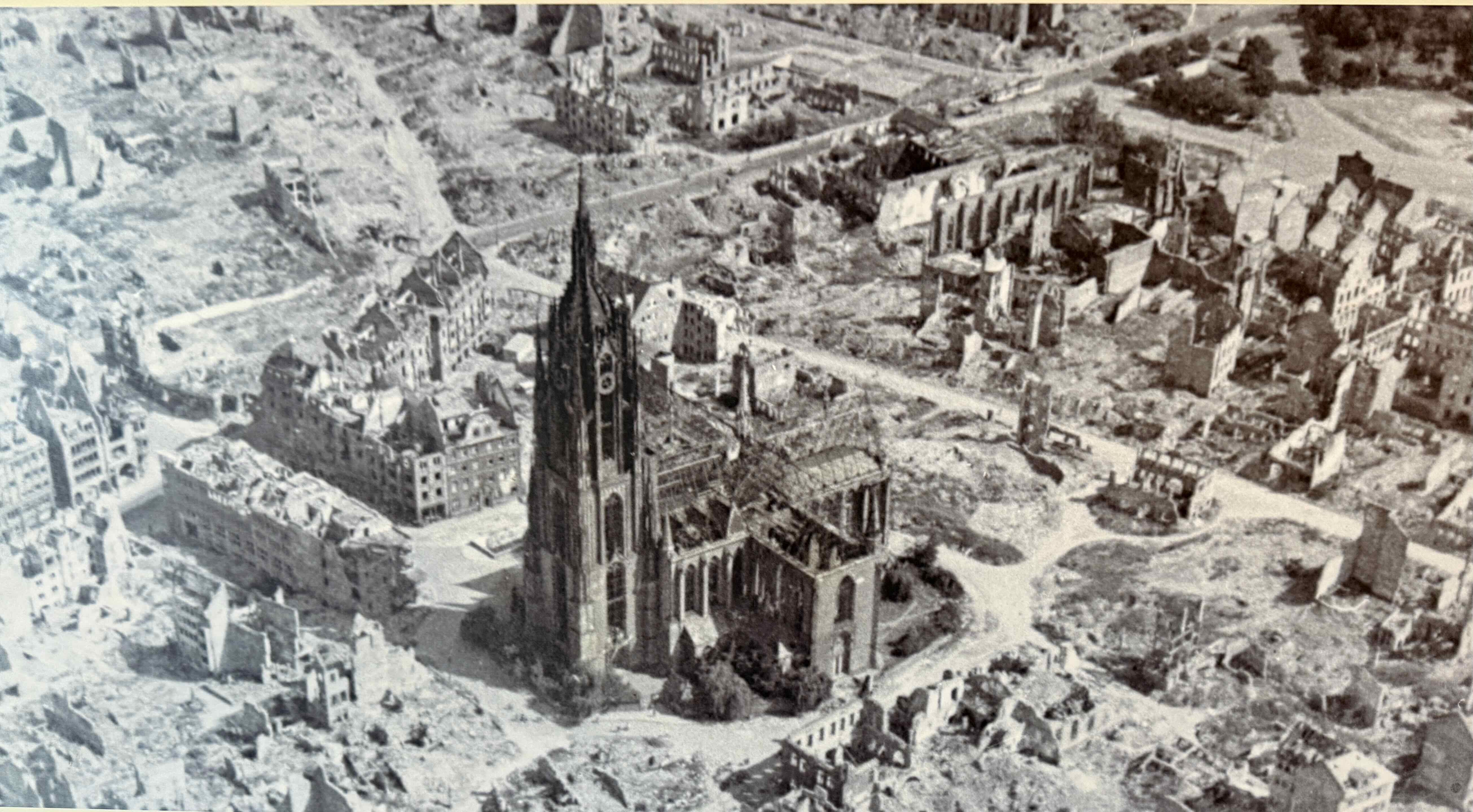
Amazingly most of the St. Nicholas Cathedral survived the bombings in WWII. 80% of the city was either destroyed or badly damaged.

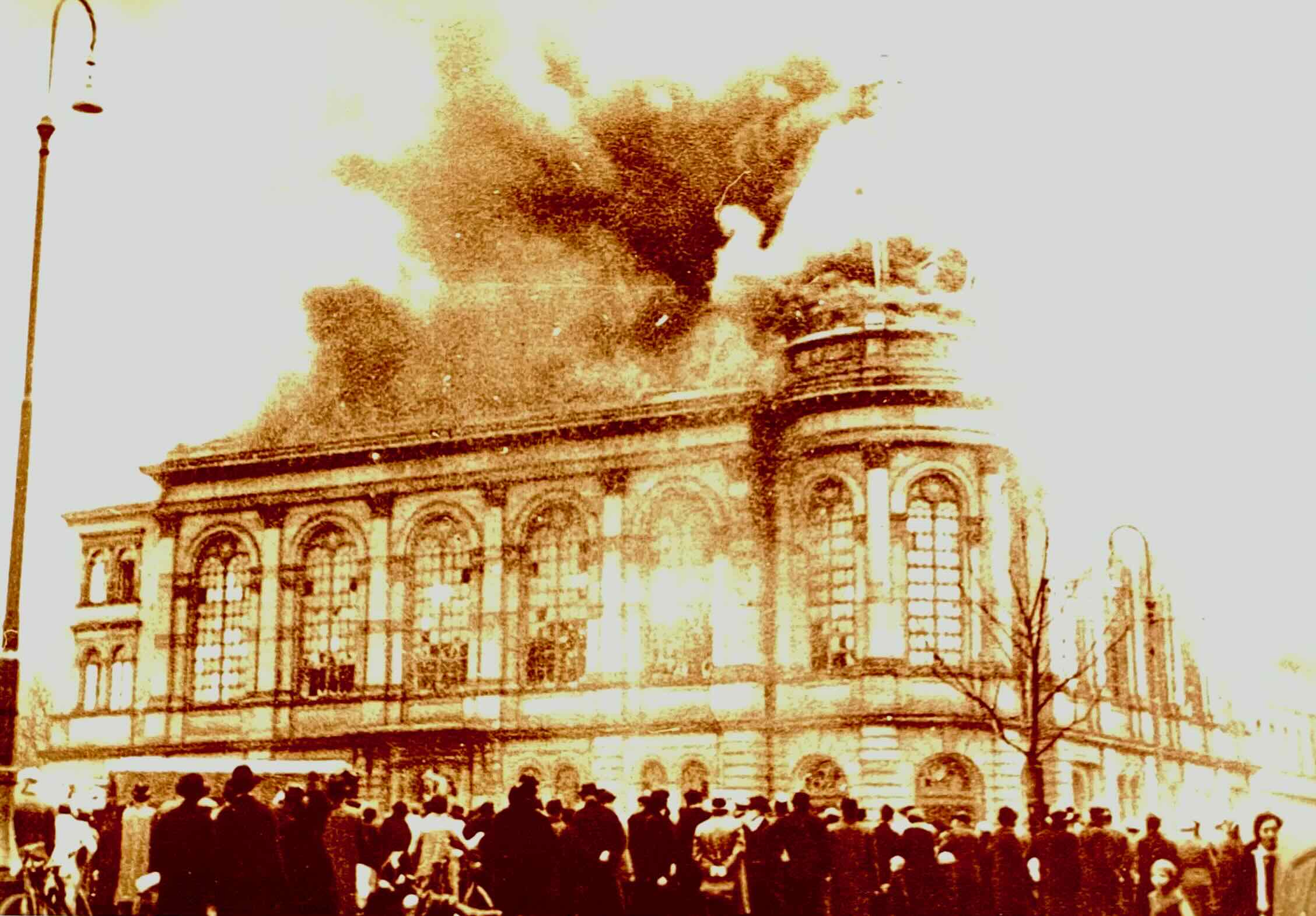
In November 1938, 1400 synagogues were vandalized and burnt  by the Nazi regime, including the Borneplatz Synagogue.  

I was surprised to learn that Anne Frank and her family lived in Frankfurt before 1933. The grandmother moved to Basel, and other family members moved to Paris and London. Anne Frank’s family moved to Amsterdam. In 1942 the family went into hiding until August 1944 when the family was discovered and deported to Auchwitz.

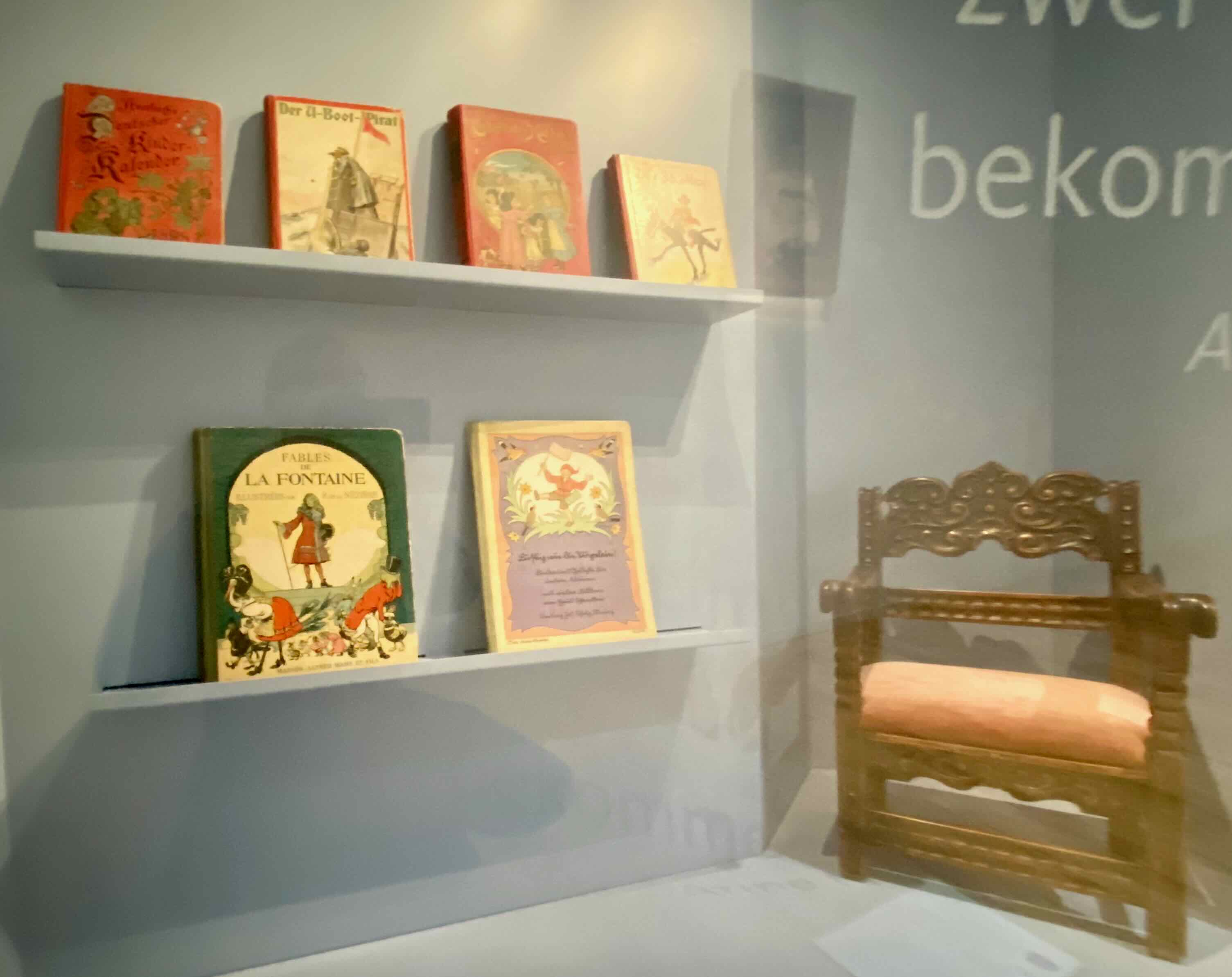
The grandmother kept these treasures.  For one of her birthdays Anne was given a gift certificate for 2 books.  This was her favourite chair.   

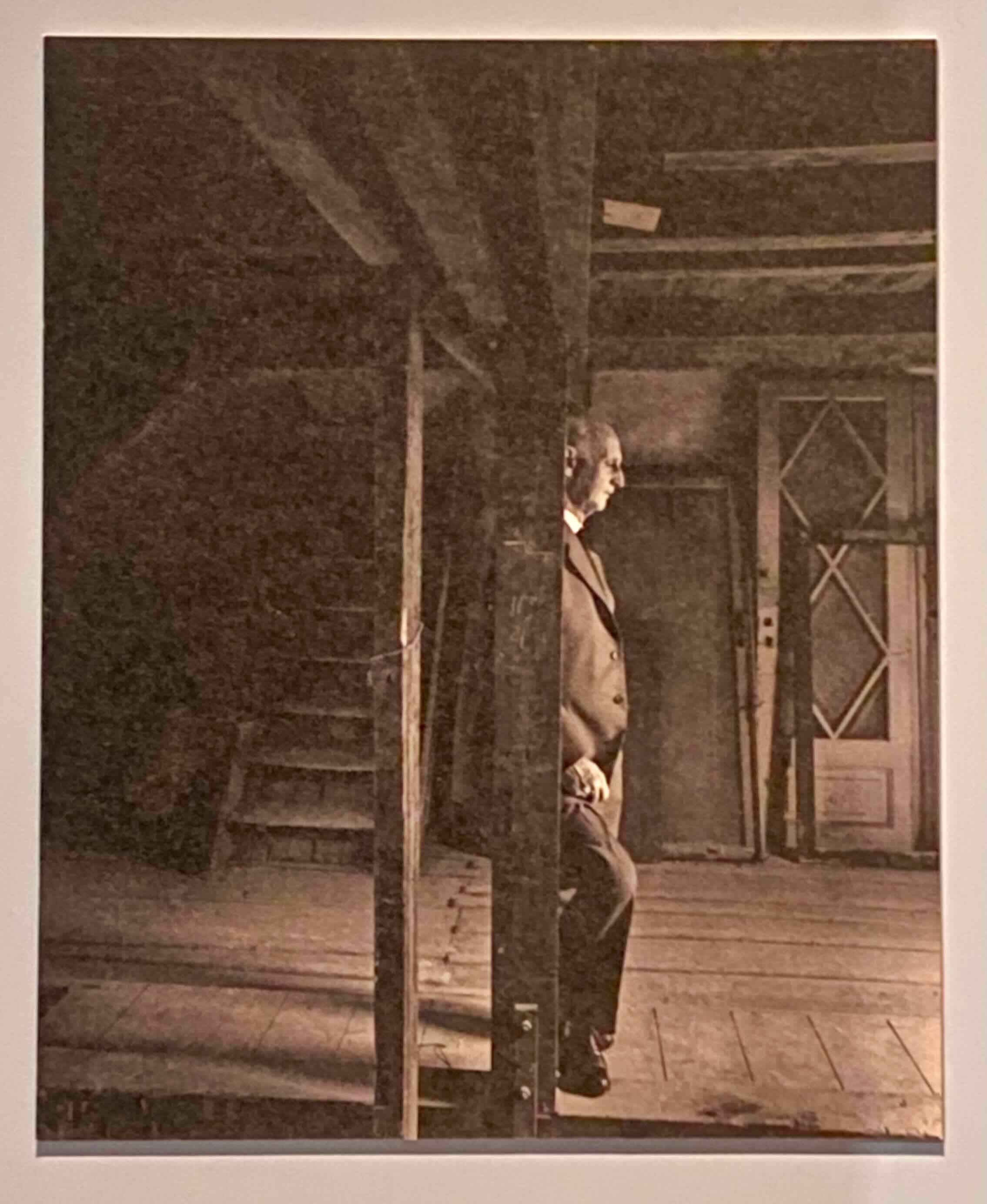
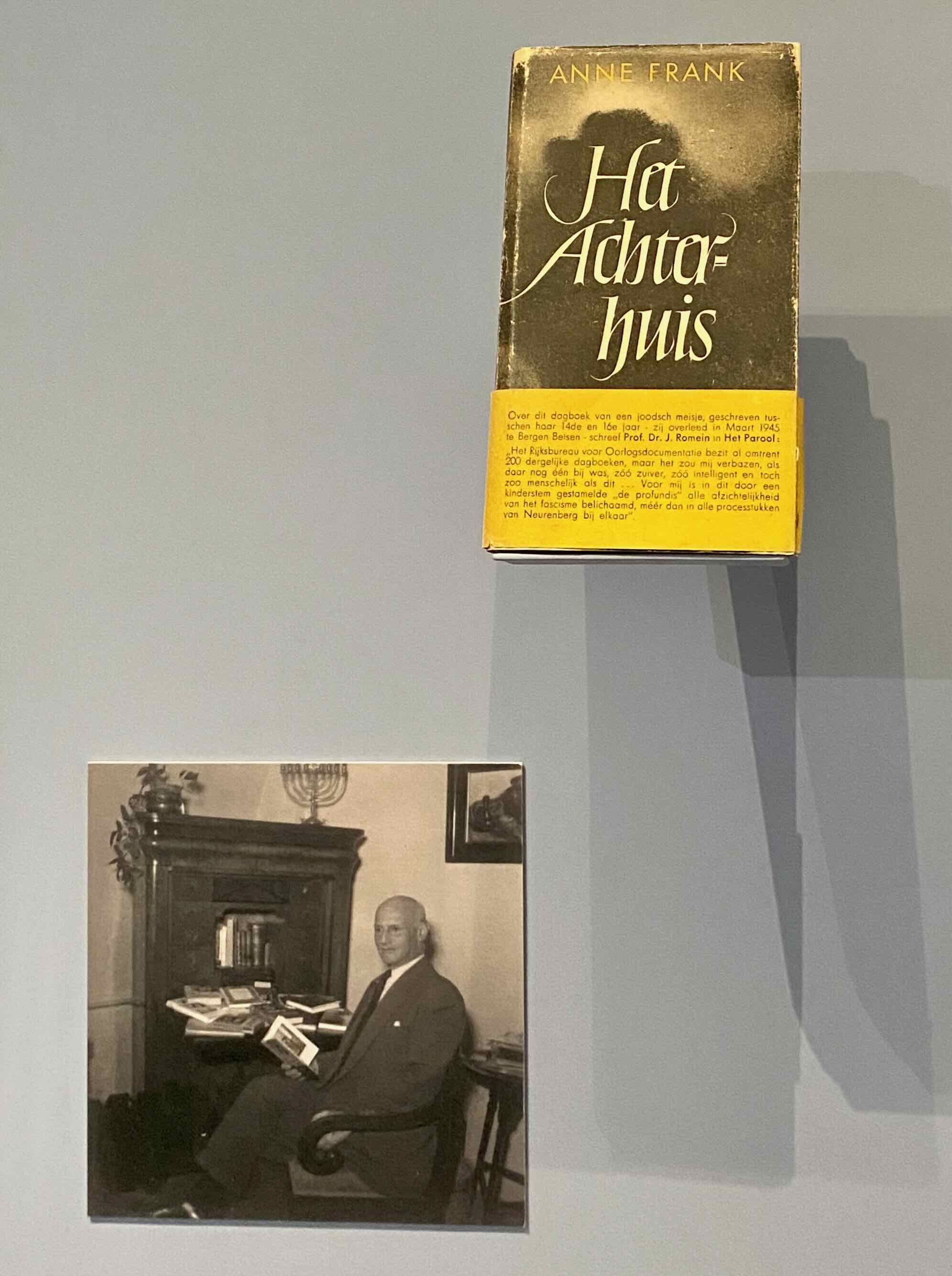
After WWII Anne’s father (the only family survivor of the war) published her diary (The Annex).  He returned to Amsterdam in 1960 to view the family’s hiding place. This is the father’s copy of the book, later titled  “The Diary of Anne Frank”.
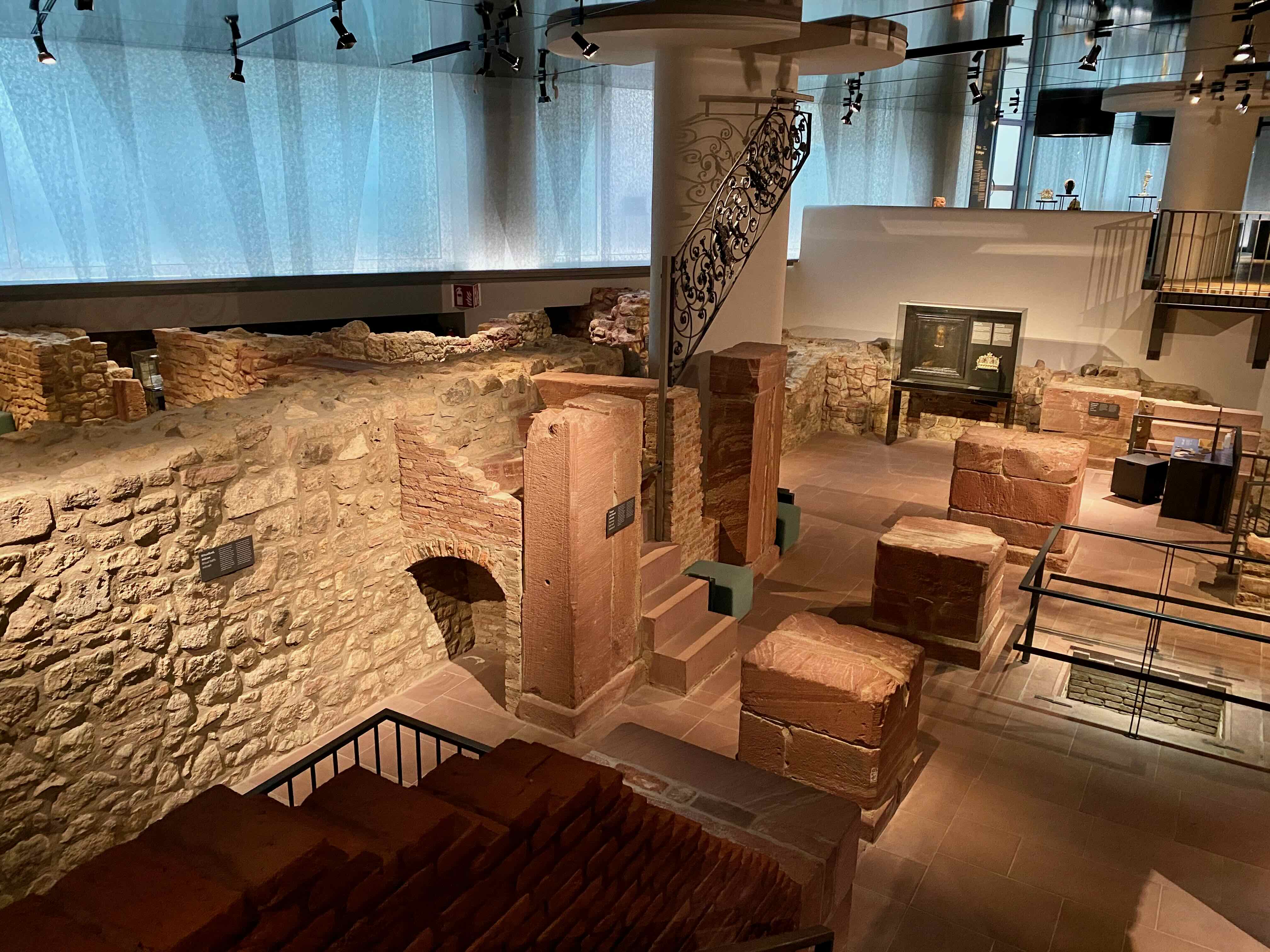
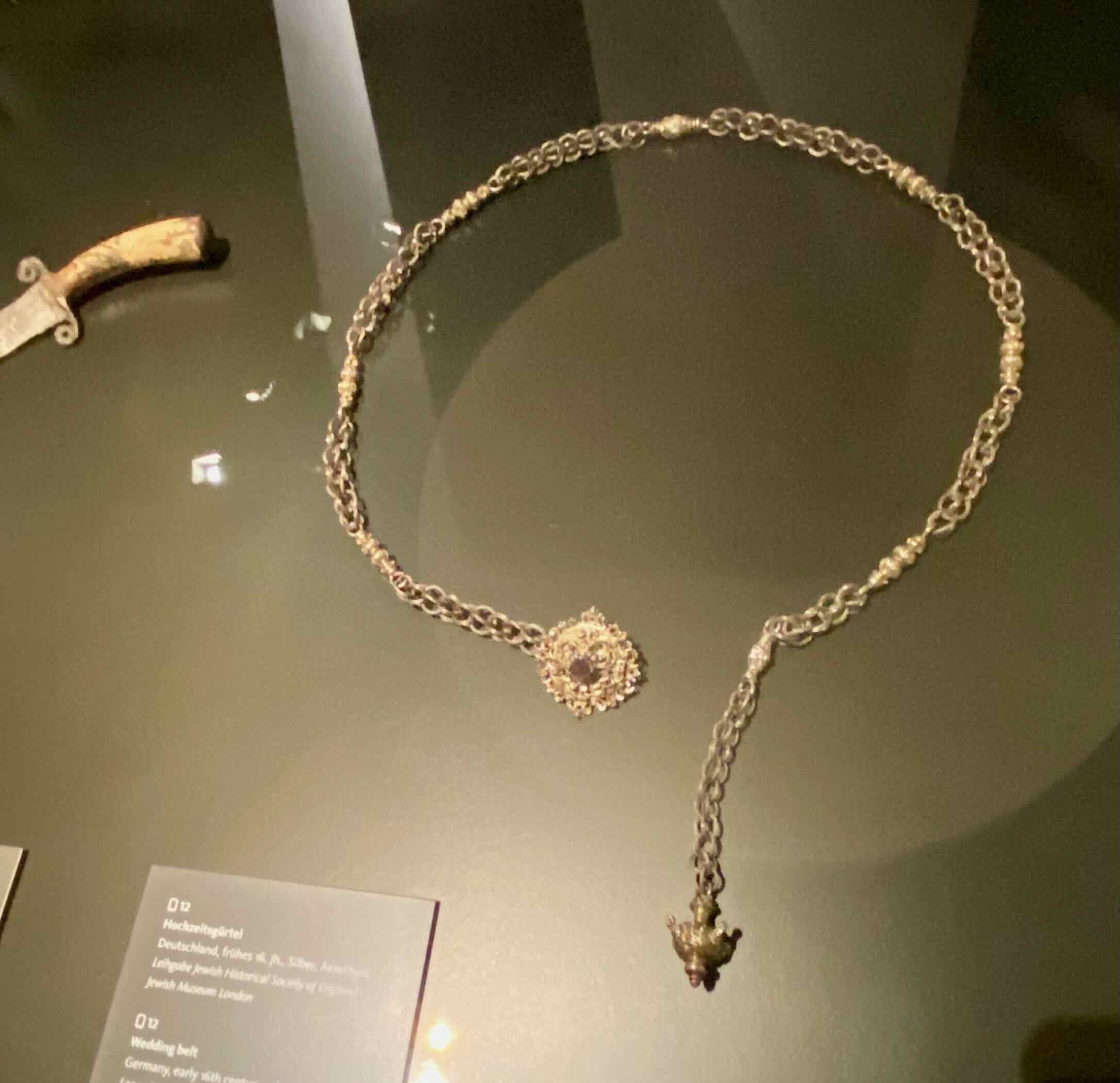
In 1460, Frankfurt City Council set up the Jewish Quarter to house all Jews.  By 1700 up to 3000 people lived here.  The remains of 5 houses have been saved in the 2nd museum I visited.   There were a number of artifacts uncovered. The most interesting is this 16th century wedding belt. The belts of the bride and groom were tied together during the wedding ceremony as a symbol of their eternal bound.
Mainz, Germany and Gutenburg Bible

Day 35    Saturday,  October 4, 2025

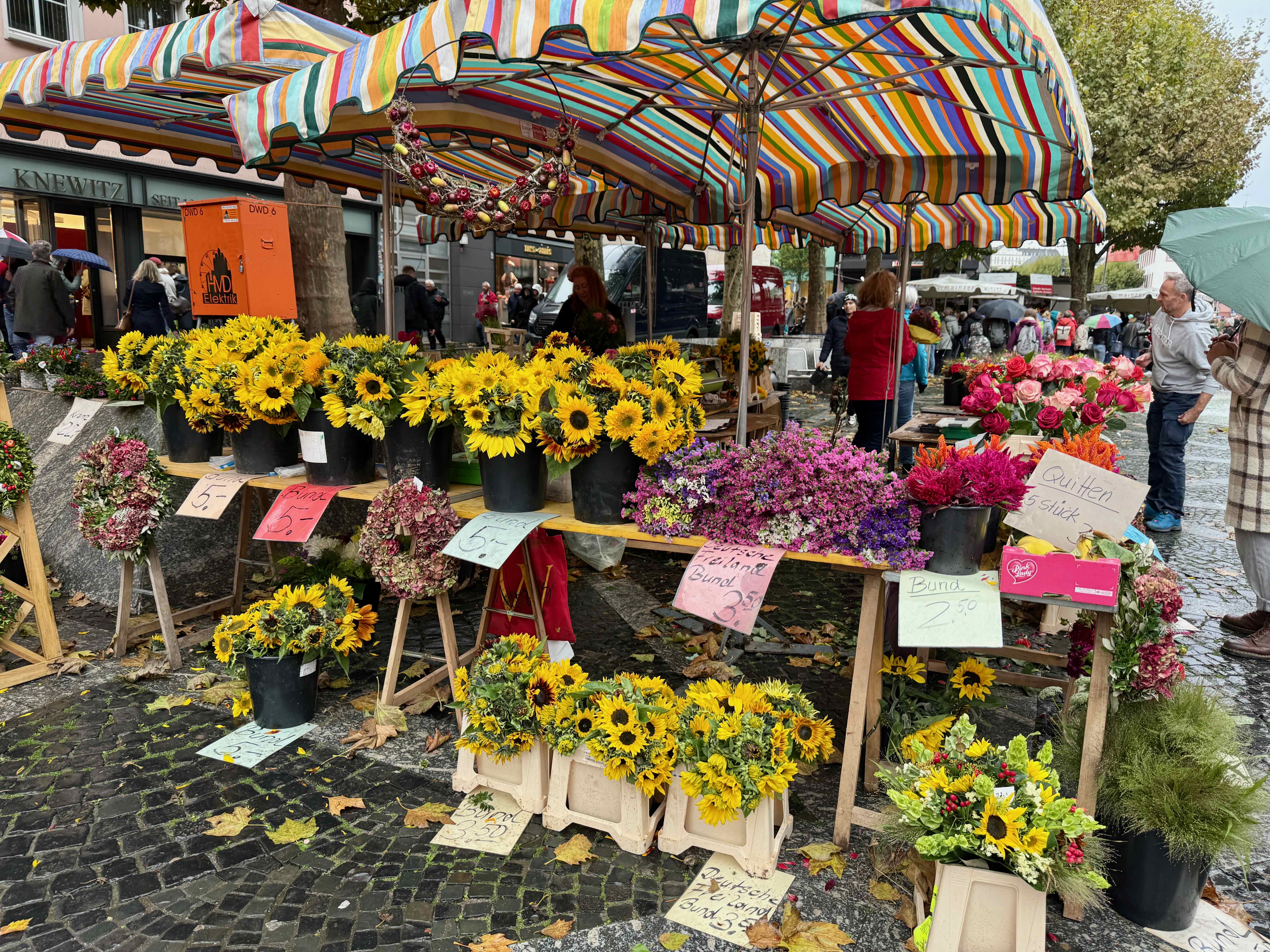
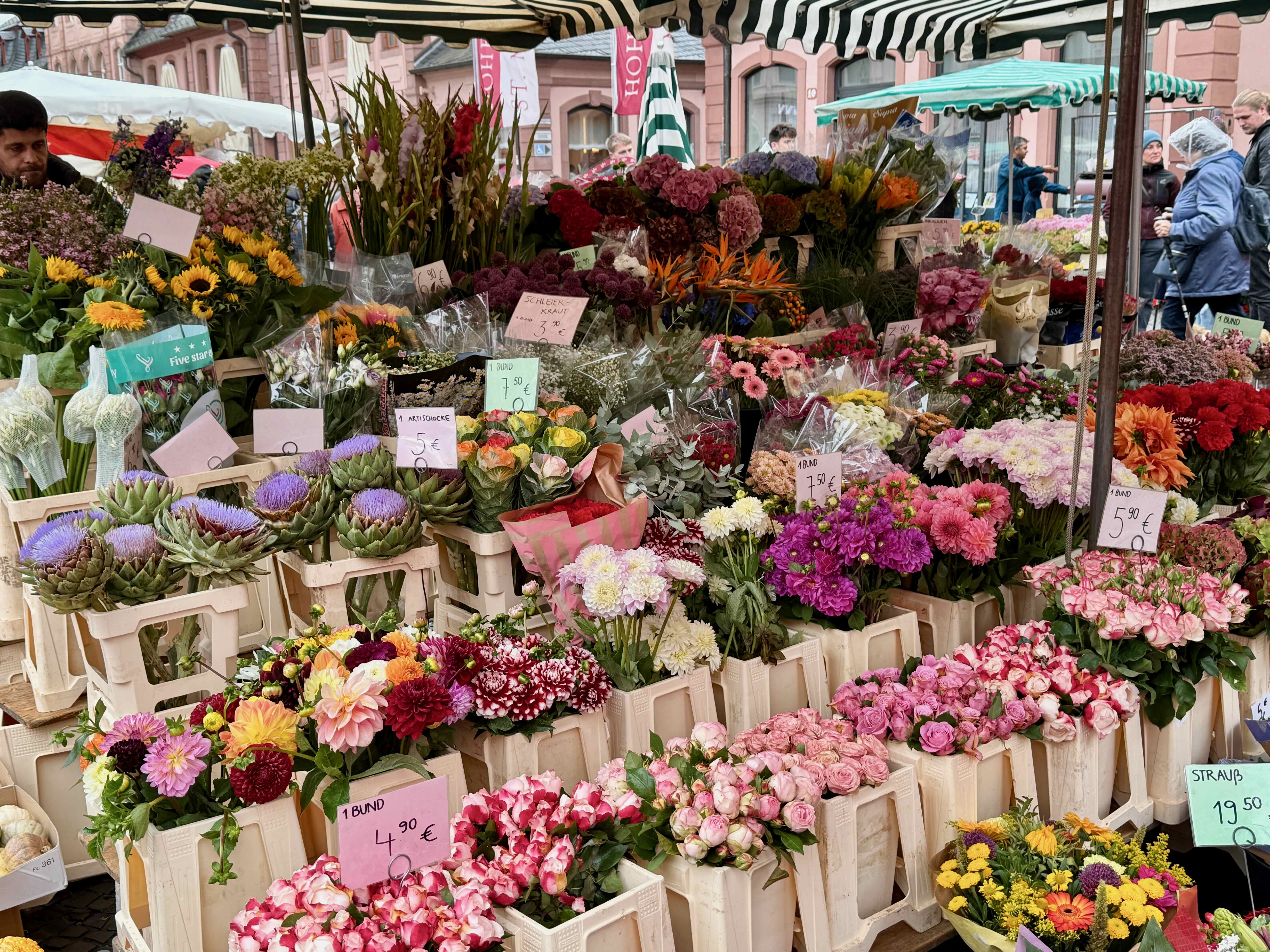
It is a 45 minute drive to Mainz, and Bob has several items on our ‘must see’ agenda. First stop is the market. The flowers at these markets are always so beautiful and very reasonably priced.

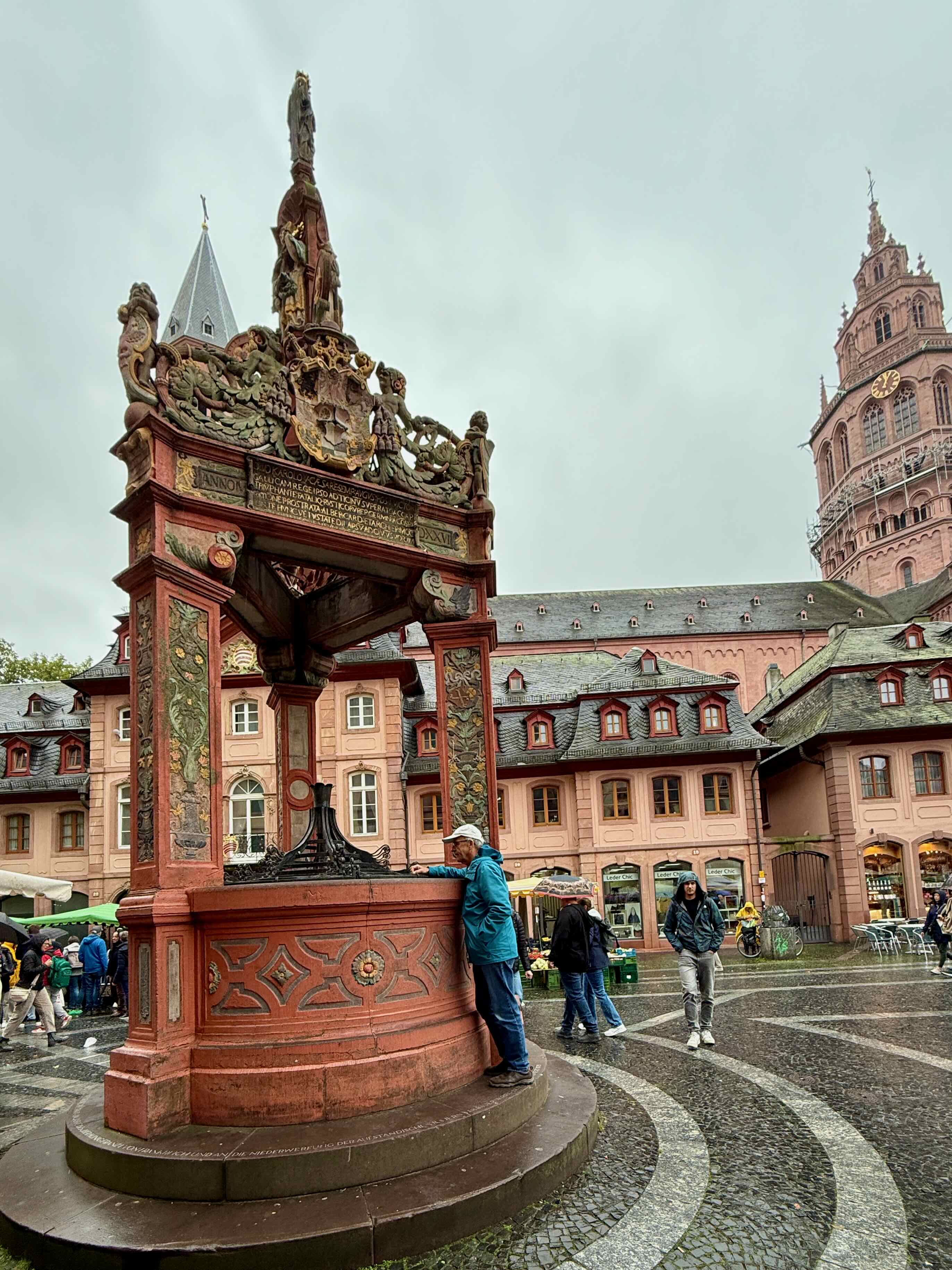
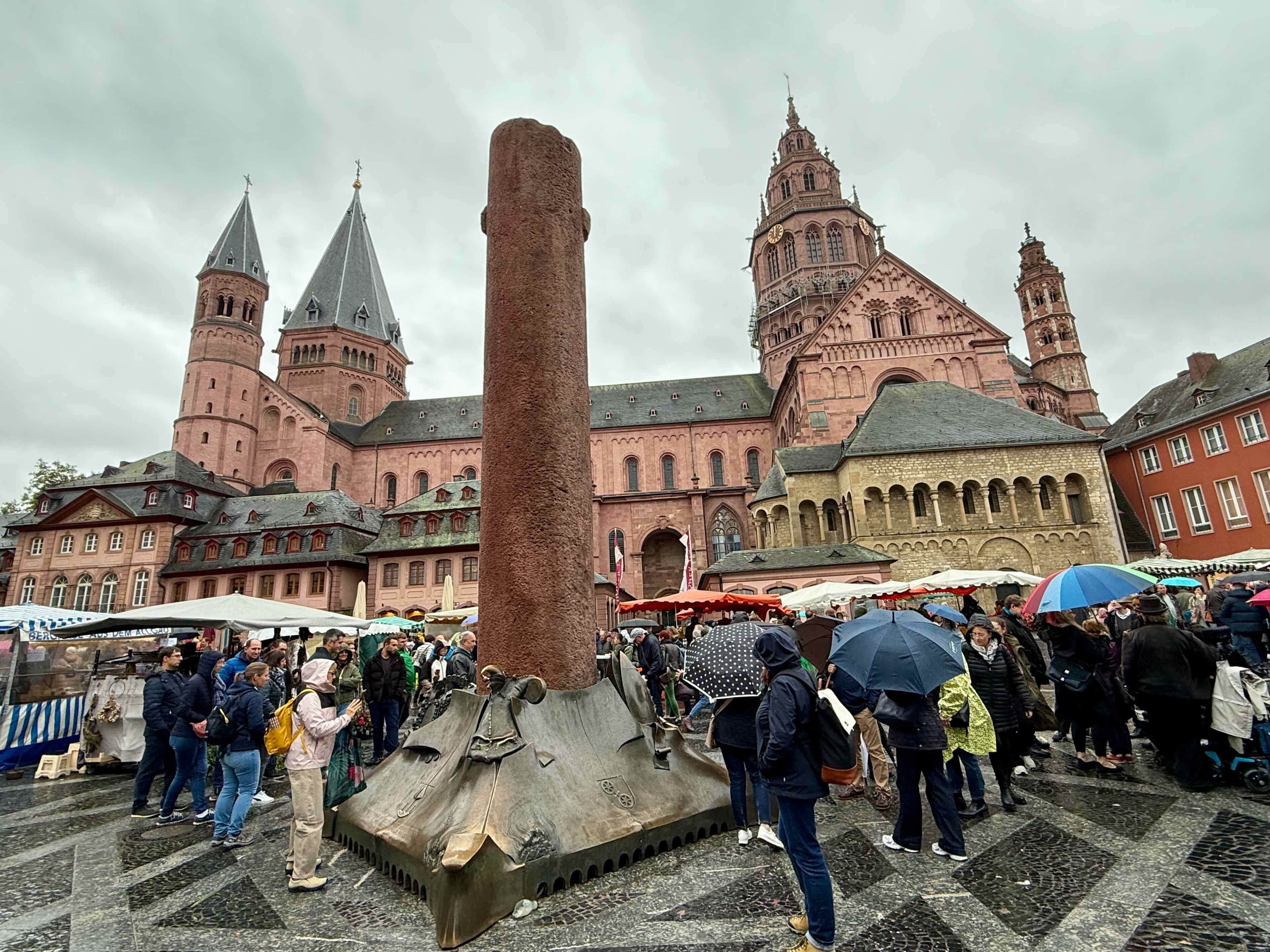
The main sculpture in the main square (market) of Mainz is the Heunensäule, or Hay Column. It is a 1,000-year-old sandstone column with a bronze casing, depicting various symbols of Mainz’s history and culture like a fool’s cap and bishop’s miter. It is in the market square in front of the Mainz Cathedral. 

I like this wishing well and we both toss in a coin and make our wishes.

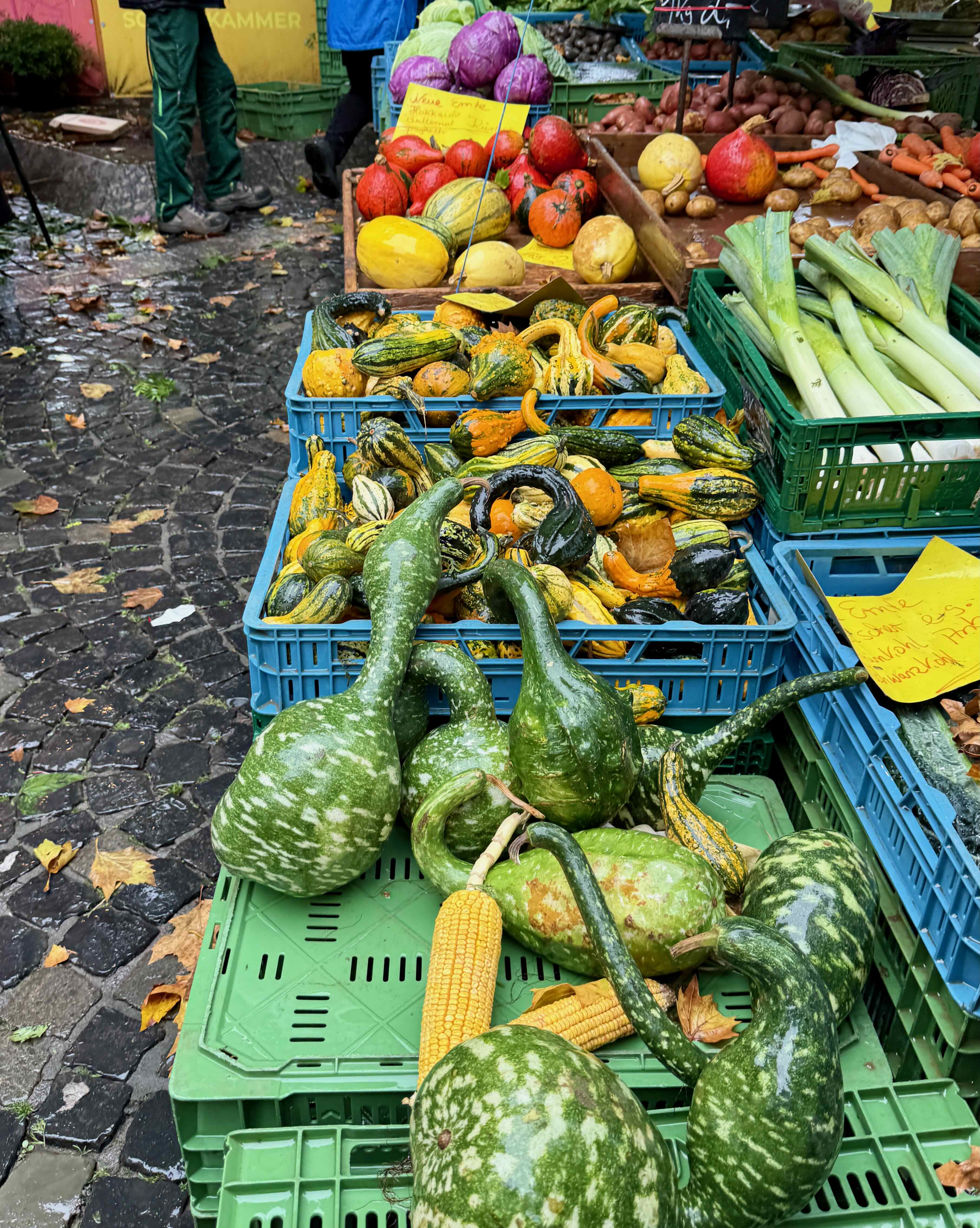
We both like the interestingly shaped squash…we might have to try growing some next year.

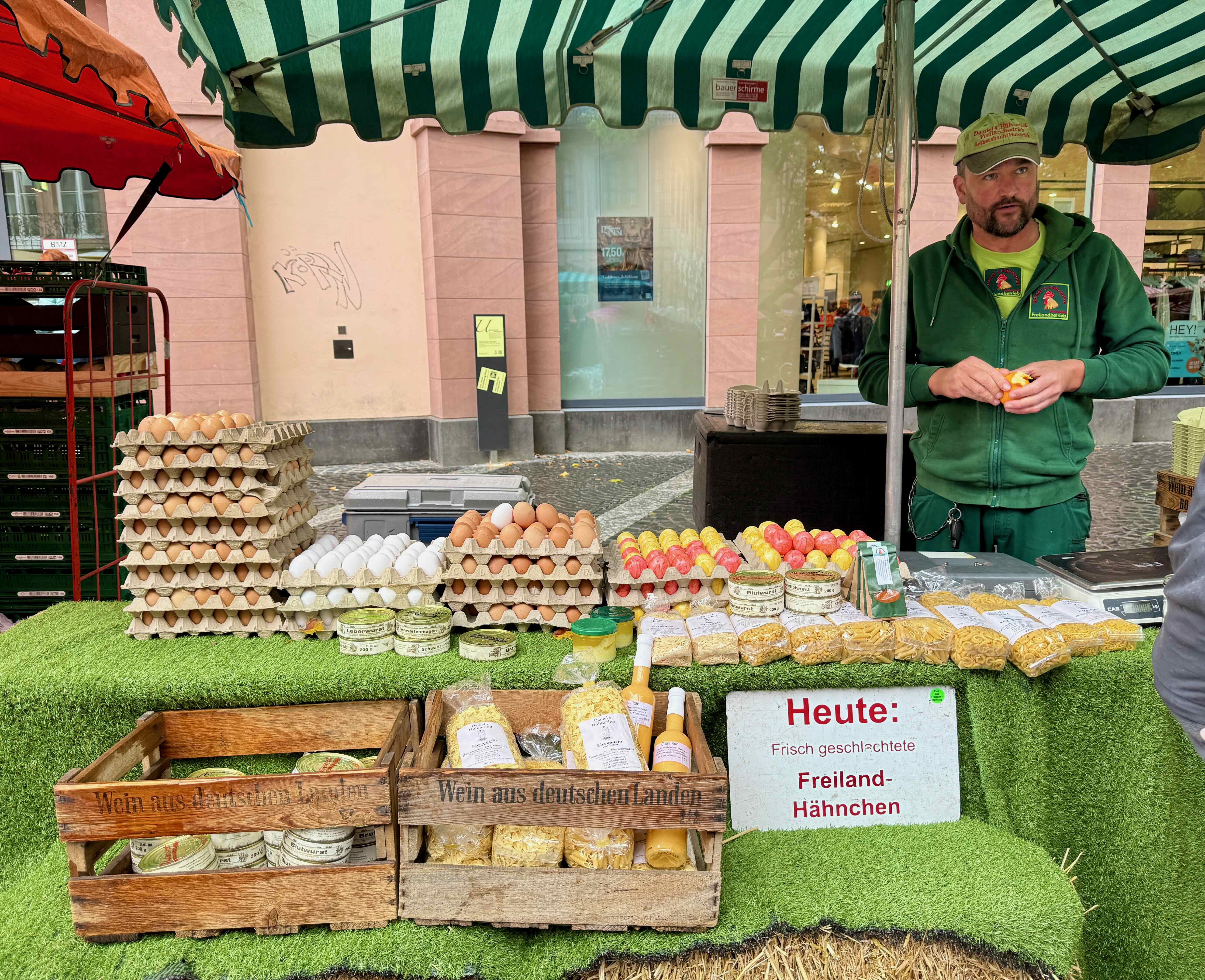
We have seen these coloured eggs in the grocery stores and wondered what they were. Turns out they are hard boiled eggs that are coated in a tinted resin that keeps them fresh for months! The colour helps to identify them as being hard boiled.

Gorgeous sunflowers!  I am definitely planting some of them in our garden next year.  They are so cheerful. Next stop in the Mainz Cathedral.  We are met at the door and told that there is a concert starting and if we enter the church we have to stay for the 45 minute concert.  Sounds perfect as it is raining and cool outside!
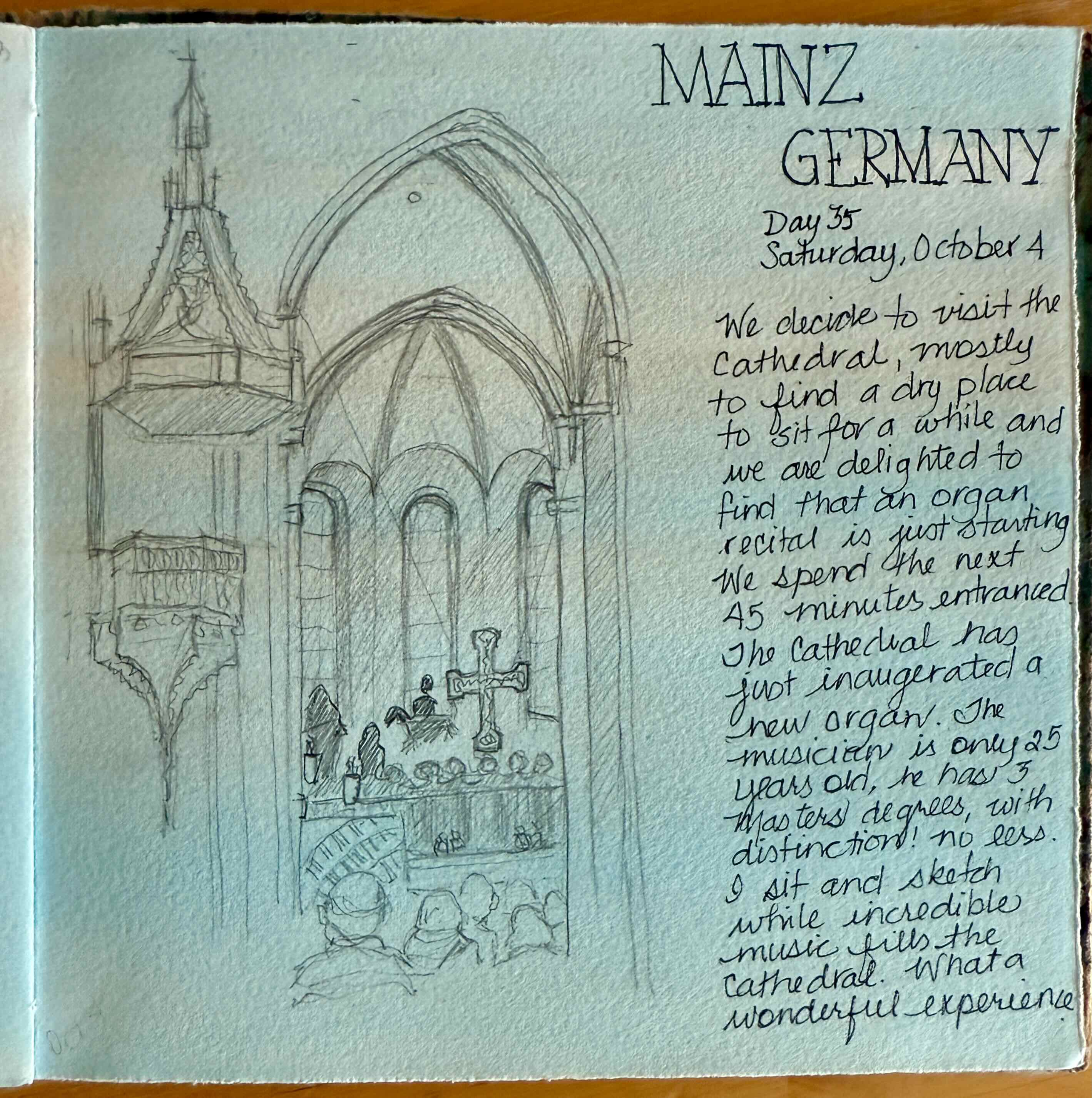
We spend the next 45 minutes listening to an amazing organ concert to commemorate the new cathedral organ.  The musician, Alexander Grün, is only 25 years old and has three Masters Degrees!  He plays some traditional organ music and then music that is innovative. The 45 minutes absolutely flew by.  I sketched for a bit while listening to the music.  Loved it. I wish I had recorded more of the music, especially the finale of the concert…it gave me goosebumps!      https://youtube.com/shorts/HykSsp-S-9E

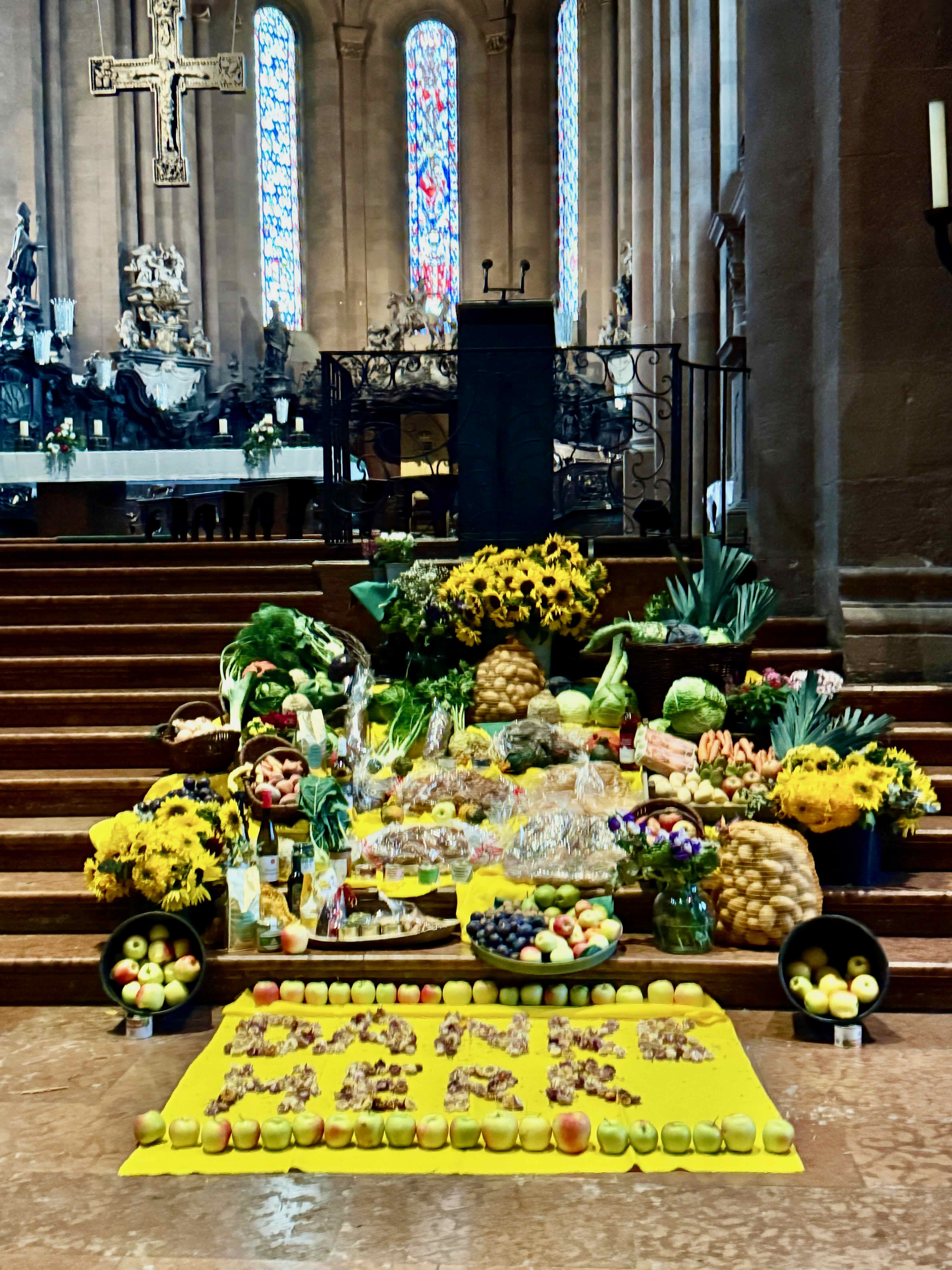
There are fall foods displayed on the steps to the altar to remind people to give thanks for the harvest, and to share with those in need.  

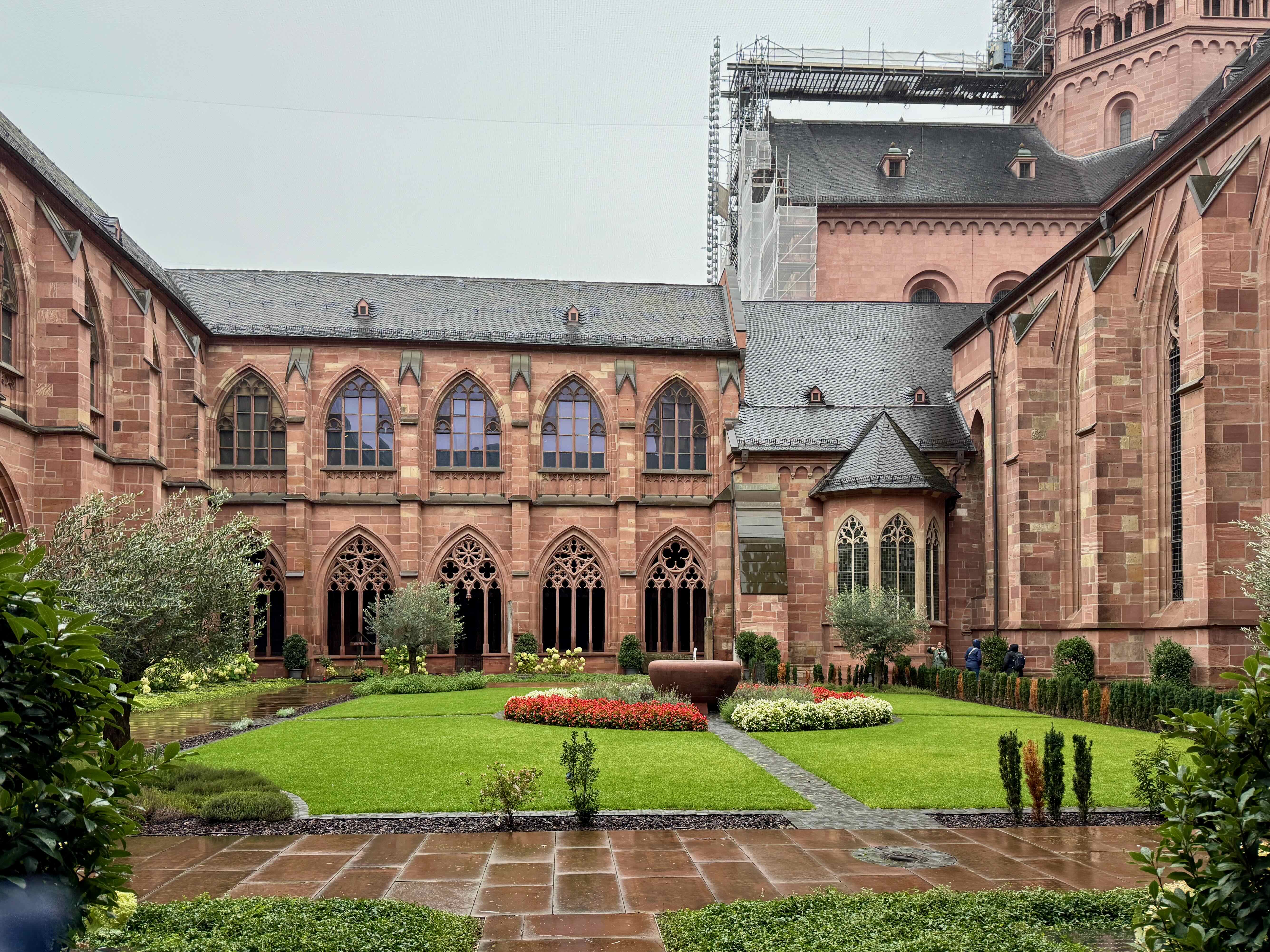
The Cathedral cloister has a beautifully tended garden,

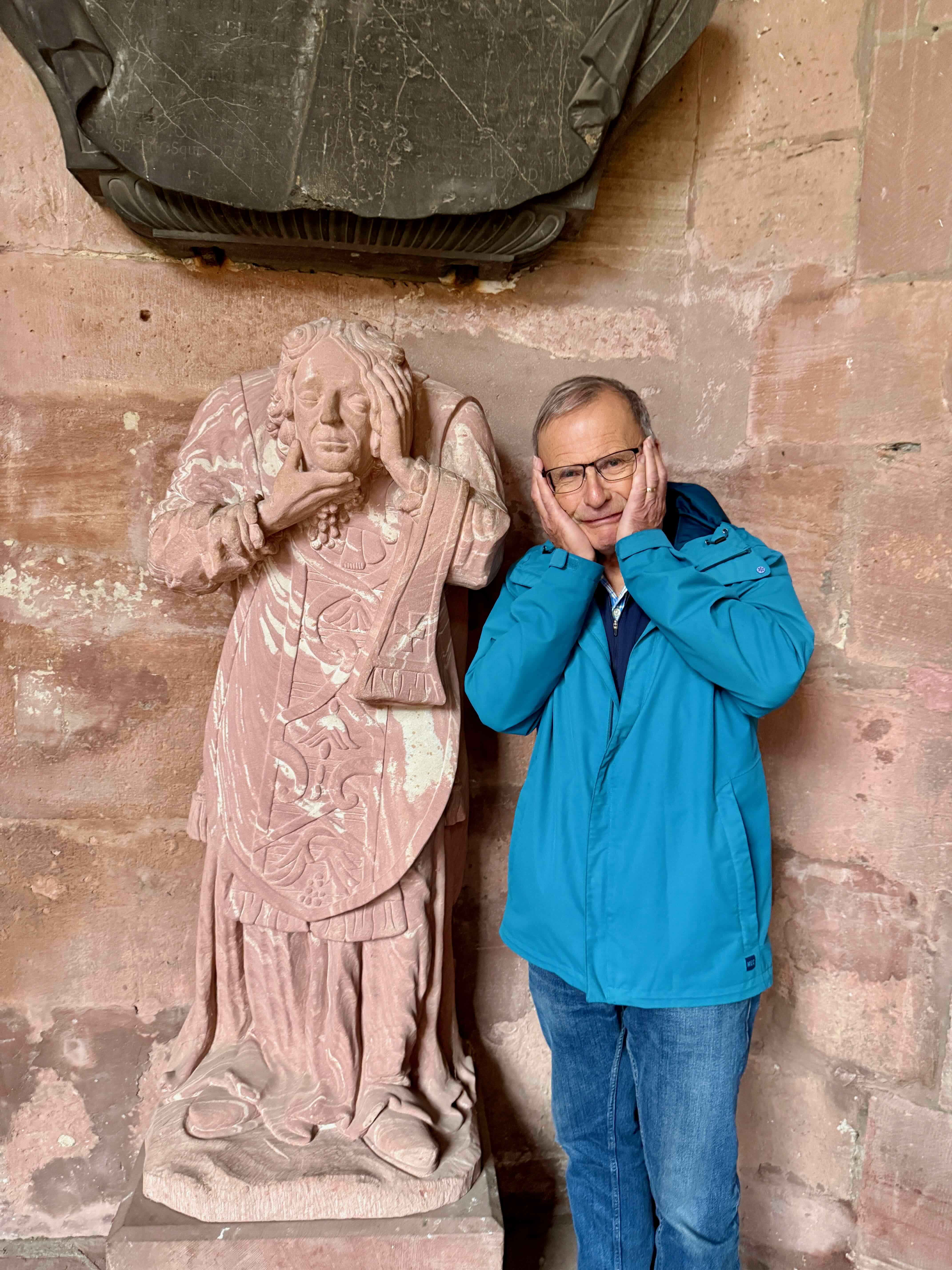
Bob liked this statue statue of a man holding his head. This is probably Saint Denis, who was beheaded but picked up his head and walked some distance, preaching the Gospel.

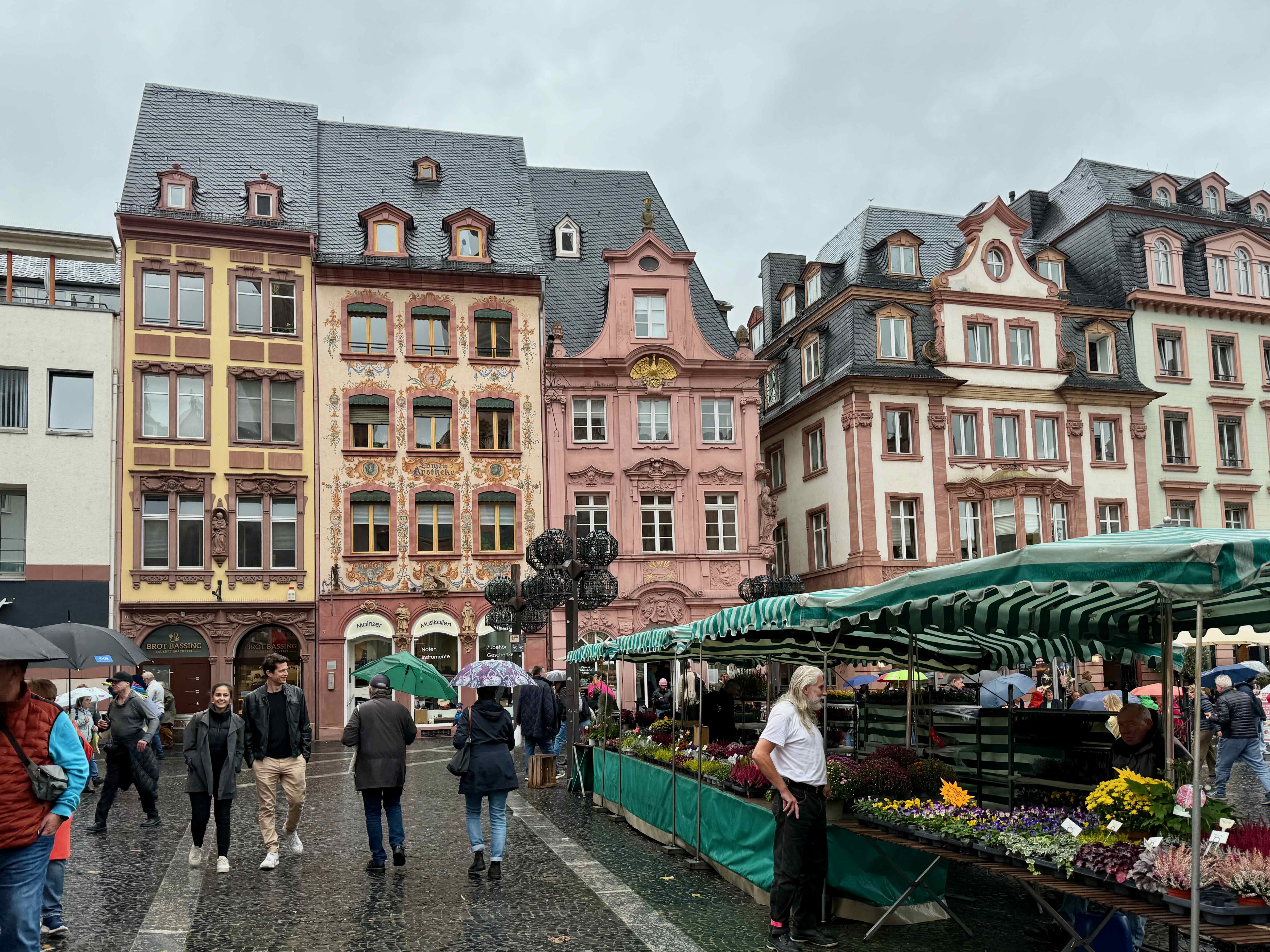
The buildings surrounding the market square are tall, narrow and decoratively painted.
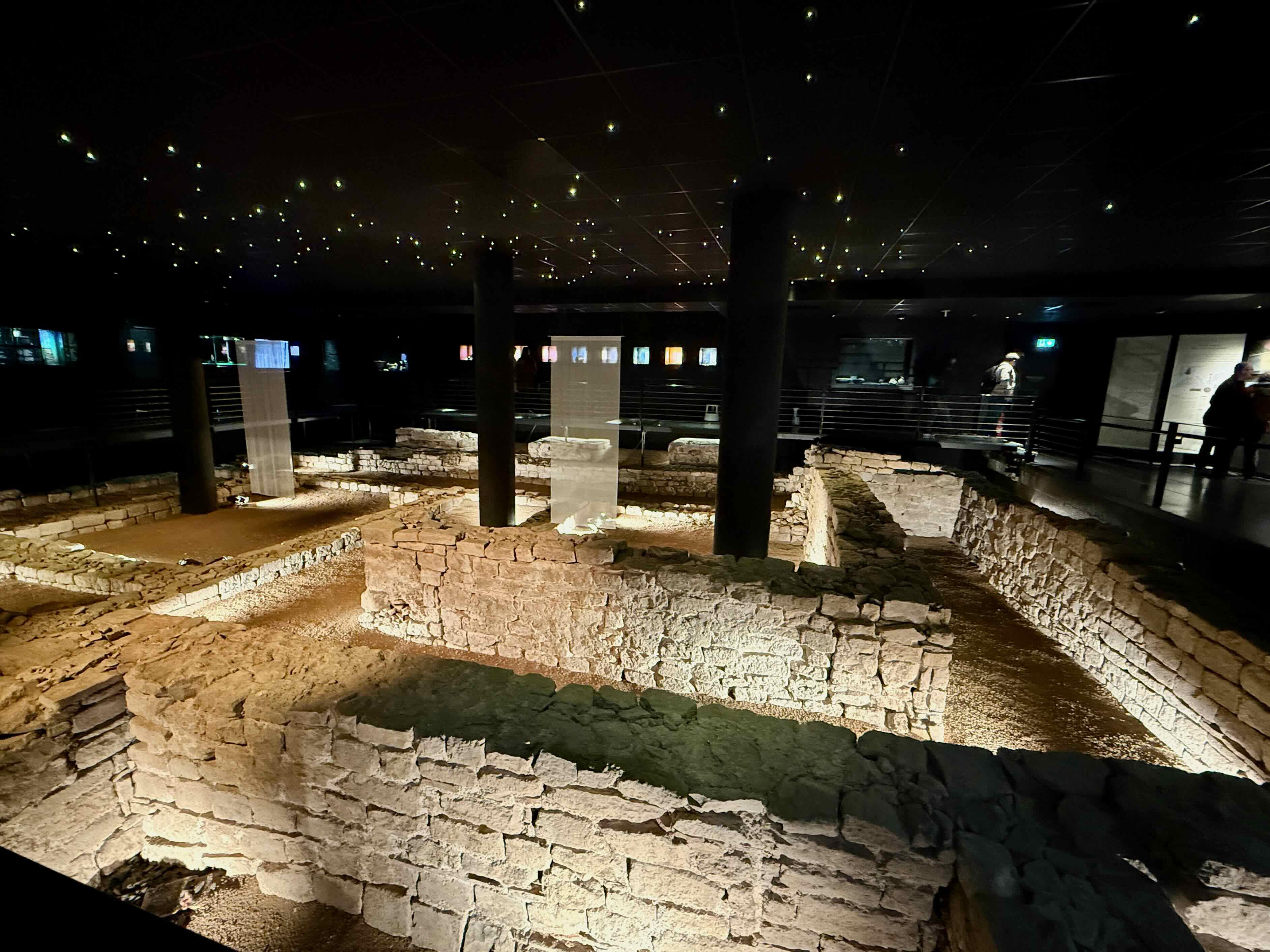
Next on Bob’s agenda is a visit to a small museum underneath a shopping mall. We see Roman ruins from before the fall of the Roman Empire in the 5th century. These ruins were discovered when excavations began for the shopping mall. The area was thoroughly excavated and recorded, but ultimately the mall was built and most of the ruins were destroyed.
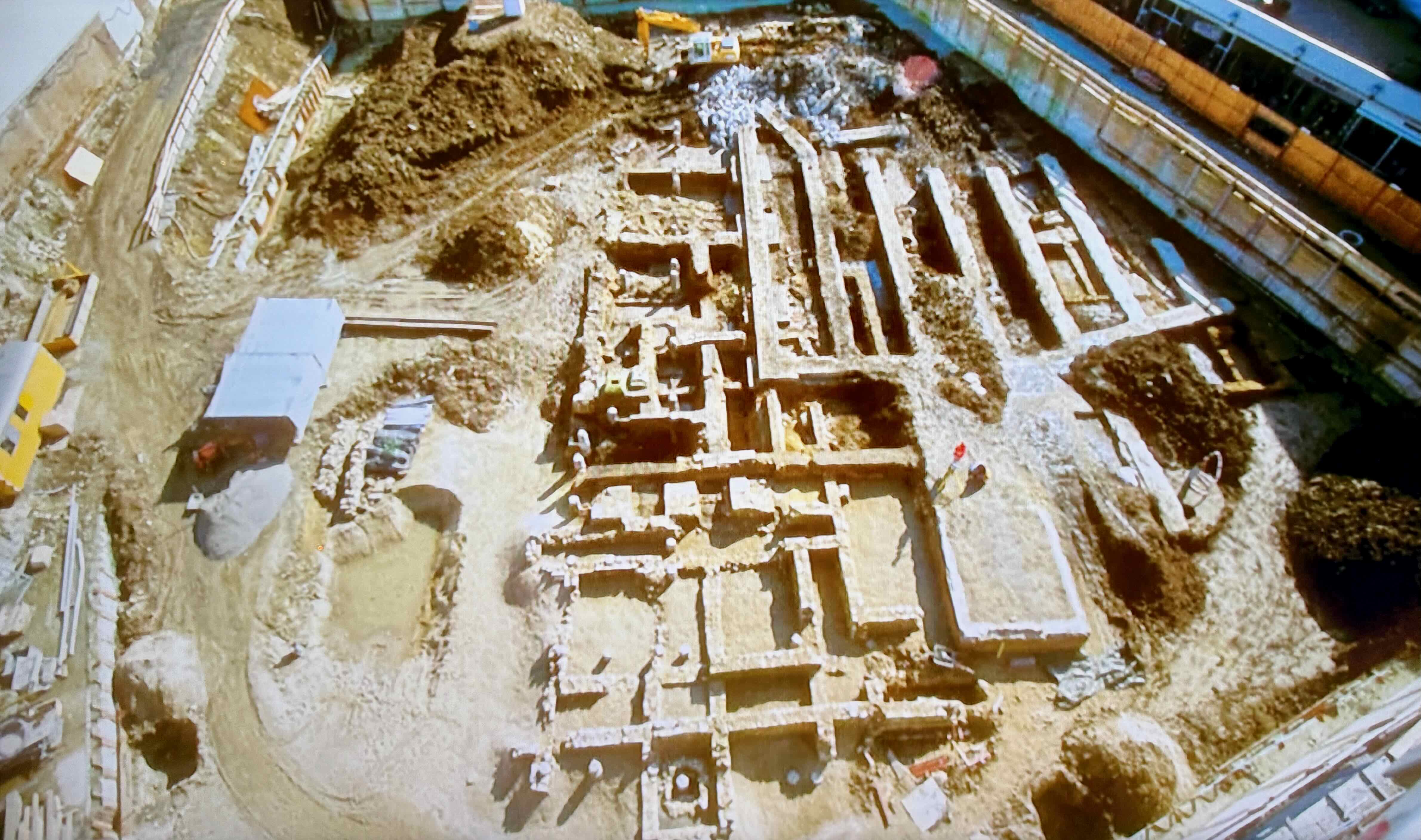
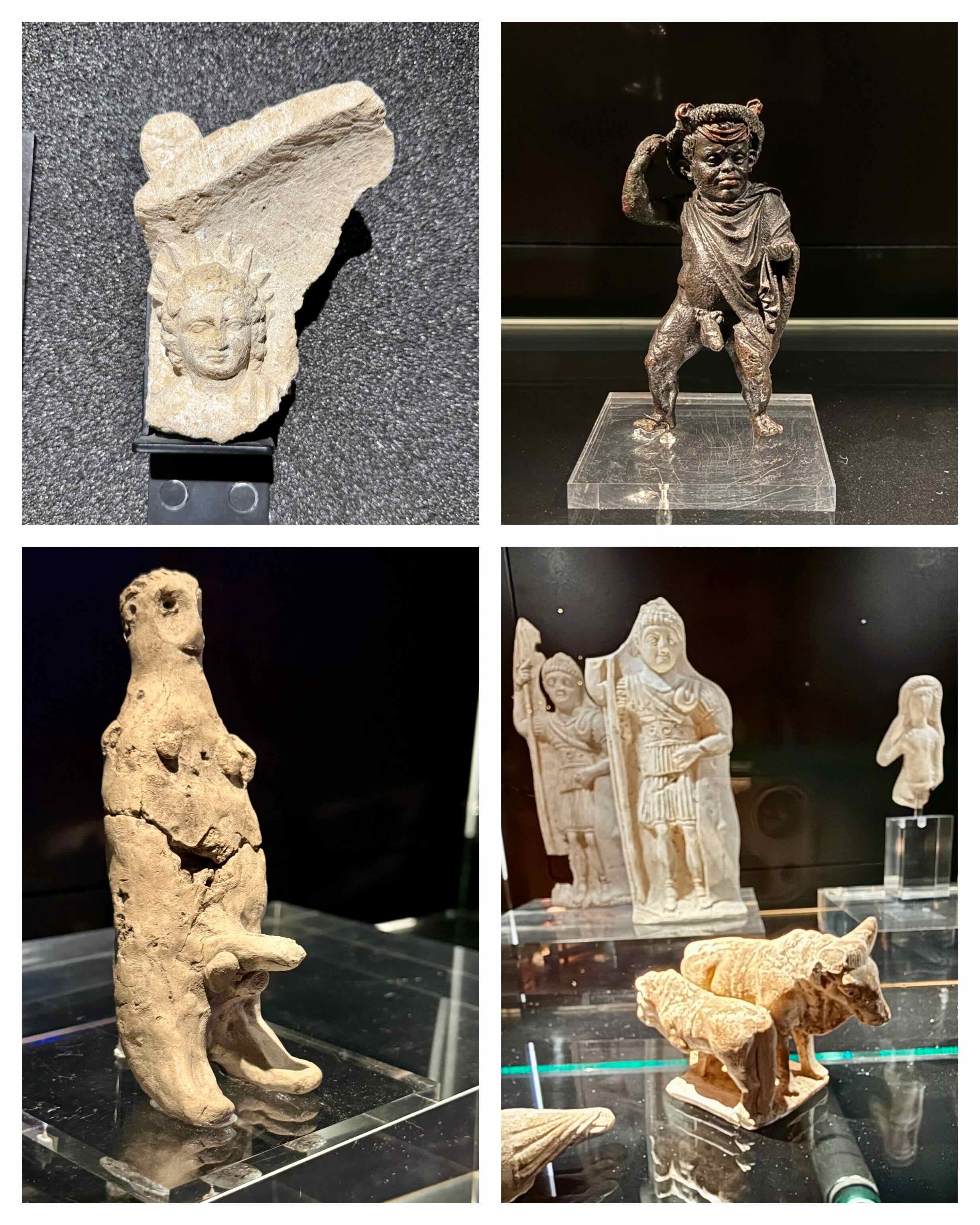
This little museum has the reconstructed ruins of a temple, under a ceiling of constellations. Some of the items found when the ruins were excavated.  Well endowed males were well represented.
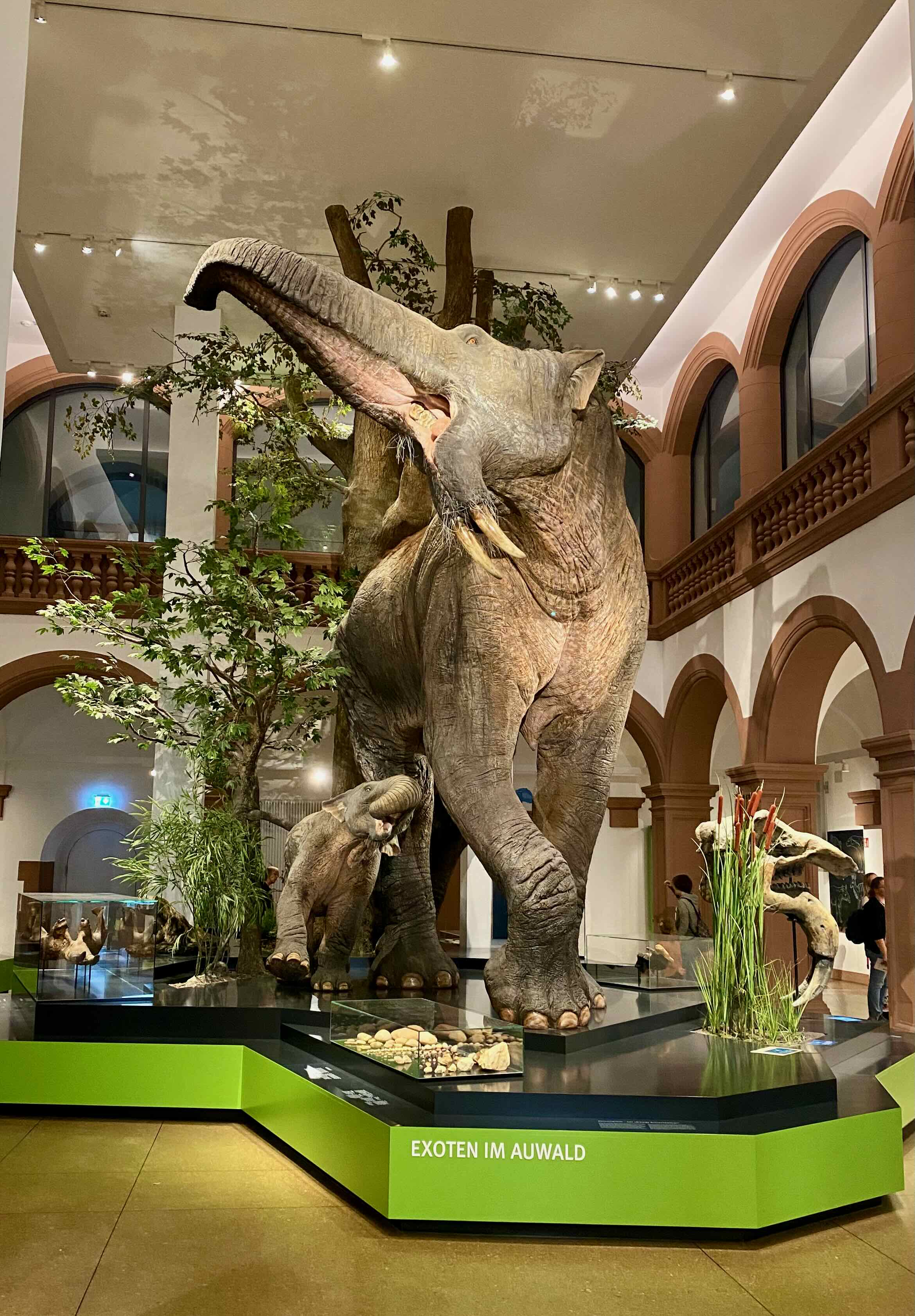
Our final stop in Mainz is to visit the Gutenburg Museum, which is connected to a small Natural History Museum. This display in the entrance is quite striking.

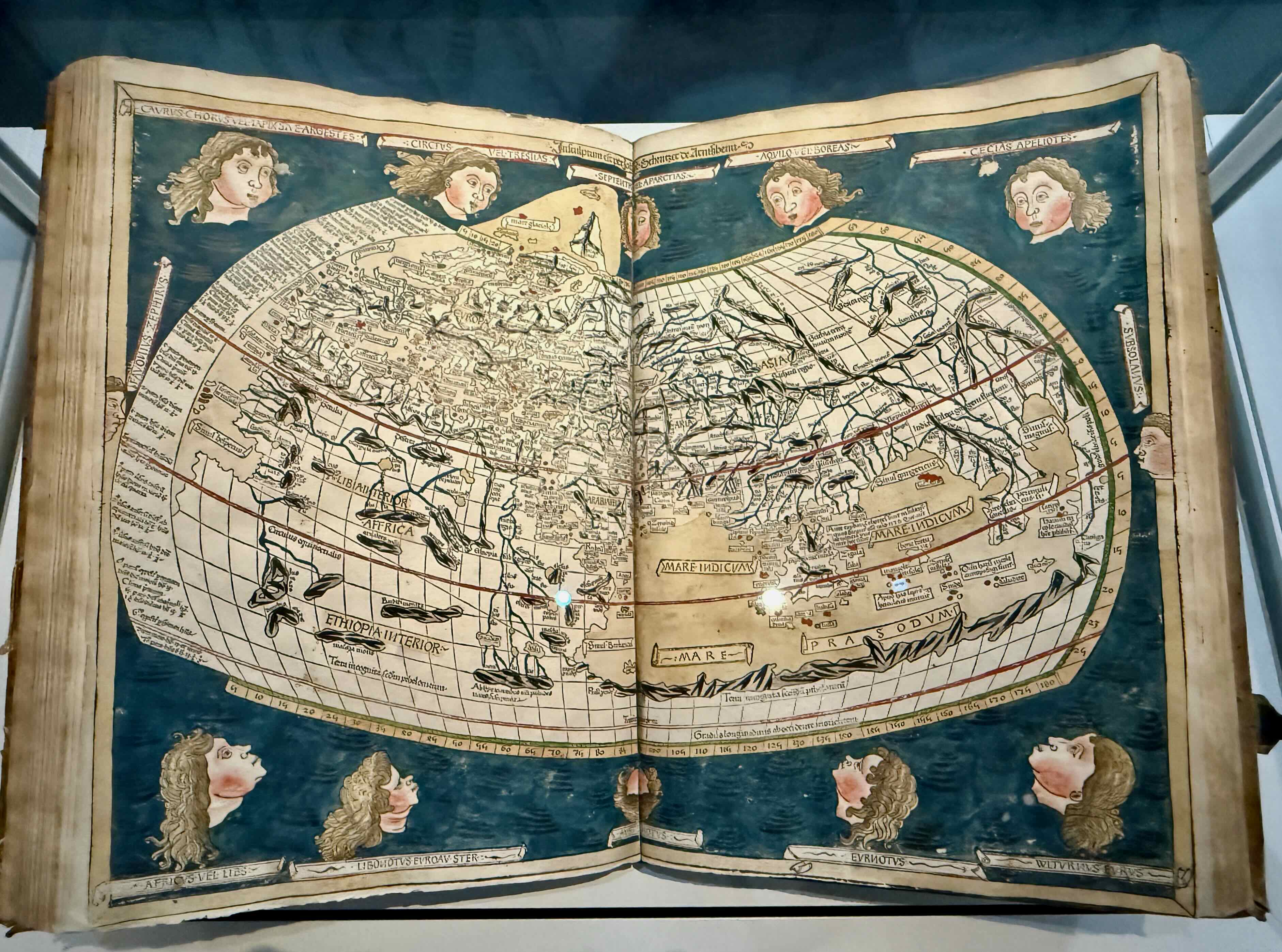
We start with the Gutenburg Museum which shows the impact of Johahannes Gutenburg’s invention of a moveable type printing press in 1440.  This press allowed for the printing of 3600 pages a day, compared to 40 by hand printing and only a few by hand copying. There were  several beautiful ancient books on display. This Atlas of the World was printed in 1482.

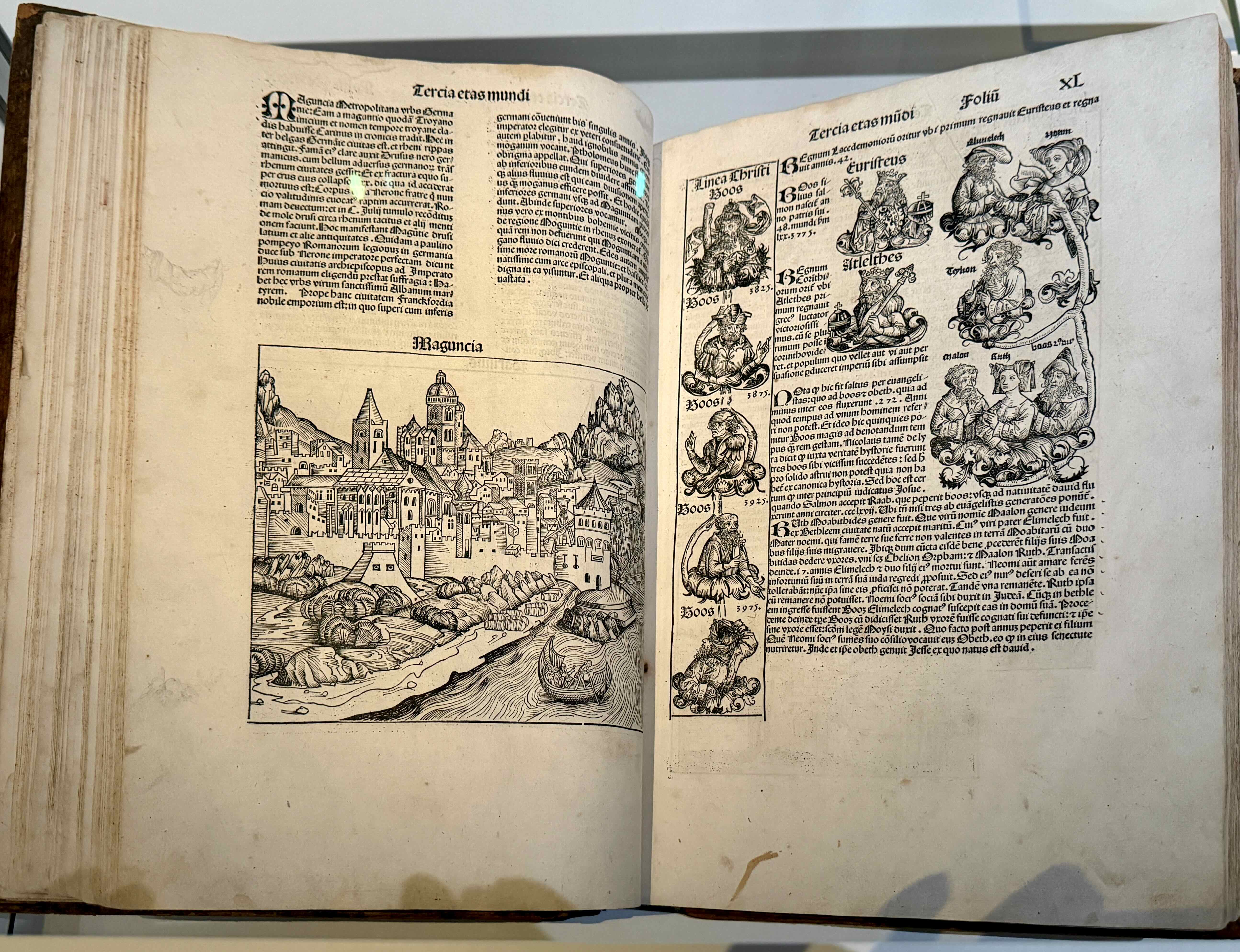
The World Chronicle is from 1493.

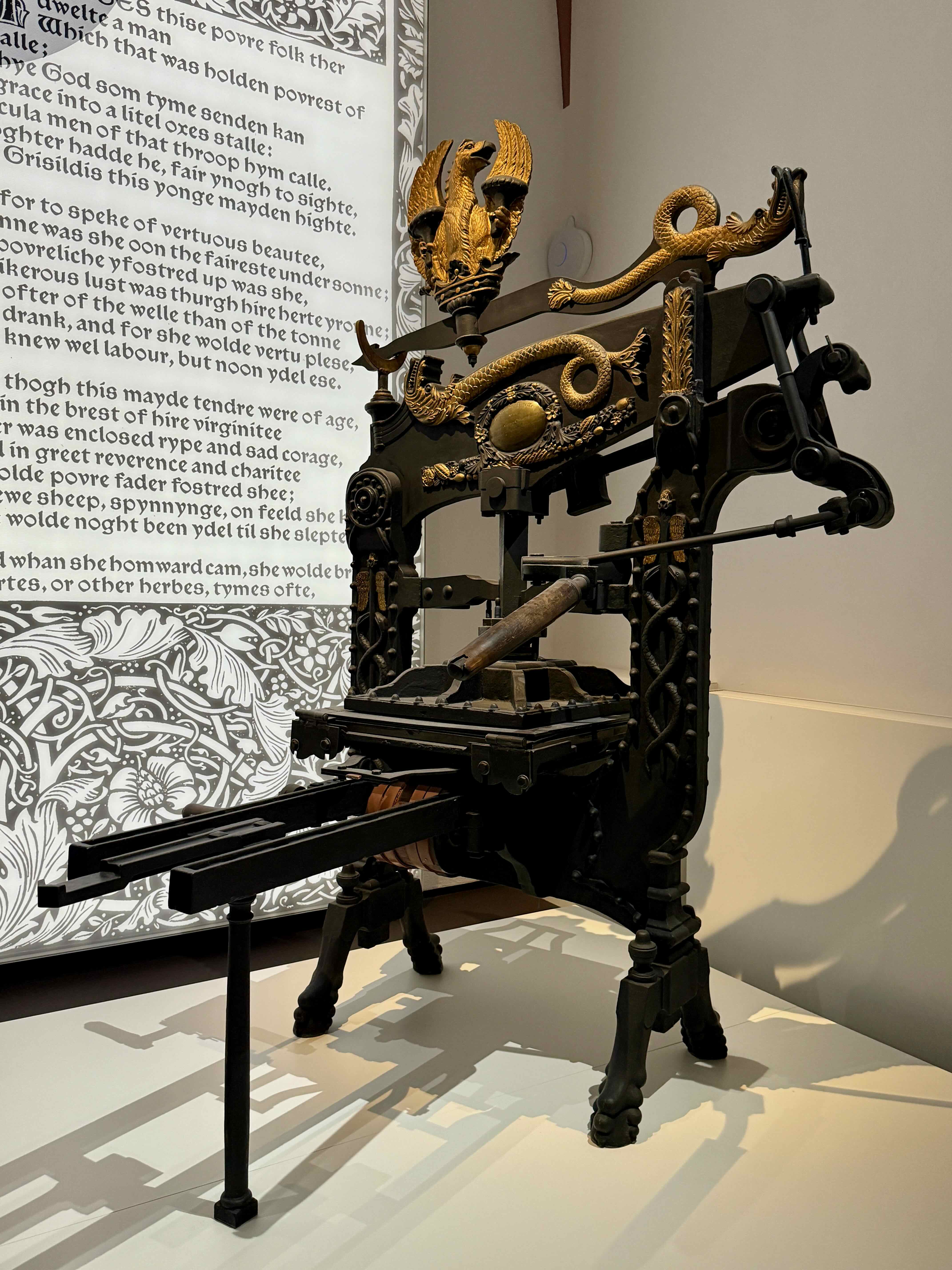
An ornate Columbia Printing Press from 1824.  

We are given a blank card that has a chip installed inside the paper when we entered the museum.  We place this card into a machine that takes a selfie of us. Then we take the still blank card to a modern printer and this is what we received.

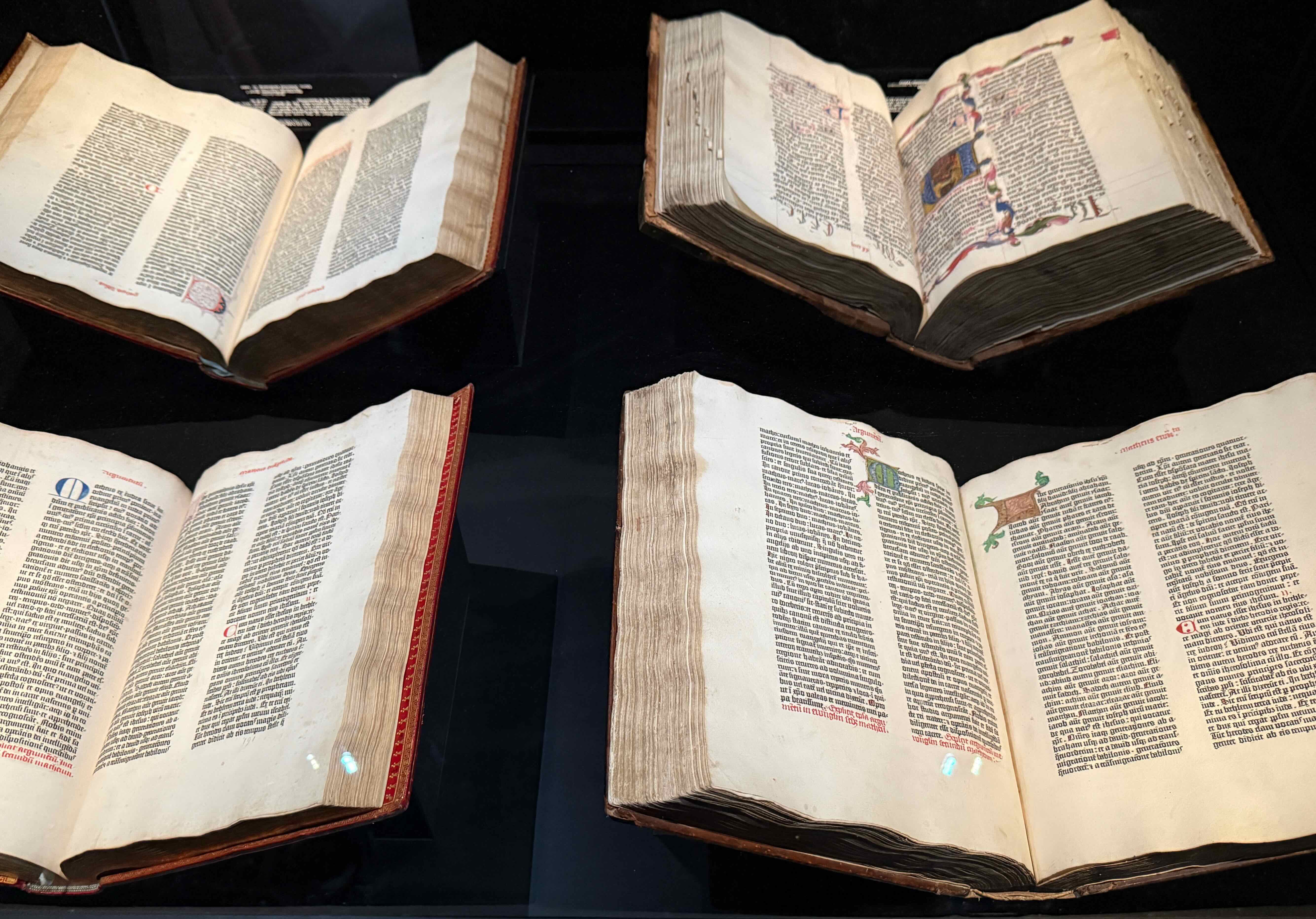
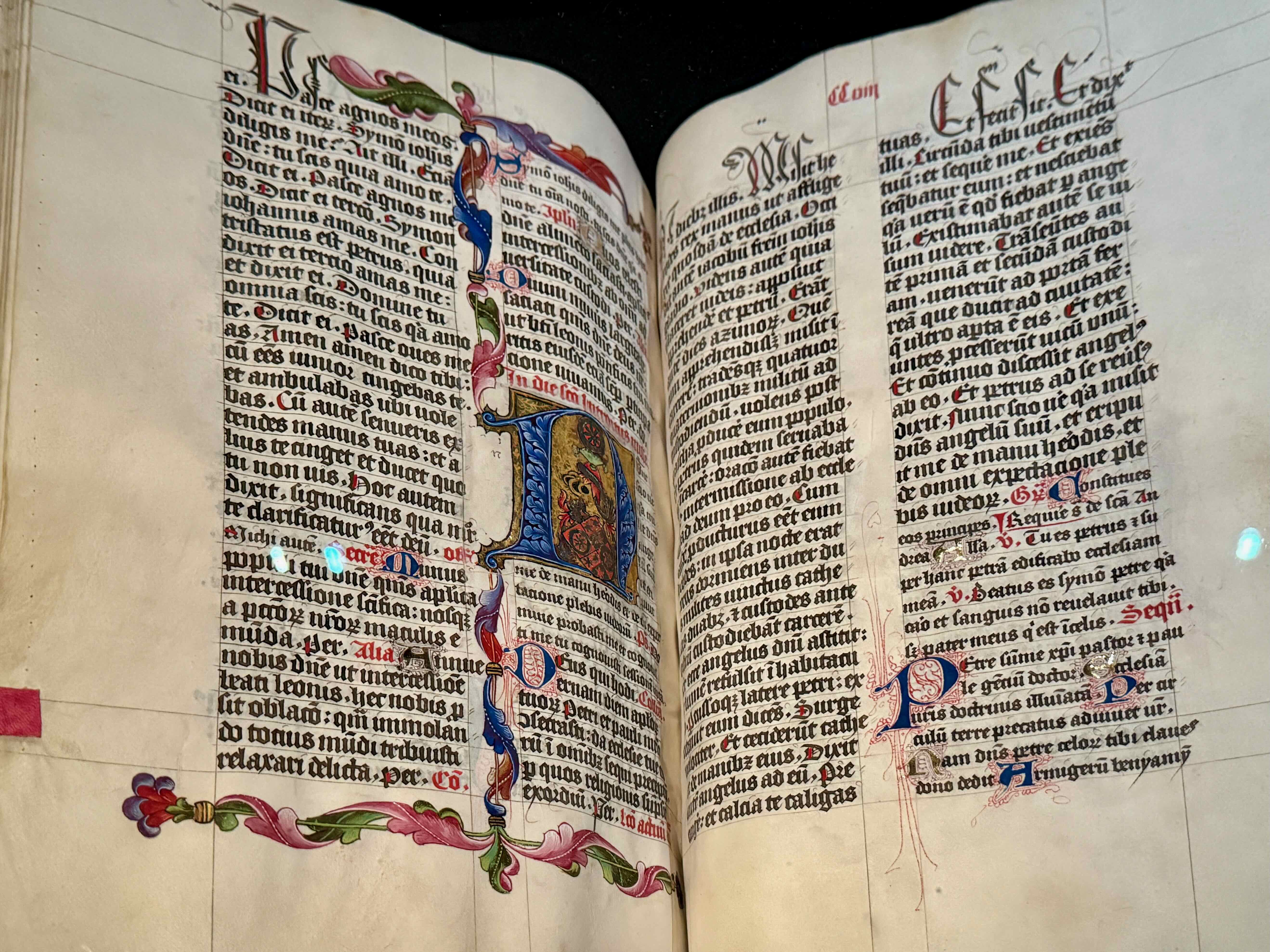
Entering a small room with dim lighting we see the Gutenburg Bibles. Only 49 of the approximately 180 printed Gutenberg Bibles have survived and the Gutenberg Museum owns two. The complete two-volume Bible shown in the bottom of this photo was added to the collection in 1978. The second Bible is incomplete, with only the second volume surviving. The book in the top right is a calligraphed manuscript.

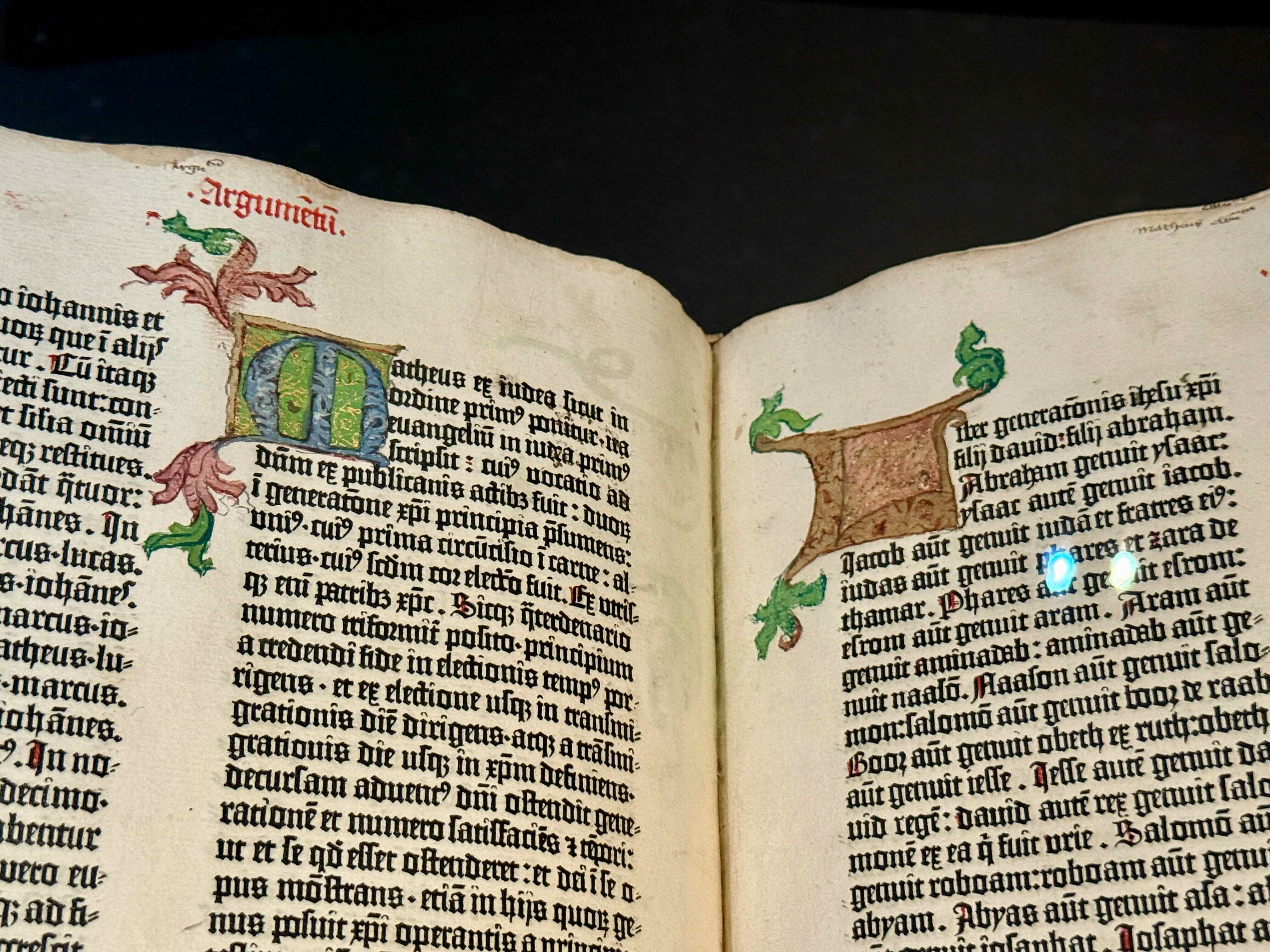
The Bibles were only printed in black ink – two or more colors would have been too time-consuming and expensive. Spaces for colored ornamentation were left empty and the books were handed over to an illumination workshop. As a result, all surviving editions have different ornamentation.

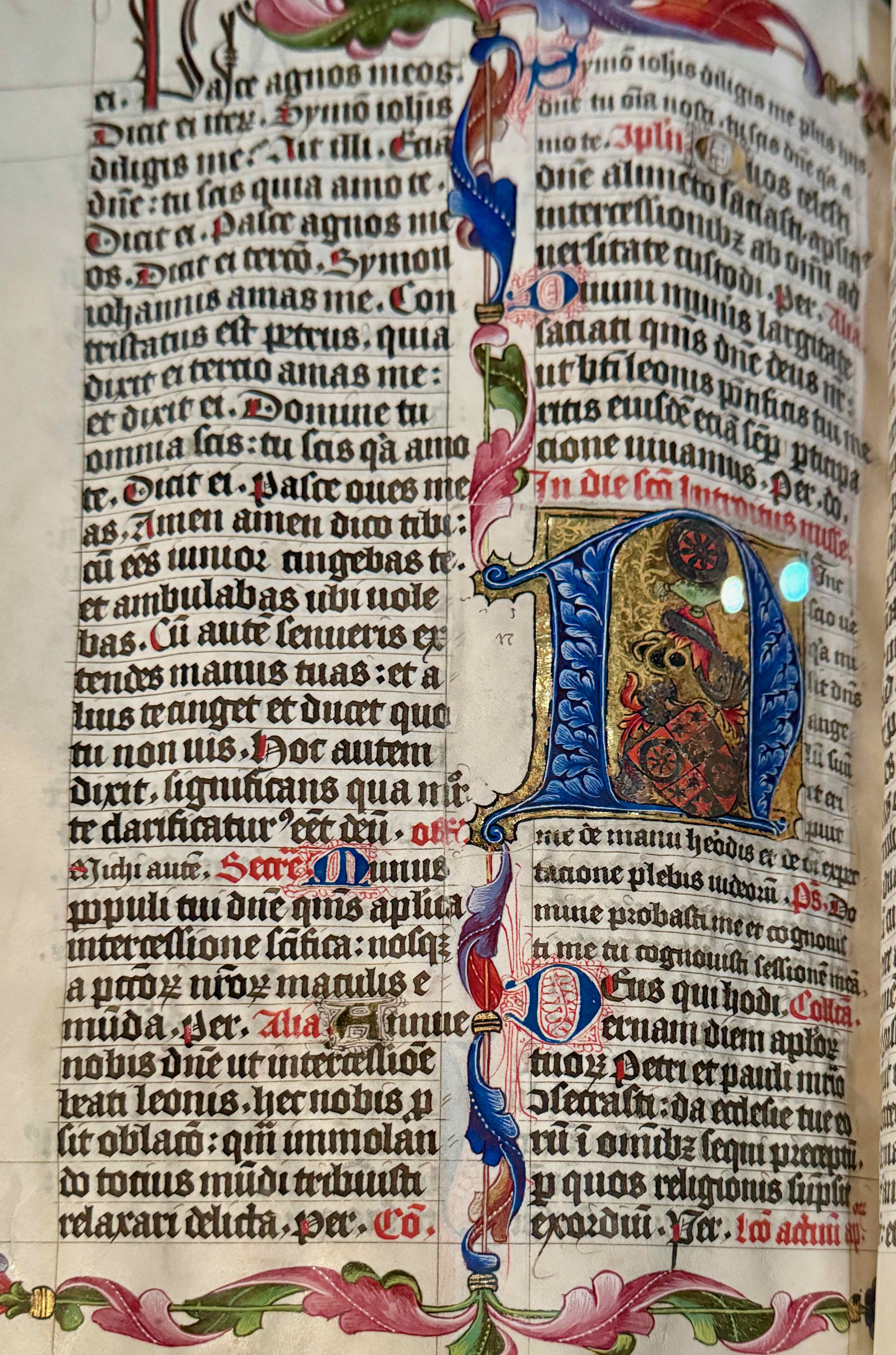
The Missale Moguntinum, was hand written on parchment between 1453 – 1459.

I love that the guide lines are still visible. Imagine writing this huge book. Gutenburg’s press changed how books were produced and made them available to so many more people. Seeing these bibles in person is special but I am still in awe of beautiful hand written and illustrated books.  

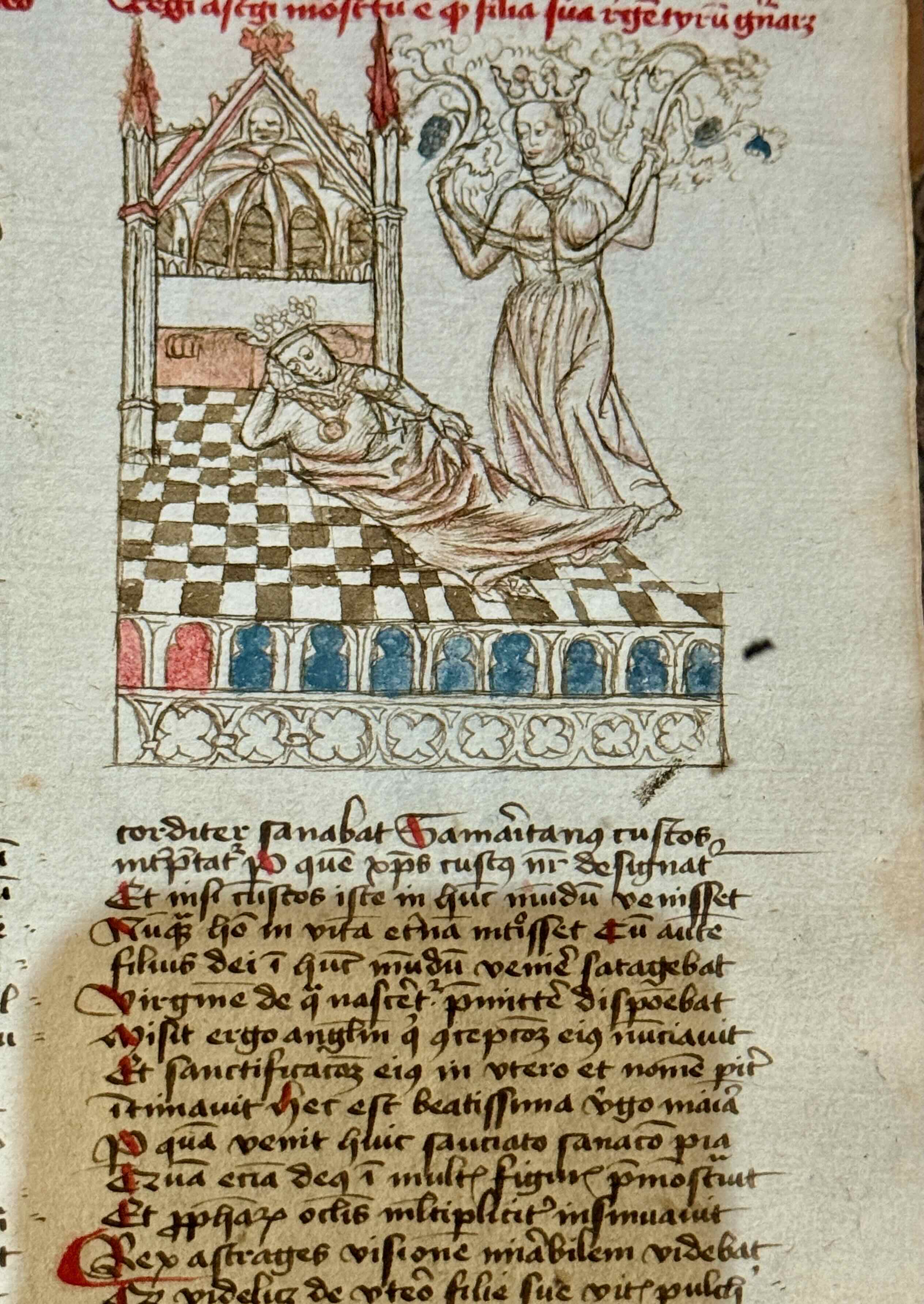
In the mid-15th century before printed books were readily available, the demand for books could not be met. One solution was to produce books faster. This was why copies of the “Speculum Humanae Salvationis” or “Mirror of Human Salvation,” were created in cursive and quick pen-and-ink drawings. The volumes are dated around 1450, making them approximately the same age as the printed Gutenberg bibles.

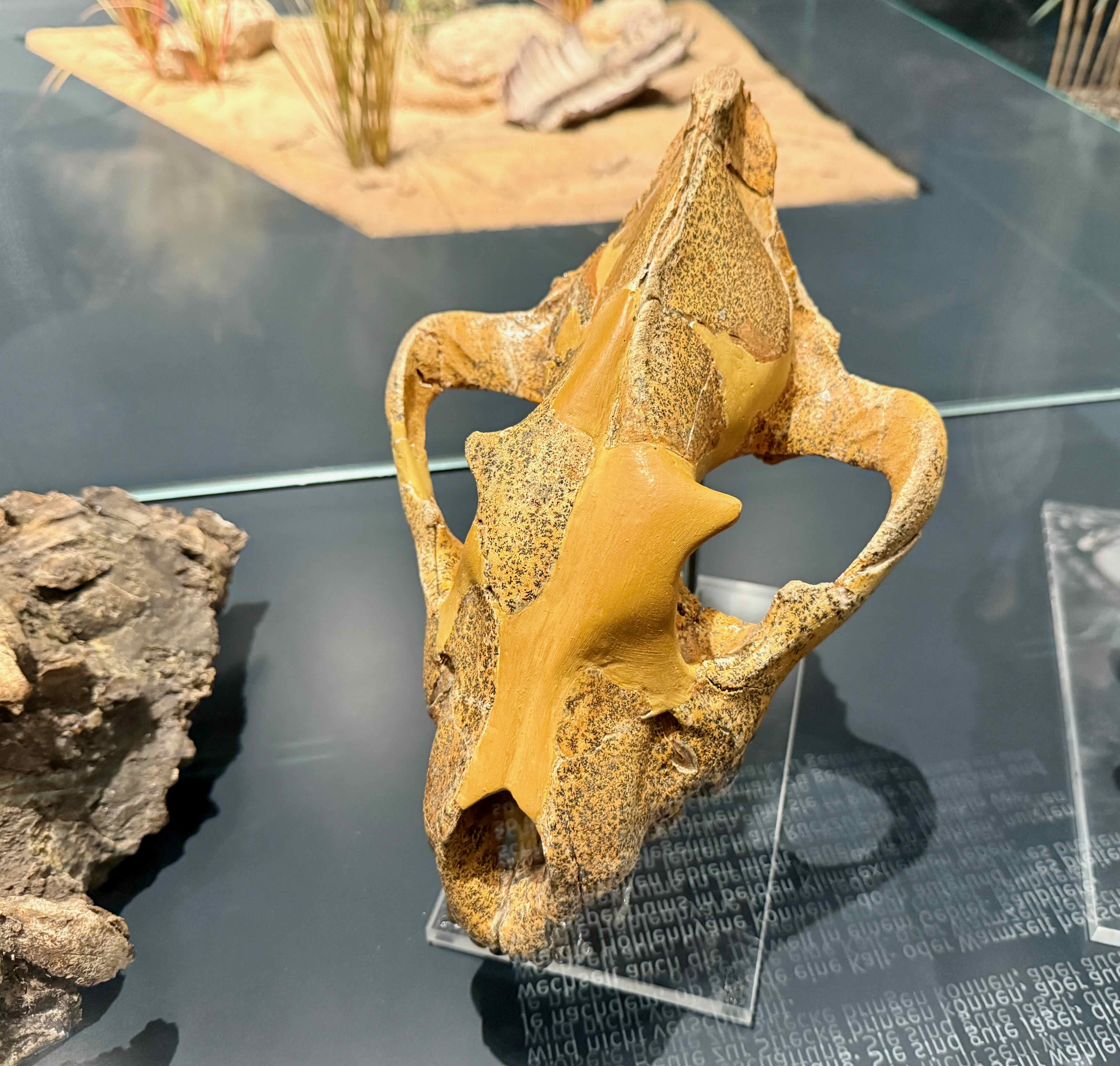
We wander through the Natural History Museum. I wonder how archaeologists are able to reconstruct skulls and bones from a pile of fragments.  It must be a very difficult puzzle.

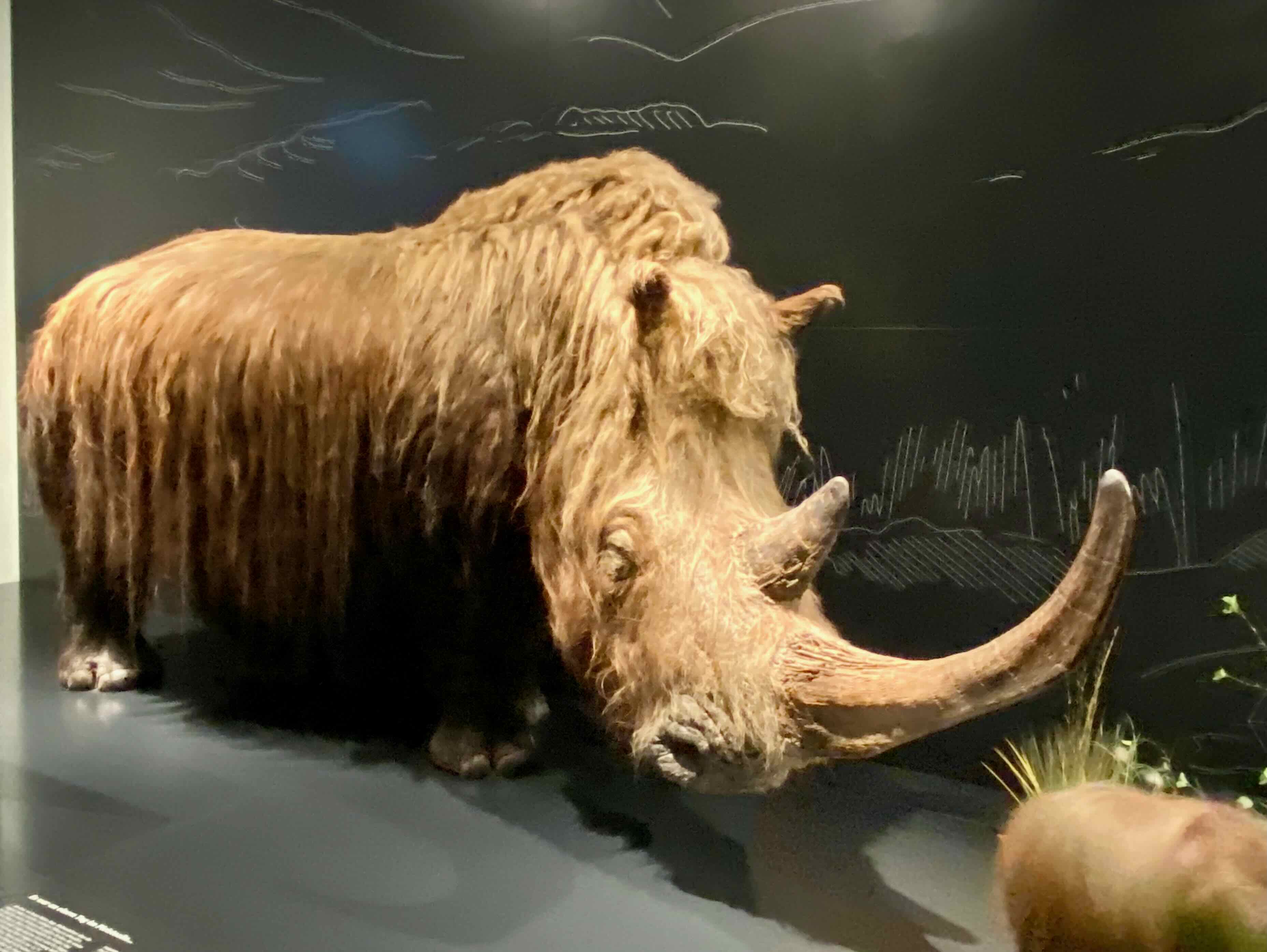
The Wooly Rhino had a huge head compared to the rest of its body.  There are samples of real wooly rhino hair on view that were found preserved in permafrost.

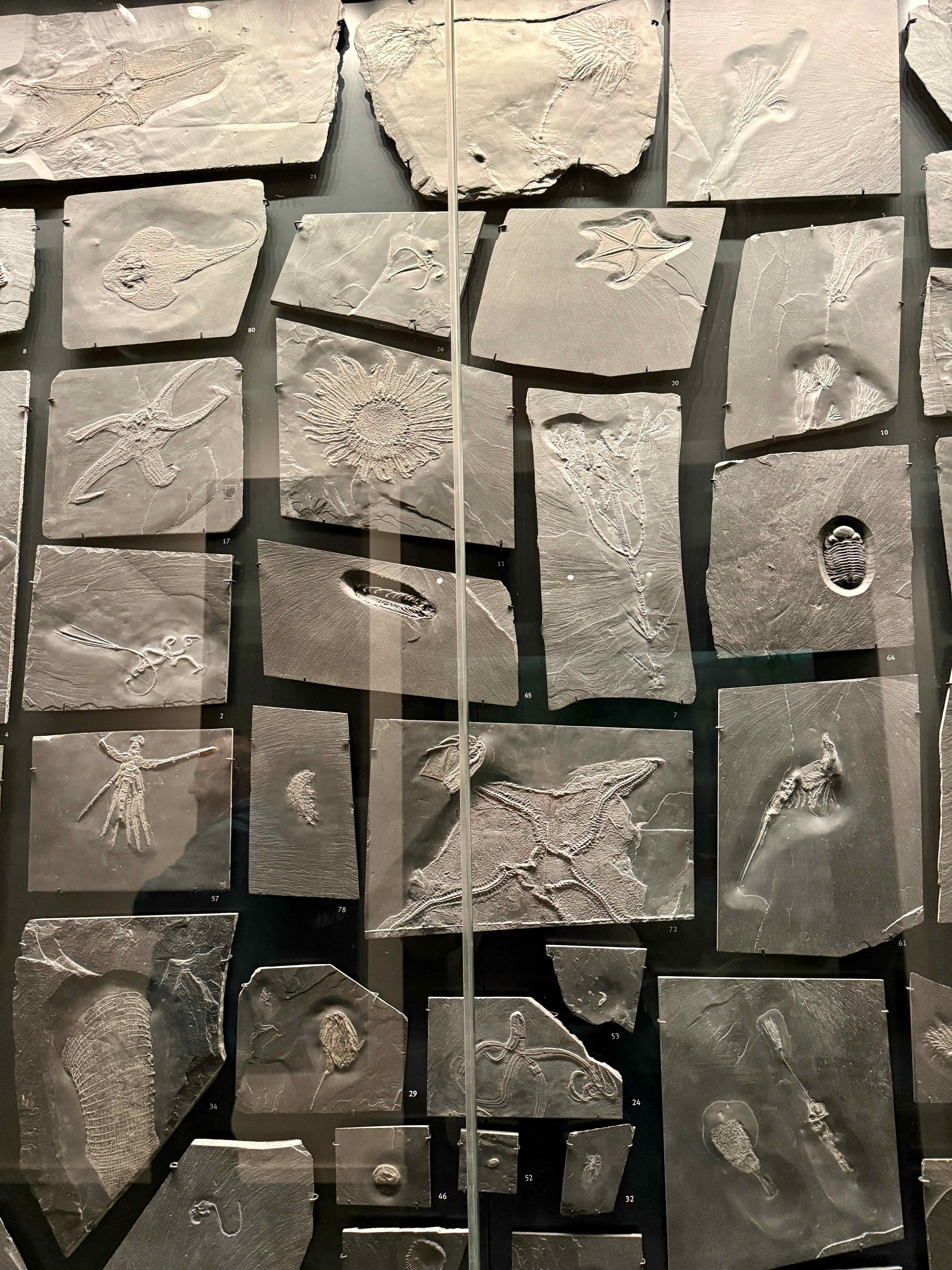
I thought these fossils were really beautiful.  The plants, insects and other animals are preserved in the finest detail. They are incredible.

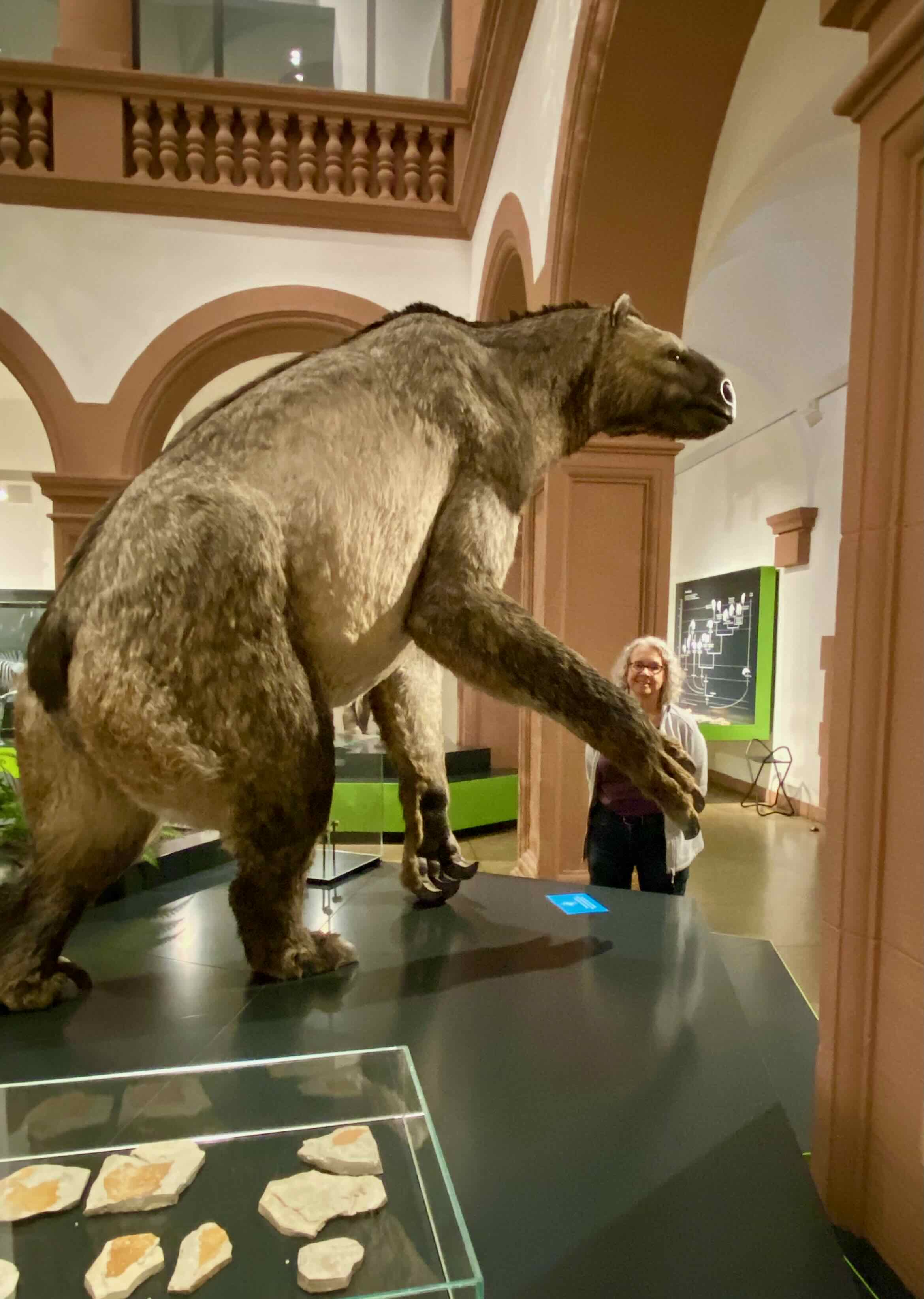
We forgot to check what this prehistoric creature was.  

There are a few more displays of stuffed animals.  I thought this one of different types of rabbits was interesting. It is a small museum so it doesn’t take too long to see everything.

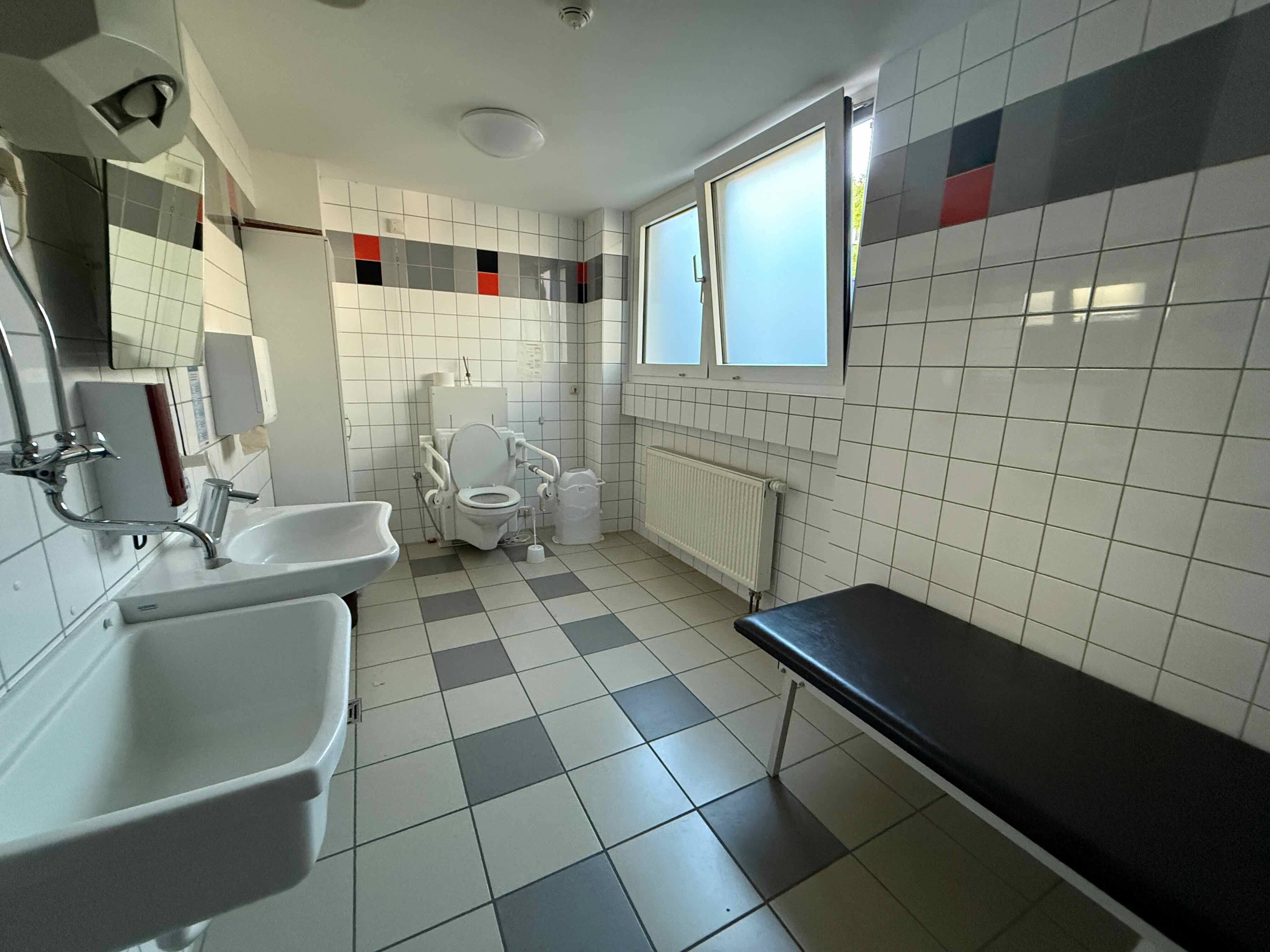
I know this is a strange photo, but this is the handicapped washroom at the museum.  I’ve never seen a public washroom like this.

We walk along cobbled sidewalks with reminders that summer is over on our way to see the next sight on the agenda in Manz.

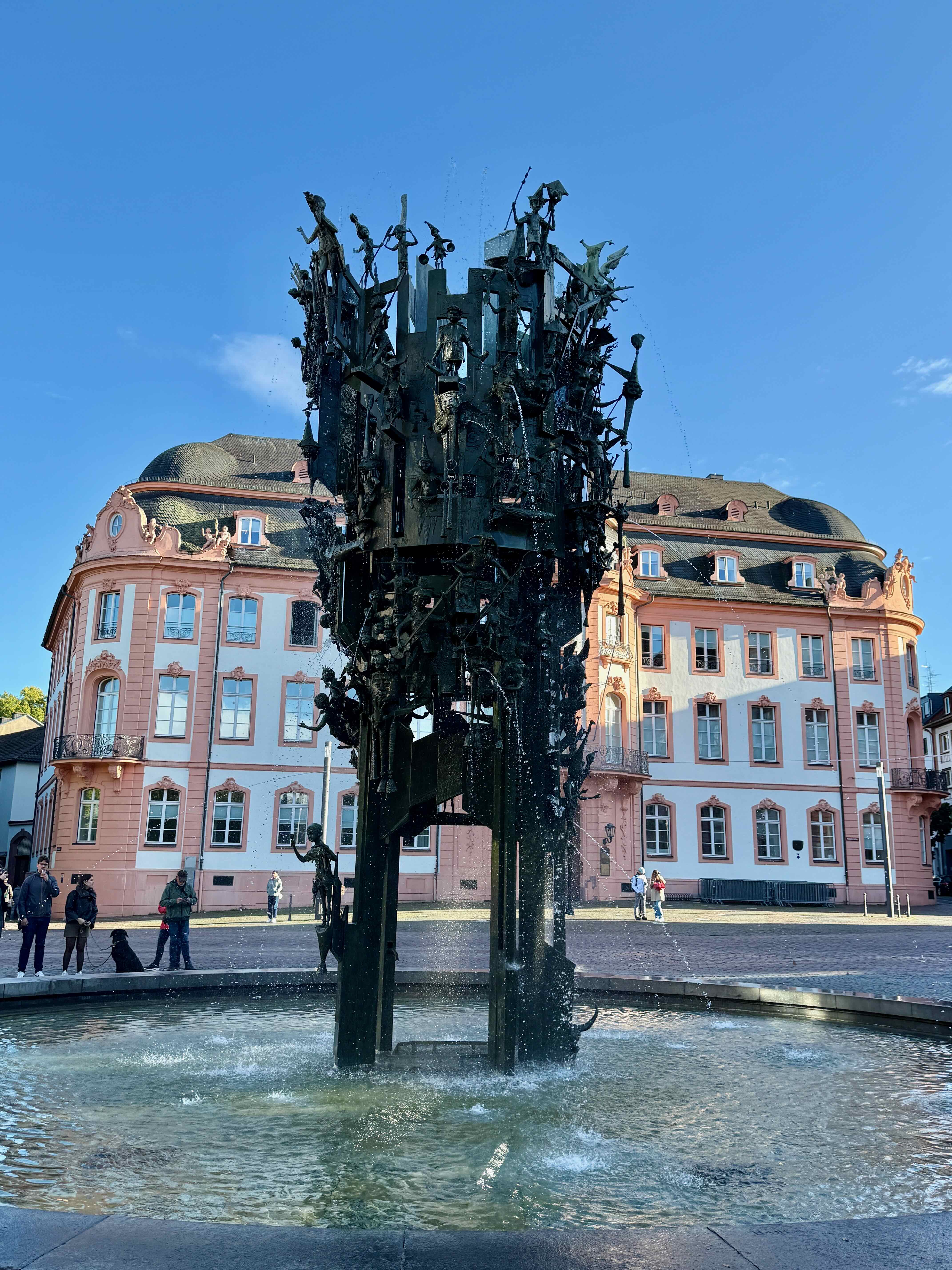
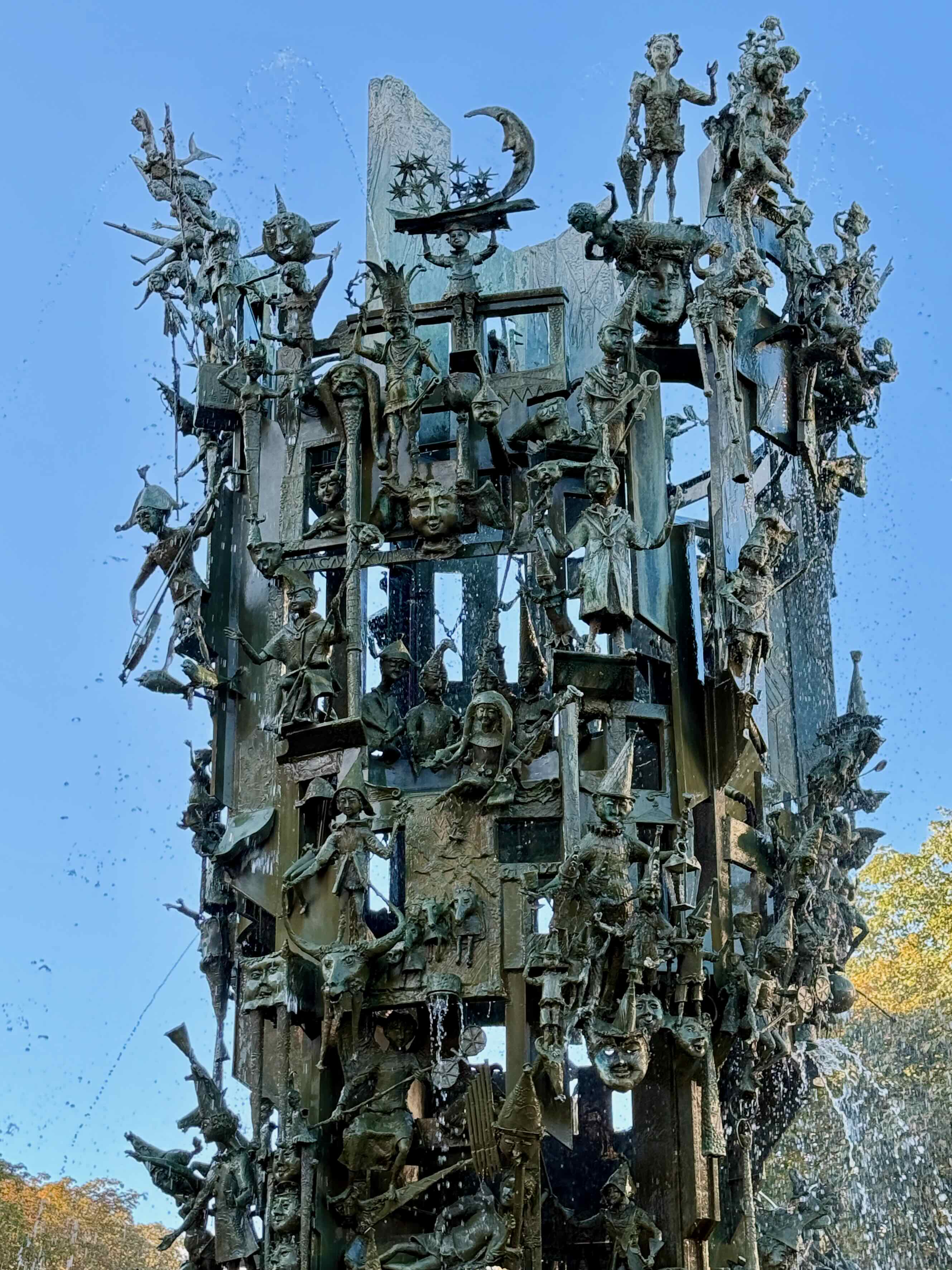
This huge fountain is the Fastnachtsbrunnen, or Carnival Fountain. It is almost nine meters high and has over 200 bronze figures from the Mainz Carnival Mythology. Every year on November 11, at 11:11 pm, people celebrating Carnival in Mainz gather here. When the clock strikes 11:11 pm the carnival officially begins.  

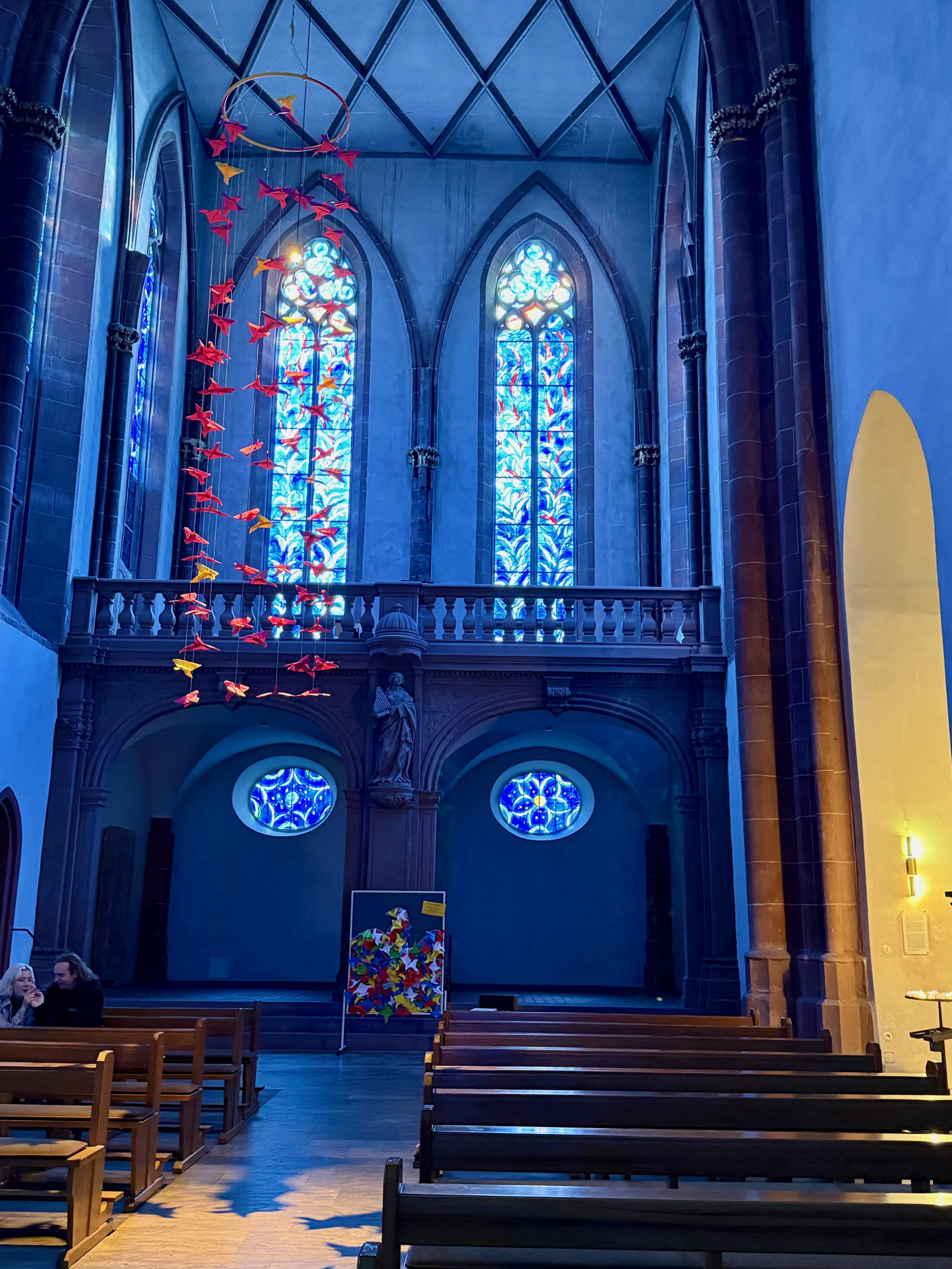
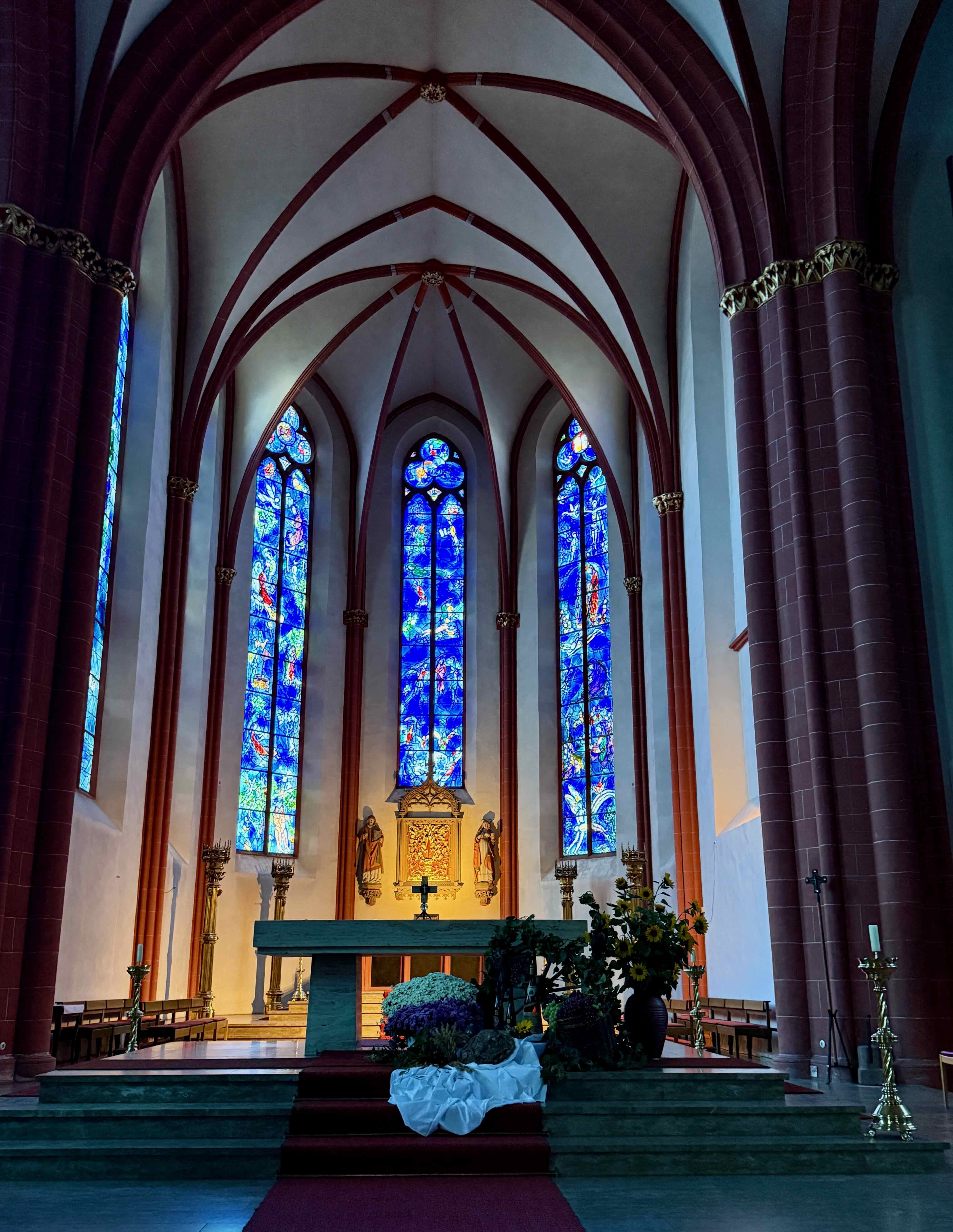
Our last stop before heading home is St. Stephen Church. This is the only German church for which the Jewish artist Marc Chagall created windows.

In 1978, the first window by the 91-year-old Chagall was installed. Chagall completed the final church window shortly before his death at the age of 97! Although all the windows are beautiful, I didn’t find the blue light in the church appealing…it felt too sombre,

Time to drive home…this was a very full day!

Quiet Day and Jazz Festival in Frankfurt. Germany

Day 34     October 3, 2025

We spend time last night sorting out why my Orange E-Sim is no longer working. Yes, another technical problem! You know the saying that you need to laugh or you would cry? Bob calls the help line and he finally figures out what happened.  My E-sim needed to be registered to extend its use beyond 30 days, which we did, but apparently we needed to do this within 20 days of buying the E-Sim. There were no messages from Orange that said that this had to be done within 20 days. It took two phone calls, and purchasing another E-Sim, but now my phone is working again.

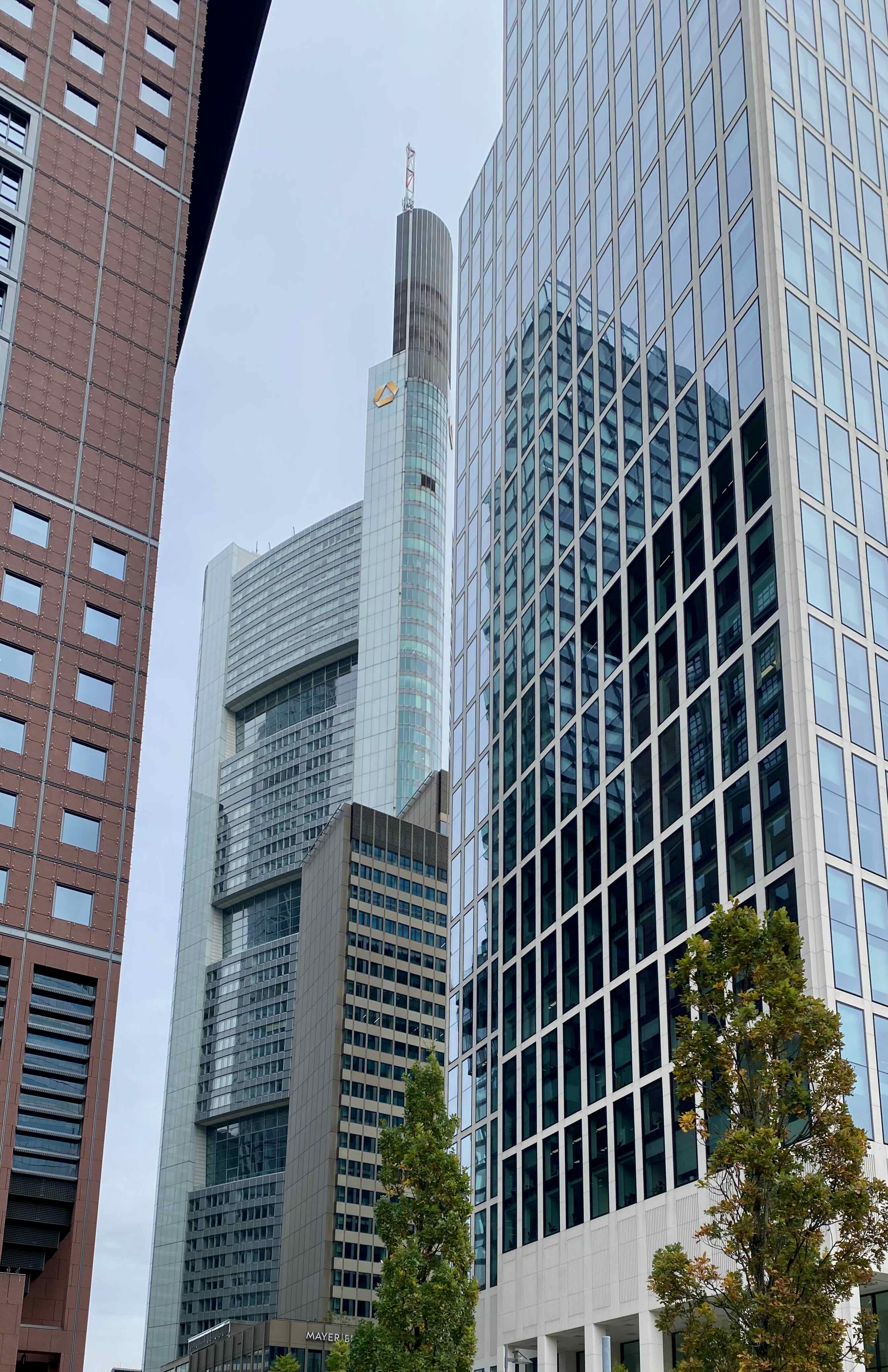
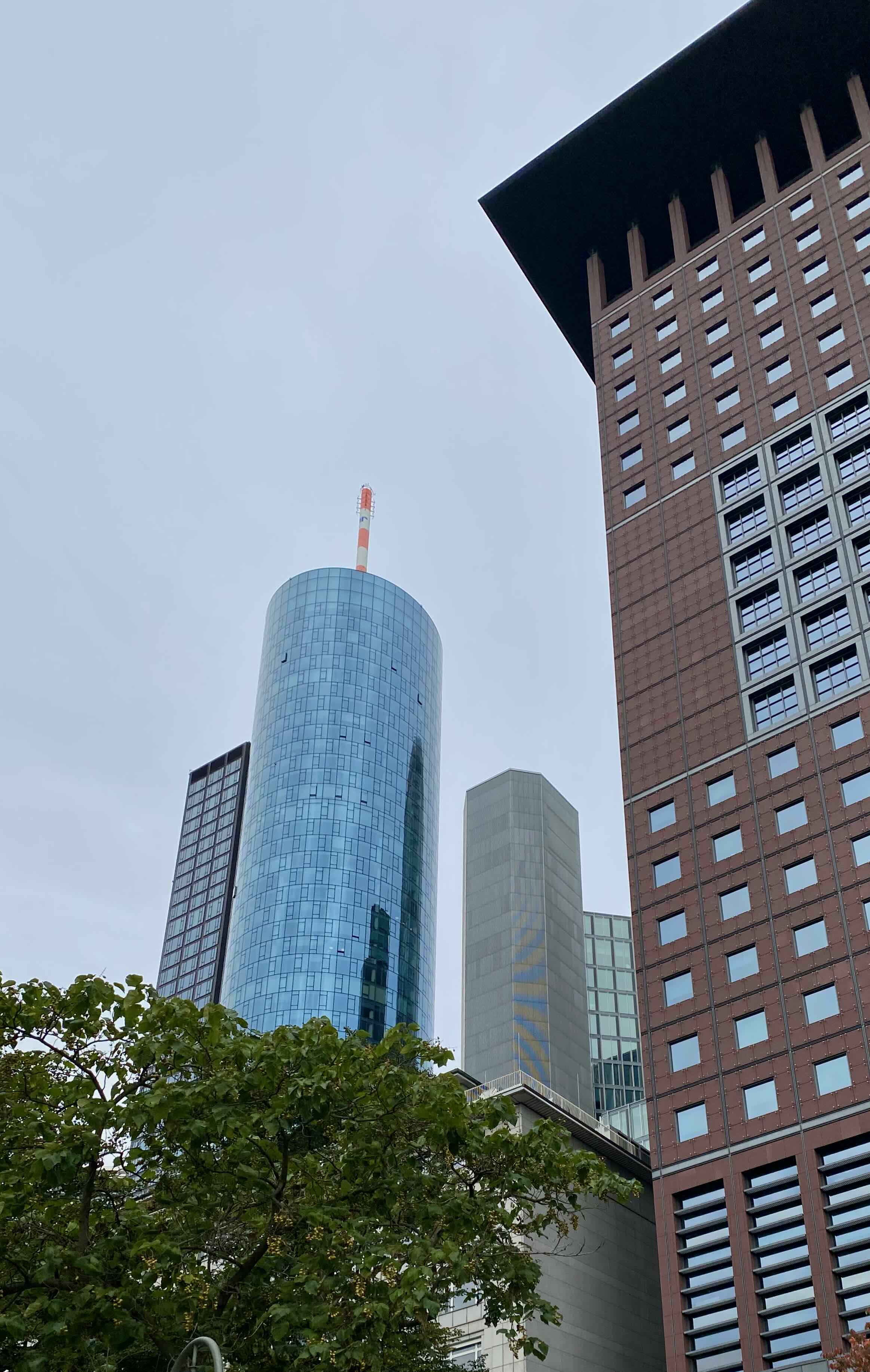
I spend the rest of the day at home and Bob goes back to Frankfurt because there is a Jazz Festival this afternoon. He didn’t take any photos of the Festival but these are from his walk around Frankfurt. Some of the modern high-rises in Frankfurt.

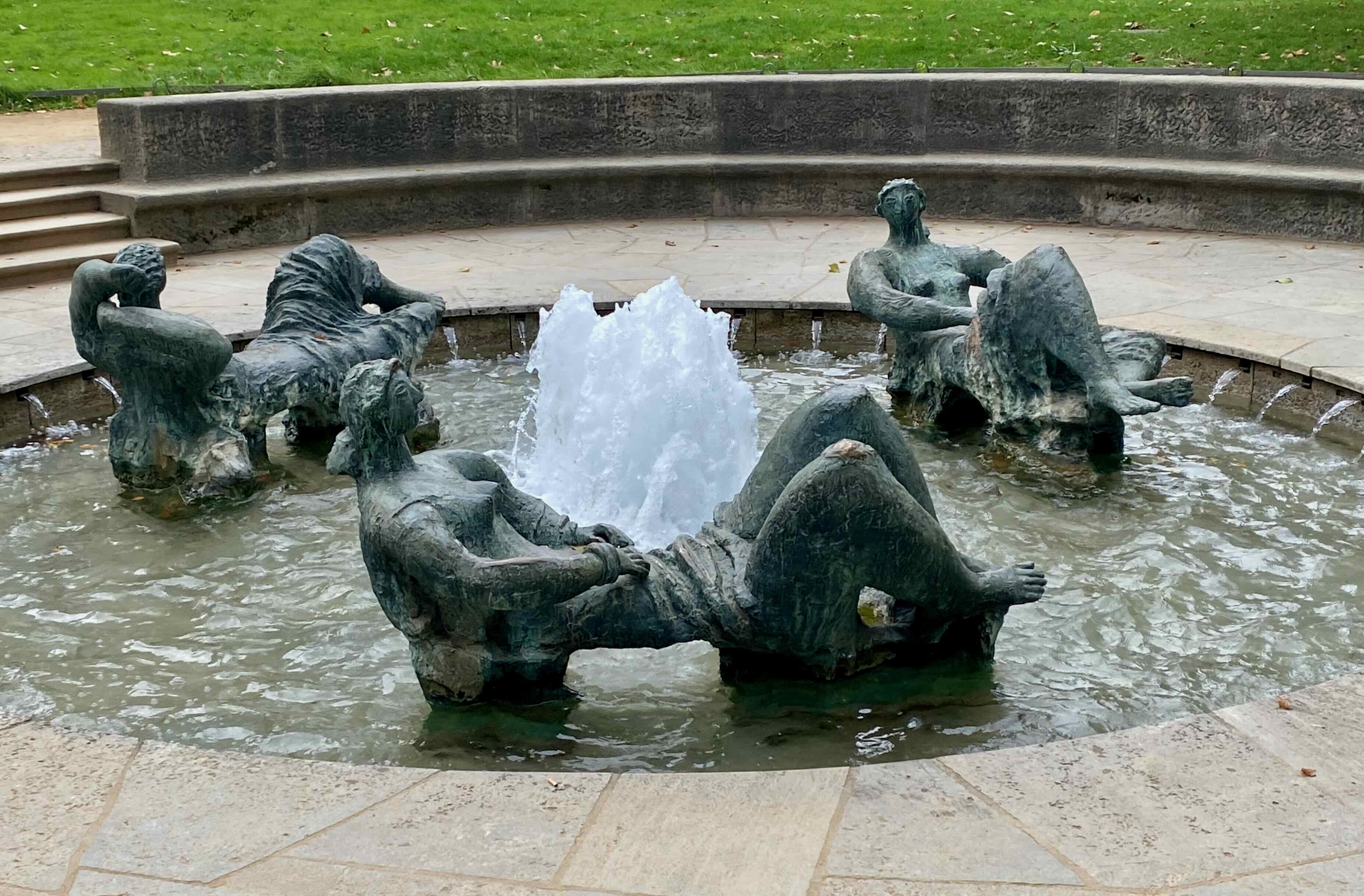
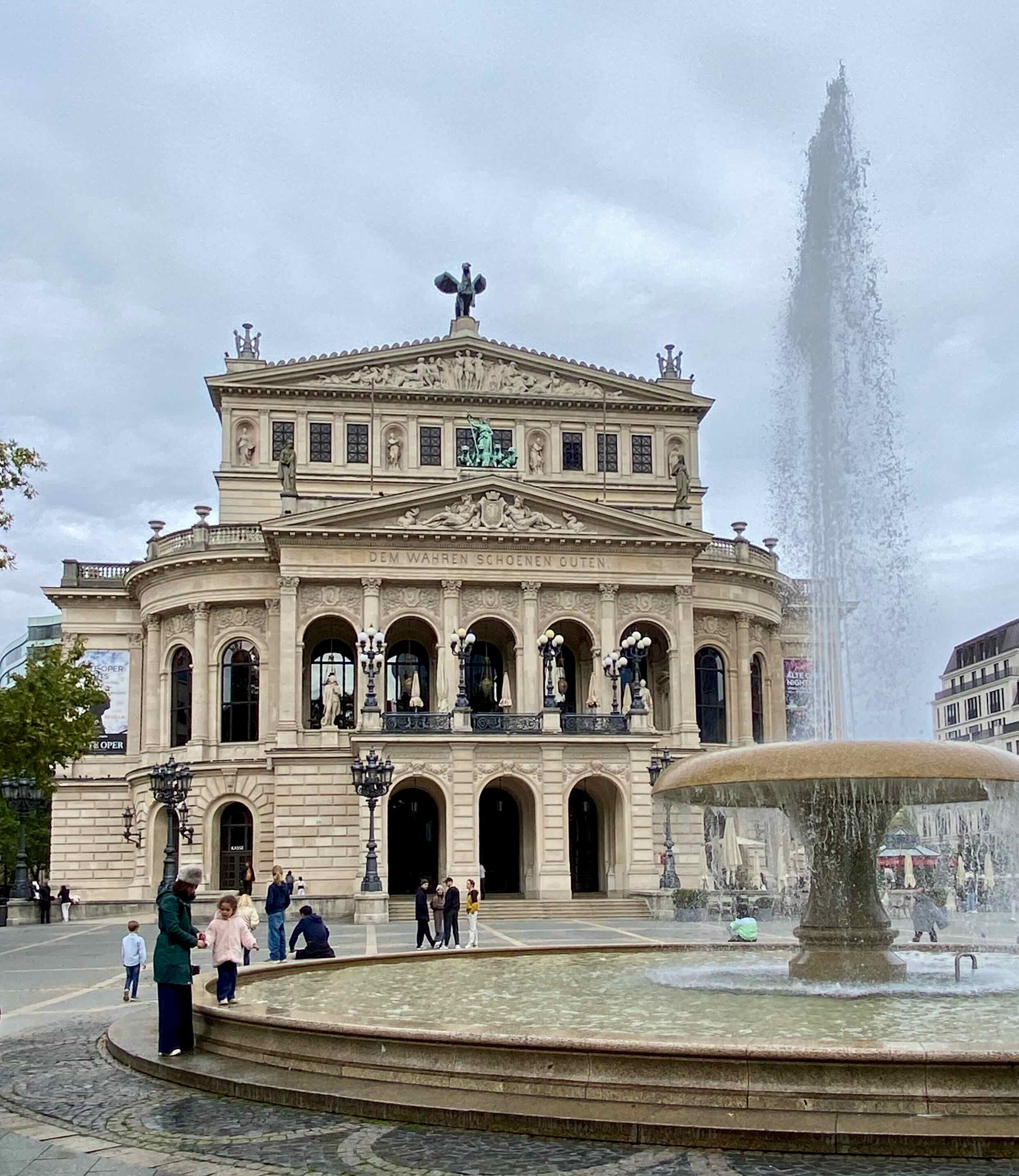
The Marshall Fountain has three bronze water nymphs that  represent the maidens of Goethe´s classic novel “Faust”. The Old Opera House had been bombed down to its foundation walls during WWII, and was rebuilt to the original design.
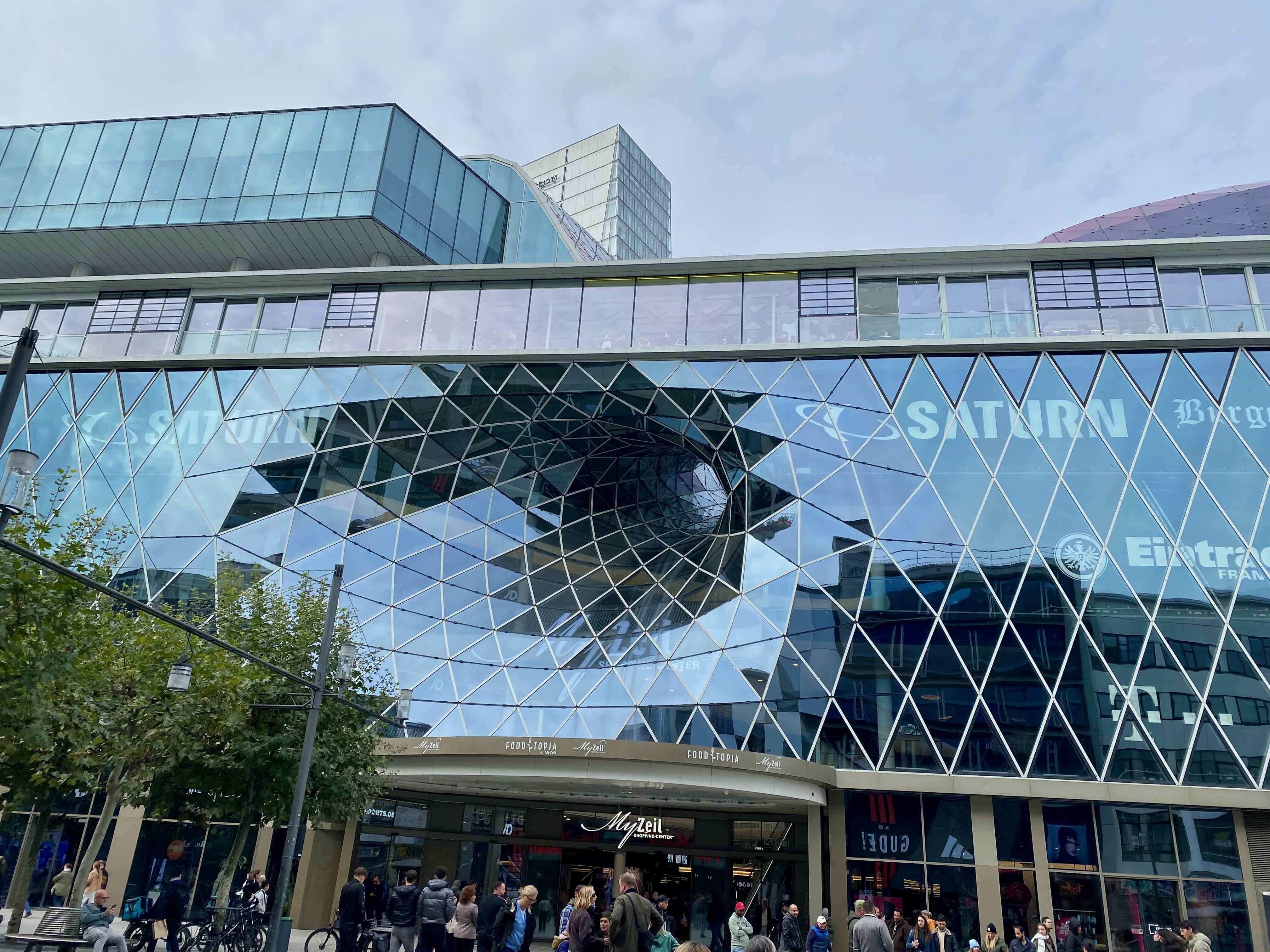
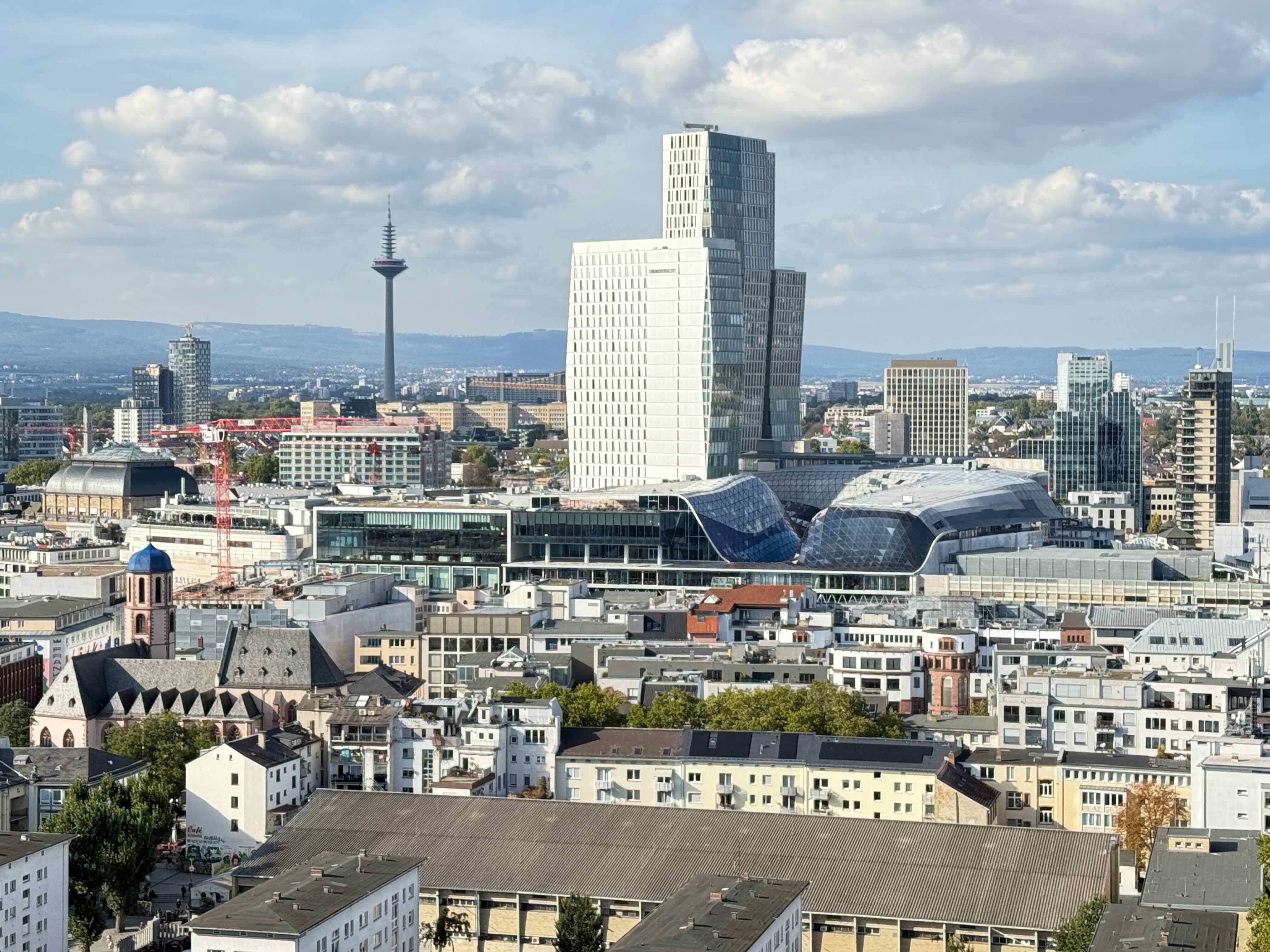
The MyZeil is a shopping mall has a unique design, a hole in the wall.

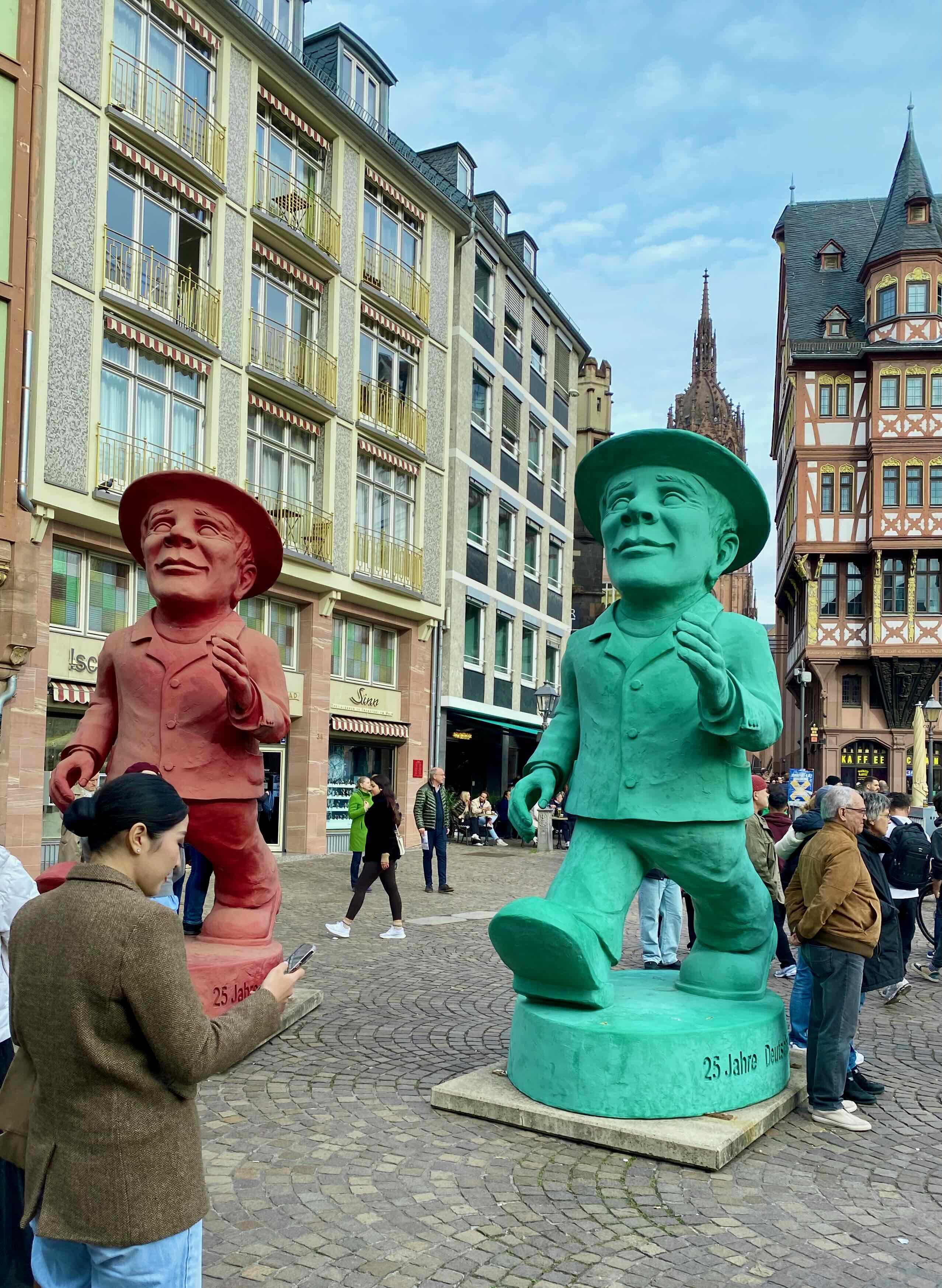
We saw this same shopping mall yesterday from the top of the bell tower we climbed. These two figures represent East and West Germany. Today was a holiday for the Reunification of Germany.
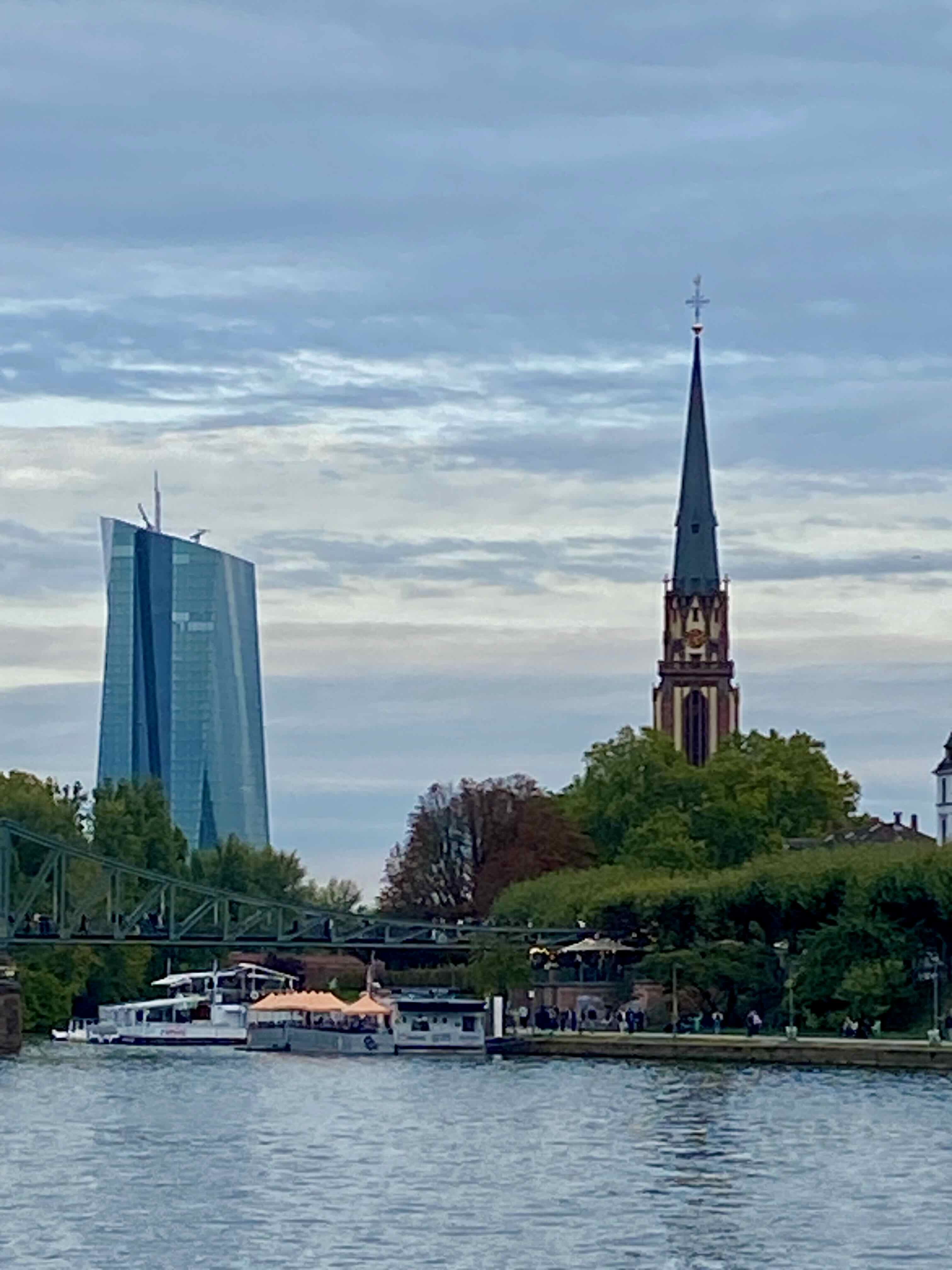
Two buildings, one old and one new and then home.


Frankfurt, Germany

Day 33     Thursday, October 2, 2025

We take a train into Frankfurt.  Once we had our tickets it was easy but once again we had problems using one of our credit cards.  This trip has been a challenge with credit card, debit card and cell phone issues.  I am beginning to think we are jinxed!  It is so good to be traveling together. I think if either of us were trying to sort out these problems on our own it would be much more difficult. The saga continues as we find the Hertz car rental company in the train station.  This trip we are told we need to extend our car rental contract every 30 days by simply checking in to any Hertz office.  Well, it turns out that a Hertz office in Germany cannot extend  contracts that was signed in another country. Sorting this out takes more than an hour and we are still not sure it actually will be taken care of.  We will see.

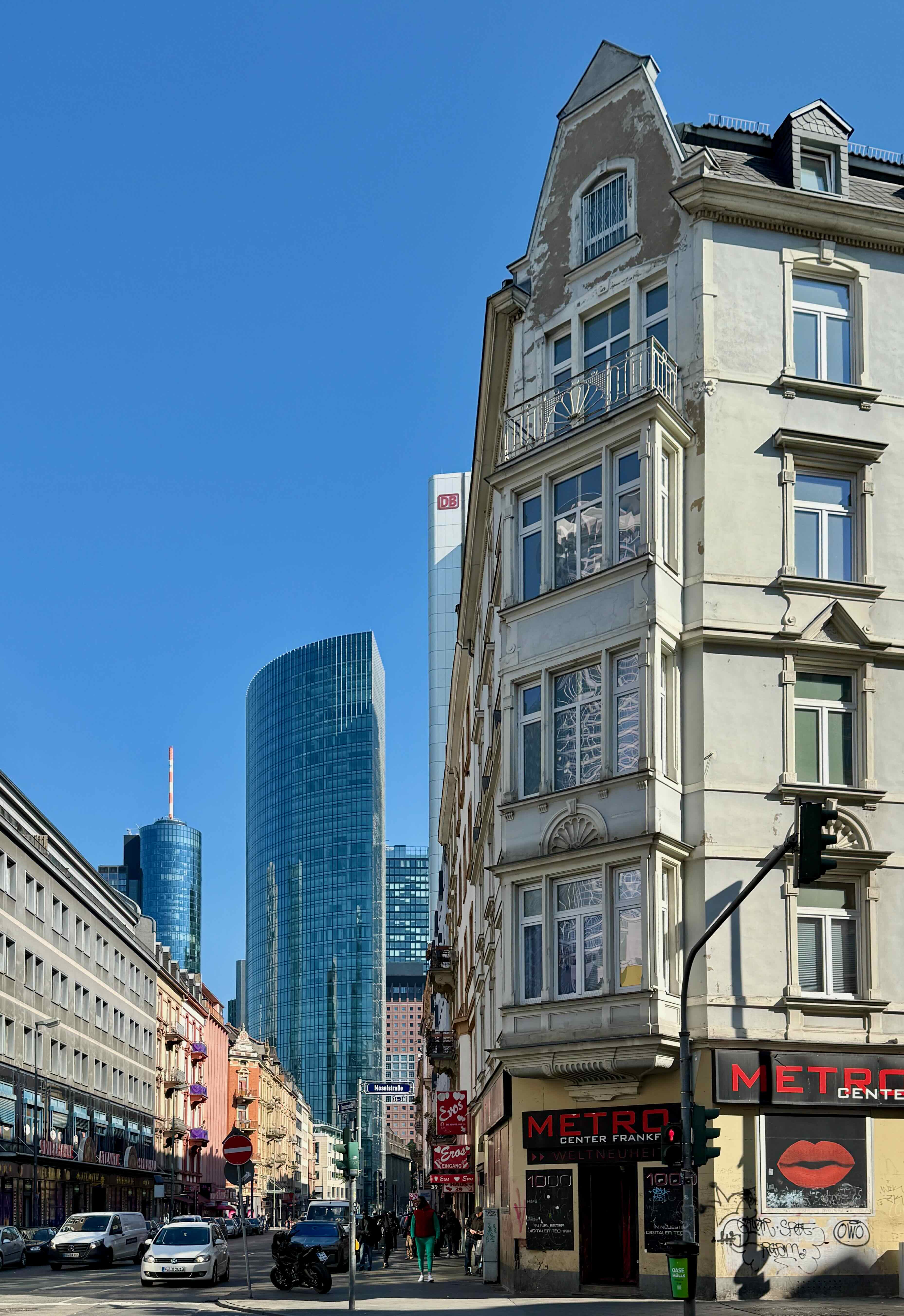
We walk down the street across from the train station. I am struck by the contrast between the old and the modern buildings.  I should have paid a bit more attention to the signs on the storefronts.

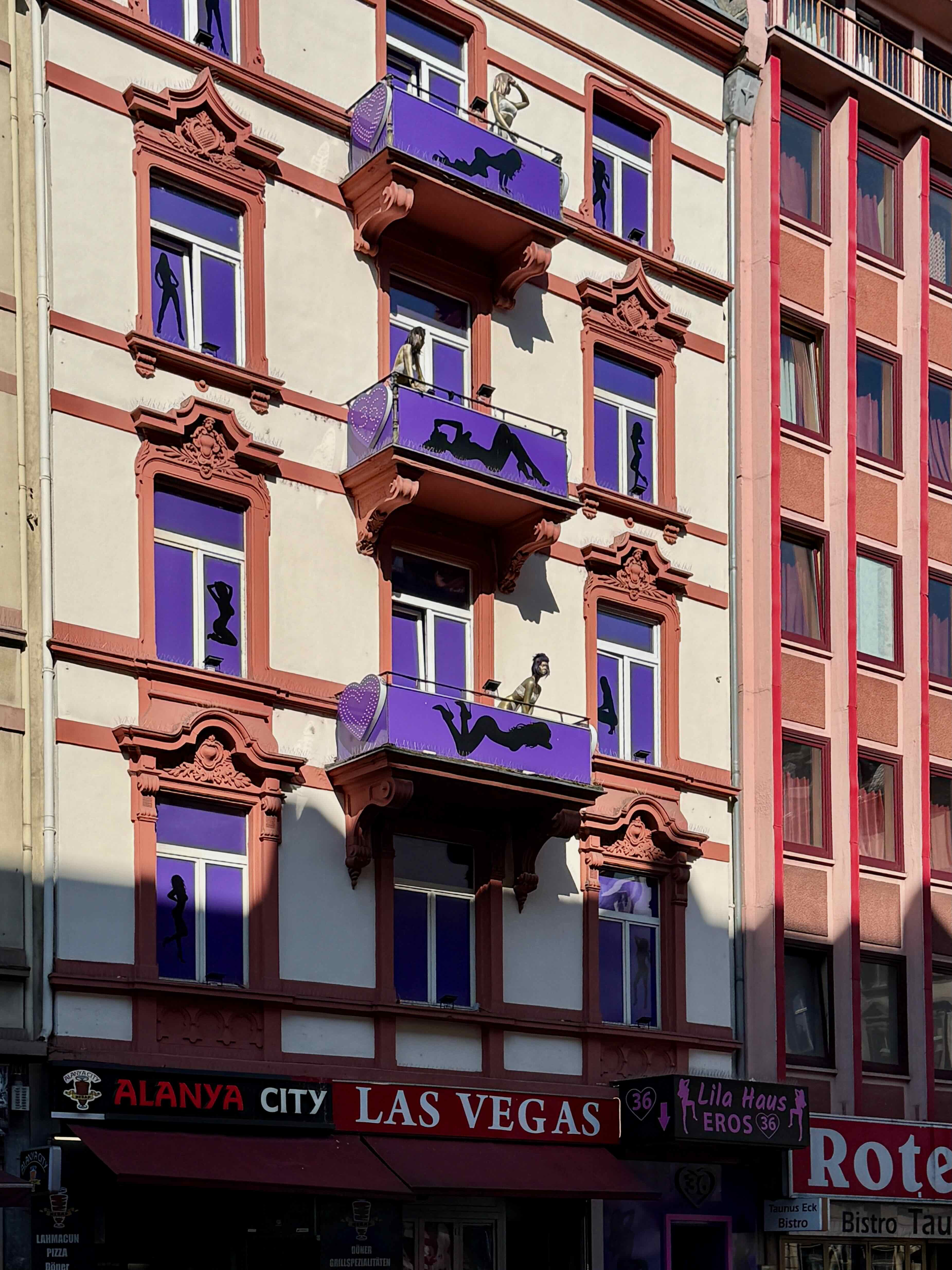
After a man and his lady friend propositioned me we noticed that we were walking through the red-light district!  We had a bit of a chuckle!

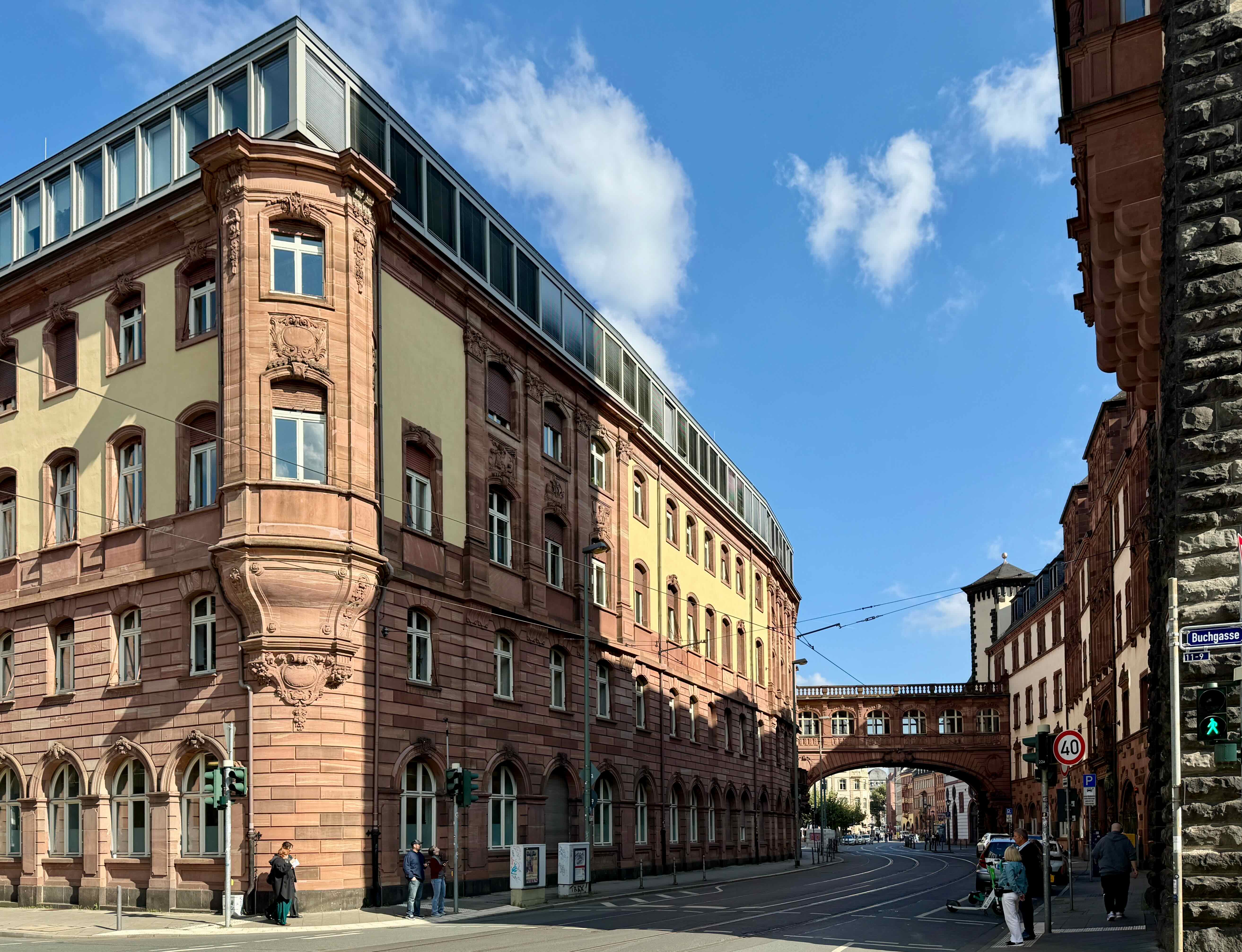
Nearly 70% of Frankfurt was destroyed during the Second World War but many of the buildings look older than they actually are.

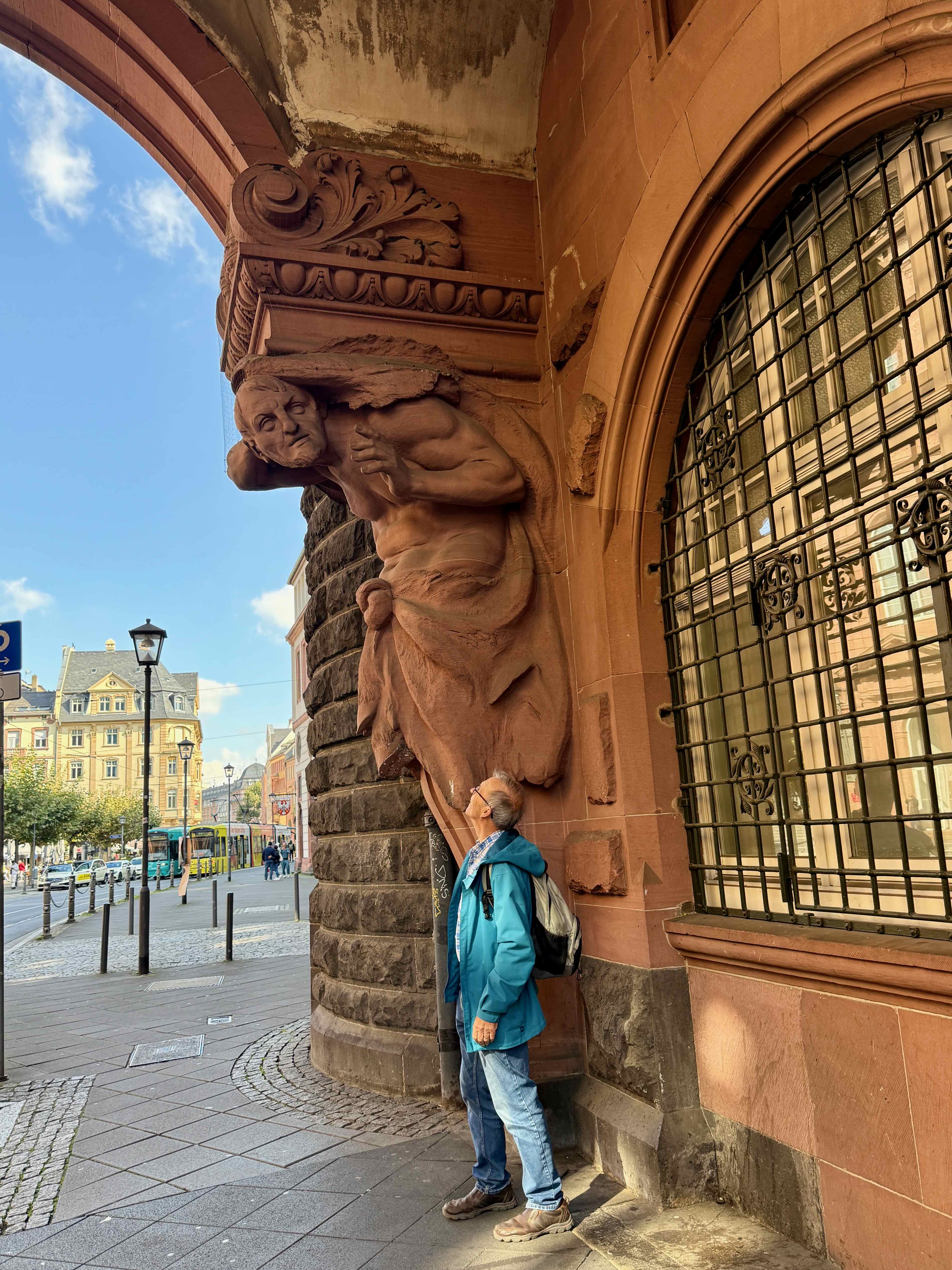
There were four of these massive sculptures supporting the bridge across the street in the above photo.

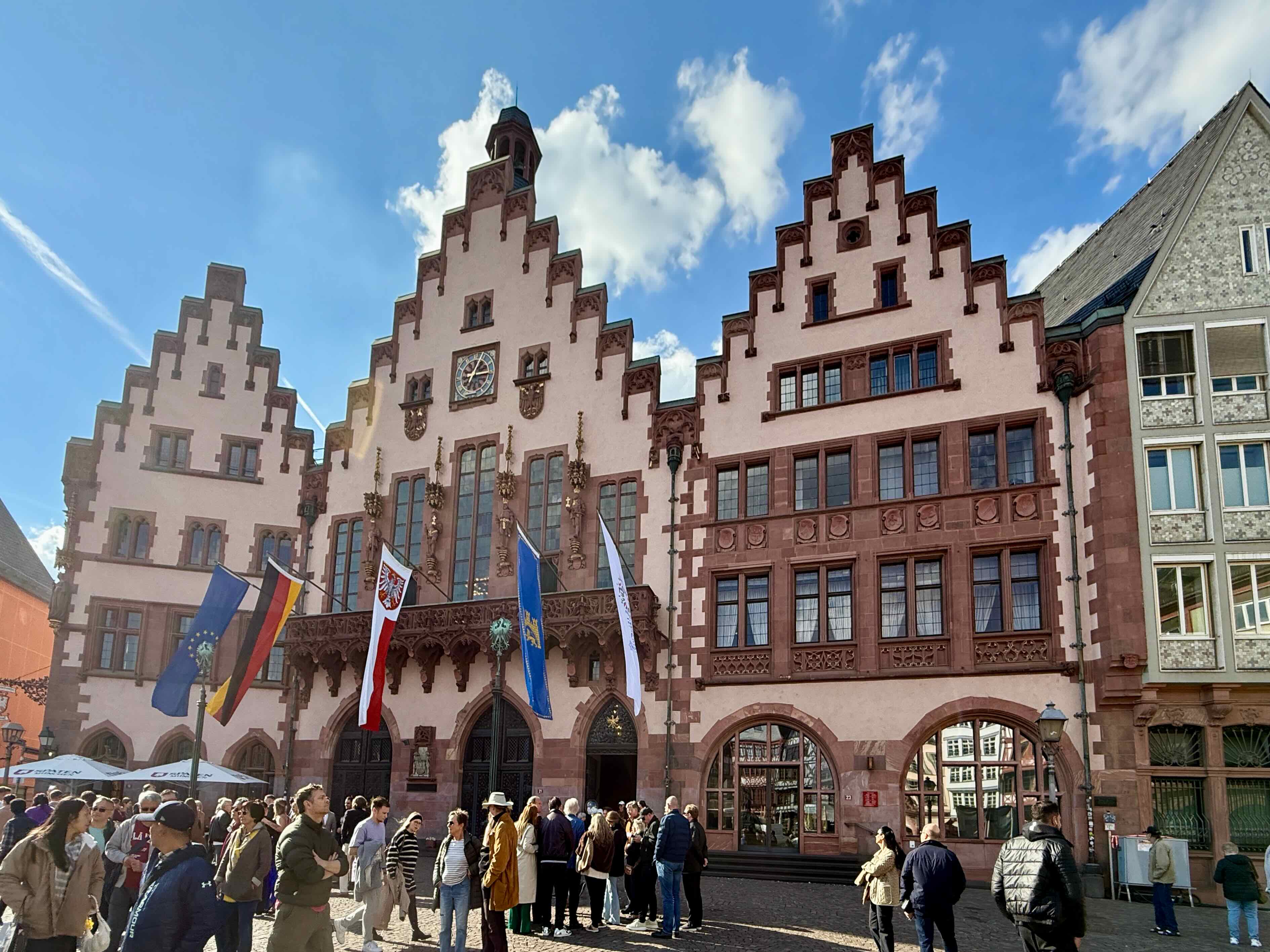
In1405, two houses were joined together to make Frankfurt’s City Hall. It is a striking building.

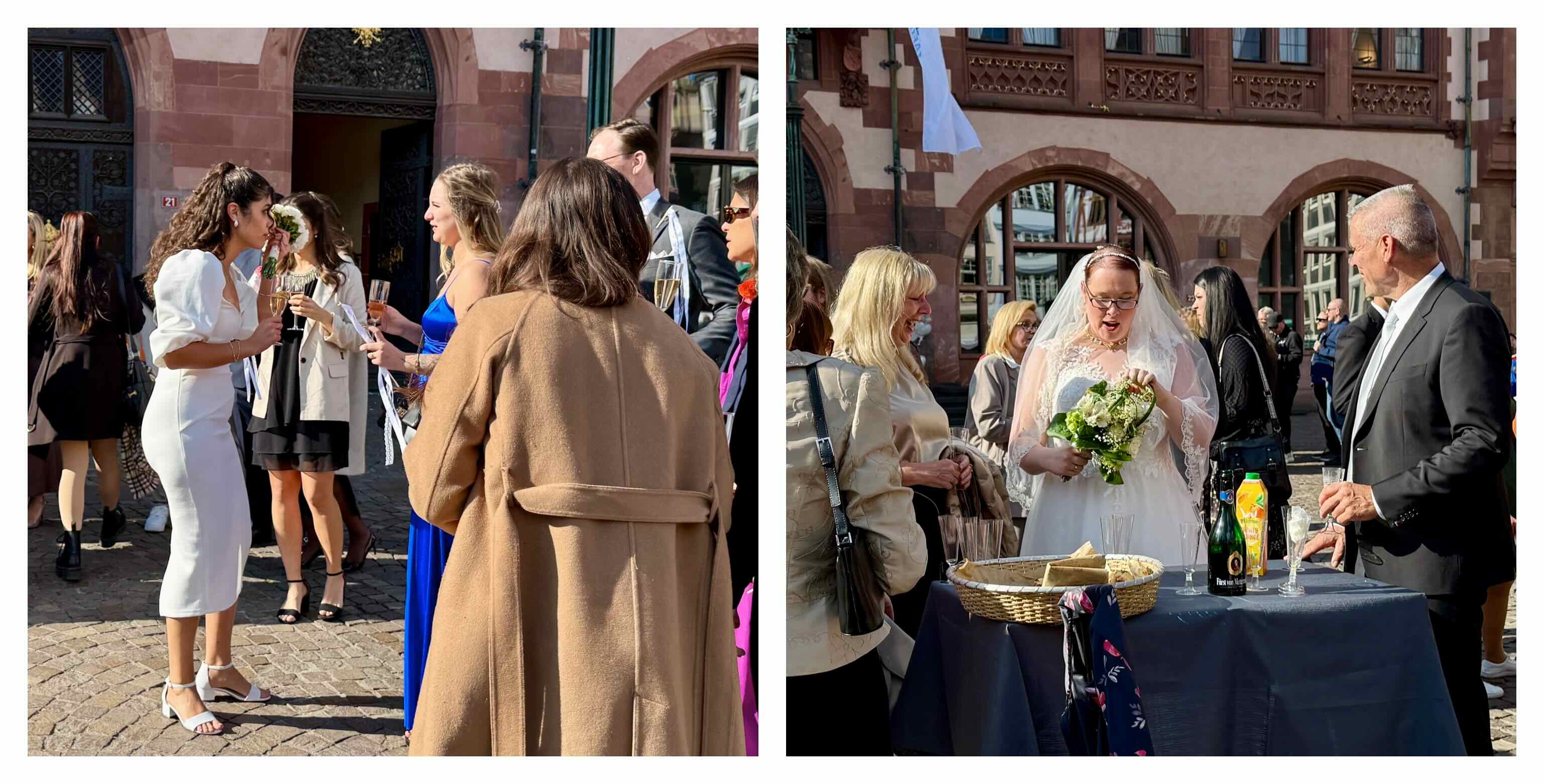
Saturday is a popular day to get married and there is a steady parade of weddings taking place. The bridal couple and their guests wait outside for their turn to be married. It seems strange to me but is perfectly normal here.

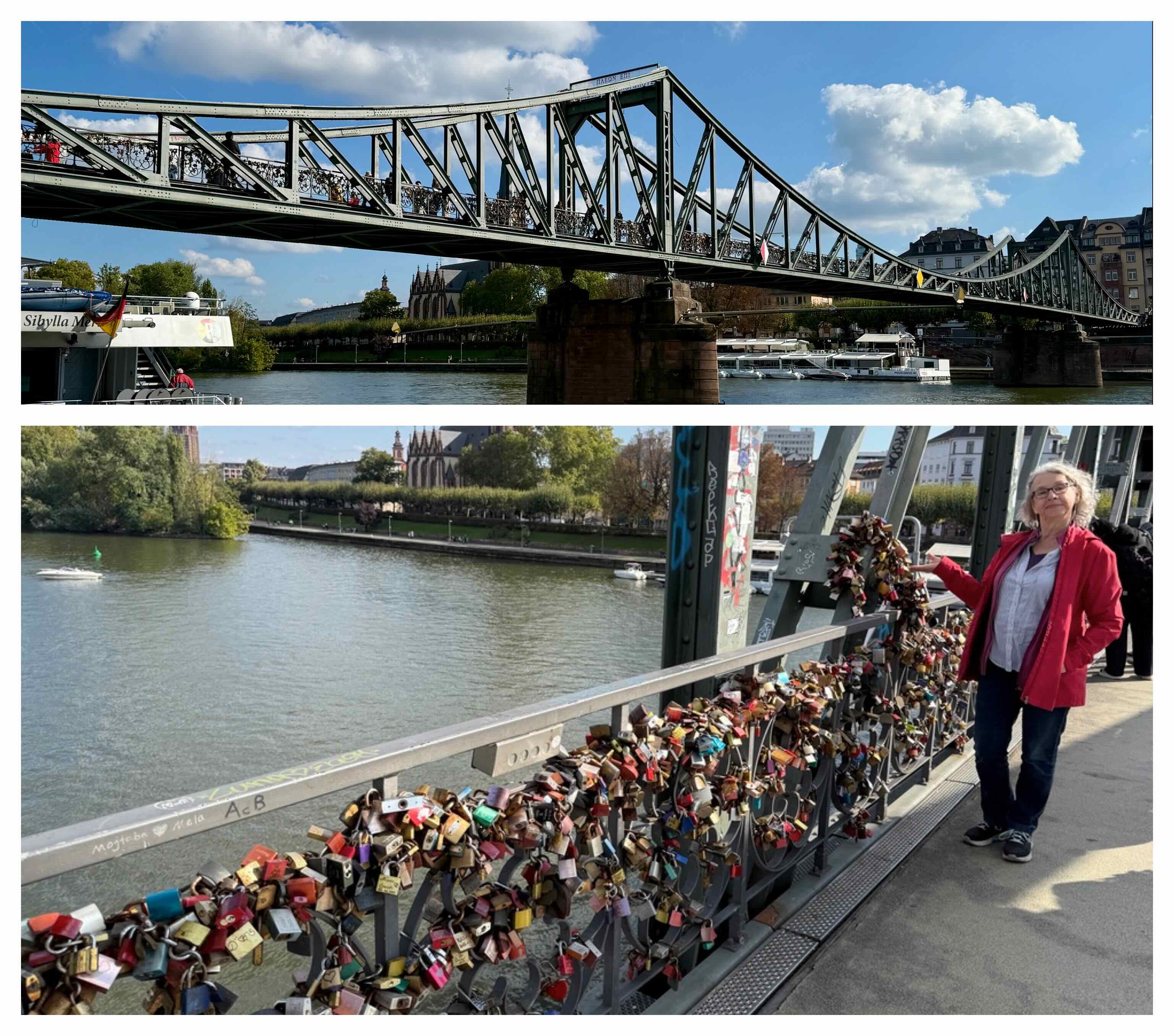
We have our picnic lunch on the banks of the Rhine River and then visit this pedestrian bridge. ‘Love locks’ are covering this bridge.  I suspect that before long authorities will have to remove these locks before their weight begins to damage the bridge because of their weight like the bridge in Paris that was covered with locks.

Saint Bartholomew Cathedral is the only church in Frankfurt that survived the bombing of WWII.  Divine intervention?

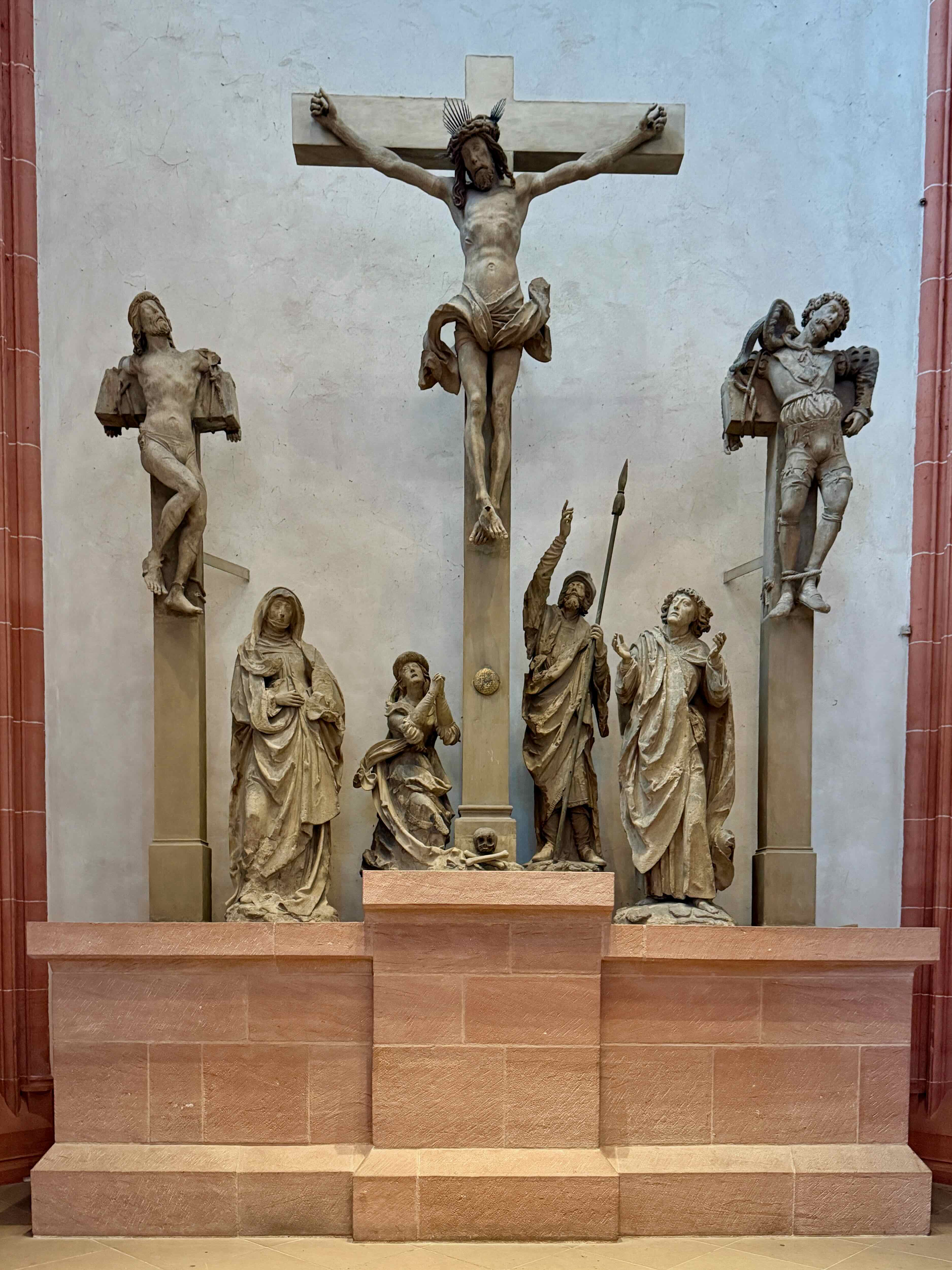
As we enter the church we see this group of sculptures depicting Christ being crucified on Calvary Hill.  

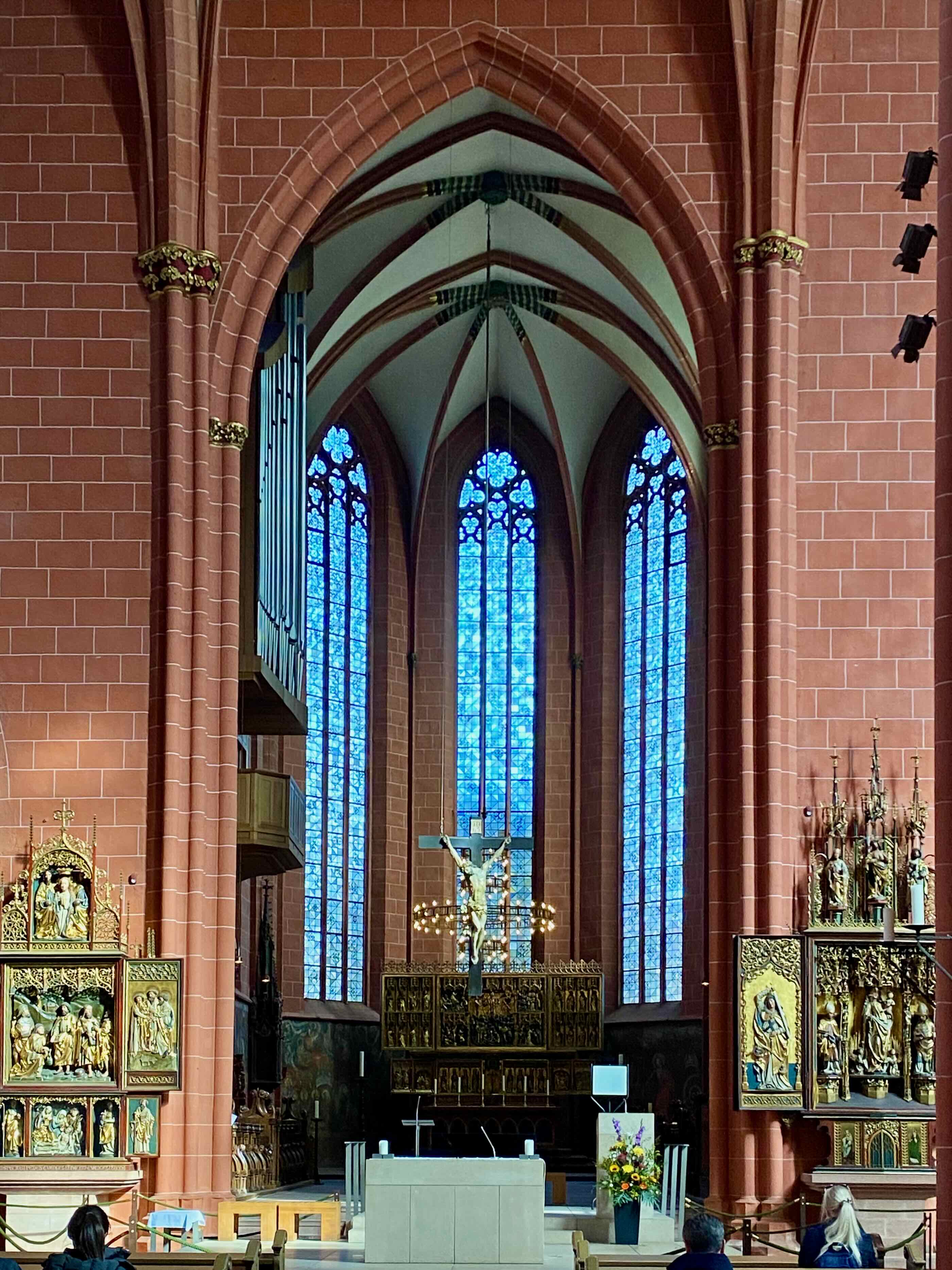
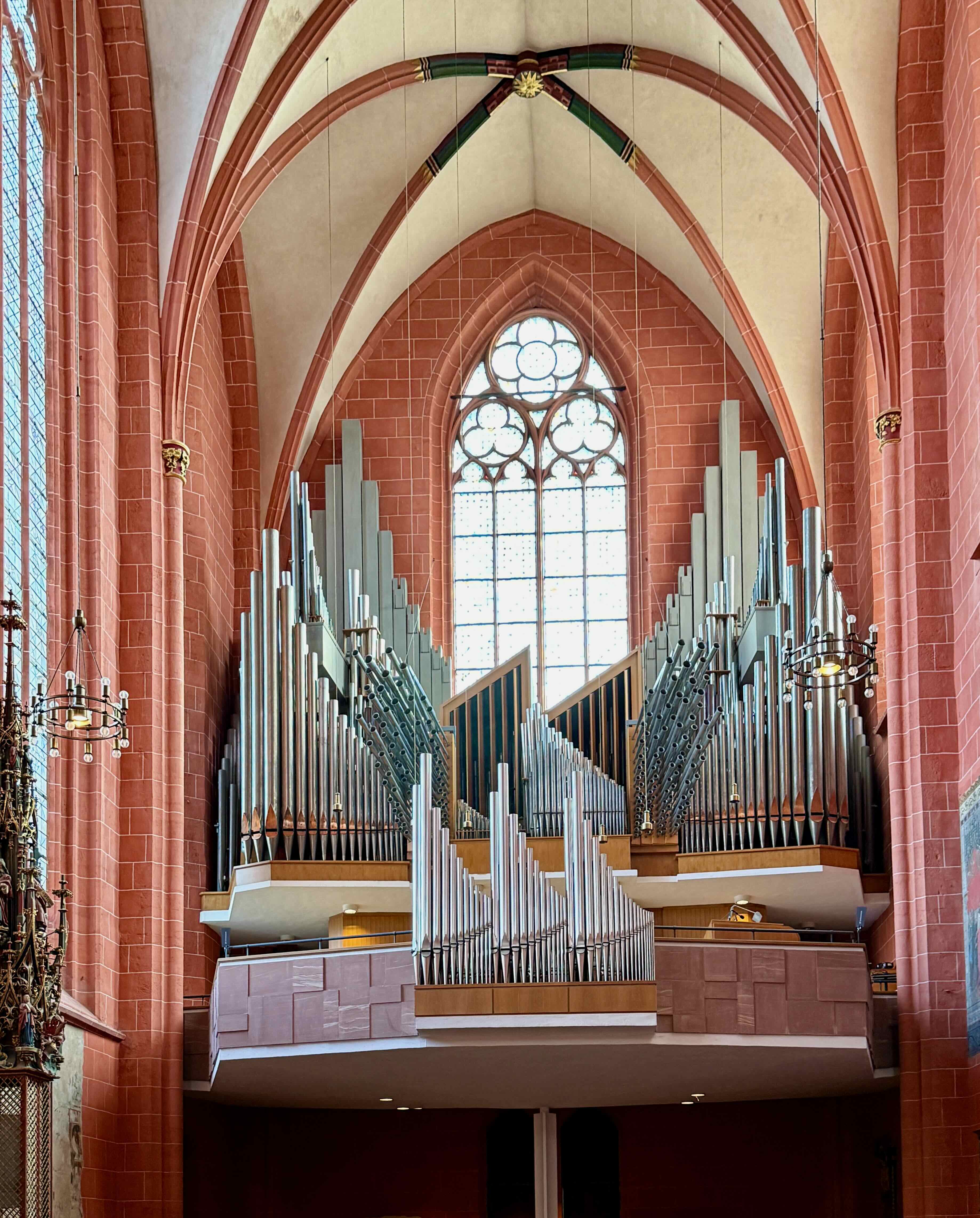
The cathedral was built in the Gothic style between 1315 and 1358, but suffered a fire in 1867 and then the bombing of Frankfurt in 1944. The reconstruction after these events changed parts of the church. Today it is a hall church with three naves.  The cathedral’s organ is impressive and has a different layout of pipes.
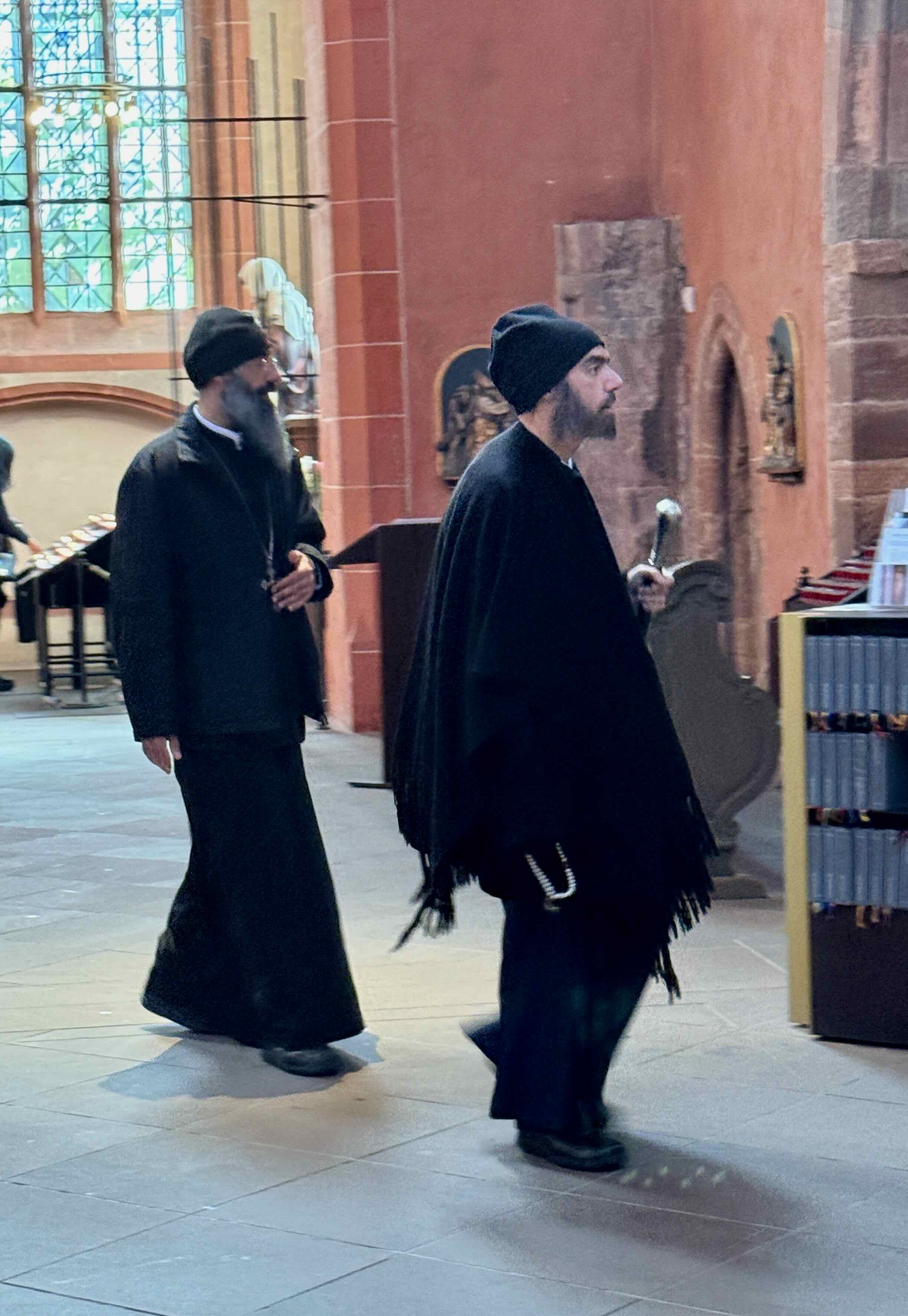
I saw two priests walking out of the church and hurried to take a photo.  They look like they belong in another age and appear very intense.

The cathedral’s bell tower has survived from the 15th century and we are climbing it. This is the view from about halfway up the 66 meter high tower.

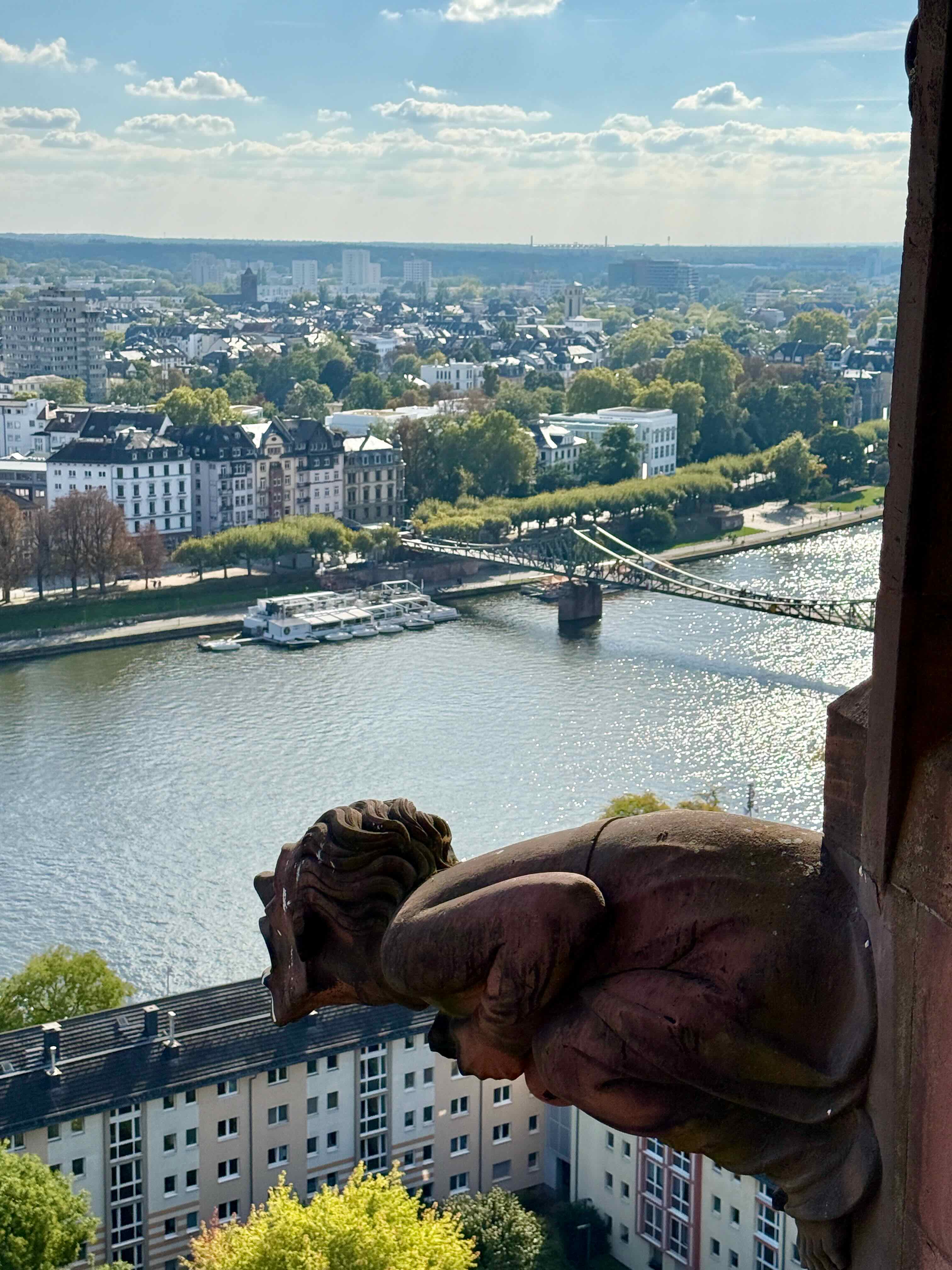
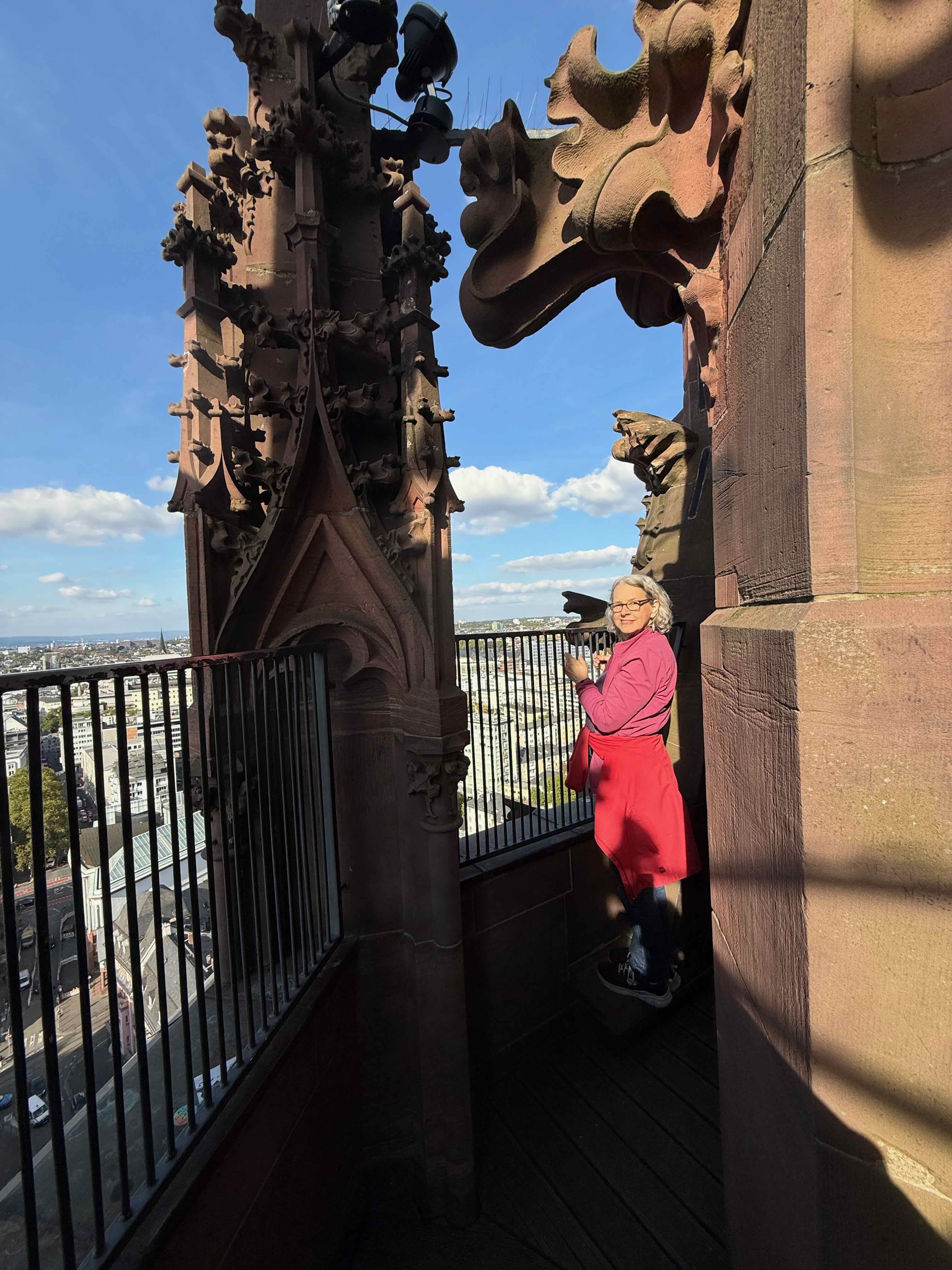
We are above the gargoyles.

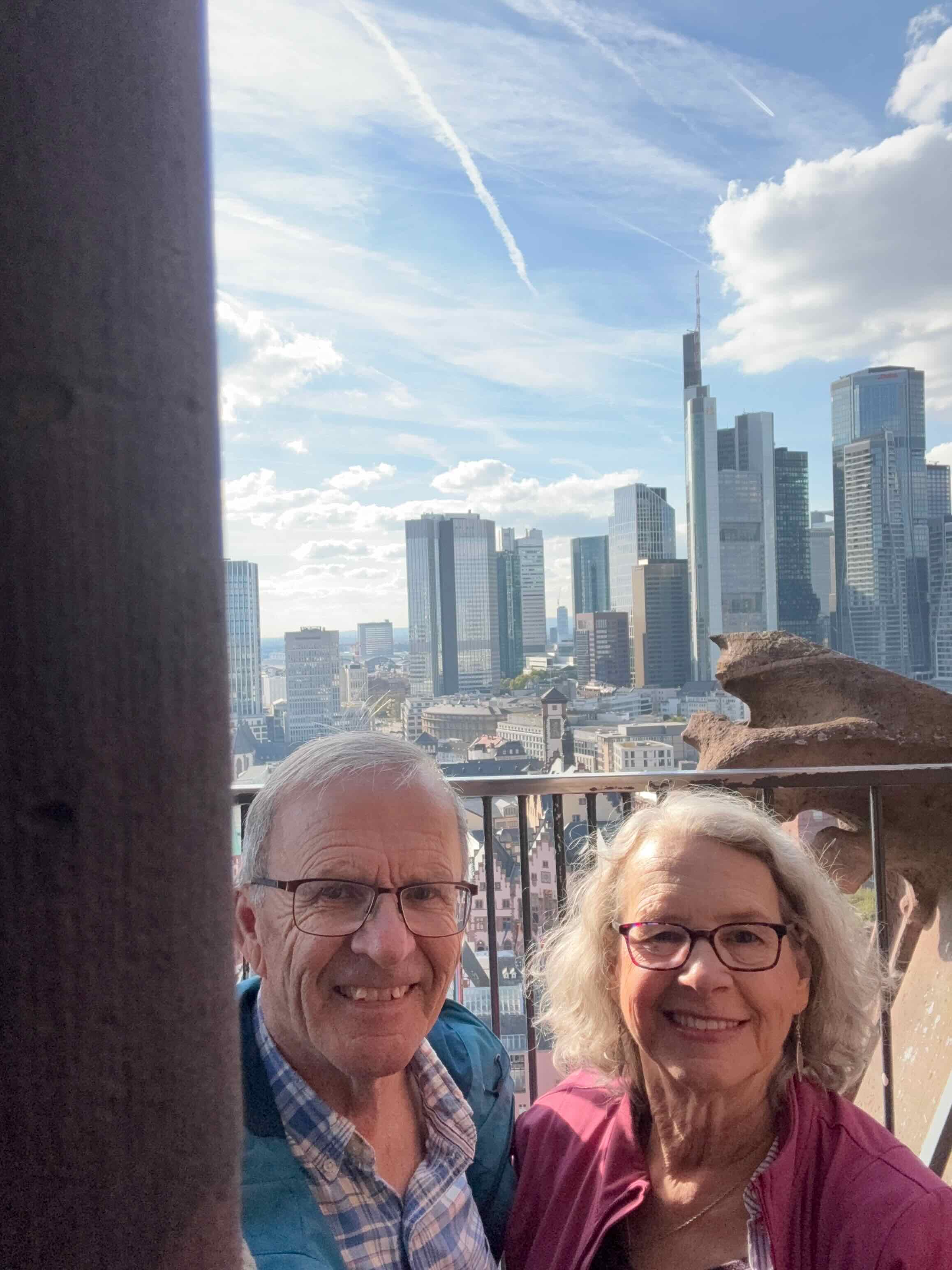
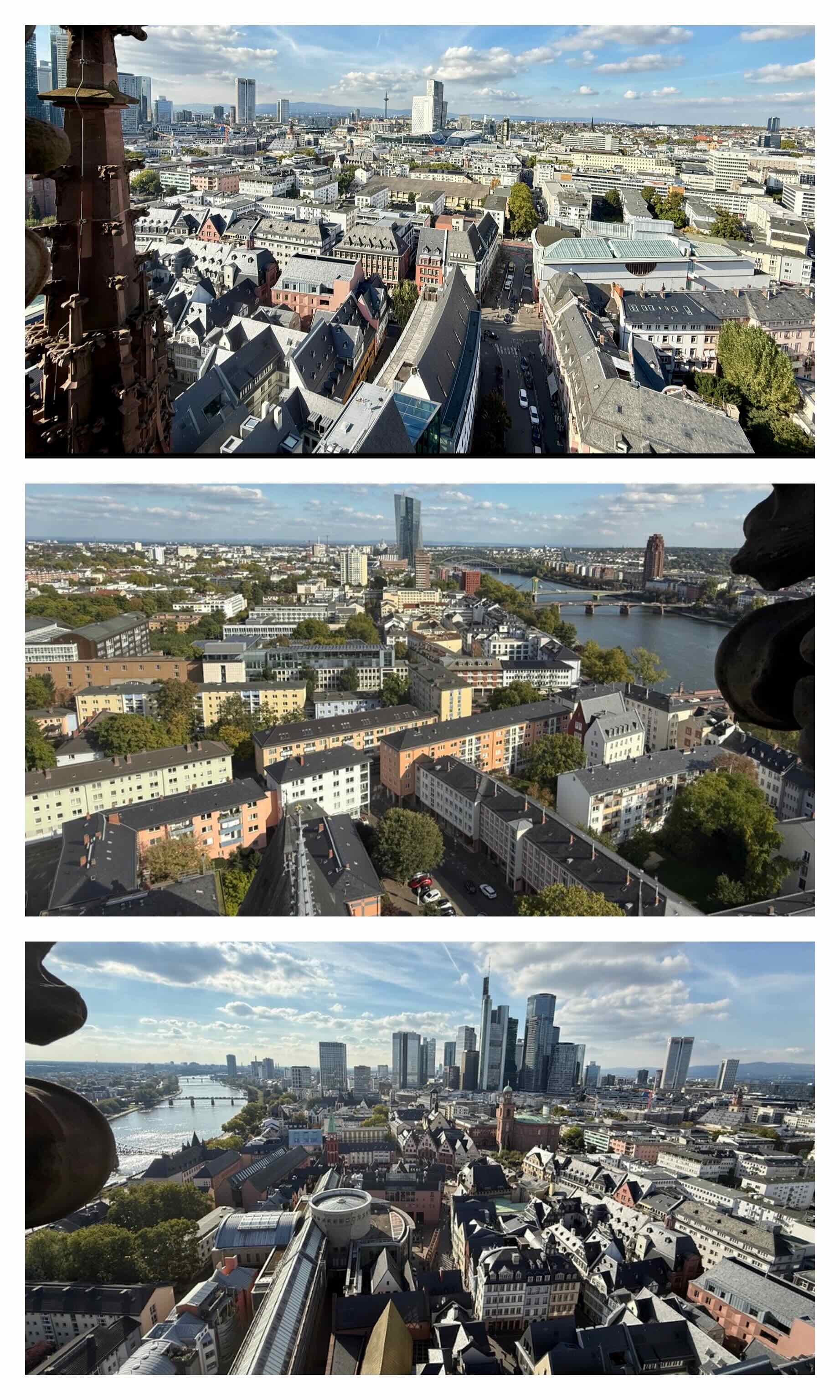
I will admit that I needed to stop and rest a few times as we climbed 328 steps to the viewing platform, although there were people much younger than me were who huffing and puffing more than I was!  We had a spectacular view of Frankfurt.

Some views from the tower.

We walk around the platform several times.  I wasn’t going to climb all those steps for one quick tour around the tower!

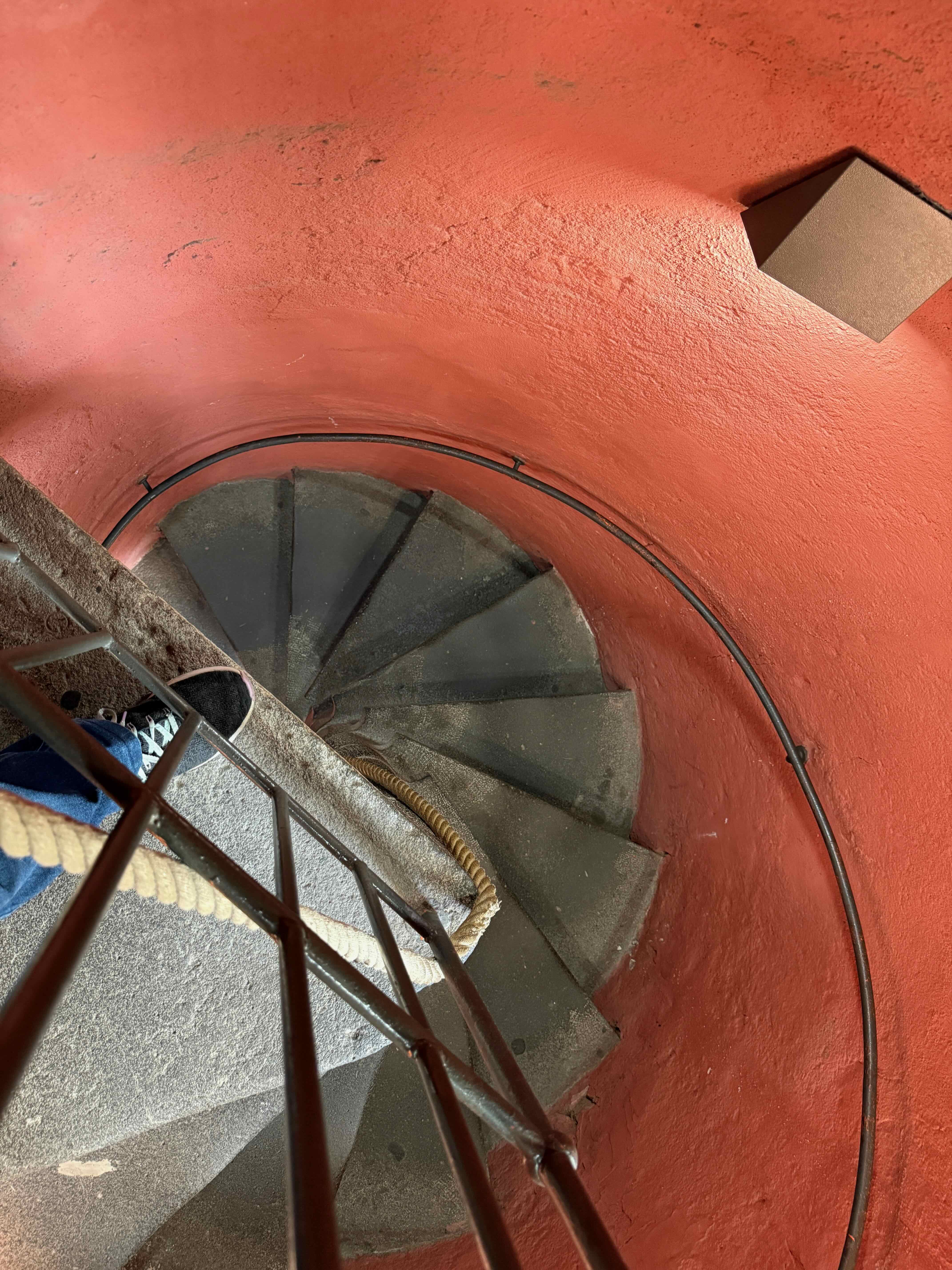
We begin our descent of those 328 steps.  I am very thankful that they are solid stone and I don’t have to contend with see-through wire steps, specially as this is the only staircase to access the tower. We have to squeeze to the side when people pass us their way up the stairs.  

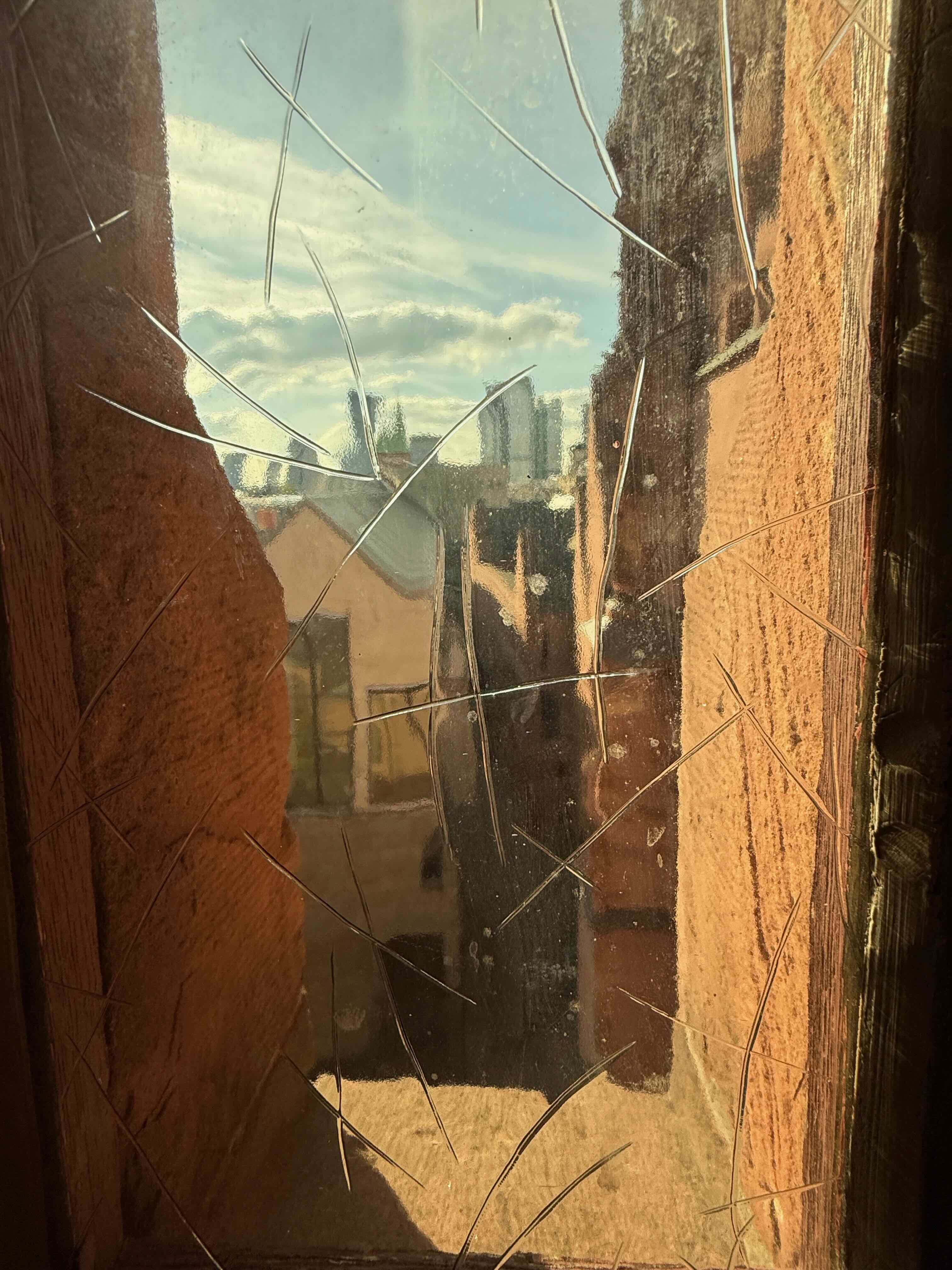
The view through a glass window in the stairwell.

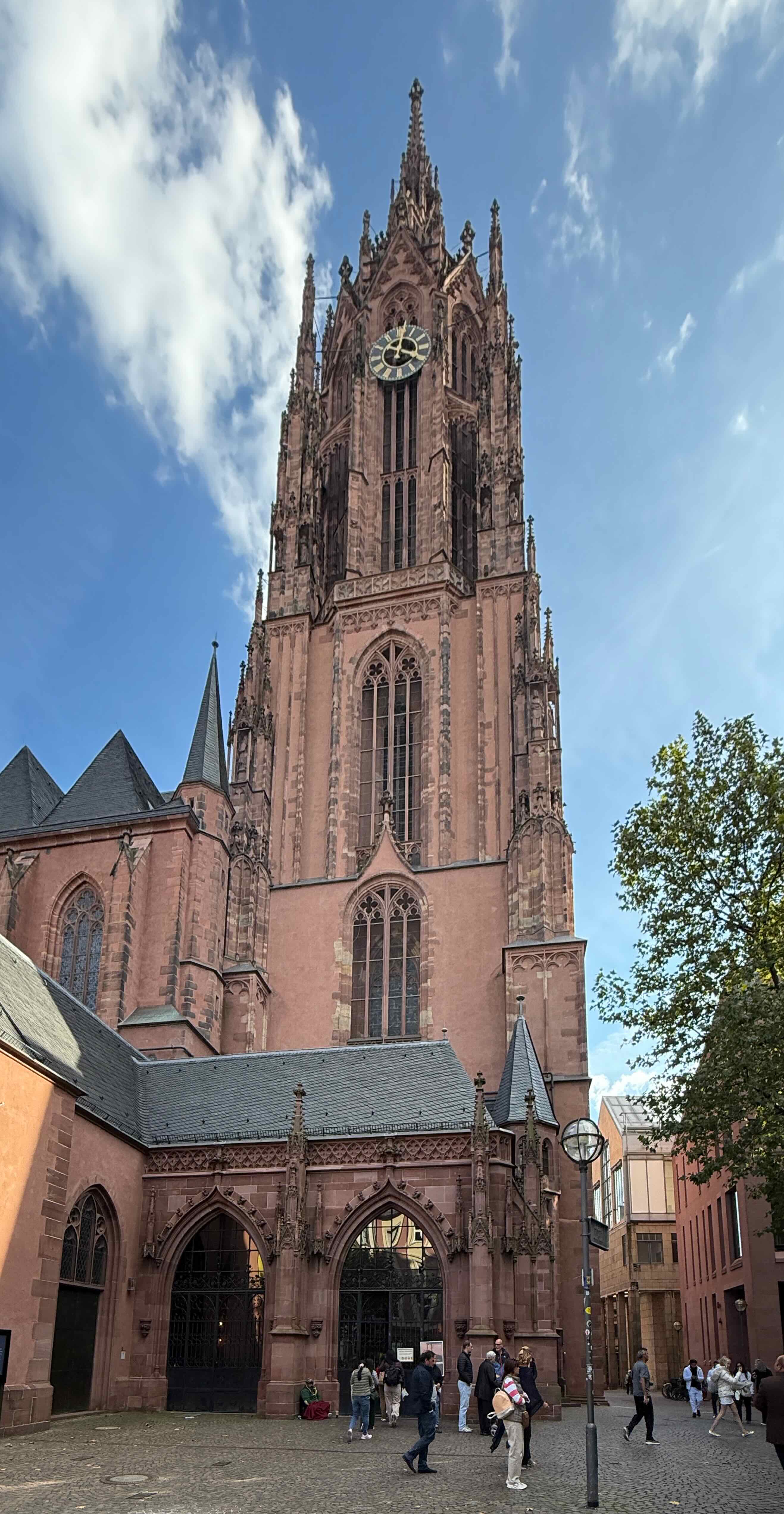
This is the tower…

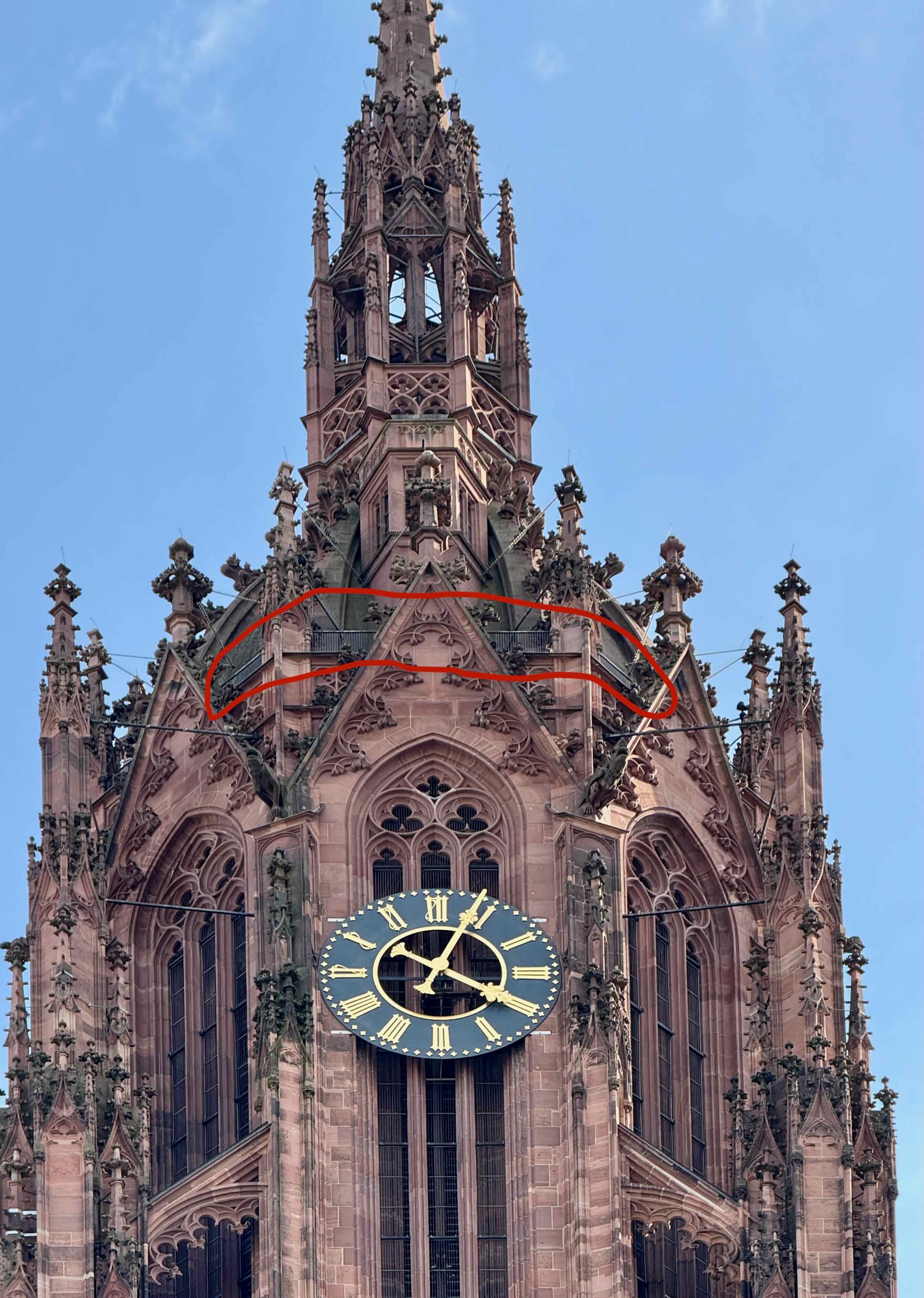
and here is the viewing platform above the clock! If you look closely you can see the platform railings.

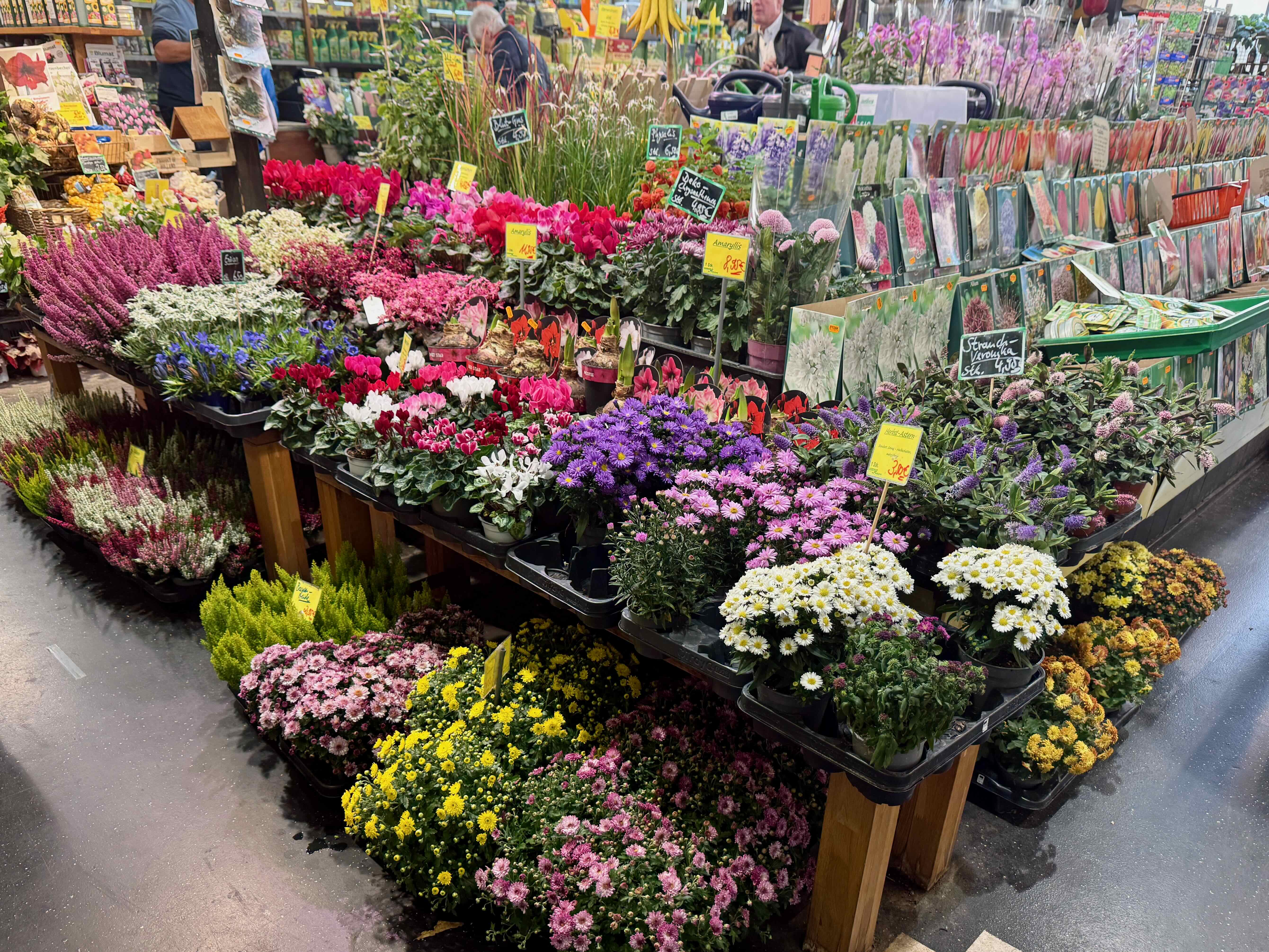
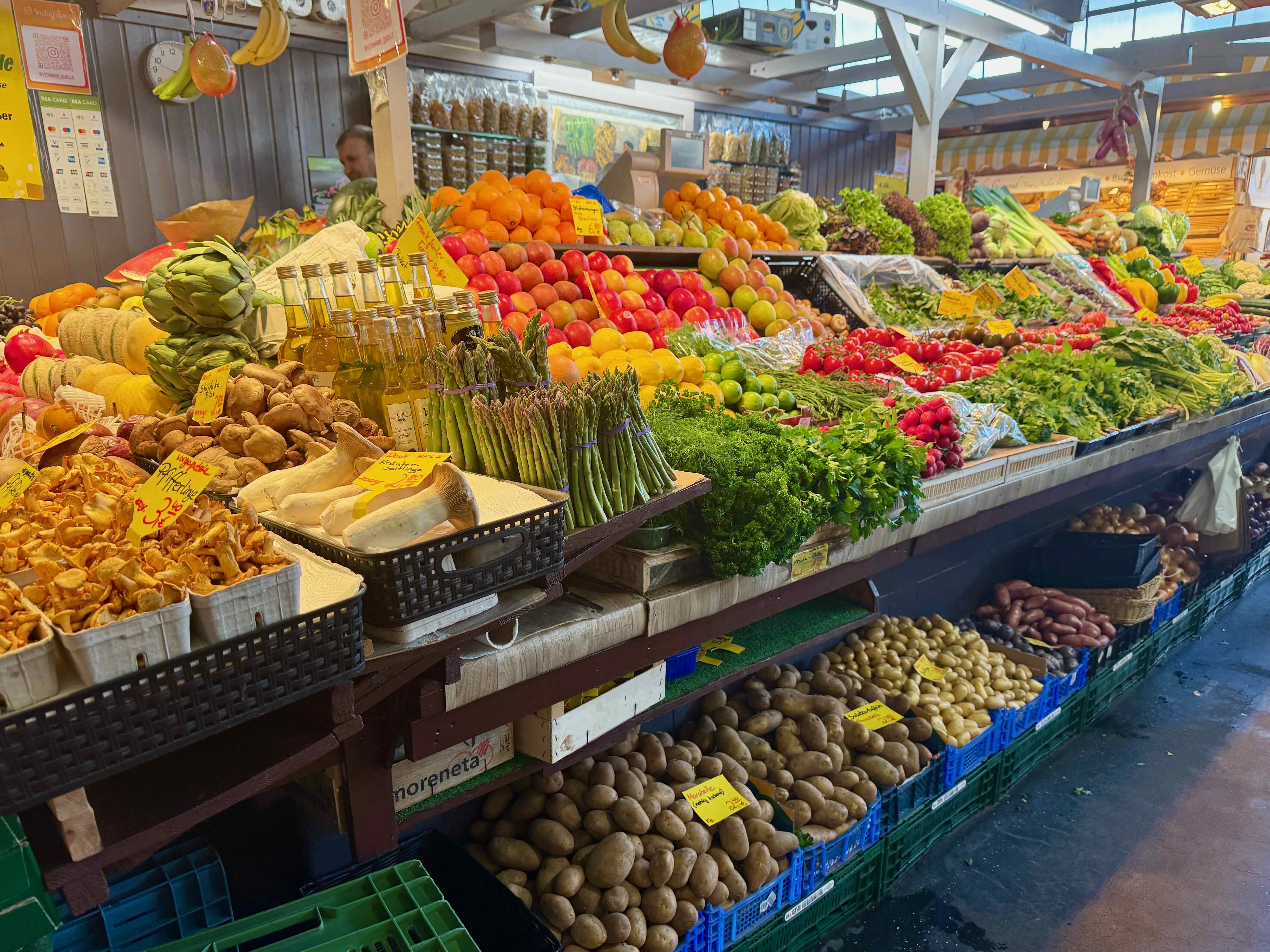
Next we visit the indoor market. I am so tempted to buy some flowers.

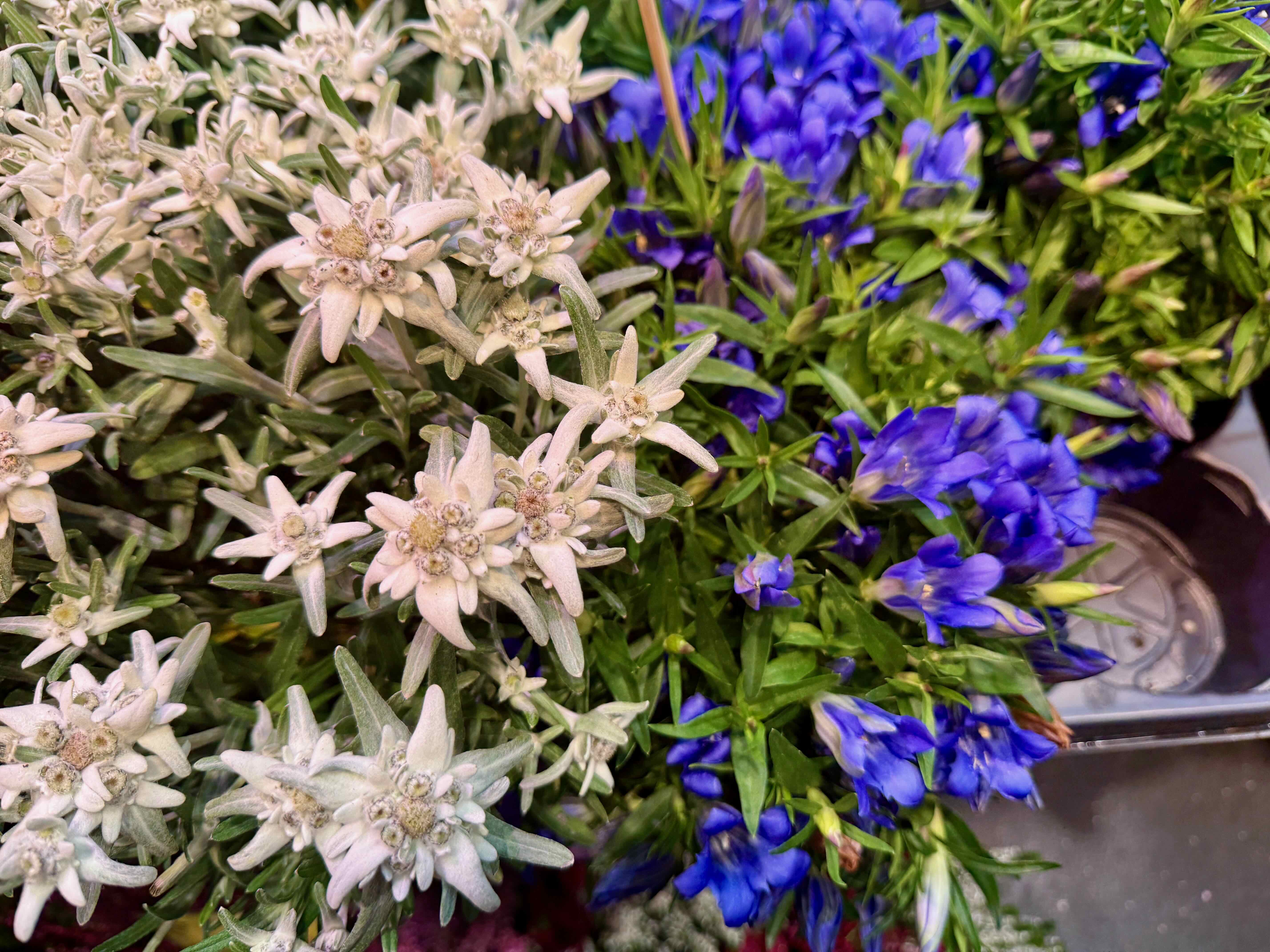
Edelweiss and Gentians, two of my favourite flowers.

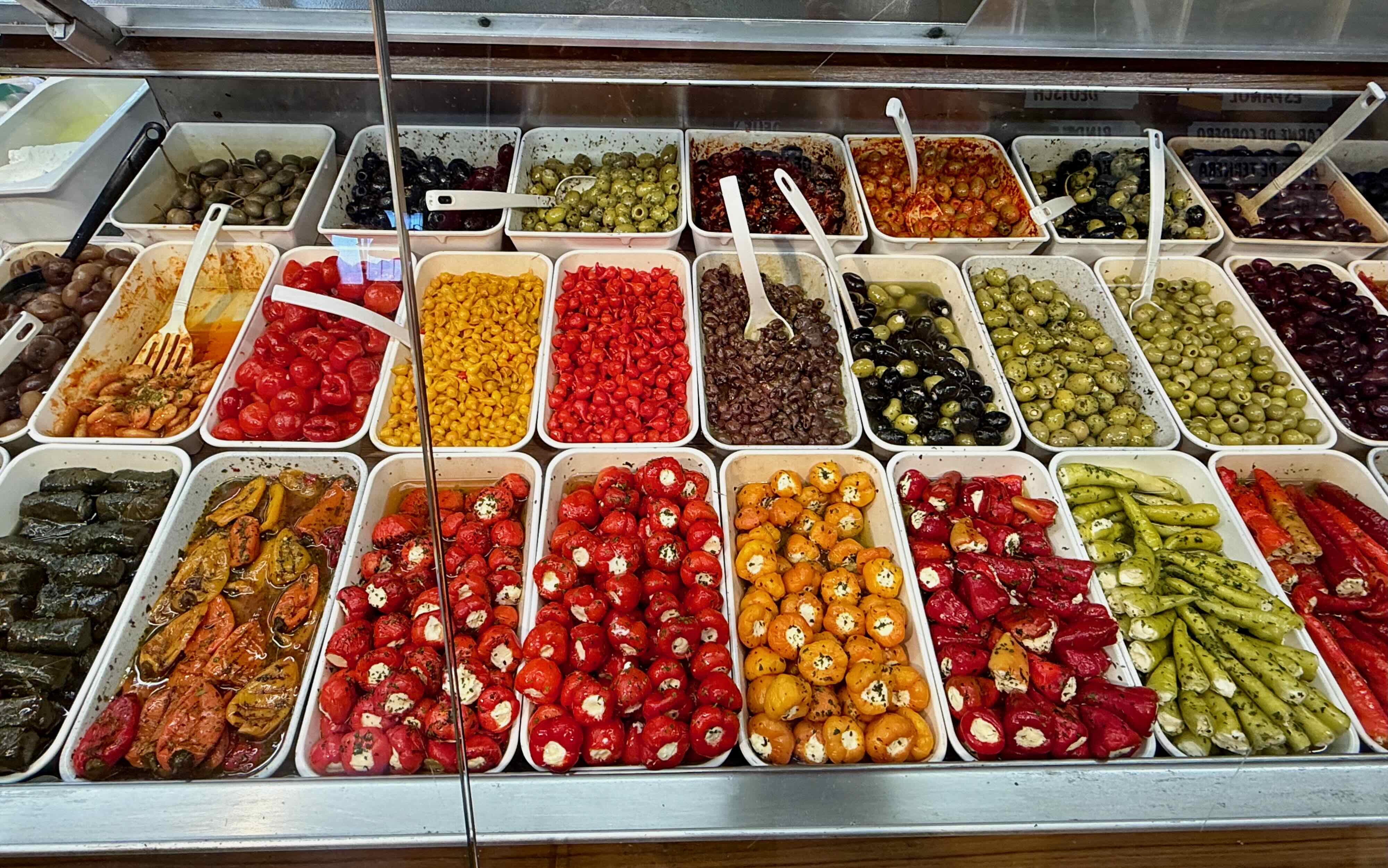
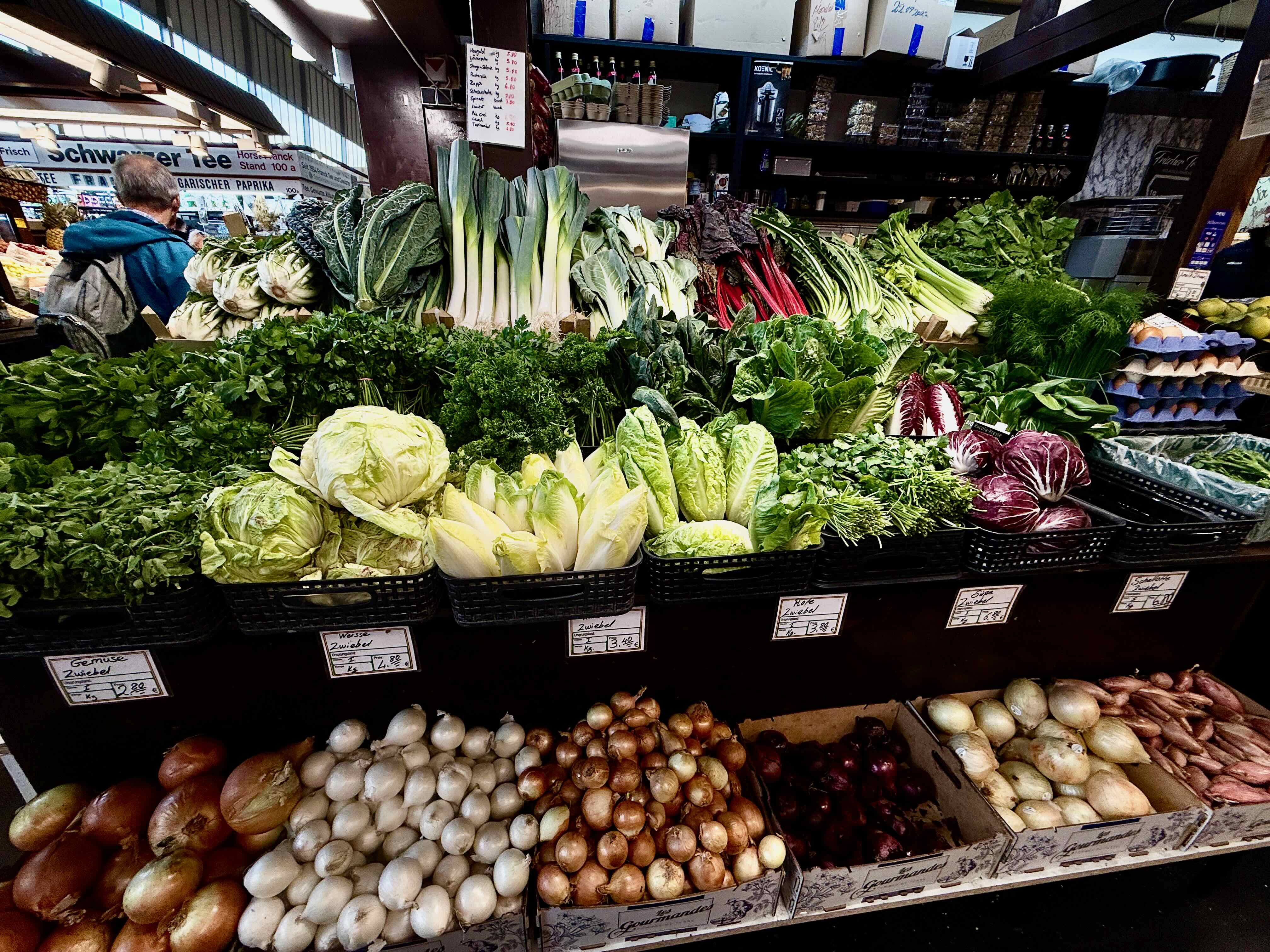
Everything is so colourful and looks delicious.

Produce doesn’t look this appealing at home.

The leeks are enormous!  We buy some pastry for a snack and I even find a slice of yummy gluten free apple cake.

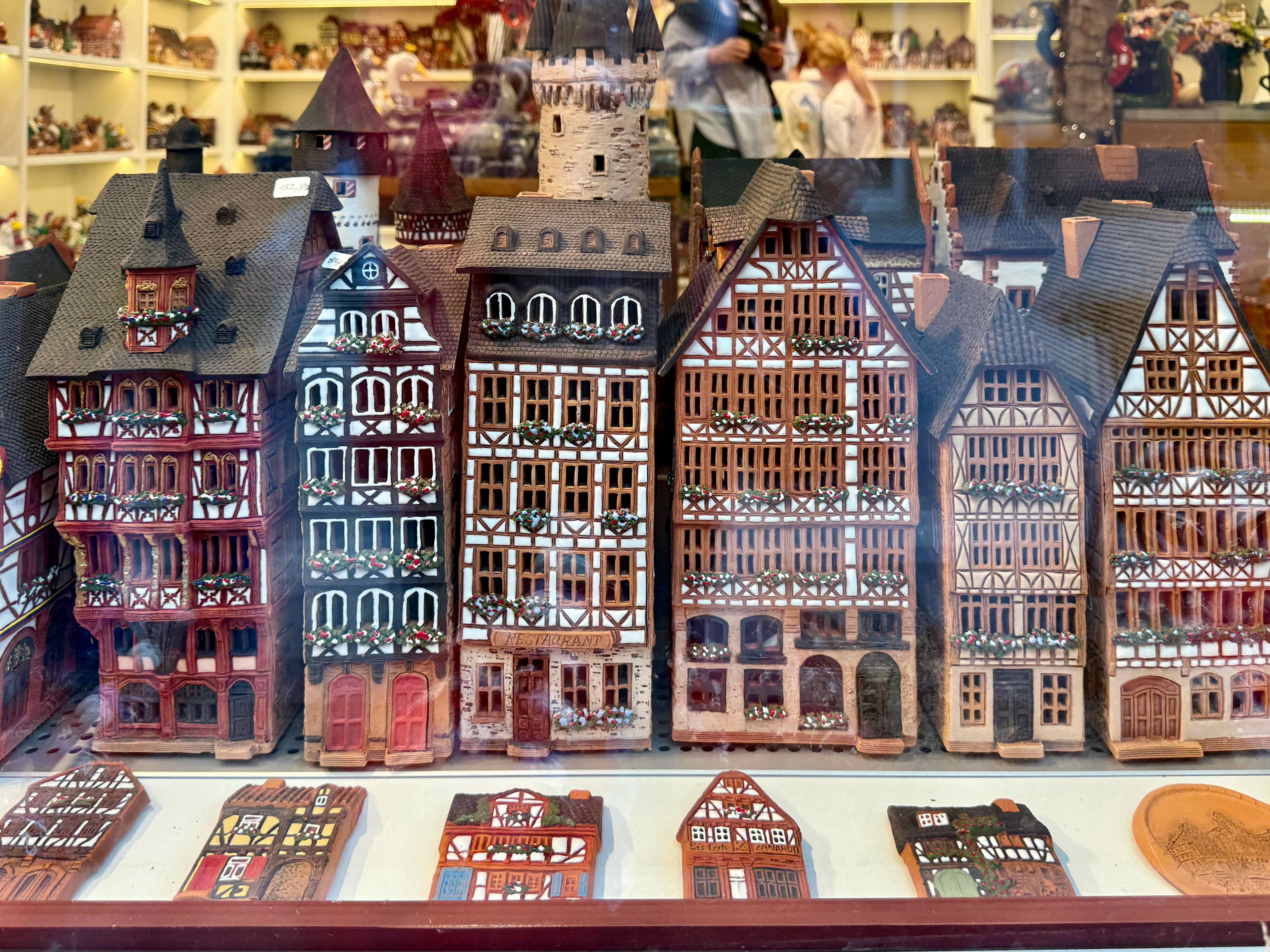
Heading back to the train station we do a bit of window shopping.  We don’t buy souvenirs as a rule.  It is just too difficult to carry purchases around during an extended trip.

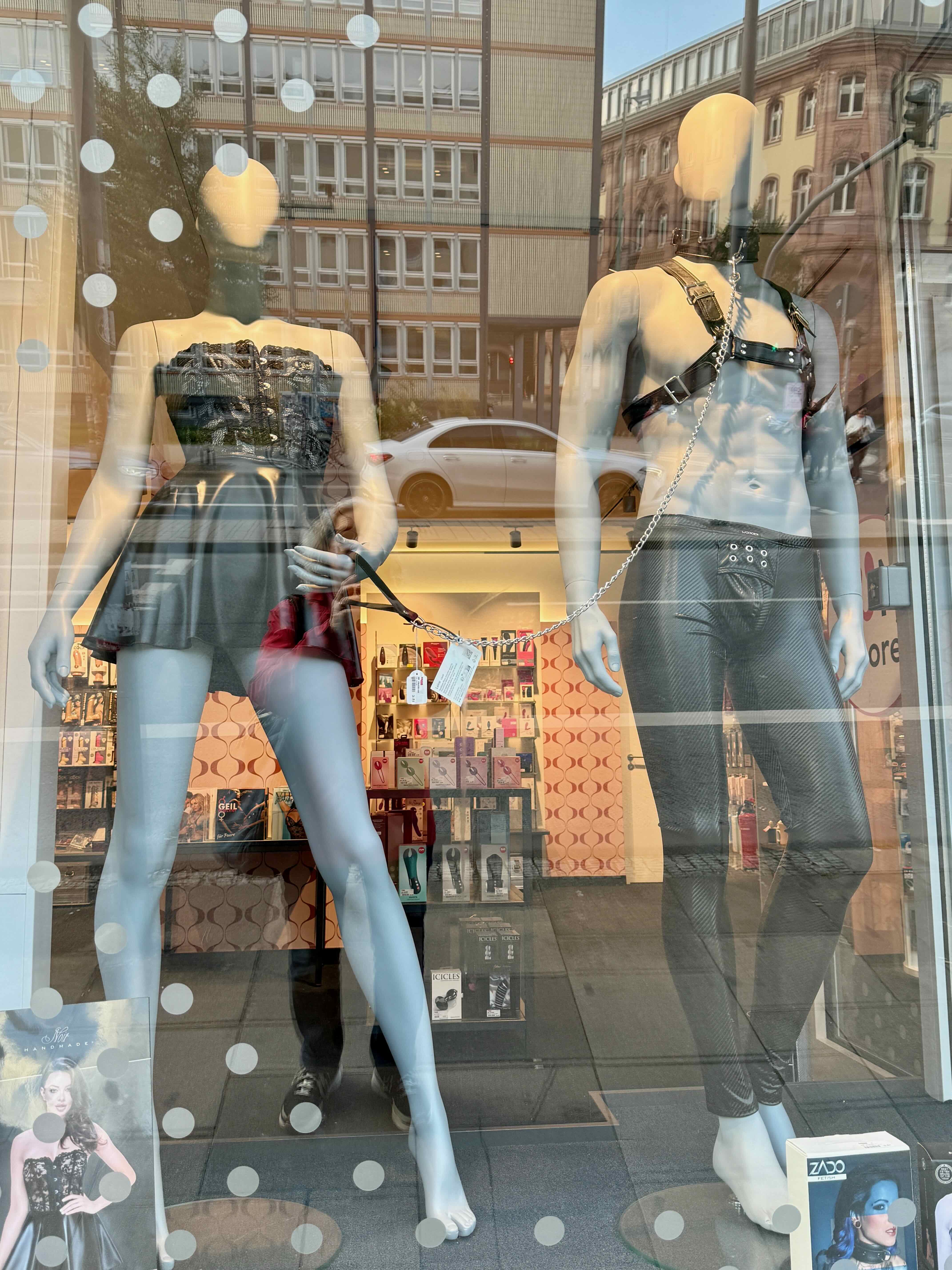
These characters made us laugh. This store carried some interesting merchandise.
I am always kind of shocked to see semi-automatic weapons and other guns on display in store windows!  

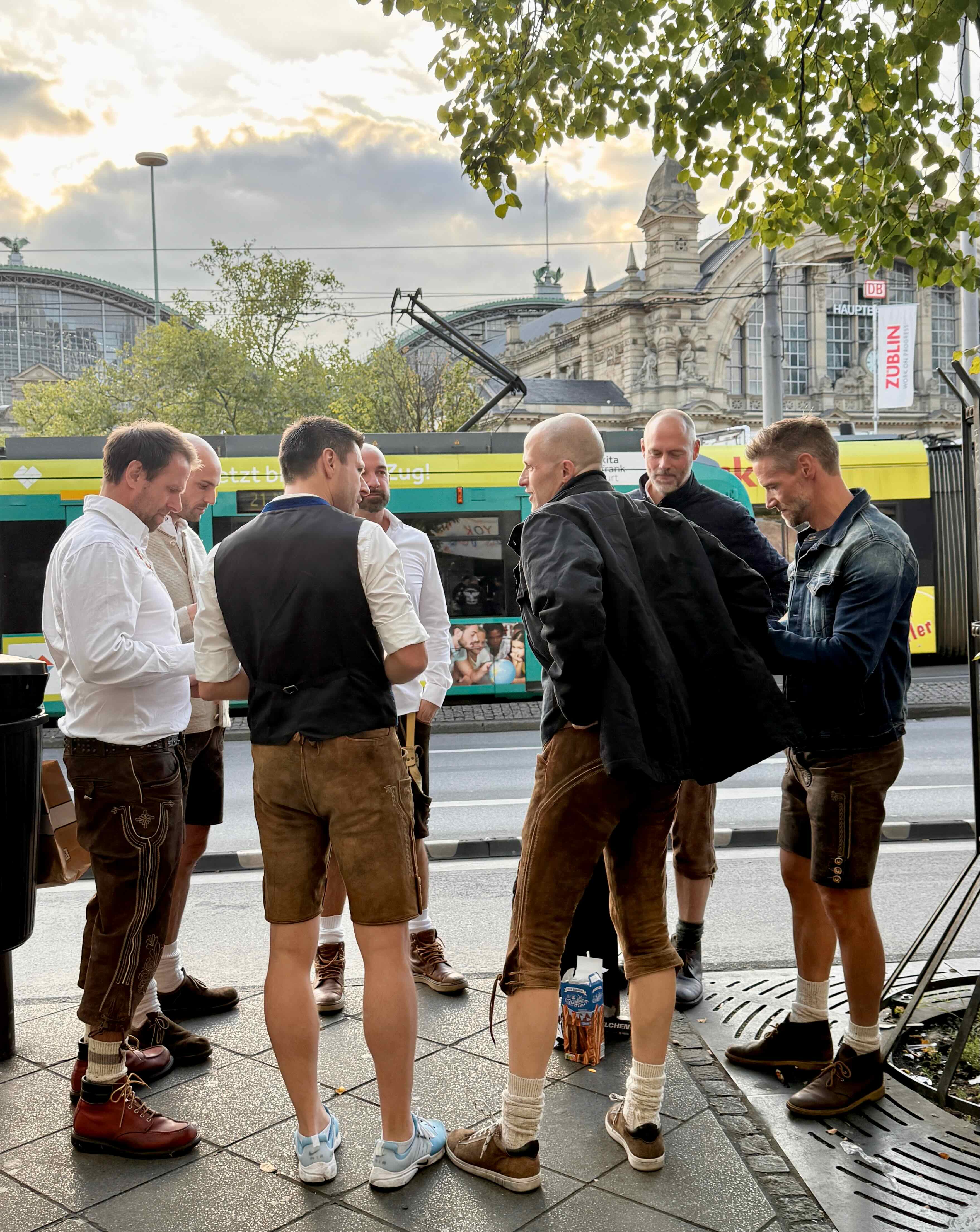
In front of the train station this group of friends are all wearing Lederhosen.  I think it was for some special event as they were taking photos of themselves.

Back to the train station to head home.  Another full day!

Funicular and Rhine Boat Ride

Day 32     Wednesday, October 1, 2025

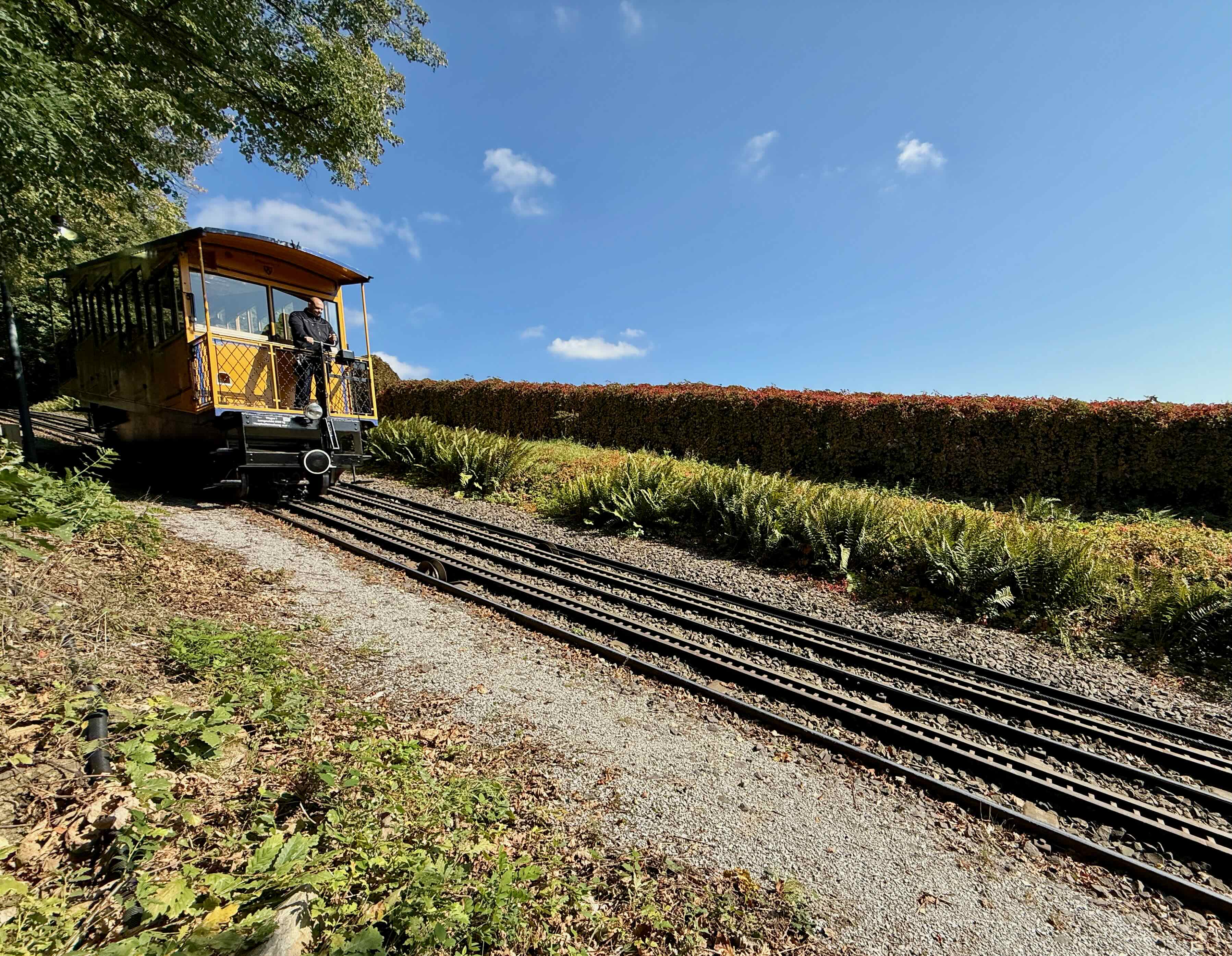
We take a funicular to a park area high above Wiesbaden, a town about an hour from our bnb in Frankfurt. This funicular uses water as its power source.  The car at the top fills with water and it is used to counterbalance and power the car that is going uphill. When the funicular car gets to the bottom it empties its water tank, which is then pumped back up to the top of the hill. It is quite ingenious.

Halfway we meet the funicular car that is descending.

There is a panoramic view of Wiesbaden from the top.

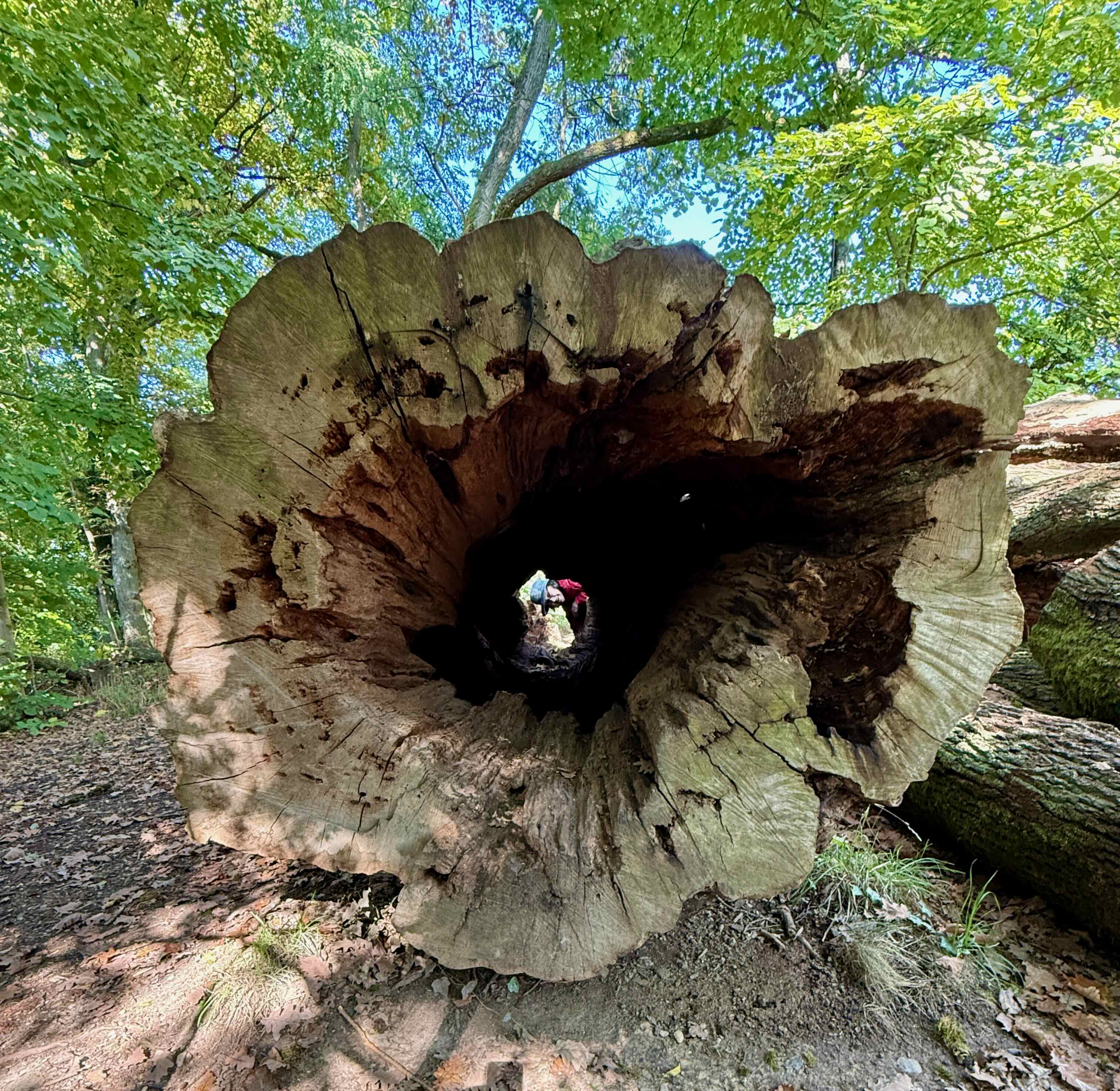
This is a monument to the German soldiers that died during World War I. I think I may have mentioned that there are big trees in Europe? This hollow tree was cut down, I presume for safety.  Can you see me in the other end?
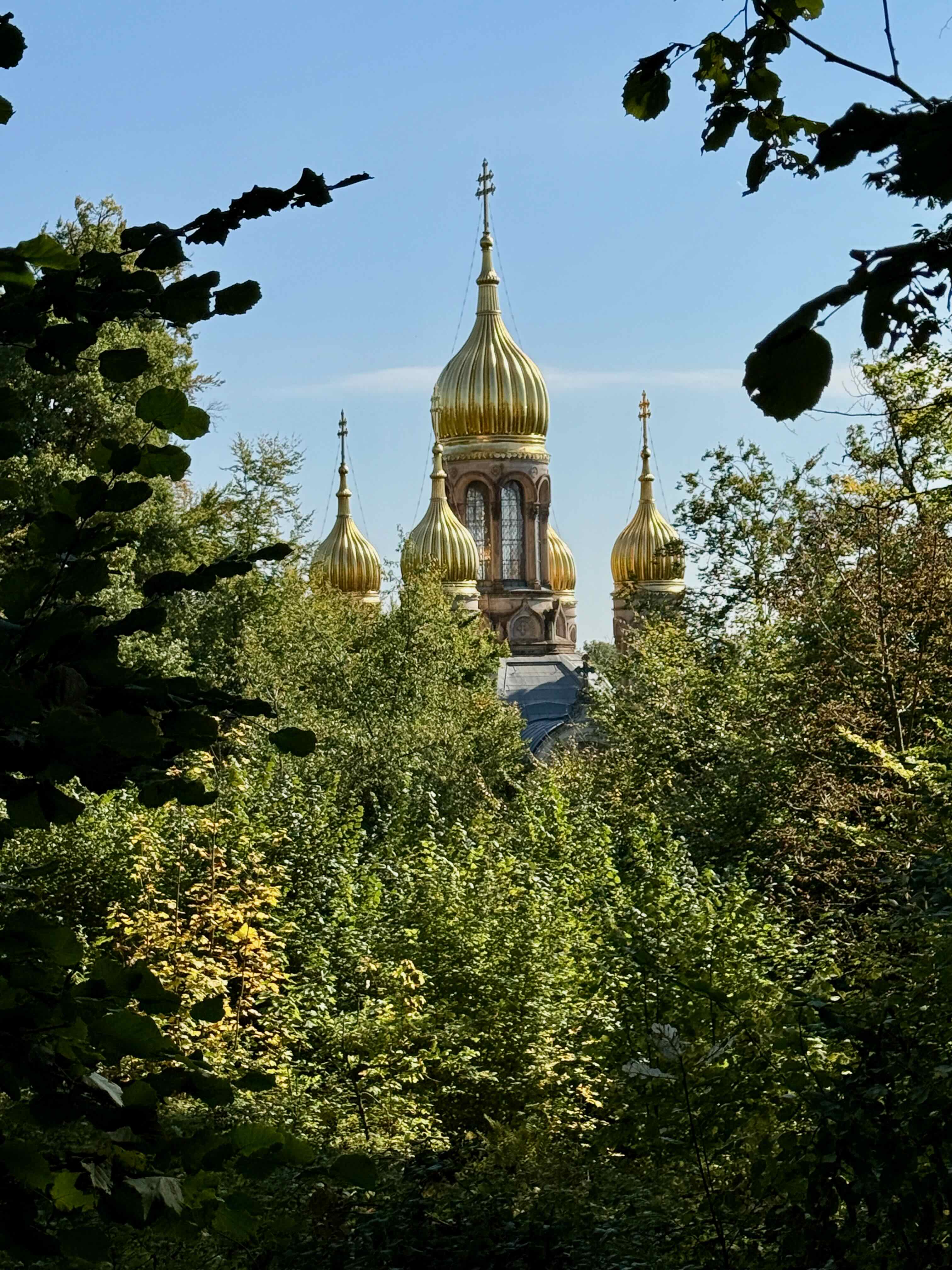
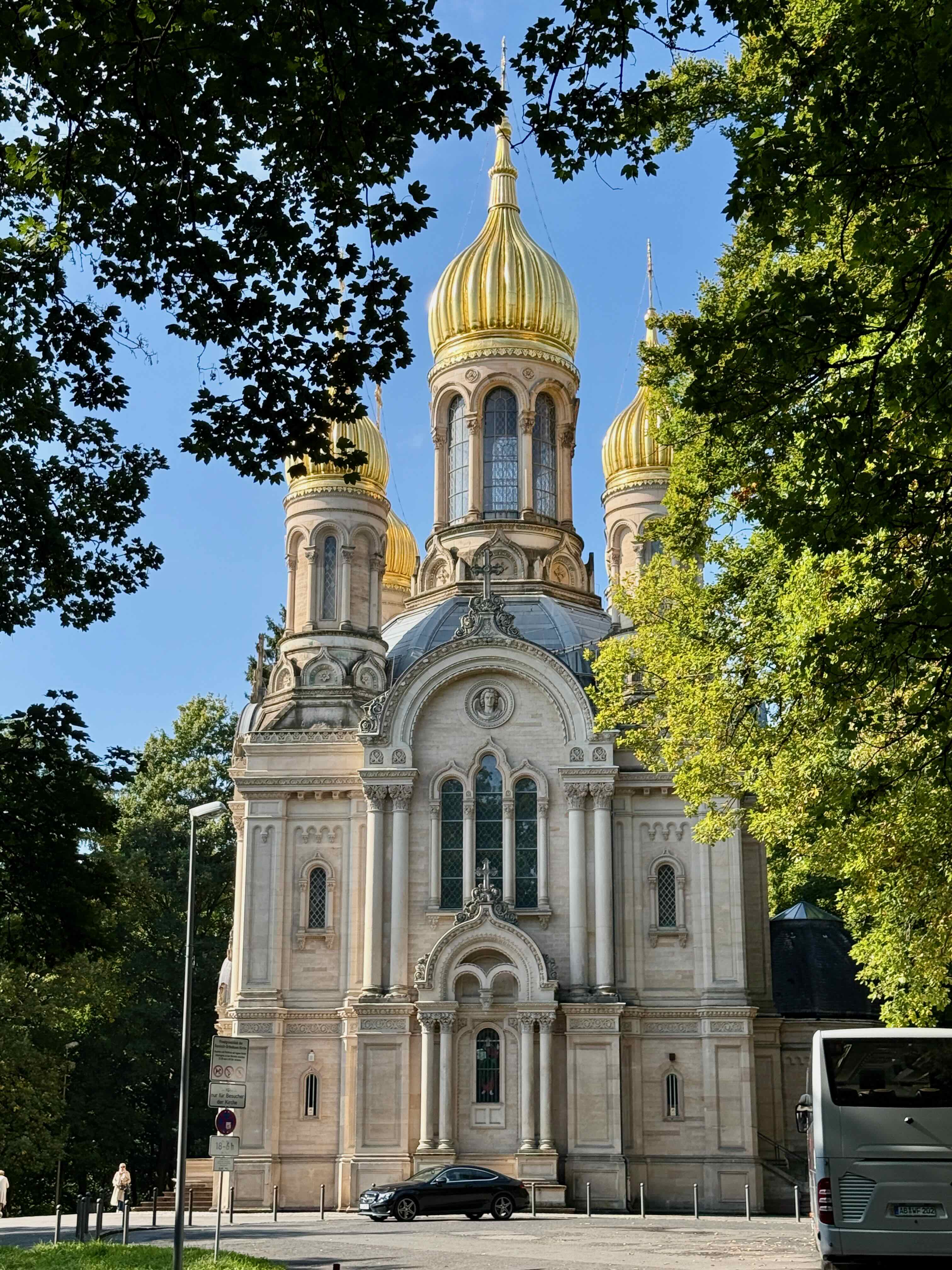
We see golden domes in the distance and walk along a path to this ‘Burial Church’.

This Russian Orthodox Church is a declaration of love from the deeply grieving husband Duke Adolph to his young wife, Grand Duchess Elizabeth, who died in childbirth along with her baby. He built the church with funds from her dowery.

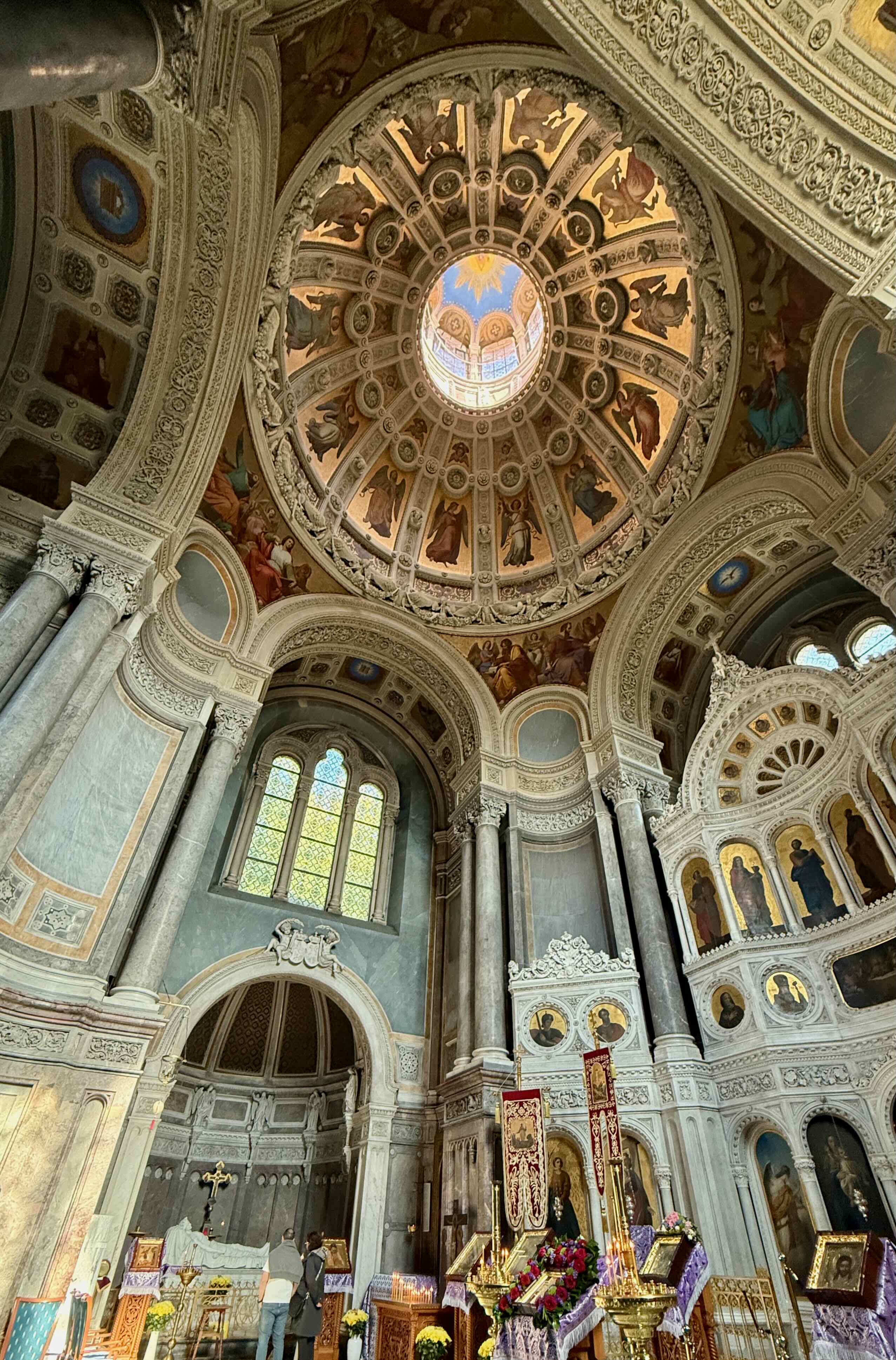
I took this photo before I was told that no photos were allowed in this church. The dome is gorgeous. There is lots of gold decoration and many icons in elaborate gold frames on display.

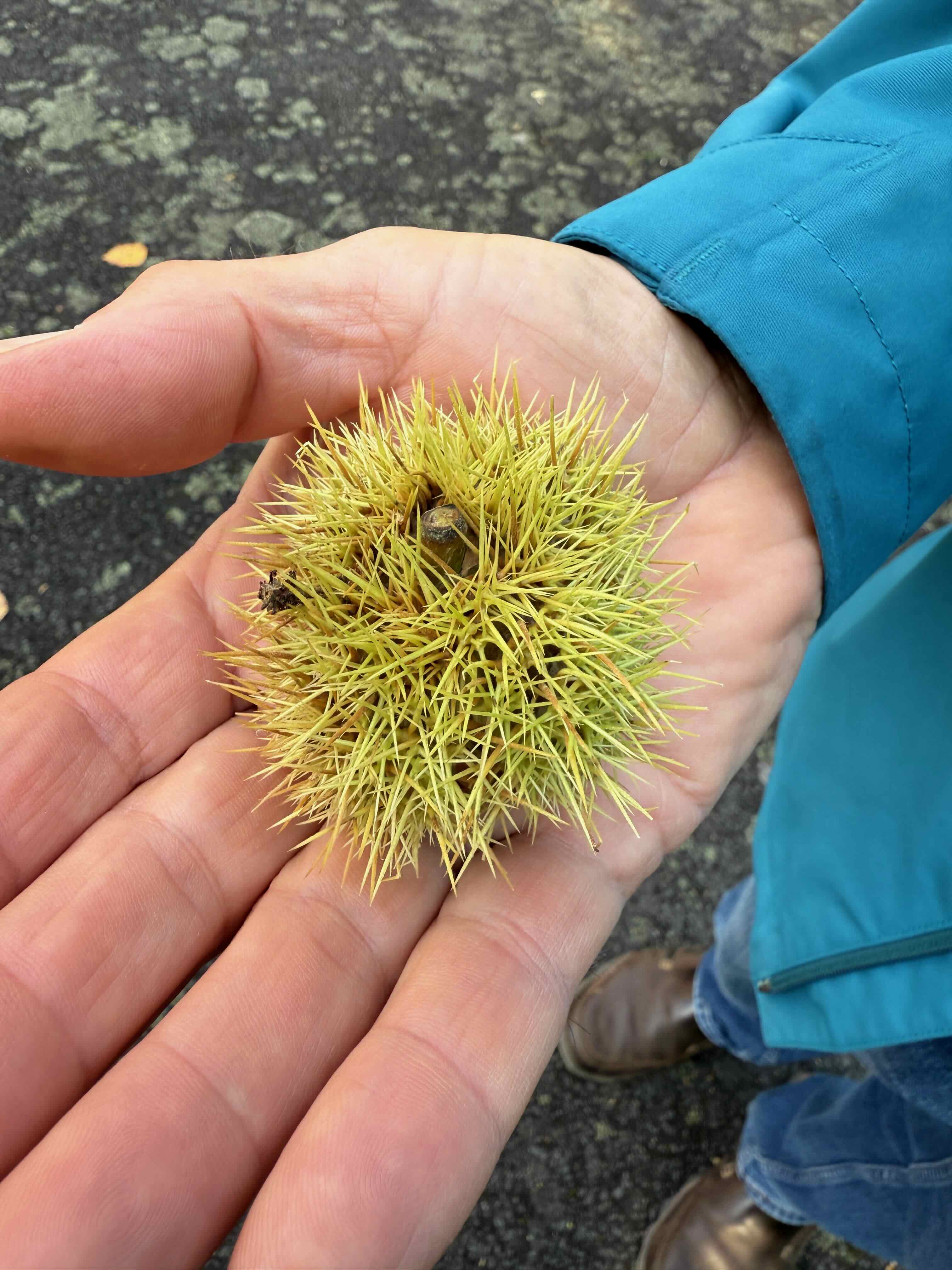
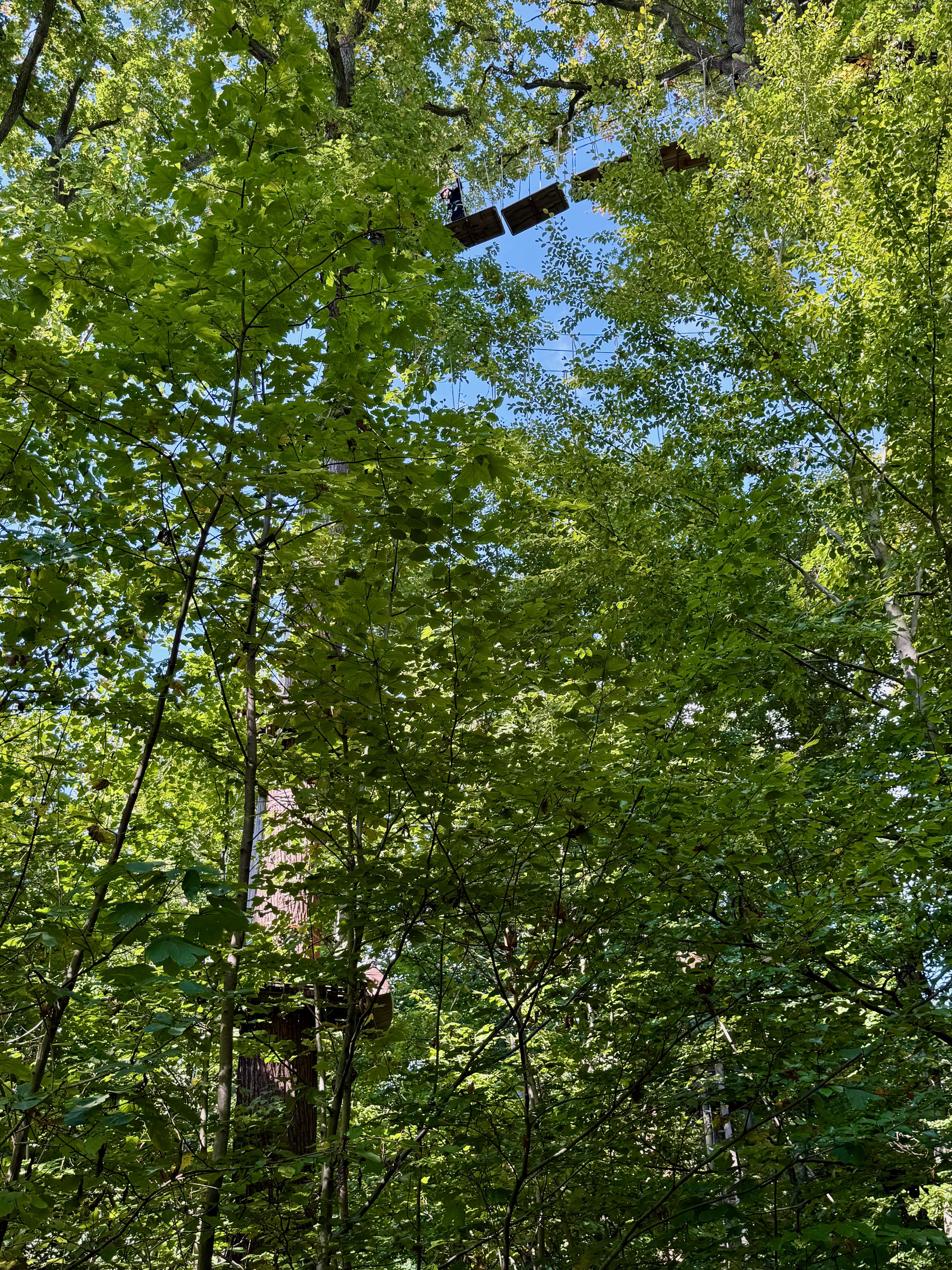
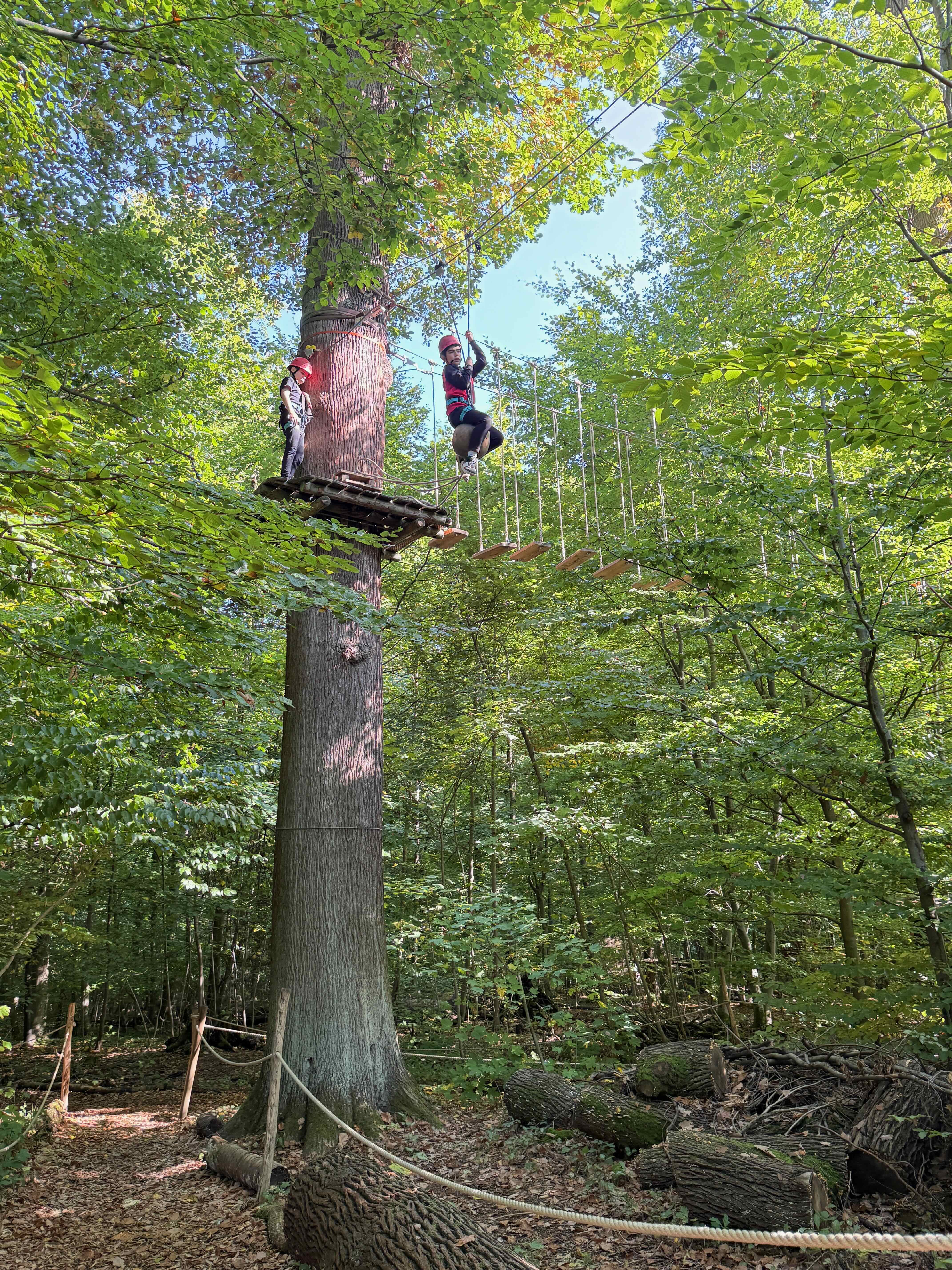
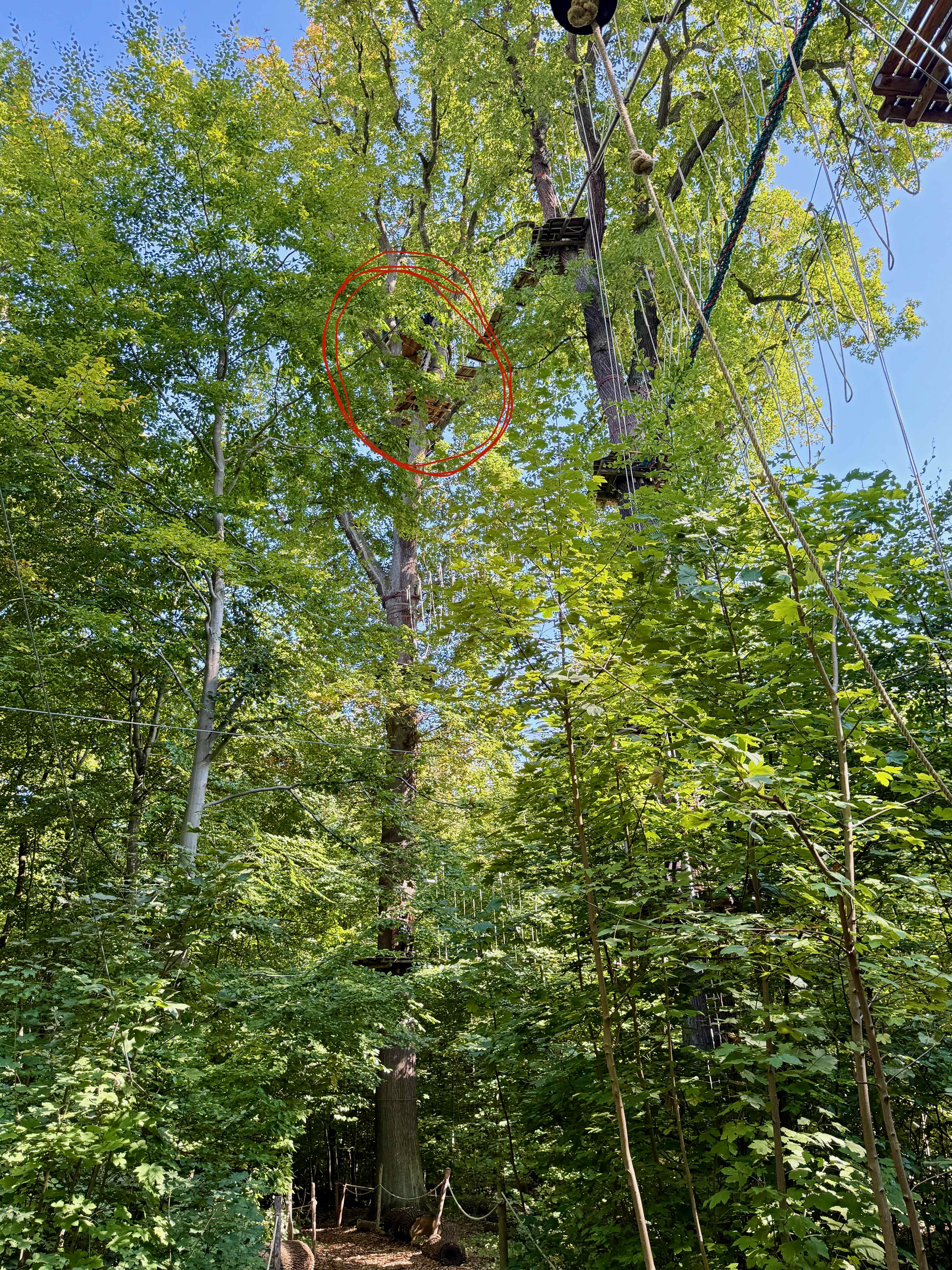
Outside the chestnuts are falling.   They are incredibly prickly!We had our picnic lunch on a bench beside the church, overlooking the town far below, then walked back uphill to the park.  We hear a lot of laughter and screaming so decide to find out what is going on. Just a short distance away there is an enormous Tree Climbing Adventure Park that covers several acres.
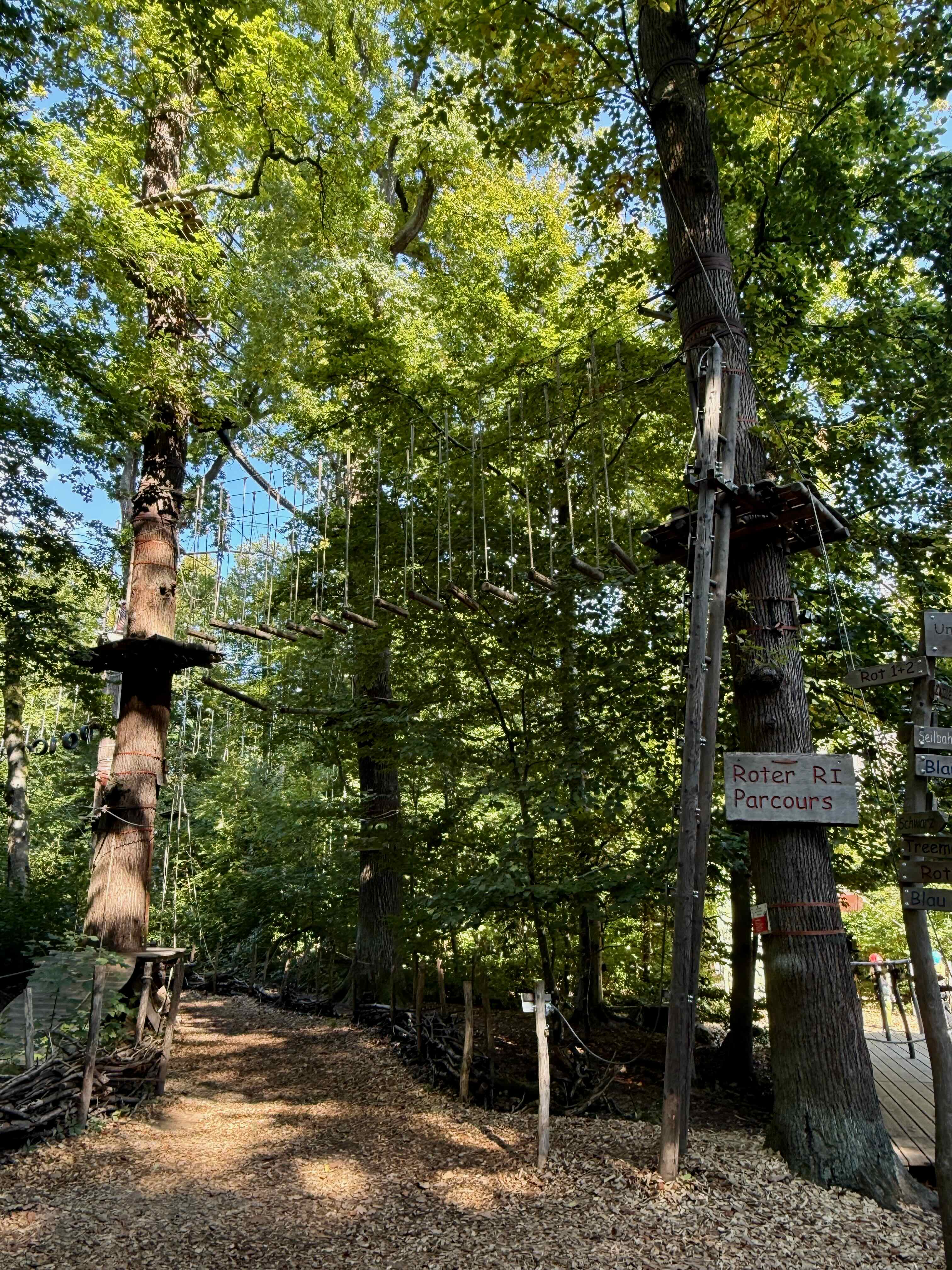
The first thing we see is this youngster trying to get up the courage to step off the high platform, which eventually does happen. I was wondering if someone would have to go up and rescue them?

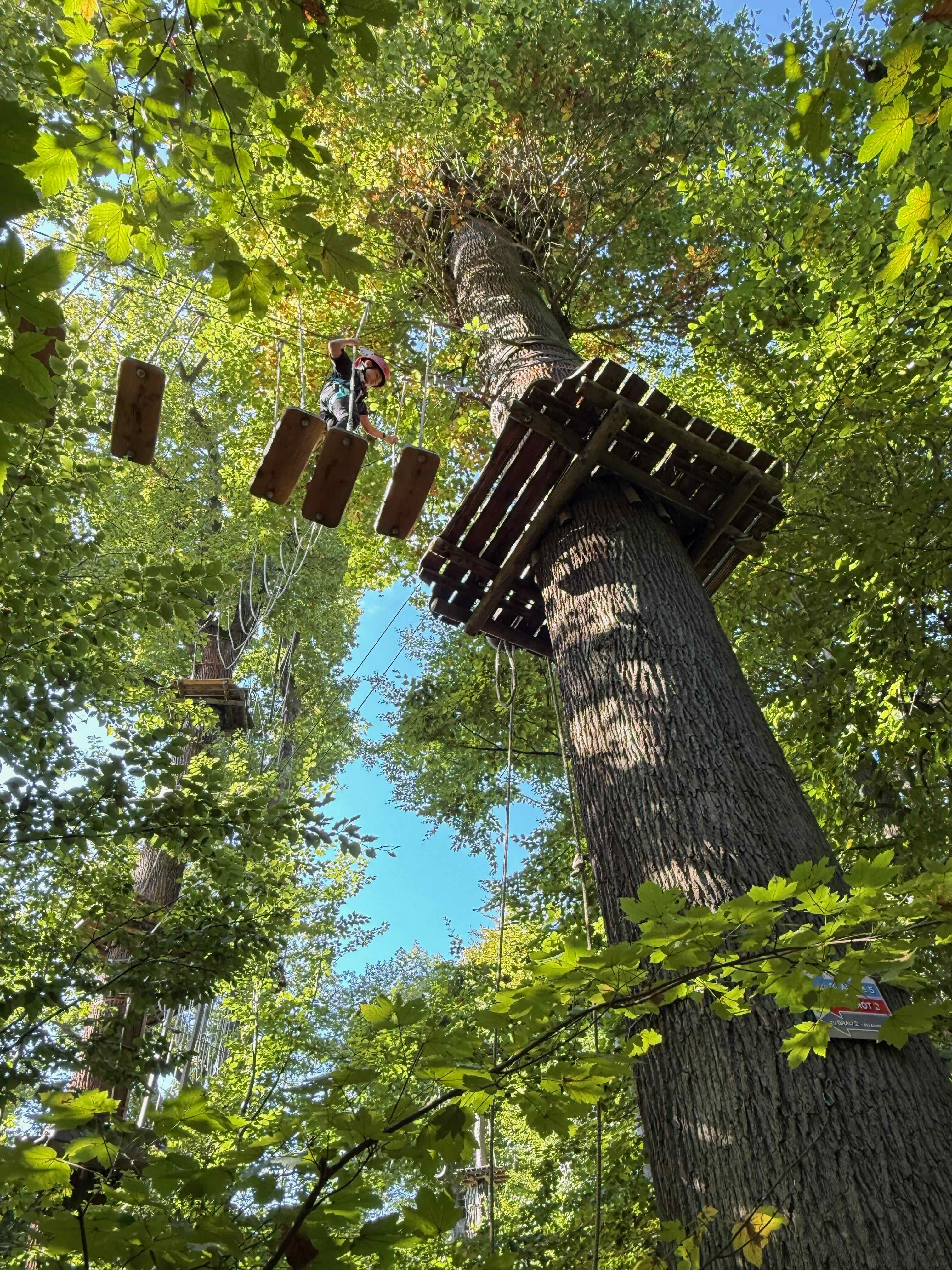
I googled these climbing parks. “Using cables, ropes, bridges, planks and branches, the participants, equipped with harnesses, climb. walk in balance, jump, leap into the void and cross various obstacles. It is the variety and difficulty of the obstacles that makes these courses fun.”

I have never seen such a big park or one with such high platforms and challenges. I love watching all the kids as they make their way around the park. These swinging plaforms look hard enough to cross, but…they are also very high above the ground!

Most of these kids have no fear whatsoever! 

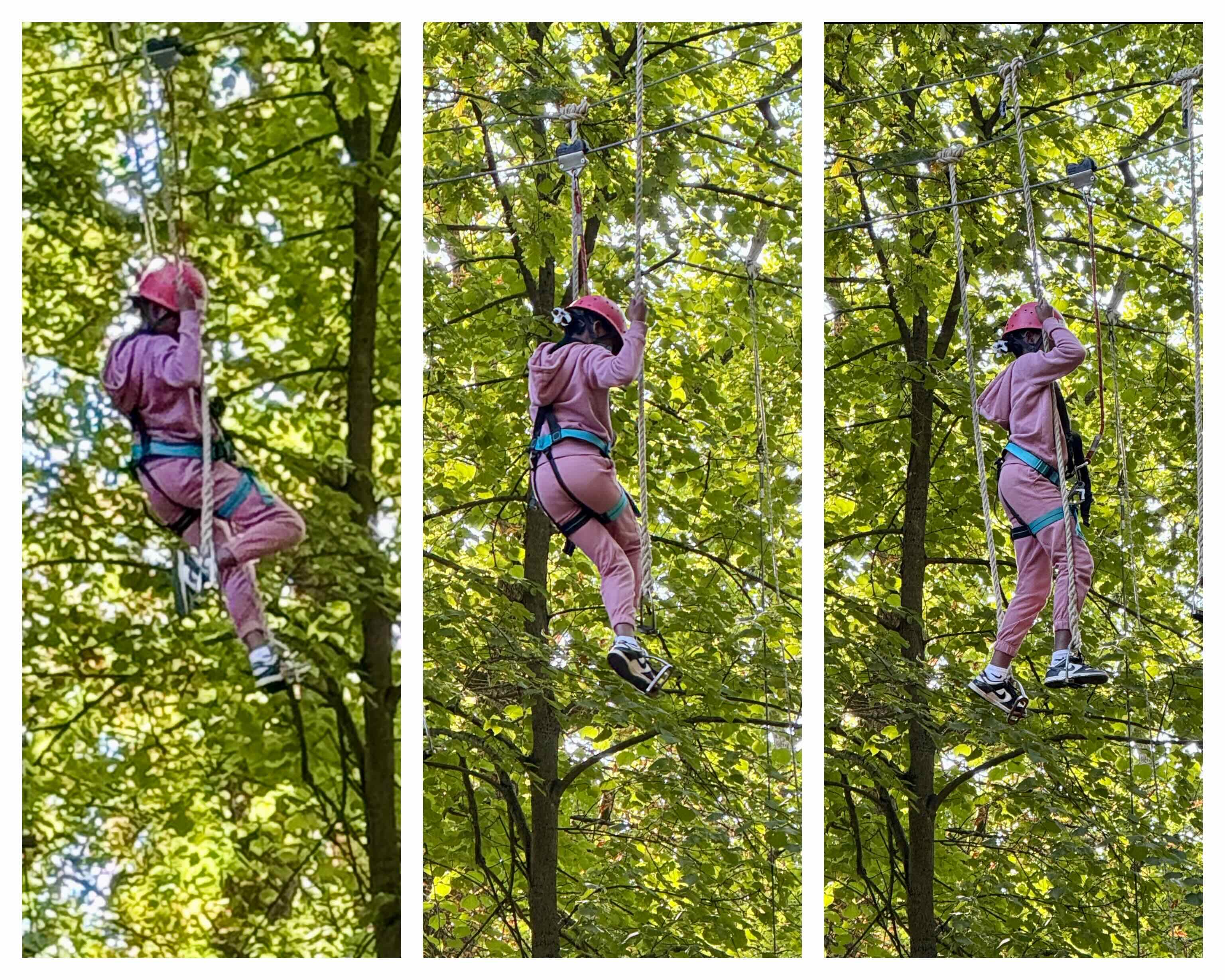
Crossing from one tree to another on these stirrups was a challenge for this young lady, but she persevered and made it!

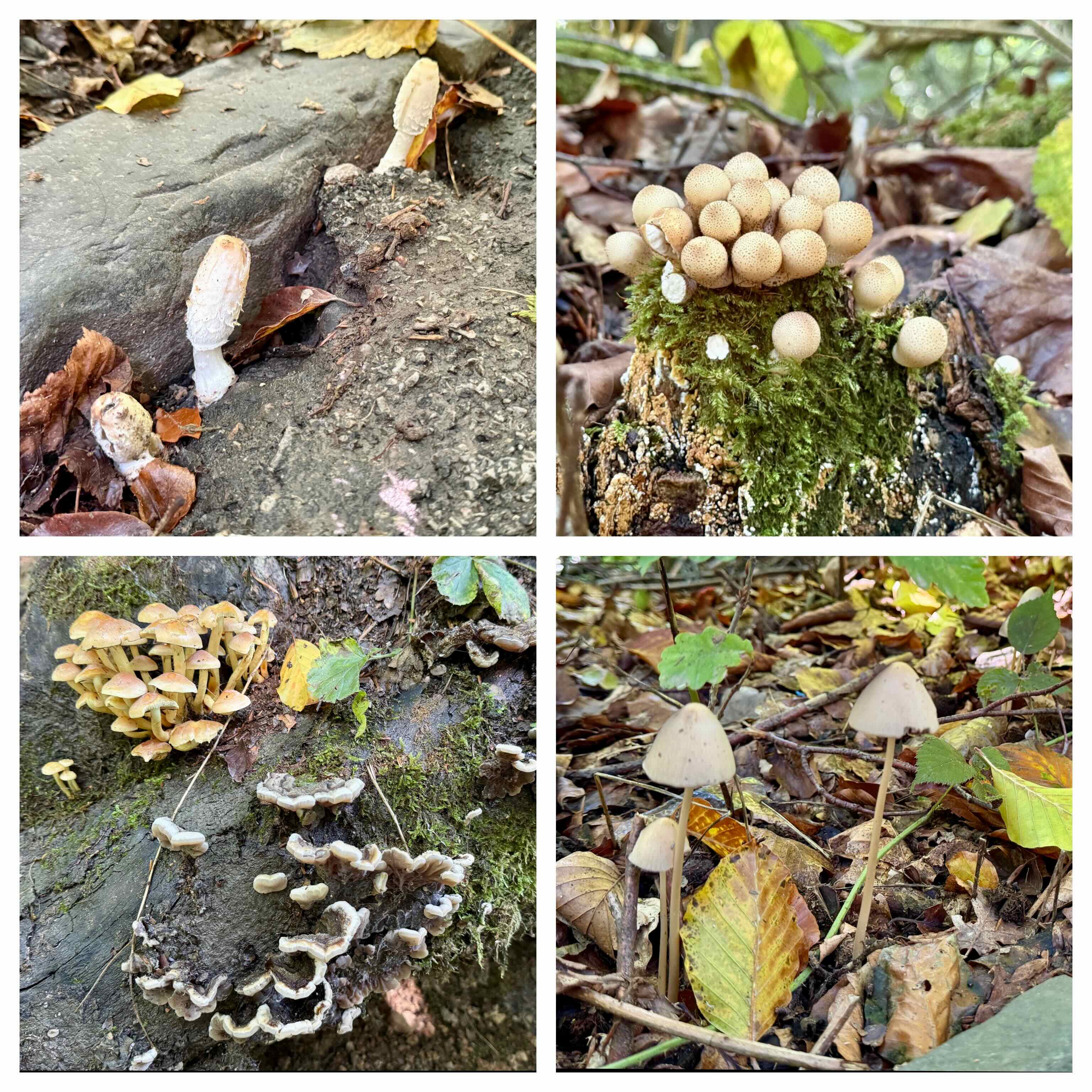
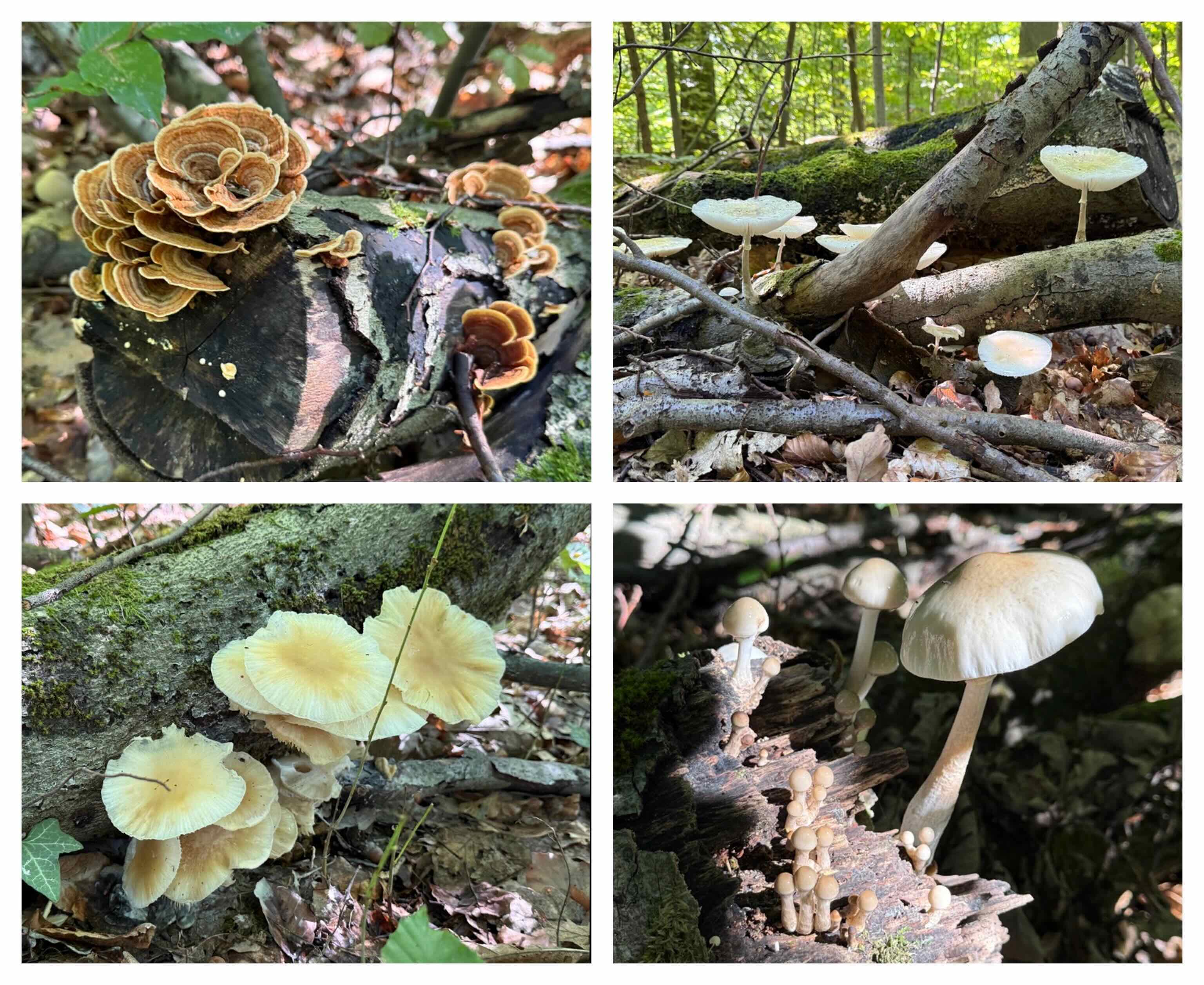
While we are watching all the activity above, I look down and see all sorts of mushrooms.  I absolutely love the different shapes and colours of mushrooms and I took some photos to draw from later.This platform high in the trees…

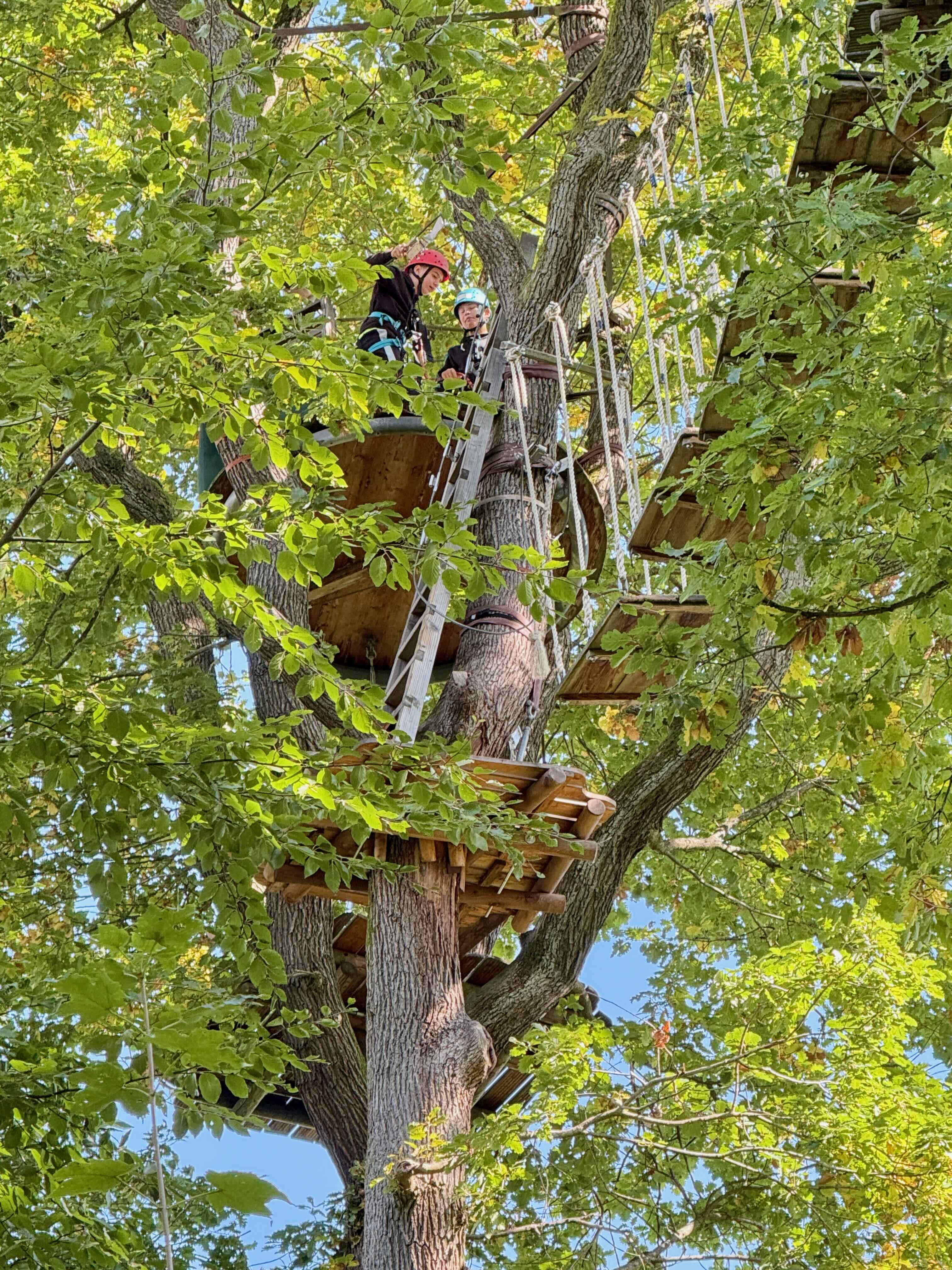
…has two young boys jumping and laughing as the platform they are standing on sways back and forth!   The kids liked that I was taking photos.
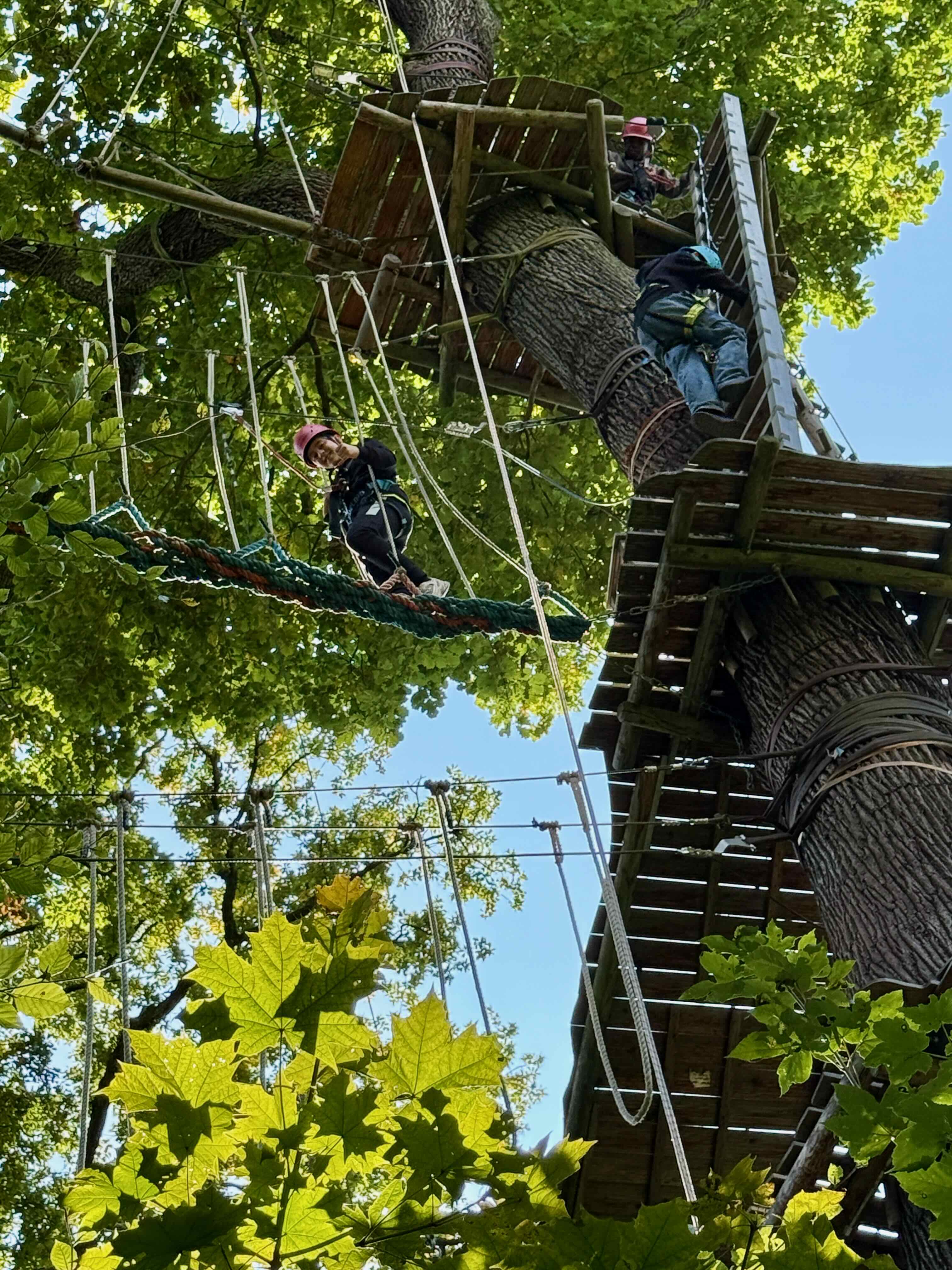
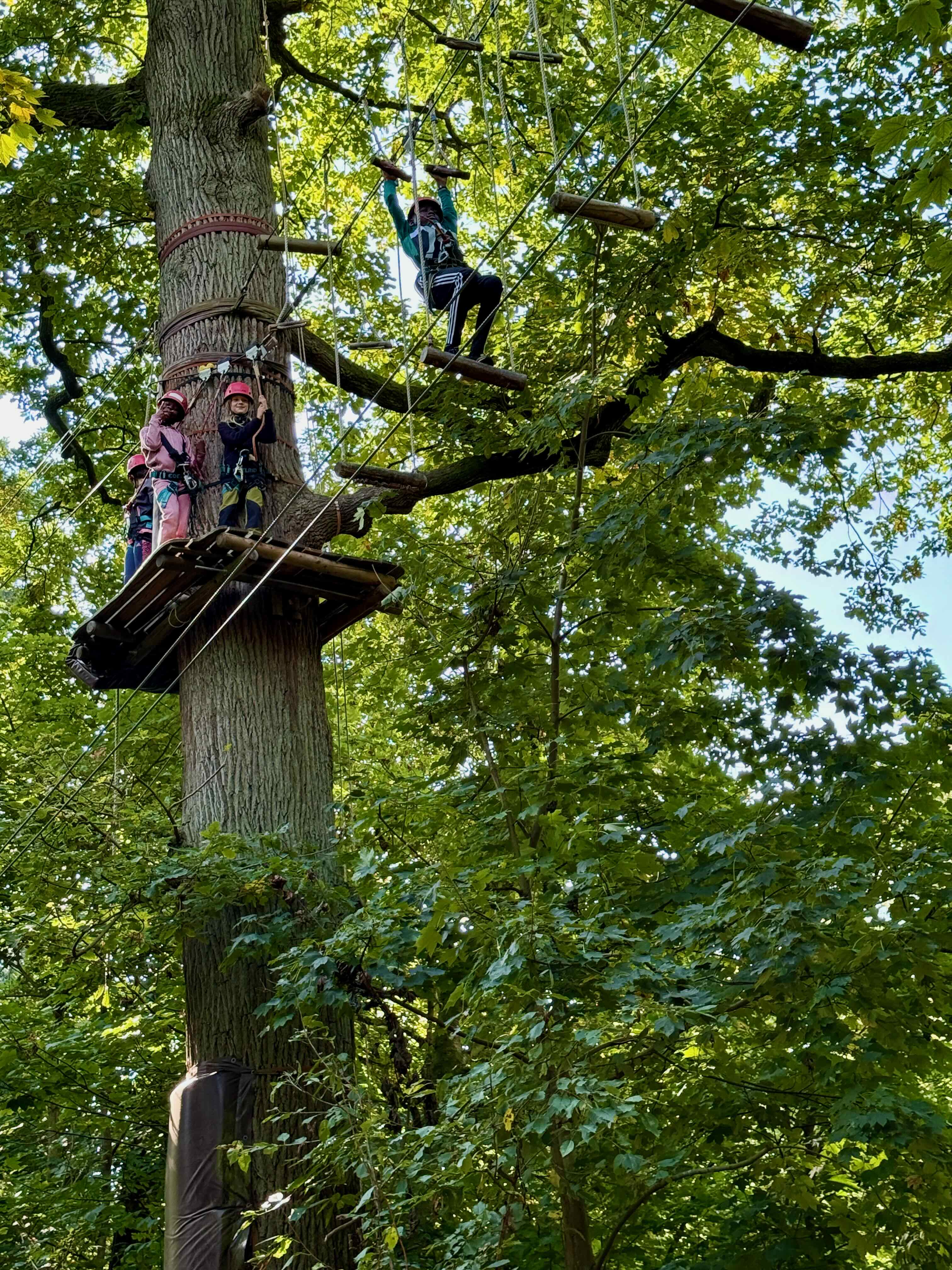
This looked tough. These girls needed to hang from two pieces of wood above their heads and swing towards the next piece of wood to stand on! These kids are so strong and confident.  It was wonderful watching them!

If I were just a few years younger I think I would have loved to give something like this a try.  I was much more fearless then. Now I will have to be content with hugging trees instead of climbing them!

We walk down a trail instead of taking the funicular back down to the bottom.  I find more beautiful mushrooms.

The funicular car passes us on the way down.  It is faster than walking but we really enjoyed strolling down on the path in the forest.

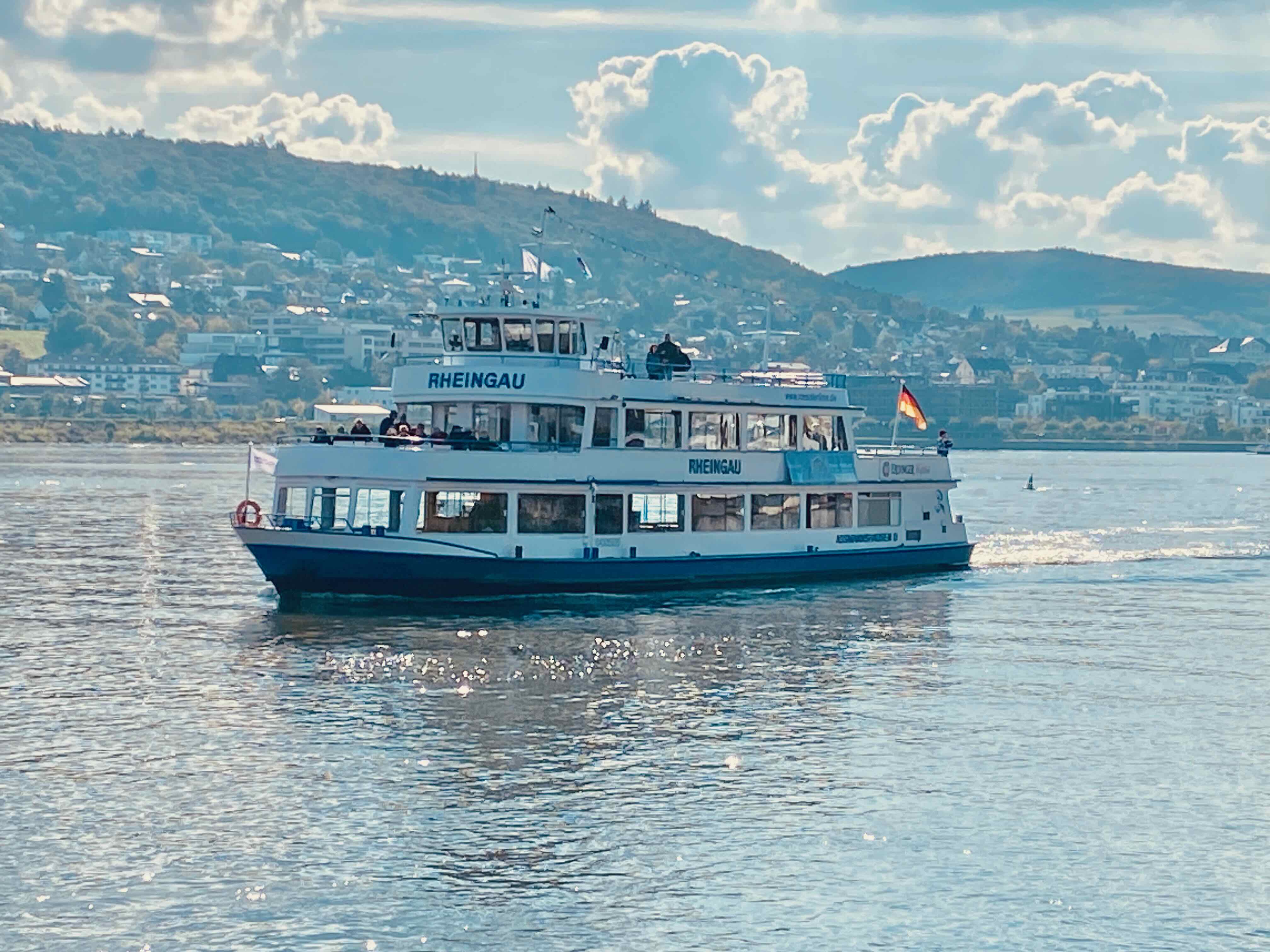
Next we drive to Rudeshiem where we catch a boat to view castles along the Rhine.

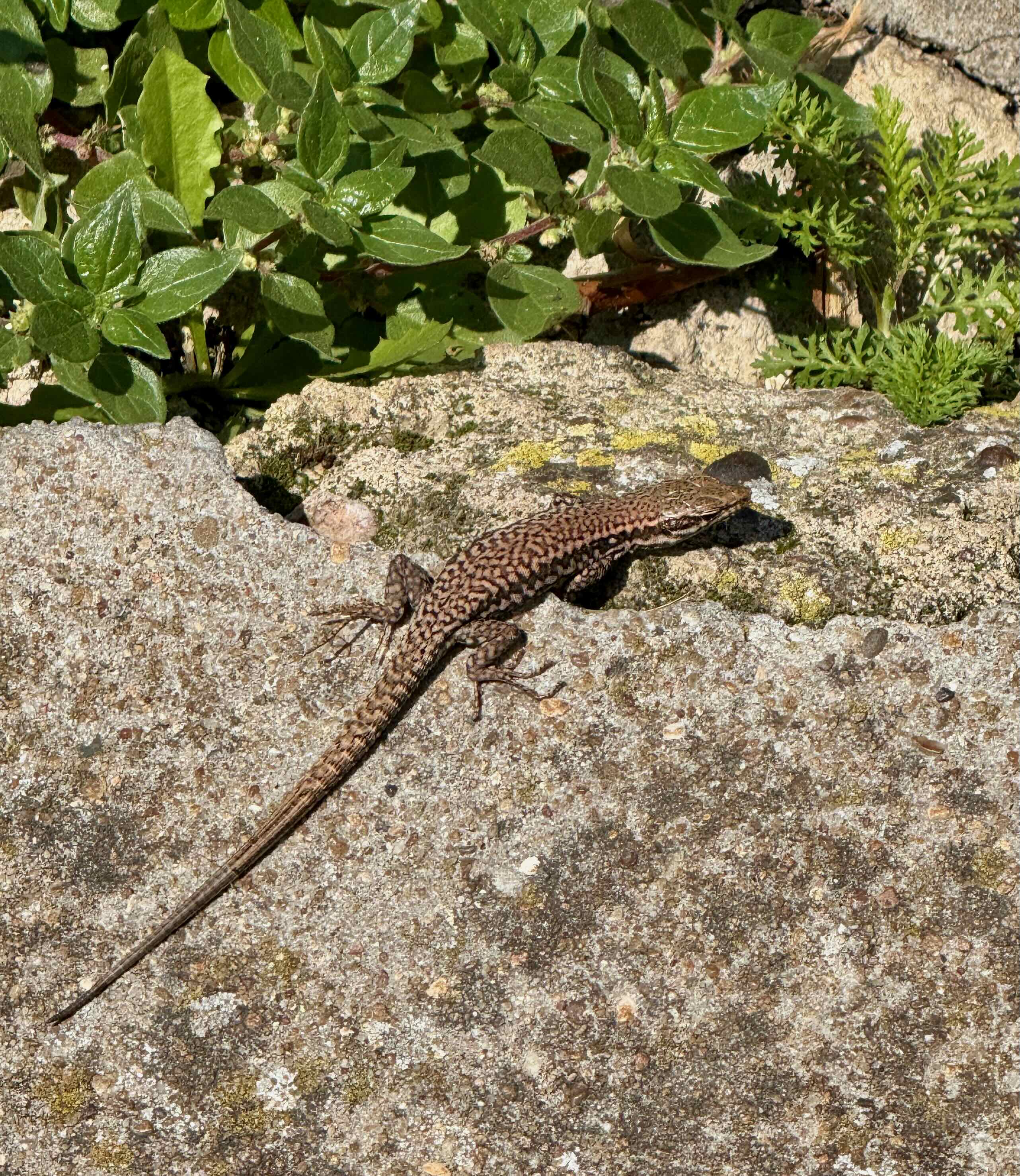
While we wait for the boat to dock I see a little lizard sunning itself in a bit of sunshine.

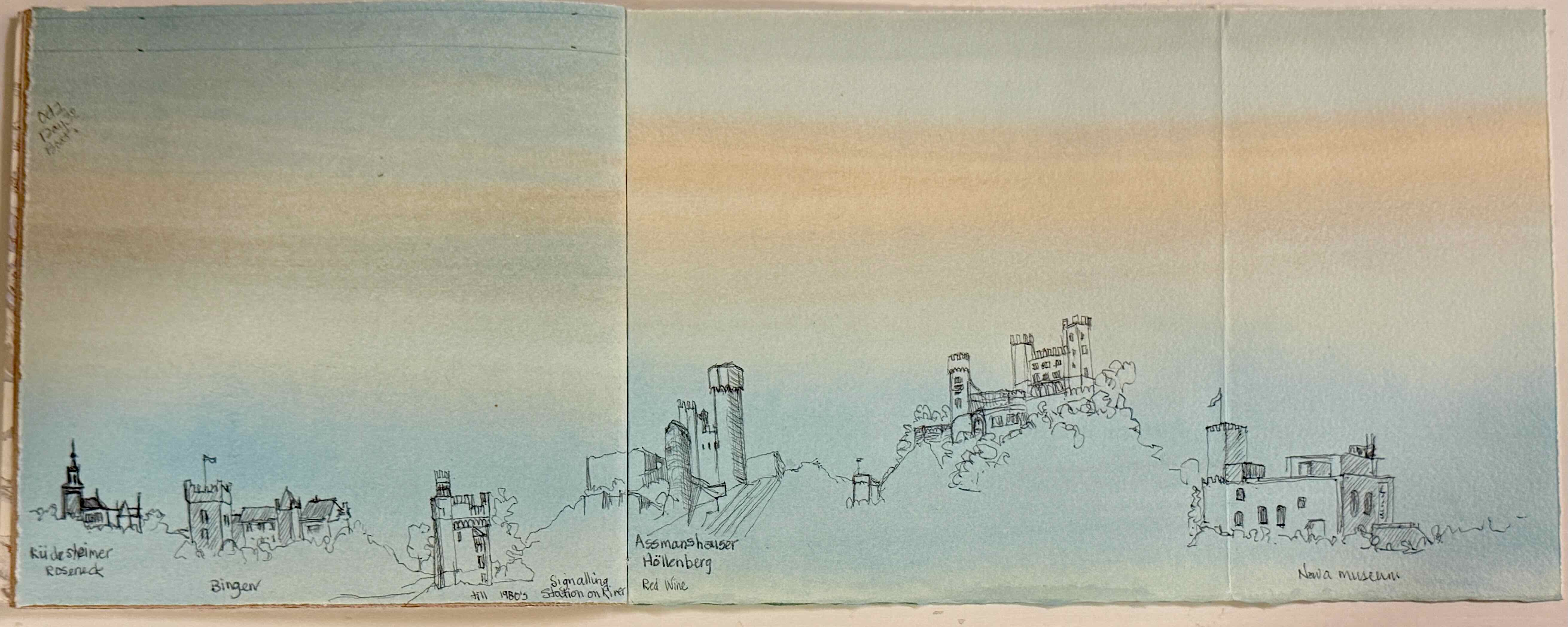
I do some quick sketches of the castles along the shore.

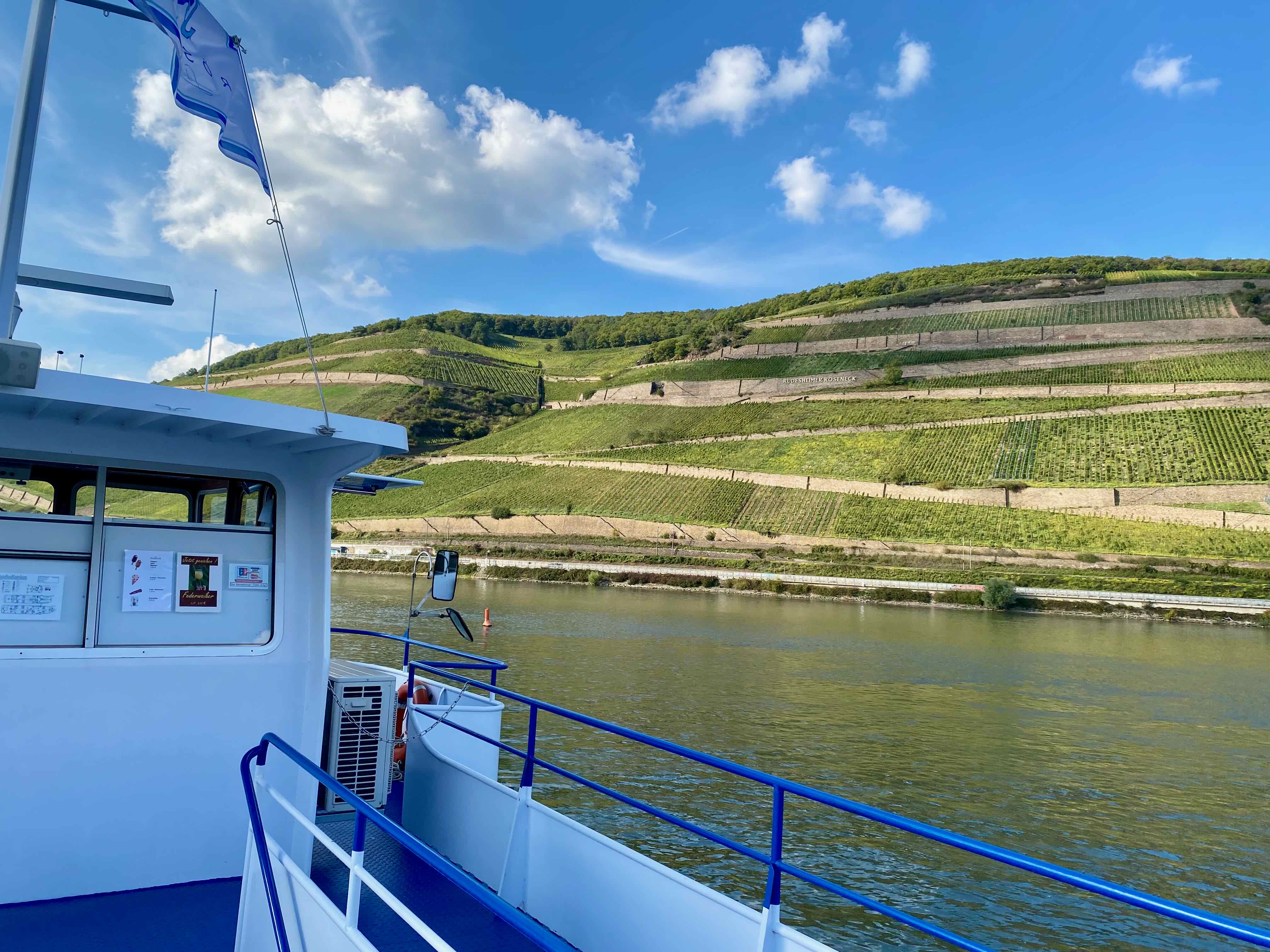
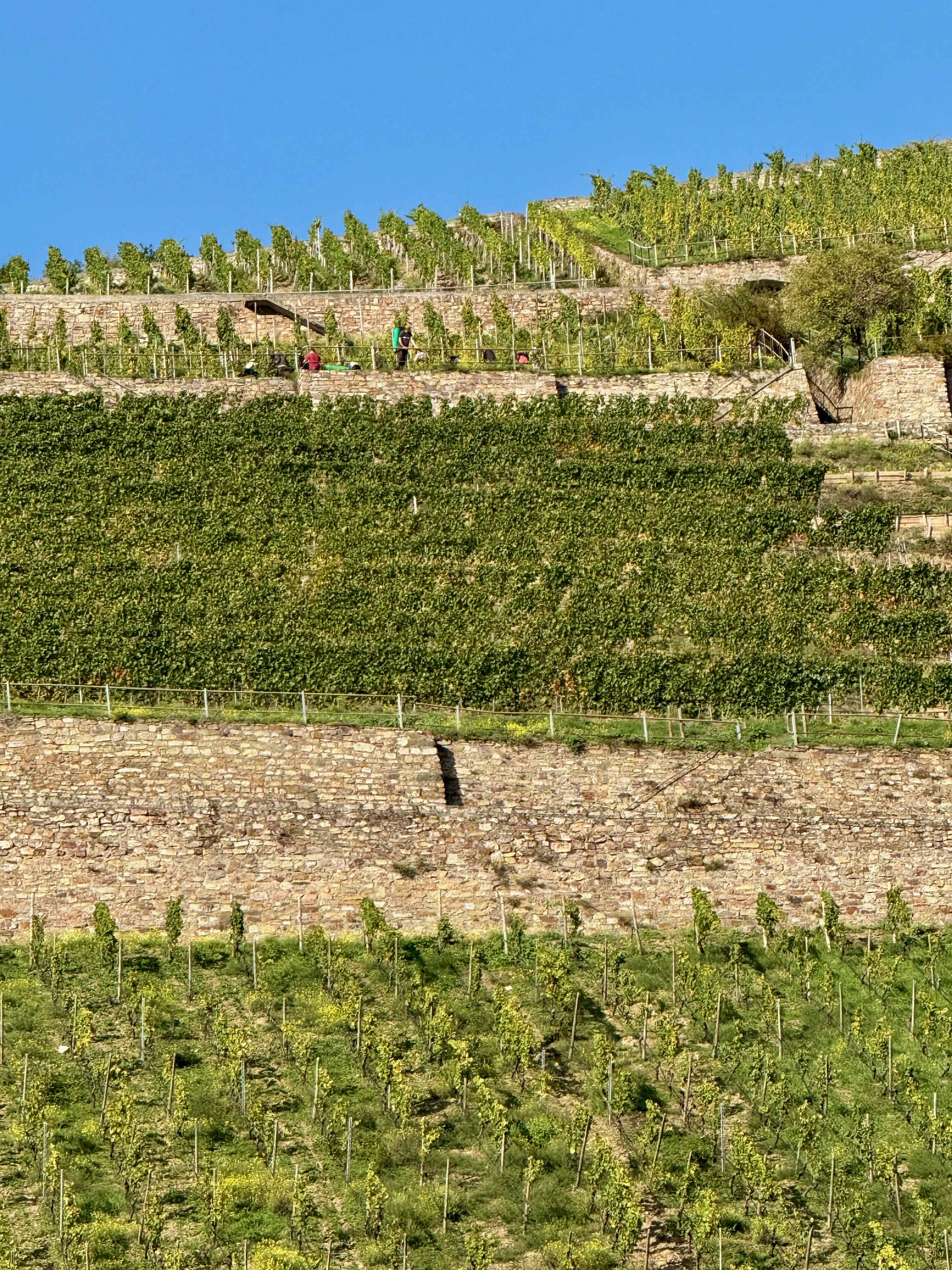
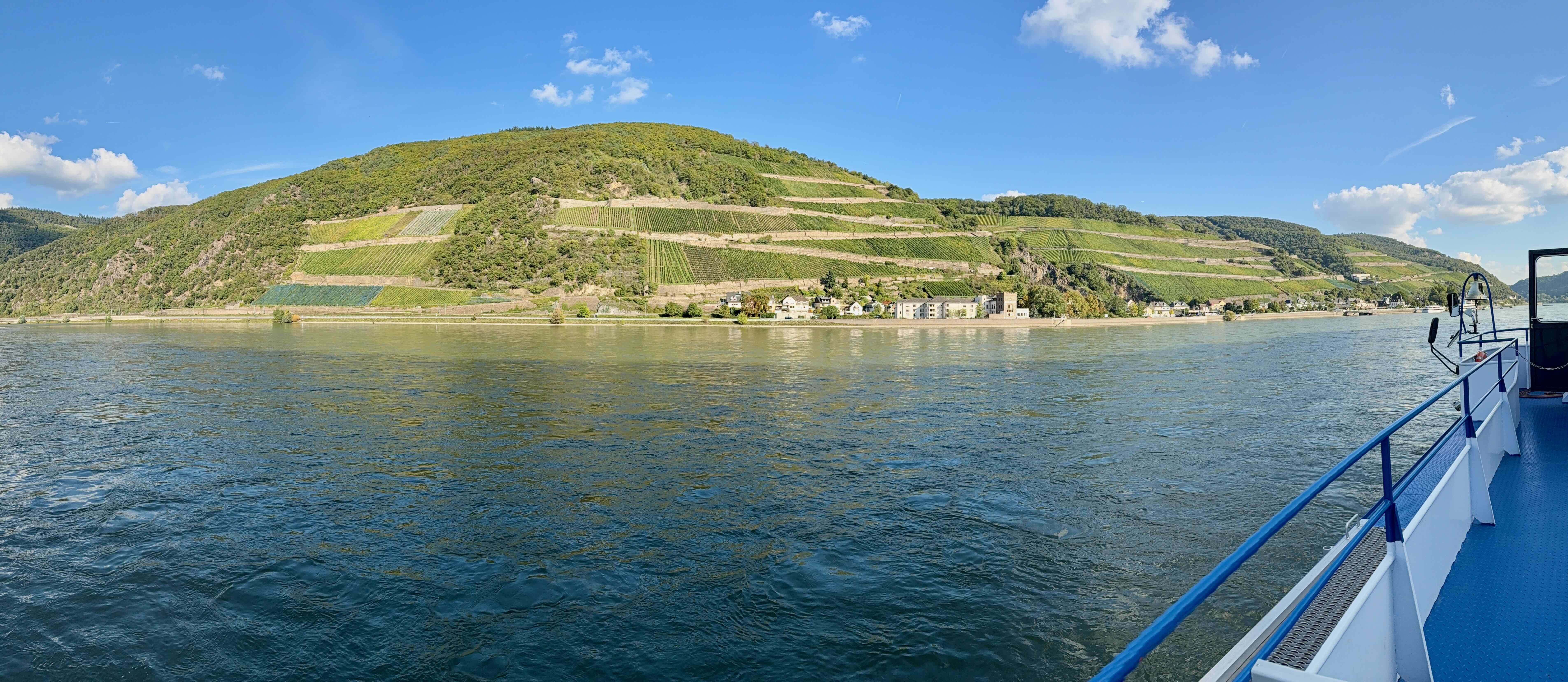
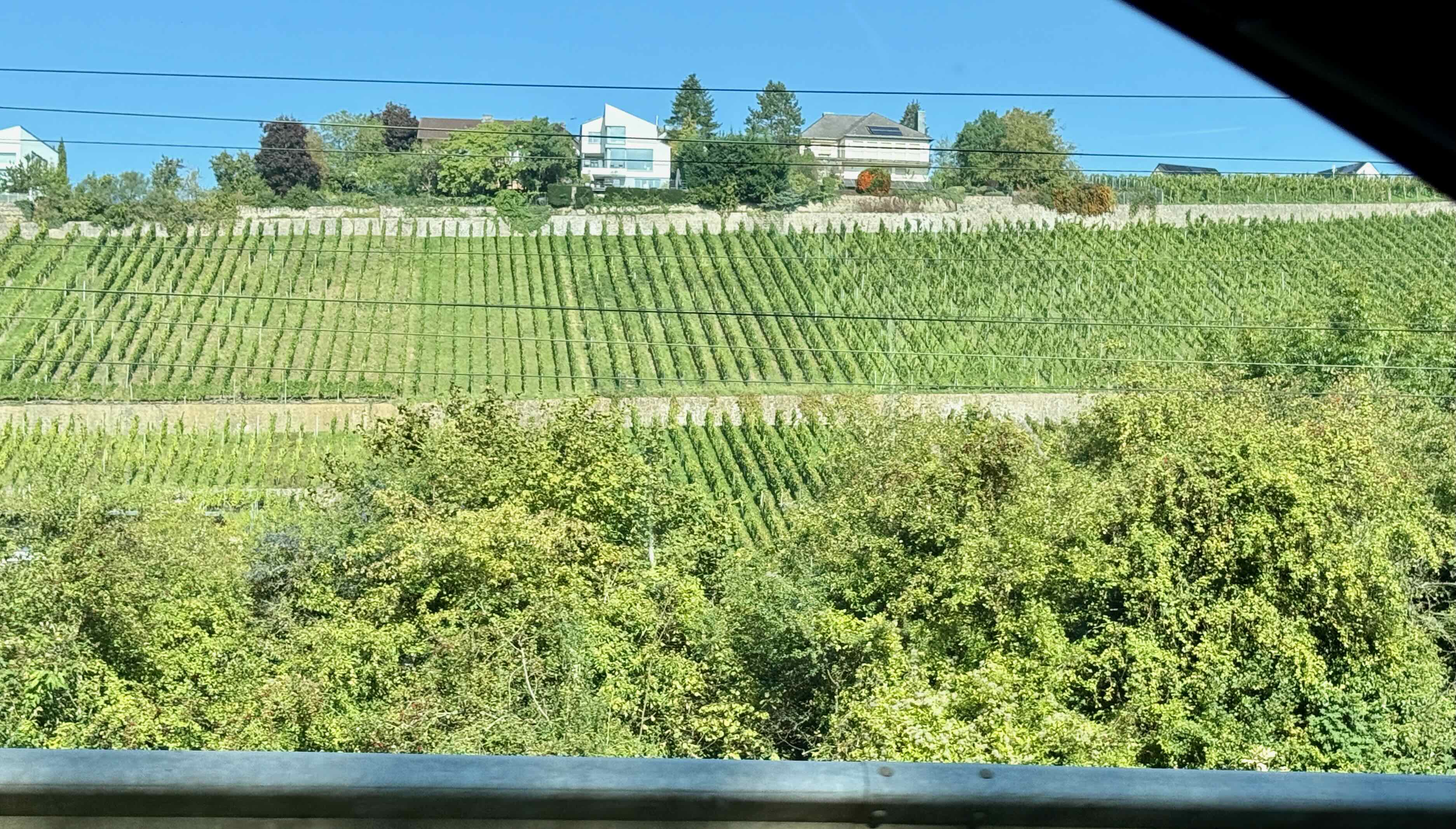
We pass a lot of vineyards. This area is famous for its red wine.

We spot a few workers high on the hill.

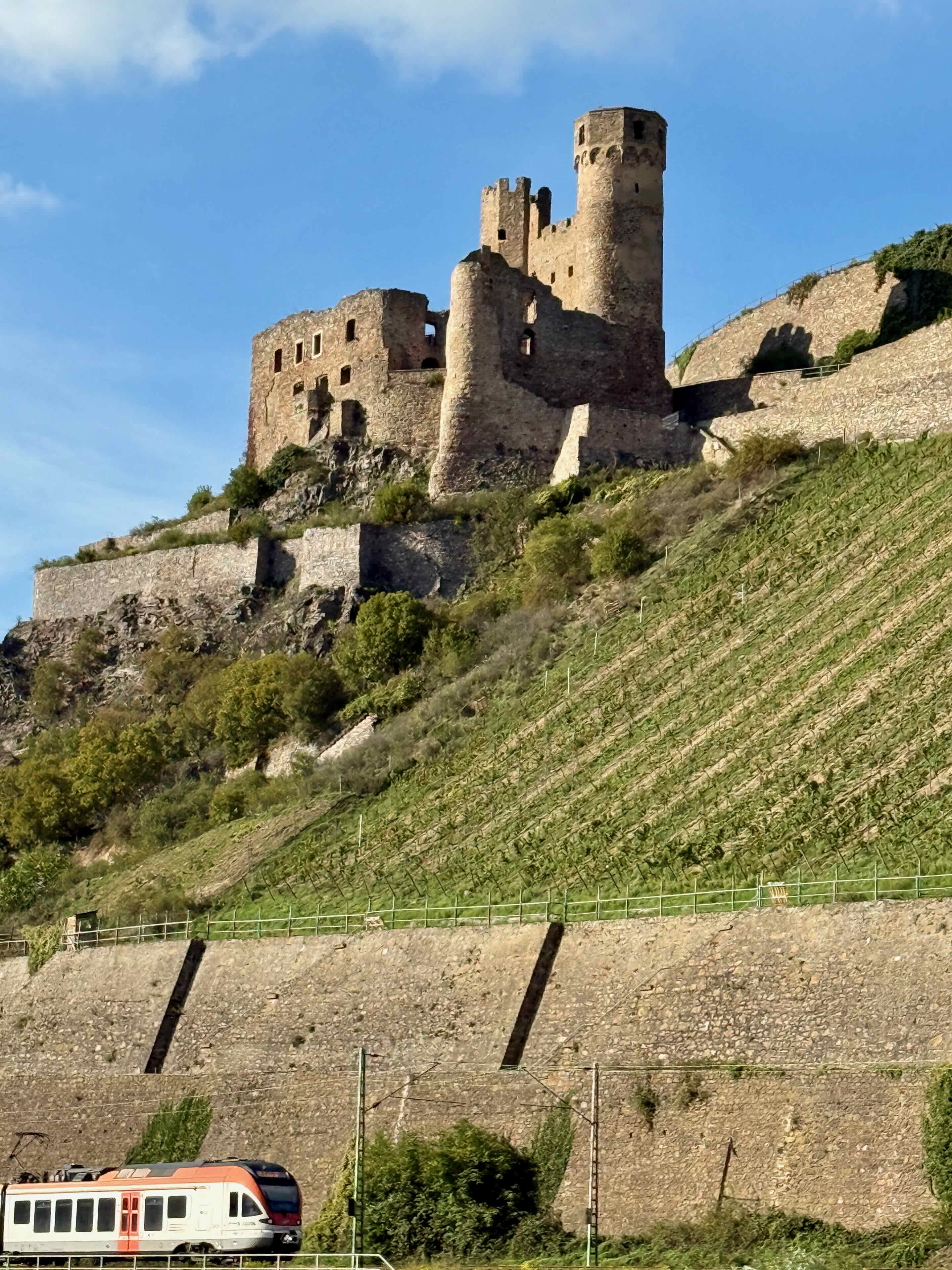
Some of the castles are in ruins.

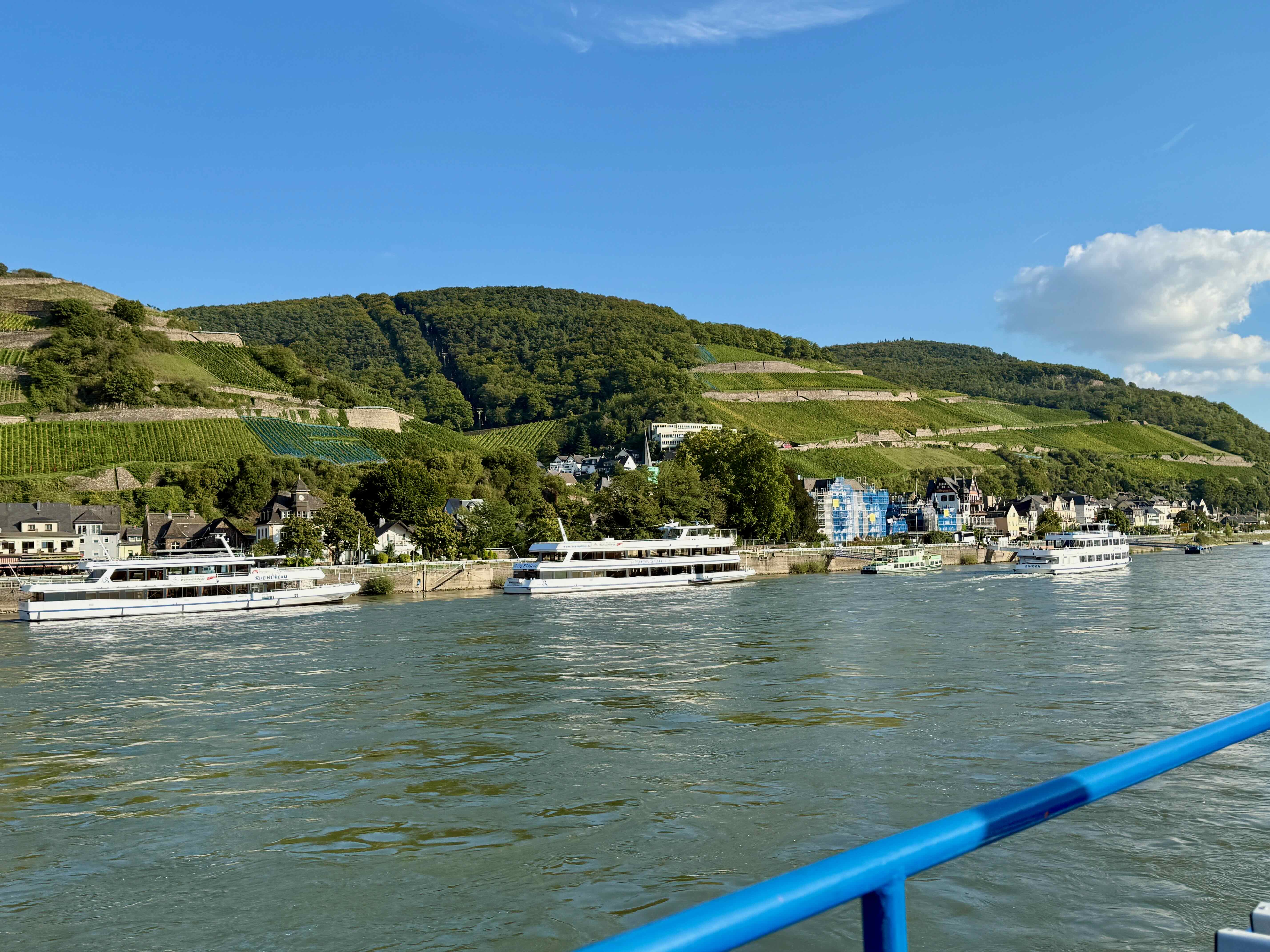
We pass several charming small towns along the Rhine.

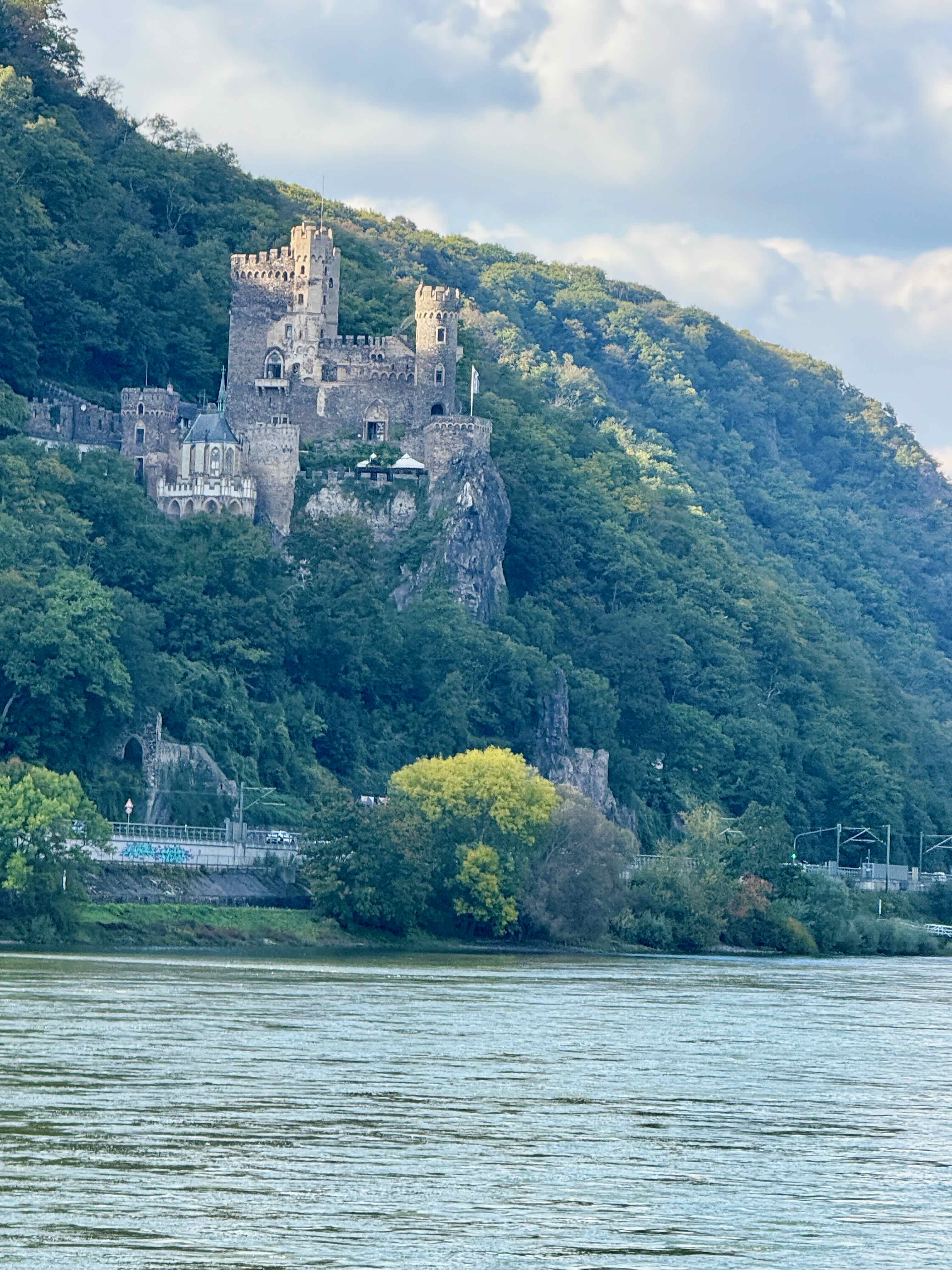
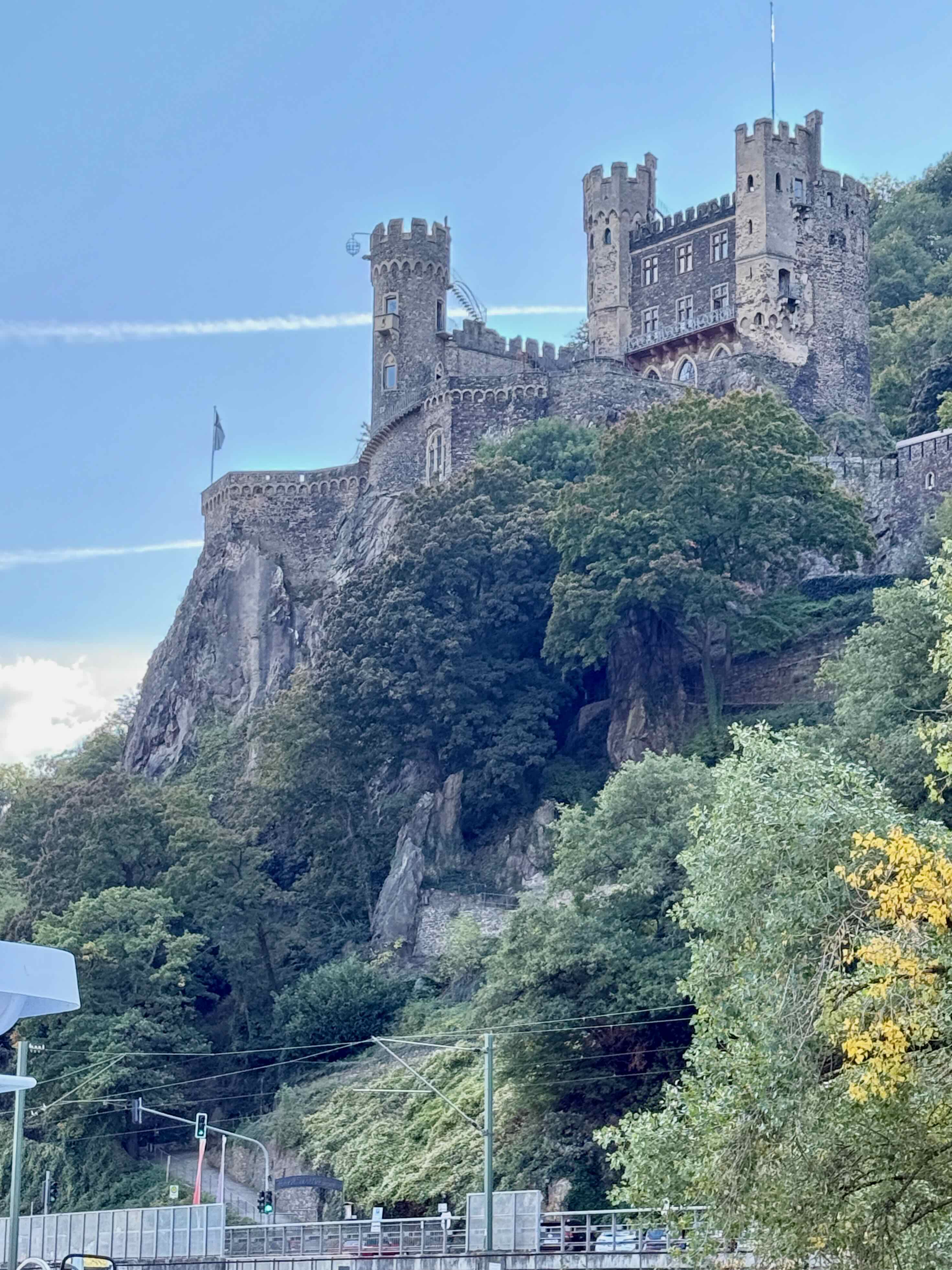
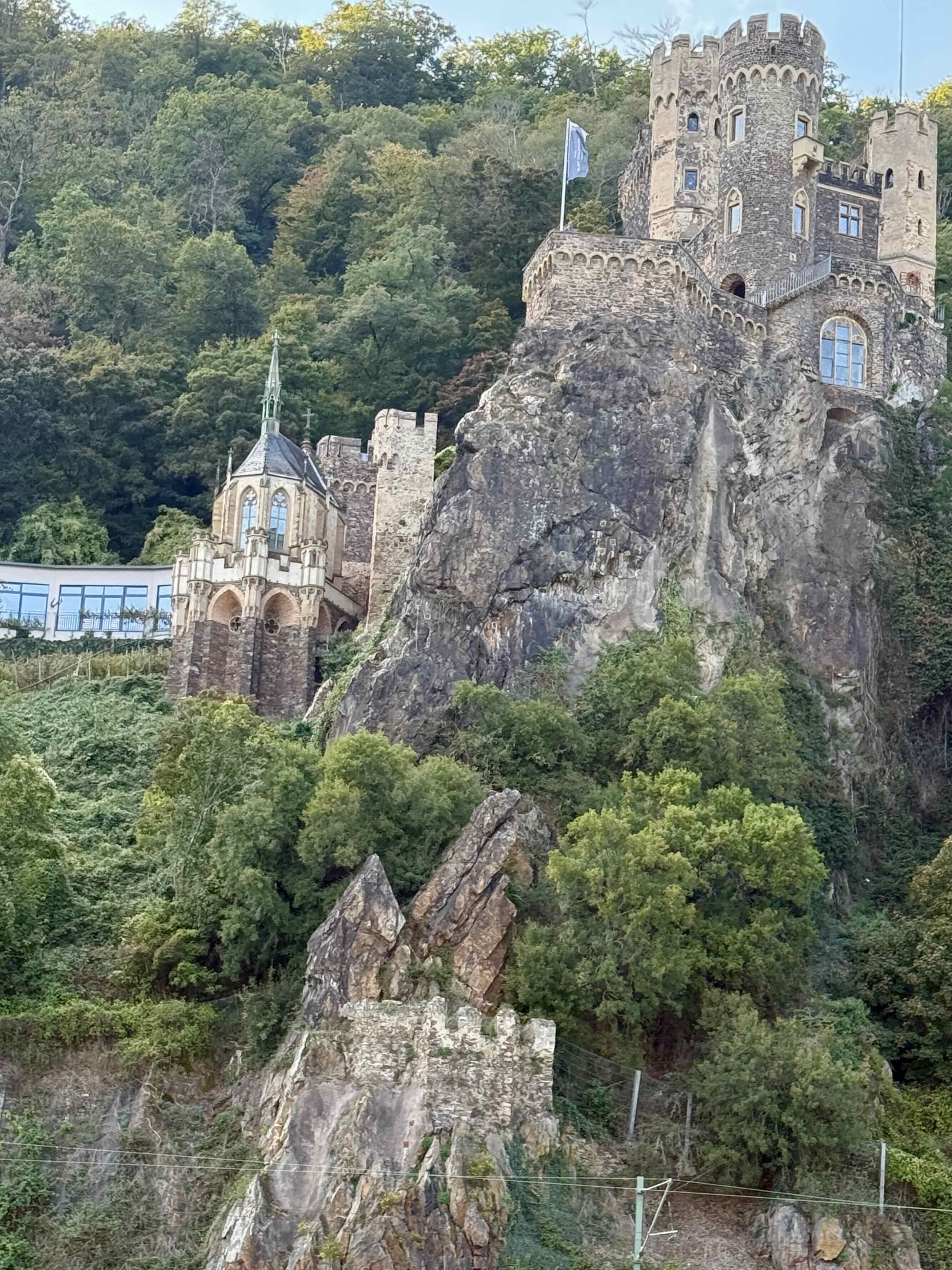
Some castles are still in use.
The castles look different on the return trip.  Interesting how a different view changes so much of what we see.

More vineyards on the way back to the dock.  It was a 45 minute ride with commentary in German and English.

This little castle was a signalling station on the Rhine River and it was in use until the 1980’s.

It looks like this castle might be in use as a hotel?

There are a lot of boats and ships on the Rhine River which is a very wide river, with some islands in its middle.

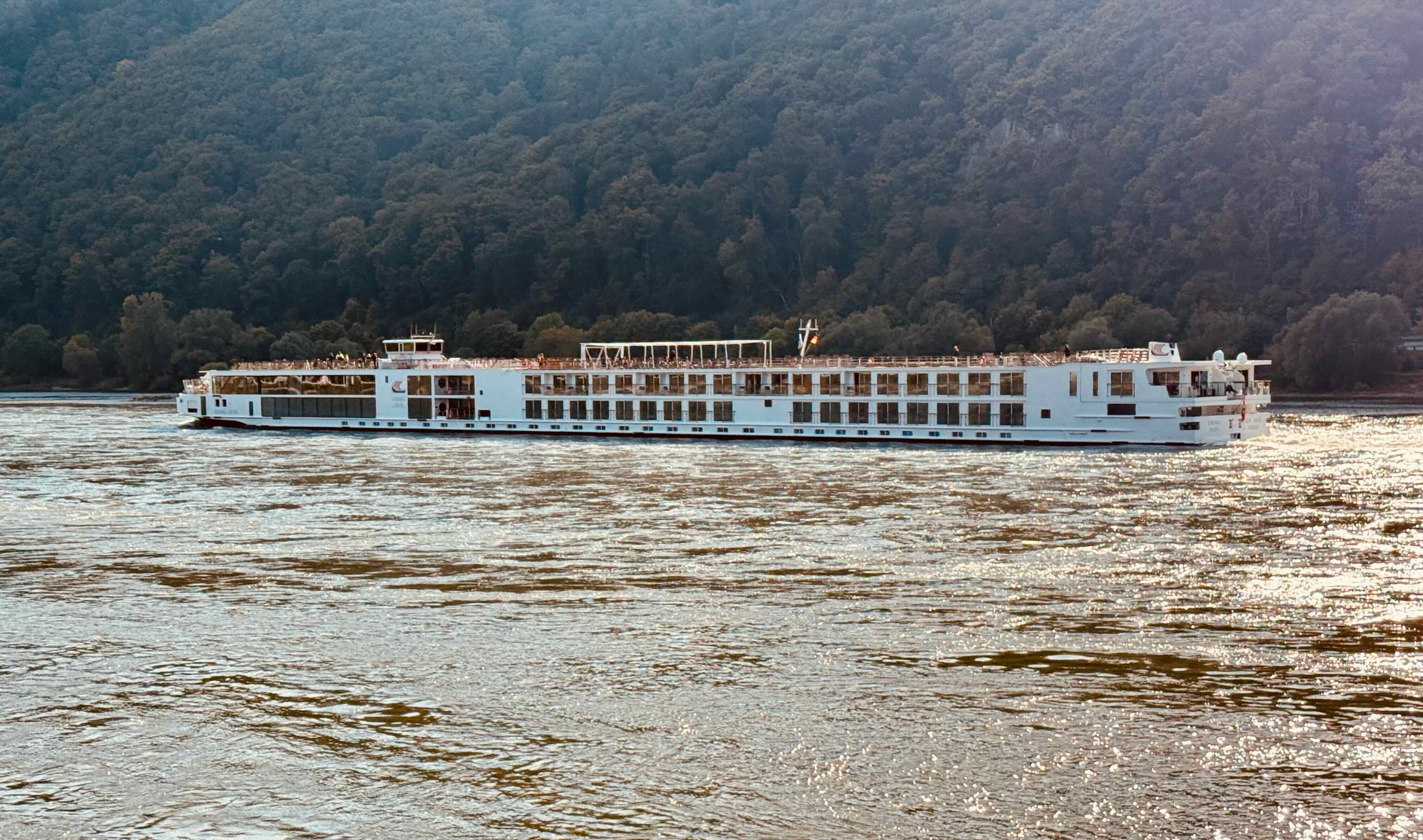
A Viking River Cruise ship passes us.  It is bigger than I expected…still a lot of people onboard.

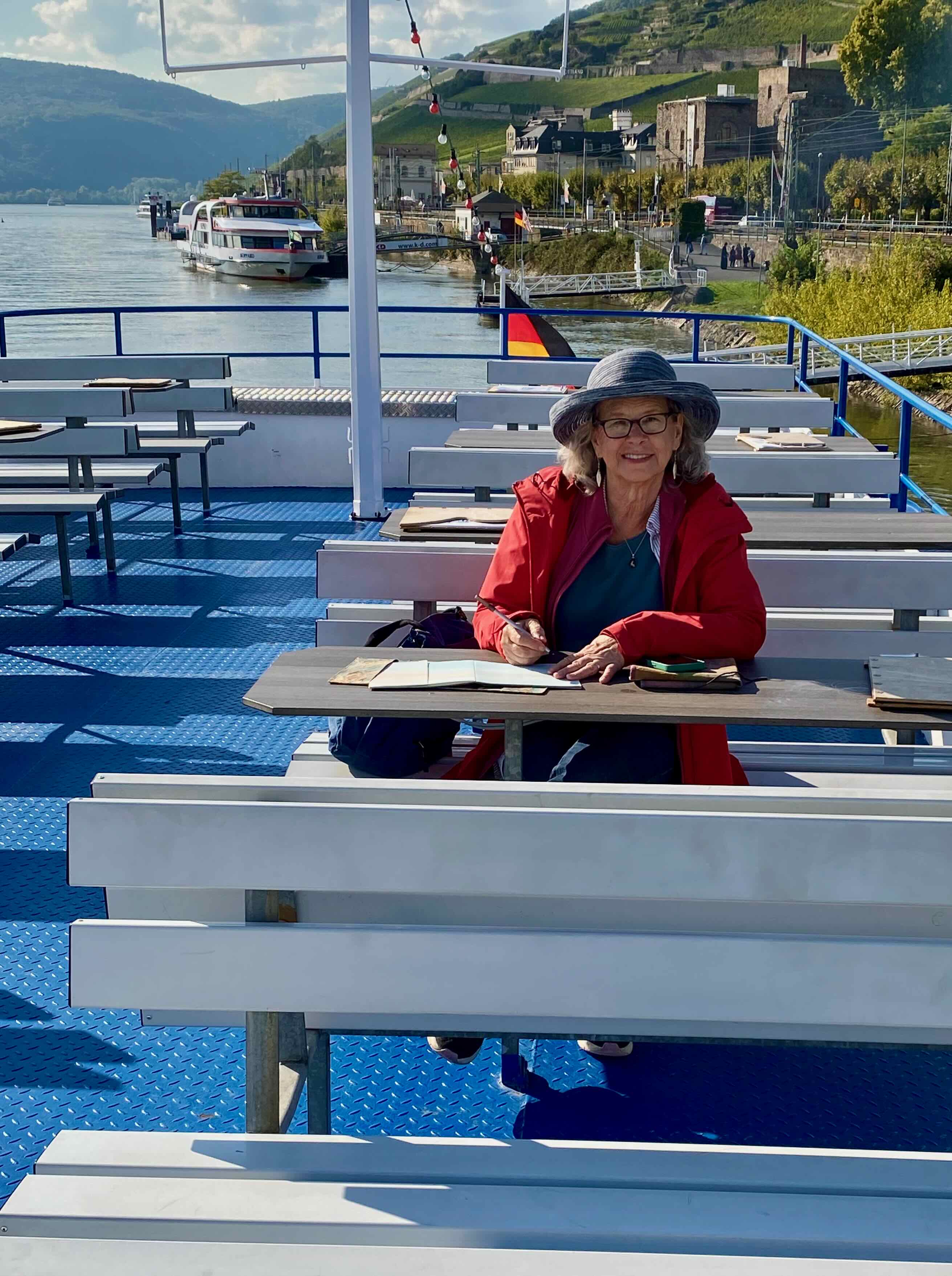
Another selfie.

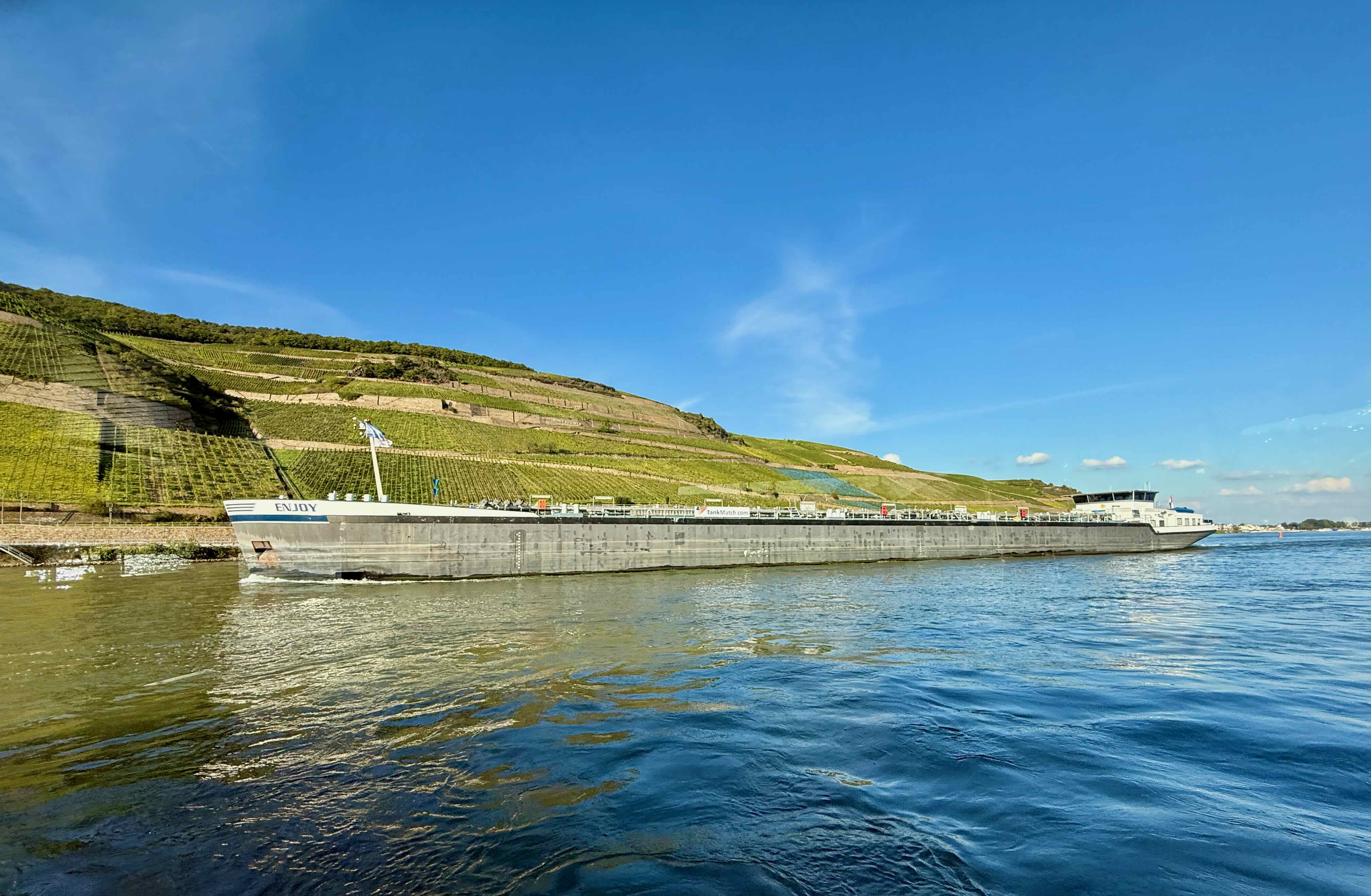
Several barges that have lots of pipes and valves visible…perhaps carrying oil?

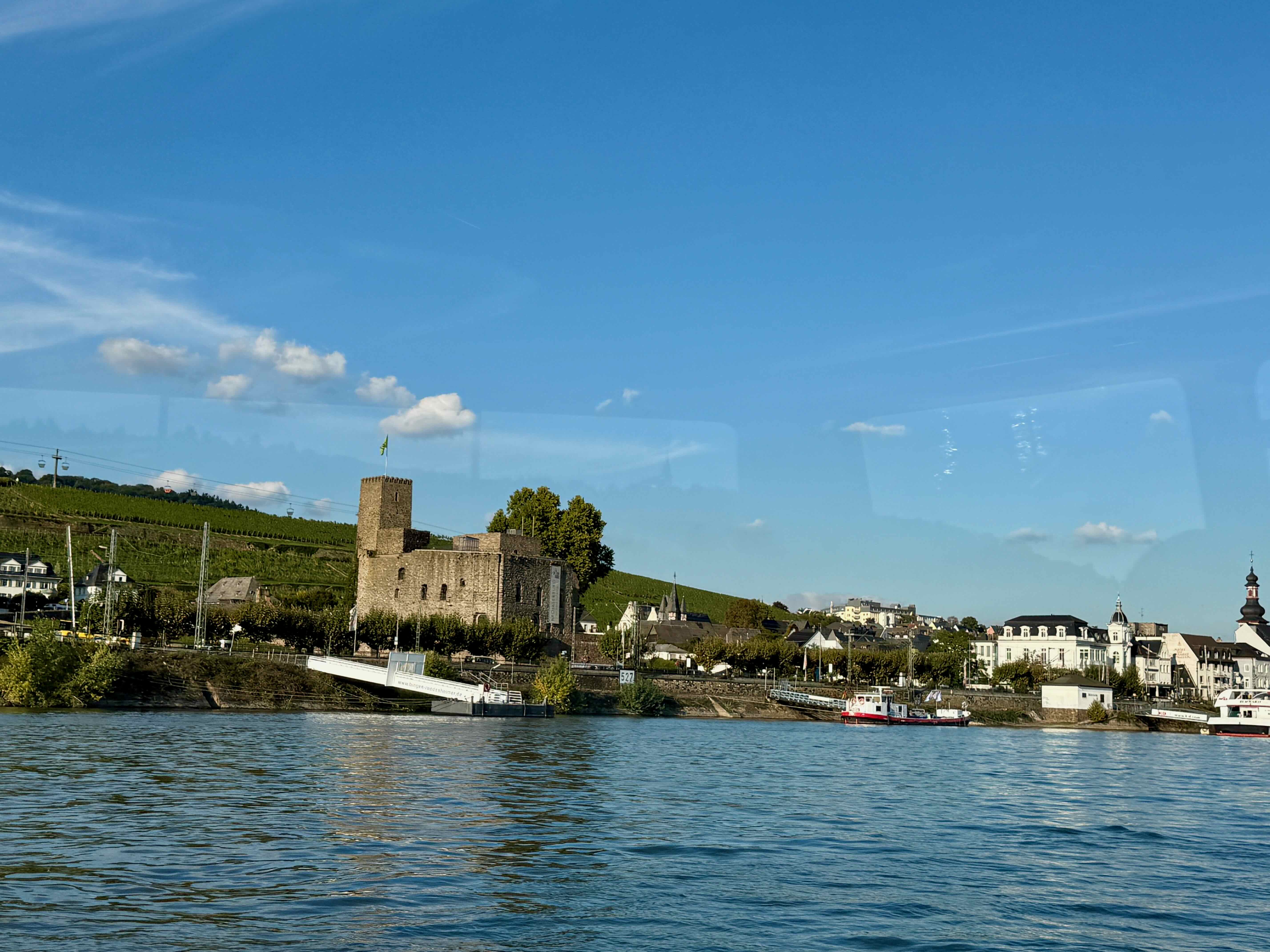
This castle is now a museum.

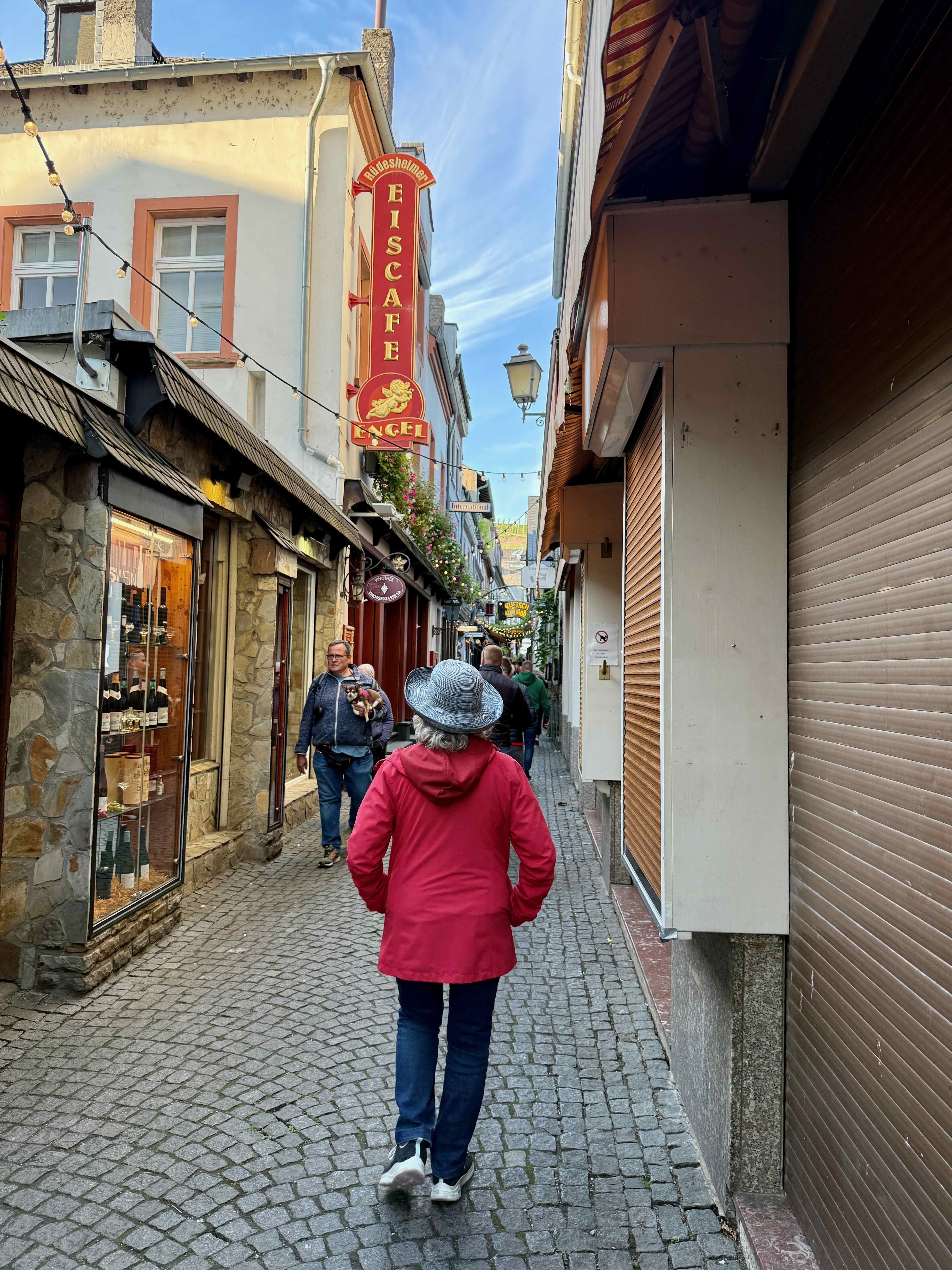
Here are my sketches of the castles I drew as we sailed by.We stroll down some narrow streets on the way back to our car.
Fontoy, France to Frankfurt, Germany

Day 30    Monday, September 29, 2025

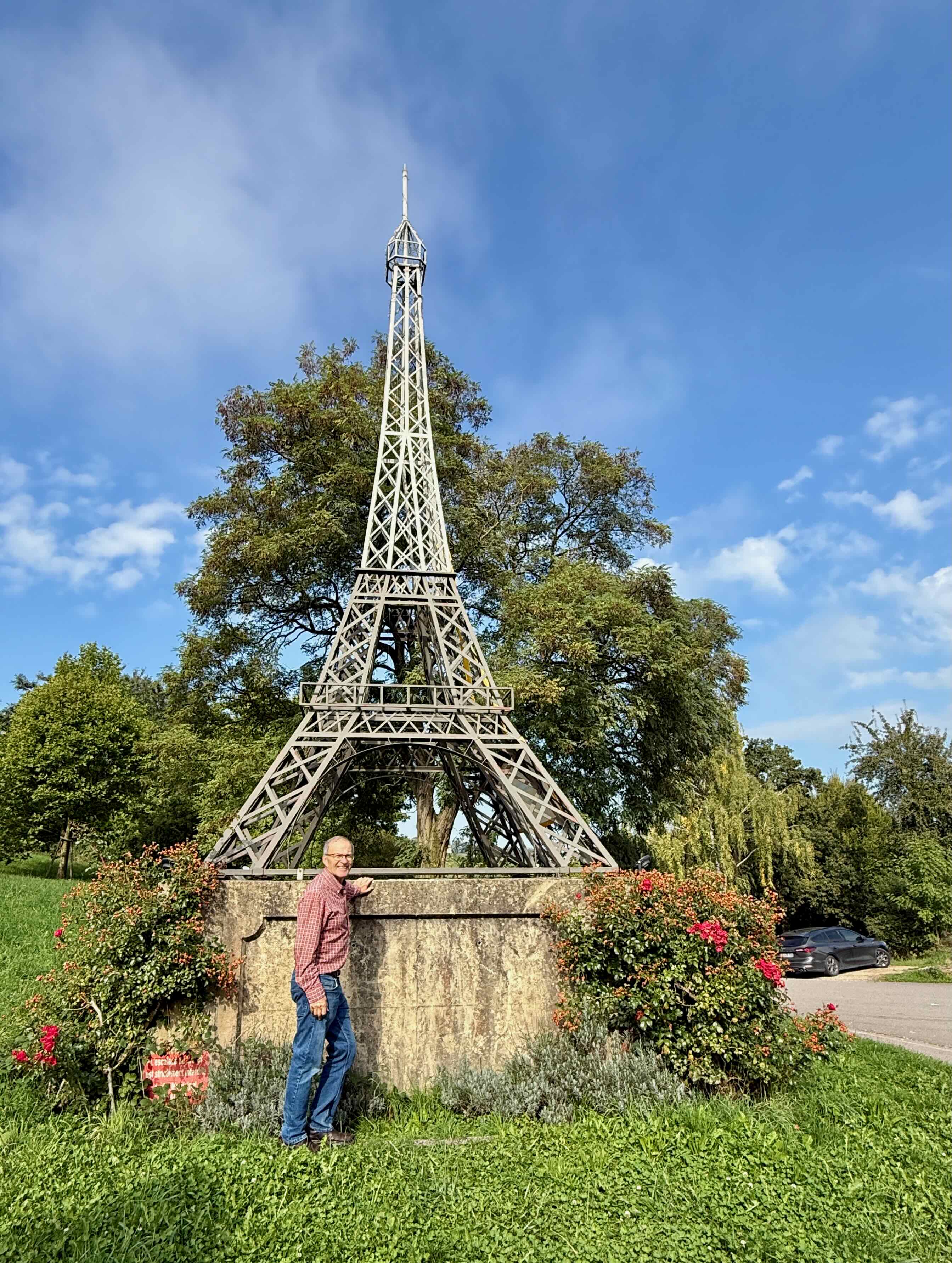
Today is a travel day to Frankfurt Germany and we have been travelling for month already. Bob says we have to stop and see another Eiffel Tower along the way but it is not quite as impressive as the one in Paris!

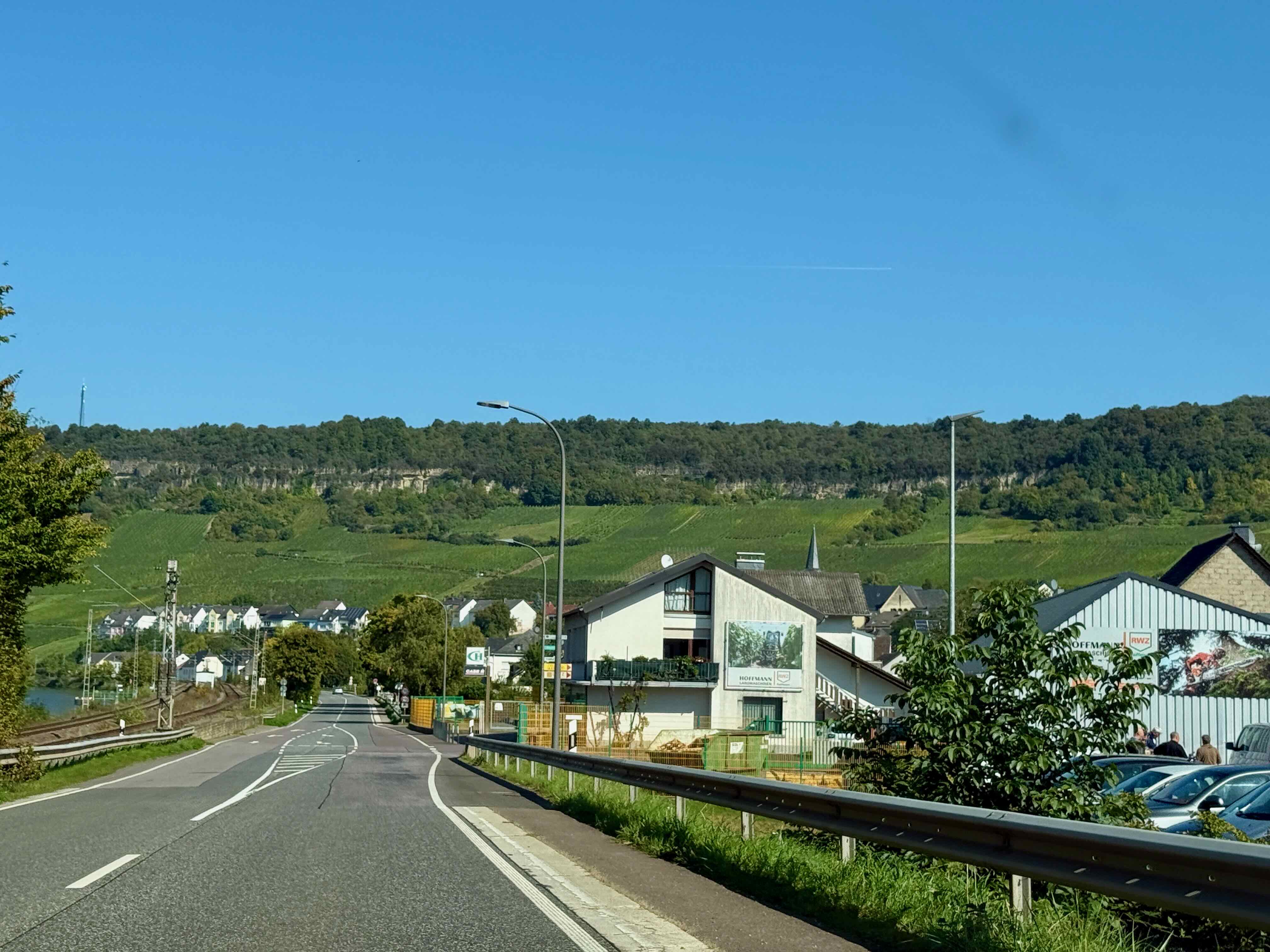
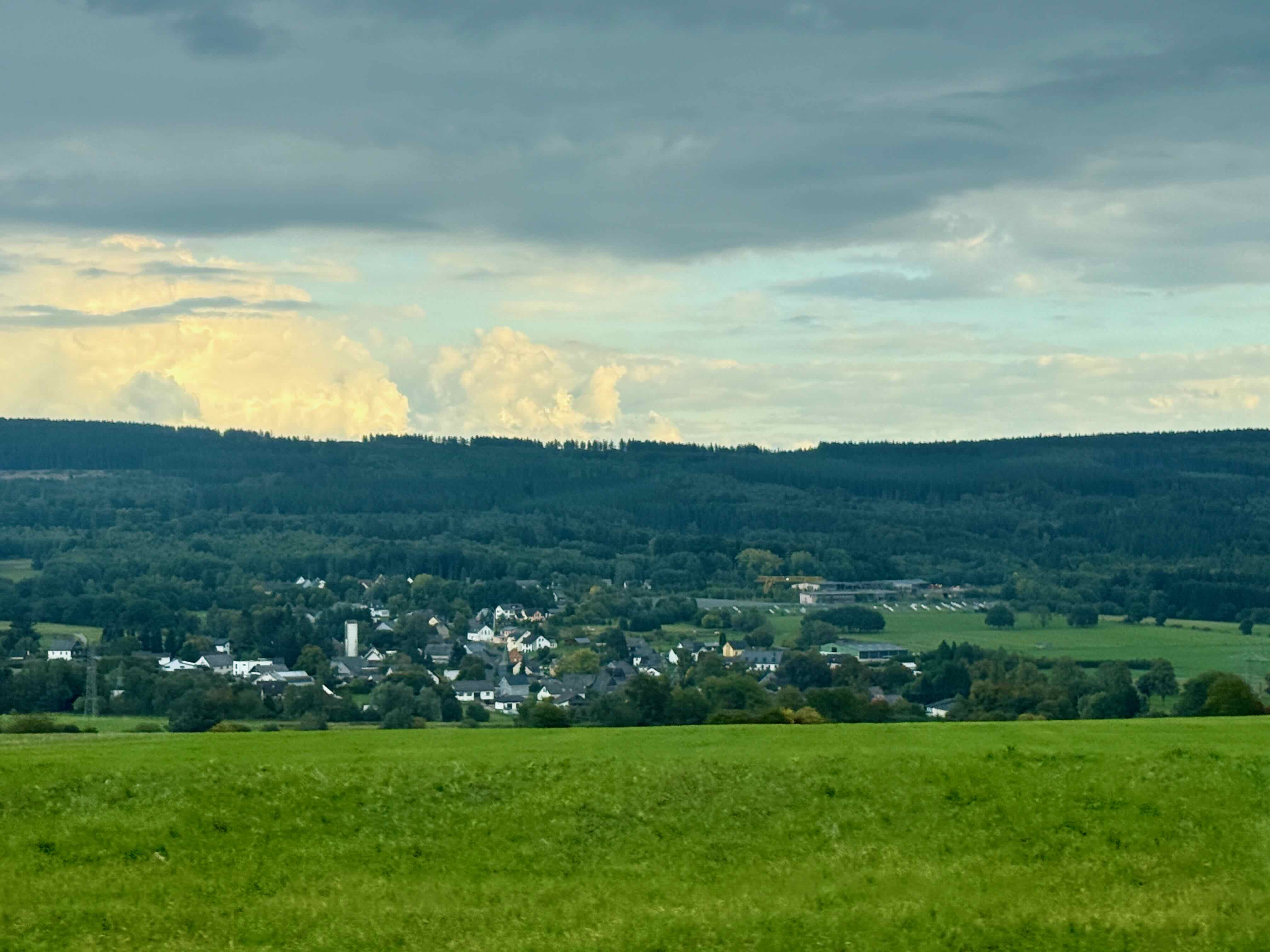
We had no idea that this is wine country.  There are vineyards on both sides of the road as far as we can see.

The hills around each town we pass are all growing row after row of grapes.  We see the odd group harvesting grapes but the main harvest occurred earlier this month.

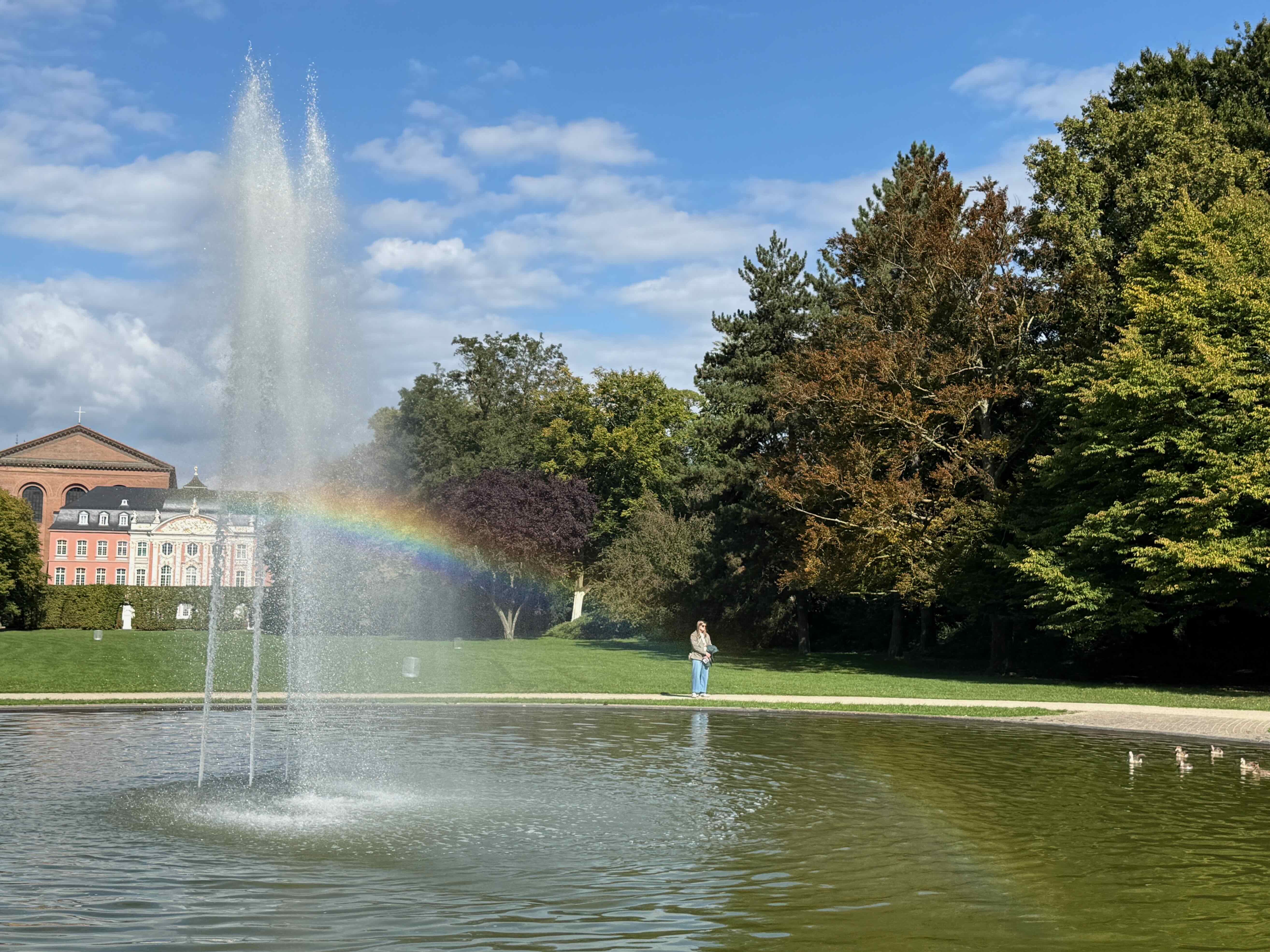
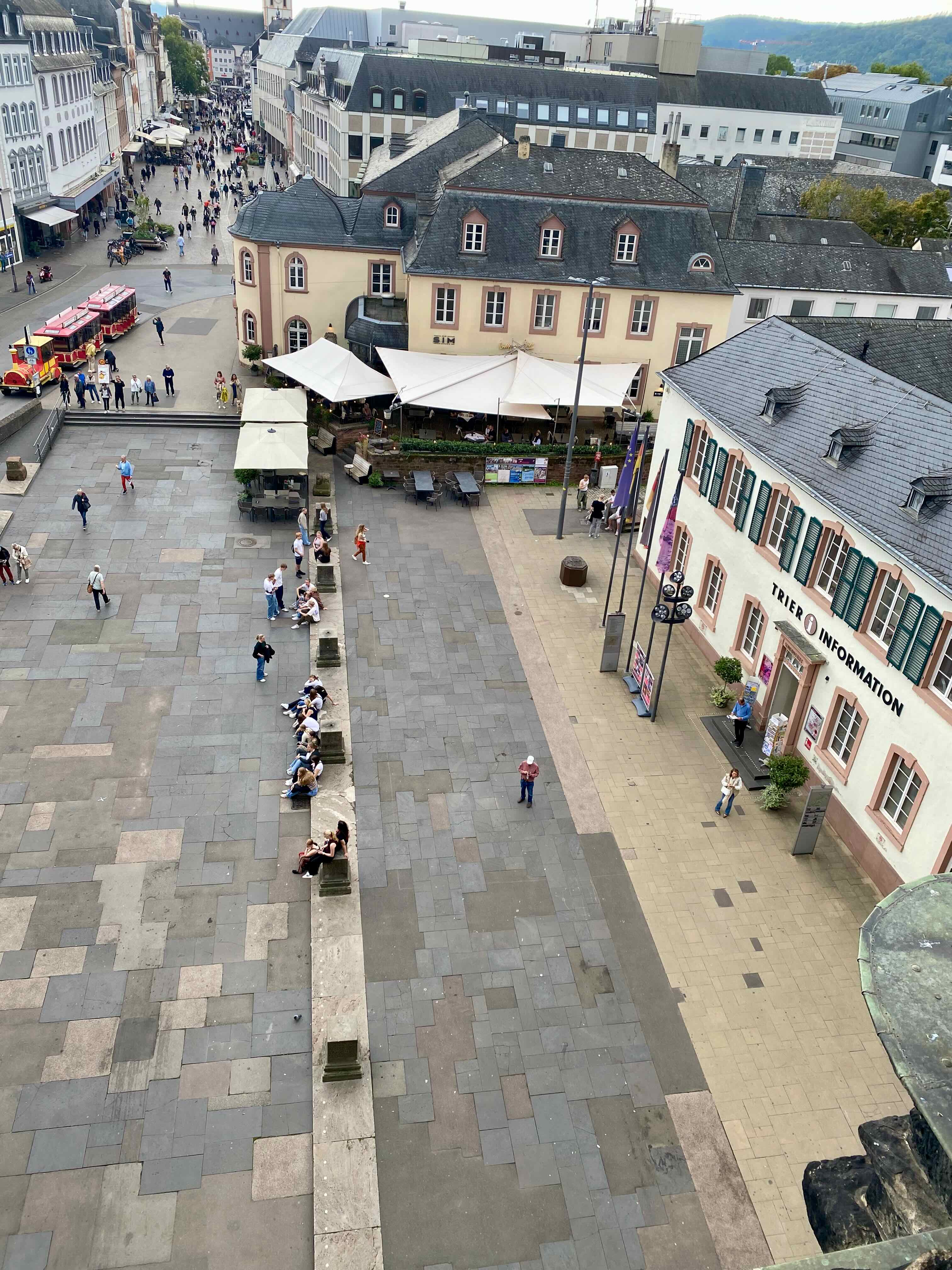
We stop in Trier and have our picnic lunch on a bench with this view.

The breeze blew water spray and made a rainbow just as I took this photo.

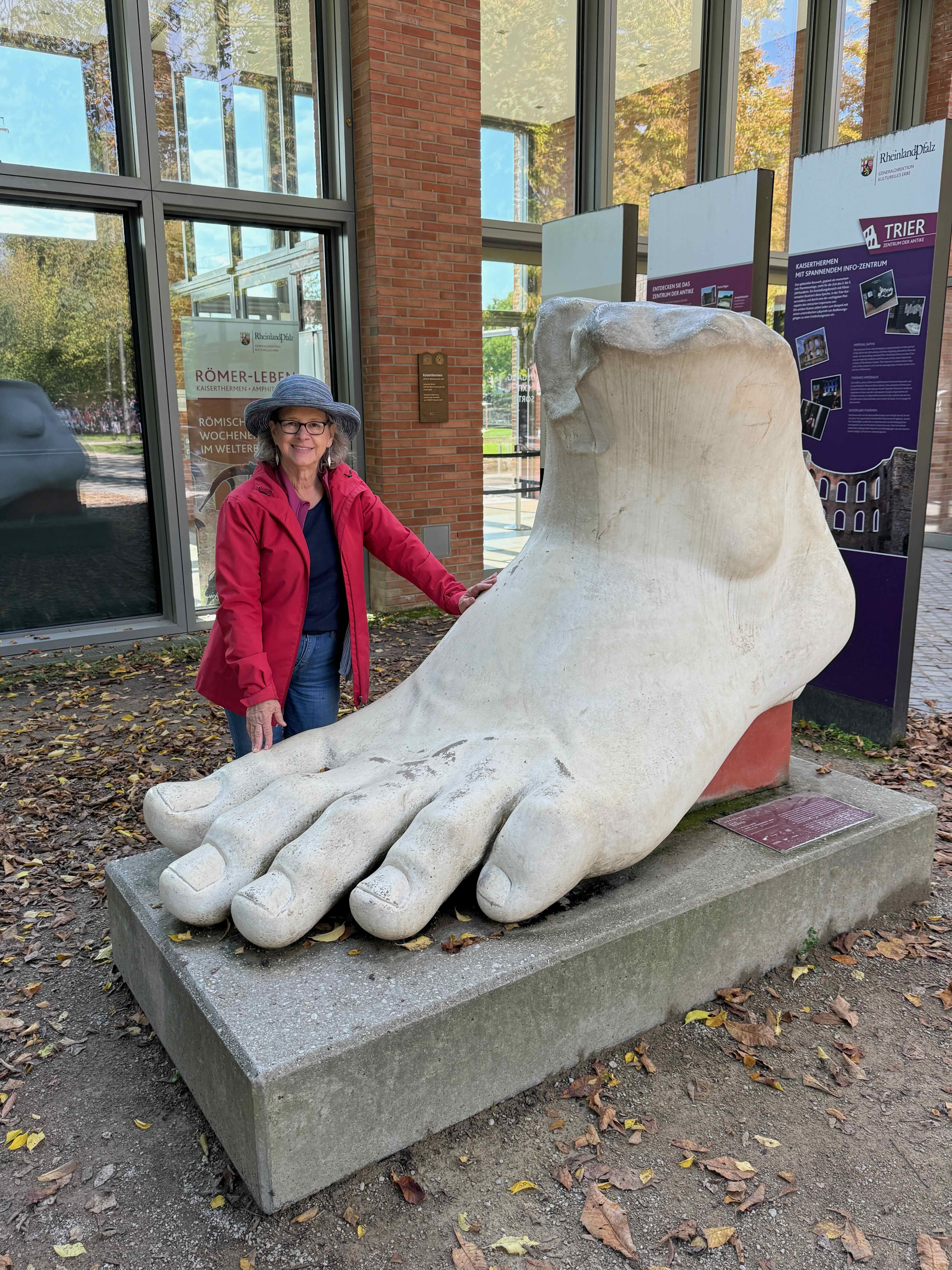
This foot of Emperor Constantine is a replica of one of the largest marble foots to have survived since antiquity. It was part of a 12 metre high seated statue of Constantine.

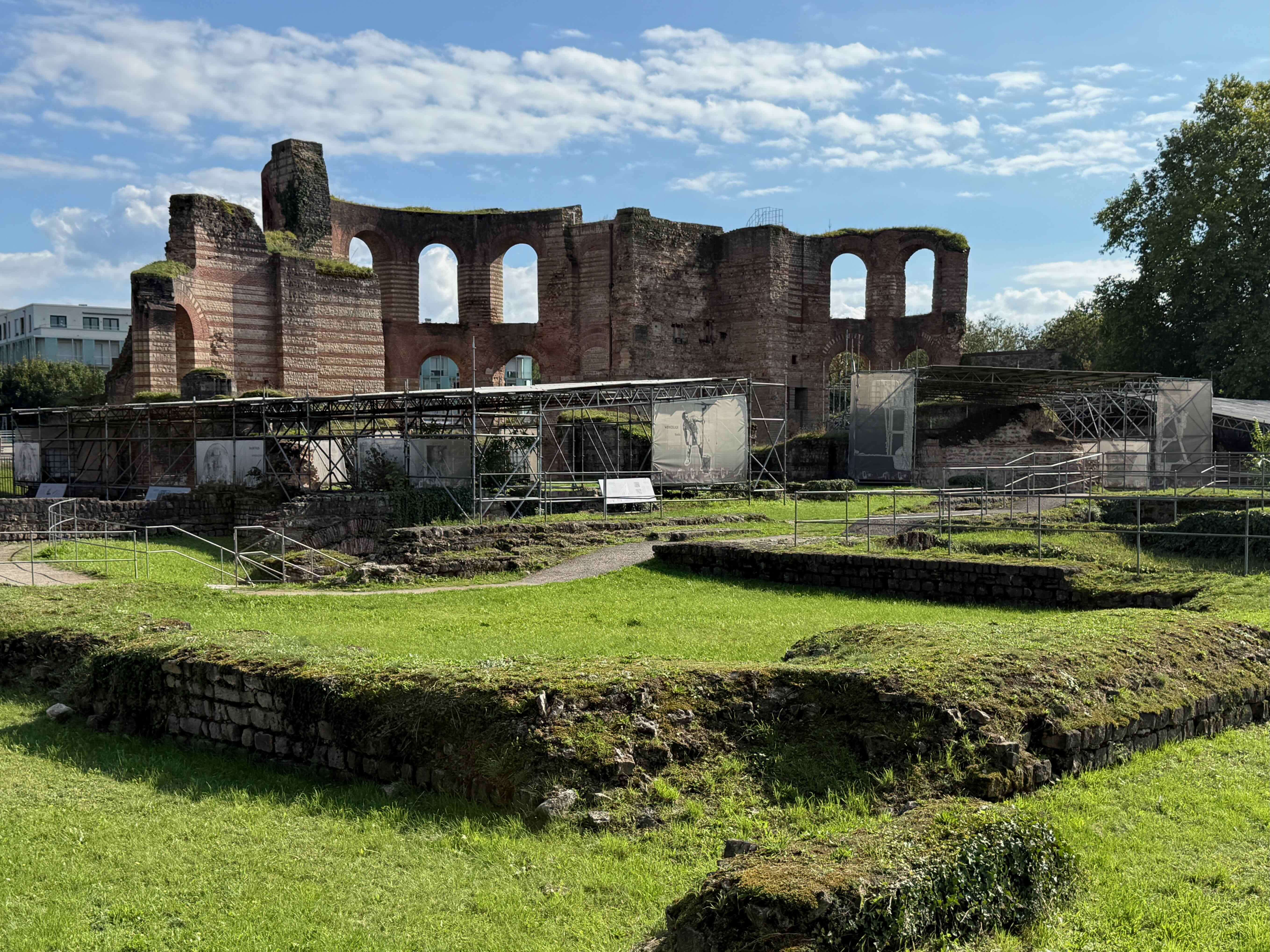
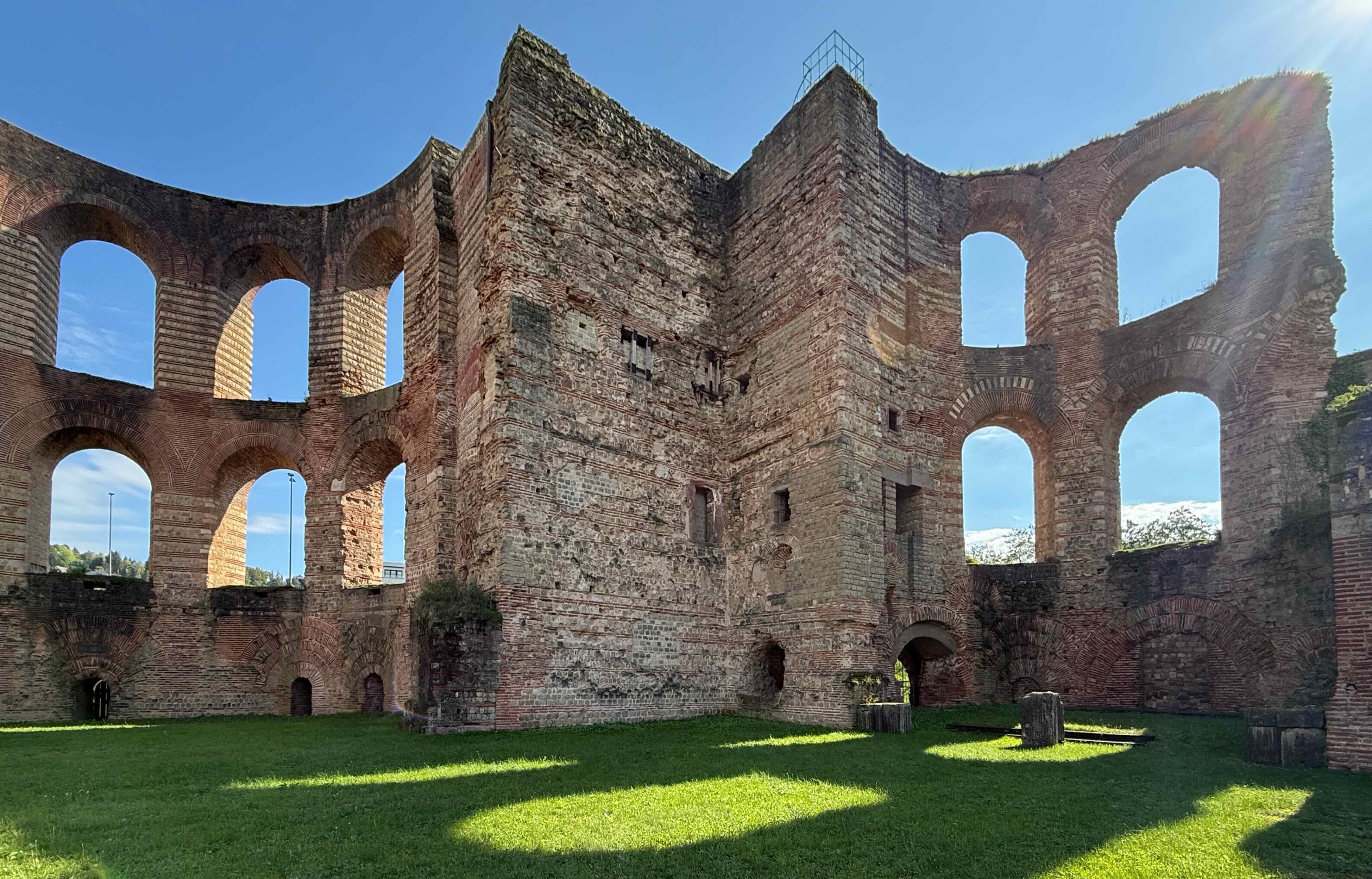
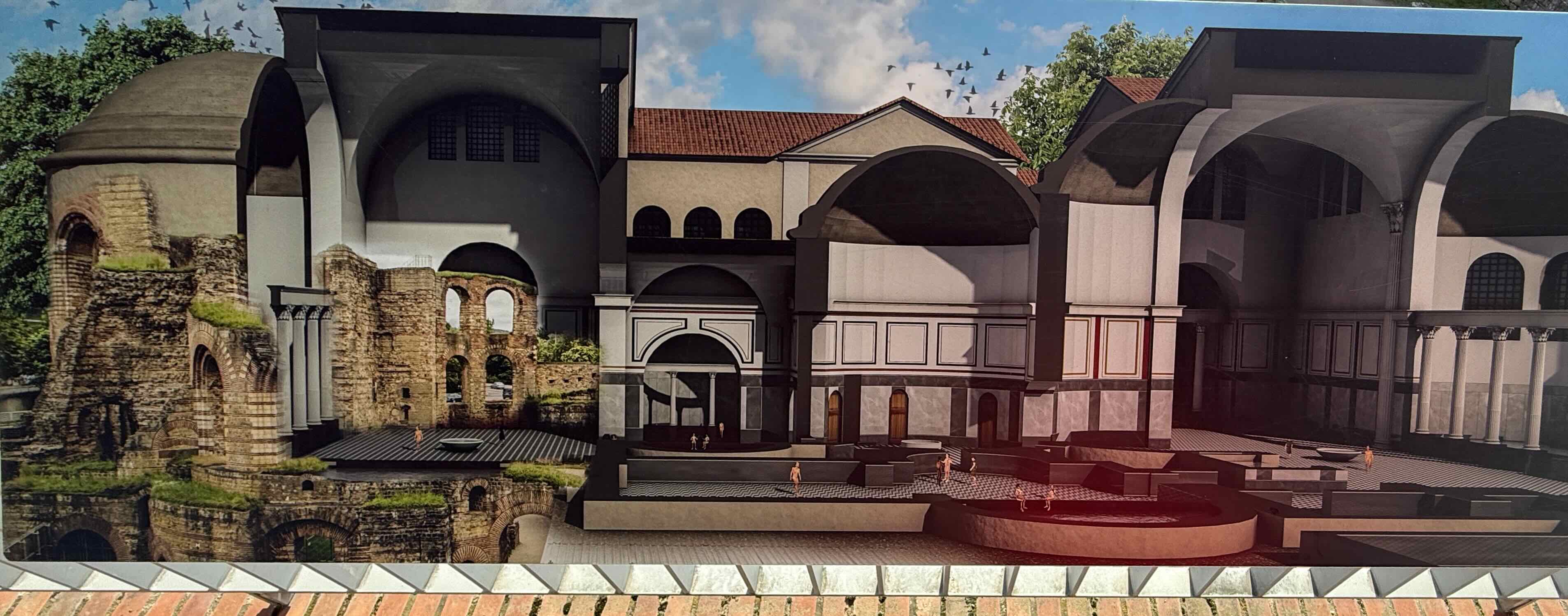
The Roman Baths are considered to be the largest Roman baths outside of Rome. 

The ruins are impressive!

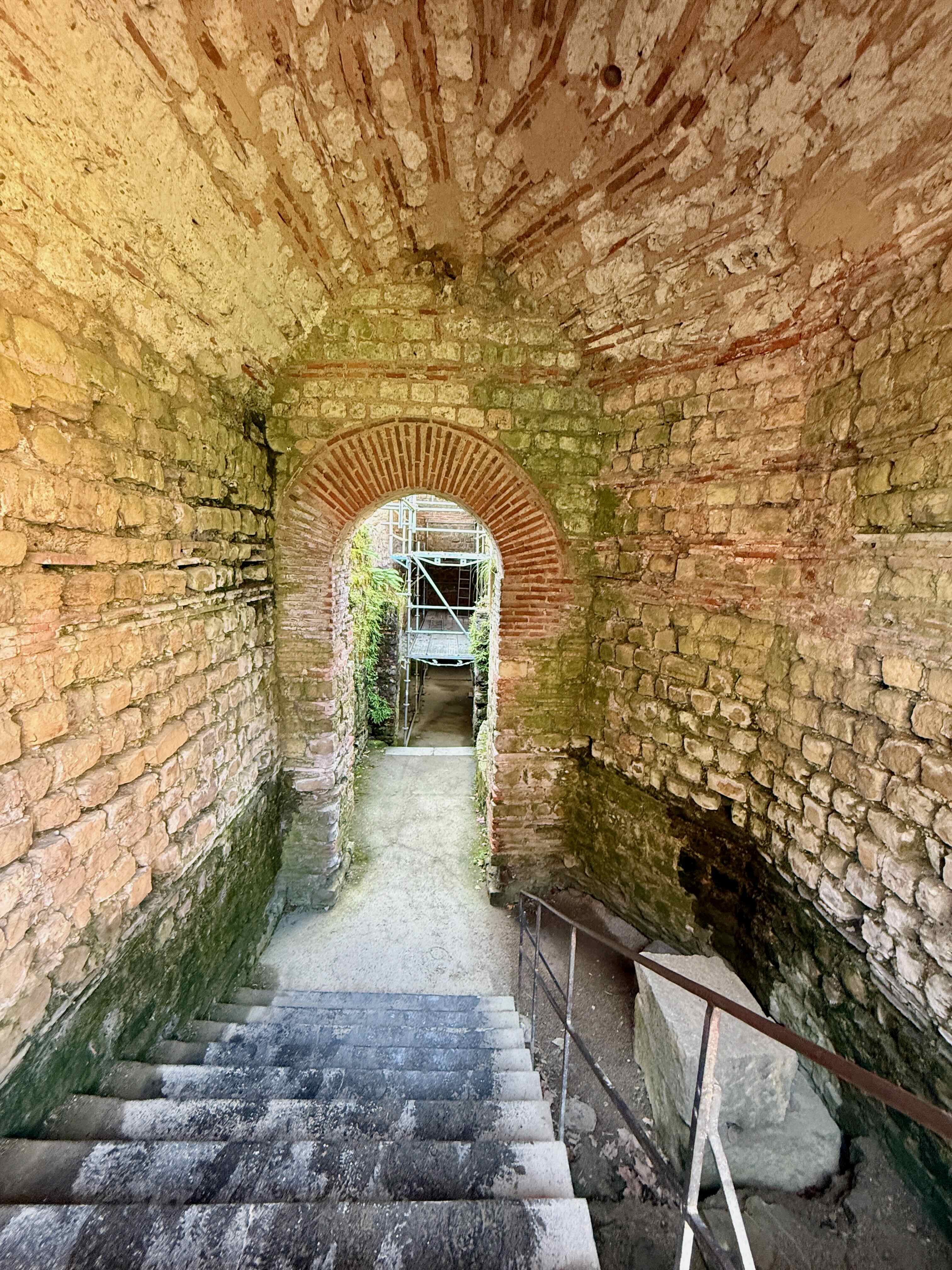
We are able to walk through the underground tunnels that would have been used as a service level for the maintenance of the bath’s heating system. This is the entrance to the tunnels.

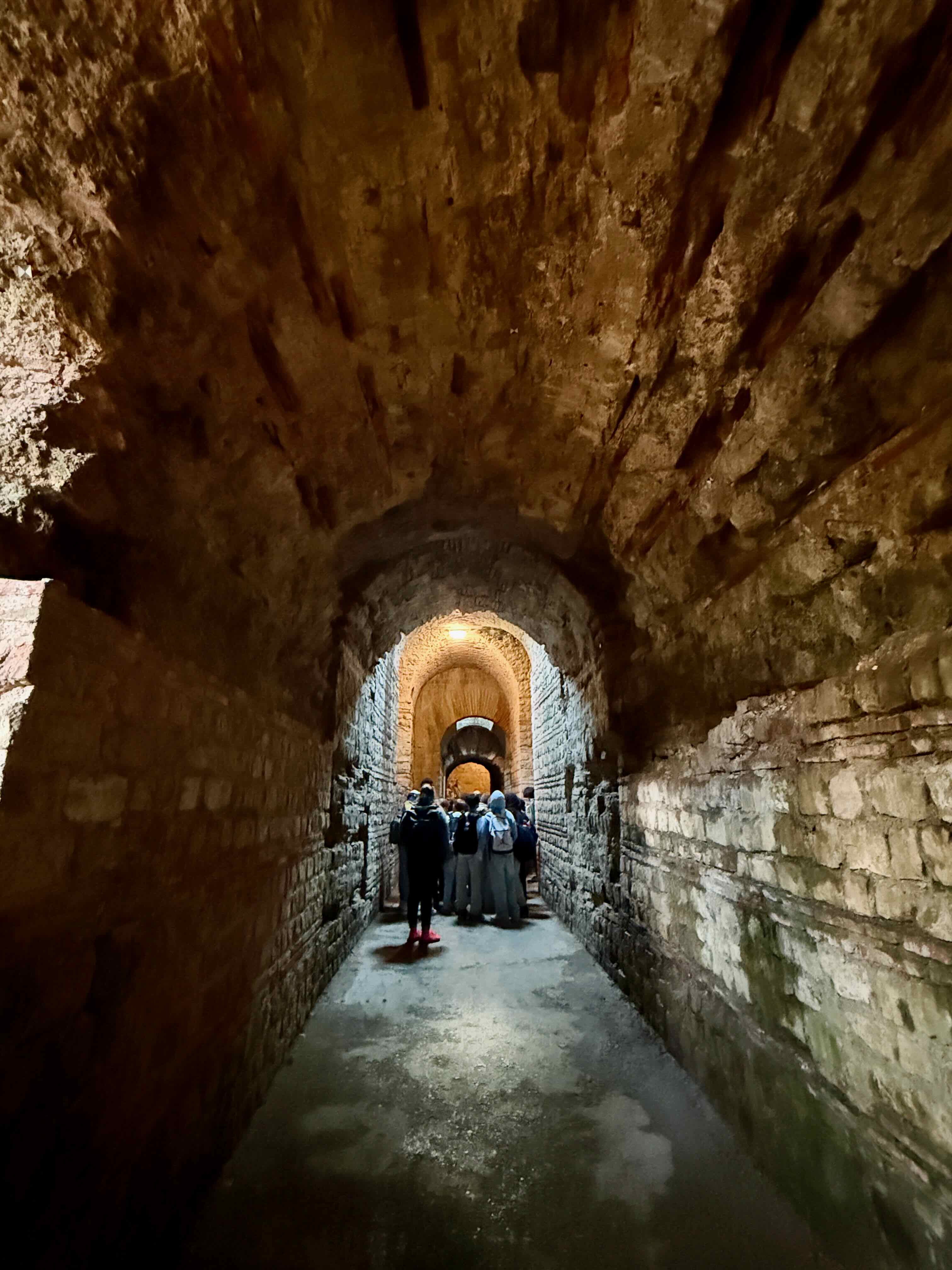
There was a group of schoolchildren ahead of us…probably the loudest group we have encountered on our travels! We took a side tunnel to avoid walking behind them. There are a maze of tunnels and we are free to explore as we wish. That is Bob peeking around the bend in the tunnel.
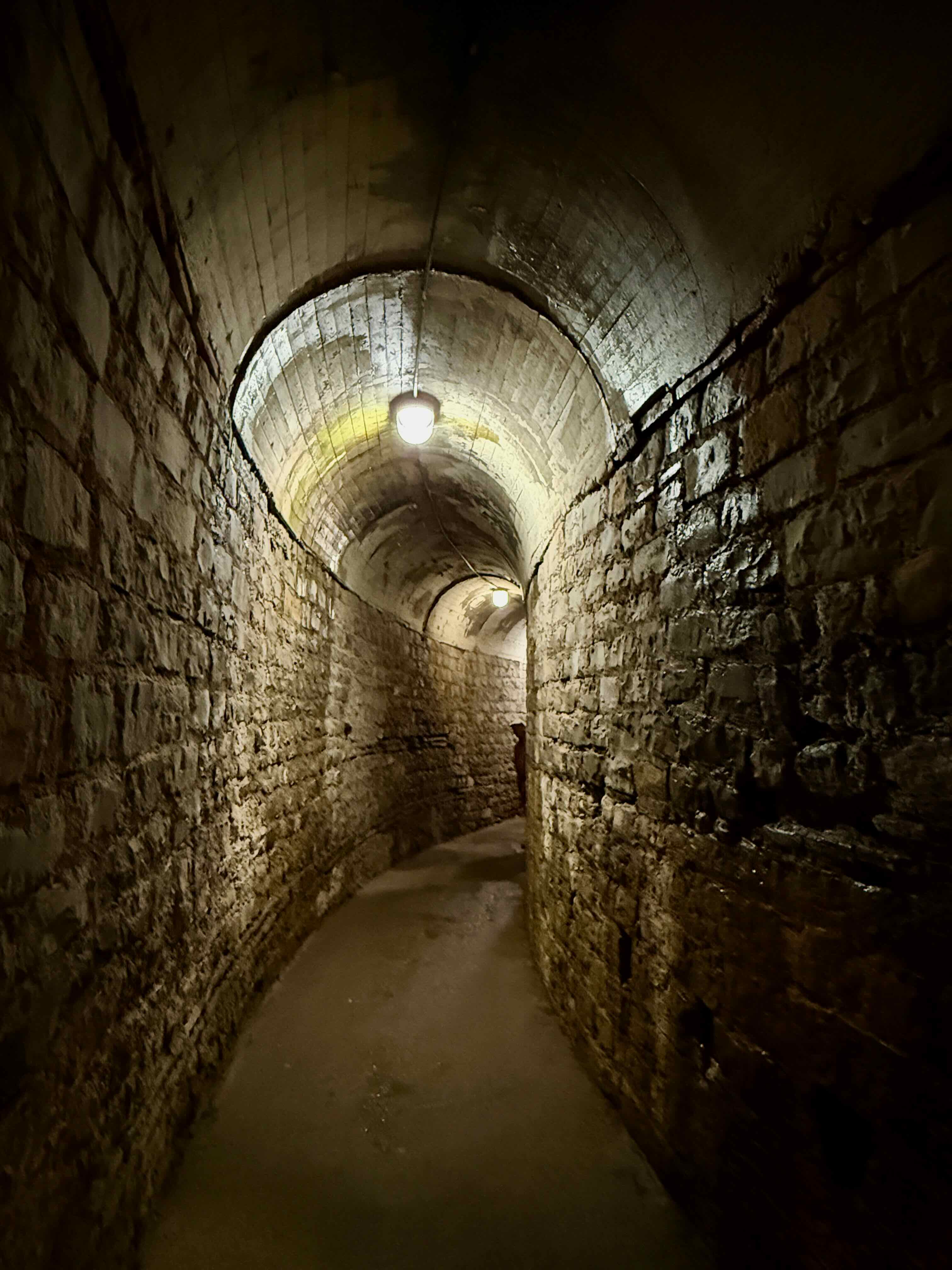
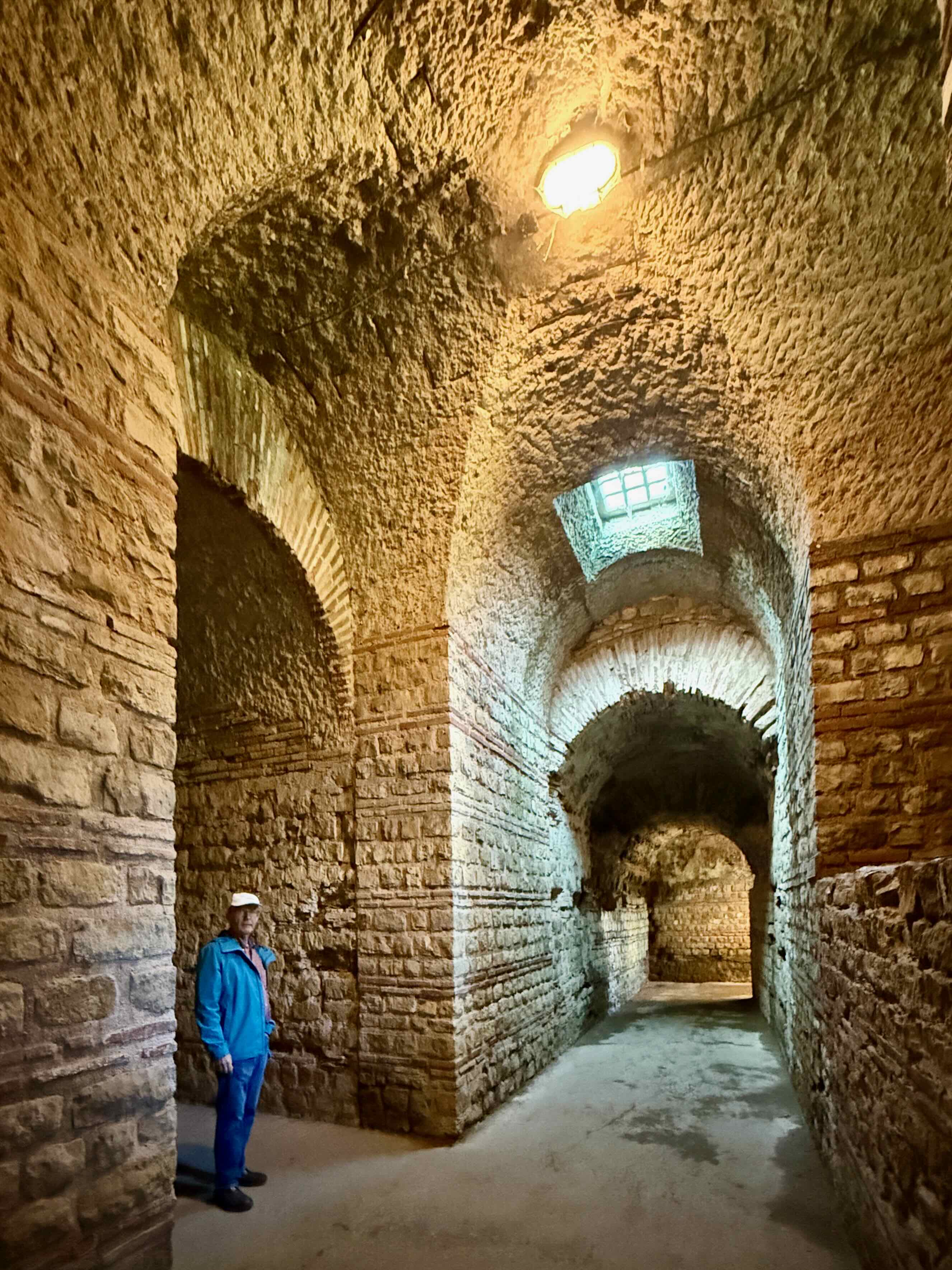
We do get a bit lost down here, but it was a lot of fun exploring these interesting tunnels.

Which way should we go!

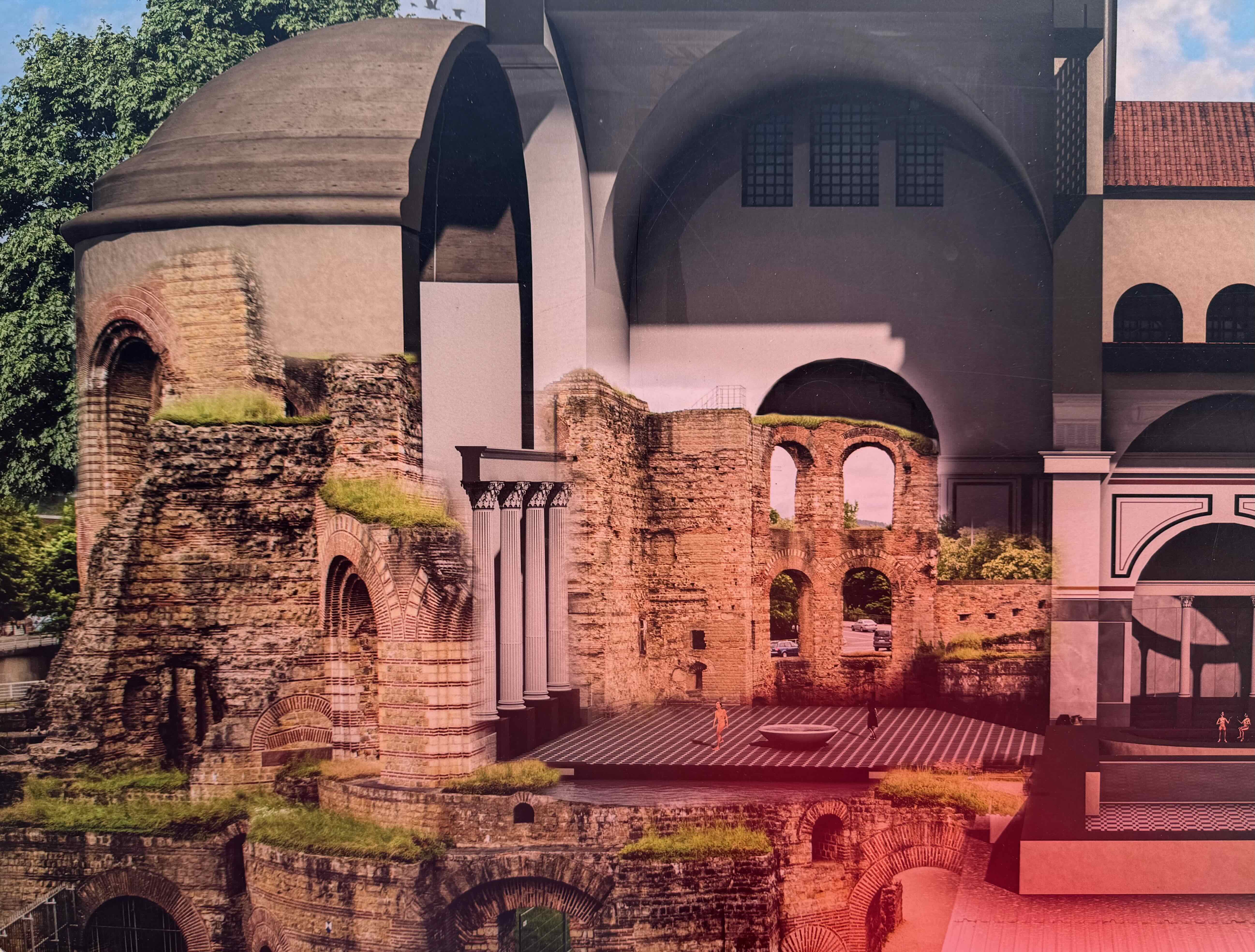
This photo shows the size of the original baths, although they were never actually completed. The ruins of today are superimposed on the original baths.

The ruins are impressive, but they are only half the height of the original structure! We pass this lovely garden on the way to visit Trier’s cathedral.
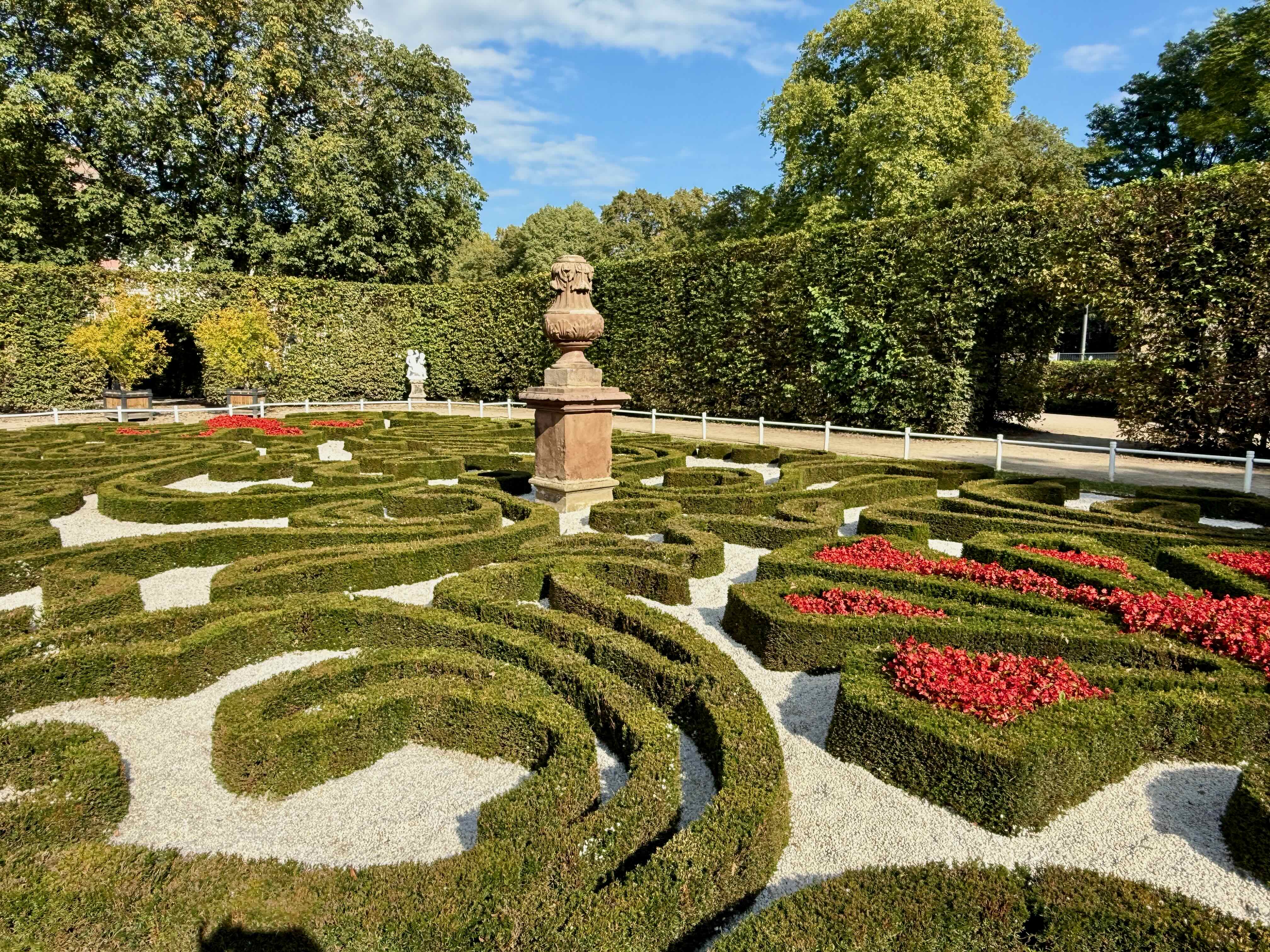
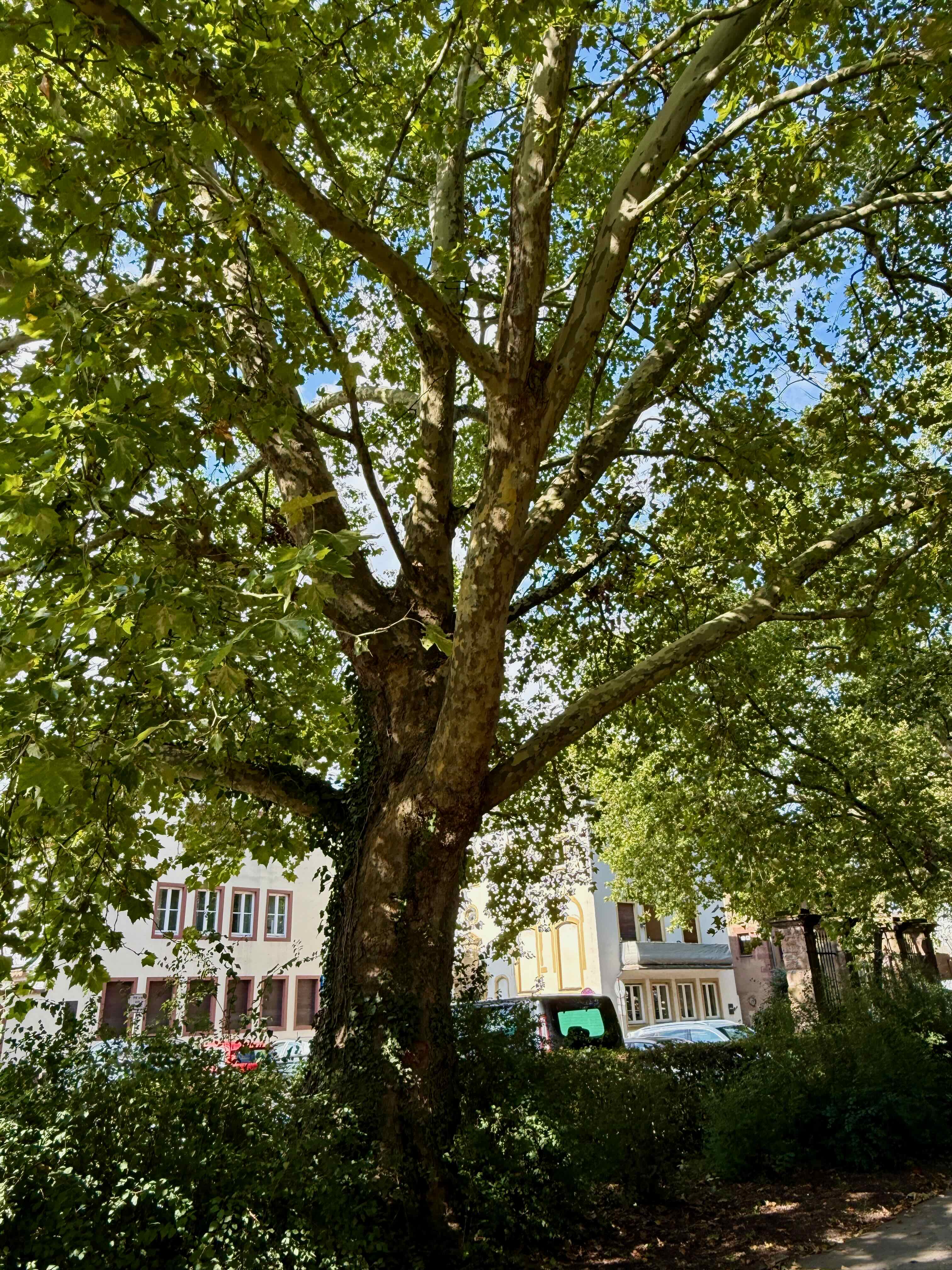
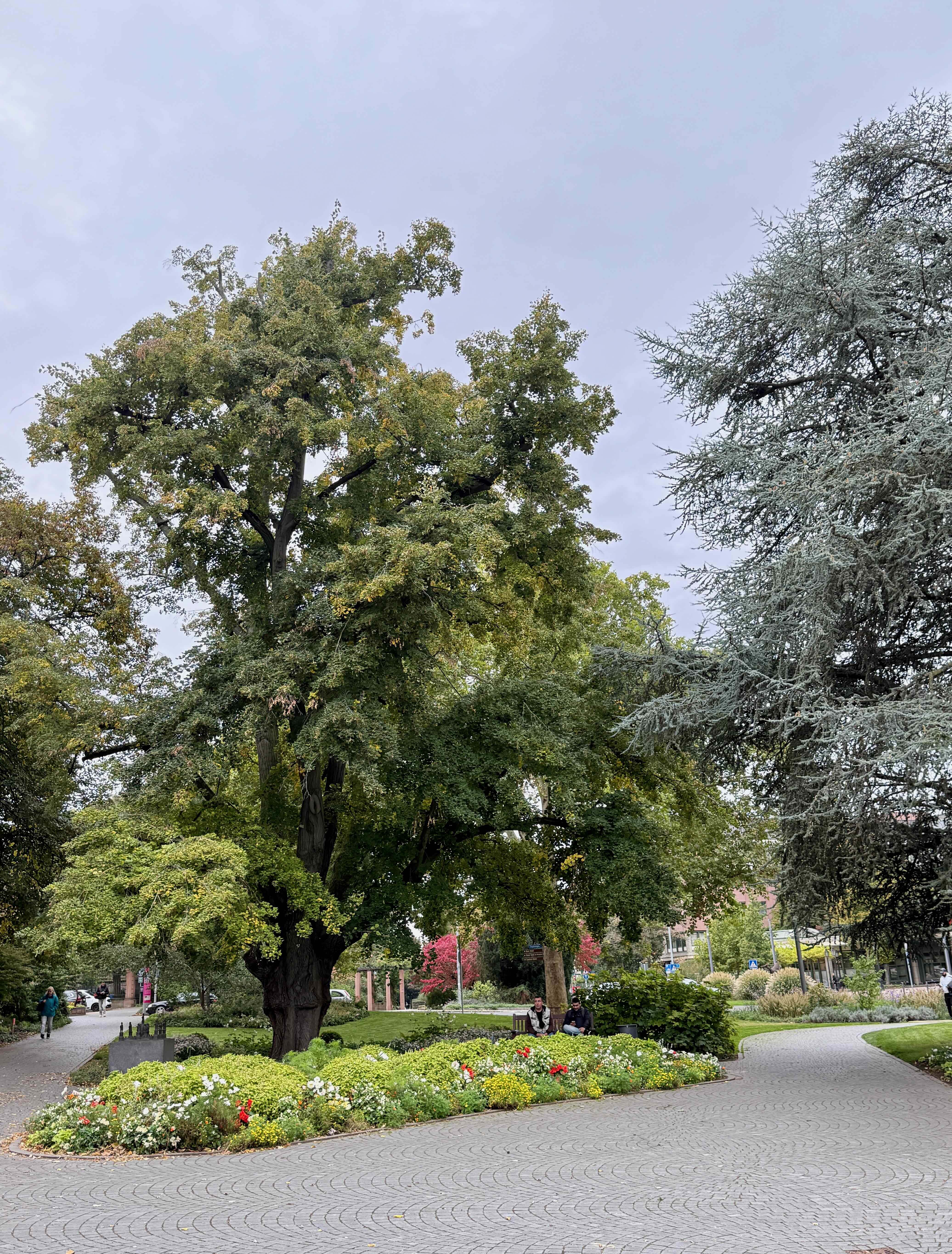
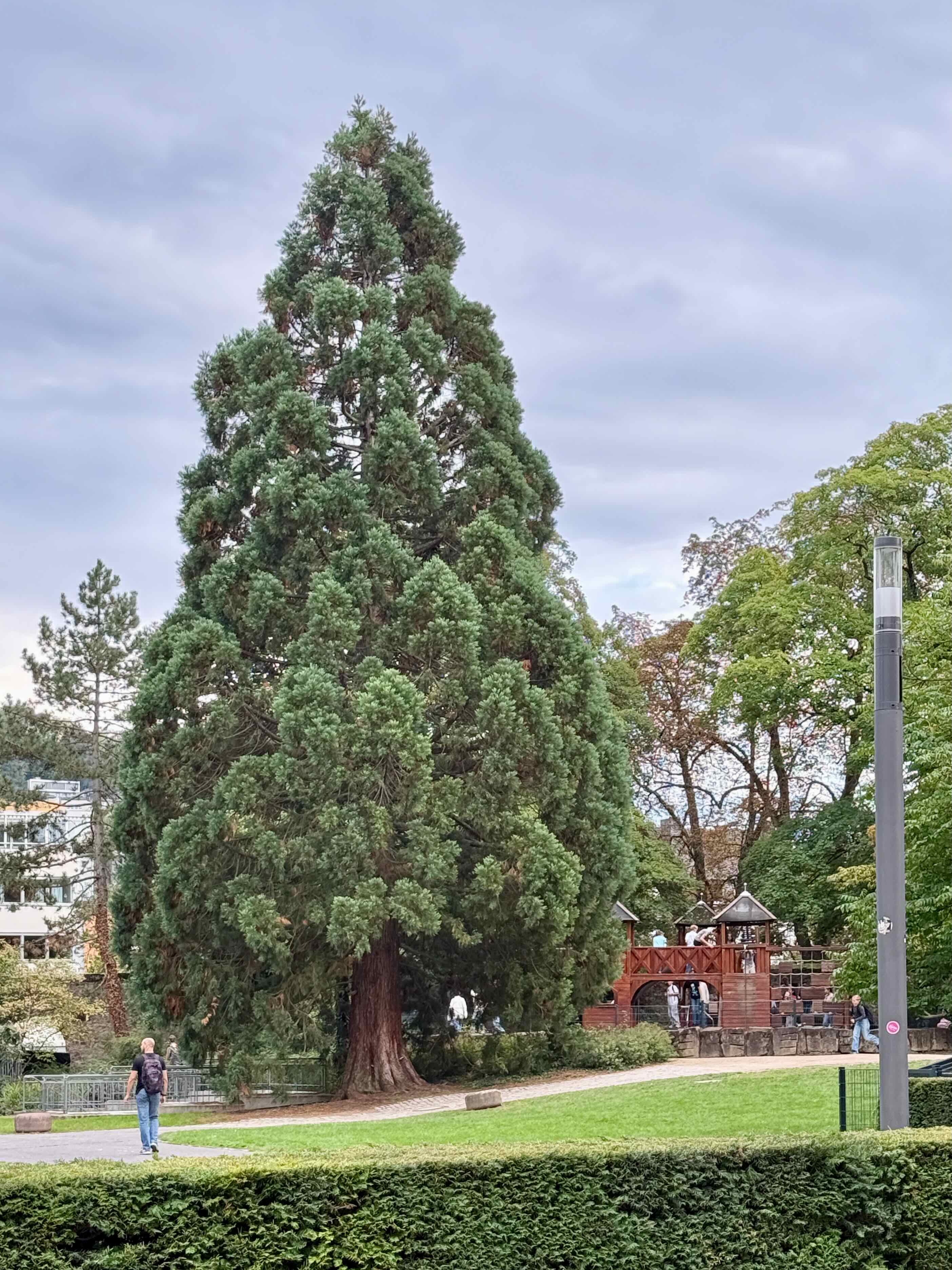
Photos really do not show how beautiful and enormous the trees are. I wish we were able to grow trees this large back home. These trees wouldn’t survive our colder climate.

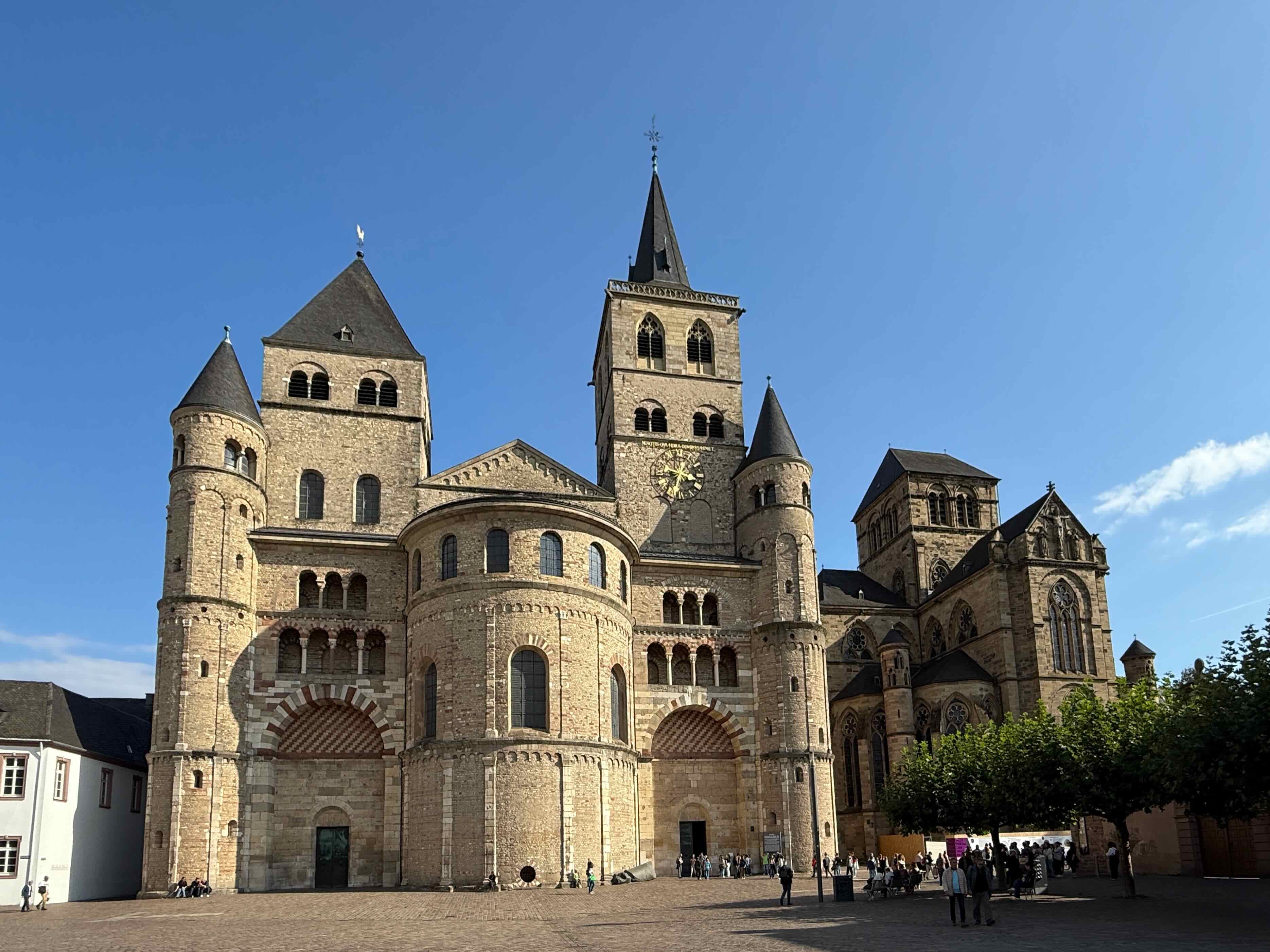
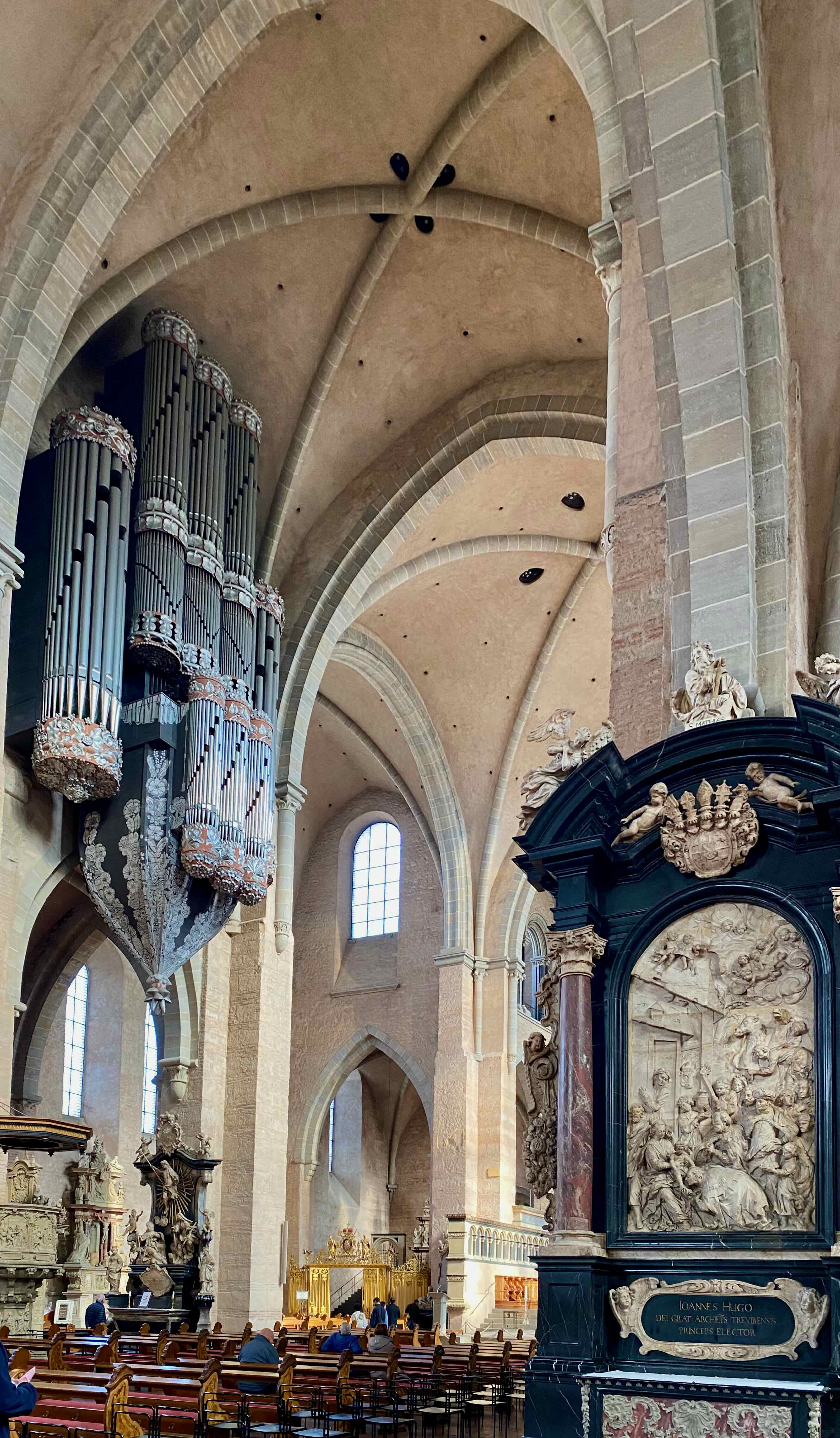
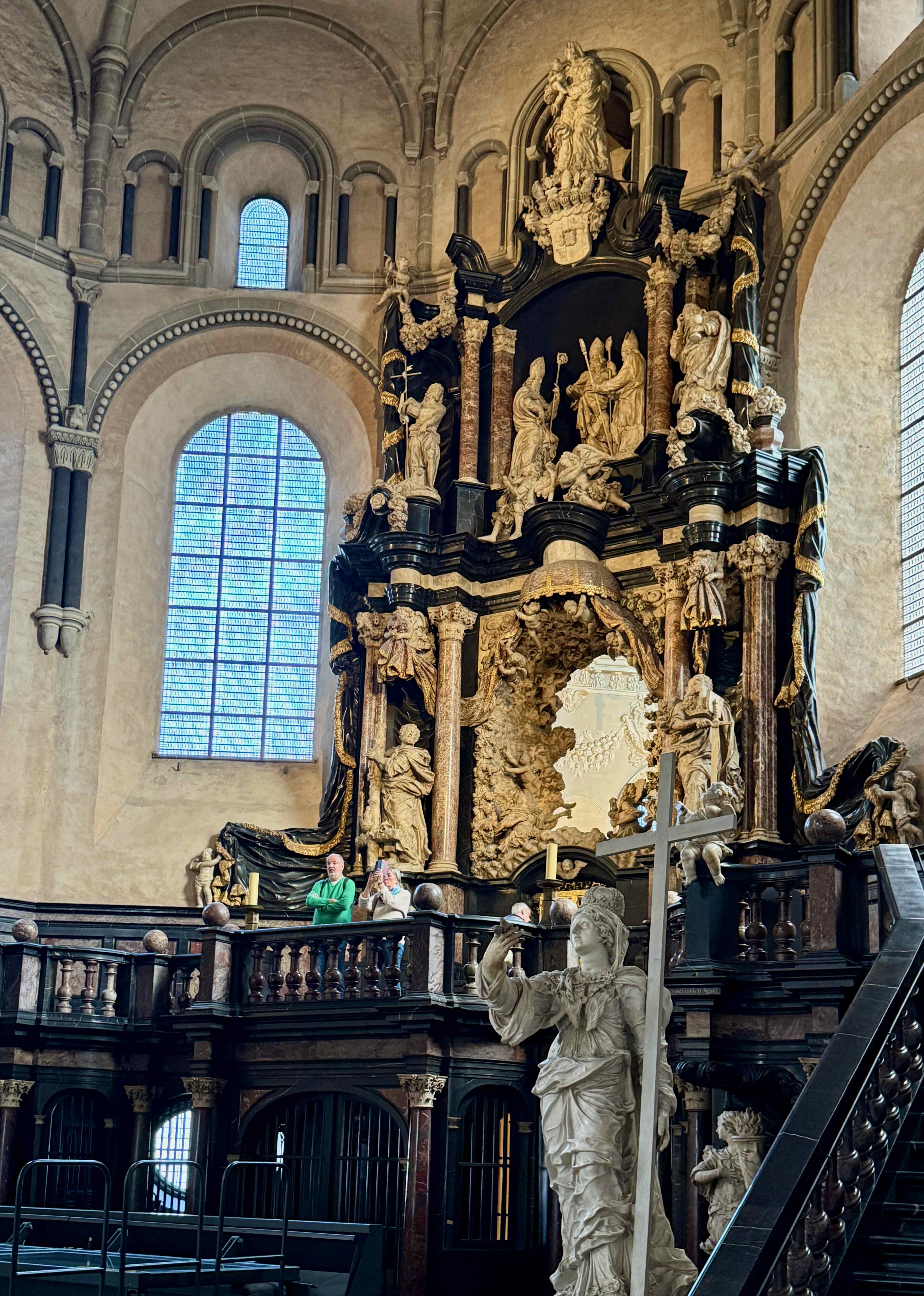
Trier Cathedral is a UNESCO World Heritage Site and the oldest cathedral in Germany. Construction started in the 4th century and it was built upon the foundations of ancient Roman structures.

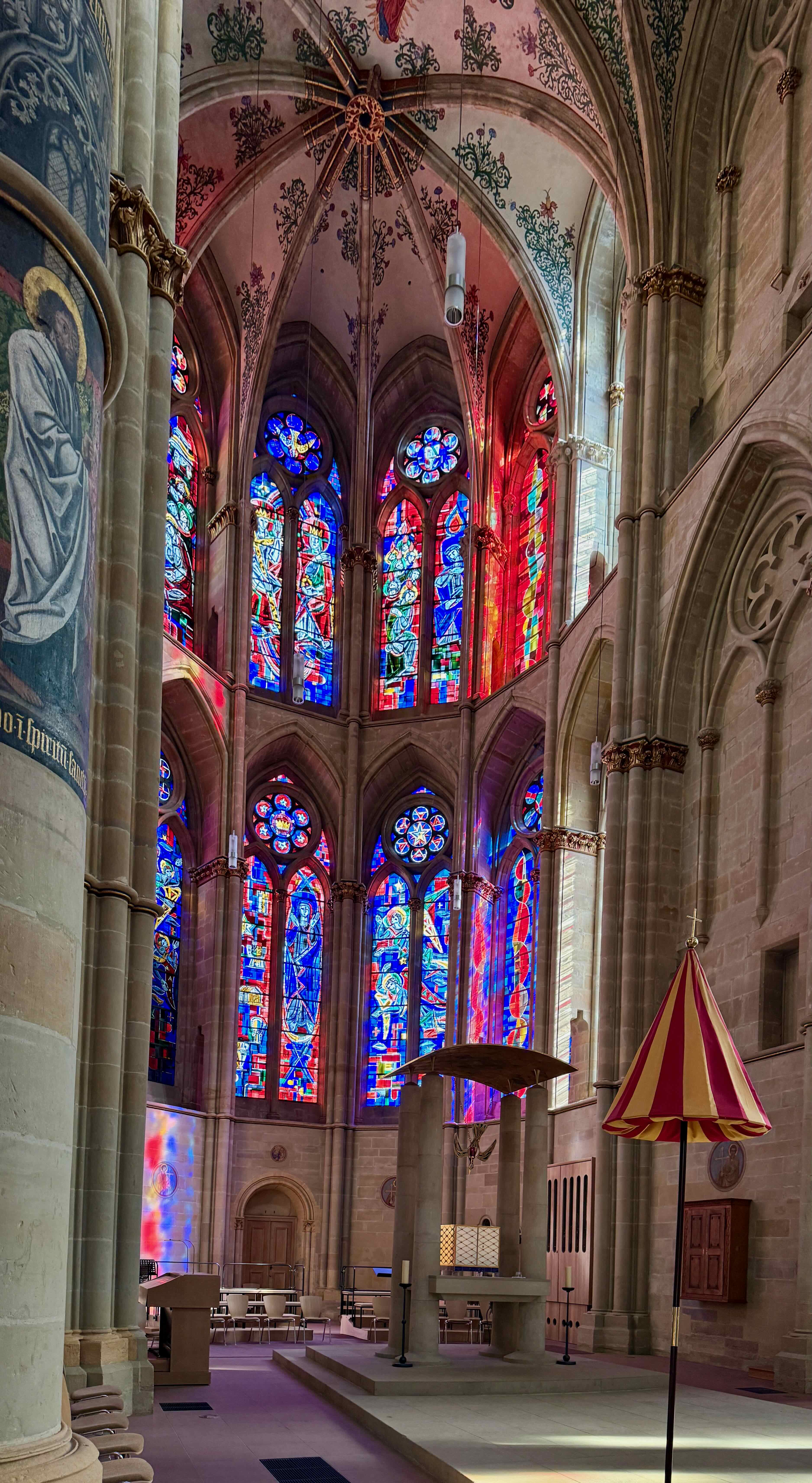
And yes, the inside of the cathedral is very impressive.

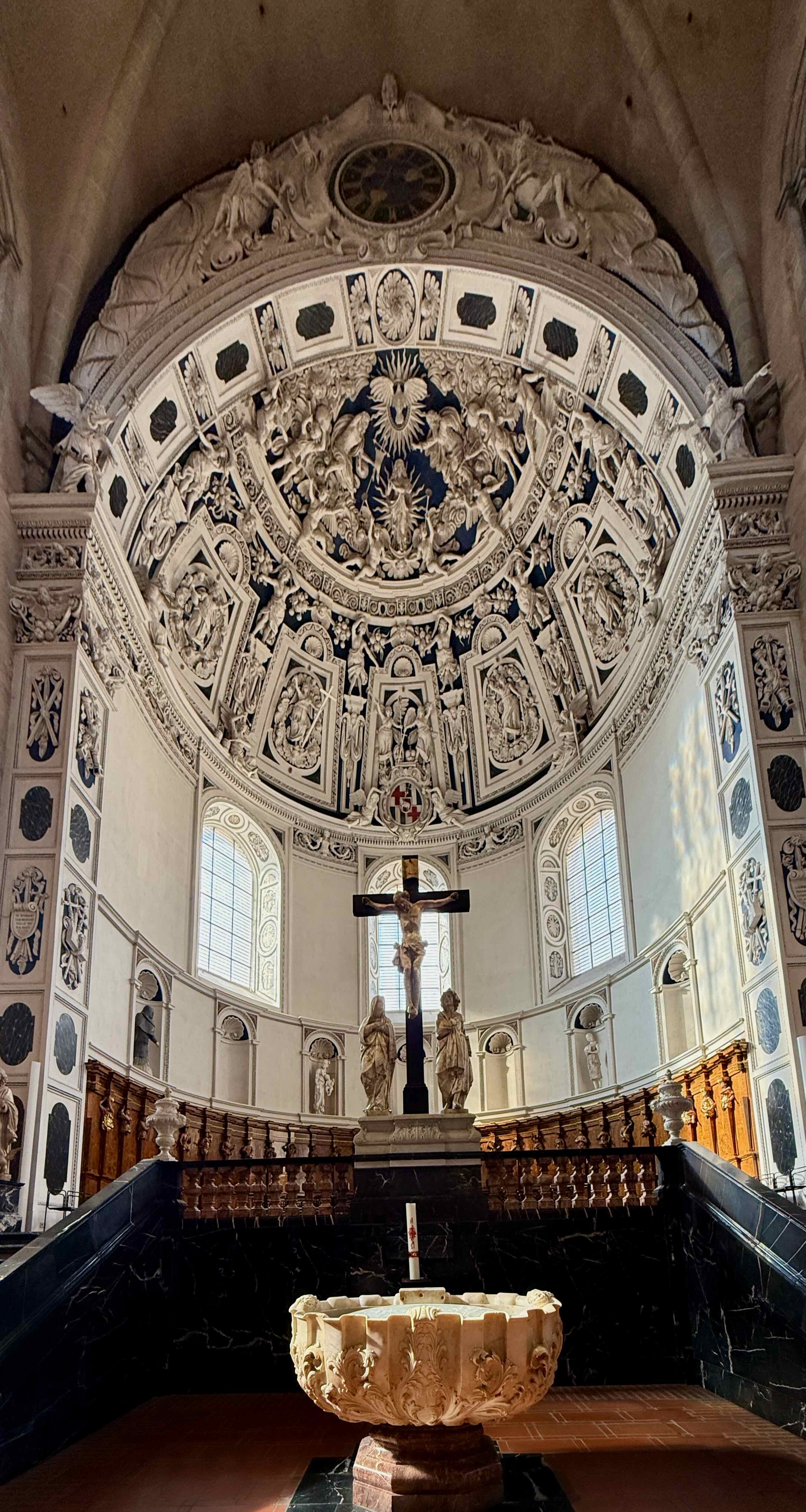
It has one of the most ornate organs we have seen… and many huge sculptures with multiple figures. We walk up these stairs for a view of the nave. This beautiful blue and white Baroque stucco work decorates the choir loft of the Cathedral. It is stunning and unusual. This is the first time we have seen anything like this in a cathedral.
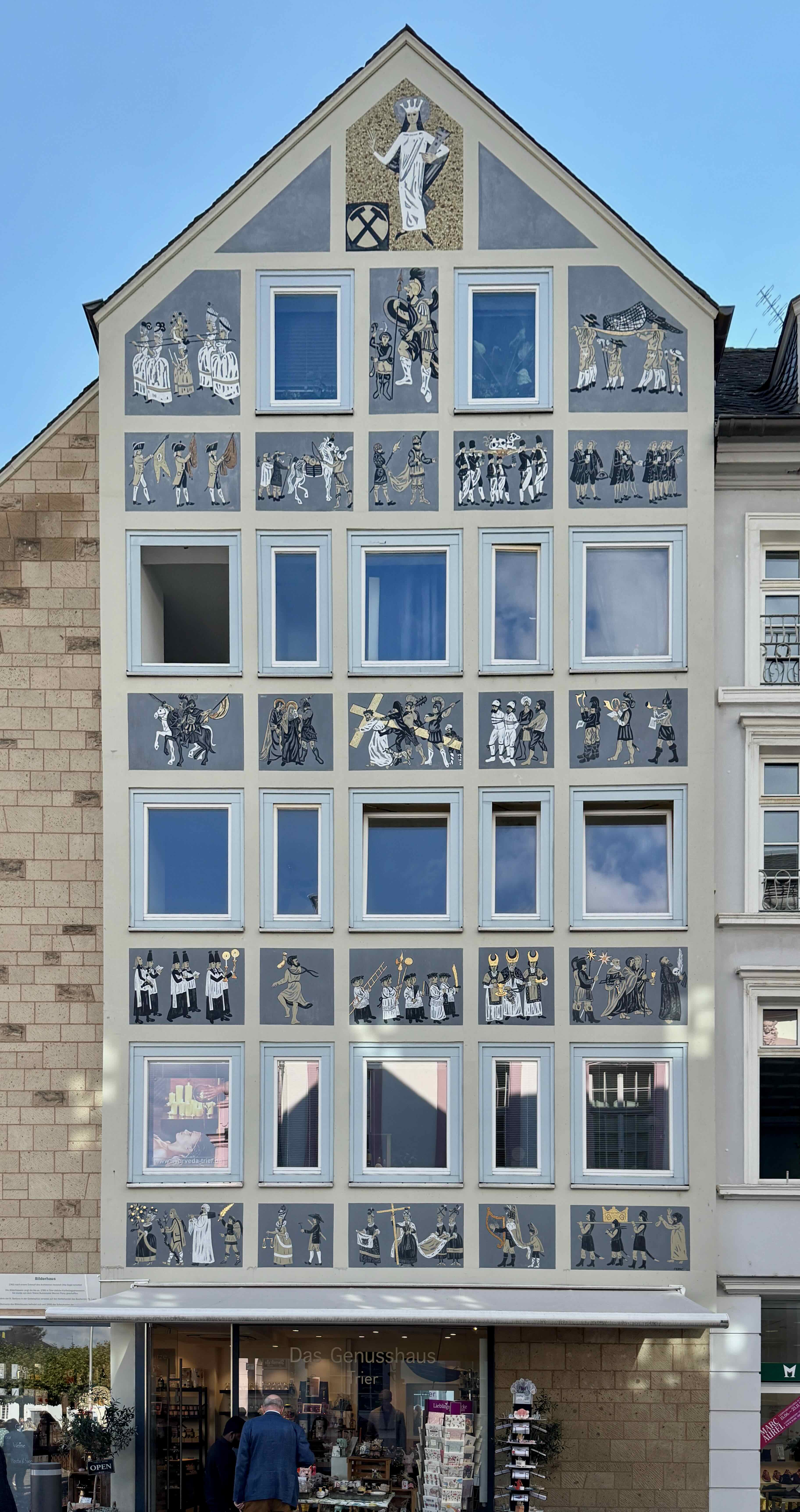
We pass this building on the way to the Nigra Gate. There are many ornately decorated buildings in Trier.

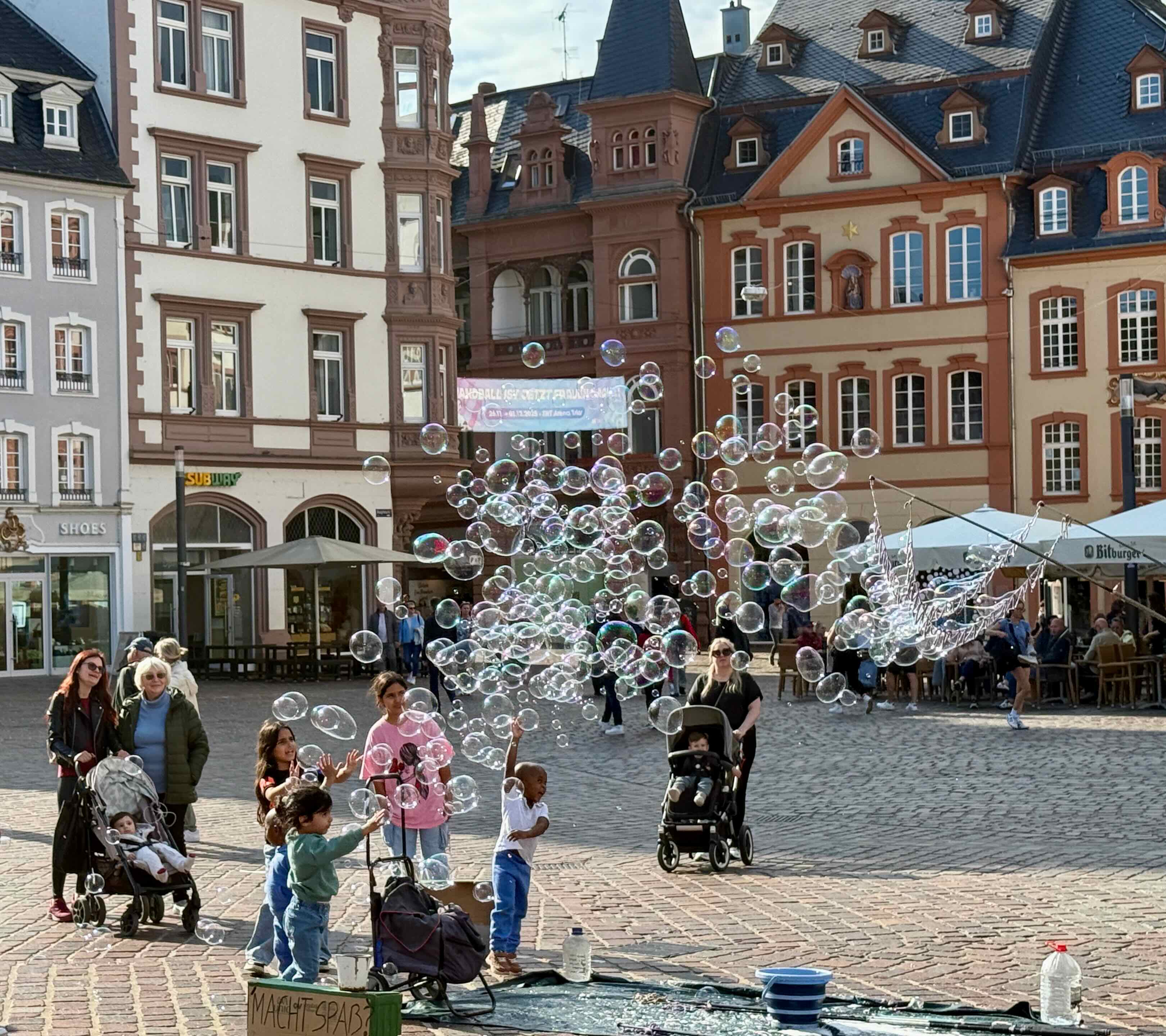
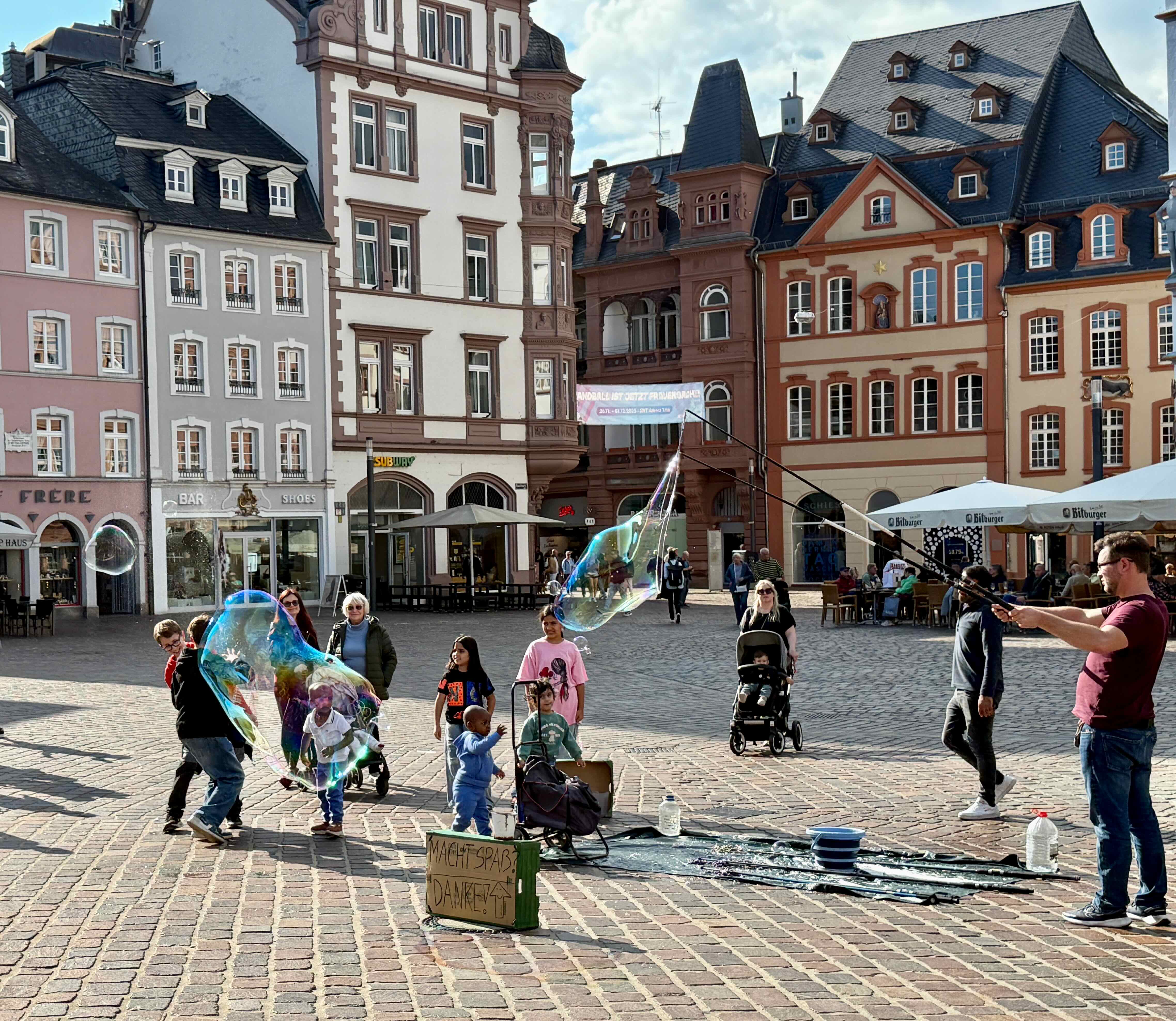
I love watching the bubble makers, and the children trying to catch the bubbles. This fellow made huge bubbles…

and lots of smaller bubbles.  I would love to know how to do this.

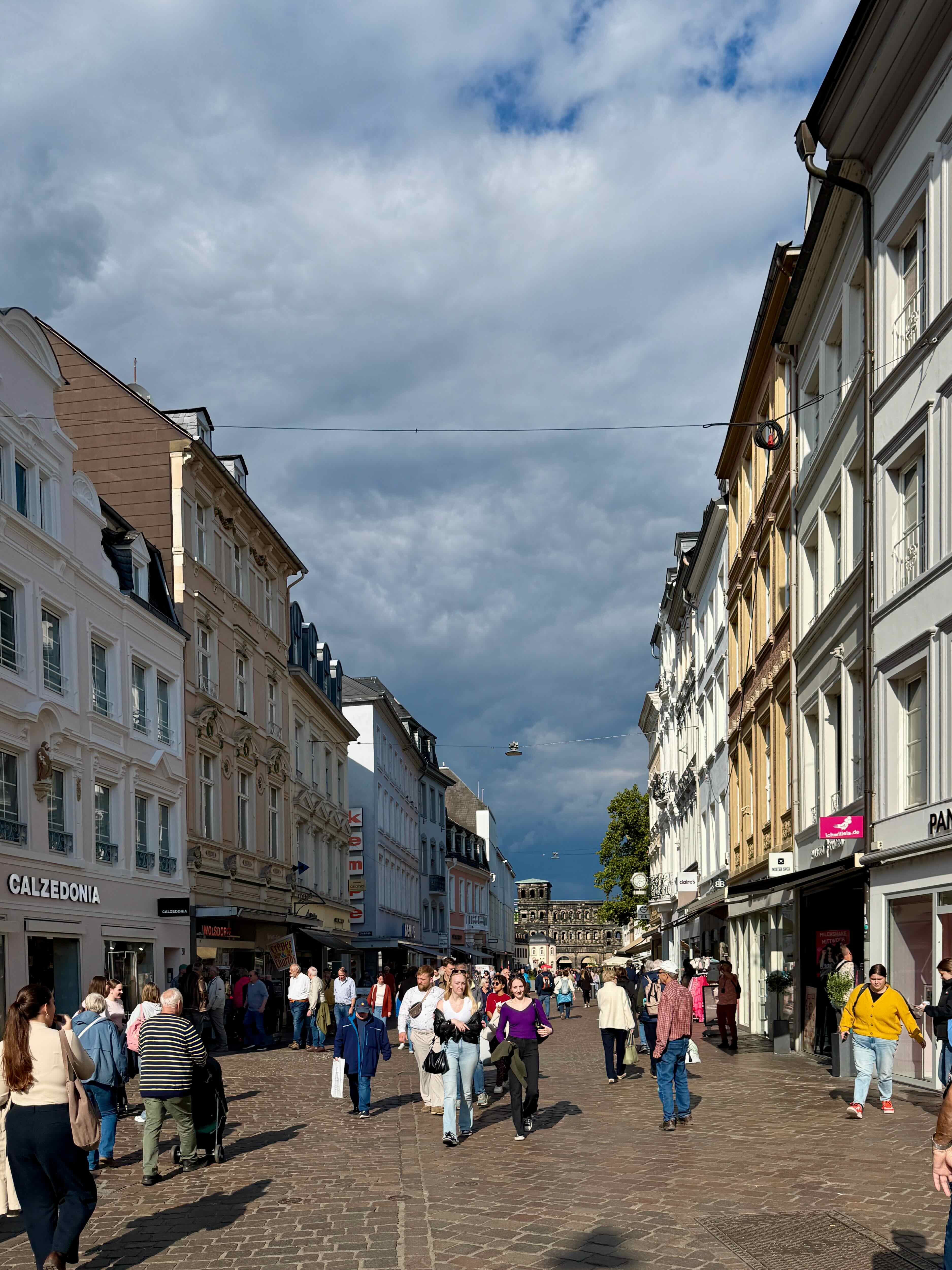
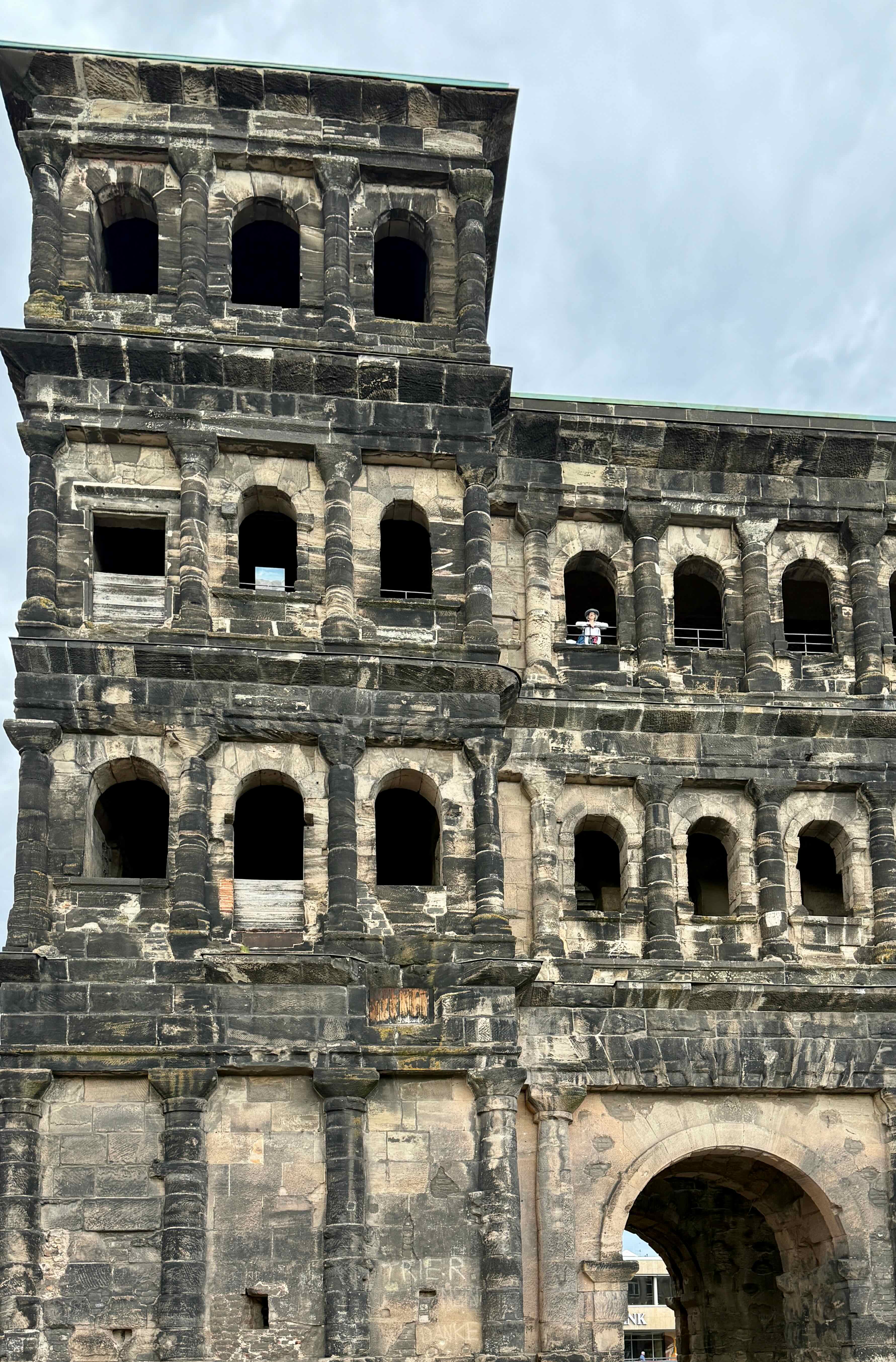
At the end of the street we can see the Nigra Gate, another UNESCO World Heritage Site.

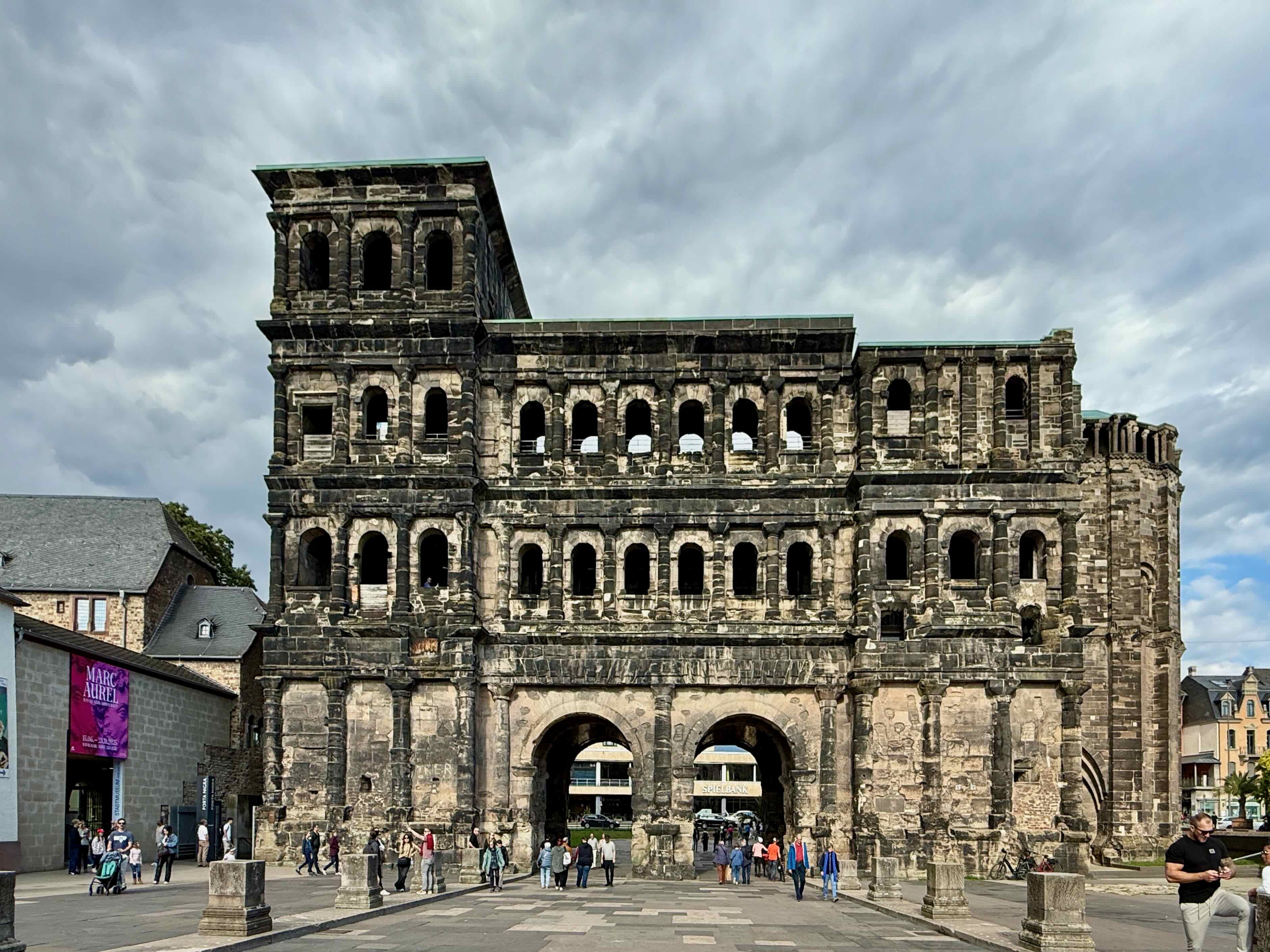
The Porta Nigra, or Black Gate, is the largest Roman gate in Northern Europe.  It was part of the defensive walls and gates that surrounded Trier in 200AD. It is  incredibly well preserved, especially when you consider that it was completed around 200AD, and it almost two thousand years old!

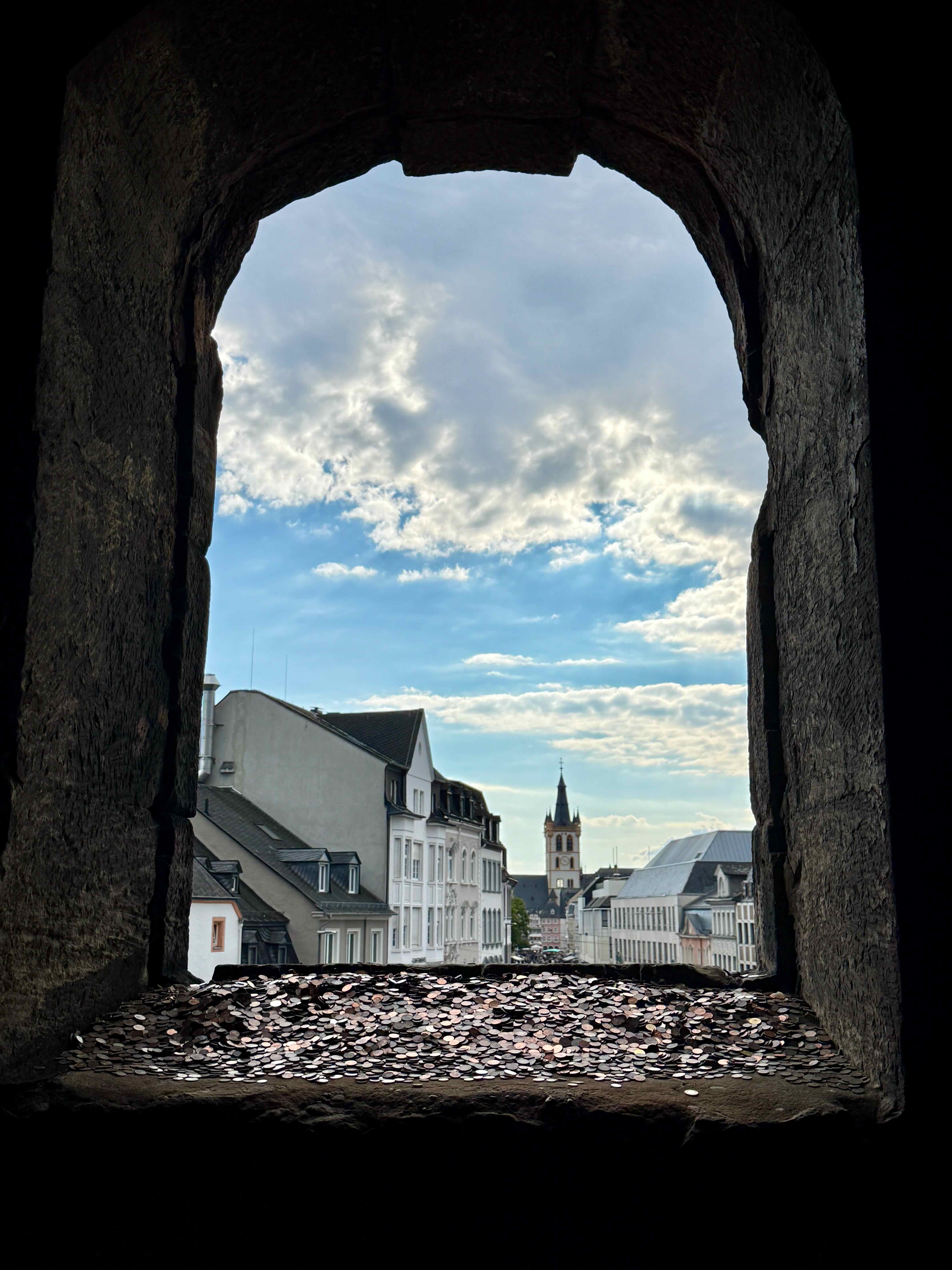
We pay 6€ each to climb inside the gate. This ‘window’ has a pile of coins, perhaps people making a wish?

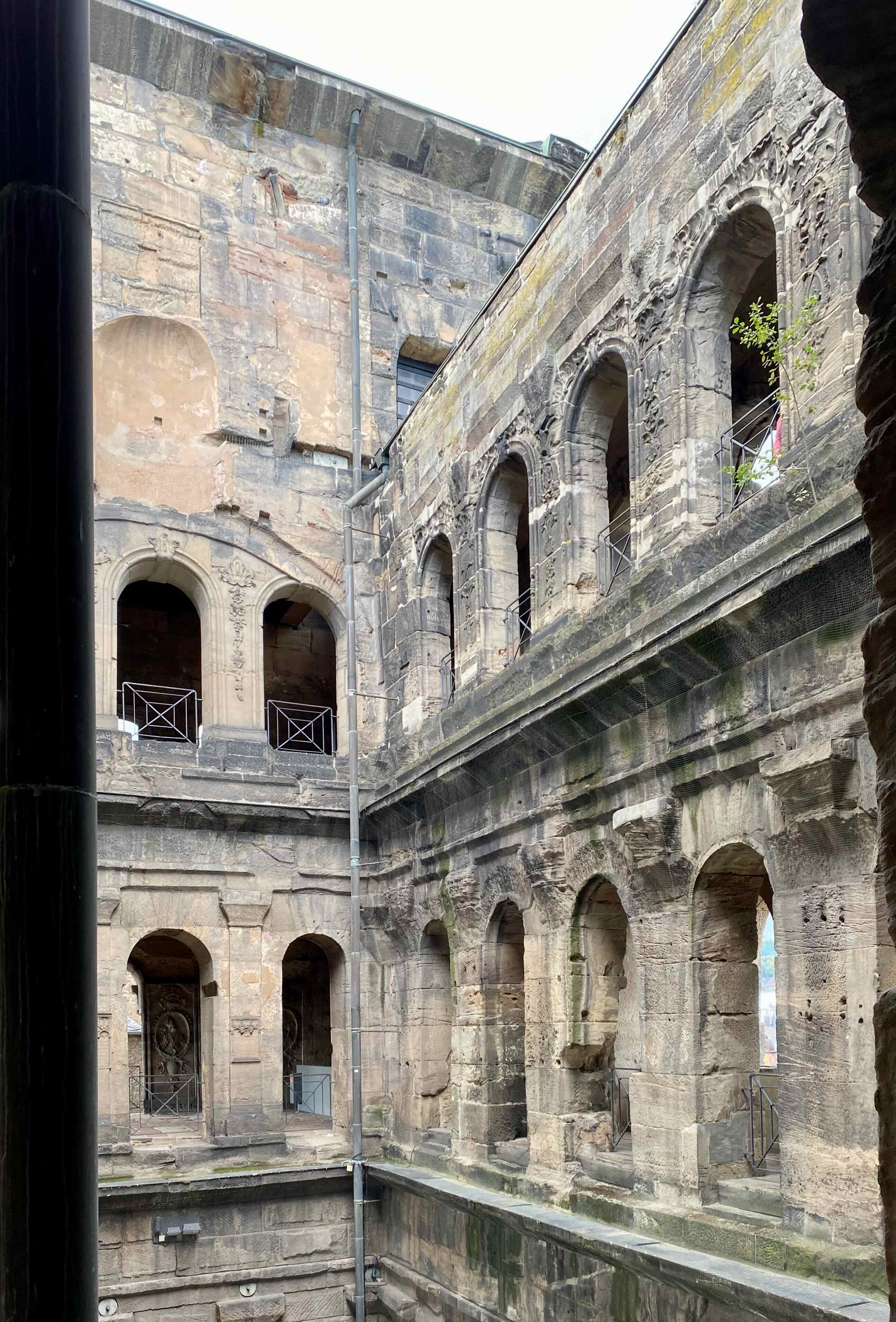
A view inside the gate.

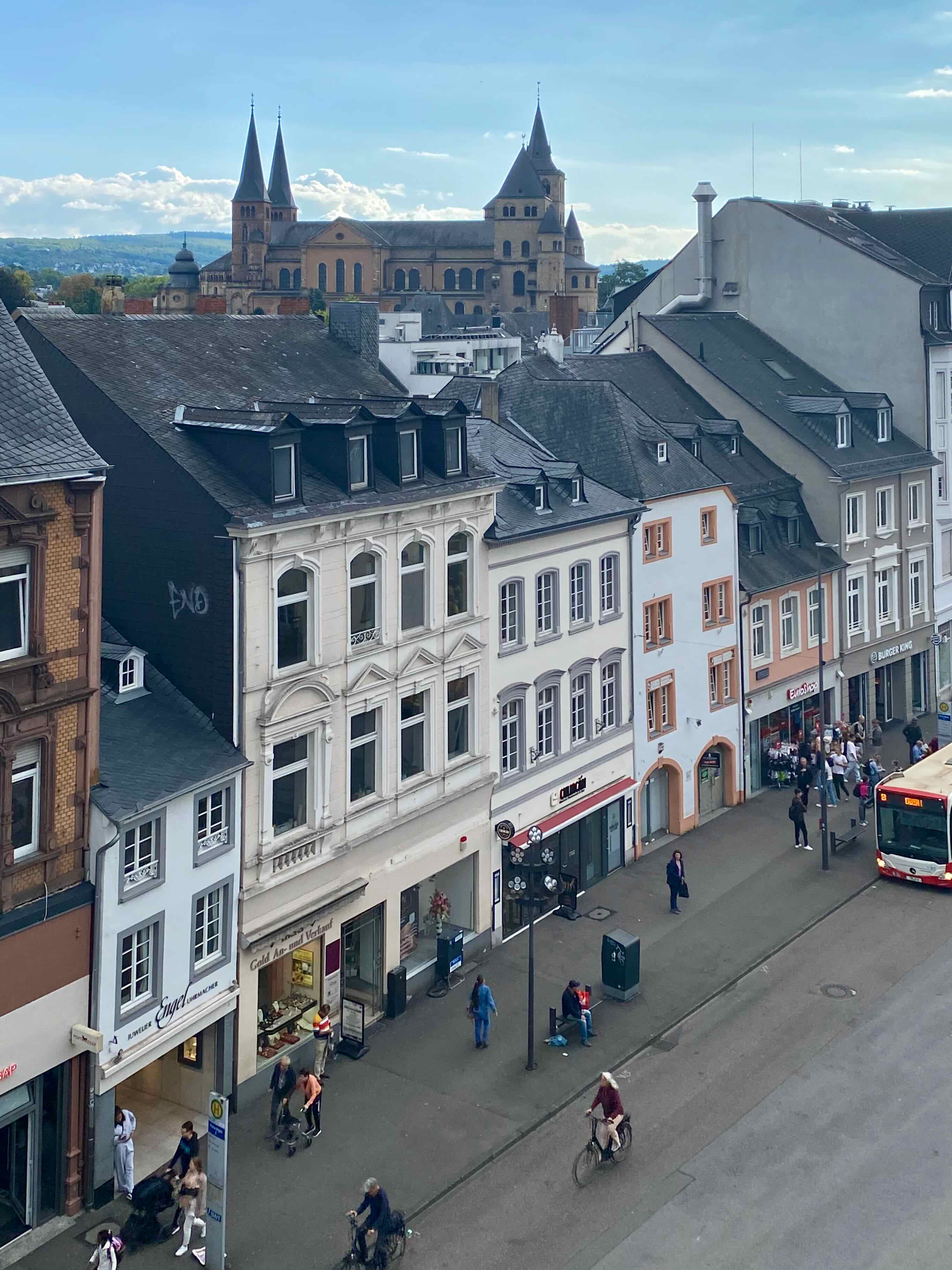
We can see the Trier Cathedral from the second level of the gate.

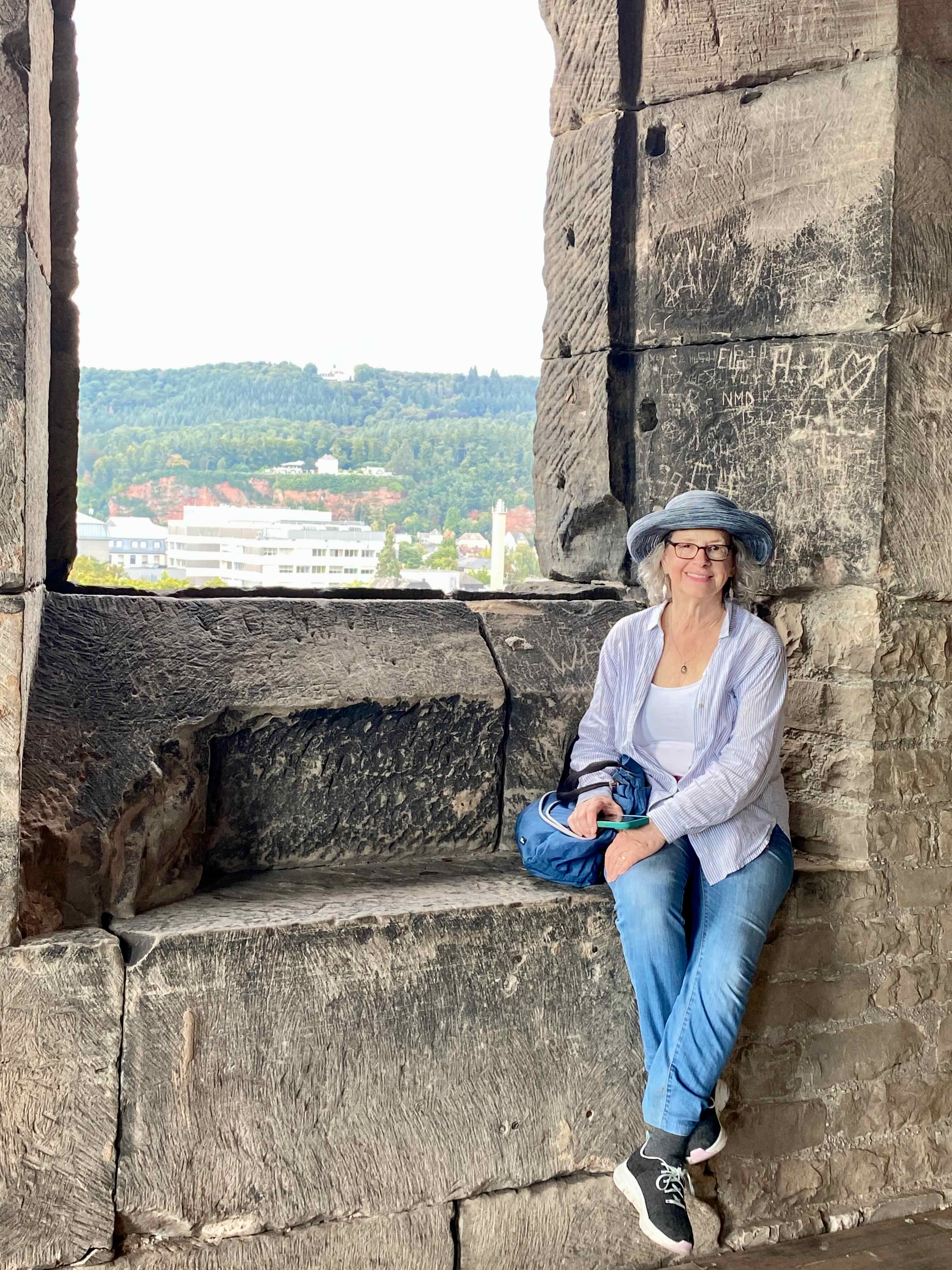
Grafiti has been around for a long time.  Some of the dates on the walls are hundreds of years old.  I do really hate this practice of defacing monuments.

There is Bob, I sent him down to the street so he could take a photo of me in one of the gate arches.

Here I am.These carved decorations are still in remarkably good condition.
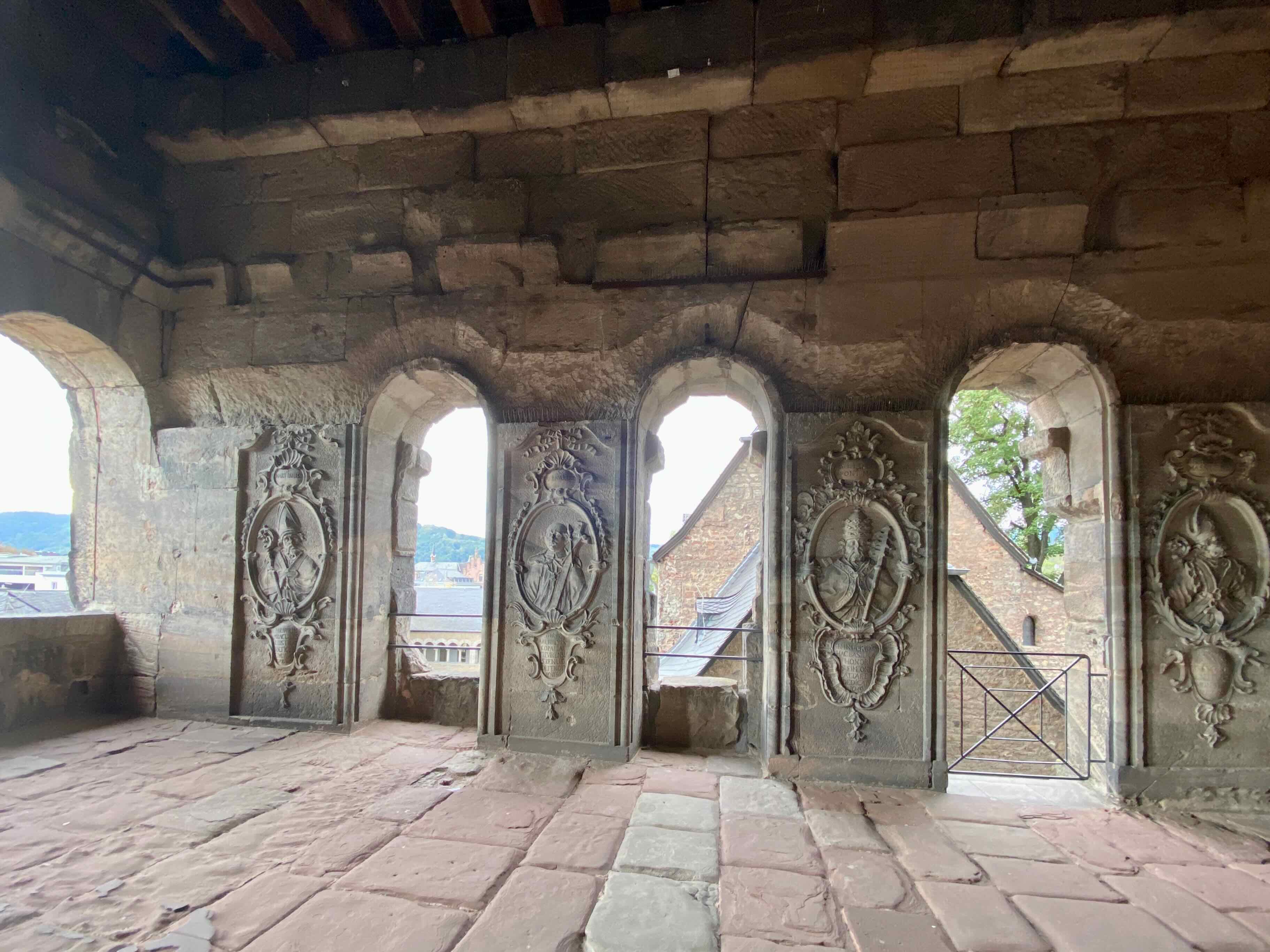
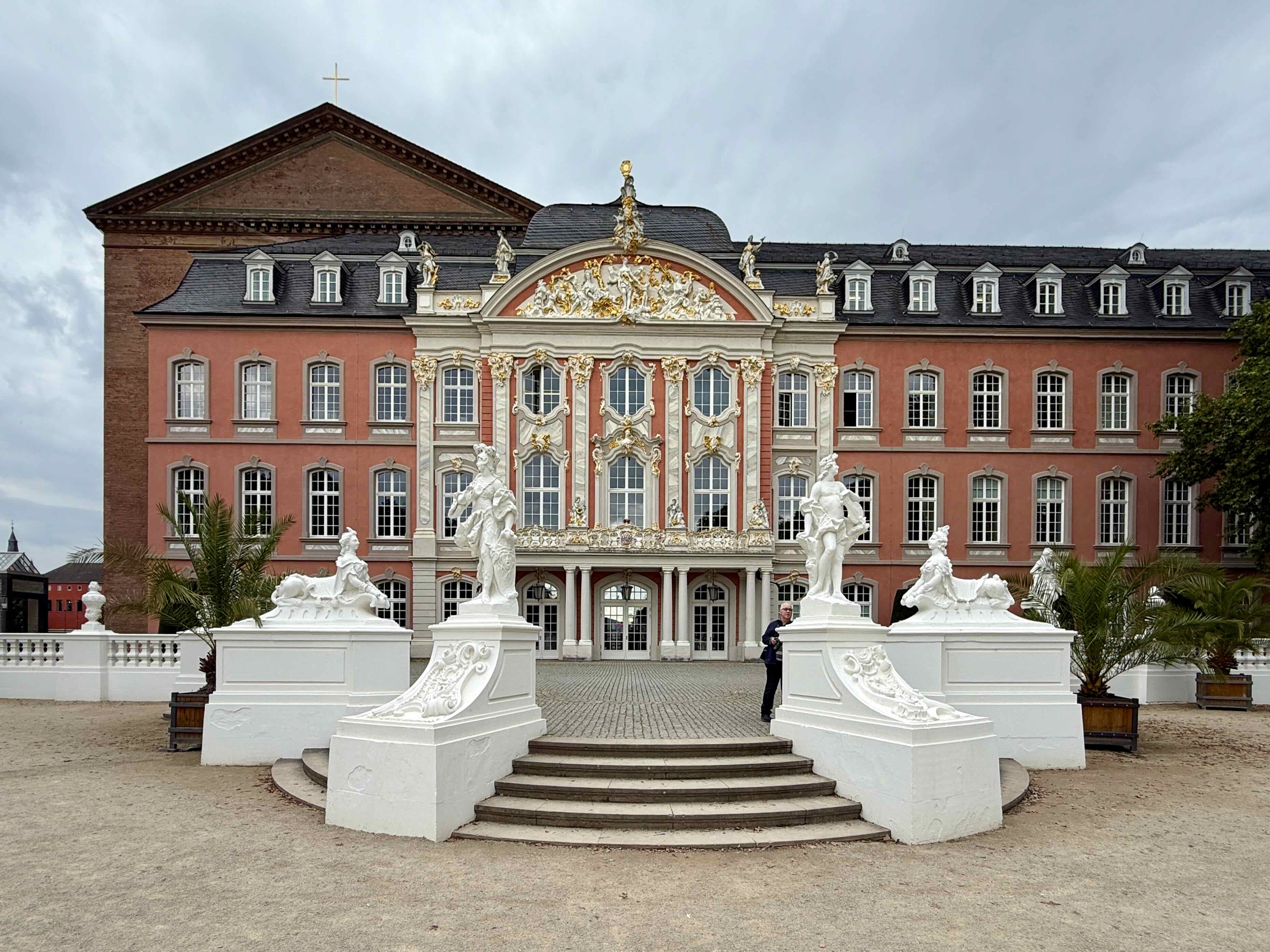
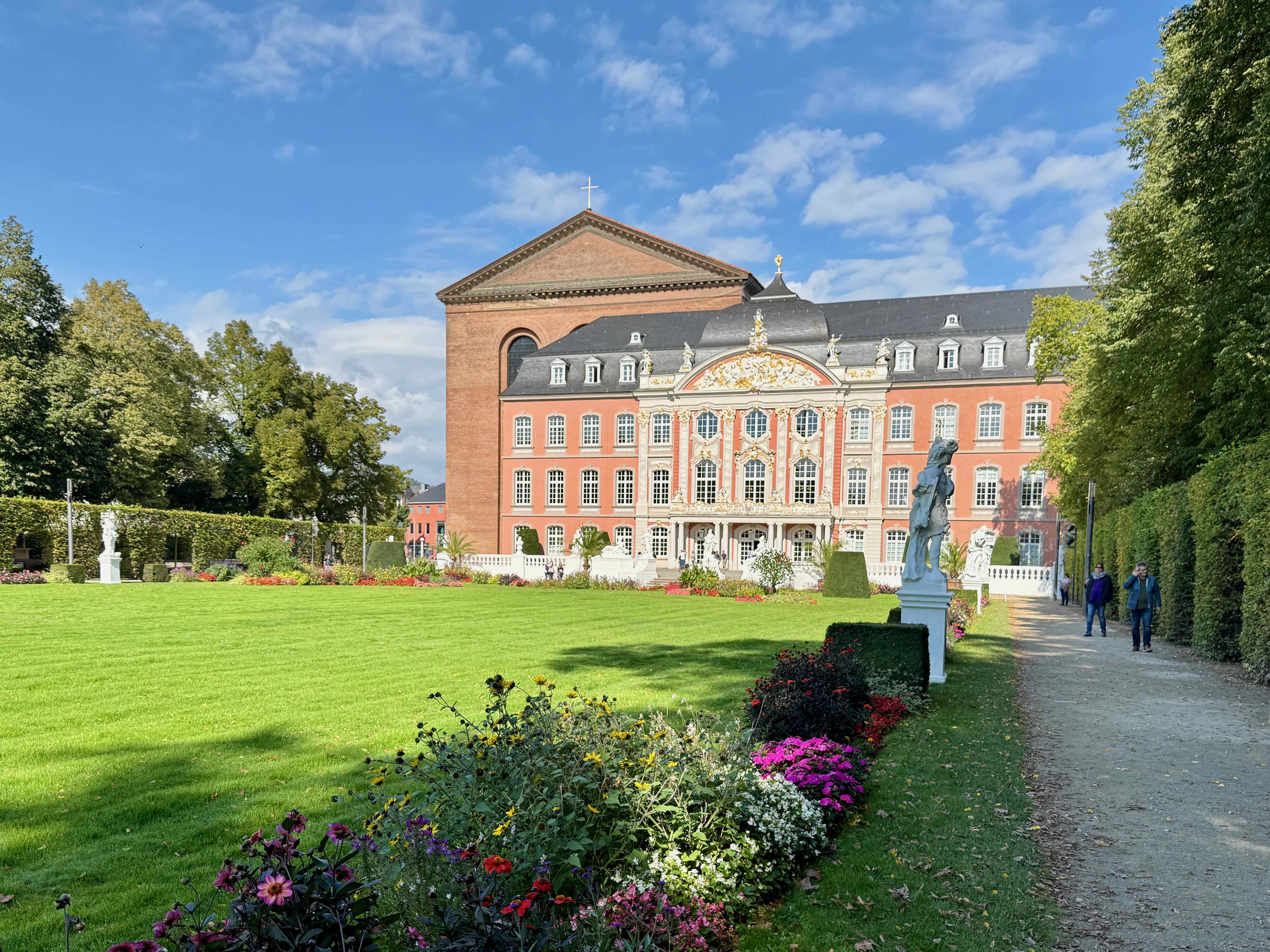
Walking back to our car we stop for a photo of the Electoral Palace. We had our lunch in its beautiful gardens which have many white statues and small ponds.

Another gorgeous tree.

The clouds are moving in on our drive home.

Big black ominous clouds.

We arrive at our Airbnb in Frankfurt. It is smaller than our last place but cozy and has everything we need.

Luxembourg City, Luxembourg

Day 28     Saturday, September 27, 2025

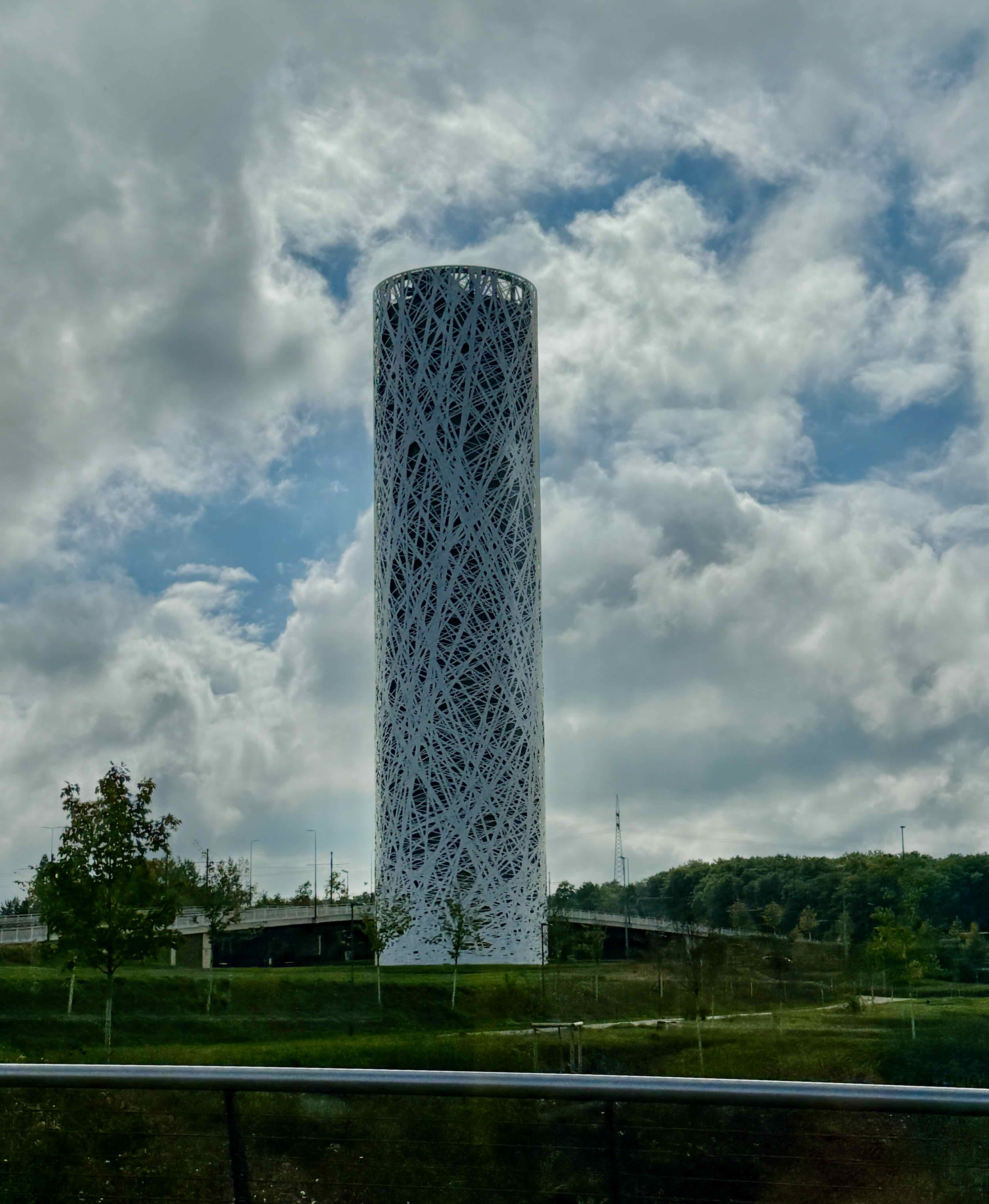
We drive a half hour to a free parking lot on the outskirts of Luxembourg city, then catch a bus to the downtown area. We should have realized something was wrong when we passed this interesting looking tower…we saw it when we drove to the parking lot. So…we caught the bus going the wrong way and ended up at different  parking lot on the outskirts of the city! The bus driver told us where to get the tram we now need to use to get into the city.  Luckily all the public transportation in Luxembourg is free!

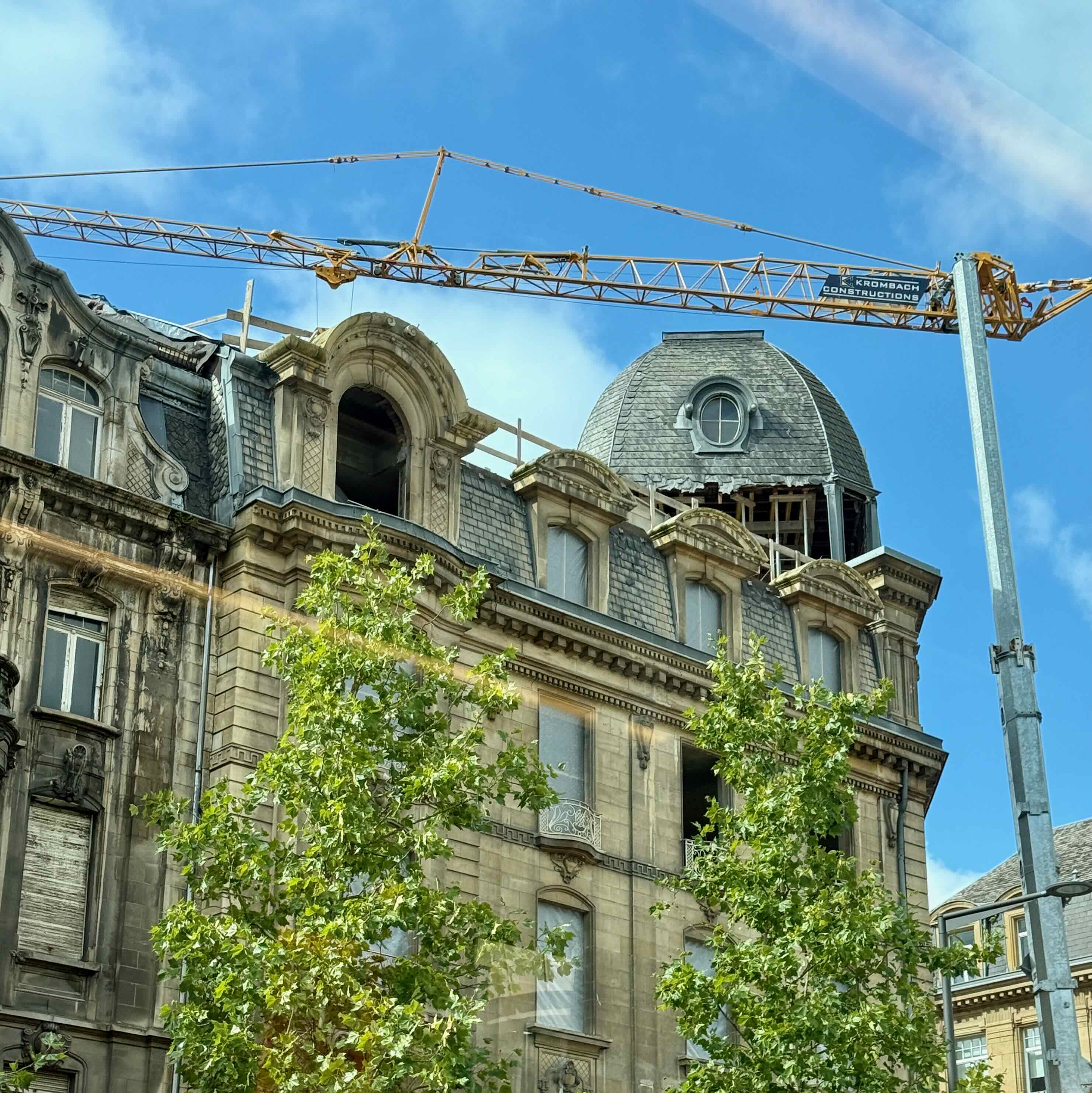
We pass this renovation site on the way to downtown. I am impressed that buildings are almost always repaired, not demolished.

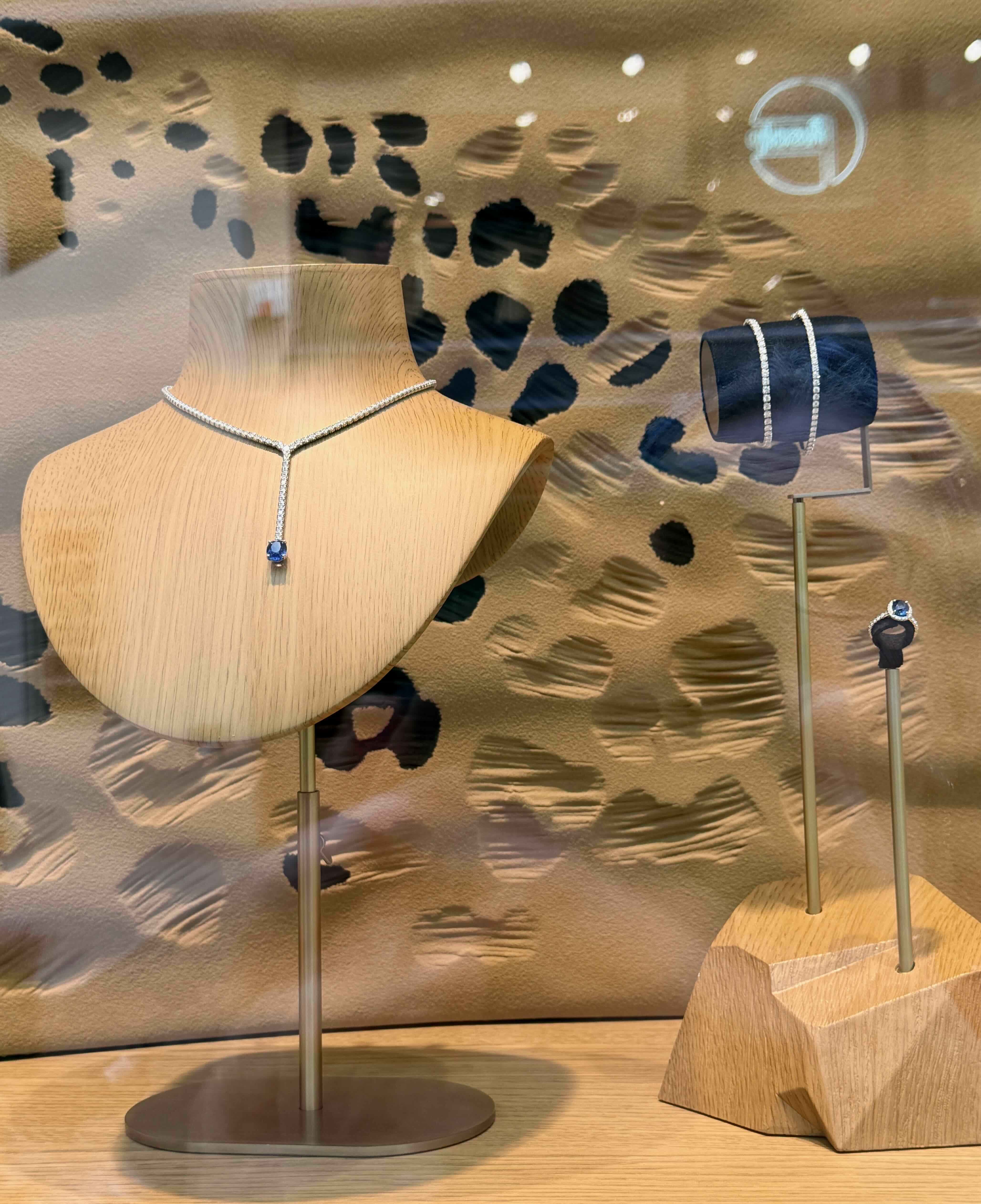
Walking downtown we pass a Cartier store. The necklace is ‘only’ 191,000€, the two bracelets are 26,900€ and 36,200€ and the ring is 113,000€…just a wee bit out of my price range!

We find a Post Office to buy stamps. While we are writing on the postcards, my purse falls down between the counter and the wall…a narrow space less than a foot wide!  I have to ask the security guard to come help. Even though his arms are much longer than mine  he is just barely able to reach my purse.  My phone fell out when he pulled my purse up but luckily it is on a cord attached to my purse so it didn’t fall to the bottom of the space behind the counter!

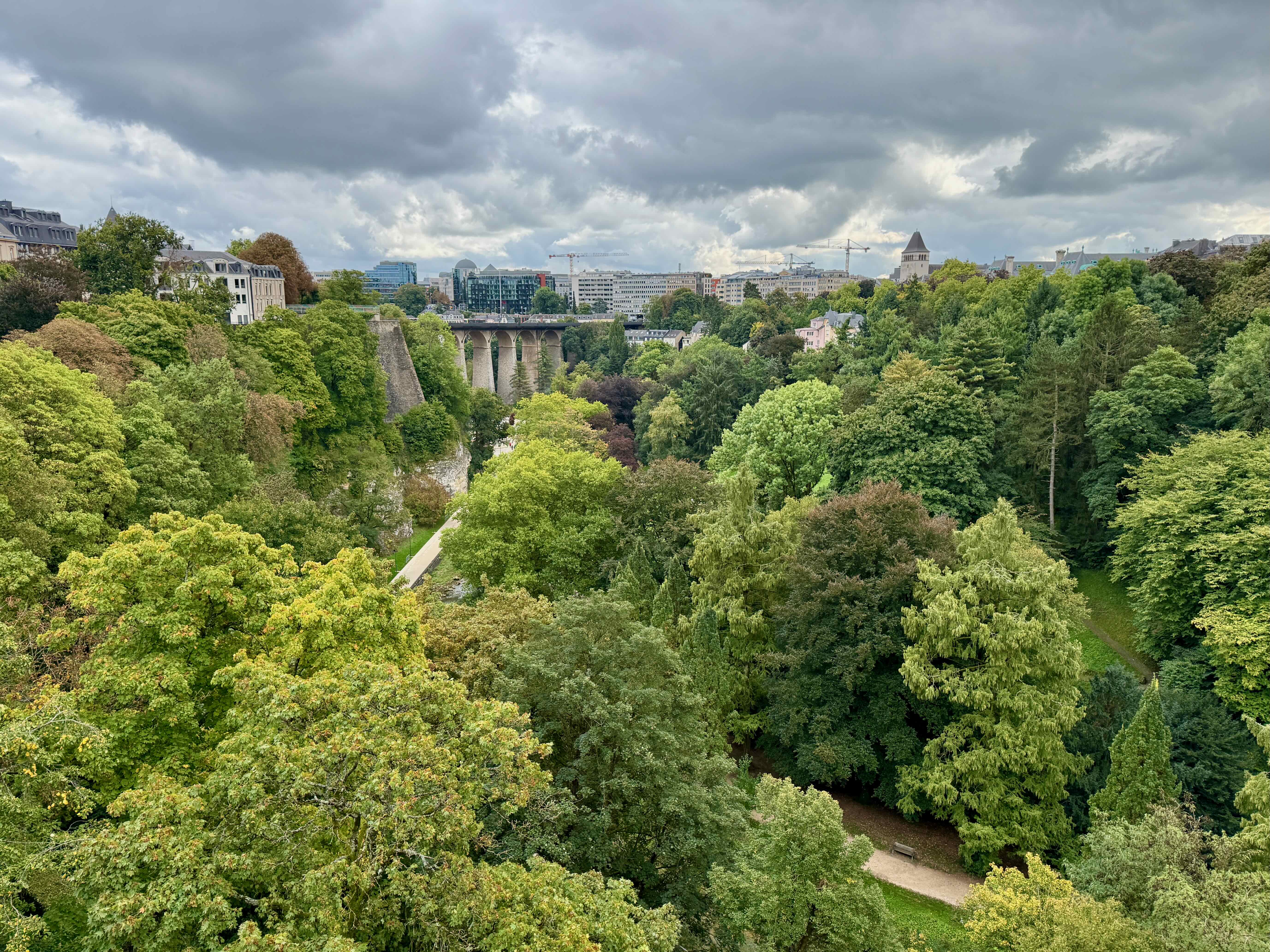
There is a big park downtown, at the base of high cliffs.

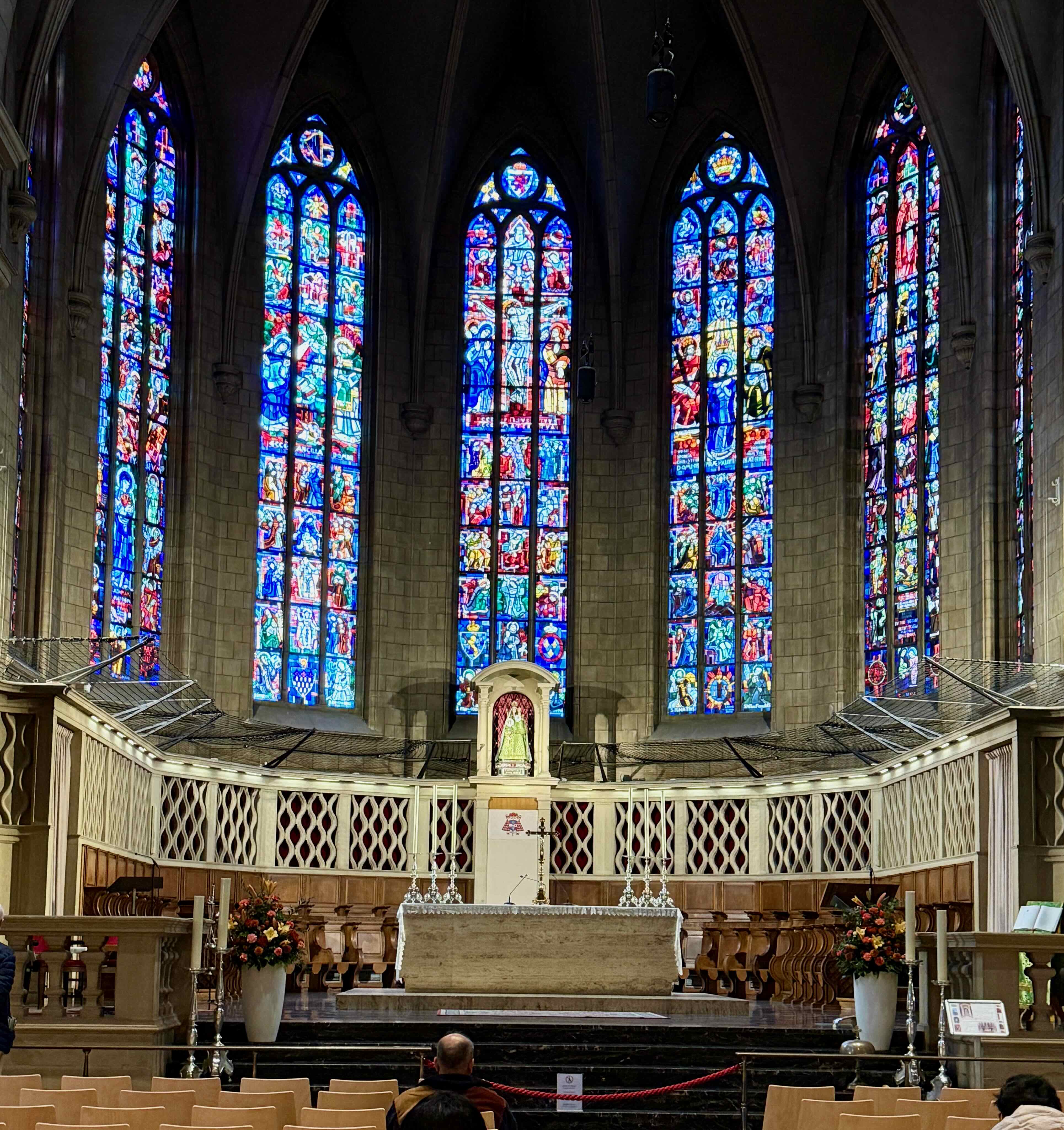
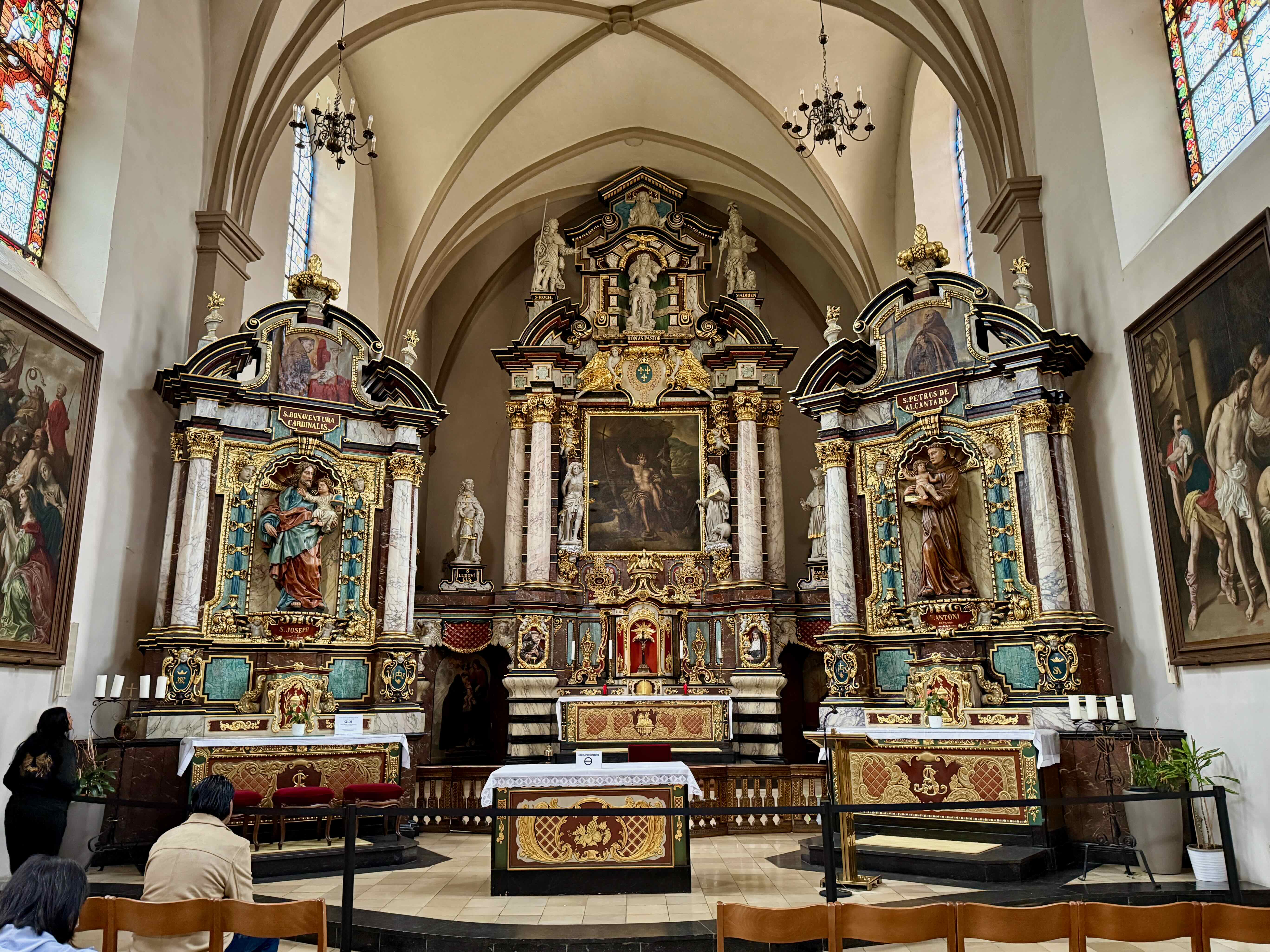
Yes, another church! The cathedral “Notre-Dame” of Luxembourg was built between 1613 and 1621 by the Jesuits. The stained glass windows make a stunning backdrop for the altar.

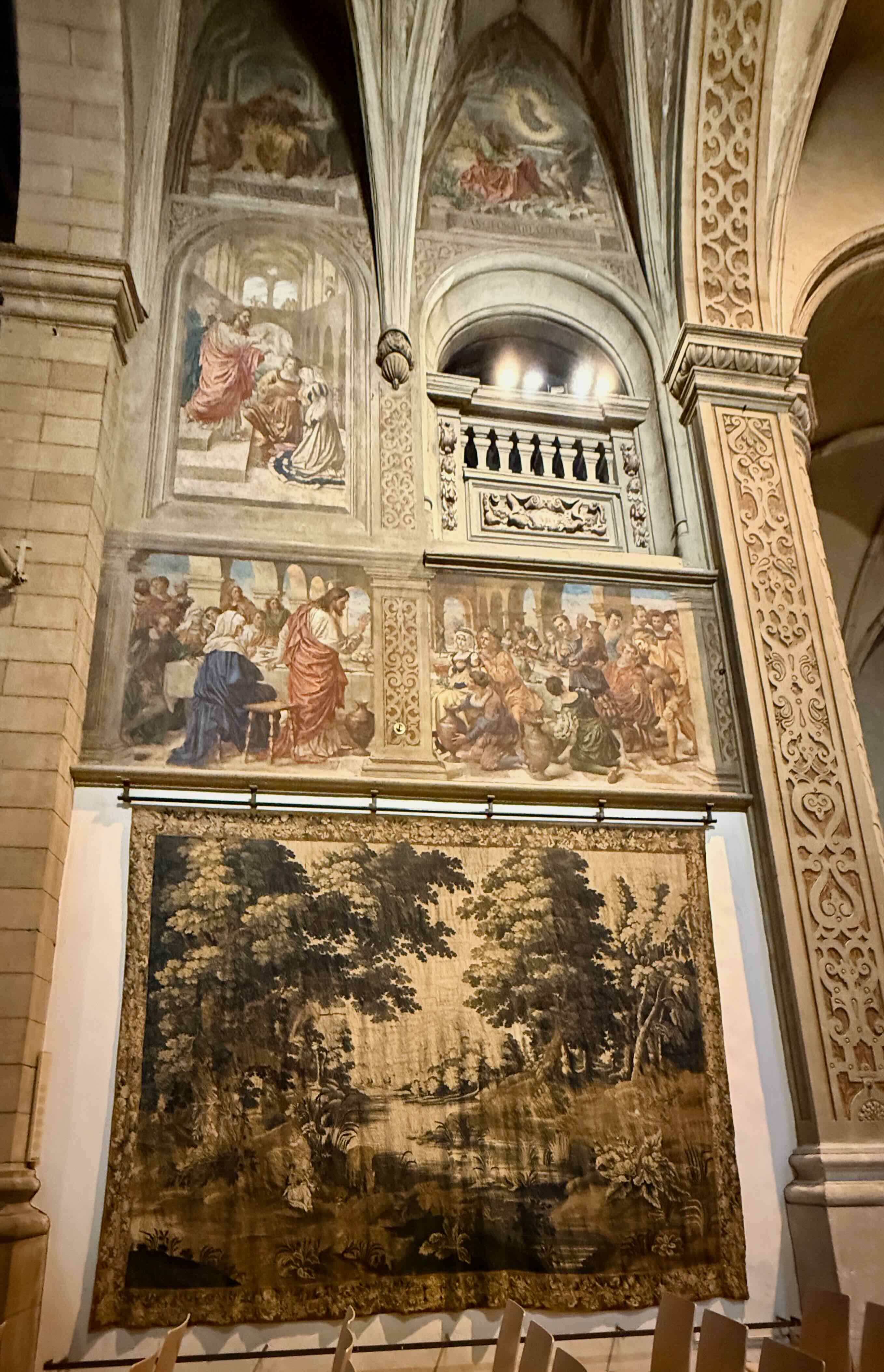
There are many paintings and tapestries in this cathedral, and the stone pillars are decorated with intricate carving.

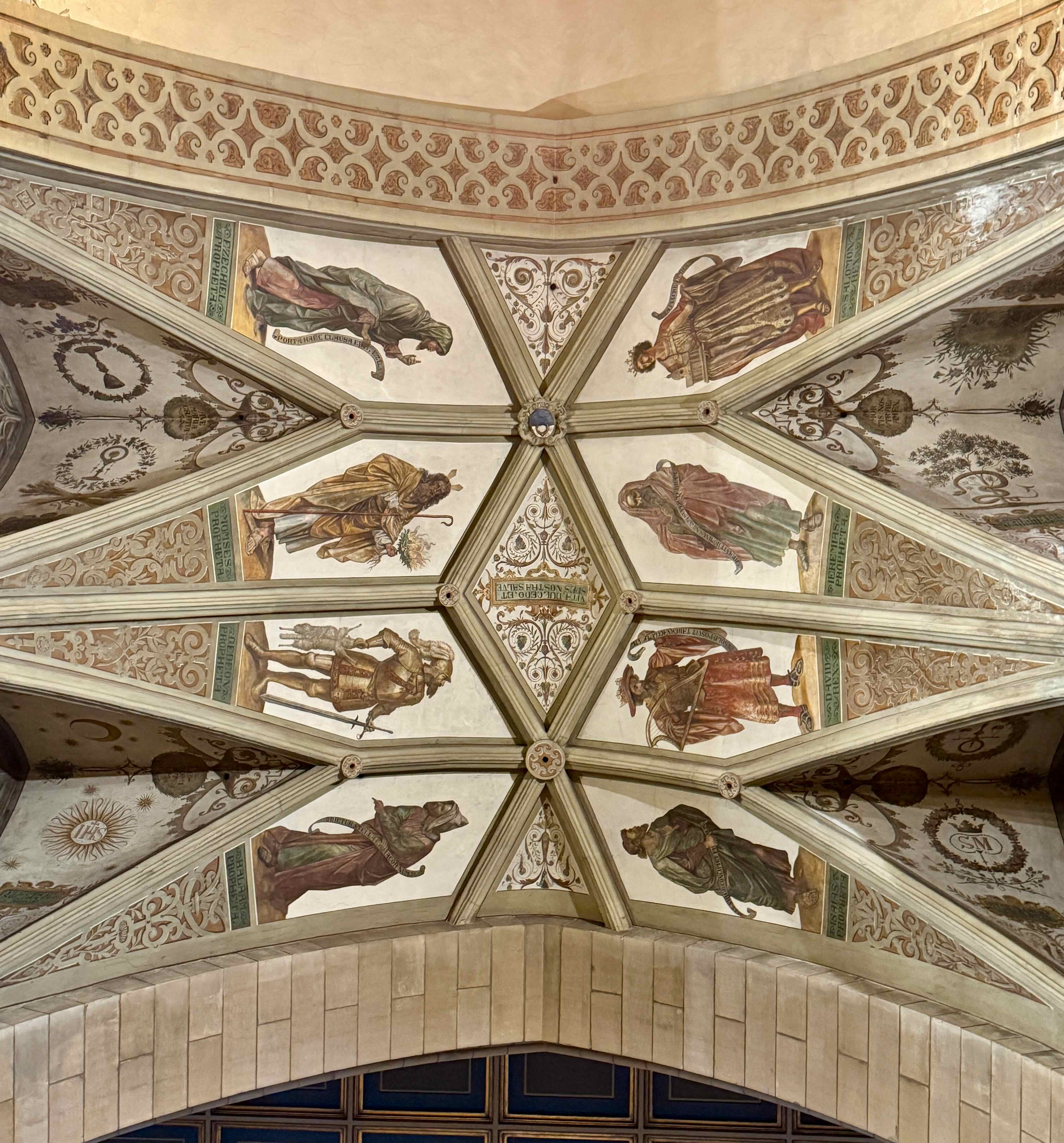
I look up and there are paintings on the ceiling high above the nave.

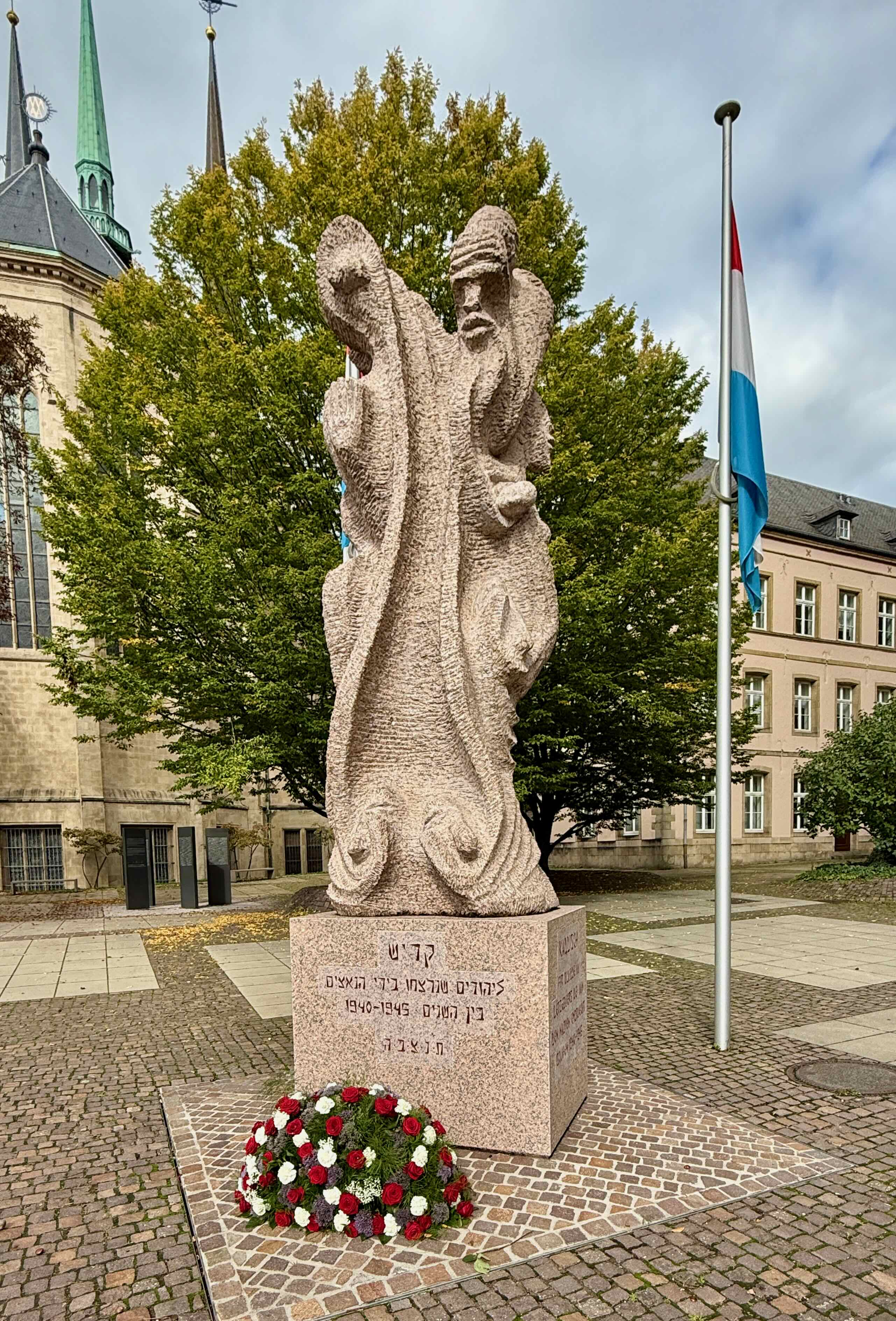
We pass the National Monument in Memory of the Victims of the Shoah in Luxembourg (1940-1945). The monument was inaugurated on 17 June 2018. It is named after the Kaddish, one of the most famous Jewish prayers recited as part of mourning rituals in Judaism.

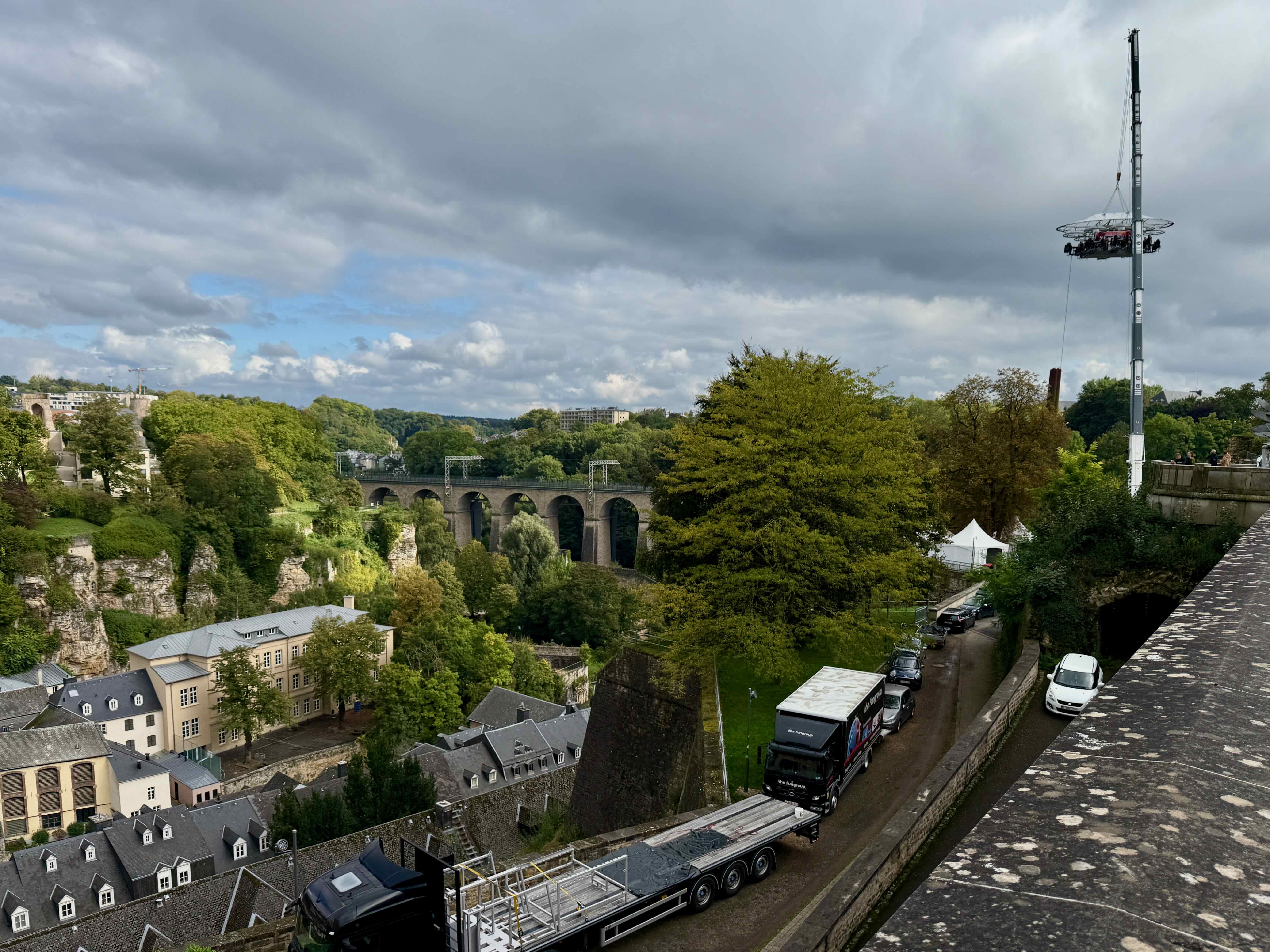
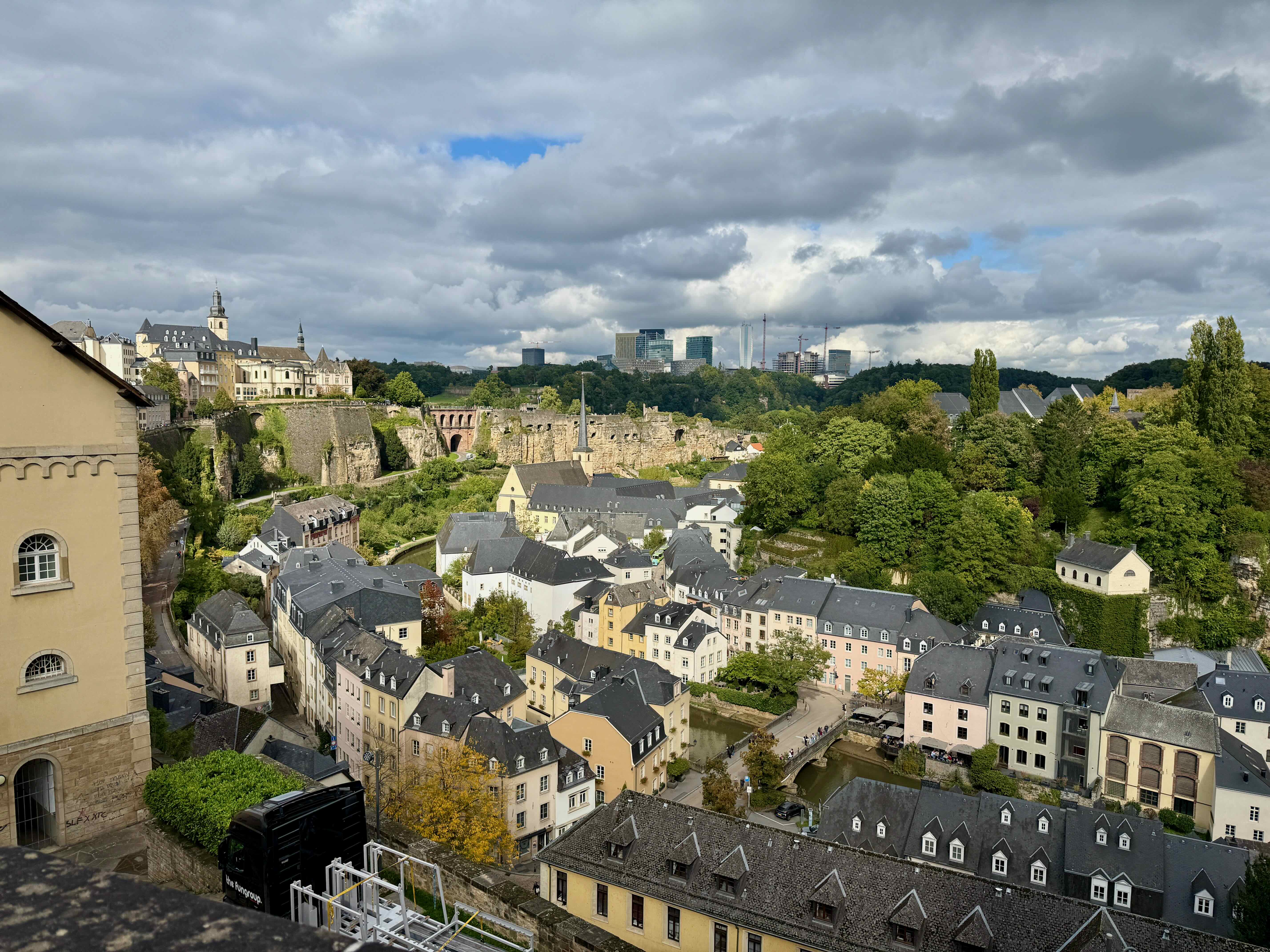
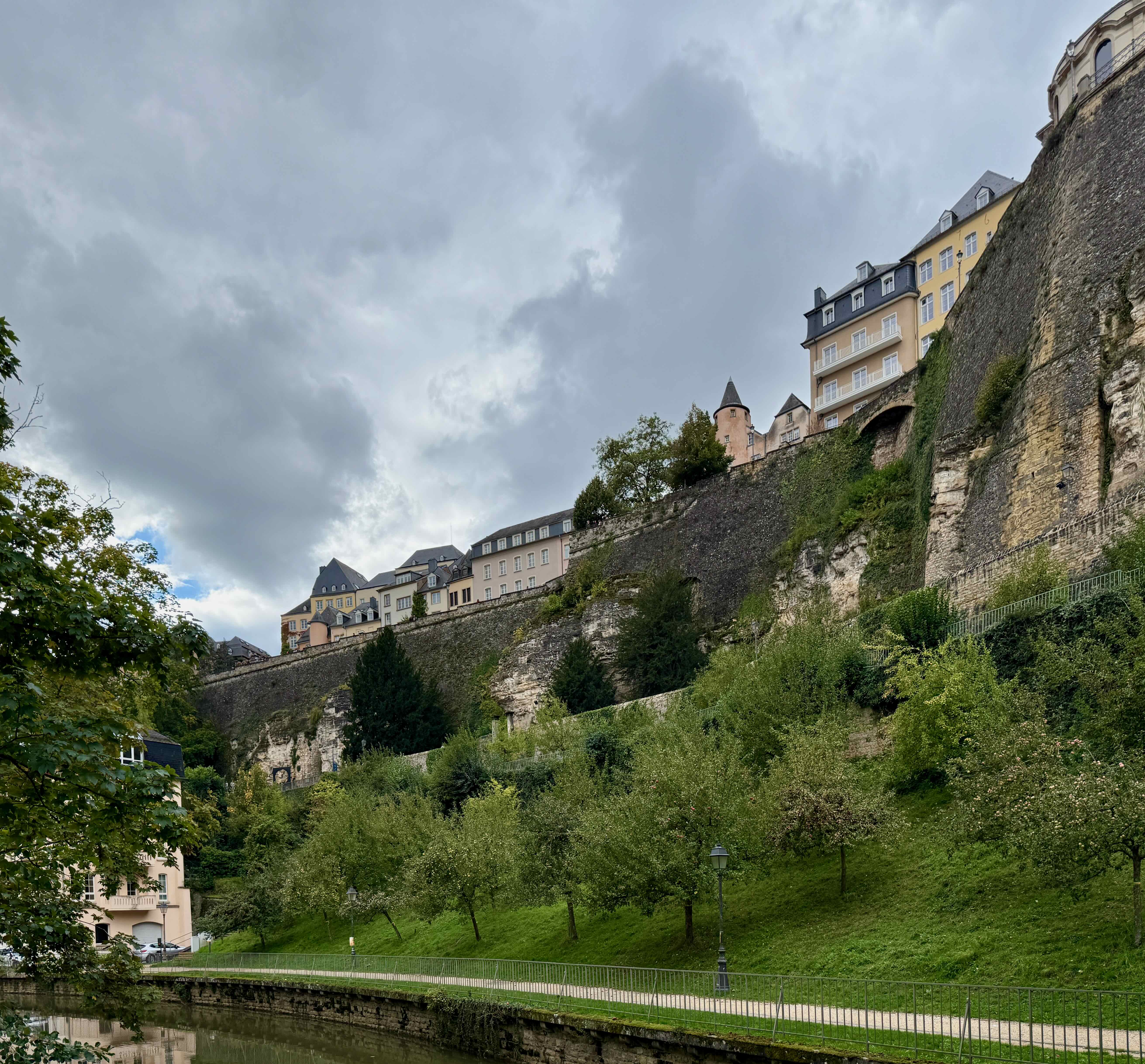
Luxembourg City has an upper plateau, which contains the historic Old Town, and a lower valley known as Grund. This area is home to some of the oldest and most picturesque buildings in the city, dating back to the 14th century. Take notice of the suspended platform on the right of this photo.

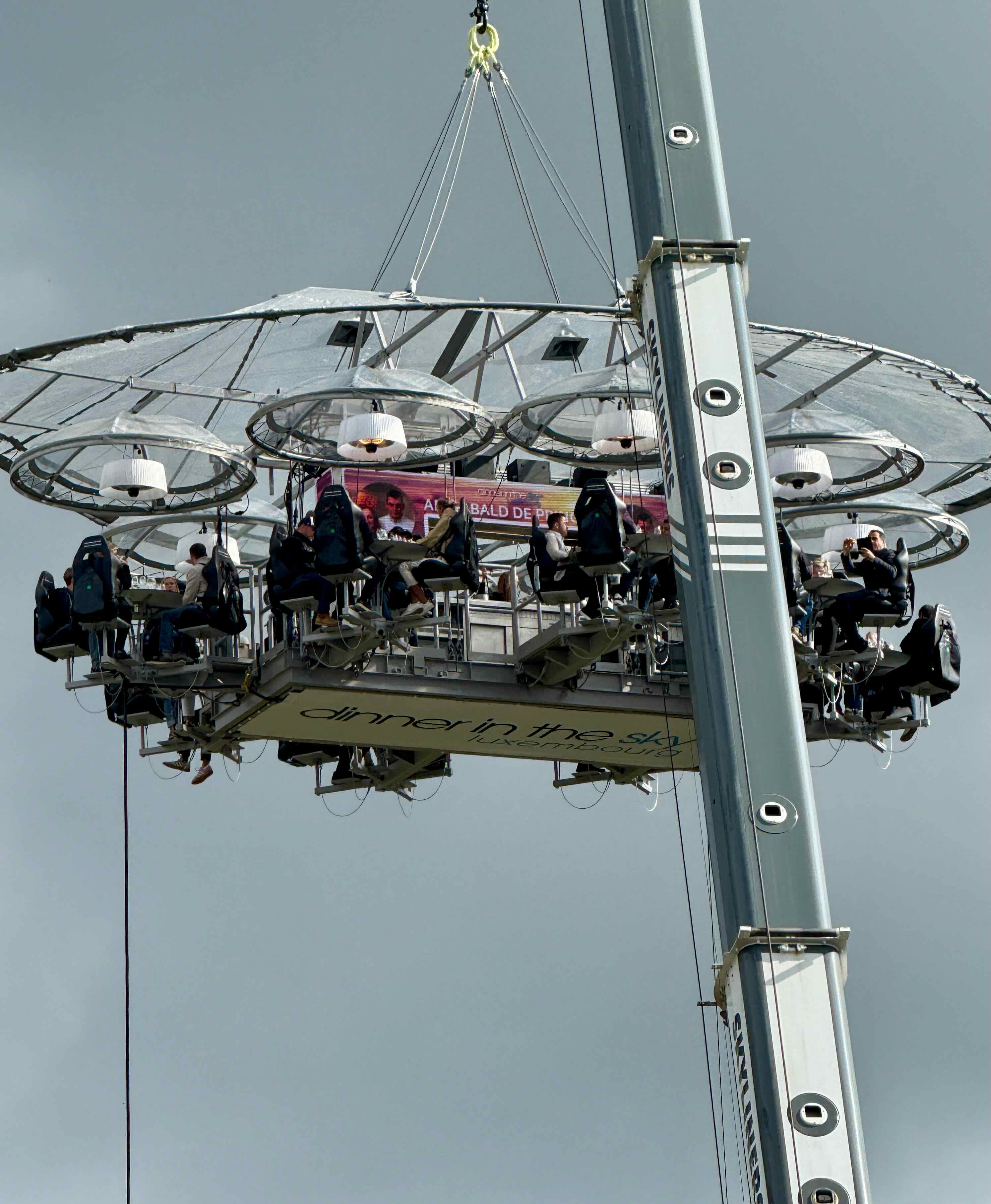
People are dining in the sky! I am not sure why anyone would want to do this. It does not appeal to me in the least, but for 325€ per person you can have lunch prepared by Michelin chefs 50 meters high above the ground!

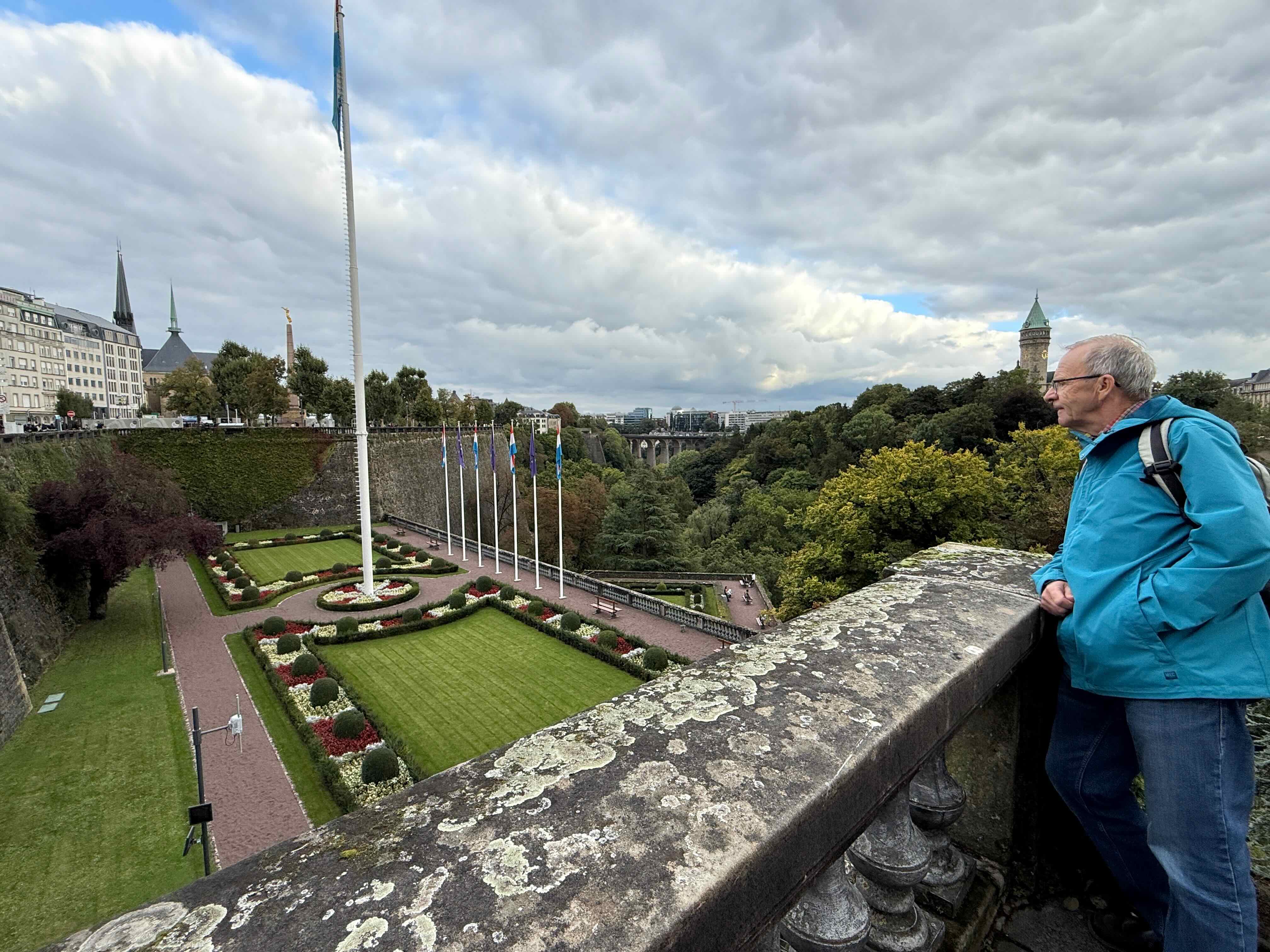
We were in Luxembourg 46 years ago, but all I can remember is looking down from high walls onto the city, like we are doing here.

We take an elevator down to the lower part of town and cross a bridge on our way to the Natural History Museum.

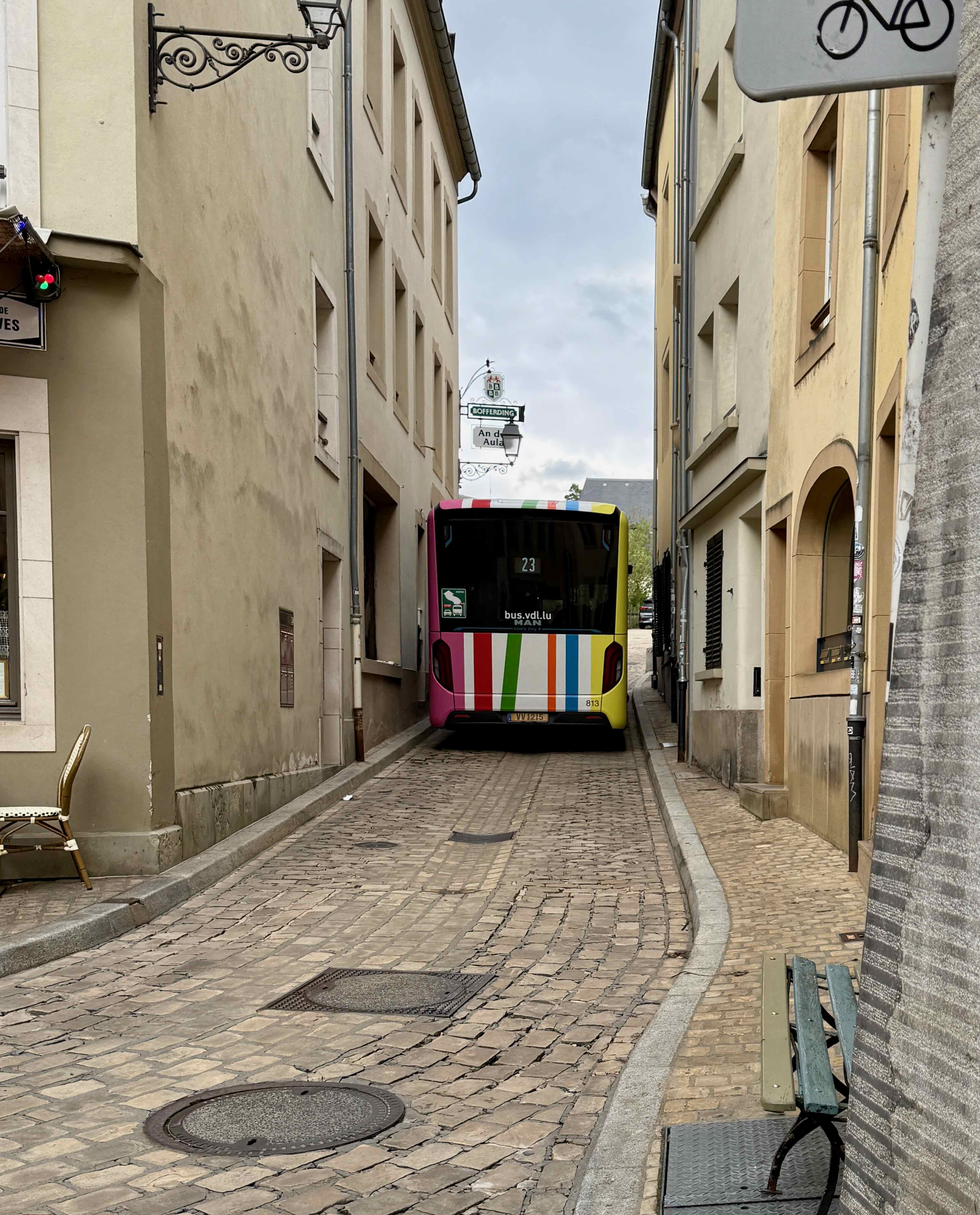
I would not want to be a bus driver here, the streets are very narrow.  

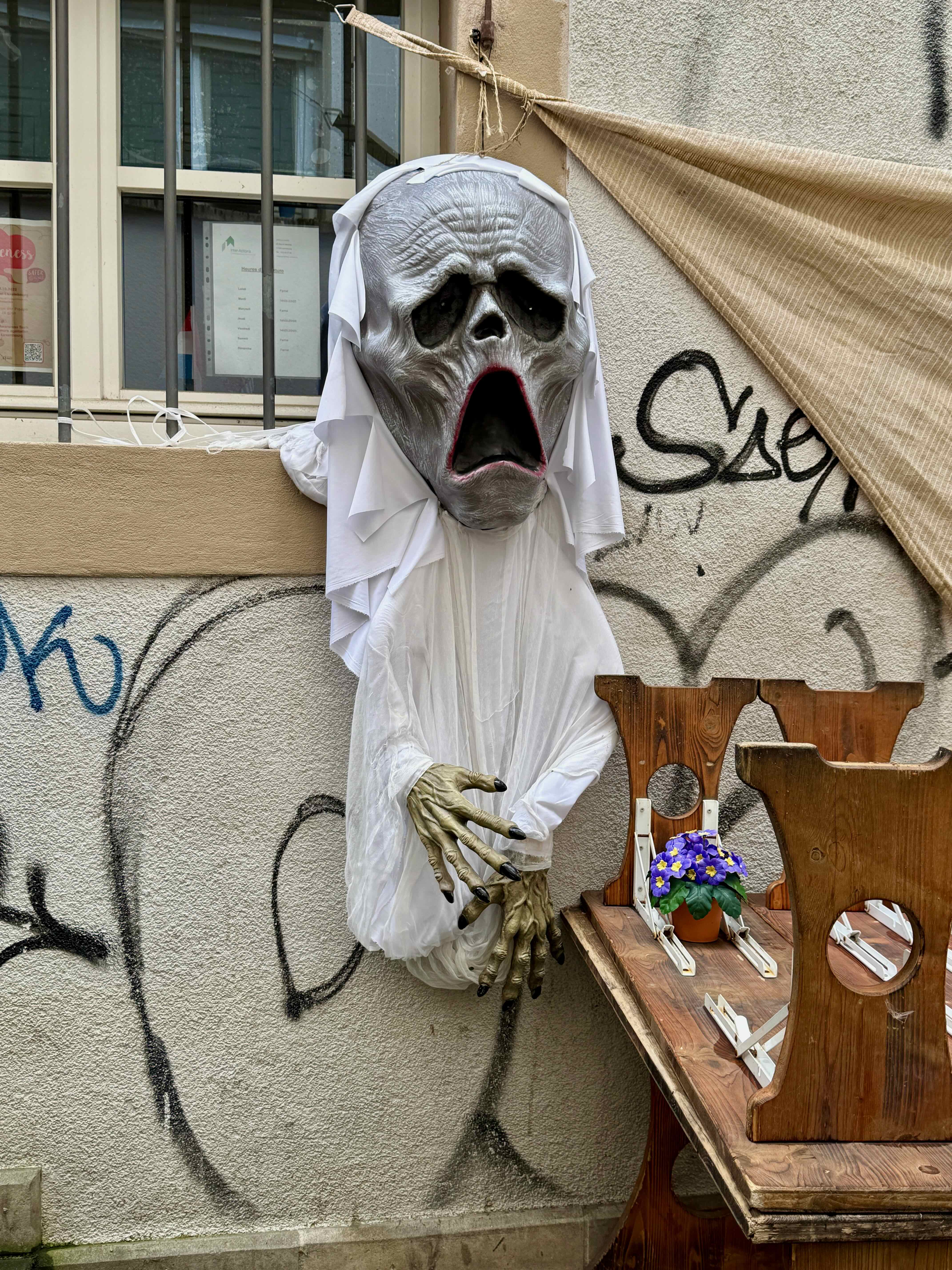
We see our first halloween decorations.

The current St. John the Baptist church dates back to the 17″ century. Its rich Baroque furnishings are not its original ones, they were taken from other churches during the period after the French Revolution!

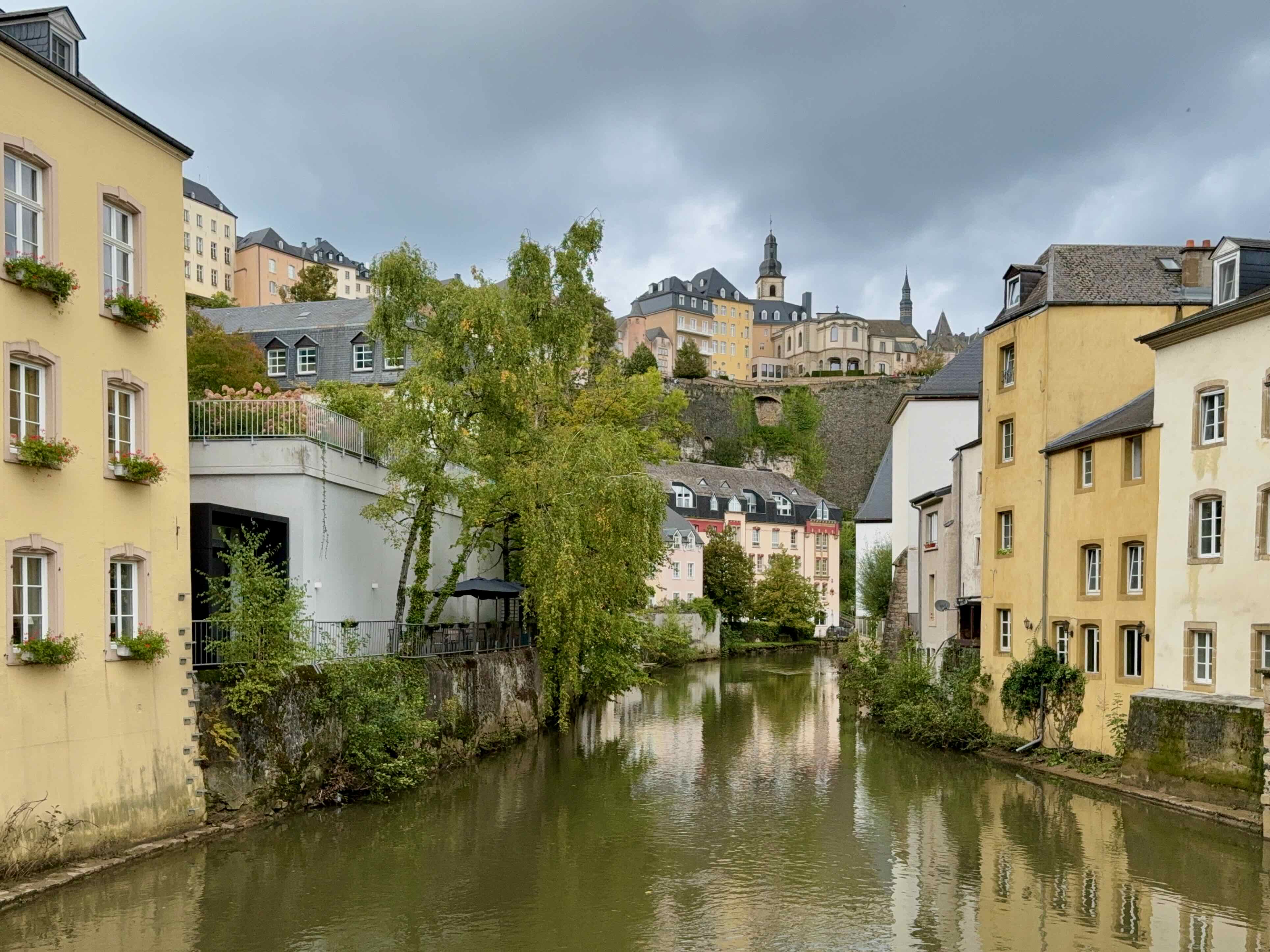
In the valley looking up at the upper city.

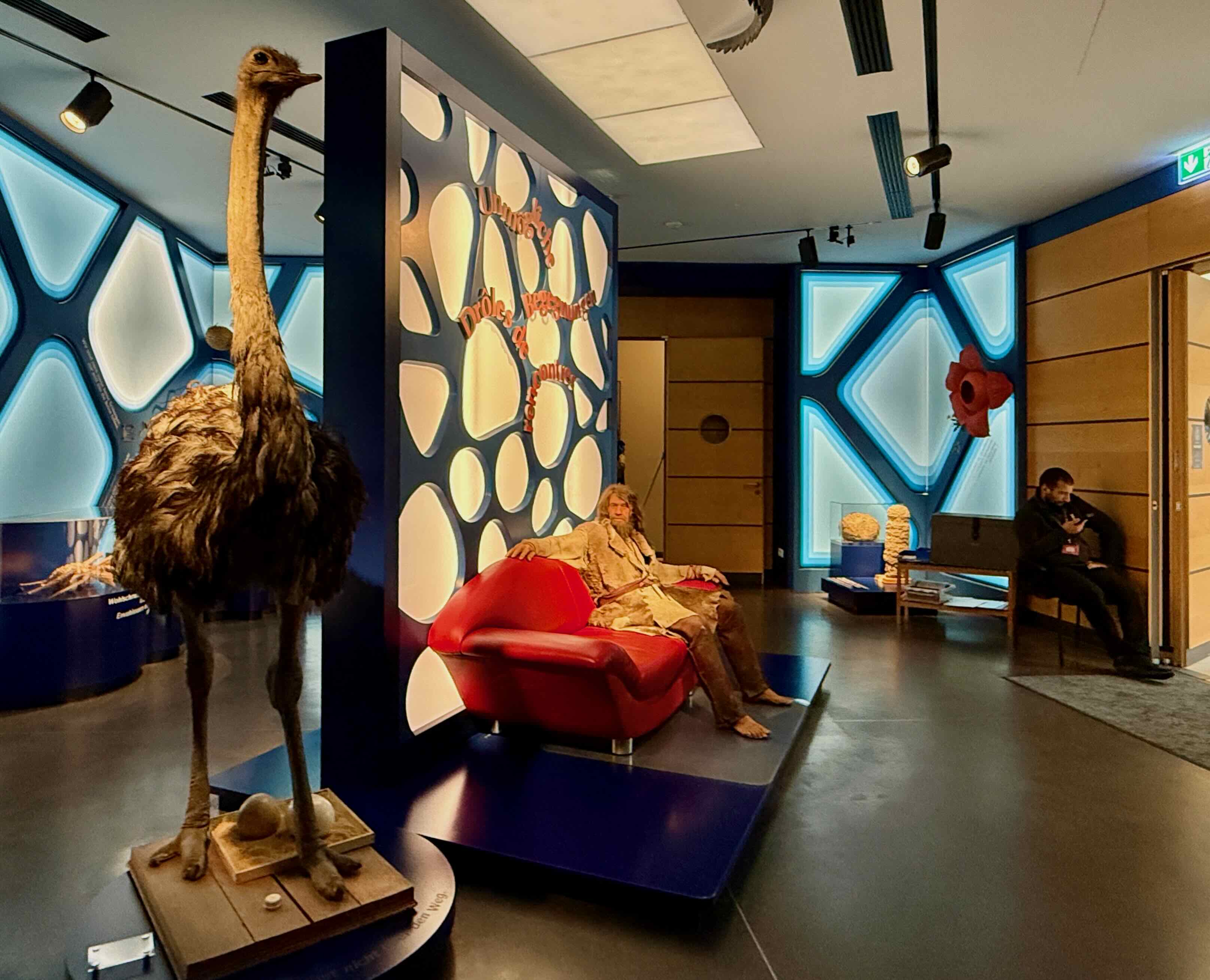
As we enter the Natural History Museum I am startled by the man sitting on the red couch.  From a distance I thought he was a real person.

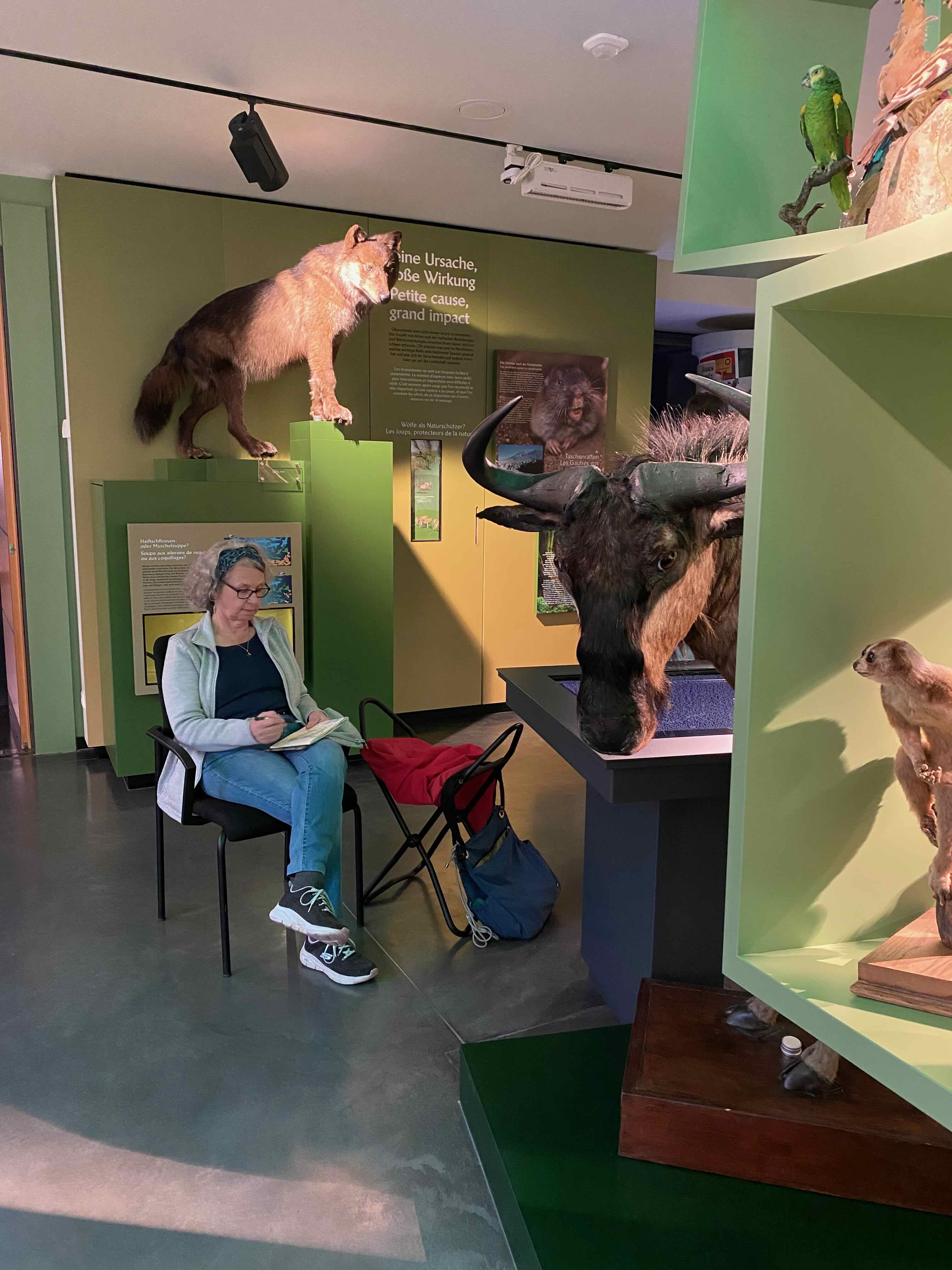
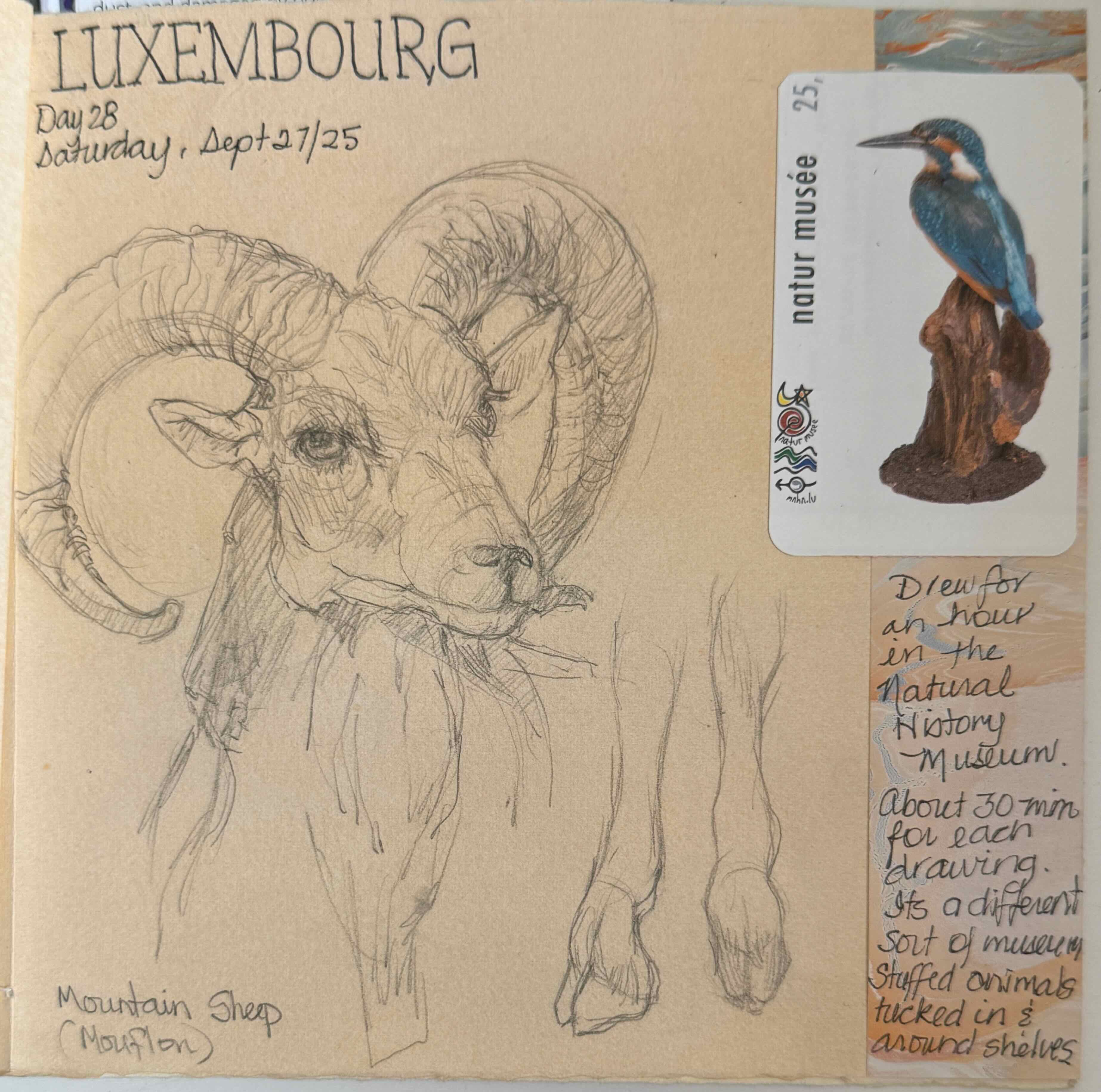
It isn’t a big museum and after a quick look around I find a spot with a chair to sit and draw while Bob explores the rest of the museum.

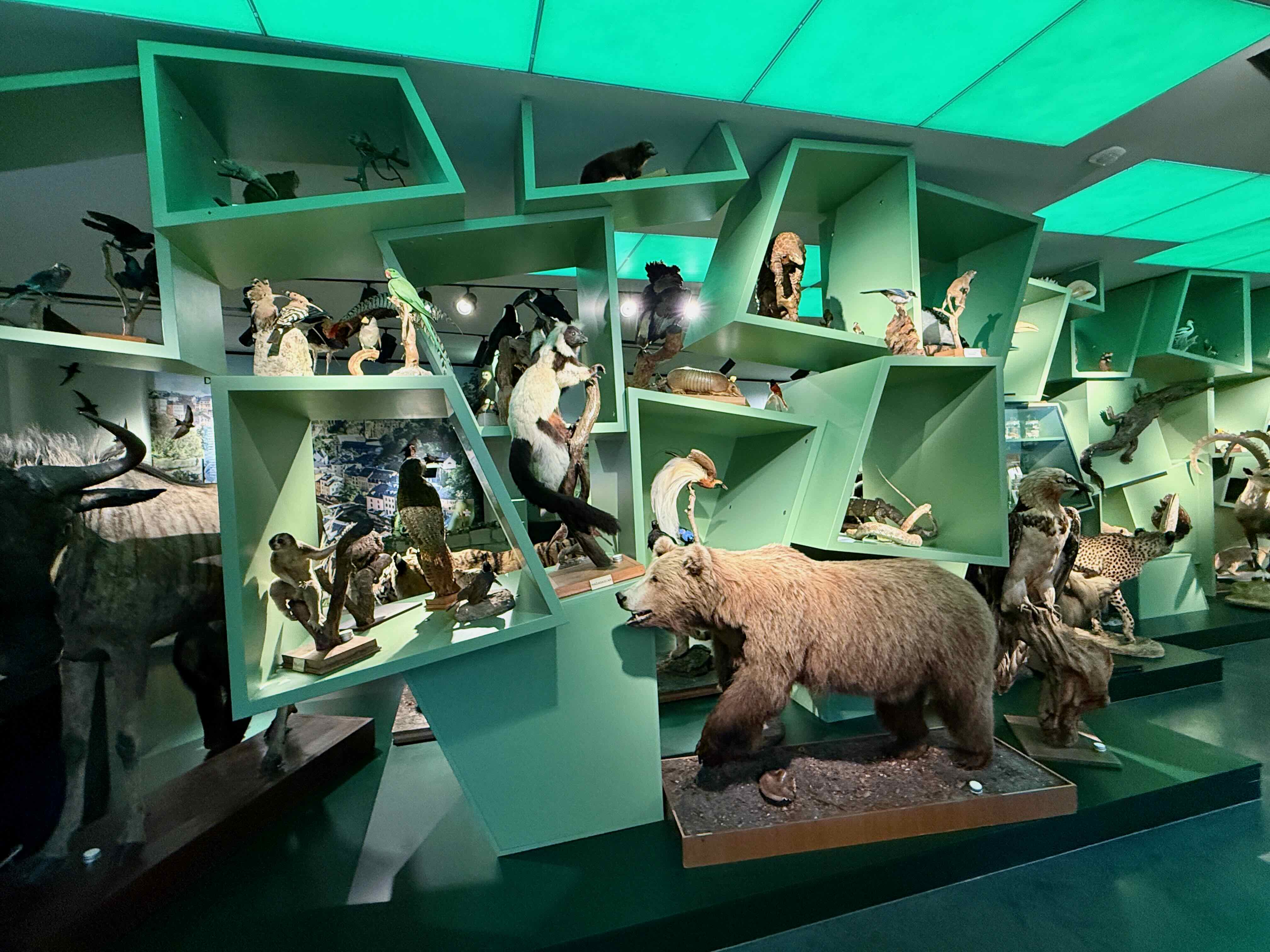
This room is a hodge lodge of stuffed animals…some look old and a bit worse for wear.

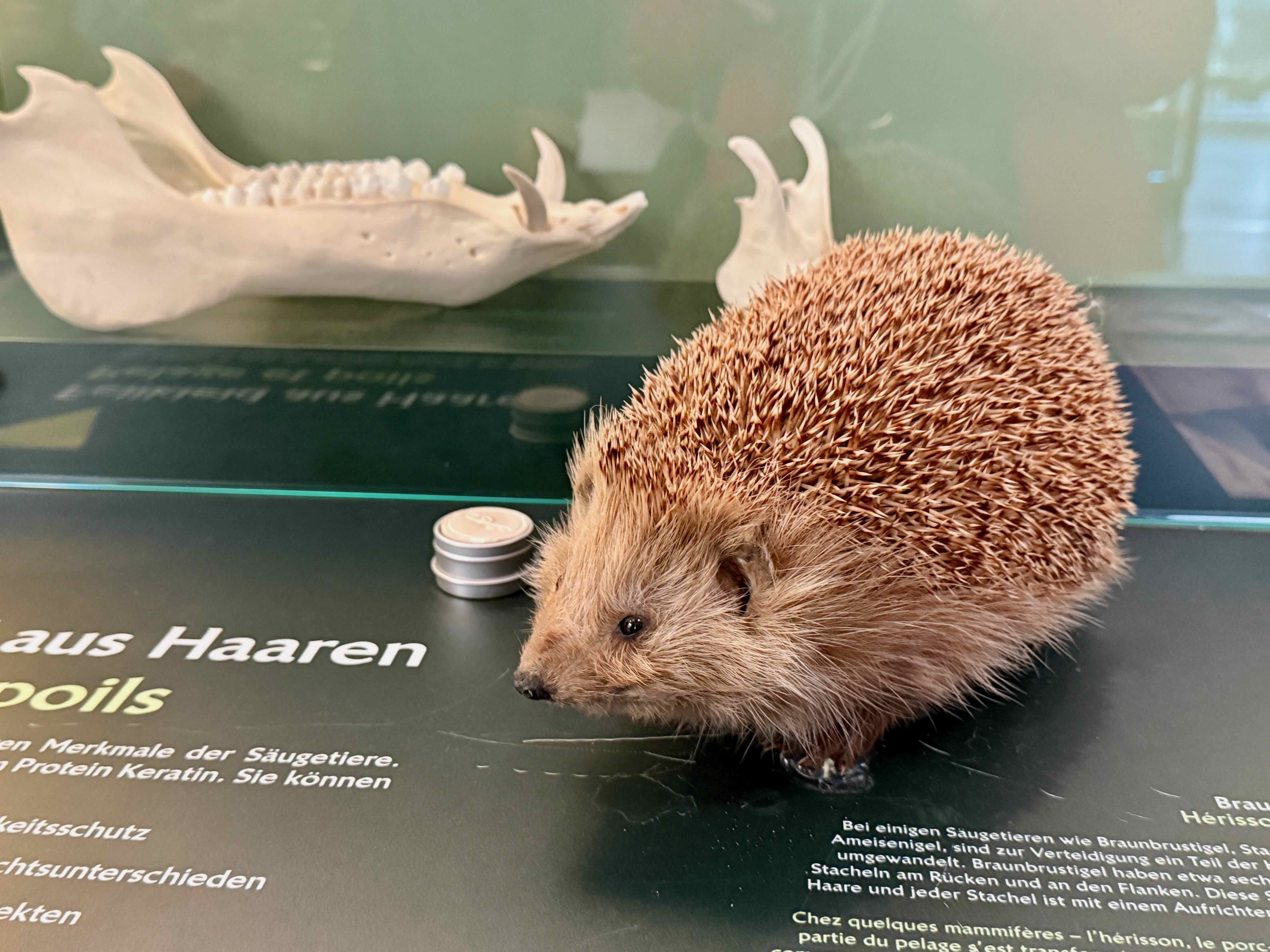
Bob discovered an interesting fact about hedge hogs. “The European hedgehog is a nocturnal animal that is easy to recognize by its many spines. When faced with danger, it can curl up and form a “prickly ball”. Its luxembourgish name”Keisécker” (“cow sucker”) originates from a legend that hedgehogs sucked milk during the night from cow udders. Obviously this is not true as hedgehogs suffer from a lactose intolerance.” On our walk to the bus we stop for another look down into one of the garden areas below the walls.
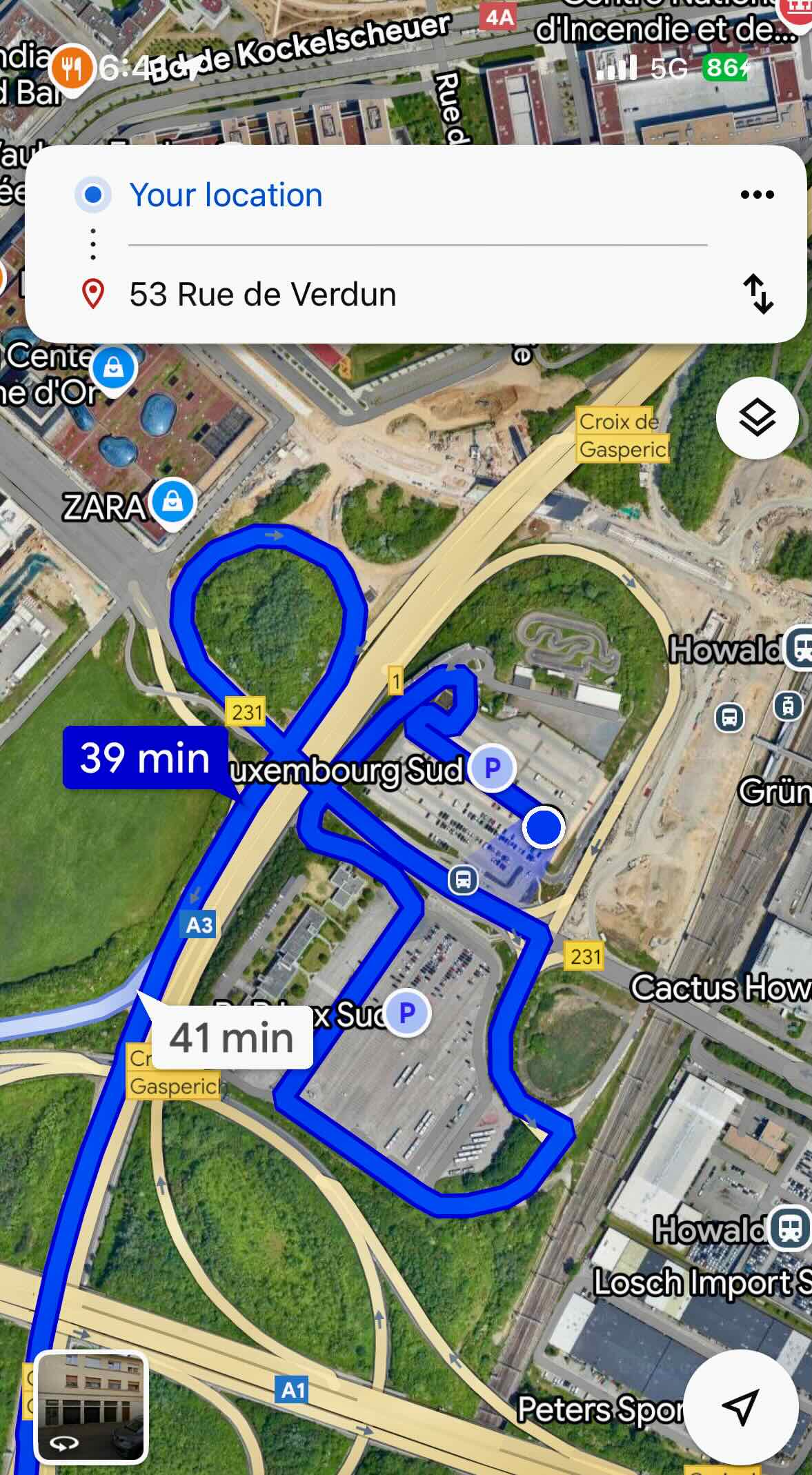
We caught the right bus back to our car but getting out of the parking lot was another thing!  Thank heavens for Google maps!  We might still be driving in circles trying to get back onto the highway!

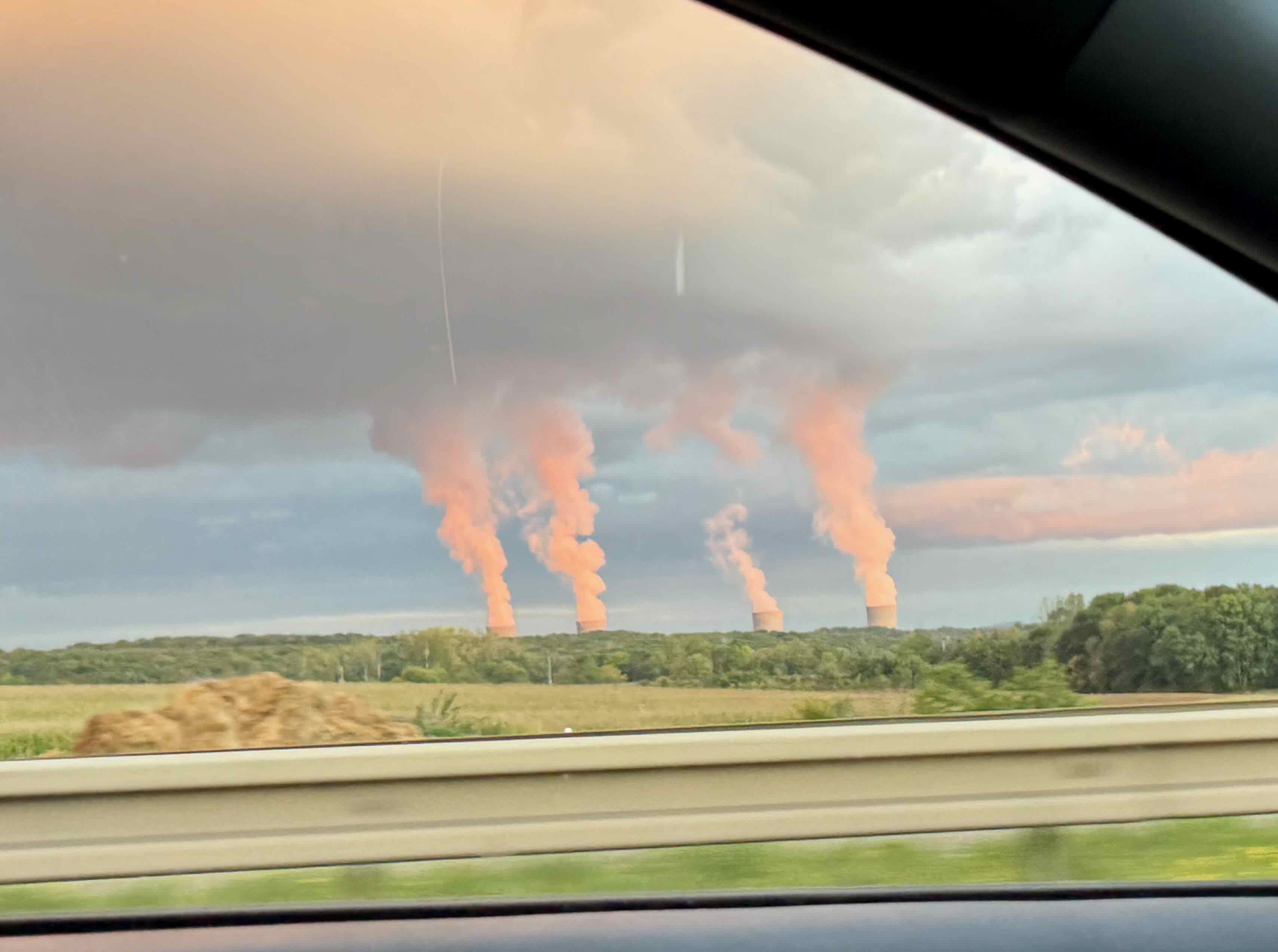
We see four nuclear power plants on the way home. They always give me an eerie feeling. I wouldn’t want to be living anywhere near one of these.

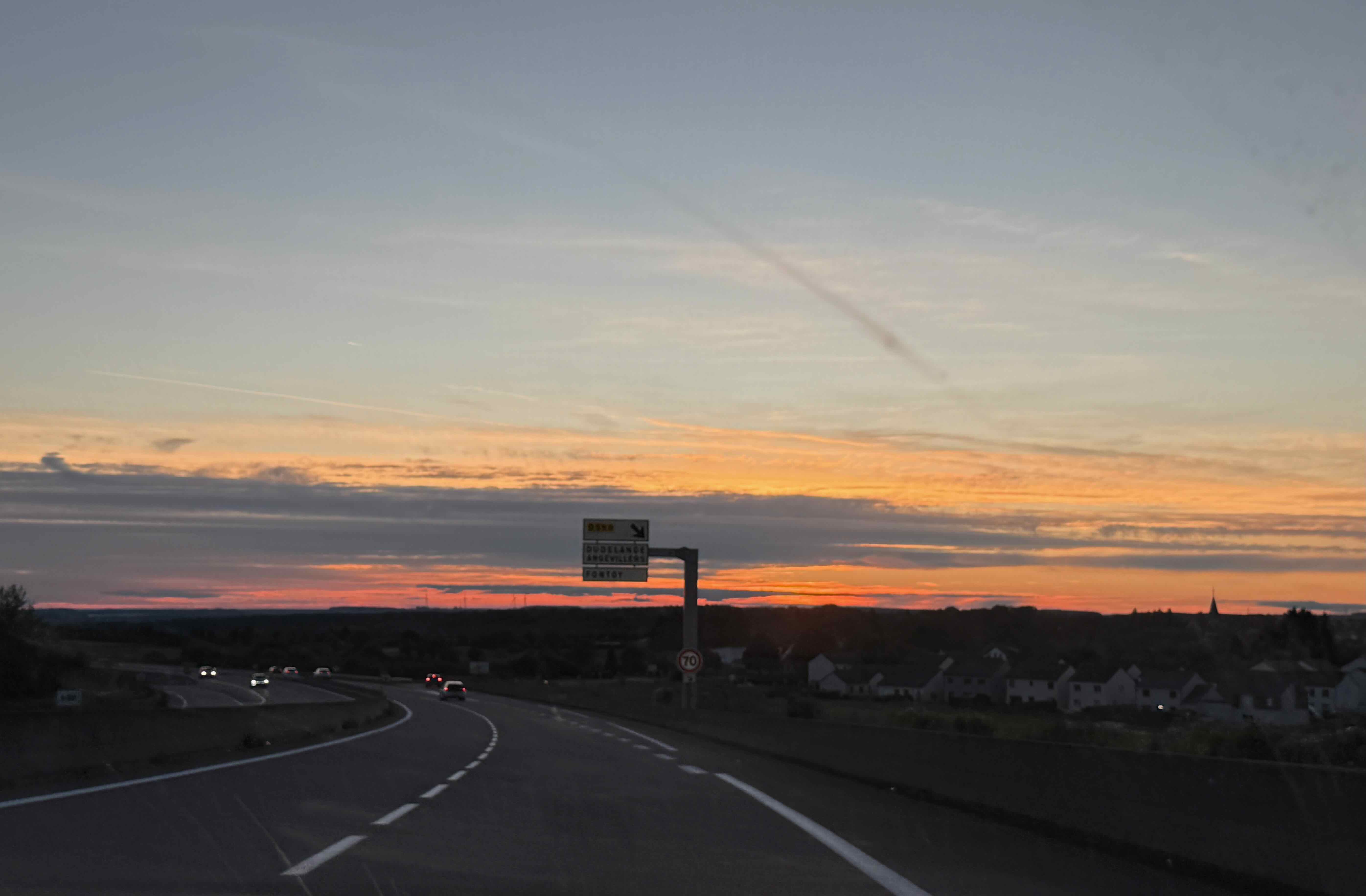
It is getting dark on the drive home but we are treated to a lovely sunset.

Metz, France

Day 27     Friday, September 26, 2025

I had most of this post written and somehow lost it! So I had to start all over again. Lesson learned, remember to save a draft often!!

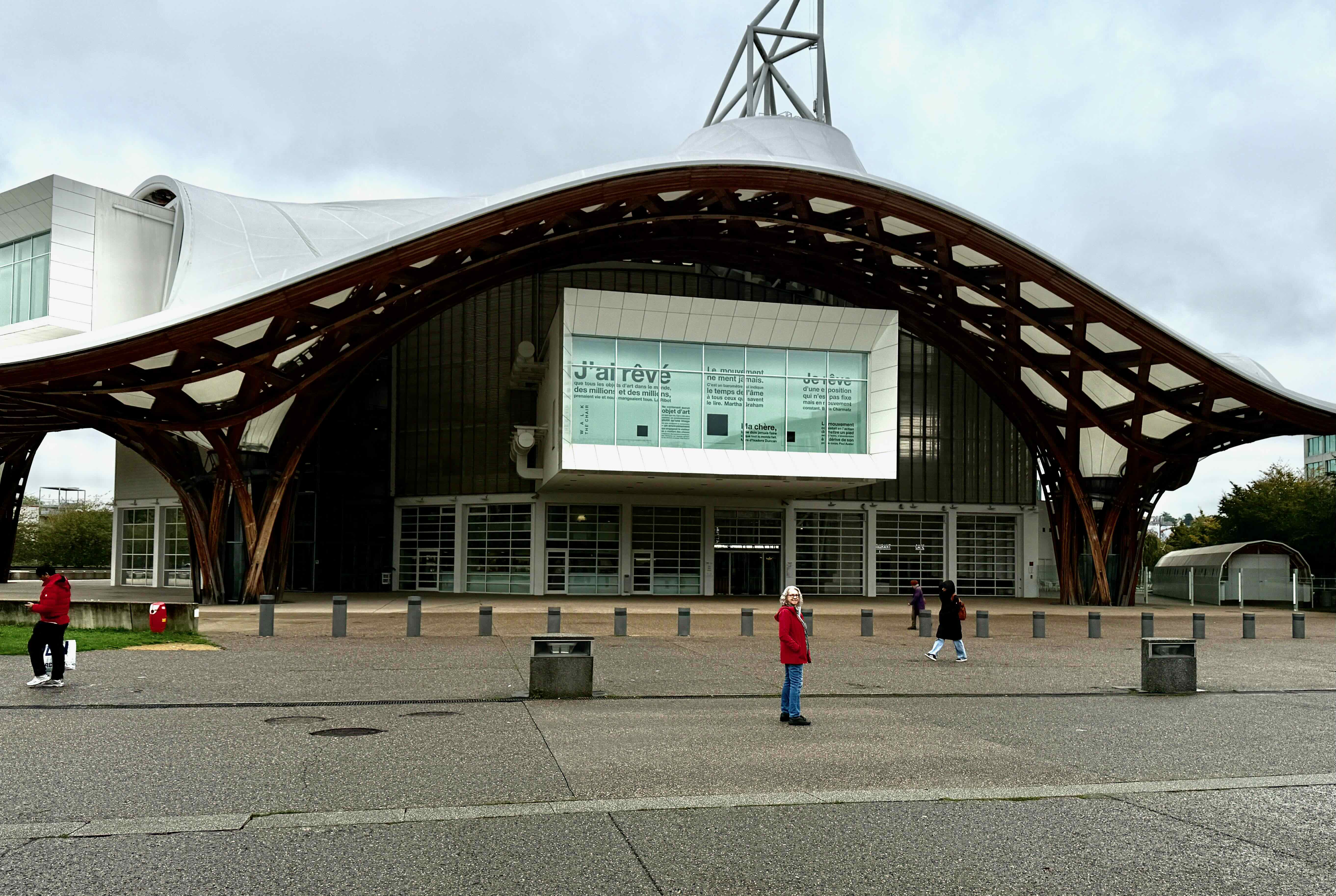
Today we drove a half hour to Metz.  First stop is the Centre Pompidou-Metz, a branch of the Georges Pompidou Centre in Paris, that displays contemporary art and hosts temporary exhibitions, events, films and presentations.  The dark lattice work supporting the roof is made of huge wooden beams.

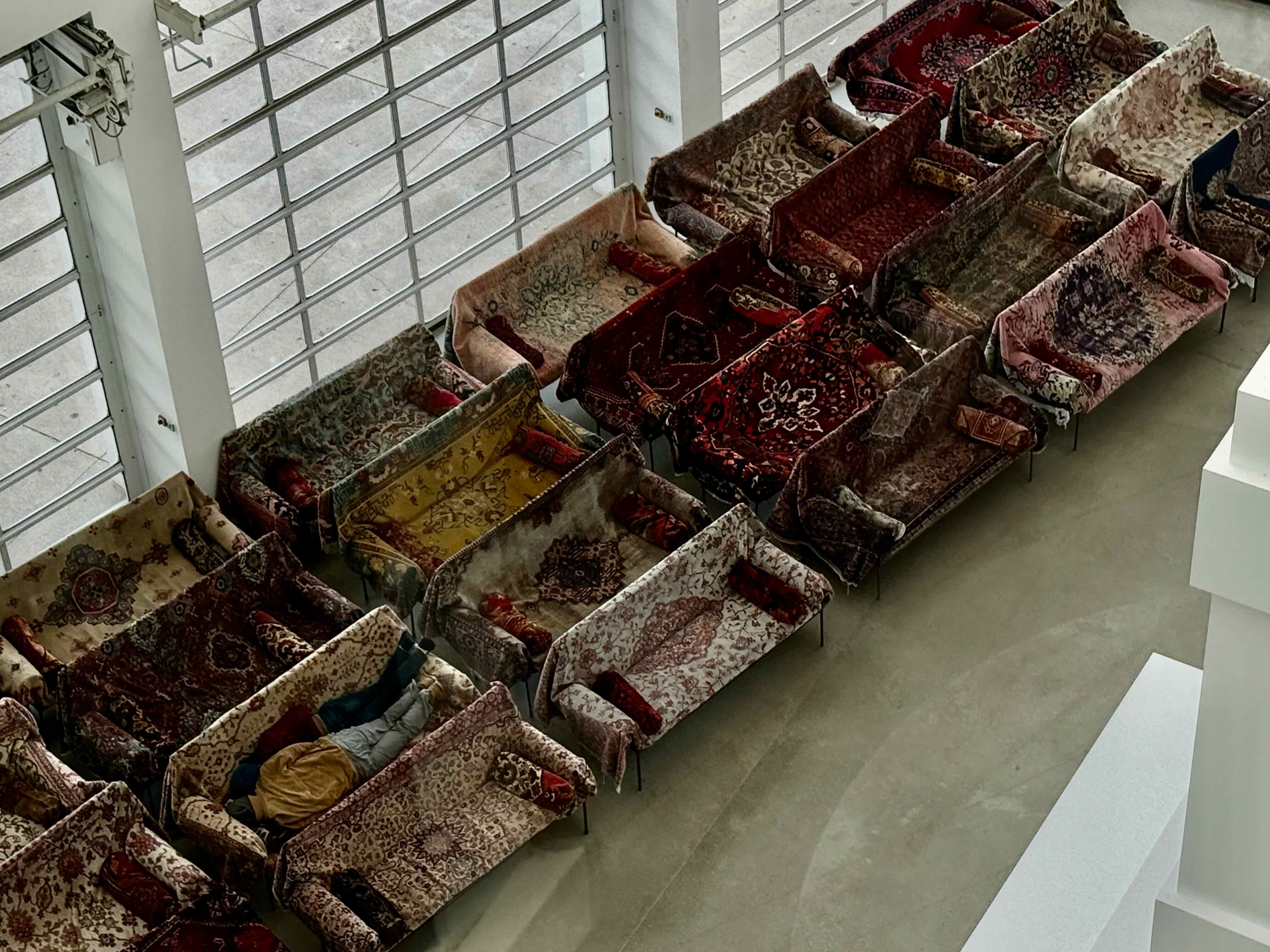
I didn’t get the artists name but can you see the two figures sleeping on one of the couches?

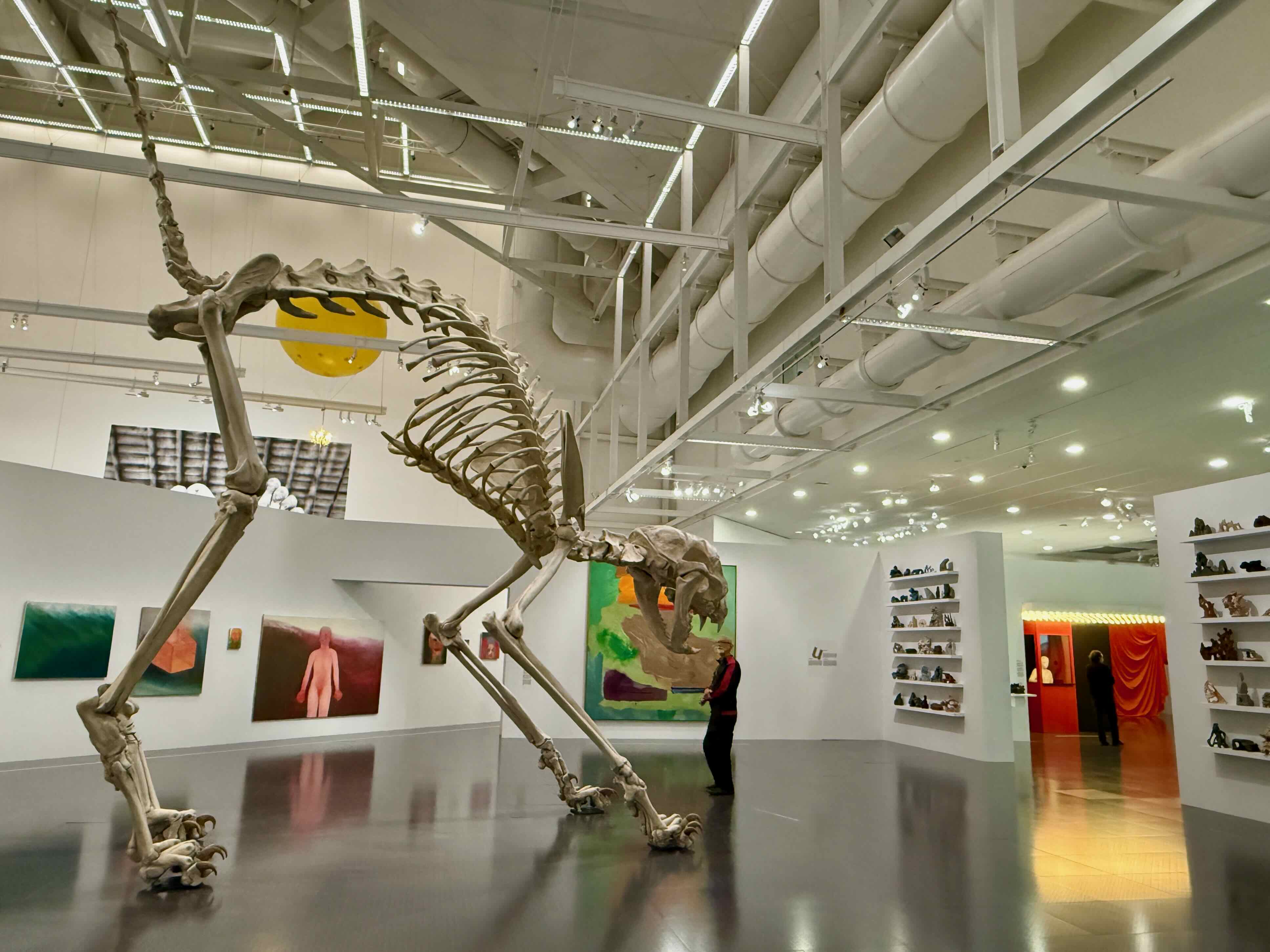
Maurizio Cattelan is a self-taught artist from Italy known for creating sculptures, and installations that are humorous, satirical and unconventional. Wanting to explore the power of images, Cattelan frequently appropriates uncomfortable imagery in his art.

This domestic cat skeleton seems frozen with fear and its gigantic scale reminds us of the dinosaur skeletons we have seen in Natural History Museums.  Be warned, some of the images of Cattelan’s work are disturbing.  I did not include some of the works because they were so upsetting to view.

I walk around the corner, saw this and gasped. Kaput is a display of five stuffed horses with their heads in the wall to reveal the absurdity of hunting trophies.  The traditional head trophy is reversed with the entire body suspended and powerless. I do not have the words to describe how I felt when I saw this installation.

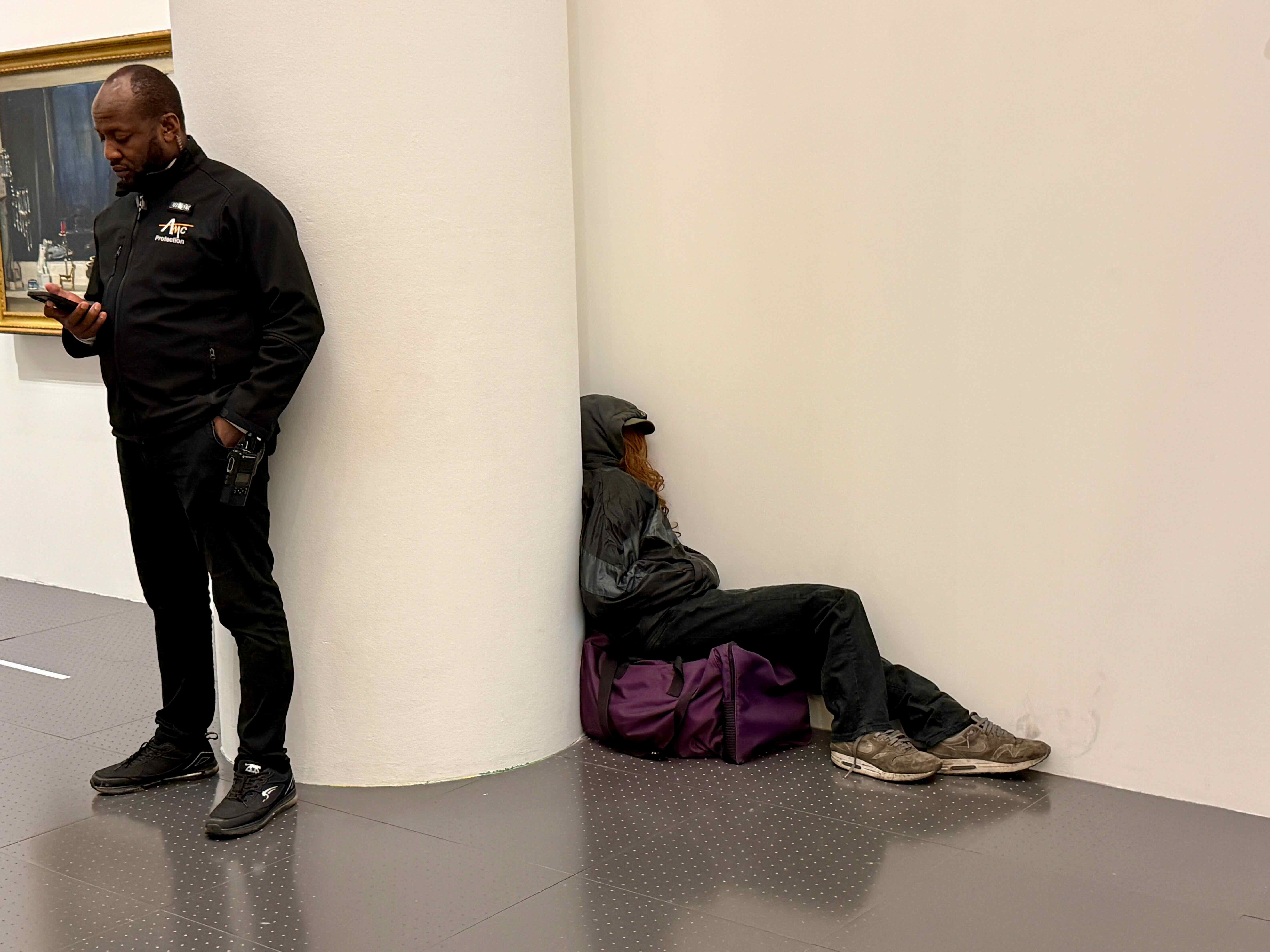
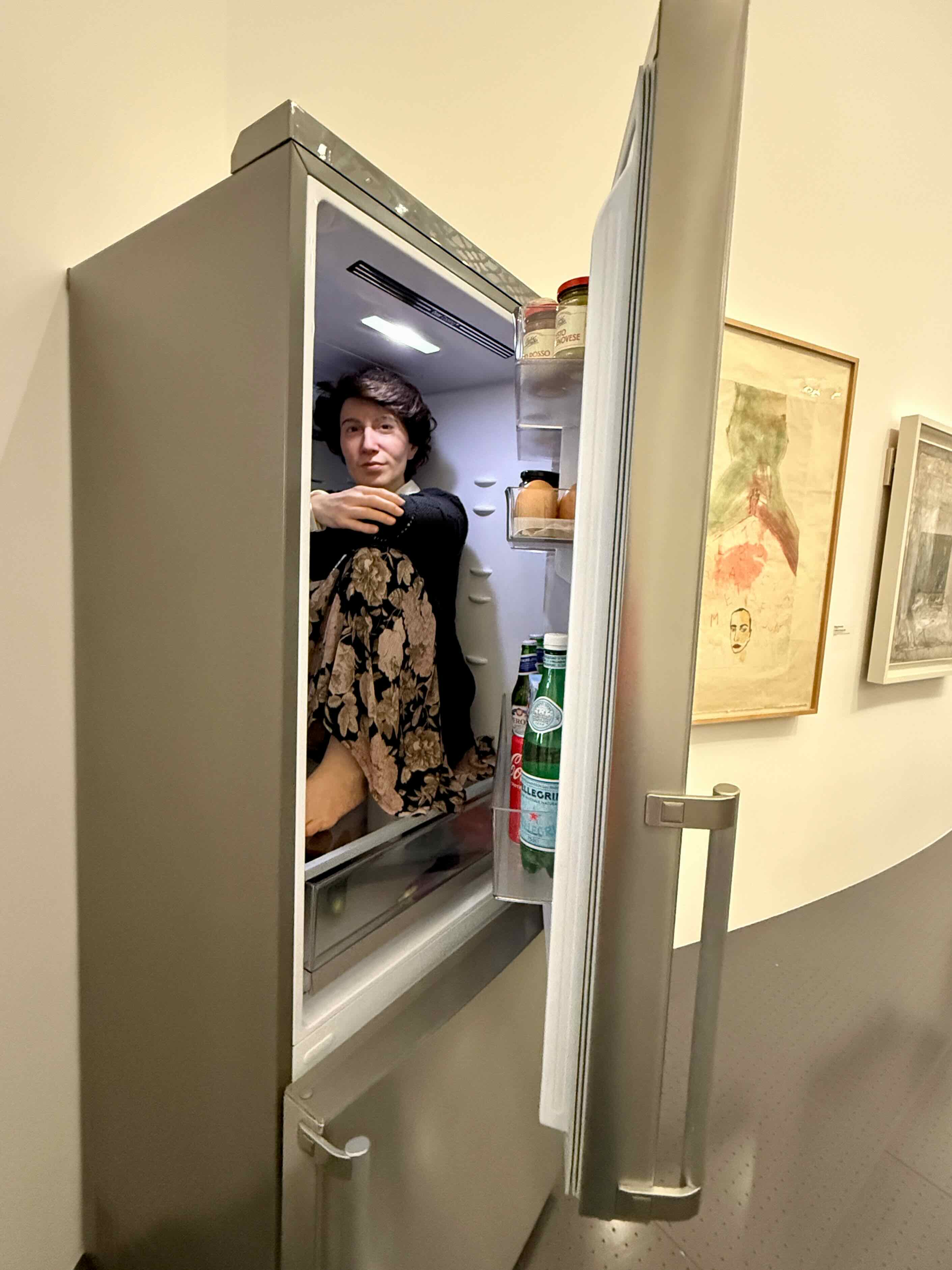
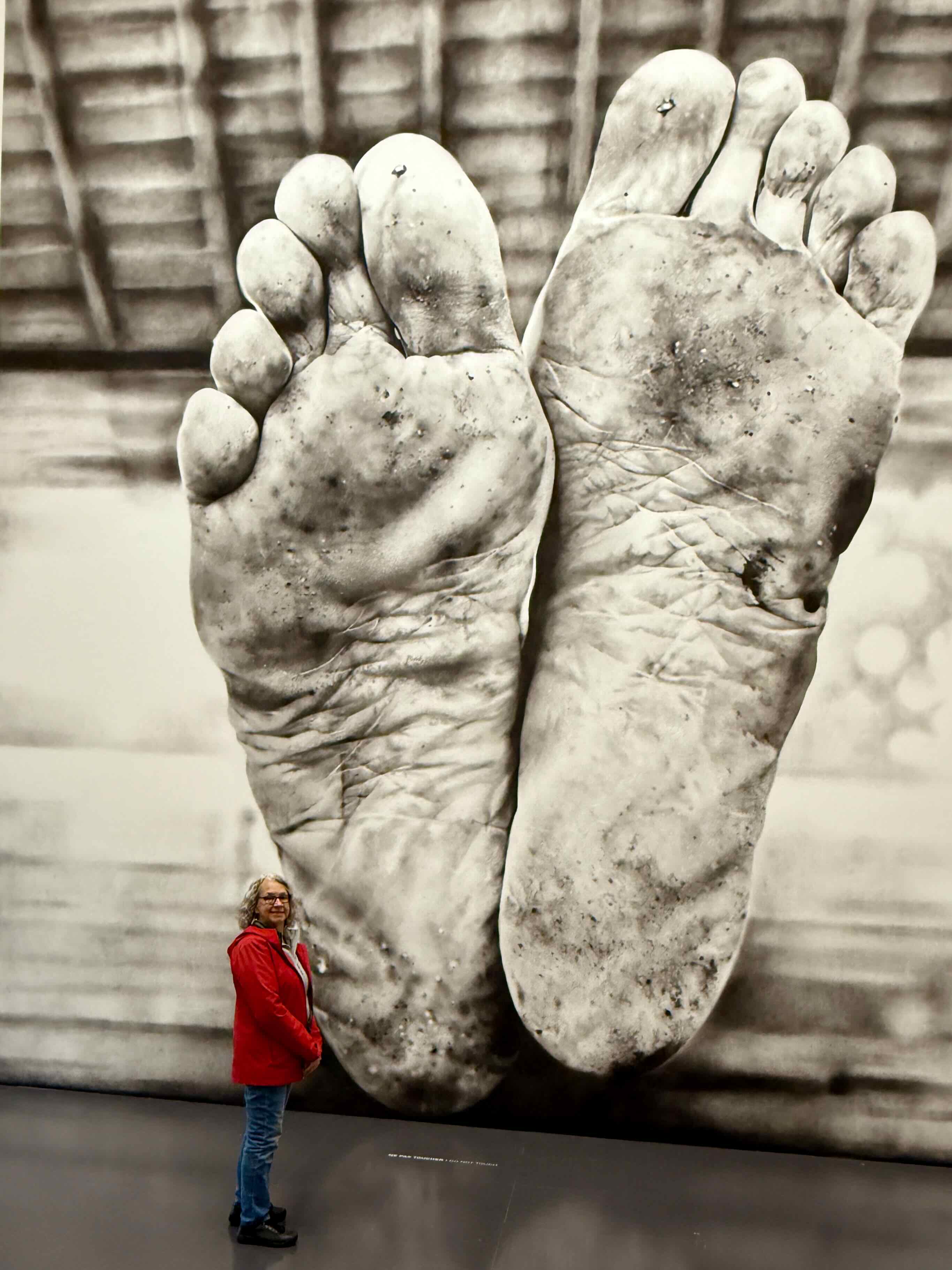
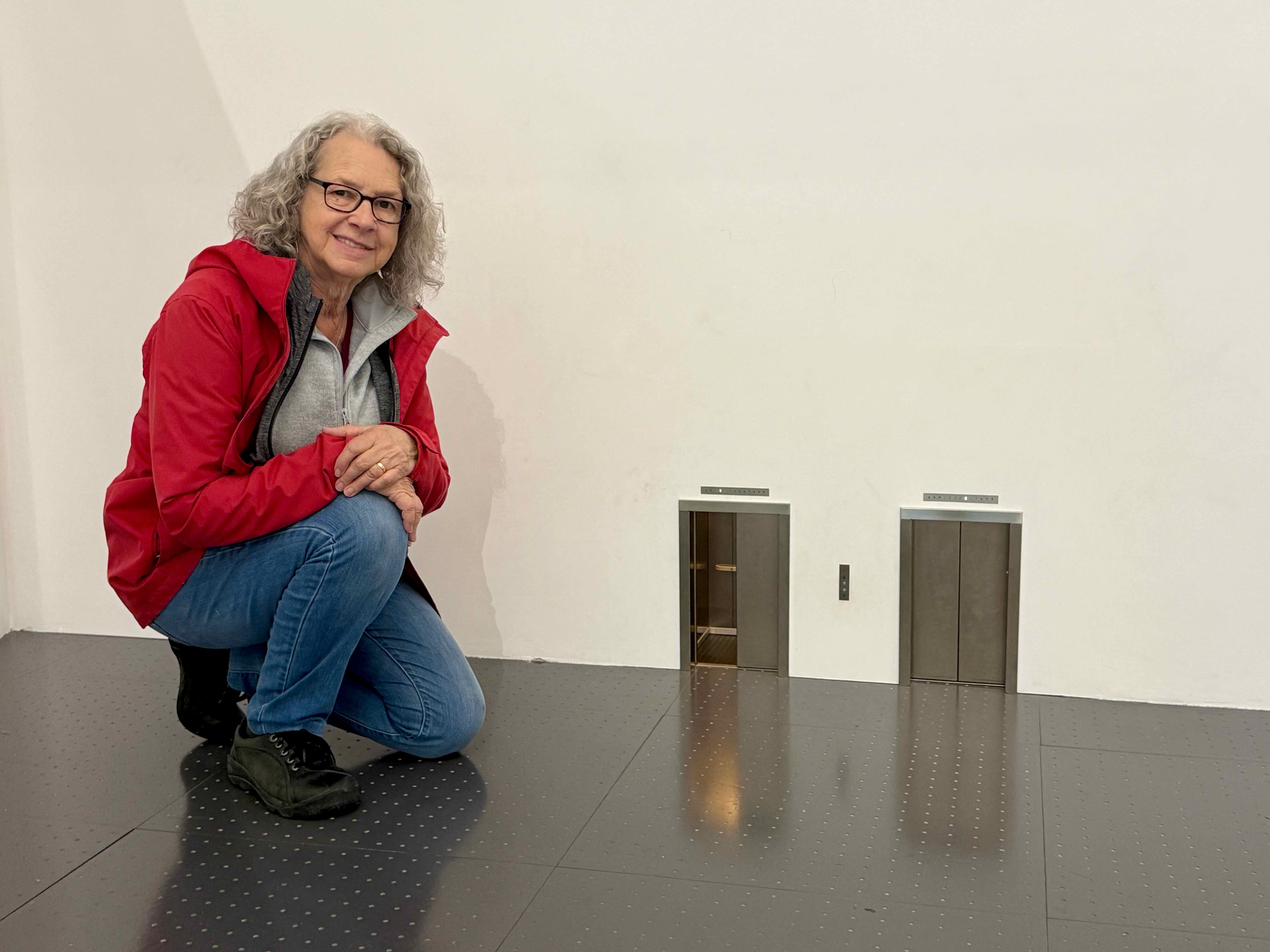
Cattelan often uses figures in his works. This person startled me, at first I thought it was a real person sleeping. ‘Father’ These bare feet stand for the whole body, a reminder of the human body and its finiteness..they become a symbol of vulnerability. This tiny elevator makes a sound, and opens and closes its doors, just as in real life. It is perfectly functional and totally unusable. One can imagine a tiny world coming to life somewhere behind these walls.
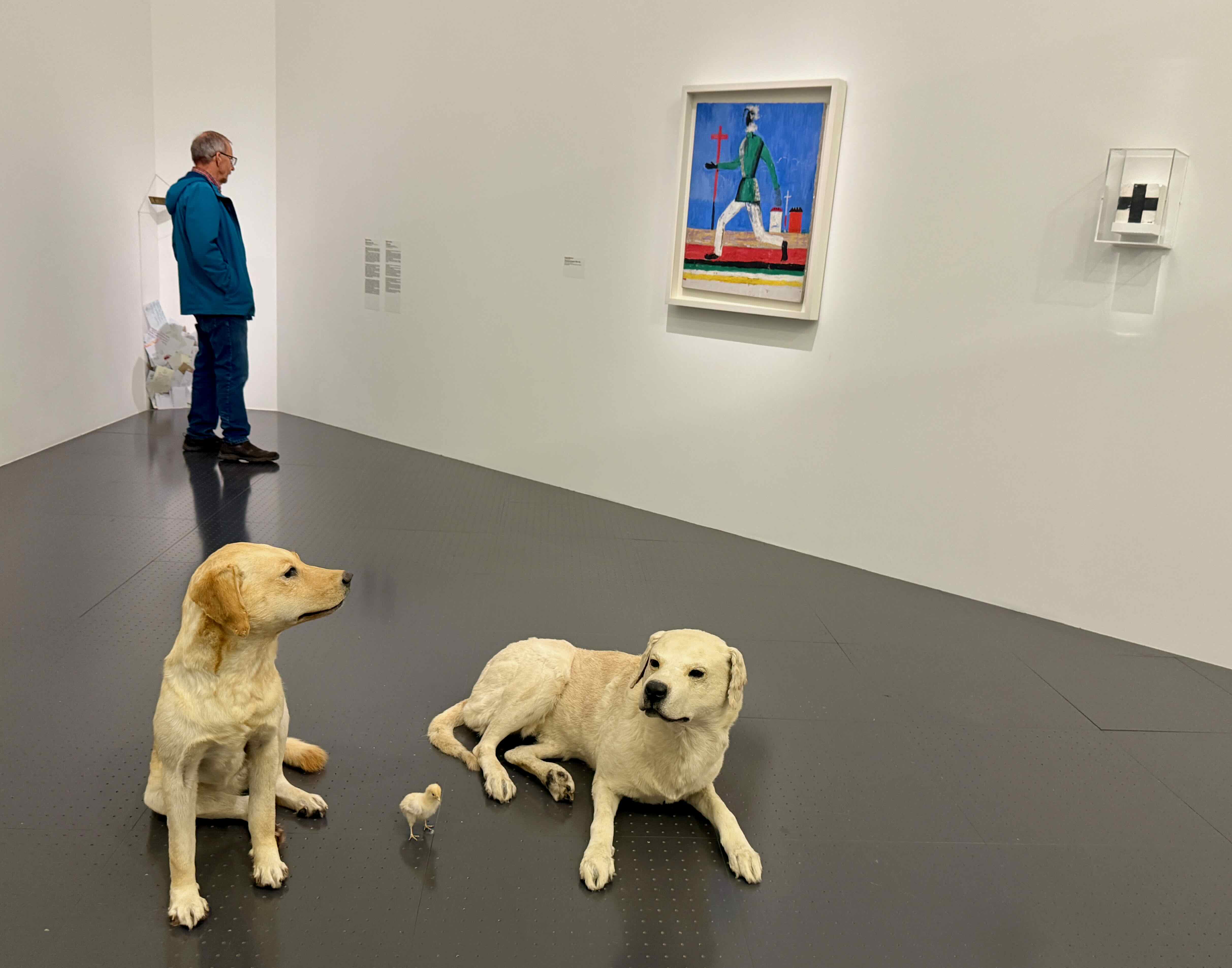
More stuffed animals, these two labradors and the tiny chick represent a reflection on power dynamics and the fragility of life.

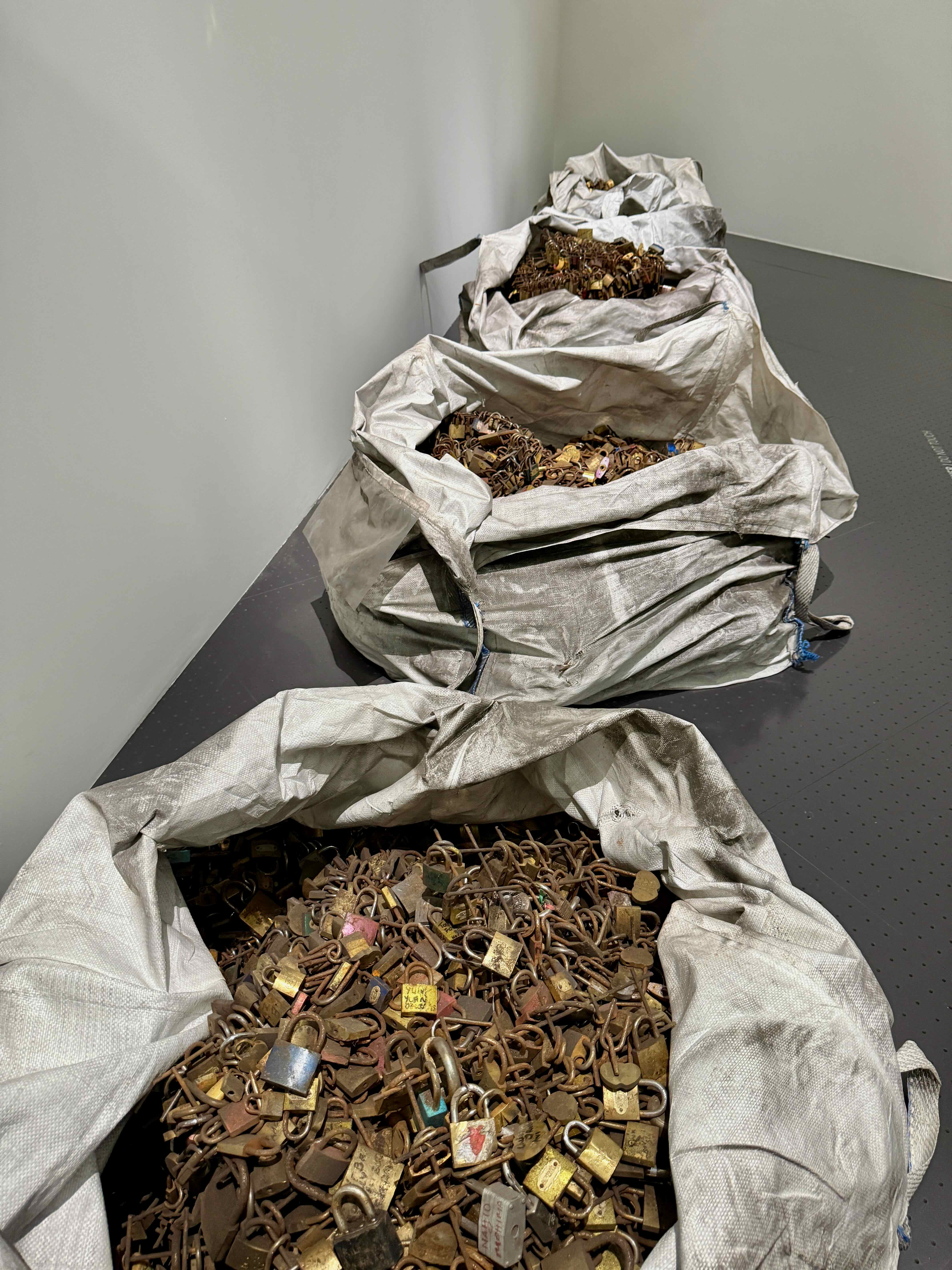
Artist Cyprien Gaillard’s five bags contain the tons of locks removed from the Pont des Arts where tourists once declared their undying love by attaching a lock to the bridge and throwing the key in to the Seine River. He displays them in construction bags, like unearthed artifacts, the rusty ruins of a bygone ritual.

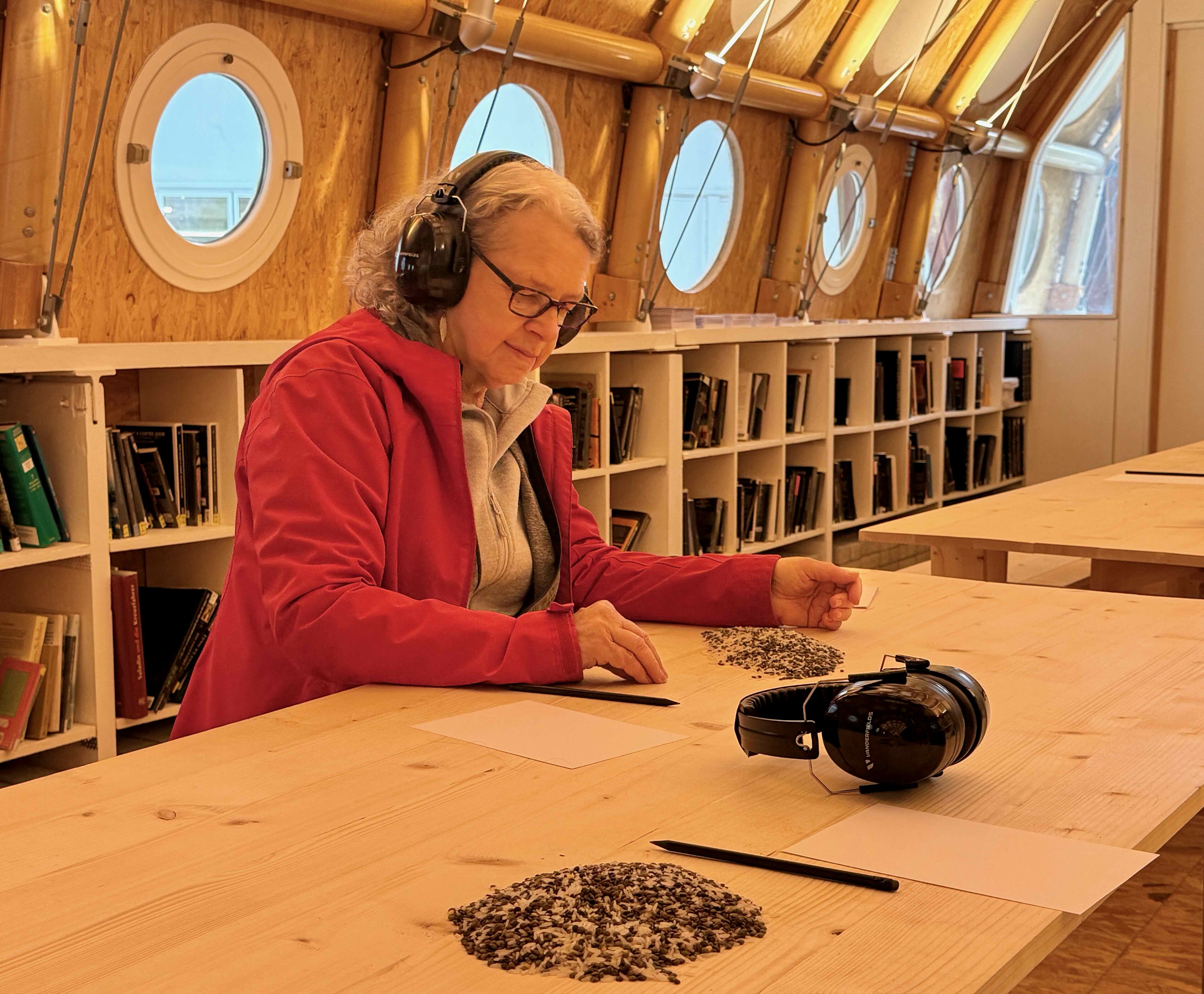
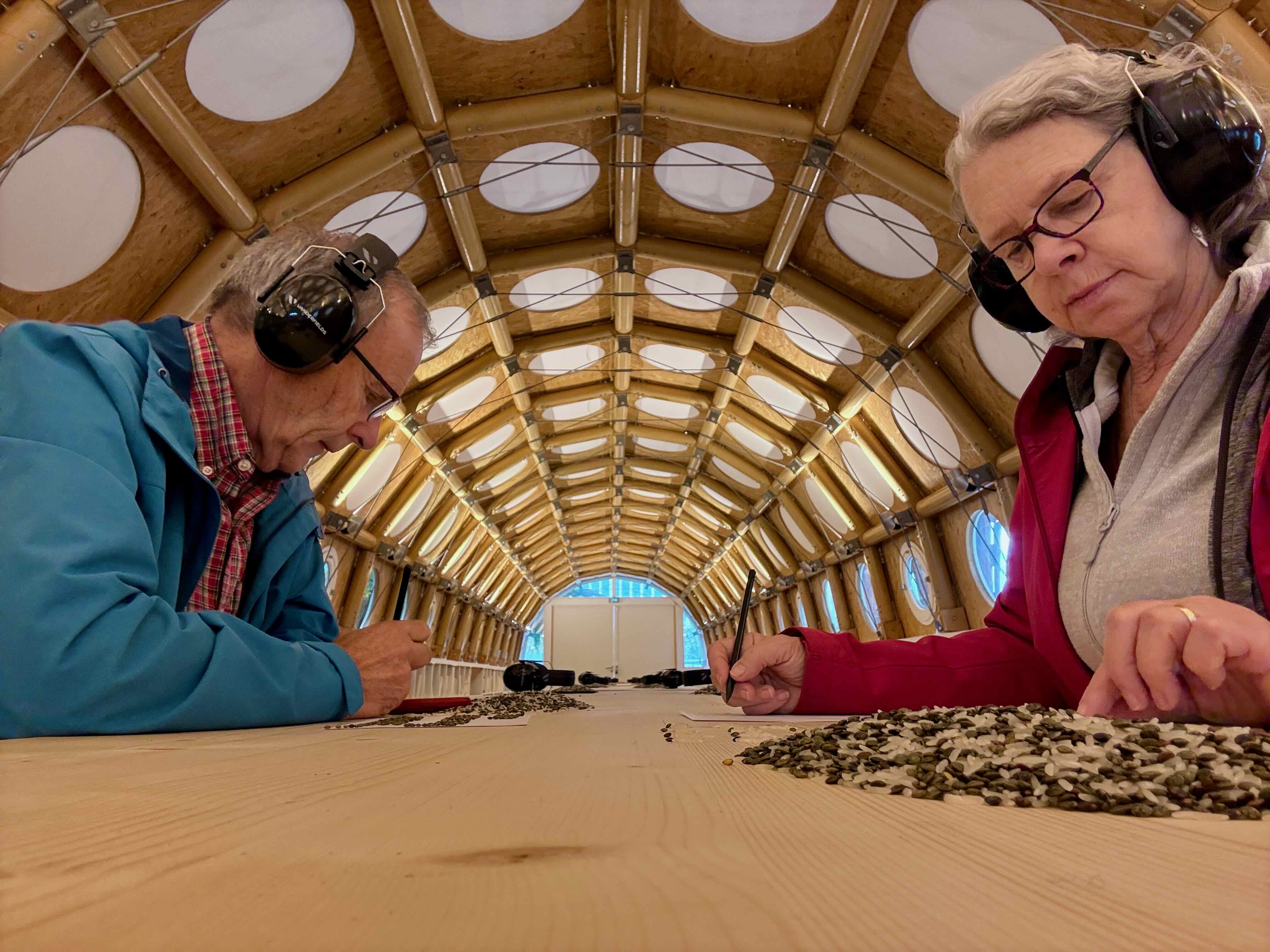
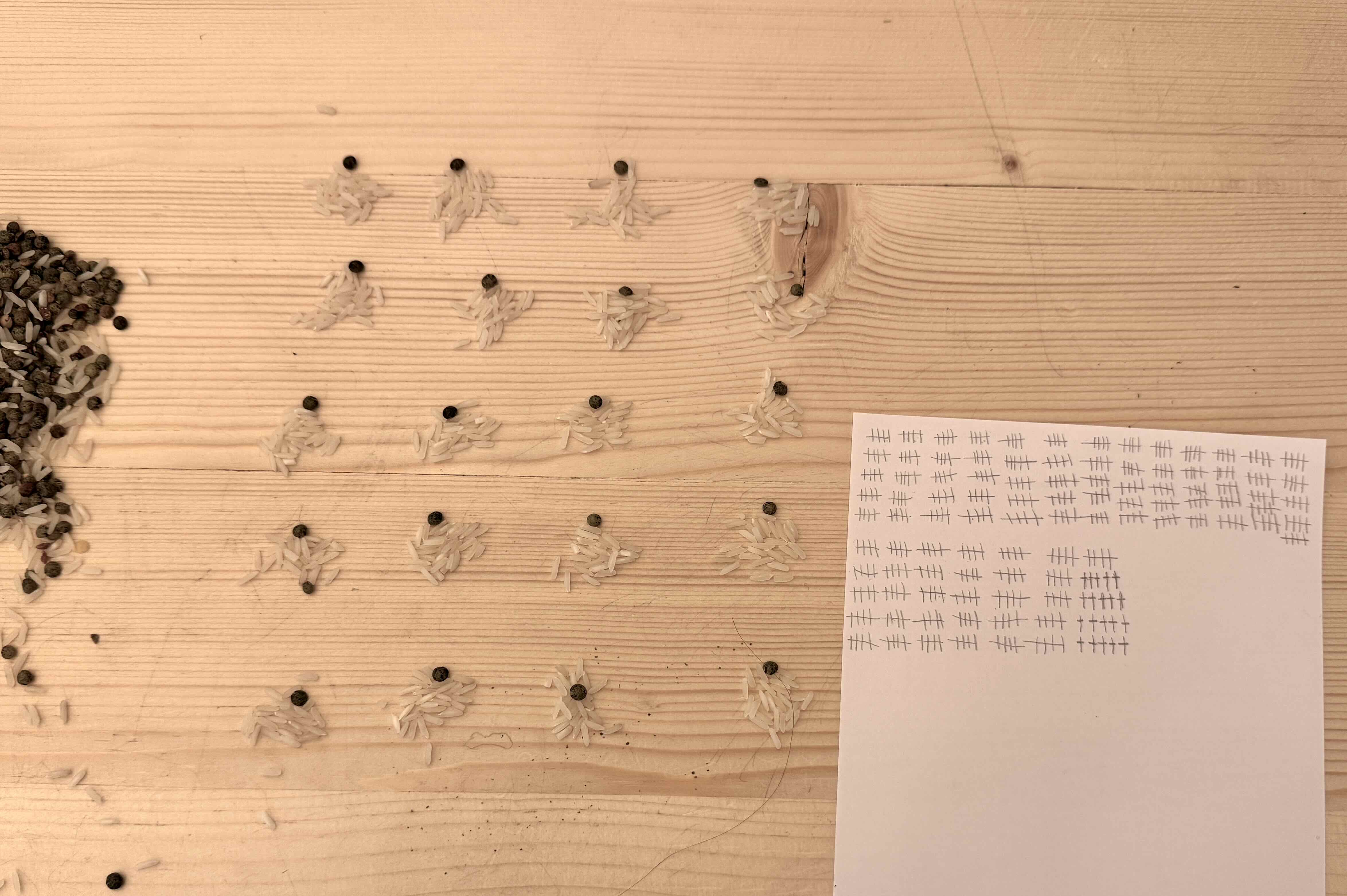
In a long white building called The Paper Tube studio there is a Marina Abramović installation called “Counting The Rice. We are invited to patiently sort grains of rice and lentils – a simple meditative gesture that calls for attention and self-awareness.  Through this repetitive task everyone can experience art as a tool for concentration, introspection and transformation.”

We begin counting the rice.

As I am counting the grains of rice and placing them in piles of 25 I have a strange experience.  I start to think of all the soldiers who died in the First World War and each grain of rice began to represent the dead body of a soldier. When I found some grains of rice that were broken I thought of the soldiers who were “blown to bits” by the intense mortar shelling during the battles. There bodies were often never found. I felt the need to identify each pile of ‘bodies’ and place a lentil at the top of each pile as a marker or headstone of sorts. I fought back tears, as my tally marks of ‘bodies’ turned into crosses.

Bob did not have the same experience as I did.  He is soon reading a book on his phone.

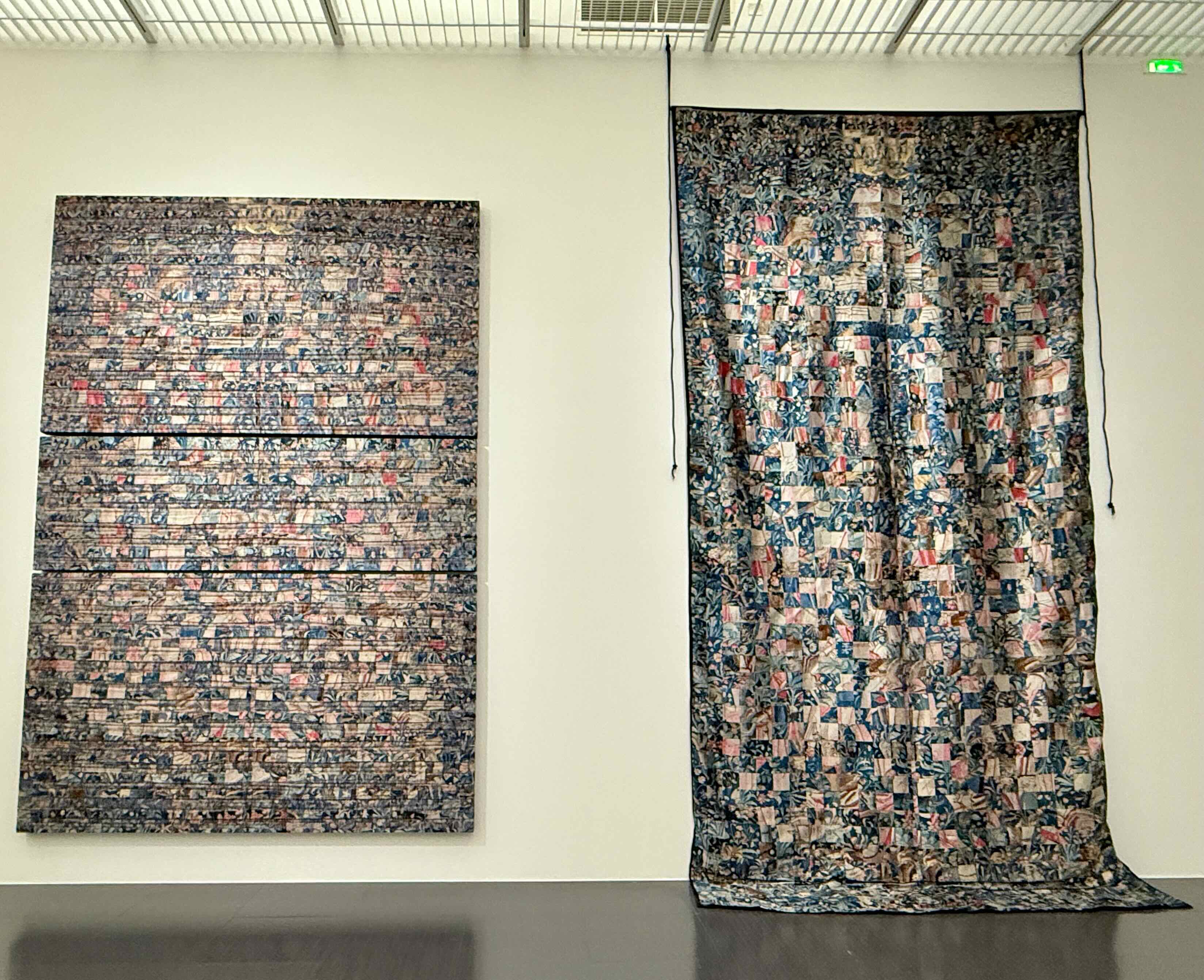
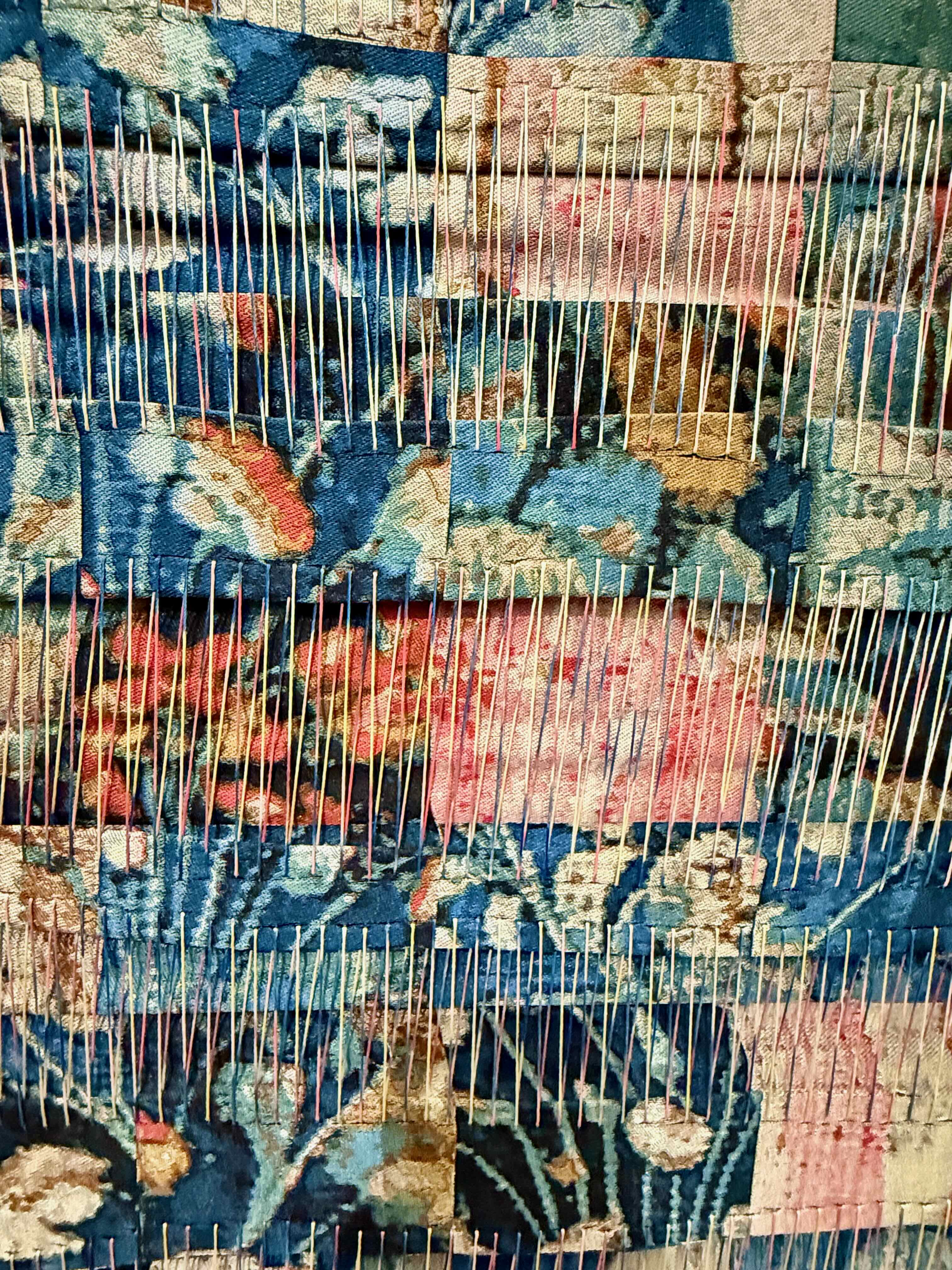
These two large textile pieces were quite interesting.  The artist, Sidival Fila, cut, overlayed and recomposed the original tapestry.  

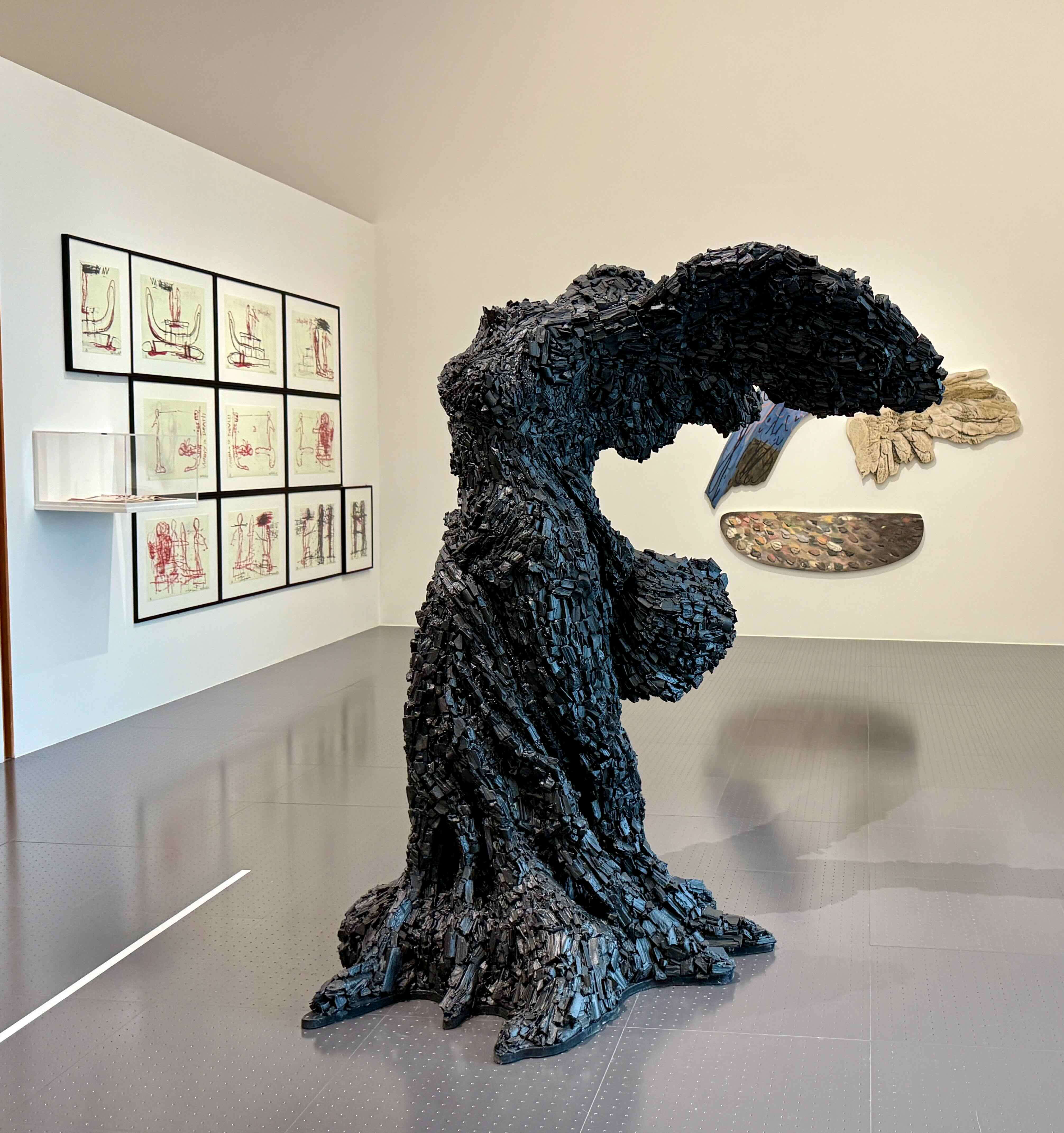
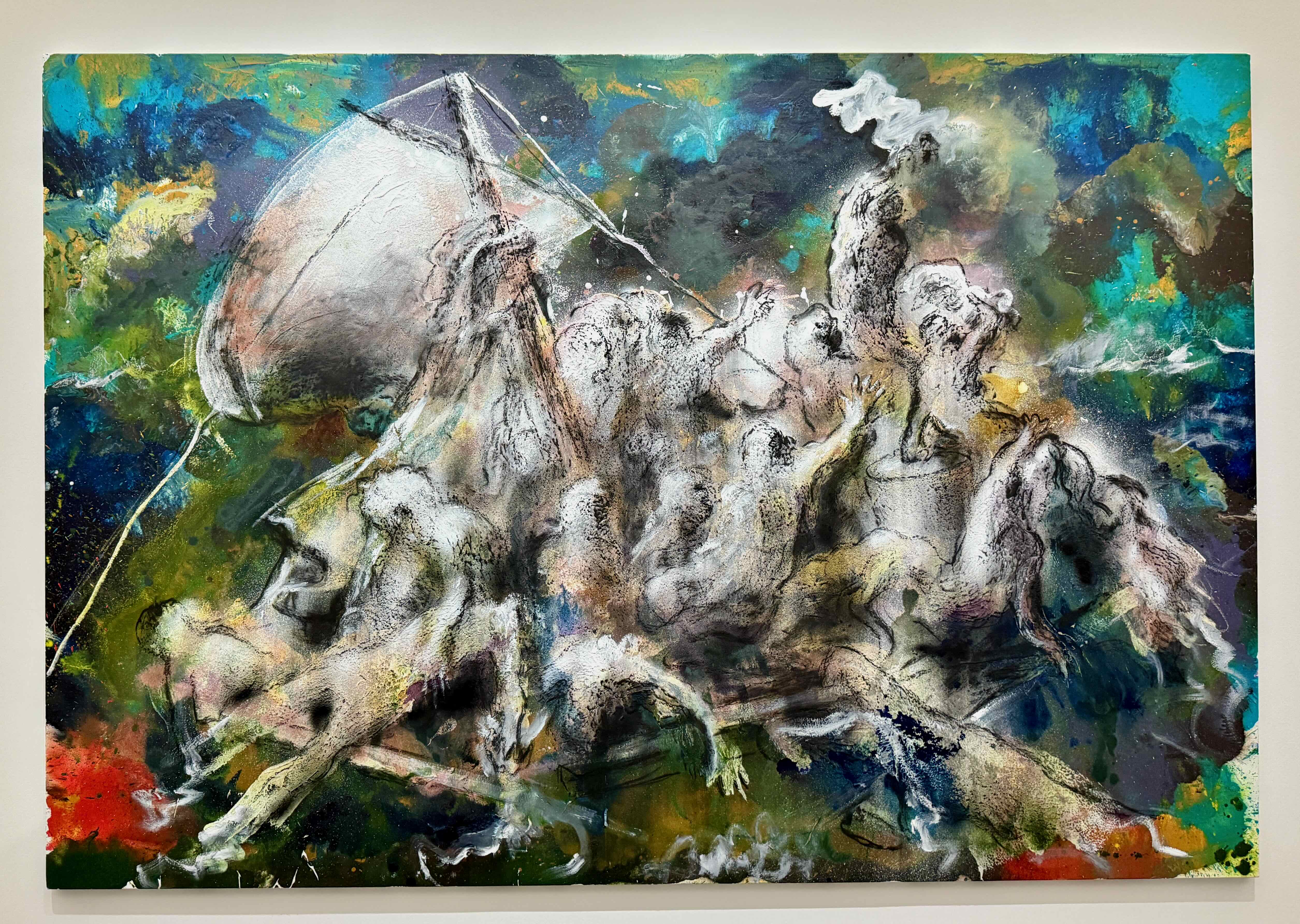
A close up of the piece on the left.The next exhibition is Copyists.  One hundred artist were invited to choose their favourite piece of art in the Louvre and use it as inspiration for their version of the work. Humberto Campana used charcoal to make this black charred version of the Victoire de Samothrace. This is a cry of alarm in the face of ecological and political crisis. Miquel Barcelo’s copy of Géricault’s Raft of the Medusa.
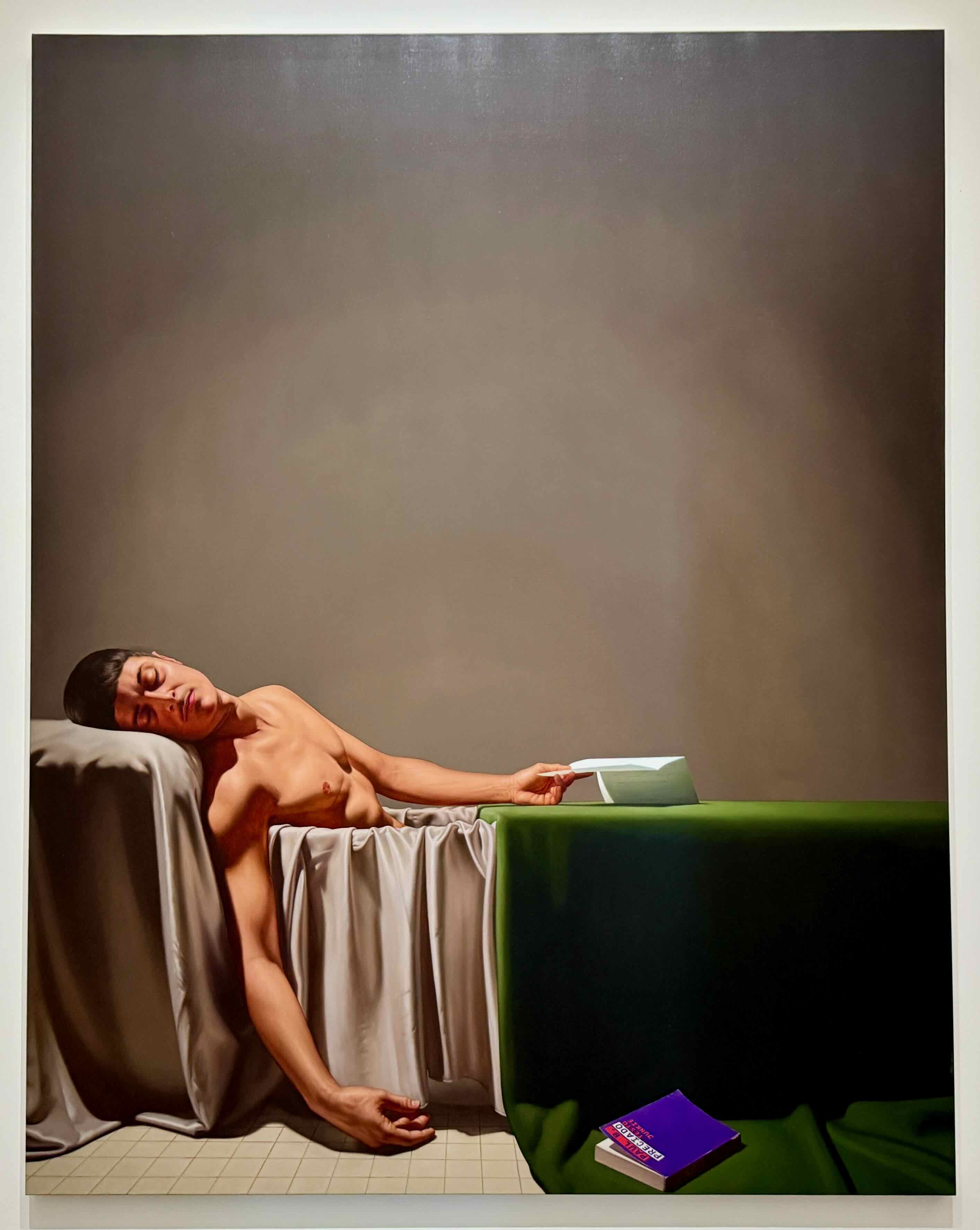
Dhewadi Hadjab’s copy of the Death of Marat becomes the death of a transgendered friend of the artist.

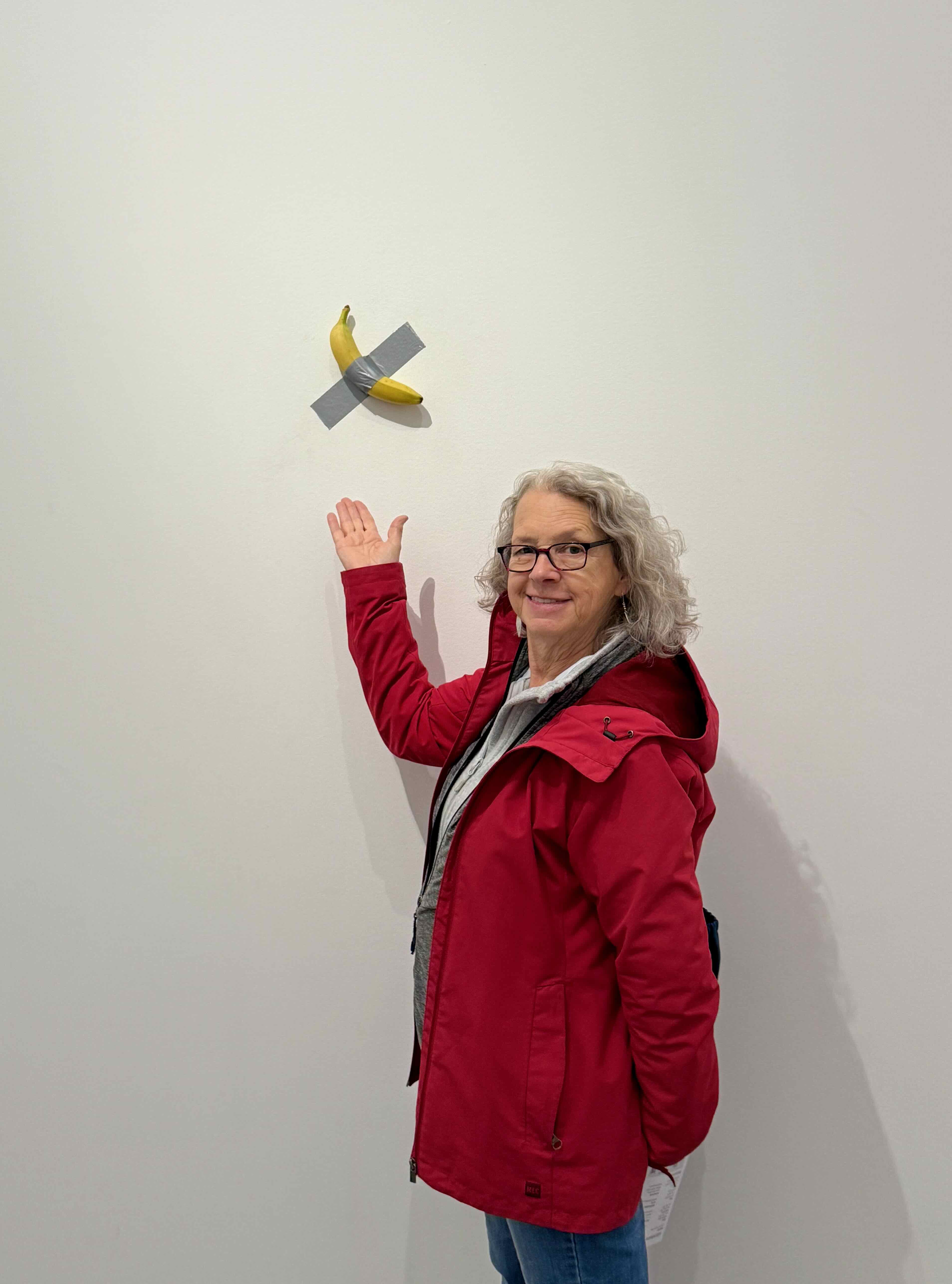
More of Maurizio Cattelan’s work. ‘Comedian’ is a fresh banana duct taped to a wall exactly 1.6 metres above the floor. The work includes a certificate of authenticity, along with detailed instructions for its proper display, for its owner to use when displaying the work. The banana and the duct tape can be replaced as needed. The Comedian sold for 6.2 million dollars!  The purchaser later ate the banana on stage!

Cattelan’s ‘Shadow’ is a work representing Cattelan’s mother who died when the artist was young.  

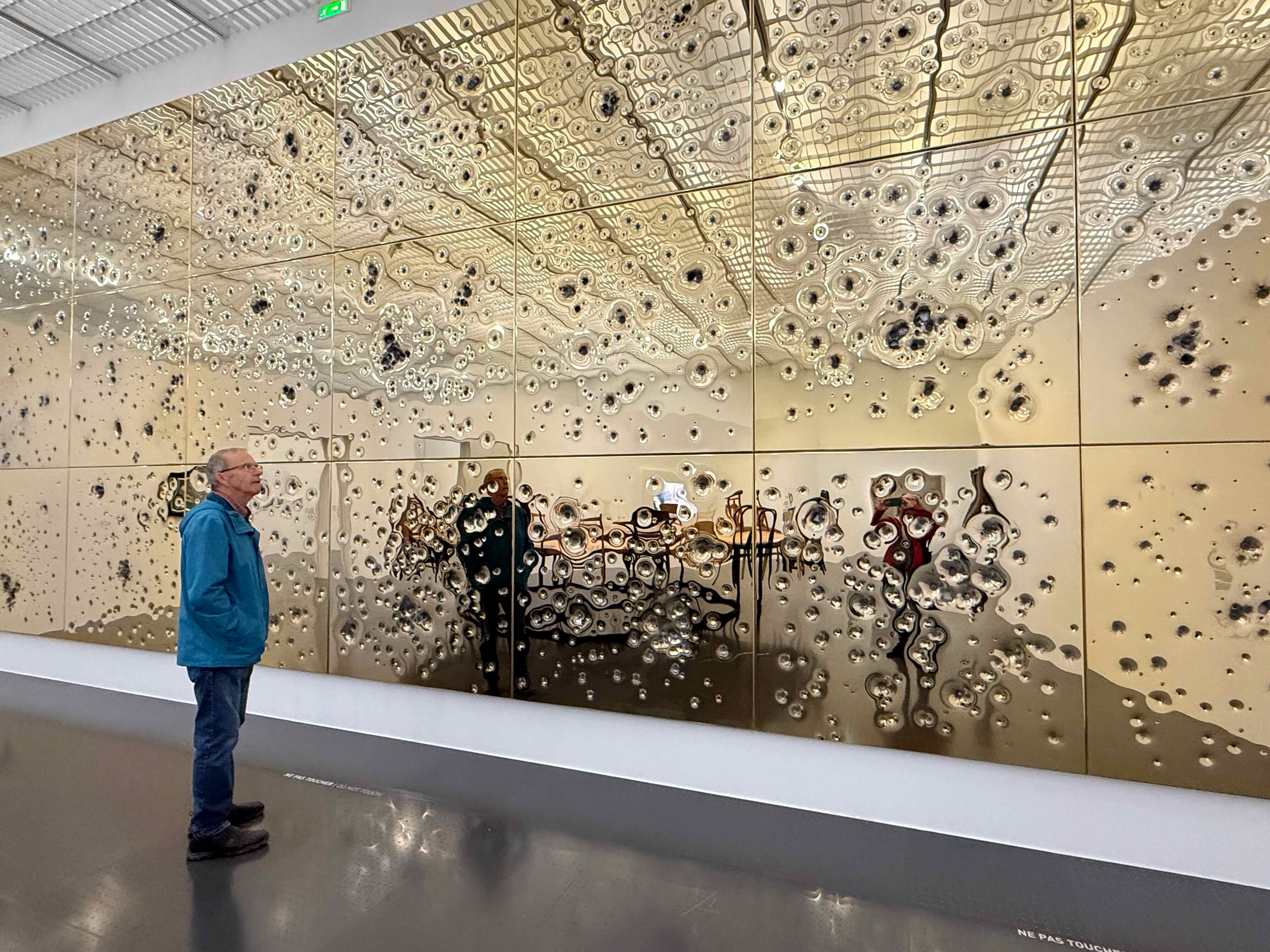
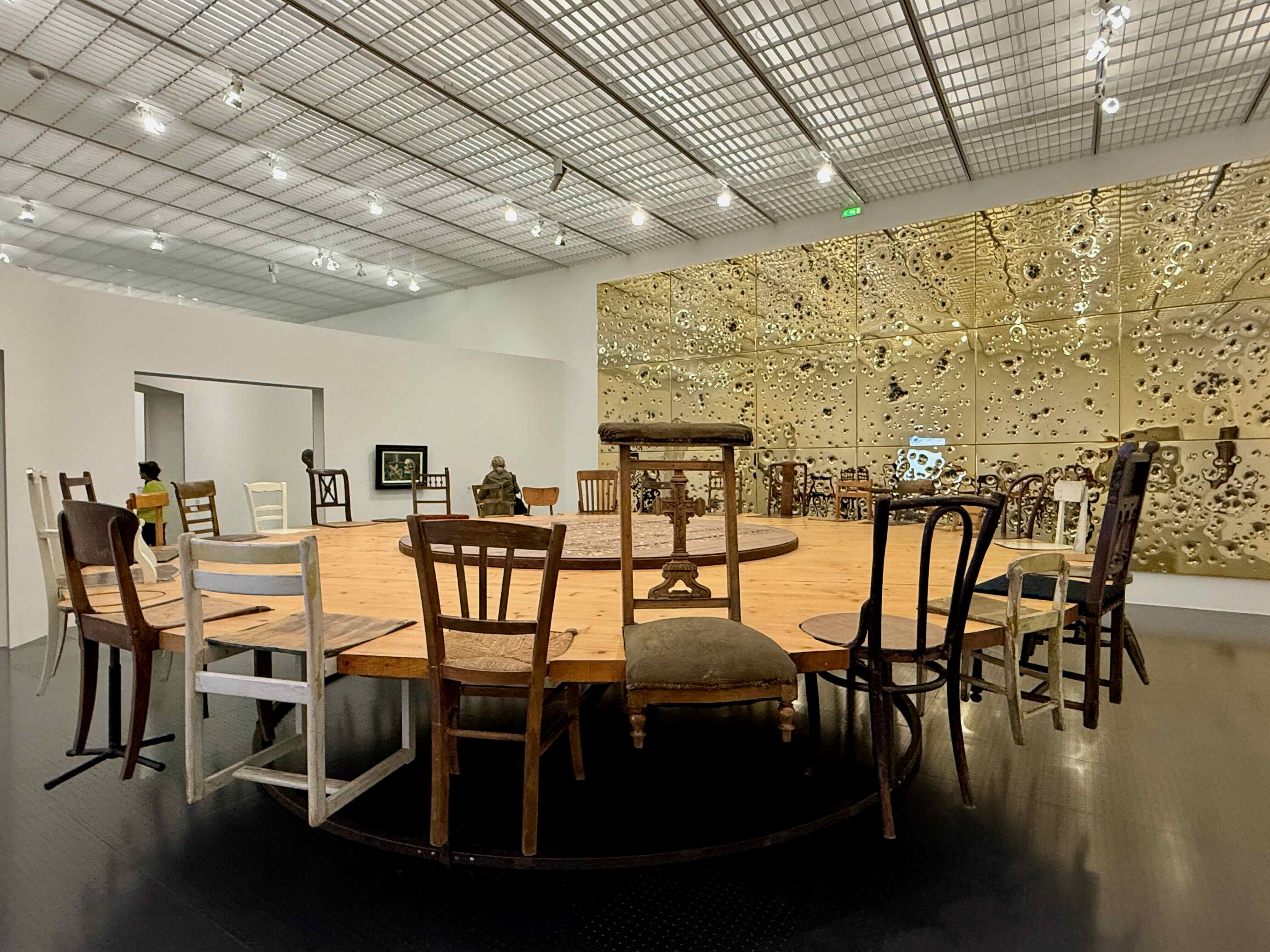
‘Sunday” invites the viewer to reflect on the economic inequality and the link between power and access to weapons.  Cattelan riddled 24 carat gold plated stainless steel panels with hundreds of bullet holes.

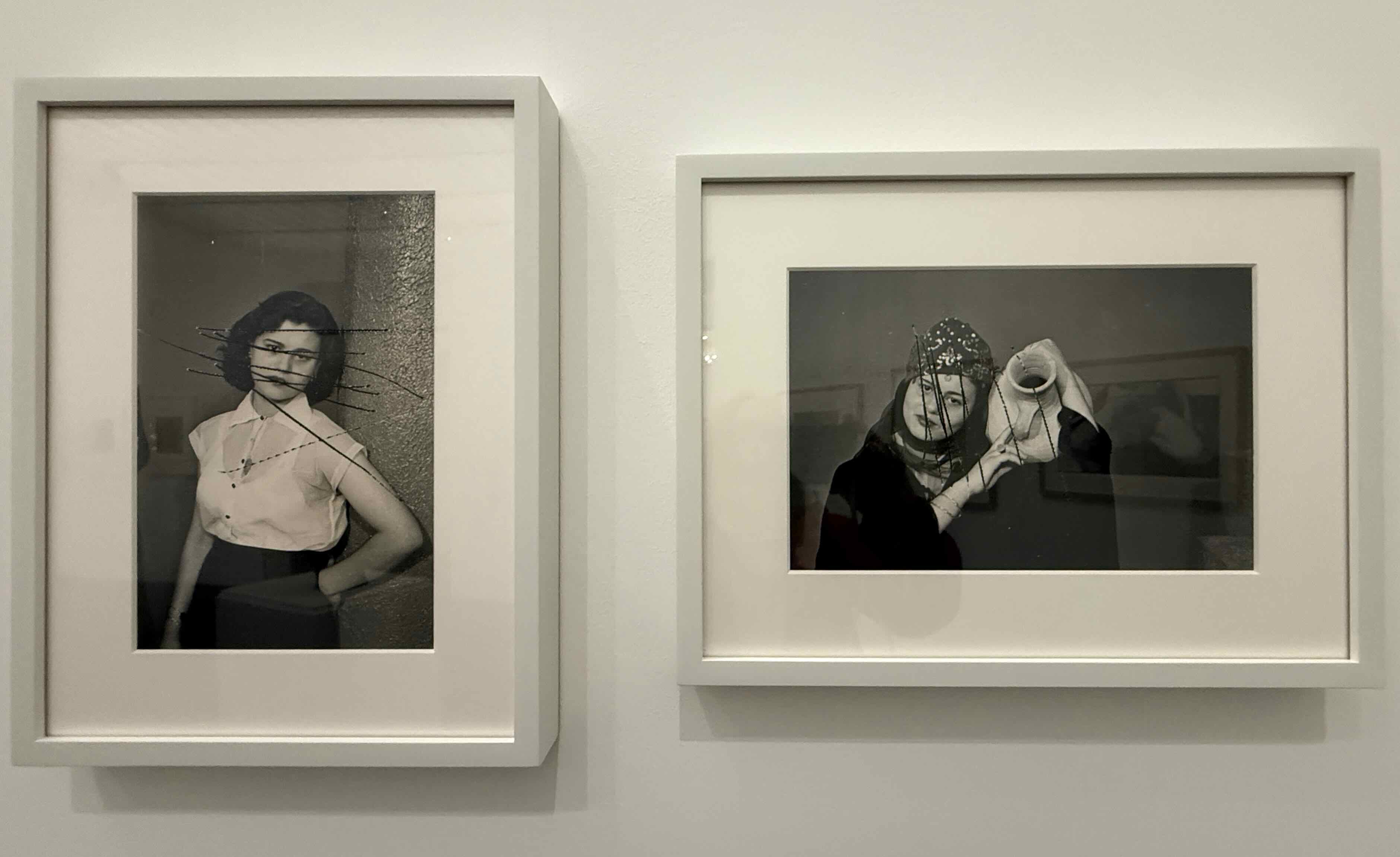
The photographer at Studio Shehrazade in Lebanon wrote…”These negatives were scratched because of a jealous husband from the Baqari family, who never let his wife go out by herself. He was upset to leam that she had come to be photographed in my studio without telling him. He came asking for the negatives. I refused to give them to him, because they were on a 35 mm roll. In the end we agreed that I would scratch the negatives of his wife with a pin, and I did so in front of him. Years later, after she had set herself on fire to escape her misery, he came back, asking for enlargements of those photographs, or other photographs she might have taken without his knowledge.”

Chen Zhen invites viewers to sit at this table with 29 chairs gathered from five continents and different social classes, however they are embedded in the table and suspended from the floor…inaccessible.

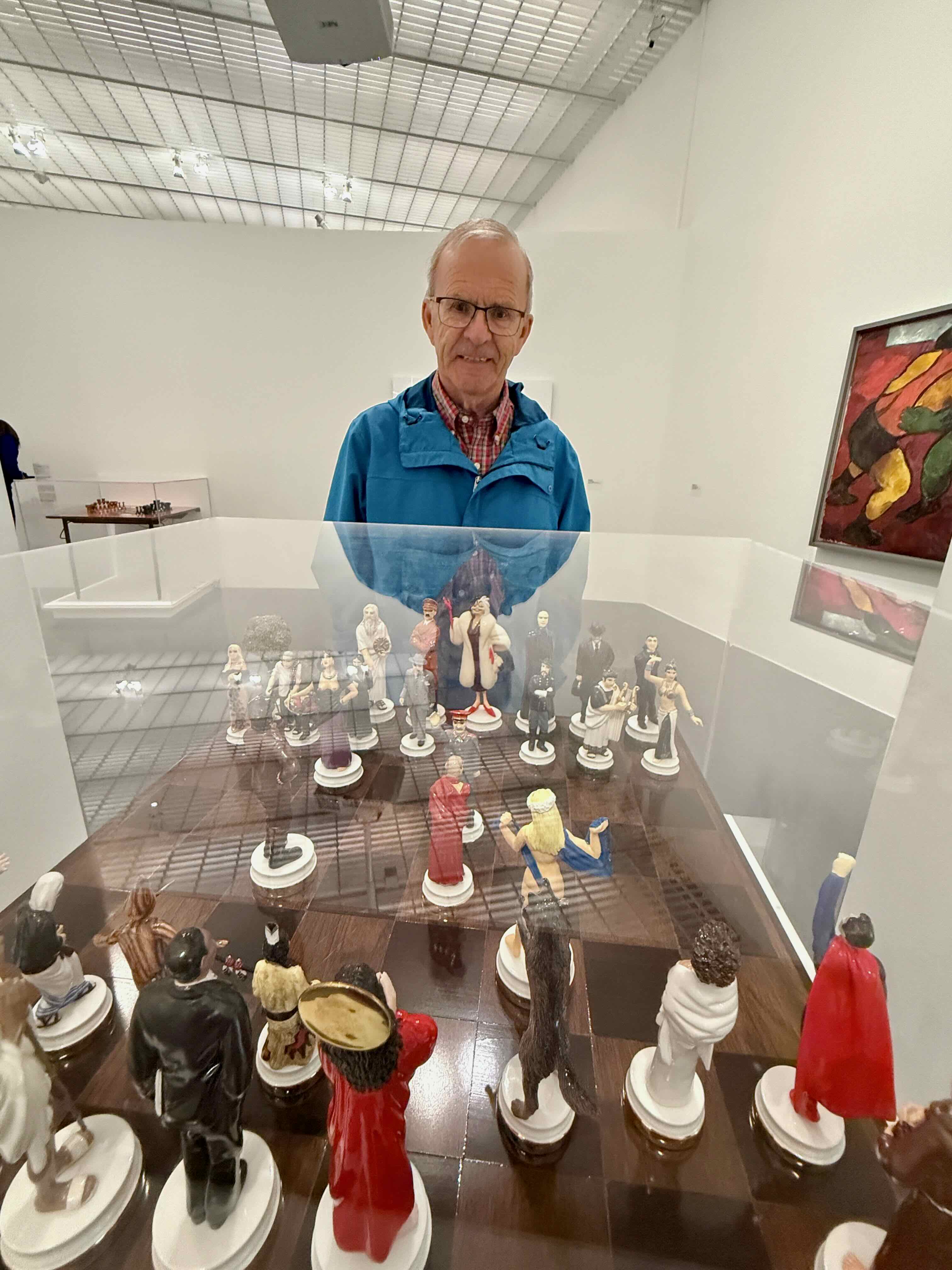
Bob like this chess “Good versus Evil” One side includes Martin Luther King Jr, the Virgin Mary and Snow White.  The other side is Adolf Hitler, Cruella de Vil and Rasputin!

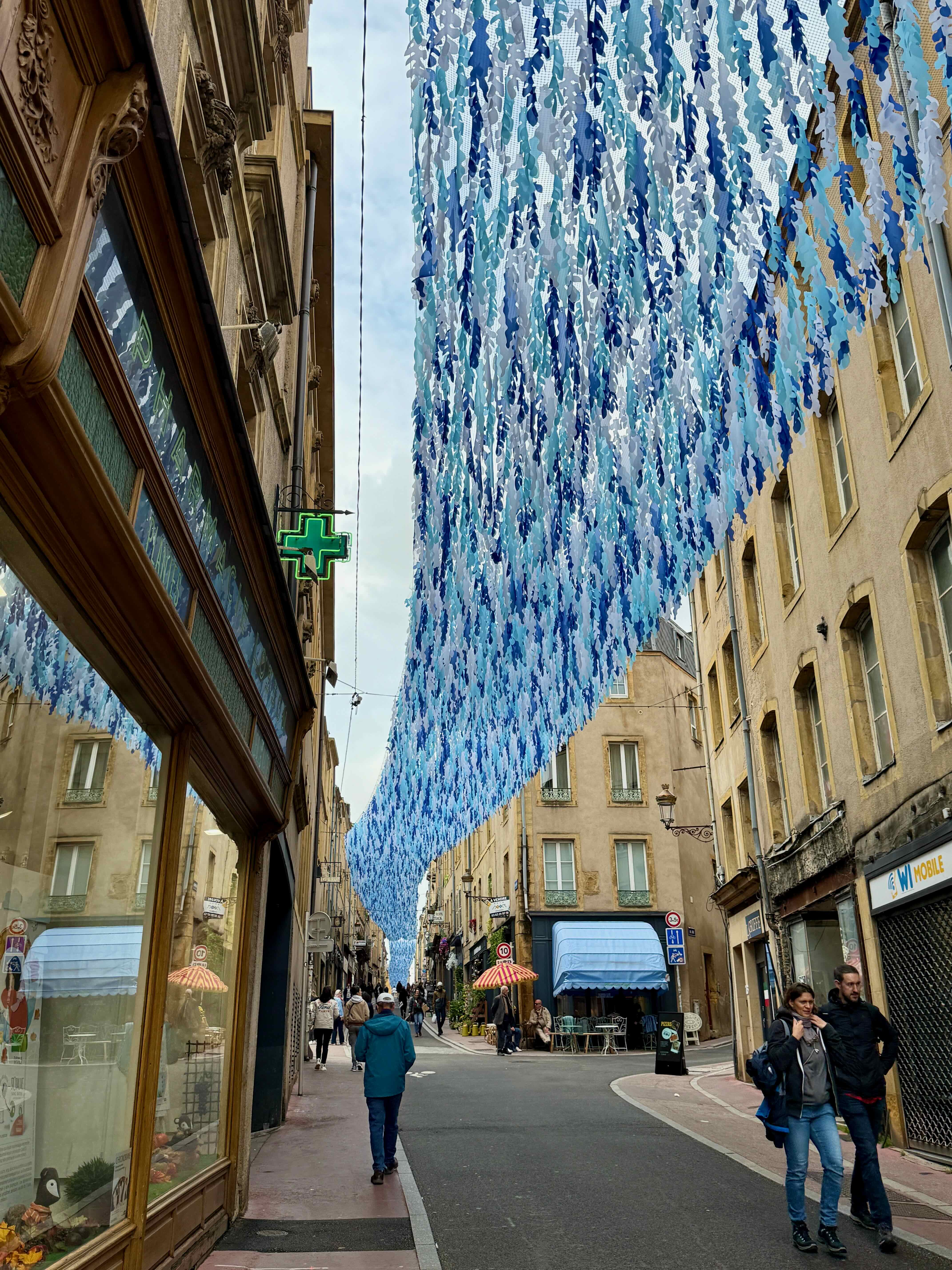
After leaving the Art Gallery we walk under these bright blue street decorations on our way to the Metz’s Notre Dame Cathedral.

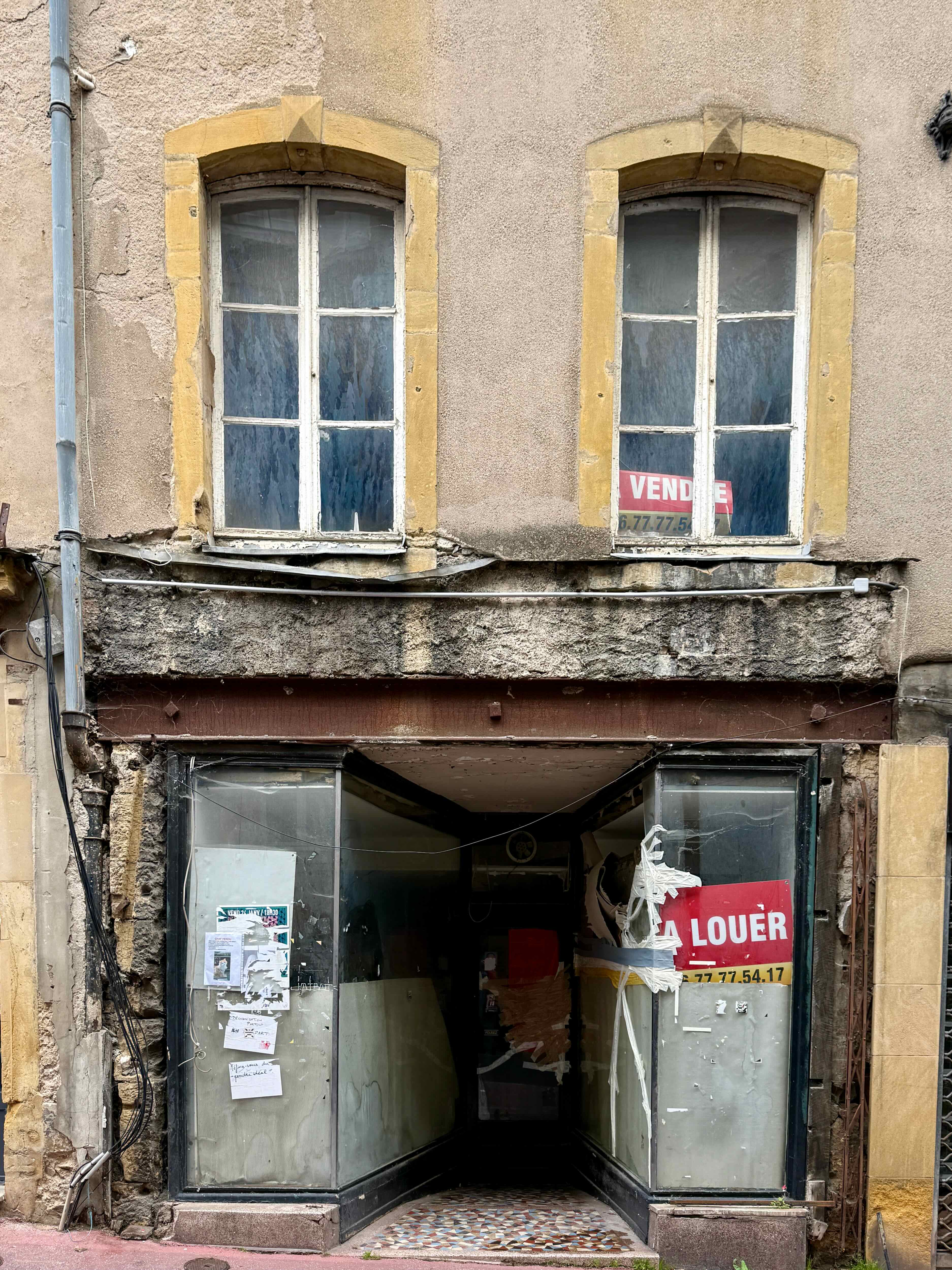
I wonder who would be interested in renting this storefront building?

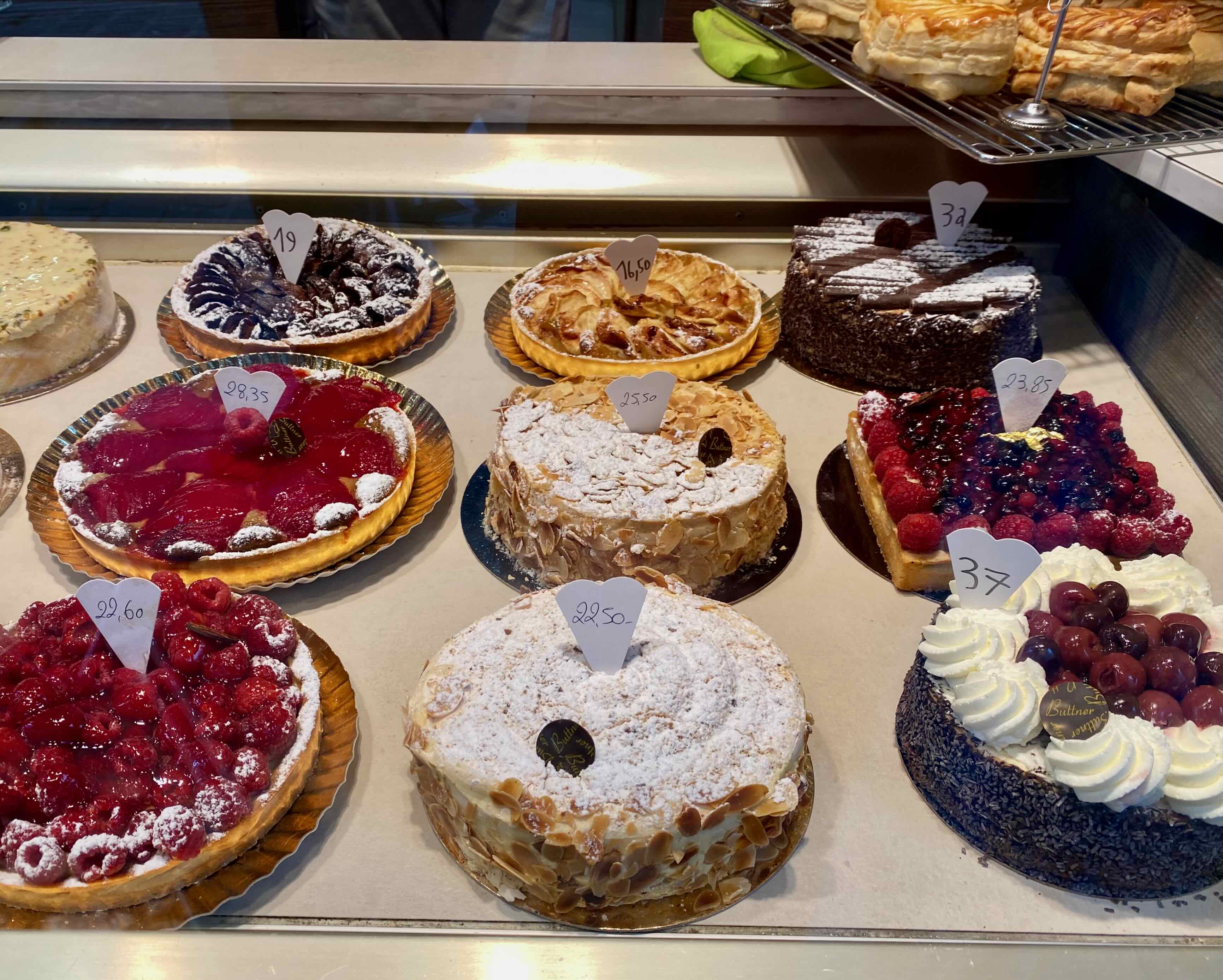
These cakes look delicious, but they are quite expensive. €37 is $60.50 Canadian!

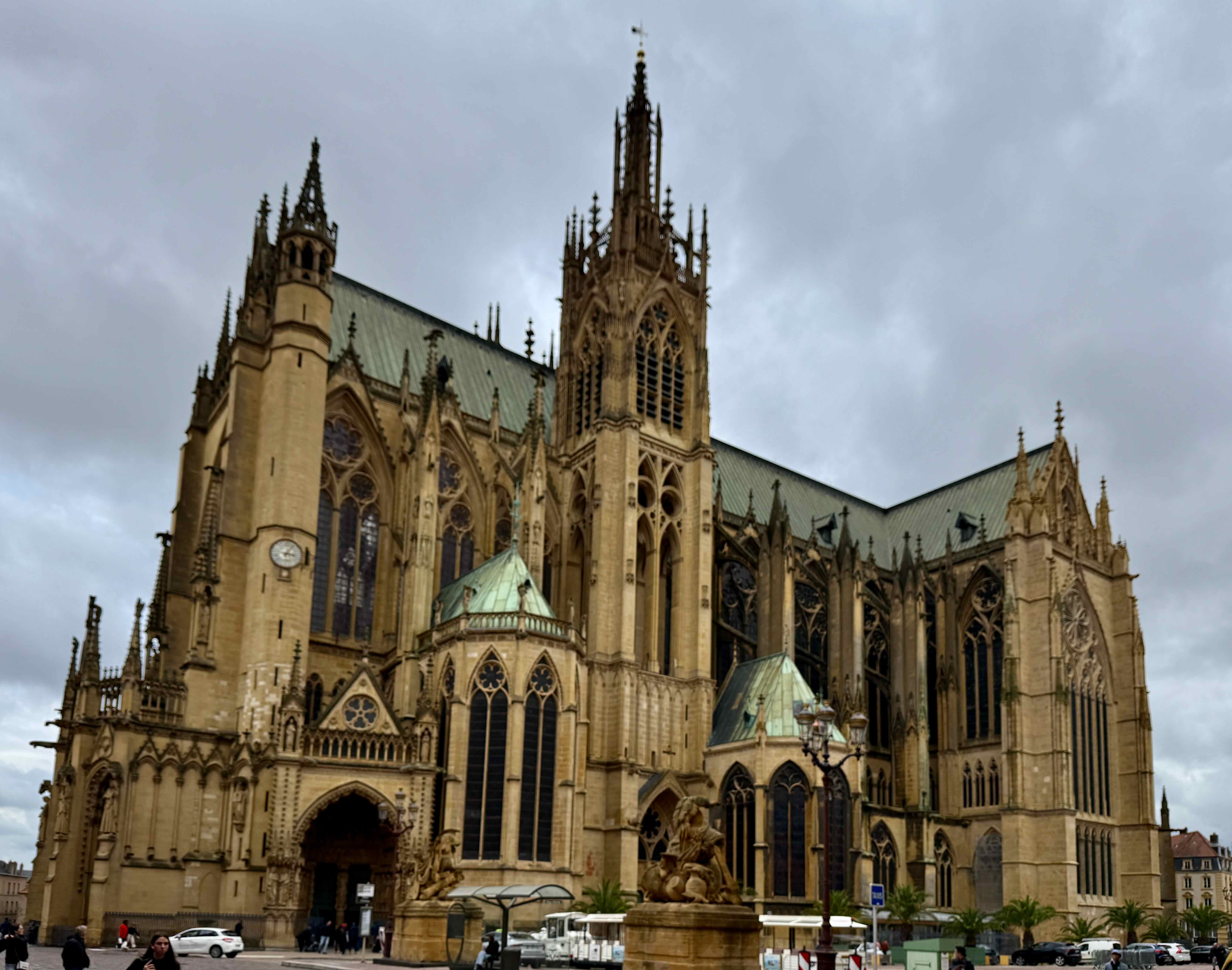
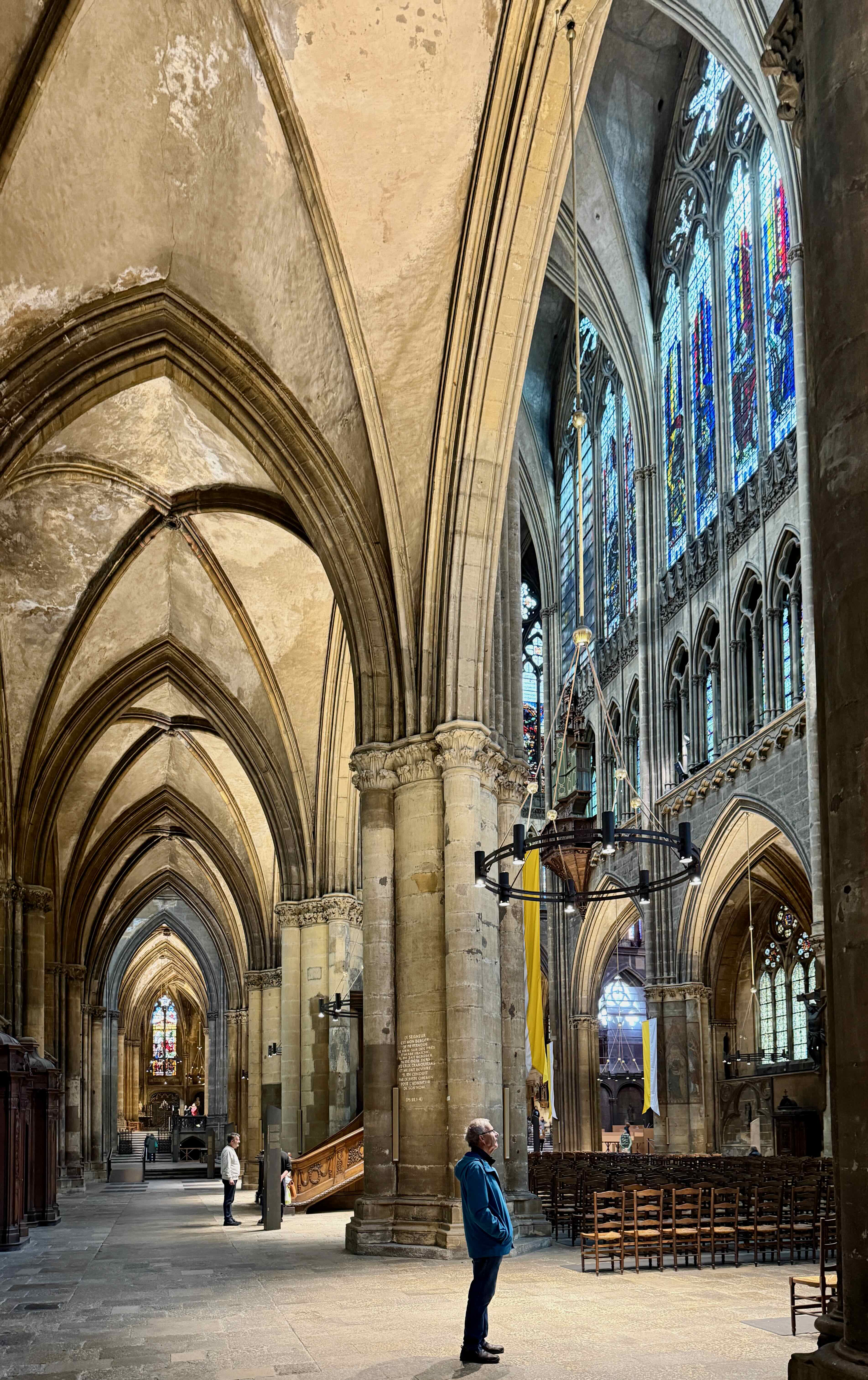
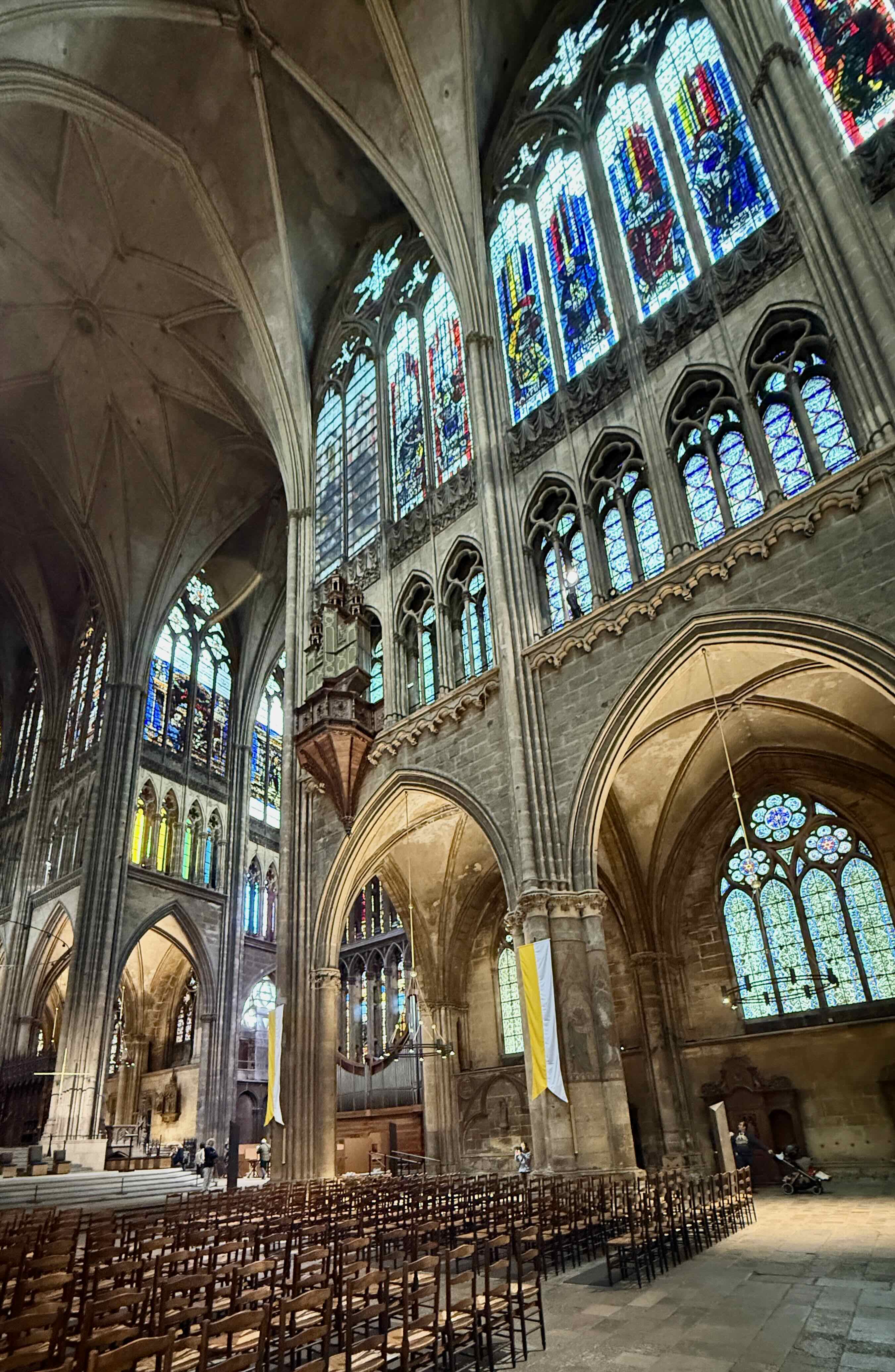
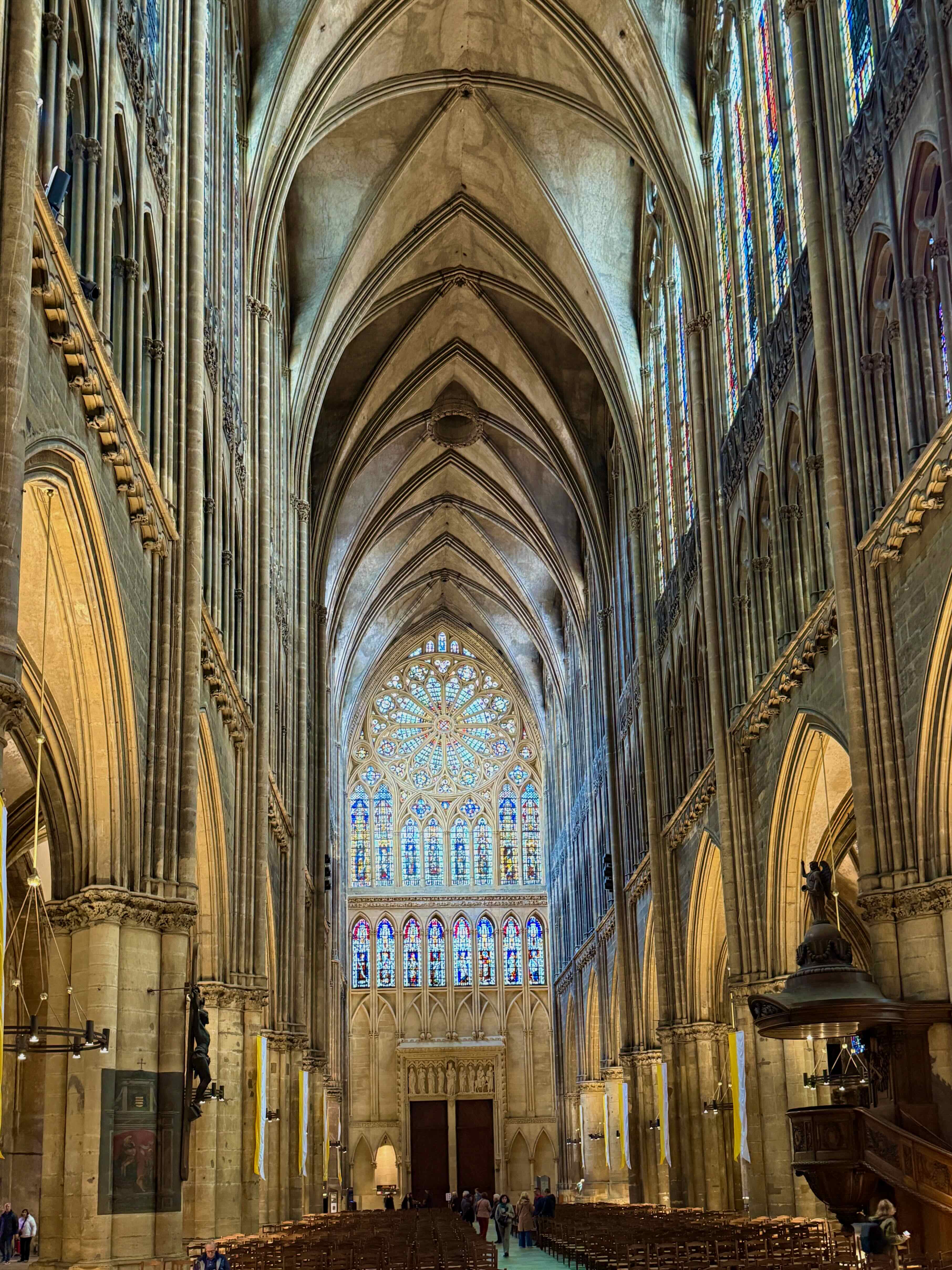
Metz’s Notre Dame Cathedral was begun in the early 14th century. This Cathedral has the third highest nave in France (41.41 meters or 135.9 ft), after the cathedrals of Amiens and Beauvais, both of which we visited earlier this month!        

A few photos of the impressive interior. We have seen so many cathedrals but somehow we keep being drawn into seeing more. They are so different from one another and we never know what we will be seeing when we walk through the cathedral doors.

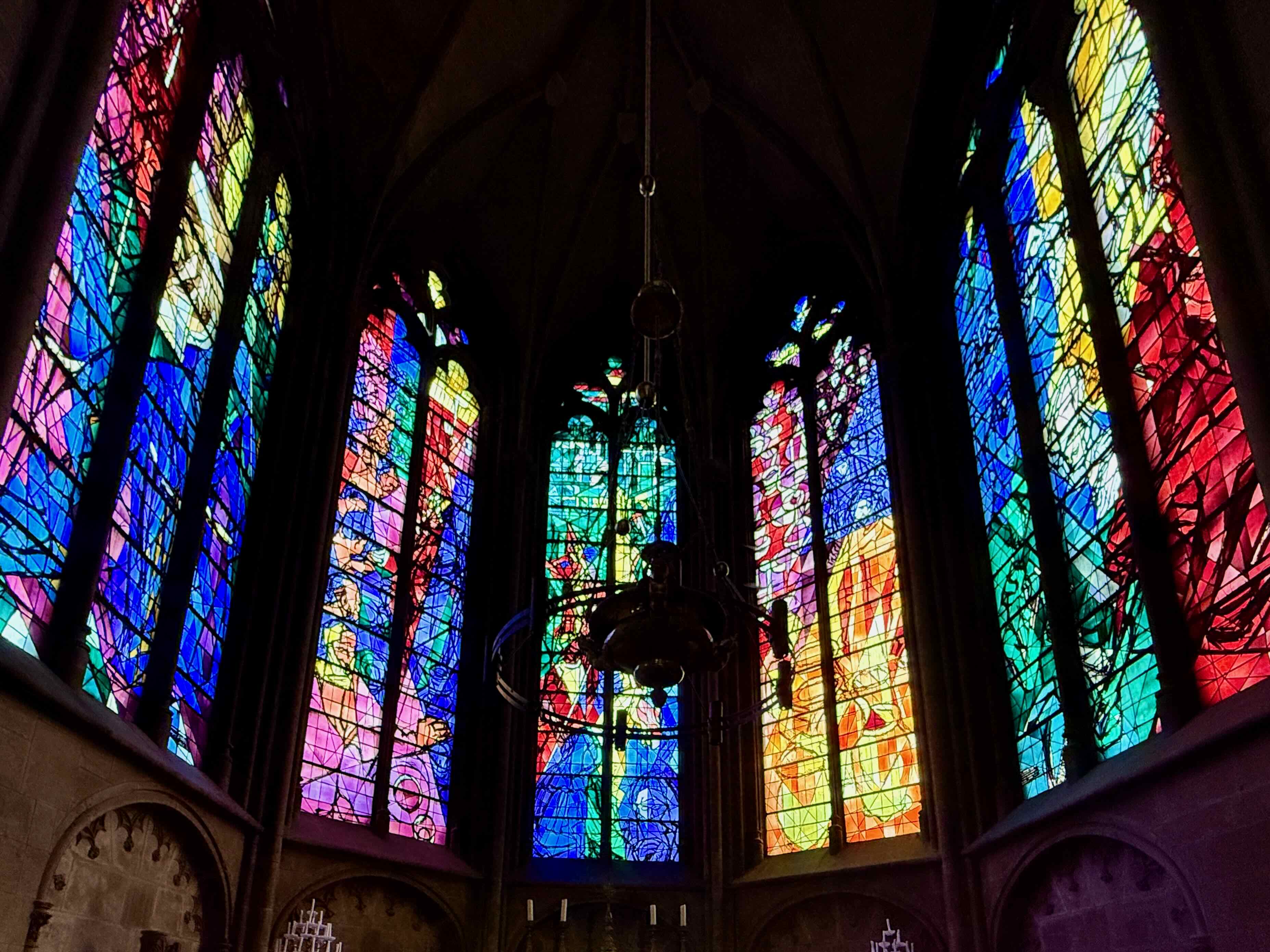
These stained glass windows were designed by Marc Chagall.

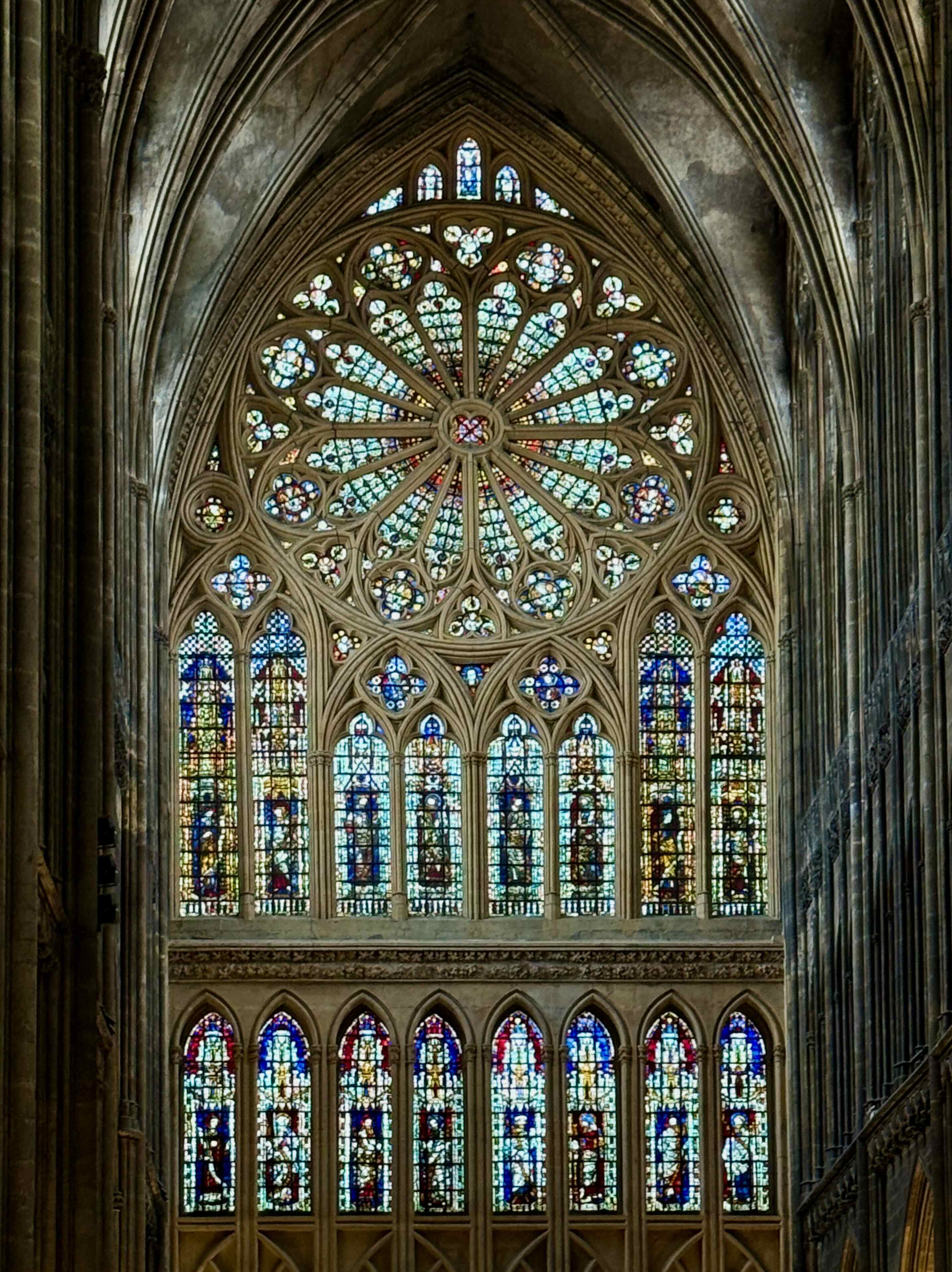
The cathedral’s Rose Window is very impressive.

More modern stained glass windows by Jacques Villon completed in 1957.

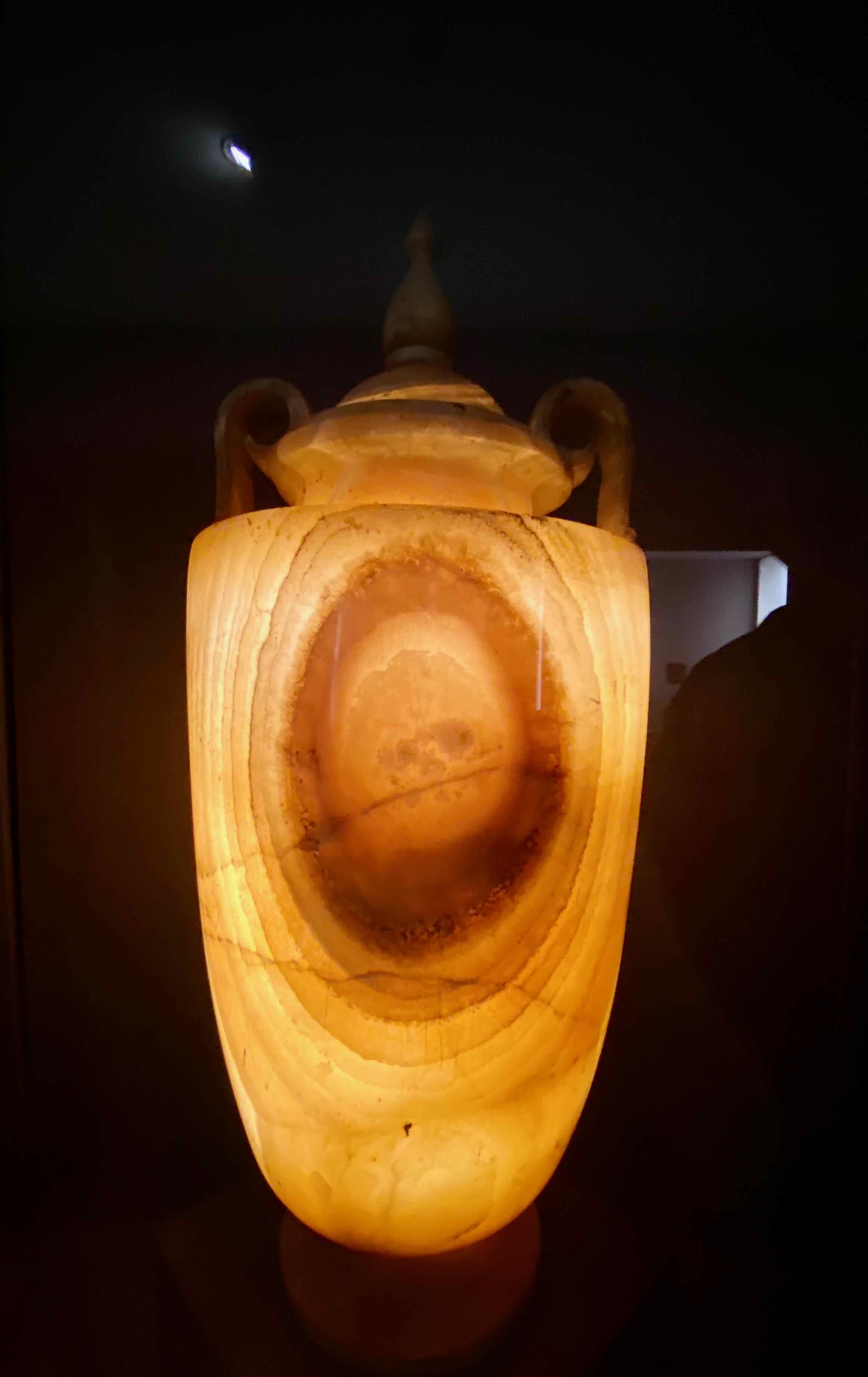
Next stop is the Musée de La Cour d’Or.  It is a maze of rooms that covers 6,000 m² of exhibition space and 2,000 years of history in the city of Metz. This incredible onyx vase is a cremation urn from the 1st century B.C.

There is so much to see….

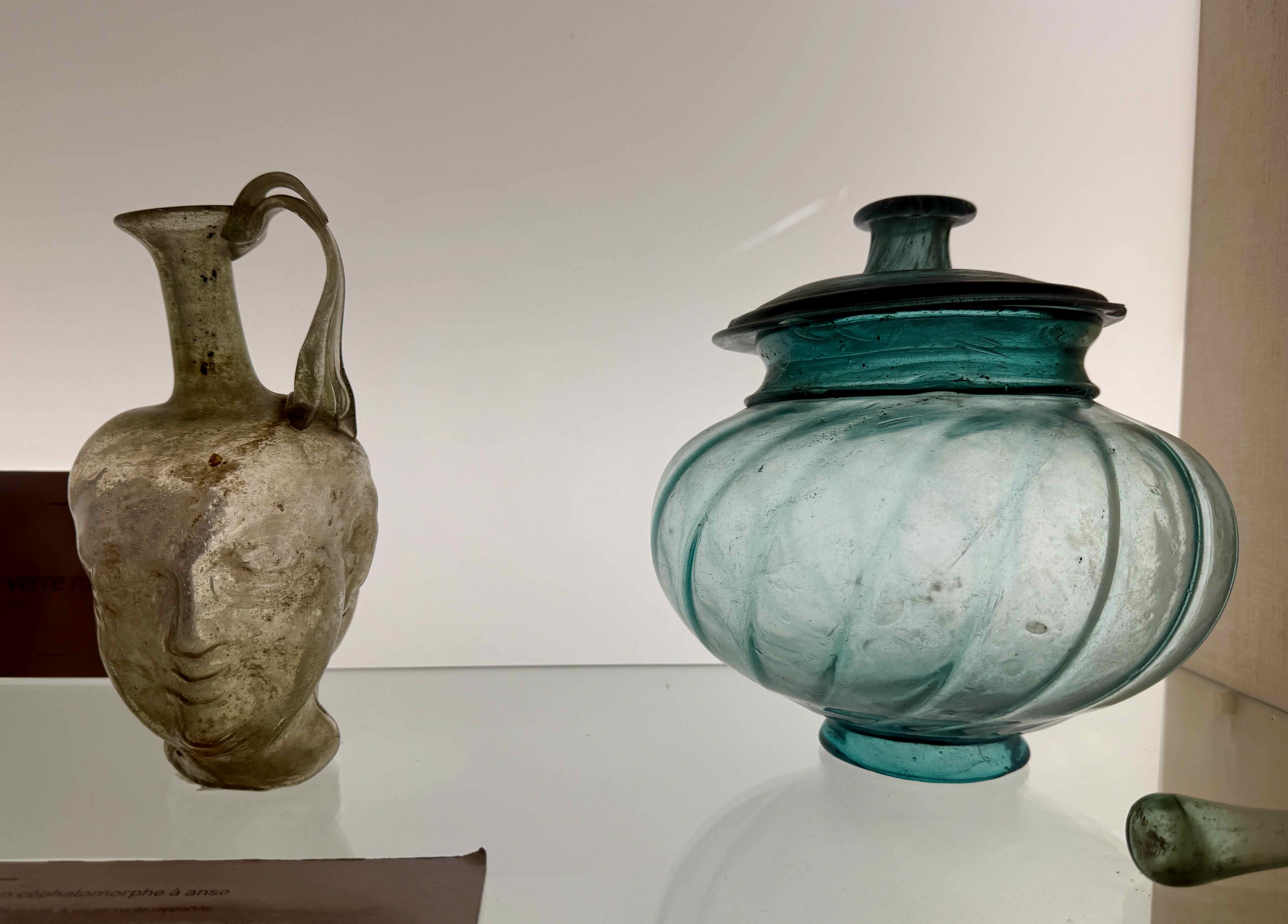
including this glass vase with a human face…

ancient locks,..

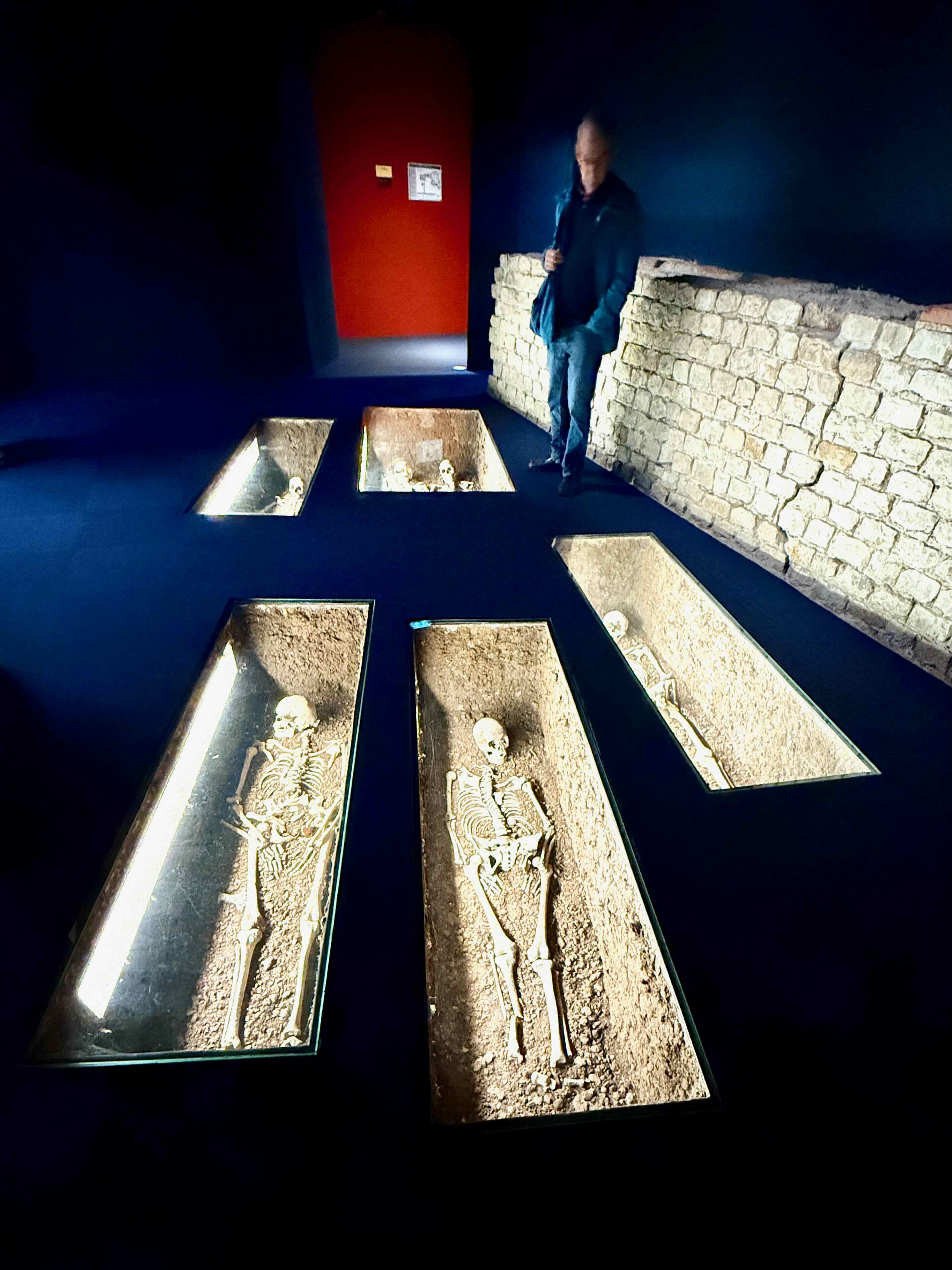
human skeletons…

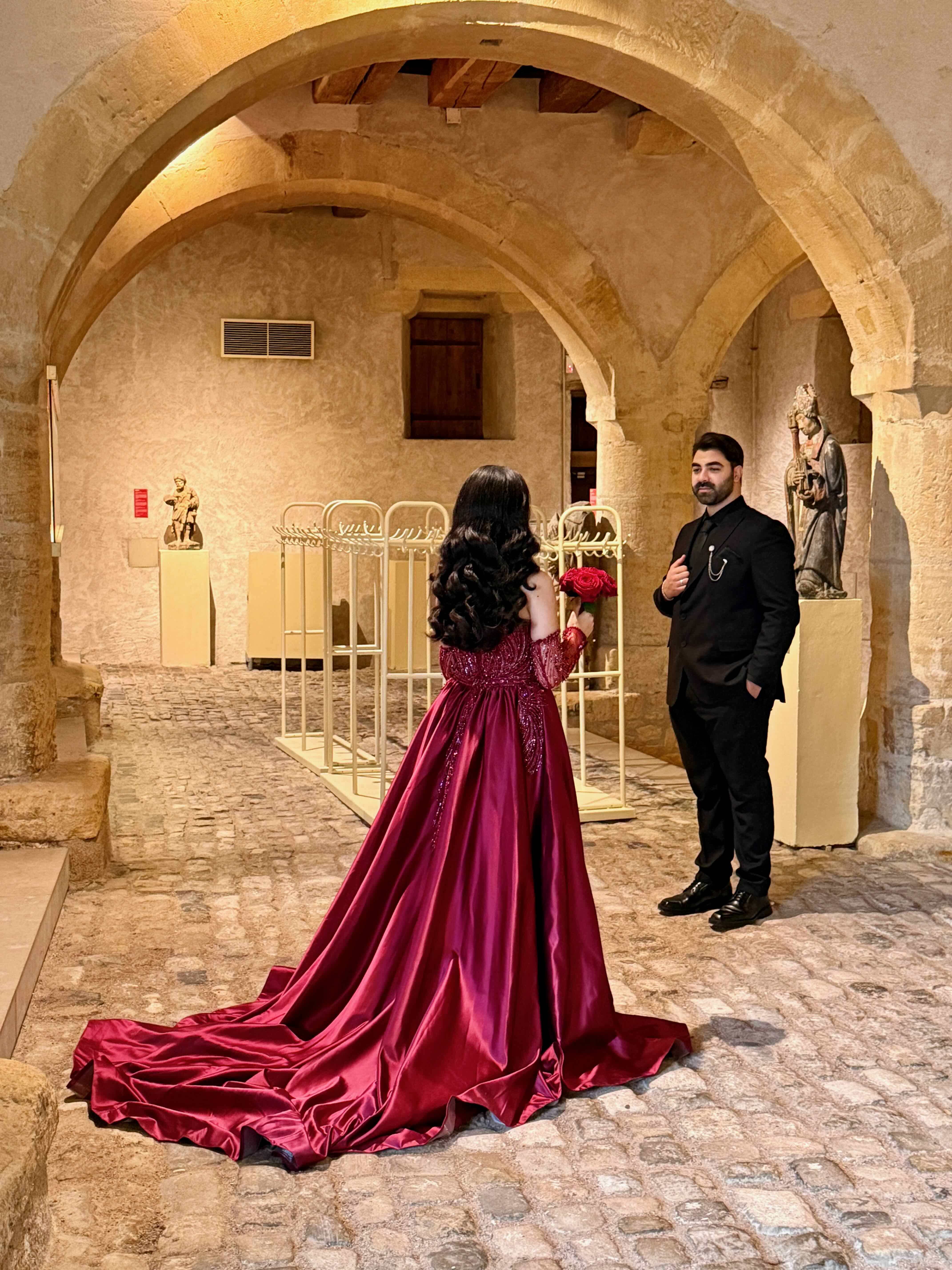
and a couple taking wedding photos!

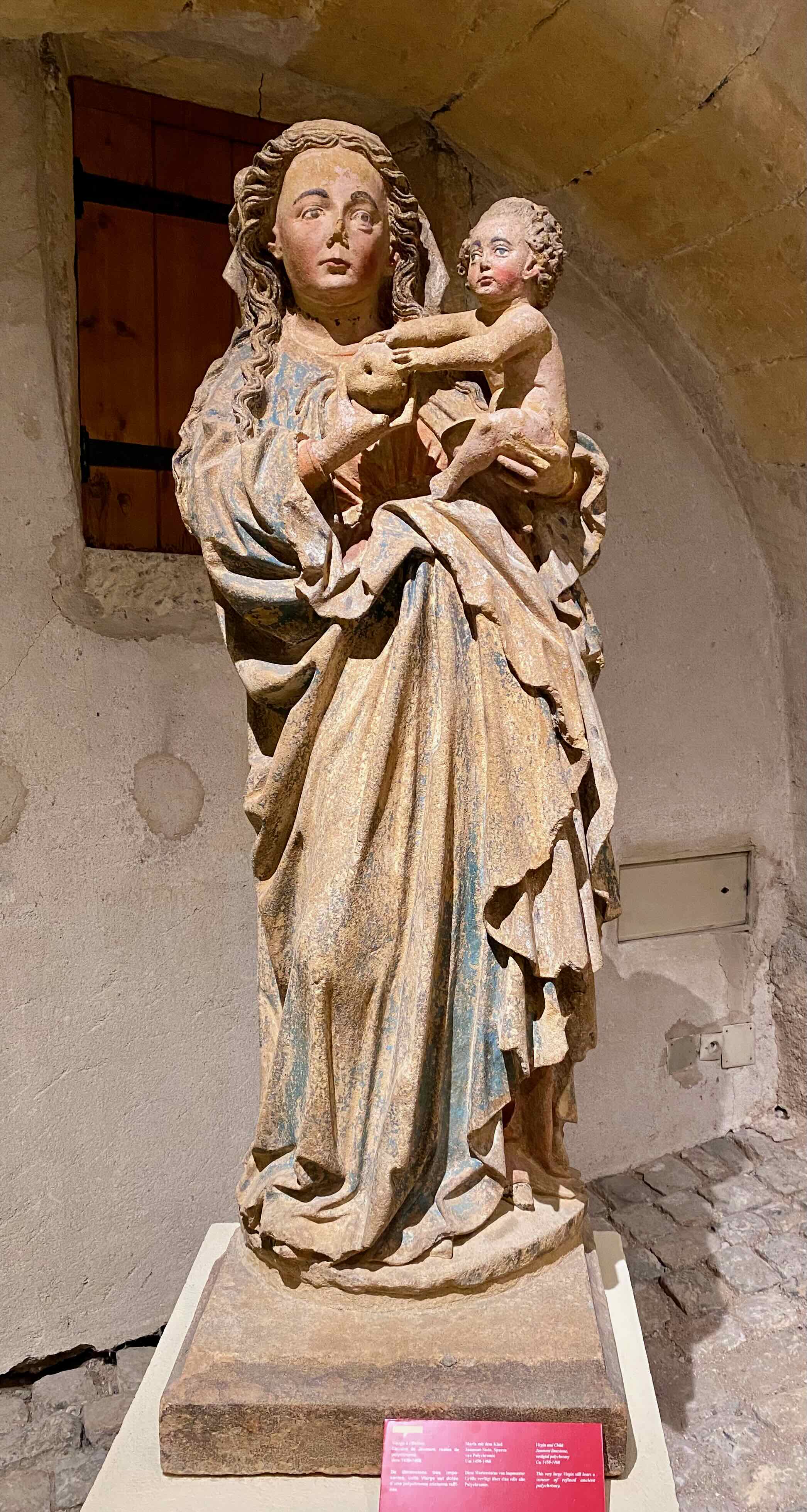
Both Bob and I took a photo of this Madonna and Child.  Something about it spoke to both of us.

These painted ceiling panels were discovered when a house was being renovated. They are from trees that were chopped down in 1218-1219.  This was determined by the thickness of the tree rings. They are the oldest preserved painted ceilings in Metz.

The rooms on the museum follow the chronological history of the city of Metz. It was interesting, but a lot to take in.  Finally we are in the last room.

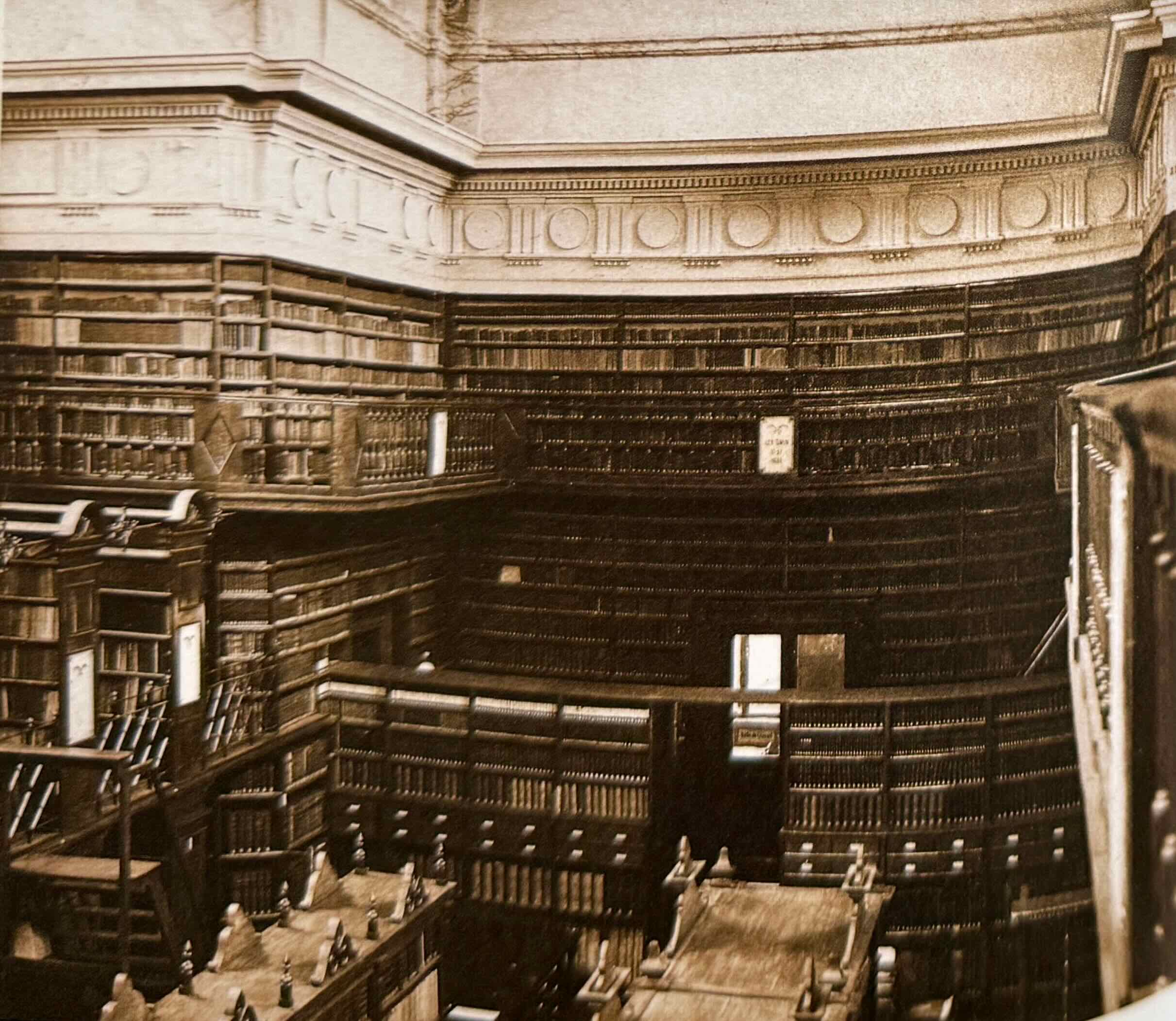
The entrance to the museum is located in what used to be a library. This is a photo of the room when it was a library, and…

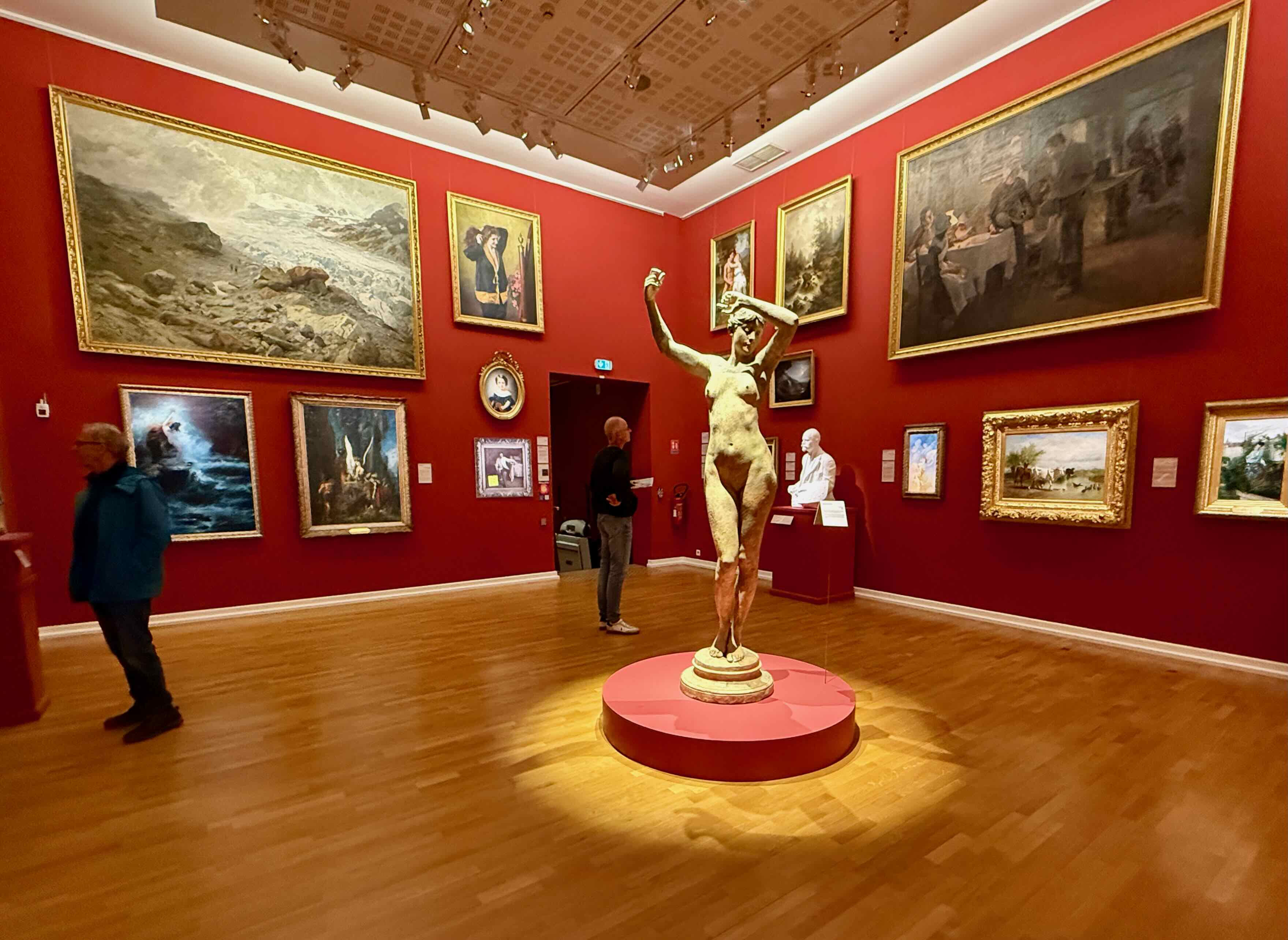
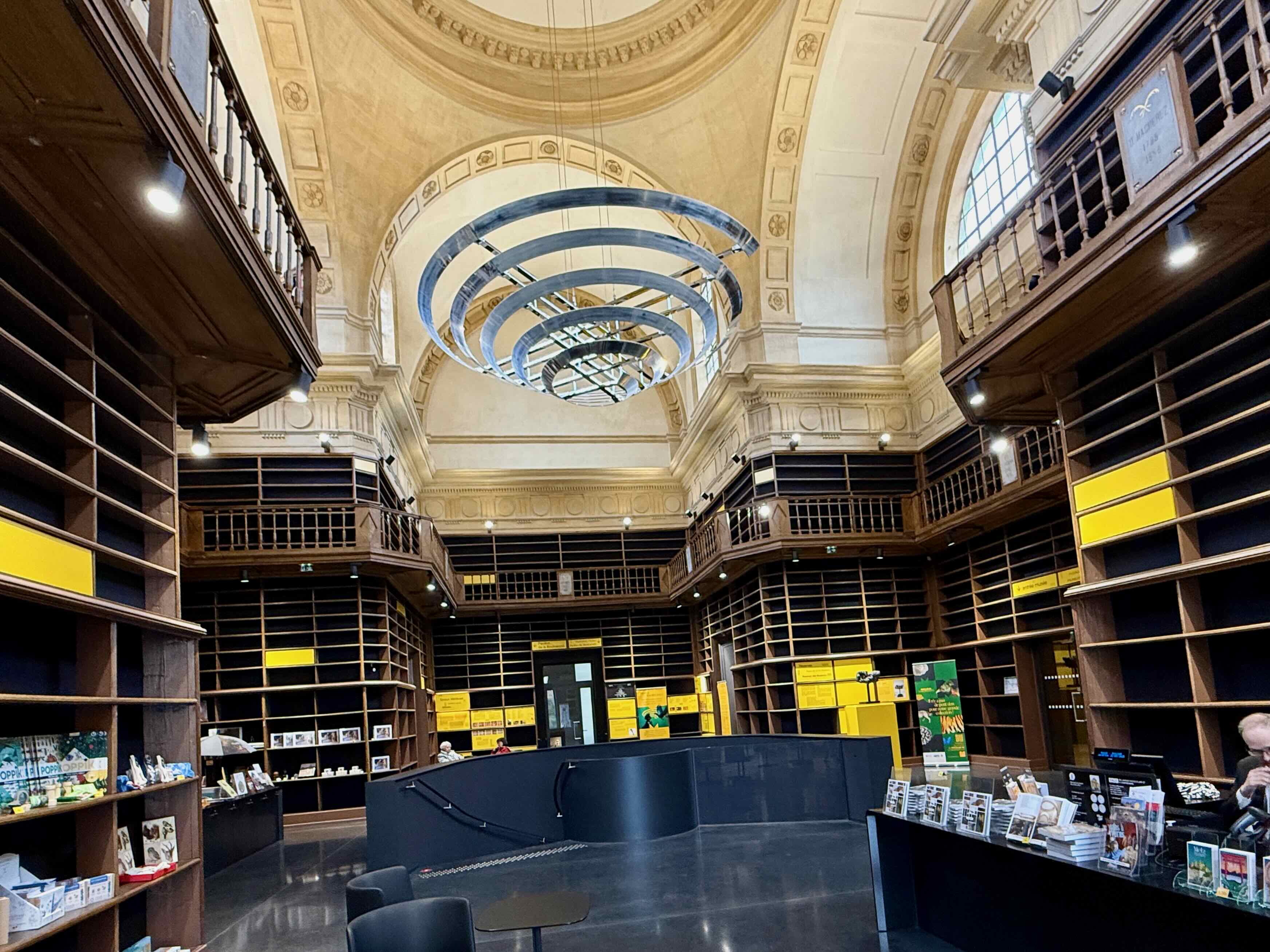
this is how it looks today.