The Prado

Thursday October 15

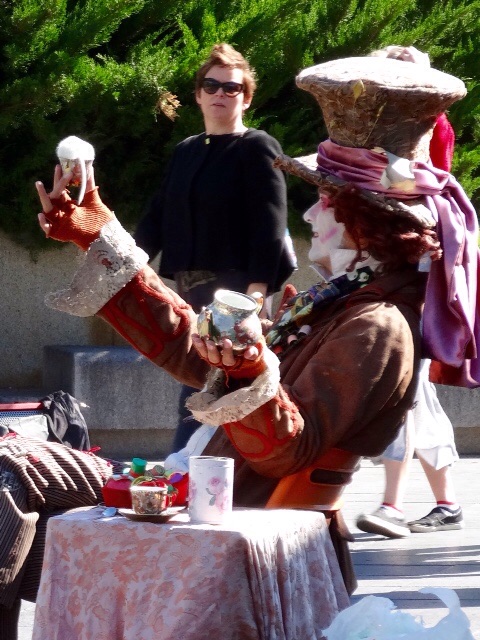
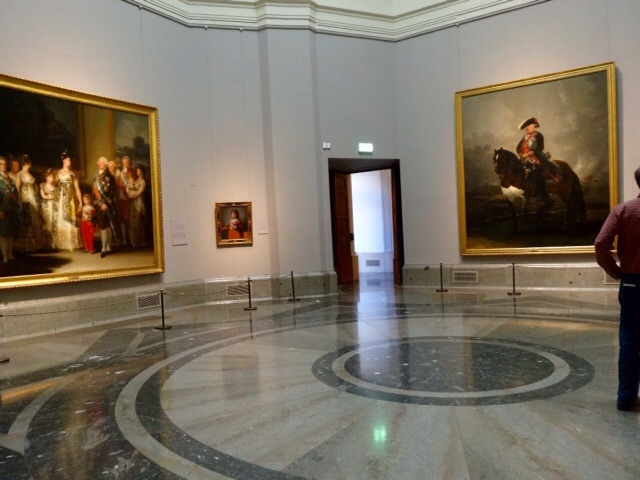
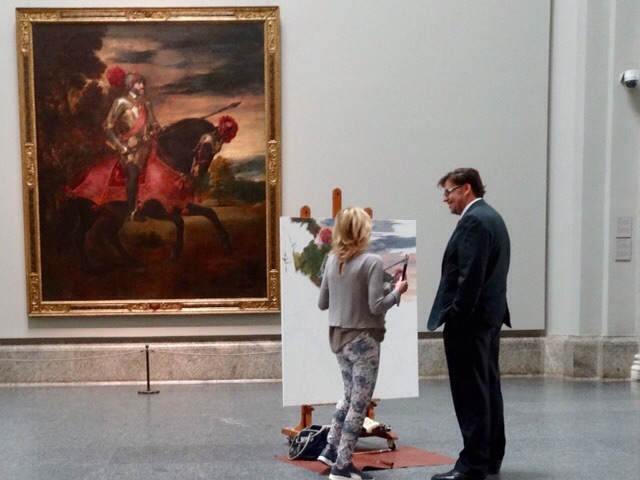
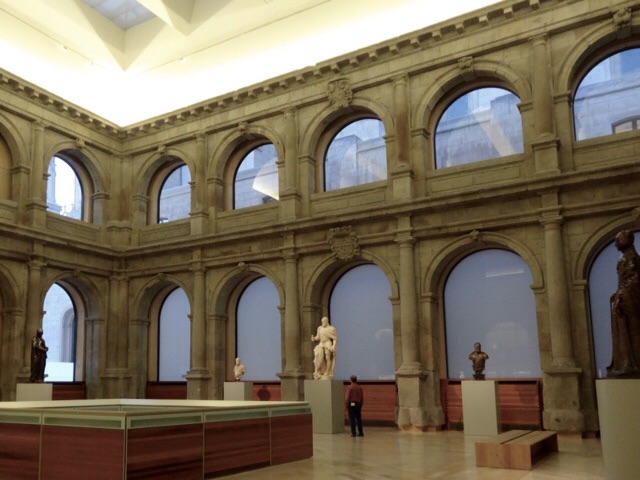
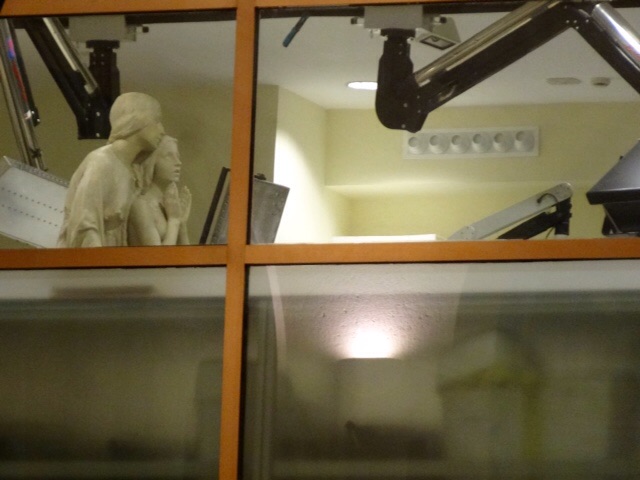
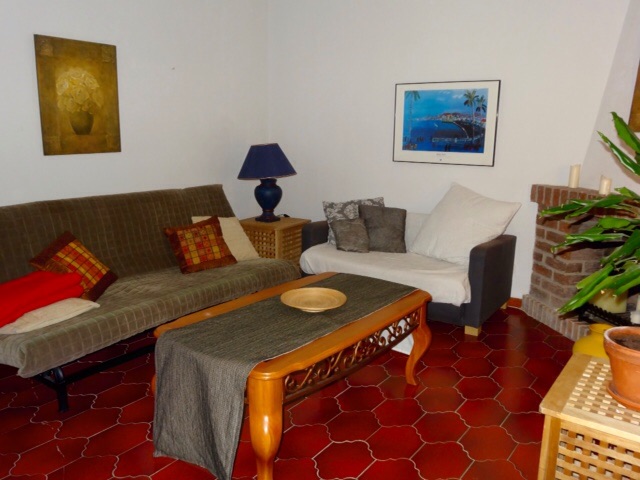
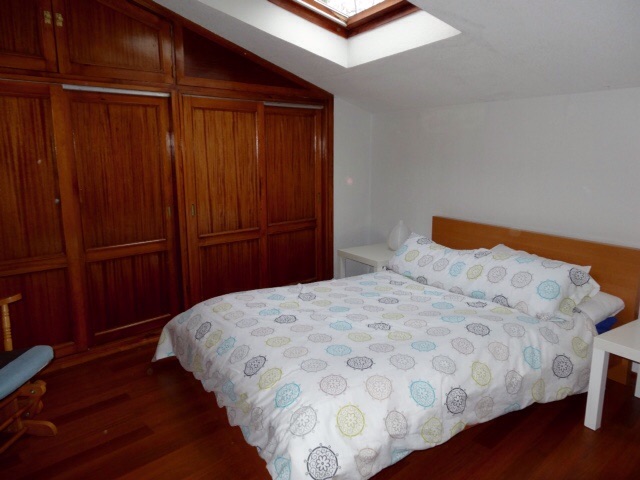
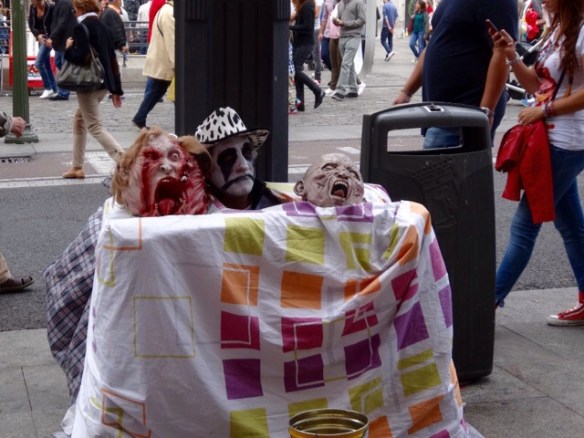
This Mad Hatter was outside the Prado with his little white mouse.  They both looked very content and pleased with themselves!imageThe Prado has 102 rooms and we managed to visit all but 17 of them.  We spent about six hours exploring and soaking up the incredible art work but we simply ran out of time and energy.  There are no photos in the Museum but I did take these two.  I know, I am a bad girl! We saw many paintings that were familiar because of reading my art books.  It was wonderful seeing these works in person.  This is a very famous Goya work titled “The Family of Charles IV.”  I just wanted one photo to say “Yes, I was there.”  When I am home I will find a good book on the Prado as a reminder of everything we have seen today. Books are just too heavy to lug around in our suitcases!imageThe Museum encourages artists to study and paint in the Museum, as this young lady was doing.  We saw several artists at work today.  image  Pictures were allowed in the Leoni Cloister and when we looked up we could see that there were workrooms above the cloister.  I would love to be able to tour these rooms, but had to settle for zooming in for a closer look.imageimageWe headed back to our Airbnb for some much needed rest.  I love touring Museums and Art Galleries but it is quite exhausting, physically and mentally.imageThis has been home for the last ten nights but we leave the day after tomorrow.  We only planned on staying here for four nights but liked it so much, and Bob really liked taking the bus into Madrid instead of driving, so we changed our reservation to twelve nights.  image

Palacio Real and Templo De Debod

Wednesday, October 14

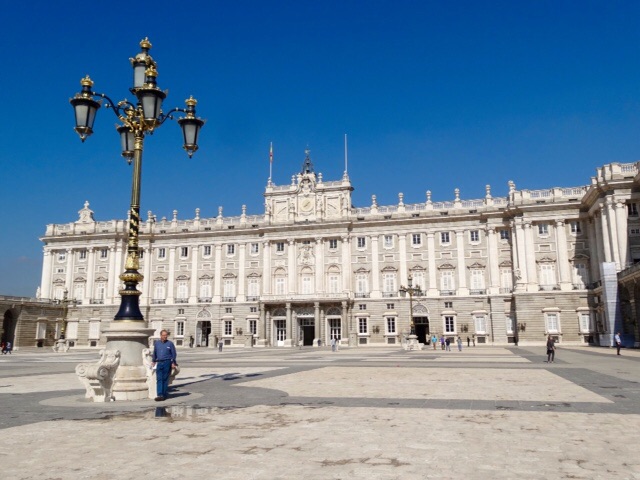
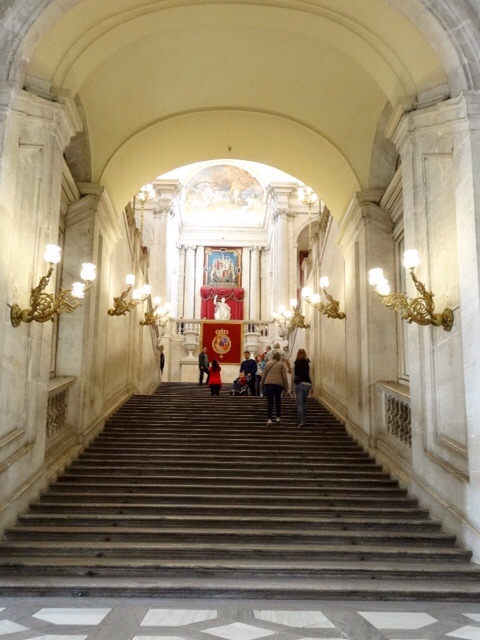
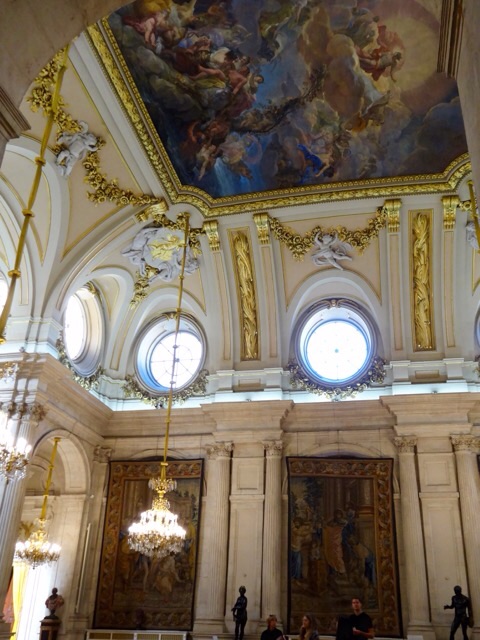
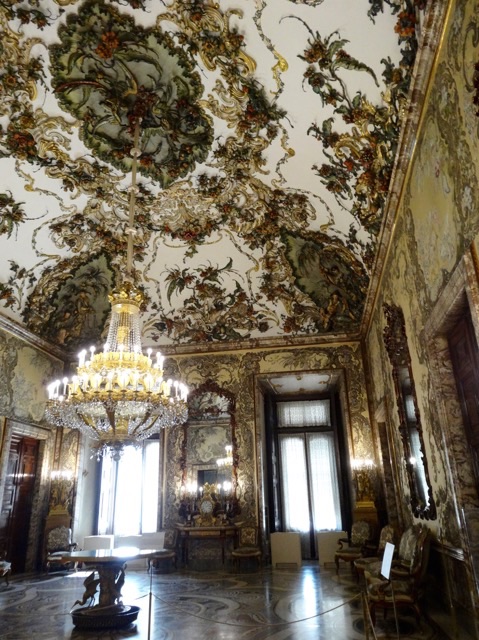
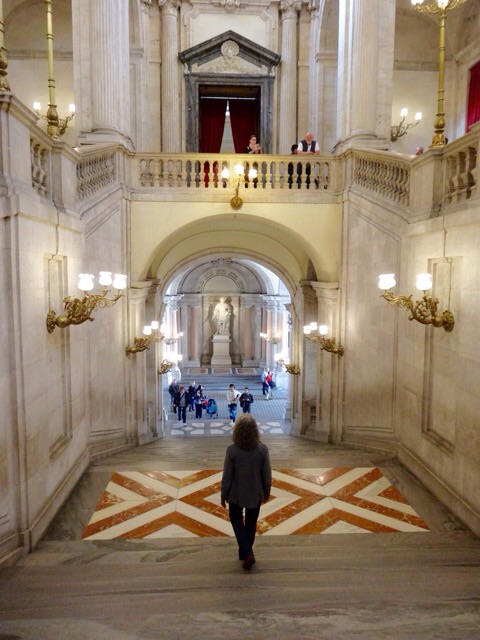
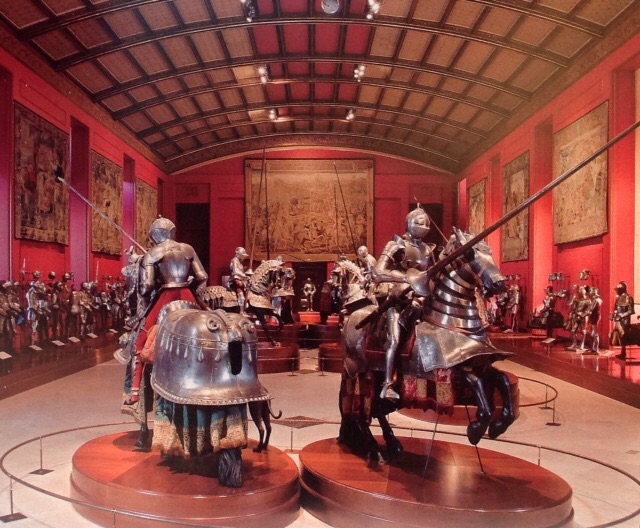
The Palacio Real is the official residence of Spanish Royalty and the building we tried to visit Monday that was closed for a State Function.imageBob read somewhere that there are over 2000 rooms in the Palace but we are quite content to visit the twenty or so that were open to the public.  This is half of the grand staircase at the entrance, there is also a set of stairs on either side of this one that continues to the second level. The red crest at the top of the stairs is the personal crest of King Felipe IV, who we almost saw on Monday!imageThis is the view up above the staircase.  It was very ornate but only a taste of what we saw inside the Palace rooms.imagei did take one picture of the Royal Chamber of Carlos (Charles) III also known as the Gasparini Room.  We spent about an hour and a half touring these lavish rooms, each more ornate and incredible than the last.  We even visit the Throne room and the Crown Room where the Royal Crown and Sceptre are kept along with other State treasures.  There are the ordinary sort of Museum ‘guards’ but there doesn’t appear to be a lot of security inside the Palace.  Mind you, there are lots of police everywhere outside the palace.imageDo I look royal walking down the Palace stairs?  Just picture me in a beautiful ball gown, all decked out in jewels!imageWe visit the Armoury through these old doors. imageTurns out it is one of the most important collections of parade and tournament armour in the world!  Everything is beautifully displayed on two floors and there is even armour for children and ponies.  No photos allowed, but here is a photo of a photo from a little calendar we bought.

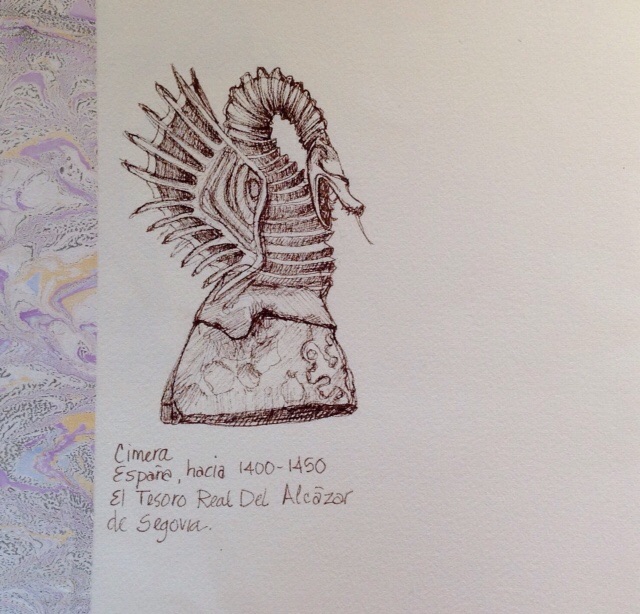
imageAfter a tea break in the Palace Cafeteria I do go back and sketch this interesting old helmet from the 1400’s. It was one of the first exhibits we saw when we entered the armoury, and of course I love dragons.  It was also small enough to sketch in a short time.

image

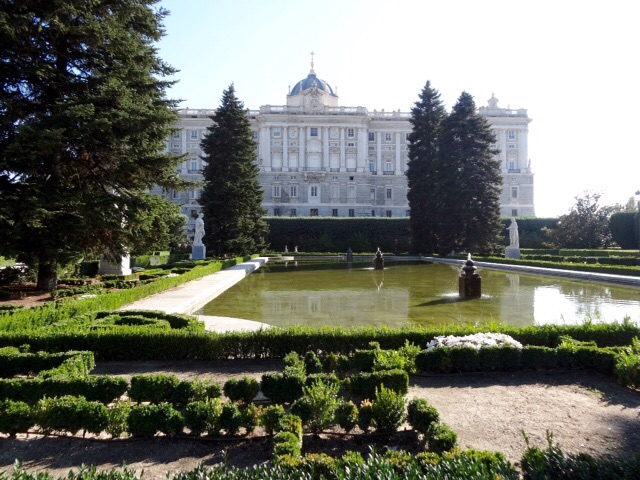
We walk through the Palace Gardens on our way to the Parque del Oeste which is on a hill high above the Palace.

image

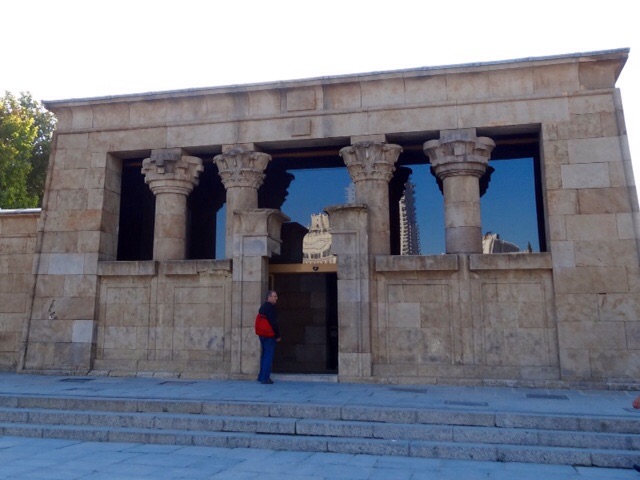
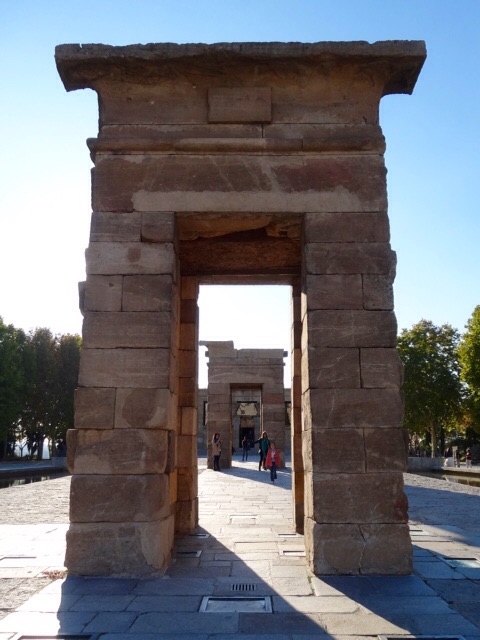
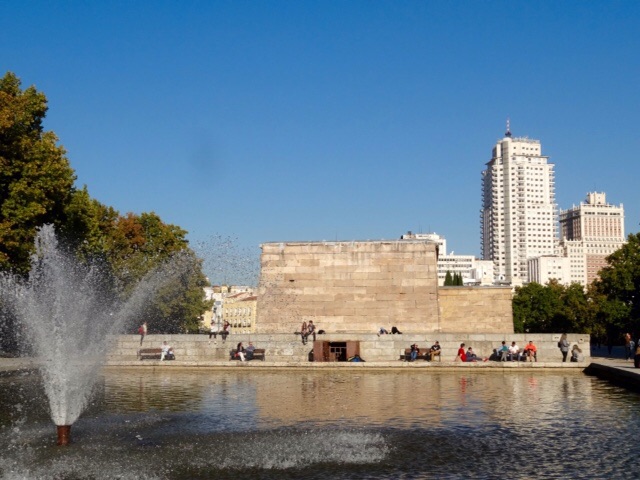
There we visit the Egyptian Temple de Debod.  The neat thing about seeing this temple is that we actually visited its original location, where the Aswan Dam flooded many temples, several years ago. Now here we are in Madrid, seeing this temple that was saved and given to the Spanish people in thanks for their help in saving the temples at Abu Simbel.

image

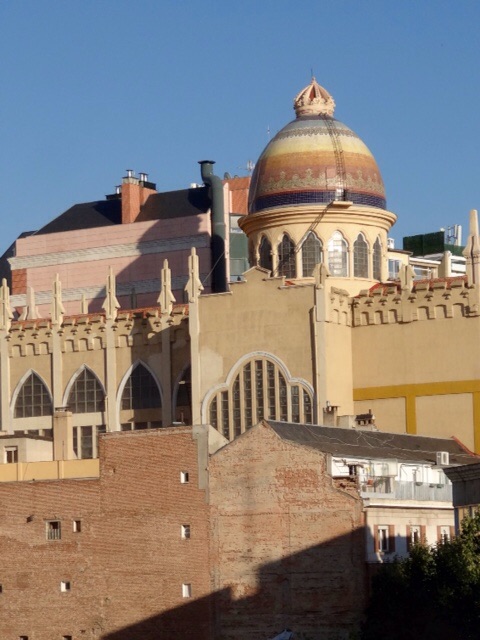
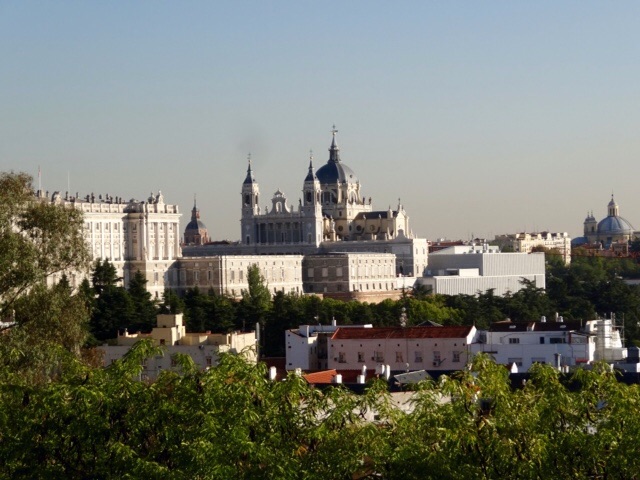
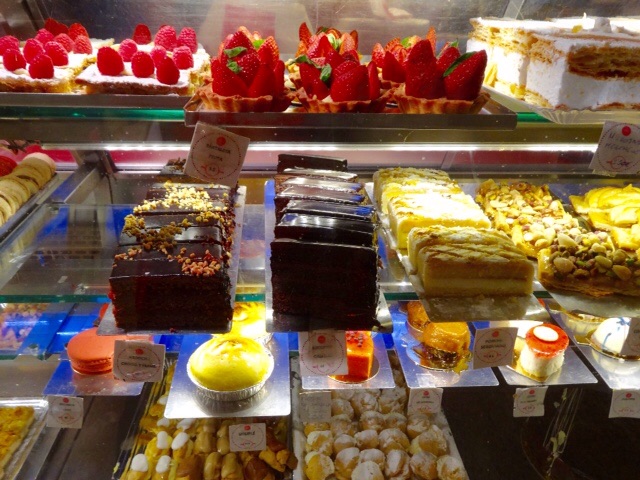
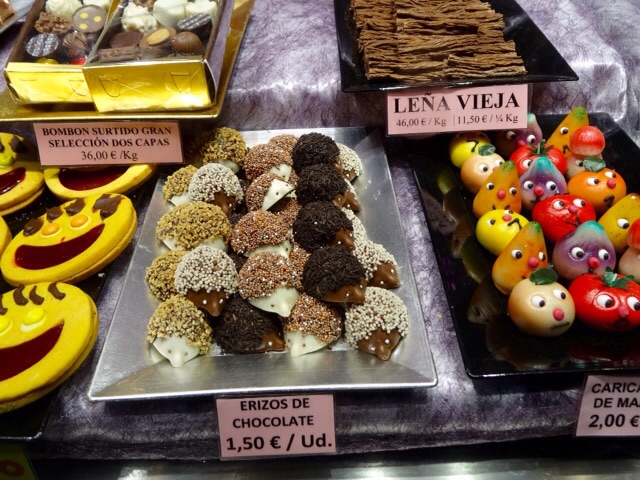
Two of the original entrance arches to the temple.imageA view of the back of this 2000 year old temple and some of Madrid’s newer buildings.image  I thought this dome was different all in coloured tiles.image  A view of the Palace.  We can see for miles from the top of the park behind the Temple of Debod.imageOn the way home we stop for tapas at the Mercado de San Miguel that we visited the other day.  This is basically a glorified food court in a neat old iron and glass building.  We find some tapas for Bob, and one for me.  Bob has two delicious pastries and I have to be content with taking pictures of desserts. It is hard to find any for me when I don’t eat gluten, eggs or dairy.  I do get a fruit cup…imageThis picture is for L & M, yummy little hedgehogs and Marzipan fruit and veggies with faces.image

Spanish National Holiday, Museo Nacional Centro de Arte Reina Sofia, Guernica

Monday, October 12, Day 30 of our holiday!

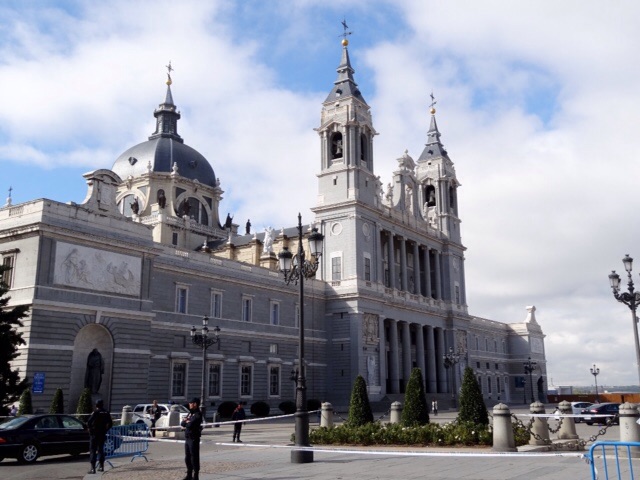
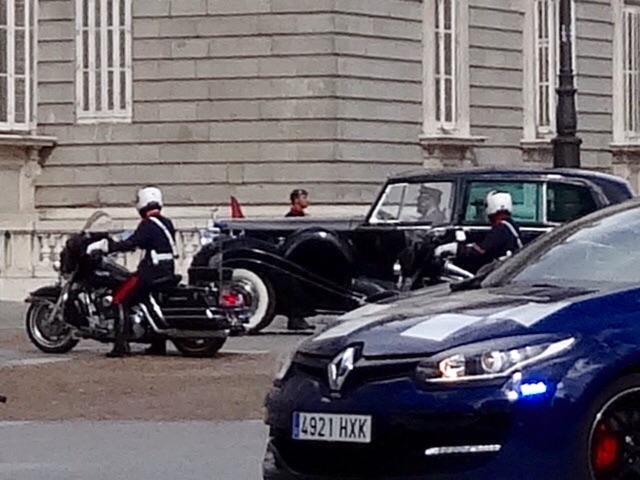
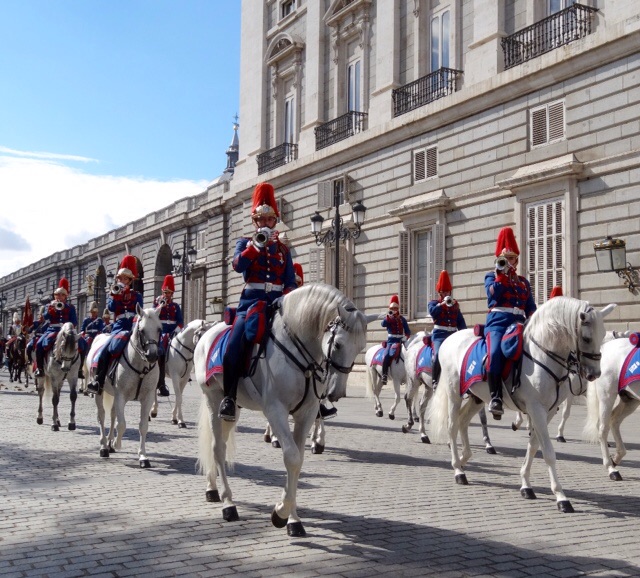
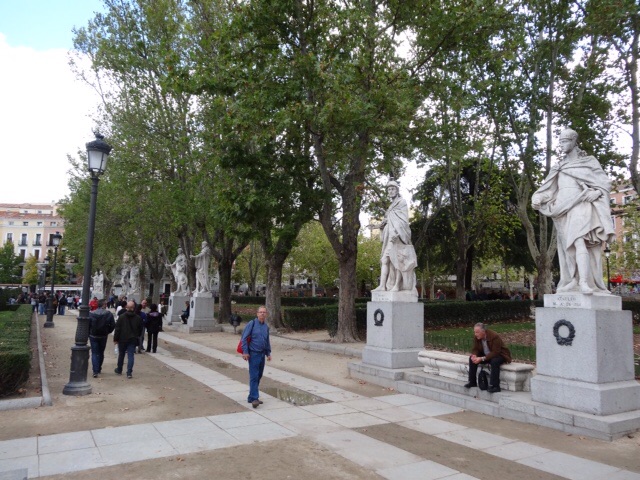
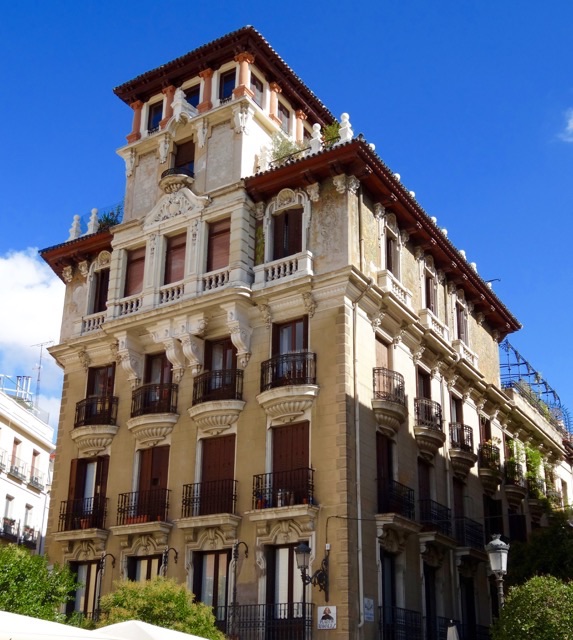
Today is Dia de la Hispanidad, Spain’s National Holiday to celebrate Columbus’s discovery of America in 1492.  There is a Military Parade this morning but it is a bit too early for us, so instead we go to the Palacio Real (Royal Palace) which is supposed to be free today.  However, when we arrive it is all cordoned off and there are lots of police and crowds of people everywhere.imageWe decide that we should wait around and see what is going to happen.  Turns out that King Felipe IV is to arrive at the palace, and after about an hour Bob thinks we should move closer to an entrance that is guarded by mounted soldiers.  Good thing we did because a couple minutes later a cavalcade of cars, and lots of police arrive and so does the King.  Only problem is we are still quite far away and the cars drive up and turn into the palace very quickly.  We both try to take a picture and I mange to get this one which shows the King’s car but not much else.  Oh well….image  We do get to see the mounted troops return from the parade and they are magnificent.imageWe find a spot to eat in the park across from the palace, accompanied by a guitar player singing in English. It was quite nice hearing something we could actually understand. I’ve only managed to learn a few Spanish words: I keep thinking of French words instead of the Spanish ones I have been trying to learn.  They just don’t seem to stick in my mind.imageWe decide to walk to the Reina Sophia museum, only we get lost, repeatedly!  Bob is using a new map app on the phone and either the app or Bob is not working well because we find ourselves walking in the wrong direction more than once.  We do walk past some interesting buildings…image

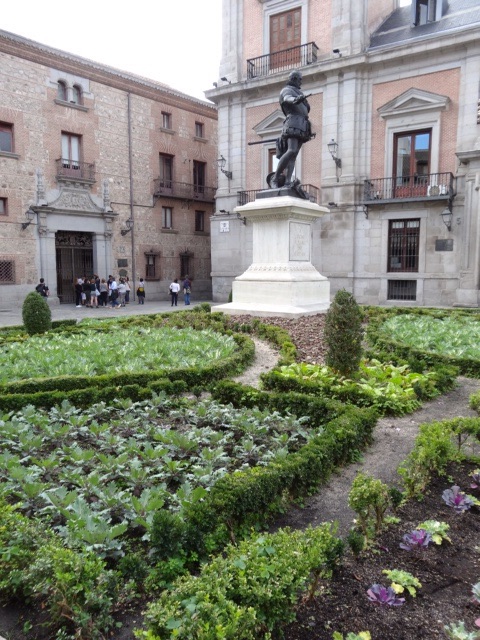
and a newly planted bed of veggies around a statue that was very pretty.image

And then there are the interesting street performers trying to make a bit of money.  If people walked too close to this one, a head jumped out and scared them.

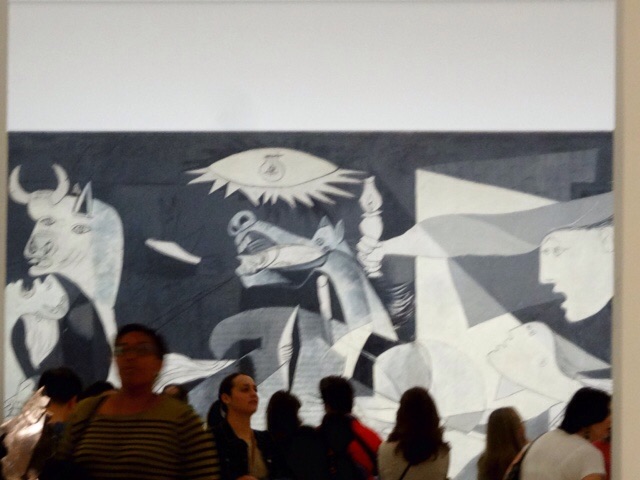
  1. imageWe end up right back where we started after walking in a big circle so we head for a Metro station near Plaza Mayor, and encounter hordes of people.imageThe subway takes us very close to the Museum, but do you think we can find it?   After some more walking in circles, as it seems to be that sort of a day, we finally spot the museum entrance tucked between two buildings.  We are here to see PIcasso’s famous painting ‘Guernica’. I sneak this photo from afar and through a doorway, just to say I was here.

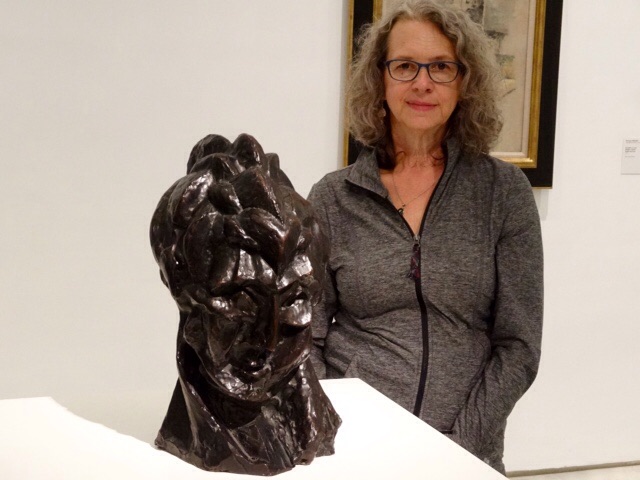
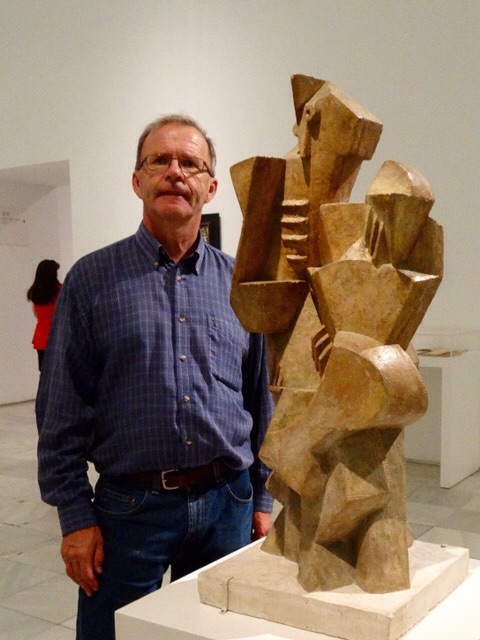
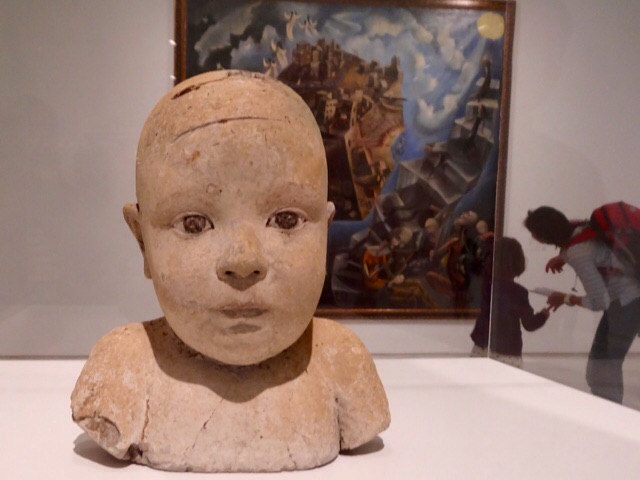
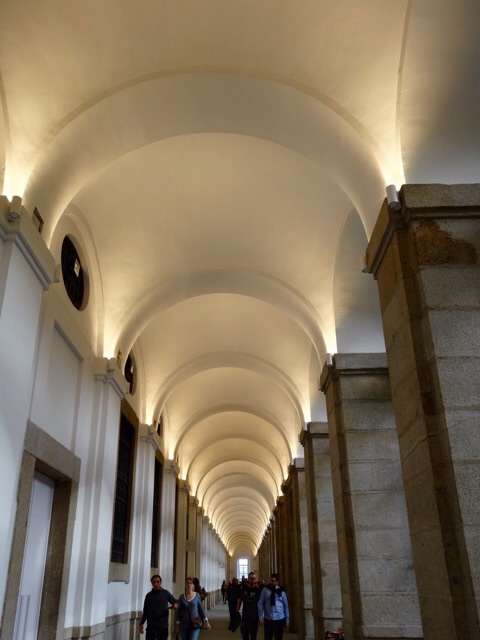
imageThe painting is very powerful.  It doesn’t reproduce well at post card or even book page size as the brushstrokes, textures, lines and subtleties of the paint and drawing just don’t show up.  I was surprised by how much I liked this painting as it never appealed to me before. Here we are posing beside a couple sculptures we liked.  A Picasso for me…imageand a Jacques Lipchitz for Bob. He liked this one even before he knew it was a sailor with a guitarimage I just loved this little head, ‘Portrait of my son Jordi’ by an artist named Joan Rebull.imageThe hallways made an optical illusion in this photograph. Depending on how you look at it it is an arched ceiling or a big white cone. Can you see it?
image

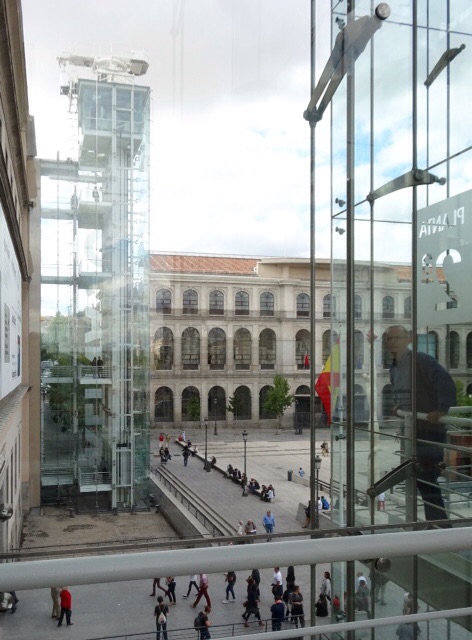
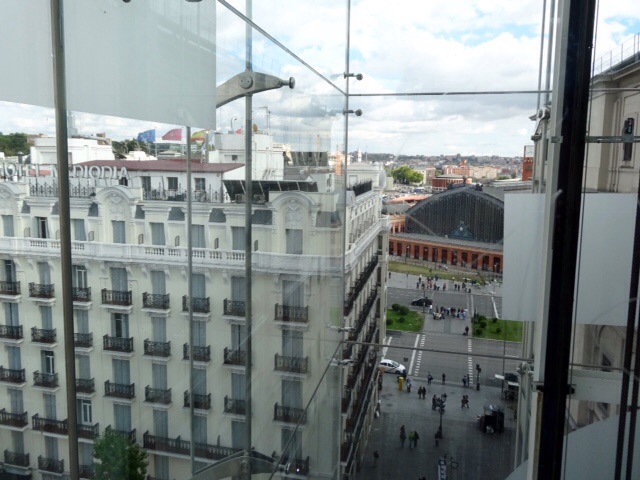
We take the glass elevators up to the fourth floor just to check oiut the views, then down and we head for home.  Can you find Bob?

imageimage

Madrid, Bibliotec National, and Museo Arqueológico Nacional

Thursday October 8

We have a quiet day at home, but we end up spending quite a bit of the day looking for accommodations in Madrid, but we aren’t having much luck.  Madrid seems to be quite expensive, not many places have parking and we aren’t getting answers back from some of the places we contacted.  We decide that we will stay where we are and take the bus into Madrid.  It is a 40 minute ride and Bob is looking forward to not driving for a while.

Friday , October 9

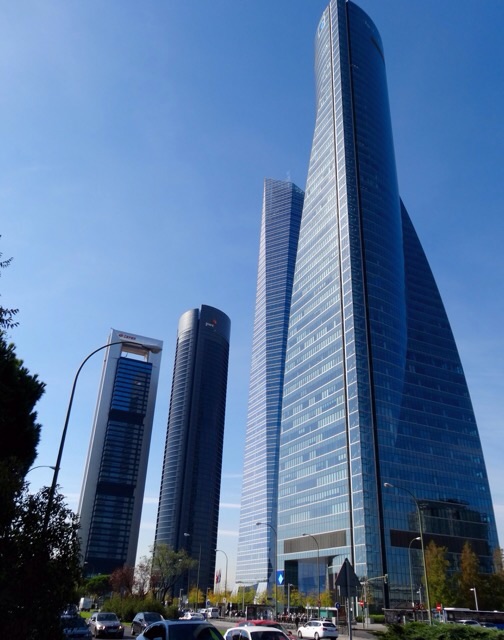
We take the bus into Madrid which works very well.  It is every comfortable, kind of like a Greyhound Bus, and it is very relaxing for both of us.  First stop in Madrid is the Canadian Embassy as we were told we could vote there for the upcoming Canadian election.  Turns out we can’t, as the ballot has to be mailed in and the package was sent to our home address.  The very tall first building is where the Canadian Embassy is located on the very secure 21 floor.  Lots of security in this tower.
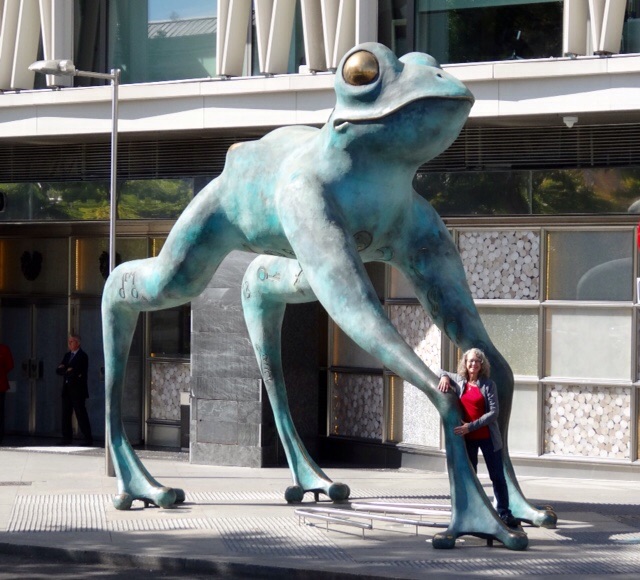
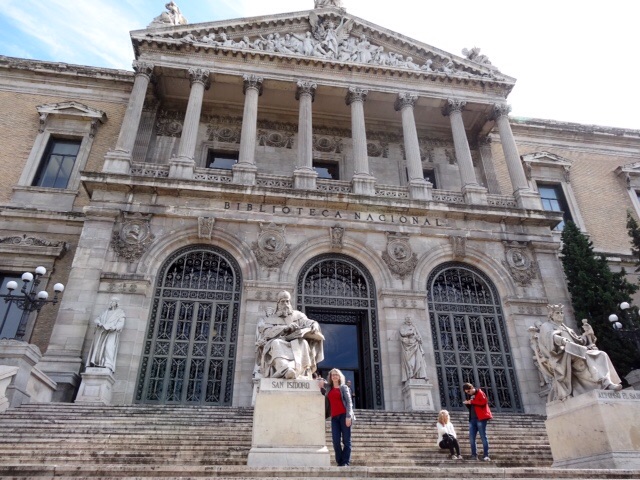
imageBack on the Metro to find the Archeological Museum.  I love the metro!  It is fast, easy and offers great people watching.  On our way to the museum we see the Bibliotheca National and I can’t bypass a library so we go check it out, but not before stopping to say hello to this cute fellow.image
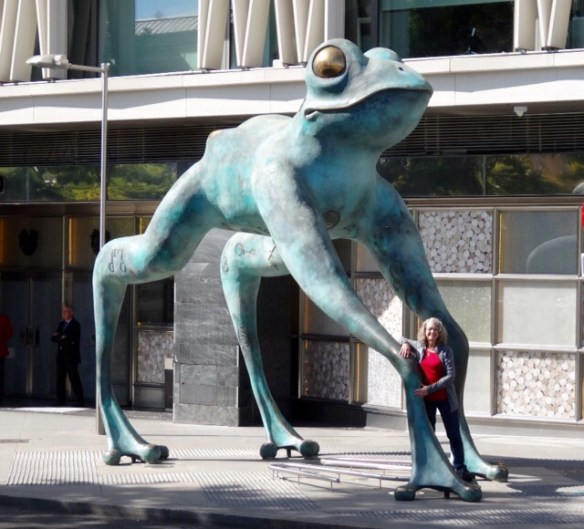
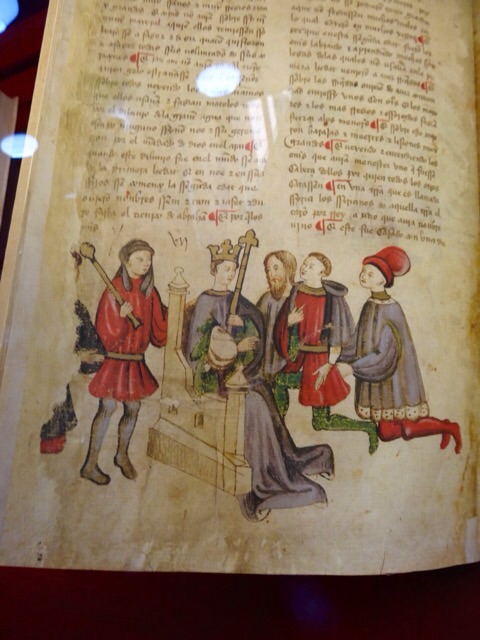
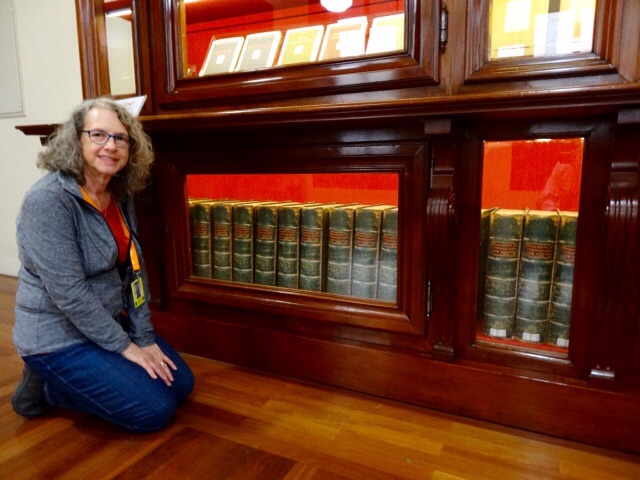
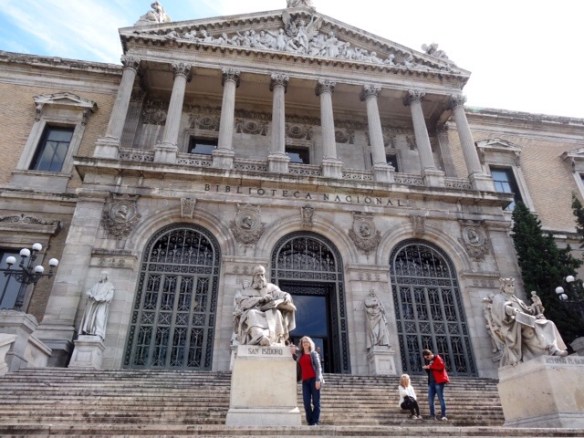
The building is very big and beautiful, but we discover it isn’t a public library, entrance is only available if you take a tour, which are all sold out for today. We are allowed to go in and check out a Rudyard Kipling exhibit in a room near the entrance after showing our passports, getting our pictures taken, putting our bags through an X ray machine, and getting a visitors pass!      imageThere was only a collection of Kipling’s books in the exhibit, not too interesting, but the room attached to it had some great old books and manuscripts…imageimage
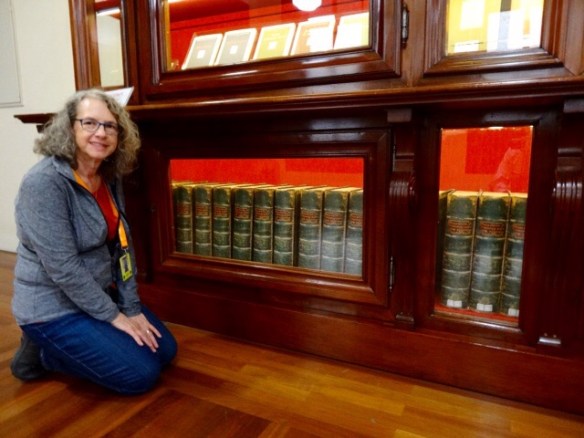
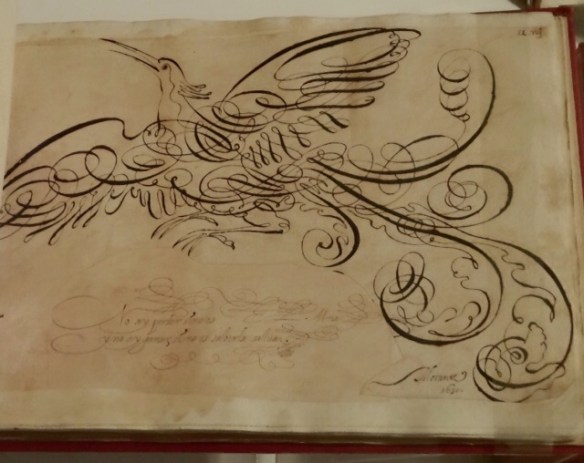
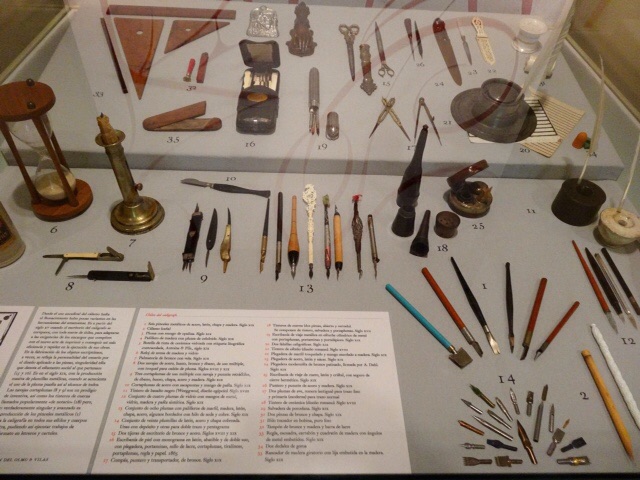
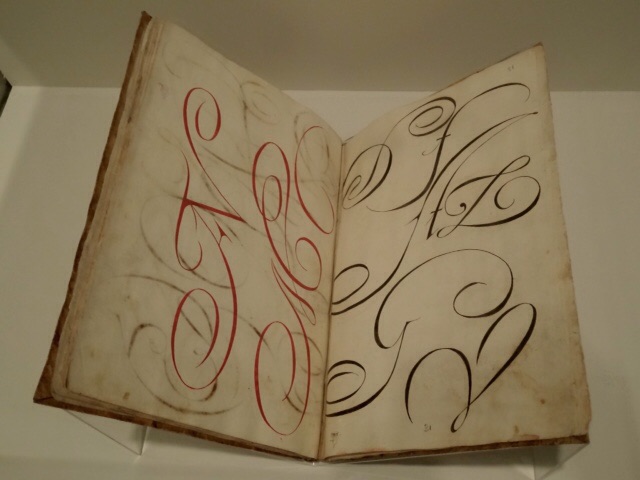
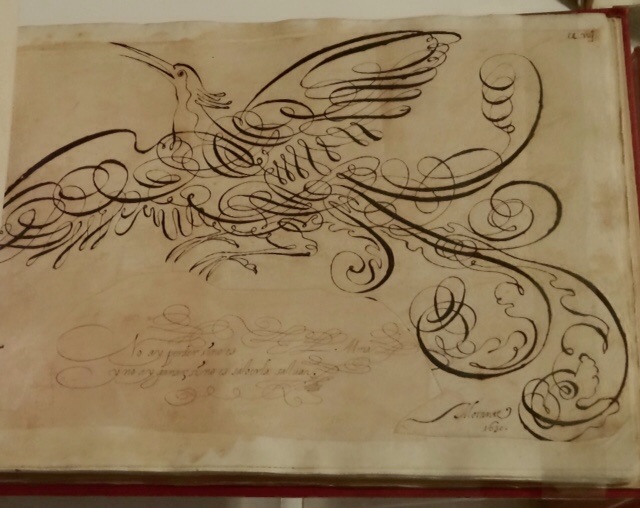
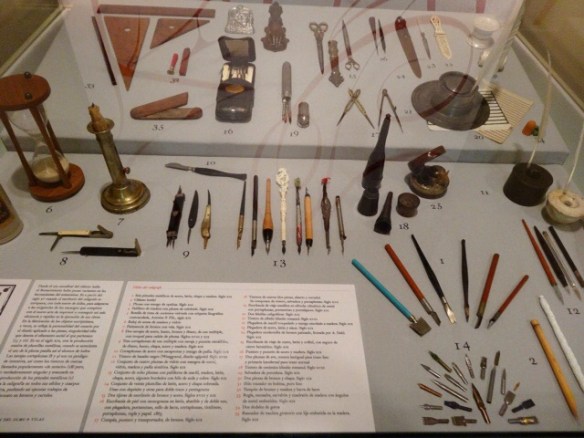
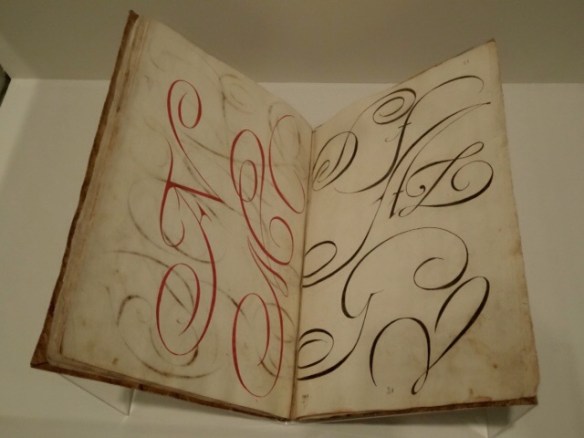
……including what I think must be a facsimile of a Leonardo Da Vinci sketchbook.  Hard to make out as all the labels are in Spanish.  The staff also tell us about an exhibit downstairs that we can visit.  Turns out it is “Caligrafía Española” el arte describir.  Of course we have to see this.  The first thing we see on entering is this wonderful collection of calligraphy equipment from the 1700’s and 1800’s. Most of these are the same tools used by calligraphers today.image  There are many books and font samplers and these two beautiful examples of flourishes.image image
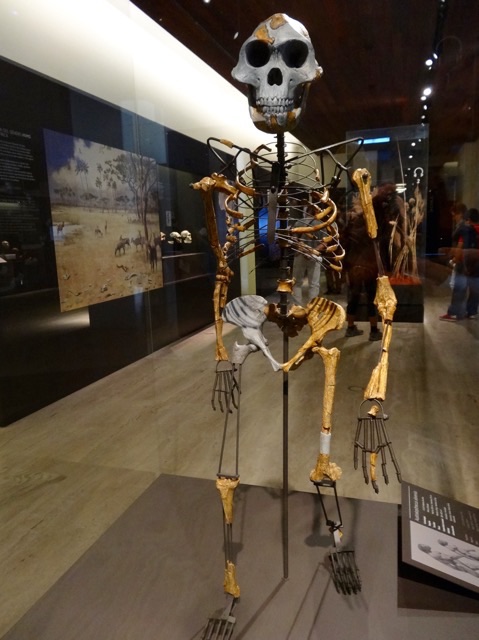
Finally we arrive at the MAN, the Museo Arqueológico National.  Turns out it is a great museum, and we get to see a facsimile of Lucy.  I remember talking about australopithicus and Lucy when I taught Social Studies many years ago.  Isn’t she beautiful?image
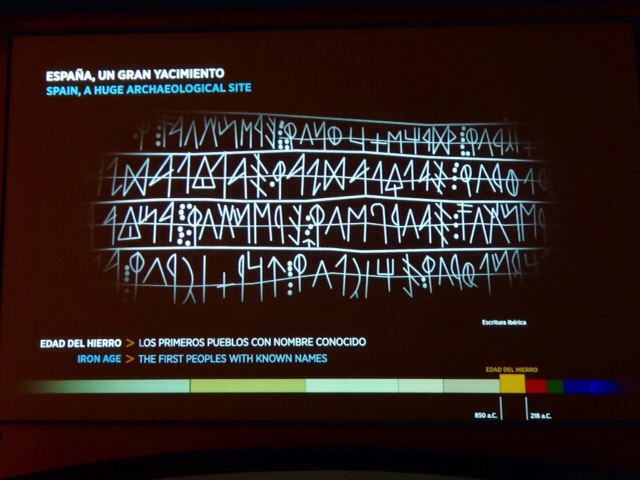
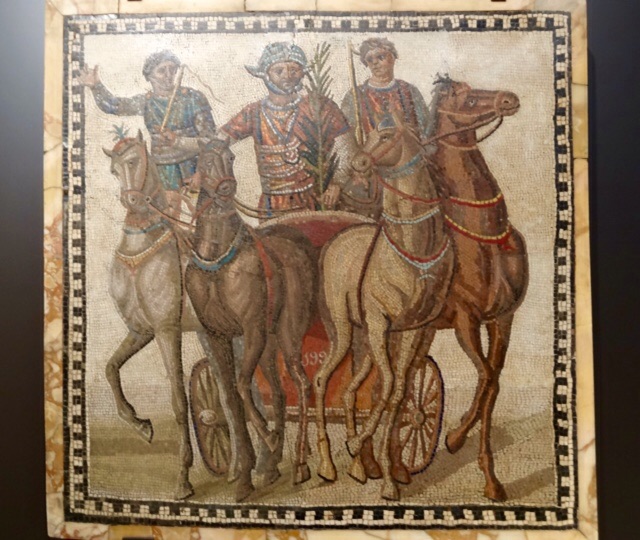
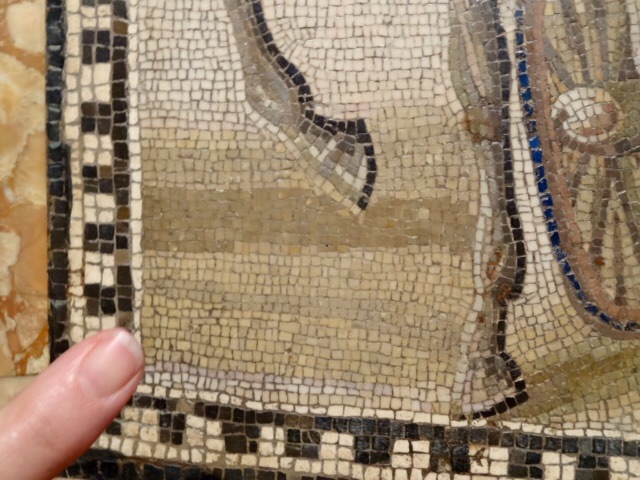
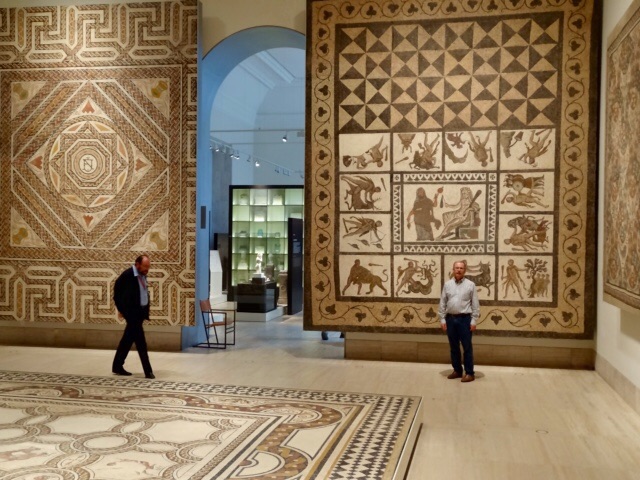
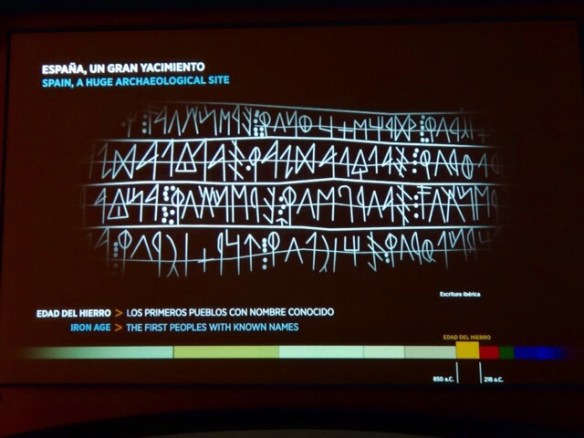
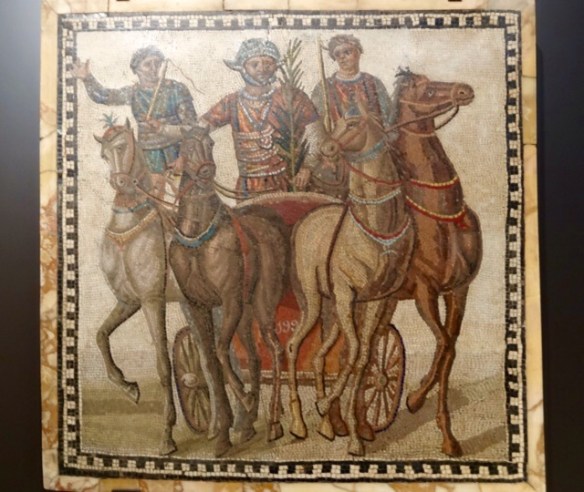
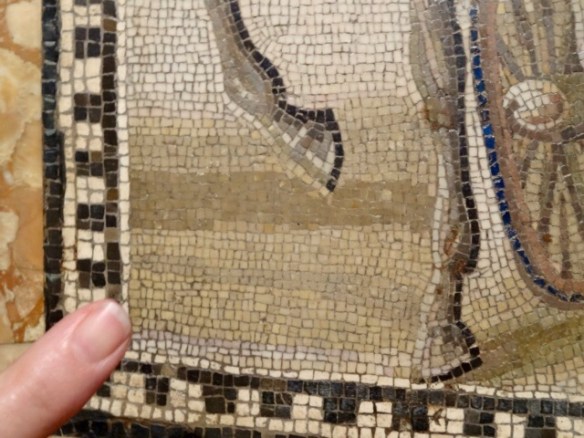
There is a display with examples of archeological sites in Spain, and it turns out they are everywhere.  This Screen grab says it best “Spain, A Huge Archeological Site.”  I think you could look almost anywhere in Spain and find an archaeological site!imageIn the museum there are some very intricate mosaics.image They are even more incredible when you see the size of the individual mosaic pieces.imageThe next exhibit has several room sized floor mosaics that are equally as stunning.image
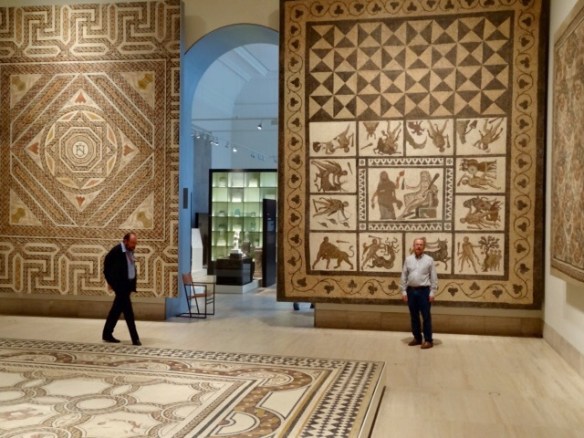
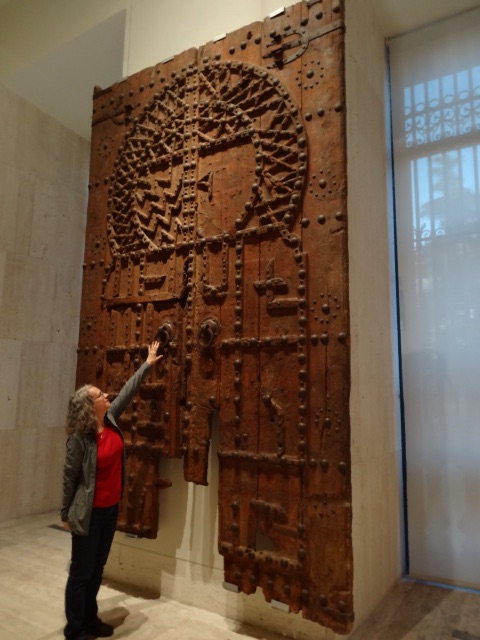
I love old doors and this one is a beauty.  It just looks as though I am touching it….image
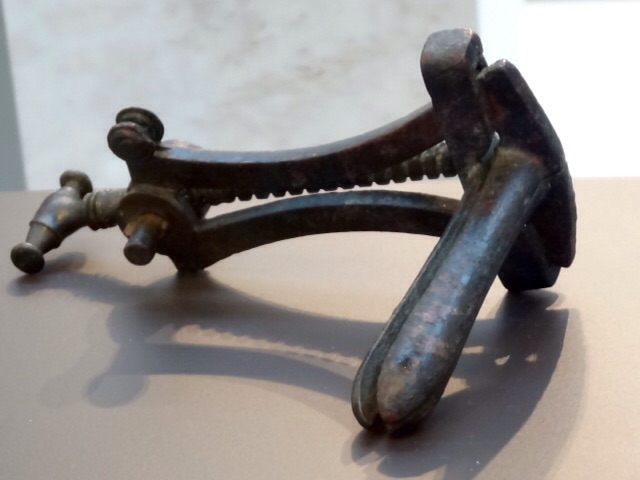
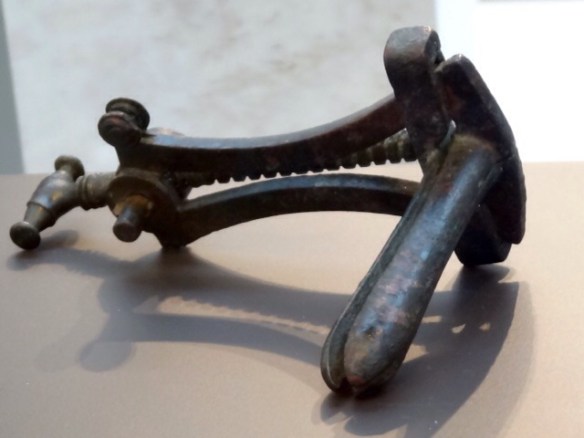
We are amazed at the technology that was in use so long ago, but the one item that probably surprised me the most was the Speculum magnum matrios, a vaginal dilator used  in gynaelogical exams, surgeries and childbirth.  The Romans developed this medical technology in the First Century AD! It is hard to imagine, and this looks very similar to the ones in use today!image
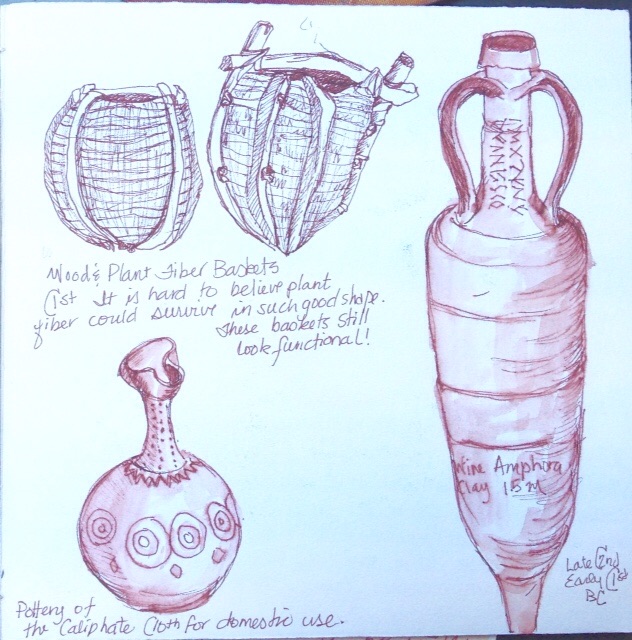
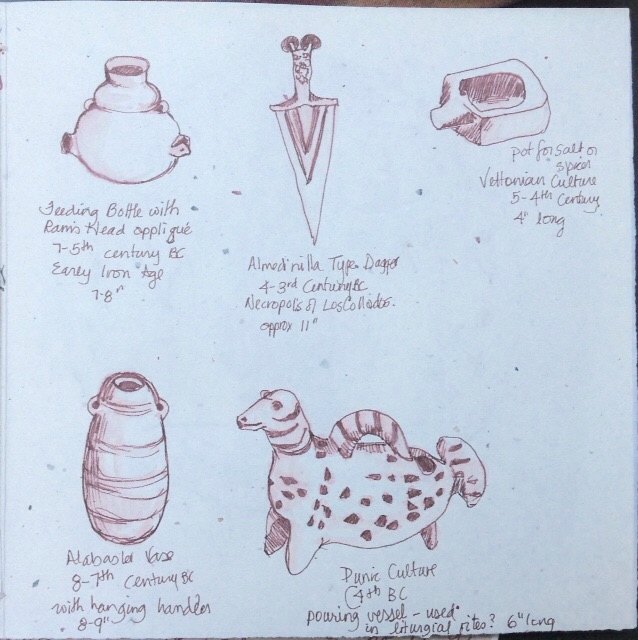
We stop for tea after two hours, and then do our best to see everything else but we ran out of energy and time and I am afraid we rather quickly strolled through the Egyptian and Greek rooms without trying to see and read about everything. There are about fourty rooms here, and they are all pcked with so much to see. We are pooped, but we enjoyed this museum a lot.  It was extremely well laid out, had lots of great videos, English signage and beautiful exhibits.  It always amazes me that so many items have survived so many centuries intact. I also did a few drawings at the museum.imageimage
Avila’s Medieval Walls

Wednesday, October 7

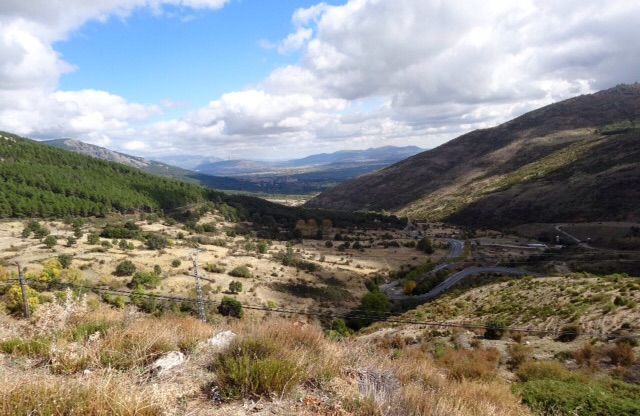
Today we visit Avila, which is the highest provincial capital in Spain, at 3,710′  or 1131 m. above sea level.  In winter the access roads are sometimes blocked with snow, but I wonder if that is because there is so much snow or if it is because they don’t have the kind of snow removal vehicles we have in Alberta?  The drive is through interesting countryside, which changes every few miles.  We seem to be always either climbing or descending winding roads. There certainly aren’t many long straight stretches of road, even the freeways meander.
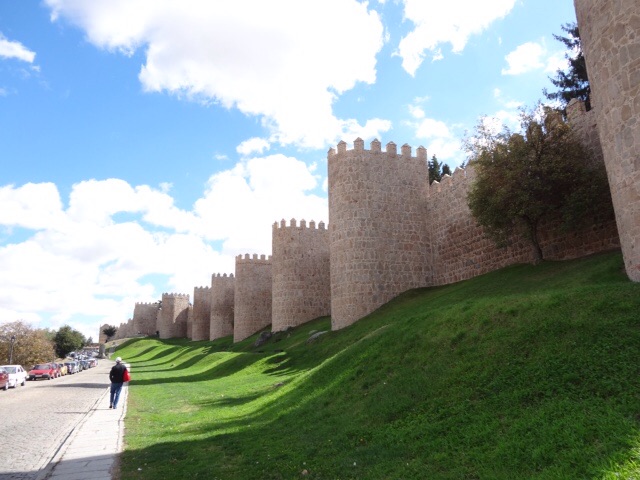
image In about an hour we arrive in Avila and get our first look at the Medieval walls that encircle the city center.  We find a parking spot on the street and we are shocked that 30 cents gives us five hours of parking!  A great improvement over Segovia yesterday when it cost us more than 9€ for less time.image

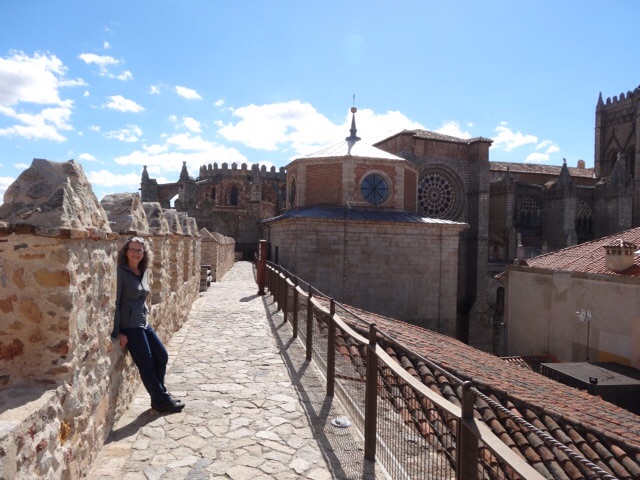
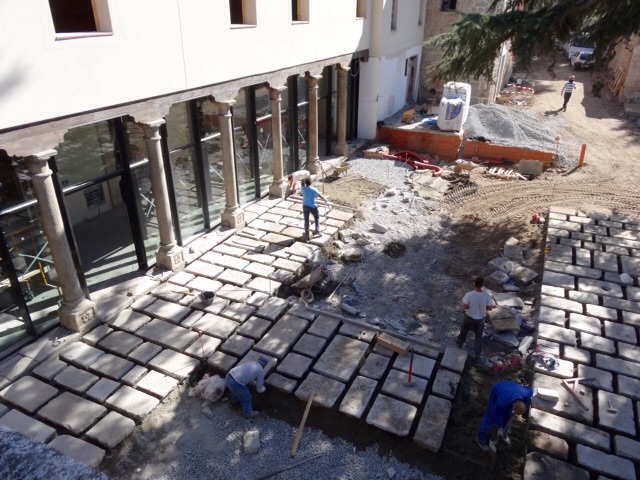
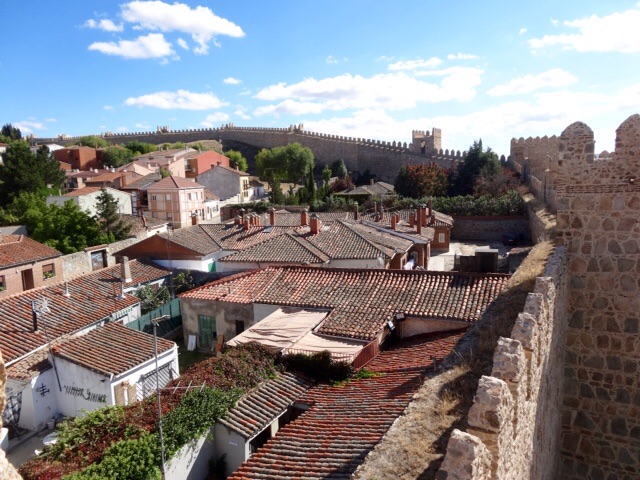
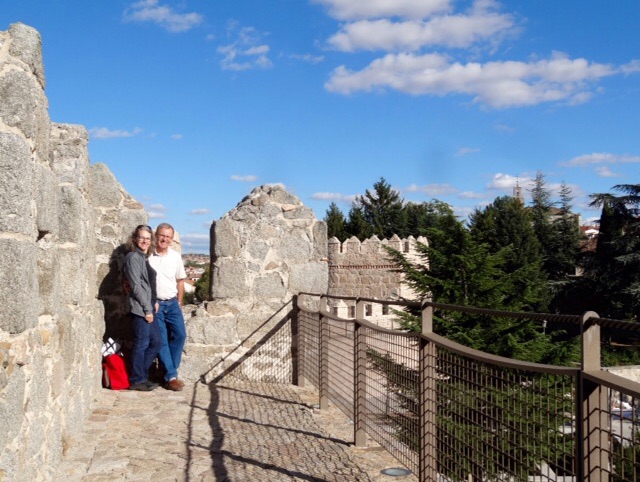
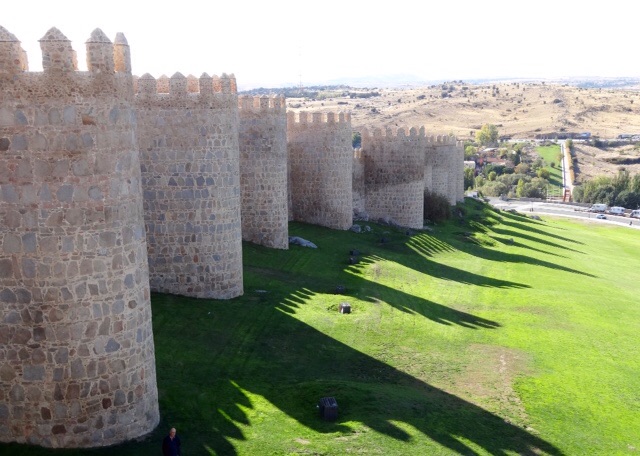
The walls are very beautiful with ochre, pink and bluish toned stones arranged in an attractive pattern.imageIt took some doing, but we finally found the entrance to climb the tower walls and we find ourselves on top of the finest preserved Medieval walls in all of Europe.  These walls were built in the 11th Century and they are punctuated with 88 cylindrical towers.  We are able to climb up into many of these towers.image  The apse of the city’s cathedral, in the background, also forms part of the walls. imageWe stop and look down into a courtyard watching workers lay huge stone blocks for a walkway or perhaps a patio.  They are very good, and get the stones in the right position and almost level on the first try.  Bob has laid a lot of bricks in our yard and he knows this is not as easy as these guys make it look.imageThese walls are almost two kilometers long and we walk as far as we can.  Part of the walls have not been restored and we are are not able to walk on them.imageHere we are near the end of the walkable part of the wall, now we have to turn around and go all the way back, but first we stop and have tea and cookies at one of the many towers.image It is incredible to think that we are walking the tops of these ancient walls, and it is easy to imagine soldiers standing in the same spots we are, defending their city from invaders over a thousand years ago.  In Canada there aren’t any buildings or structures that are anywhere near that old.  Columbus didn’t even discover North America until 1492!  The sun casts long shadows as we make our way back to our car.image

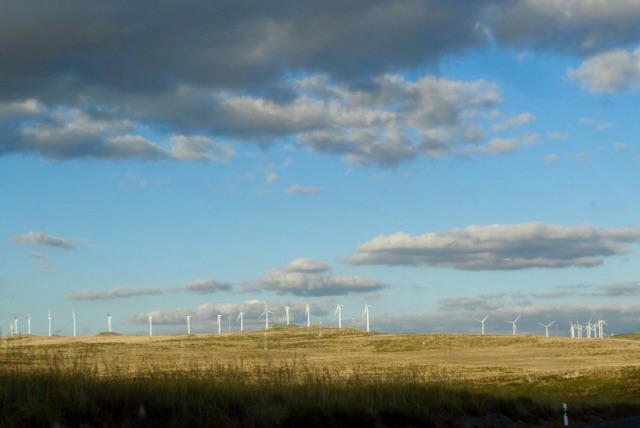
It has been quite windy since we left Northern Spain, and we have seen lots and lots of these windmills. imageThere are stone fences everywhere, even in areas that look as if they were abandoned long ago. I really love all the stone walls and fences: it makes me want to build something out of stone!image

Santillana Del Mar, Burgos Cathedral and Segovia

I am going to try to catch up on my blog a bit, but it will be a long post because I have such a hard time only picking a few pictures.

Saturday, Oct. 3

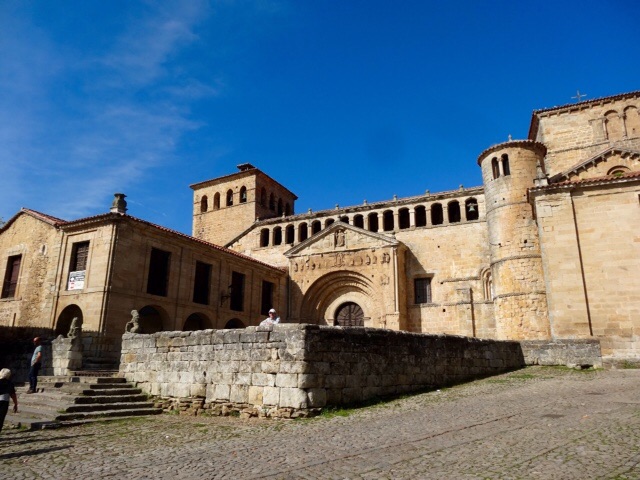
We visited the village of Santillana Del Mar, which is said to be one of the prettiest villages in Spain.  The town grew around a monastery, La Colegiata, which we visit, after a walk through the streets and some more tapas at one of the local bars. Bob also tried a glass of local cider which the bartender poured, holding the bottle about three feet above the glass.  Very impressive!

La Colegiatas
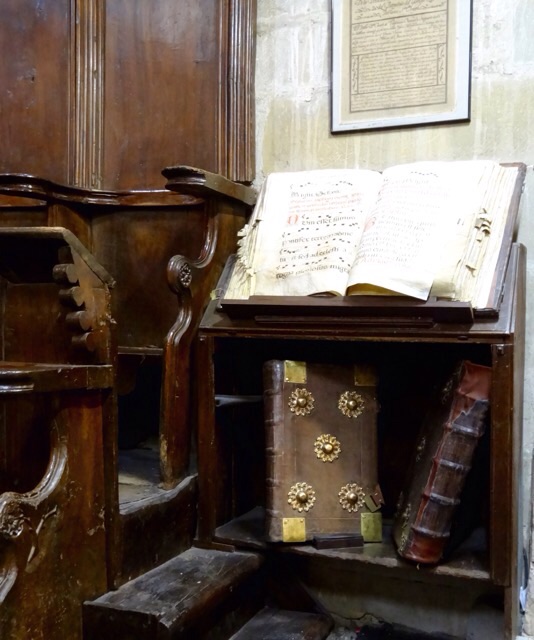
Several beautiful big old books, but I am only able to view these from a distance…
image  This church has beautiful capitals in its cloister that are amazingly well preserved.imageSunday is a quiet day, figuring out the next part of our trip, packing and tidying our apartment.

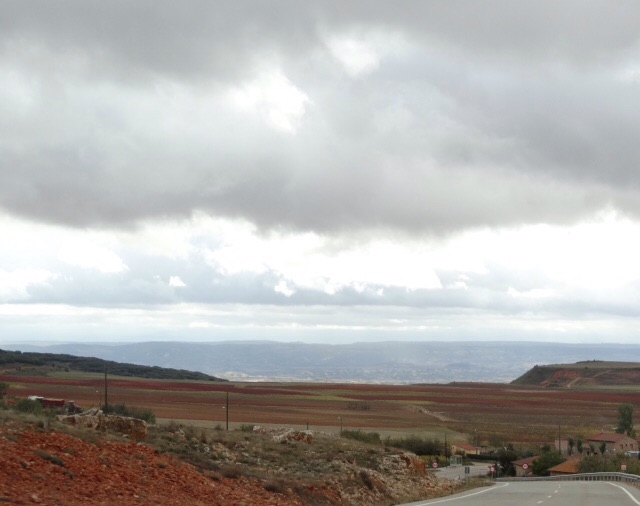
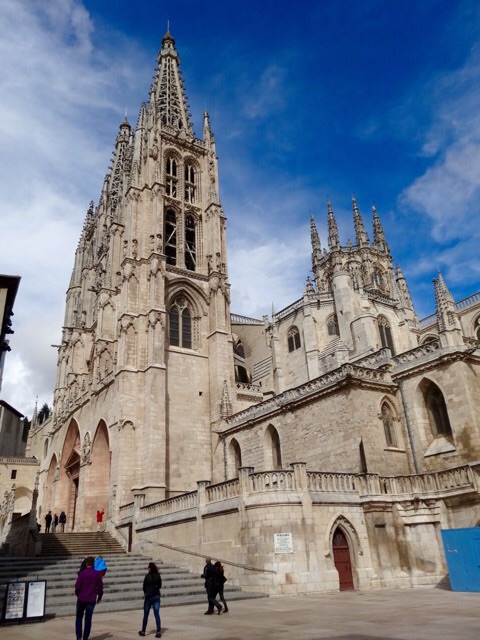
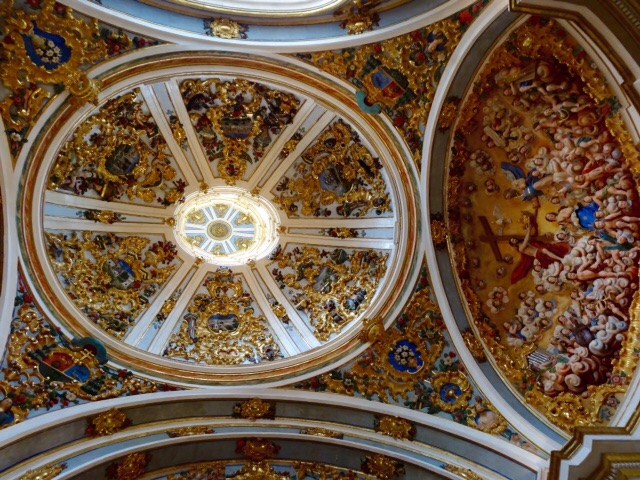
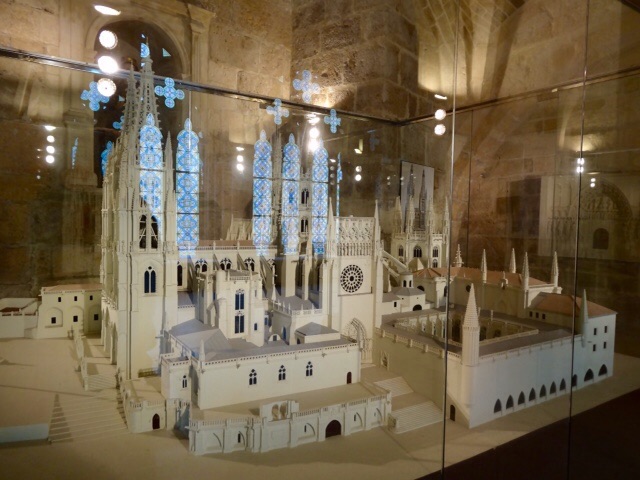
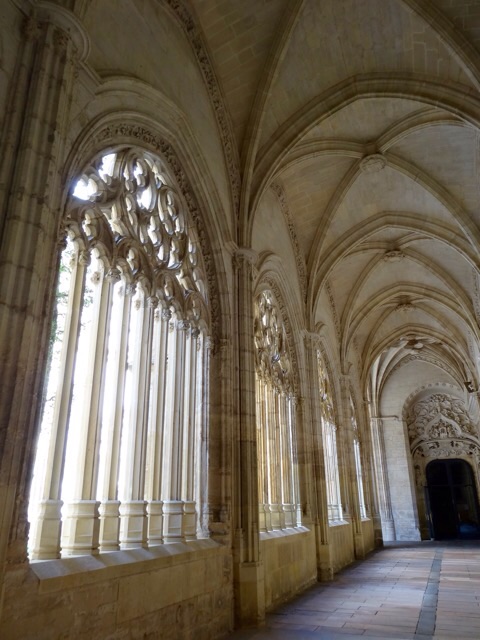
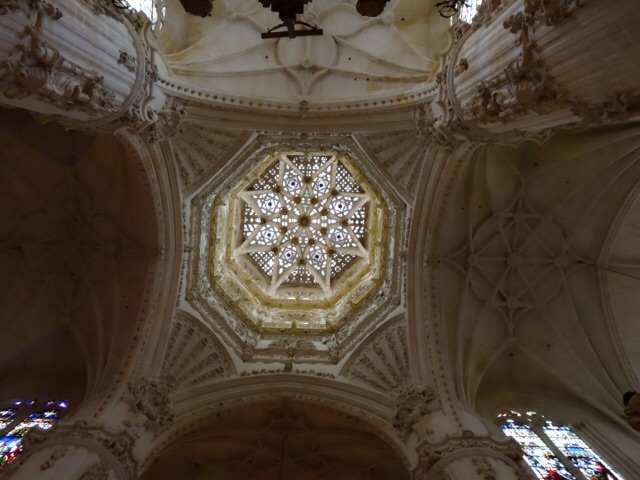
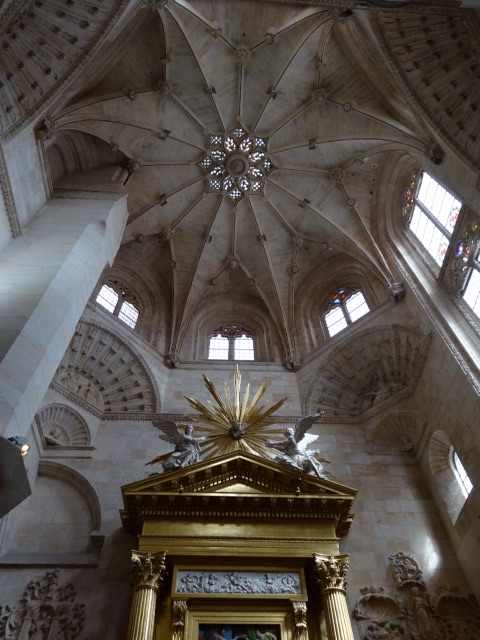
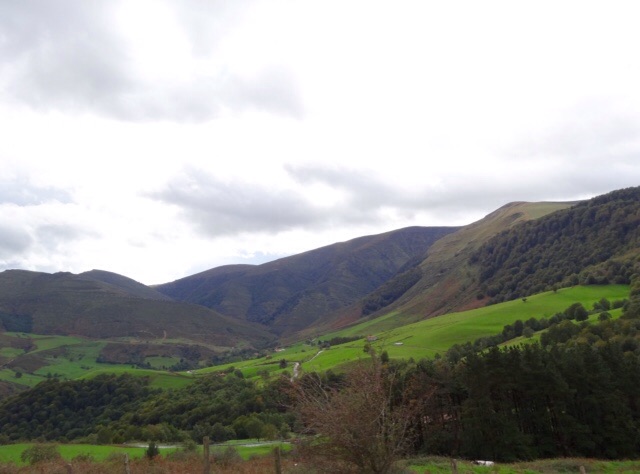
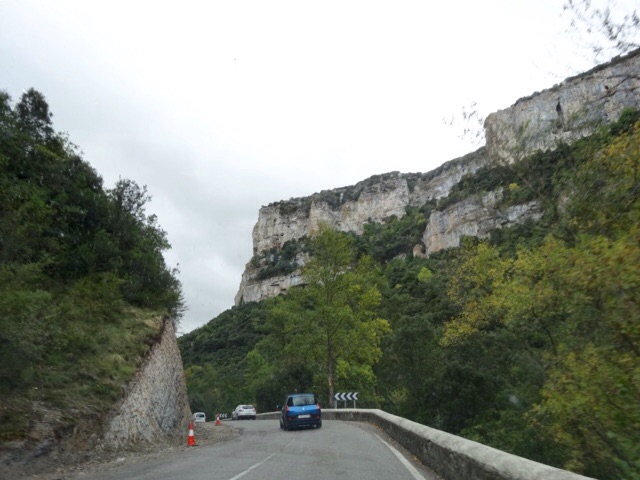
Monday, October 5th we are on the road early and head south to Burgos.  The drive takes us through some very interesting, constantly changing countryside. It is very windy and cloudy but no rain to speak of.image image imageWe find parking easily in Burgos, which is a surprise, and head off to the Cathedral.  7€ each to visit and that includes an audioguide, which is very helpful.  It is one of the biggest Cathedrals we have visited yet, and incredibly ornate, with lots of paintings, sculptures, vestments and furniture.  There is way too much to absorb, every where we looked there was something else that was absolutely incredible. image  This is without doubt the most ornate ceiling in the cathedral!imageOn the lower level there is a scale model of the cathedral with reflections on the case from the stained glass windows of the cloister.image  The windows into the cloister.imageWe must always remember to look up when in cathedrals.      image image
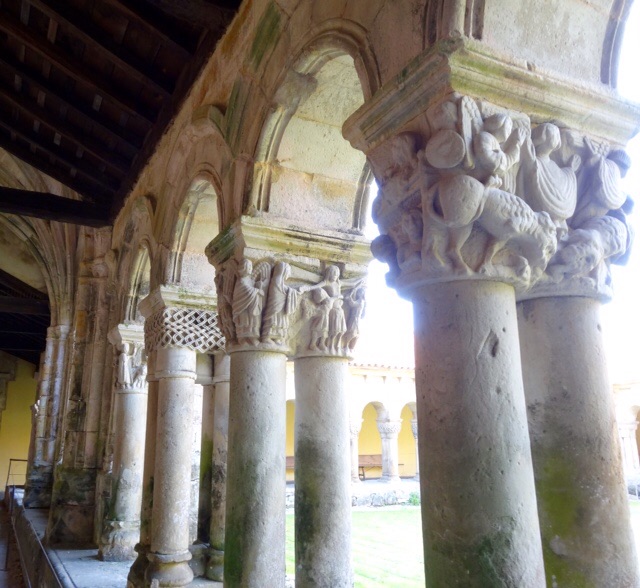
We arrive at our next Airbnb after a long day of driving and settle in for the next four days in a very comfortable apartment about 45 minutes outside Madrid.

Tuesday, October 6

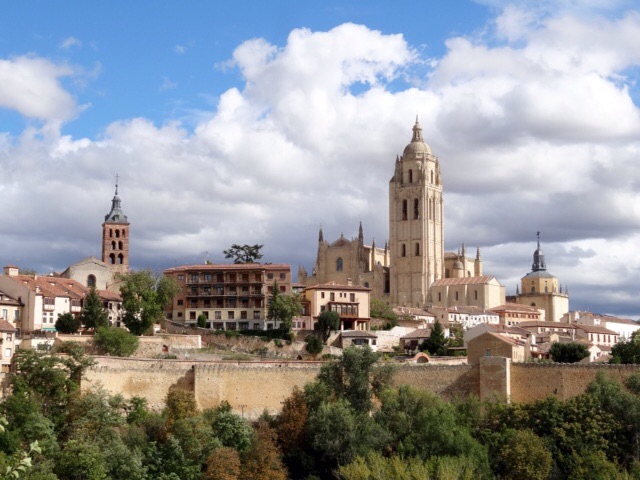
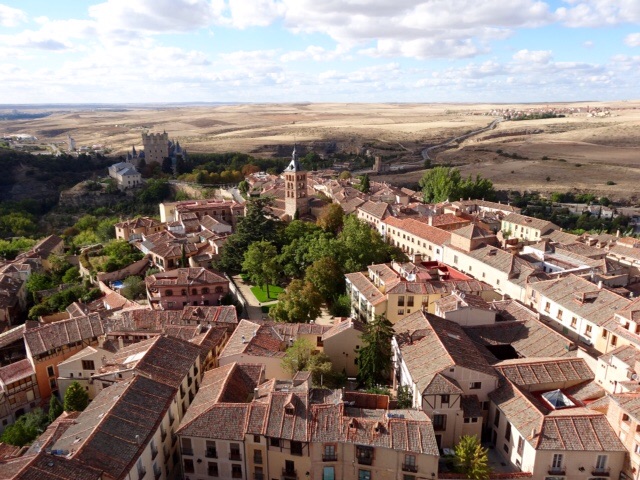
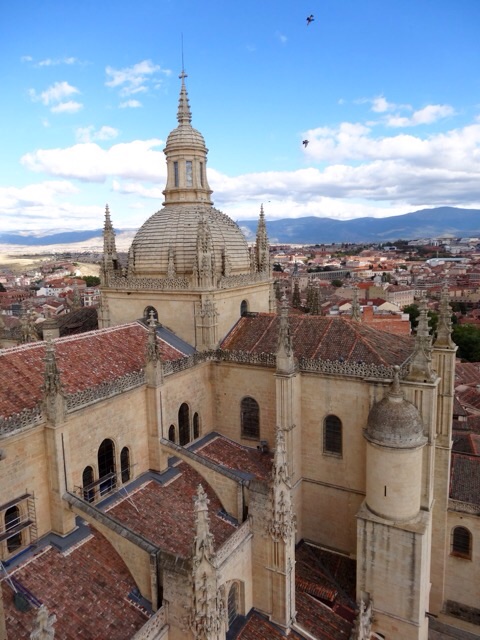
Segovia is our destination today.  It is about an hour from our apartment, but the drive goes quickly as the scenery is constantly changing. We want to see Segovia’s cathedral, which is the last great Gothic cathedral to be built, dating from 1525.  Take note of the cathedral tower, because we climb it!

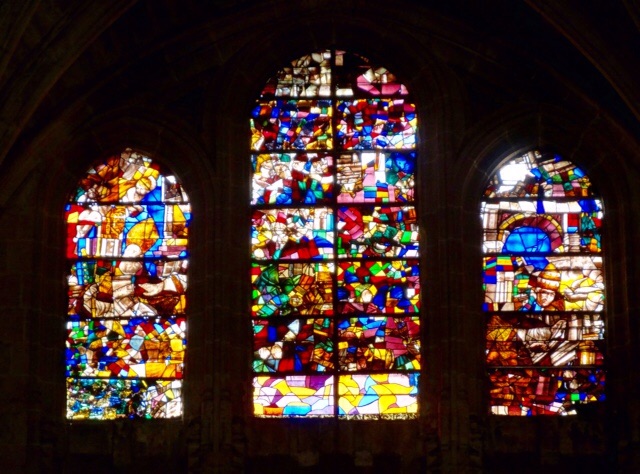
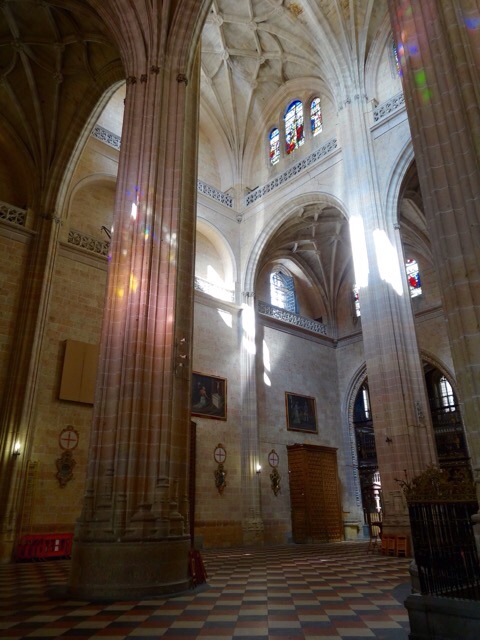
image  This cathedral has beautiful stained glass windows…image  which cast their colours onto the interior when the sun was shining.image

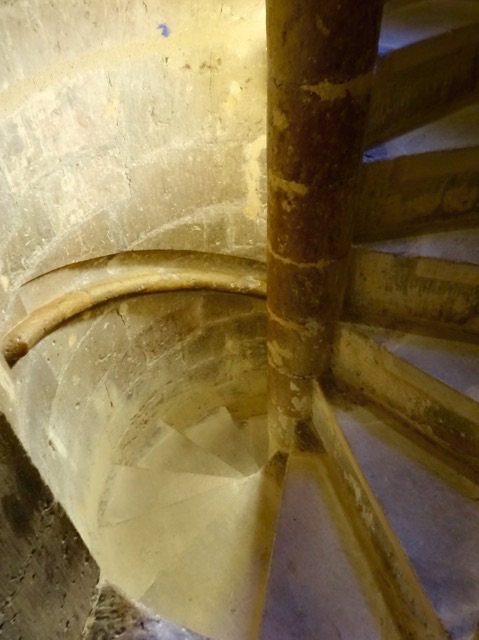
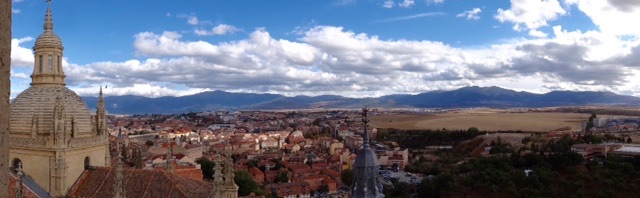
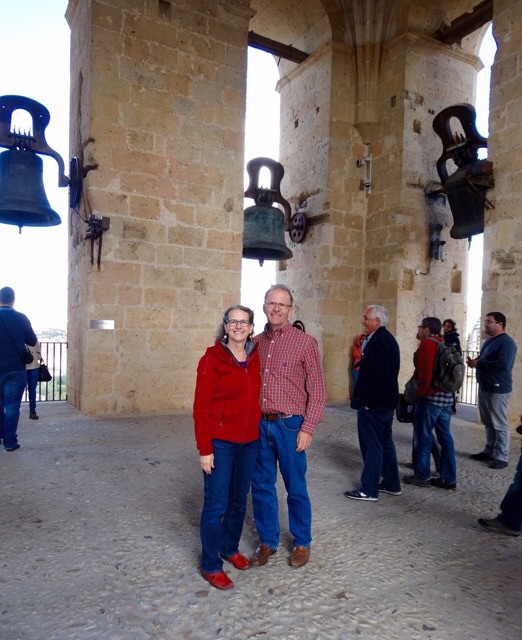
We climb the 185 steps, which are 25 cm high on a 70cm wide staircase to reach the bells in the tower.image  The views are amazing.image imageimage image

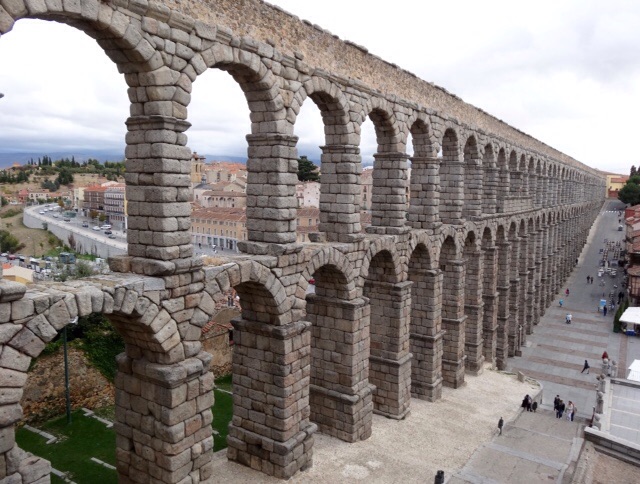
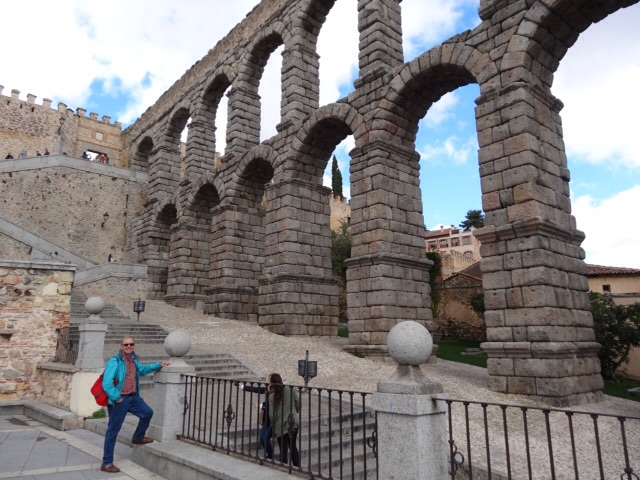
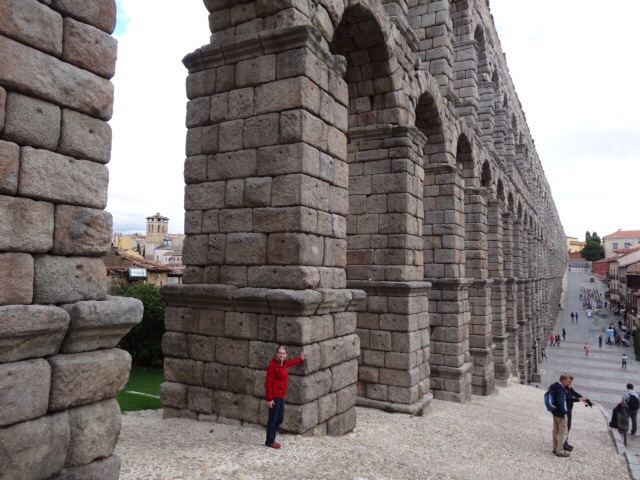
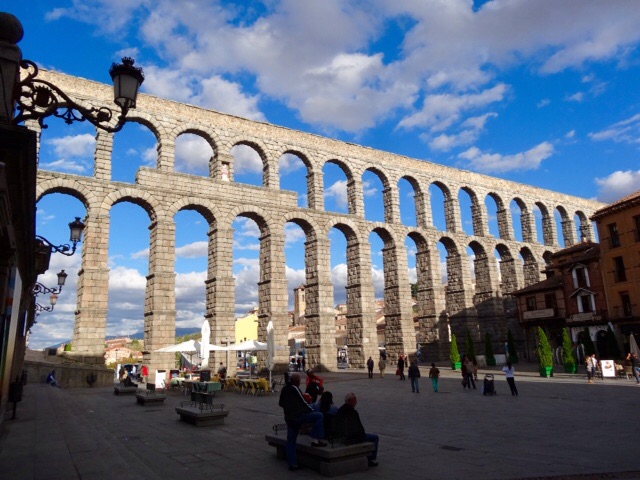
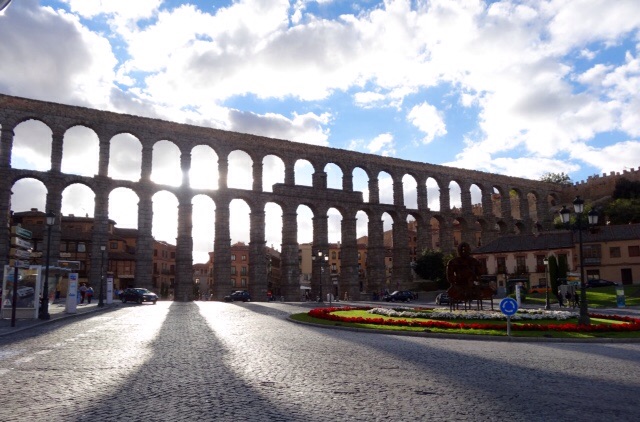
After the climb up there is the climb down.  I have to admit my legs were feeling a bit tired by the time we reached the bottom.  The other main attraction is Segovia is the Aquaduct that was built in the first century AD by the Romans and was still in use until the late 19th Century.  It is stunning, and we spend a fair bit of time admiring this amazing feat of engineering. It was made without mortar, just rocks piled on top of each other over 2000 years ago!  It is hard to describe just how incredible the Aquaduct is, so I’ll let the pictures speak for themselves.

imageimage image

image

The sun is setting as we head off for home.image

Guggenheim and Museo de Bella Artes in Bilbao

Friday October 2

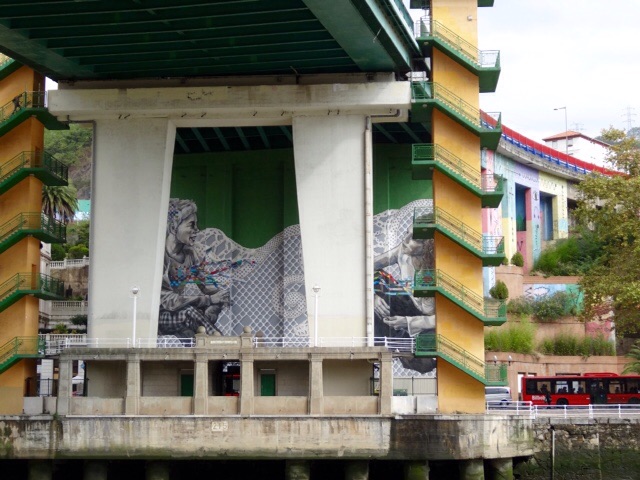
We were going to take the metro into Bilbao but it was impossible to find a parking spot anywhere nearby so we ended up driving into the City.  Once again I am very thankful for our trusty iPad and its navigational abilities. We finally find a parking garage there and walk to the Guggenheim along the river. We pass this big mural under a bridge.image

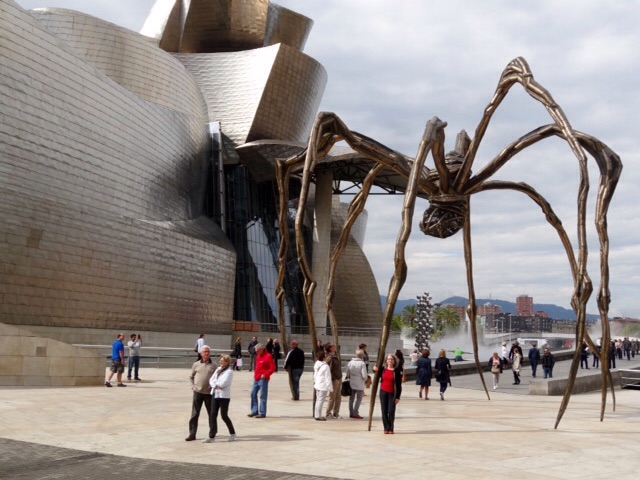
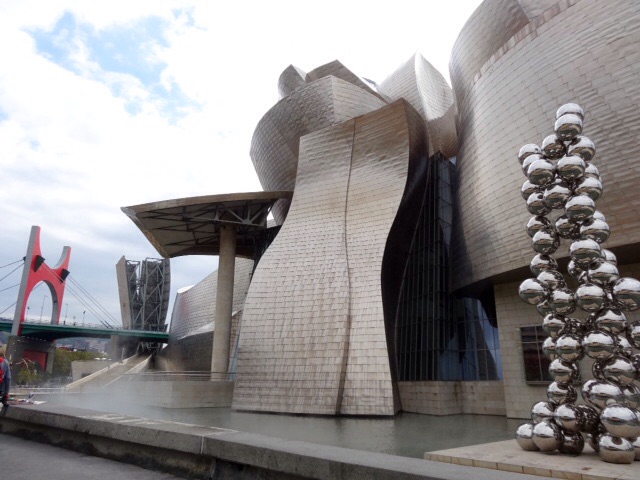
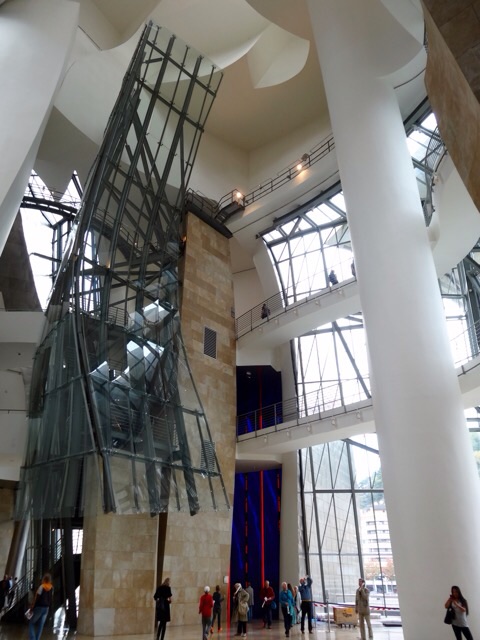
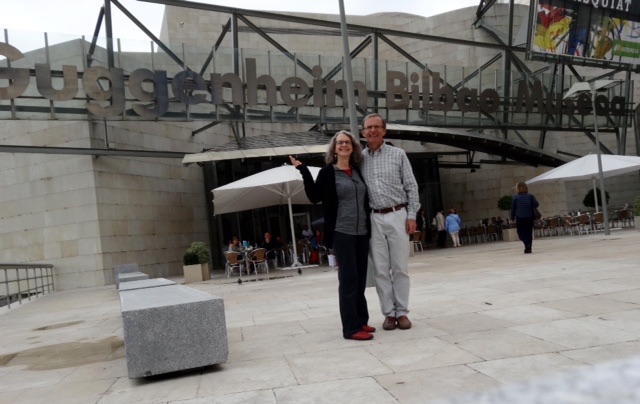
Soon we see the museum, which is a very impressive building, covered in thin sheets of titanium.  I quite like this big spider sculpture.image Another view near the entrance.
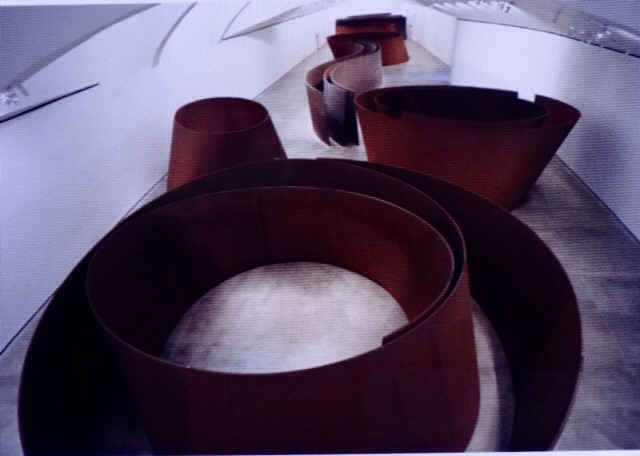
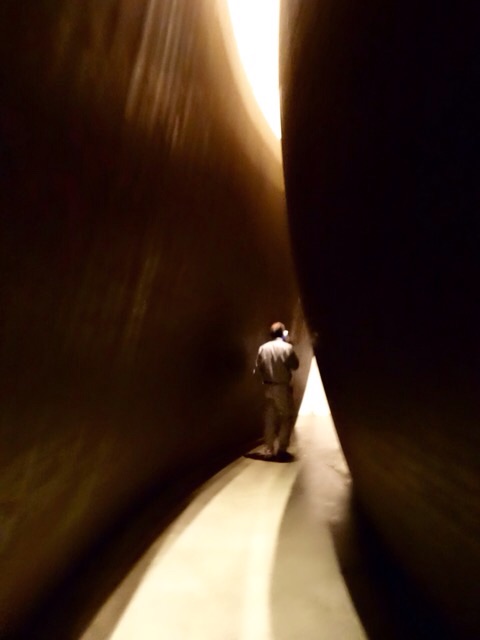
imageThe Guggenheim Bilbao was not what we expected, and judging by the looks on the other visitors’ faces, not what they expected either.  I did like the Richard Serra installation called The Matter of Time.  Here is a picture of a picture and then a not very good photo of Bob walking through one of the sculptures to give an idea of its immense size. image image
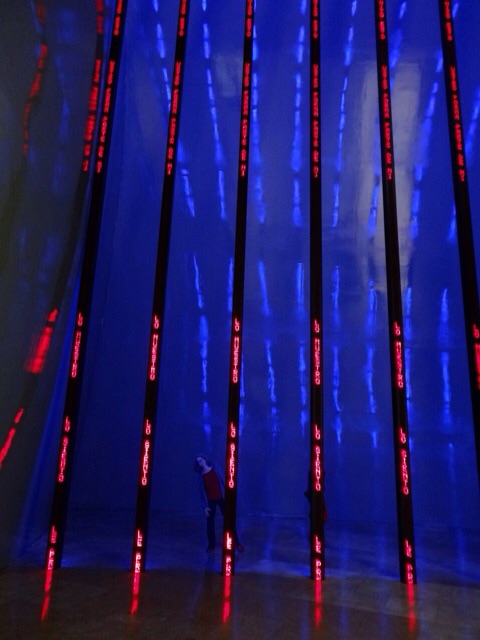
An interactive art work.  Can you spot me?

image

There were only two other exhibits, one of an artist named Jean-Michel Besquiat and a couple of video installations that were very strange.  Besquiat’s work was a bit like street art, quite dark and hard to appreciate.  Look him up if you are interested.  There were no photos allowed.  I decided that the building itself is really a piece of artwork and needs to be appreciated that way.  It is not a functional building for displaying art, or even for navigating through.

imageWe have tea and some tapas in the café and we decide we have seen enough of the Guggenheim.image

One of Bilbao residents favourite pieces of art is Puppy by Jeff Koon.  It is a 13 m (43′) high sculpture of a Highland Terrier with a coat of flowers.  It made both of us smile.
image

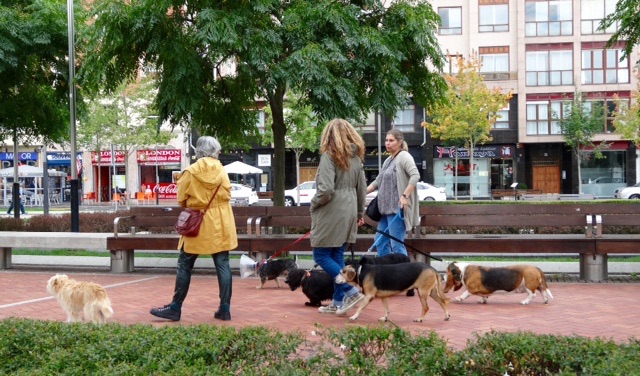
And…I don’t think Inhave mentioned how much people in Spain love dogs.  There are dogs eveywhere, and often they are very large dogs.  These two ladies had seven dogs between them, some of them were off leash.image

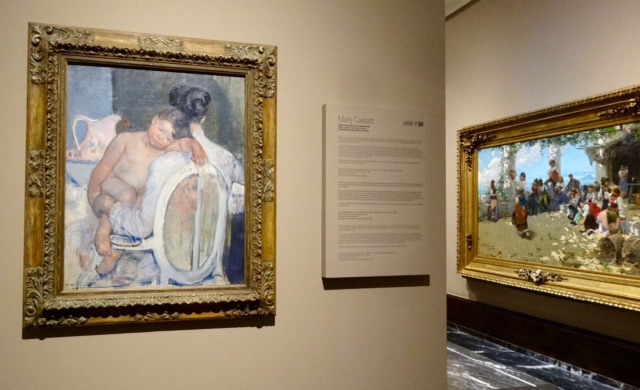
We had our picnic lunch on the benches here and then go to the Museo de Bellas Artes de Bilbao, which was wonderful.  It was very well organized chronologically and the paintings were also labeled in English, which we really appreciated.  There are so many fantastic Spanish painters I have never even heard of.  We particularly liked the 13th to 15th Century paintings which were larger, more colourful and full of expression than paintings we have seen from this time in other museums.  I took a quick snap of this Mary Cassatt work,  which is one of my favourites.  I was so surprised to walk into a  room and find this painting.image

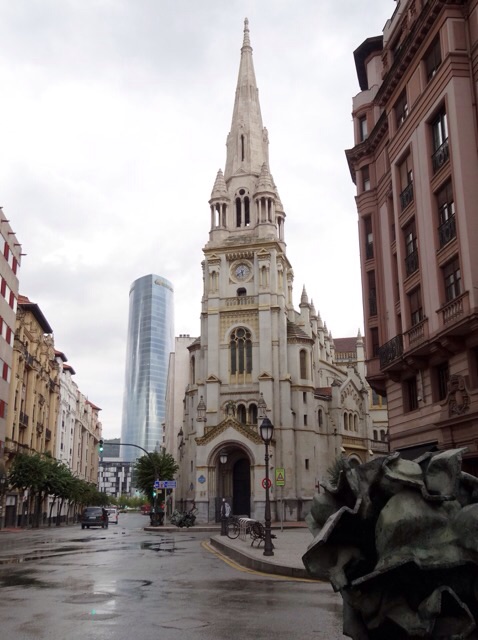
On our walk back to our car I took this photo to show the mix of very modern sculpture in the foreground, very old buildings, and then the extremely modern tower in the background. Everywhere in Spanish cities and towns we see this interesting mix of styles.  

image

Pamplona, the El Camino de Santiago, San Sebastian Beach, and Guernica

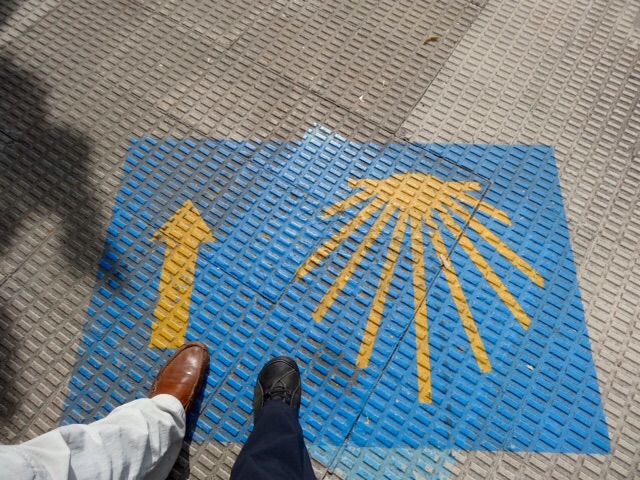
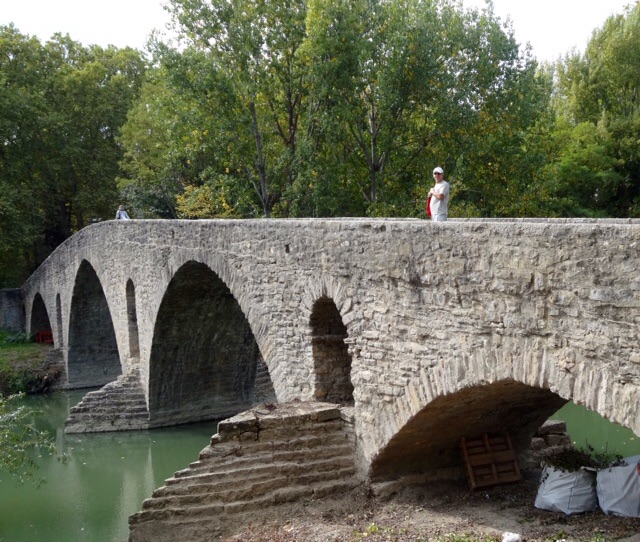
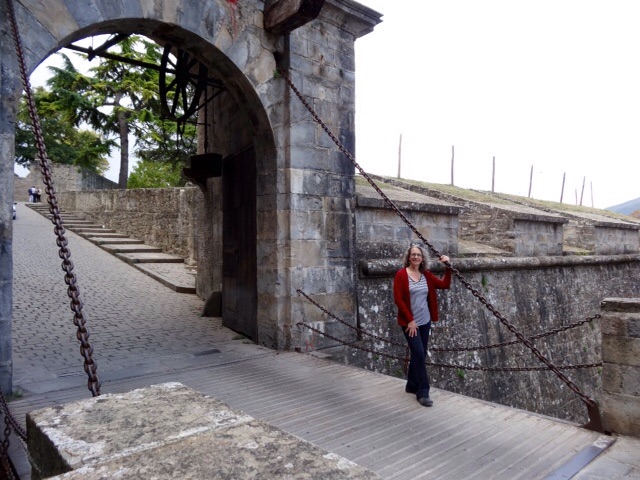
We walk four kilometers of the  El Camino de Santiago ( a pilgrimage walk) on Thursday in Pamplona. I thought I would like to do a long walk like this, but after talking to some of the people on the walk I have changed my mind.  Much of the walk is on city streets or along the shoulders of roads, and the shelters are communal rooms with bunk beds very close to one another so lots of snoring and night-time noises.  Not for me, thank you.imageThis is the Bridge of La Magdalena, a medieval bridge that millions of pilgrims have used to cross the River Arga on the way to Pamplona through the ‘Gateway of France’ which still has a working drawbridge.                   image

The drawbridge is now only used once a year on January 5th, when three Wise Men on camels enter the Old City of Pamplona.image

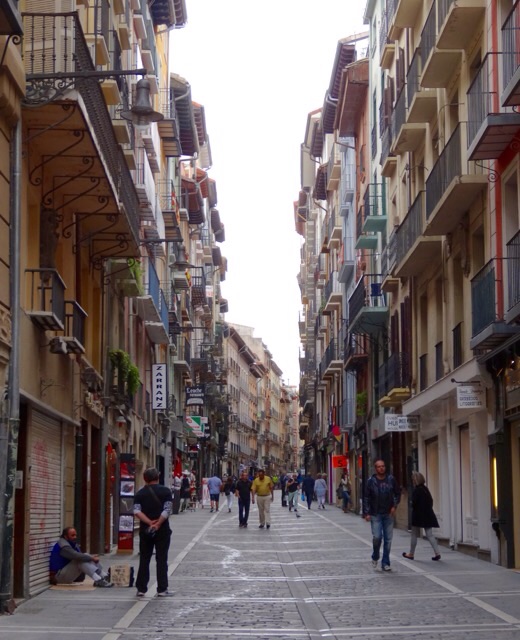
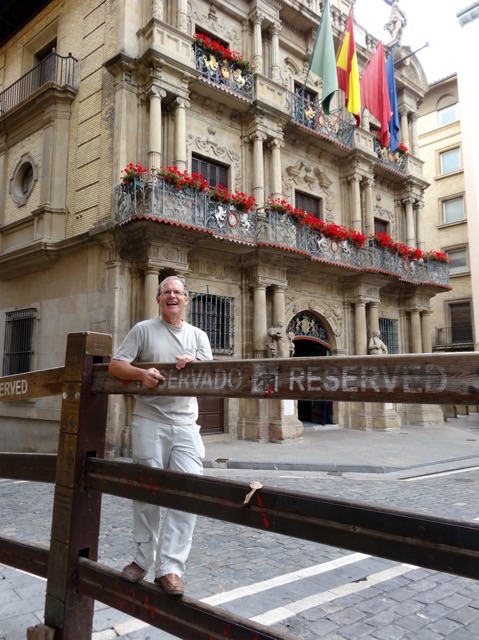
We follow the route of The Running of the Bulls, which takes place during the summer, all the way to the bullring.  It is easy to imagine how crazy, chaotic and dangerous this event is. The streets are very narrow and there is nowhere to hide from the many very angry, very large stampeding bulls!
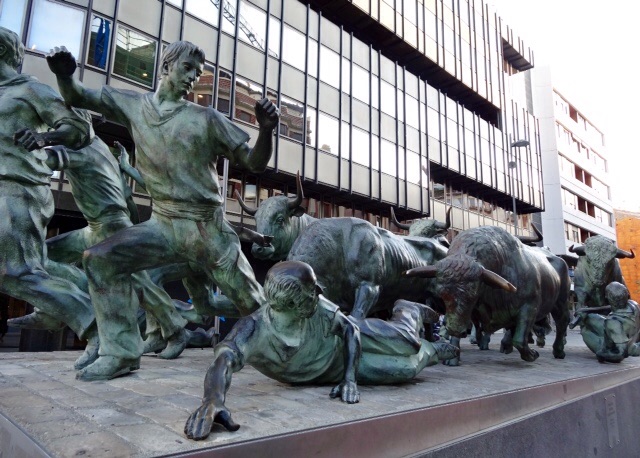
imageThere is an eleven meter long sculpture called ‘Monument to the Bull Run’ by a Spanish Sculptor that faces the bullring.  It is quite impressive and gives some idea of what this event might look like.image

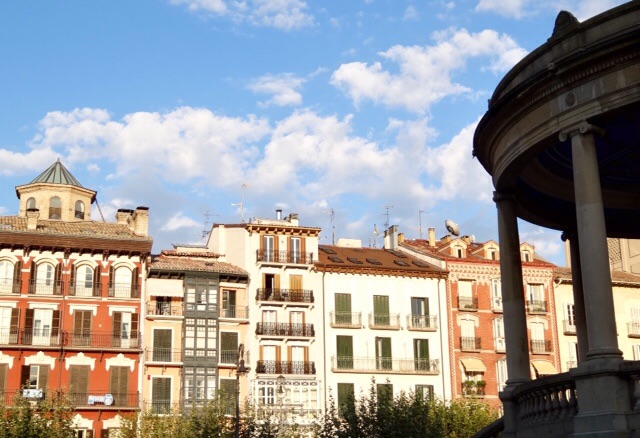
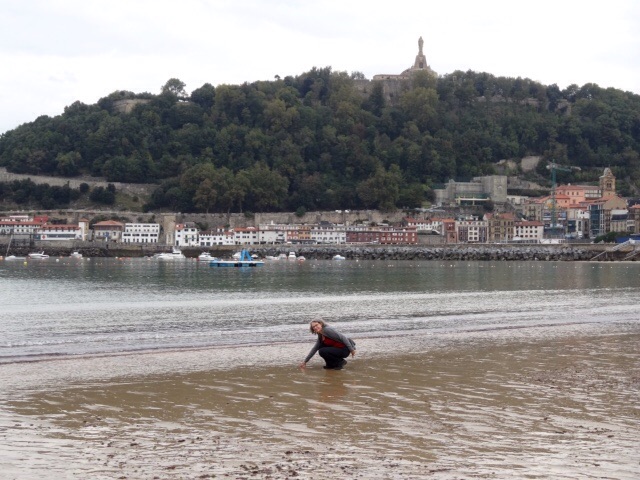
We rest for a while in the Plaza Del Castillo, with a view of the colorful buildings of Pamplona before getting something to eat and heading back to our hotel. We take a local bus that takes us almost to the door of our hotel.  Nice, I am tired today.imageWednesday morning we drive to the beach at San Sebastian, which is one of the popular resorts in Northern Spain.  It is not for us.  We prefer the more natural beaches, with fewer apartments and hotels.  It is cloudy when we arrive but it warms up and the sun comes out.  We have been very lucky with the weather, and had our first rain last night along with a very loud thunderstorm.

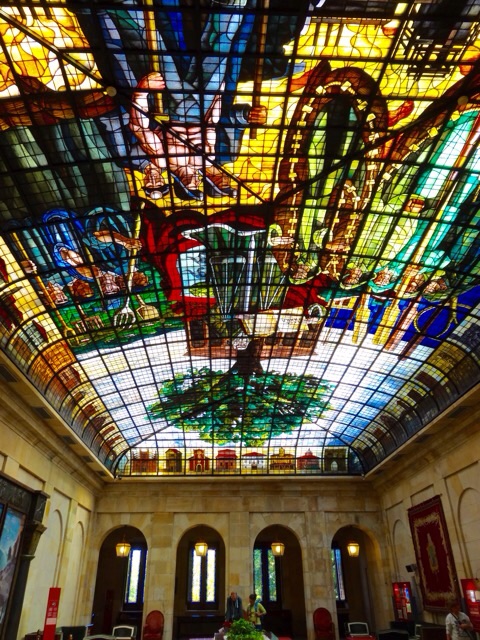
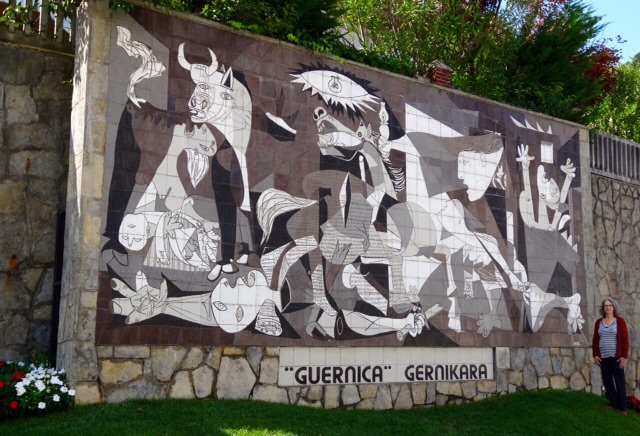
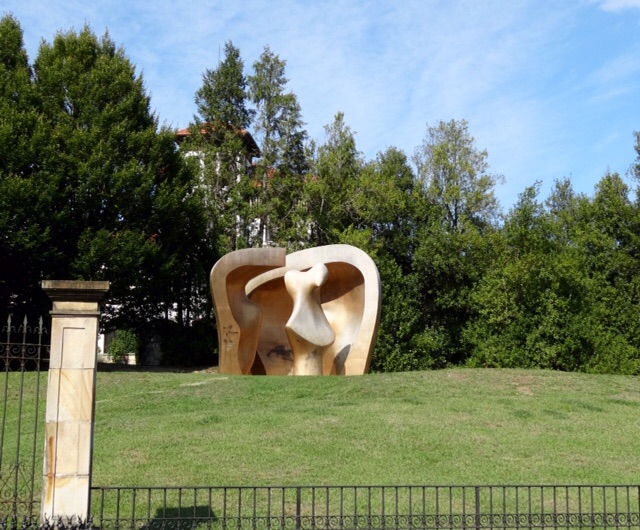
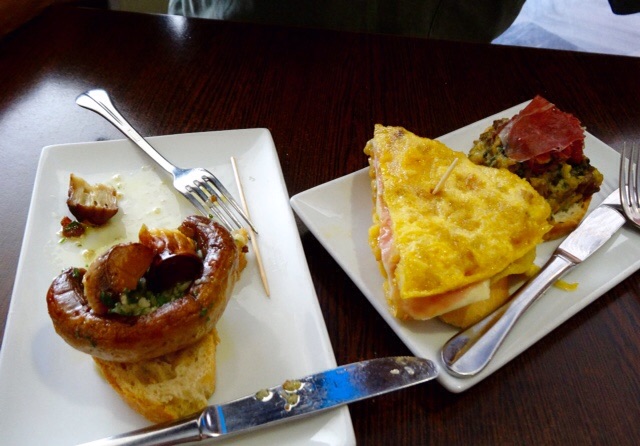
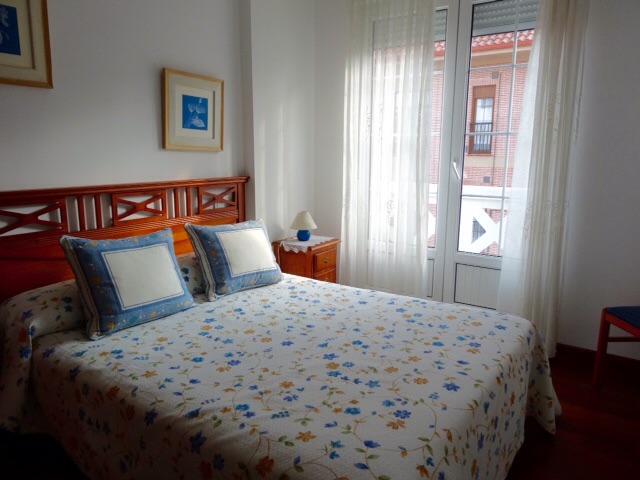
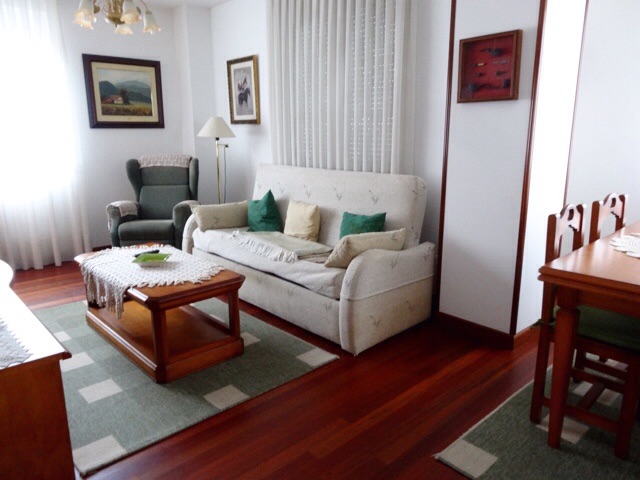
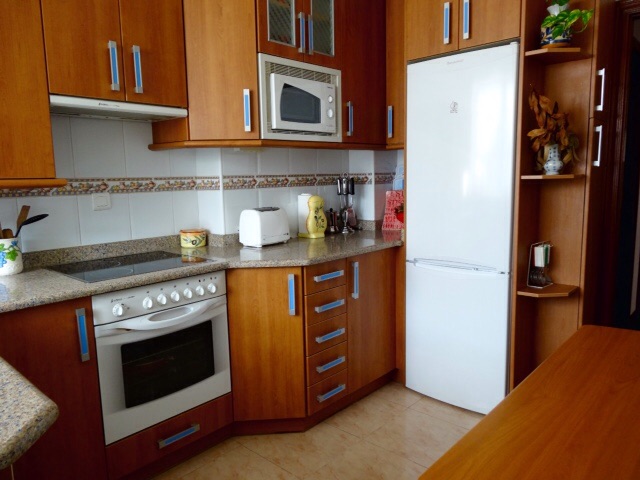
image  I stick my fingers in the Atlantic Ocean which we have now seen from Florida, South Africa and Spain.imageWe are off to Guernica, a small town that was bombed by Germany in 1937 during the Spanish Civil War. It was the world’s first saturation bombing raid and the destruction this bombing caused inspired Pablo Picasso’s famous painting, Guernica.  We first visit Guernica’s Parliament building, which has an enormous modern stained glass ceiling covering what used to be a courtyard.  It depicts the Oak of Guernica. Basque leaders met in democratic assembly under this tree for centuries.  There is a 300 year old petrified oak tree in the garden outside here which is symbolic of the ancient roots of the Basque people.imageWe find the tiled life sized mural of Guernica, the original paining is now in Madrid.imageThere are several large sculptures in the Peace Park adjacent to the Parliament building and the oak tree, including this one by Henry Moore.image  We had our first tapas in Guernica, an easy economical way to sample a variety of local foods.imagePerhaps the nicest part of the day was arriving at our Airbnb apartment in Gama.  Our host Gemma met us nearby and we followed her to the loveliest little apartment. We have stayed at several Airbnb accomodations and this is the nicest one yet.  We decide to extend our stay here to five nights.  It is relaxing to stay put for a while and this is such a nice place to do that.  Here are photos of our home for the next five days.image image image

Castillo de Loarre and San Juan de la Pena

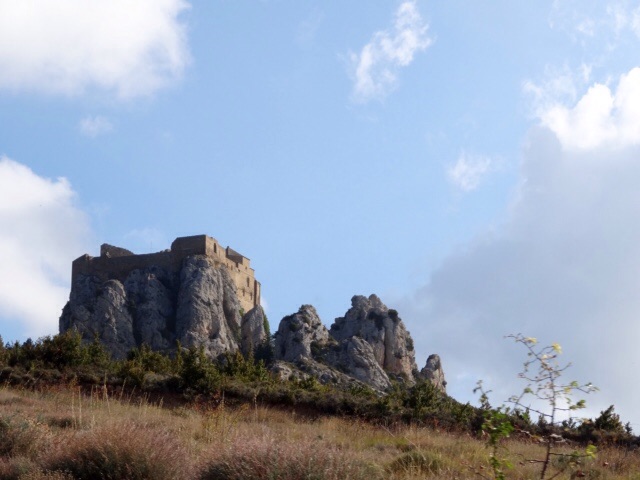
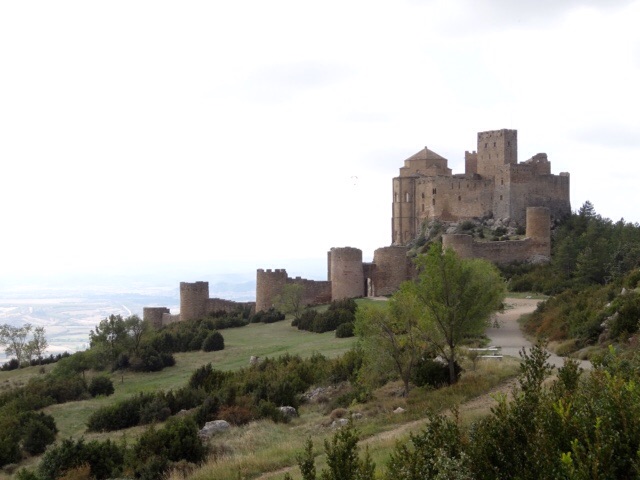
On Tuesday we visited Castillo de Loarre, a beautifully preserved Romanesque church and fortress that was started in 1071, over 900 years ago!  A film called Kingdom to Heaven was filmed there, I think in 2005. This is our first view of the castle.

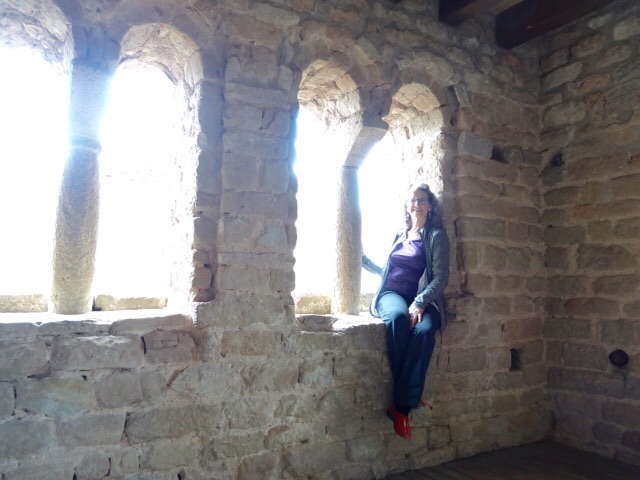
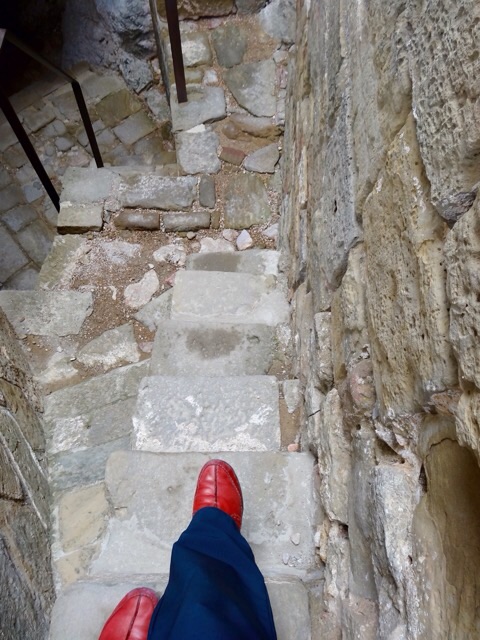
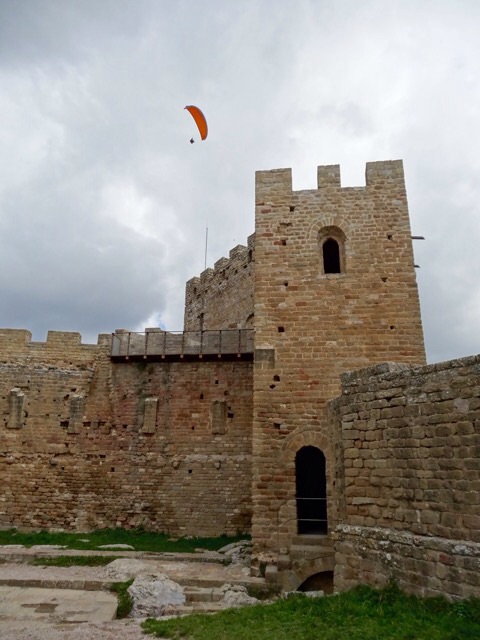
image These are the ornate windows in the Queen’s tower.image  We had to watch our footing in this Medieval castle.imageWe were surprised by this para glider overhead, then we saw many more of them as there was a jumping off spot on the mountain just behind castle.image

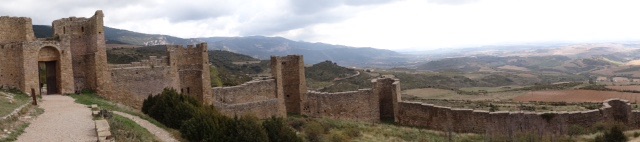
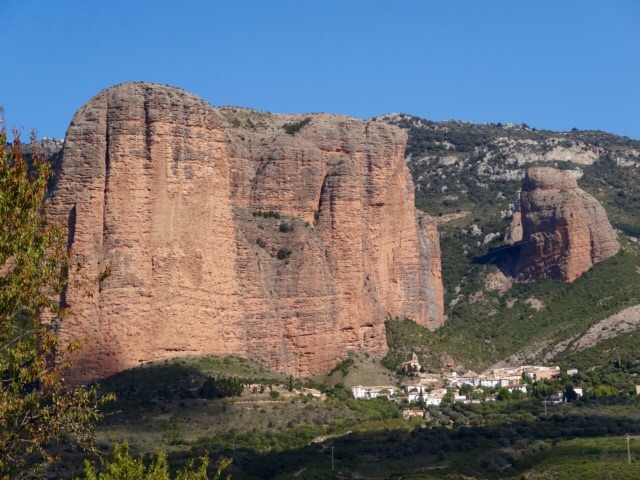
There was an amazing panoramic view of the valley below us…image and this was our view while we had a picnic lunch!imageAfter lunch we headed to the San Juan de la Pena Monastery.  On the way we pass Aguero, a little village nestled at the base of dramatic eroded stone cliffs.  We would have loved to stop and explore, but there just isn’t time. I thought three months would be so much time but there is so much to see everywhere that we have to pick and choose.

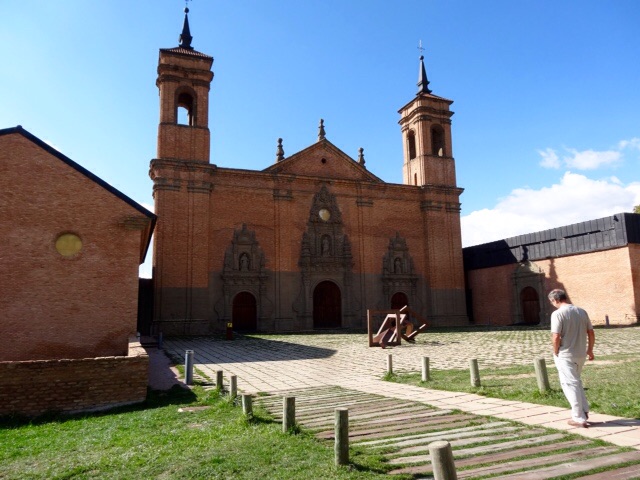
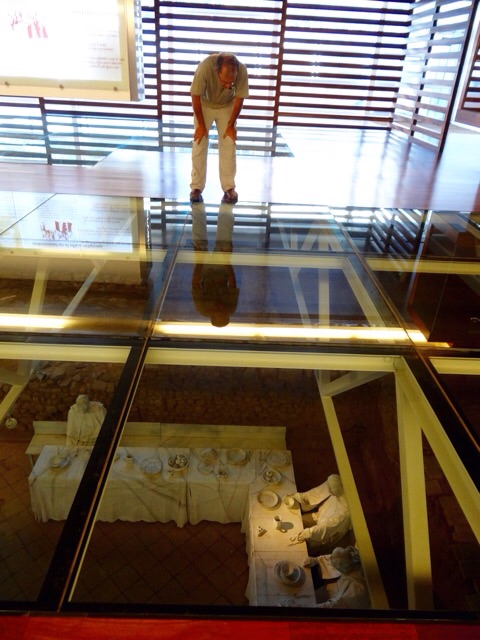
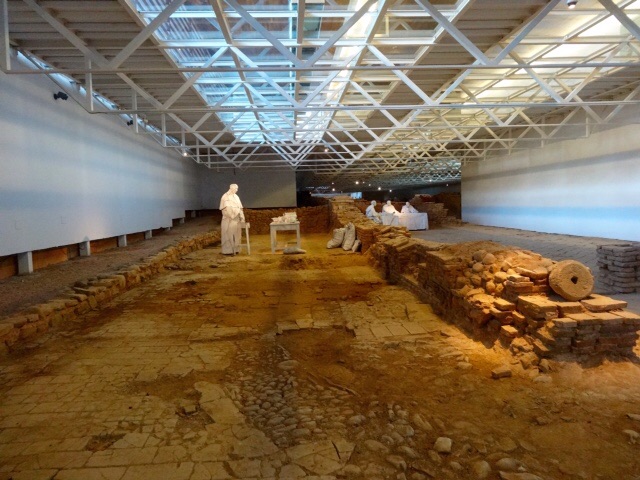
imageThe new monastery has an interpretive center built over the old ruins.  It is the modern building  to the right in the photo below. It is a huge long building with a glass floor to view the excavated ruins below.  I find it rather unnerving walking on a clear glass floor!imageimage image

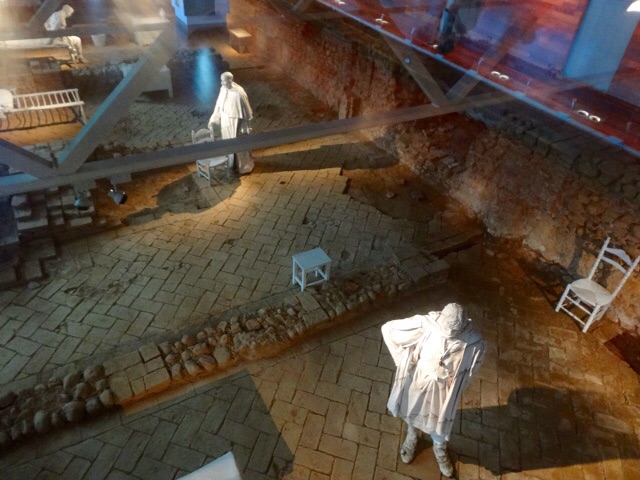
Then we go below and walk through part of the excavations.  There is also another enormous building with more ruins and figures to walk through.image

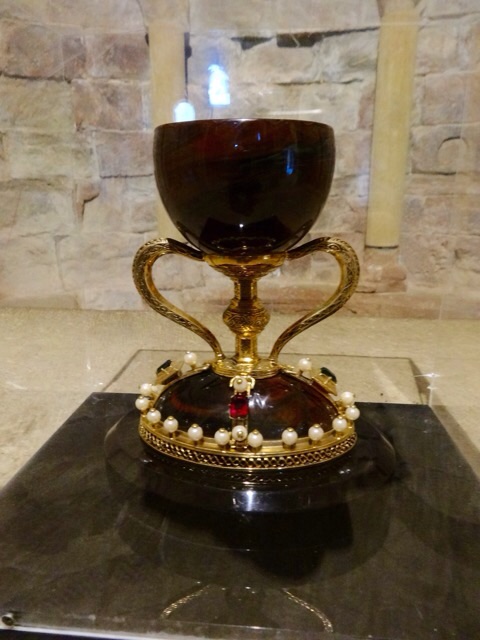
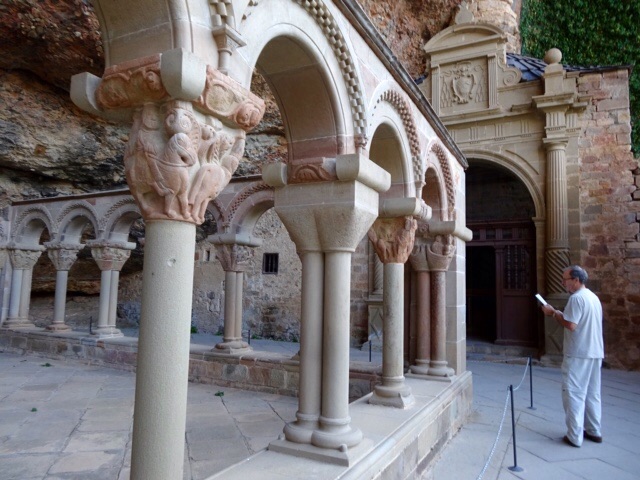
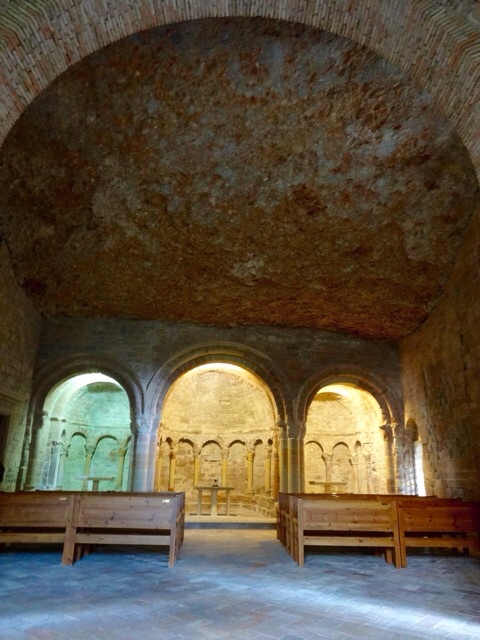
We catch a bus to the old Monastery which is sheltered under a bulging rock.  It was founded  in 920 and the Holy Grail is said to have been kept here to protect it from the Muslim invaders.  There is a replica in the chapel.image image image

The cloister has beautifully carved capitals with scenes from the Bible.imageWe have a bit of time before the bus comes back to pick us up (there is no where to park near the Monastery) so I start a sketch.

image

On the way home we drive through several long tunnels that cut right through the mountains. This one was over a kilometer long!  image

Alquézar

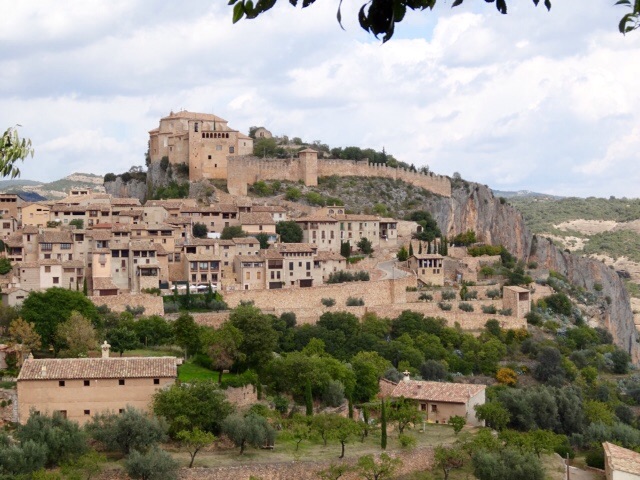
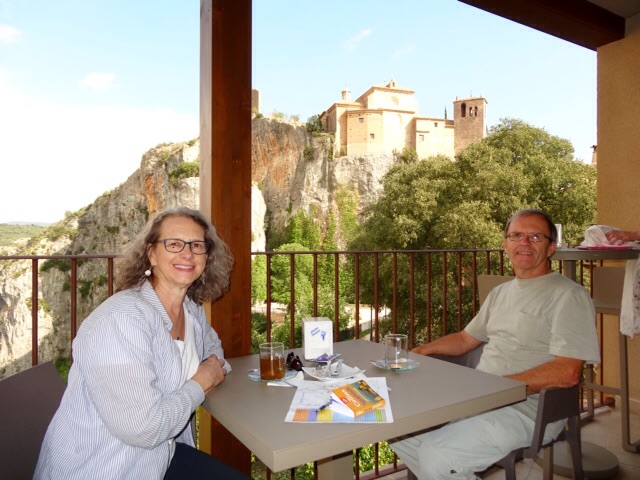
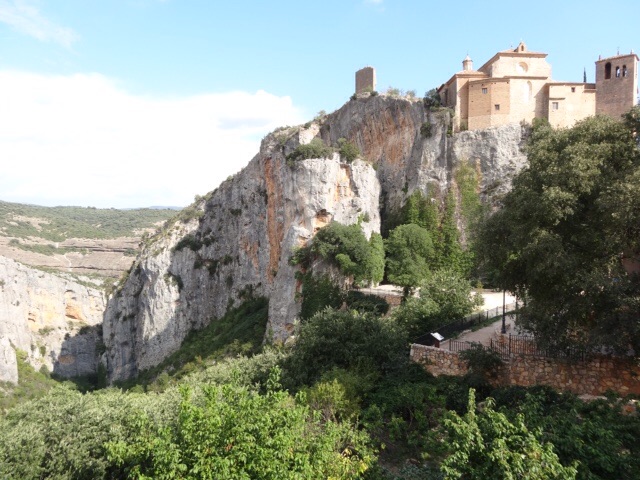
We drove to Alquézar on Sunday.  I am still in catch up mode on my blog, trying to work out the best combination of blogging and keeping a journal.  I really want to do both but it does take a bit of time, so I may have to change my approach, we will see.  This is our first view of Alquézar, a  Moorish village, with its 16th Century Collegiate Church.  We are quite impressed.

image

We walk up towards the church, which is quite an uphill walk,  but the entrance is closed off, so we can’t go inside.  We continue our walk along the narrow winding streets and find a little cafe where we stop for tea and a bite to eat.

image

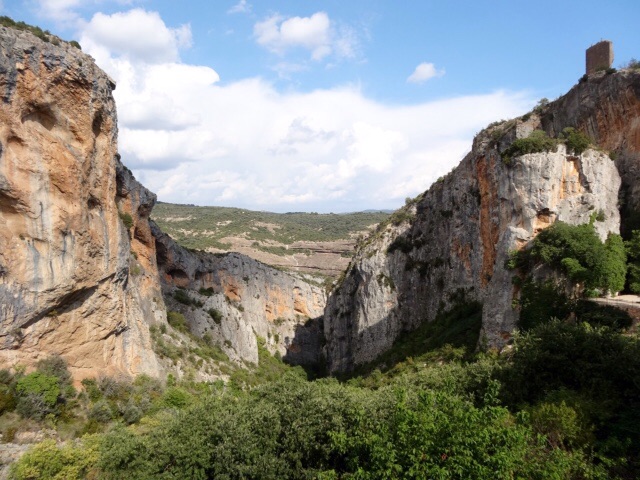
The view from here is pretty incredible.  The church is on the right and there are massive cliffs on the left.image

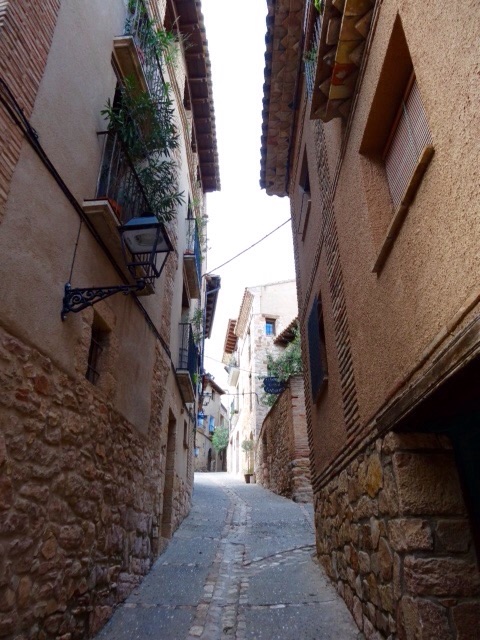
imageThe streets are narrow and often go under buildings.  Notice the feet over the road!image

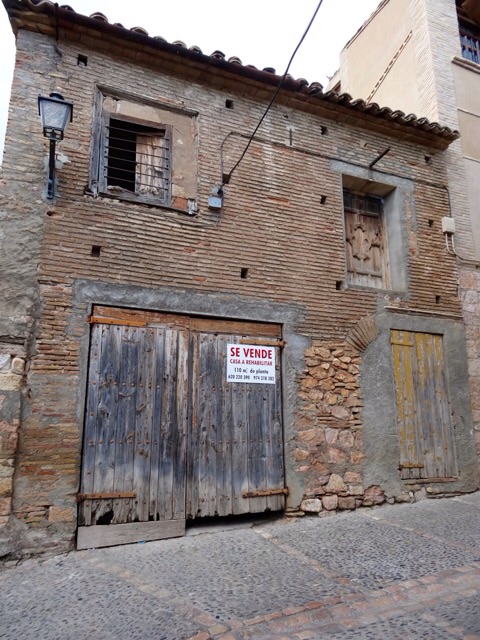
image We see this fixer upper for sale.  I wonder how much it would cost to buy?  and then how much it would cost to fix up?  Quite a lot I think.  We enjoyed our afternoon here but it is soon time to head to Huesca to find a place to stay tonight.  Bob is doing a good job finding hotels but we are both looking forward to getting an apartment again and staying put for a few days.

image