Day 22, Tuesday, September 19, 2023
Here we are walking out to Mont St. Michel. It is a three kilometre walk from the car park to this UNESCO World heritage site. Be warned, this is a photo heavy post.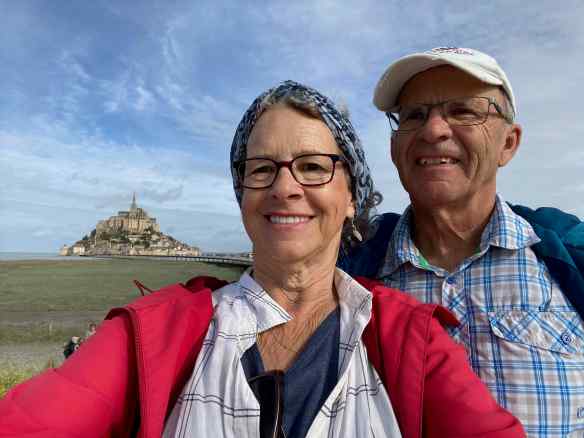
The sheep under the bridge attract a lot of attention. I wish I had time to sit and draw them, but Mont St. Michel beckons…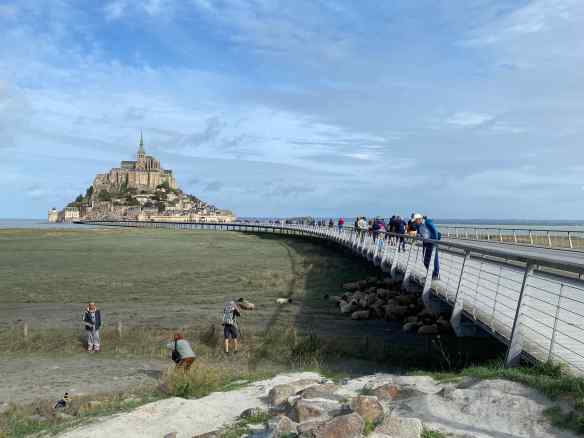
Almost there!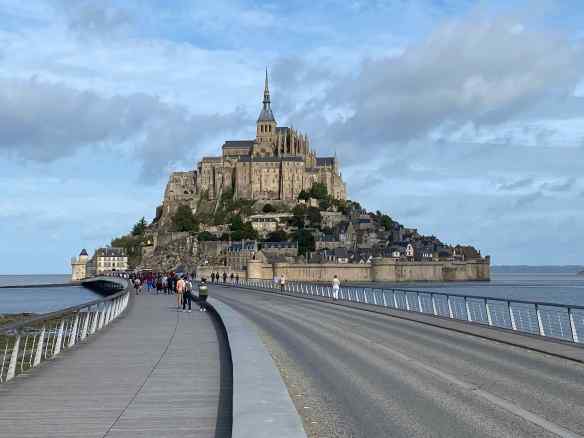
We climb the ramparts right after the entrance gates while the sun is shining. There is a chance of rain this afternoon. The Abbey church dominates the skyline.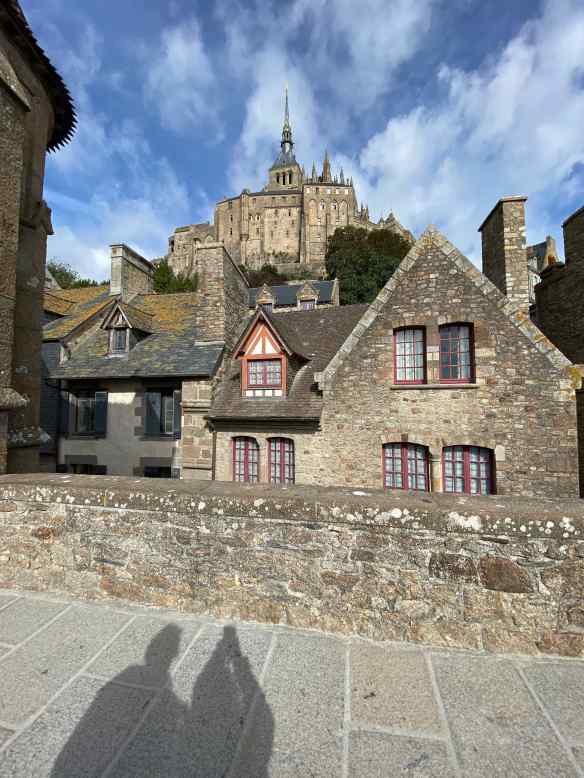
The streets below are crowded and more people are arriving by the minute. The group with the white hats are pilgrims from Southern France. I spoke to one of the ladies later in the day who sat by us while we were having lunch.
I love the little conical roof over the dormer window.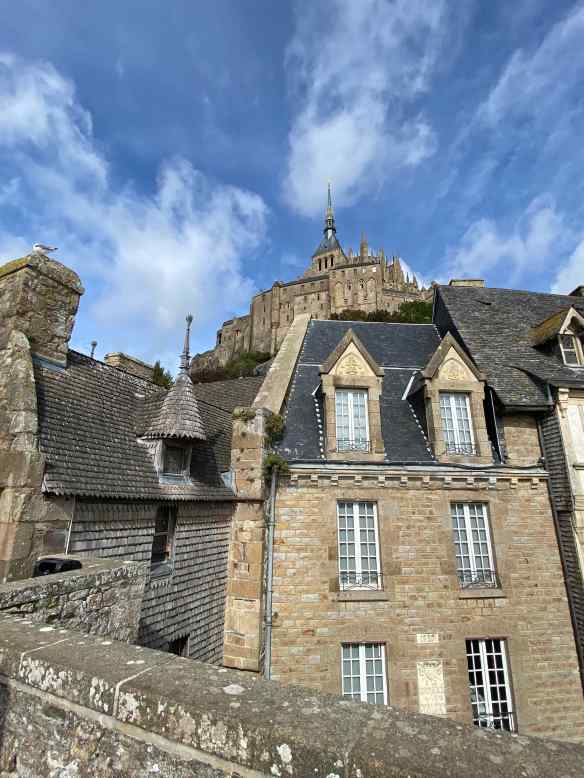
The streets are narrow and they fill up quickly. We are told that in high season you can barely walk through the streets as there are so many people.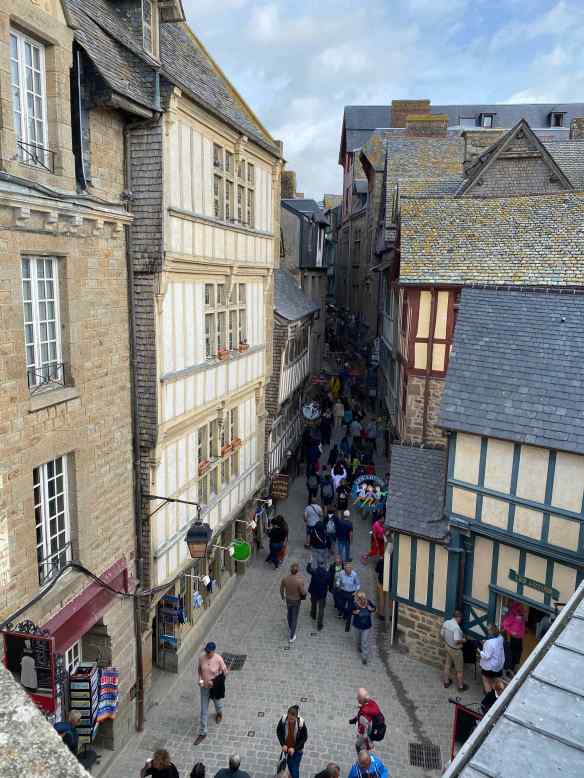
Soon we are among the hordes of people climbing the tall narrow 319 steps to the Abbey.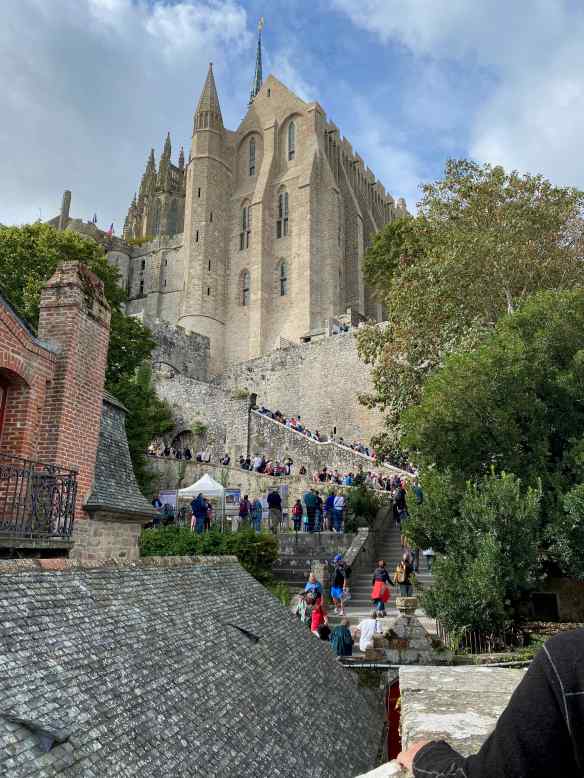
We bought our tickets online so we get to walk right past a long line of people waiting to buy tickets.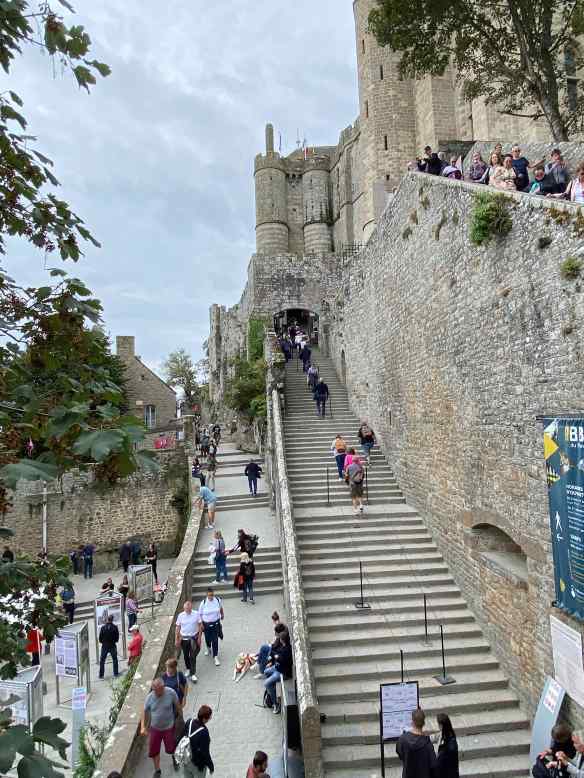
This model of the abbey shows the back side which is only visible if you walk on the sands at low tide or travel by boat.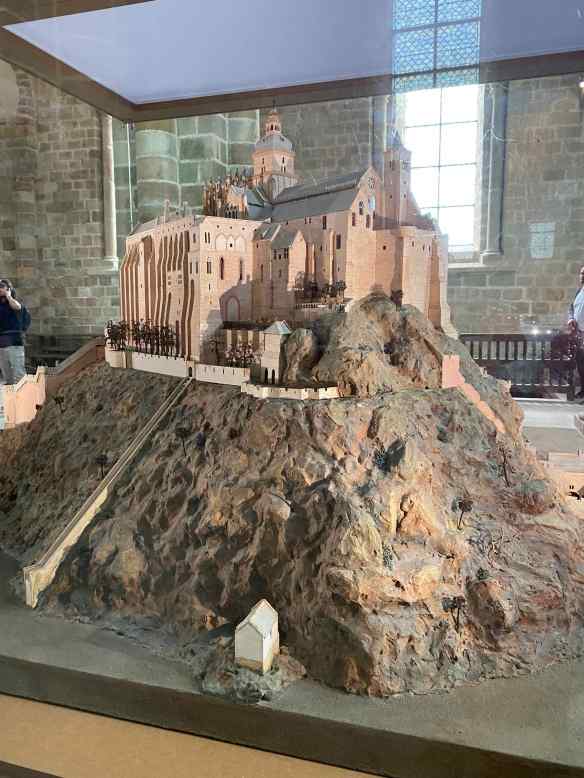 There are usually 5 monks and 7 nuns who live at the abbey and there are only 25-30 people who actually live on Mont Saint Michel. We sat and listened to part of the mass, from the side of the church. The singing was really lovely and I found it interesting that the nuns and the priest sat on the floor of the church during the service.
Next we walk through the cloister with its many narrow columns and a view of the church tower.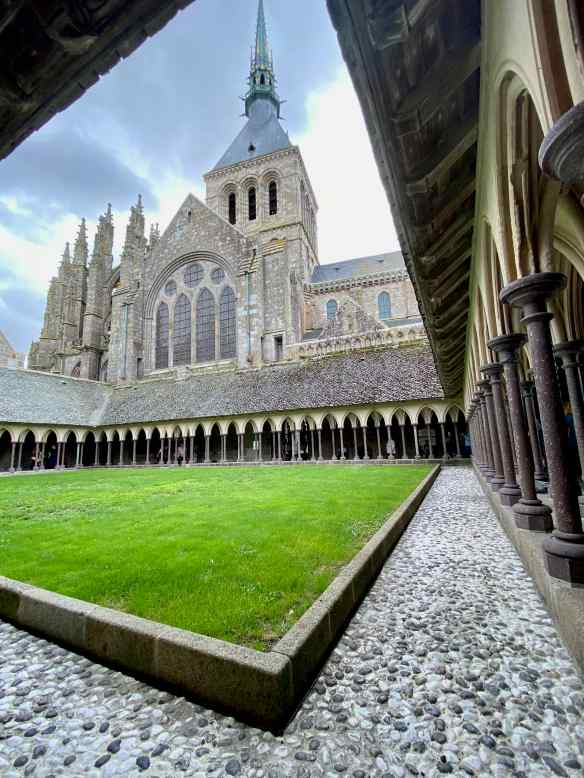
The Host’s room has two enormous fireplaces. Here I am standing in one and the little round circle is looking up the chimney towards the sky. This is where food was prepared and where the Abbot received important visitors. The bottom photo is the Refectory where the monks ate their meals.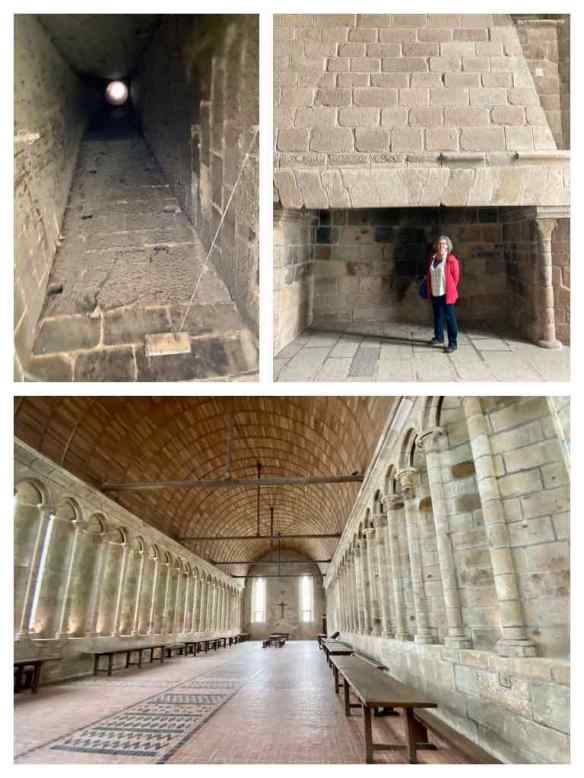
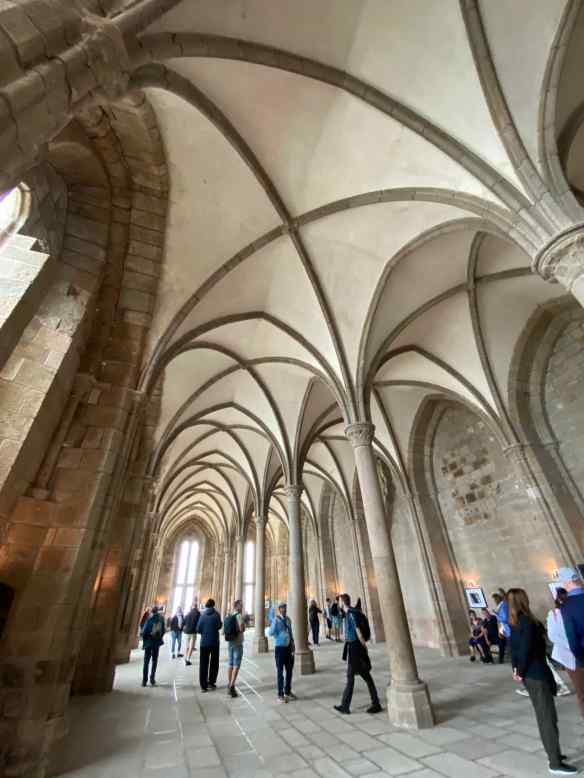
Another view of the Host’s room with its beautiful arched ceiling.
 There are so many interesting doors in this abbey.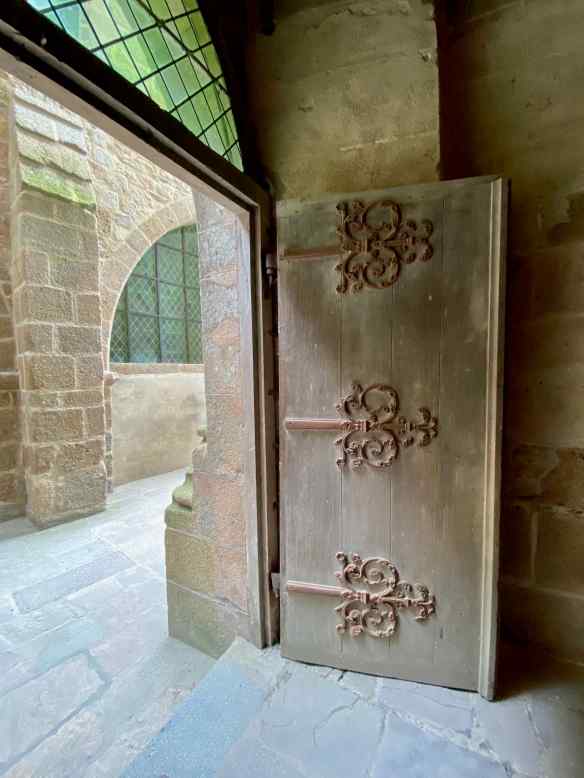
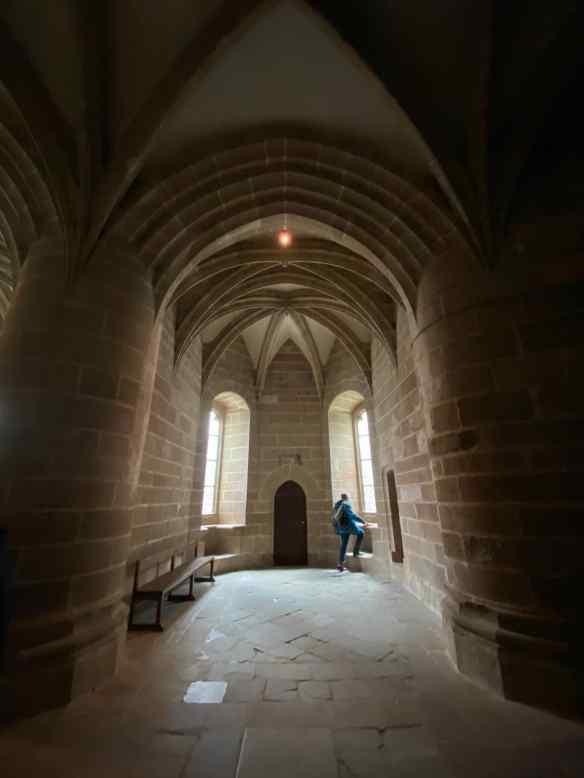
The Crypt des Gros Pillars (Big Pillars’ Crypt) with its ten huge pillars was built to support the choir in the abbey above.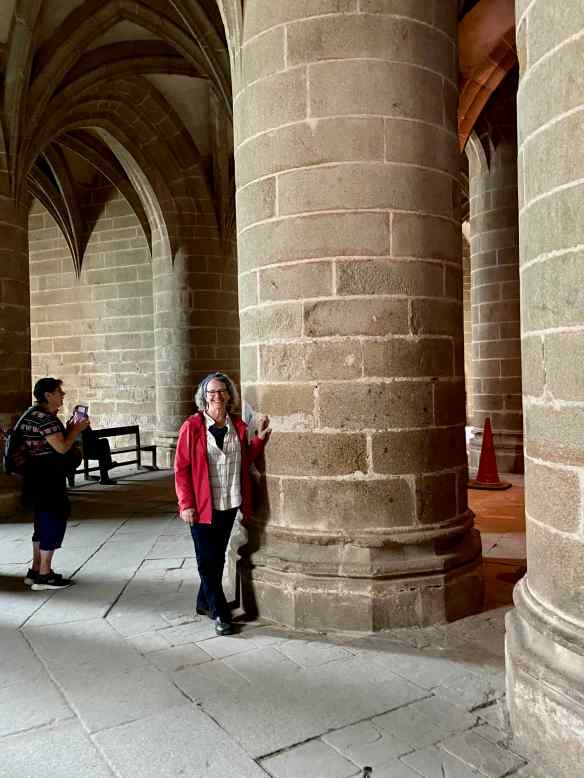 There are so many smaller rooms and interesting spaces to be explored. This one is off the side of the crypt.
 When the Abbey was used solely as a prison in the 1800’s, this huge wheel was was used to haul supplies up to the abbey. Prisoners walking inside the wheel were able to raise and lower a cart along a stone ladder inclined along the rock wall.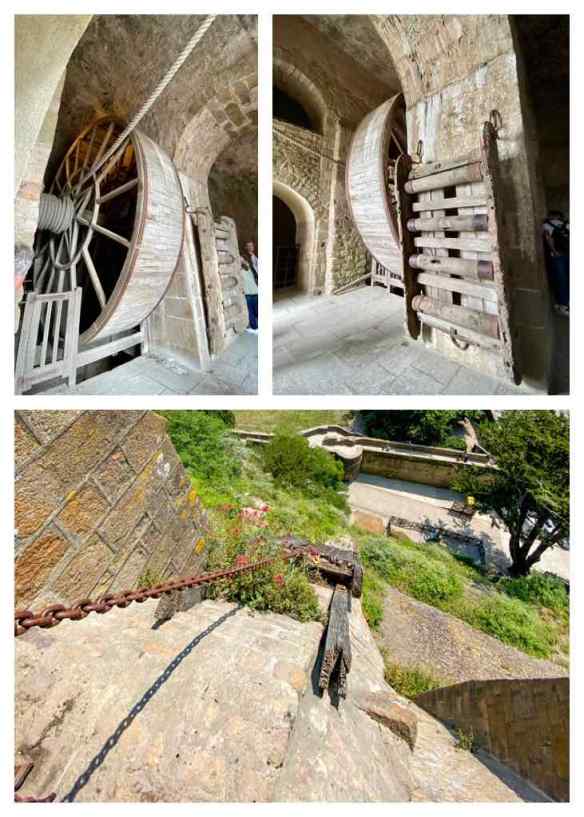
Here you can see where the cart was hauled up the side of the abbey.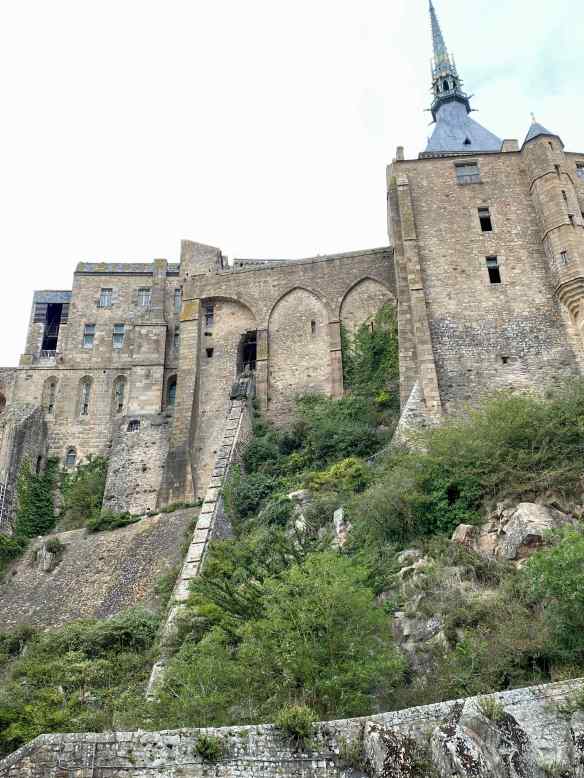
The Salle des Chevliers or Knight’s room was most likely used by the monks as a place of meditation and for copying and illustrating manuscripts. 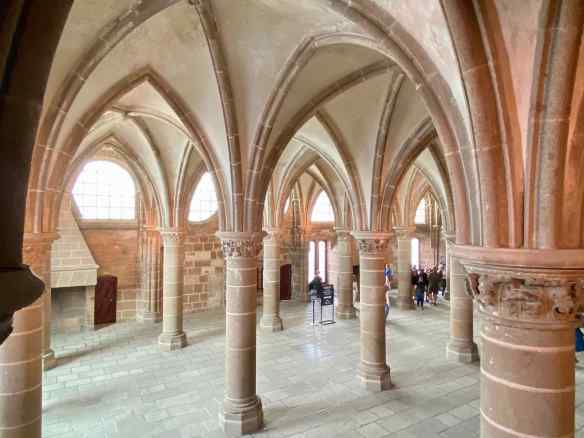
When we walk out into the gardens we see that the ocean is now at low tide and the sand bars are visible all around Mont St. Michel.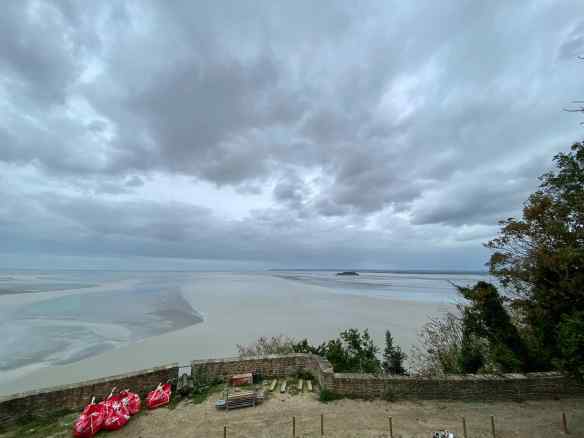 We hear shrieks and peals of laughter and realize that is is coming from the people out walking on the sands now that the tide is out. Some of them are thigh deep in the water! There are a lot of people out there, some of them way off in the distance. Thanks, but I am happy to pass walking in mud and cold water.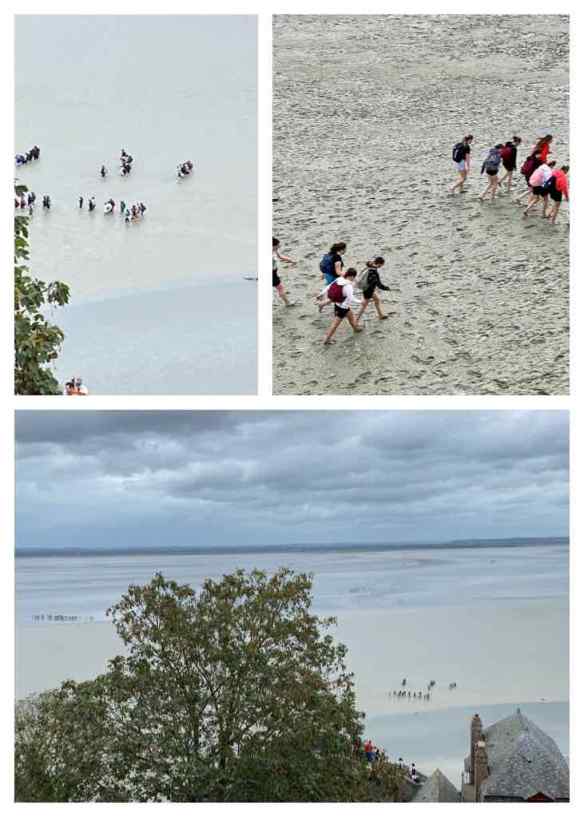
We stop at this little art gallery and I have chat with the artist. She has a variety of different styles and media, and I found her work very appealing. 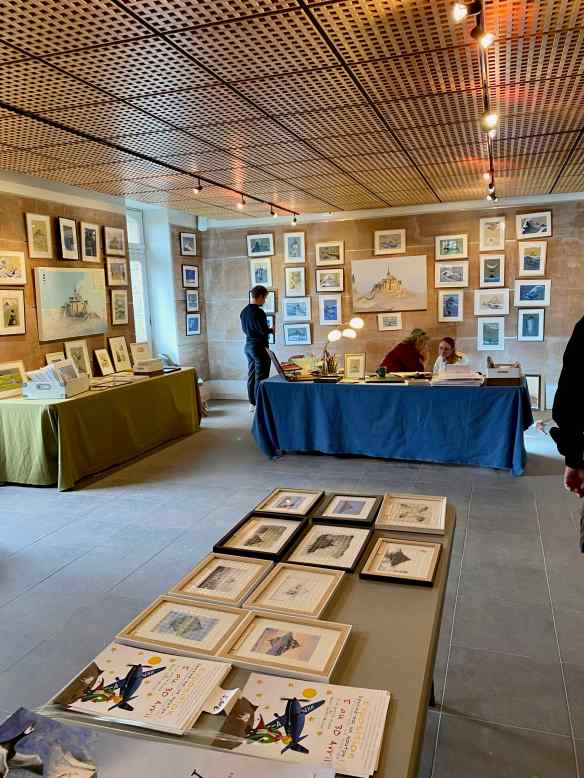
It starts to rain so we duck into the Parish Church of St. Peter for a well needed sit down. I draw the statue on the wall while Bob rests and then goes for a little walk about so that I have time finish my drawing. 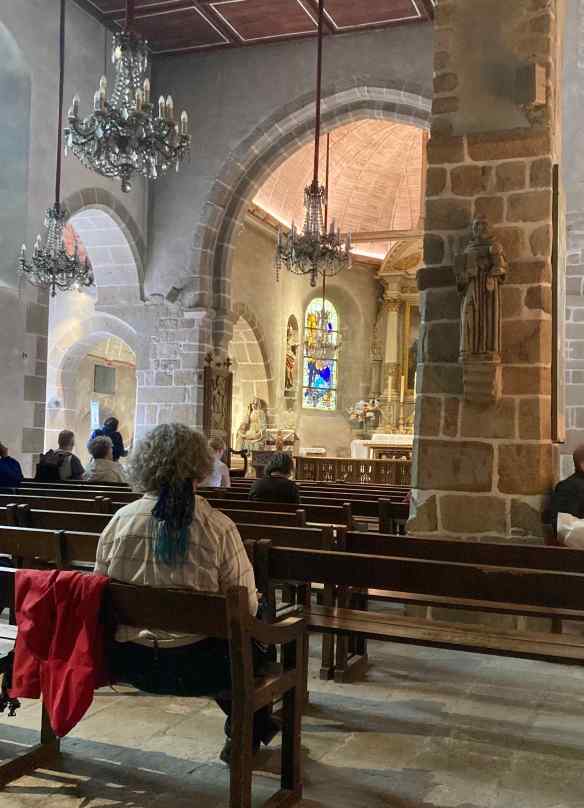
I forgot to see if there was plaque saying who the sculpture was.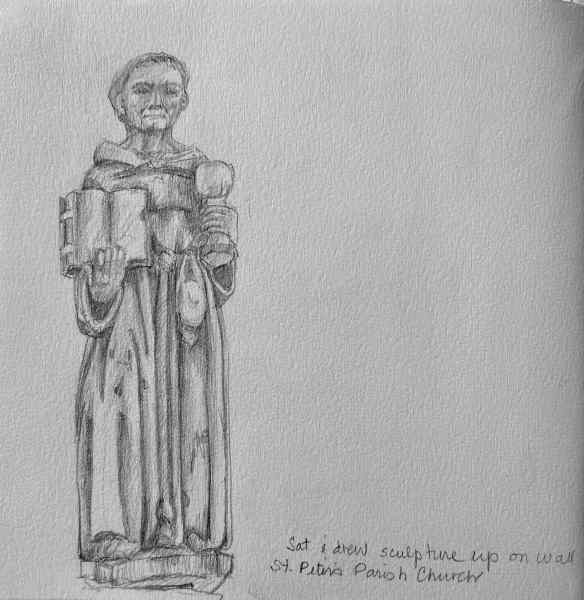 Bob took interesting photos of the inside and outside view of these two stained glass windows.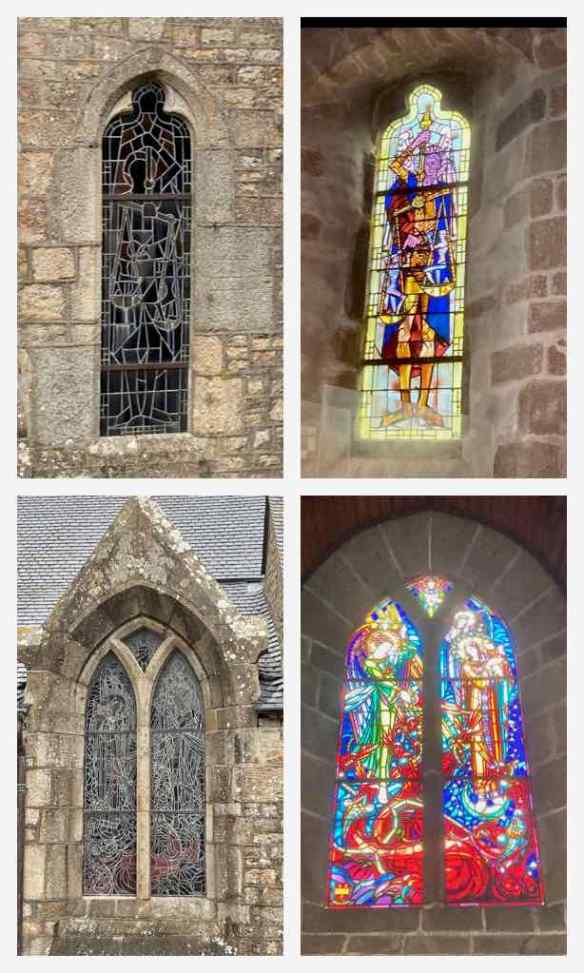
People are still coming and going…lots of people!
This photo of the bell tower just barely shows the golden statue of St. Michael threatening a dragon, who represents evil, with his sword. St. Michael is perched 156 metres high, is 4.5 metres tall and weighs 520 kg. The statue is made of gilded copper and serves as a lightning rod.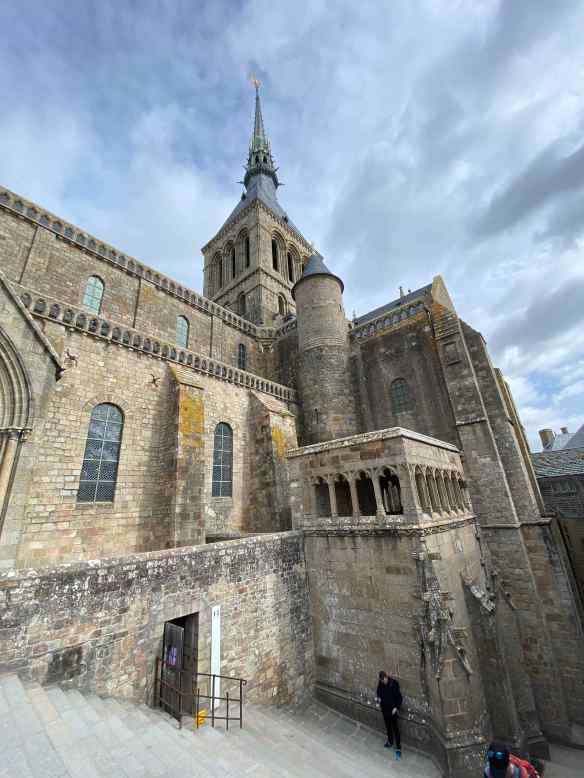
We wander the back streets which most people seem to ignore. There are lots of steps….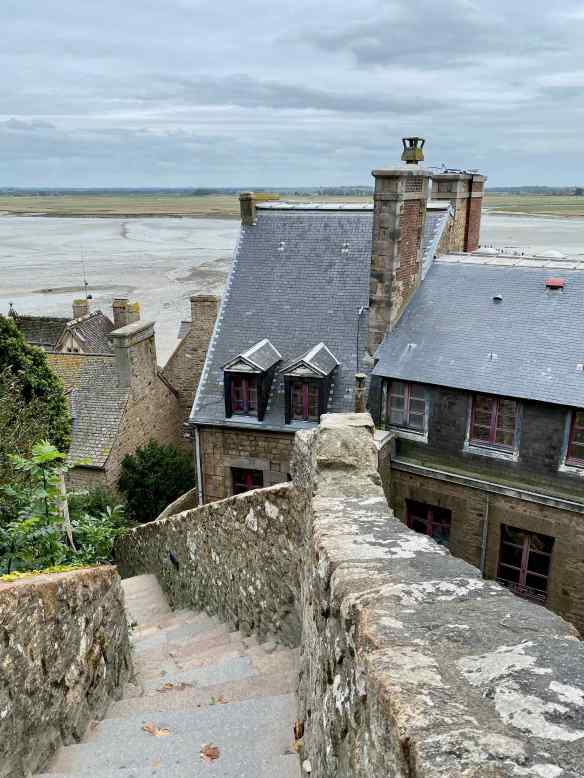 …interesting details…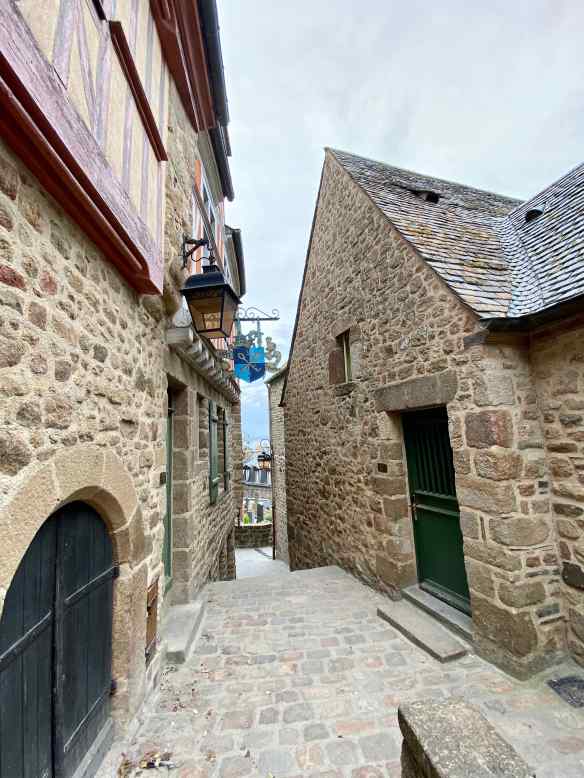
…narrow streets…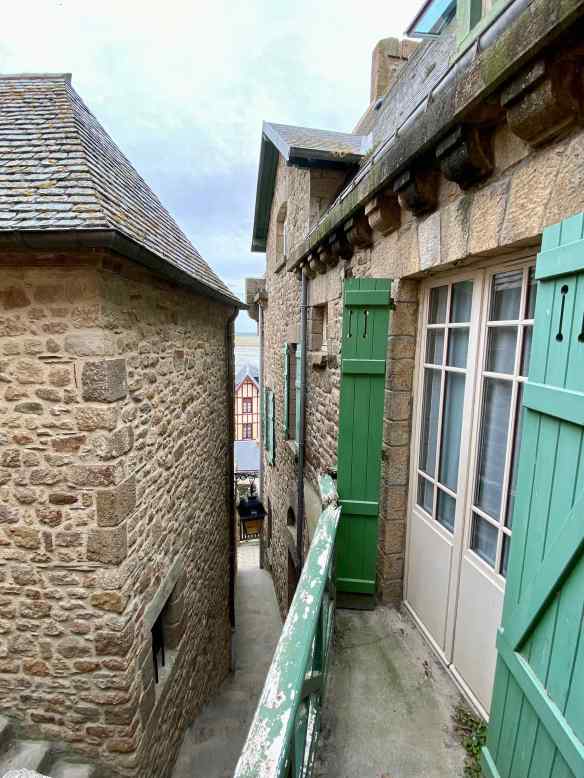 …crooked roof lines…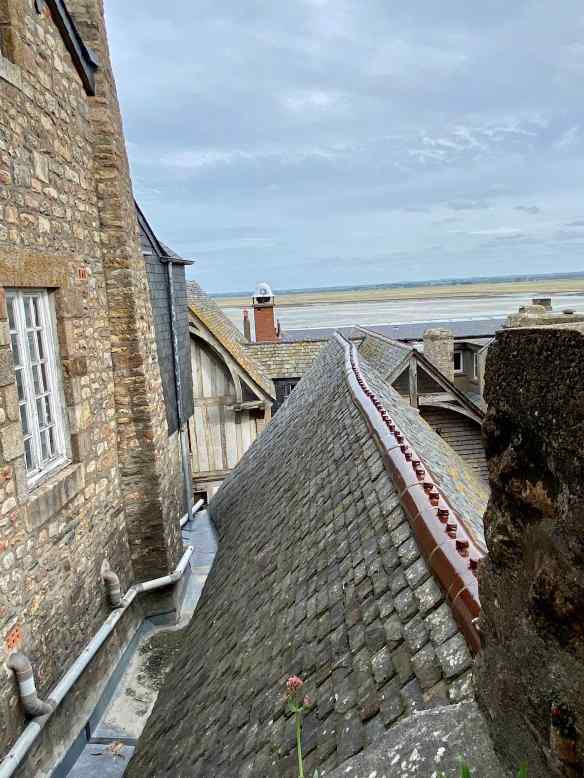
…fantastic rooftop views…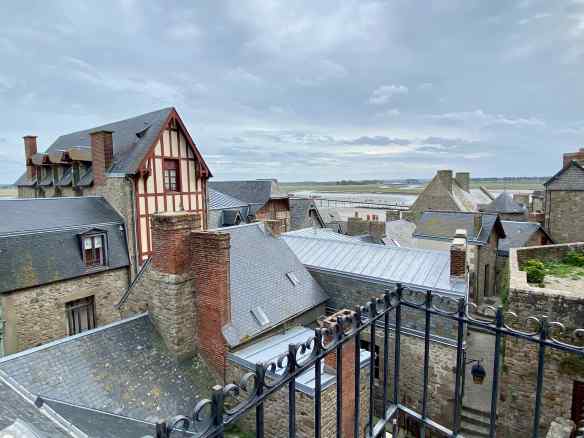
…more steps and stone walls…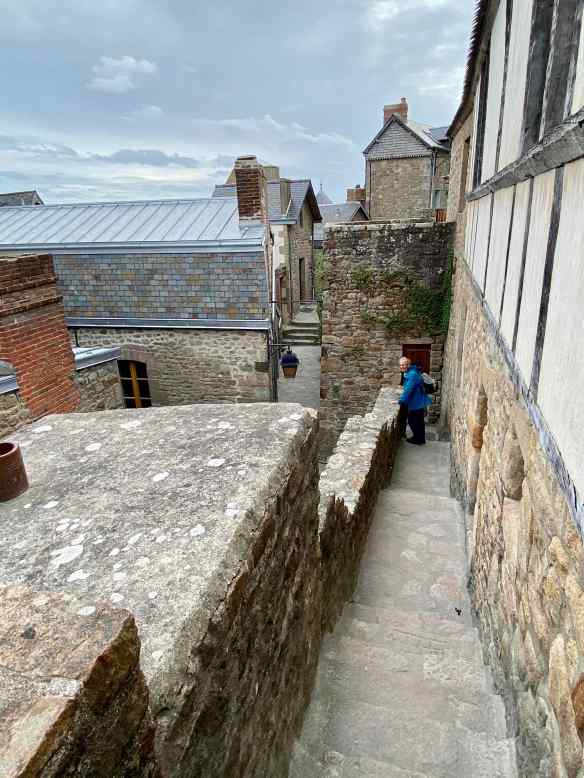
…the narrowest street ever…This is Cuckold’s Alley!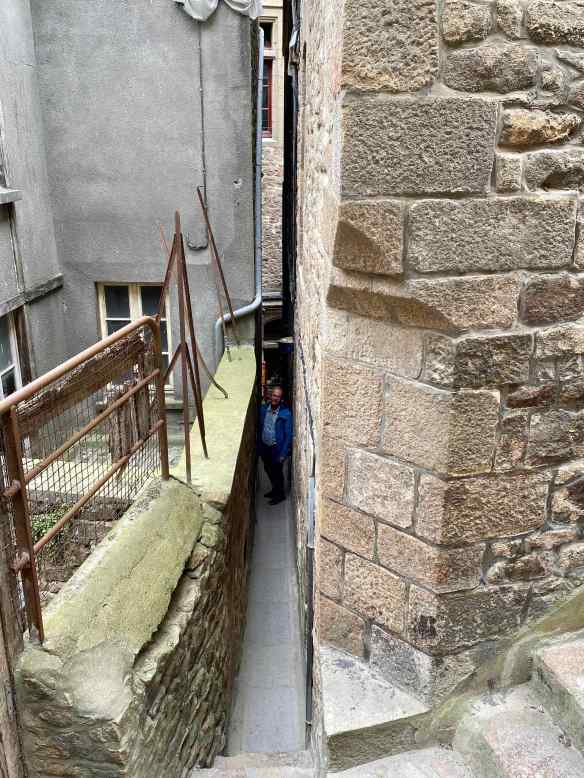
I think I may have mentioned steps…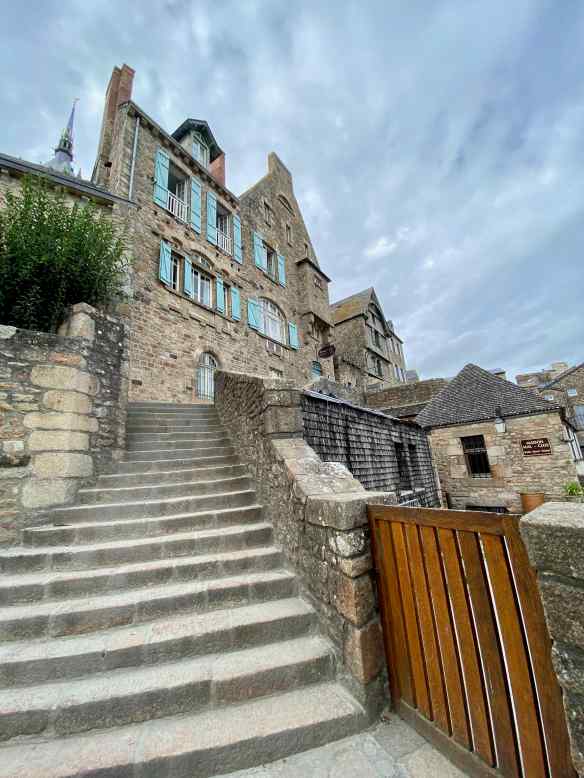
and buildings tucked into the strangest places…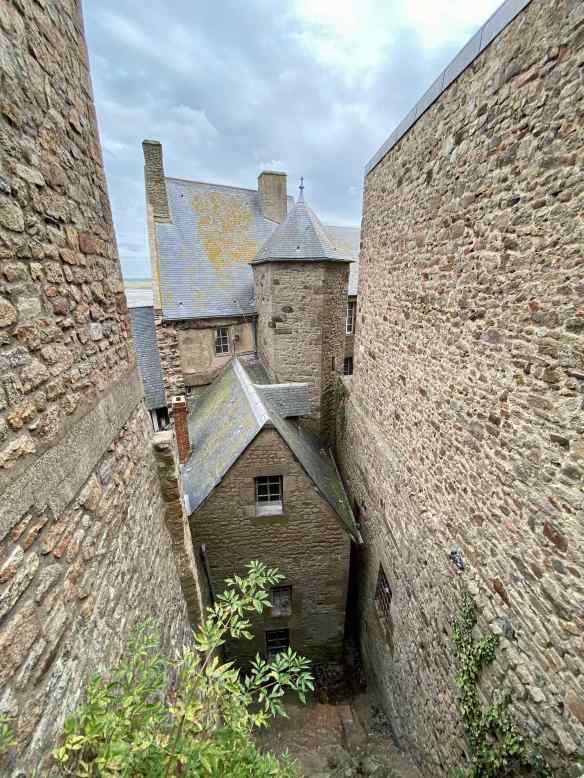
…and more steps with a tiny view of the ocean… 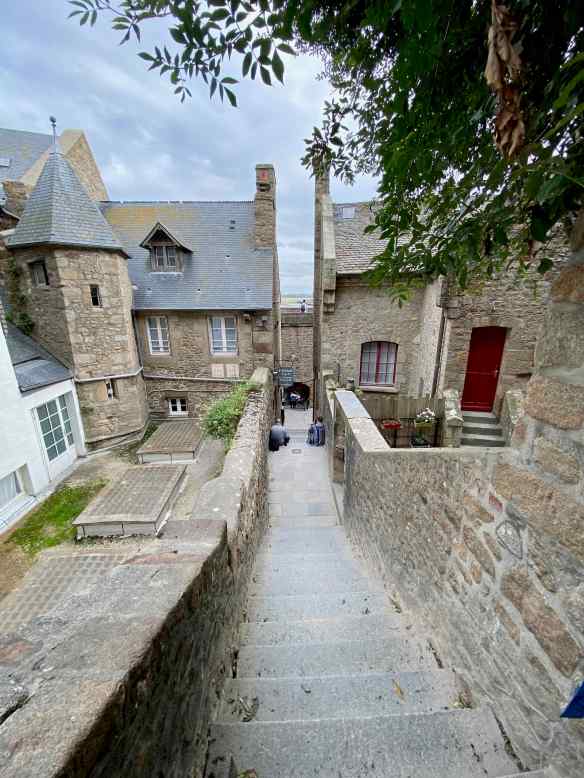
…which leads us back to the Main Street.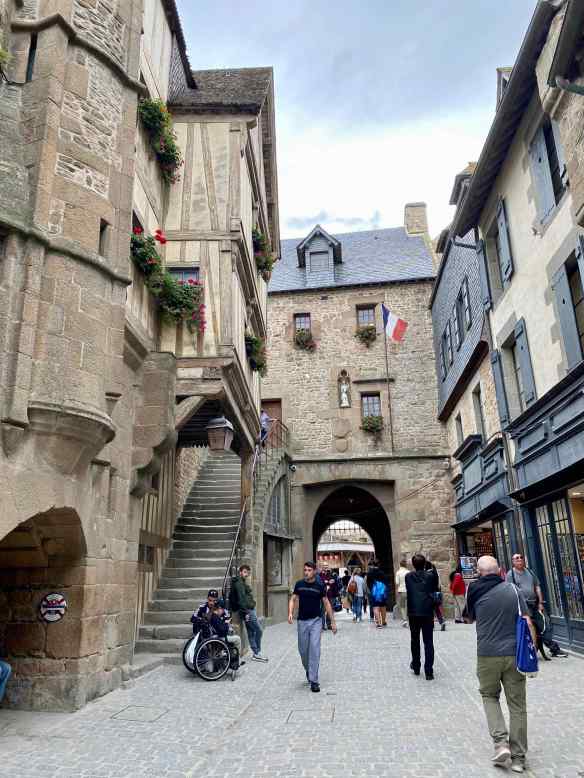
Time to cross the drawbridge and leave Mont St. Michel.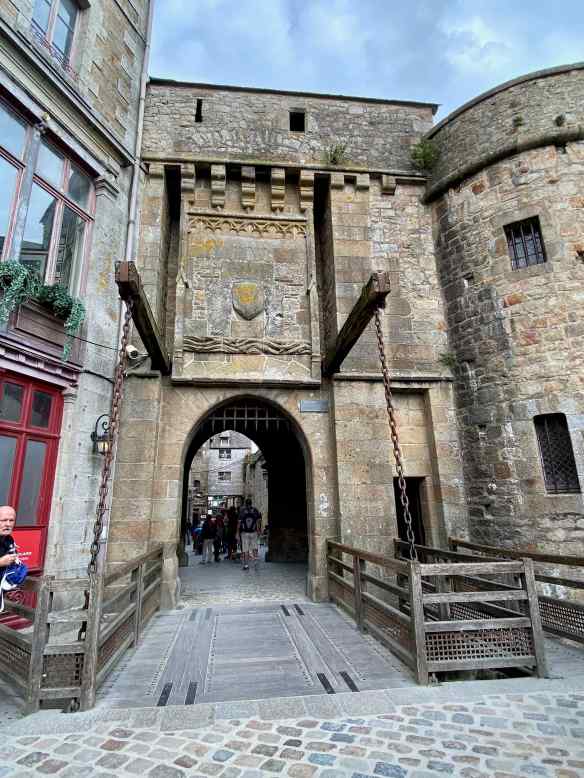
We say goodbye to Mont St. Michel after 7 hours of exploring this fabulous island. 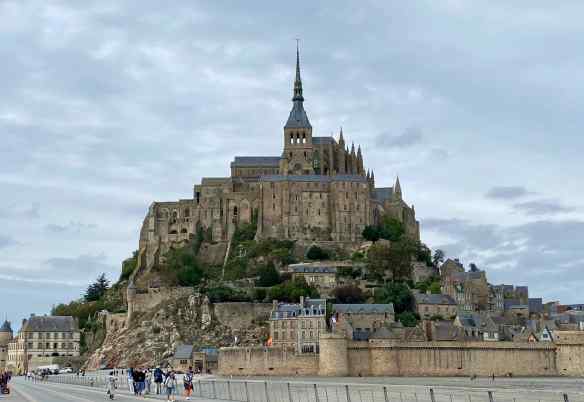
Day 21, Monday, September 18, 2023
Yesterday was a stay at home day. No photos, just relaxing and catching up on my blog and planning the next part of our trip.
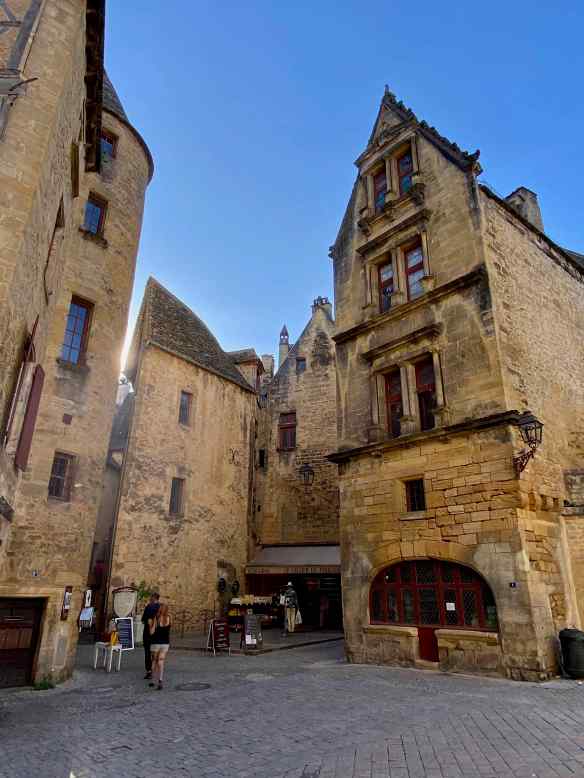
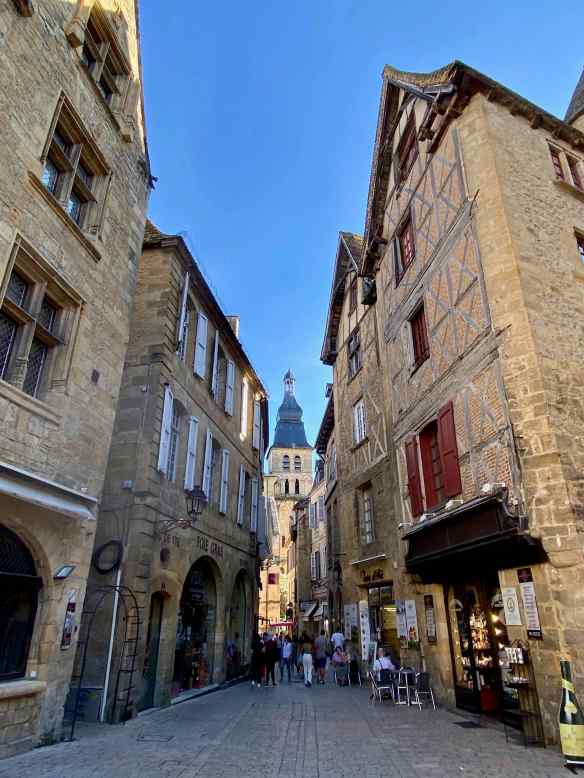
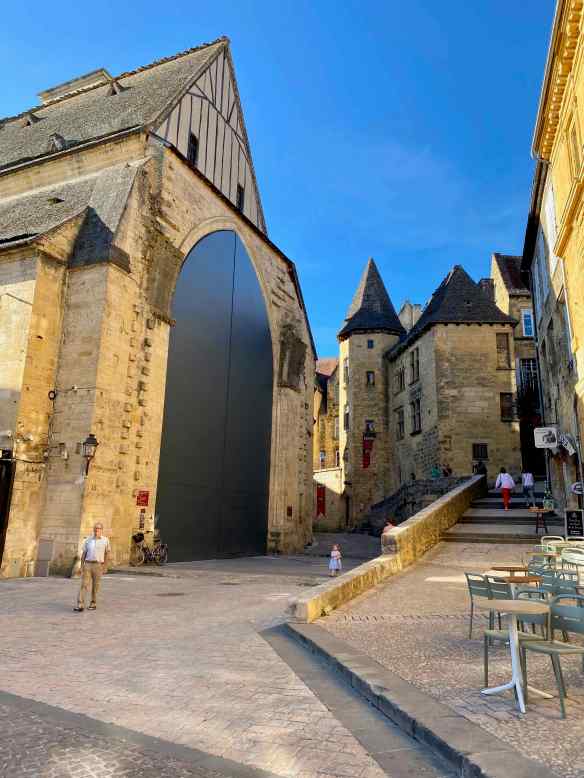
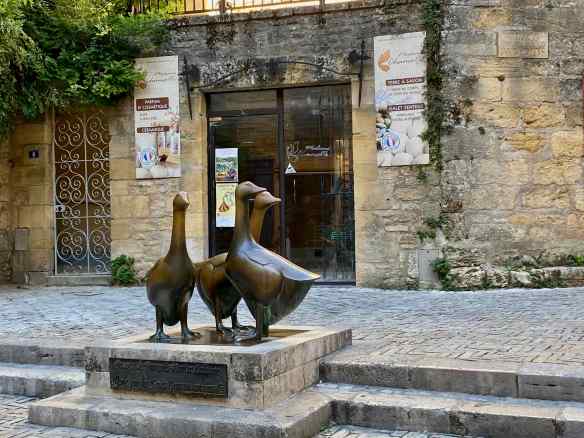
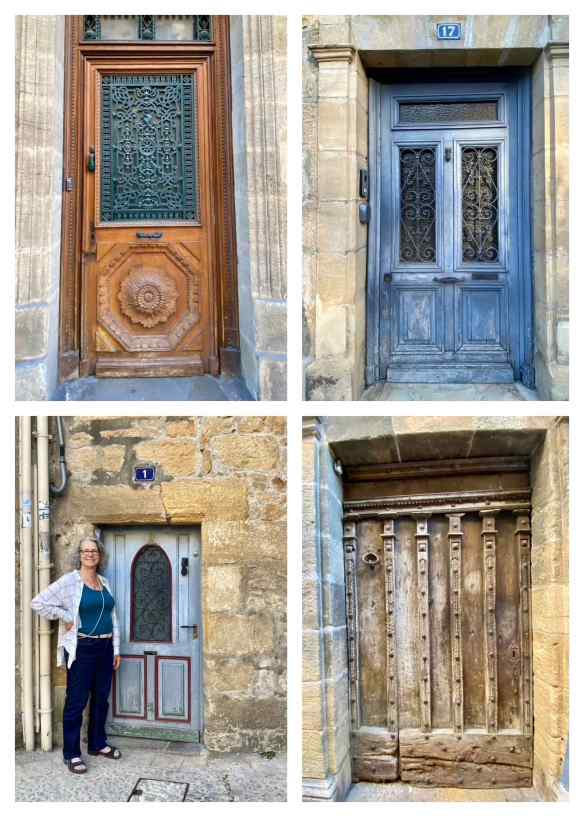
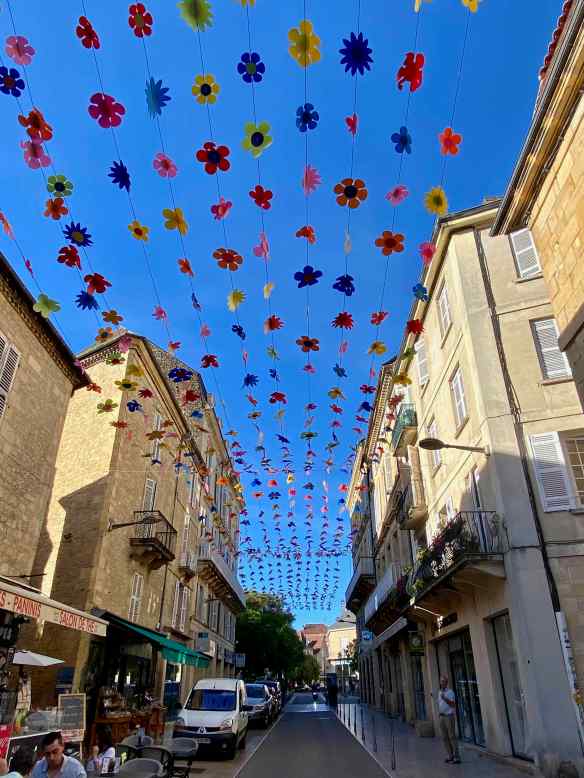
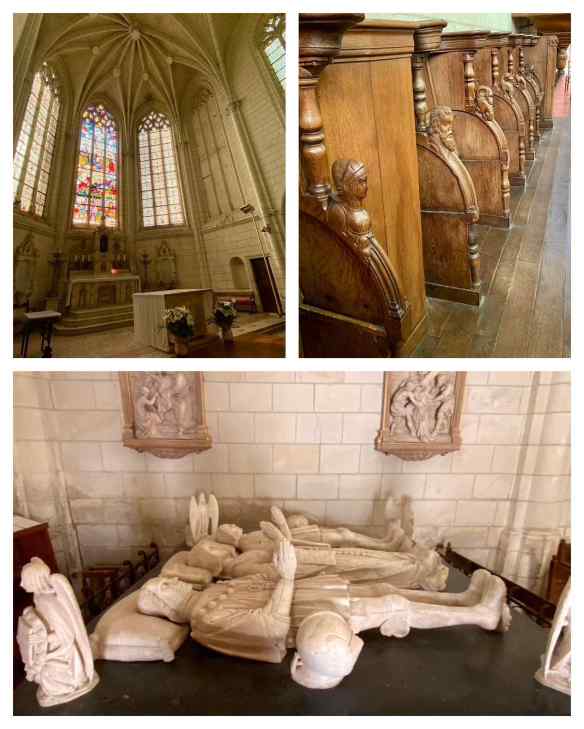
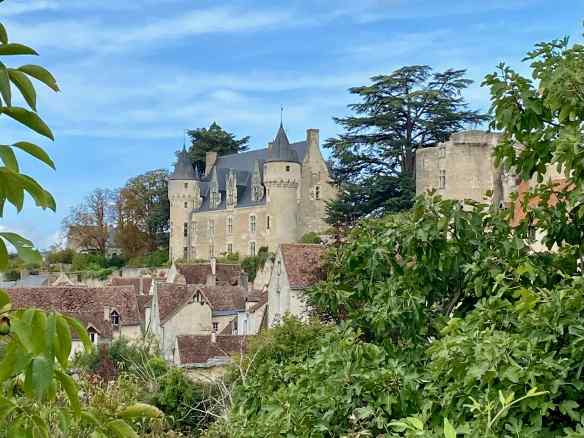
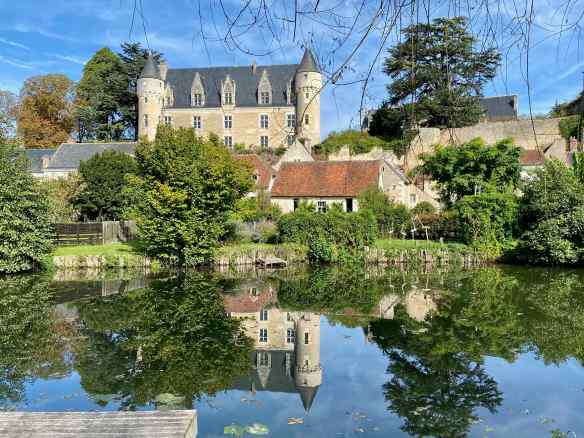
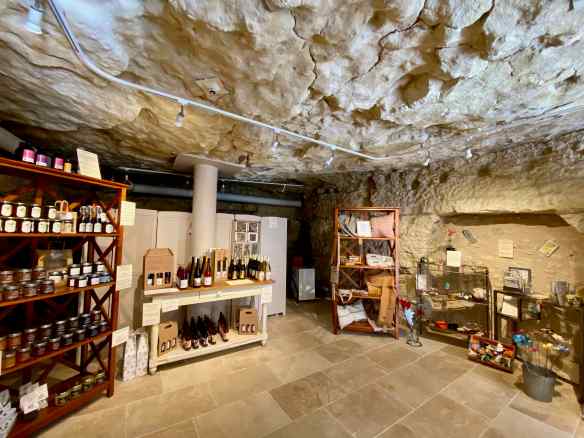
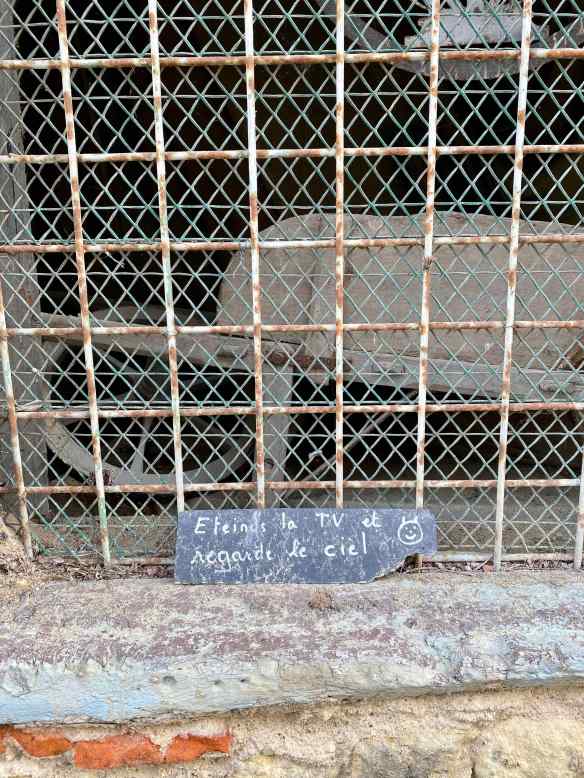
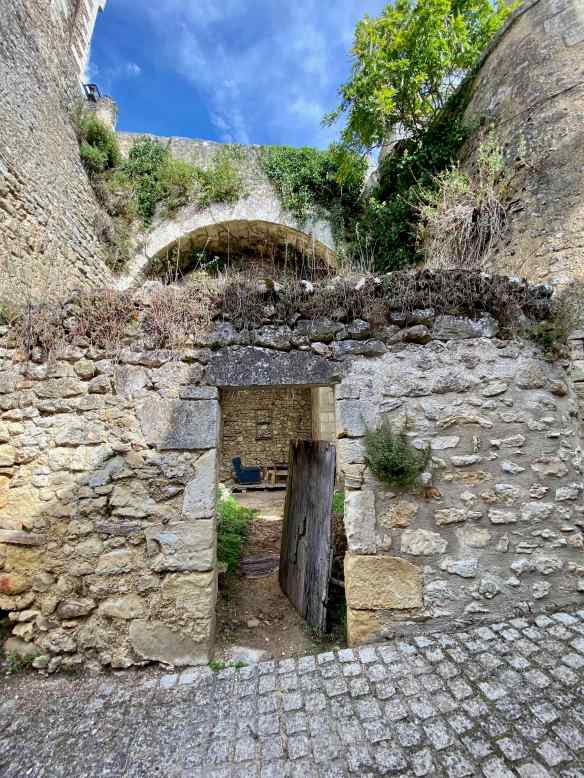
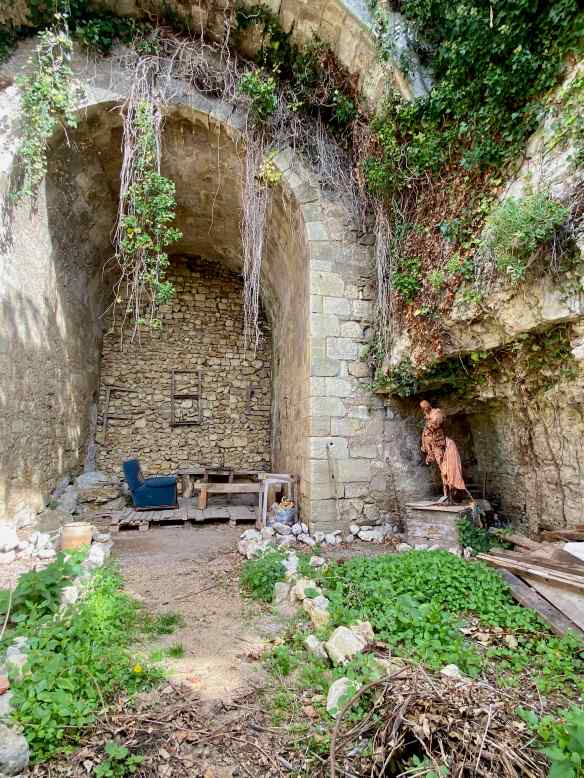
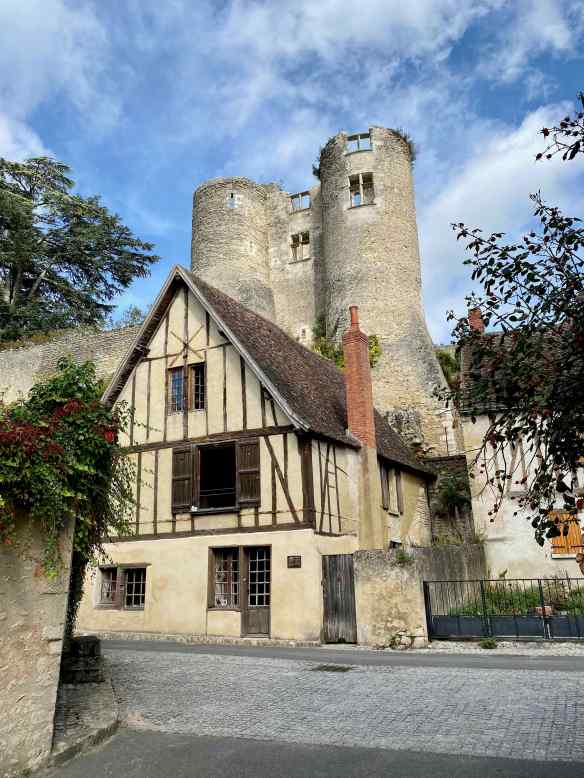 I loved this carved lizard, which is the symbol of Montrésor.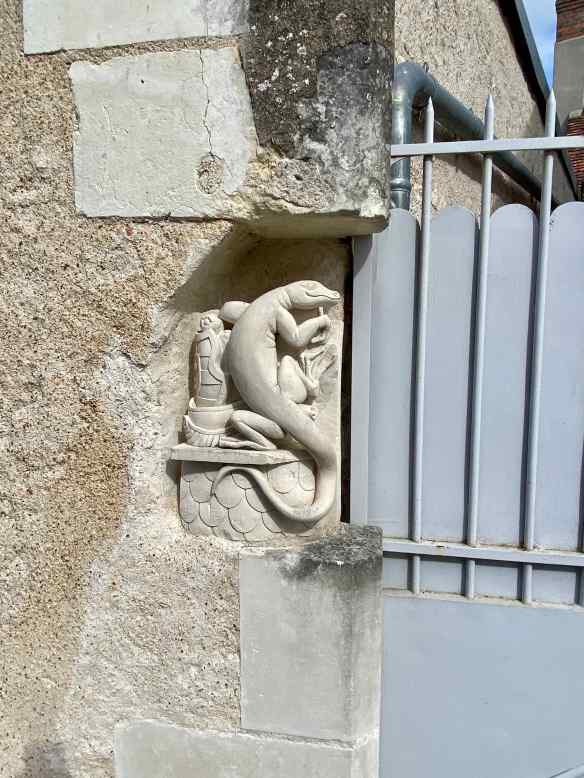
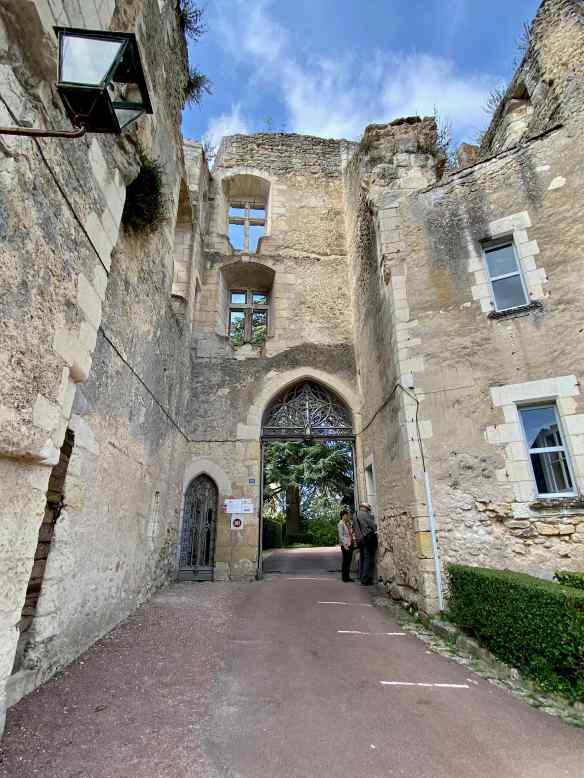
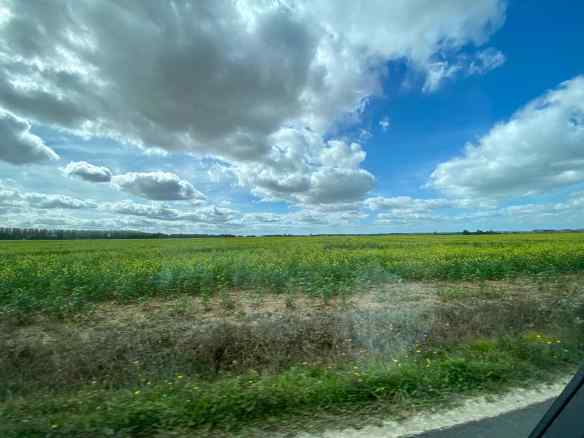
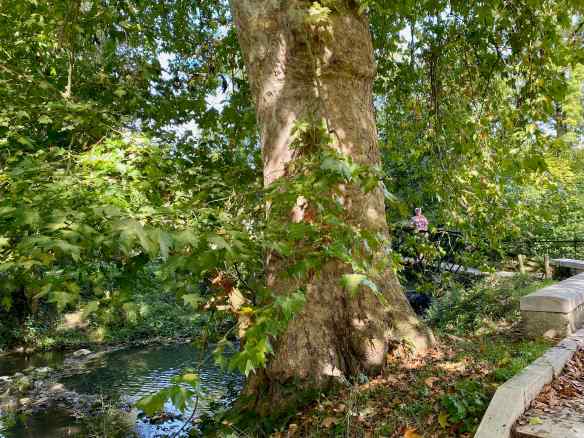
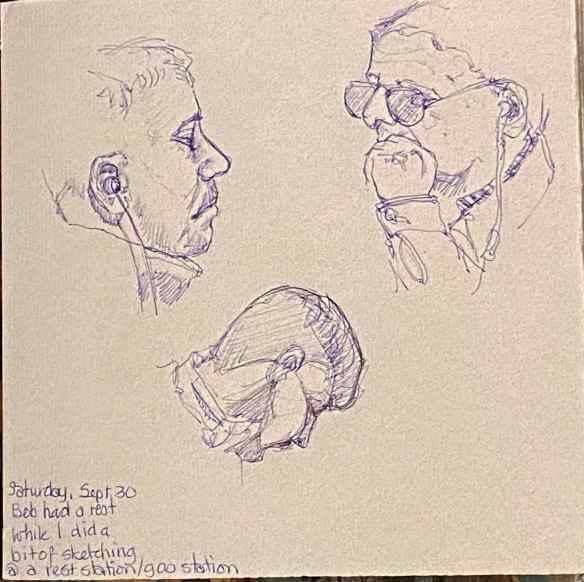 I notice that the leaves are staring to turn colour…winter is coming!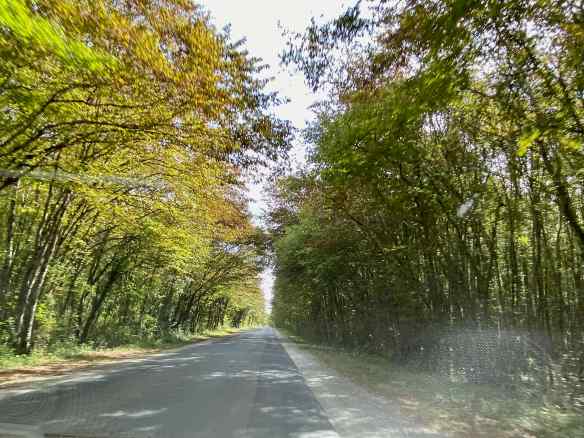
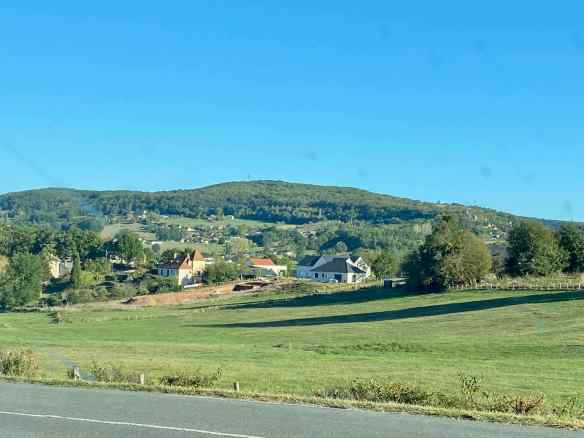
 But then we enter the display area for the Apocalypse Tapestry and we are utterly astonished. This is the largest medieval tapestry in the world!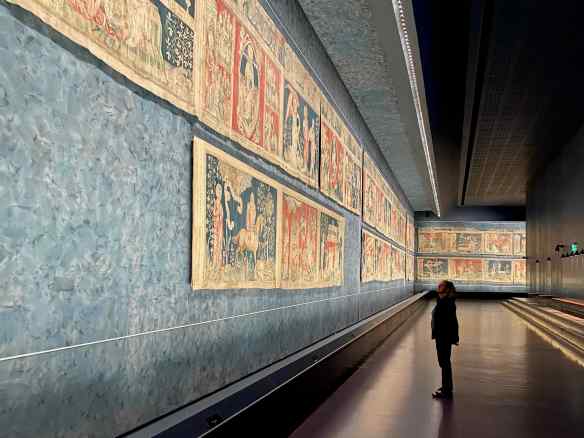
 This information gives a brief history of this incredible tapestry.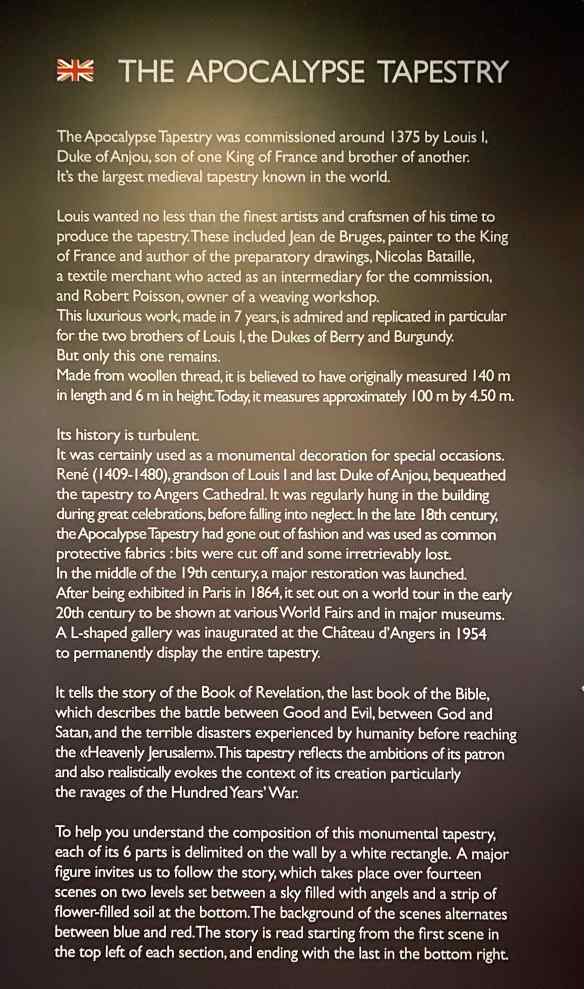
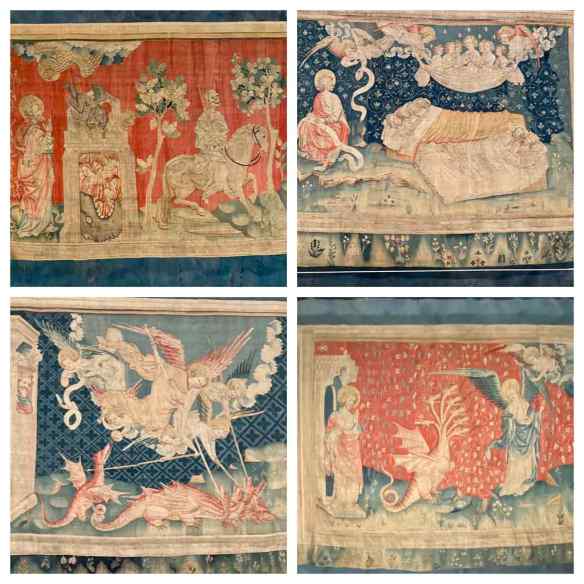


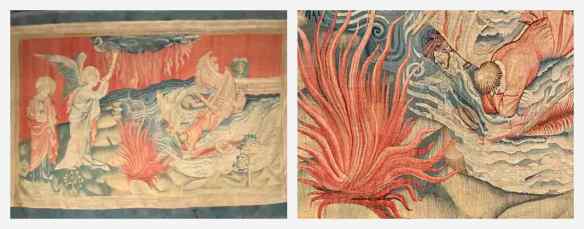 Another interesting panel…well, they are actually all very interesting.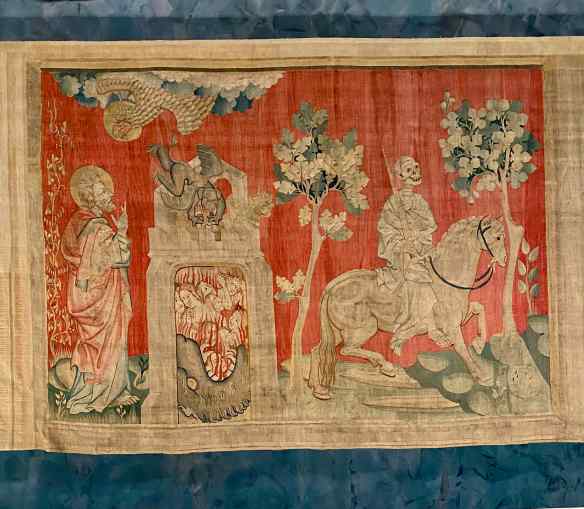

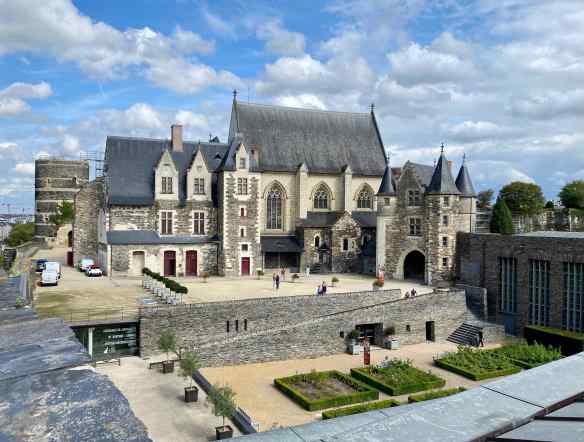
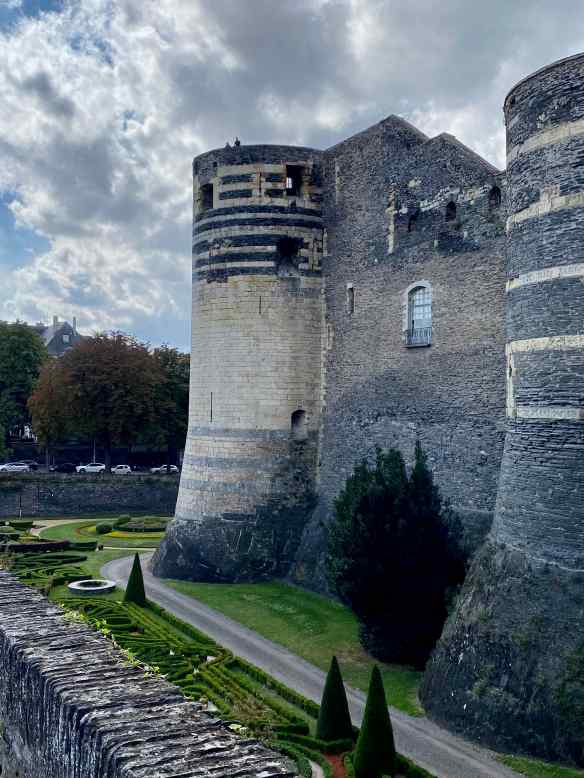


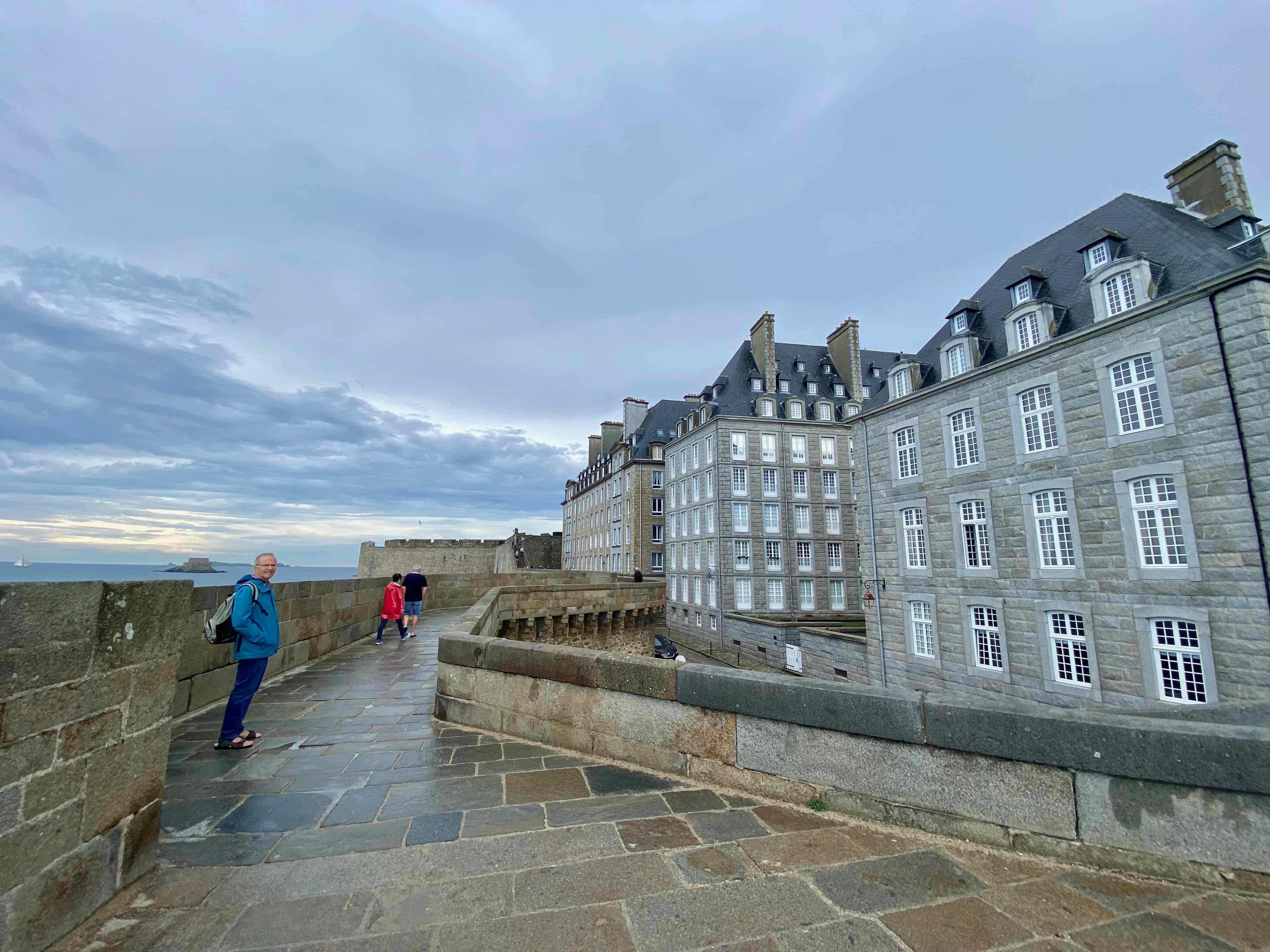 The walls below are as thick as these walkways.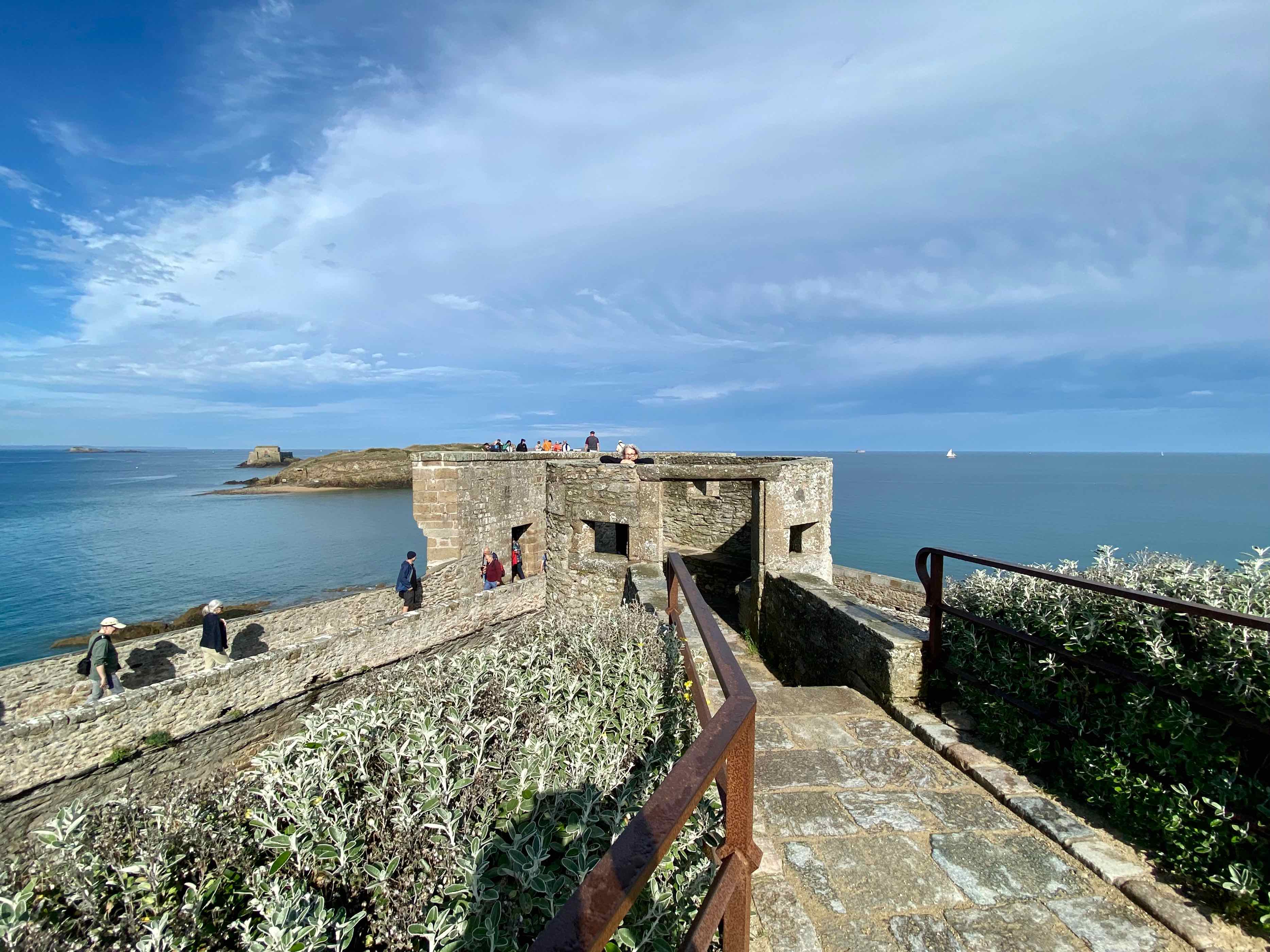
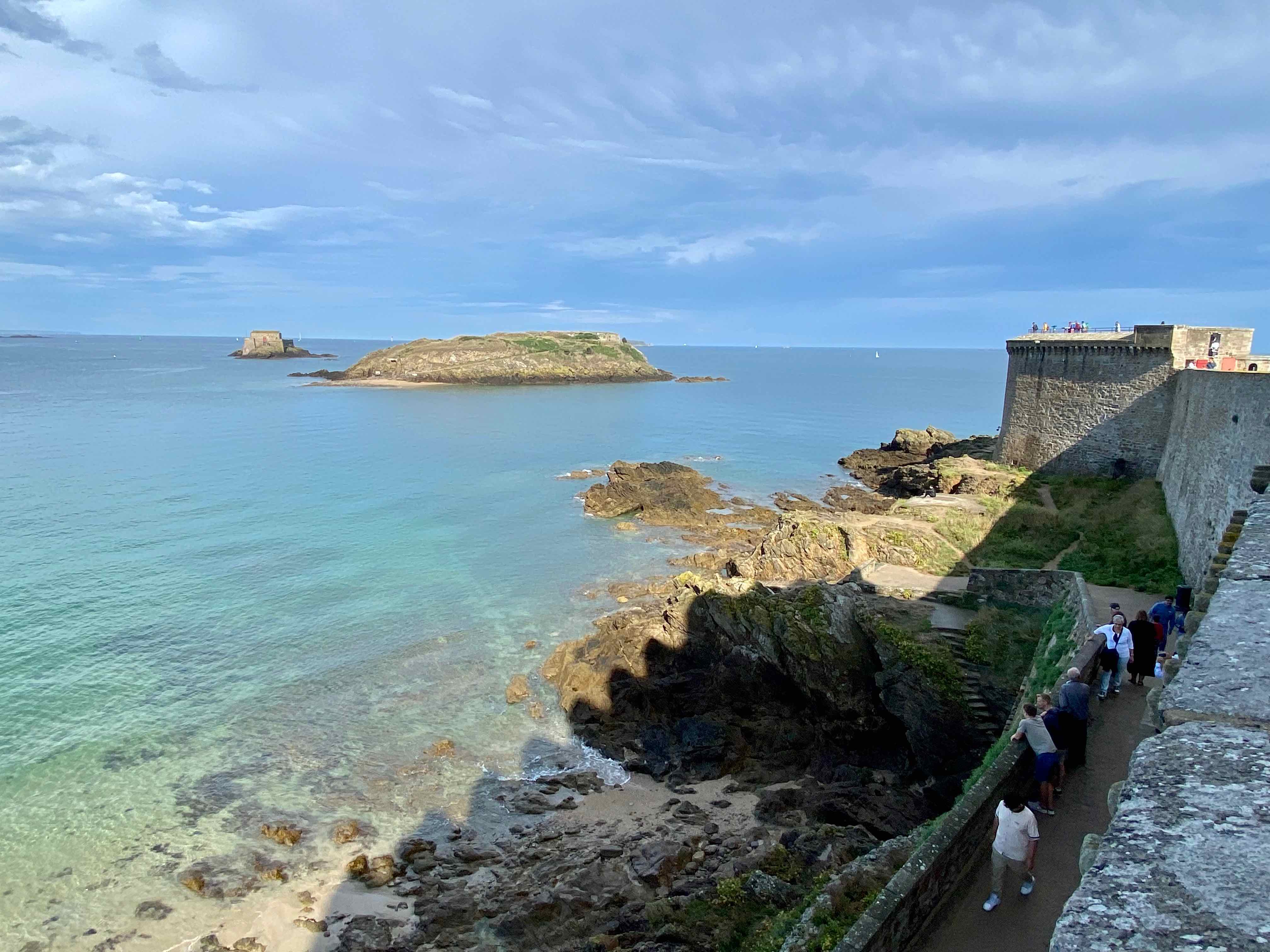
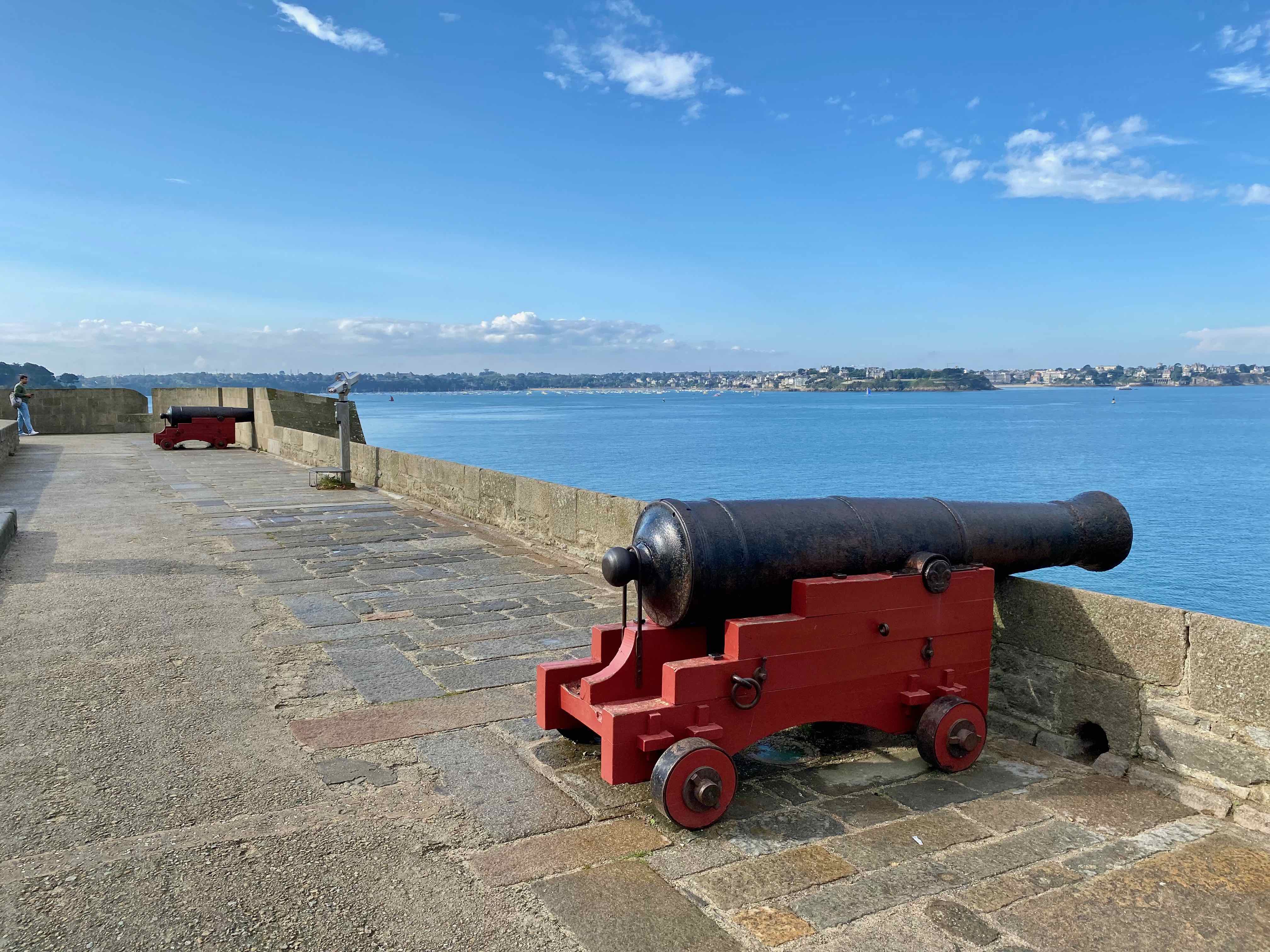 .Checking out the view…
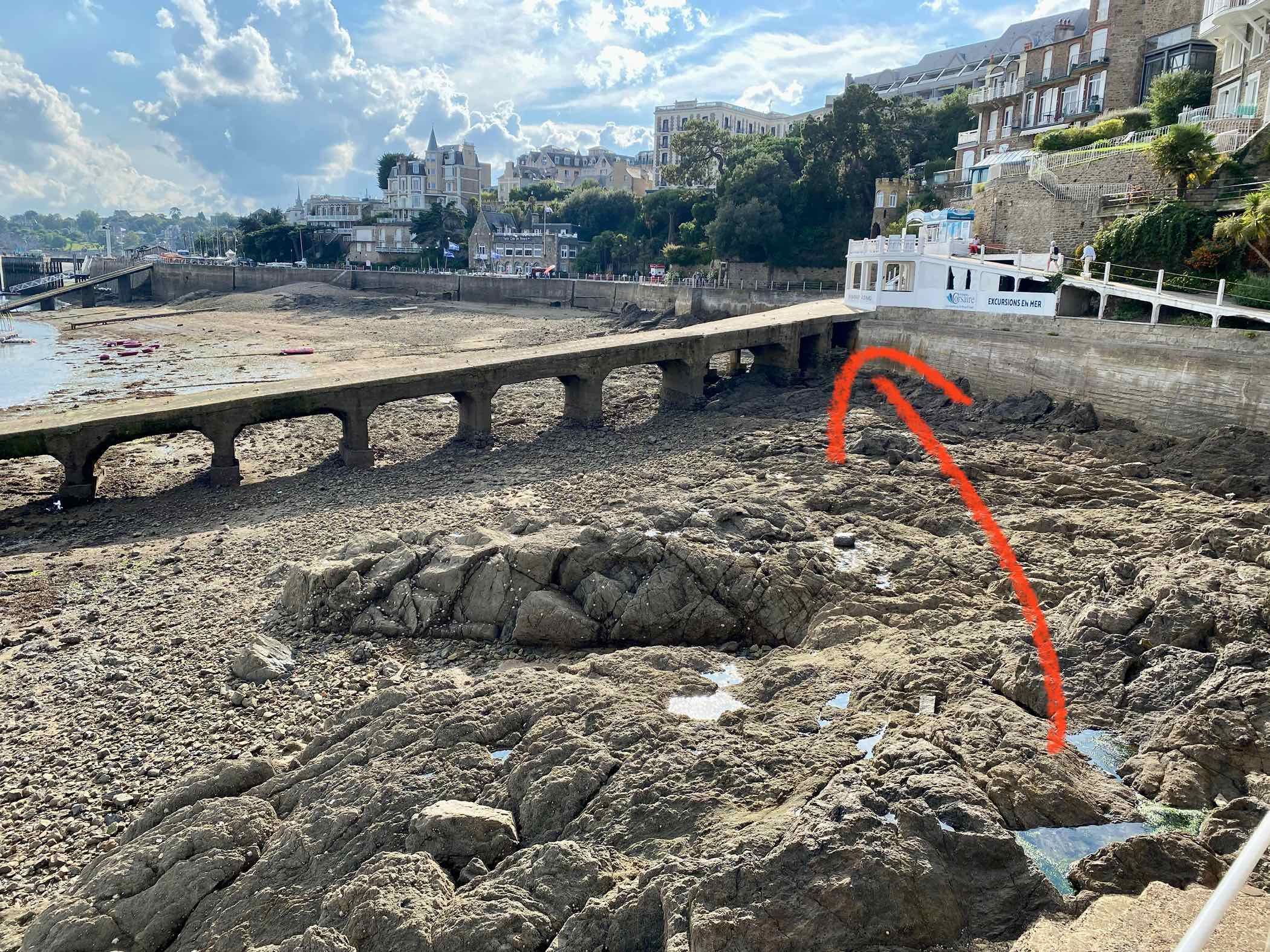
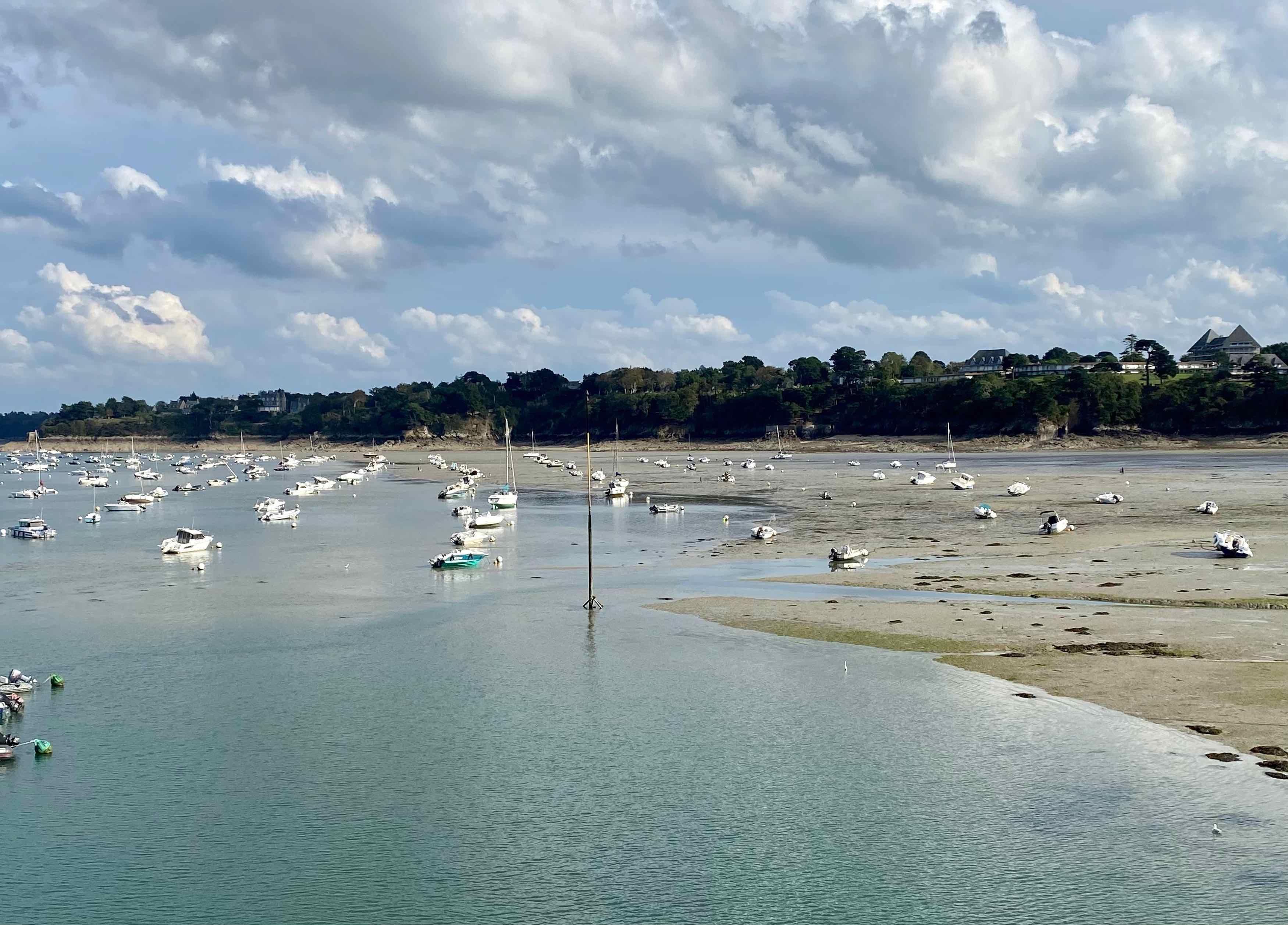
 …and here is the view. The tide is already starting to go out and more beach is visible.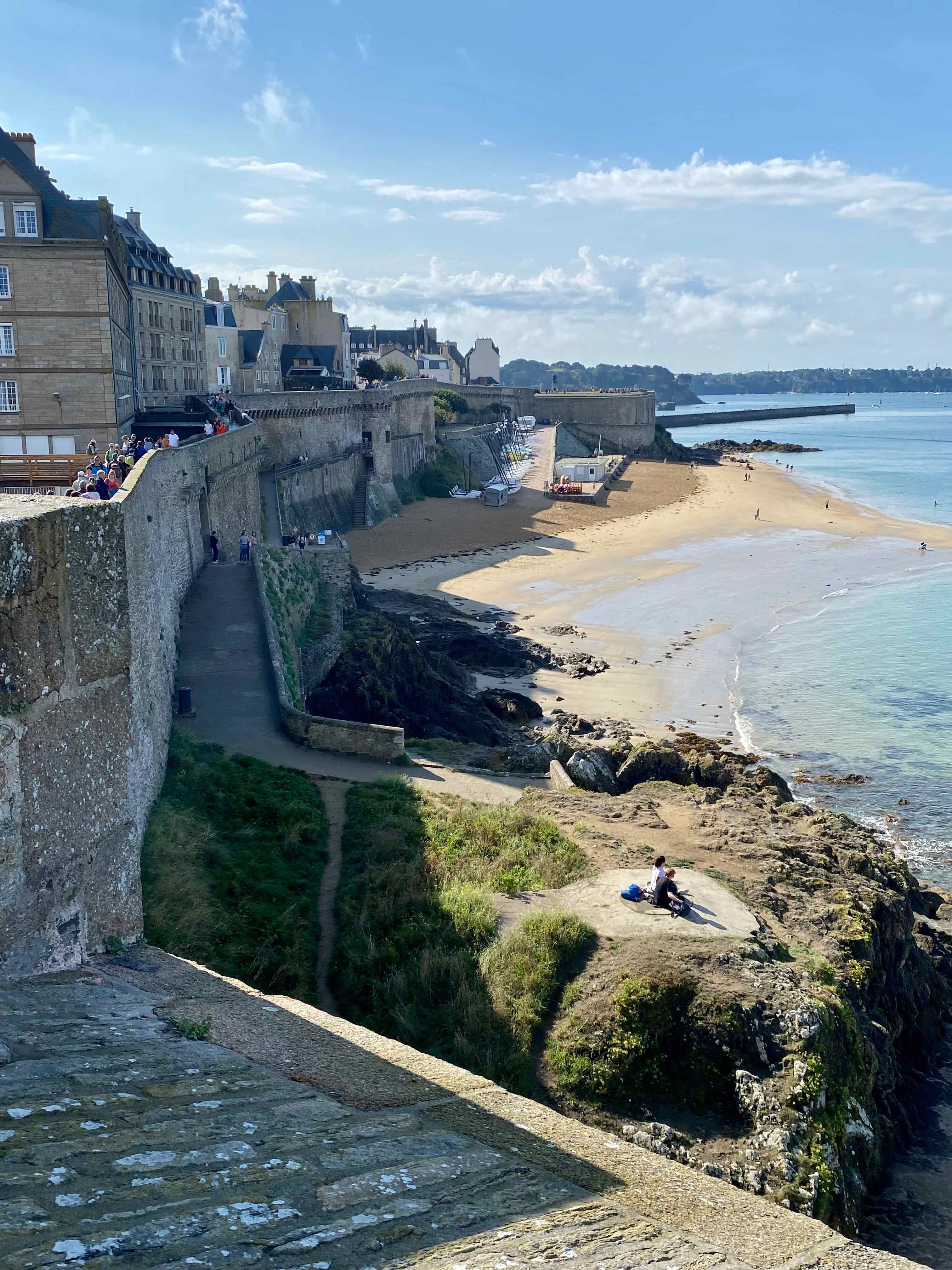
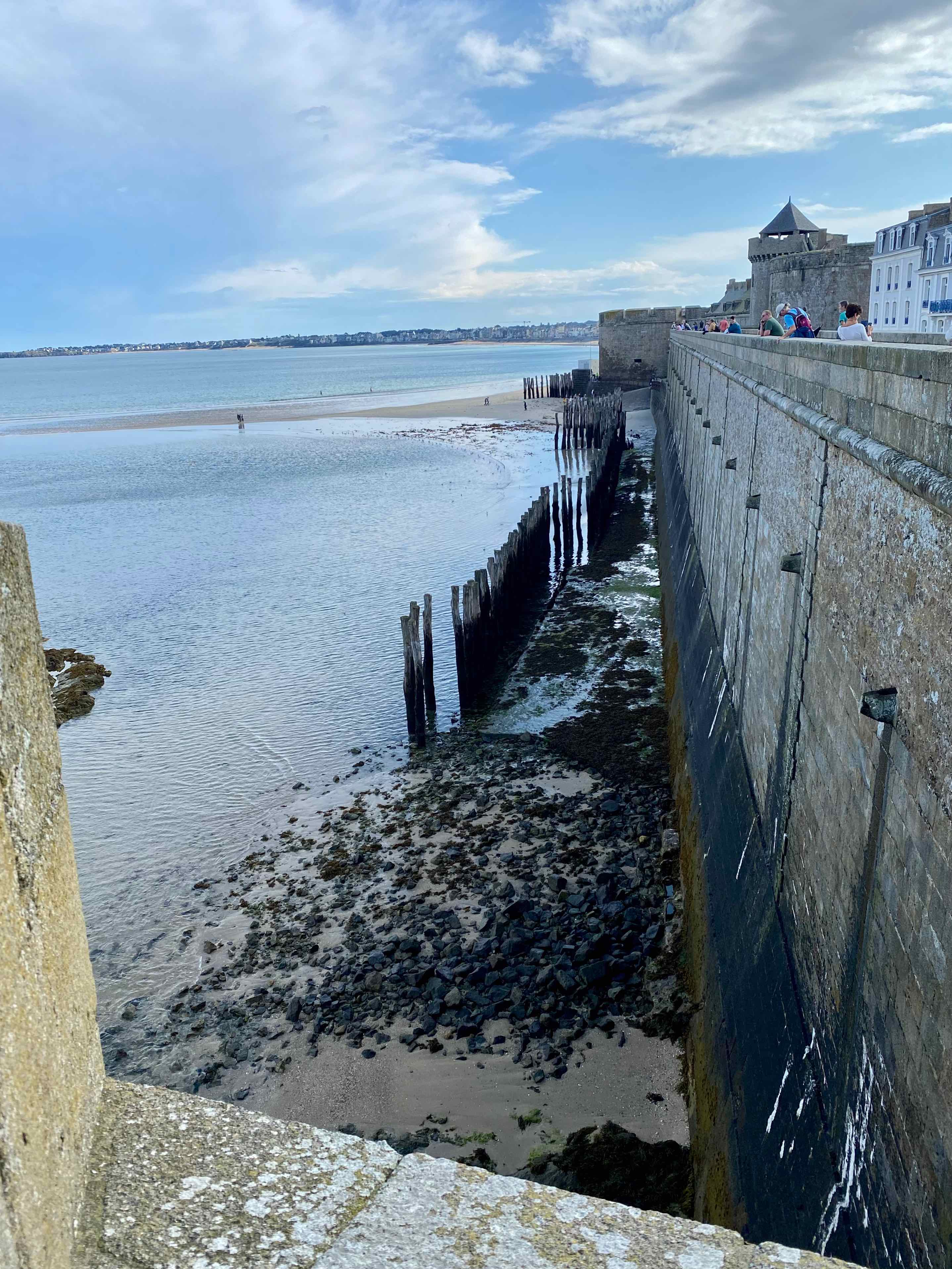
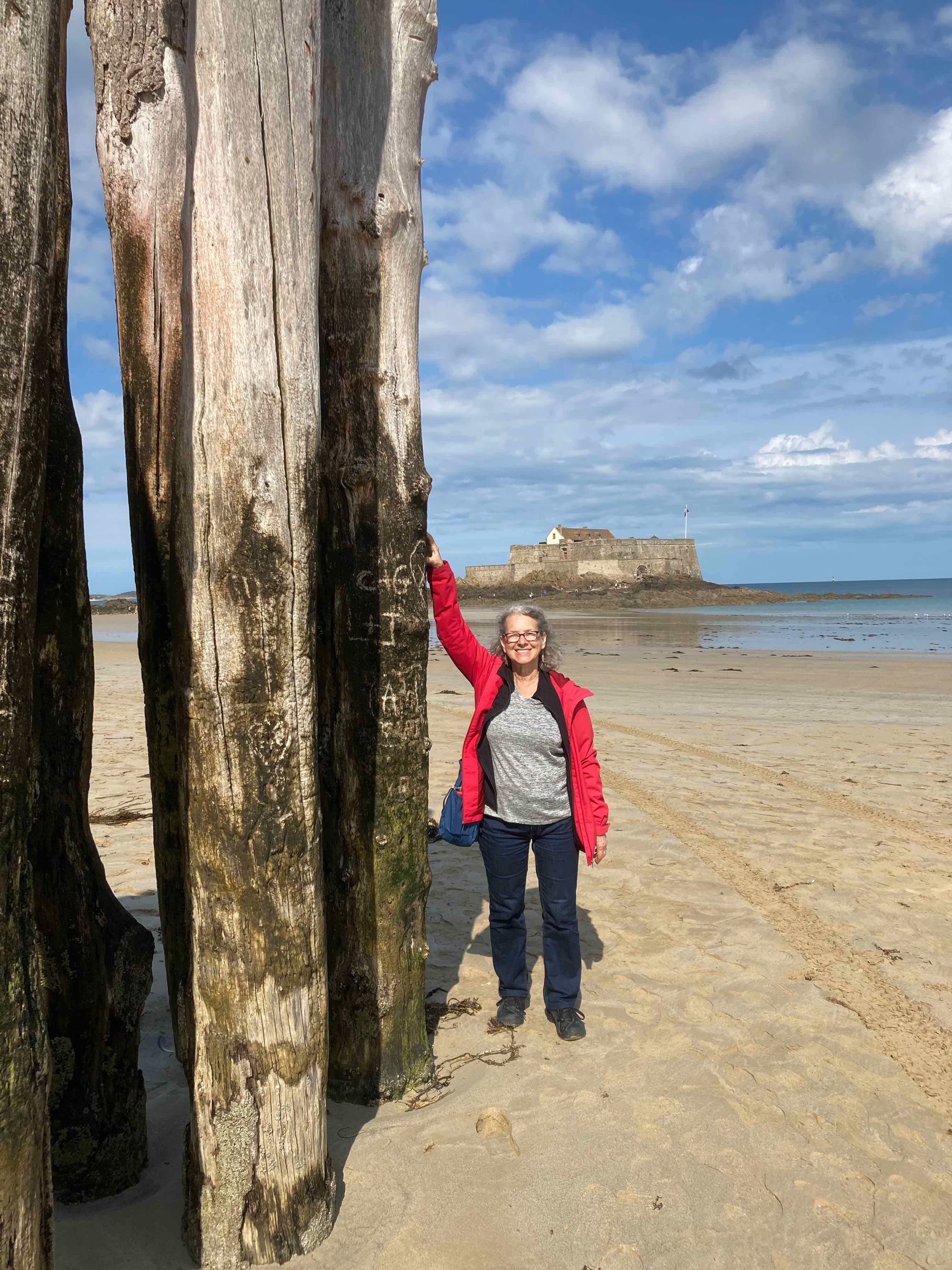
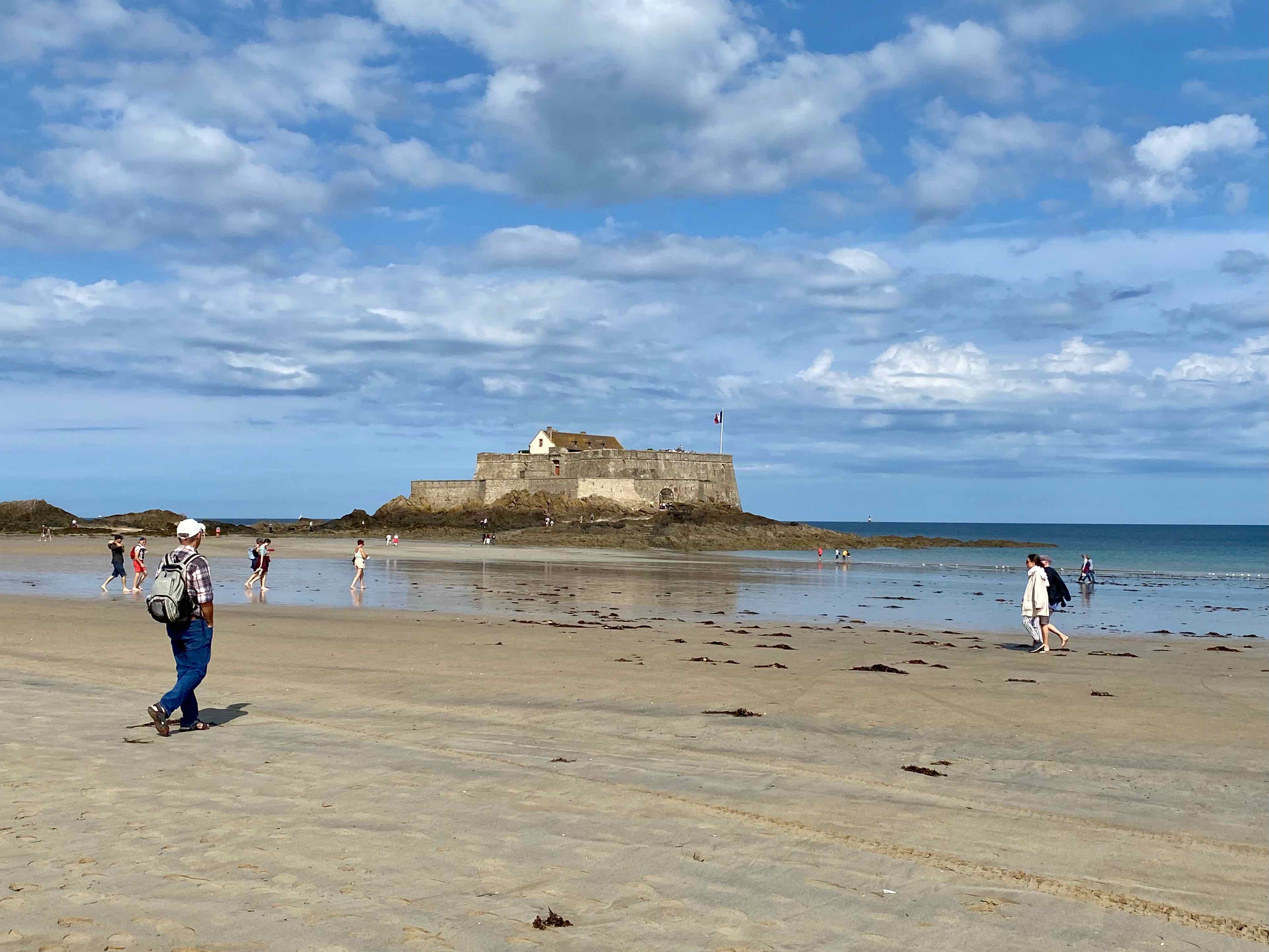


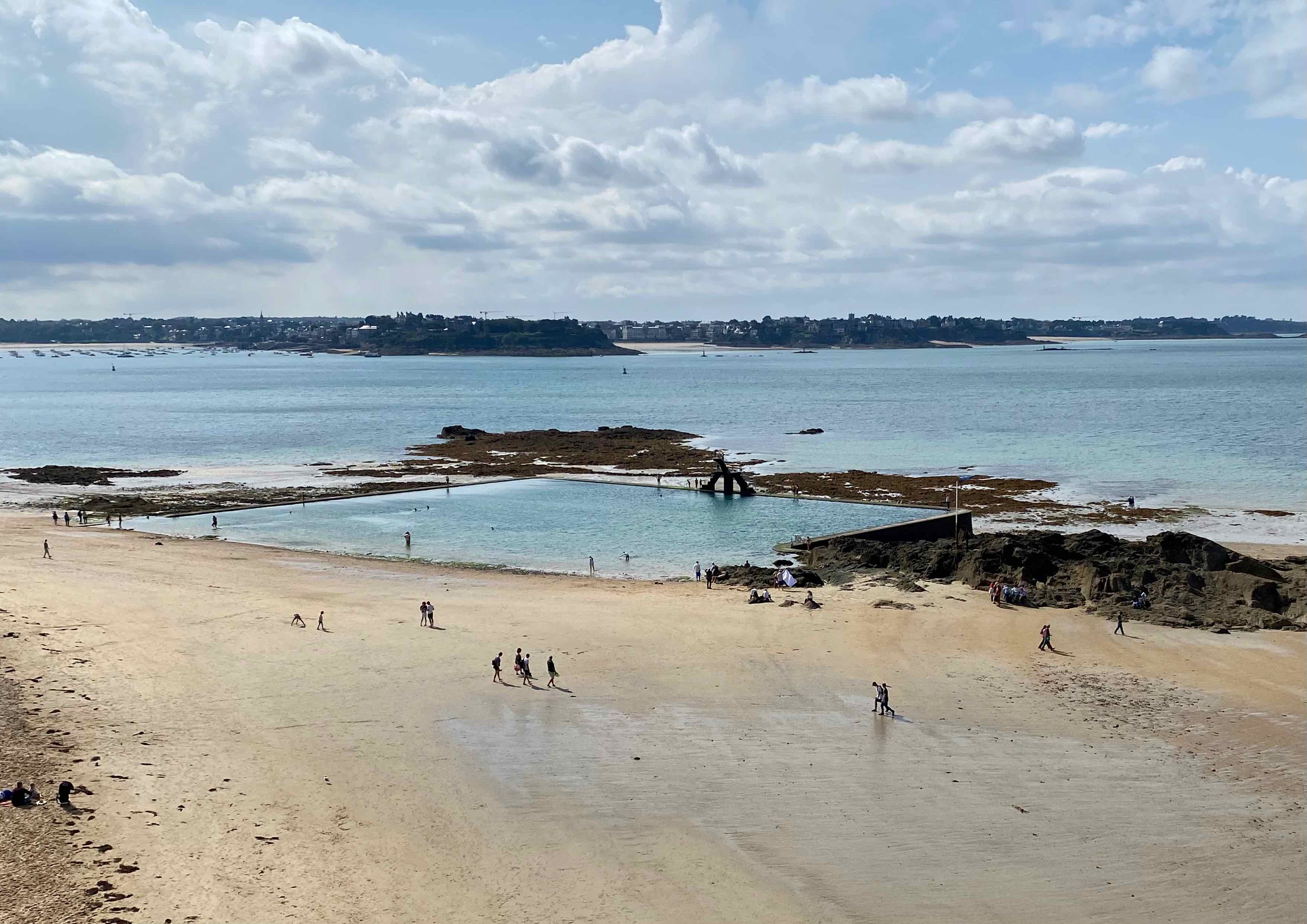 This is the same ‘island’ that we saw earlier…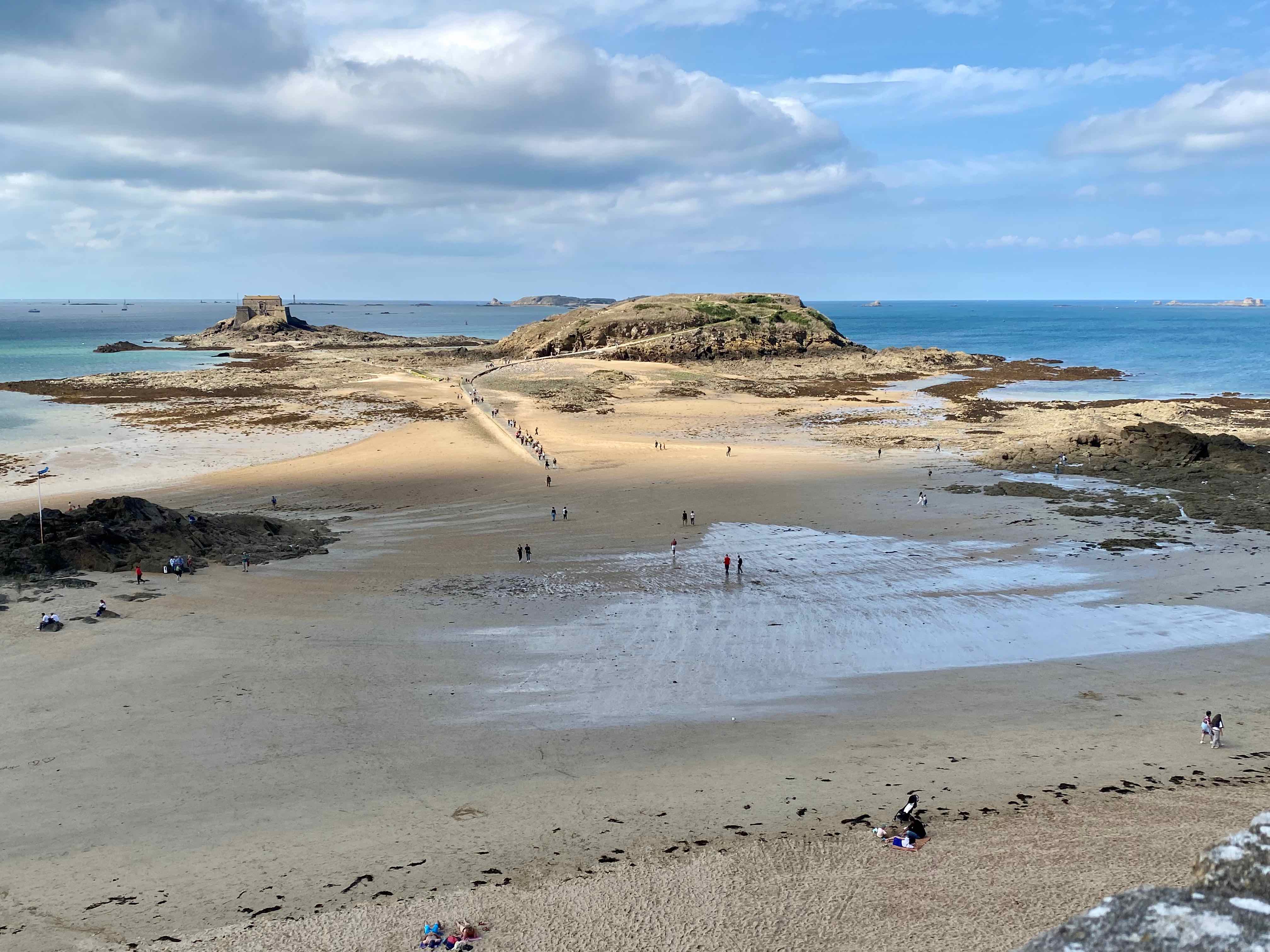
 When we arrived the water was almost up to the white part of this lighthouse..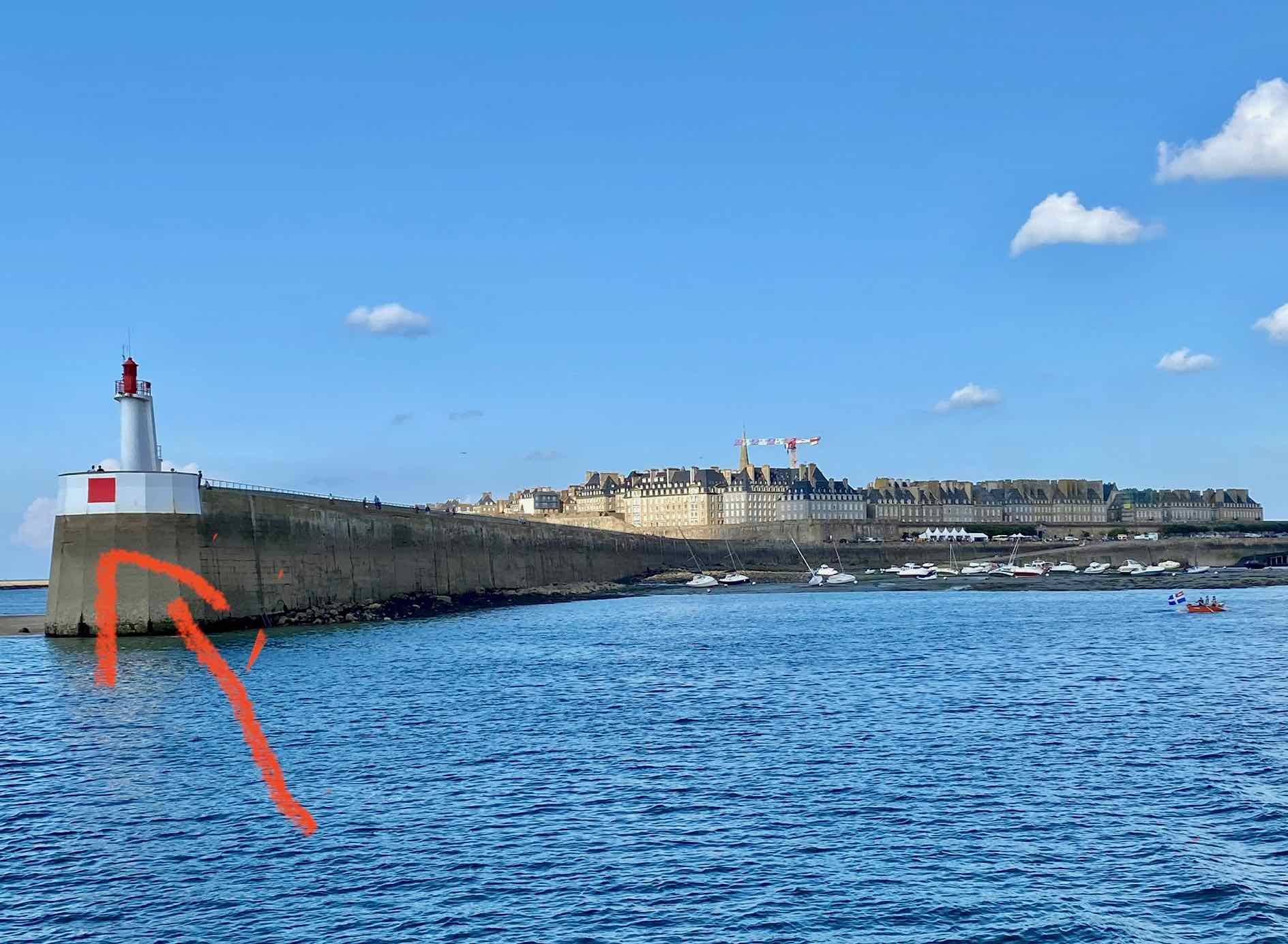

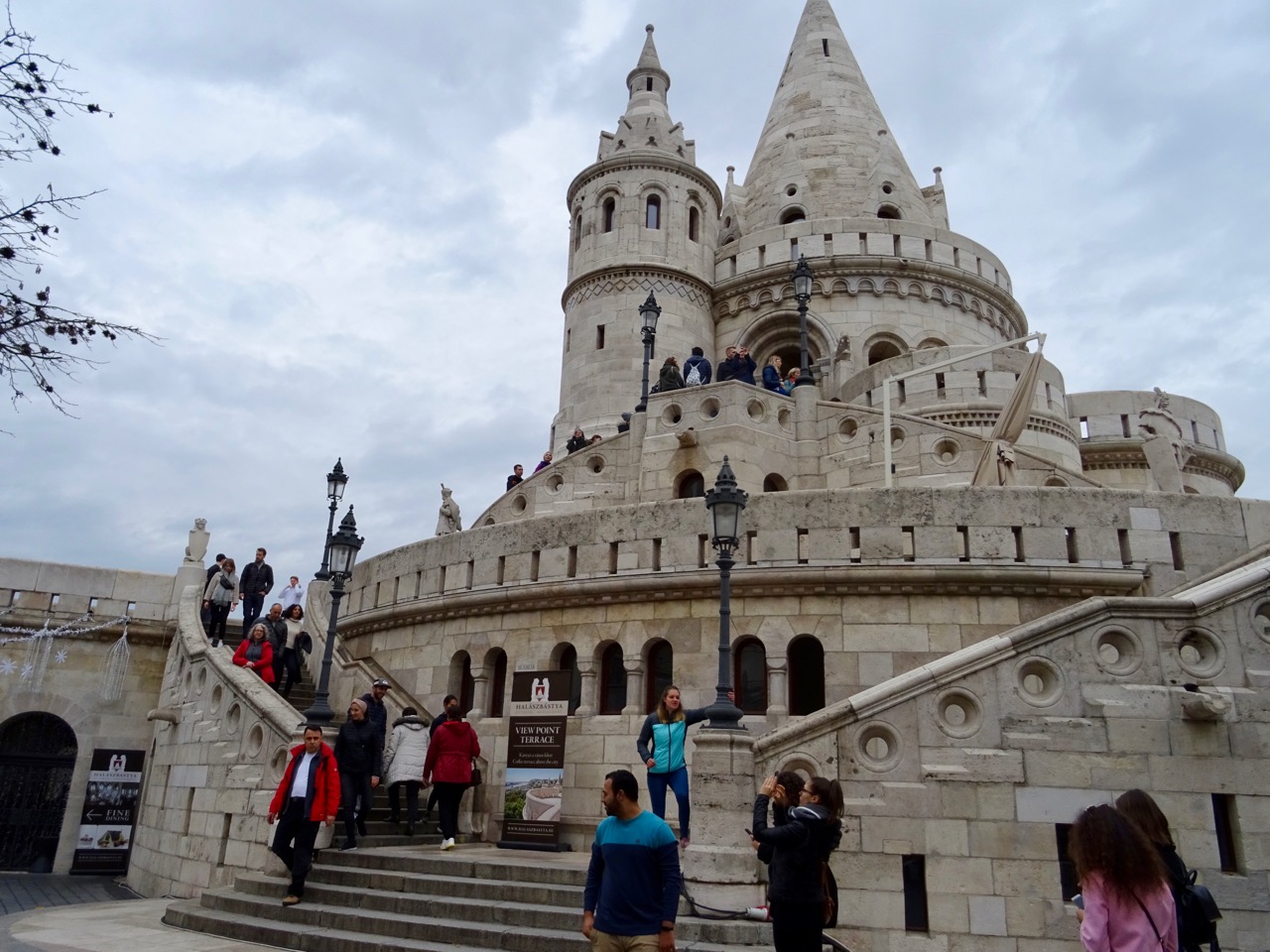
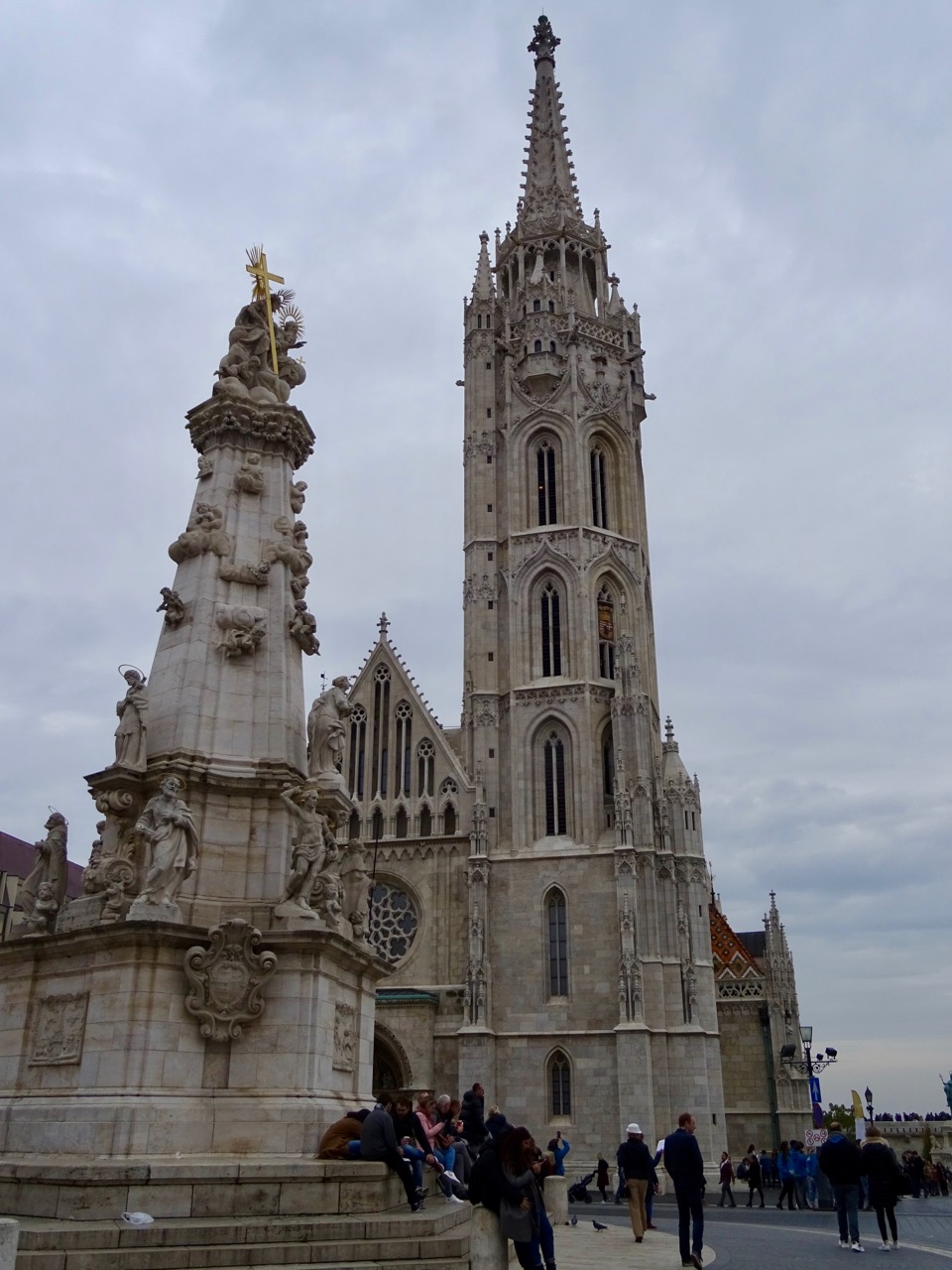
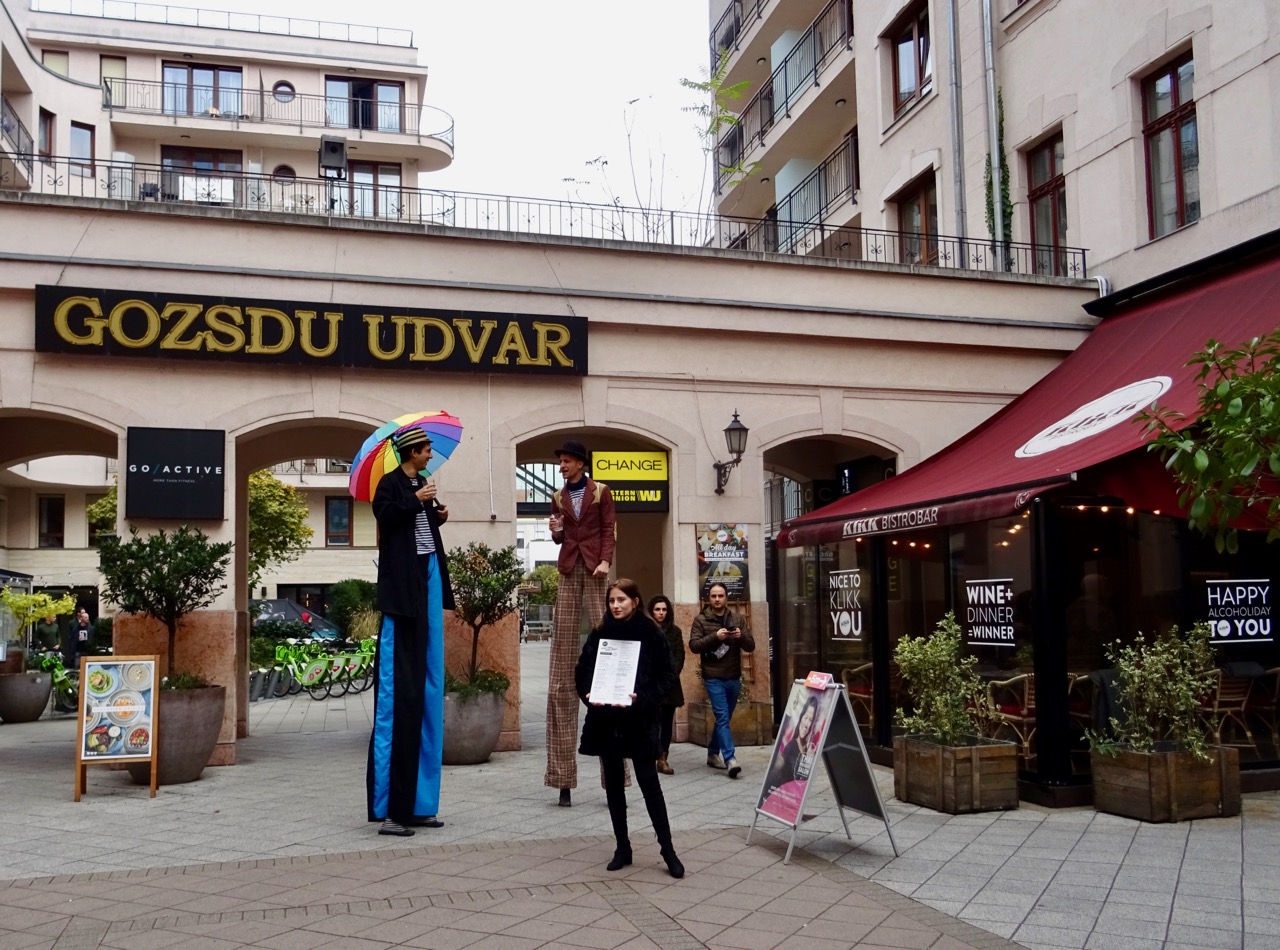 We visit the Buda side of Budapest today. First stop is the Matthias Church, located in the Holy Trinity Square in front of the Fisherman’s Bastion. It has a beautiful tiled roof and a 60 metre tall bell tower.
 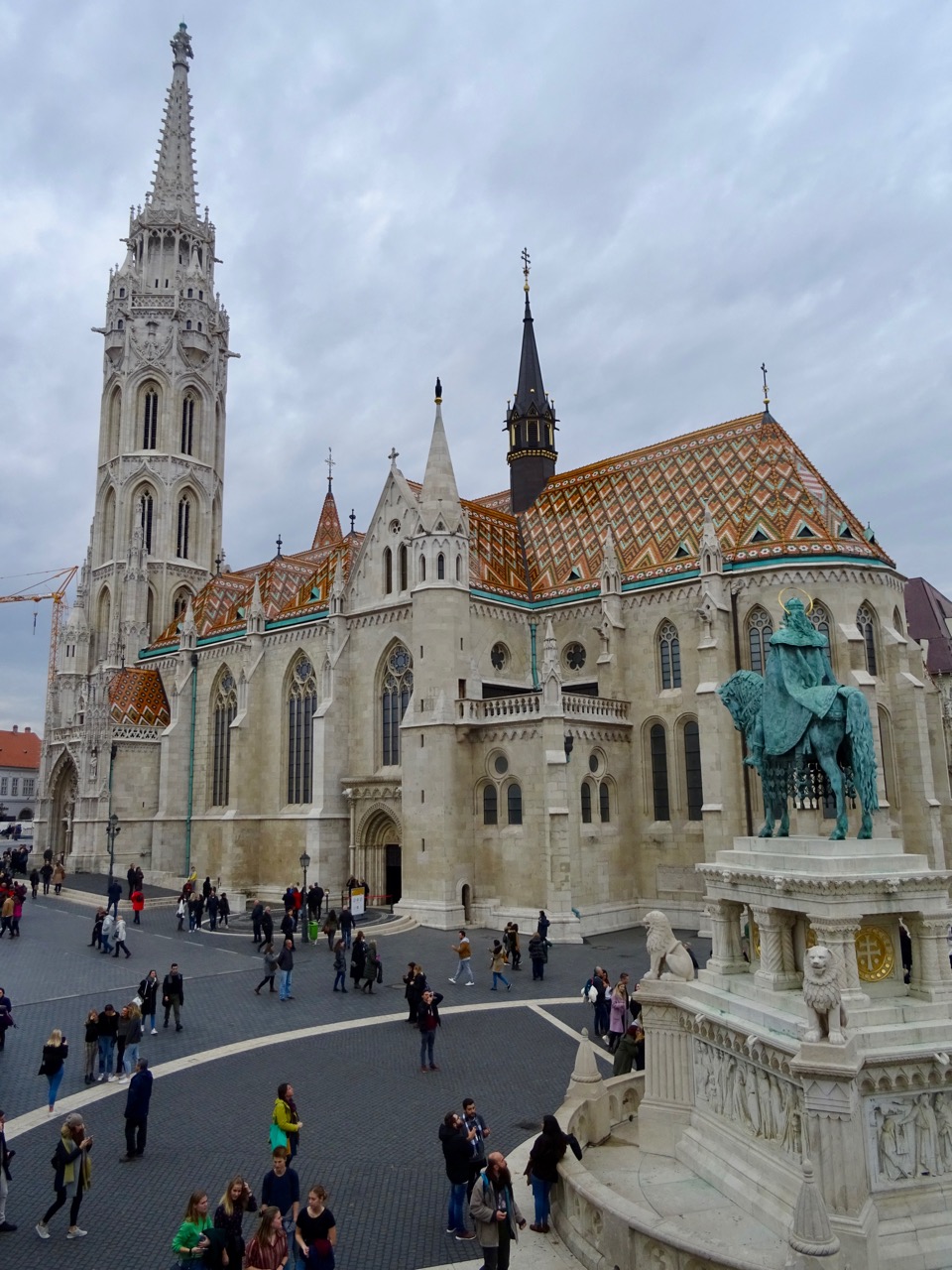 There are a lot of people here.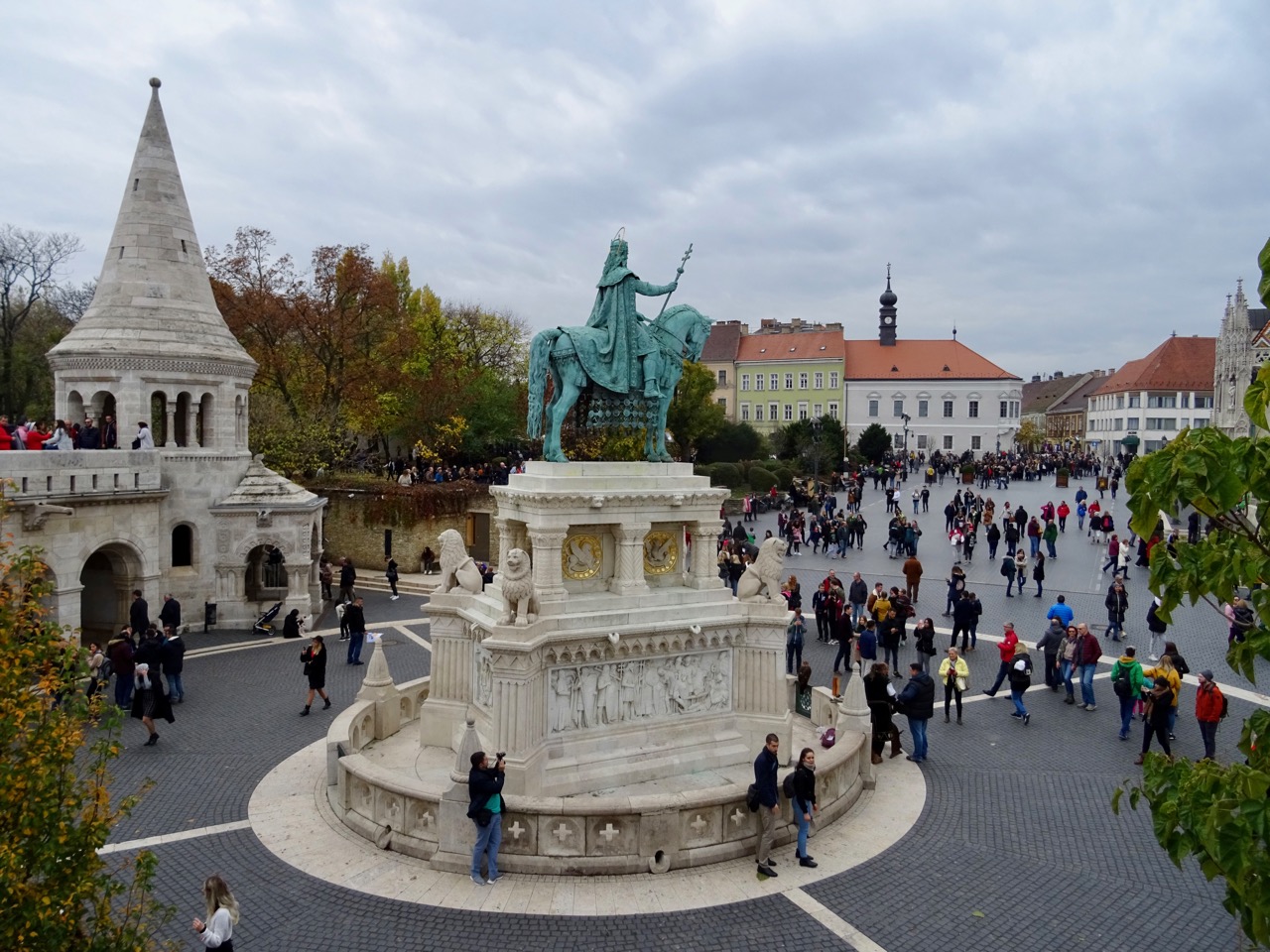
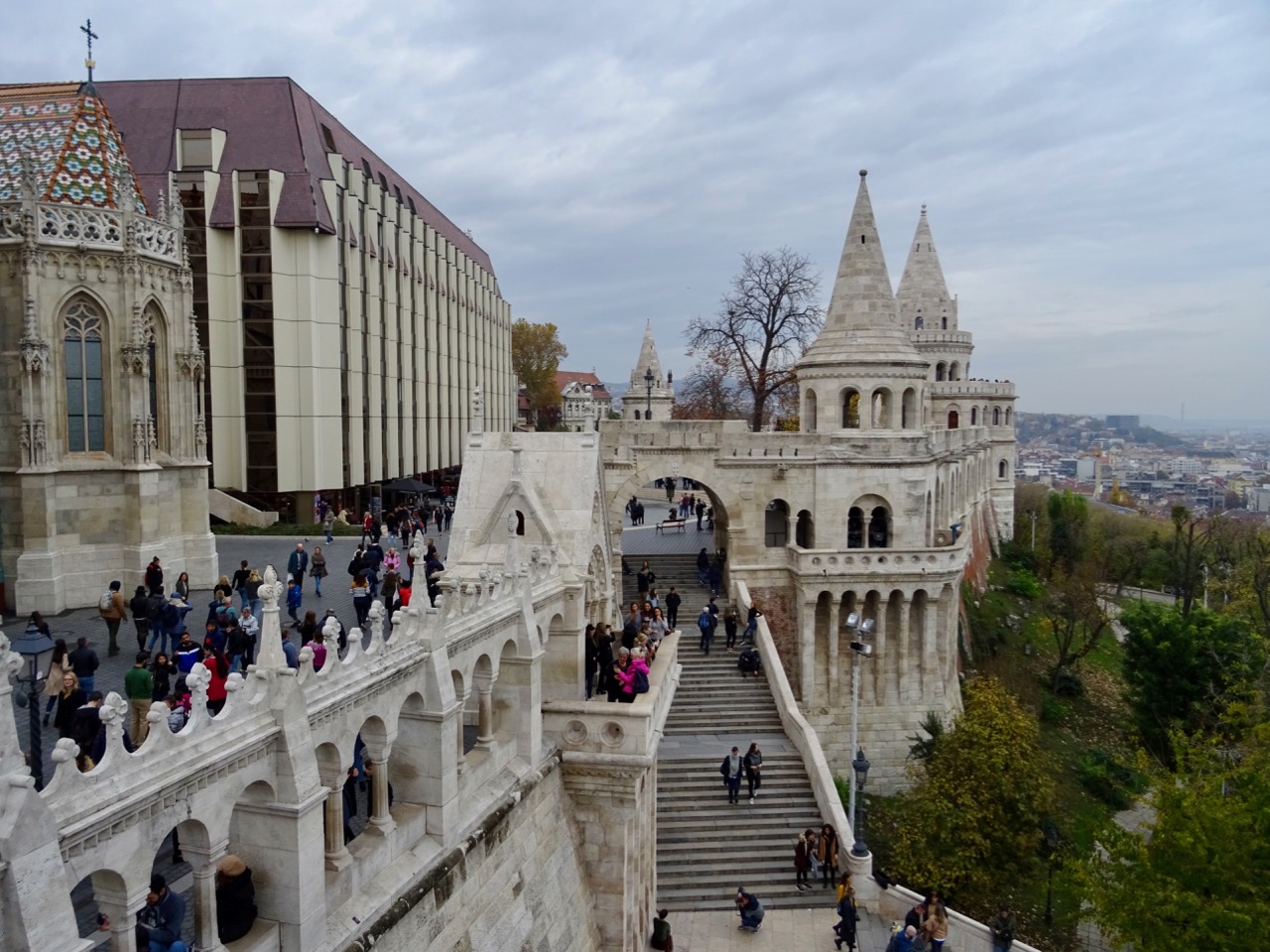 One of the many great views from the Bastion.
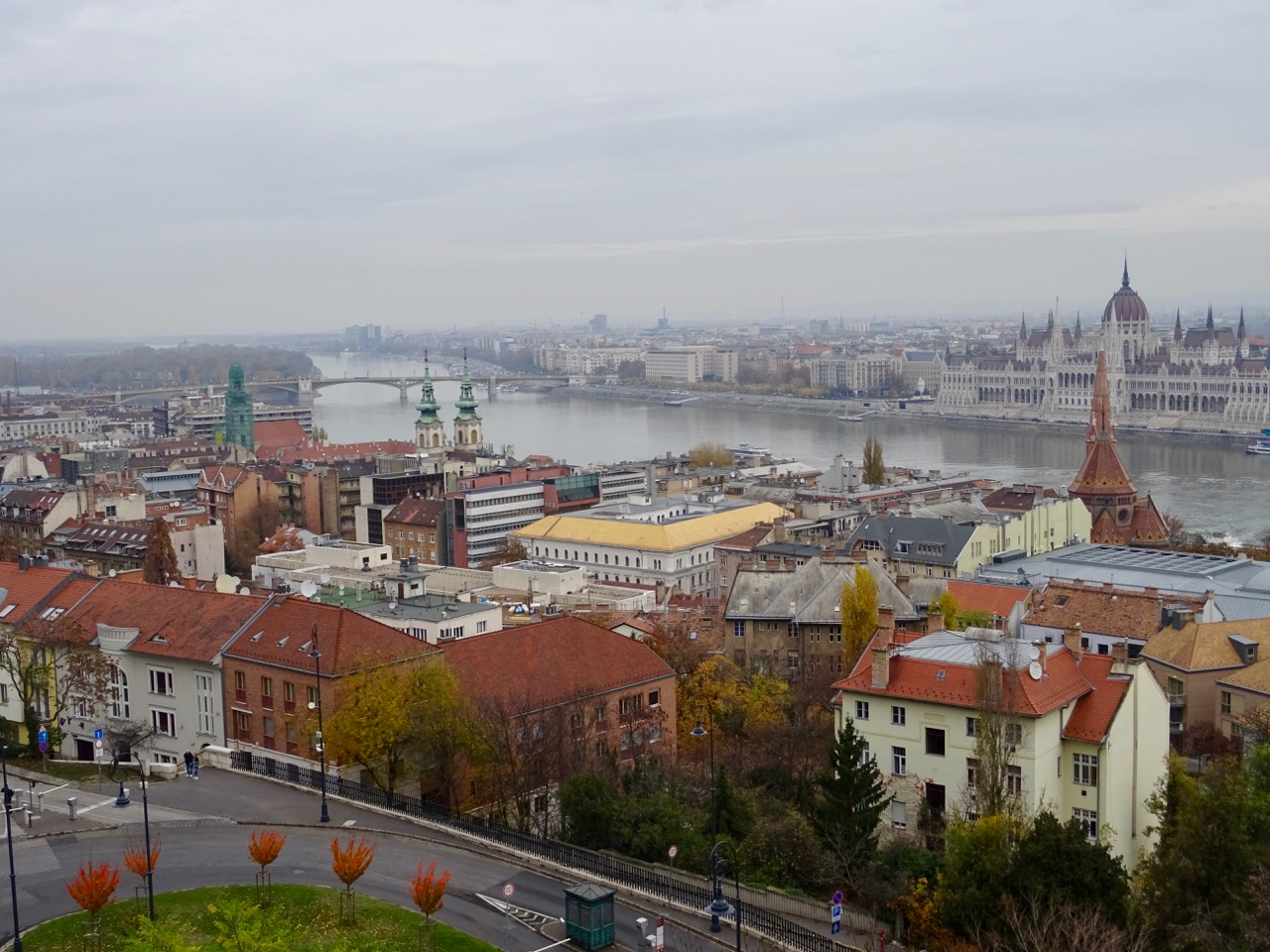 We had to wait a bit to find an arch not filled with other tourists. It often takes a while before I can get a decent photo, which involves deciding where I can get the best view and waiting until vehicles and other people are not in my picture frame. Bob is very patient, waiting for me to take photos. I probably take at least 5 or 6 photos for every one I use in this blog.
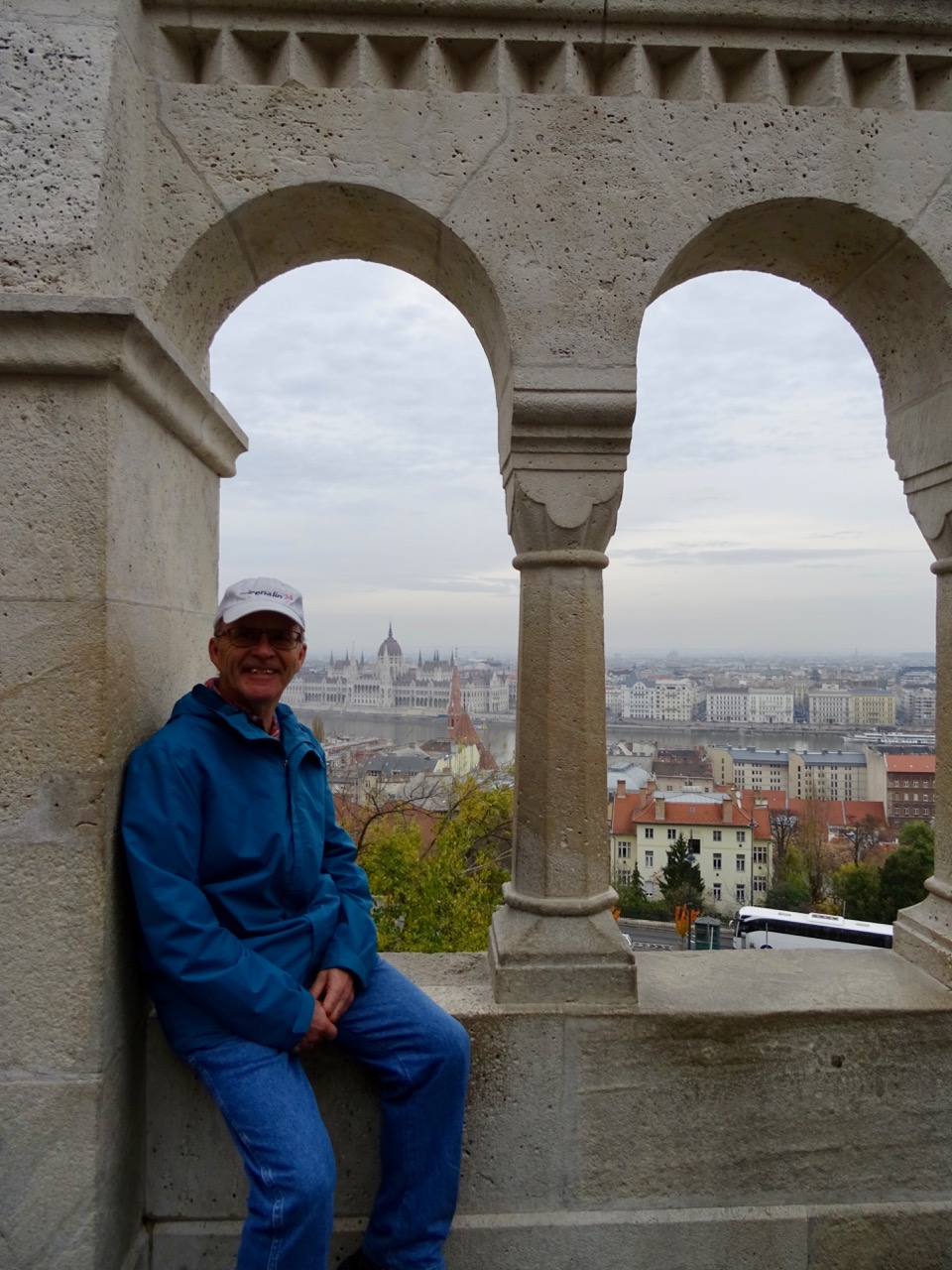 The Bastion was inspired by the architectural style of the early medieval times. It has many towers and was meant to feel like a fairy tale castle, as it wasn’t built for defence.
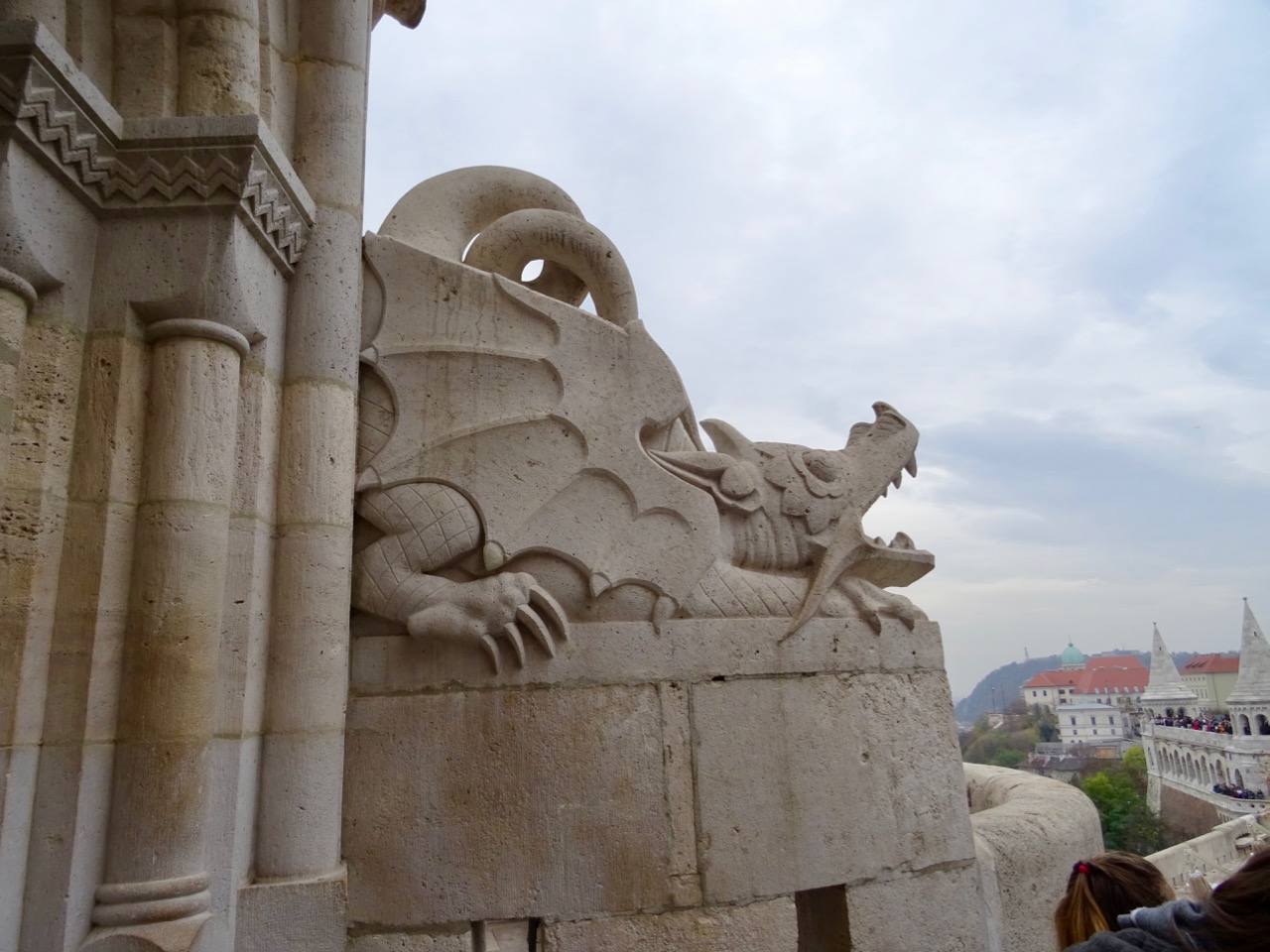
 I am always happy when I find a dragon!
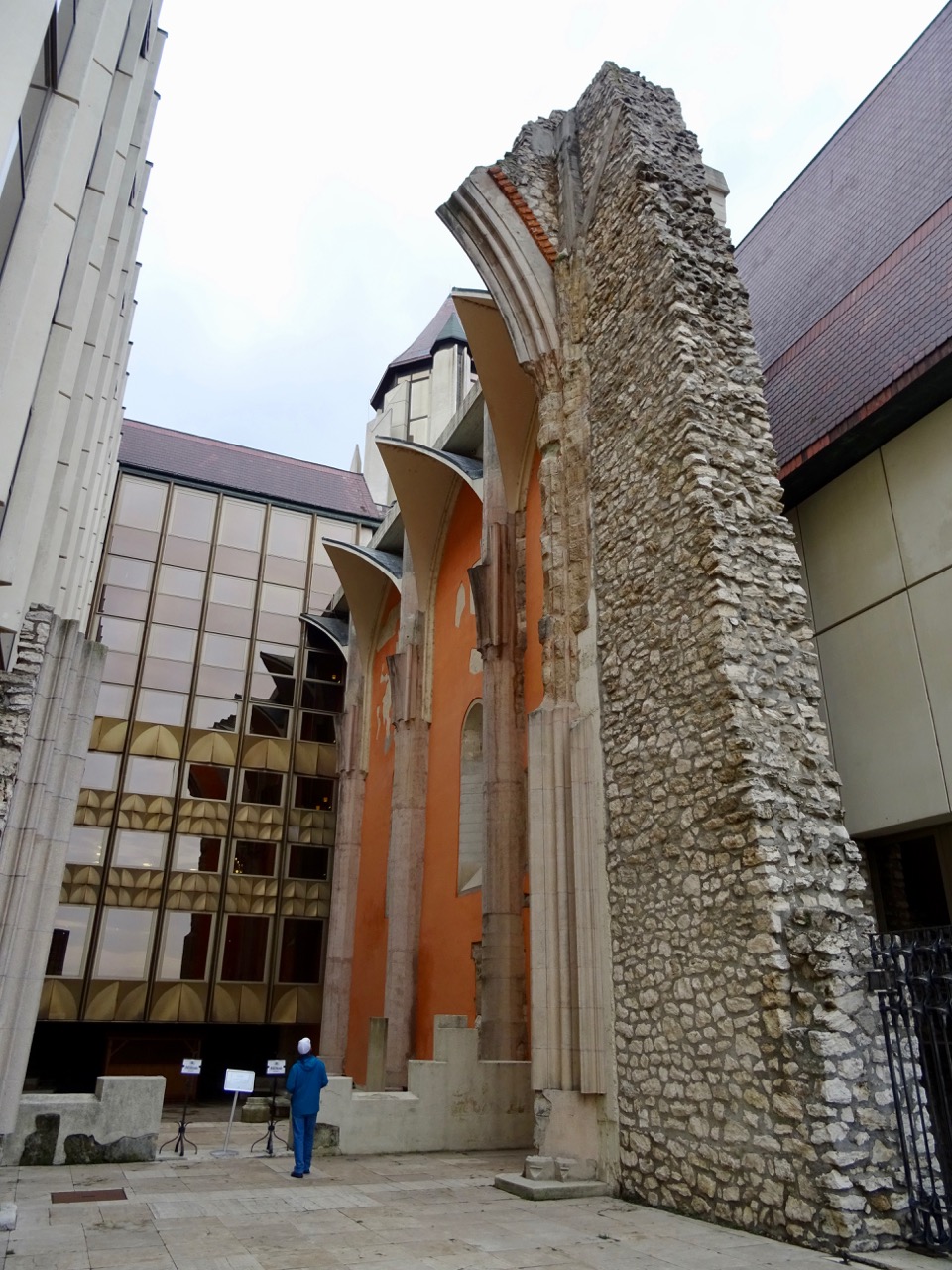
 These medieval church ruins were built into the modern Hilton Budapest Hotel.
 The Black Plague caused the death of 30-60% of Europe’s total population in 1691 and 1709. People believed that erecting a column would protect them from the plague. The carving on the top of the column represents the Holy Trinity. Below this the whole column is decorated with smaller statues depicting angels, and saints. The central sculpture shows King David praying to God to let his people avoid the outbreak of a plague. Residents believed the Holy Trinity Column did its job, as the plague never returned after 1709.
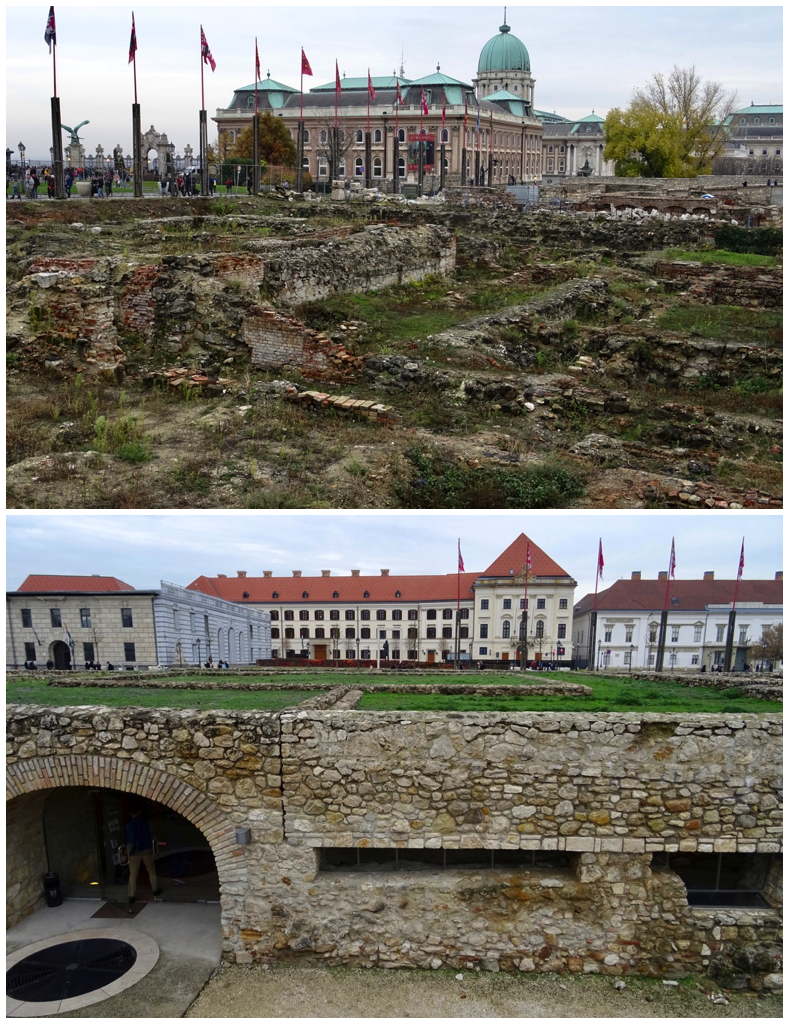
 On our walk to the nearby Buda Castle we pass these Medieval ruins. Beneath some of the ruins there is a wine cellar which offers wine tastings. It is located below the remains of a 13th century Dominican Cloister, which is part of a huge labyrinth system underneath the Castle Hill.
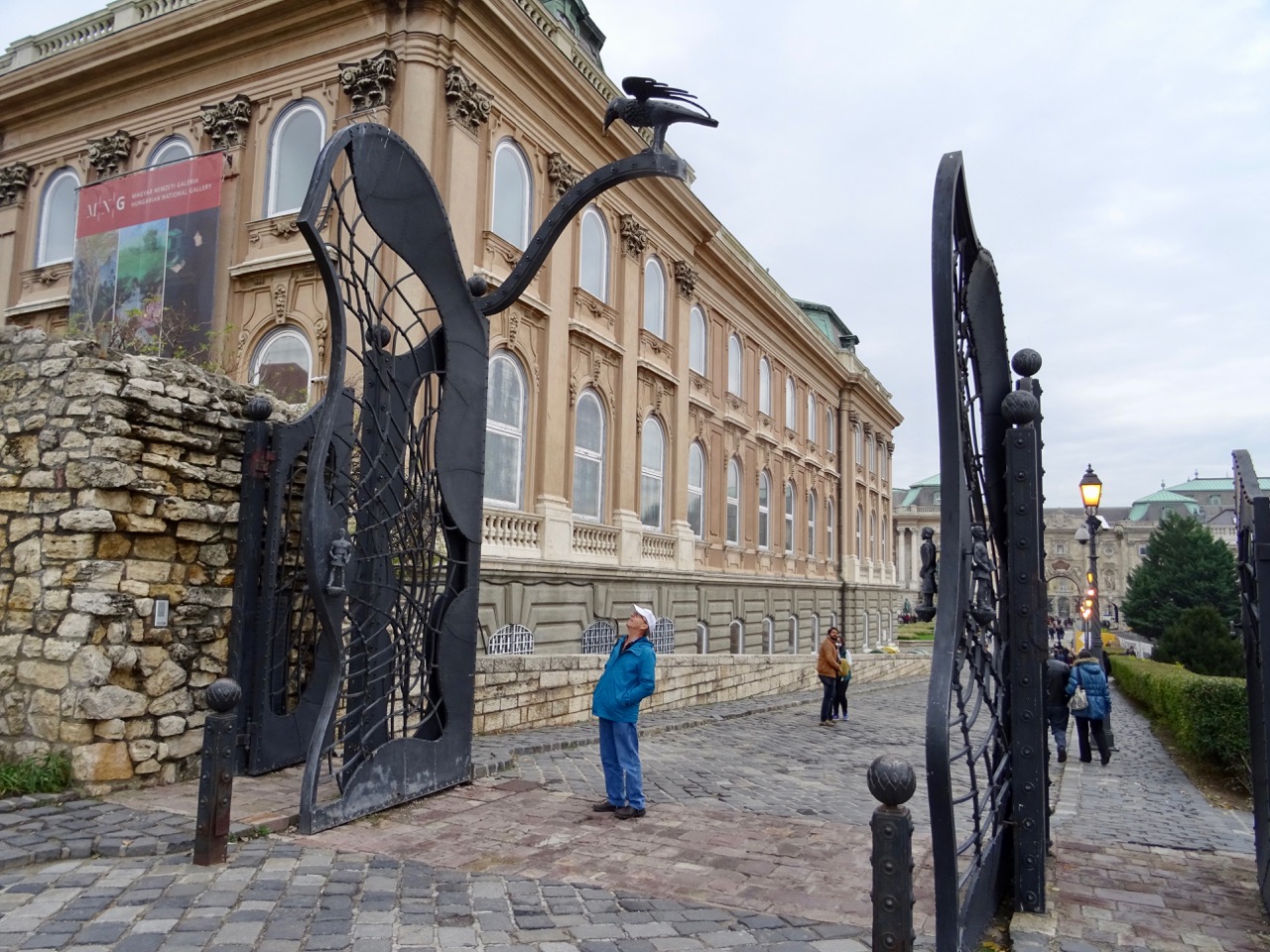
  King Matthias (1457-1458) adopted the crow as his heraldic emblem after catching one of them stealing a ring, and killing it to get his ring back. These gates are topped with a crow with a ring in its mouth. The gates are very bizarre, almost creepy looking.
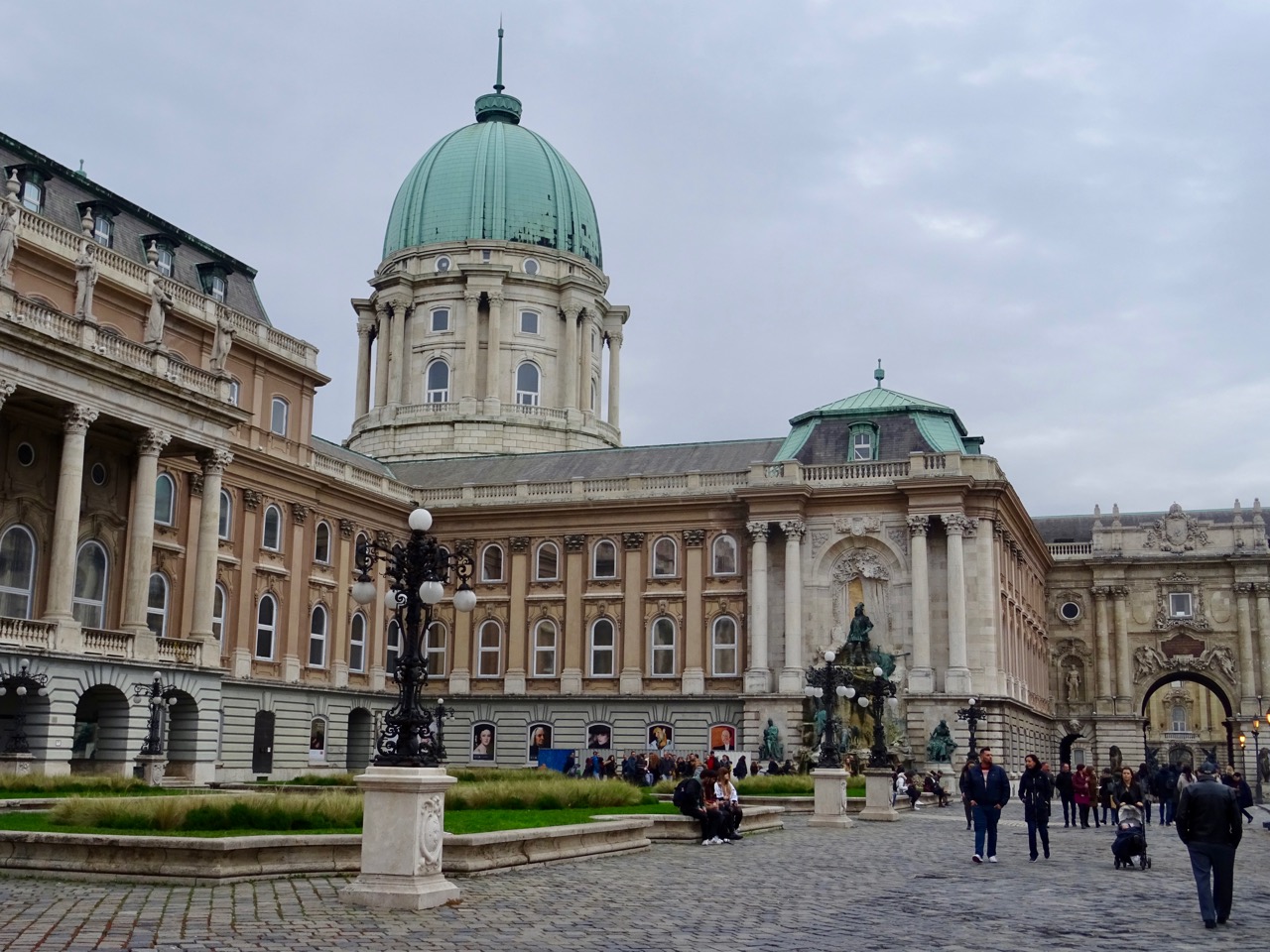
 This is the back side of the Buda Castle…
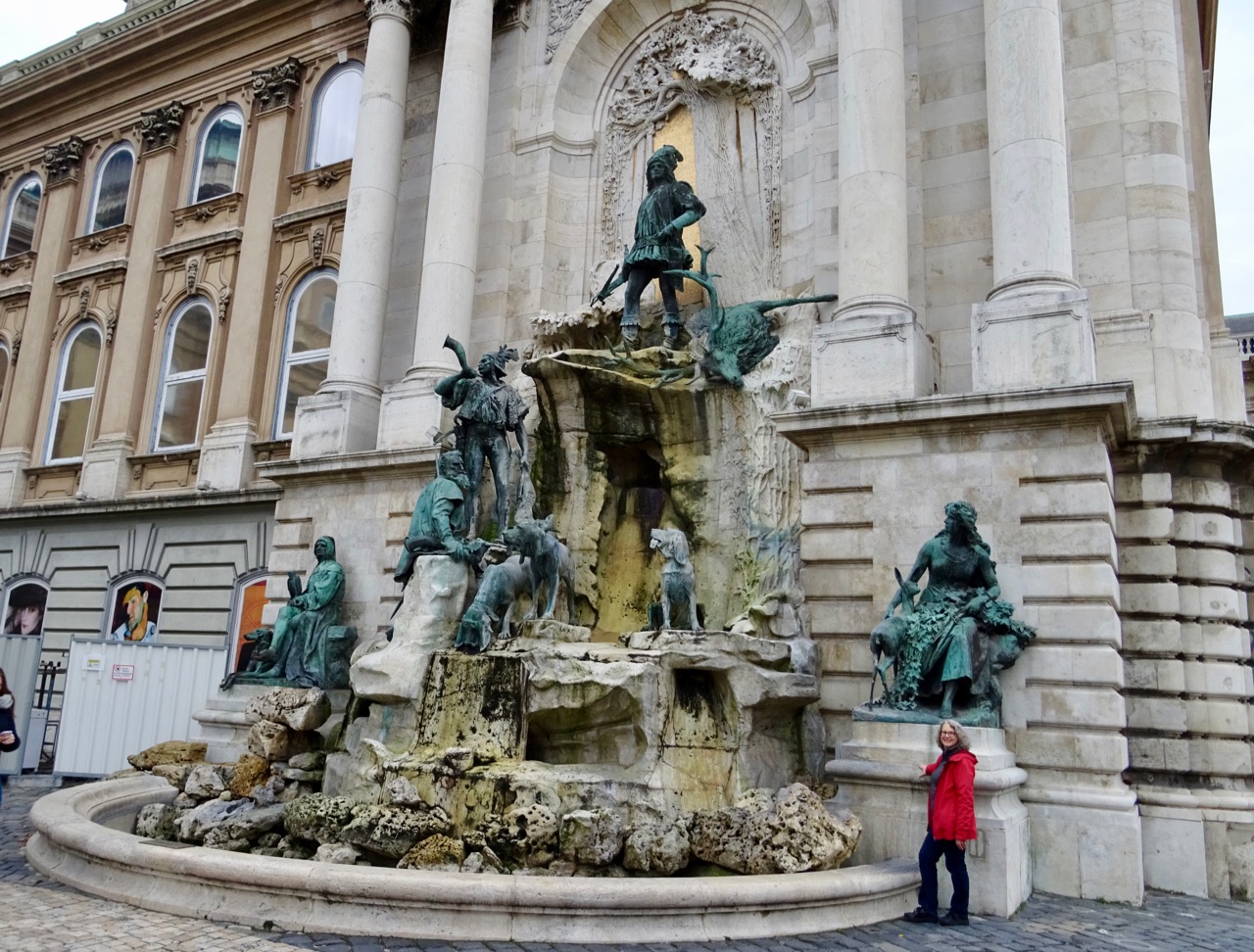
 and here is a close up of its fountain. Too bad the water in all the fountains in Budapest has already been turned off for the winter.
 The front of the Buda Castle with lots of tourists…
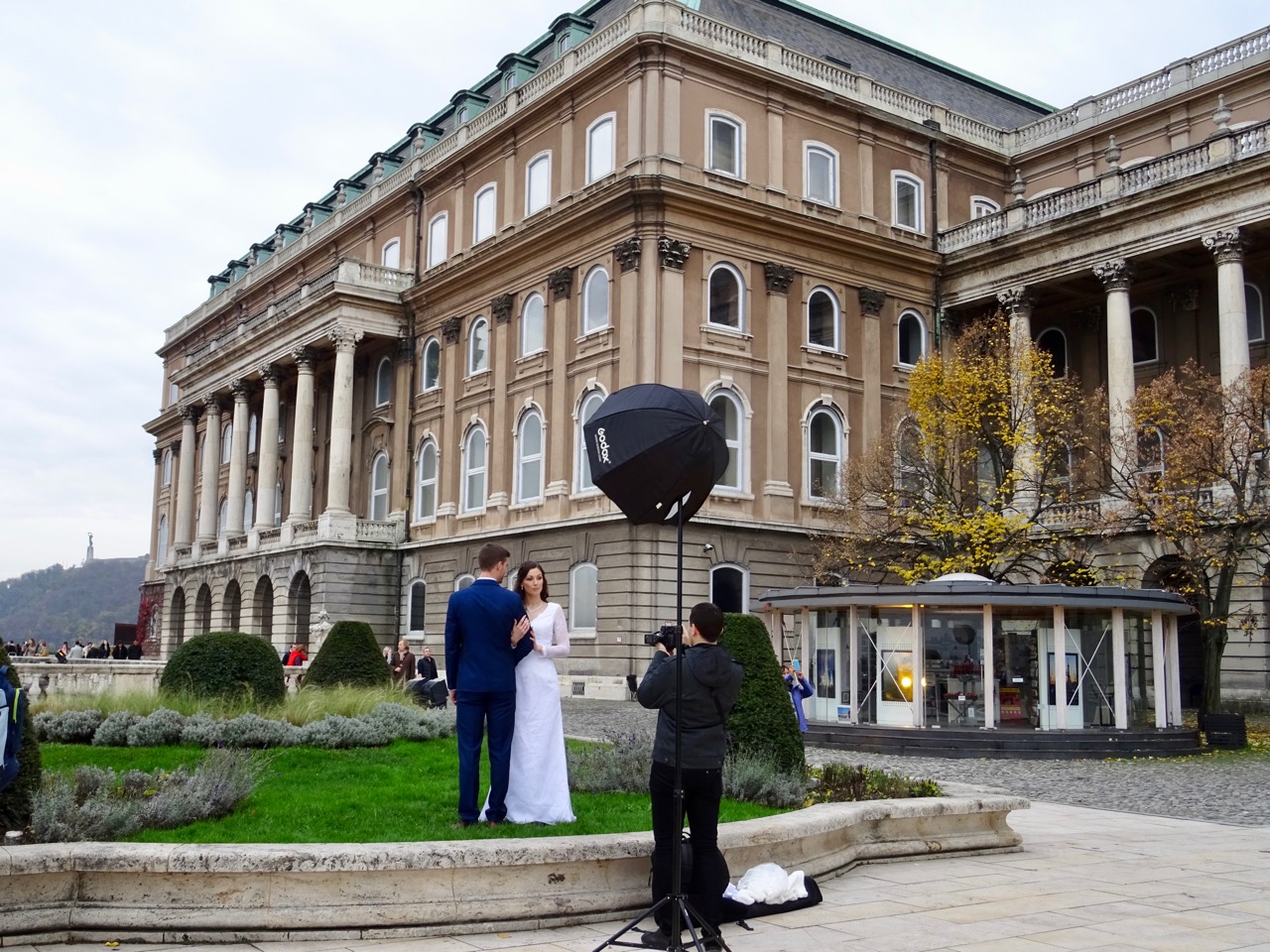
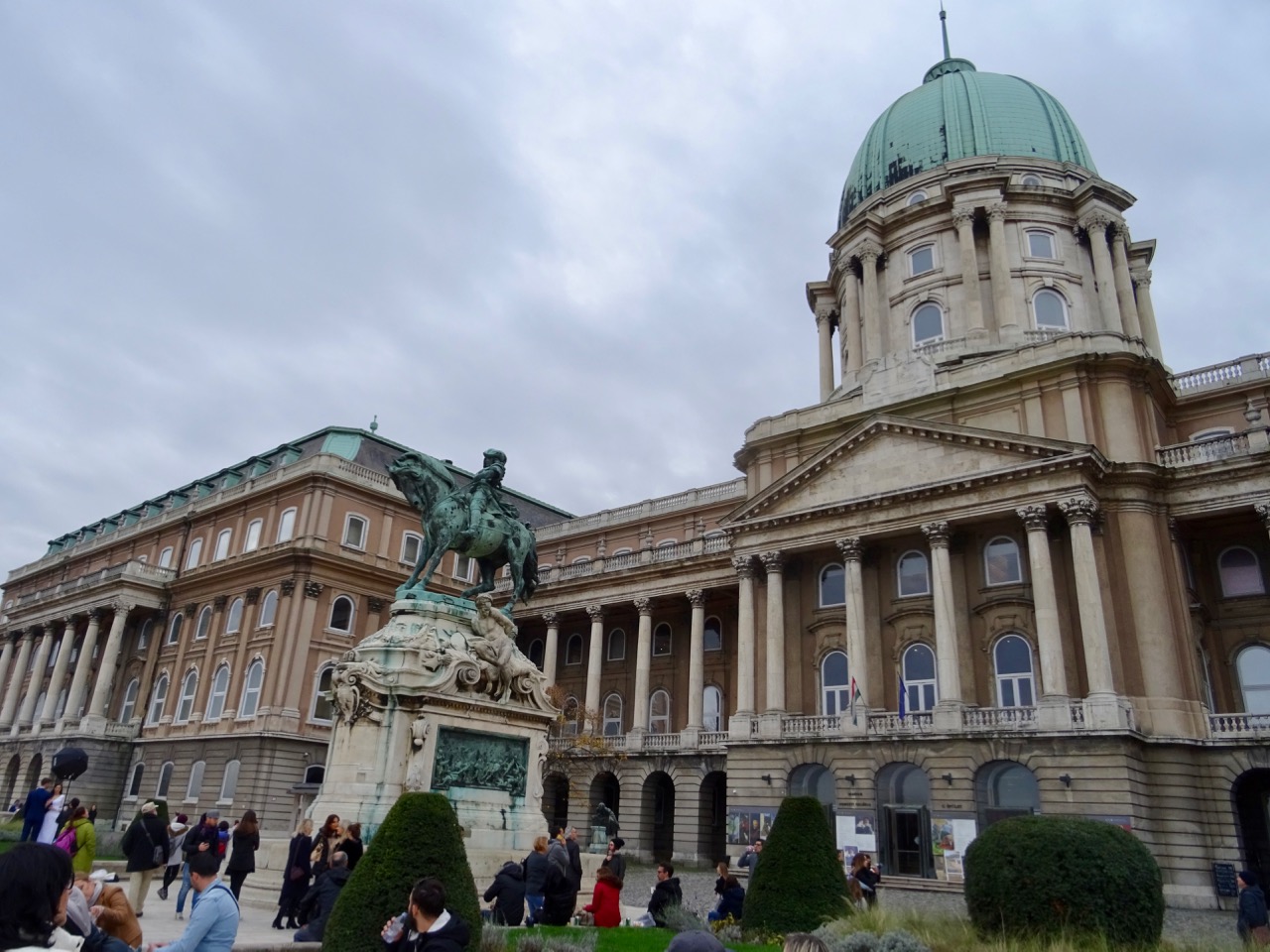 and a bride and groom taking their wedding photos. I wonder if the photographer has to photoshop out all the tourists?
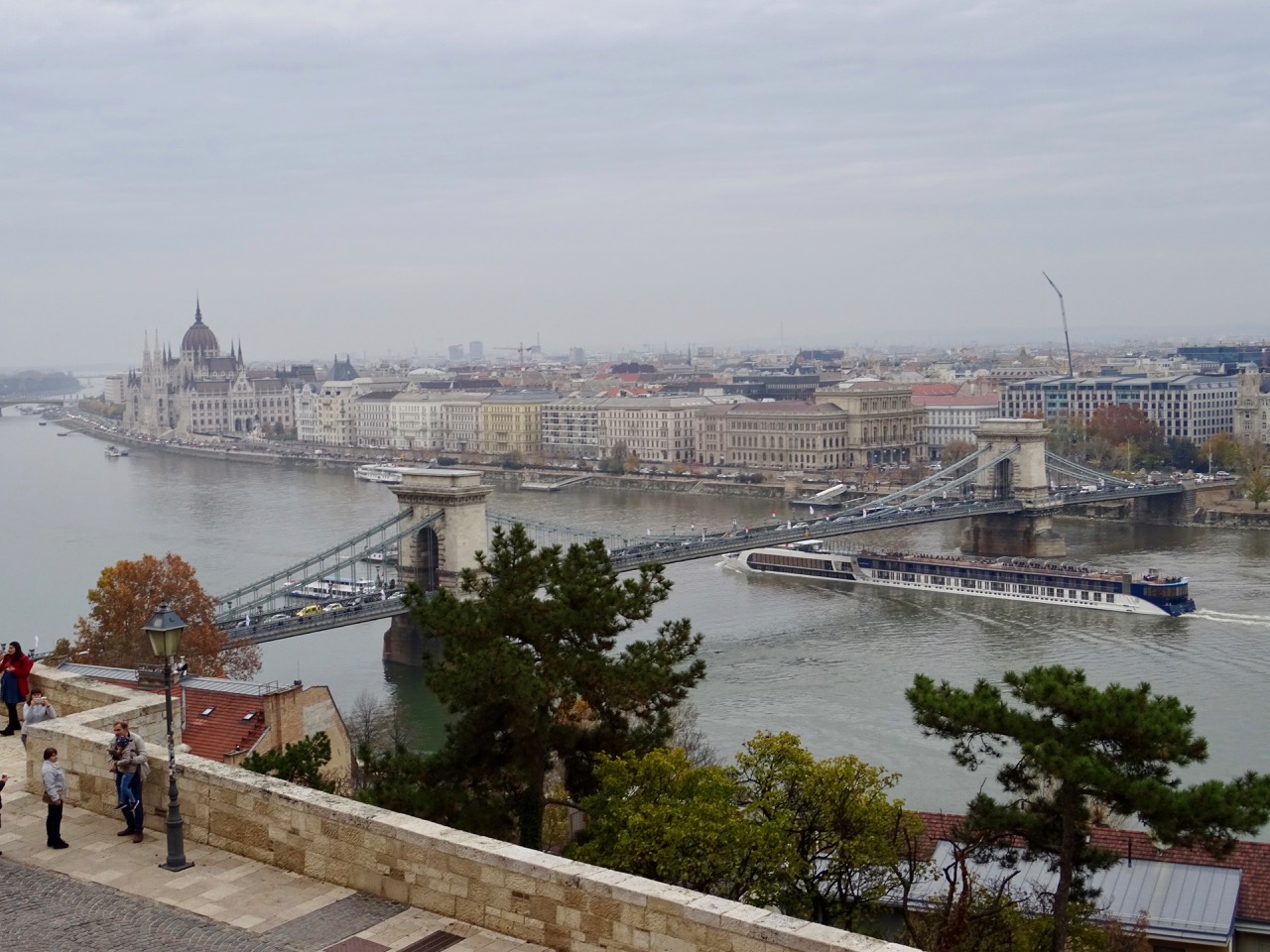
 We see a large river cruise ship o the Danube.
 There are walkways high above Medieval walls.
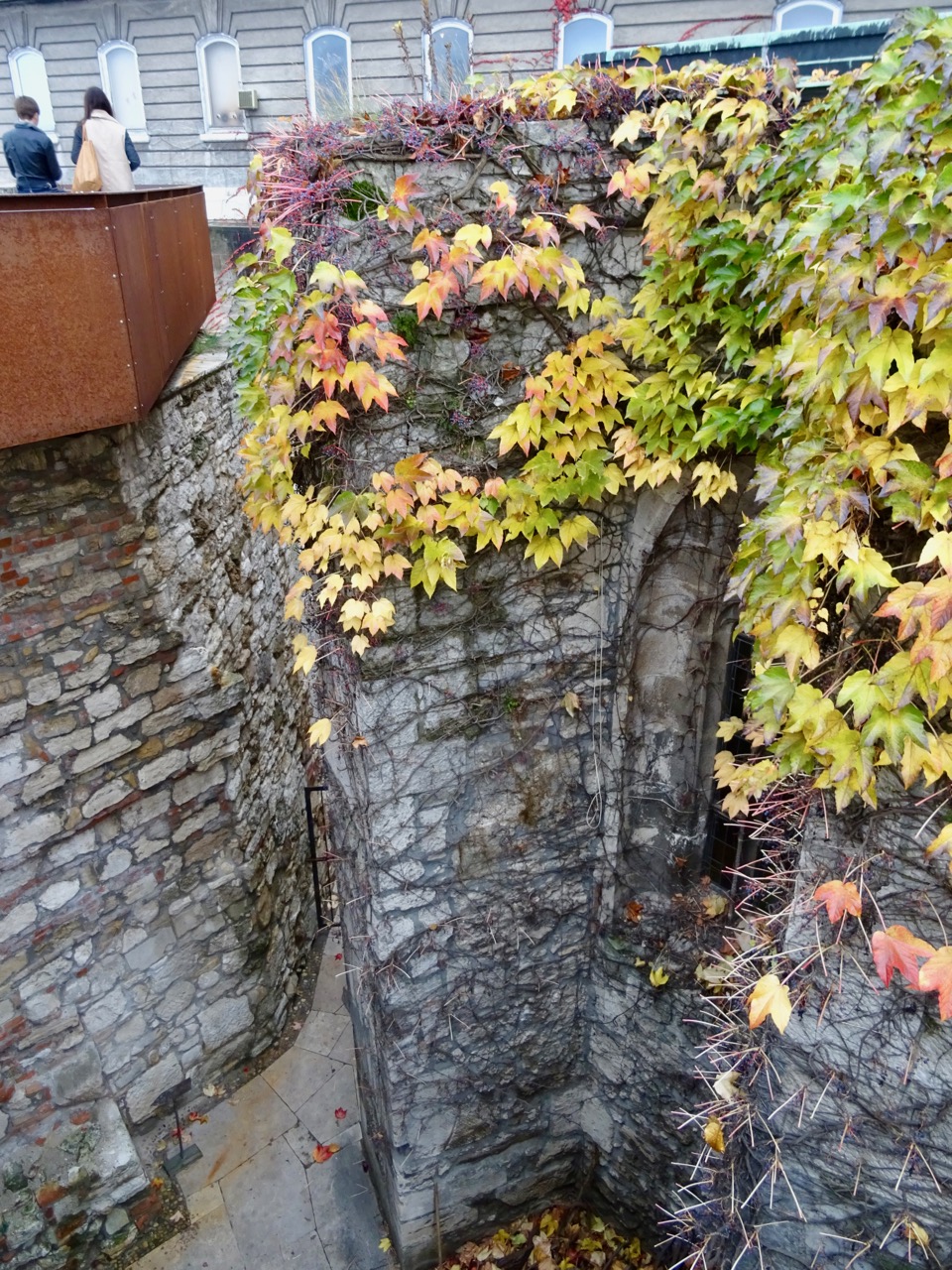 We walk down a flight of stairs below a statue of the Madonna and baby Jesus.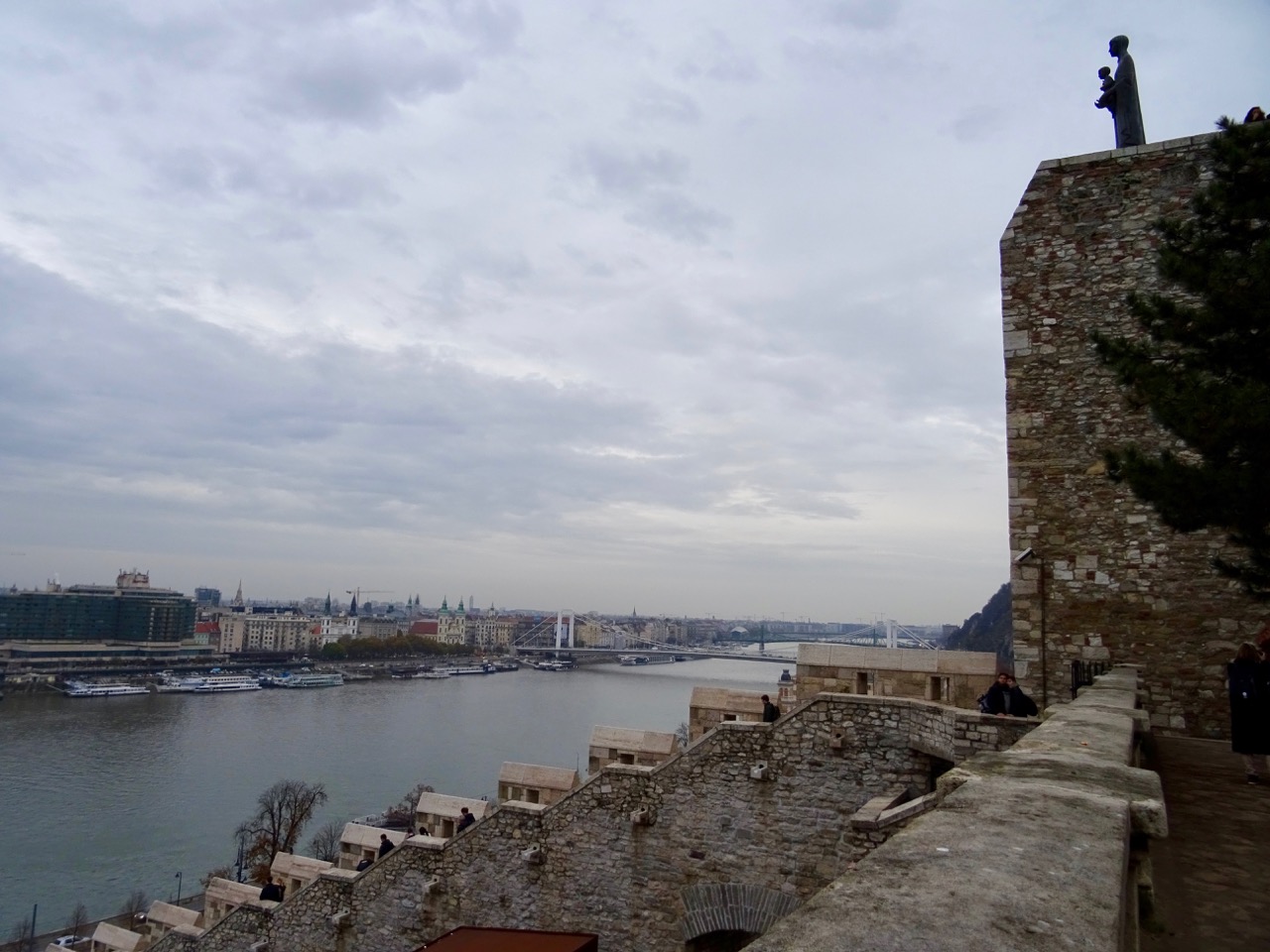
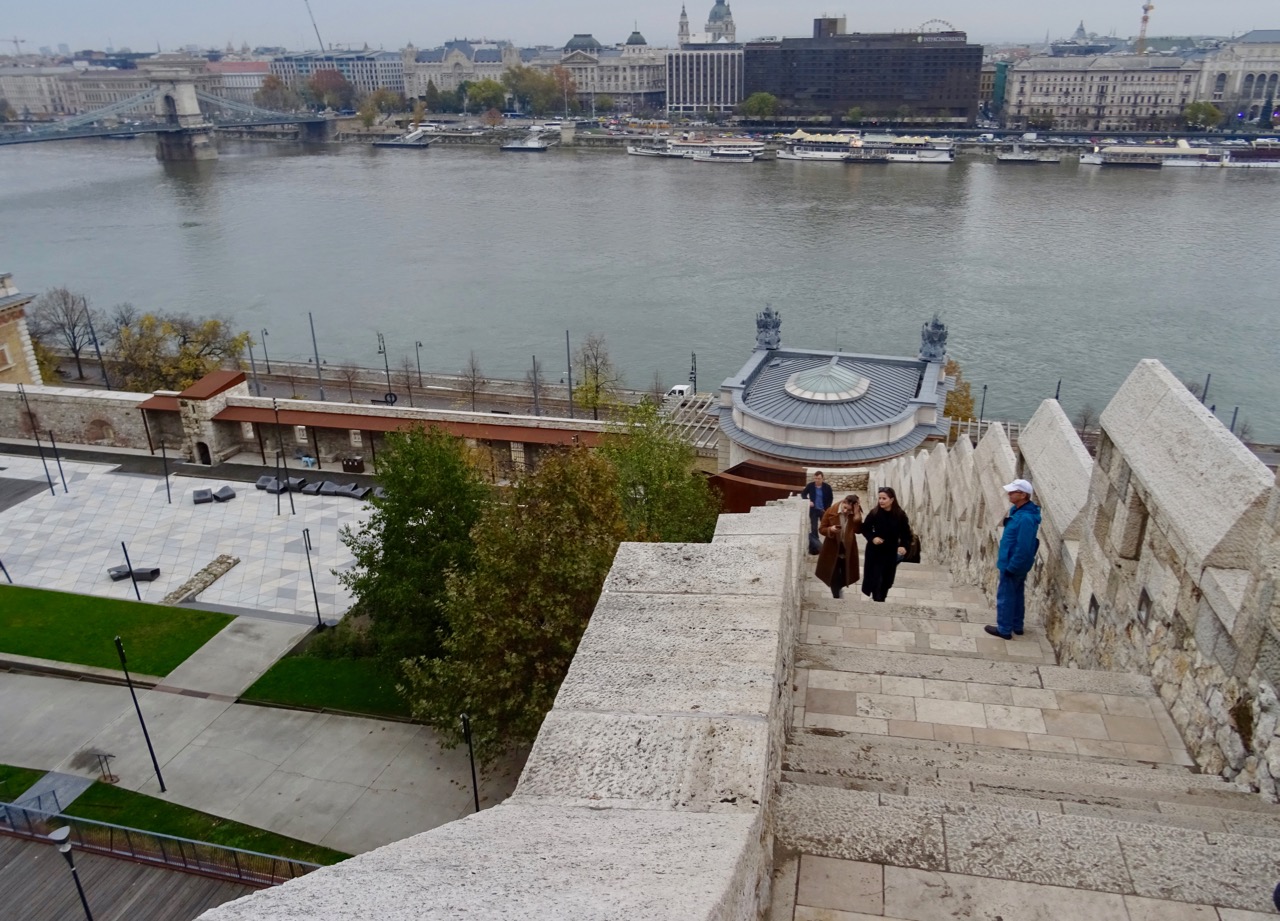 When we walk across this bridge we can see these same stairs on the far left side of this photo.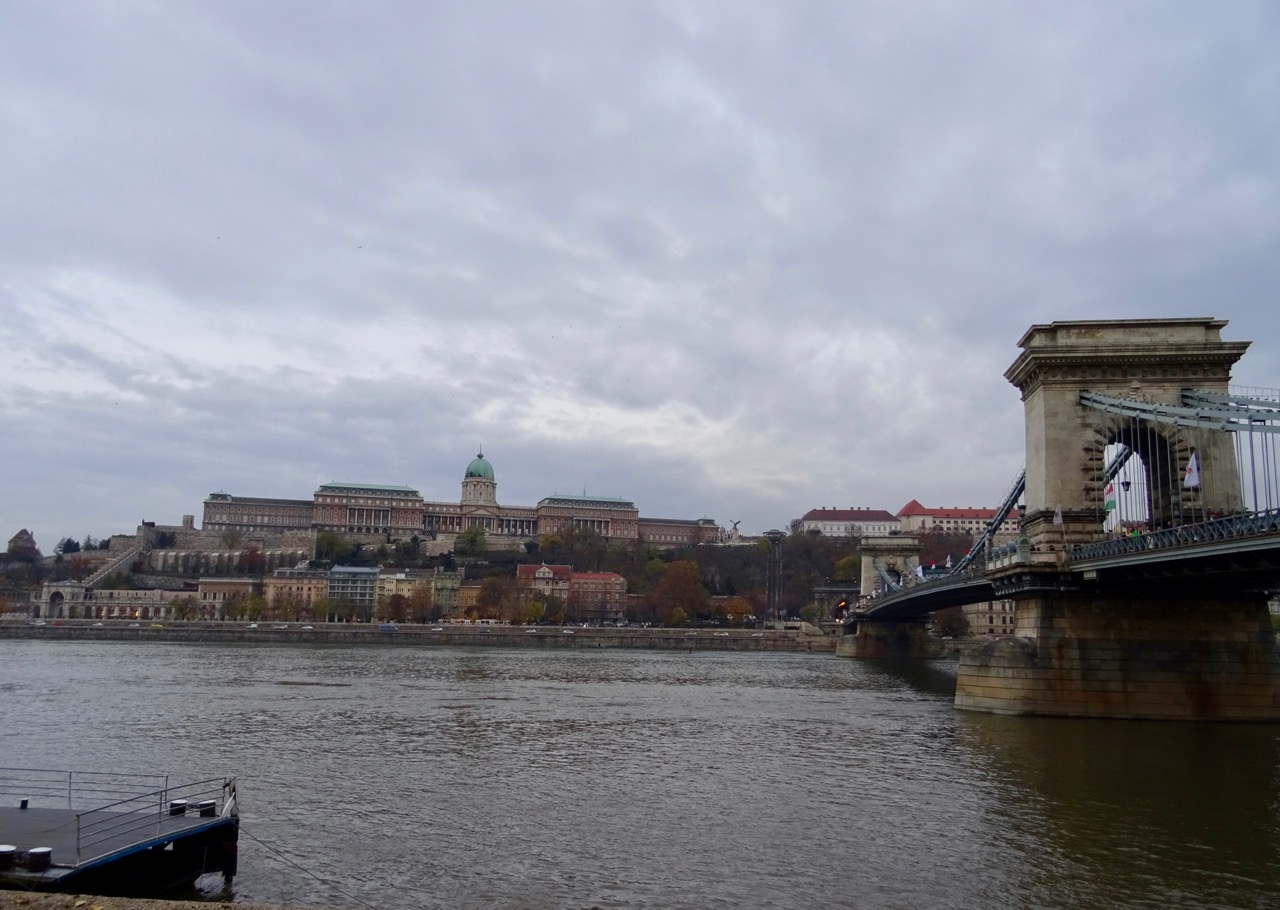
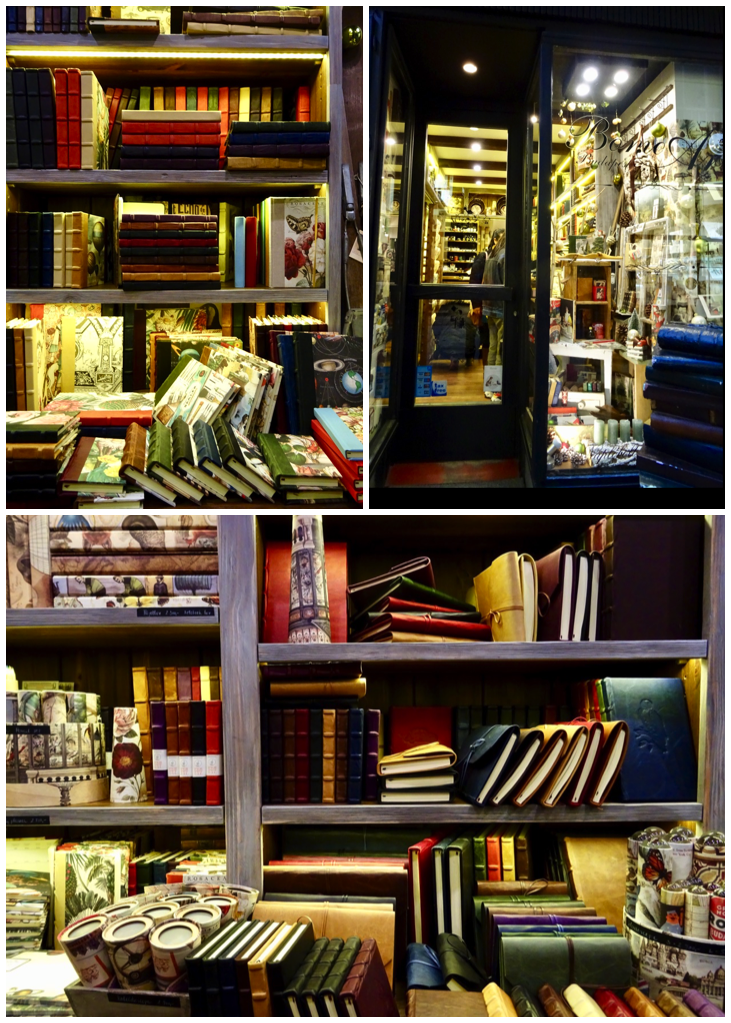
 We are walking to this little bookstore that sells handmade journals. Bomo Art is a tiny store, less than 2 metres wide! It didn’t have any larger sketchbooks with good paper for drawing. Too bad, or maybe it was good. My suitcase is already pretty heavy with the two sketchbooks I bought in Linz, and the huge Dürer book I got in Vienna.
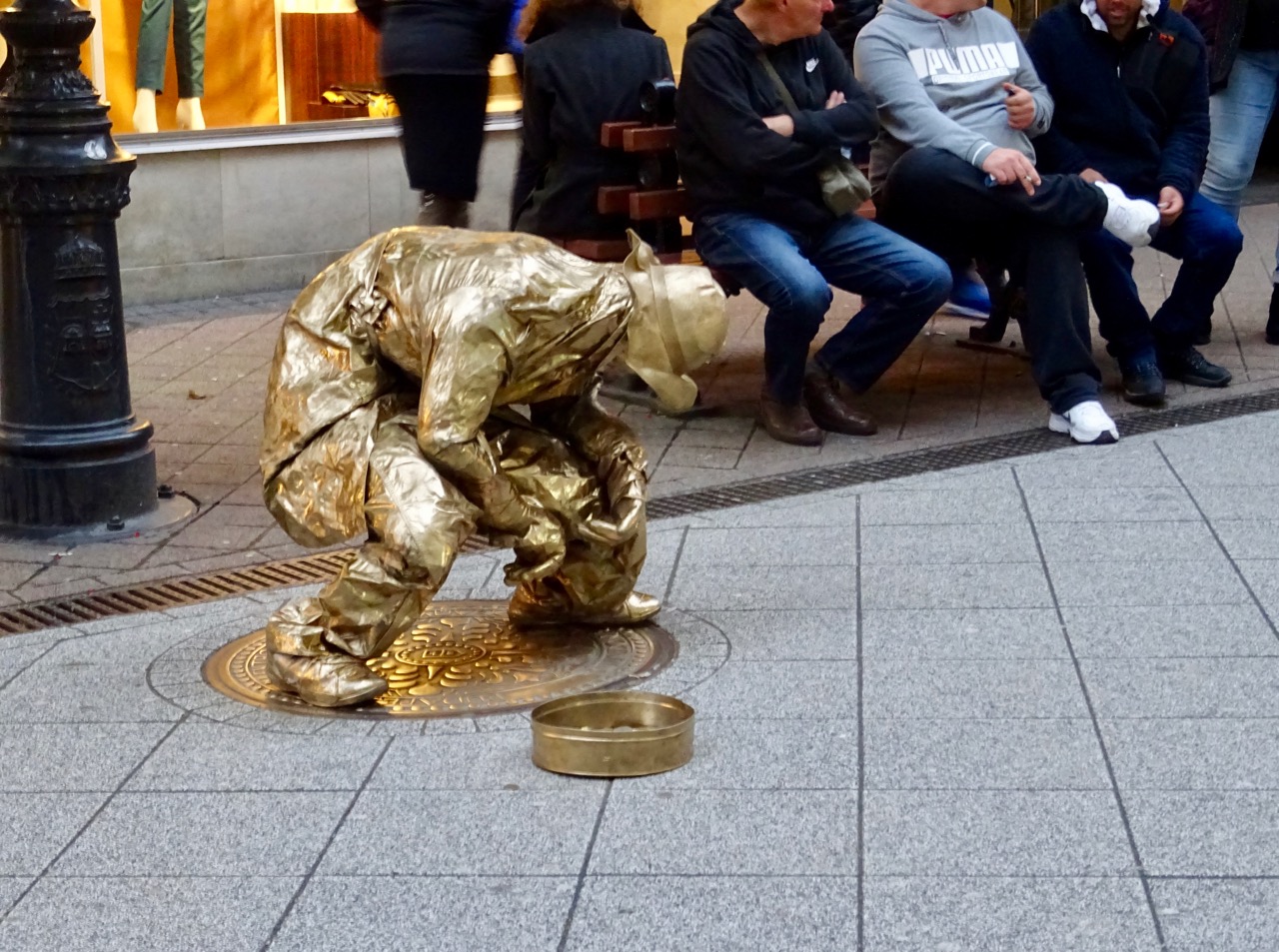
 We watched this street performer for a while and wondered how he was able to hold this difficult pose. We later saw him in a different position but when we walk by again we see a guy lean heavily on him and to our surprise he crumples! Turns out he is a mechanical man! People were putting lots of coins into his can, trying to get him to move. They had no idea they were being tricked into thinking this was a man in costume.
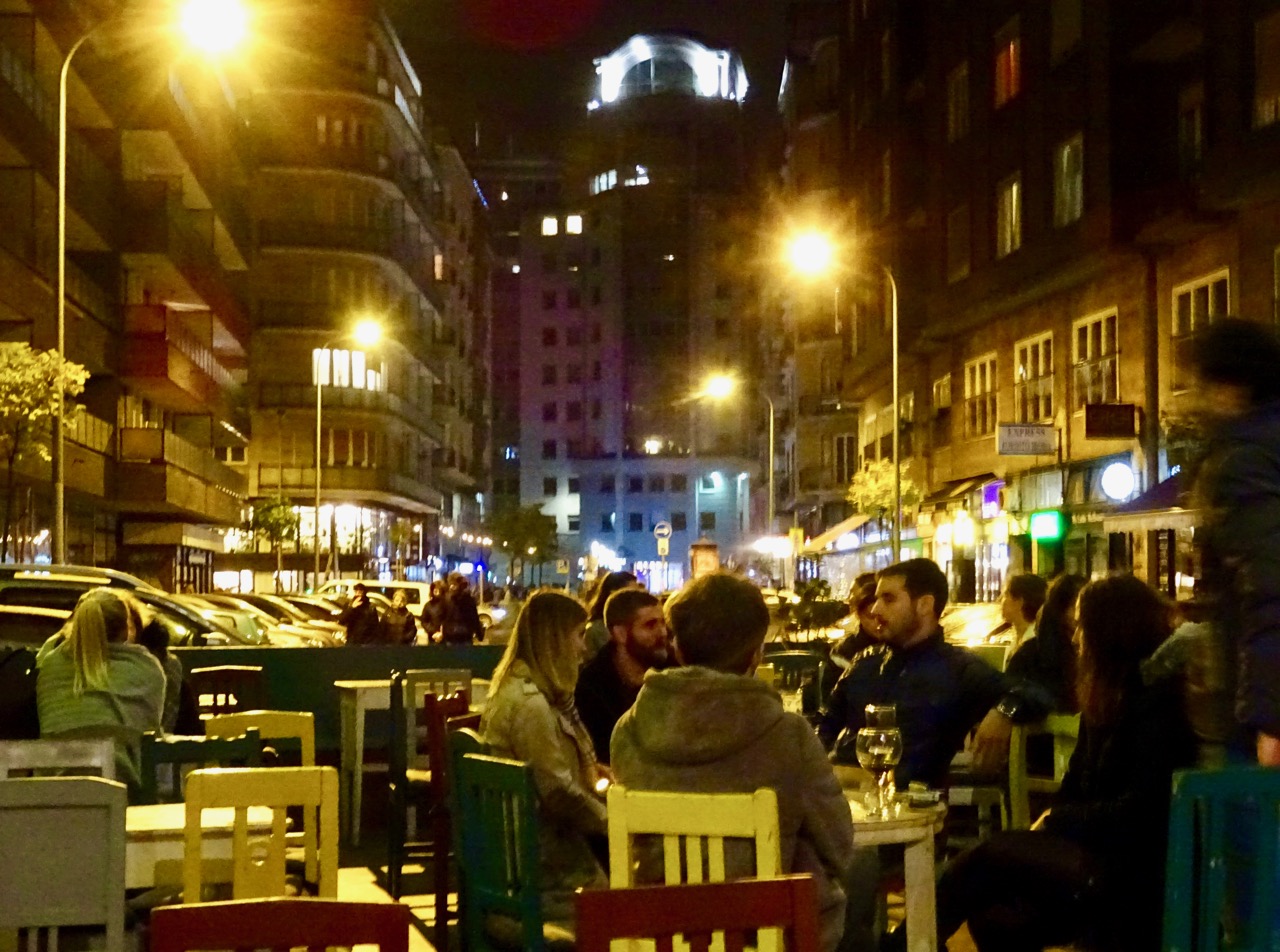
  It is quite cool at night but it doesn’t stop people from sitting outside drinking beer.
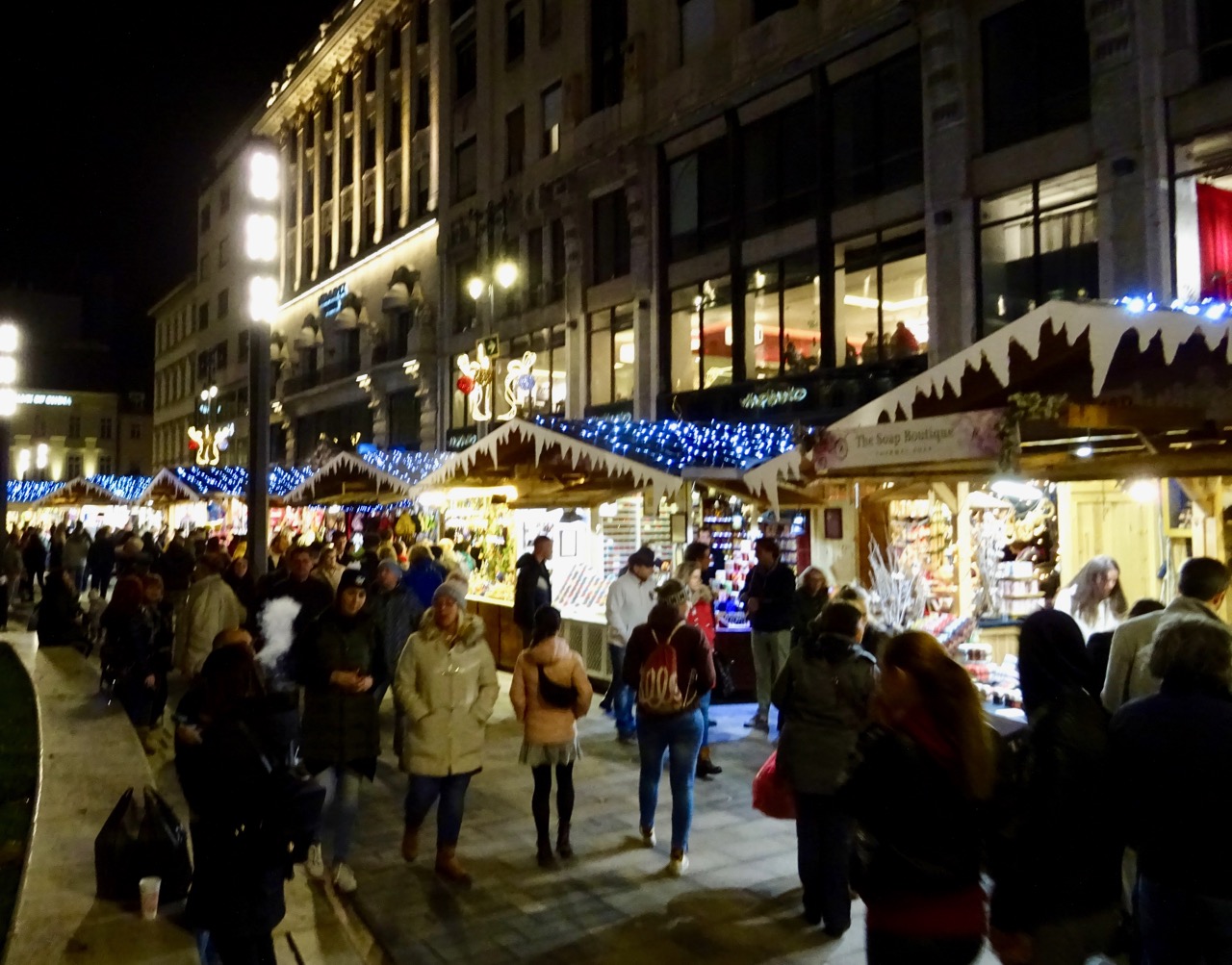
  One last walk down the decorated street towards the Christmas Market. There are so many more people out on the streets tonight.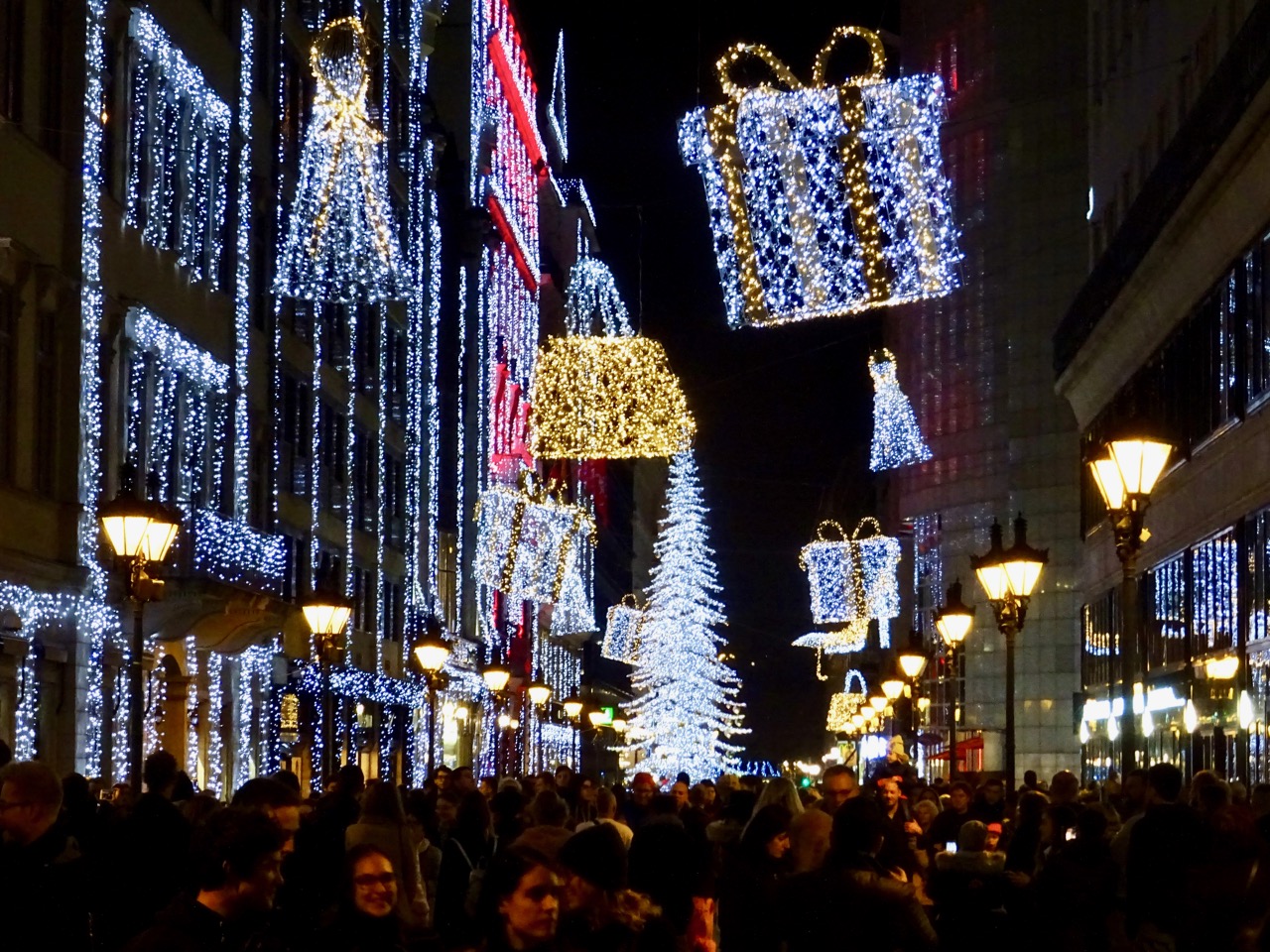
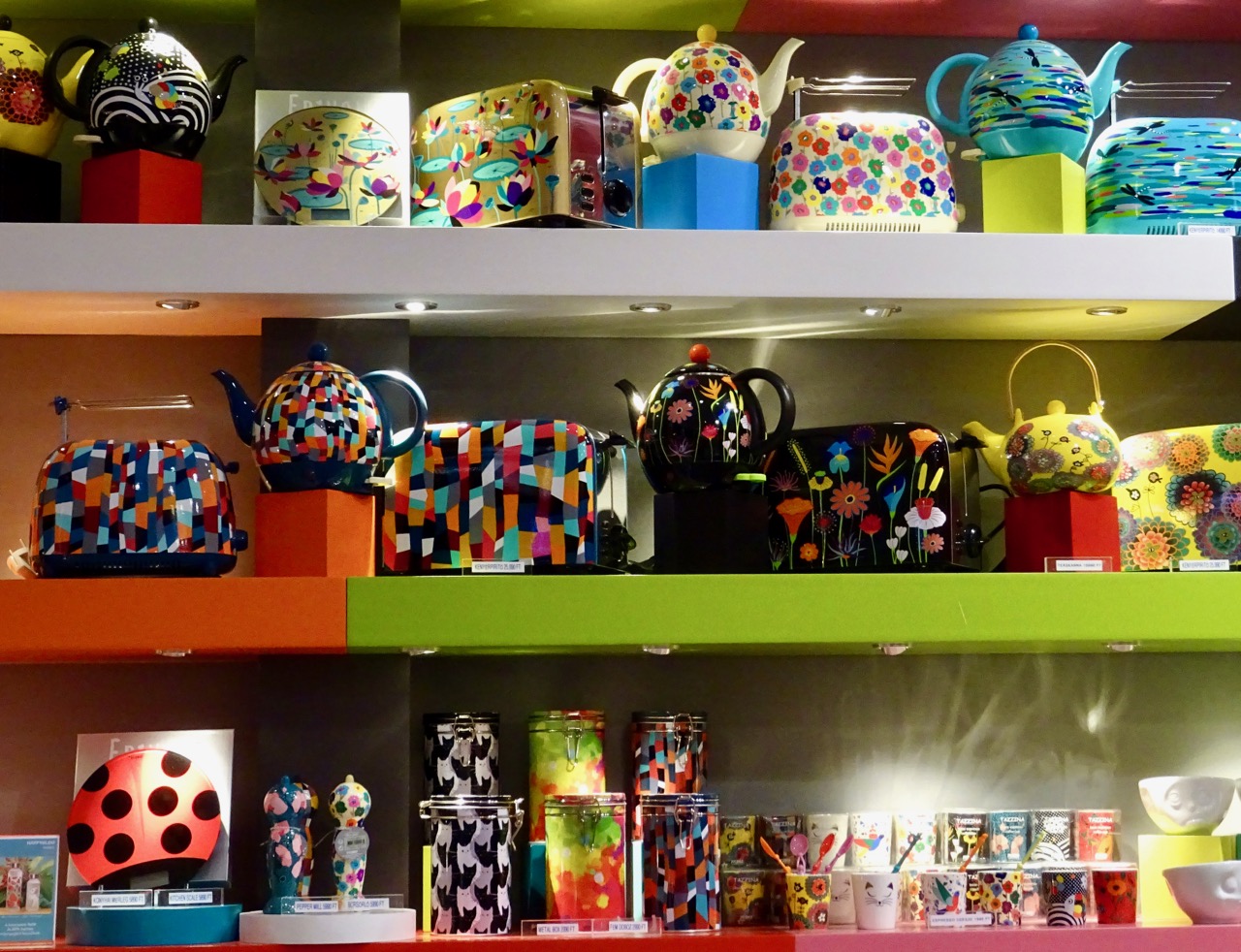 We stop at one of the stalls and I buy a couple small gifts I have been eyeing every time we walk by.
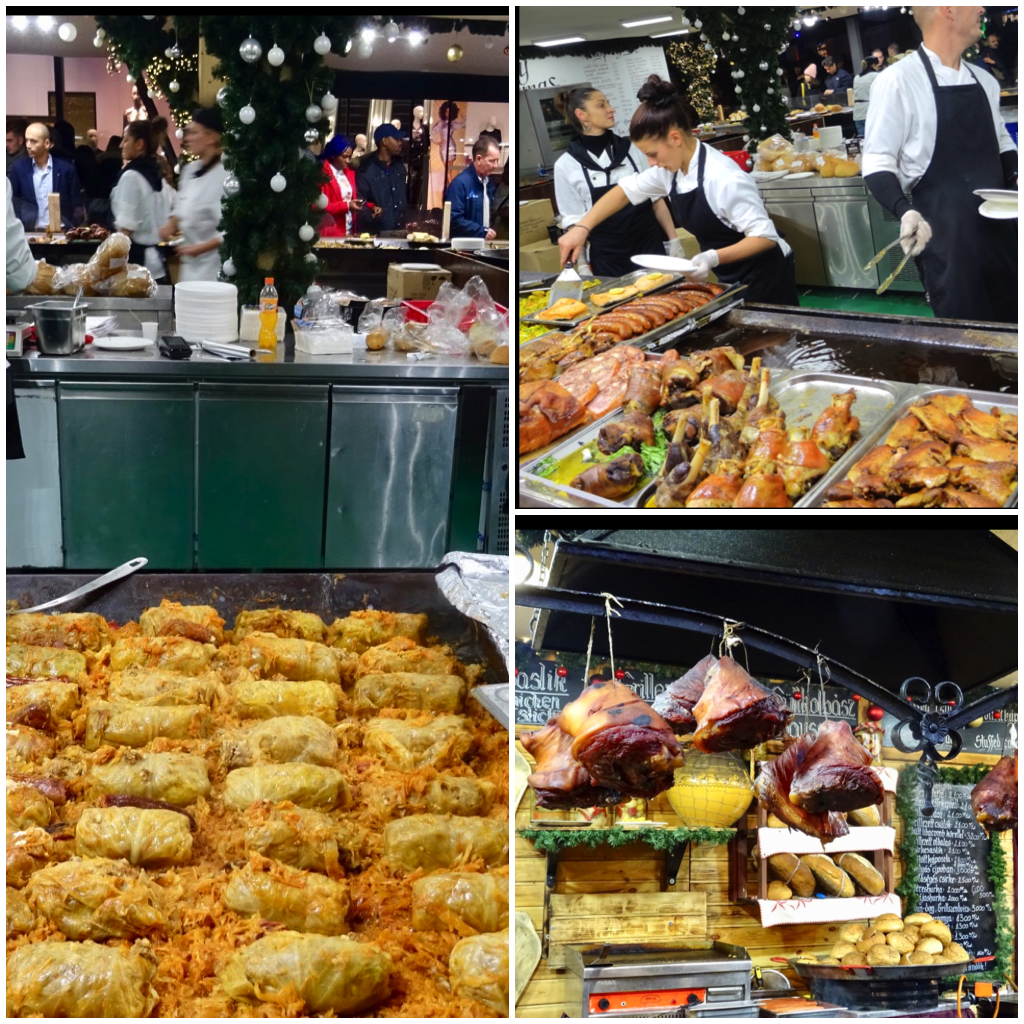
  I also took photos of the food stands. Pork hocks are a big item here! We were going to buy a meal here a few days ago but quickly changed our minds when we discovered that one cabbage roll, albeit a big one, would cost us 5,000 Forints, the equivalent of $25 Canadian! A small plate with a sausage and two small helpings of side dishes was $35.00! We were rather shocked at how expensive it was. We saw other tourists change their mind and refuse to purchase what they had ordered when they realized the price.
 I saw lots of these sparkling balloons and thought they were so pretty. They were even nicer in person than in the photo. We spend the rest of the evening tidying the apartment and packing for our drive to Croatia tomorrow. Oh, and the puppet show we saw ws ‘Coraline’.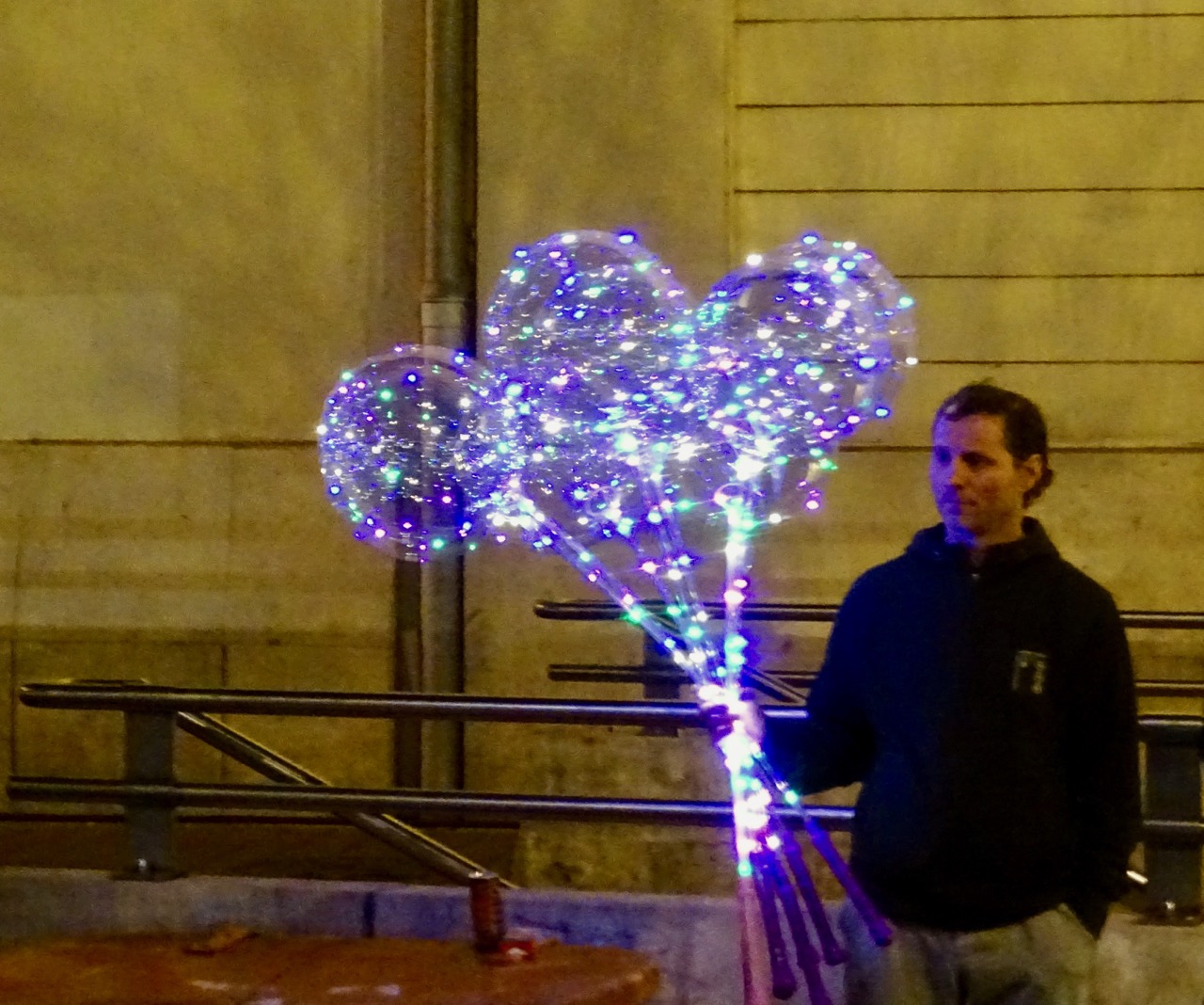
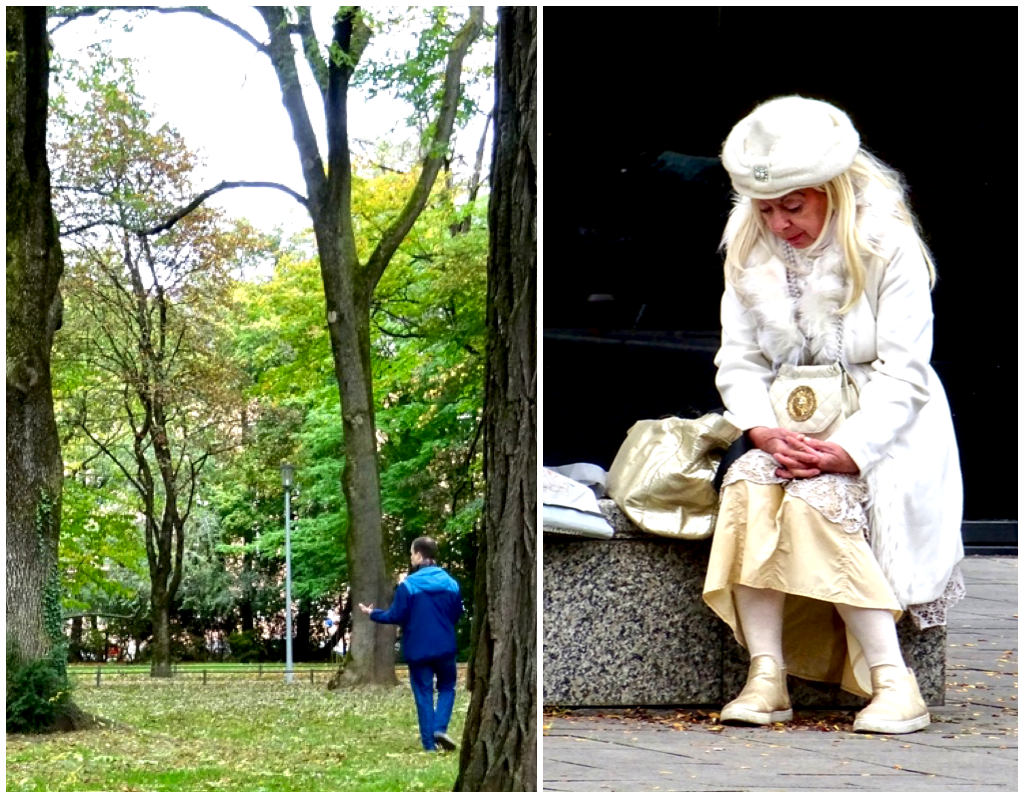
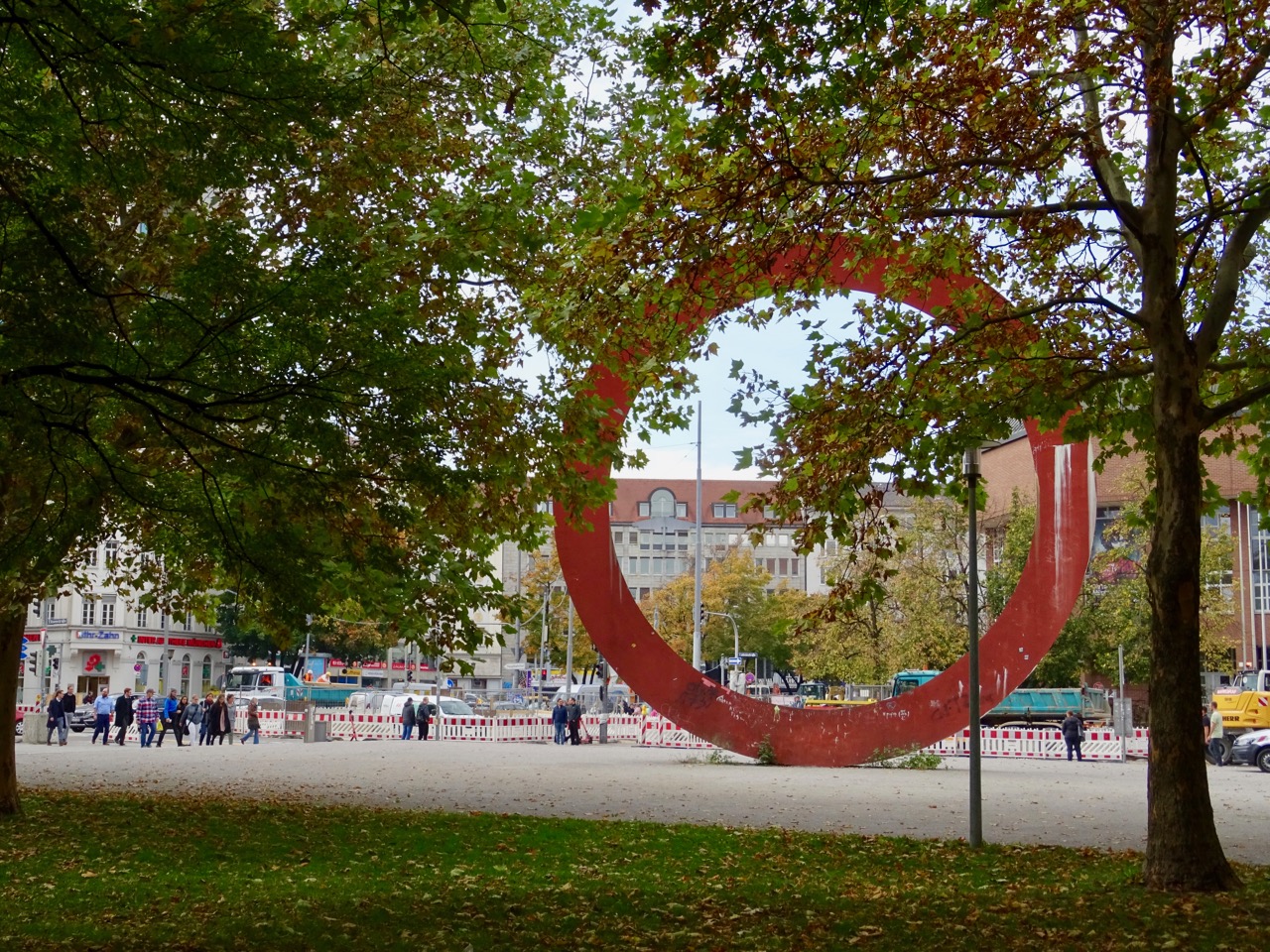 The Ring is right next to the entrance to the Old Botanical Garden where we have our lunch. We see lots of interesting people on our travels. The man below was ‘communing’ with a tree…he walked circles around it, with his hands out, making gestures towards the tree. Some police driving through the park stopped to talk to him but they let him be, guess they figured he was harmless. Nearby I spotted this lady dressed all in white. She looks like she belongs to a different place and time.
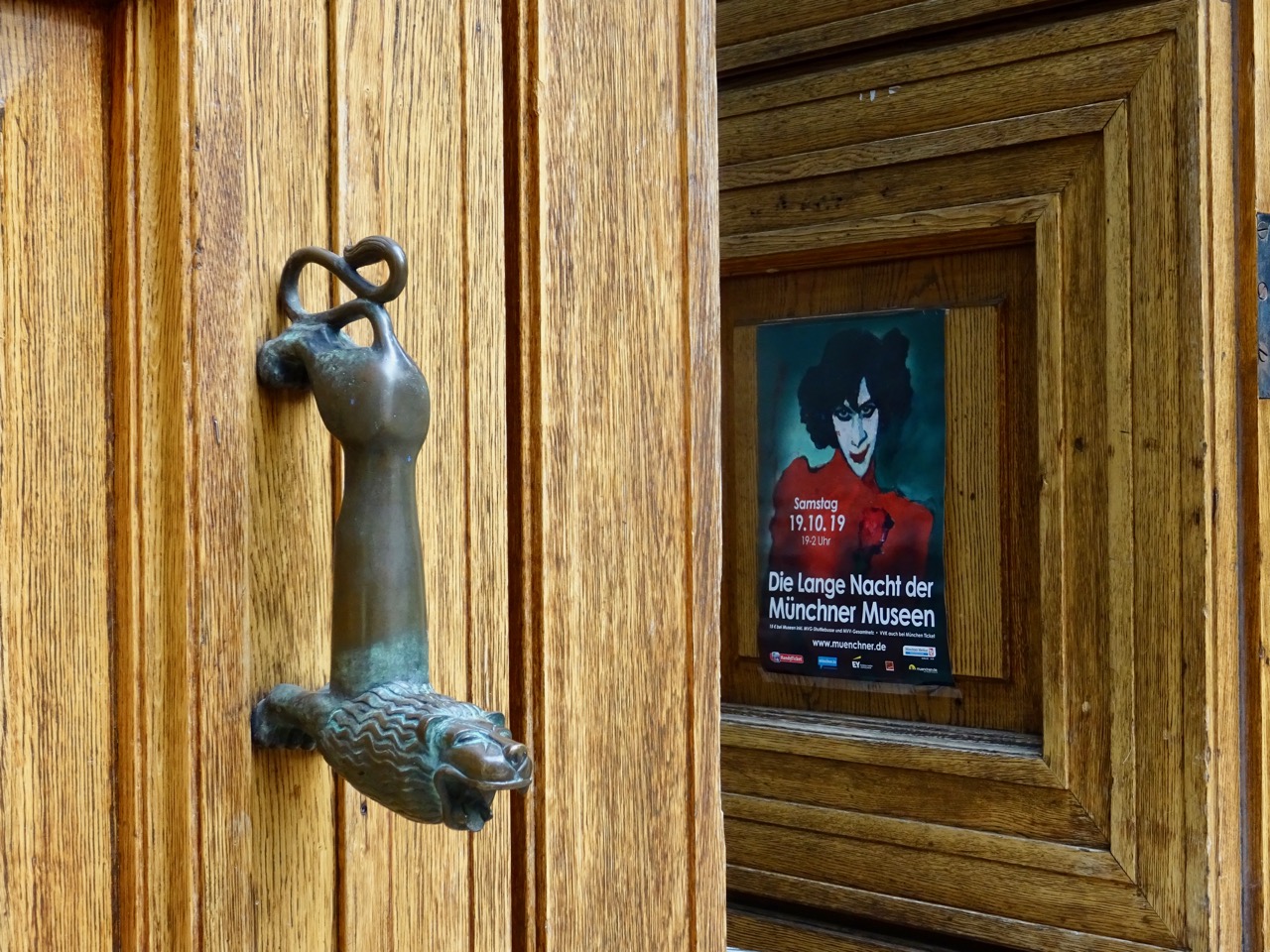
 There was a small gallery in the Botanical Gardens but they were changing exhibitions and not open. I liked both the door handle and the interesting poster, which reads, The Long Night of Munich Museums.
 First stop on our tour, why don’t you come along with us? The
 Citizen’s Hall Church was heavily damaged during WWII but it has been rebuilt and looks exactly like it did in the 1700’s. The basement contains the tomb of Rupert Mayer, a famous Jesuit priest who stood up to the Nazis occupation and died in a concentration camp..
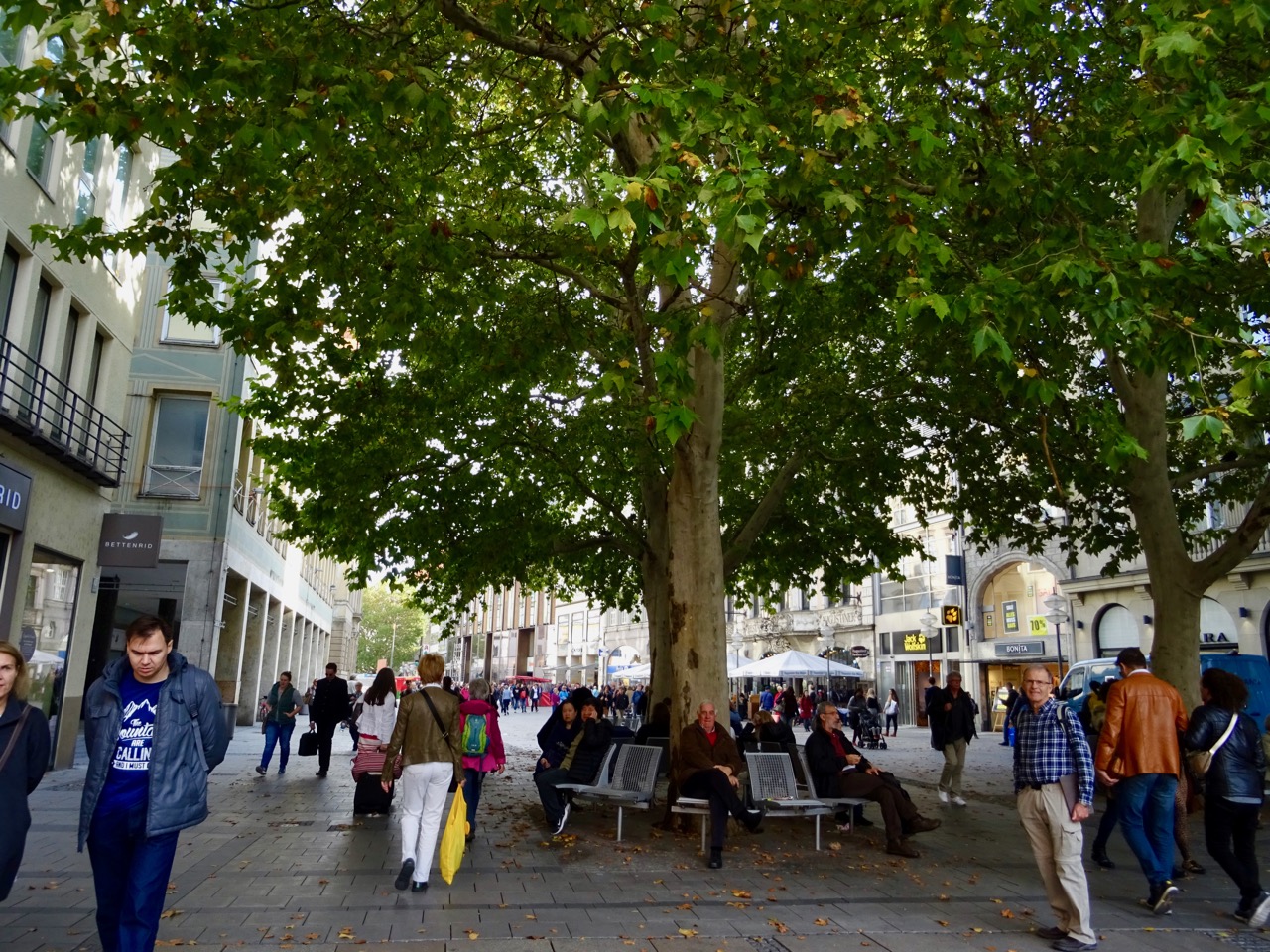
 Our walk continues down a broad pedestrian street with large trees.
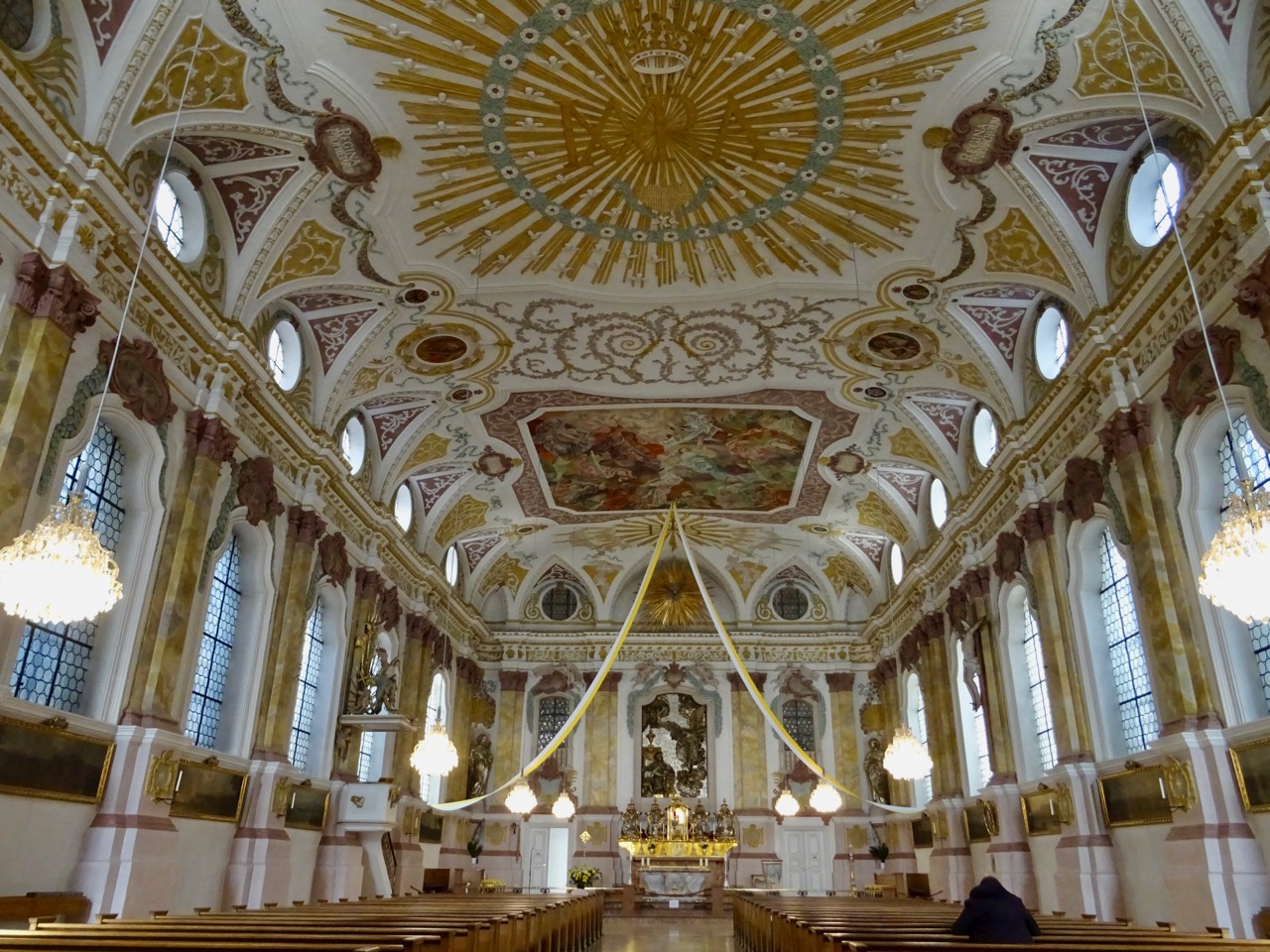
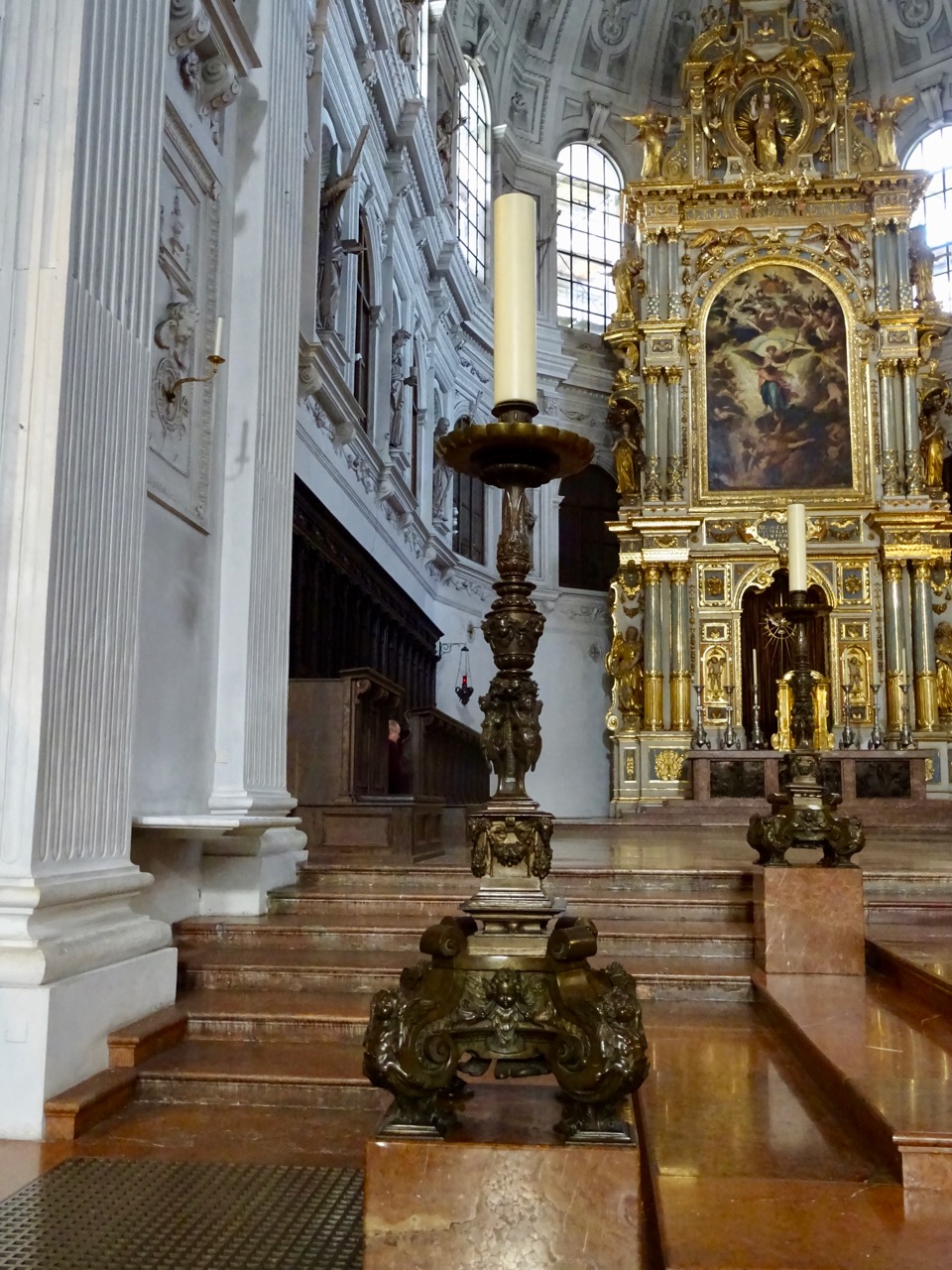
 St Michael’s Church. I liked the huge elaborate candle holders. The church contains The Royal Crypt which holds 40 tombs. The most famous of these is the tomb of “Mad” King Ludwig II. Ludwig was a big spender and built many lavish castles and palaces. We visited the Neuschwanstein Castle on our first trip to Europe almost 40 years ago. It is the castle that inspired Walt Disney’s Snow White castle.
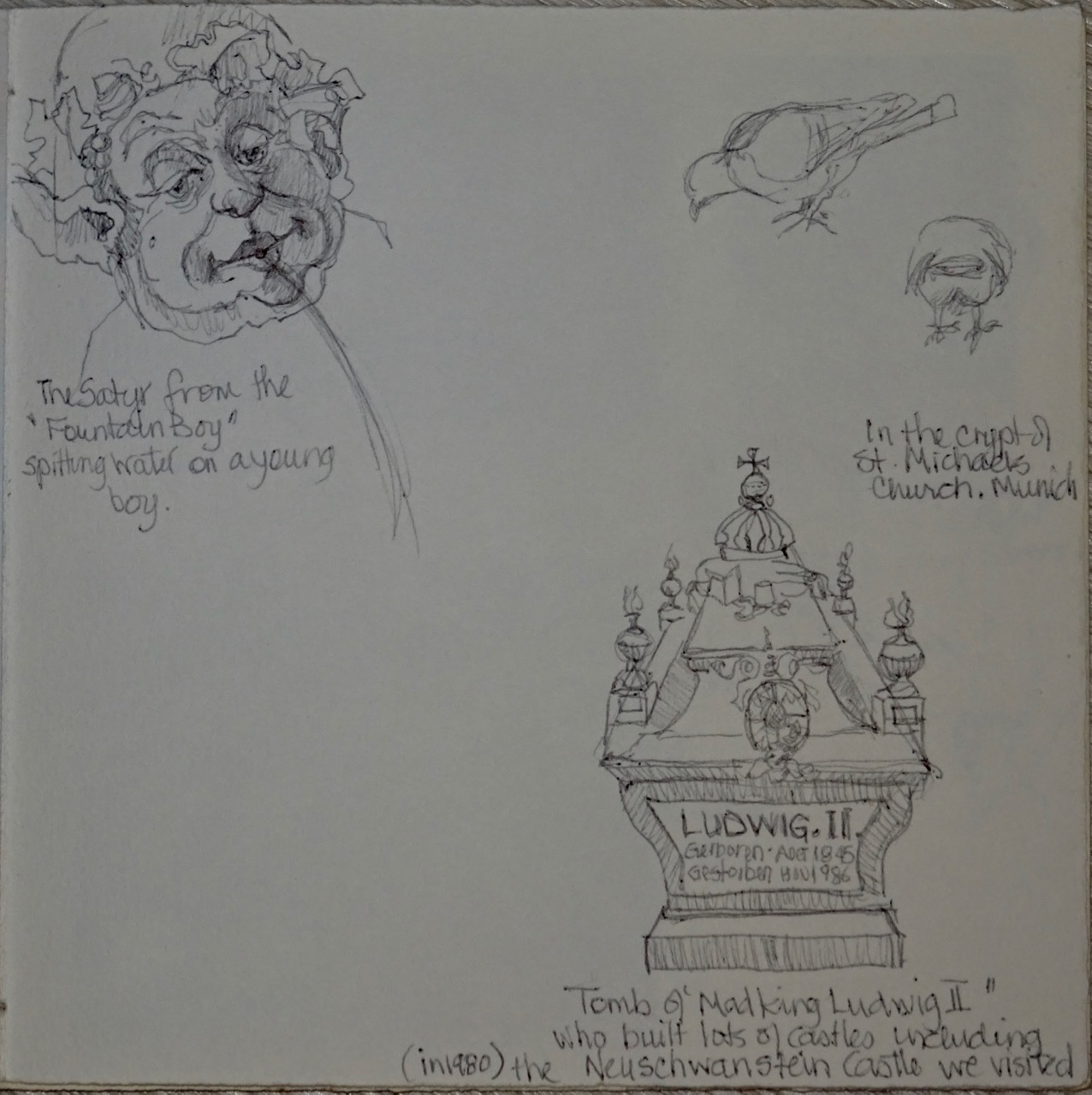
 No photos are allowed in the crypt so I did a quick sketch of King Ludwig’s tomb. No one ever seems to mind if I draw.
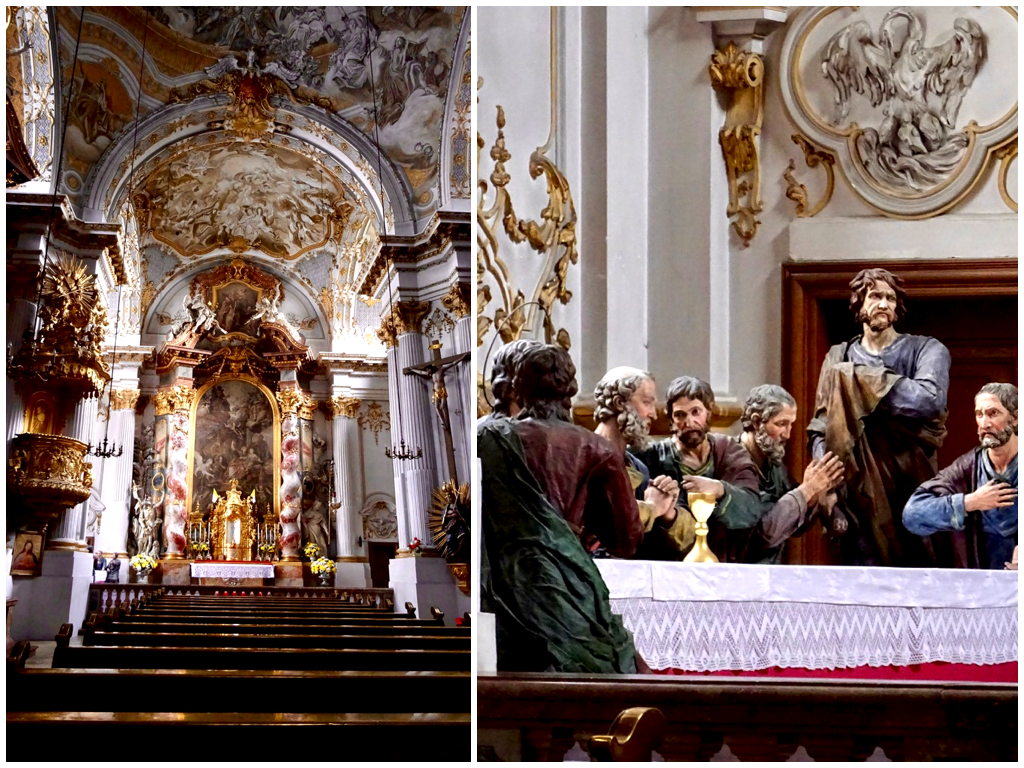
 There are a few churches on this tour! Each of them has its own distinctive feature. Saint Anna’s Church has had a chapel on this site since 1440. I thought I saw people inside, behind the locked gates, but when I zoomed in with my camera, I realized it was a life size sculpture of the Last Supper.
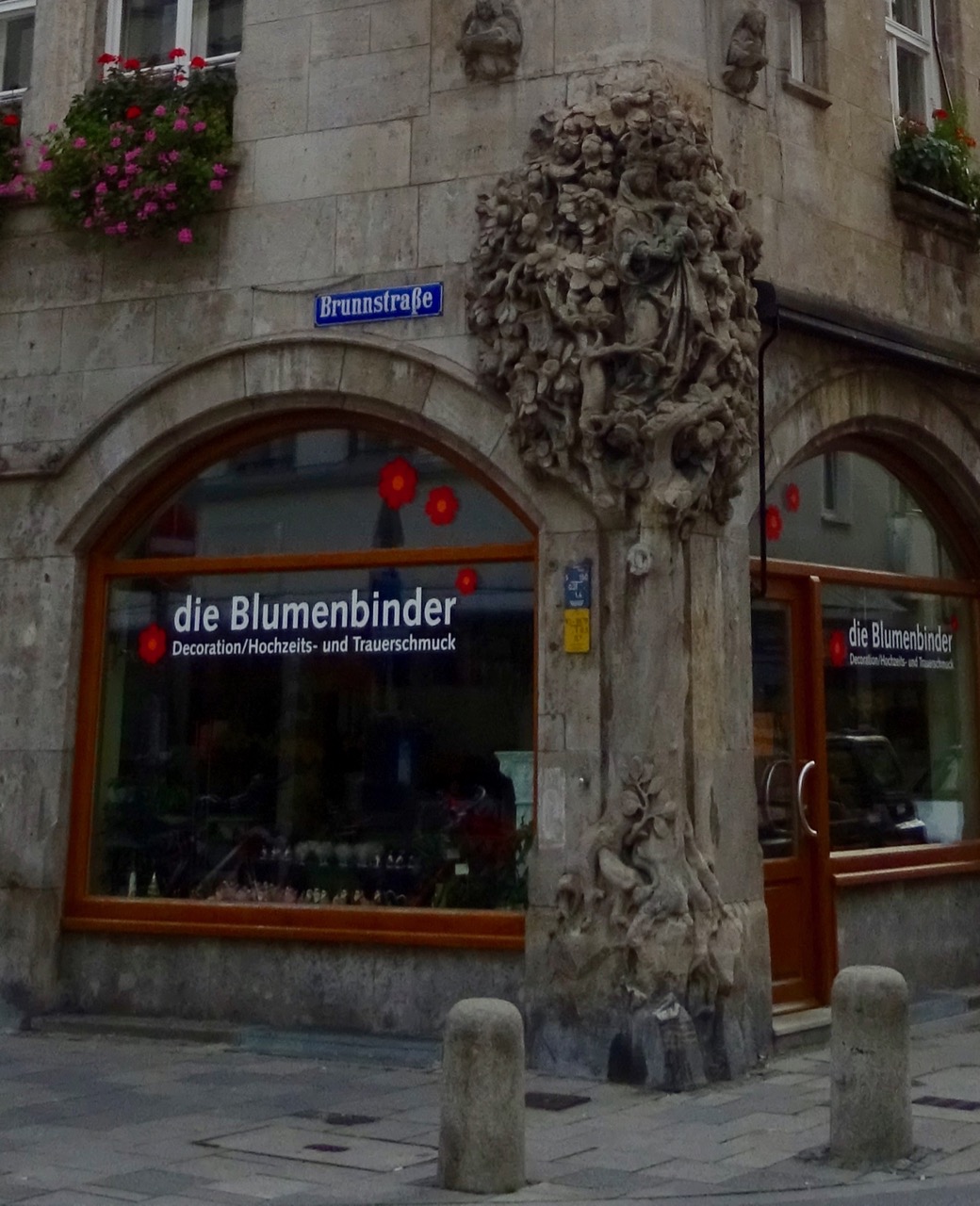
 We pass this tree sculpture on the corner of a building on our way to The Asamhof Passage.
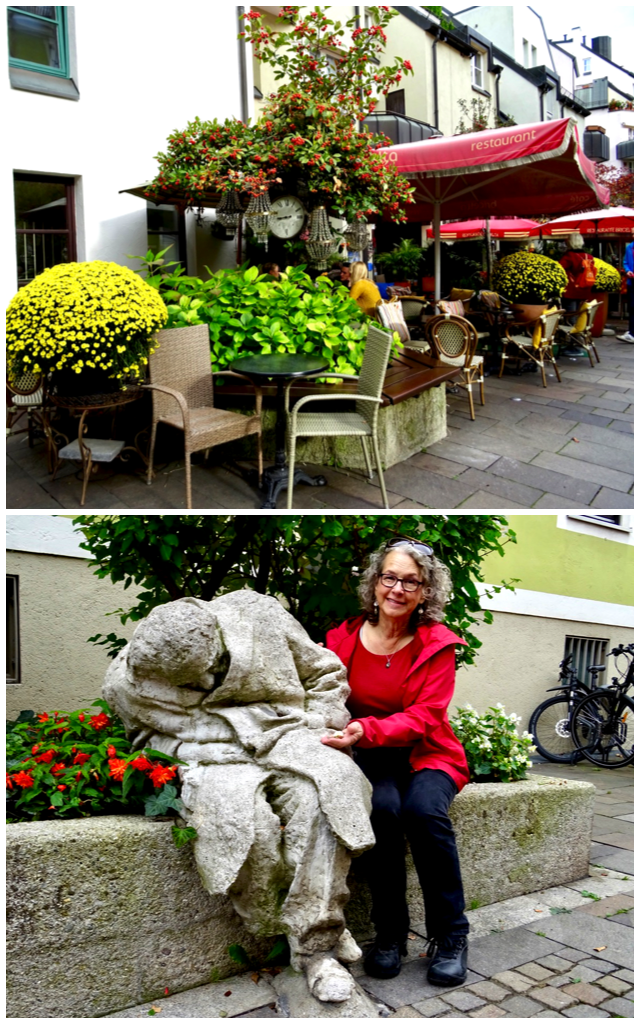
 Asamhof Passage is a little pedestrian street lined with restaurants, lots of flowers, and this poor fellow who needed my change more than I did!
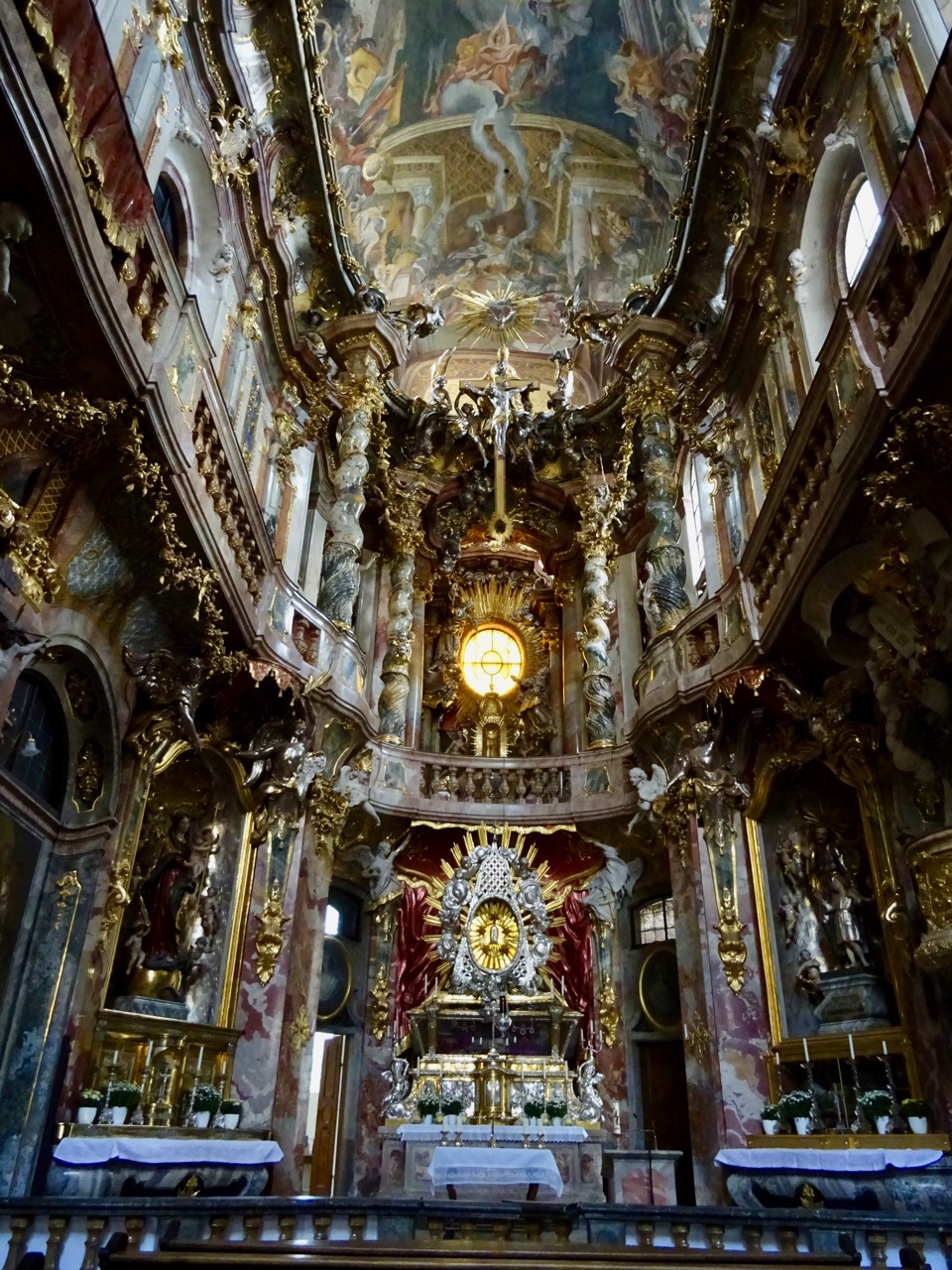
 Asamkirche was built by the Asam brothers as a showpiece for their church building skills. It is only 30 feet wide but it is so packed with over-the-top-Rococo decoration that we don’t know where to look! The entire focus of the interior leads the eye to a bright golden window meant to feel like the eye of God staring down at us.
 This is the exterior of the church and the brother’s house next door, which had bedroom windows looking onto the high altar in the church.
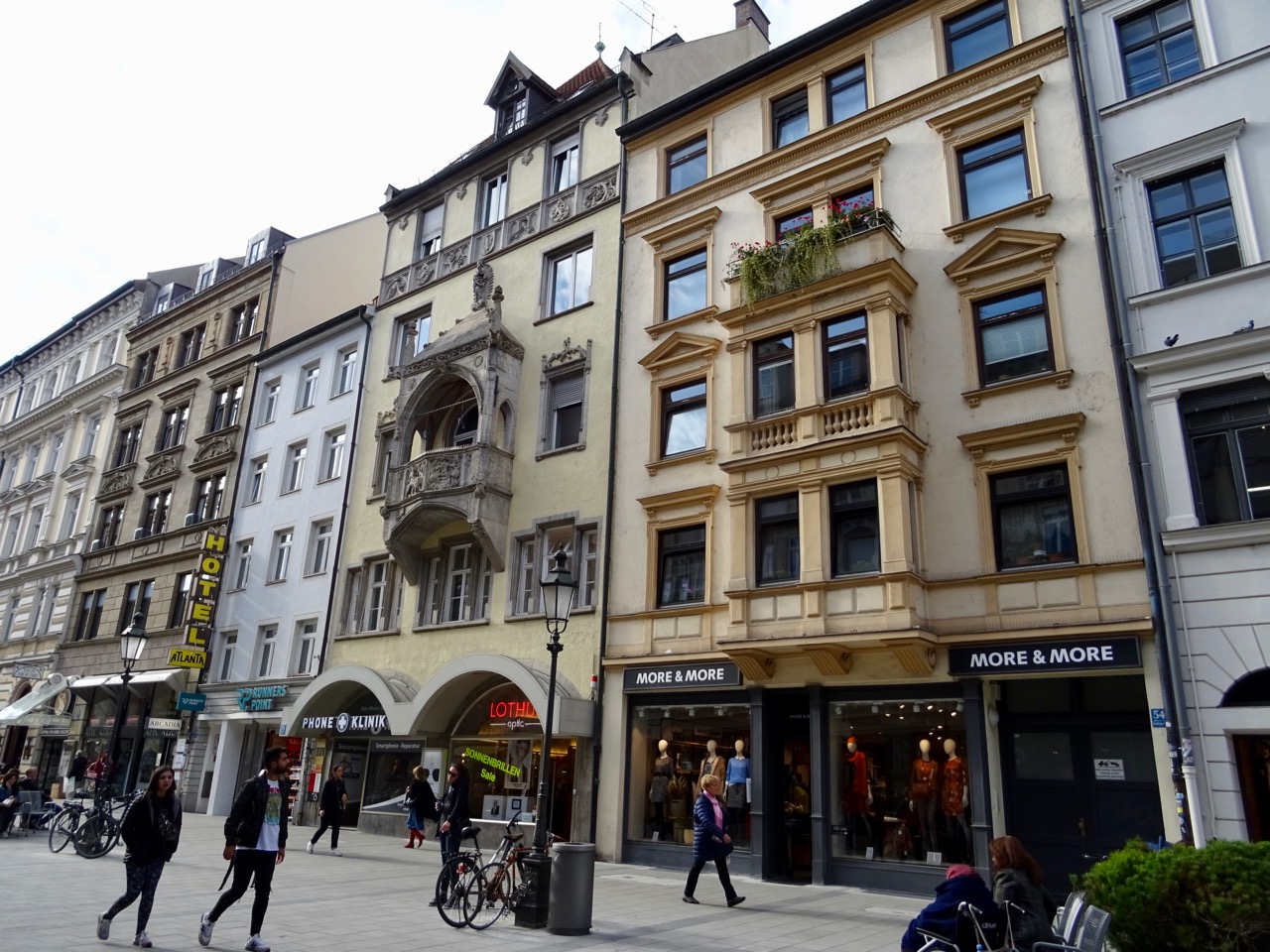
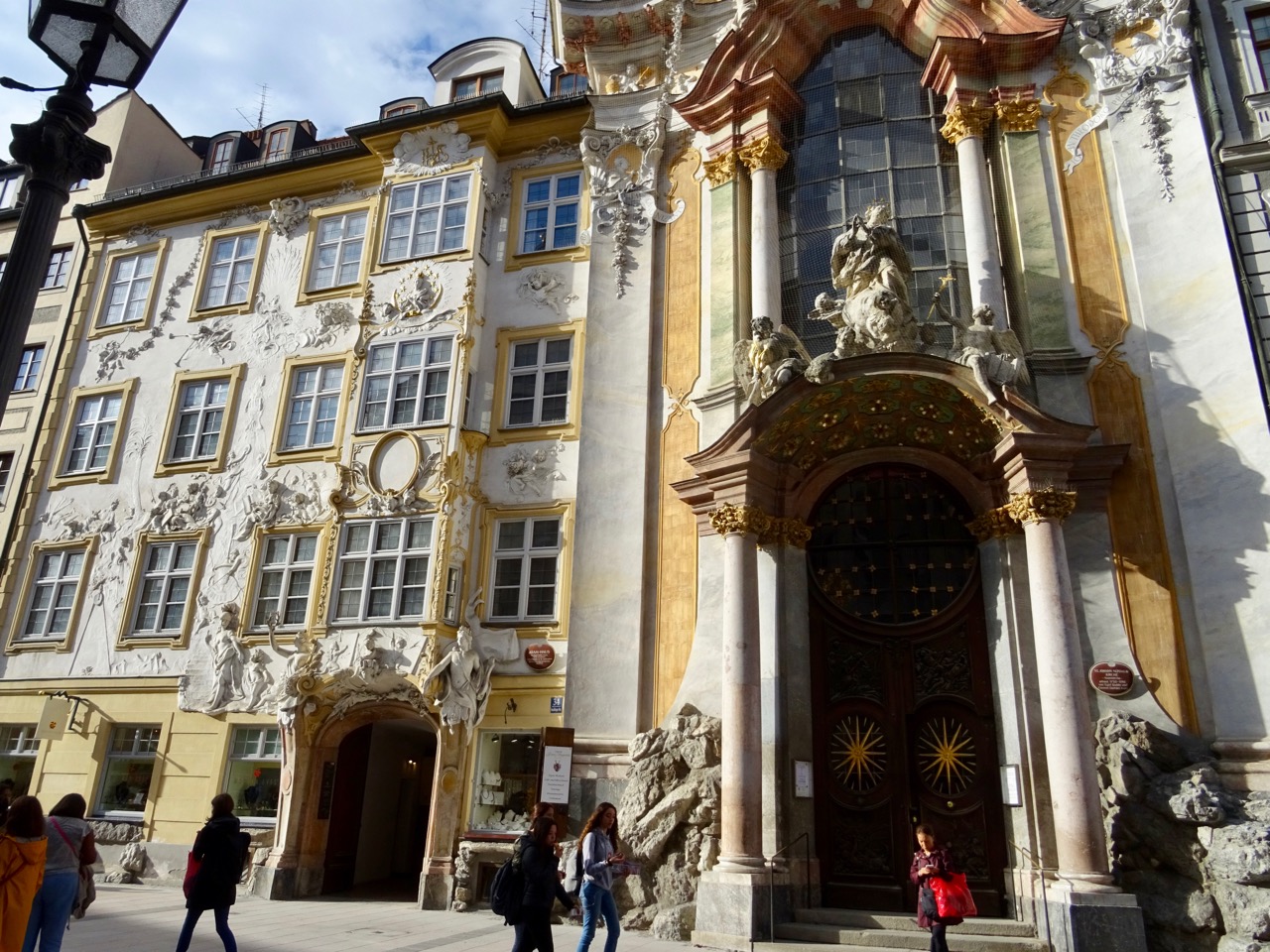 There are lots of modern shops below the traditional apartments.
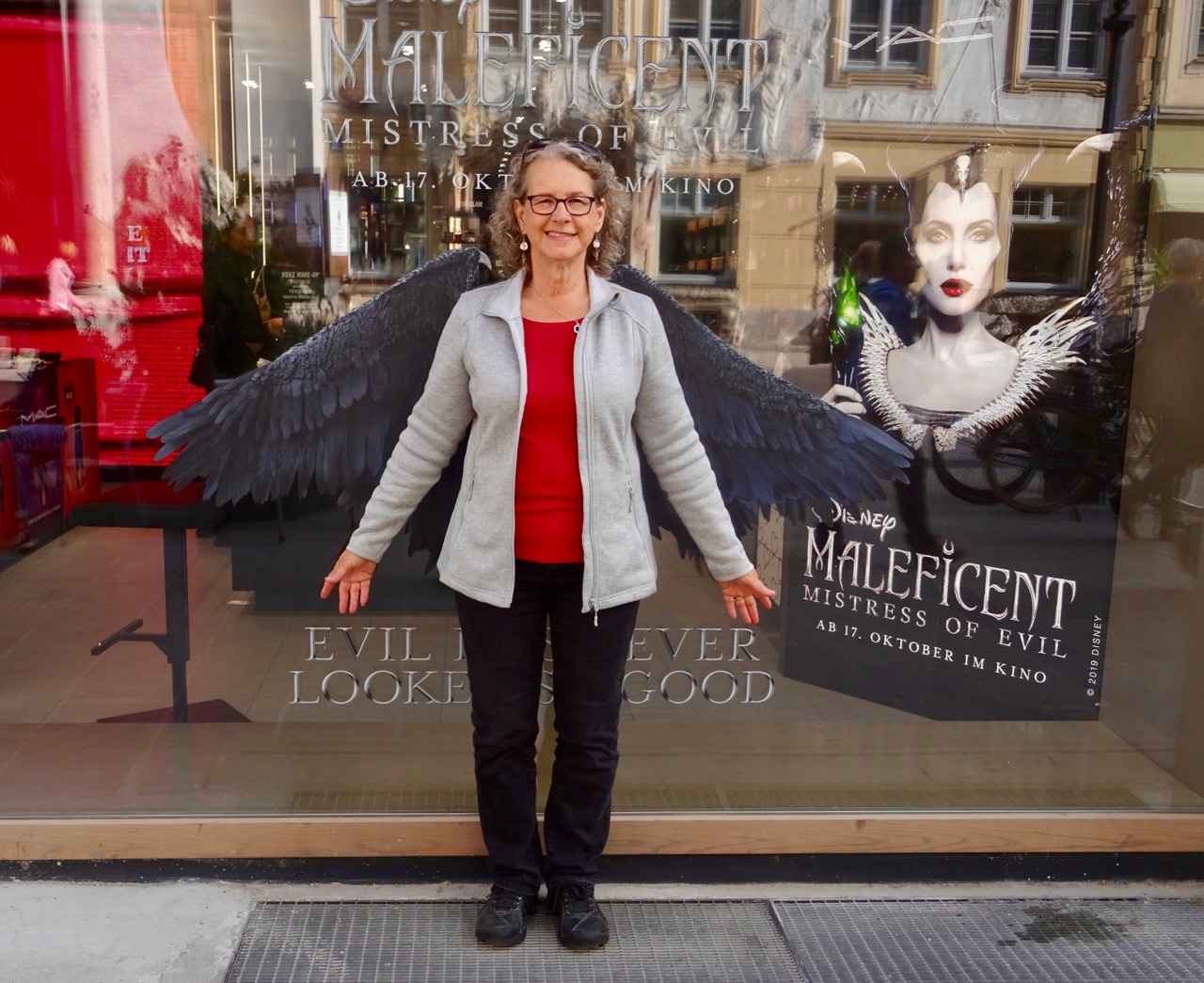
 I think I look OK with wings!
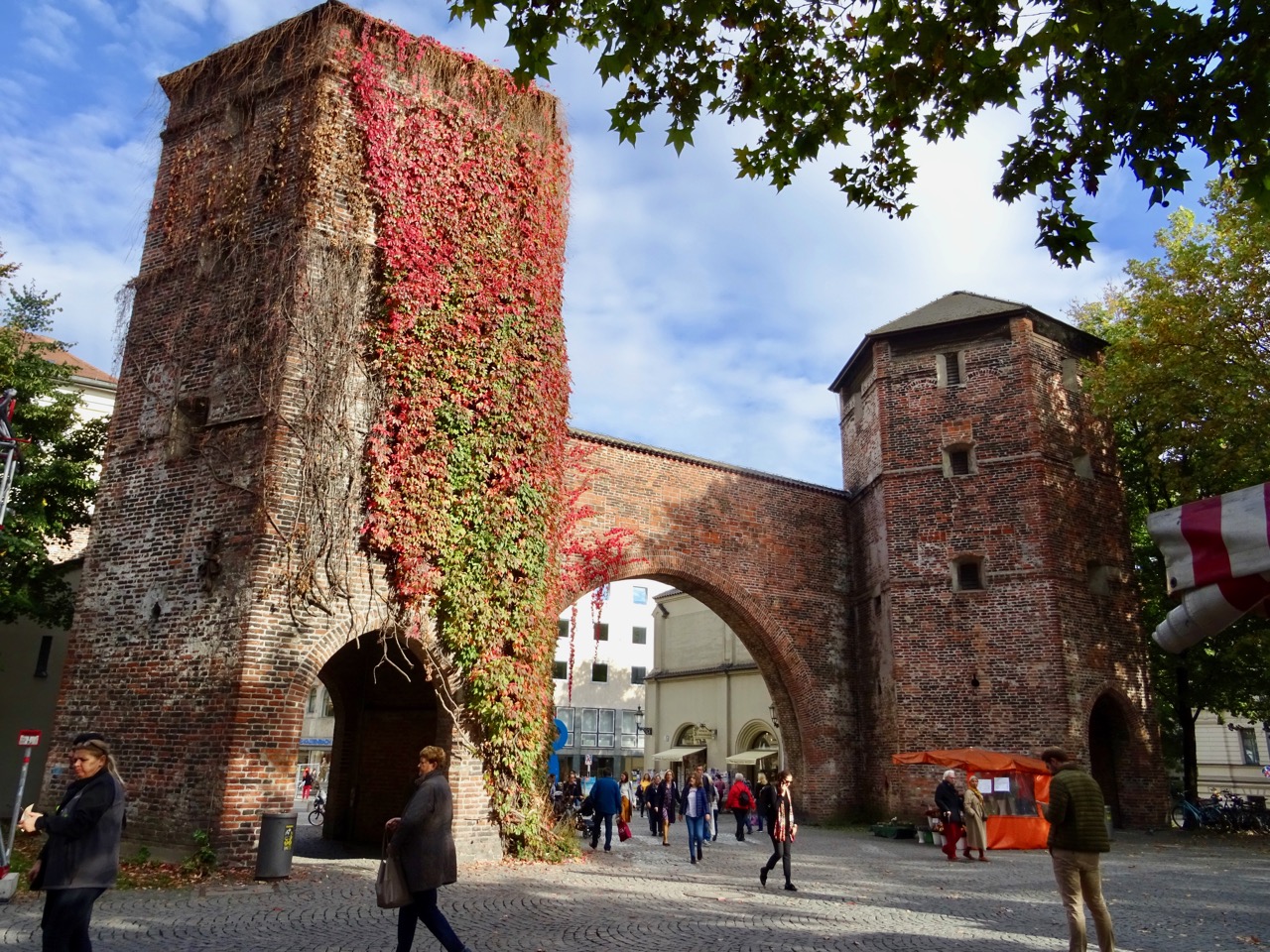
 The town gate, built in 1318 has two towers and is the oldest of the three city gates still standing in Munich.
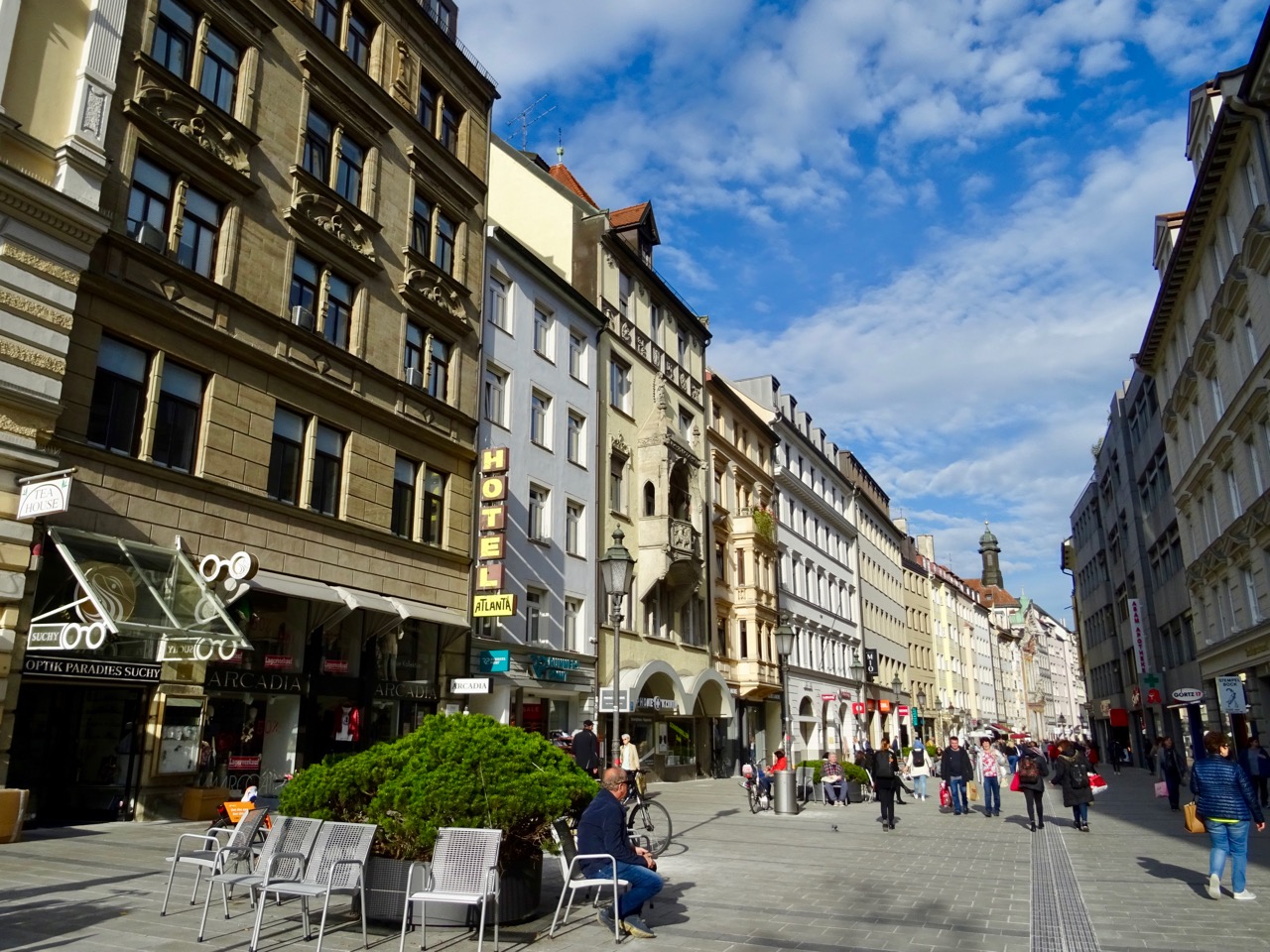
 A view down the street from the town gate.
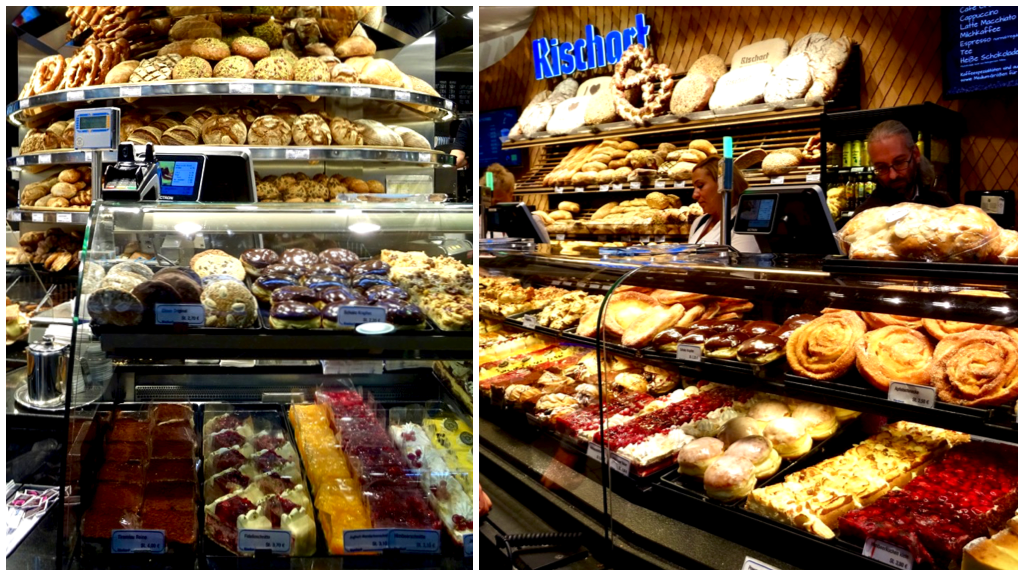
 Walking back towards Marienplatz we walk through the Victuals Market (Viktualiemarkt). This is a tough place to be when you can’t eat gluten, dairy or eggs!
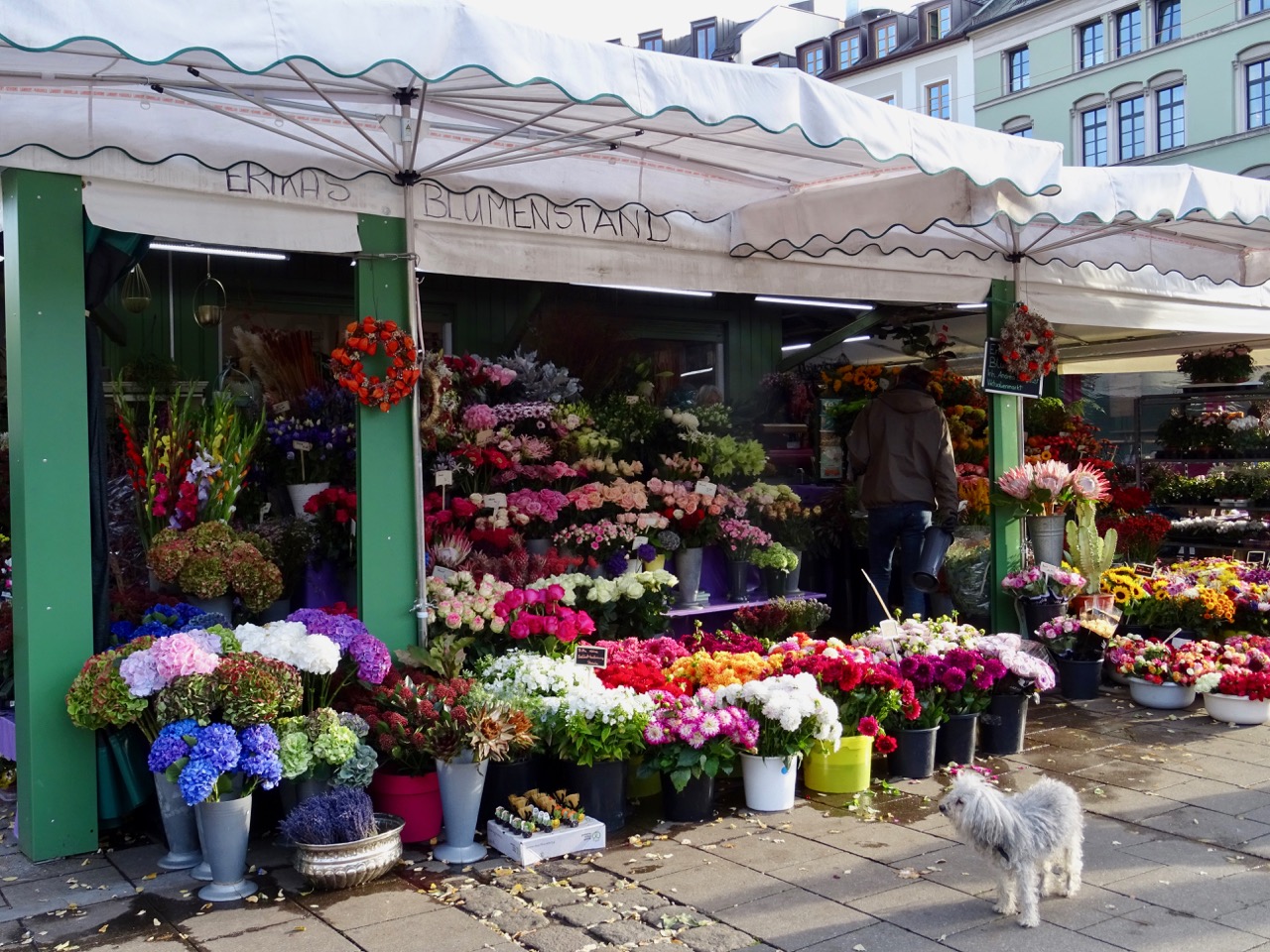
 There are lots of flower stalls. I particularly liked the little dog that seemed to belong to this one.
 This is the tallest May Pole we have ever seen!
 We can see the Glockenspiel Tower down a side street between two buildings.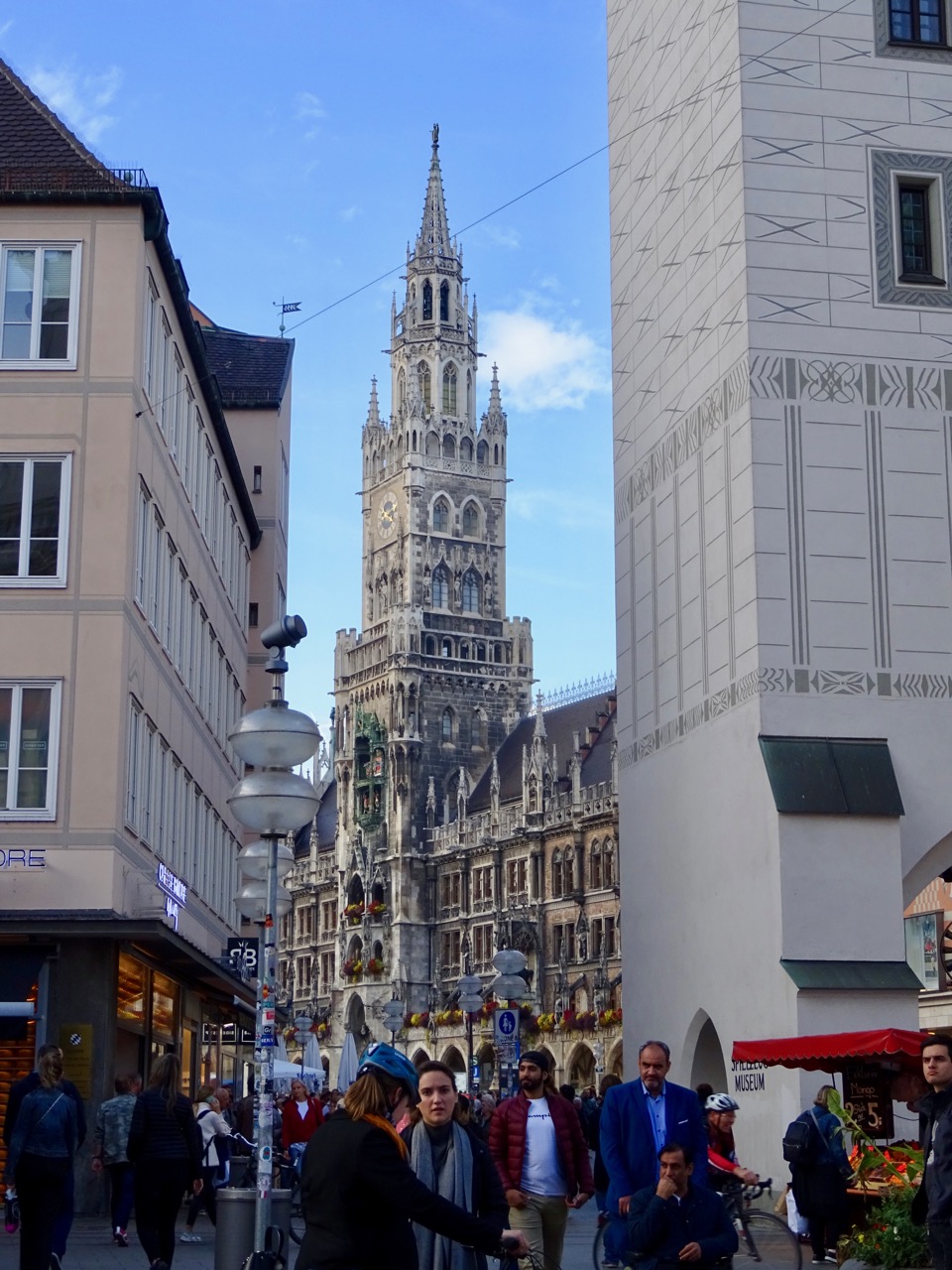
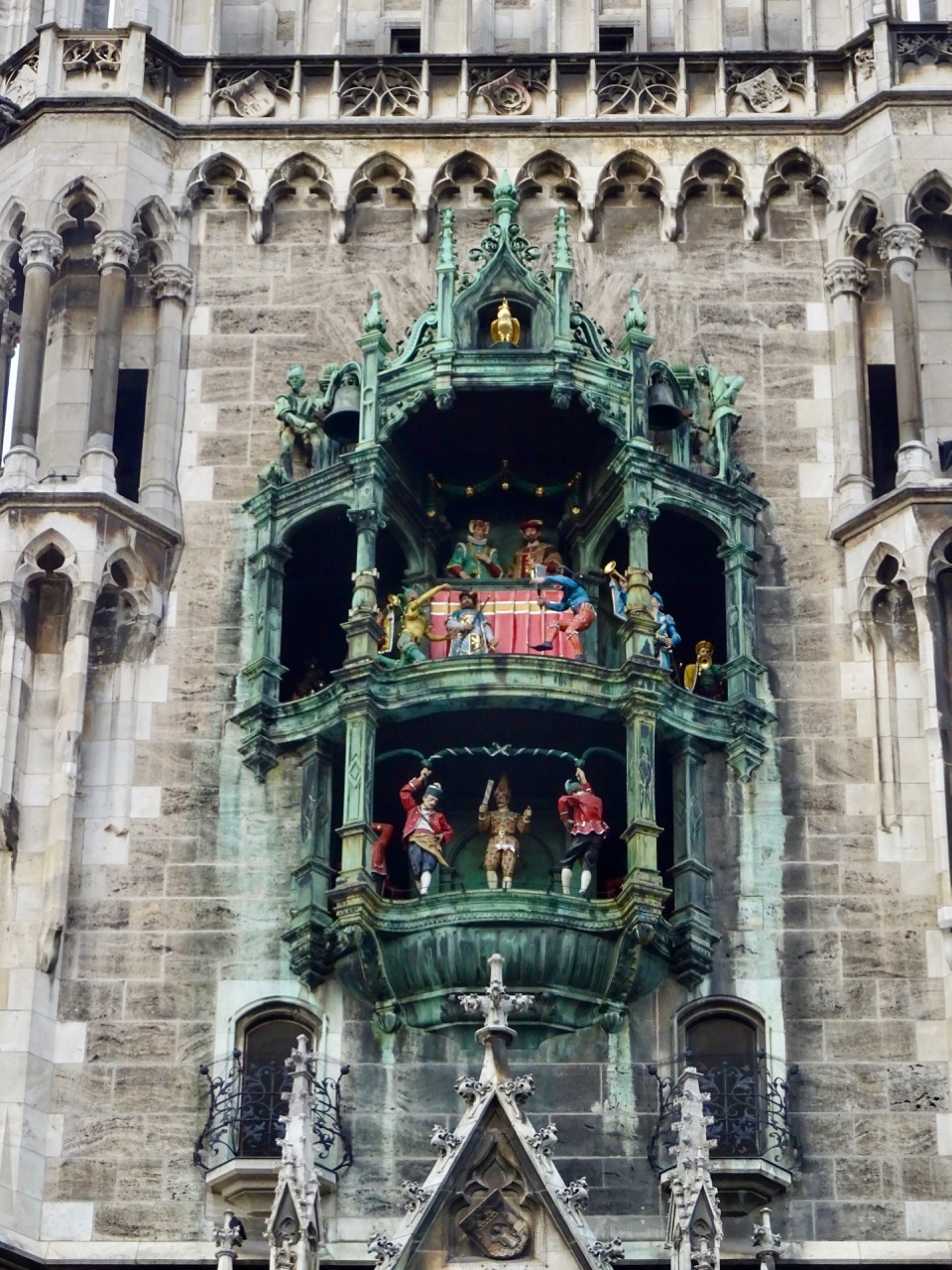
 The New Town Hall’s main attraction is the Glockenspiel. This chiming clock was added to the tower in 1907. At 11am, midday, and 5pm the Munich Glockenspiel recounts a royal wedding, a jousting tournament and a traditional dance with 32 life-sized animated figures in its 260 foot tower.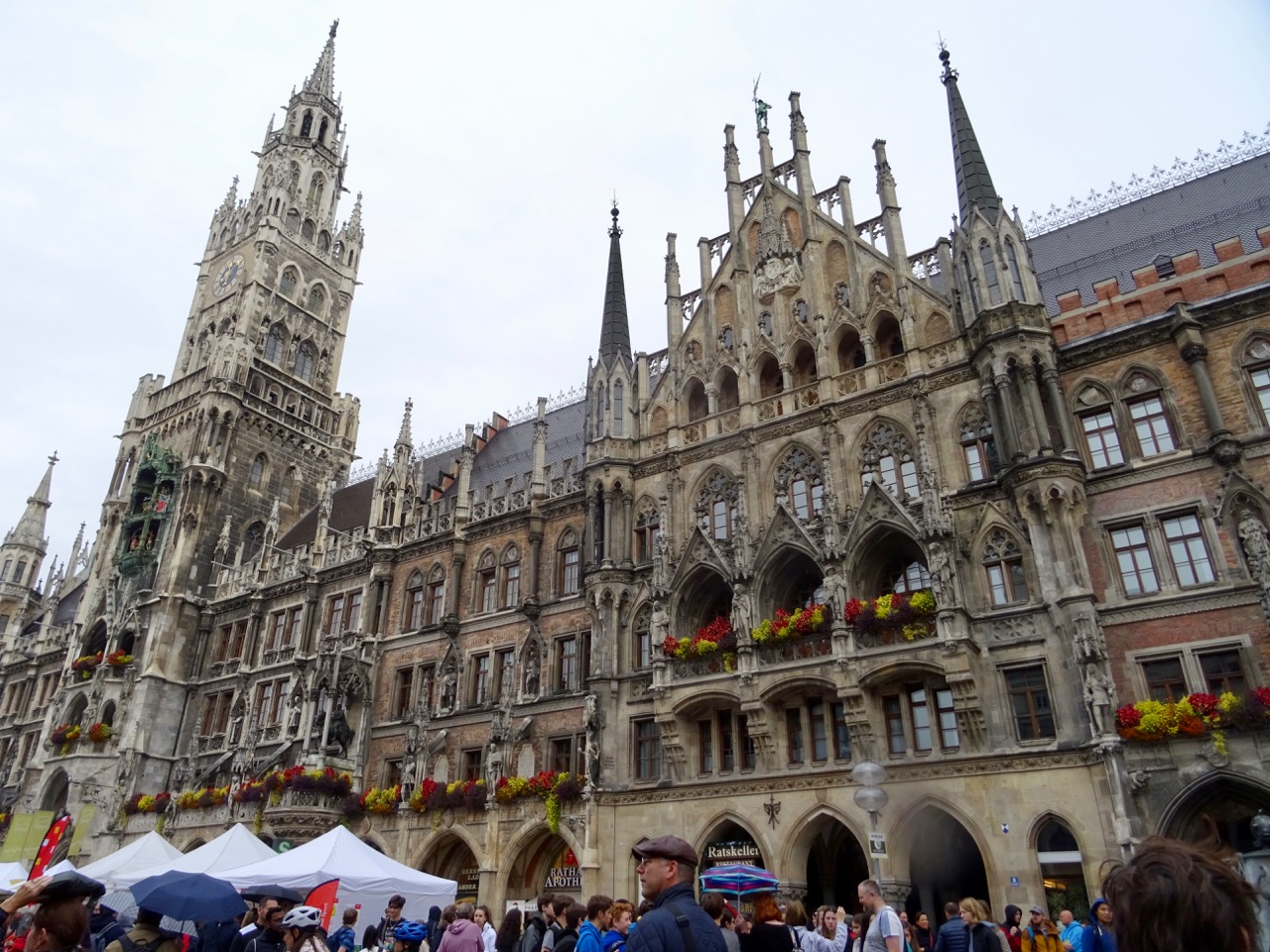
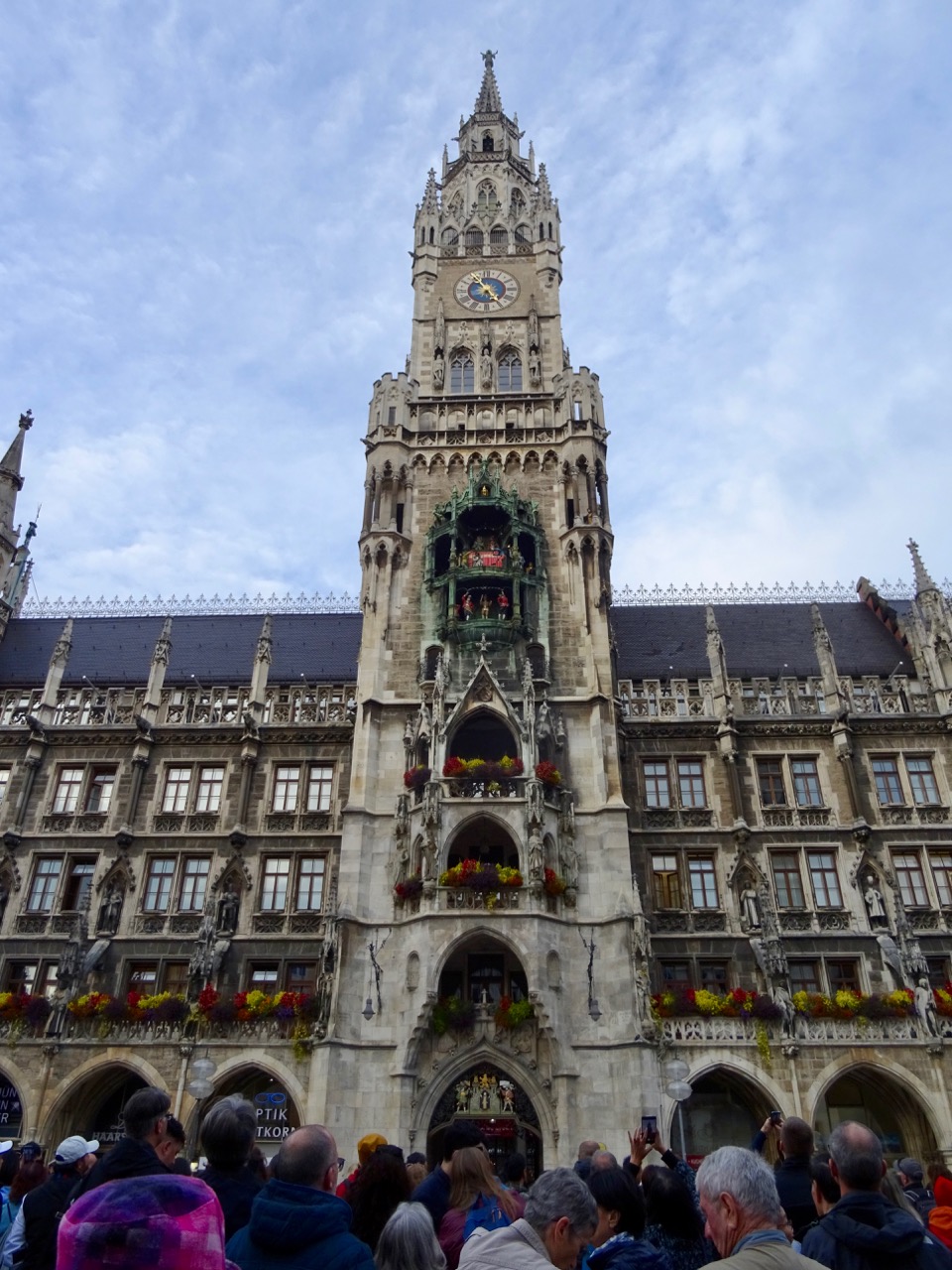 The show lasts about ten minutes, followed by the ringing of church bells.
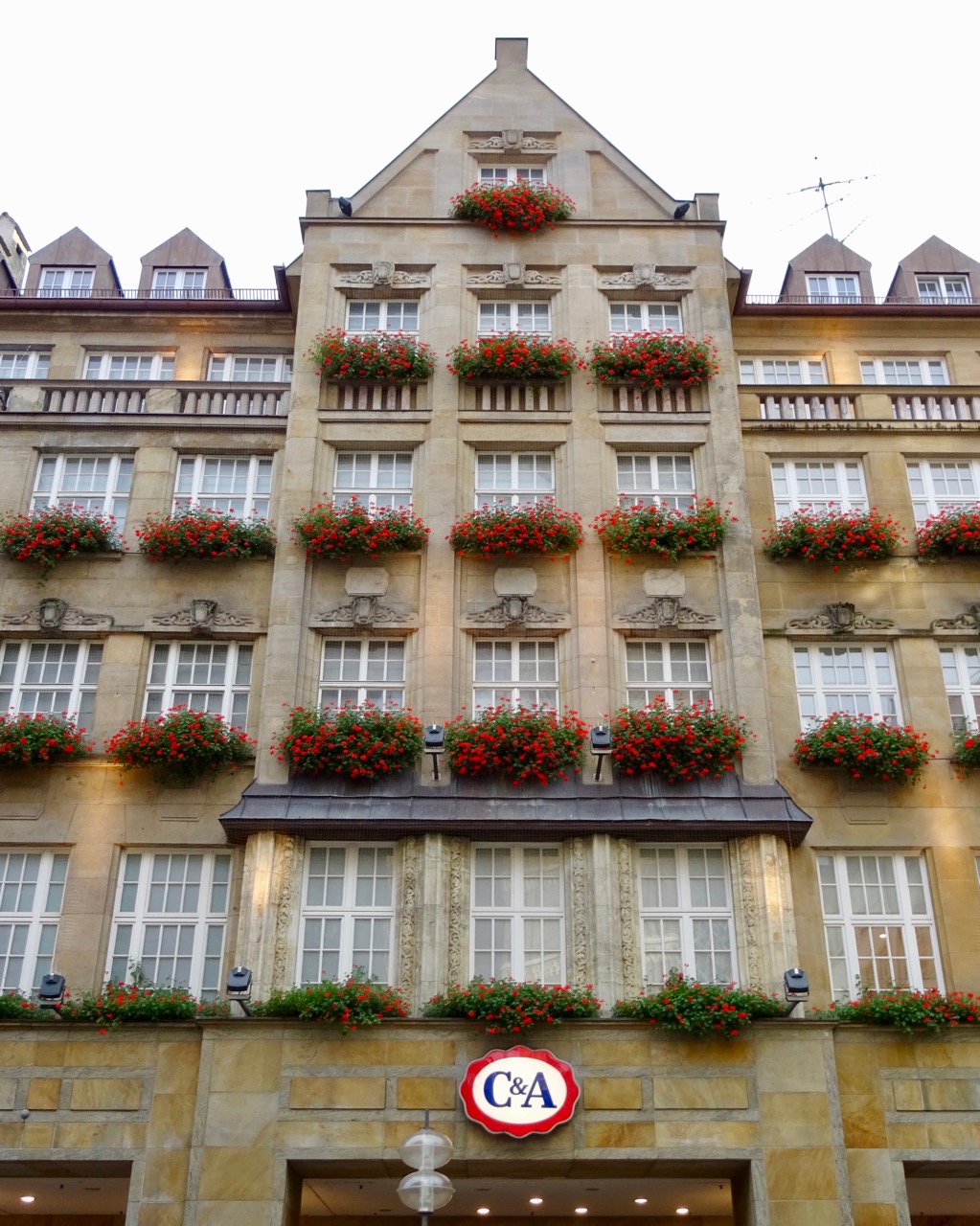
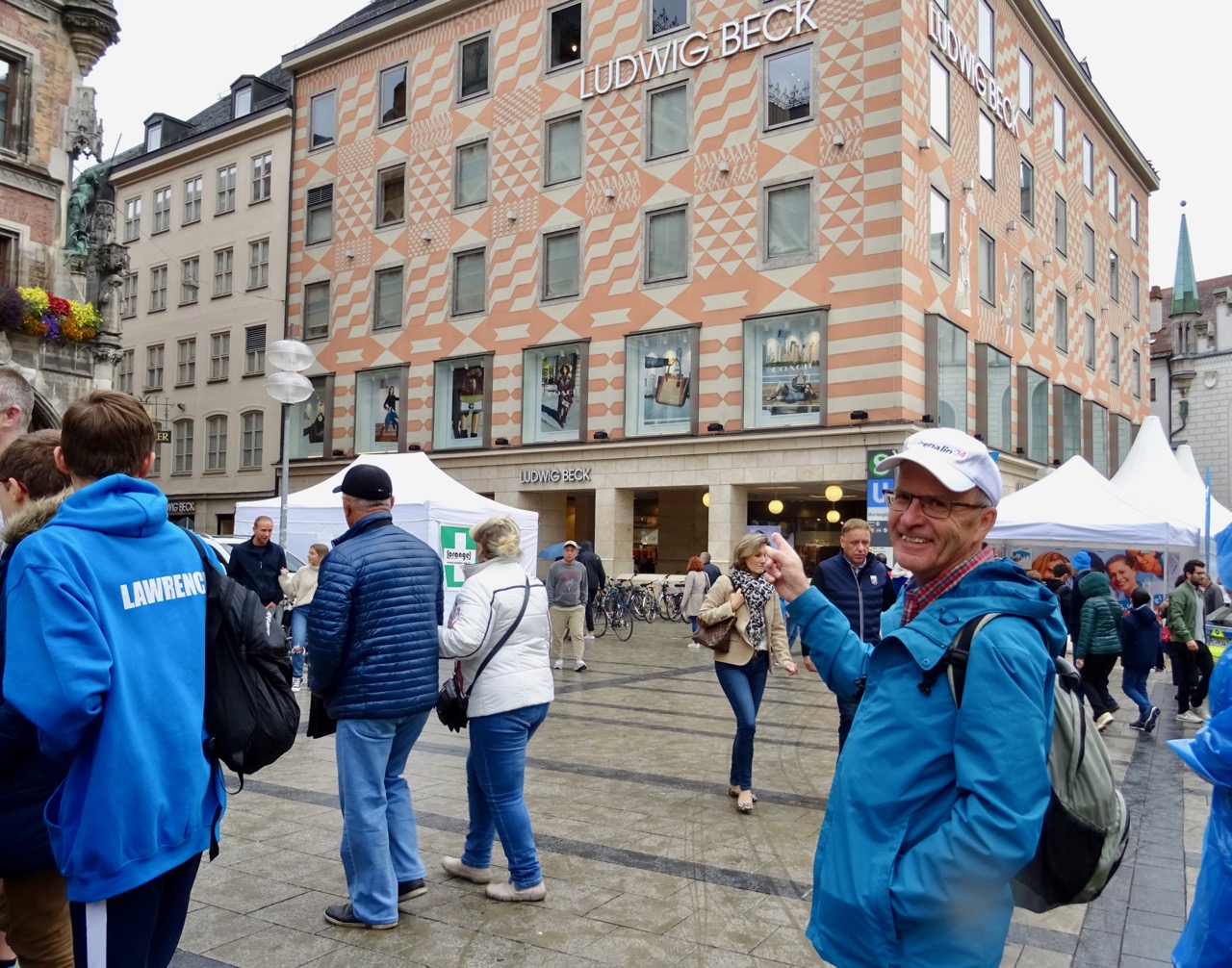
 Bob remembered the Beck Department store from our first visit to Munich almost 40 years ago! He said it was right next to the Glockenspiel and sure enough it was!
 Metro drawings from today. People kept getting off the metro before I was finished!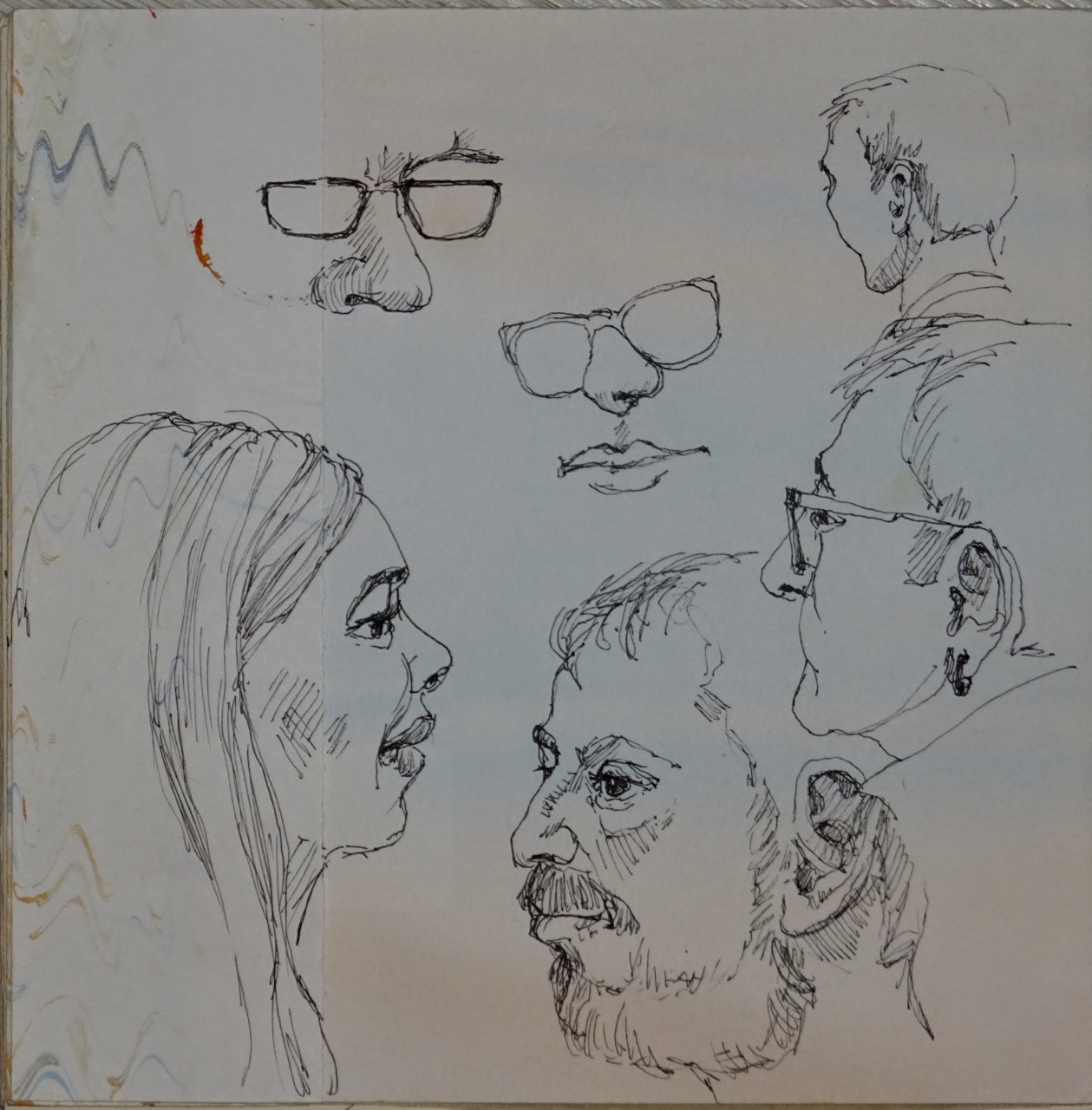
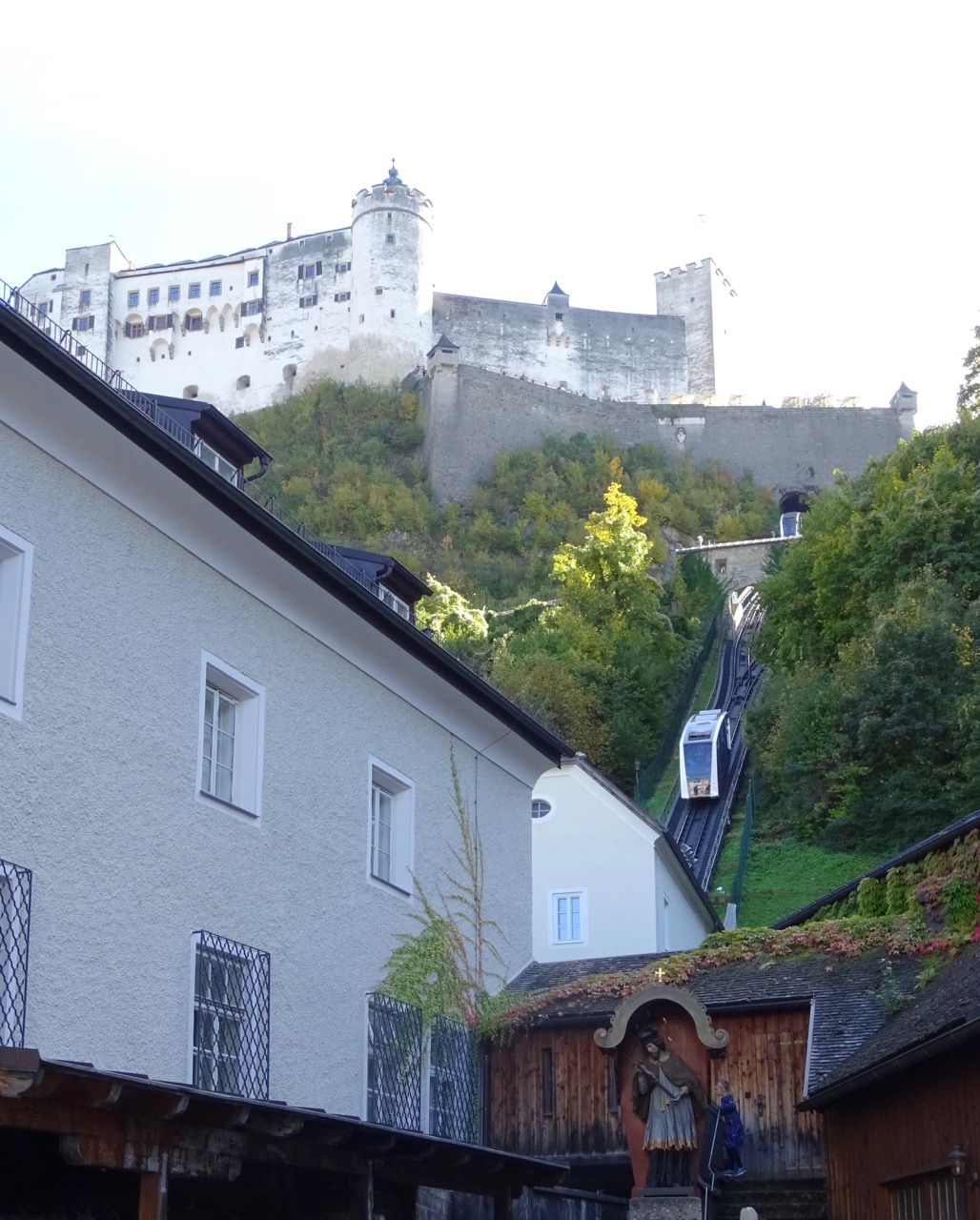
 The funicular makes short work of the steep climb to the fortress. The Hohensalzburg Fortress (Salzburg Fortress) was built in the 11th century by Archbishop Gebhard and is the largest unconquered fortress in Europe. The castle is 150 meters wide and 250 meters long, and the oldest part is over 900 years old.
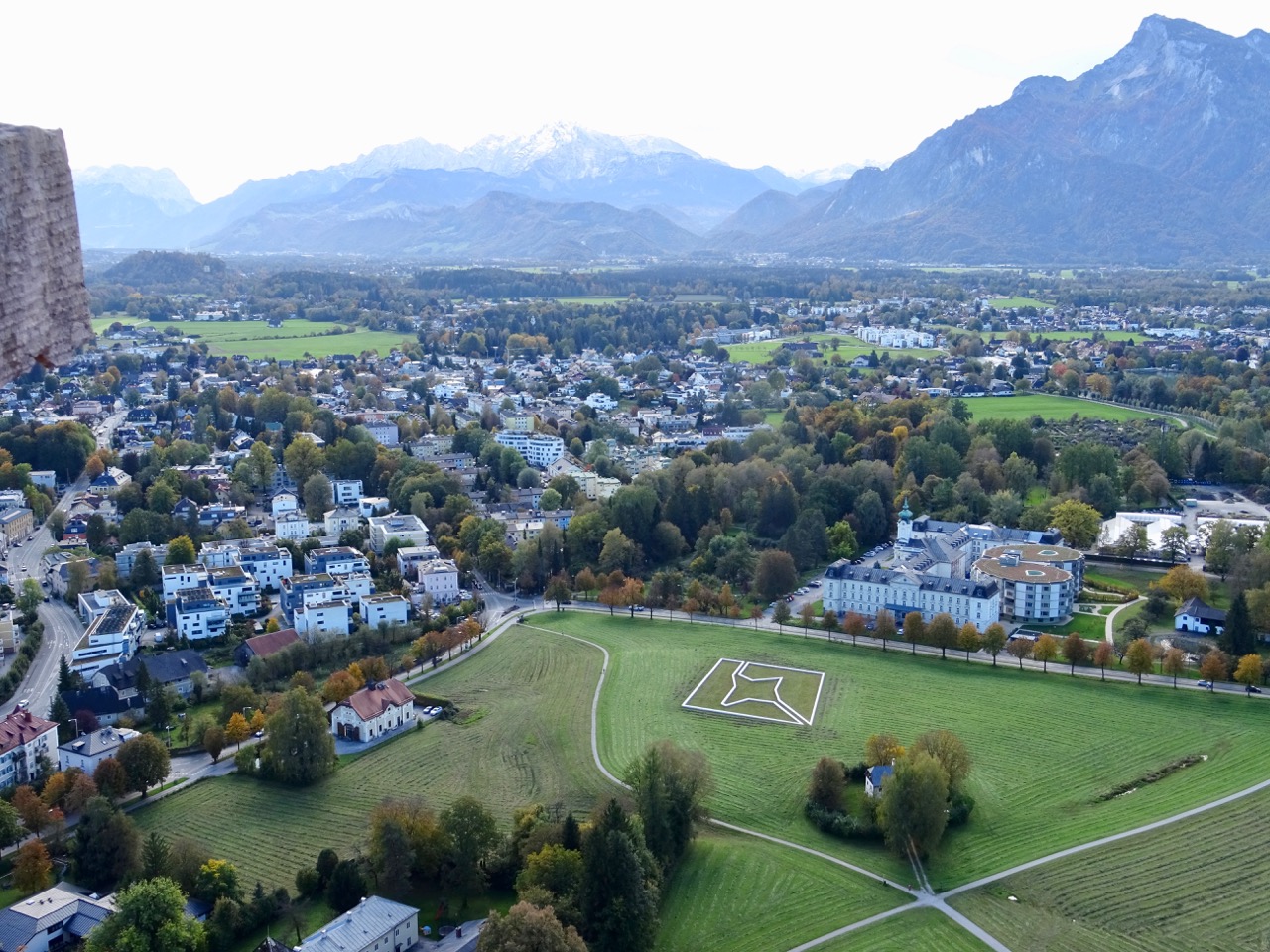
  First stop at the Fortress is the top of one of the guard towers for a great view towards the mountains…
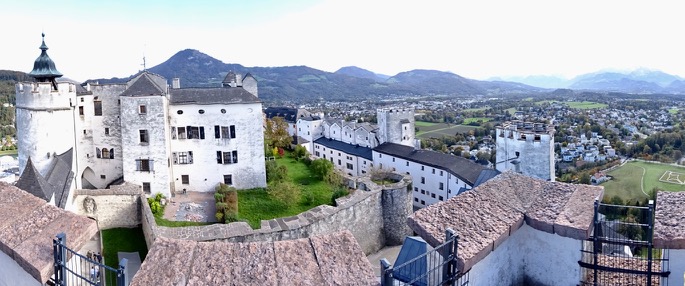
 overlooking the fortress…
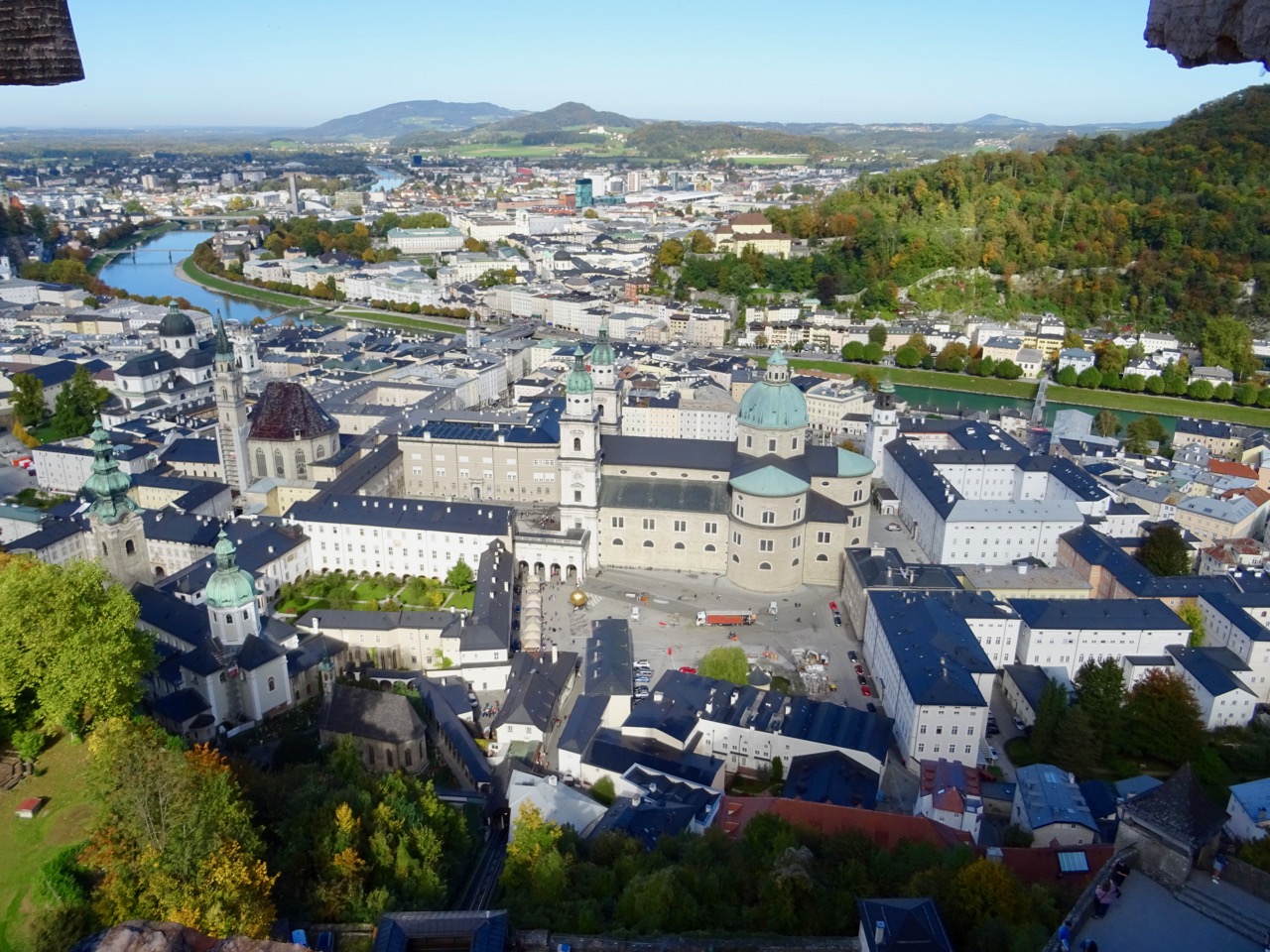
 and of the old town of Salzburg. That big square is where the Bio Fest was held yesterday. You can see the golden globe with the man standing on top. Right behind the square is the Salzburg Cathedral with the big dome, where we went to hear the choir yesterday morning.
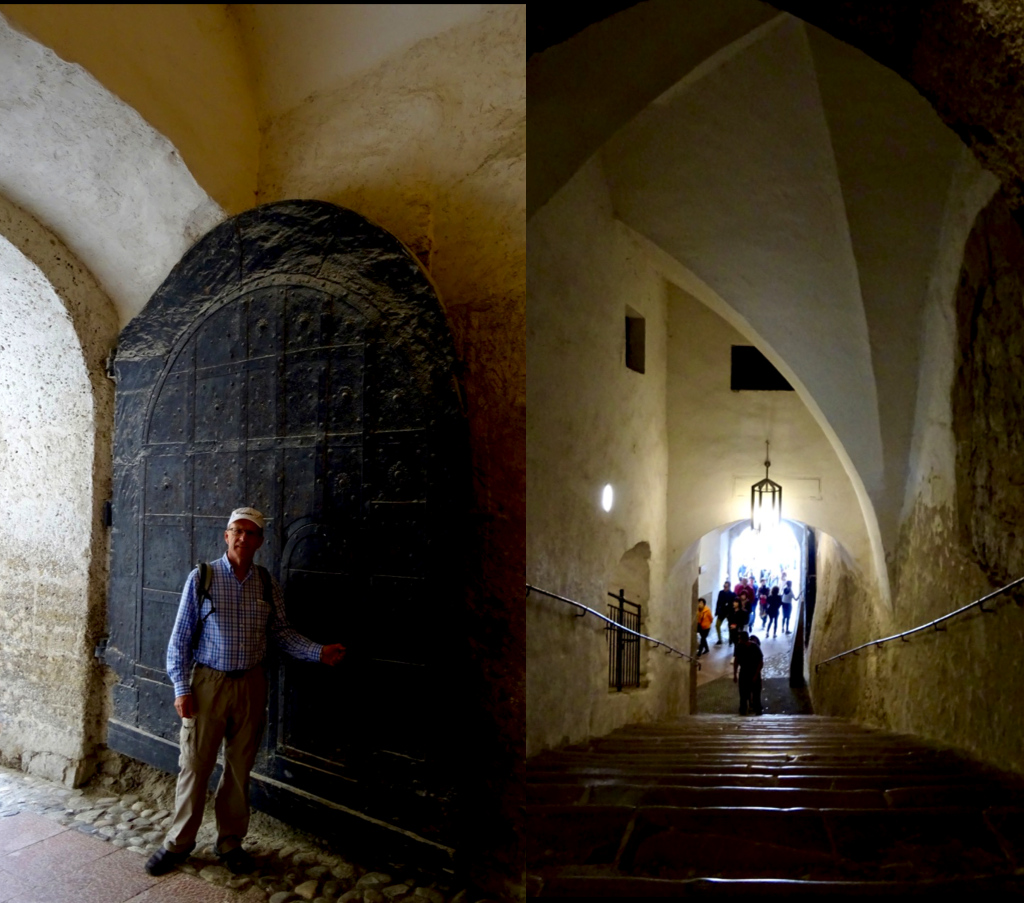
 There are lots of huge doors and interesting corridors in the fortress.
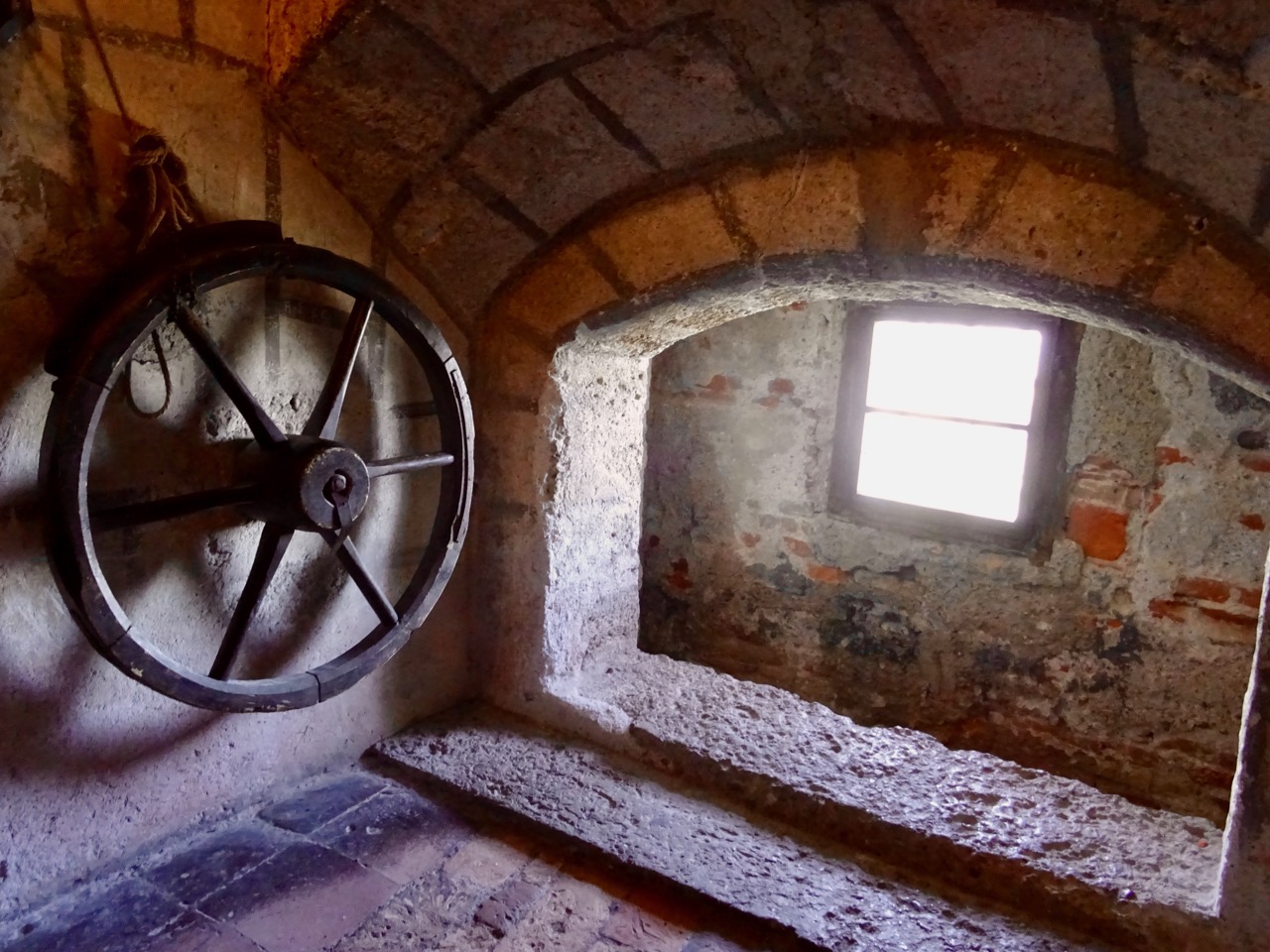
 This wheel was dropped on prisoners in order to break their bones and cause internal damage. If it didn’t kill them they were tied to it until they died an agonizing death.
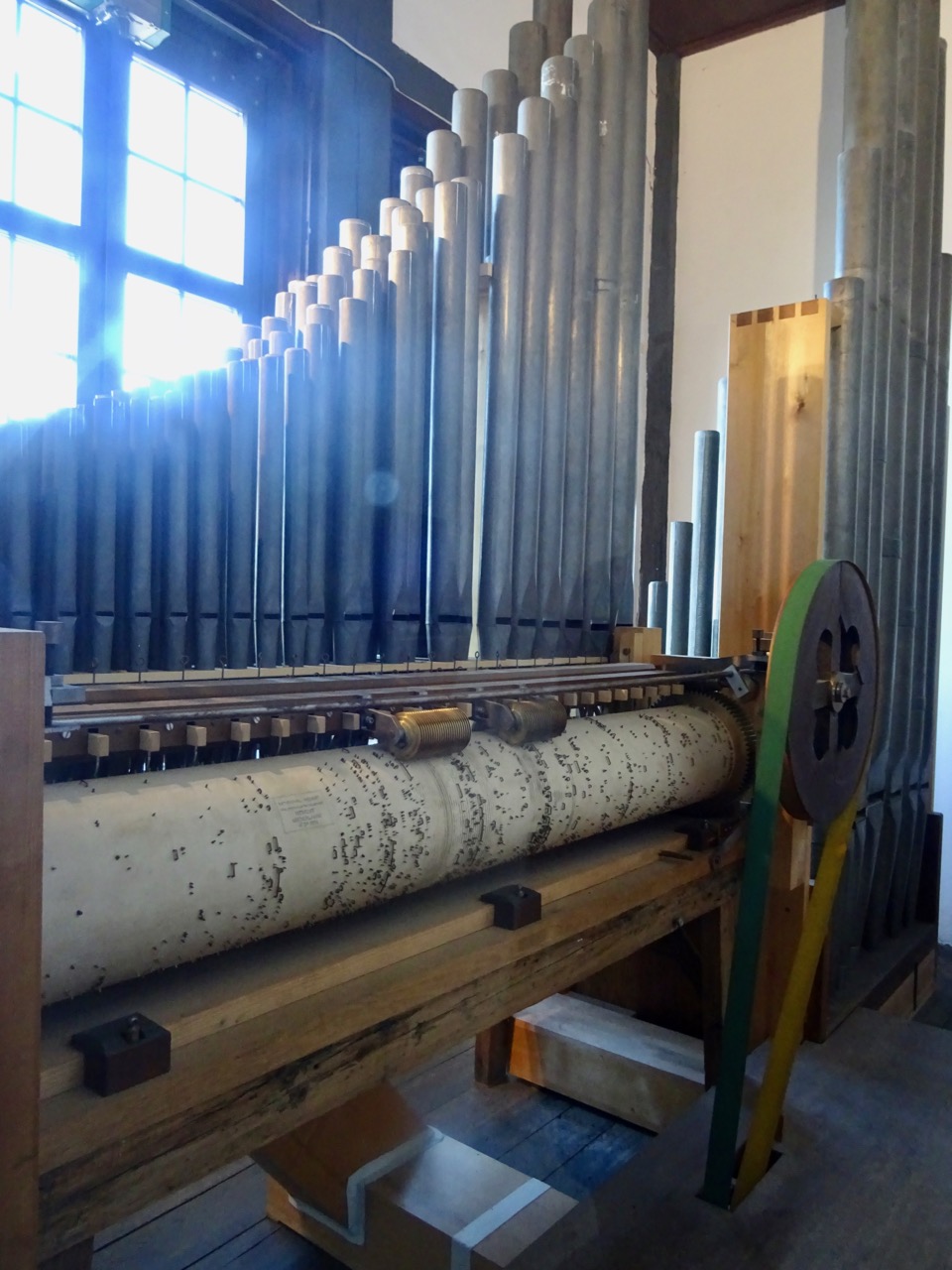
 The Salzburg Steir, or Salzburg Bull is a giant mechanical organ built in 1502. It still plays twice a day and is the last example of a Gothic organ to survive. The Stier is the oldest daily played automated musical instrument in the world. It plays melodies from Haydn and Mozart every day after the glockenspiel chimes.
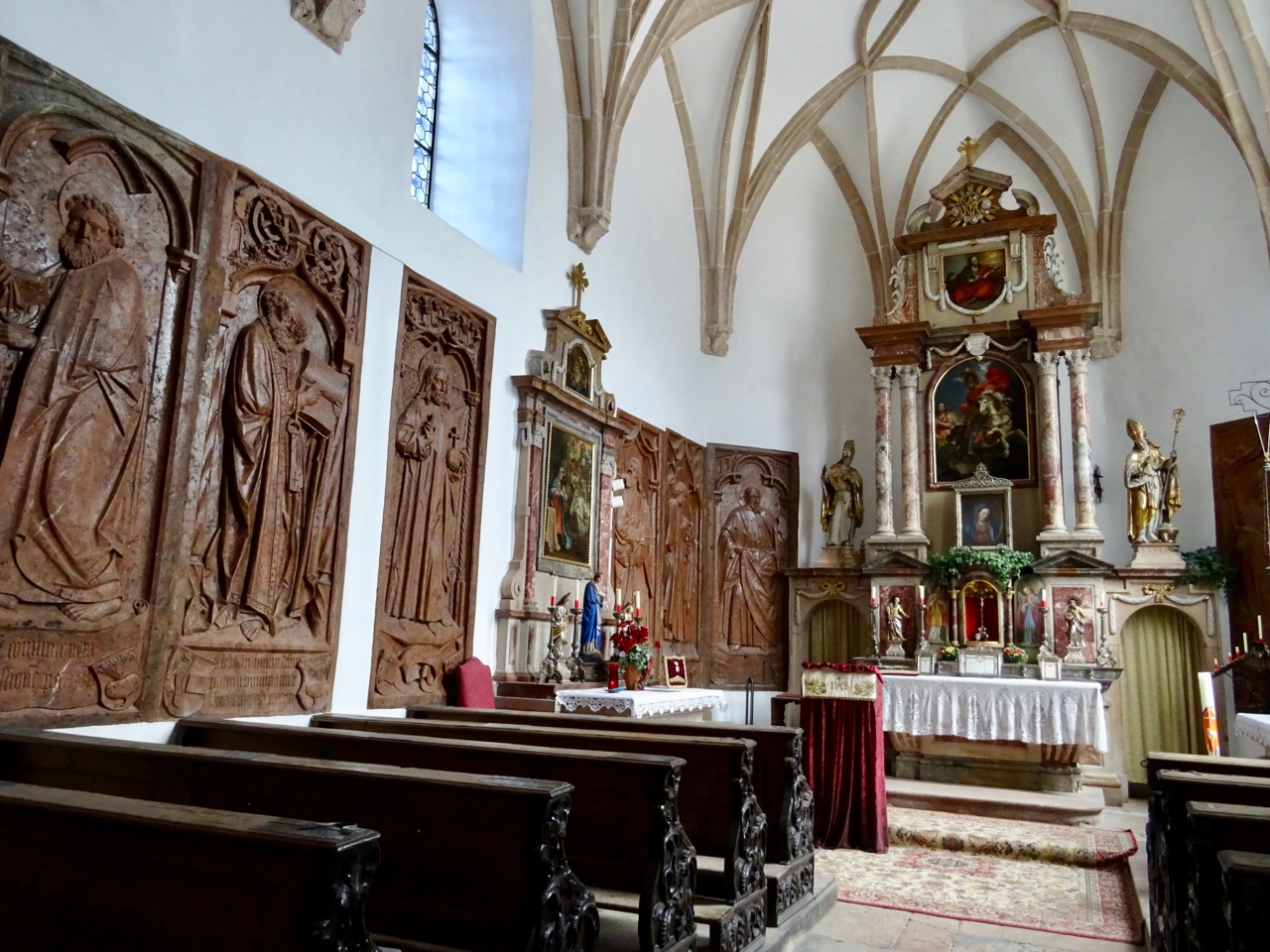
  St. George’s Chapel has reliefs of the Apostles, made from marble.
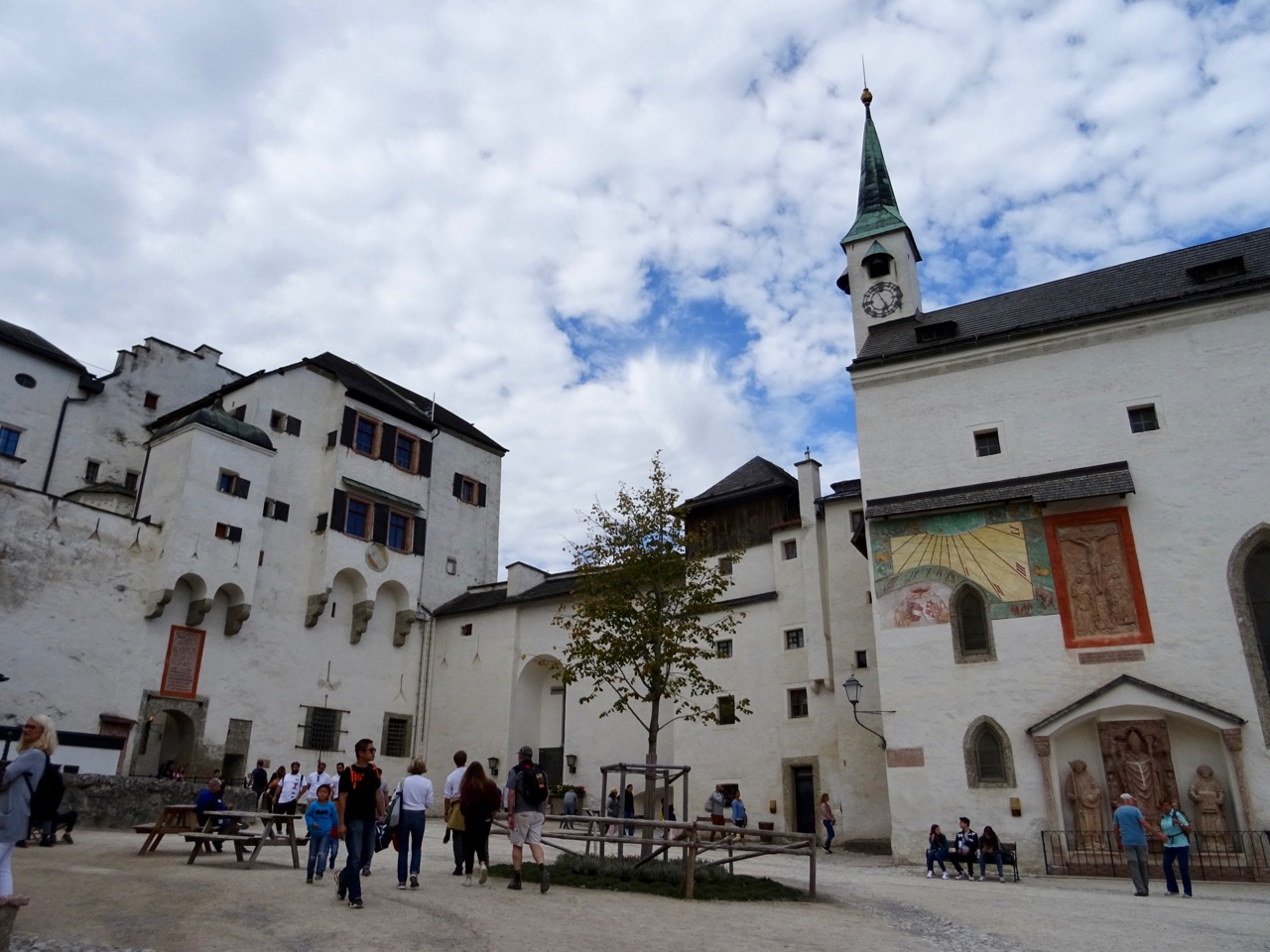
  We find a bench and have our lunch in the courtyard by the chapel.
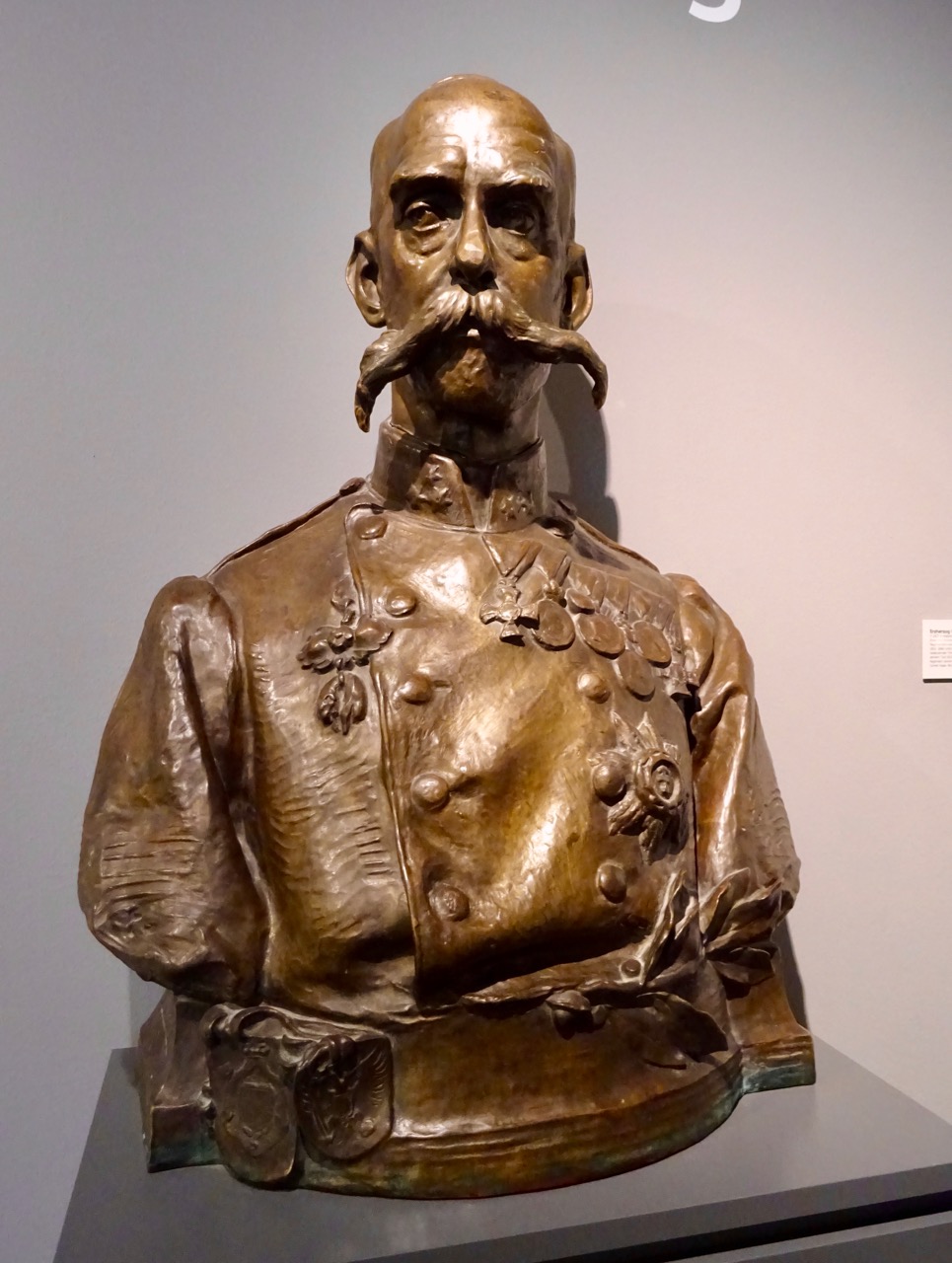
 The fortress served as a garrison for the Erzherzog Rainer Regiment in 1682. Erzherzog Rainer had quite the moustache!
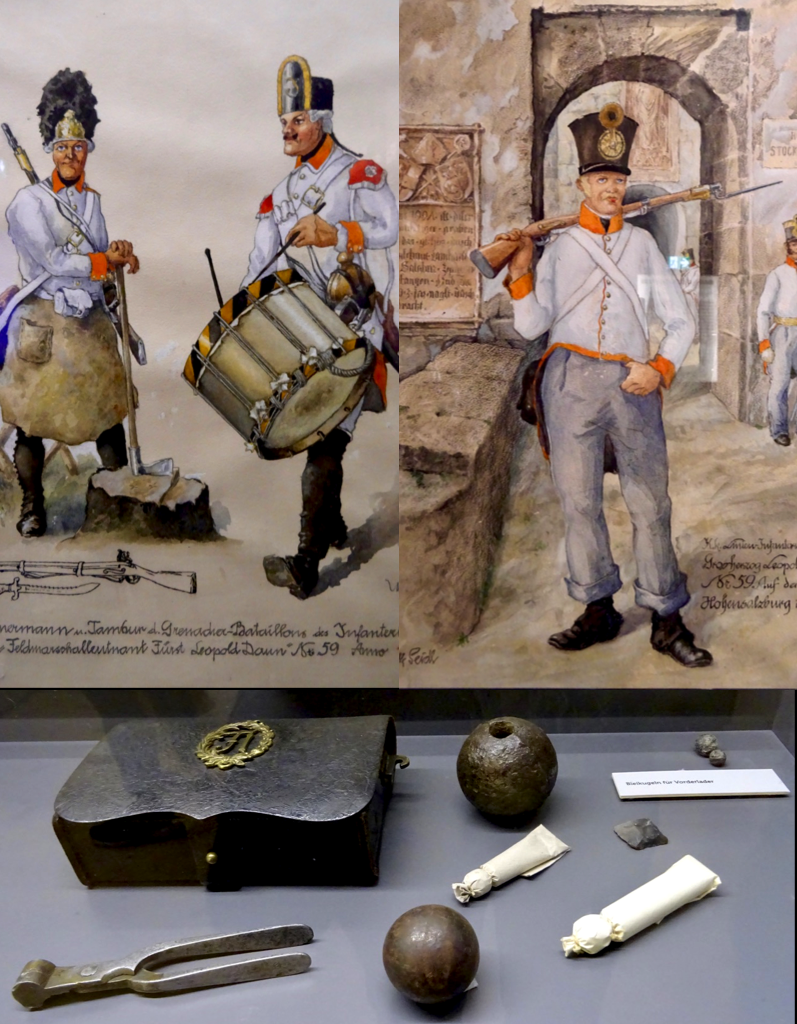
 There were watercolour paintings of the regiment over the years which I quite liked, and I thought the paper twists which held a musket ball and gunpowder were interesting.
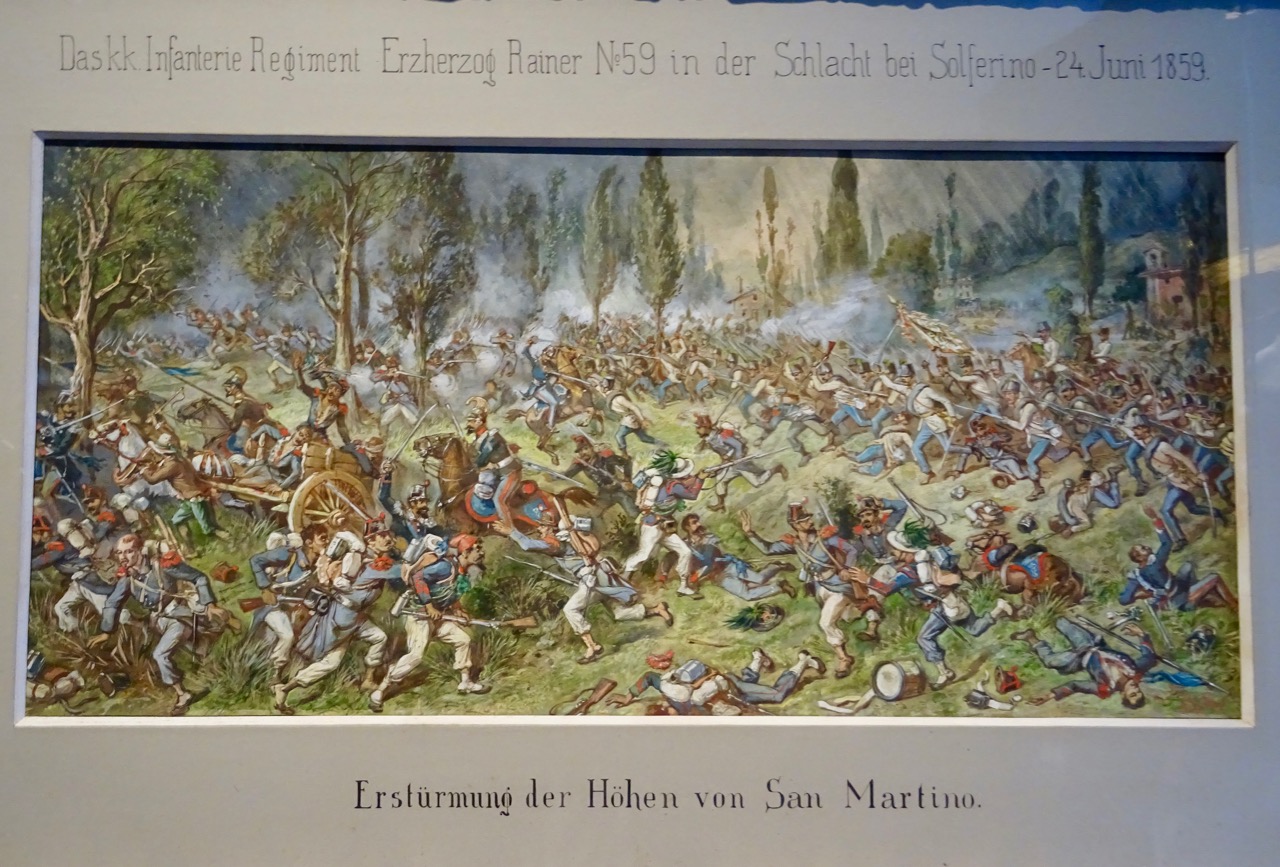
 War has always been brutal…
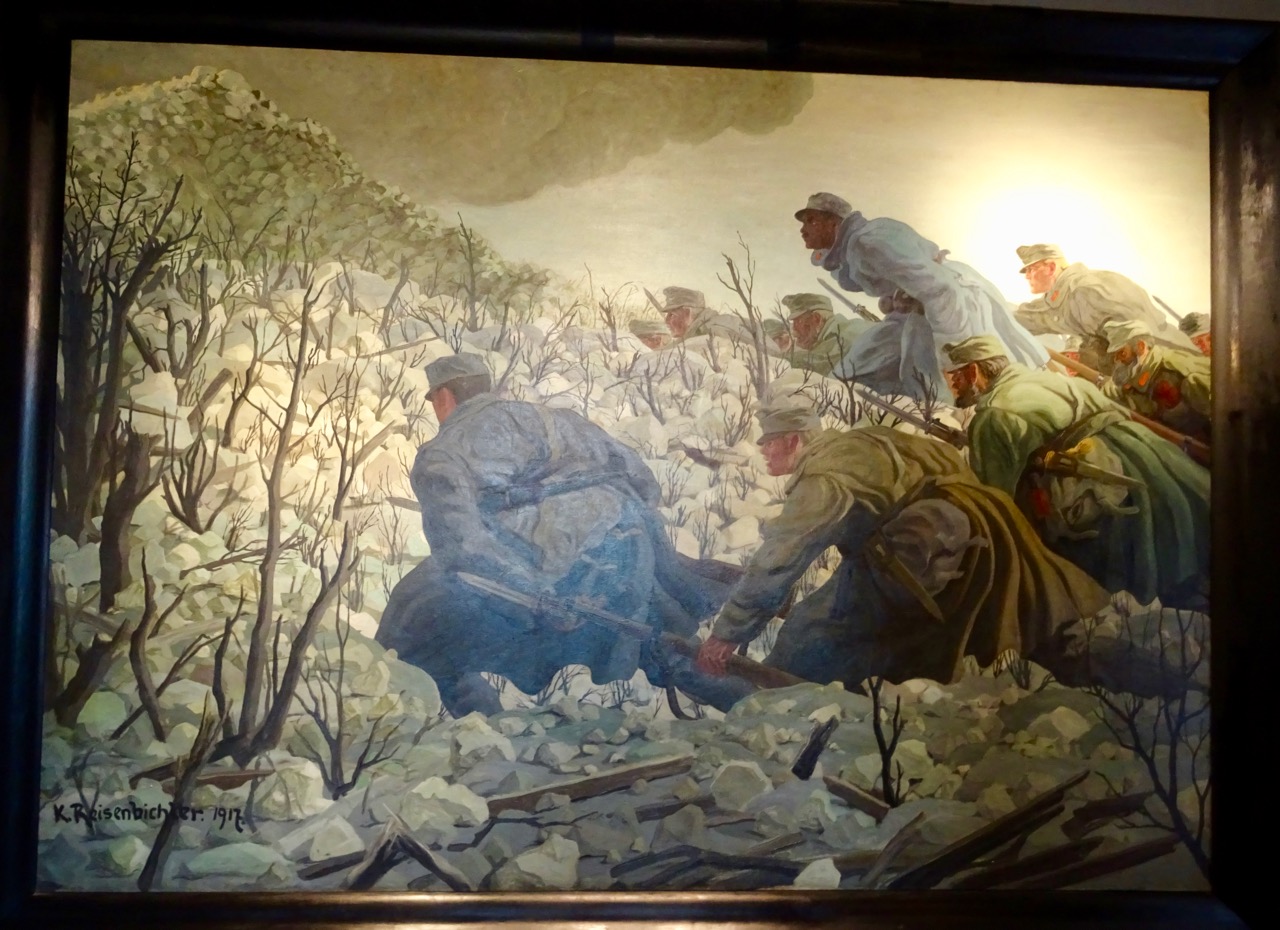
 Austrian painter Karl Reisenbichler painted his fellow soldiers and portrayed images of death and suffering in WWI.
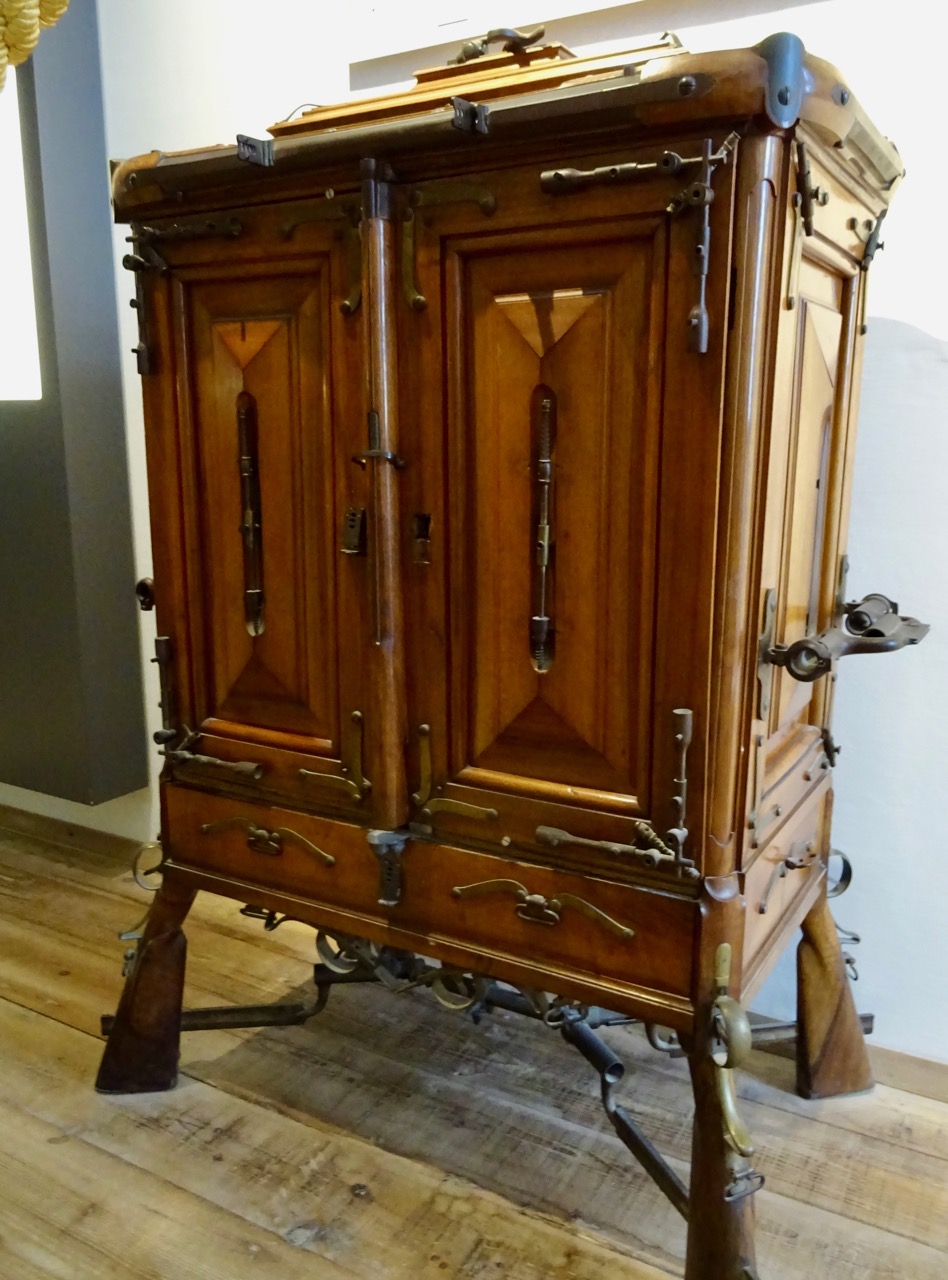
 We have seen a lot about war and death and suffering on this trip. I think that this cabinet is probably the best way to use rifles I have seen!
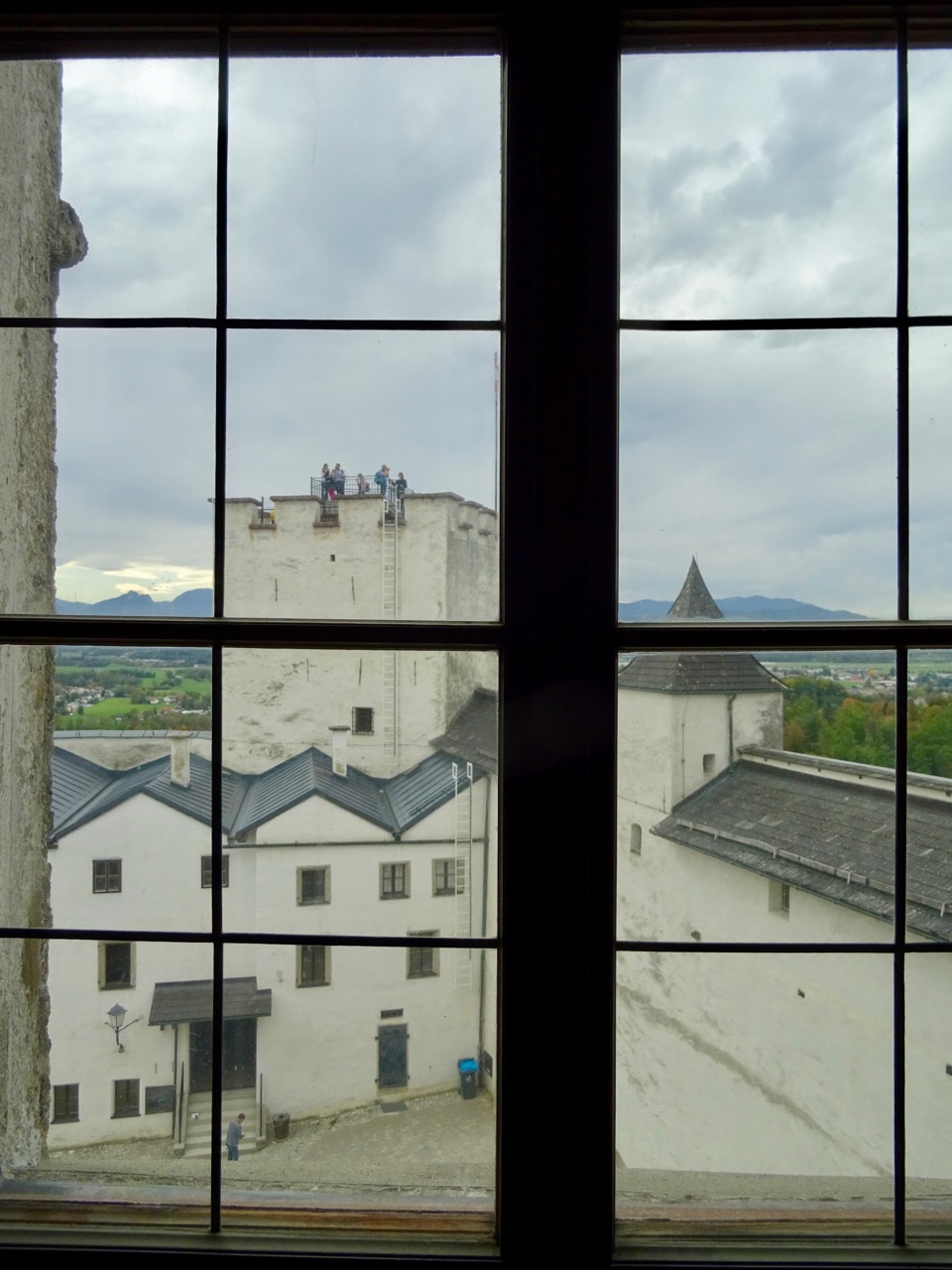
 This is a view of the fortress tower we climbed when we first arrived.
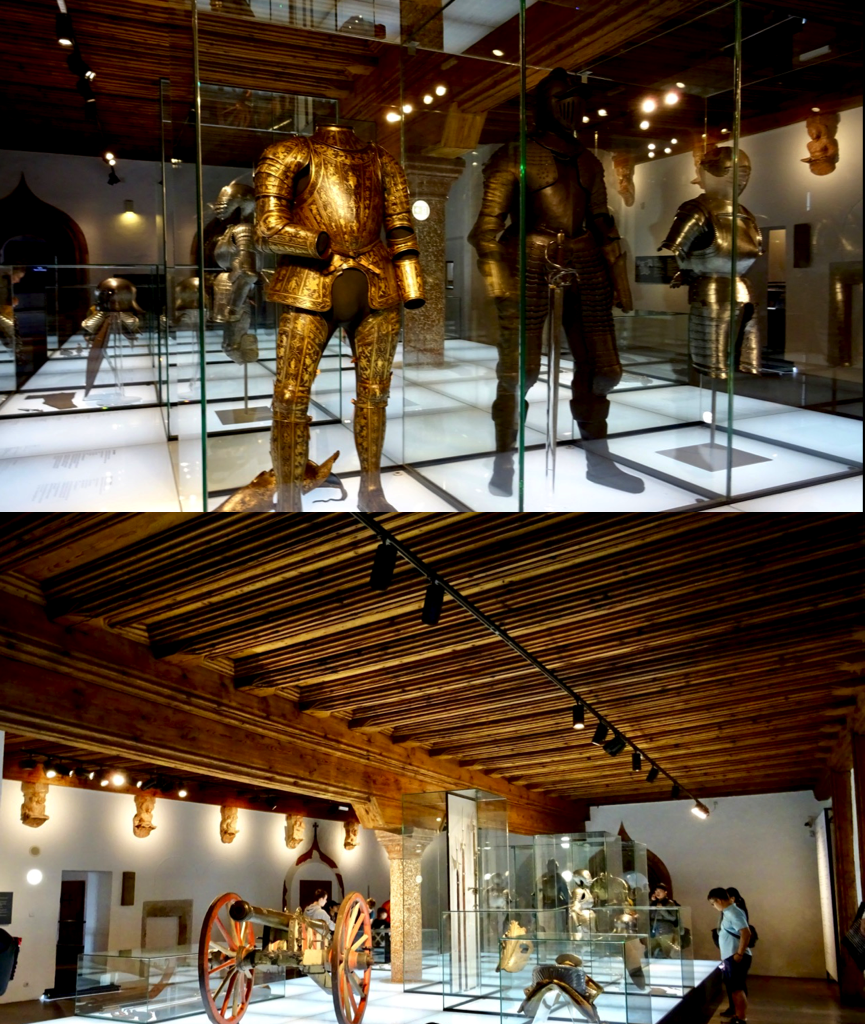
 These large fortress rooms with their huge timbered ceilings are now a museums for armour and other items used for fighting.
 This kitchen was reserved for food preparation for the Archbishop. Note the little round hole in the wall on the left that was used to throw out rubbish and drain water.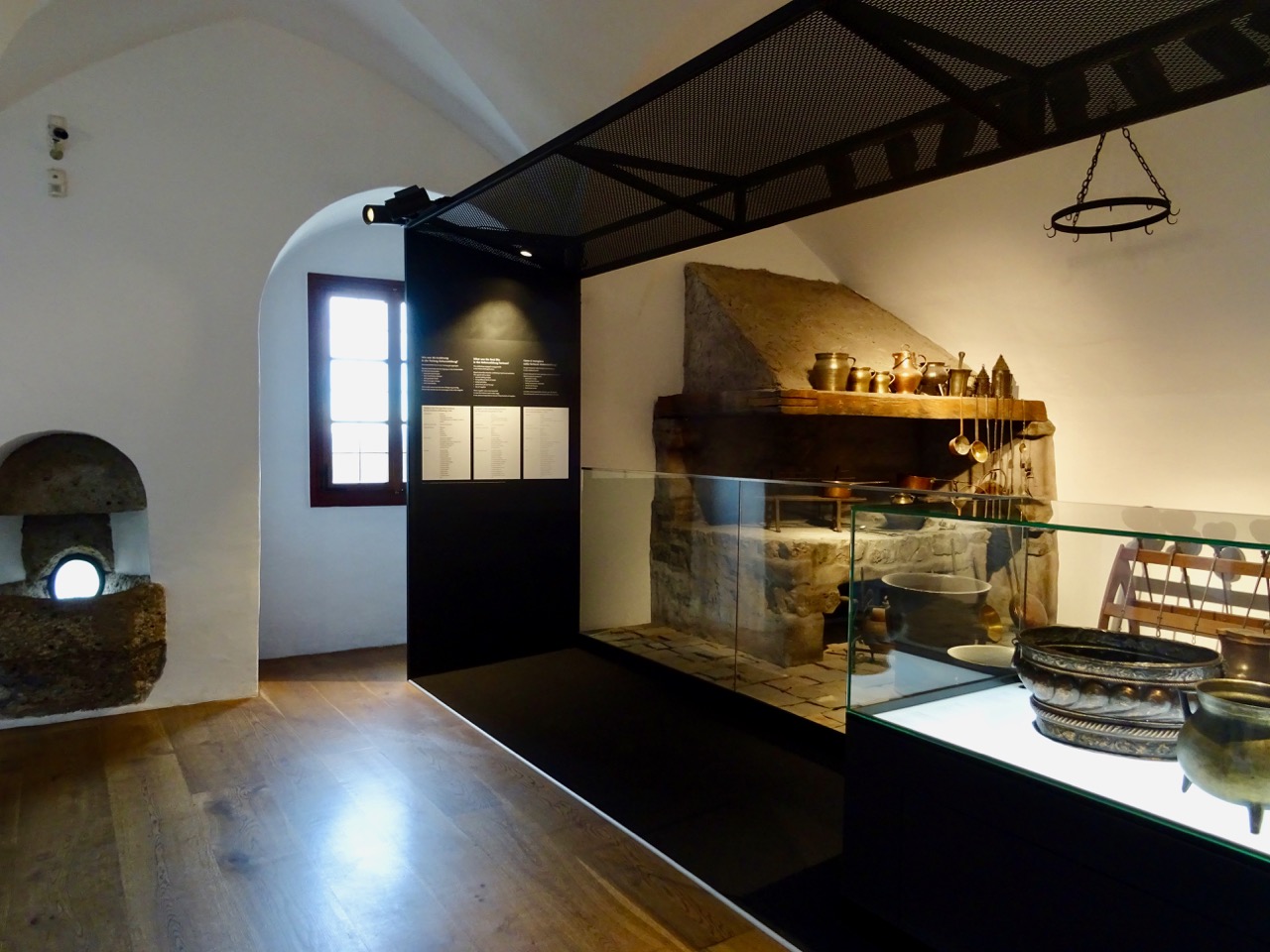
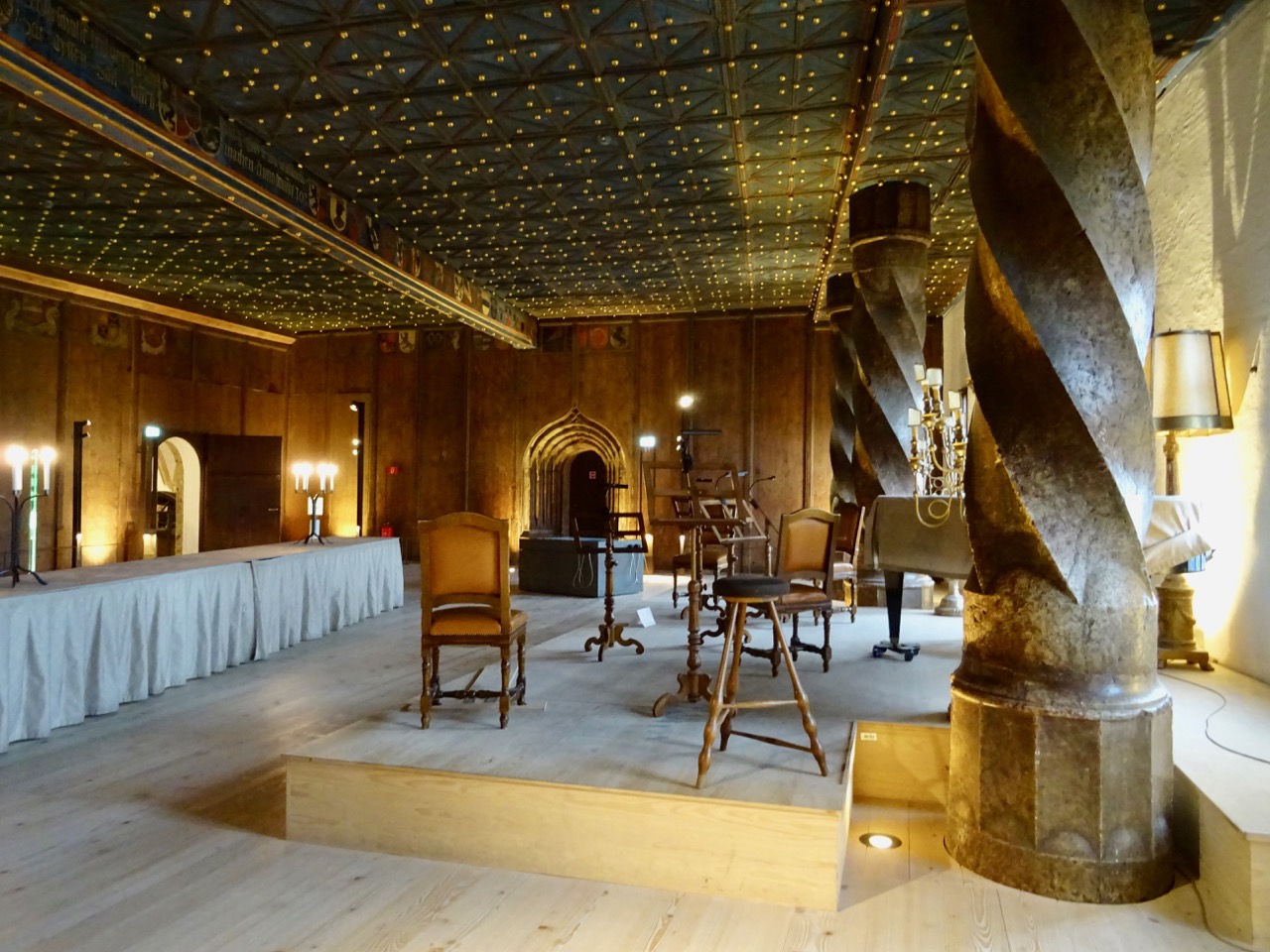
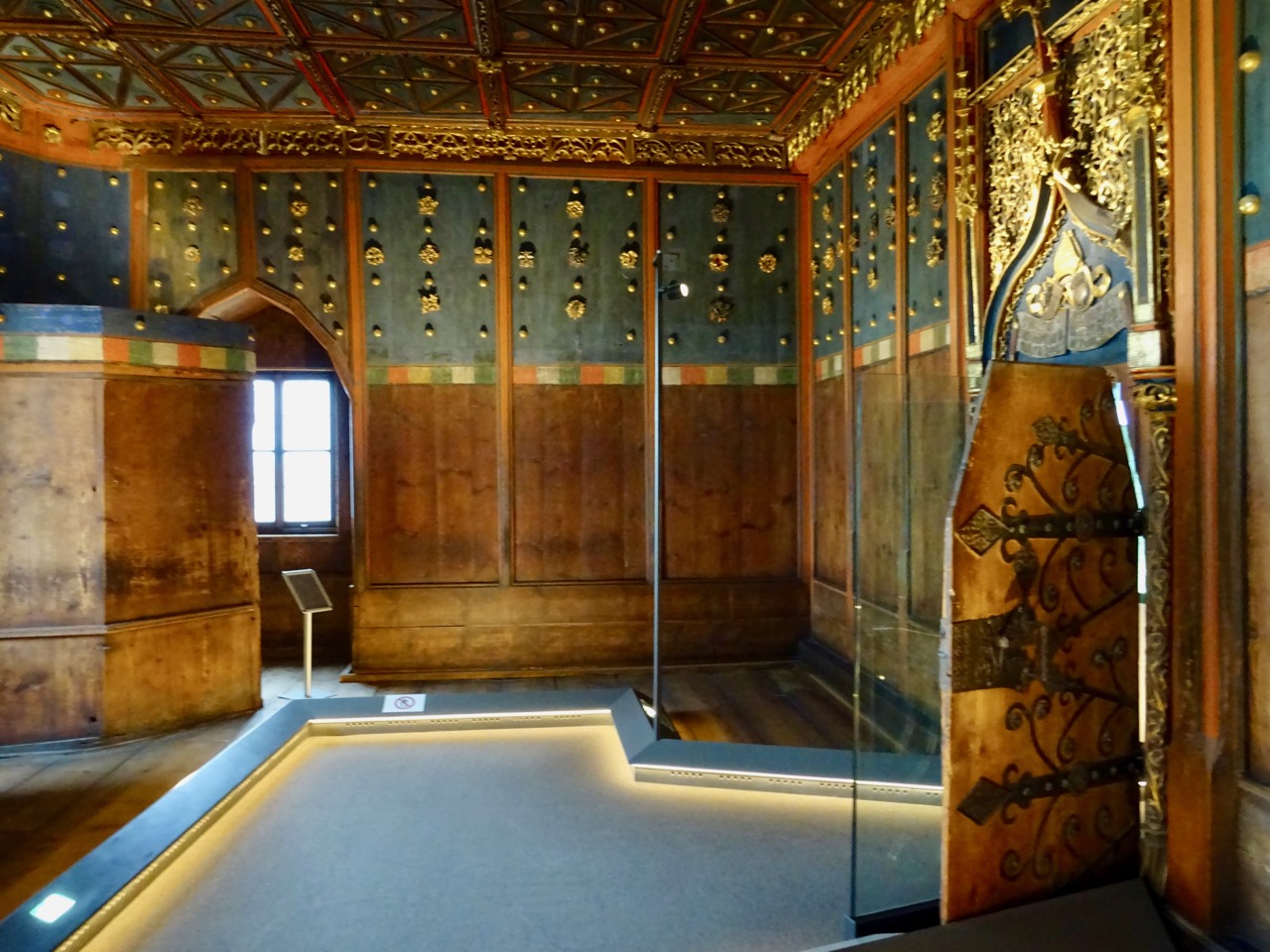
 The Regency Rooms are spectacular. This is the Golden Hall with its ceilings painted blue and studded with golden balls to represent the sky and stars. It served as a ballroom and today is used for recitals.
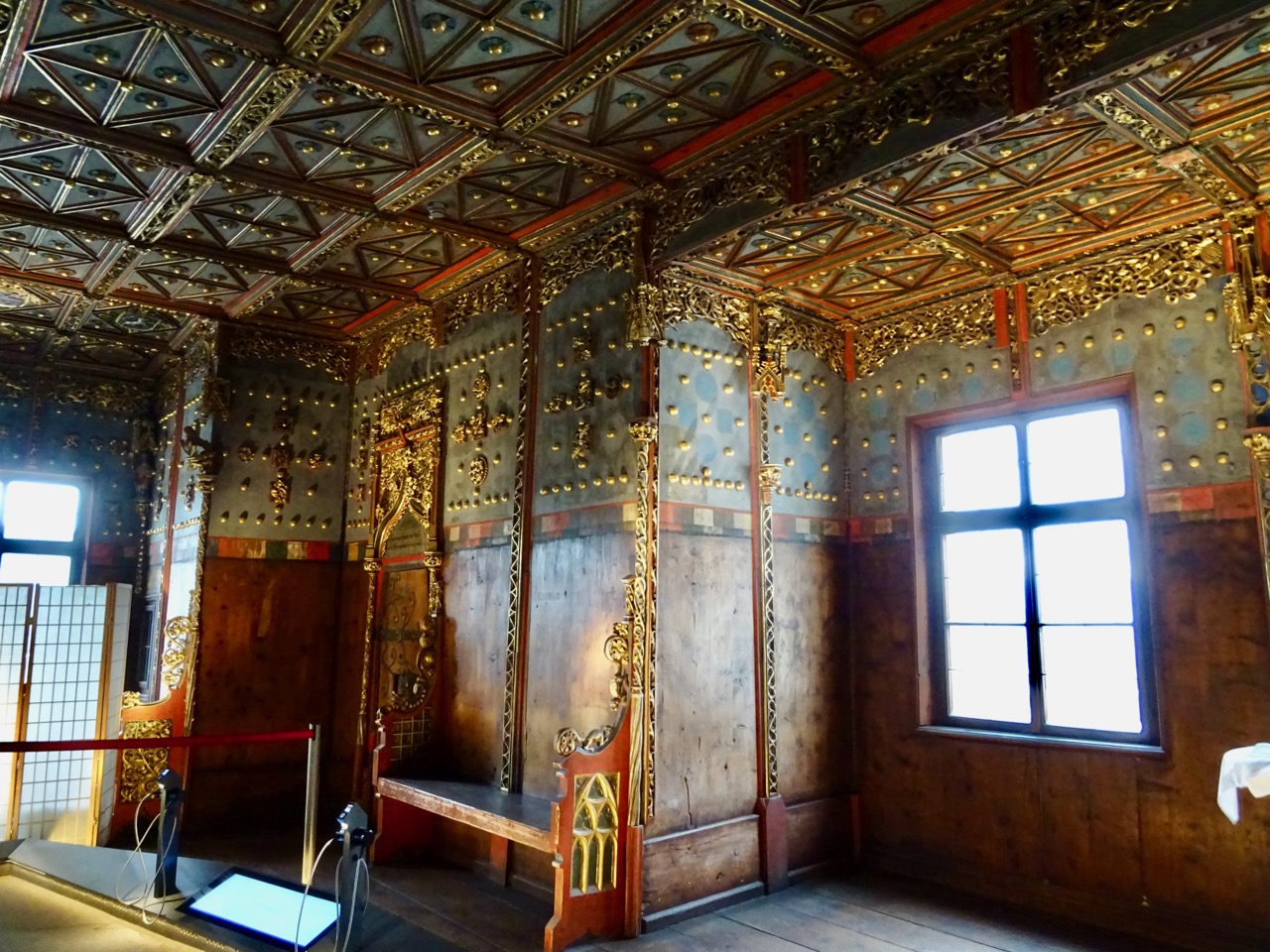
  The golden Chamber was a smaller sitting room with a small library behind the door in the corner.
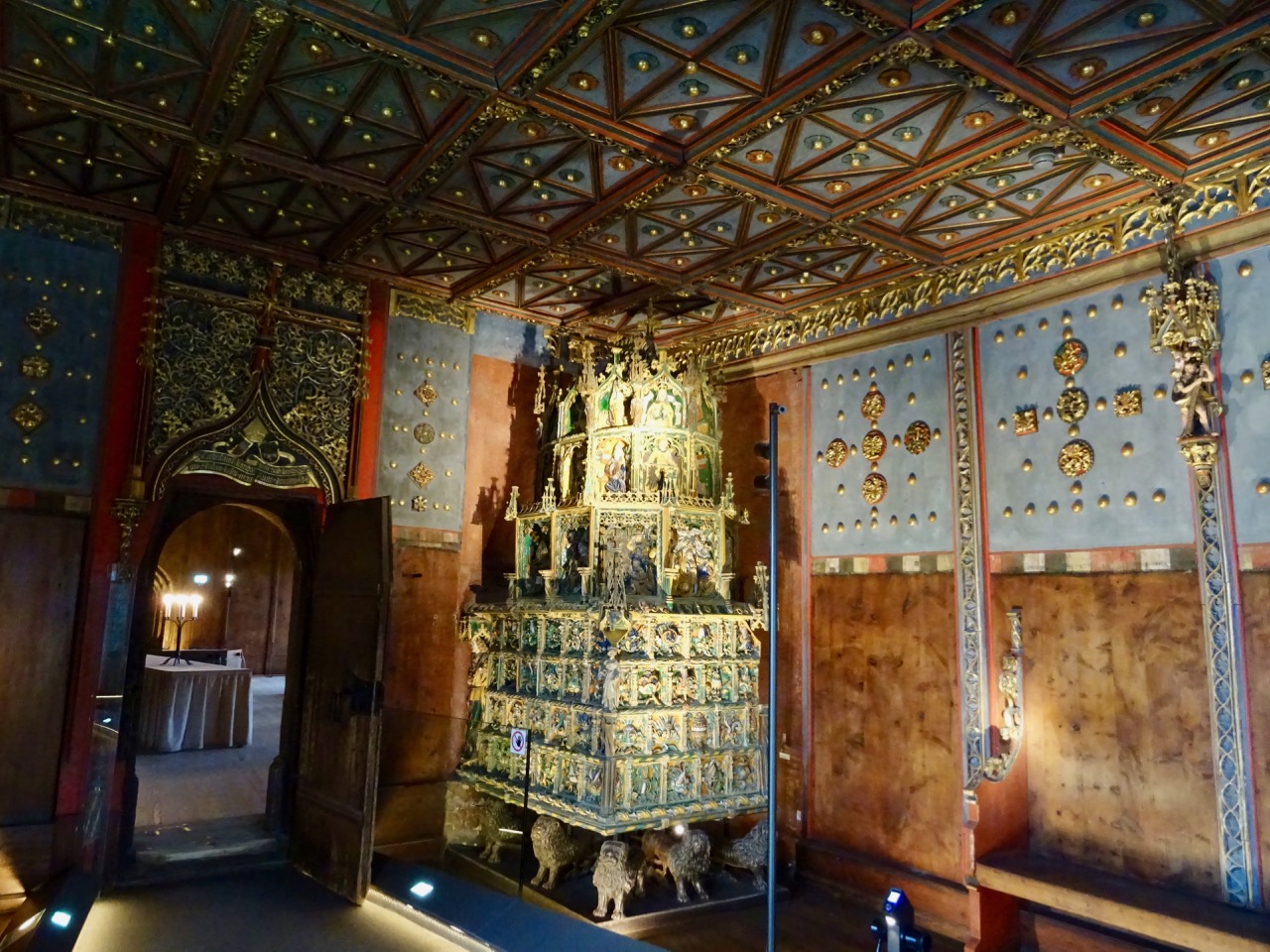
 It has a magnificent medieval tiled stove that warmed this living space and reception room.
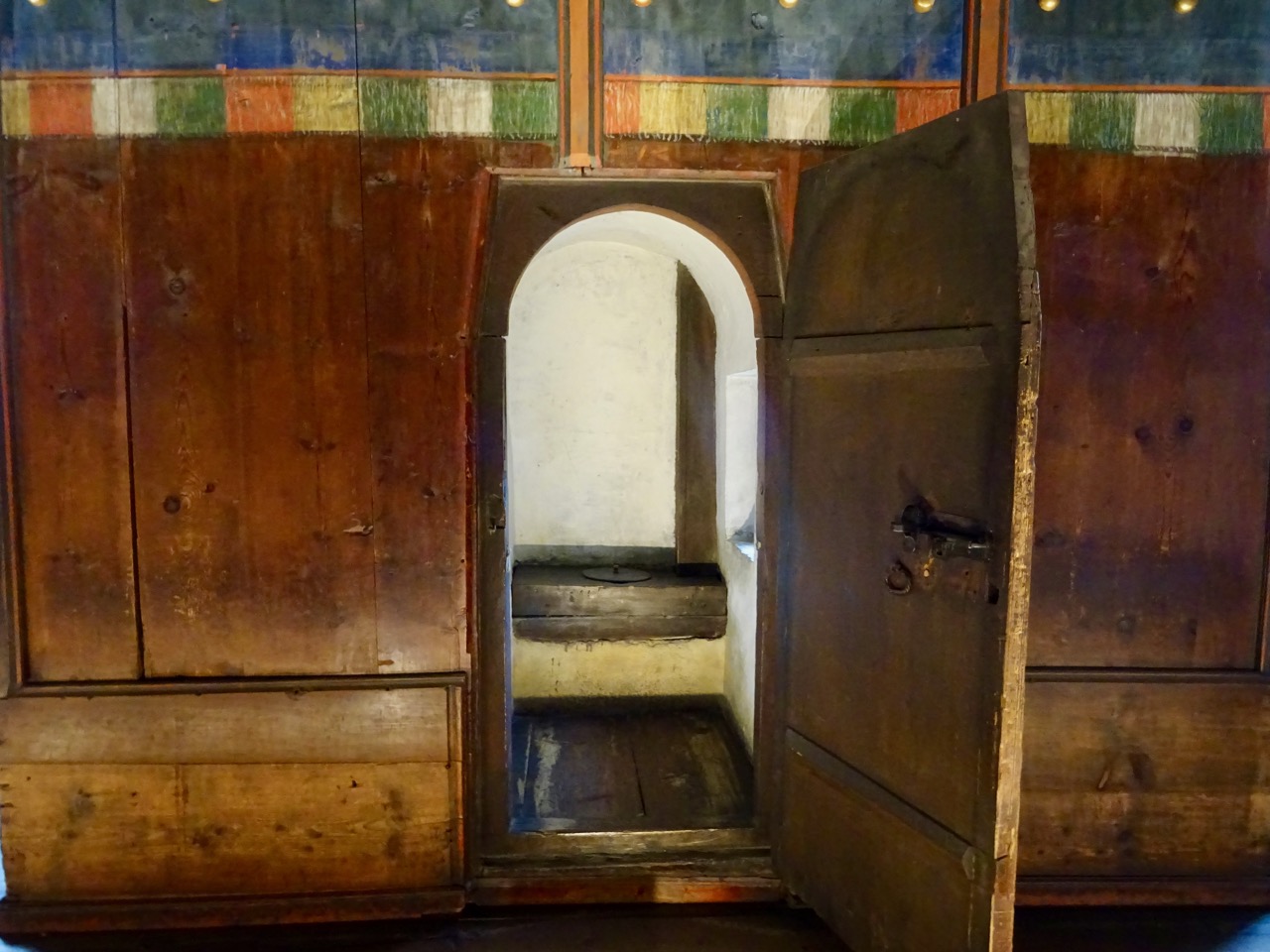
 Interestingly, the bedroom was not heated. We also learned that during the Middle Ages people slept in a semi-sitting position with many pillows because they believed that if they lay down they could suffocate. This position allowed them to have their weapons ready and attack any nighttime intruders. The doors were also low so that anyone coming in had to bend down when entering.
 Behind this little door is the toilet, which was very modern for medieval times.
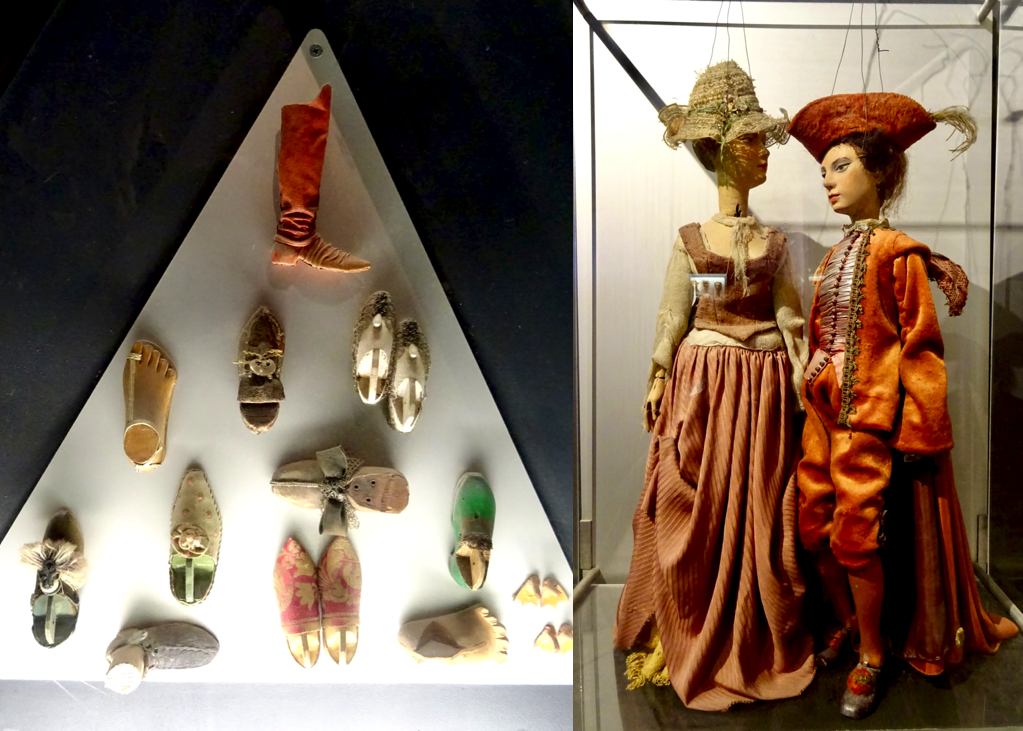
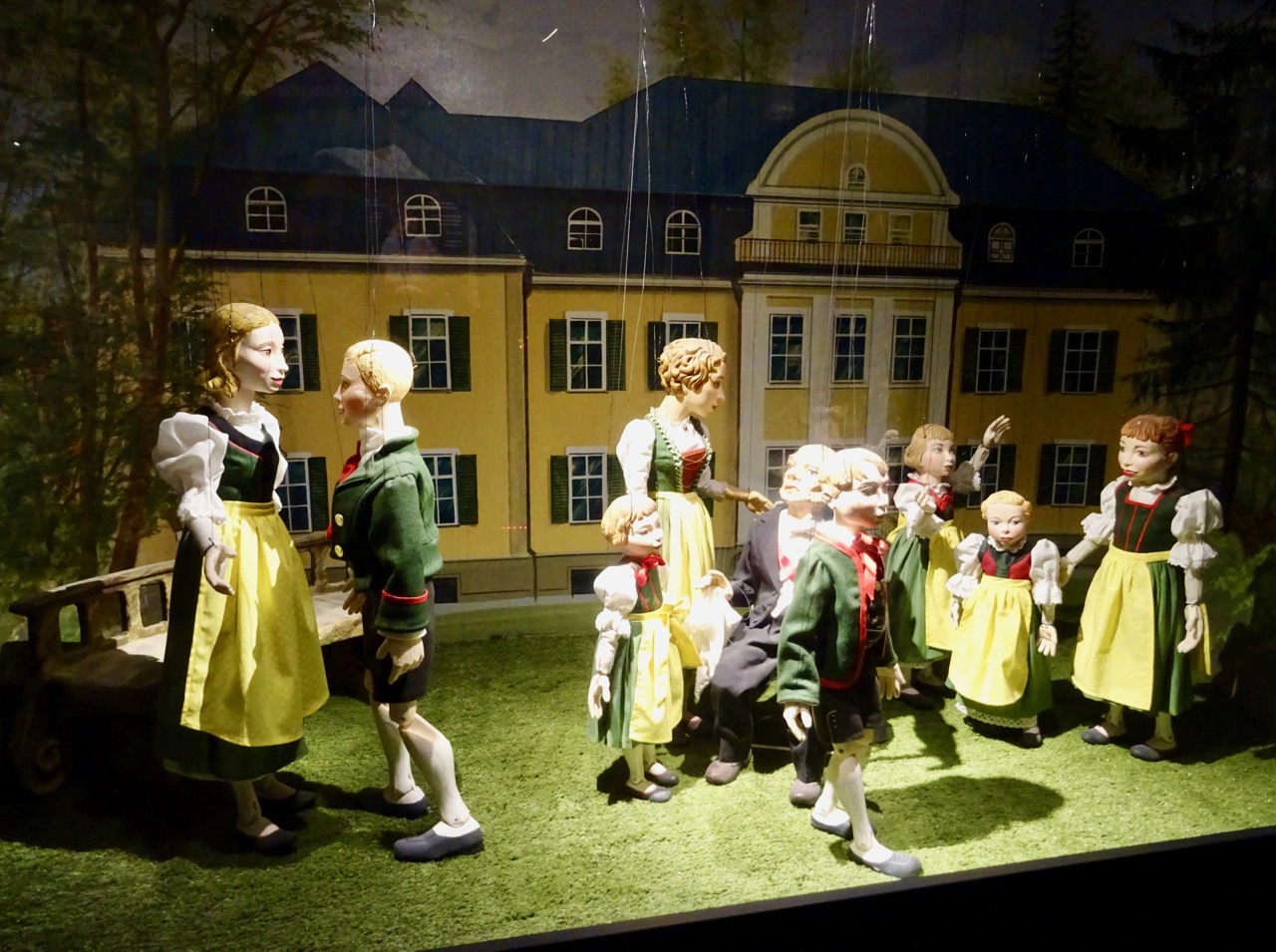
 As we leave the Fortress there is a small Marionette Museum. I love this collection of tiny feet and shoes, and thought that these two marionettes were the most beautiful, well crafted ones here.
 There is a wall of marionettes, and several dioramas…
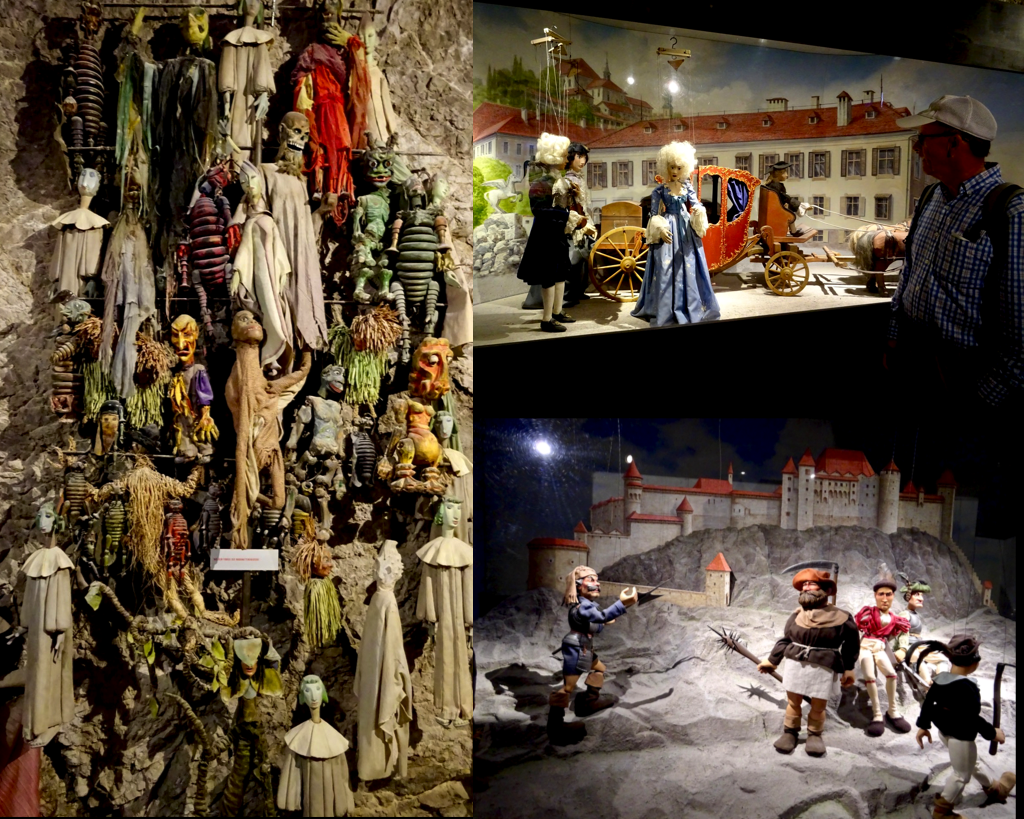 and of course, a Sound of Music scene.
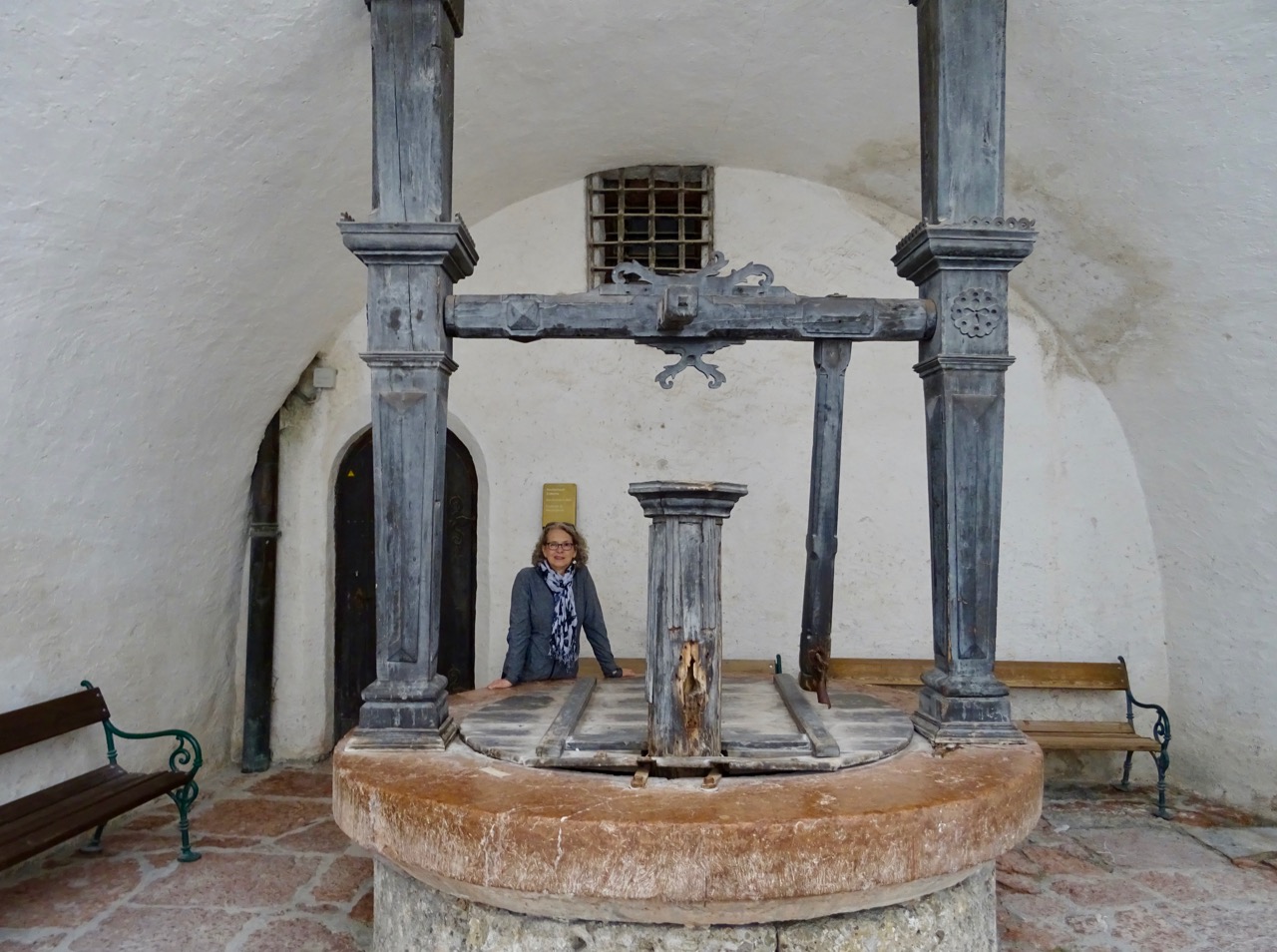
 I think this huge well was connected to the cistern that was built within the fortress walls. Now it is a giant wishing well.
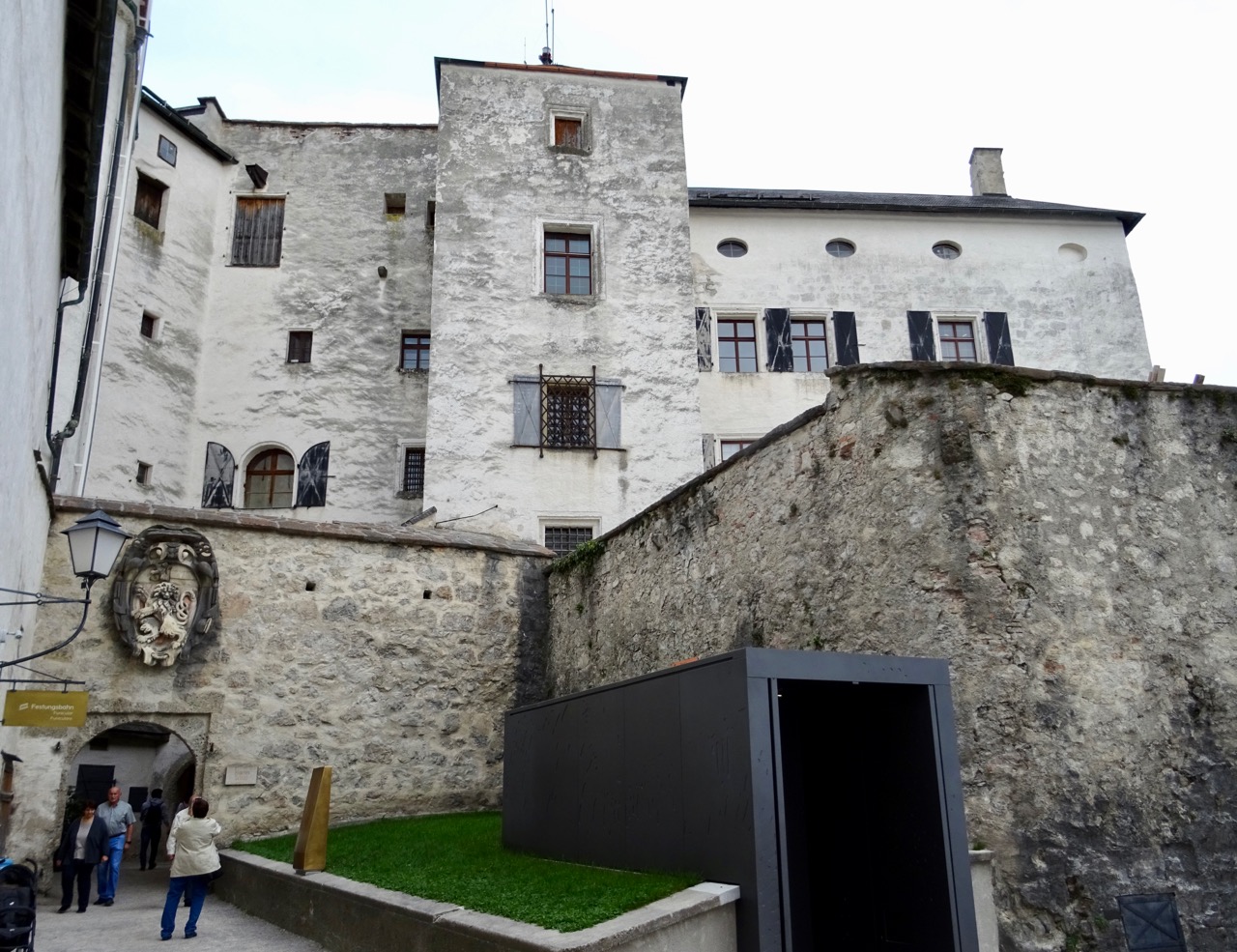
 This is the entrance to the oldest part of the fortress, adjacent to the newest addition, an elevator.
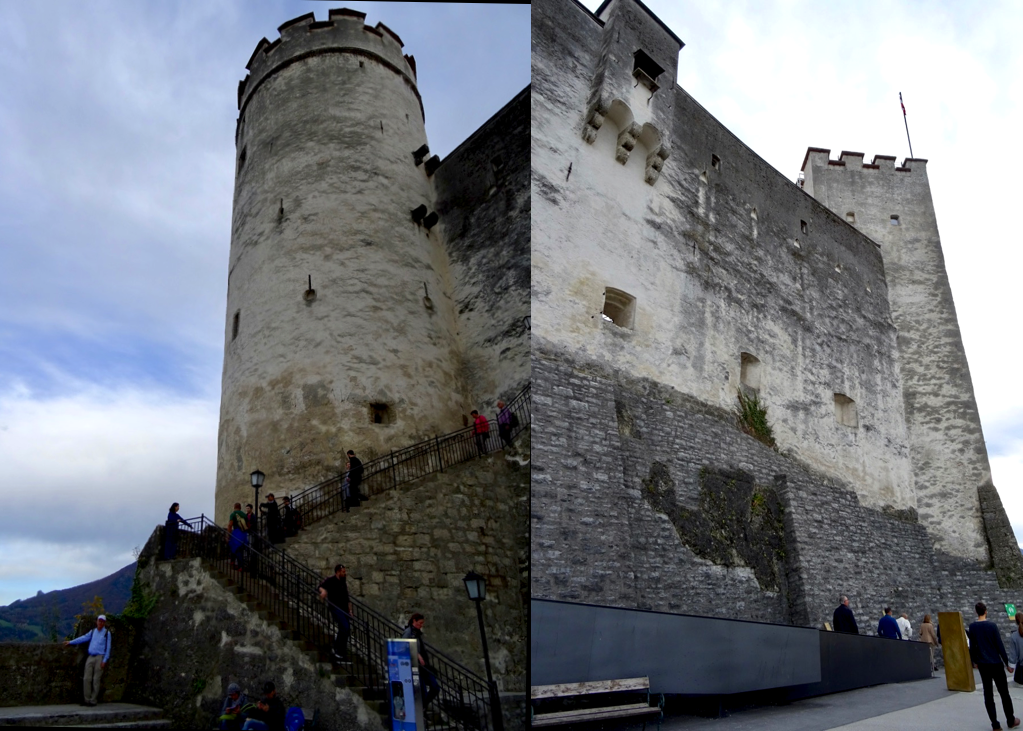
 As we exit the fortress beside the bell tower, we have a view of the watch tower we climbed at the beginning of out visit. From the top we could not look over the sides to see how high up we were.
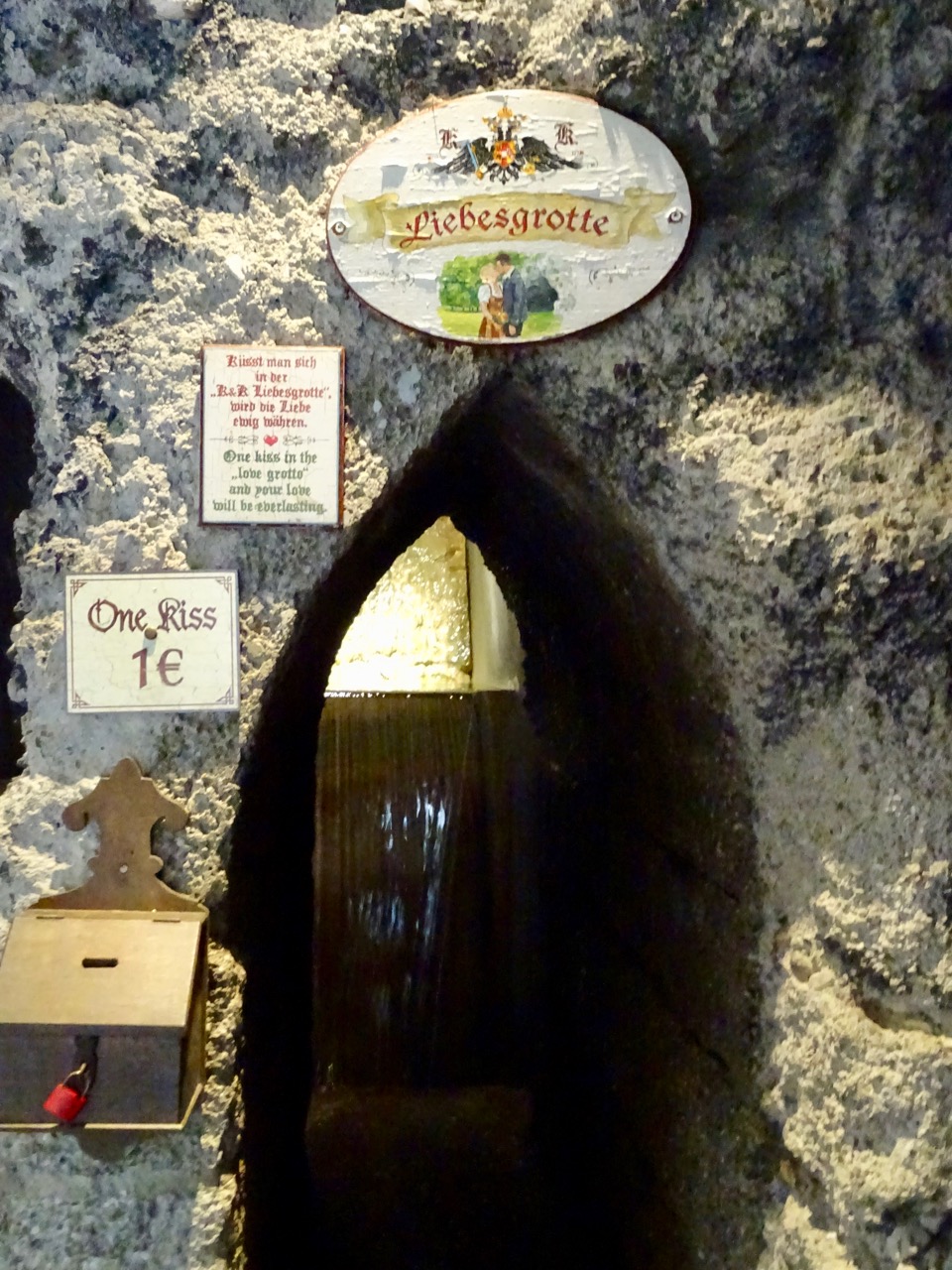
 At the bottom of the funicular we take advantage of the Love Grotto to ensure our love is everlasting!
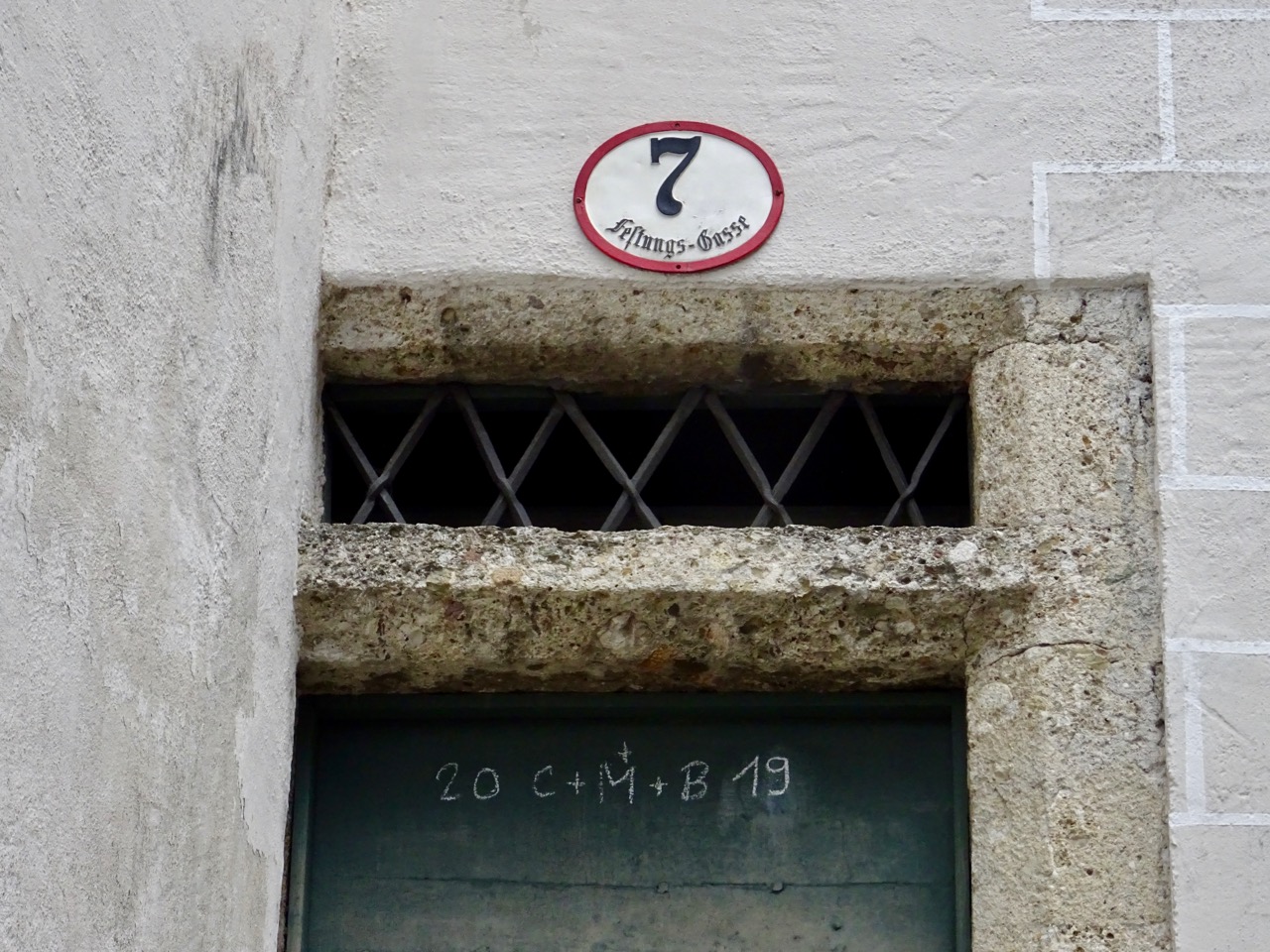
 We have seen these chalk markings on many houses, church doors, businesses and shops in Germany and Austria. I wondered what they meant. A quick search on my ‘magic library’ and I find this quote.
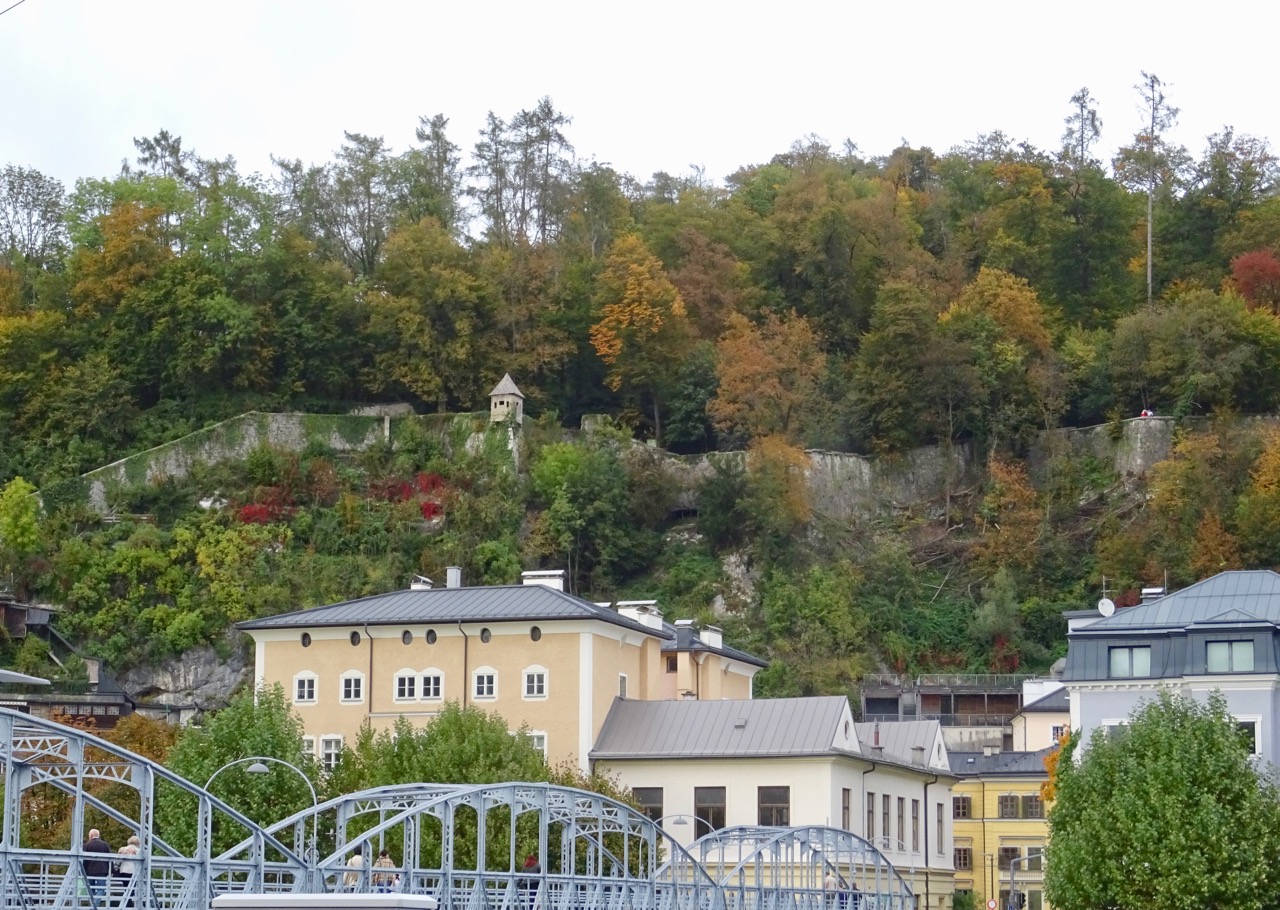
 On the bus home we can see the old medieval town walls.
 The ivy on a wall on our walk home looks like a giant red creature.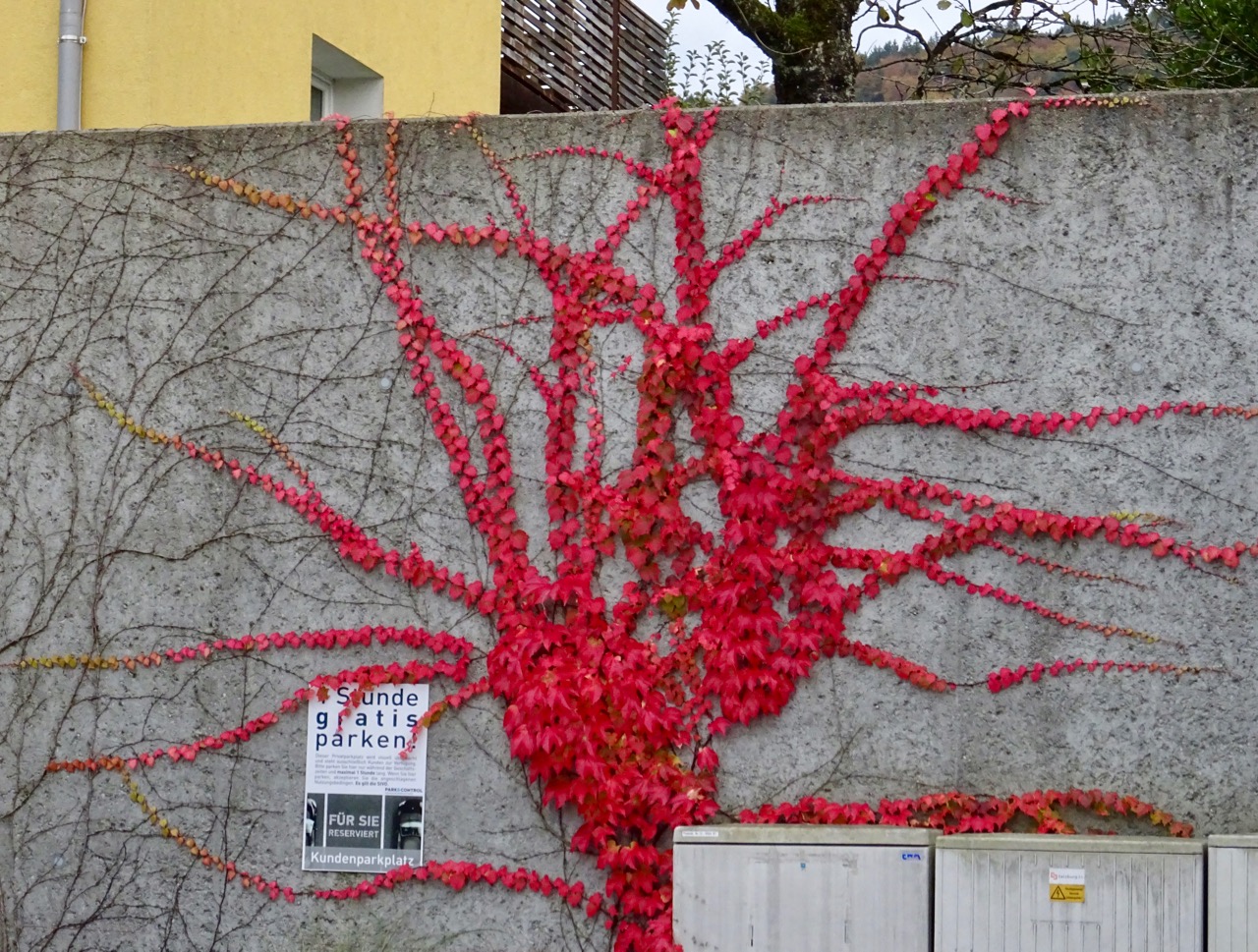
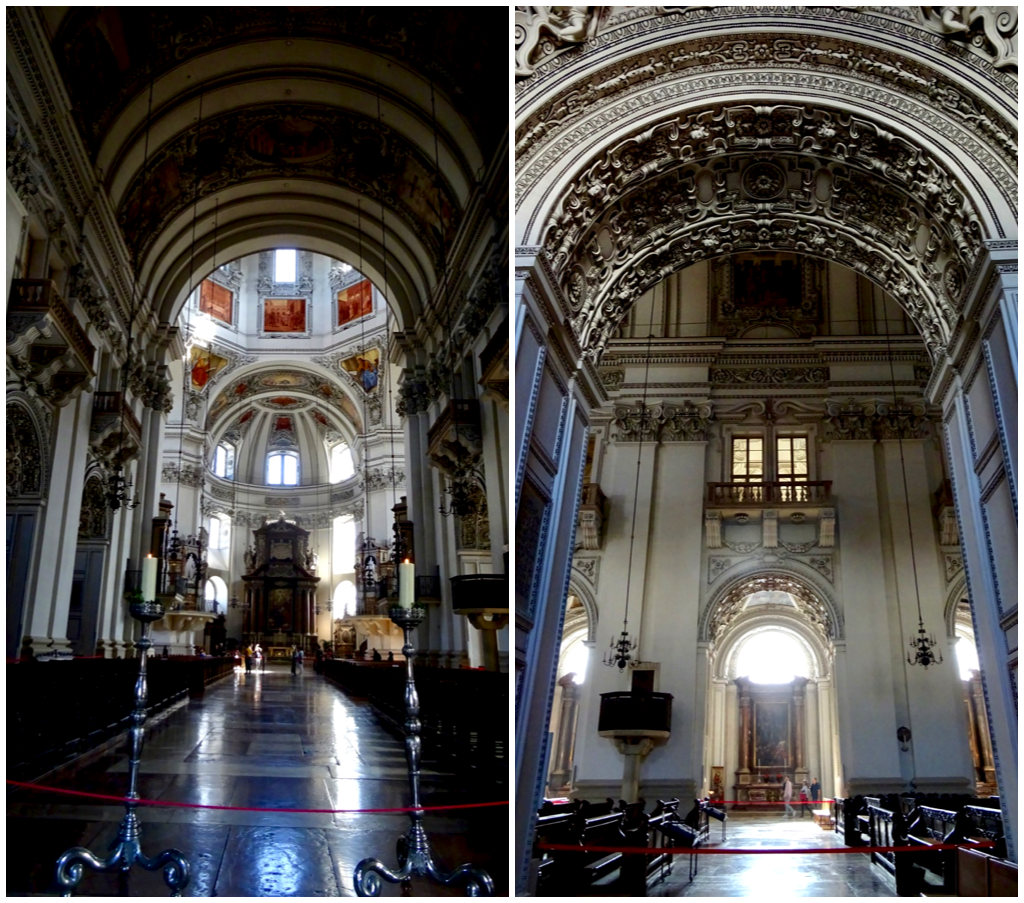 This
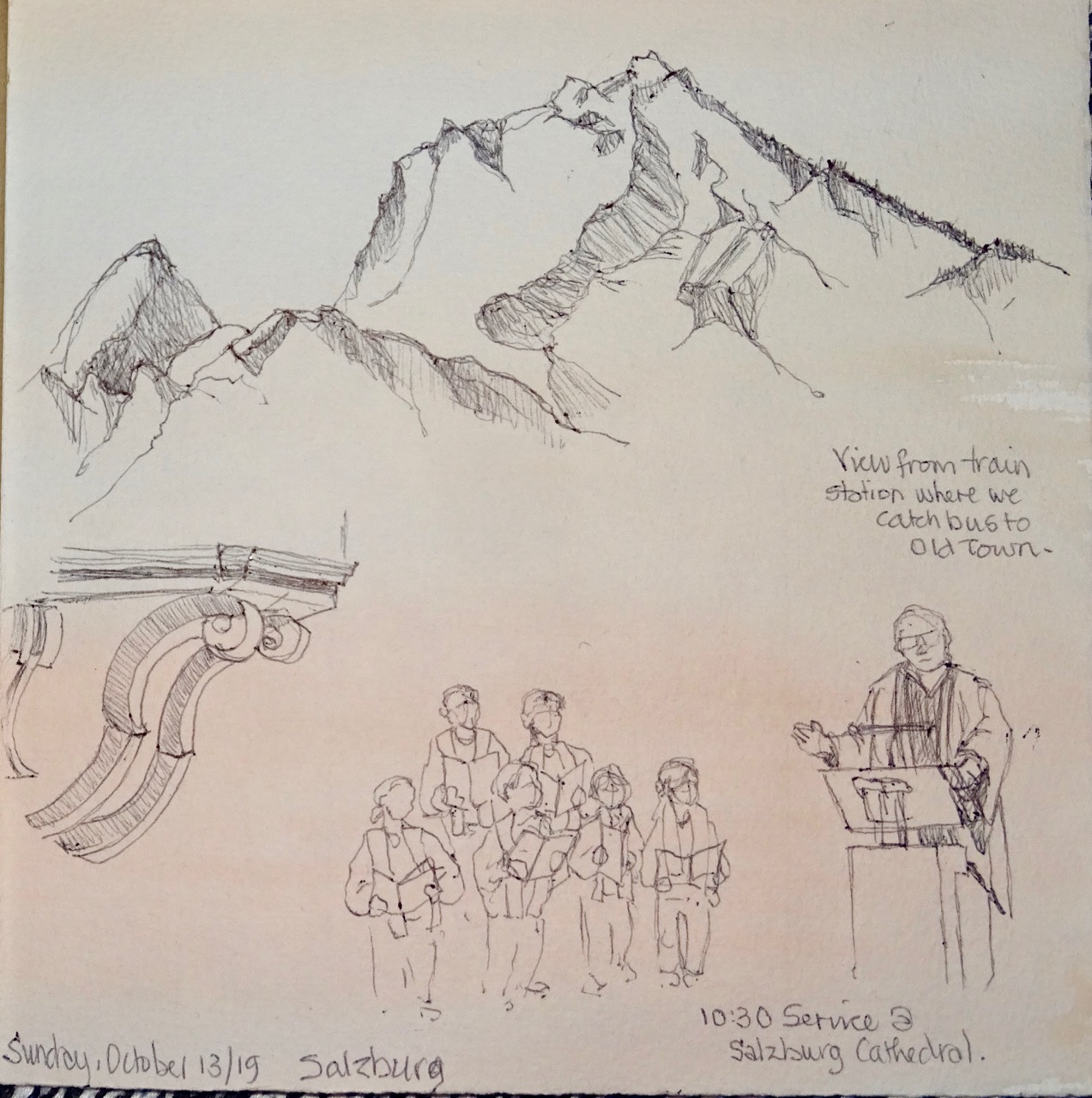
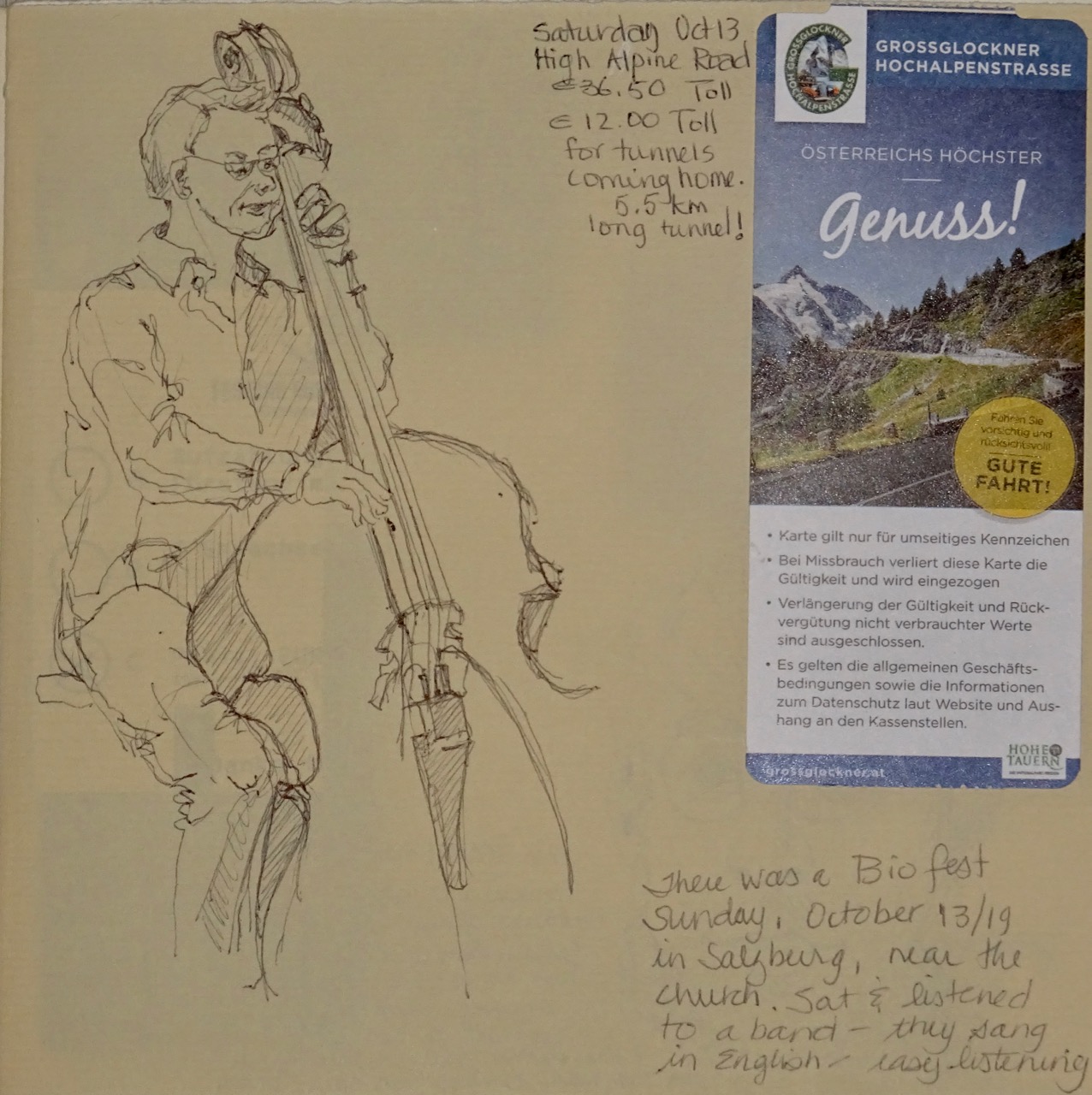
This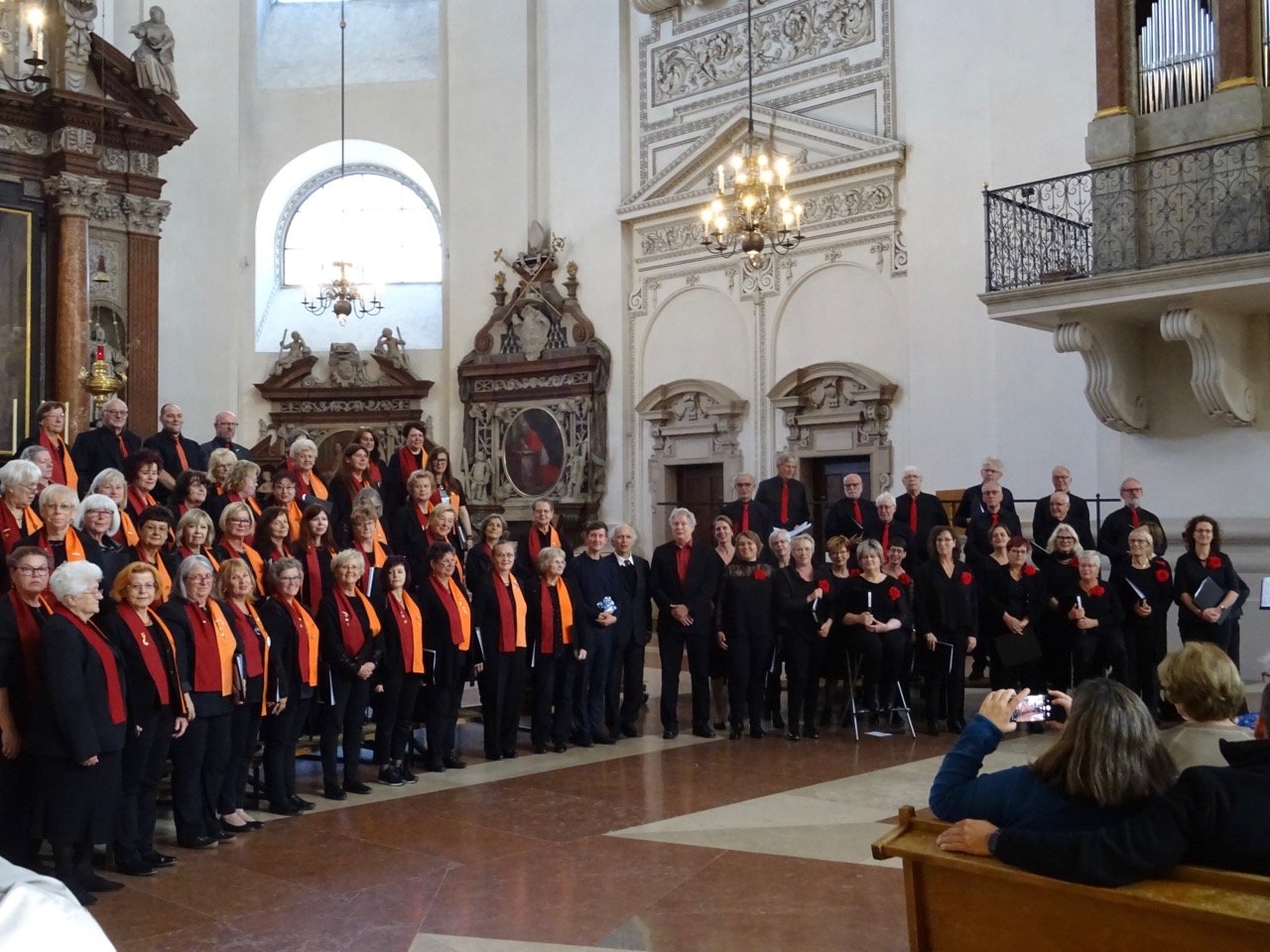 I draw while we listen to the service and choir. Of course we can’t understand any of it!
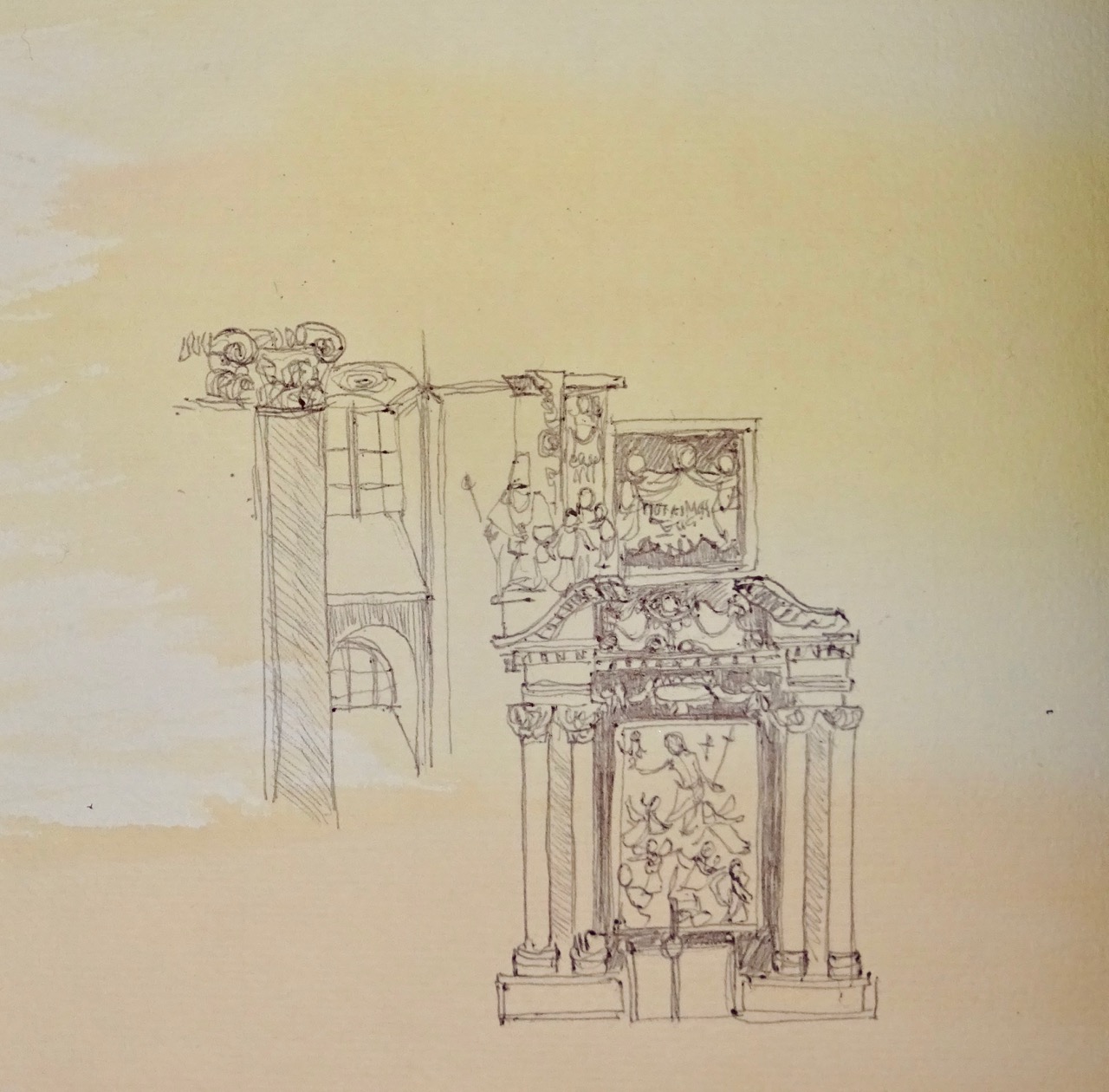
 I was tempted to finish this drawing of the altar from a photo but in the end decided to leave it just as it was.
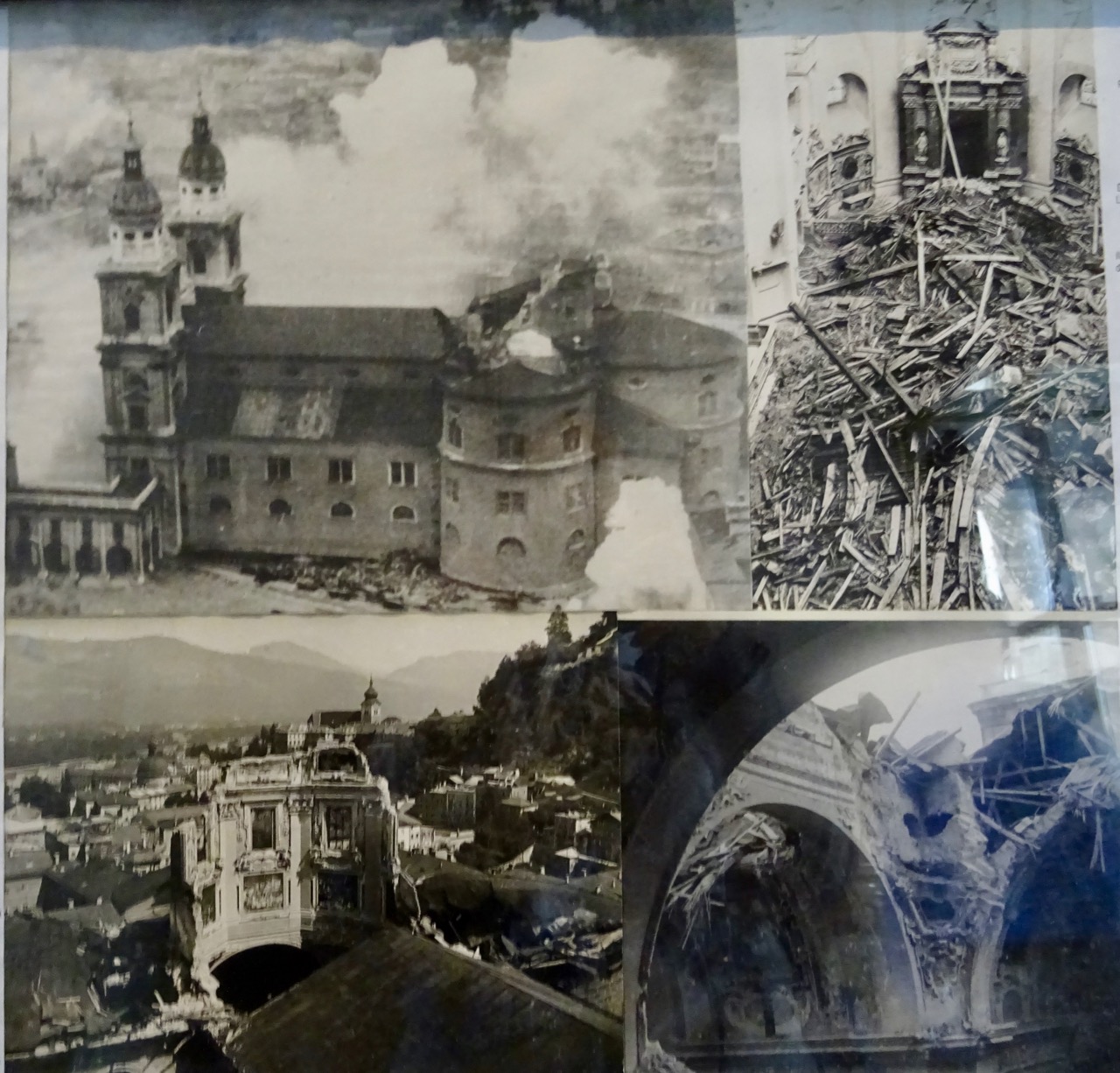
 The cathedral was badly damaged during the Second World War.
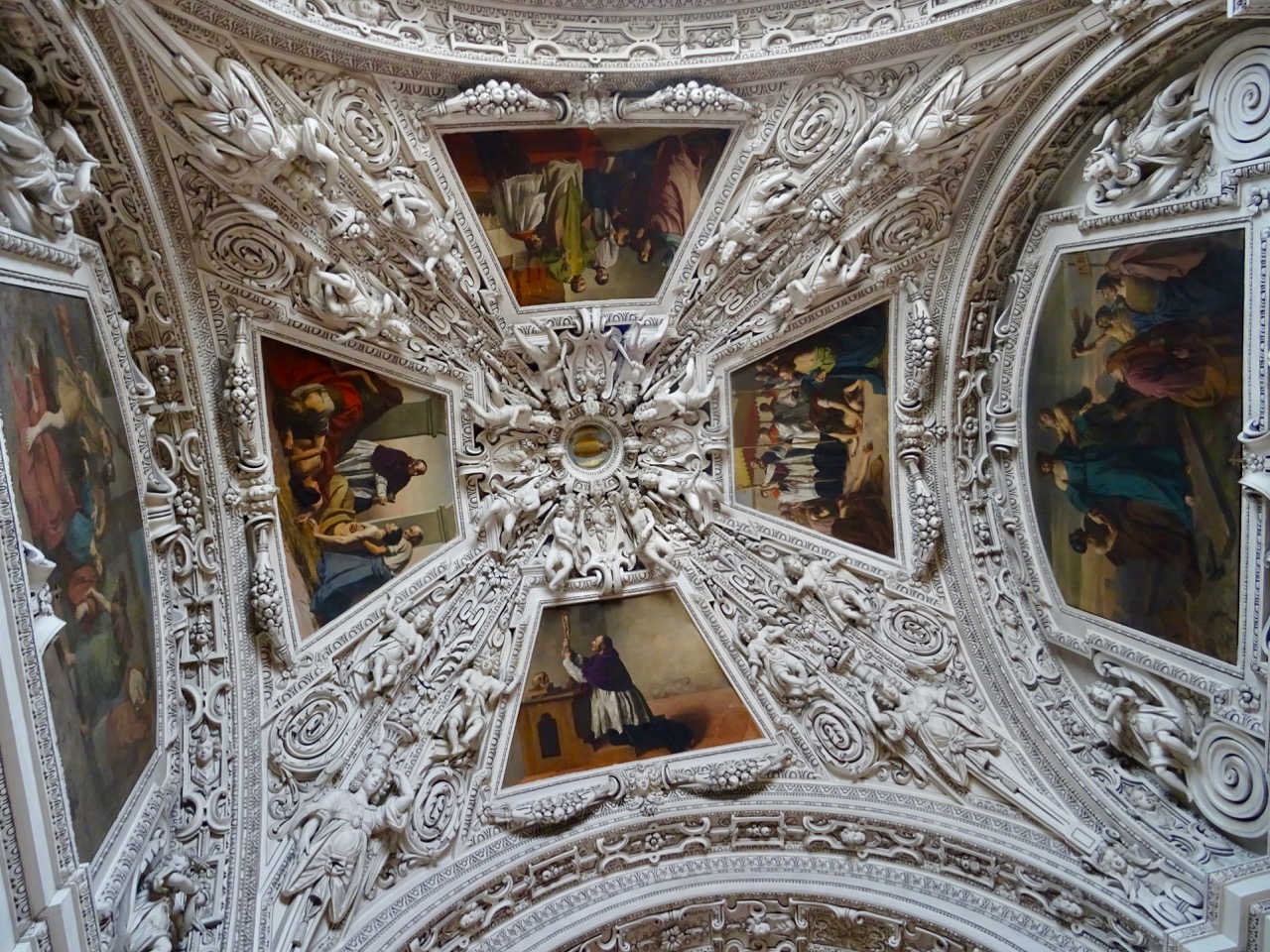
 But today is beautifully restored. The ceilings are particularly ornate, this is the ceiling of one of the small side chapels.
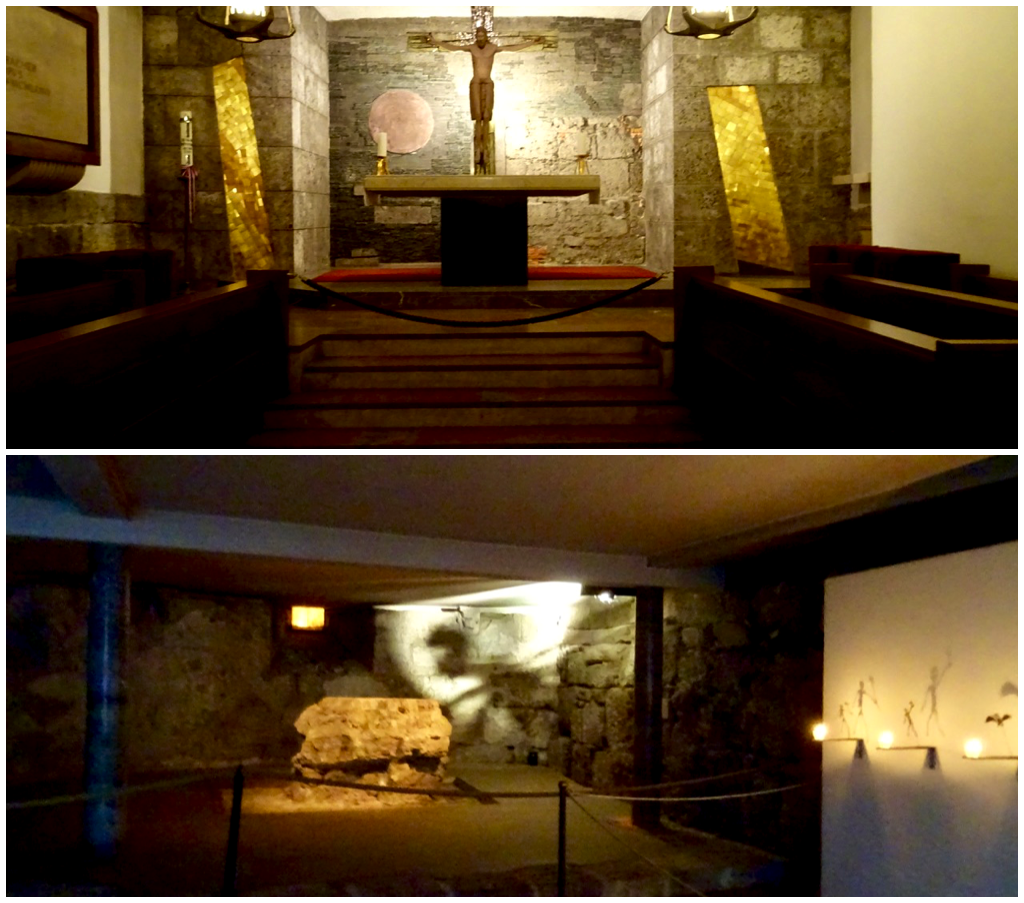
 In the basement is a crypt with a small chapel, and its very own ghostly apparition that flies around the room! Tough to catch its likeness in a photo but there it is on the back wall.
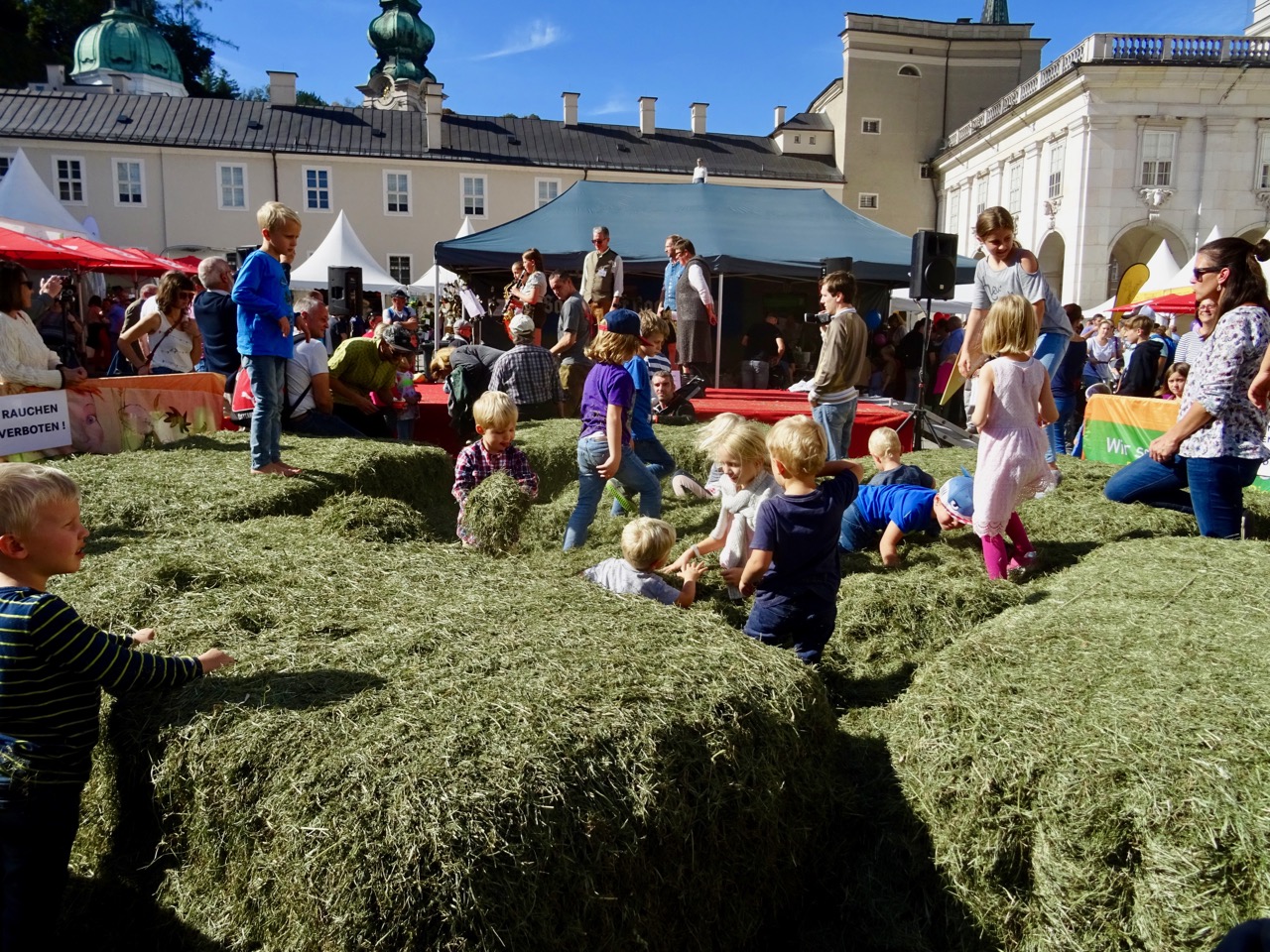
 After the service we find a Bio Fair (Organic Fair) right around the corner. There are people everywhere enjoying the sunshine, food and drinks. Great people watching today!
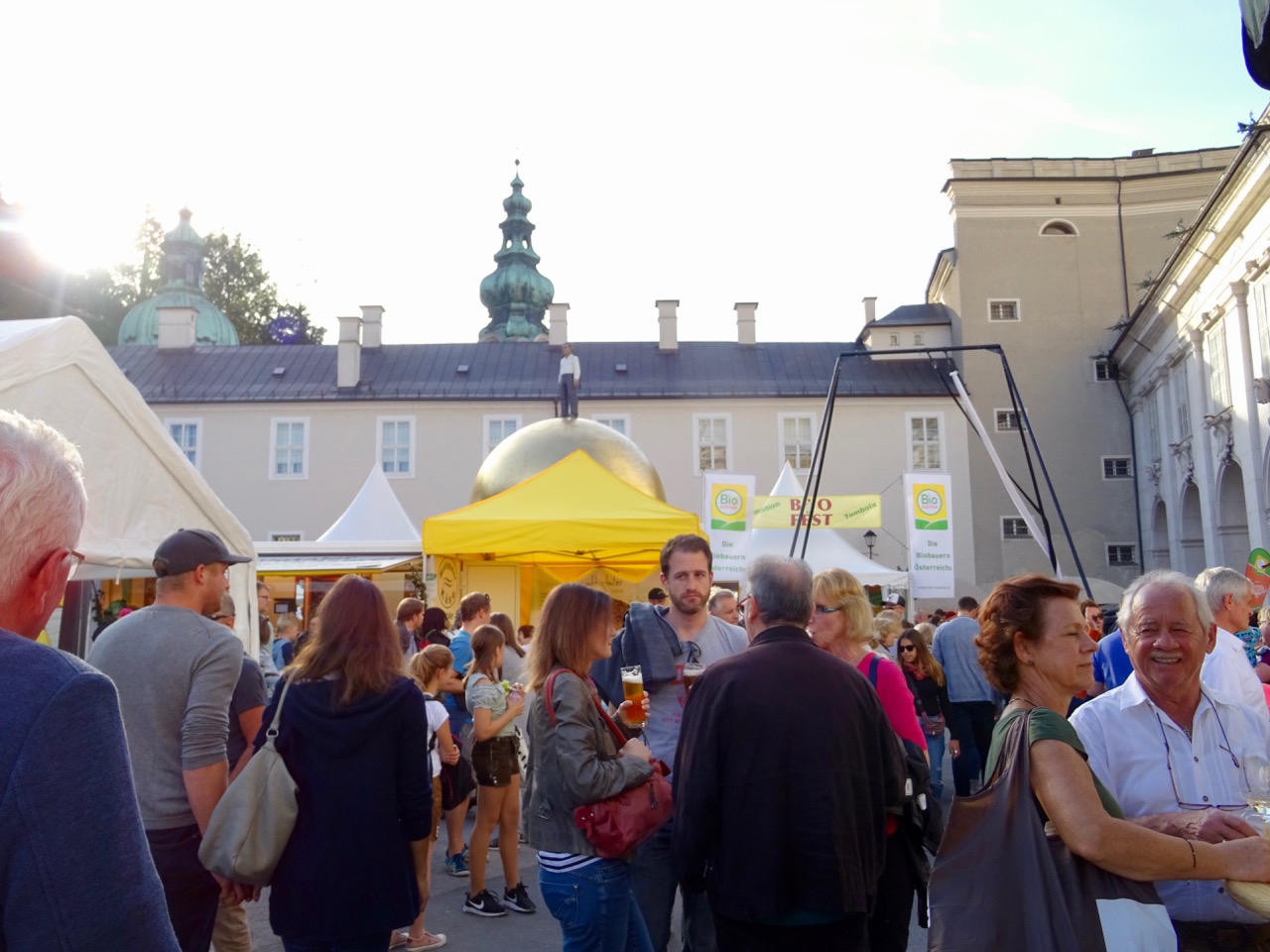 We have lunch here but are too full to have one of these giant donut-like pastries, which are served either with sauerkraut or sprinkled with sugar and filled with jam.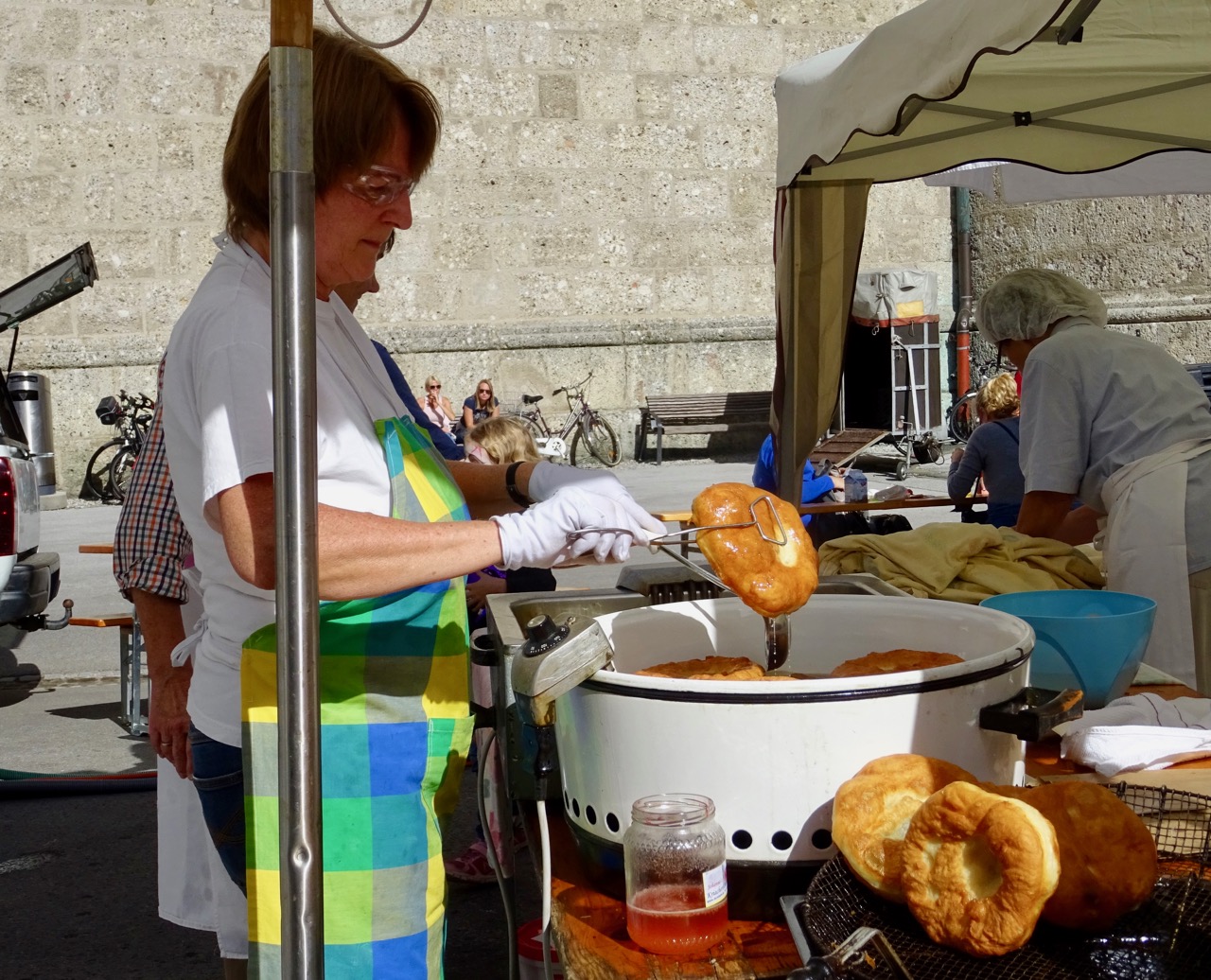
 Nearby is St. Peter’s Cemetery. Cemeteries in Austria are very neat and beautifully kept.
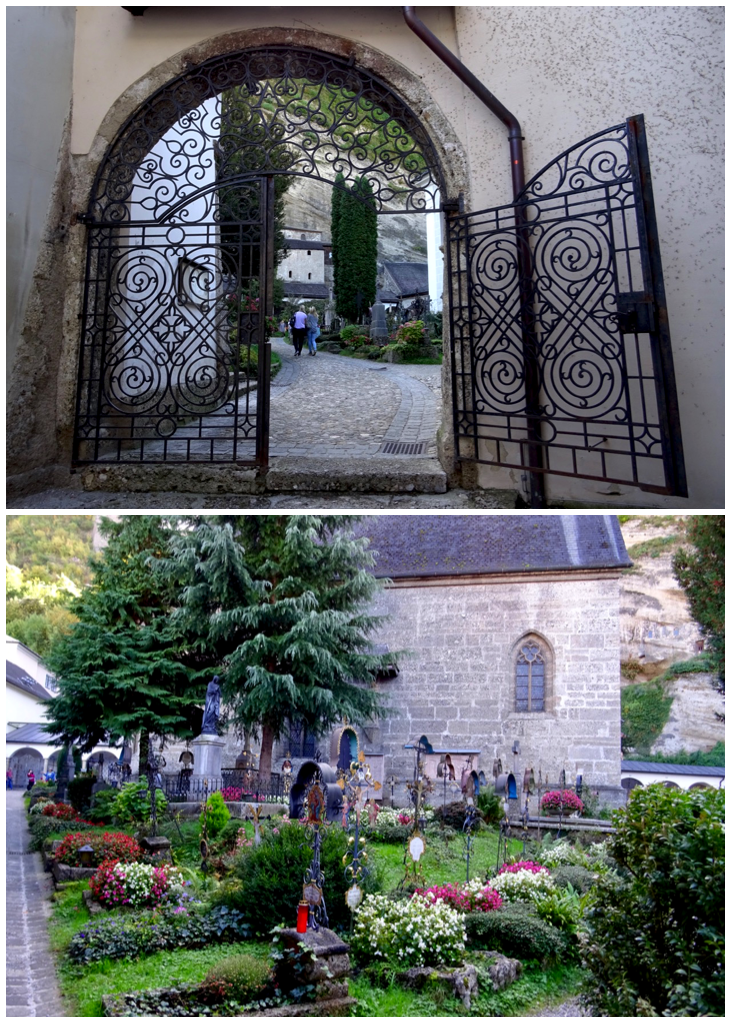 We learned that plots are rented in Austria and if the rent is not paid the bones are dug up and the plot is rented out to someone else. The remains are either moved to a mass gravesite or dug up and buried deeper in the same plot and the headstone removed so that the plot can be reused! The headstones are on the wall of the church for exactly this reason. The rent on the plot was not paid so the grave was reused and the headstones were placed here. This explains the many headstones we have seen on cemetery walls and other churches.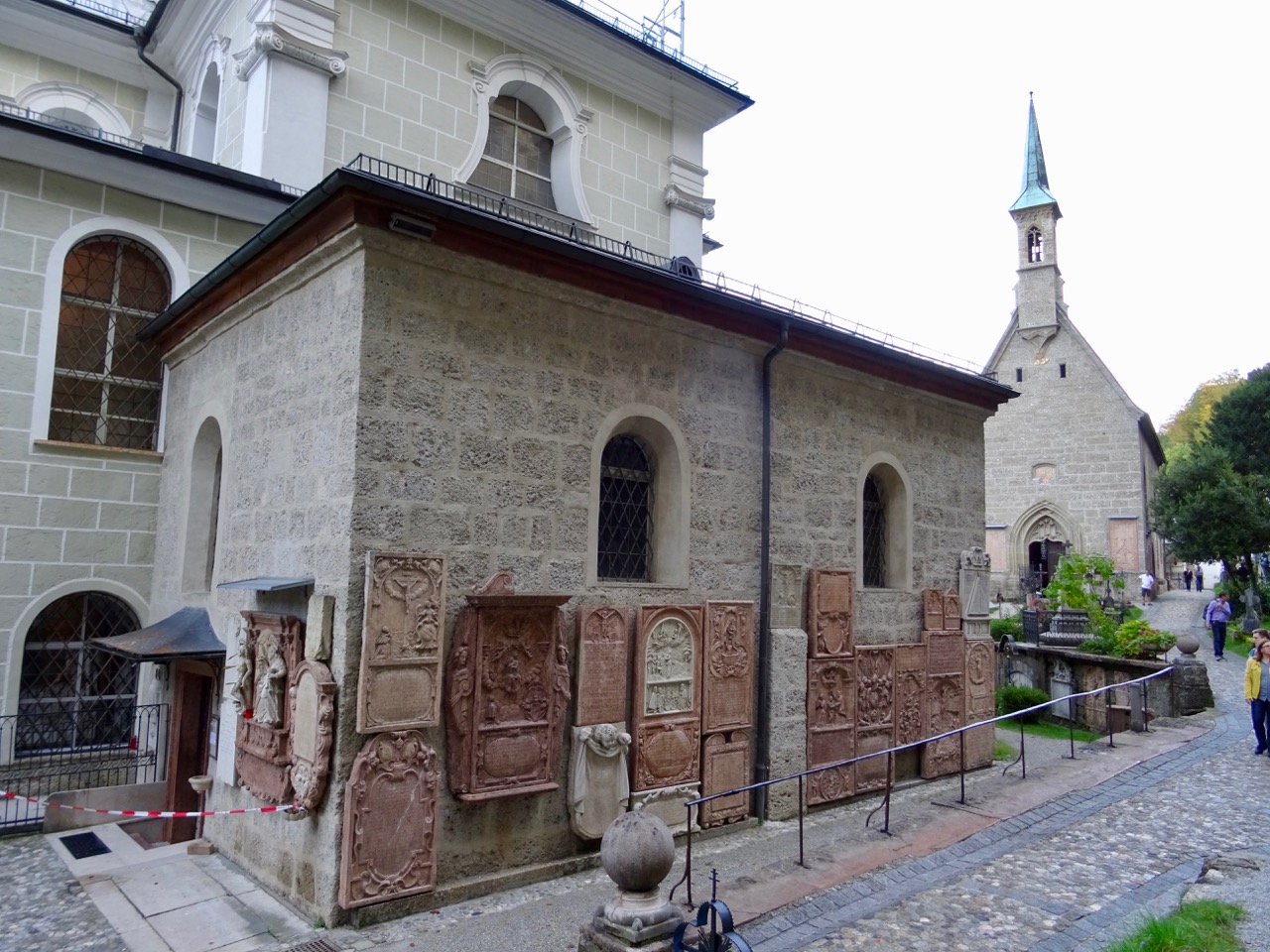
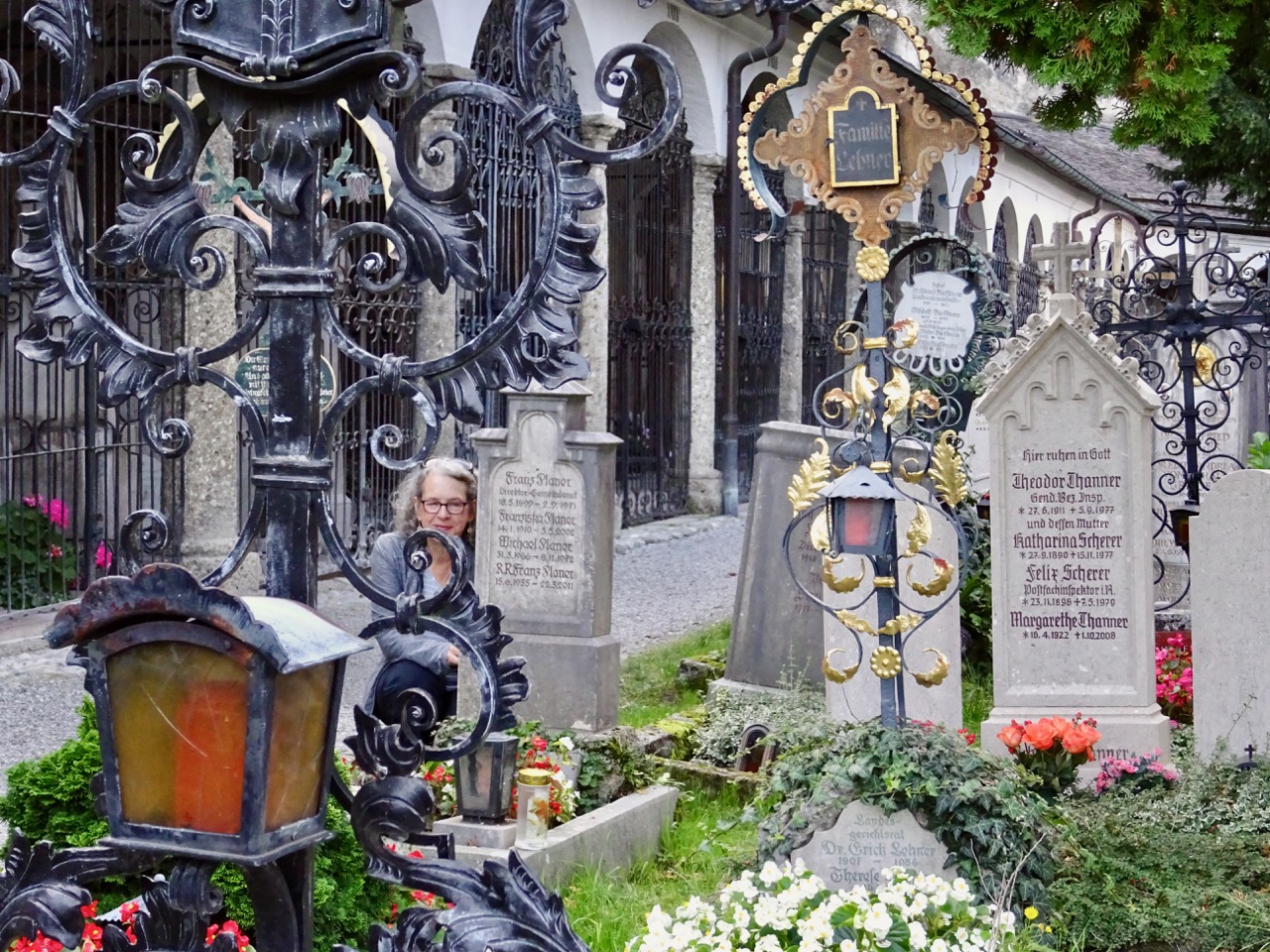
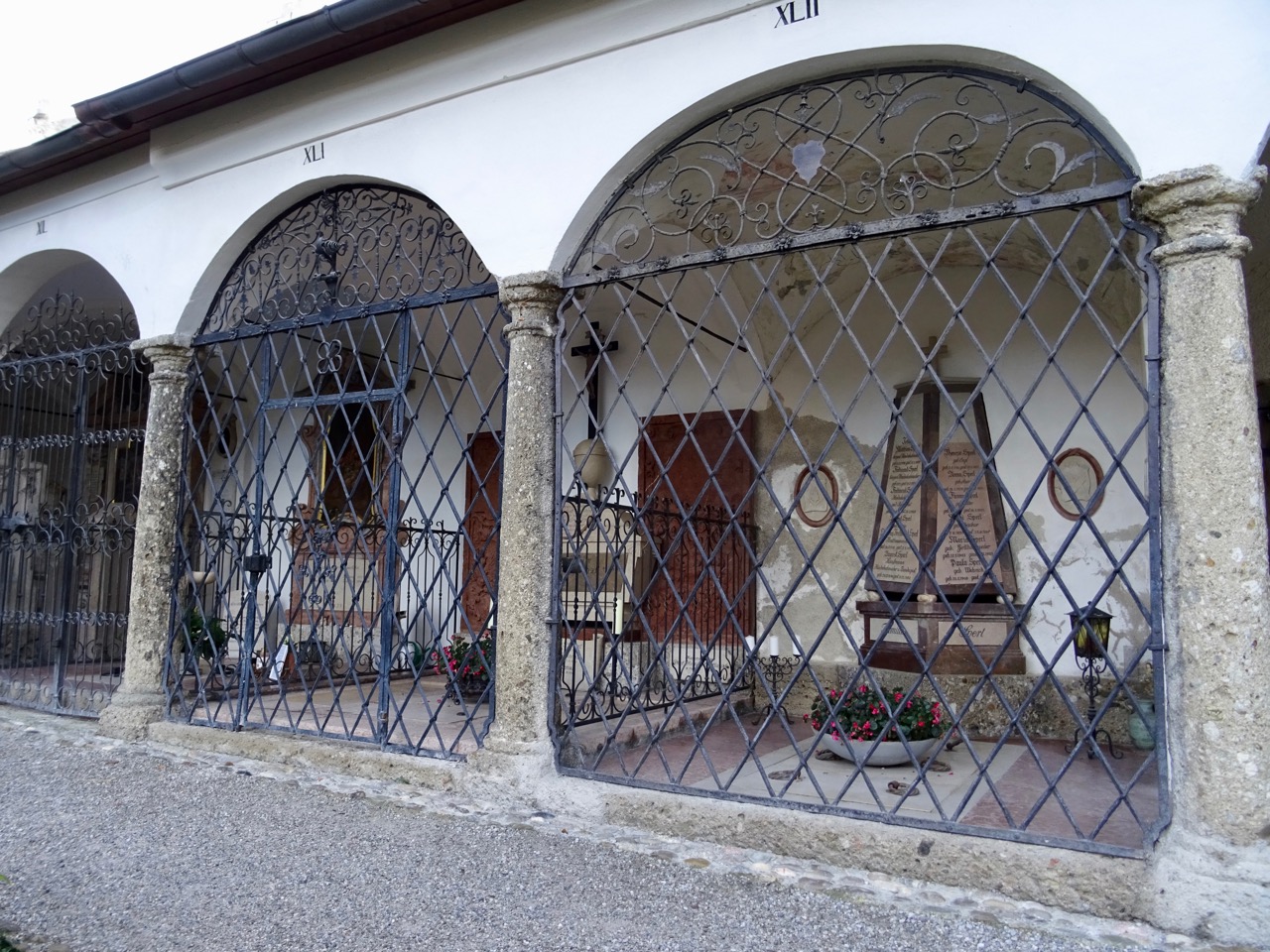 Bob insisted we needed a photo of me hiding in the cemetery!
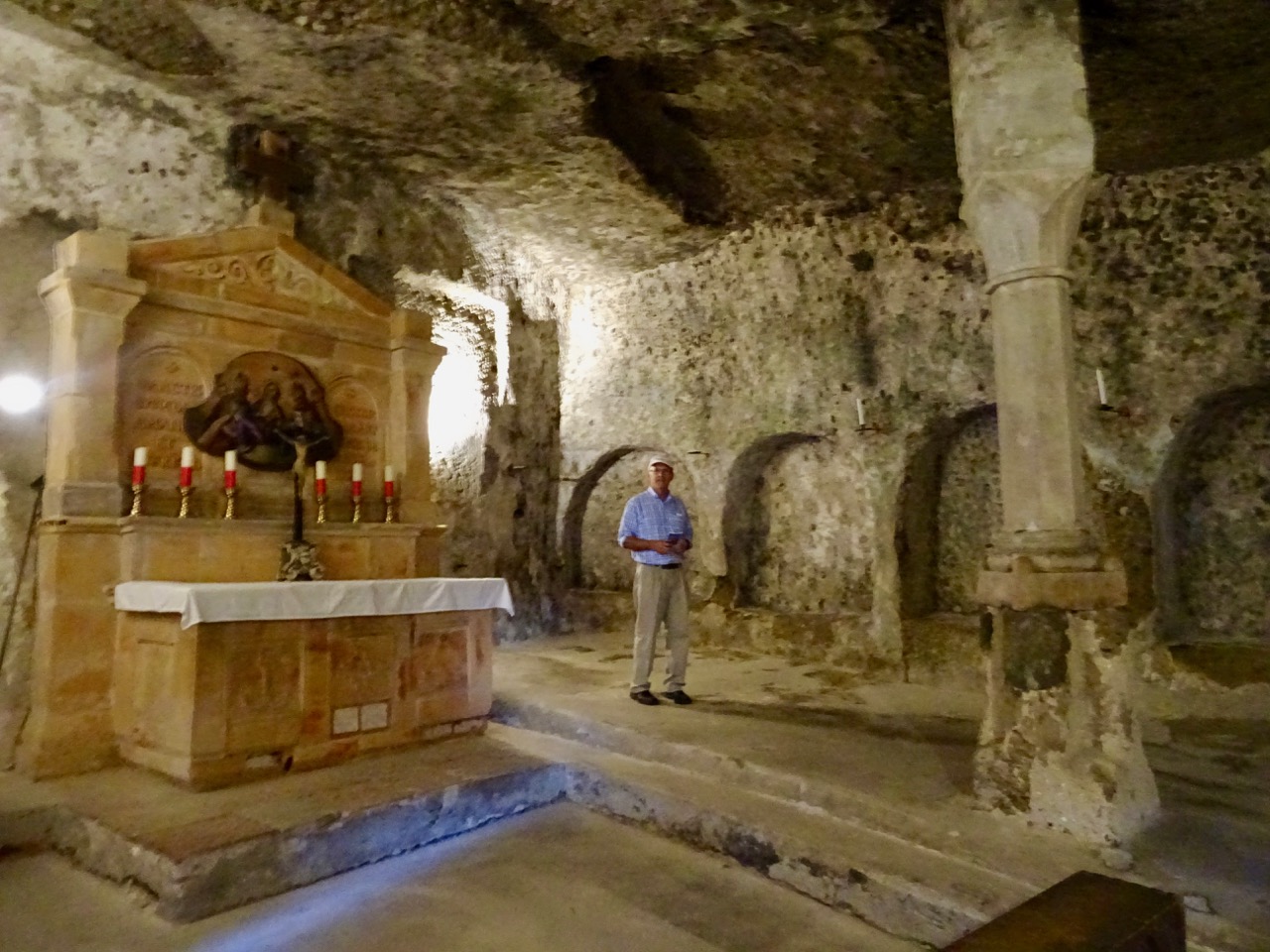
 We almost miss seeing the catacombs dating from the 12th century. Can you see the windows high up in the cliff above the cemetery? Pay particular attention to the little door below the windows. This is where Saint Maximus and 50 of his followers were thrown to their death in 477AD, because of their faith.
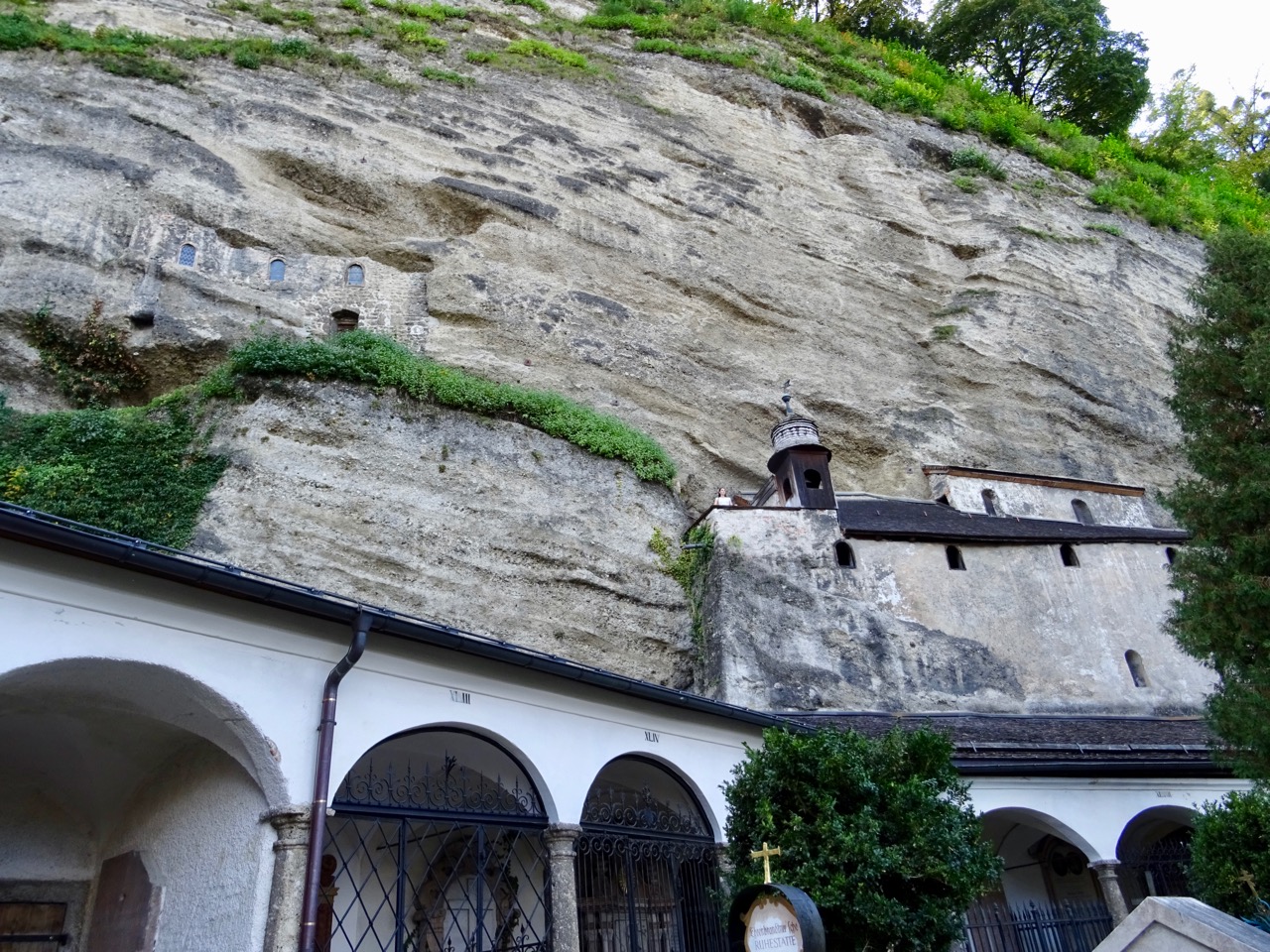 This is one of the chapels carved out of the rock high in the cliff.
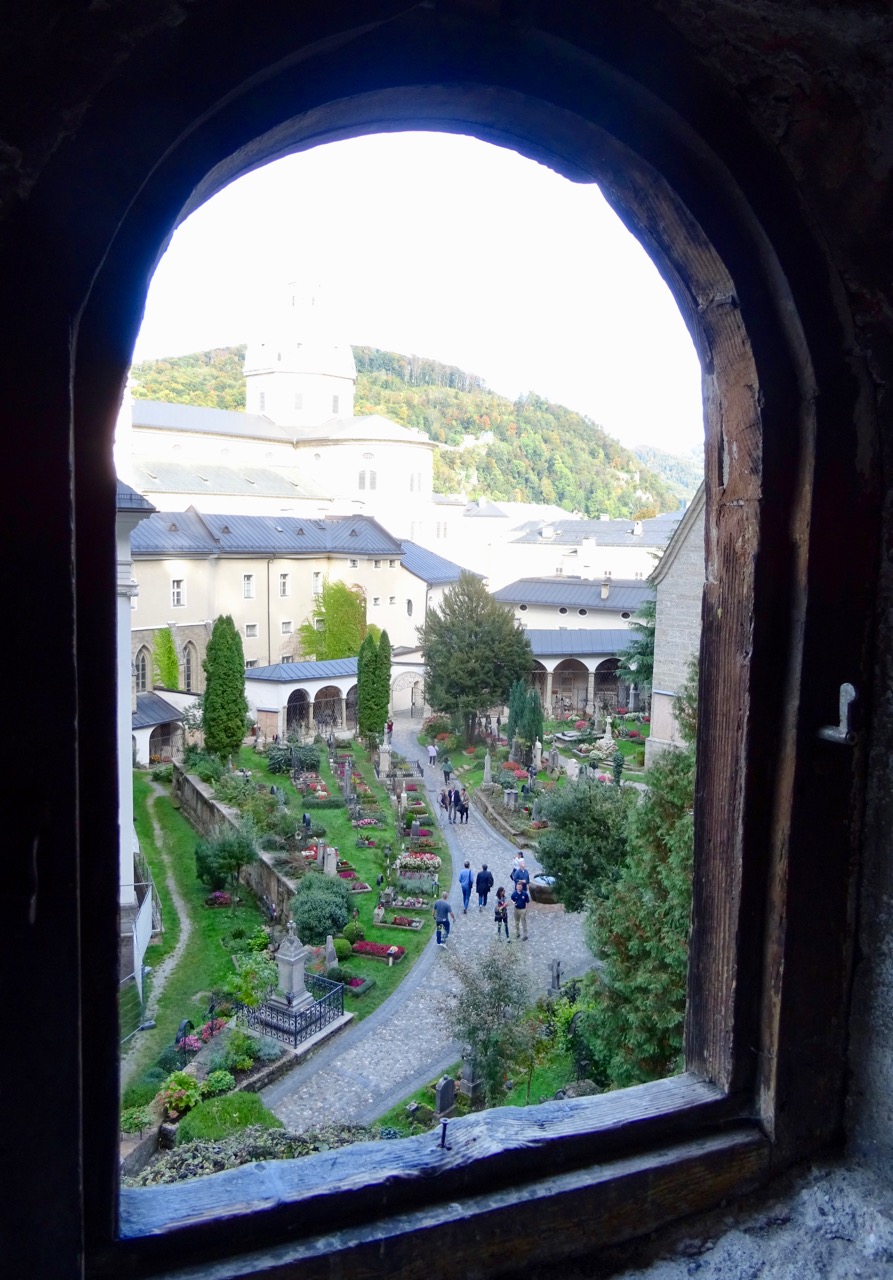
 A view of the graveyard through one of the windows as we climbed down from the stone chapels.
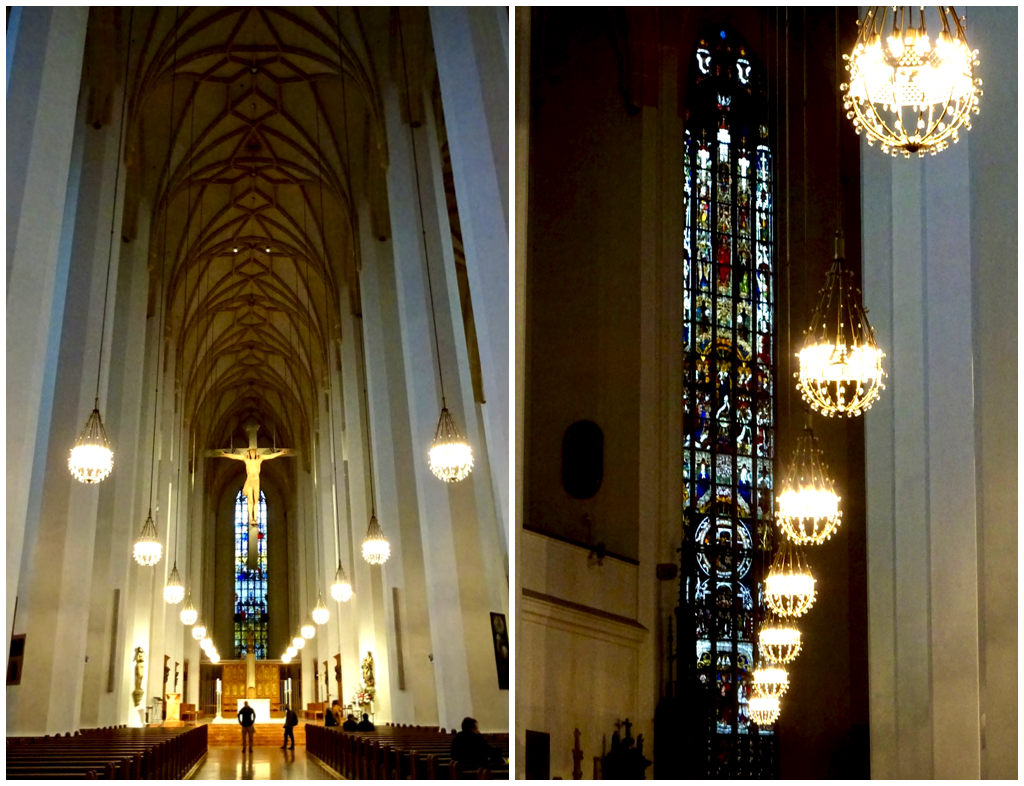
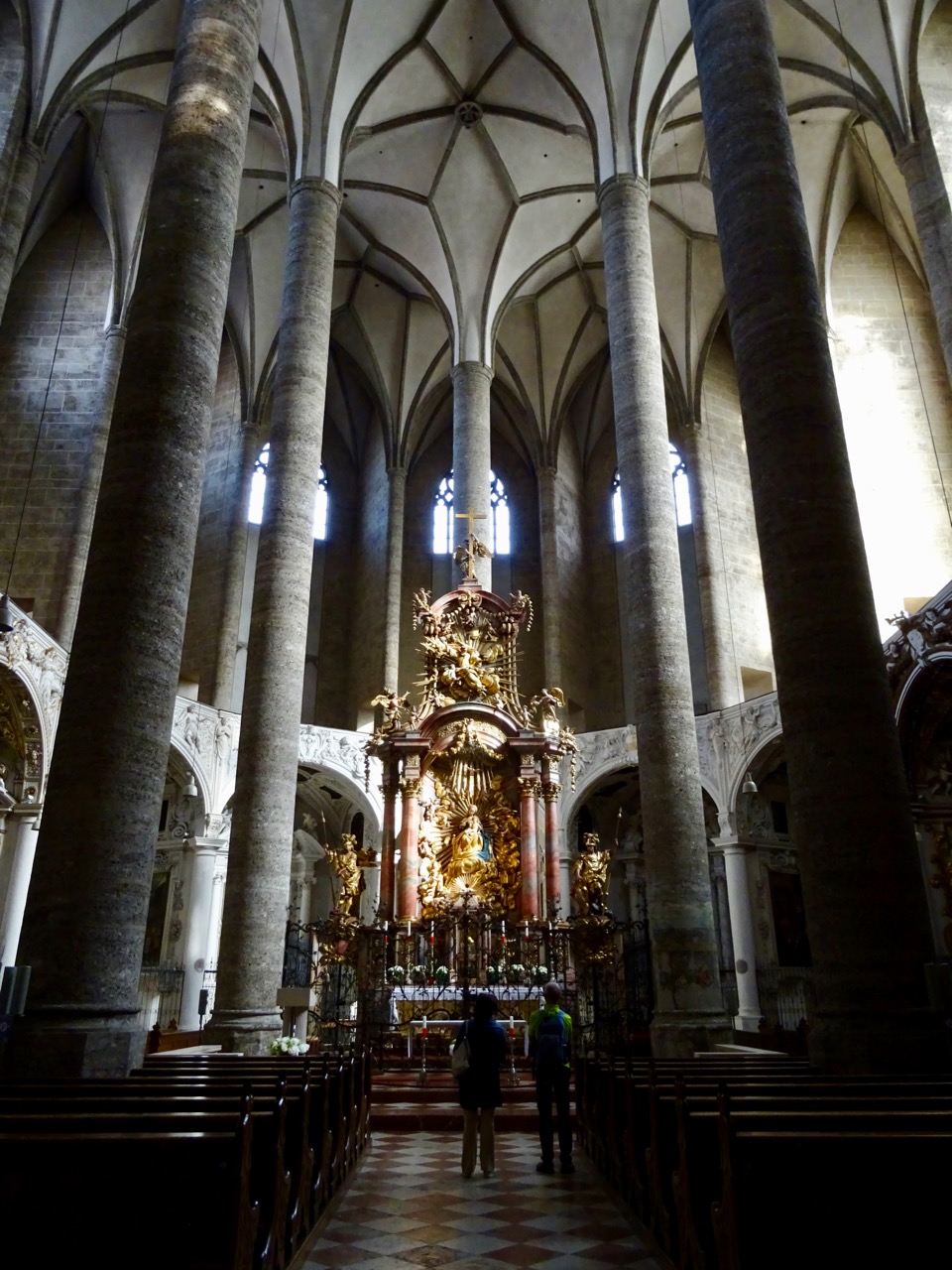
 Bob has a few more places for us to visit. The Church of Our Lady dates from 1221 AD. It was very dark everywhere except for right around the altar where there are soaring pillars and arched ceilings.
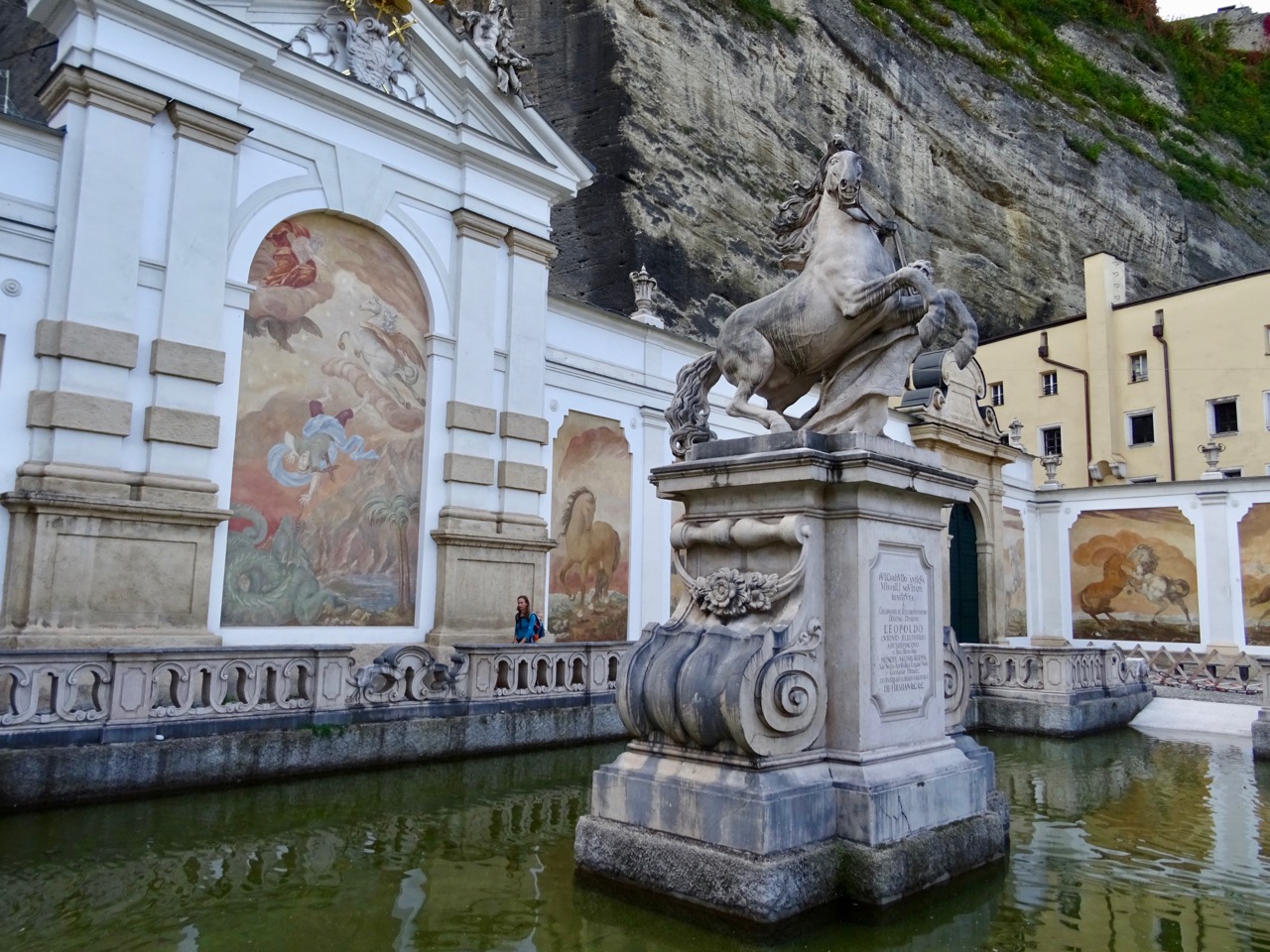
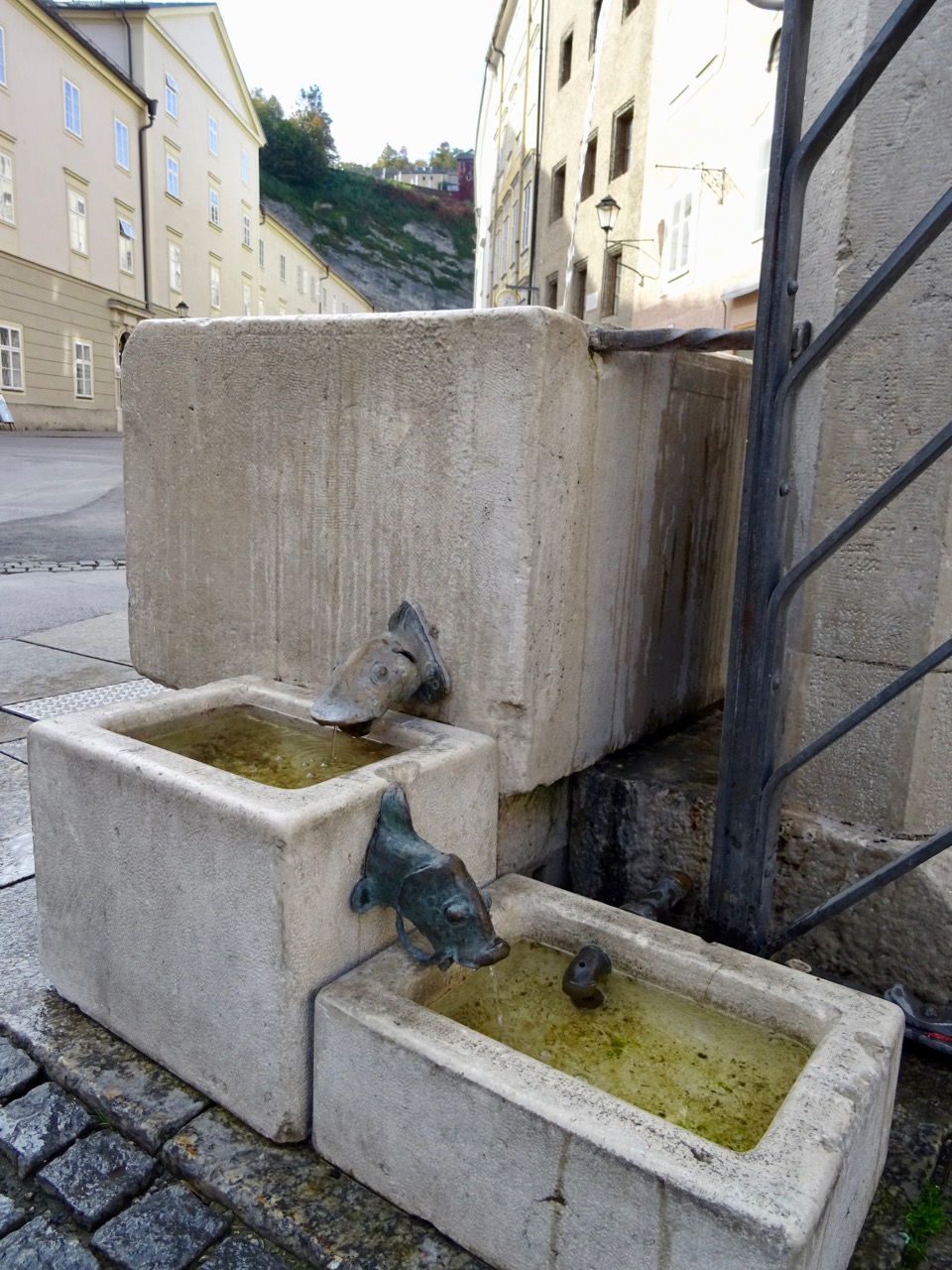
 Next is the Horse Fountain. This fountain has a ramp (the white area on the right side of the photo) so that horses could walk right into the fountain to cool off.
 This fountain is just a bit smaller!
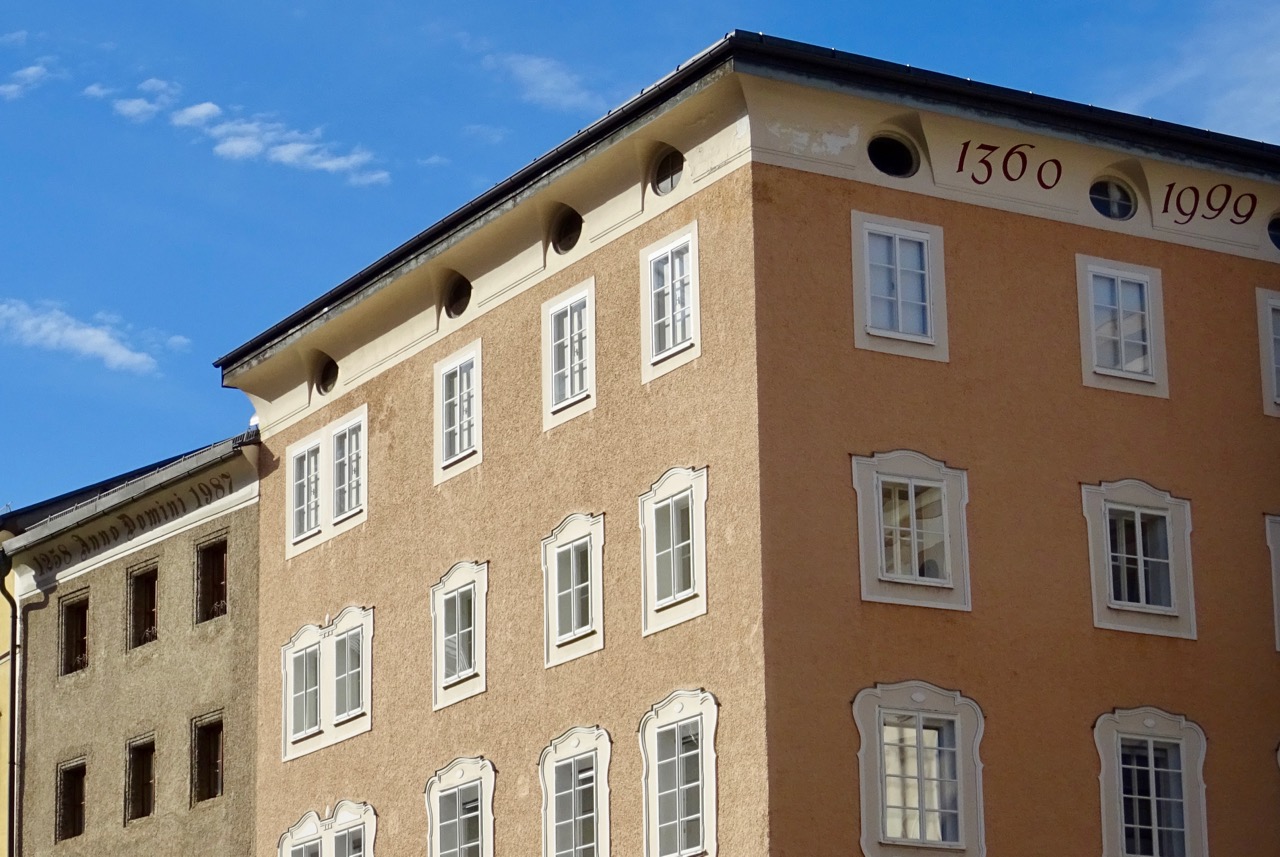
 Notice the dates on these buildings…1360 on the apricot coloured one and 1258 on the brown one. I am amazed that these houses are this old.
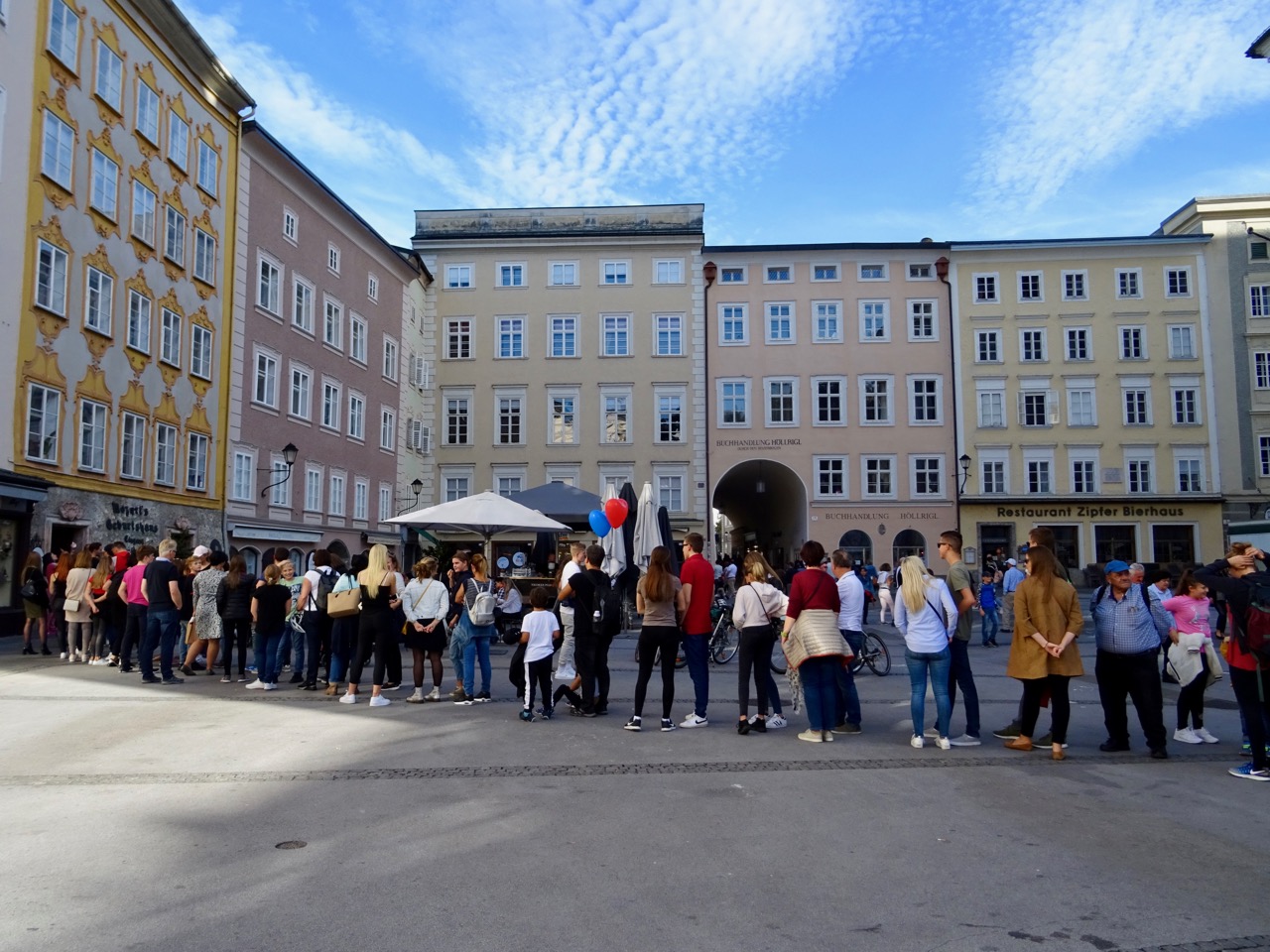
 We see a very long line up… it is people lining up for ice cream! Soft ice cream in a cup with a choice of fresh fruit and other toppings.
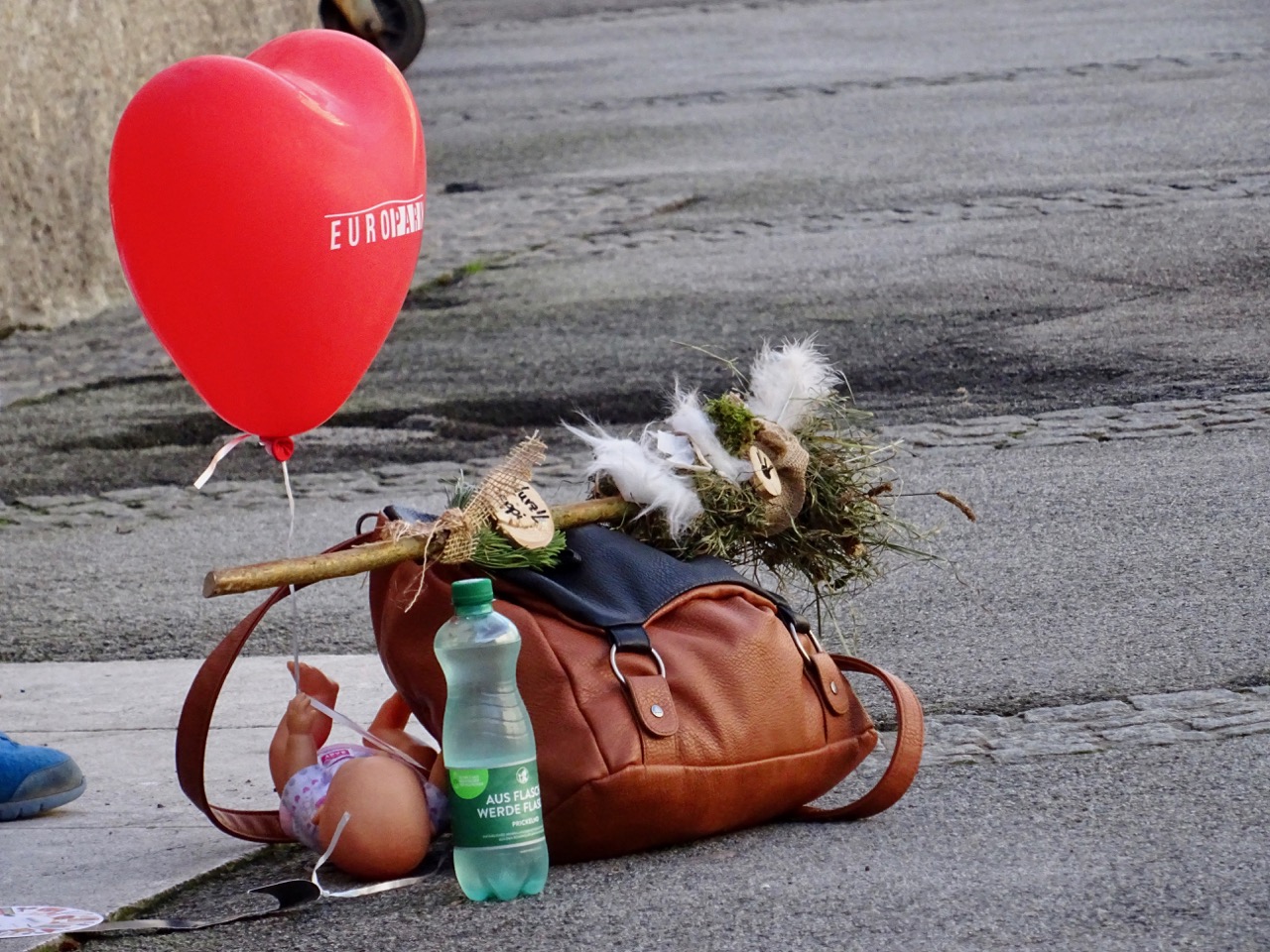
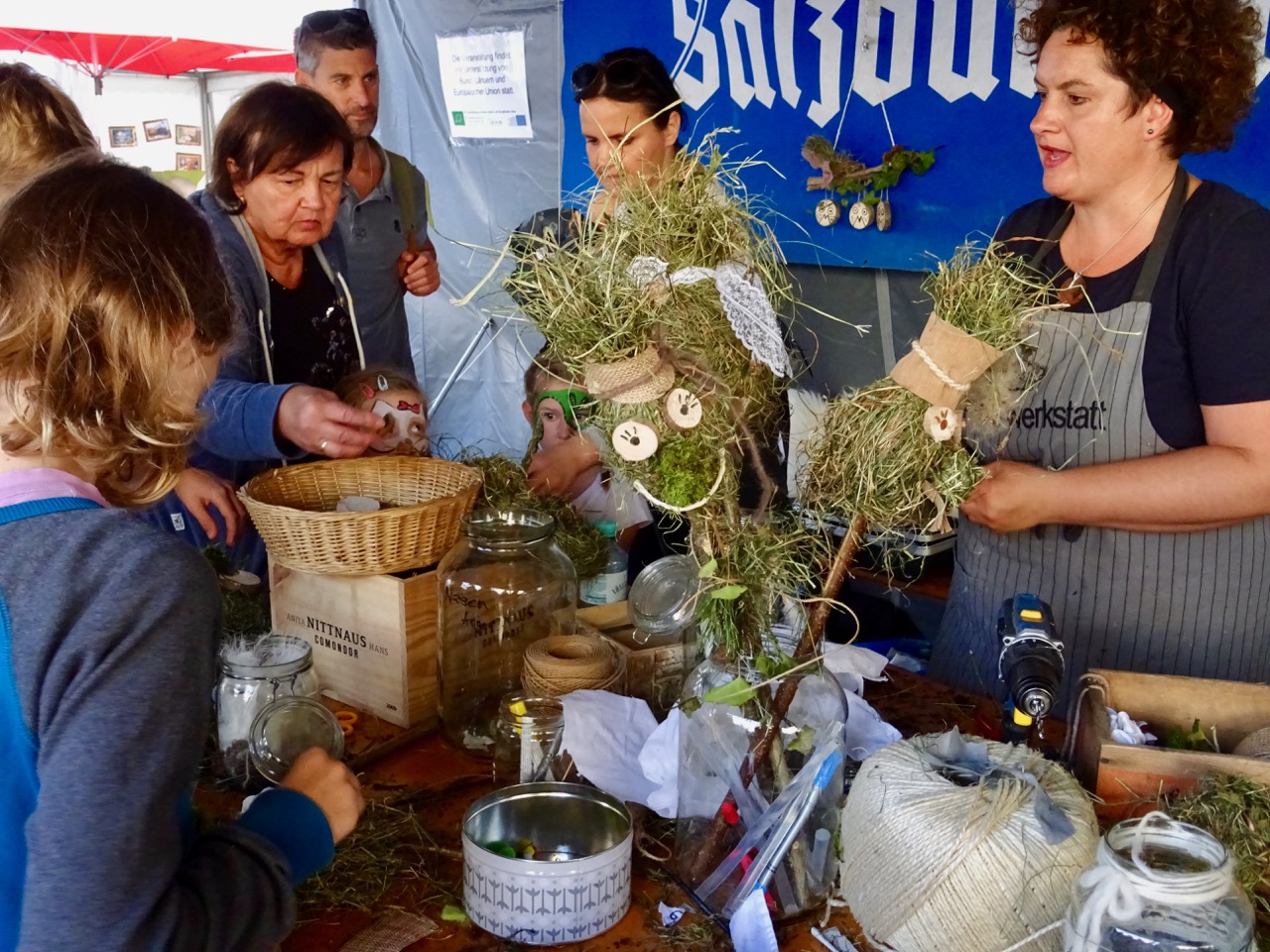
 I see this curious ‘wand’ and wonder where it is from.
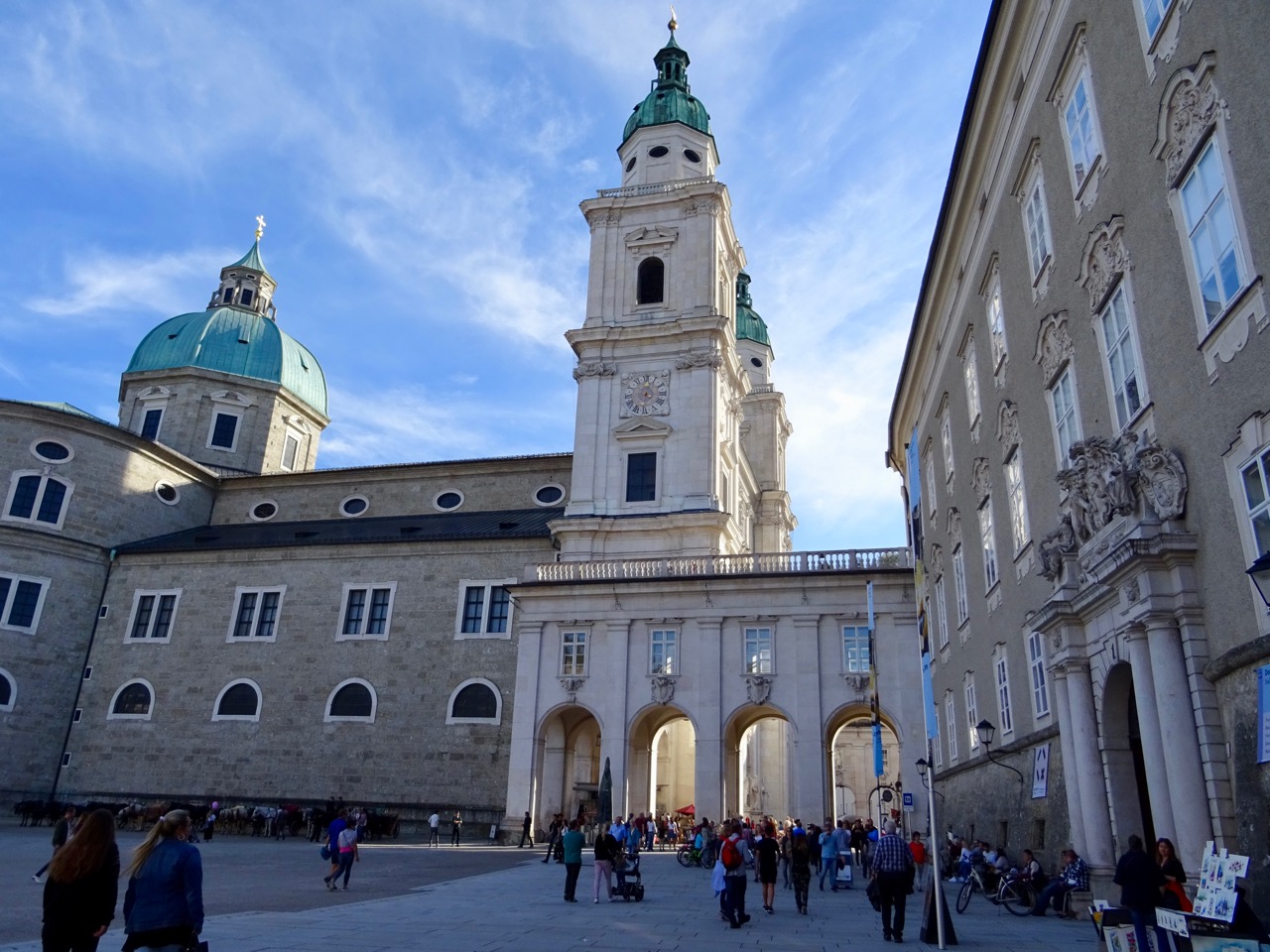
 This is a view of the side of the Salzburg Cathedral.
 We walk back through the Bio-Fest on our way home and now I know where the wand comes from. These look like such fun to make.
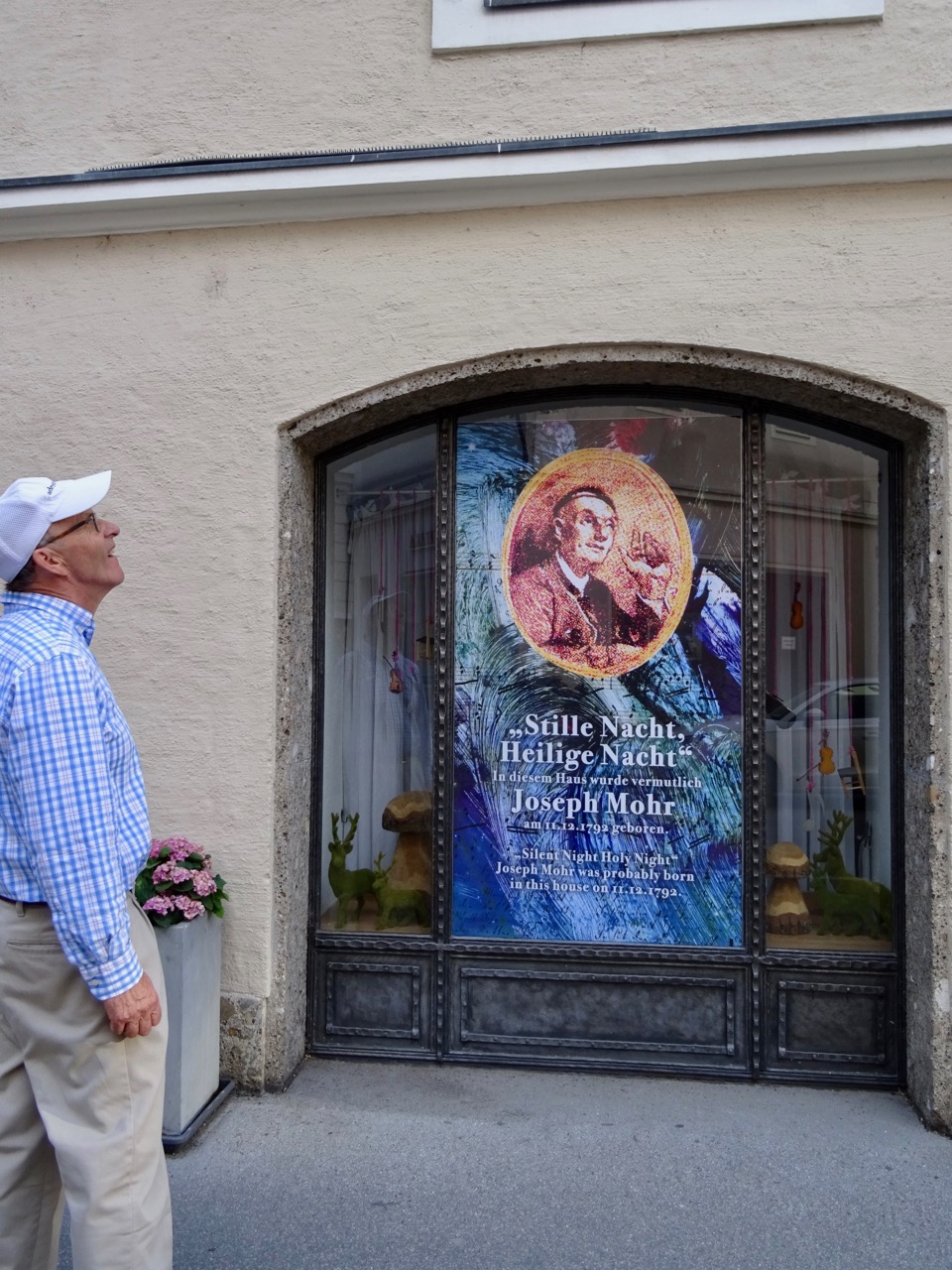
 Walking past this house we notice a sign saying that this is where the creator of the song “Silent Night’ was born.
 One more church!.. with lots of paintings and a pretty green and white ceiling. The skull was on a plaque near the door, and the little bronze plaques were in the square outside. They mark the location where a person was arrested and taken to a concentration camp. We looked for these in other cities but couldn’t find any. It has the person’s name, date of birth, date of arrest, the name of the camp and their date of death.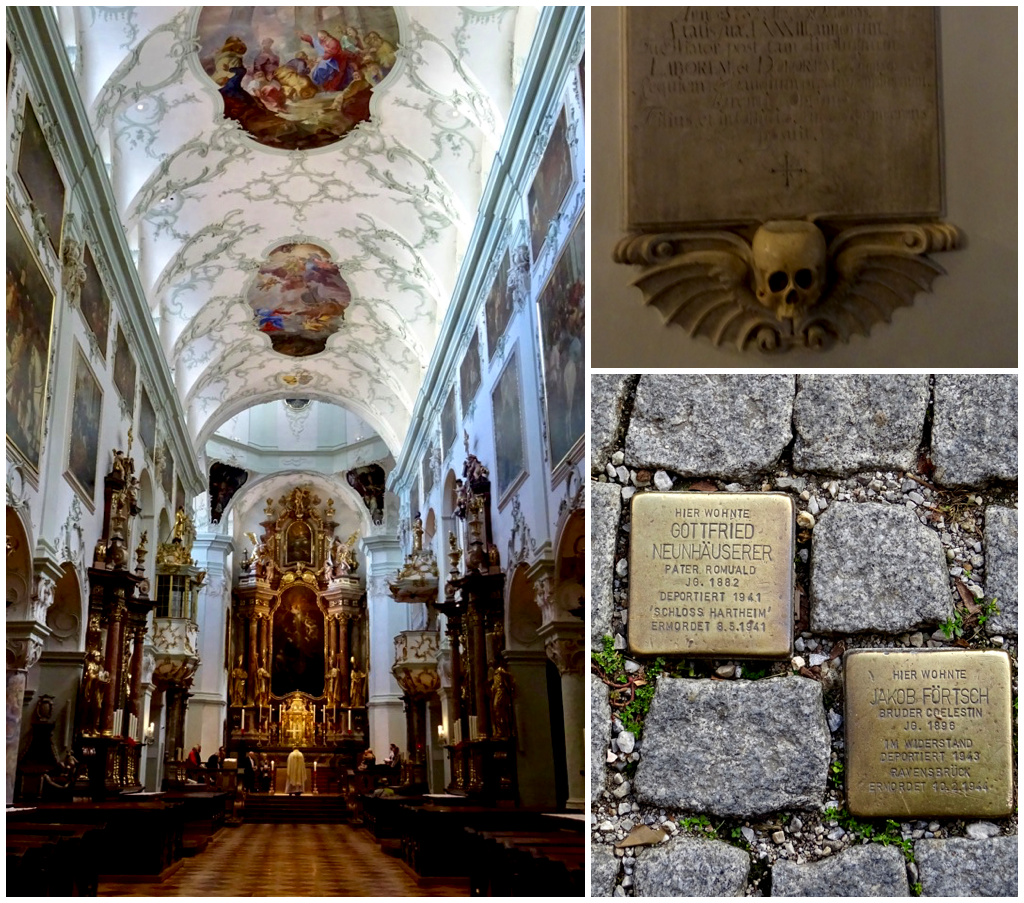
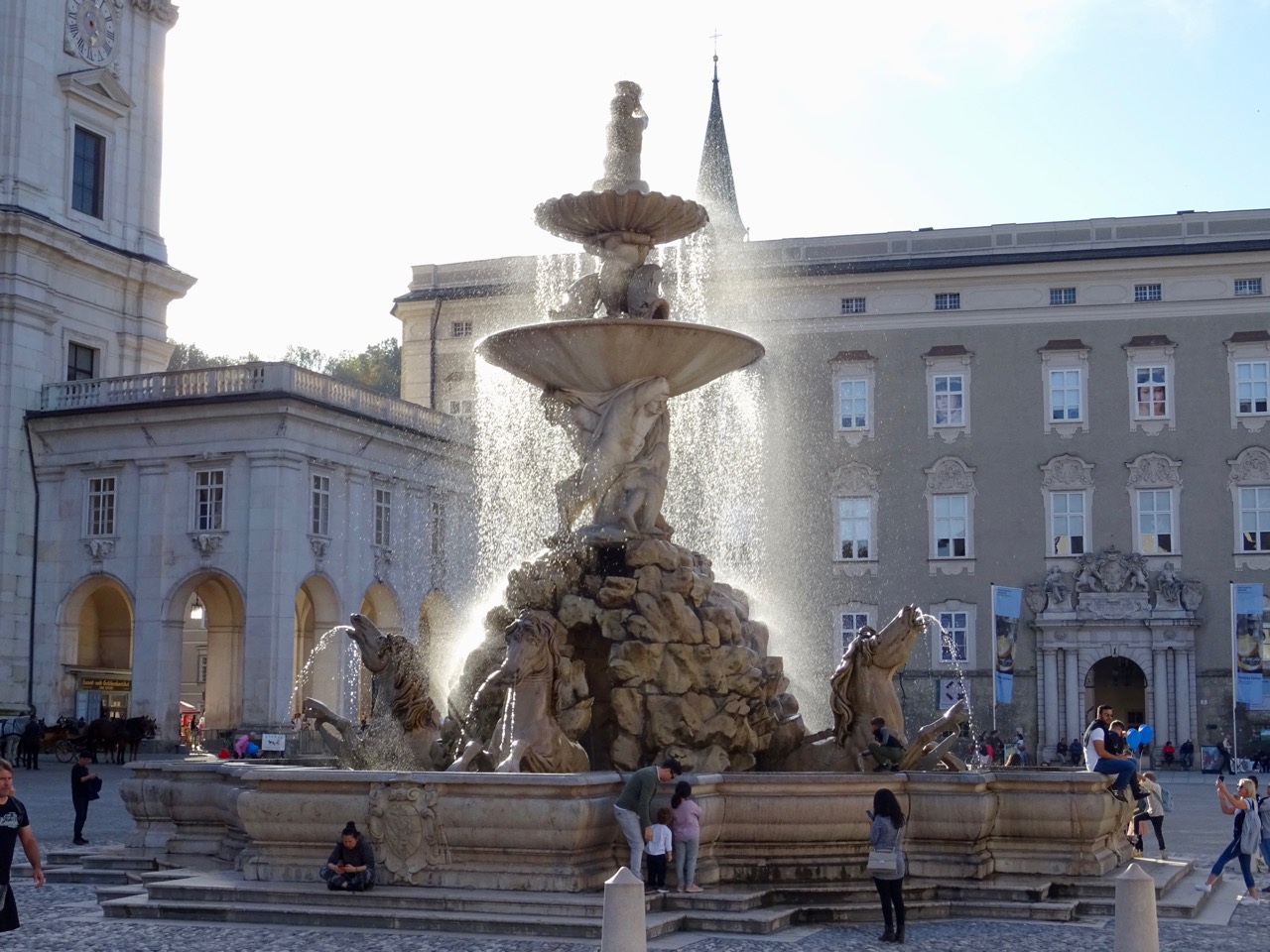
 The horse fountain in the square near the Salzburg Cathedral glows in the late afternoon sun.
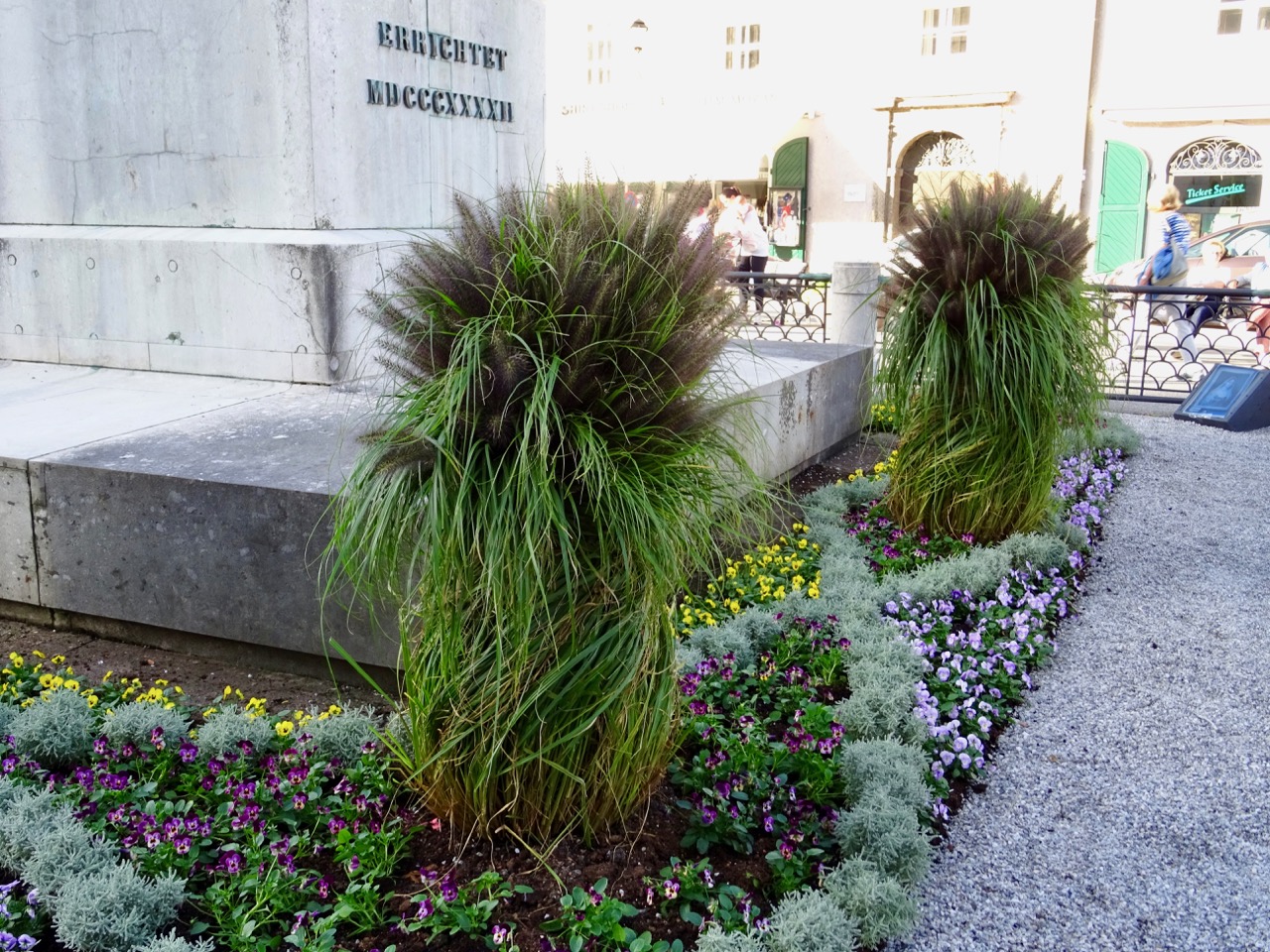
 I thought tying them up was a clever way to deal with unruly tall grasses.
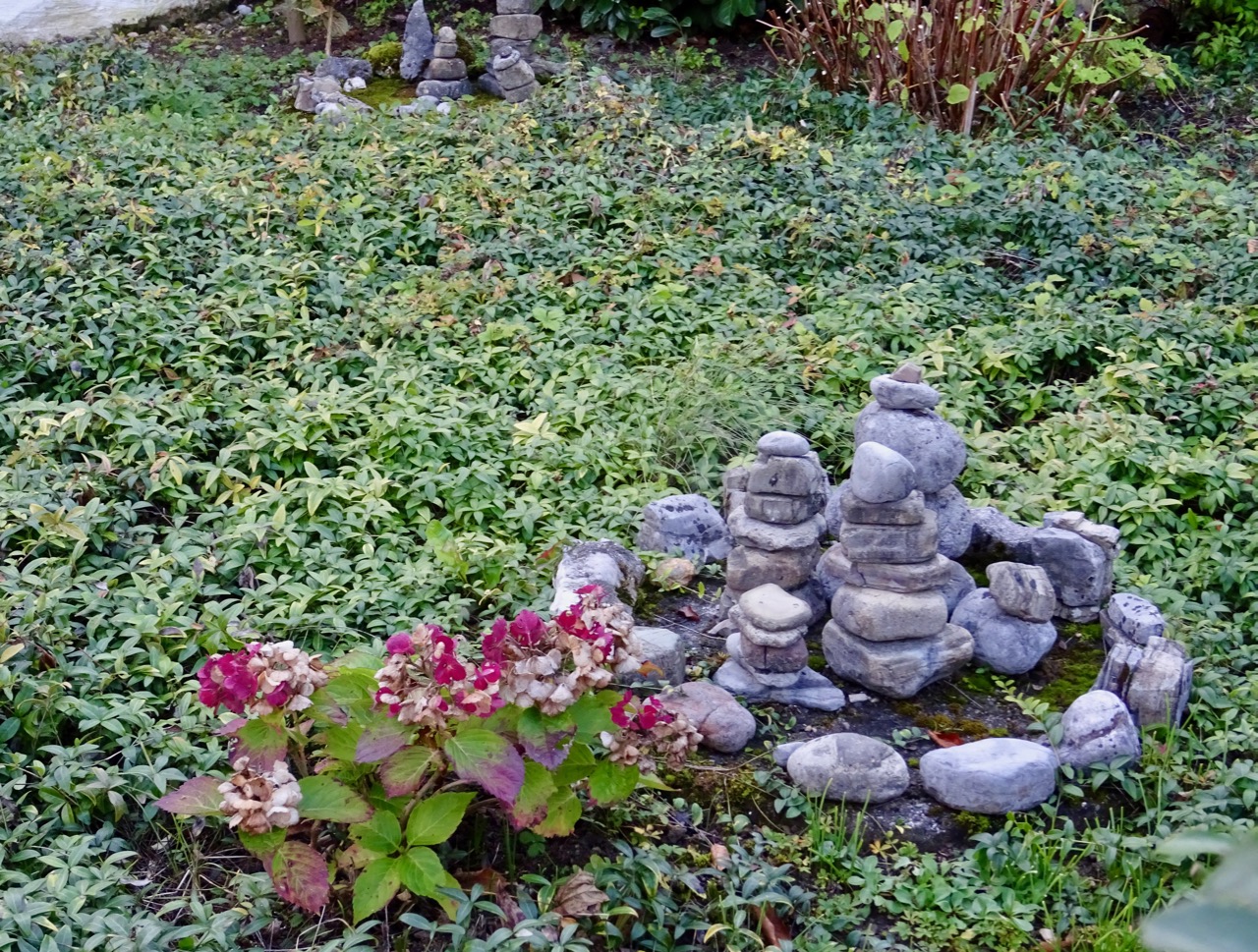
 In a yard near our Airbnb I spot these little rock gardens. I might have to make one of these in our garden at home. I am always collecting stones!
 The fall colours are brilliant in the late afternoon sun as we arrive home.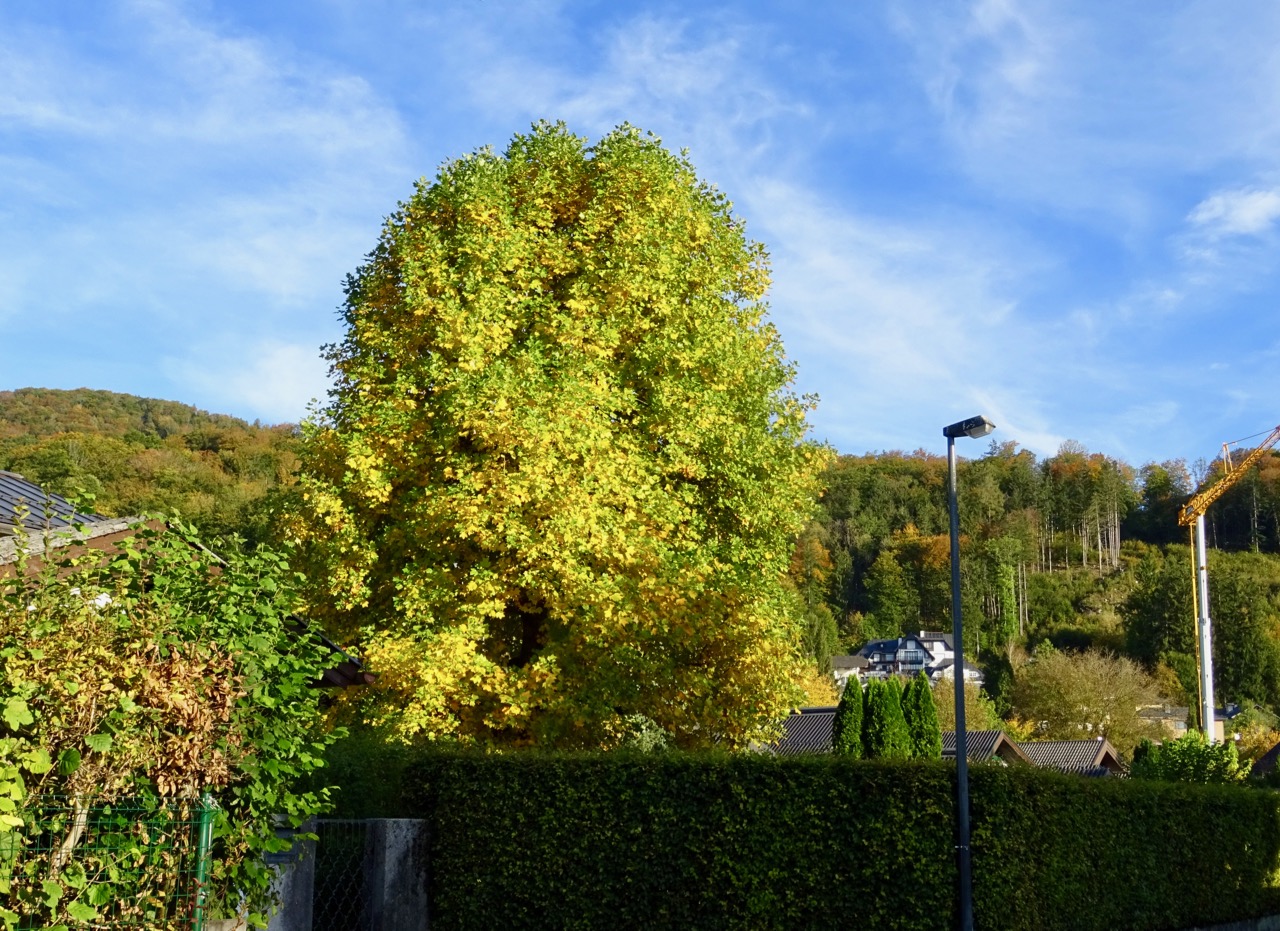
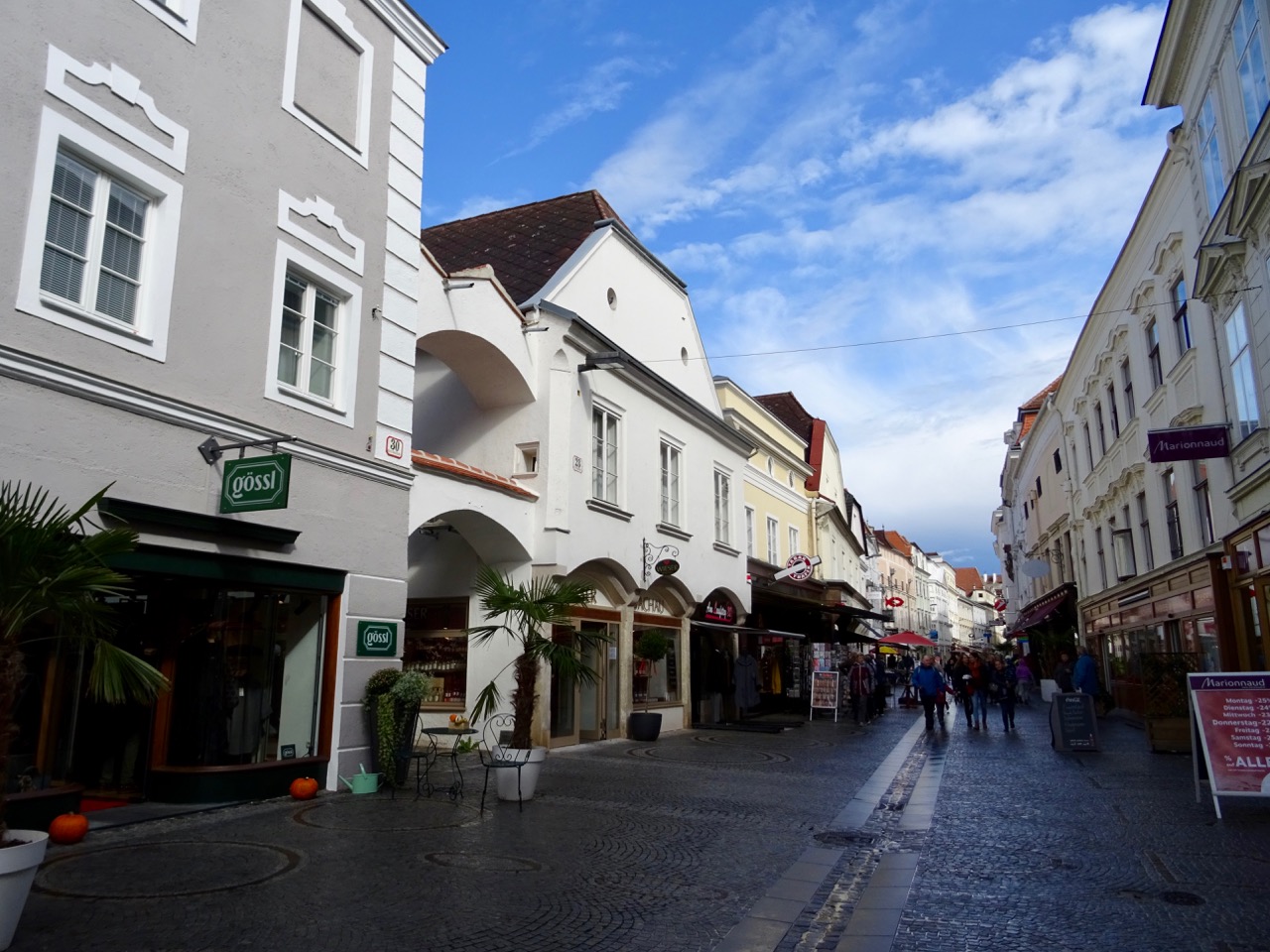
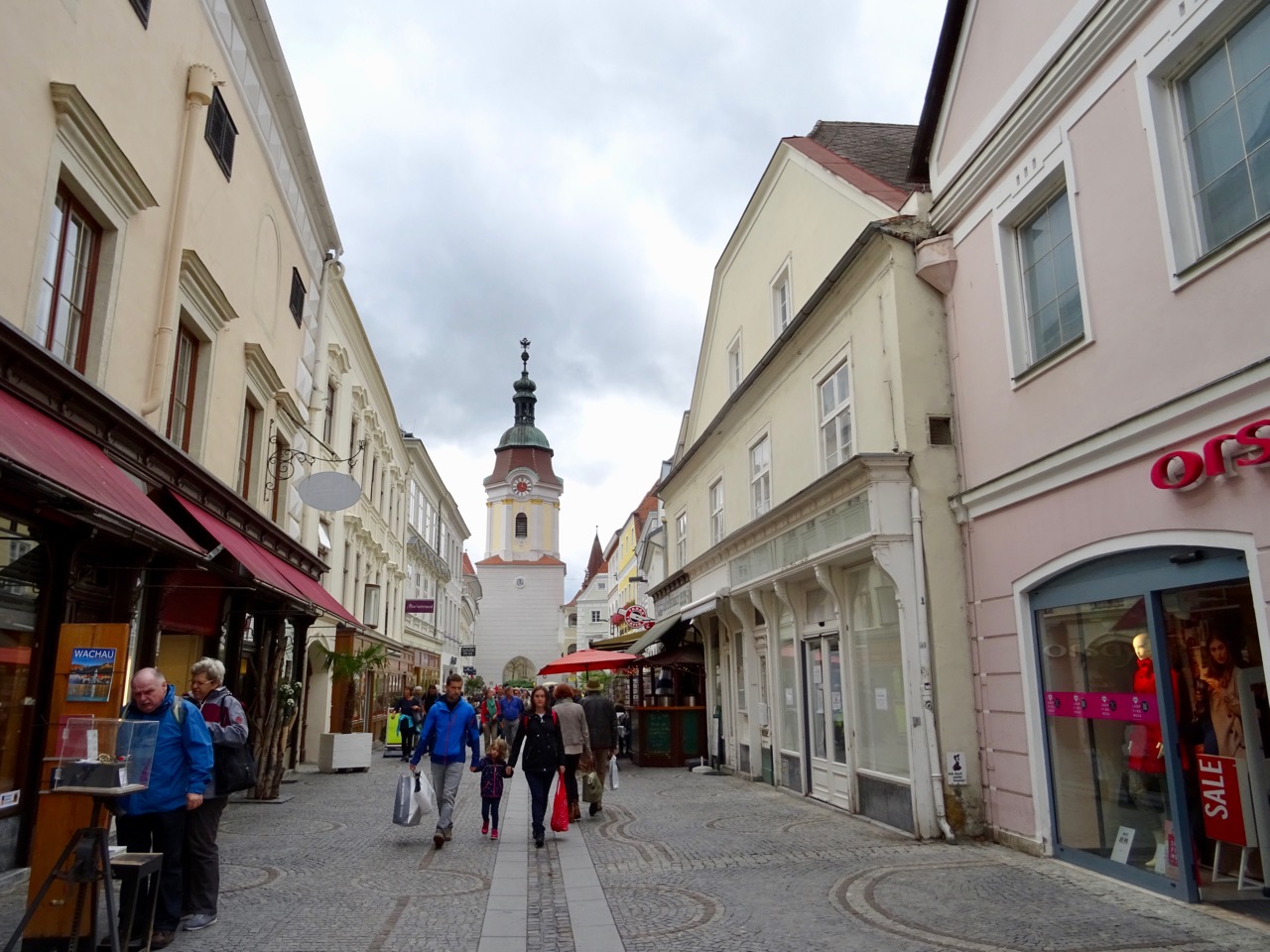 It is a long street lined with mostly modern shops. Not really what we were expecting.
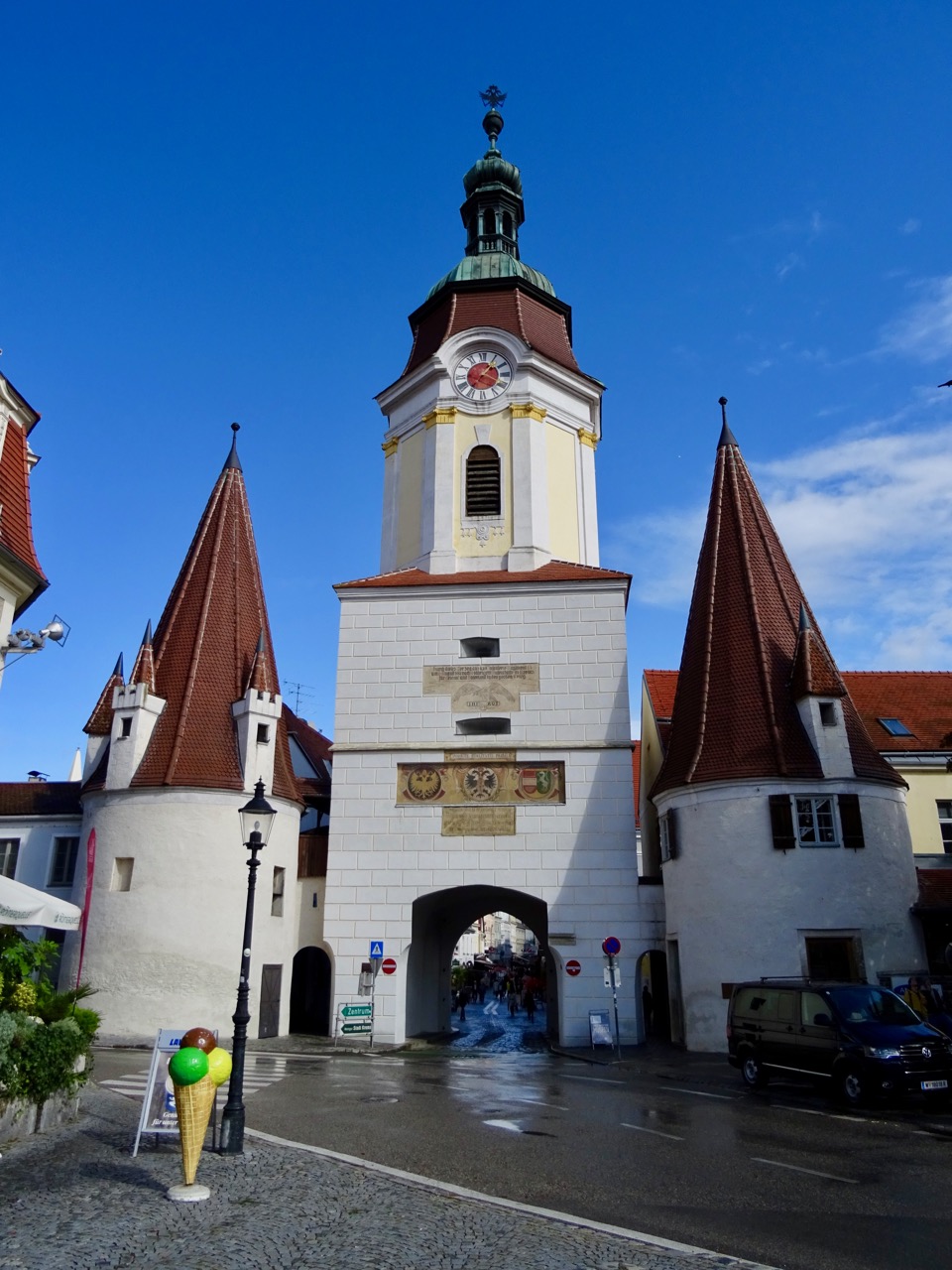
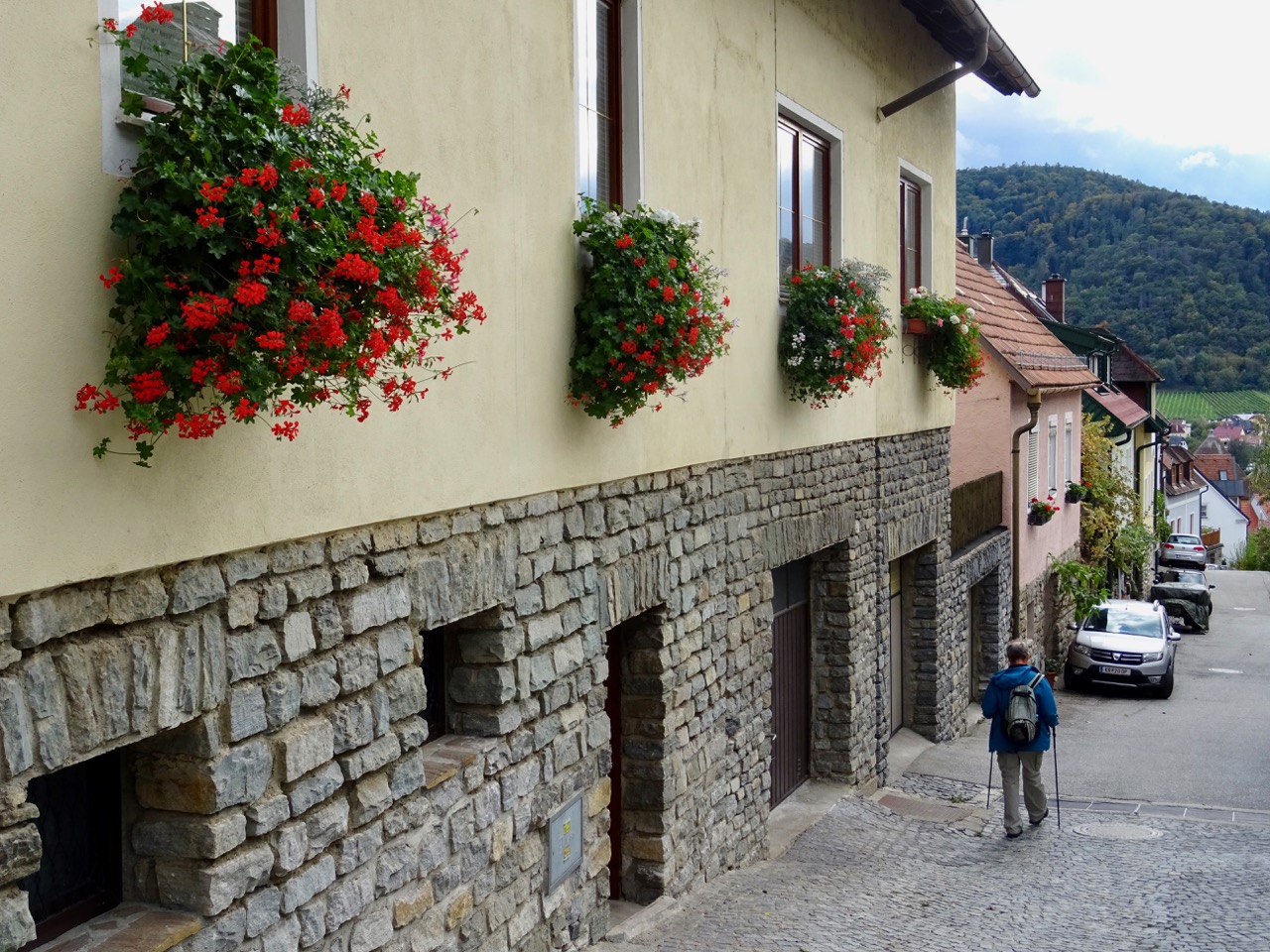
 This is the gate that leads onto the shop lined street. I do wonder why the geraniums grow so well here, Everywhere in Germany and Austria there are window boxes spilling over with blossoms. Mine at home don’t do nearly as well!
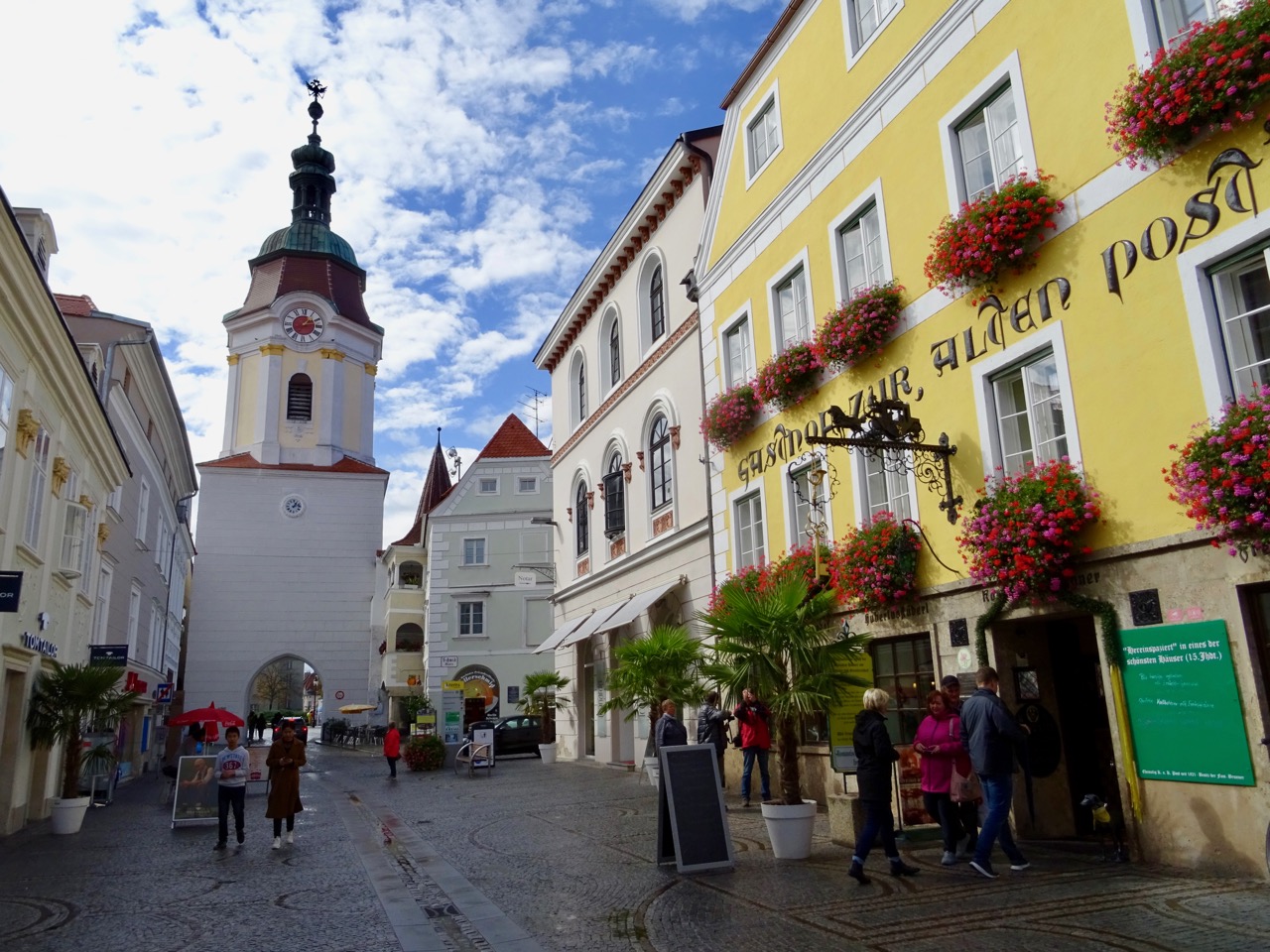 We wander through the gate, and decide it is time to leave.
 I do see these lovely prints in a little window inside the gate.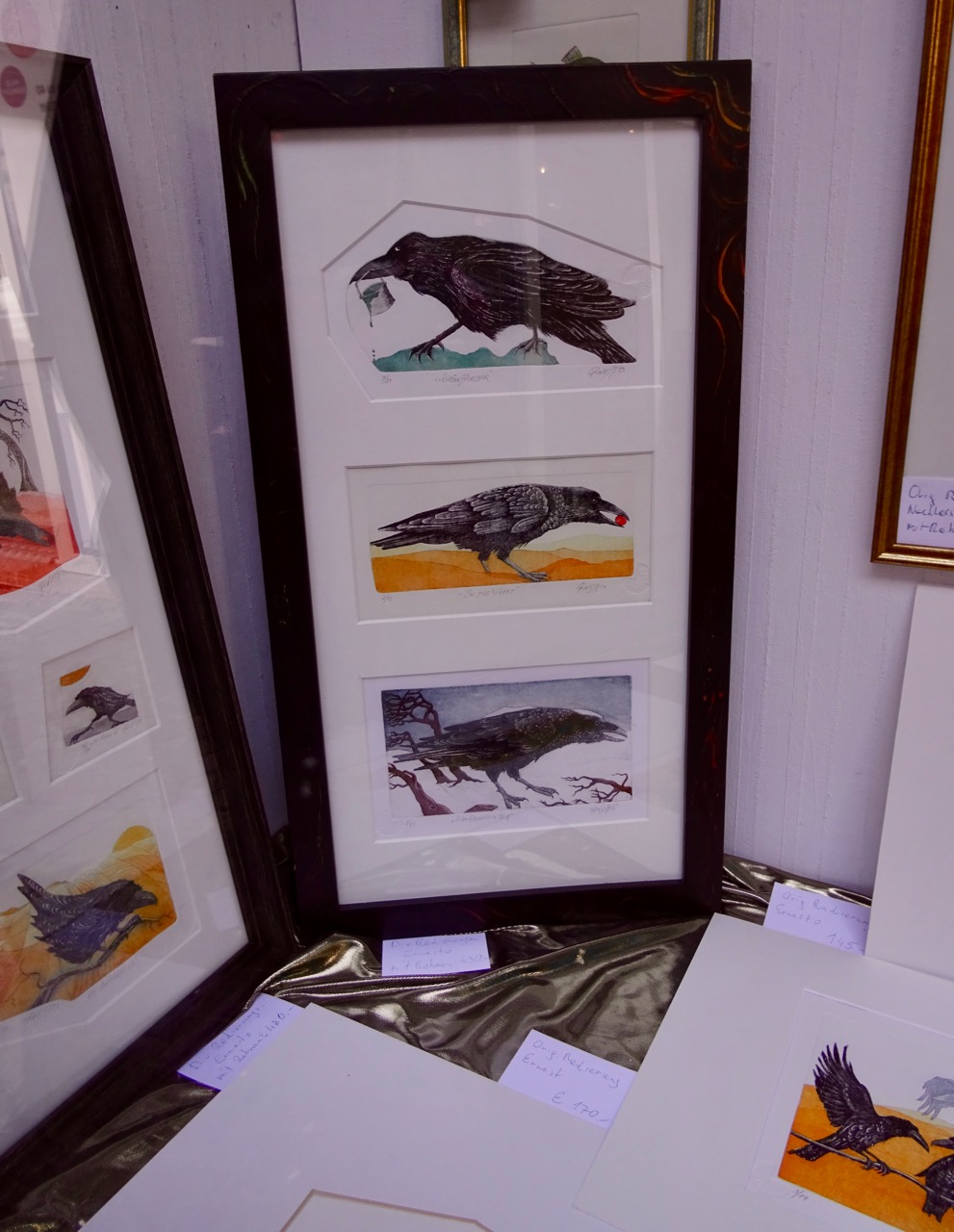
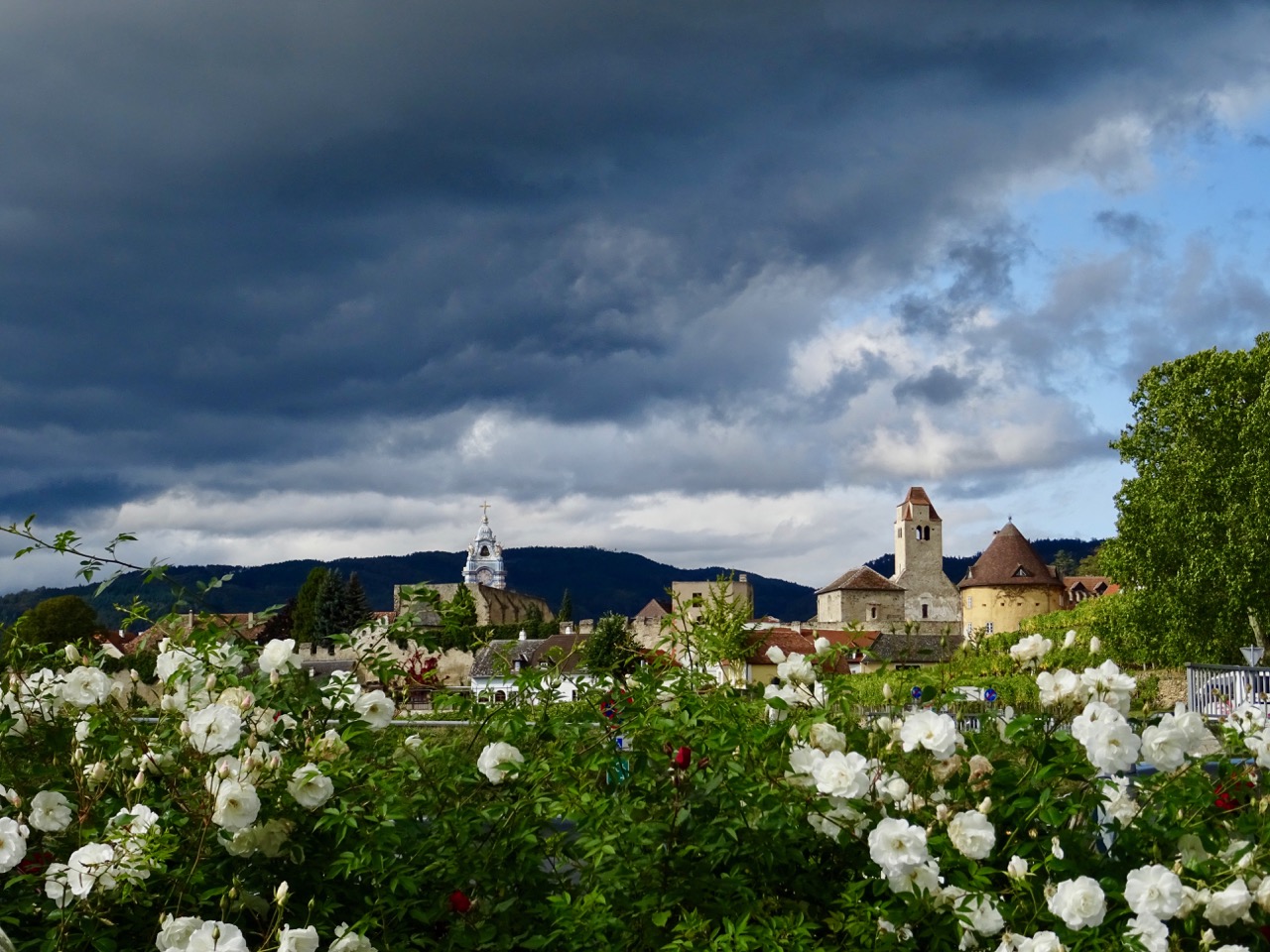
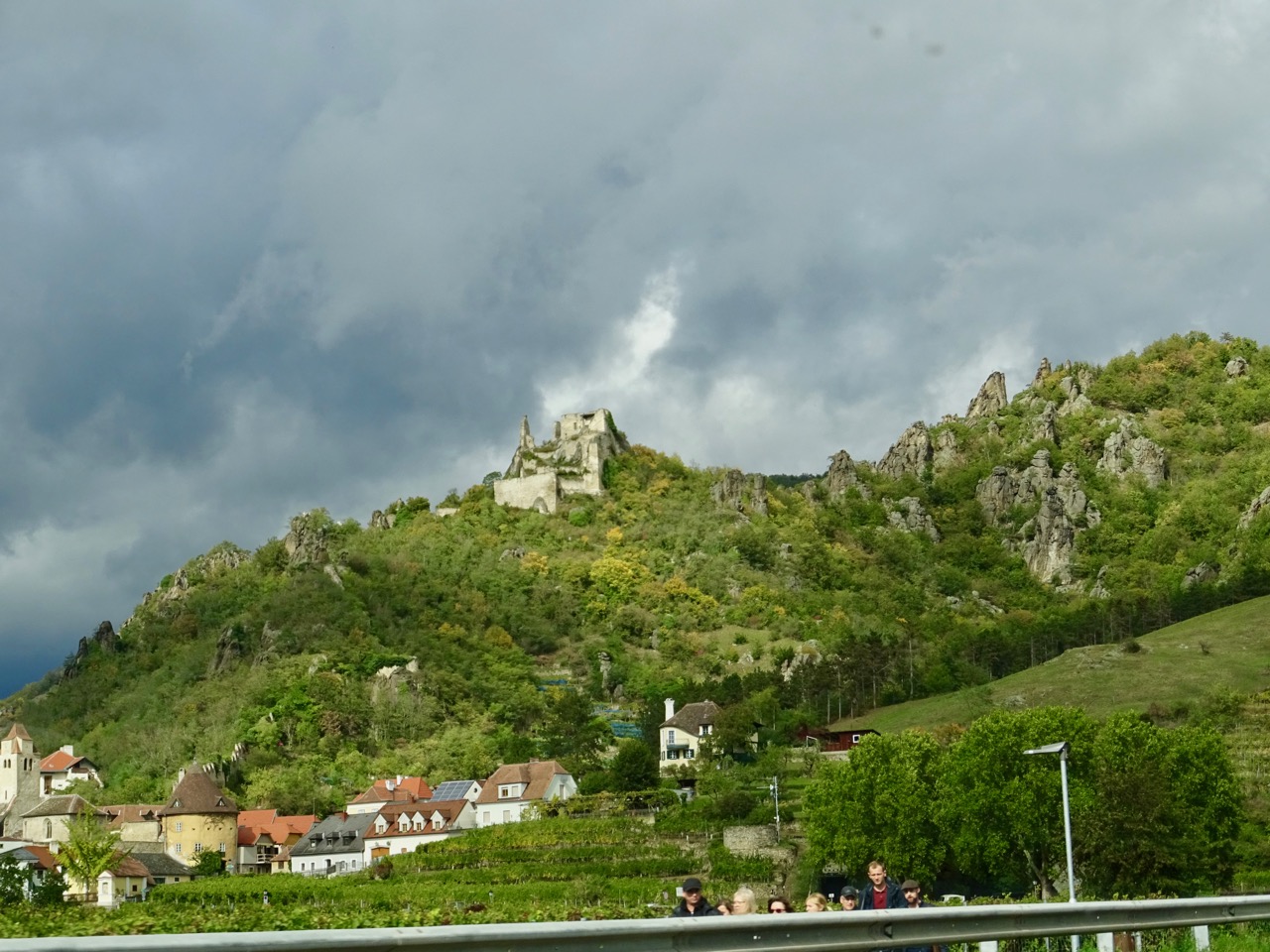 While we are getting information on how to hike to the castle the clouds get very dark and threatening.
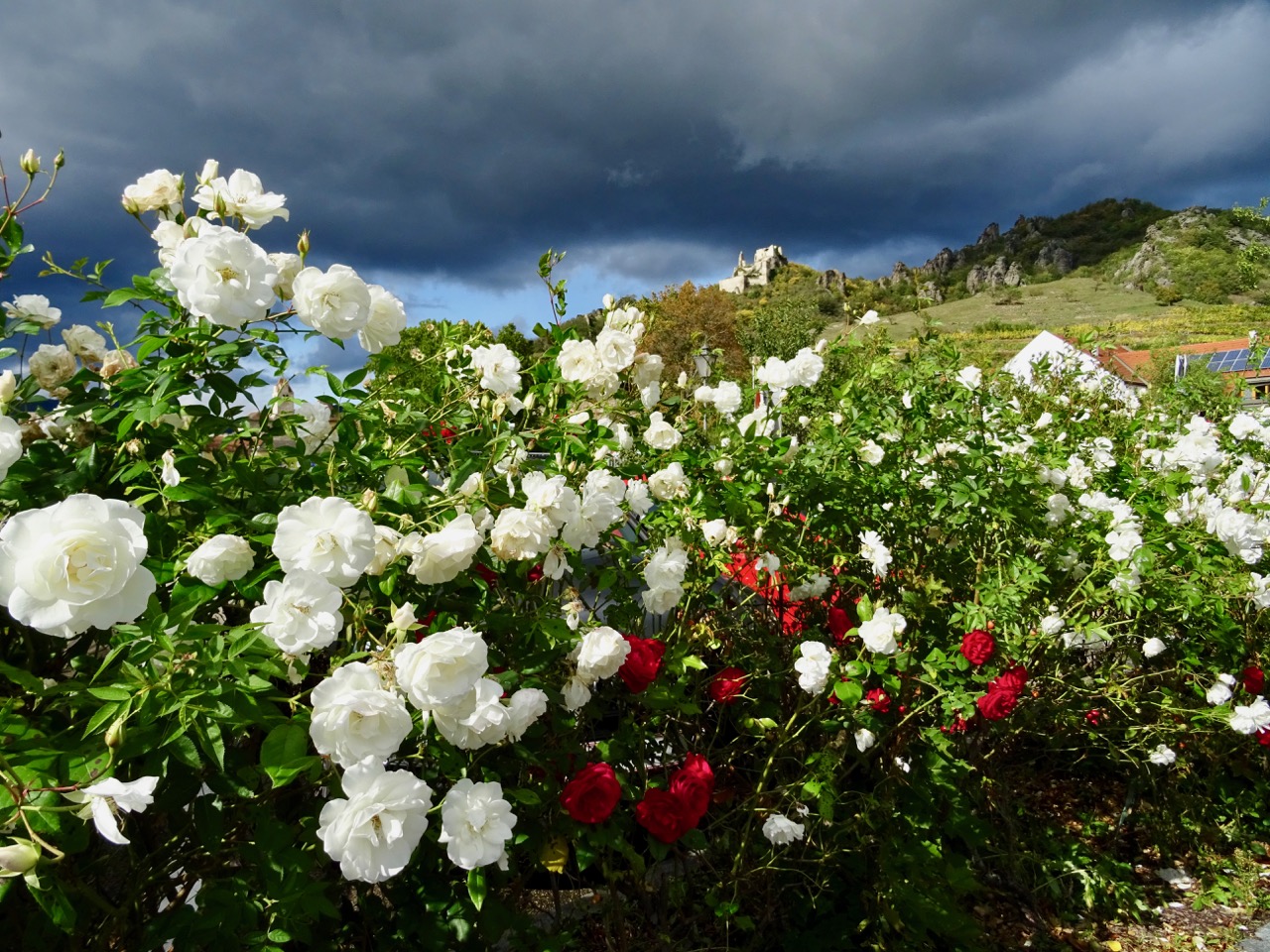 But just as quickly they start to blow over and in less than ten minutes the sky is relatively clear.
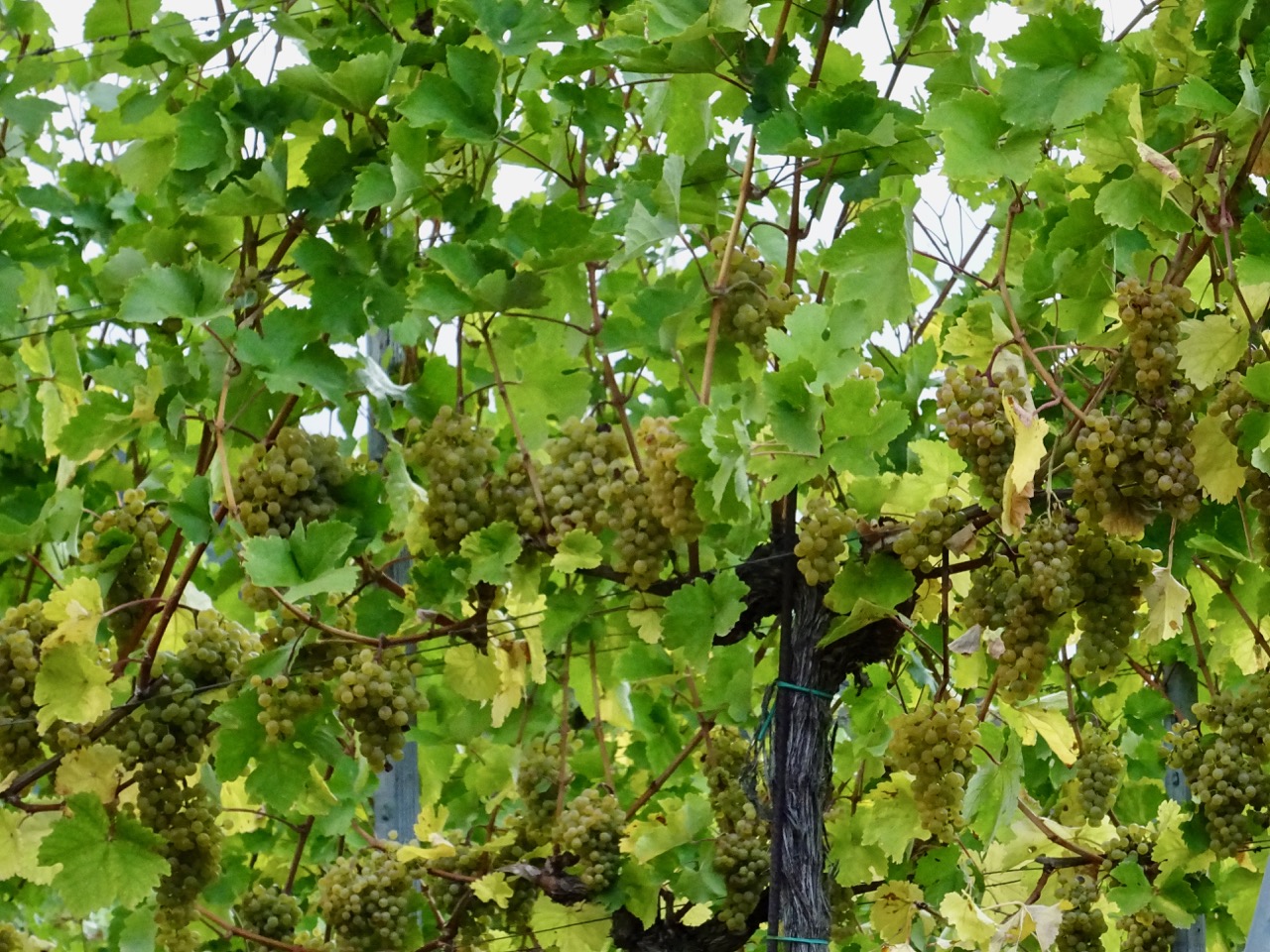
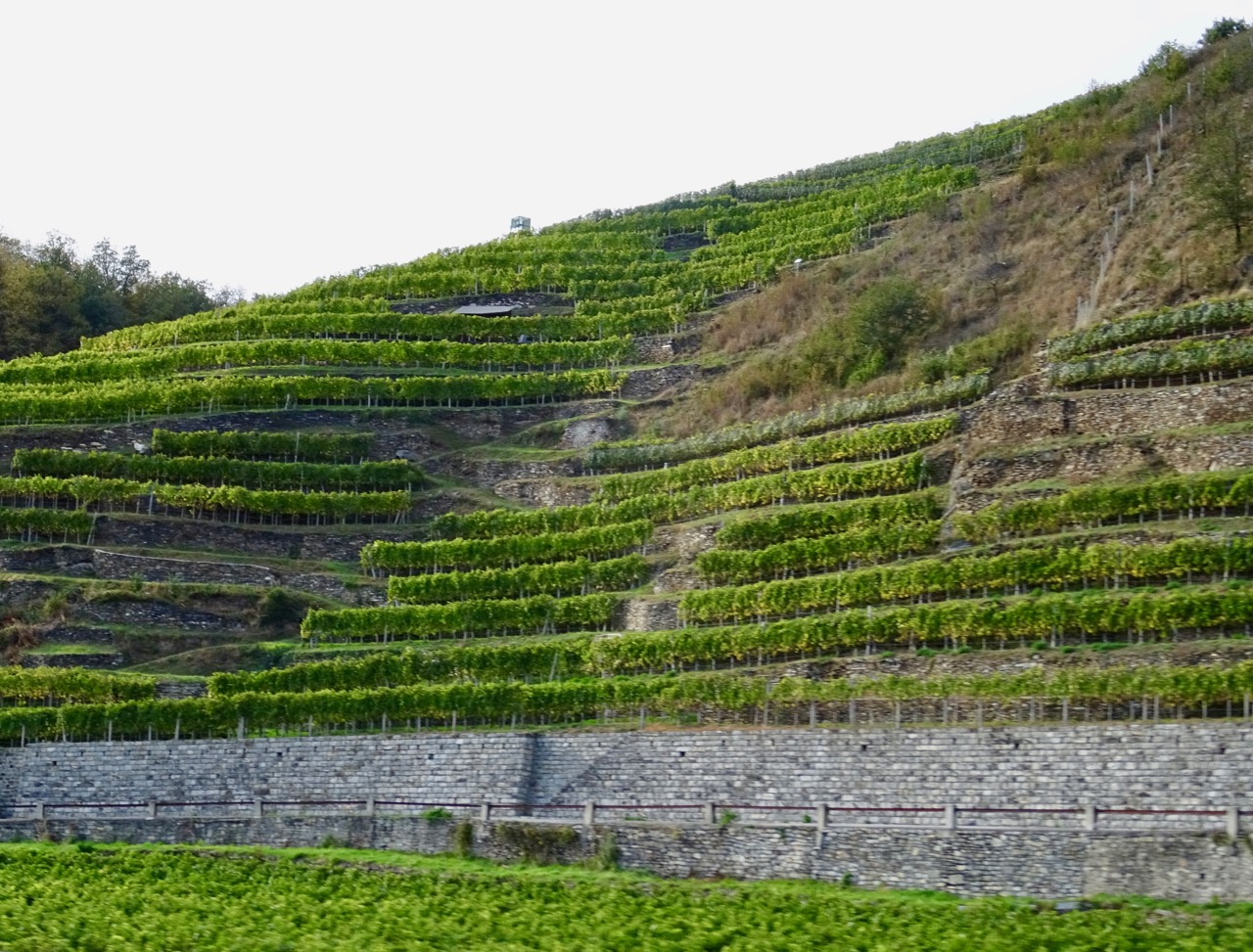
 On the path towards town from the carpark we pass vineyards with lots of green grapes. They look ready to pick.
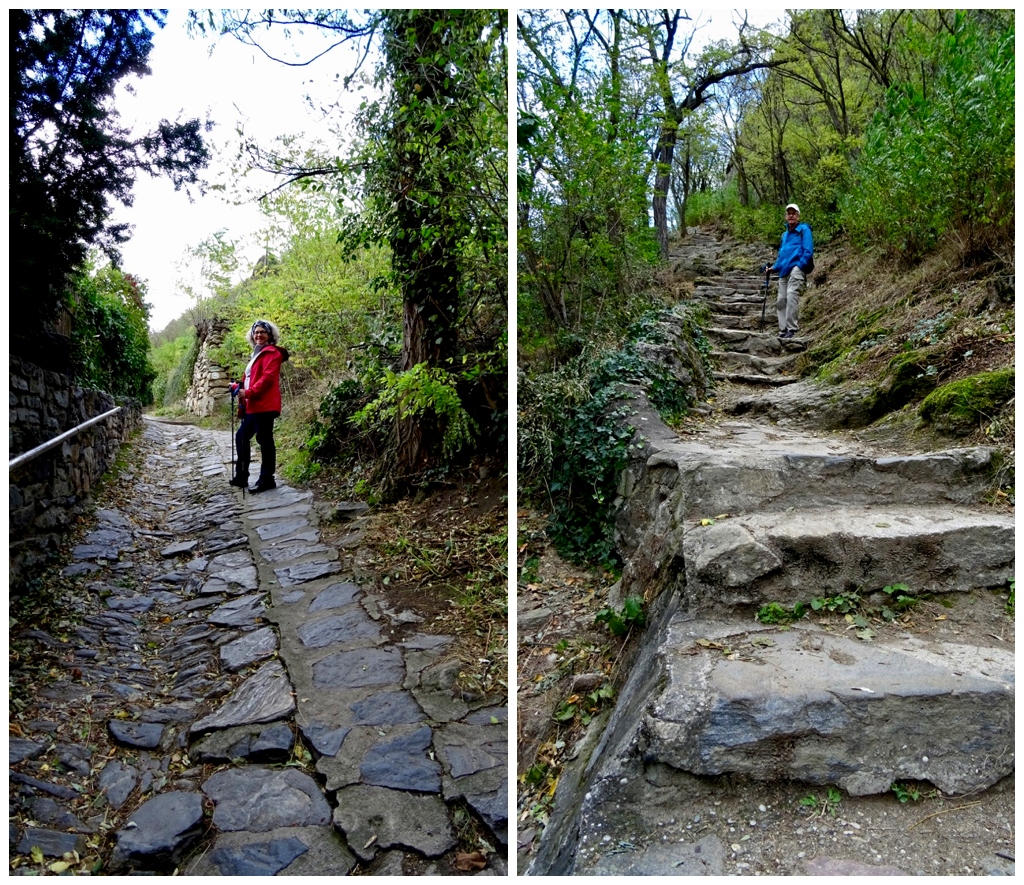
 We find the path and start our climb…and it is definitely a climb! I am so glad I have our hiking poles, they really help climbing these big uneven steps that seem to go on forever.
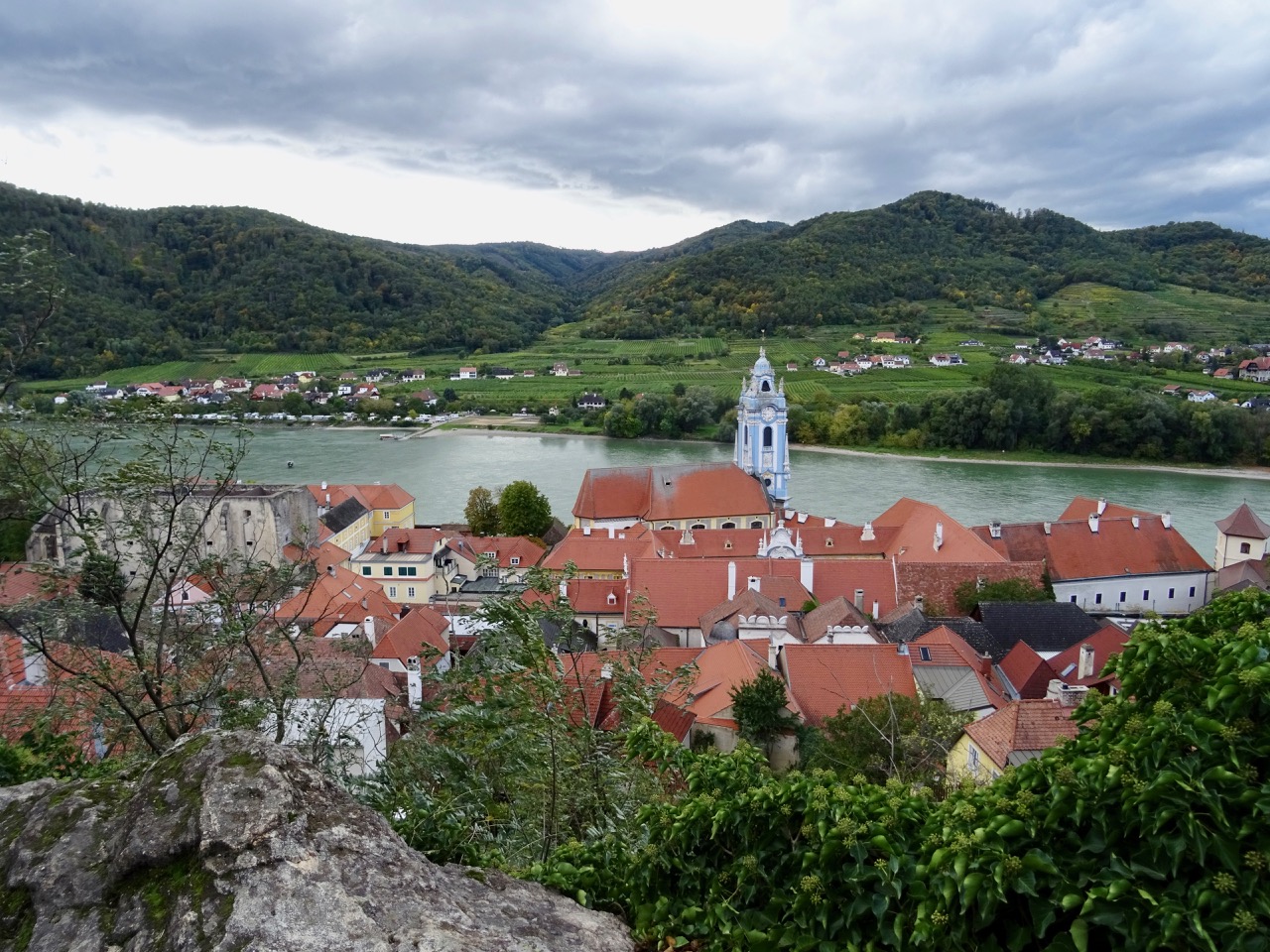
 A view of the town from a much needed little rest stop.
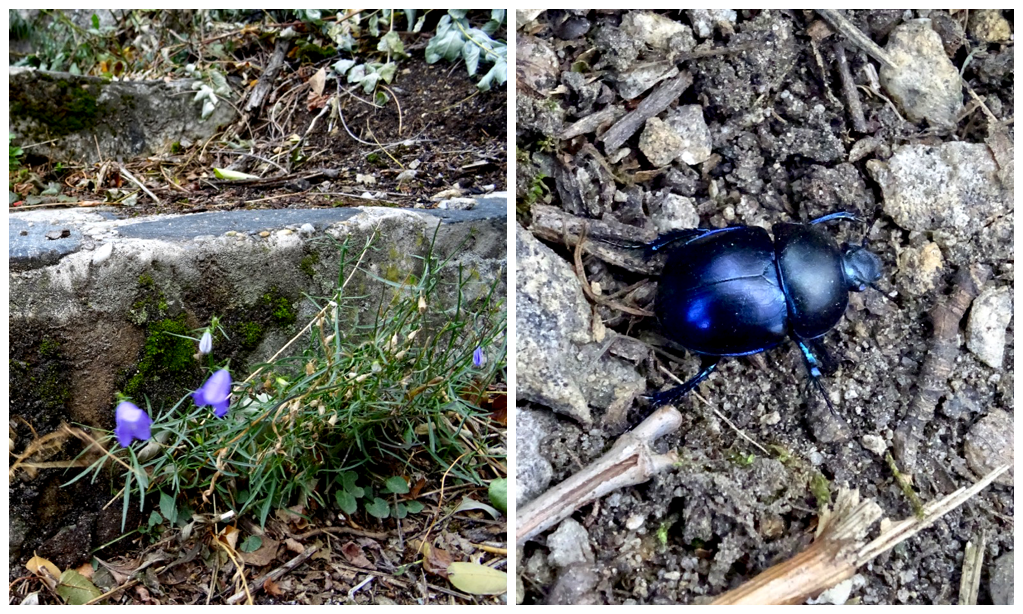
 These little blue bells are the same kind that I have growing at home. My oldest daughter brought me seeds from Dawson City many years ago and they grow quite happily in our flower garden. This gorgeous blue beetle glistened indigo and cobalt with touches of turquoise. He, or perhaps she, was about the size of my thumbnail and paused in its travels long enough to let me take its photo.
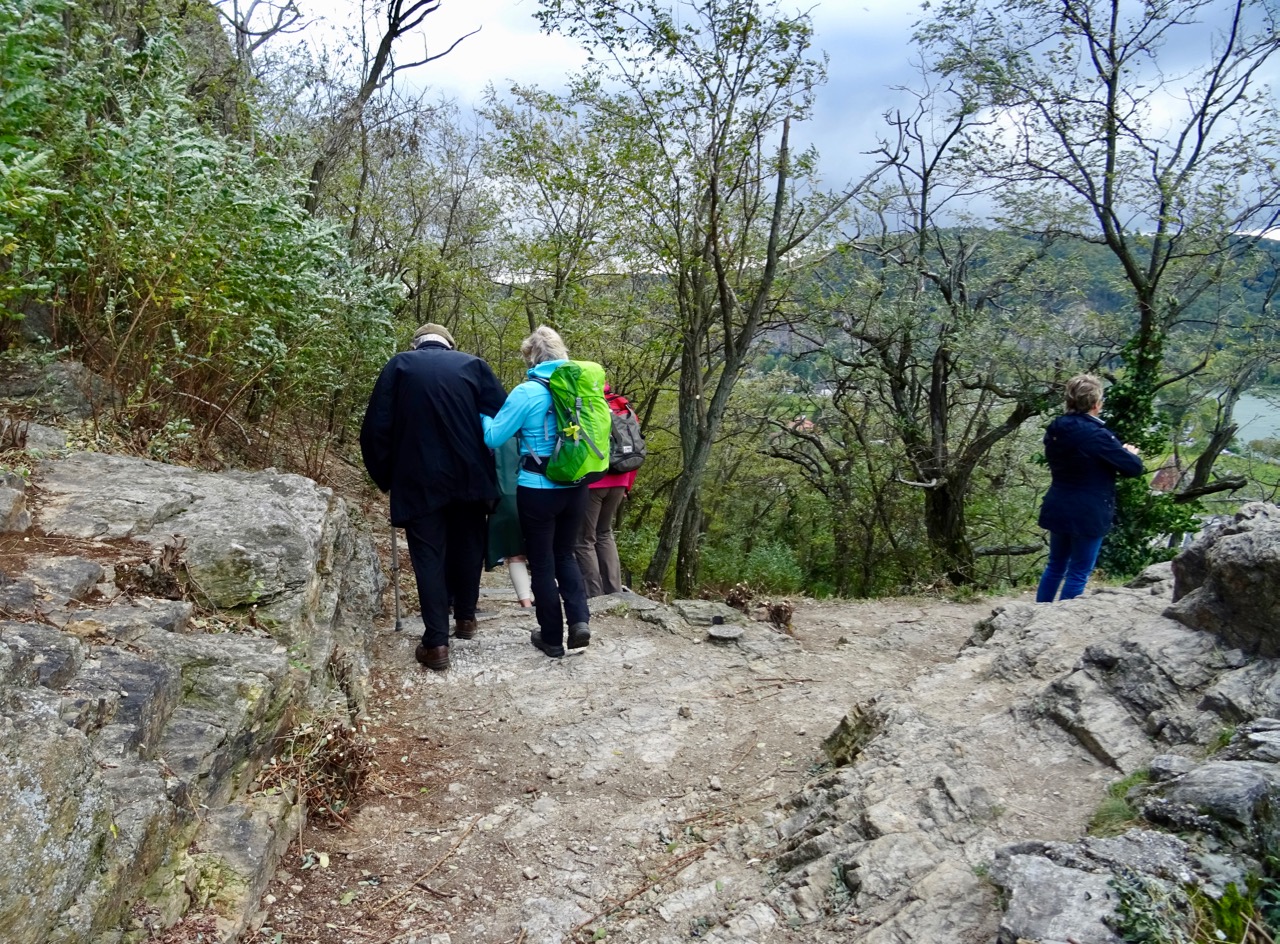
 It is hard to see, but this old gentleman and his wife (you can just make out her bandaged leg and green skirt), were being helped down the trail by some kind hikers who stopped to help them. We have no idea how they managed to get this far, as they were having difficulty walking here where the ground was fairly flat. Someone at the bottom of the trail had told us to “Look out for two old Brits on the trail…I don’t think they are going to be able to get down and will need to stay up there!” They were very fortunate that kind strangers stopped and came to their aid. I think they will be exhausted by the time they make it down, or maybe they will need even more assistance?
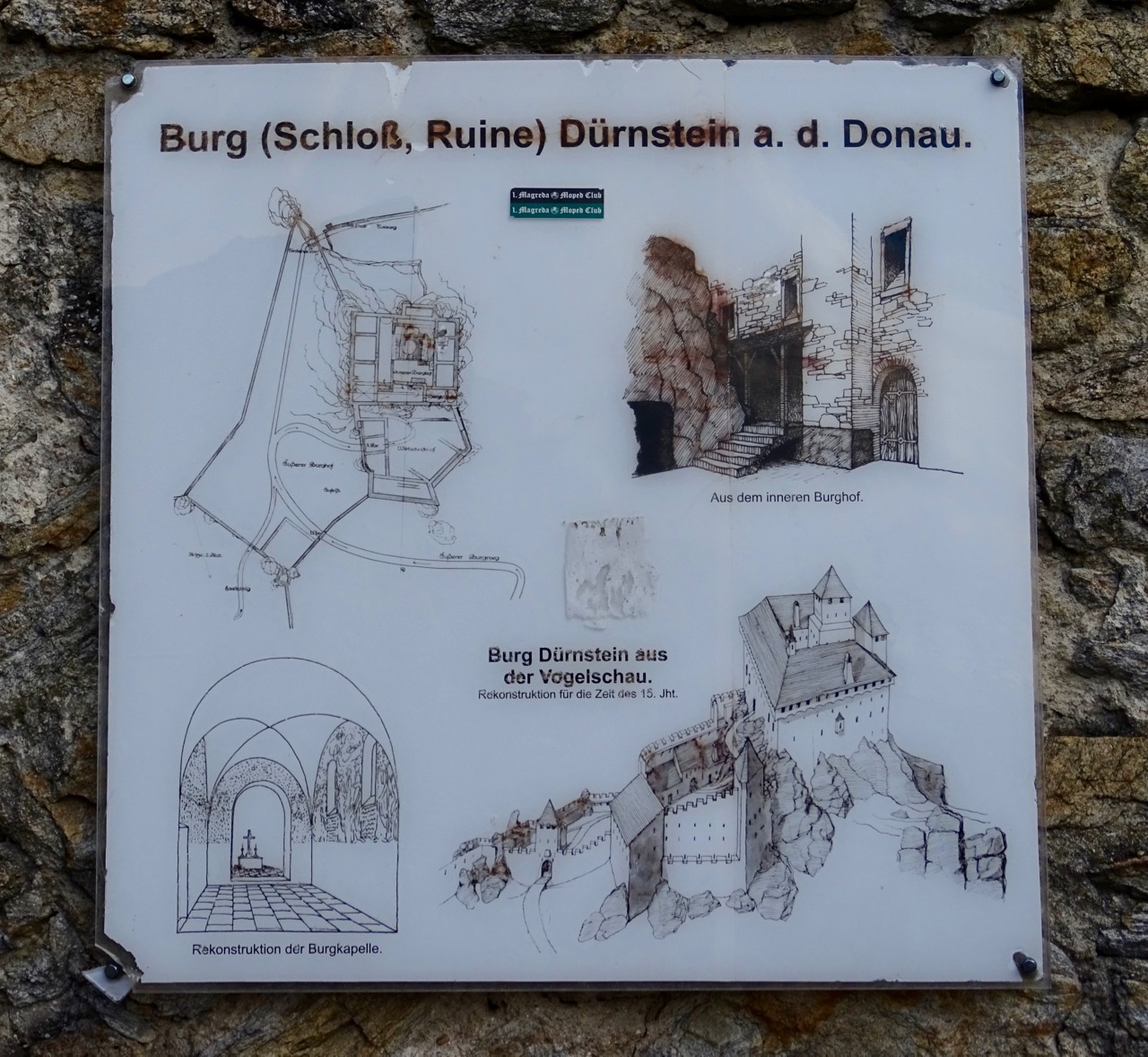
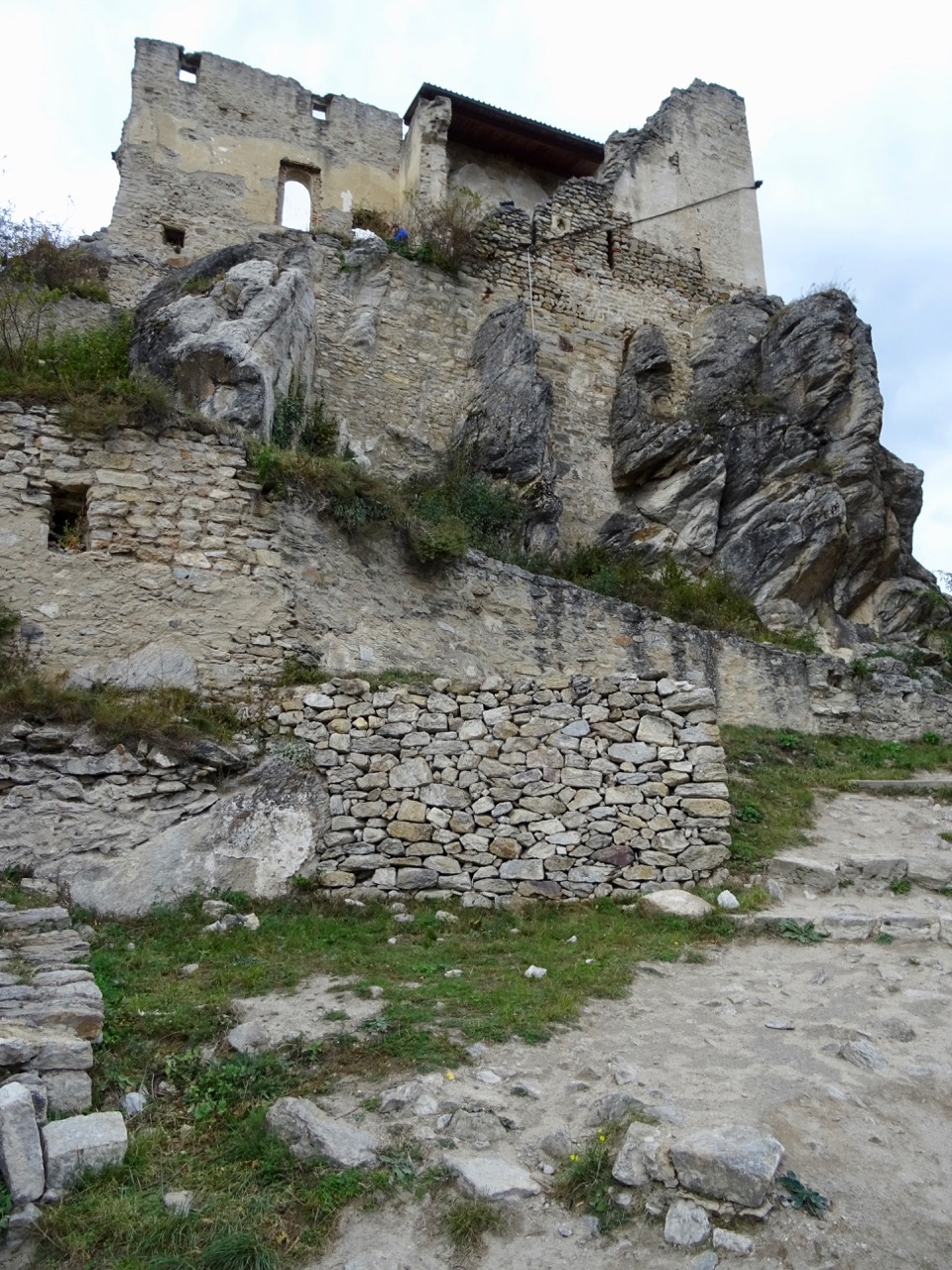
 This sign explains what the castle used to look like. We are able to make out a few of the areas but most of the castle has been destroyed.
 Some views of the castle.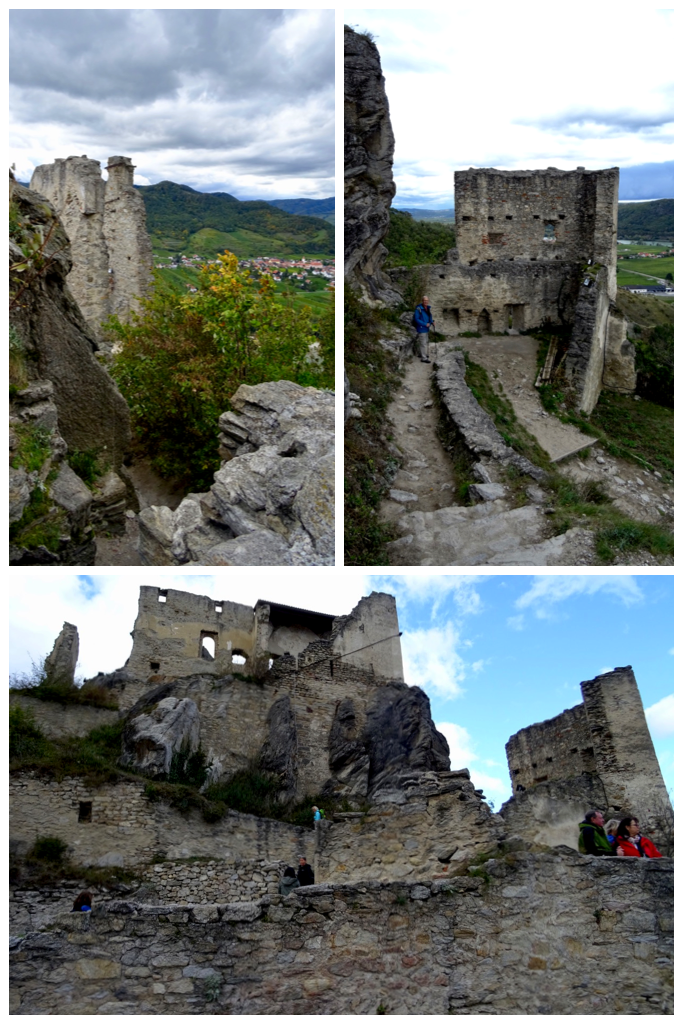
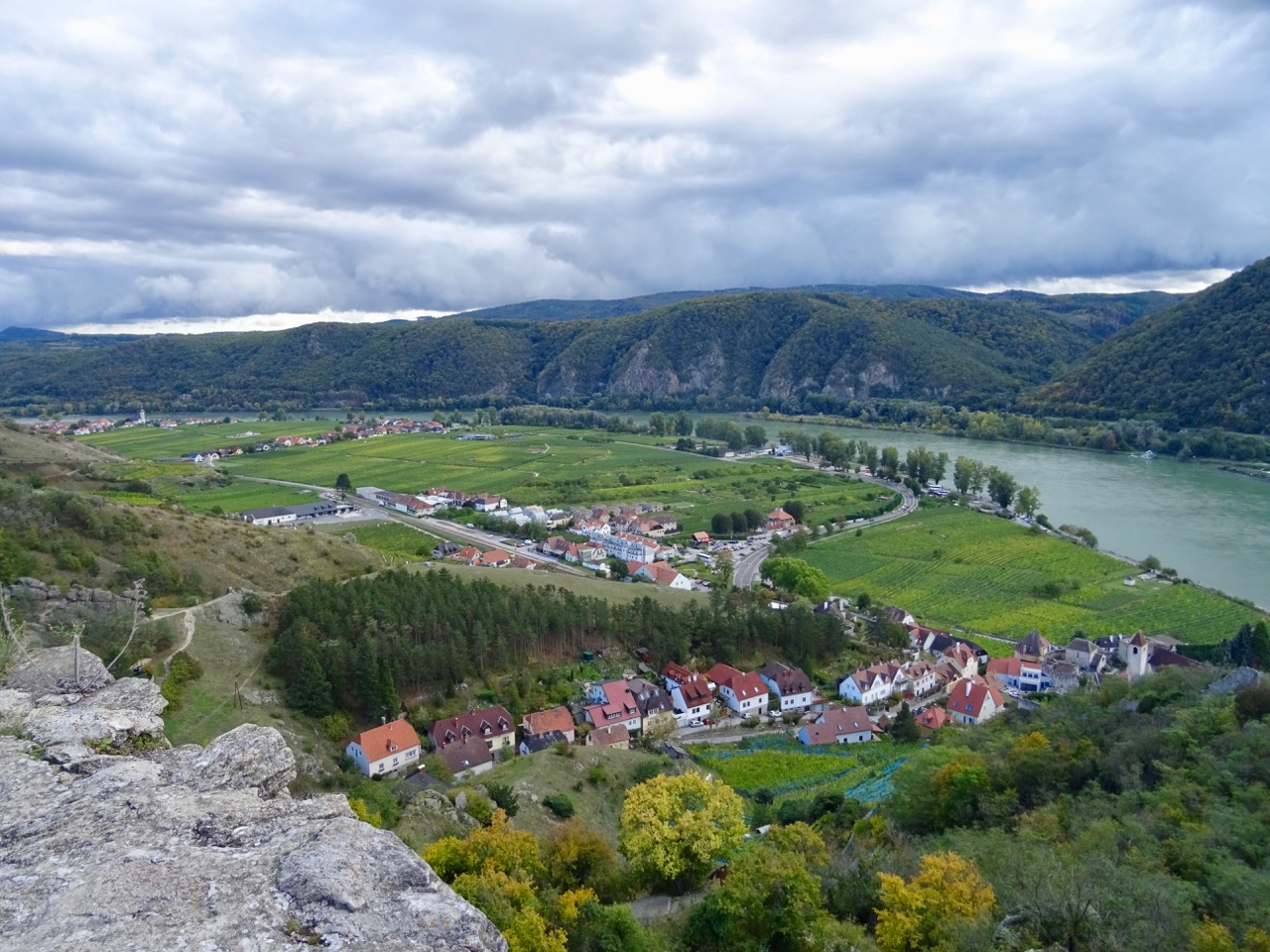
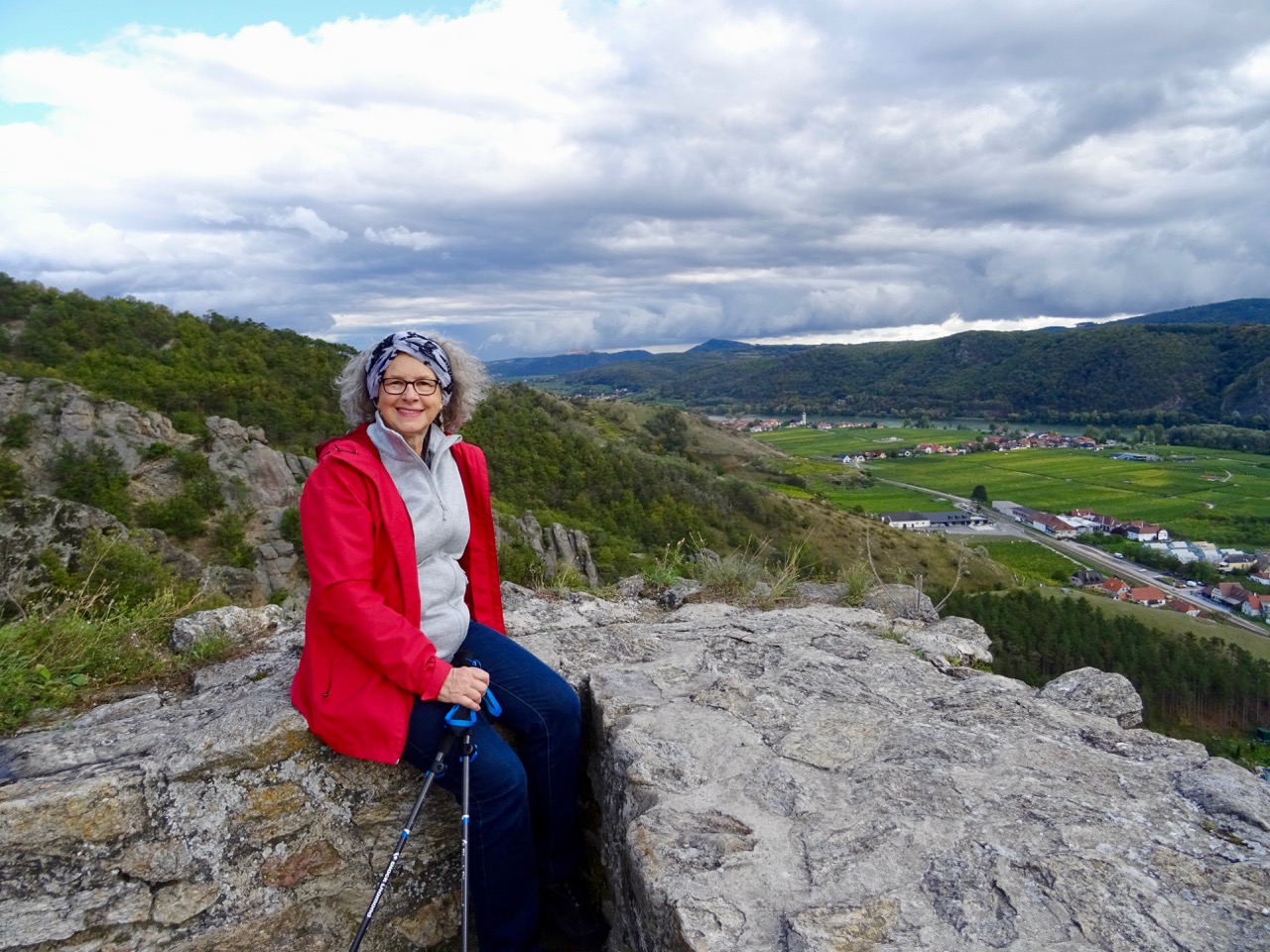 We see a riverboat cruising by on the Danube far below. It is starting to get very windy up here.
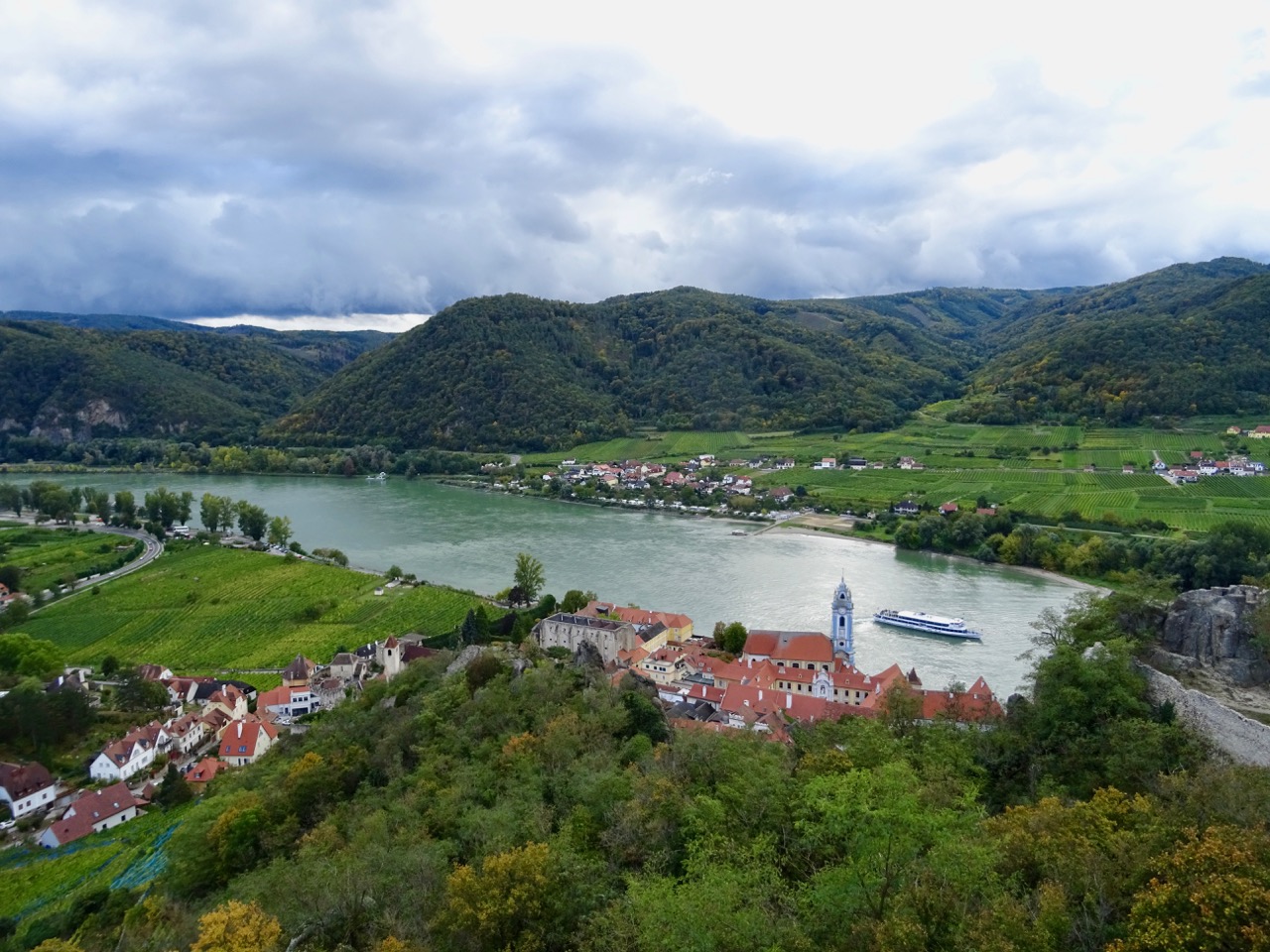 The valley is dotted with village after village as far as we can see.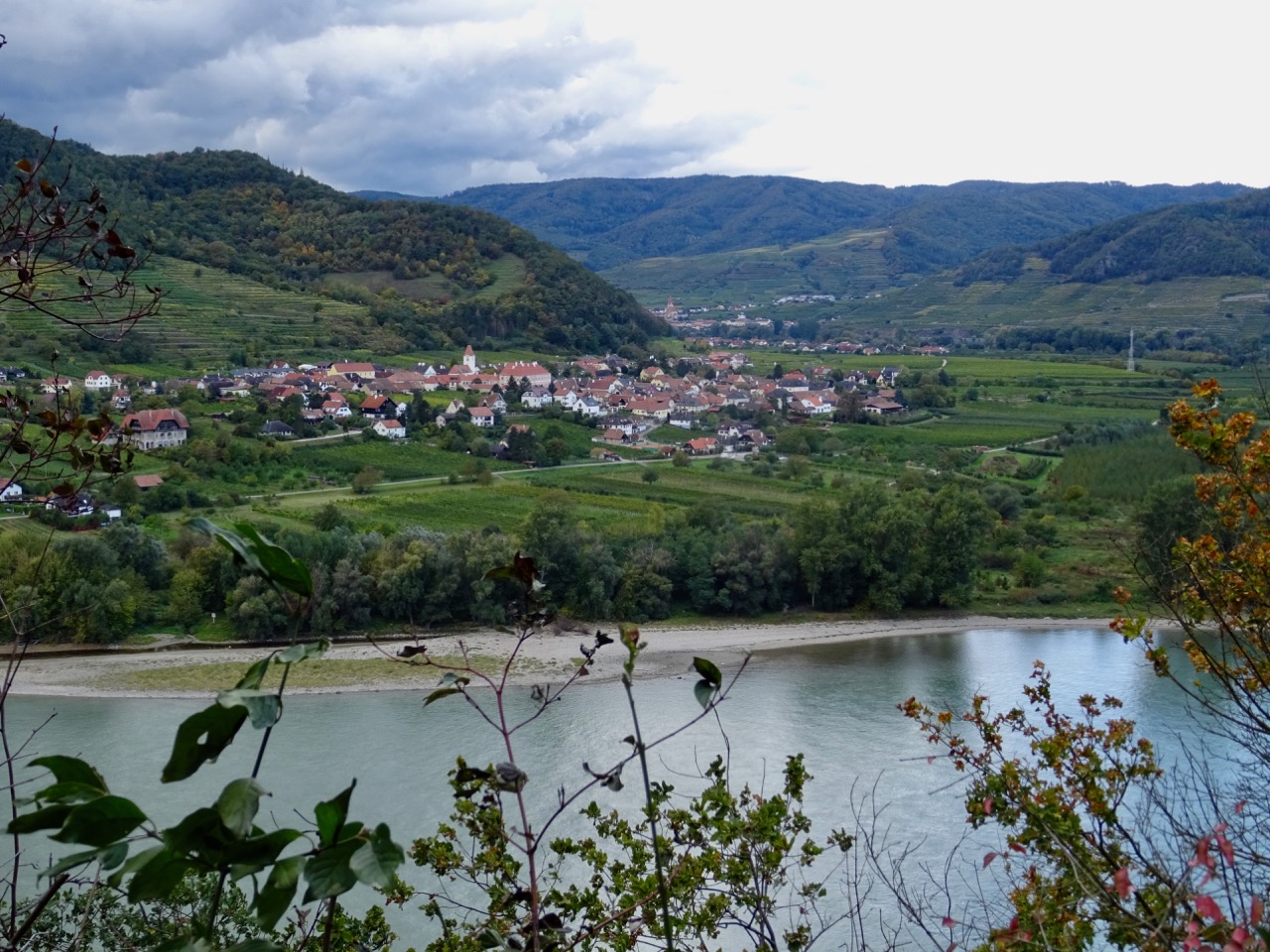
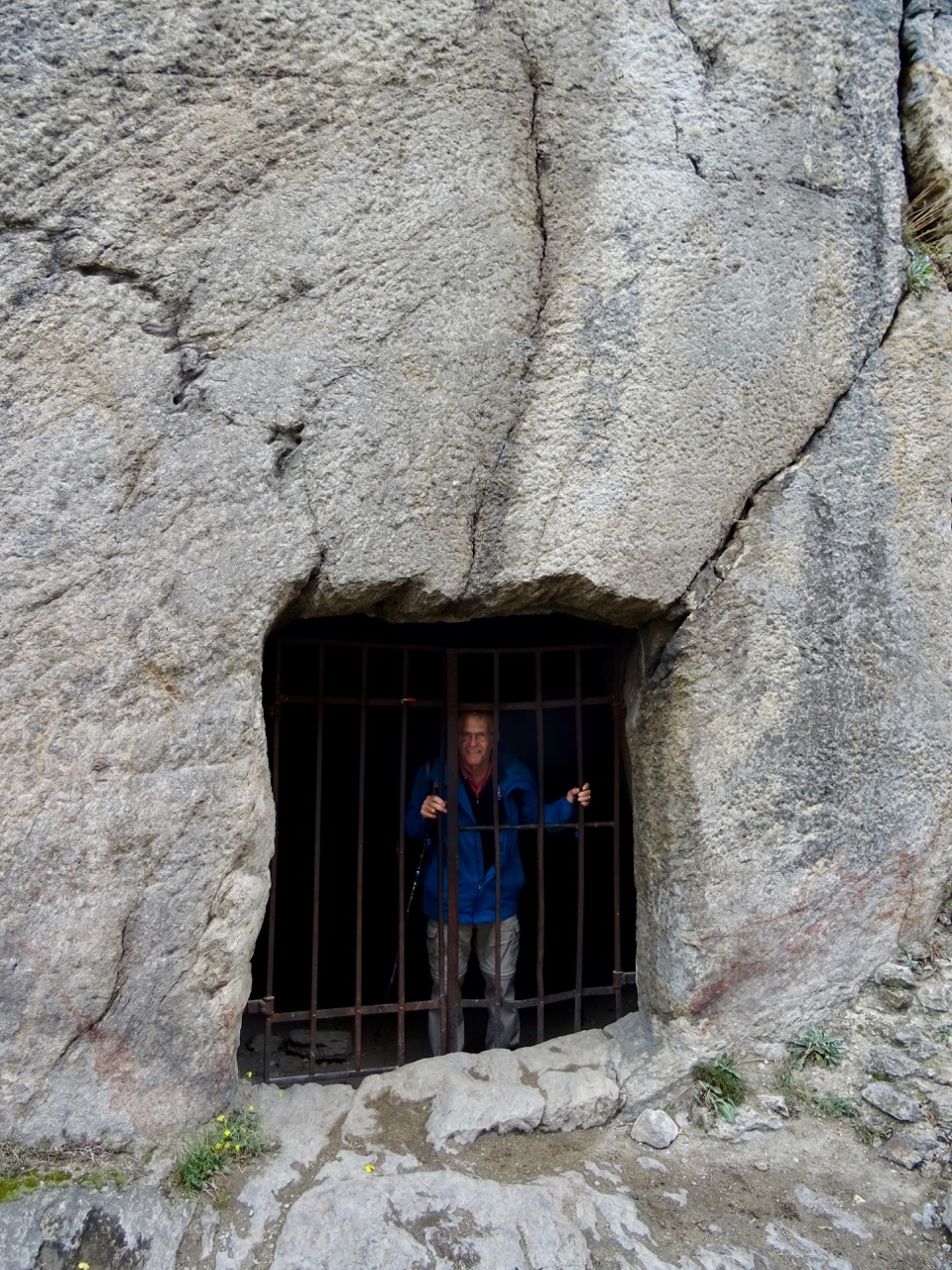
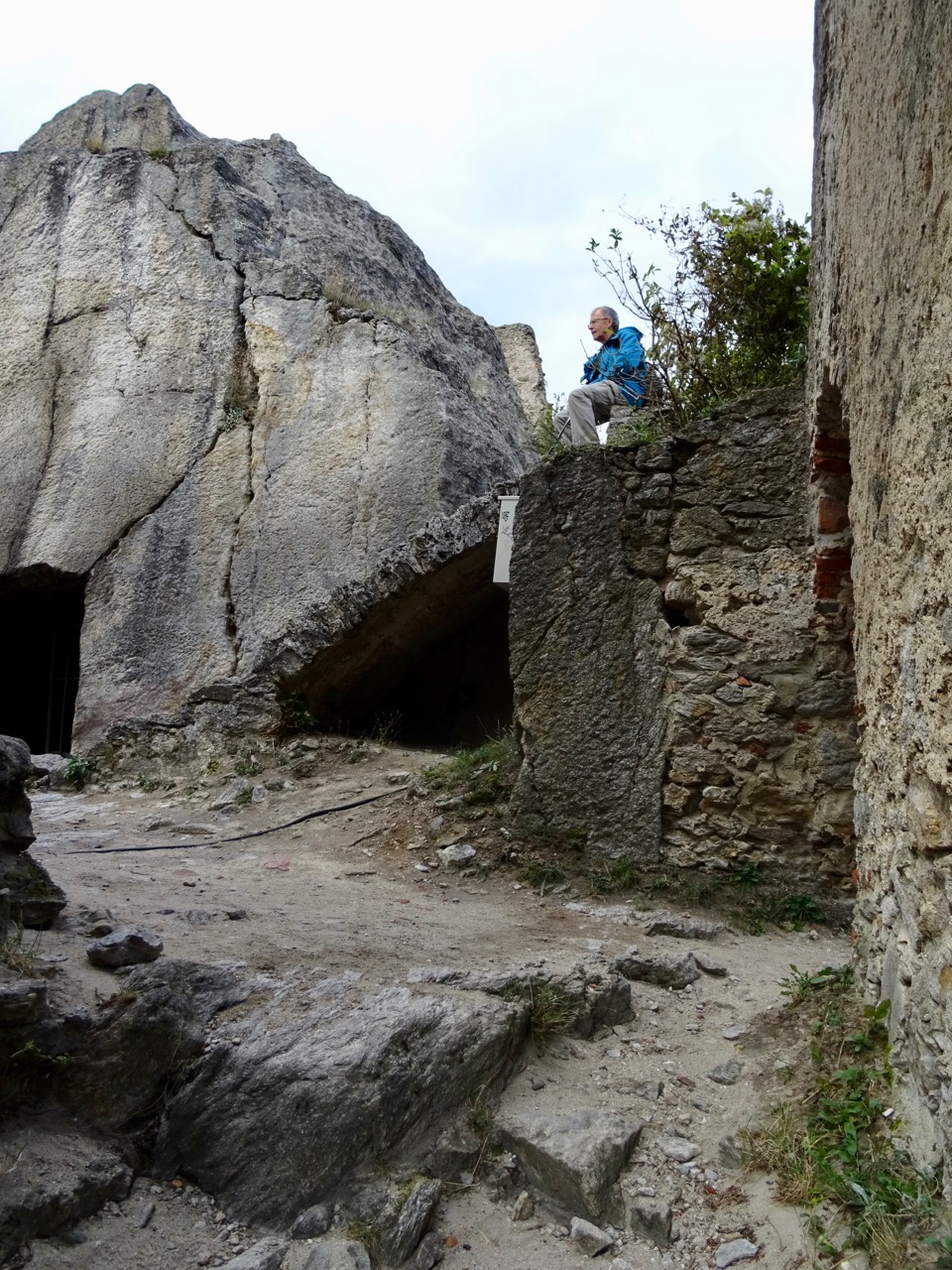 We wonder if this is where king Richard was kept prisoner?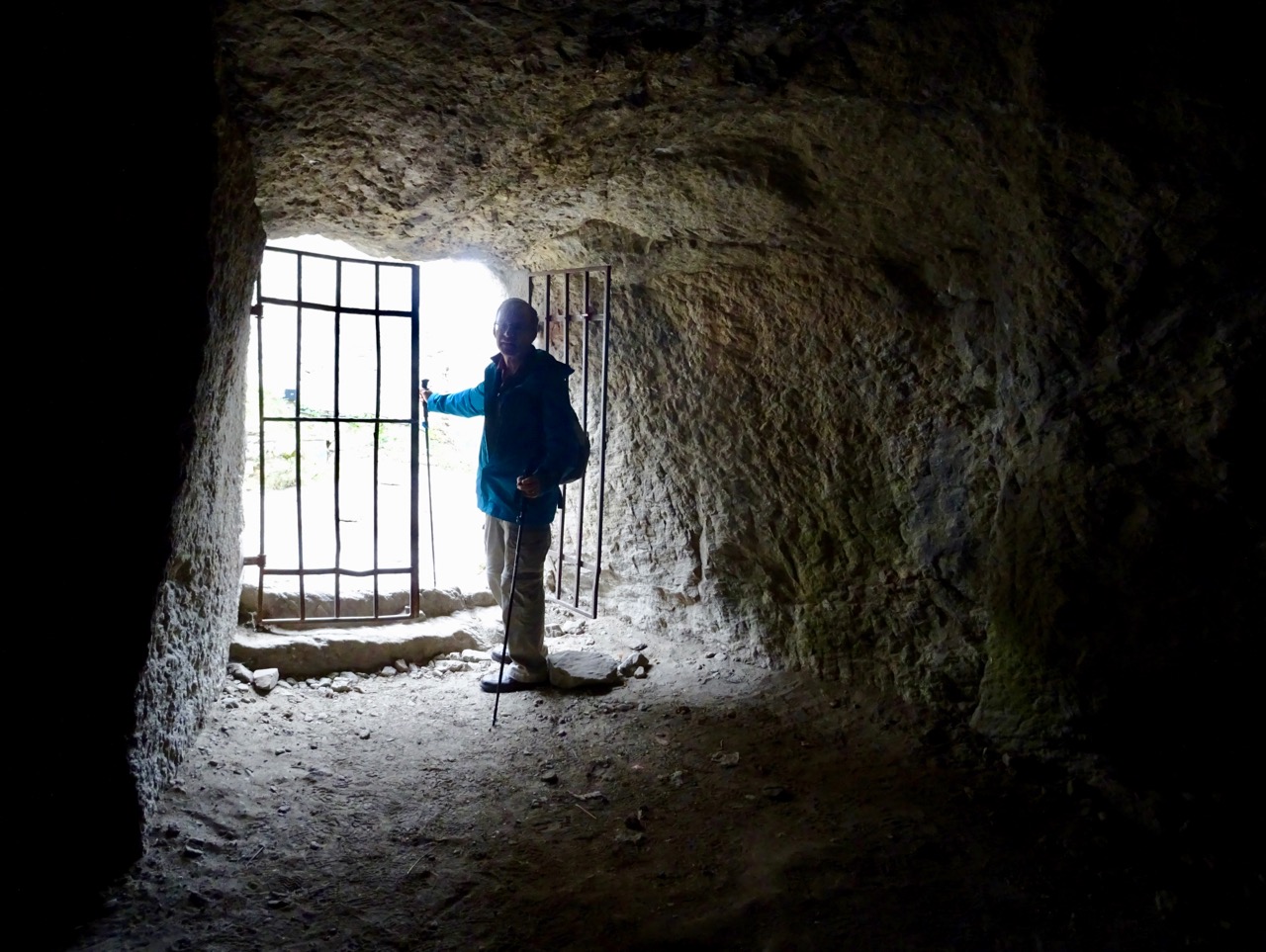
 You can see the castle walls stretching all the way down to the town.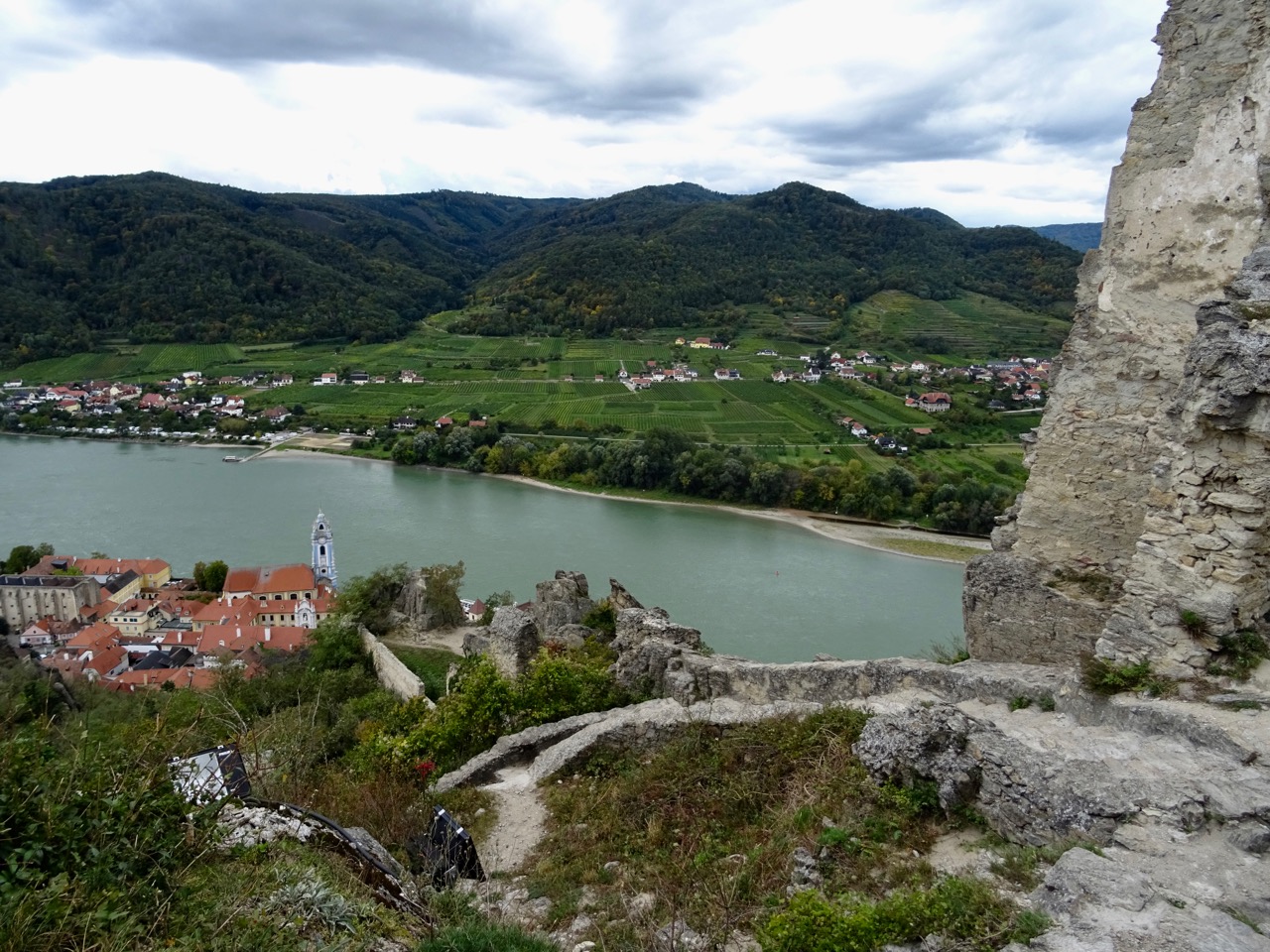
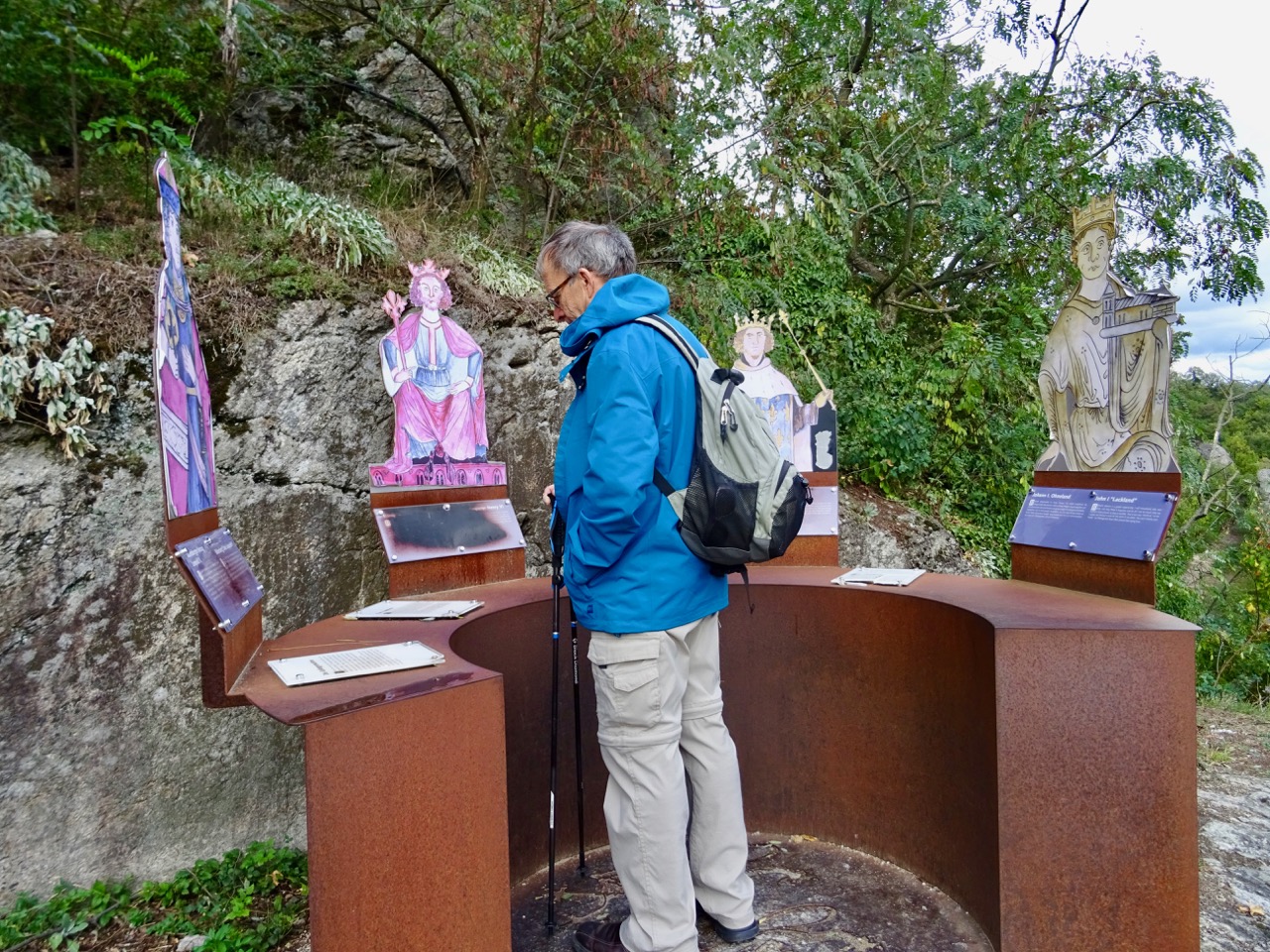
 We head down to town on a different path, one which is a bit easier than the one we climbed up. There are displays along the path explaining about the history of the Castle and King Richard the Lionheart.
 The path ends back in town.
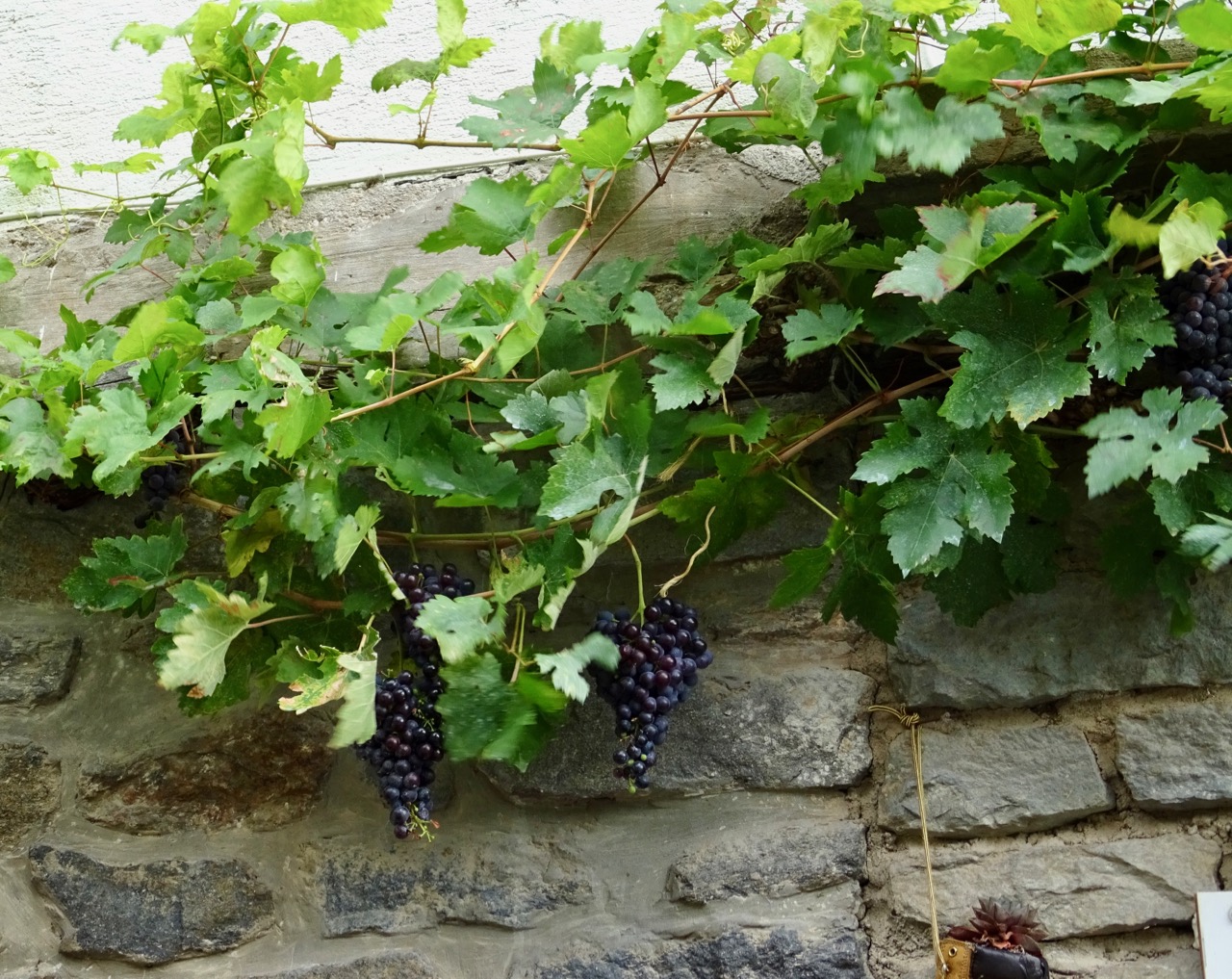
 We see black grapes growing along the road and hanging on houses. They are quite tasty.
 The castle walls go through the town all the way down to the river!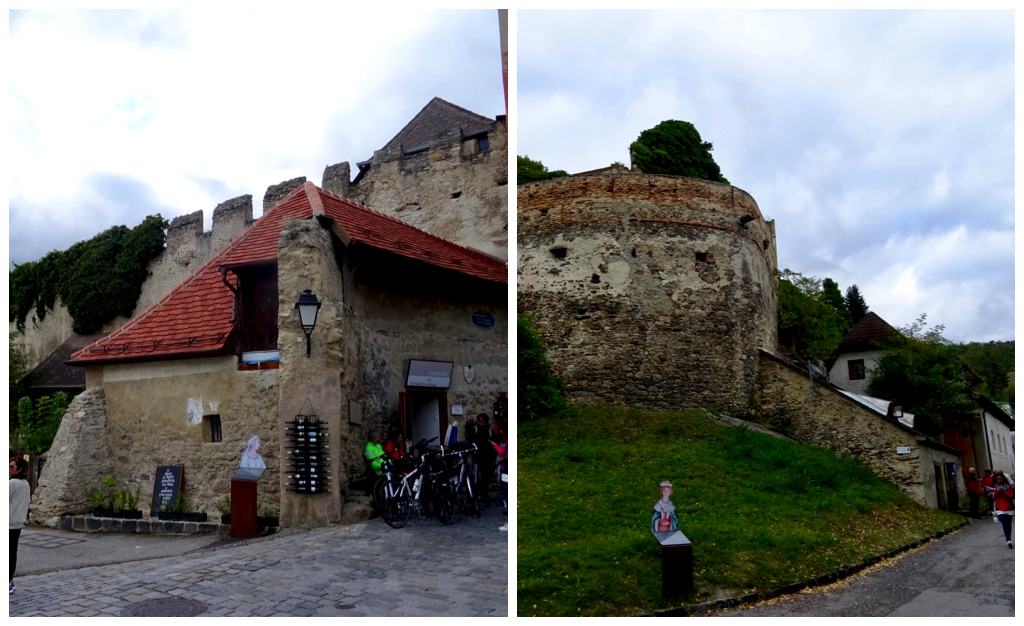
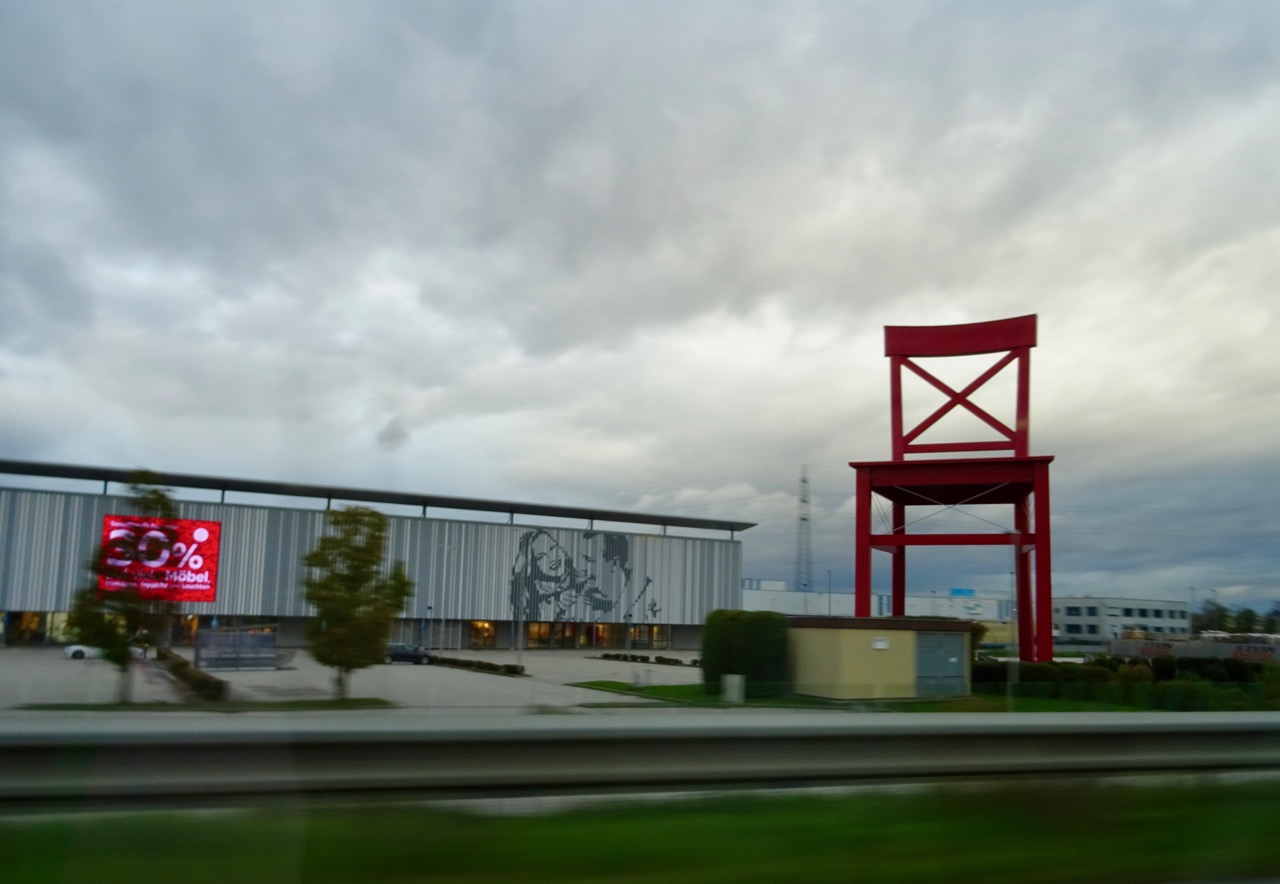
 Then we see a very large chair!
 The sky is quite dramatic and it is getting dark by the time we arrive in Hörsching, our home for the next three days.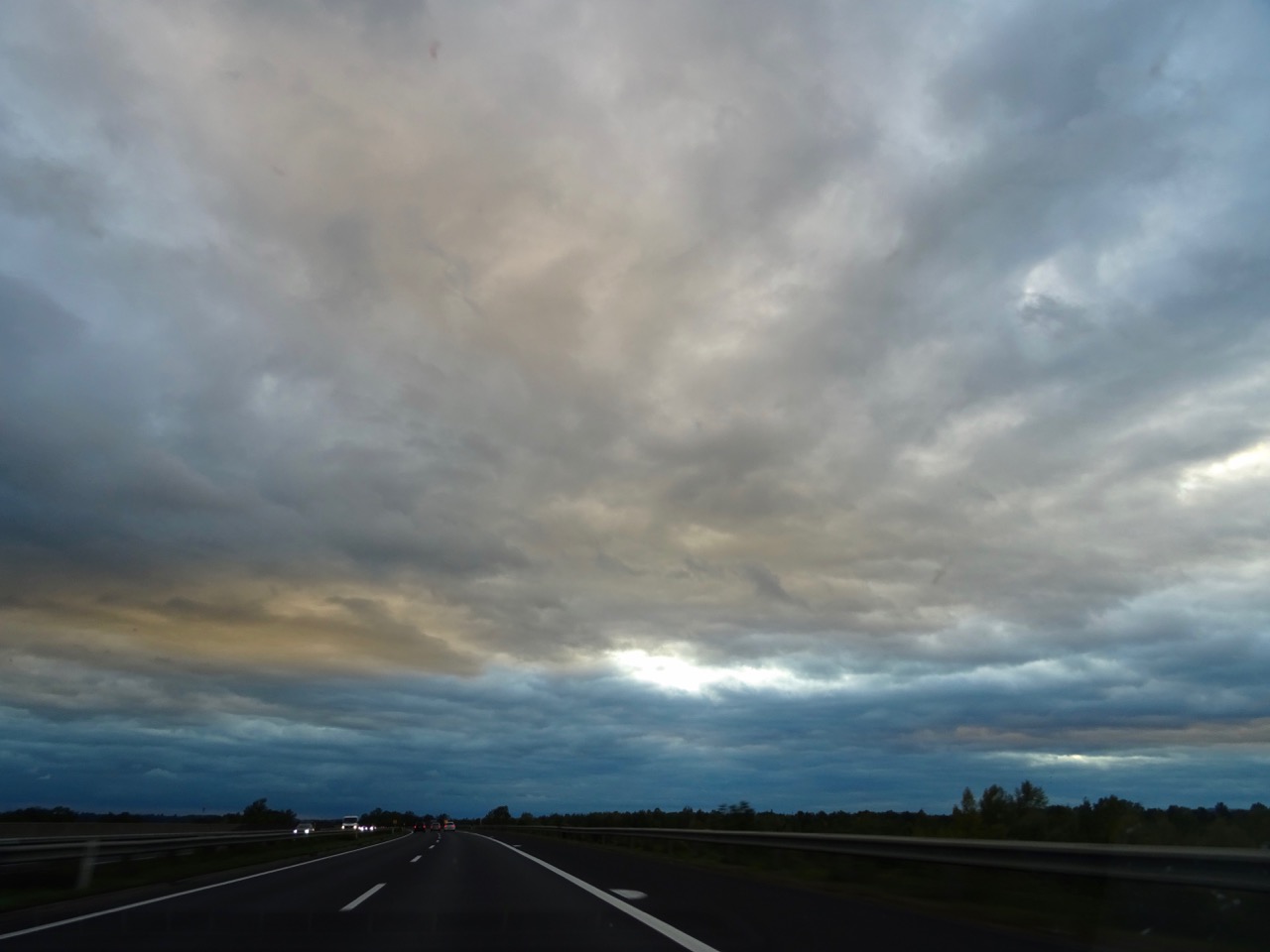
 trudymason.com