Frankfurt to Stuttgart, Germany

Day 37     Monday, October 6, 2025

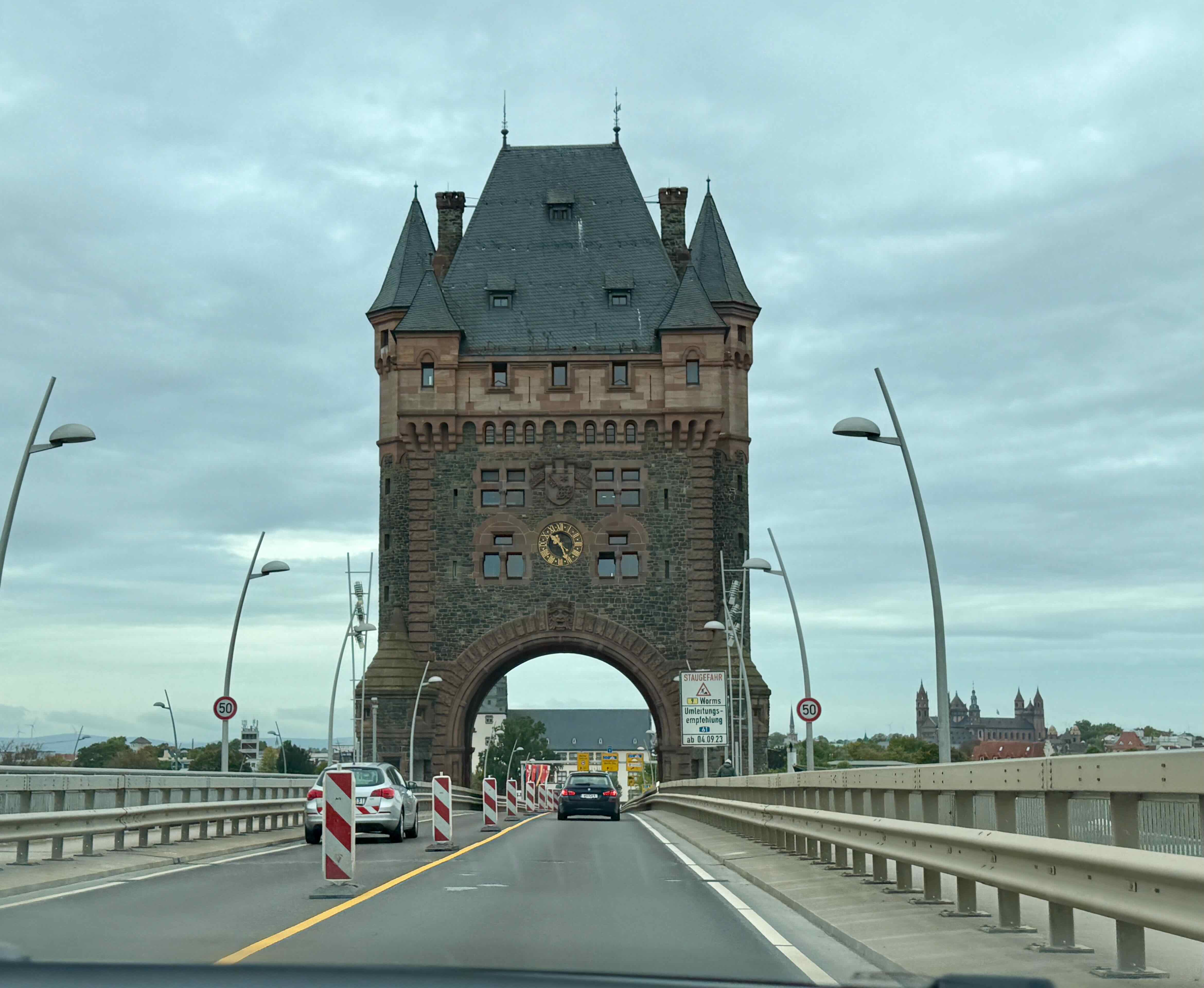
On our drive to Stuttgart we stop at Worms, Germany. Worms is pronounced Vurmz. We passed through this huge gate on the bridge over the Rhine River.
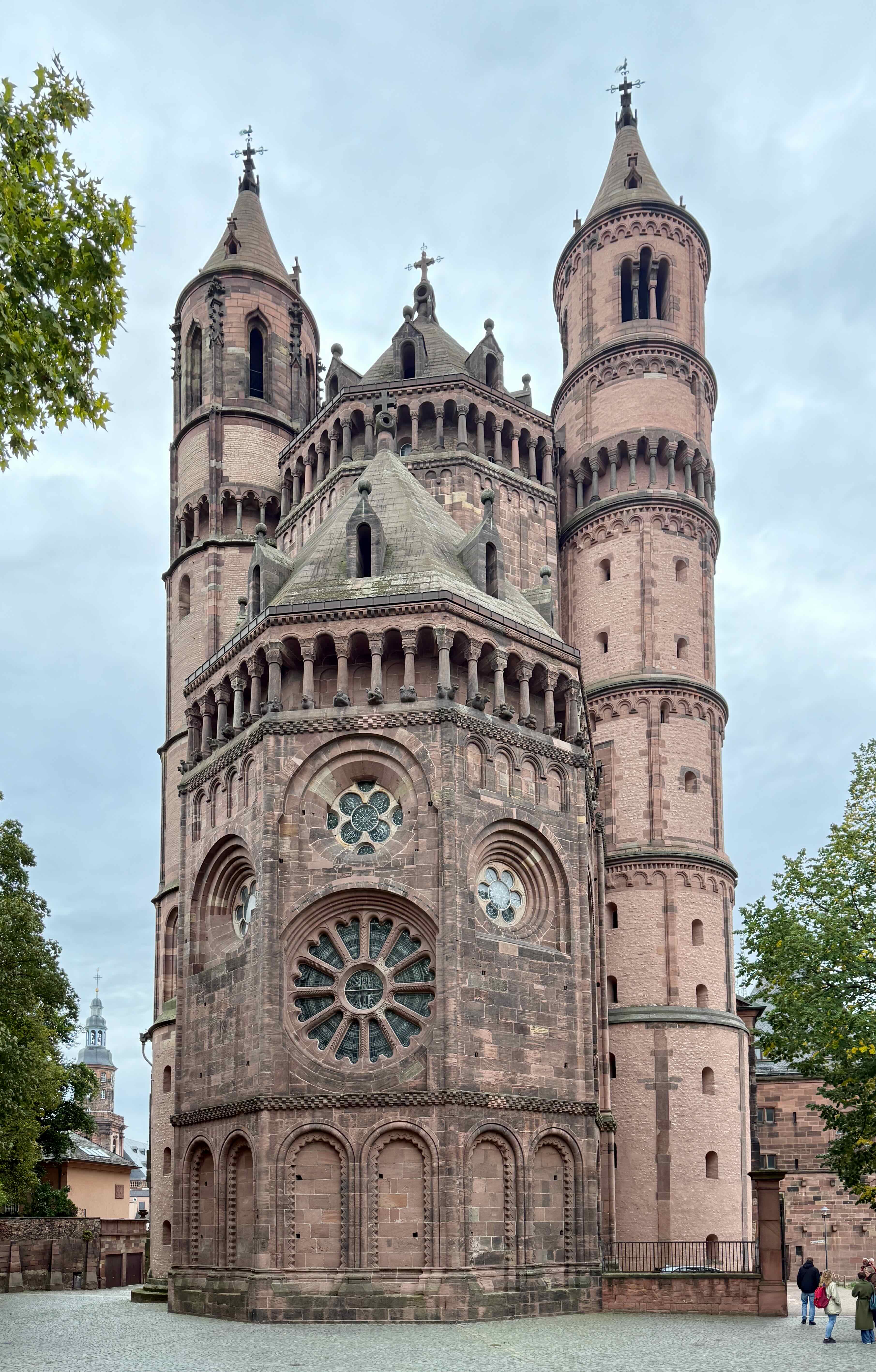
We find a place to park on the street but have to move to a parkade because the street machine won’t take our euros…big surprise!  St Peter’s Cathedral is our first stop but we can’t find the door to get inside!  
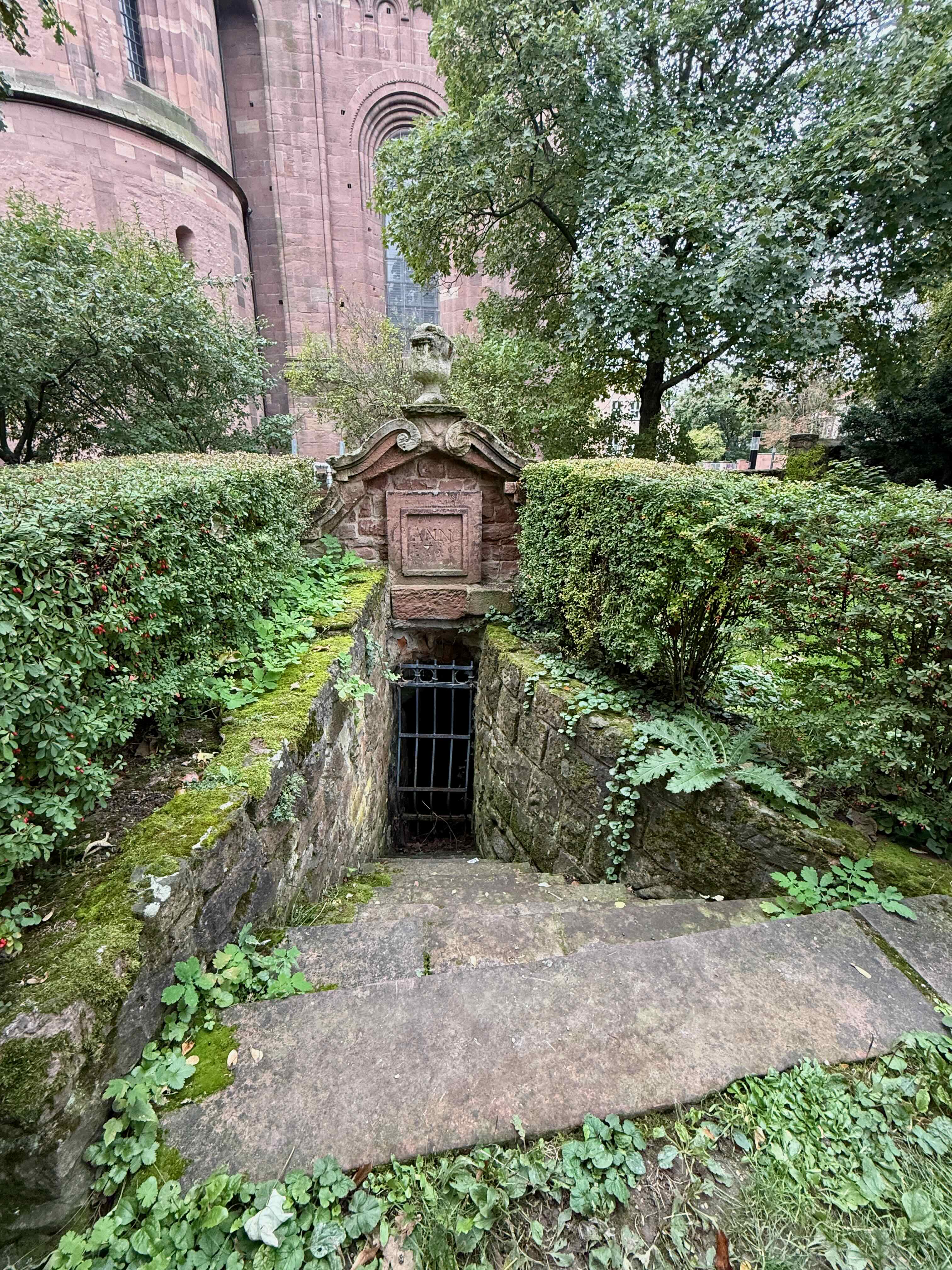
In our walk around the church I see steps leading into what looked like a private area, but I take a look anyways and it is actually a public garden so we go inside. When I see something like this I am so curious. I wonder what it is, why it is there and where does it lead to?
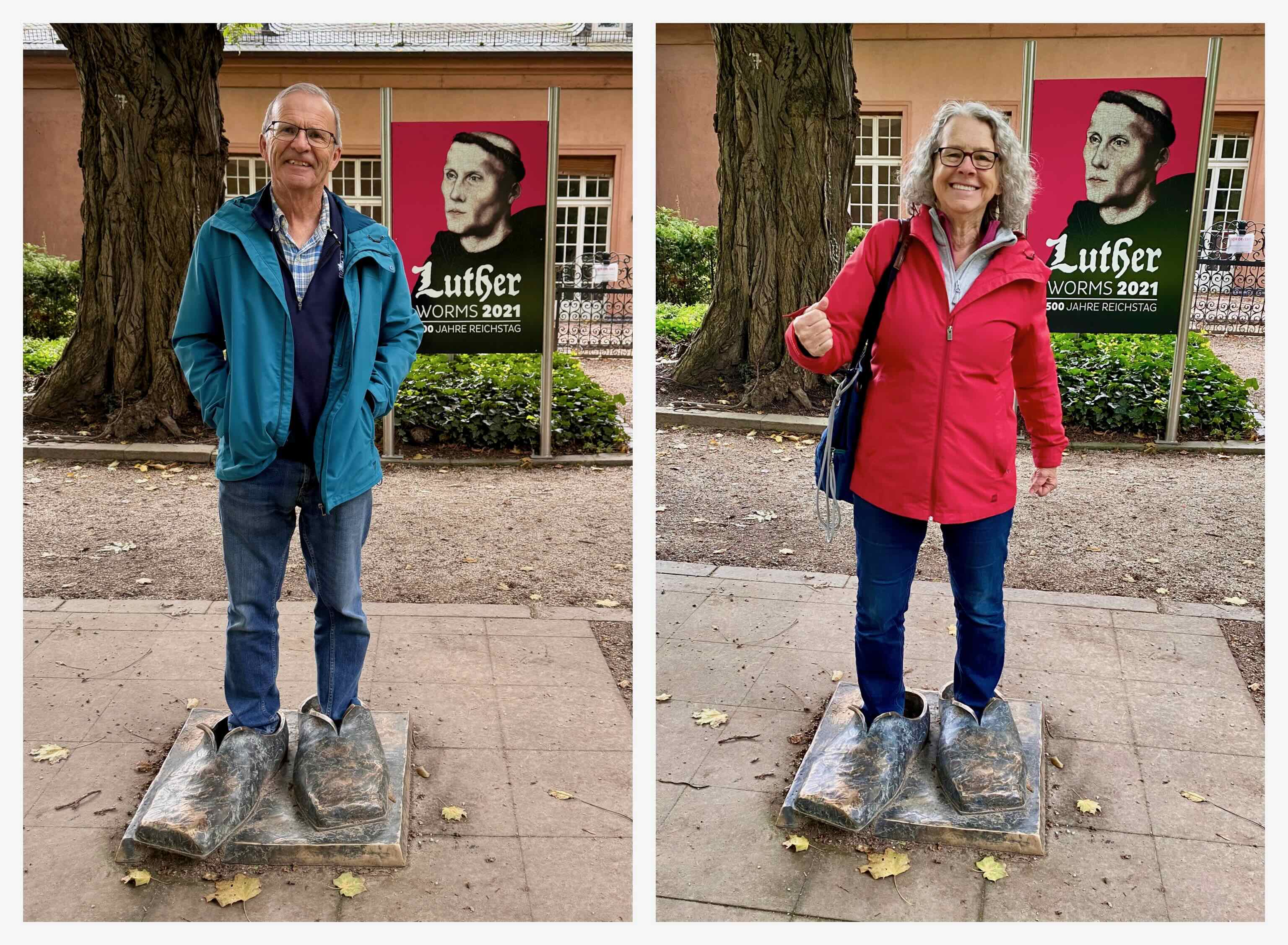
Turns out this garden marks the location where Martin Luther refused to recant his beliefs at the Diet of Worms in 1521. This was the beginning of the Protestant Church and its split from the Catholic Church. These large bronze shoes in Worms’ Heylshof Park shoes are part of a 2017 memorial sculpture, which allows visitors to symbolically “step into Luther’s shoes” at the spot where he stood and defended his doctrines.

 A ‘Diet’ was an assembly or meeting of authorities to make decisions on important matters. The Diet of Worms of 1521 was convened to determine how political and religious authorities should respond to Martin Luther’s teachings. Because the Diet was held in Worms, it is know as the Diet of Worms which still makes me smile because of course I think of eating worms.
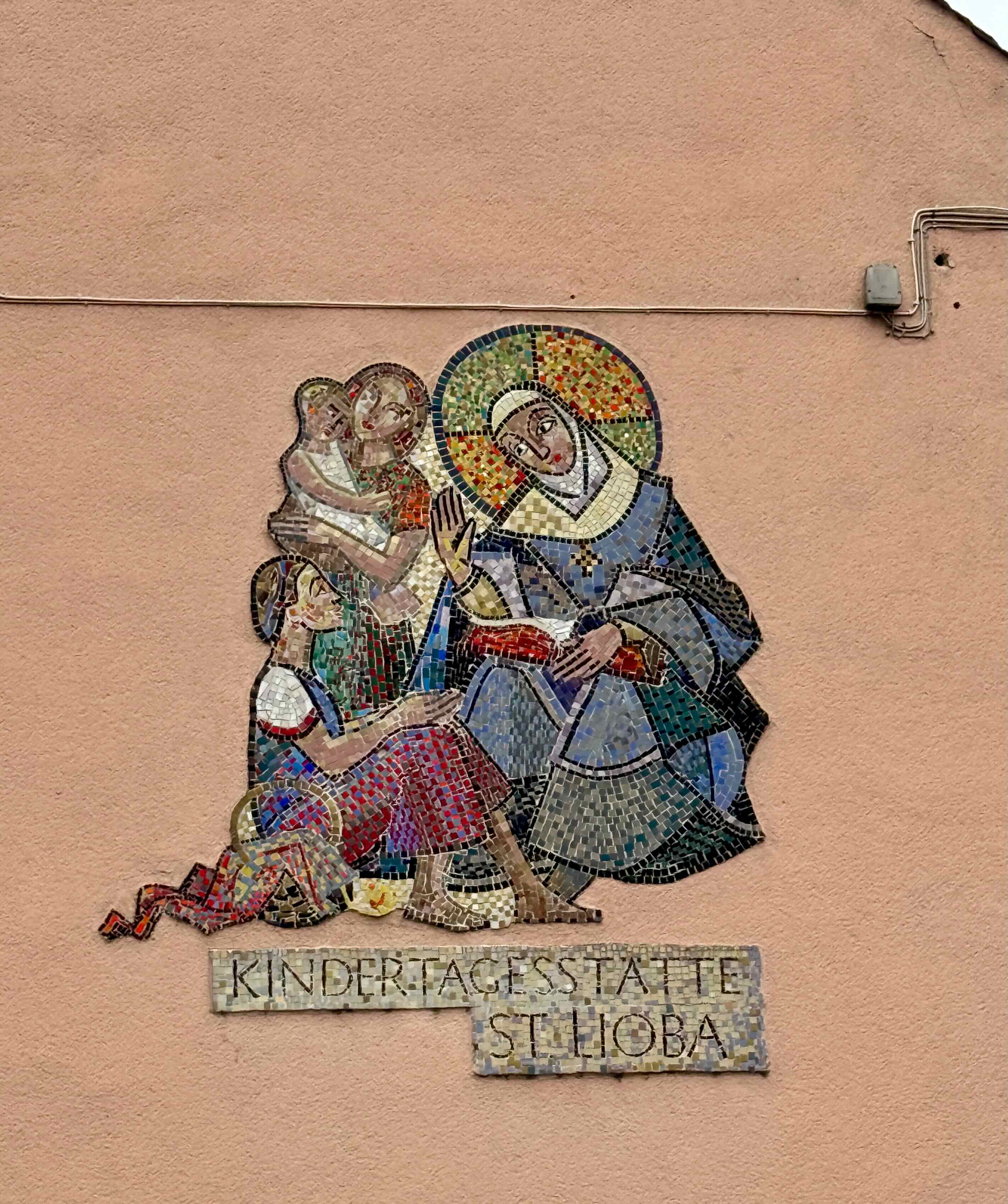
We leave the garden and go back to the church, passing a kindergarten with this colourful mosaic mural.
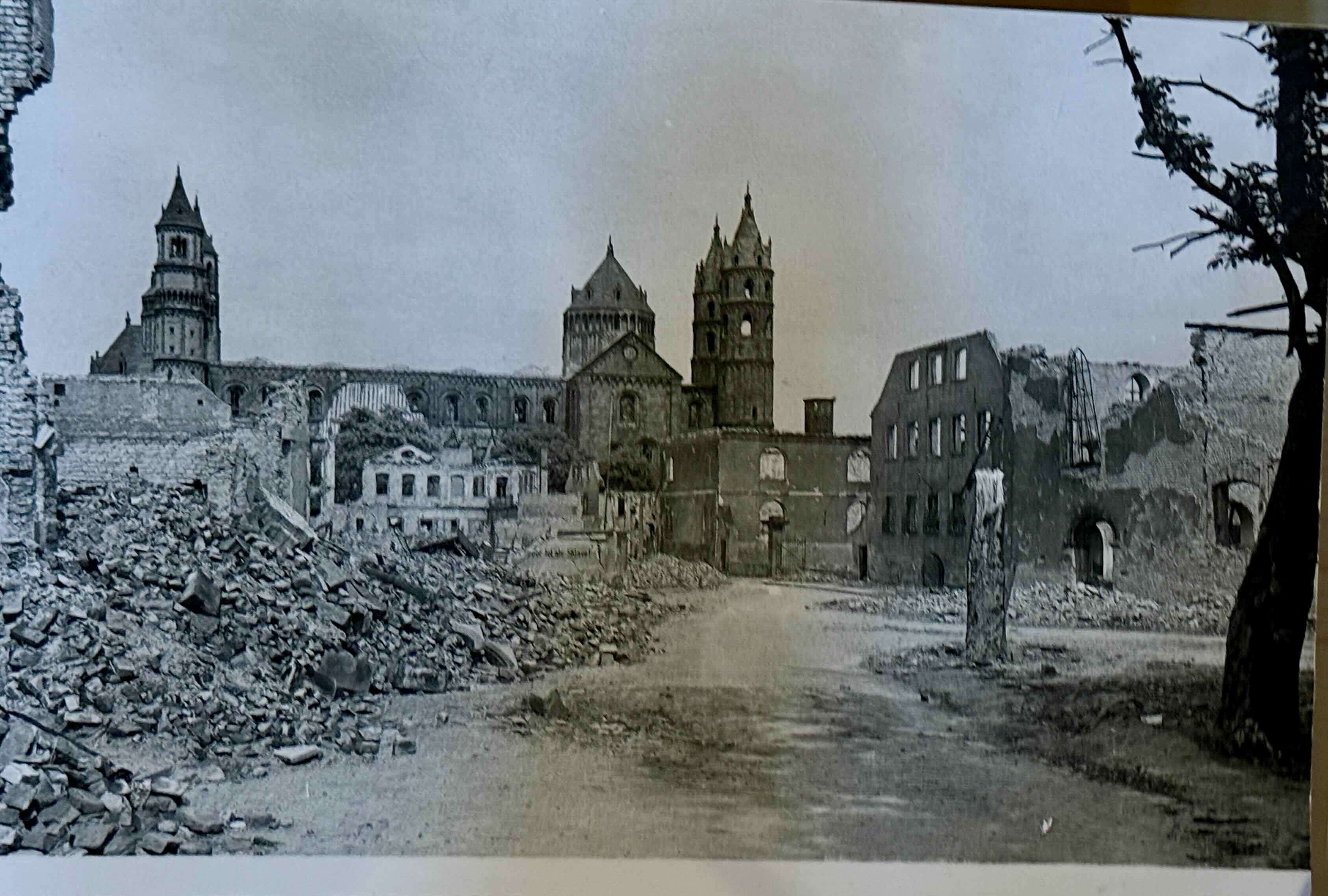
St Peters Cathedral is another cathedral that escaped destruction during the war.  Curious, I did a bit of of research and learned that the high belltowers and steeples of cathedrals were used by the Allies as navigational landmarks and that sometimes military planners made conscious efforts to protect major cultural and religious sites. So perhaps not divine intervention after all?
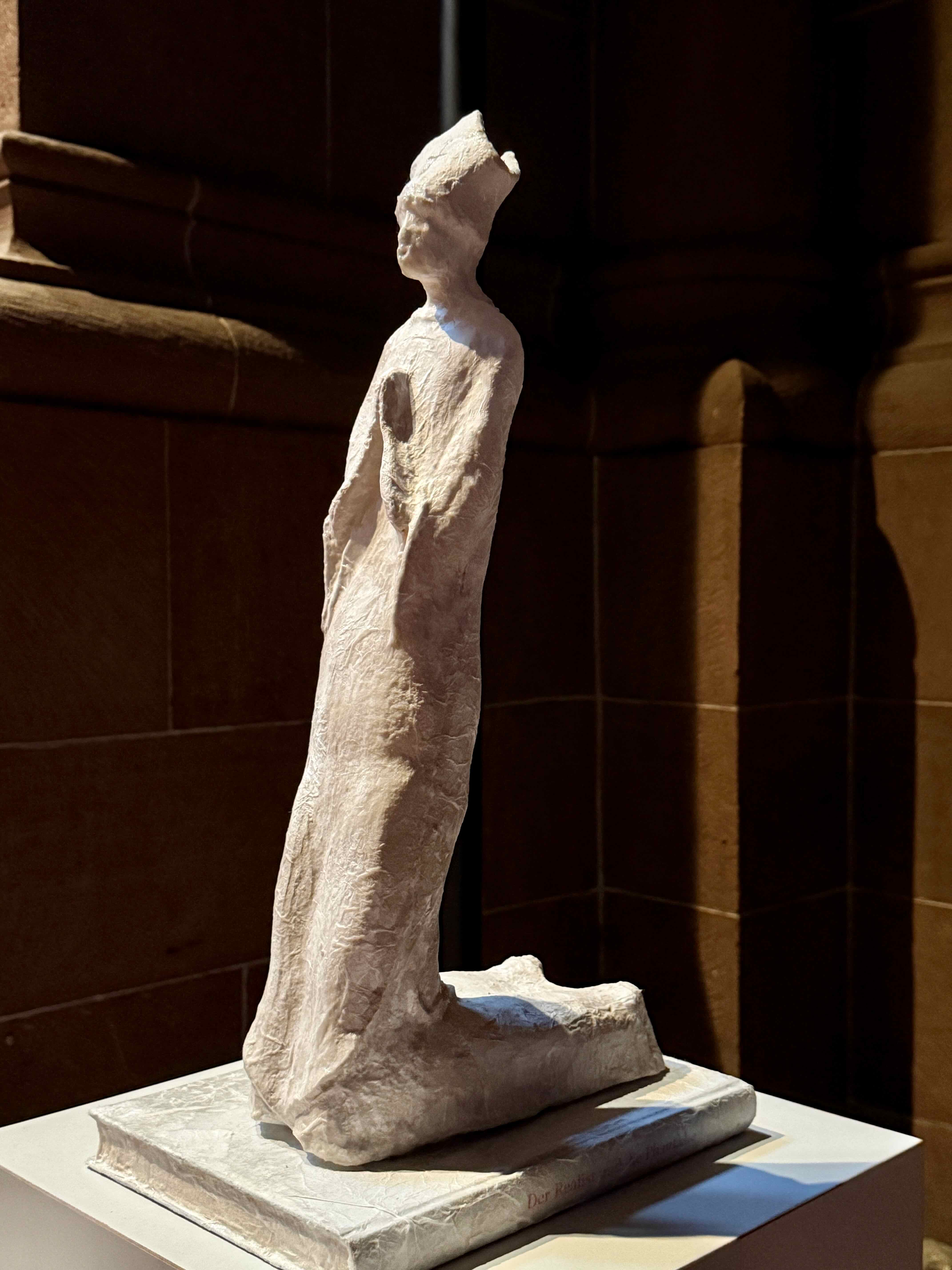
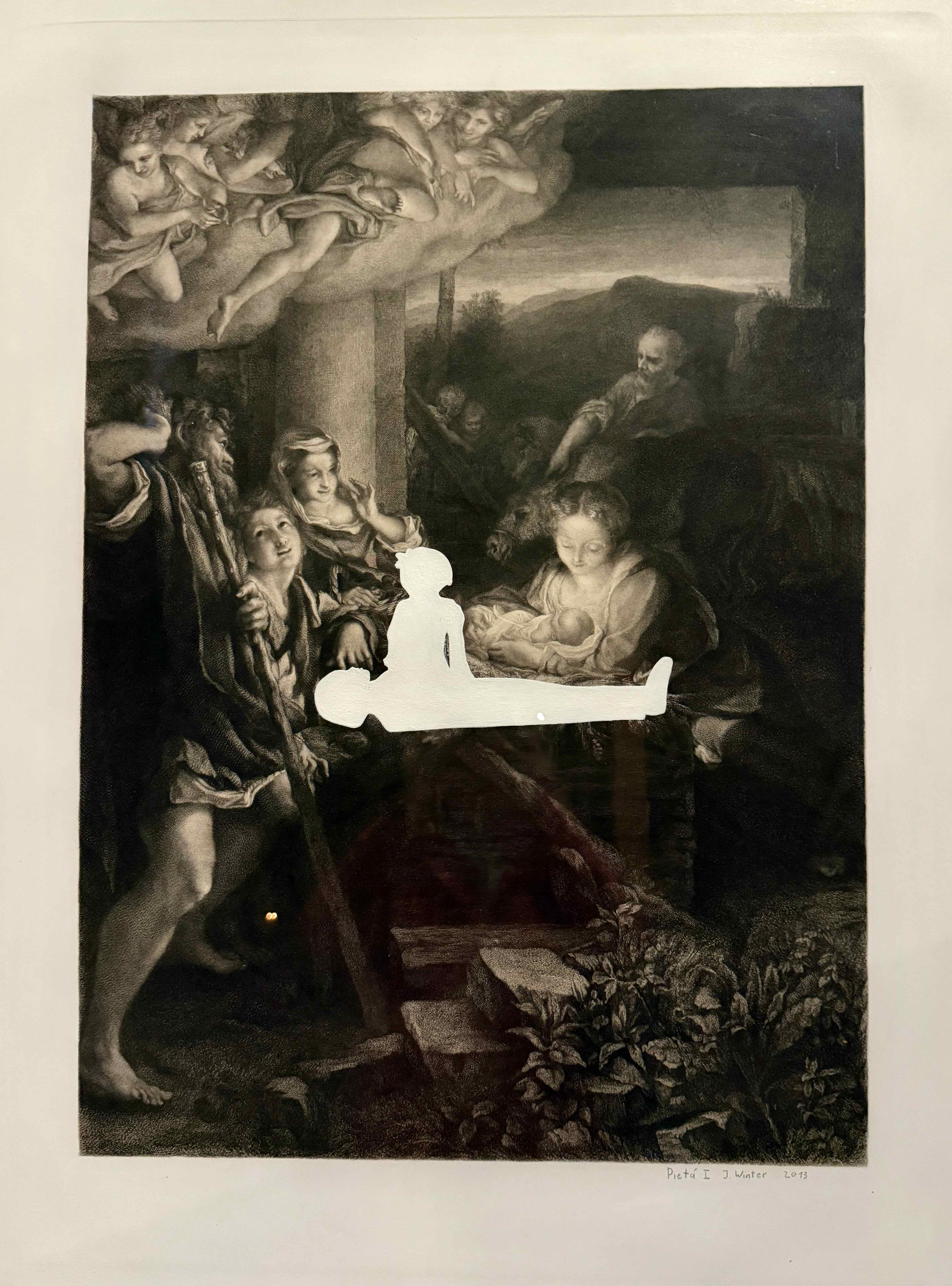
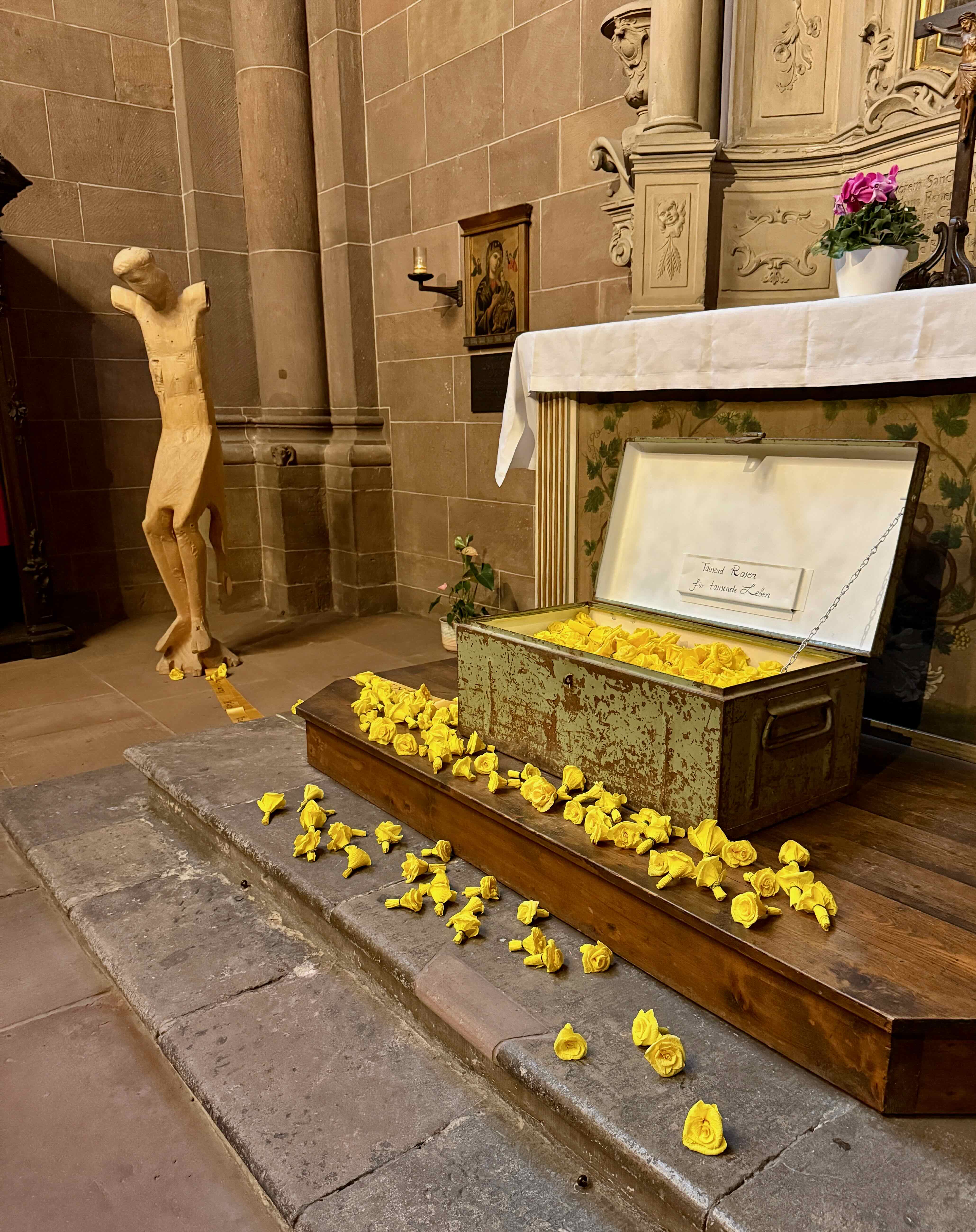
We do finally find small side door that allows us entrance to the church. There is an art display in the cathedral by a group called Atelierblau.  There are some really interesting pieces. Unfortunately I couldn’t find the names of the artists or the works they created. Here are a few of them.
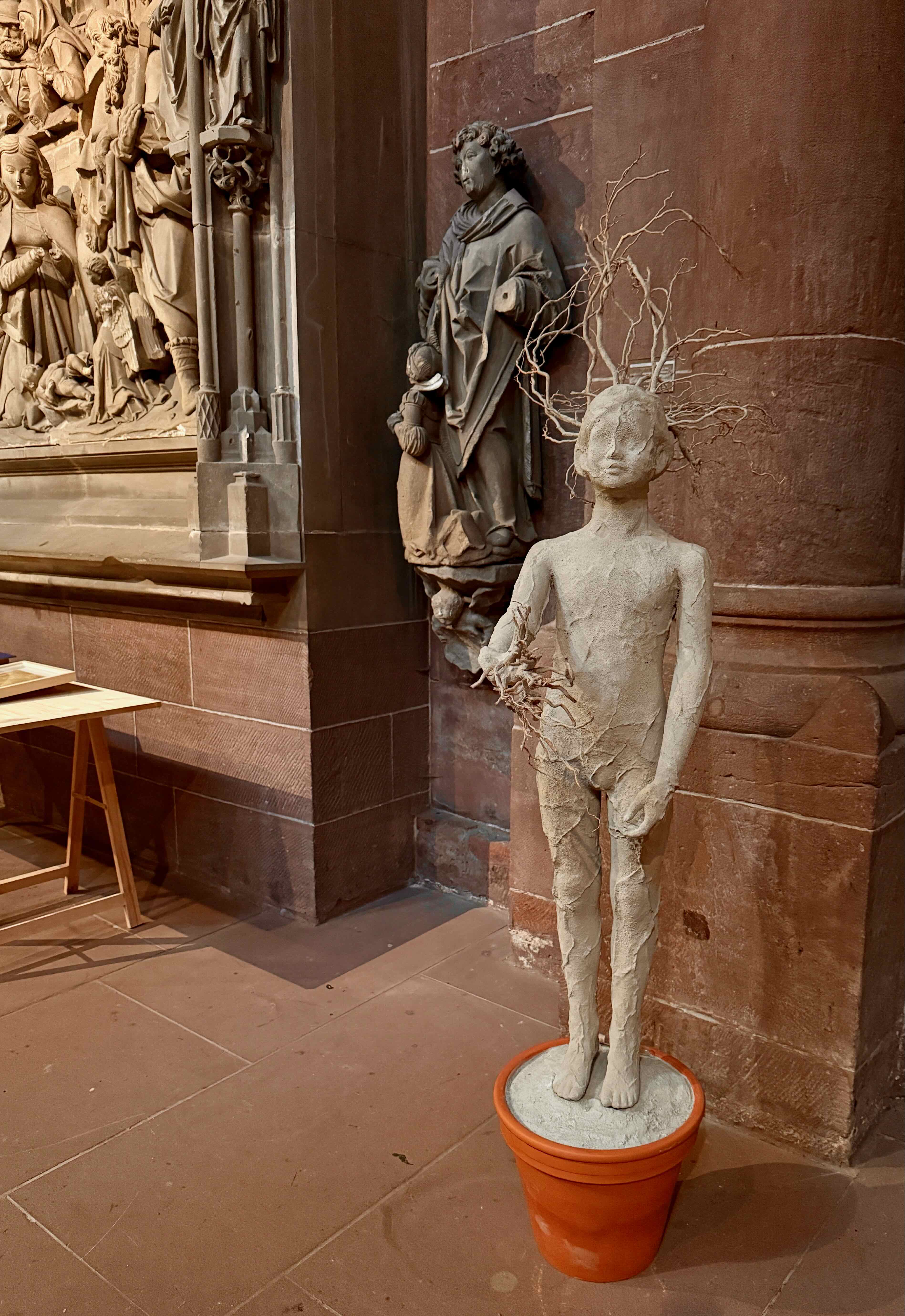
The sign on the trunk reads “A thousand roses for a thousand lives”.
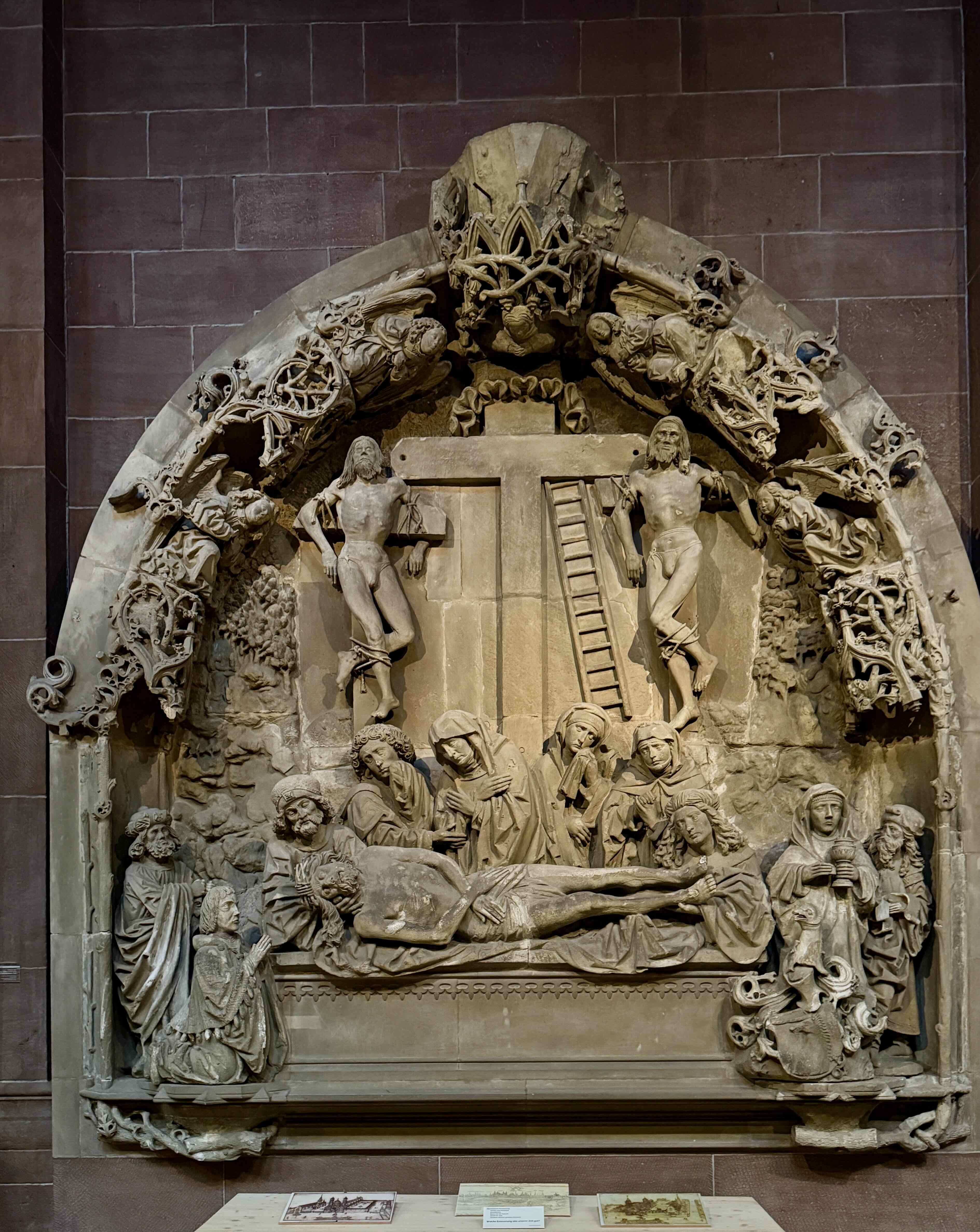
There are several large sculptural pieces that are from the church cloister.  I think they were placed inside the church as a method of keeping them safe from damage.
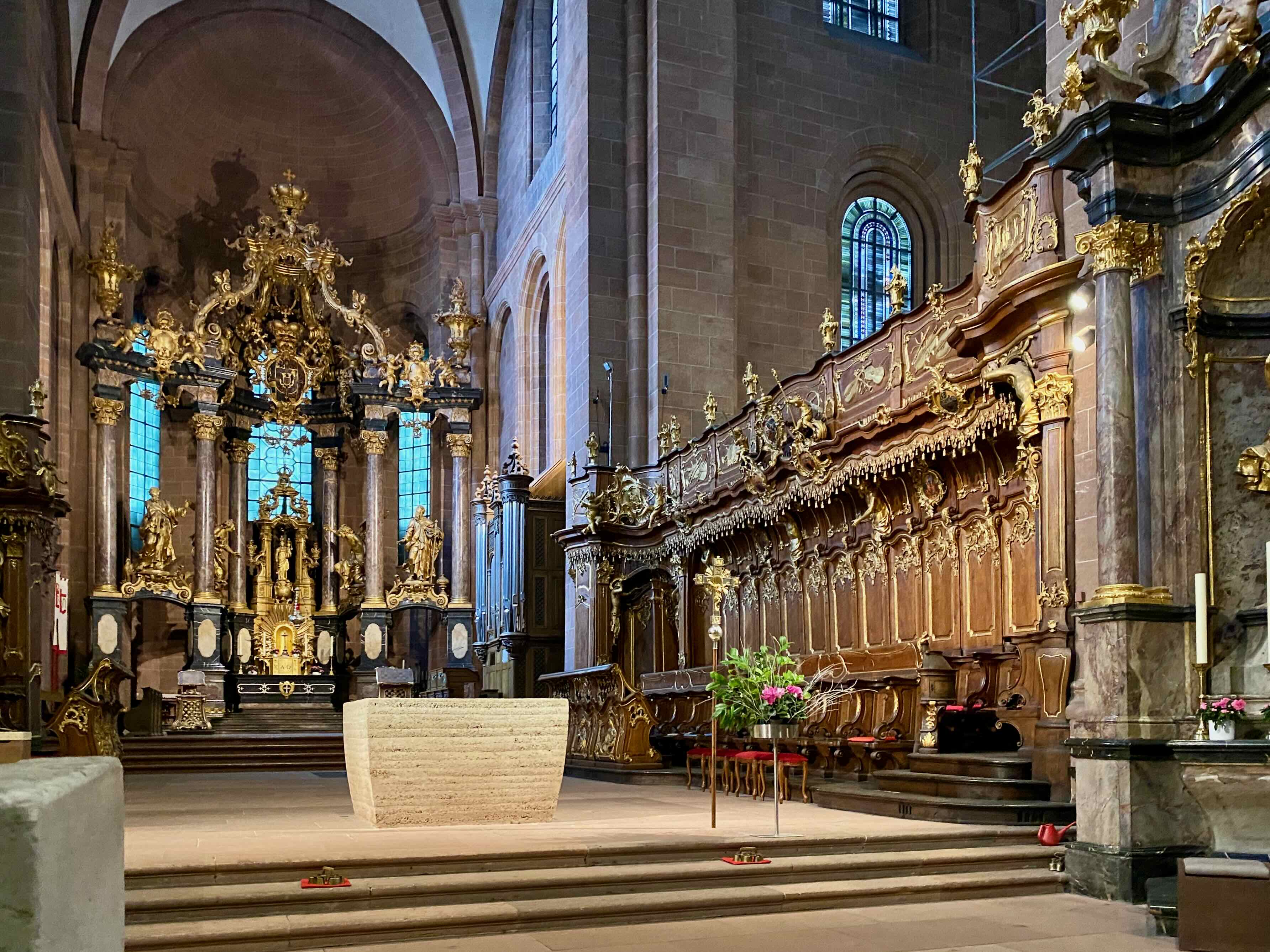
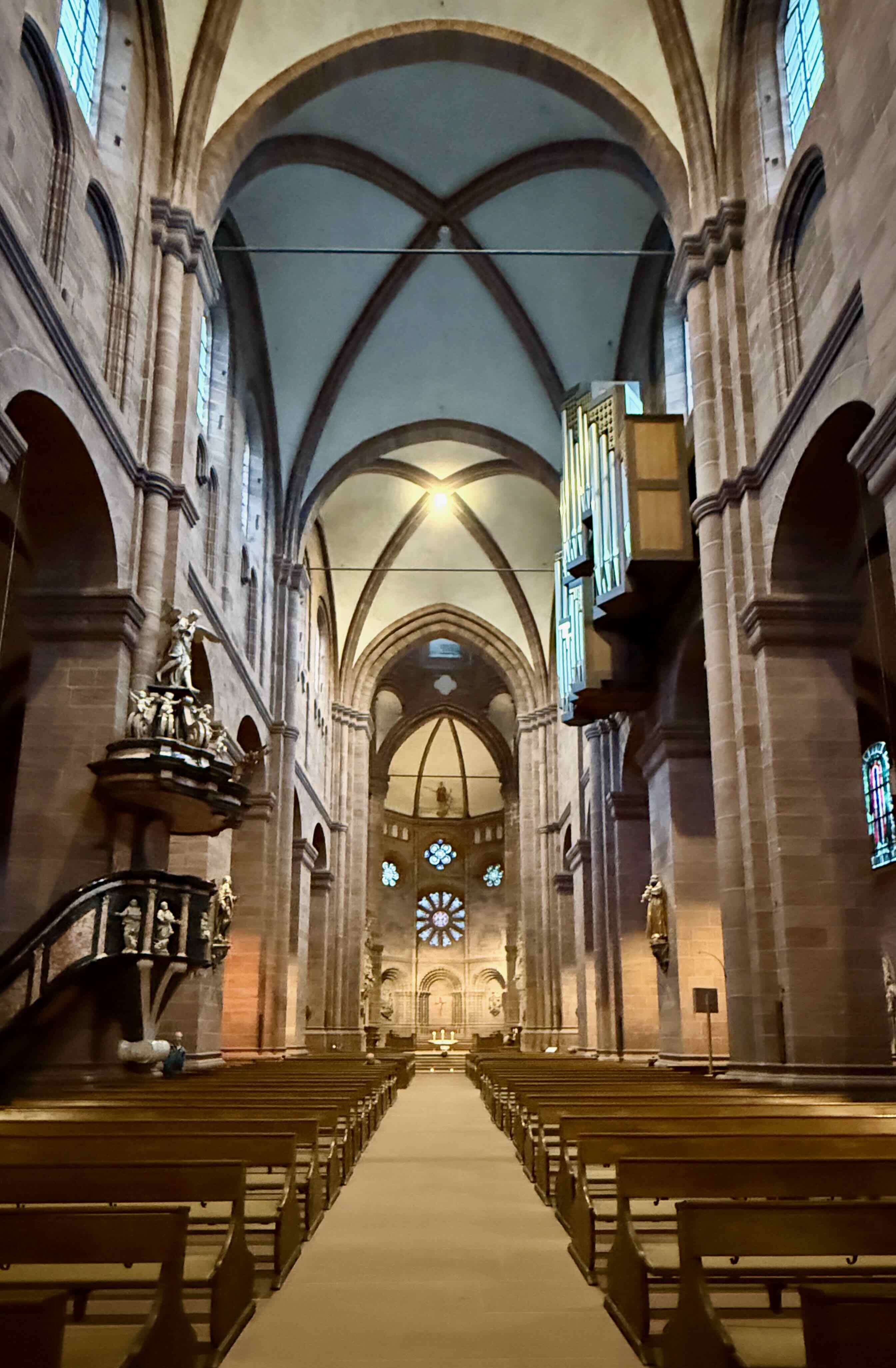
Built with red sandstone between the years 1130 and 1181, the church has a relatively simple interior……except for the choir and altar.
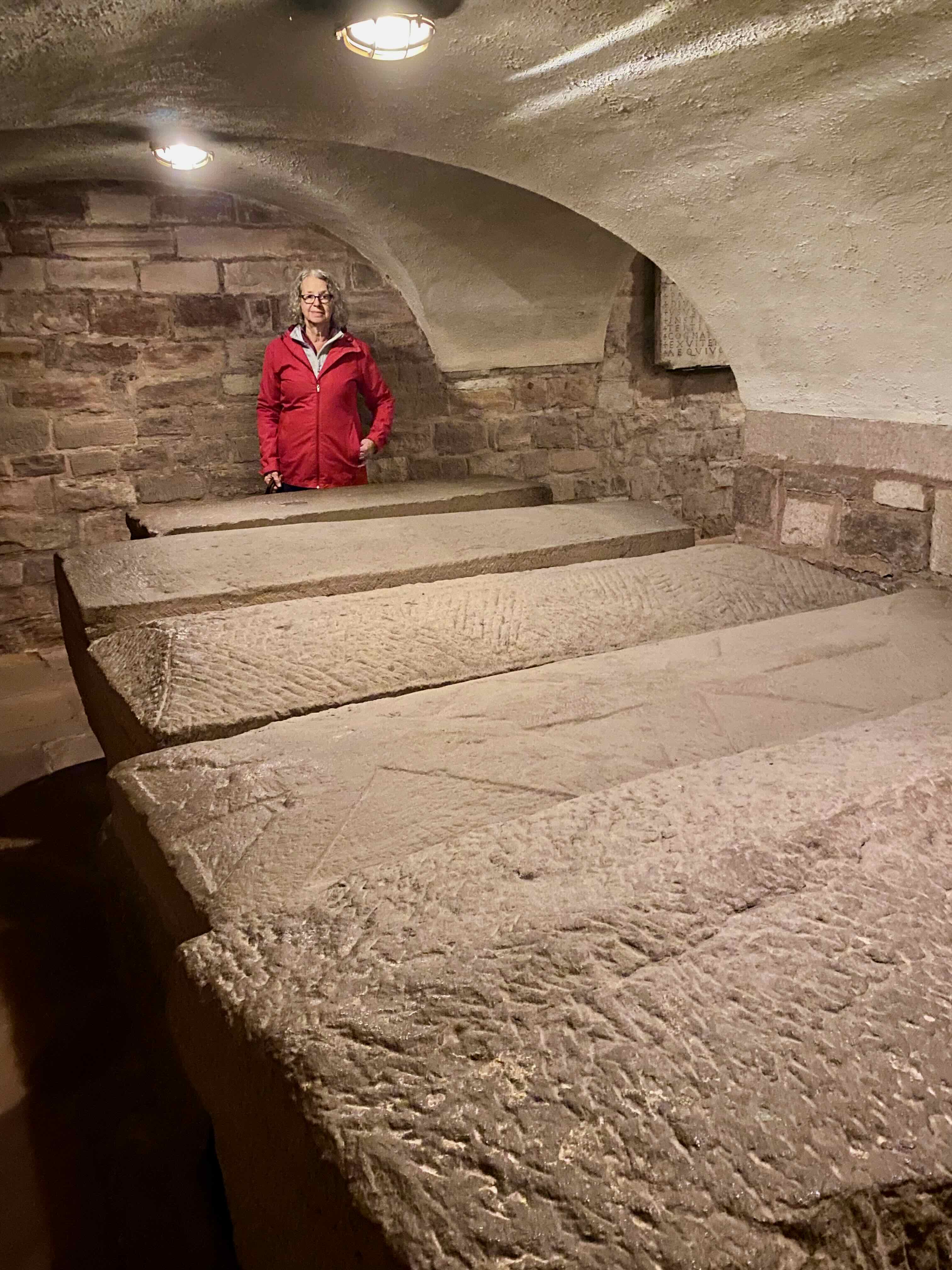
Bob noticed a side entrance to the crypt which contains the tombs of early rulers from 990 to 1040 AD.
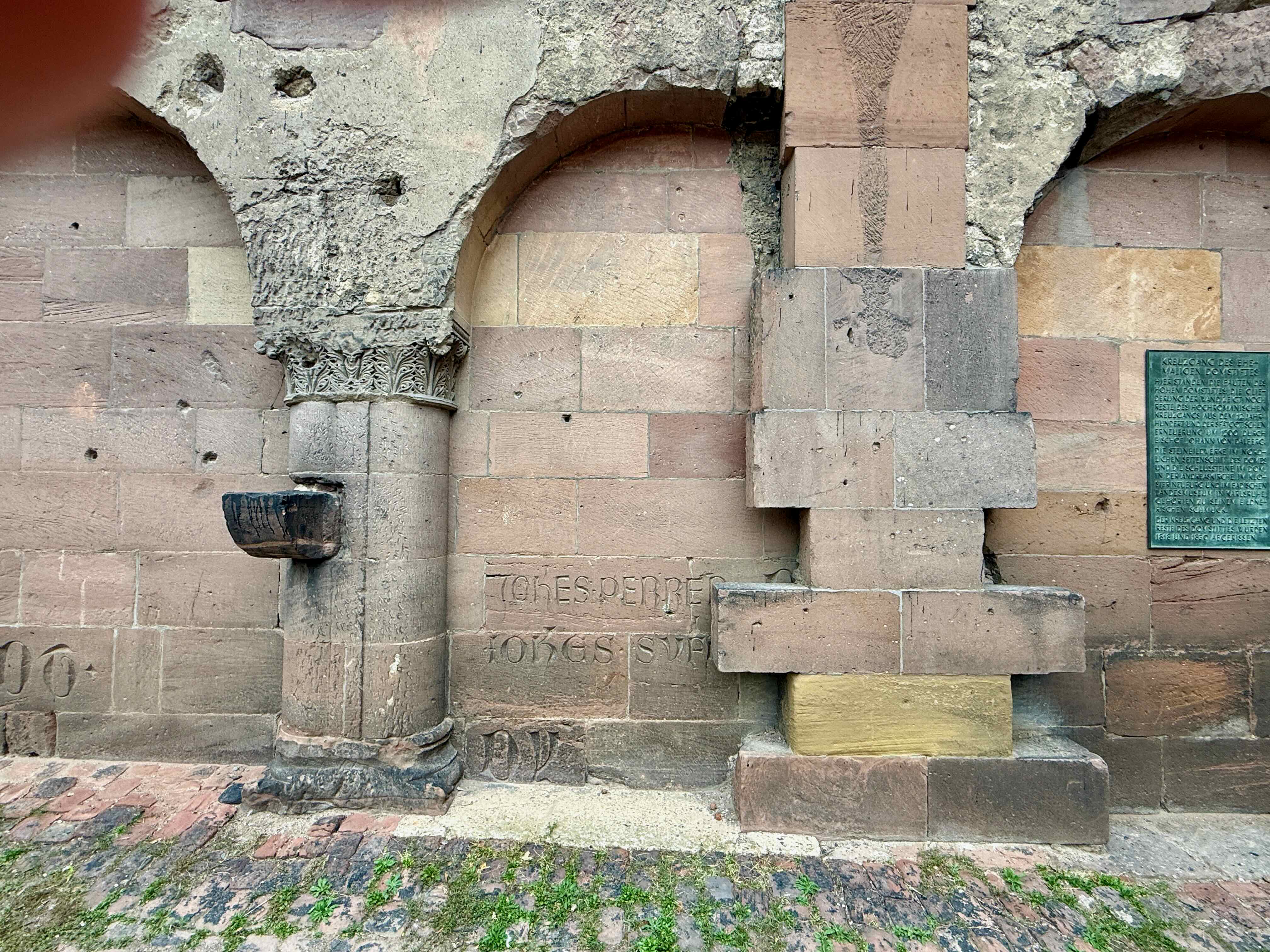
Outside I see what appears to be ancient graffiti.
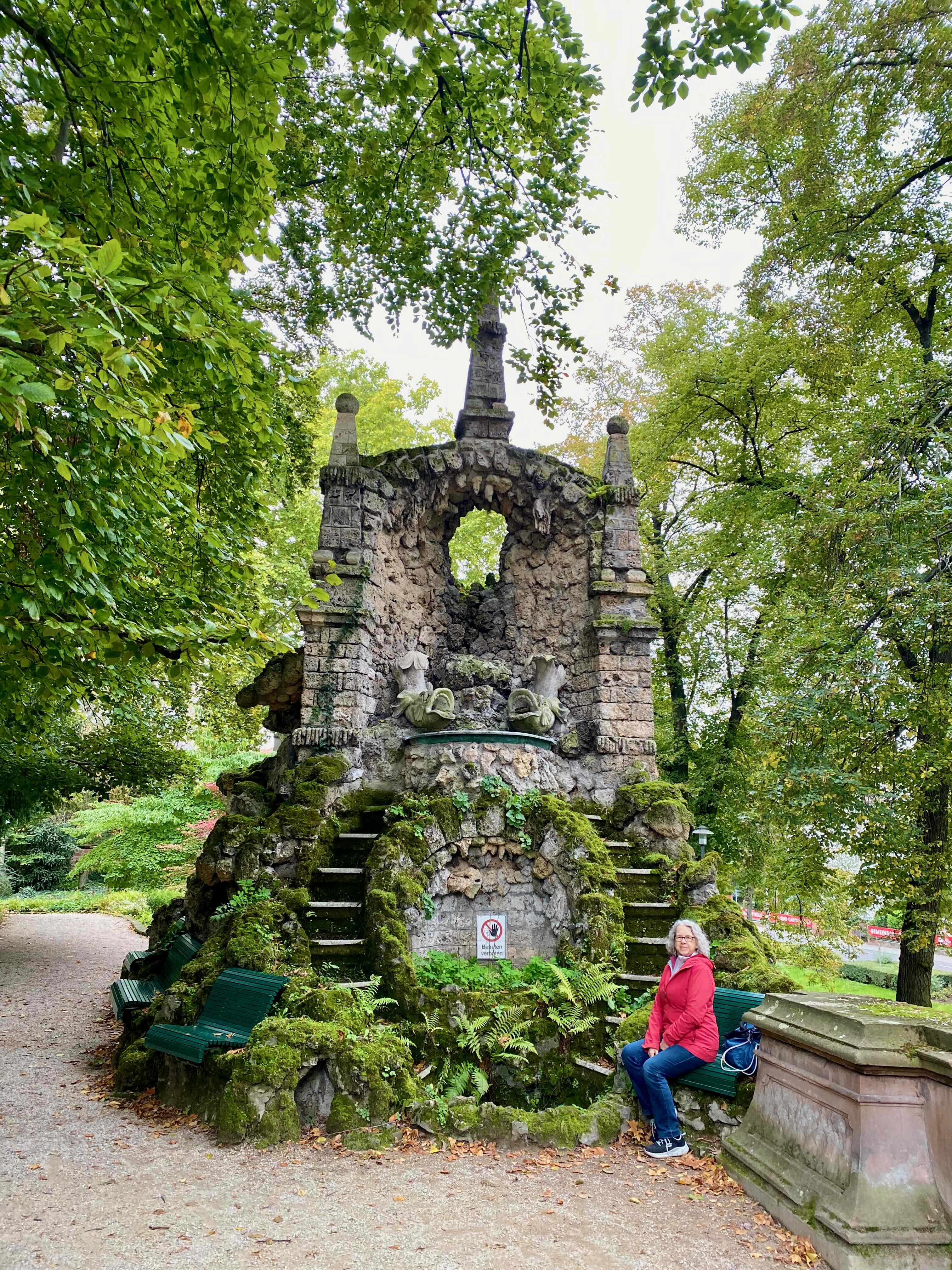
This fountain is at the end of part of the old town wall.
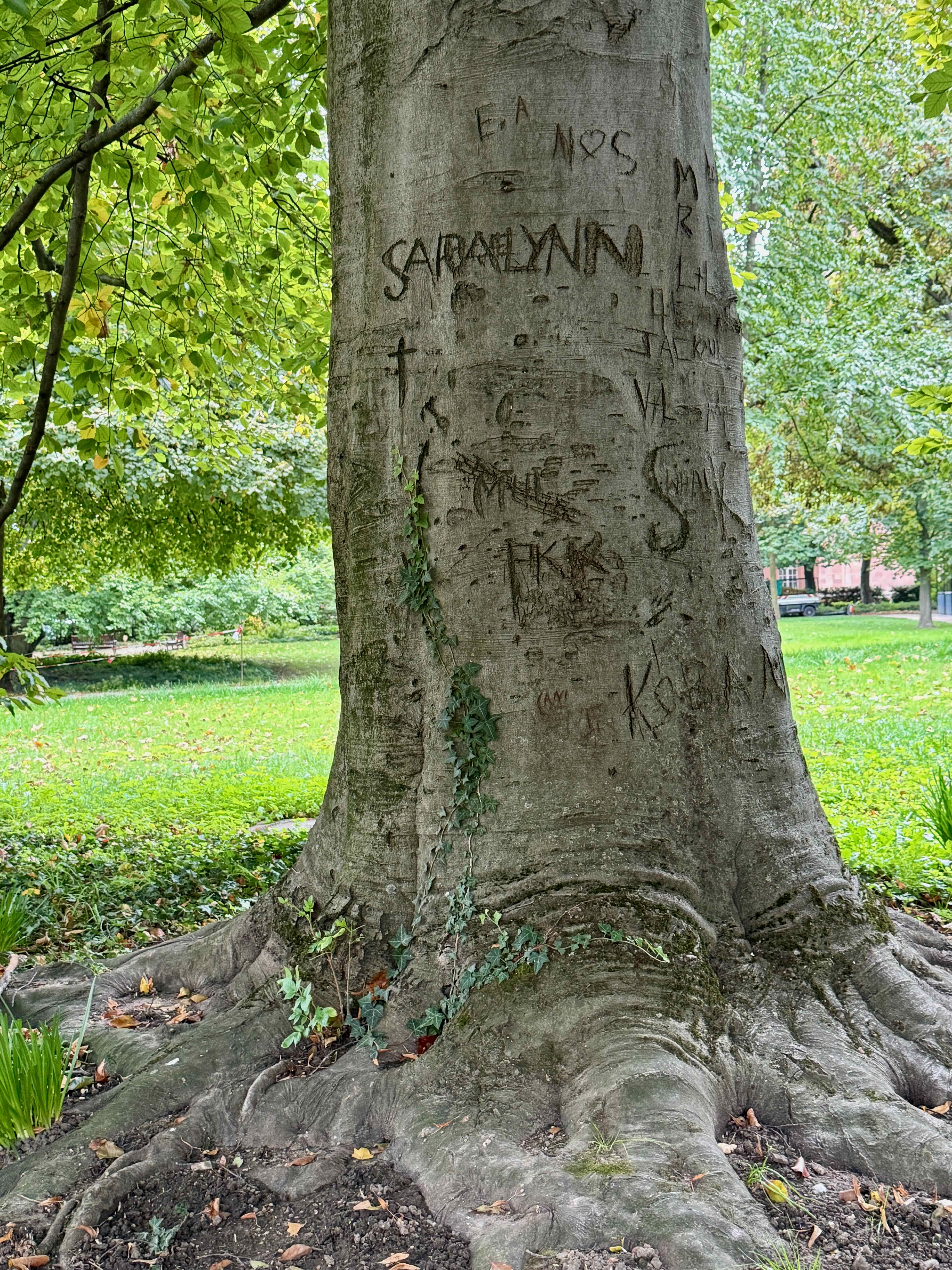
More graffiti, only on a tree this time.
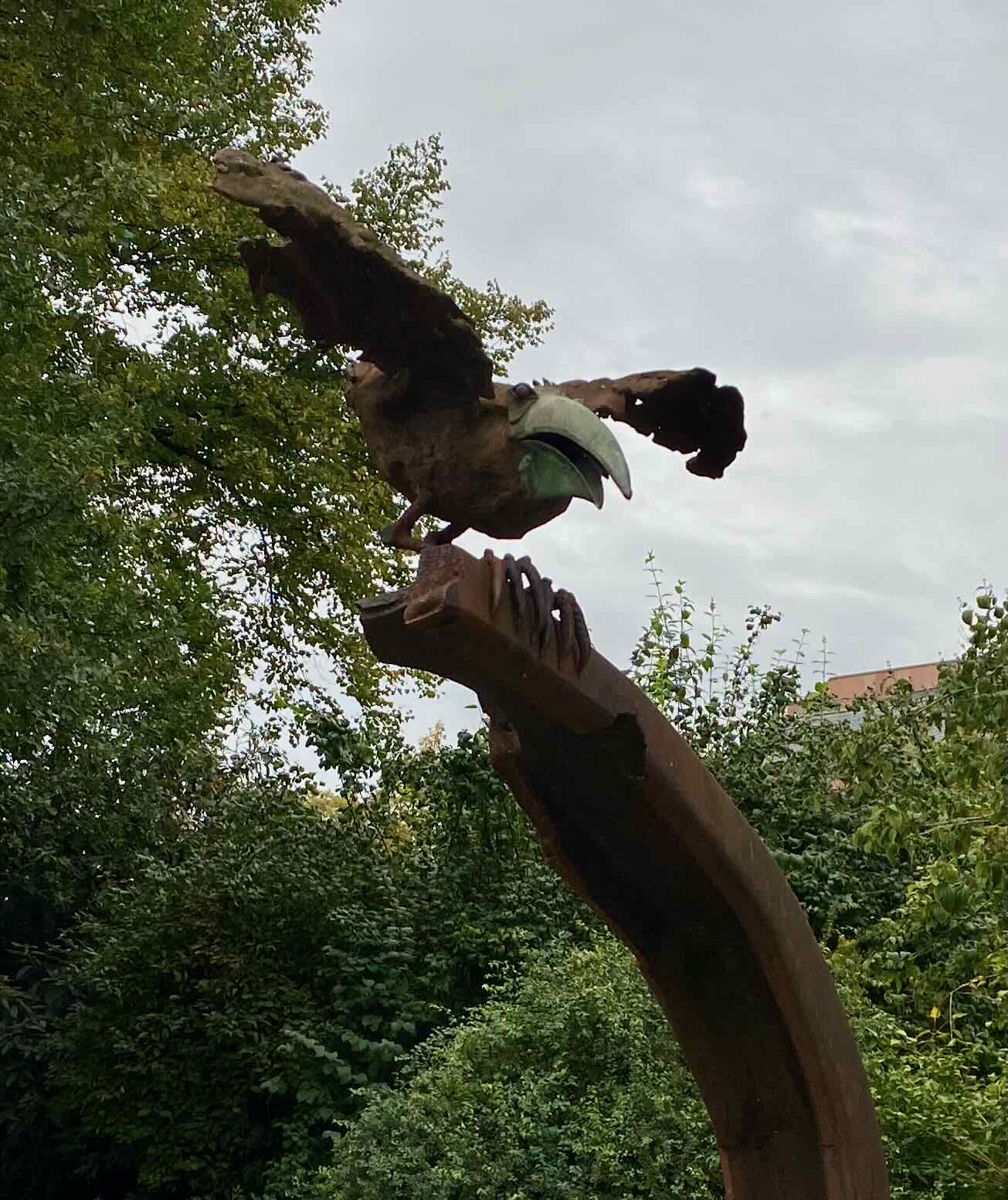
This little bird sculpture with its huge beak, ragged wings and stubby body caught our eye…we both really liked it.
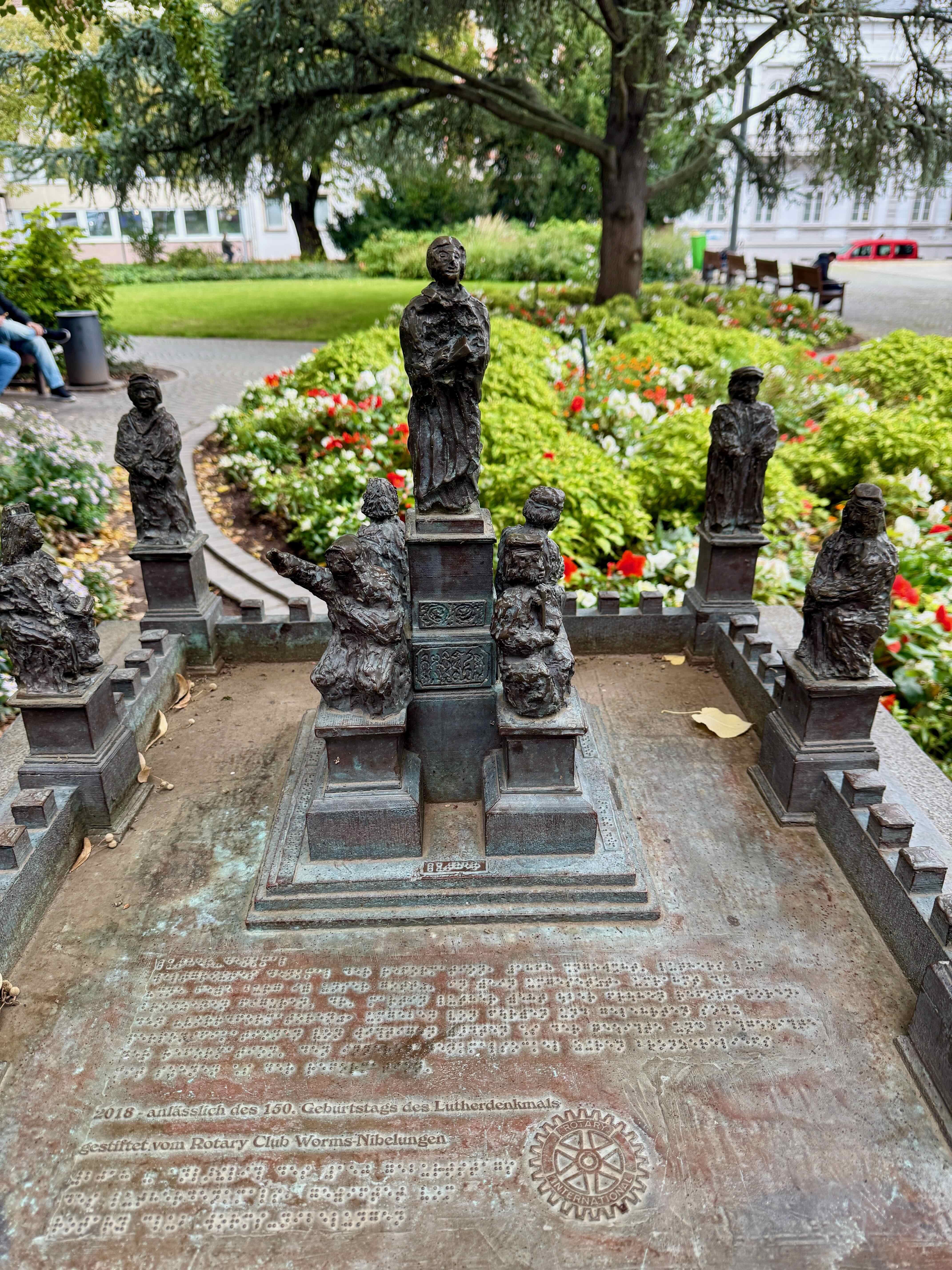
The Luther Monument is a group of statues. Martin Luther stands surrounded by bronze statues of the individuals that supported him. Plaques of the towns that supported Luther and the Protestant Reformation are placed on the walls of the monument.
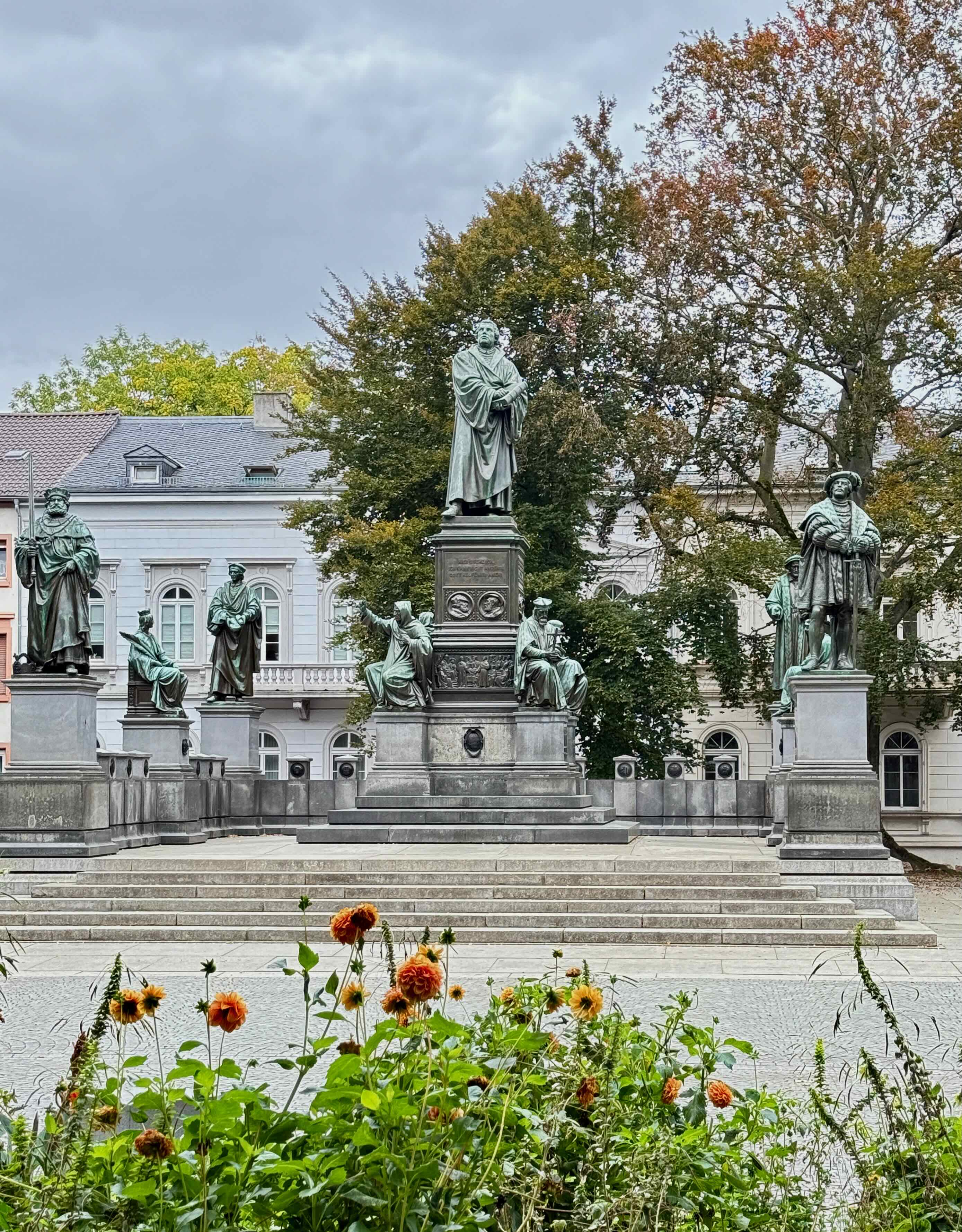
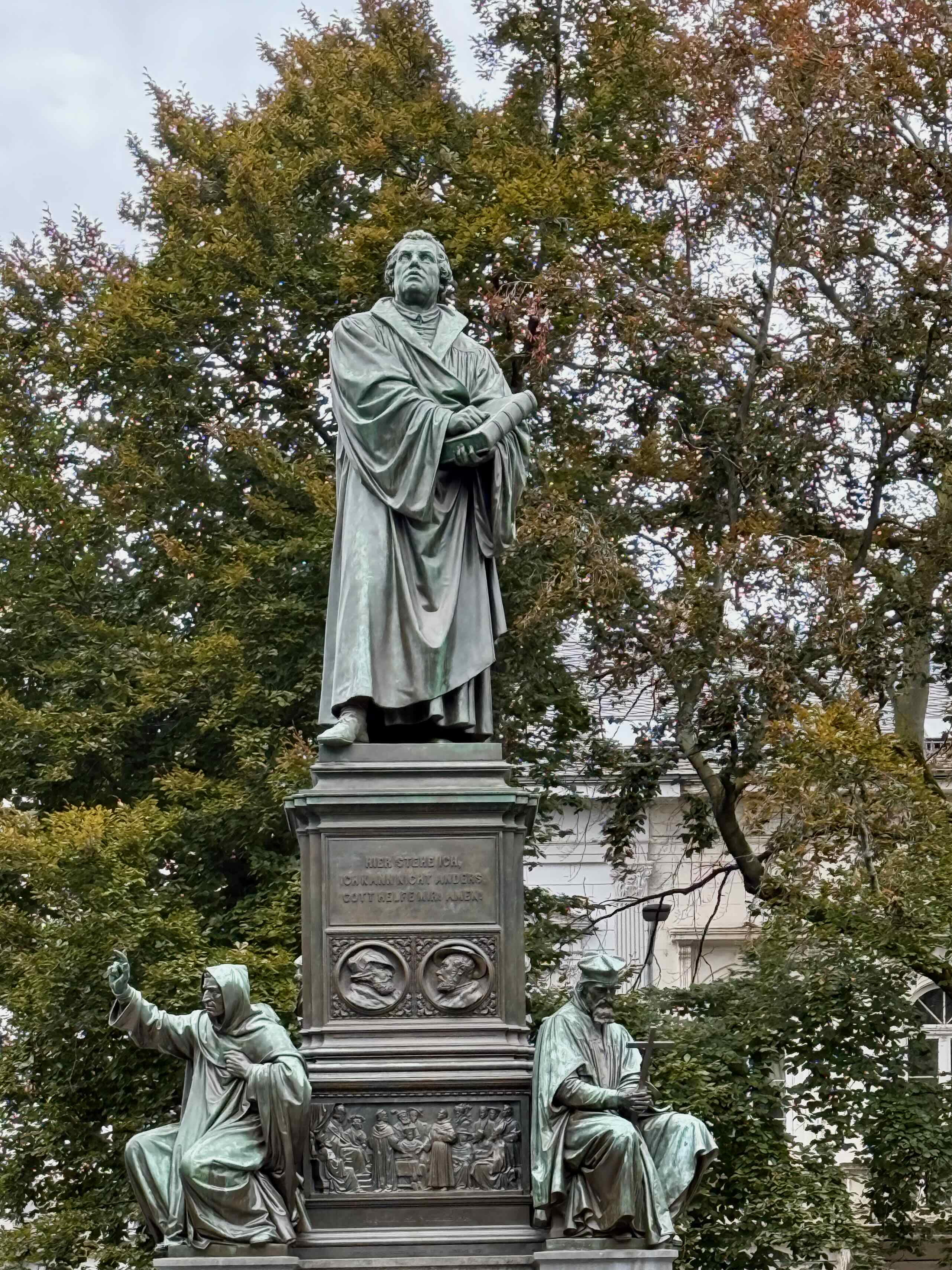
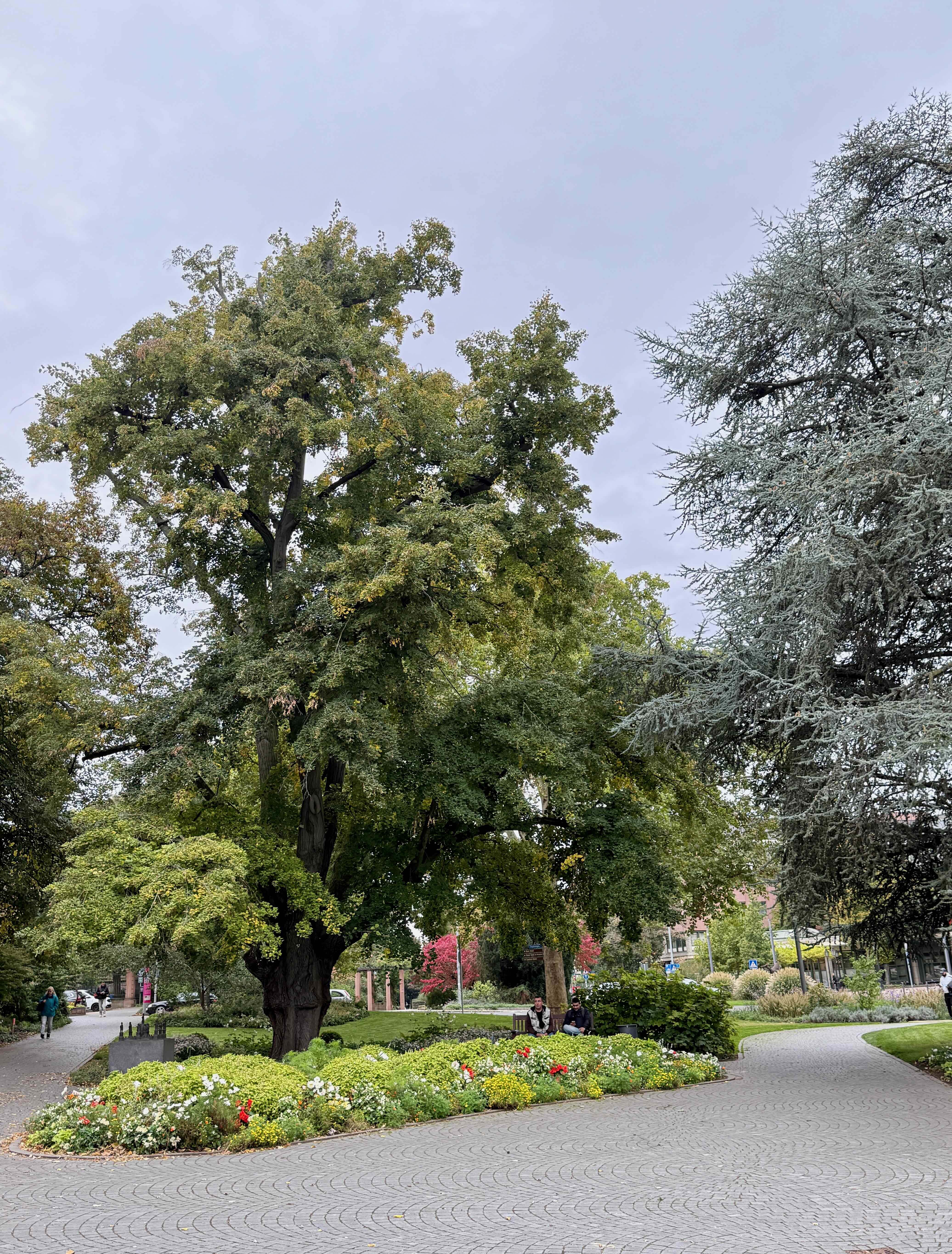
This monument is in a lovely park near the Cathedral. There is a model of the statue with information in Braille, which was unique.
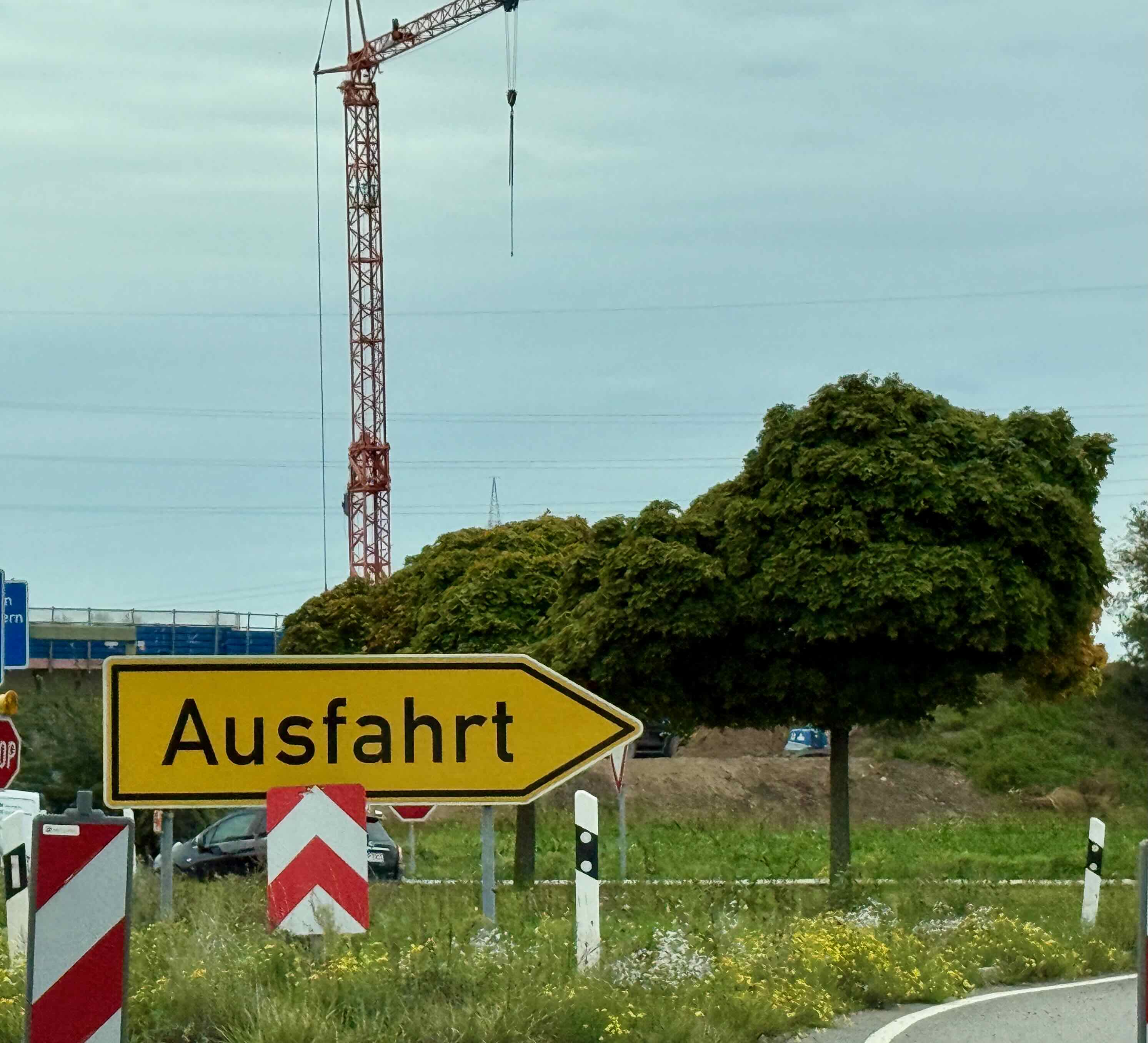
Back on the road I finally manage to get a photo of the Ausfahrt sign…which simply means Exit. I remember that we found this quite hilarious on our first trip to Germany with our daughter many years ago.
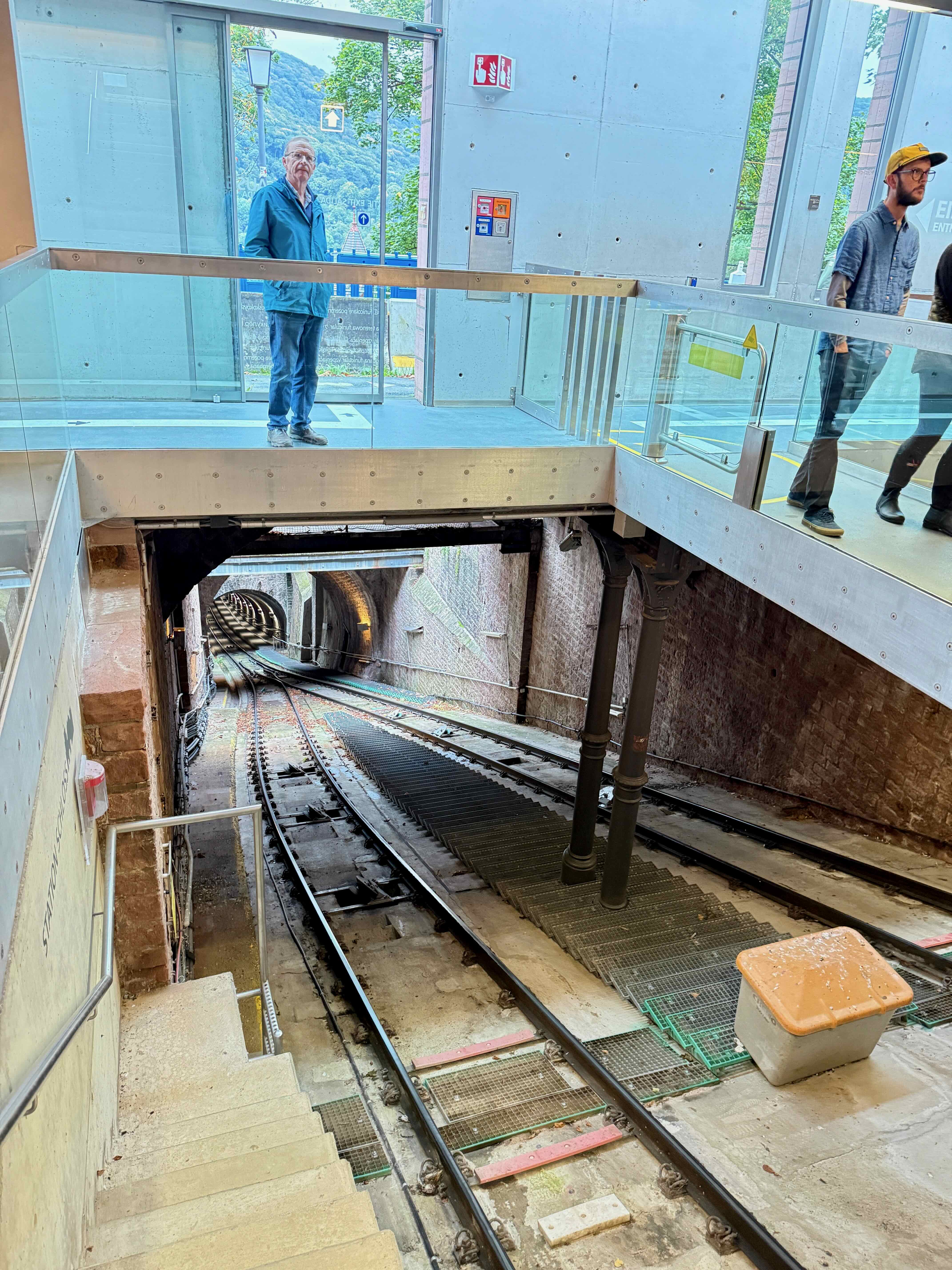
Next stop is Heidelberg where we are going to visit Heidelberg Castle that Bob says is like Versailles. We have a hard time finding the entrance to the funicular, even using Google Maps!  Finally I notice a small picture of a train on the wall of what looks like the entrance to a mall…we only walked past it two times! The part of the journey we take is all underground.
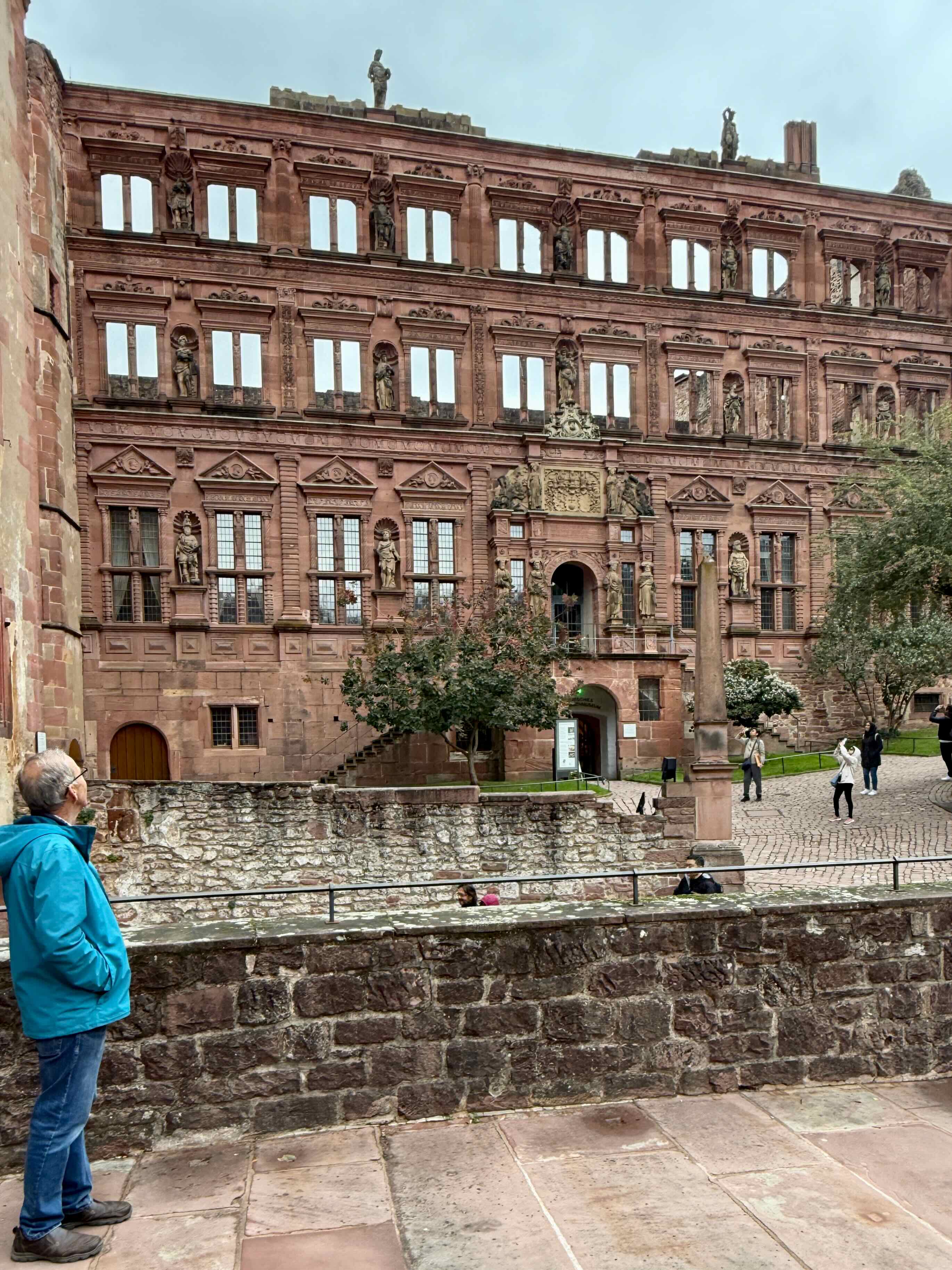
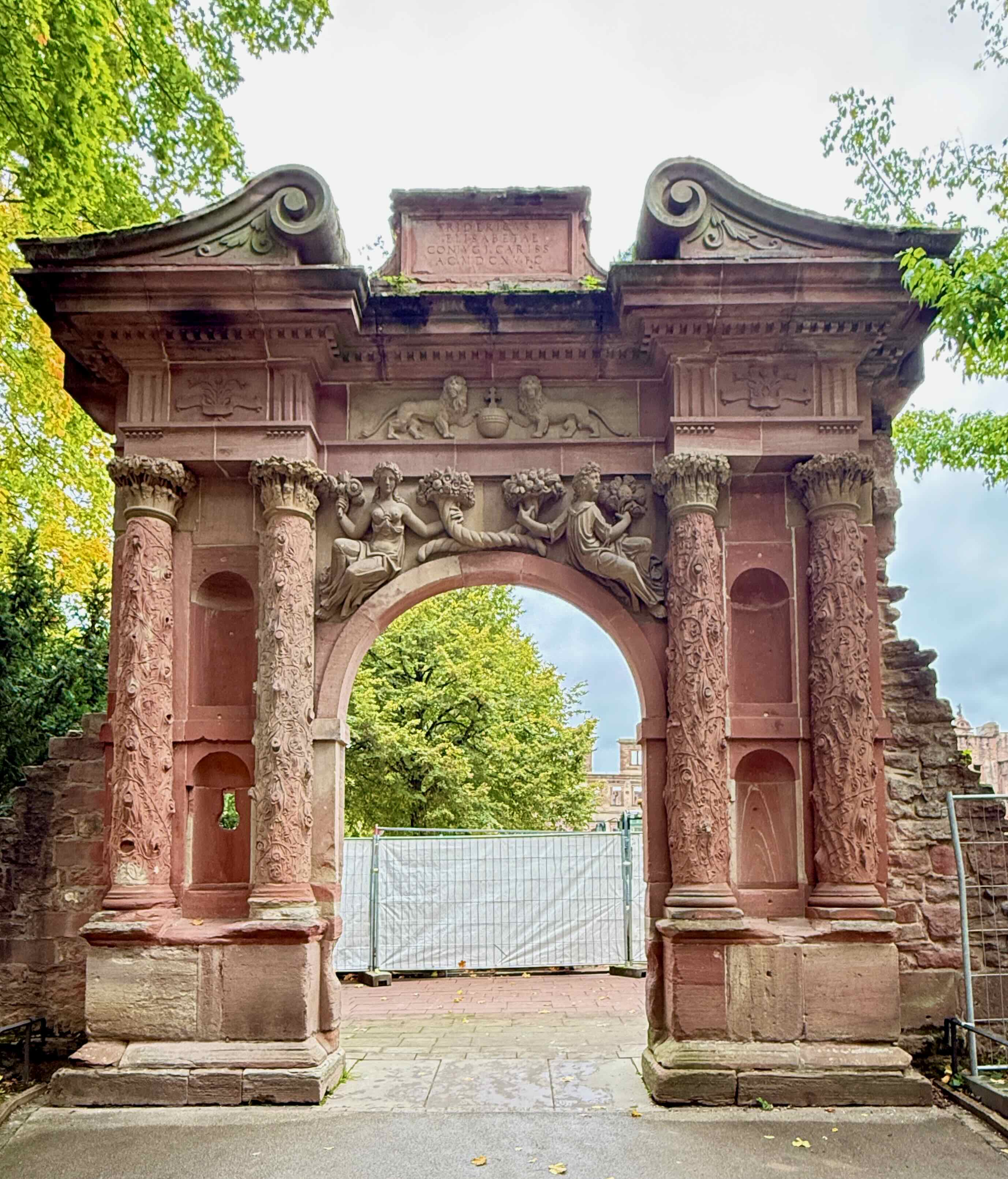
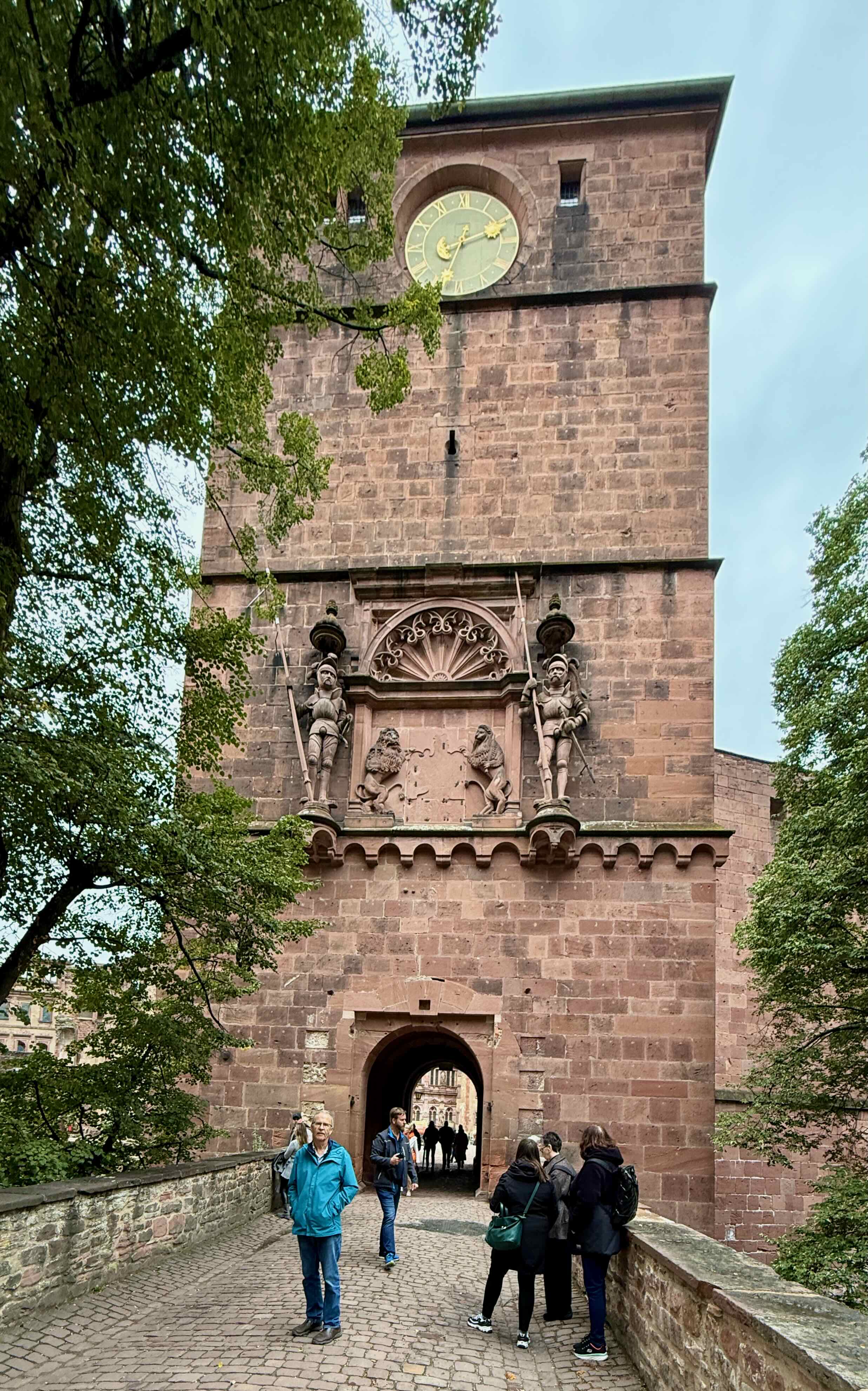
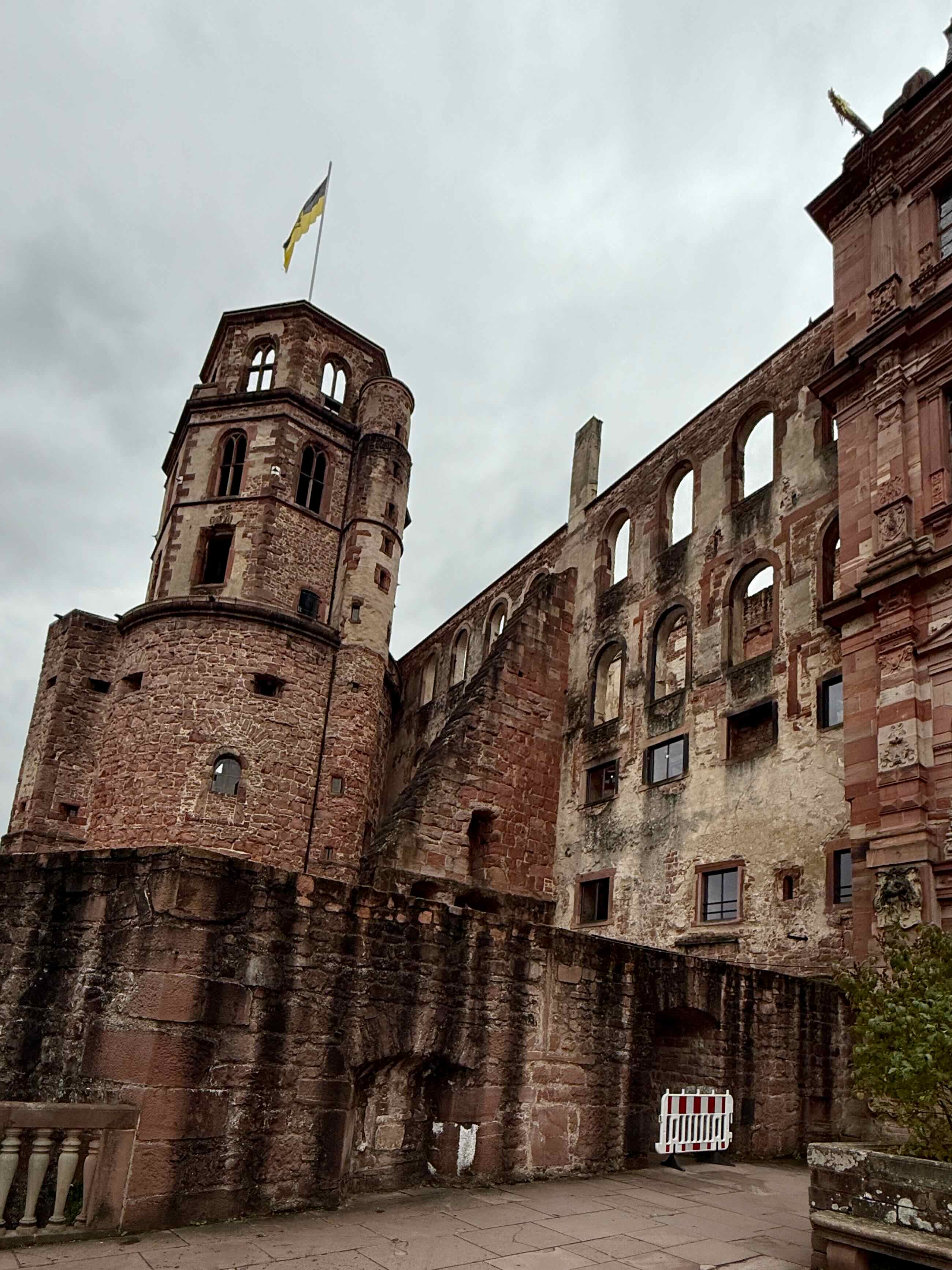
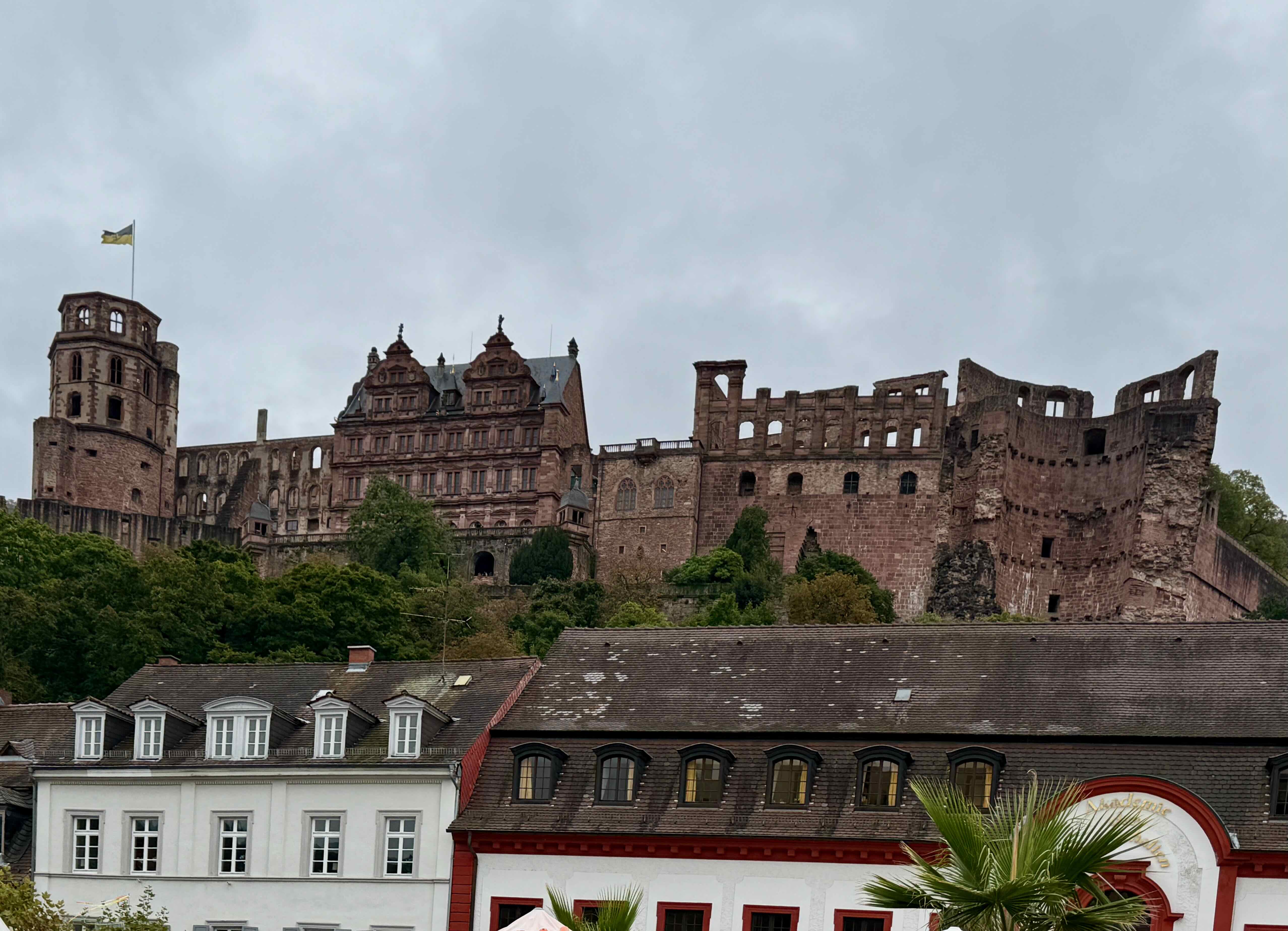
We walk to the castle but all we see is ruins…turns out Bob mixed up his castles!  It is fine though as this looks interesting anyways.  There is an in depth tour through the ruins in an hour and a half but we decide to just wander and see what we can.  This gate was built in one night by King Frederick V for his wife as a birthday present.
Our funicular ticket gives us access to the courtyard, the German Pharmacy Museum, and the Big Wine Barrel.  We walk through the gate to the courtyard…
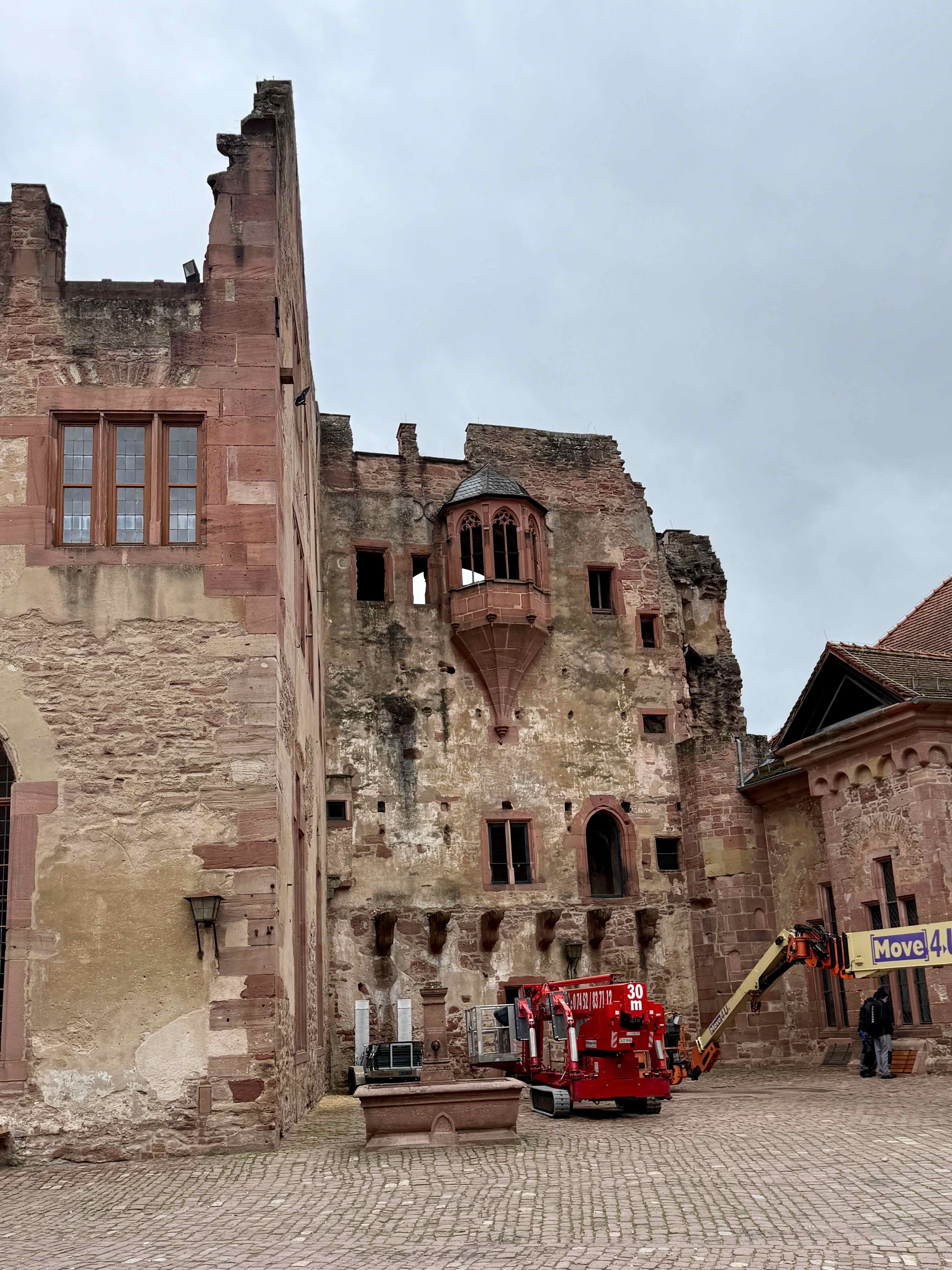
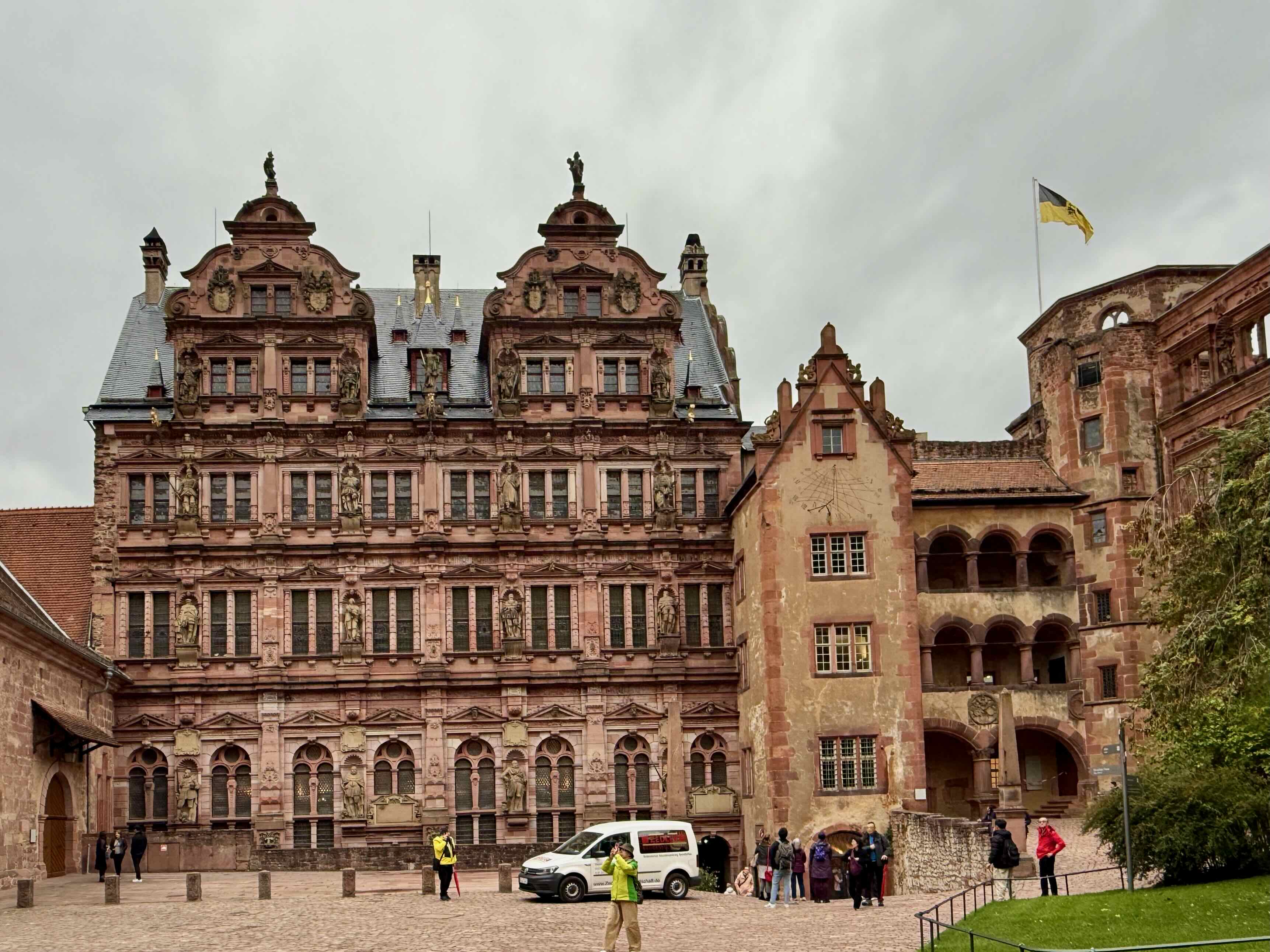
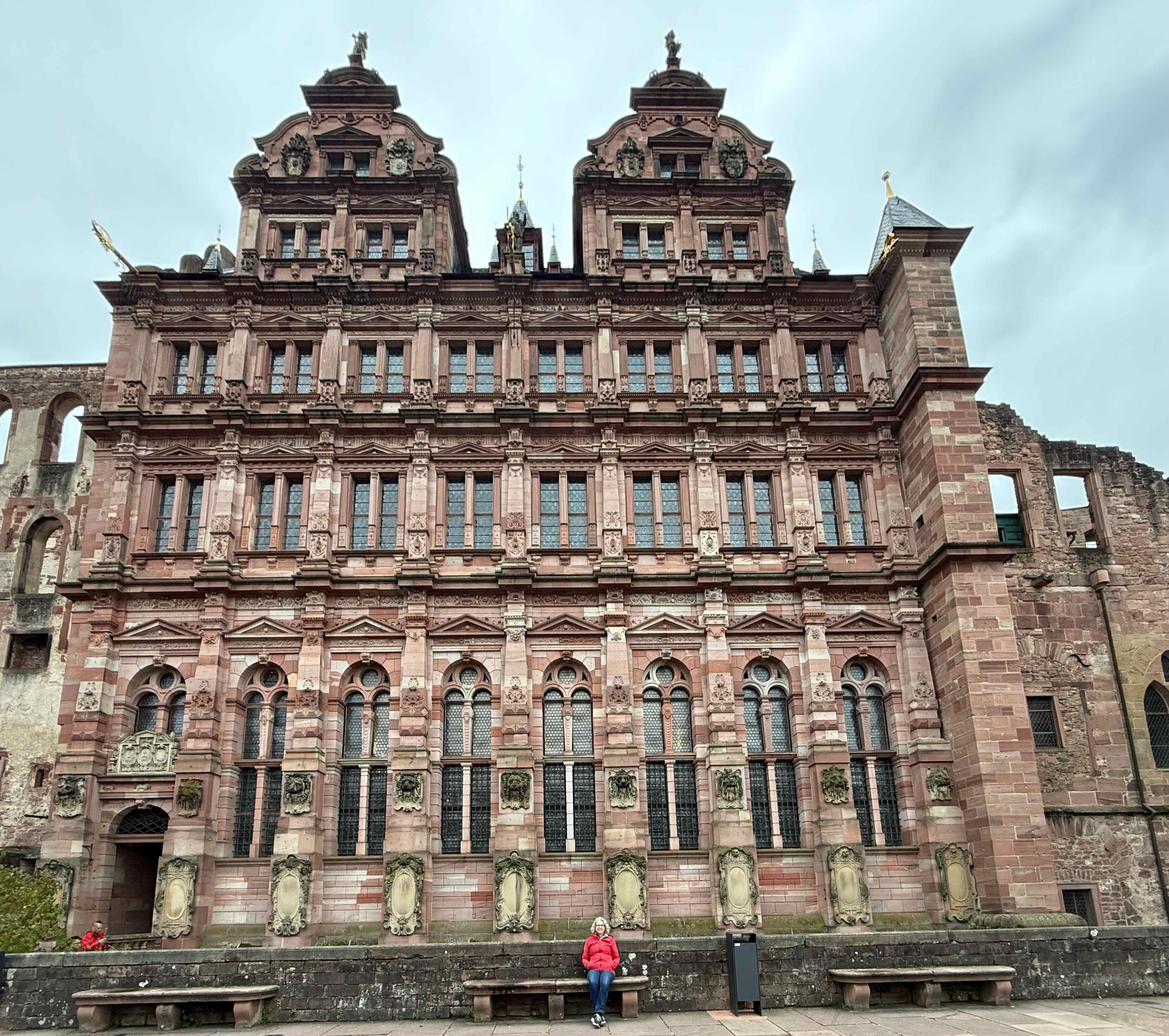
…and we are greeted with views of the ruins of what must have been a very impressive castle
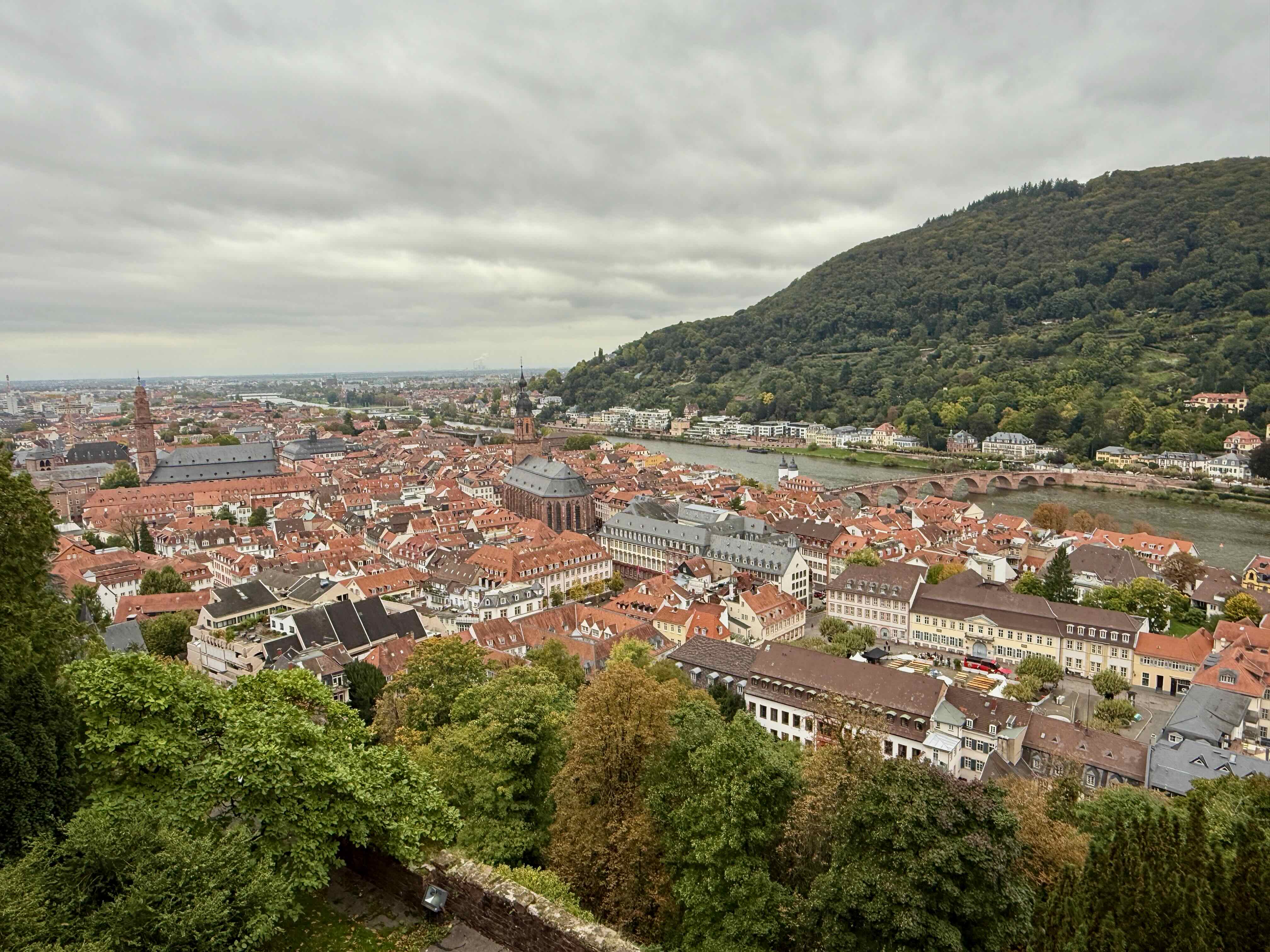
Walking through the doorway in the above photo we arrive on a huge balcony overlooking the Rhine River with views of Heidelberg below.A view of the ruins as seen from the balcony.
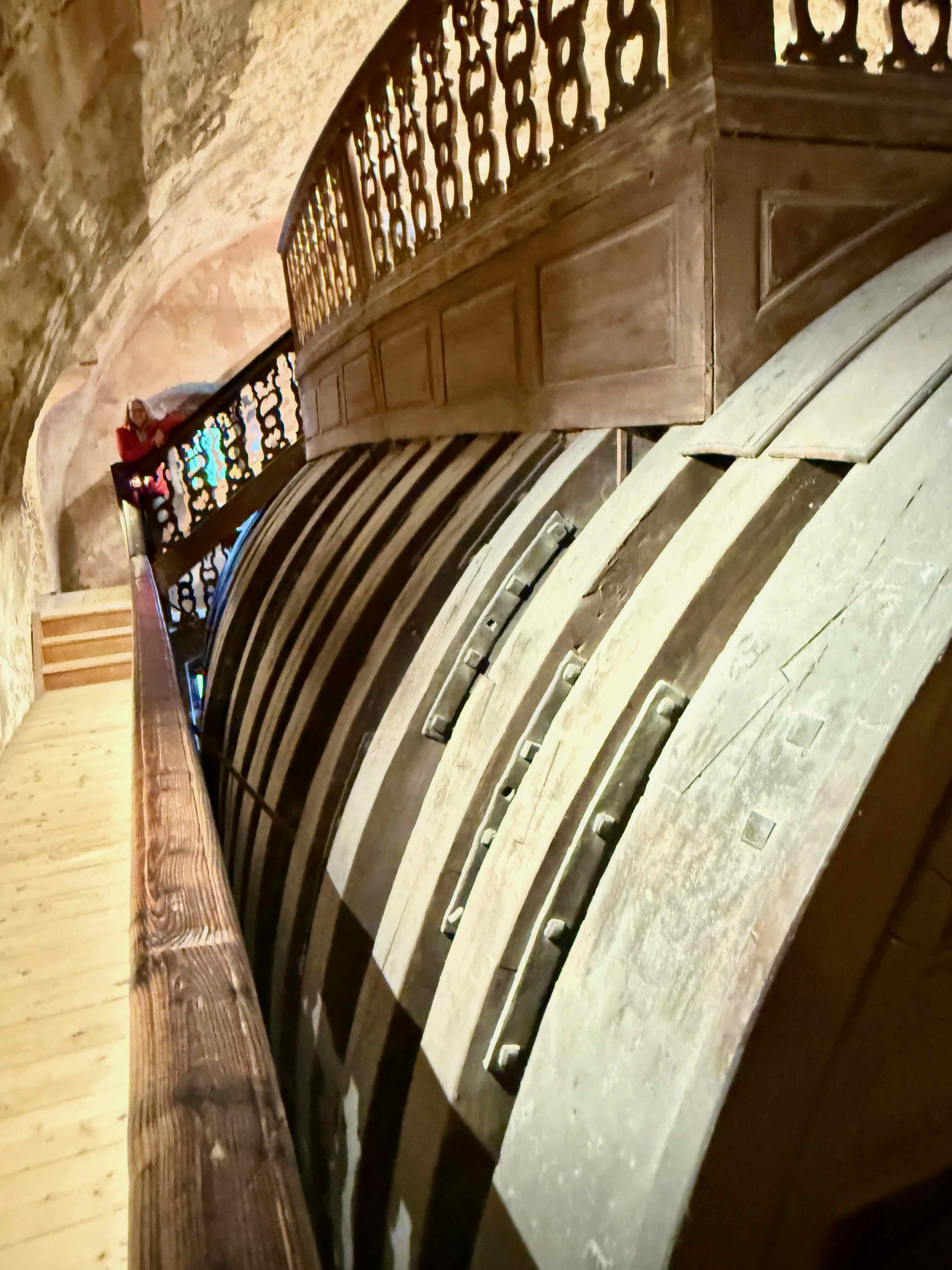
It is cold out so we go inside to see the Big Wine Barrel.  It is pretty impressive and I take this photo and then walk around the corner while Bob is inspecting the barrel. I come back and tell him “You need to come and see the BIG Wine Barrel!
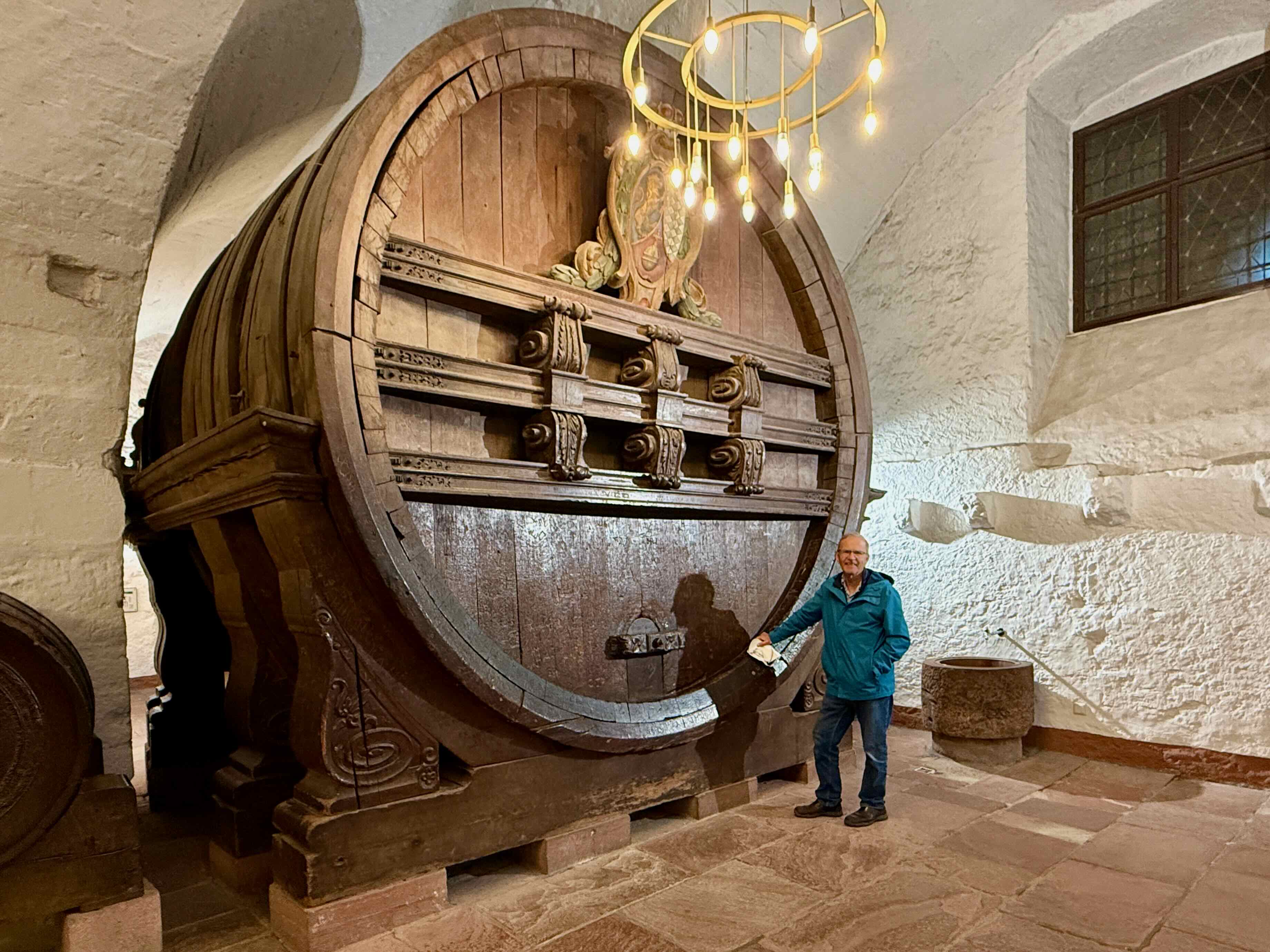
Here it is!
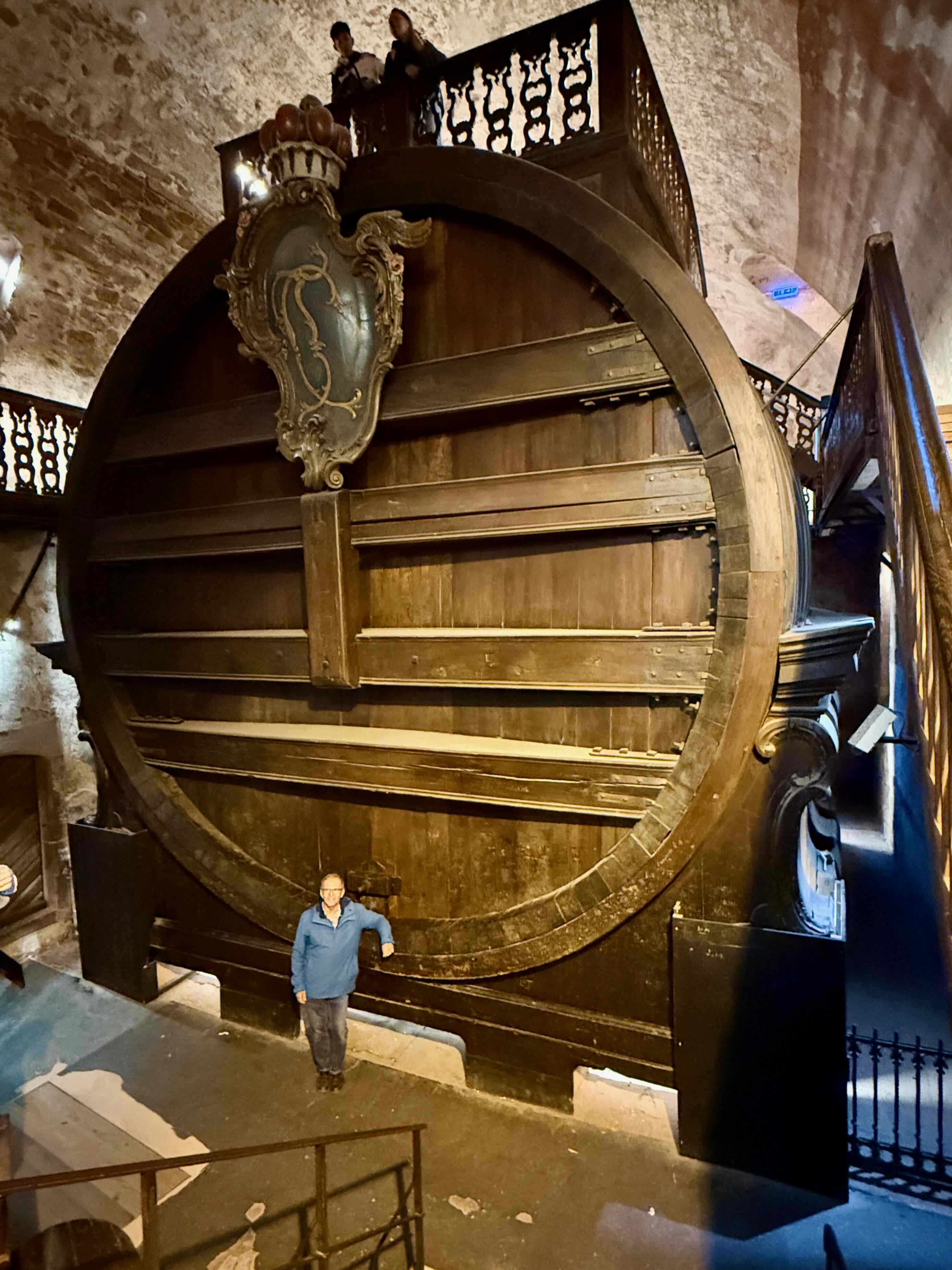
This wine barrel held 220,000 liters of wine. The stairs I am standing on lead to a platform above the barrel that was likely used as a dance floor! 
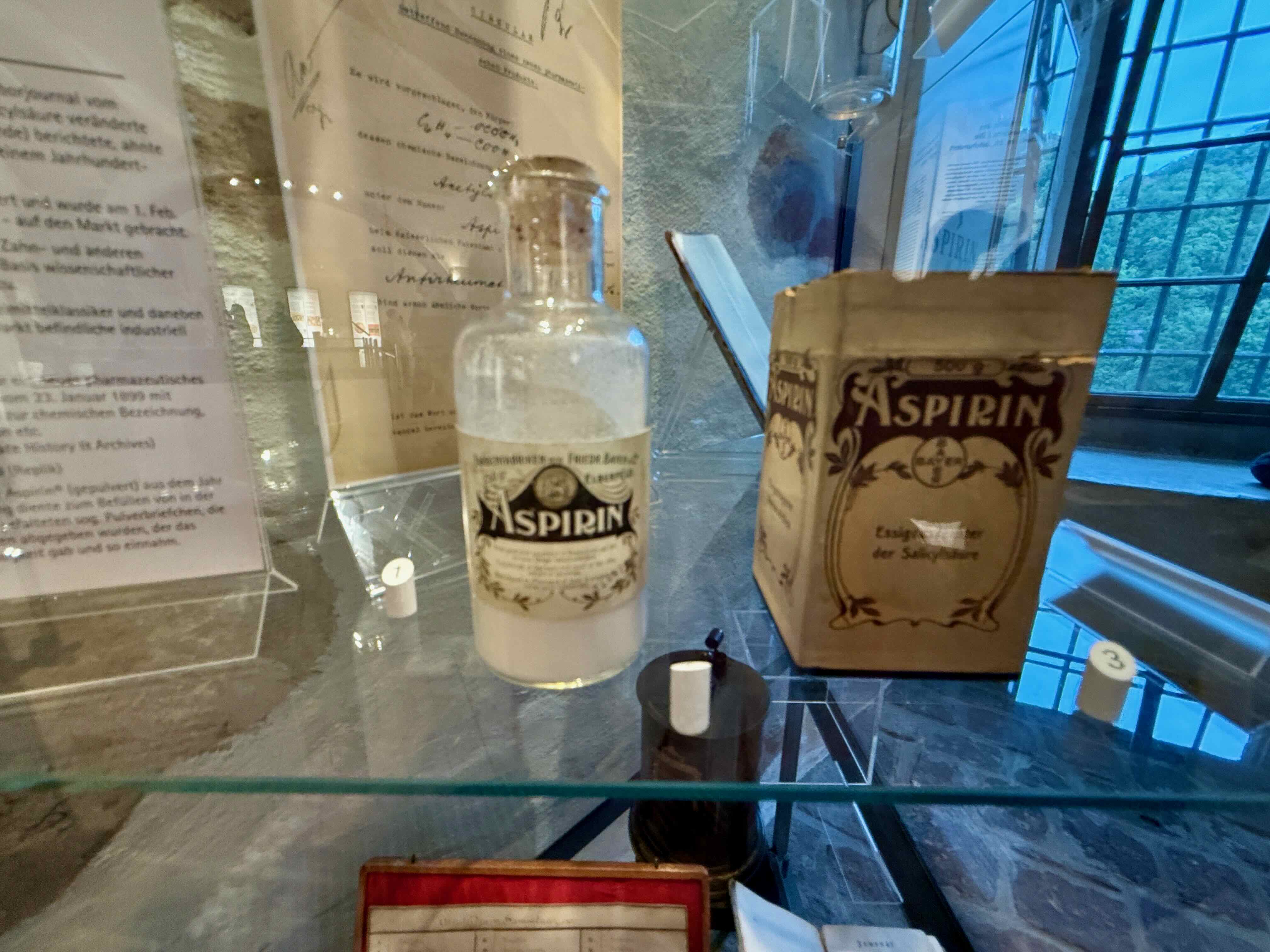
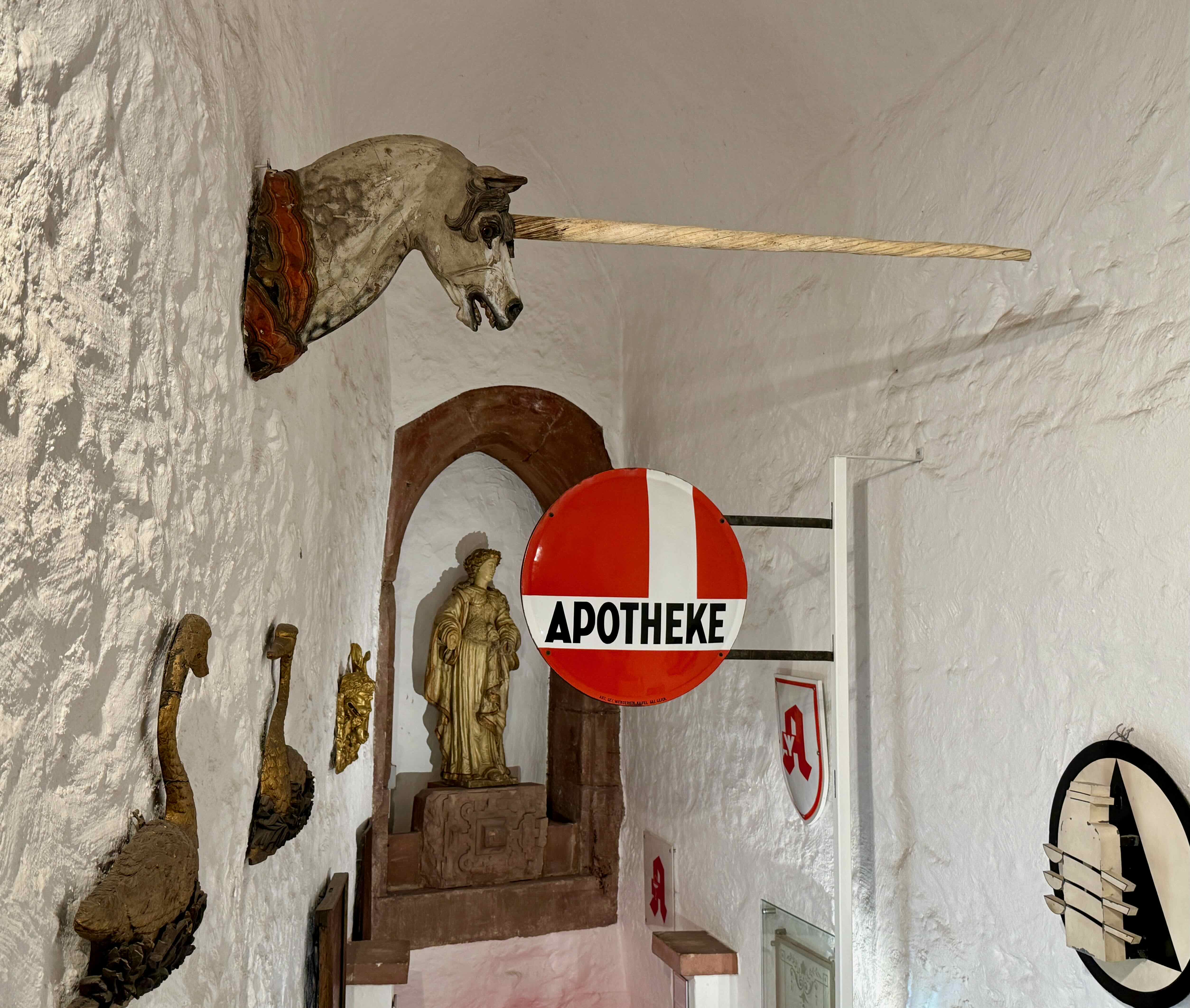
Last stop is the German Apothecary Museum. It is warm inside, which I really appreciate.  Aspirin was a commercially sold product in 1889. 
This chest of homeopathic medicines from 1890 contains 312 vials of homeopathic remedies.
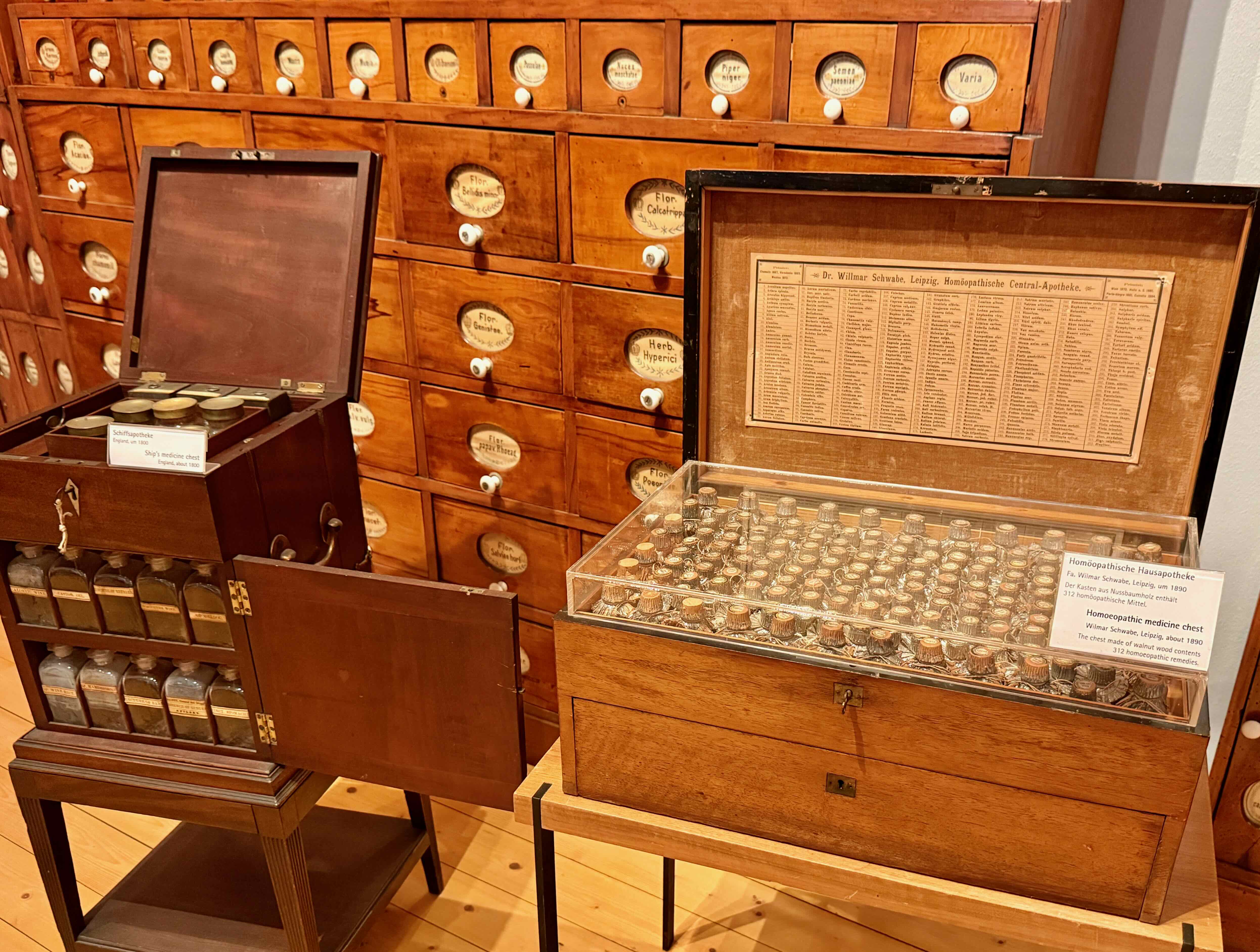
What is it about chests with lots of little drawers that I find so appealing?
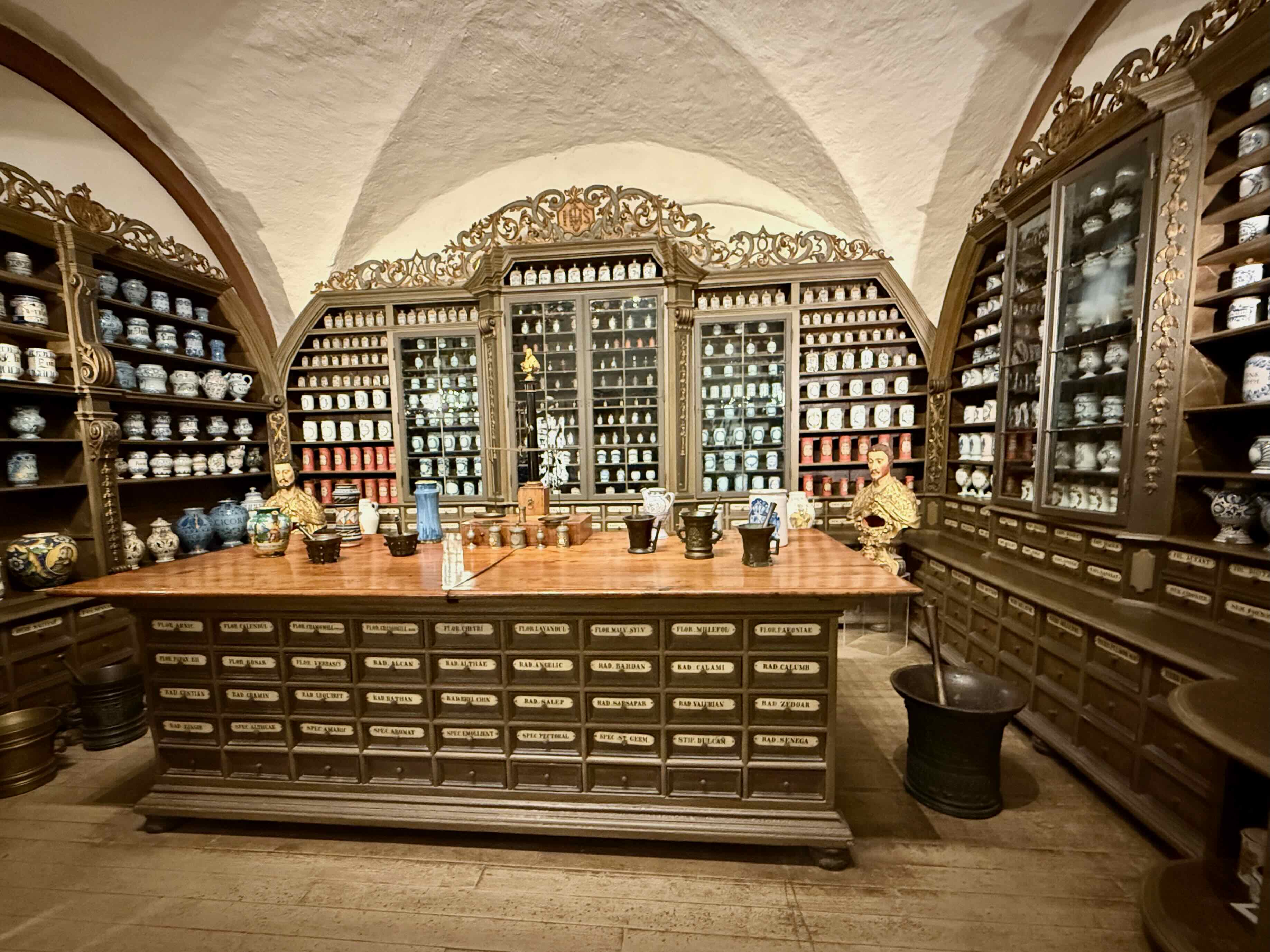
Of course, ground unicorn horns were in big demand as a cure for ailments such as fever, plaque, poisoning convulsions and epilepsy! Unicorn horns were just long tusks from narwhals or other animals but they were an expensive medication reserved for royalty and the very rich.
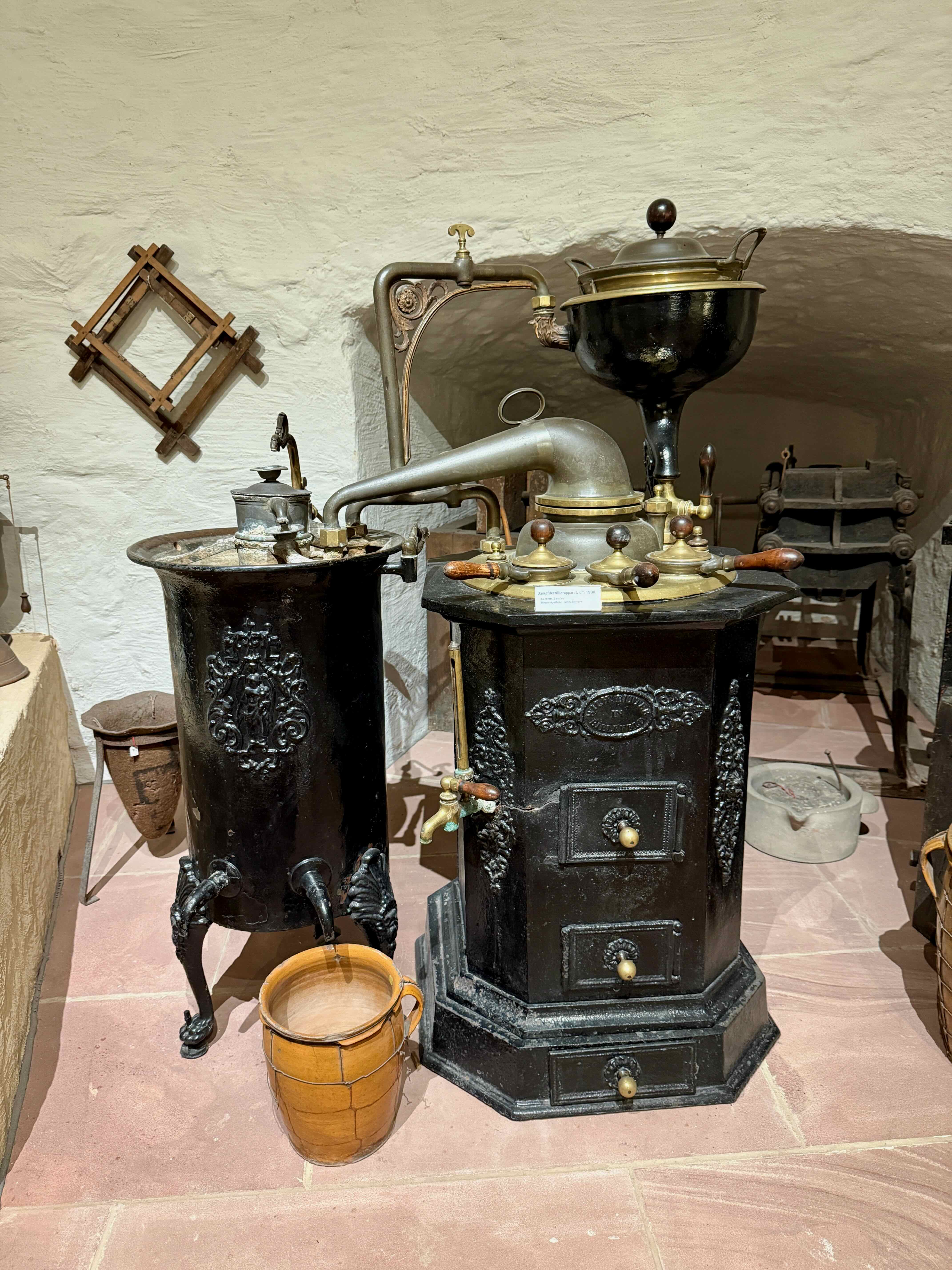
An early distillery…
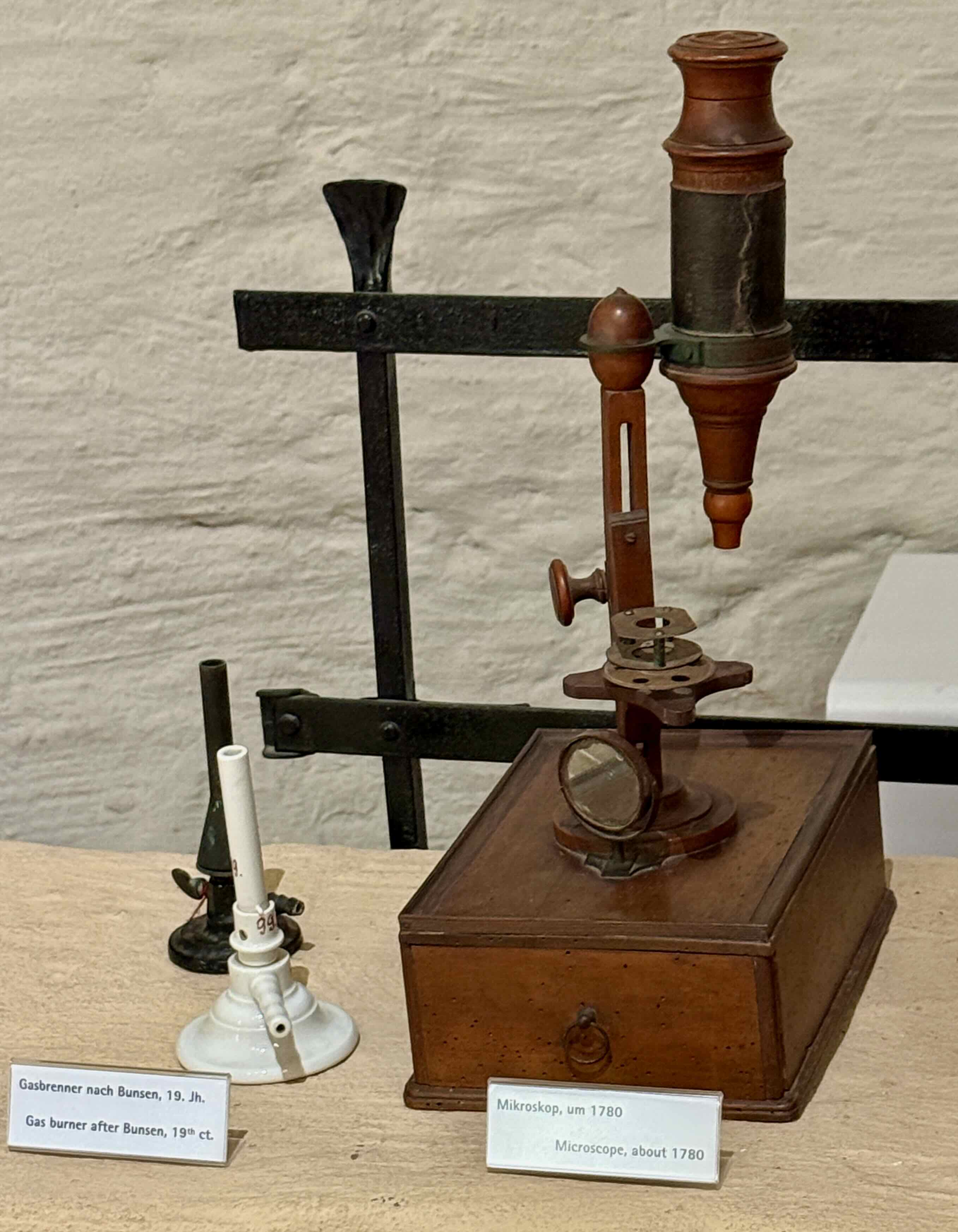
…bunsen burners and a telescope from 1780.We had such a hard time finding the entrance to the funicular and wondered where this castle was located…well, on our way back to the parkade I Iooked up…and there it was!  We both laughed, but then we couldn’t find the entrance to the parkade!  We looked everywhere and finally walked down the out ramp, and there was the door to the exit.  We checked it out and the stairs outside were right beside the ramp we just walked down…no sign or markers though!
Back on the road to stuttgart…and it is raining again.
Fontoy, France to Frankfurt, Germany

Day 30    Monday, September 29, 2025

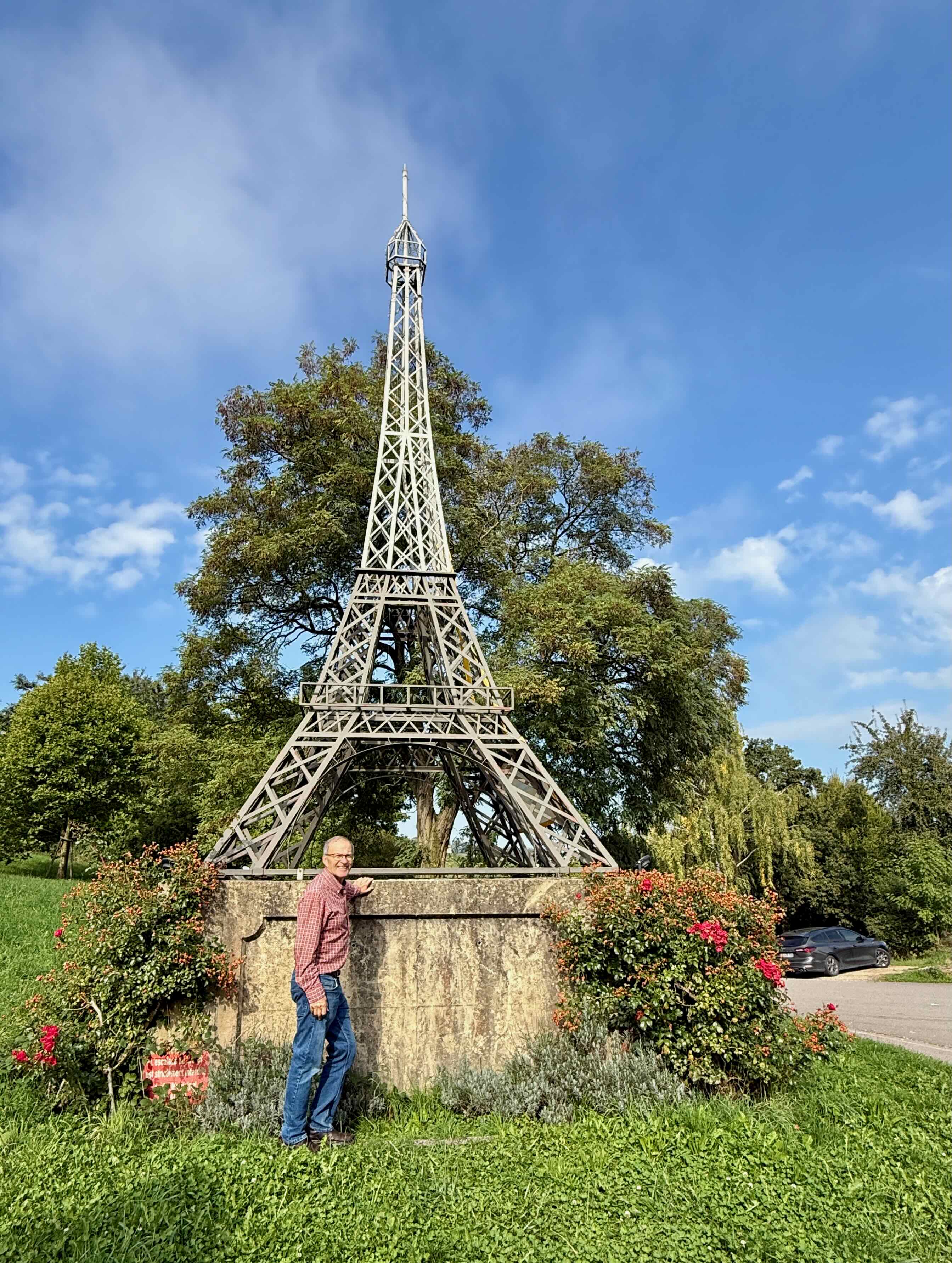
Today is a travel day to Frankfurt Germany and we have been travelling for month already. Bob says we have to stop and see another Eiffel Tower along the way but it is not quite as impressive as the one in Paris!

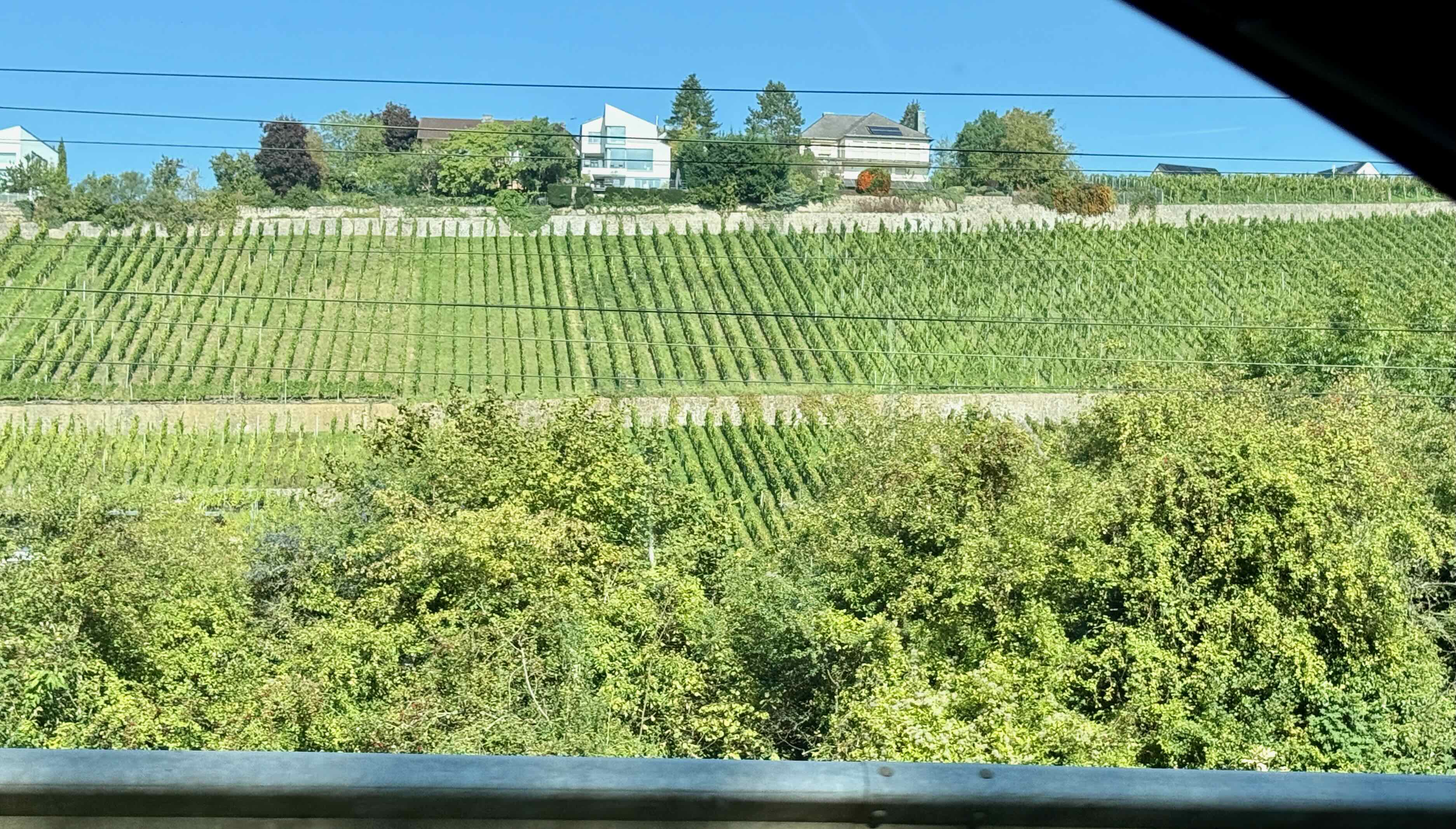
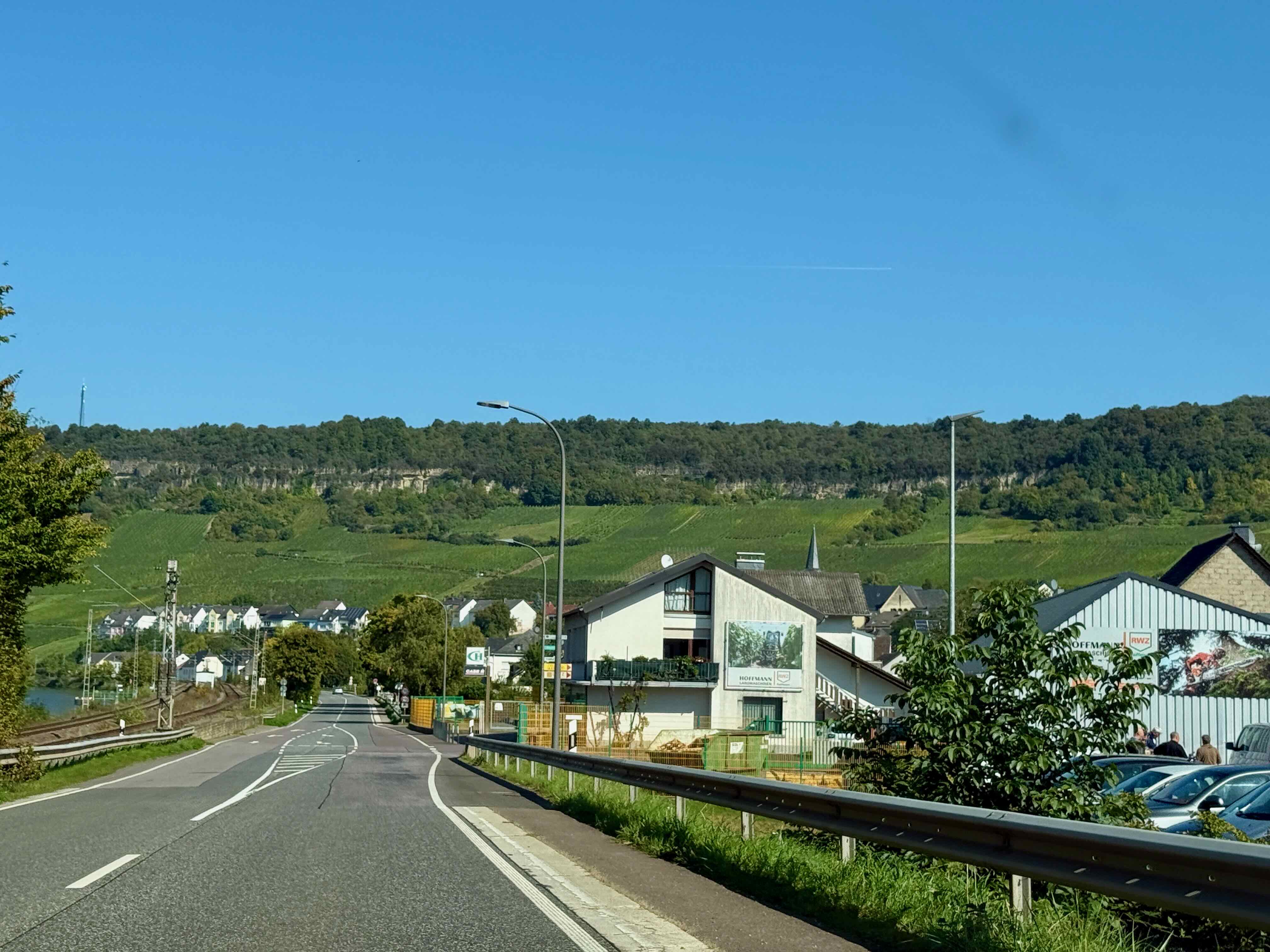
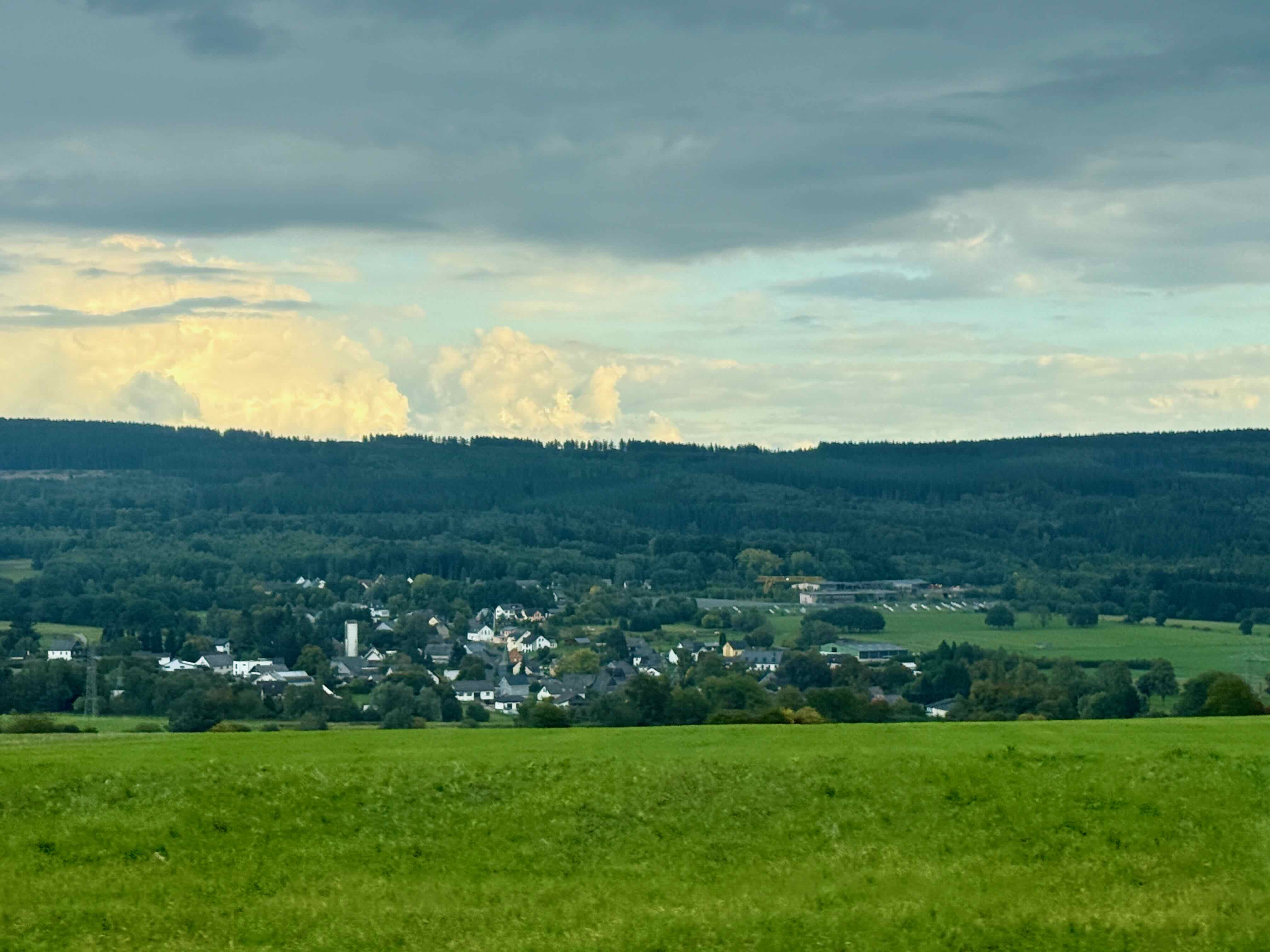
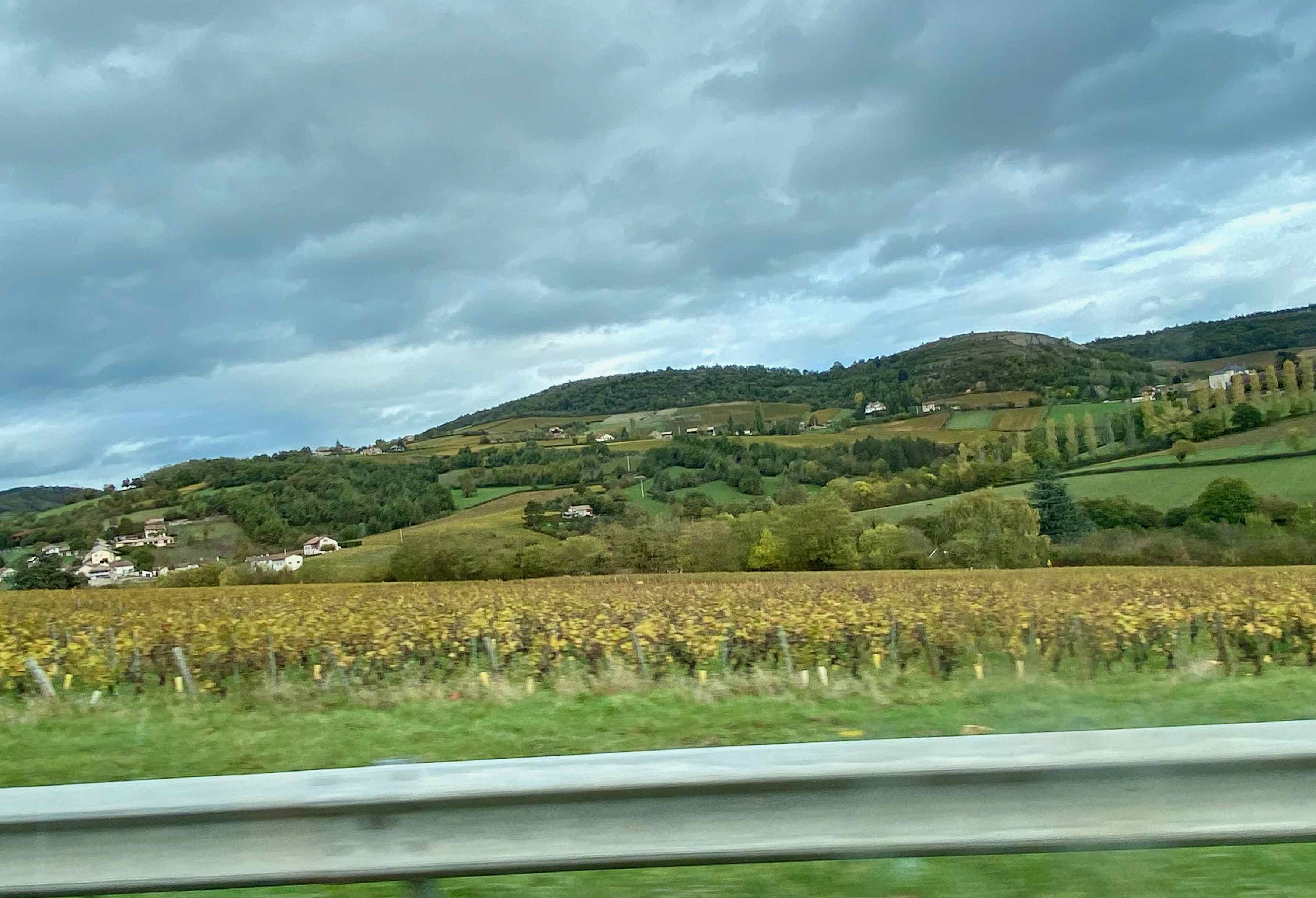
We had no idea that this is wine country.  There are vineyards on both sides of the road as far as we can see.

The hills around each town we pass are all growing row after row of grapes.  We see the odd group harvesting grapes but the main harvest occurred earlier this month.

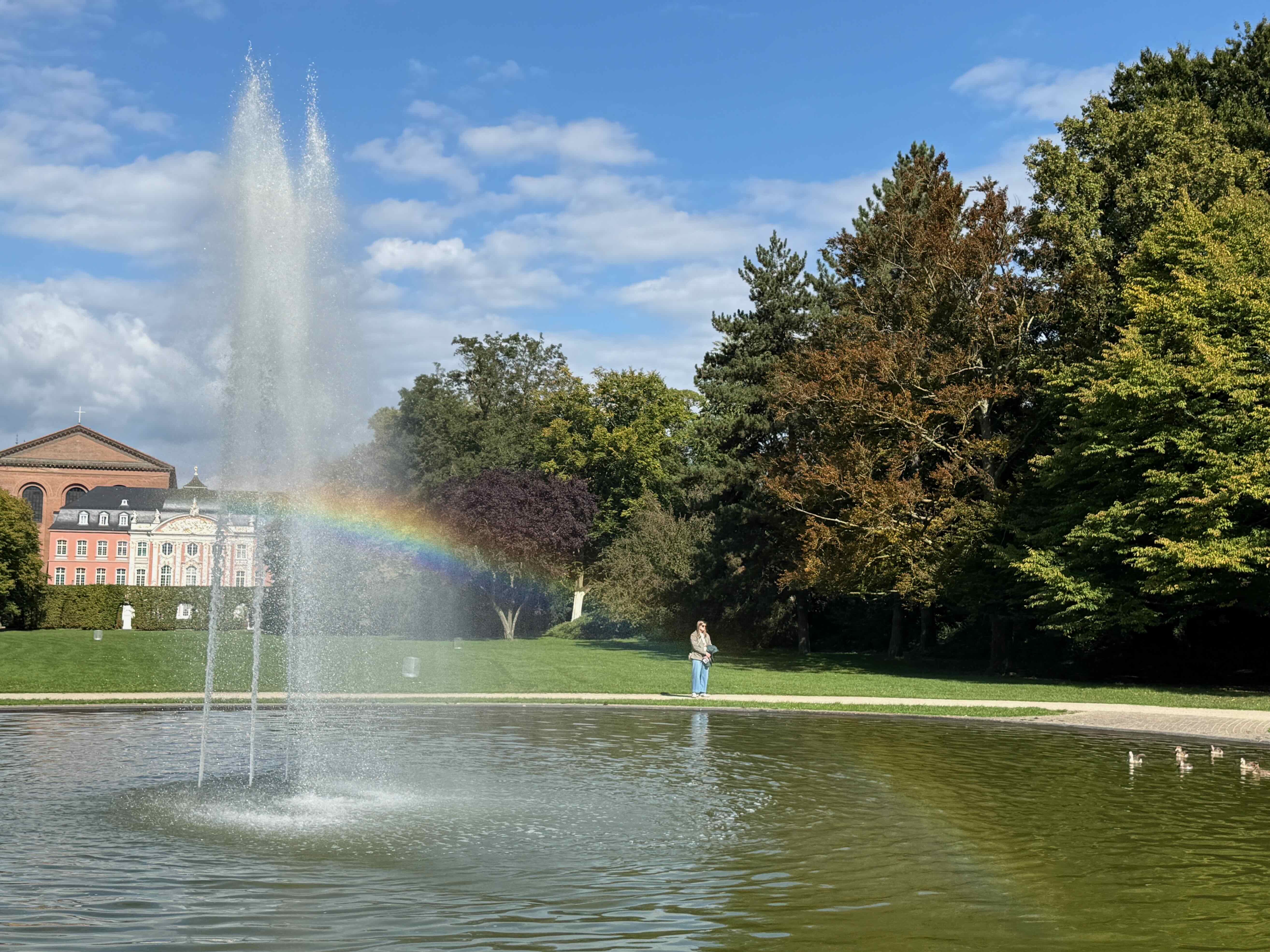
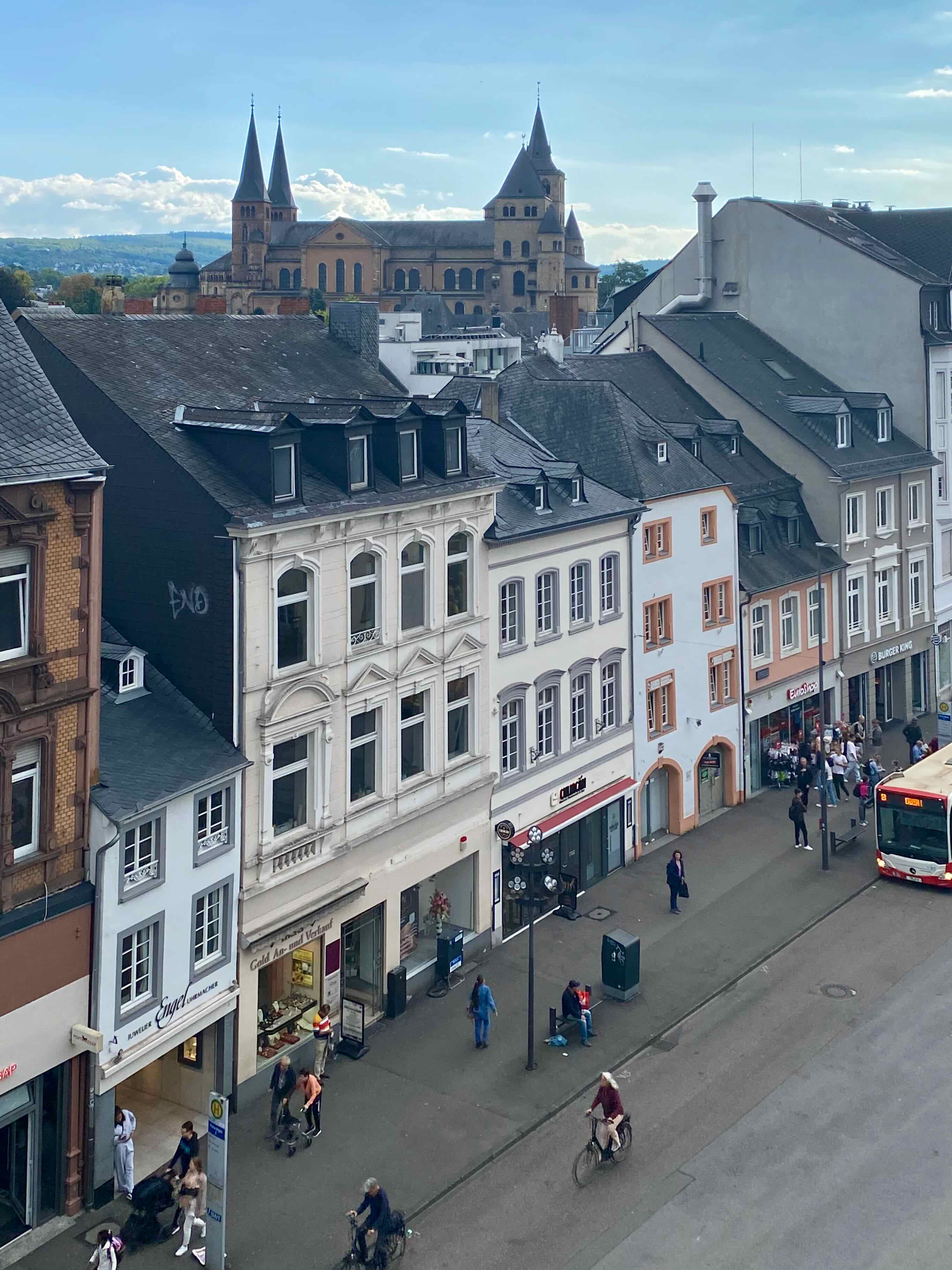
We stop in Trier and have our picnic lunch on a bench with this view.

The breeze blew water spray and made a rainbow just as I took this photo.

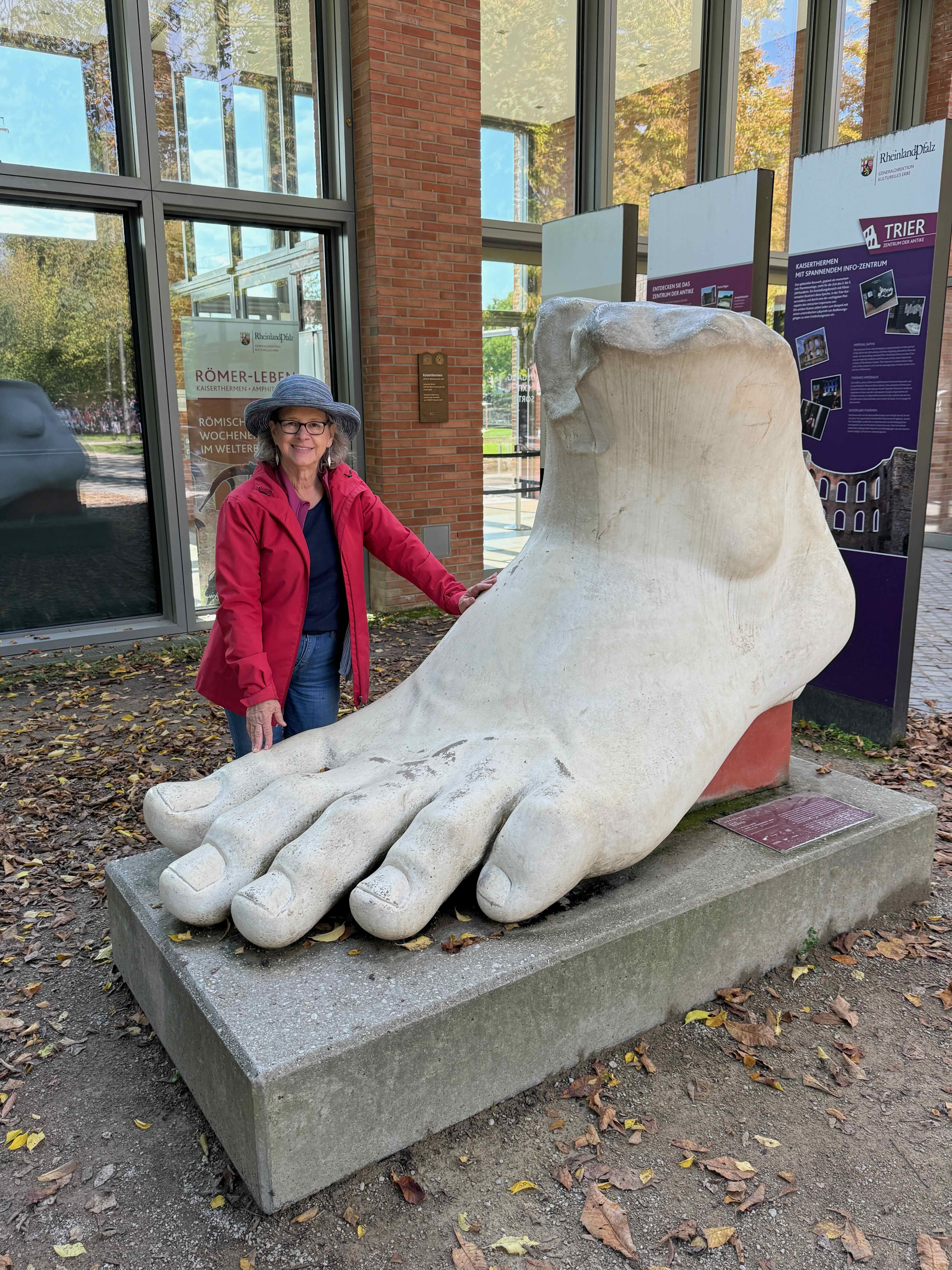
This foot of Emperor Constantine is a replica of one of the largest marble foots to have survived since antiquity. It was part of a 12 metre high seated statue of Constantine.

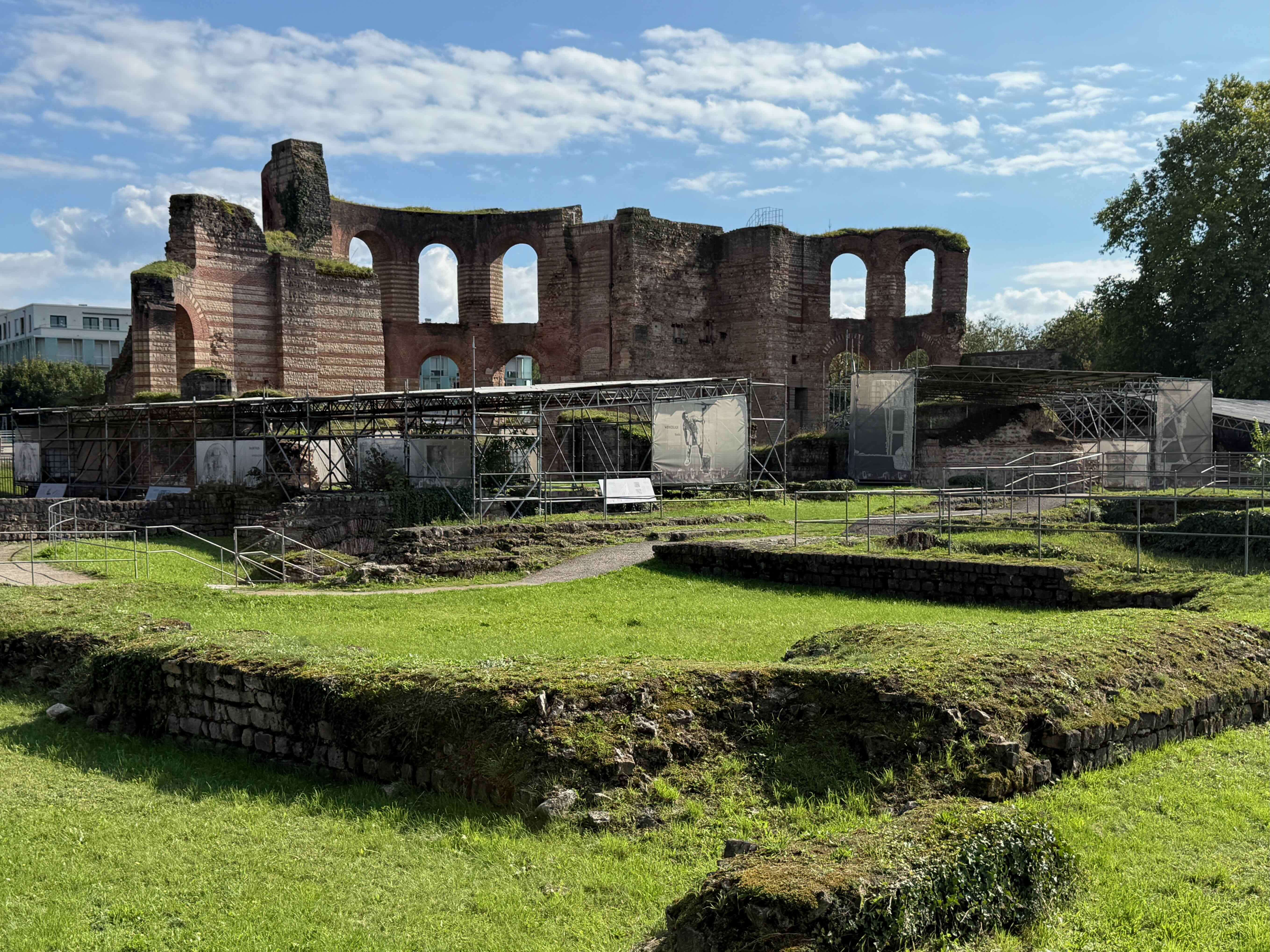
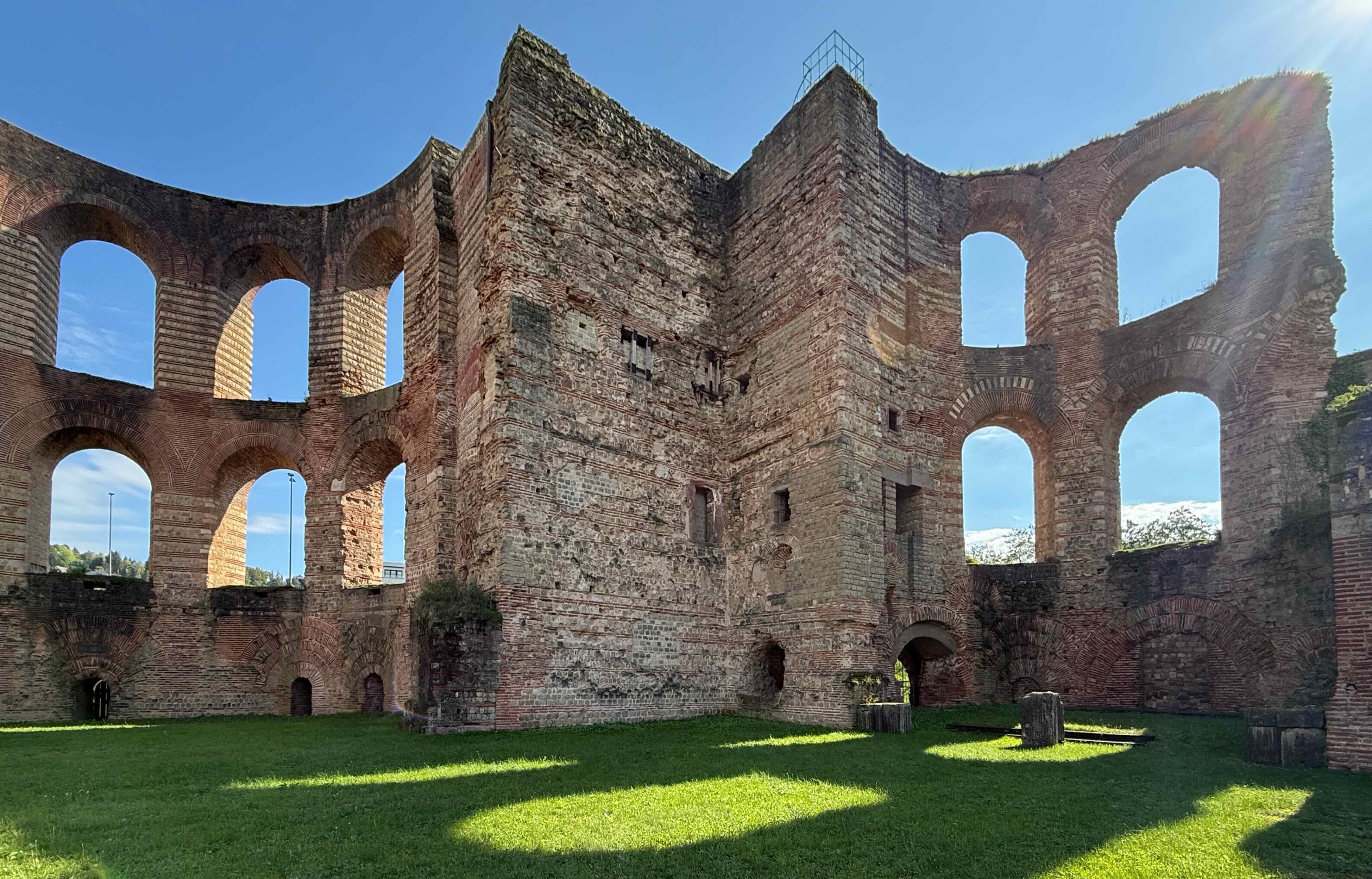
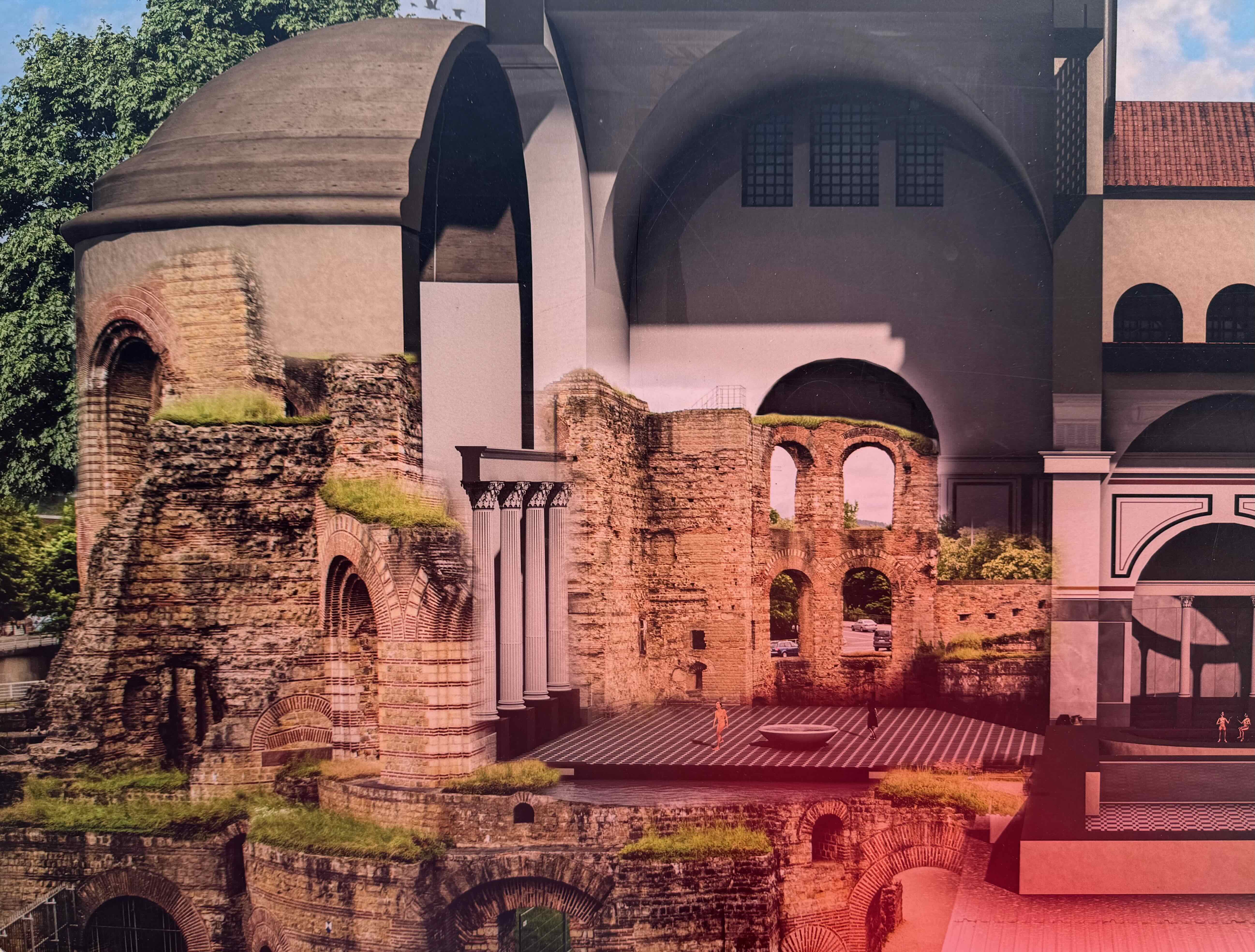
The Roman Baths are considered to be the largest Roman baths outside of Rome. 

The ruins are impressive!

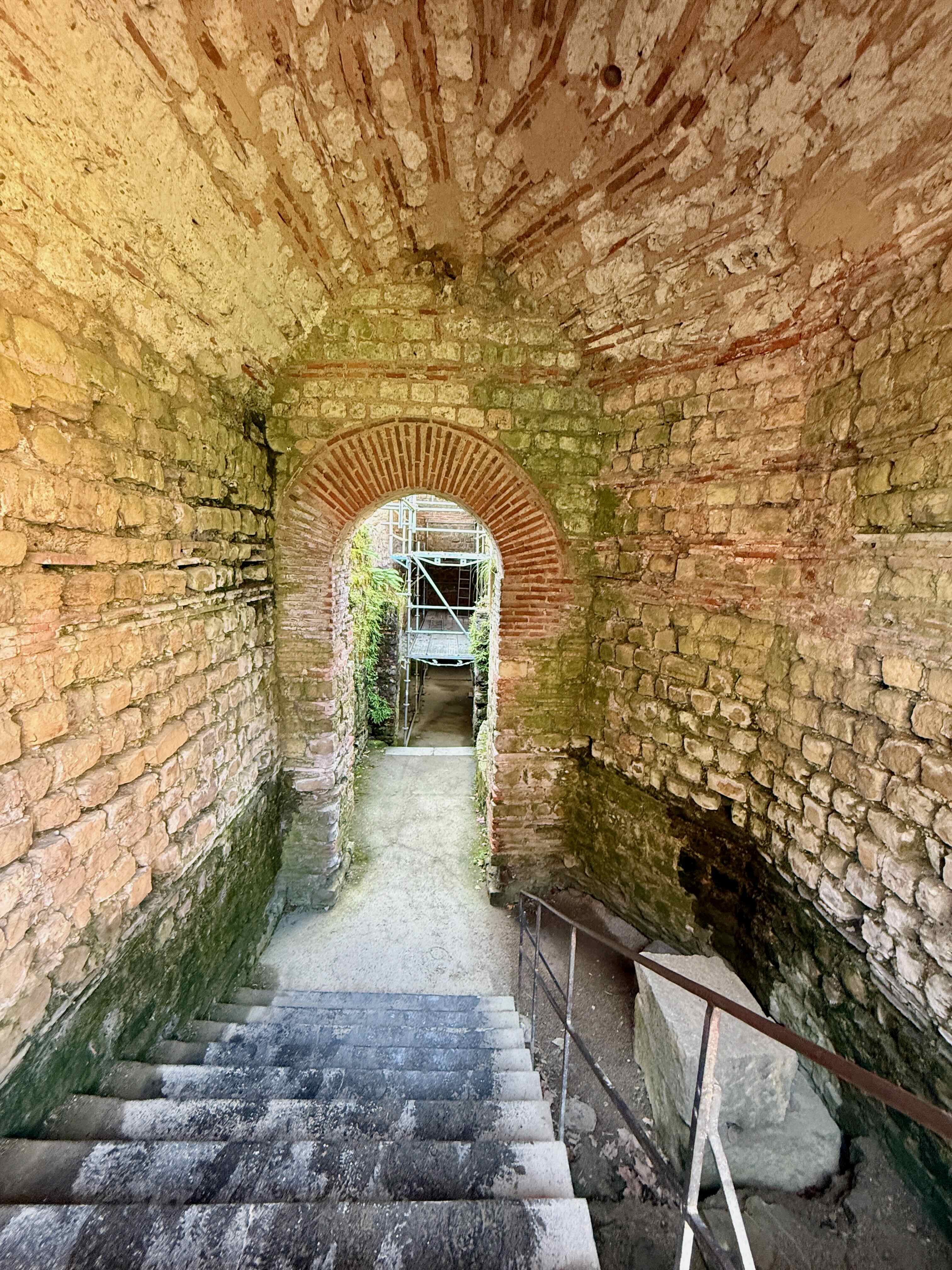
We are able to walk through the underground tunnels that would have been used as a service level for the maintenance of the bath’s heating system. This is the entrance to the tunnels.

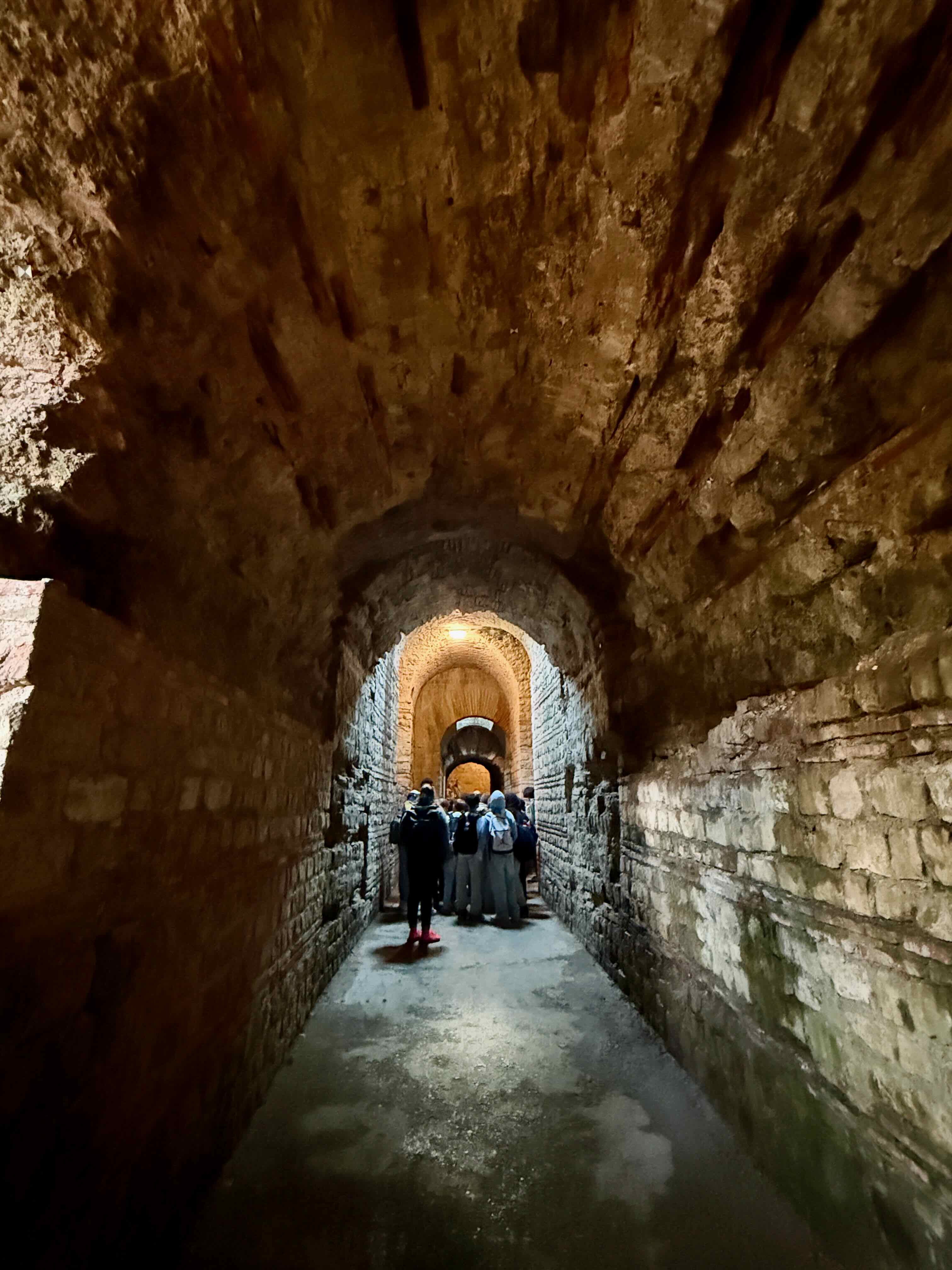
There was a group of schoolchildren ahead of us…probably the loudest group we have encountered on our travels! We took a side tunnel to avoid walking behind them. There are a maze of tunnels and we are free to explore as we wish. That is Bob peeking around the bend in the tunnel.
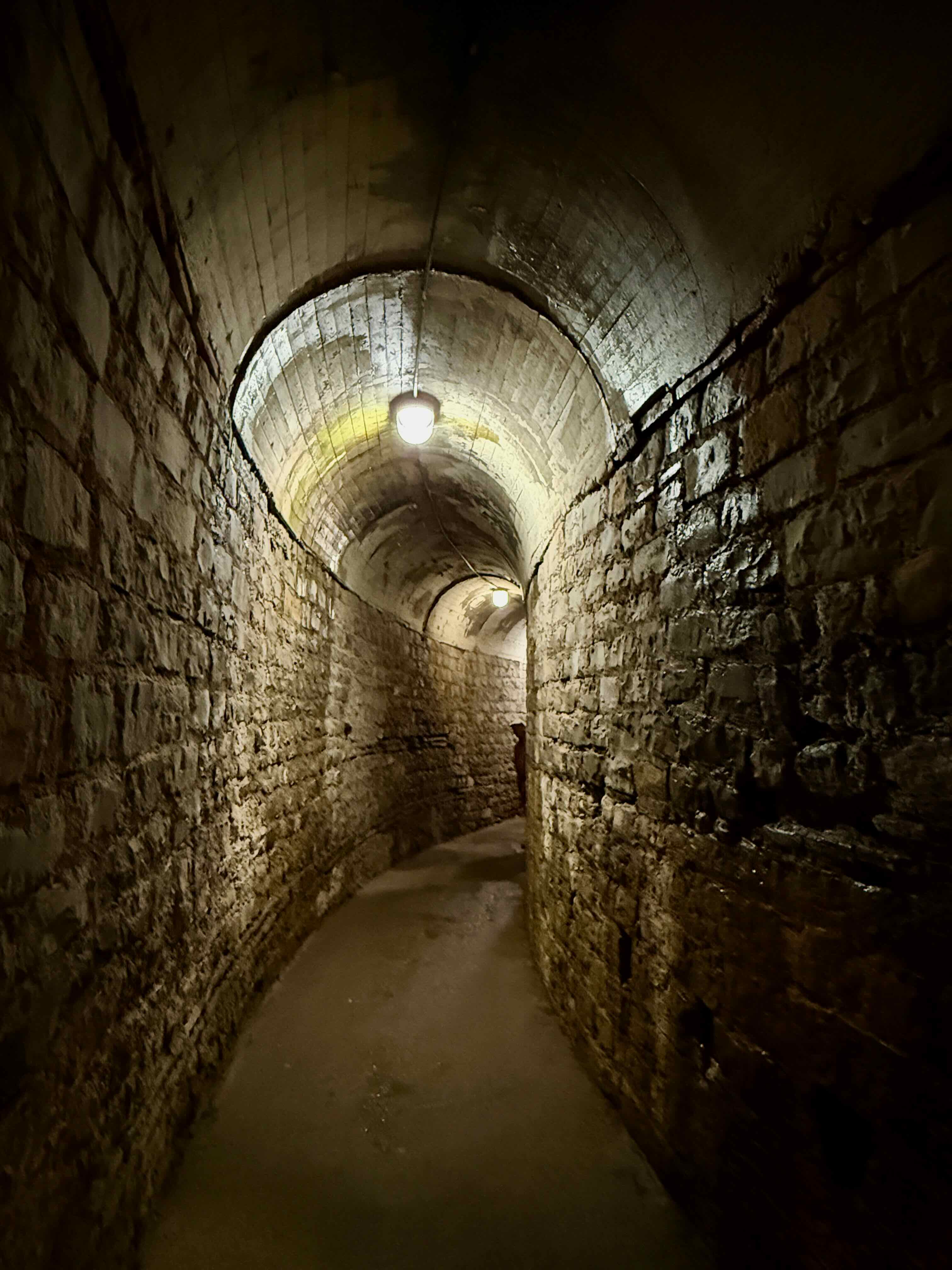
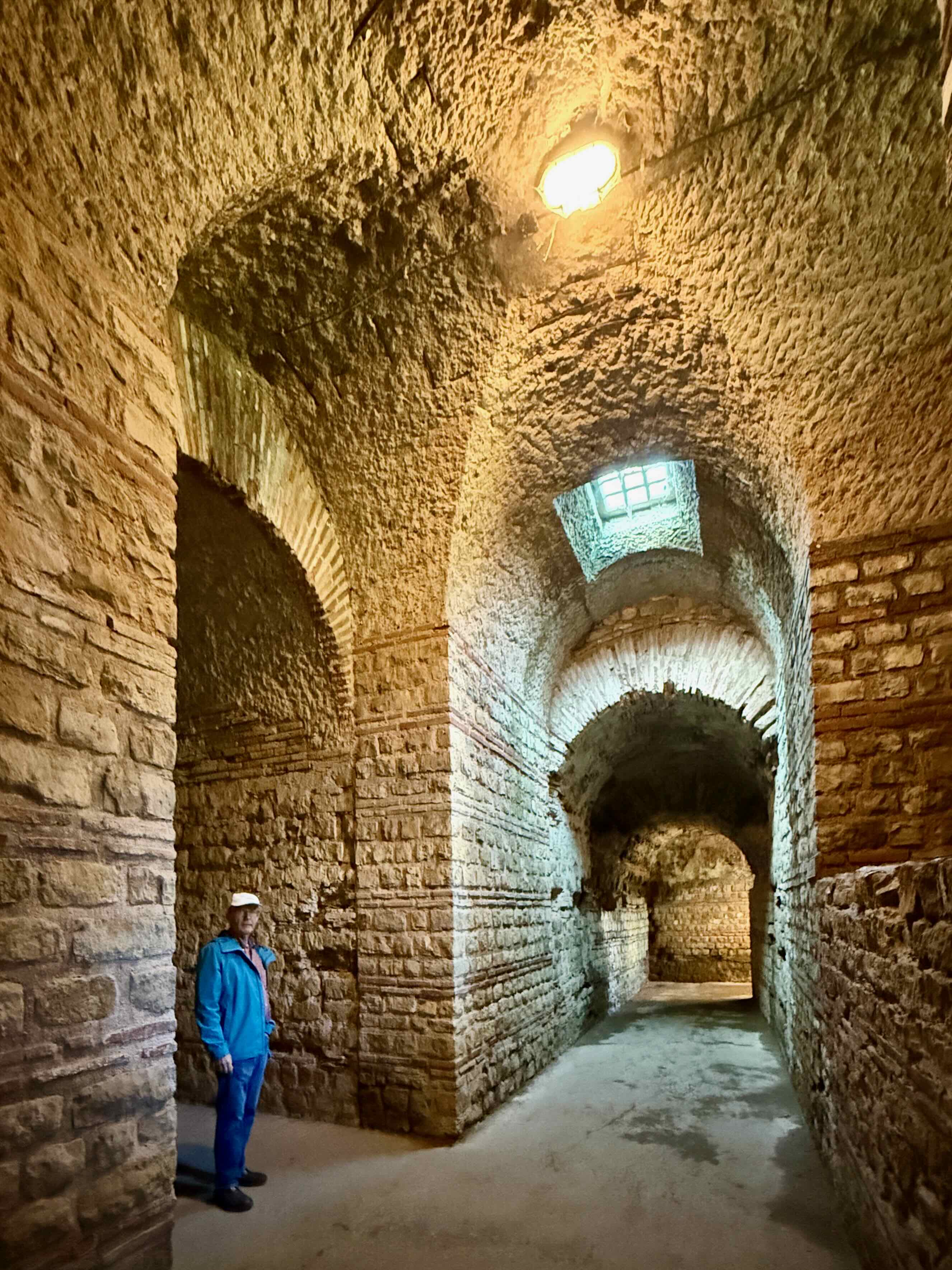
We do get a bit lost down here, but it was a lot of fun exploring these interesting tunnels.

Which way should we go!

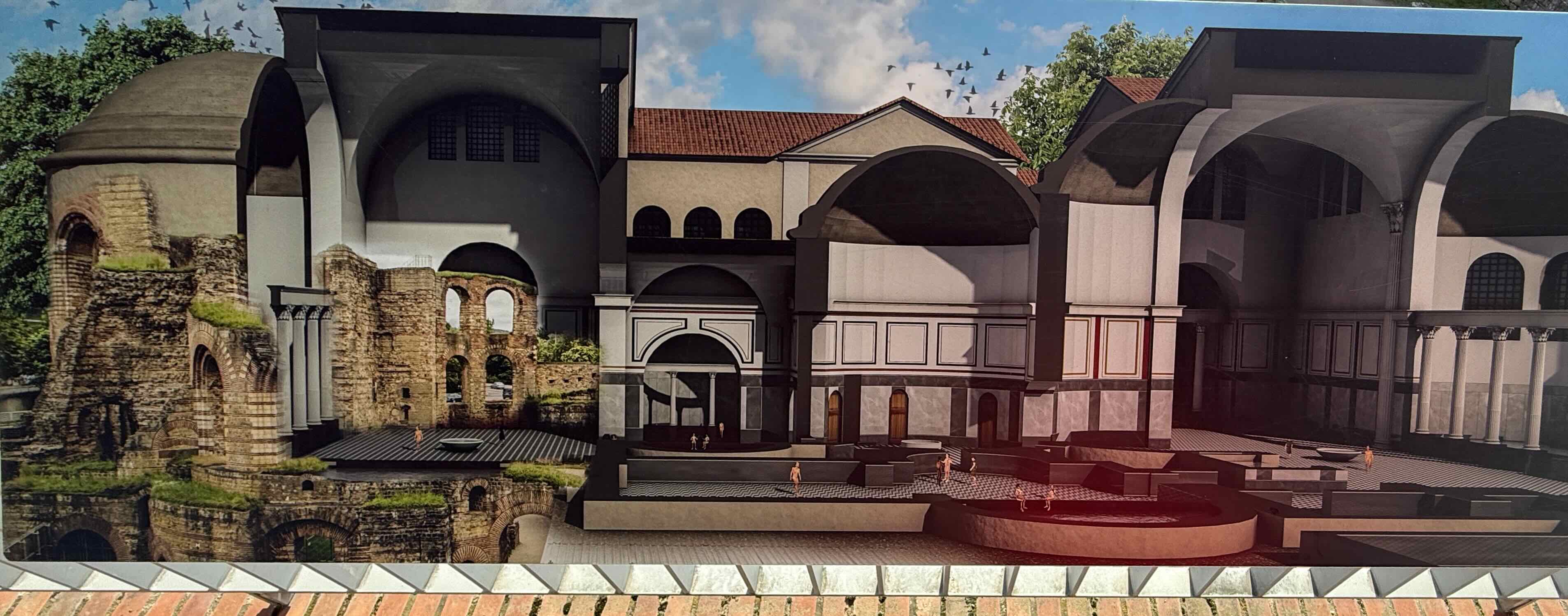
This photo shows the size of the original baths, although they were never actually completed. The ruins of today are superimposed on the original baths.

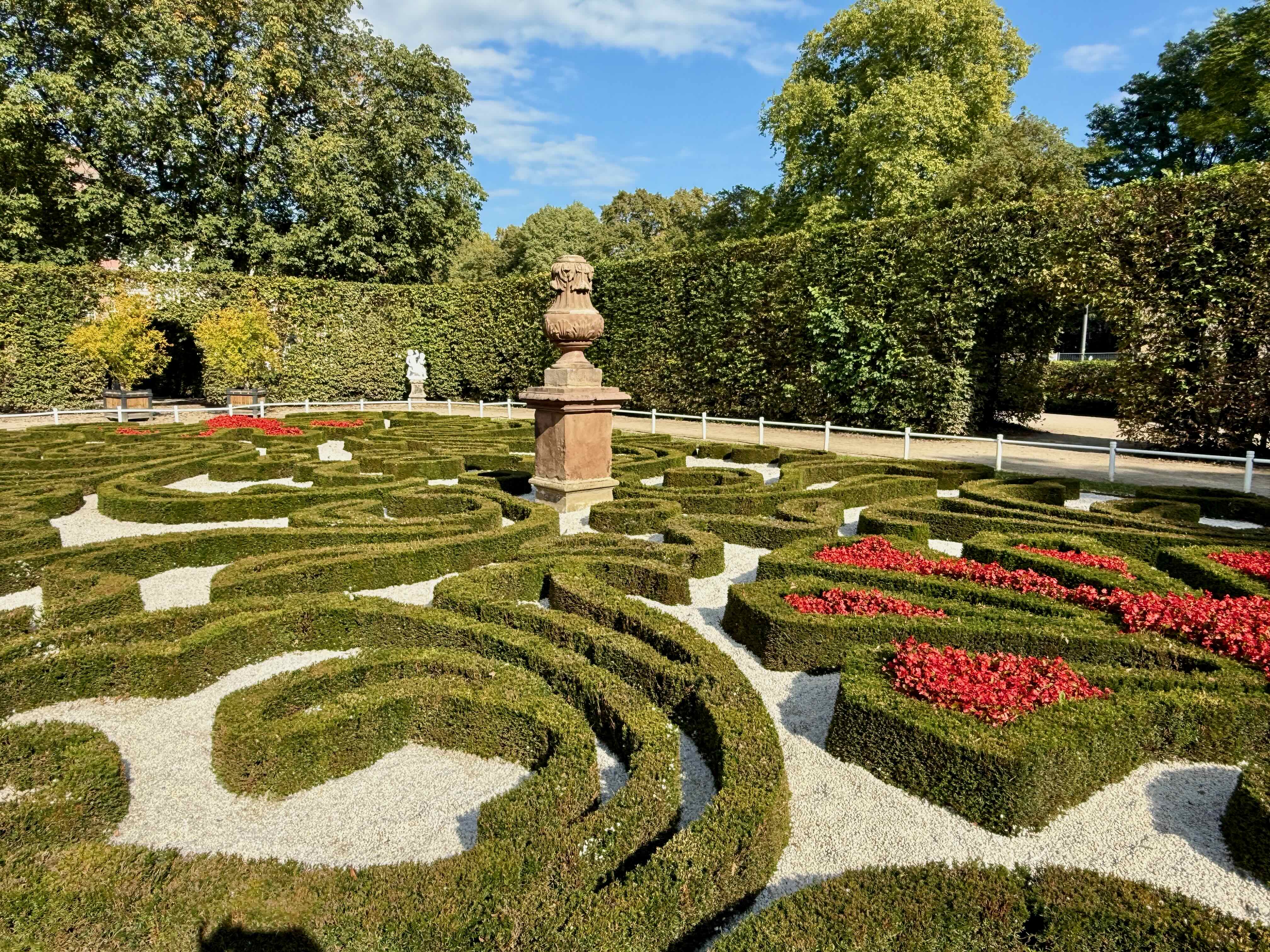
The ruins are impressive, but they are only half the height of the original structure! We pass this lovely garden on the way to visit Trier’s cathedral.
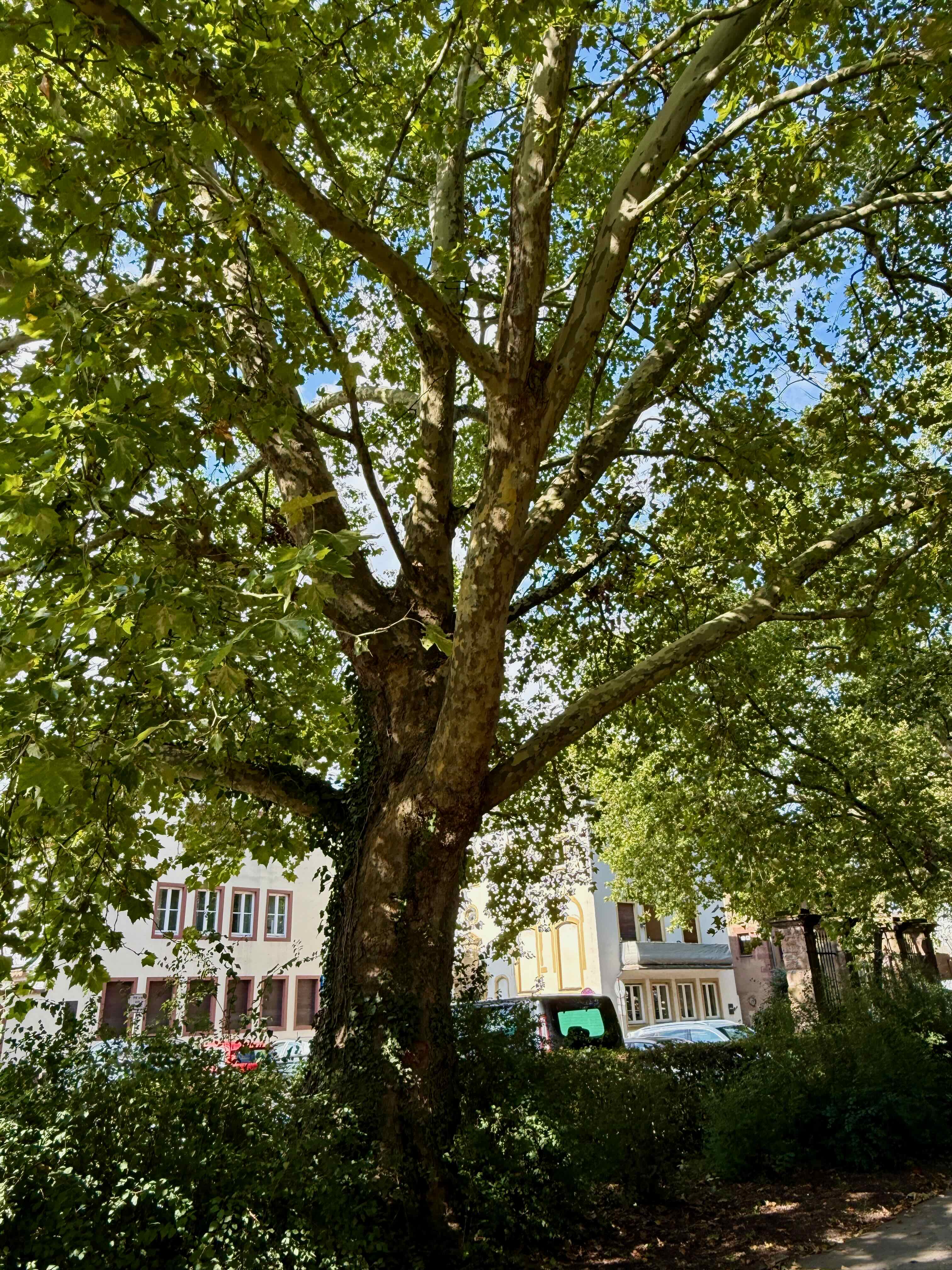
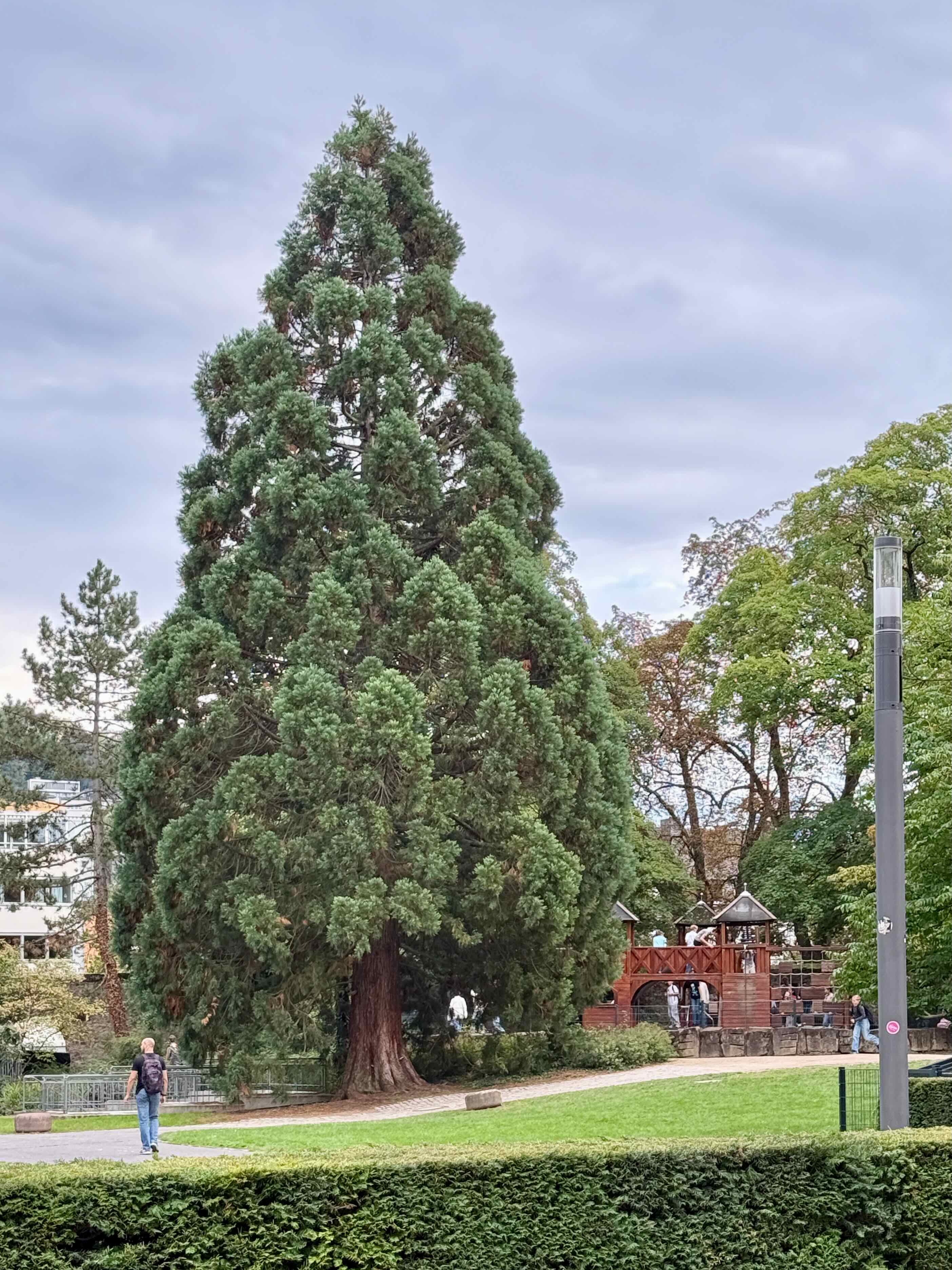
Photos really do not show how beautiful and enormous the trees are. I wish we were able to grow trees this large back home. These trees wouldn’t survive our colder climate.

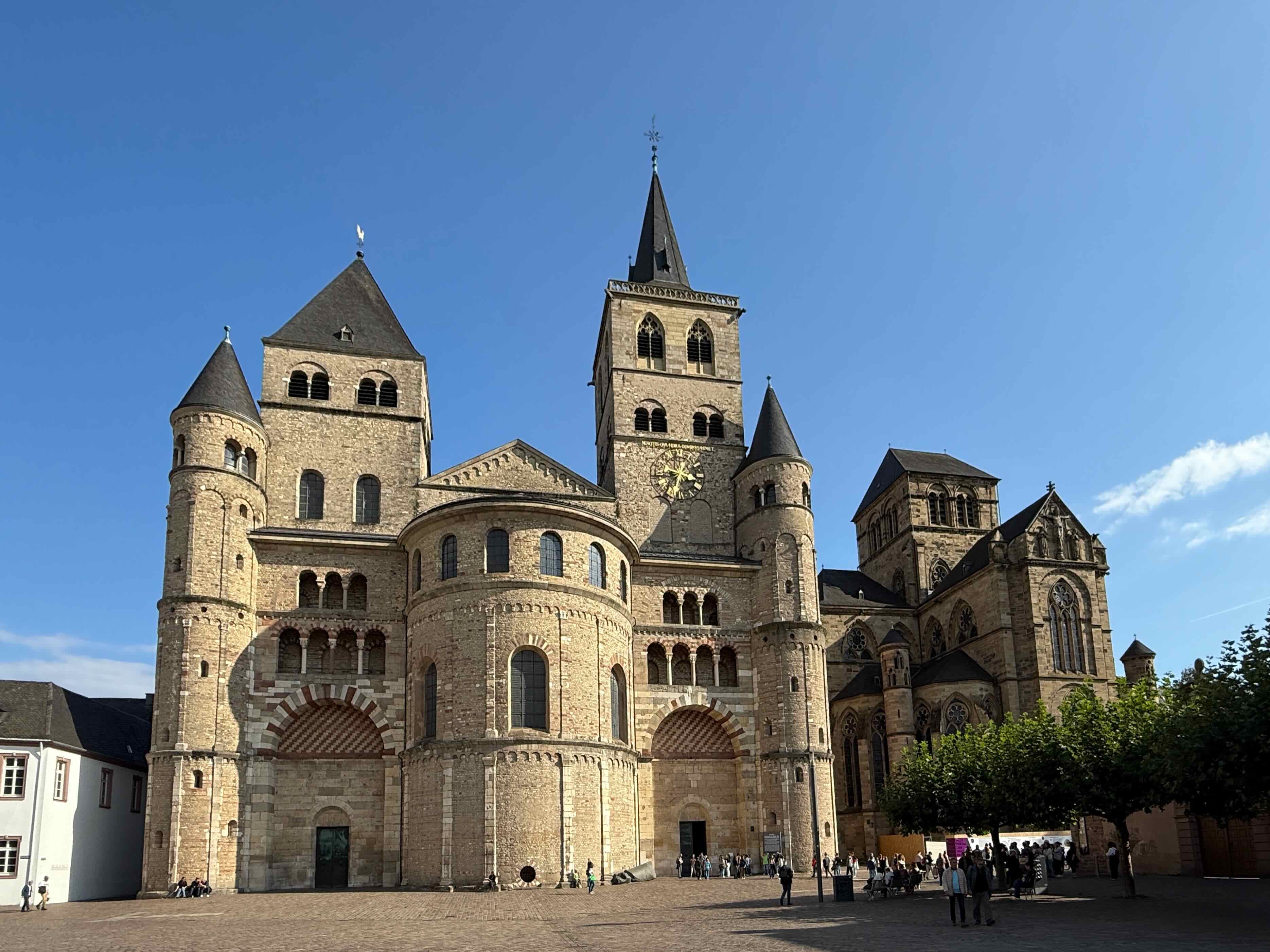
Trier Cathedral is a UNESCO World Heritage Site and the oldest cathedral in Germany. Construction started in the 4th century and it was built upon the foundations of ancient Roman structures.

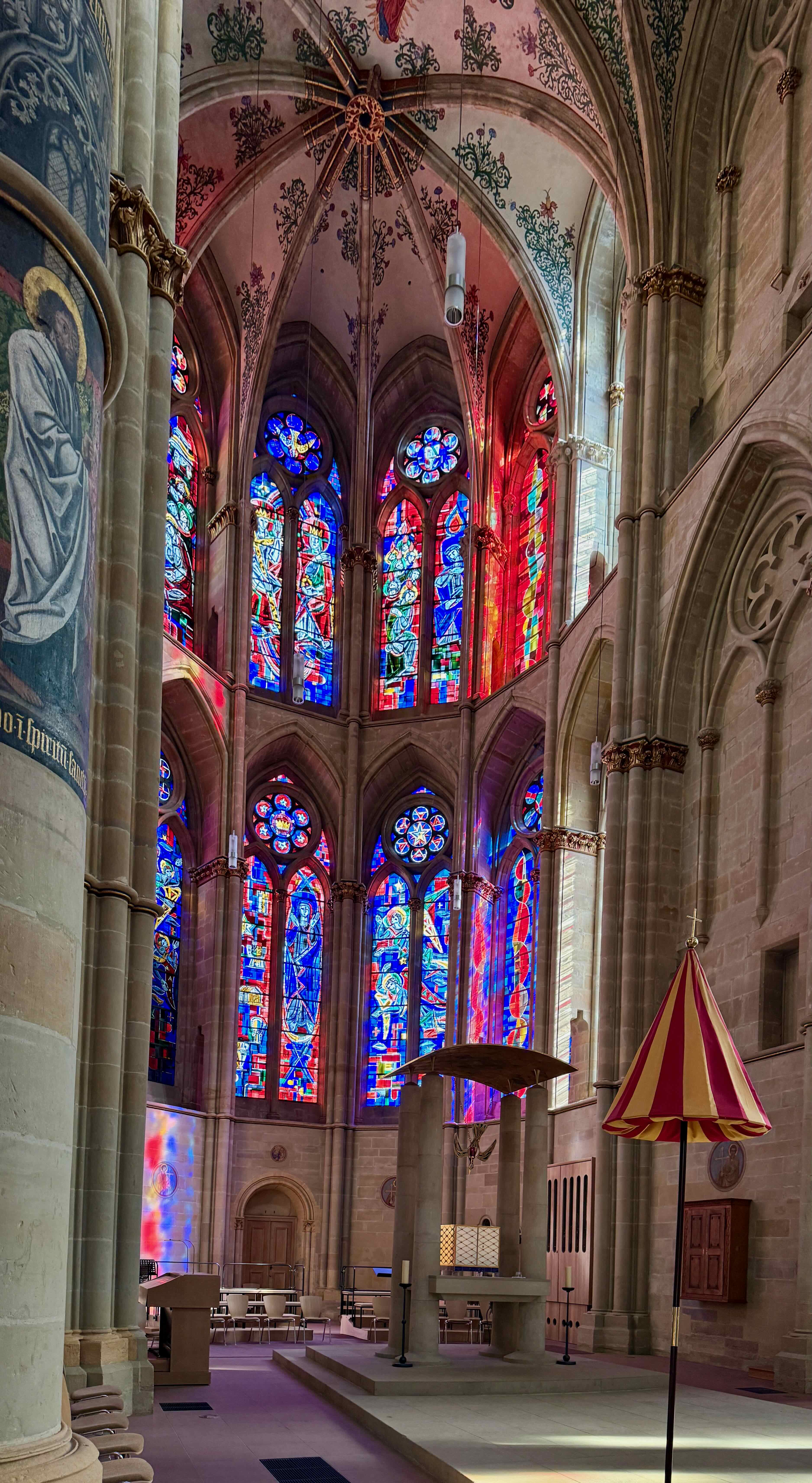
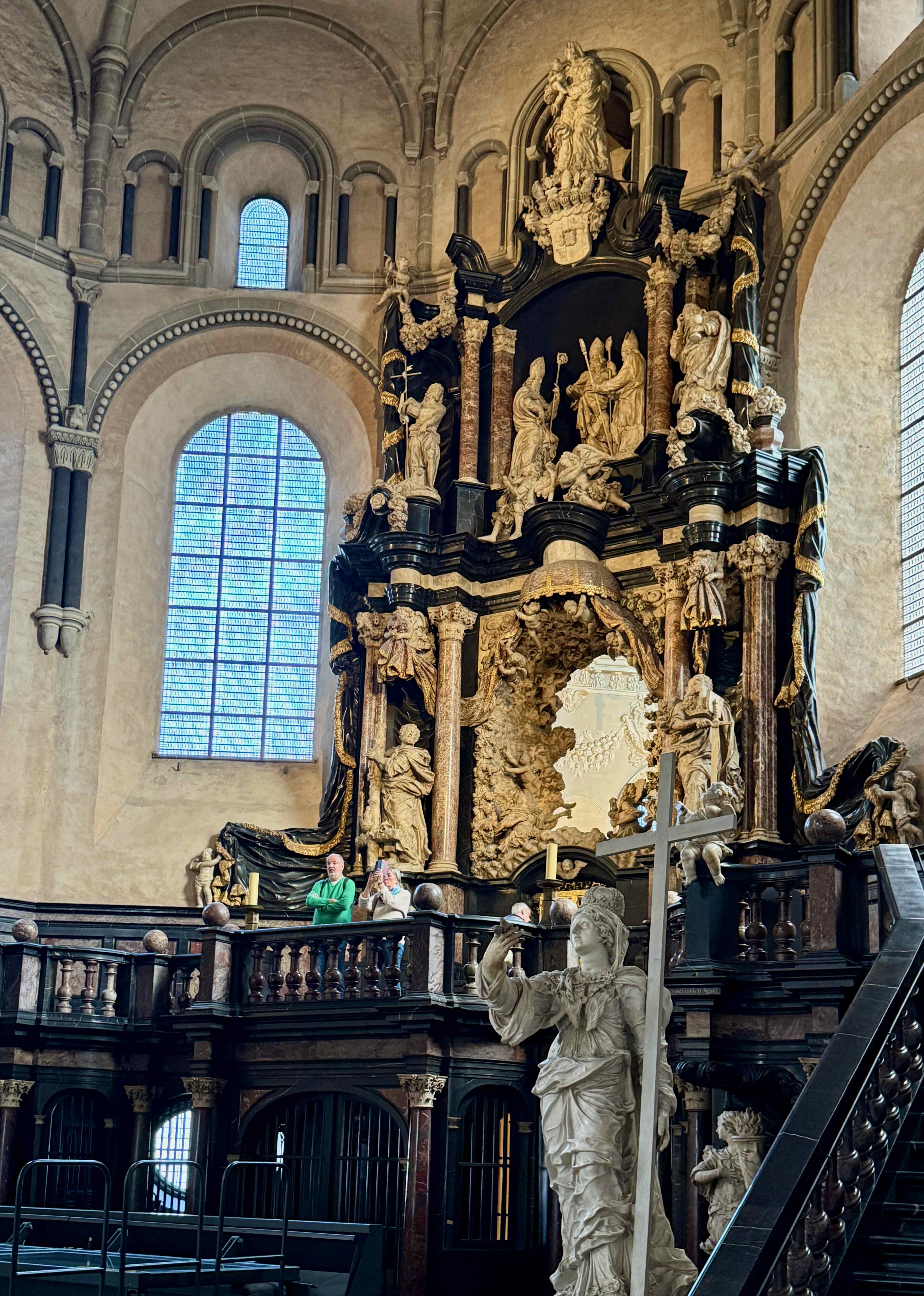
And yes, the inside of the cathedral is very impressive.

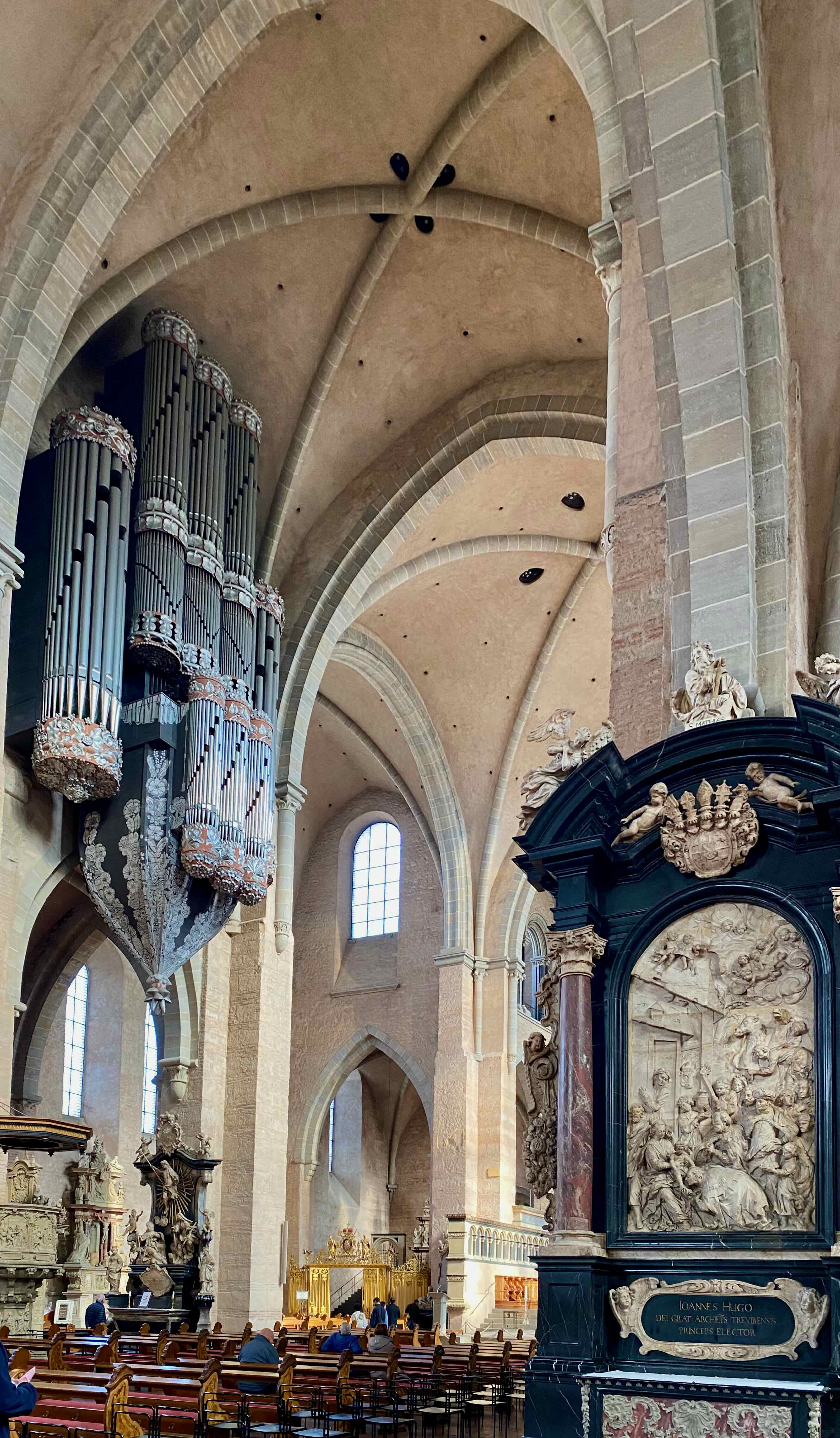
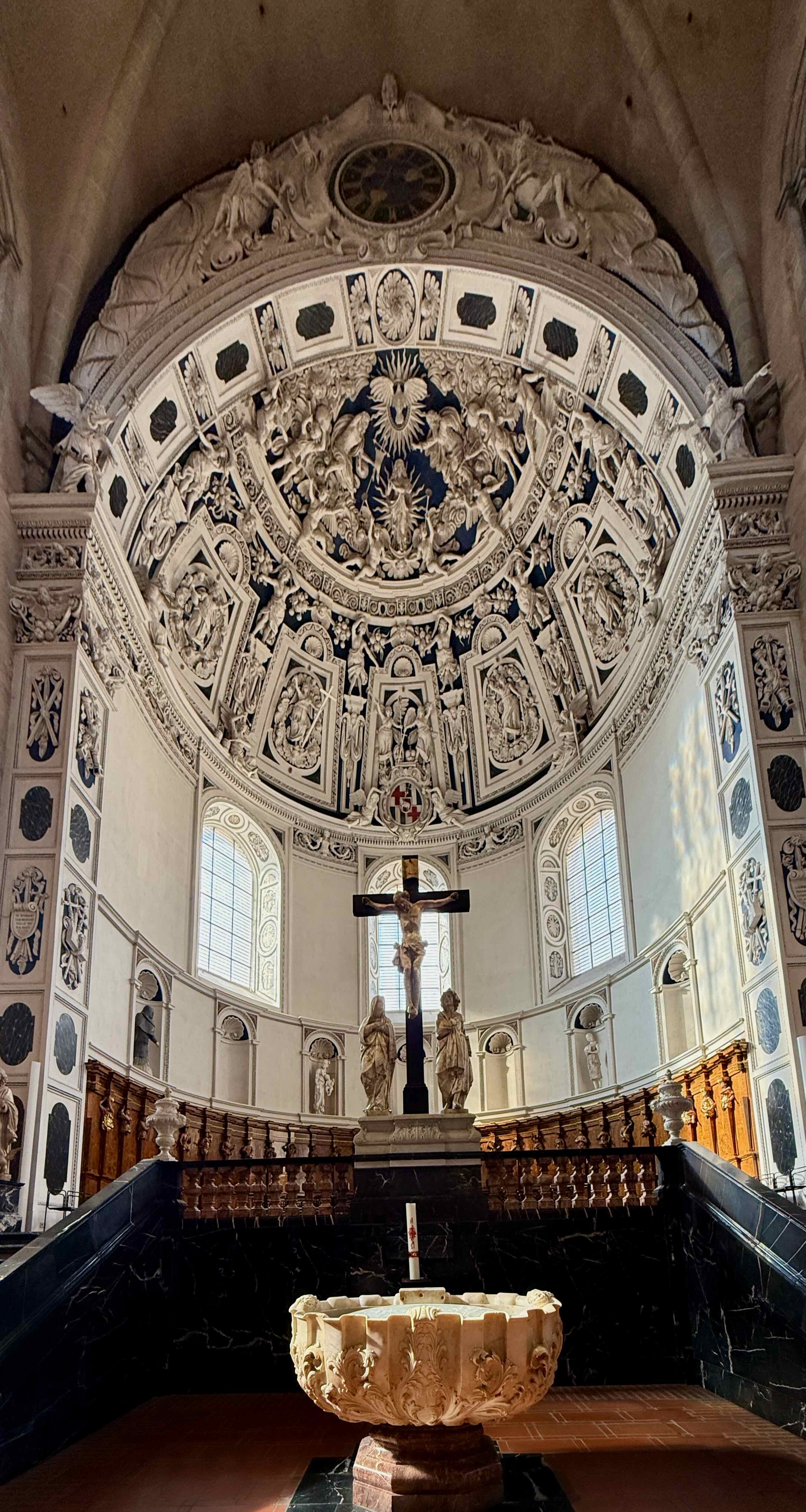
It has one of the most ornate organs we have seen… and many huge sculptures with multiple figures. We walk up these stairs for a view of the nave. This beautiful blue and white Baroque stucco work decorates the choir loft of the Cathedral. It is stunning and unusual. This is the first time we have seen anything like this in a cathedral.
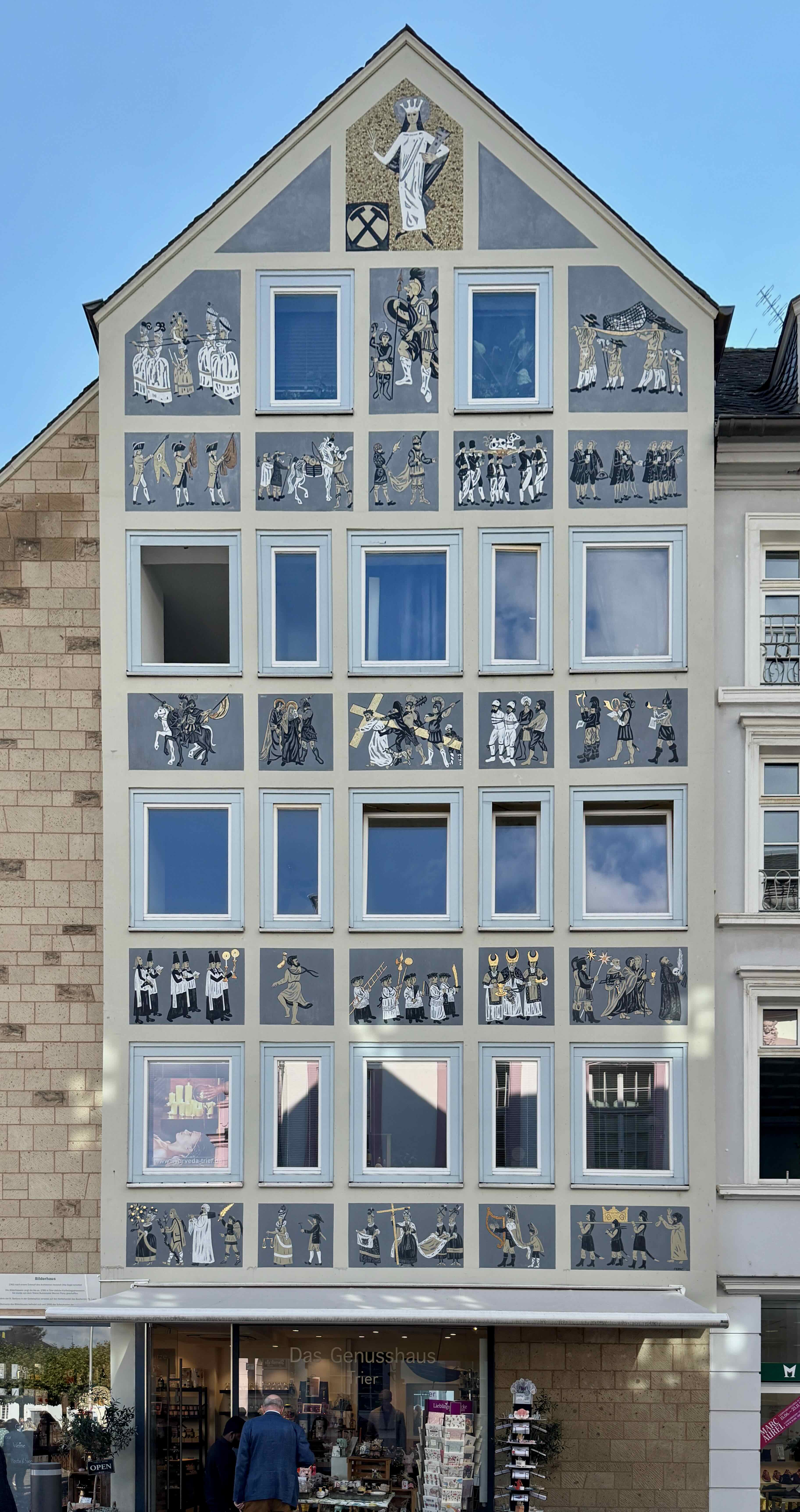
We pass this building on the way to the Nigra Gate. There are many ornately decorated buildings in Trier.

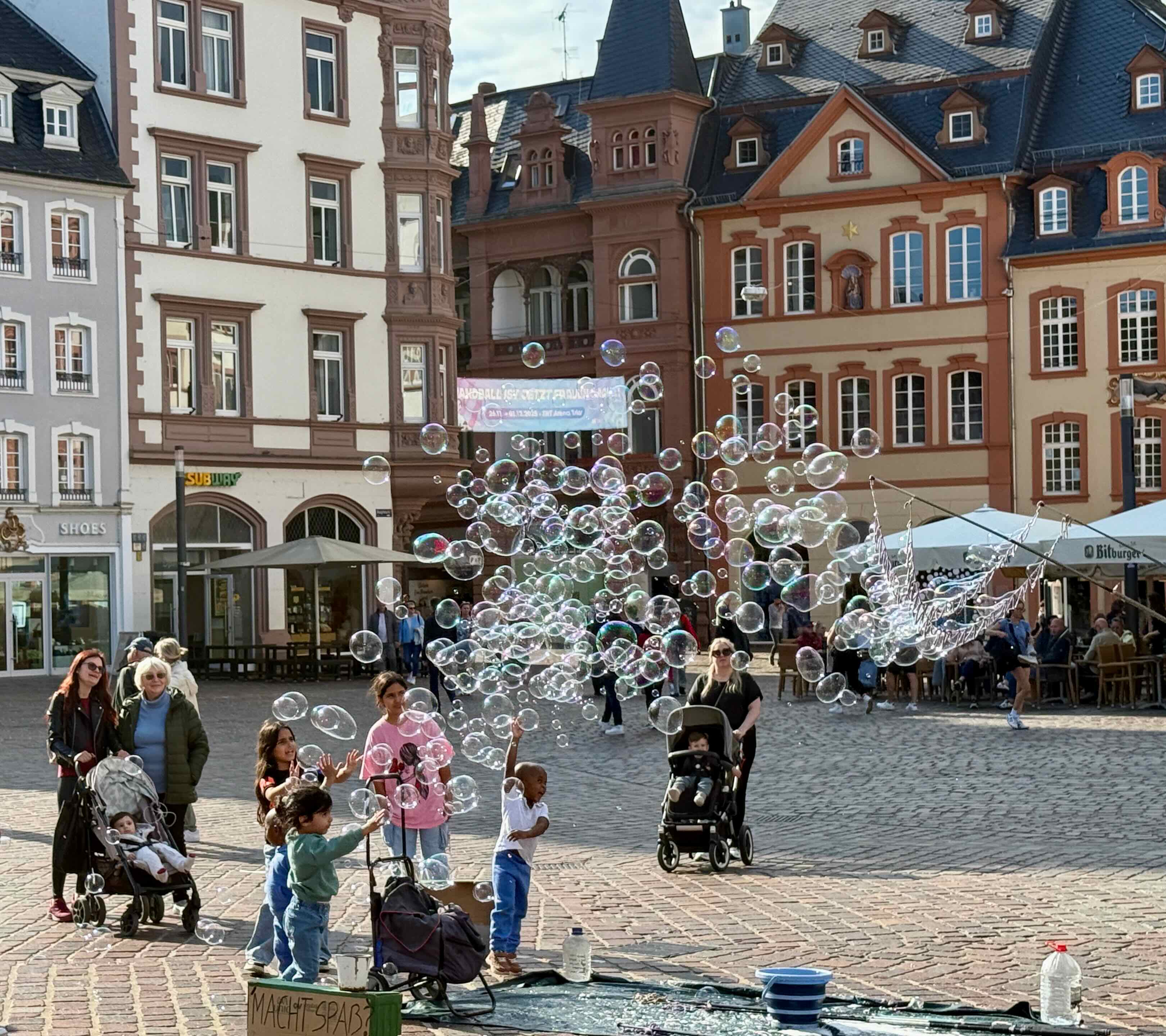
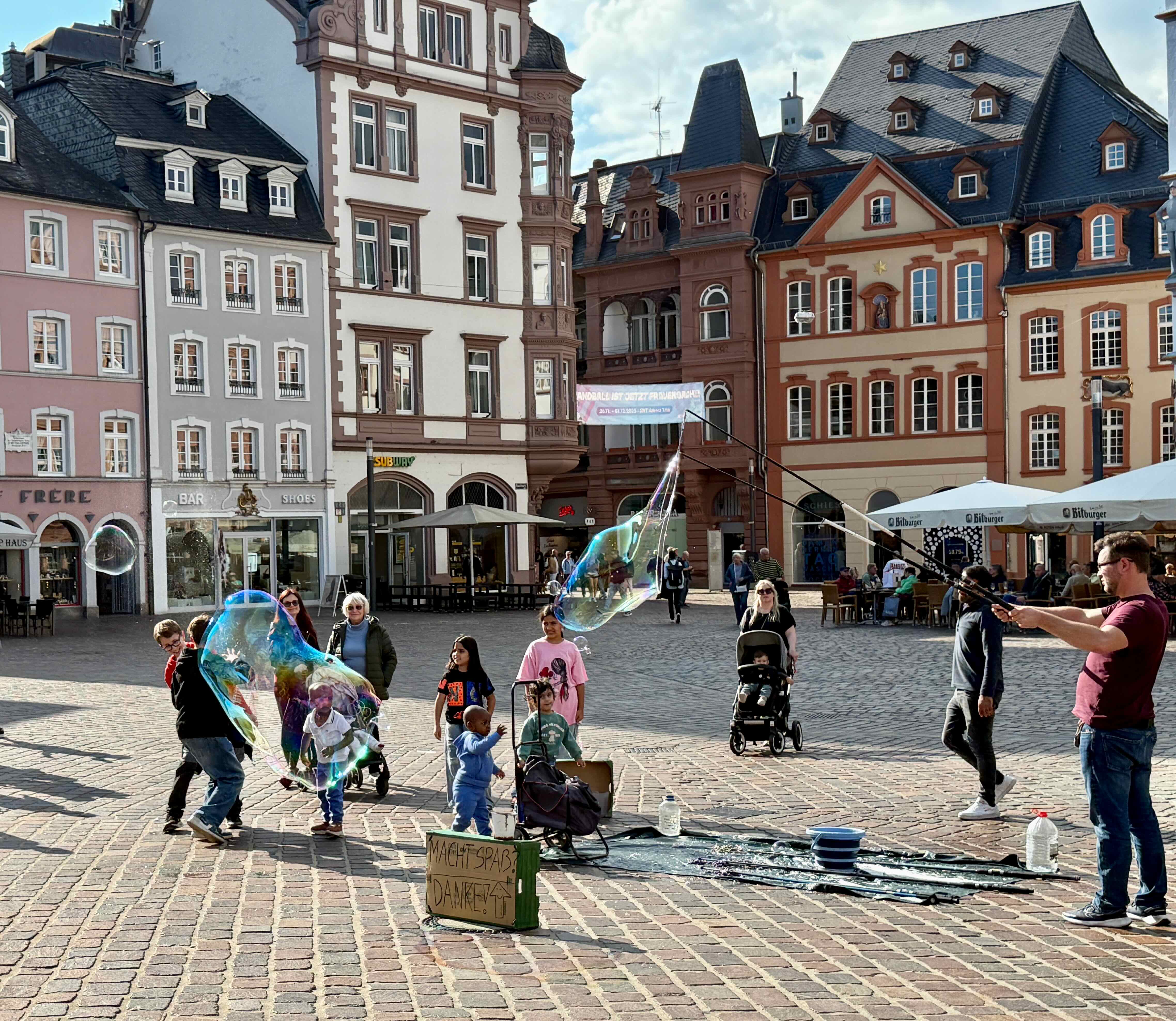
I love watching the bubble makers, and the children trying to catch the bubbles. This fellow made huge bubbles…

and lots of smaller bubbles.  I would love to know how to do this.

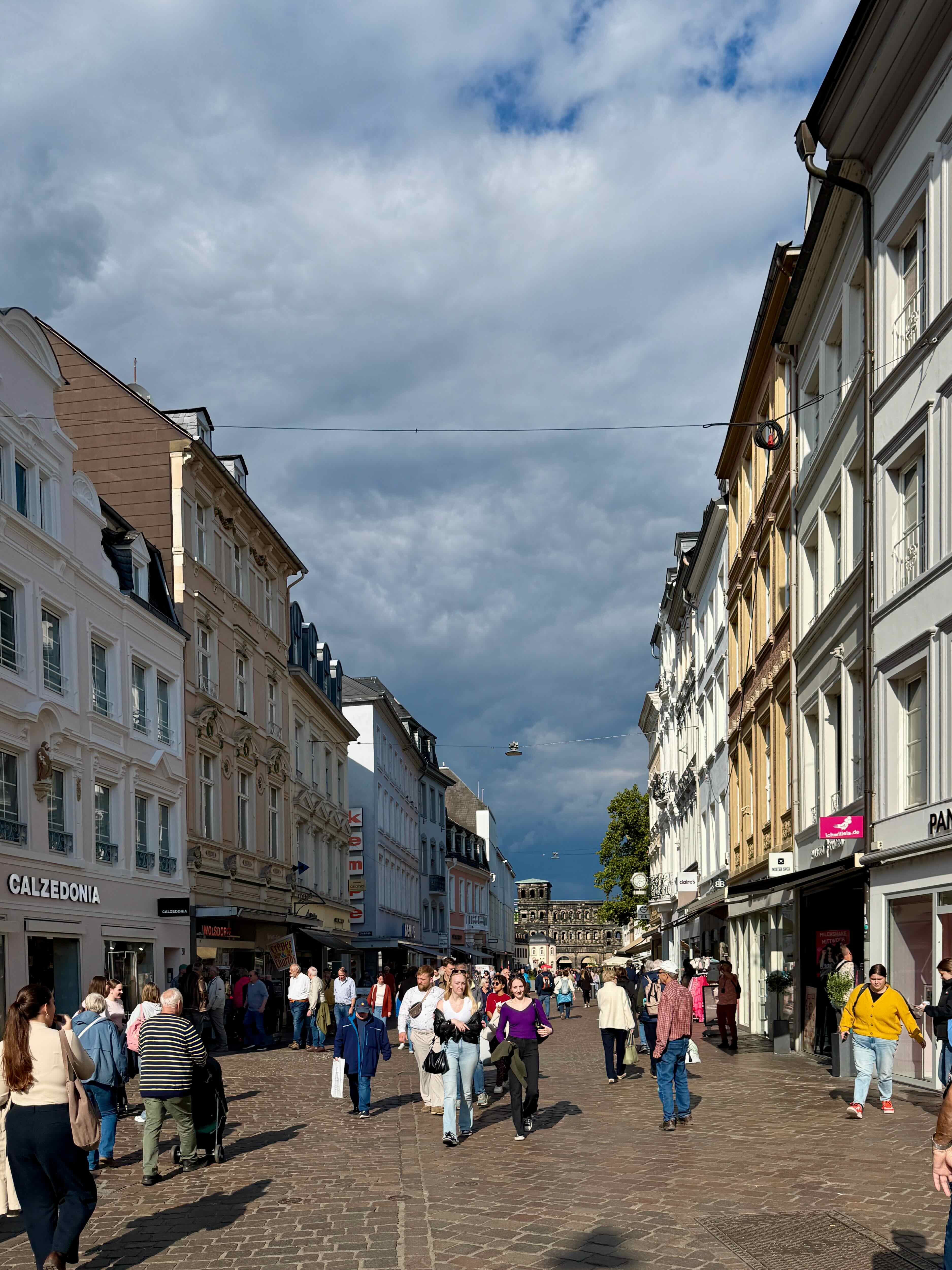
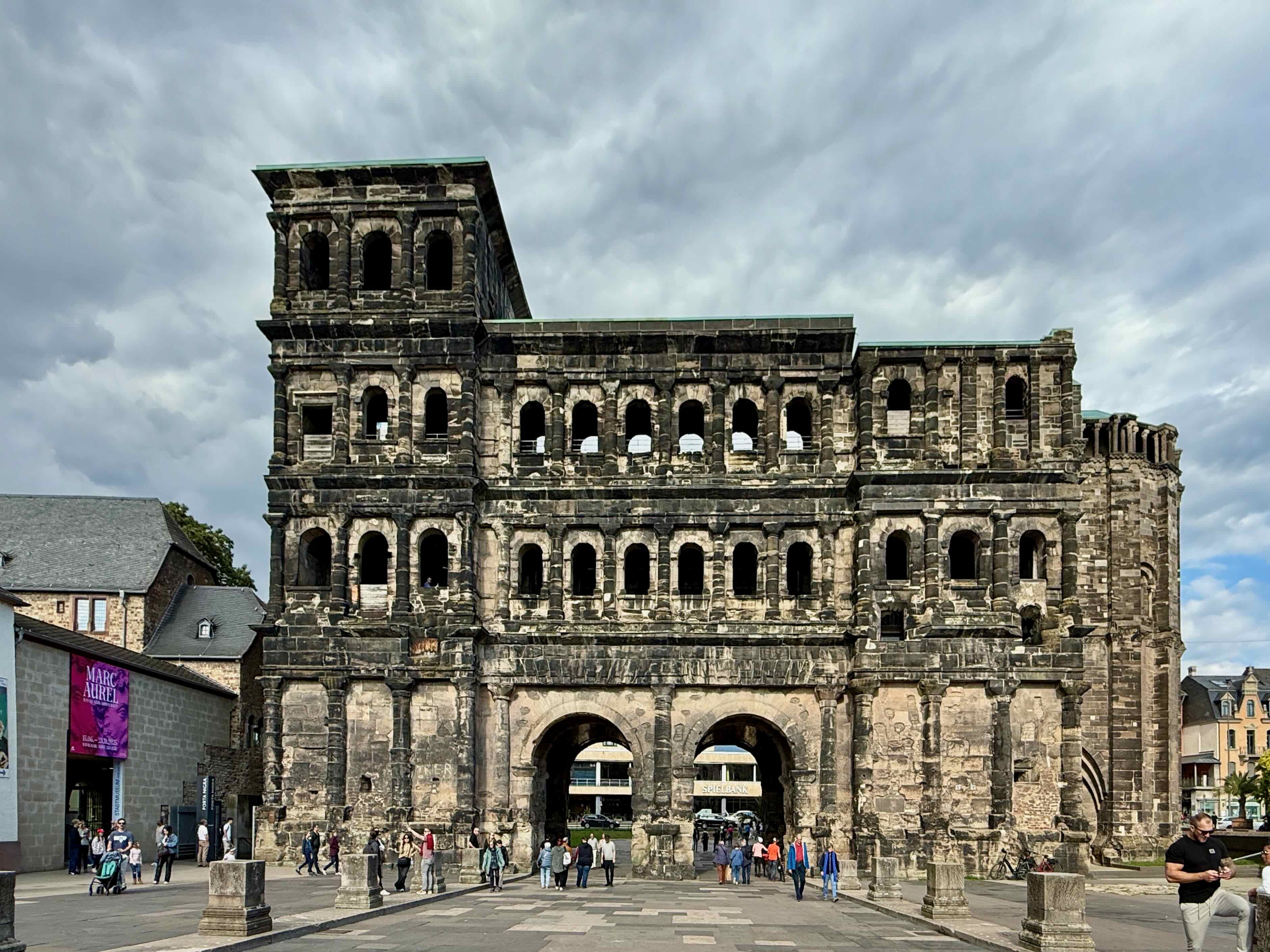
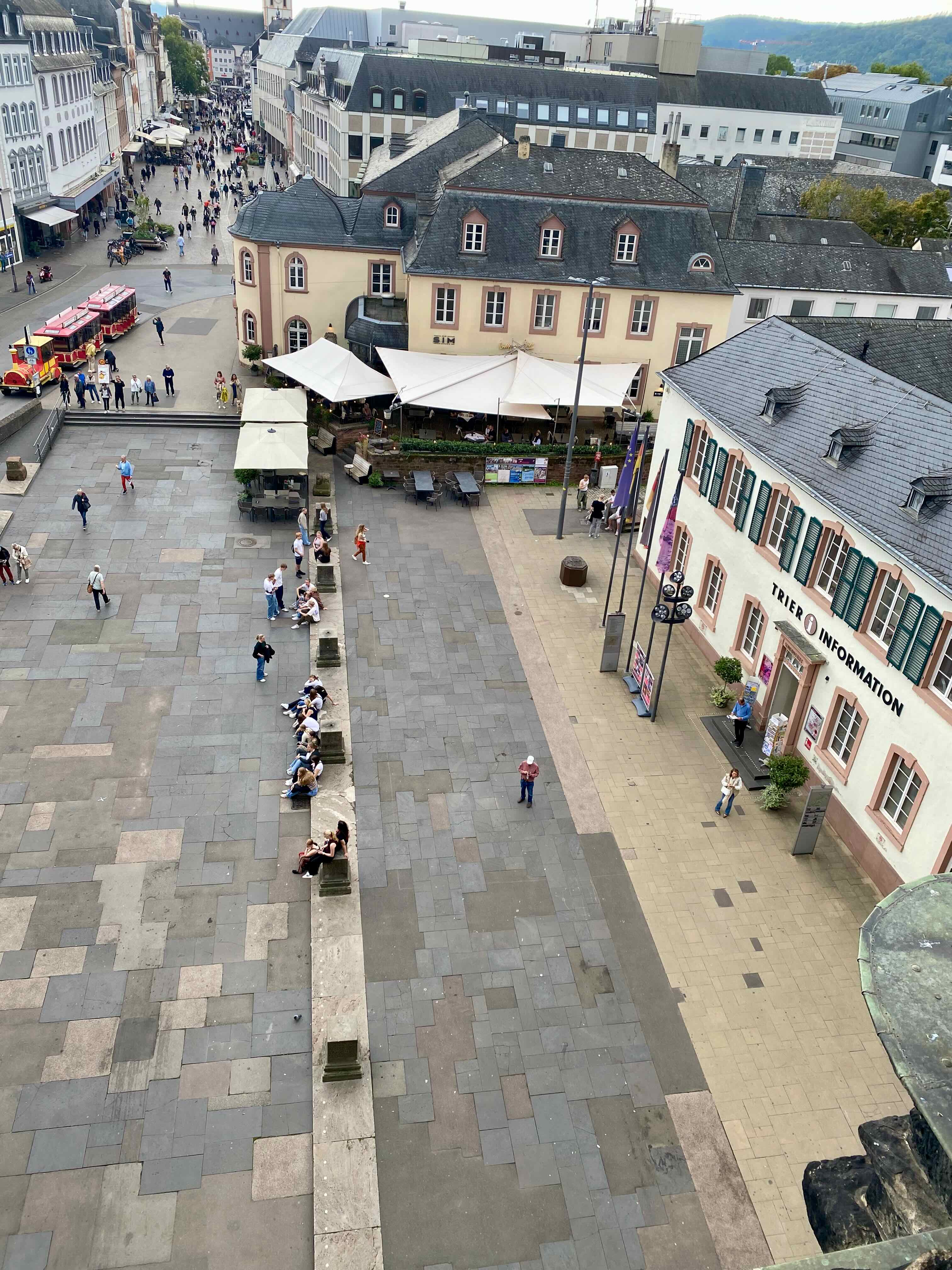
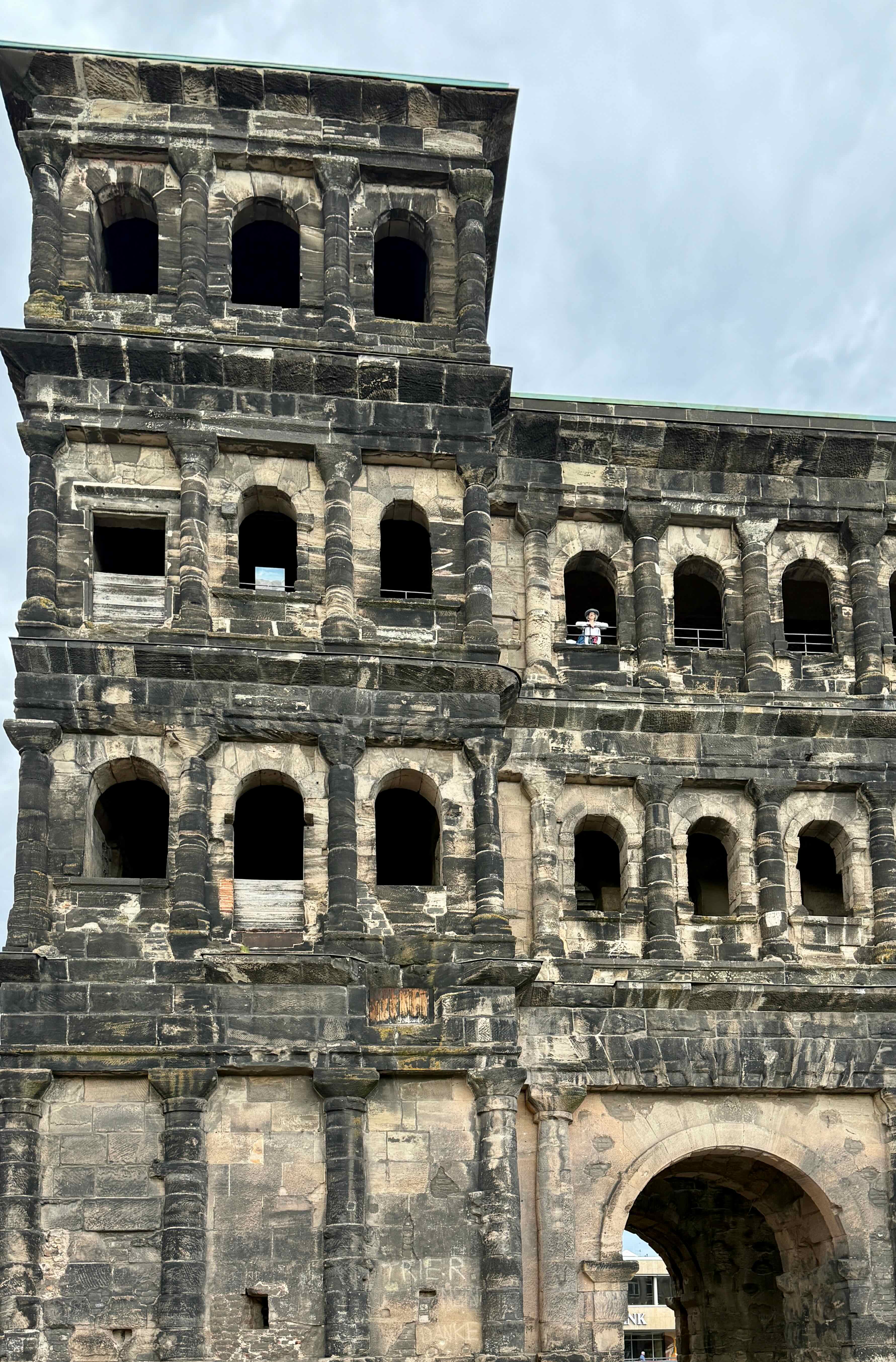
At the end of the street we can see the Nigra Gate, another UNESCO World Heritage Site.

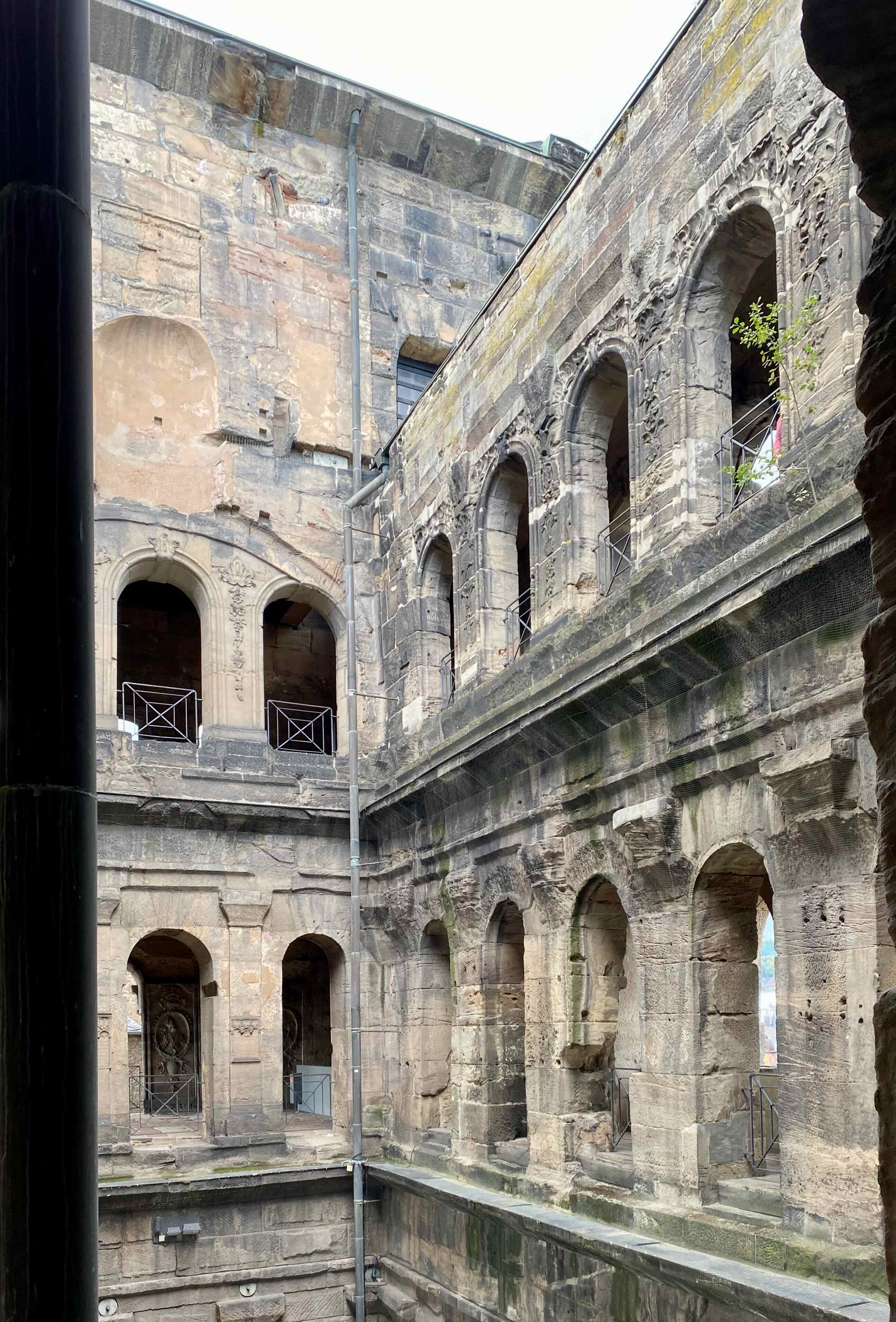
The Porta Nigra, or Black Gate, is the largest Roman gate in Northern Europe.  It was part of the defensive walls and gates that surrounded Trier in 200AD. It is  incredibly well preserved, especially when you consider that it was completed around 200AD, and it almost two thousand years old!

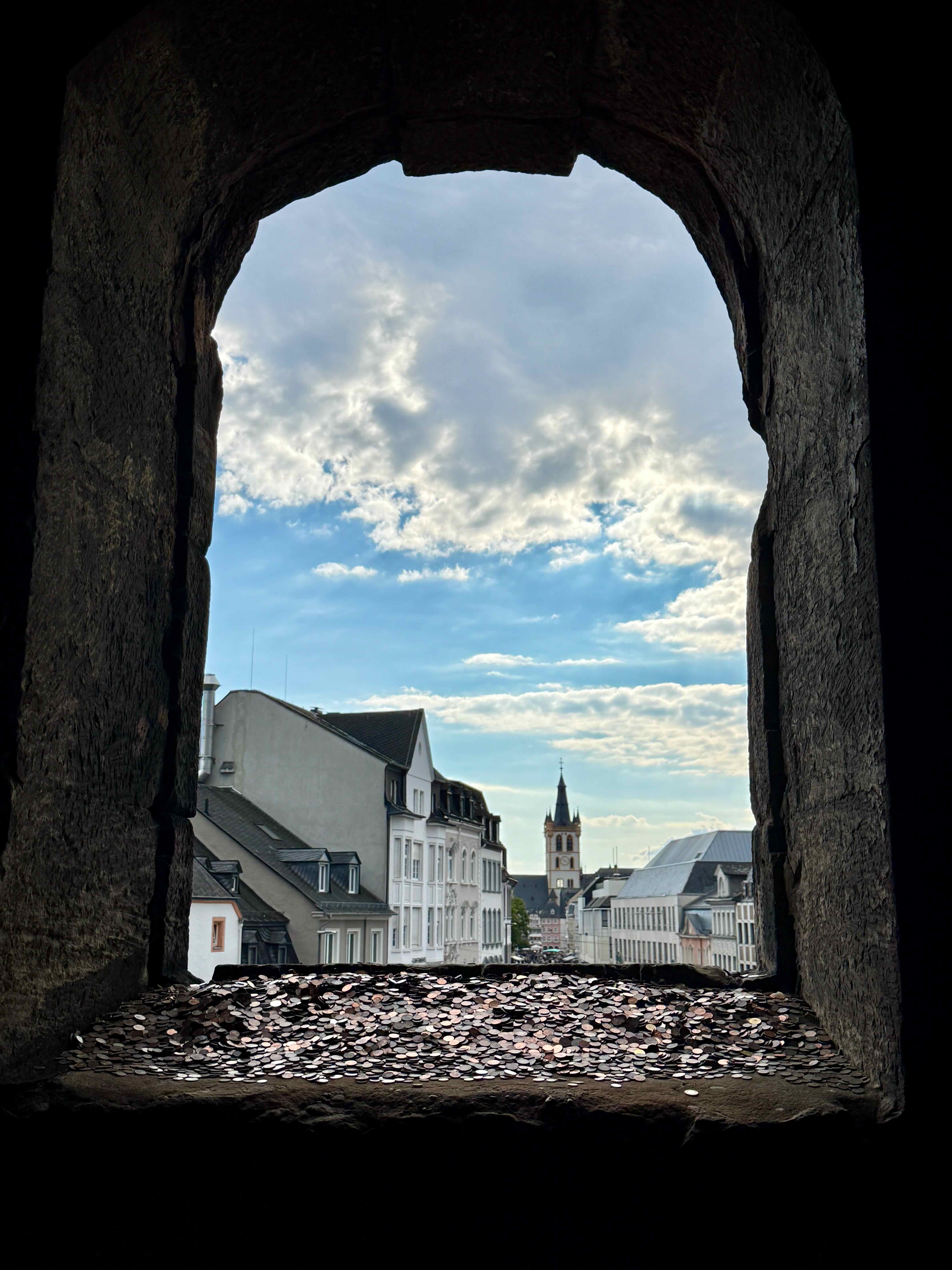
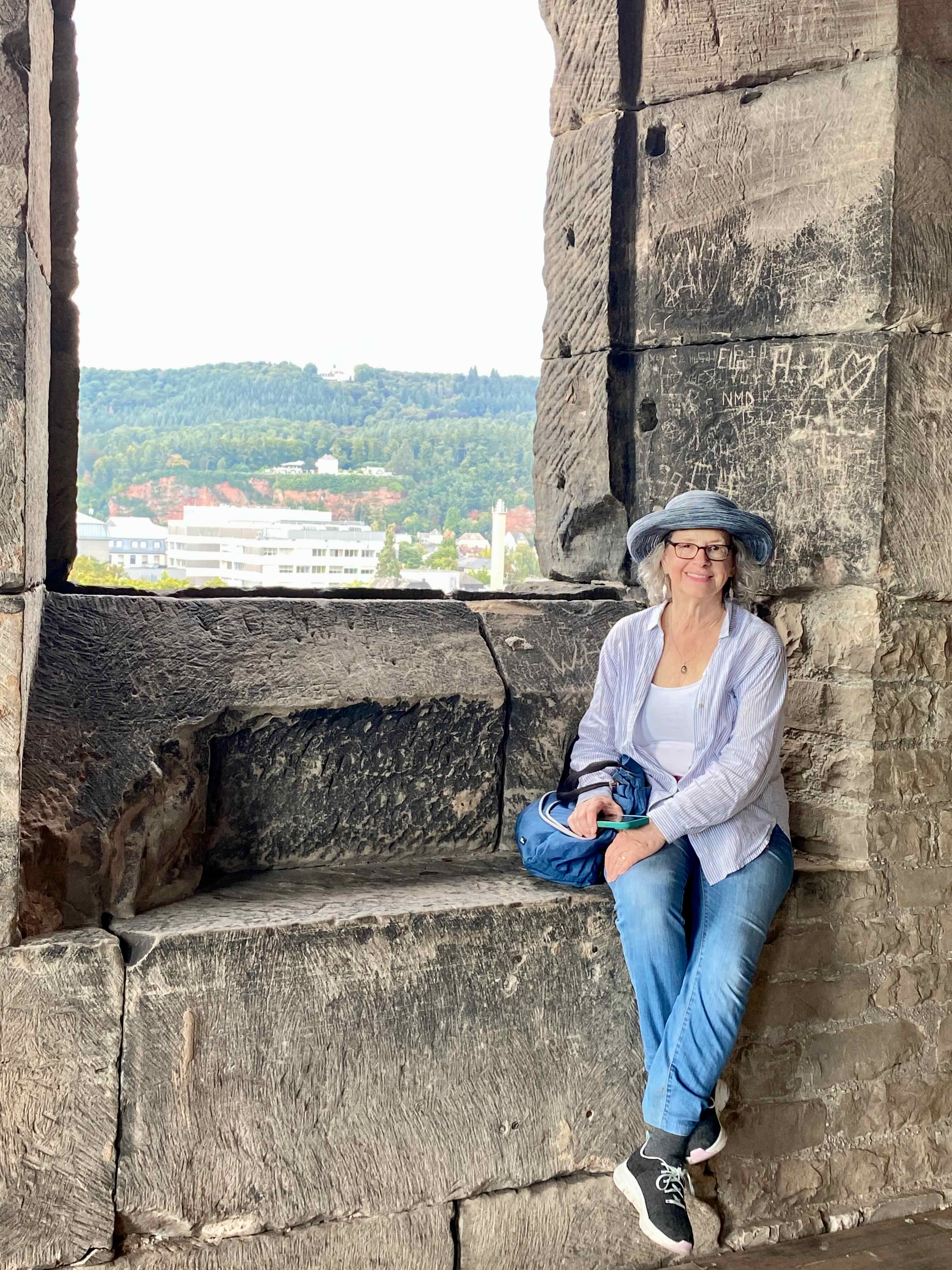
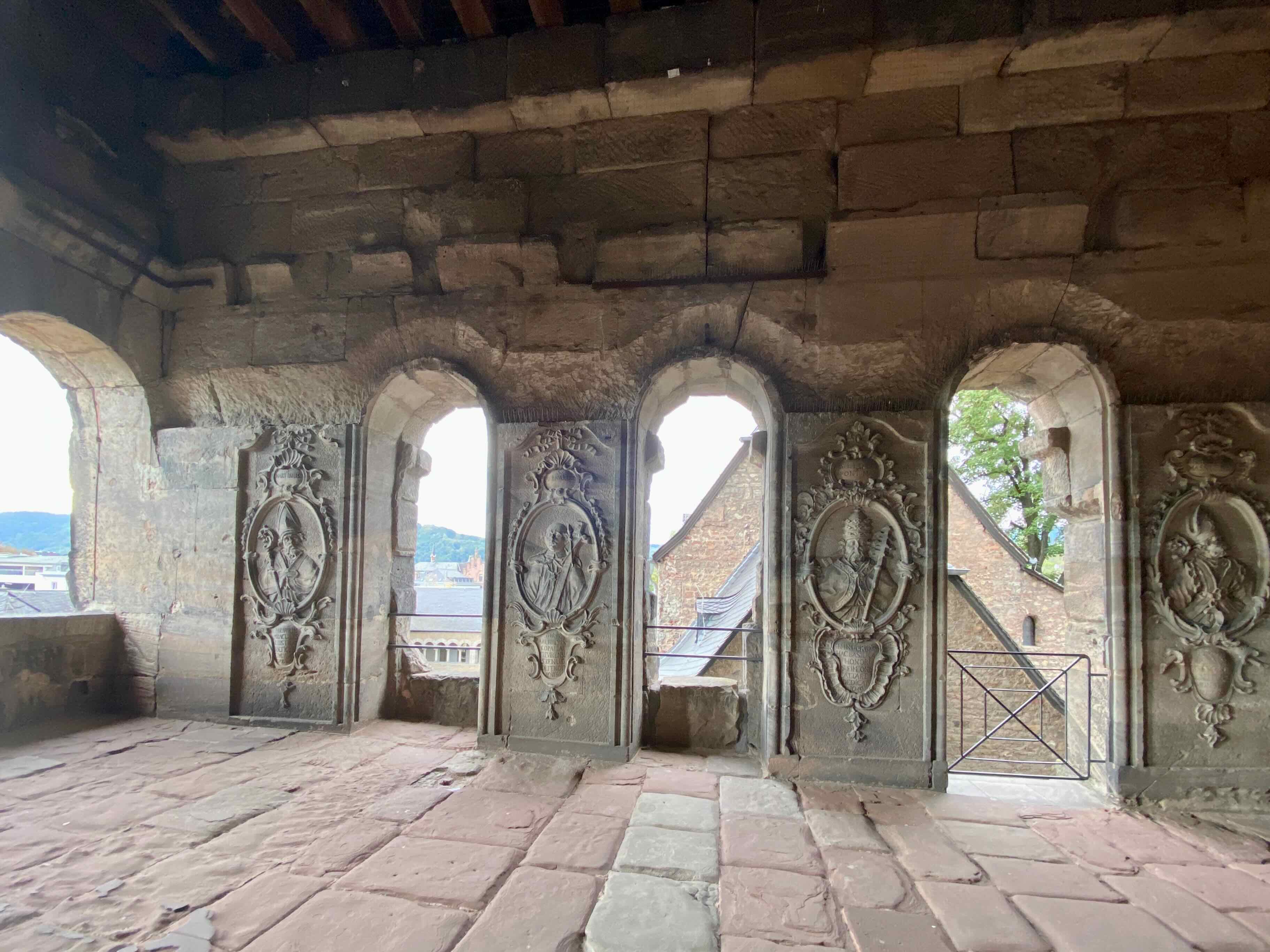
We pay 6€ each to climb inside the gate. This ‘window’ has a pile of coins, perhaps people making a wish?

A view inside the gate.

We can see the Trier Cathedral from the second level of the gate.

Grafiti has been around for a long time.  Some of the dates on the walls are hundreds of years old.  I do really hate this practice of defacing monuments.

There is Bob, I sent him down to the street so he could take a photo of me in one of the gate arches.

Here I am.These carved decorations are still in remarkably good condition.
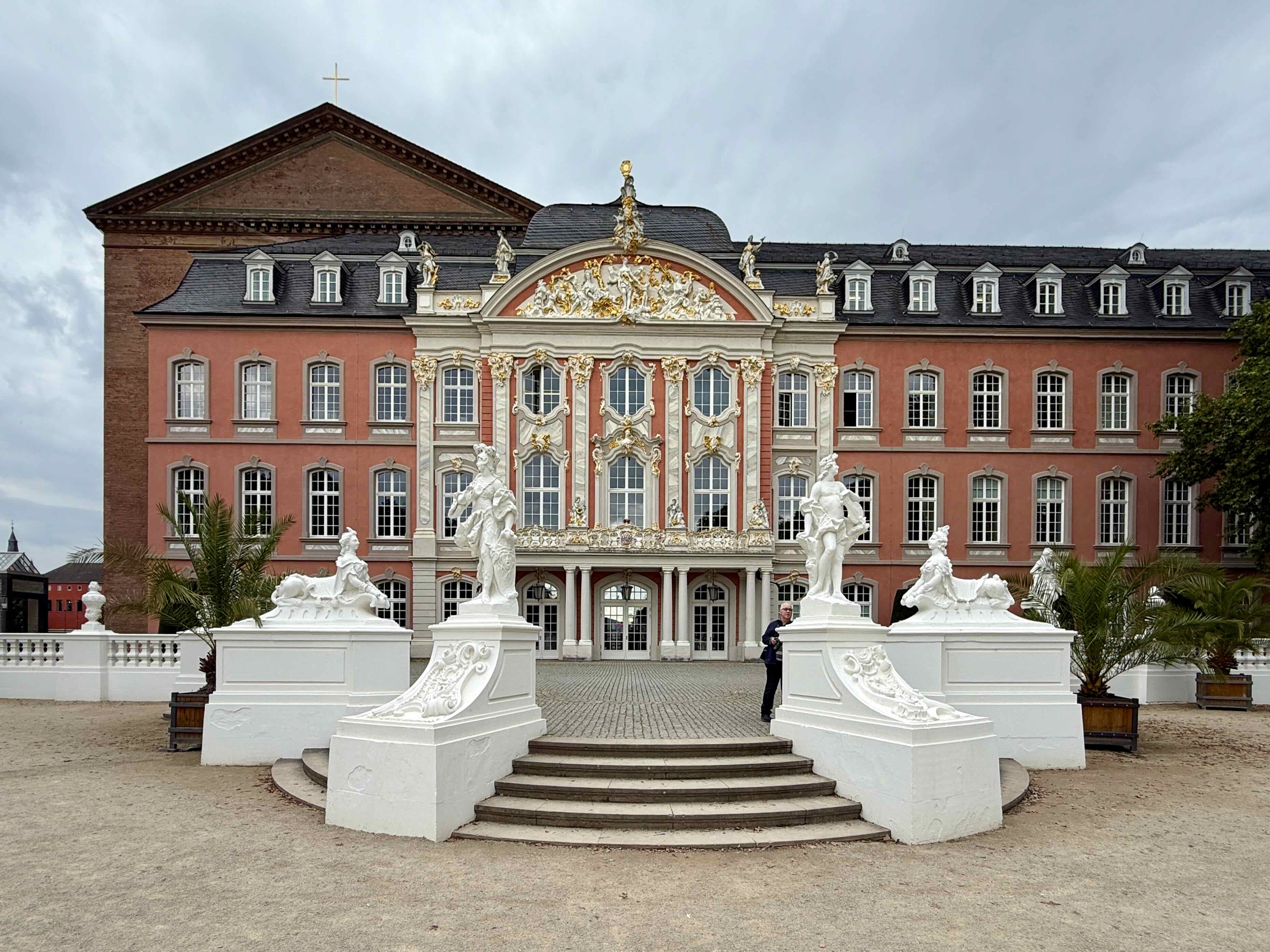
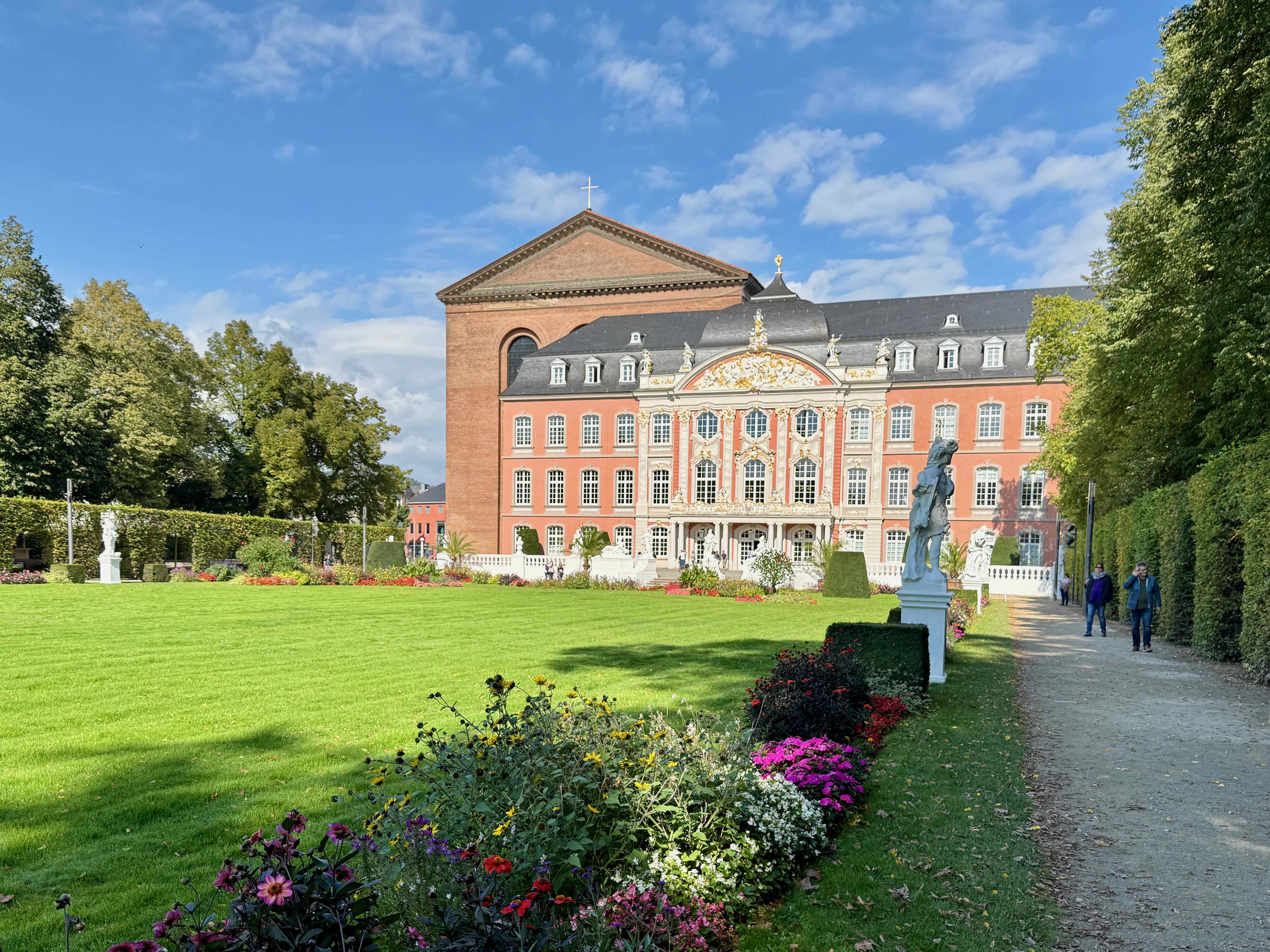
Walking back to our car we stop for a photo of the Electoral Palace. We had our lunch in its beautiful gardens which have many white statues and small ponds.

Another gorgeous tree.

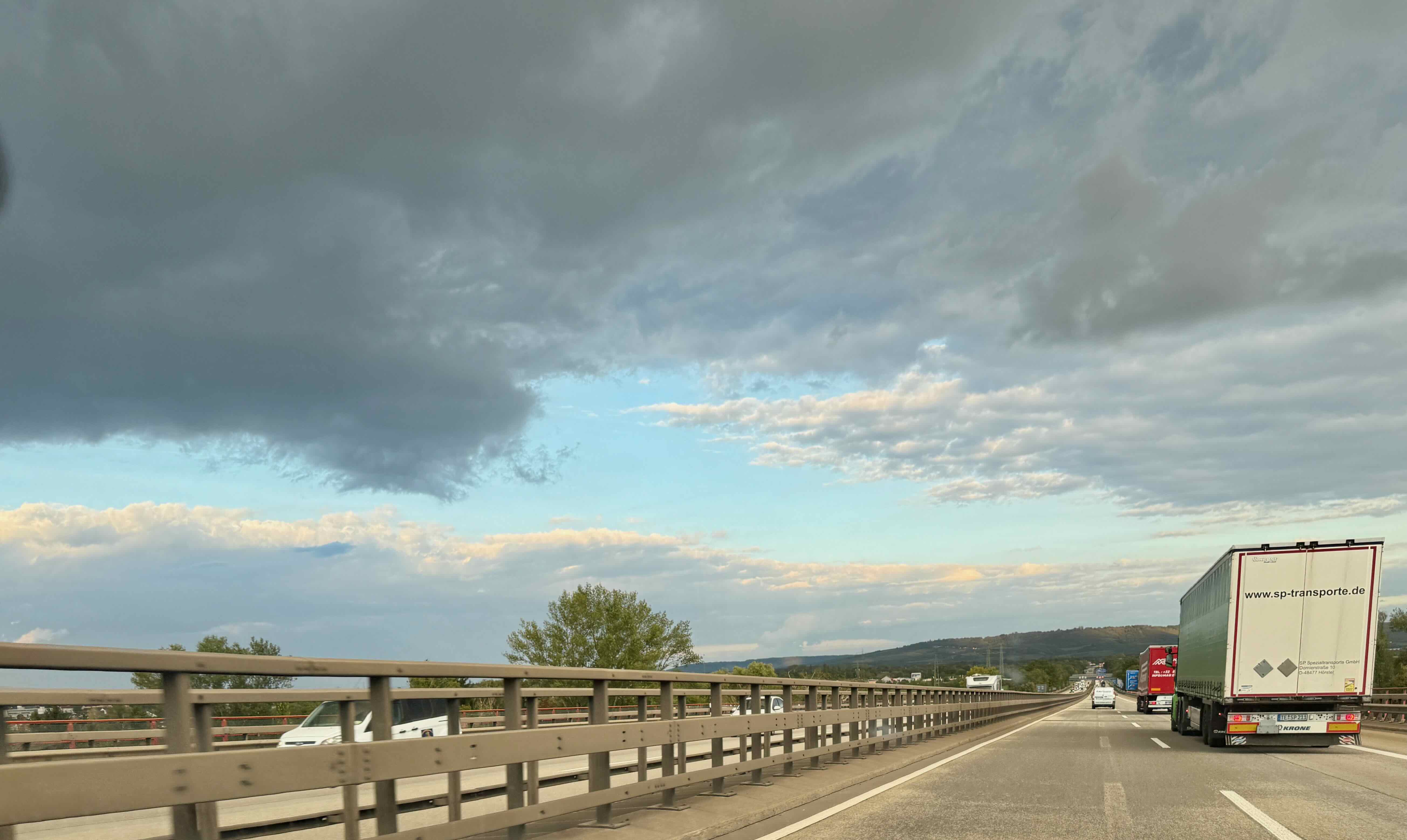
The clouds are moving in on our drive home.

Big black ominous clouds.

We arrive at our Airbnb in Frankfurt. It is smaller than our last place but cozy and has everything we need.

Luxembourg City, Luxembourg

Day 28     Saturday, September 27, 2025

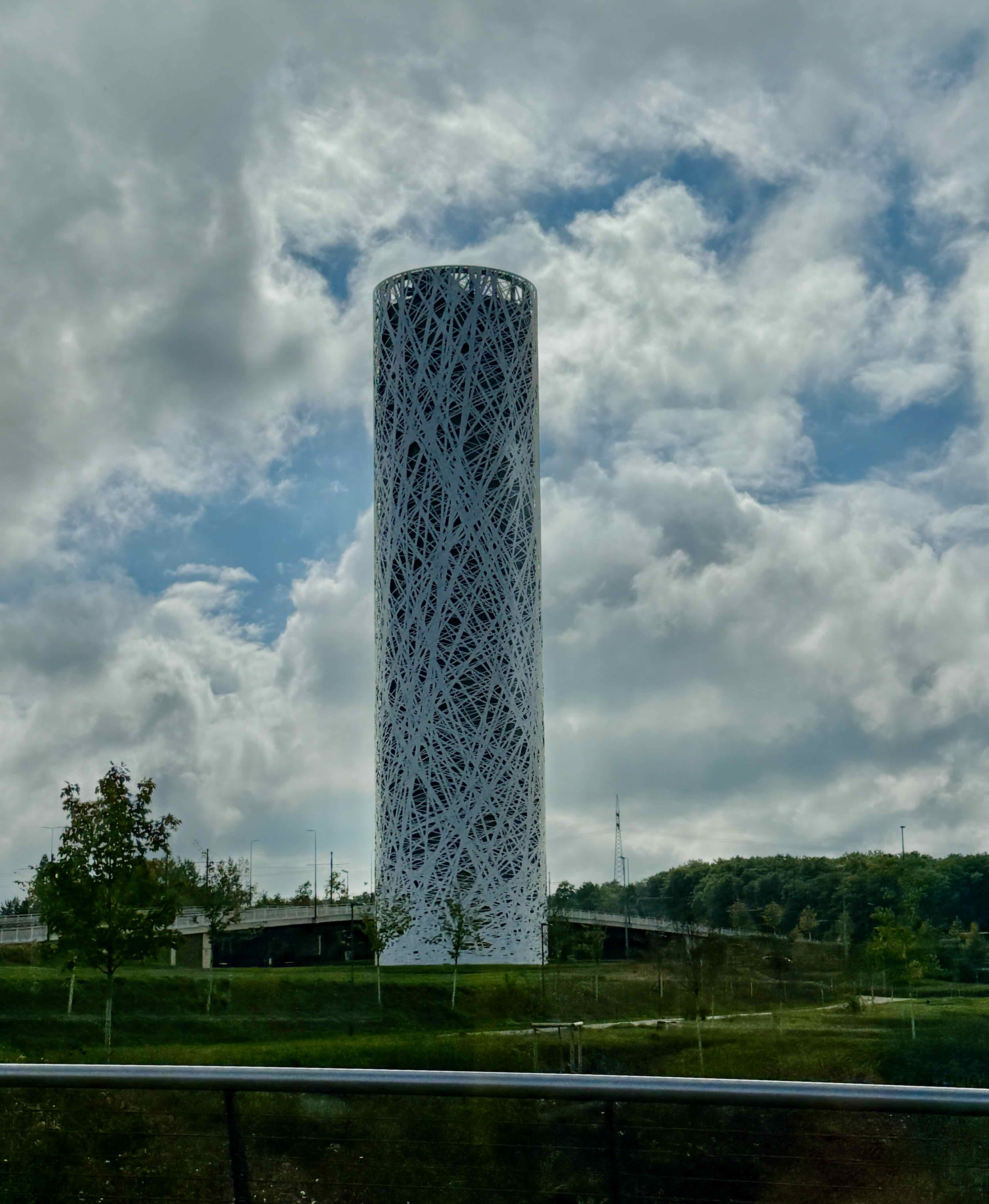
We drive a half hour to a free parking lot on the outskirts of Luxembourg city, then catch a bus to the downtown area. We should have realized something was wrong when we passed this interesting looking tower…we saw it when we drove to the parking lot. So…we caught the bus going the wrong way and ended up at different  parking lot on the outskirts of the city! The bus driver told us where to get the tram we now need to use to get into the city.  Luckily all the public transportation in Luxembourg is free!

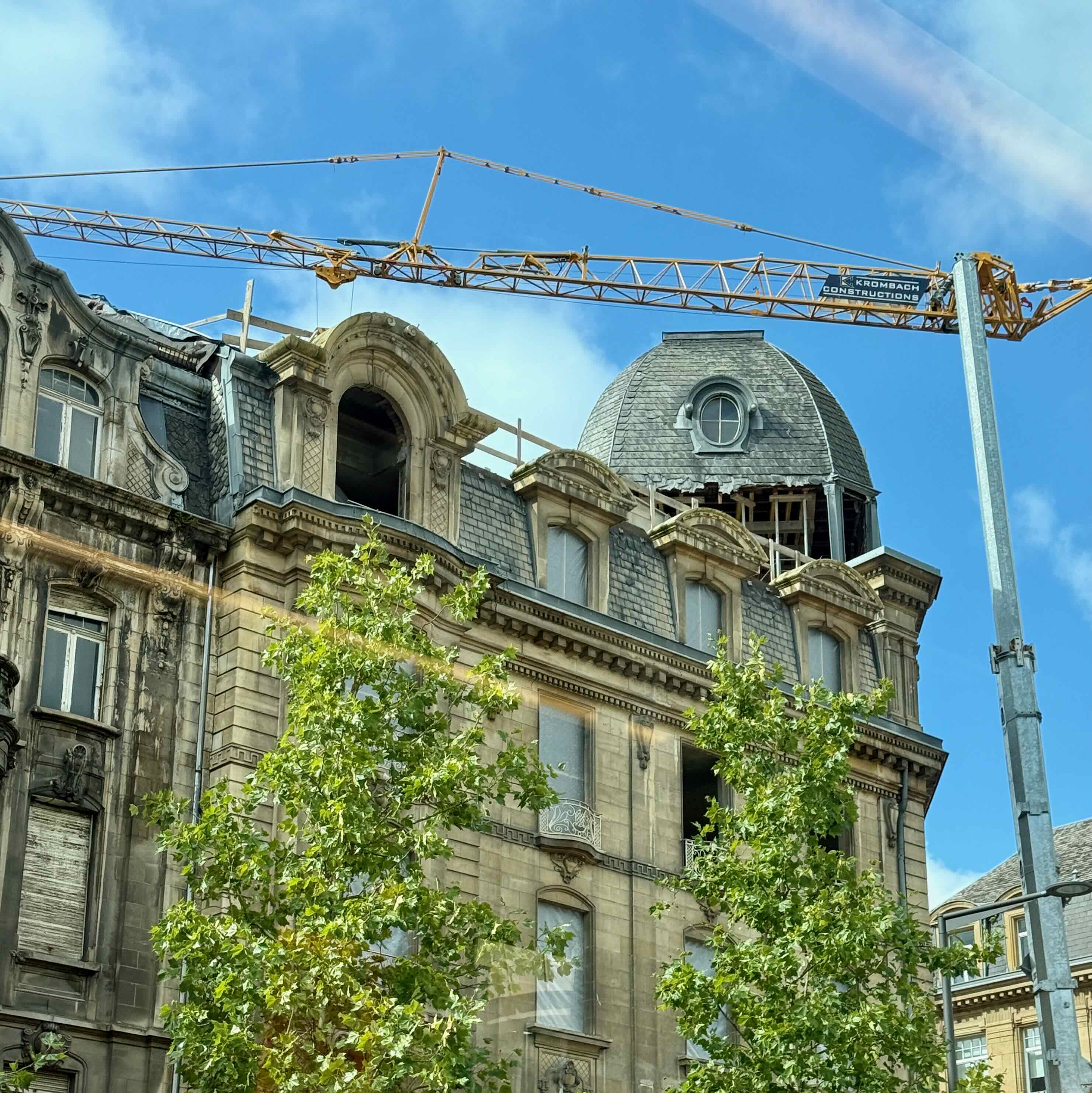
We pass this renovation site on the way to downtown. I am impressed that buildings are almost always repaired, not demolished.

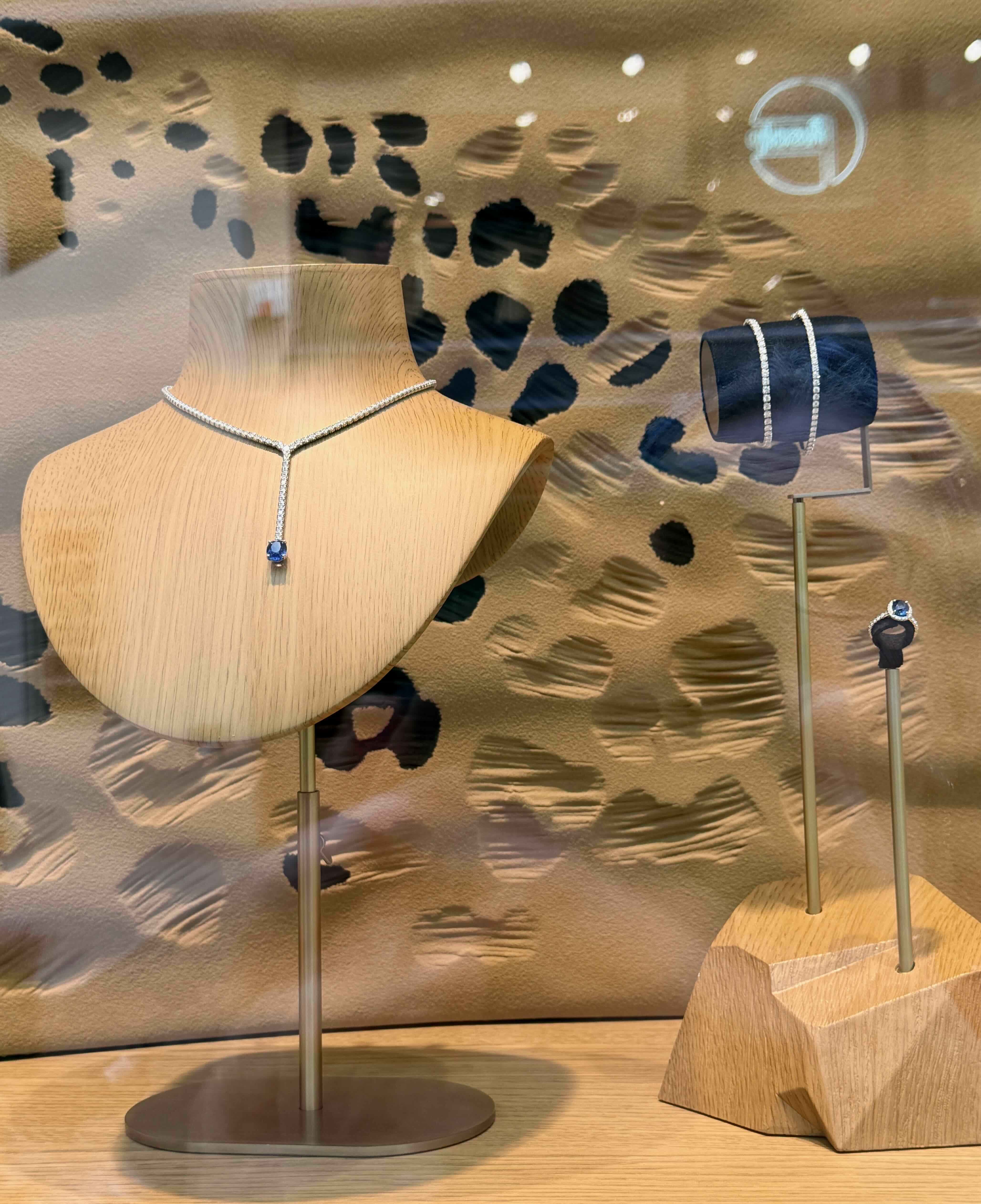
Walking downtown we pass a Cartier store. The necklace is ‘only’ 191,000€, the two bracelets are 26,900€ and 36,200€ and the ring is 113,000€…just a wee bit out of my price range!

We find a Post Office to buy stamps. While we are writing on the postcards, my purse falls down between the counter and the wall…a narrow space less than a foot wide!  I have to ask the security guard to come help. Even though his arms are much longer than mine  he is just barely able to reach my purse.  My phone fell out when he pulled my purse up but luckily it is on a cord attached to my purse so it didn’t fall to the bottom of the space behind the counter!

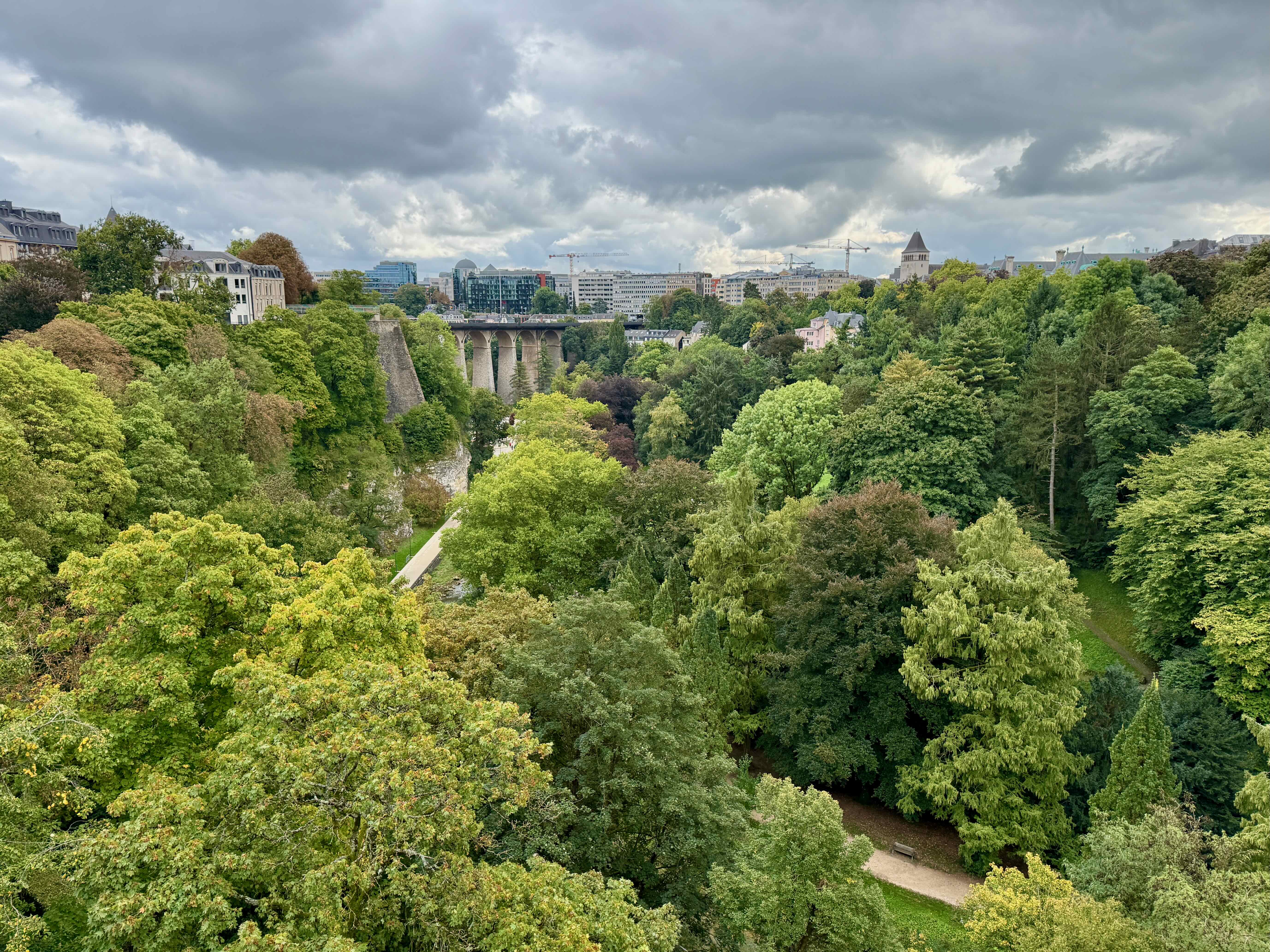
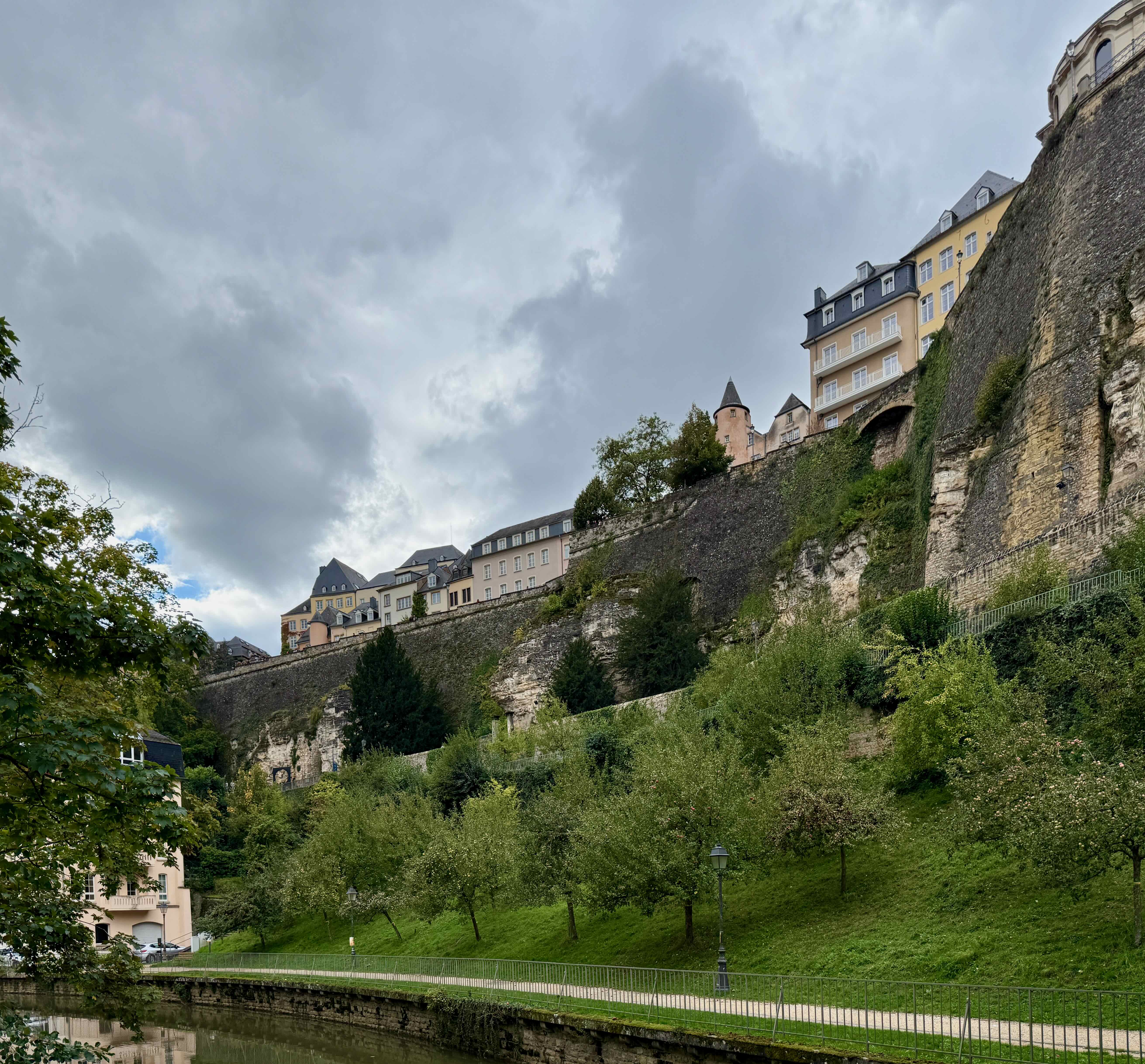
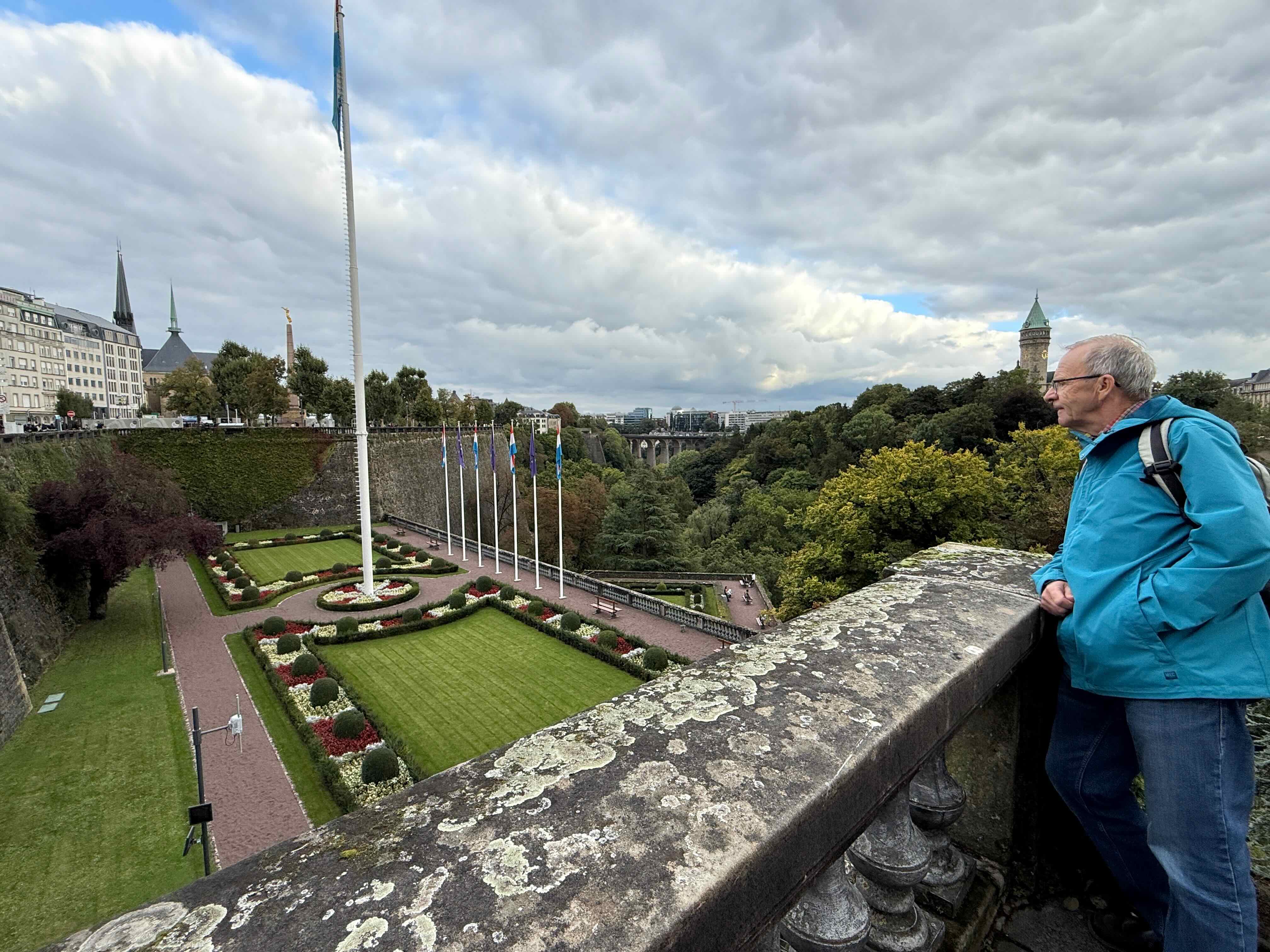
There is a big park downtown, at the base of high cliffs.

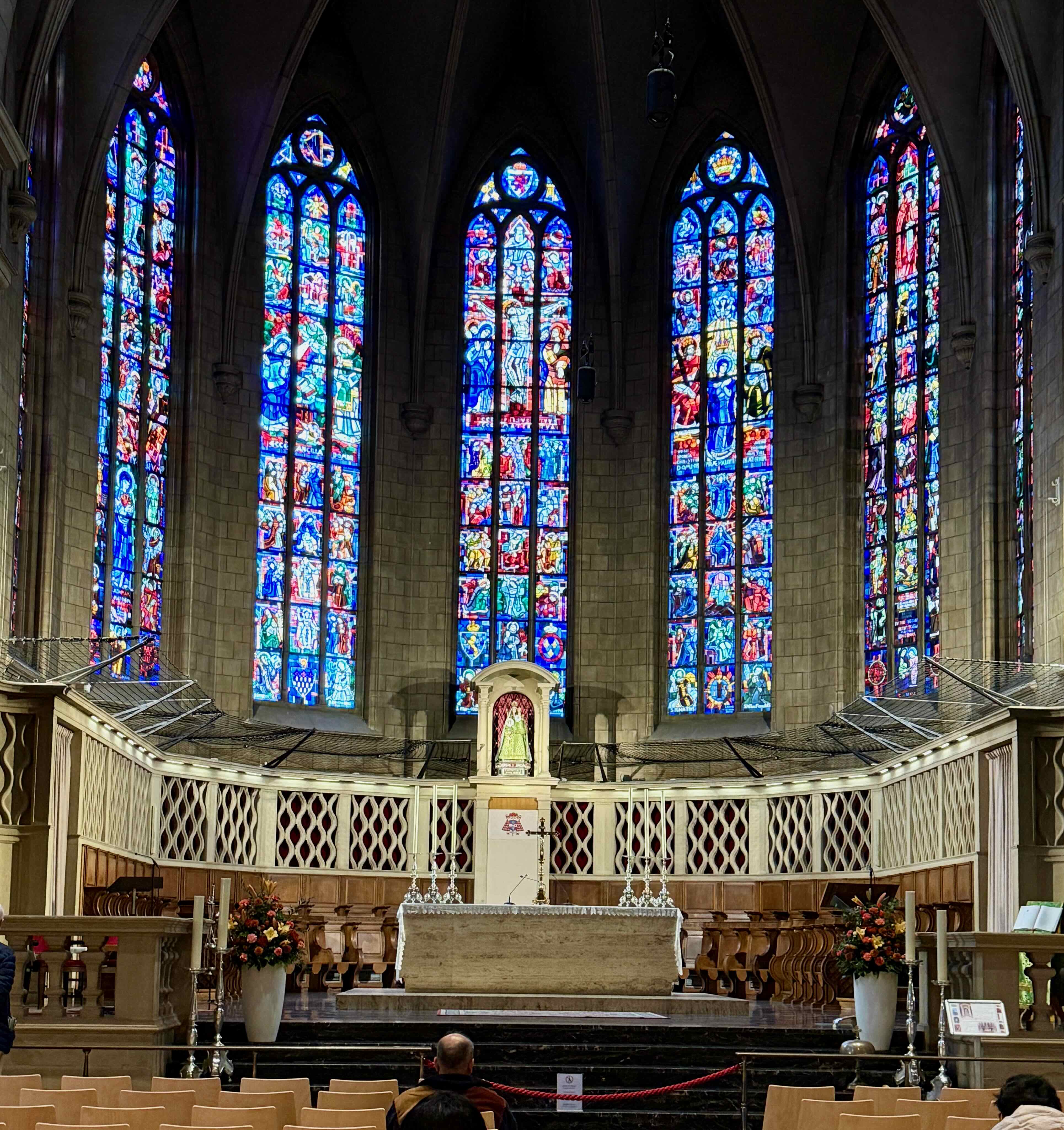
Yes, another church! The cathedral “Notre-Dame” of Luxembourg was built between 1613 and 1621 by the Jesuits. The stained glass windows make a stunning backdrop for the altar.

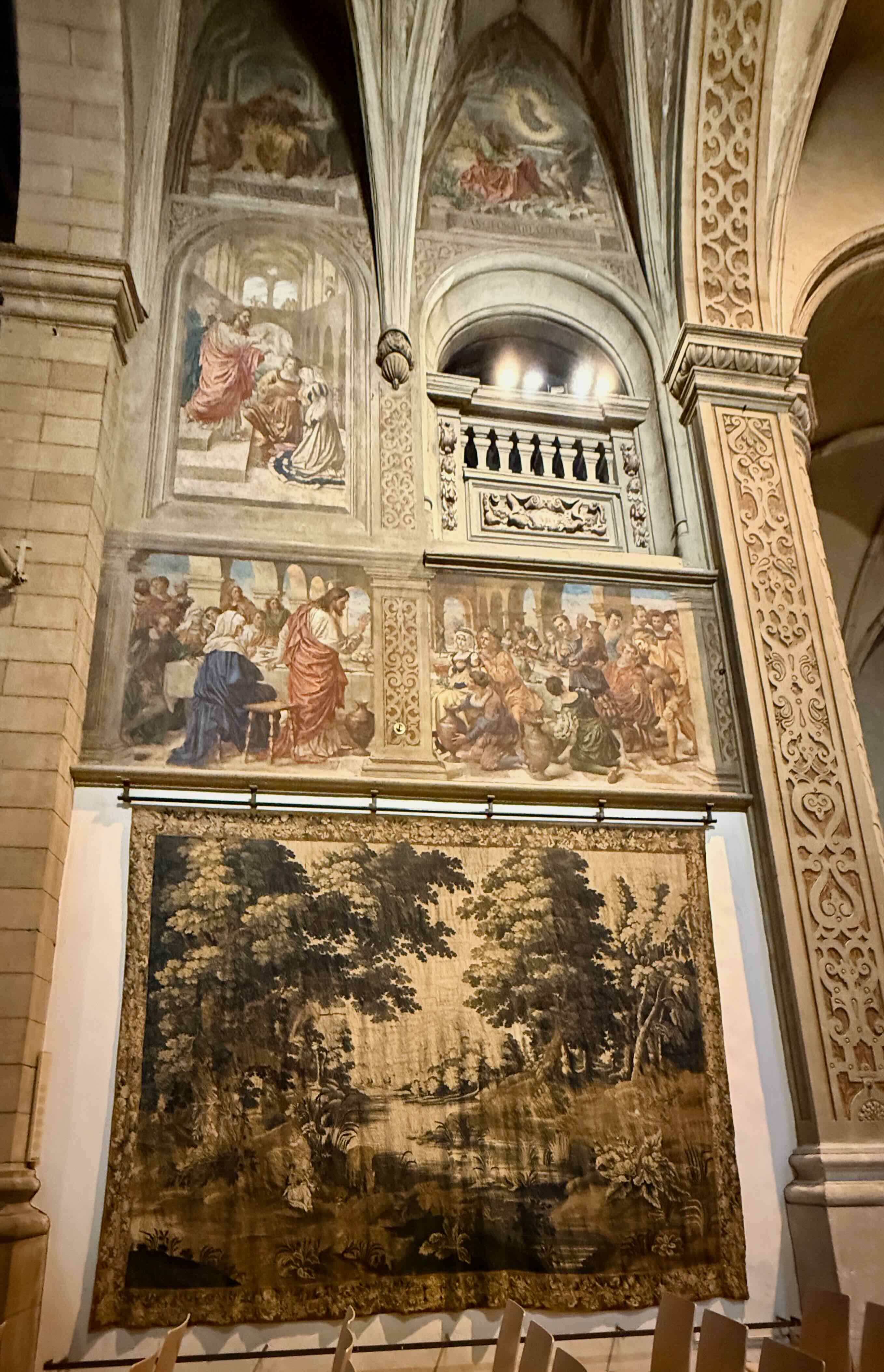
There are many paintings and tapestries in this cathedral, and the stone pillars are decorated with intricate carving.

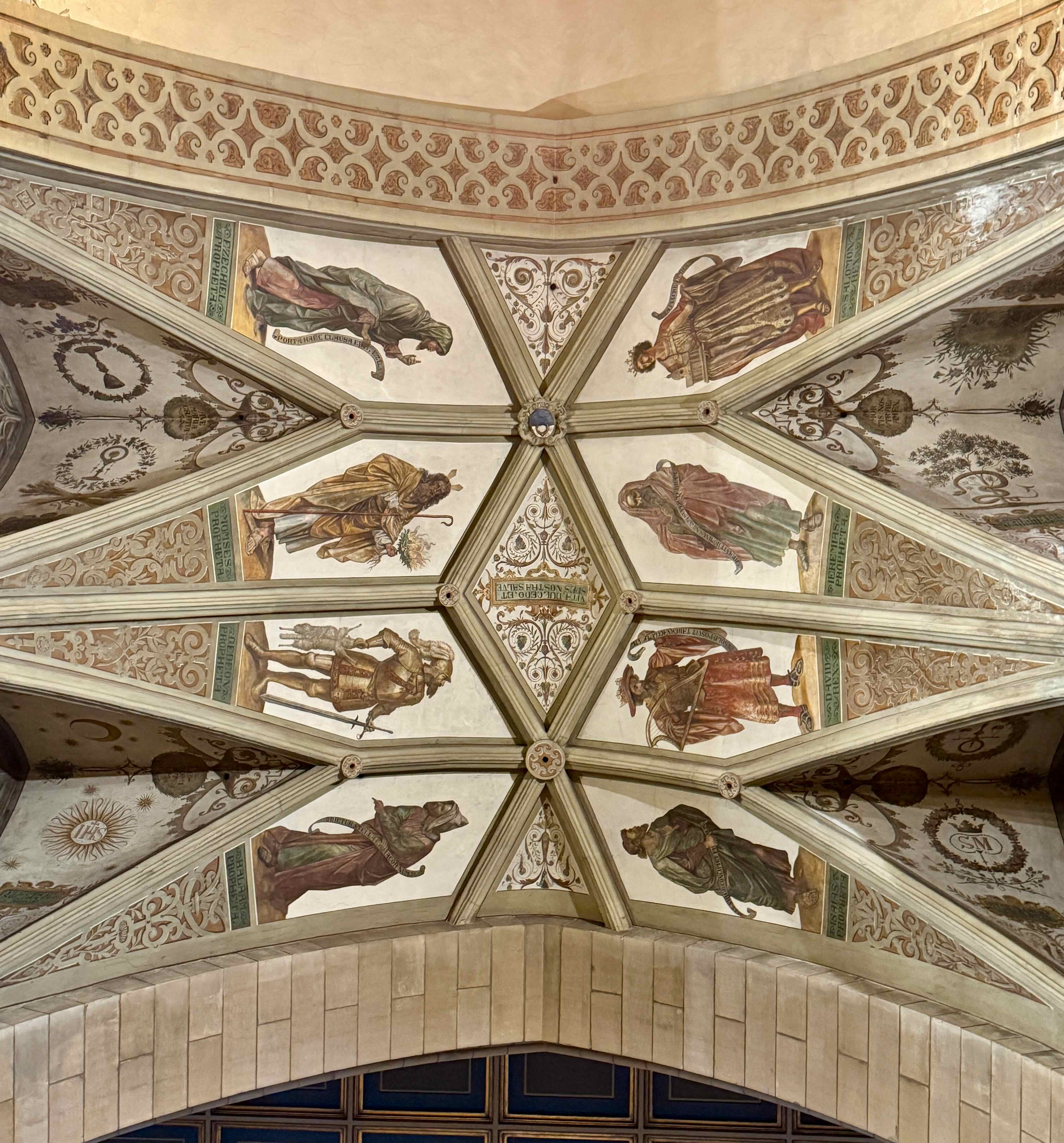
I look up and there are paintings on the ceiling high above the nave.

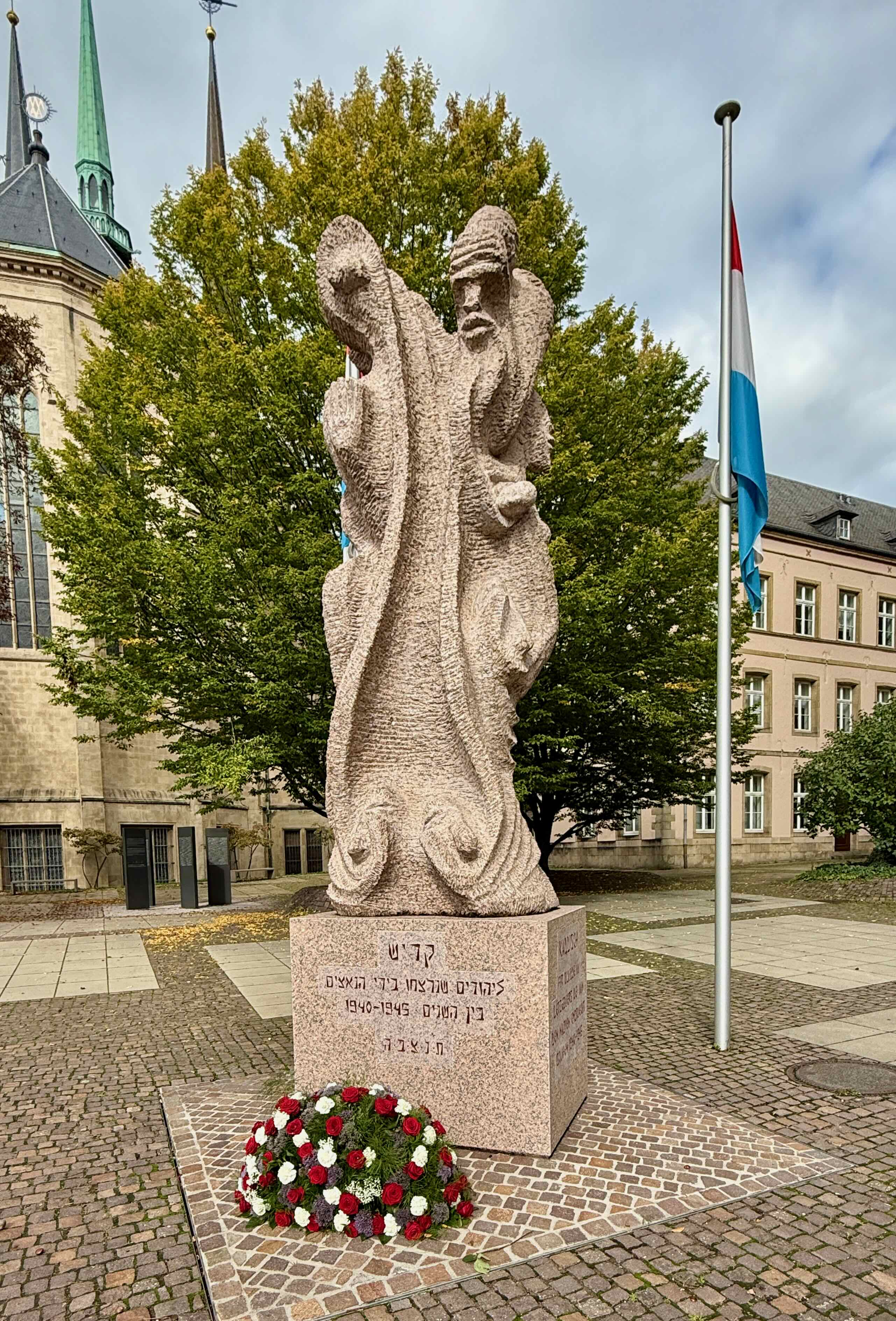
We pass the National Monument in Memory of the Victims of the Shoah in Luxembourg (1940-1945). The monument was inaugurated on 17 June 2018. It is named after the Kaddish, one of the most famous Jewish prayers recited as part of mourning rituals in Judaism.

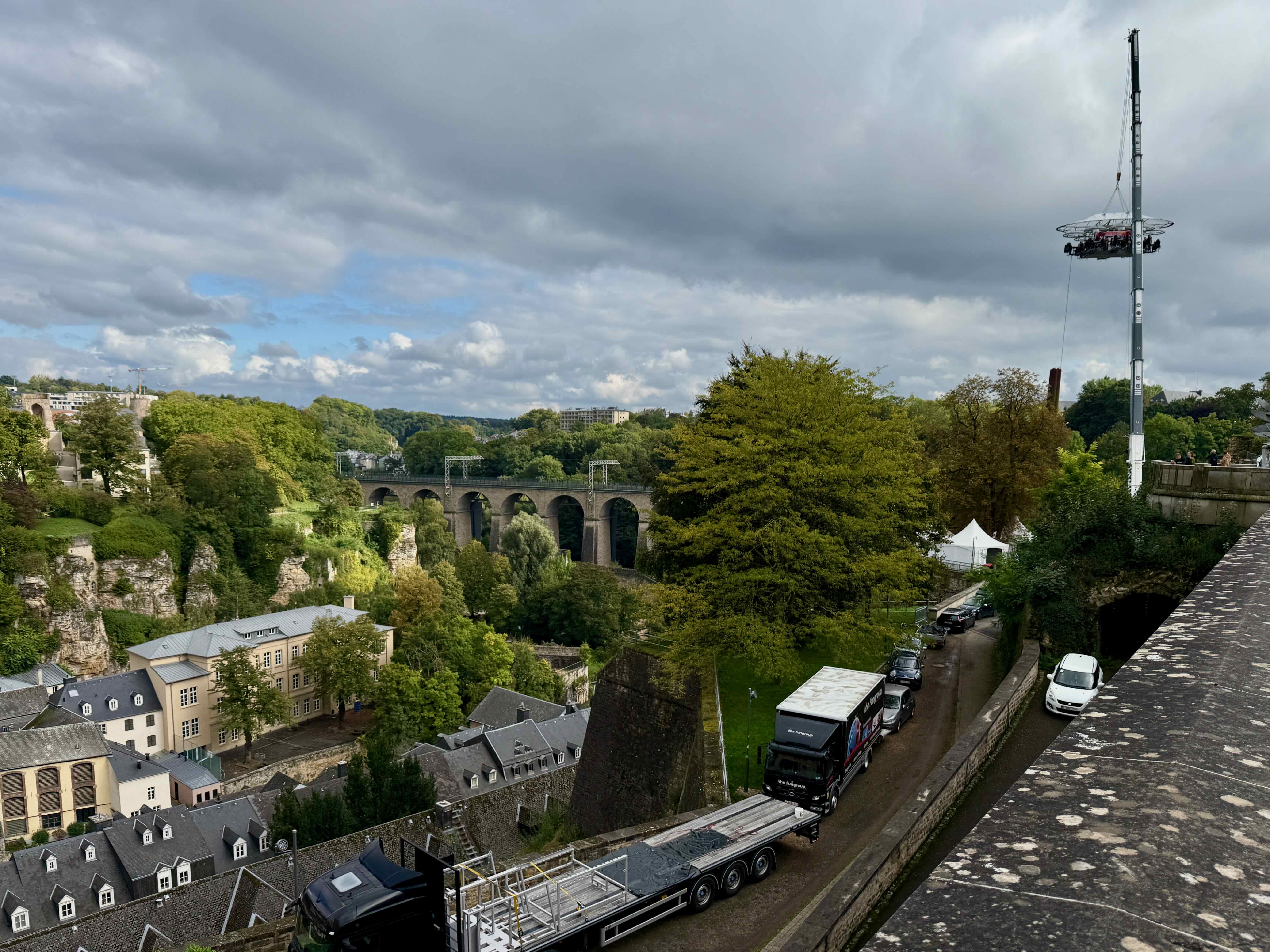
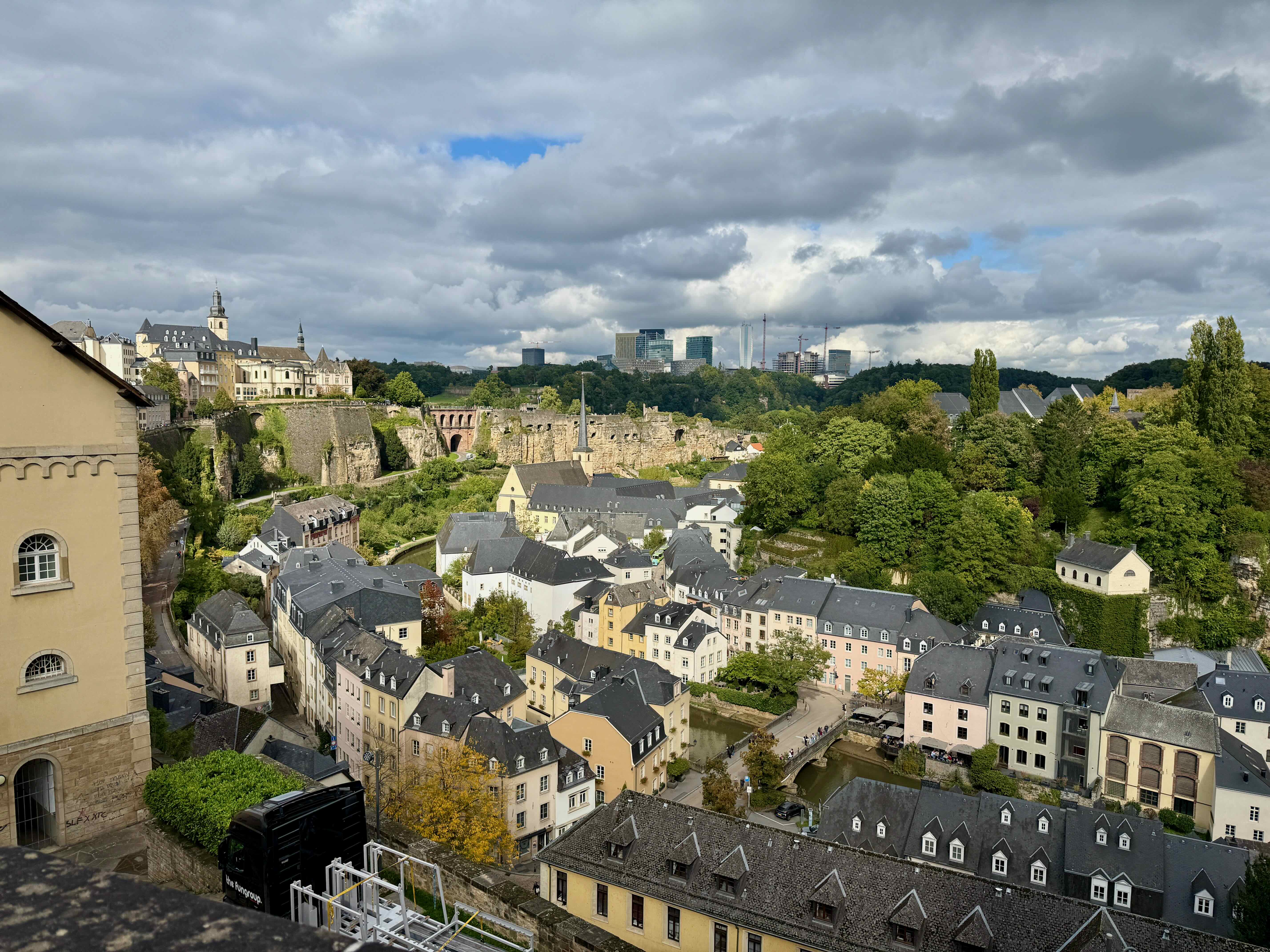
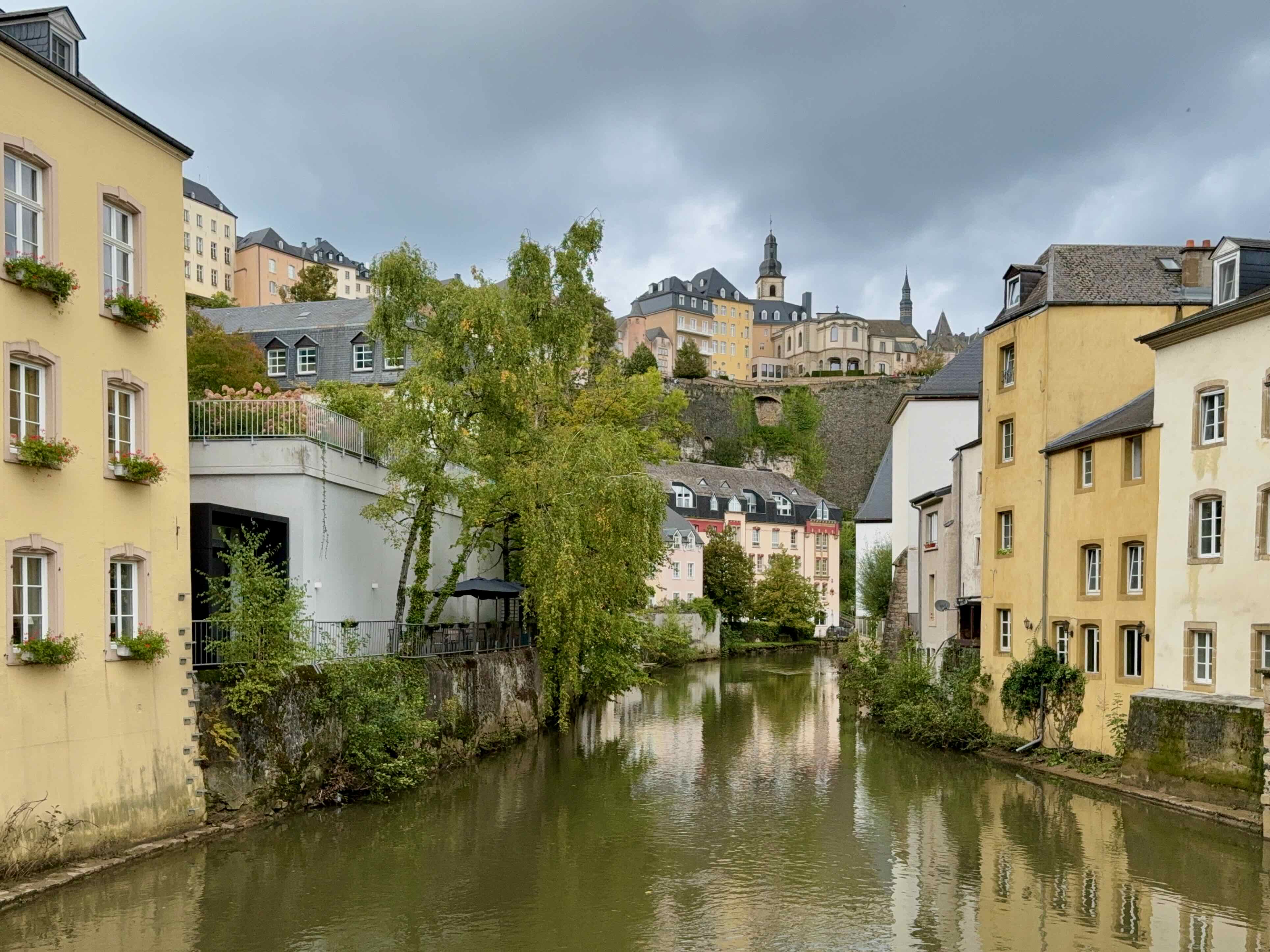
Luxembourg City has an upper plateau, which contains the historic Old Town, and a lower valley known as Grund. This area is home to some of the oldest and most picturesque buildings in the city, dating back to the 14th century. Take notice of the suspended platform on the right of this photo.

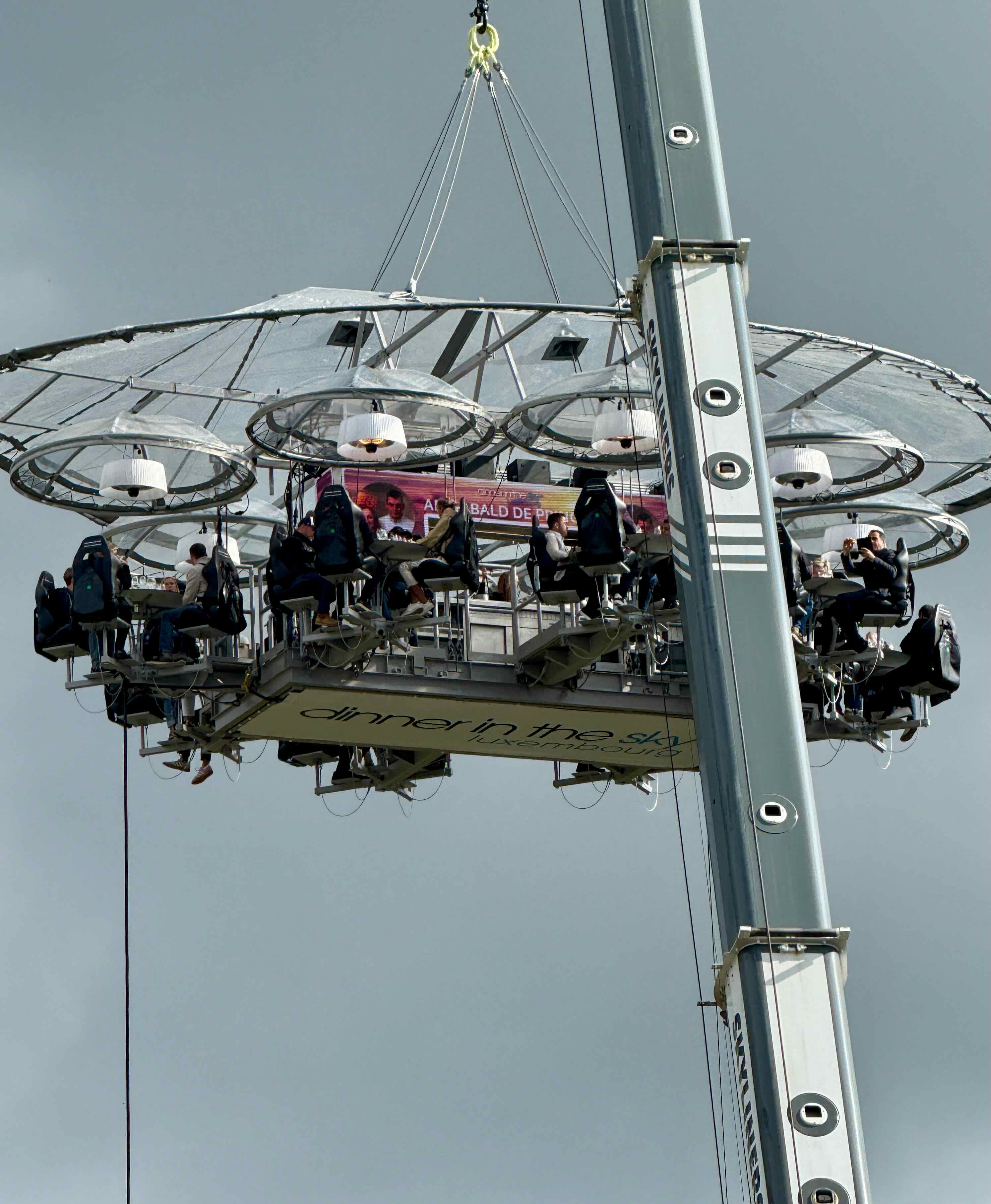
People are dining in the sky! I am not sure why anyone would want to do this. It does not appeal to me in the least, but for 325€ per person you can have lunch prepared by Michelin chefs 50 meters high above the ground!

We were in Luxembourg 46 years ago, but all I can remember is looking down from high walls onto the city, like we are doing here.

We take an elevator down to the lower part of town and cross a bridge on our way to the Natural History Museum.

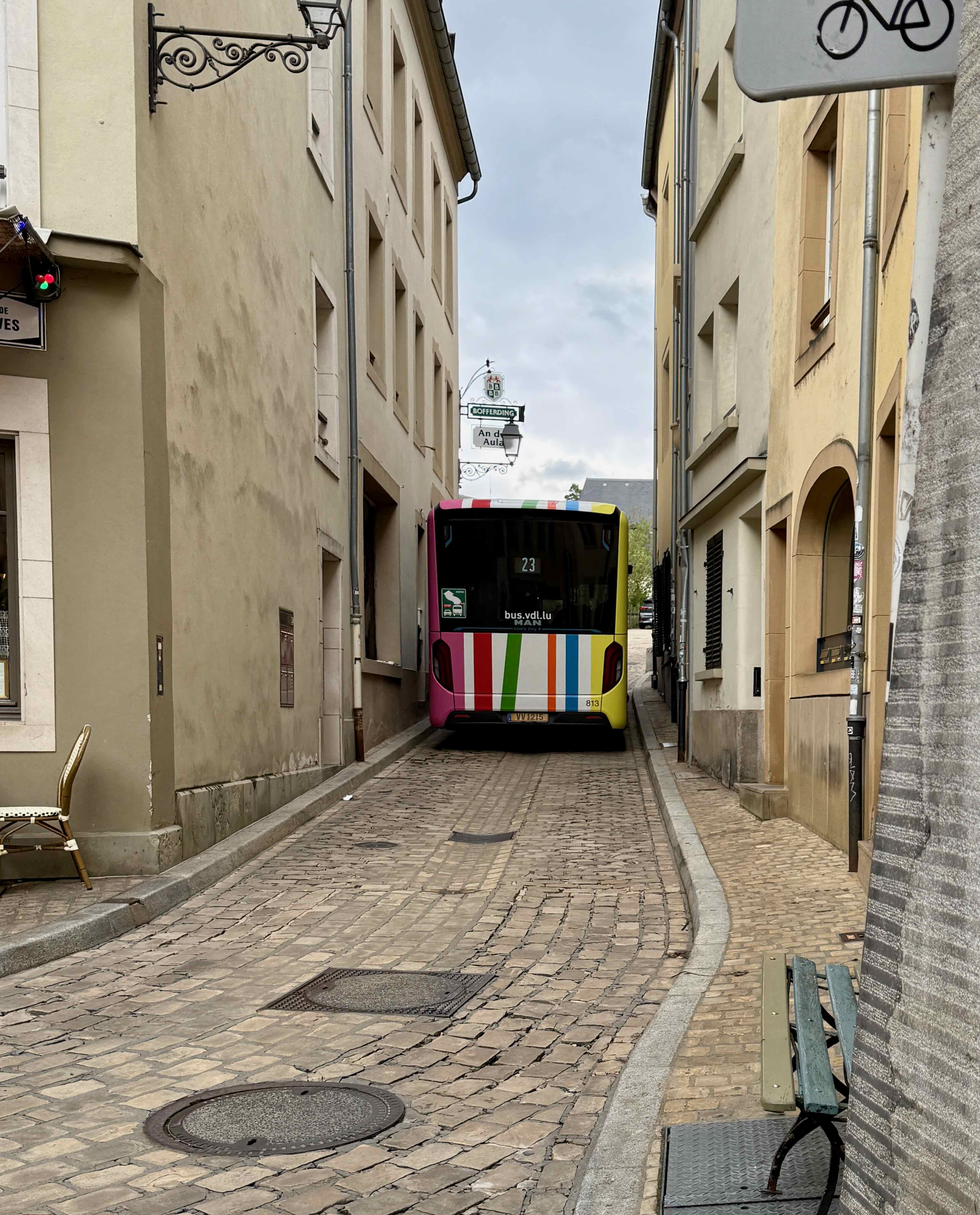
I would not want to be a bus driver here, the streets are very narrow.  

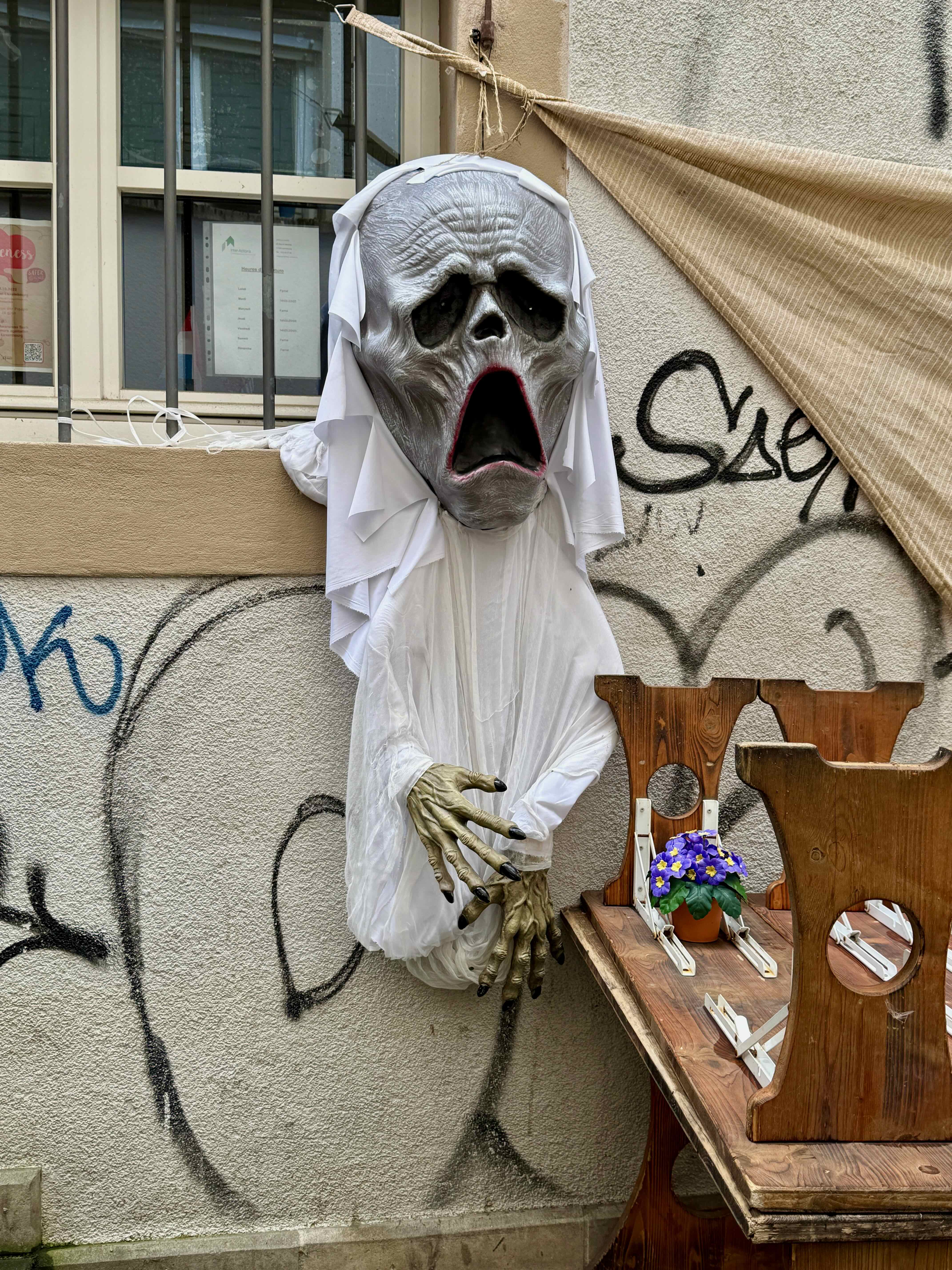
We see our first halloween decorations.

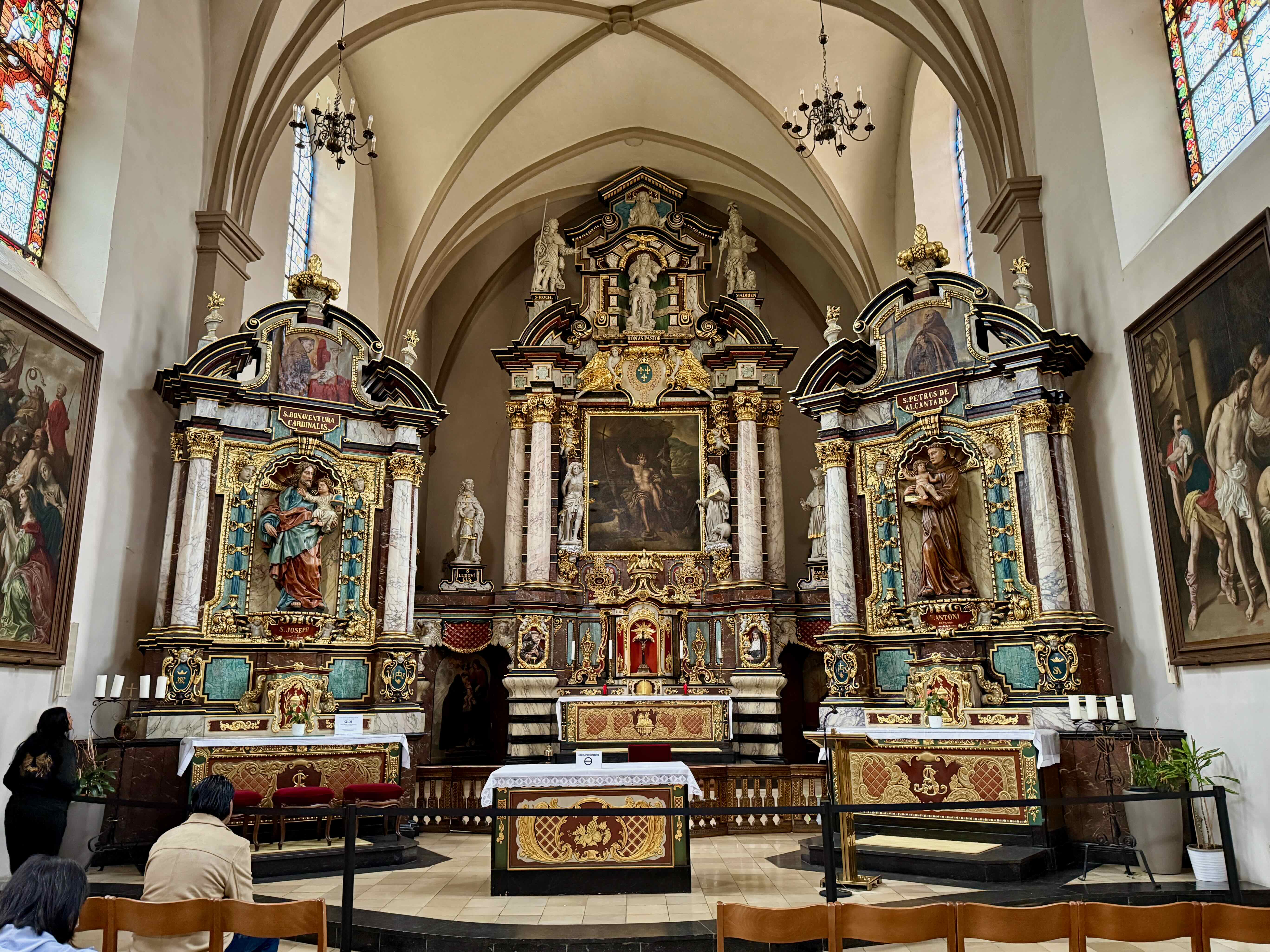
The current St. John the Baptist church dates back to the 17″ century. Its rich Baroque furnishings are not its original ones, they were taken from other churches during the period after the French Revolution!

In the valley looking up at the upper city.

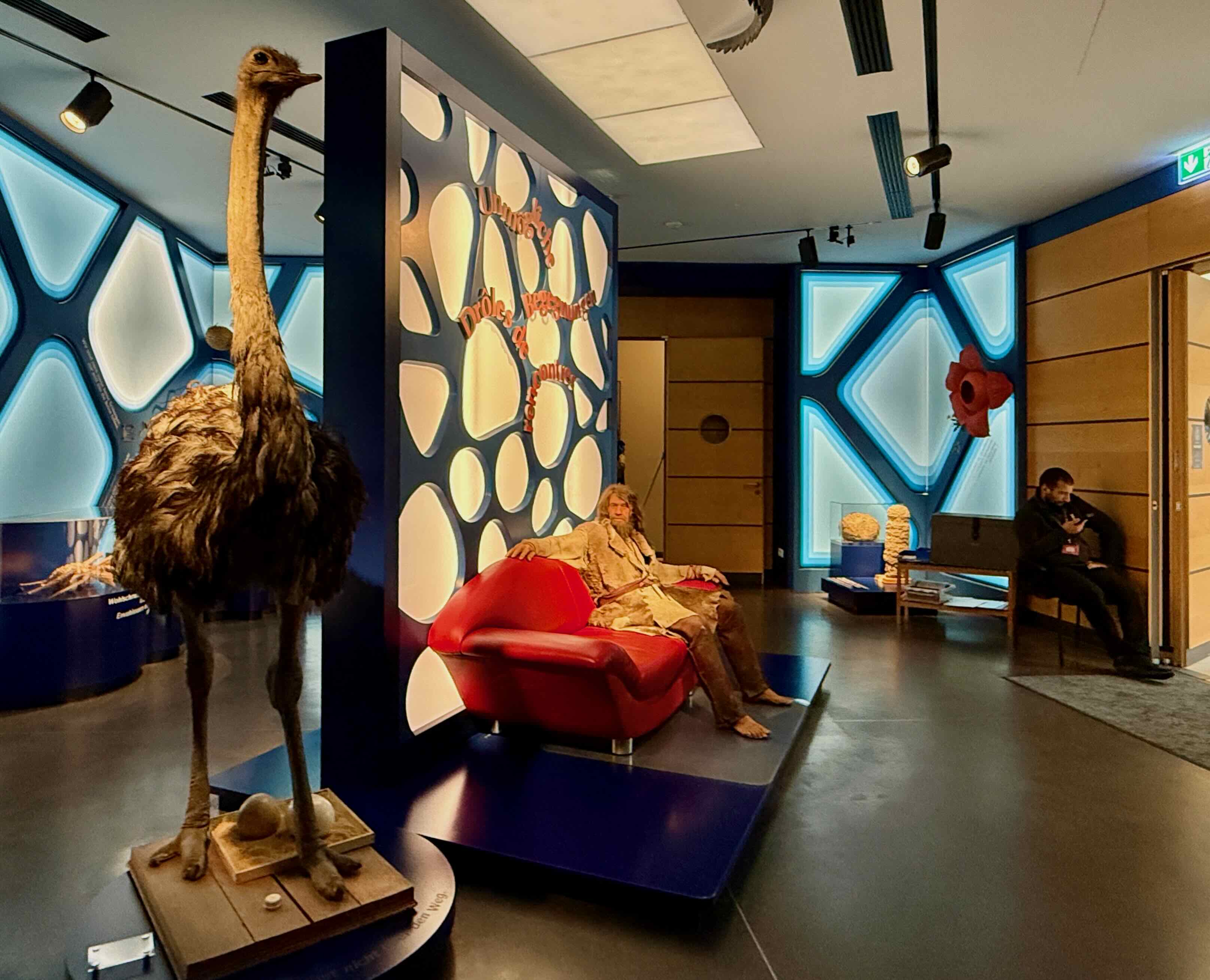
As we enter the Natural History Museum I am startled by the man sitting on the red couch.  From a distance I thought he was a real person.

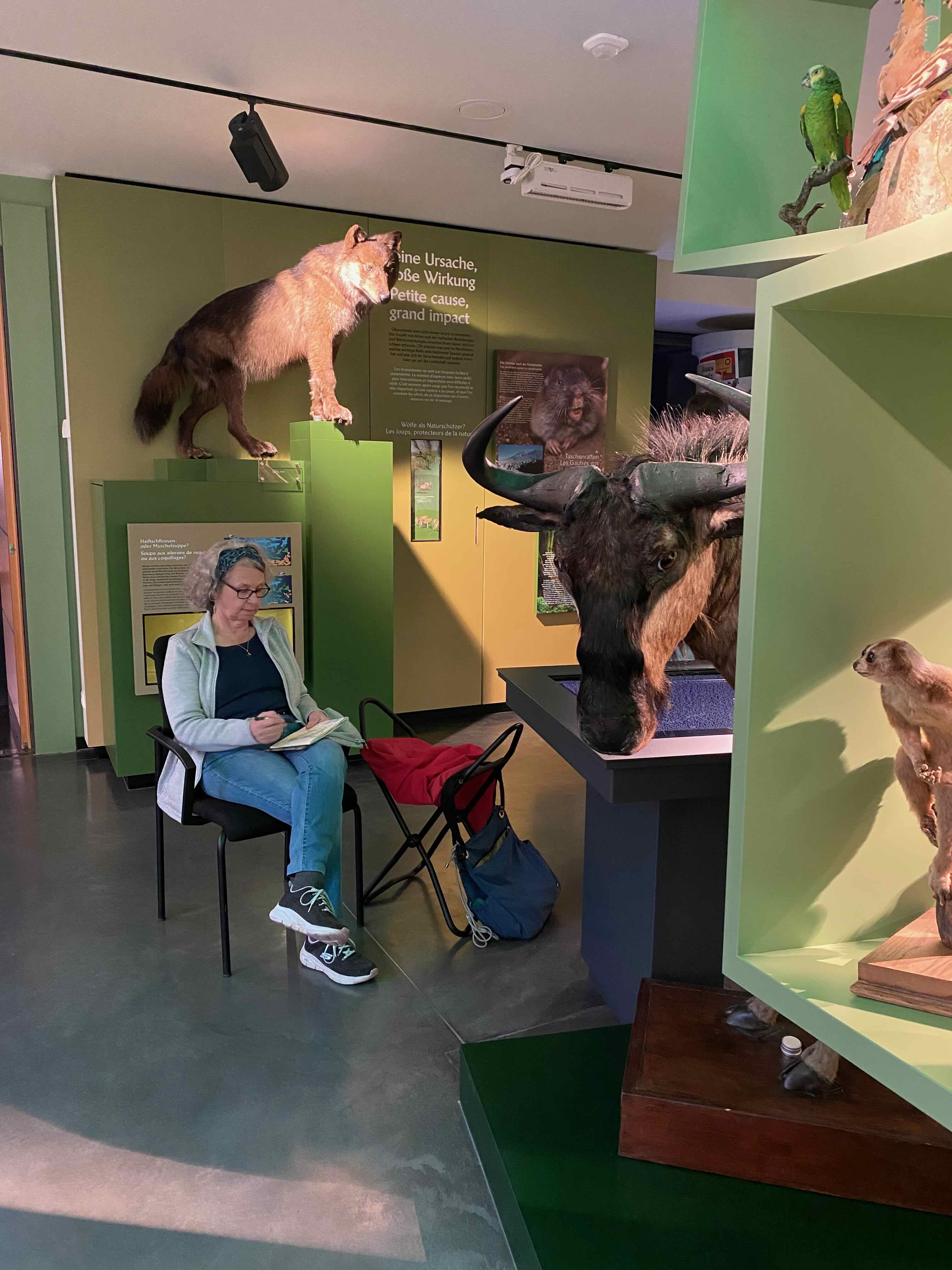
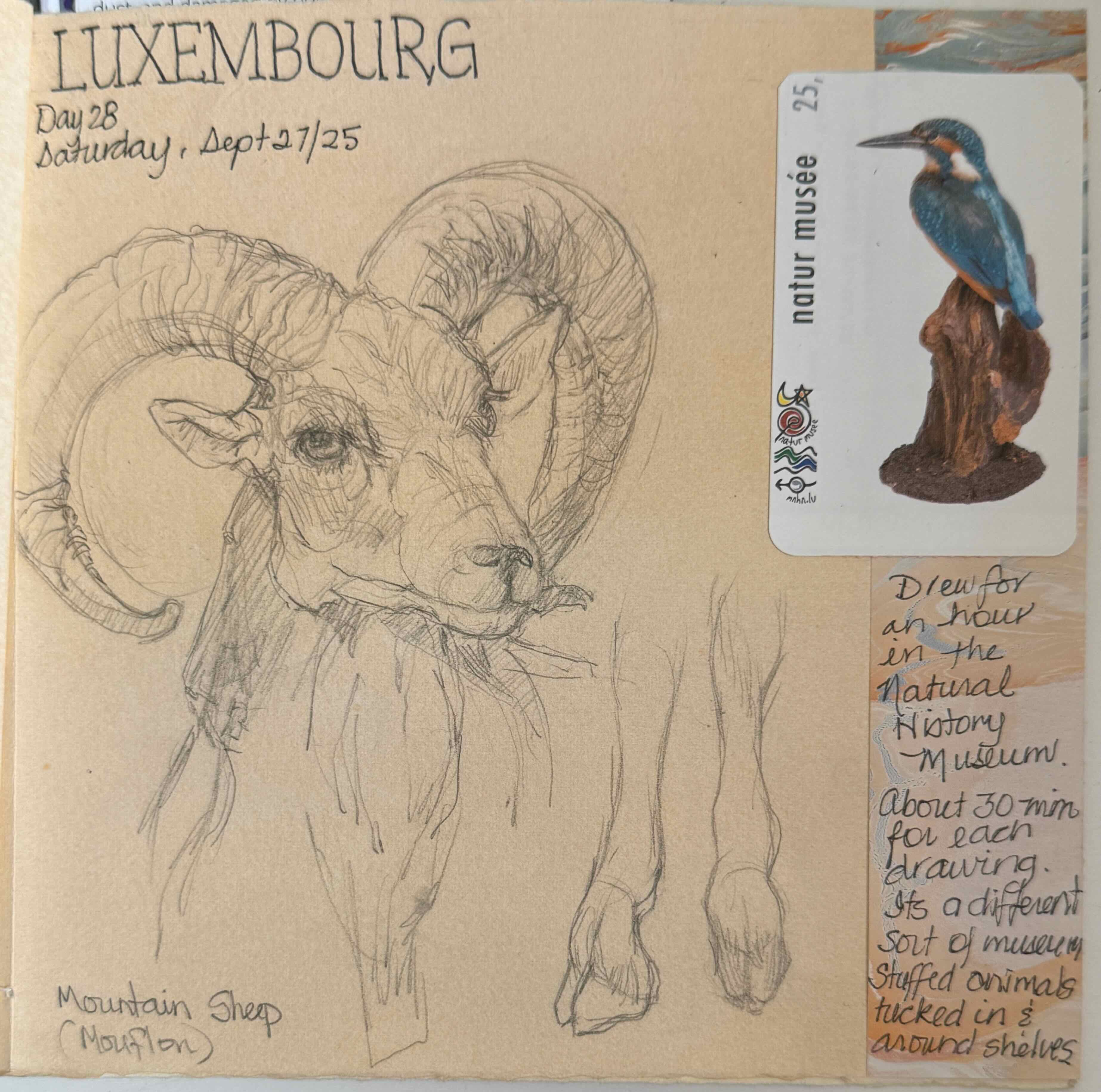
It isn’t a big museum and after a quick look around I find a spot with a chair to sit and draw while Bob explores the rest of the museum.

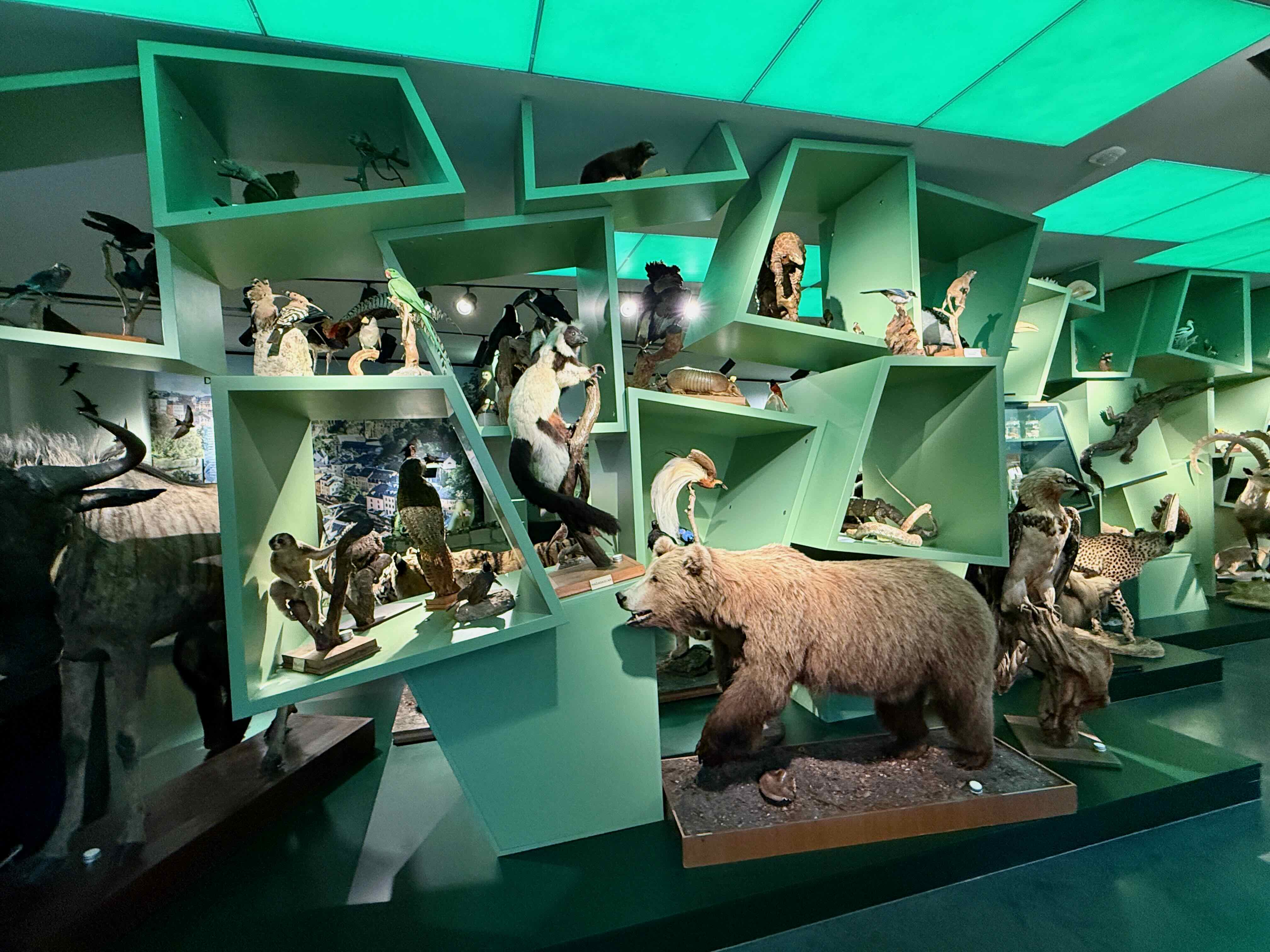
This room is a hodge lodge of stuffed animals…some look old and a bit worse for wear.

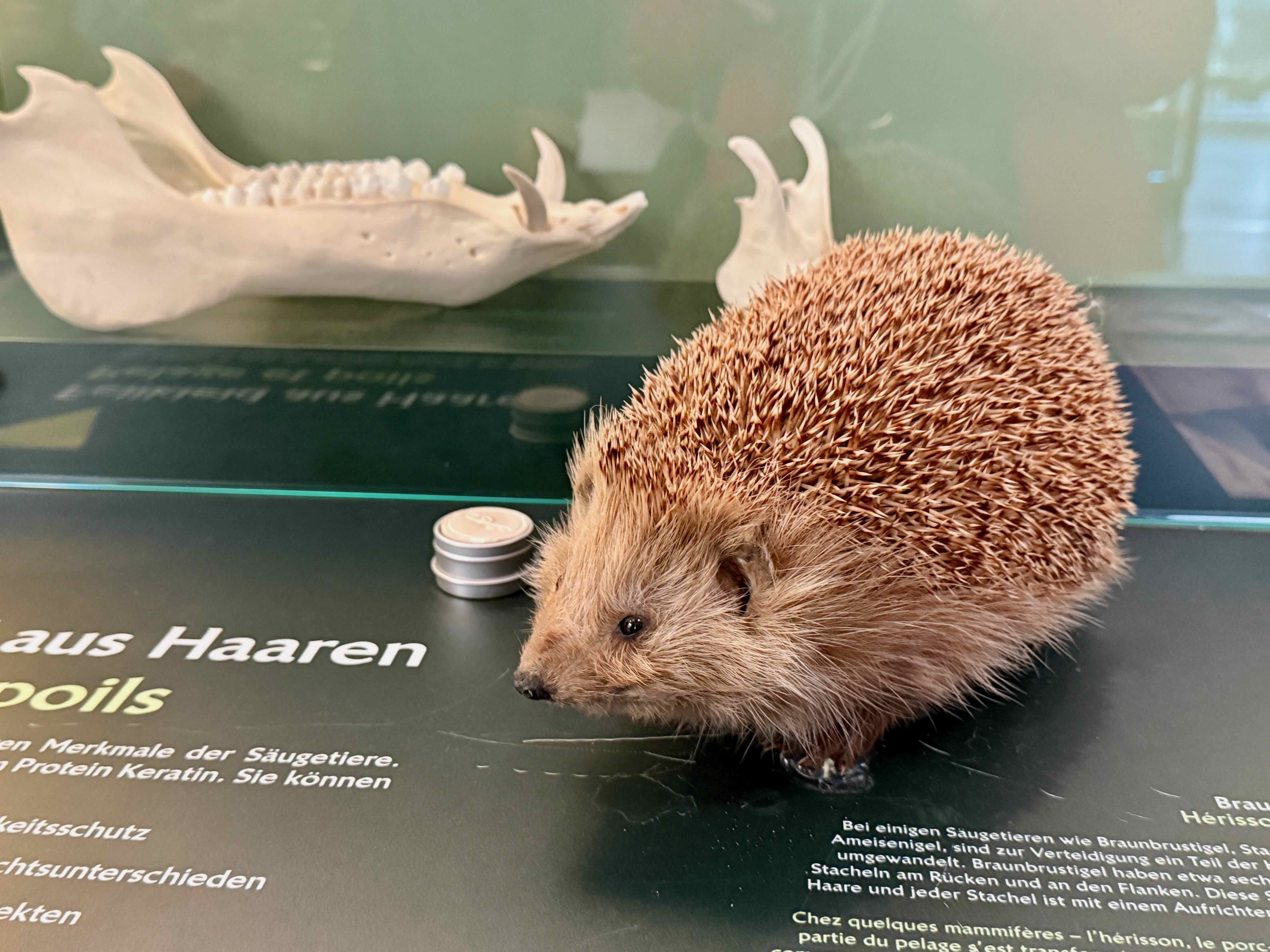
Bob discovered an interesting fact about hedge hogs. “The European hedgehog is a nocturnal animal that is easy to recognize by its many spines. When faced with danger, it can curl up and form a “prickly ball”. Its luxembourgish name”Keisécker” (“cow sucker”) originates from a legend that hedgehogs sucked milk during the night from cow udders. Obviously this is not true as hedgehogs suffer from a lactose intolerance.” On our walk to the bus we stop for another look down into one of the garden areas below the walls.
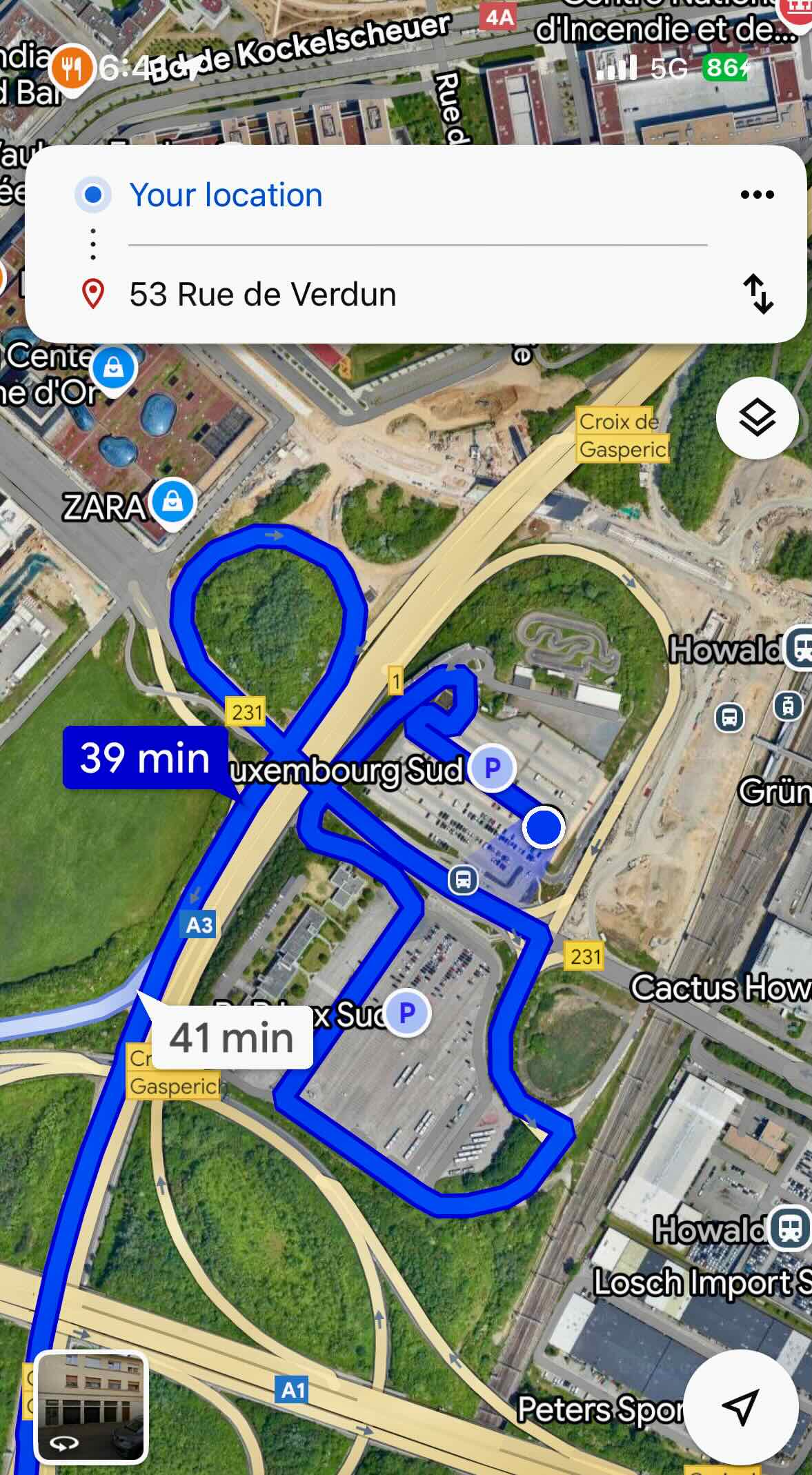
We caught the right bus back to our car but getting out of the parking lot was another thing!  Thank heavens for Google maps!  We might still be driving in circles trying to get back onto the highway!

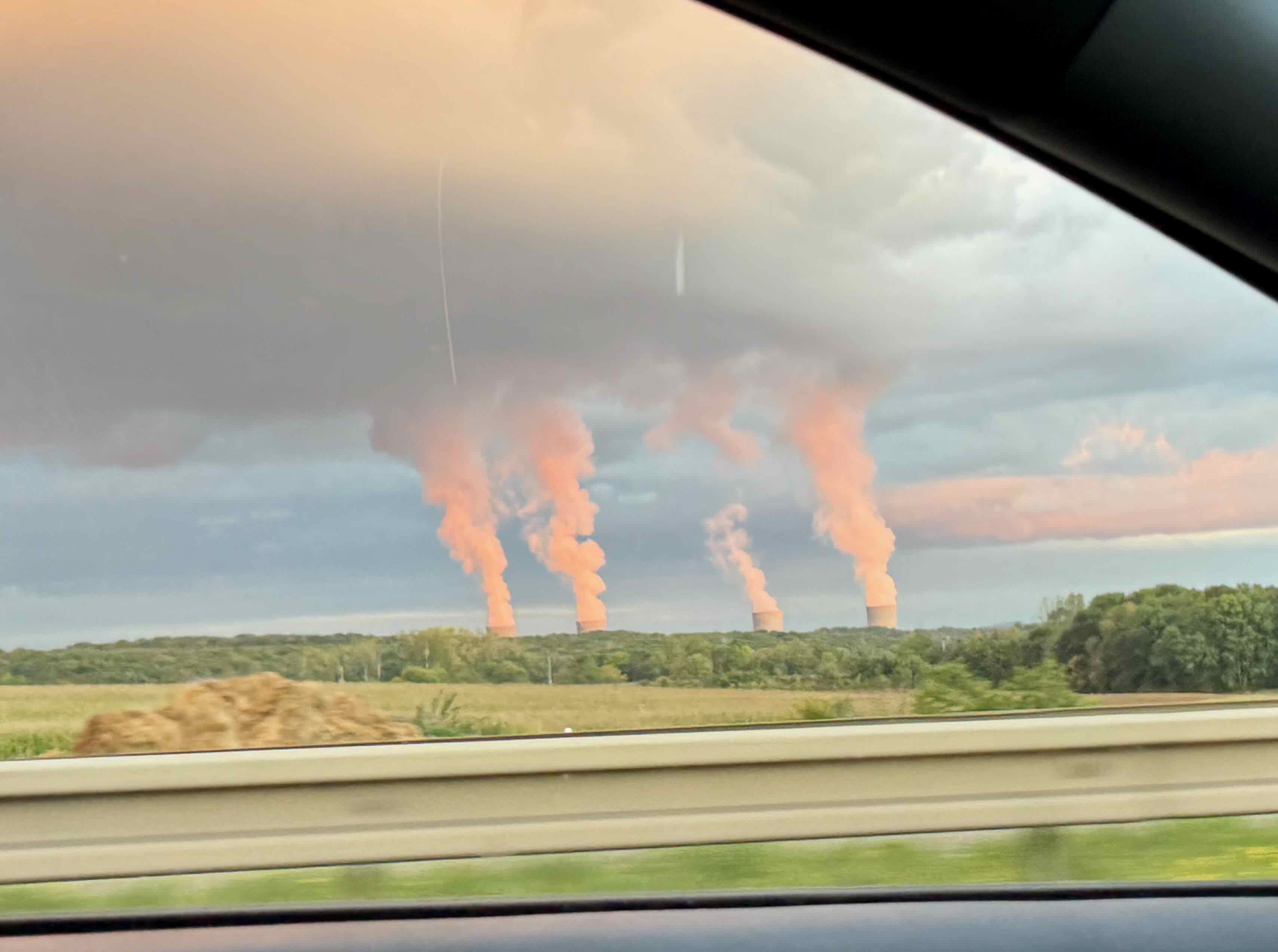
We see four nuclear power plants on the way home. They always give me an eerie feeling. I wouldn’t want to be living anywhere near one of these.

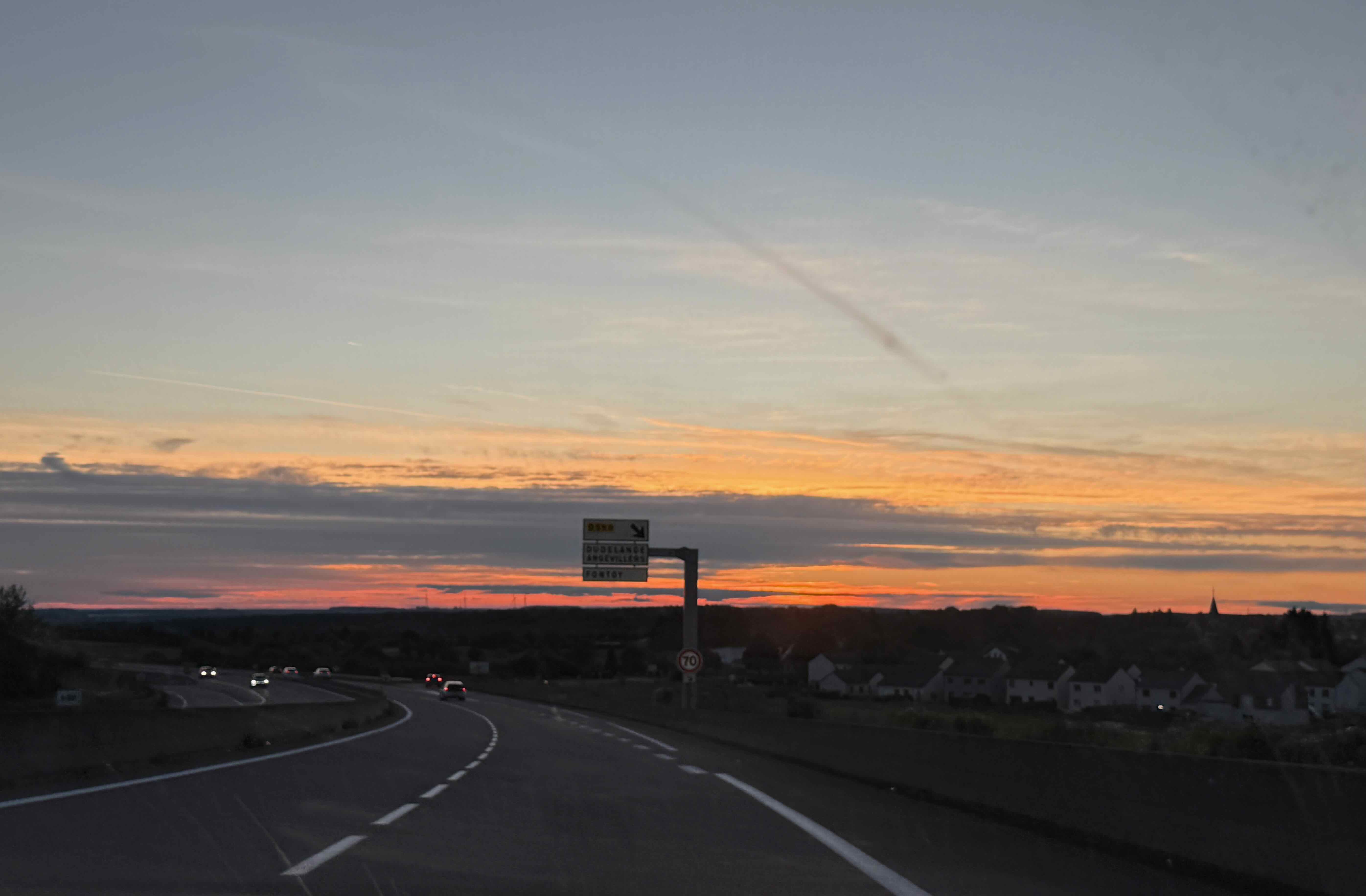
It is getting dark on the drive home but we are treated to a lovely sunset.

Waterloo, Belgium and the Defeat of Napoleon

Day 19     Thursday, September 18, 2025

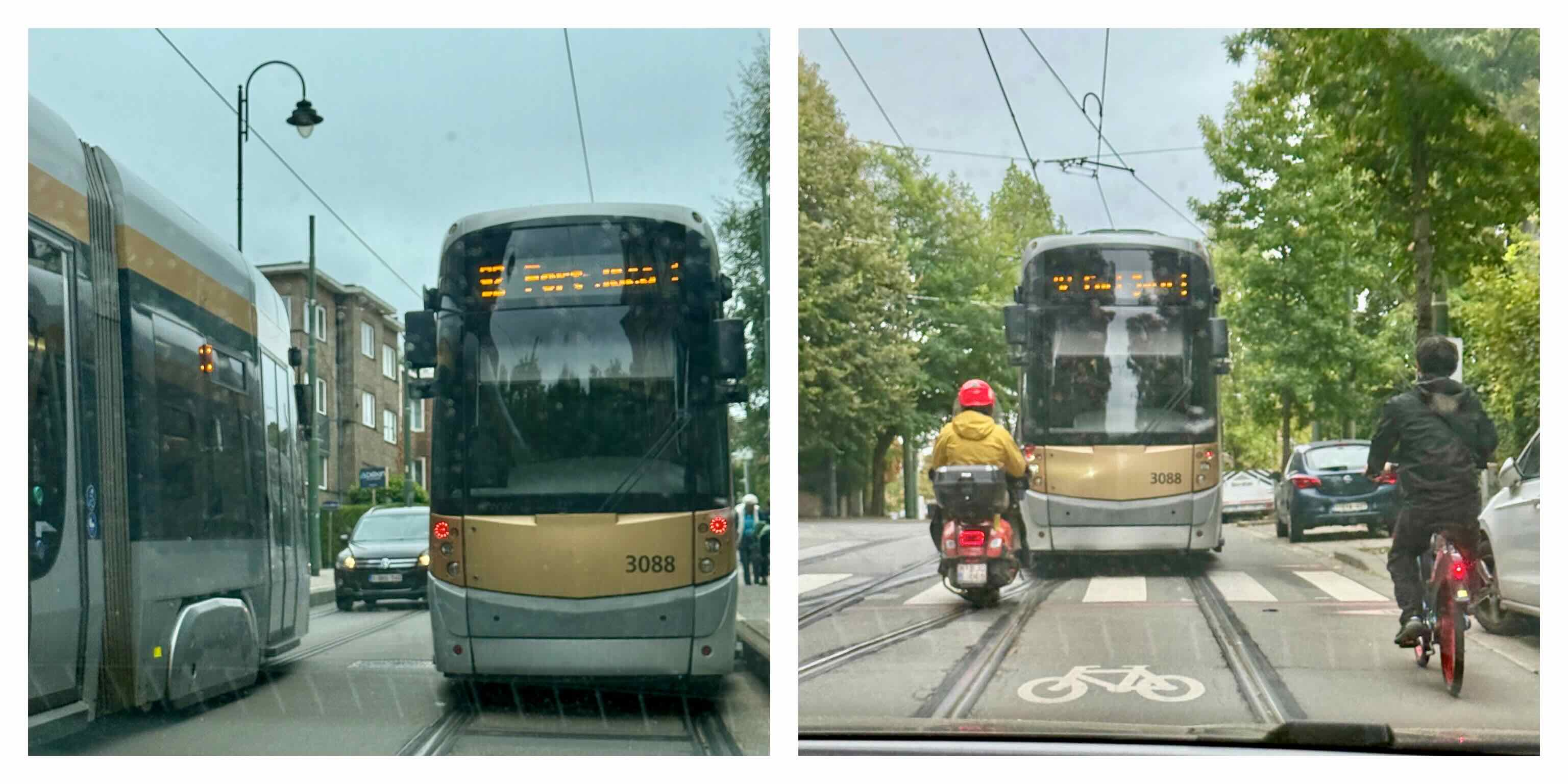
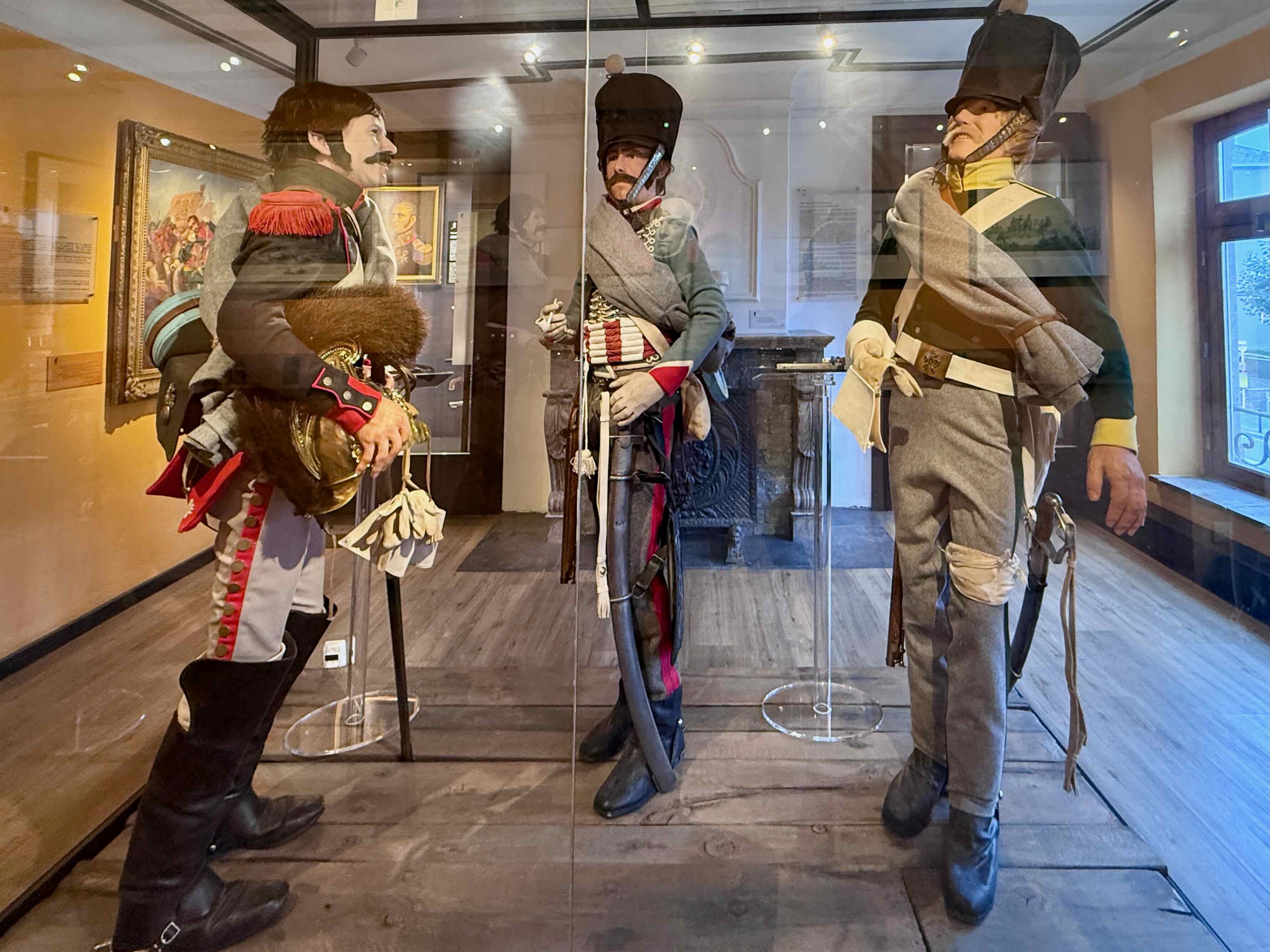
We are on the road by 10:00, heading to Waterloo which is the site of the famous Battle that ended Napoleon’s French Empire. The roads can be challenging to drive. Many are fairly narrow and today we share the road with trolley cars, automobiles, trucks, motorcyclists and bicyclists! There is a lot to pay attention to and Bob its doing an amazing job driving.  I am usually a good navigator but I didn’t have the best night and today we get to Waterloo in spite of my navigating!! The Wellington Museum was easy to find and there was free parking nearby.  The museum is located in the building that the British Duke of Wellington used as his headquarters when he defeated Napoleon at Waterloo in1815.  The soldiers uniforms displayed are, from left to right, the French Carabiniers, the British Light Dragoons and the British 8th Hussars.
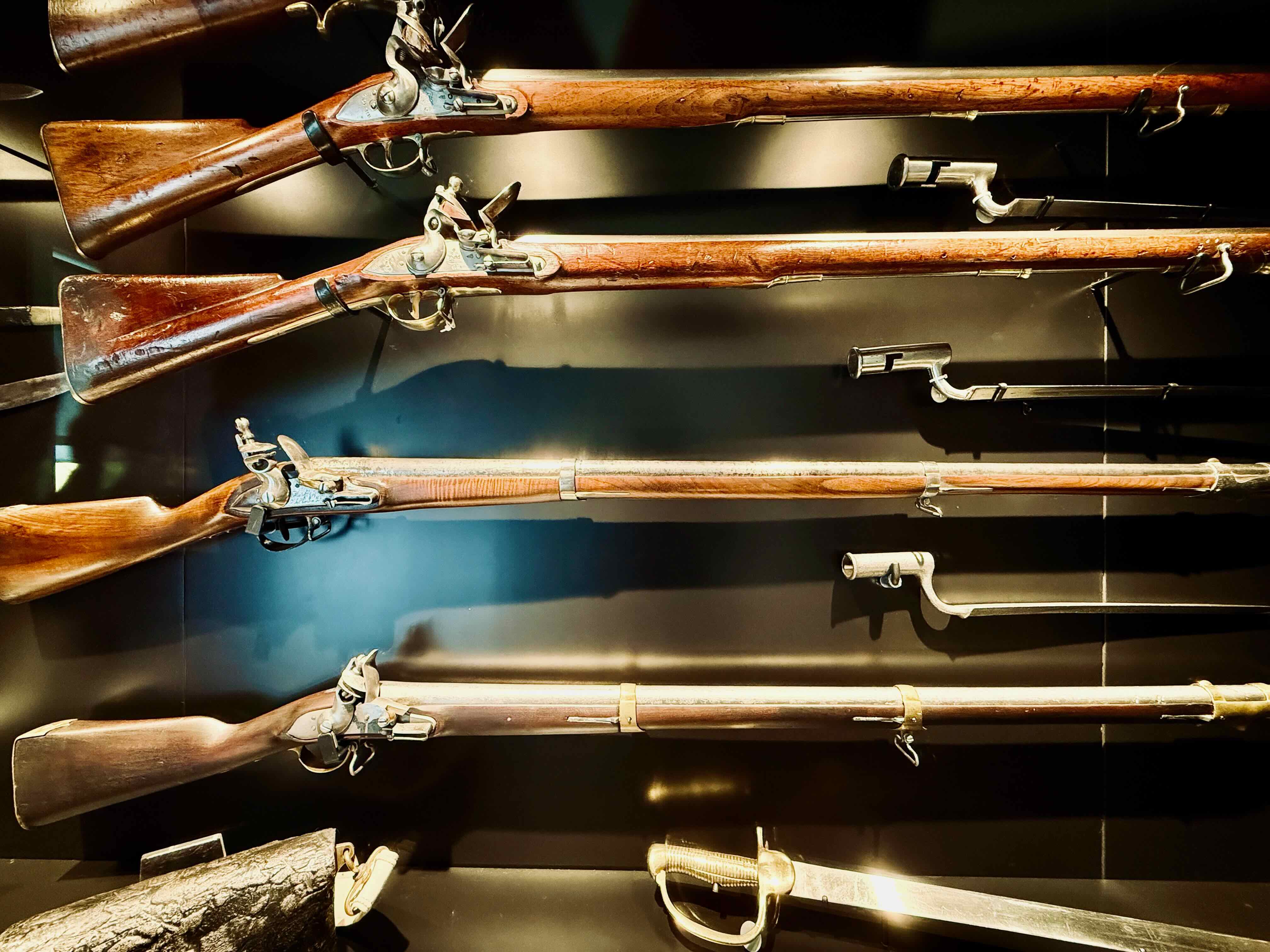
The museum has a room with weapons used during the Battle of Waterloo.

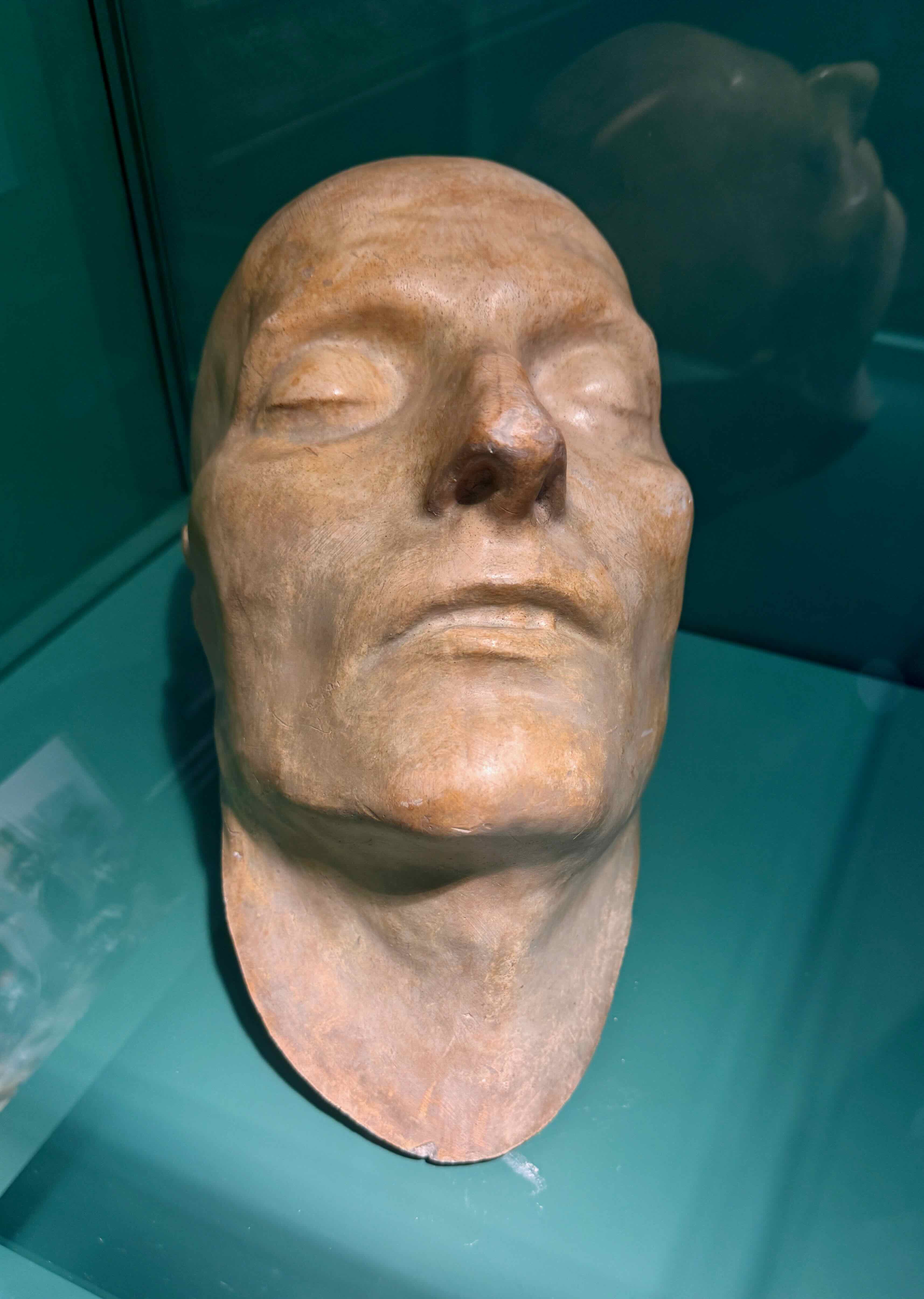
A lot of artwork, paintings and information about the battle and even the death mask of Napoleon which I find rather unsettling.

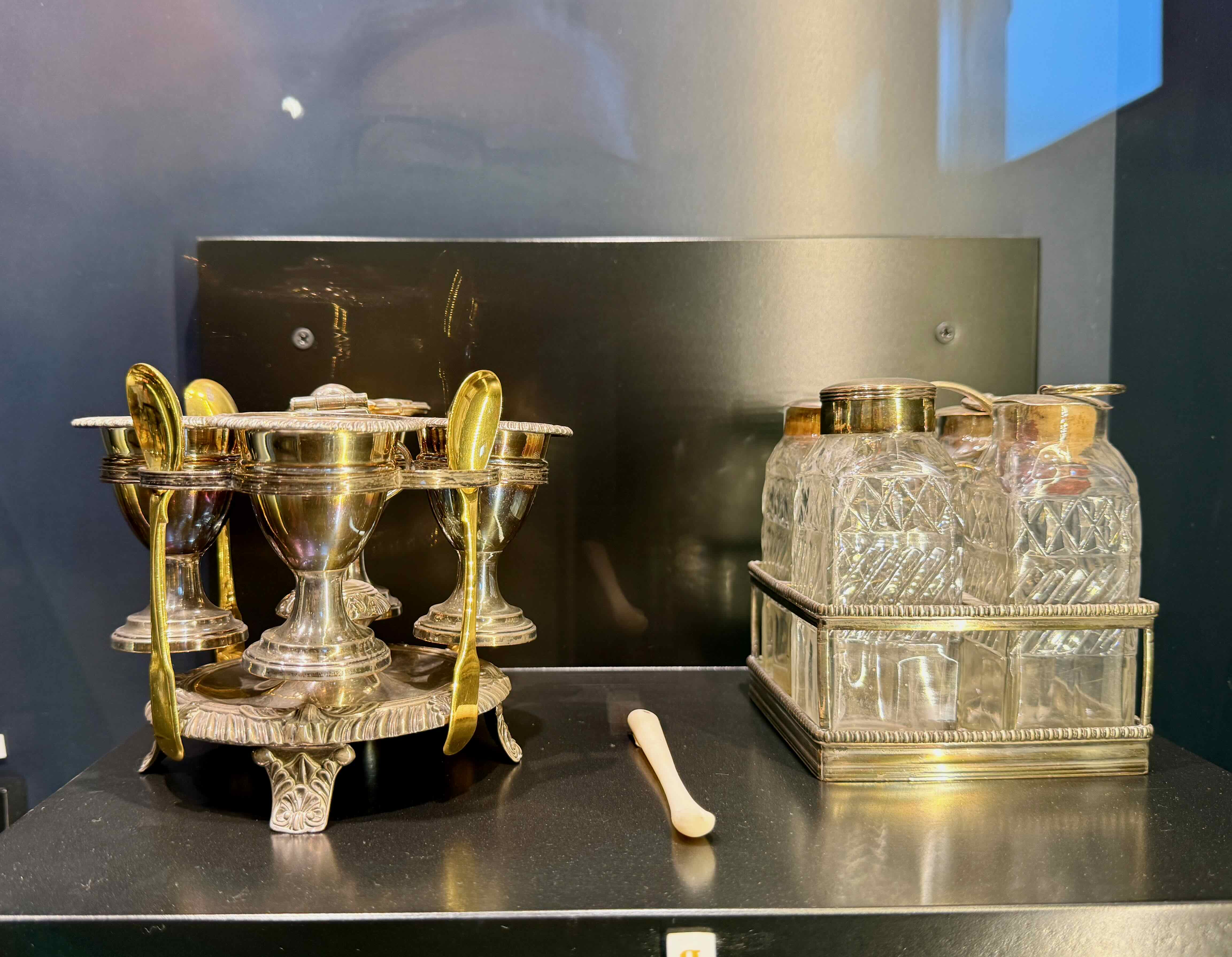
The French troops had to forage to survive, and many soldiers died of disease, malnutrition and exhaustion brought on by the extremely difficult conditions they endured.  Meanwhile the French generals travelled with dining sets that included items like crystal containers and silver and gold plated egg cups and spoons!

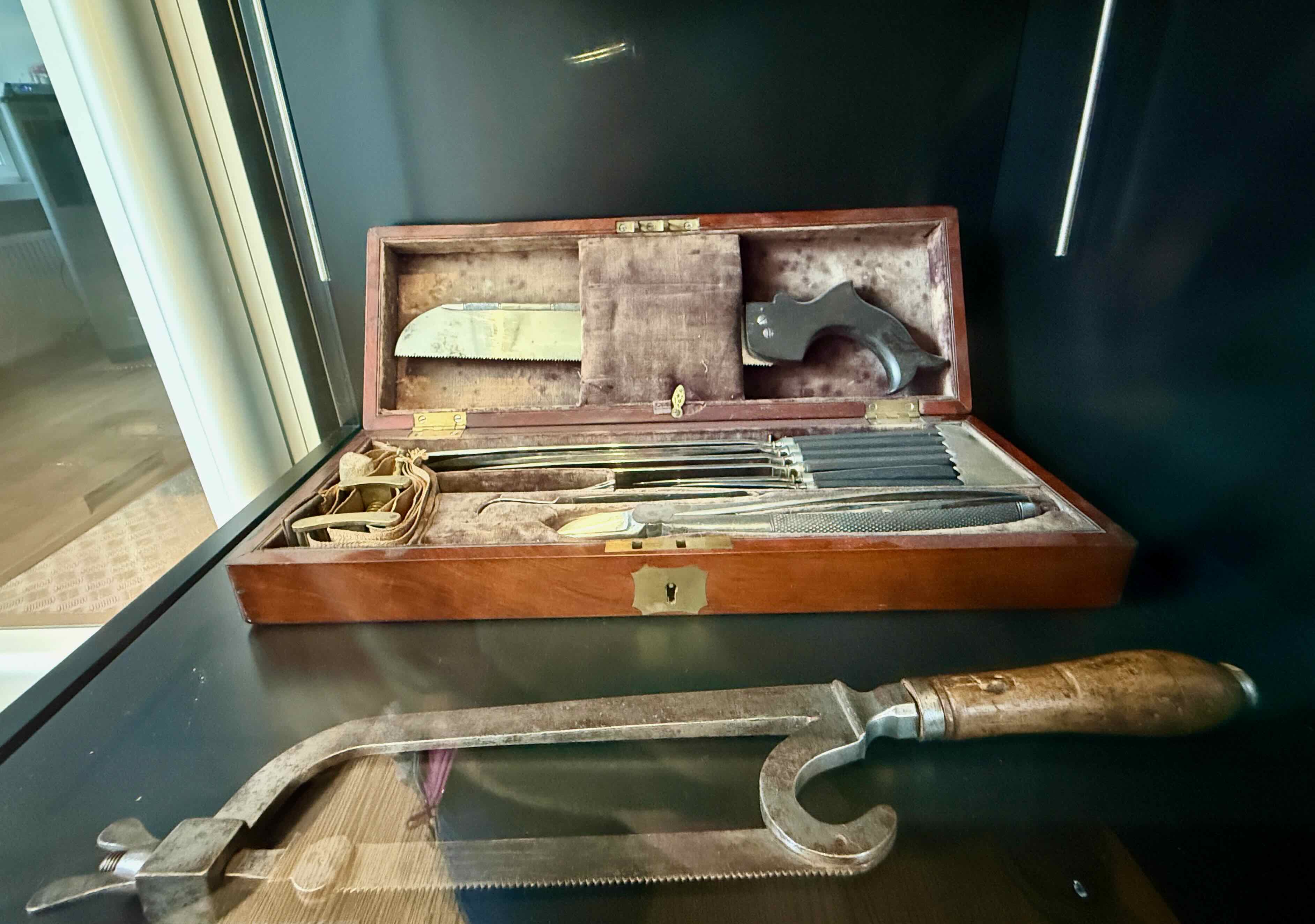
Soldiers were treated by amputating injured limbs to prevent gangrene. This is a typical surgeons kit for amputations which were performed quickly without anaesthetic and in five minutes. The saws and other medical equipment were not cleaned between patients so the post operative mortality rate was very high.

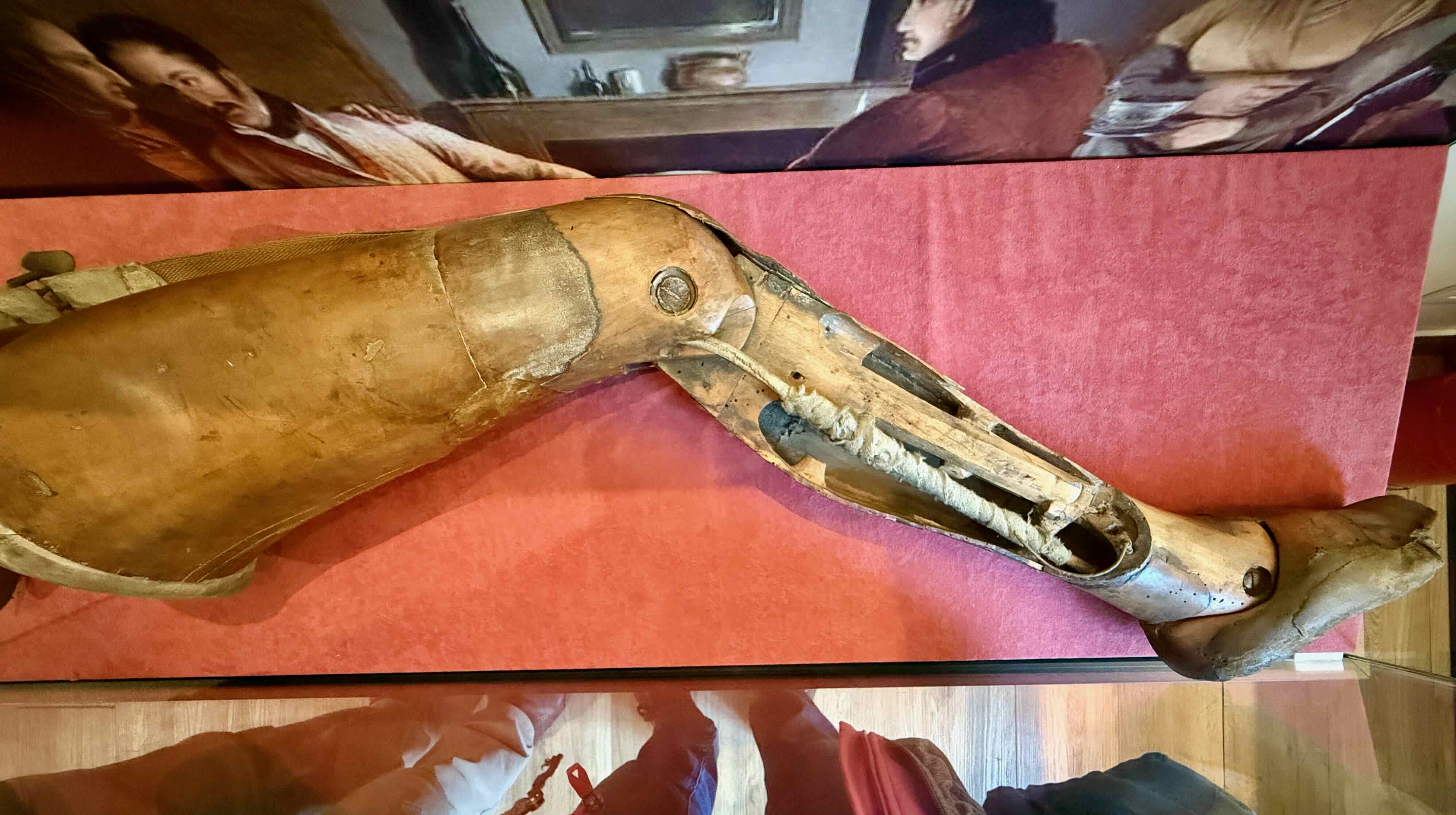
If you survived the amputation and had enough money your prosthetic leg could look like this.  I imagine most common soldiers made do with some sort of simple wooden peg leg.

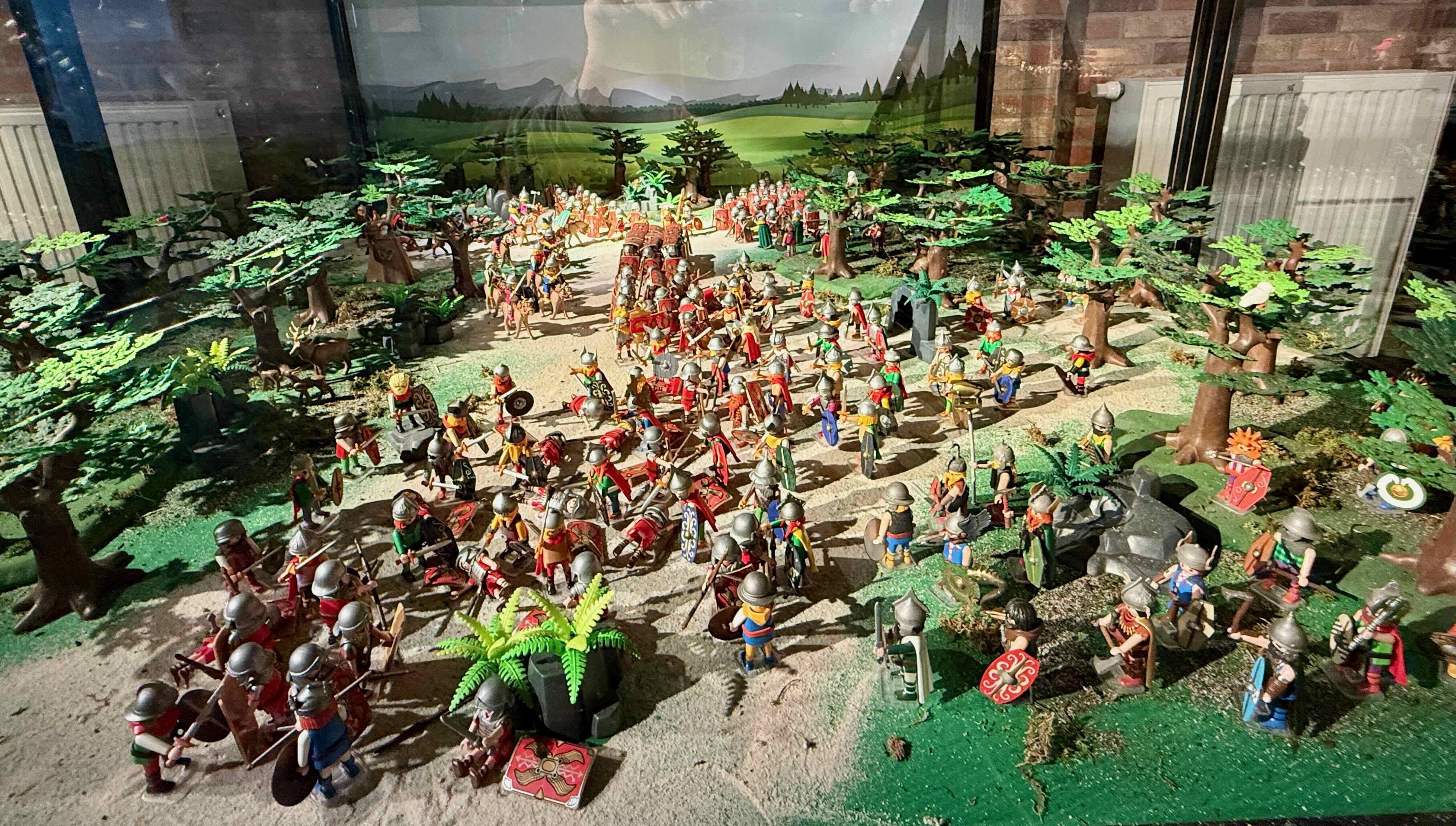
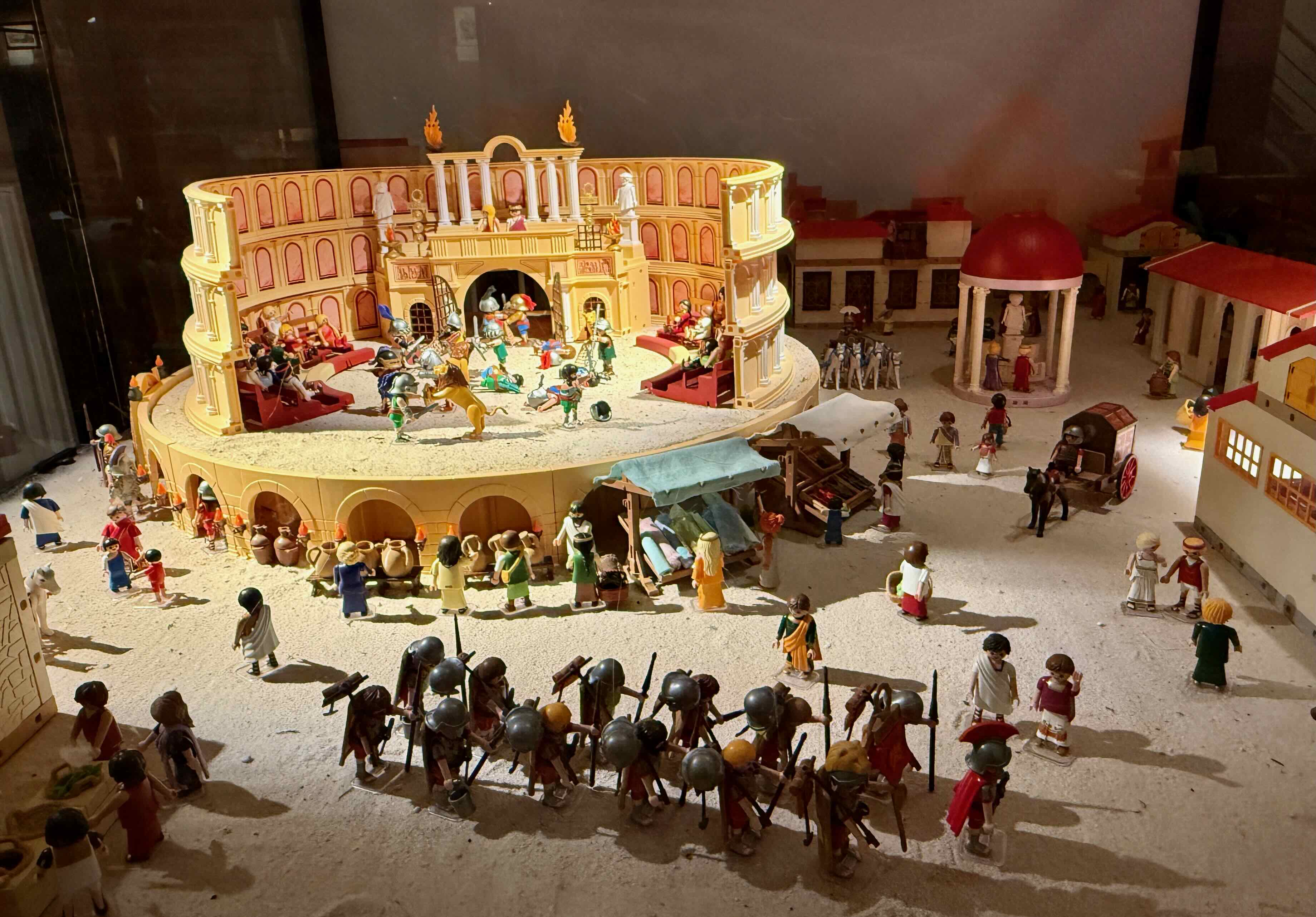
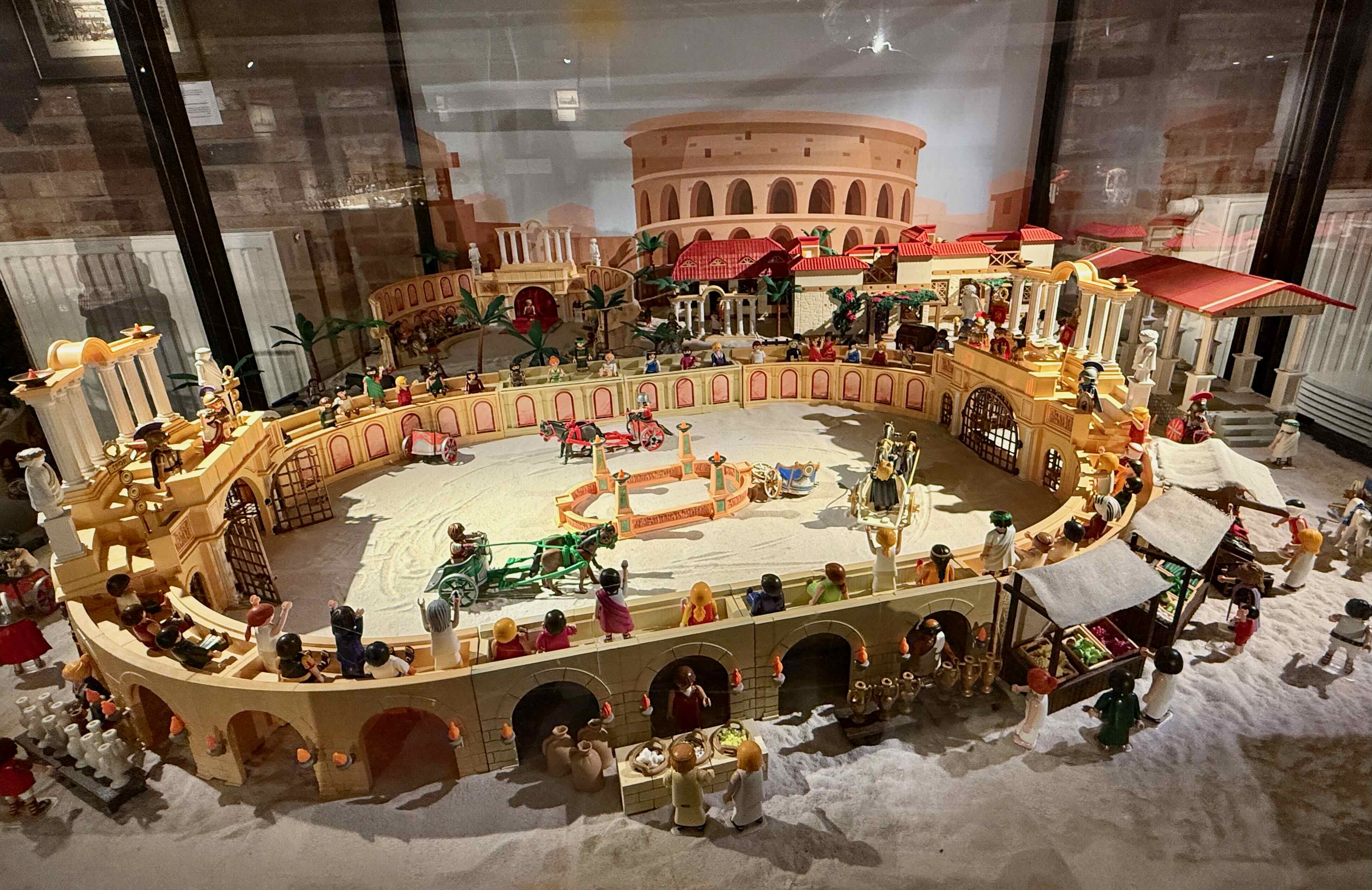
We cross a patio to enter another part of the museum and are surprised to find a huge Playmobile exhibition titled ‘A History of Empires’.  There are 16 display cases, each depicting a different time in history.

The war between Julius Caesar and the Gauls in 54 B.C. Rome’s first race course built in 599 B.C.
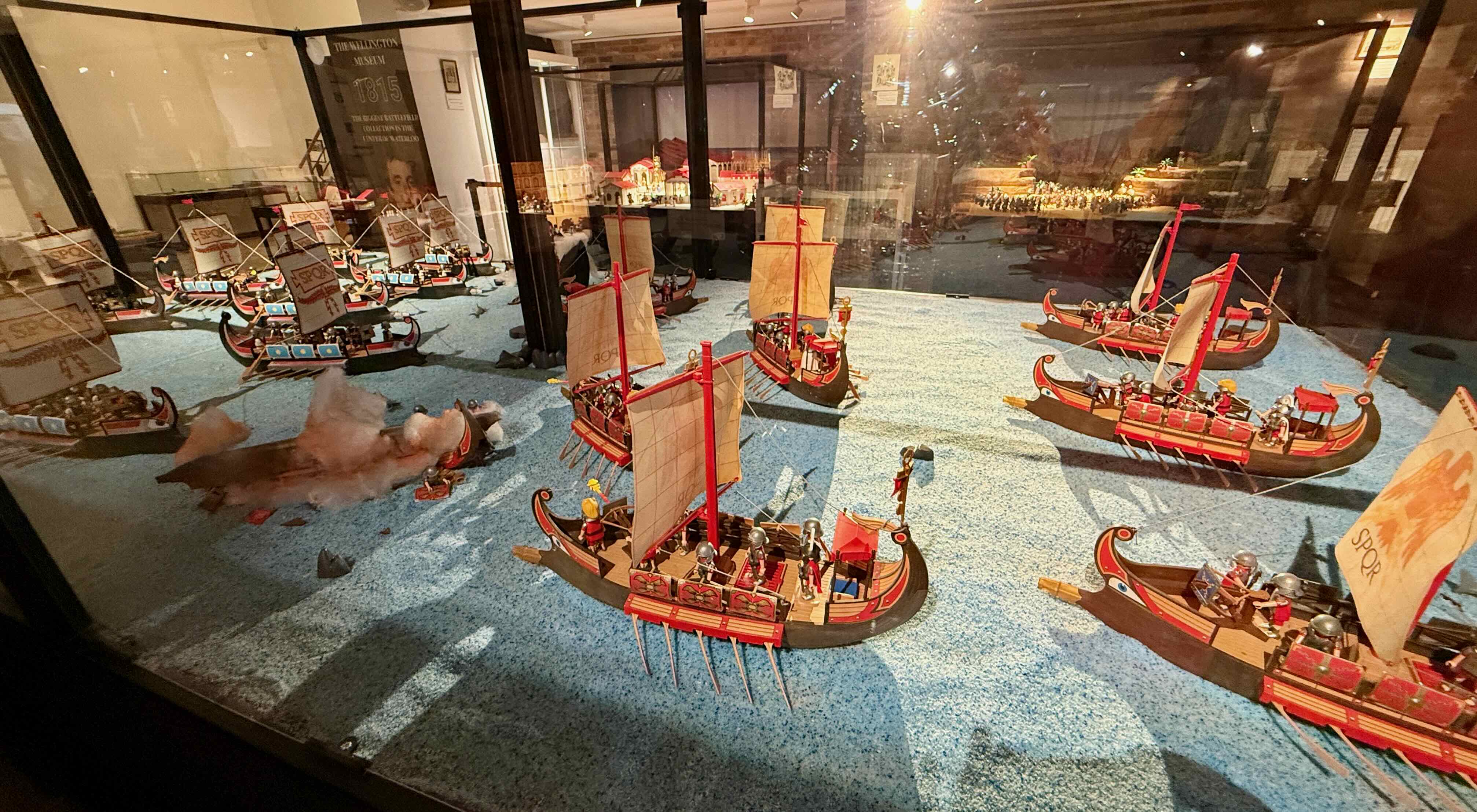
A naval Battle but I don’t remember which one.

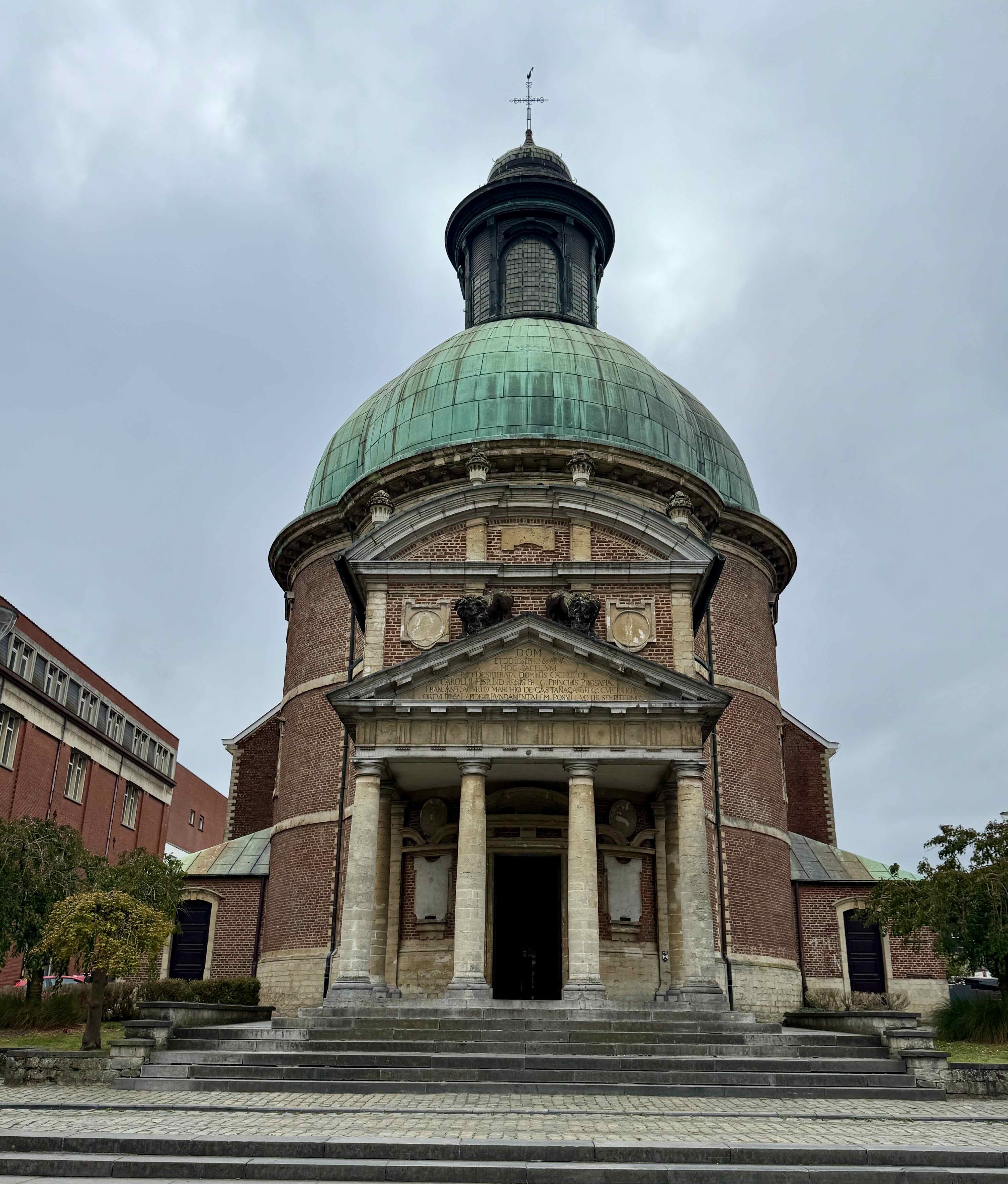
The Roman Coliseum. We really enjoyed this unusual exhibit and marvelled at the thousands and thousands of Playmobile figures and accessories that were used to create these dioramas. This very old St. Joseph Church from 1690 is right across the street so we had a look.
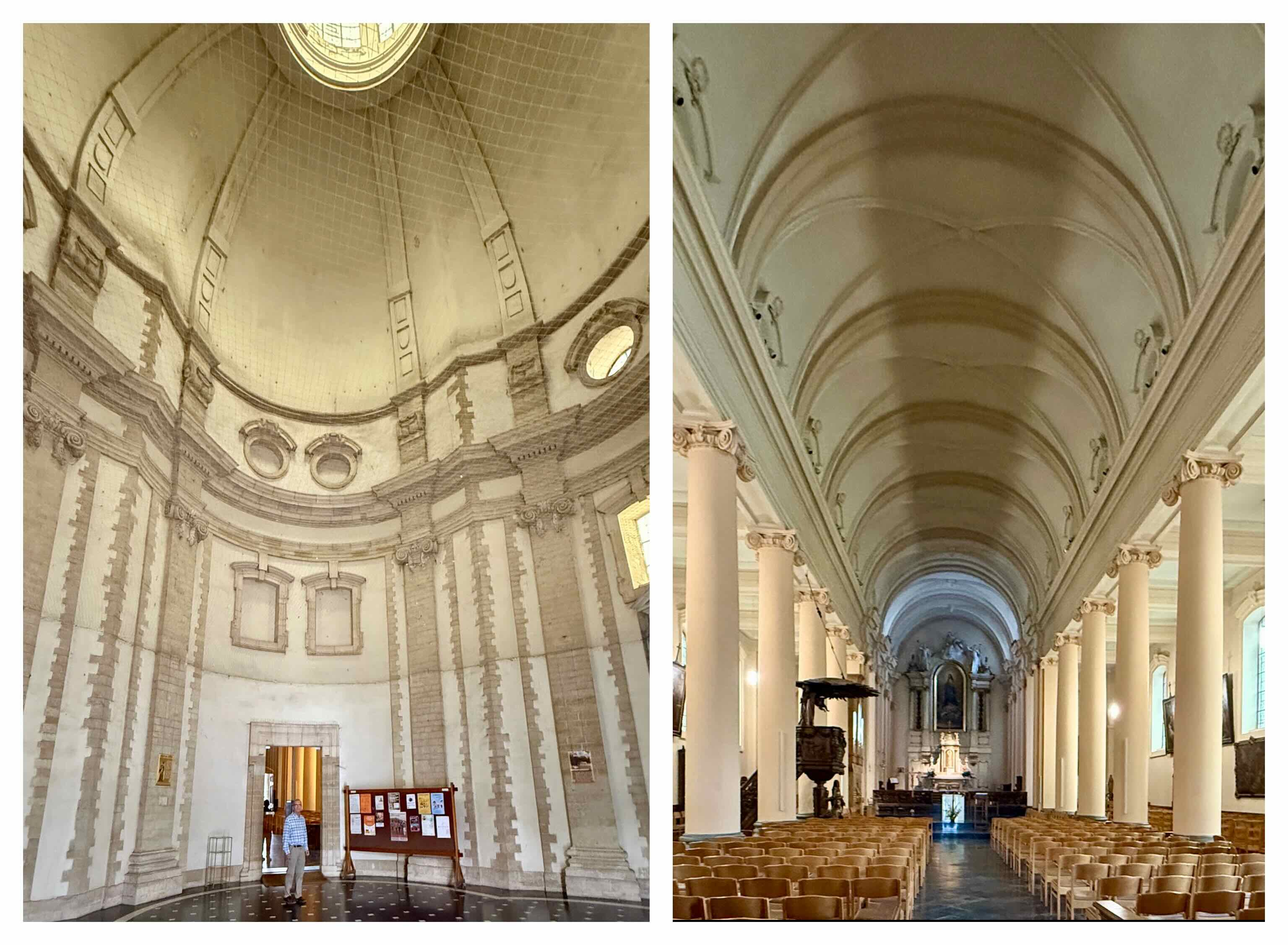
The area under the dome is huge and the church itself has large columns on either side of the nave. We have visited many churches and Cathedrals on our travels, but they are all so different from one another.  

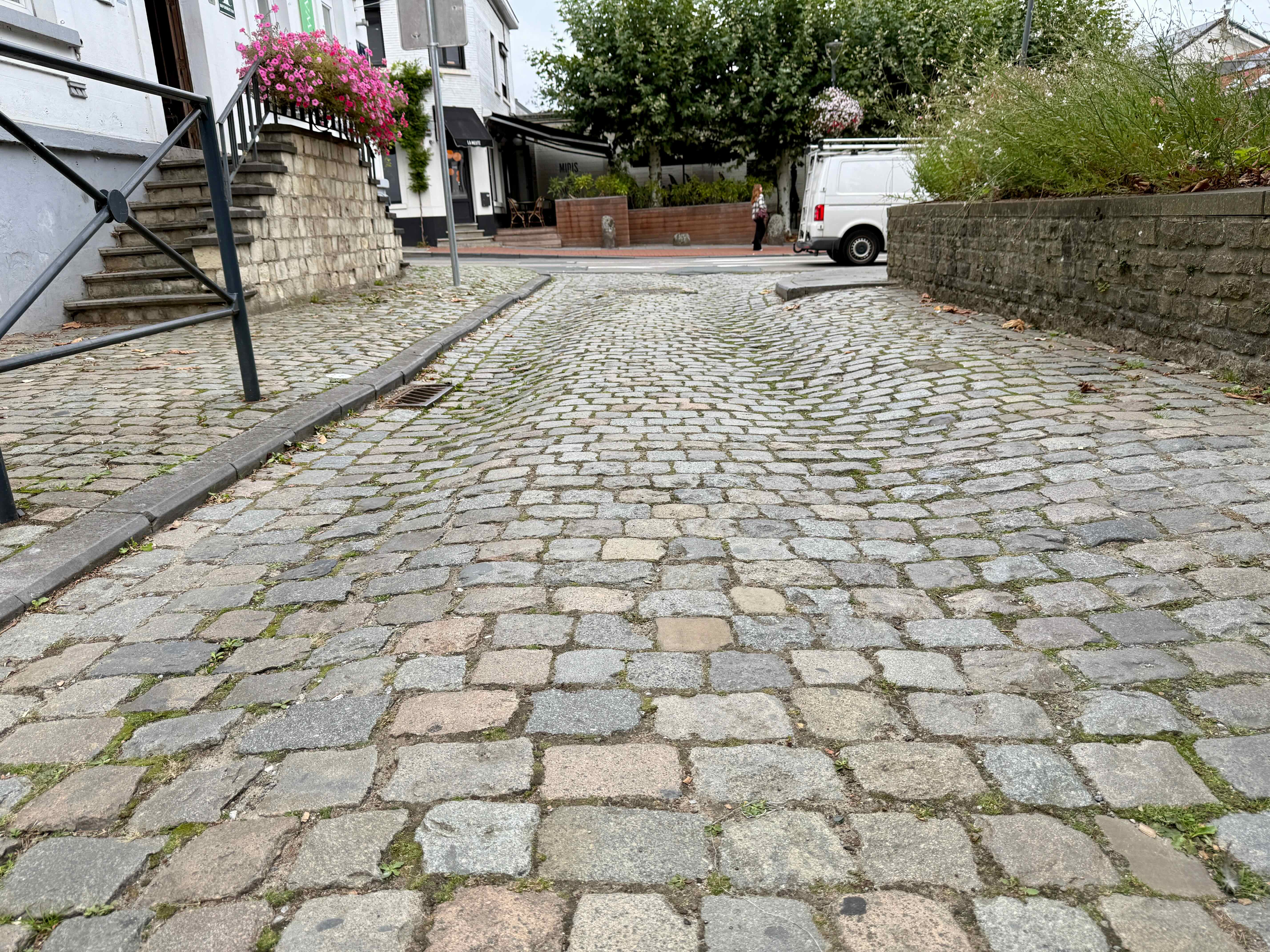
The road in front of the Church is cobble-stoned and we can see the depressions in the road made over the years by cart wheels.

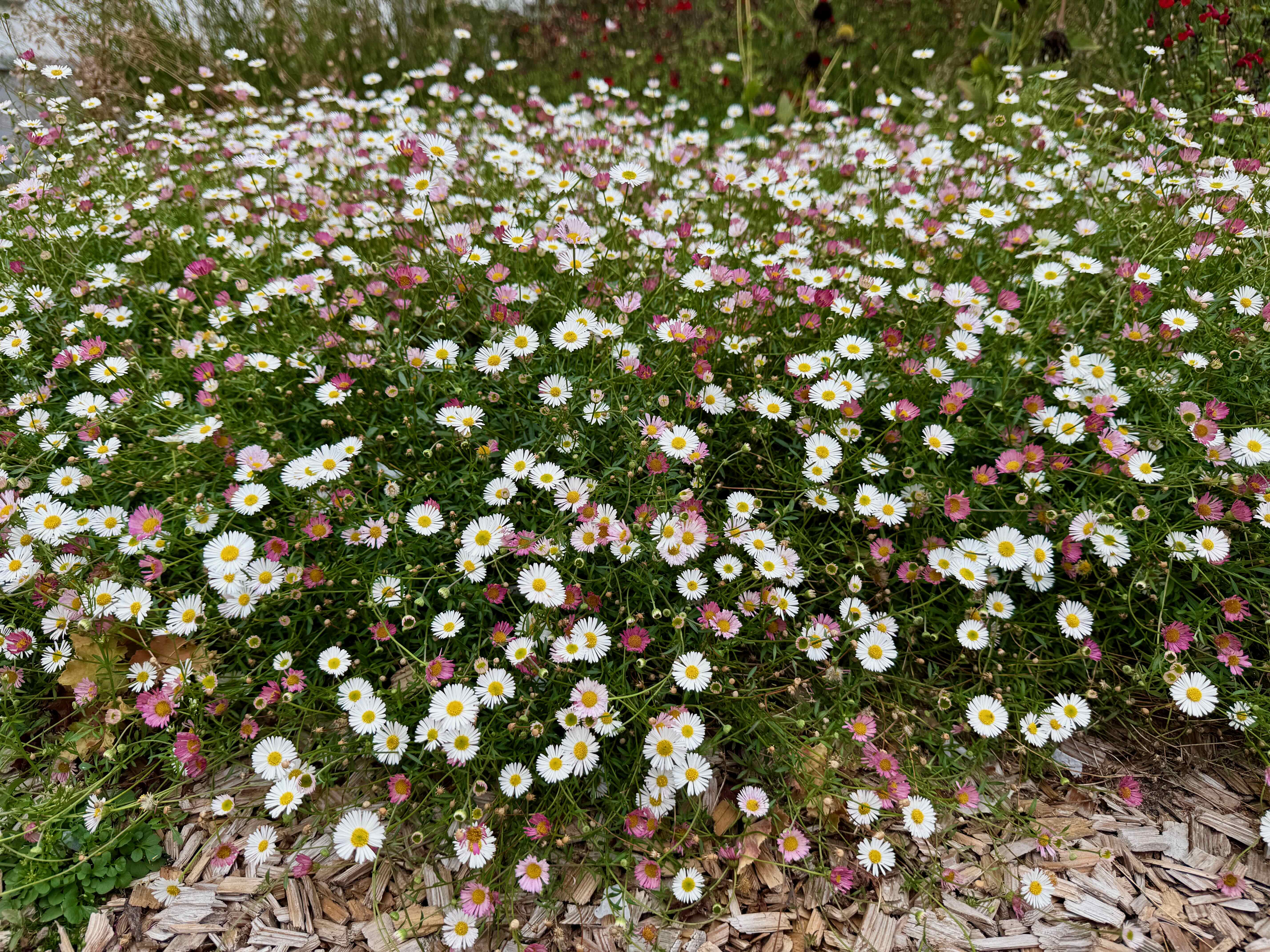
I adore these white and pink small daisy-like flowers.  No idea what they are called but wish we could grow them back home.

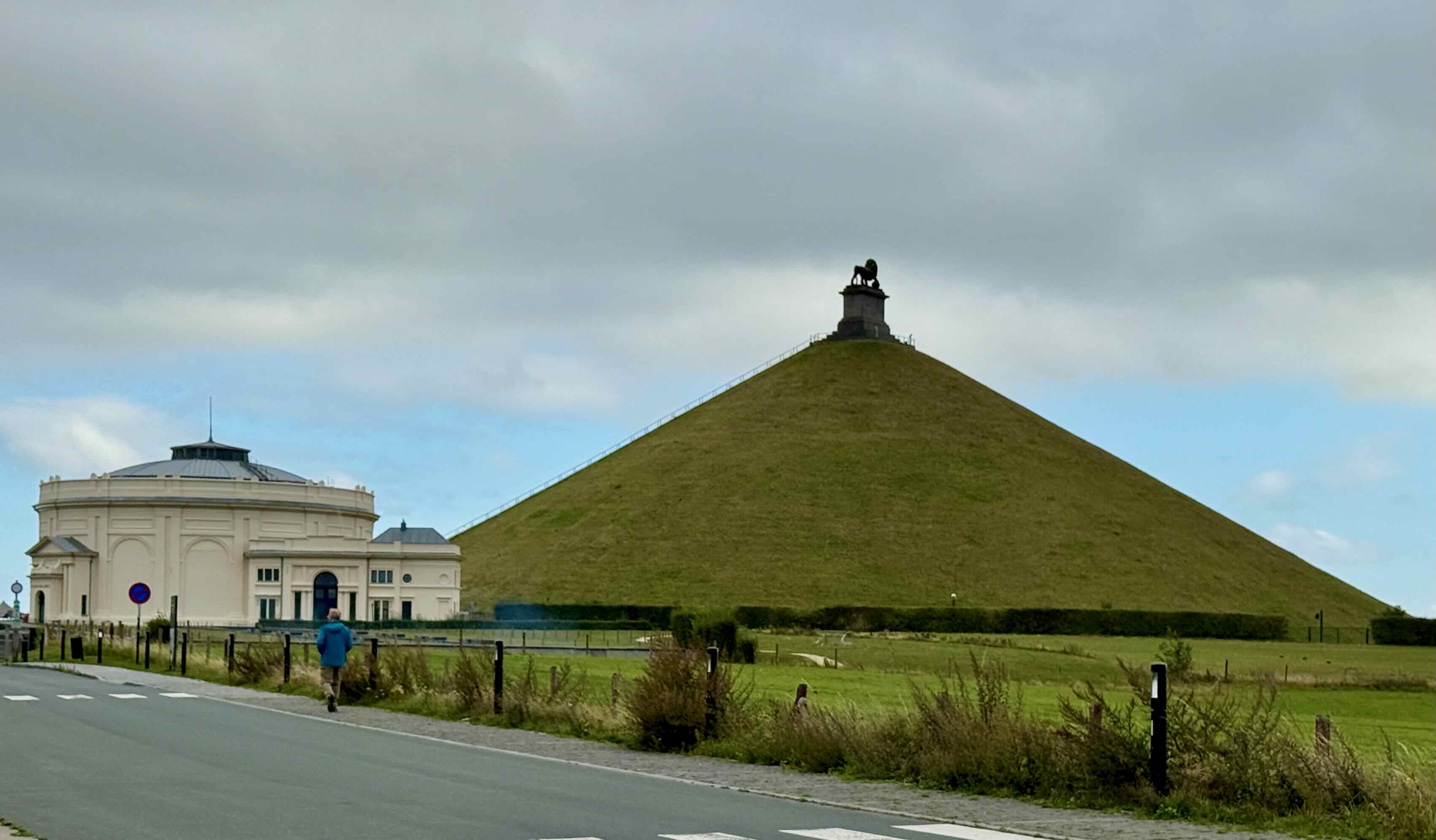
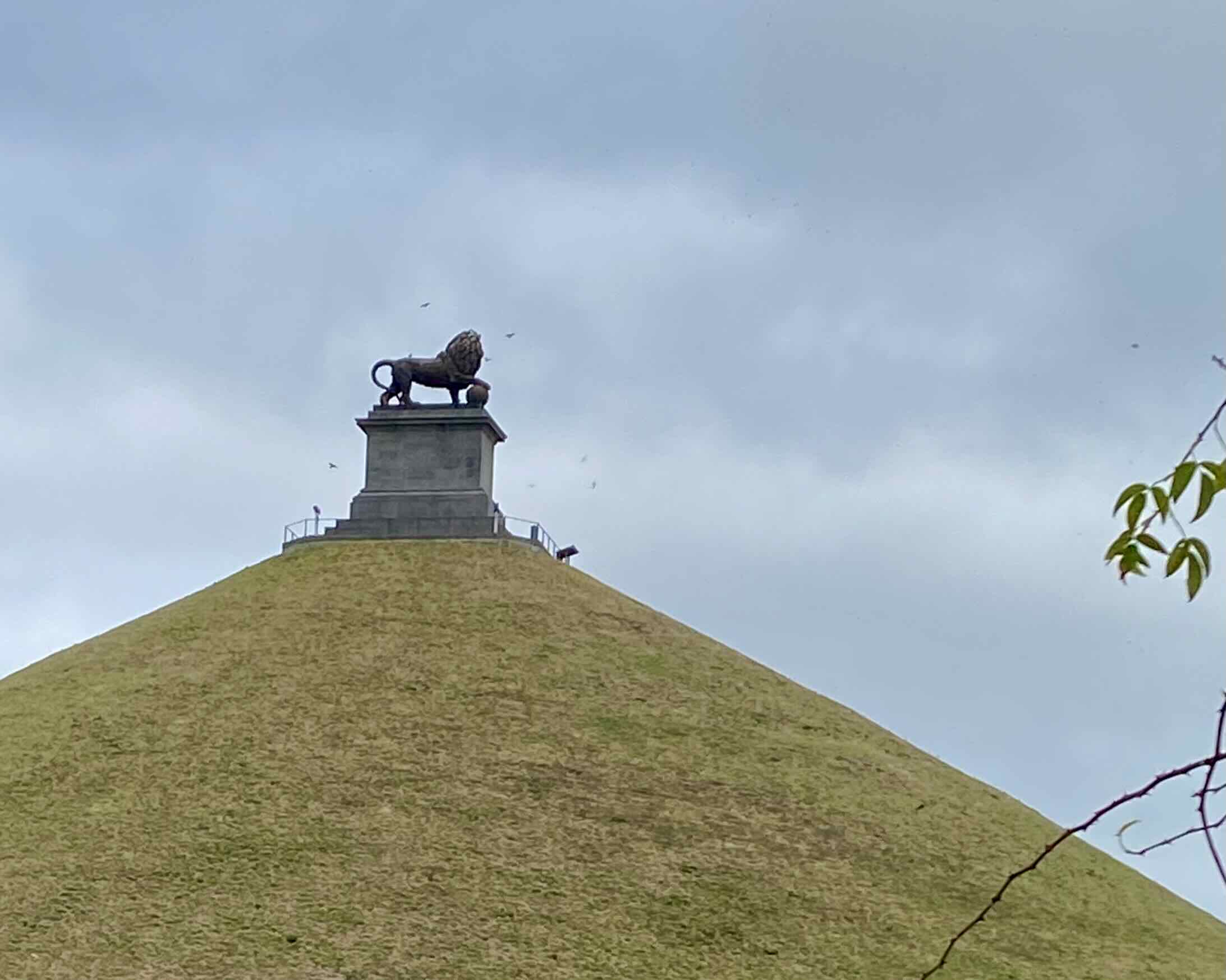
Next we drive to ‘The Lion’s Mound’ which is located at the site of the Waterloo Battle. This earthen cone is 169 m in diameter and 41 m high. An enormous lion, 4.50 m long, 4.45 m high and weighing 28 tons is located on the top of the mound.

It symbolizes the victory of the monarchies; its open mouth is turned towards France, defeated; its paw resting on the terrestrial globe represents the peace that Europe has won. Bob went for a walk all the way around the  mound but I was tired and it was cold and windy so I stayed in the car. We hit rush hour on the way home. I am so glad I am not driving!

Amiens, France

Day 13.    Friday, September 12, 2025

It is an hour drive to Amiens from Arras where we will visit Jules Verne’s house, the largest cathedral in France, and take a unique boat ride.

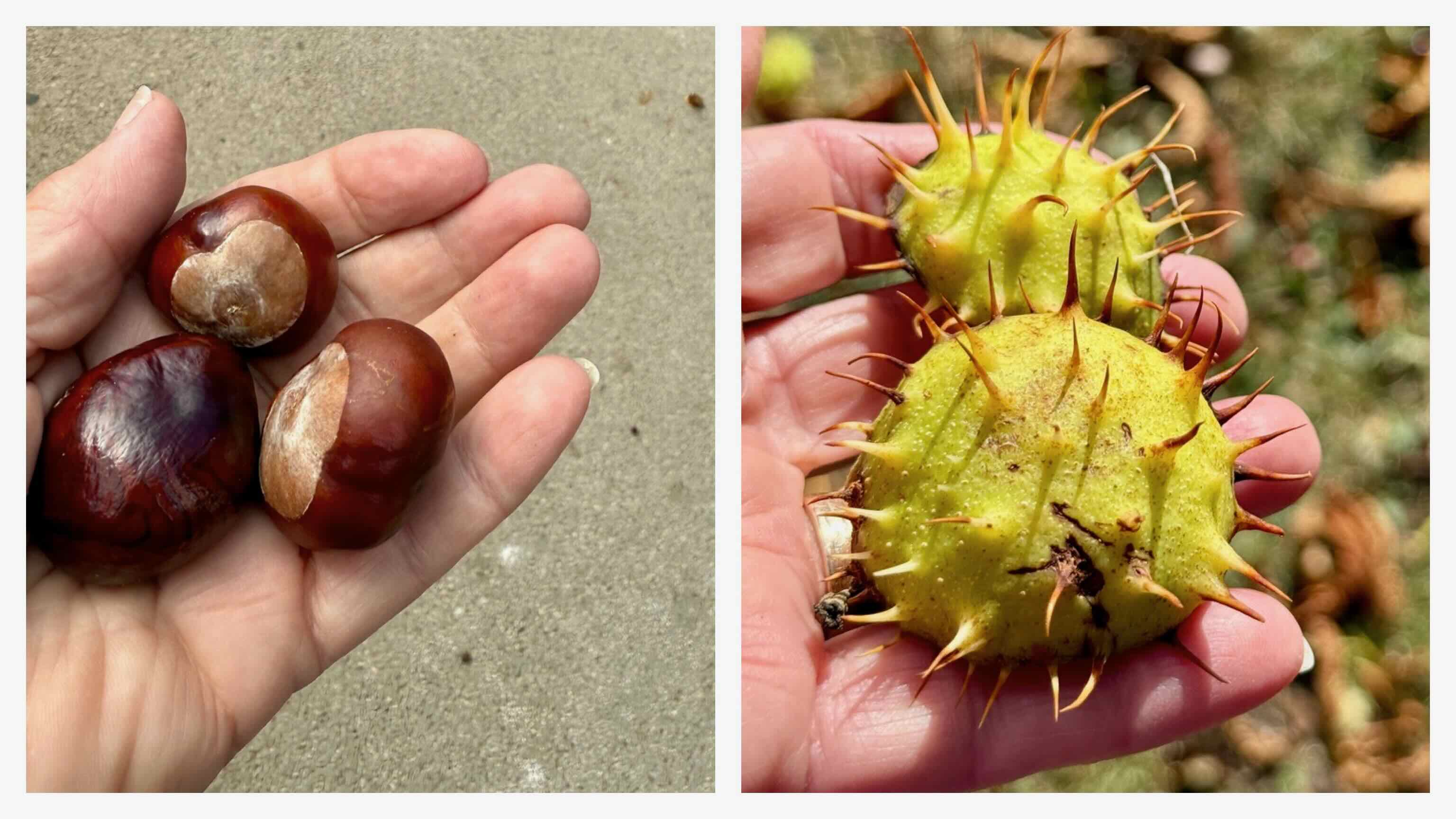
We luck out and find a parking space right beside the Jules Verne museum.  Parking downtown in French cities is very difficult, there are more cars than spaces available.  We have our picnic lunch in a little park right by the museum but these chestnuts were falling and landing with a crash around us…the spikes on the green fruit are very sharp and we decide to move to a safer bench.

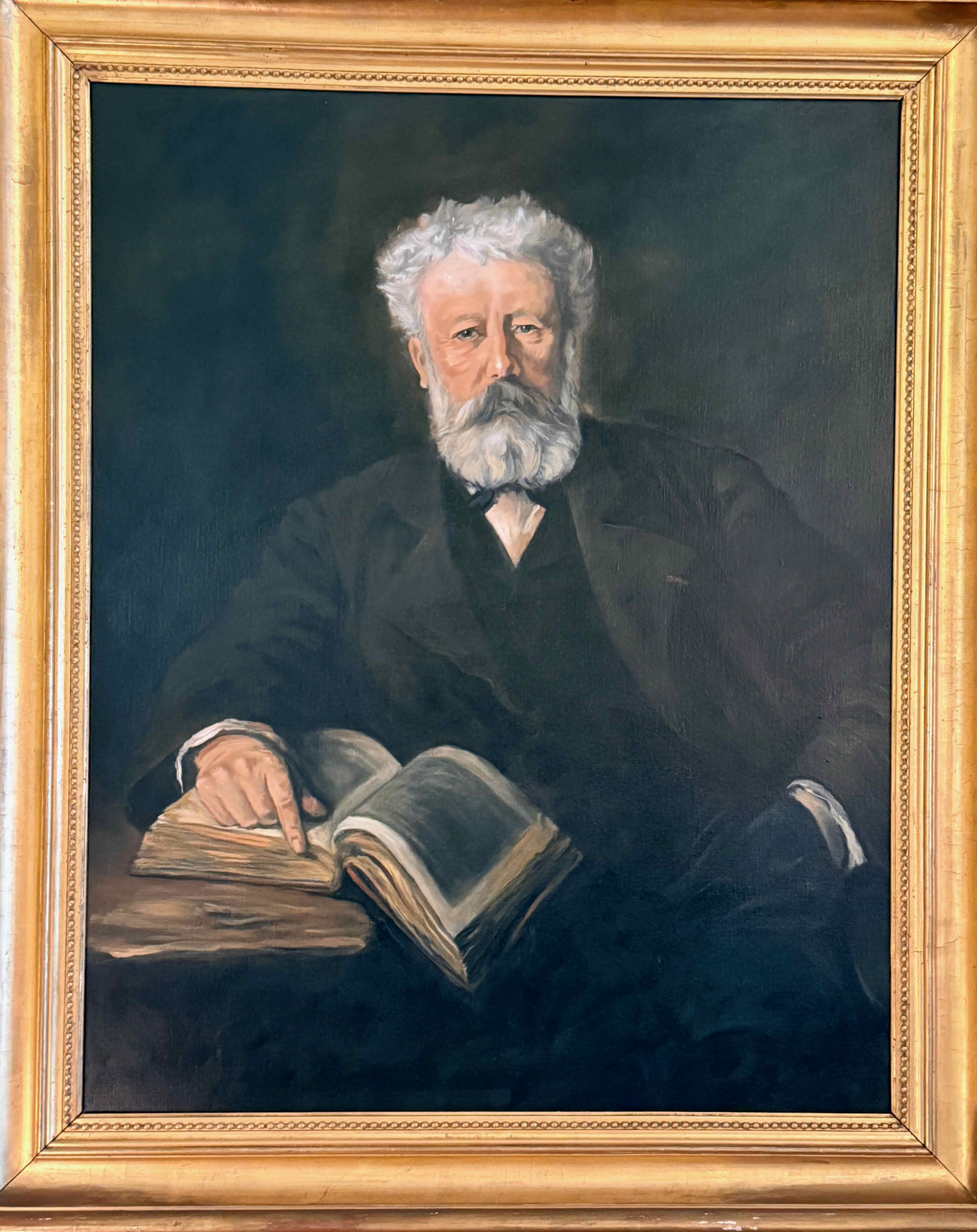
Jules Verne (1828-1905) was a French novelist, poet and playwright.  Jules Verne is the second most translated author in the world, ranking below Agatha Christie and above William Shakespeare.  His novel Around the World in 80 Days is printed in 18 languages.

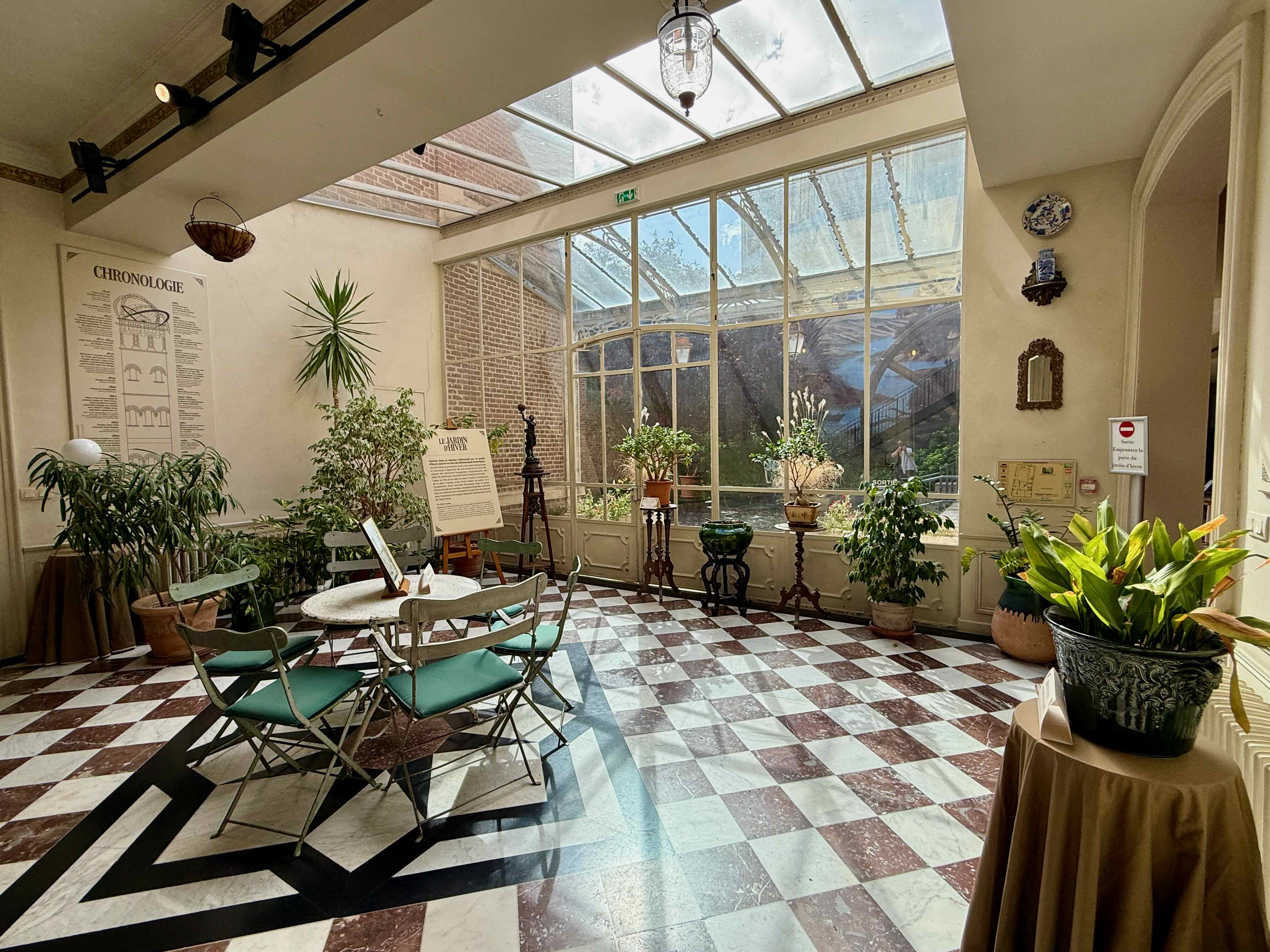
The winter garden was the original entrance to the Jules Verne house.  Tropical garden plants were moved indoors here to spend the winter.

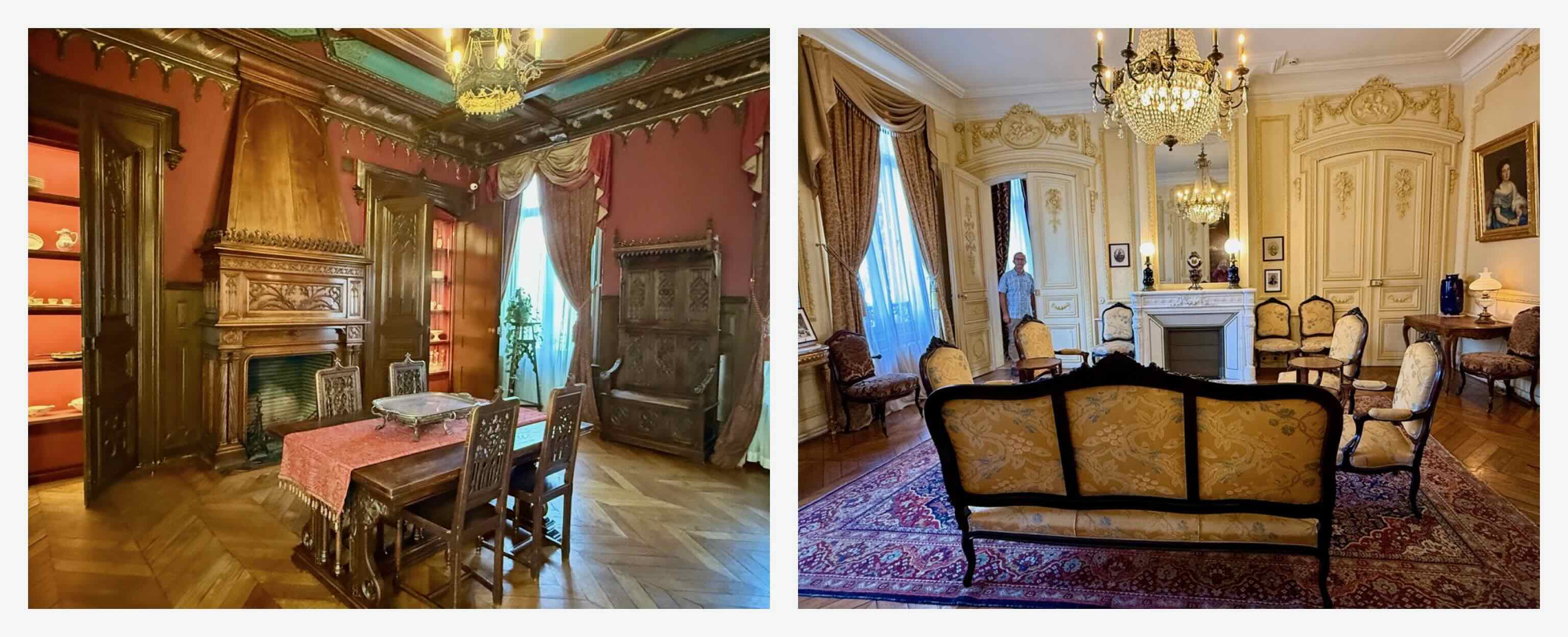
The dining room and salon on the main floor.

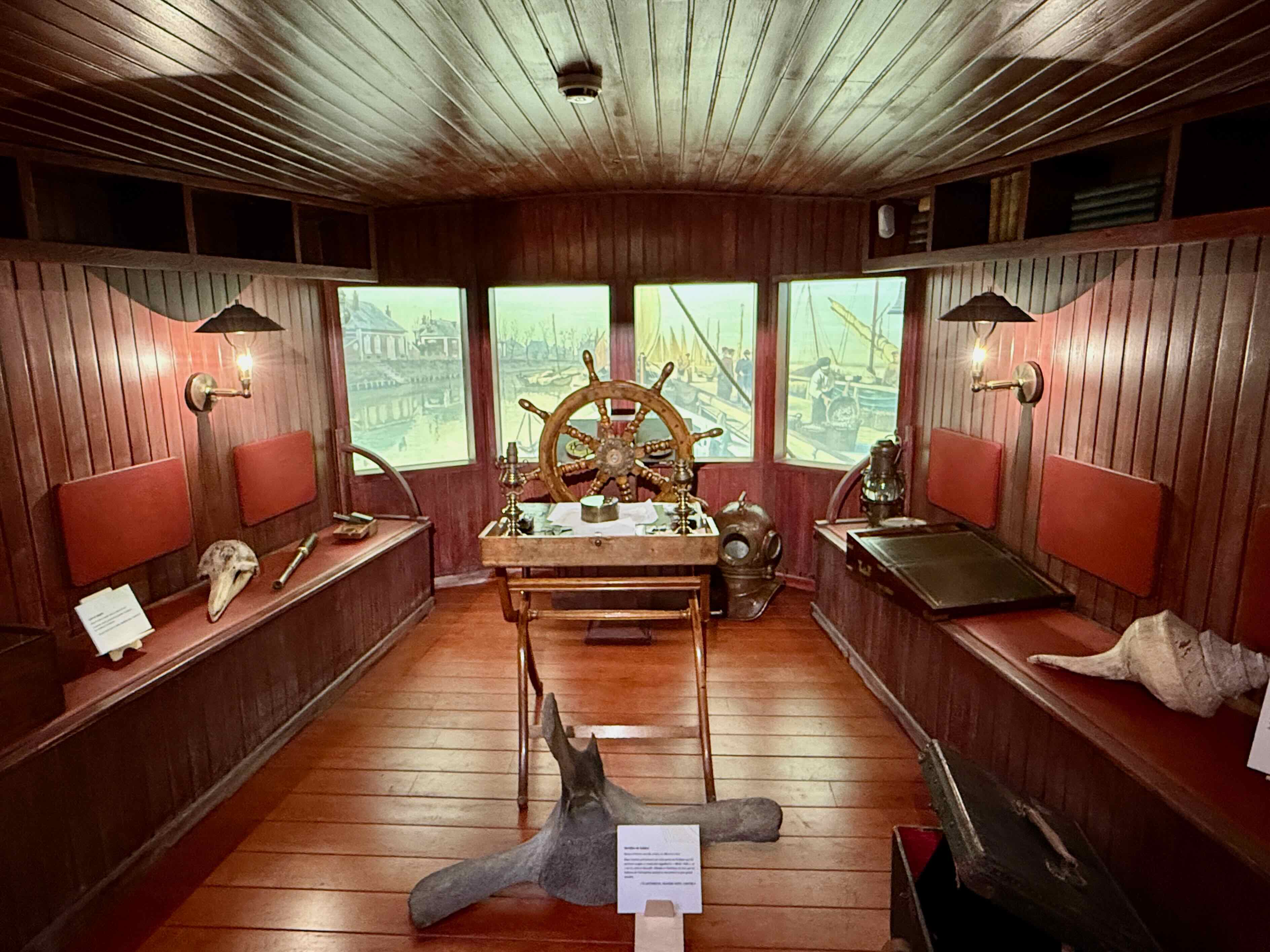
One of the second floor rooms was a reconstruction of his first boat.  Jules Verne loved to sail and his first boat was a 9 metre long.  His second boat was 20 meters in length and the third was 30 meters!  

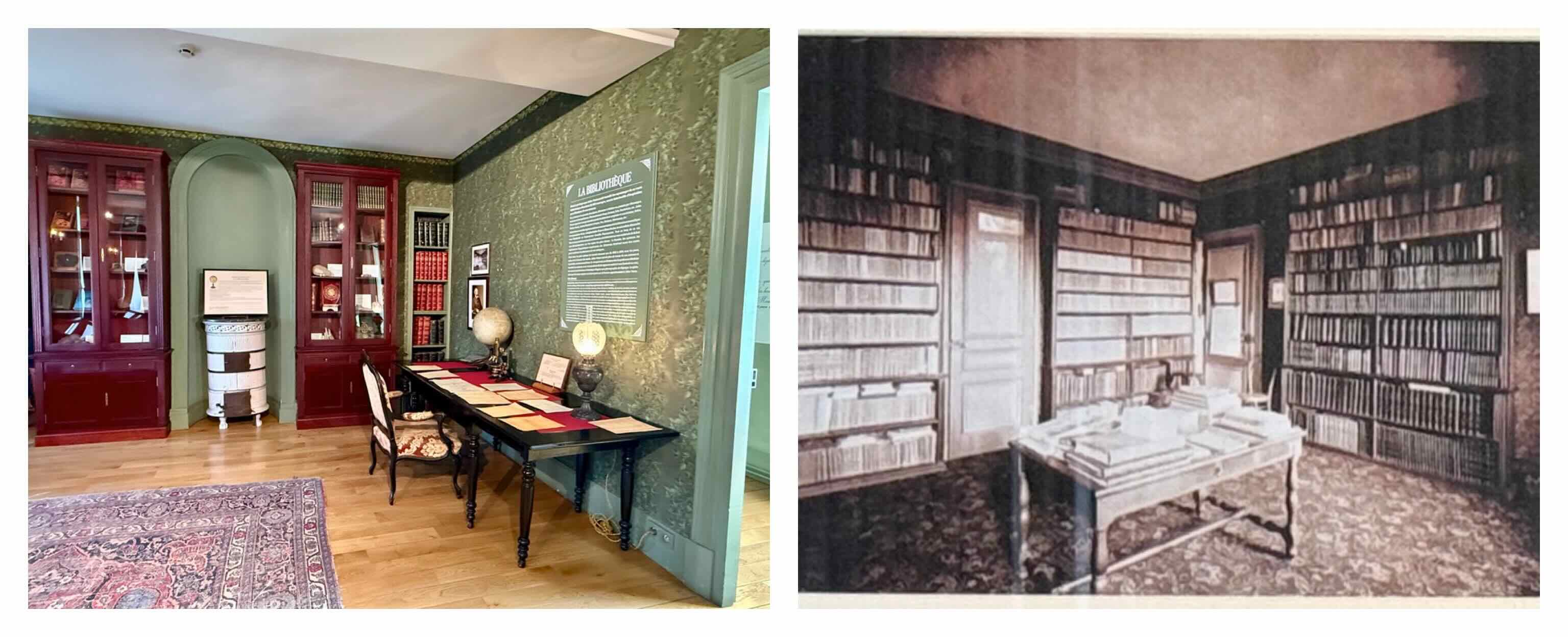
This second floor room was a library. The second photos shows the original library with over 12,000 books.  When he read these books Jules Verne wrote notes on index cards to use as reference information for his novels.

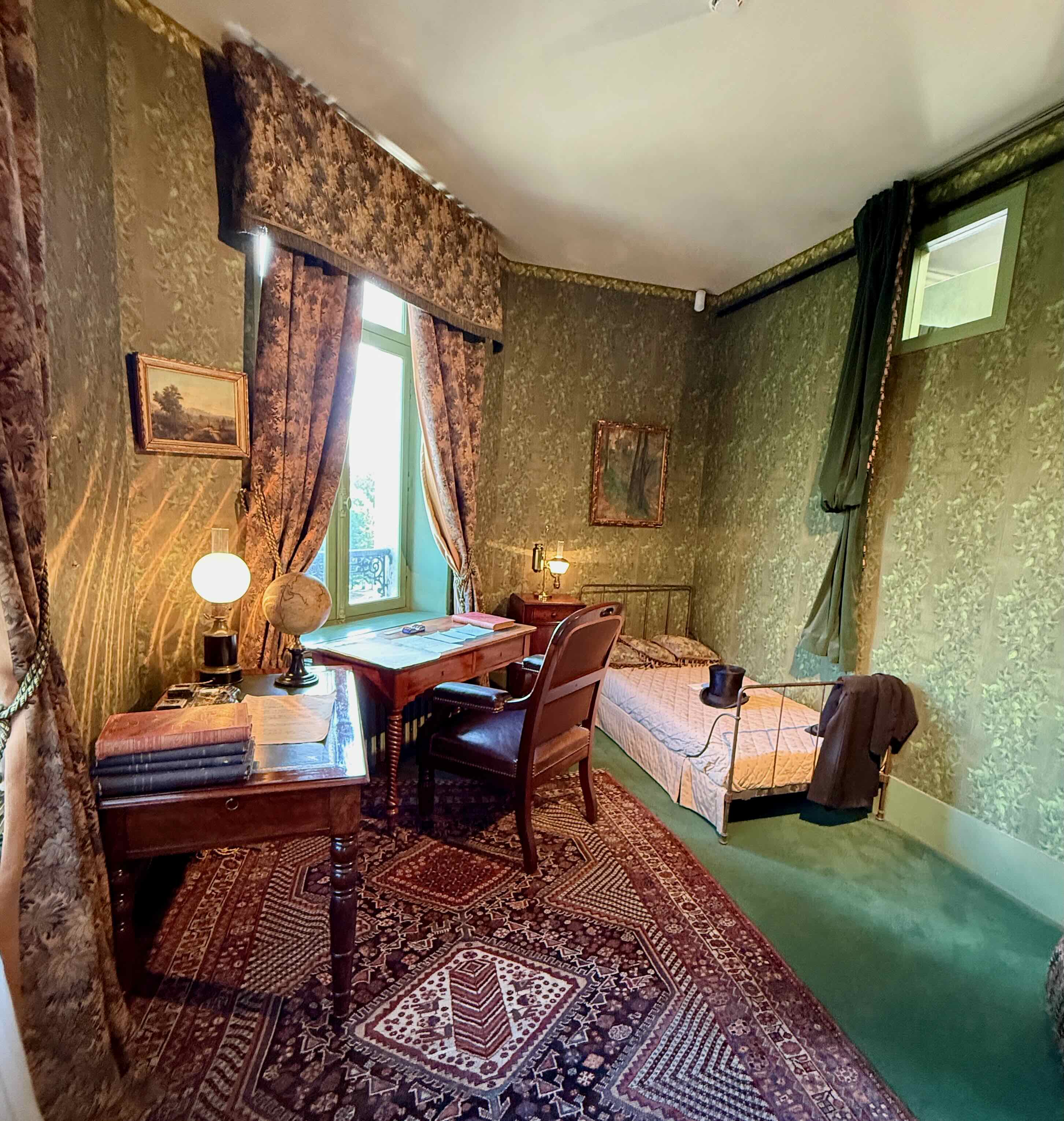
From 1882 to 1900 Jules Verne wrote every day from 5:00 am until 11:00 am in this little room.

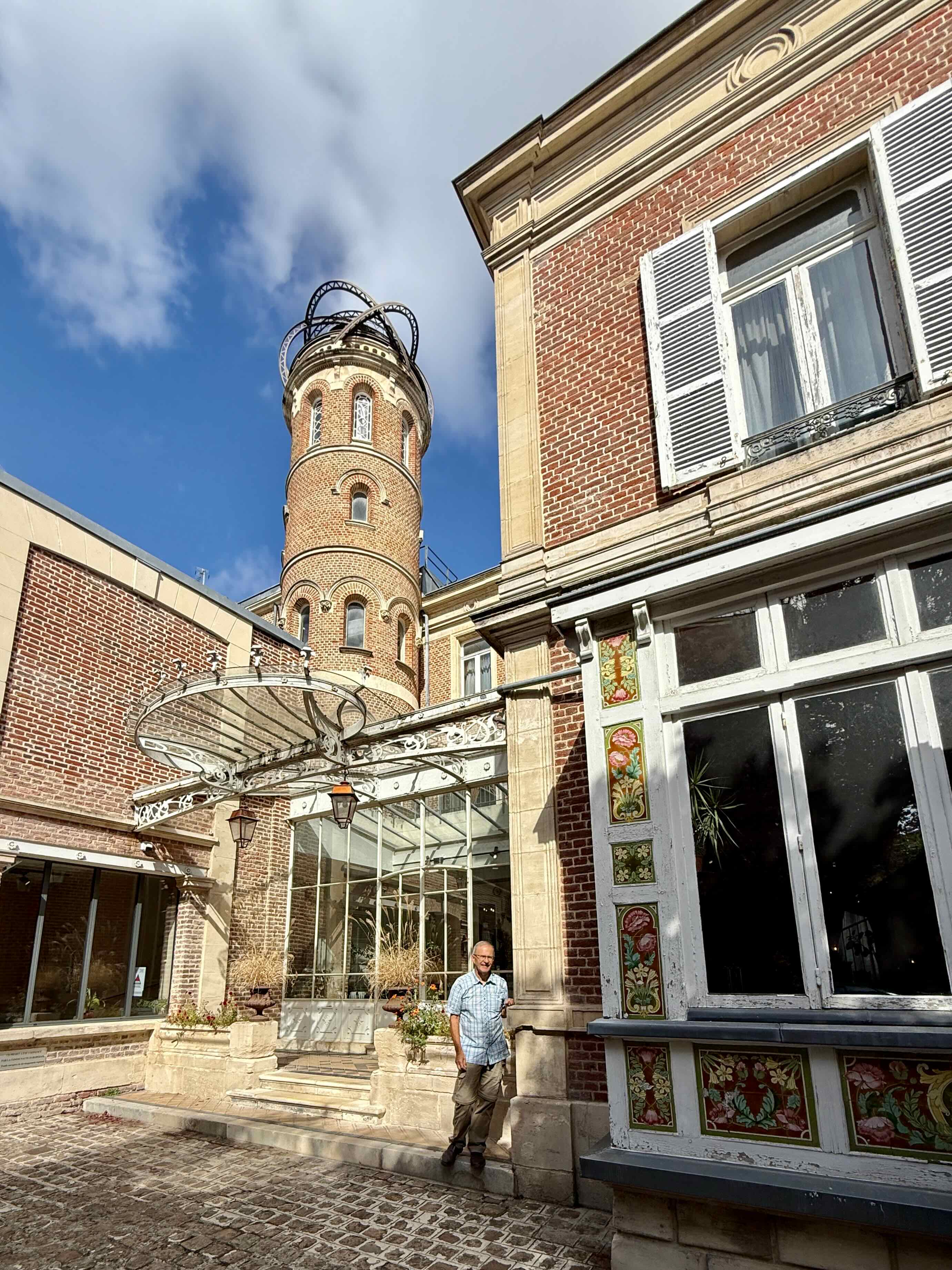
Climbing the tower which was added to the house by Jules Verne.  It allows access to all three floors of the house.

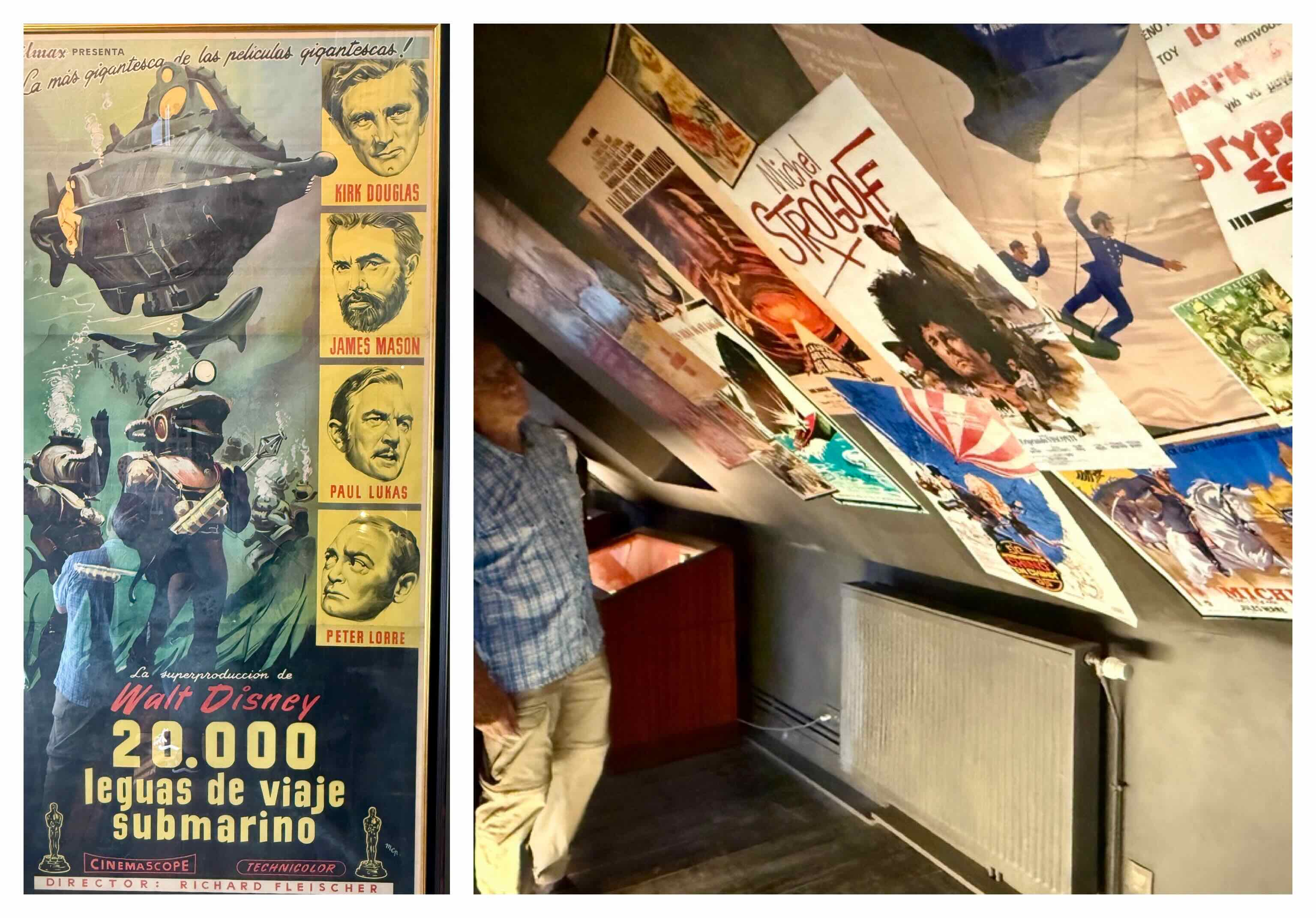
The third floor attic has a collection of original movie posters…

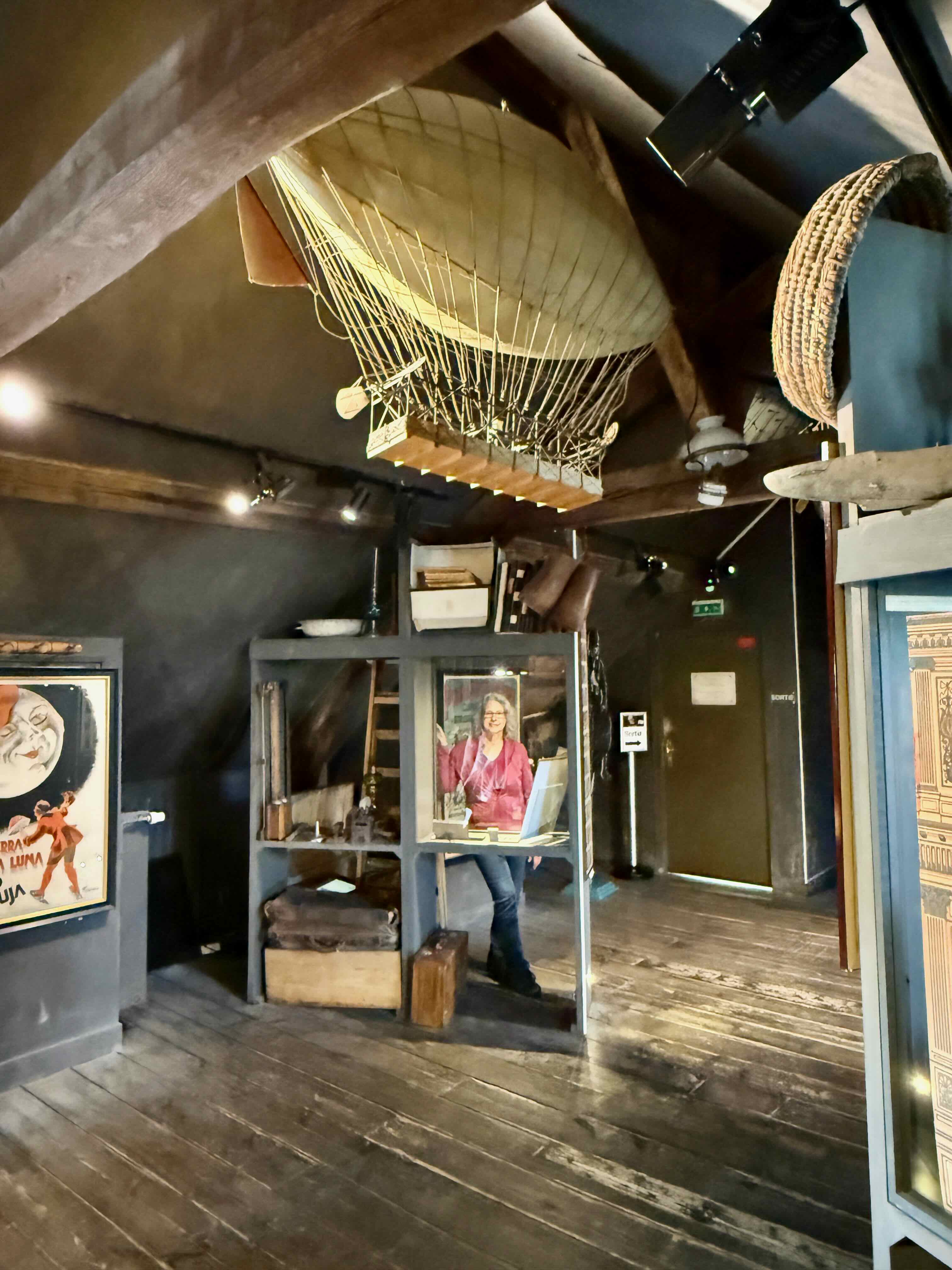
…and other memorabilia.  I look like I am one of the exhibits!

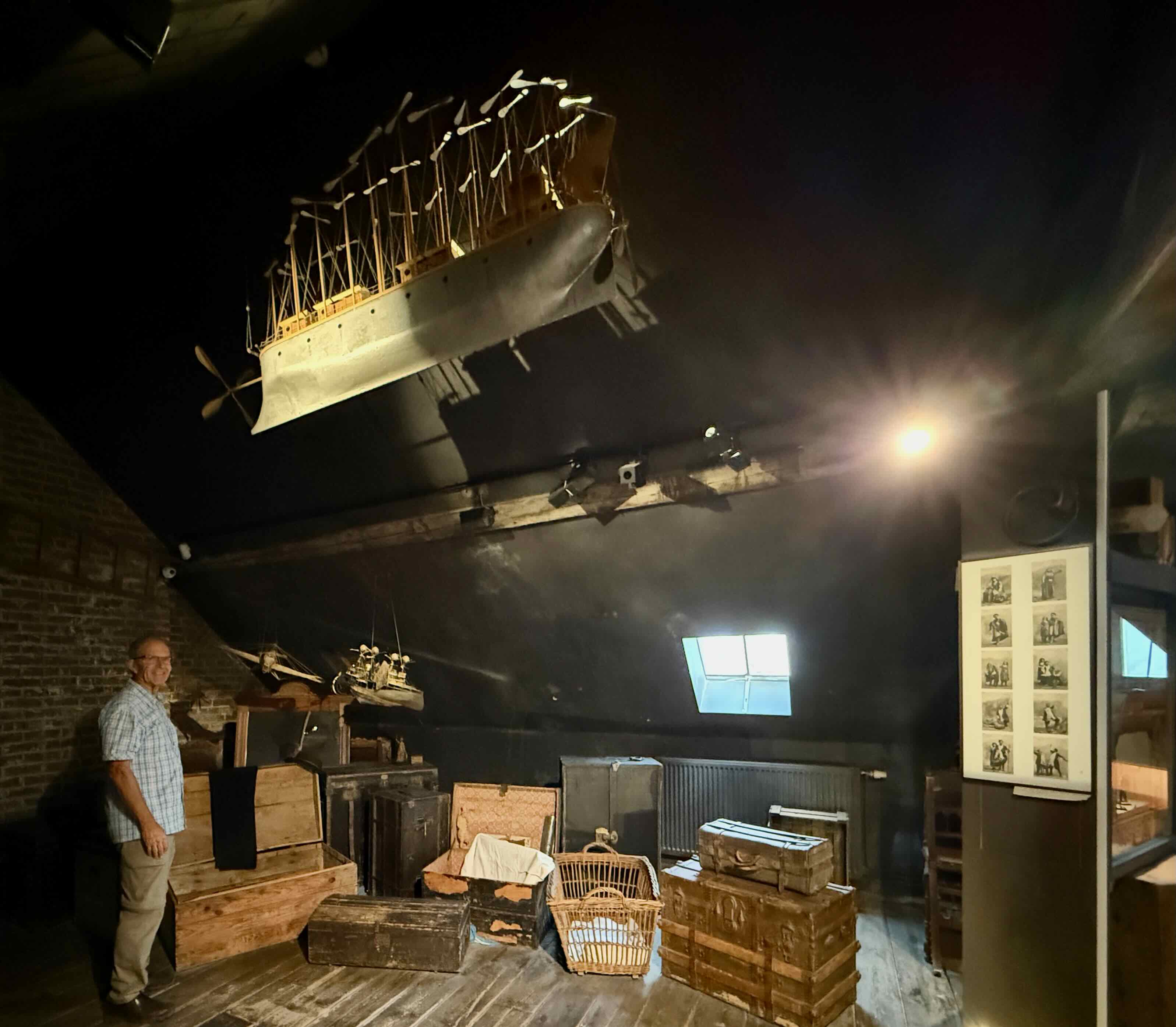
Bob and a fictional flying machine from one of Verne’s novels.  A view from the front of the house showing the winter garden.
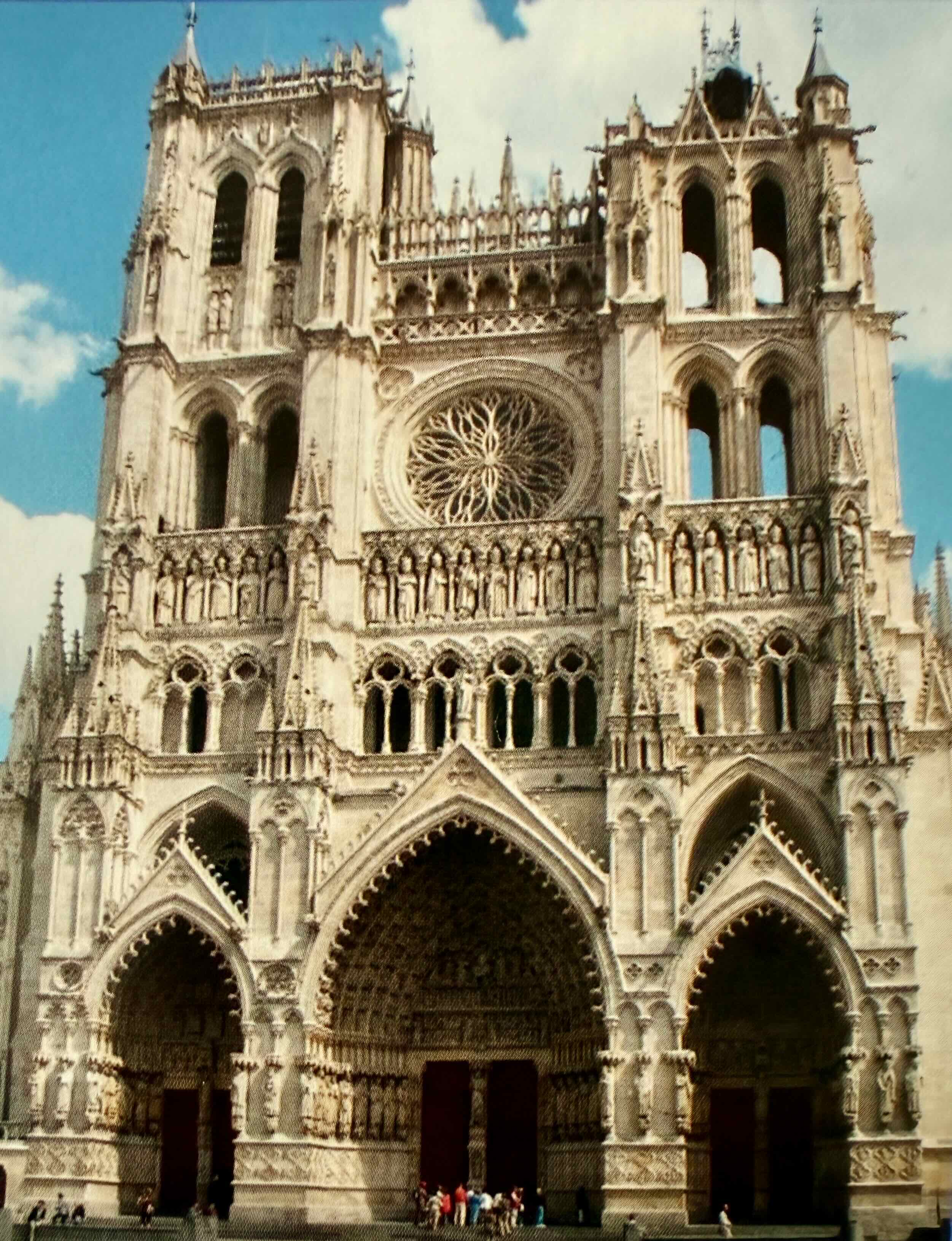
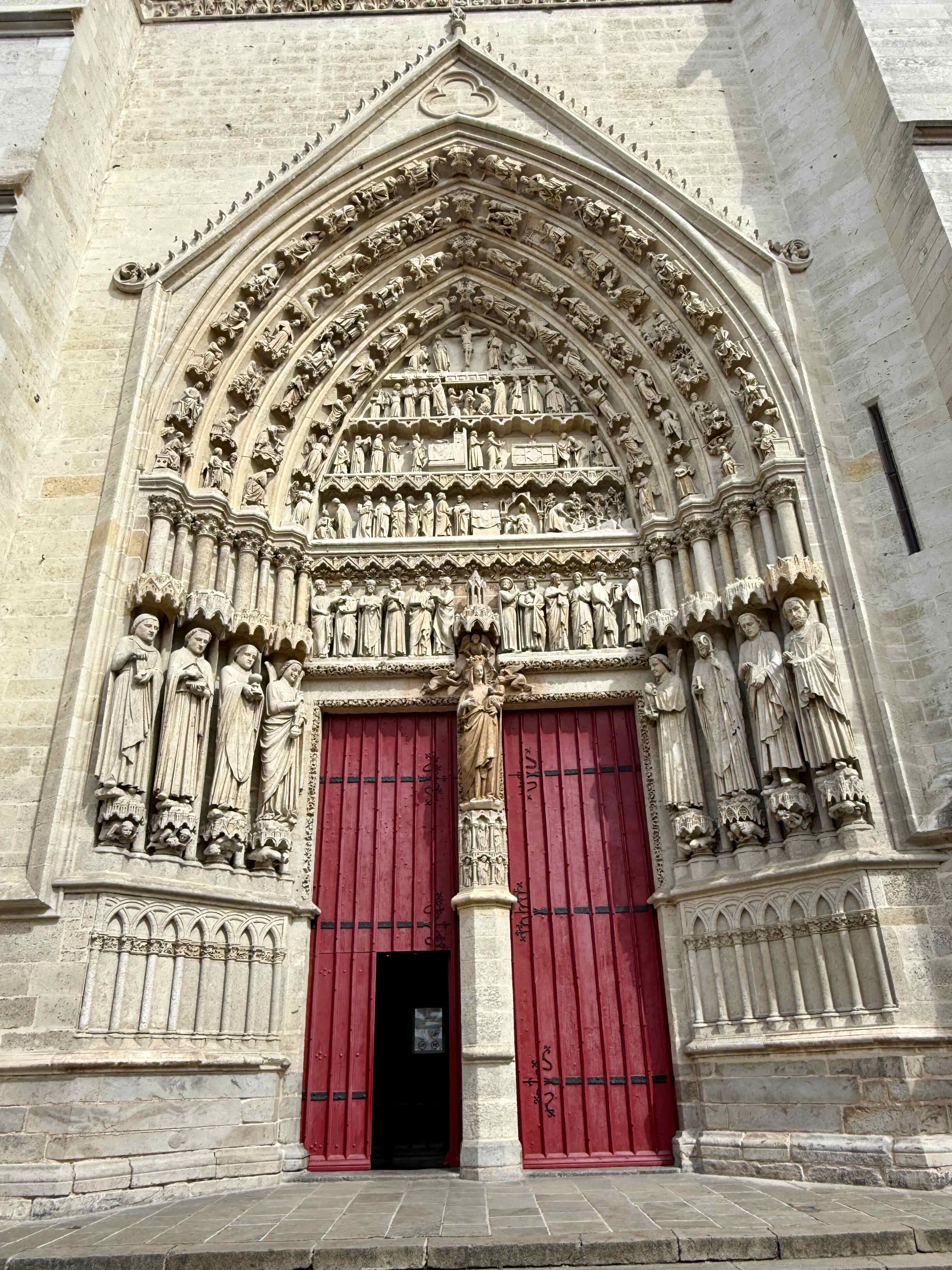
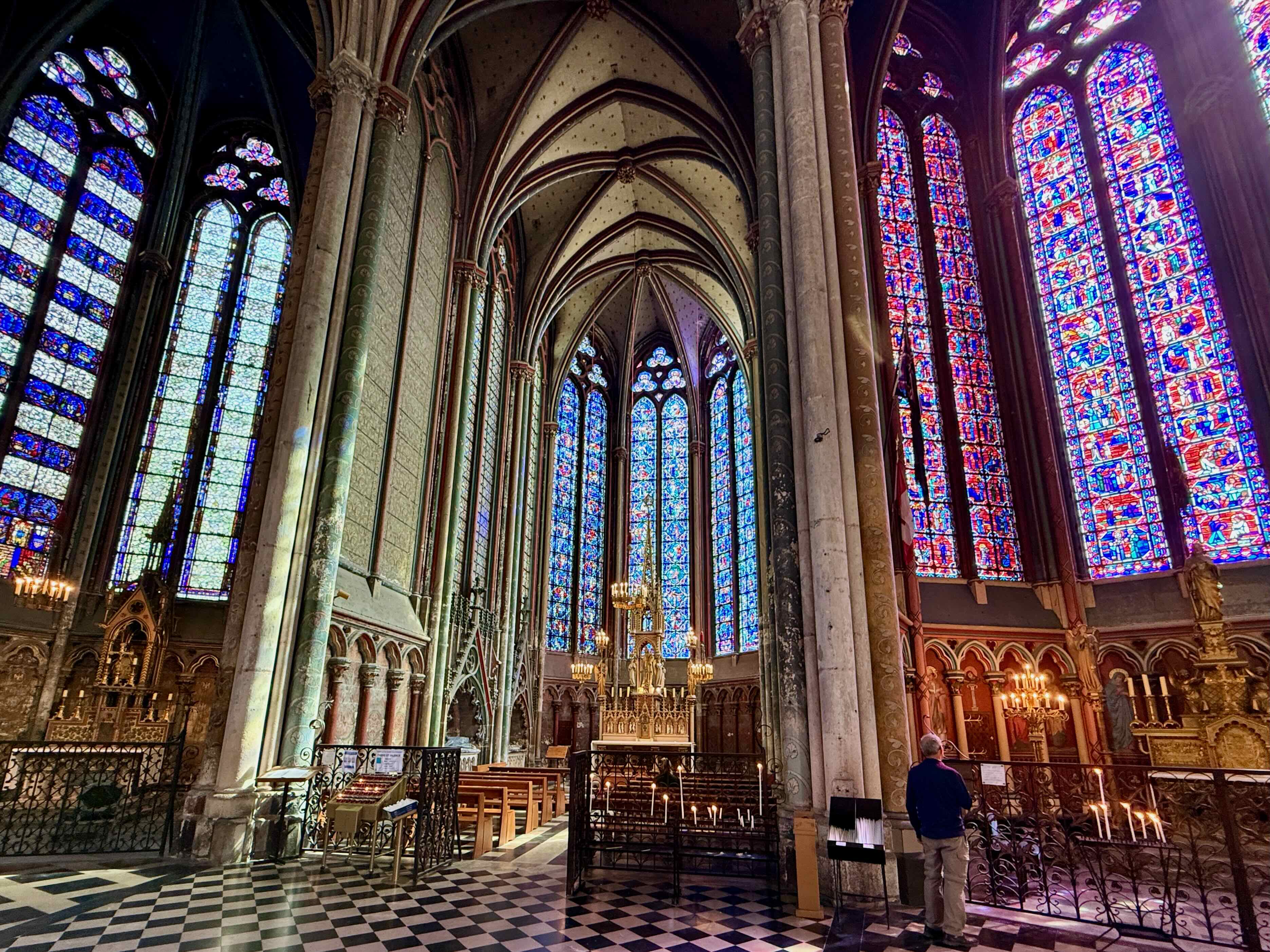
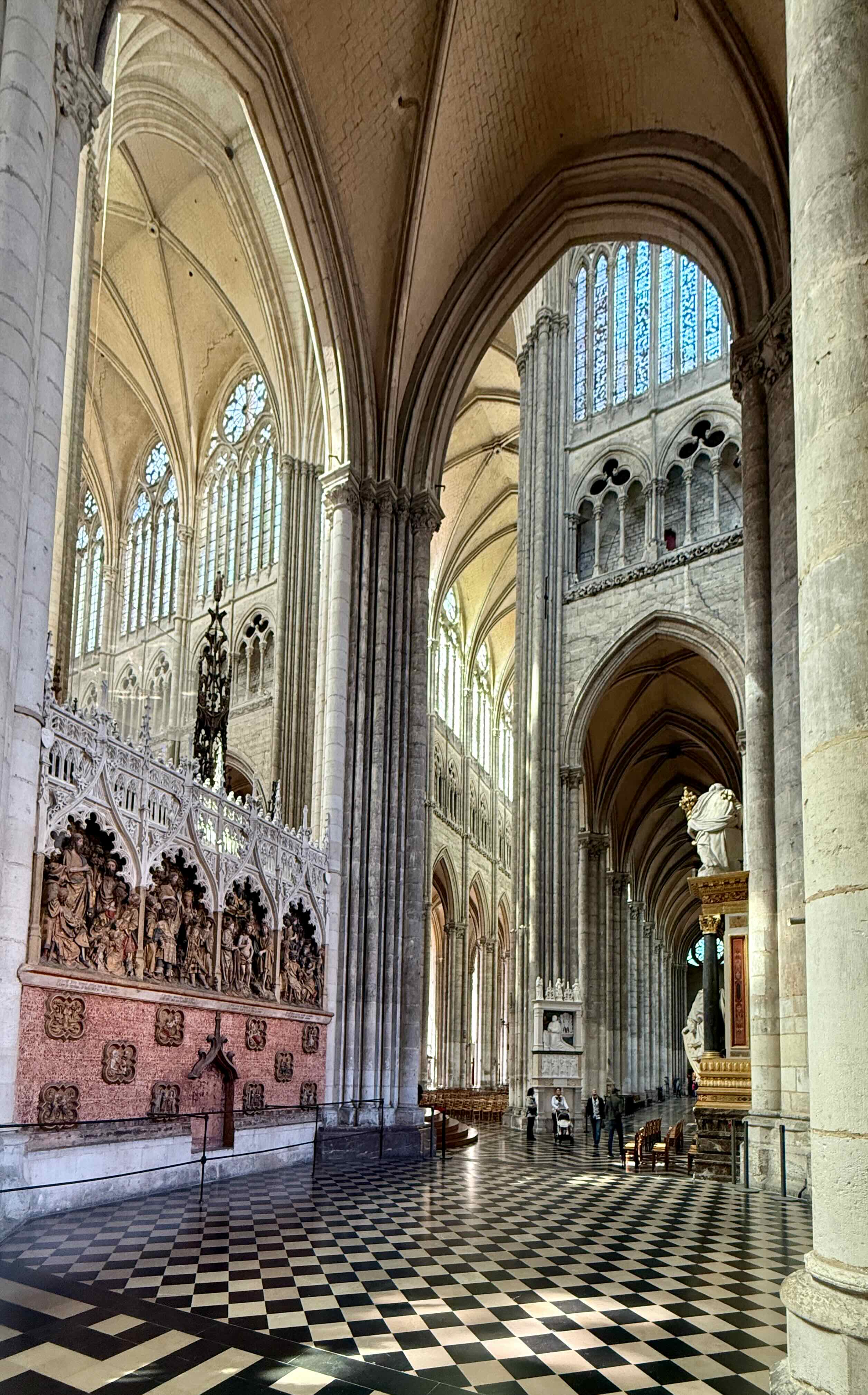
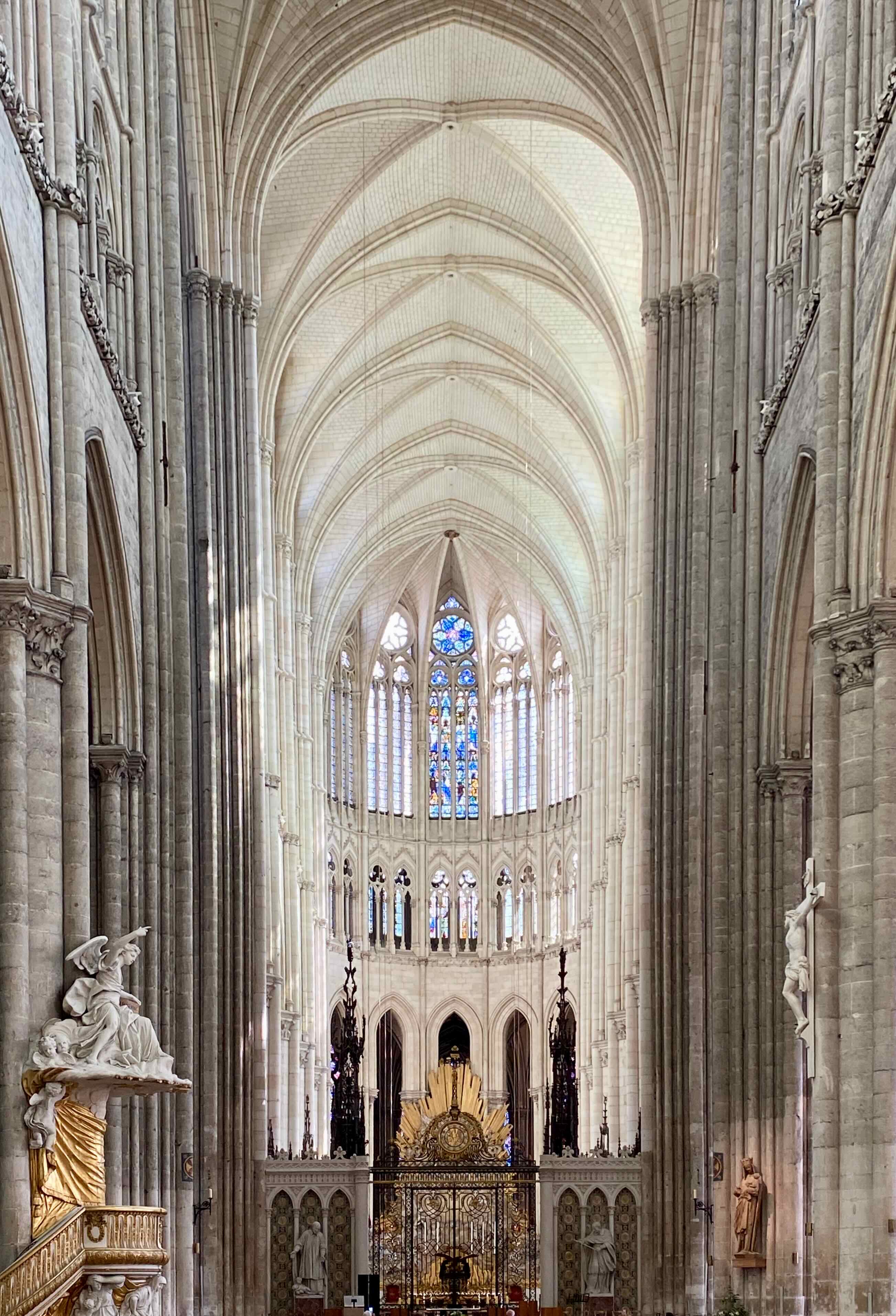
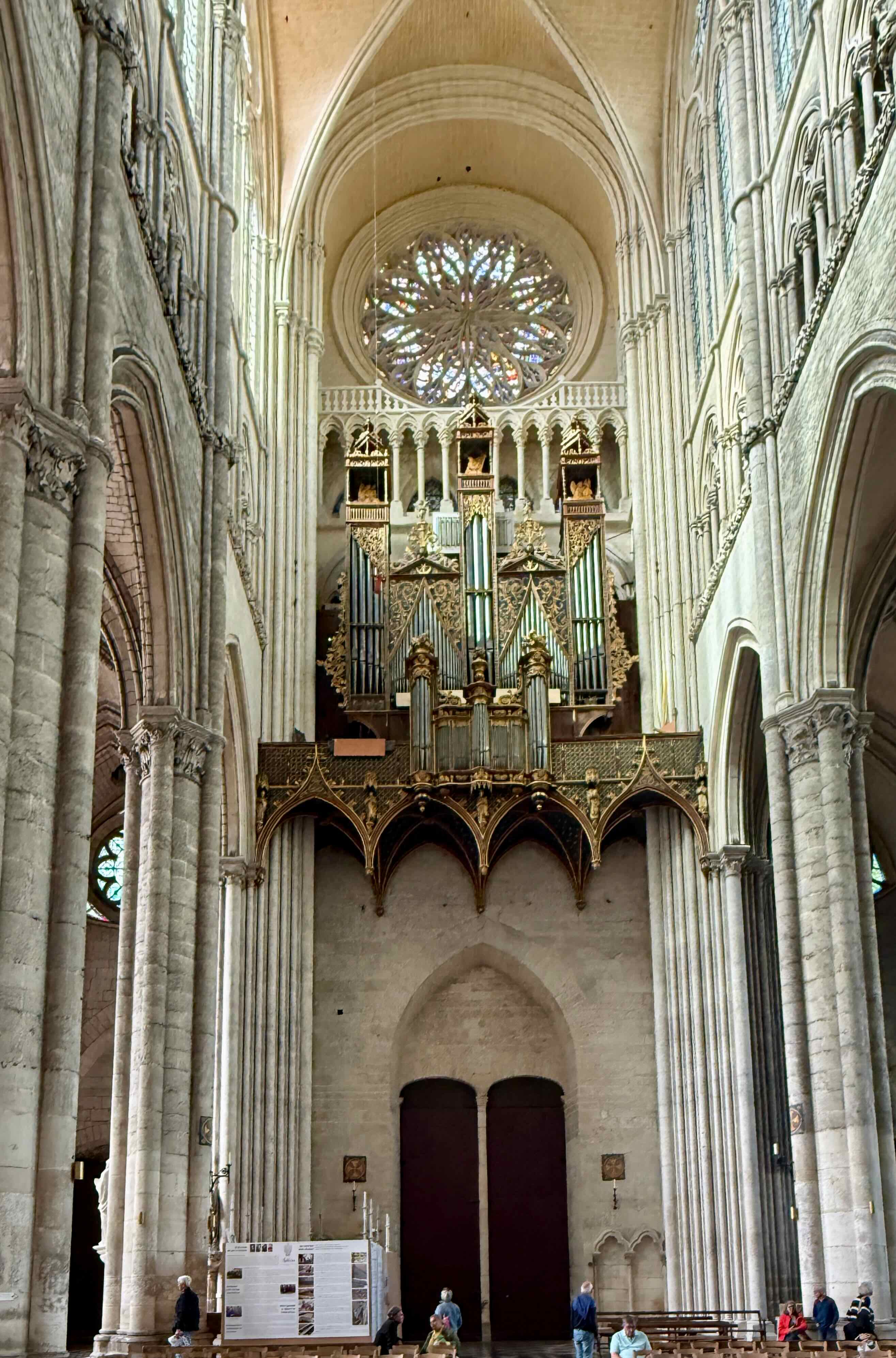
it is a short walk to the Amiens cathedral. Notre-Dame d’Amiens is the largest medieval cathedral in the world.  It was built in 1269 and is twice the size of Notre Dame in Paris.

The sculpted decorations in the portals have survived in a remarkable state of preservation…

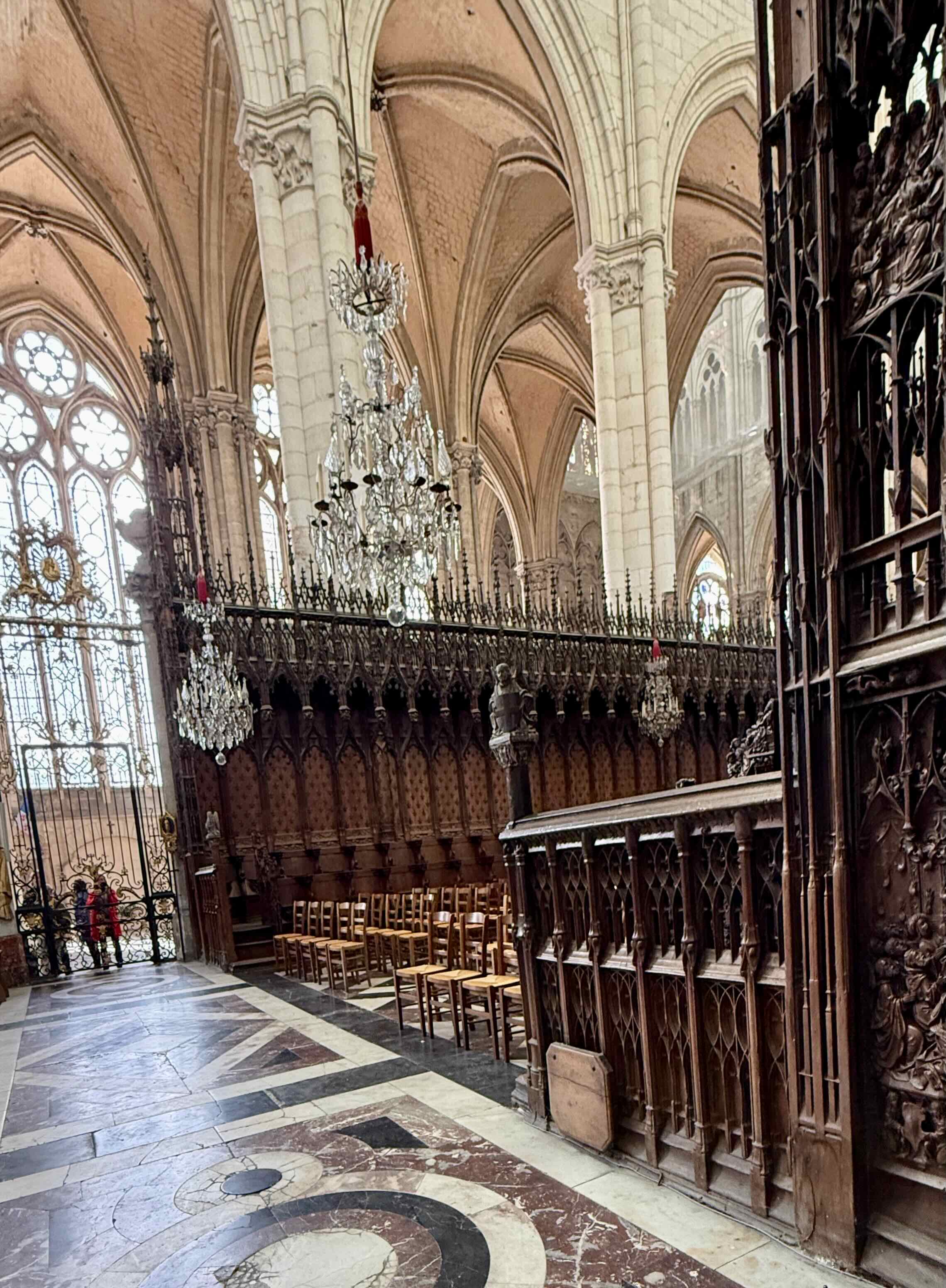
…and the 16th century wood carvings of the choir stalls are unique in the world.

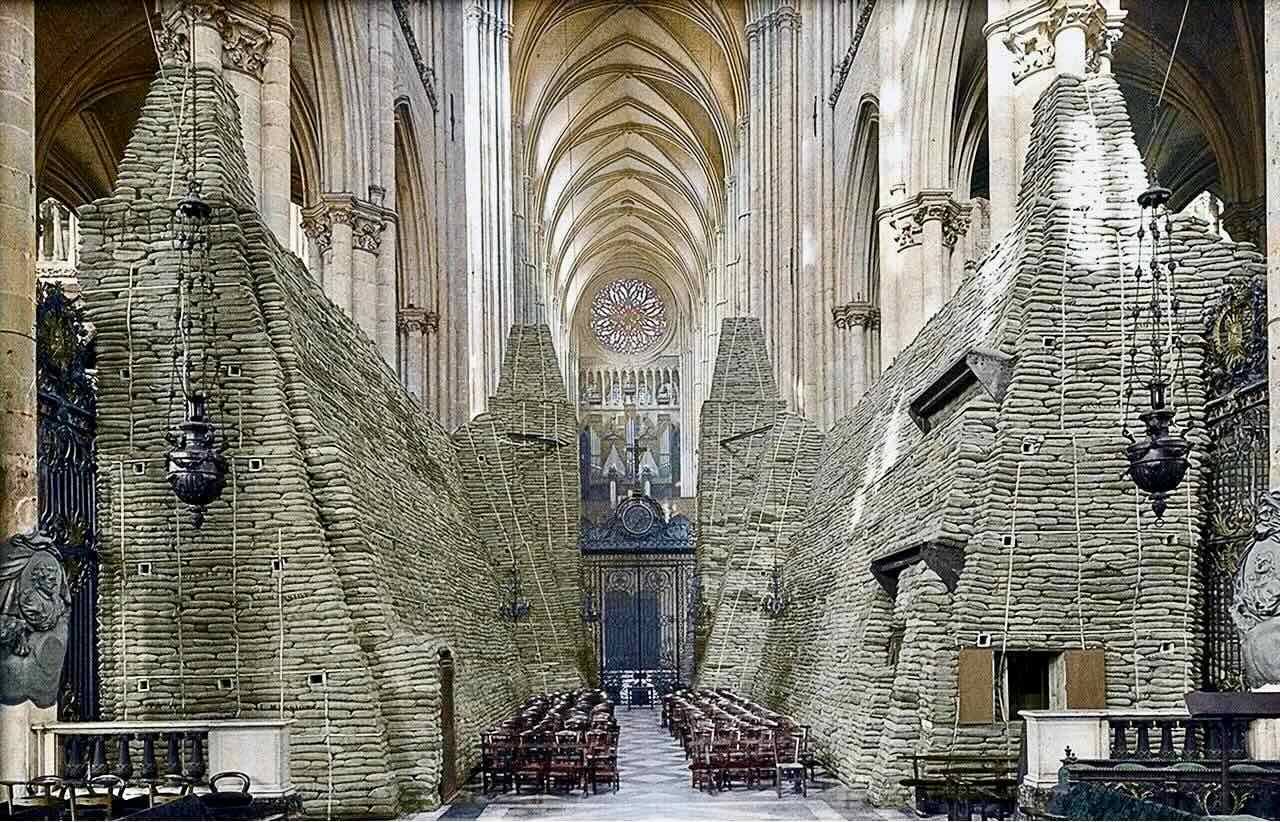
Sandbags were used to protect the exterior and interior of the church during WWI.  The stained glass windows were removed and stored elsewhere.  Unfortunately there was a fire and some of the windows were destroyed.  A bomb did fall directly on the church but it did not detonate. Whether by faulty fuse, divine intervention or sheer luck, the cathedral stood unharmed.  Info and photo~ church heritage.eu

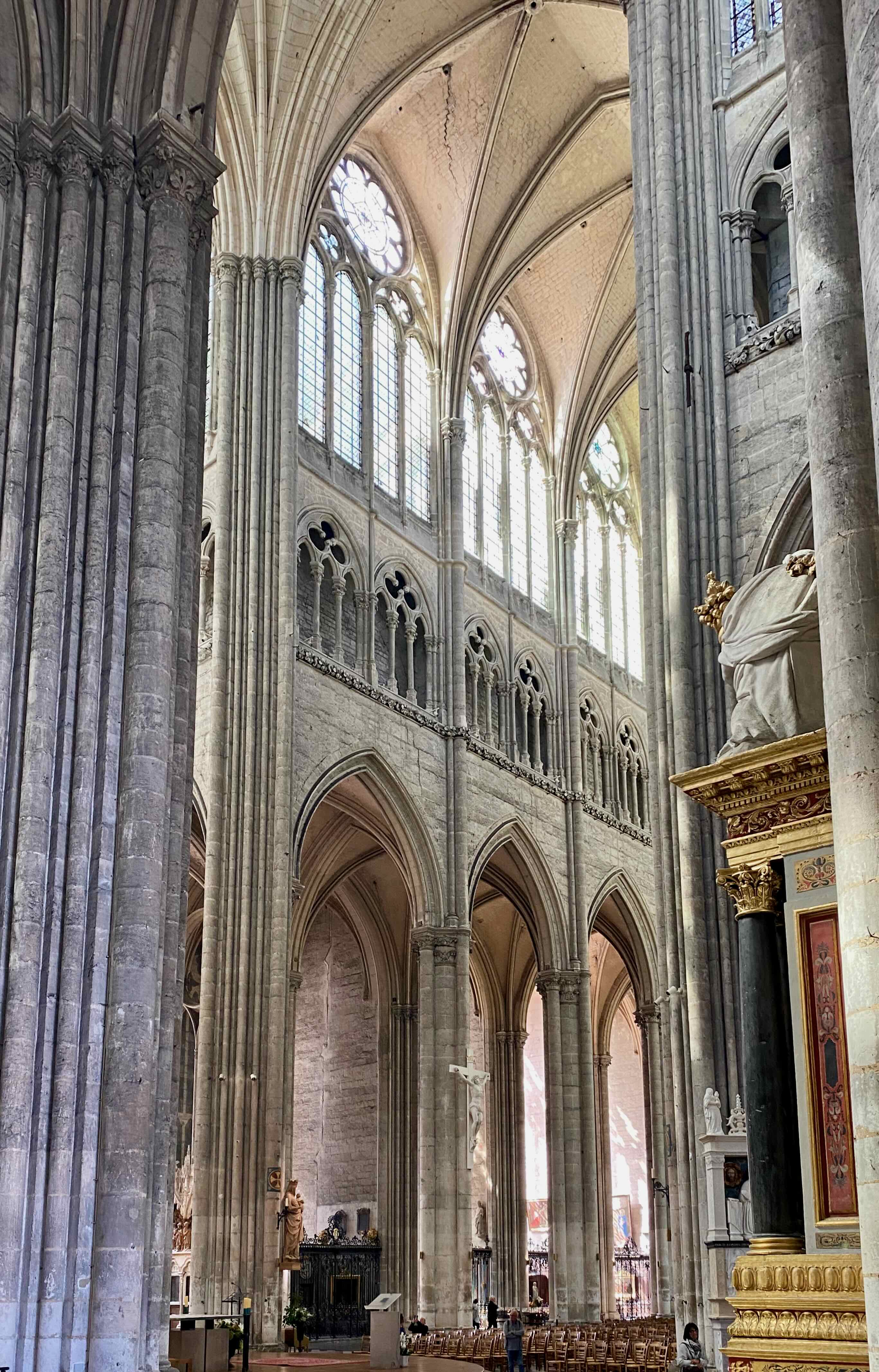
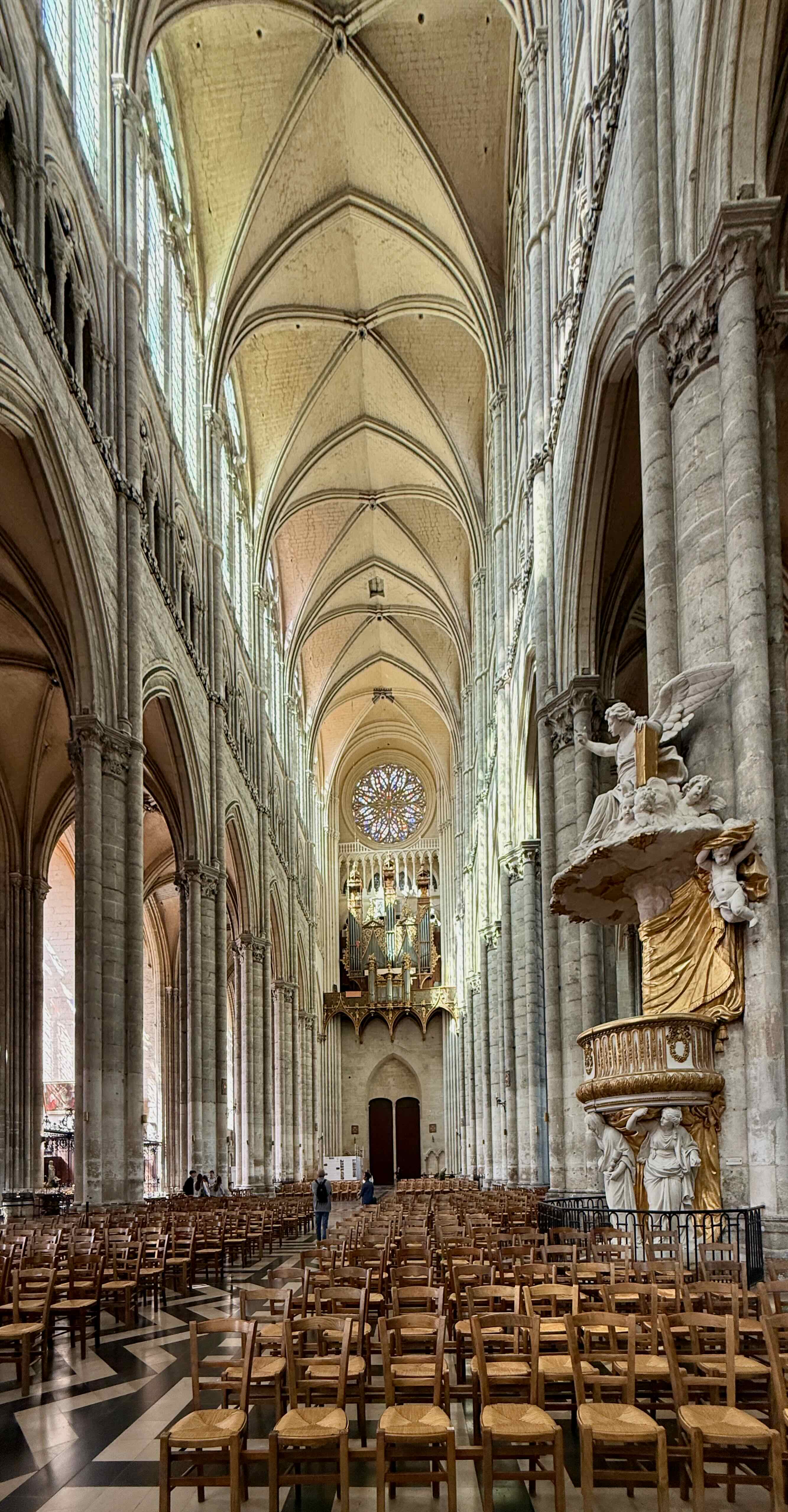
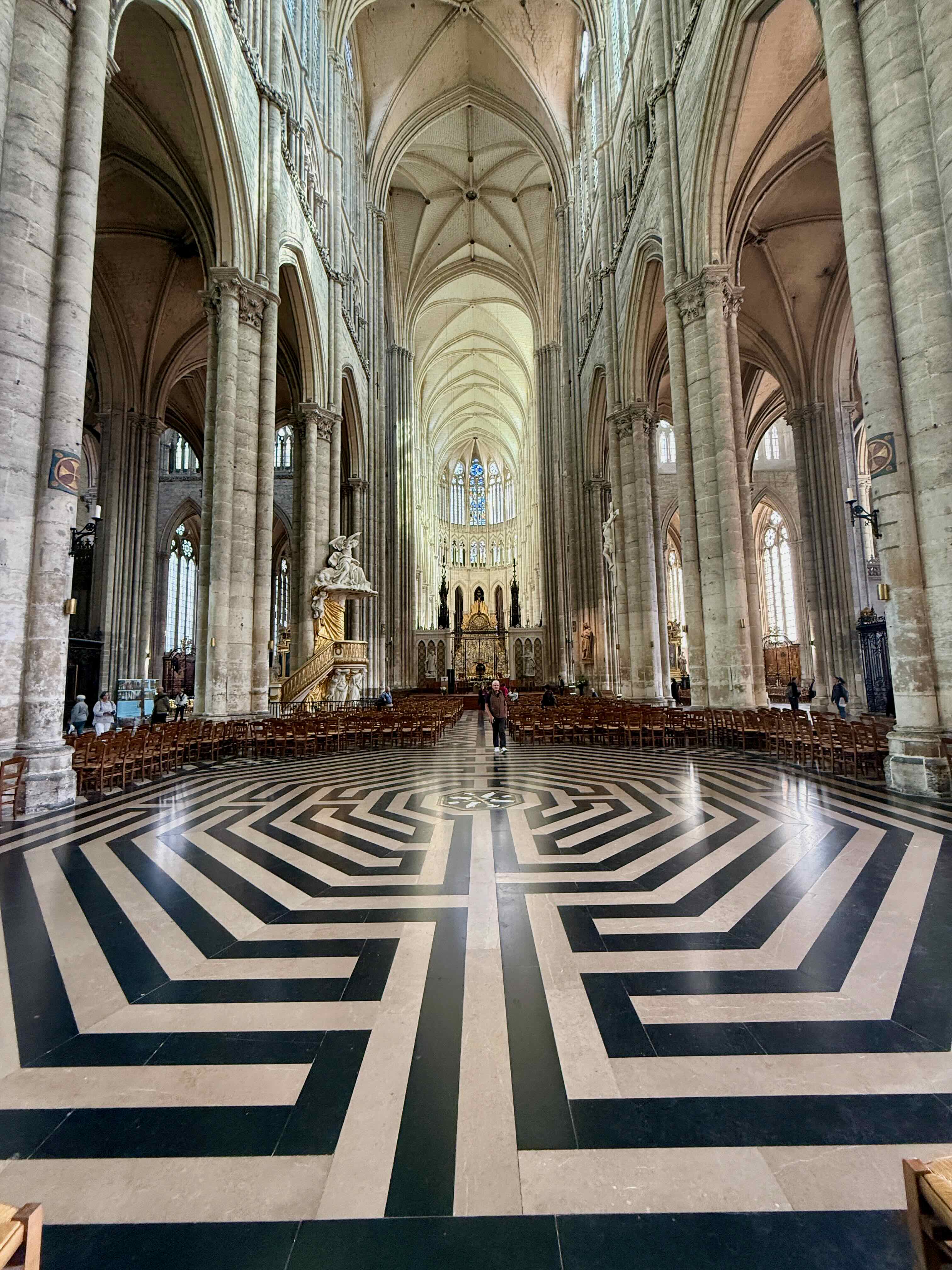
This is a massive cathedral…

…with stunning stained glass windows.

Do you see the people? They give a sense of scale.

Looking towards the richly decorated altar…

and in the opposite direction, the organ that was built in 1549…

which has just been cleaned and restored.

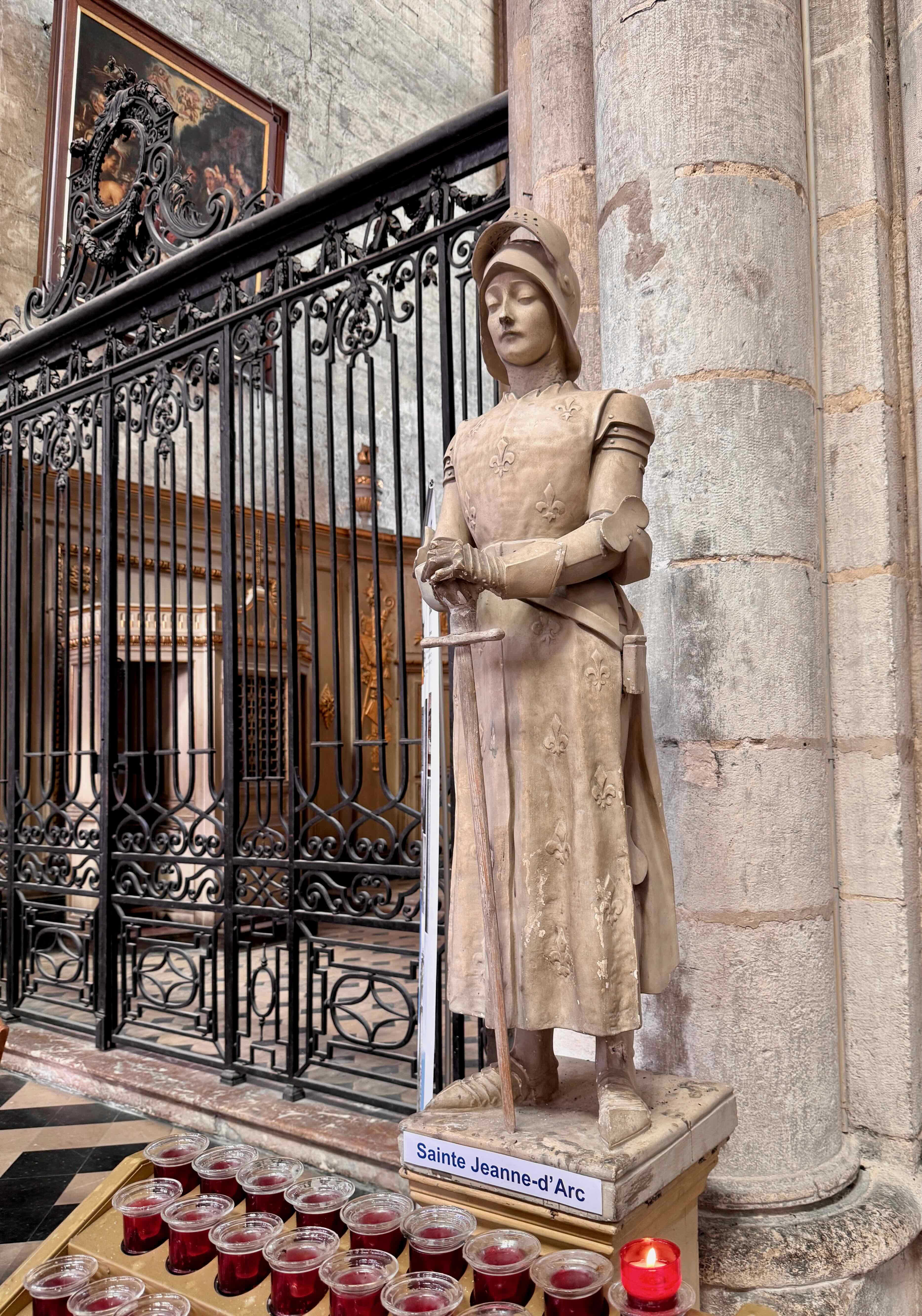
Love this statue of Joan of Arc.

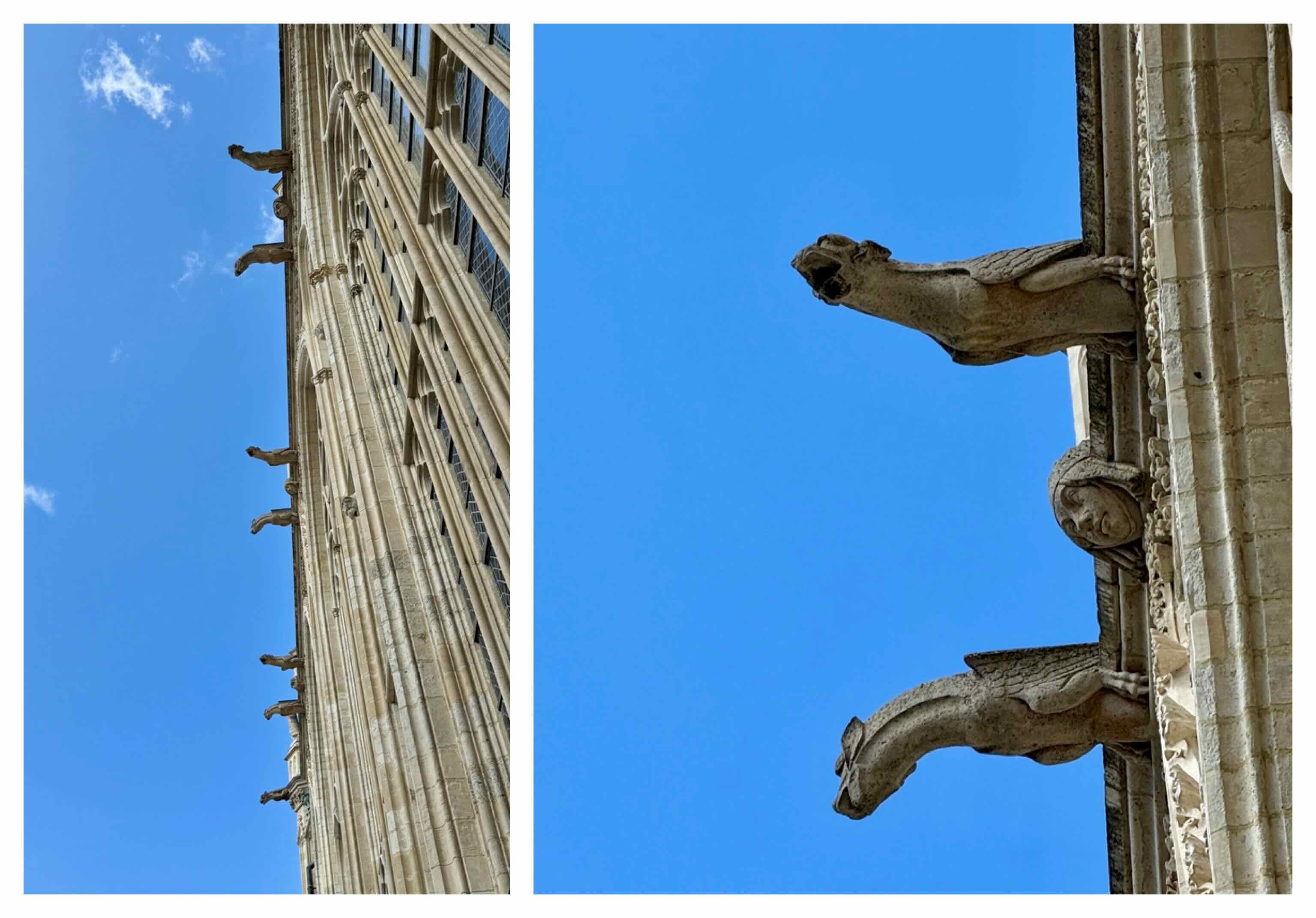
There is also a labyrinth from 1288.When we leave the cathedral, I look up and there are the gargoyles!  I am very fond of gargoyles.
We have time to walk back to the car for tea and cookies and a little down time before we get ready for our boat ride at the Hortillonages.

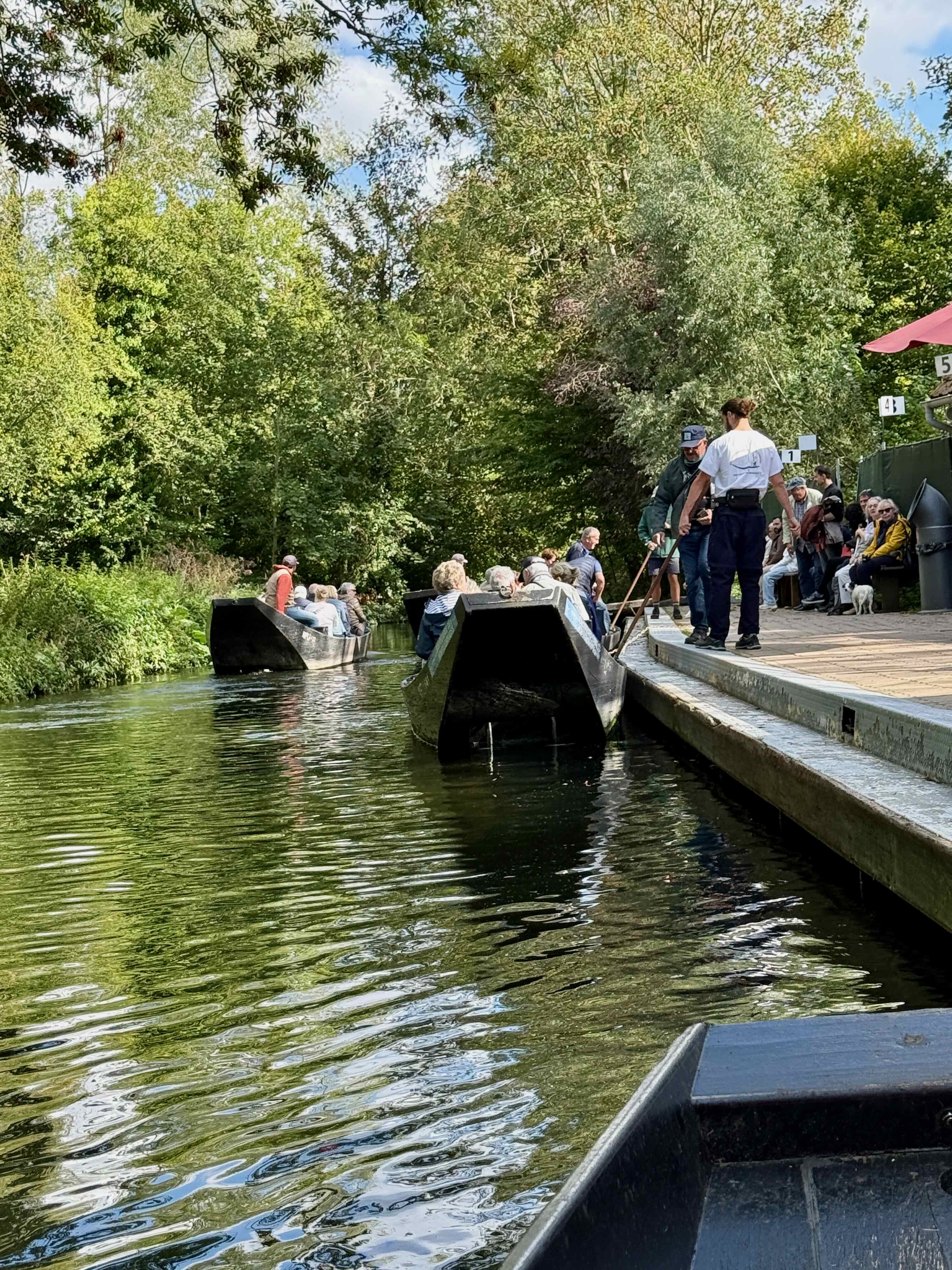
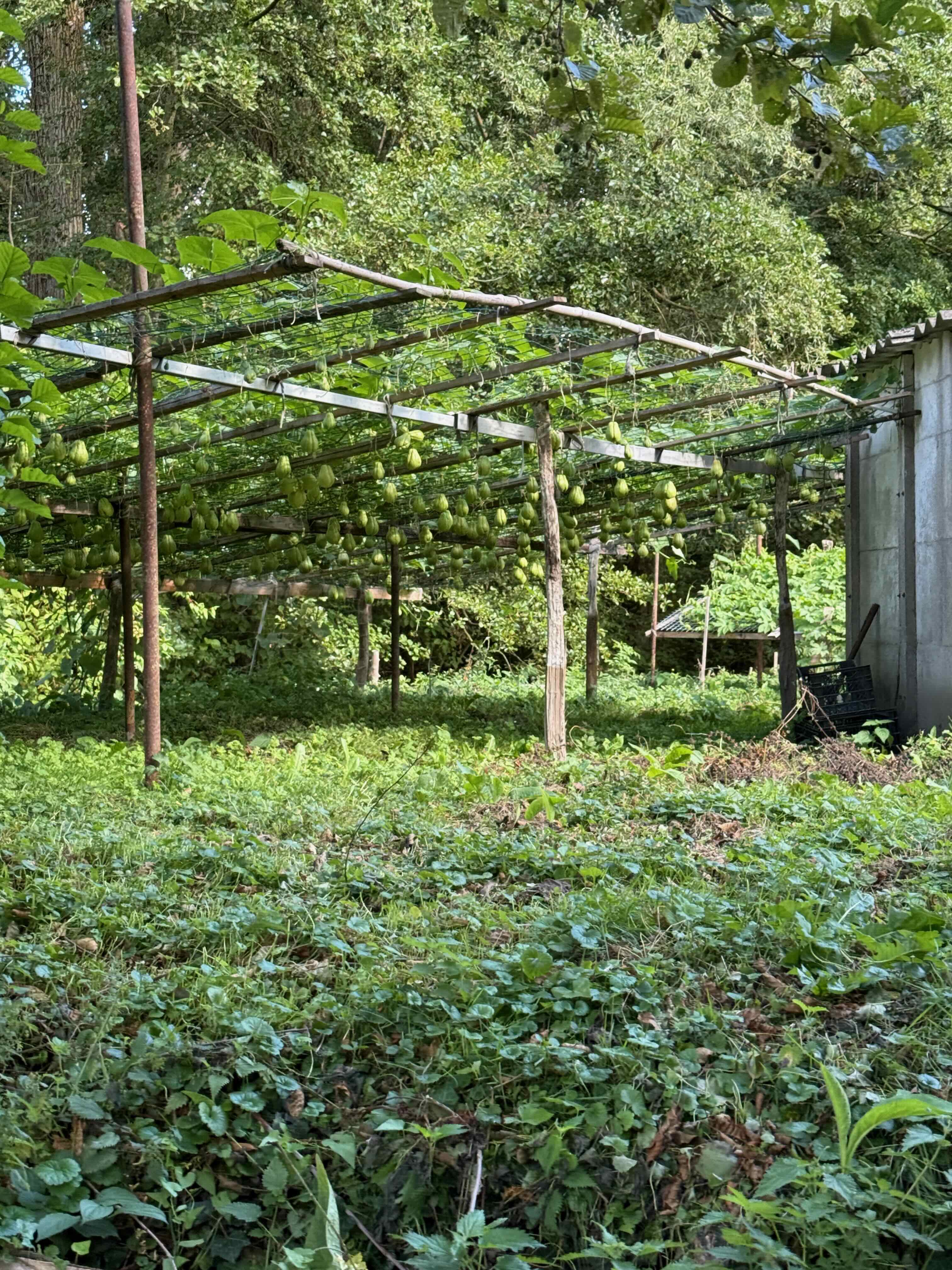
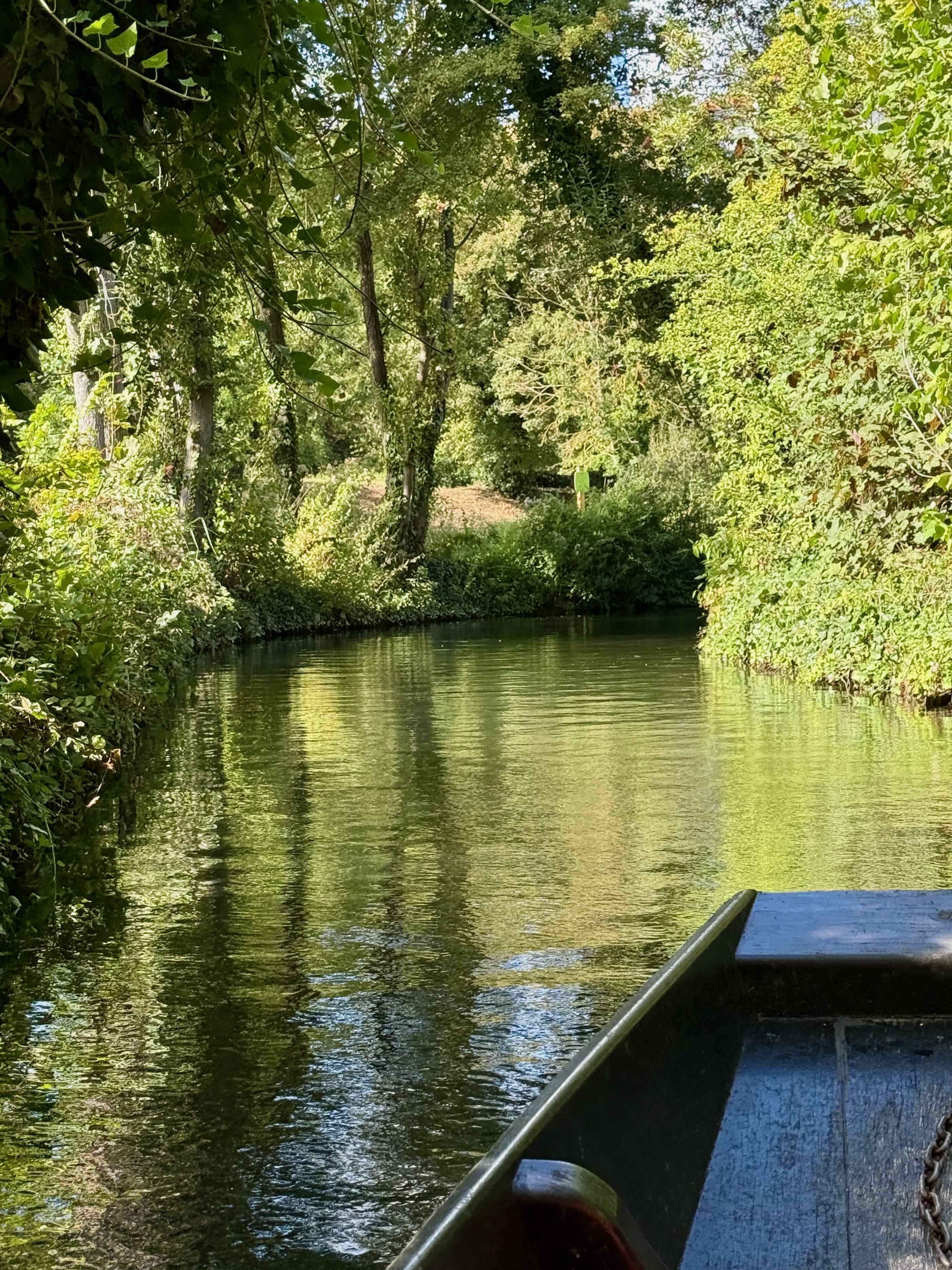
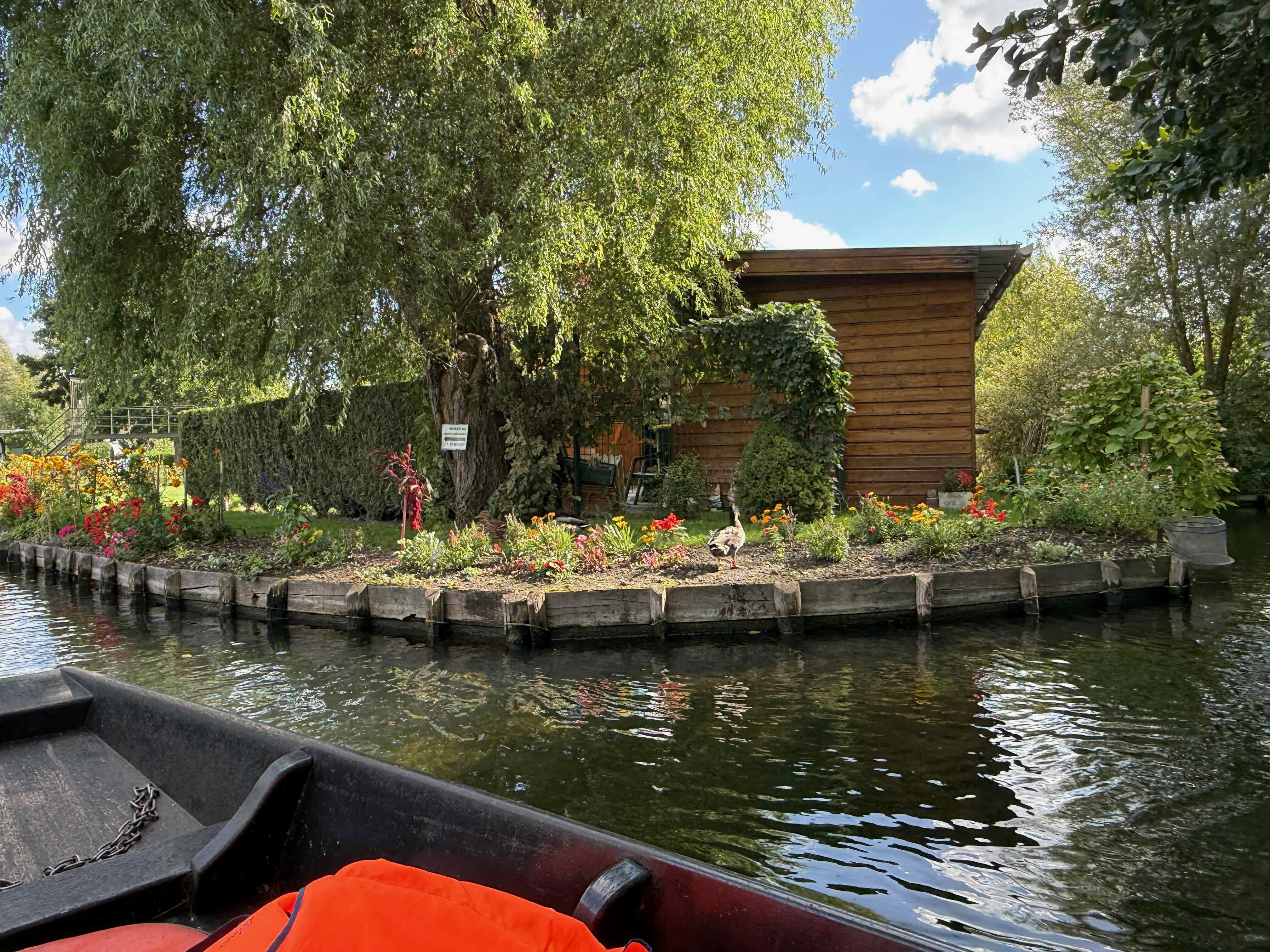
Shaped by generations of market gardeners known as ‘hortillons’, this site is the only one of its kind in France. The Hortillonnages are made up of a multitude of small cultivated islets surrounded by water, accessible only by boat on a network of waterways

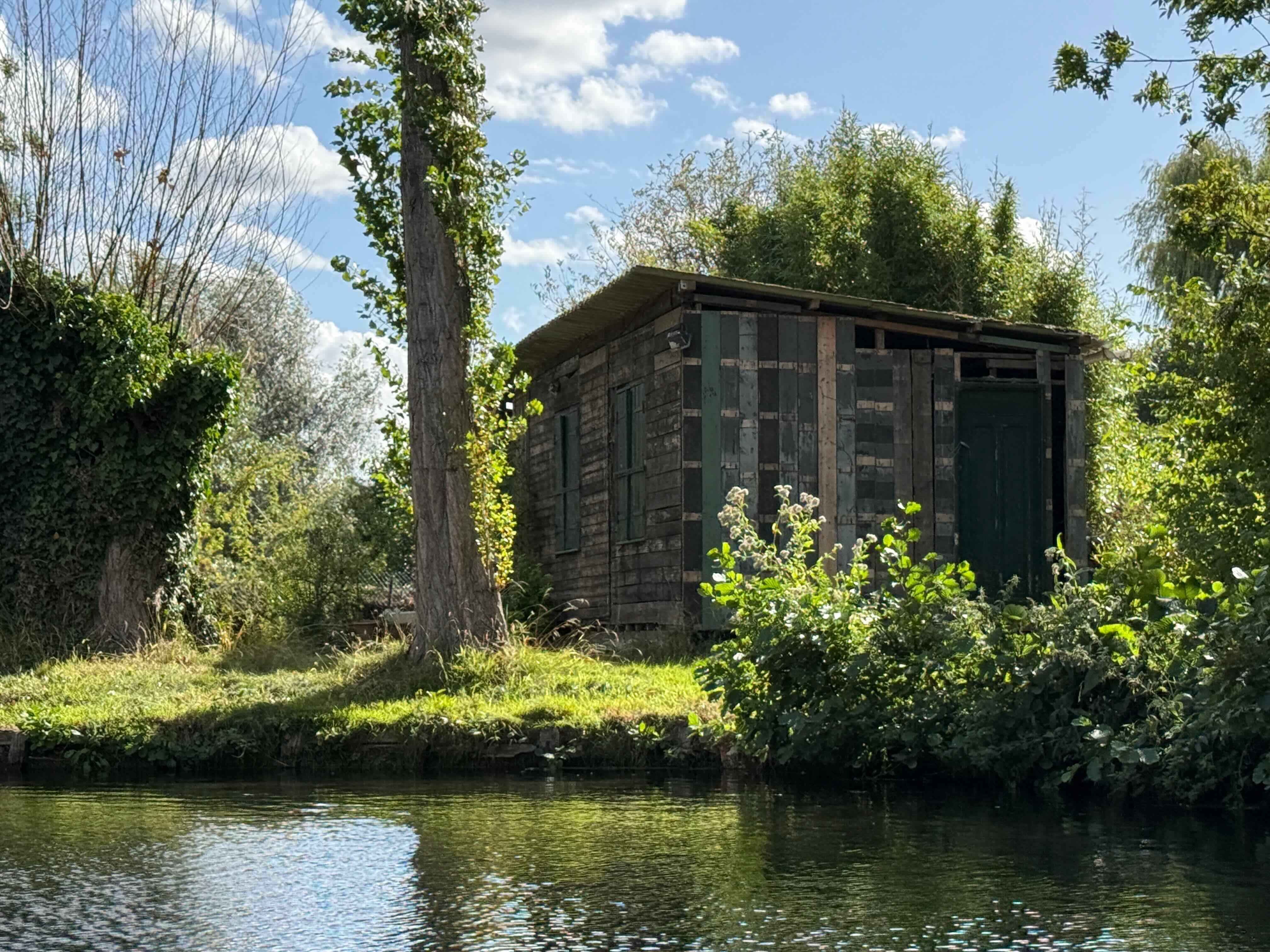
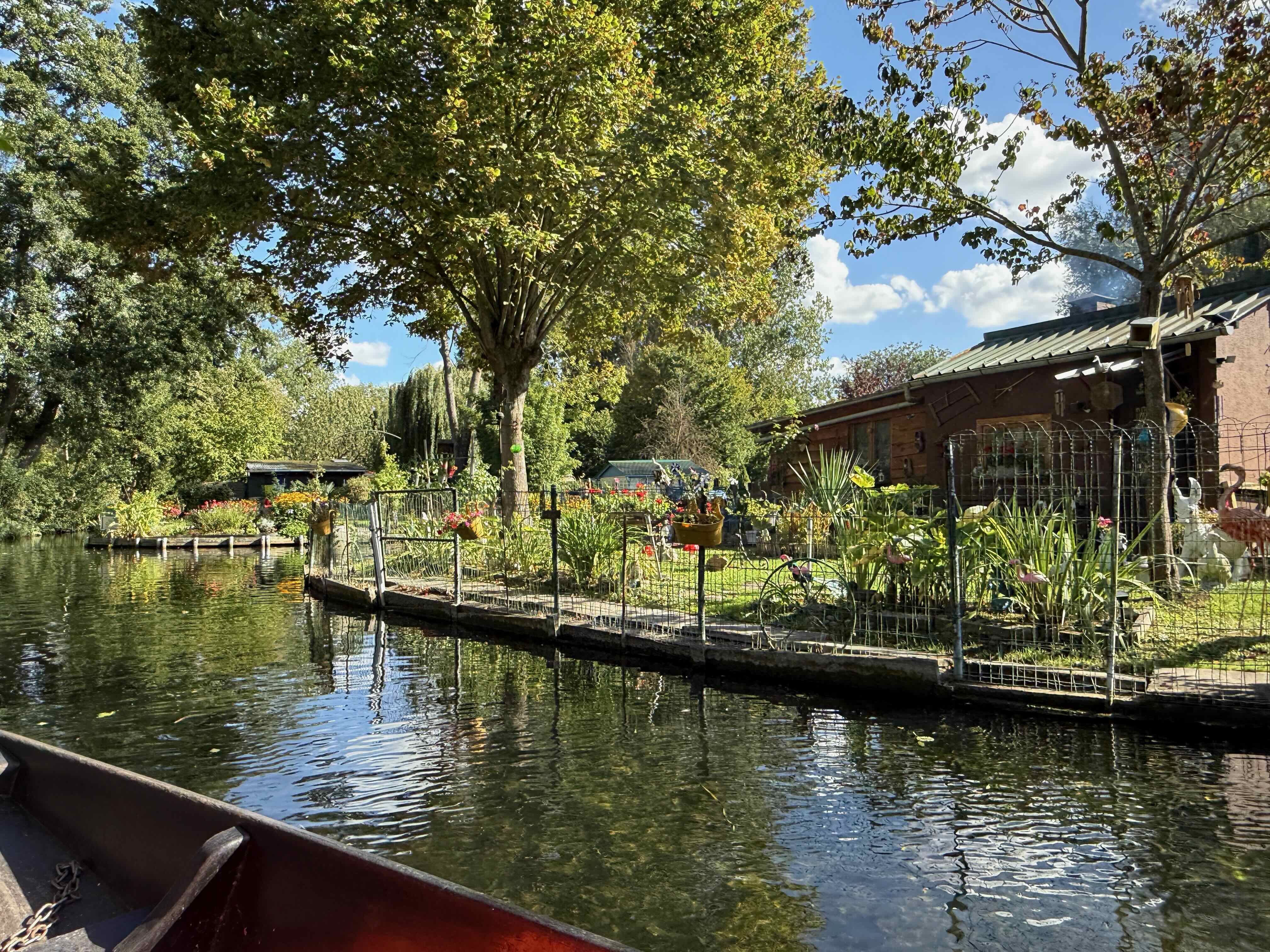
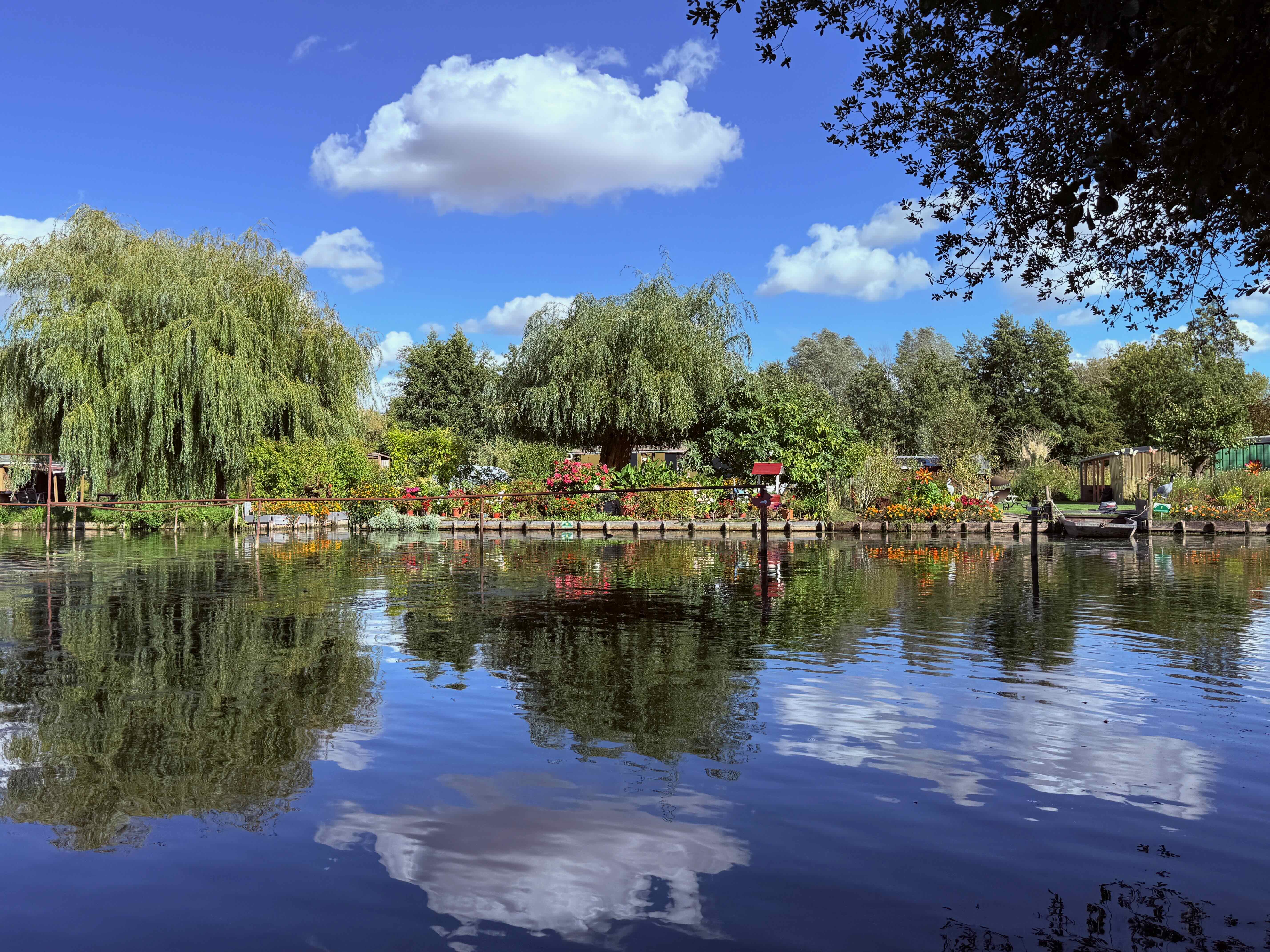
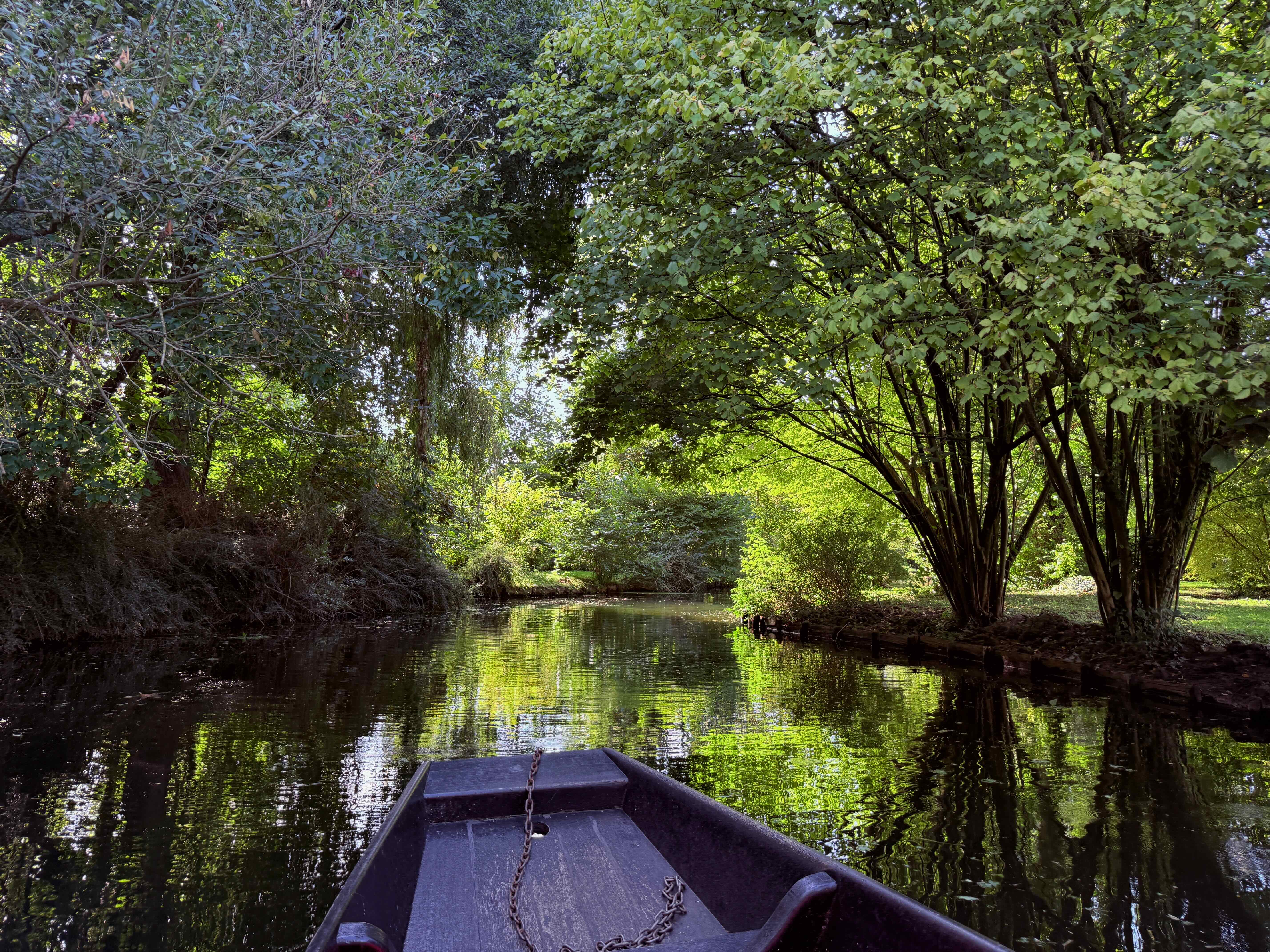
We spend a relaxing 45 minutes travelling these waterways. We see market gardens, private gardens, cottages and some islands that look very wild and unkept.

The Hortillonnages have been here since ancient times. They are located on the naturally marshy terrain of the old bed of the River Somme. The site’s name has its origins in the Latin ‘hortus’ meaning garden. Nowadays, the ownership of this 300-hectare site is shared by over 1000 individuals who use it for market gardening or leisure activities such as gardening, fishing, and observing nature.
Walking back to our car we pass yet another war memorial, a reminder of the war and those who fought and died for France.

The Boves, World War I Cemeteries and Vimy Ridge Memorial

Day 11.    Wednesday, September 10, 2025

This is a bit of a long post…it was a very full day.

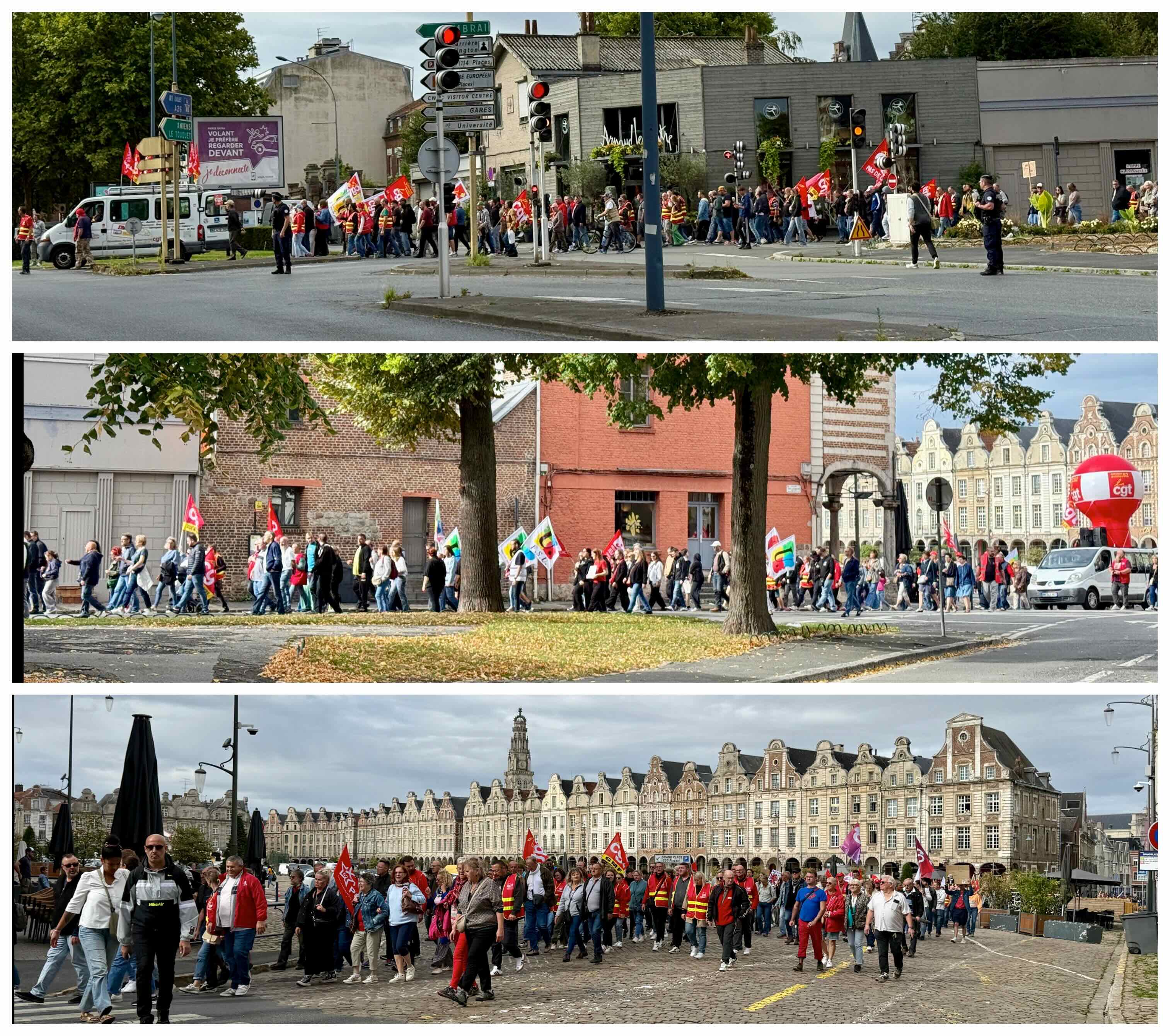
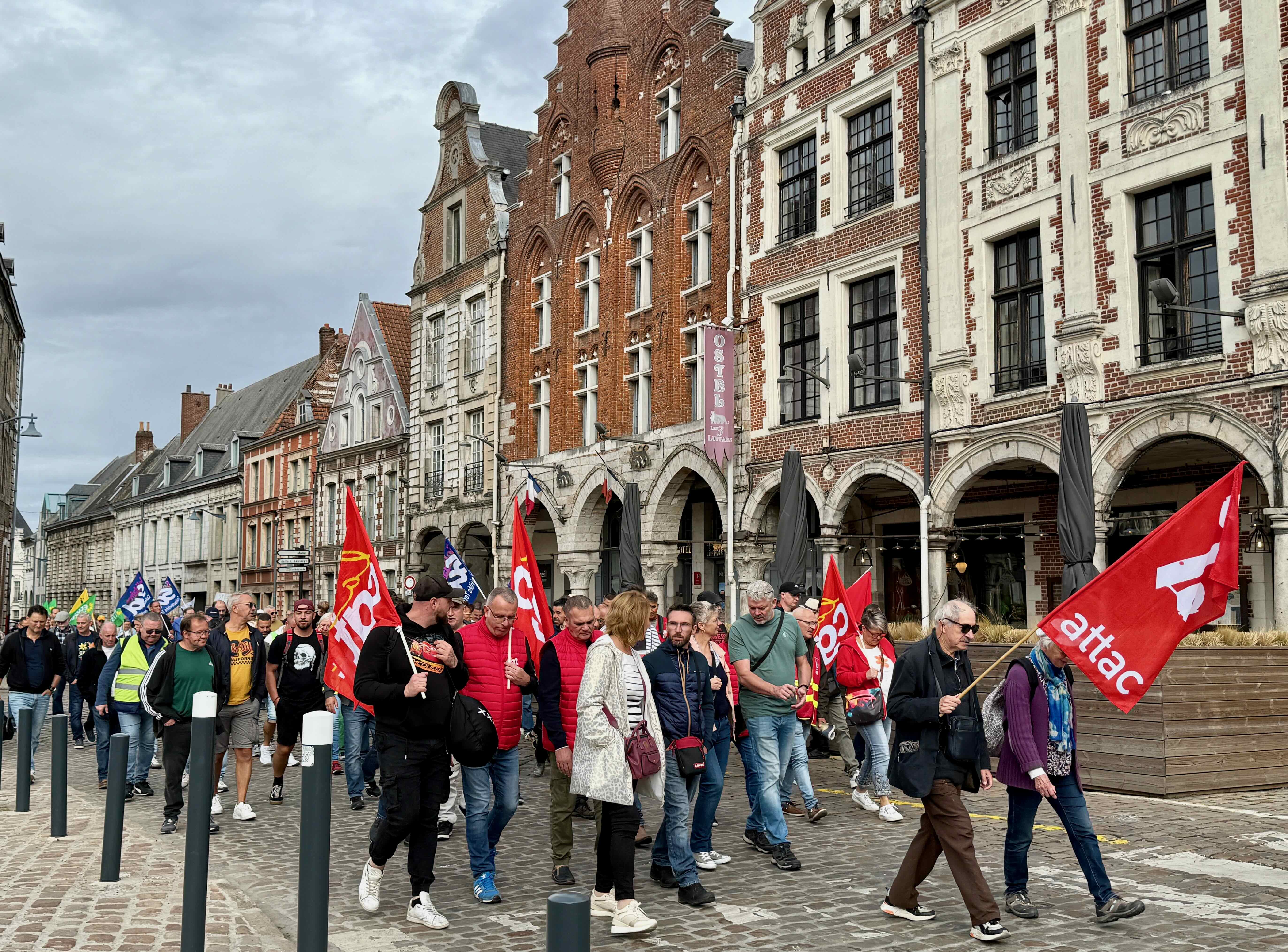
On our walk to Arras City Hall this morning we pass a ‘Bloquons Tout’ (Bock Everything) protest march.  This march is much calm, but people are very angry with the government’s austerity budget.

It is not just young people who are upset and protesting.  There are people of all ages in this protest march that is blocking the streets for more than three blocks.

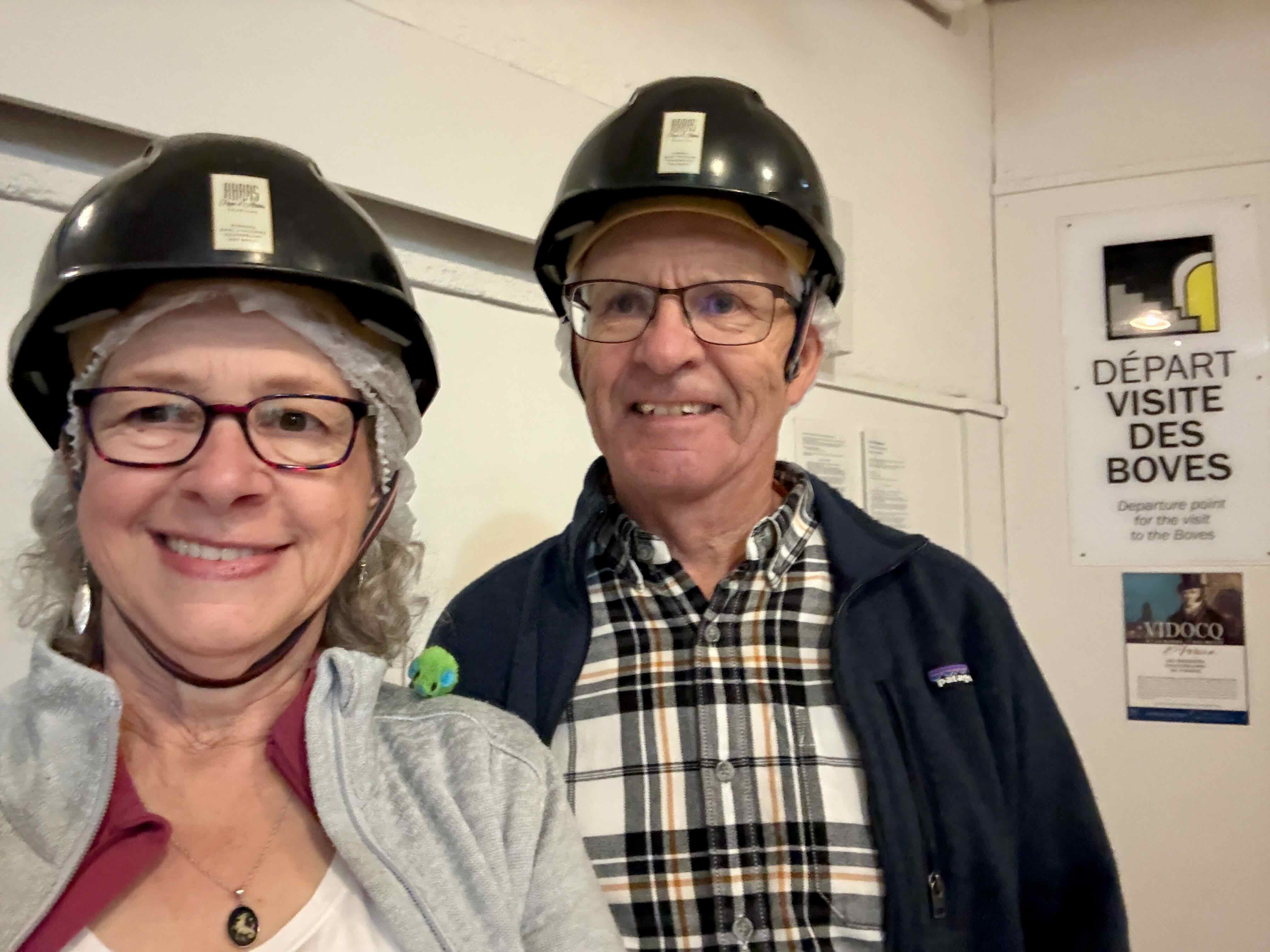
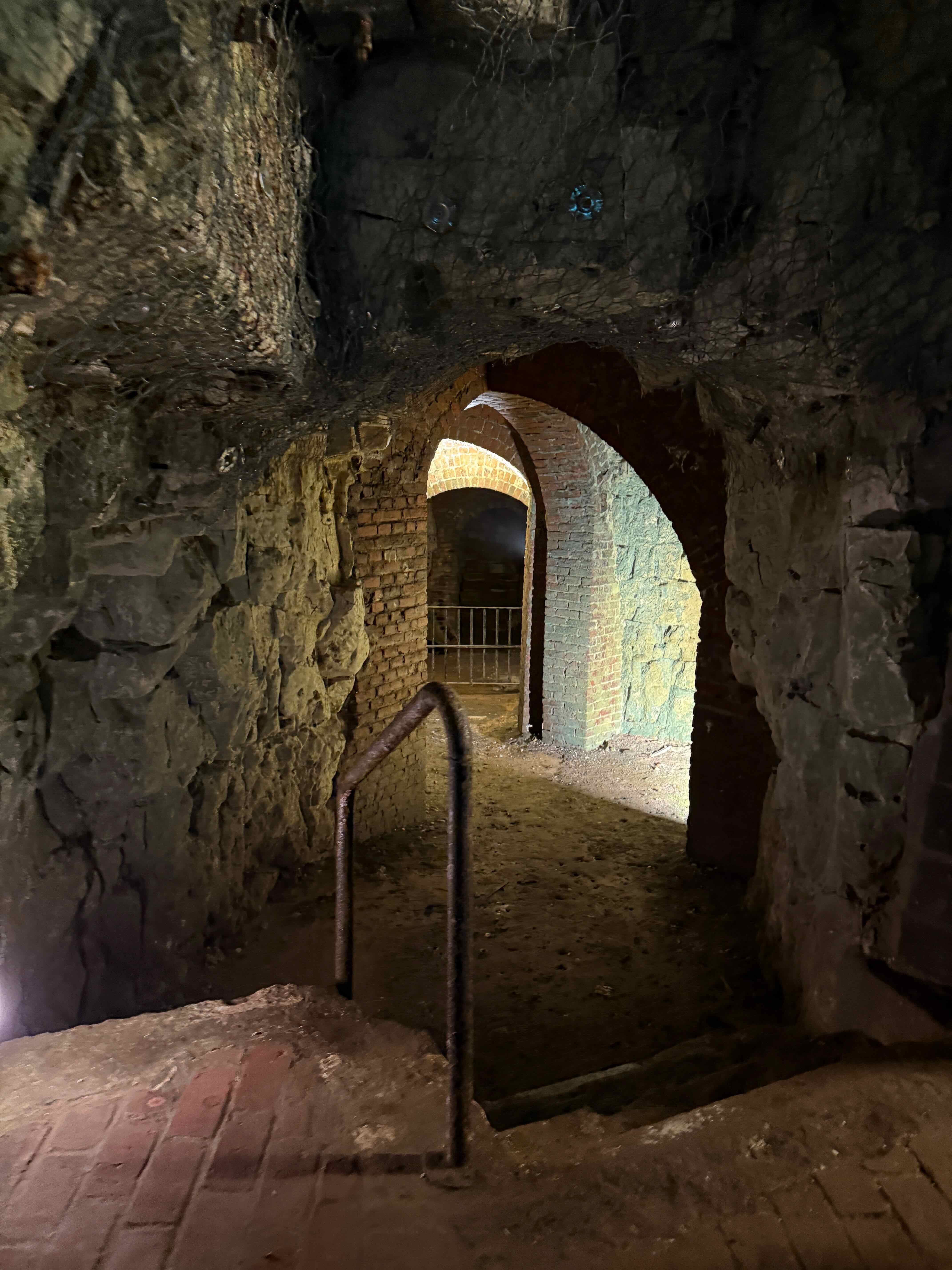
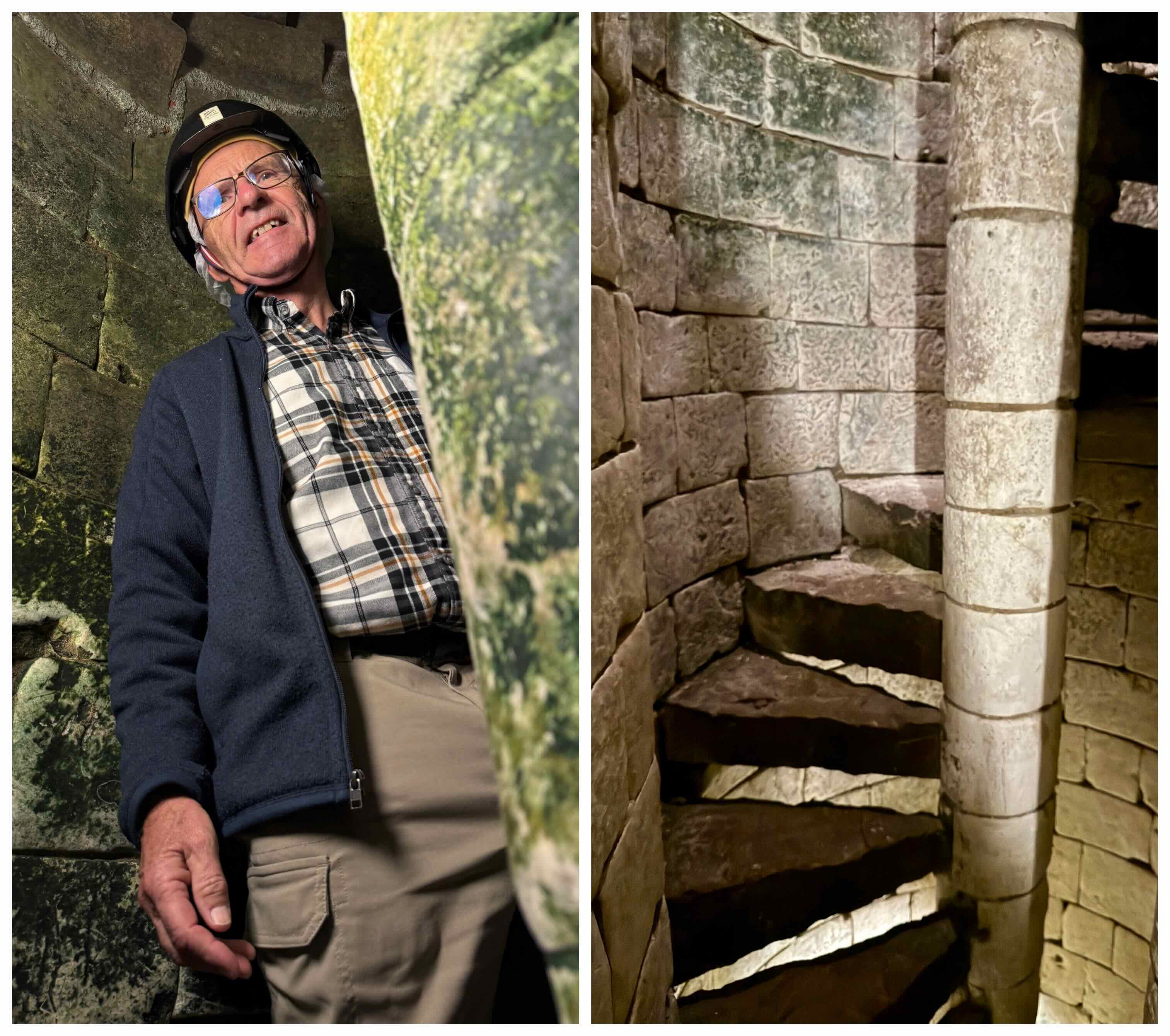
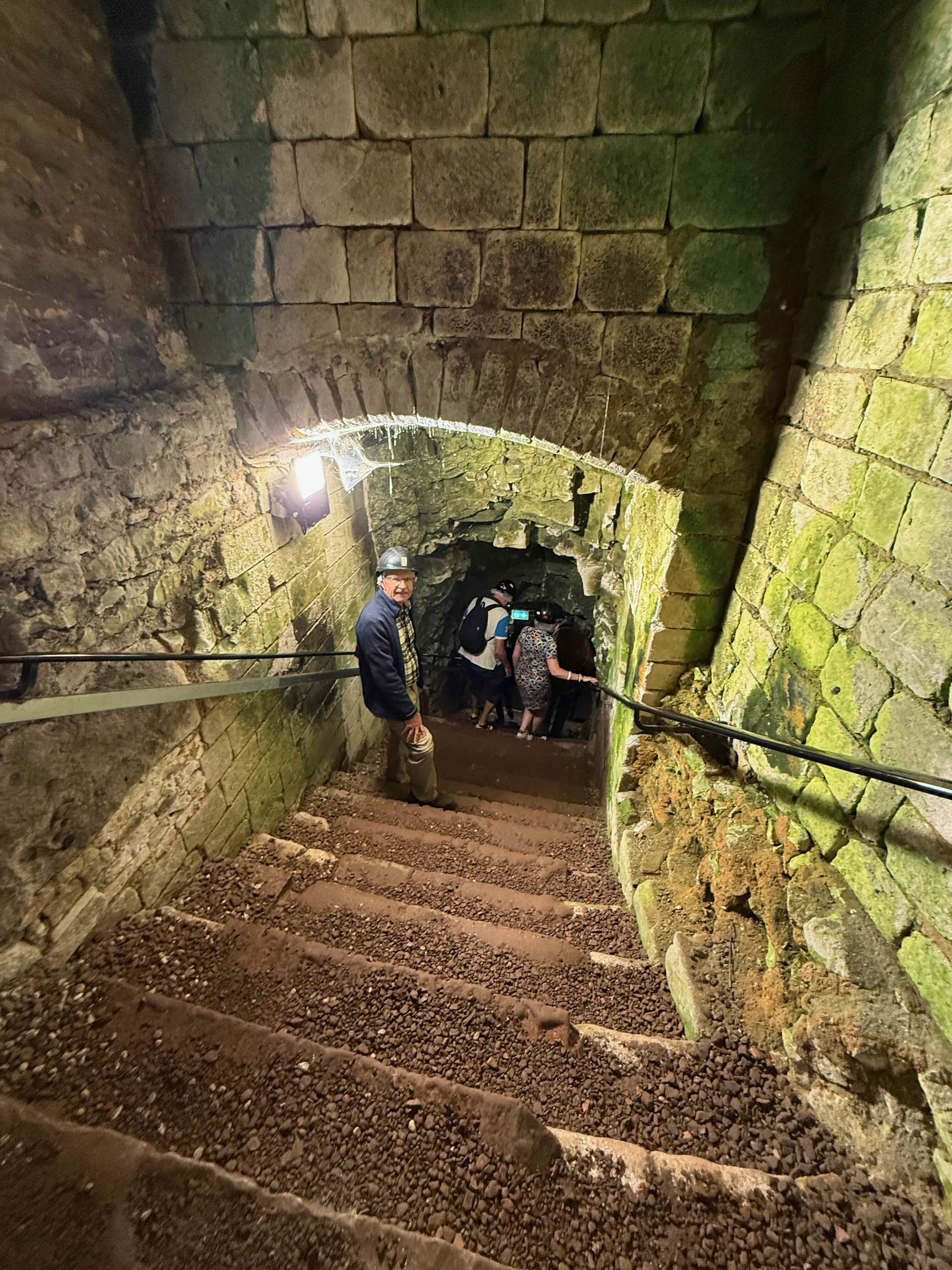
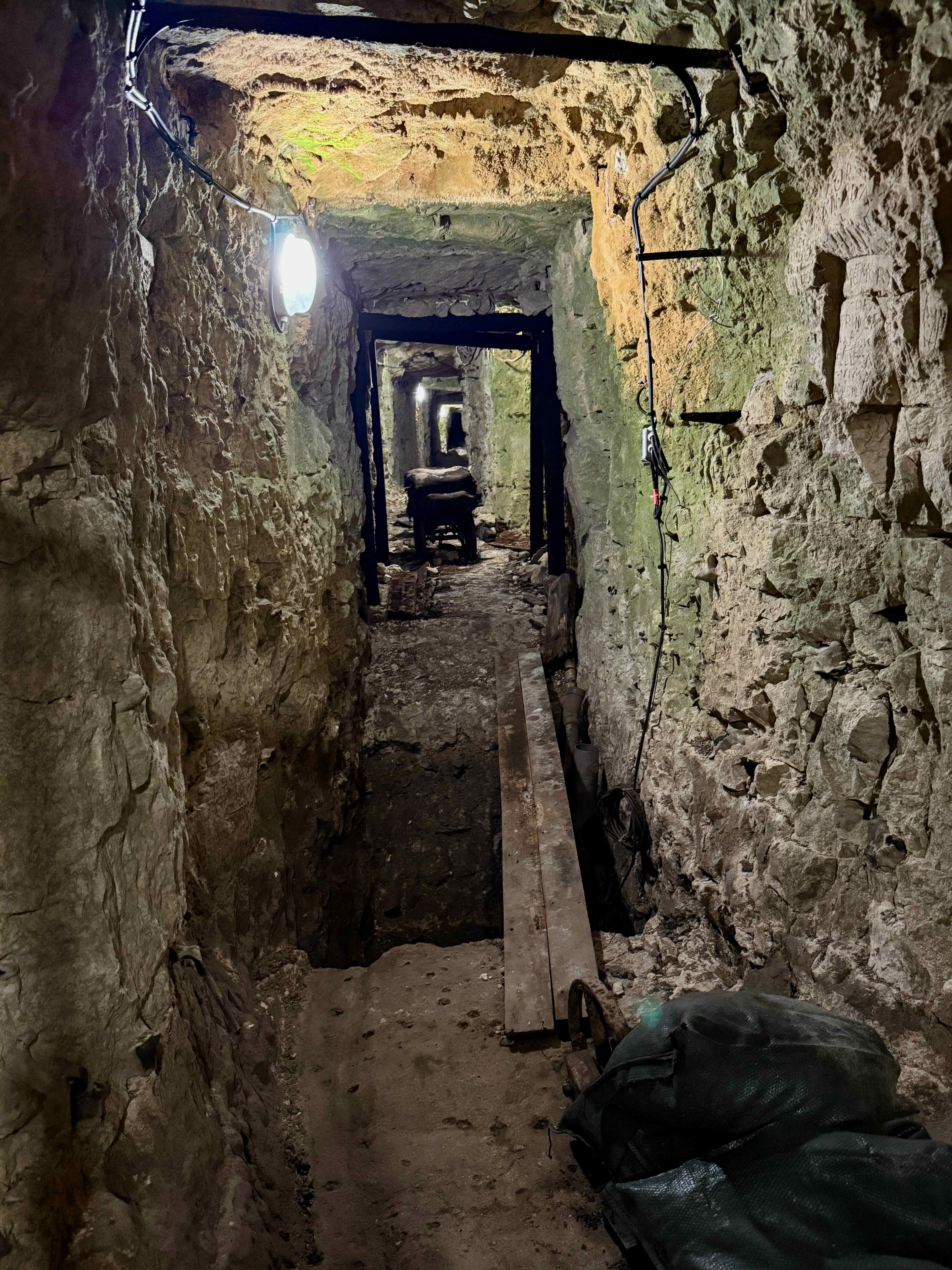
We are going on a guided tour of the Boves this morning.  The Boves are the tunnels and caves that were excavated under the city of Arras and the surrounding countryside.  The stones for building the churches, City Hall and other large buildings  were excavated from these caves and tunnels.  We are given hardhats to wear, but Sue is content to sit on my shoulder for the tour.  

This is the entrance to the Boves.

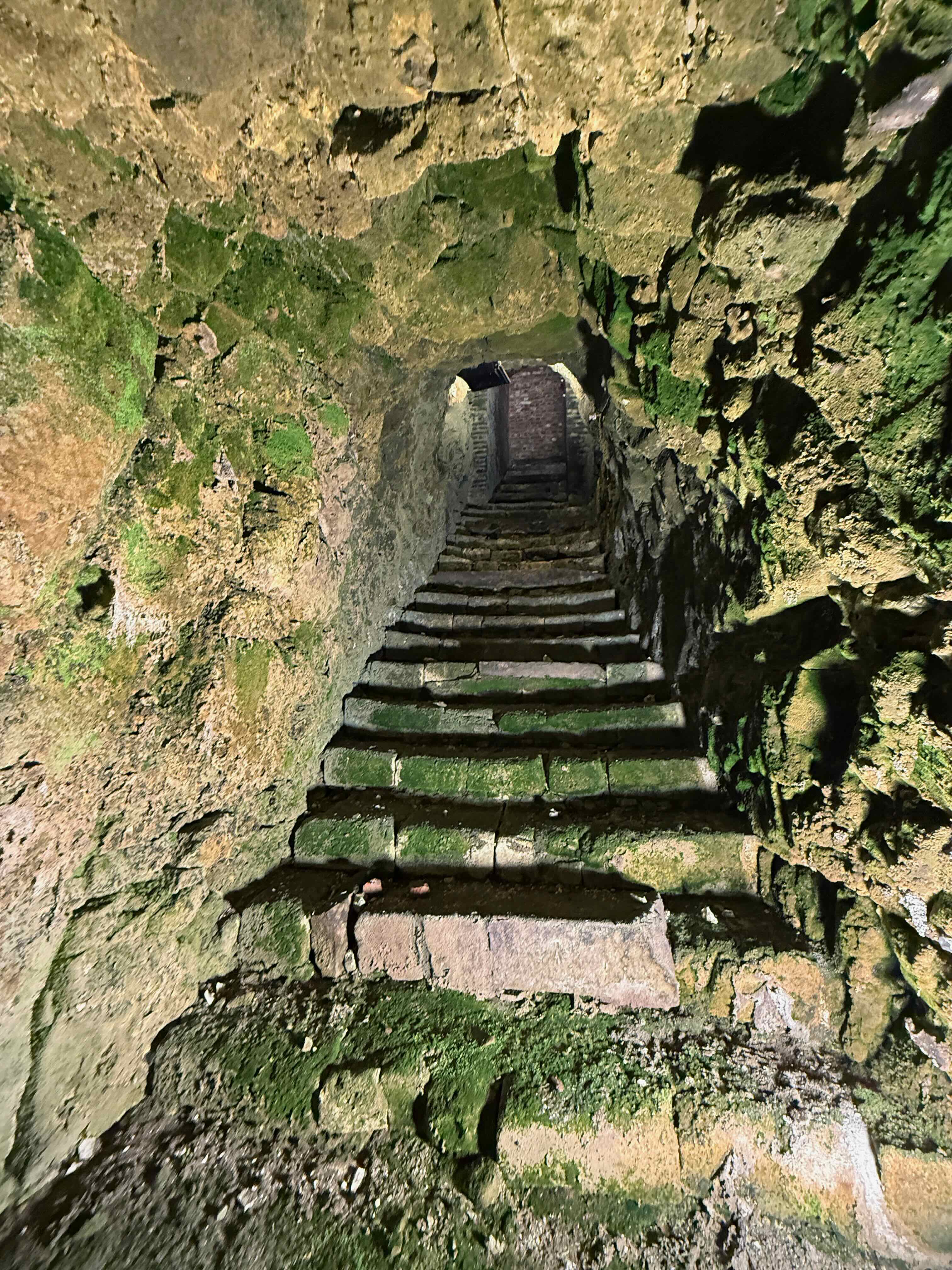
It is damp down here, 80% humidity and about 12° Celsius. Some of the tunnels have moss growing on the walls.

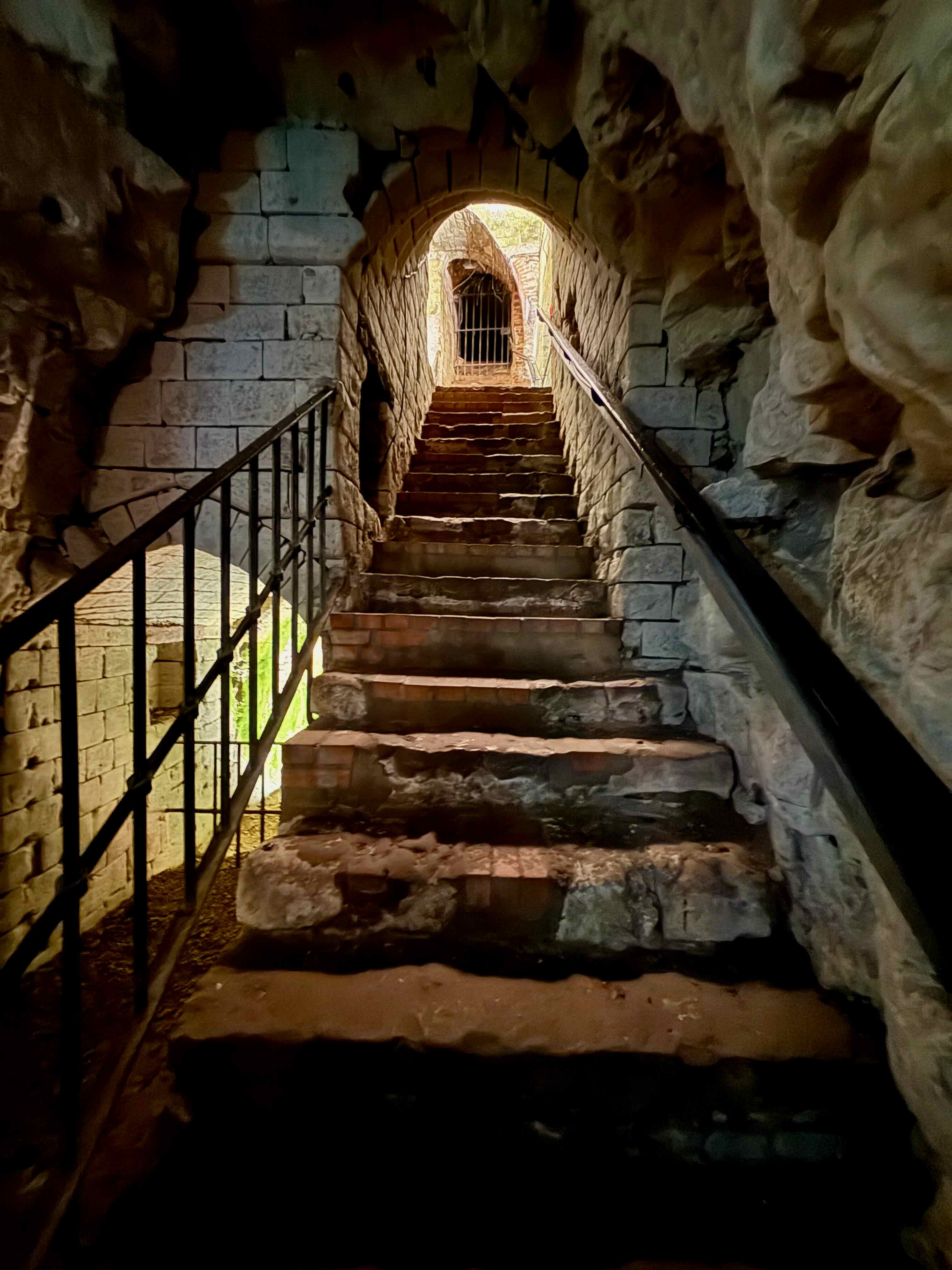
In places these very narrow spiral staircases are used to go between levels of tunnels.  There are three levels, one at 4 metres, one at 8 metres and one at 12 metres.

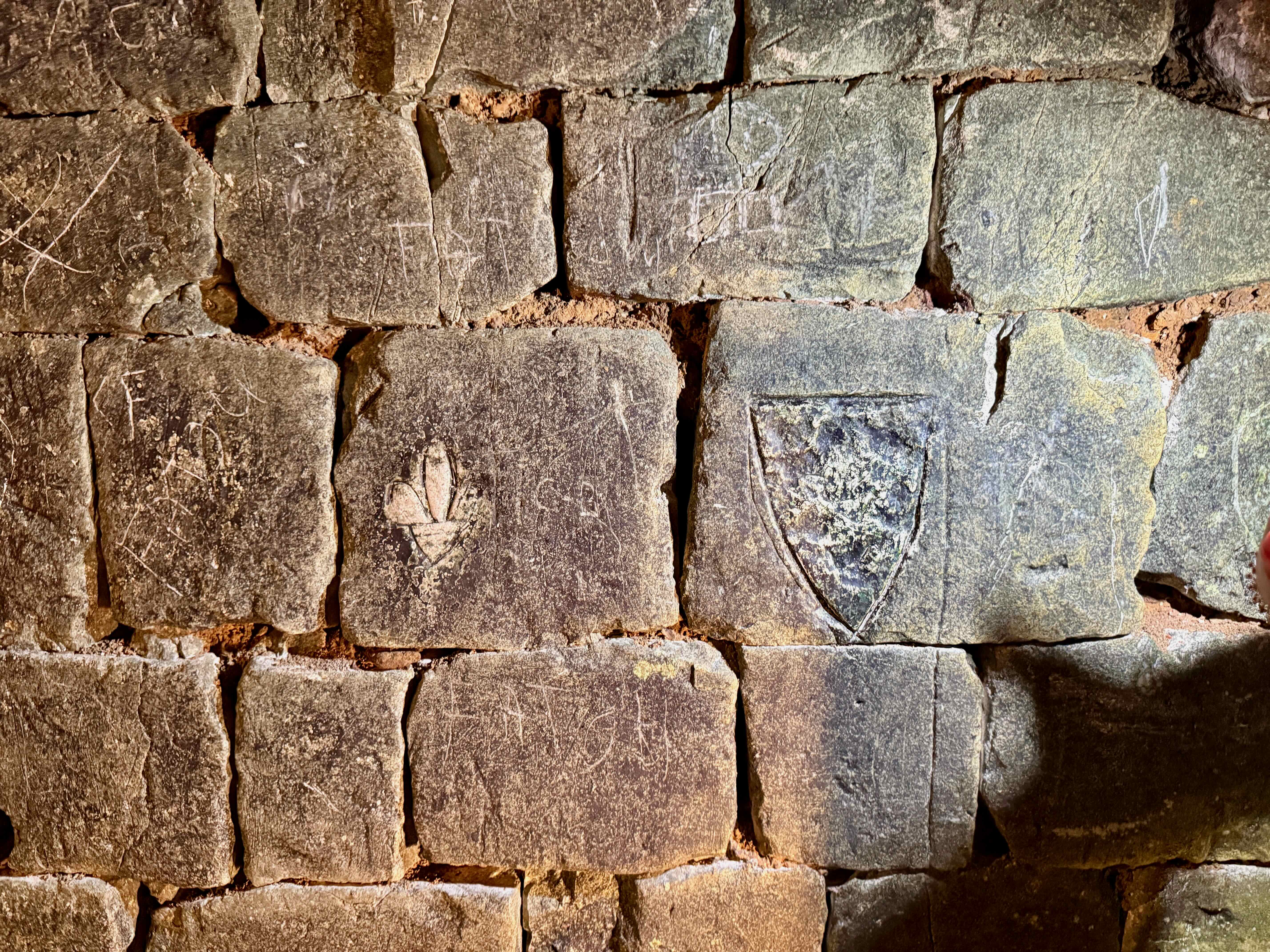
Graffiti covers many of the walls, both modern day graffiti and graffiti from the days of the First World War.  The fleur-de-lys and the French Crest, which once had 2 lions on it are very old, the rest unfortunately are from recent tourists who visit these tunnels.

One of the many staircases on the tour.

Many of the staircases and tunnels are now blocked off for security reasons.

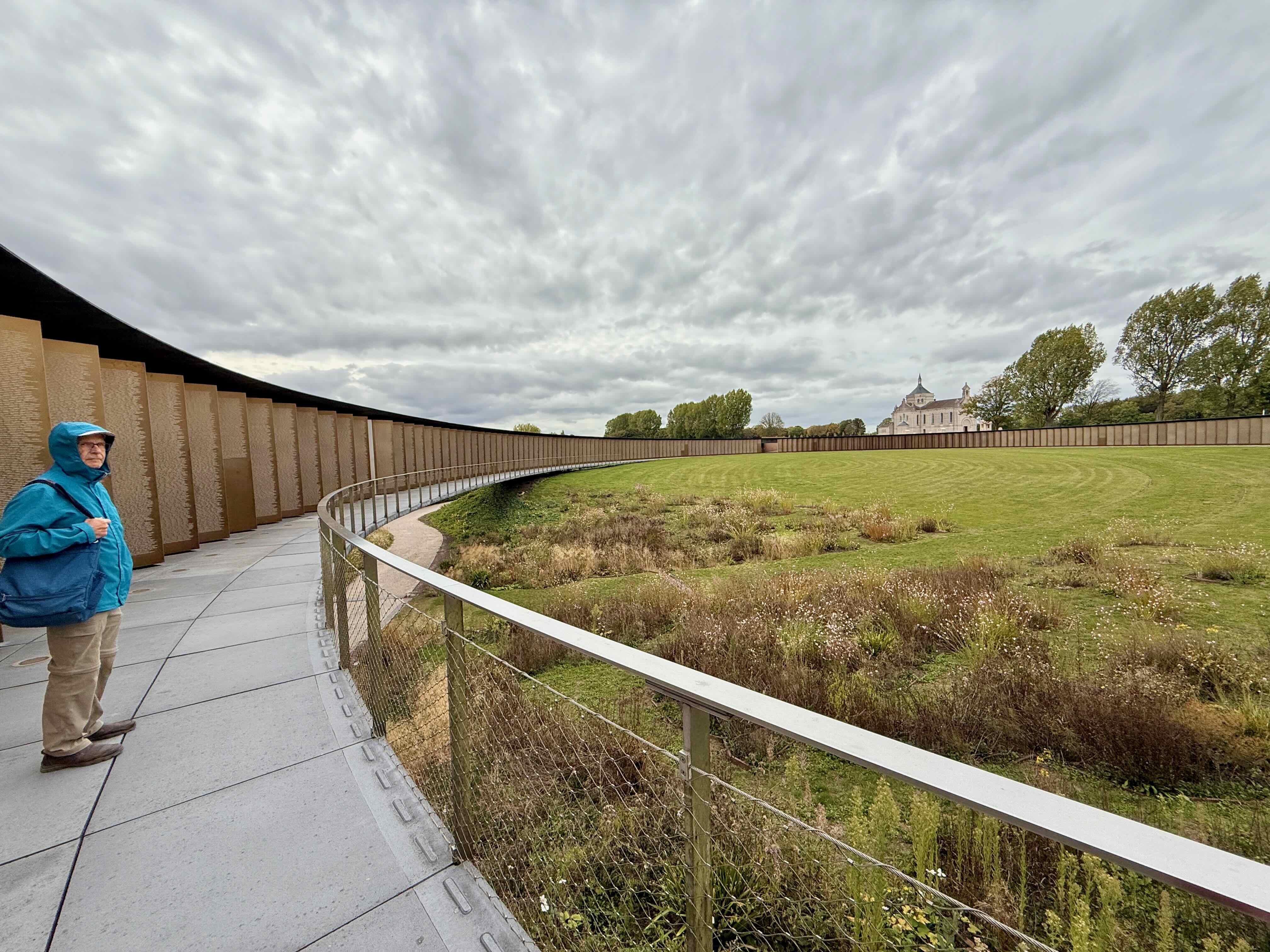
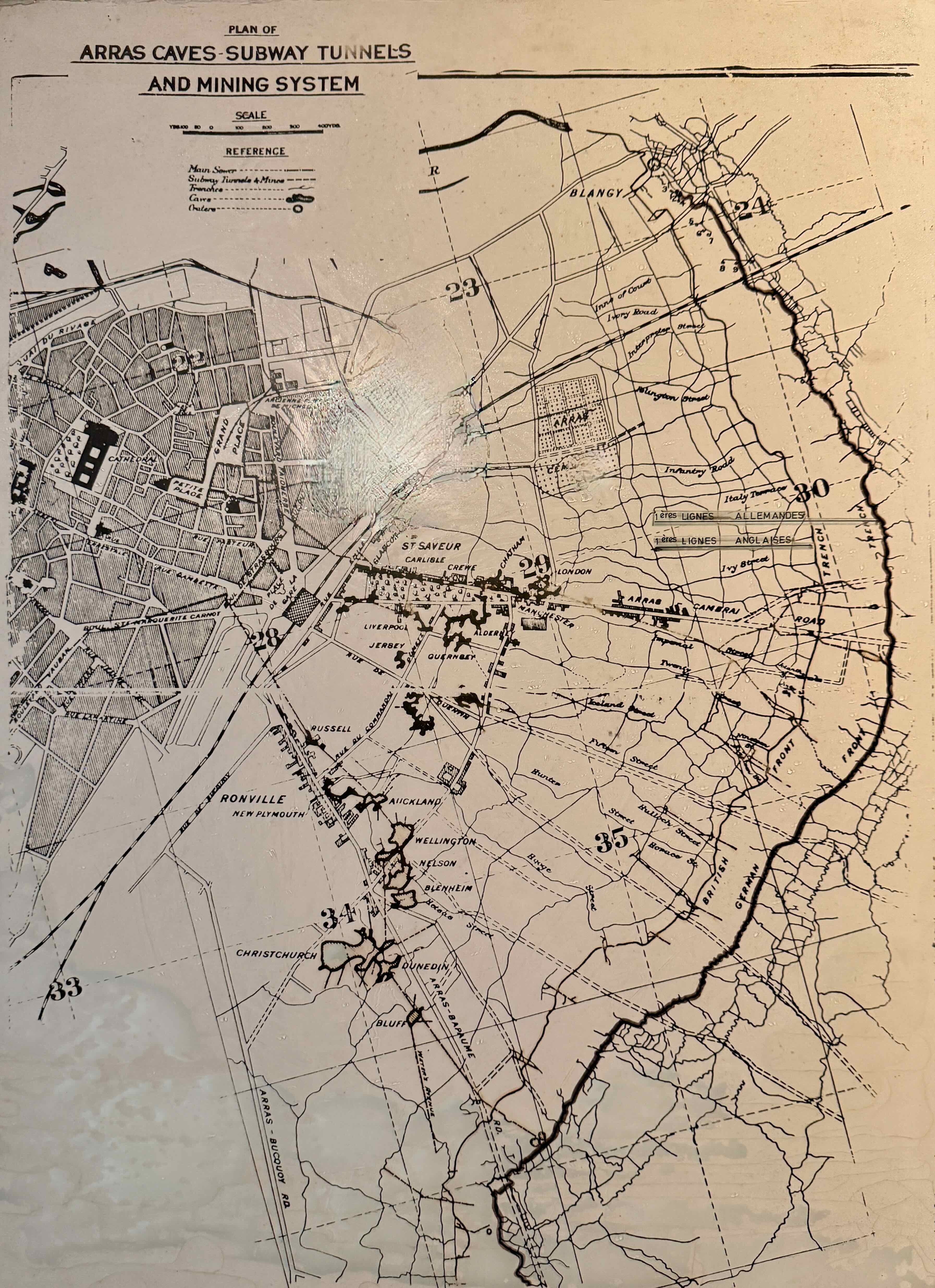
There are some informative posters in one of the caves.  During World War I more tunnels were built to connect the caves. This gave Allied troops a way to move underground very close to the German front so that a surprise attack was possible. There are over 20 km of caves and tunnels and 24,000 soldiers gathered in these tunnels and caves for a week in order to attack the Germans. The Arras Attack was a diversion tactic for the more important battle at Vimy Ridge.  This map shows the caves and tunnels used in the attack.  The dark line on the right side is the German front.  We enjoy our tour but it does feel good to be back outside in the sunshine.  I can’t imagine having to stay underground here for a week like the soldiers in WWI.After our underground tour and lunch at our bnb we drive about half an hour to La Nécropole National de Notre Dame de Lorette.  Bob says we have to visit this site first.  I have no idea what is behind this big black wall.

We pass through the entrance, this is what I see, and I start to cry.

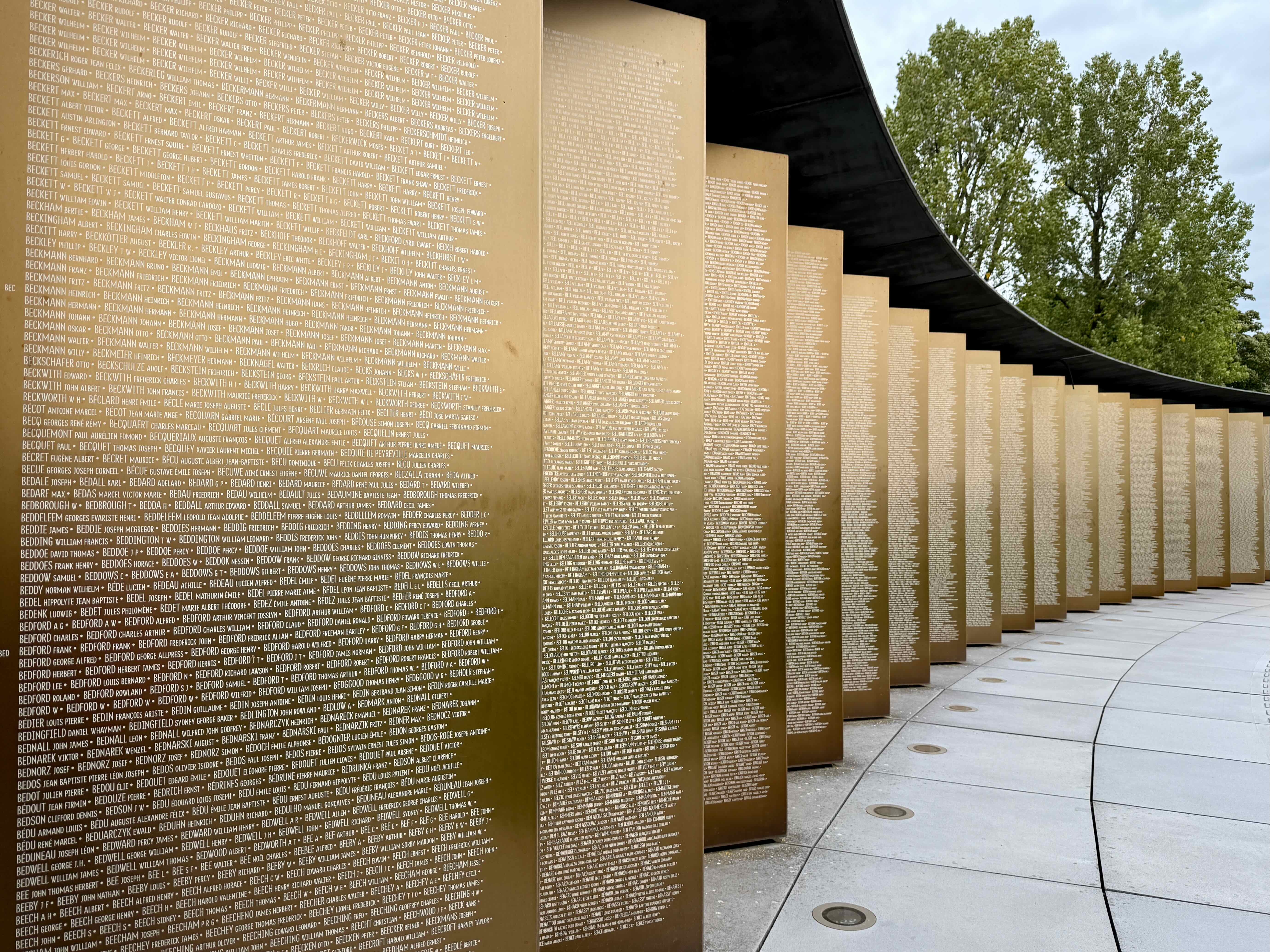
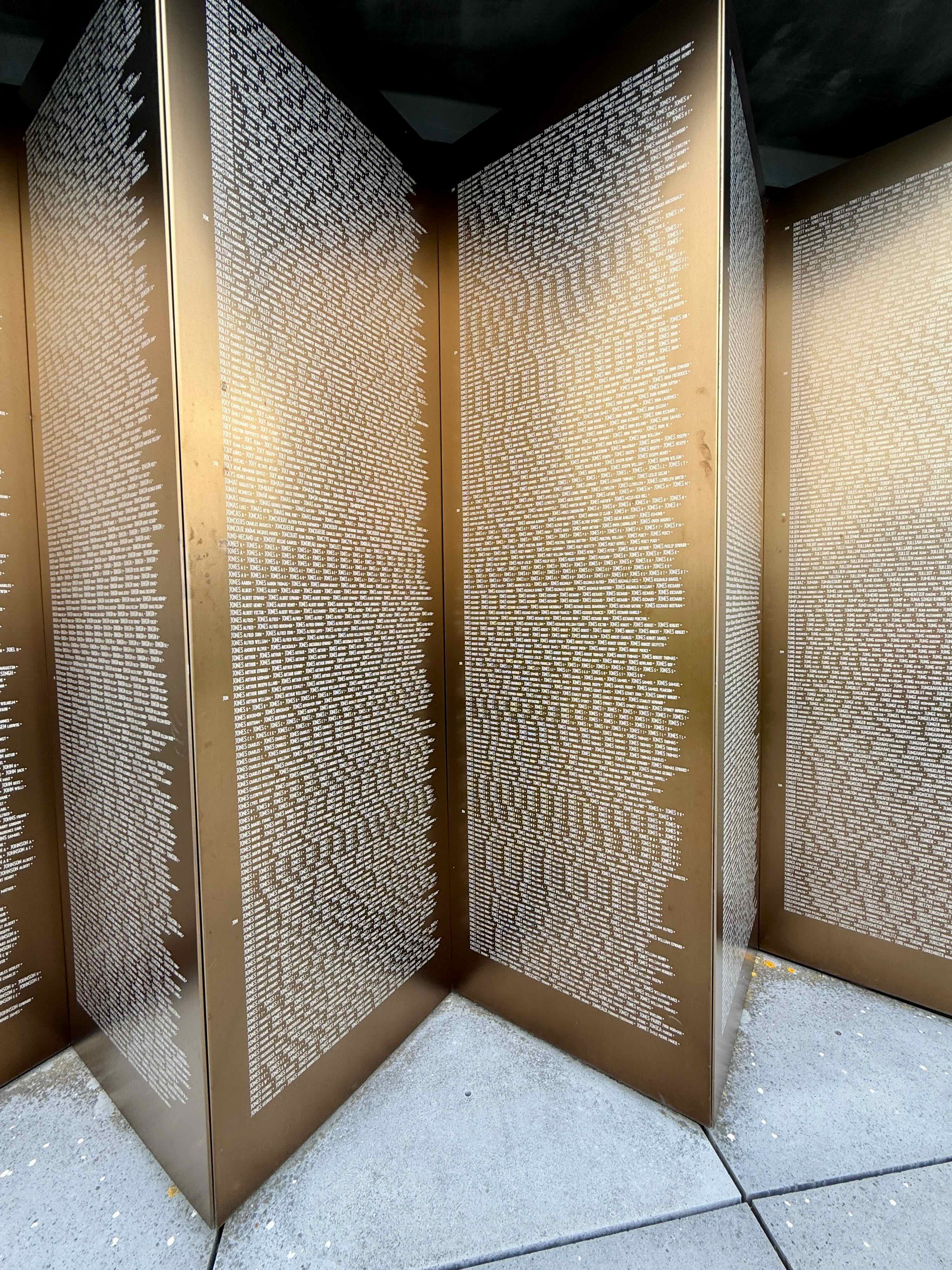
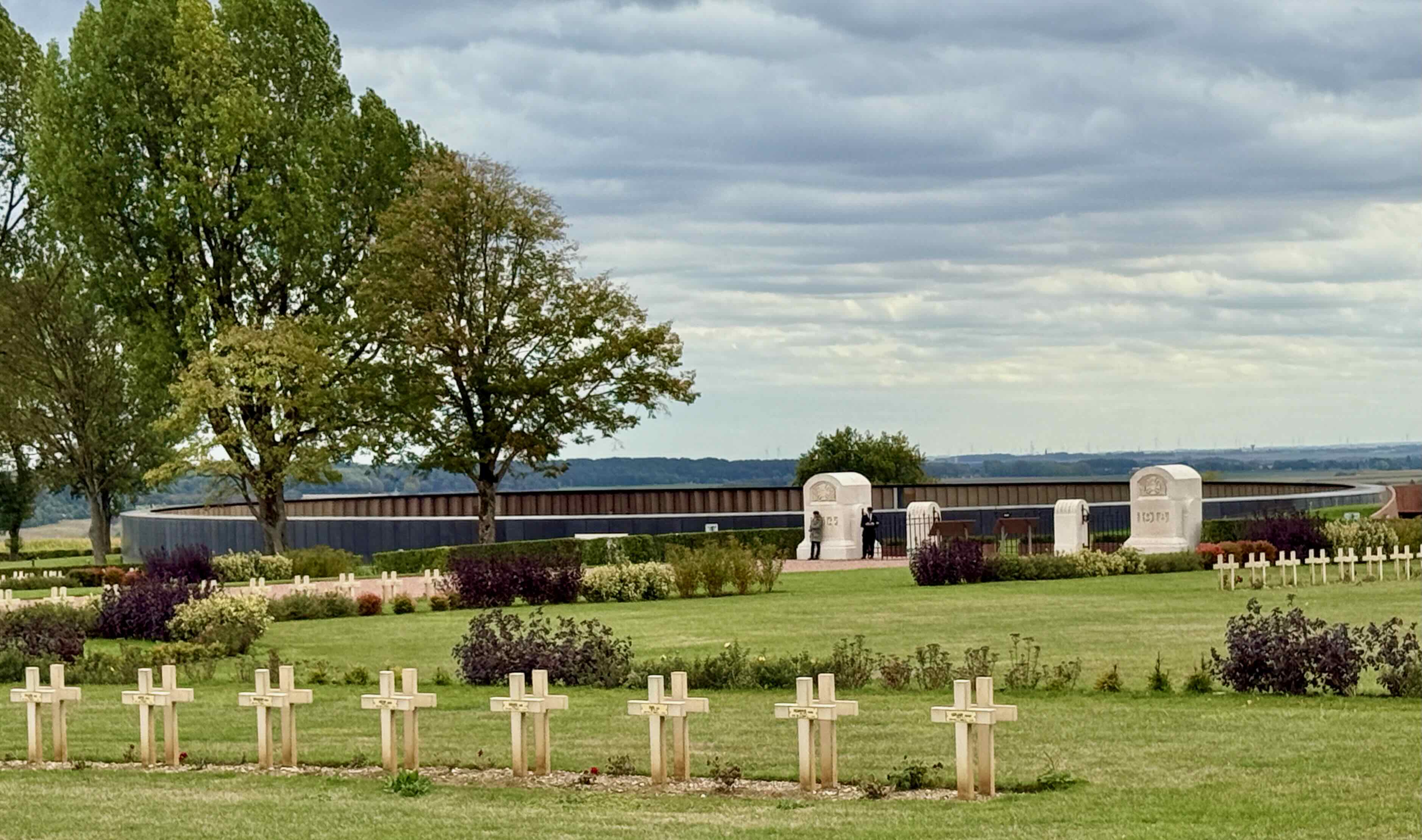
This memorial was inaugurated on November 11, 214. This World War I monument gives those who fell in battle  in this area a place of remembrance…a place where their names ( Allied and German) are preserved, commemorated and honoured.

This is about 1/4 of the Ring of Remembrance…579,606 names.  It is overwhelming.  All these young men dead. Sons, brothers, husbands, fathers…a whole generation of men that were no more. It is an incredibly powerful memorial.

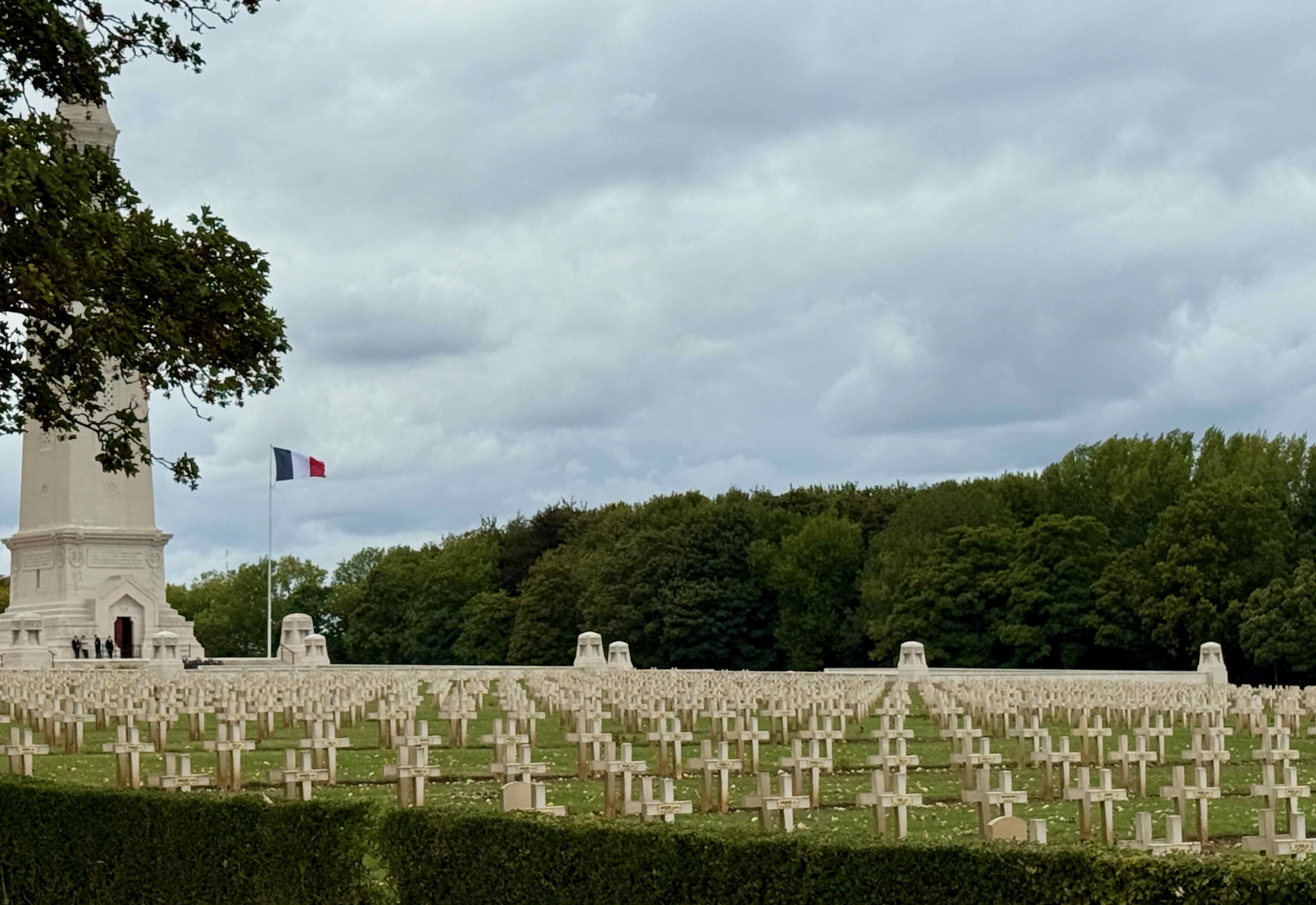
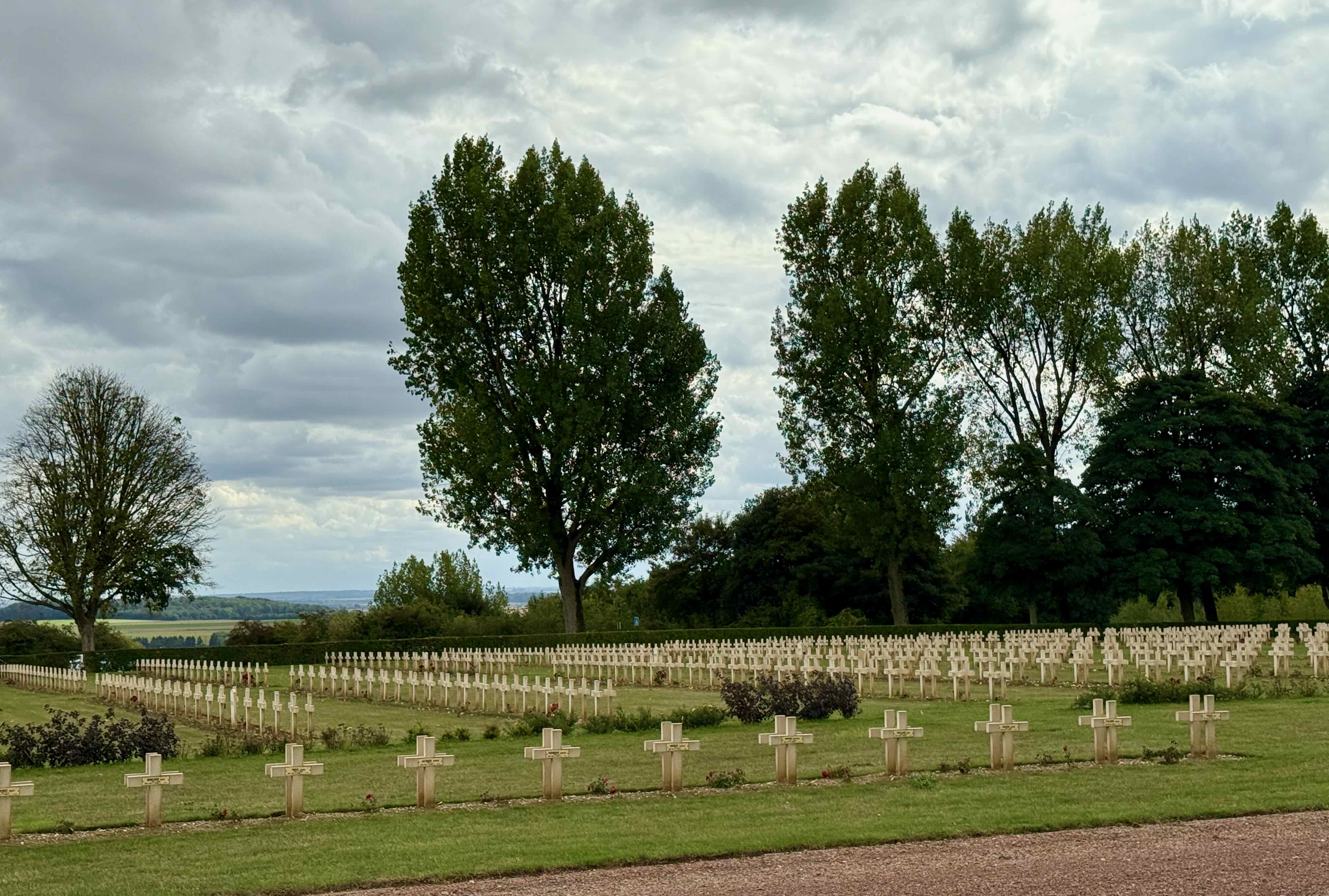
We walk over to the cemetery and there are thousands and thousands of crosses of fallen French soldiers, as far as the eye can see.

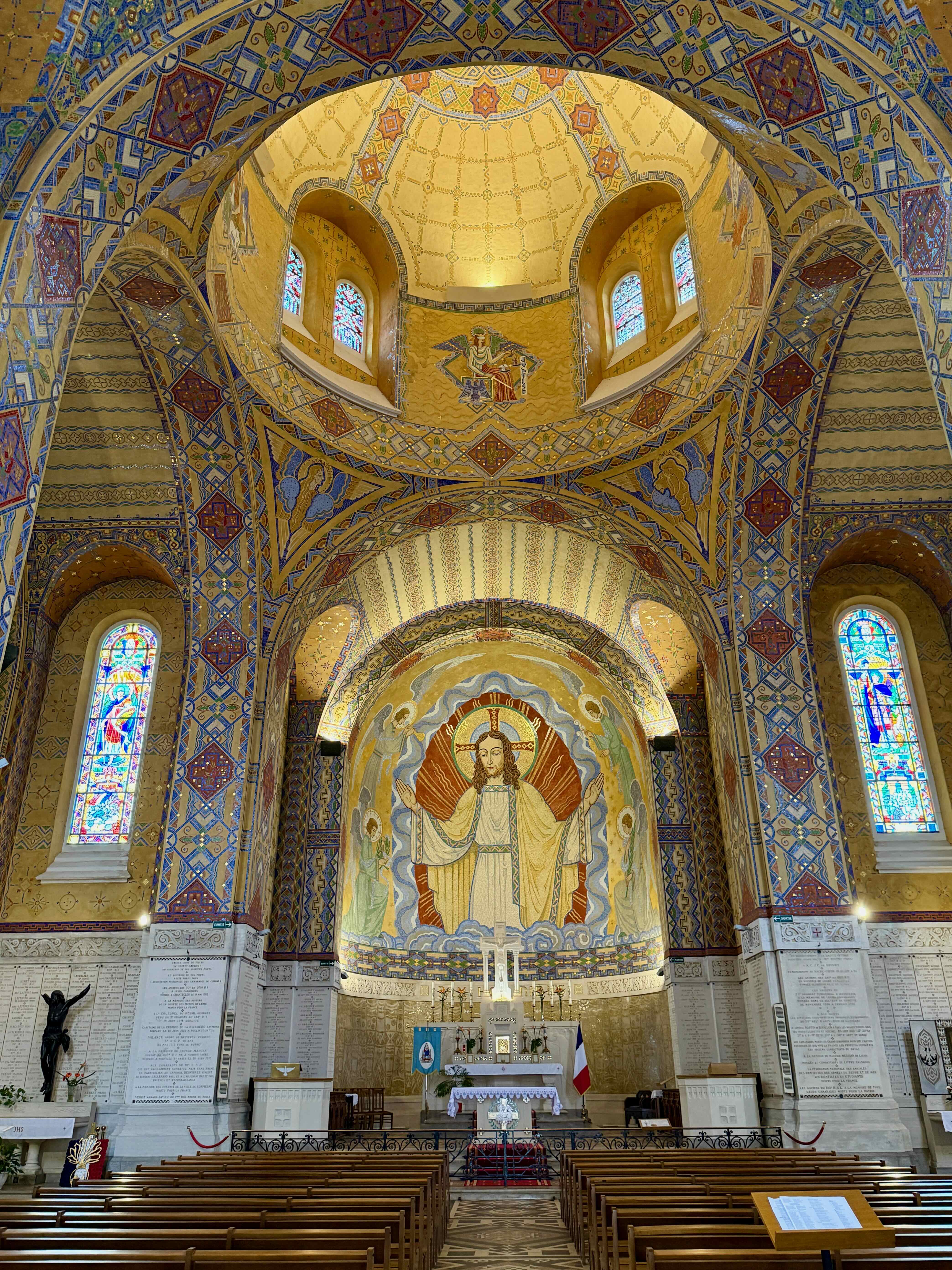
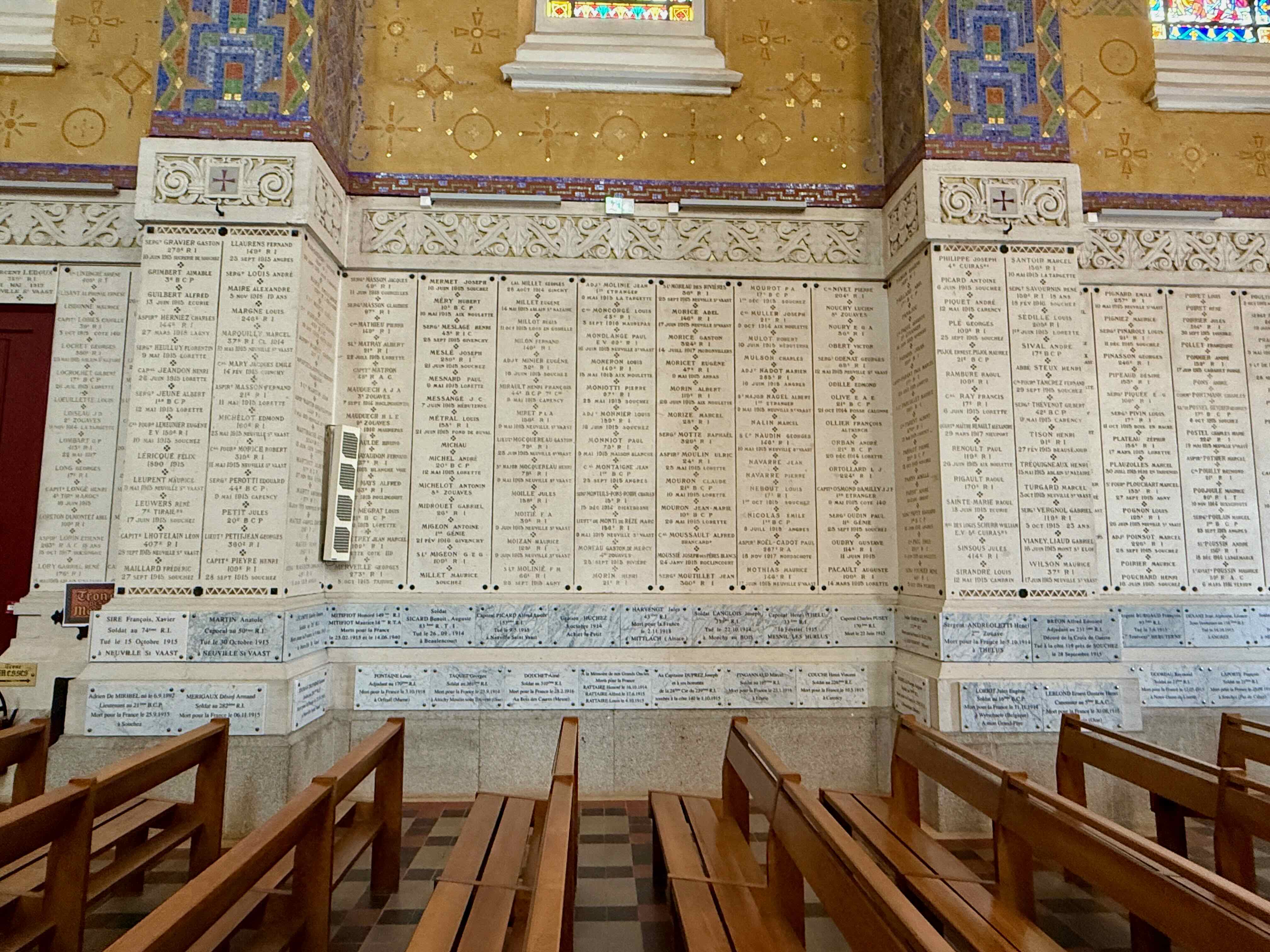
A photos is not able to show the size of this cemetery.  It is enormous and covers 25 hectares and holds over 40,000 bodies, half of which are in individual graves and the other half are in seven different ossuaries.  More than 150 battlefield cemeteries were moved to this location.There is a basilica onsite…

with more names of the dead inscribed on the walls.

I realize that I didn’t take a photo of the lantern Tower.  It is 52 meters tall and has a chapel in its base that contains the remains of over 6,000 unknown soldiers. At night there is a light that shines and rotates from the top of the tower.There is a small museum the Lantern Tower with personal items, photos and excerpts form diaries.  They are upsetting to see.  I can not imagine having to live through these experiences.  

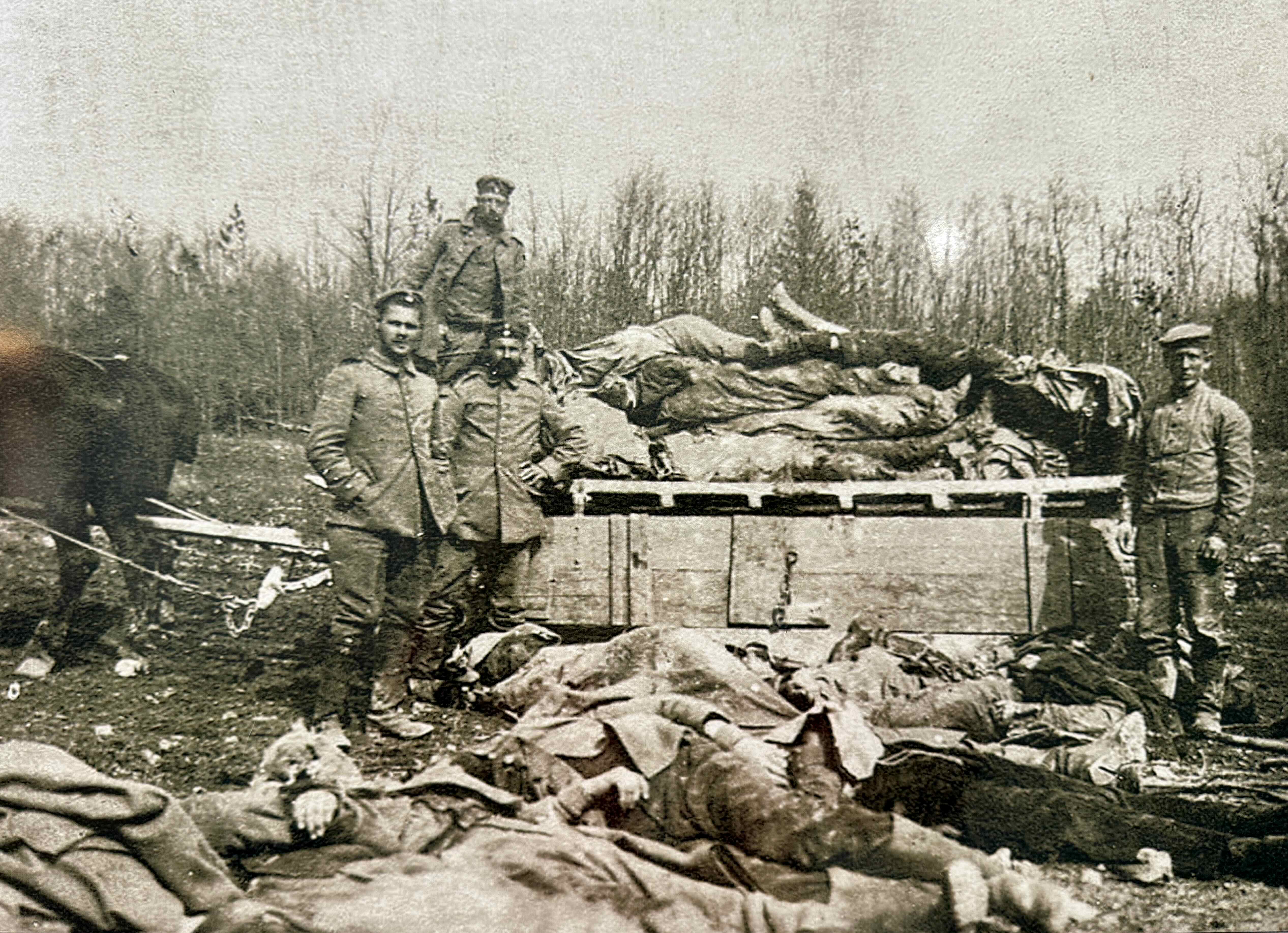
There were several photos showing the horror of war…gathering their dead comrades for burial.

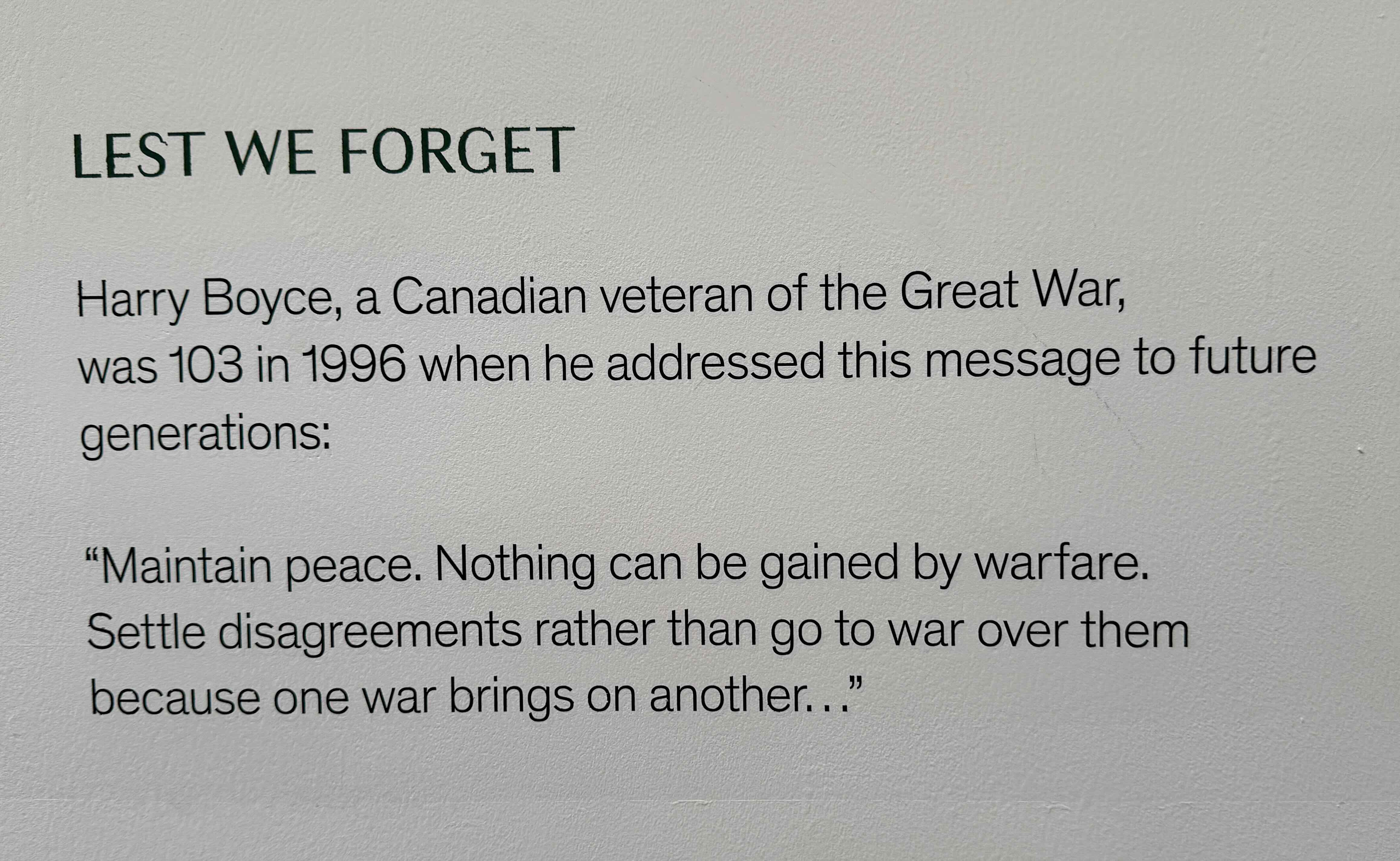
We drive from this cemetery to Vimy Ridge which was an important Canadian battle in the First World War, where we tour the underground tunnels and trenches.  This was on the wall of the memorial building, which is staffed by young Canadians.

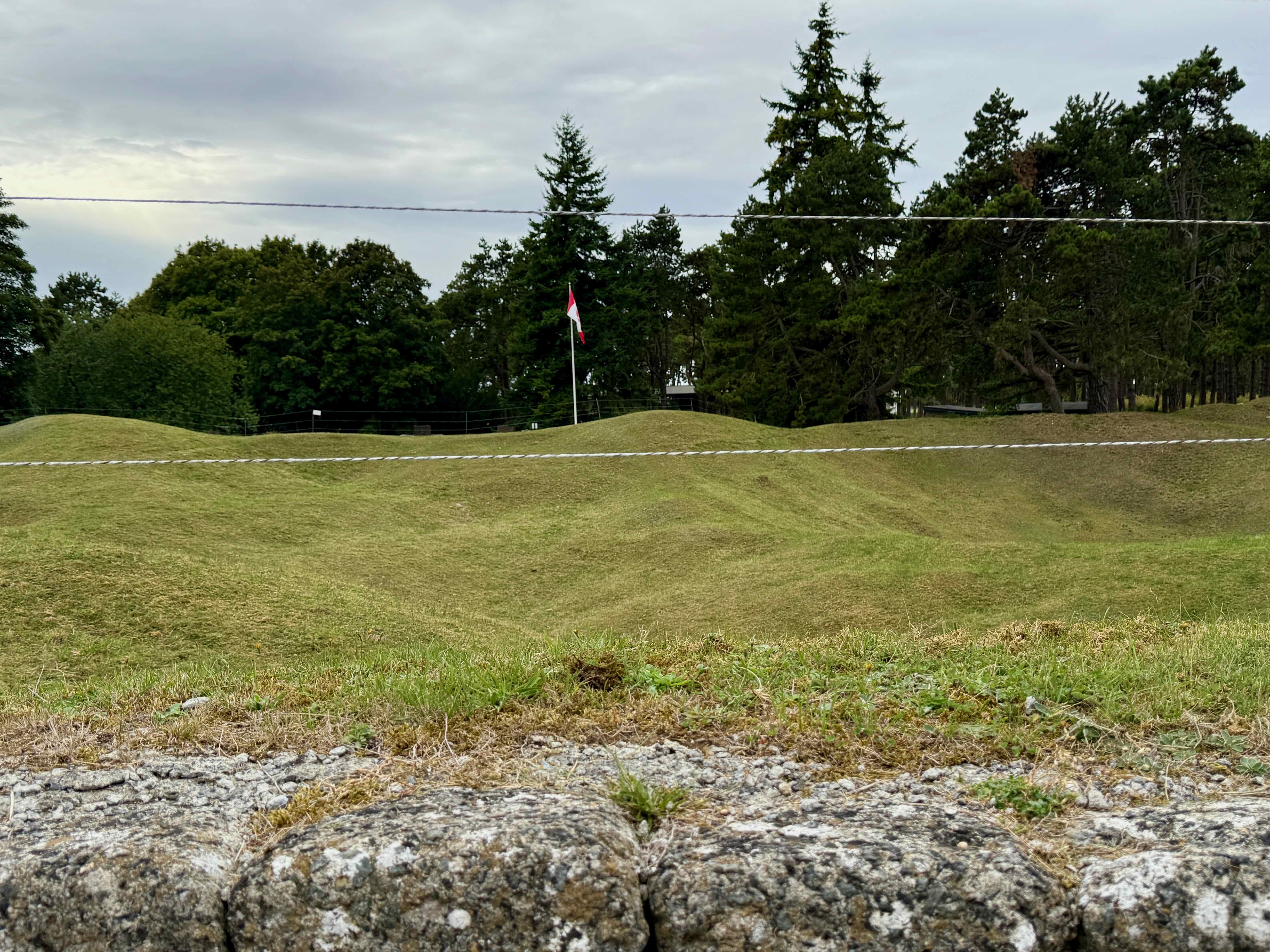
It is unfortunate that no one seems to have listened to his words.  By this time I am feeling quite overwhelmed and I only took two photos here. Tunnels were dug thirty feet deep under Vimy Ridge so that soldiers could place explosive devices under enemy lines.  This is a replica of one of those tunnels being dug.In some places the front lines of The Canadians and the Germans were only 20 meters apart.  This is the view from one of the German trenches towards the Canadian trenches beside the Canadian flag.  The soldiers were able to hear each other talking, they were so close together.

“”The battle began at 5:30 am on April 9, with the first wave of around 15,000 men advancing under the creeping barrage of almost 1000 heavy guns. Most objectives were taken on schedule, and by afternoon most of the ridge was captured, with the notable exception of The Pimple, a high point at the North end of the ridge, where defenders held out until April 12.

By April 12, the Canadians had taken all of their objectives, as well as 4,000 prisoners. The Canadians held Vimy Ridge. This victory came at a high cost as 3,598 Canadians lost their lives, and 7,000 were wounded during the four-day battle. April 9, 1917 is still the bloodiest day in Canadian military history.”  ~ The VImy Foundation

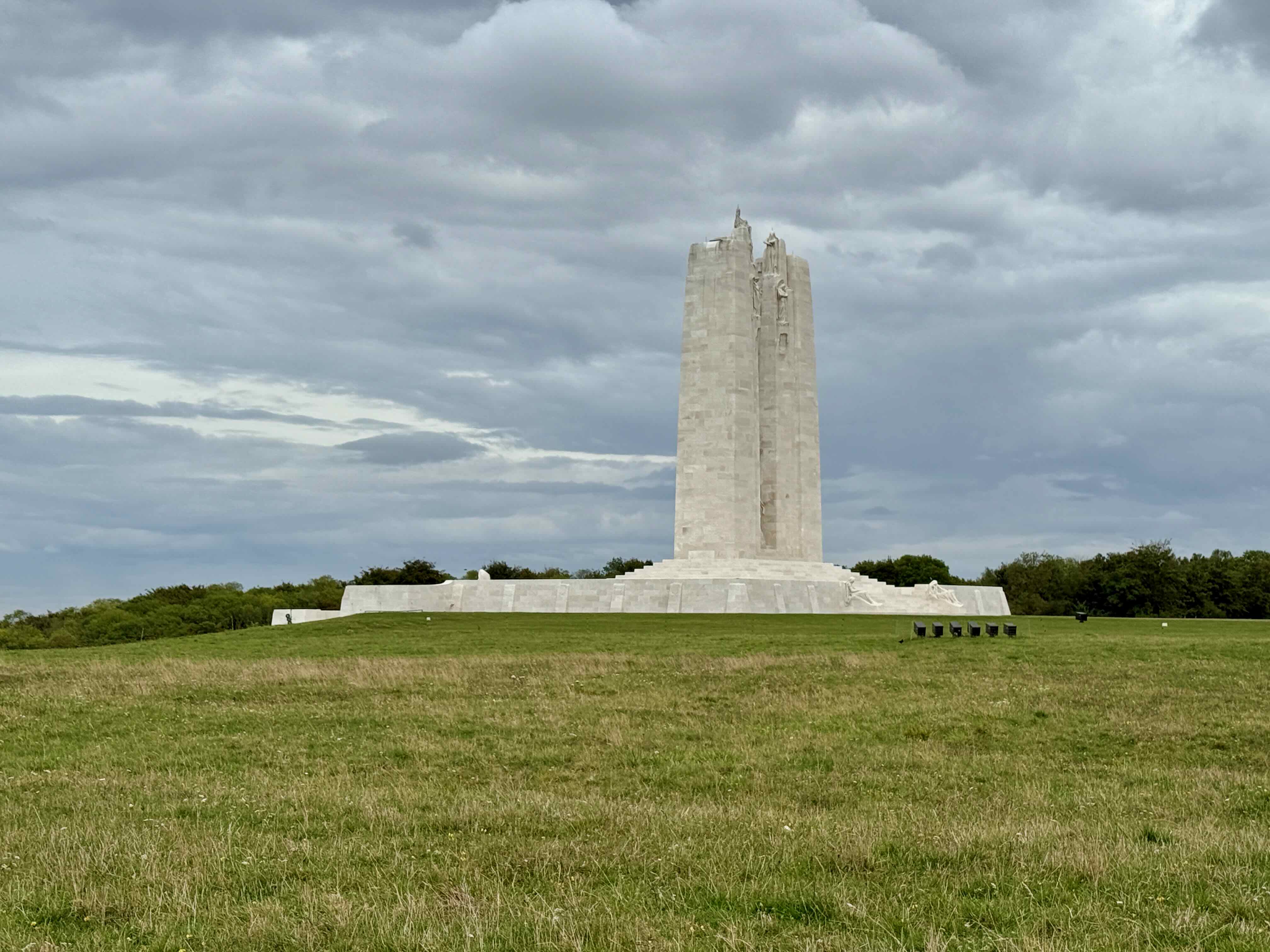
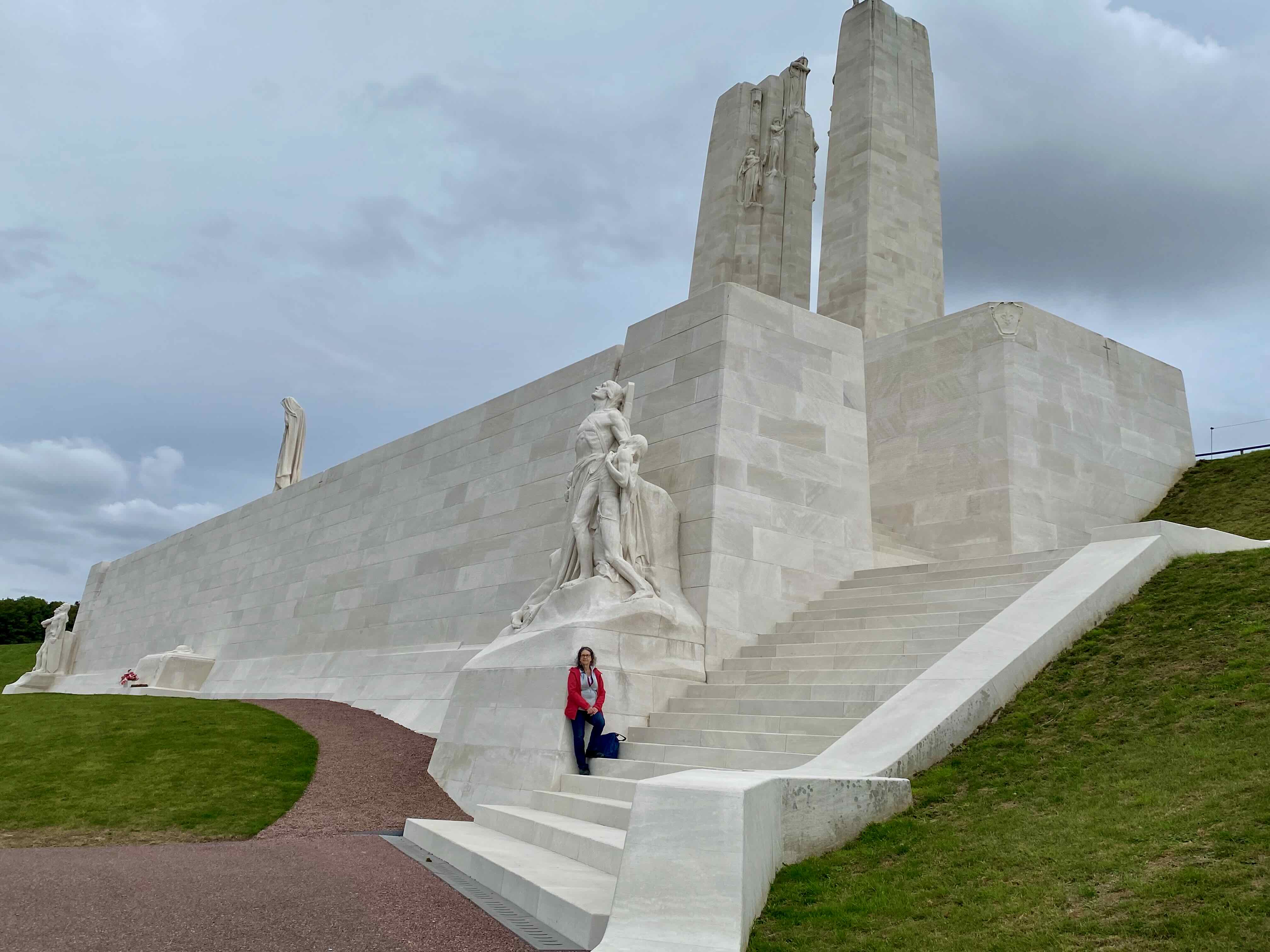
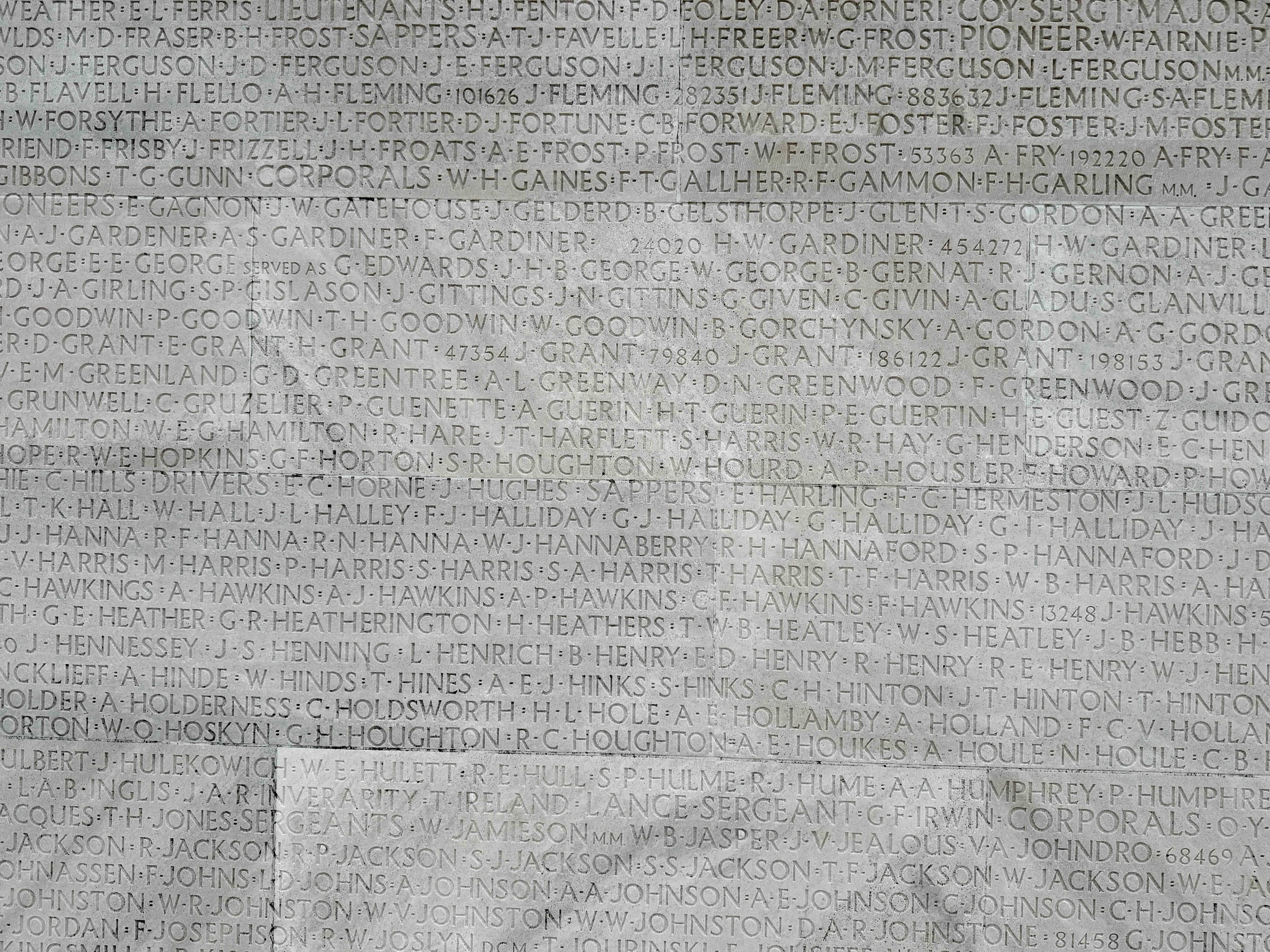
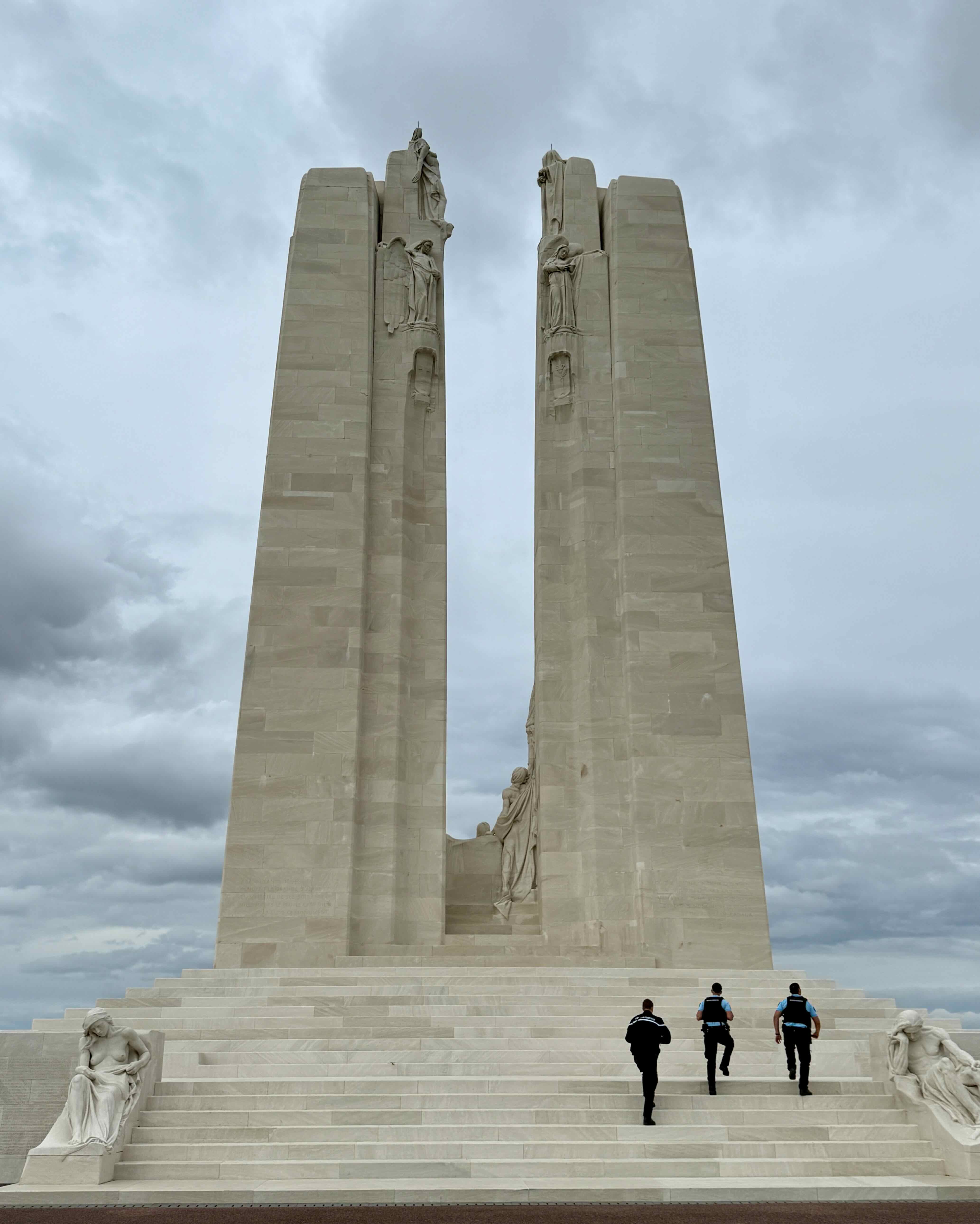
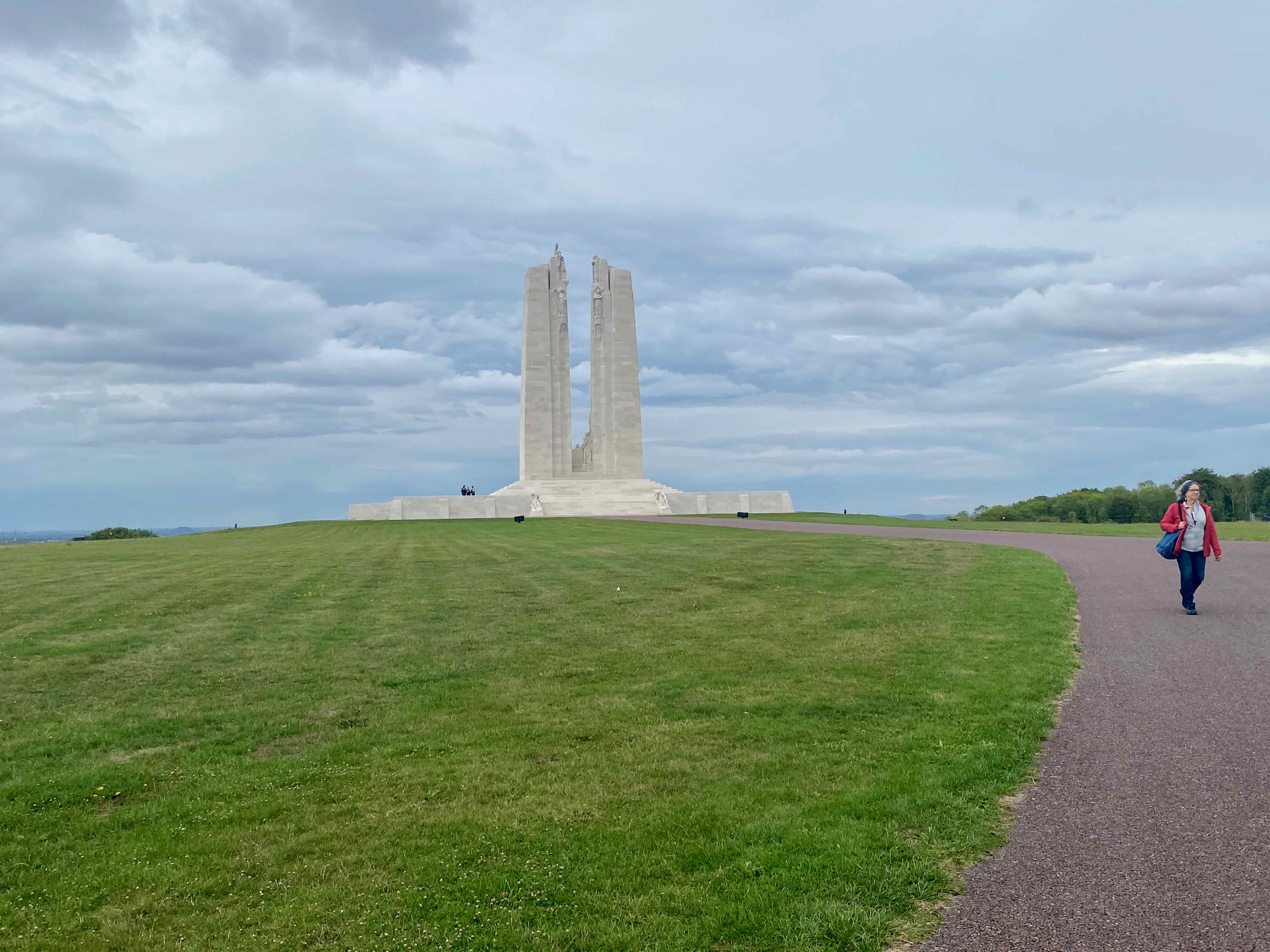
We drive a short distance to the Vimy Memorial. It overlooks the Douai Plain from the highest point of Vimy Ridge and was designed by the Canadian sculptor Wallace S. Allward.We didn’t see the front walk so took the long way around to the back of the memorial.Climbing the  steps we see more names of the dead.  So many names!  The name engraved here are of the 11, 285 missing Canadians who died in France during the Great War.

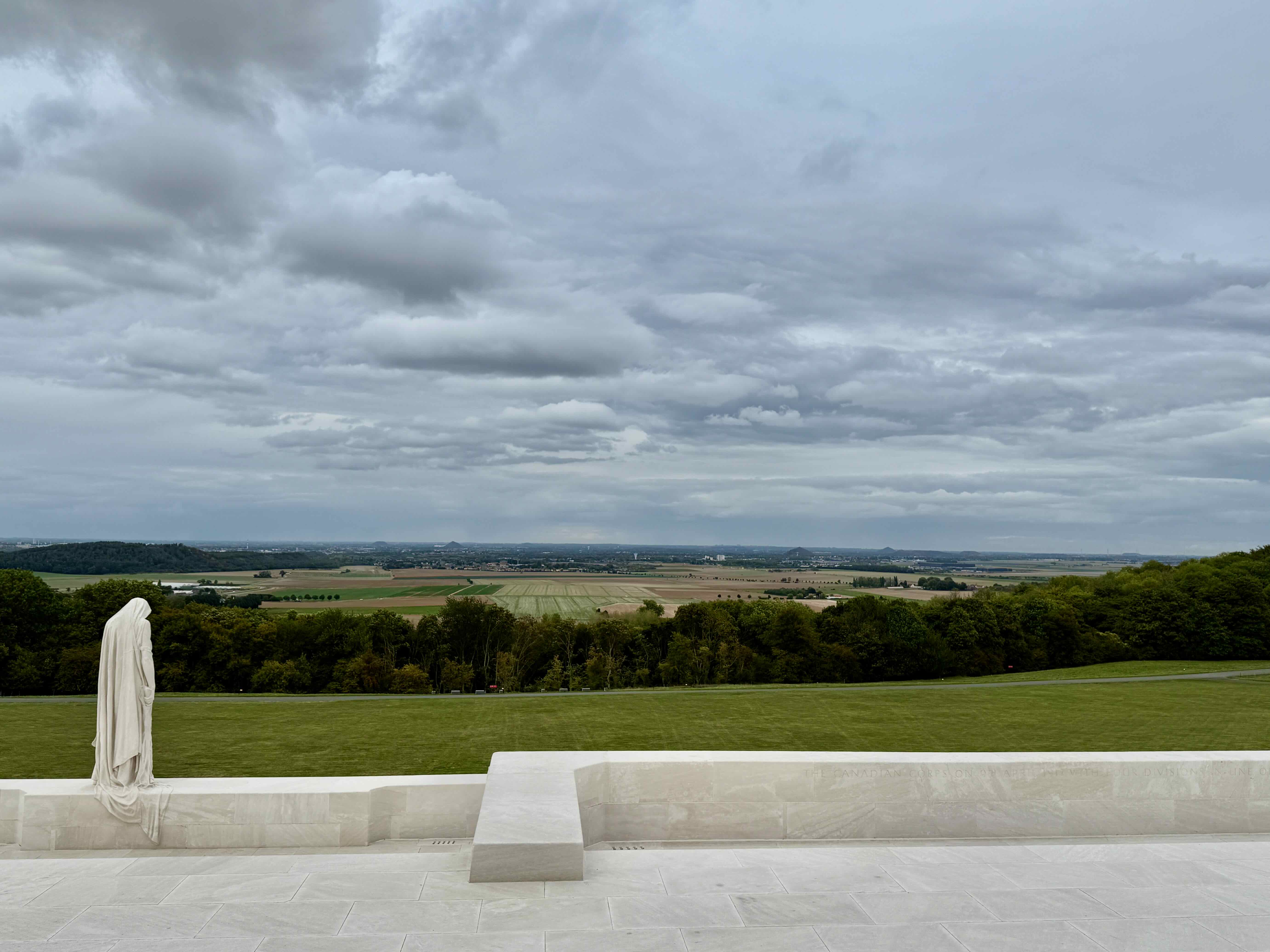
The monument looks over the surrounding valley.  Even the back of the sculpted figure on the ledge looks sorrowful.

As we leave the monument three police pass us on their rounds. The three policemen are barely visible on the left side of the monument as we head back to our car and head home.  it has been a heavy duty day.

Boat Ride on the Seine and the Orangerie

First of all, if you are a subscriber and you are having trouble seeing the photos in yesterday’s post you should be able to click on the “View on Blog” option on the top right side of your email notification, or just type trudymason.com in your browser and you can see it properly there.  No idea why the photos aren’t showing up!  Sorry.

Day 89,  Saturday, November 25, 2023

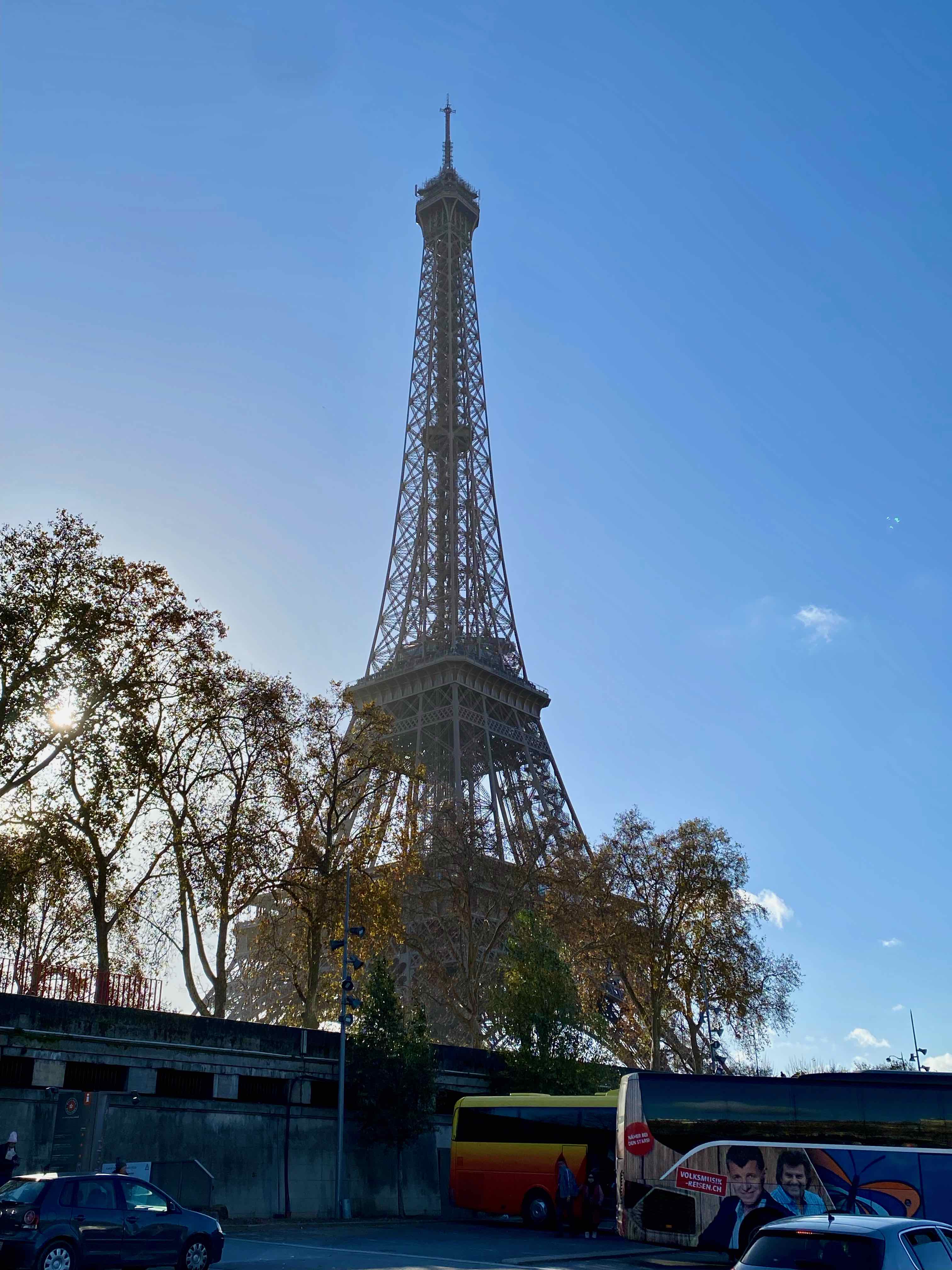
I am out of the apartment early to go shopping for those conté crayons I promised to get for my friend.  Then I need to meet Bob near the Eiffel Tower for Bob’s birthday boat ride.

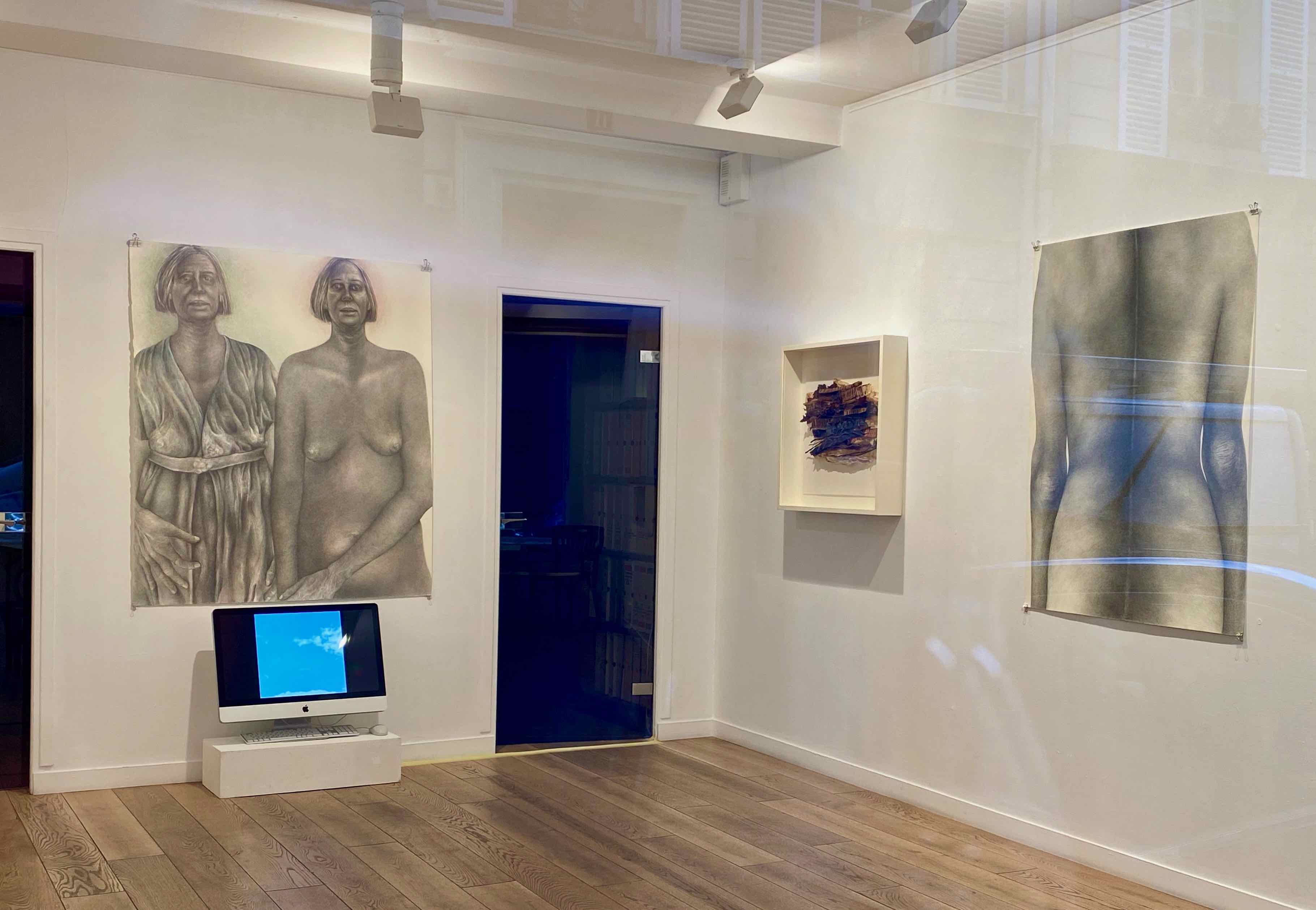
We arrived back in Paris on the 16th but other than going to my life drawing sessions I haven’t been out and about very much. Having Covid hit me much harder than Bob, and I have been pretty low energy ever since, so it is nice to wander the streets of Paris at least one more time before we head home. I check out a couple more art stores, but only find a stick or two of conté at each one! I head towards the main Sennelier store, hoping I will find what I need there.  On the way I pass several little galleries and peak in the windows.  I liked these large drawings by Diana Quinby at Galerie Arnaud Lefebvre.  I wonder if I will ever try doing such large drawings? Luckily the Sennelier store has all the conté crayons I need!  Yay!

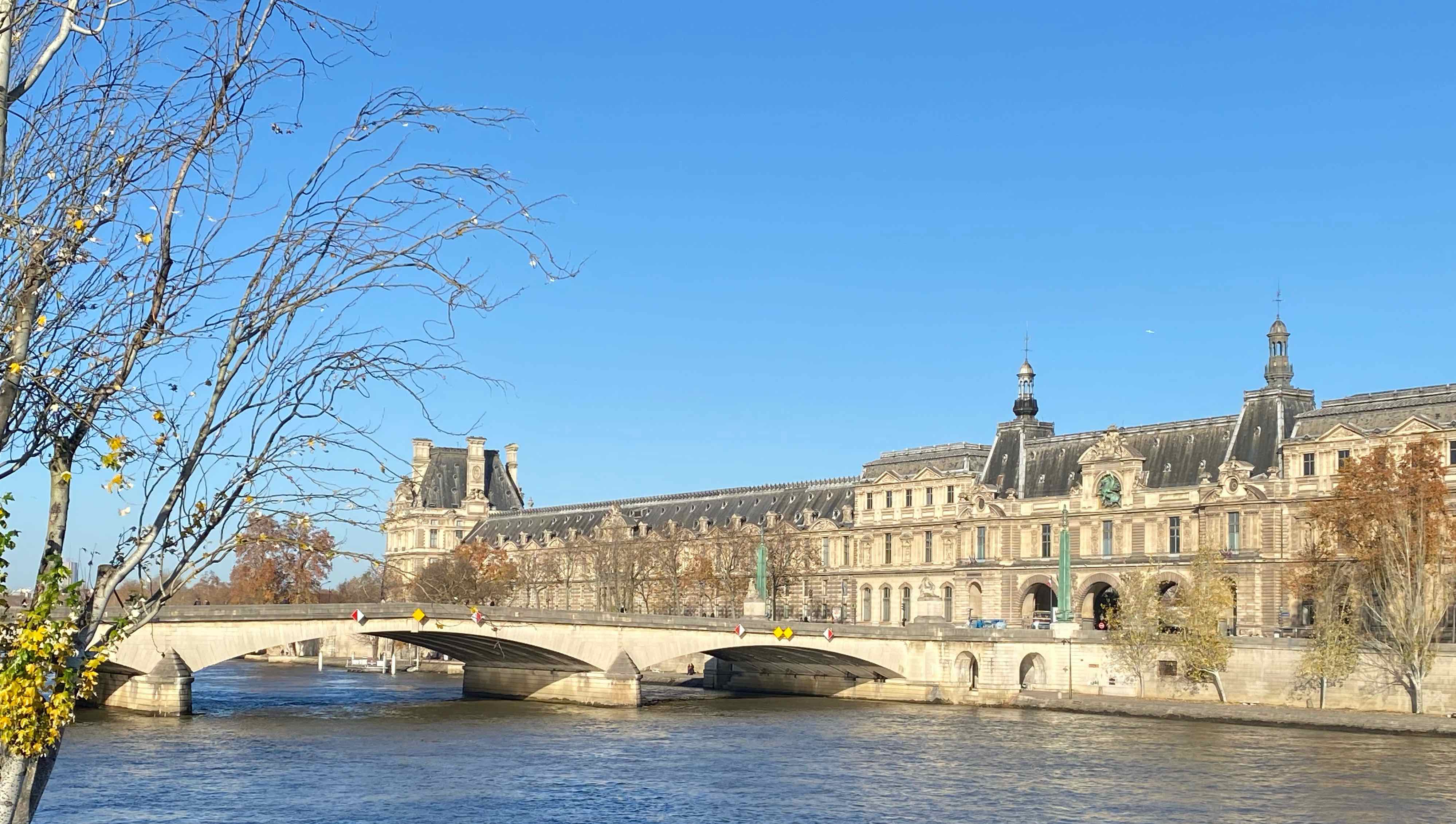
The Louvre on the other side of the river.  We didn’t even go inside this trip…just too many other things to do and see.

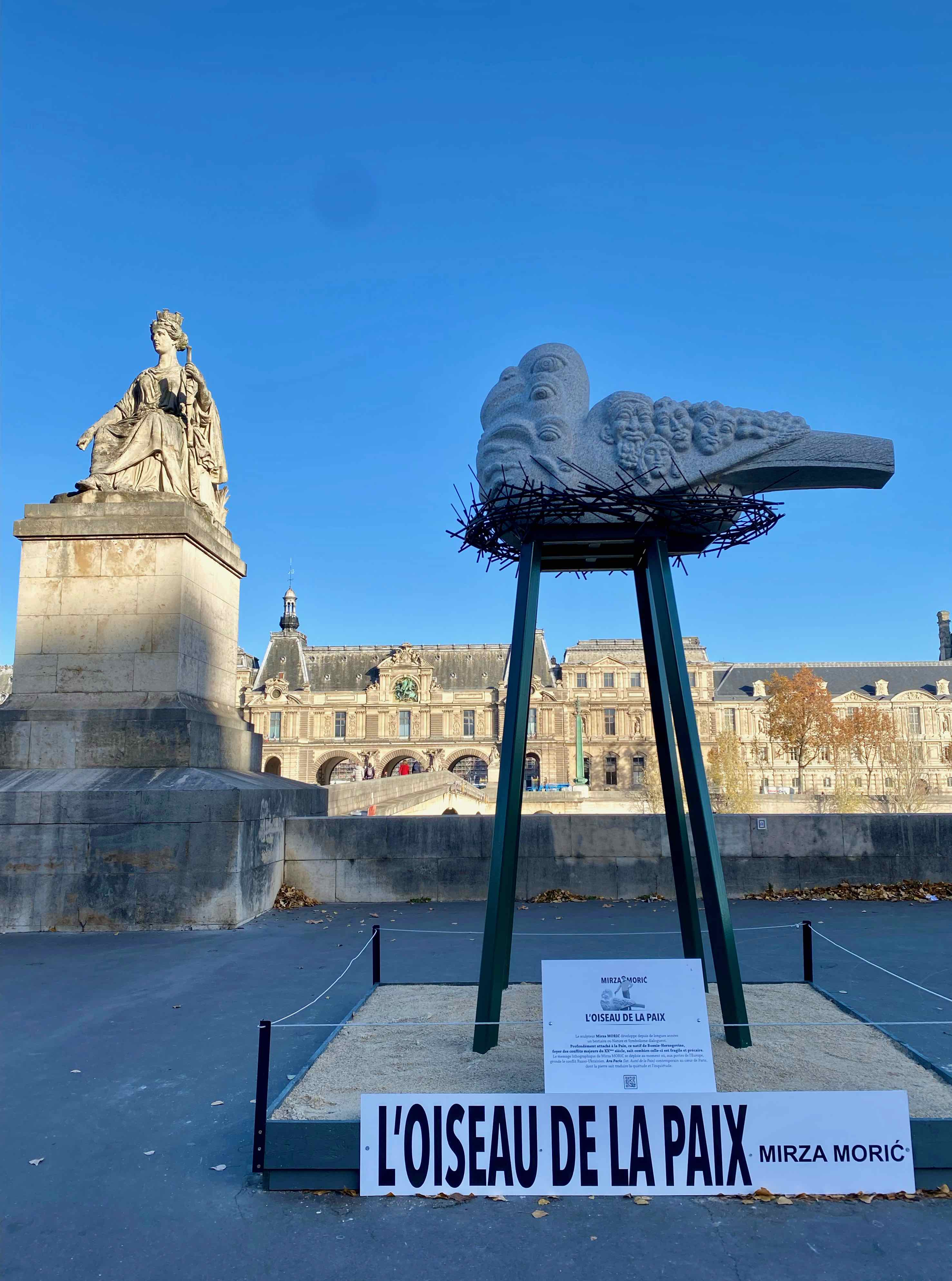
This sculpture is titled The Bird of Peace by Mira Morić.  We could certainly use a lot more peace in our world!

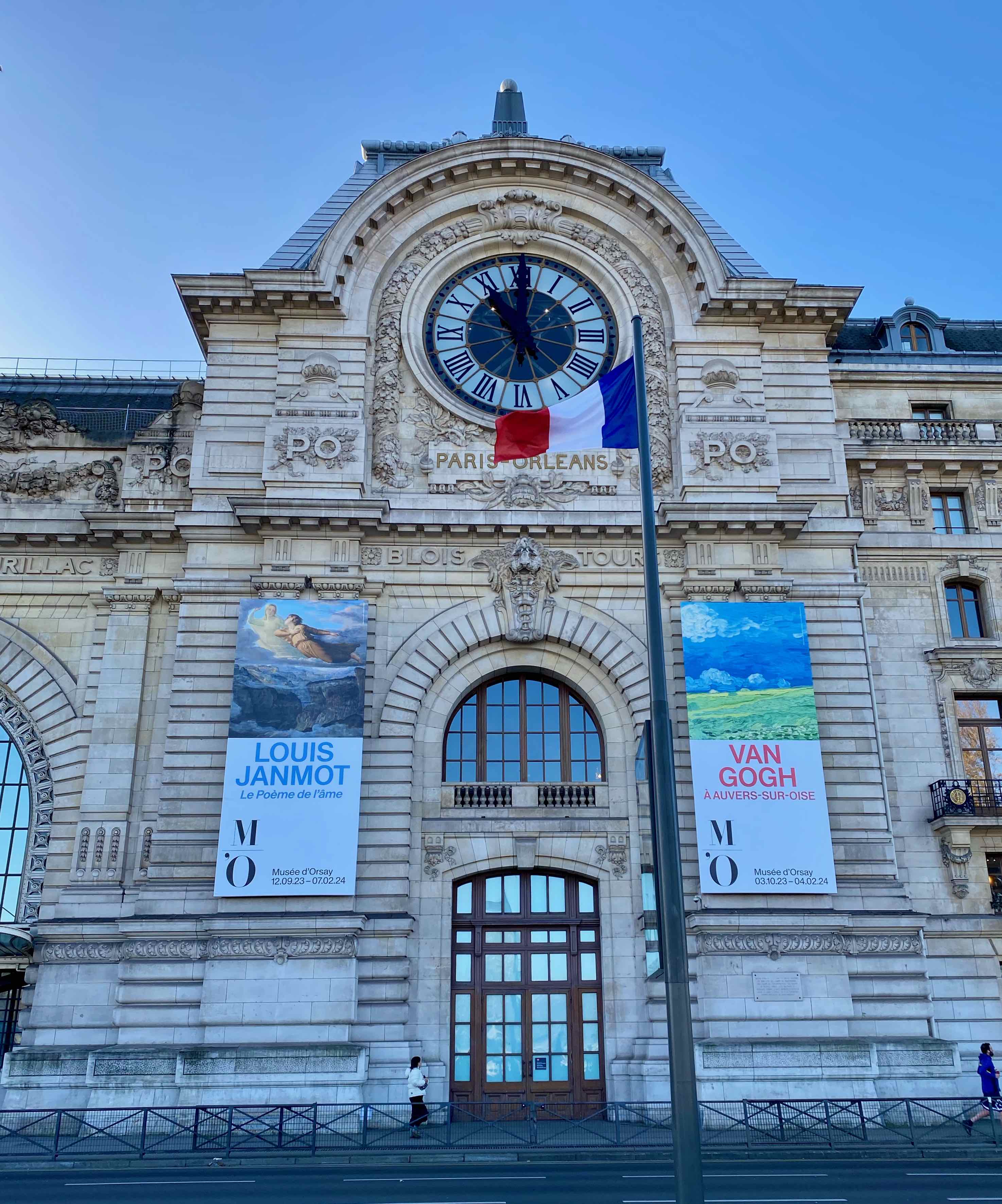
The front of the Musée D’Orsay with posters of the two shows we visited.  I do love this museum…it is big but almost doable in one day, unlike the Louvre, which is sometimes overwhelming.  The Louvre definitely needs several days to even begin to see most of the exhibits.

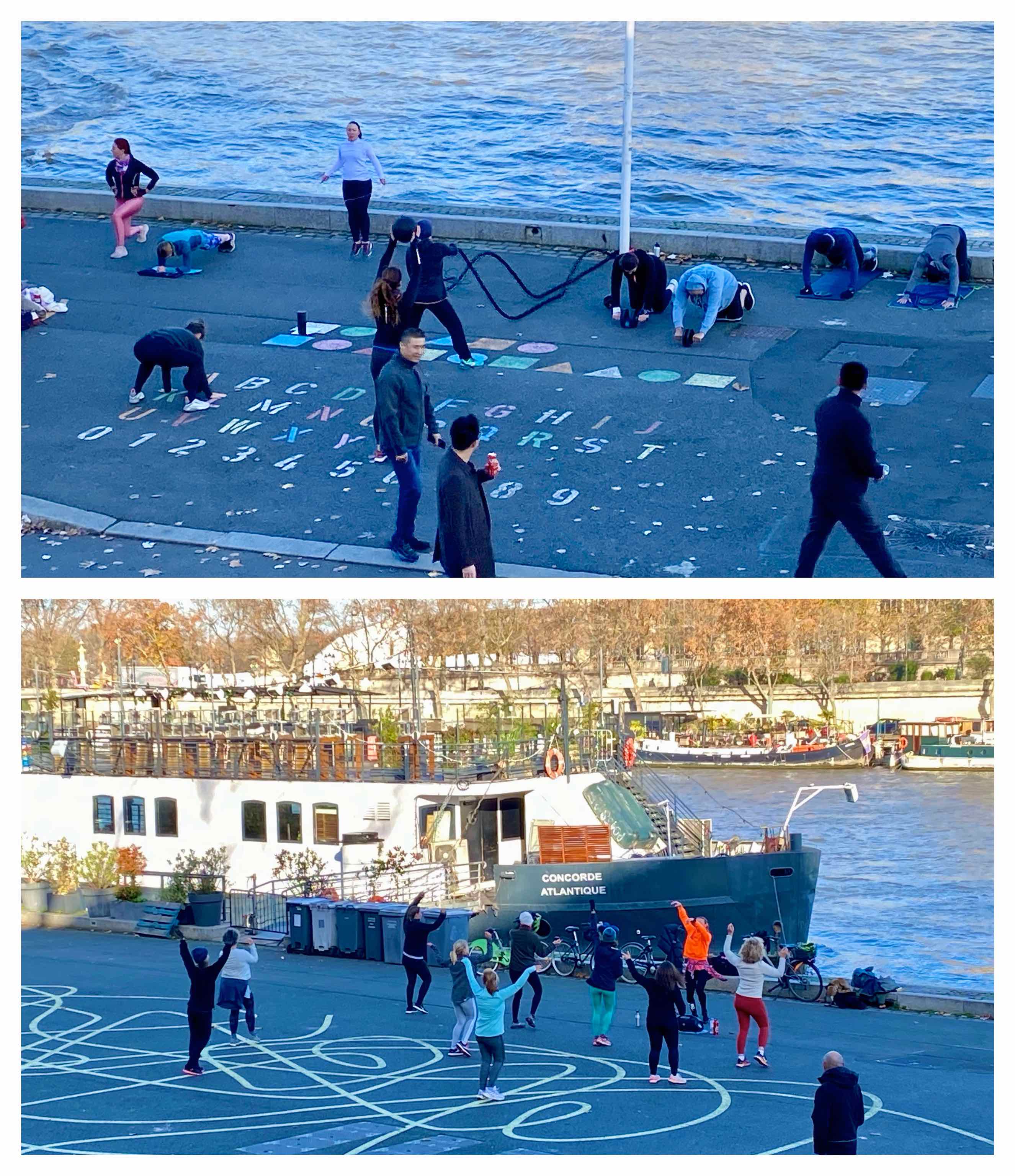
Even though it is cool today there are lots of people out walking and exercising along the Seine River. There are several group classes taking place as well as people working out individually.

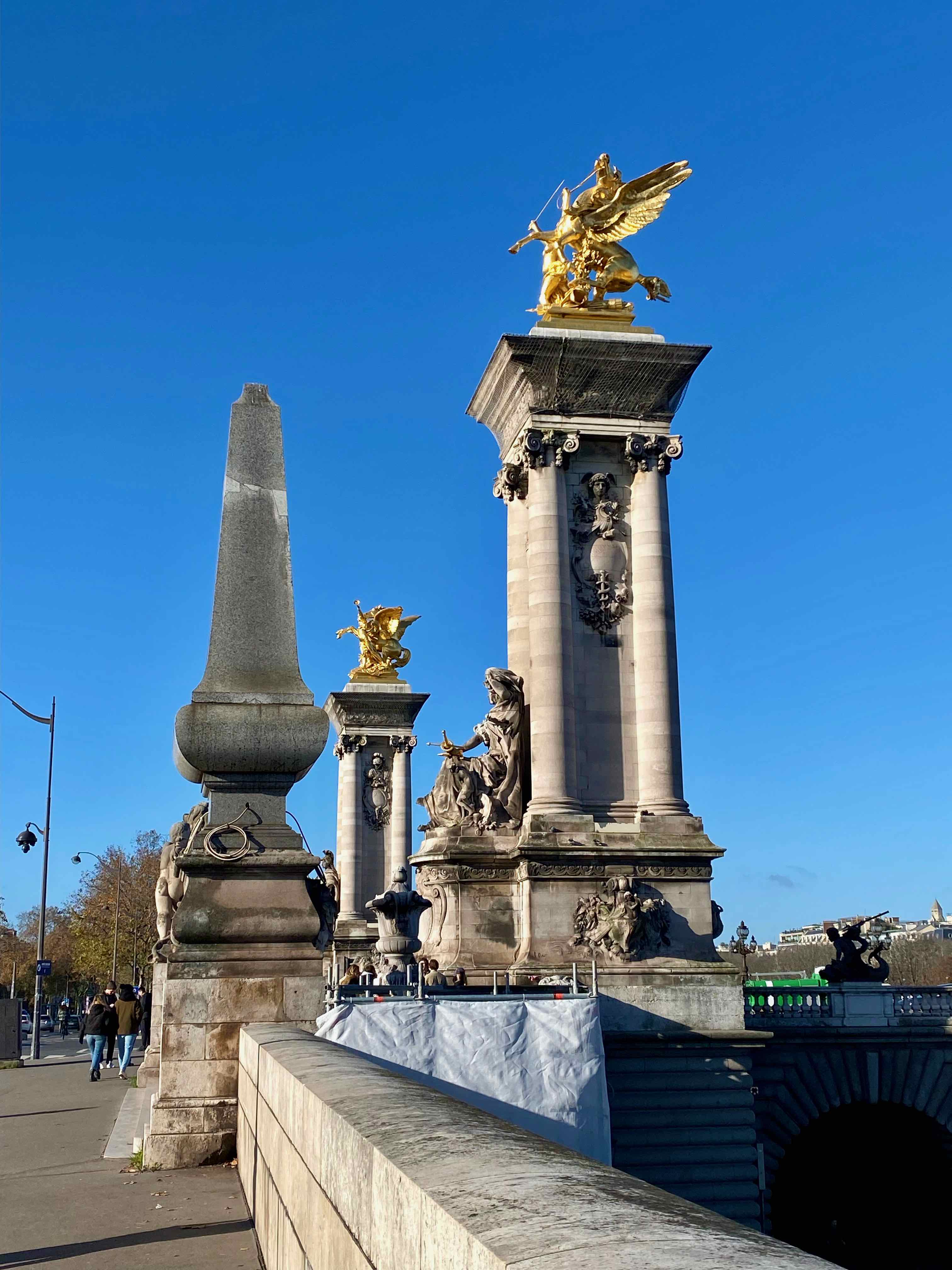
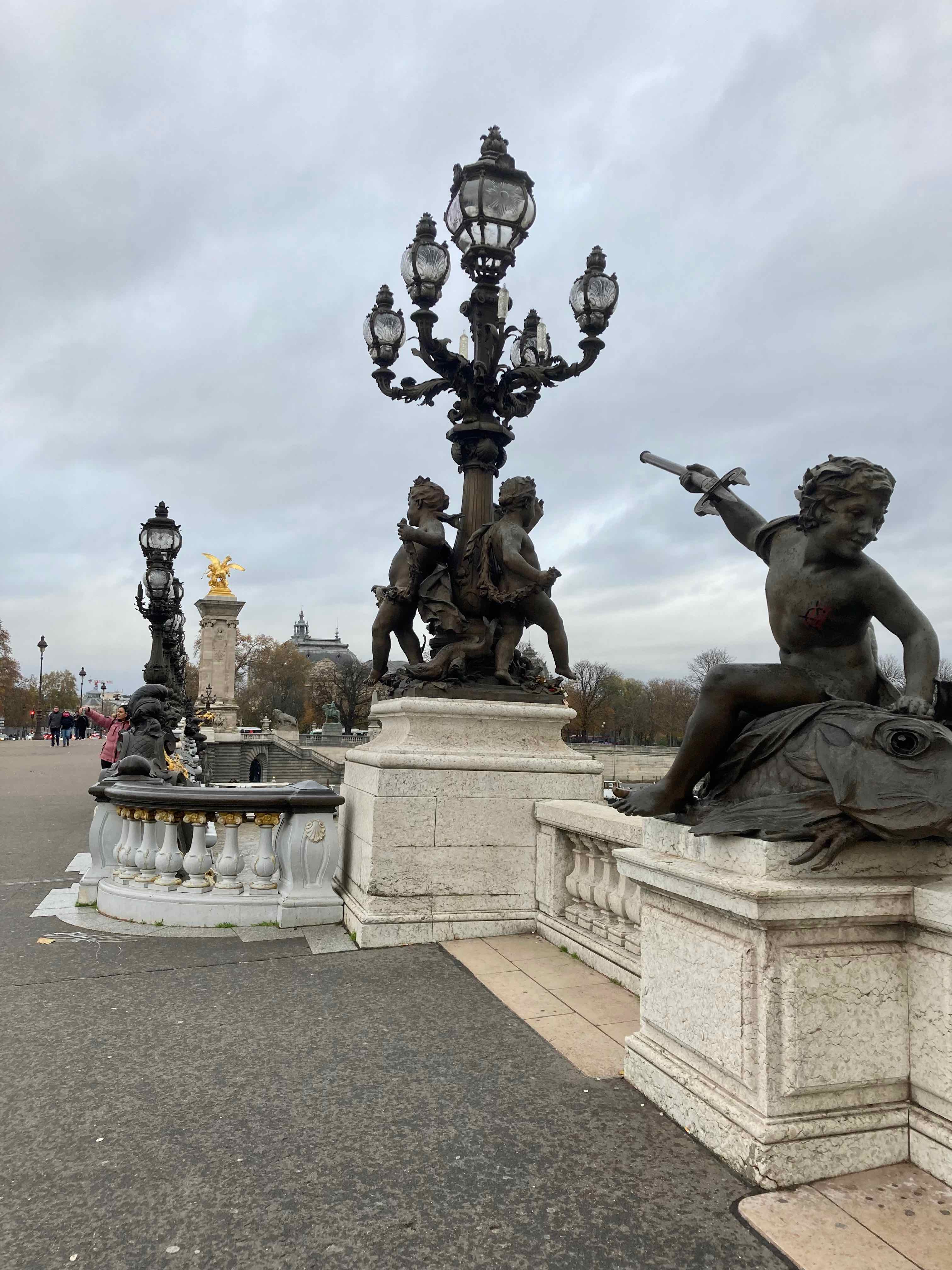
I walk by the entrance to the beautiful Pont Alexandre III, on my way to meet Bob.  I have never walked this route before so I enjoy seeing a bit more of Paris.

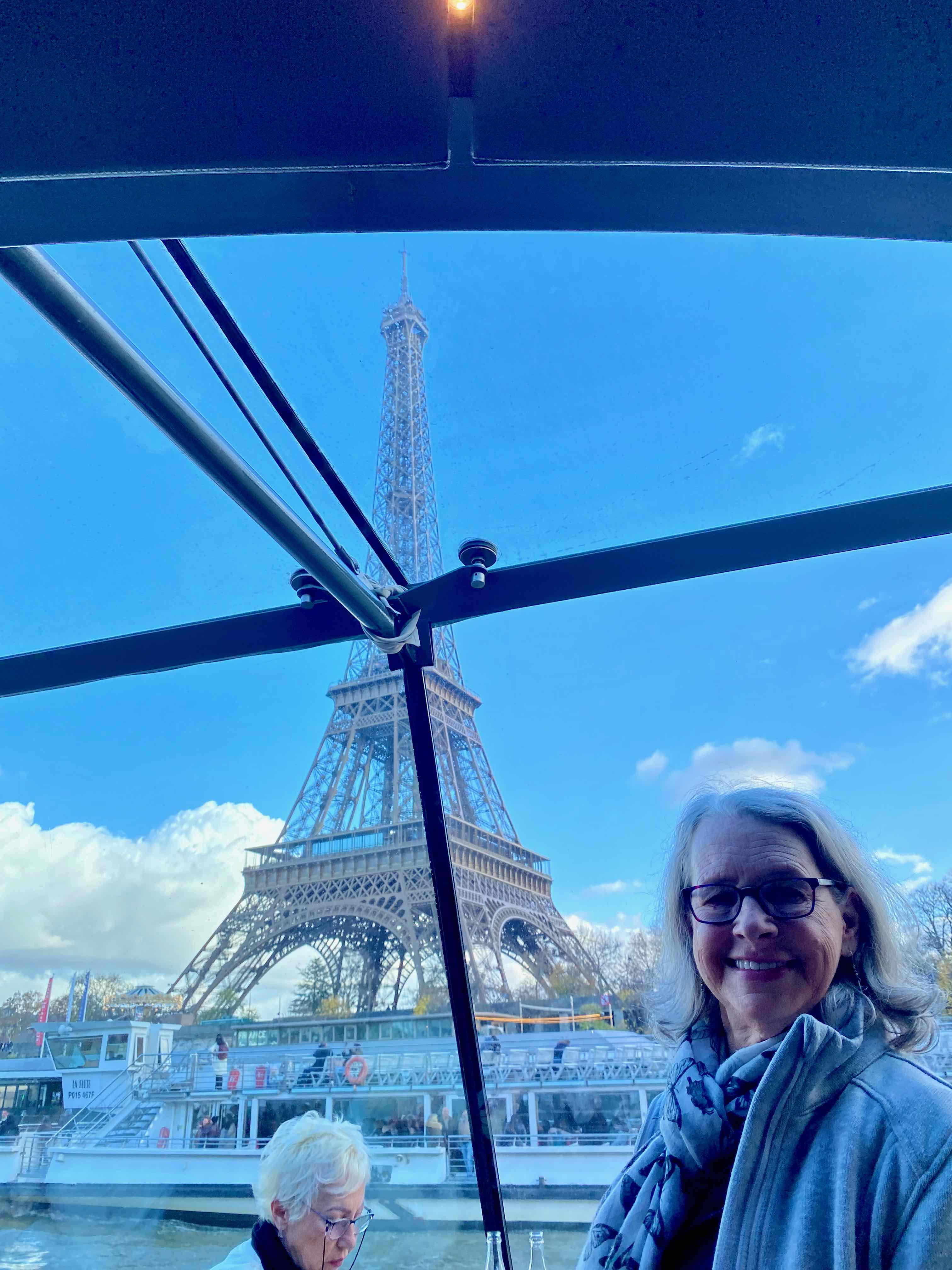
I am almost at the boat docks for Bob’s birthday lunch cruise.  It is near the Eiffel Tower.  I arrive before Bob and I am worried that we might be late, as people are already boarding, but all is well.

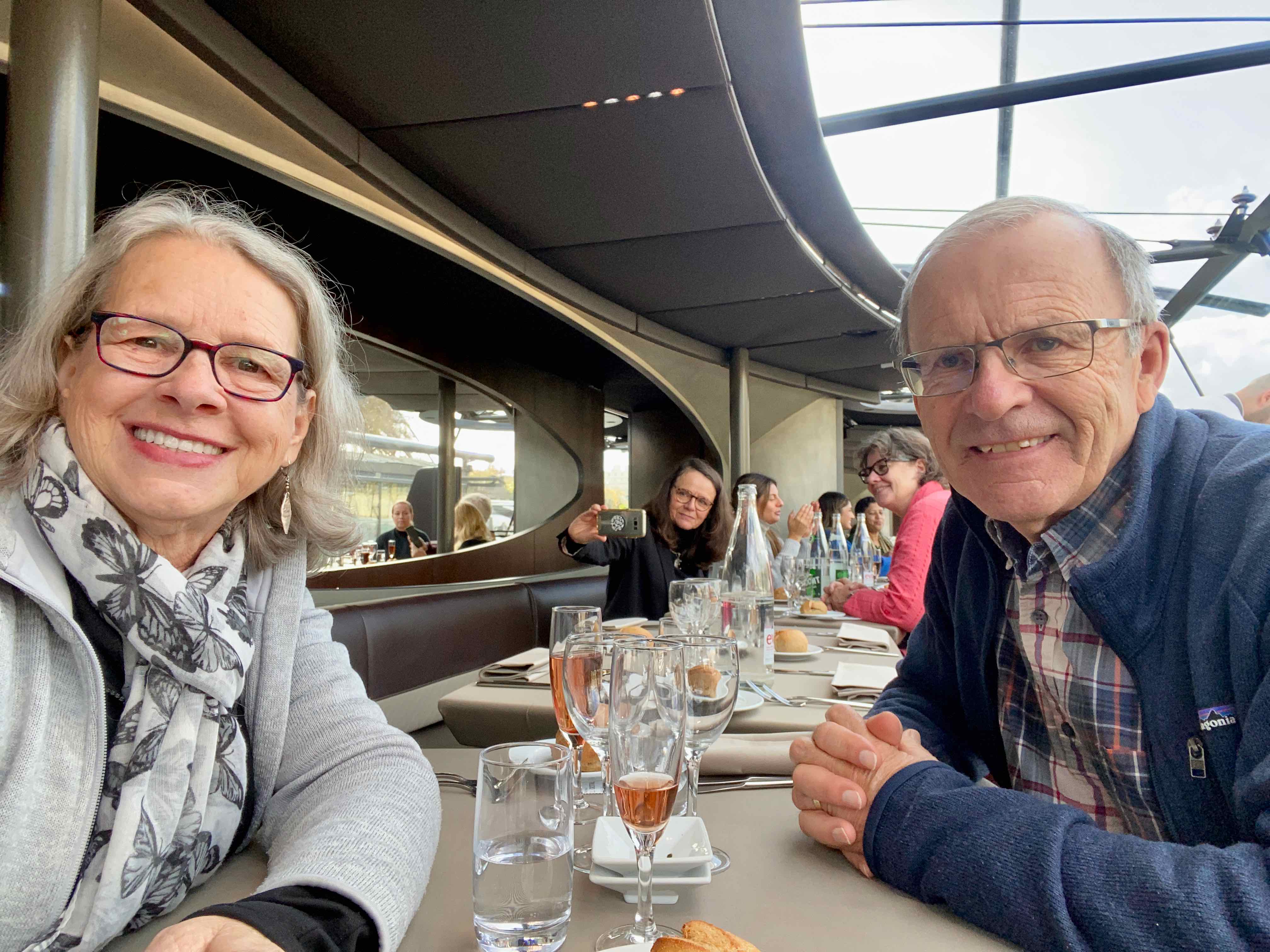
A selfie as we enjoy a glass of wine before our meal.  

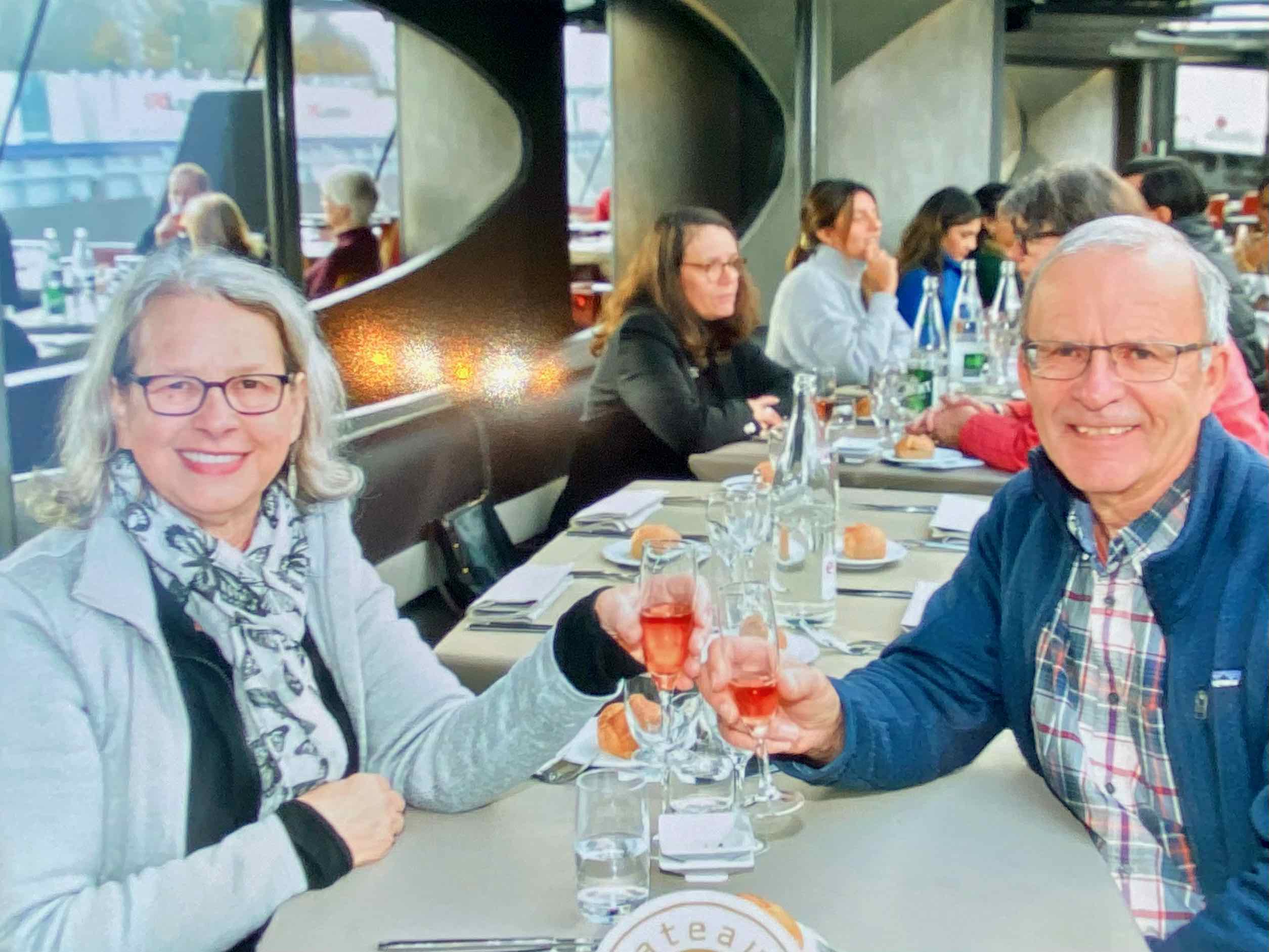
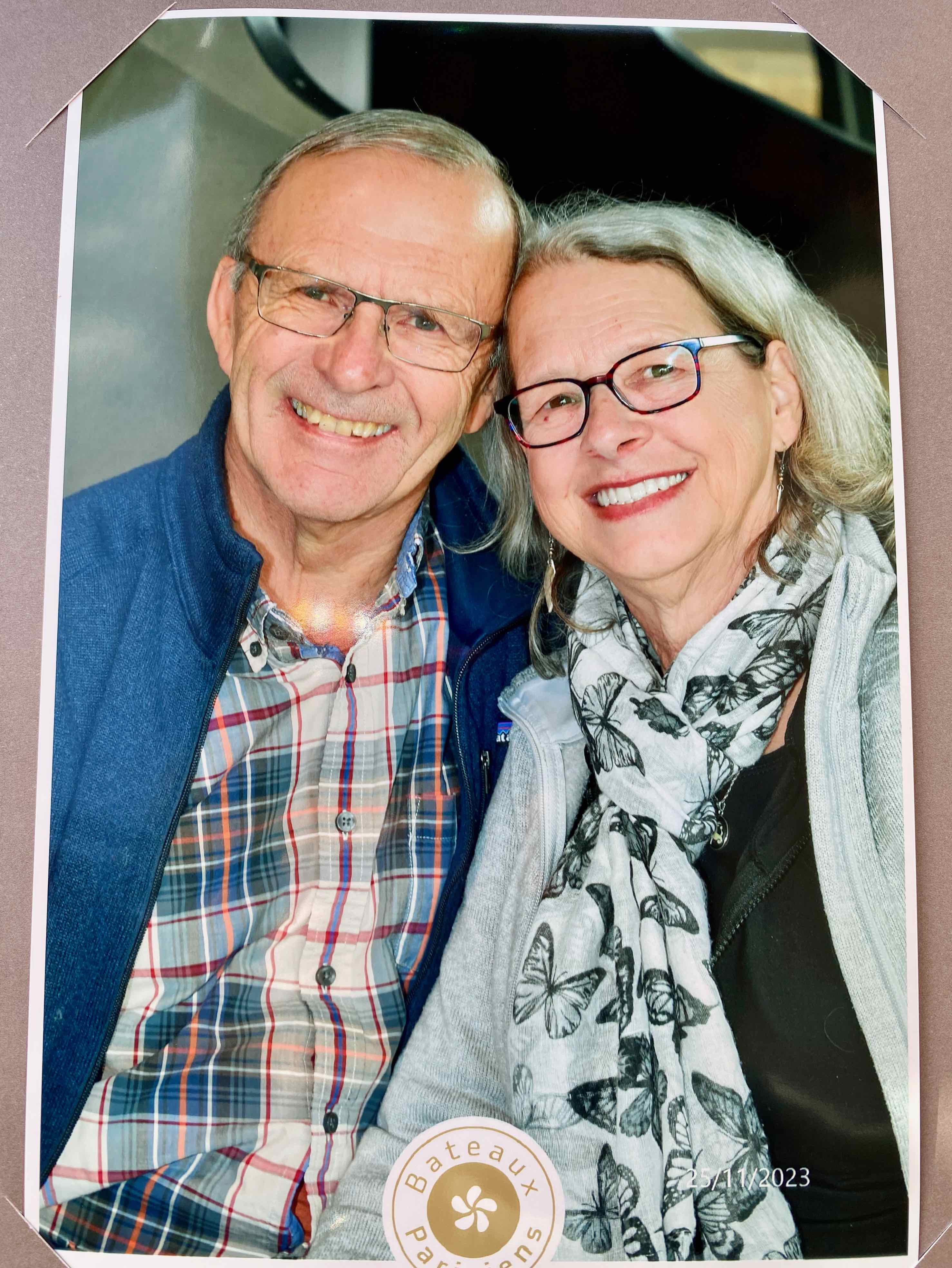
and then a photographer comes by and takes this picture for us. Because this trip is for our 50th wedding anniversary and today is Bob’s birthday we had almost a dozen photos taken of us, while everyone else only had two or three!

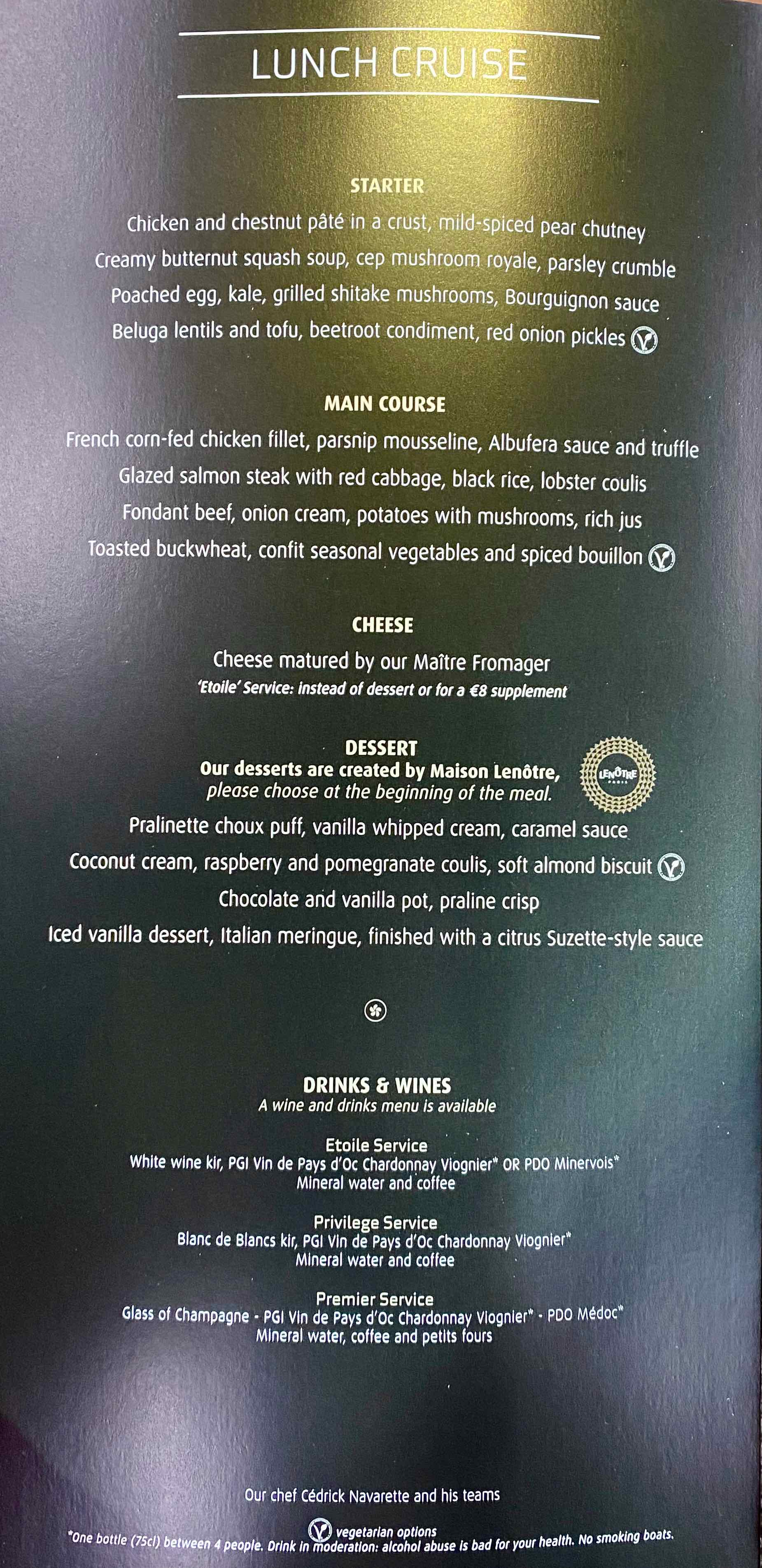
Our menu. 

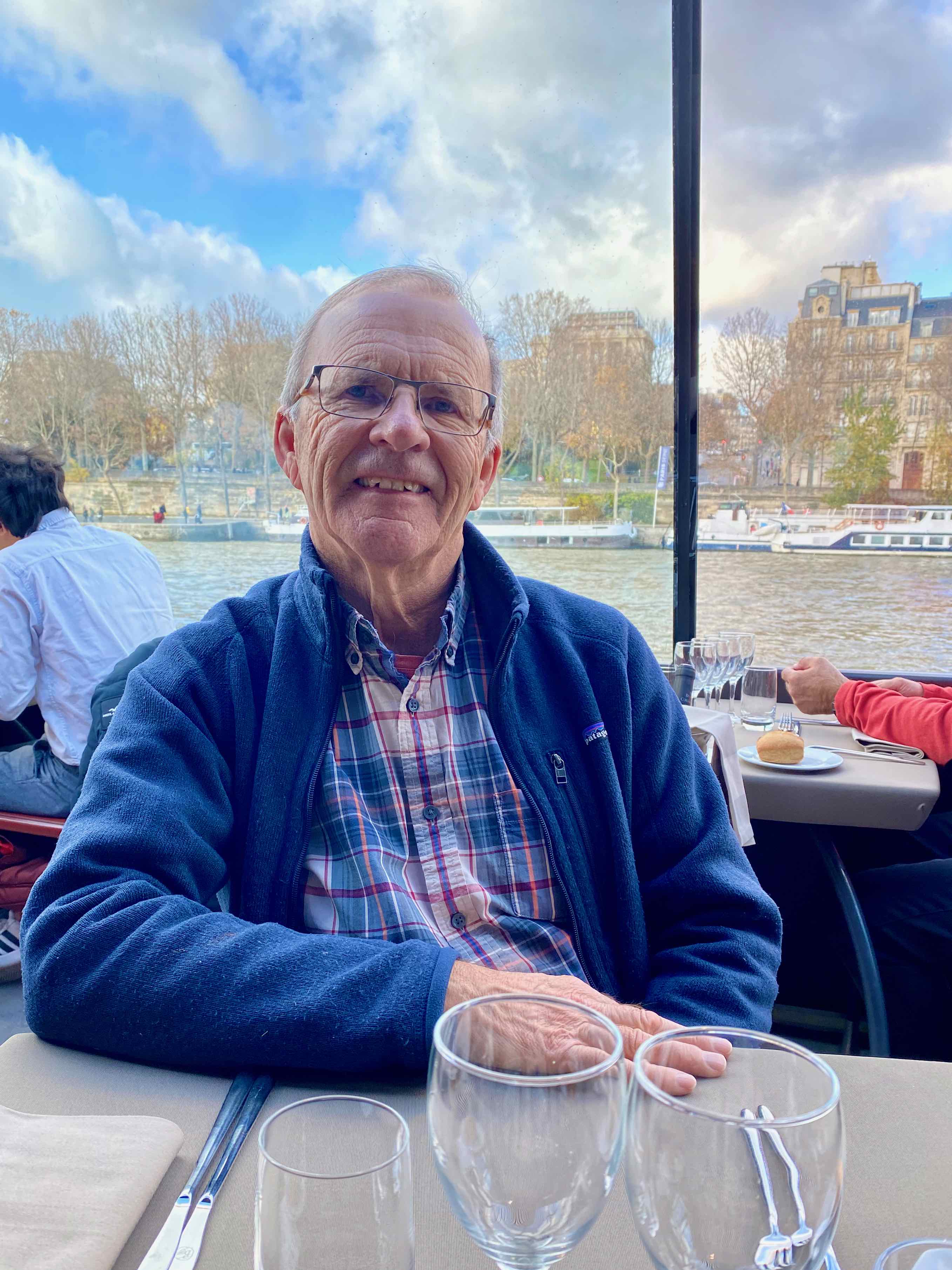
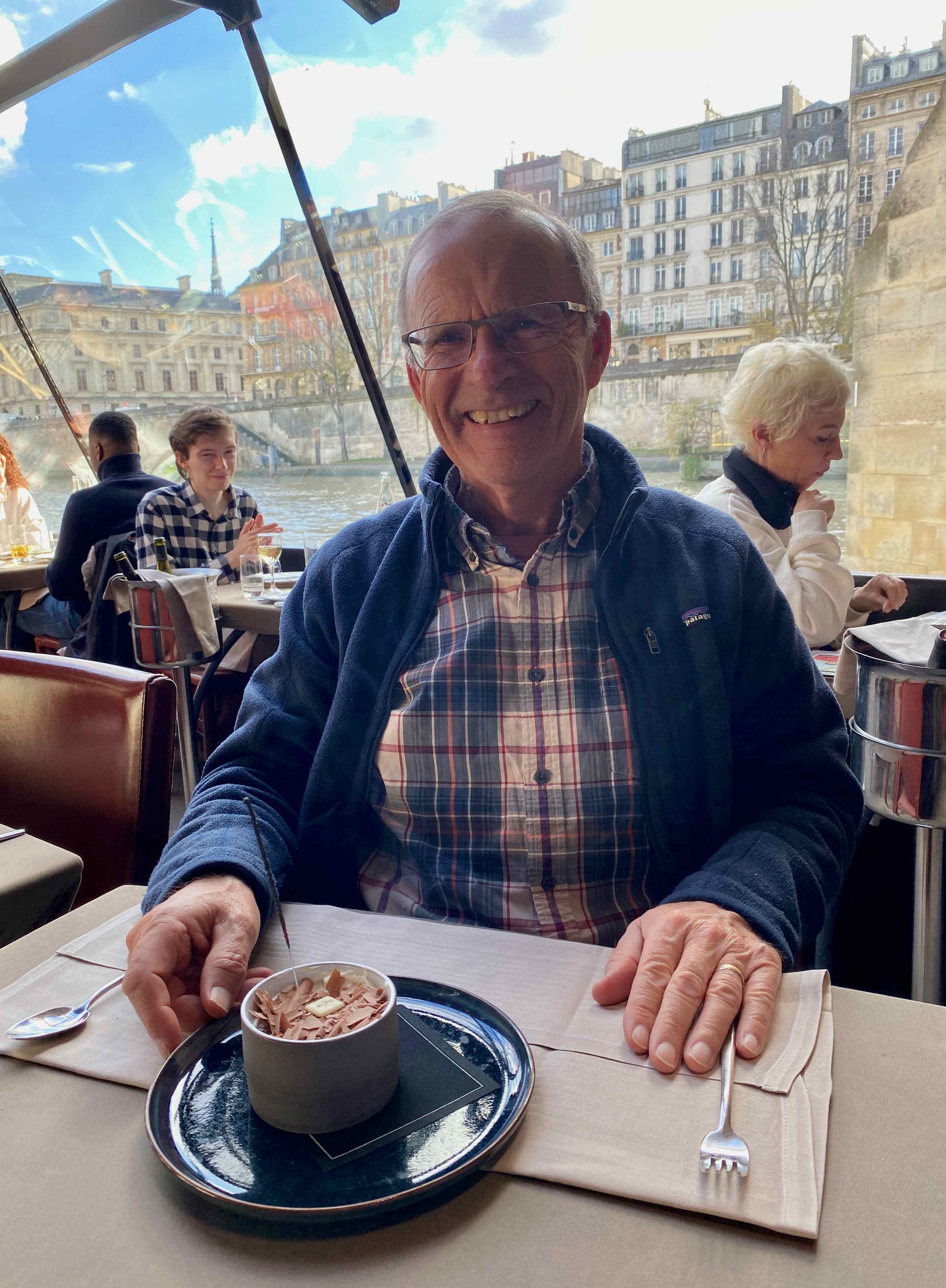
Bob is enjoying his birthday treat!

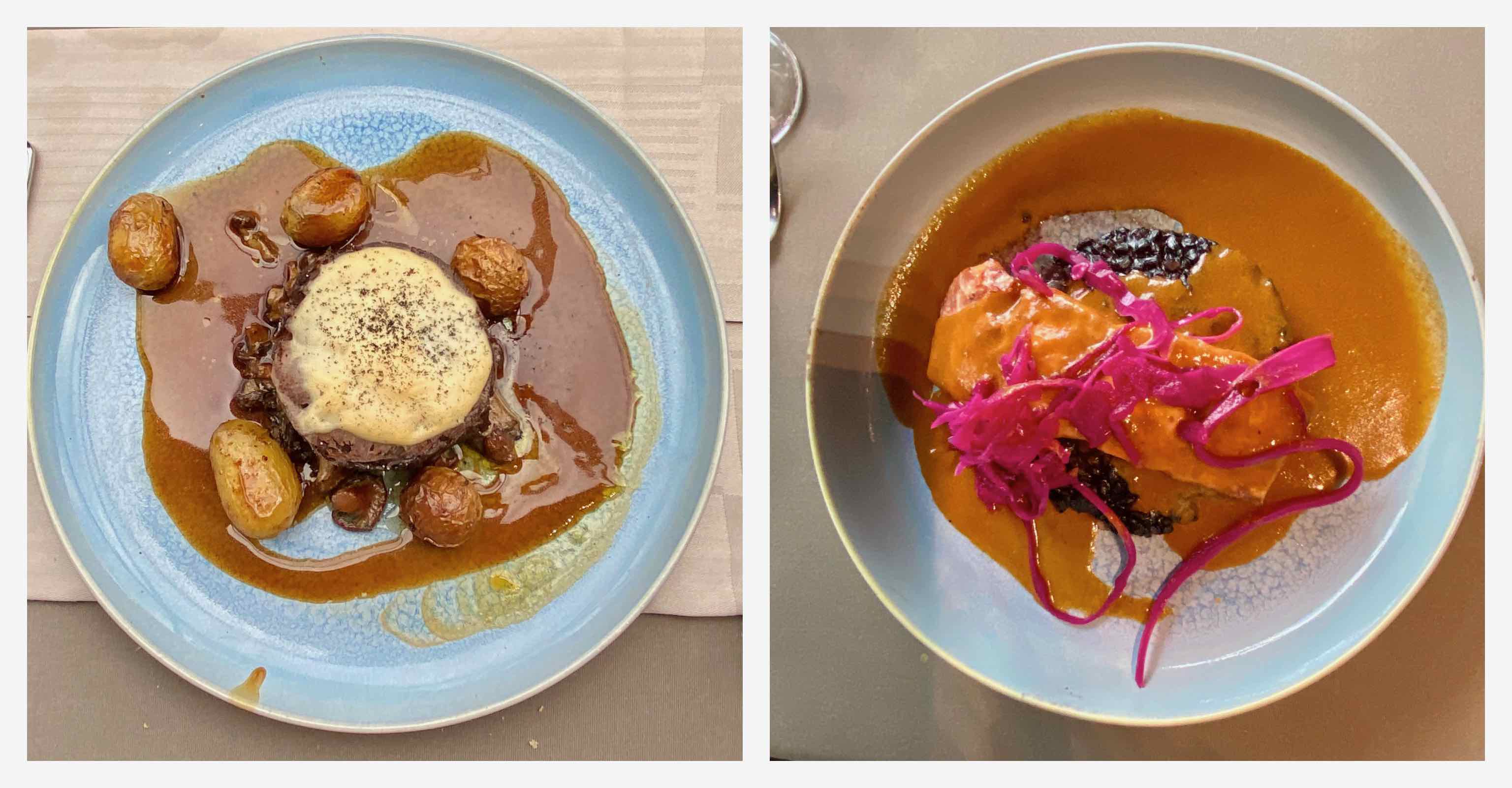
Bob’s Fondant Beef, onion cream, potatoes with mushrooms and rich jus, and my Glazed salmon steak with red cabbage, black rice and lobster coulis.  Both meals were delicious!

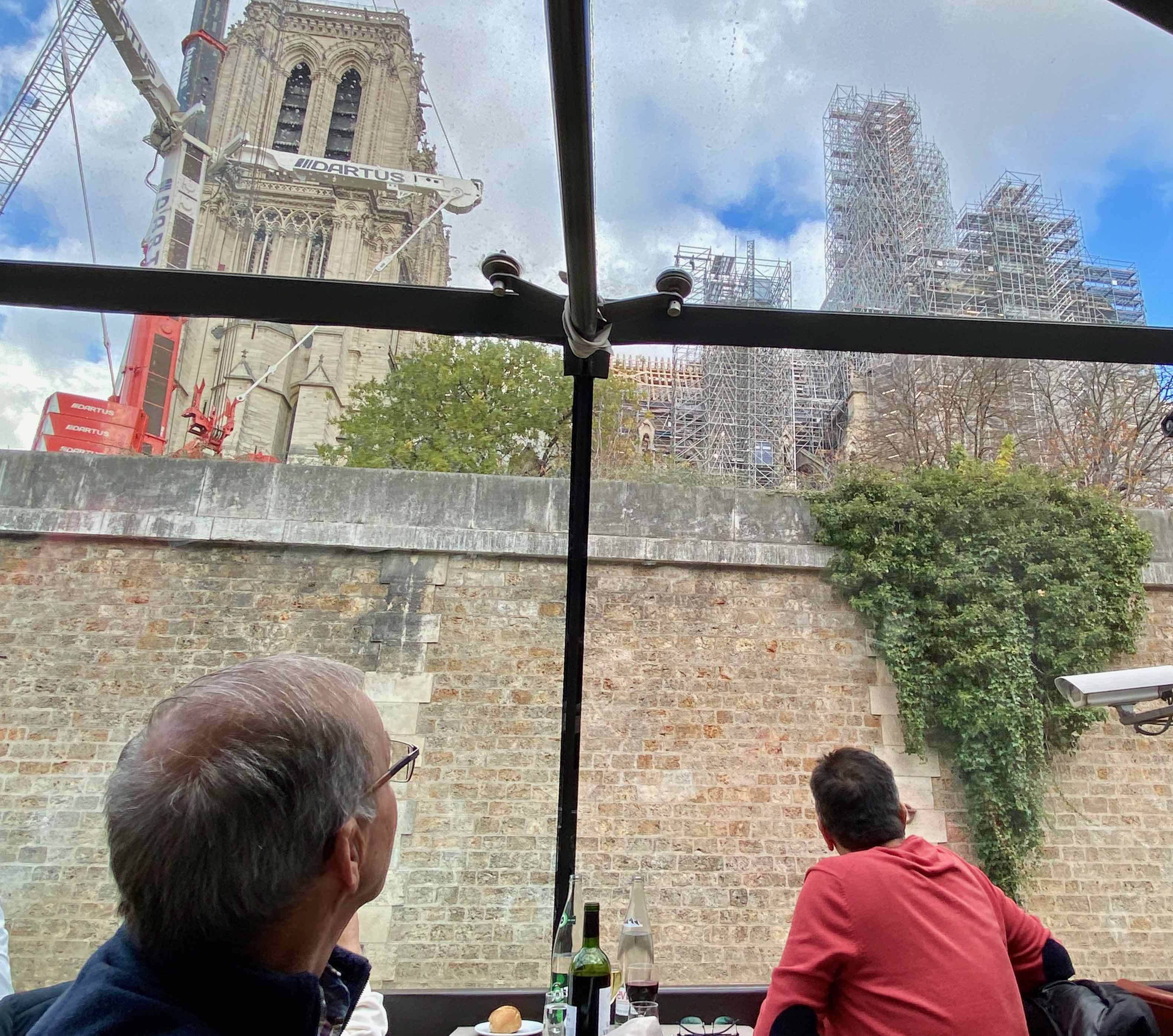
They are still working on restoring Notre dame and the building is covered in scaffolding.

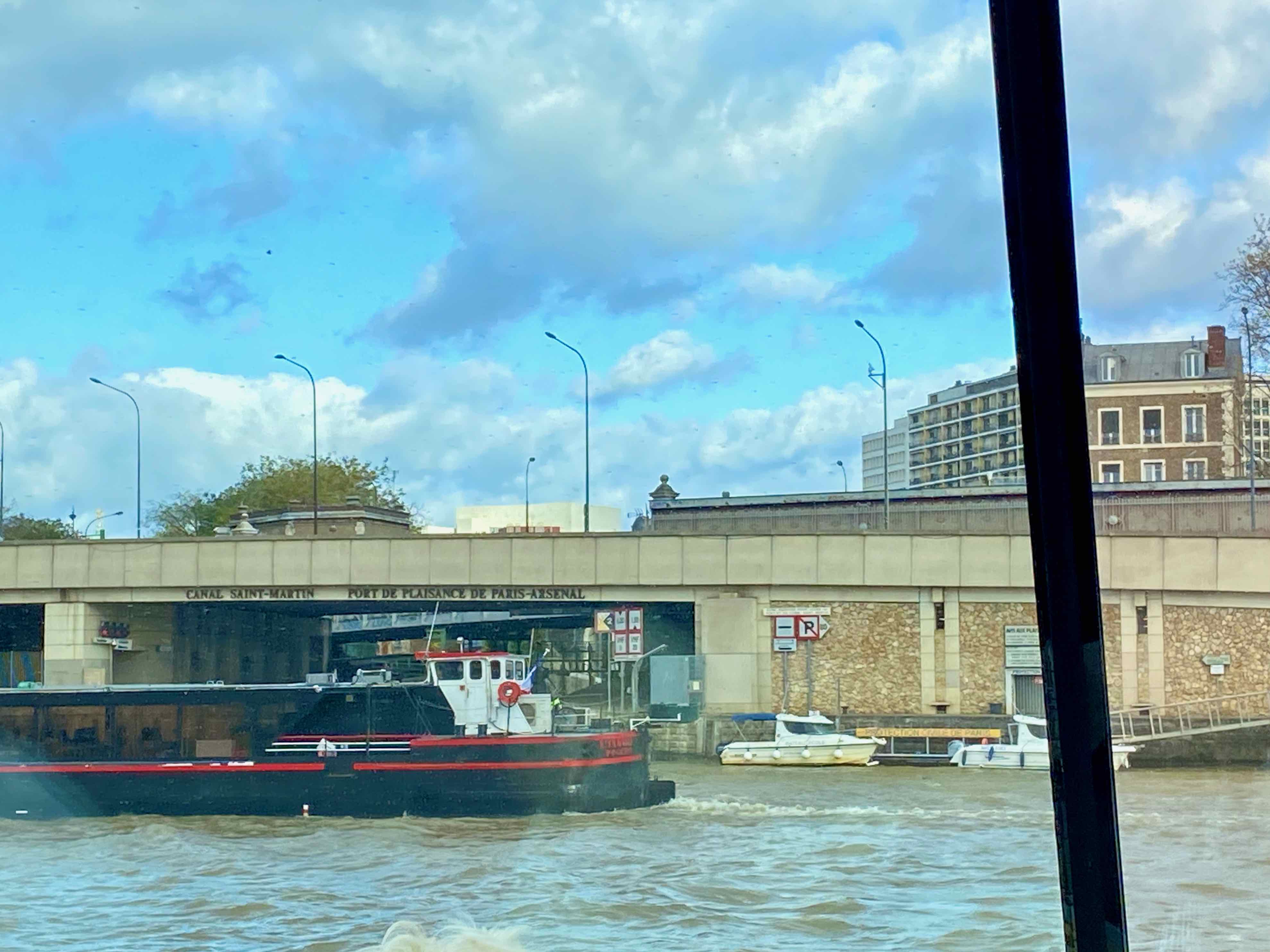
We headed east on the Seine River and see some of the more modern part of Paris before we turn around and head back towards the Eiffel Tower.

Bob’s dessert comes with a sparkler and the singing of ‘Happy Birthday’ and lots of clapping.  He definitely enjoys all the attention!

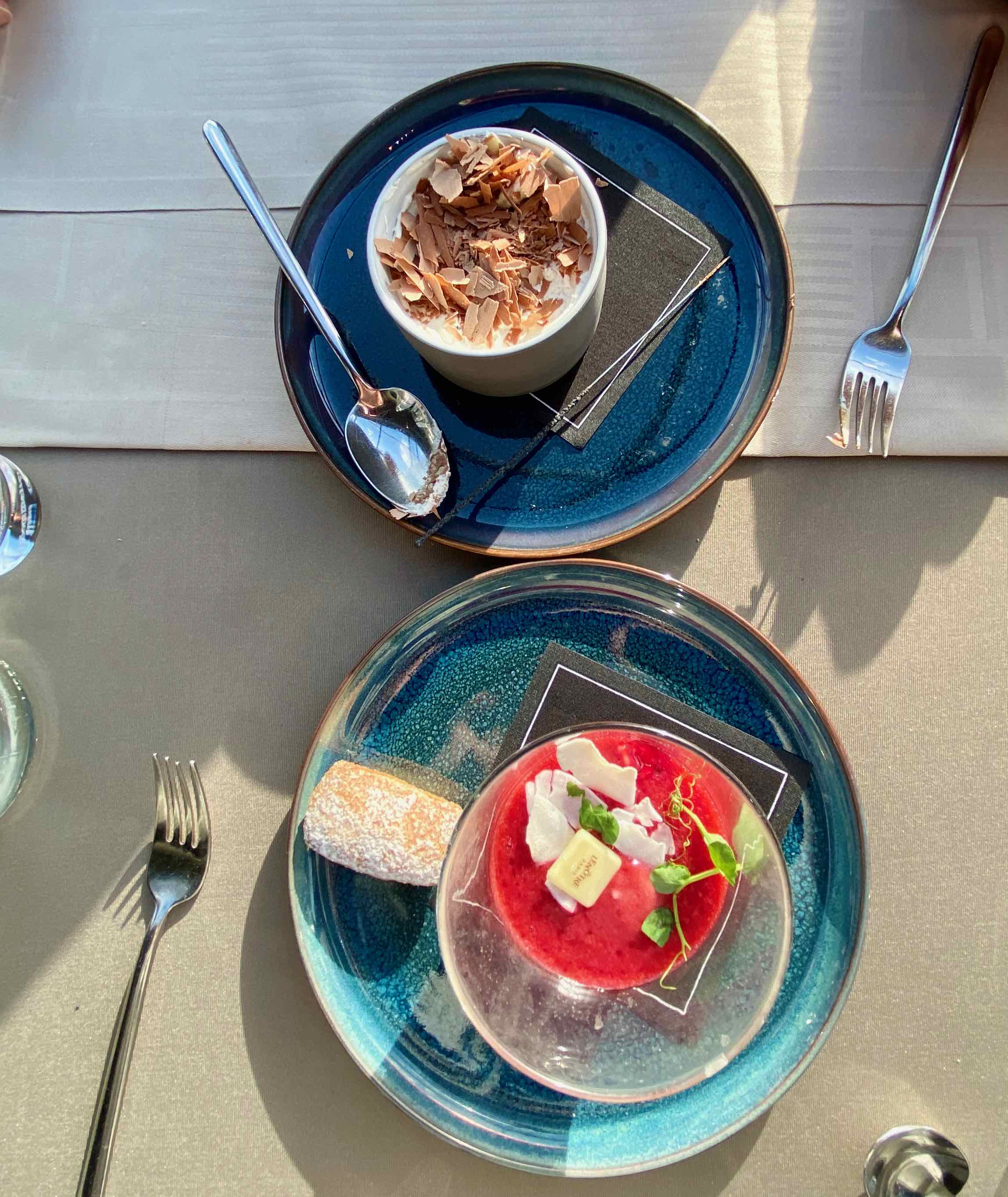
Bob has the Chocolate and vanilla pot with praline crisp and I love my Coconut cream, raspberry and pomegranate coulis with soft almond biscuit.  All our food was delicious.

We purchased this photo as a keepsake. I would have liked to buy a few more photos but they were €20 (about $30) each!We pass the dock near the Eiffel Tower…

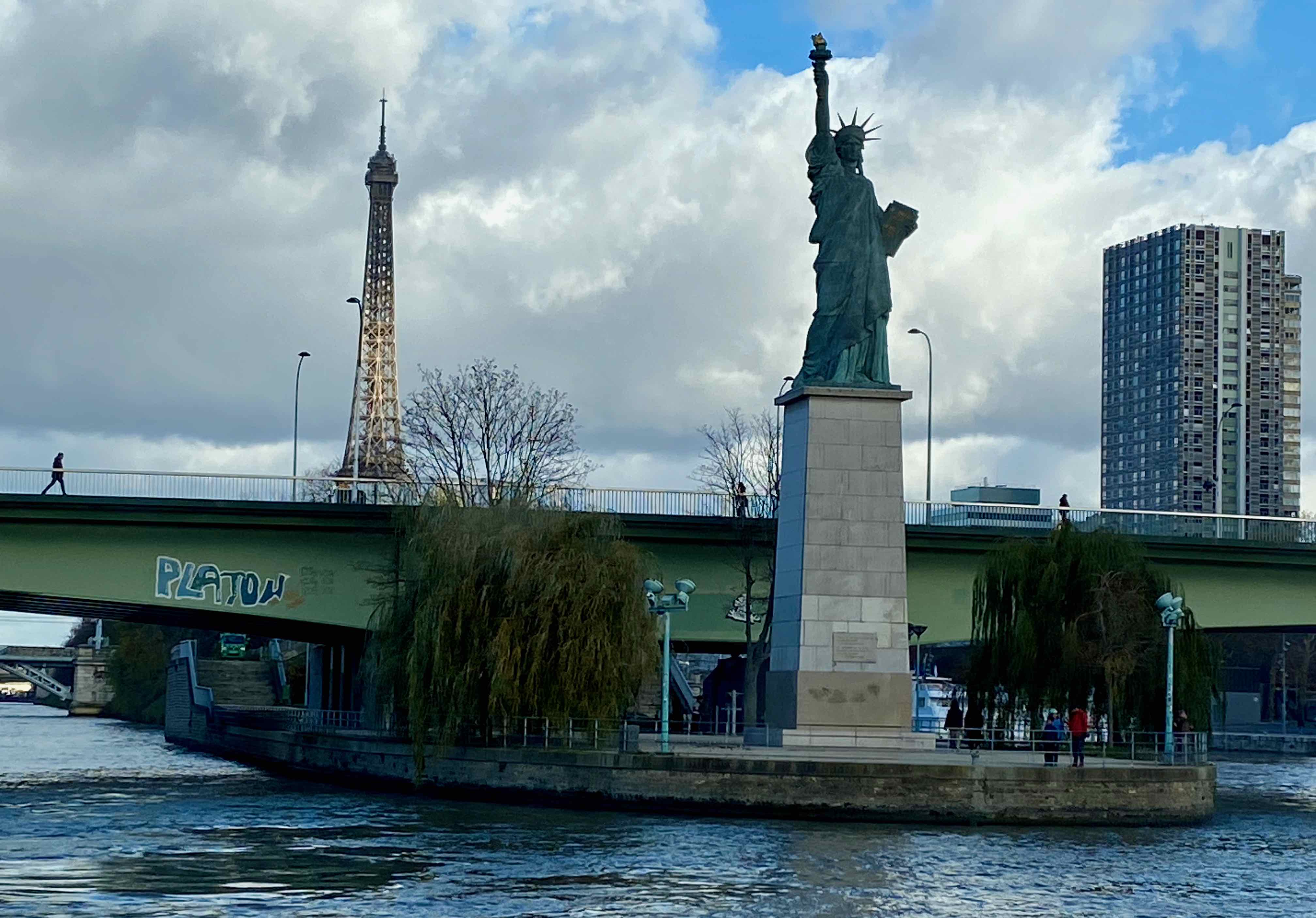
and the Statue of Liberty!  Bob was surprised to see this statue but I remembered her from my last trip.

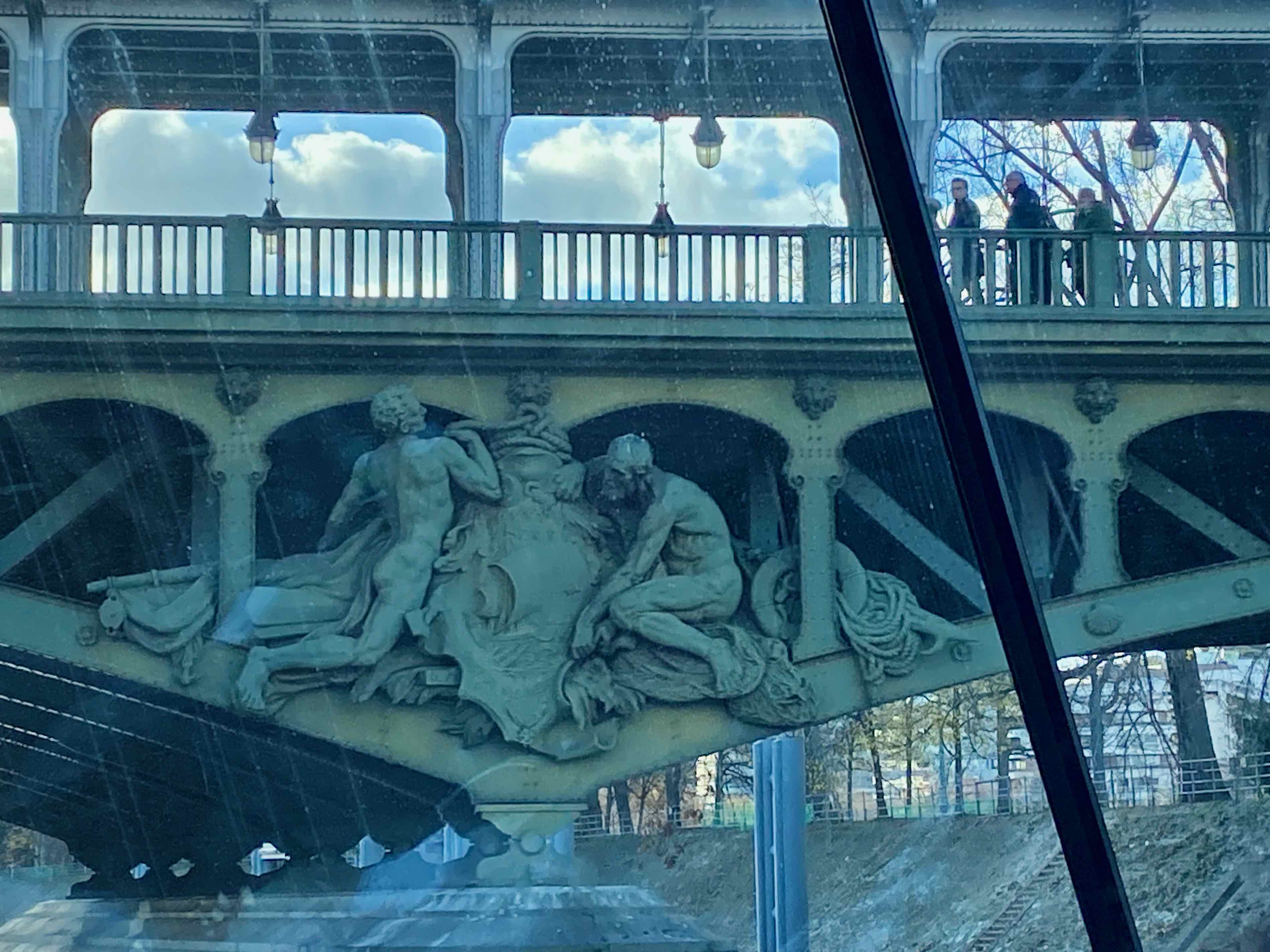
We pass under Le Pont de Bir-Hakeim with its  beautiful decorations before docking.  We both had such a great time and enjoyed seeing Paris from the Seine River.

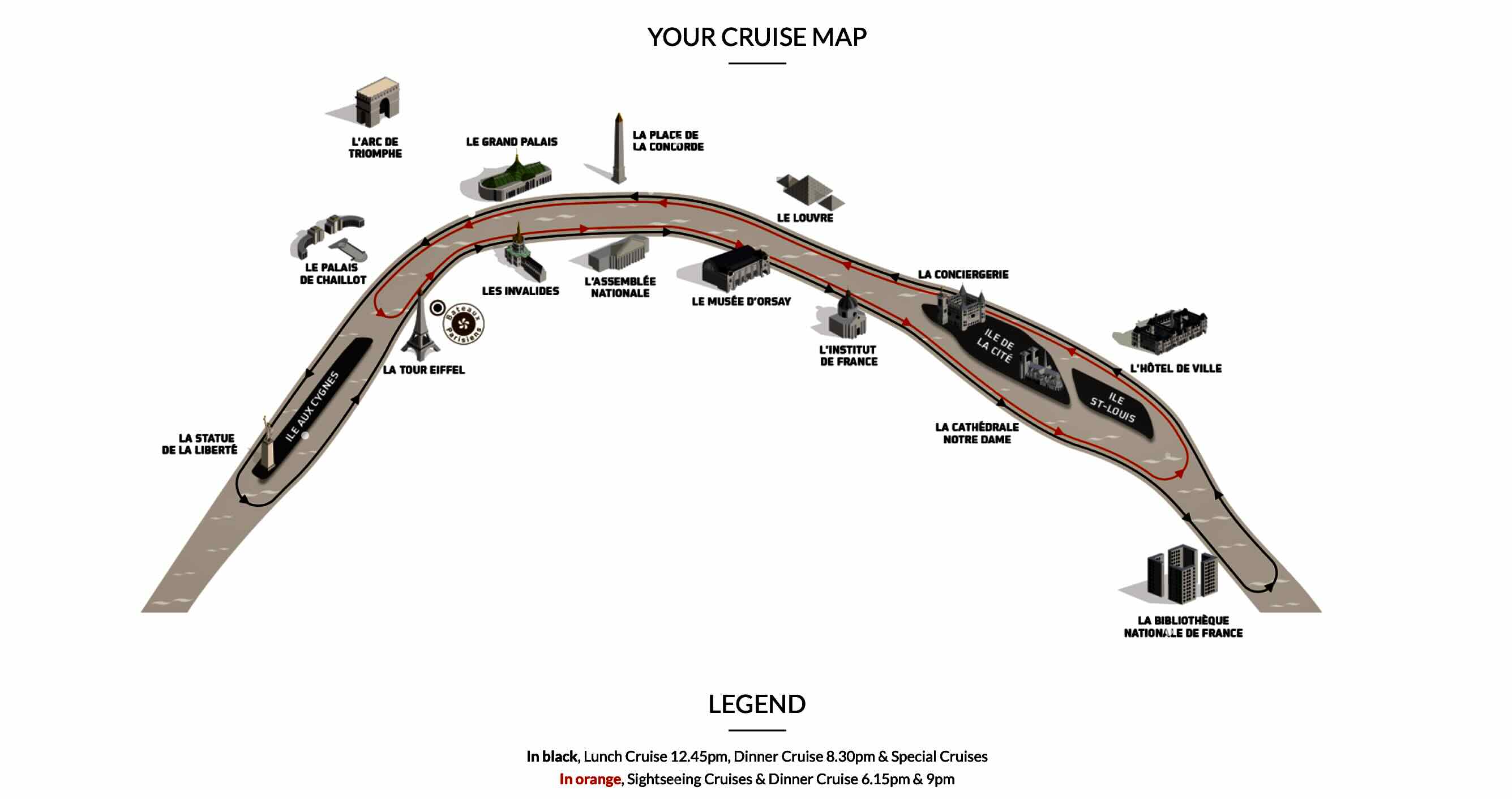
This map shows our route, the lunch cruise follows the black line on the map. You might have to zoom in a bit, I couldn’t manage to make this image any larger.

Screenshot

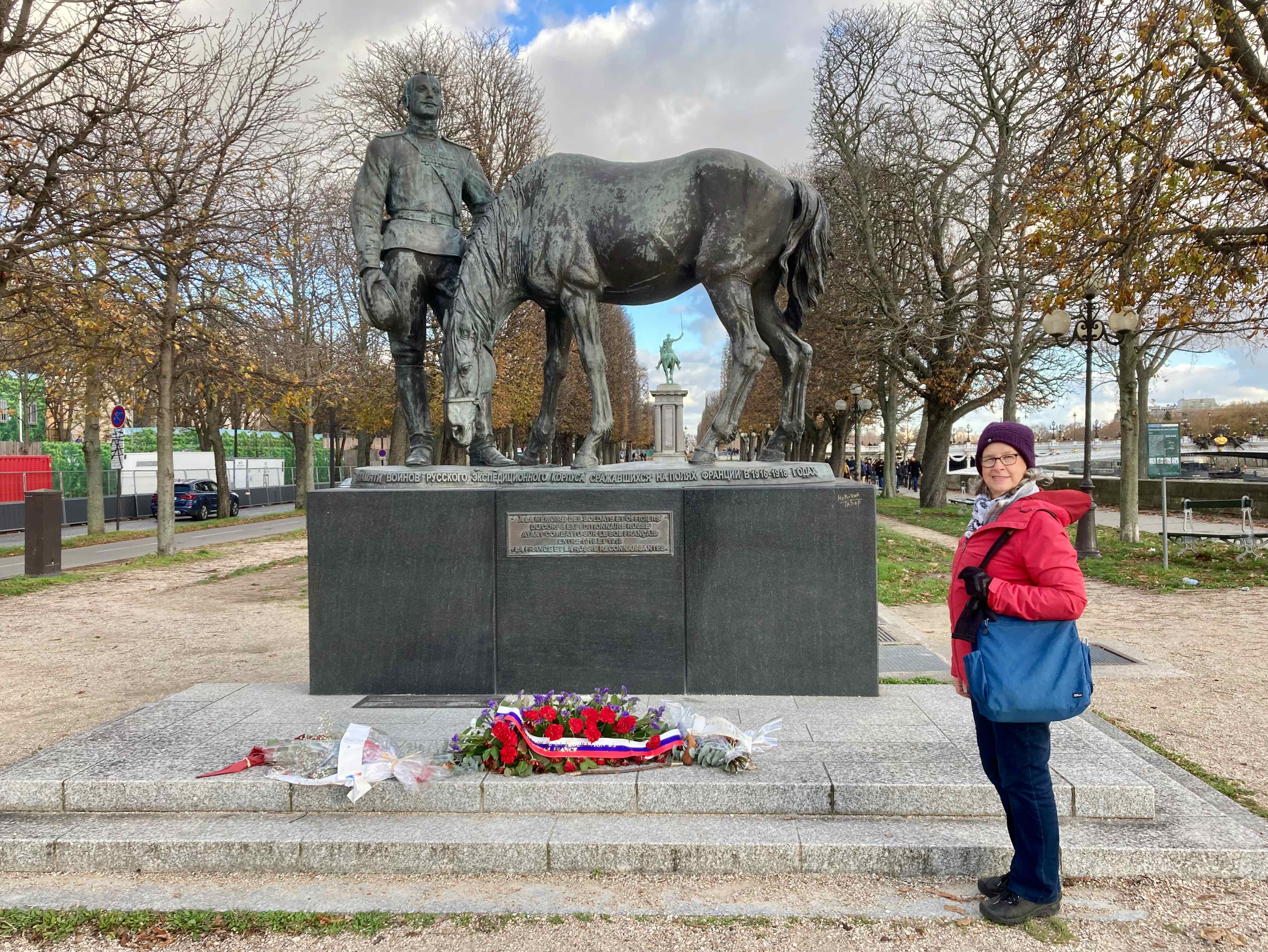
After our wonderful luncheon on the Seine we do a bit of exploring. As we walk along the north side of the Seine we see several monuments.  This one is dedicated to the Russian soldiers and officers killed on French soil between 1916 and 1918.

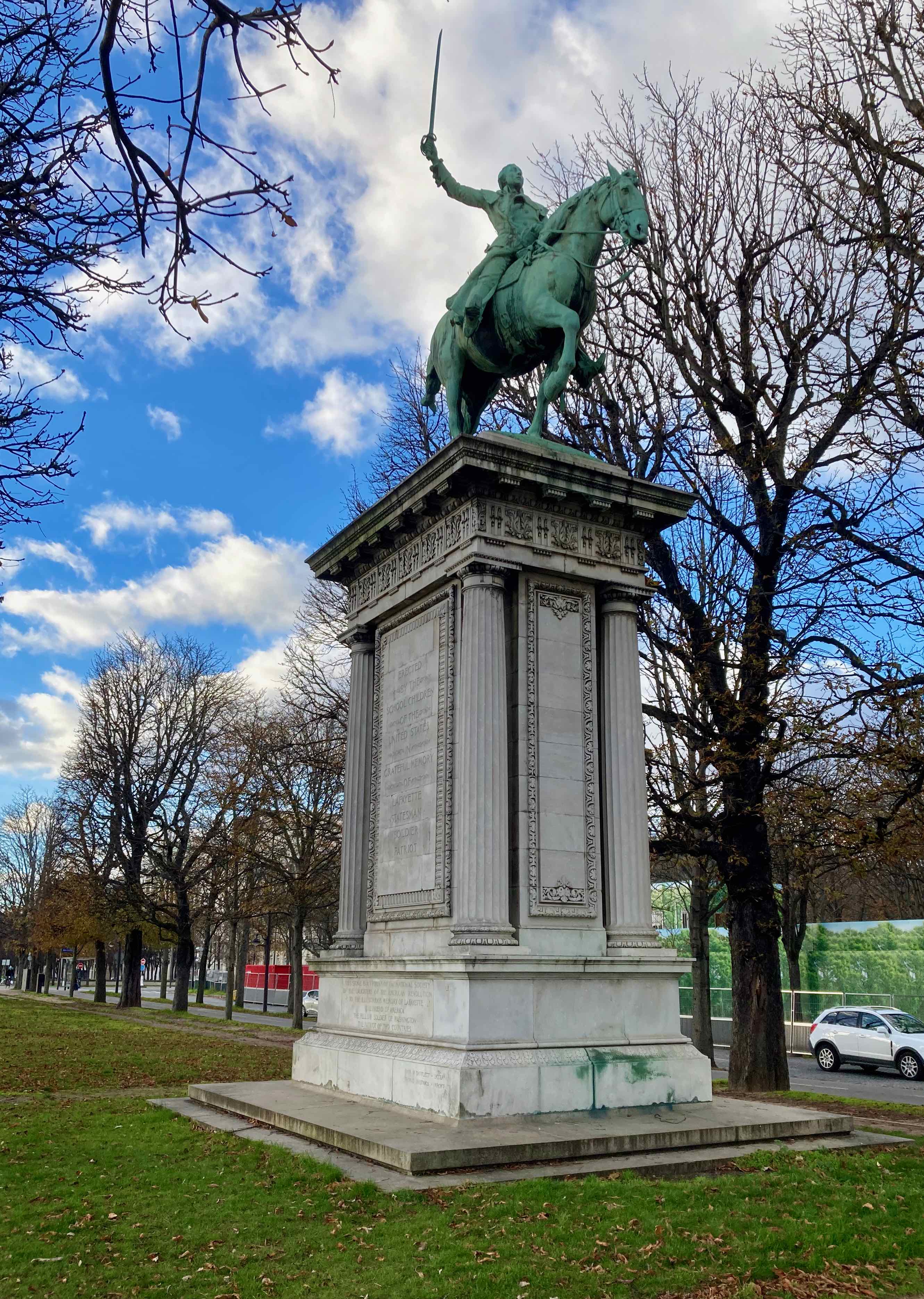
This monument was erected by the school children of the United States.  This link https://www.unjourdeplusaparis.com/en/paris-insolite/detail-insolite-statue-la-fayette shares an interesting, often overlooked detail about this monument, one we did not notice until I was doing a bit of research while writing this post.

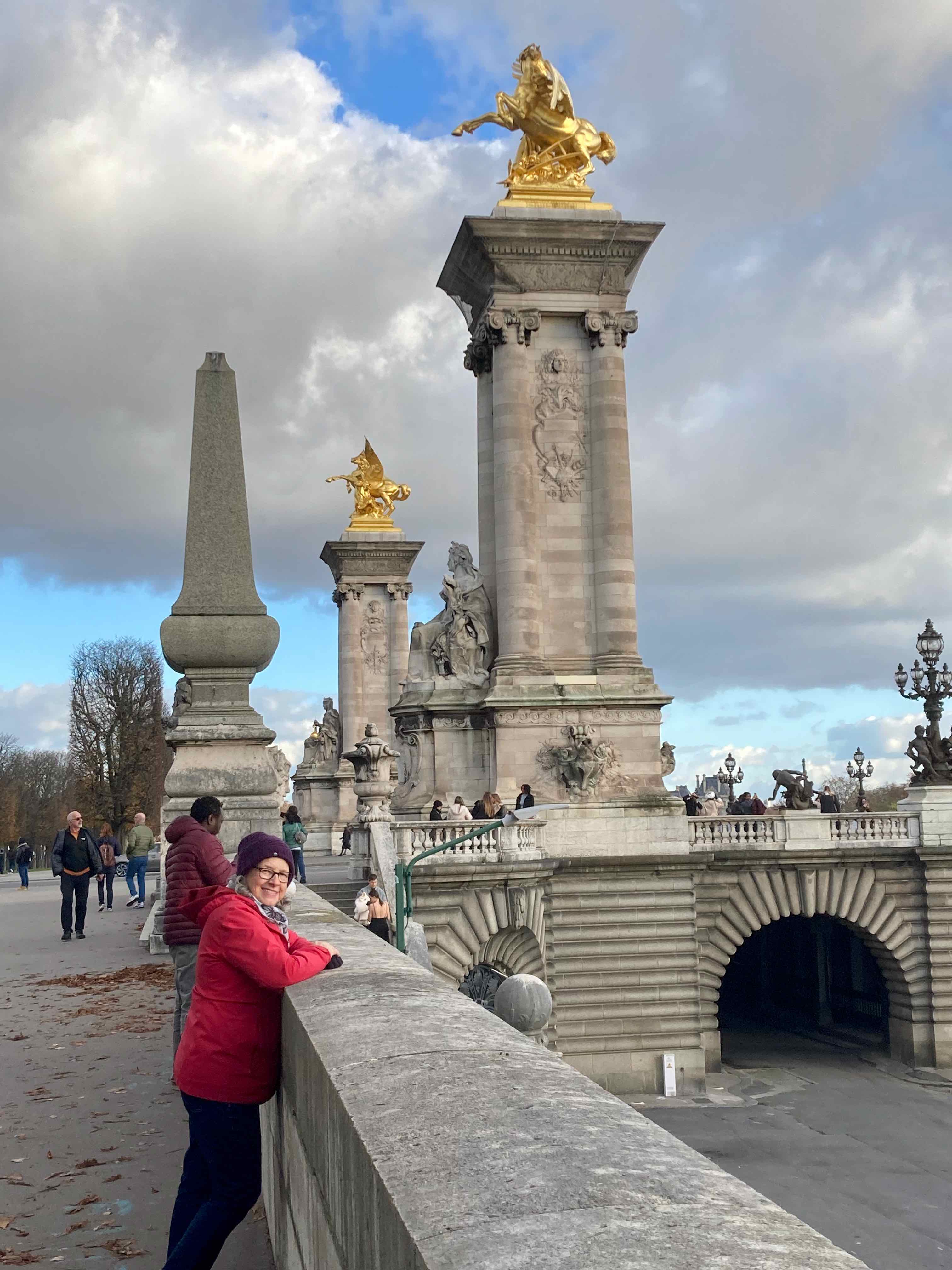
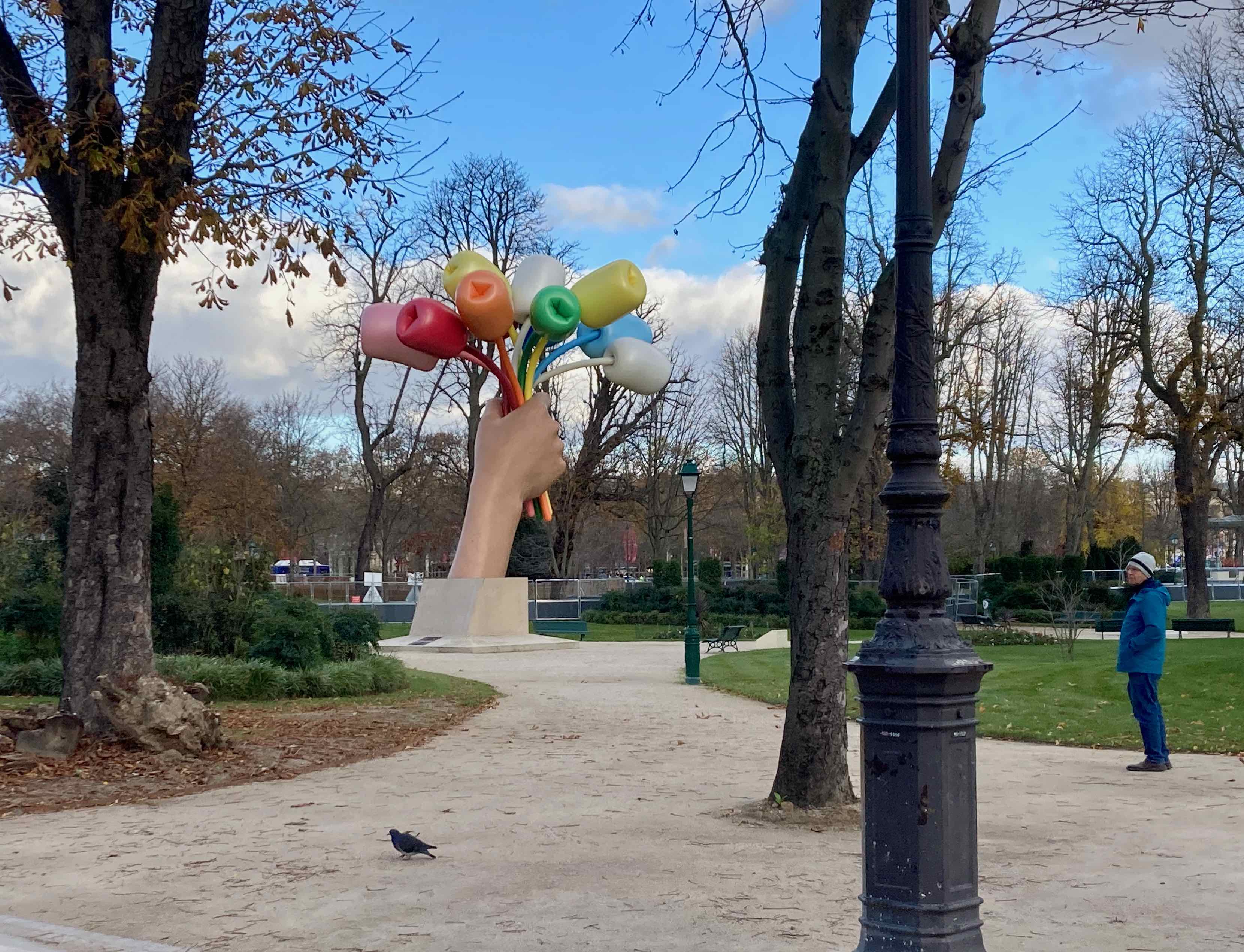
As we make our way back towards the Louvre, we stop for a photo of Le Pont Alexandre III.  It really is a magnificent bridge!Jeff Koons gifted his Bouquet Of Tulips to Paris in 2019. I did a bit or research trying to find out a bit more about this sculpture and came across this interesting article. https://www.museemusings.com/blog/jeff-koons-goes-to-paris

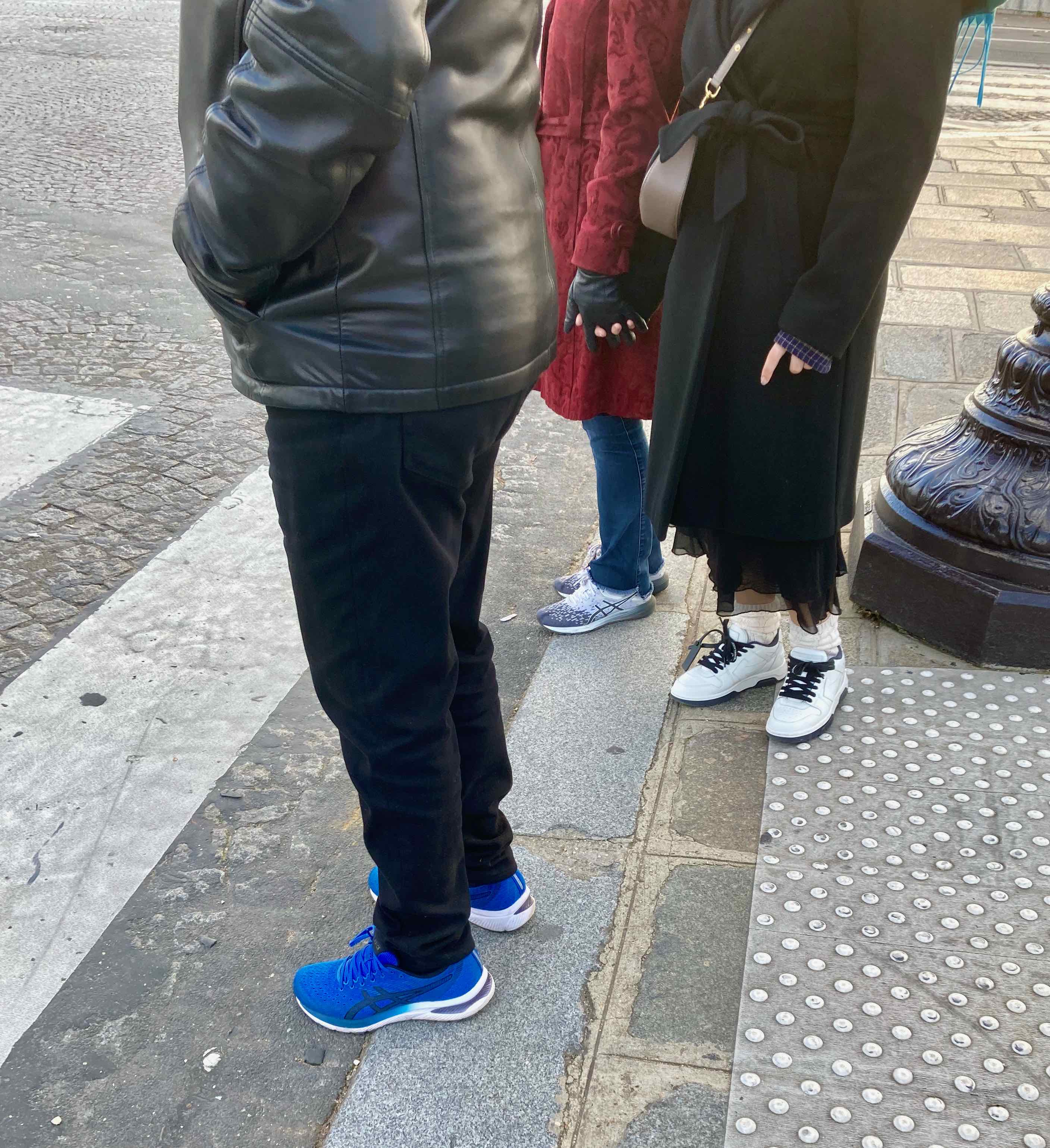
Parisien’s love their ‘baskets’ or running shoes.  Seems like everyone wears them now.

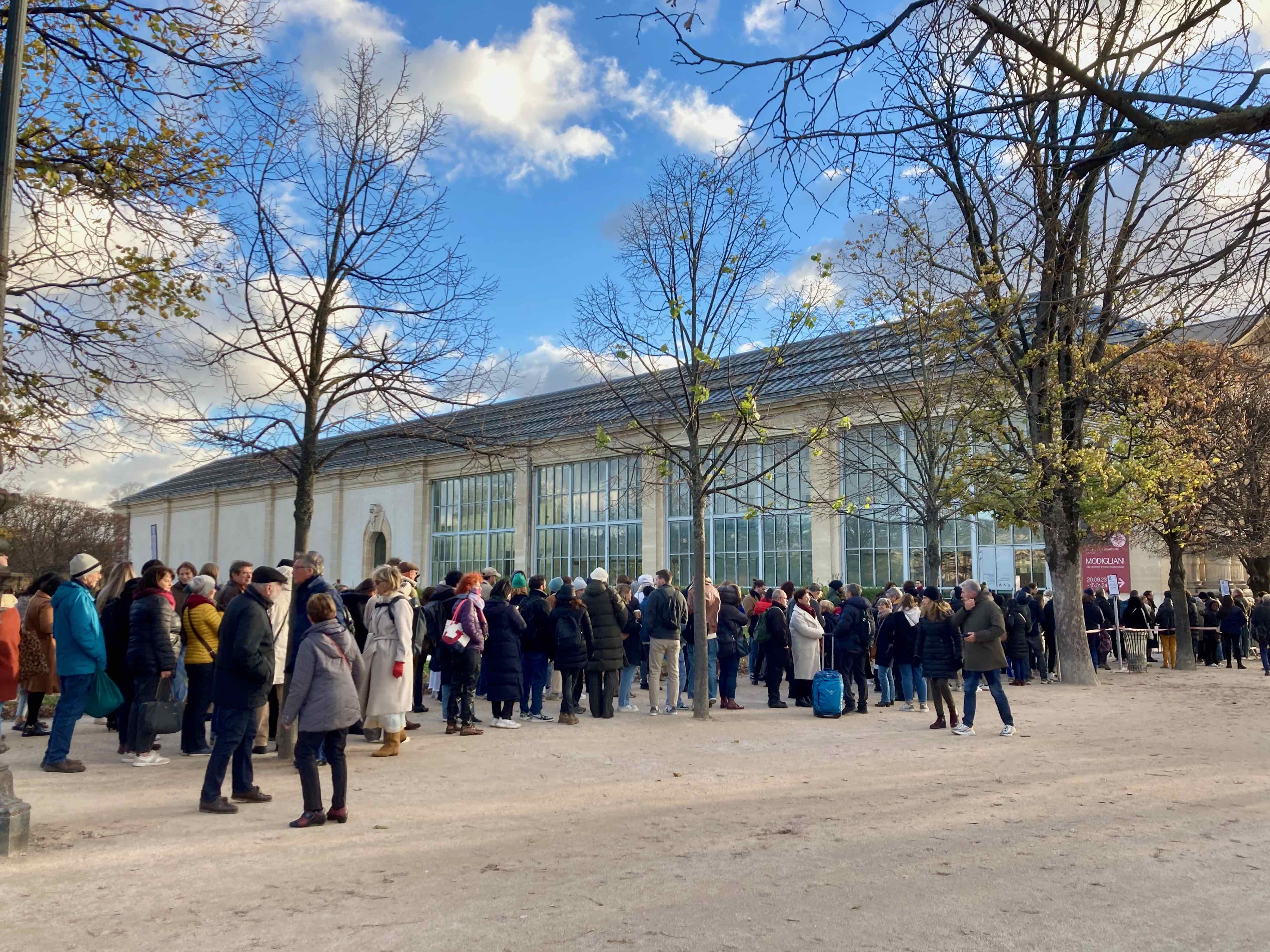
Next, we line up to enter the Orangerie to see Monet’s “Water Lilies”.  It is a good thing we have purchased our tickets in advance, because once again, the line up for those who do not have tickets is very long.  Our line was long enough…can you see Bob in his blue coat?

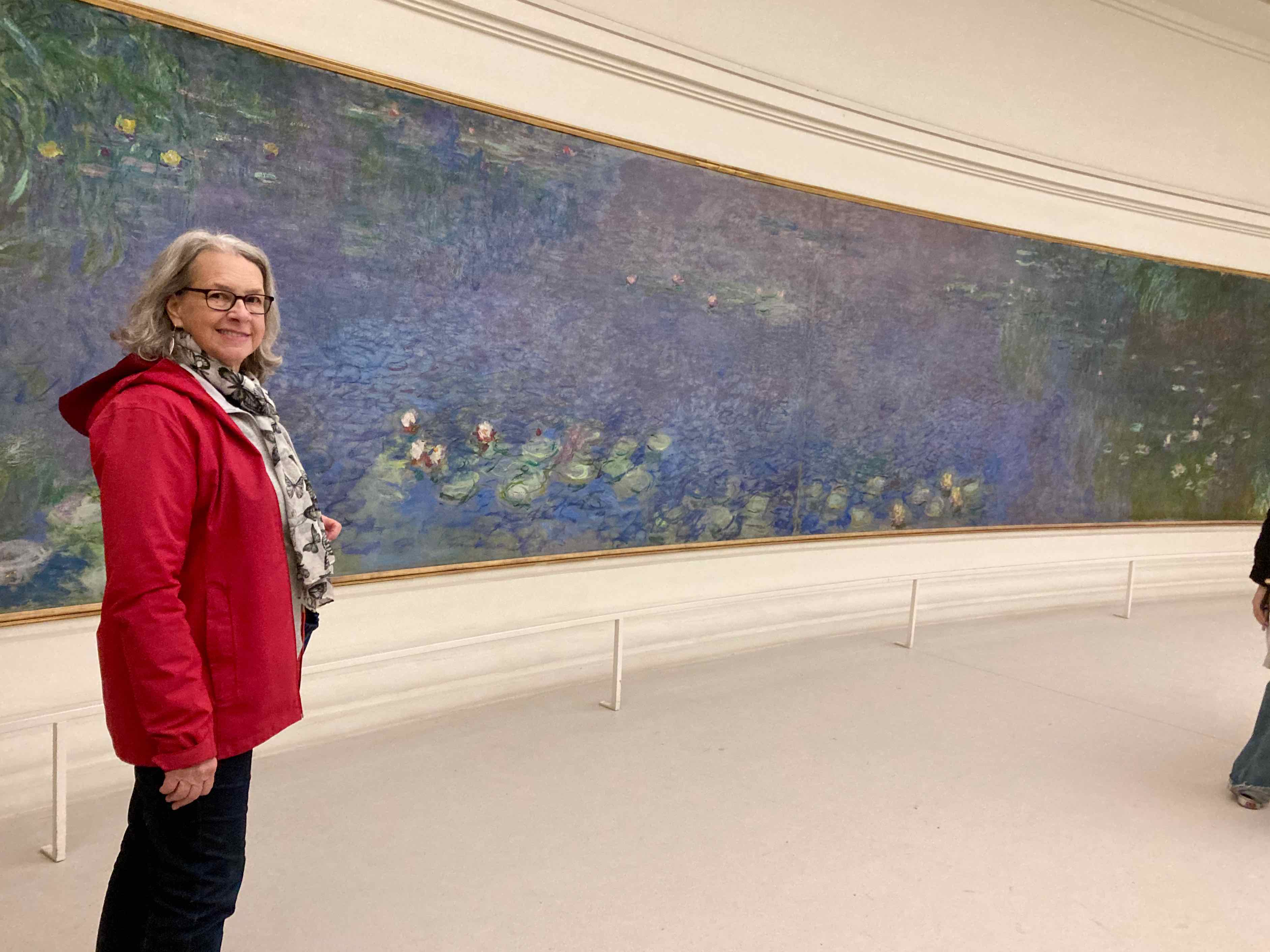
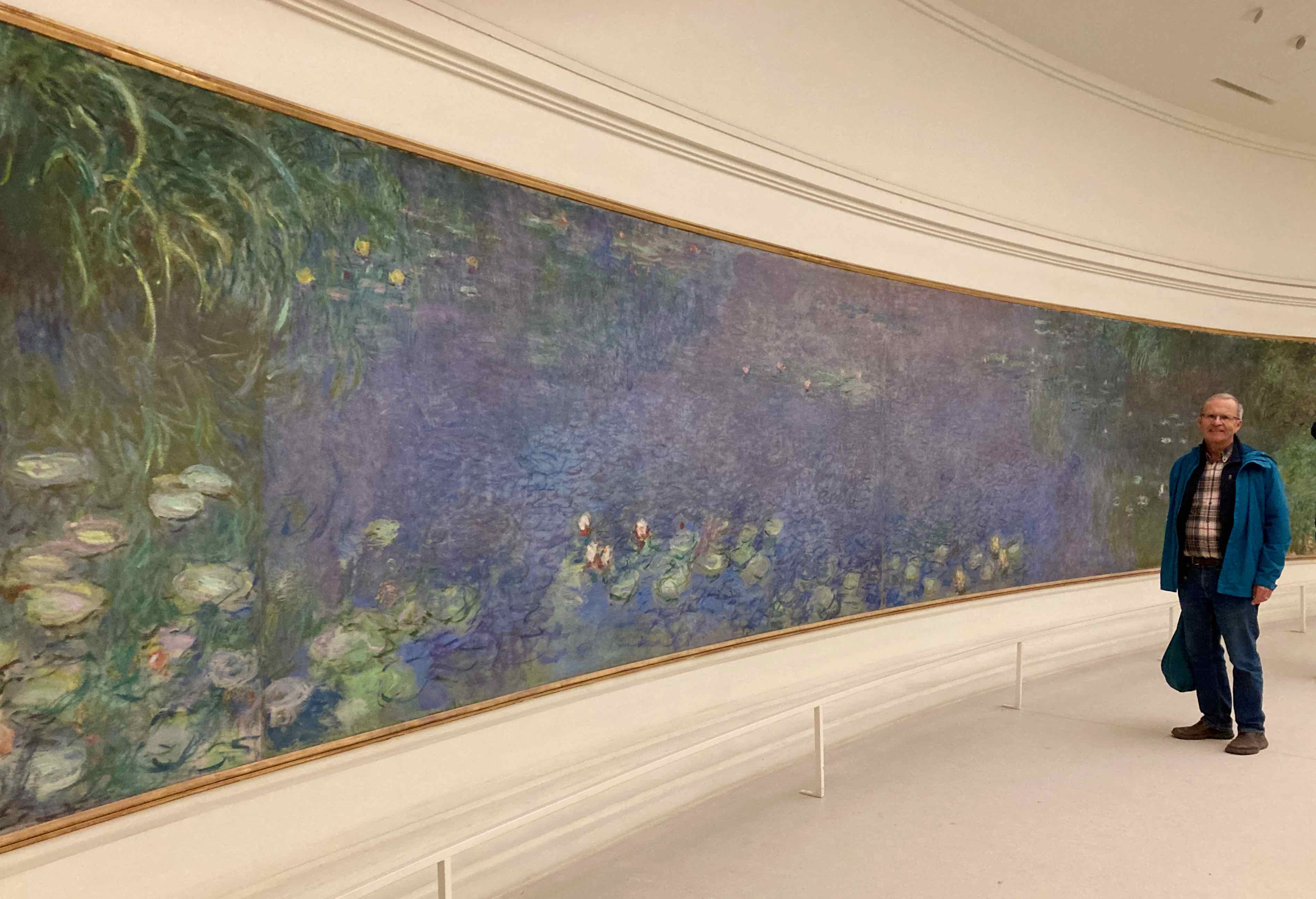
I was pleasantly surprised to see that it is now permissible to take photos inside the Orangerie.  When I visited in 2014 this was strictly prohibited.  

The paintings are enormous, and there are eight of them displayed in two oval rooms designed expressly for this purpose.  Bob is not as enamoured with these paintings as I am.

I was thrilled that there was a Modigliani show downstairs!  Amadeo Modigliani is one of my favourite painters and there were many paintings that I knew and many that were new to me.

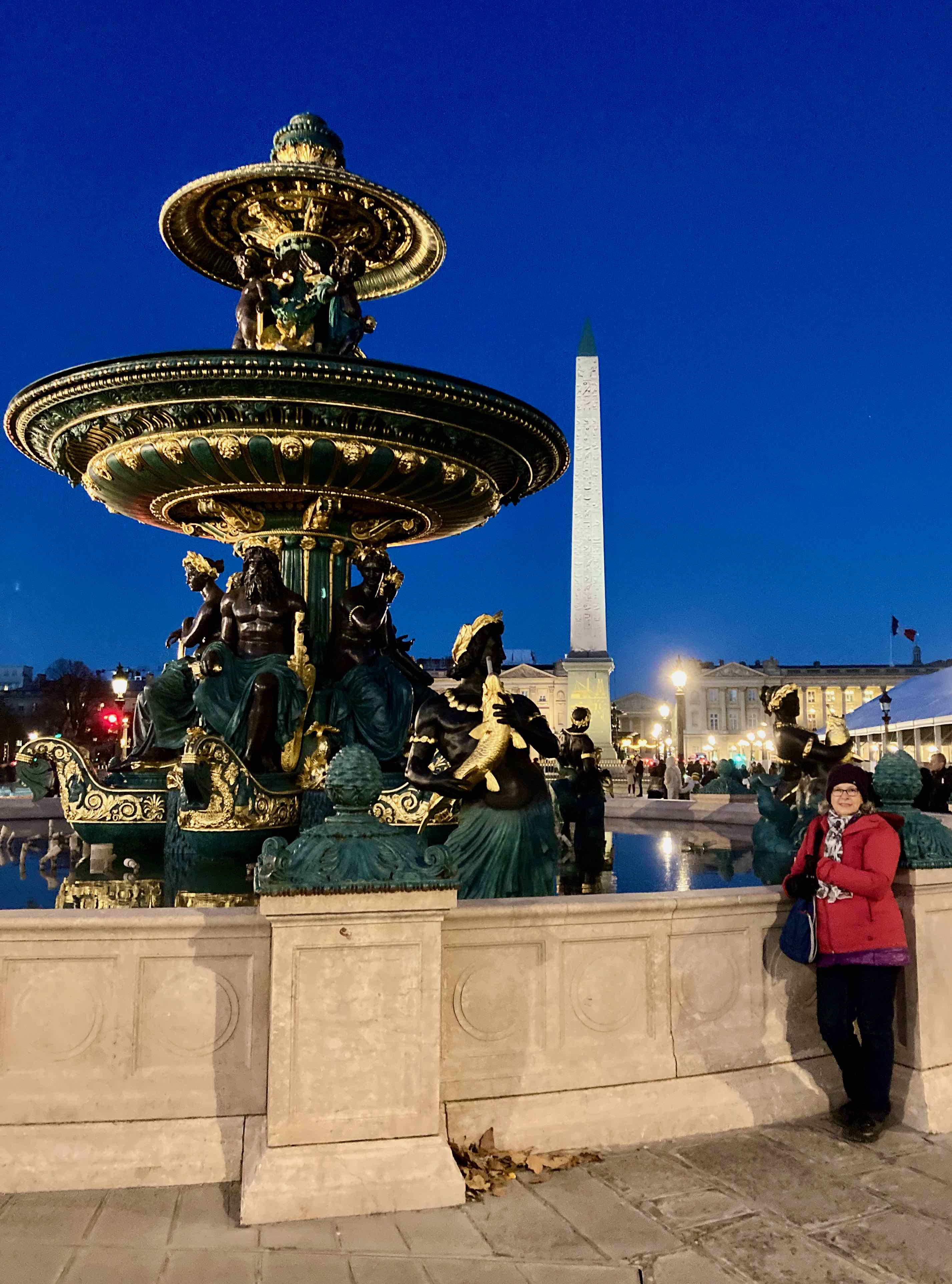
I wasn’t feeling well, so we left the Orangerie and walked a bit outside and the fresh air helped.  This is the fountain that Bob took a photo of several days ago…The Fountain of Rivers.  It is extremely ornate.

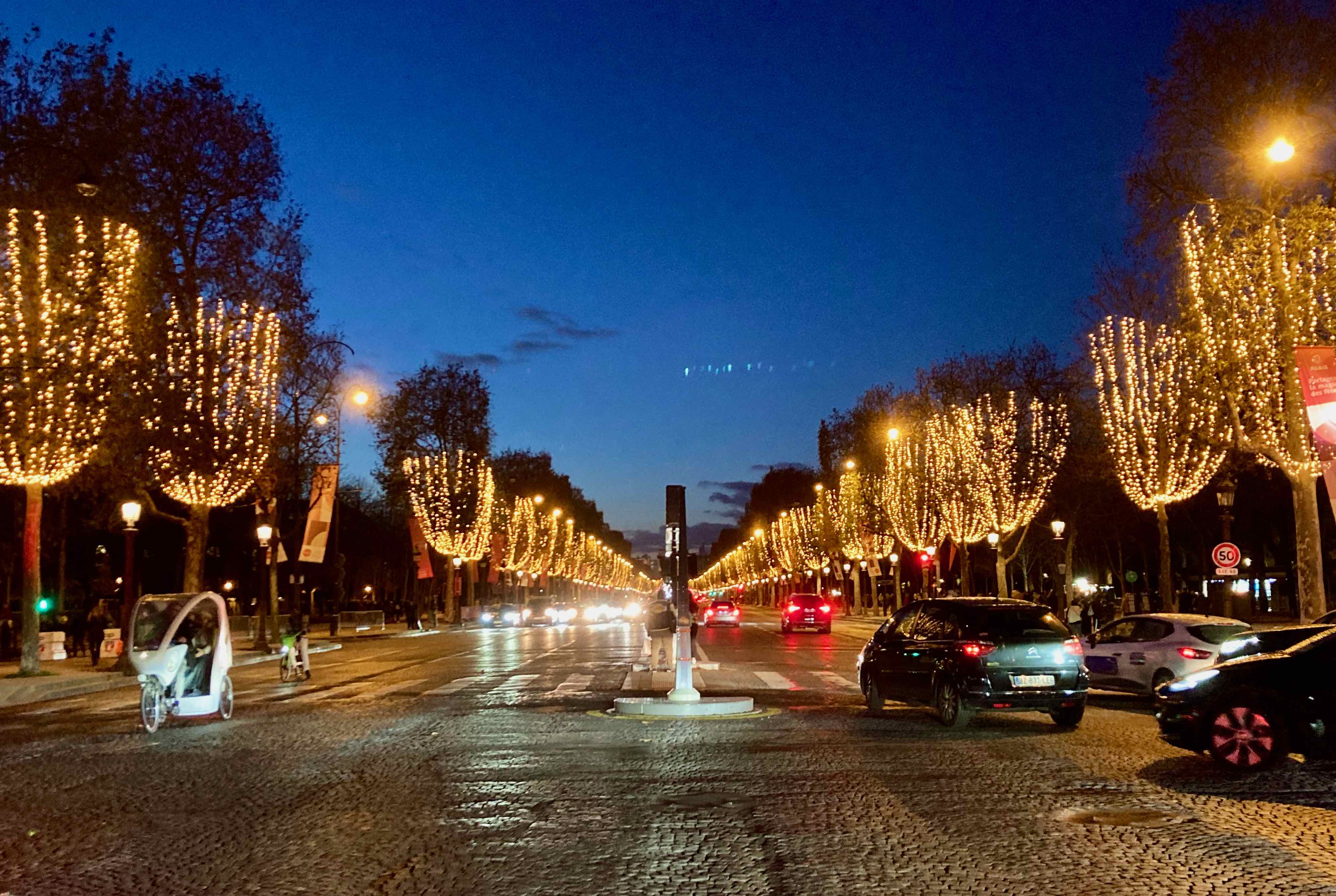
We decided to walk and see some of the Christmas lights on the Avenue des Champs Élysées before going back to our apartment.

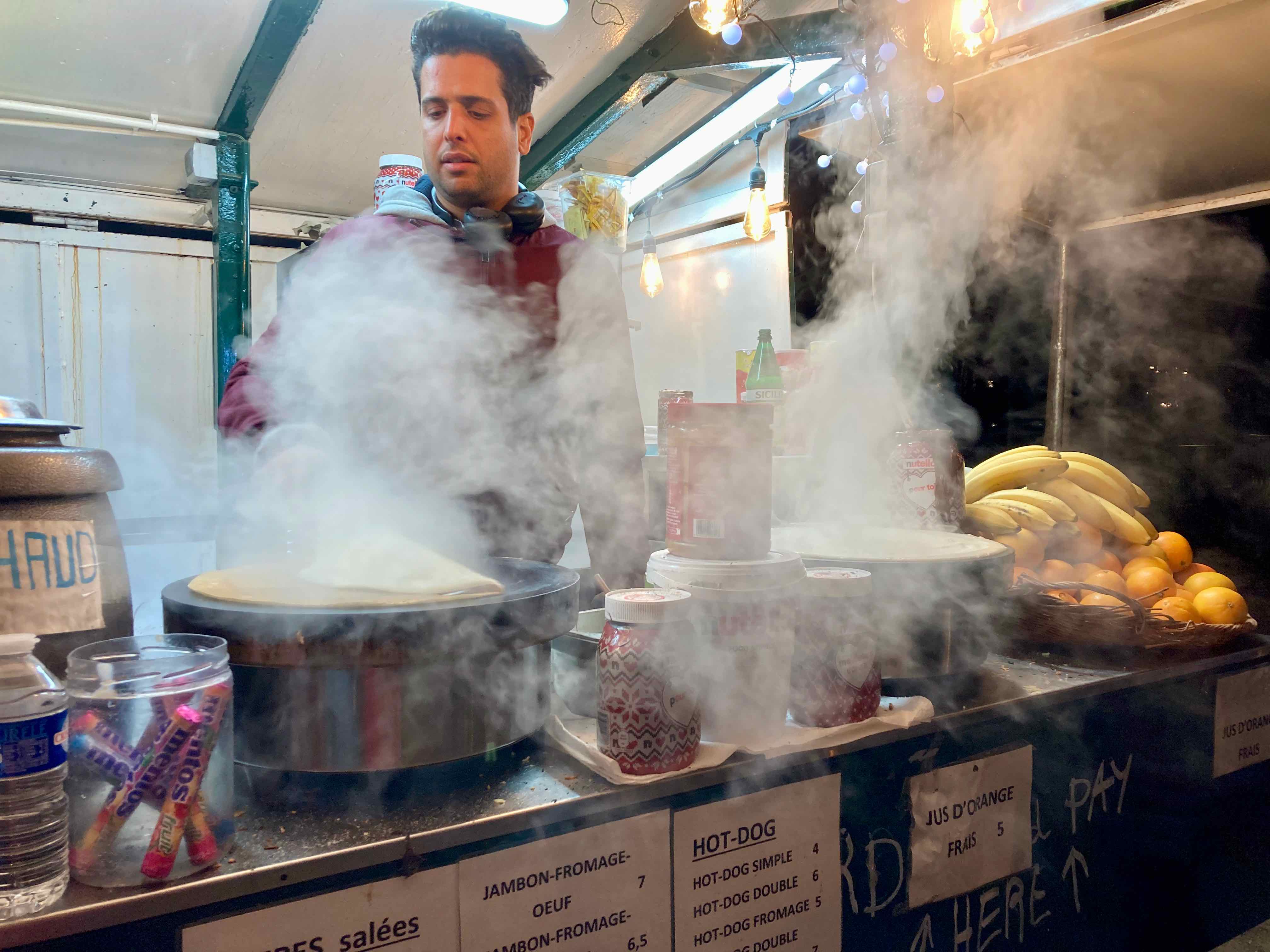
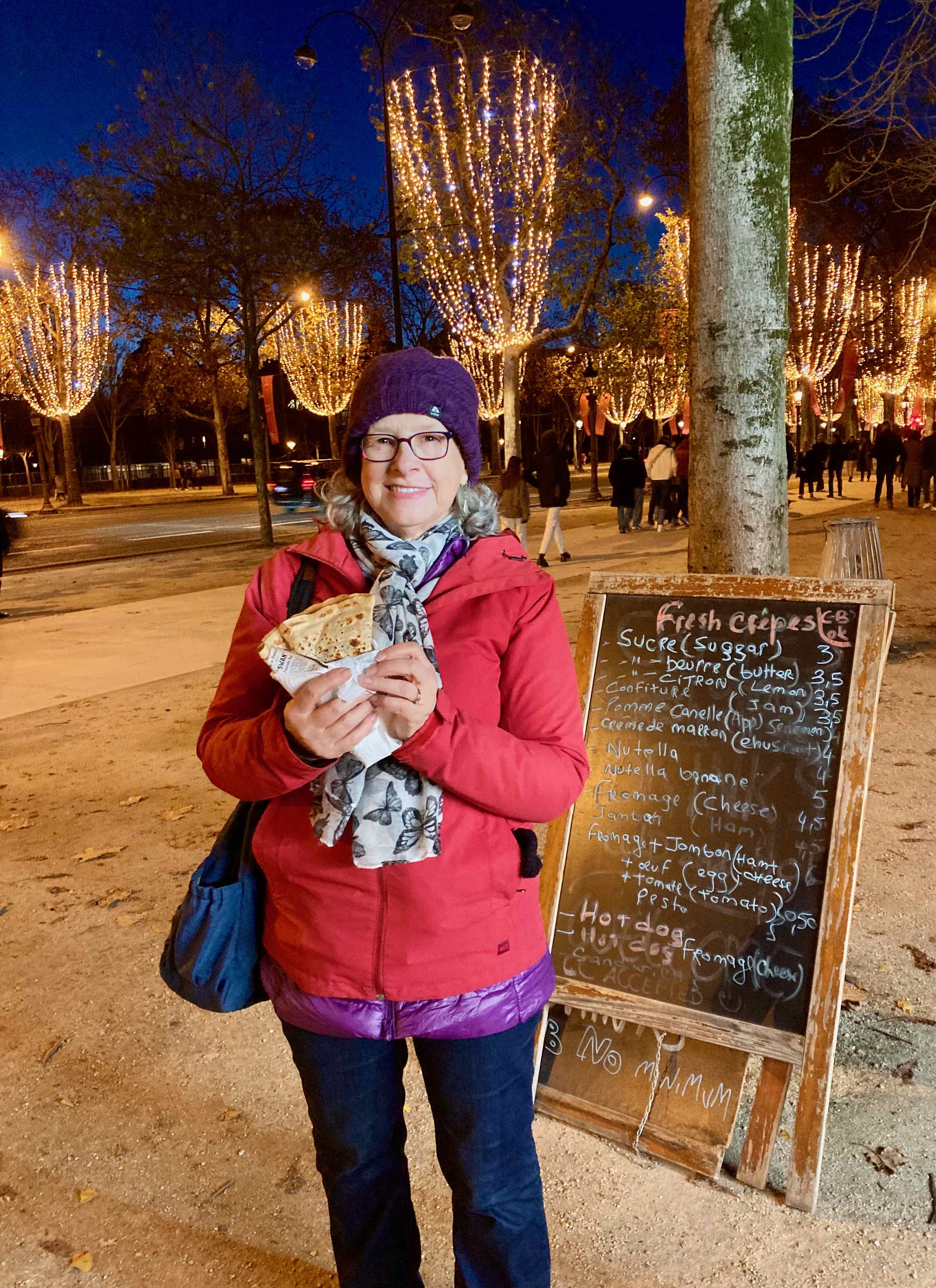
Nearby we see a small stand selling crêpes.  I simply have to have at least one crêpe, before I leave Paris… they are delicious.

It is a bit chilly but the yummy crêpe warms my hands and tummy…now we can go home.

Life Drawing and Bob’s Paris

Day 84,   Monday November 20, 2023

I want to attend as many life drawing sessions as I can these last few days in Paris.  I am still feeling quite tired after getting Covid the beginning of the month, so most days I am going to life drawing and then coming straight home.  I don’t have the energy for much else.

I am back at the Grande Chaumière again this afternoon.  Bob and I took the same metro.  I got off at the Vavin stop to go drawing and he continued towards the Place de la Concorde on the north side of the Seine River to do some more exploring.

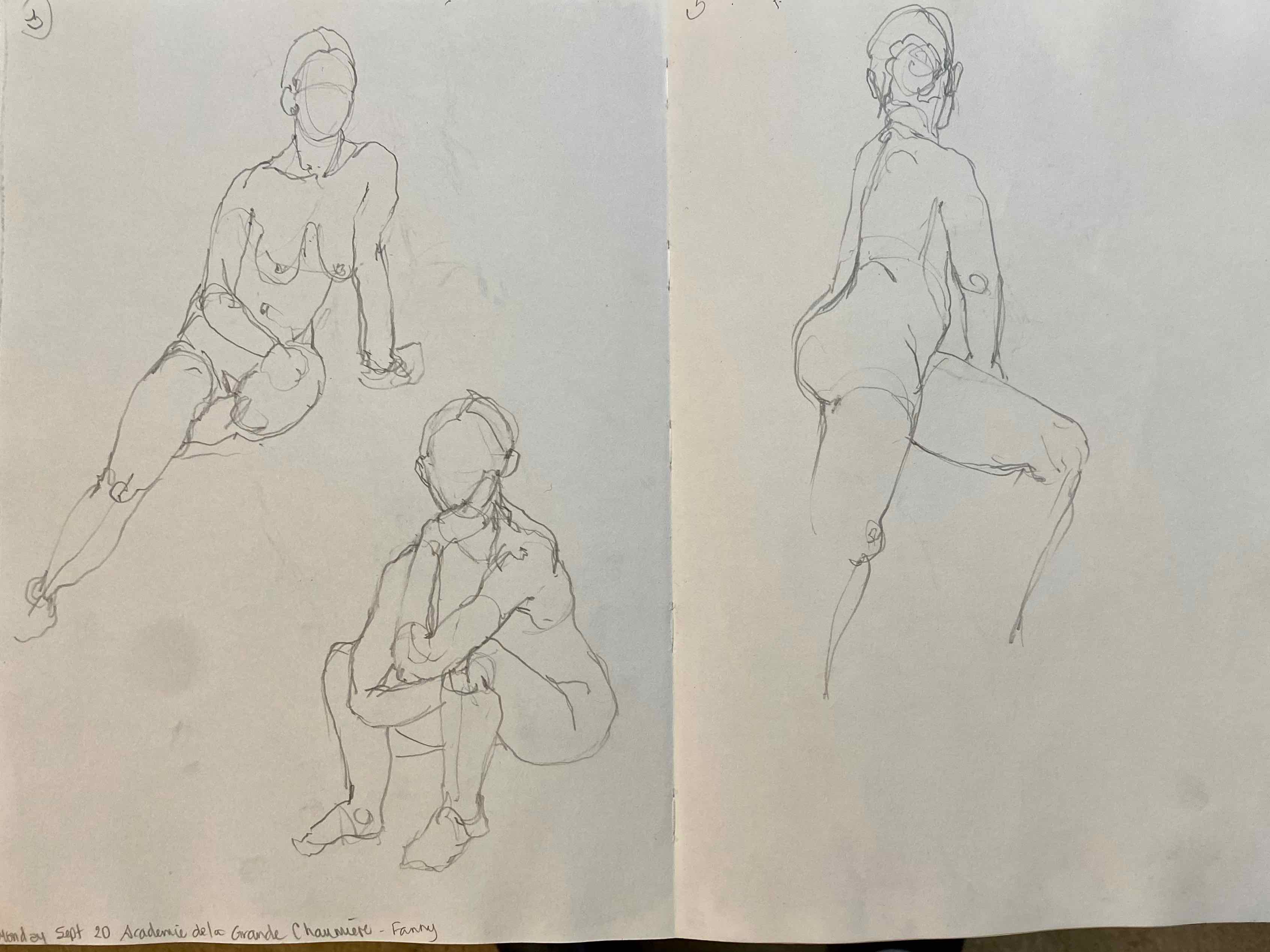
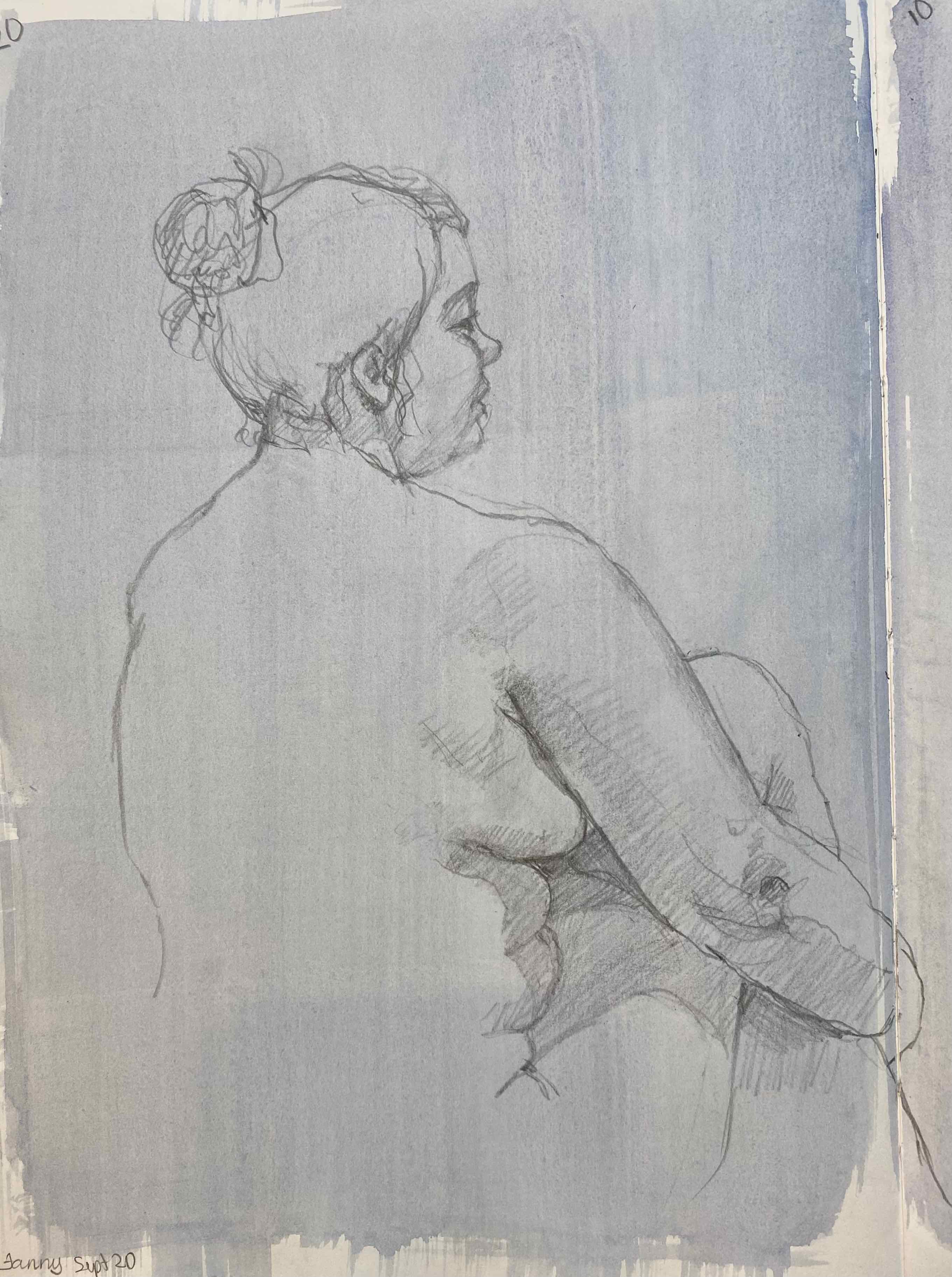
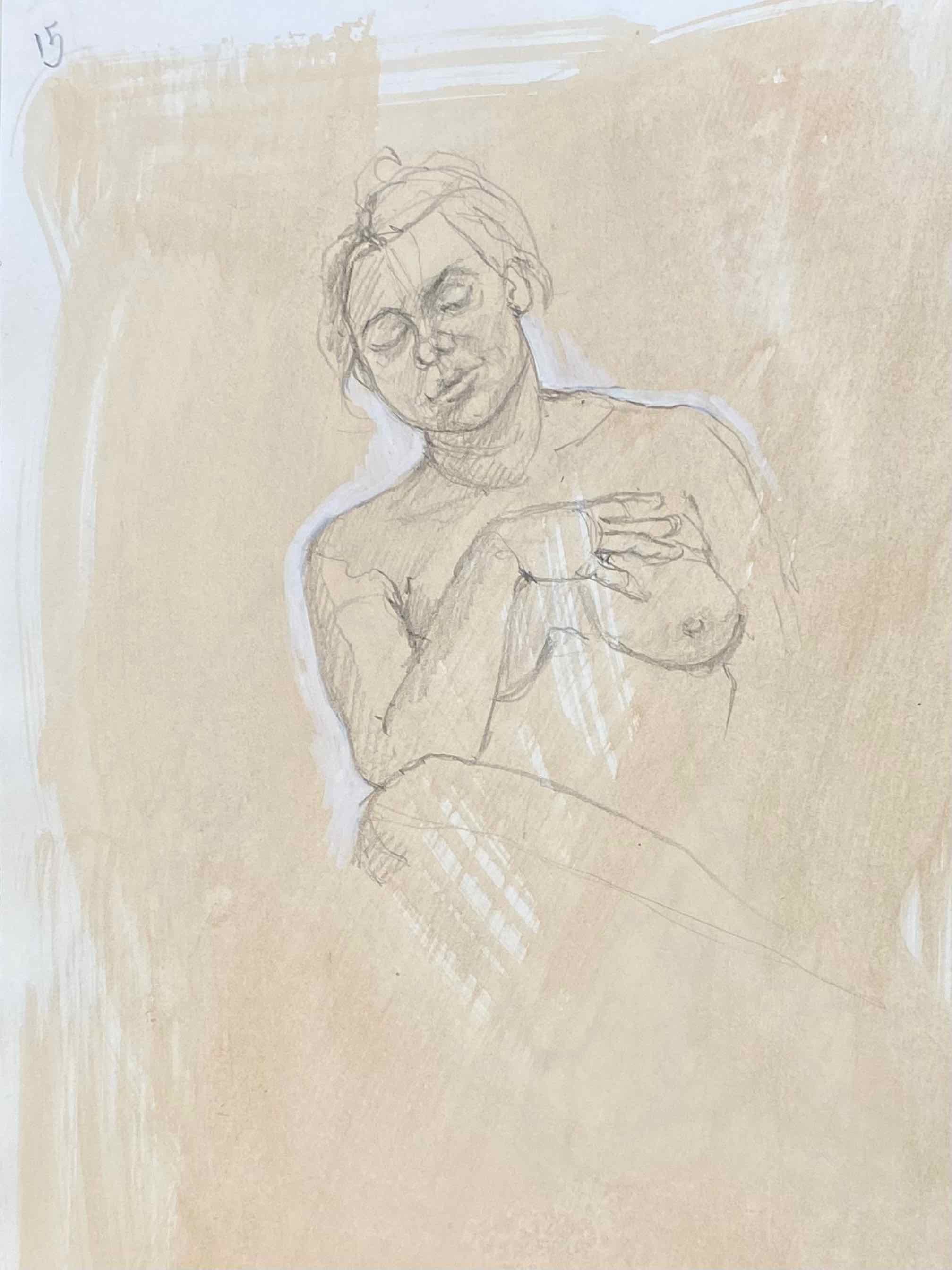
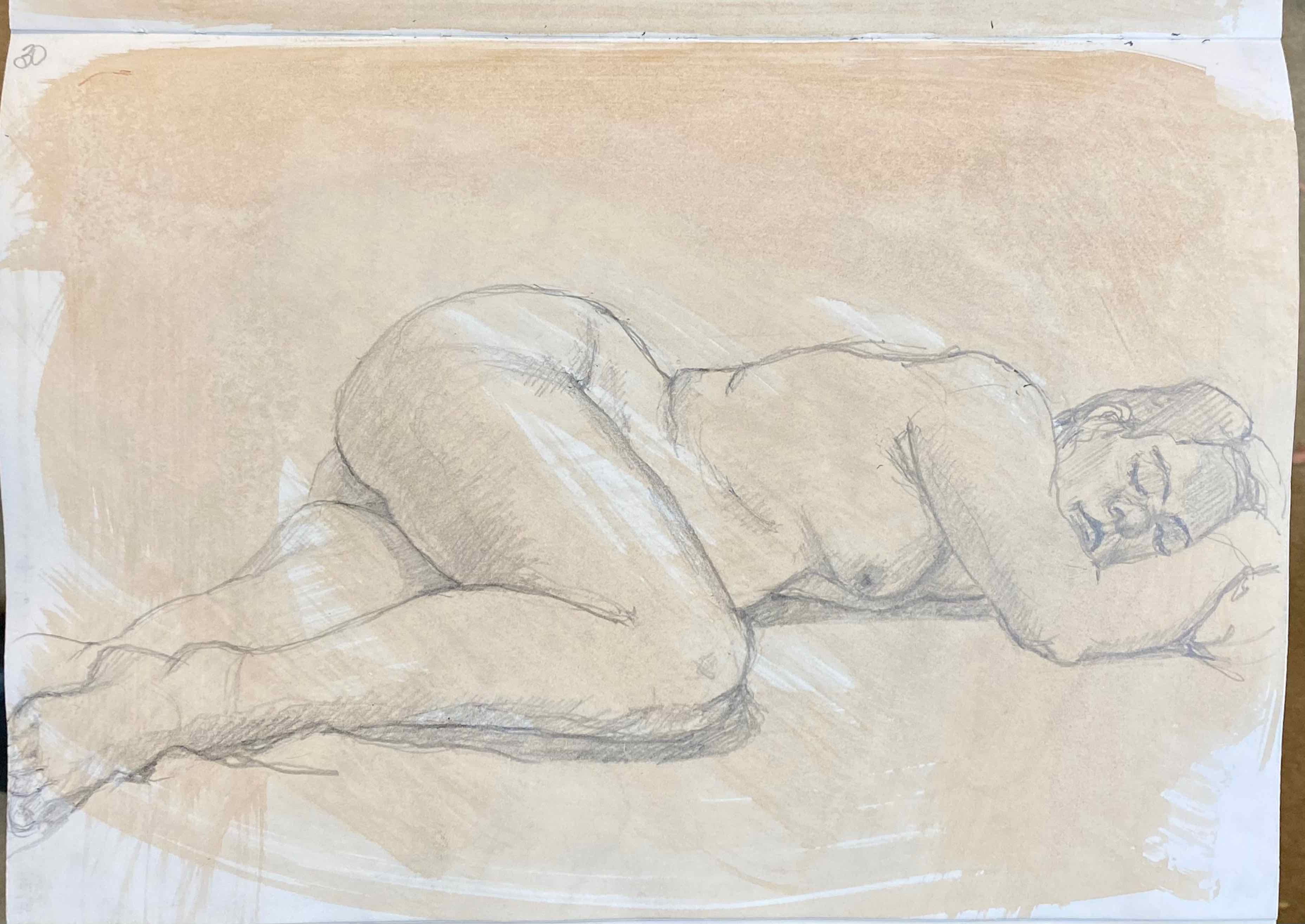
The session is from 2:30 to 5:00 …only 2 1/2 hours, not the 3 hour sessions I am used to at home.  The time goes by much too quickly.  Today we have a wonderful model named Fanny.

Three 3 minute poses

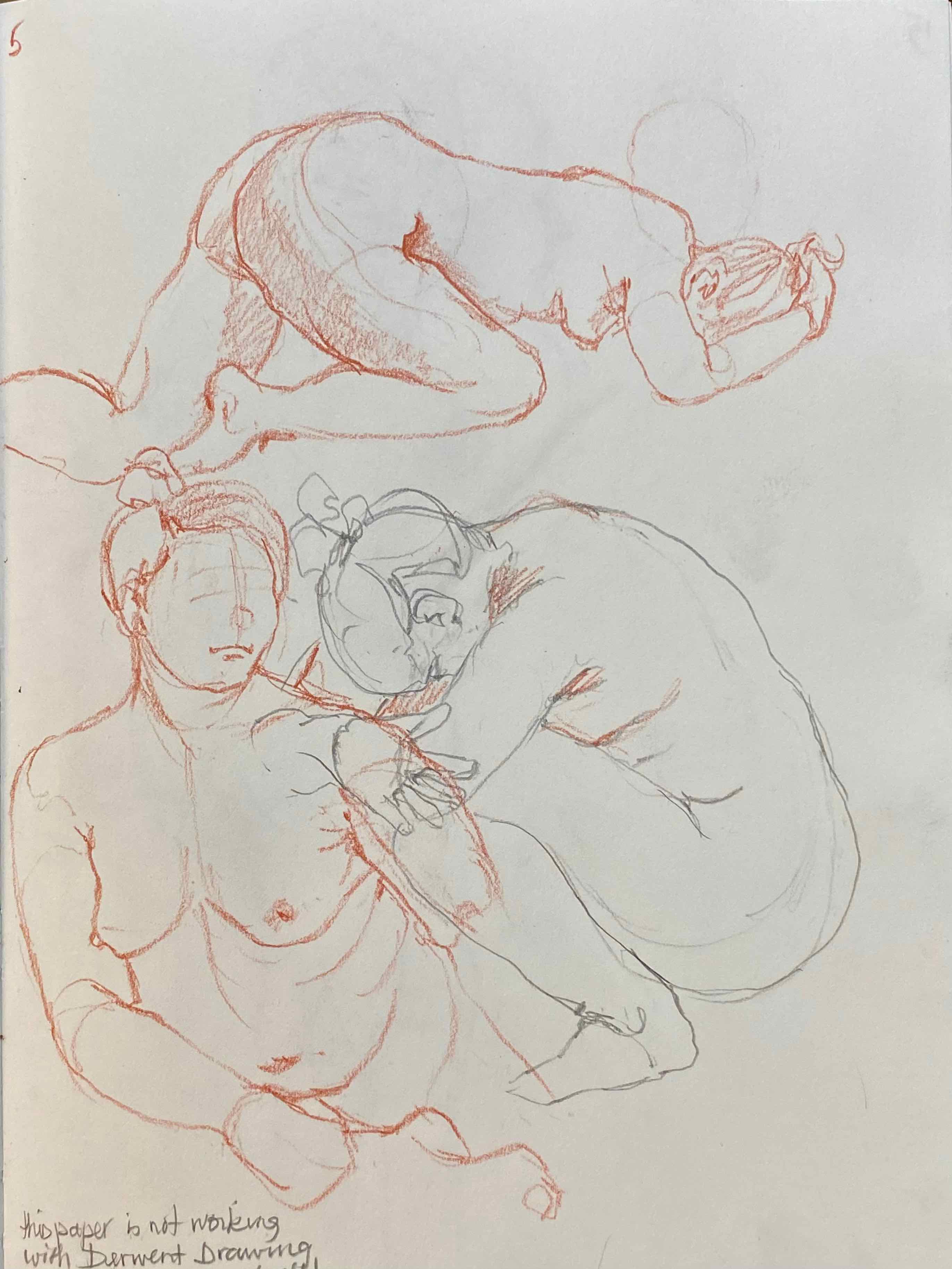
I tried my Derwent Drawing sanguine pencil, but I didn’t like how it felt on the paper in this sketchbook.  Three 5 minute poses.

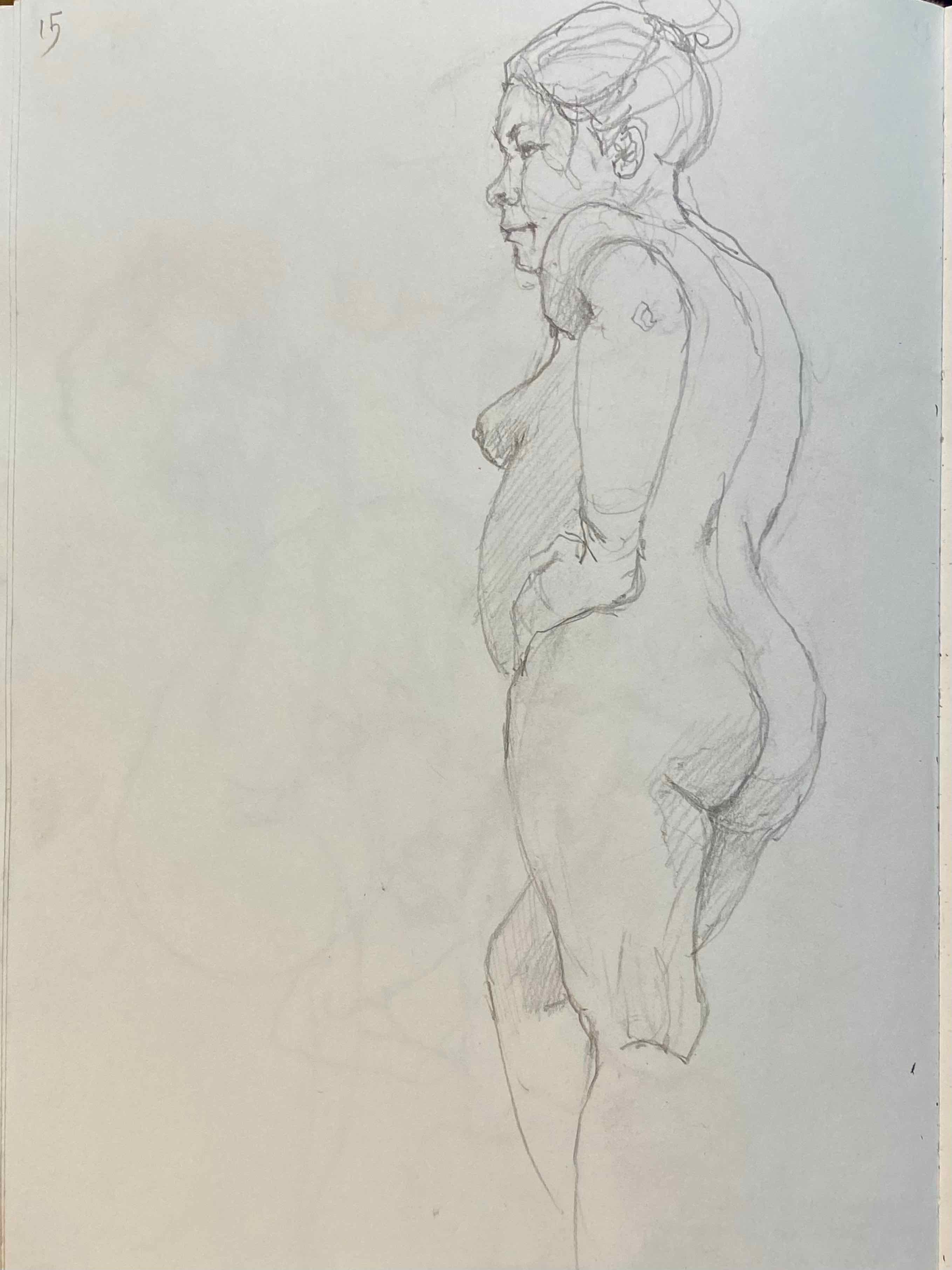
Fanny’s poses were naturally graceful.  Two 15 minute poses…

a  20 minute pose…

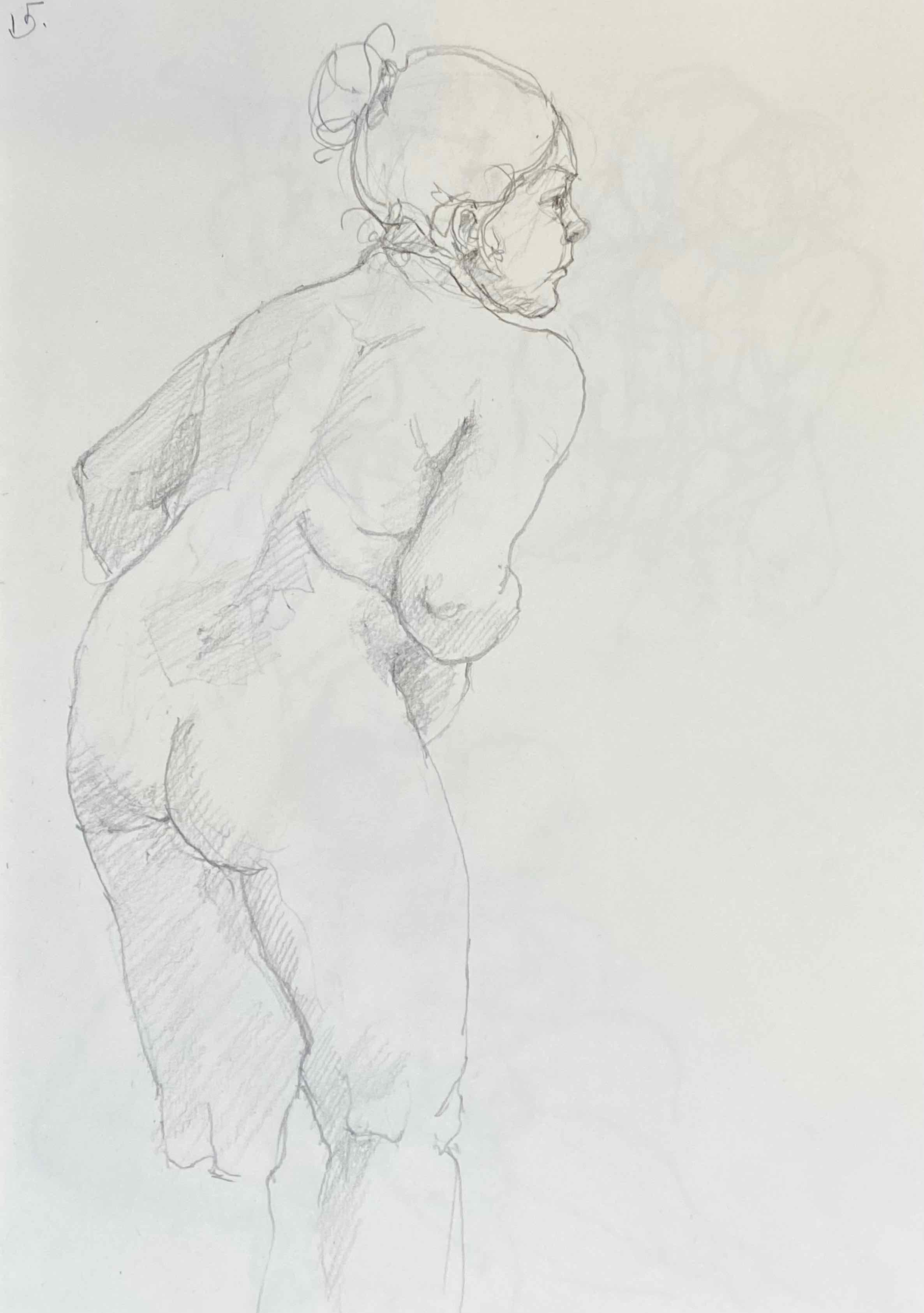
a 15 minute pose……and a final 30 minute pose.  Fanny was such a great model.  It was a good day!

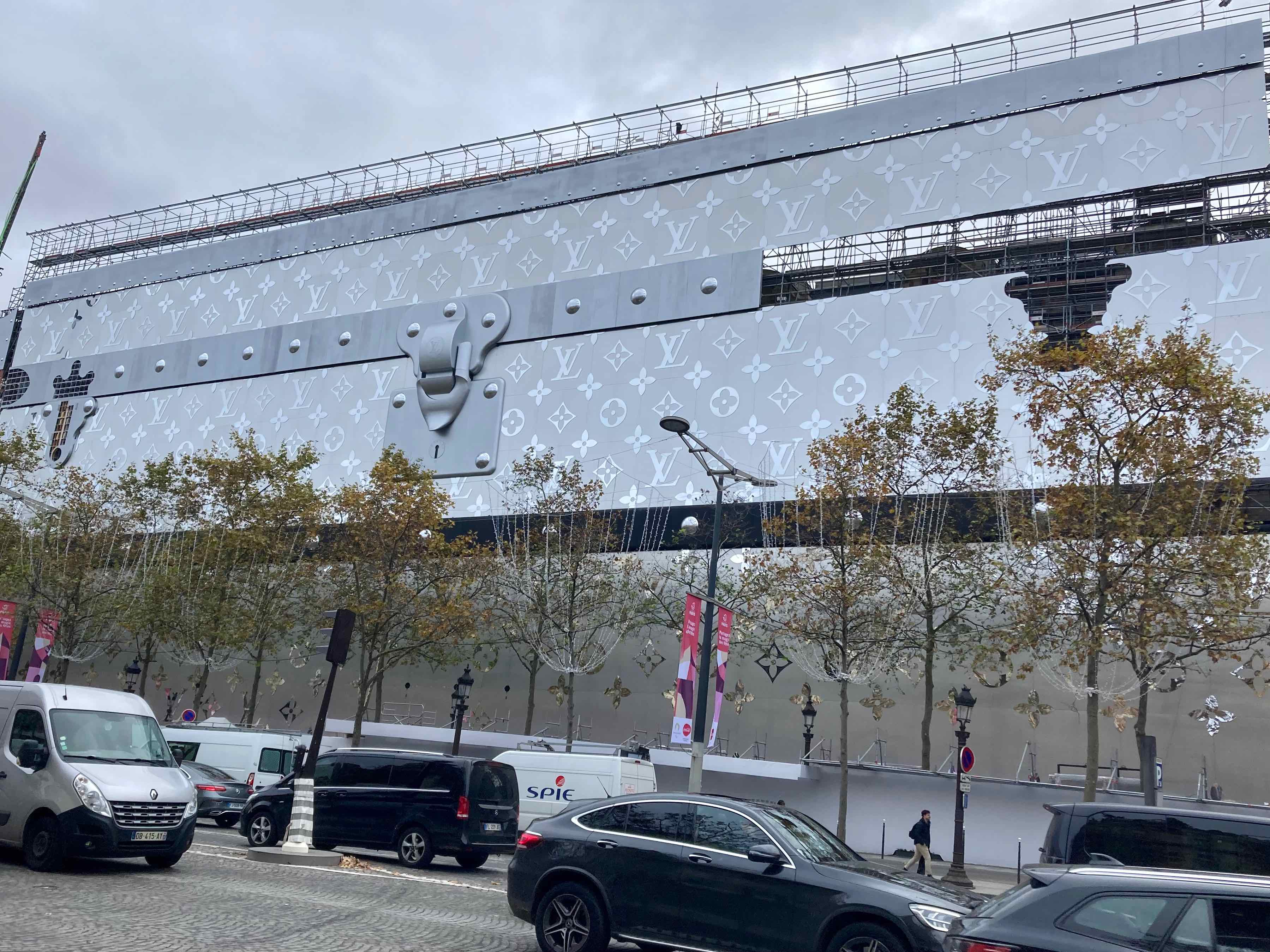
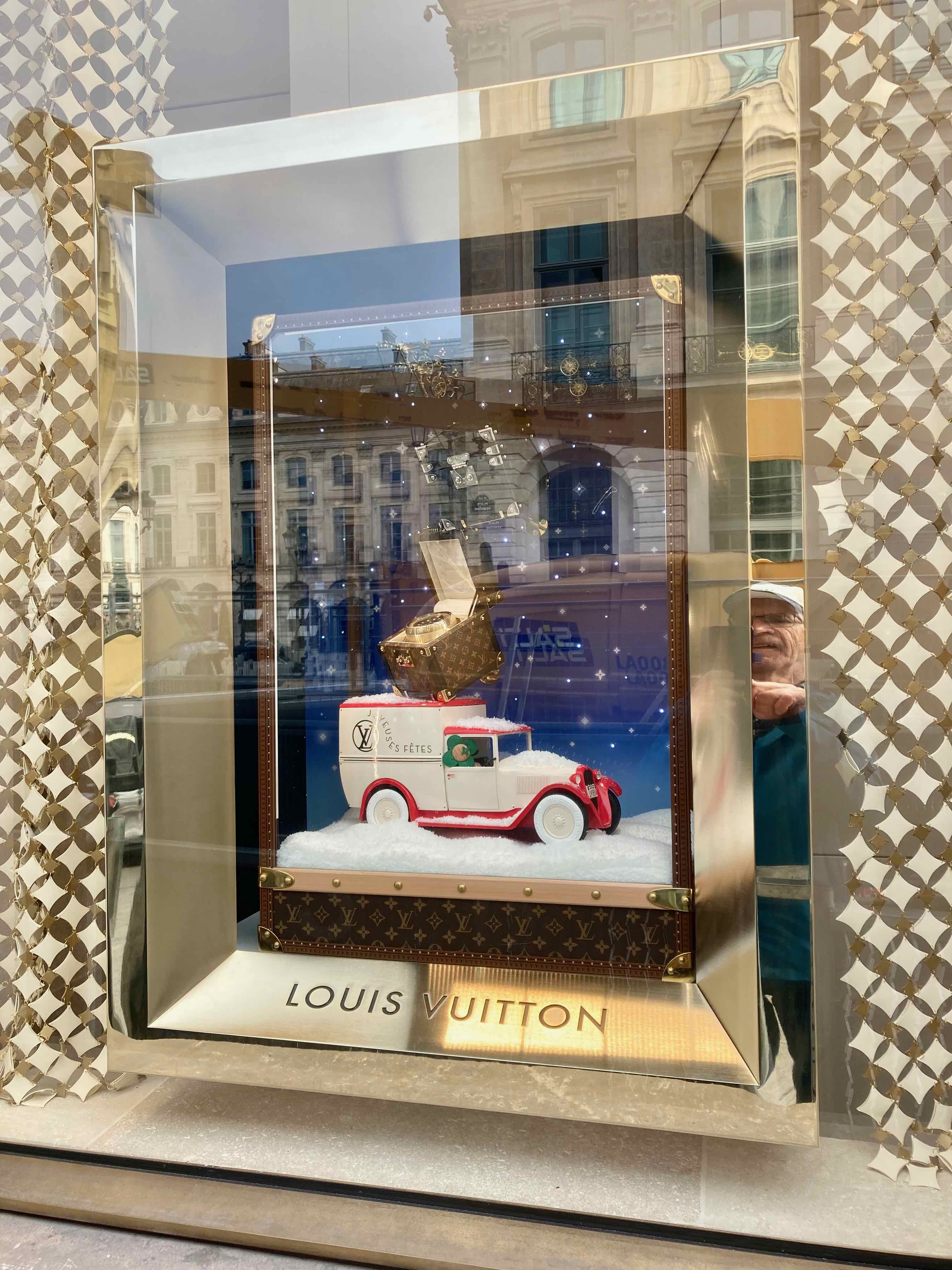
While I was drawing, Bob explored the north shore near the Champs Élysées.  This photo shows the hoarding which looks like a giant trunk during renovation work on a Louis Vuitton building. How clever!  He saw a lot of the highlights in this area of Paris.

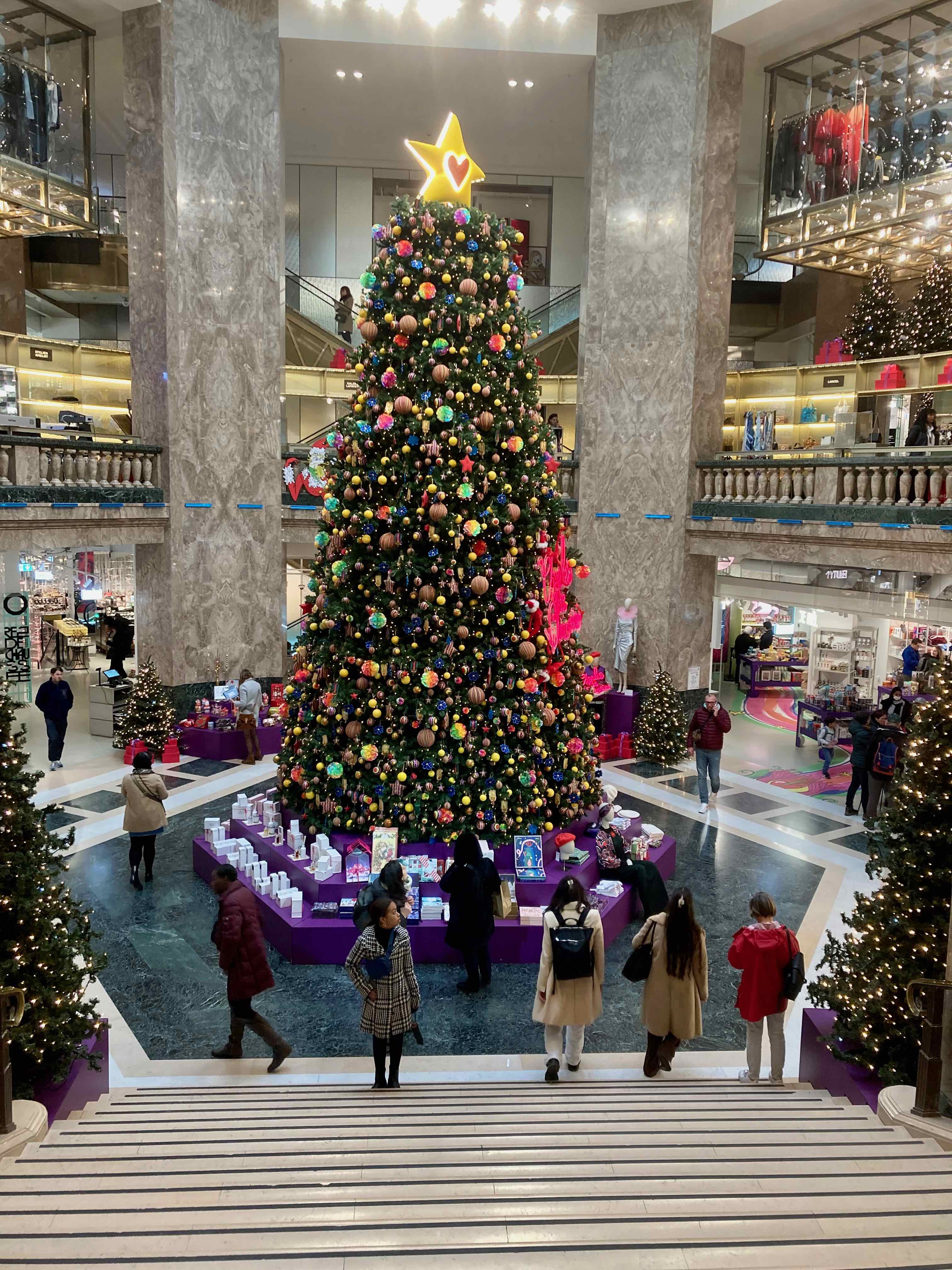
Bob checked out the Christmas tree in a Galeries Lafayette store.  I’m not sure I will have time to go see it for myself, so this photo might just have to do.

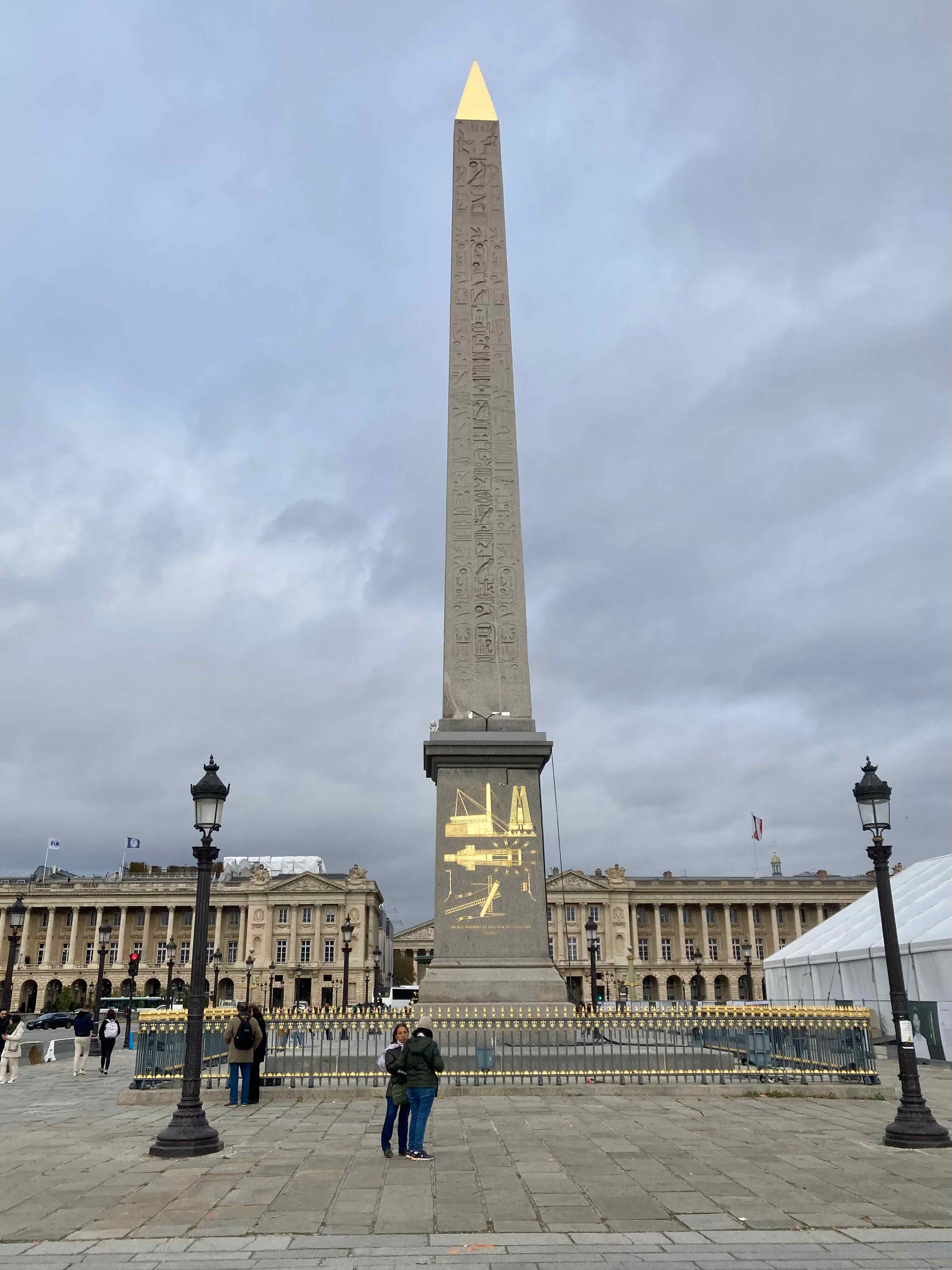
The 72′ tall golden tipped Luxor Obelisk on the Place de la Concorde was erected in 1829, on the very spot where Louis XVI was beheaded!  It has now become a symbol of peace and harmony.

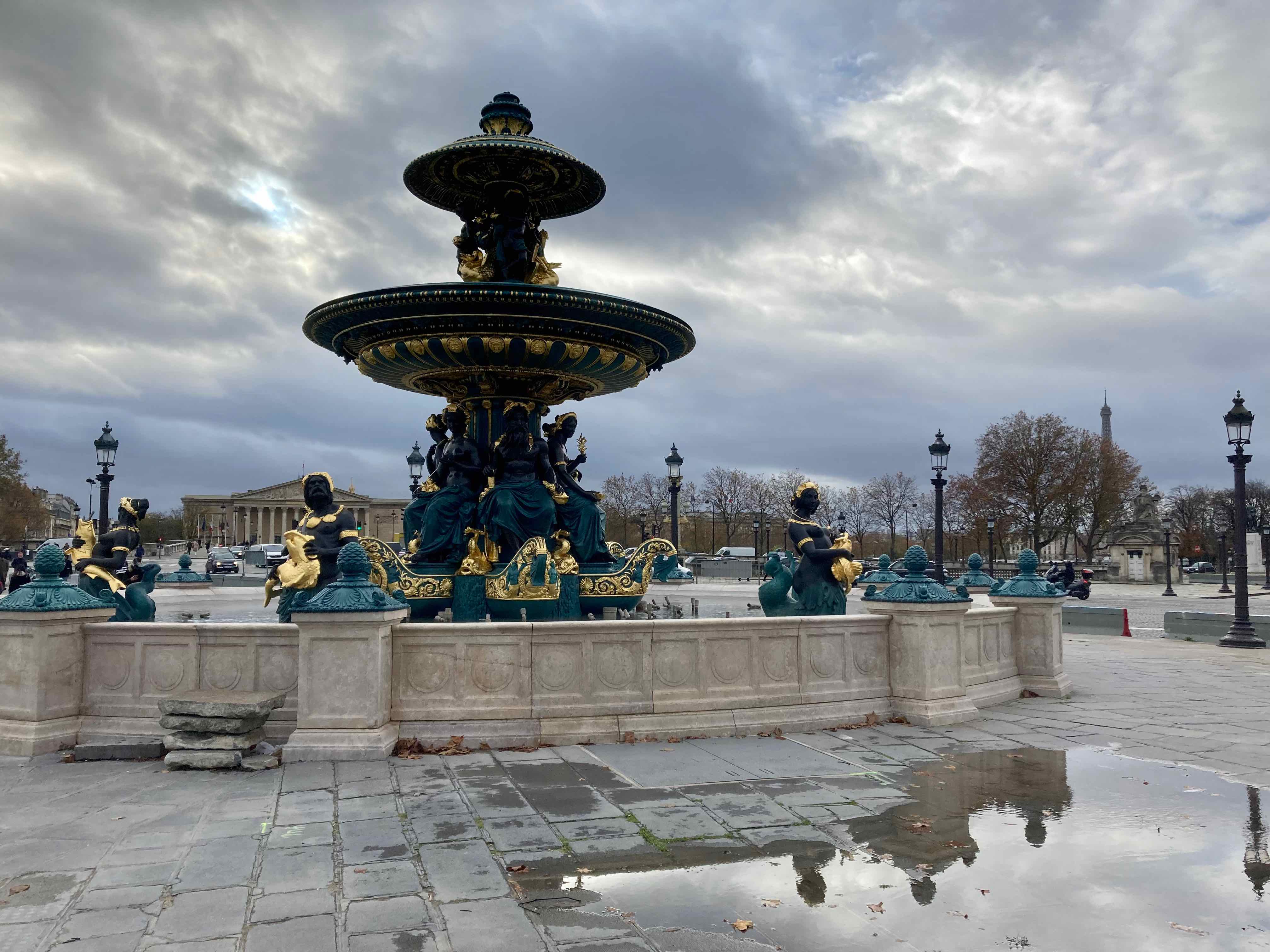
The Fountain of Rivers is ornately decorated with mermaids and mermen.  

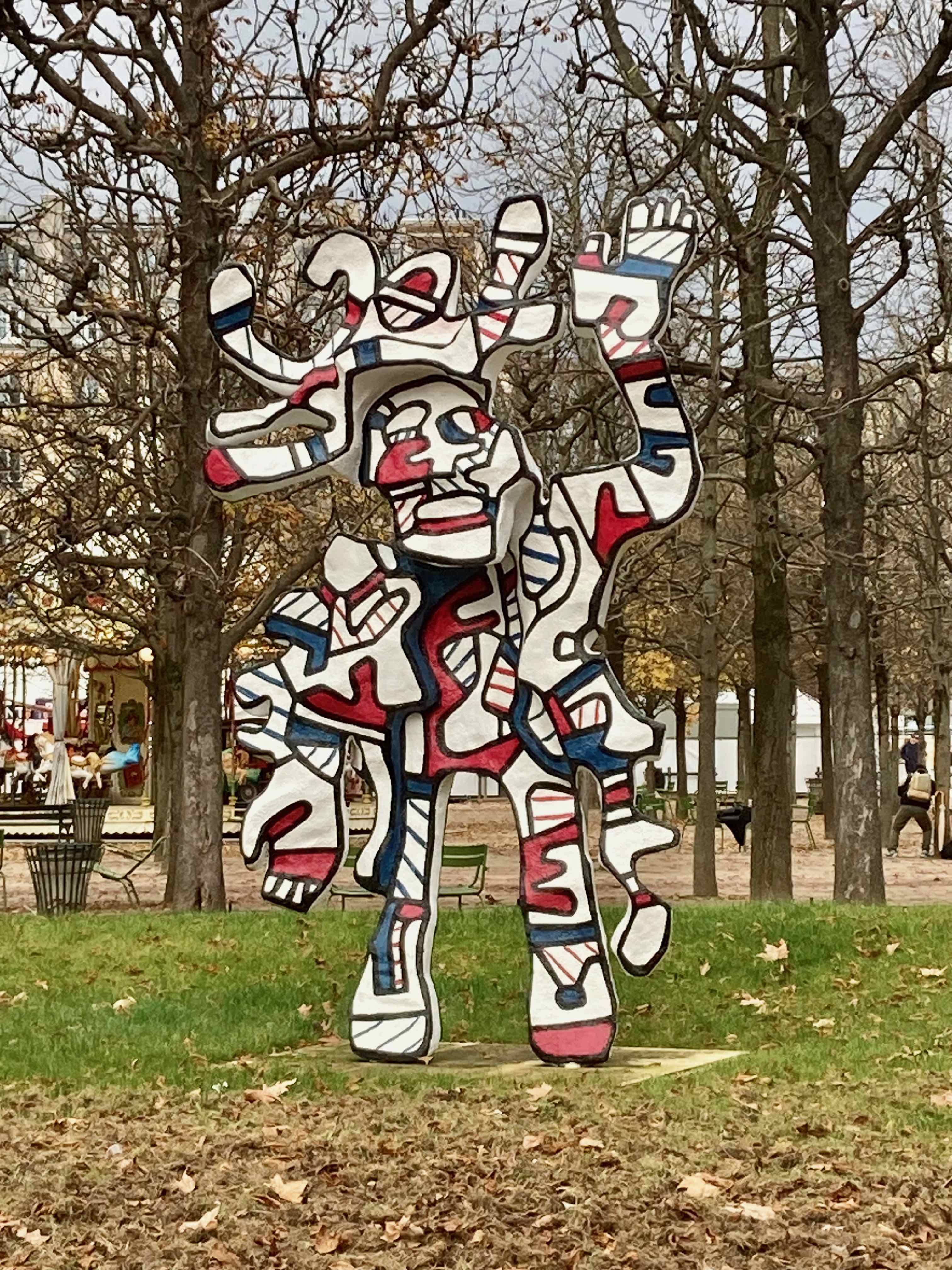
Jean Dubuffet’s Le Bel Costumé caught Bob’s eye in the Jardin des Tuileries.

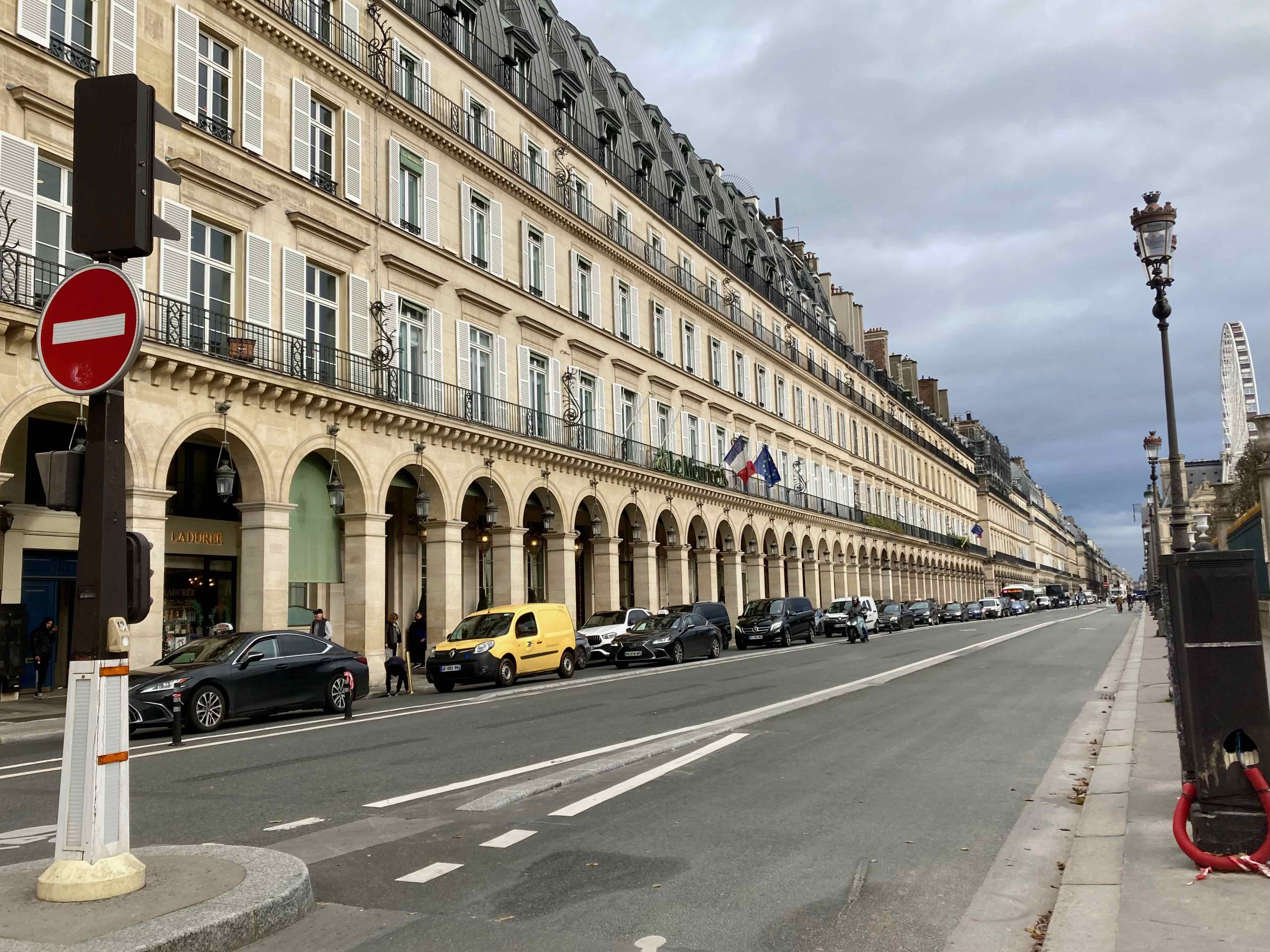
This is a long street of shops near the Place Vendome…

with very expensive merchandise!

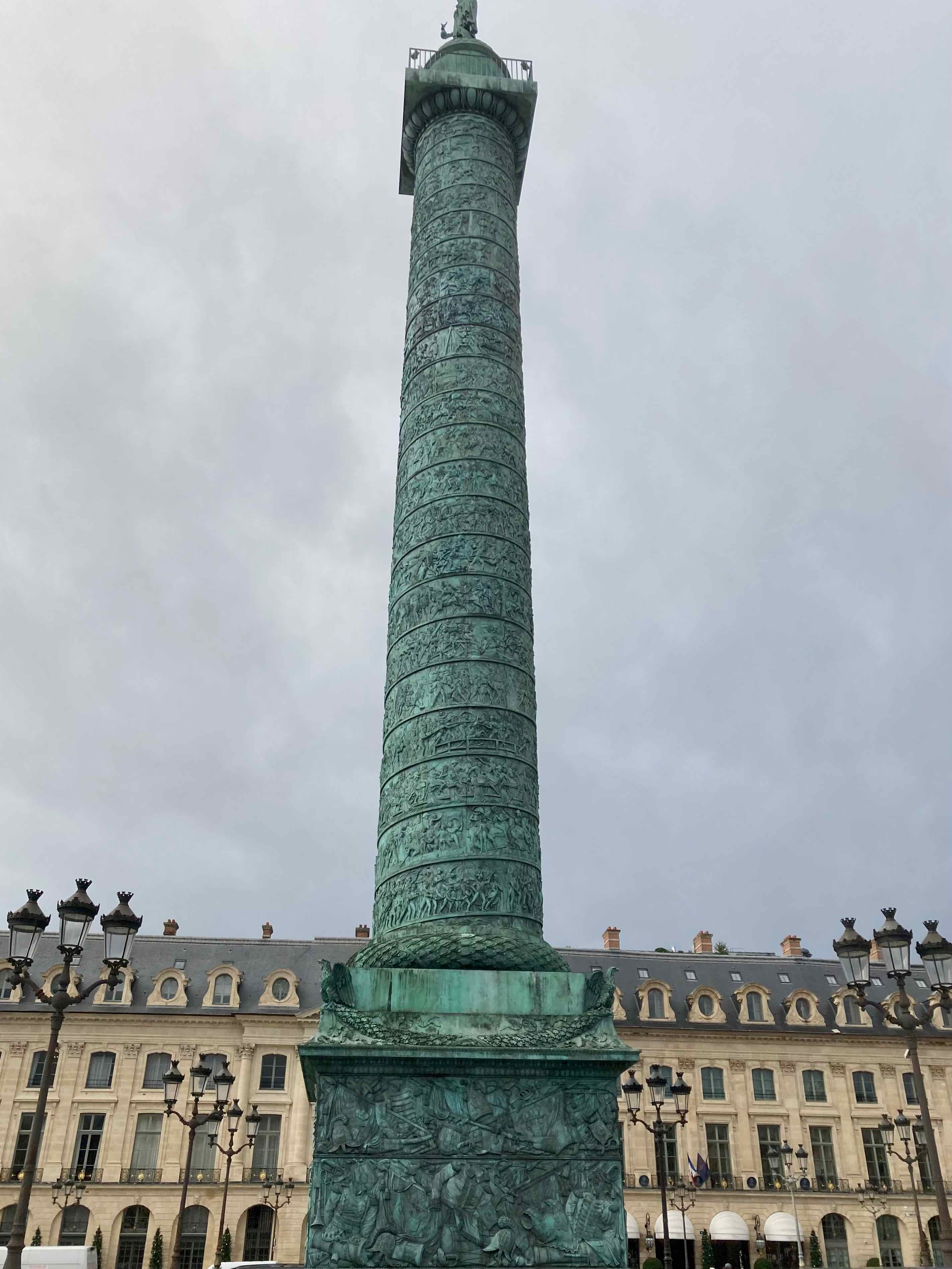
The original Vendôme Column at the centre of the square was erected by Napoleon I.  It was torn down on 16 May 1871, but it was subsequently re-erected and remains a prominent feature on the square today.

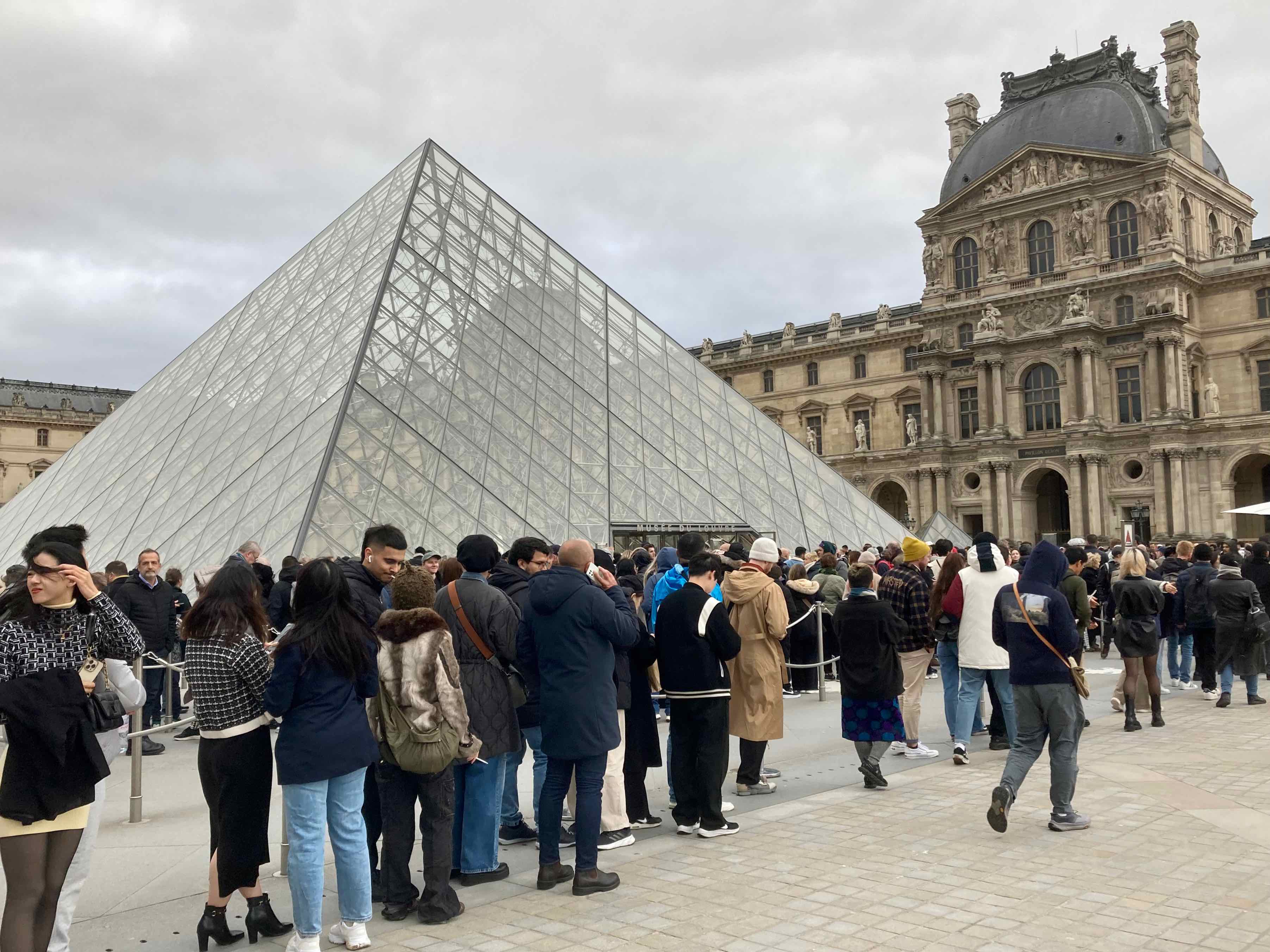
Too bad all these people who are lining up to get into the Louvre don’t know about the side door, where there is usually no line up at all!

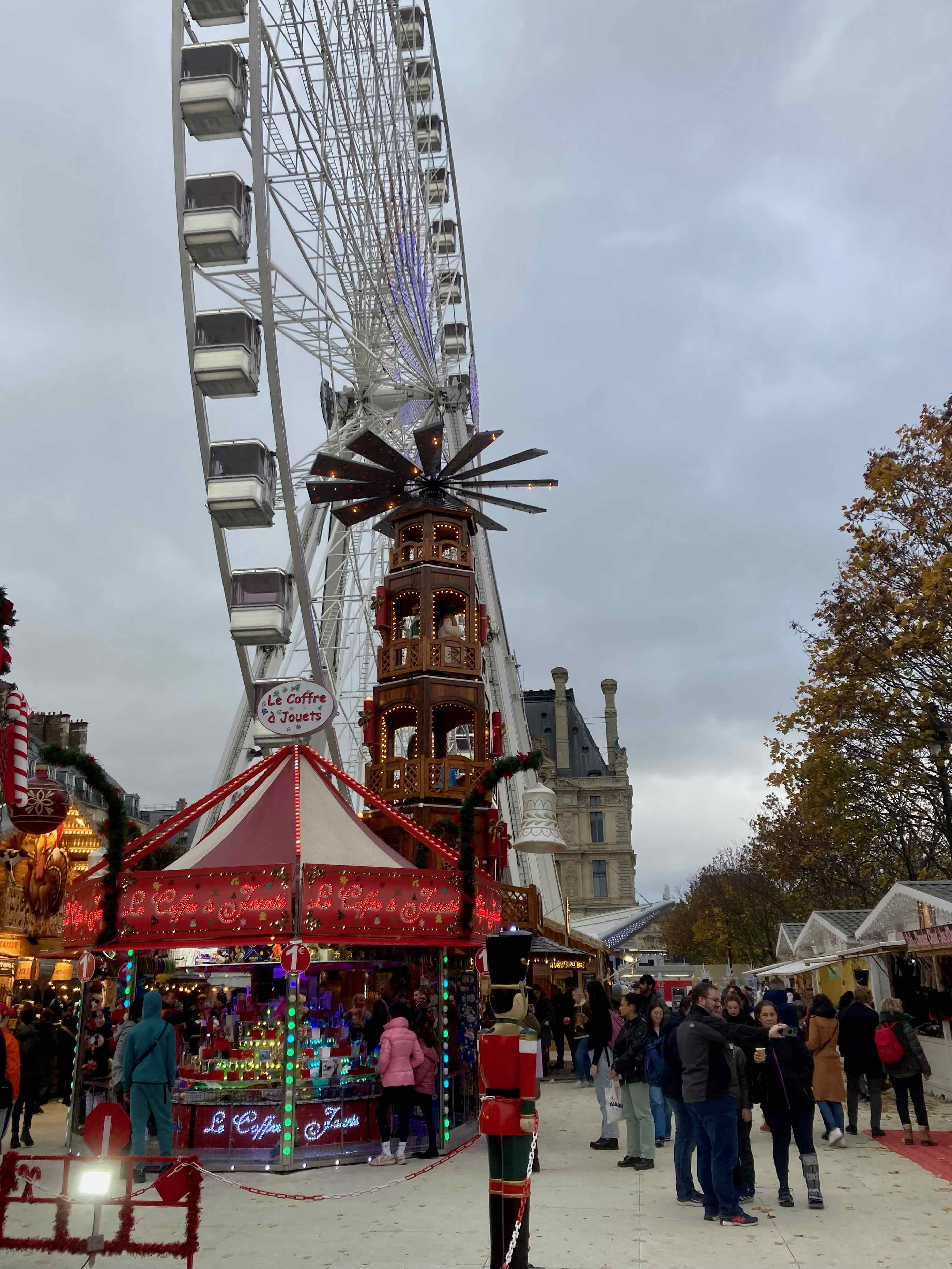
The Roue de Paris is a 60-metre tall transportable Ferris wheel, originally installed on the Place de la Concorde in Paris, for the 2000 millennium celebrations. Too bad we didn’t have time to ride on it this trip, although it does look a bit scary.

The Pont Alexandre III is a bridge that spans the Seine in Paris.  The bridge is widely regarded as the most ornate, extravagant bridge in the city.  It has been classified as a French historic monument since 1975.

We both arrive home in time to make dinner and relax.  Our days in Paris are fast drawing to a close.

Lyon to Cluny and Dijon

Day 70,  Monday November. 6, 2023

This morning when Bob is taking our stuff out to the car he meets the sniffer dog in the hallway.  He was quite excited to start his bedbug hunt!  I’m sure he gets treats when he does his job well.

Today we are driving to Dijon with a stop in Cluny.   It is cloudy and rainy today and we are surprised to see these sunflowers still in full bloom.  They were finished and harvested over a month ago elsewhere.

In just an hour we arrive in Cluny, find a parking lot and paid .15€, which is about 24 cents,  for all day parking!  What a bargain, although I wondered why they even bothered to charge anything.  It is quite a walk to the Cluny Museum and it is raining and cold.

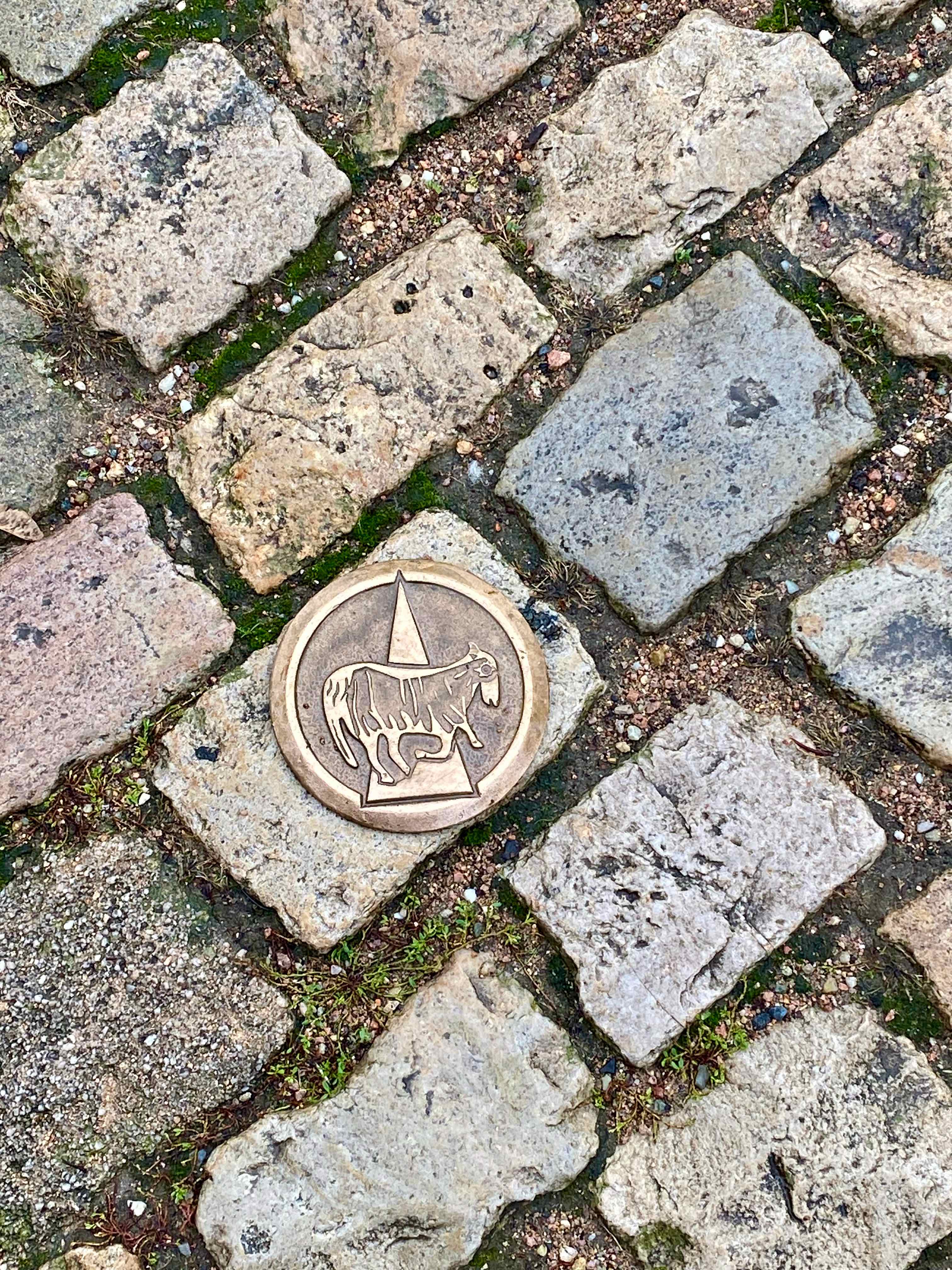
These medallions set in the road and sidewalks help us find our way…kind of like our walk in Vincent’s footsteps in Arles.  They were really helpful, and before too long we arrive at the museum.  We find out that the museum closes in half an hour so we barely have time to see everything.  Good thing it is a small museum.

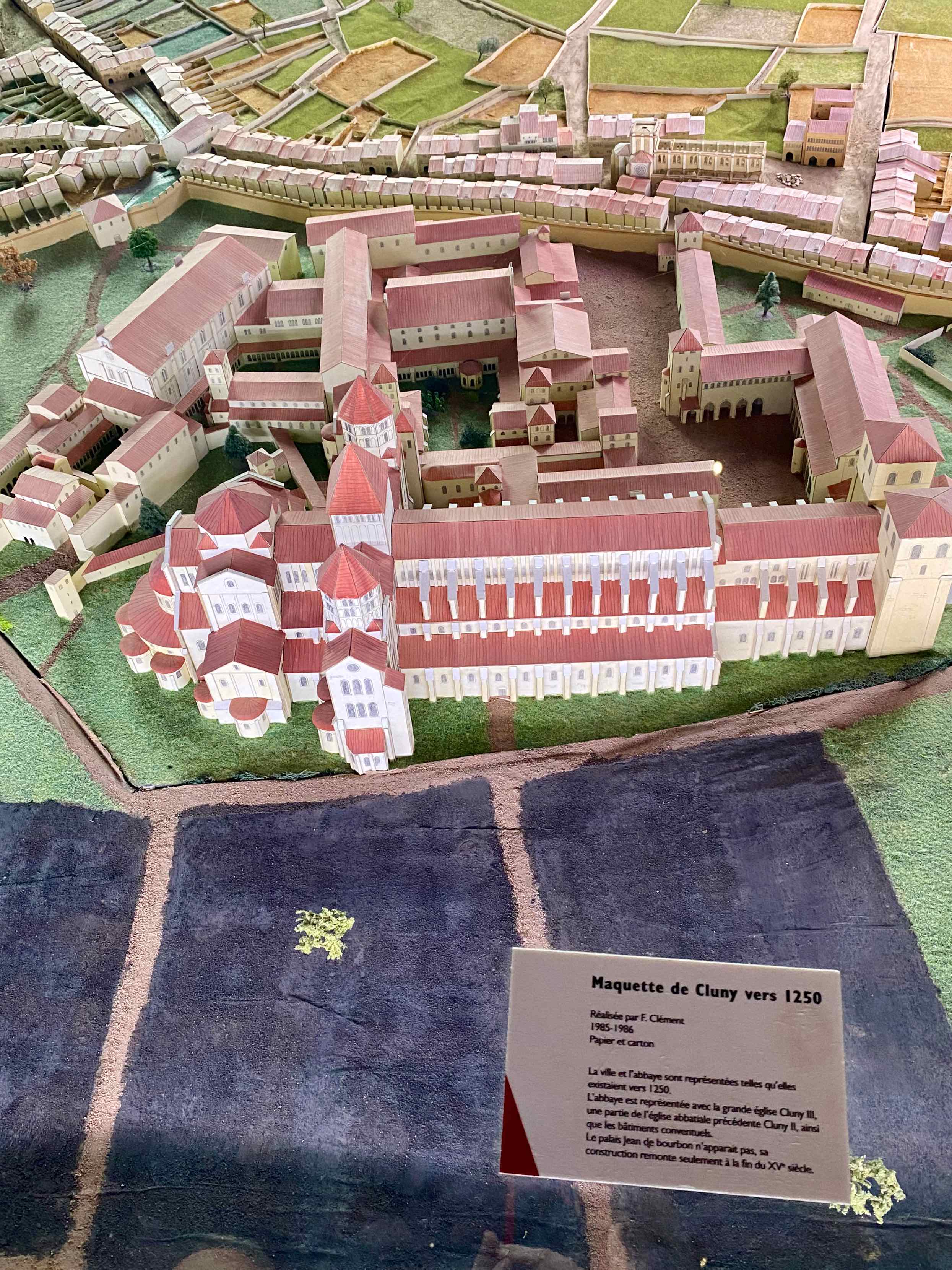
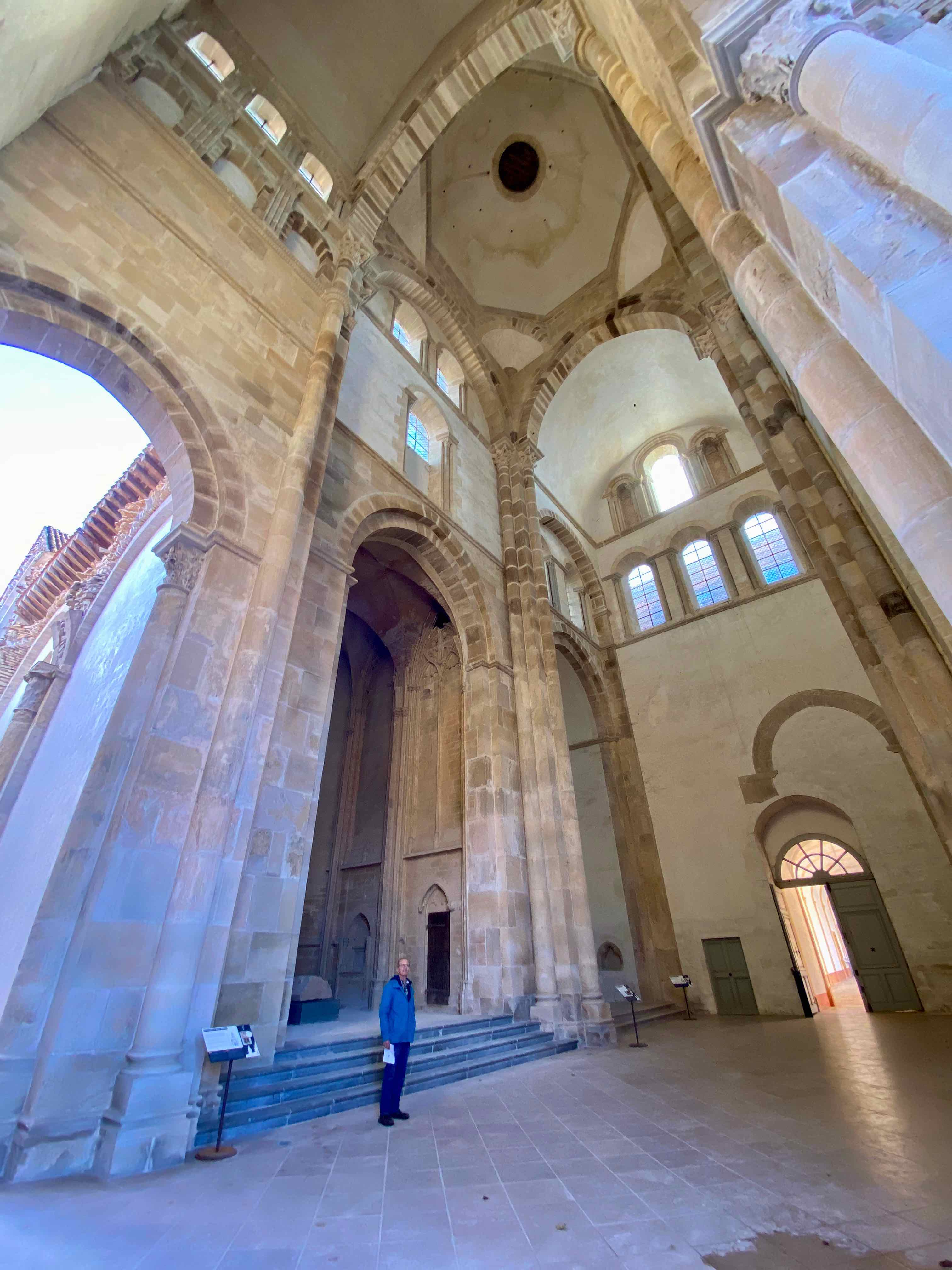
The museum is all about the Cluny Abbey,  the oldest Abbey in France.  It was founded in 910.  This is a model of the Abbey in 1250 when it was at its peak.

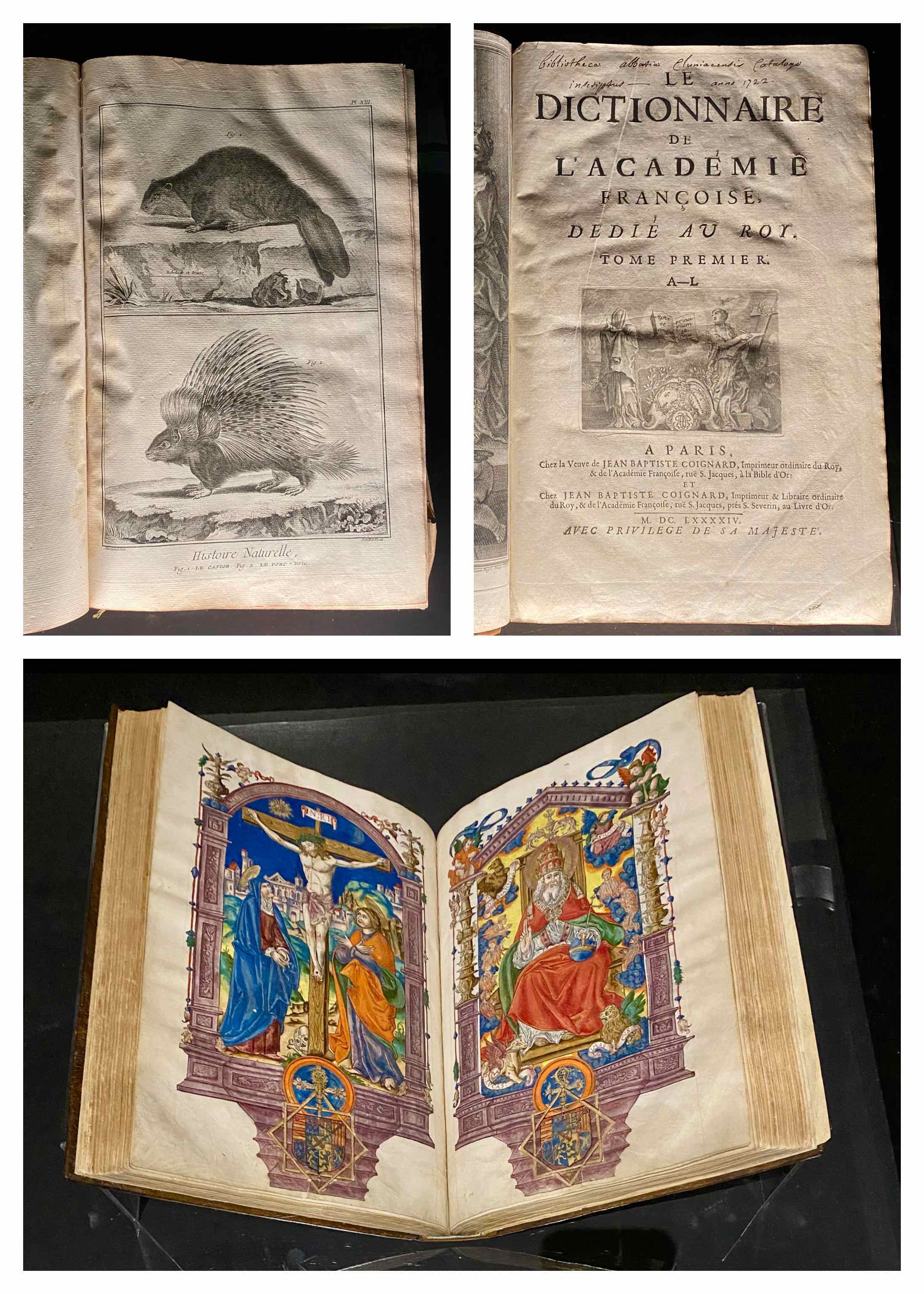
The lady who works at the museum suggested we visit the library before it closes.  It has a lot of very old books and manuscripts but the room is not climate controlled, and I think the books are suffering because of that.

The books on display have warped, wrinkled pages…from moisture I wonder?  It seems a shame but everything costs money and I don’t think this little museum would have the funds to make the library climate controlled.  As soon as we left the library they locked the doors behind us…they kept it open so that we could see it.  Nice!

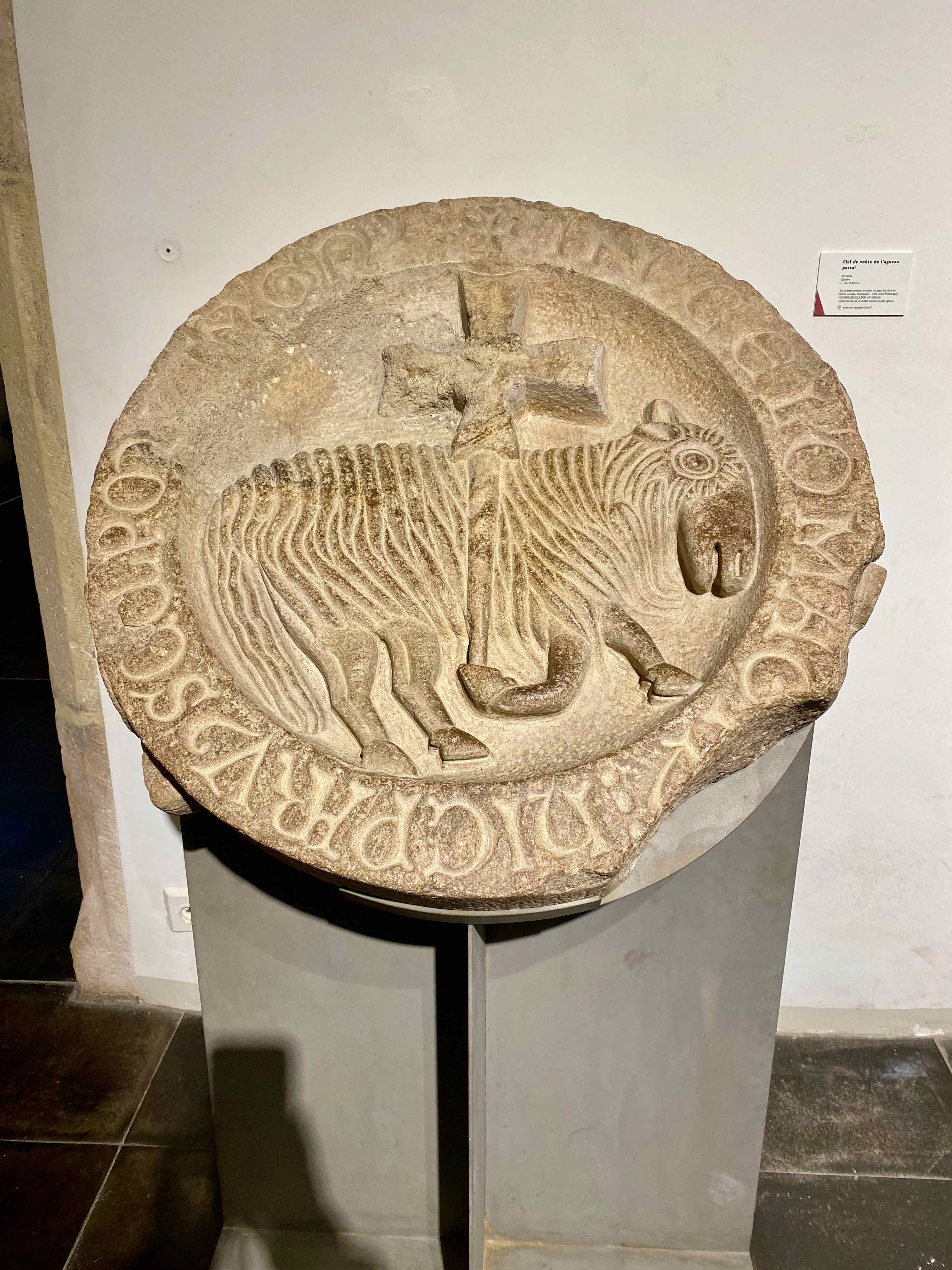
In the museum we see this carved stone with the same symbol as the bronze medallions that helped us find our way earlier.  It is called the ‘keystone of the paschal lamb’.  I looked up paschal and it means relating to Easter and the Jewish Passover.

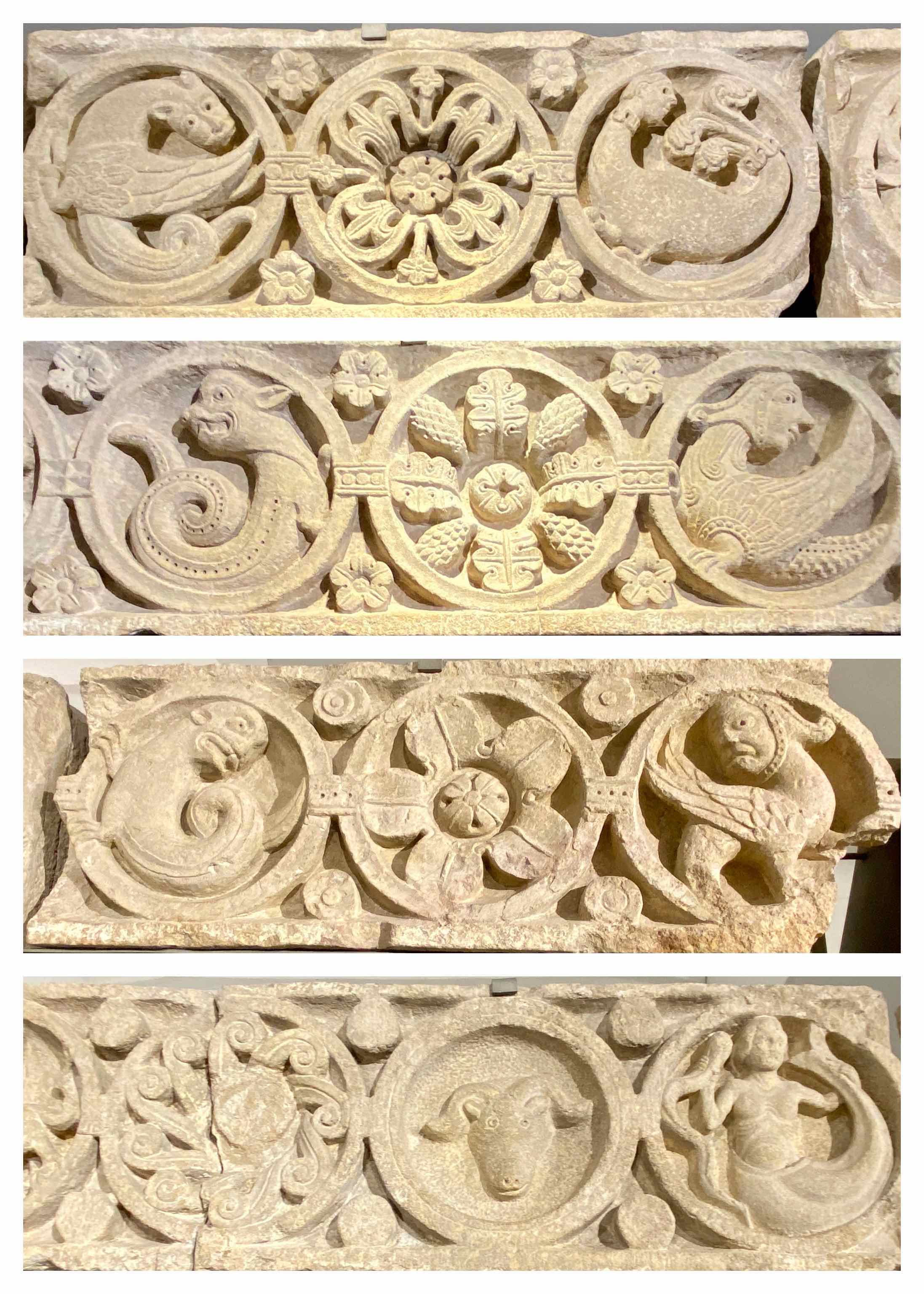
There were interesting carved panels that lined one of the museum rooms.  Every circular design was different than the others.

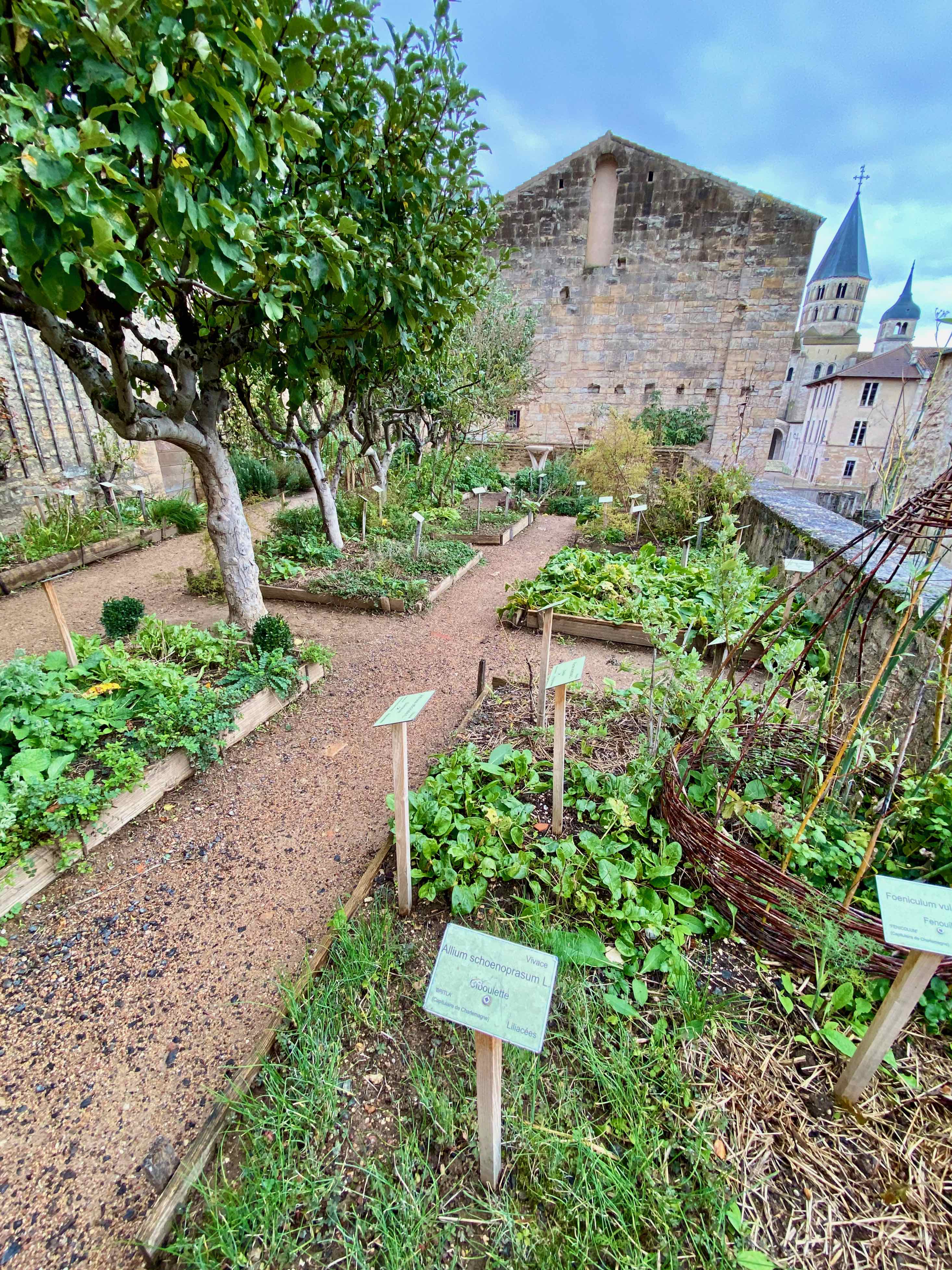
These reliquaries were interesting.   The relic is usually so revered that the reliquary is traditionally made of precious metals or gems like these two below. Relics may include pieces of bone or hair, pieces of cloth, or natural objects that were significant in the lives of a saint or holy person.  The bottom photo is of two unusual portrait reliquaries.We have a rather quick look a the rest of the museum and then we are told that they need to close up so we go outside to find the ruins of the Abbey.  On the way we walk by a lovely medieval herb garden.
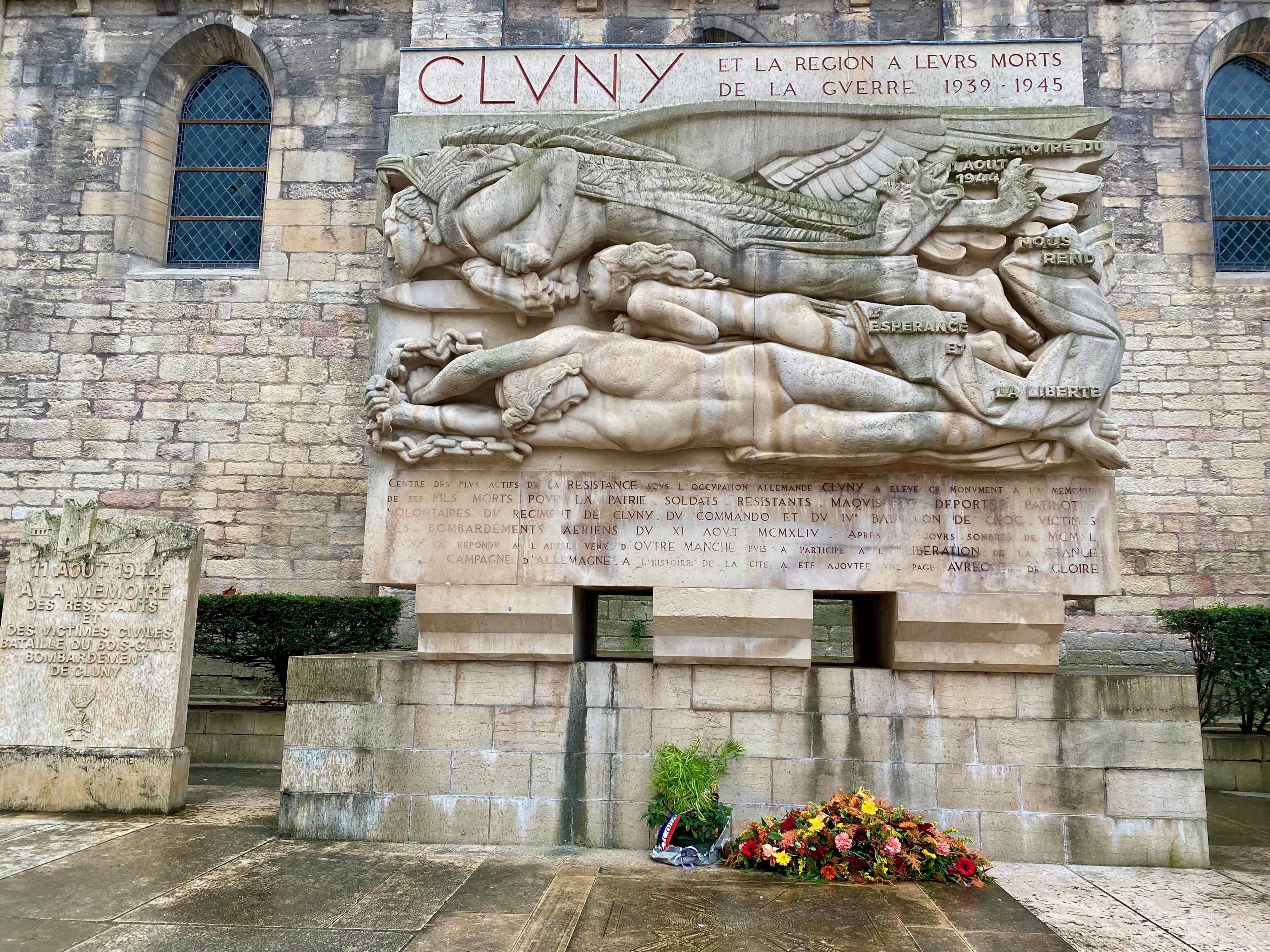
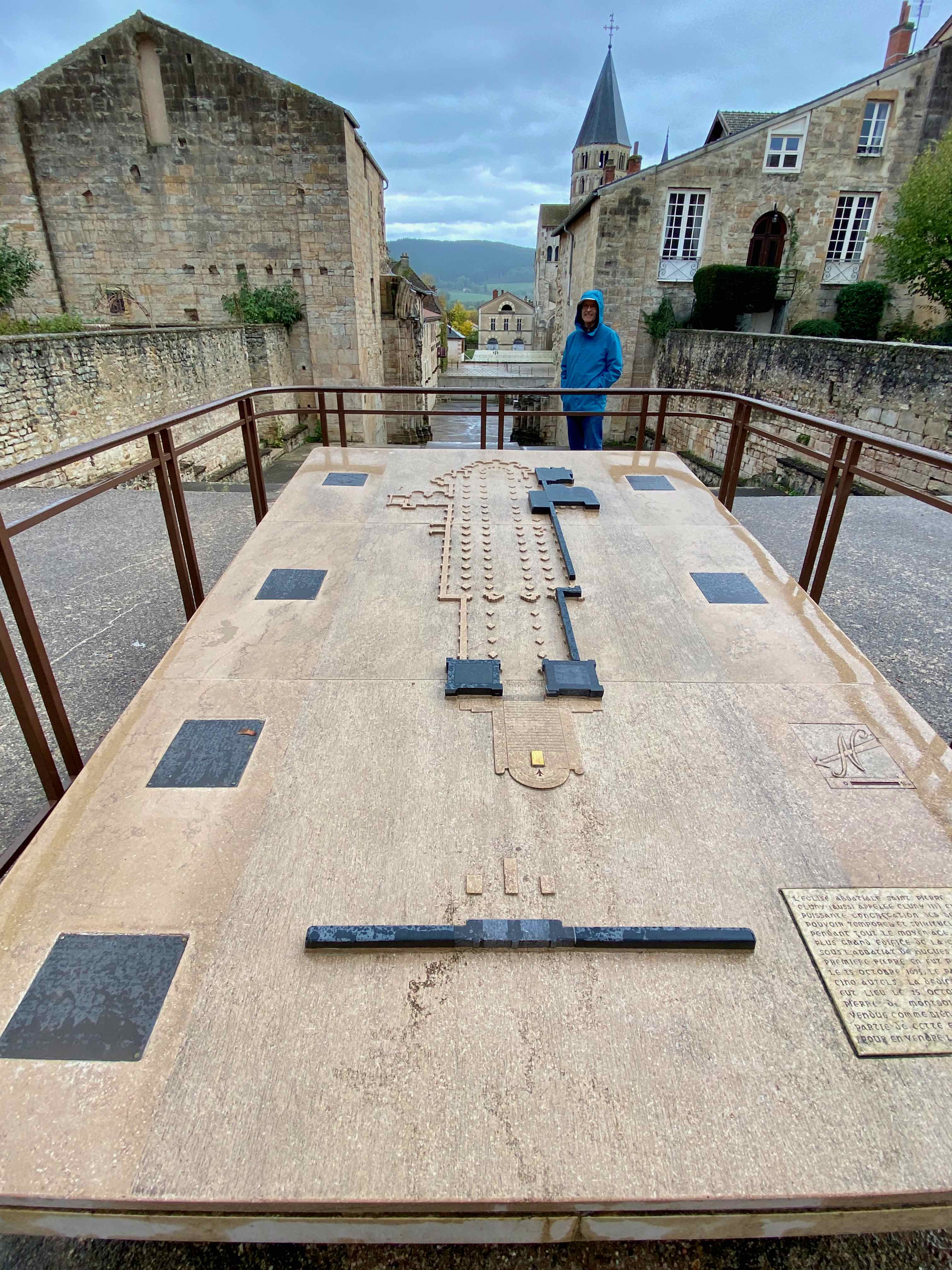
By the time of the French Revolution, hatred of the Catholic Church led to the suppression of the order in France in 1790 and the monastery at Cluny was almost totally demolished in 1810. Later, it was sold and used as a quarry until 1823!  This plaque shows what is left of the Abbey Church…only the black bits remain today.

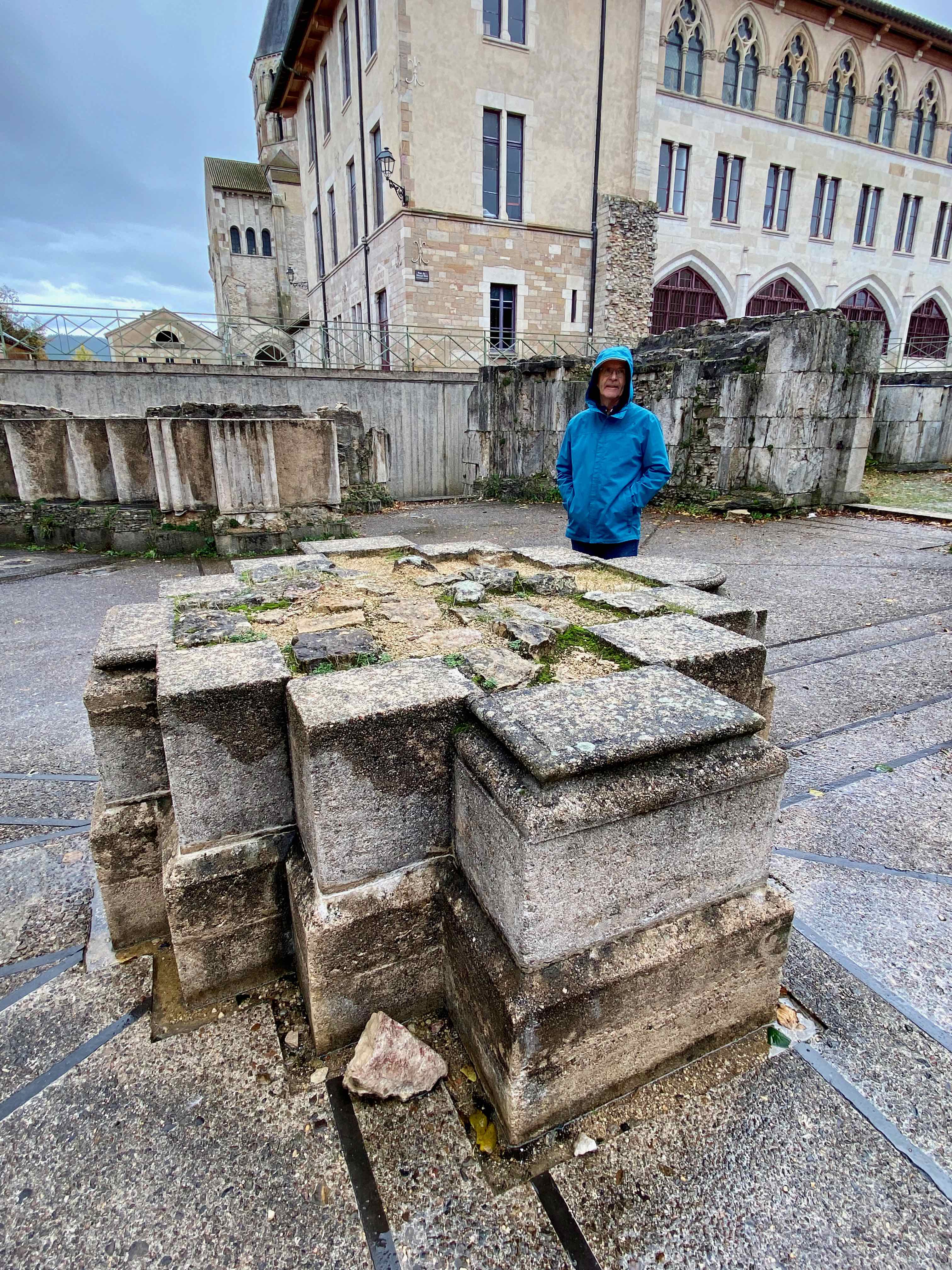
The Abbey Church was the largest church in the world until the construction of the St Peter’s Basilica in Rome.  These are the remains of a few of the church pillars.

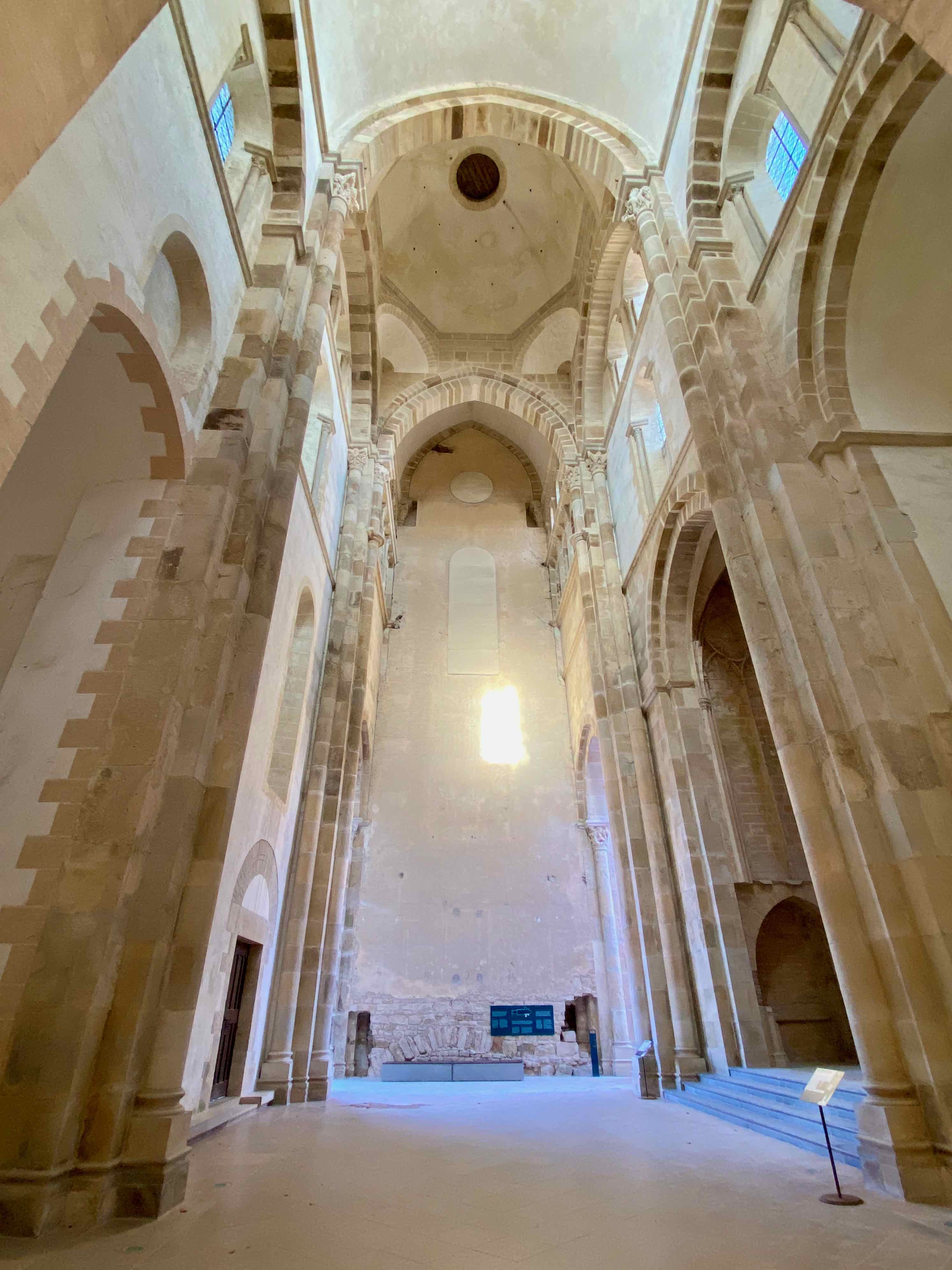
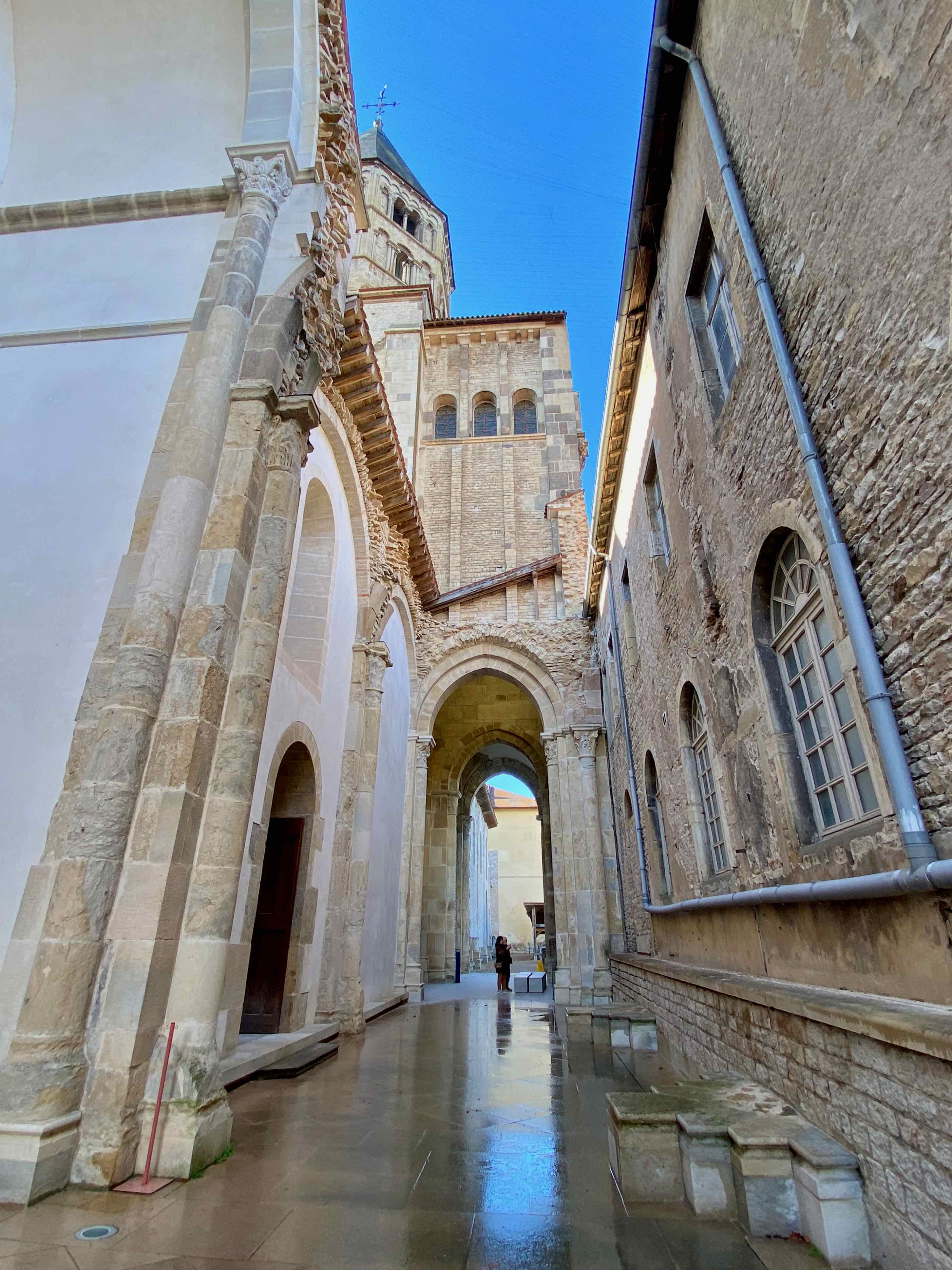
Our entrance to the museum also gives entrance to the Abbey.  There is a fantastic 3D film that shows the construction of the Abbey and we walk through many of the existing Abbey buildings.  Today only part of the transepts and bell tower remain of the Abbey Church. There is only 8% of the Church still in existence today, but that little bit is spectacular.  

It is 30 meters up to the vault above us.

Around 1100, Cluny and its monastic order held authority over 10,000 monks and 1,500 monasteries across Europe. The decline set in from the end of the Middle Ages. The abbey became the target of an entrepreneur who used explosives to demolish the buildings, and sold the stones as building materials!

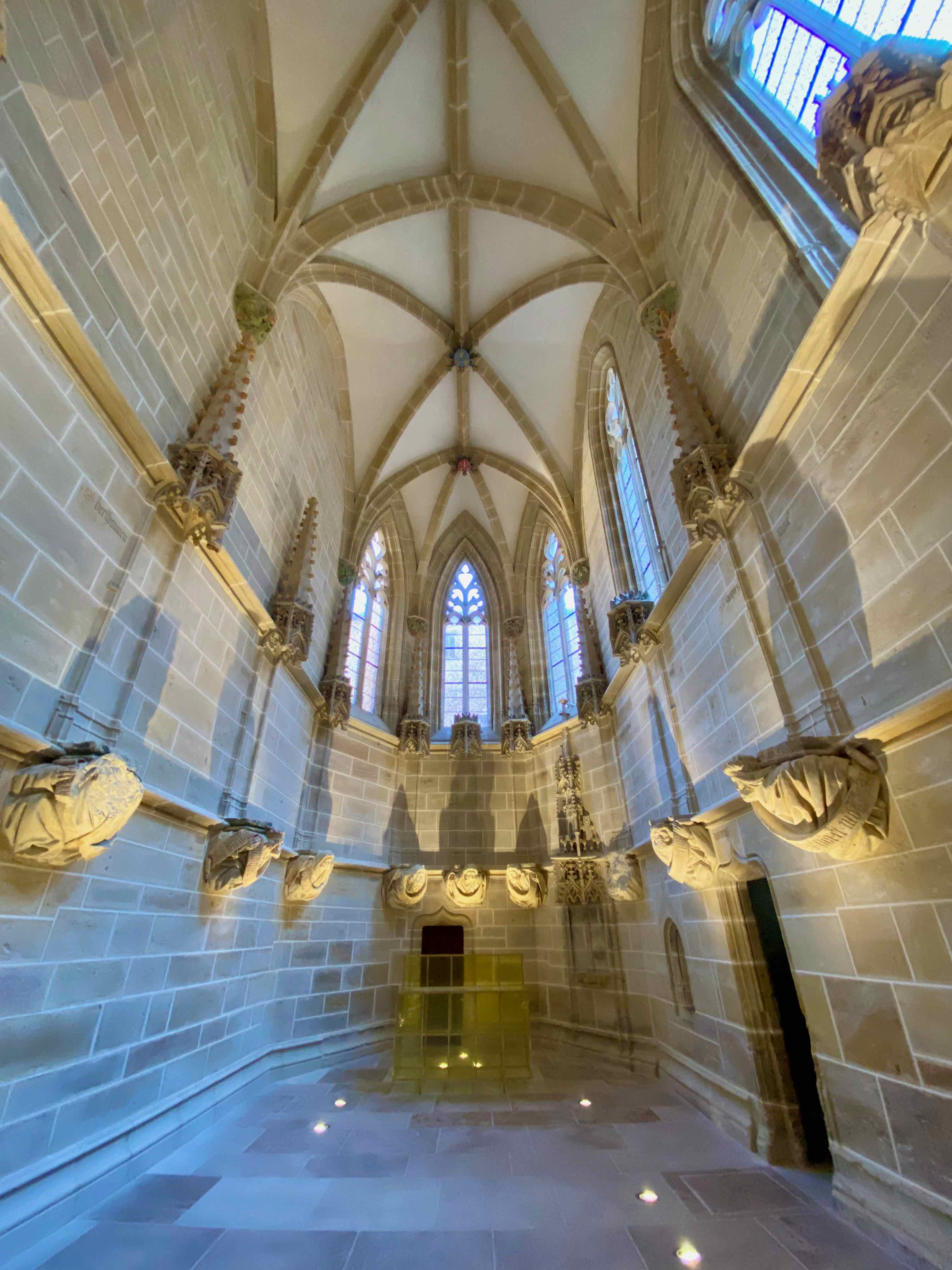
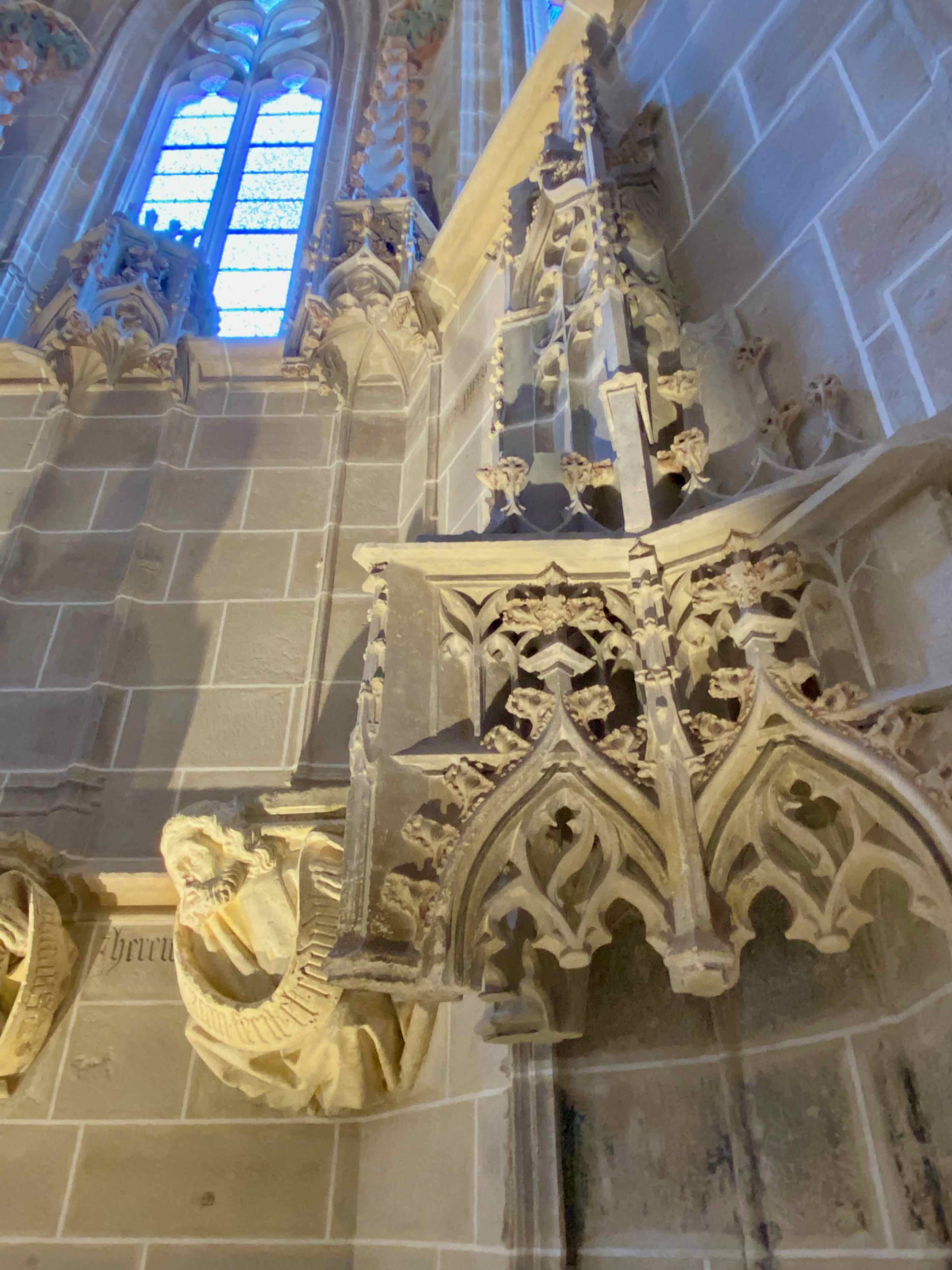
There is a small chapel with sculptures of biblical figures.  Some of then still have bits of their original paint.  We are used to seeing sculptures as bare stone and it is easy to forget that they used to be colourfully painted.

We marvel at this intricately carved stone and wonder at the skill it would have taken to carve such delicate work.

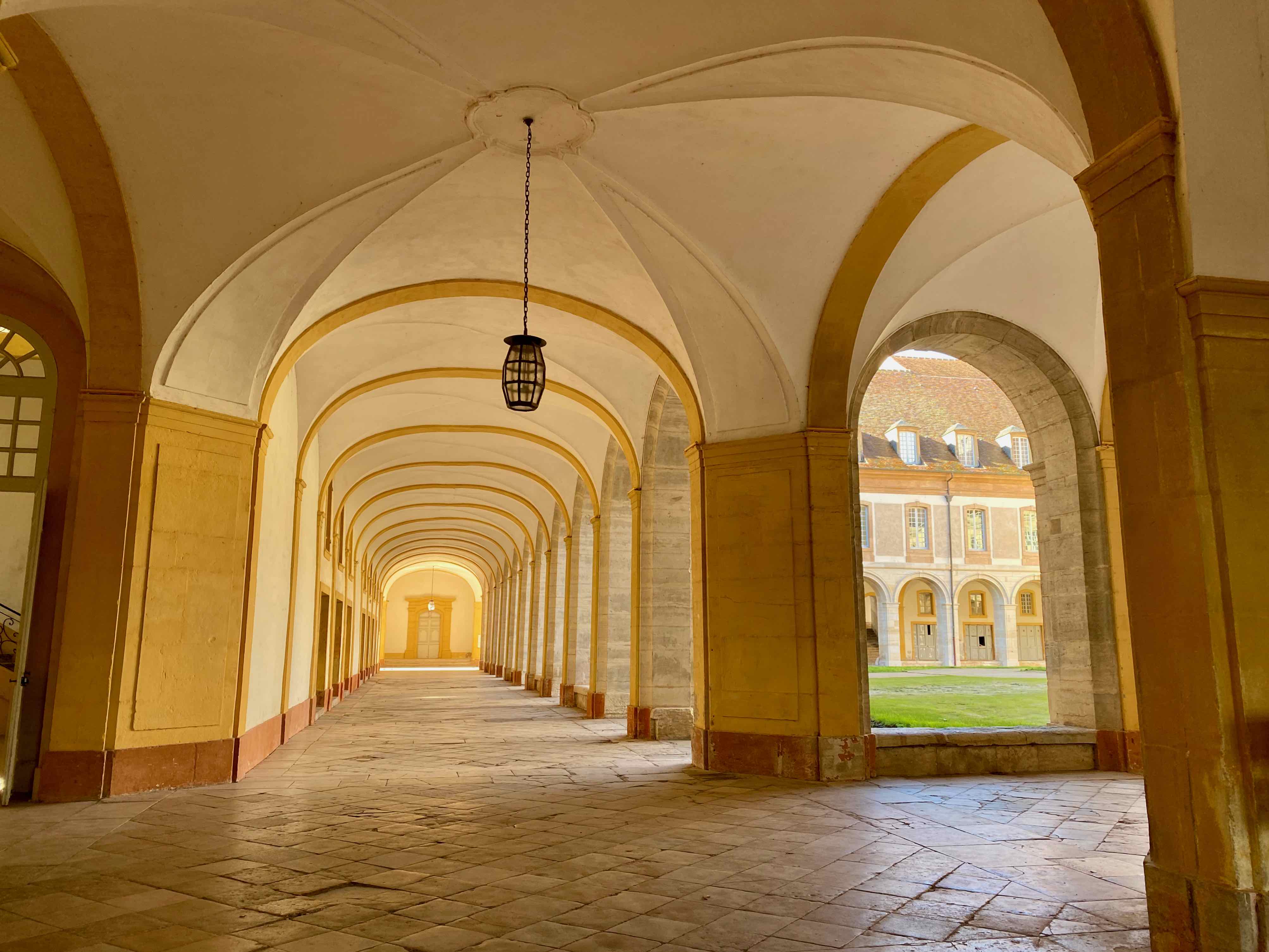
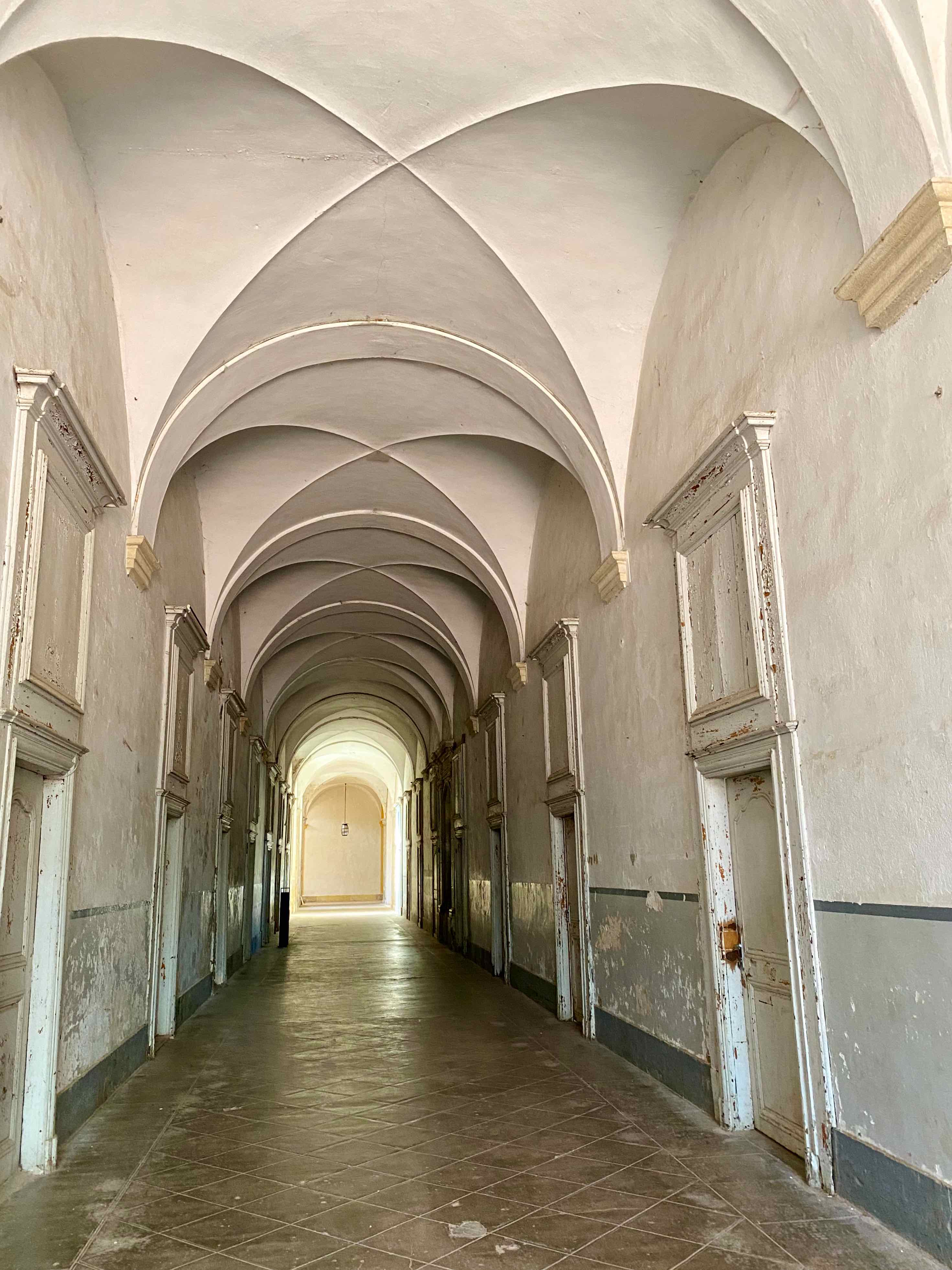
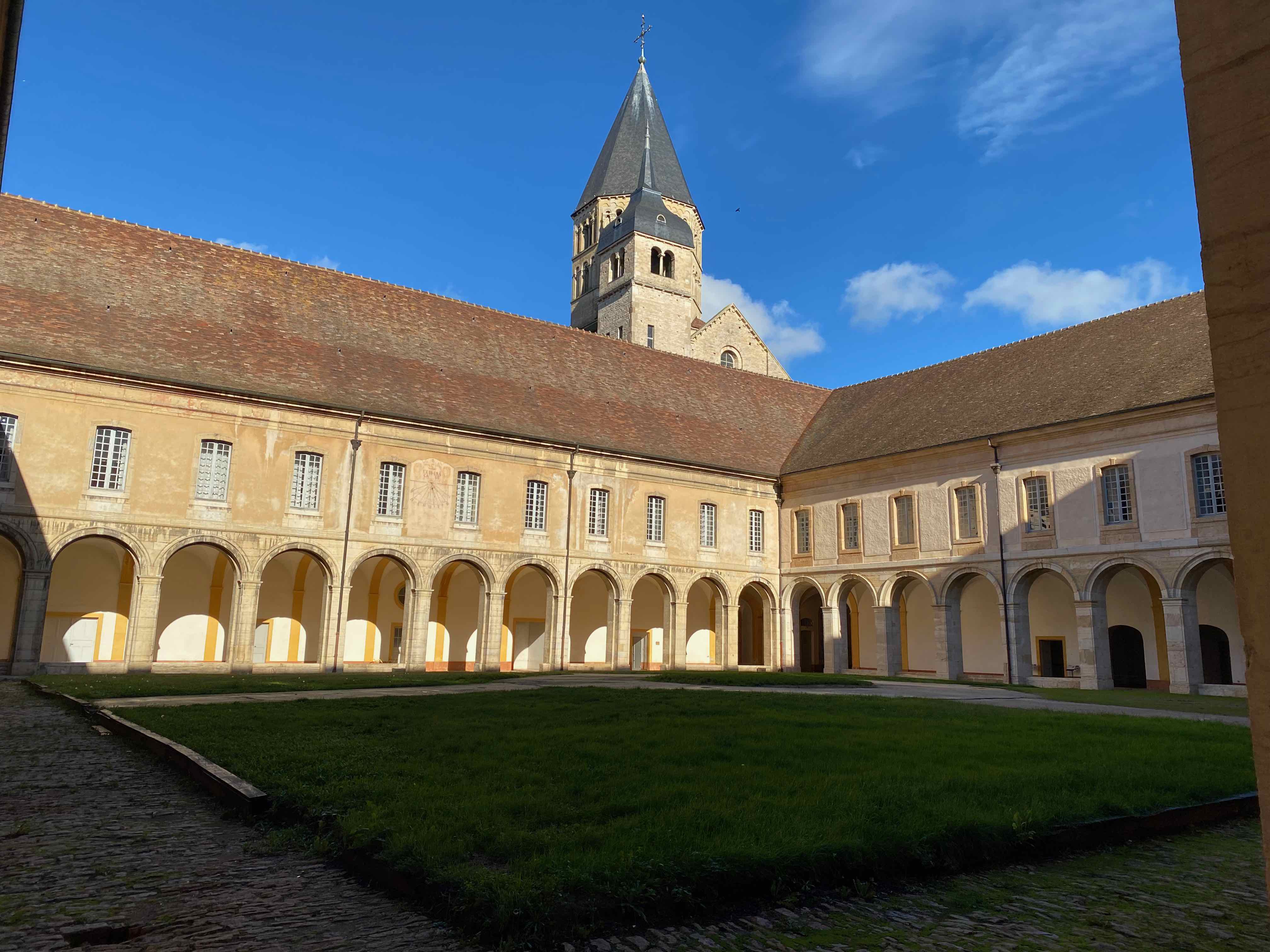
The remaining abbeys is currently a trade school.  Here are some of the hallways around what used to be a cloister.

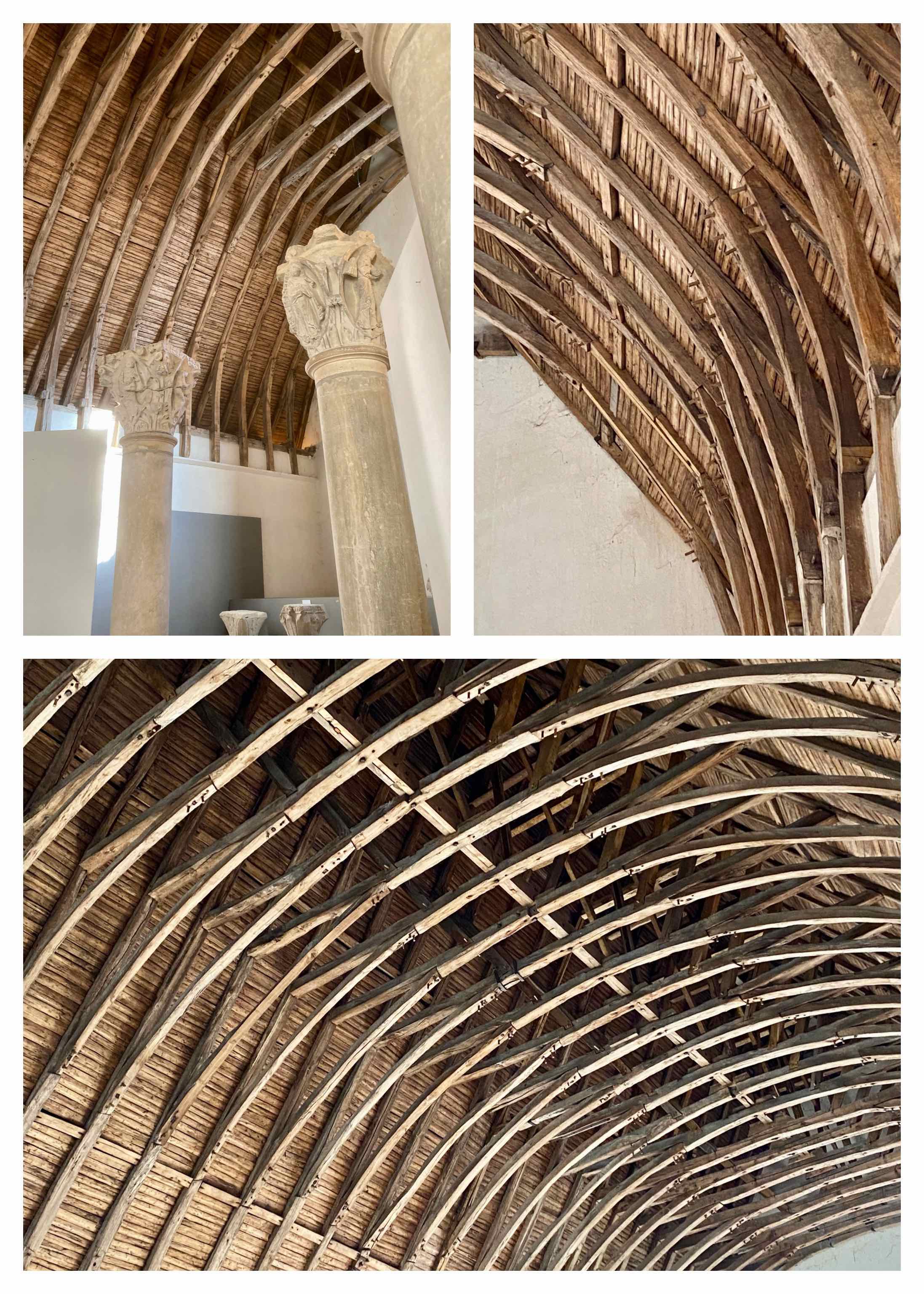
The granary has the most amazing wooden roof that was constructed using wooden dowels, which you can see in the bottom right photo.The basement of the grainery was used for storage.

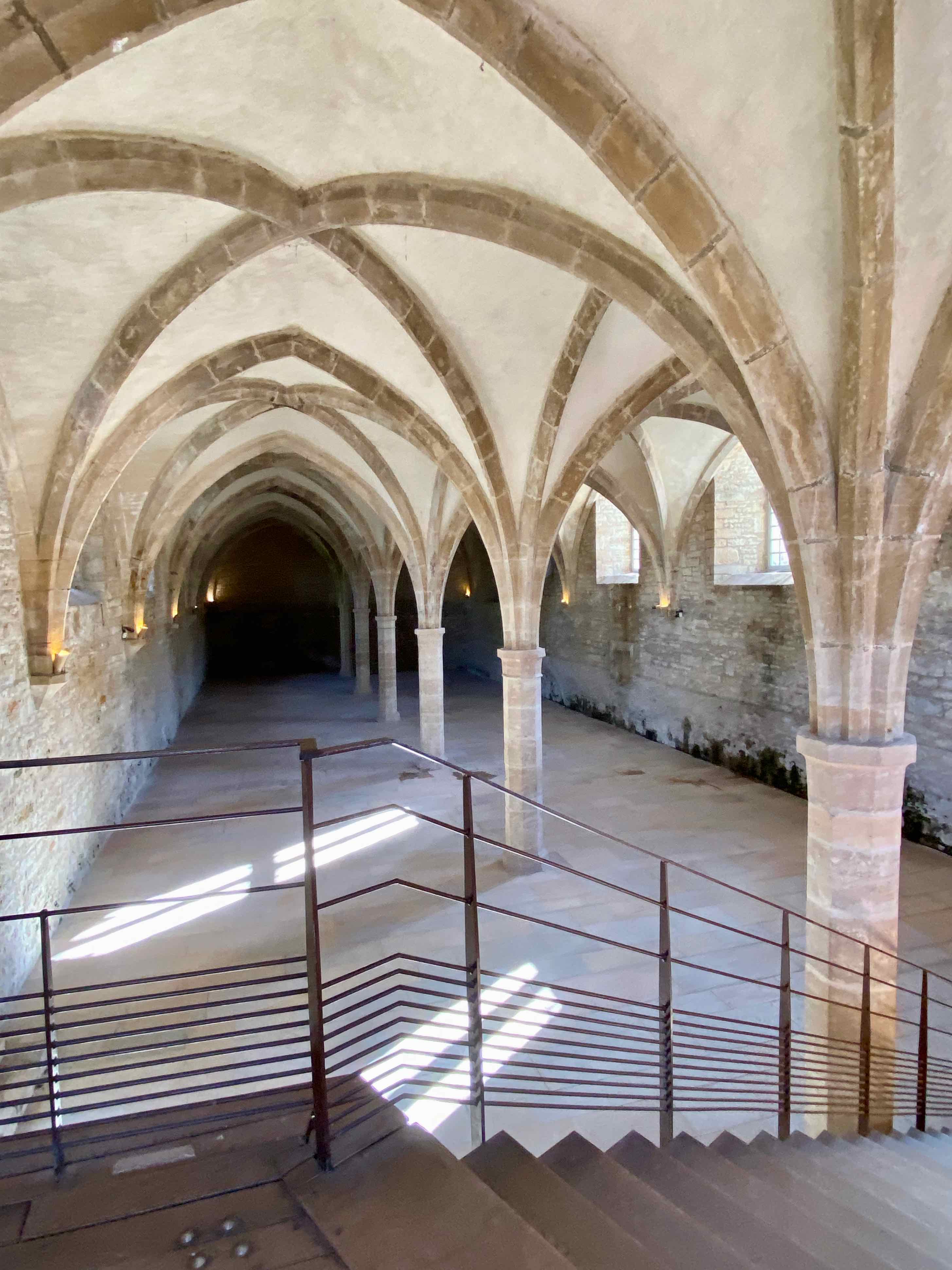
Parts of the remaining abbey are shown their age and really need major repairs.

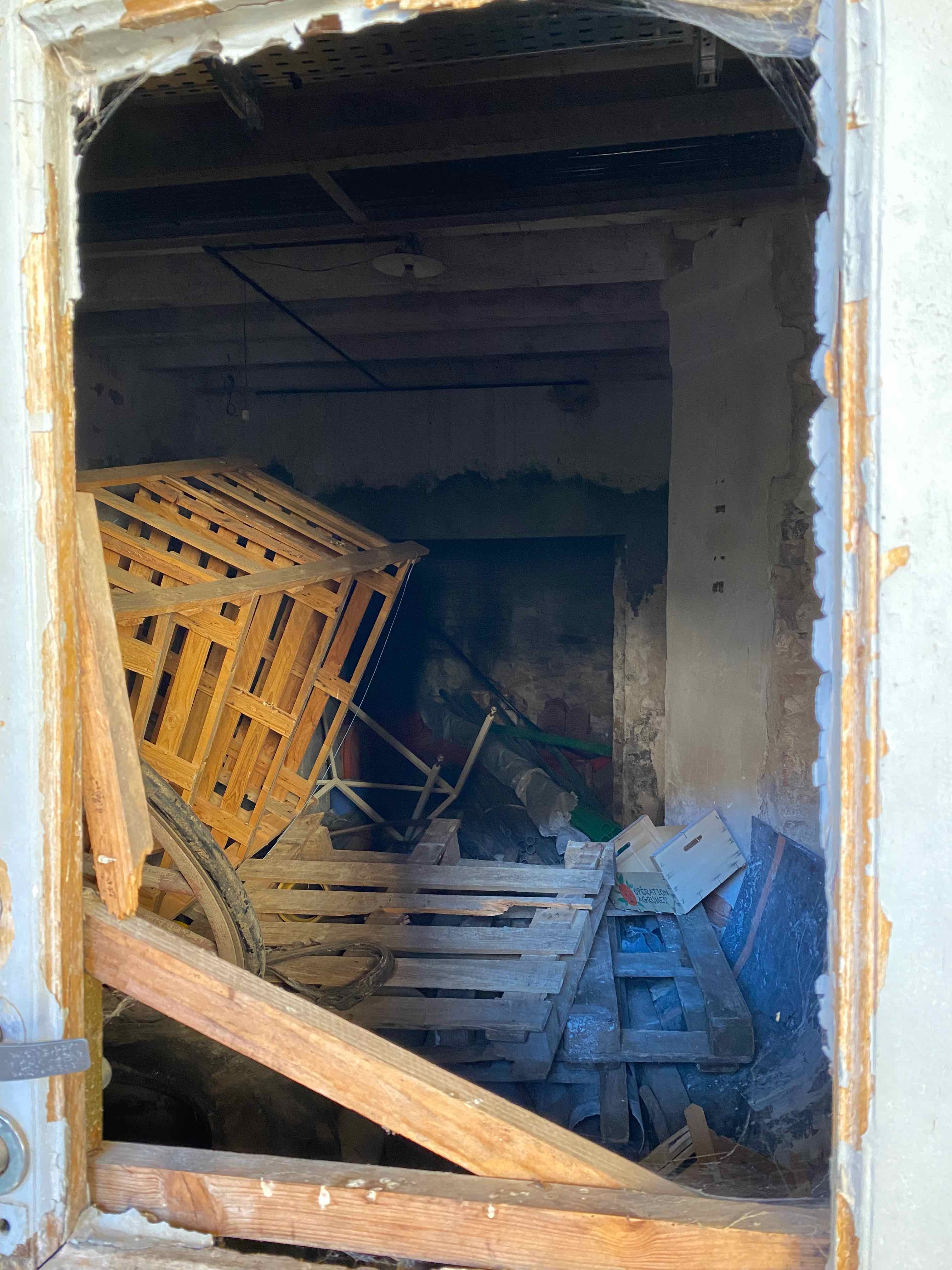
The cloister looks quite lovely… but when I hold my camera up to a broken panel in one of the doors along the cloister walkway this is what is inside!  Not what I was expecting.  I thought these doors would open into rooms but at least some of them seem to be storage rooms…for what looks like junk.

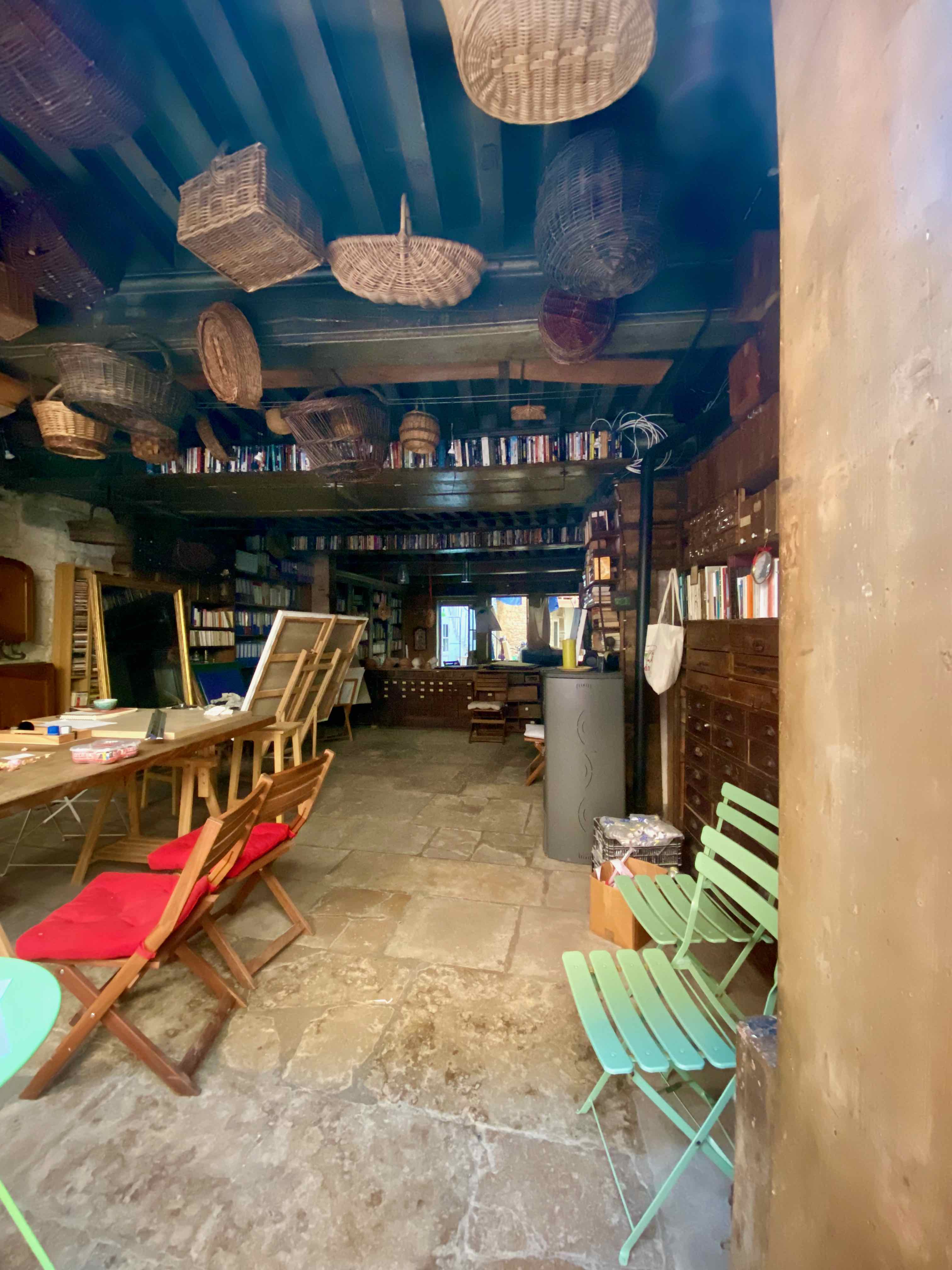
On our way back to the car we pass an artists studio, which is closed but I sneak a photo through the window.  

It is another two hour drive to Dijon and we see a lot of army trucks on the highway.  We wonder where they are going. 

Arles, France…Walking in Van Gogh’s Footsteps

Day 62,  Sunday, October 29, 2023

“Vincent van Gogh arrived in Arles in February 1888.  This was the start of an intense period of activity for the artist, in the Mediterranean light.  Indeed, it was his most productive era and during this 15 months in Arles, Van Gogh produced over 300 paintings and drawings, thus forging one of the most important periods in the history of art.  In May, 1989, Vincent left Arles for the Saint-Rémy de Provence asylum, leaving the name of Vincent van Gogh linked to that of Arles forever.” ~ Arles Tourism brochure.

Vincent spent a year at the asylum before moving to Auvers-sur-Oise in May 1890, where committed suicide on July 27th 1890.

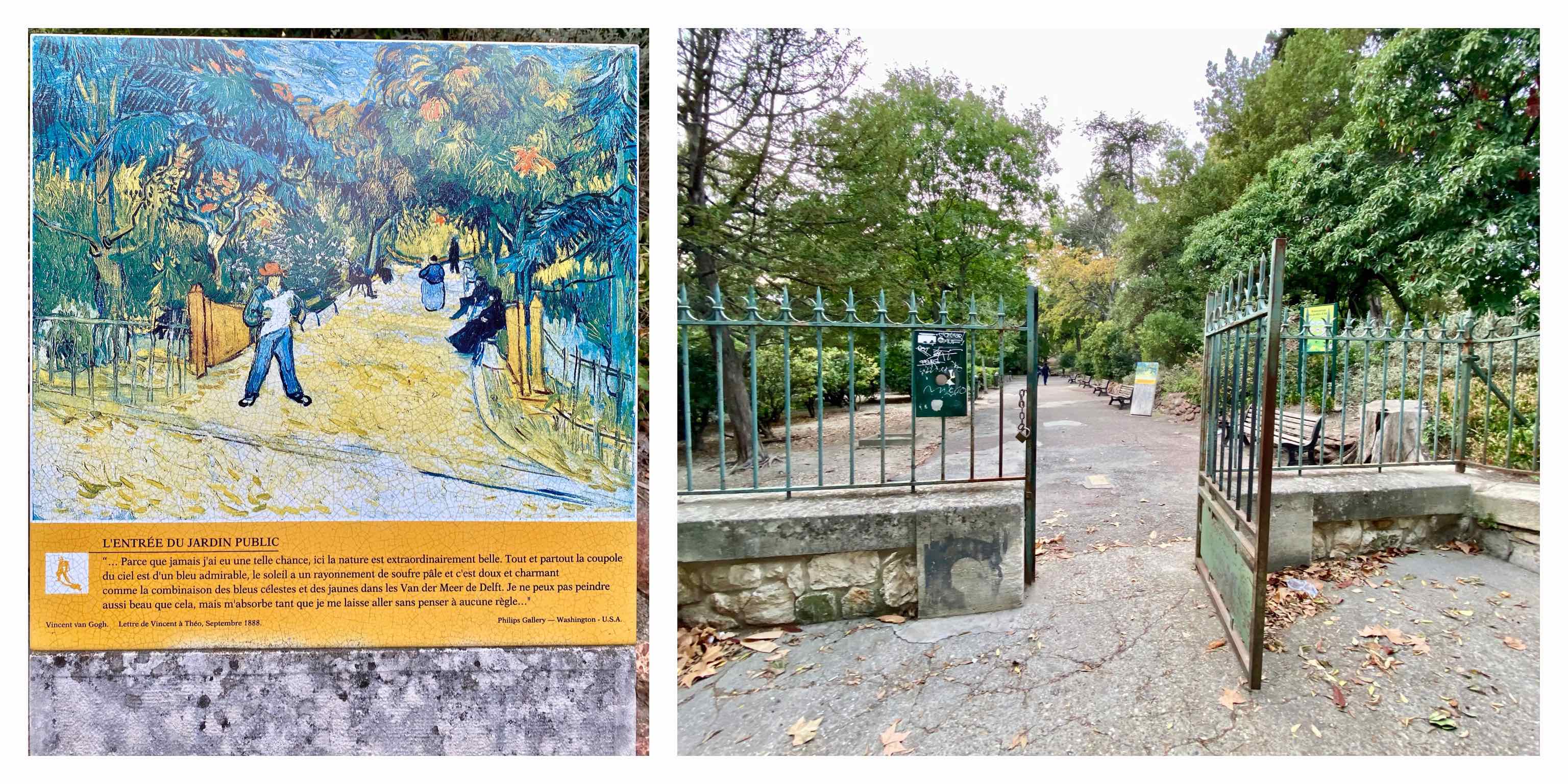
Today we are going to follow Vincent’s footsteps as we walk through Arles, looking for the places where he stood at his easel creating some of his most loved paintings. Arles has placed a copy of each of his paintings at the location where Van Gogh would have stood.

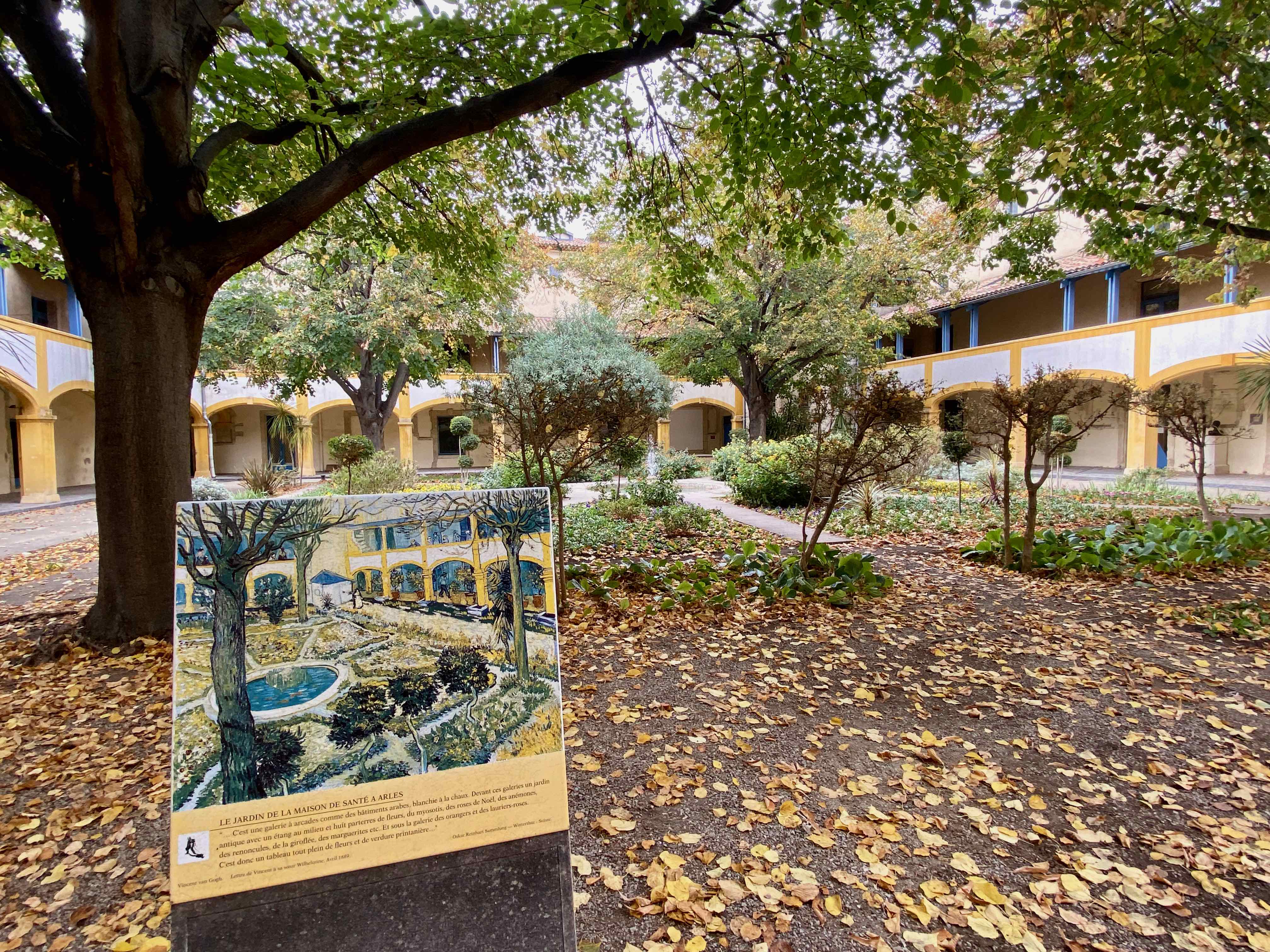
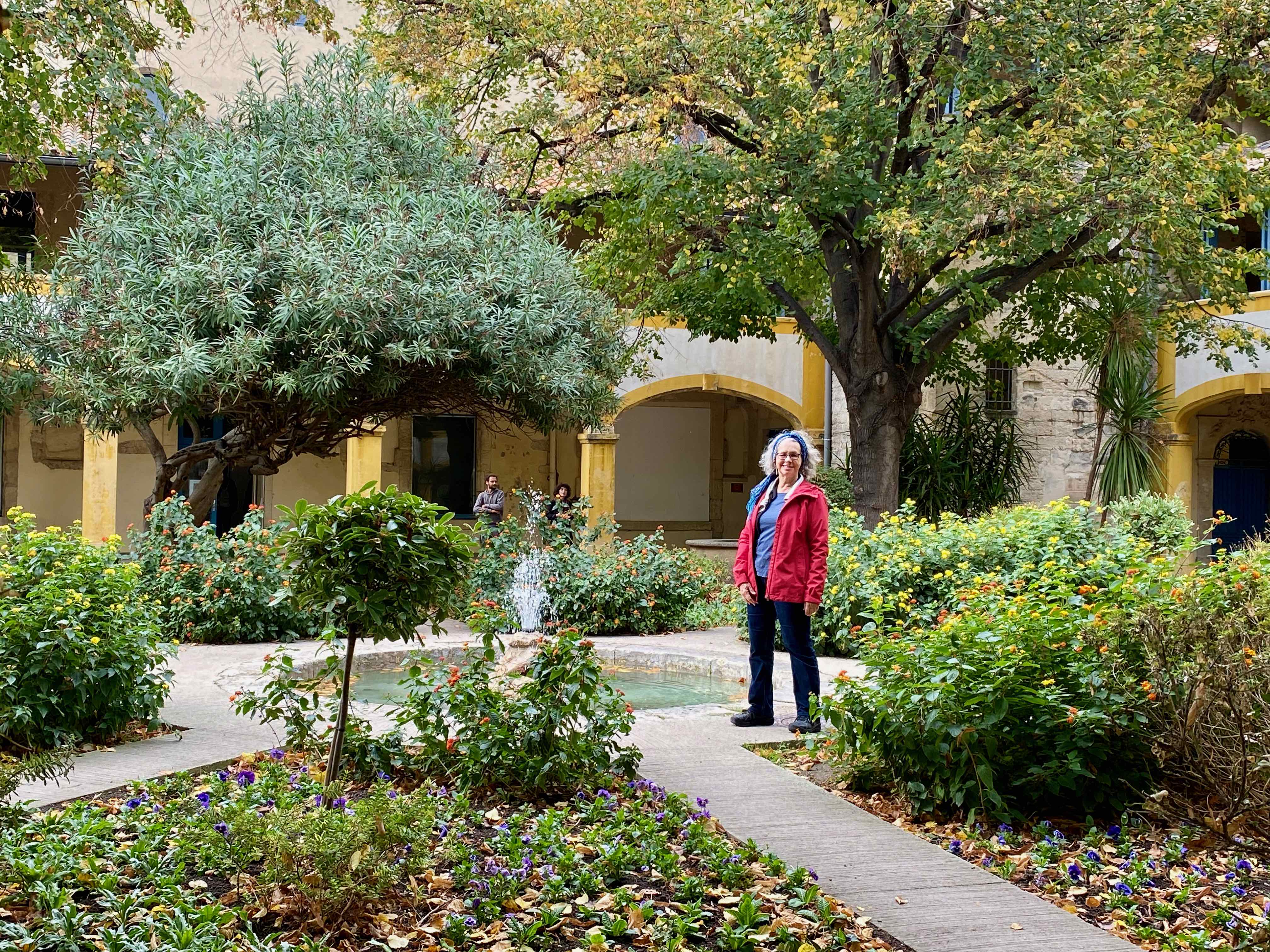
First stop is the courtyard at the hospital in Arles.  Vincent stayed at this hospital three times between December 1888 and May 1889.

I feel like I have walked into a painting…

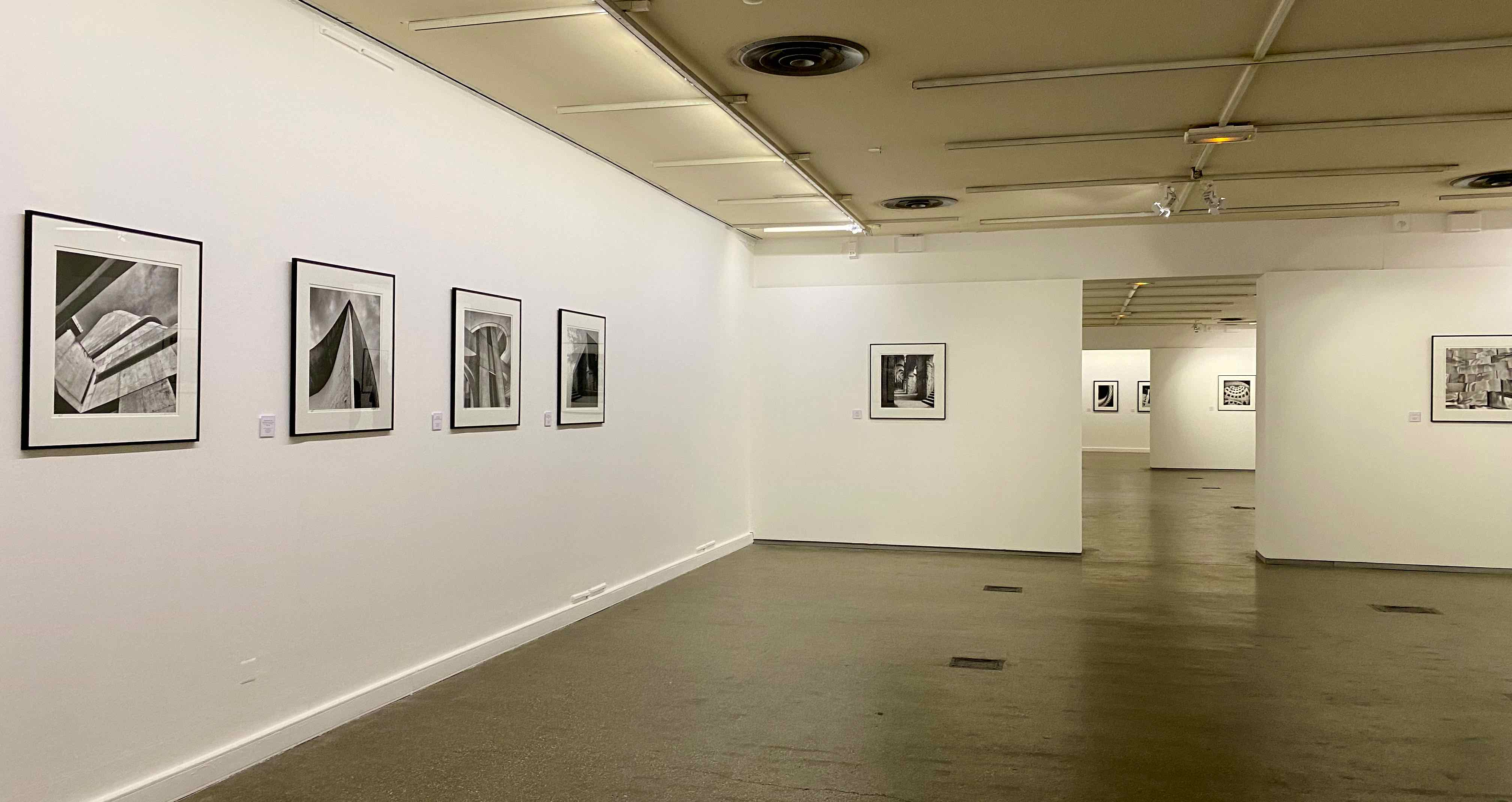
In the old hospital buildings there is also a wonderful photography exhibit by Pierre Vallet.  We later see some more of his work on display in the Arles Amphitheatre.

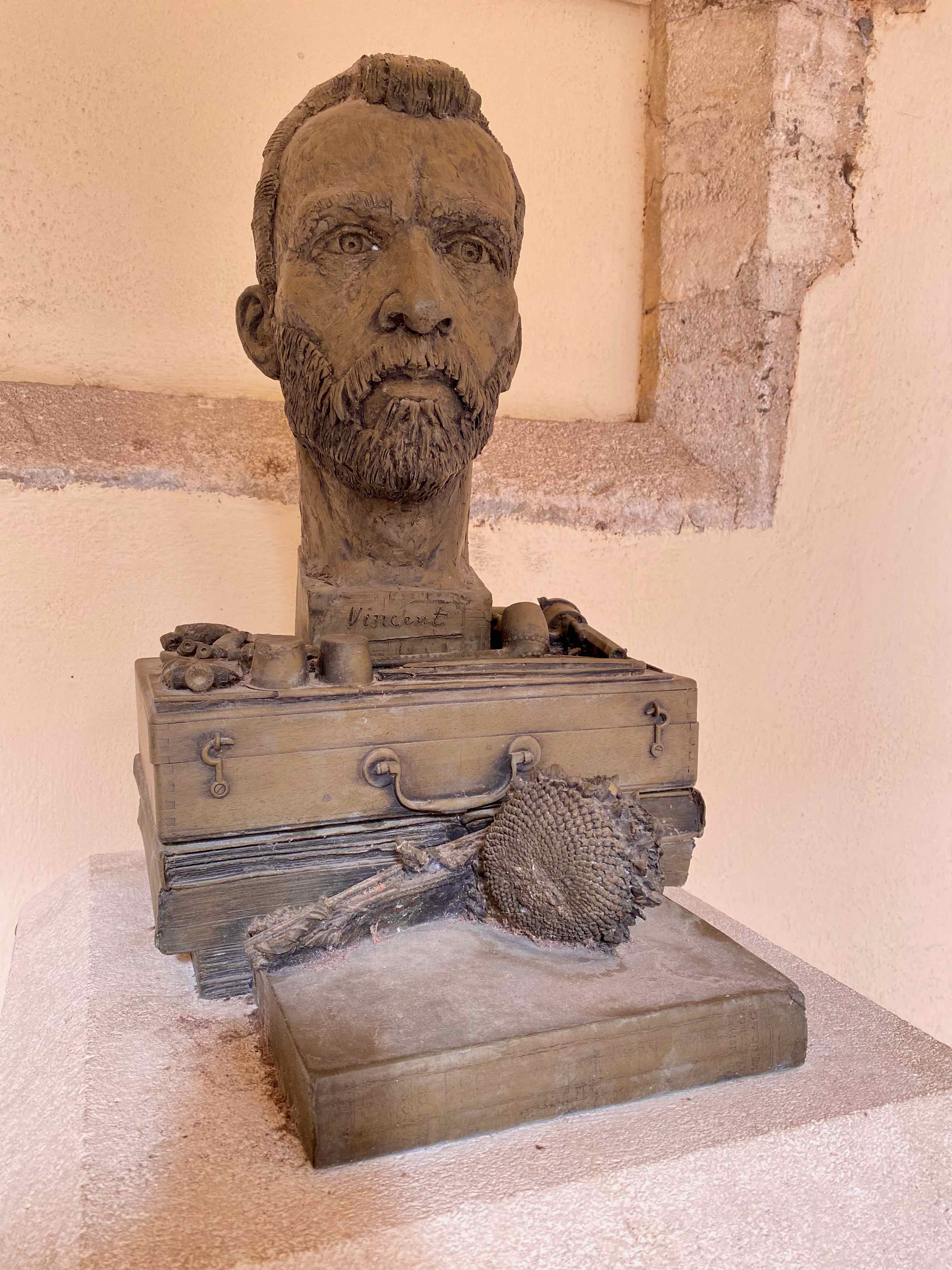
There is a sculpture of Van Gogh in the courtyard.

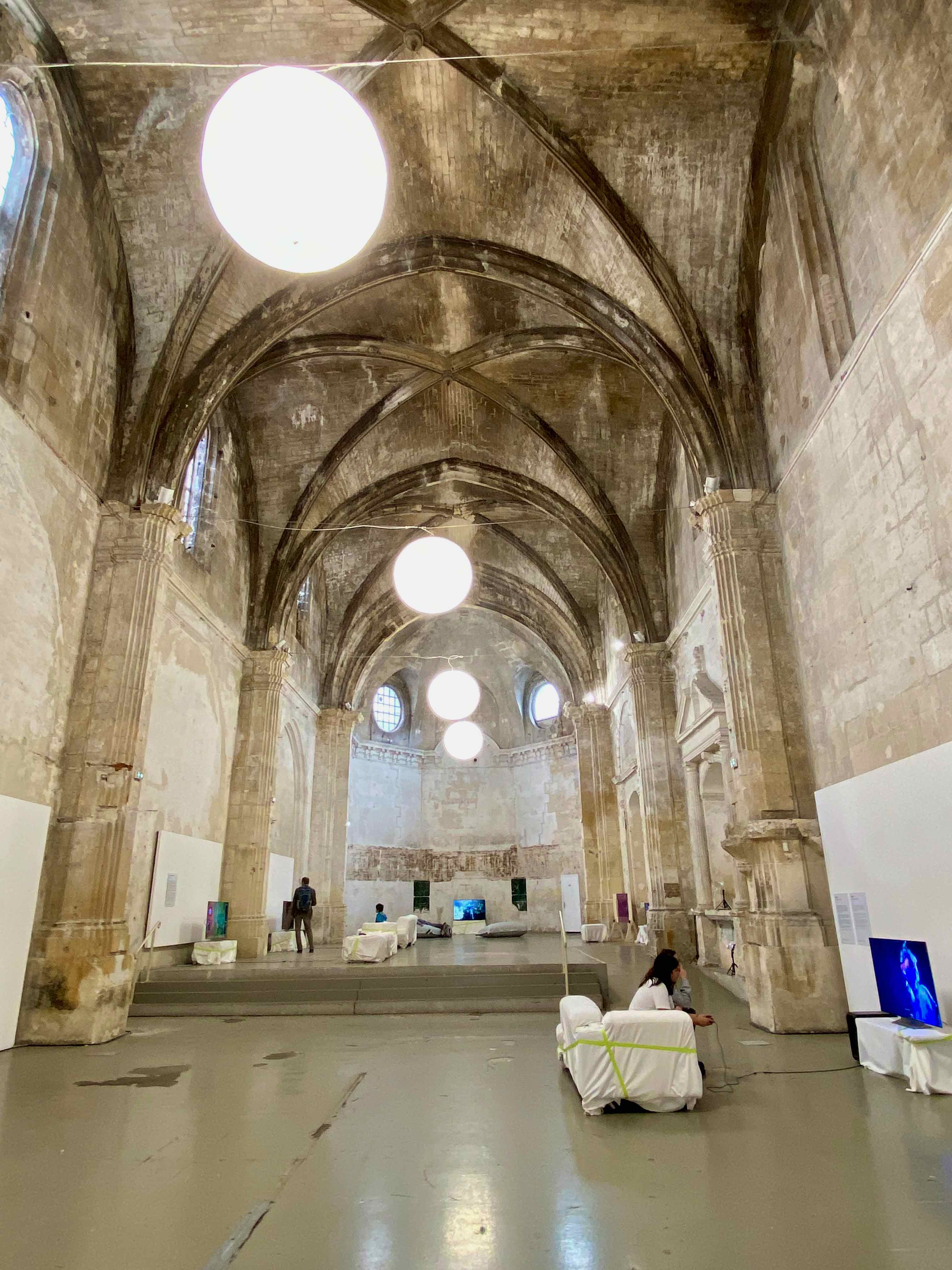
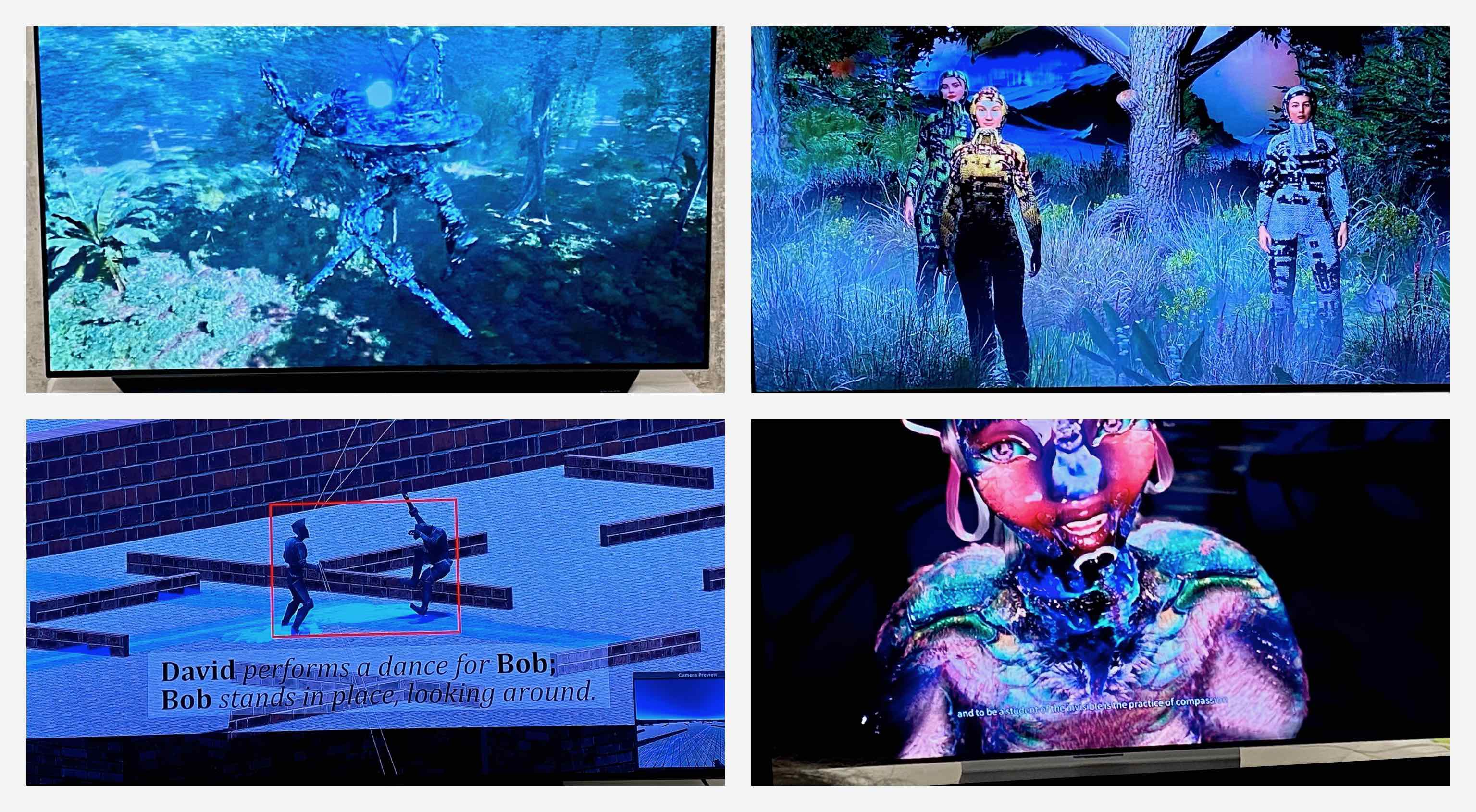
On our way to the next location we pass an old church that is hosting an AI exhibition. The audience is invited to sit and interact with these AI games.Here are the screenshots of some of the other games…notice that one of them has a character named Bob.
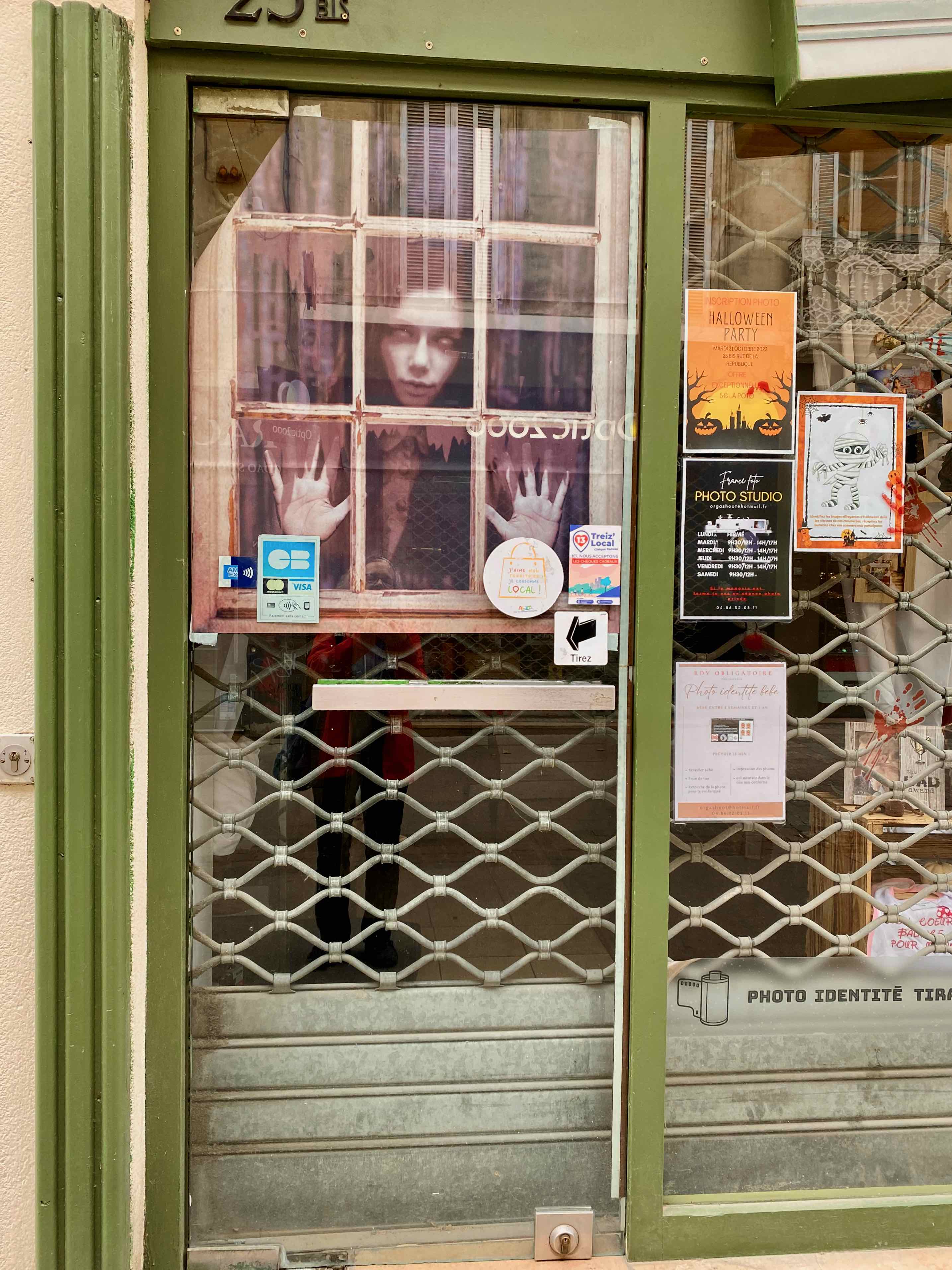
We pass a shop window with a creepy window.  Halloween is only two days away!

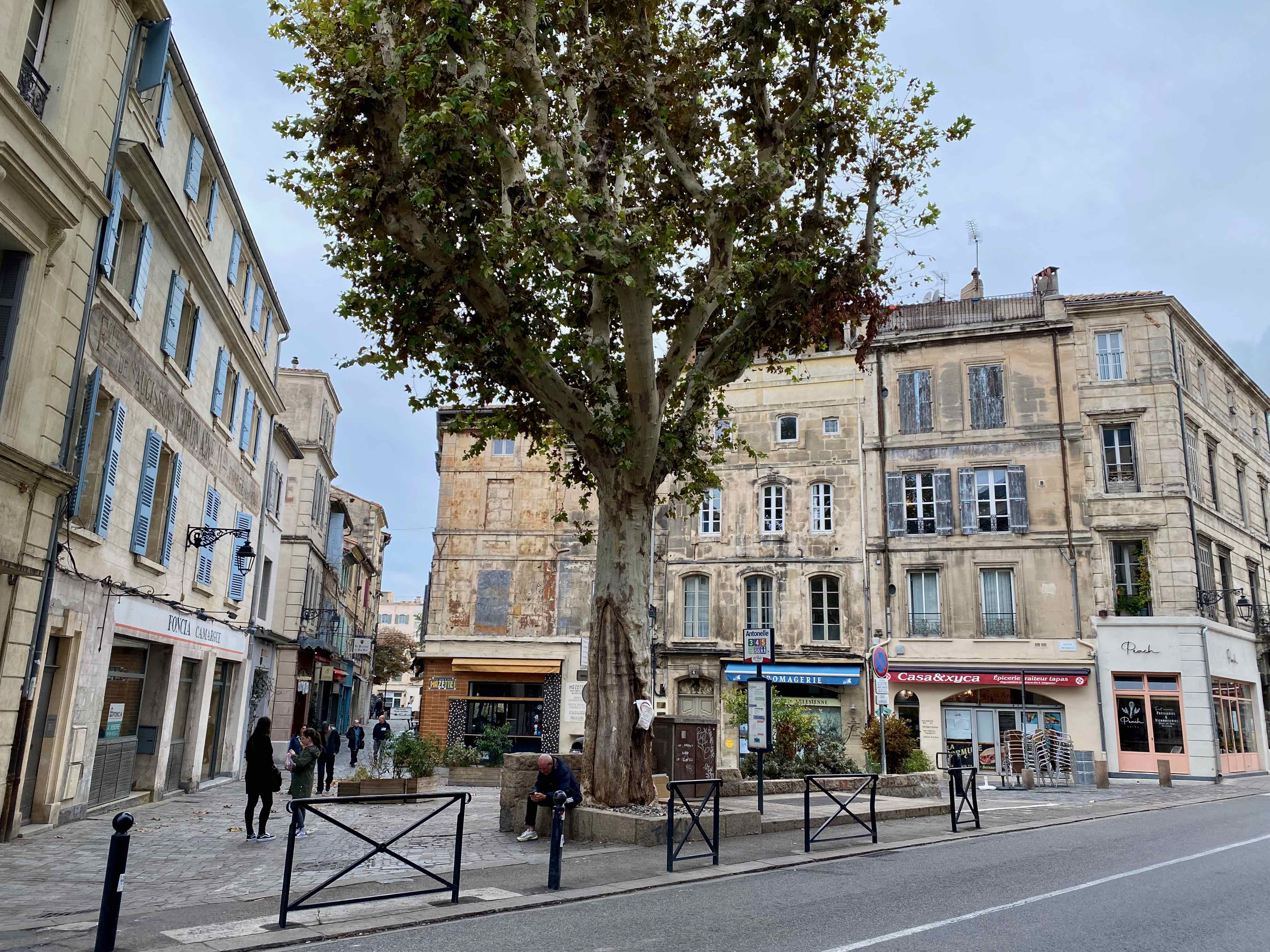
Arles is a pretty town.  We are trying to follow the not very clear map to find the next location when I notice…

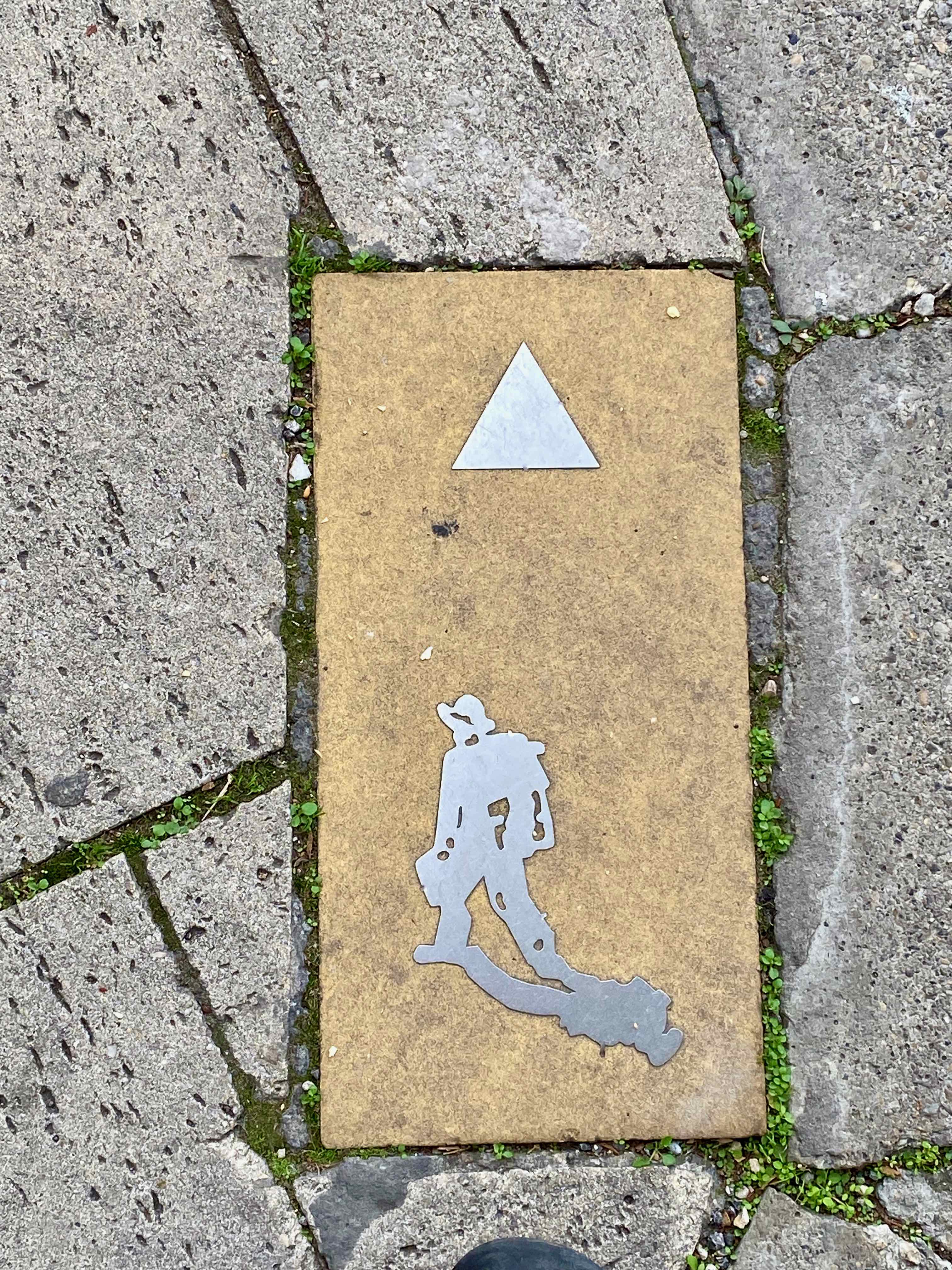
this plaque set into the sidewalk.  So now we just have to follow the plaques, and it feels like a treasure hunt!

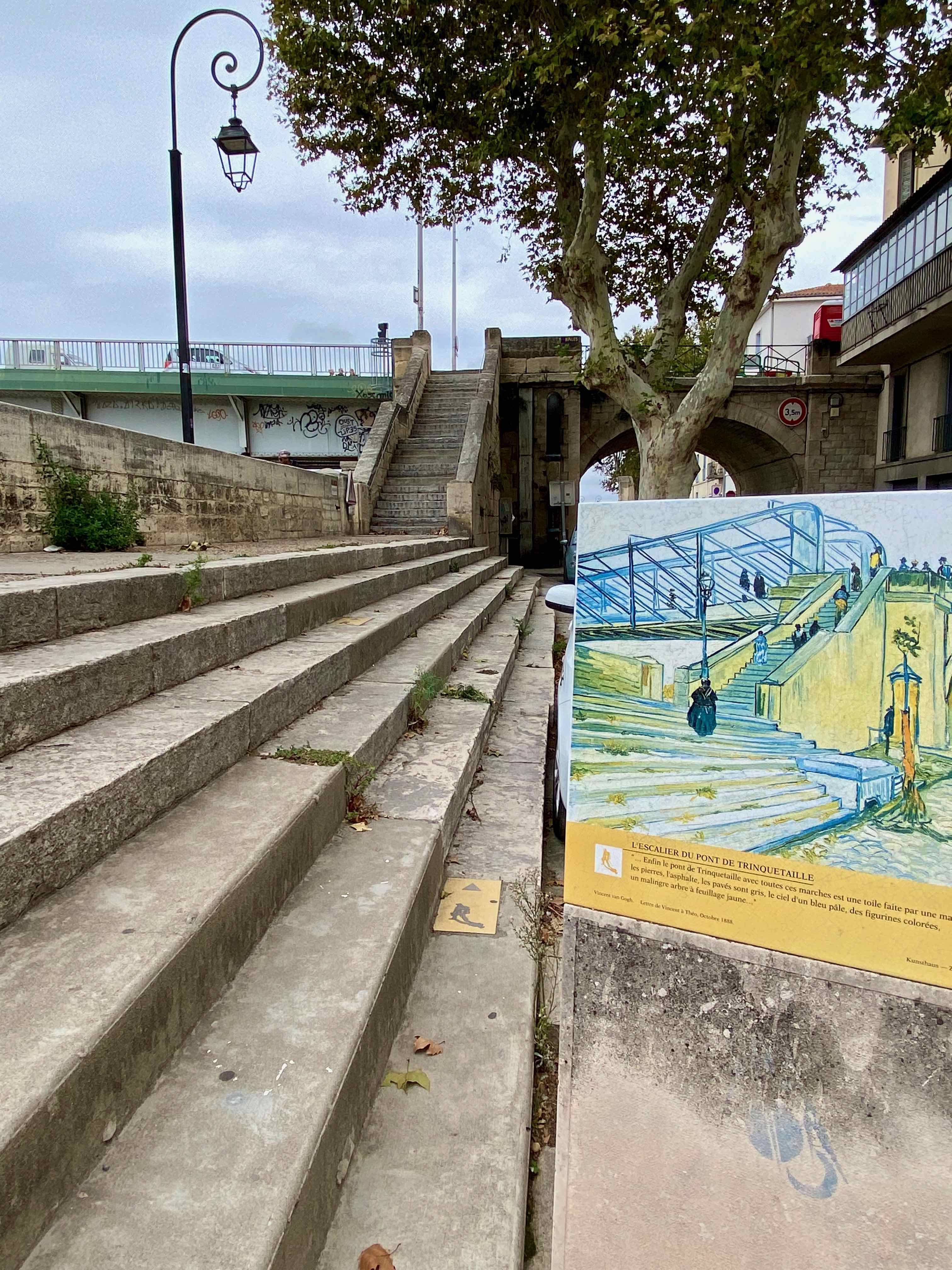
The stairs of the Trinquetaille Bridge was painted from this spot.

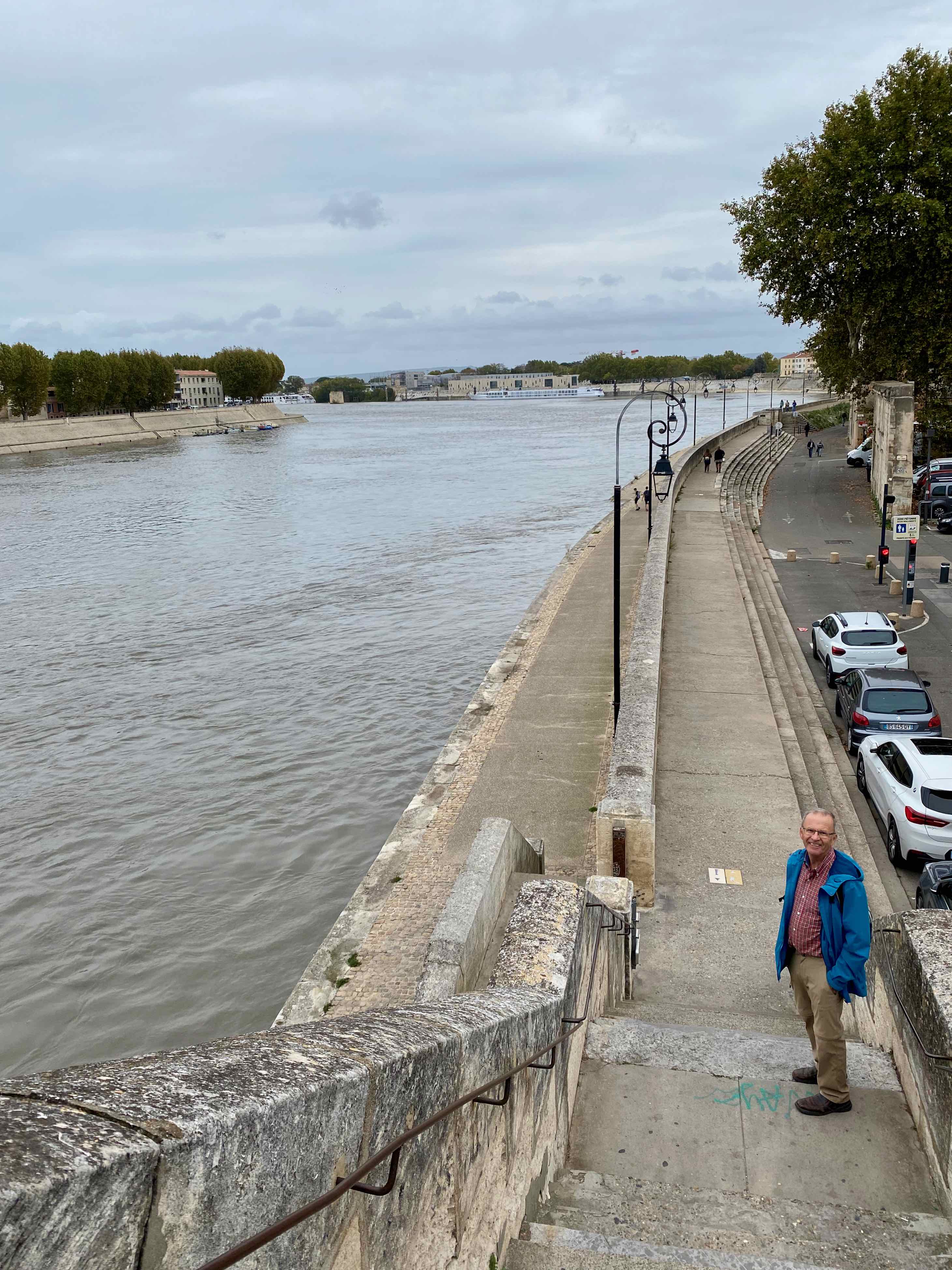
We climb the steps and cross the bridge, walking beside the Rhône River to our next destination.

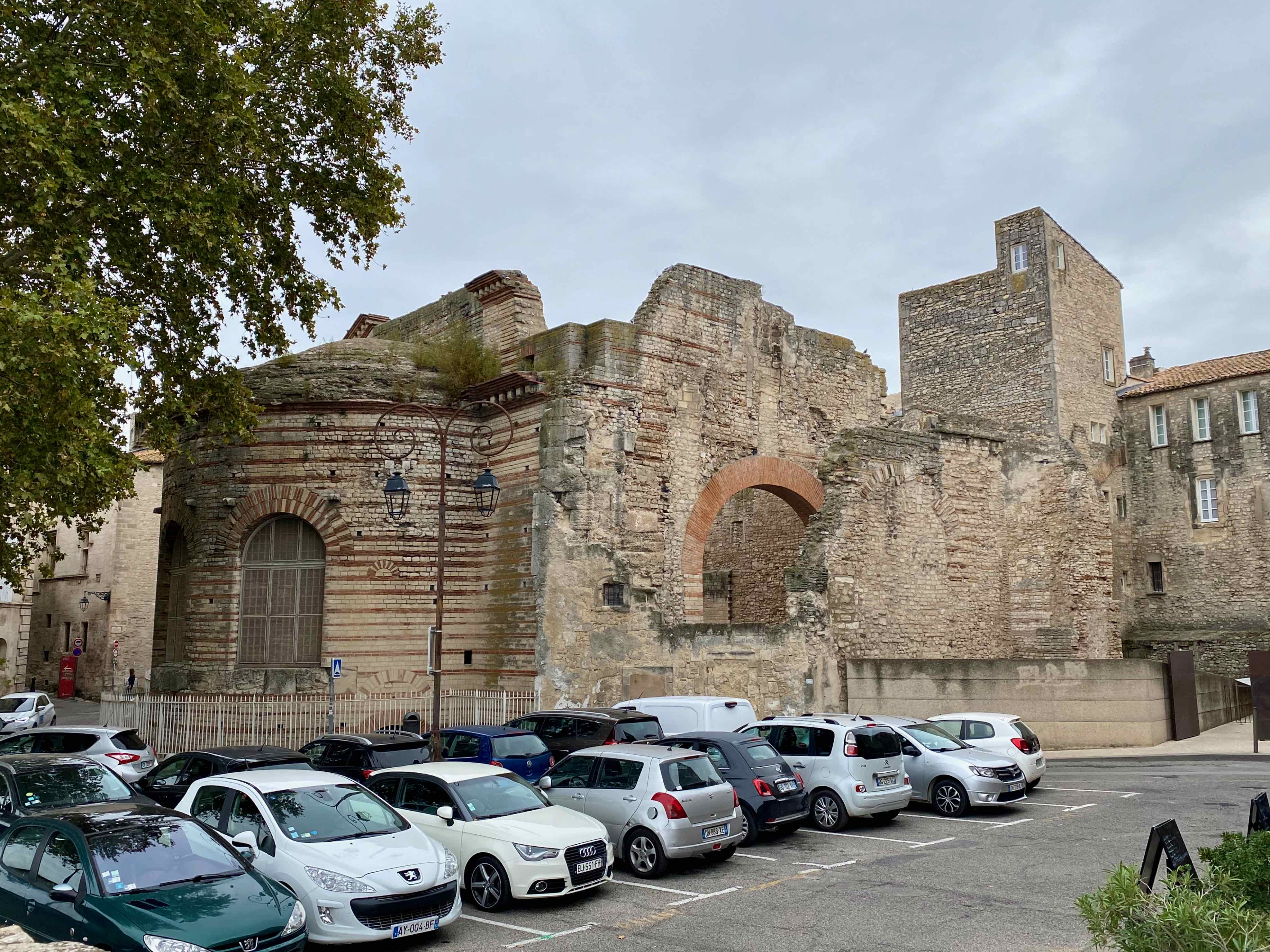
We pass these ruins which are Roman baths…looks interesting but we are on a mission.

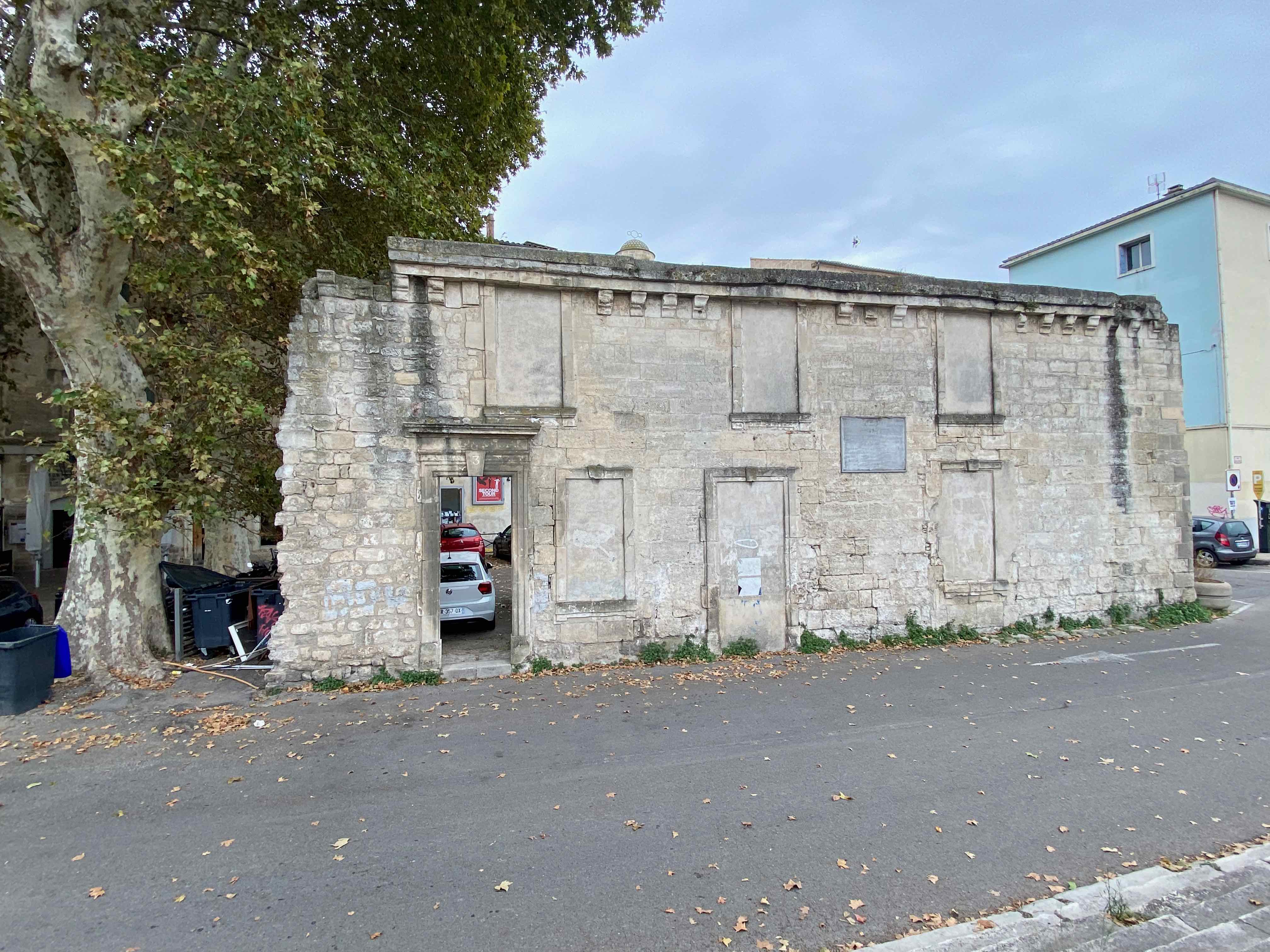
We pass a couple of old stone façades, just one wall left standing.  Back home it would have been torn down.

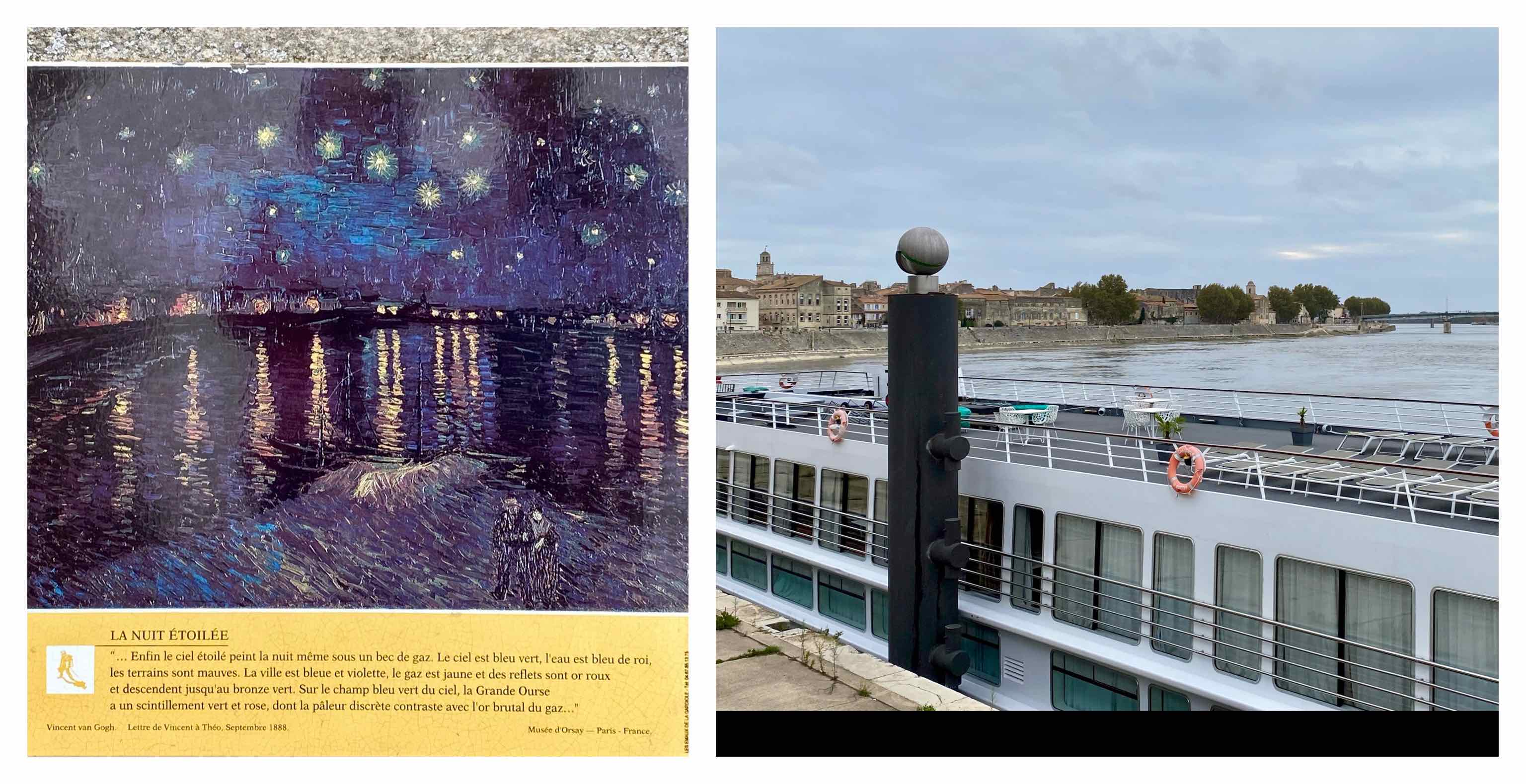
Starry Night over the Rhône…too bad the river cruise boats are in the way of our view, but we are able to pick our several of the landmarks in the painting.

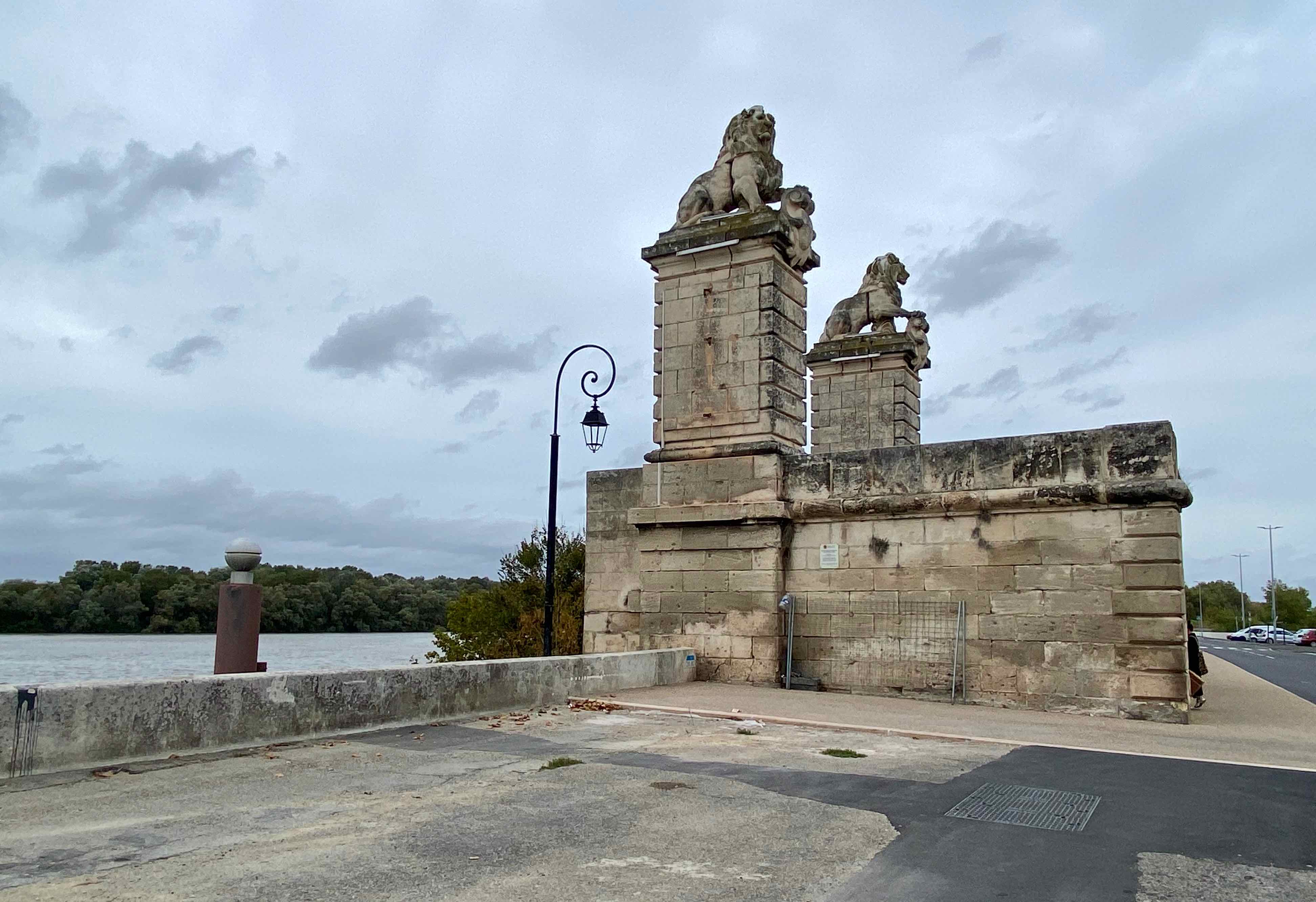
We make small detour to check out the remains of a bridge that was destroyed in the bombardment of Arles in 1944.  There are many reminders of both the First and Second World War in every town and city that we have visited.

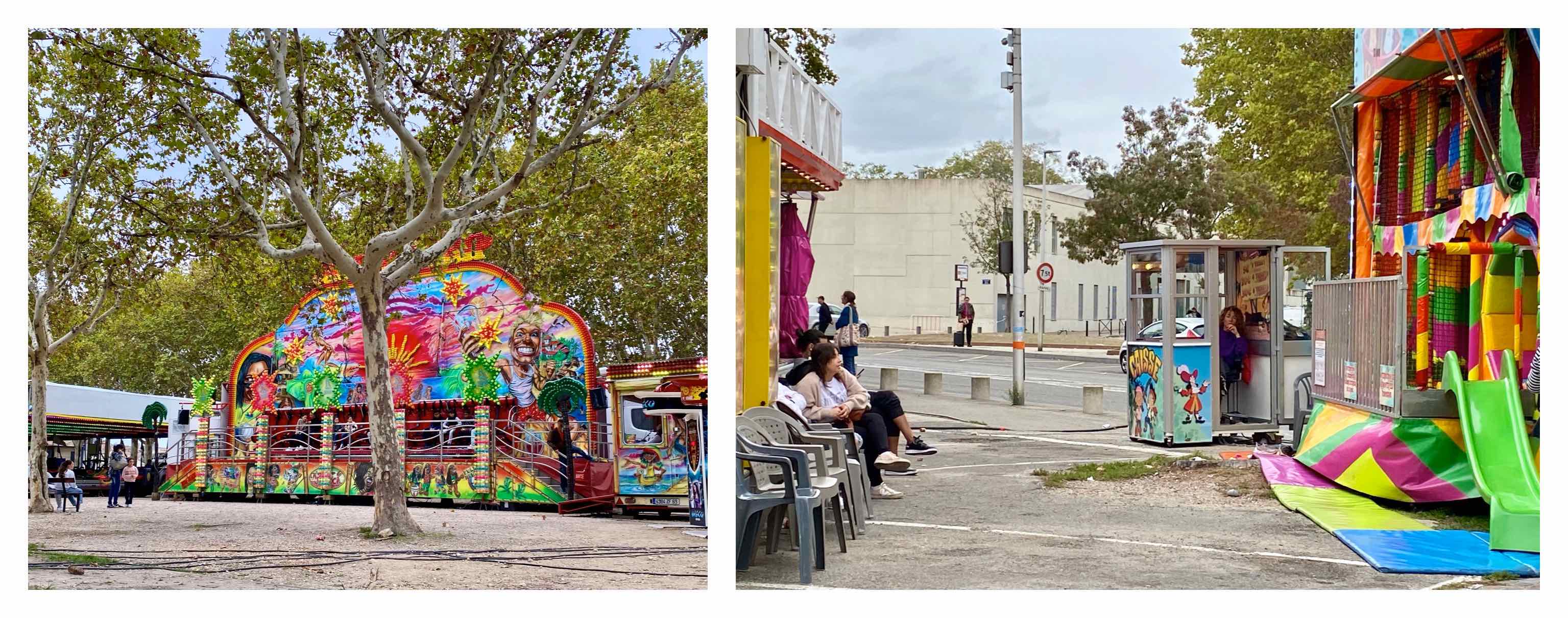
Then we pass a little carnival that was just getting set up.  I thought it was interesting that they have chairs for the parents to sit while their children are on the rides.  

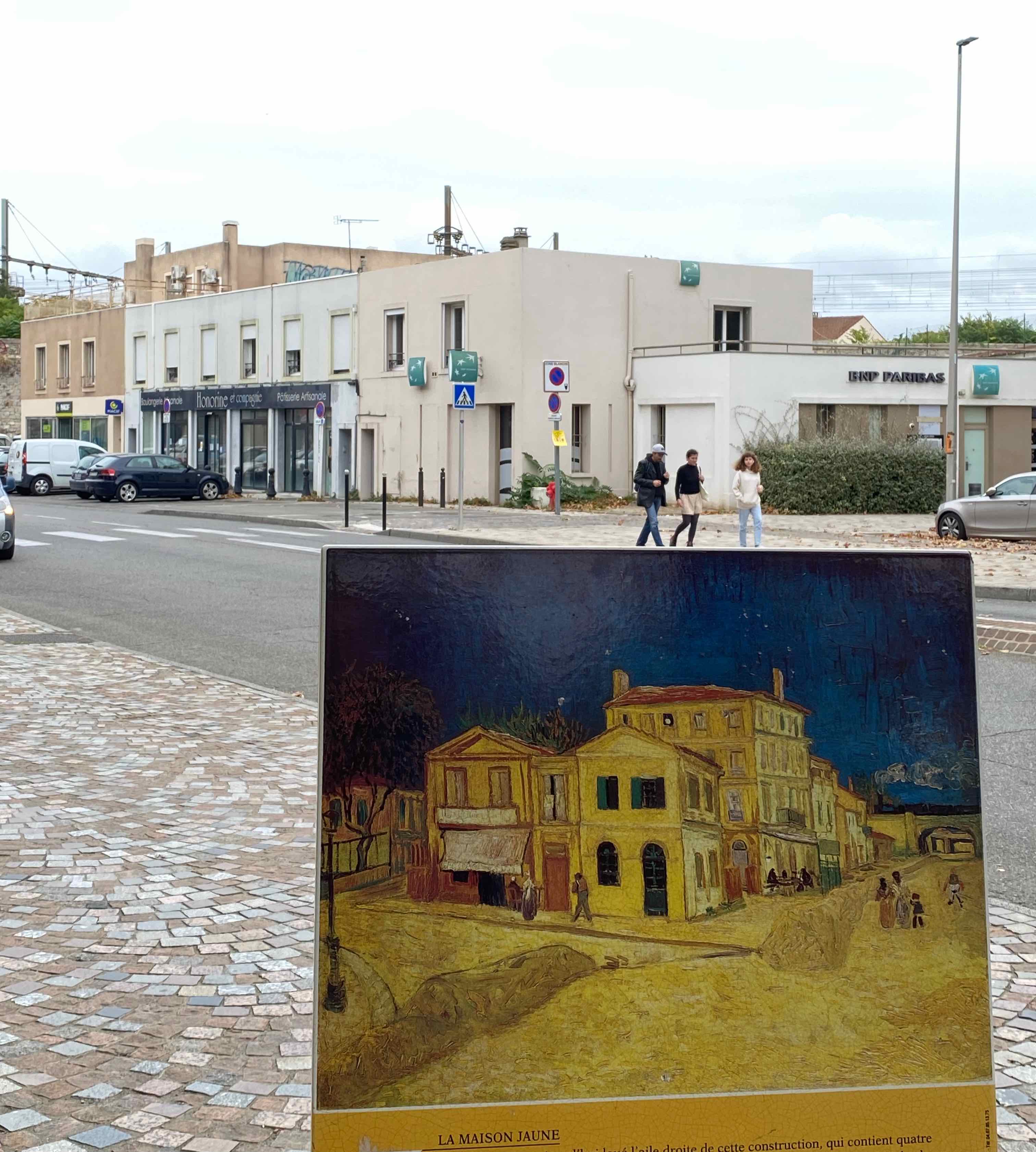
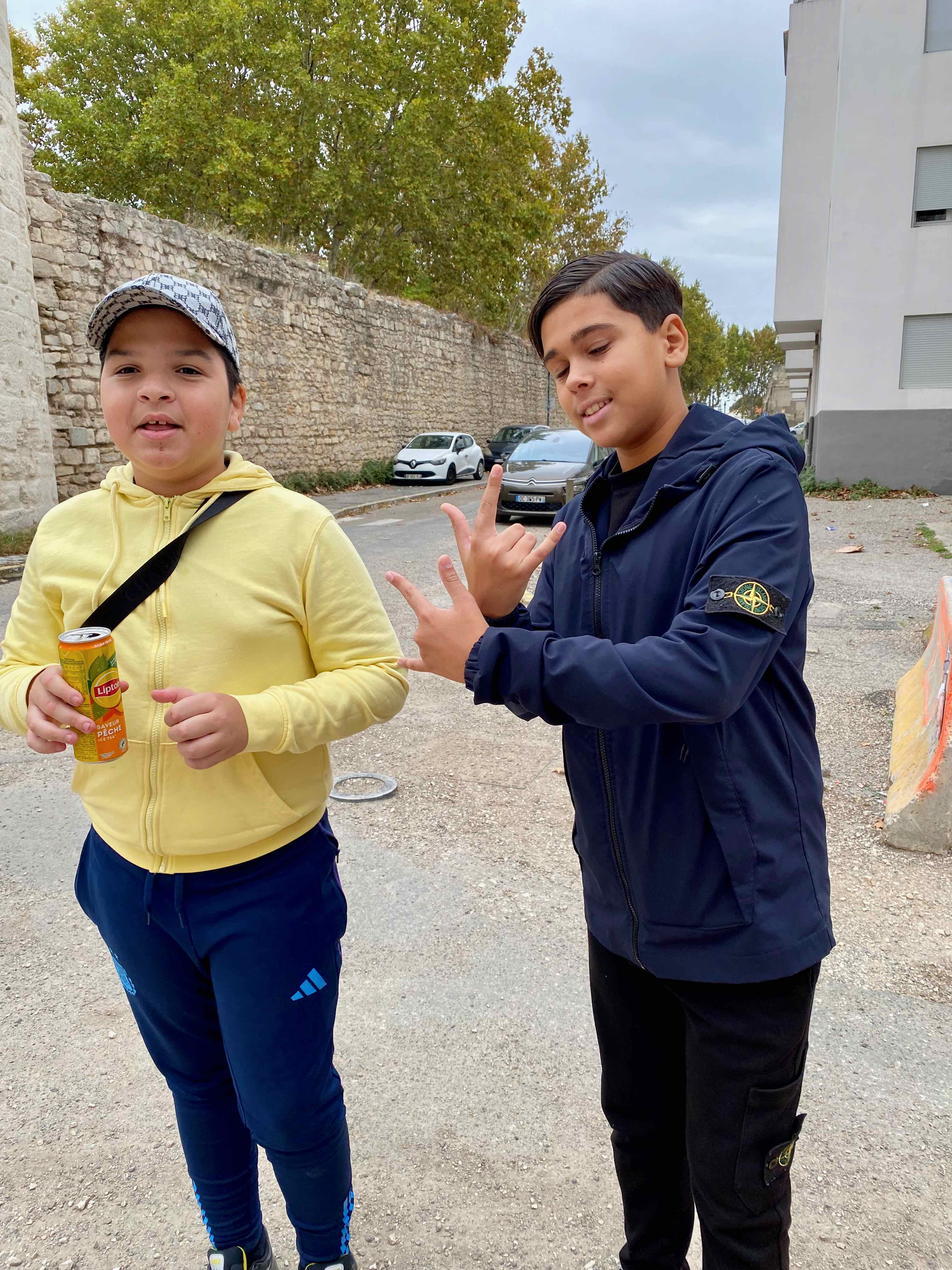
Unfortunately the Yellow House that Van Gogh shared with Gaugin was also destroyed during the bombardment. It stood on this very street corner.Several young boys were hanging about and one of them, Leron (in the blue jacket) asked me to take his photo.  They were fun.
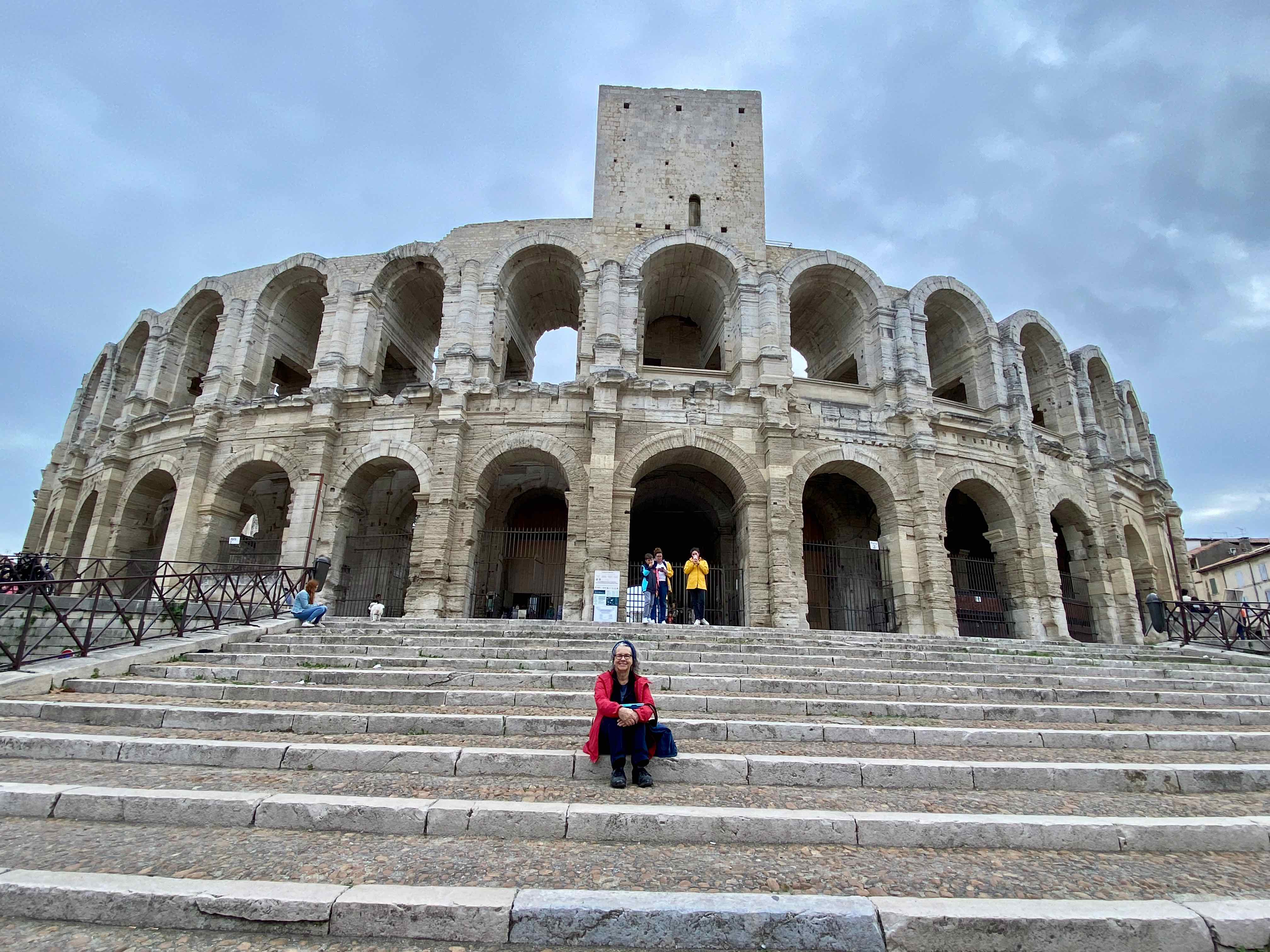
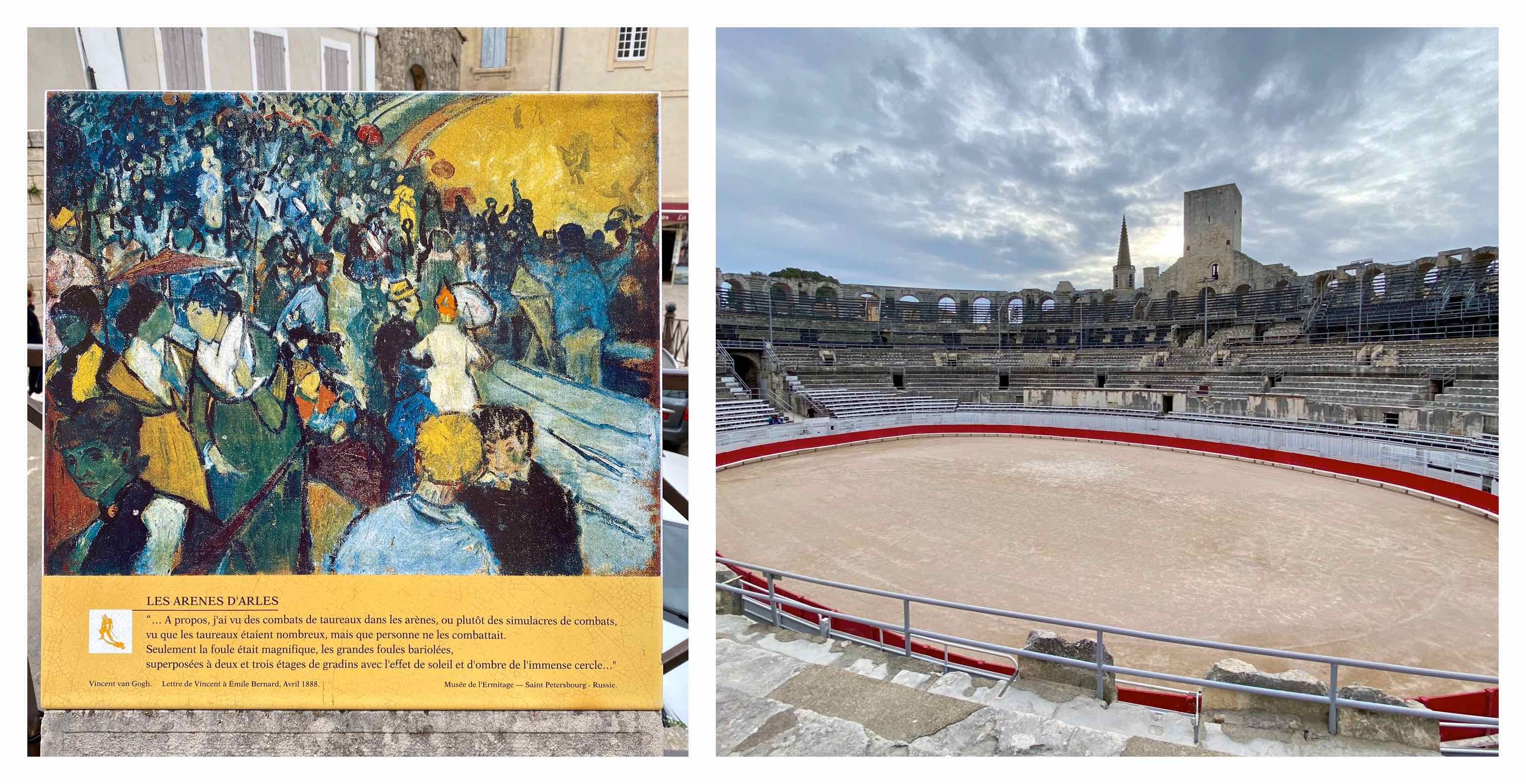
Van Gogh’s next painting was done in the amphitheater, so we buy tickets to go inside, even though the plaque is outside for tourists to see. The Amphitheatre painting shows the arena full of people, but there aren’t many people here today.
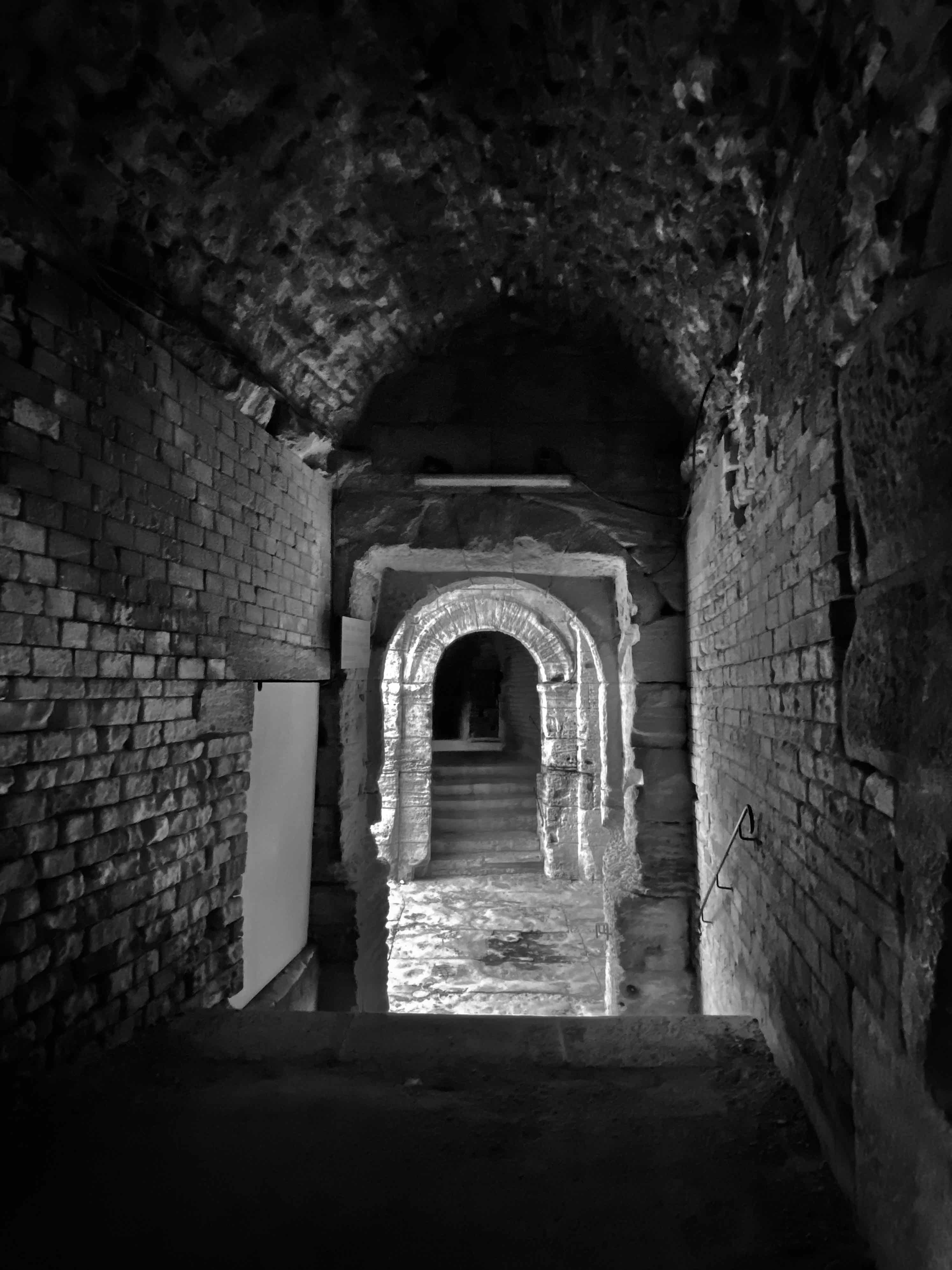
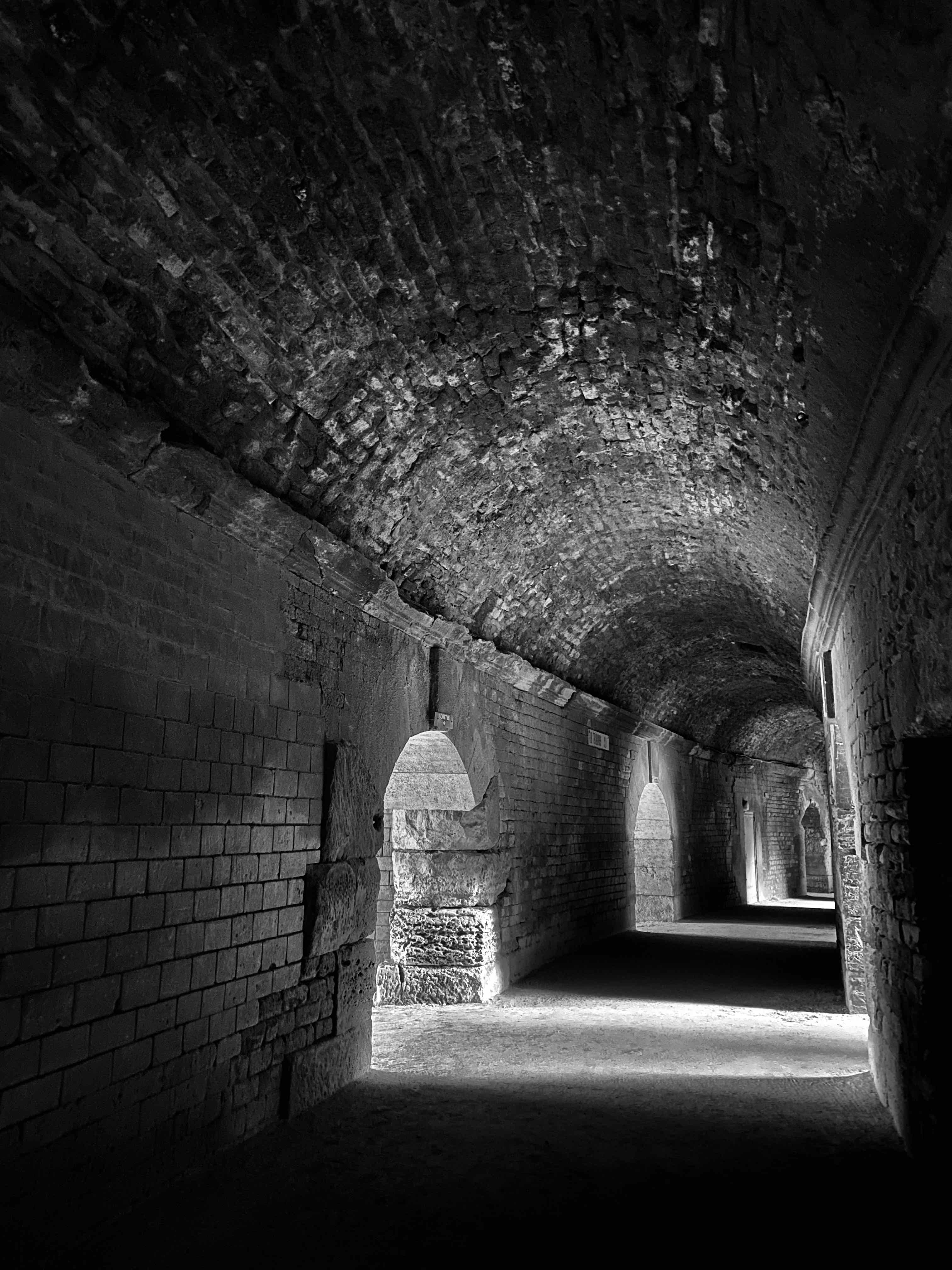
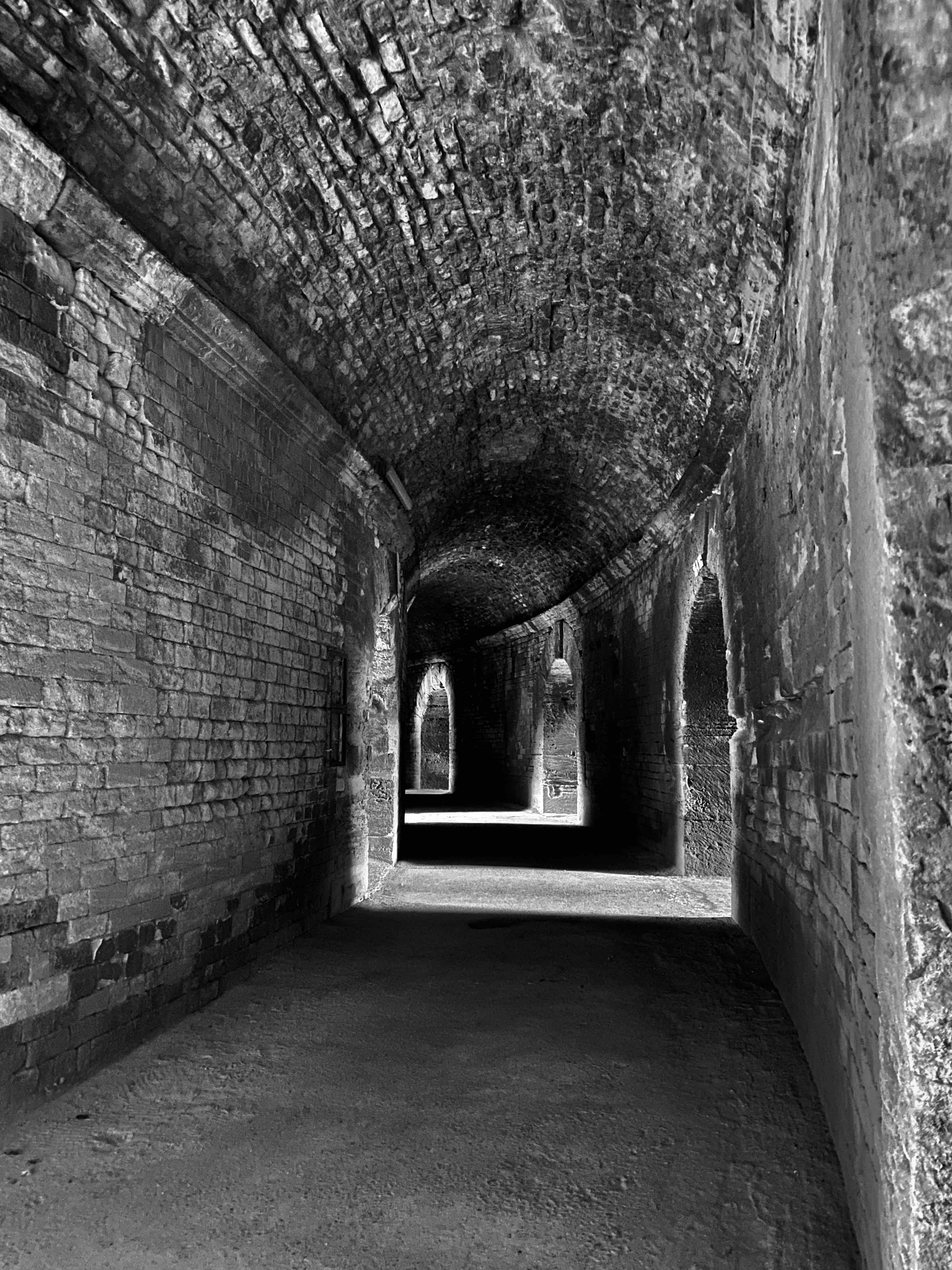
I took some black and white photos in the passageways beneath the seats.  I like how the light streamed in through the openings and all the old stones.

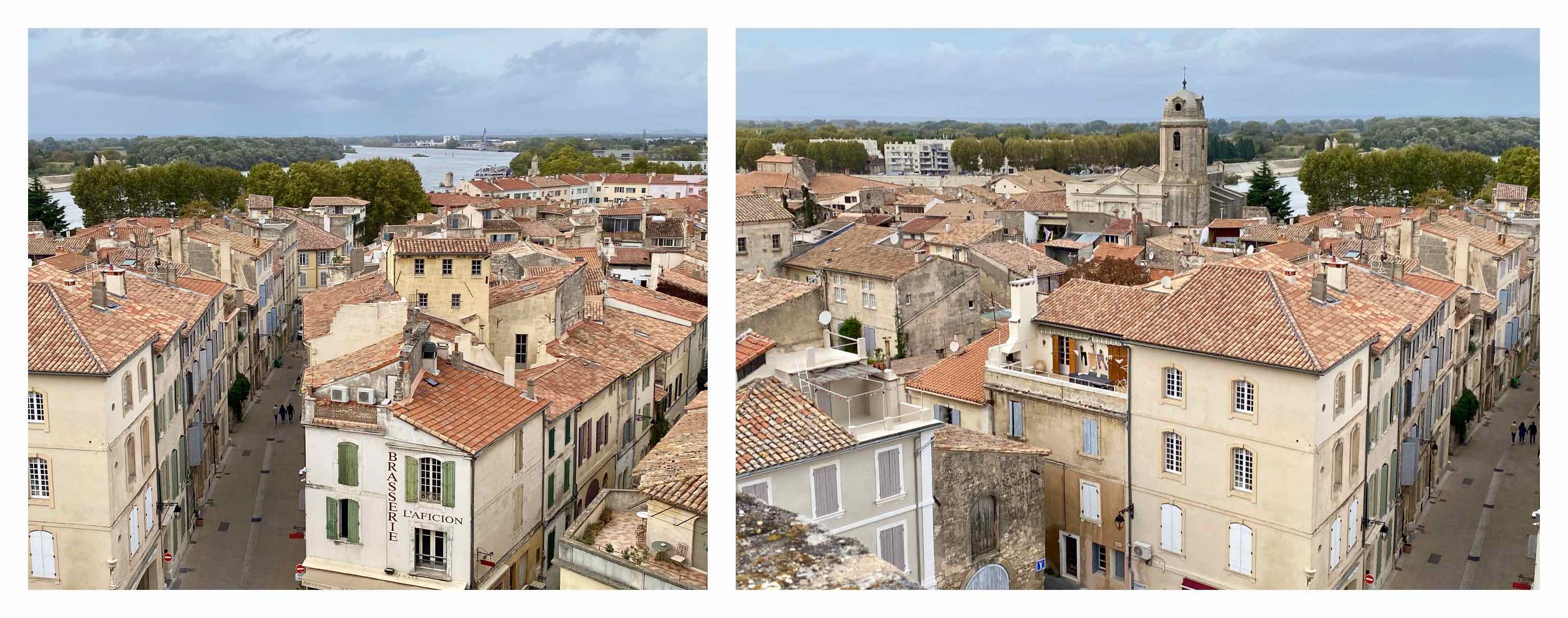
We climb to the top of the amphitheatre tower and get a great view of all the very French rooftops.

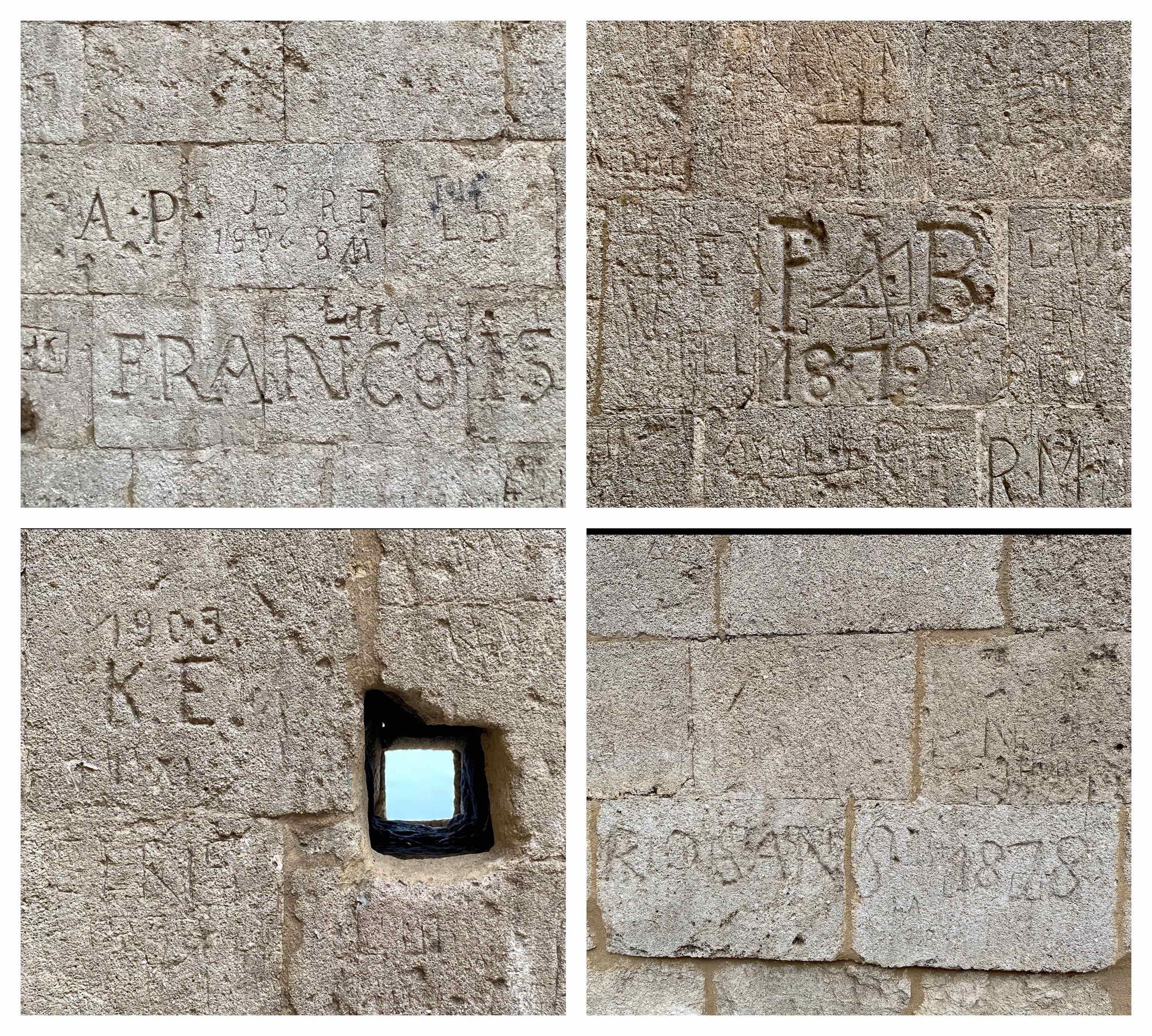
And up in the tower what do I find?  Graffiti!  It has been around for a long, long time.

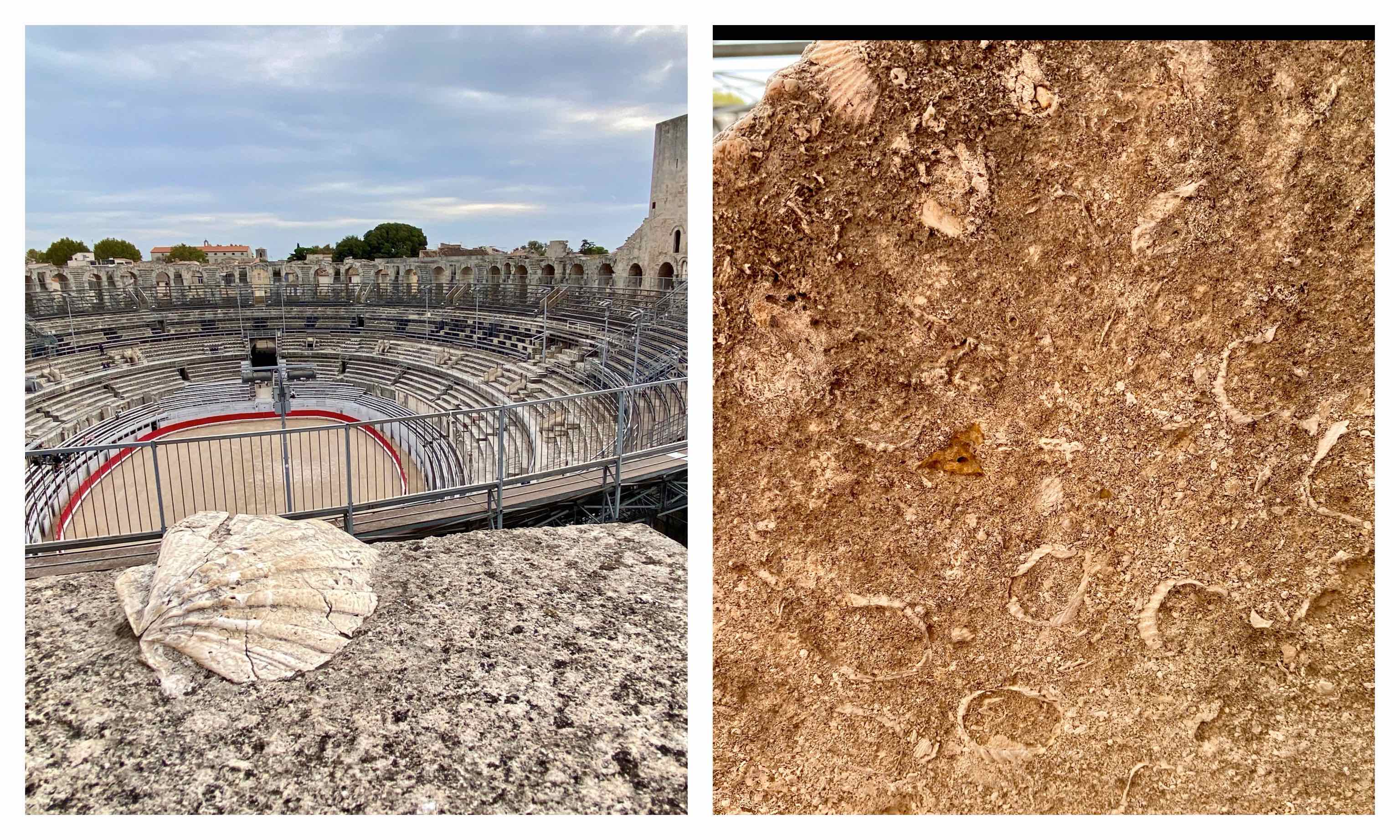
Set in one of the stones at the top of the staircase to the tower is a sea shell, partially buried in the stone and just below it another stone block that is full of smaller sea shells.  I love it when we notice these little kinds of details, details that I am sure many people don’t ever notice.

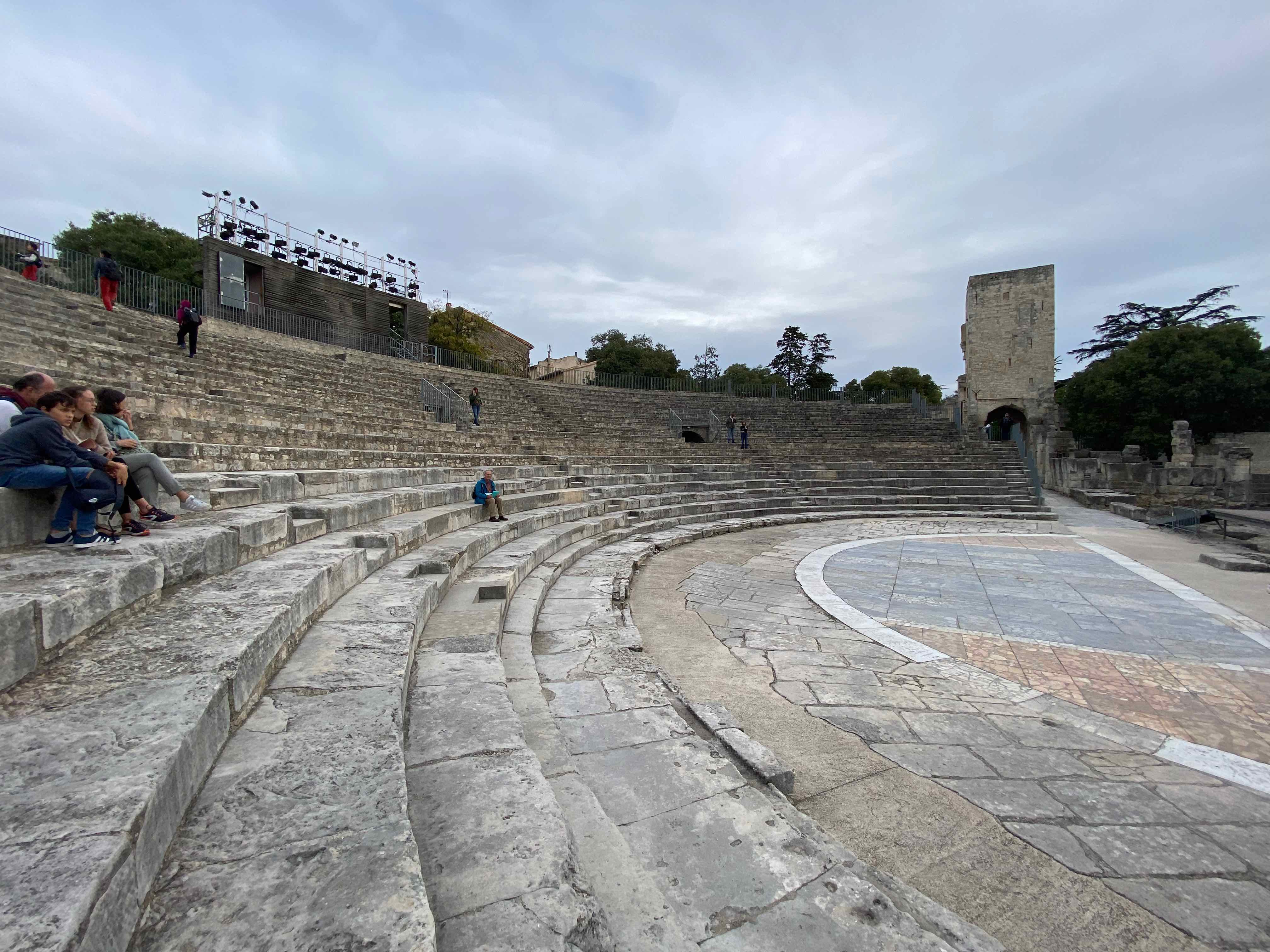
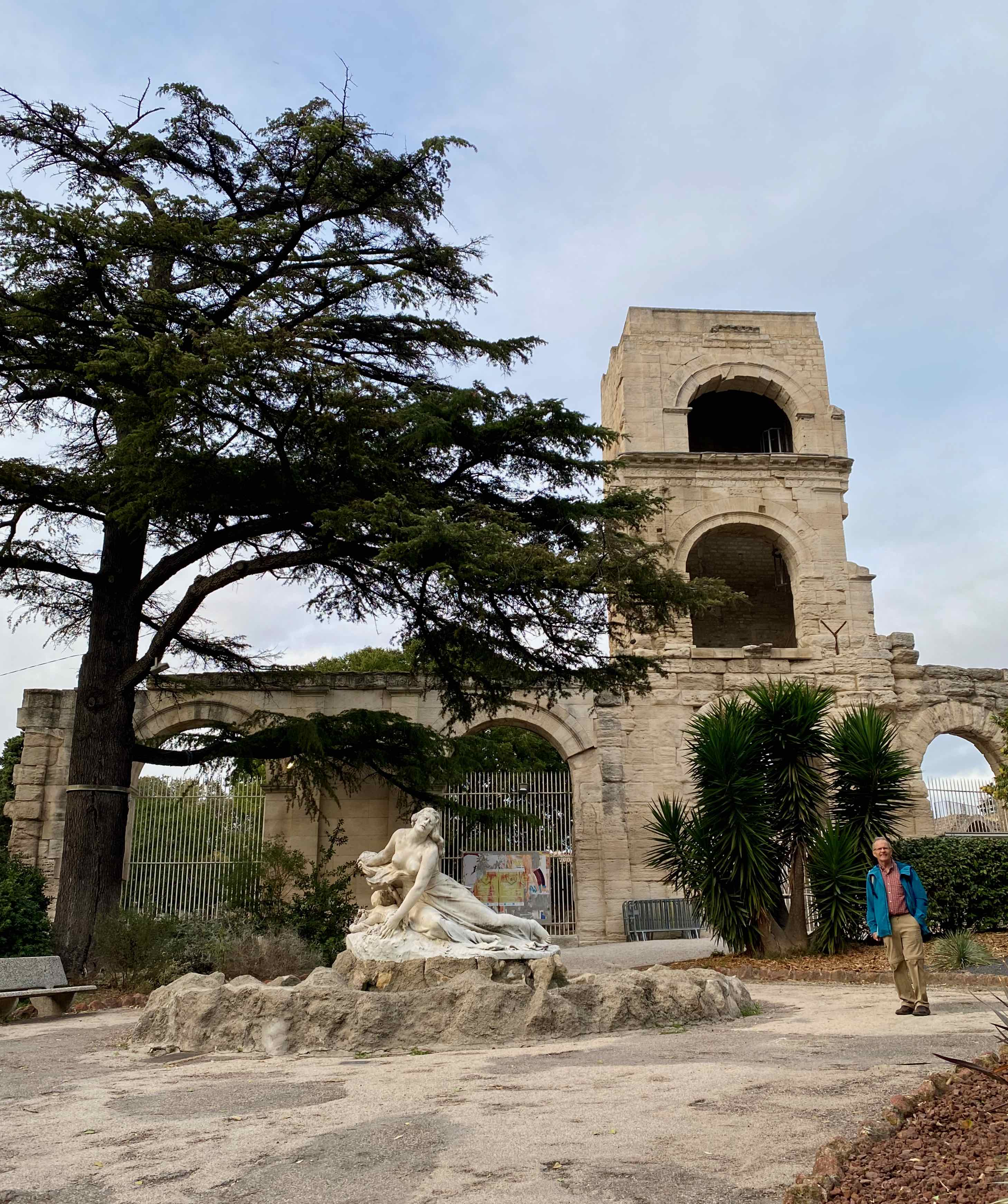
We take another detour to visit the The Roman Theatre of Arles.  It  is a 1st-century Roman theatre, built during the reign of Caesar Augustus.  Bob is sitting consulting our map to figure out where to go next, as we have wandered off the path laid out by the plaques in the sidewalk.

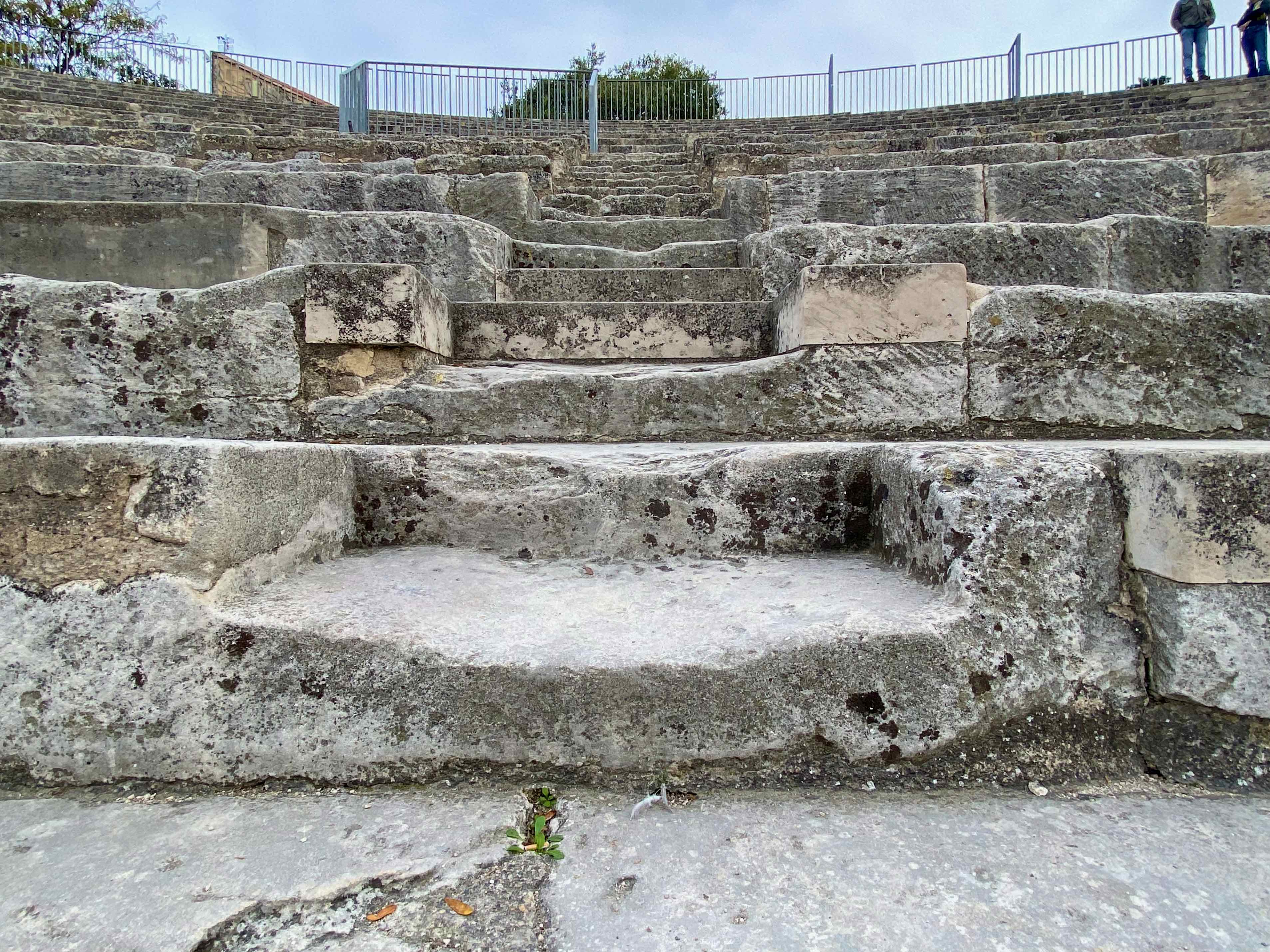
I just love the way the stone steps have been worn down by countless footsteps over the centuries.

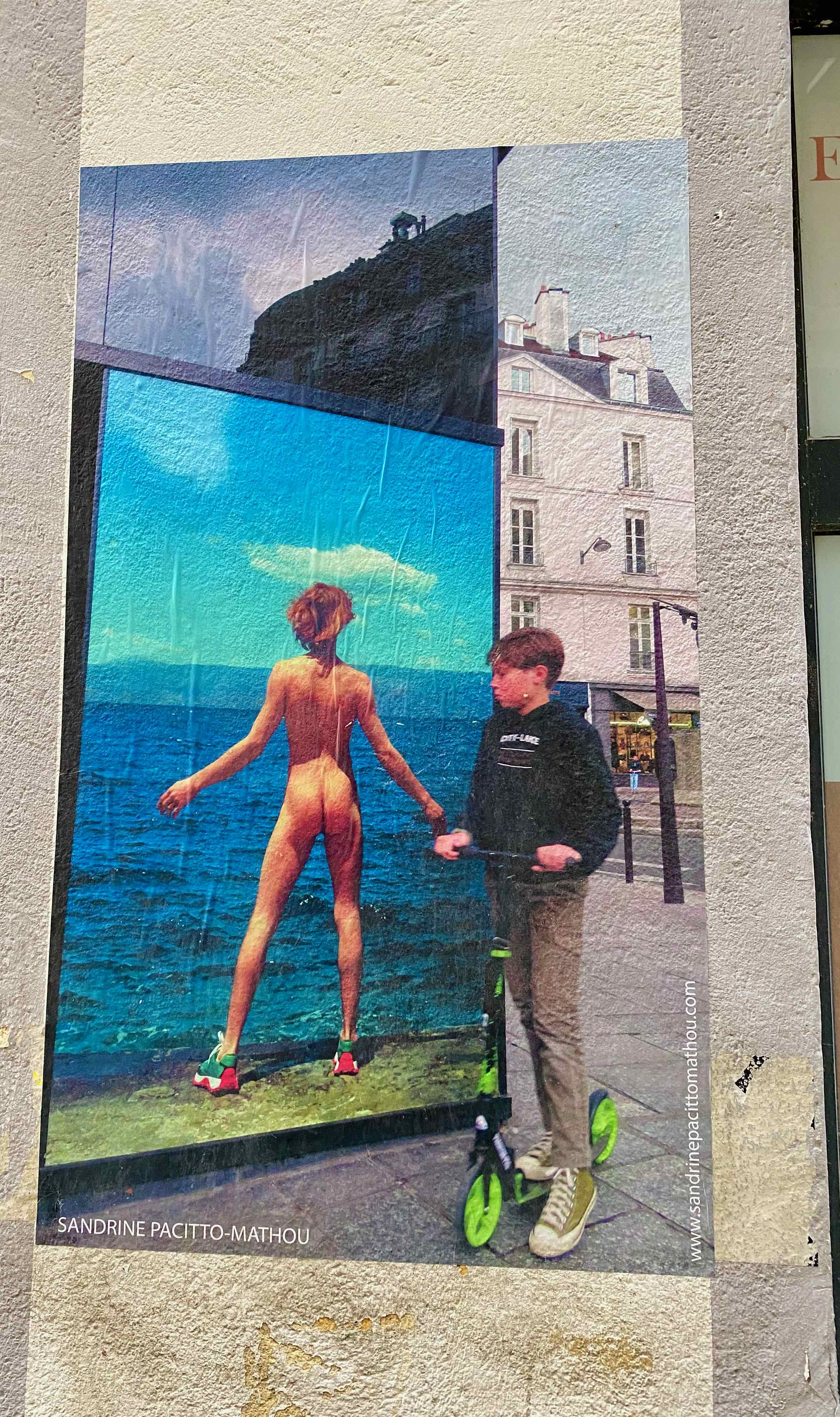
We pass this poster of a young man who is carefully looking at another poster

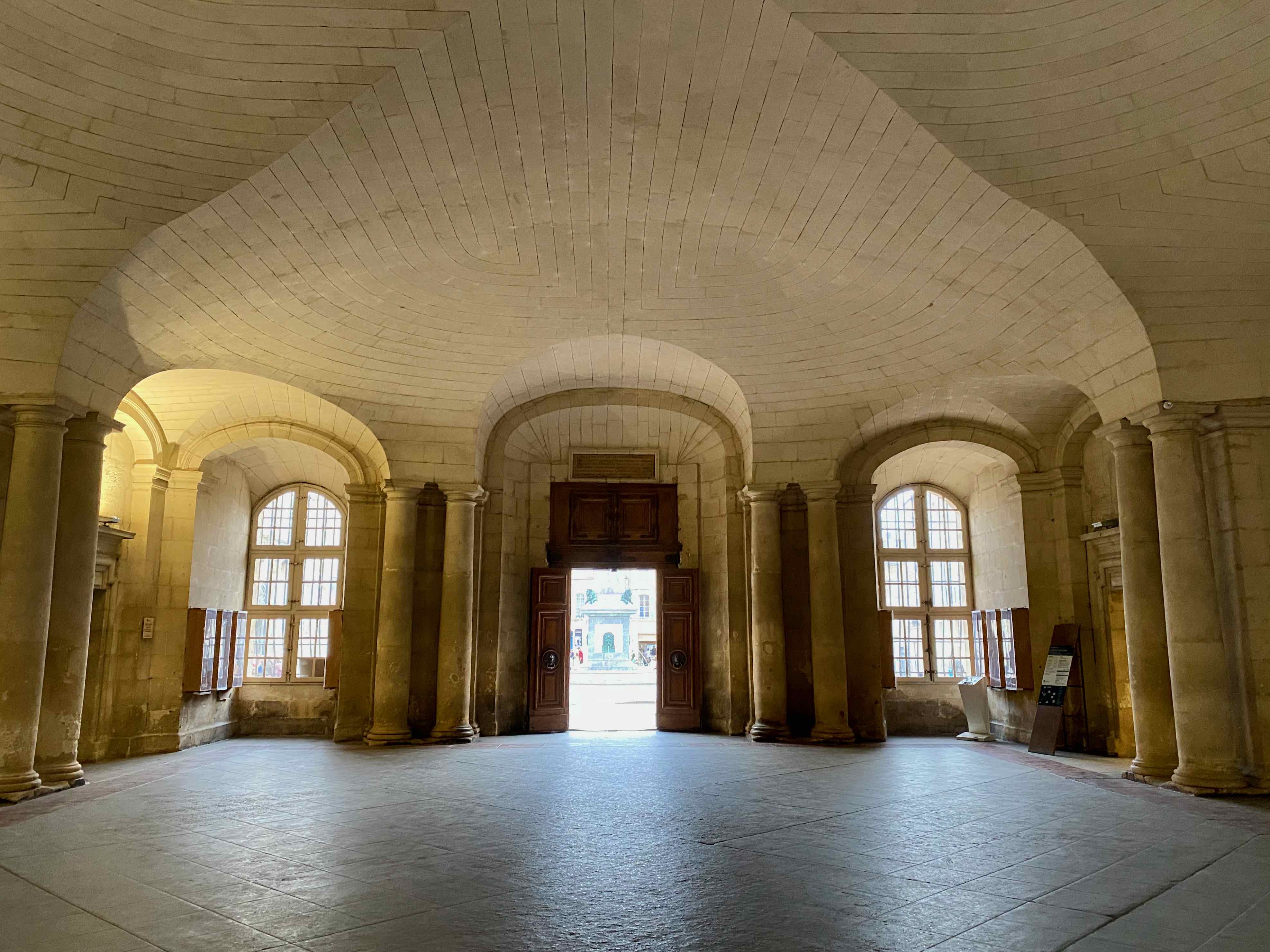
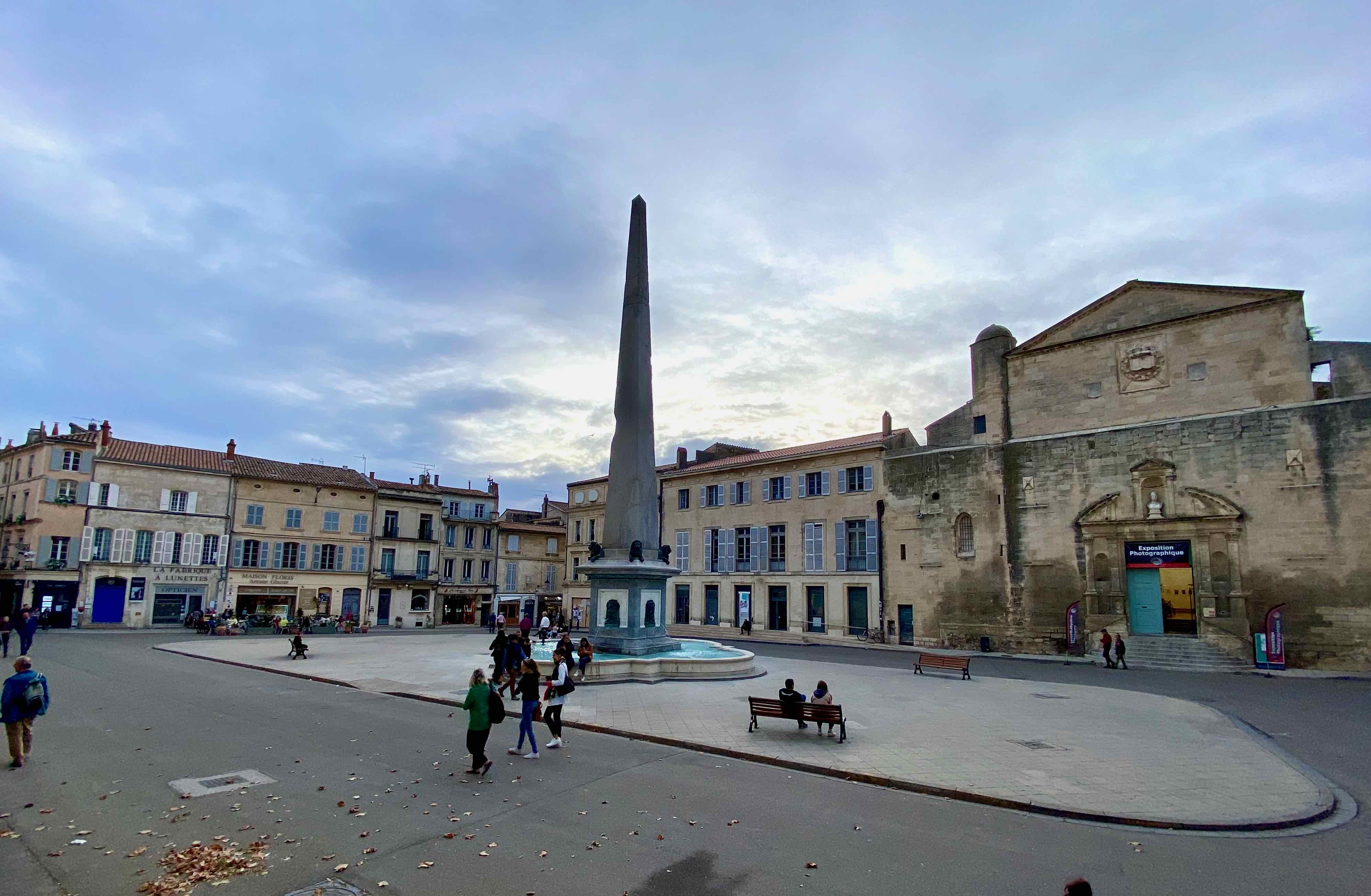
We walk through this old building to reach the square on the other side…

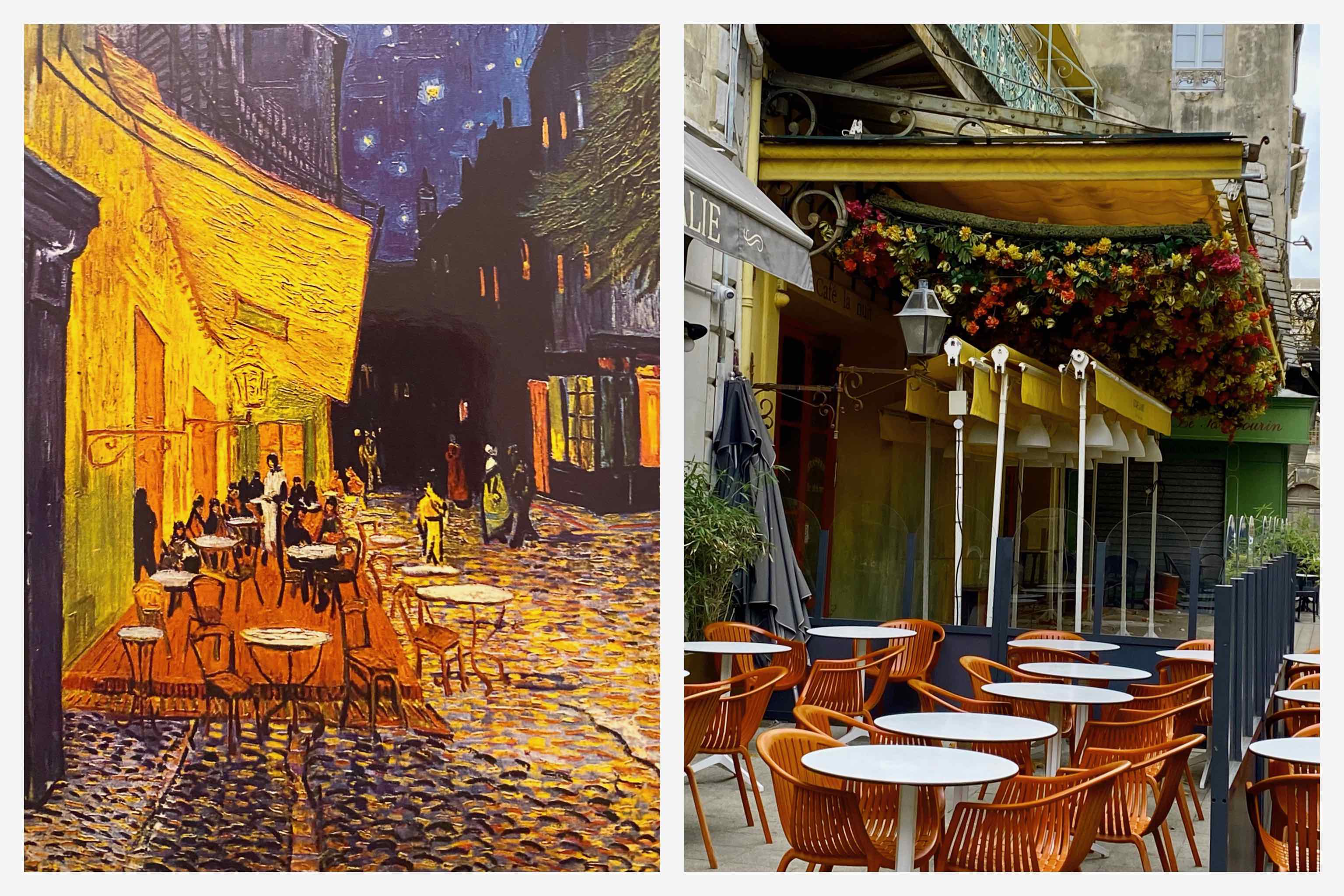
to look for the painting, Café Terrace At Night.  We find the cafe but there is no sign of the plaque with the painting.  We find the location which must have been very close to the spot where Van Gogh stood.

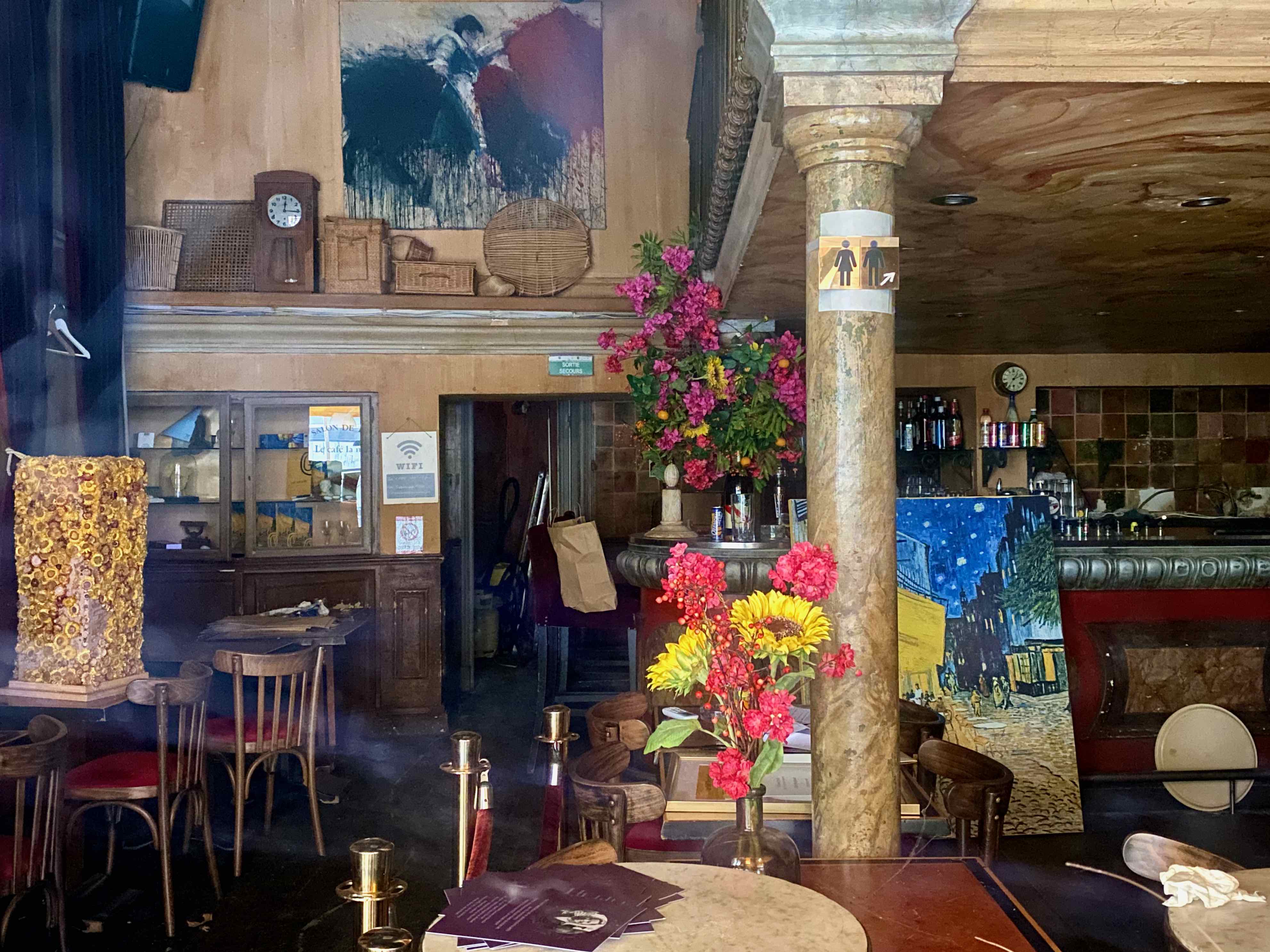
I noticed that the café isn’t open so I went up to take a peek in the windows.  Everything inside looks ready to receive customers, and there is the plaque that we were looking for!  However….

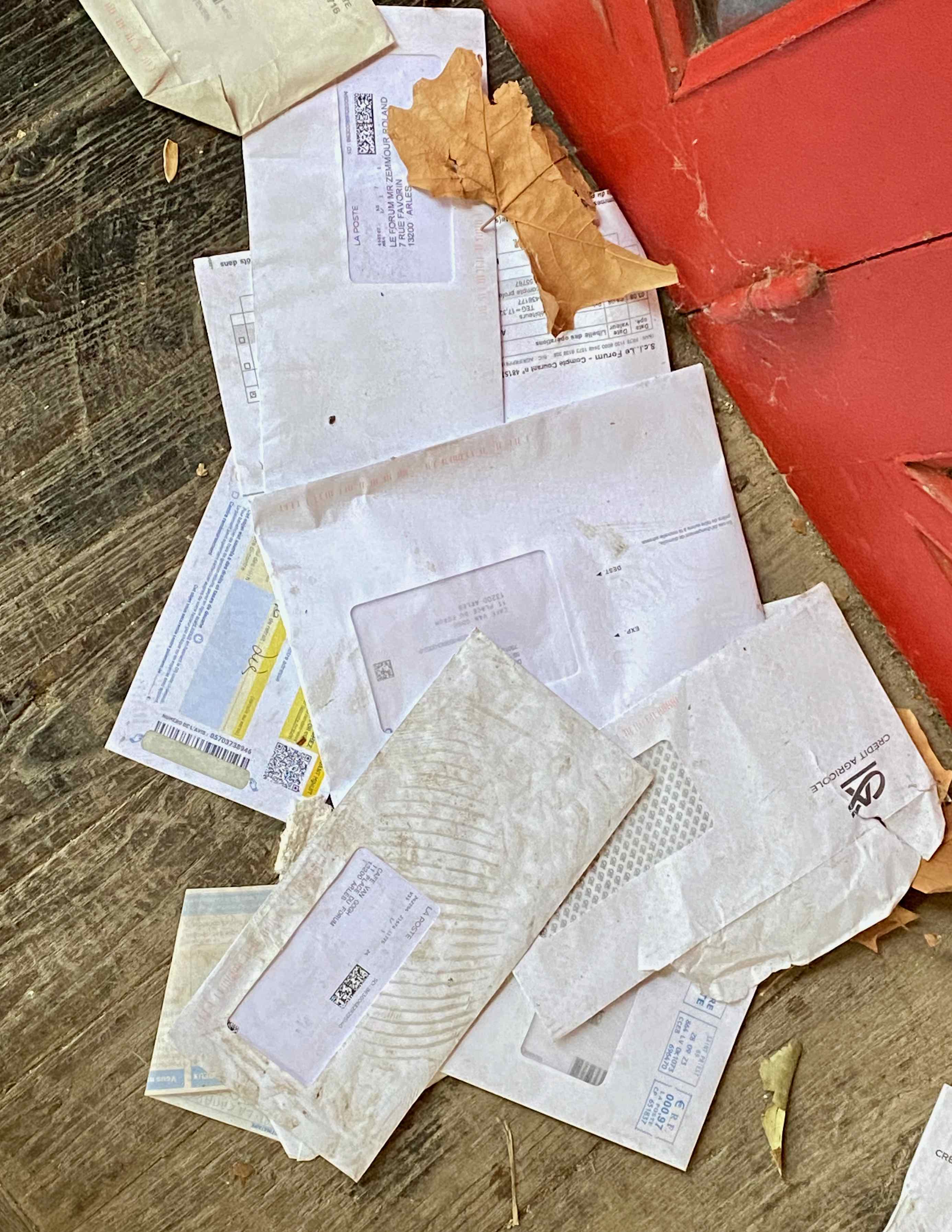
I think it has been closed for a while, as there is a pile of old  mail on the ground at the door.  Too bad, It would have been nice to go inside for a drink.Walking through this plaza I notice another photography exhibit but it is getting late and we still have one more painting spot to find, so we decide not to go in.
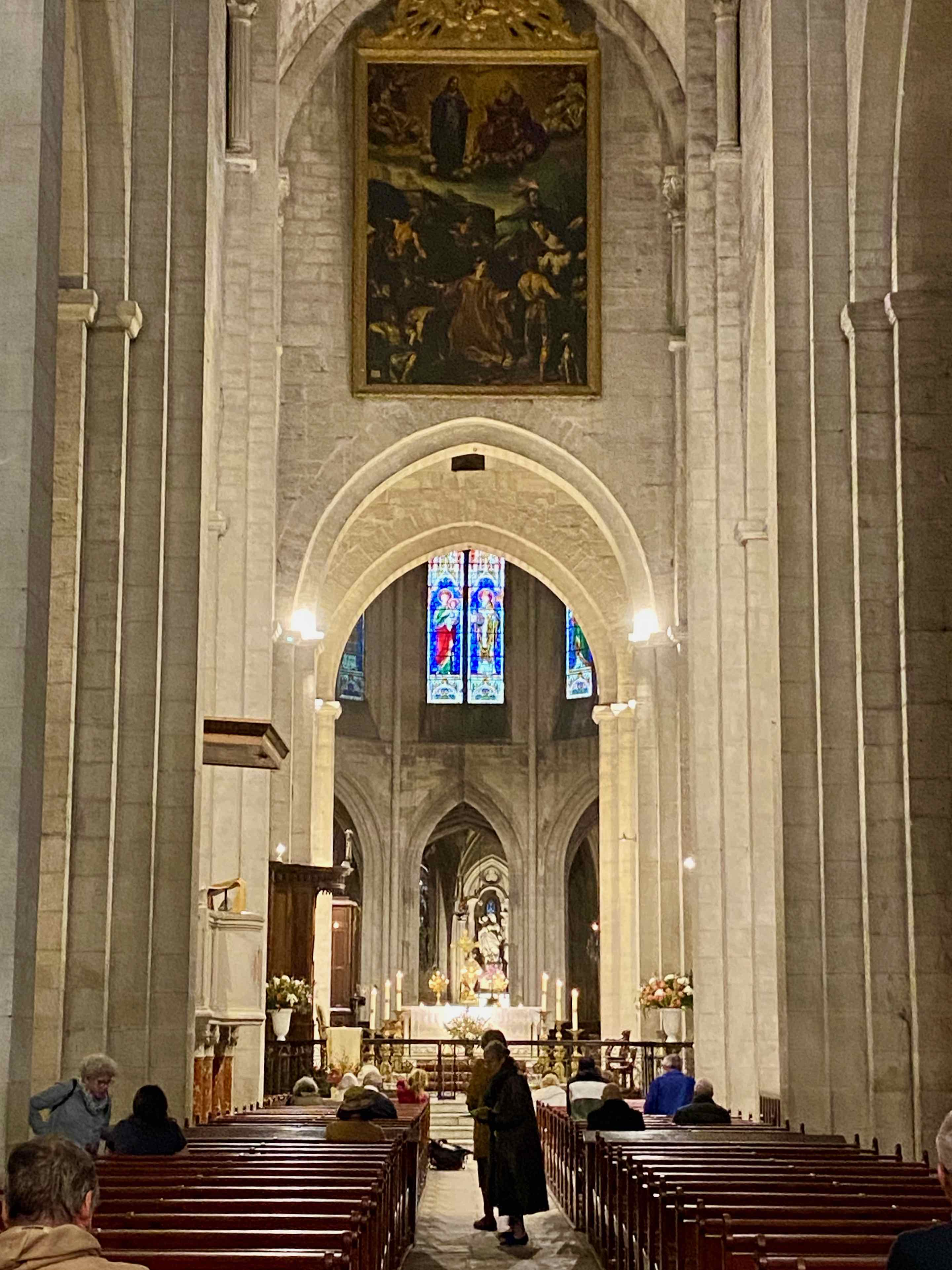
But we do a quick peek inside the Church of Saint-Trophime.  We never know what we will find behind church doors.  Every church is different, ranging from quite austere to the incredible elaborate.

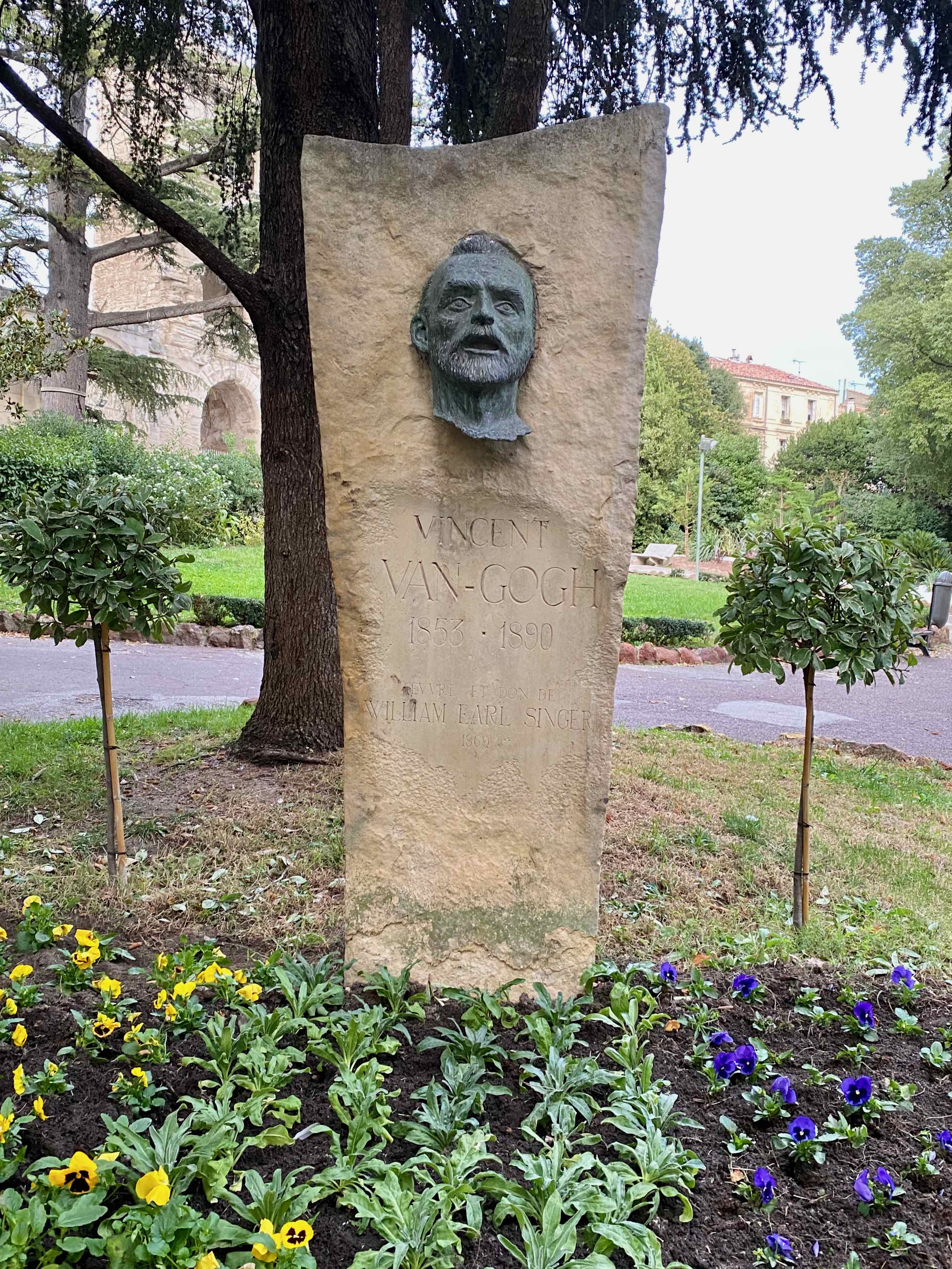
We find the park where the next painting should be located and a monument to Vincent but we can’t locate the painting.  Pansies have been recently planted for the winter garden around this monument.

Bob checks out one part of the park and I go look in another.  The tower is part of the Roman Theatre that we sat in earlier.

Finally we find it!  But looking at these photos, I think we should have turned around and taken the photo of the garden in the other direction.  Guess we were getting tired.  There were three more spots on this walking tour but they are almost on the town’s outskirts and we have once again run out of daylight.

It is only 45 minutes to Nîmes and here we are driving in the dark once more.  One more interesting fact, the whole old town of Arles is a UNESCO World Heritage Site!