Day 44 Monday, October 13, 2025
First stop on our way to Mulhouse is a pretty little town called Esslingen. At first sight we thought this was a real person!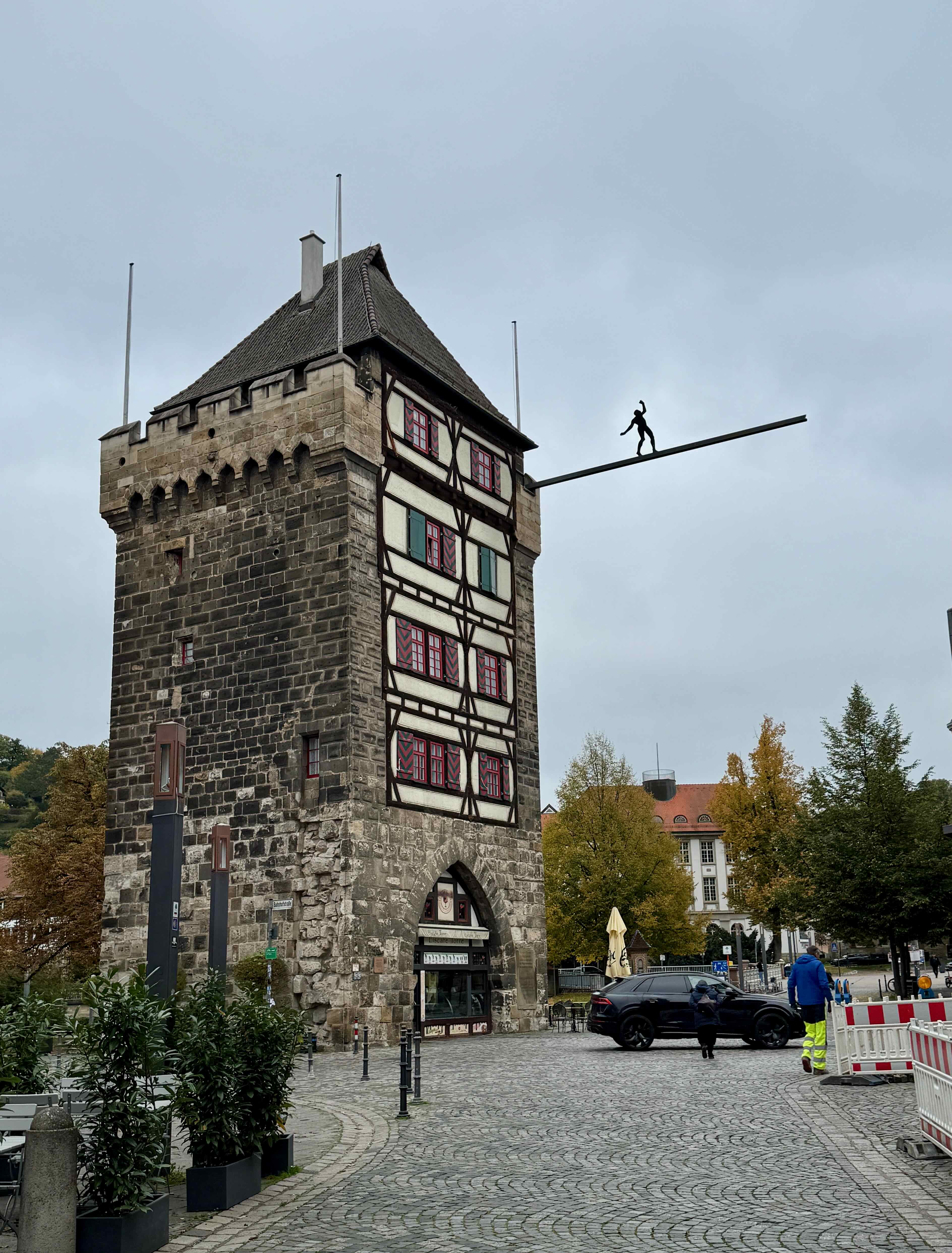
Our Airbnb in Stuttgart had a calendar with almost this exact photo. It was the impetus to visiting Esslingen.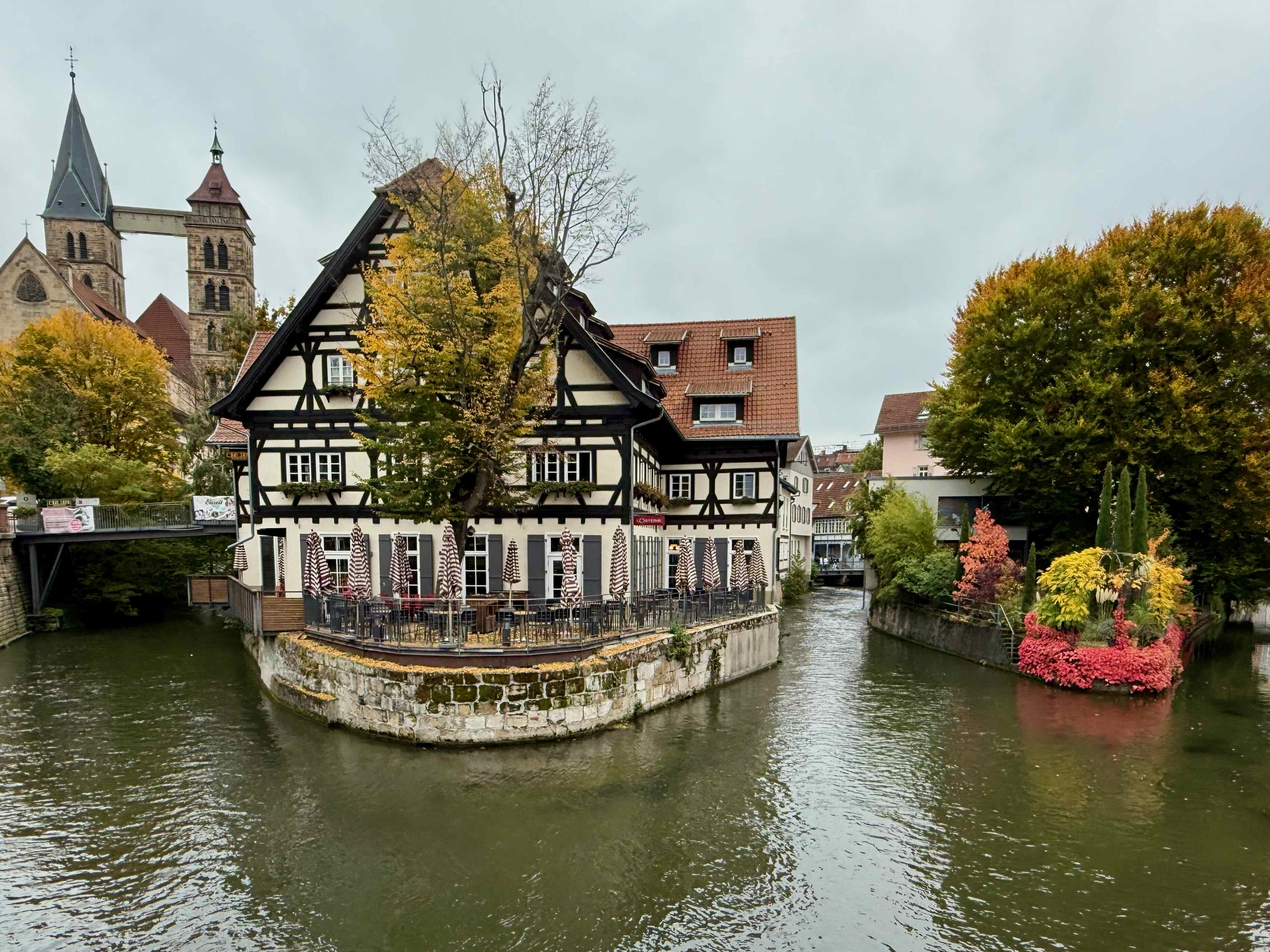
Autumn has definitely arrived. I love walking through the fallen leaves.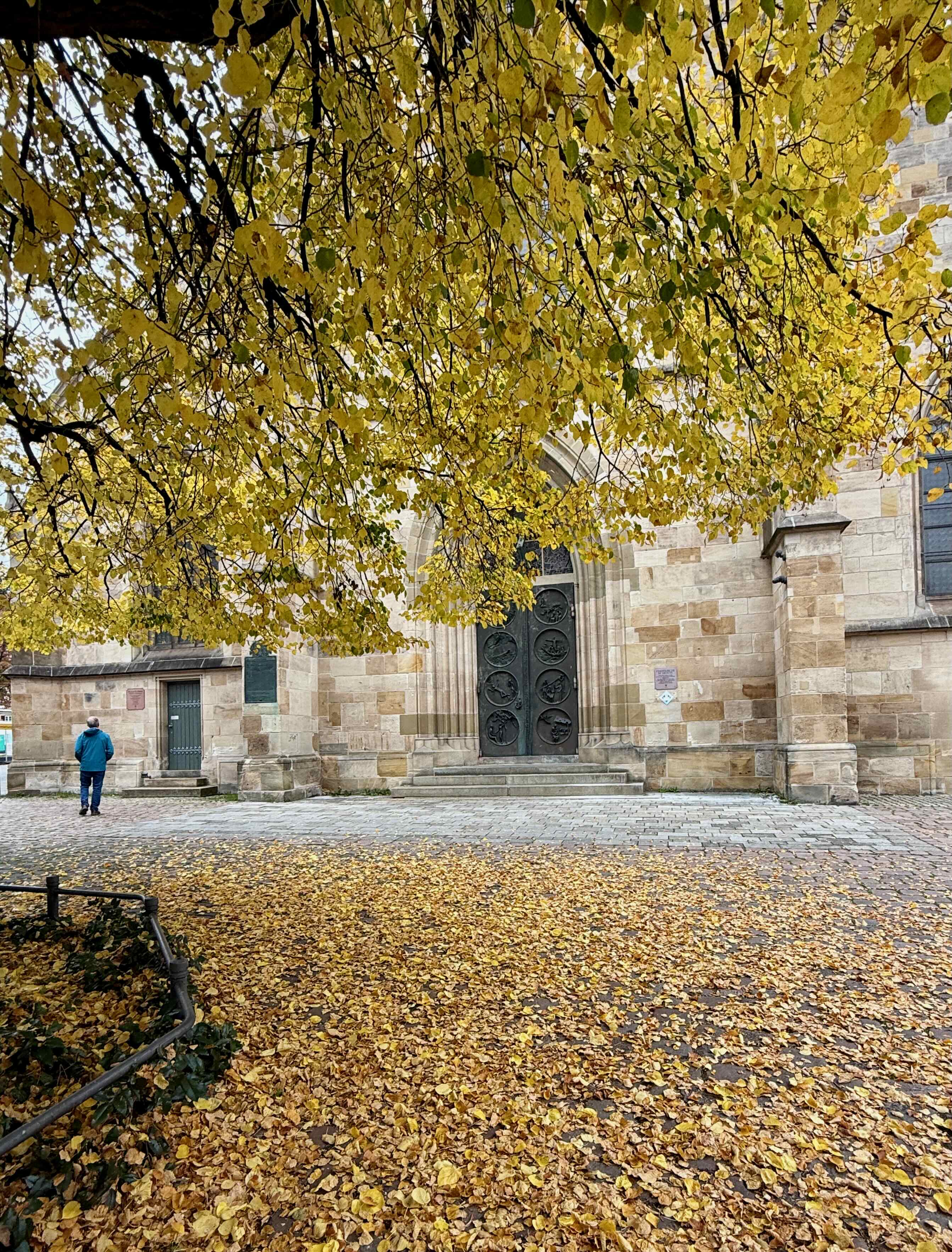
We walked into this church because its doors were so interesting,
I didn’t record the name of this church, but it had a very austere dark interior…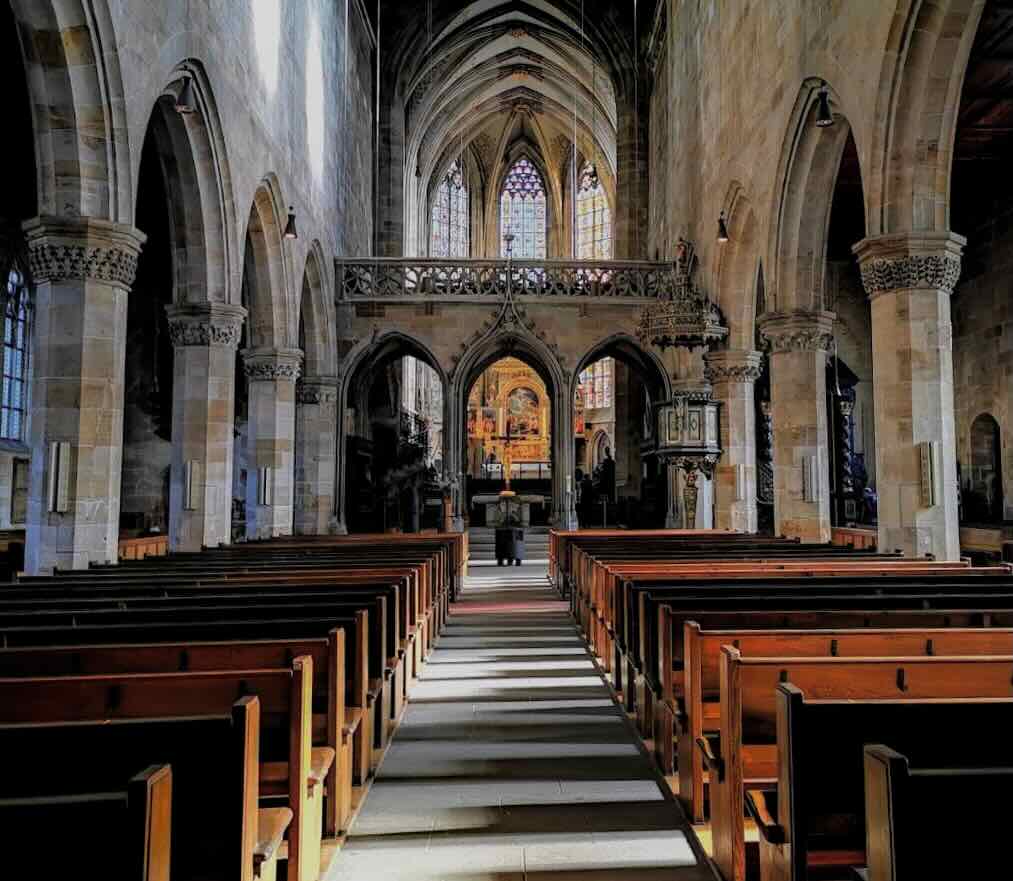 …but the area to light candles was small and intimate and appealed to me. We lit a candle for all our family members and friends who are facing health challenges right now, and spent a few moments in silent contemplation.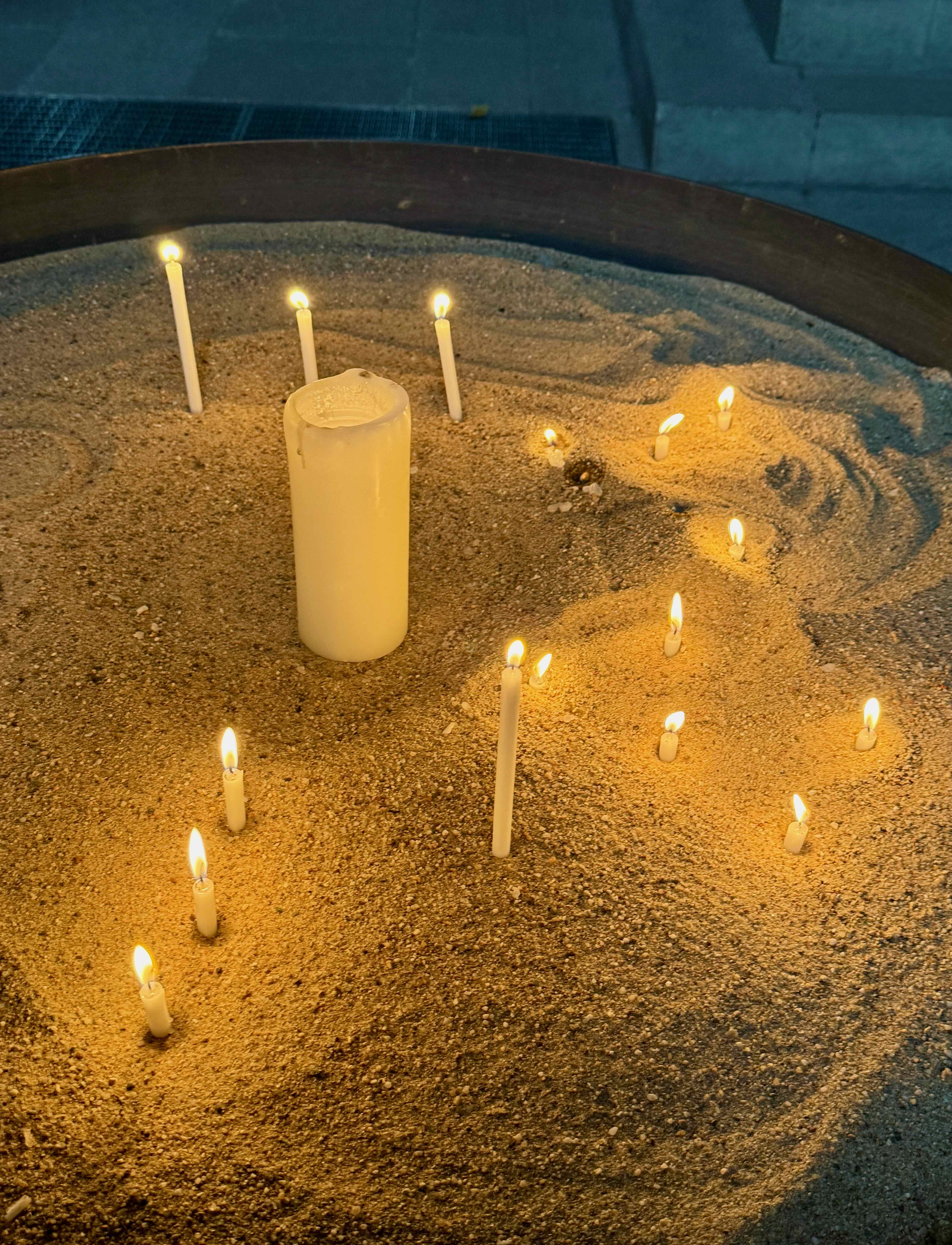
Back outside, we see Esslinger Castle in the distance. But this castle isn’t actually a castle, it is a well-preserved part of the medieval city fortifications, located high above the city centre. Originally expanded in the 13th century, it was reinforced in the 16th century with walls up to 5 meters thick. We can see people up there but we don’t have time to go and explore. Travel days don’t allow for in depth exploration and only give us a chance for brief visits to sites along the way.
One thing I love about European cities and towns are the unexpected little things, like the face on this wall. There is always something interesting and different to discover.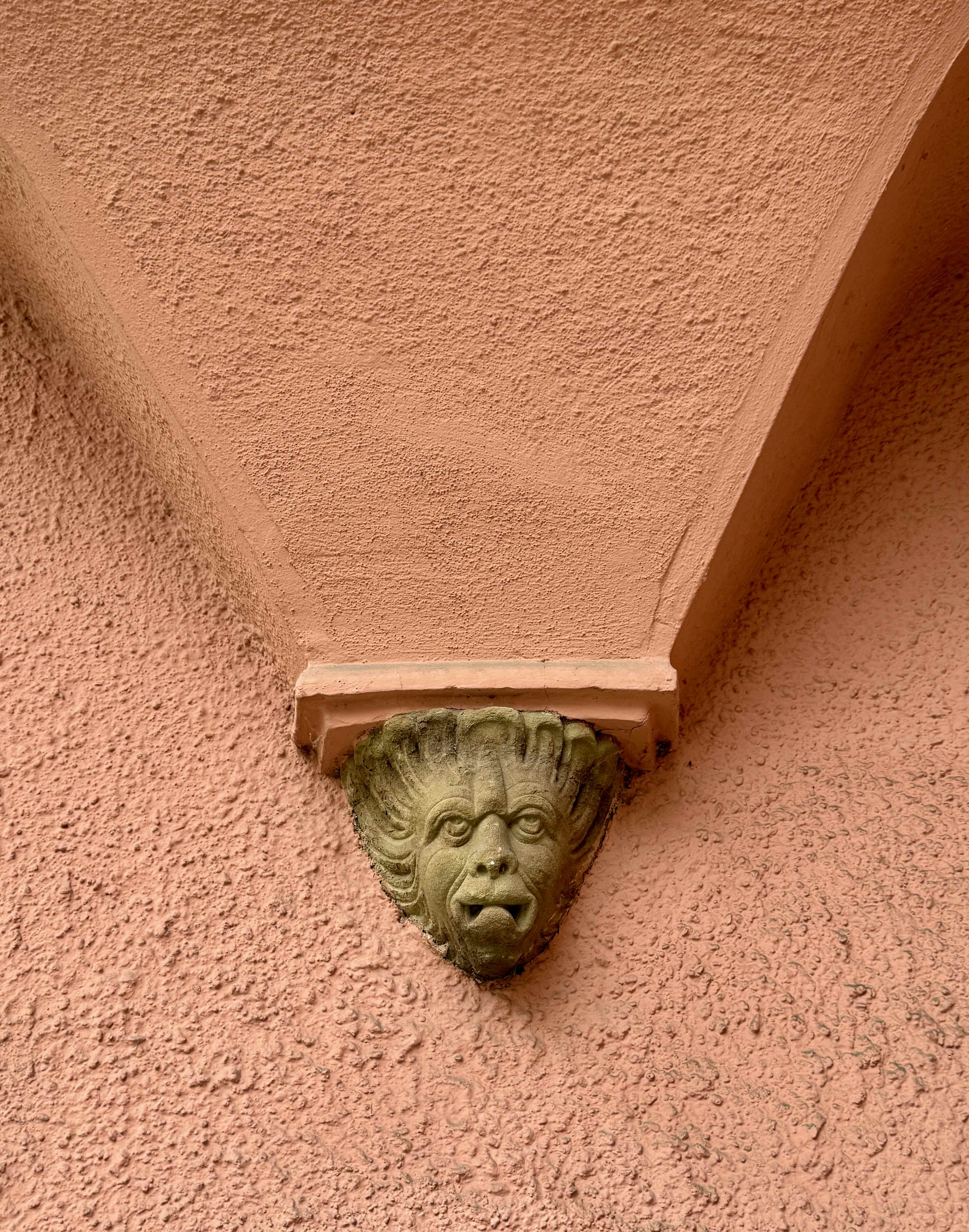
We pass this road construction site. I think they were replacing some pipes. All the little stones from the cobbled sidewalks and streets are piled up and then relaid in the pattern that matches the rest of the in place stones. Very labour intensive, but such a wonderful final result.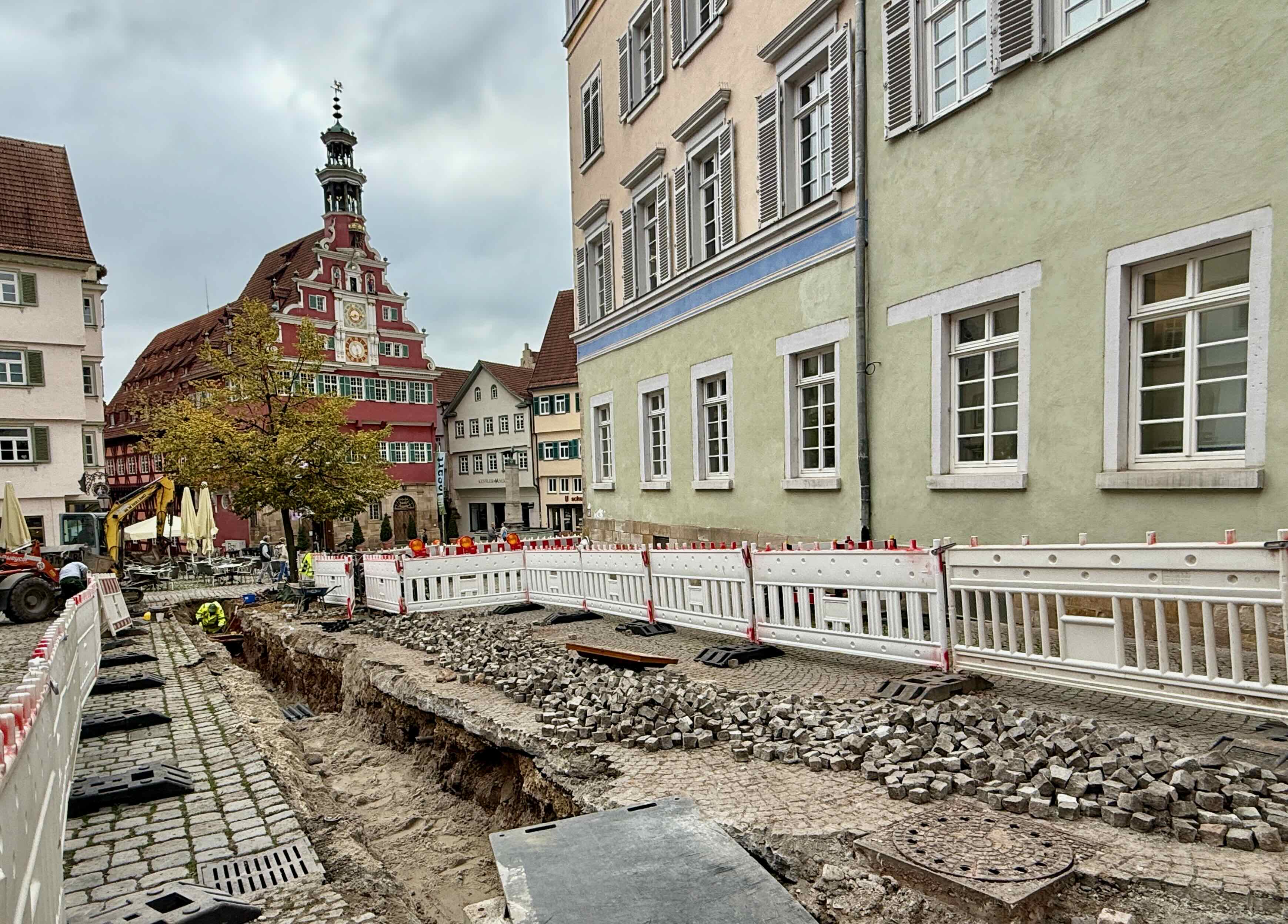
Built in 1423 as a sales hall and tax house this building is the Old Esslingen Town Hall. We were hoping to hear the Glockenspiel and see the figures on the clock move but later discovered that only happens five times a day. We are out of luck.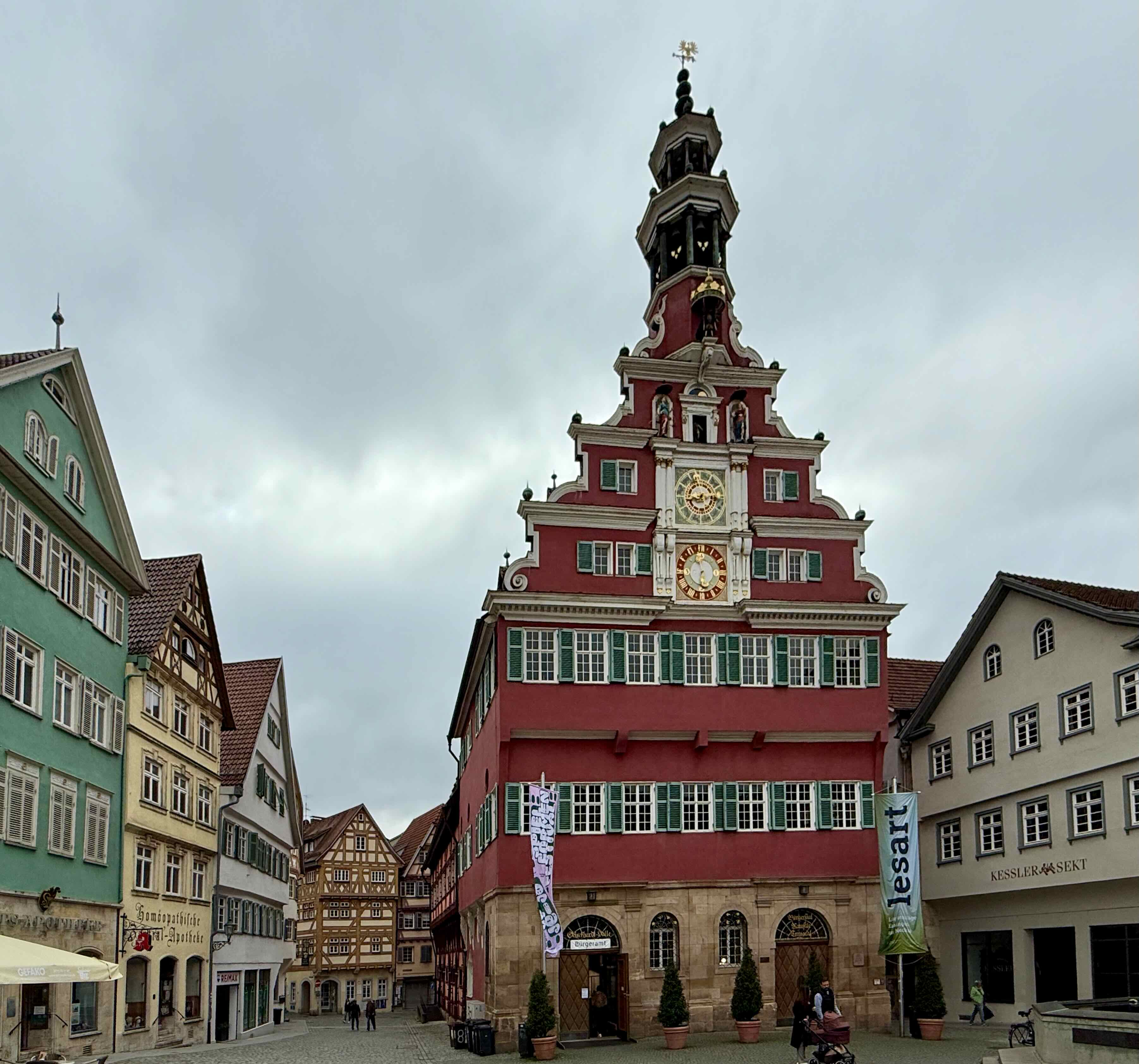
The cobbled streets are lined with ancient timbered houses…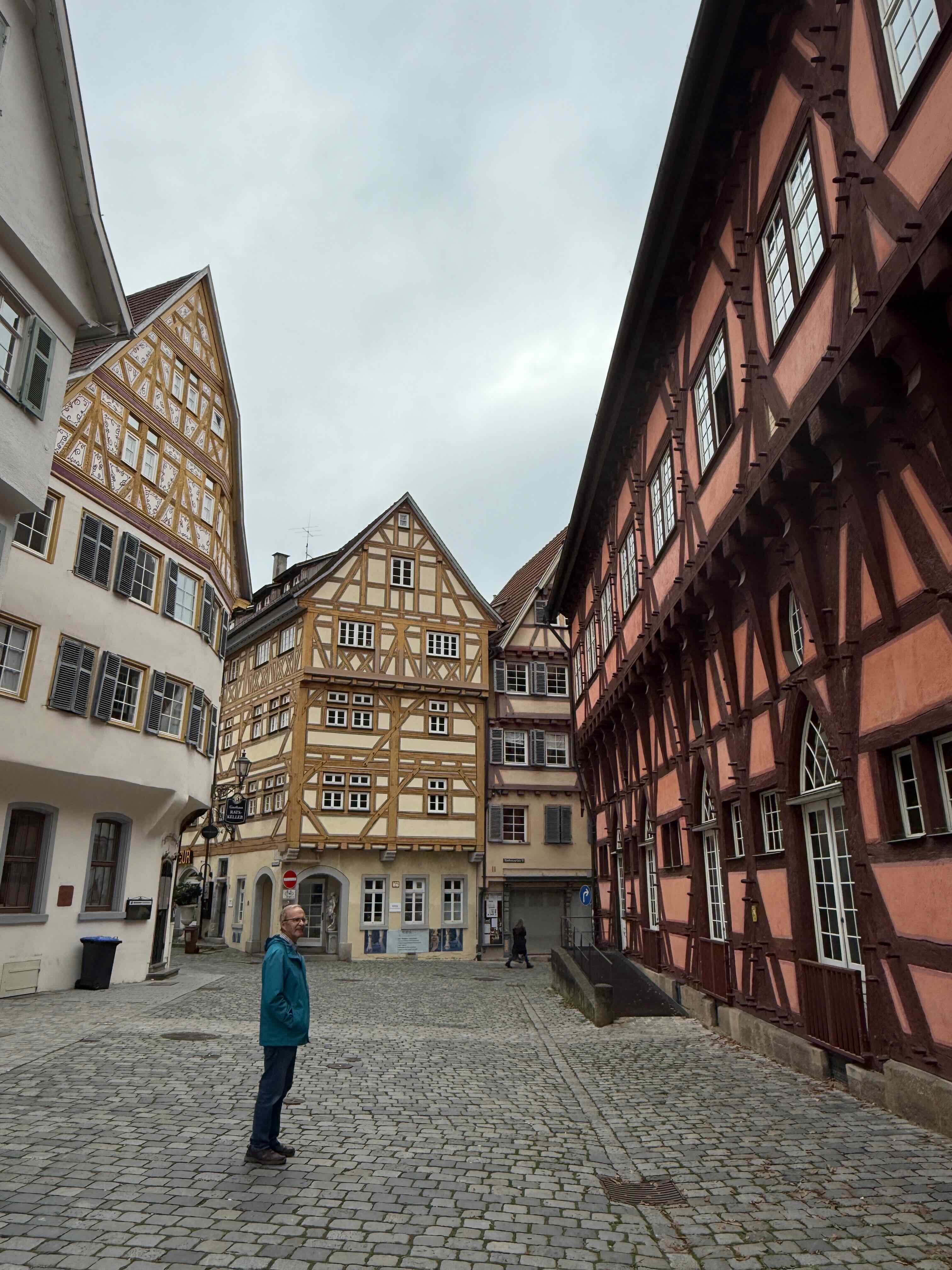
…and there are canals here too. We could have piloted our own electric boat for a trip on the canals but they stopped operating the end of September.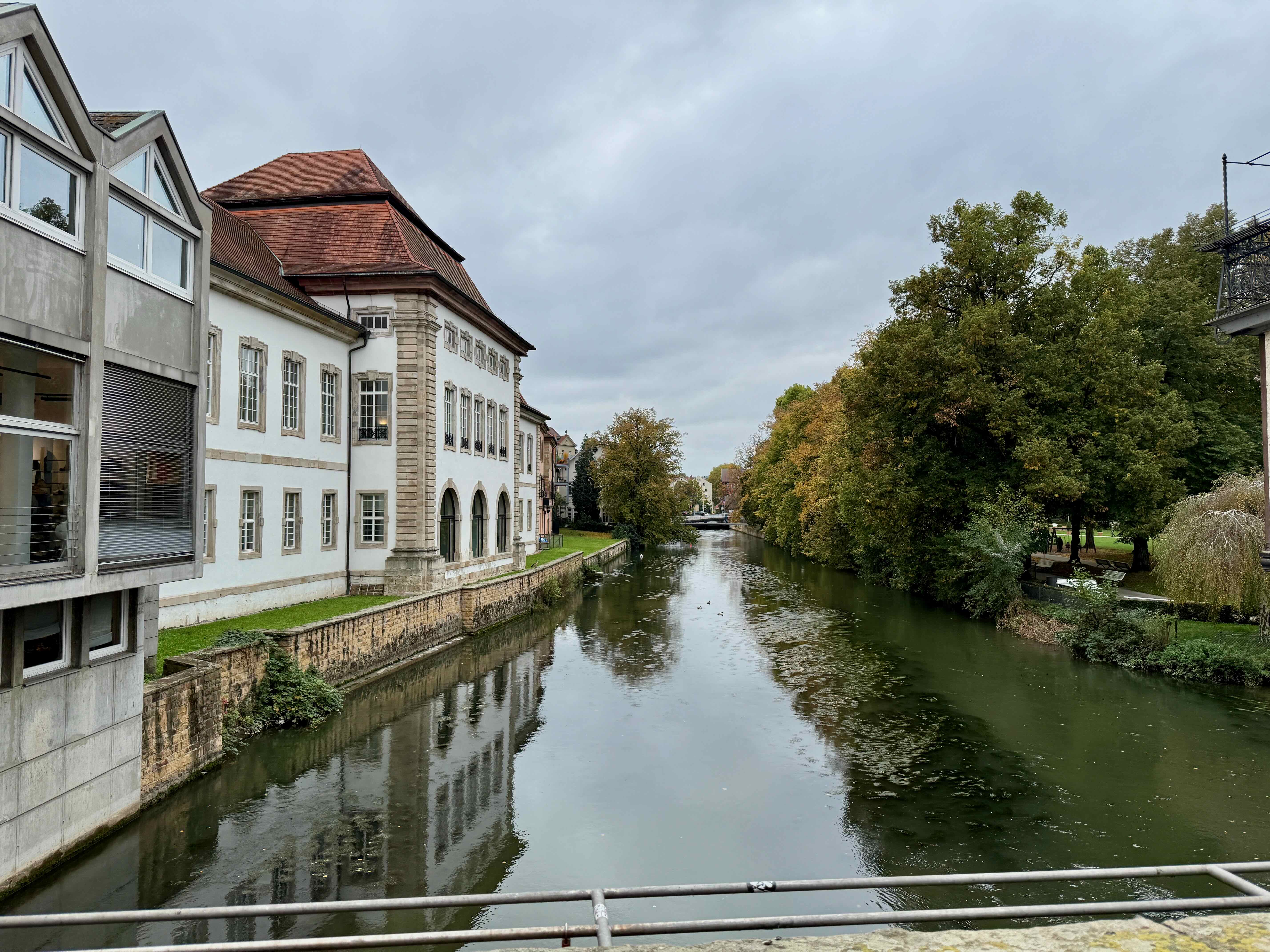
The town is surrounded by vineyards.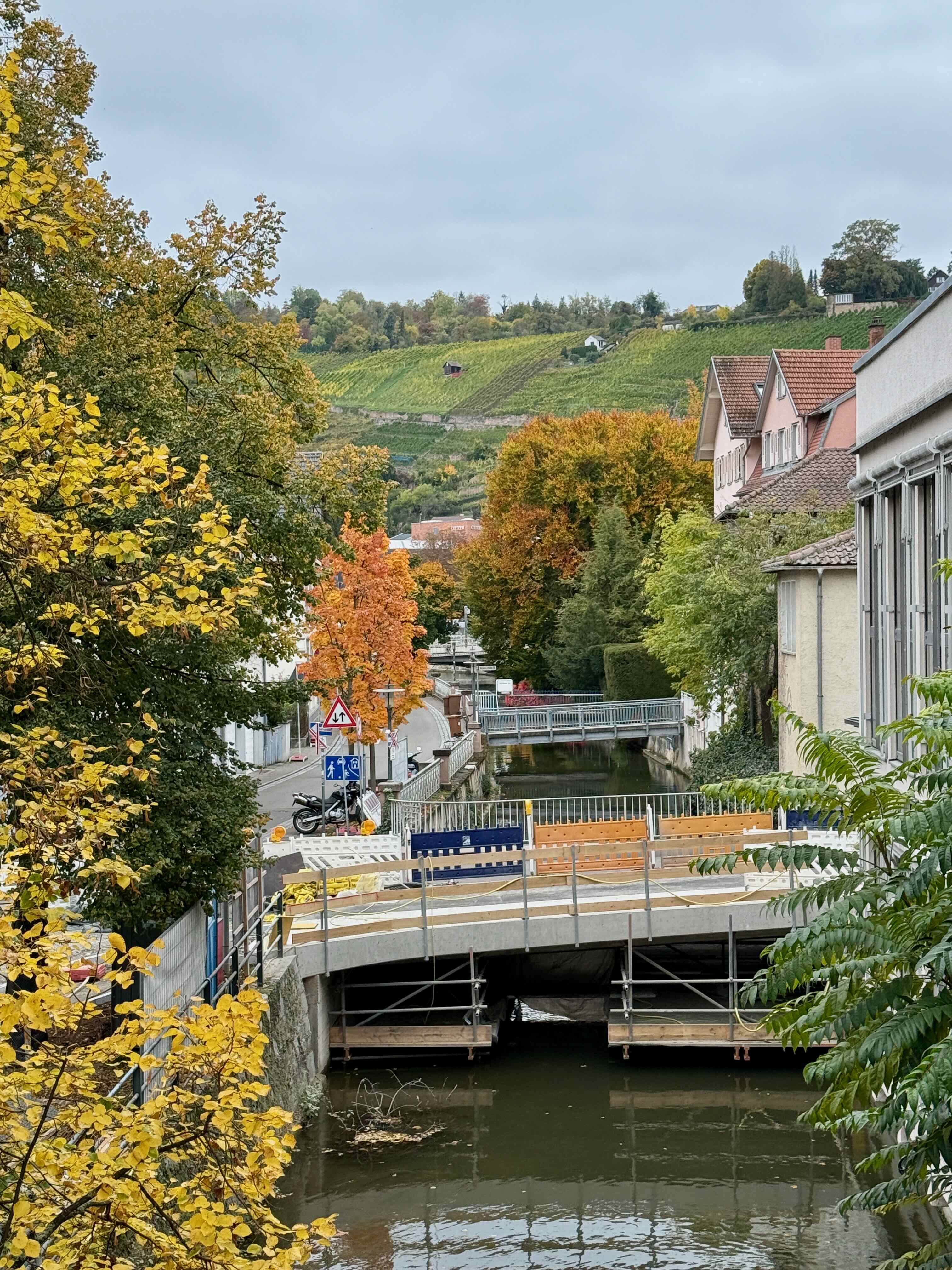
I thought this house was particularly spectacular. It is dated 1531! 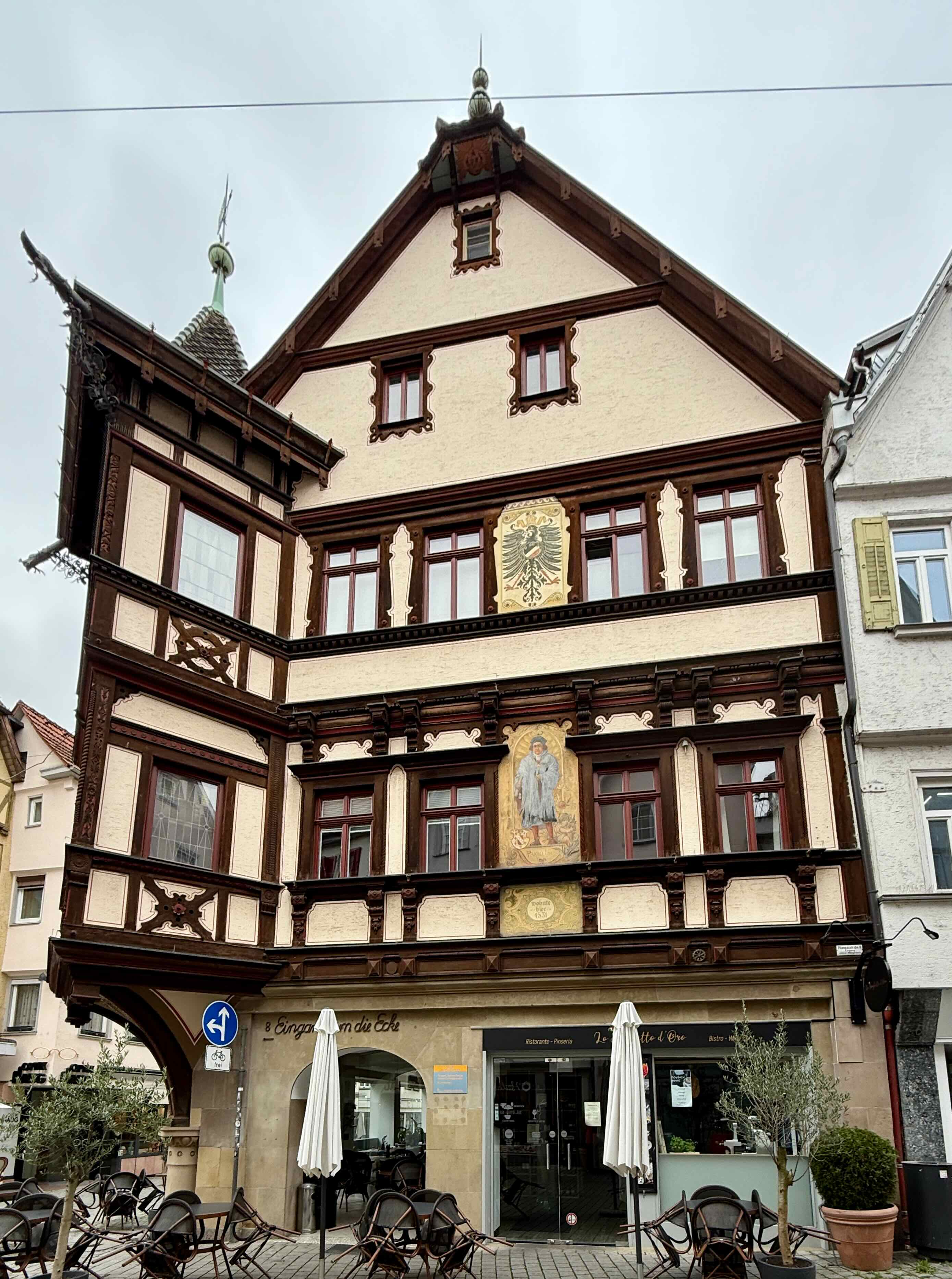
As we are leaving Esslingen I quickly snap this photo from the car window! I just googled it and dick means thick in German, but also discovered that F. Dick is a German cutlery manufacturer that owns this smokestack…too funny!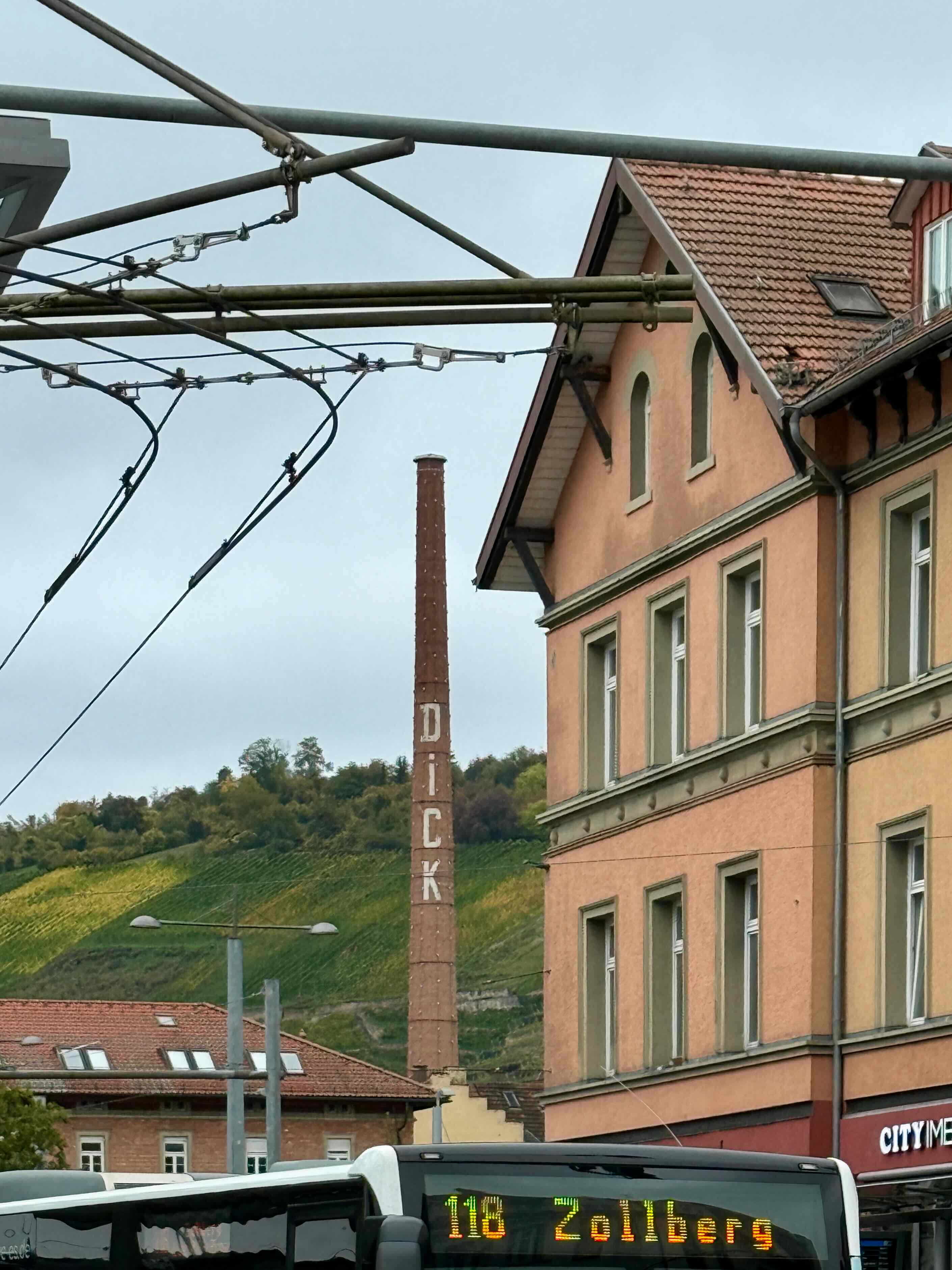
Next stop is Baden Baden. We spent some time in Baden Baden a long time ago so we thought we should stop there for a visit. There are flowers everywhere, but bathrooms are few and far between! We spent 45 minutes trying to find a bathroom. Using Google maps we walked several blocks to where there was a WC…but we couldn’t find it. Turns out it was in a parking garage and both of us walked right past the doors to the washroom twice without seeing them! They were on either side of the of the parking payment machine with a tiny sign on each door!
I love how people have tiny potted gardens on their window ledges or on the street beside their doors. 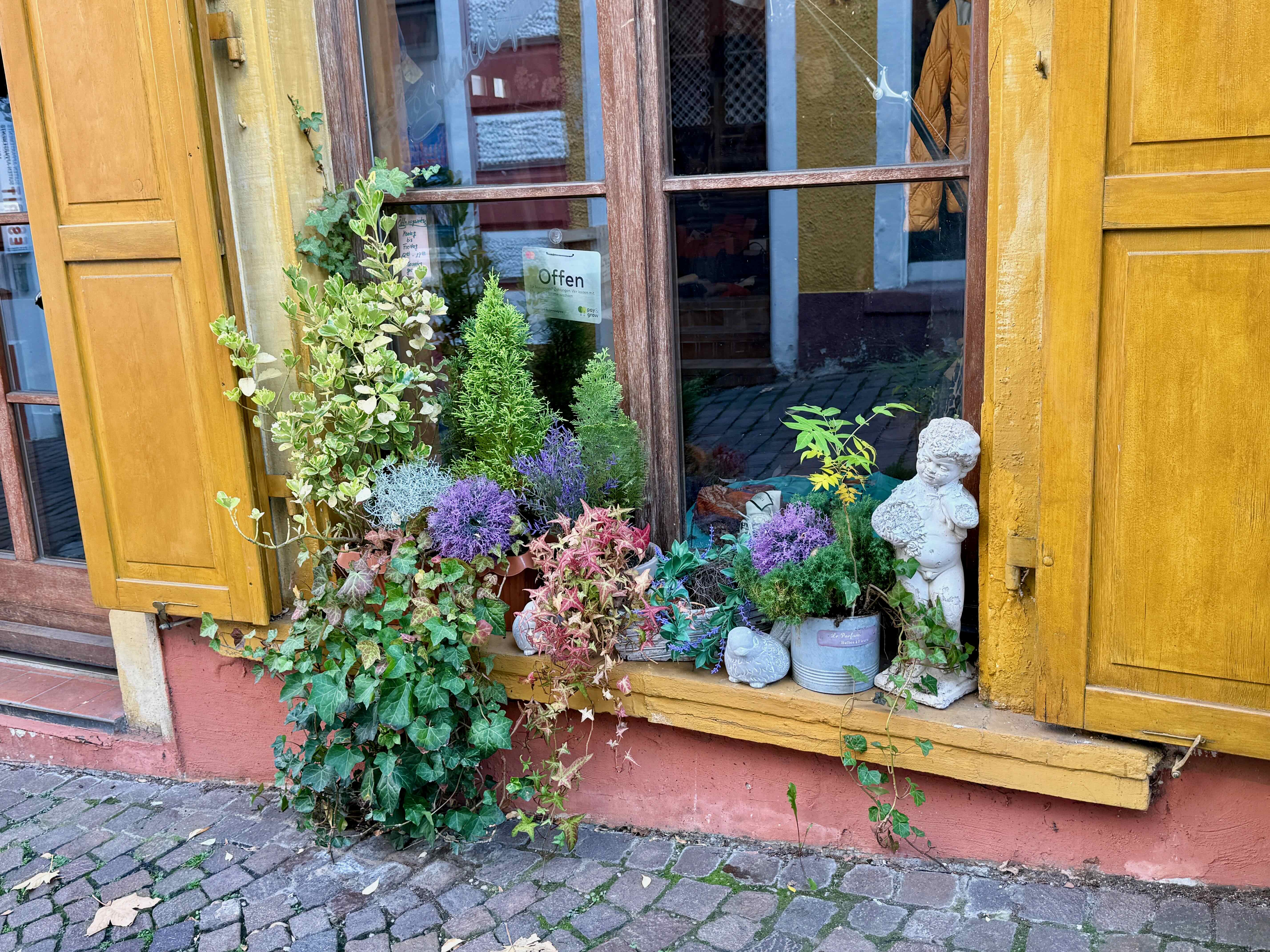
Baden Baden has a lot of very high end shops. This watch is priced at €15,500…no prices on the others. I presume they are even more expensive. We also see small diamond earring studs that range from €399 to €820 and there were no clothing items on display in the shop windows below €100! A bit too pricey for us, but it is fun to window shop.
Loved this stork fountain!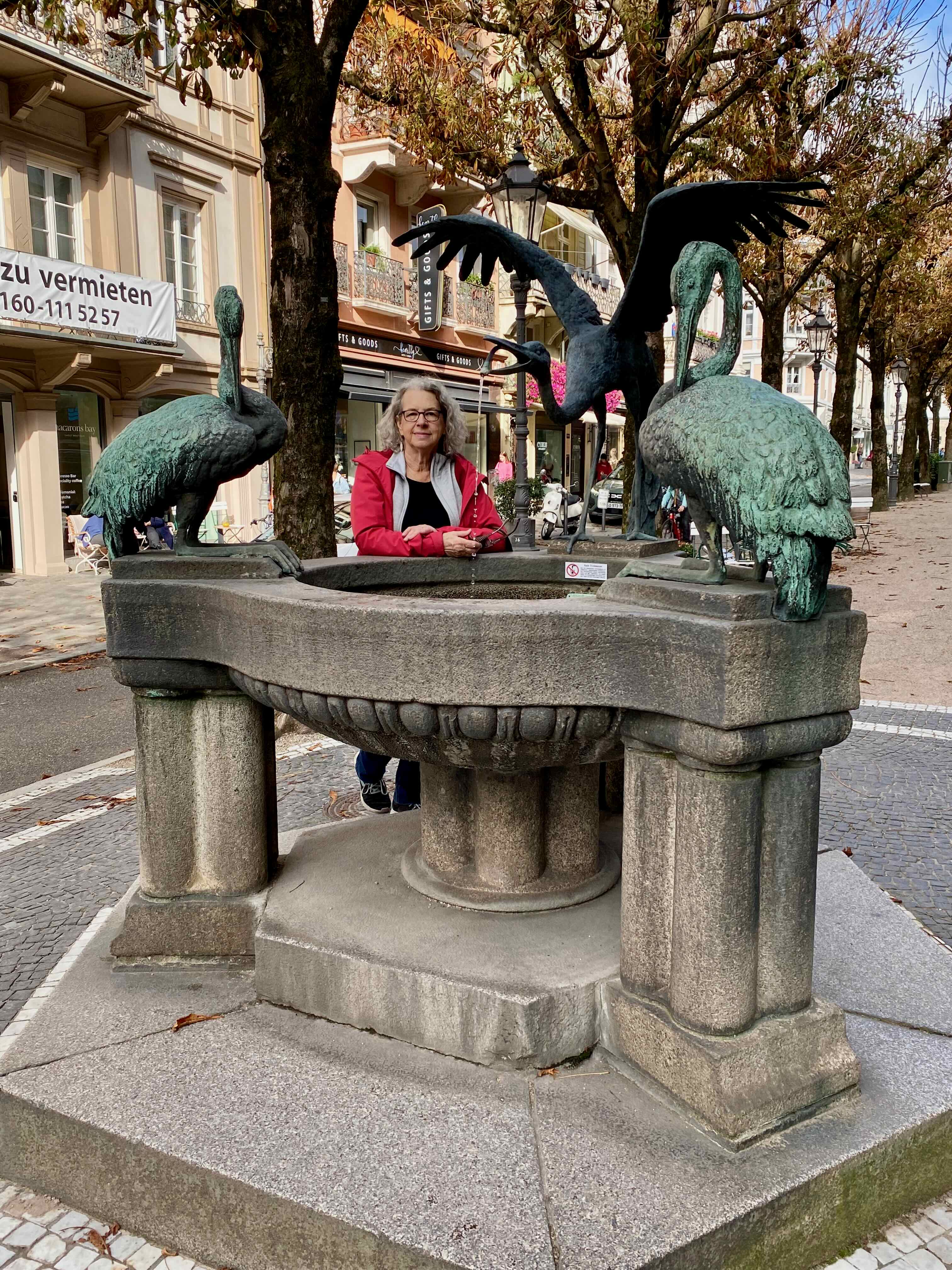
This is the Baden Baden Casino. Bob thought we could go in and tryout luck but men must wear a suit jacket and tie. We wouldn’t be allowed in with our jeans and casual sweaters.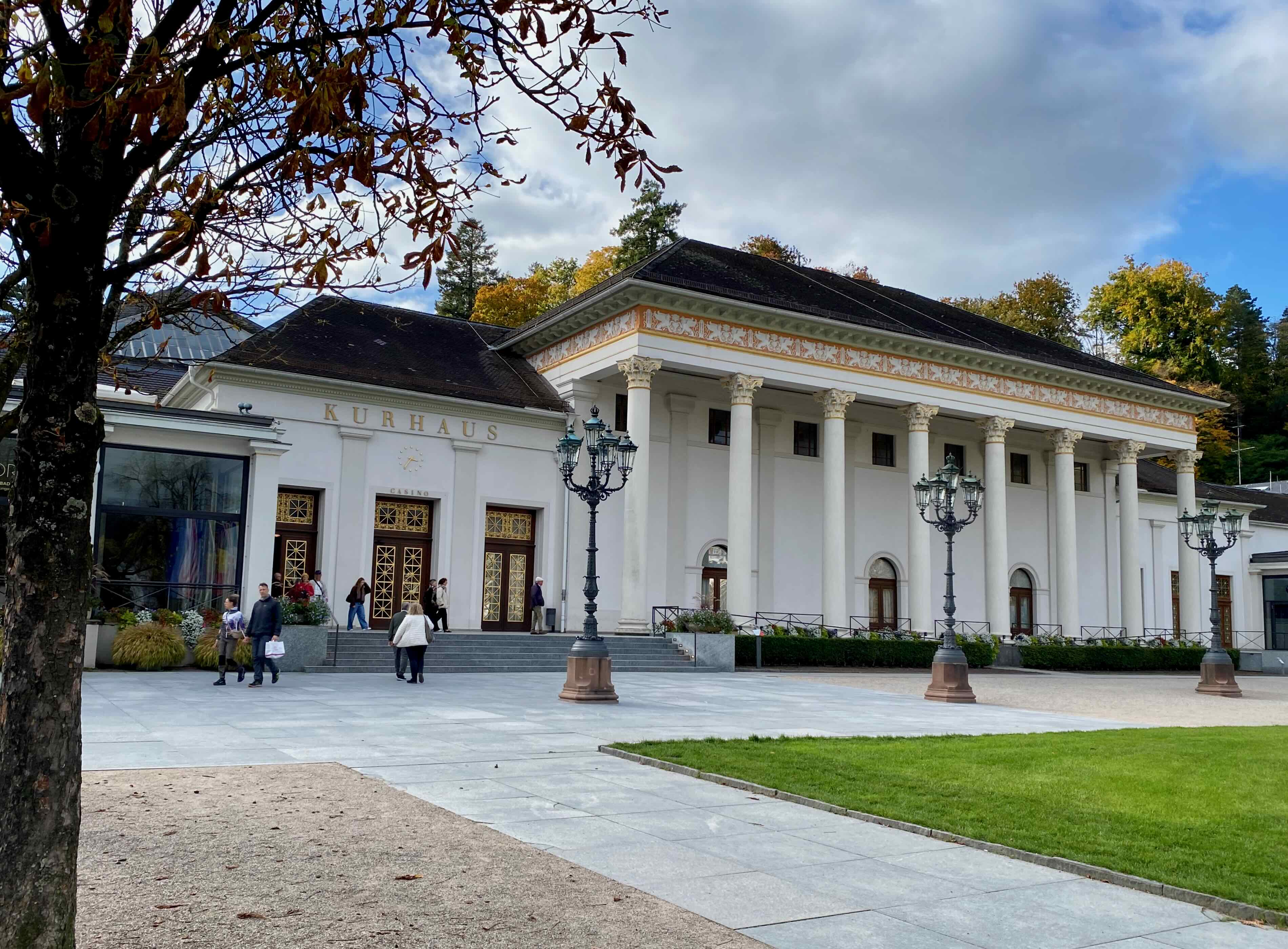
The drive from Baden Baden to Mulhouse in France was interesting. I see these strange structures on Google maps while navigating…turns out they are huge shopping malls with parking on the roofs of the buildings.
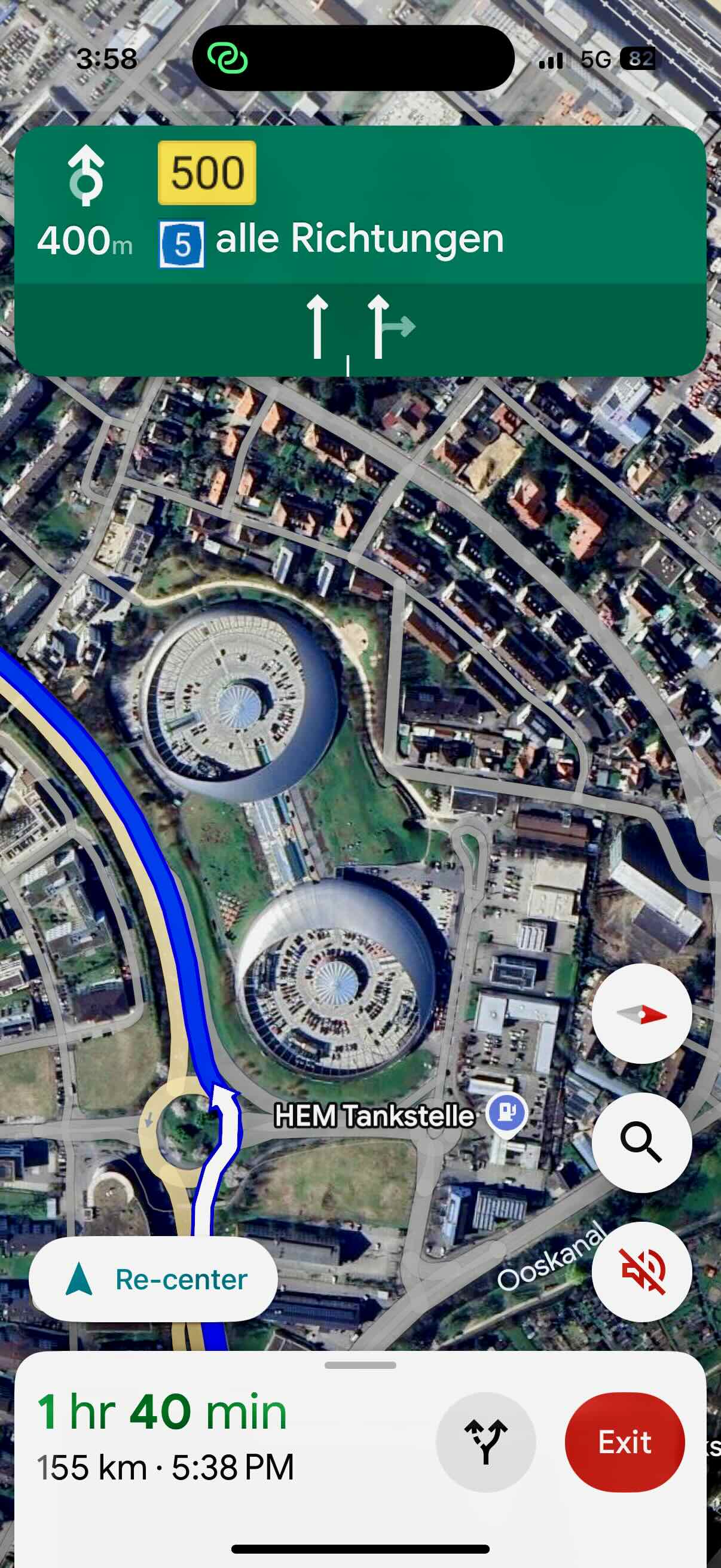
Screenshot
Just a few kilometres down the road I see this huge truck rest stop on Google maps. I count 86 trucks stopped for a break! Bob’s biggest complaint about driving in Europe is all the trucks on the roads. The right lane is one truck after another and when a truck pulls into the car lane to pass a slower moving one all the cars have to slow down until it manages to pass and get back into the truck lane.
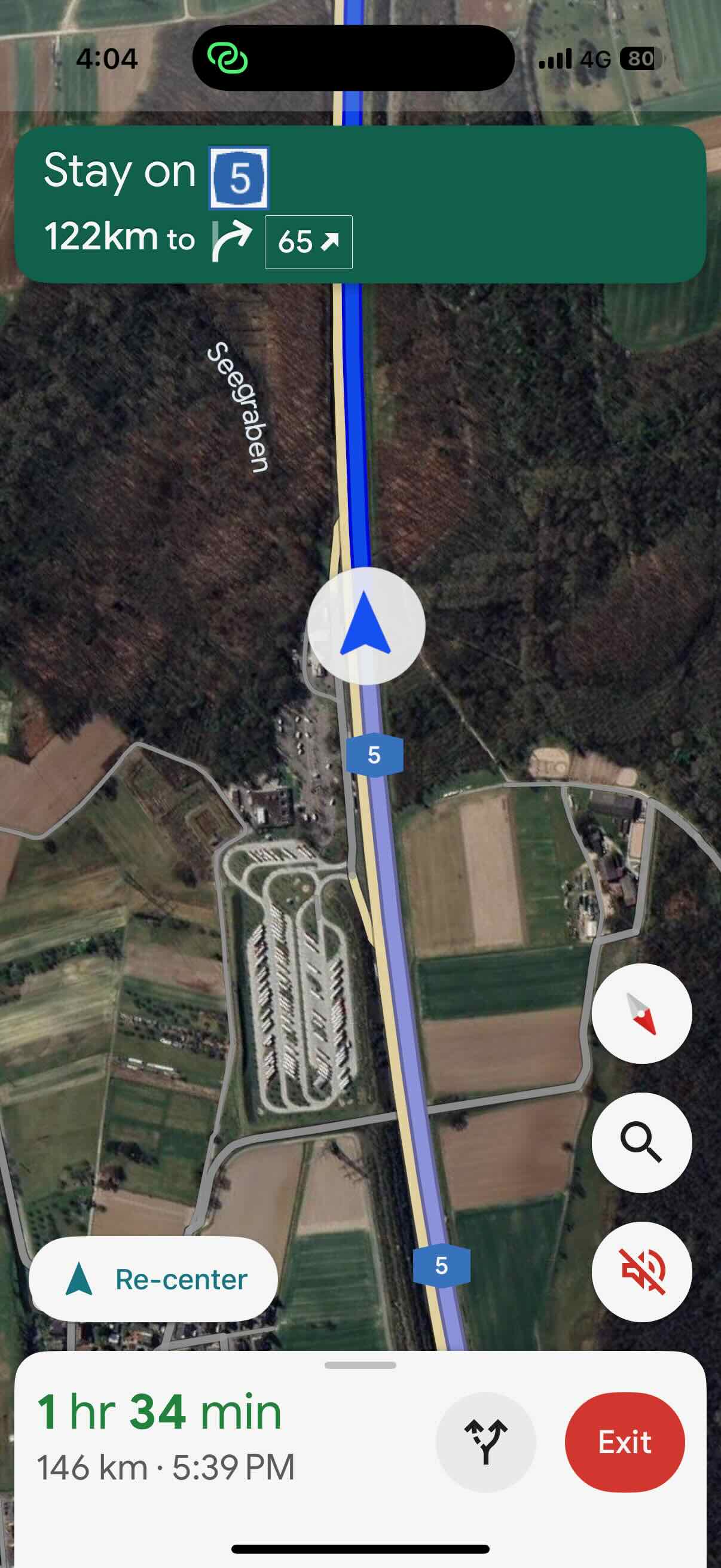
Screenshot
Remember the German highway speed limit is usually 130 km and often there is no speed limit so a truck pulling into your lane at 90 km is actually quite dangerous. Bob does enjoy the chance to drive at 156 km/h though!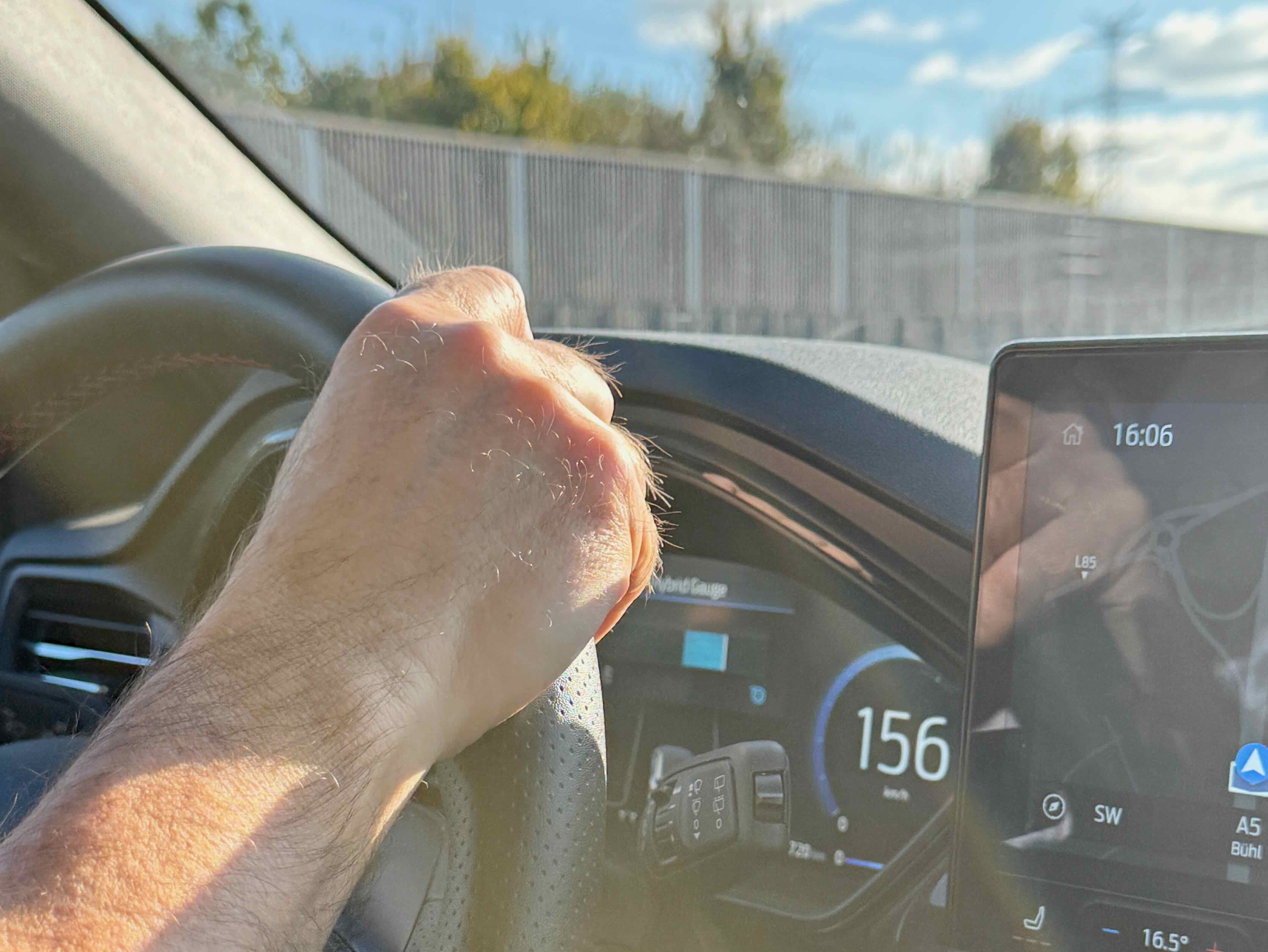
We get caught in traffic for almost half an hour, moving just a car length at a time. We finally figure out why. This huge boat was trying to move through a rather small covered bridge so all traffic was stopped during this operation. Notice our speed now…1.6 km/h!
We arrived just in time to meet our Airbnb host, but our planned stop for groceries has to wait for another day.
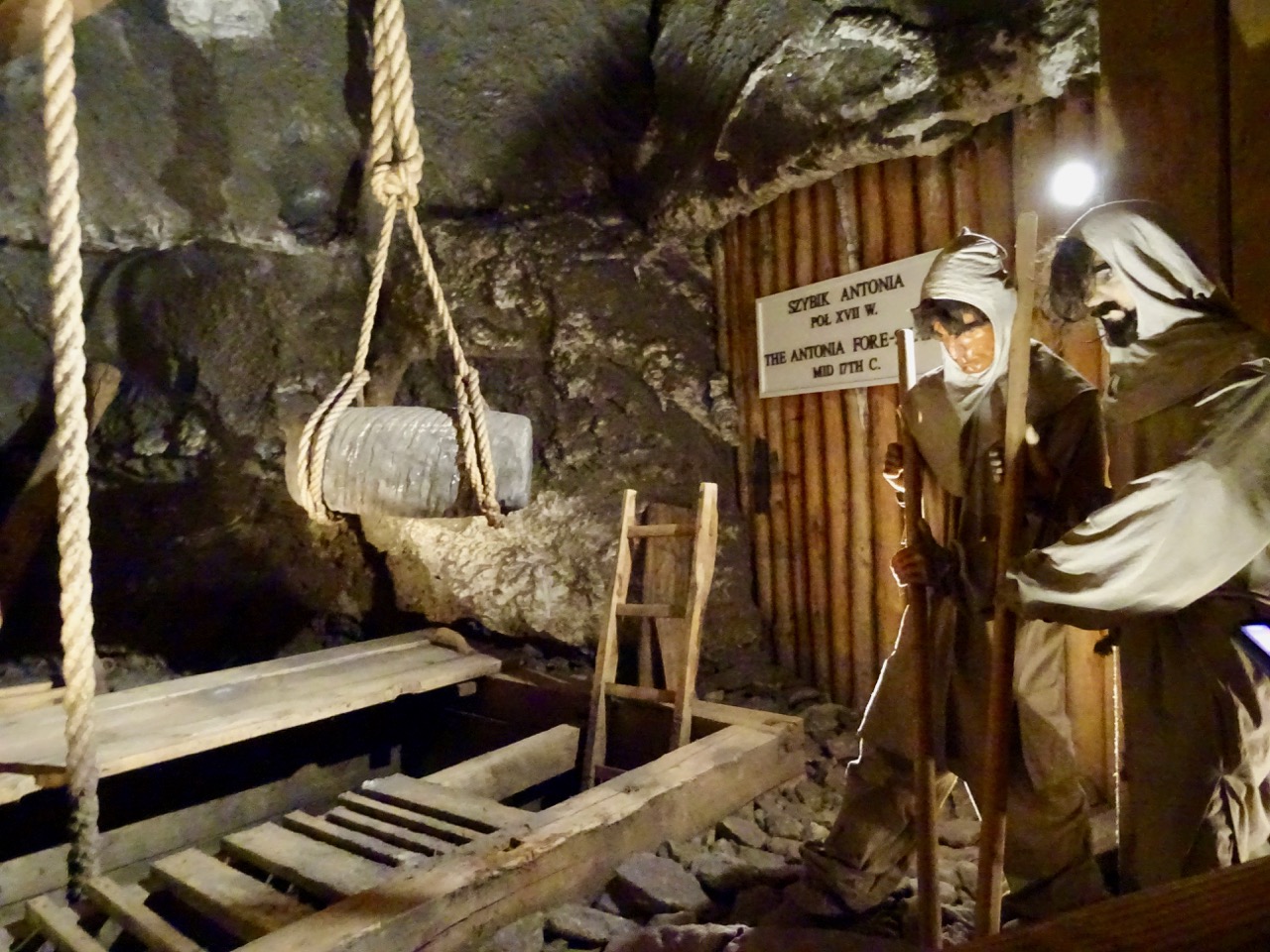
 There are dioramas showing some of the old mining techniques and machinery. These men are lifting ‘salt logs’ which weighed between 200 kg and 2 tonnes. The first shaft was sunk in 1280 and salt is still mined here today. The salt was formed 13 million years ago by an inland sea.
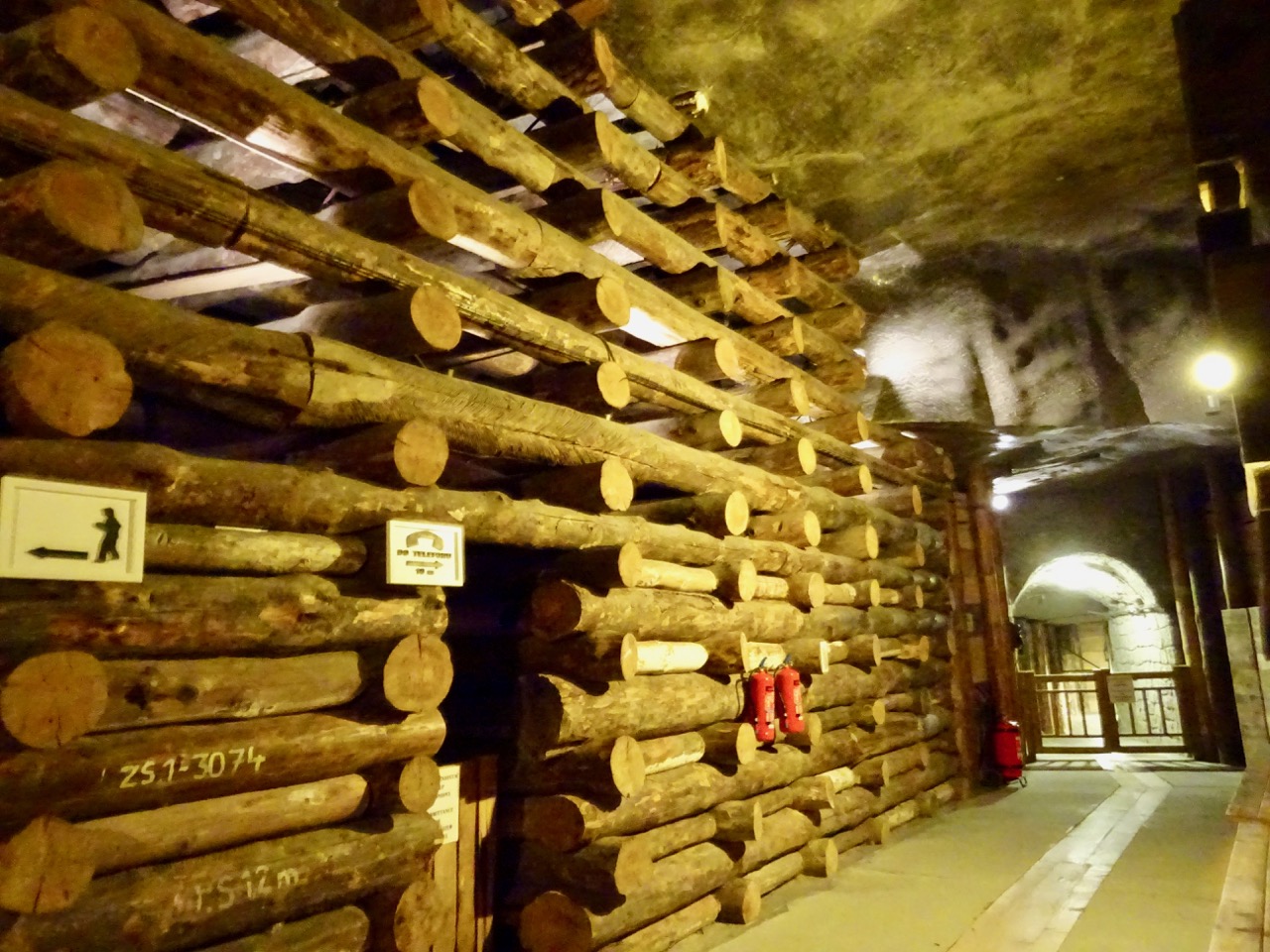
 The salt preserves the logs that are used for reinforcement. These are newer ones but we see others that are hundreds of years old.
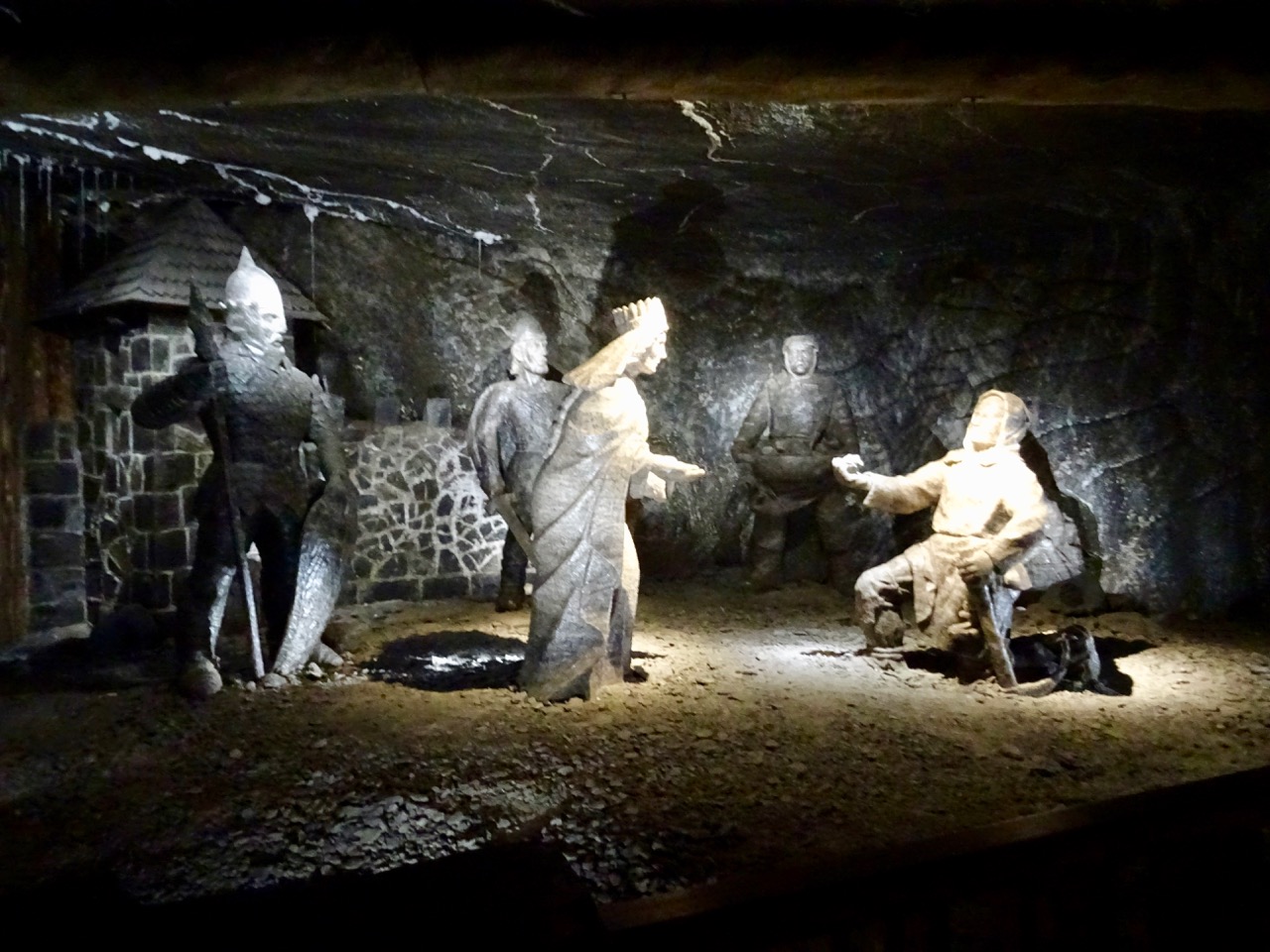
 These sculptures are carved out of salt by the miners in the 20th century. These figures illustrate the legend of how the salt mines were discovered in Poland.
 Horses were used in the mines from the 16th century until 2002. Up to 350 horses worked and spent their whole lives underground. Interestingly, they did not go blind being in the darkness most of their lives.
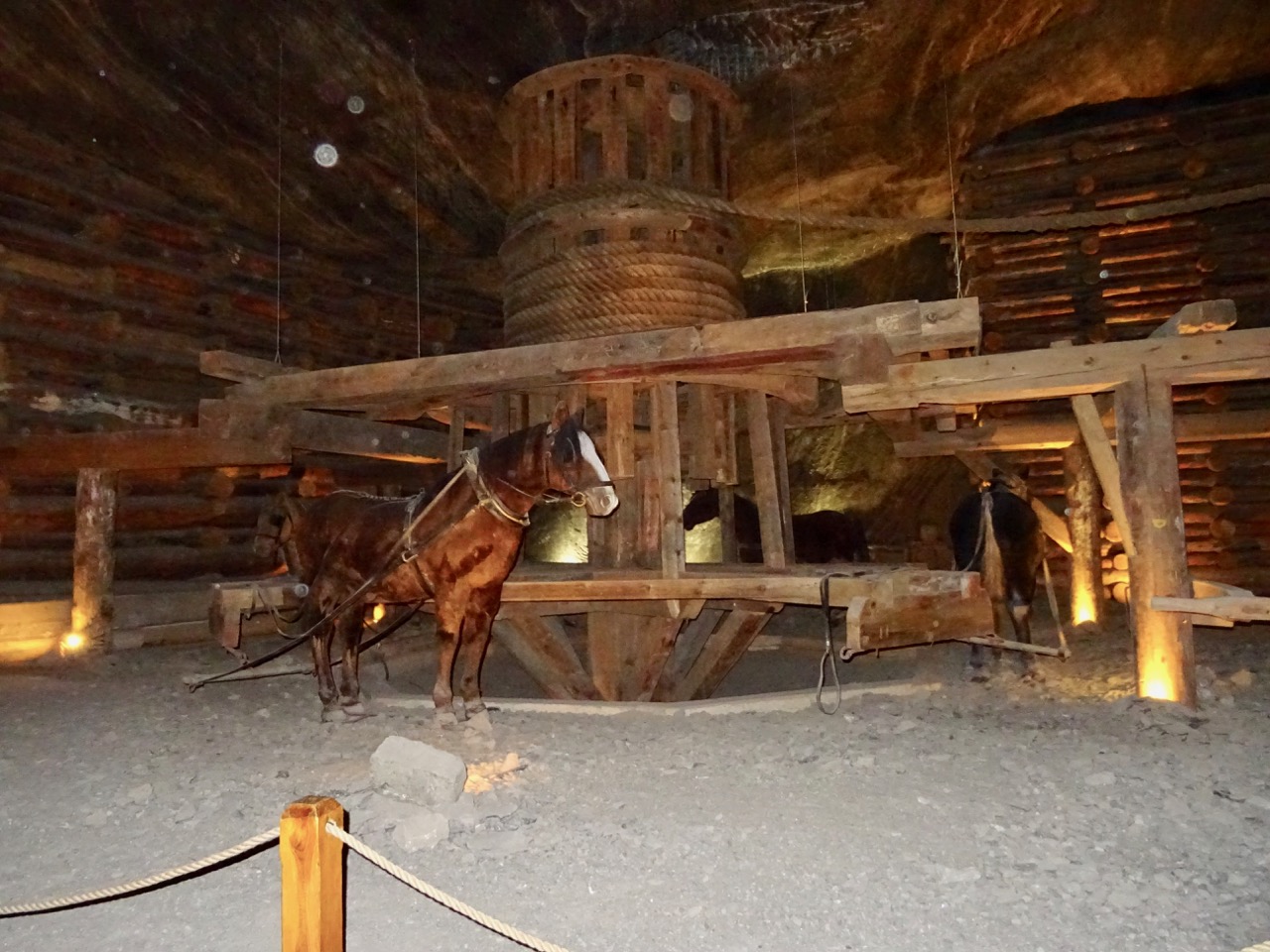
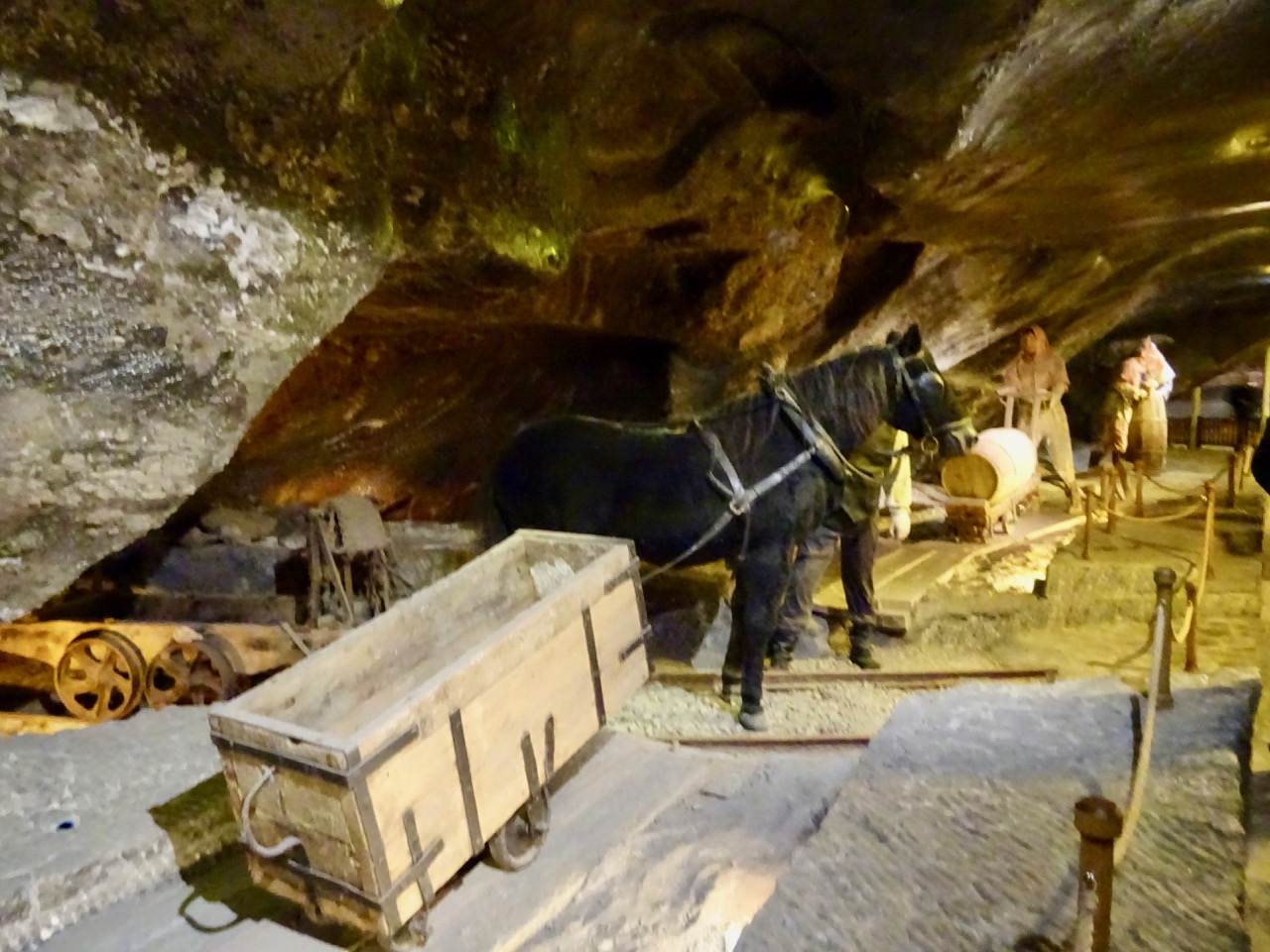 These horses operated a machine that moved the salt logs from one level to another. There are nine levels and 2 km of shafts and tunnels but we only visit about 1% of the mine.
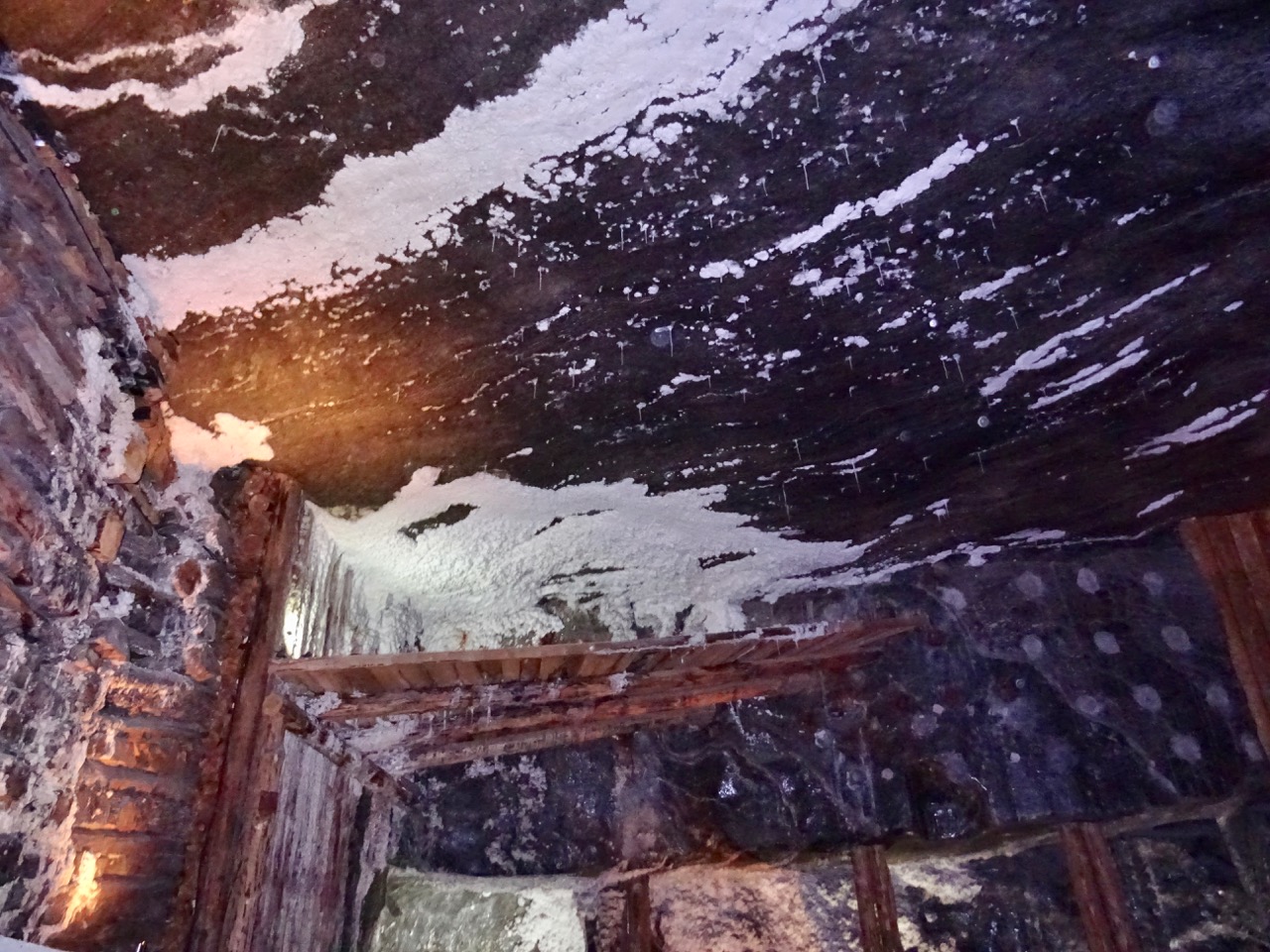
 There are white seams of almost pure salt in some places. Most of the salt mined was between 80-90% pure.
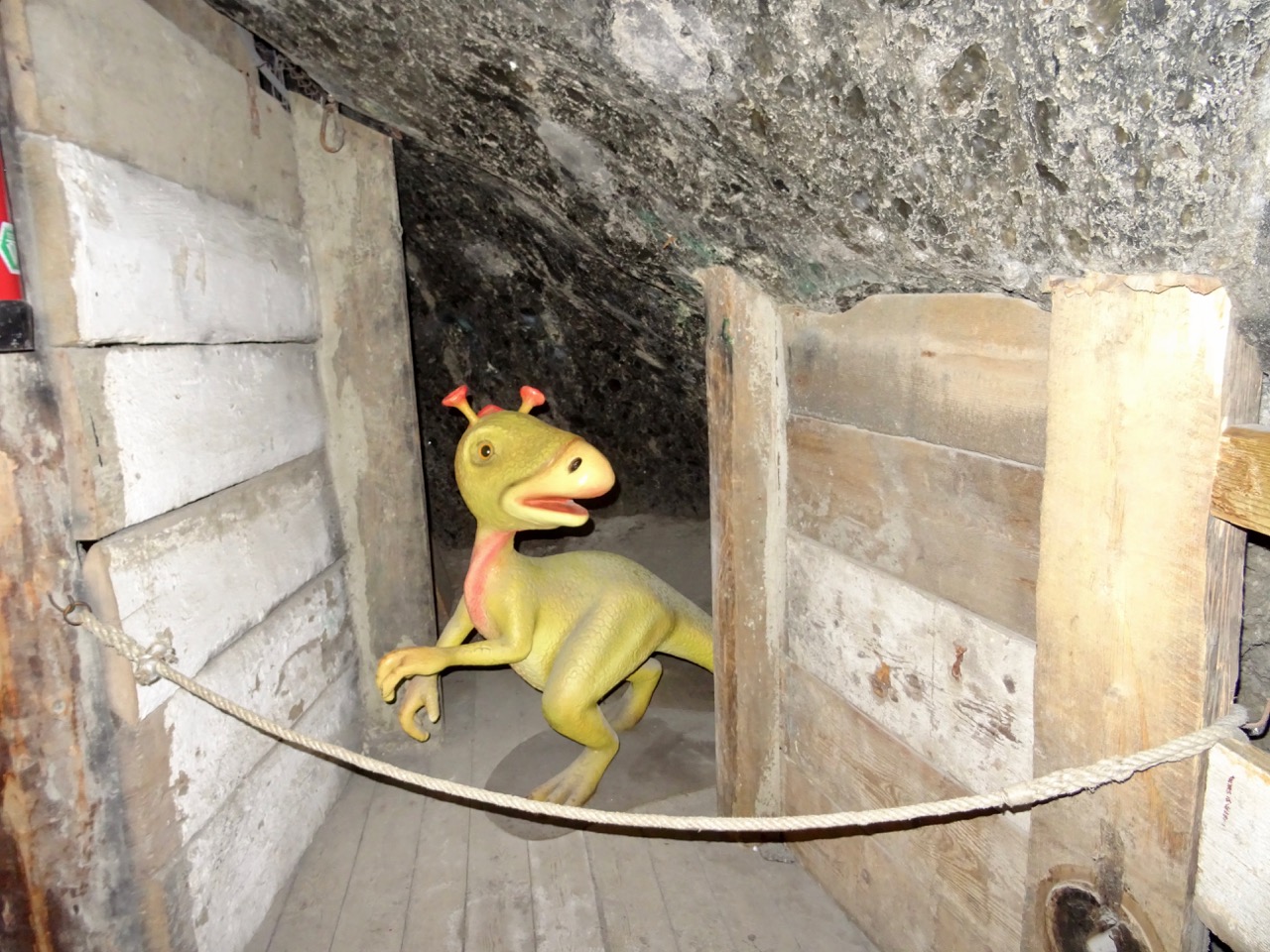
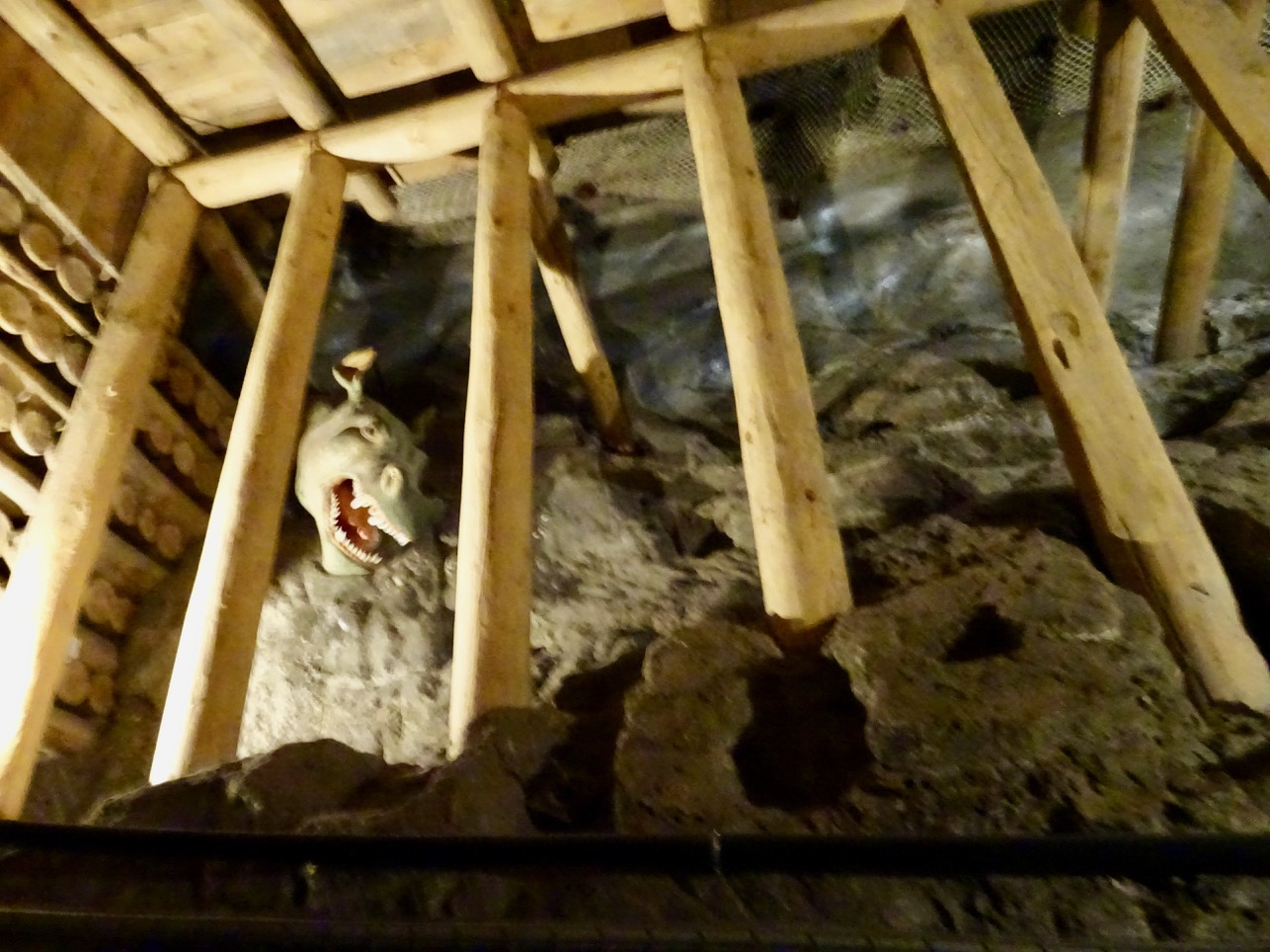
  There are some strange creatures living in this mine.
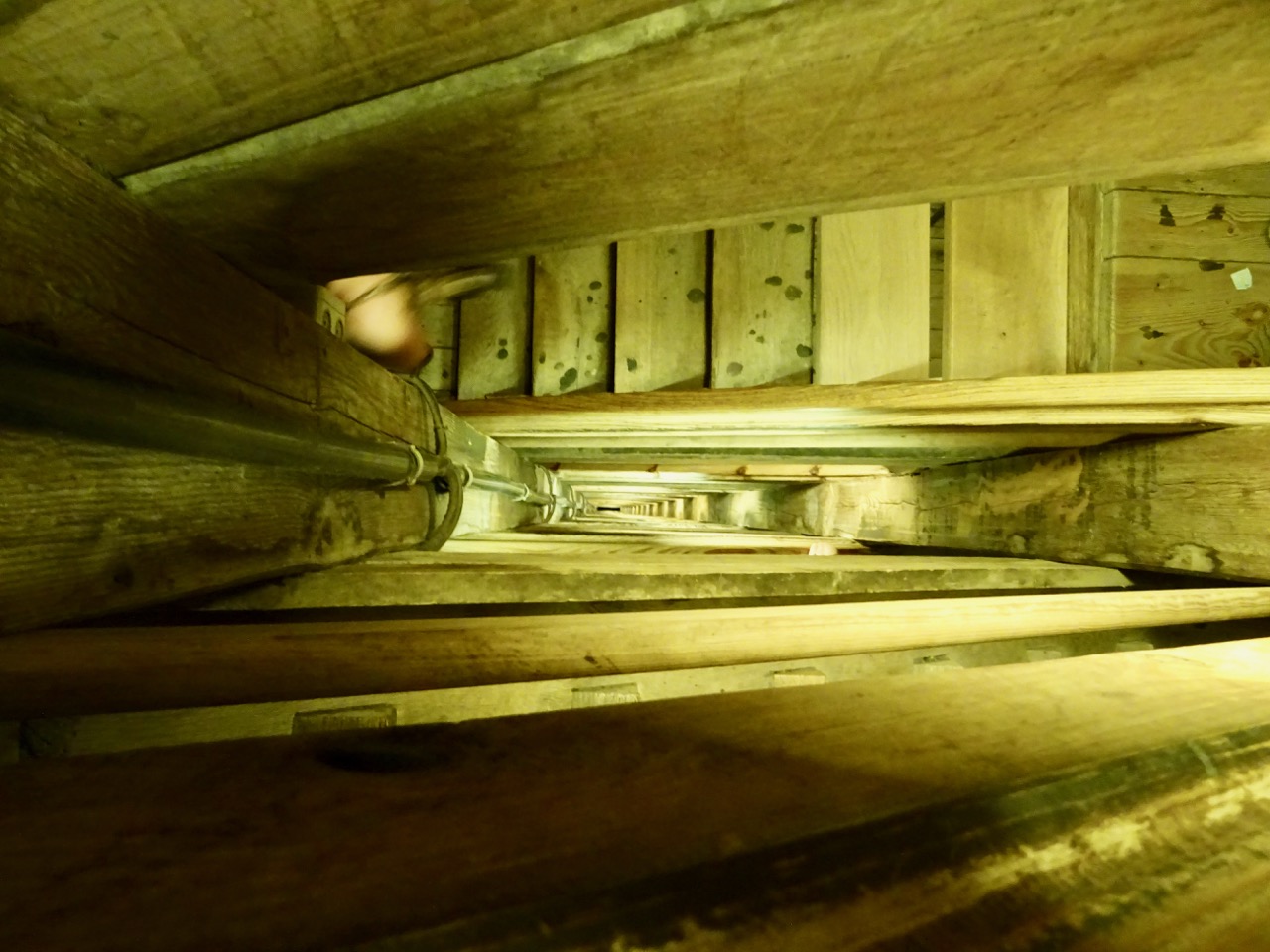
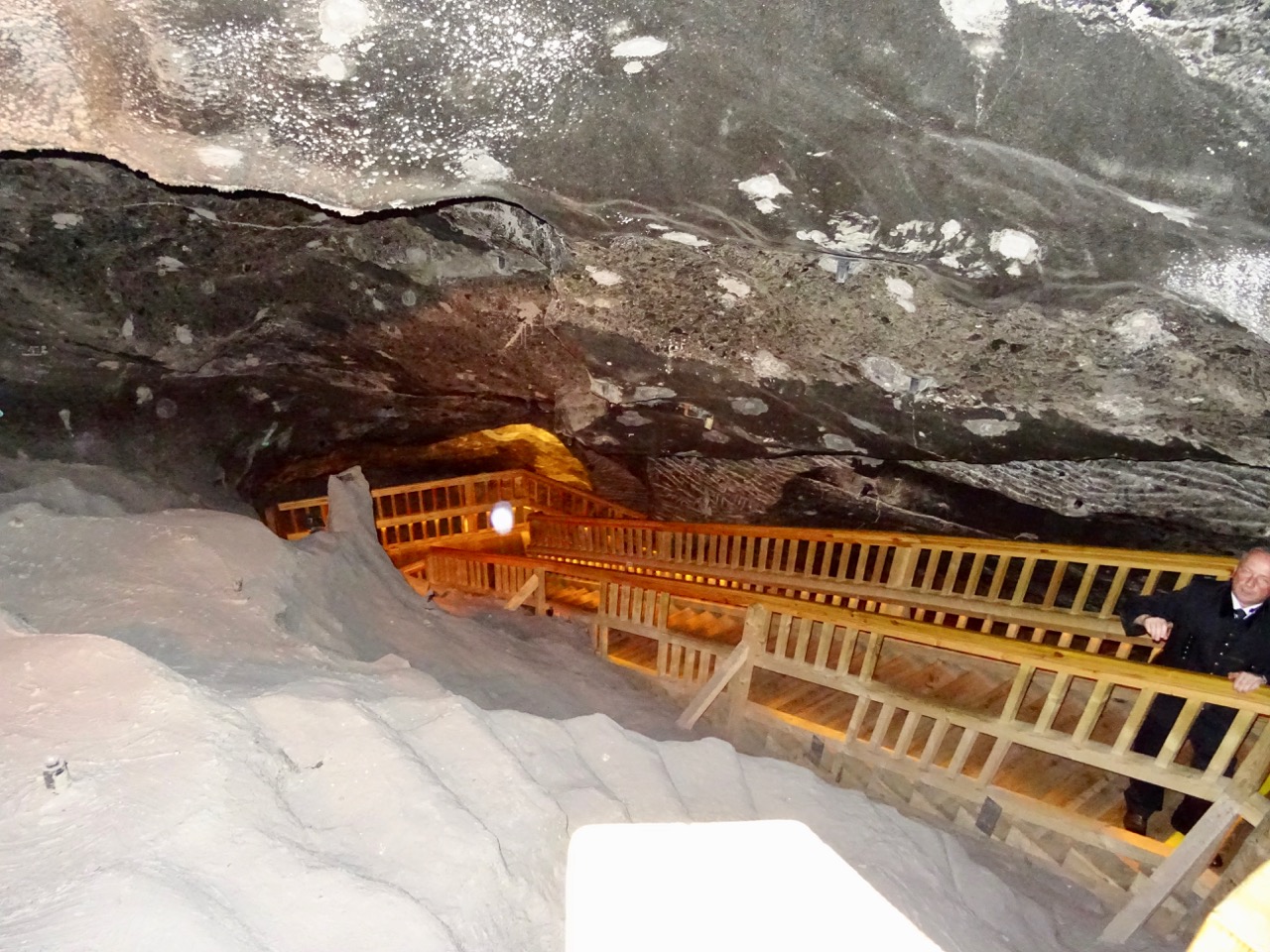
 Stairs go down and down and down…there are 800 steps that we descend in all!
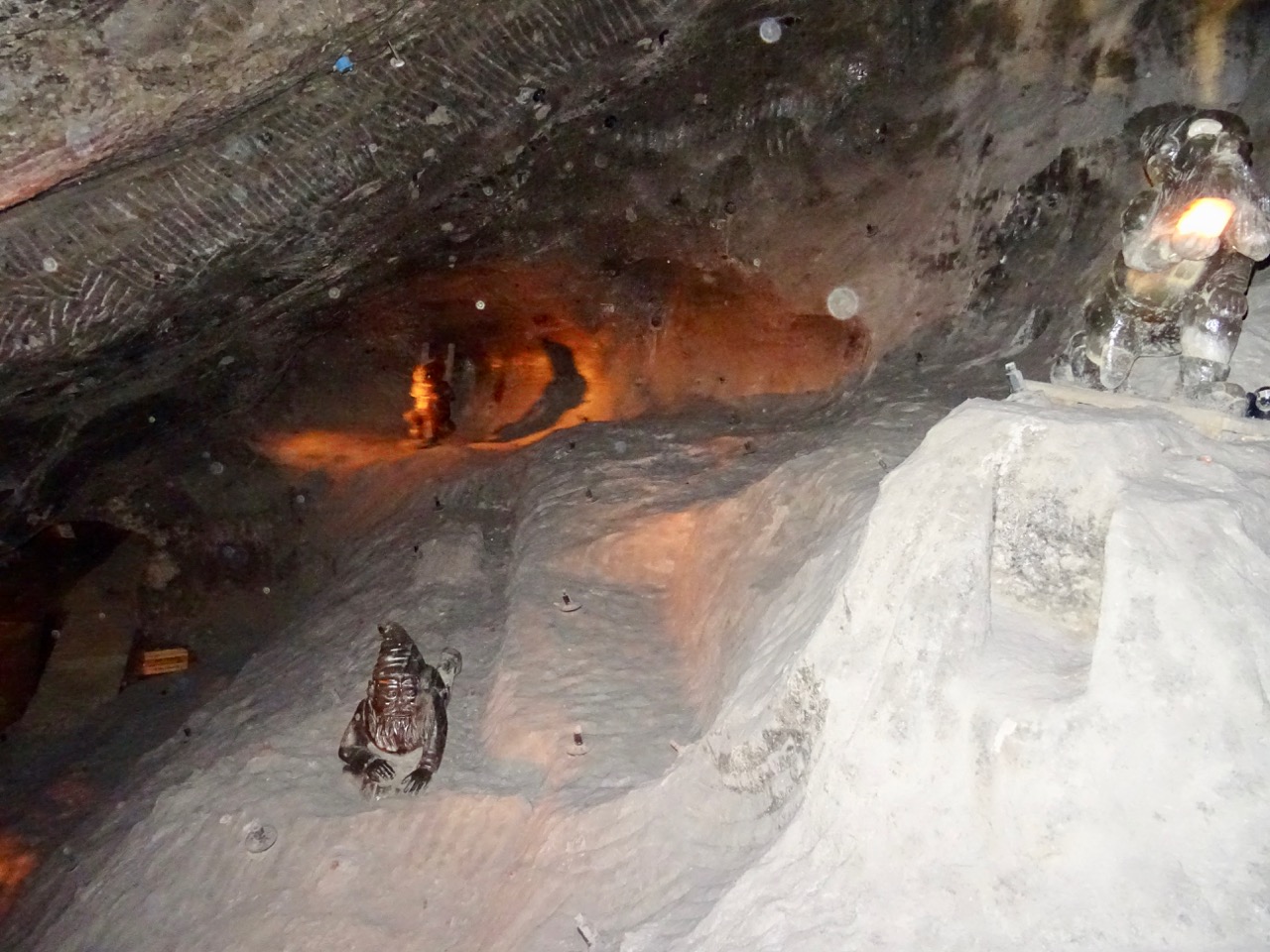
 Apparently gnomes make good miners!
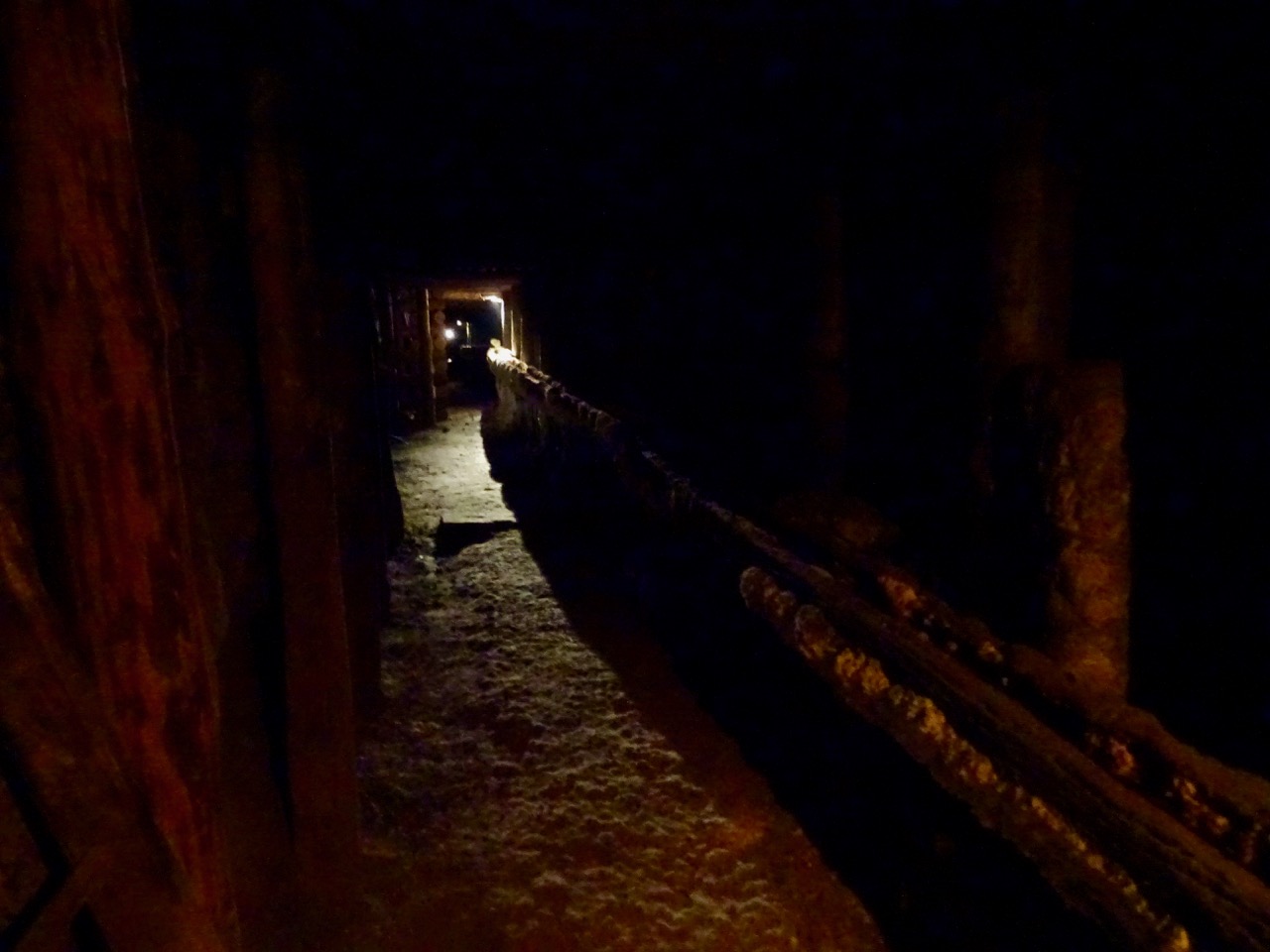
 Looking down one of the long tunnels that we are not allowed to enter.
 Wow! This is St. Kinga’s Chapel. It is entirely constructed from the salt in the mine. Most of the stairs on our route are made of wood, but these two staircases we walk down are made of salt.
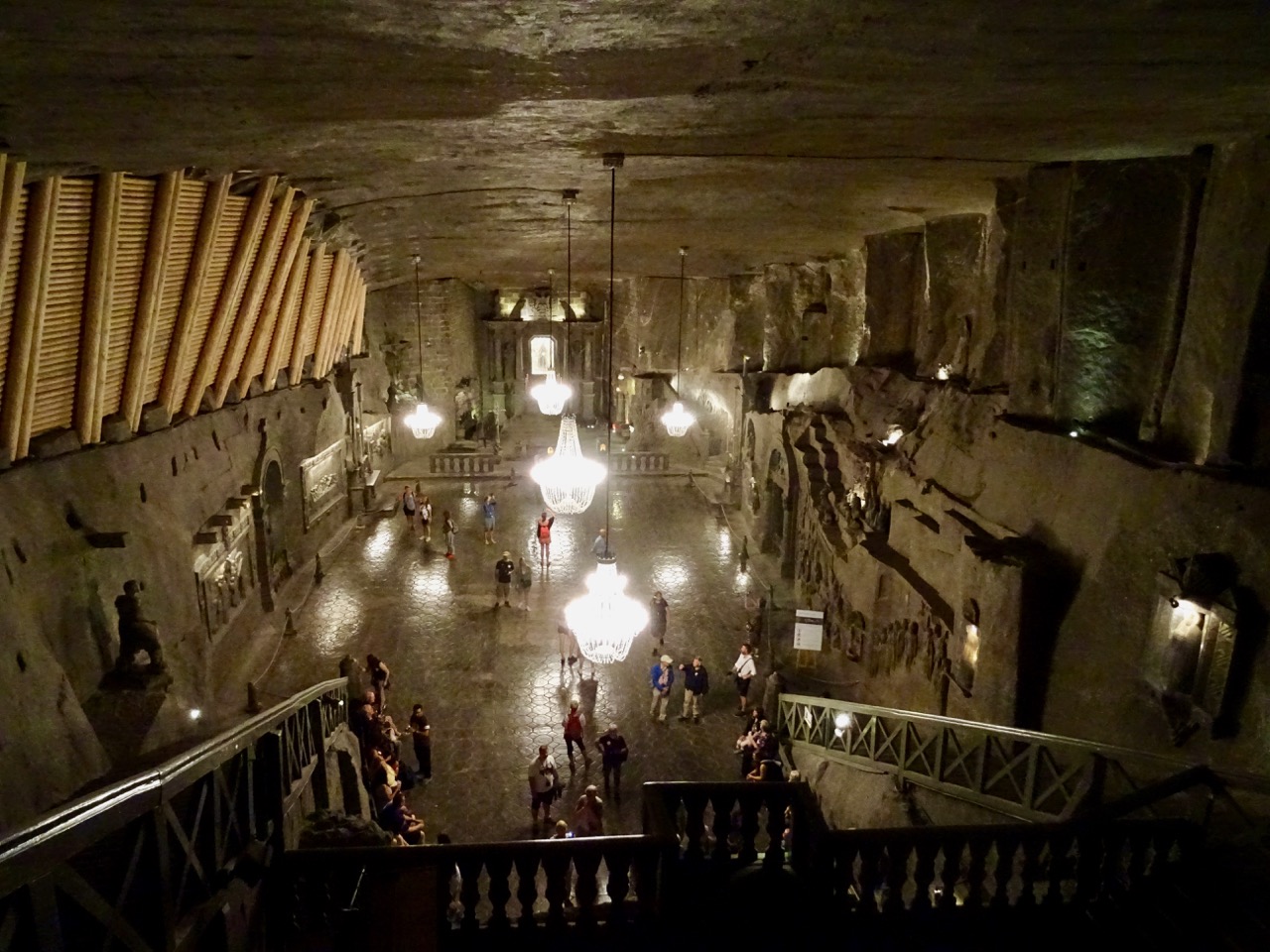 The miners built over
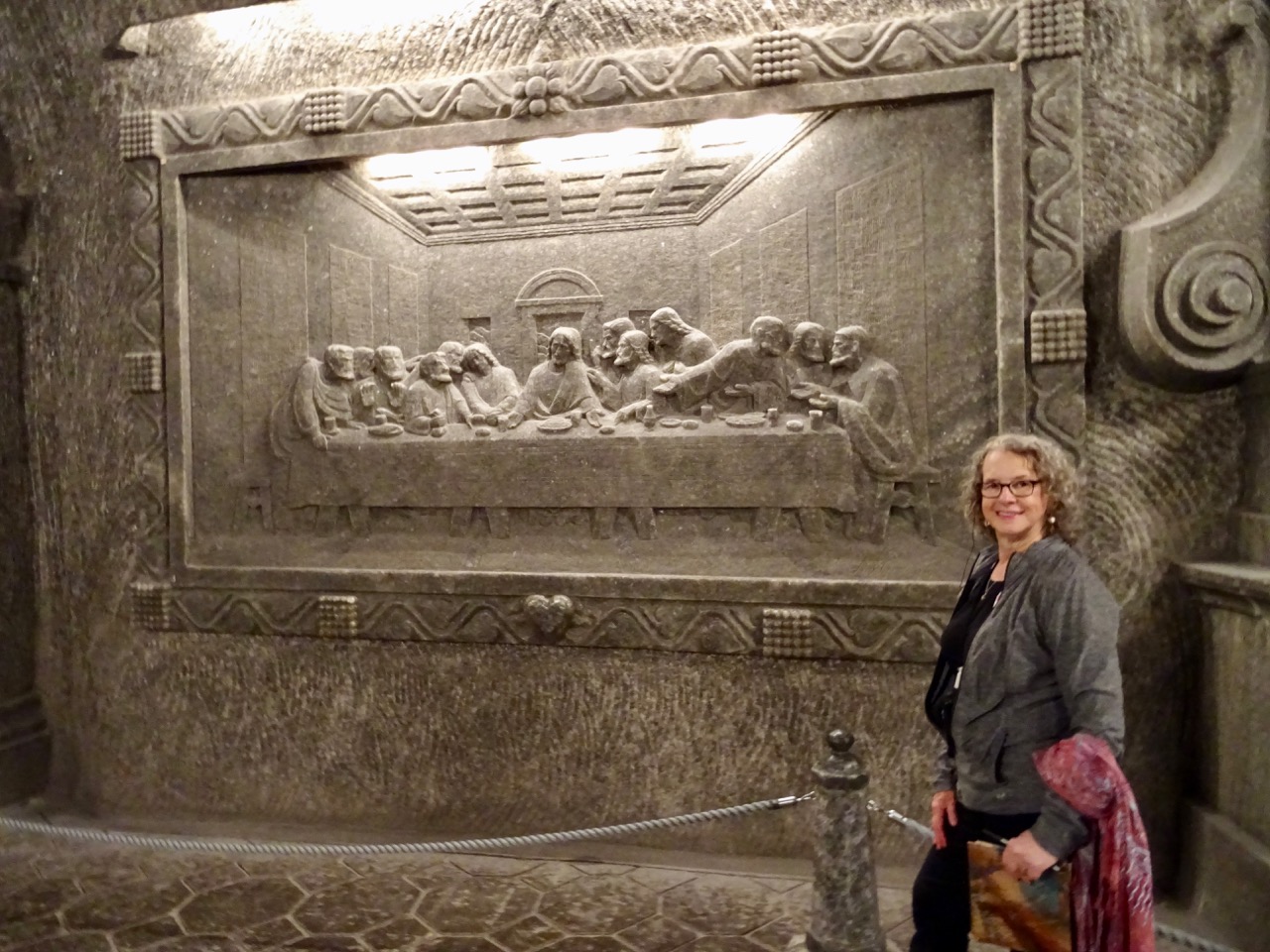 all the sculptures…
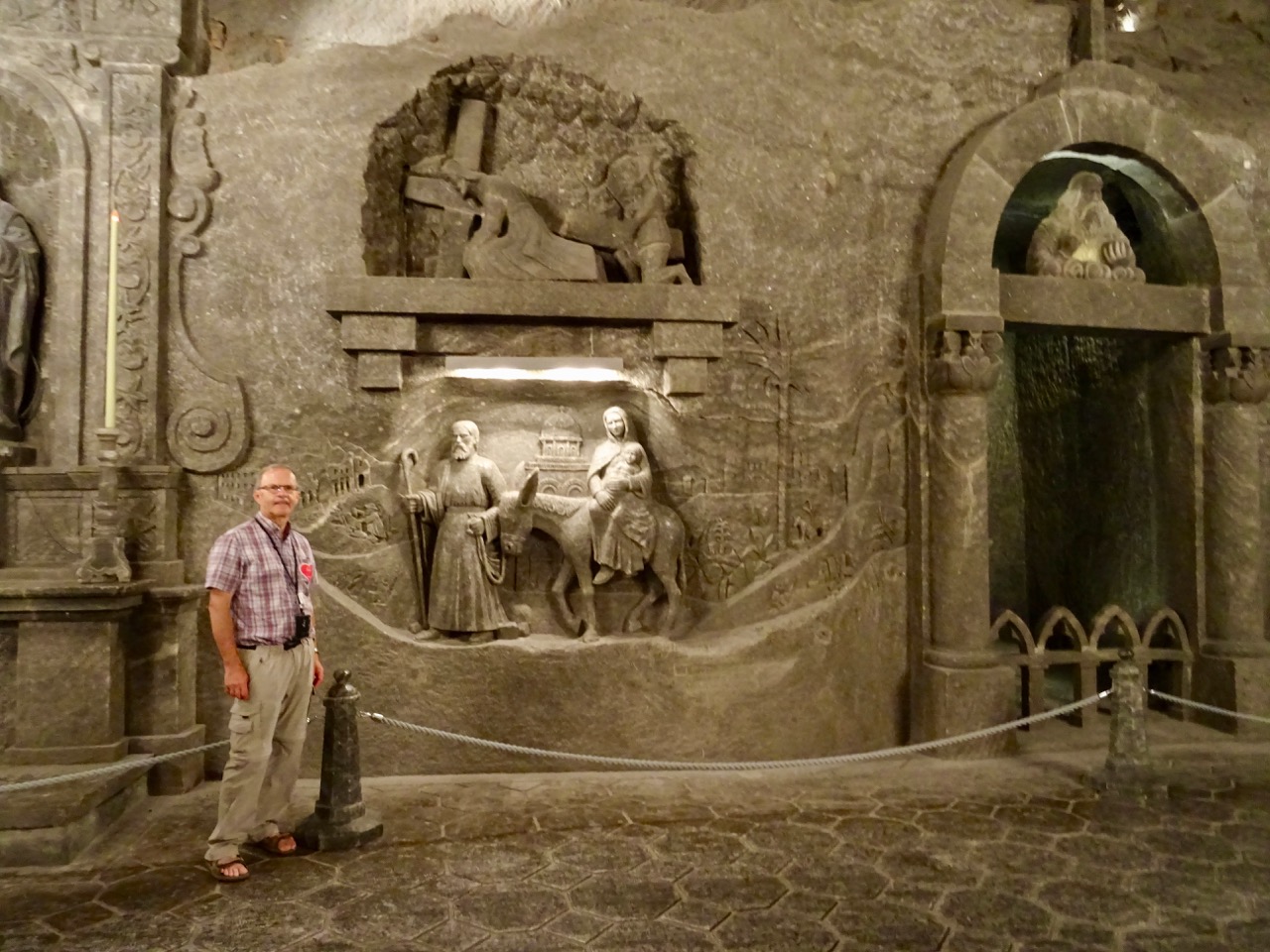 the main altar. Even the chandeliers are made of salt crystals!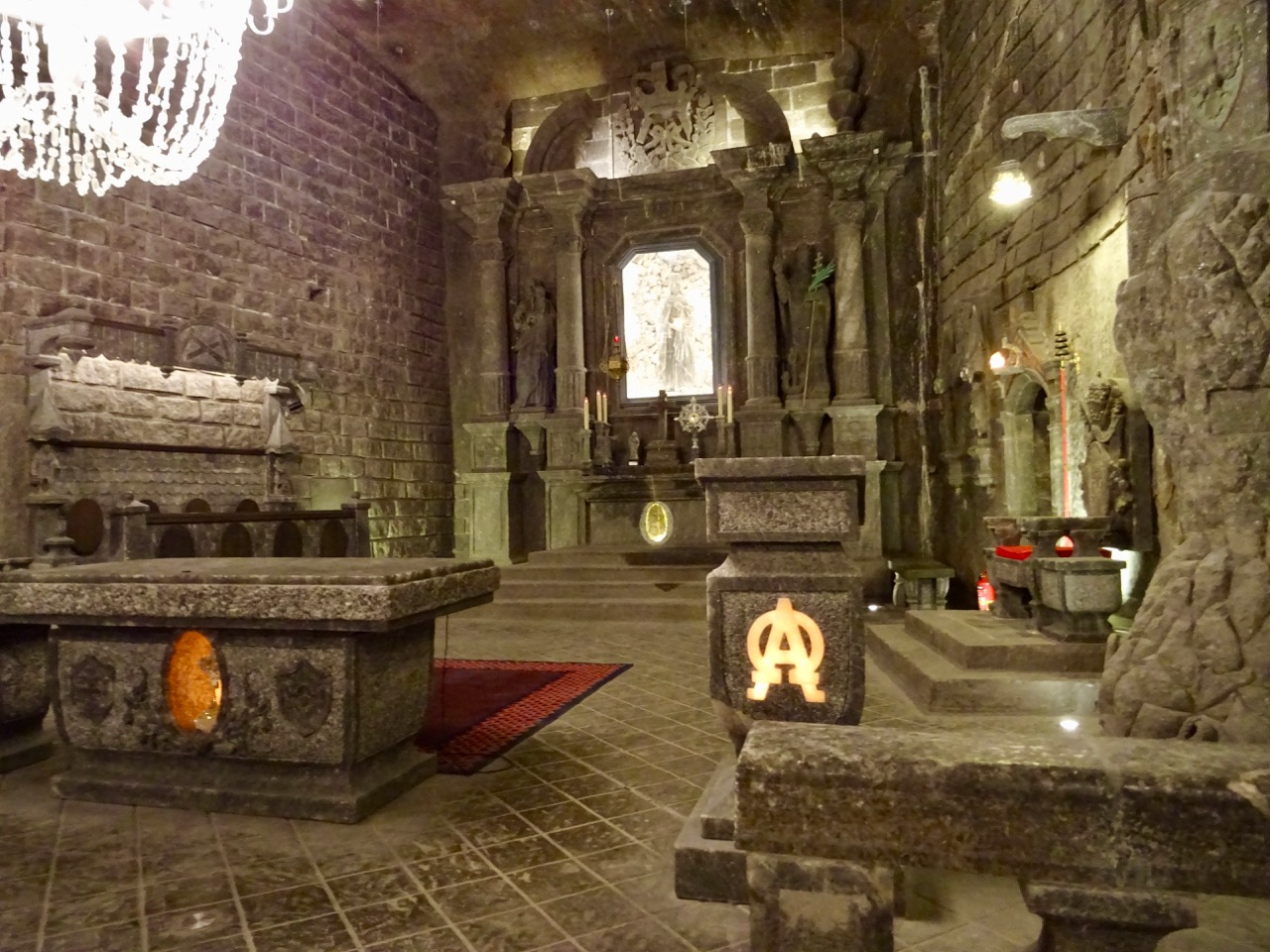
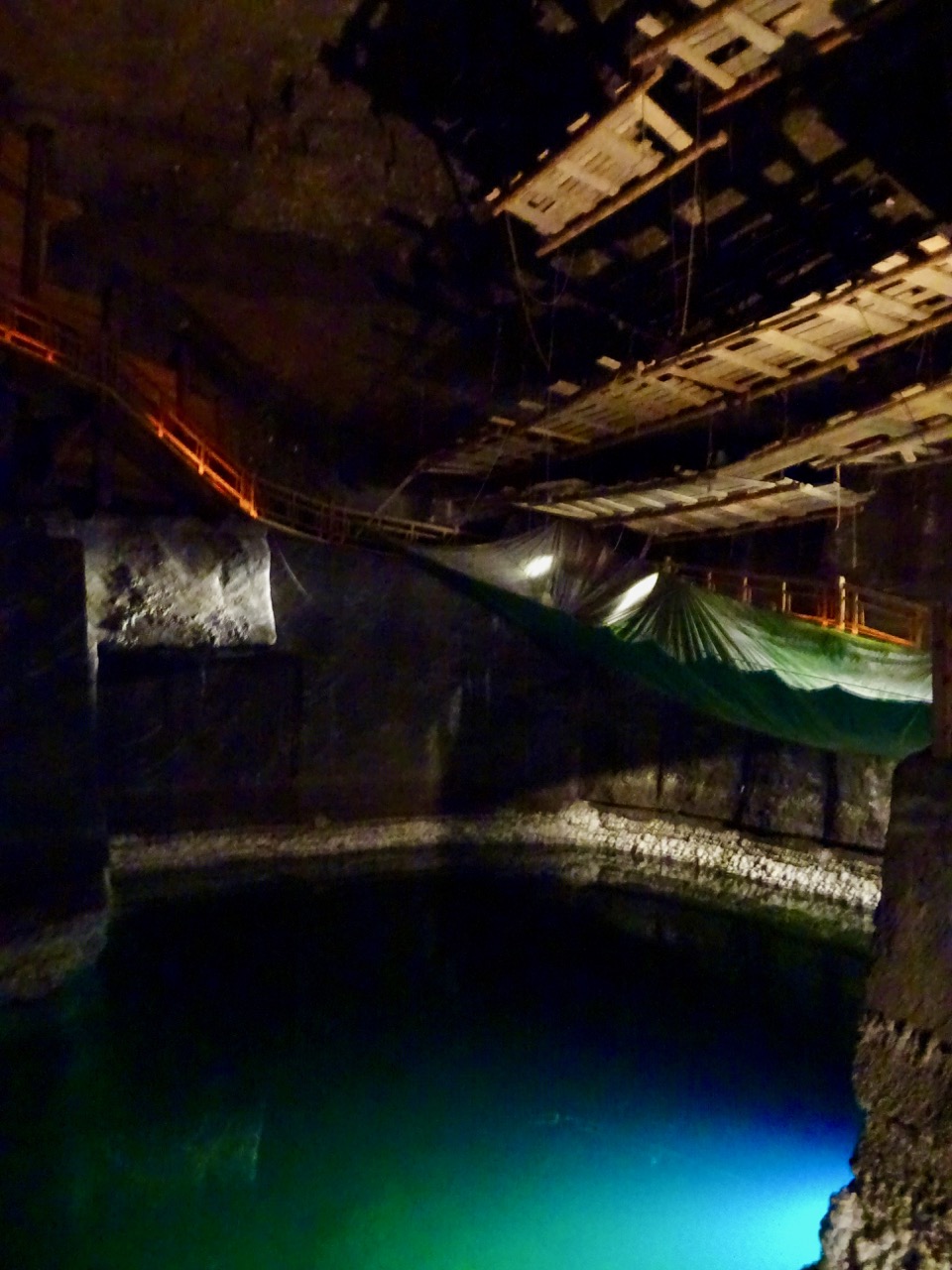
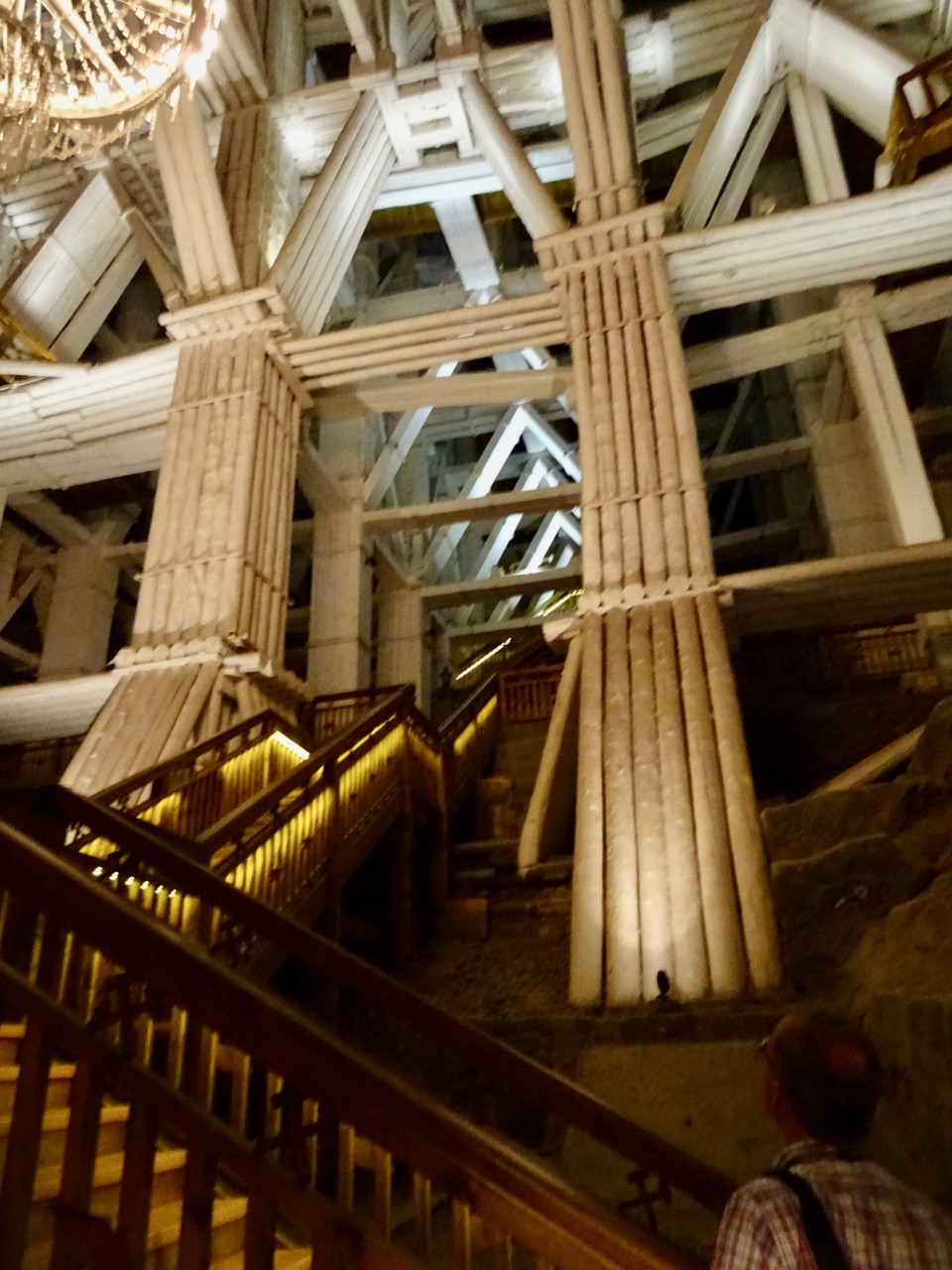
 This chamber connects the two levels of the mine and is 35 m. high. Because the roof is so high it needed to be strongly reinforced with all these high timbers.
 Another underground brine lake. The water in these lakes is 33% salt. Ocean water is only 3% salt. Luckily we do not climb this set of stairs! They disappear in to the darkness at the top of this chamber.
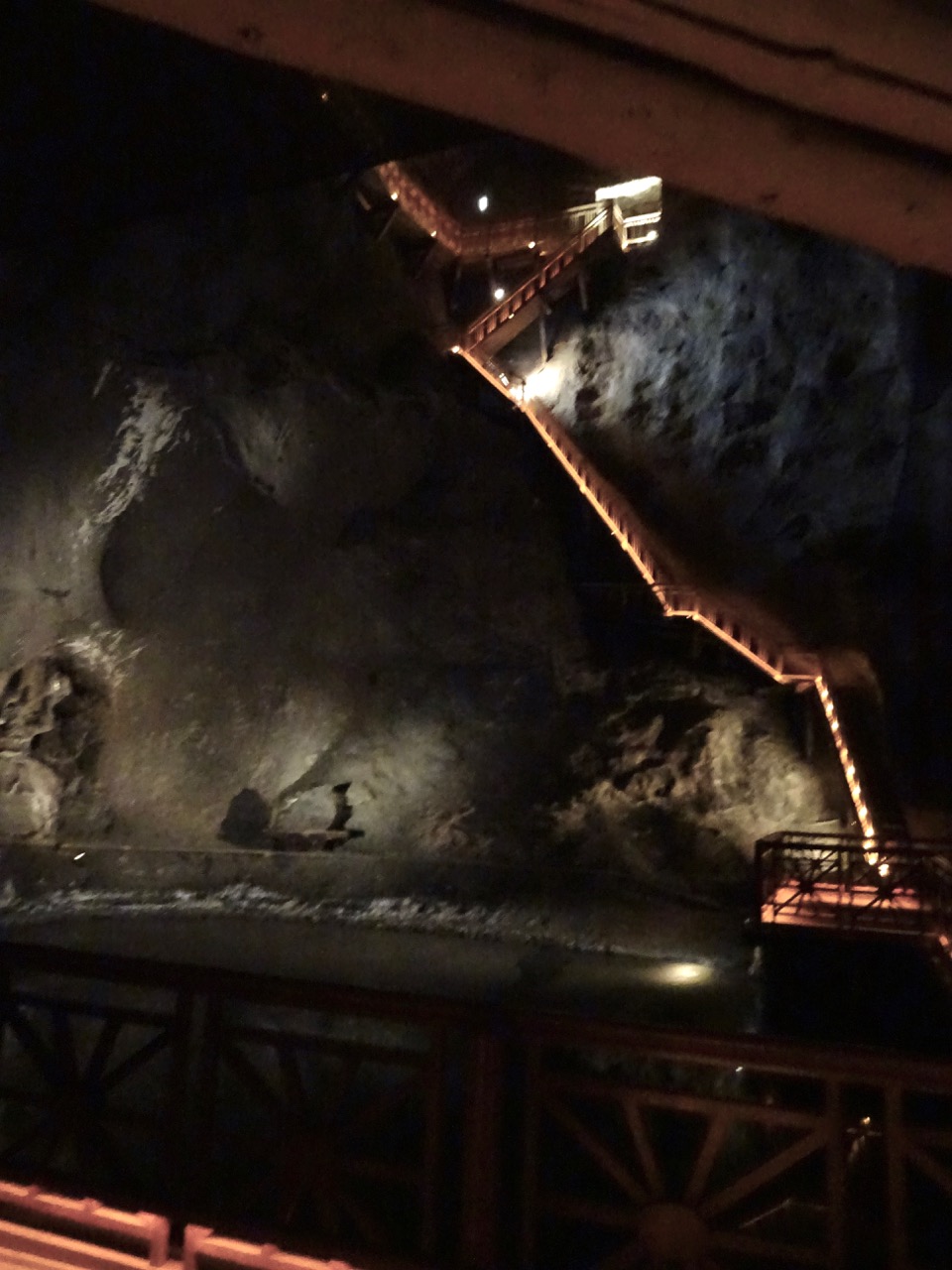 One of the many long tunnels we walk through.
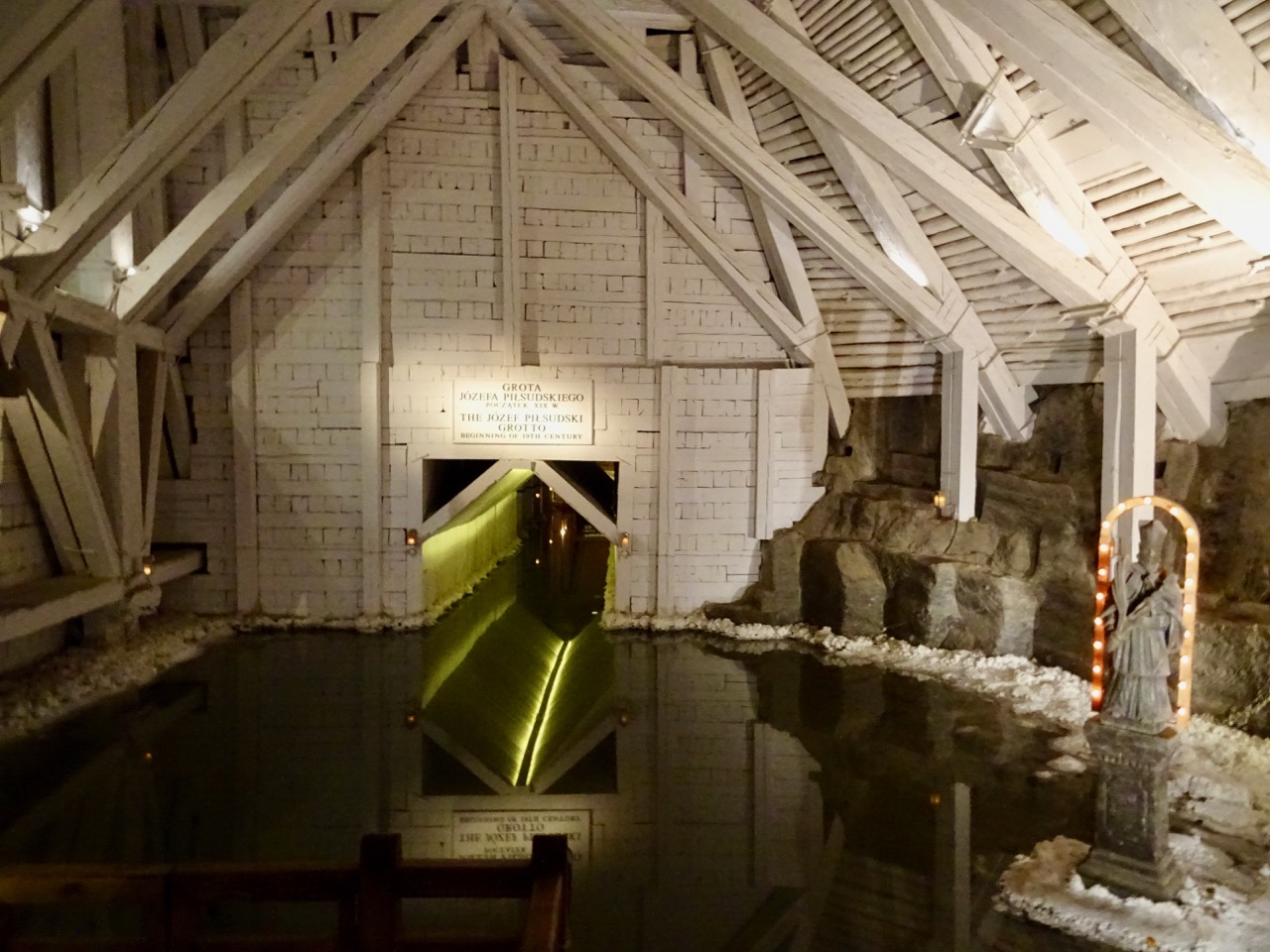
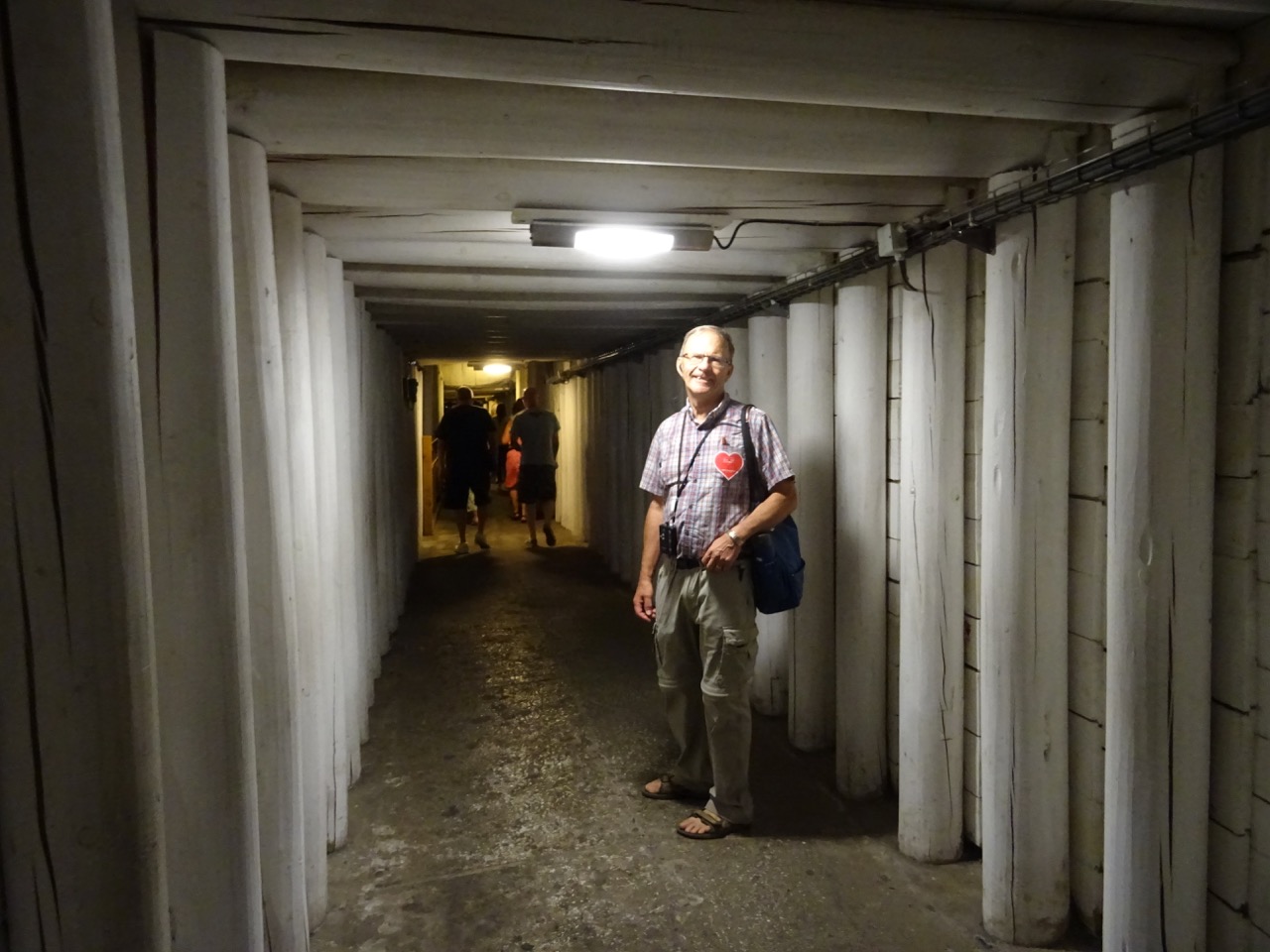 At one time visitors rode boats through this part of the mine and were treated to a fireworks display 90 meters underground! Today the mine has over 1.5 million visitors a year so it is impossible to still offer this experience.
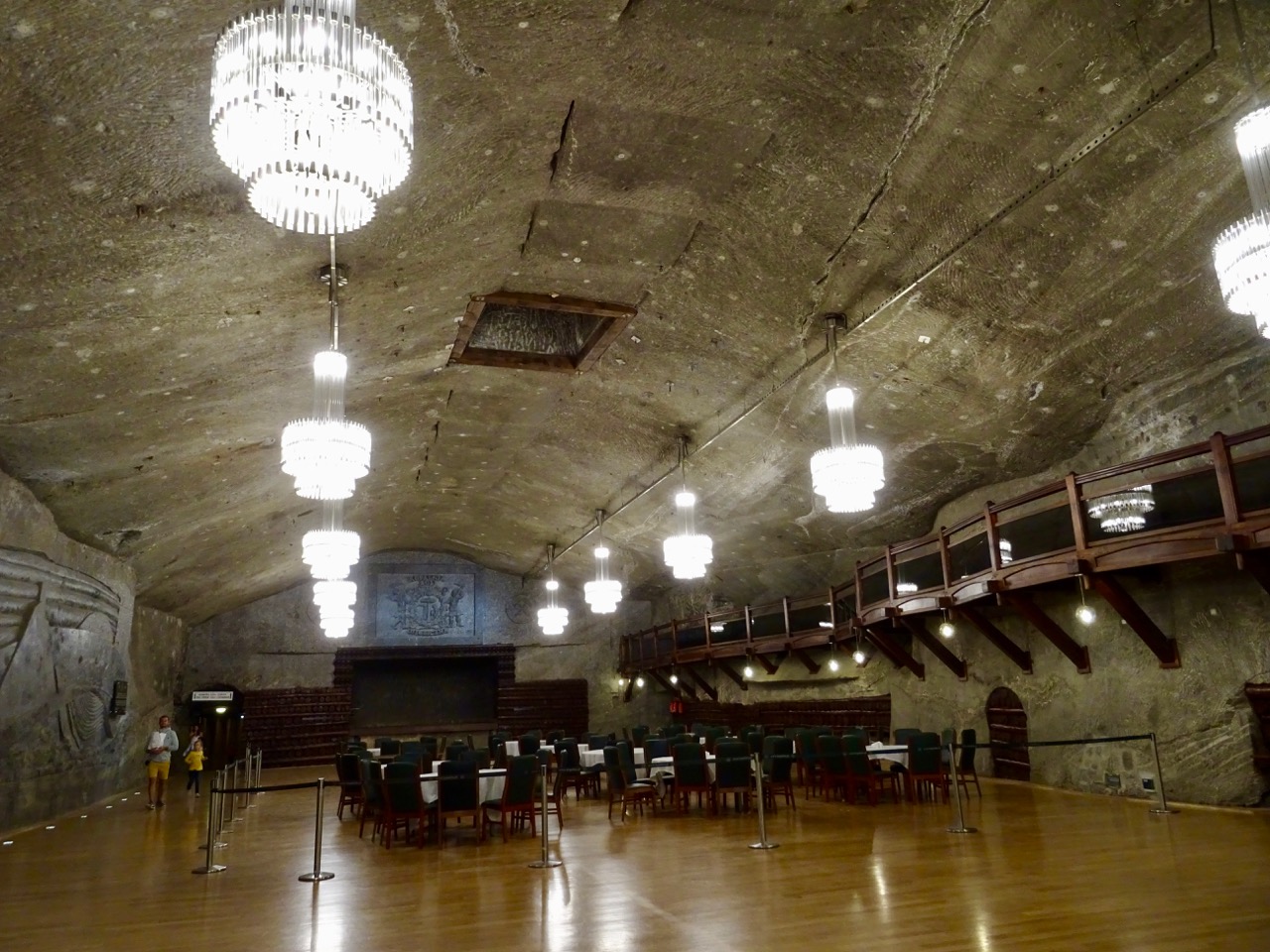
 There is an underground banquet hall and restaurant.
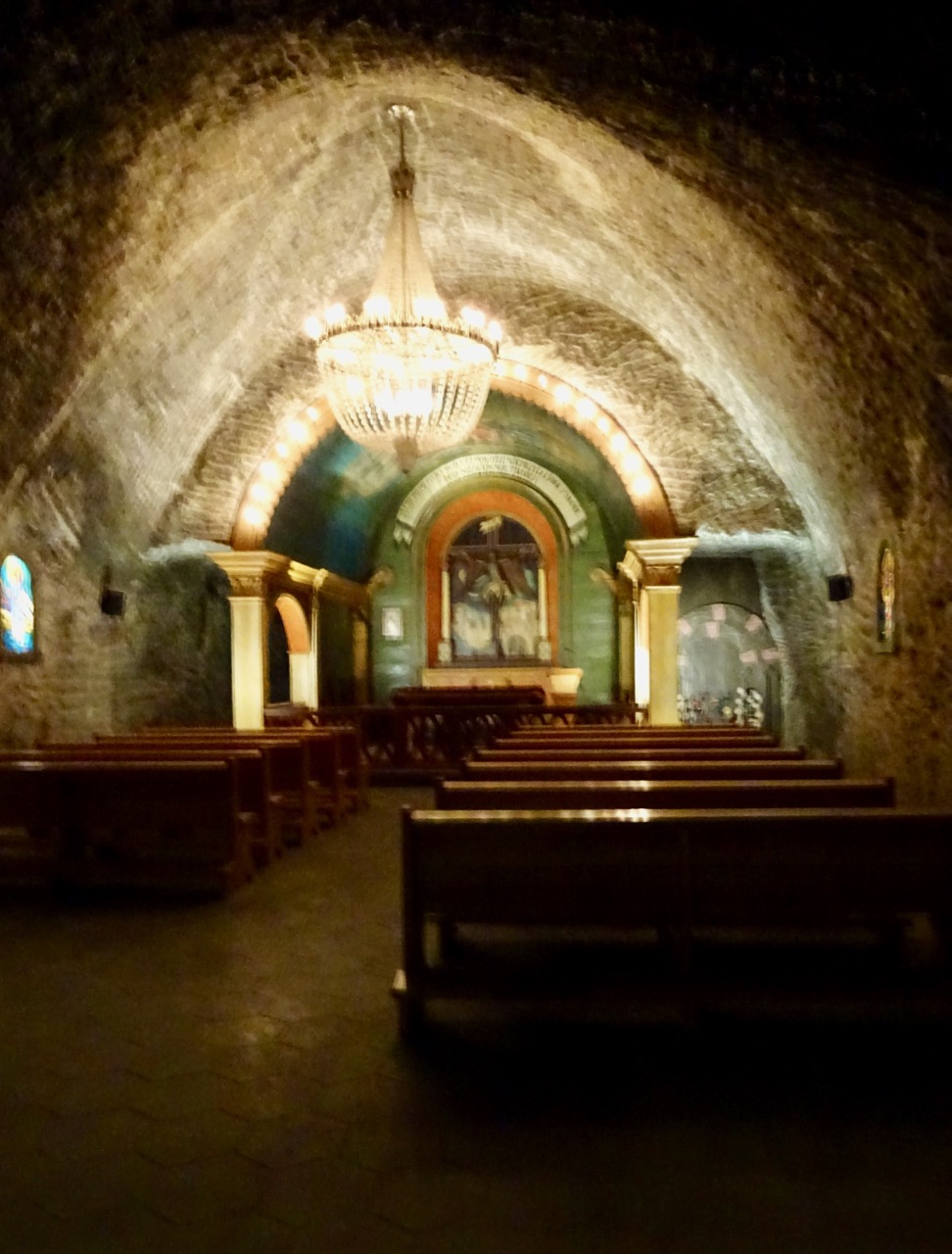
 Another of the chapels we visited.
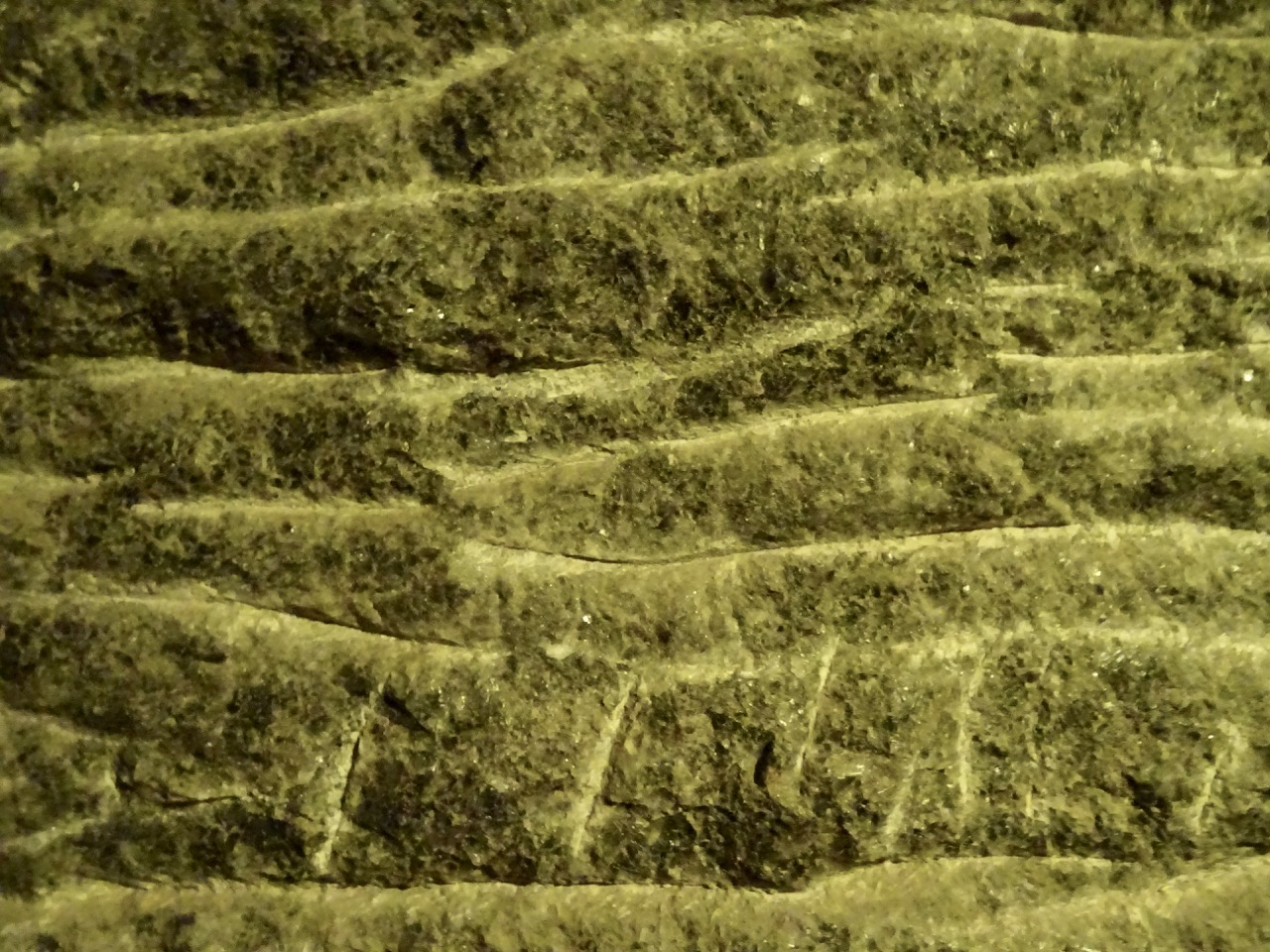
 A close up of the mine walls. We were invited to lick the walls, and taste the salt. We only licked our fingers and then touched the wall so we could taste the salt. I didn’t relish the thought of actually licking the walls!
 This enormous chamber is 135 meters below ground on the third of nine levels. The entire mine occupies about a 5 km x 5 km area. The ceiling here is 36 meters high and a Guinness World record was set here for an underground hot air balloon flight!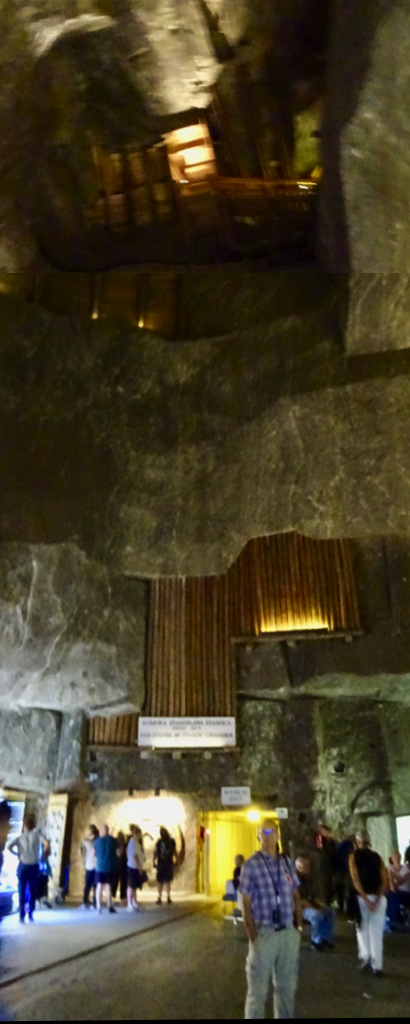
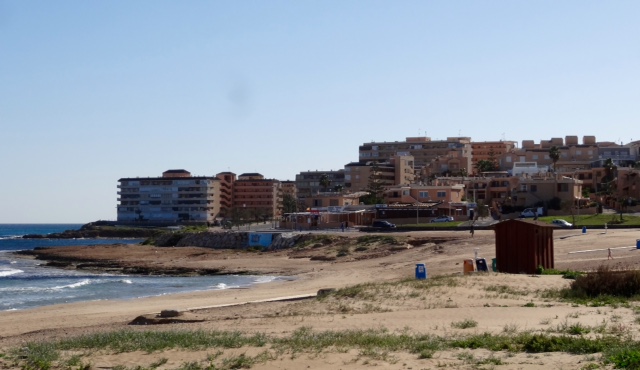
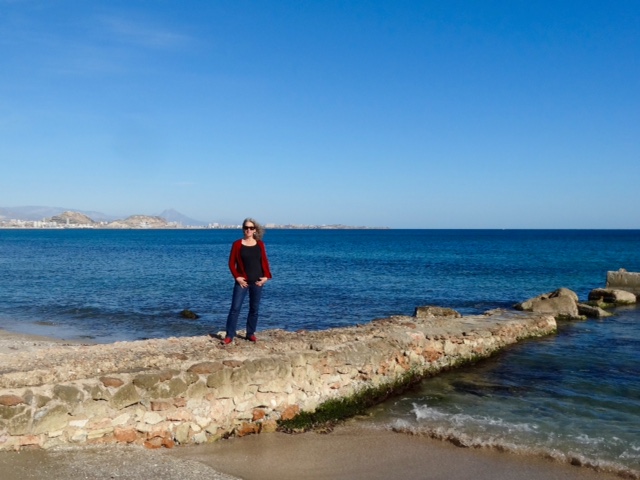
 We stop to stretch our legs and have lunch near this beach. It is certainly not as pretty as other beaches we have visited.
 trudymason.com