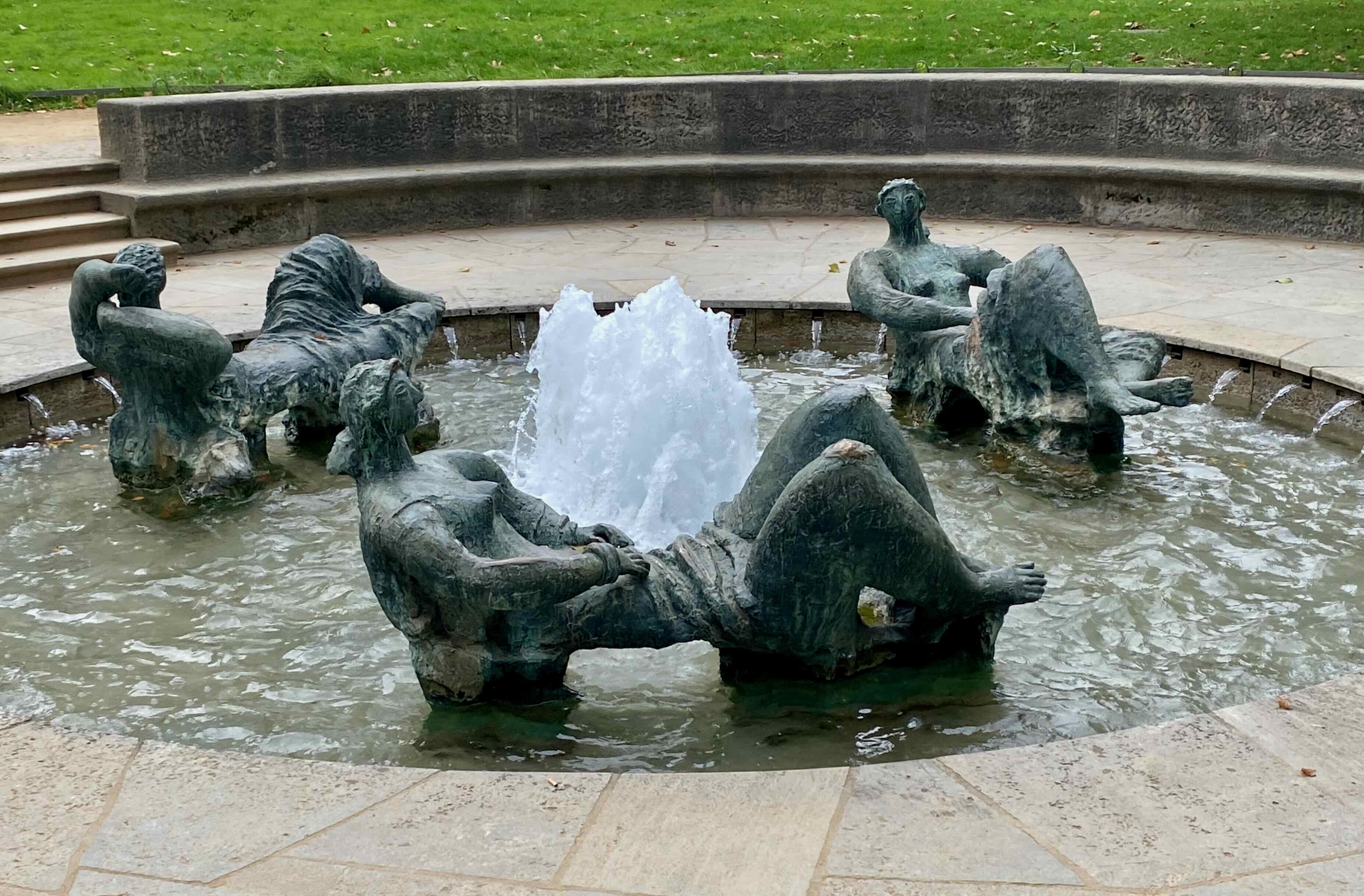
Stuttgart, Germany to Mulhouse, France

Day 44     Monday, October 13, 2025

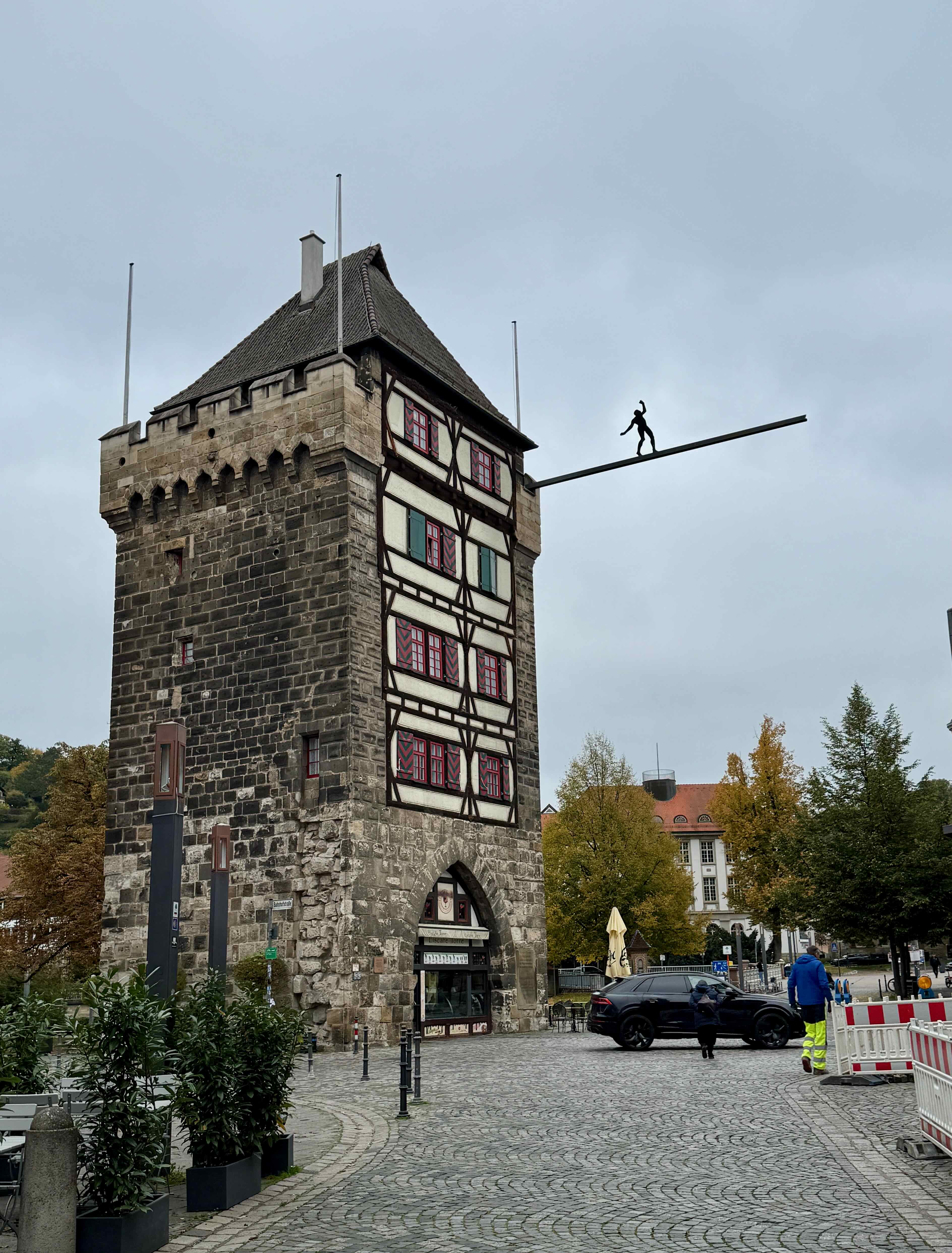
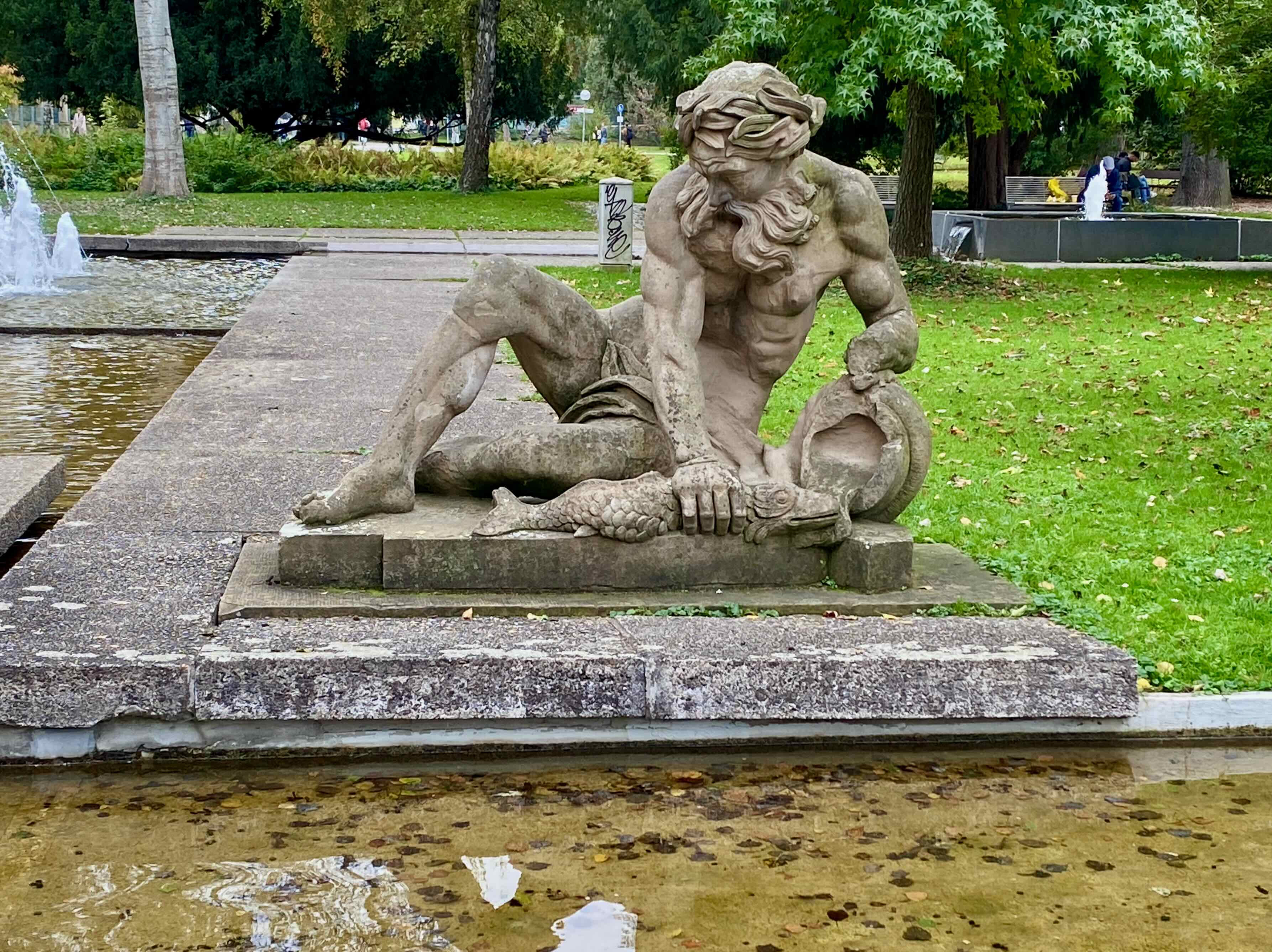
First stop on our way to Mulhouse is a pretty little town called Esslingen.  At first sight we thought this was a real person!
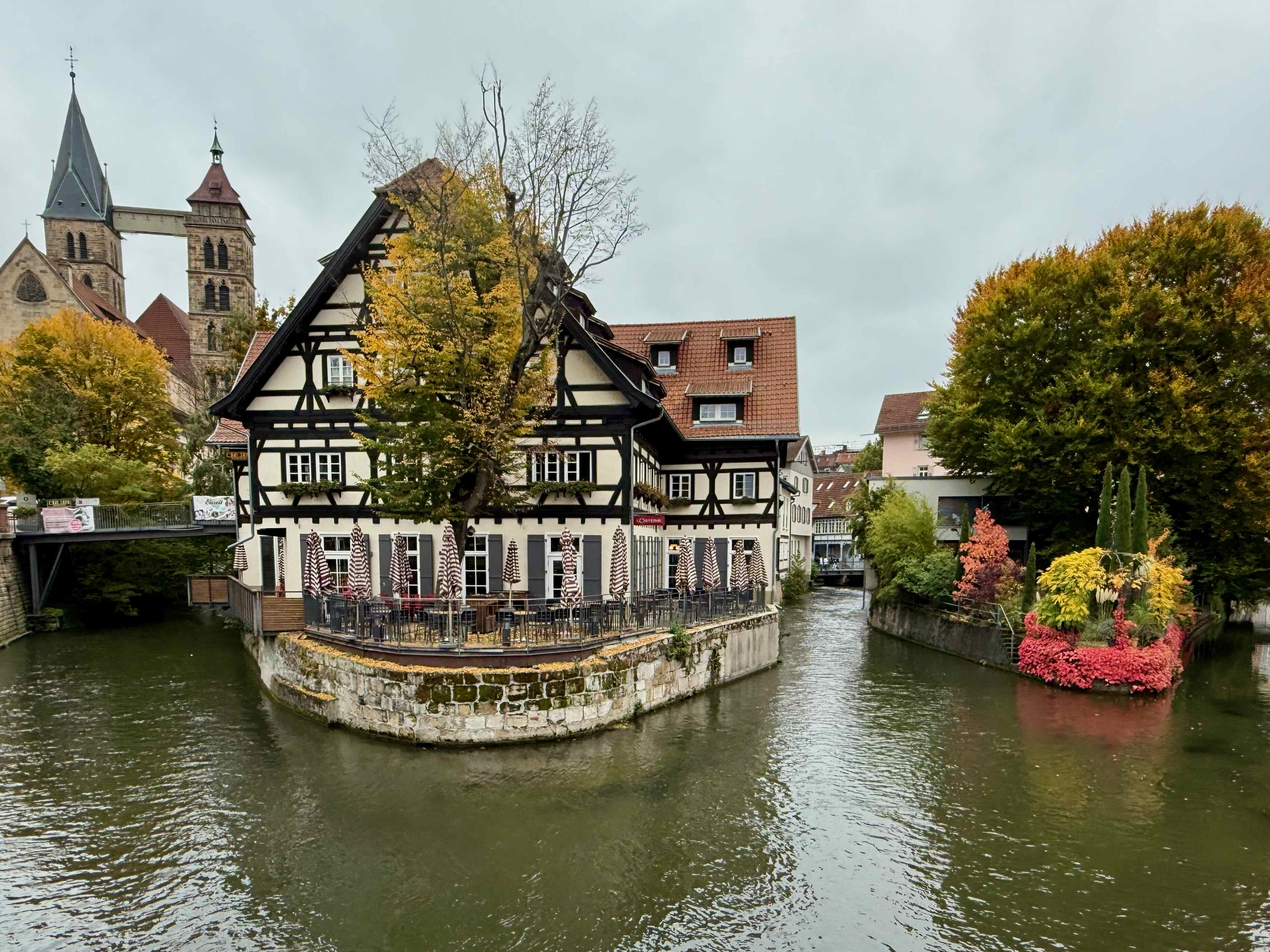
Our Airbnb in Stuttgart had a calendar with almost this exact photo.  It was the impetus to visiting Esslingen.
Autumn has definitely arrived.  I love walking through the fallen leaves.
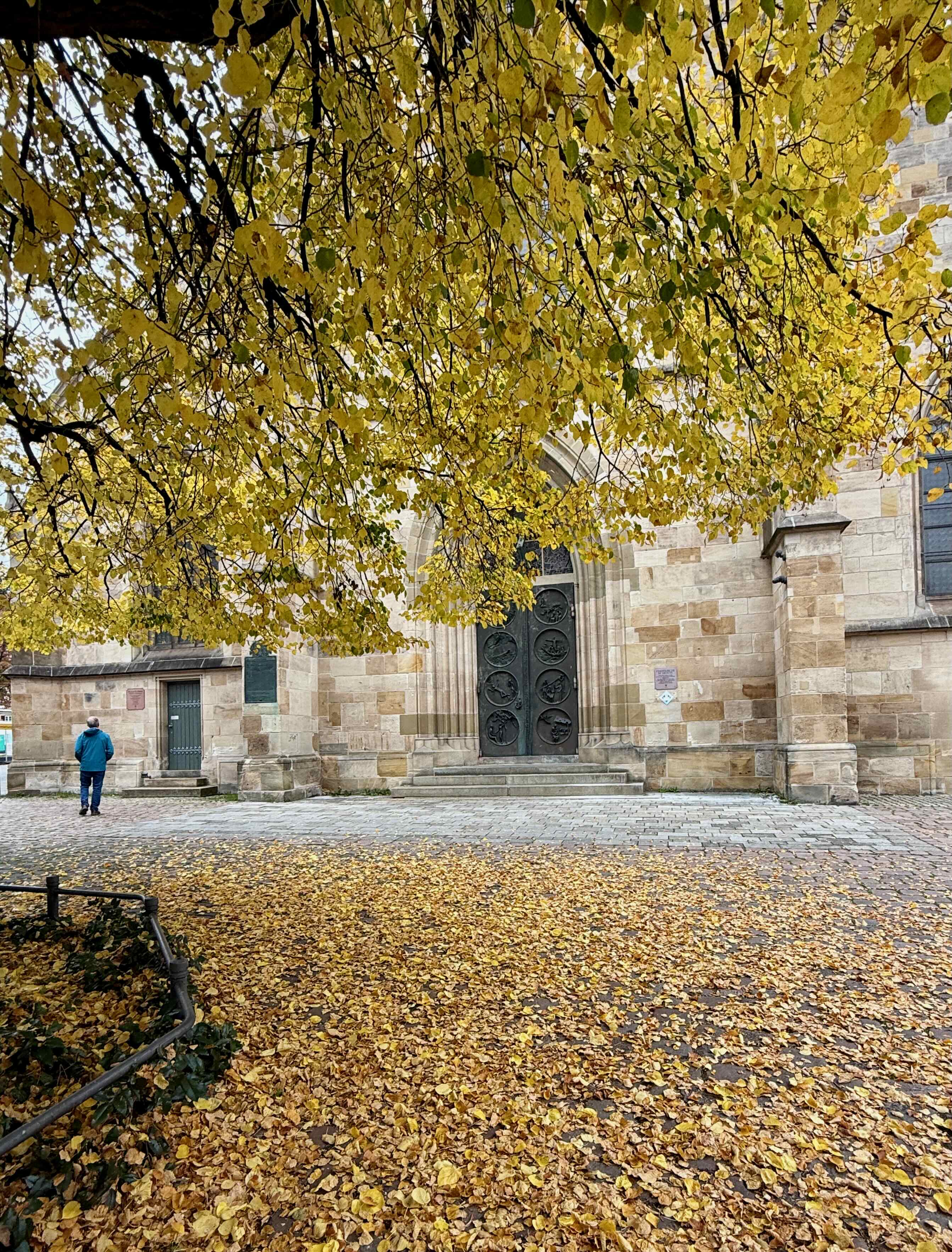
We walked into this church because its doors were so interesting,

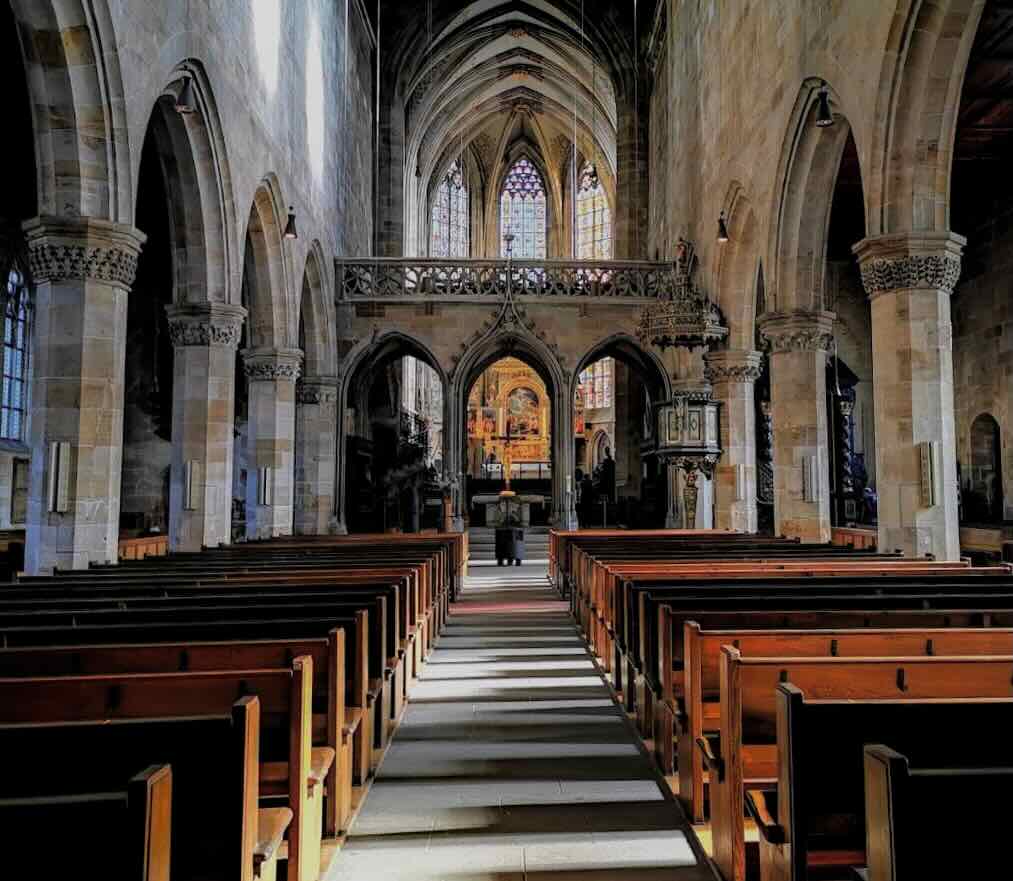
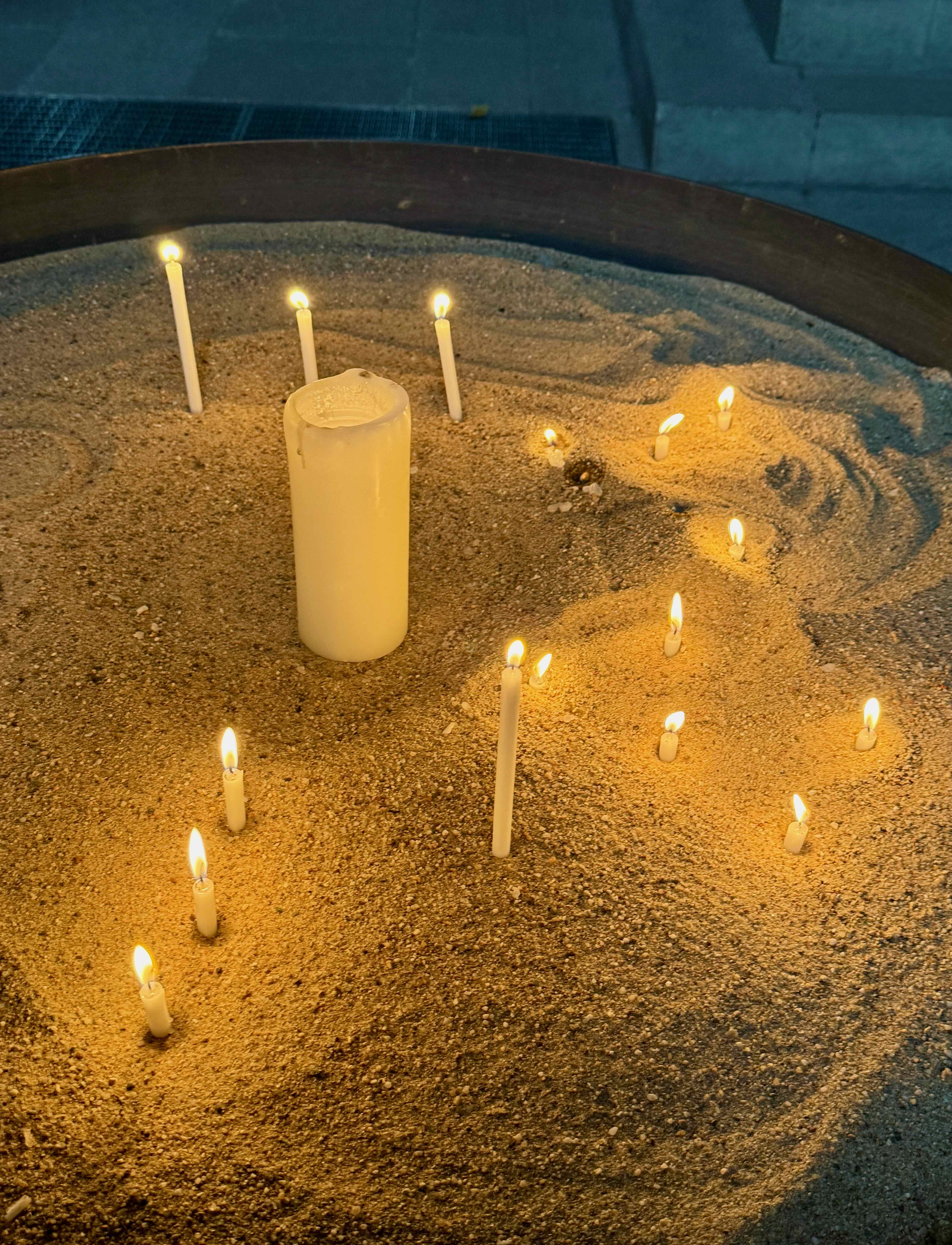
I didn’t record the name of this church, but it had a very austere dark interior……but the area to light candles was small and intimate and appealed to me.  We lit a candle for all our family members and friends who are facing health challenges right now, and spent a few moments in silent contemplation.
Back outside, we see Esslinger Castle in the distance. But this castle isn’t actually a castle, it is a well-preserved part of the medieval city fortifications, located high above the city centre. Originally expanded in the 13th century, it was reinforced in the 16th century with walls up to 5 meters thick. We can see people up there but we don’t have time to go and explore. Travel days don’t allow for in depth exploration and only give us a chance for brief visits to sites along the way.

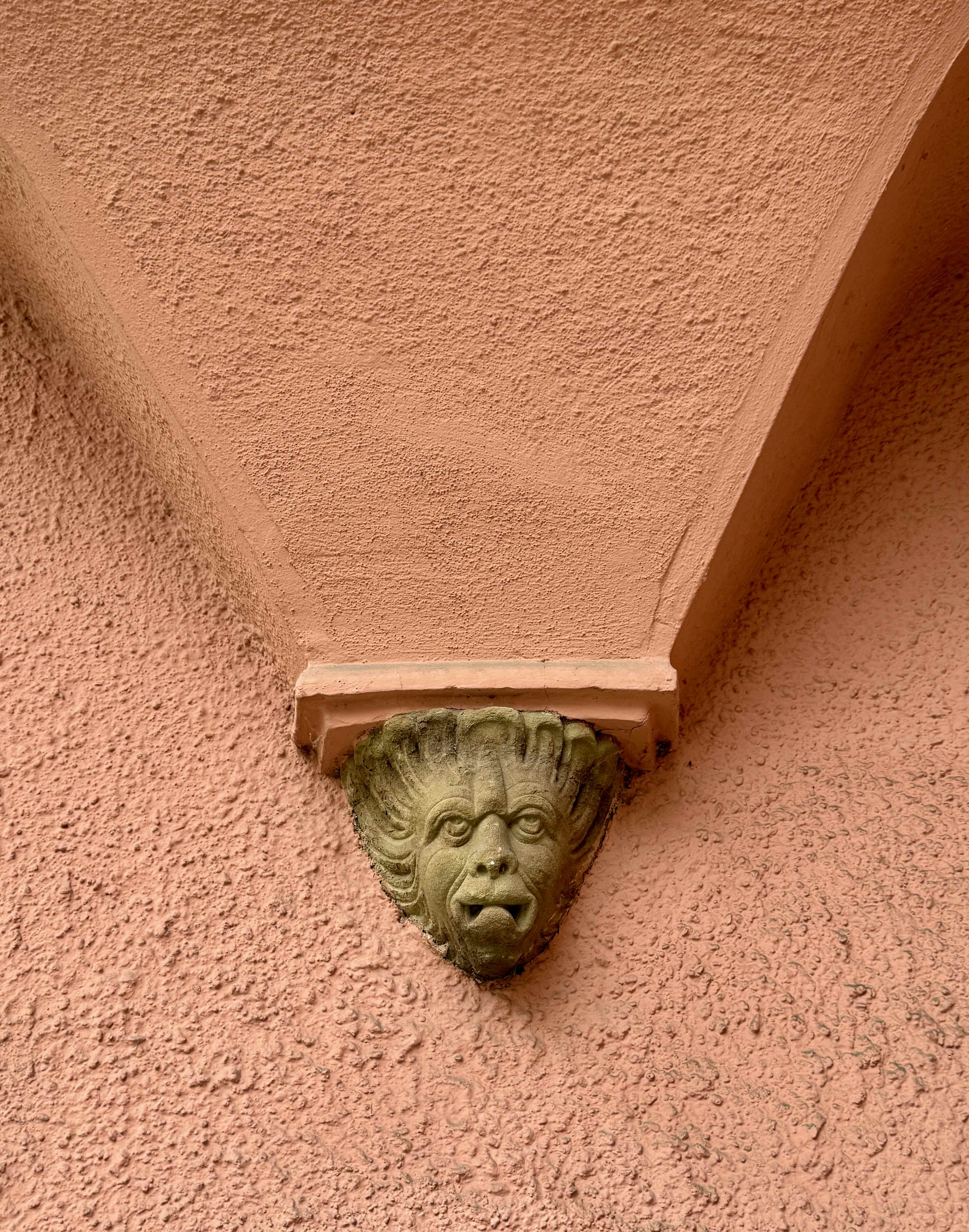
One thing I love about European cities and towns are the unexpected little things, like the face on this wall. There is always something interesting and different to discover.
We pass this road construction site. I think they were replacing some pipes.  All the little stones from the cobbled sidewalks and streets are piled up and then relaid in the pattern that matches the rest of the in place stones.  Very labour intensive, but such a wonderful final result.
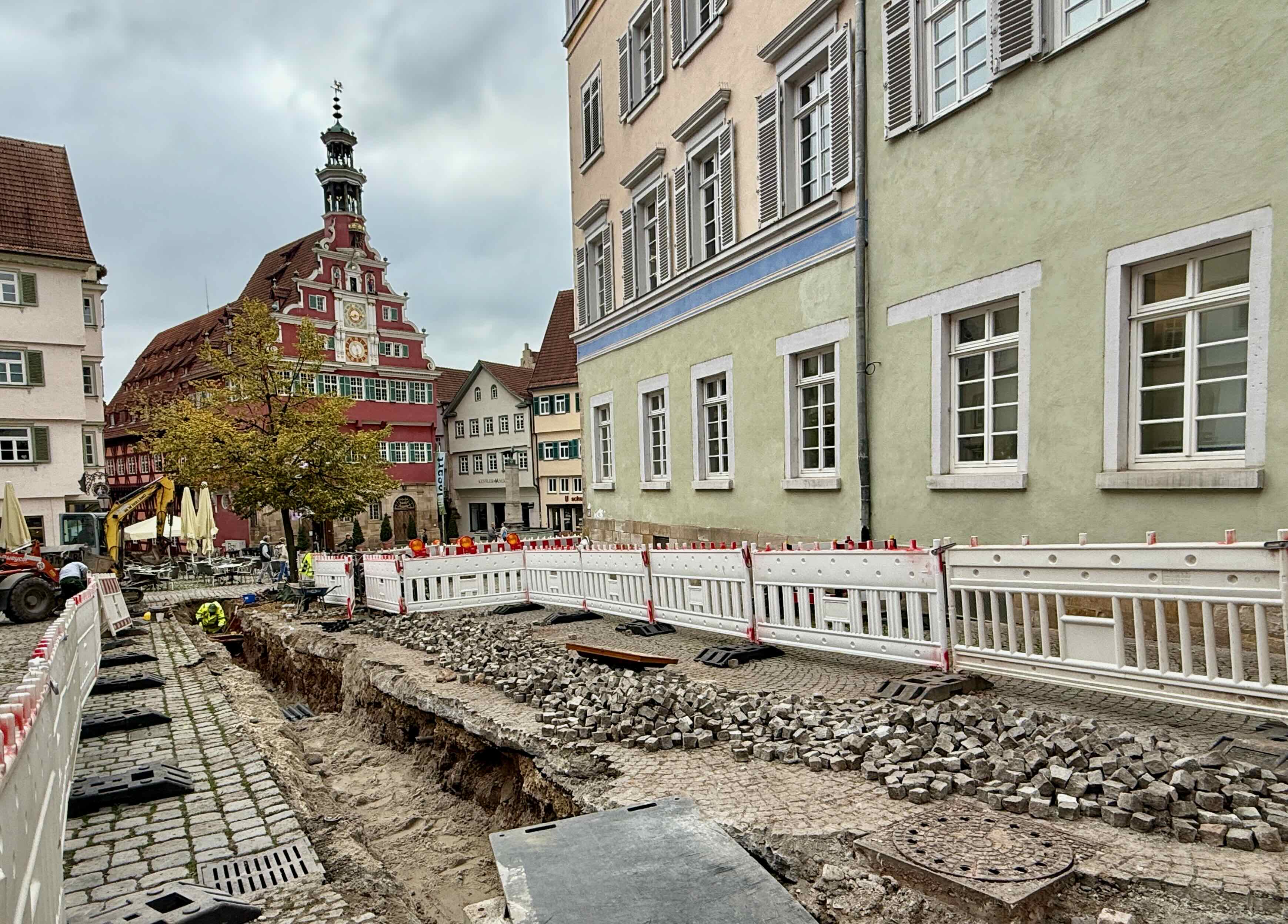
Built in 1423 as a sales hall and tax house this building is the Old Esslingen Town Hall. We were hoping to hear the Glockenspiel and see the figures on the clock move but later discovered that only happens five times a day. We are out of luck.
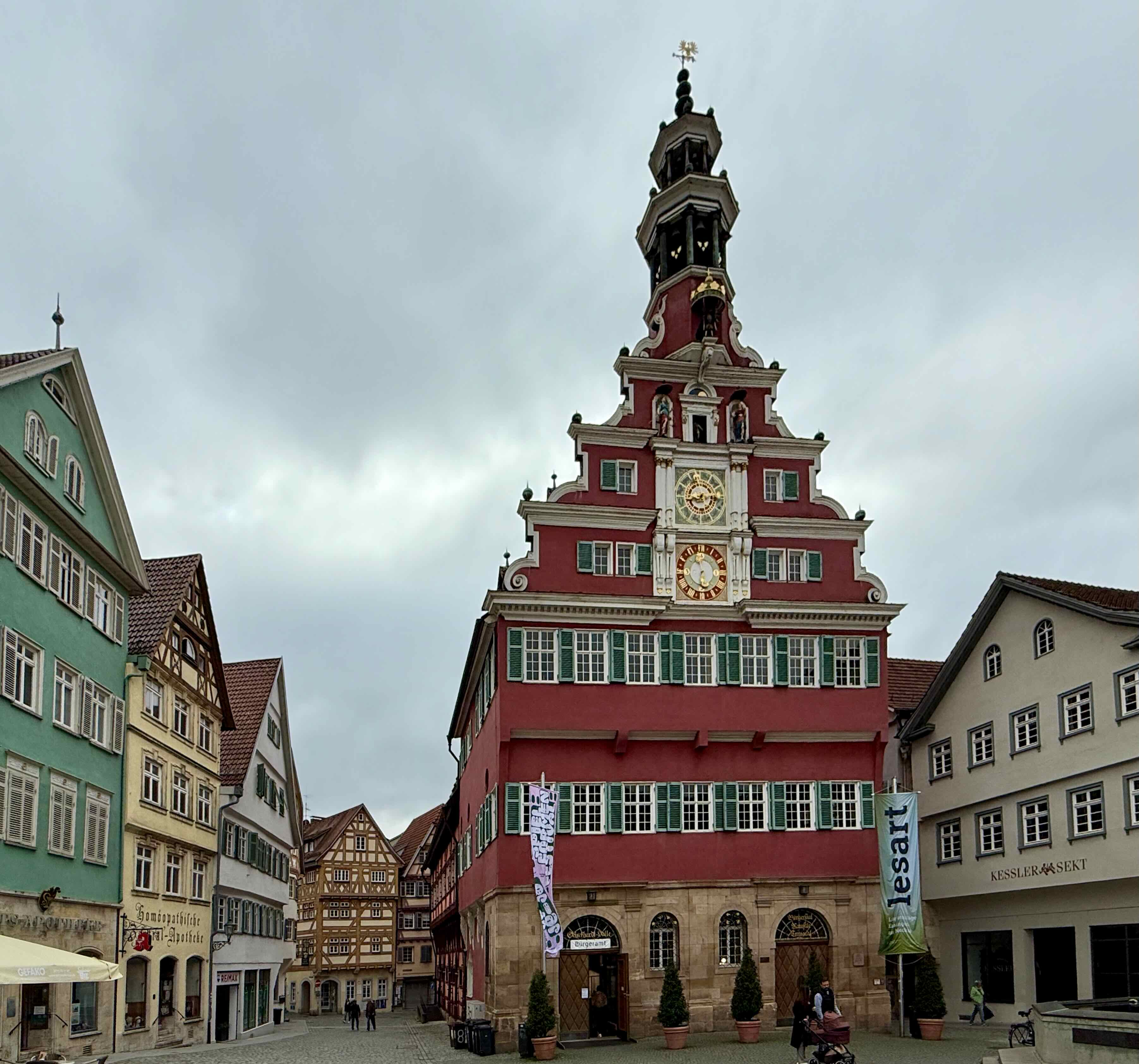
The cobbled streets are lined with ancient timbered houses…
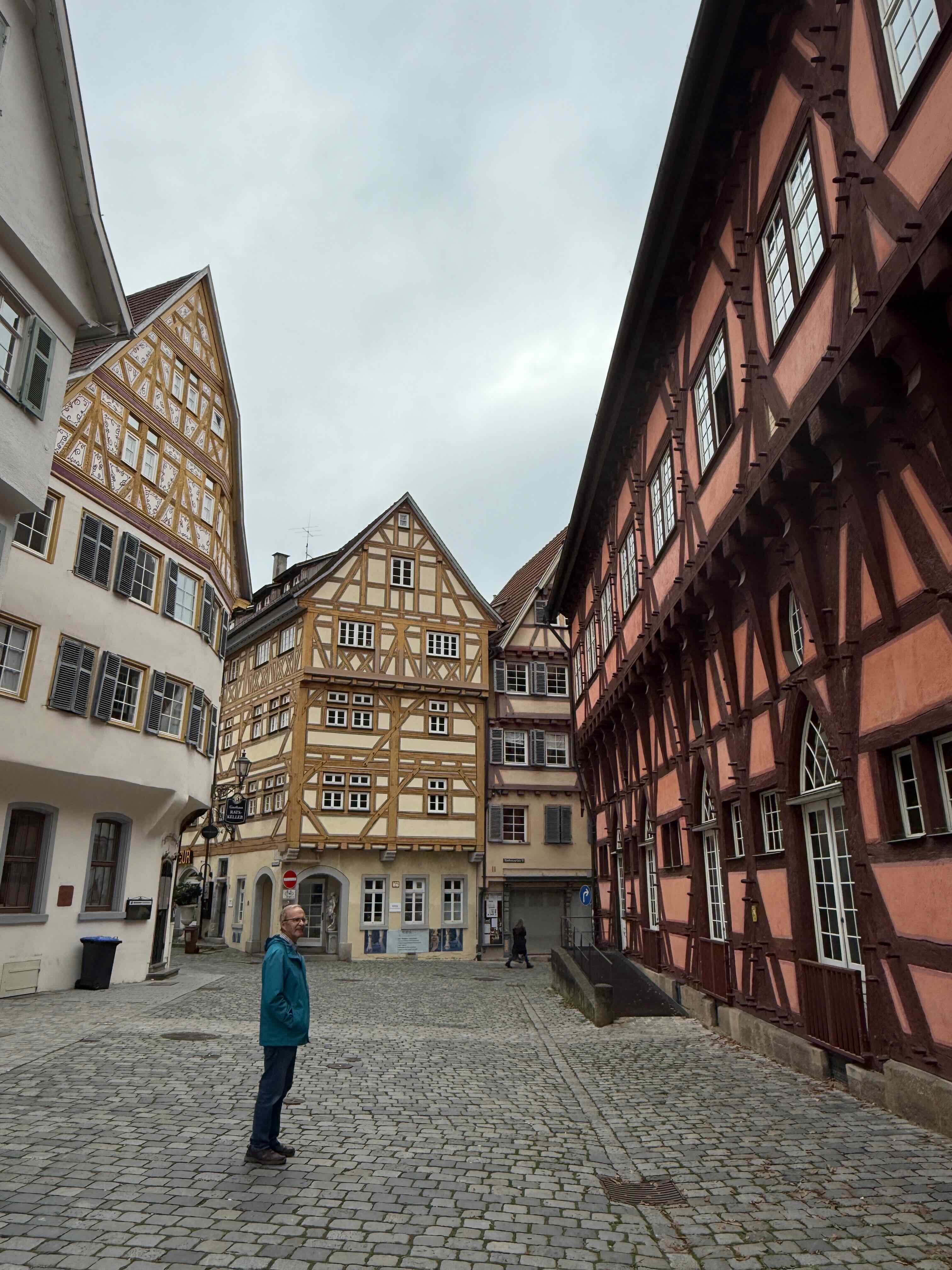
…and there are canals here too.  We could have piloted our own electric boat for a trip on the canals but they stopped operating the end of September.
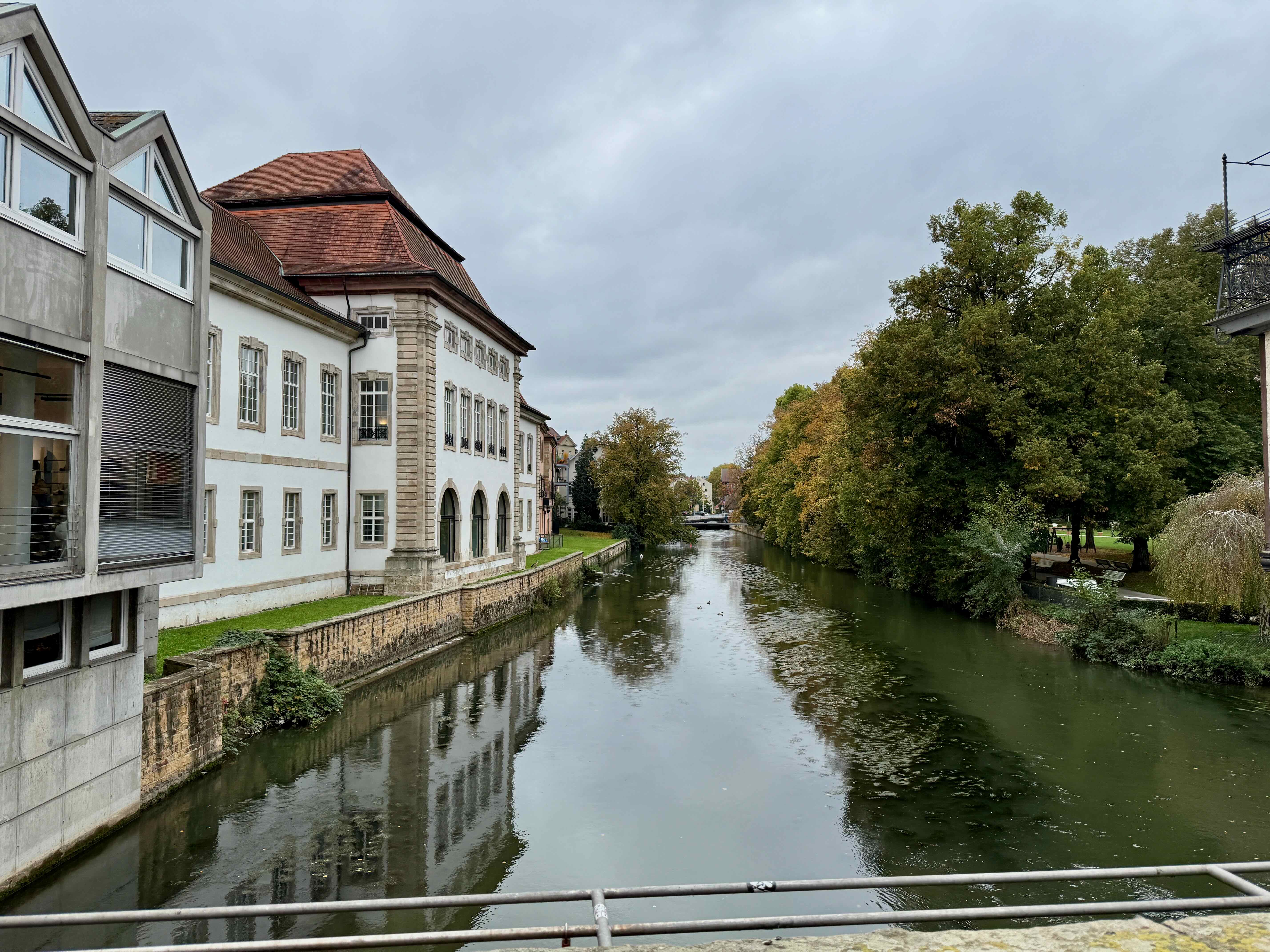
The town is surrounded by vineyards.
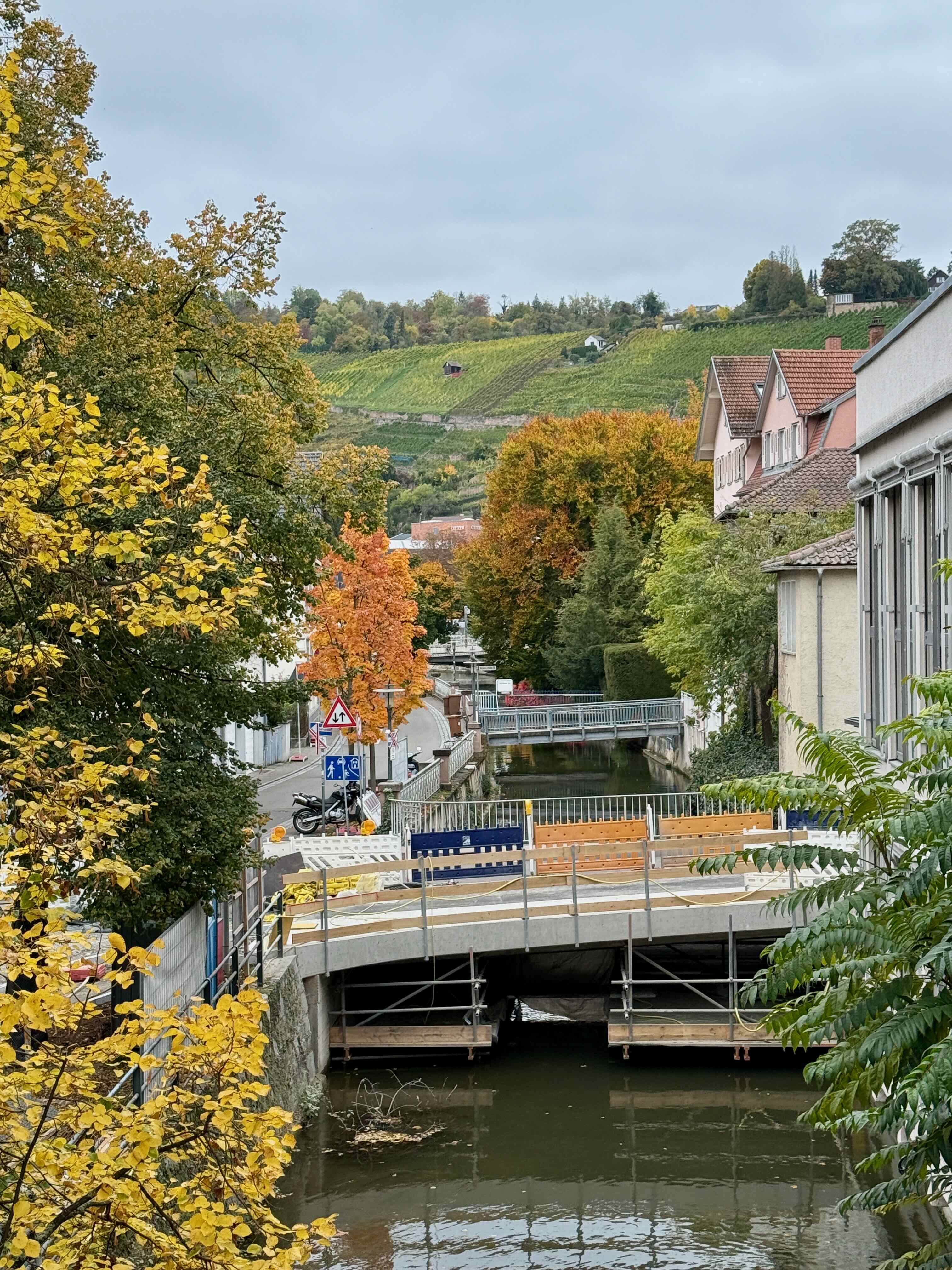
I thought this house was particularly spectacular. It is dated 1531!
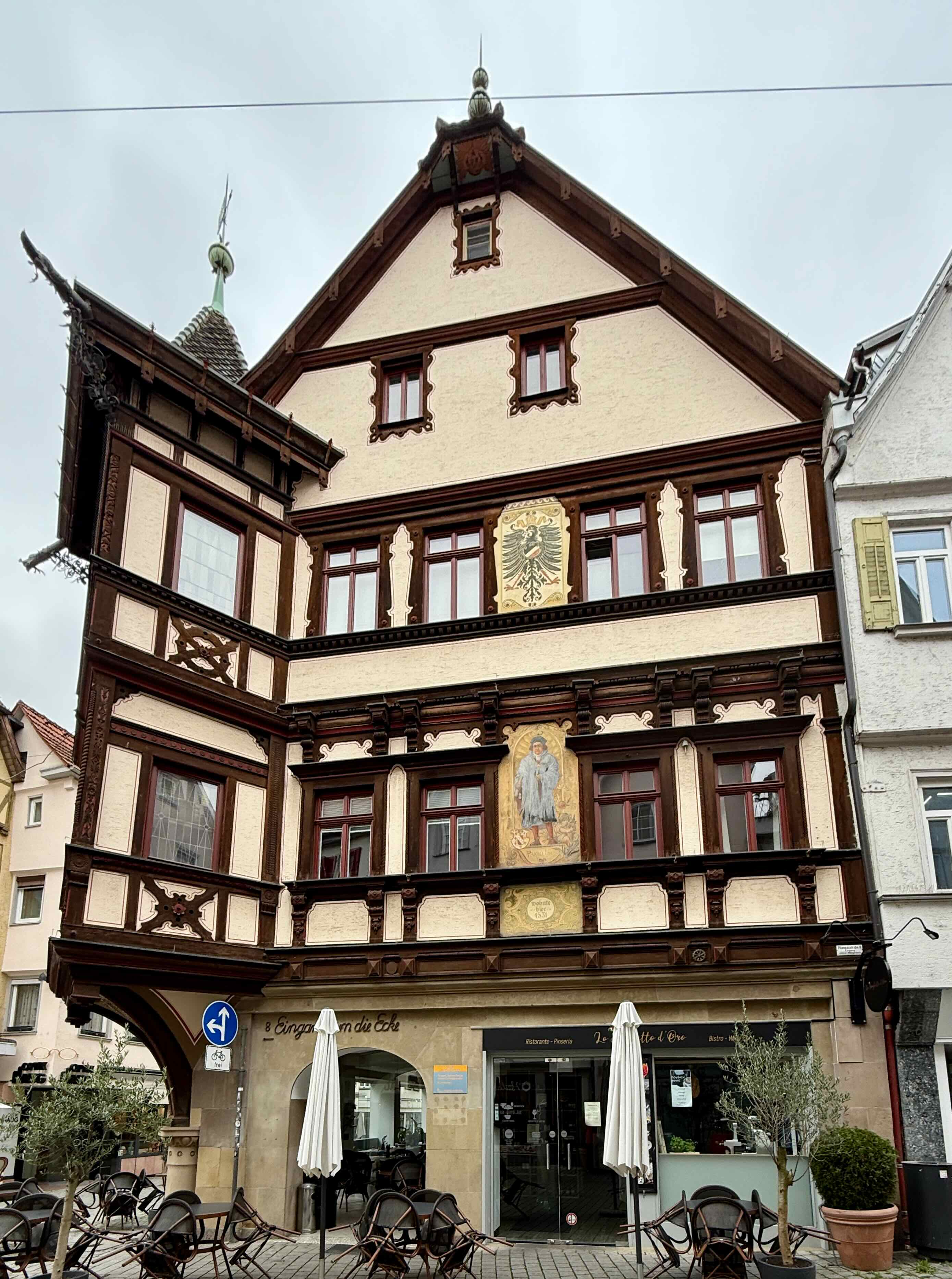
As we are leaving Esslingen I quickly snap this photo from the car window!  I just googled it and dick means thick in German, but also discovered that F. Dick is a German cutlery manufacturer that owns this smokestack…too funny!
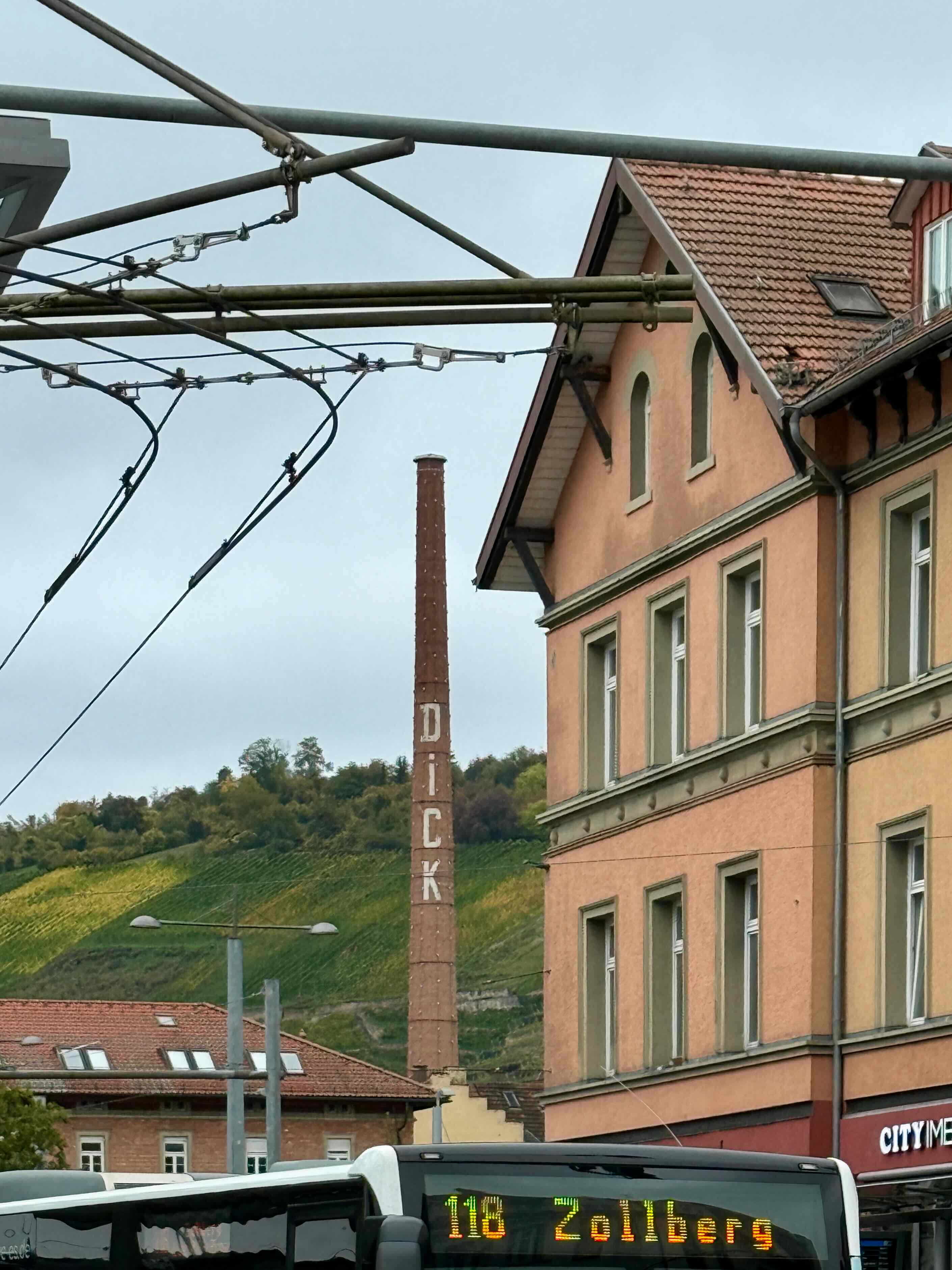
Next stop is Baden Baden. We spent some time in Baden Baden a long time ago so we thought we should stop there for a visit. There are flowers everywhere, but bathrooms are few and far between!  We spent 45 minutes trying to find a bathroom. Using Google maps we walked several blocks to where there was a WC…but we couldn’t find it. Turns out it was in a parking garage and both of us walked right past the doors to the washroom twice without seeing them! They were on either side of the of the parking payment machine with a tiny sign on each door!

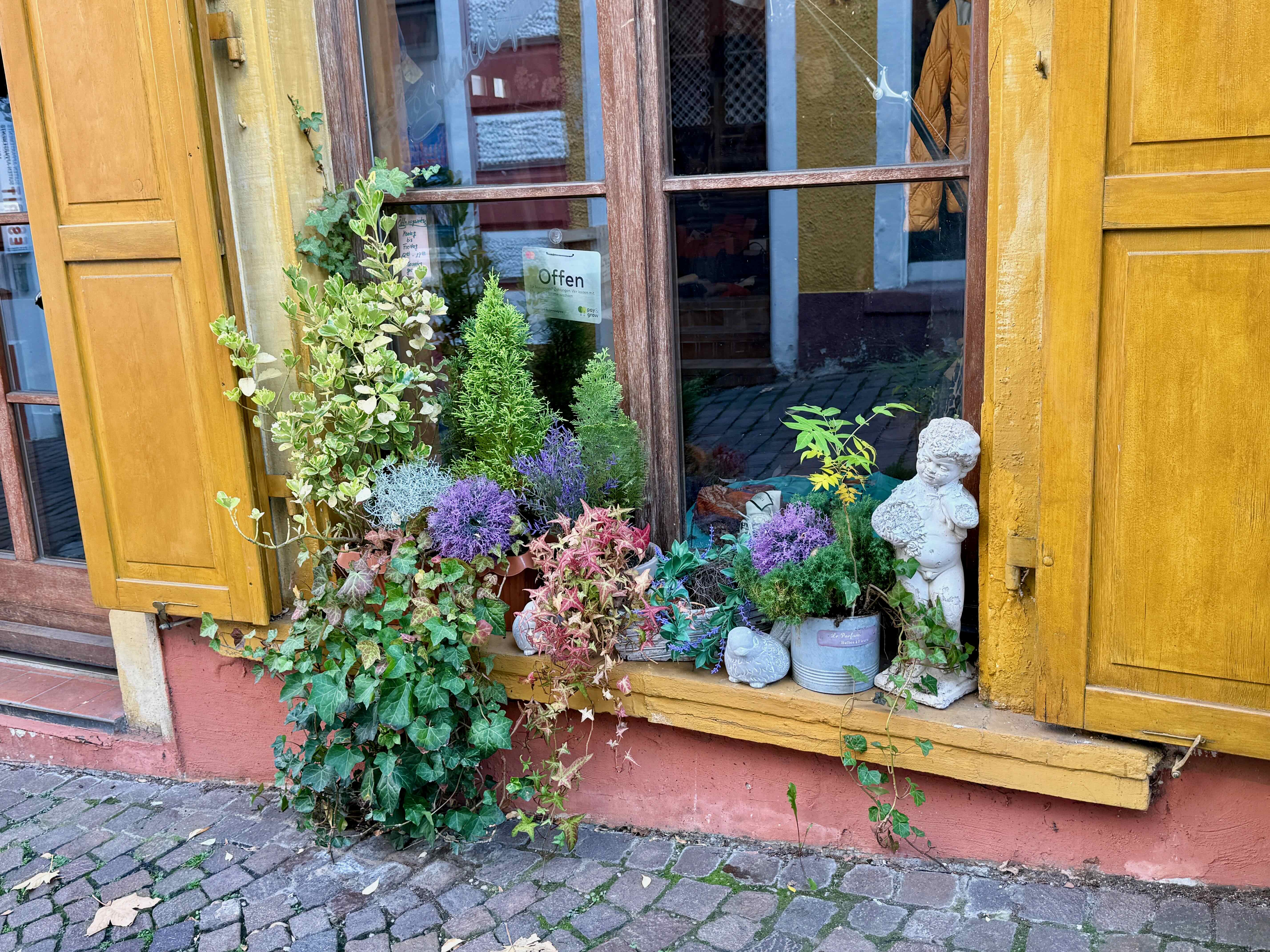
I love how people have tiny potted gardens on their window ledges or on the street beside their doors. 
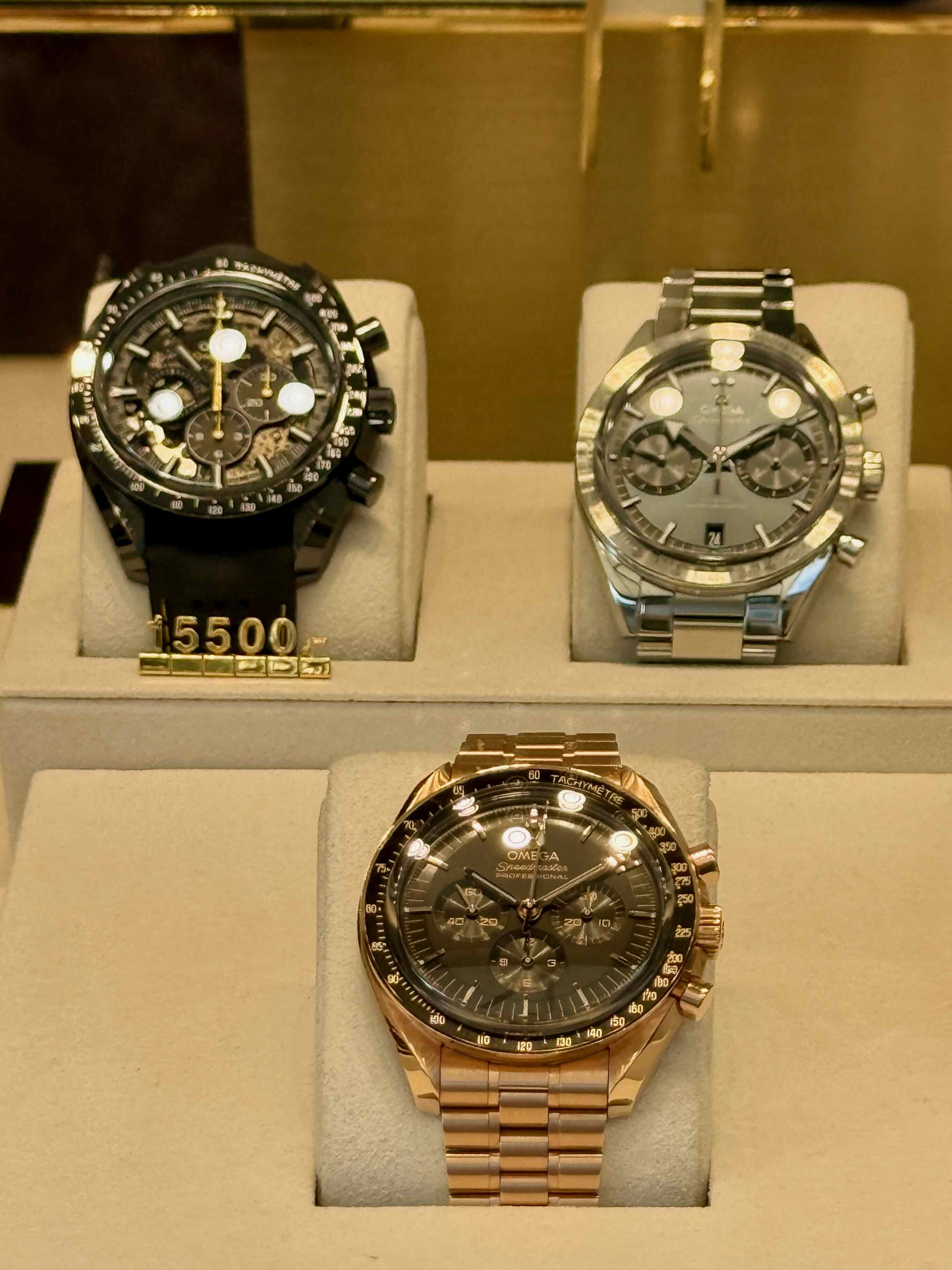
Baden Baden has a lot of very high end shops.  This watch is priced at €15,500…no prices on the others. I presume they are even more expensive.  We also see small diamond earring studs that range from €399 to €820 and there were no clothing items on display in the shop windows below €100!  A bit too pricey for us, but it is fun to window shop.
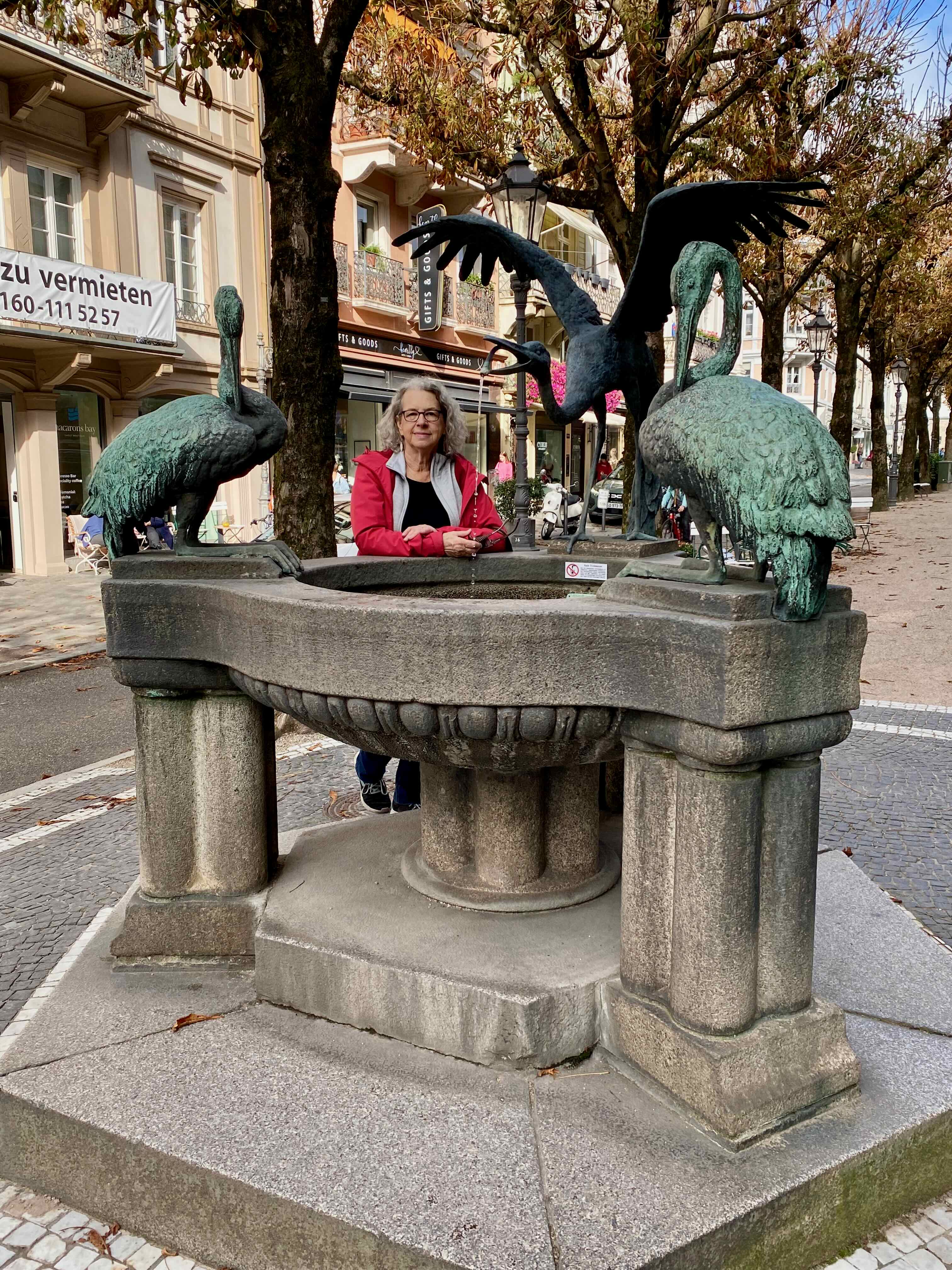
Loved this stork fountain!
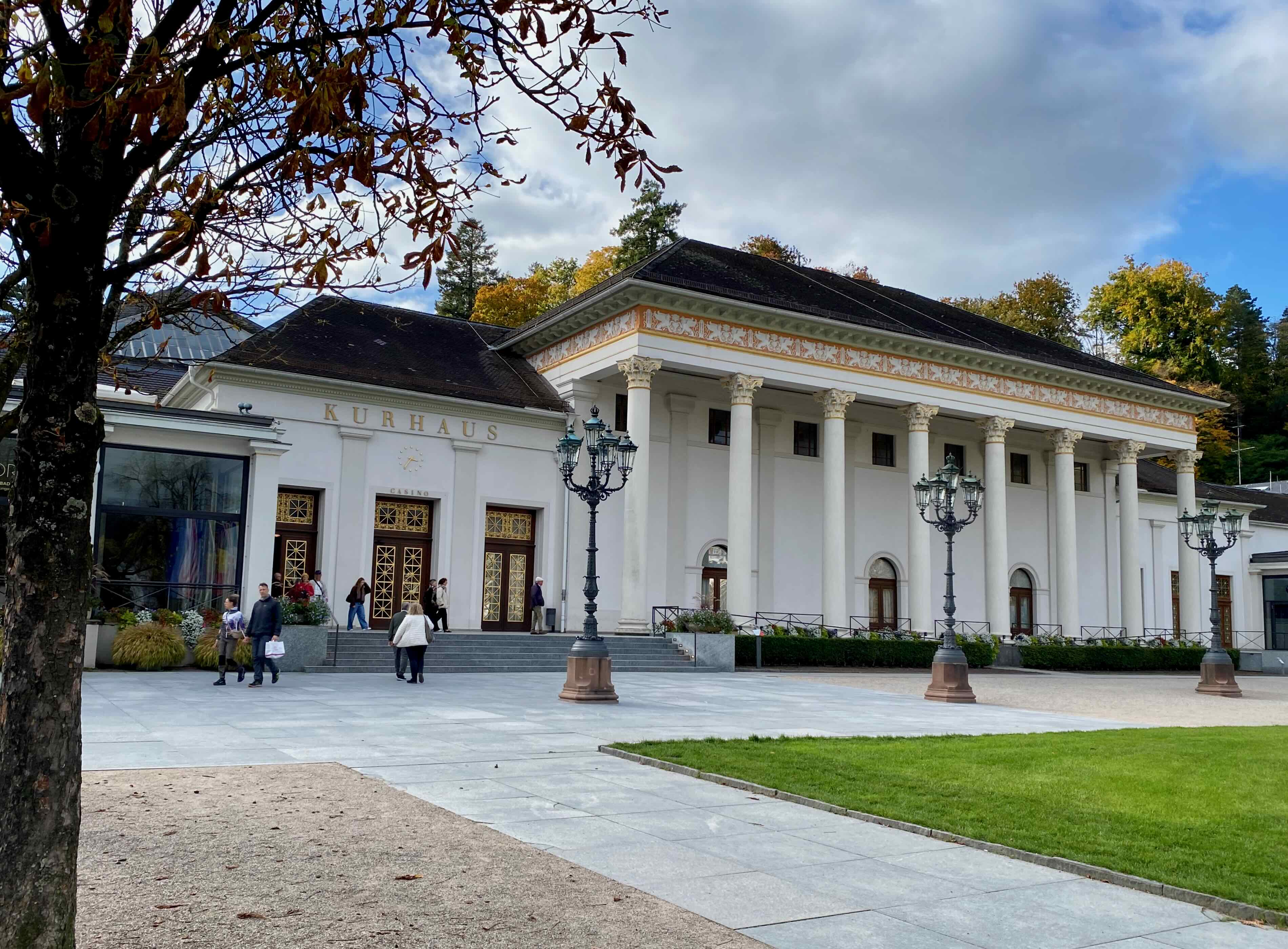
This is the Baden Baden Casino.  Bob thought we could go in and tryout luck but men must wear a suit jacket and tie.  We wouldn’t be allowed in with our jeans and casual sweaters.
The drive from Baden Baden to Mulhouse in France was interesting.  I see these strange structures on Google maps while navigating…turns out they are huge shopping malls with parking on the roofs of the buildings.
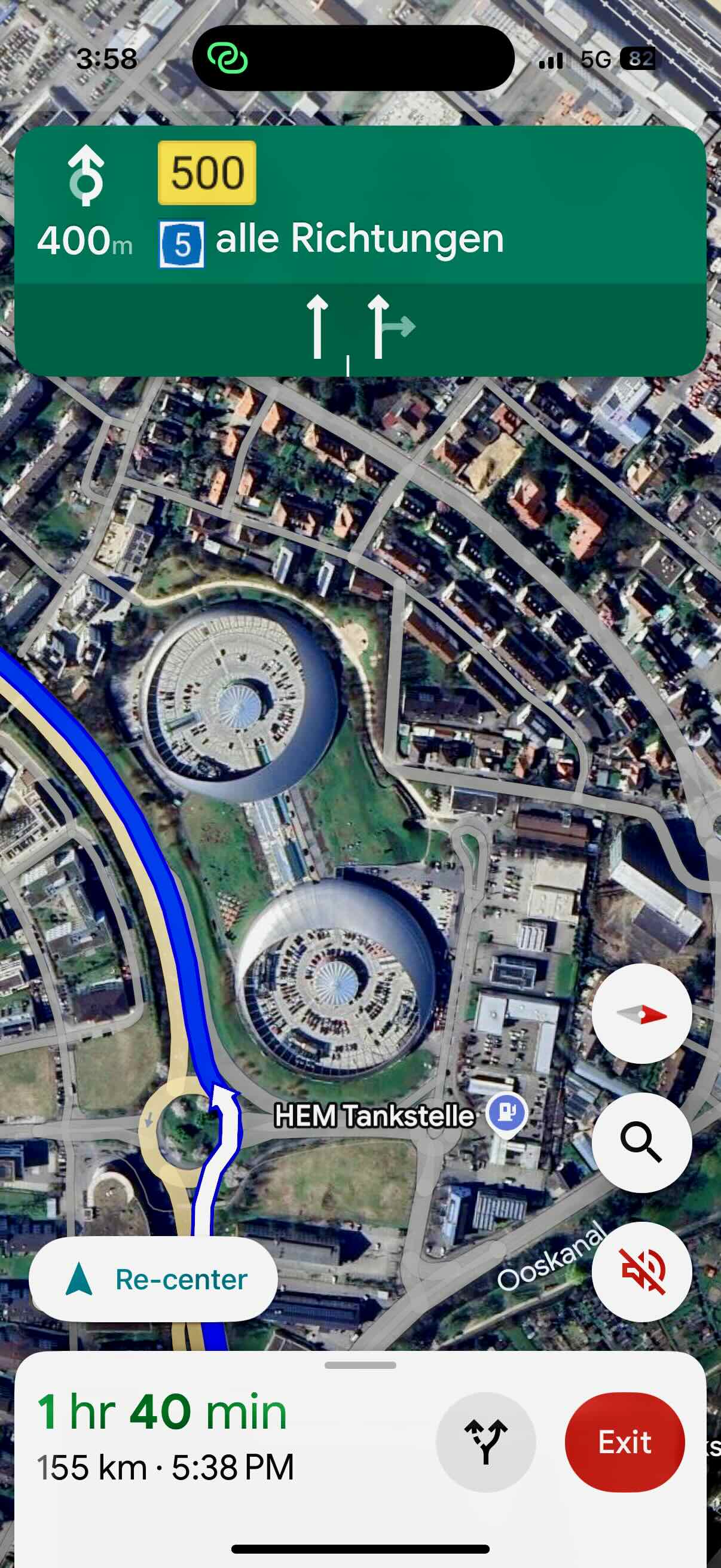
Screenshot

Just a few kilometres down the road I see this huge truck rest stop on Google maps. I count 86 trucks stopped for a break! Bob’s biggest complaint about driving in Europe is all the trucks on the roads. The right lane is one truck after another and when a truck pulls into the car lane to pass a slower moving one all the cars have to slow down until it manages to pass and get back into the truck lane.  
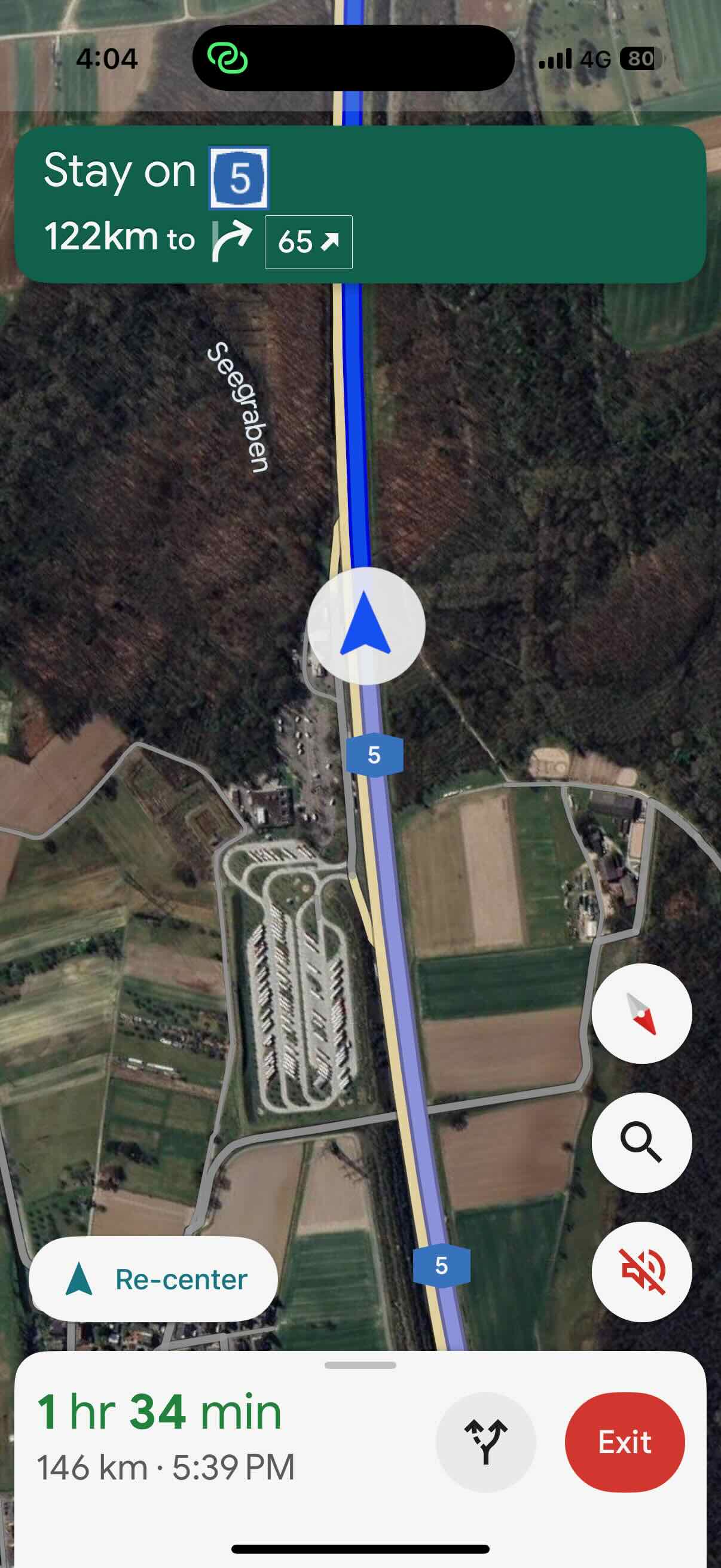
Screenshot

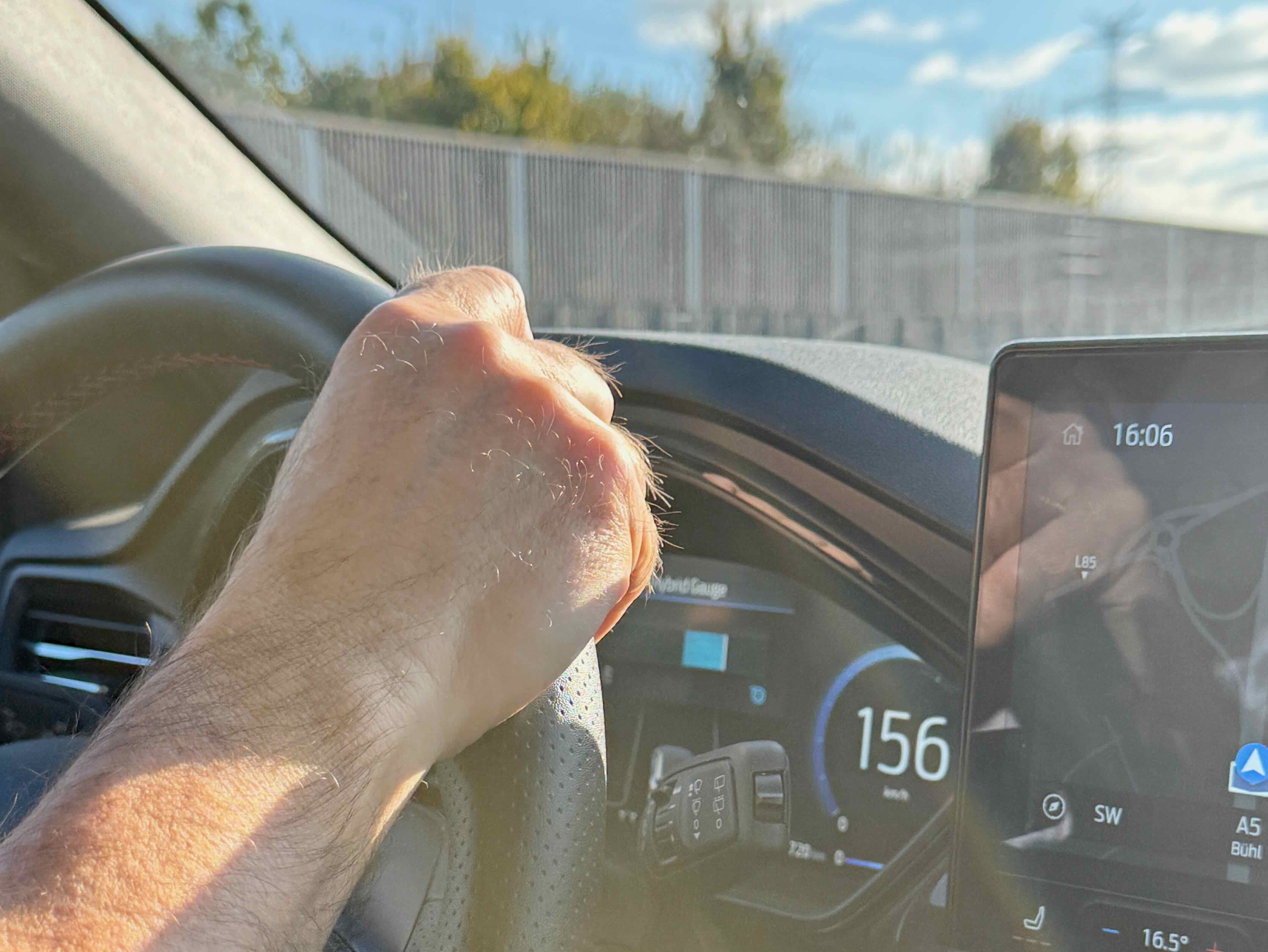
Remember the German highway speed limit is usually 130 km and often there is no speed limit so a truck pulling into your lane at 90 km is actually quite dangerous.  Bob does enjoy the chance to drive at 156 km/h though!
We get caught in traffic for almost half an hour, moving just a car length at a time.  We finally figure out why. This huge boat was trying to move through a rather small covered bridge so all traffic was stopped during this operation.  Notice our speed now…1.6 km/h!

We arrived just in time to meet our Airbnb host, but our planned stop for groceries has to wait for another day.
Planetarium and Quiet Day

Day 43     Sunday, October 12, 2025

I had a nice quiet day at home working on my journal and blog and Bob went to the Planetarium.  He is writing today’s blog.

I went to the Carl-Zeiss Planetarium, which was disappointing. Rather than being called a Planetarium, it should be called a “360 degree domed theatre” with a few pictures of space and space travel at the entrance. The movie was about the possibility of alien life on distant galaxies. With an English headset the movie was entertaining.

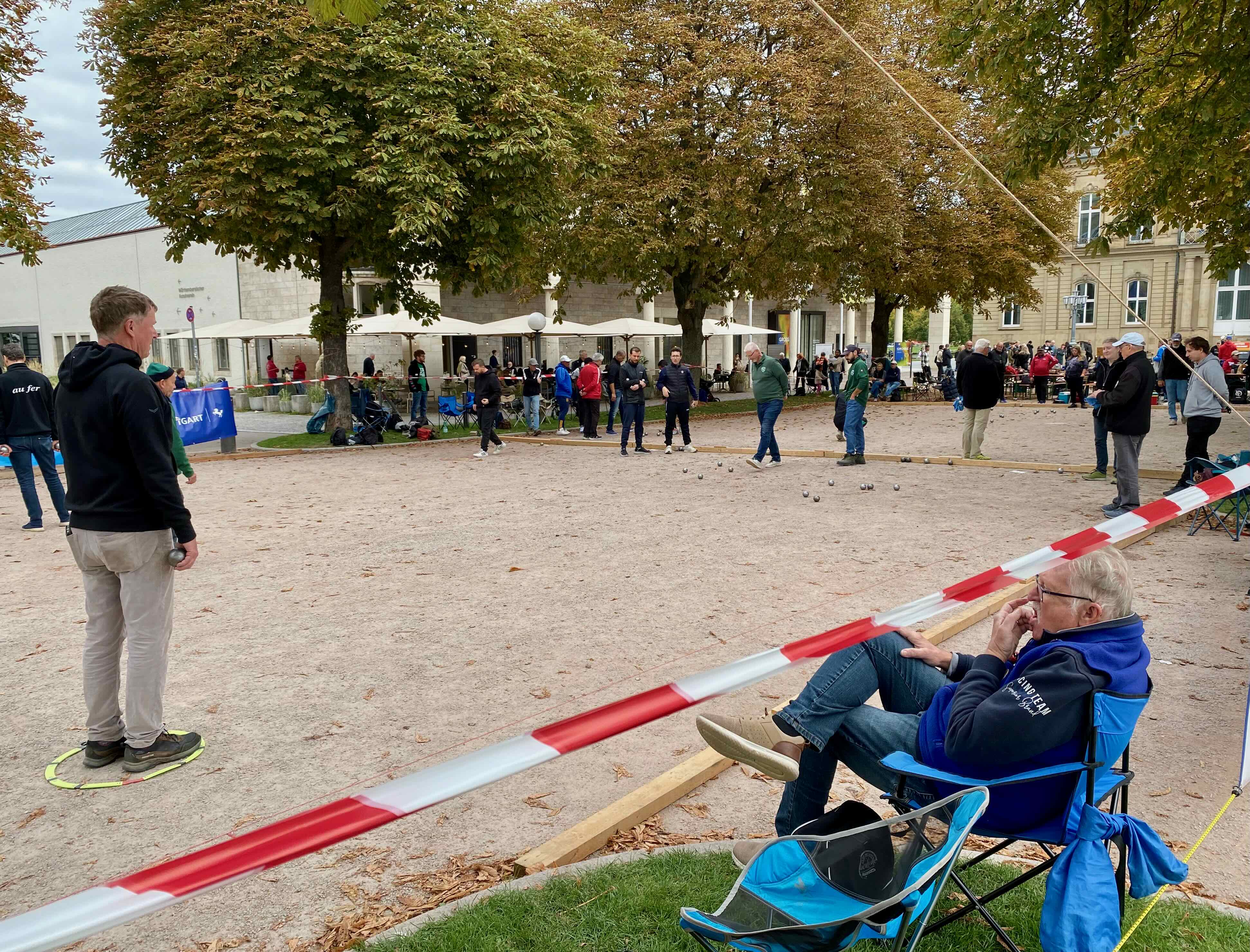
Outside the Planetarium is a giant park with miles of walking trails. At the town square contestants were playing in a “pétanque” tournament. There were about 20 teams.
The journey home took twice as long as planned. Apparently there were 2 accidents on 2 different tram lines. My 1st tram never arrived so I took a 2nd tram-line to get close to our apartment. The 2nd tram went one stop and everyone was forced off. So I took a 3rd tram back to the main train station. From here I had to take an intercity train and then a regional bus to get home. Quite the ride!

Fellbacher Herbst Parade, Stuttgart Library and Old Town Stuttgart

Day 42     Saturday October 11, 2025

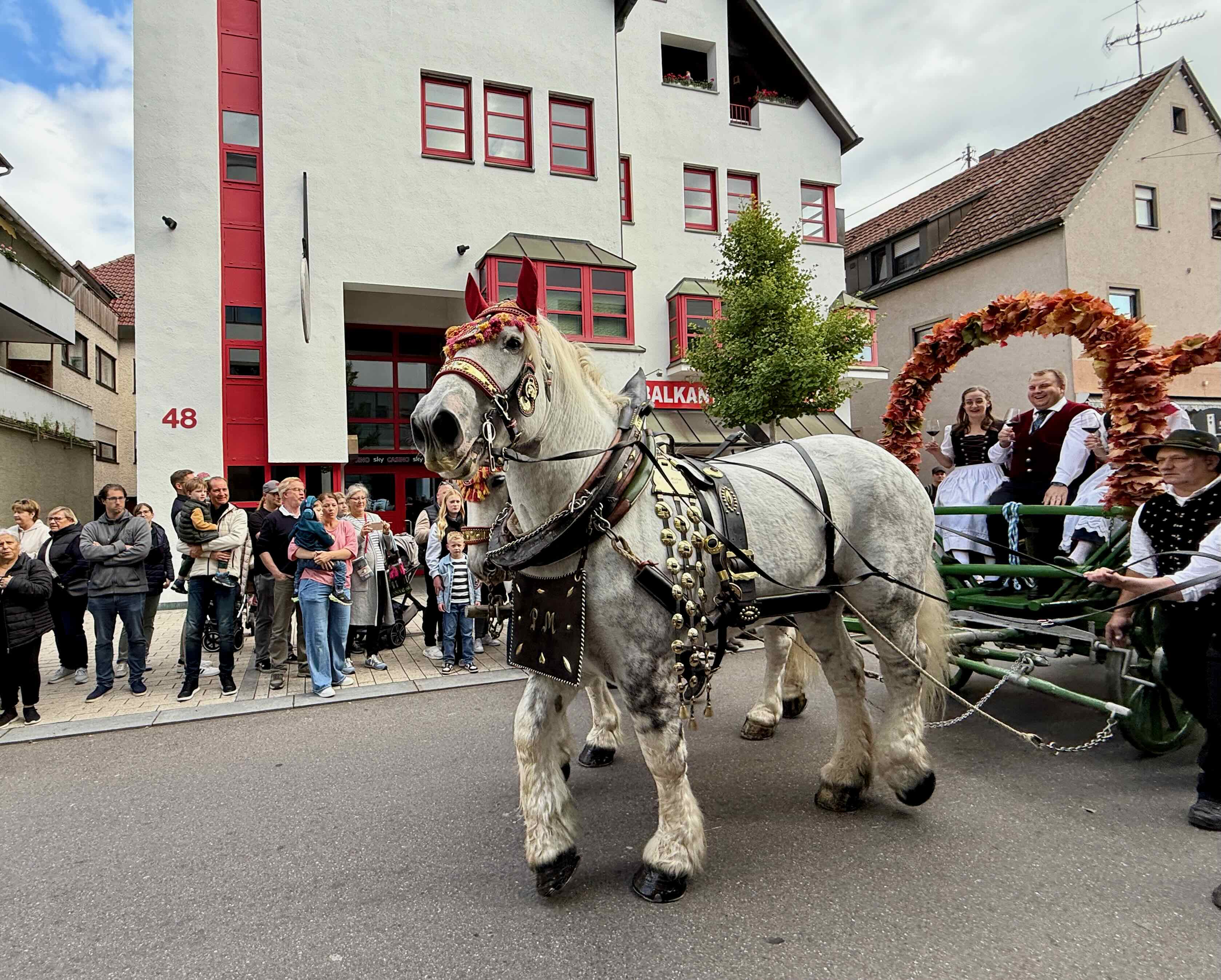
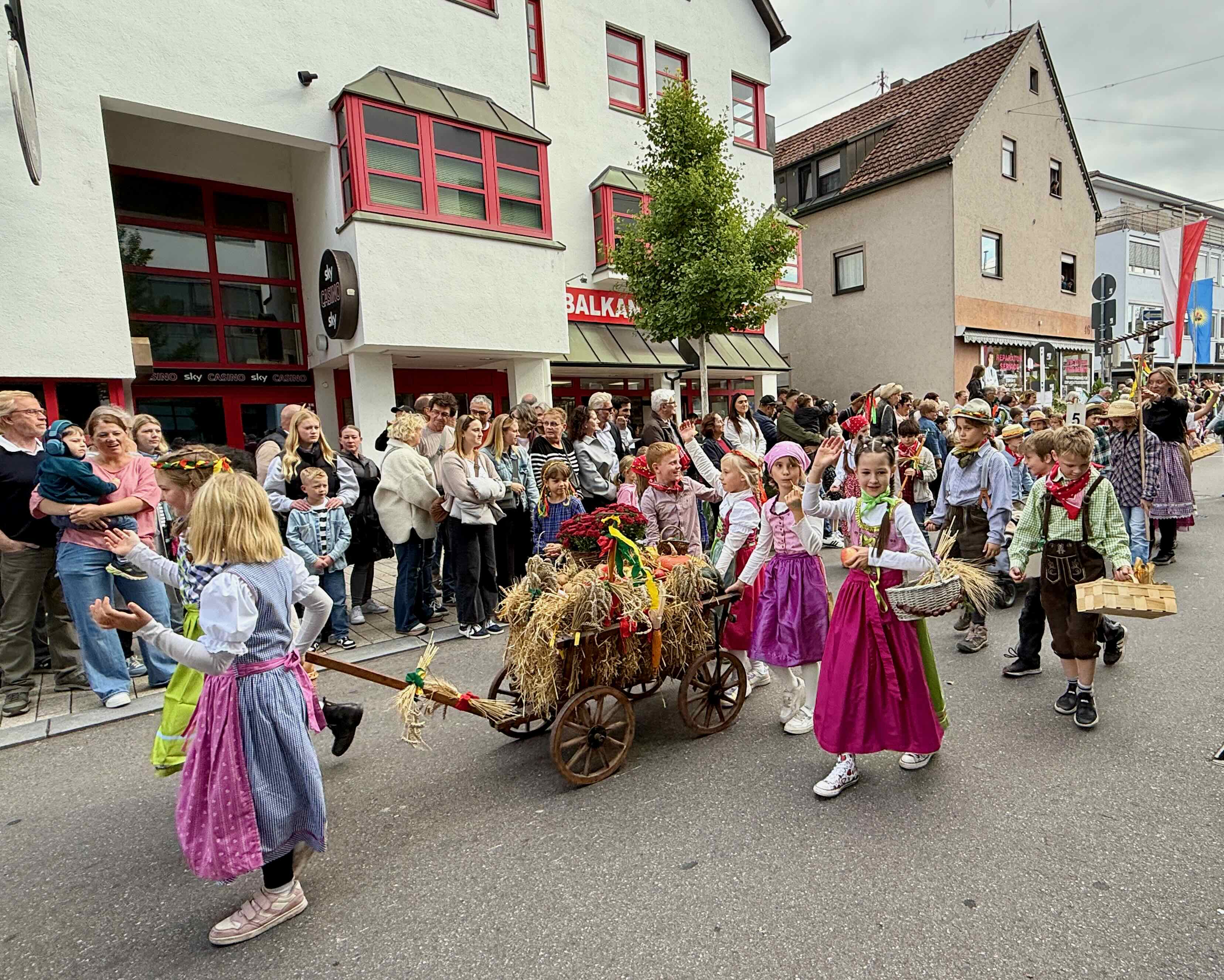
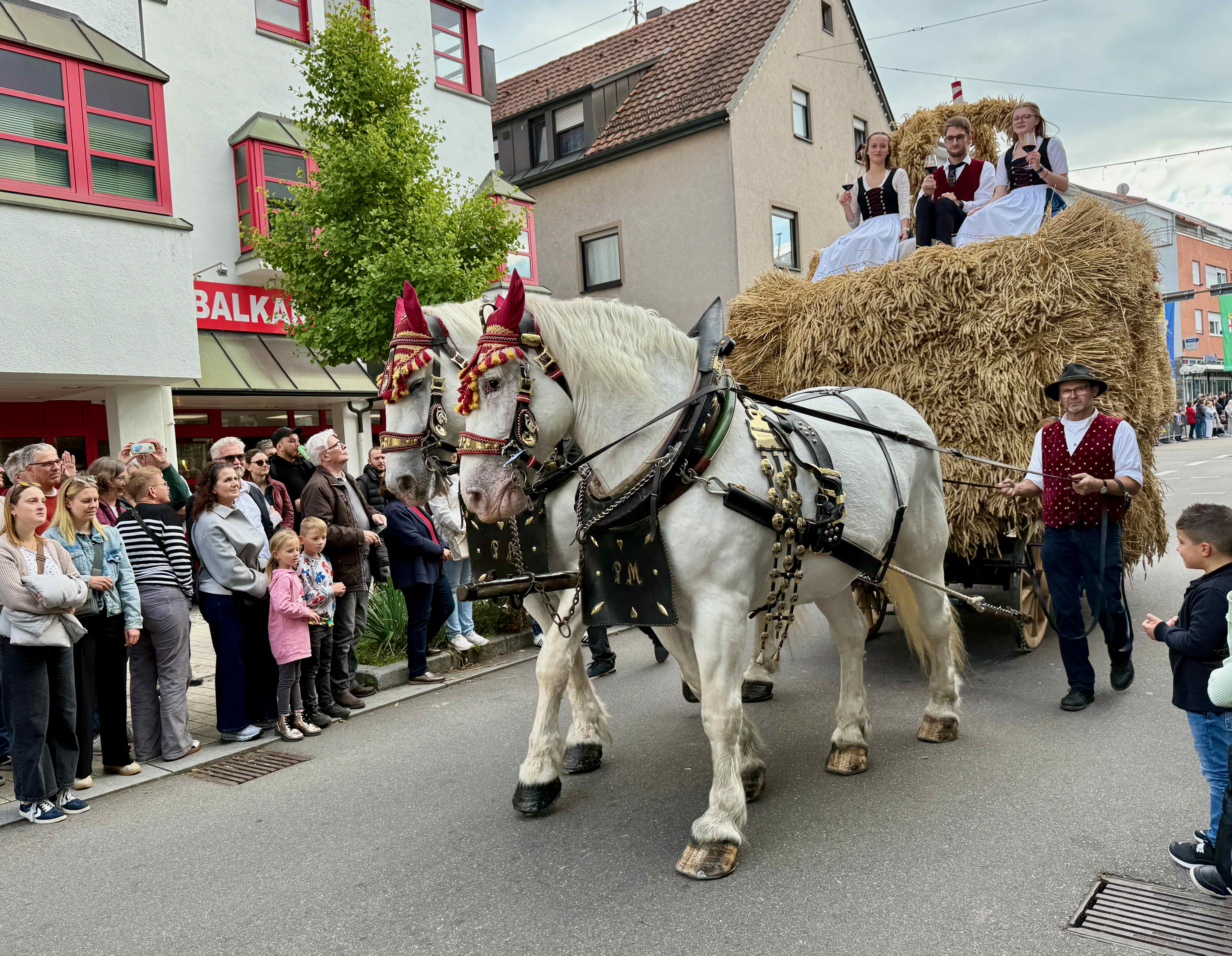
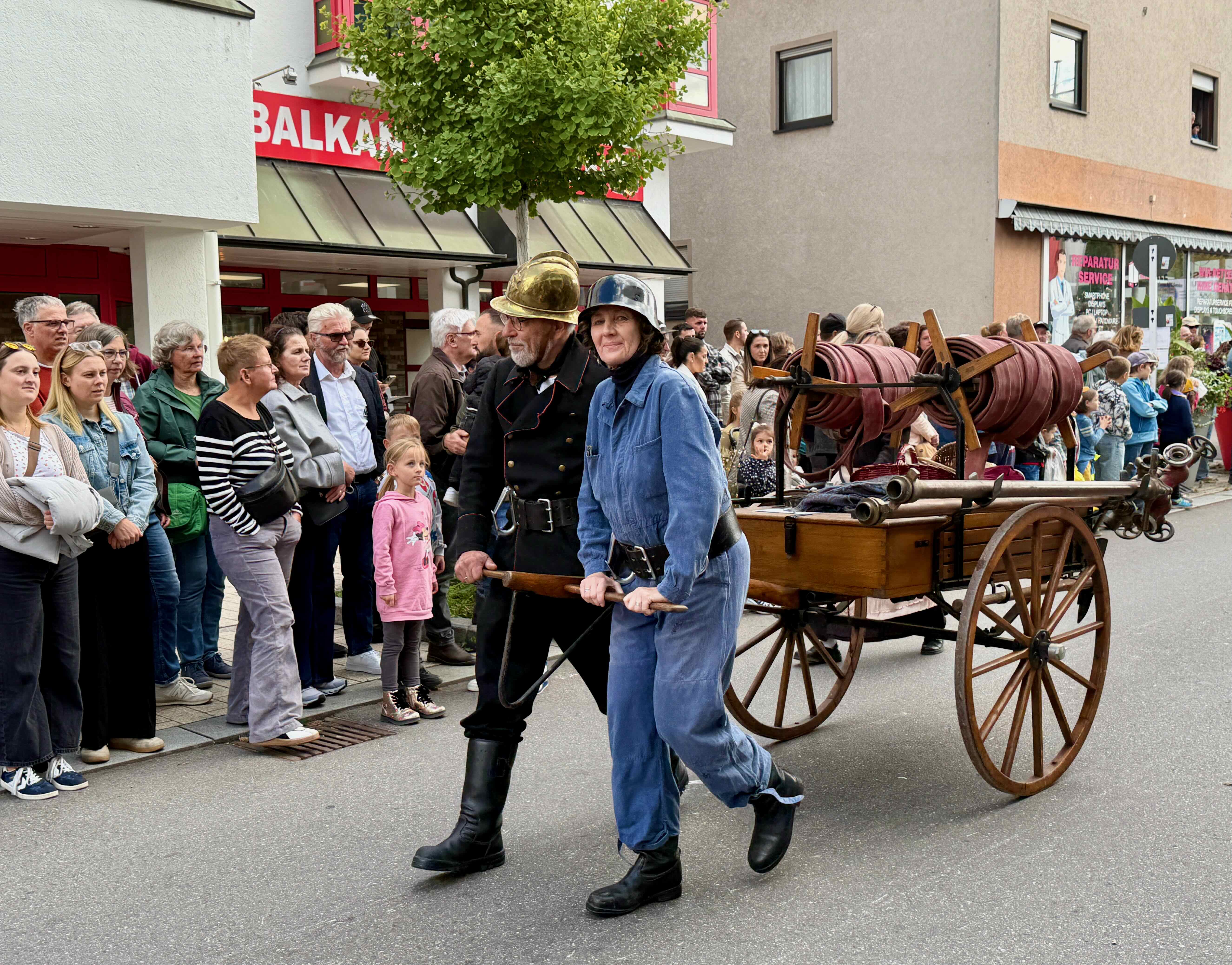
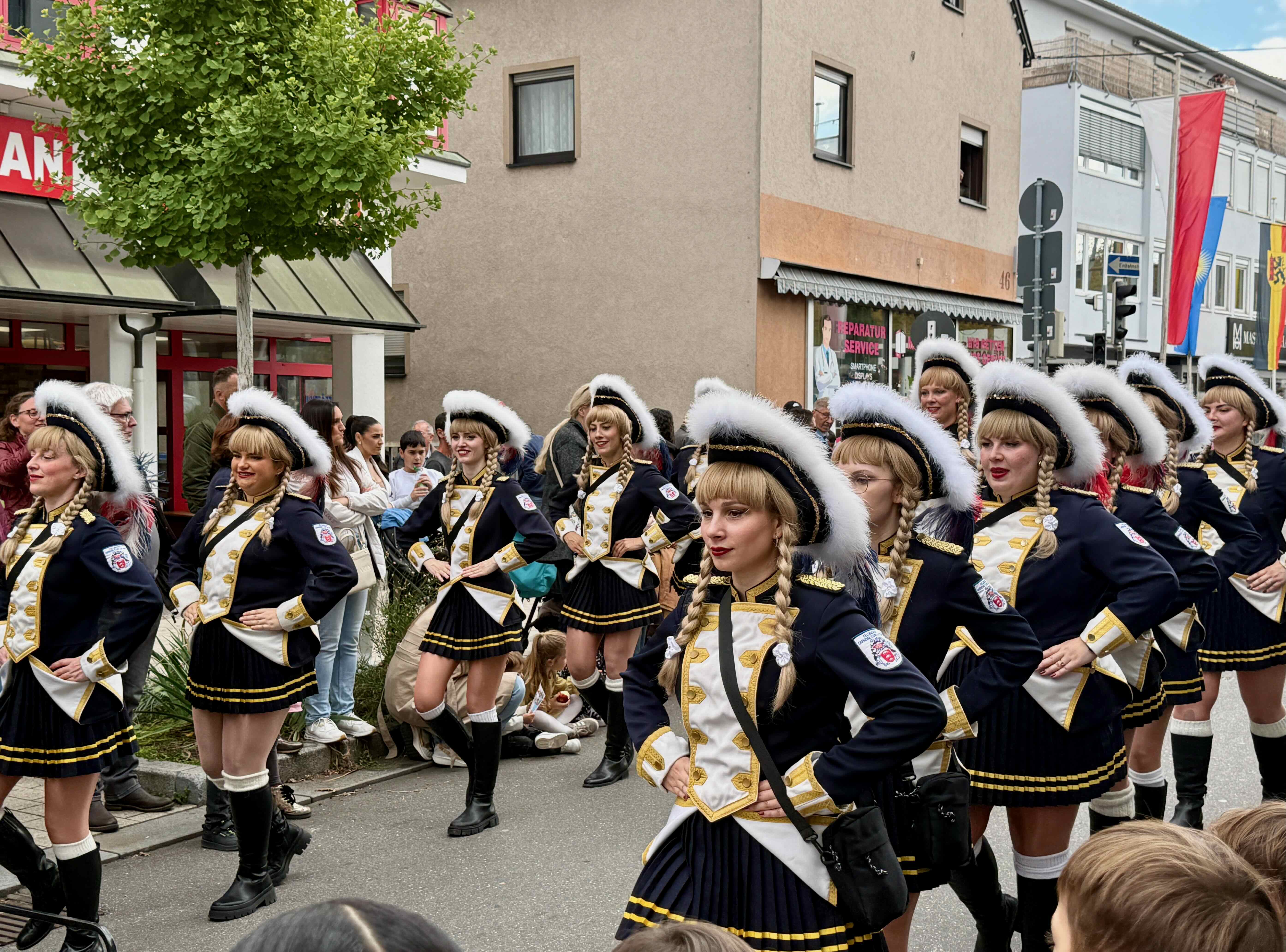
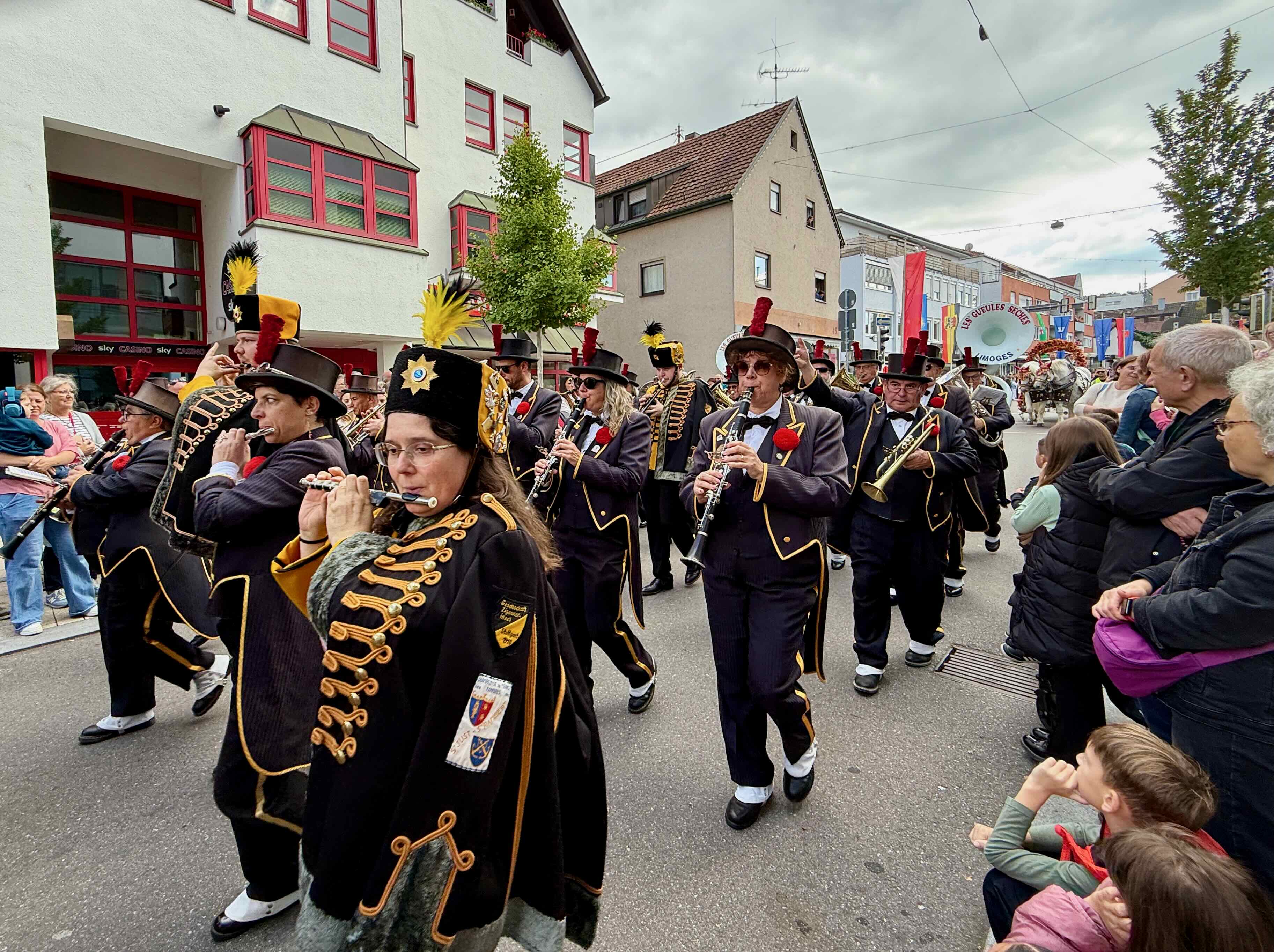
We were headed to the bus to go the Stuttgart Library when we saw people gathering for the local Fellbach Parade. We decided to wait and watch the parade. It was such fun.  Like any good parade there were marching bands…

…beautiful horses…

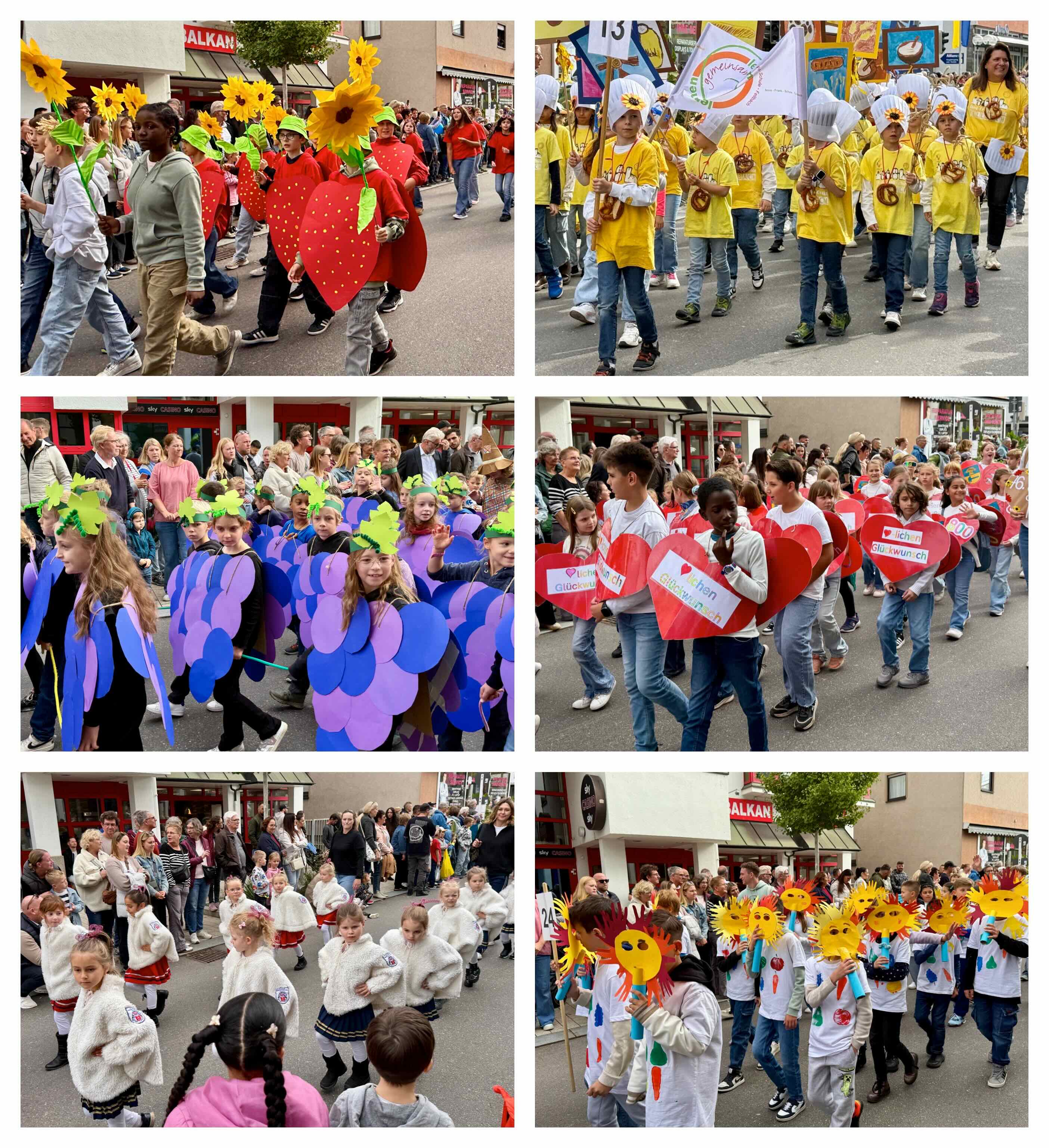
…cute kids…

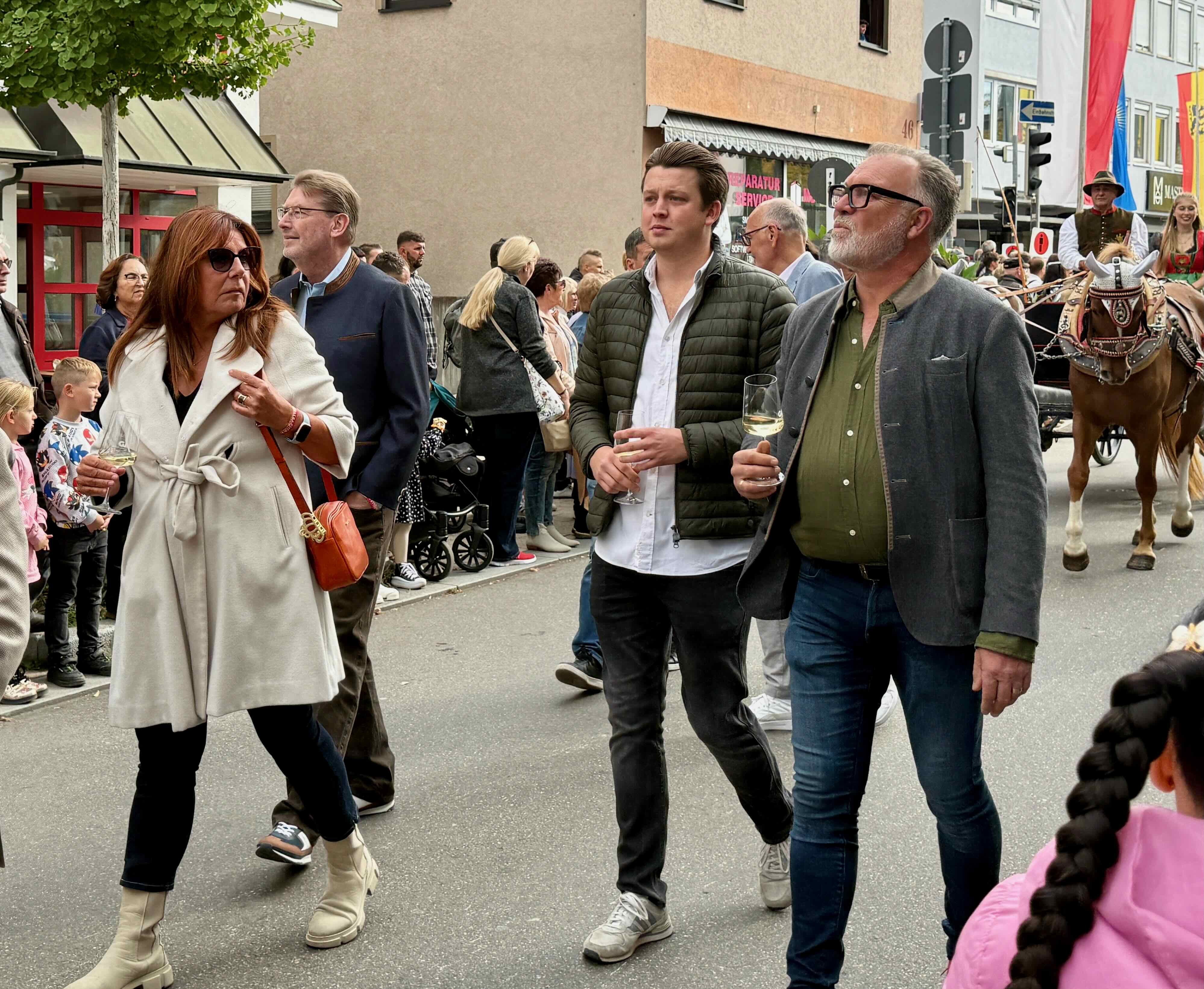
and more horses… followed by a ‘fire truck’!This is the first parade we have seen where the participants carry glasses of wine and many of the people watching the parade also have glasses and bottles of wine.
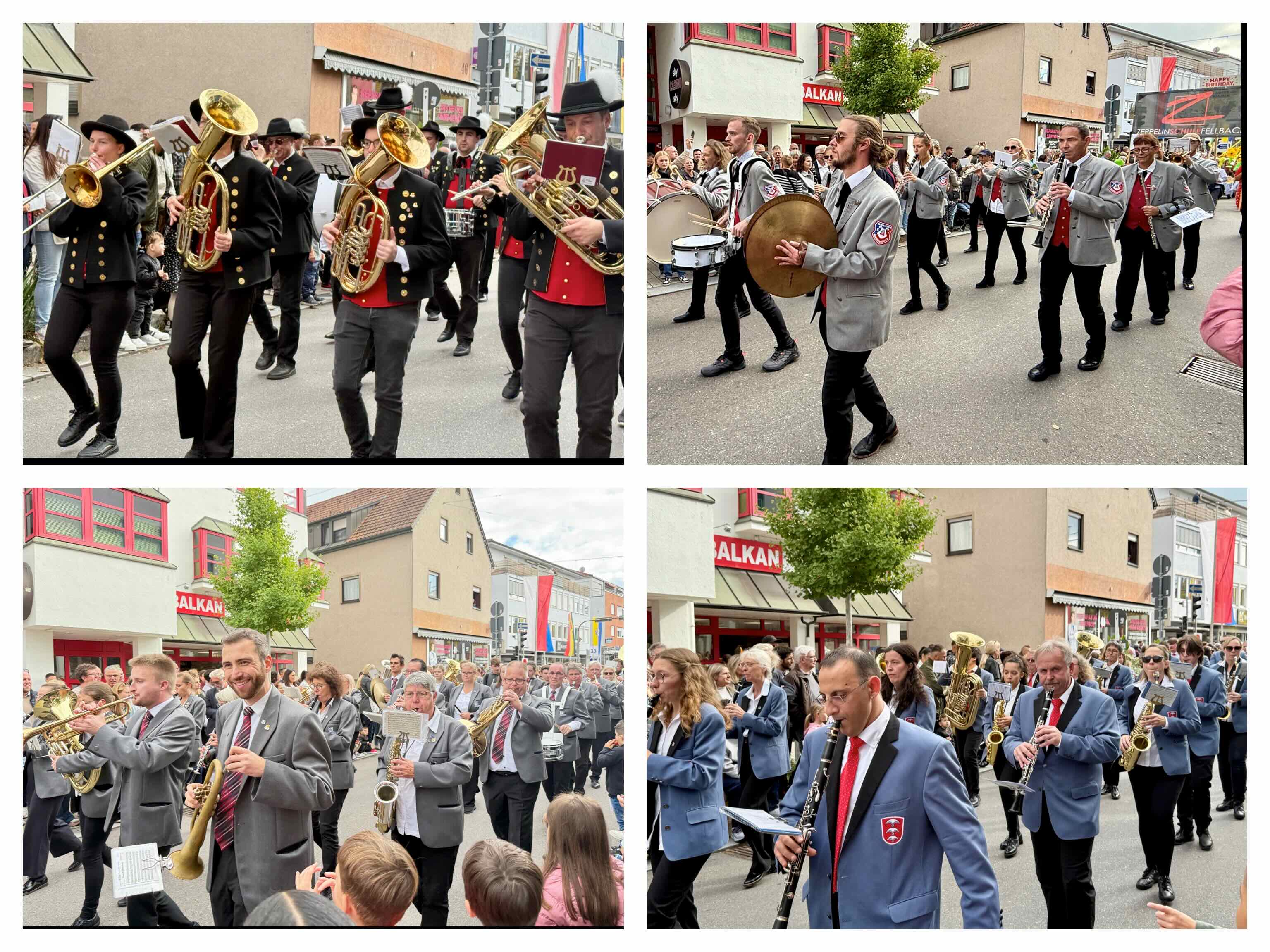
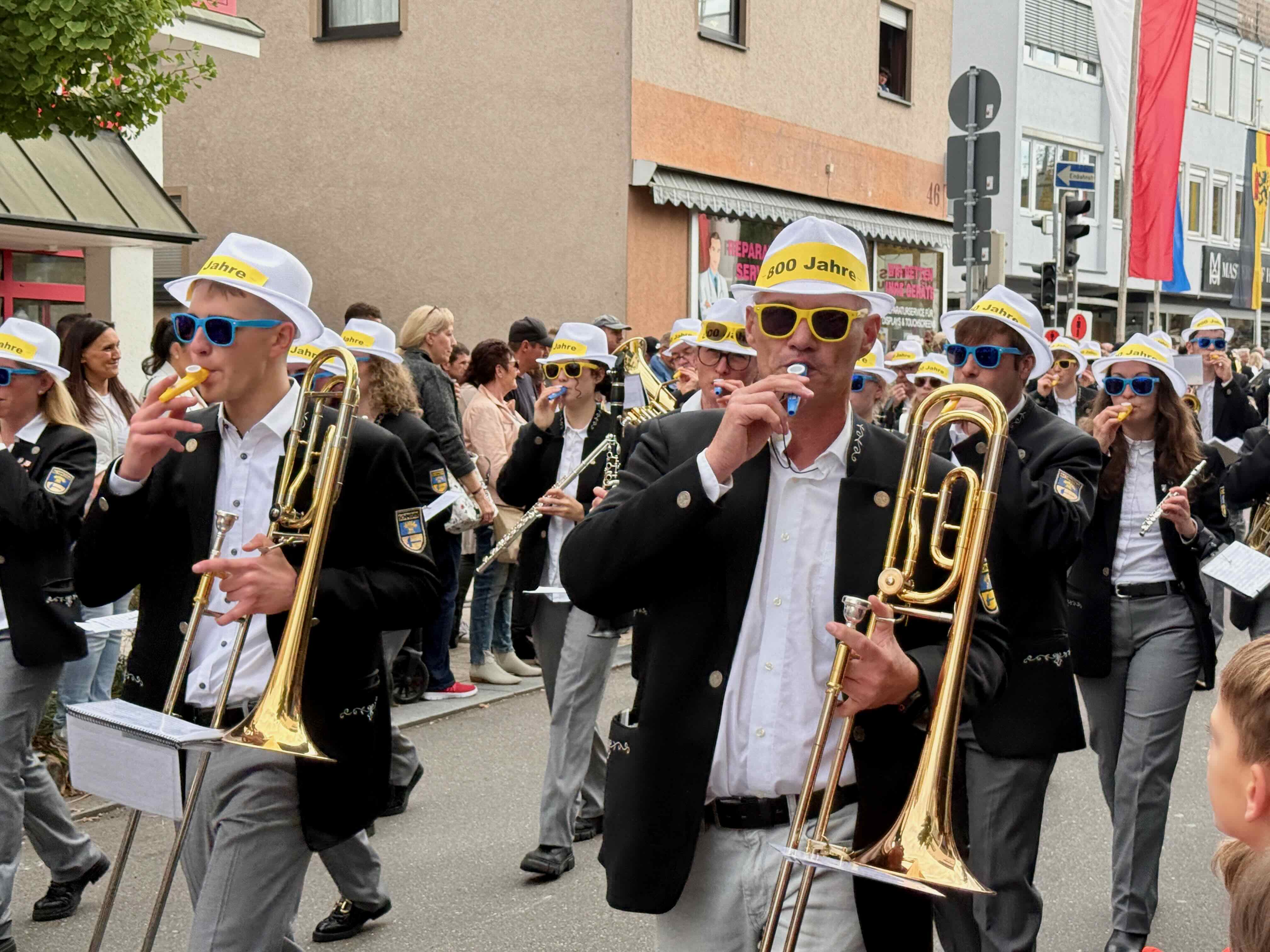
There  were more marching bands……including a kazoo playing band! 

There were more cute kids…

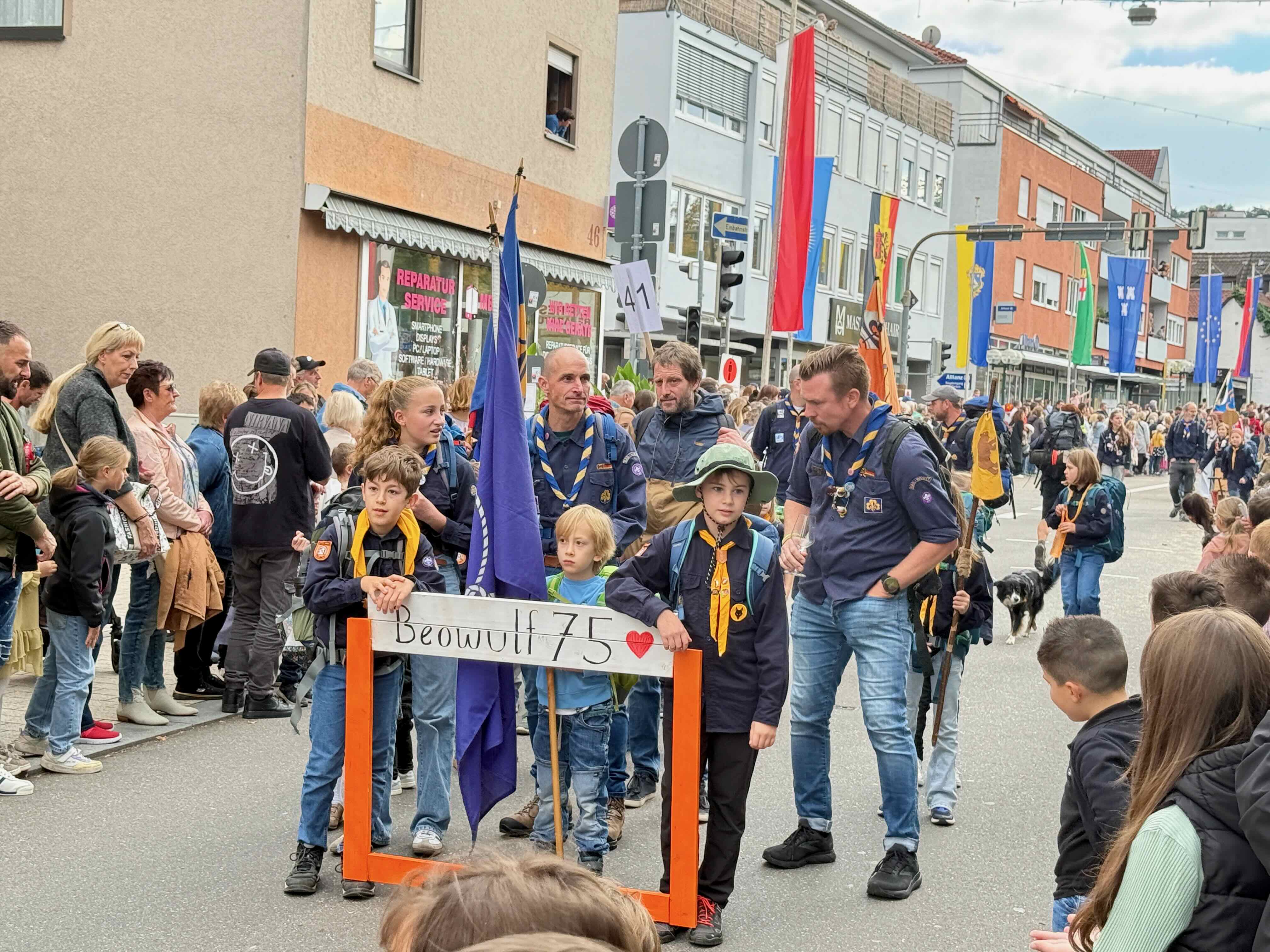
and a group of scouts, both boys and girls…

…followed by royalty and their subjects…

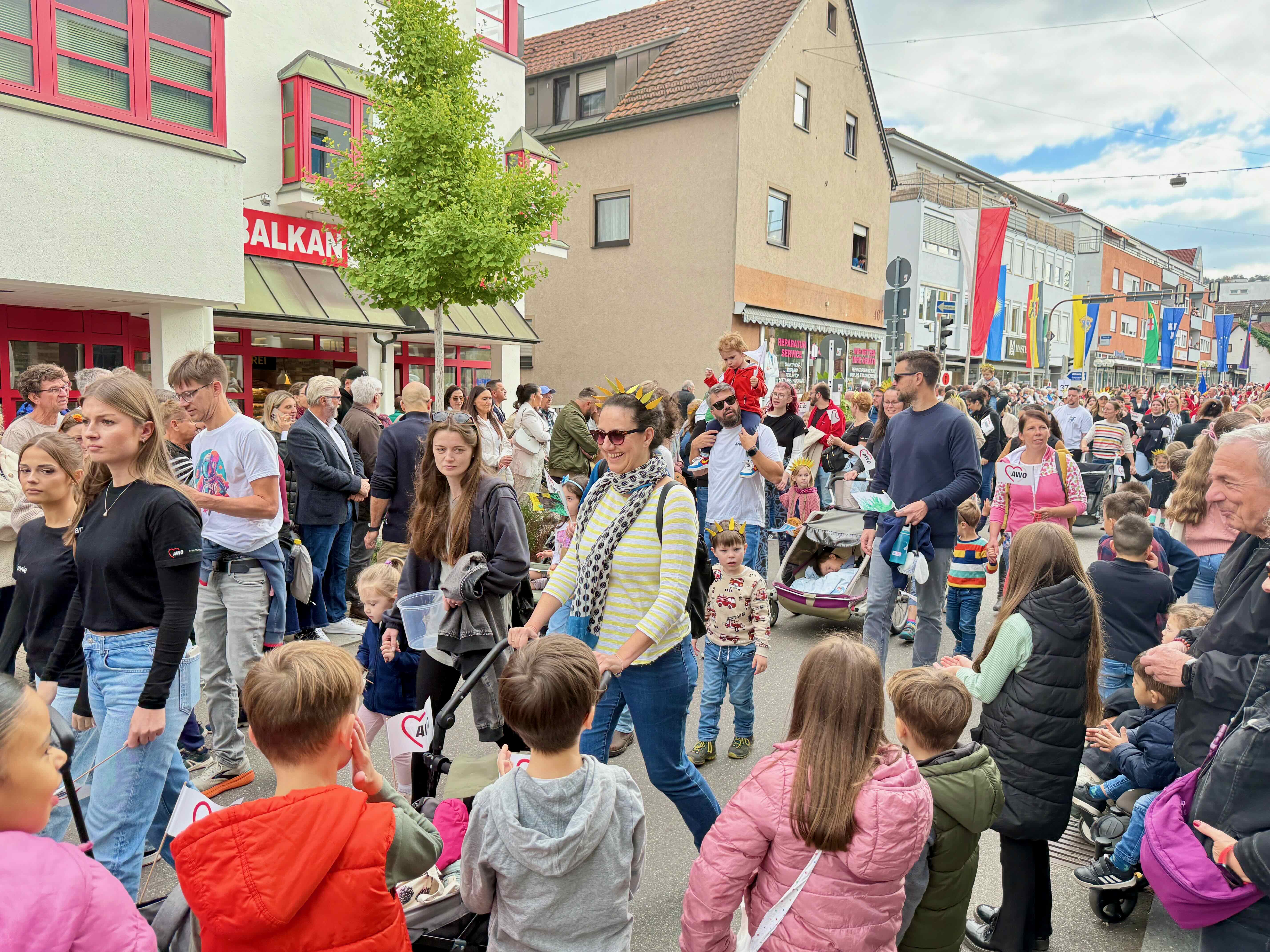
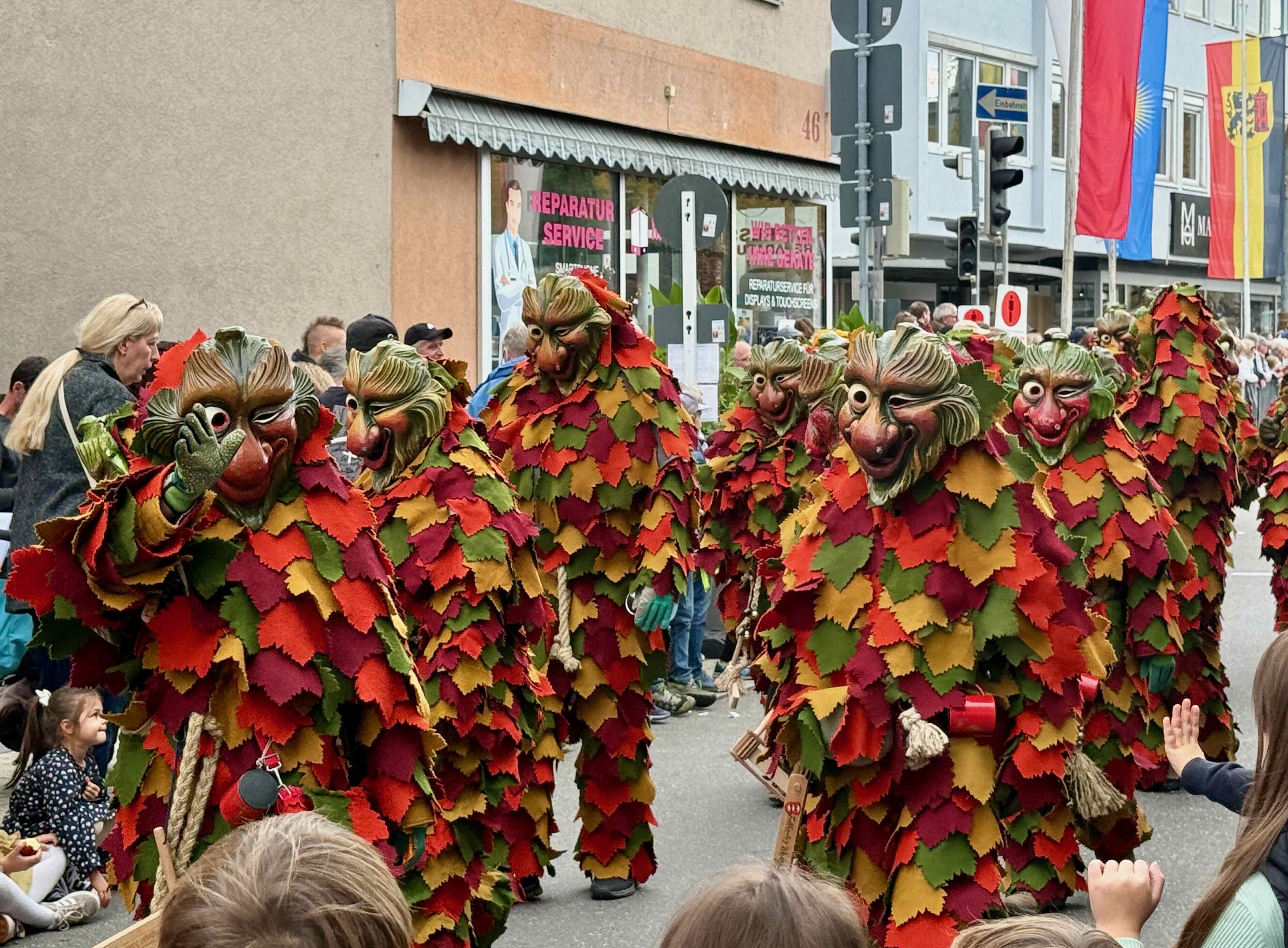
…and often we weren’t sure who was in the parade!  It seemed like anyone who wanted to be in the parade just joined in!

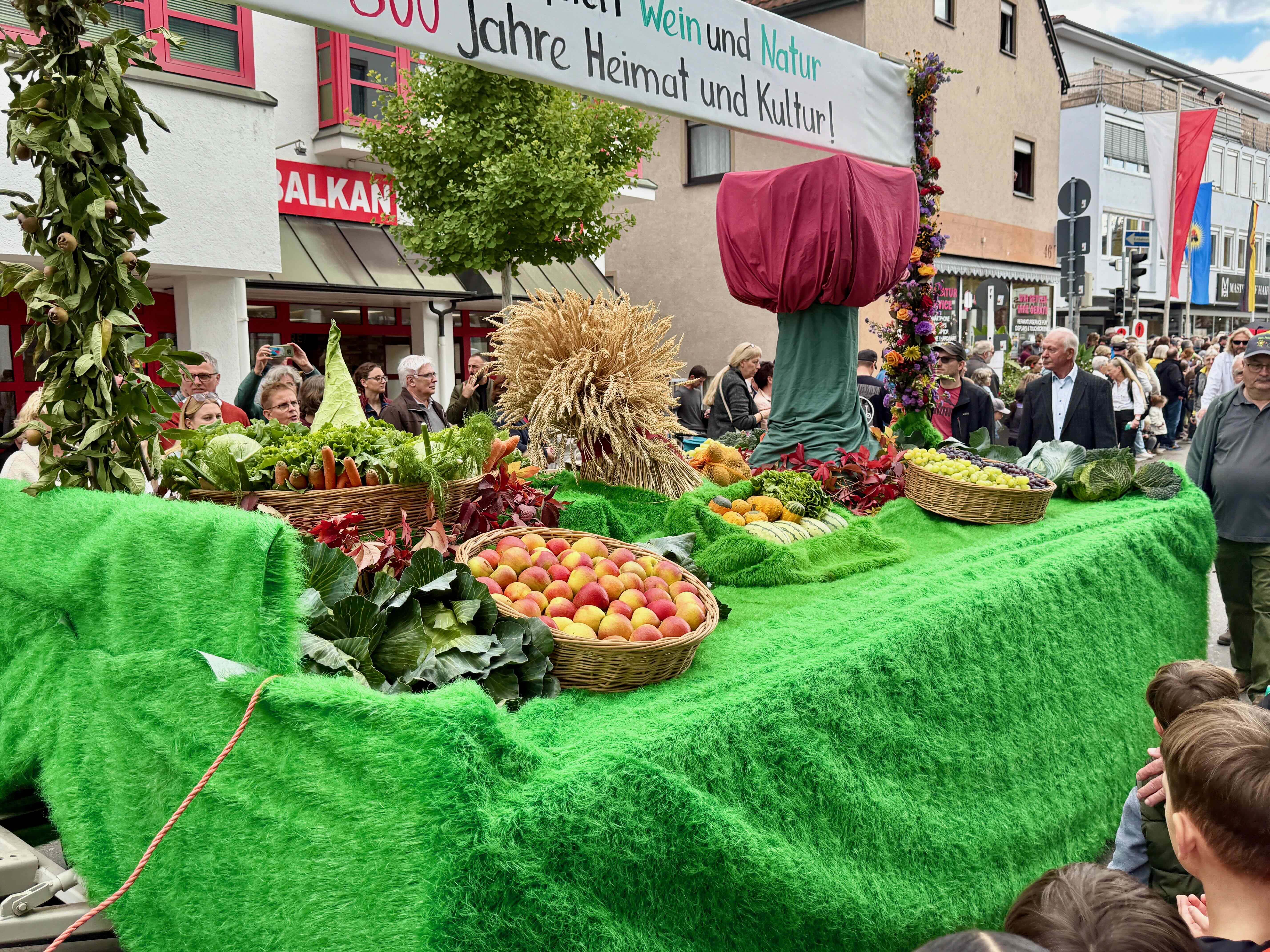
Of course there were floats, and they were mostly to do with agriculture and the harvest.
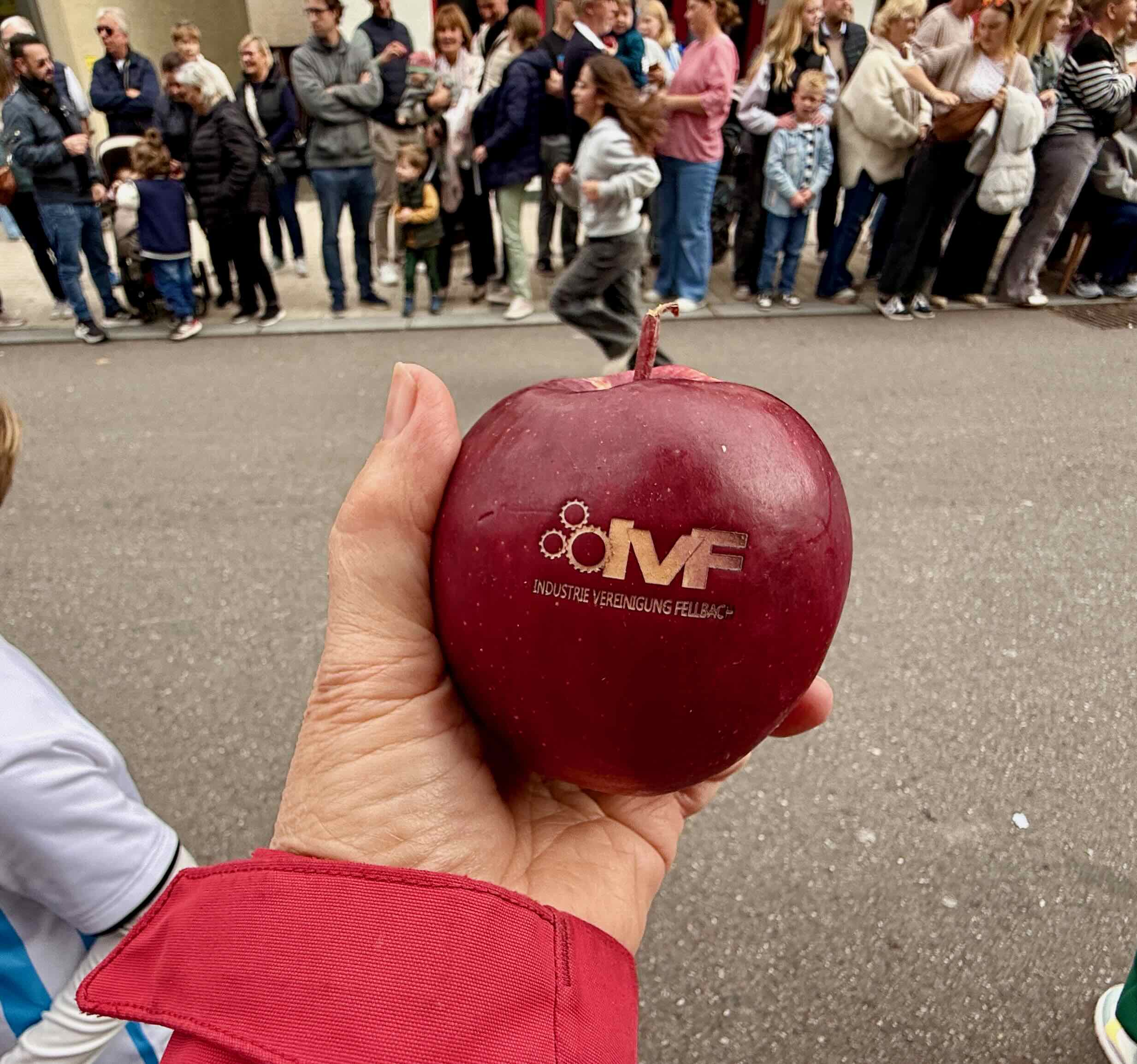
I was given an apple with a laser printed label!  We had not seen this before but Bob had heard about this method of identifying fruit instead of using sticky labels.

There were a whole lot of girls marching who looked a lot alike with their blonde wigs!

We have absolutely no idea who these characters were supposed to be! The parade wasn’t over but we decided that we should continue with our itinerary for the day.  Next stop was the Stuttgart Library.  It didn’t look like much from the outside.
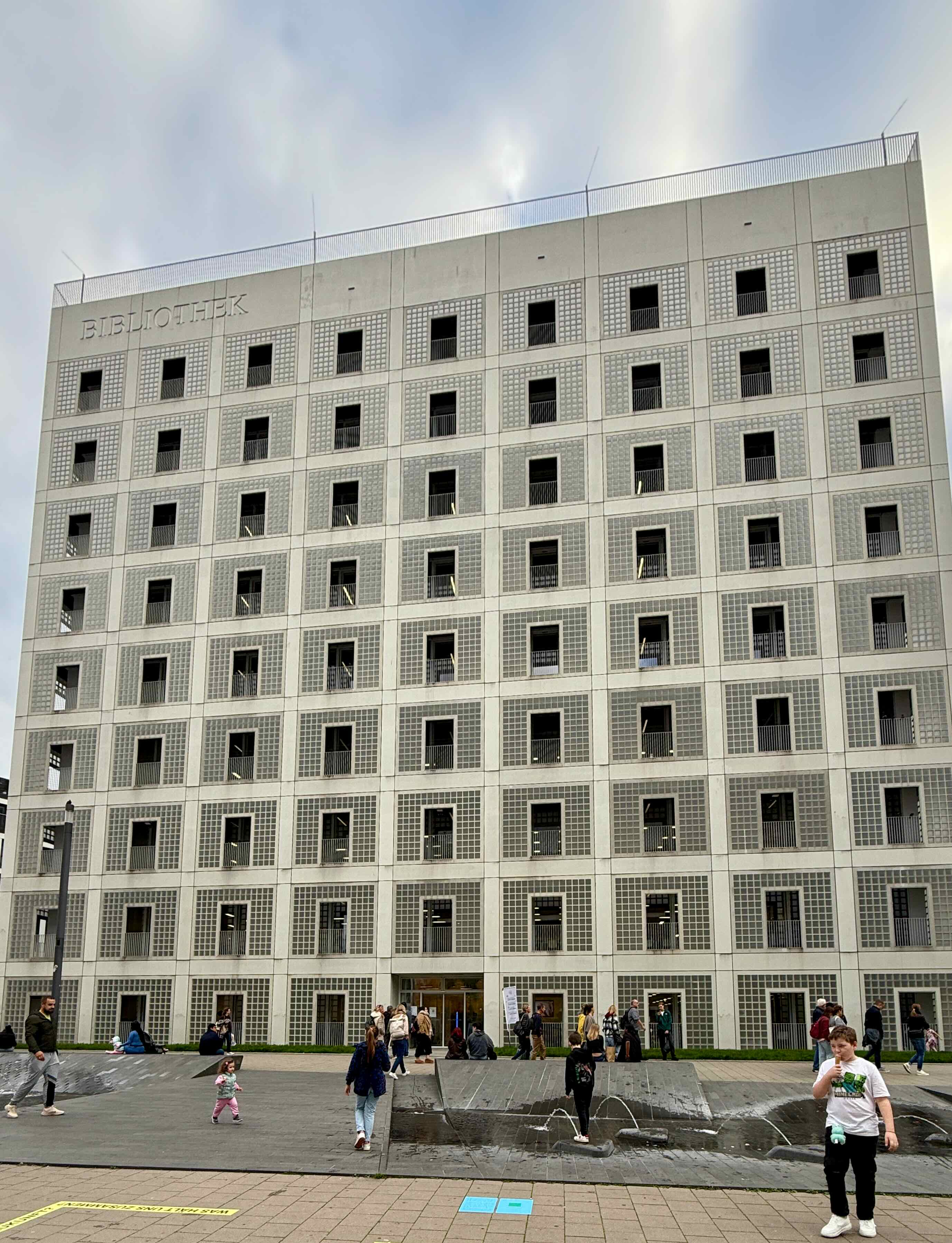
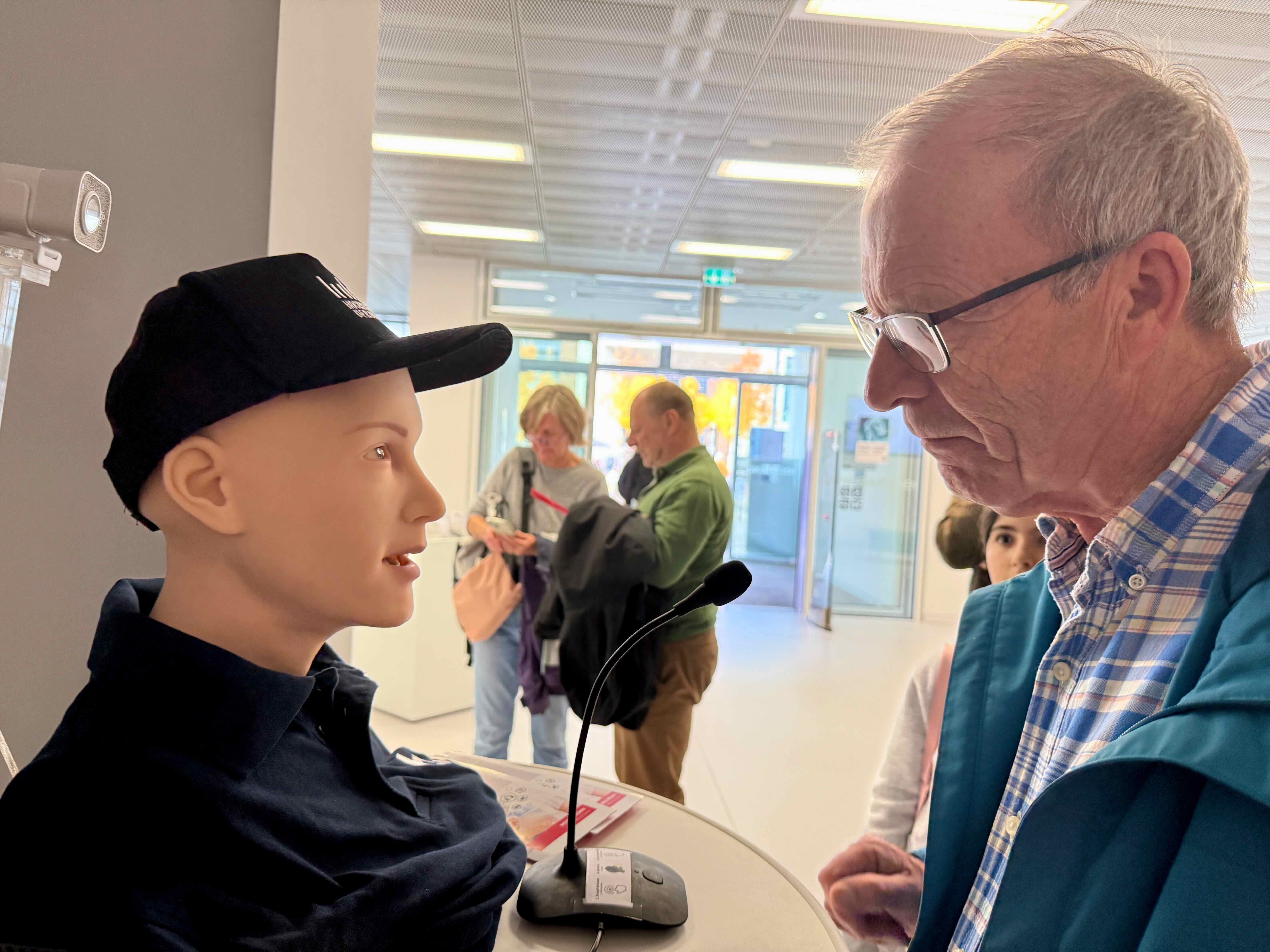
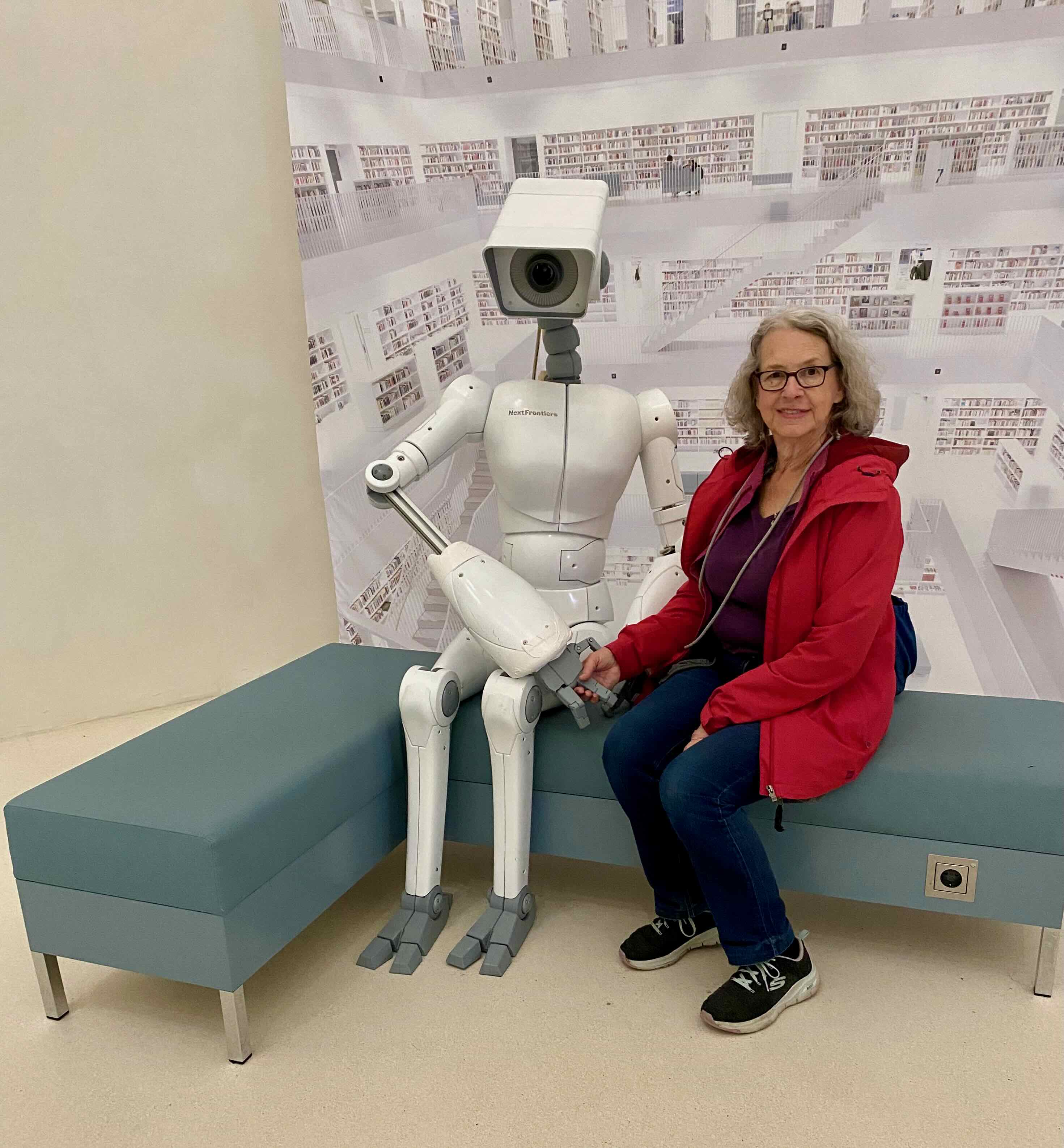
There is a robot exhibit on the main floor, so Bob asks this ‘talking head’ if there is a place that we can go and have tea and pastries in the library. The head answers in English that  “The library has a cafe on the roof. Perfect to enjoy your tea with a view. It is a great spot to recharge. Enjoy your break with a dash of literature in the air.” He seemed to speak a least French, German and English…who knows what else?  It is a little bit creepy though, as this head sitting on a table is quite lifelike!

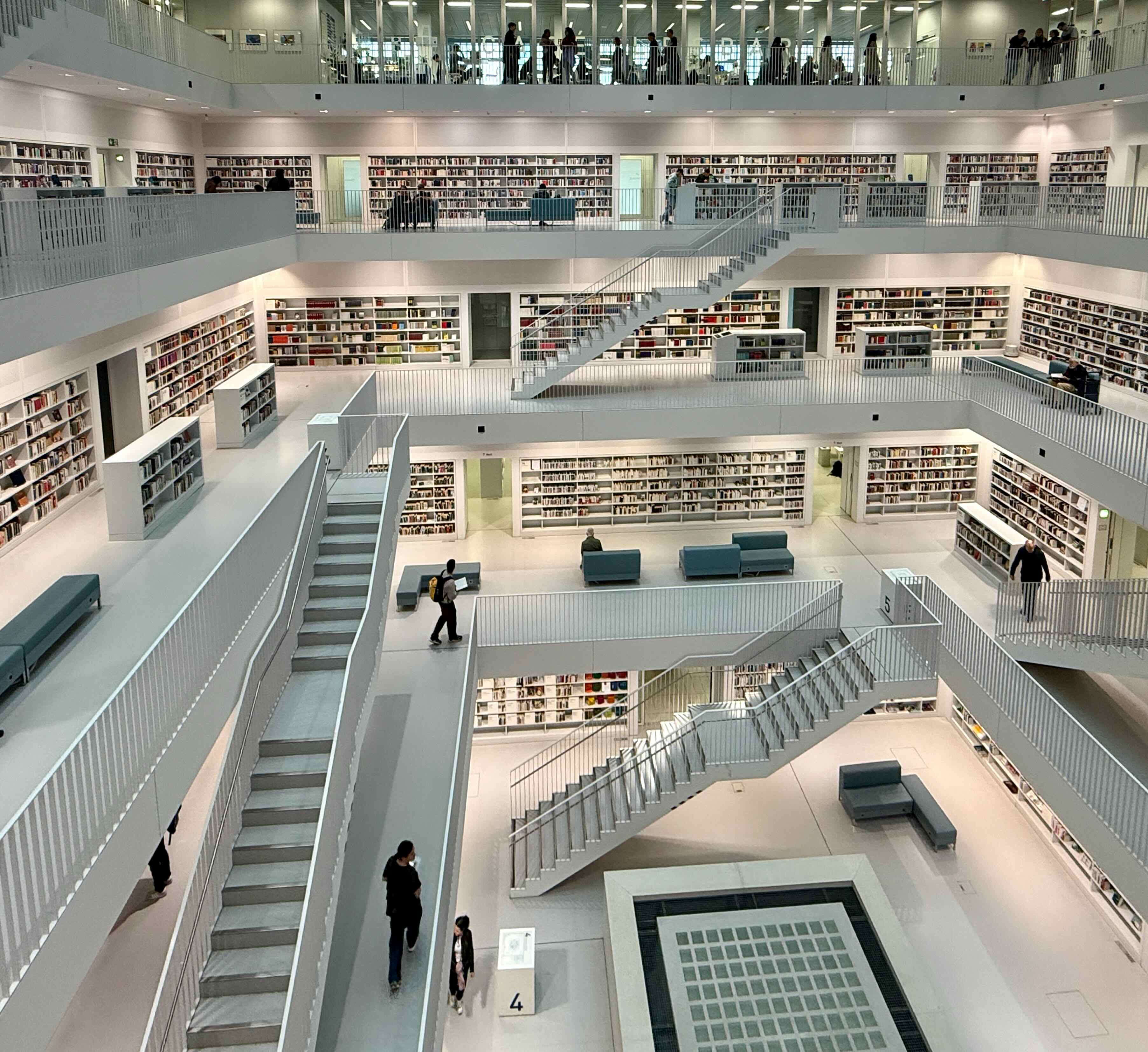
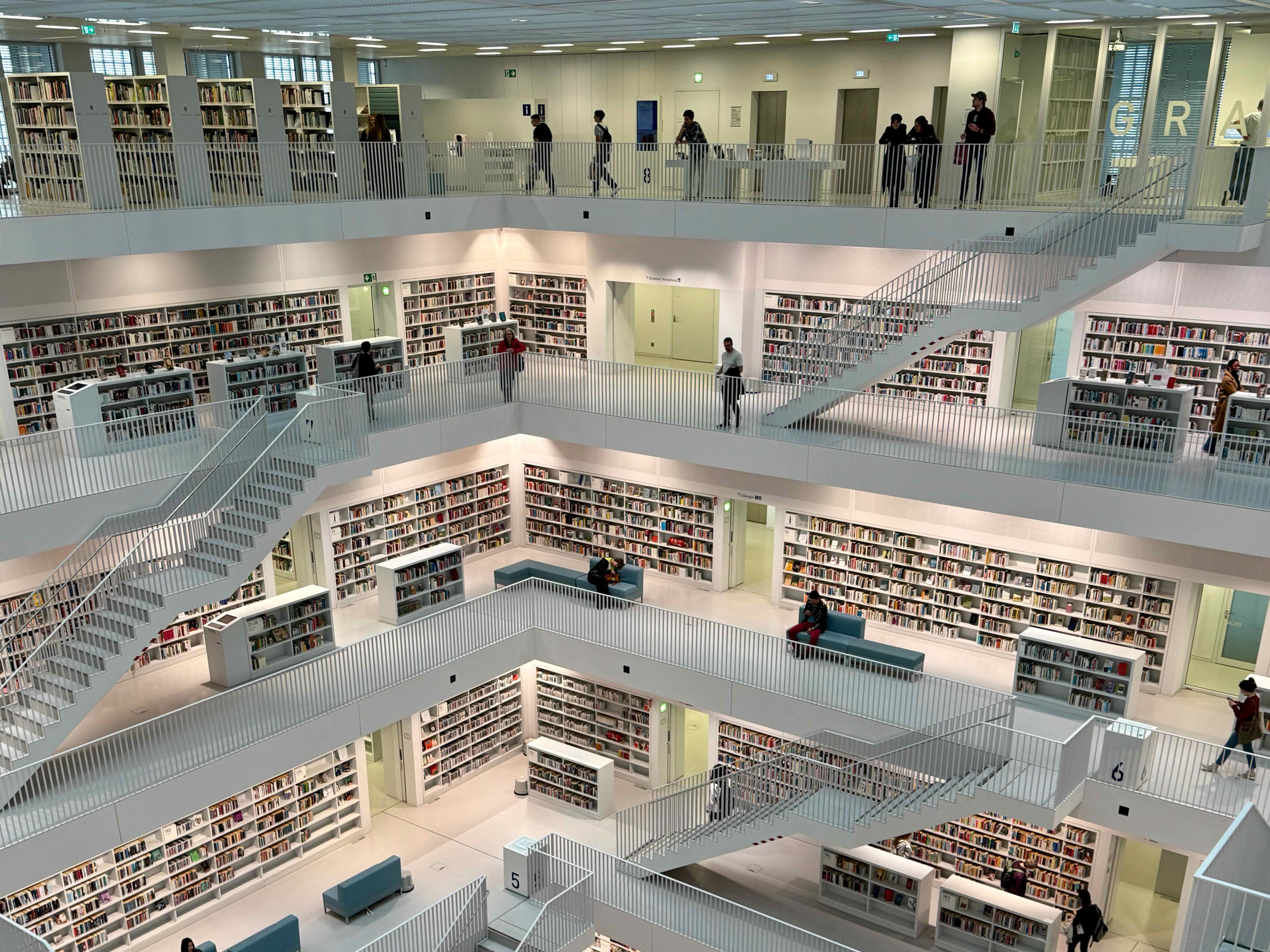
We enter the library and make our way to the café and this is what we see!  It I huge and defintiely the whitest library we have ever seen.After tea and pastries we climb up to the viewing platform on the roof.  I had to stand on one of these benches to get a view over the top of the double row of railings on the edge of the roof.
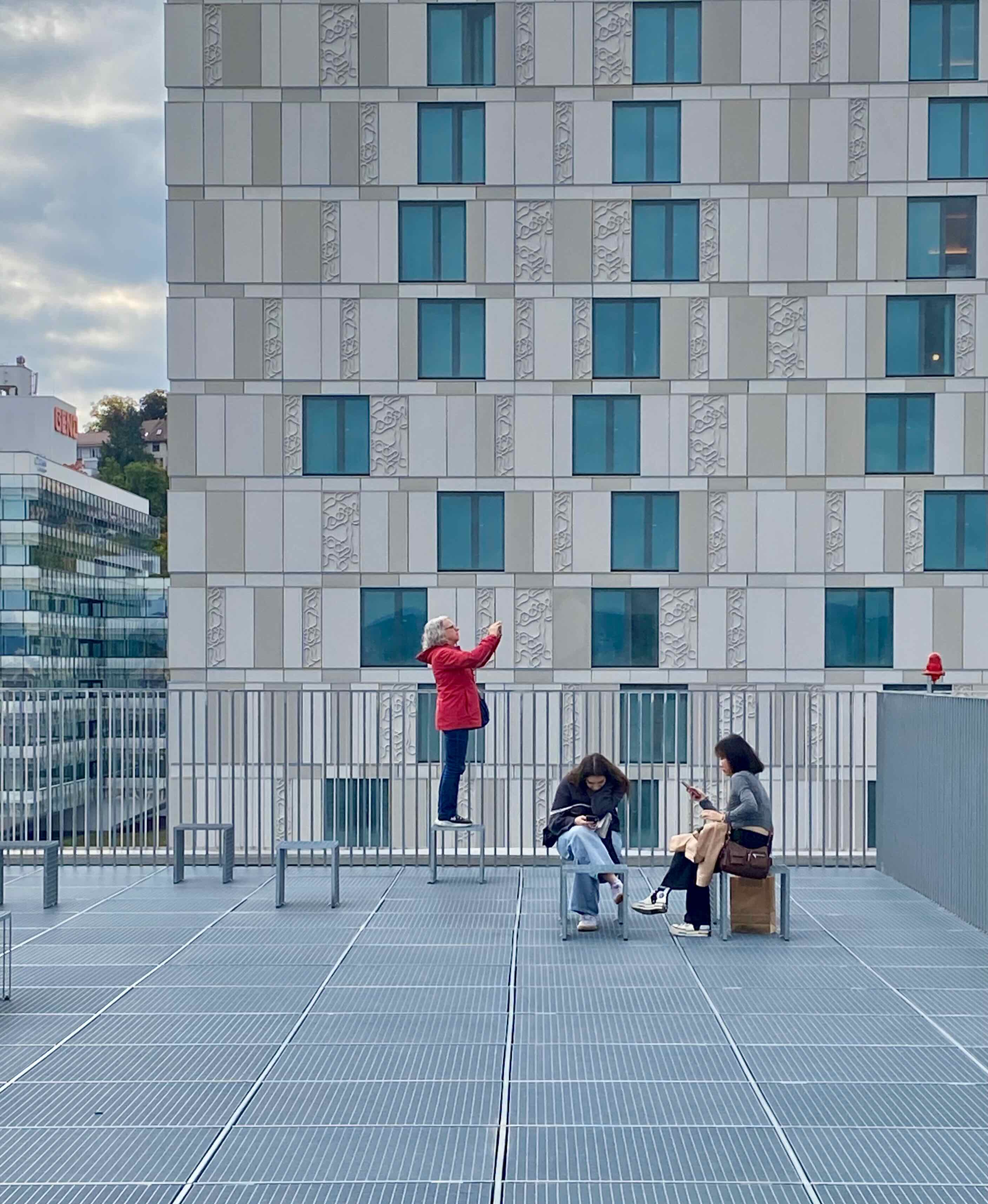
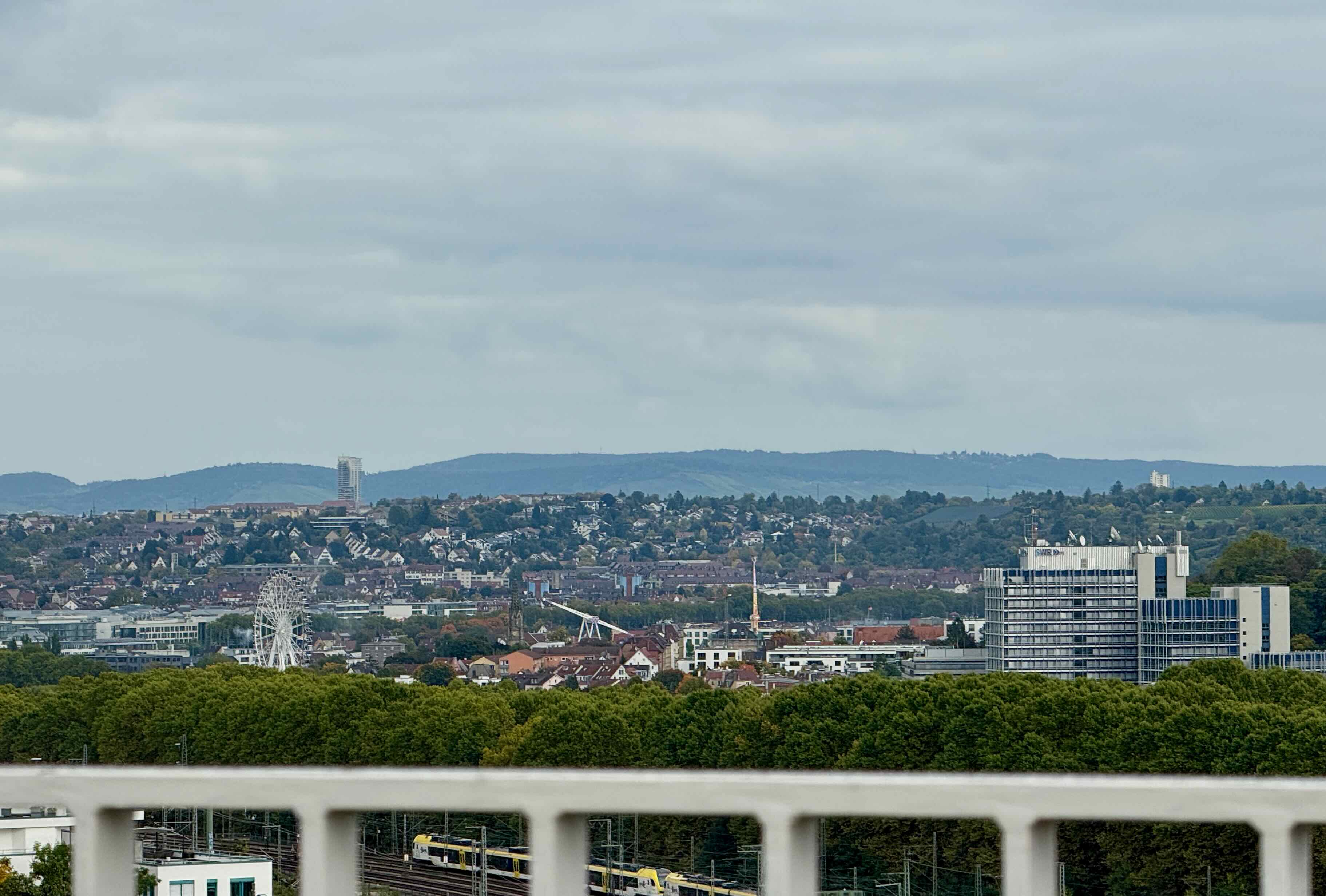
We can see one of the Cannstatter Volkfest ferris wheels (from our visit yesterday) and some of the other rides from up here!

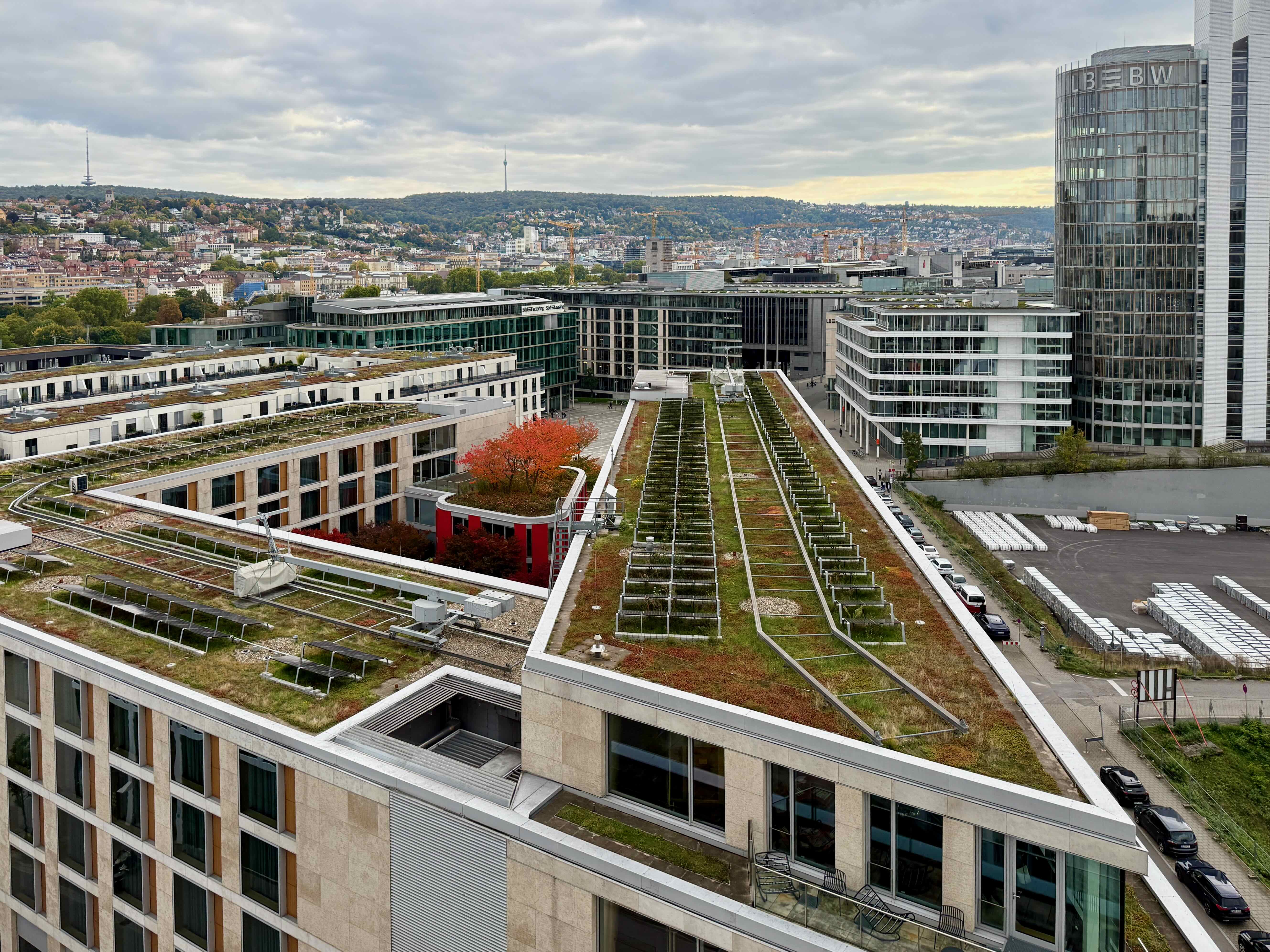
Many of the surrounding buildings have living roofs.

Back in the library.  Instead of Find Waldo, can you Find Trudy?

There are corridors and more rooms of books behind the book shelves you can see in the photo above. They have some books in all these languages!

Back on the main floor we check out the other robot displays.  I made a new friend.

There was an art installation where you stand in front of this horse and think of a number. between 3 and 10.  The horse is supposed to read your mind and then stamp his foot to say what number you were thinking. Bob picked 10 and the horse only stamped 6 times.  When I tried it the horse shook his head and stamped his feet impatiently.  The artist said that I was too intense for him to read my mind.  I should try just thinking of a number.  I concentrated hard on my number but the horse still reacted as if I was too intense!  Too funny!  

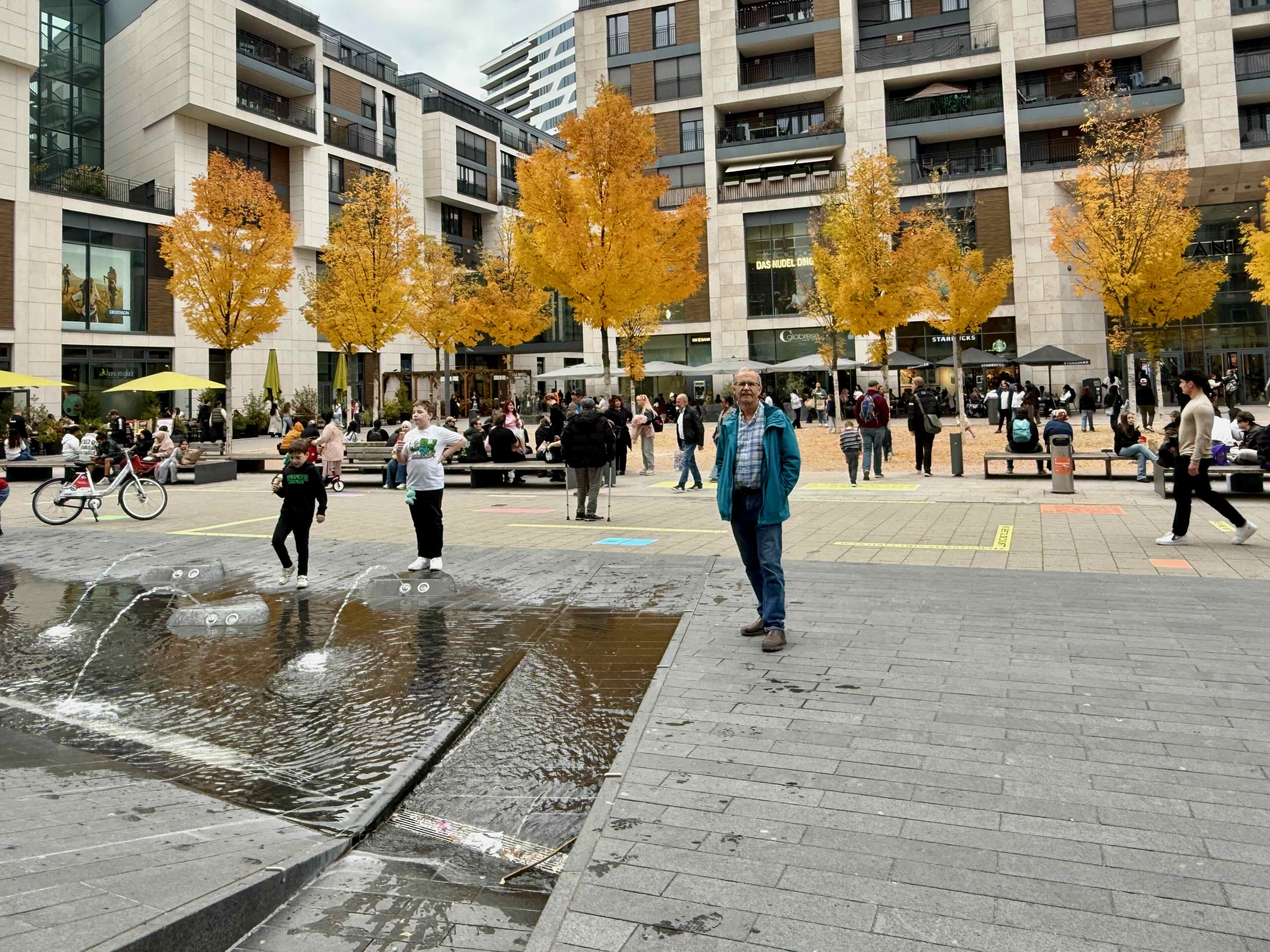
There is a lovely public square with fountains and benches right outside the library door.
A short walk leads us to the Old Town and Schloss Platz. We find a bench and have tea and cookies and watch the world go by.
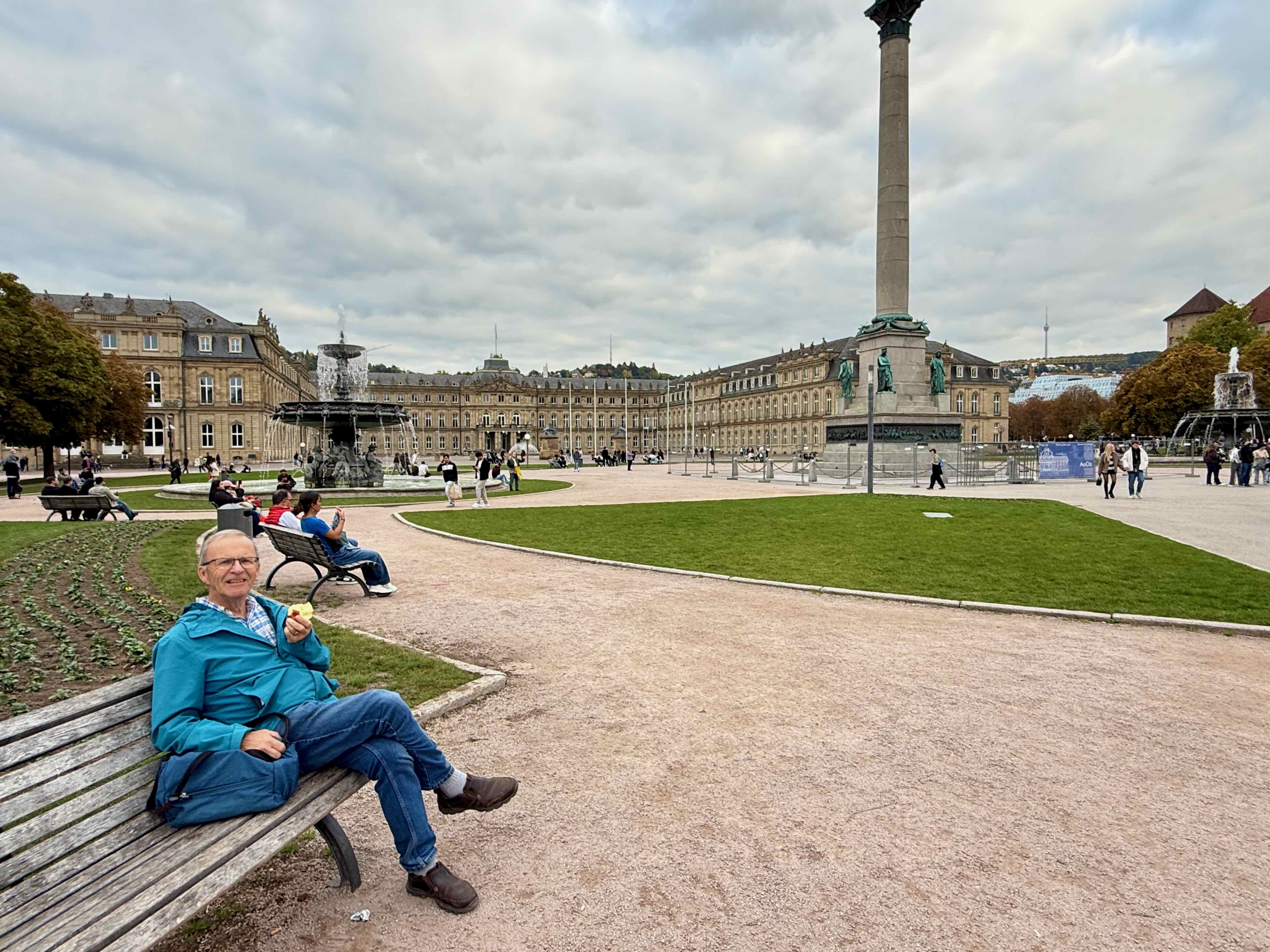
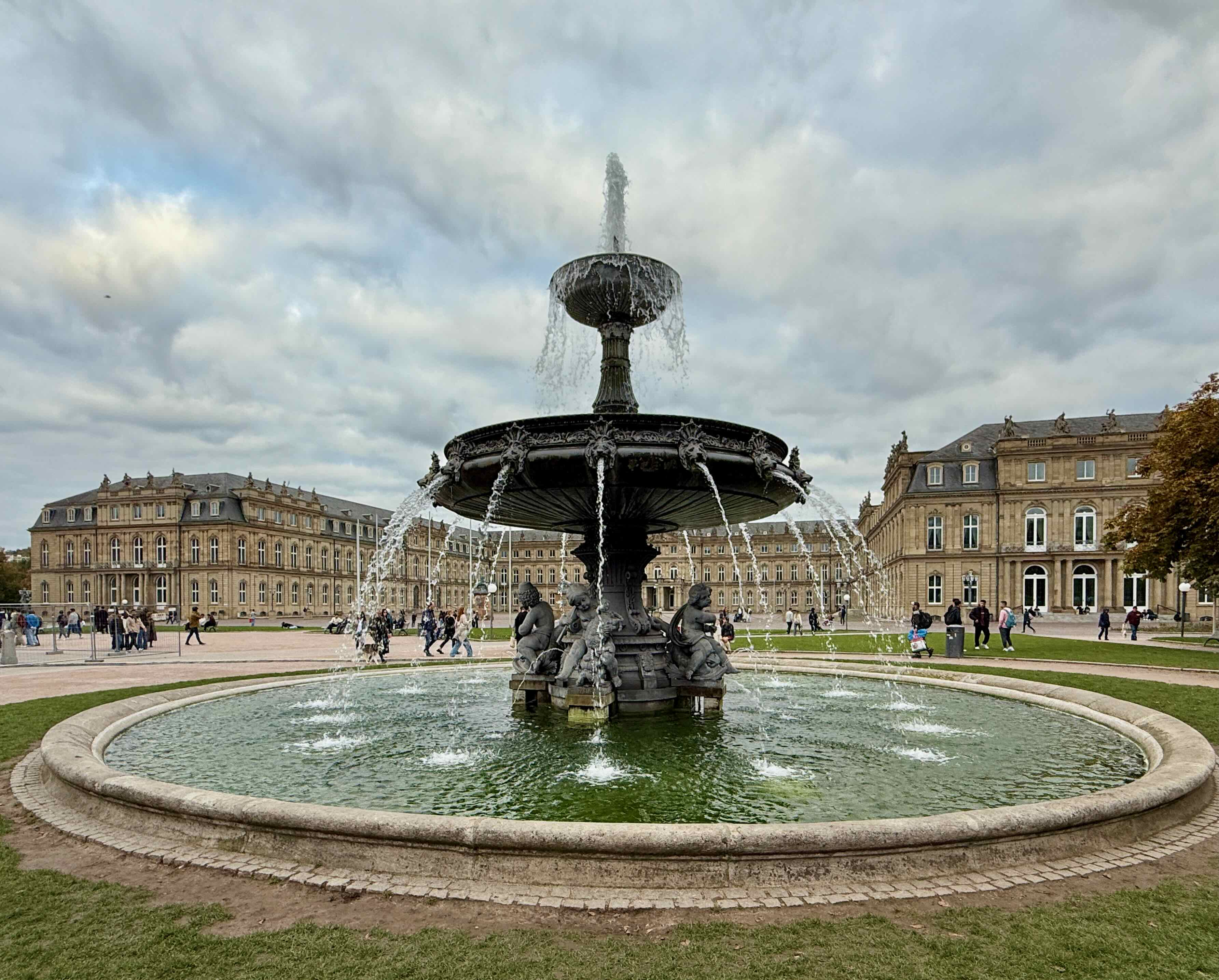
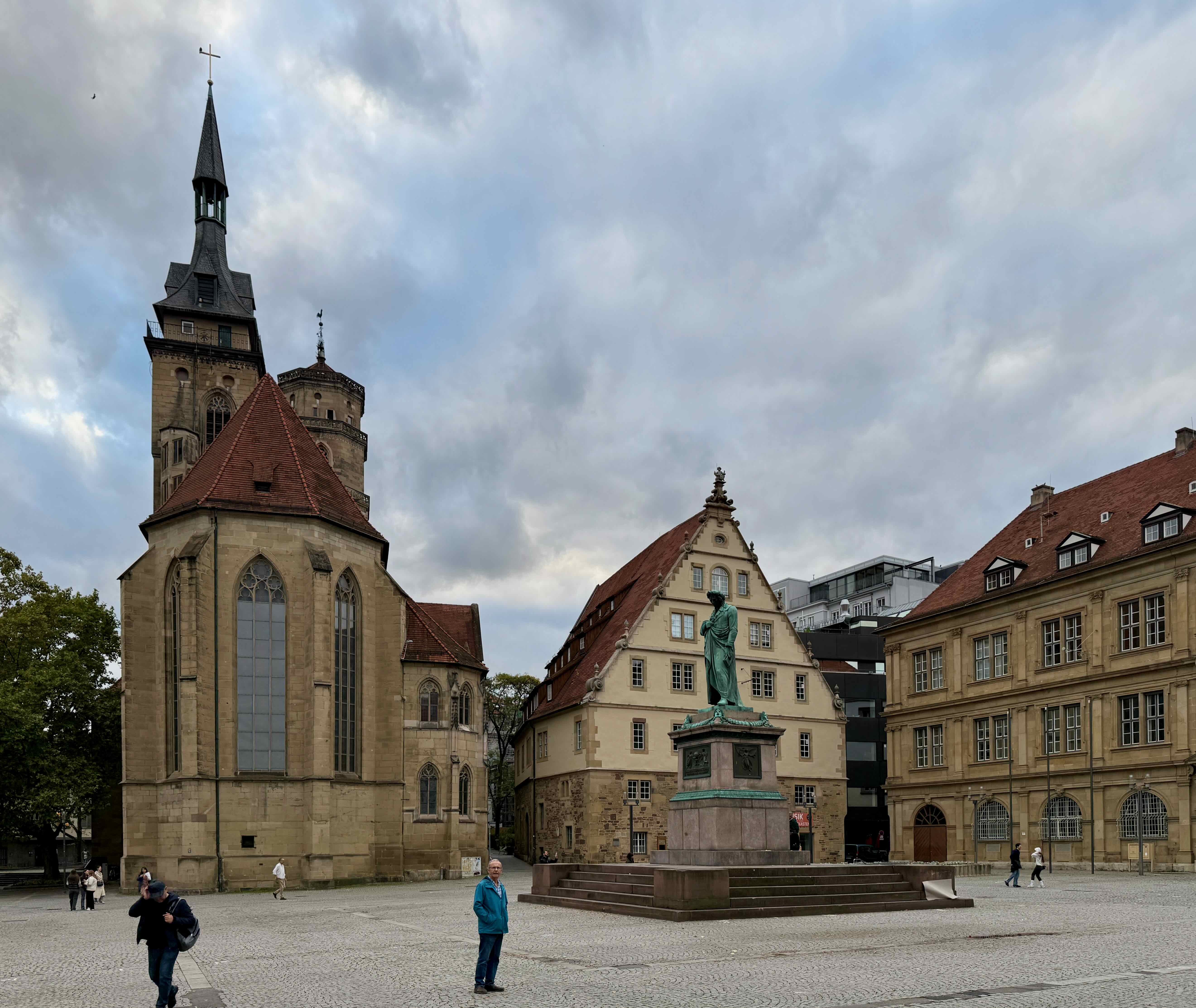
The buildings behind are the Neues Schloss, or the Grand Palace, which is now used as government offices.

We walk around for a bit before heading back to catch the tram home.

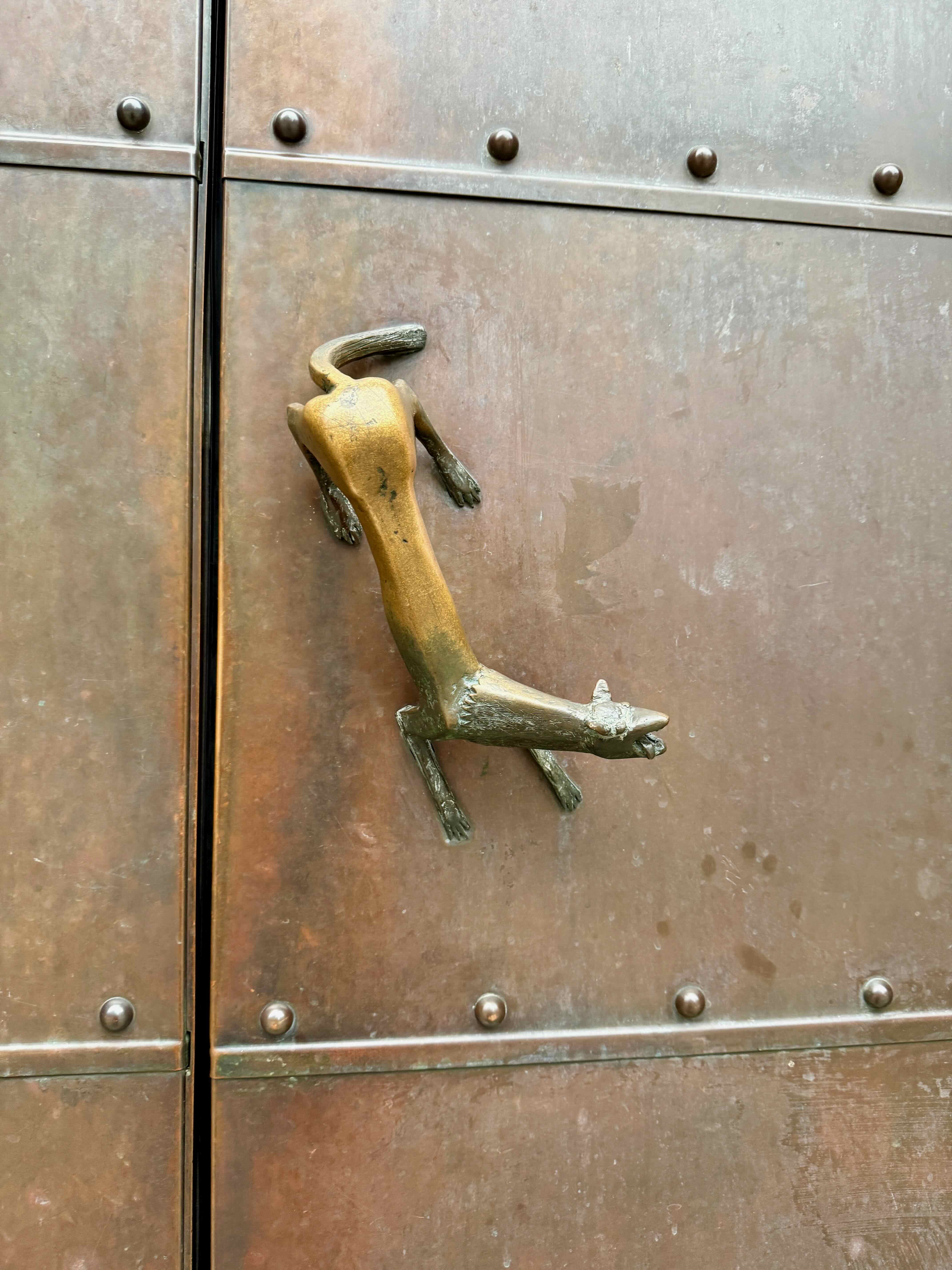
I loved the handle on this door, polished by use.

On the way home from the tram we pass the local fairgrounds just a couple blocks from our apartment.  The Fellbacher Herbst Fair is very busy.  It is much smaller than the one in Stuttgart but there are still lots of rides.There are people everywhere. Too bad neither of us drink beer! We are both ready to head home and relax with a nice hot cup of tea.  It was a full day.
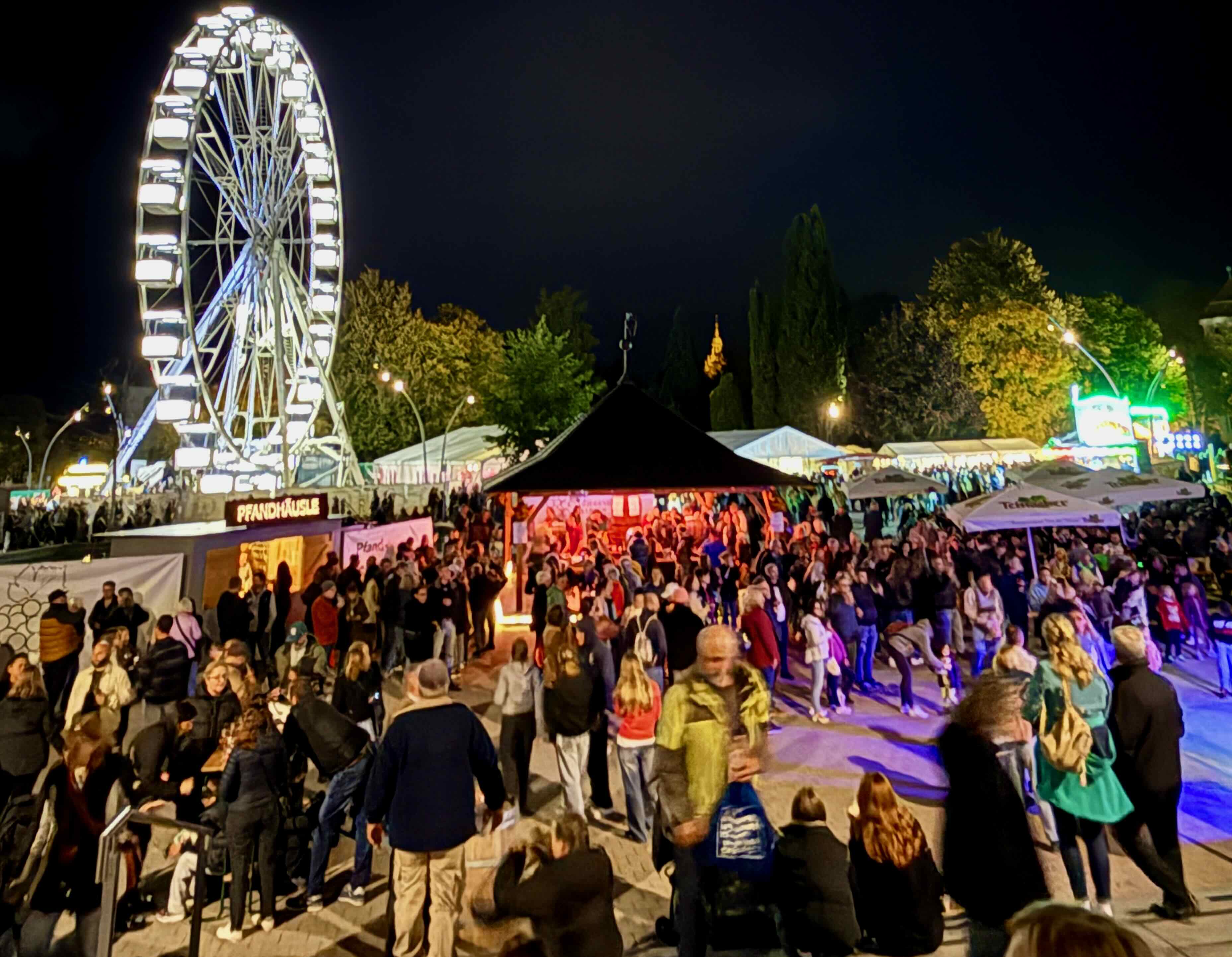
Stuttgart’s Cannstatter Volksfest

Day 41     Friday, October 10, 2025

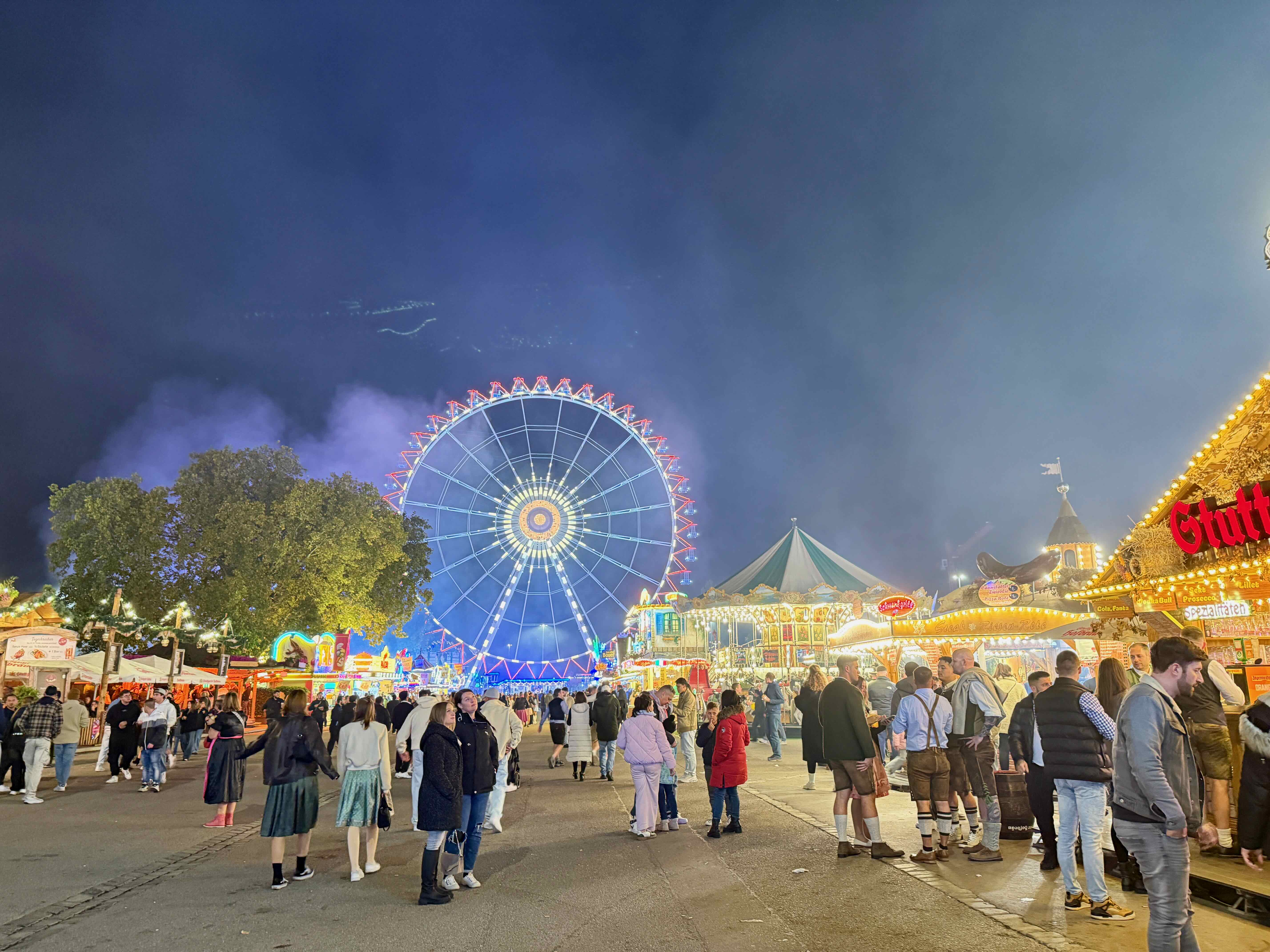
On the drive into Stuttgart we pass a huge fairground. It is the Volksfest Canstatter, which is the second largest beer festival in the world!

The Canstatter Volksfest started in 1818. In those early days agriculture was the primary focus.  Vendors around the edge of the fairgrounds sold sausages, sauerkraut, and beer. Carnival attractions featured “strong men” and other typical nineteenth-century curiosities but as the years passes beer and food took center stage.

Today the festival takes place for 17 days between September 25 to October 11. Last year this event had 4.6 million visitors.

Right beside the entrance, which is free, we see these young men in matching lederhosen drinking beer.

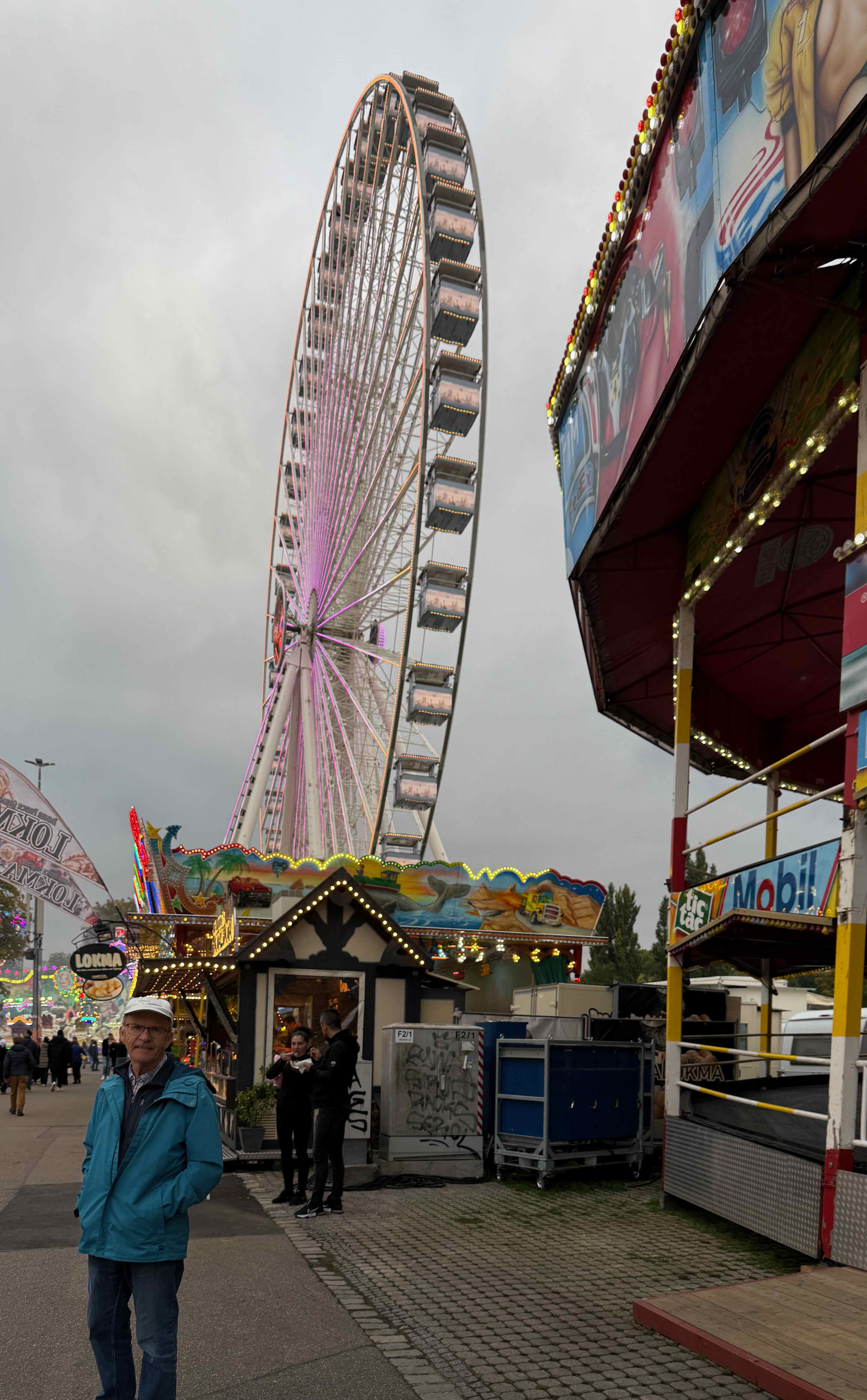
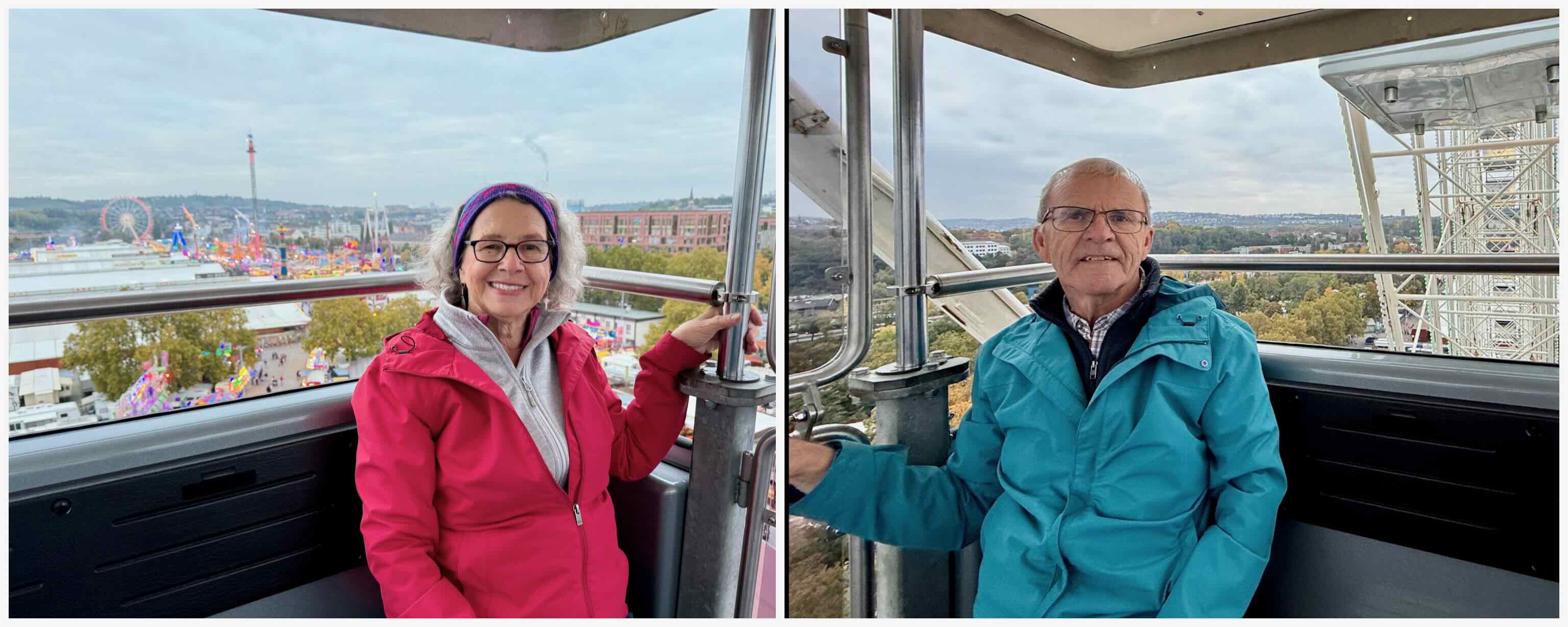
This ferris wheel is at one end of the fairground and we decide to go for a ride.

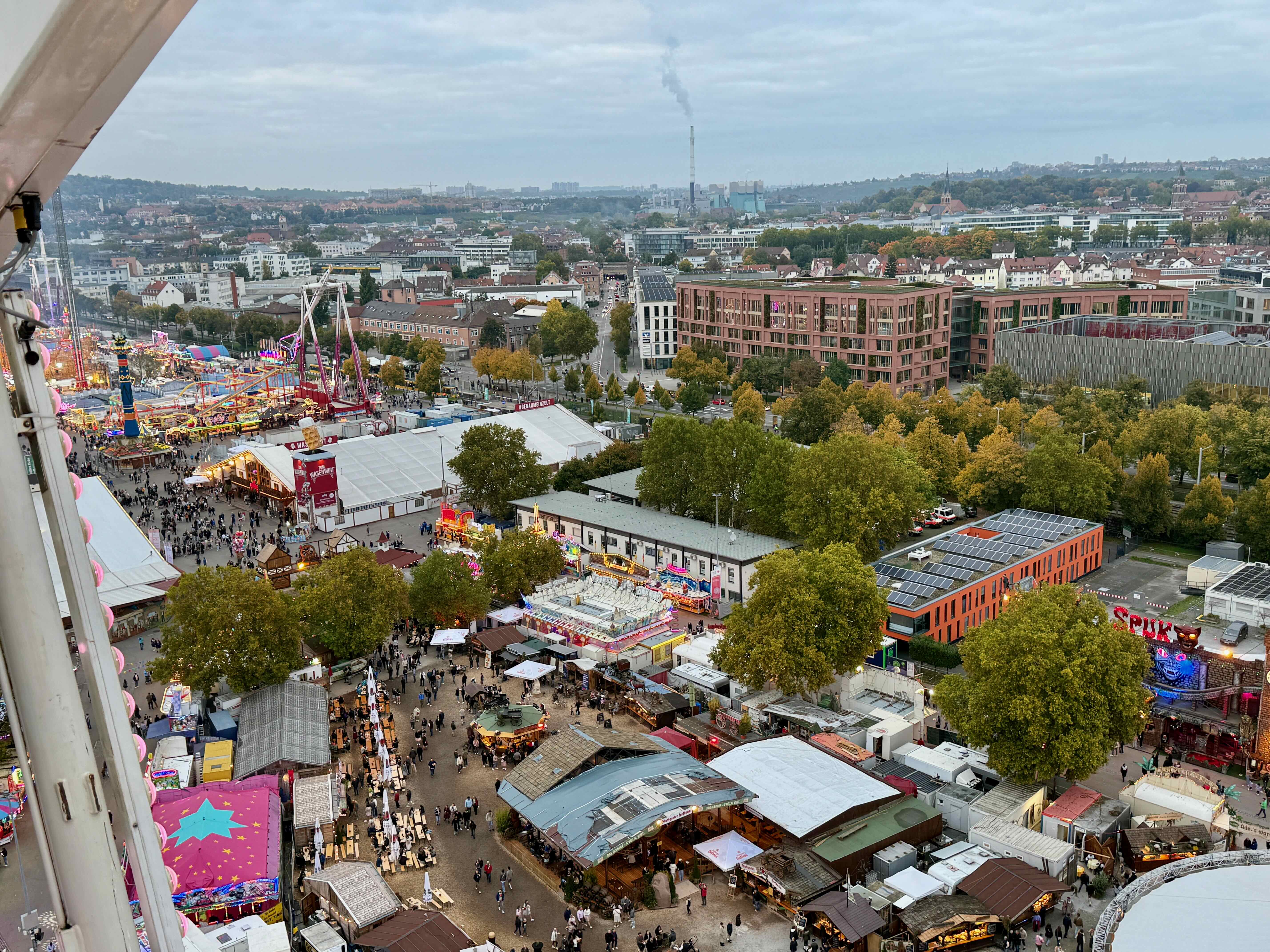
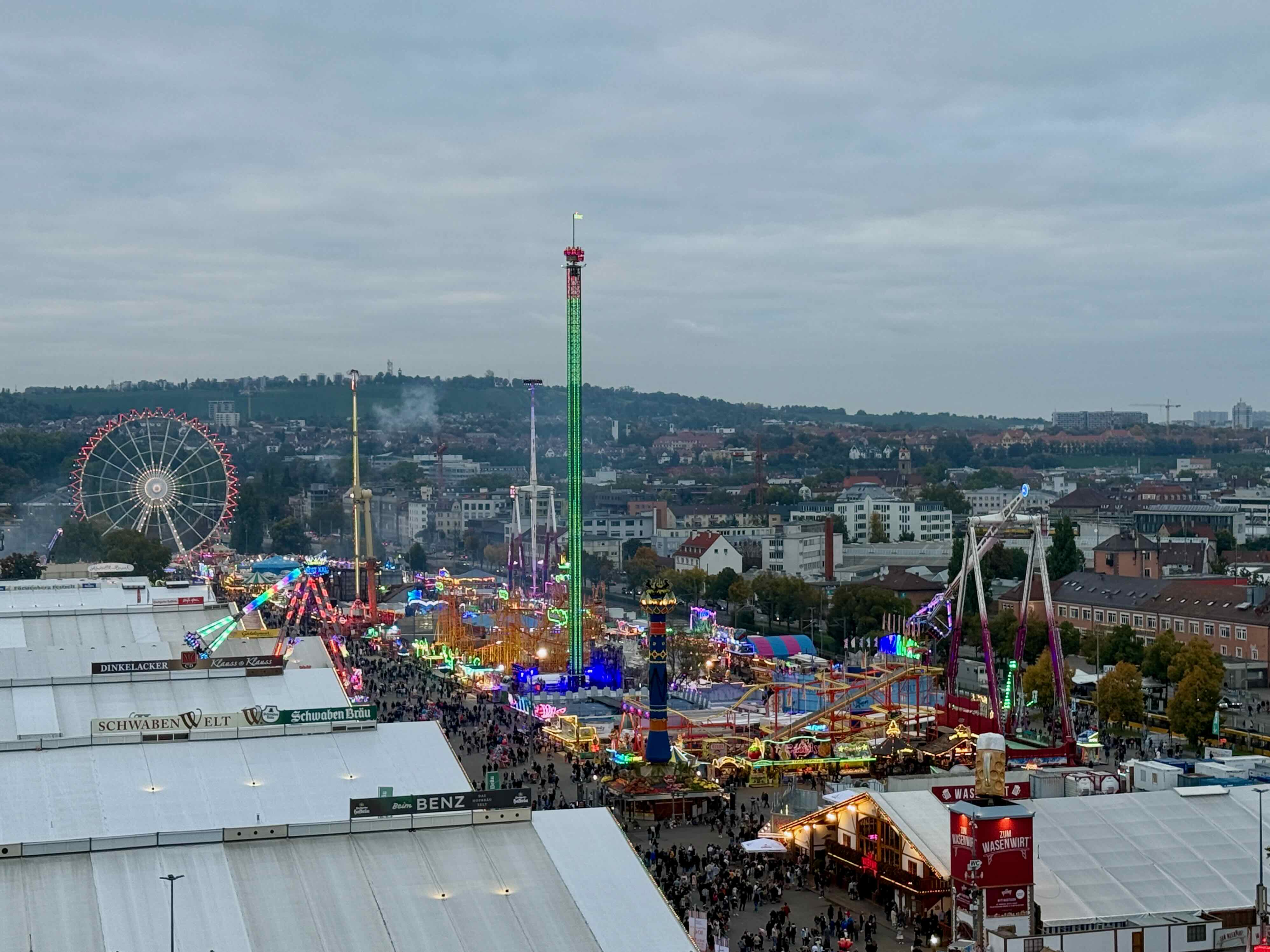
There are 5 kilometres of rides and attractions, children’s rides, stalls, market stands, many food and drink stands, including eight beer tents, countless beer gardens, snack bars, and candy stands. We have a great view of some of this from the top of the ferris wheel.

The white roofs are all the beer gardens!  The eight tents on site hold a total almost 34,000 people! There is also a second ferris wheel at the other end of the fairgrounds.

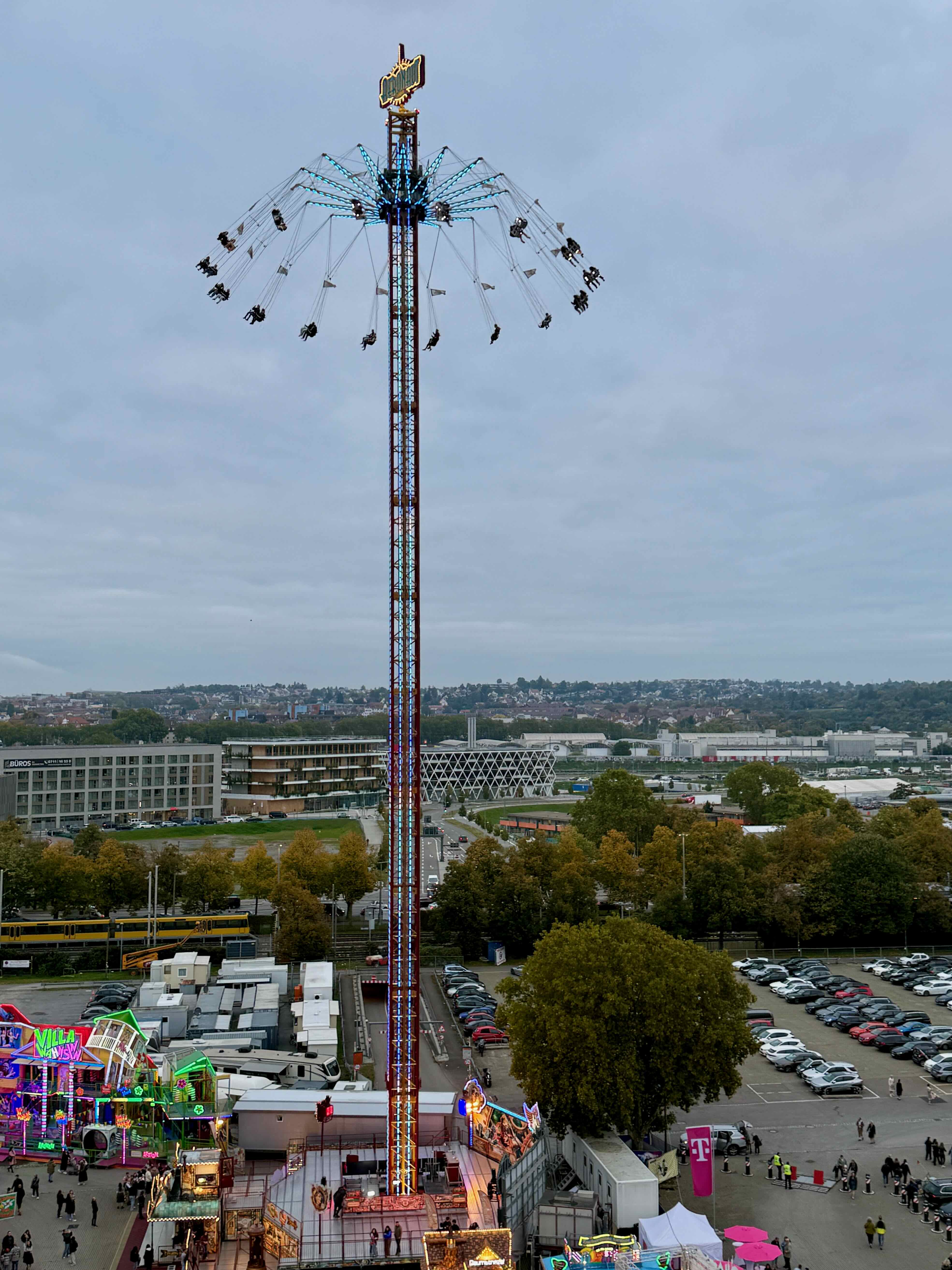
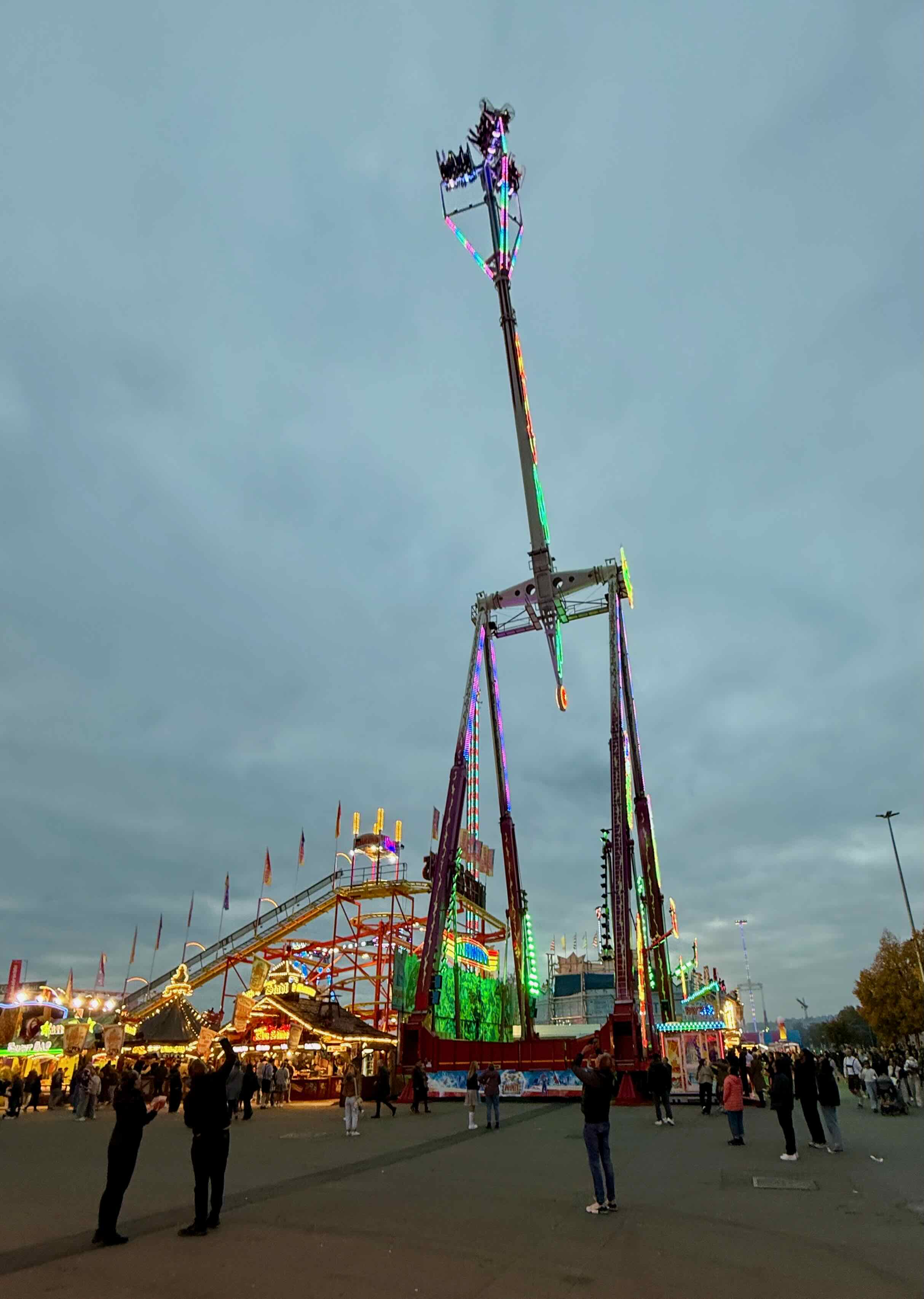
We have a great view of these swing ride.  At 80 meters it is way too high for me!

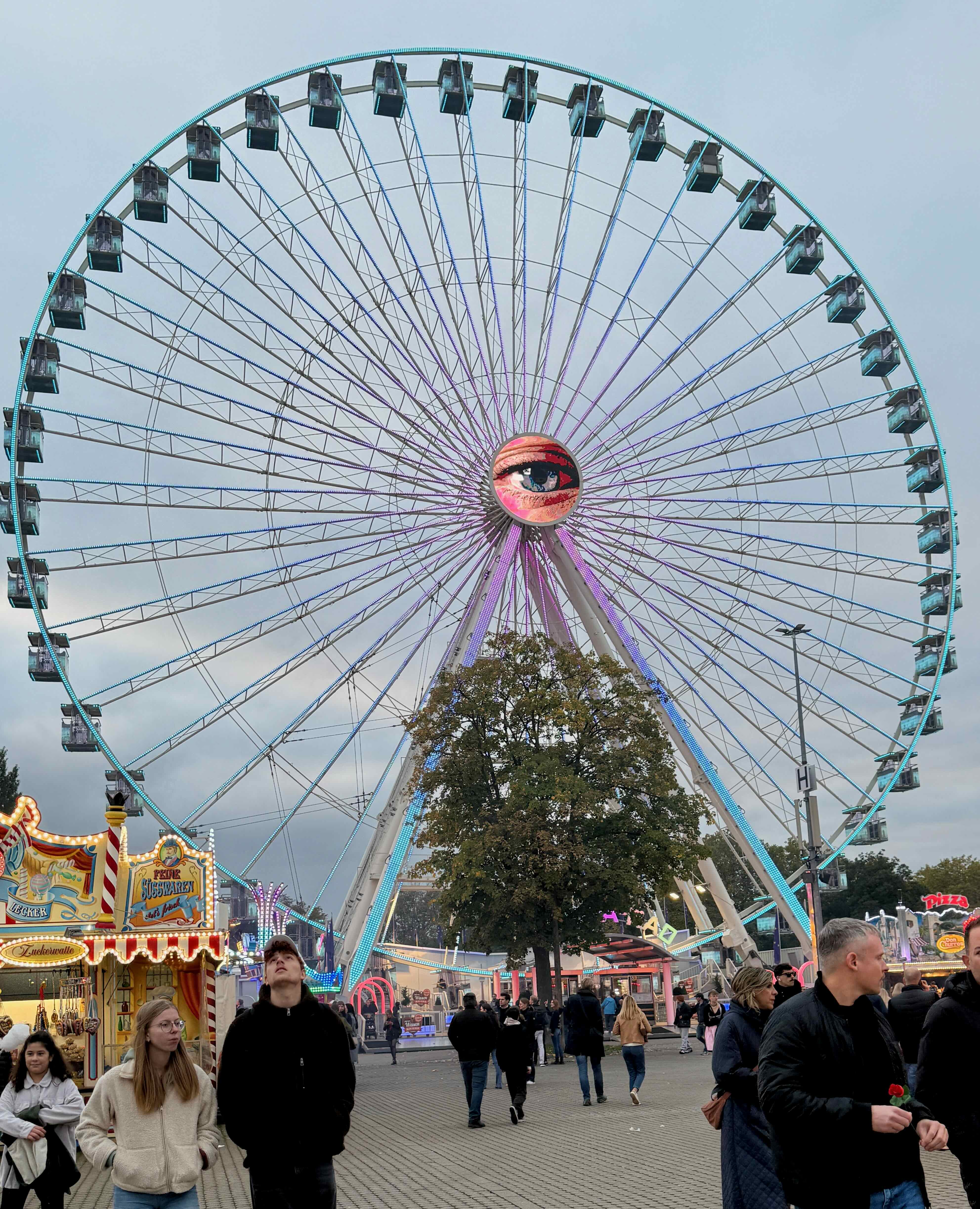
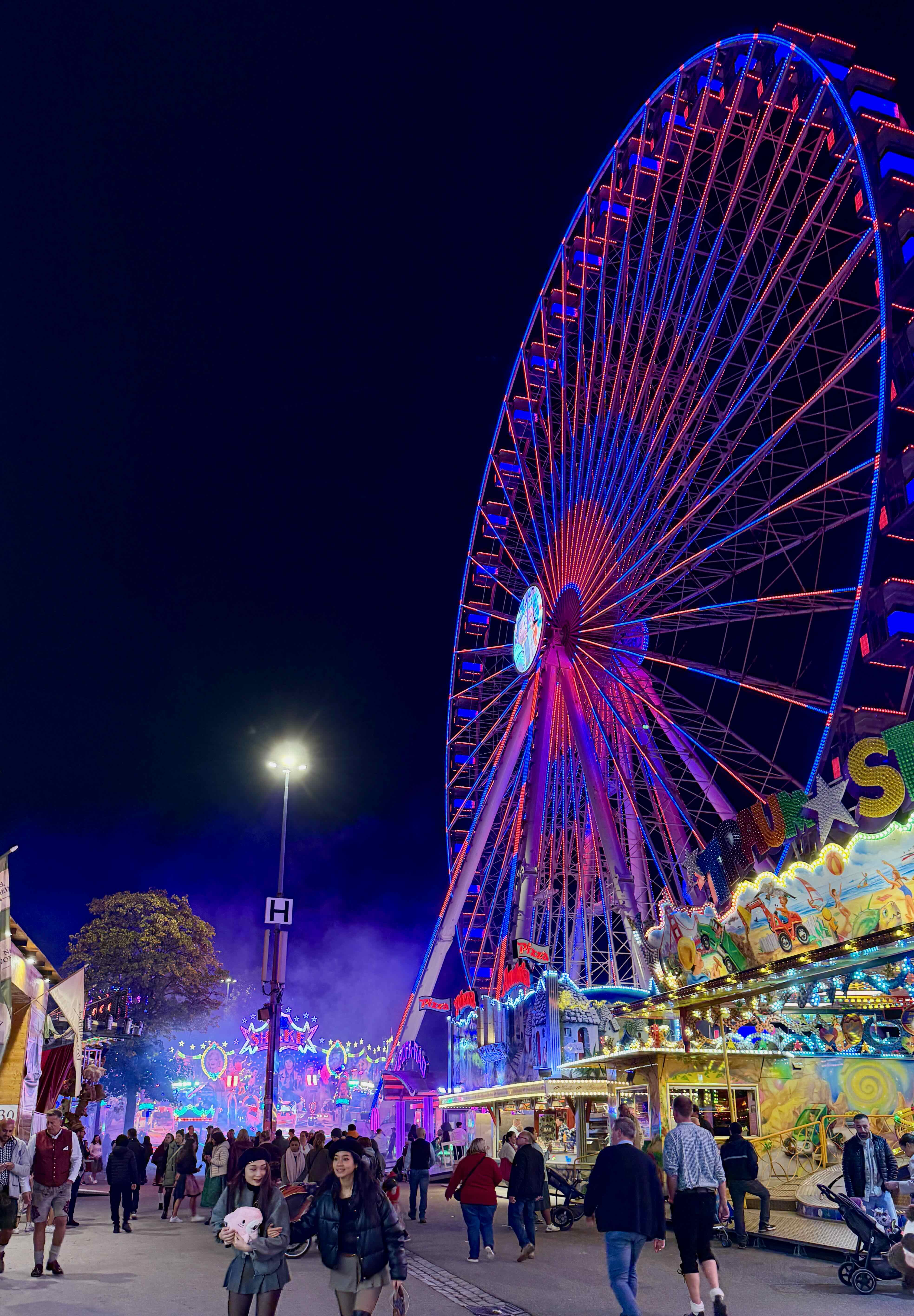
After our ride we notice the changing colours on the ferris wheel, done with 1000 LED lights! The centre circle changes too, and we both thought this eye was quite striking.

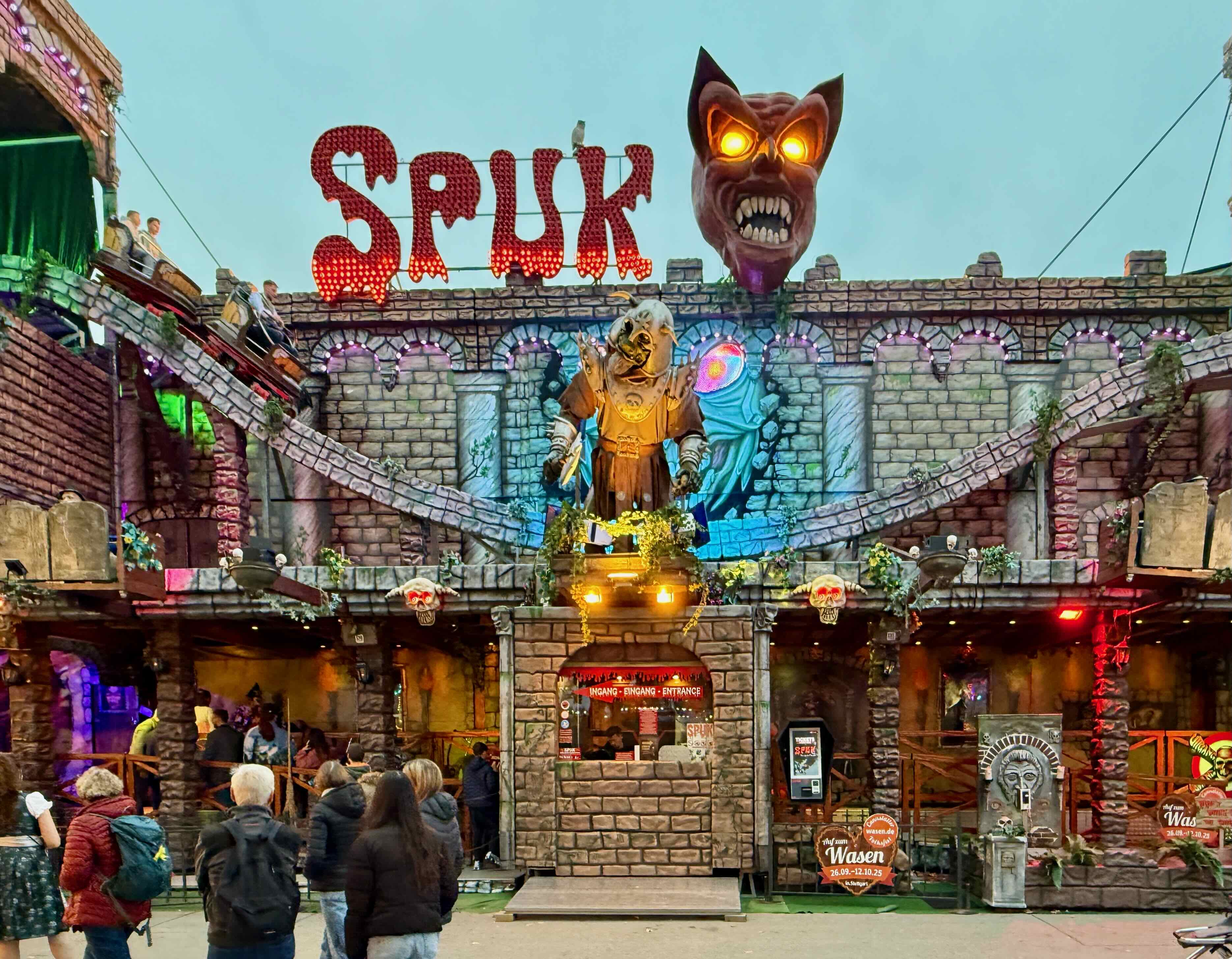
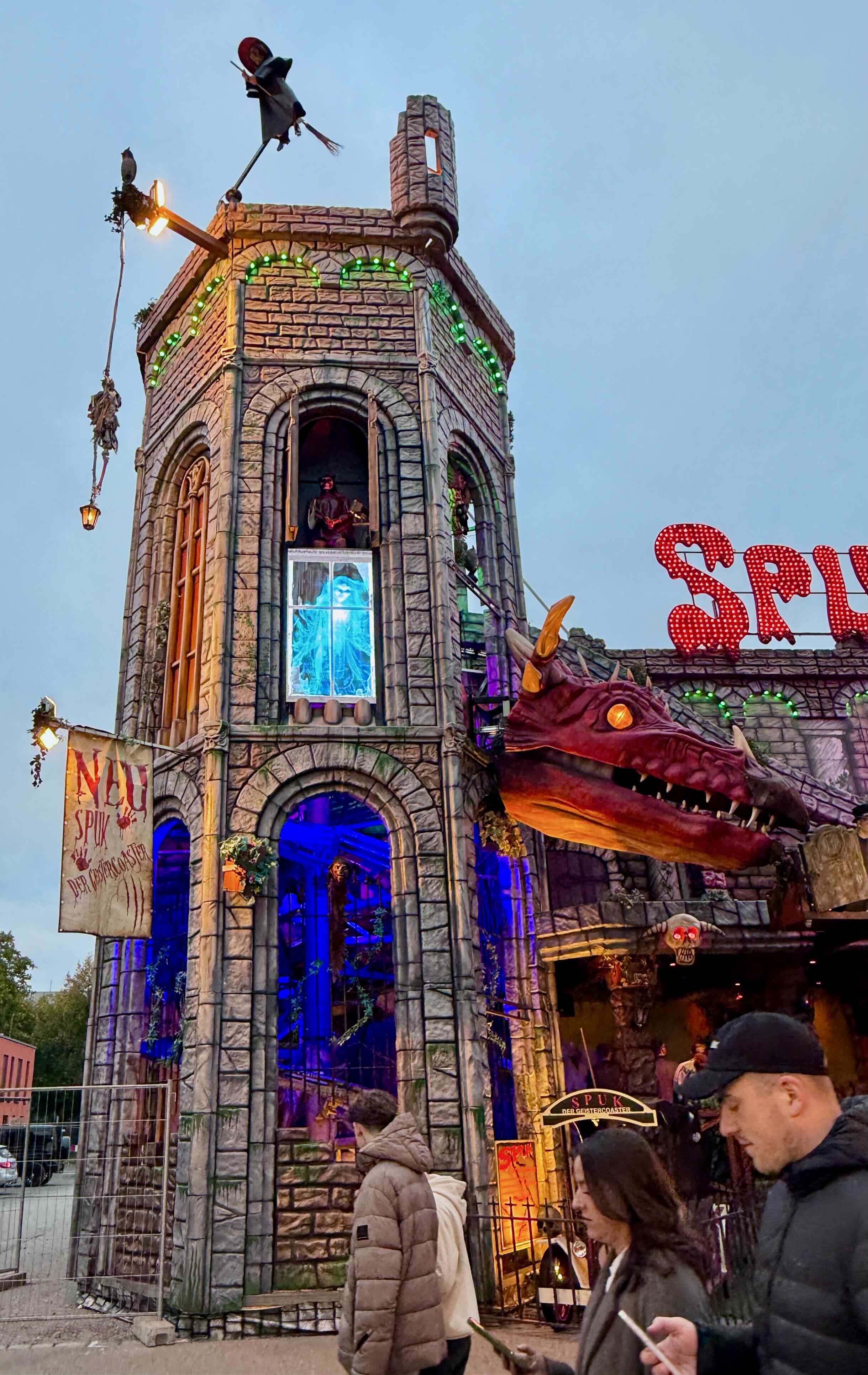
The fun houses here are huge and very ornate. This photo captures about one half of the length of this one.We liked the flying witch, the dragon, and the ghost in the window.
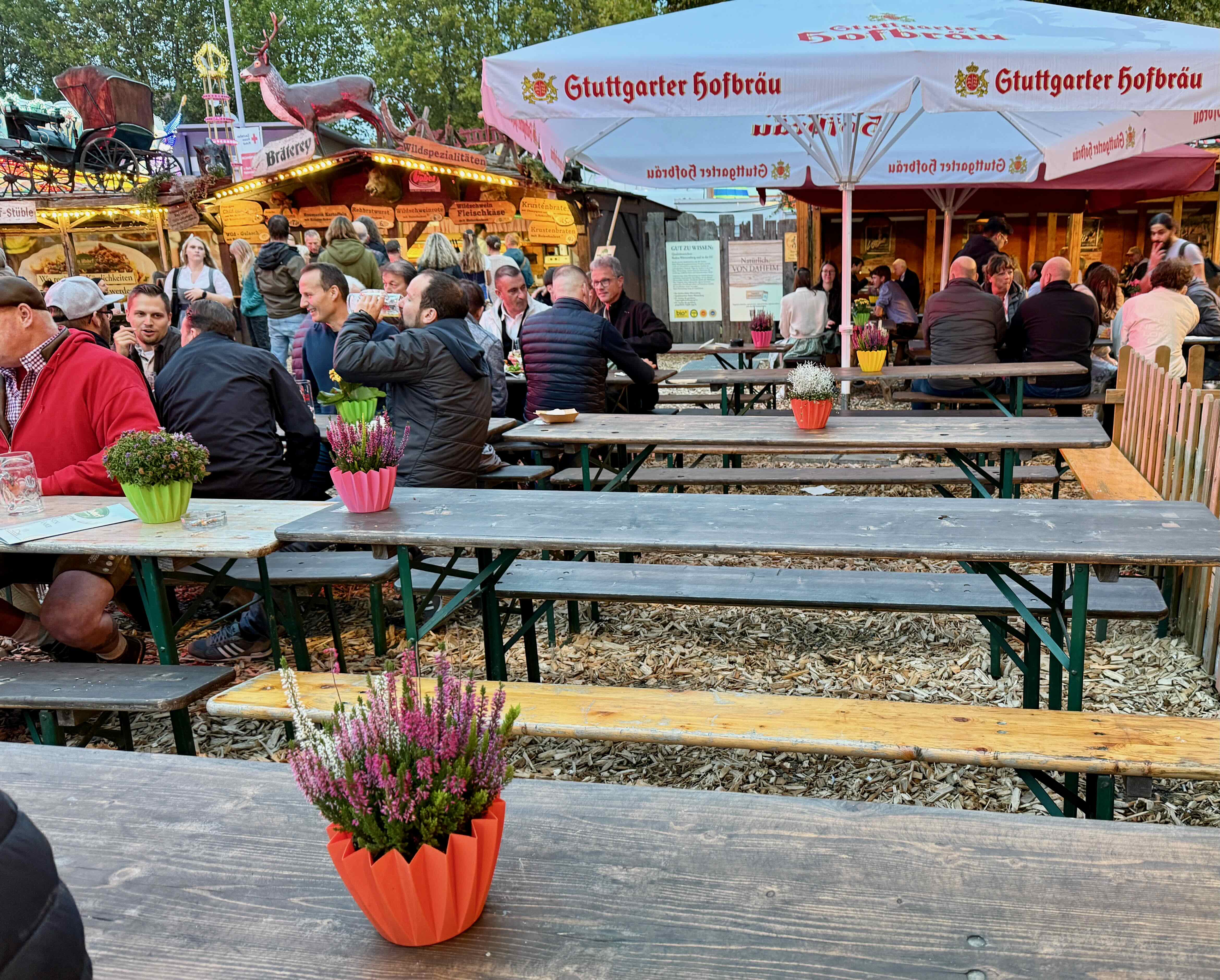
I thought it was lovely to see live flowering plants on the tables at the beer gardens.

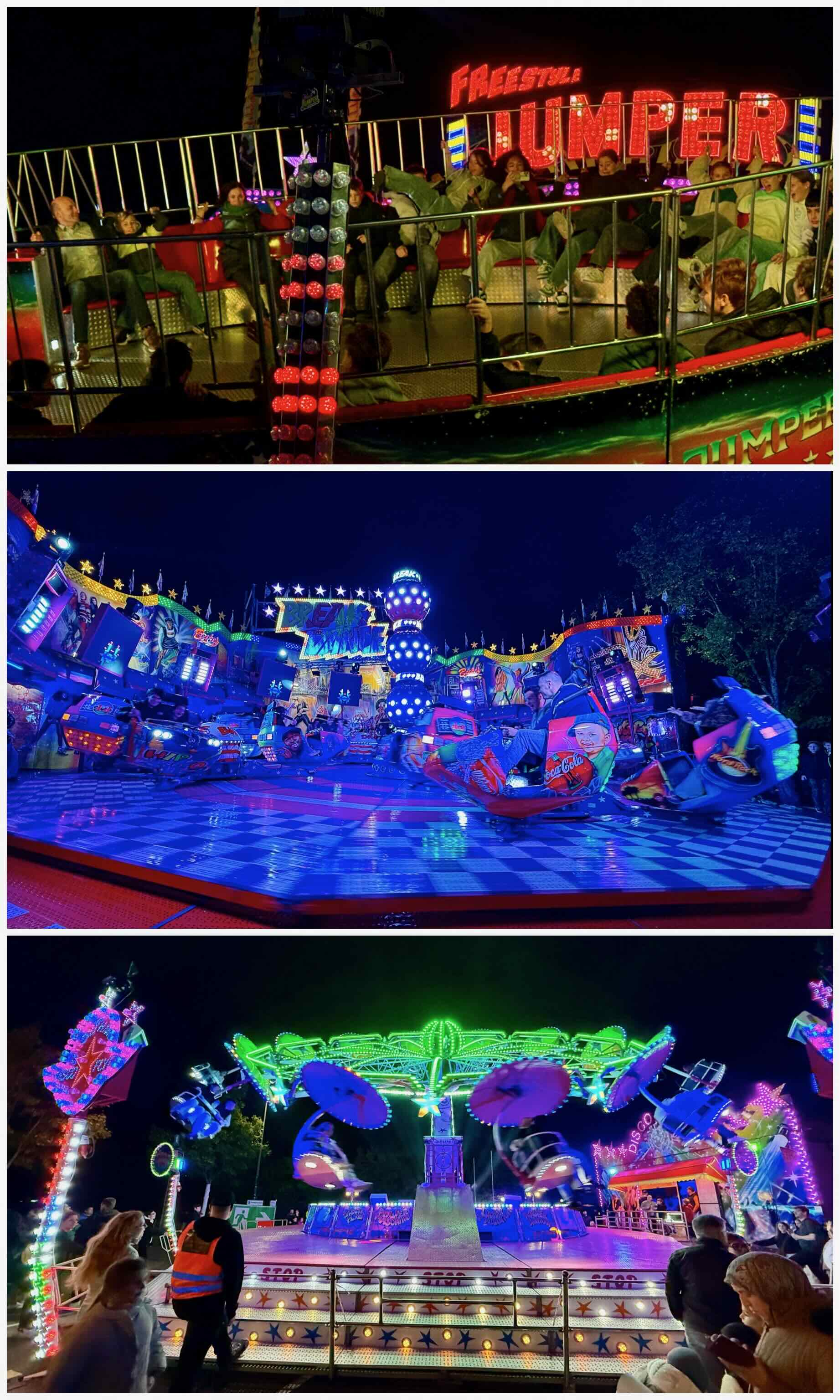
There was lots of screaming coming from this ride!  The rides here also last a long time, much longer than the exhibition rides back home.  If you decide that a ride wasn’t a good idea, you are trapped on it for many revolutions!

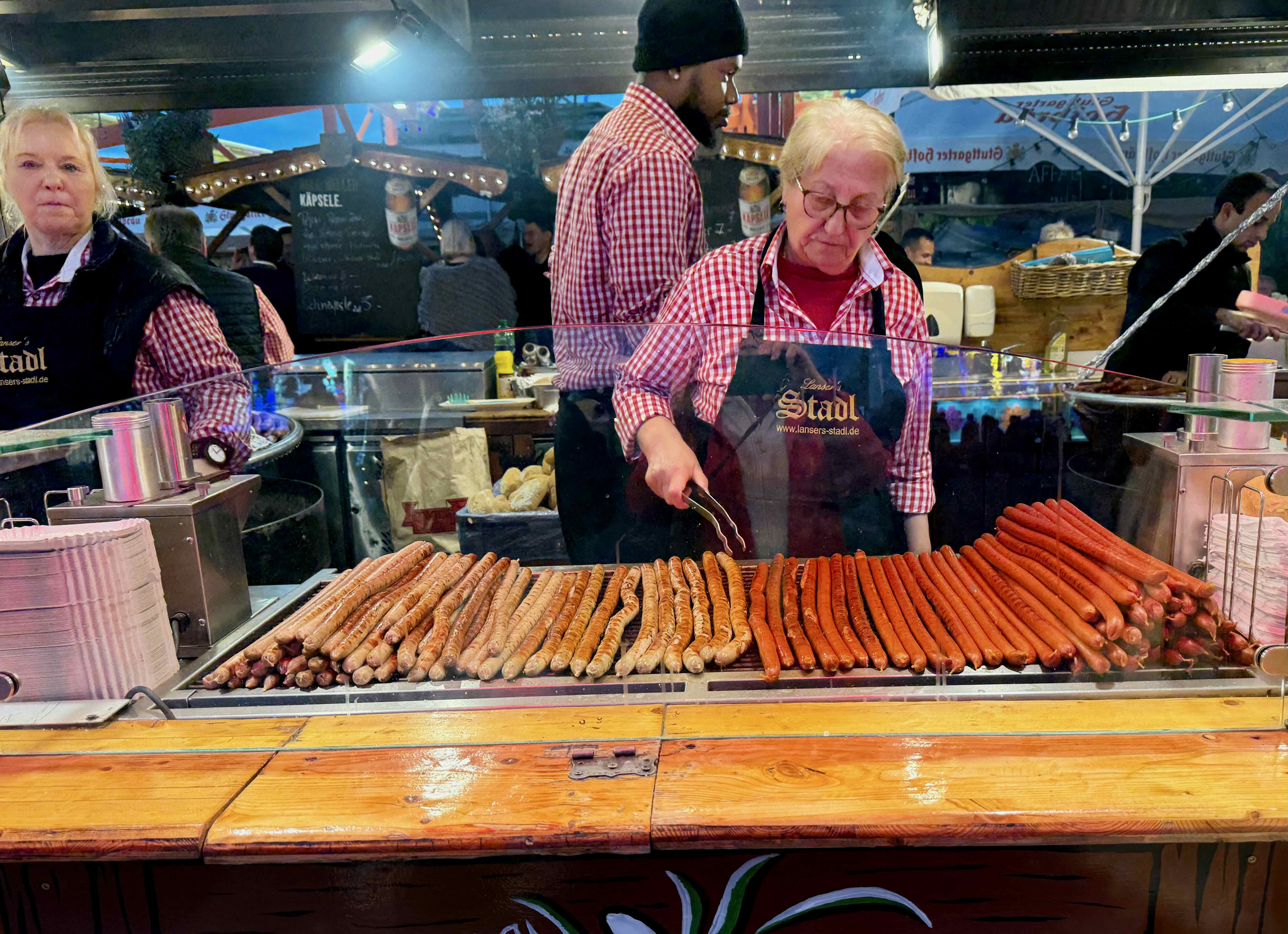
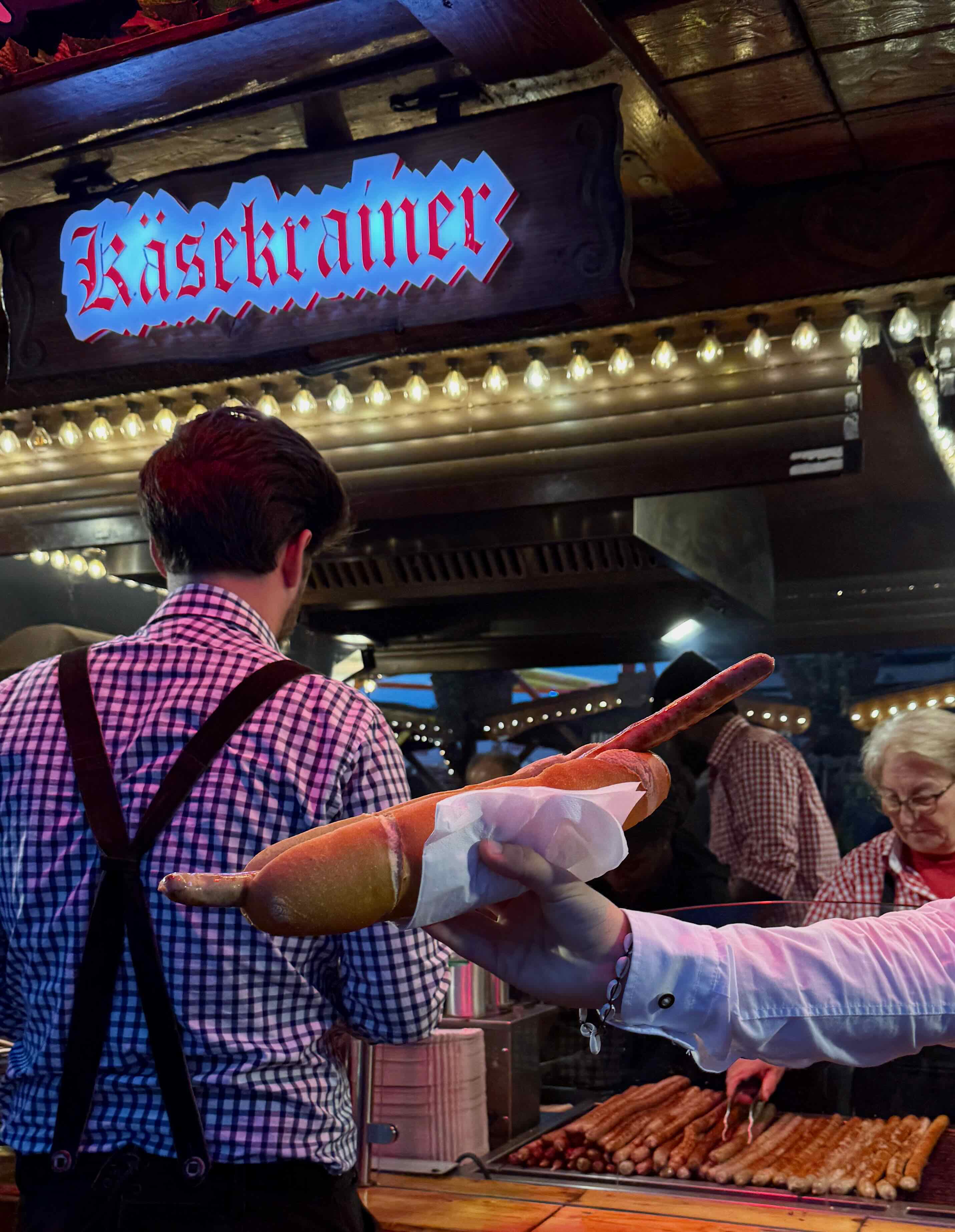
Time for some Bratwurst mit Brötchen…but we decide against the half meter long option.

Back to walking around the grounds and the sun has set.  Our ferris wheel ride looks much prettier at night.

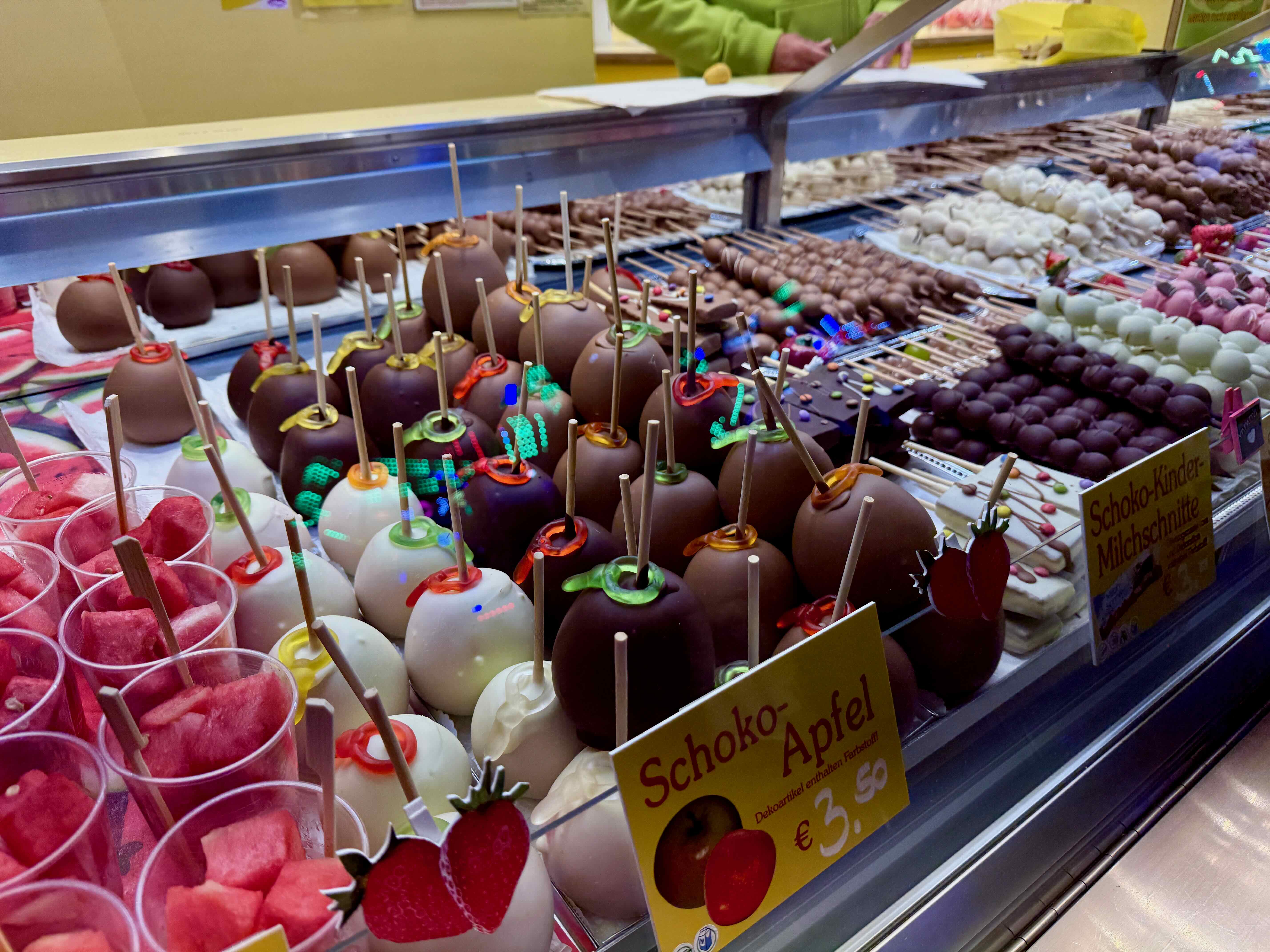
Some of the sweet treats available.

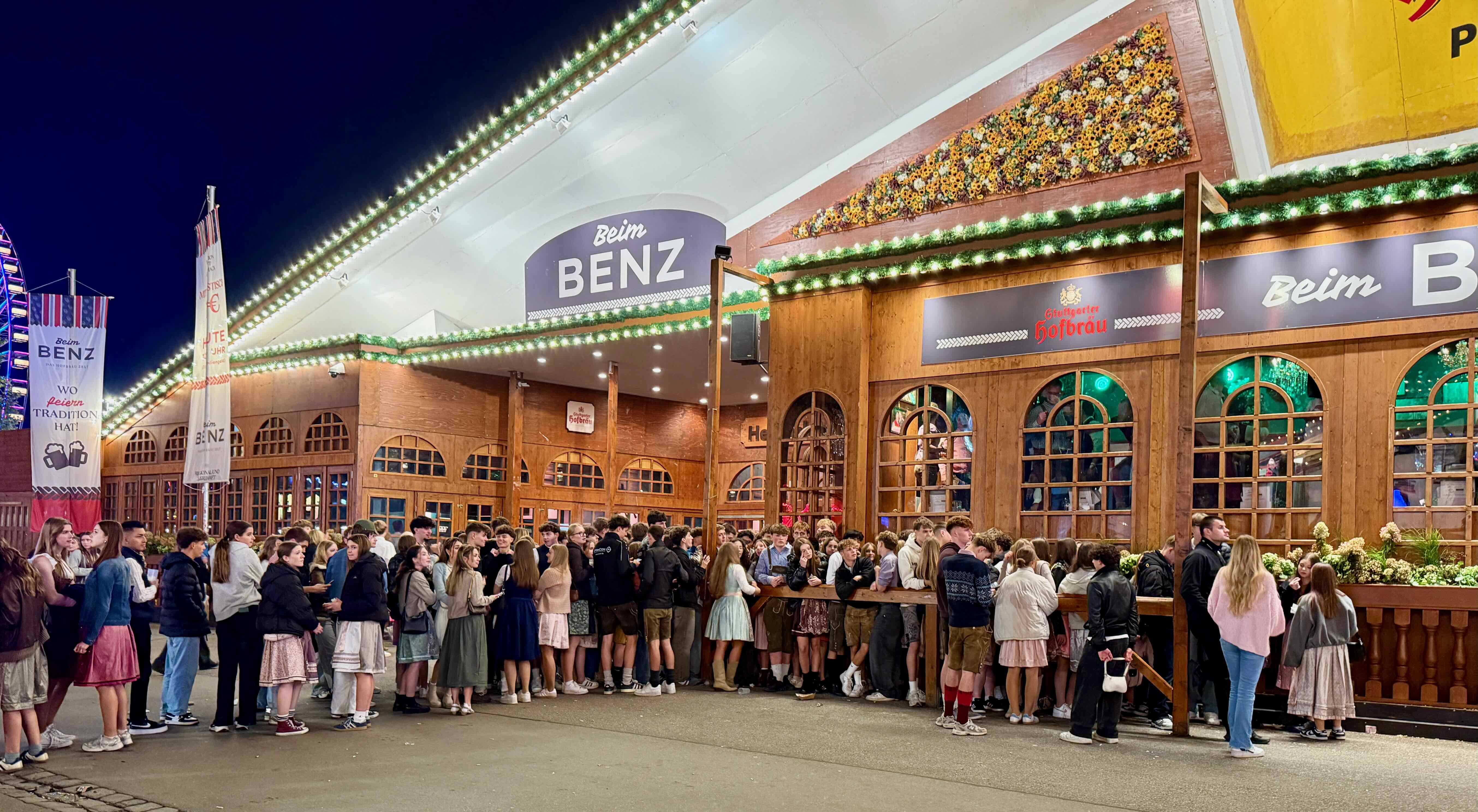
The beer tents have facades that look like alpine chalets and they are huge. Each tent seats anywhere between 2,500 and 5,600 thirsty festival-goers!  It takes several weeks to erect the tents and then almost as long to take them down and store them. I really thought these were permanent structures until we walked behind one and saw the SeaCans and canvas walls.  Seems like it is mostly young folks attending the beer gardens, and many are dressed in traditional German dirndl dresses and lederhosen. There was a very long line up all night long to get into this particular beer tent.

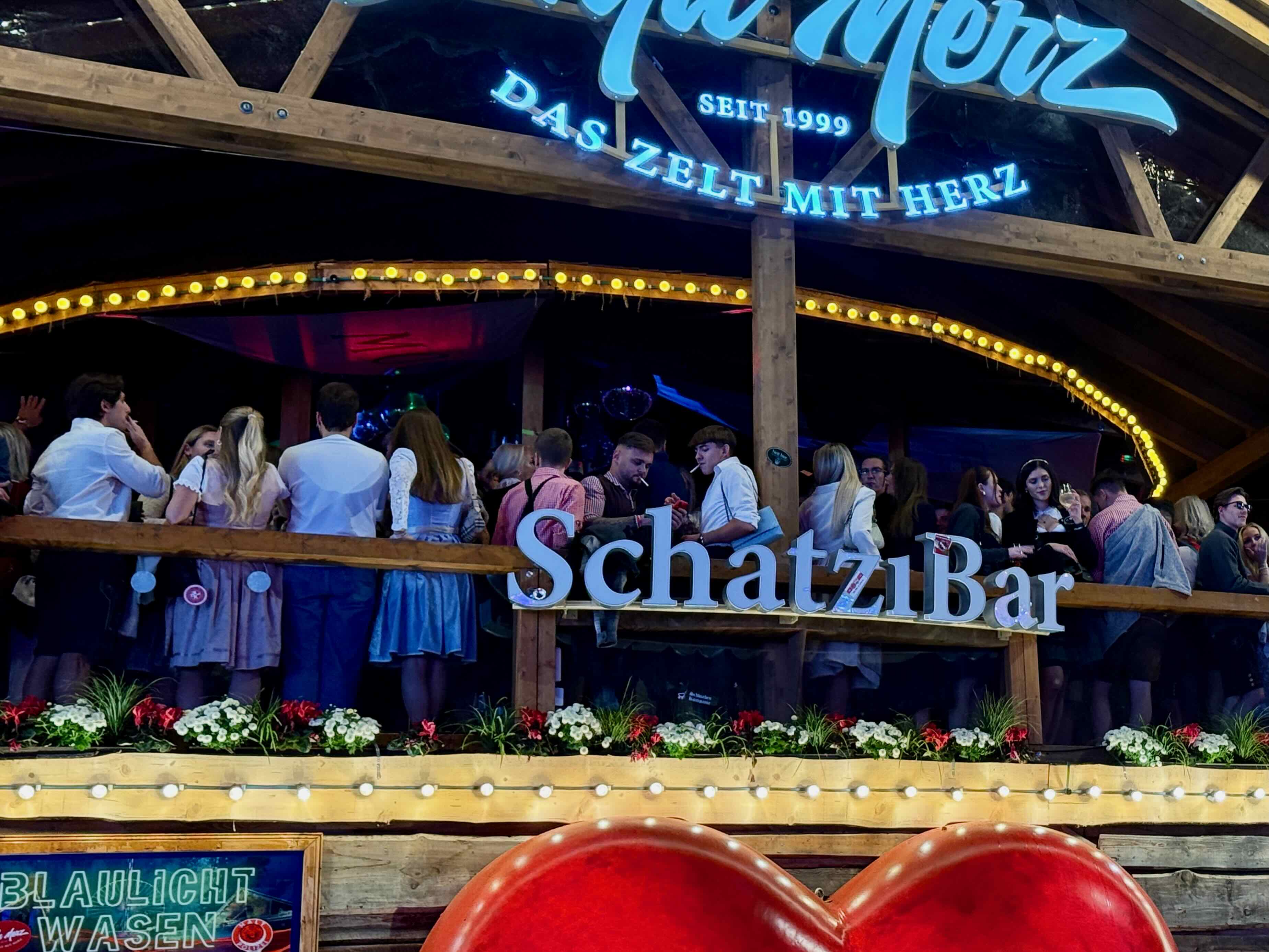
This beer tent balcony is packed…

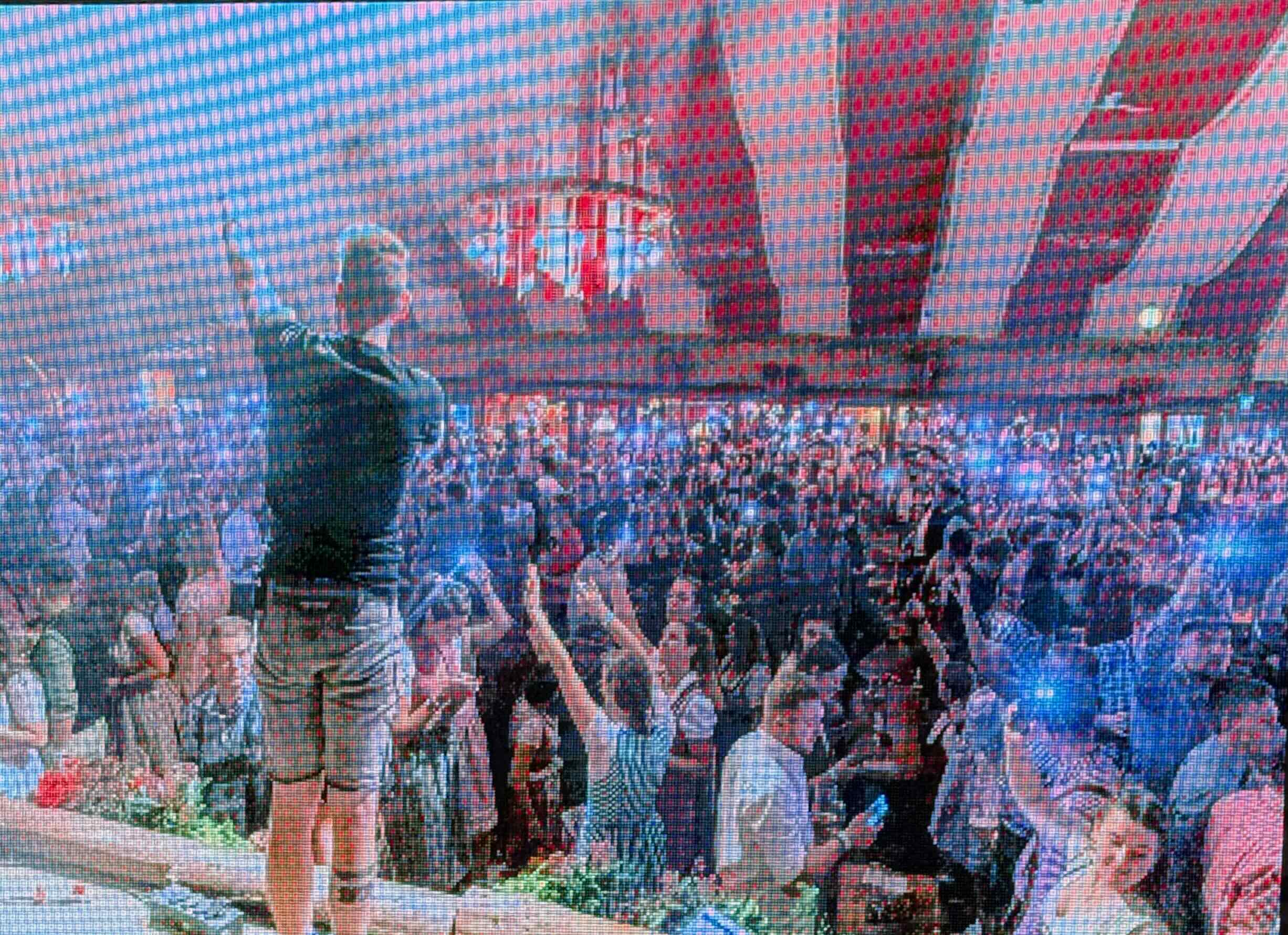
,,,and a screen outside gives us a view of the action indoors. I am quite happy not to be inside with that mob of drinkers!!

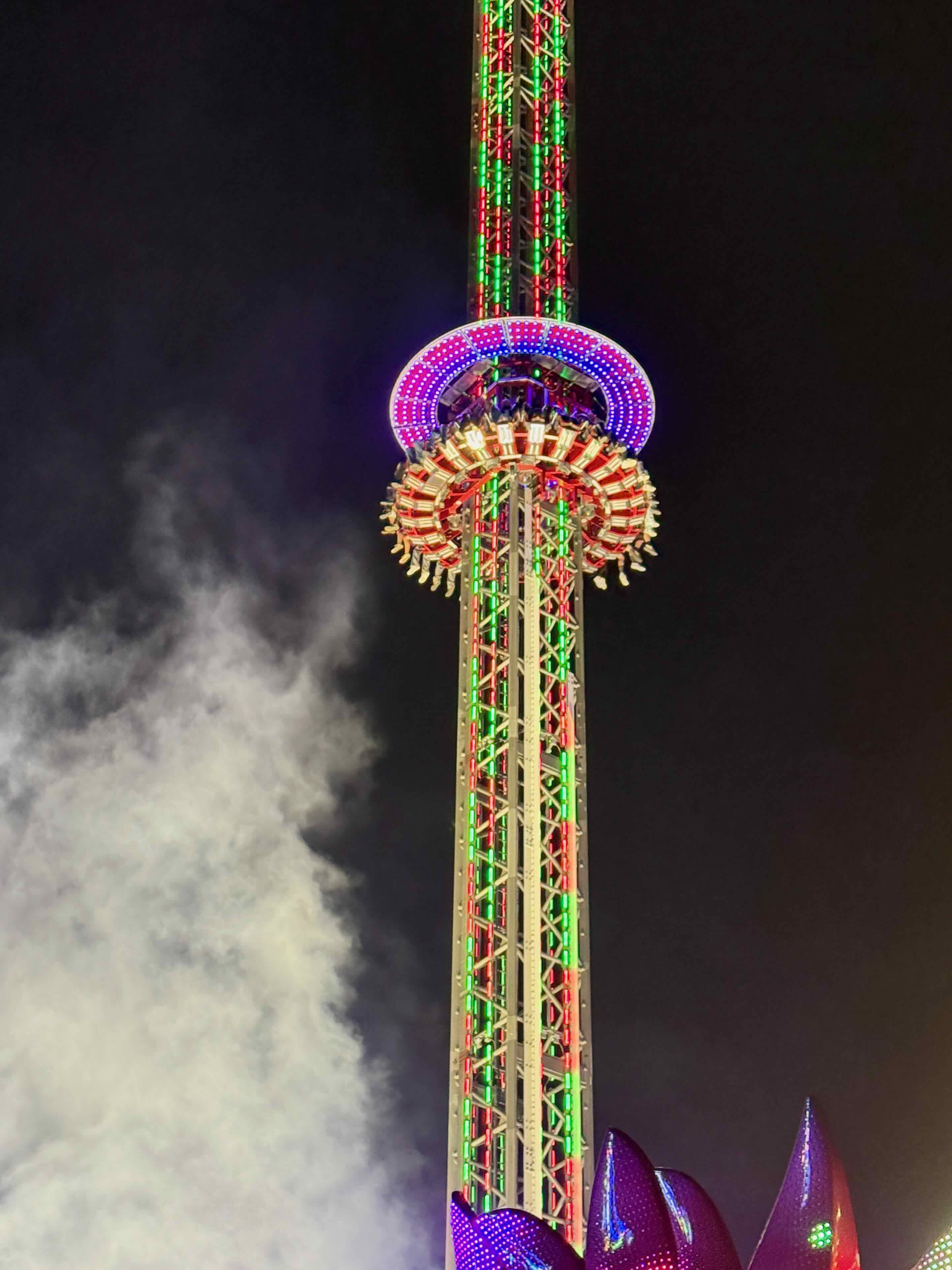
We are quite content walking outside and looking at the rides and all the people having fun. At home this ride is called the Drop of Doom…it is pretty colourful! Those are people’s feet hanging below their seats as they ride up to the very top of this tower, and then plummet to the bottom!

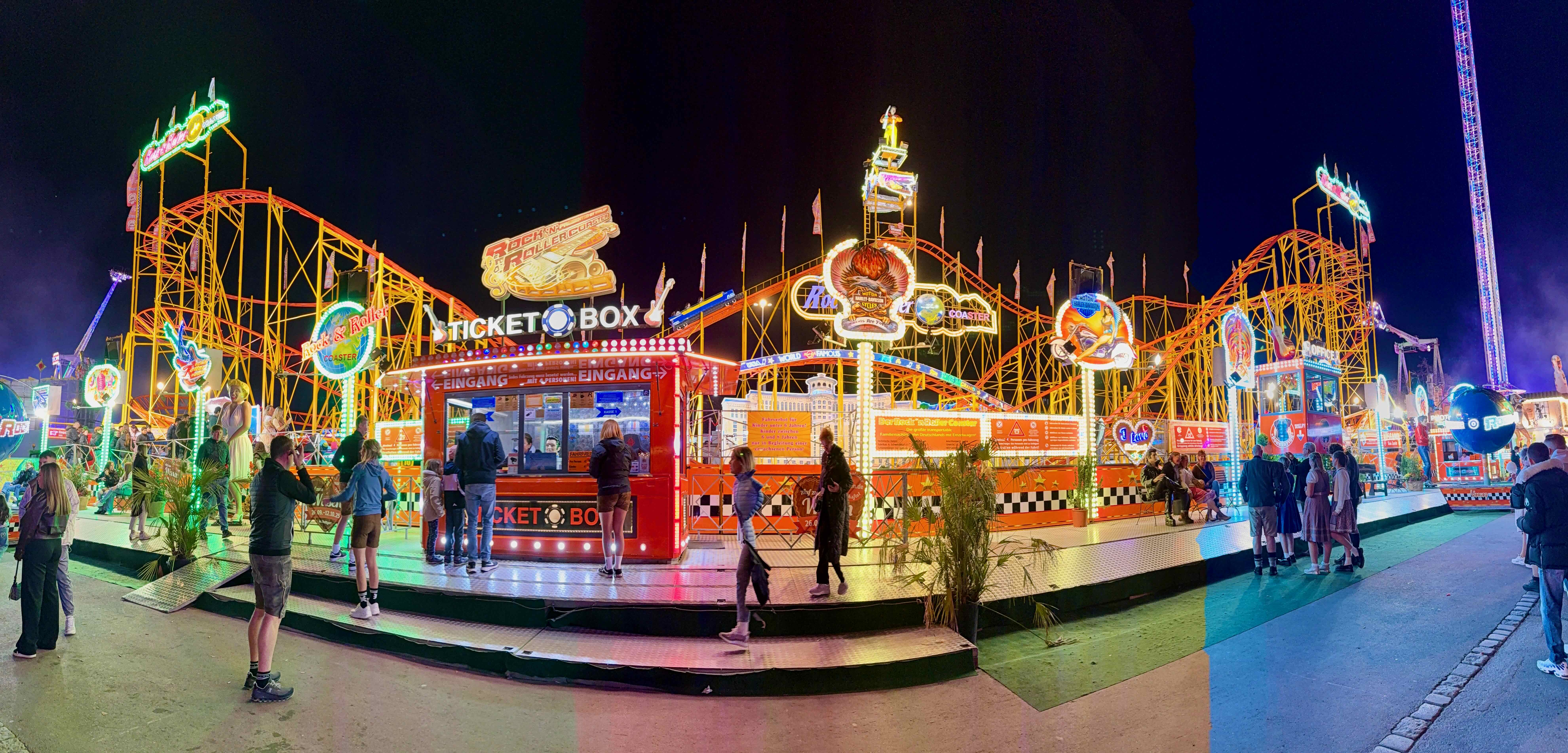
There is a rollercoaster ride. It is much bigger than it looks in this photo.This was a crazy ride with seats spinning in one direction and the whole platform spinning up and down in another direction!  There was a lot of smoke and screaming riders!
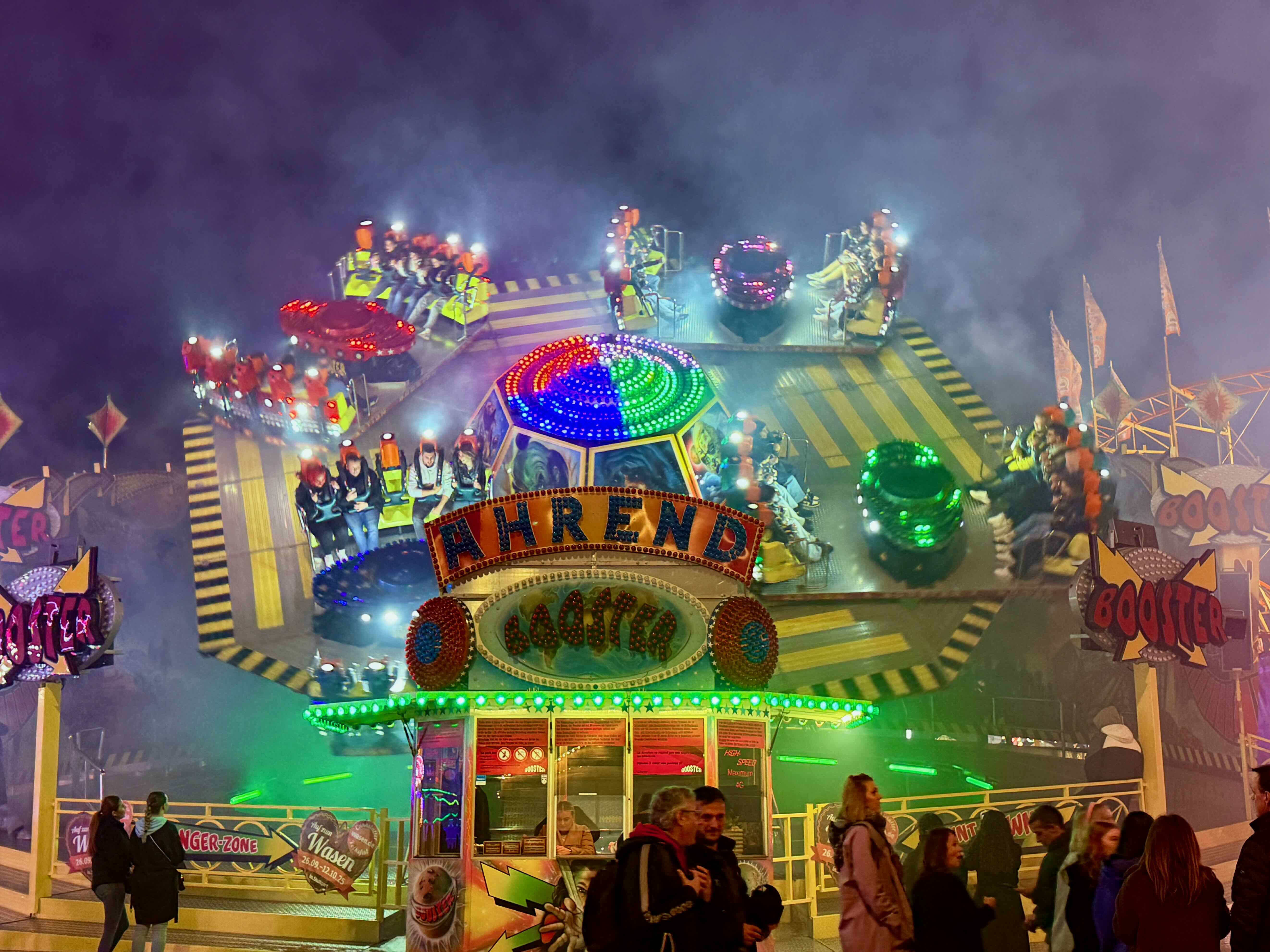
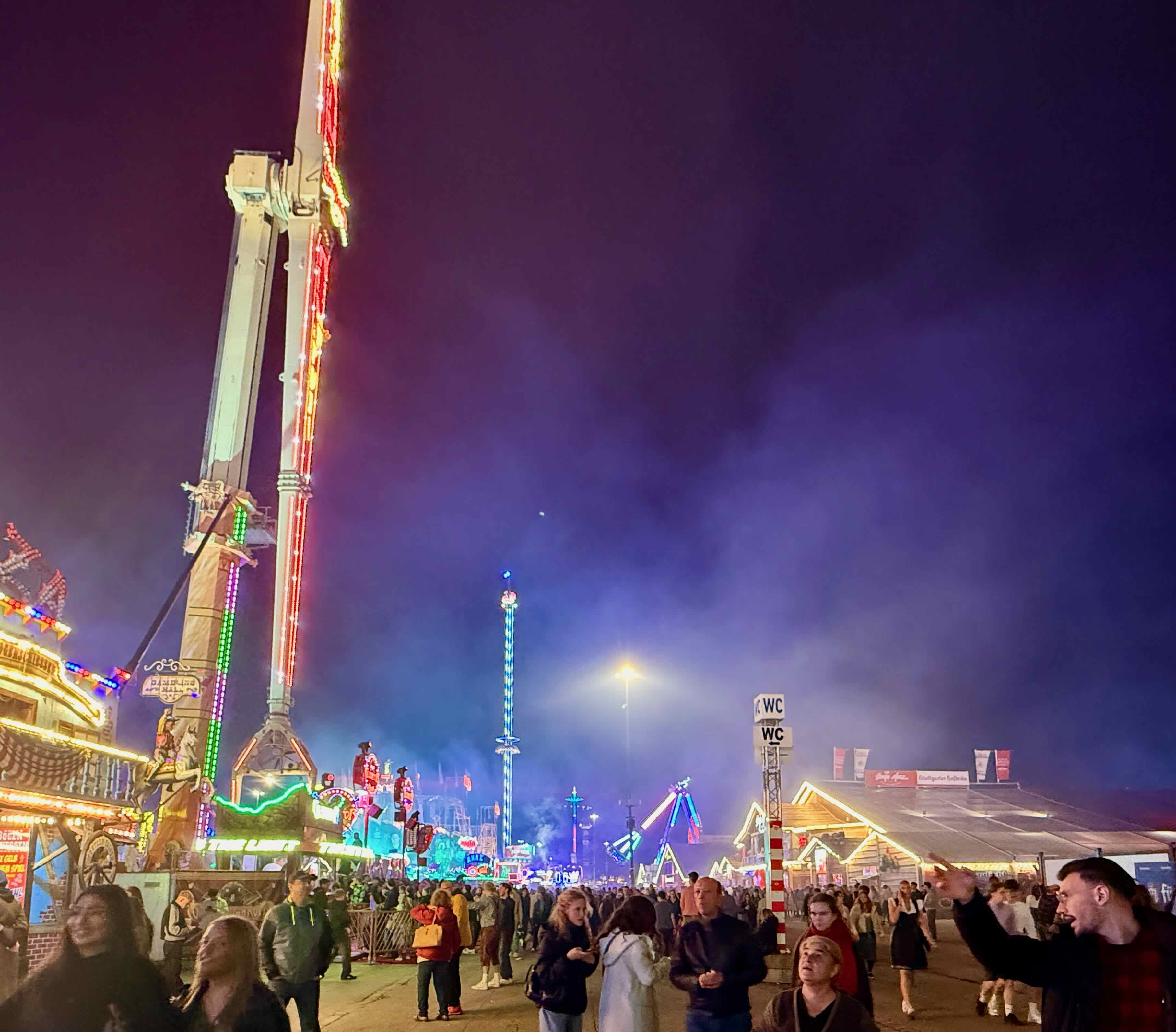
A lot of the rides have smoke effects.

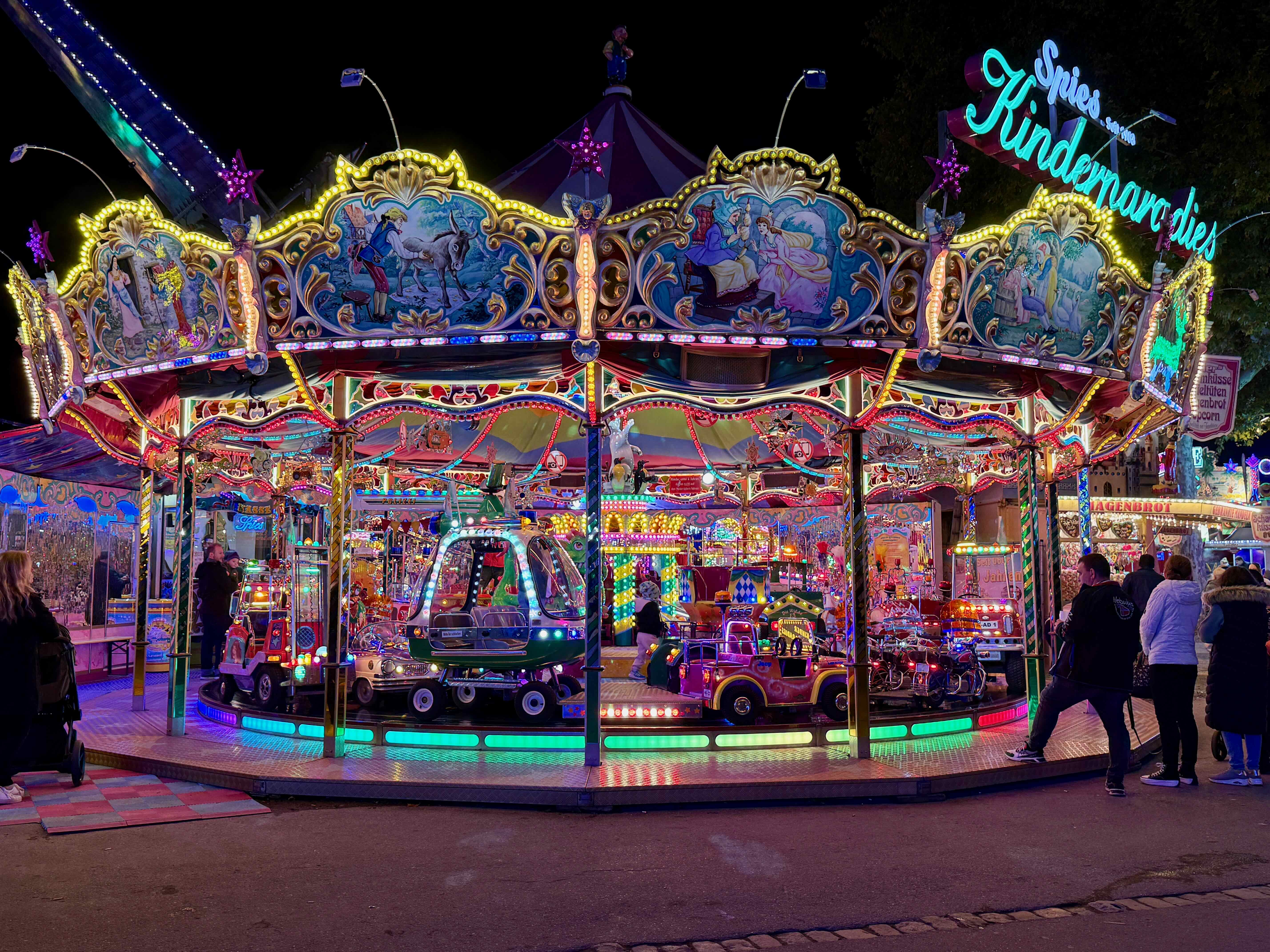
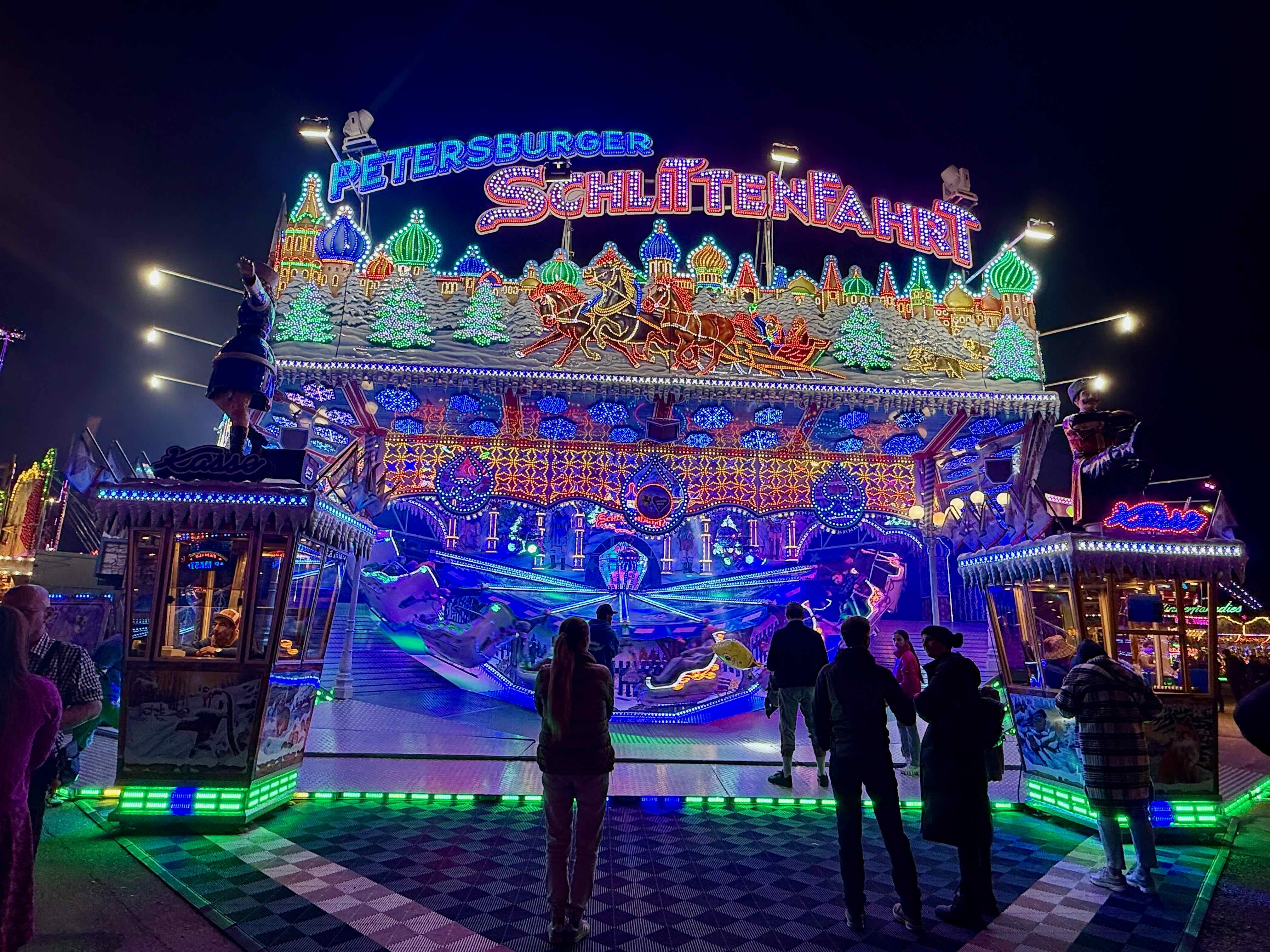
I always like carousels. This one had a lot of lights… 

…but not as many as this ride!

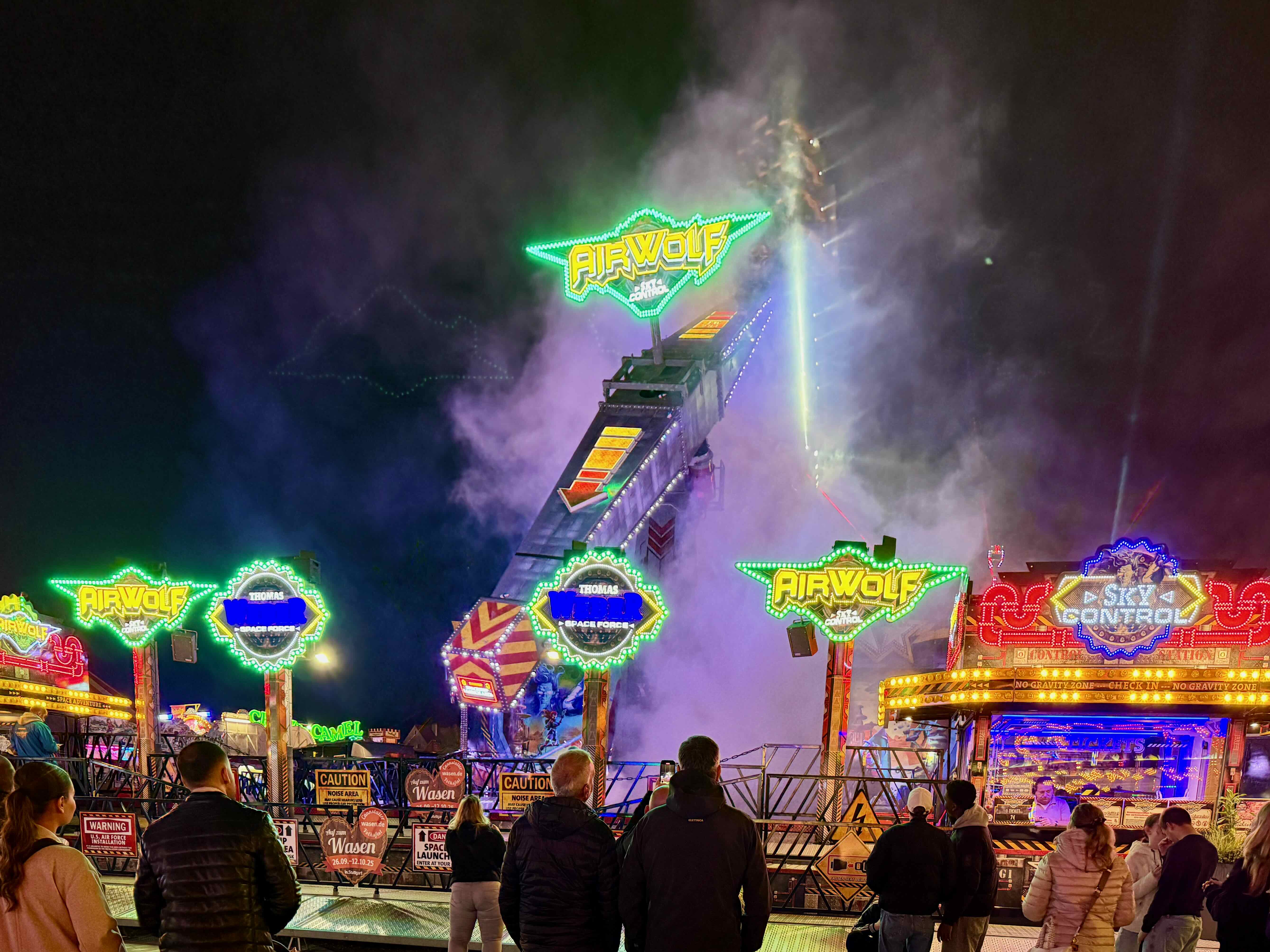
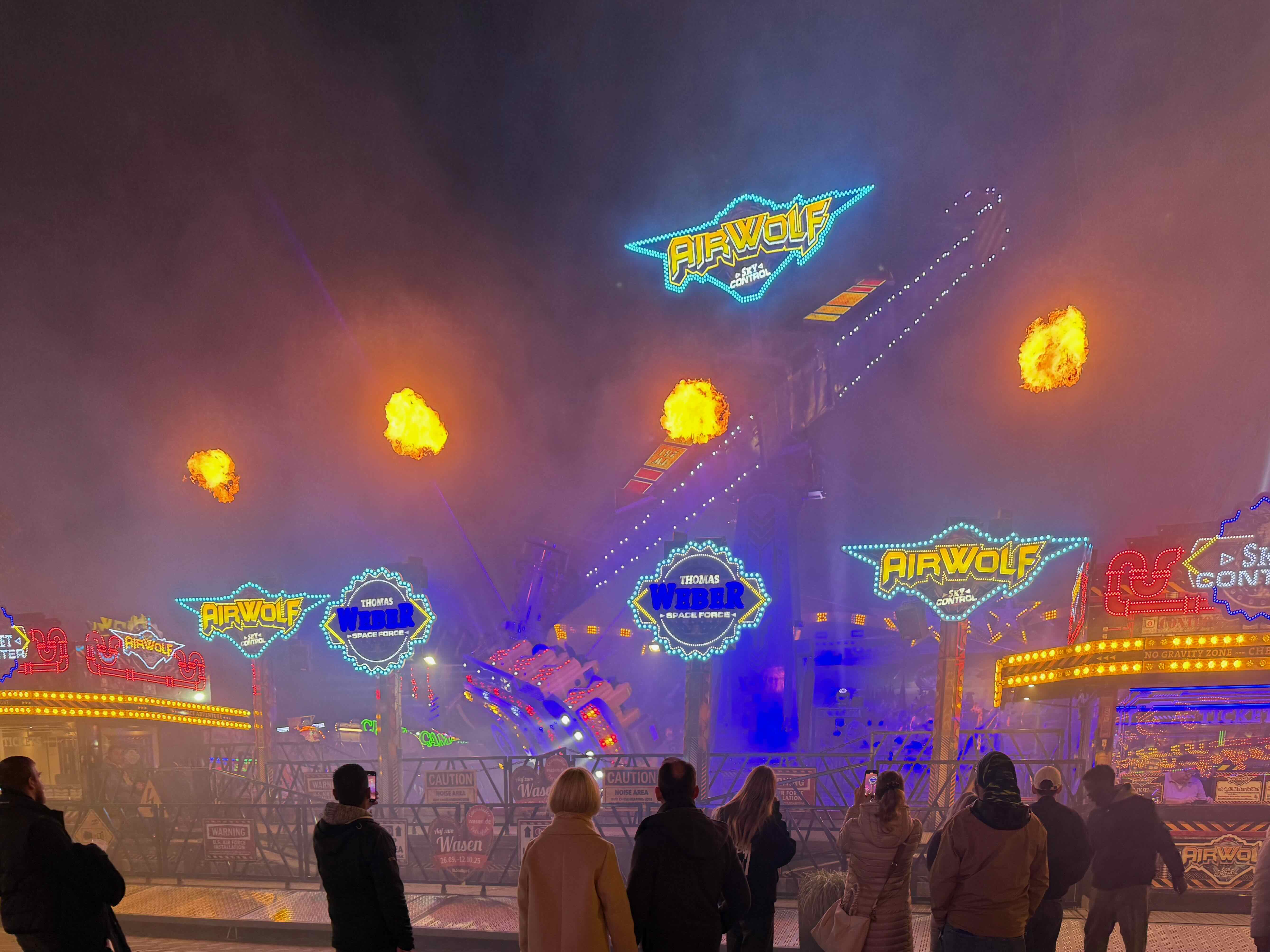
Another crazy ride.  The seats are just visible through the smoke.  They twist and turn upside down as they twirl around, with lots of smoke…

…and some real shooting flames!

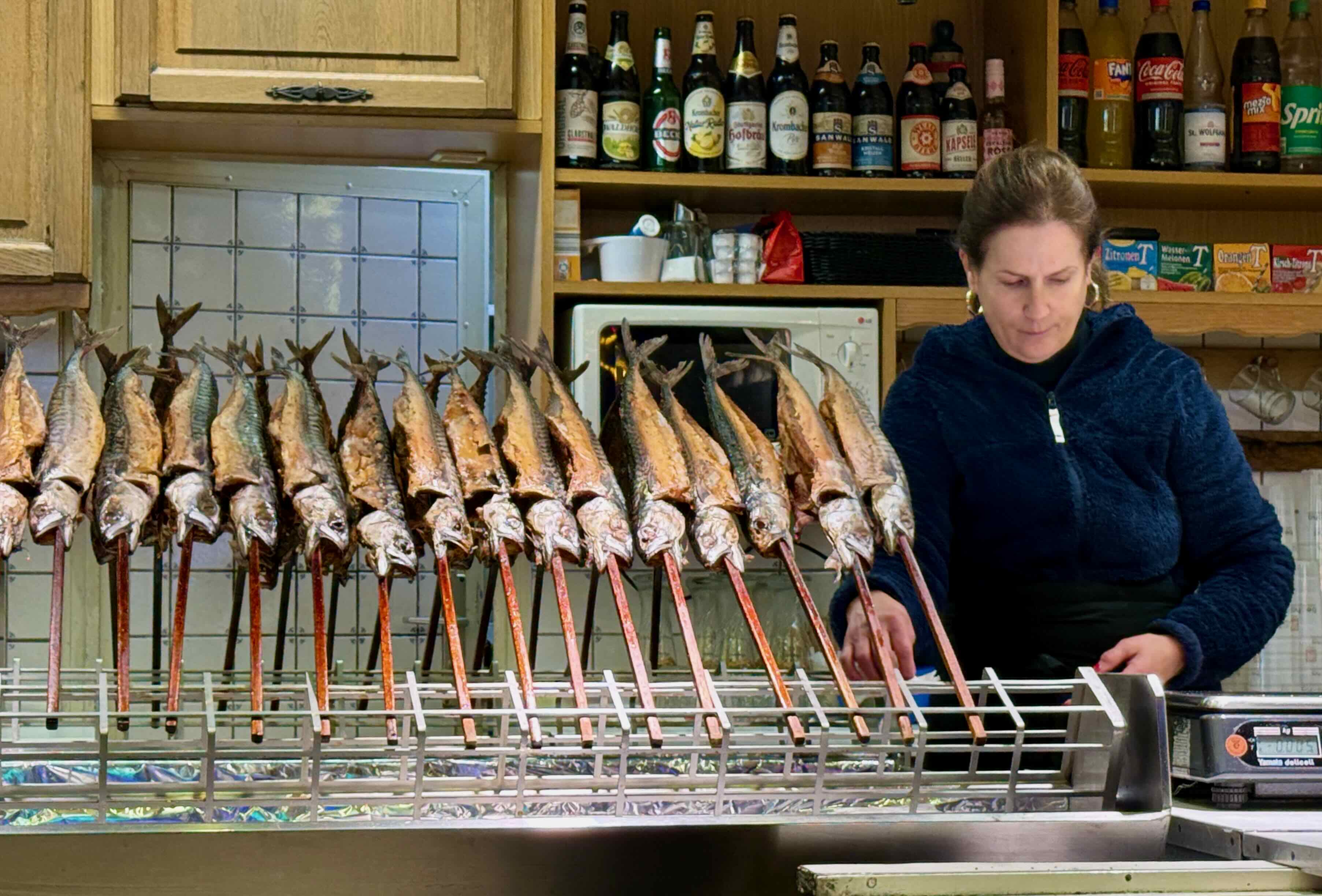
The last time we saw fish on a stick was on our trip when our oldest daughter was four years old. I didn’t see anyone actually eating one of these. Maybe they taste better than they look?

The rides here all have lots of lights and special effects.  You can just make out the seats flying by at the bottom of the ride.

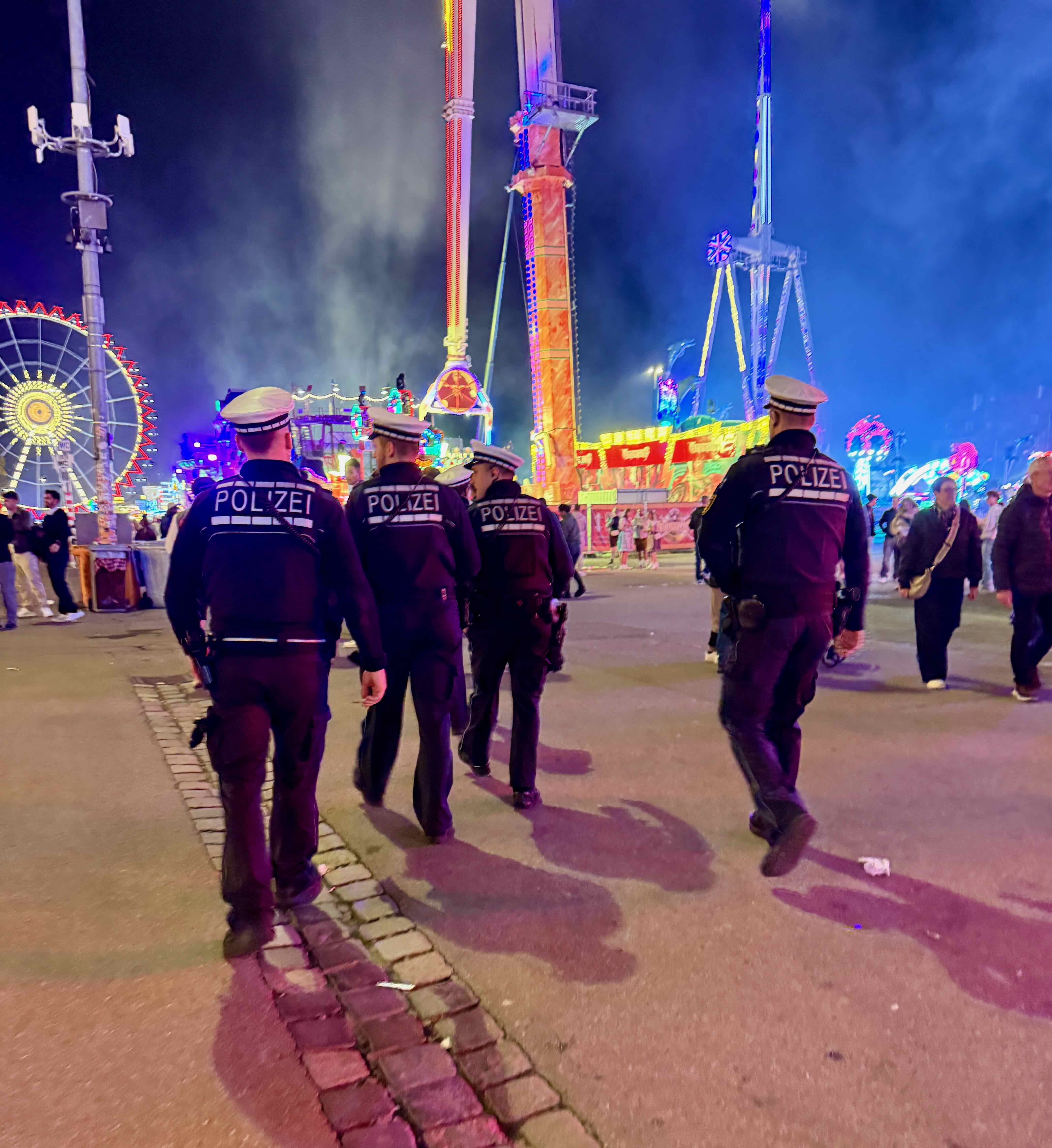
There is a definite Polizei presence. We saw several groups on patrol,  but we only saw one drunk person.  His buddy was half carrying him..his feet and legs just weren’t working at all!

Some of the lederhosen wearing men have these funny half socks that they wear on their calves along with regular socks.

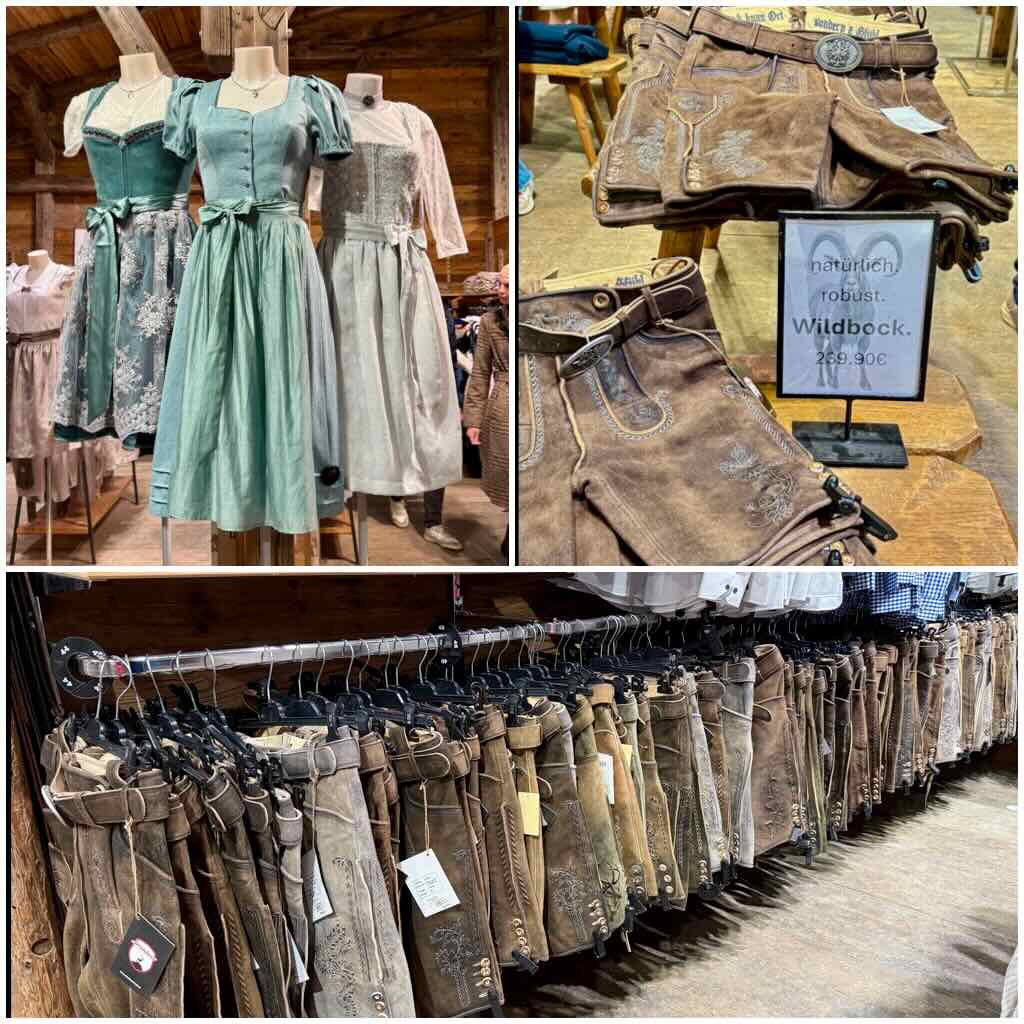
There is even a store on site selling lederhosen and dirndl dresses,  We were both rather shocked at how expensive the lederhosen is.  They started at €250 and went up from there!

The grounds are busy and I’m not sure we saw everything but we were tired and head home.

There is also a little fair just a few minutes from our apartment, so we walk through part of it too. I loved these balloons and stop for a photo. The guy selling them came over to sell me one, but when he saw I was just taking a photo he burst out laughing!  It was a fun night but we are happy to be home.

Porsche Museum and Factory Tour, Stuttgart Germany

Day 40     Thursday, October 9, 2025

After spending yesterday at the Mercedes Museum, what better way to spend today than at another car museum.  There is no such thing as “too many car museums” in our tour book! Today we go to the Porsche Museum and end the day with a tour of the Porsche 911 production factory.

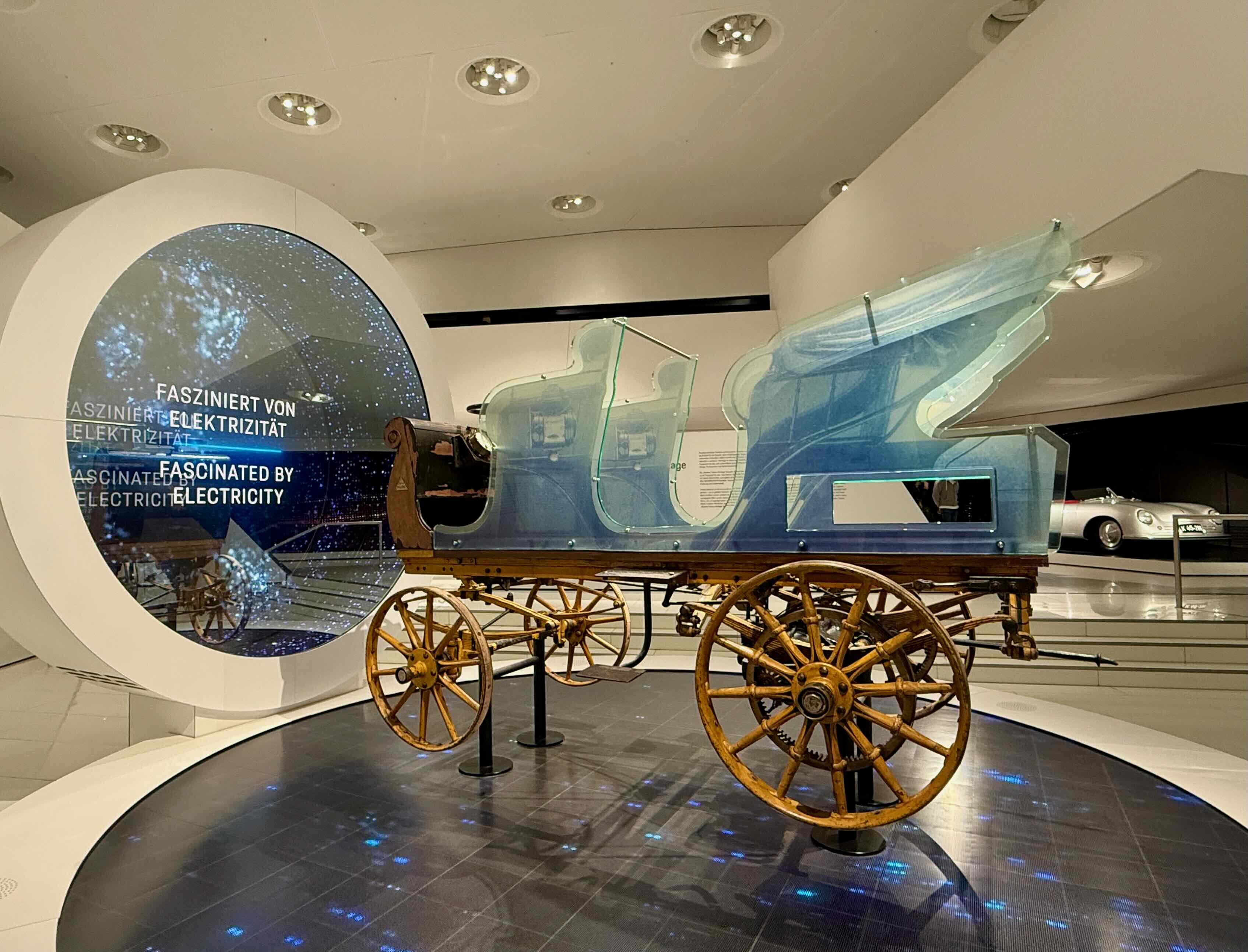
In 1898 Ferdinand Porsche built an electric car (called the C2 Phaeton) with the motor suspended above the rear axle.  Its range was 80 km and its top speed was 35 kph. The car was built in Vienna.

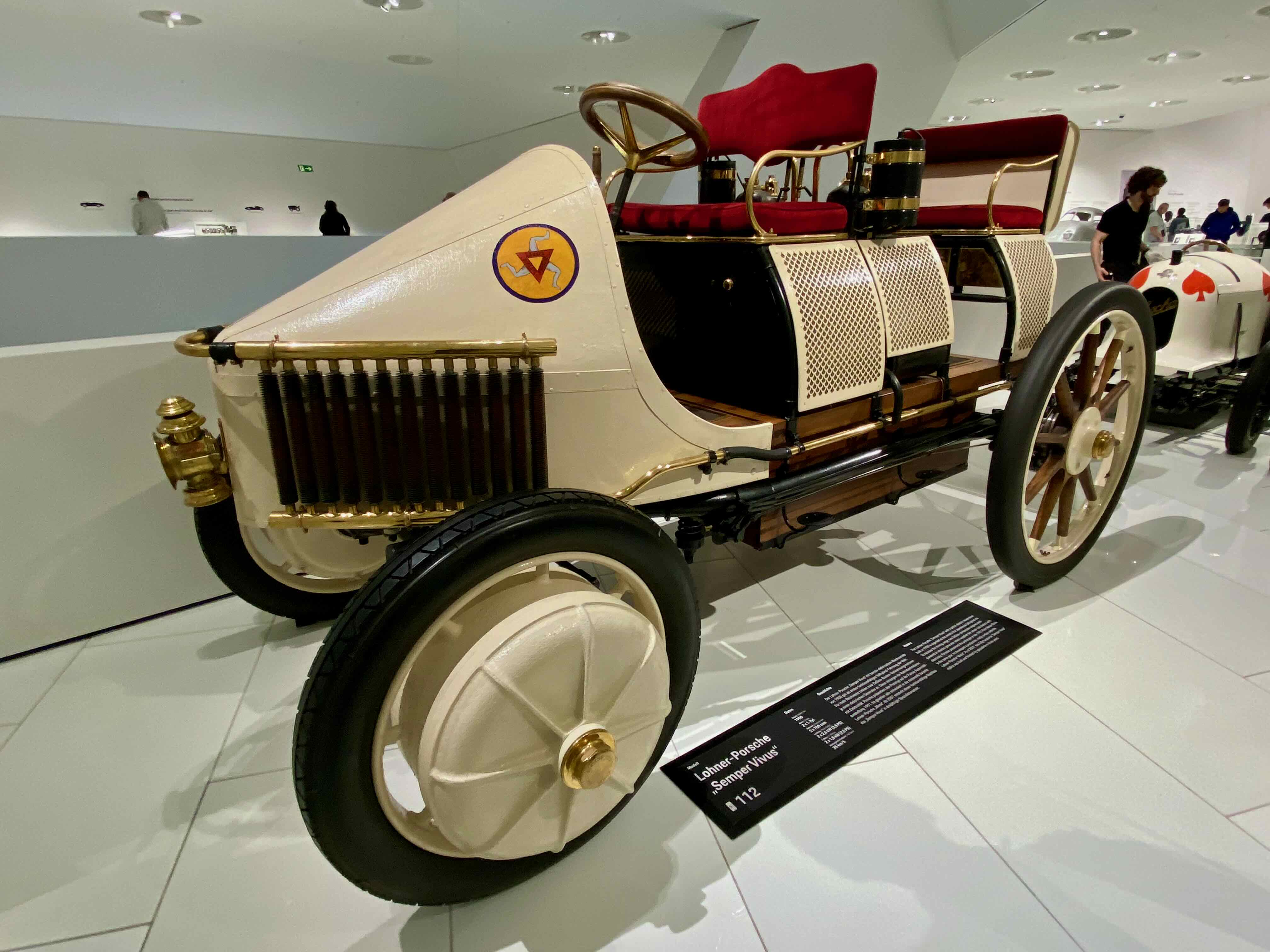
The Lohner-Porsche ‘Semper Vivus’ from 1900 was the first hybrid vehicle with a gas engine that powered an electric generator supplying power to the electric motors mounted in the front wheel hubs. 

Ferdinand Porsche joined Gottlieb Daimler in 1923 as Technical Director and helped develop the supercharger motors in Stuttgart.  He left the company in 1929 as his idea for a small light-weight Mercedes-Benz was not popular with the Board of Directors.

At the 1933 Berlin Motor Show Adolf Hitler announced his intention to motorize the nation, with every German owning either a car (or a tractor!).  In 1934 Porsche received a contract from Hilter to built a people’s car (Volkswagen).  Prototypes were produced before World War II but full production did not start until after the war.  Over 21 million Volkswagens (Type 1 – the Beetle) were produced before production ended in 2003.

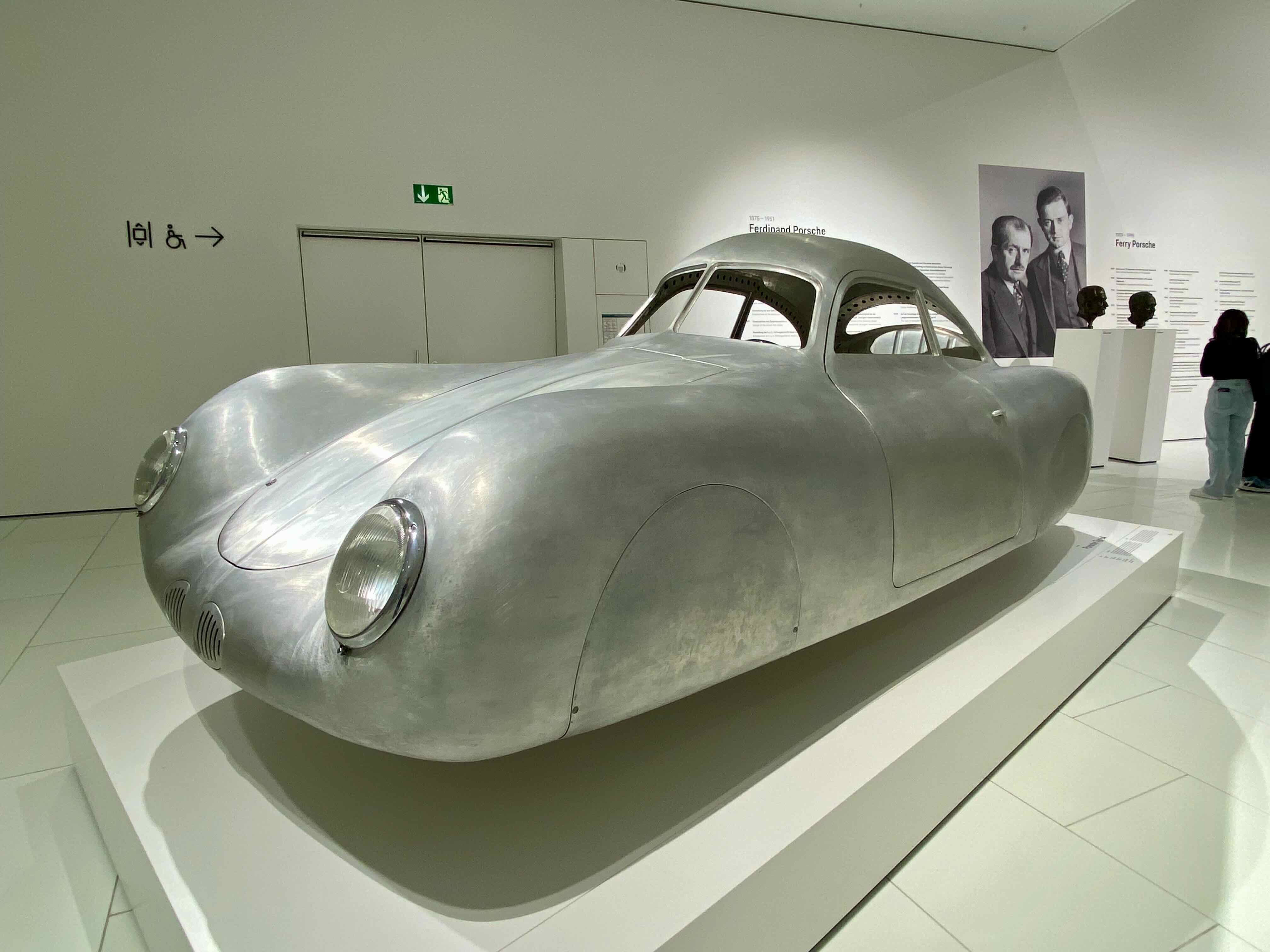
Porsche’s love was designing, building and driving racing cars,  This 1939 Porsche Type 64 Prototype was built of aluminum and had a top speed of 140 kph from a 1.1 litre engine.  

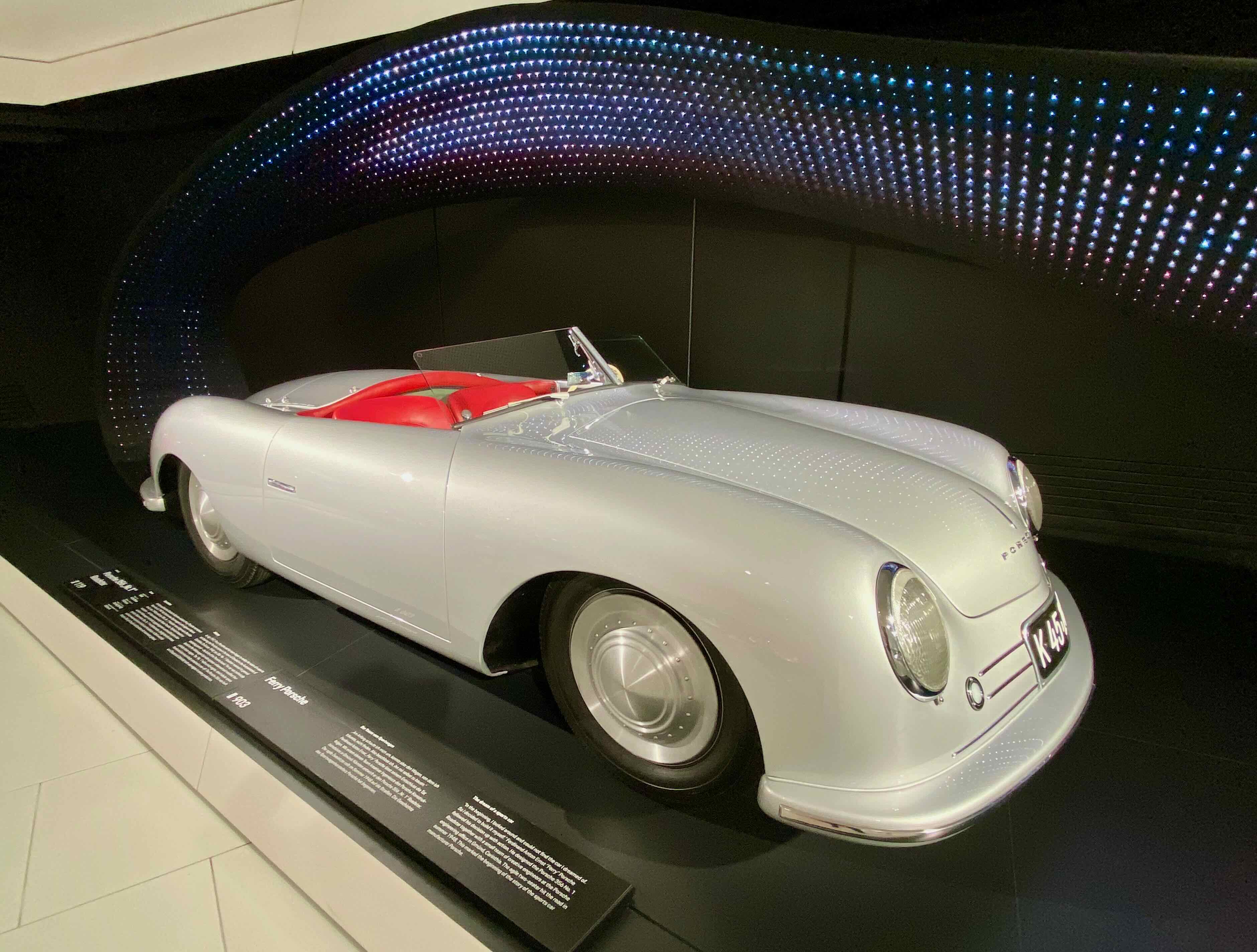
After World War II ended, Porsche and his son Ferry continue to develop sport cars. In 1947 the Porsche 356 Roadster was produced as the first vehicle bearing the Porsche name. 

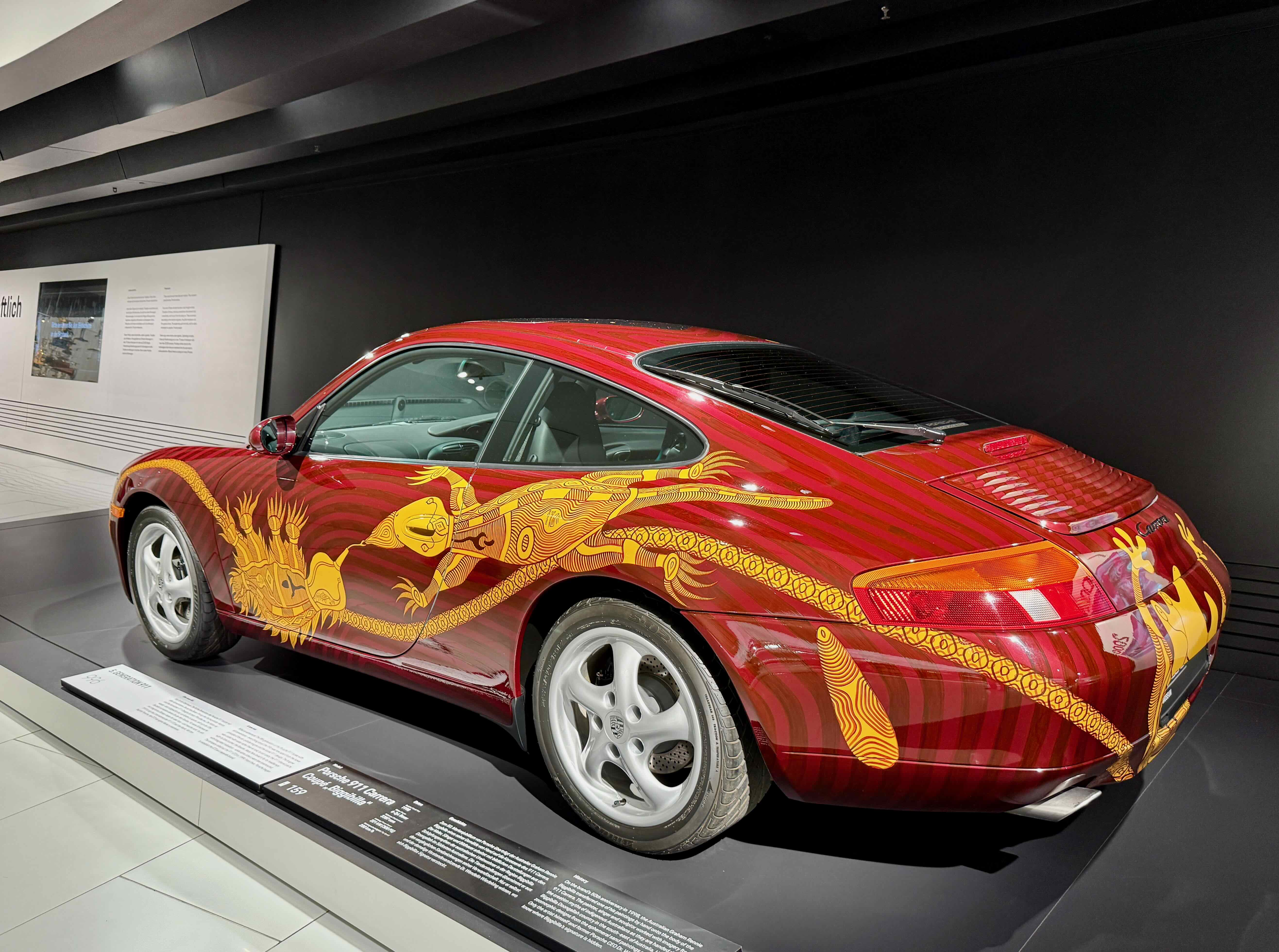
Trudy liked the paint job on this car, done by an Australian artist in 1998 for Porche’s 50th Anniversary.  Graham Ronnie Biggibilla transferred one of his paintings by hand onto this 911 Carrera. Somewhere hidden in the paint job is his signature.

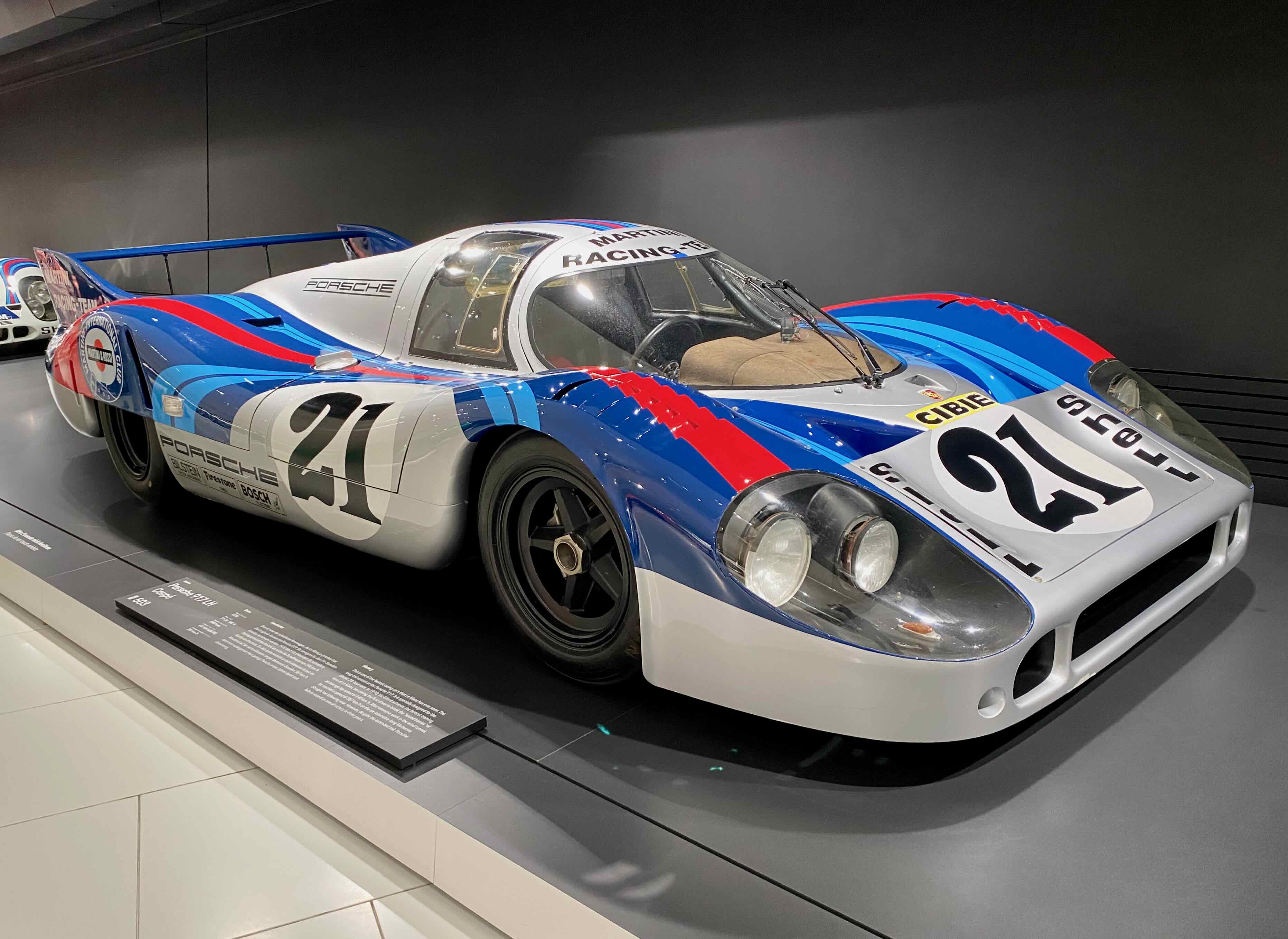
In 1970, this Porsche 917 set records at the ’24 Hours of LeMans’ with an average lap speed of 240 km/h.

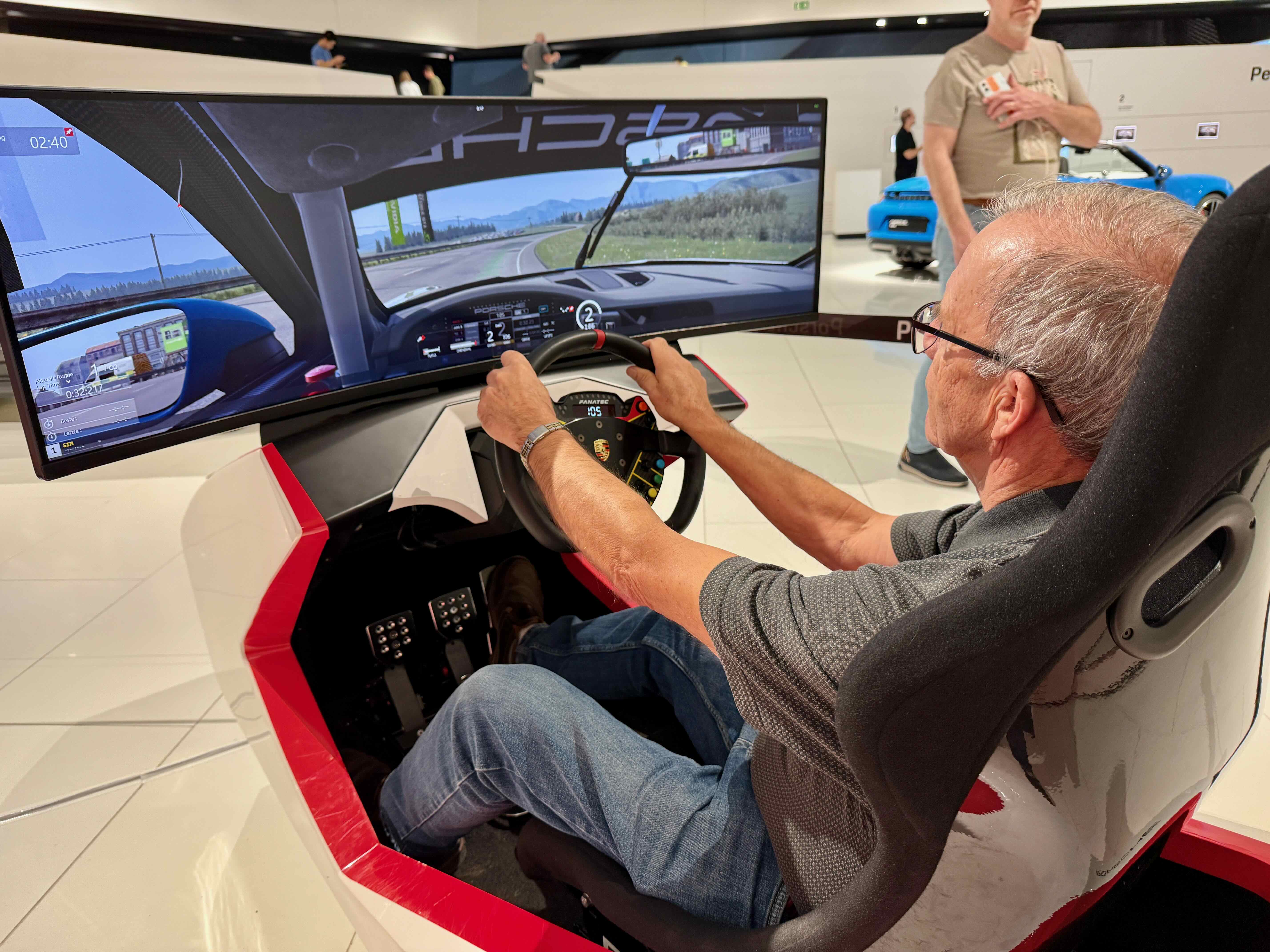
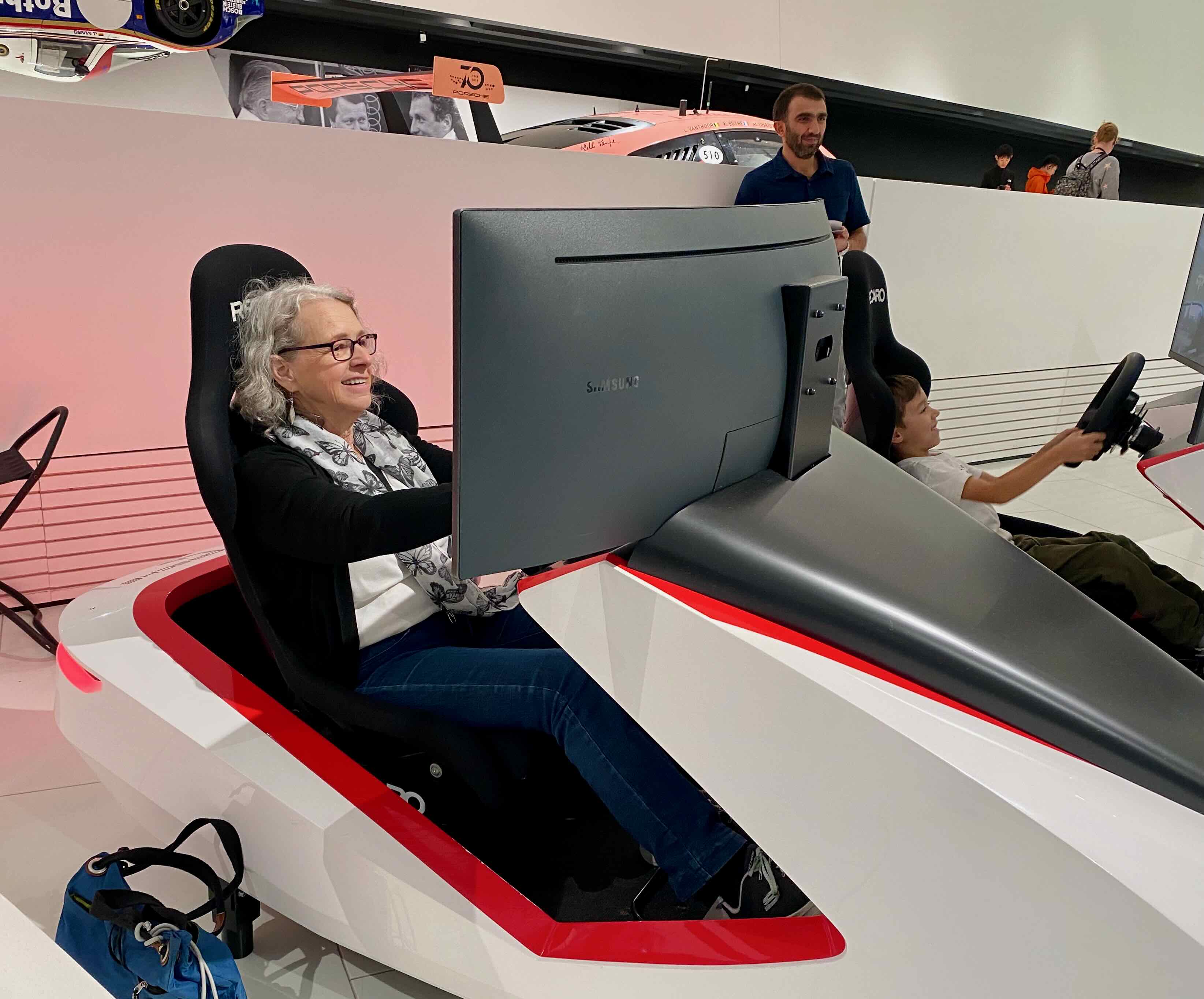
Not to be outdone, both Trudy and Bob attempt to set their own fast lap times.  Bob crashed twice with a fastest time of 256 km/h.  Trudy didn’t crash and raced at 180 km/h.

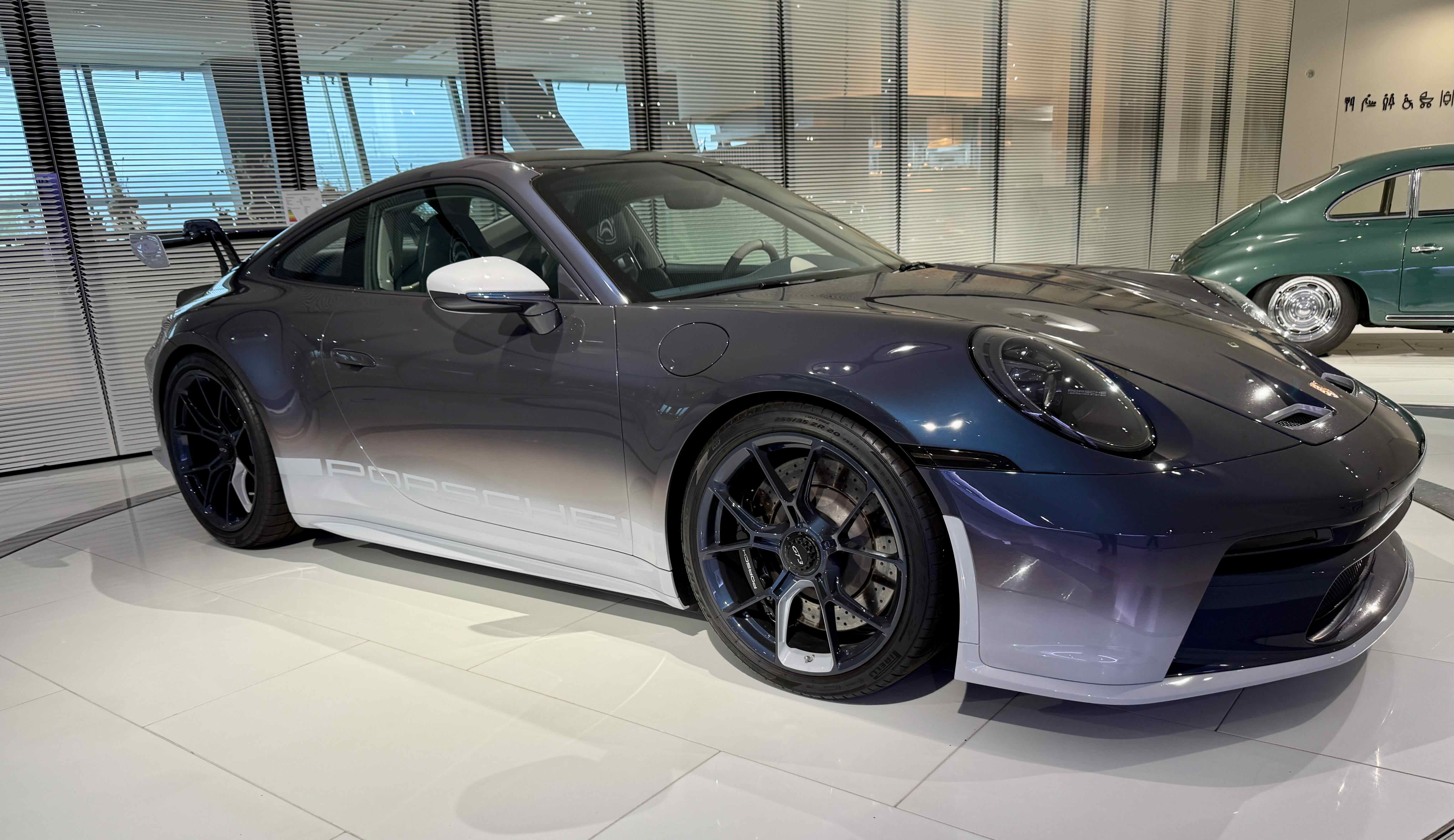
This version of Sally Carrera, a Porsche 911 was developed in conjunction with the “Cars” movie of 2006. A 2023 911 GT3 “Shark” that looks like a giant shark.
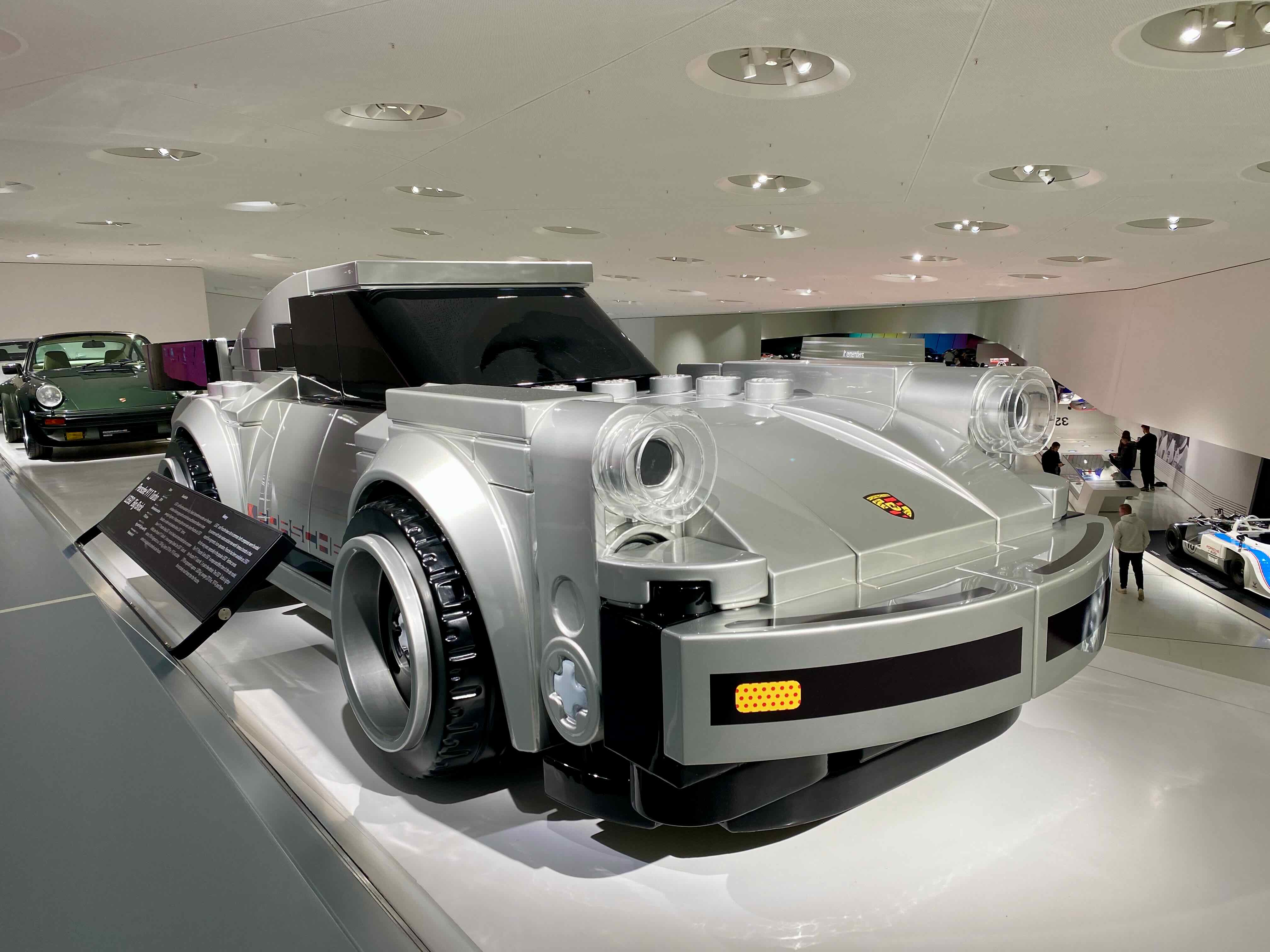
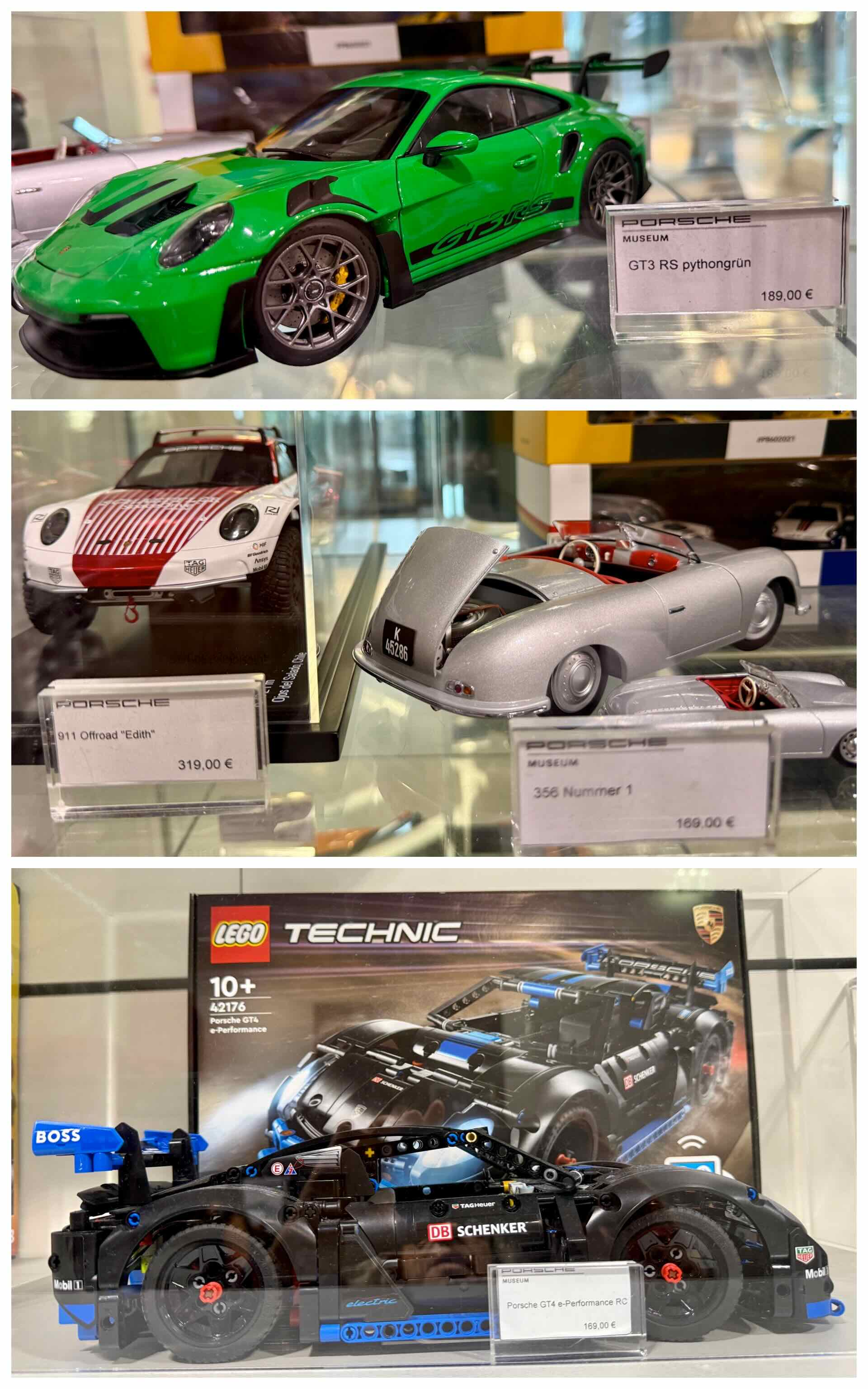
A promotional LEGO Porsche from 2018.

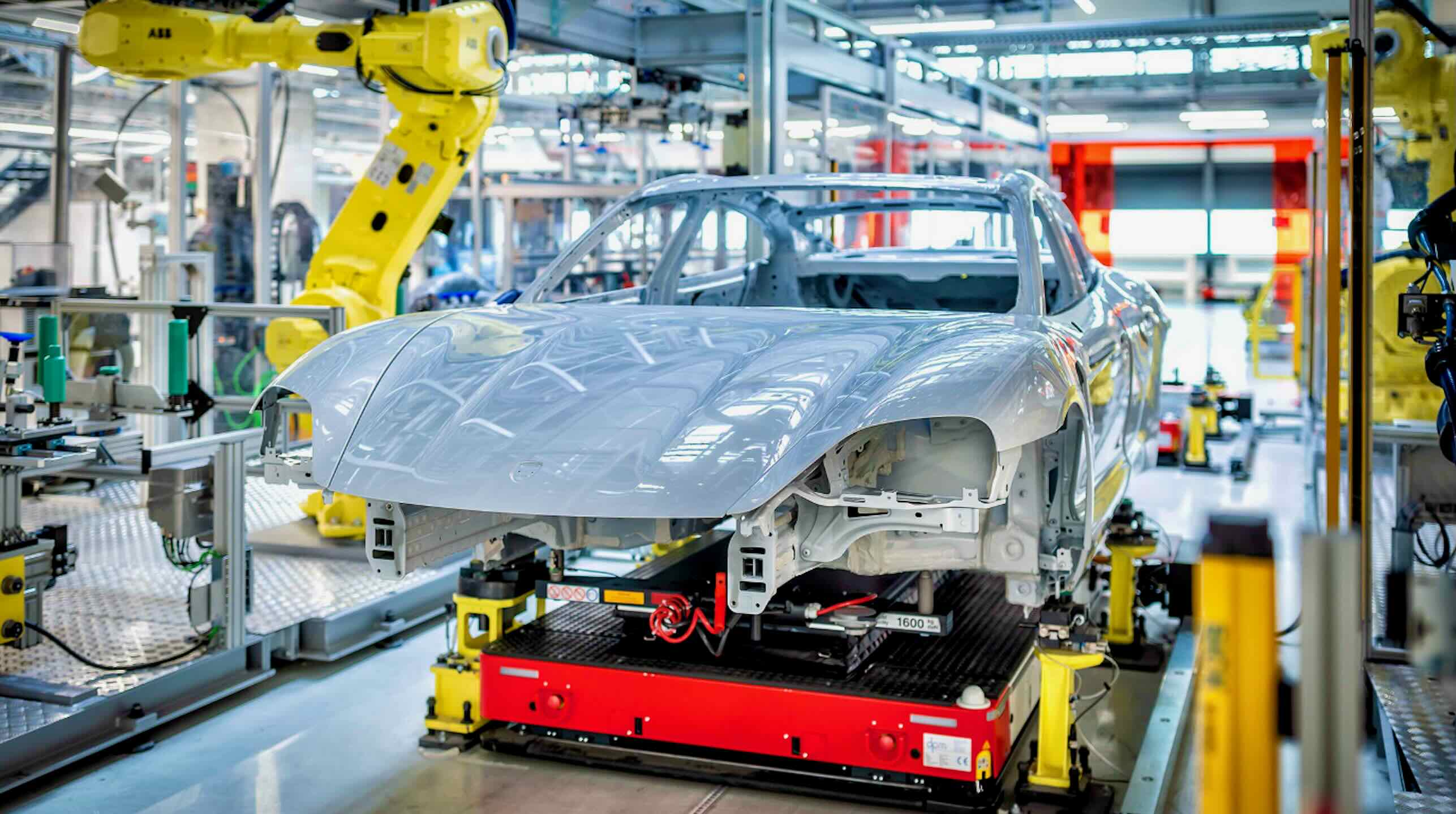
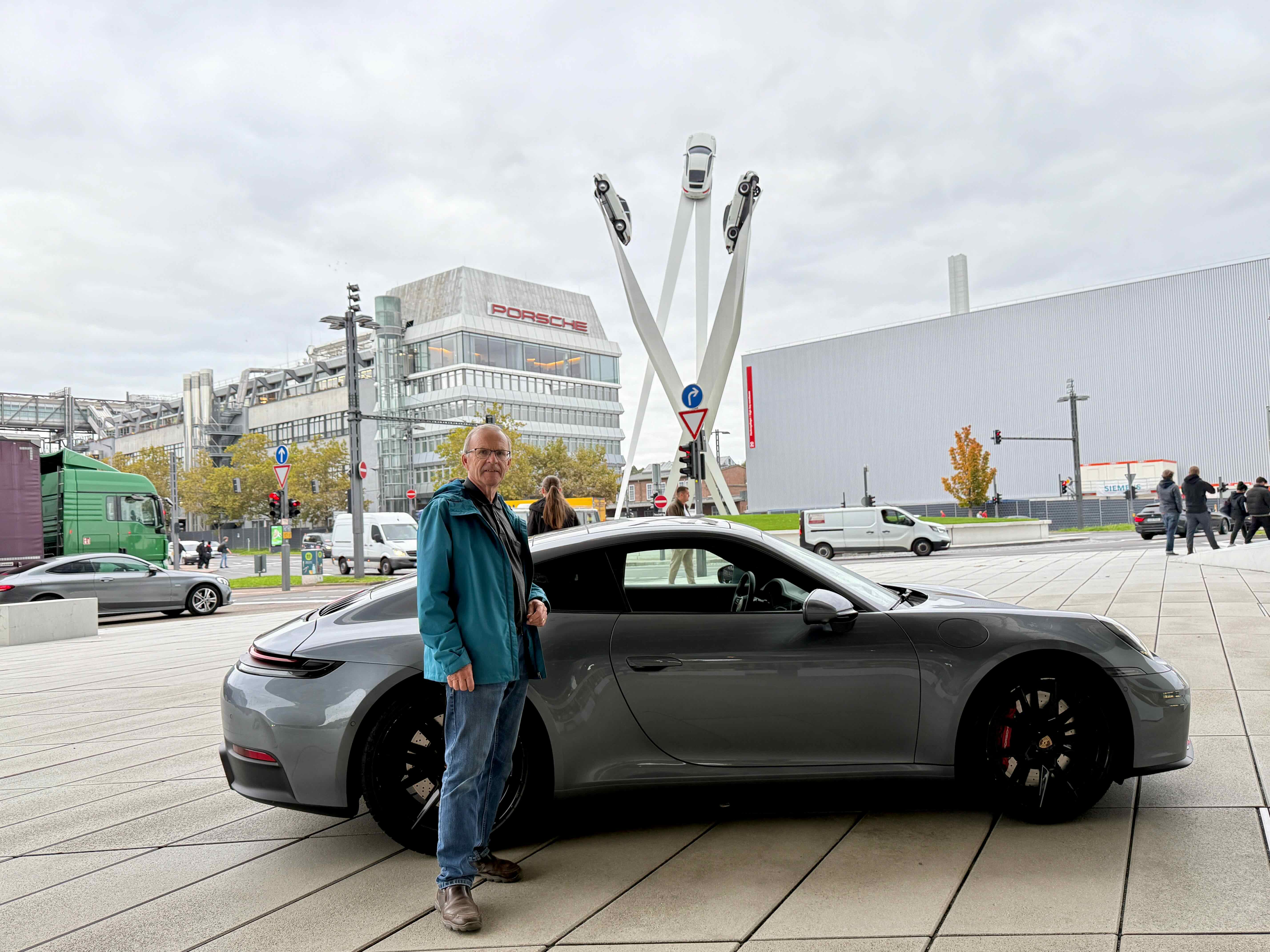
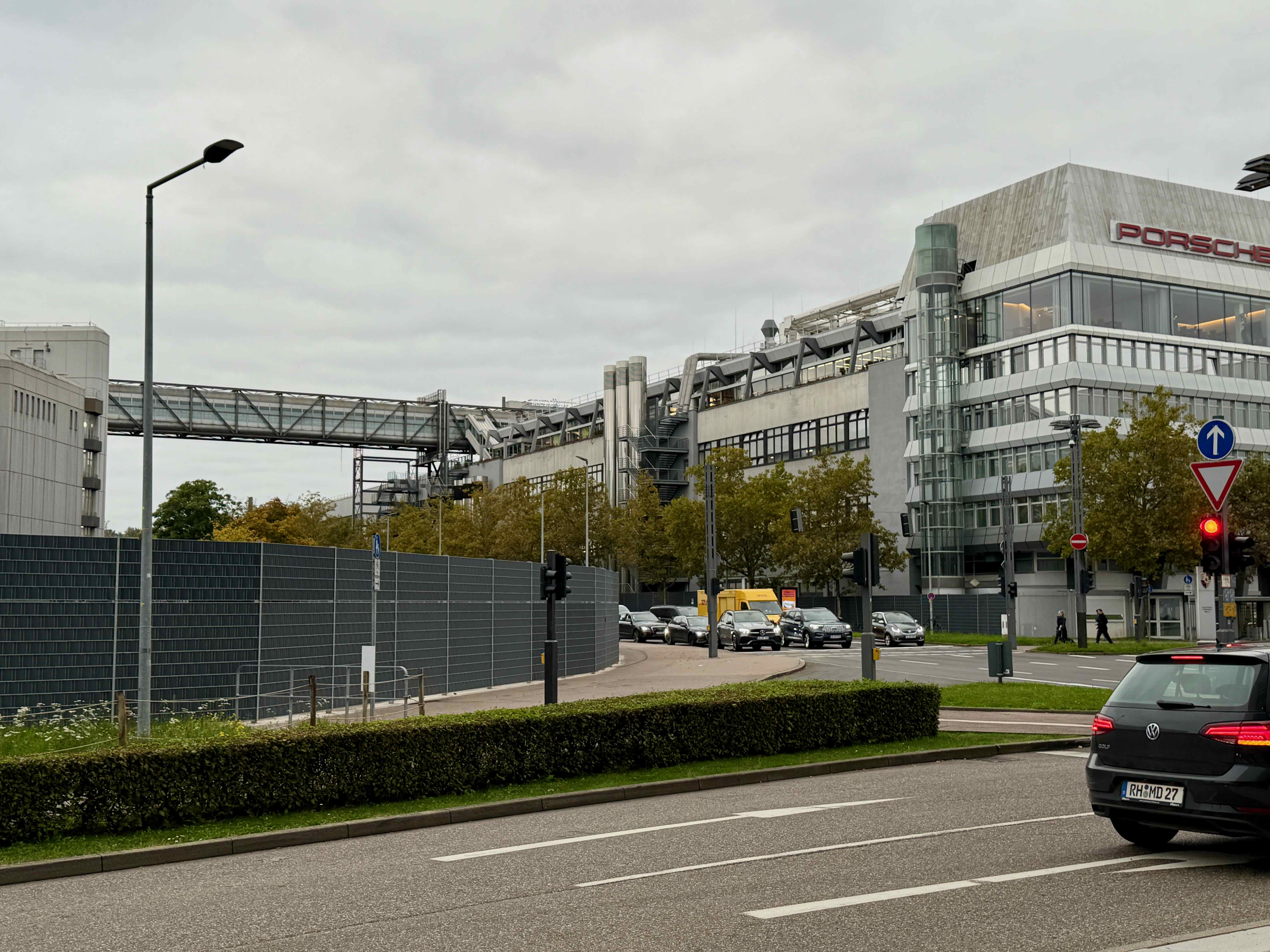
Not only are the cars expensive, the car models are similarly priced.The highlight of the day was the tour of the Porsche 911 Production Plant, shown in the background.  No pictures are allowed in the plant, but Trudy found this photo on the Porsche site advertising their Factory Tour. 9000 people work at the Stuttgart plant producing the Porsche 911 (in 2 shifts per day) and the Porsche Cayman (1 shift per day).  Up to 250 Porsche 911’s are produced every day. There are 137 work stations that have less than 3 minutes to complete their task before the cars move along the assembly line.  We got to see the tail-end of the assembly, after the motor and suspension had been ‘married’ to the body.  Most Porsches are custom ordered, even the color of thread used for the upholstery can be changed. Robotics move the cars along the assembly line, turning, raising and tipping the car for easy assembly.  Robotic carts move parts along a guided path to the next work station. As one robotic cart passed by us, a screw fell off the wagon so we picked it up and took it home.  We hope it wasn’t a structural piece. The top connecting walkway is how robotics move the painted bodies from the Paint Shop (on the right)  to the Assembly Building (on the left). We were there for five hours and the time flew by.
Trudy here…I tried drawing my very first car ever, and I decided that drawing cars is much more difficult than drawing people!  No photo…it was that bad!

Quiet Day in Stuttgart, Germany

Day 37     Tuesday, October 7, 2025

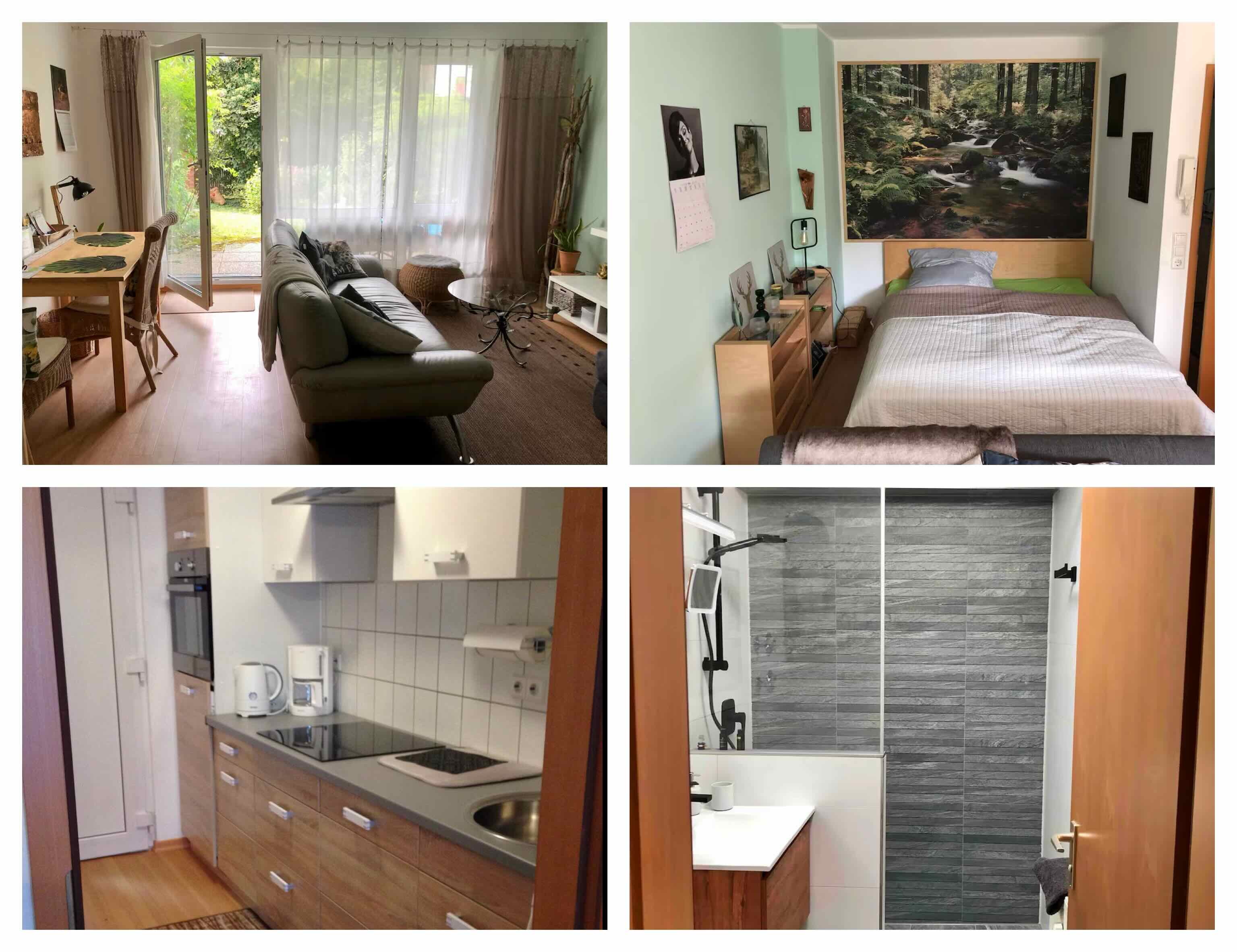
Our Airbnb apartment in Stuttgart isn’t big but it has everything we need.  We had a hard time finding a parking spot last night as parking is on the street, and there weren’t any available places.  Finally after driving around the block a few times we found a place, but it is a couple of blocks away so we make several trips to bring all our stuff inside. Because we cook our meals at home, we have three bags of groceries besides our suitcases. We are soon settled and have our dinner.

Today is a quiet day for both of us.  We crammed a lot in yesterday and had over four hours of driving, which made it a long day. I worked a bit on my journal and blog and Bob went for a walk and to pick up some fresh bread and fruit.

Frankfurt to Stuttgart, Germany

Day 37     Monday, October 6, 2025

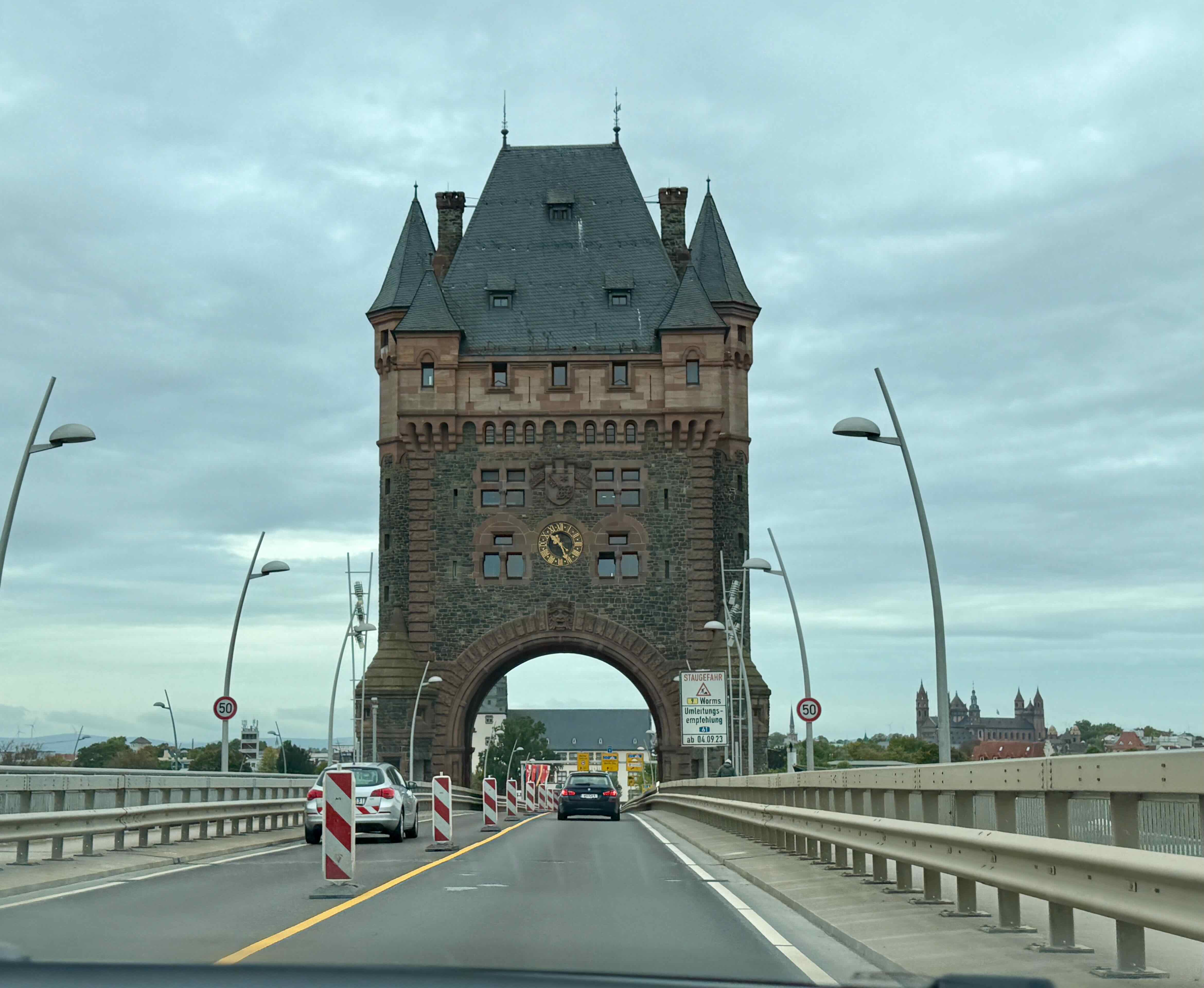
On our drive to Stuttgart we stop at Worms, Germany. Worms is pronounced Vurmz. We passed through this huge gate on the bridge over the Rhine River.

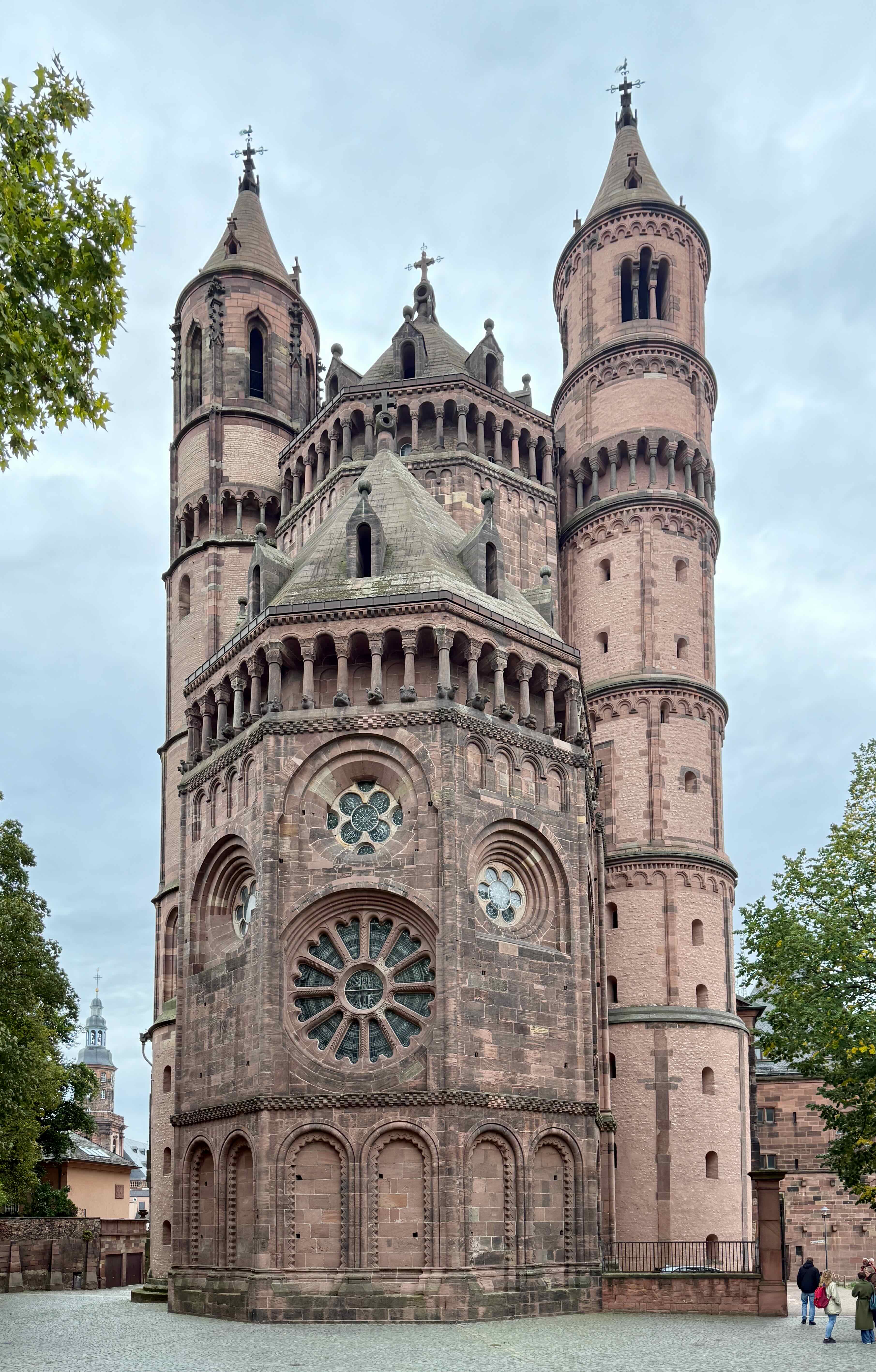
We find a place to park on the street but have to move to a parkade because the street machine won’t take our euros…big surprise!  St Peter’s Cathedral is our first stop but we can’t find the door to get inside!  

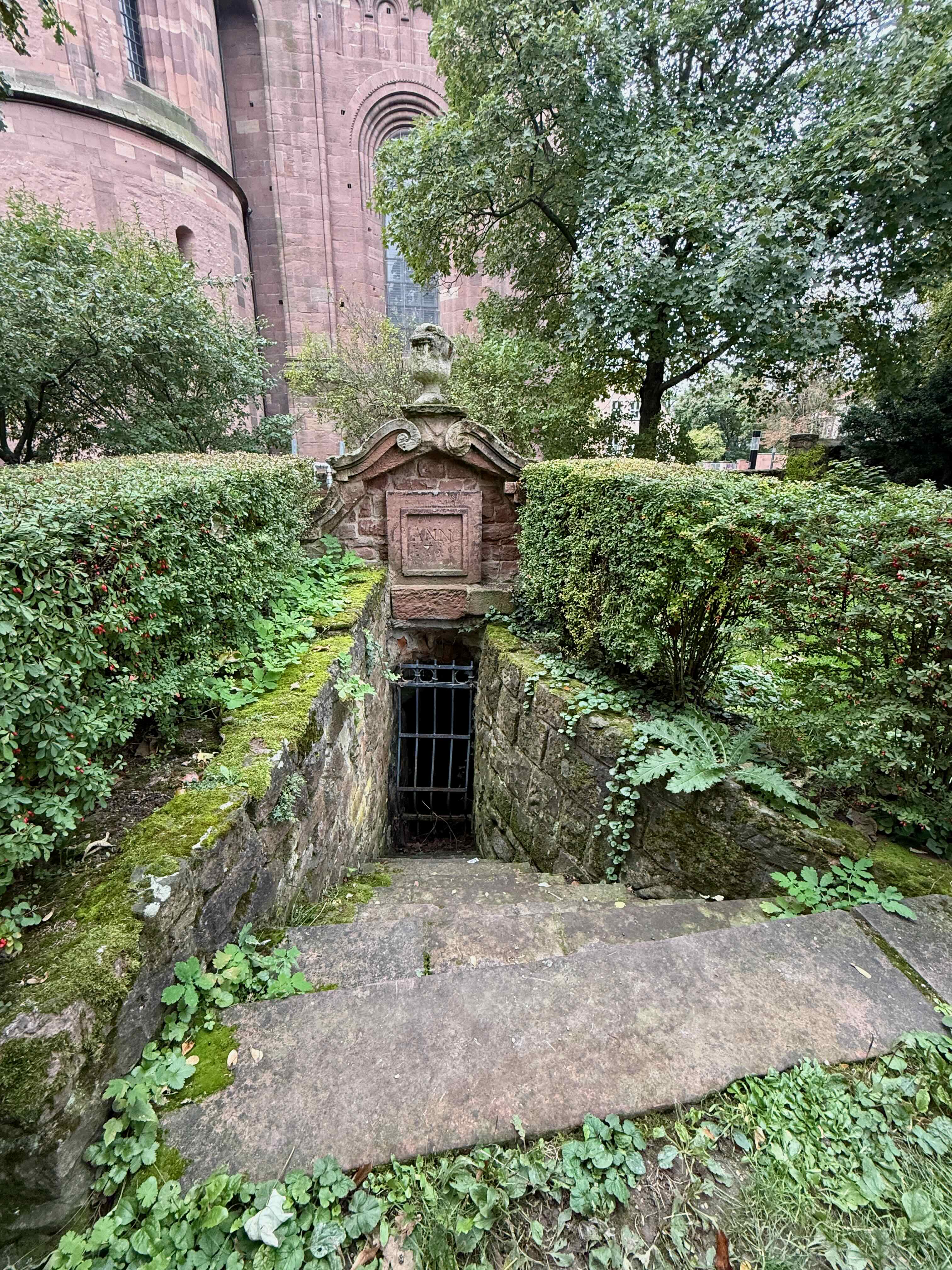
In our walk around the church I see steps leading into what looked like a private area, but I take a look anyways and it is actually a public garden so we go inside. When I see something like this I am so curious. I wonder what it is, why it is there and where does it lead to?

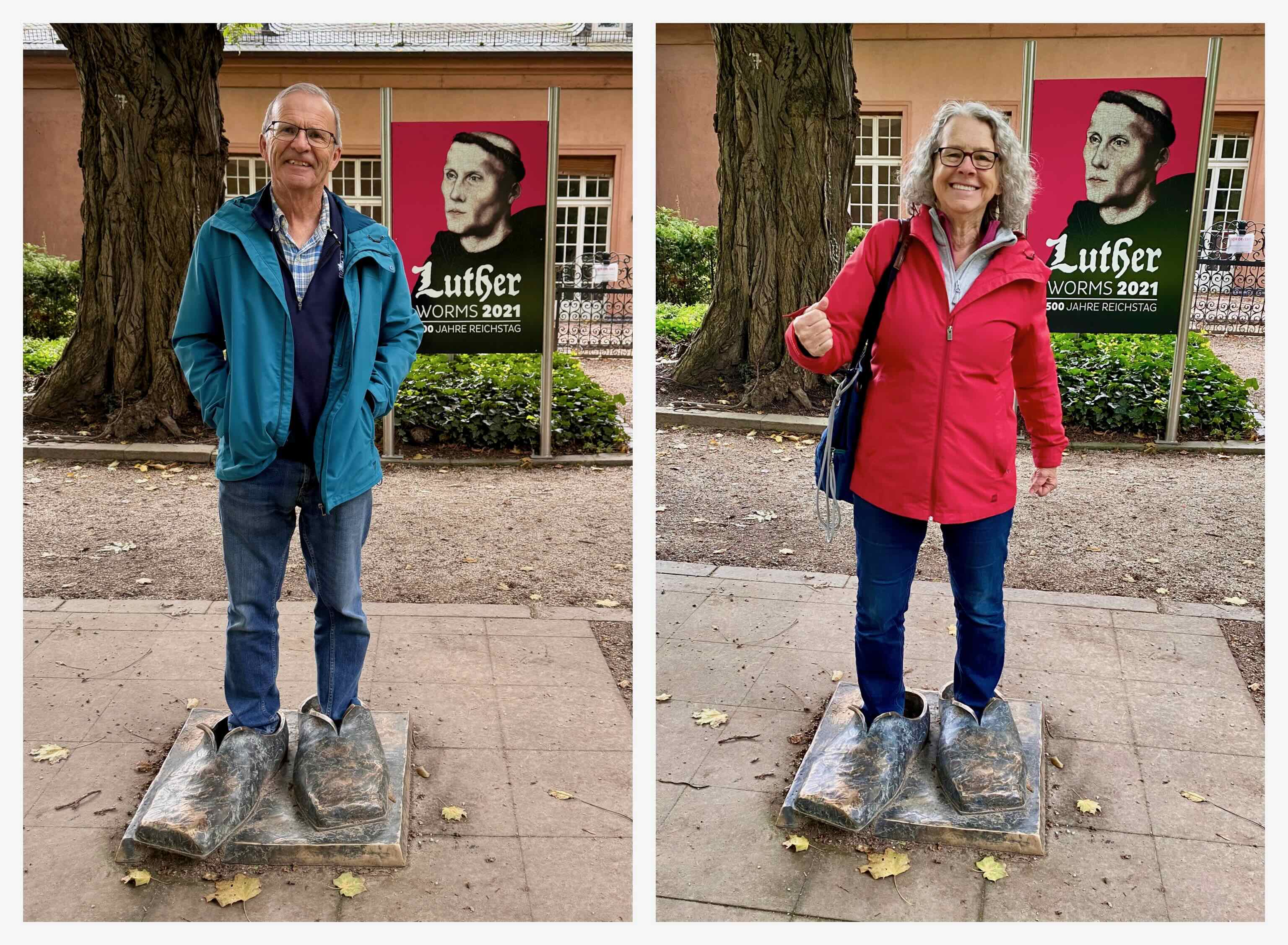
Turns out this garden marks the location where Martin Luther refused to recant his beliefs at the Diet of Worms in 1521. This was the beginning of the Protestant Church and its split from the Catholic Church. These large bronze shoes in Worms’ Heylshof Park shoes are part of a 2017 memorial sculpture, which allows visitors to symbolically “step into Luther’s shoes” at the spot where he stood and defended his doctrines.

 A ‘Diet’ was an assembly or meeting of authorities to make decisions on important matters. The Diet of Worms of 1521 was convened to determine how political and religious authorities should respond to Martin Luther’s teachings. Because the Diet was held in Worms, it is know as the Diet of Worms which still makes me smile because of course I think of eating worms.

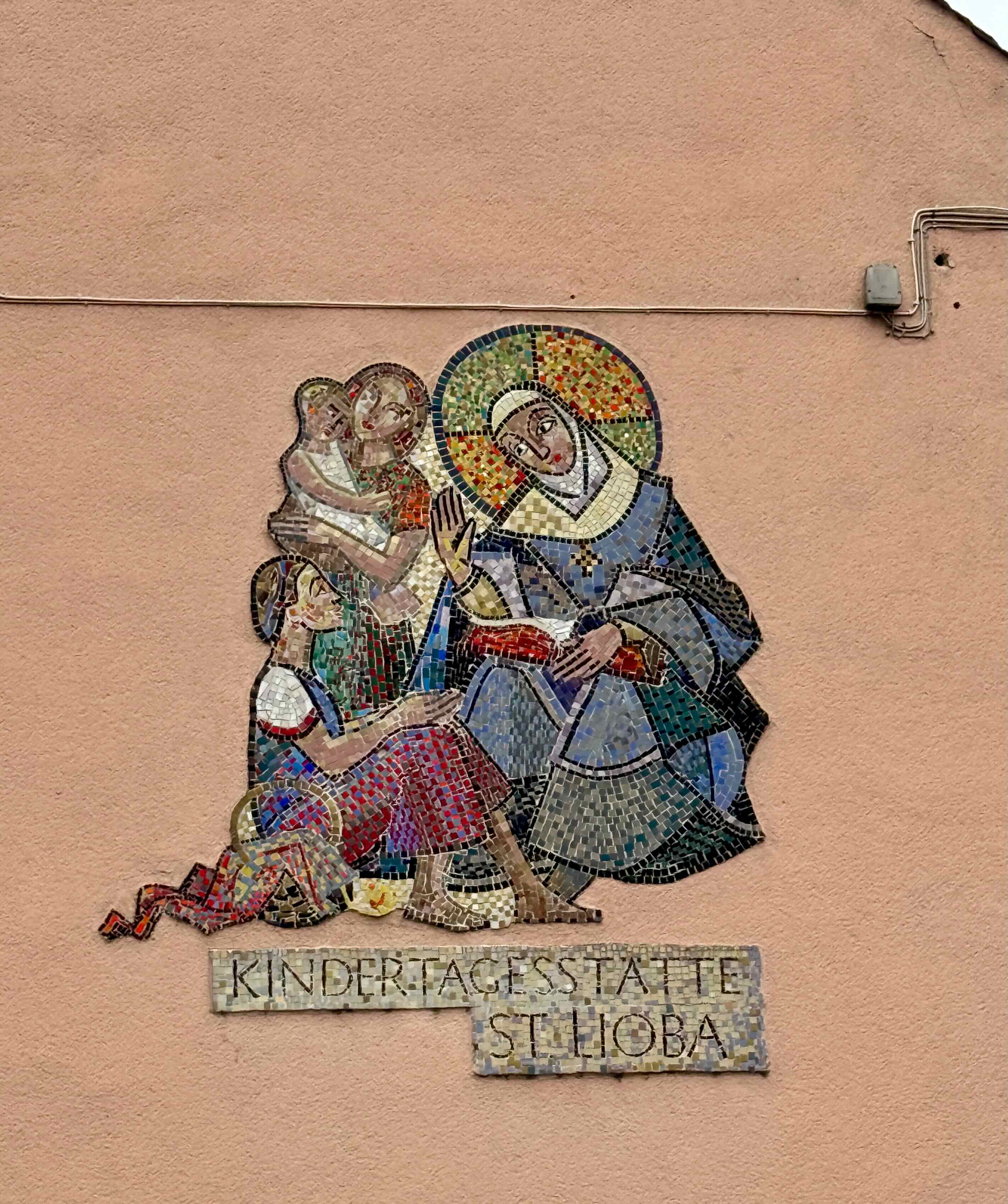
We leave the garden and go back to the church, passing a kindergarten with this colourful mosaic mural.

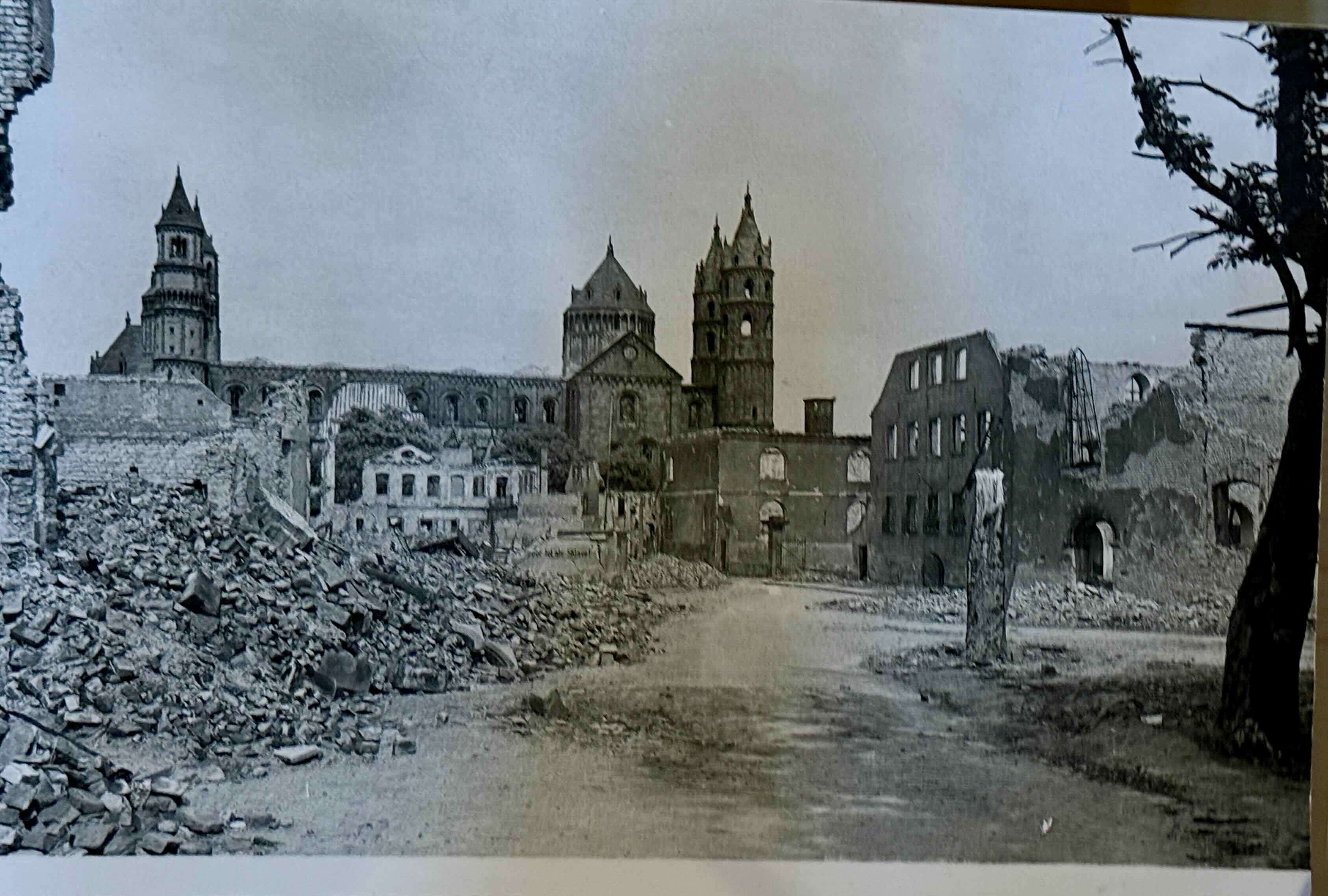
St Peters Cathedral is another cathedral that escaped destruction during the war.  Curious, I did a bit of of research and learned that the high belltowers and steeples of cathedrals were used by the Allies as navigational landmarks and that sometimes military planners made conscious efforts to protect major cultural and religious sites. So perhaps not divine intervention after all?

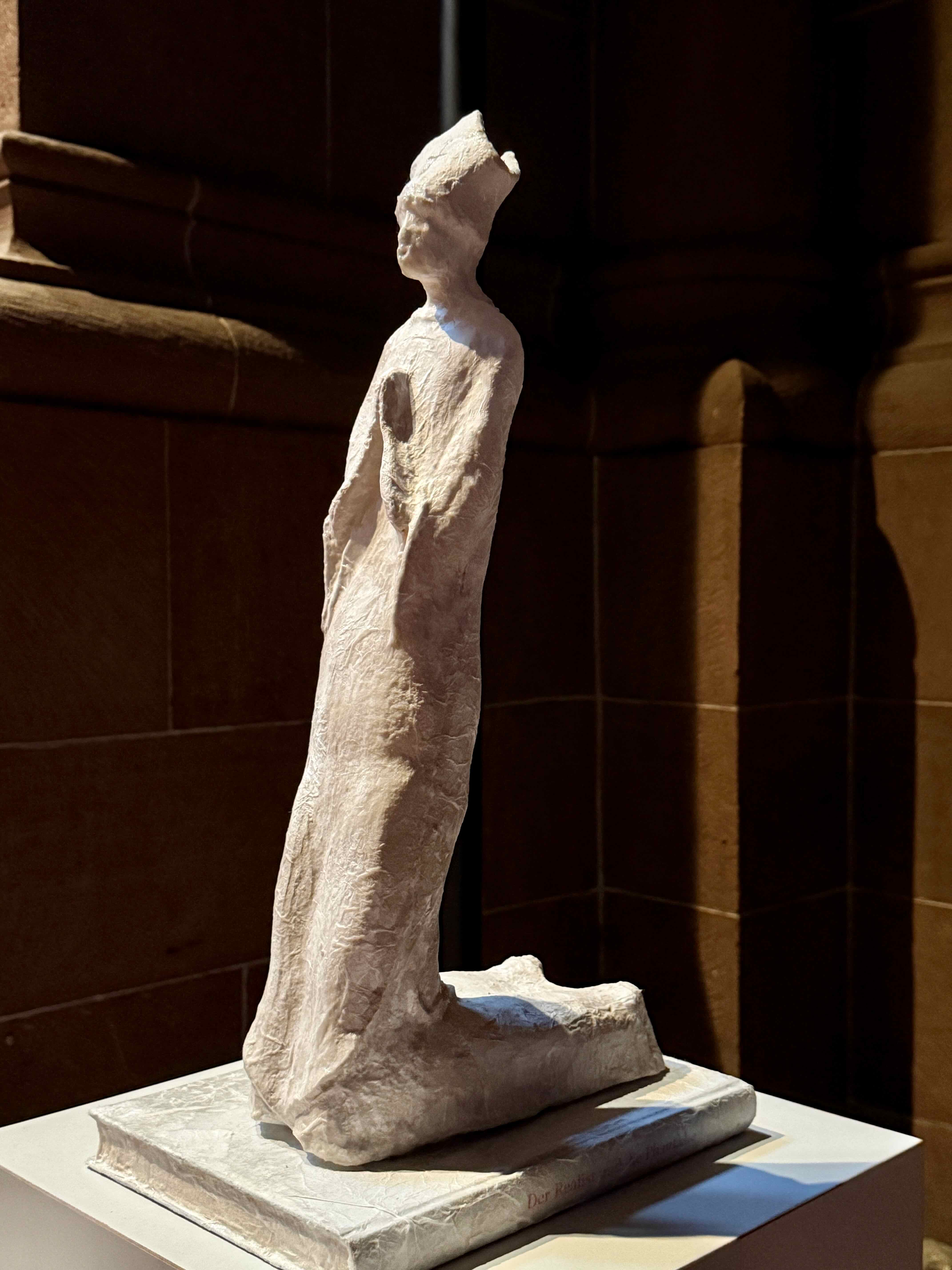
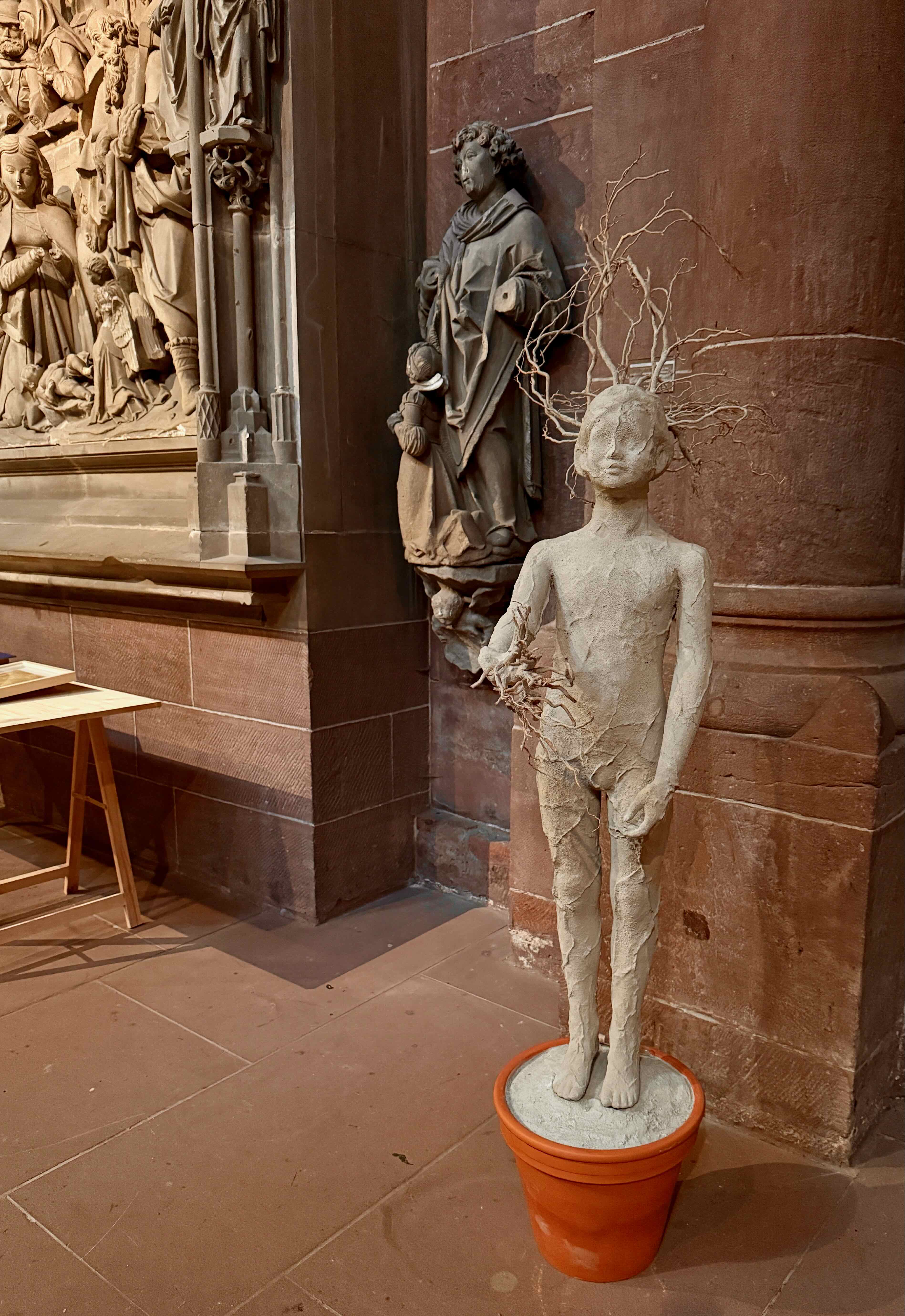
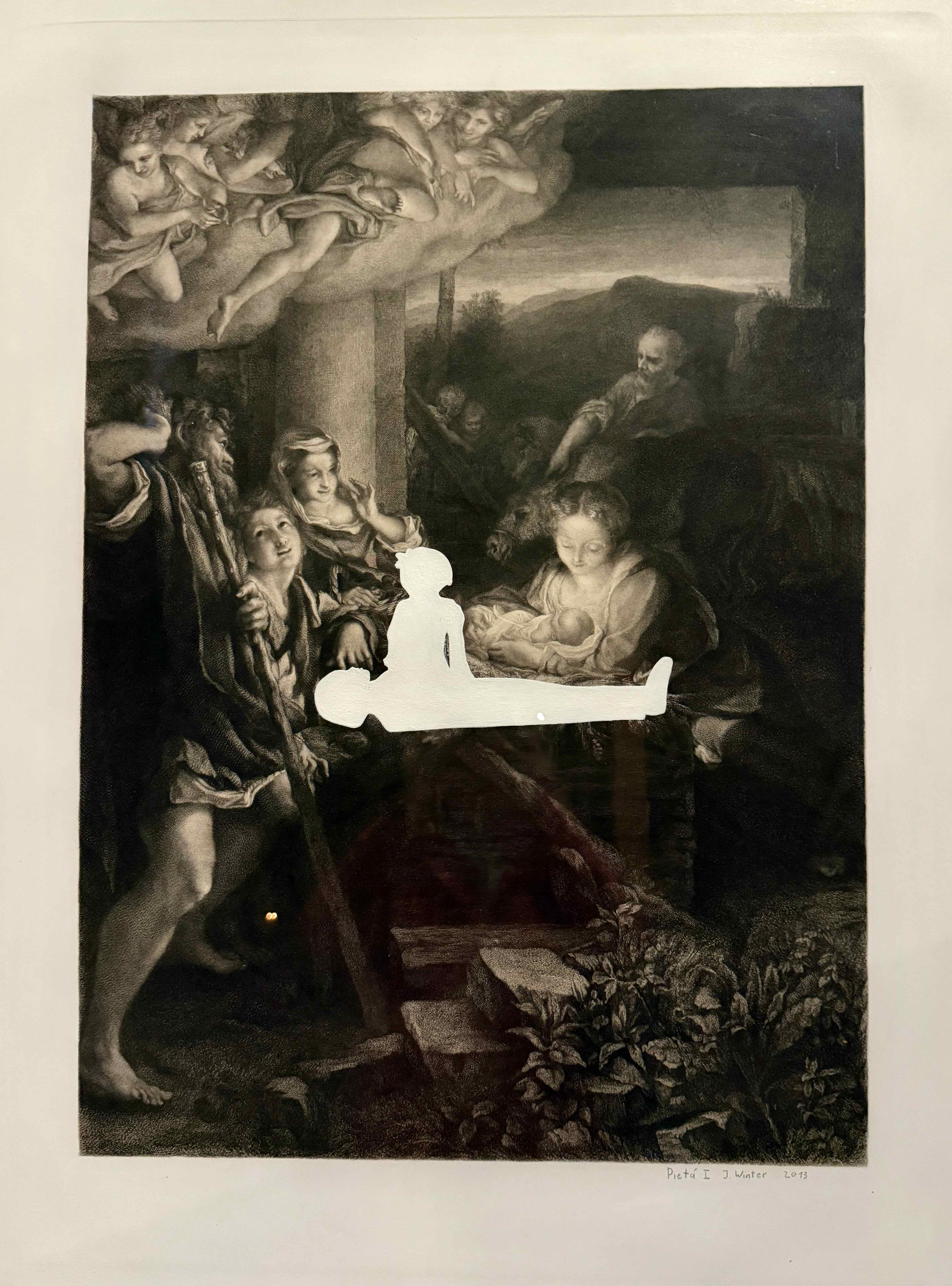
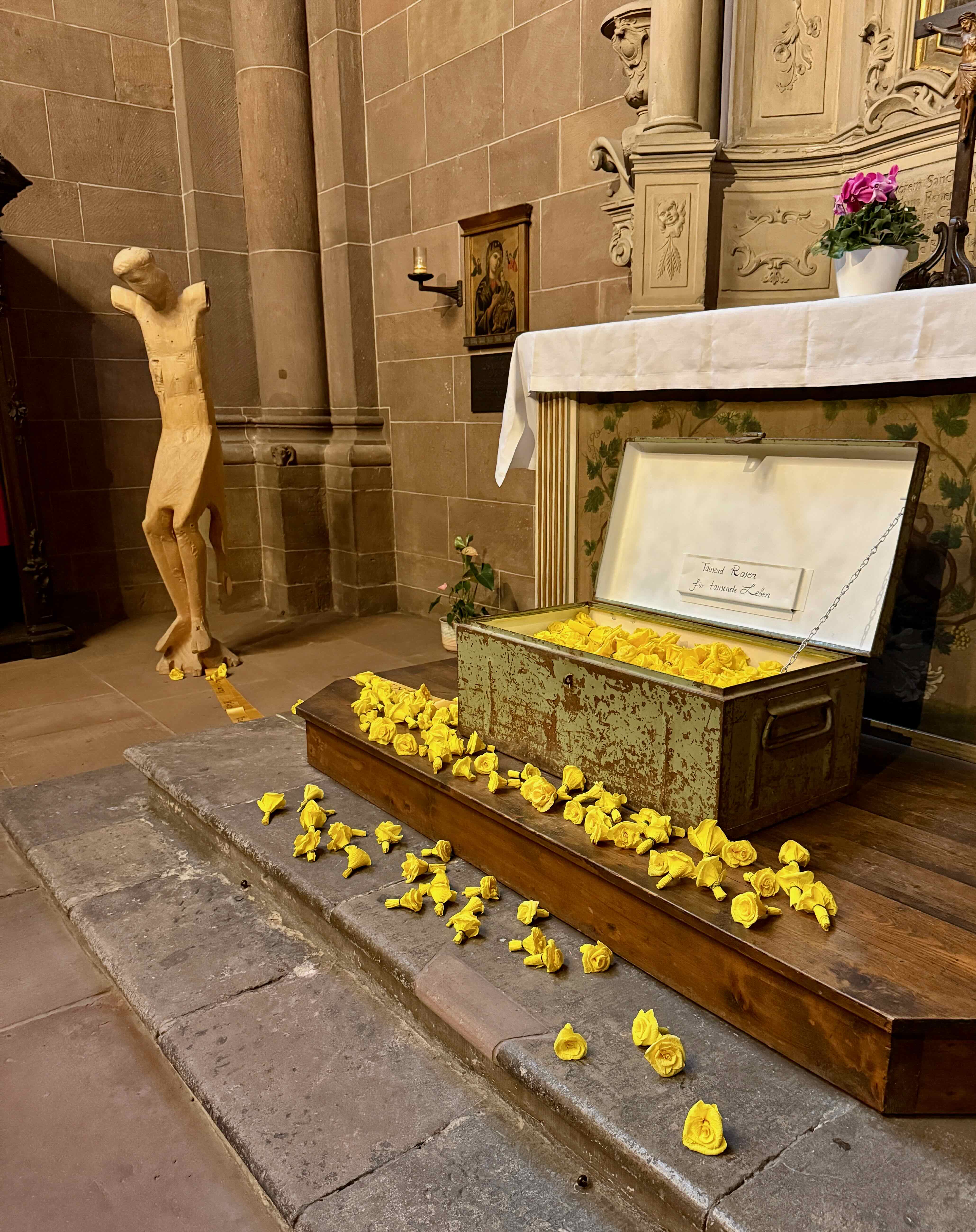
We do finally find small side door that allows us entrance to the church. There is an art display in the cathedral by a group called Atelierblau.  There are some really interesting pieces. Unfortunately I couldn’t find the names of the artists or the works they created. Here are a few of them.

The sign on the trunk reads “A thousand roses for a thousand lives”.
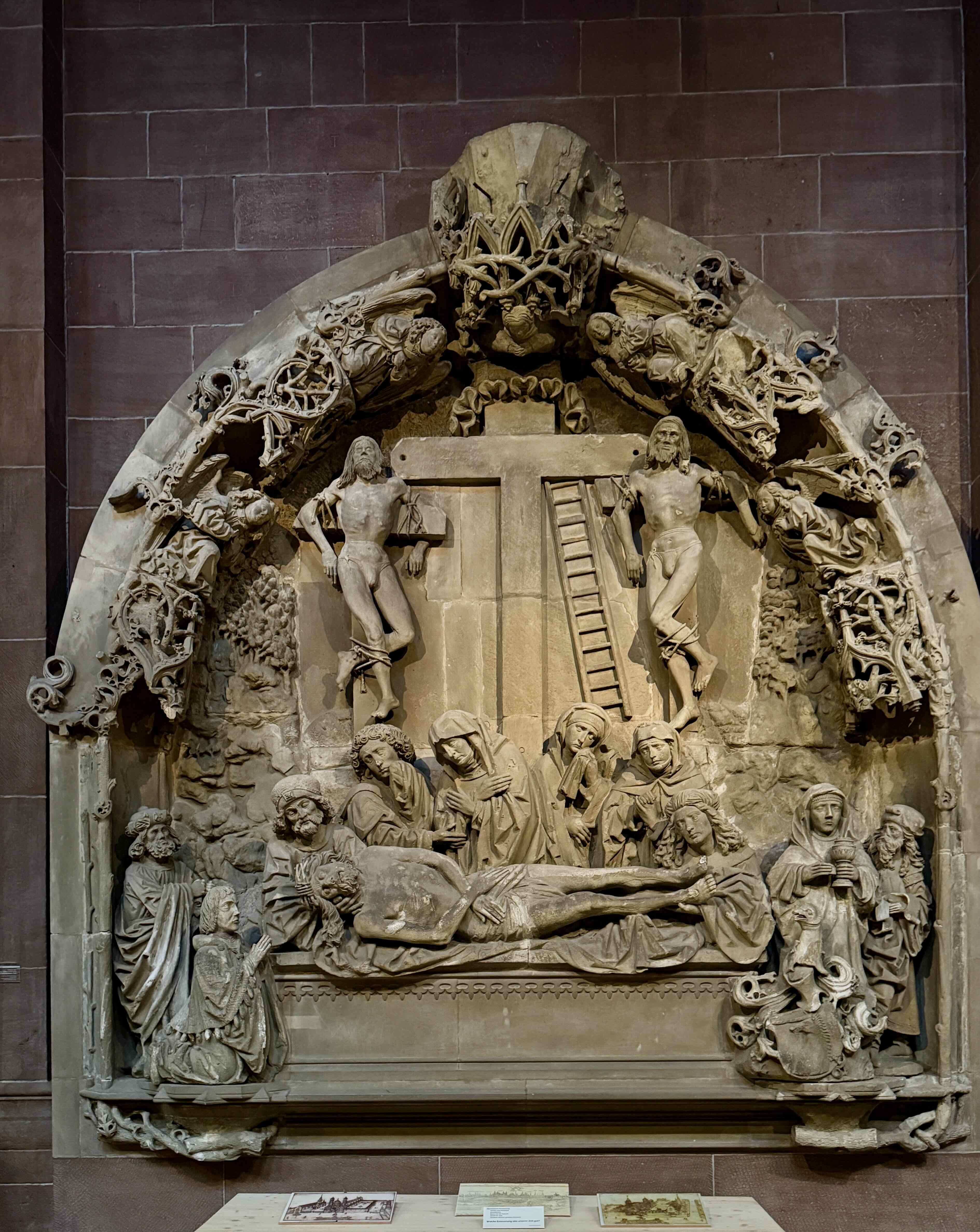
There are several large sculptural pieces that are from the church cloister.  I think they were placed inside the church as a method of keeping them safe from damage.

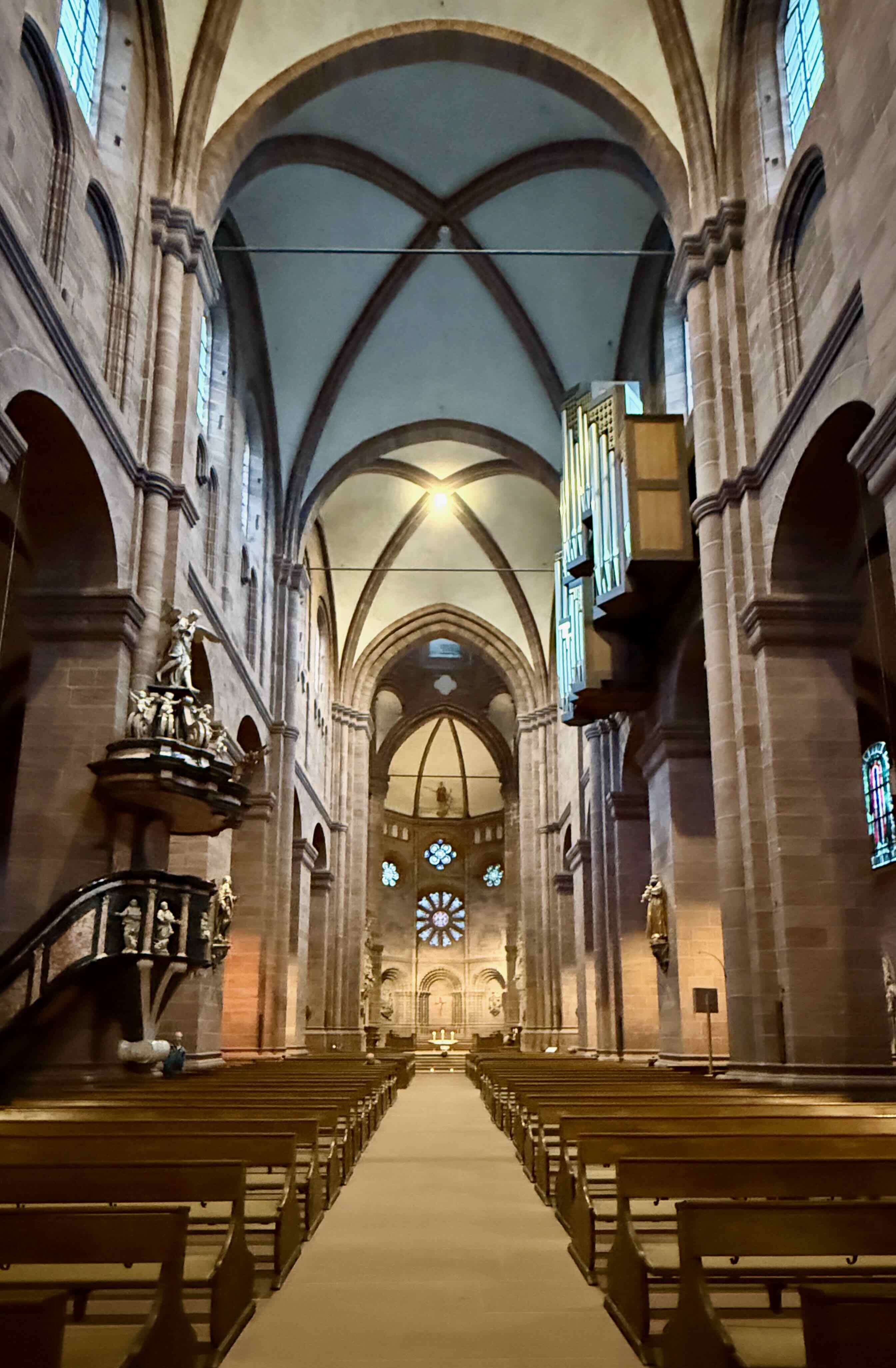
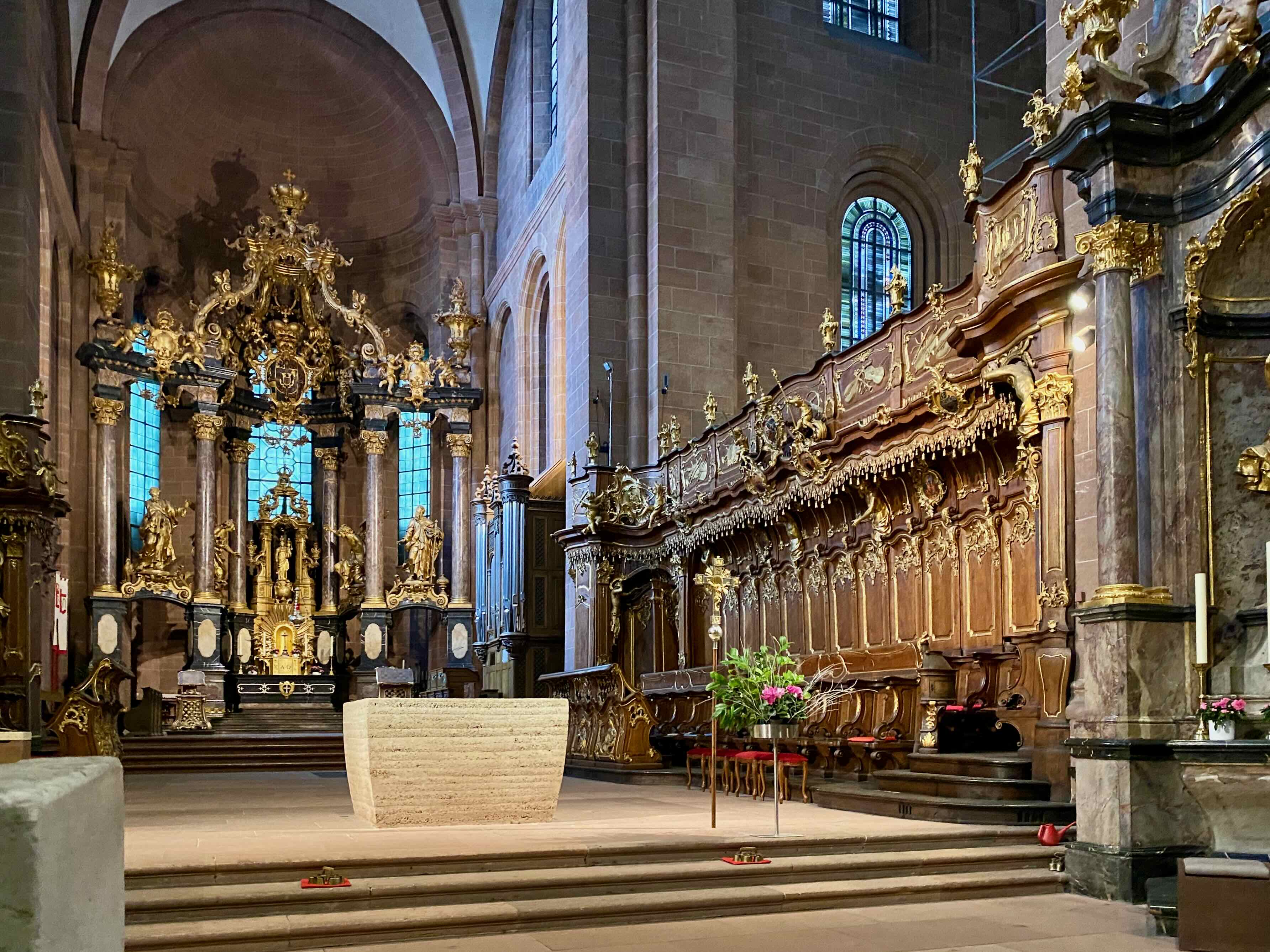
Built with red sandstone between the years 1130 and 1181, the church has a relatively simple interior……except for the choir and altar.
Bob noticed a side entrance to the crypt which contains the tombs of early rulers from 990 to 1040 AD.
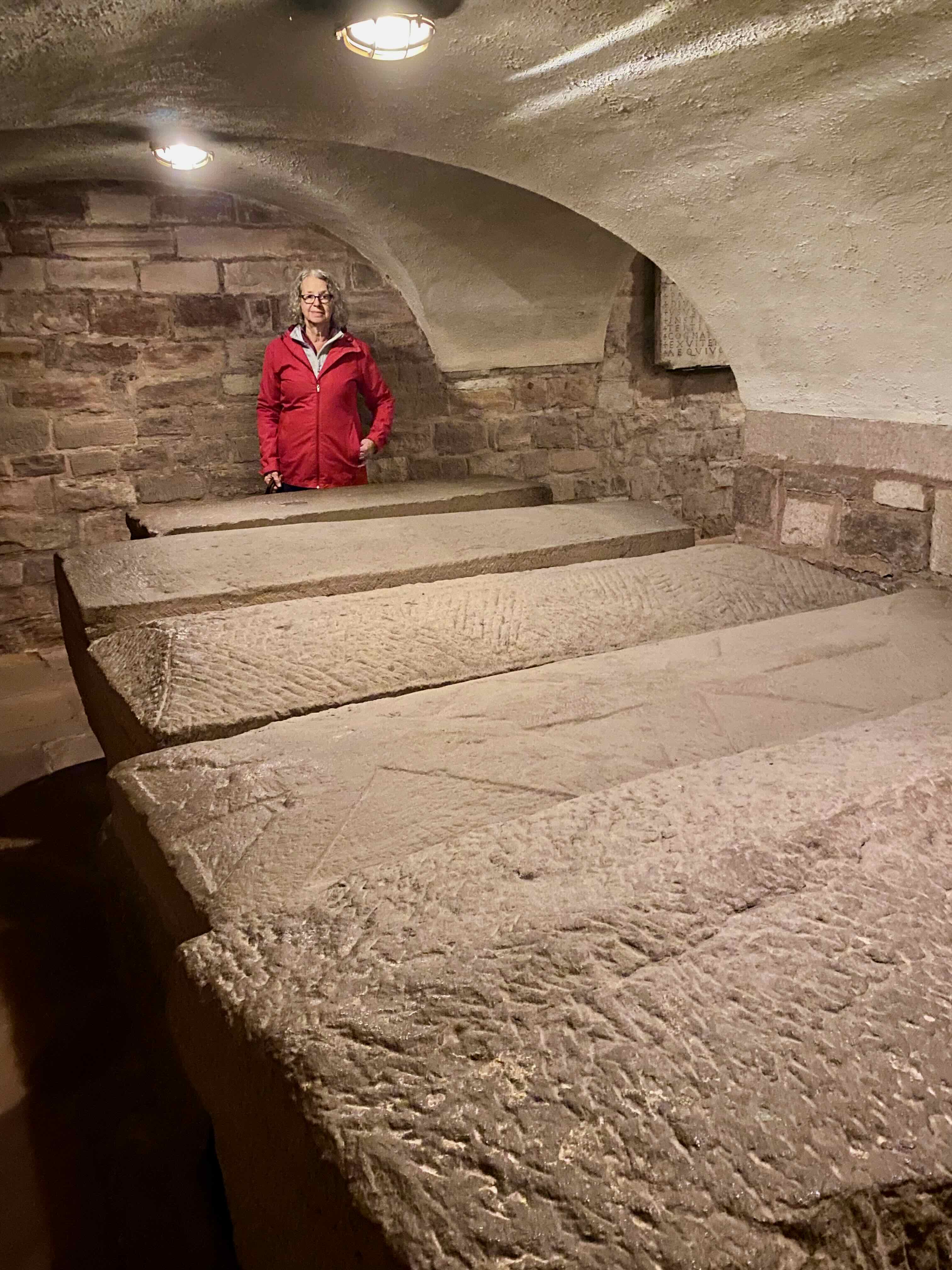
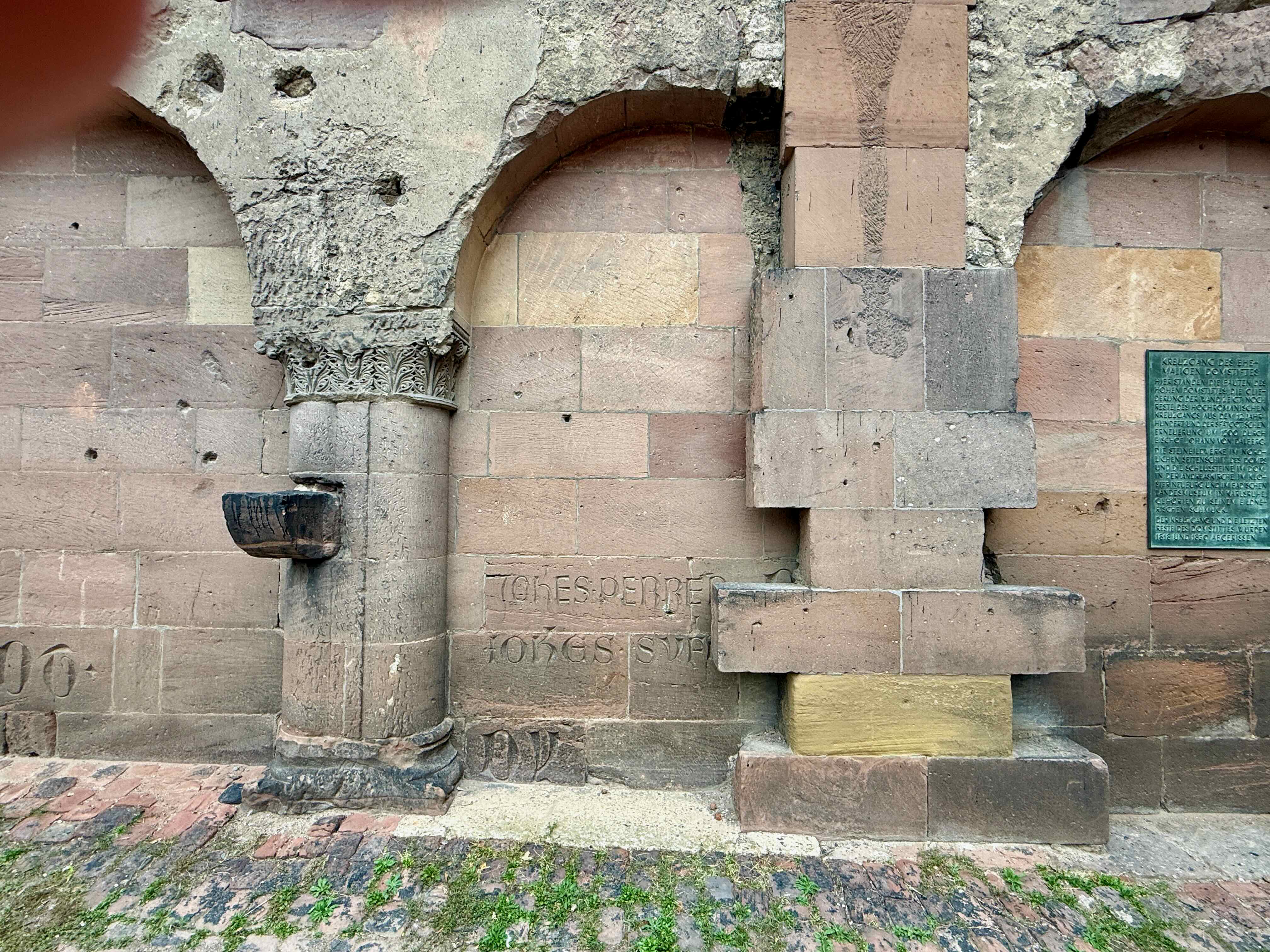
Outside I see what appears to be ancient graffiti.
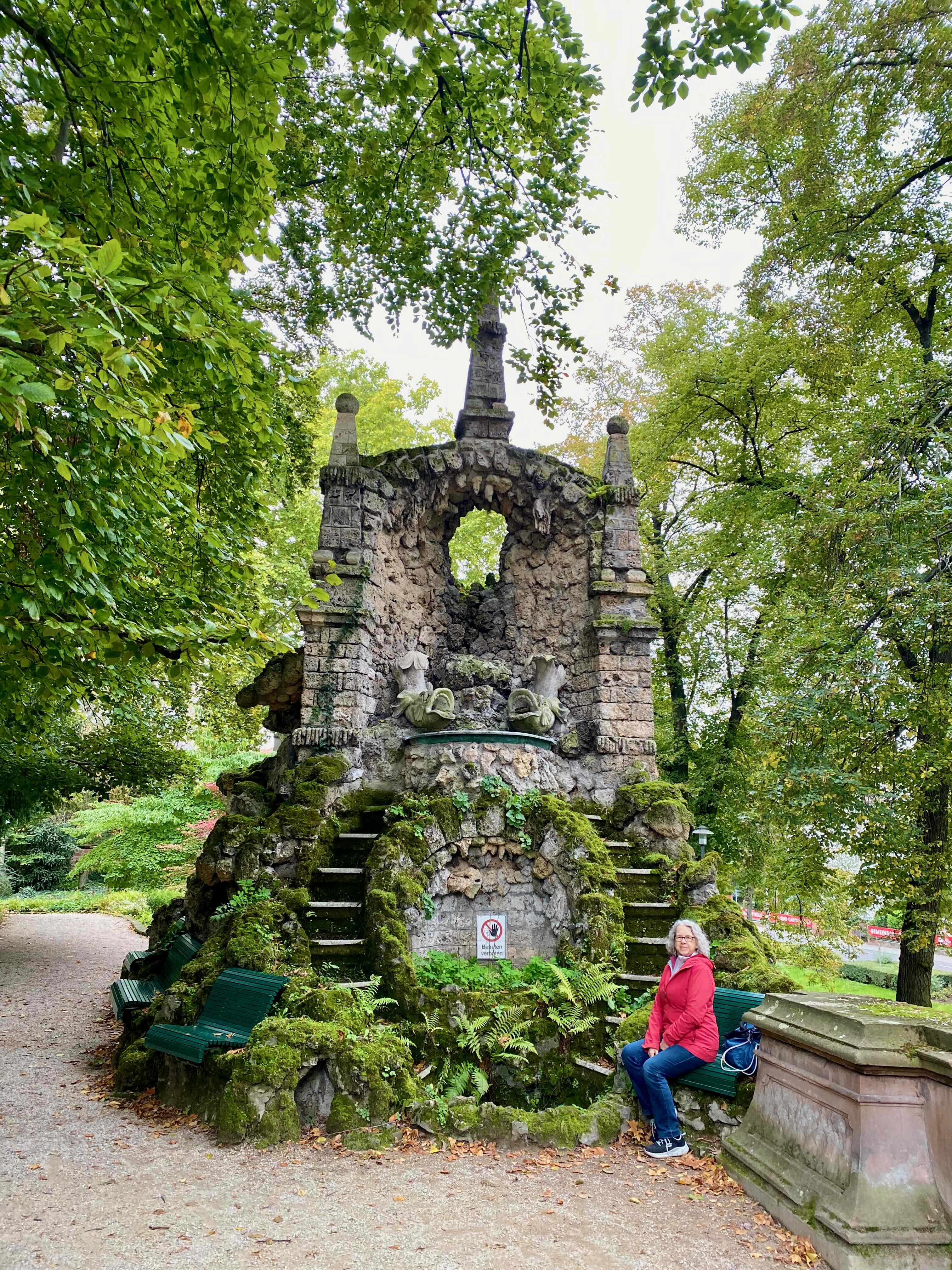
This fountain is at the end of part of the old town wall.

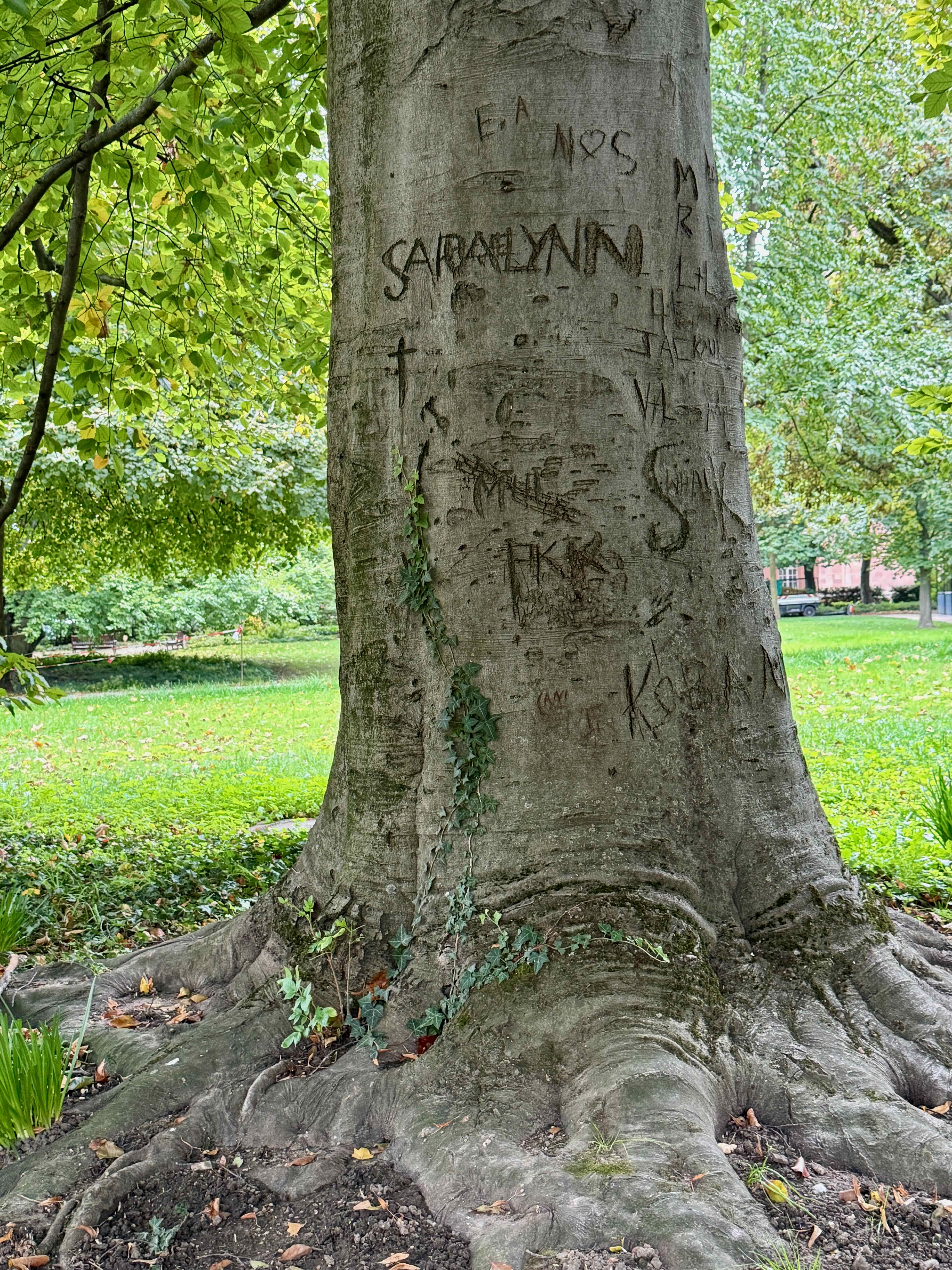
More graffiti, only on a tree this time.

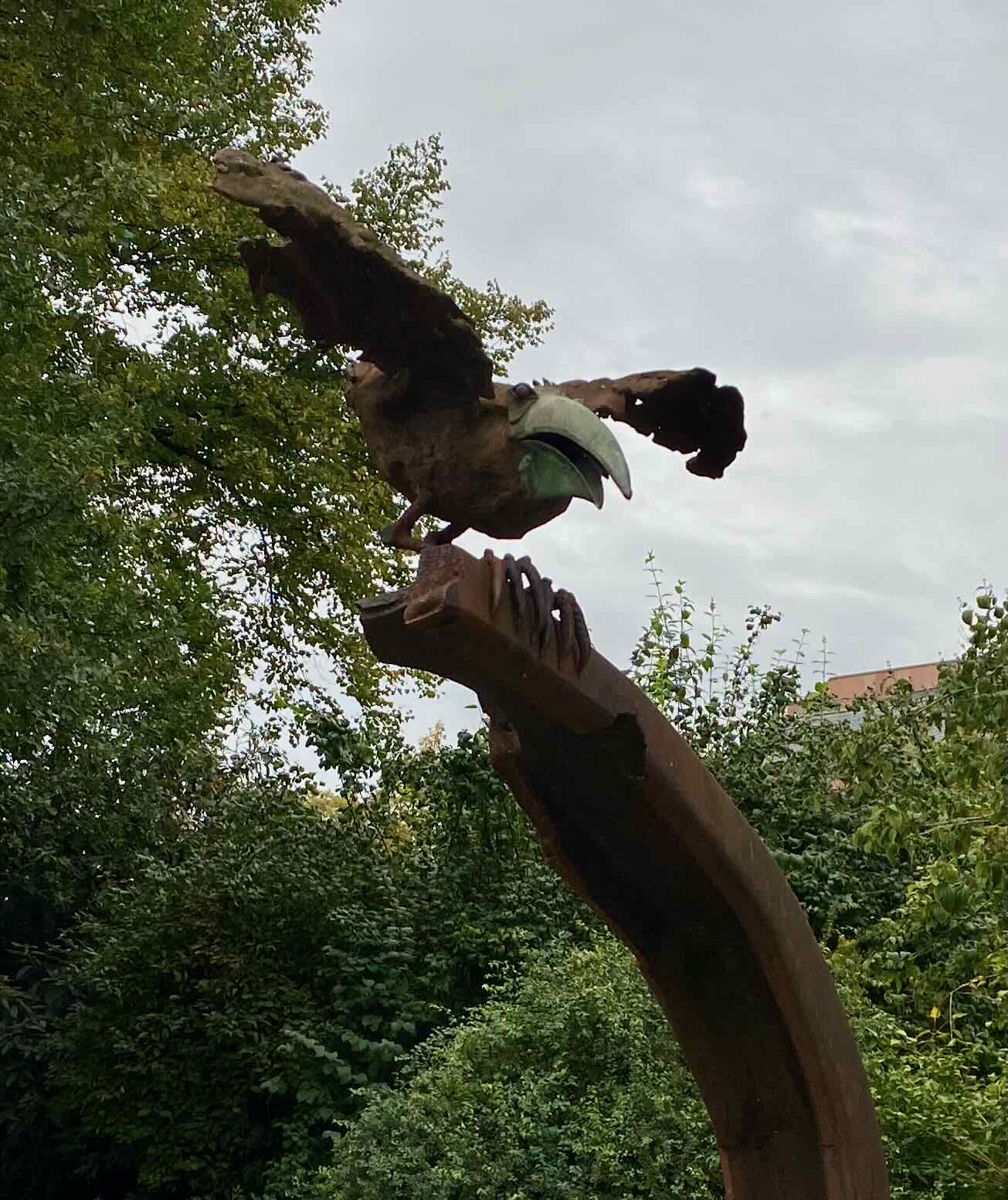
This little bird sculpture with its huge beak, ragged wings and stubby body caught our eye…we both really liked it.

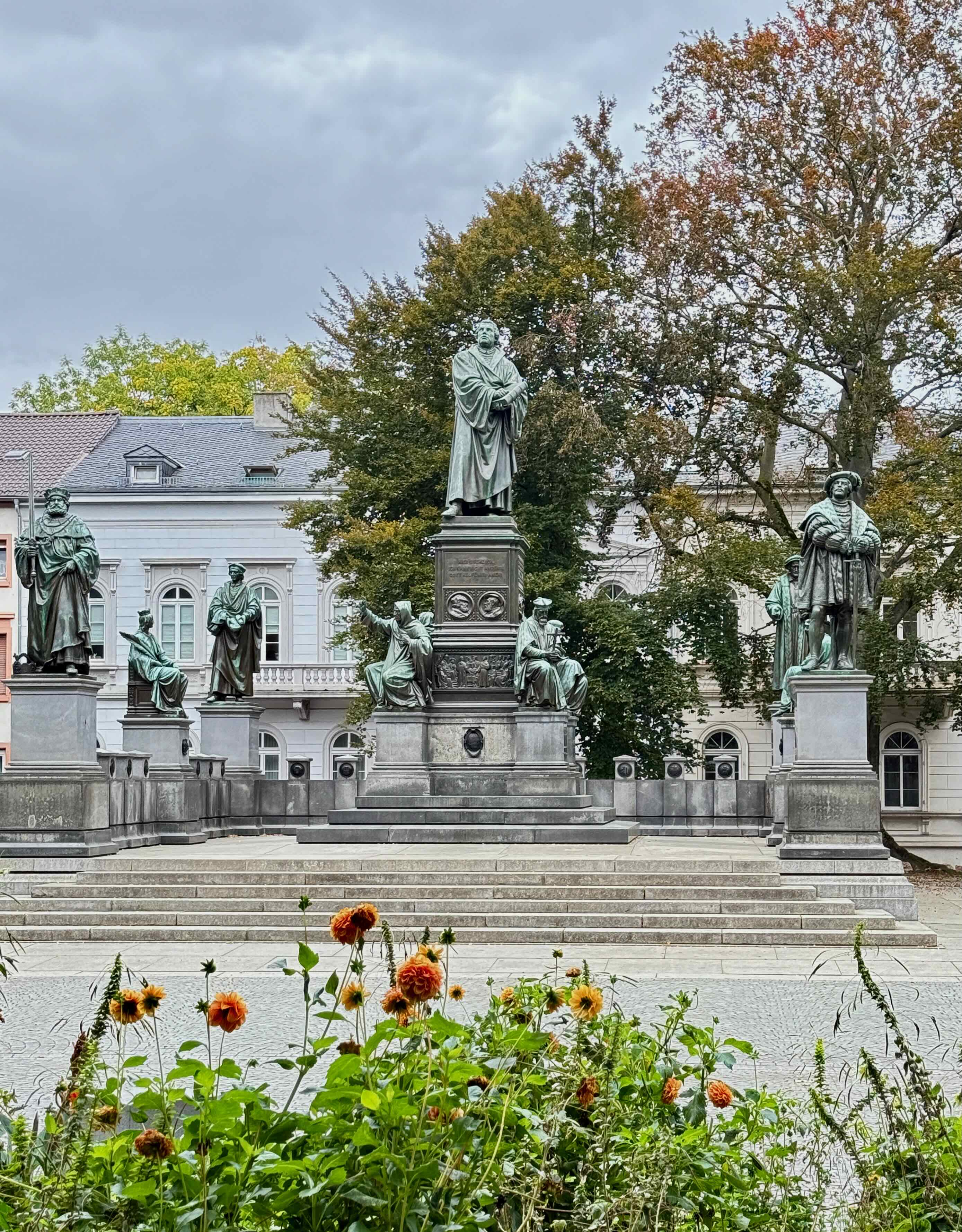
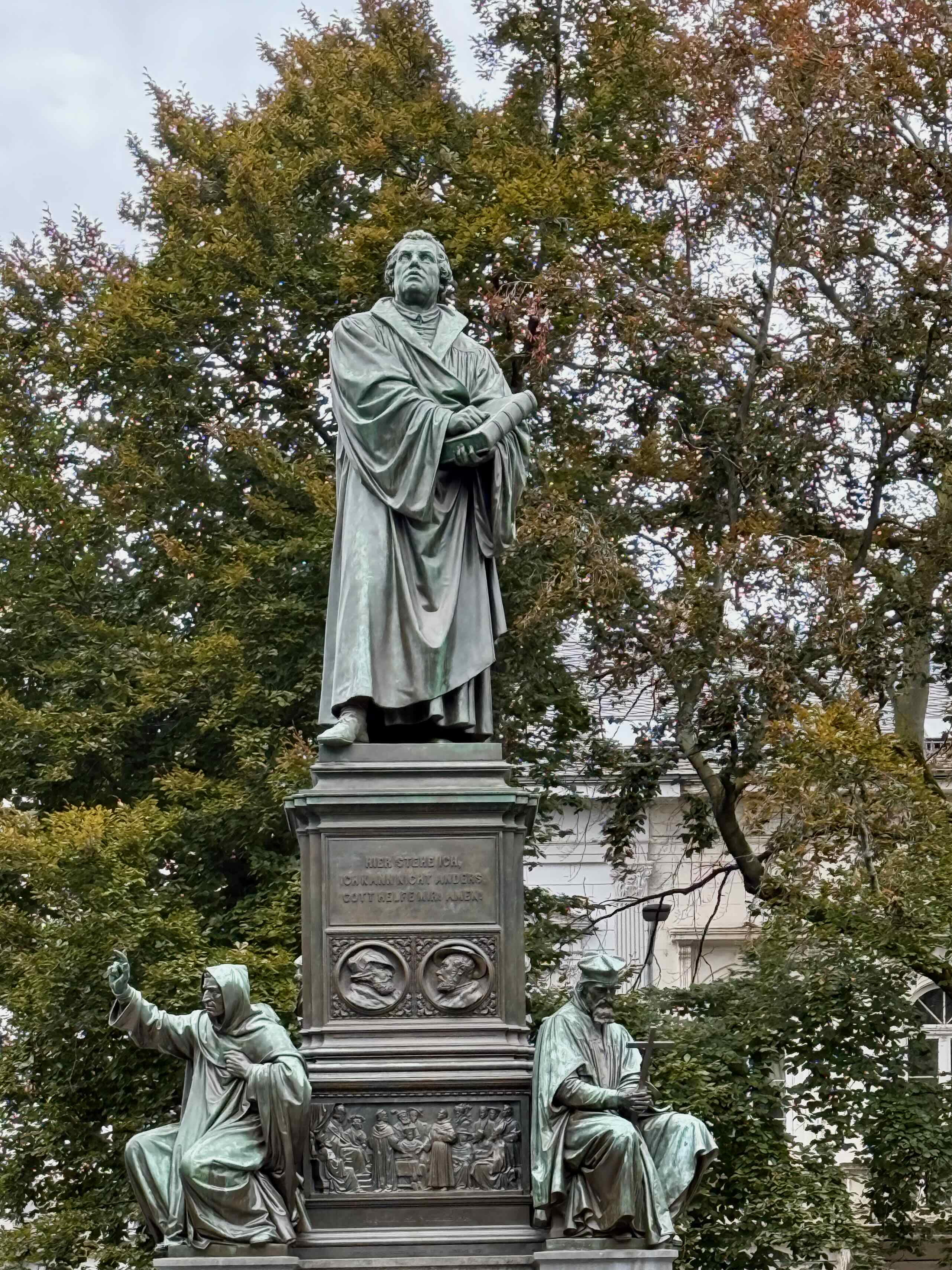
The Luther Monument is a group of statues. Martin Luther stands surrounded by bronze statues of the individuals that supported him. Plaques of the towns that supported Luther and the Protestant Reformation are placed on the walls of the monument.

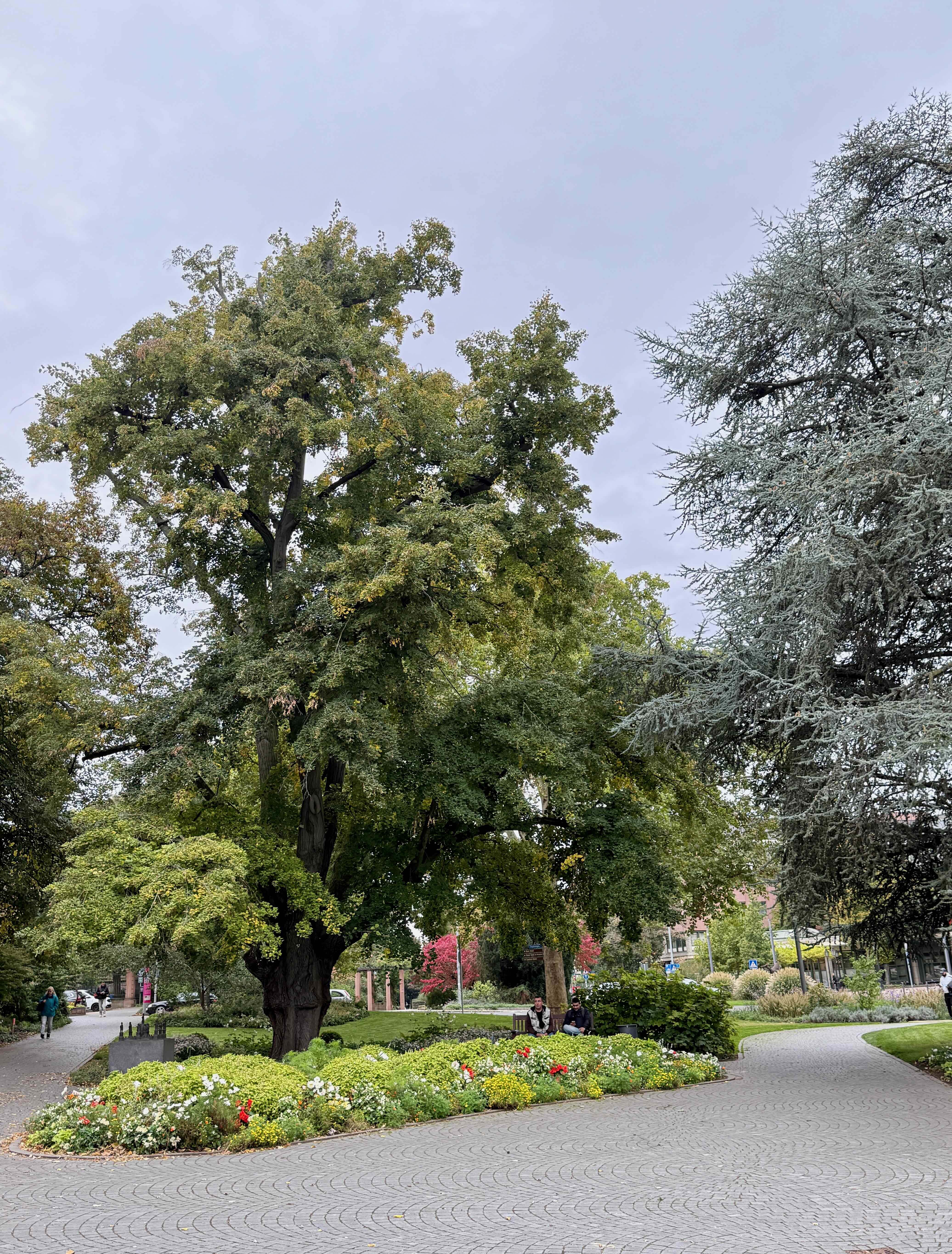
This monument is in a lovely park near the Cathedral. There is a model of the statue with information in Braille, which was unique.
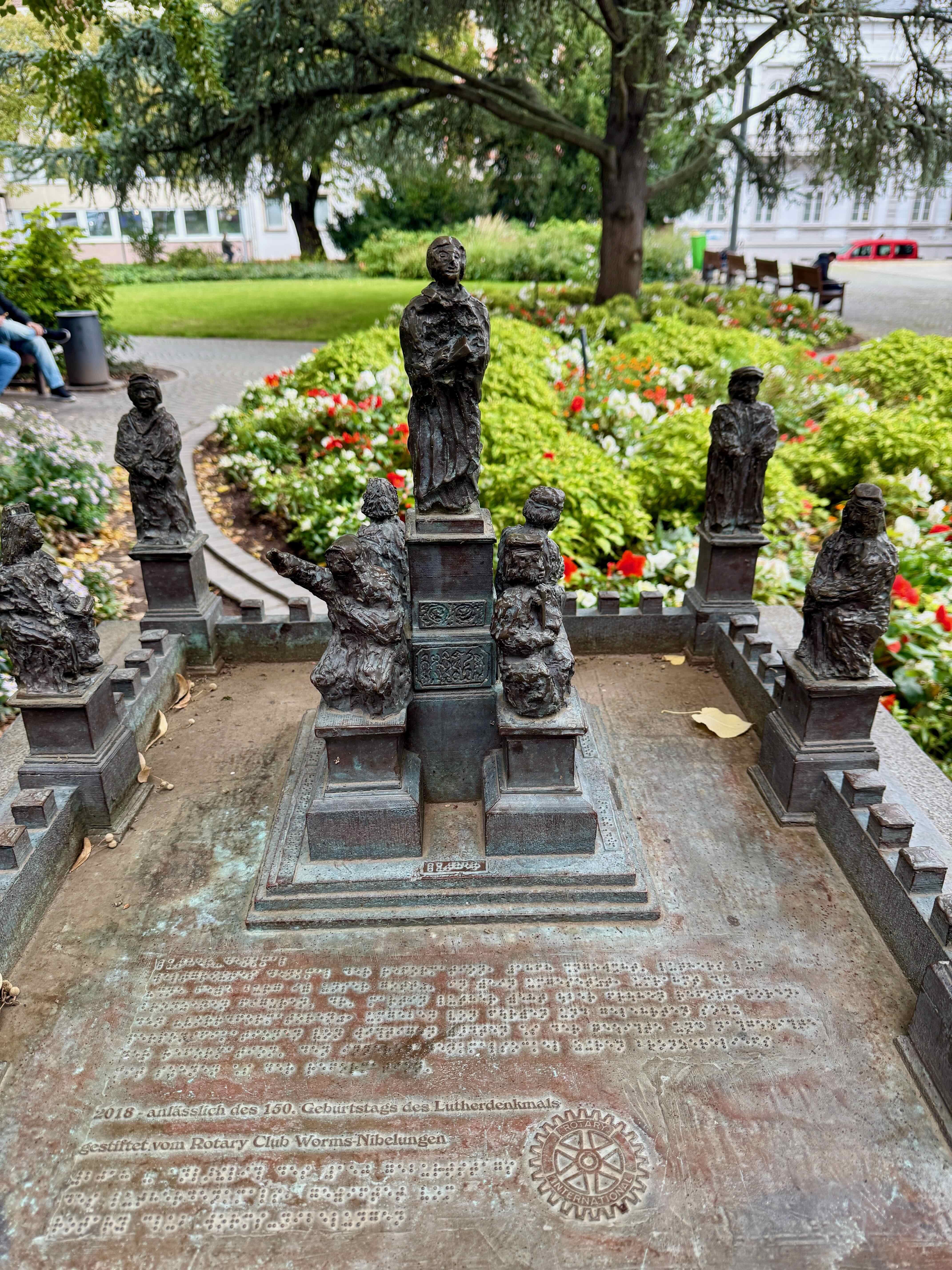
Back on the road I finally manage to get a photo of the Ausfahrt sign…which simply means Exit. I remember that we found this quite hilarious on our first trip to Germany with our daughter many years ago.
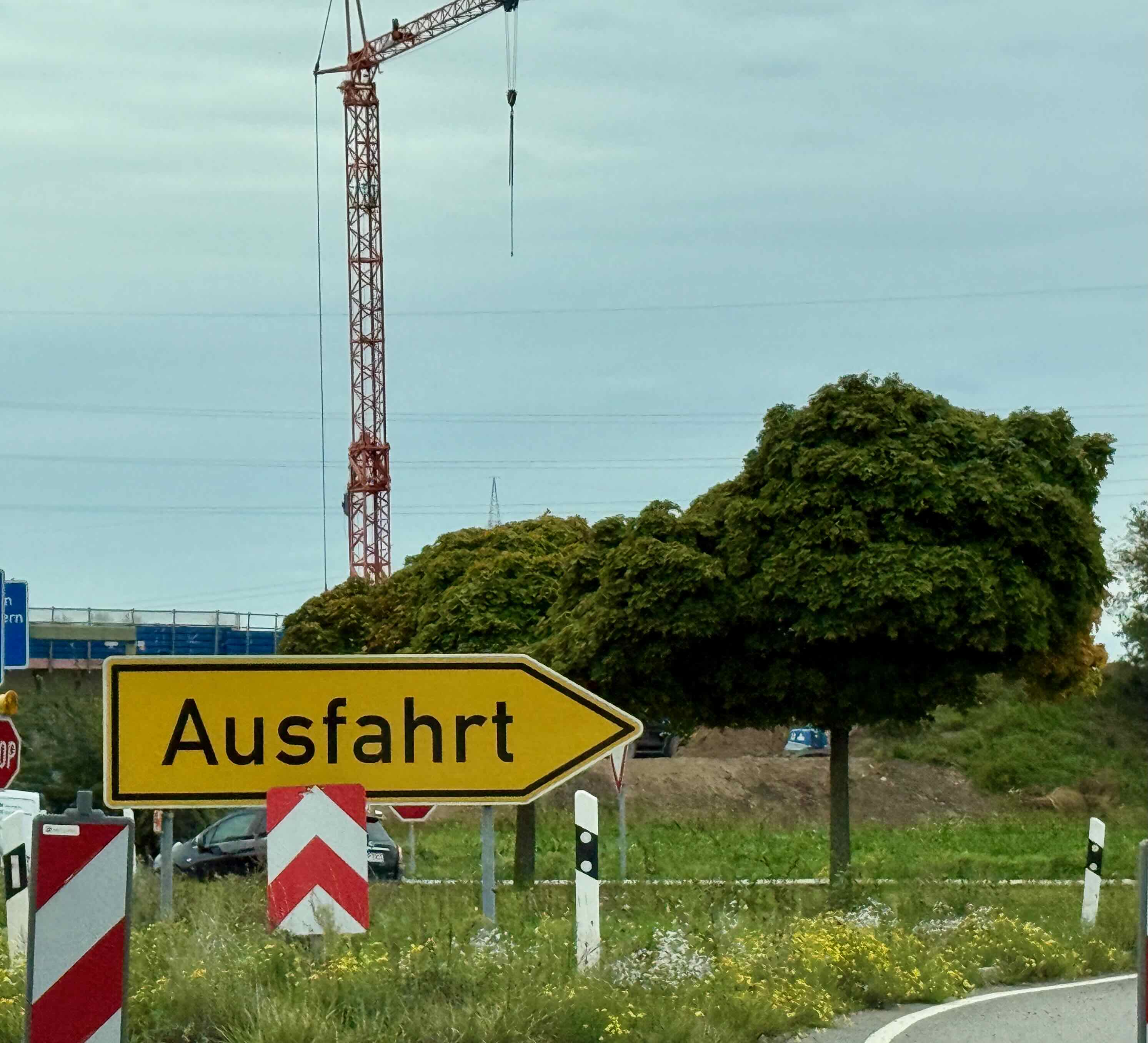
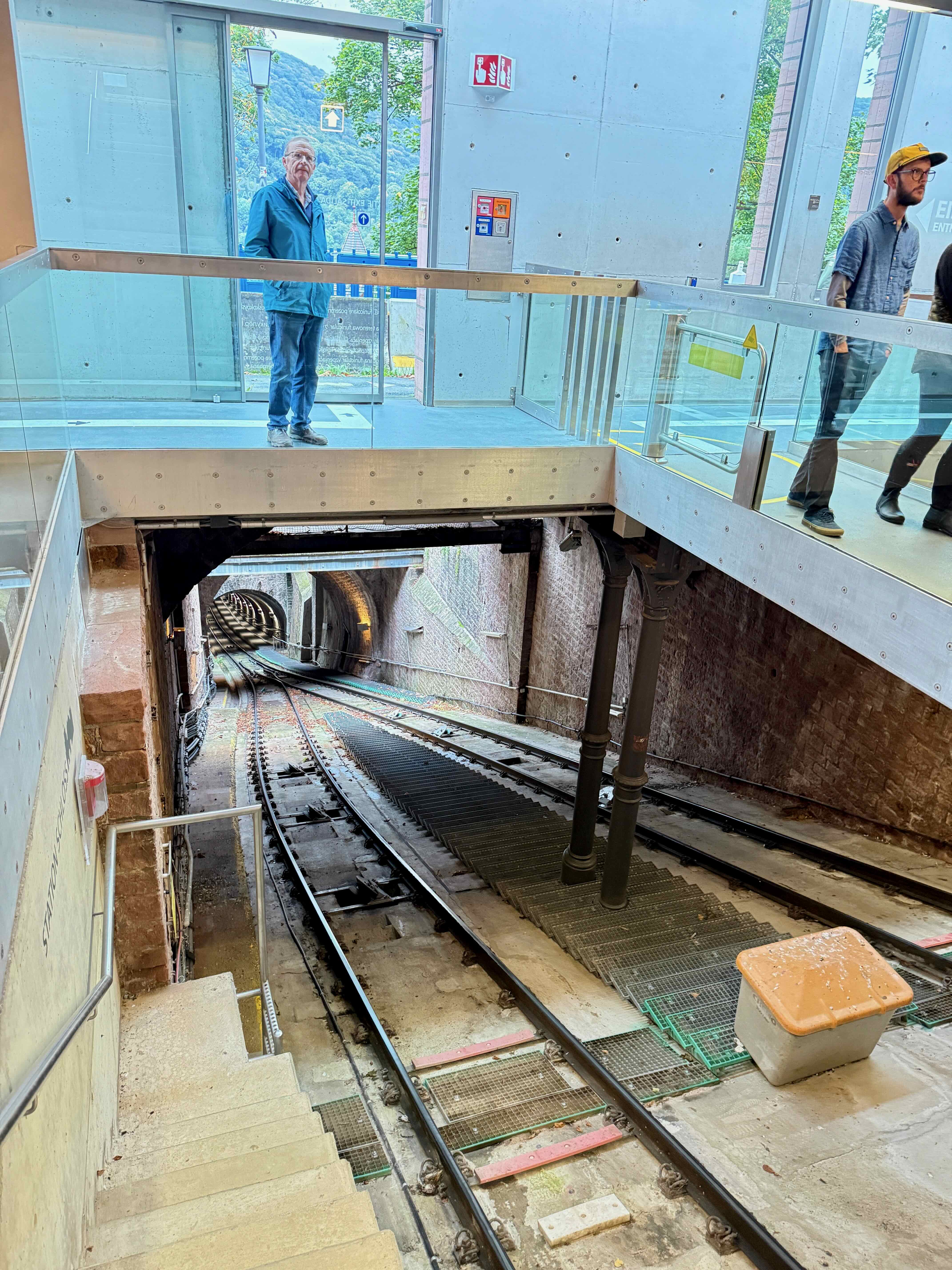
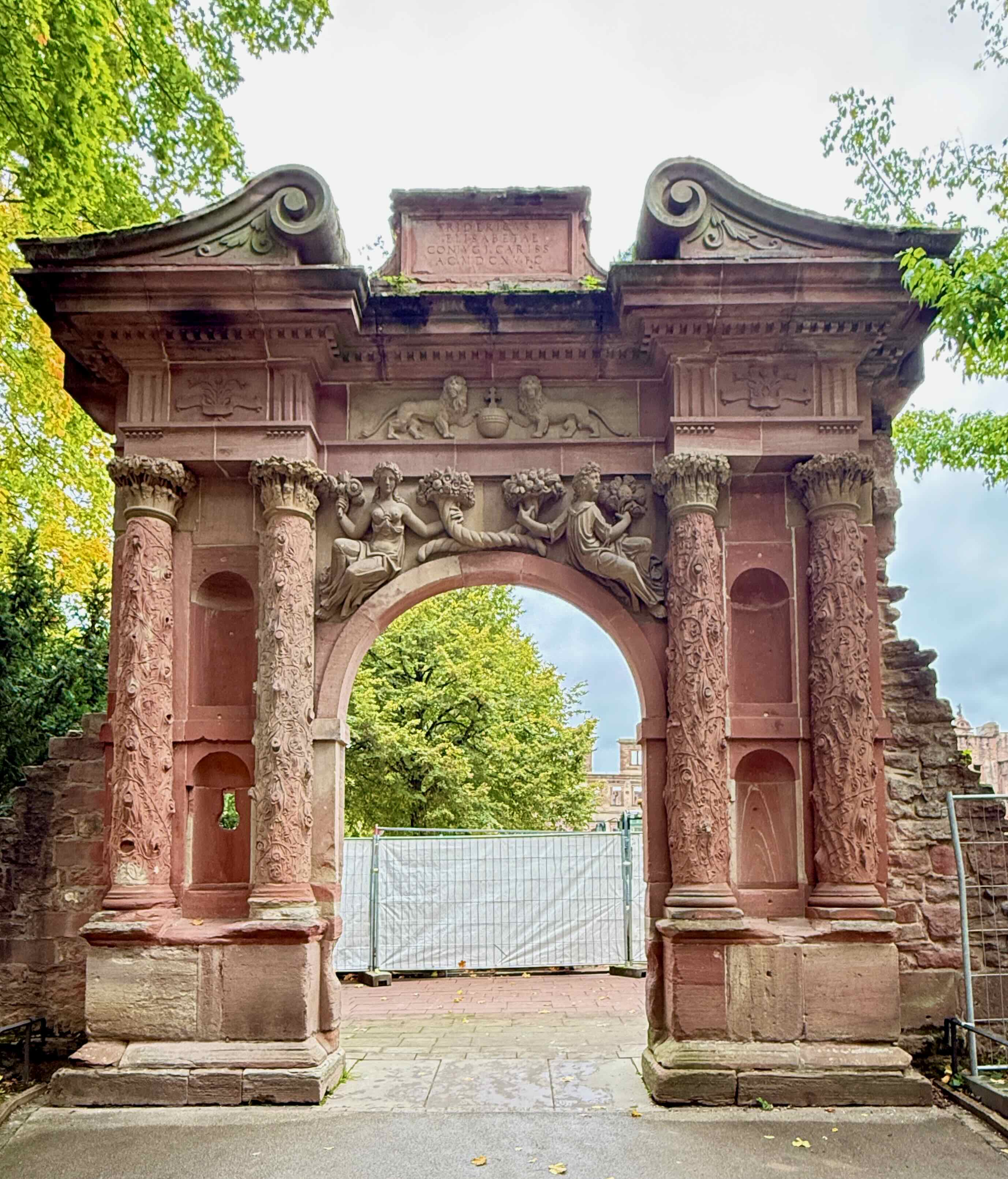
Next stop is Heidelberg where we are going to visit Heidelberg Castle that Bob says is like Versailles. We have a hard time finding the entrance to the funicular, even using Google Maps!  Finally I notice a small picture of a train on the wall of what looks like the entrance to a mall…we only walked past it two times! The part of the journey we take is all underground.

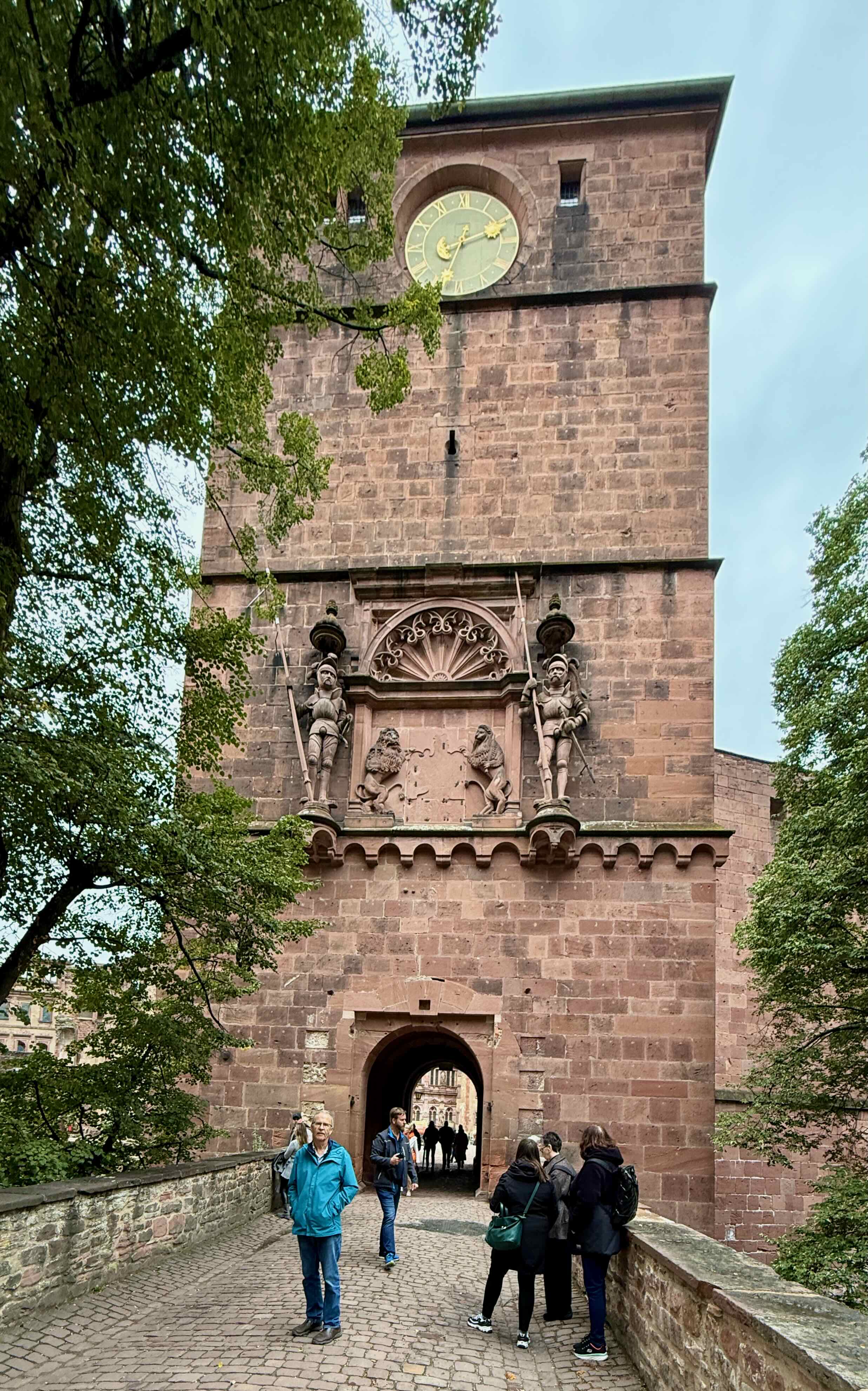
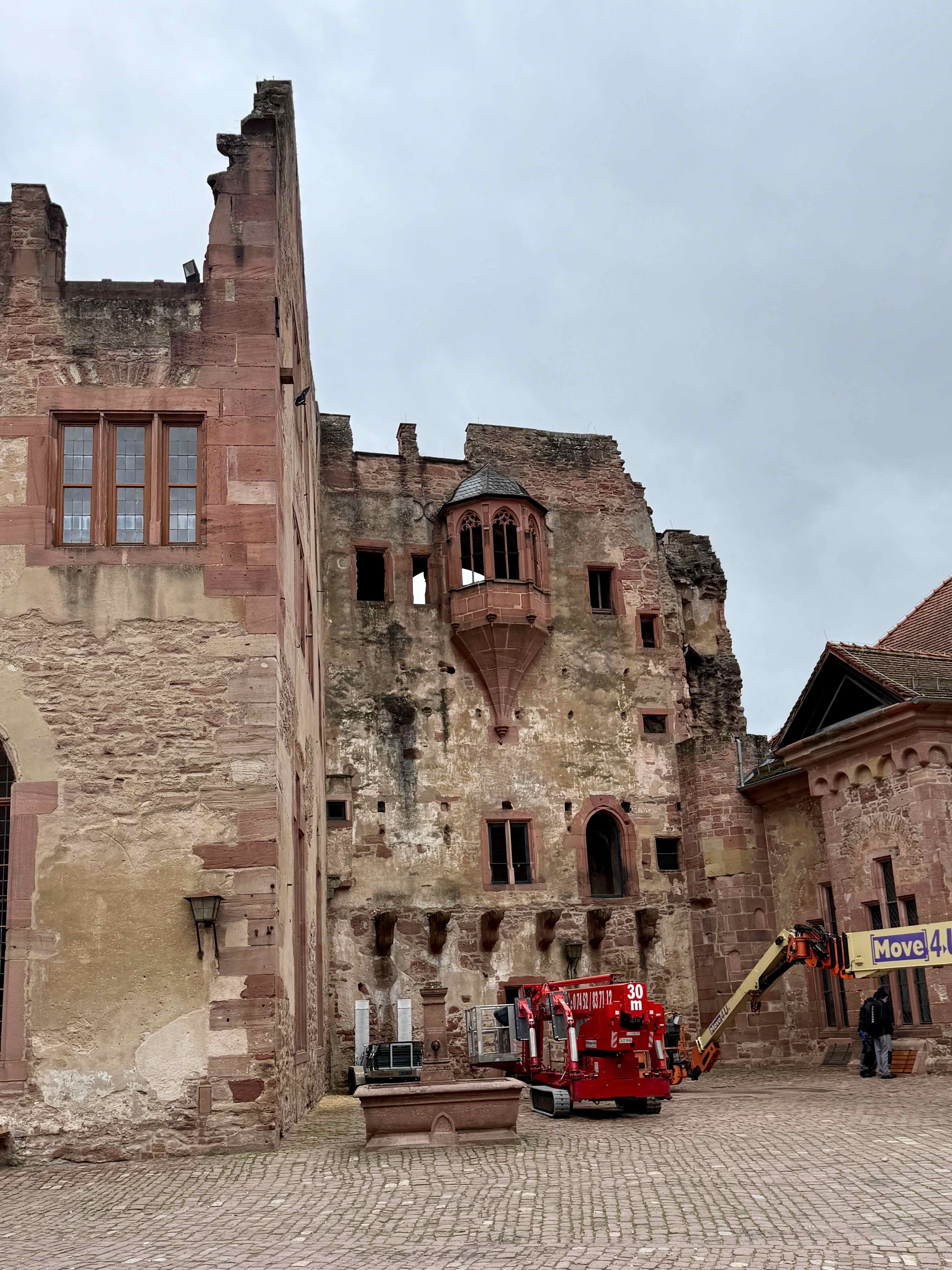
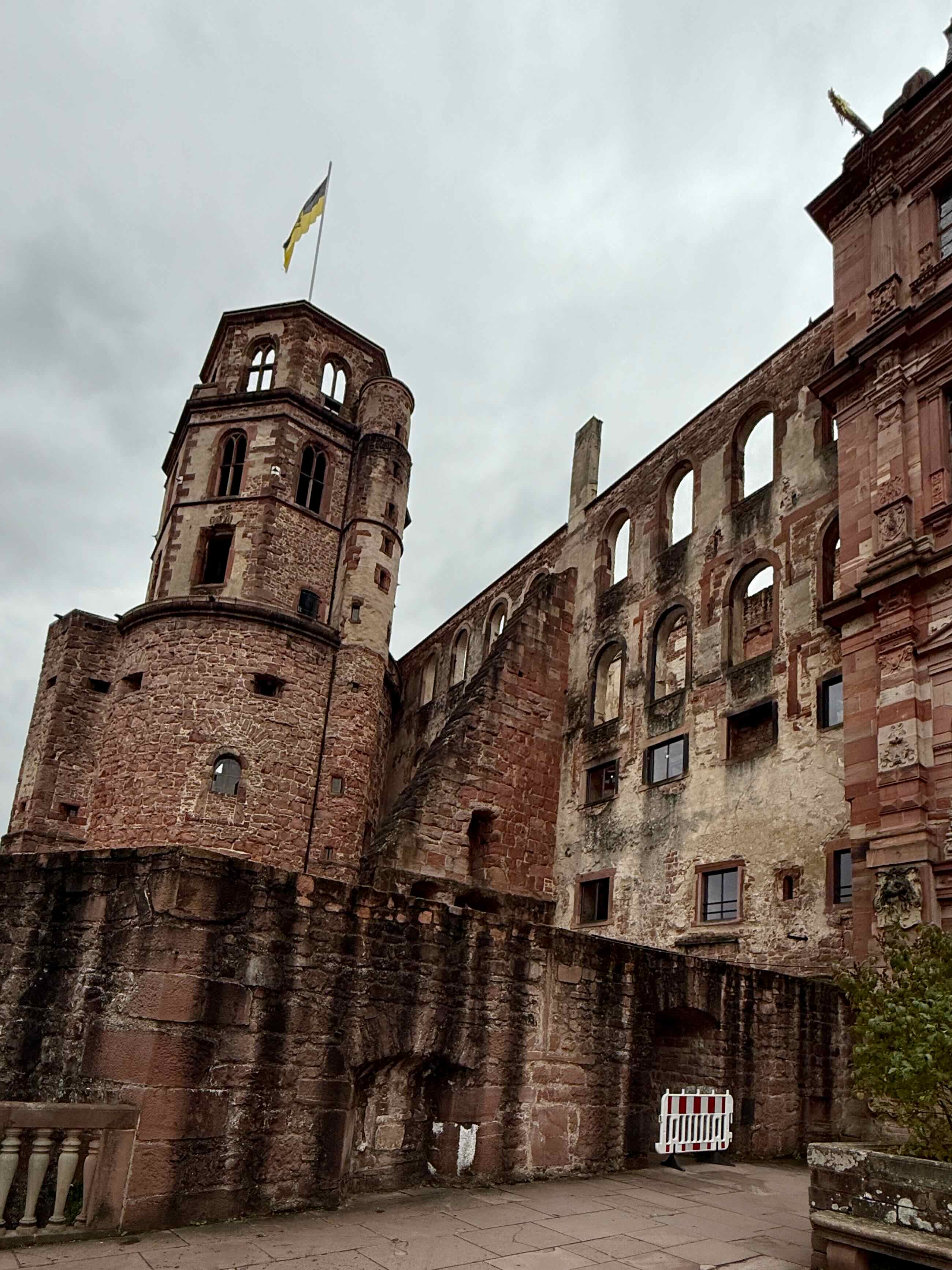
We walk to the castle but all we see is ruins…turns out Bob mixed up his castles!  It is fine though as this looks interesting anyways.  There is an in depth tour through the ruins in an hour and a half but we decide to just wander and see what we can.  This gate was built in one night by King Frederick V for his wife as a birthday present.

Our funicular ticket gives us access to the courtyard, the German Pharmacy Museum, and the Big Wine Barrel.  We walk through the gate to the courtyard…

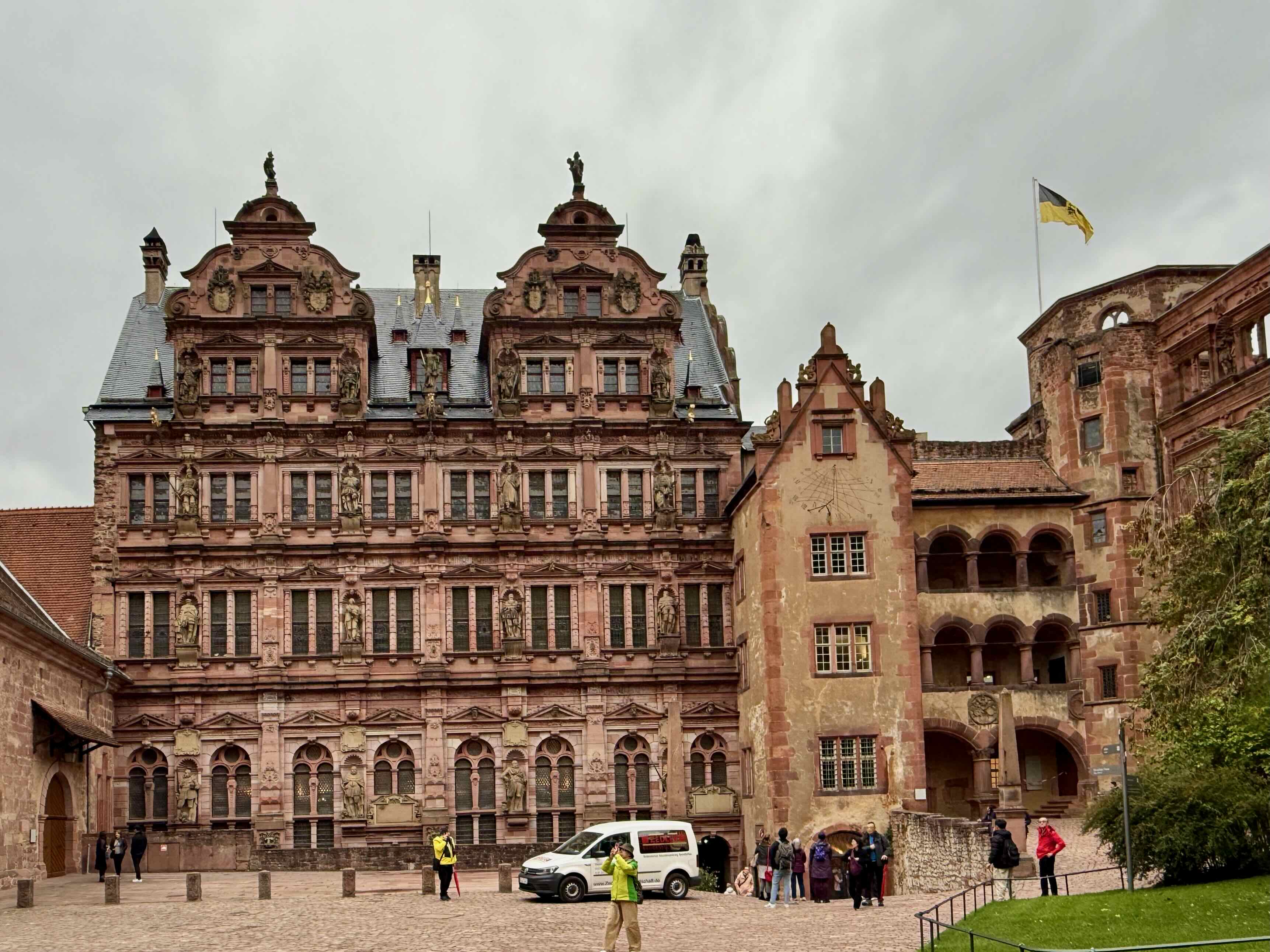
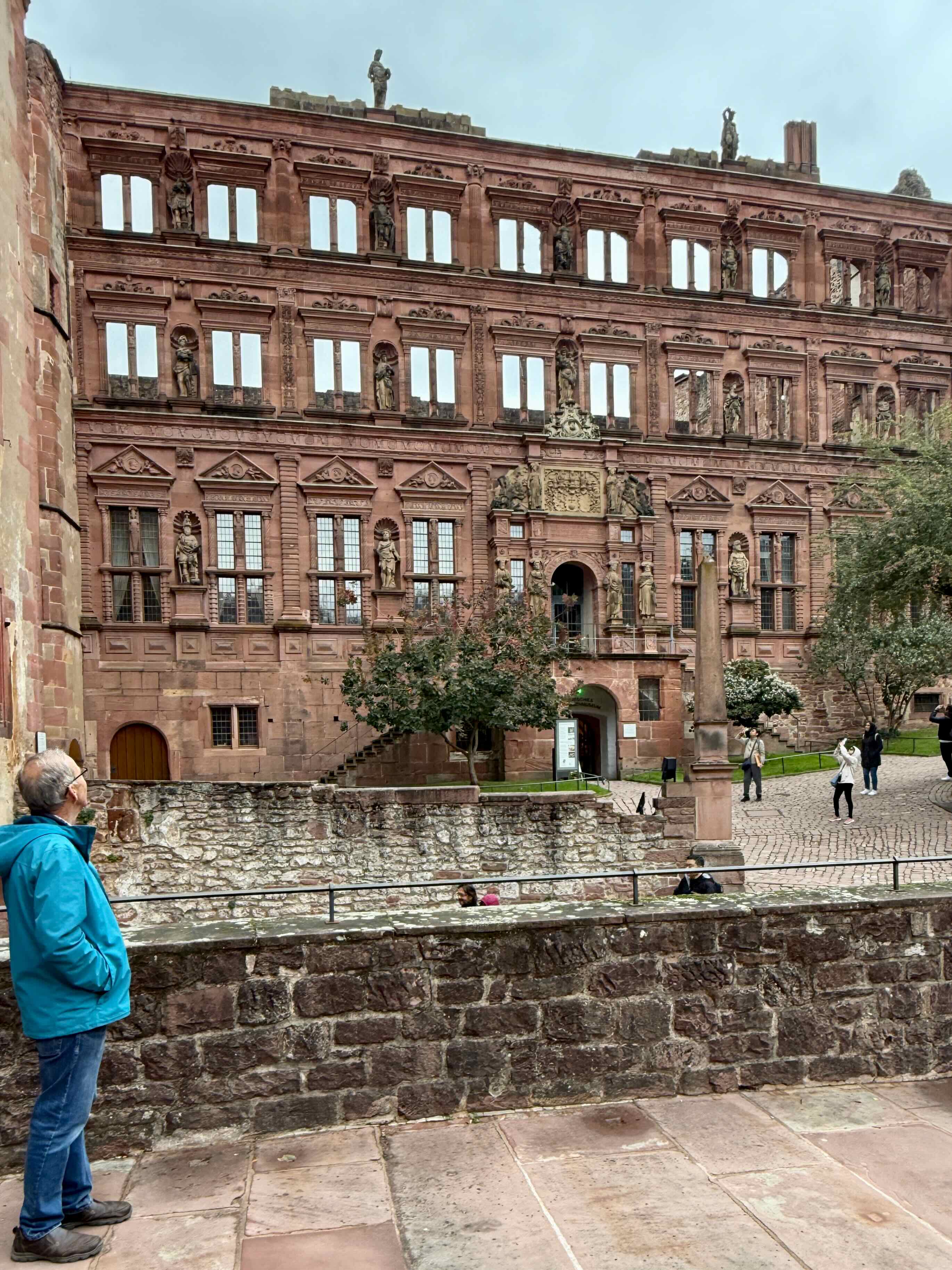
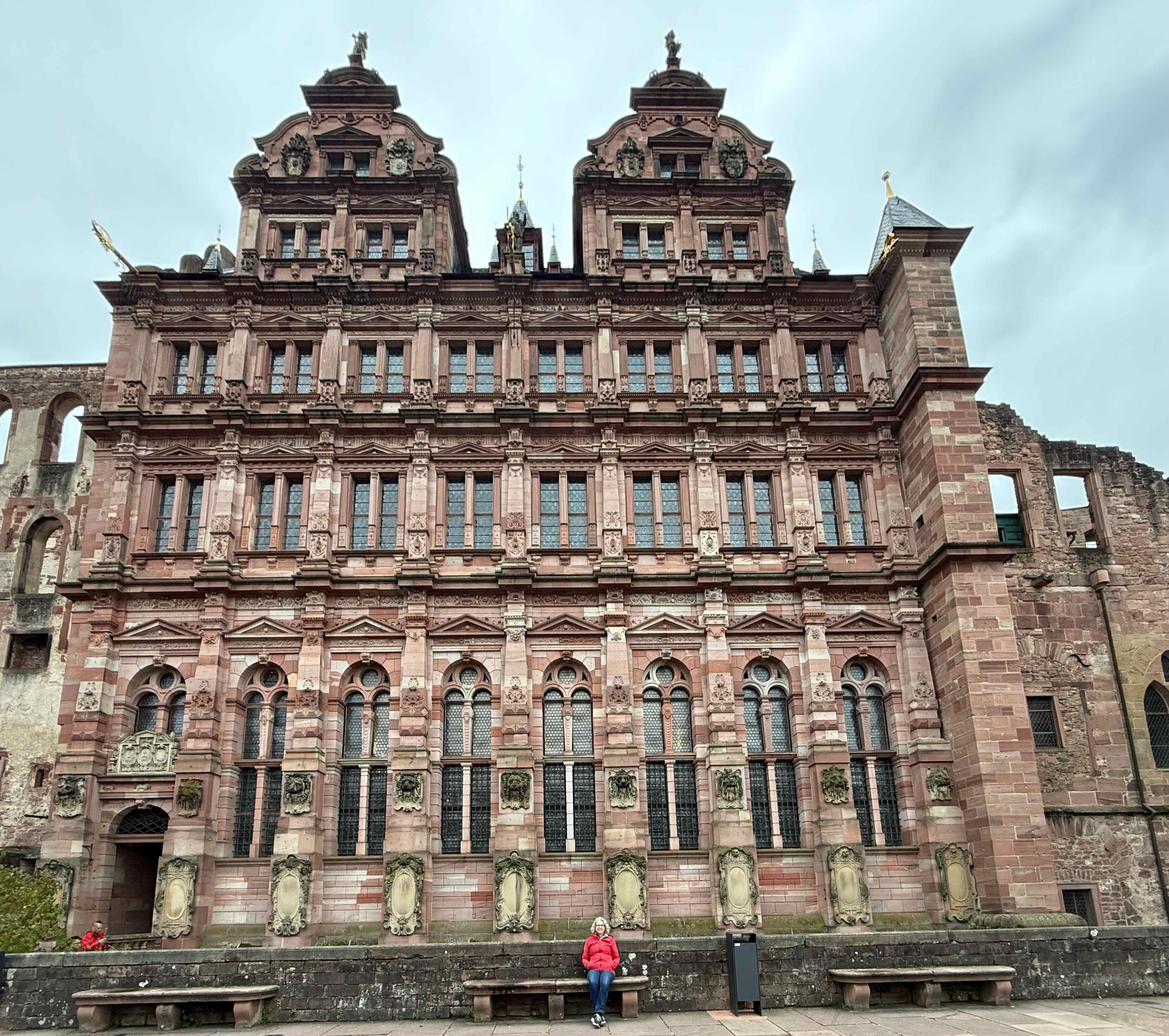
…and we are greeted with views of the ruins of what must have been a very impressive castle

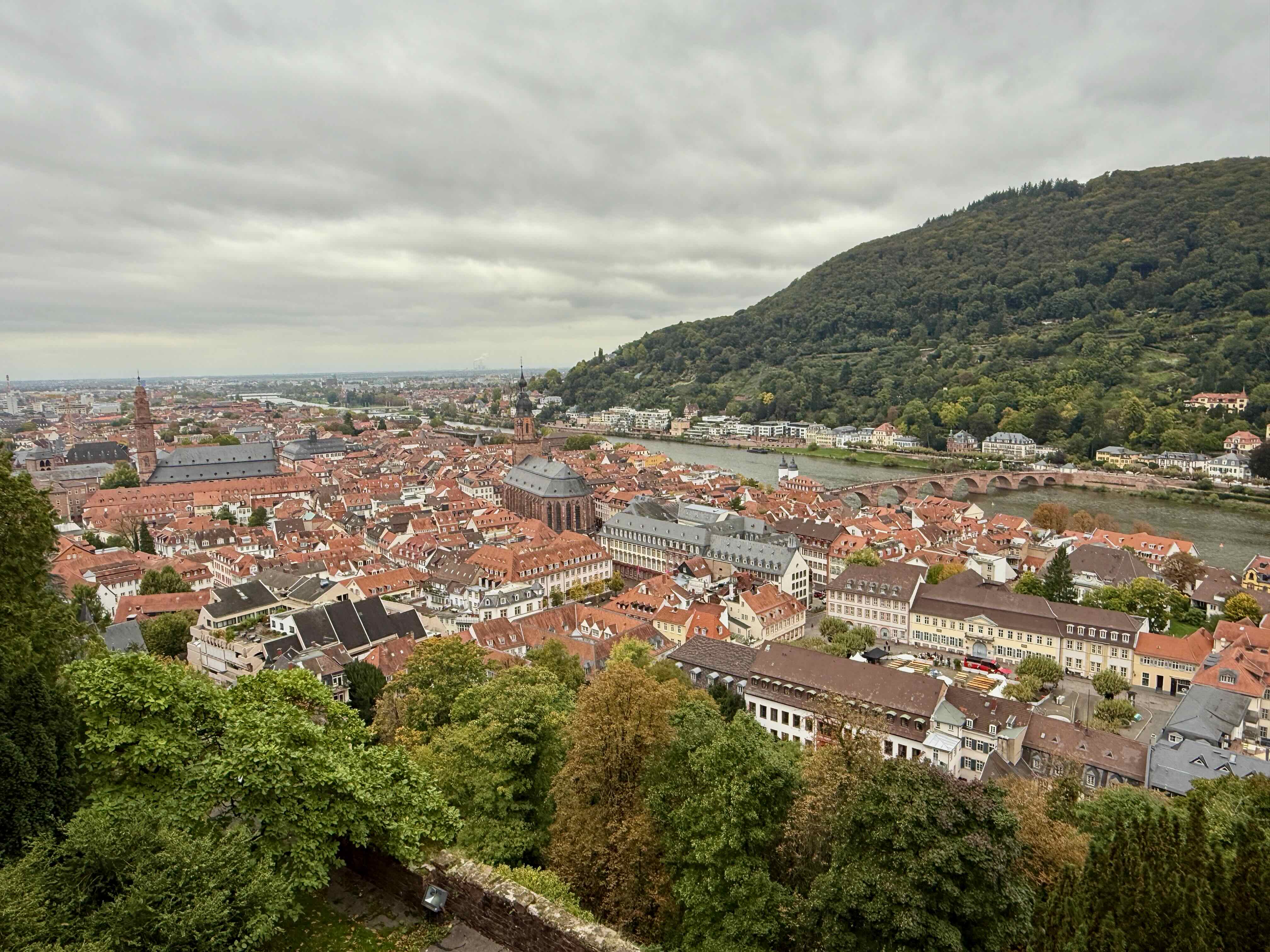
Walking through the doorway in the above photo we arrive on a huge balcony overlooking the Rhine River with views of Heidelberg below.A view of the ruins as seen from the balcony.

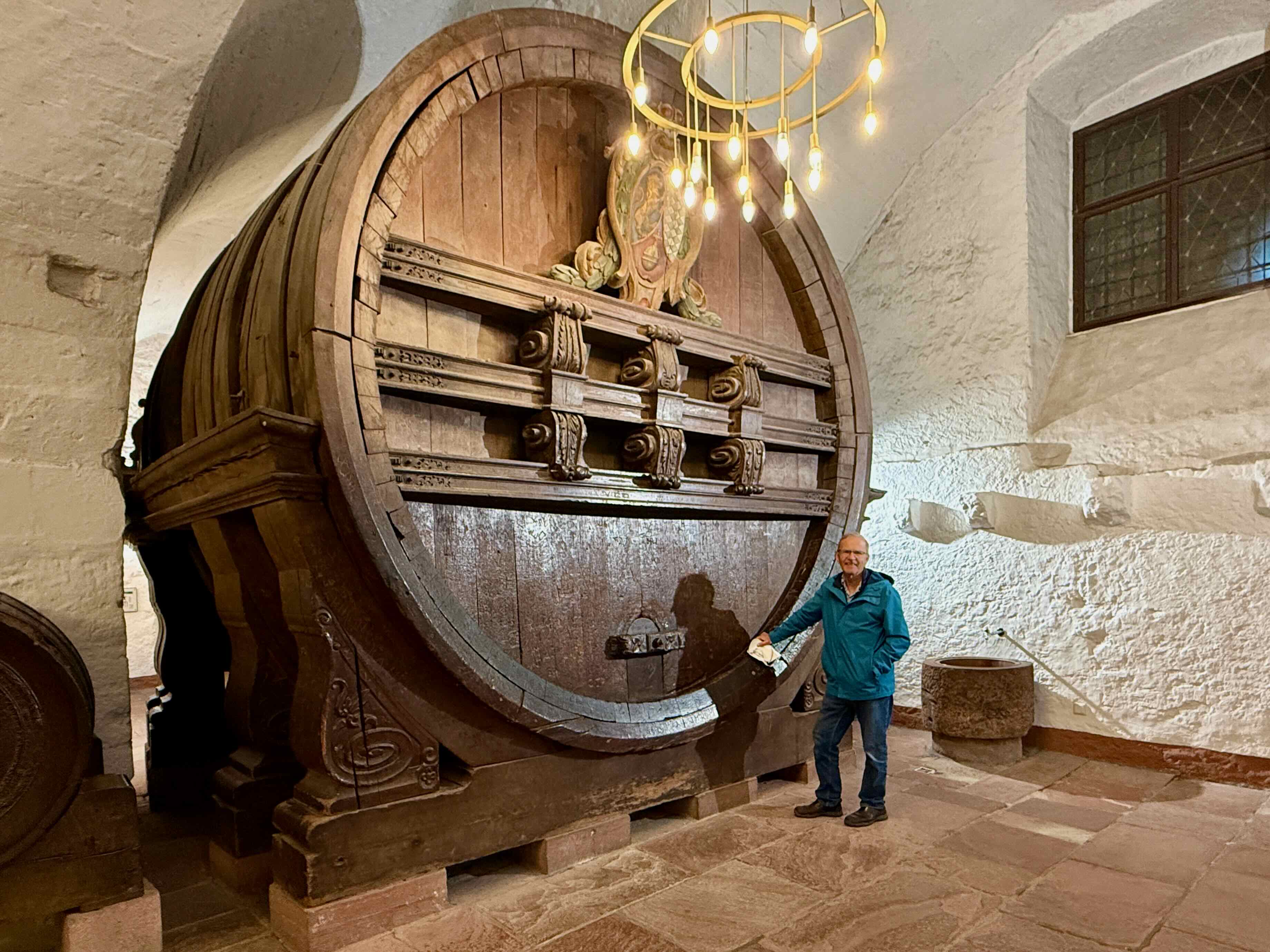
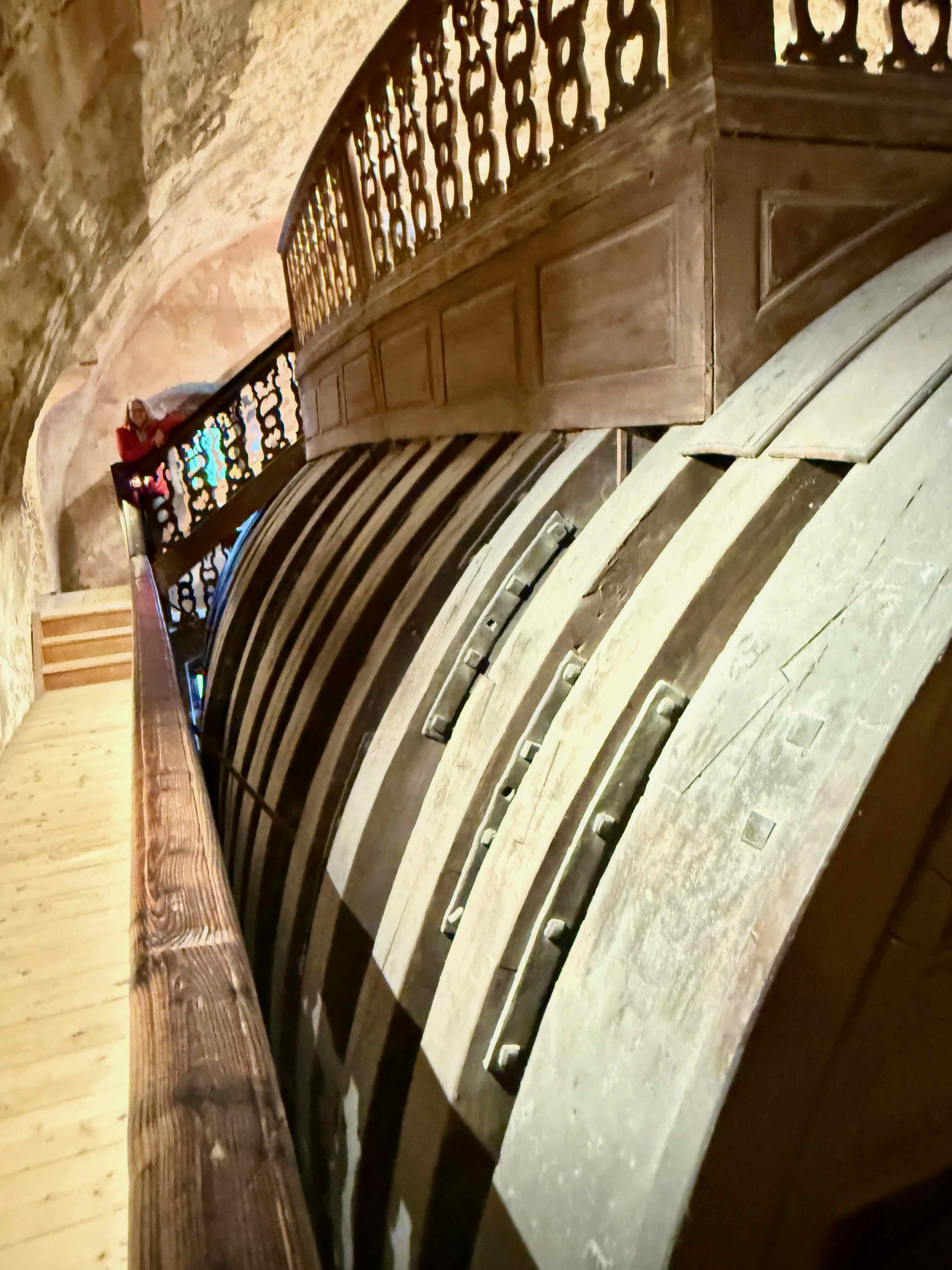
It is cold out so we go inside to see the Big Wine Barrel.  It is pretty impressive and I take this photo and then walk around the corner while Bob is inspecting the barrel. I come back and tell him “You need to come and see the BIG Wine Barrel!

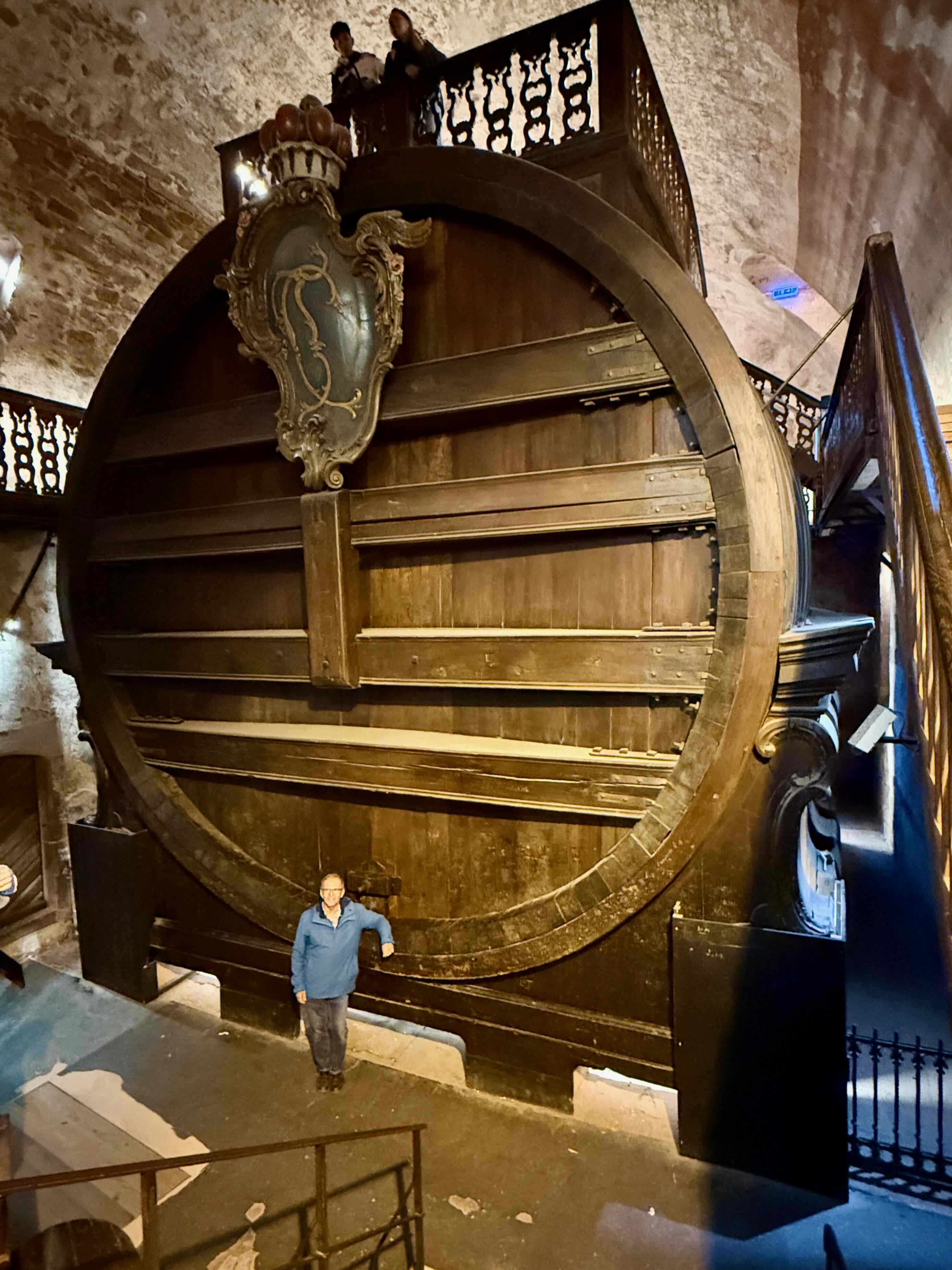
Here it is!

This wine barrel held 220,000 liters of wine. The stairs I am standing on lead to a platform above the barrel that was likely used as a dance floor! 

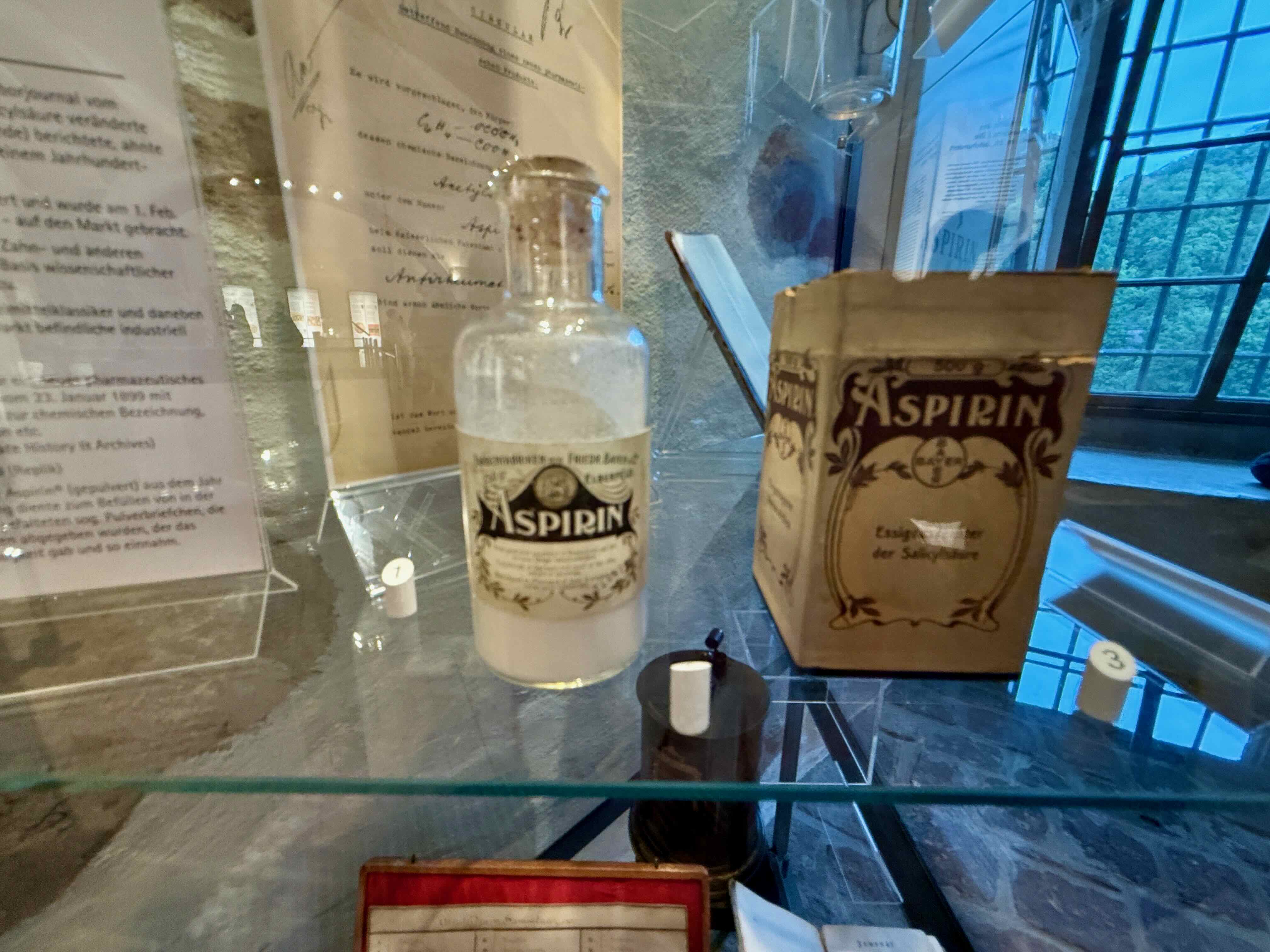
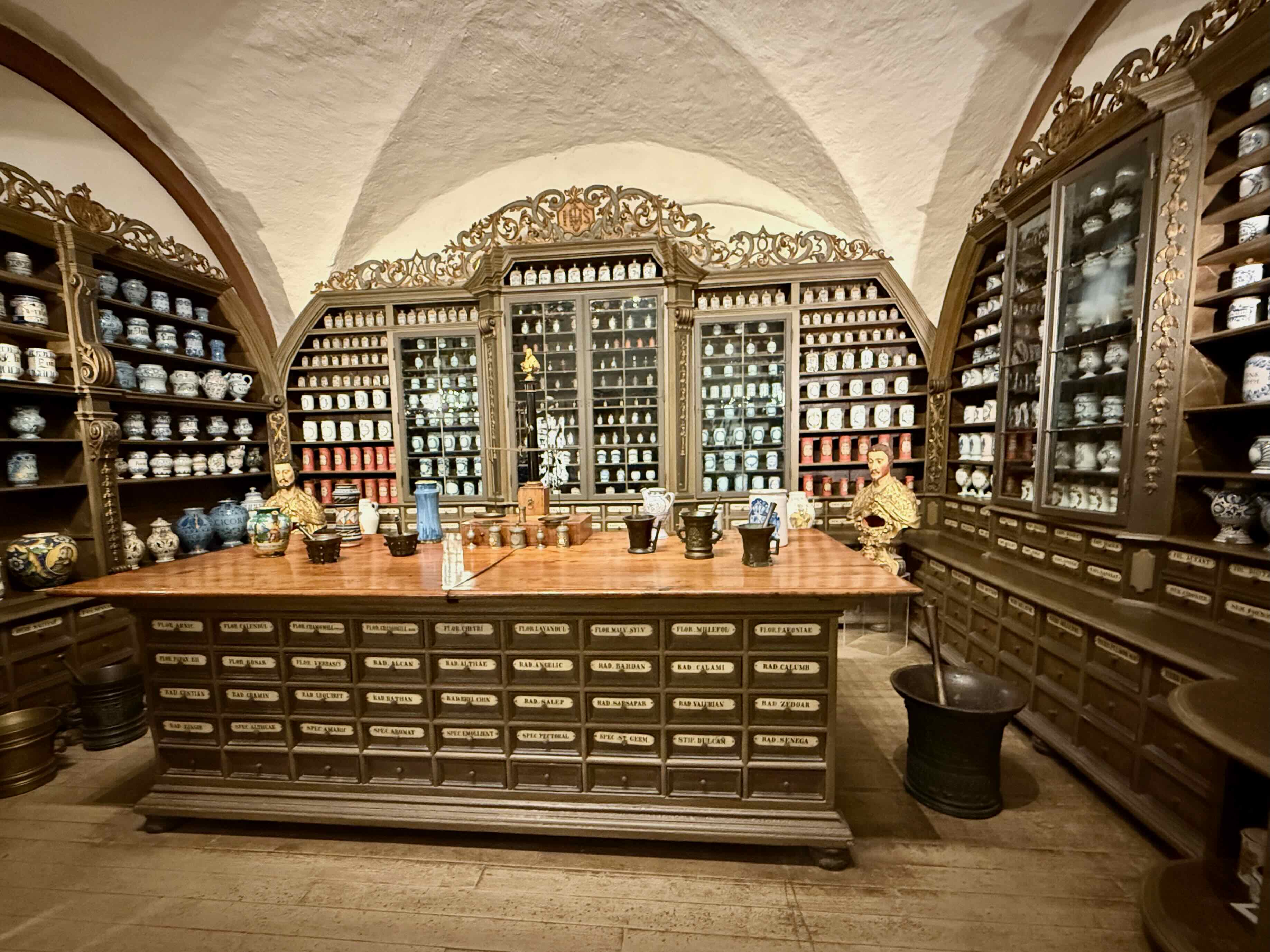
Last stop is the German Apothecary Museum. It is warm inside, which I really appreciate.  Aspirin was a commercially sold product in 1889. 

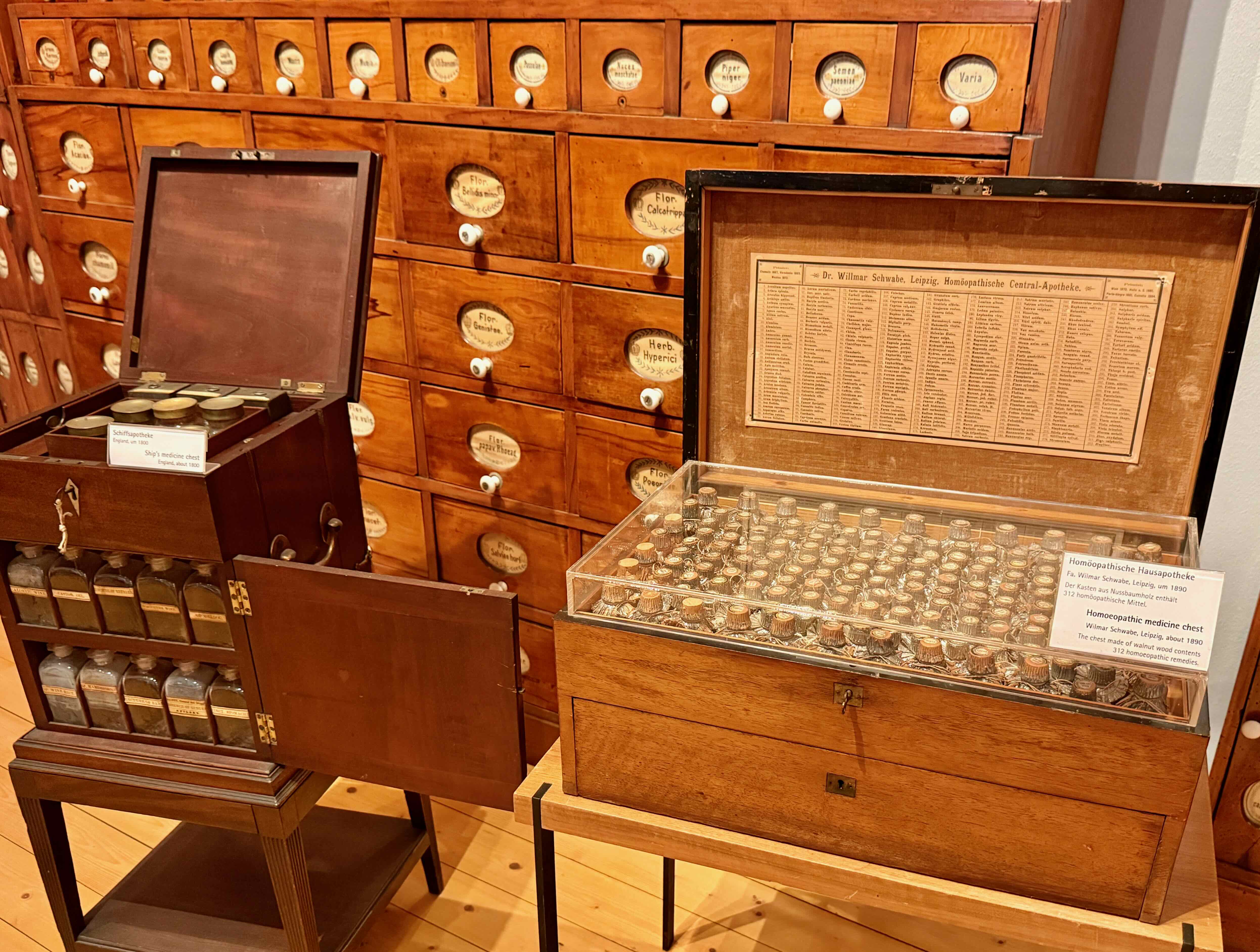
This chest of homeopathic medicines from 1890 contains 312 vials of homeopathic remedies.

What is it about chests with lots of little drawers that I find so appealing?

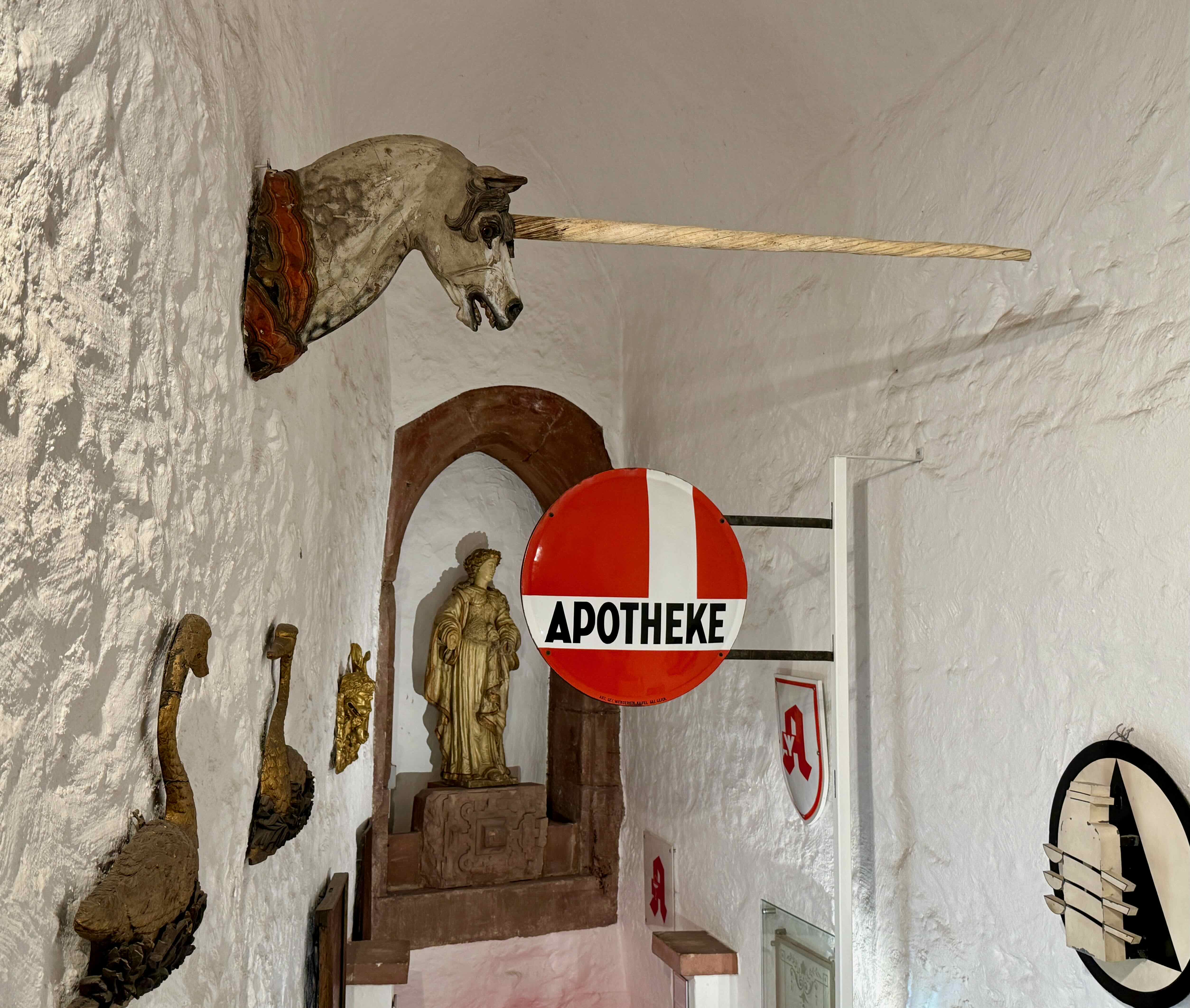
Of course, ground unicorn horns were in big demand as a cure for ailments such as fever, plaque, poisoning convulsions and epilepsy! Unicorn horns were just long tusks from narwhals or other animals but they were an expensive medication reserved for royalty and the very rich.

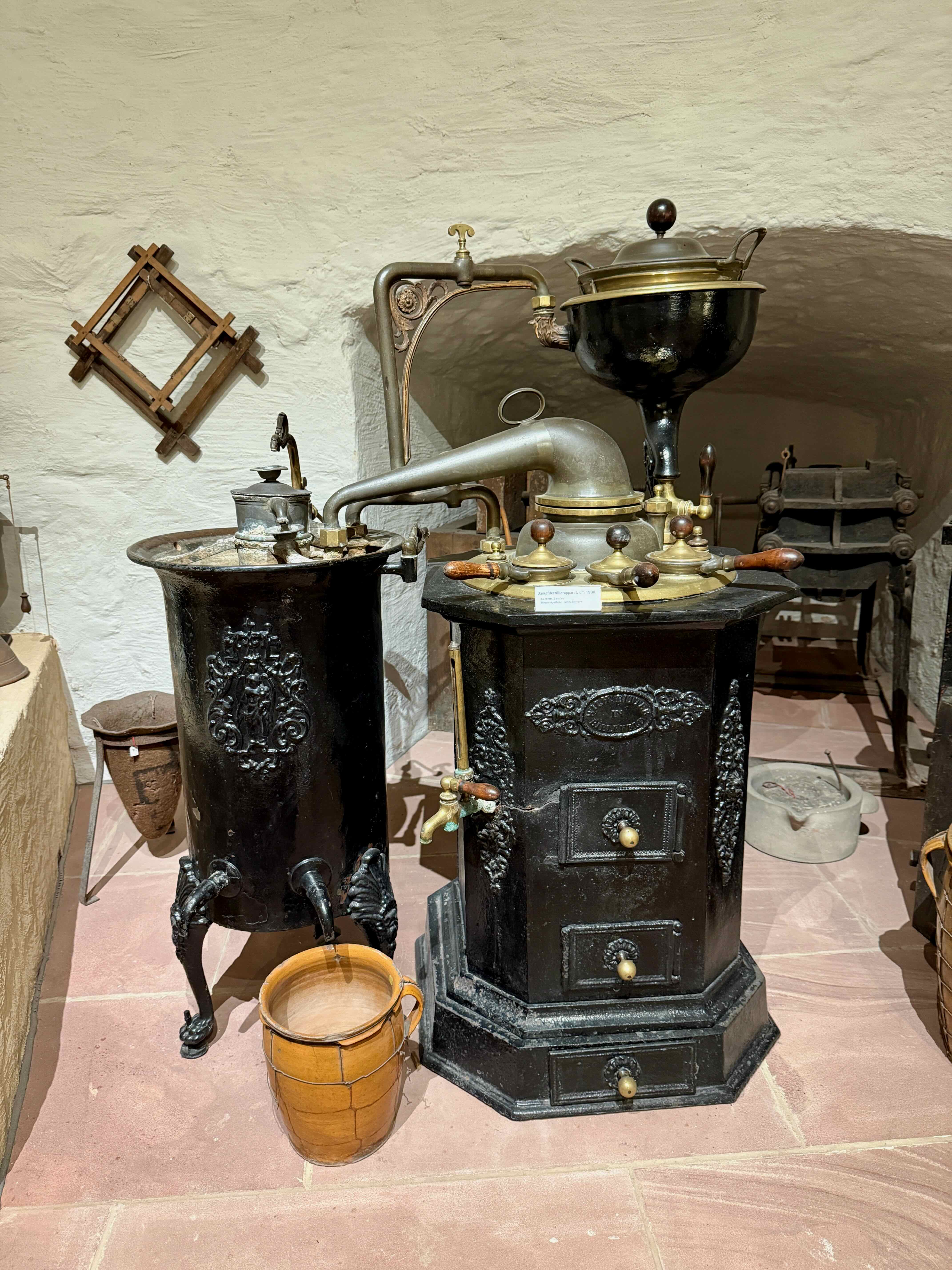
An early distillery…

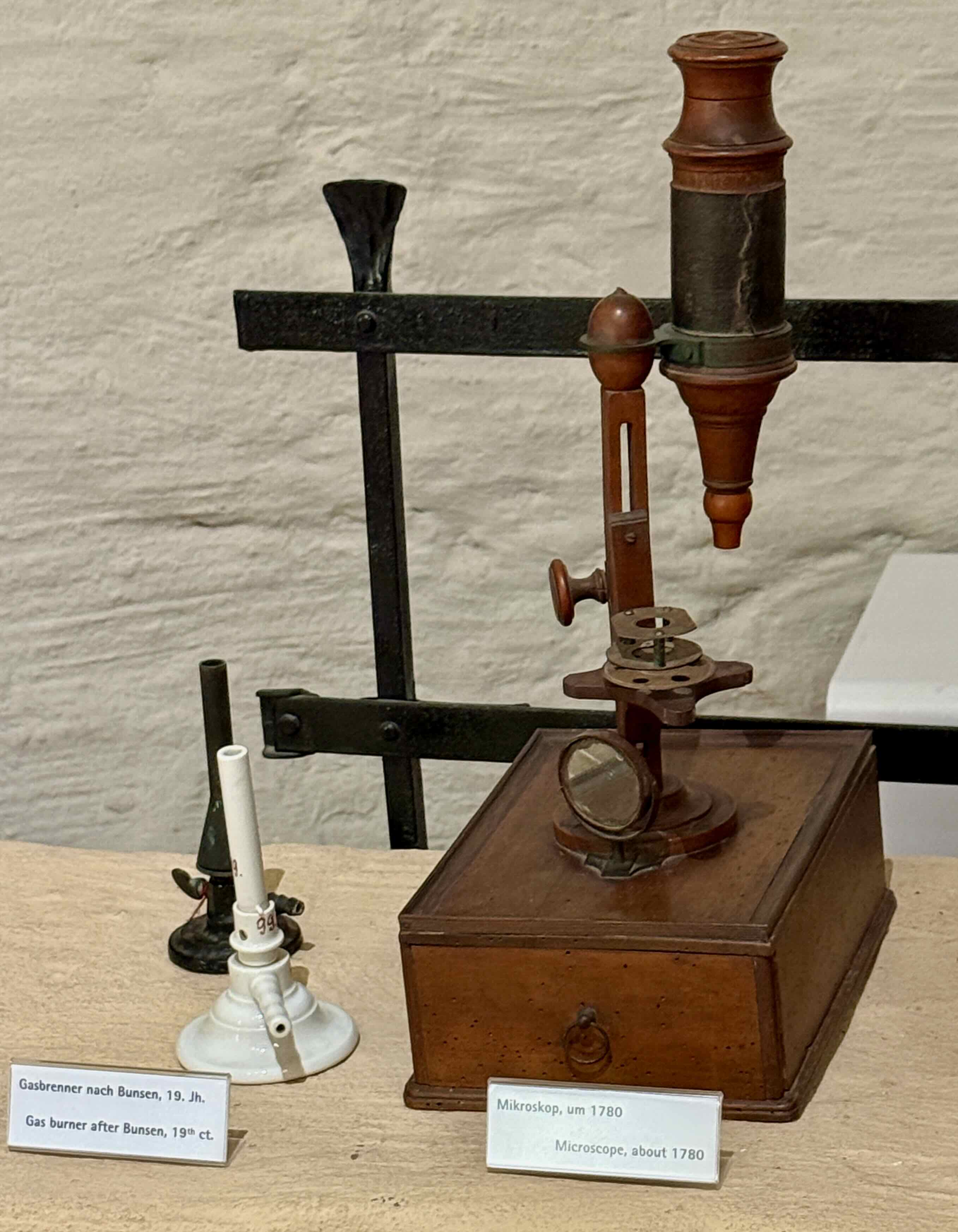
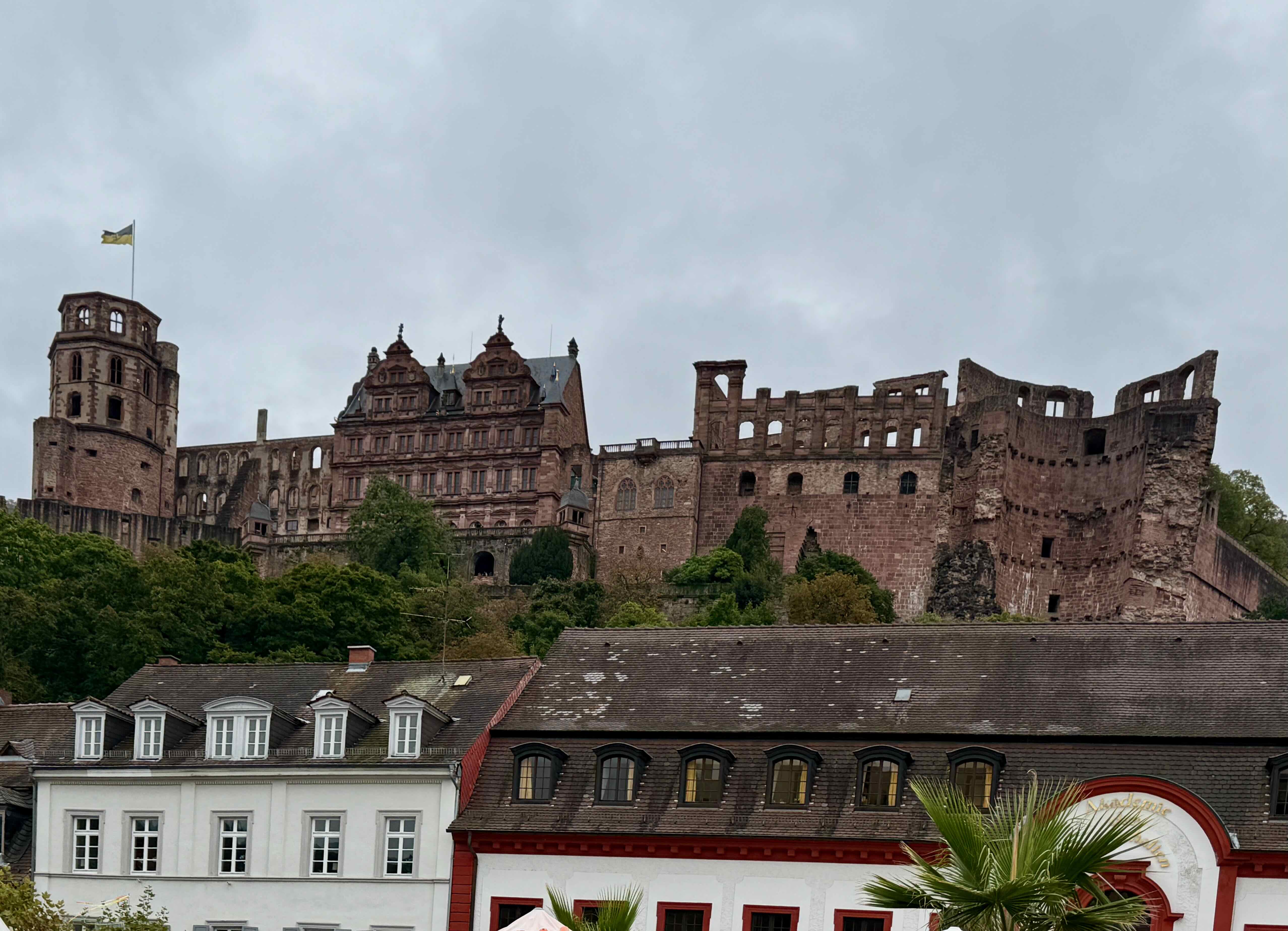
…bunsen burners and a telescope from 1780.We had such a hard time finding the entrance to the funicular and wondered where this castle was located…well, on our way back to the parkade I Iooked up…and there it was!  We both laughed, but then we couldn’t find the entrance to the parkade!  We looked everywhere and finally walked down the out ramp, and there was the door to the exit.  We checked it out and the stairs outside were right beside the ramp we just walked down…no sign or markers though!
Back on the road to stuttgart…and it is raining again.

Jewish Museums in Frankfurt, Germany

Day 36     Sunday, October 5, 2025

I have a much needed quiet day and Bob visits two Jewish Museums in Frankfurt. He is writing today’s post.

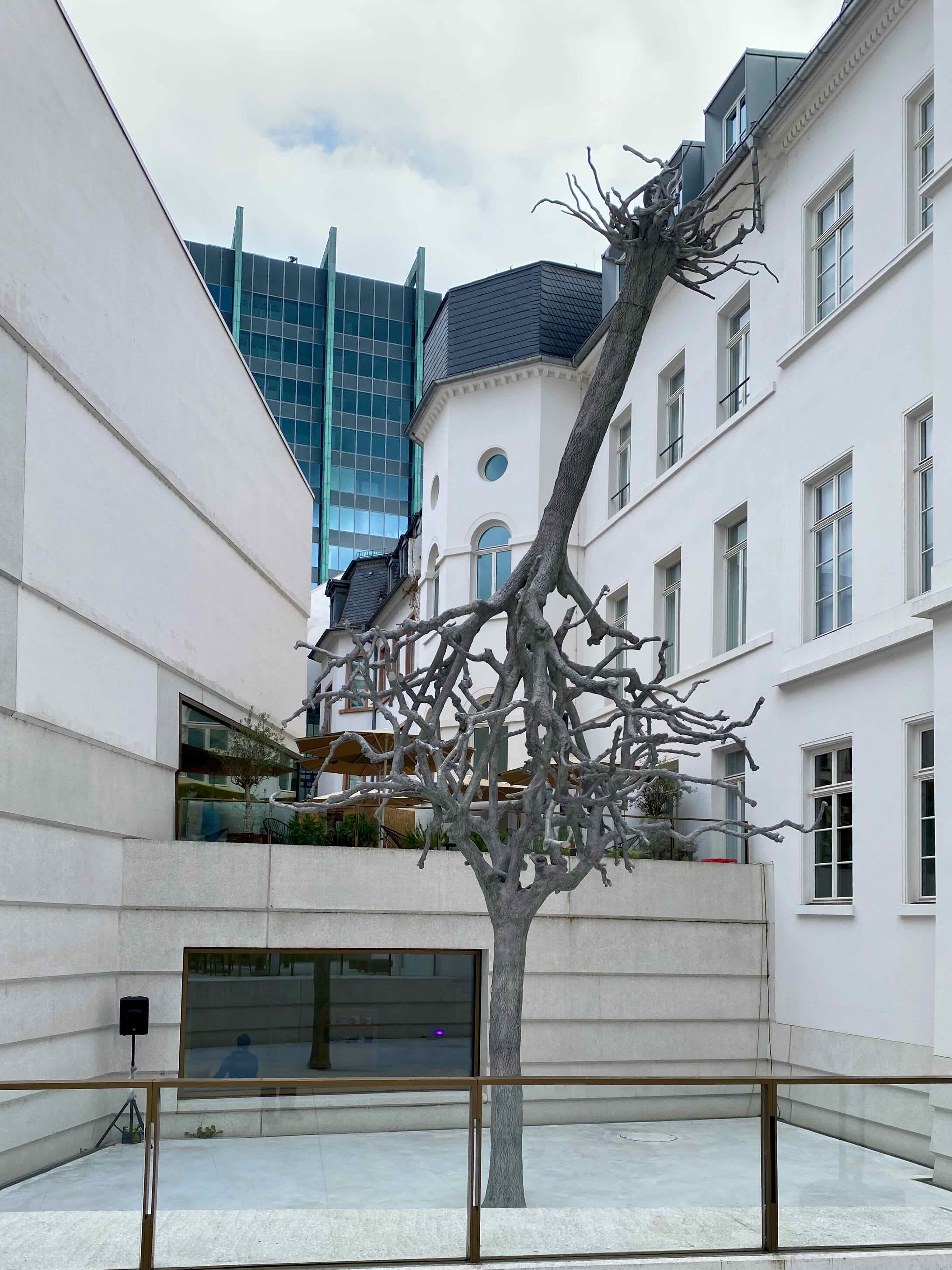
At the entrance to the Jewish Museum is a sculpture that symbolizes the uprooting of the Jewish community during WWII. Of the 30,000 Jews in Frankfurt at the start of the war, 13,000 died in German concentration camps, many were uprooted and only 150 remained after the war.

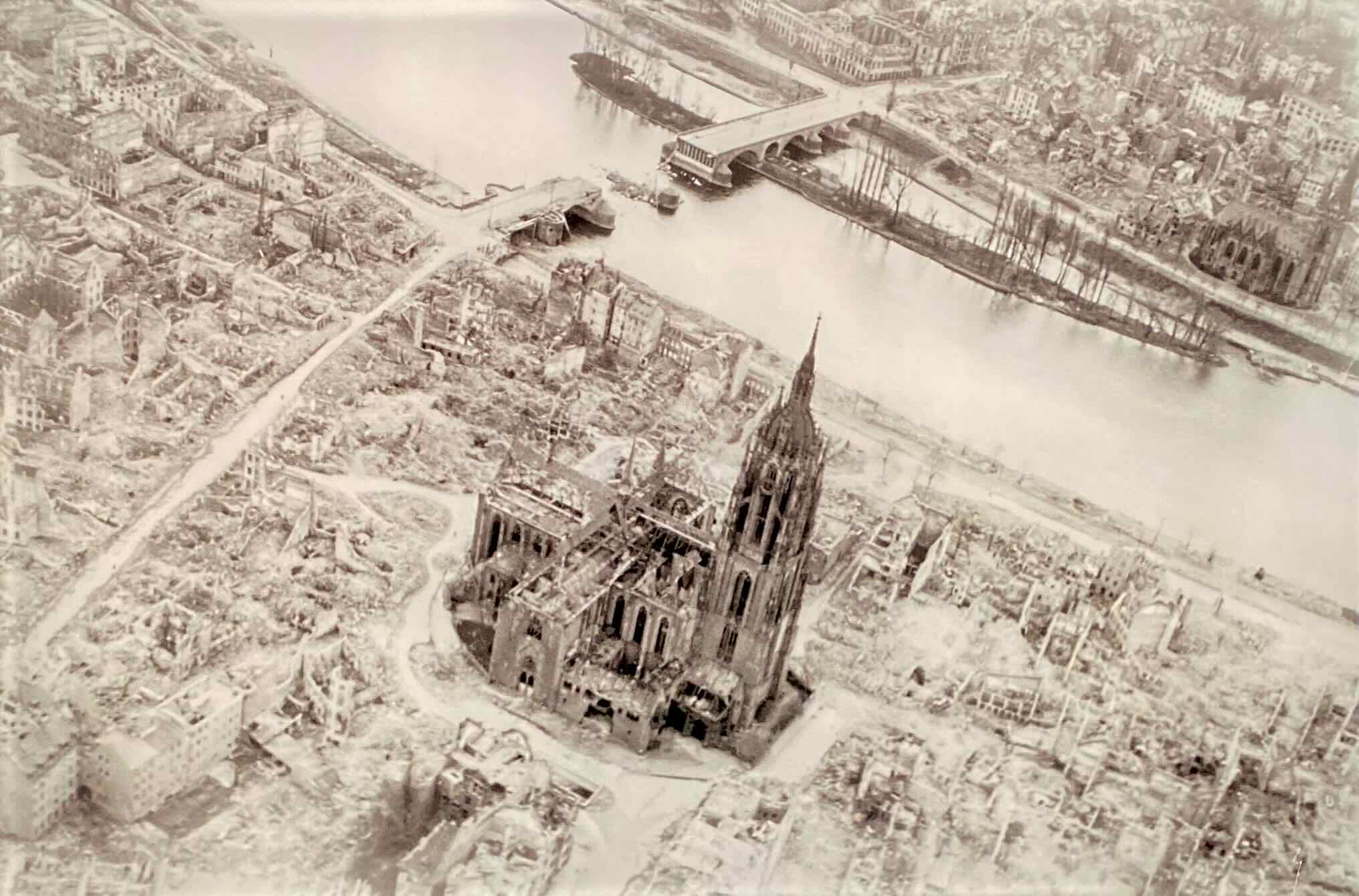
Amazingly most of the St. Nicholas Cathedral survived the bombings in WWII. 80% of the city was either destroyed or badly damaged.

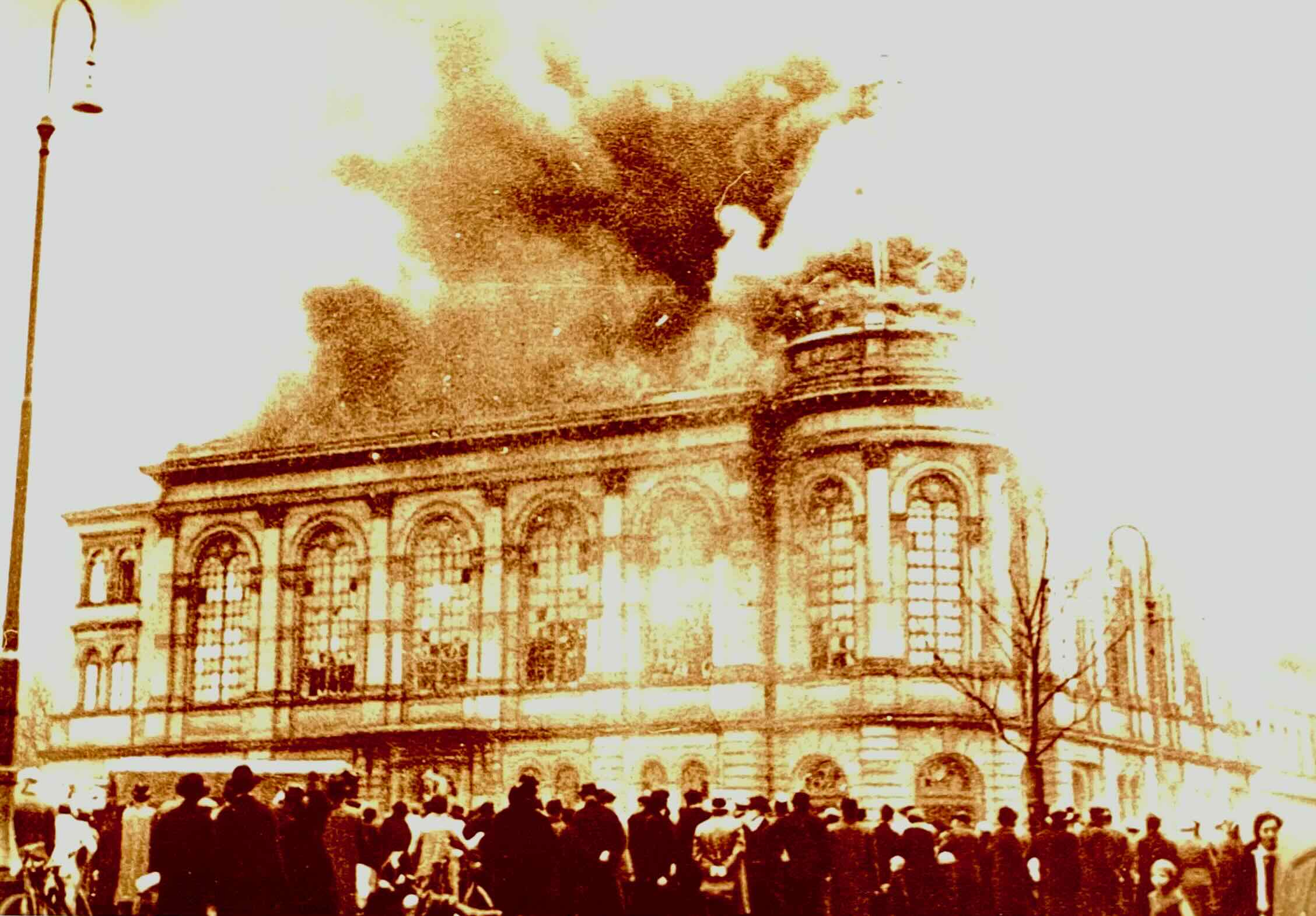
In November 1938, 1400 synagogues were vandalized and burnt  by the Nazi regime, including the Borneplatz Synagogue.  

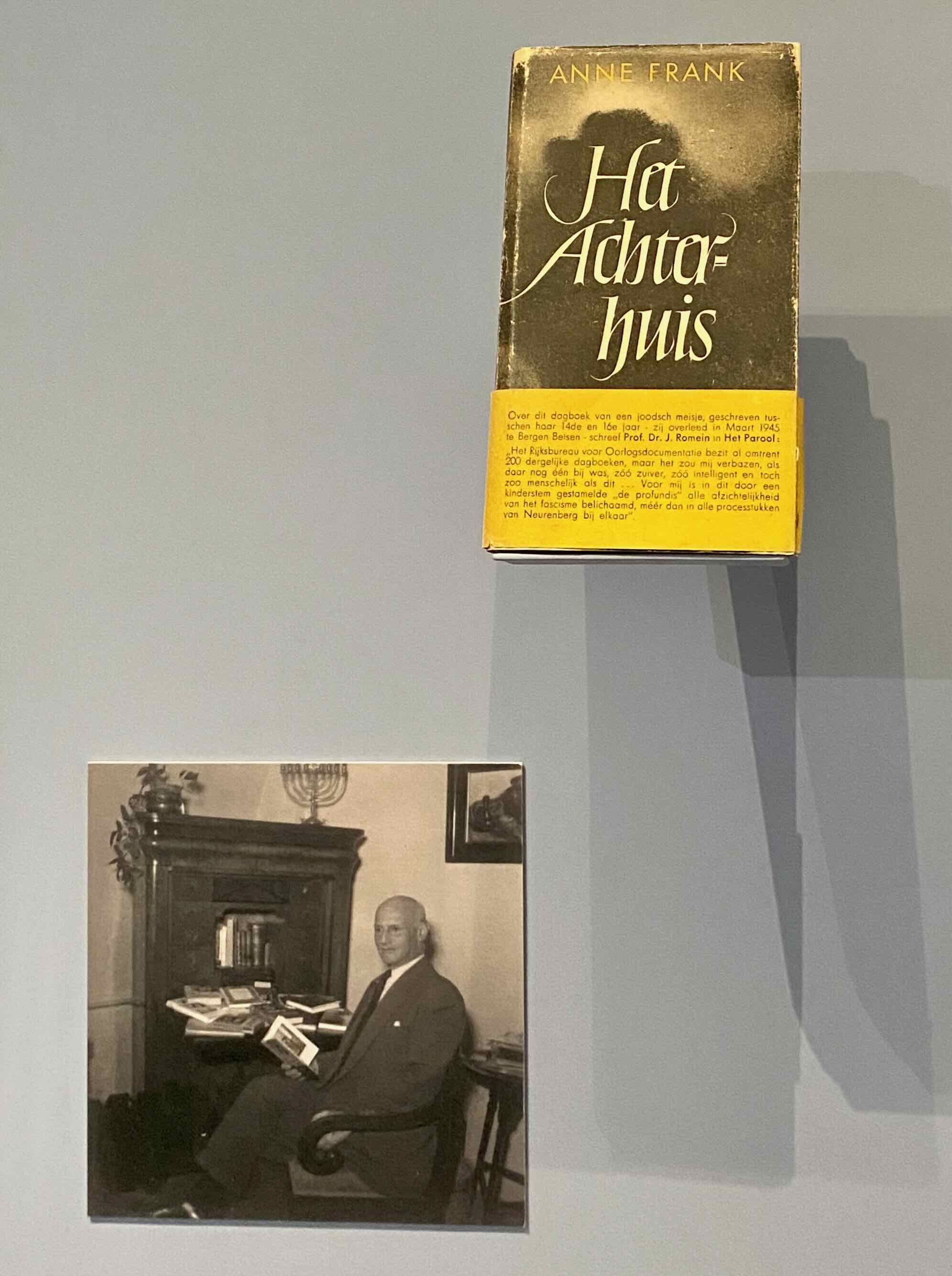
I was surprised to learn that Anne Frank and her family lived in Frankfurt before 1933. The grandmother moved to Basel, and other family members moved to Paris and London. Anne Frank’s family moved to Amsterdam. In 1942 the family went into hiding until August 1944 when the family was discovered and deported to Auchwitz.

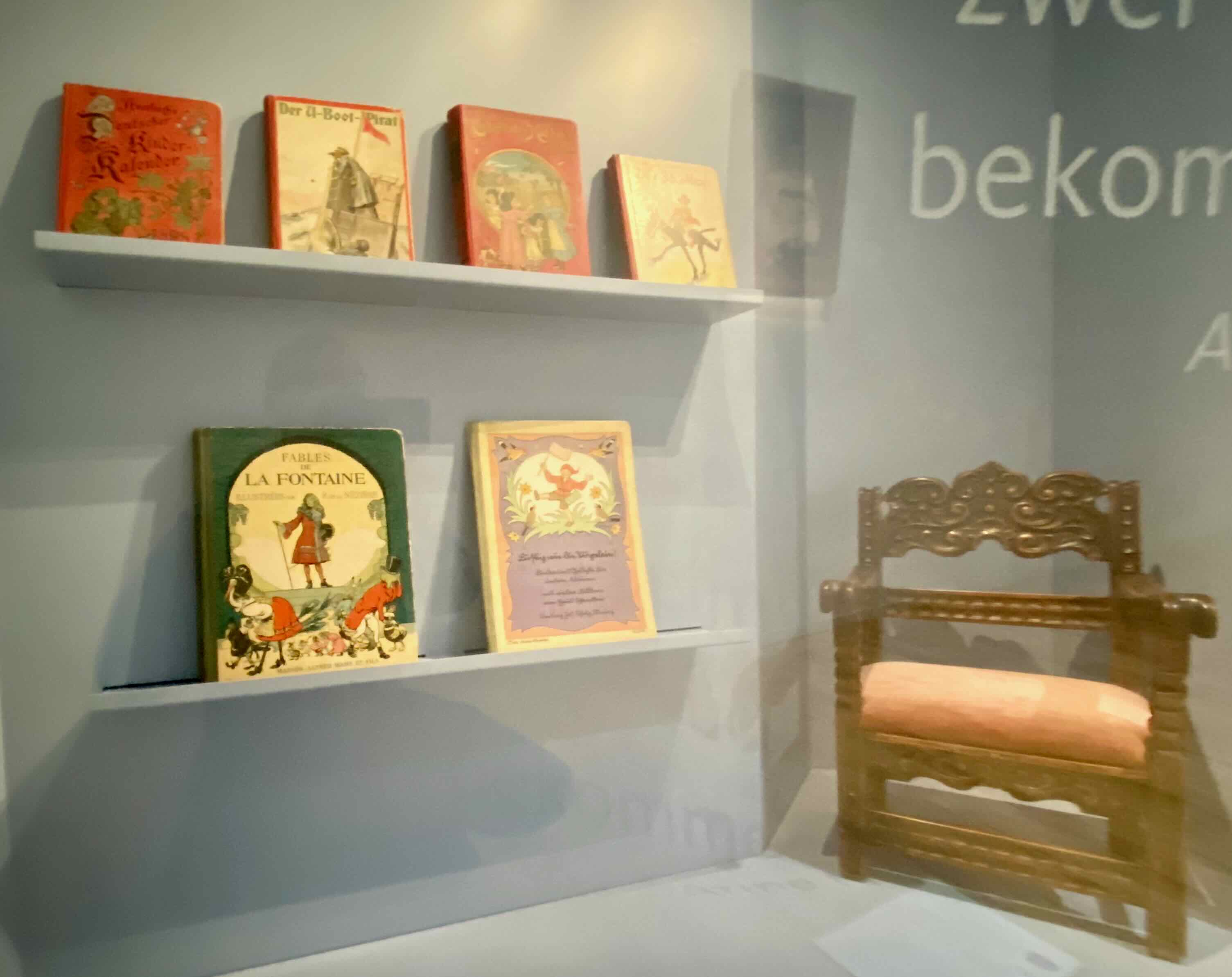
The grandmother kept these treasures.  For one of her birthdays Anne was given a gift certificate for 2 books.  This was her favourite chair.   

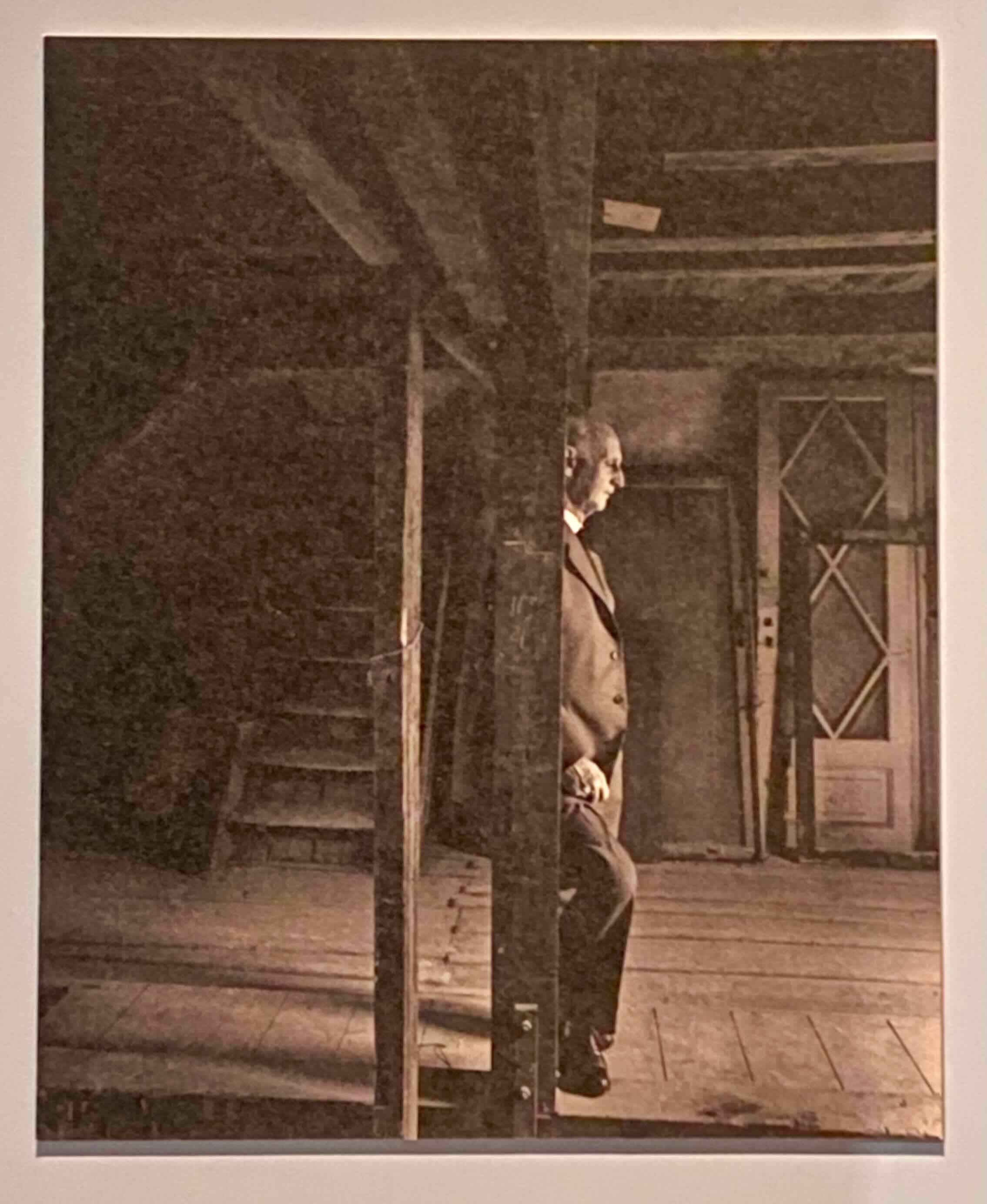
After WWII Anne’s father (the only family survivor of the war) published her diary (The Annex).  He returned to Amsterdam in 1960 to view the family’s hiding place. This is the father’s copy of the book, later titled  “The Diary of Anne Frank”.
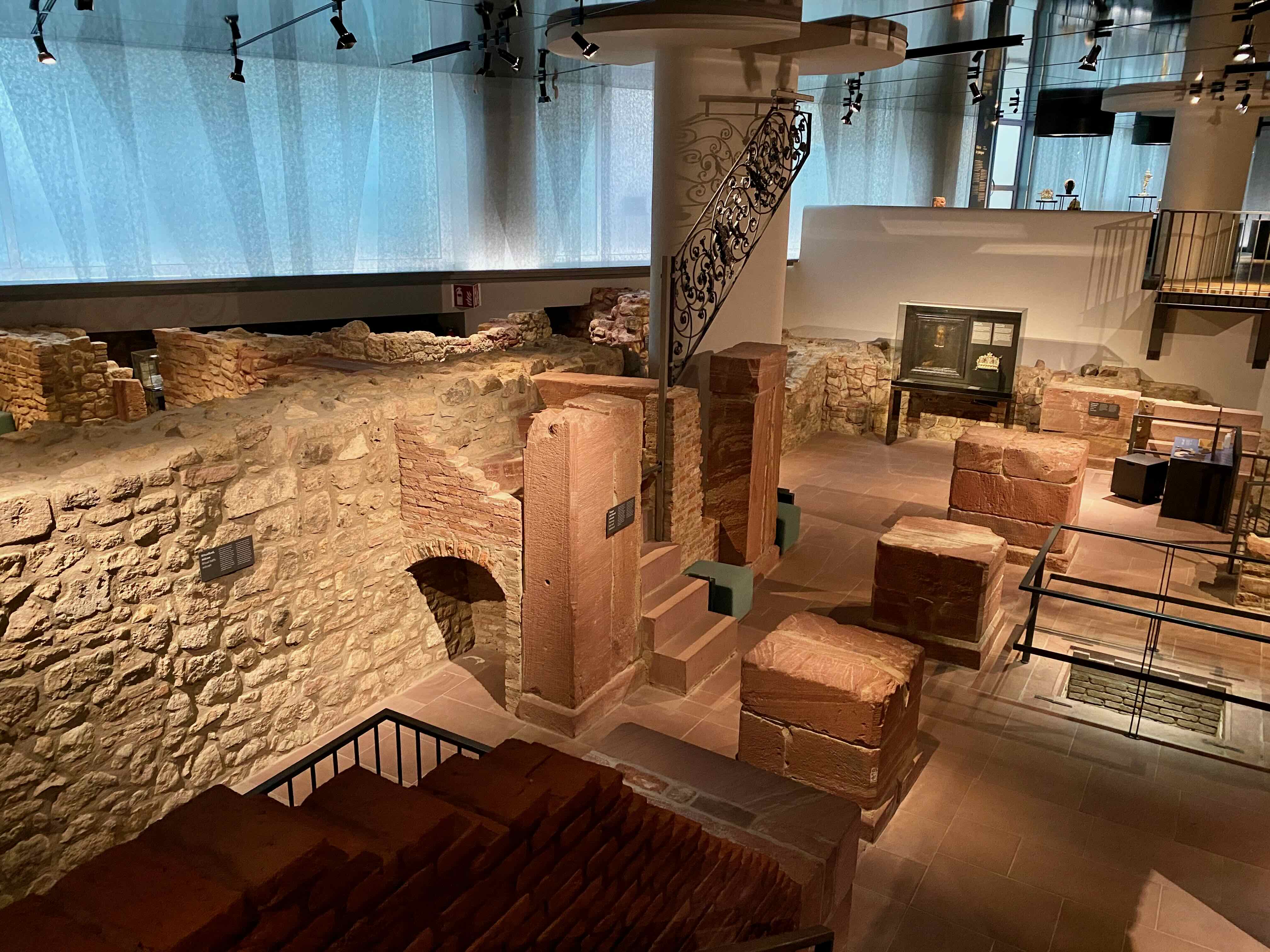
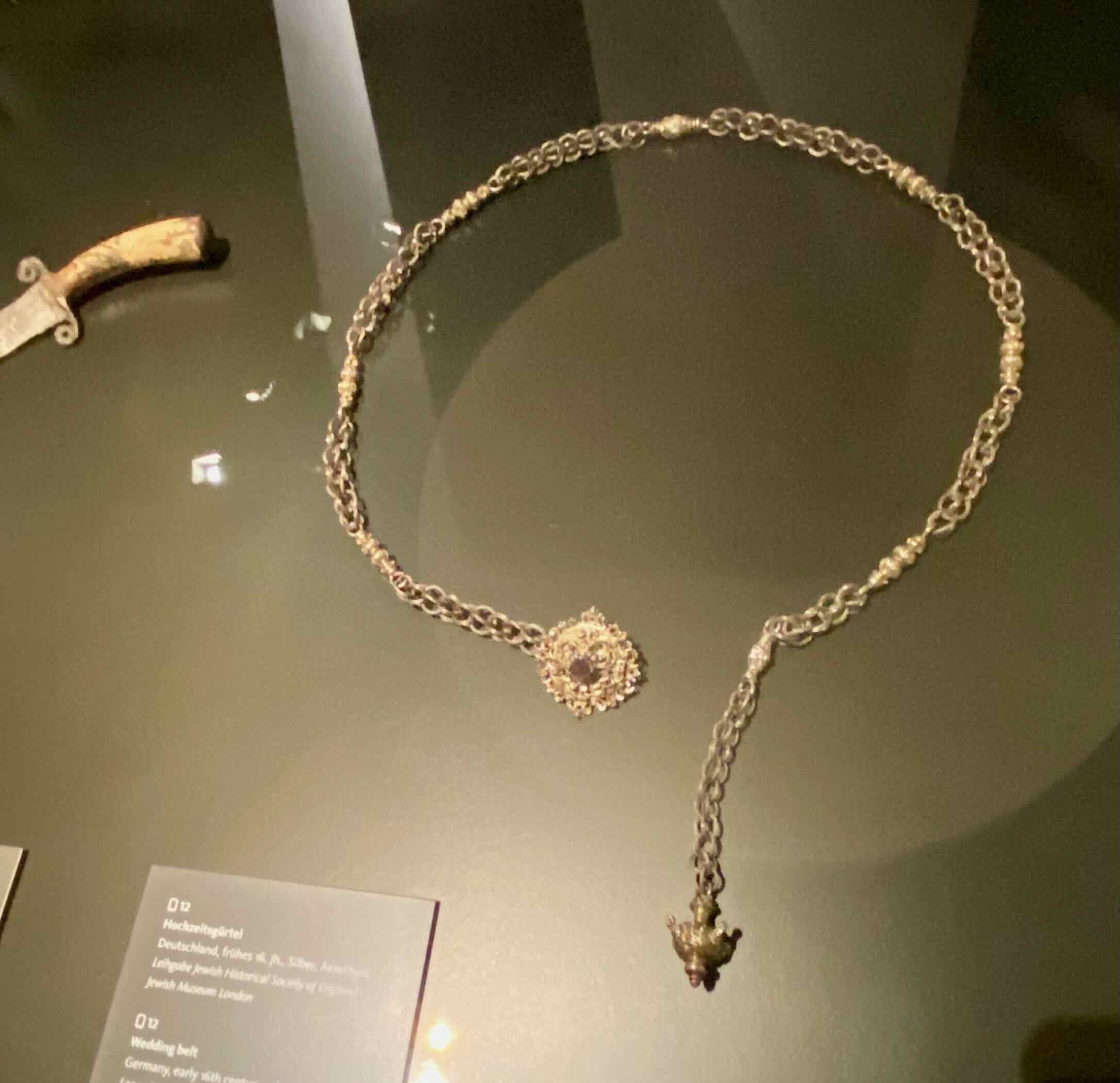
In 1460, Frankfurt City Council set up the Jewish Quarter to house all Jews.  By 1700 up to 3000 people lived here.  The remains of 5 houses have been saved in the 2nd museum I visited.   There were a number of artifacts uncovered. The most interesting is this 16th century wedding belt. The belts of the bride and groom were tied together during the wedding ceremony as a symbol of their eternal bound.
Mainz, Germany and Gutenburg Bible

Day 35    Saturday,  October 4, 2025

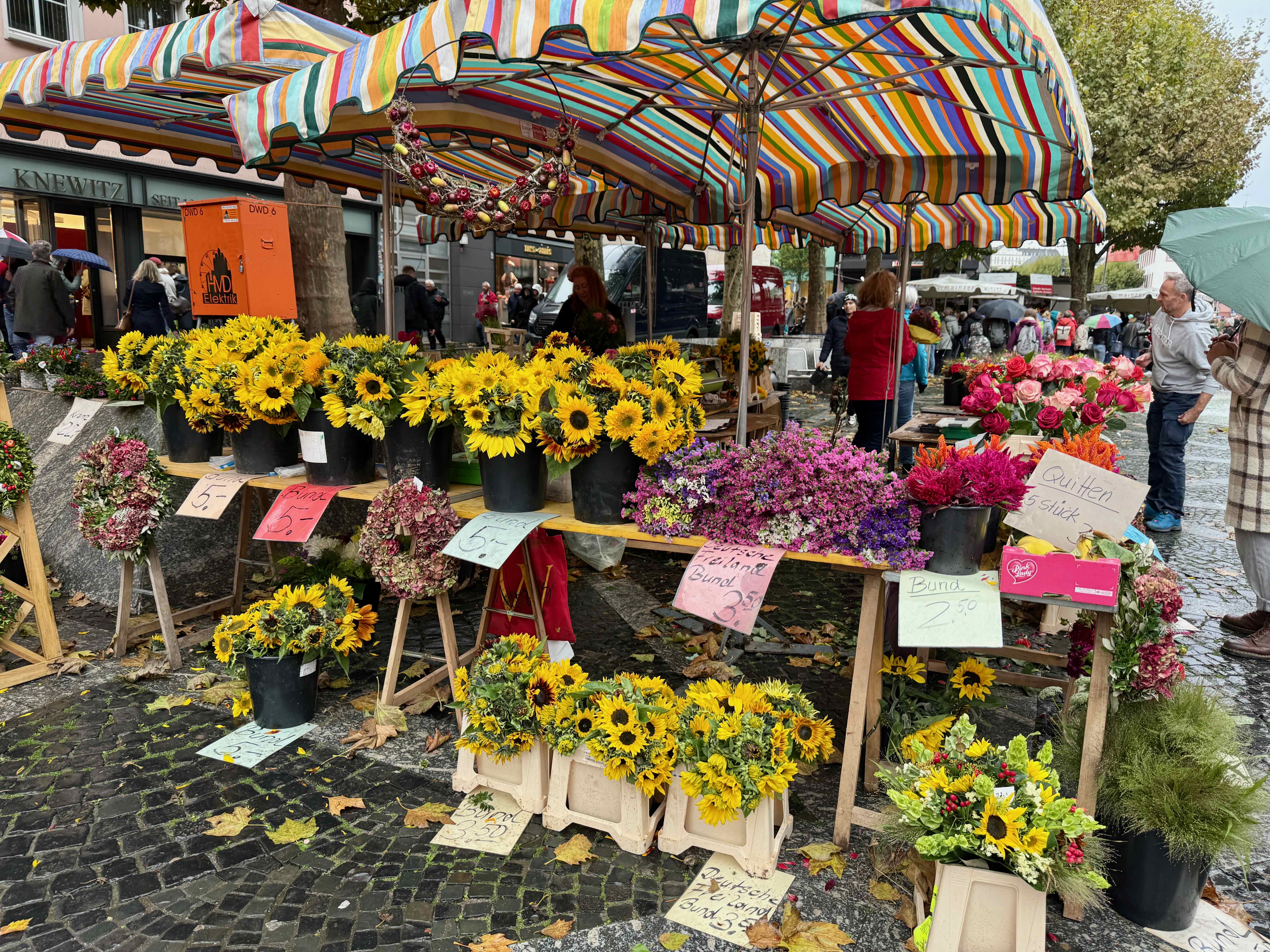
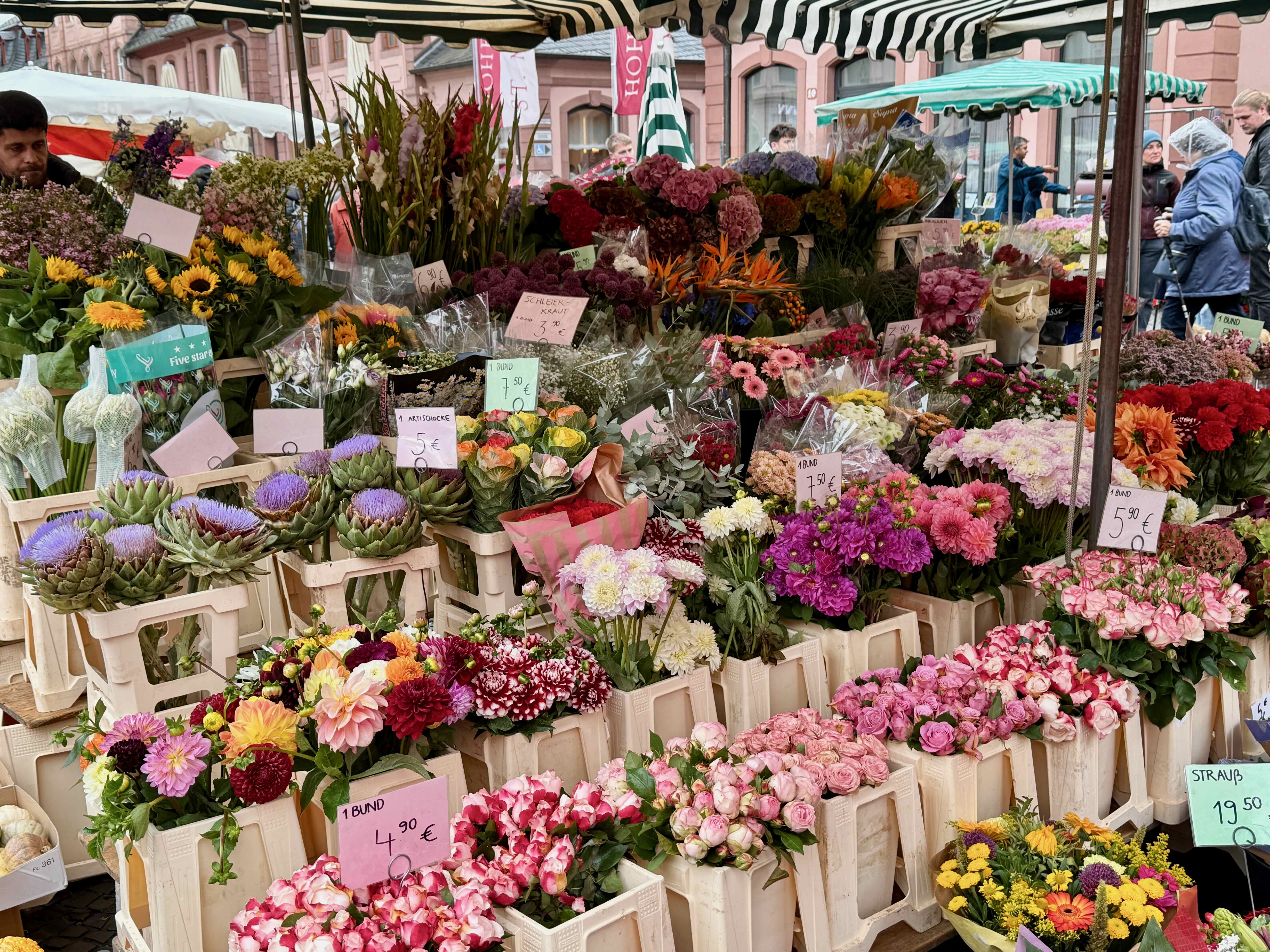
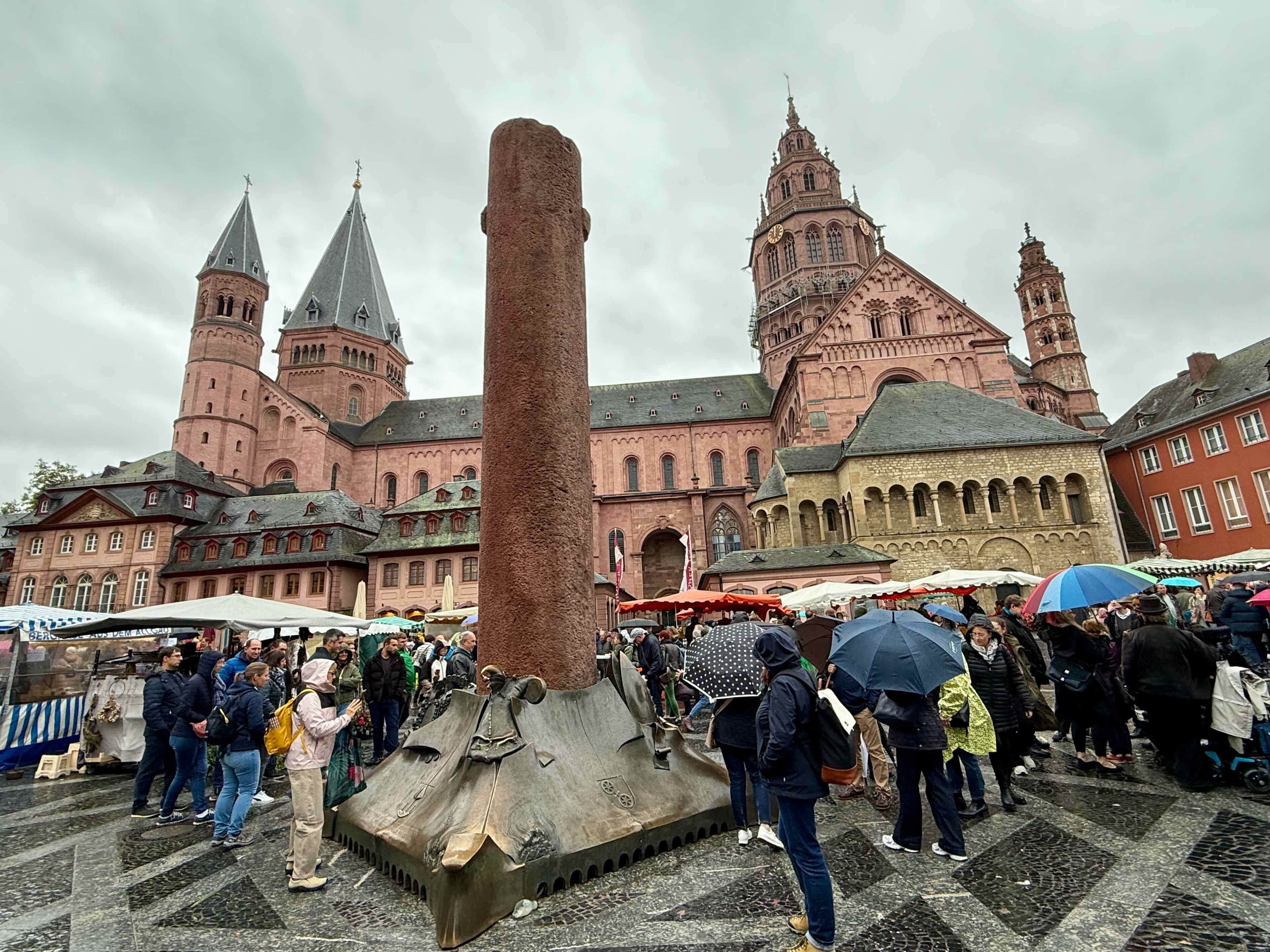
It is a 45 minute drive to Mainz, and Bob has several items on our ‘must see’ agenda. First stop is the market. The flowers at these markets are always so beautiful and very reasonably priced.

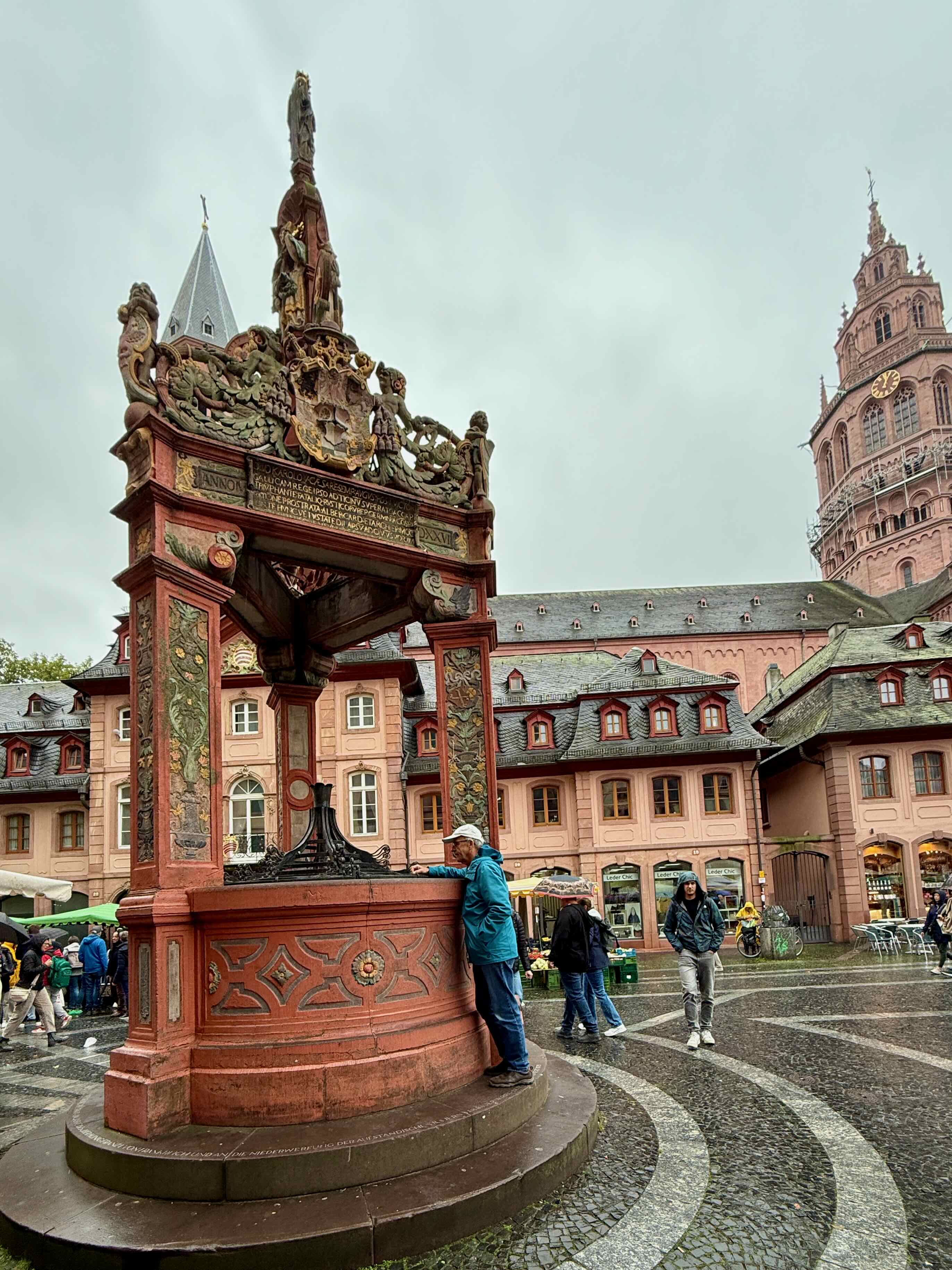
The main sculpture in the main square (market) of Mainz is the Heunensäule, or Hay Column. It is a 1,000-year-old sandstone column with a bronze casing, depicting various symbols of Mainz’s history and culture like a fool’s cap and bishop’s miter. It is in the market square in front of the Mainz Cathedral. 

I like this wishing well and we both toss in a coin and make our wishes.

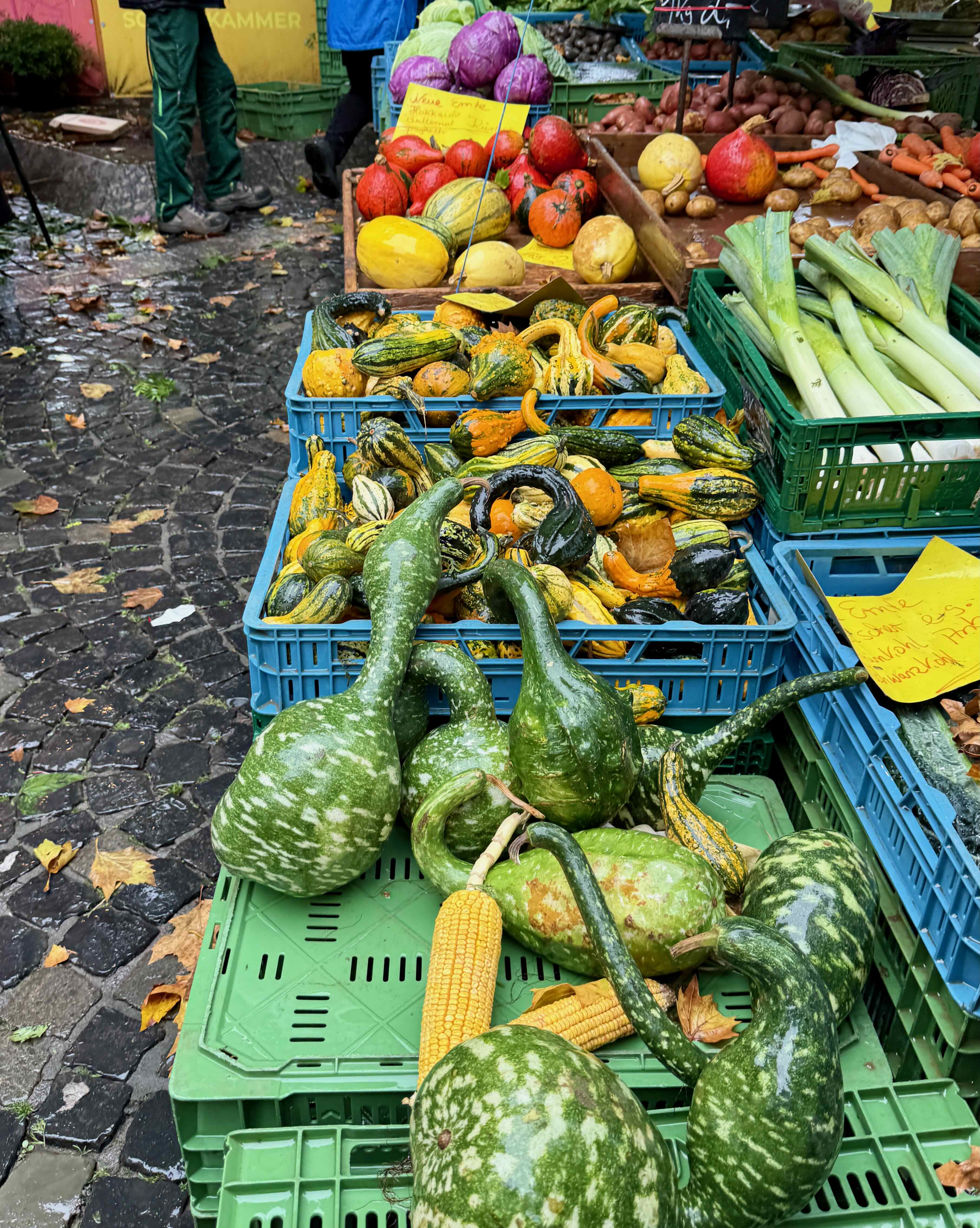
We both like the interestingly shaped squash…we might have to try growing some next year.

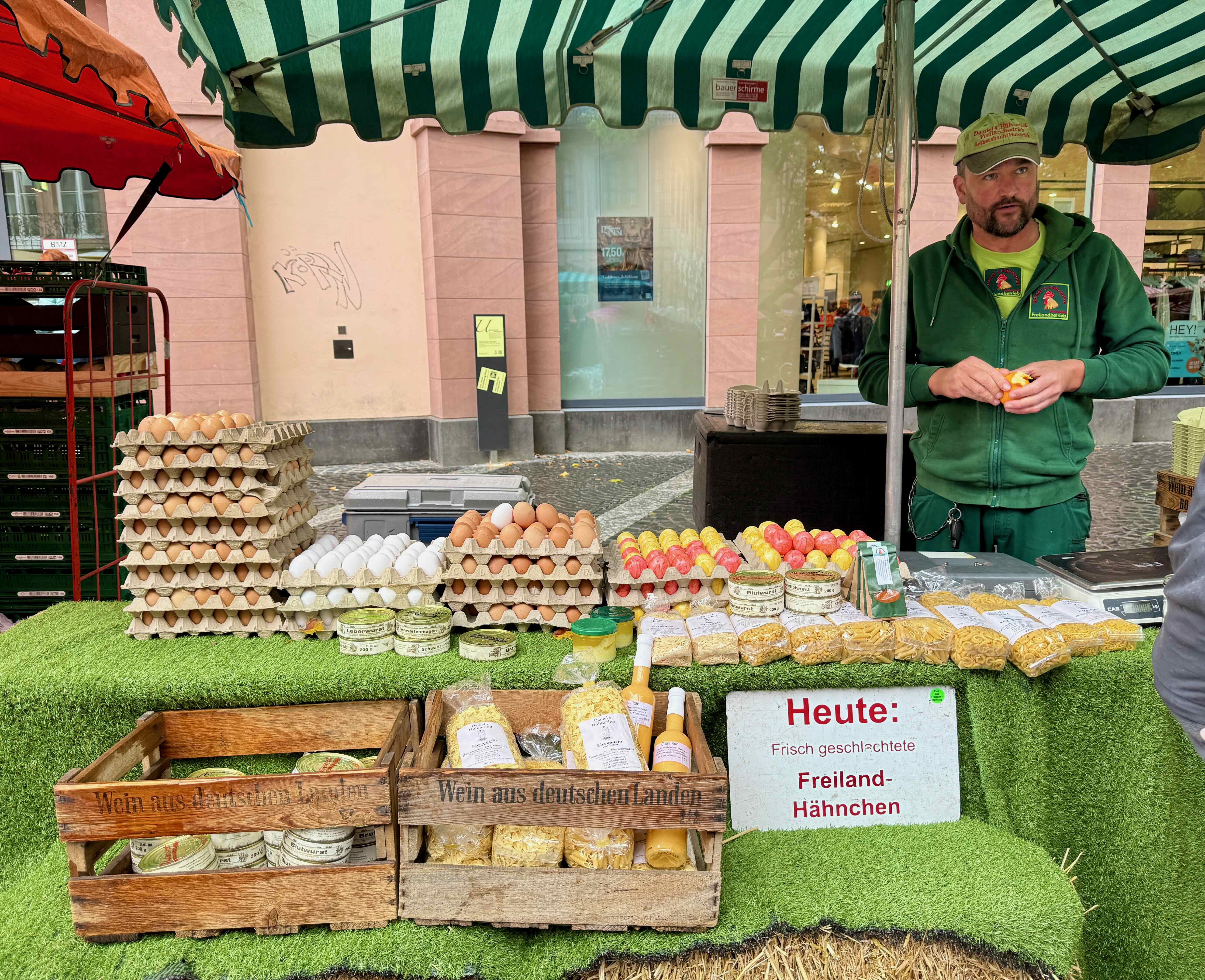
We have seen these coloured eggs in the grocery stores and wondered what they were. Turns out they are hard boiled eggs that are coated in a tinted resin that keeps them fresh for months! The colour helps to identify them as being hard boiled.

Gorgeous sunflowers!  I am definitely planting some of them in our garden next year.  They are so cheerful. Next stop in the Mainz Cathedral.  We are met at the door and told that there is a concert starting and if we enter the church we have to stay for the 45 minute concert.  Sounds perfect as it is raining and cool outside!
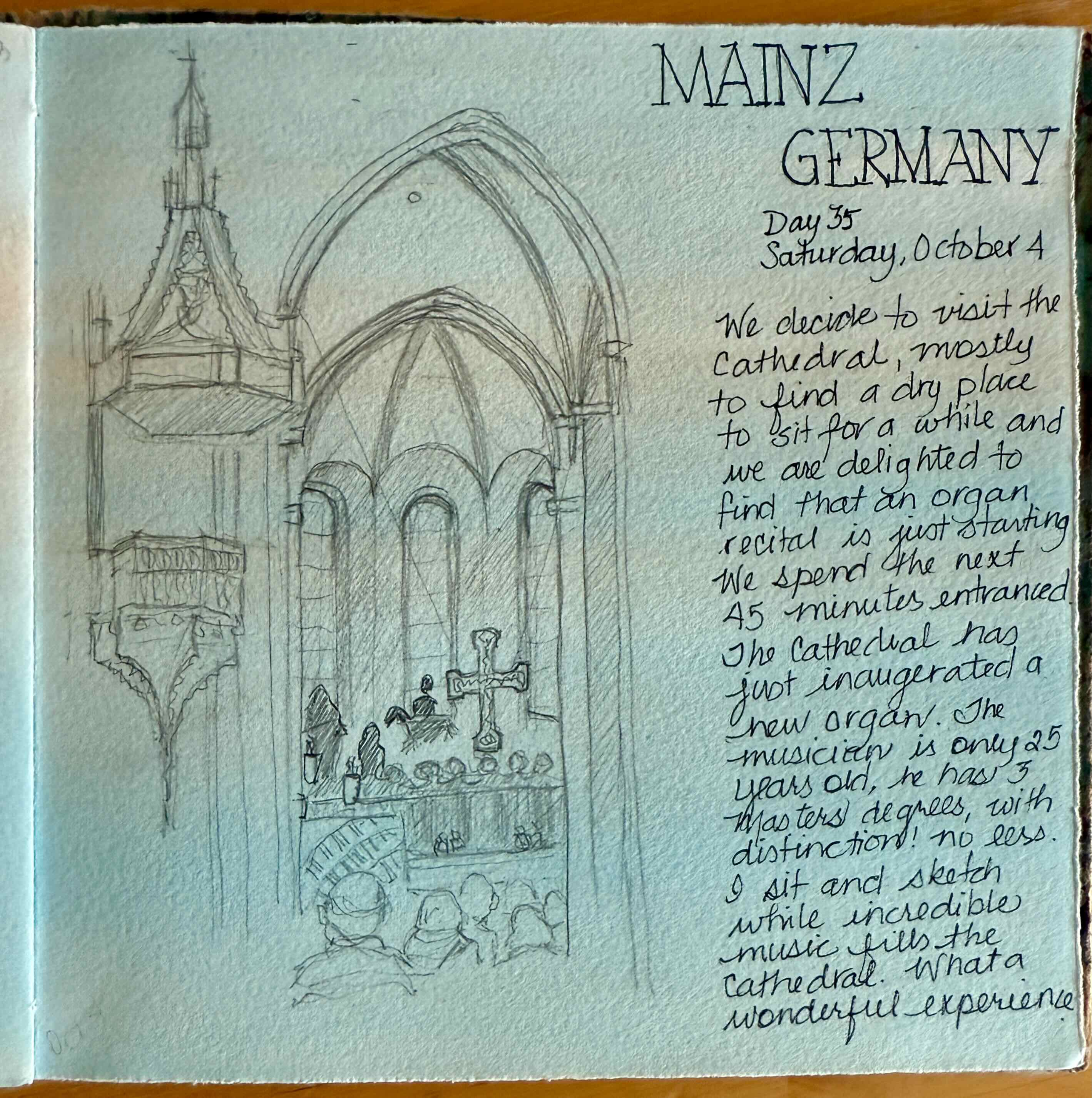
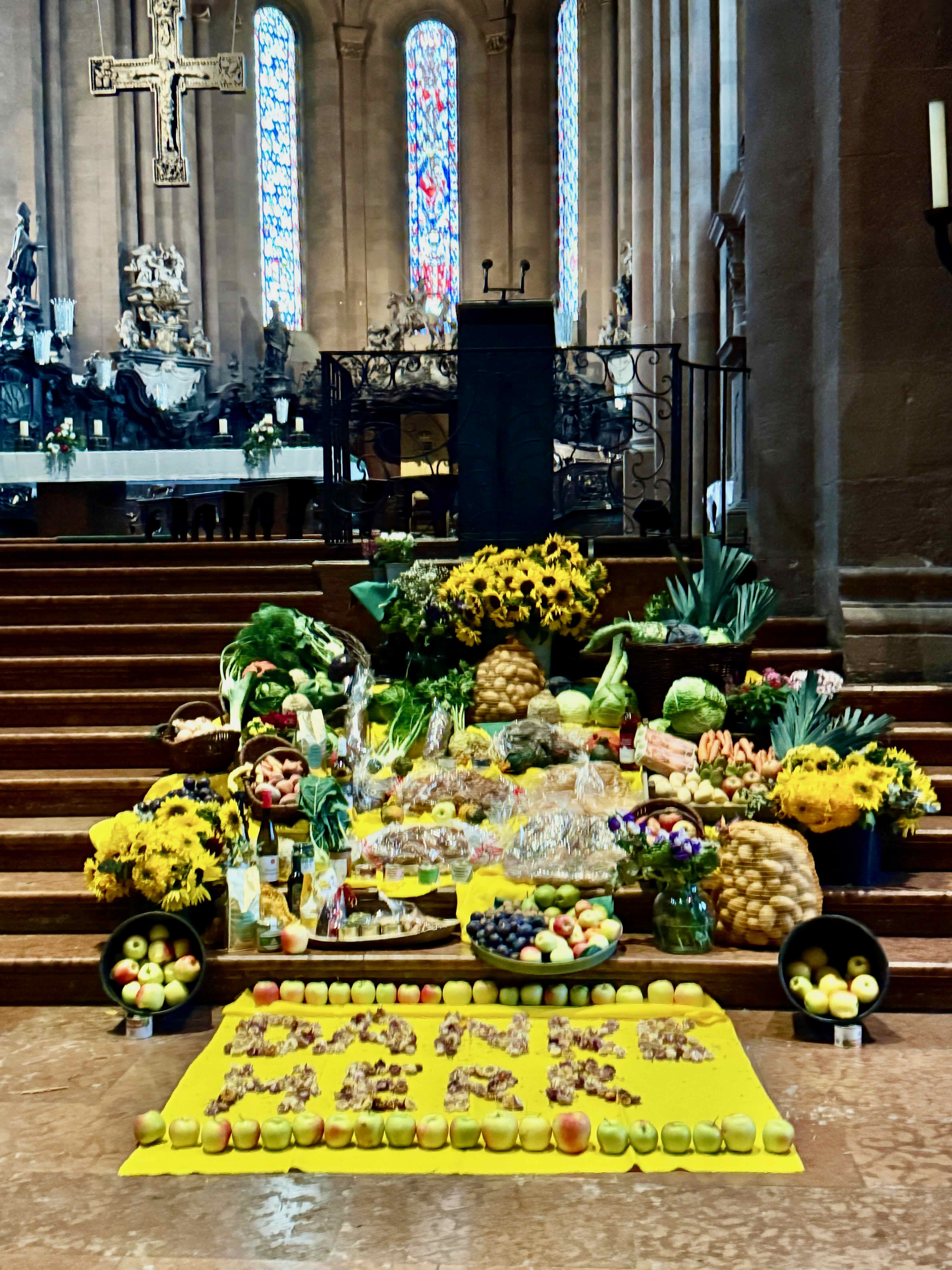
We spend the next 45 minutes listening to an amazing organ concert to commemorate the new cathedral organ.  The musician, Alexander Grün, is only 25 years old and has three Masters Degrees!  He plays some traditional organ music and then music that is innovative. The 45 minutes absolutely flew by.  I sketched for a bit while listening to the music.  Loved it. I wish I had recorded more of the music, especially the finale of the concert…it gave me goosebumps!      https://youtube.com/shorts/HykSsp-S-9E

There are fall foods displayed on the steps to the altar to remind people to give thanks for the harvest, and to share with those in need.  

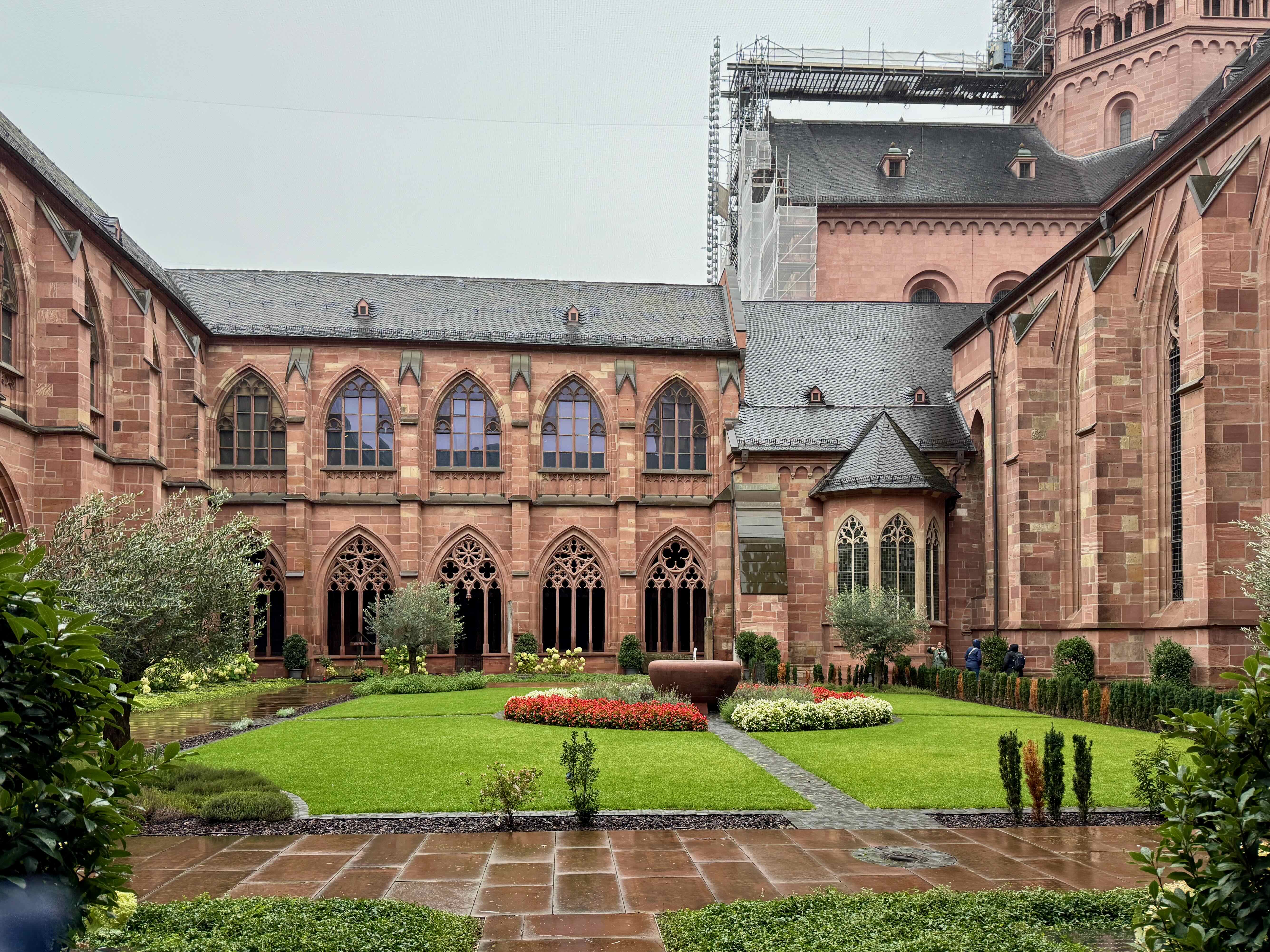
The Cathedral cloister has a beautifully tended garden,

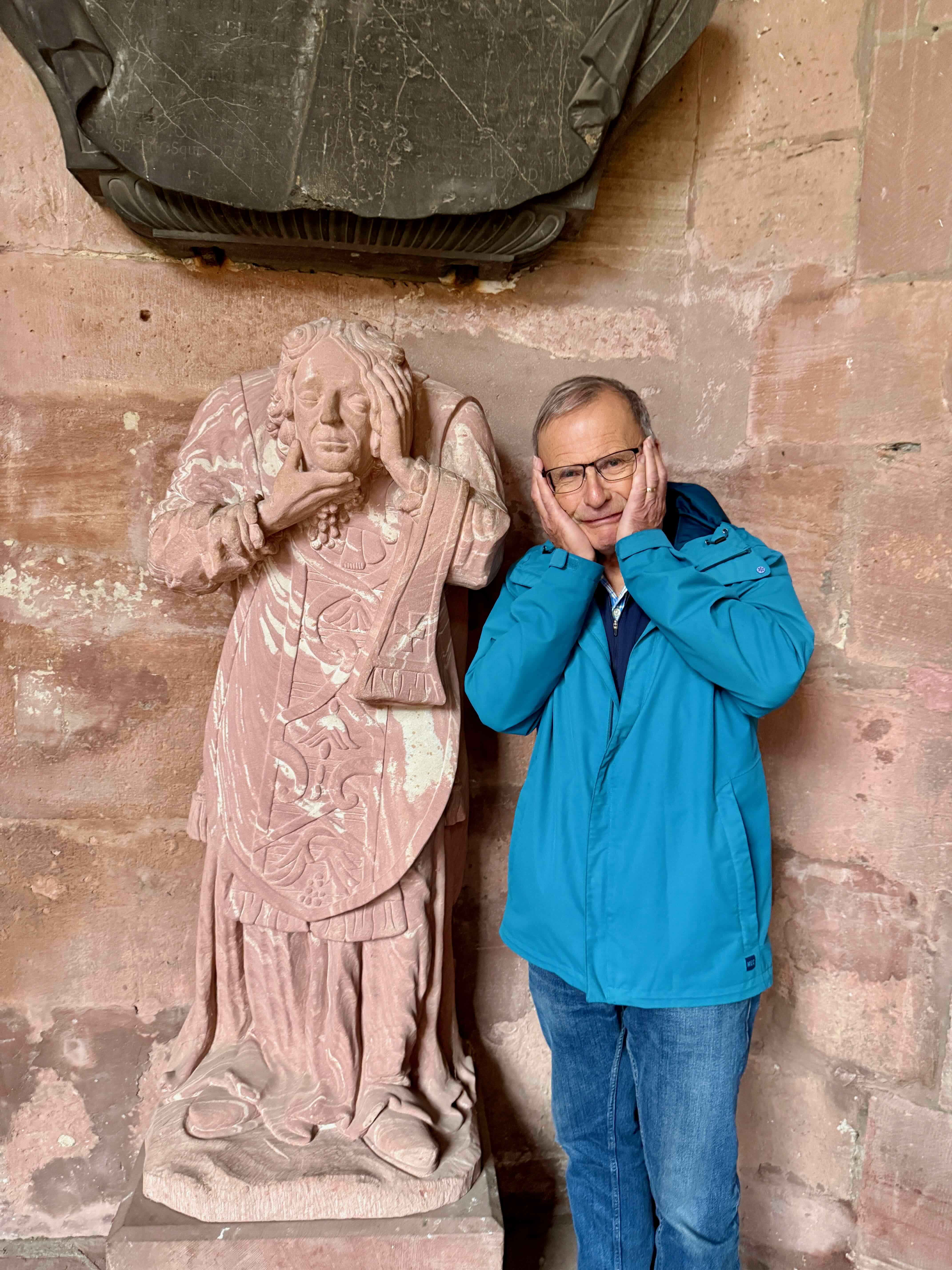
Bob liked this statue statue of a man holding his head. This is probably Saint Denis, who was beheaded but picked up his head and walked some distance, preaching the Gospel.

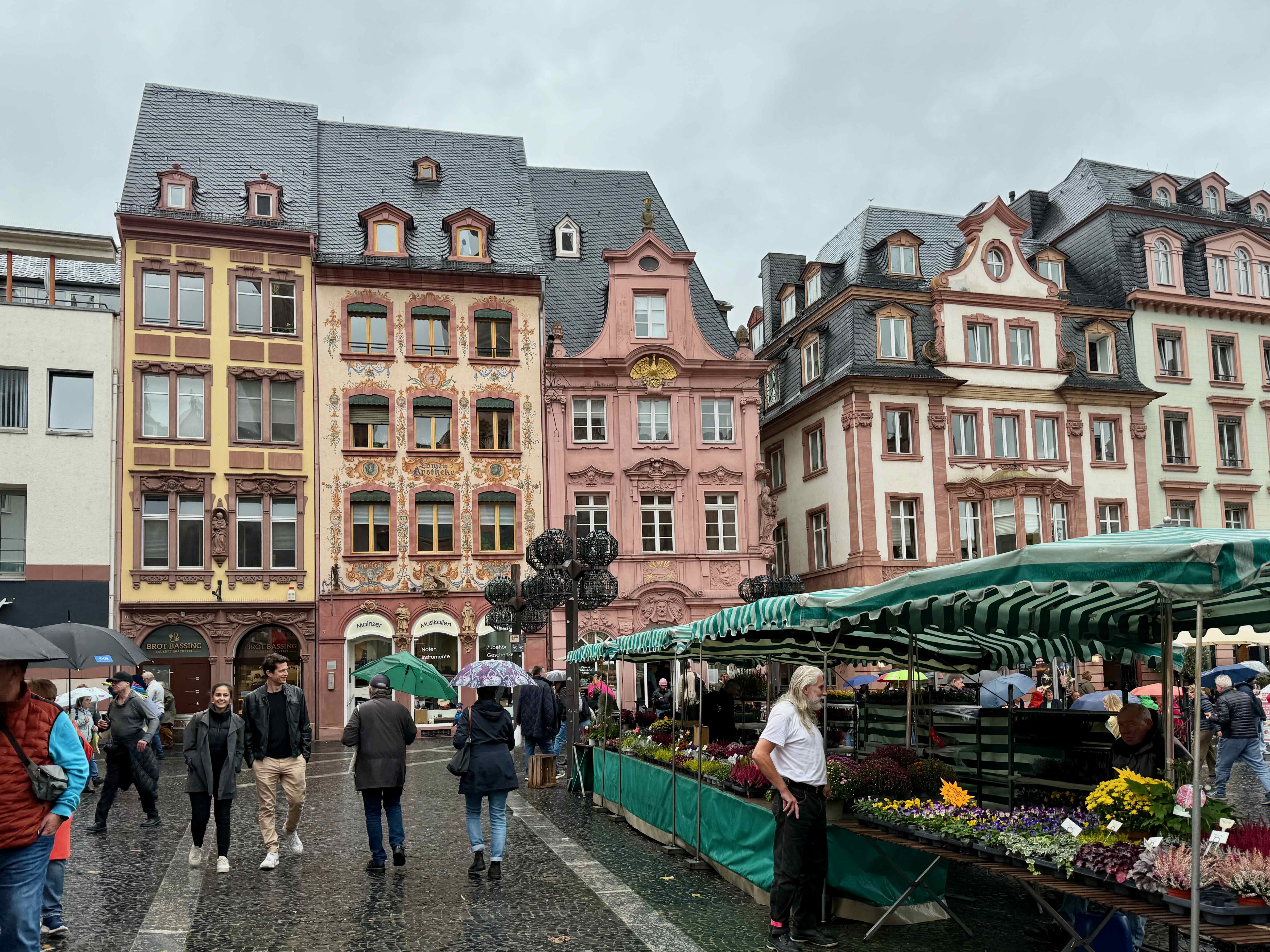
The buildings surrounding the market square are tall, narrow and decoratively painted.
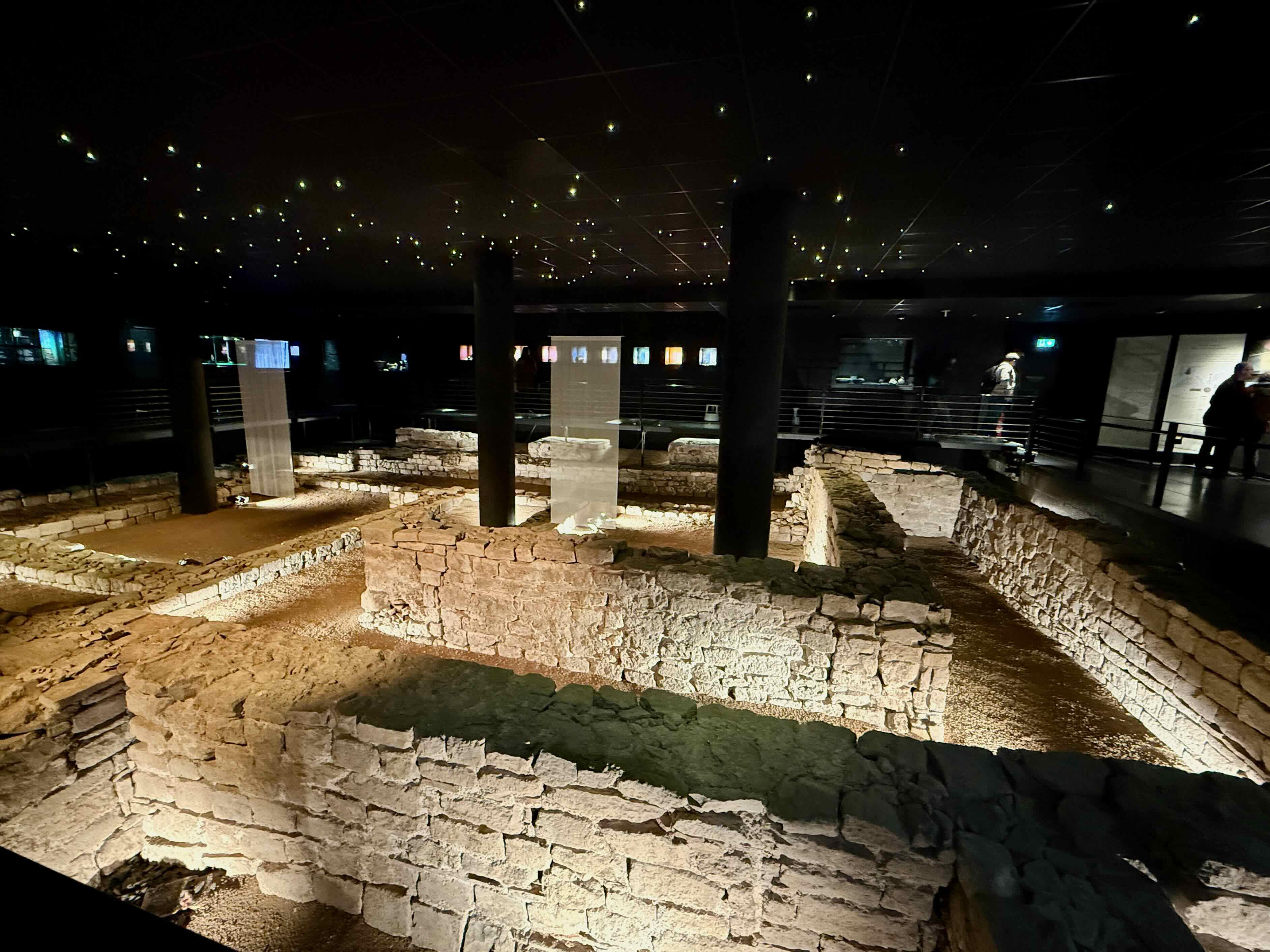
Next on Bob’s agenda is a visit to a small museum underneath a shopping mall. We see Roman ruins from before the fall of the Roman Empire in the 5th century. These ruins were discovered when excavations began for the shopping mall. The area was thoroughly excavated and recorded, but ultimately the mall was built and most of the ruins were destroyed.
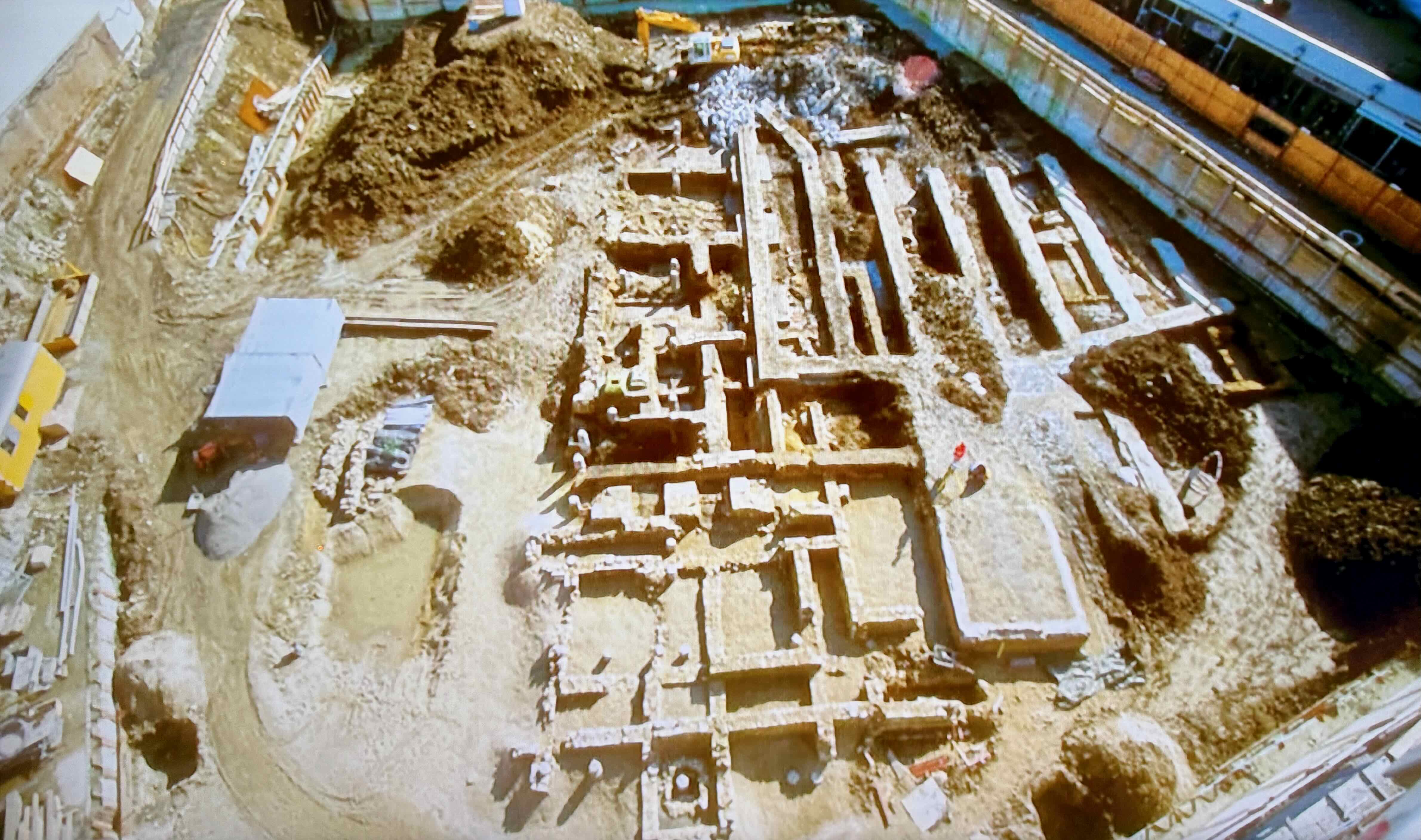
This little museum has the reconstructed ruins of a temple, under a ceiling of constellations. Some of the items found when the ruins were excavated.  Well endowed males were well represented.
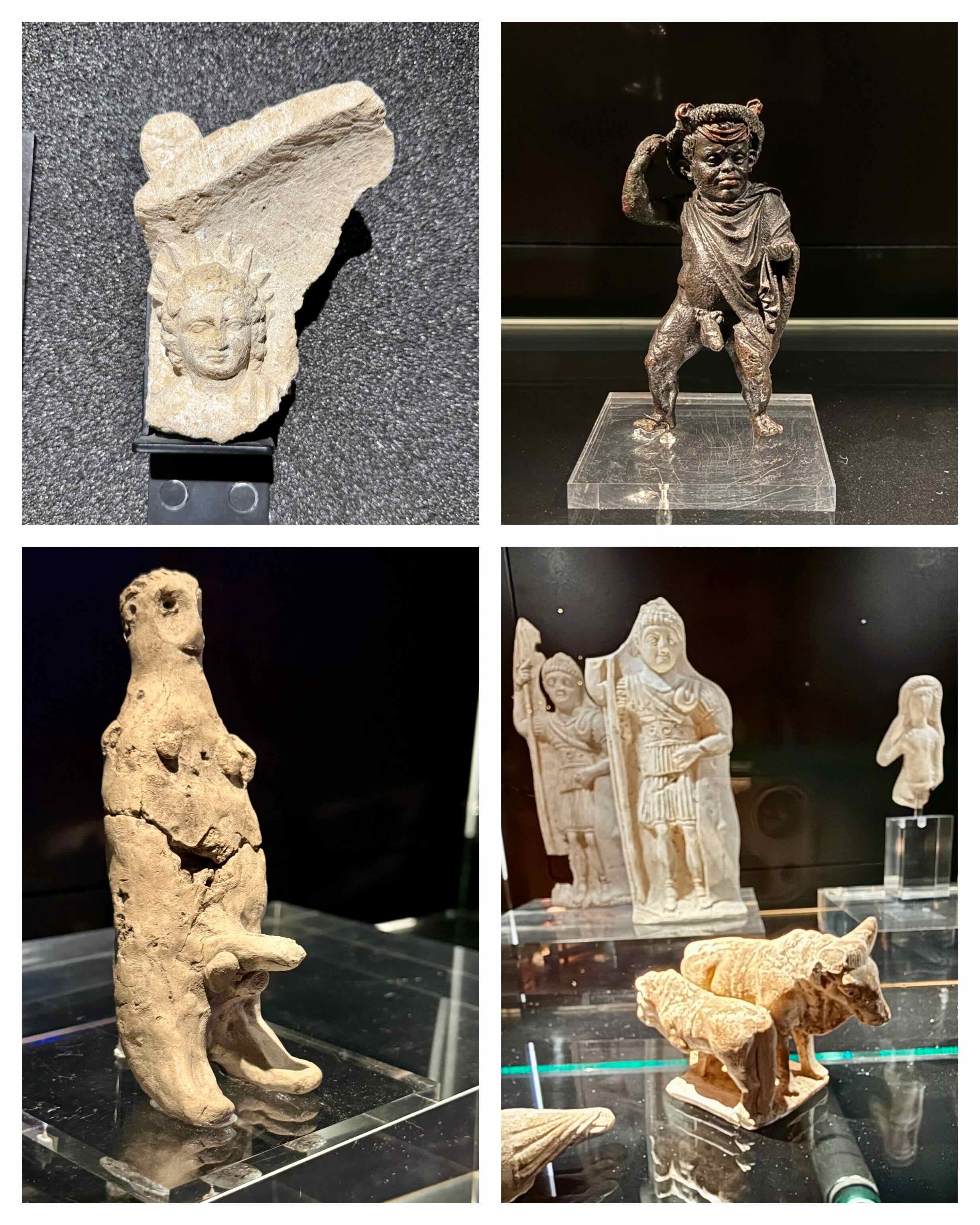
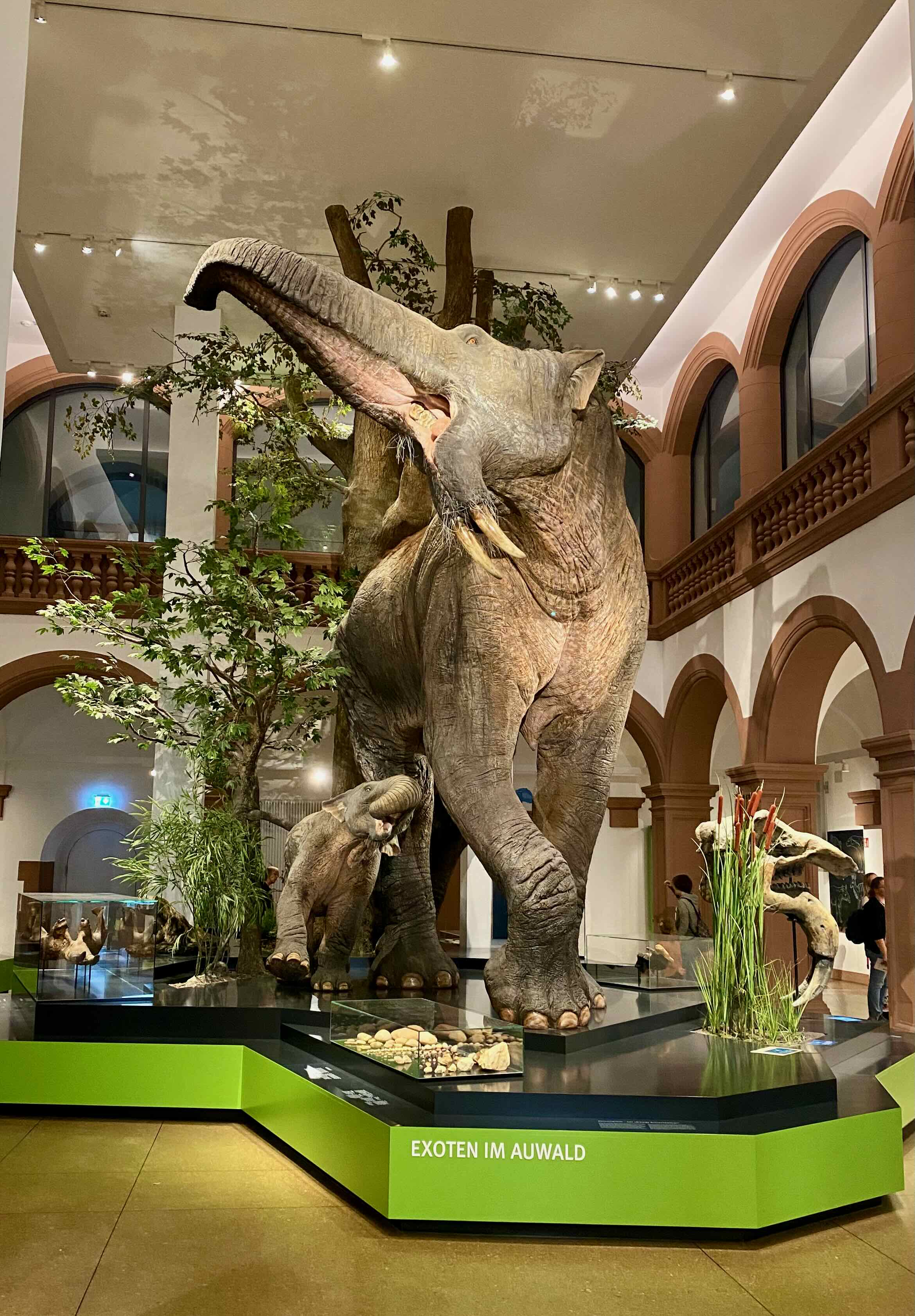
Our final stop in Mainz is to visit the Gutenburg Museum, which is connected to a small Natural History Museum. This display in the entrance is quite striking.

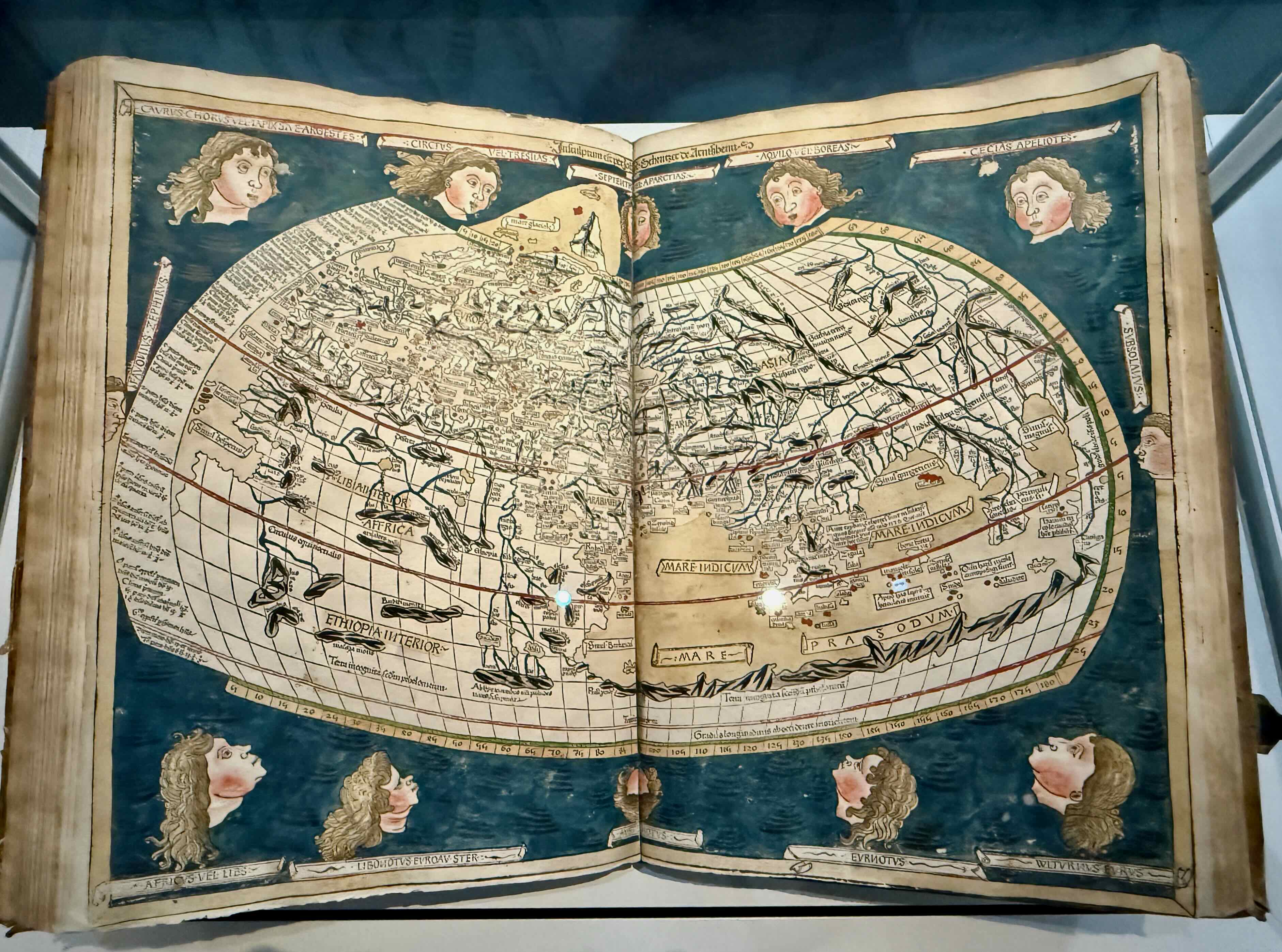
We start with the Gutenburg Museum which shows the impact of Johahannes Gutenburg’s invention of a moveable type printing press in 1440.  This press allowed for the printing of 3600 pages a day, compared to 40 by hand printing and only a few by hand copying. There were  several beautiful ancient books on display. This Atlas of the World was printed in 1482.

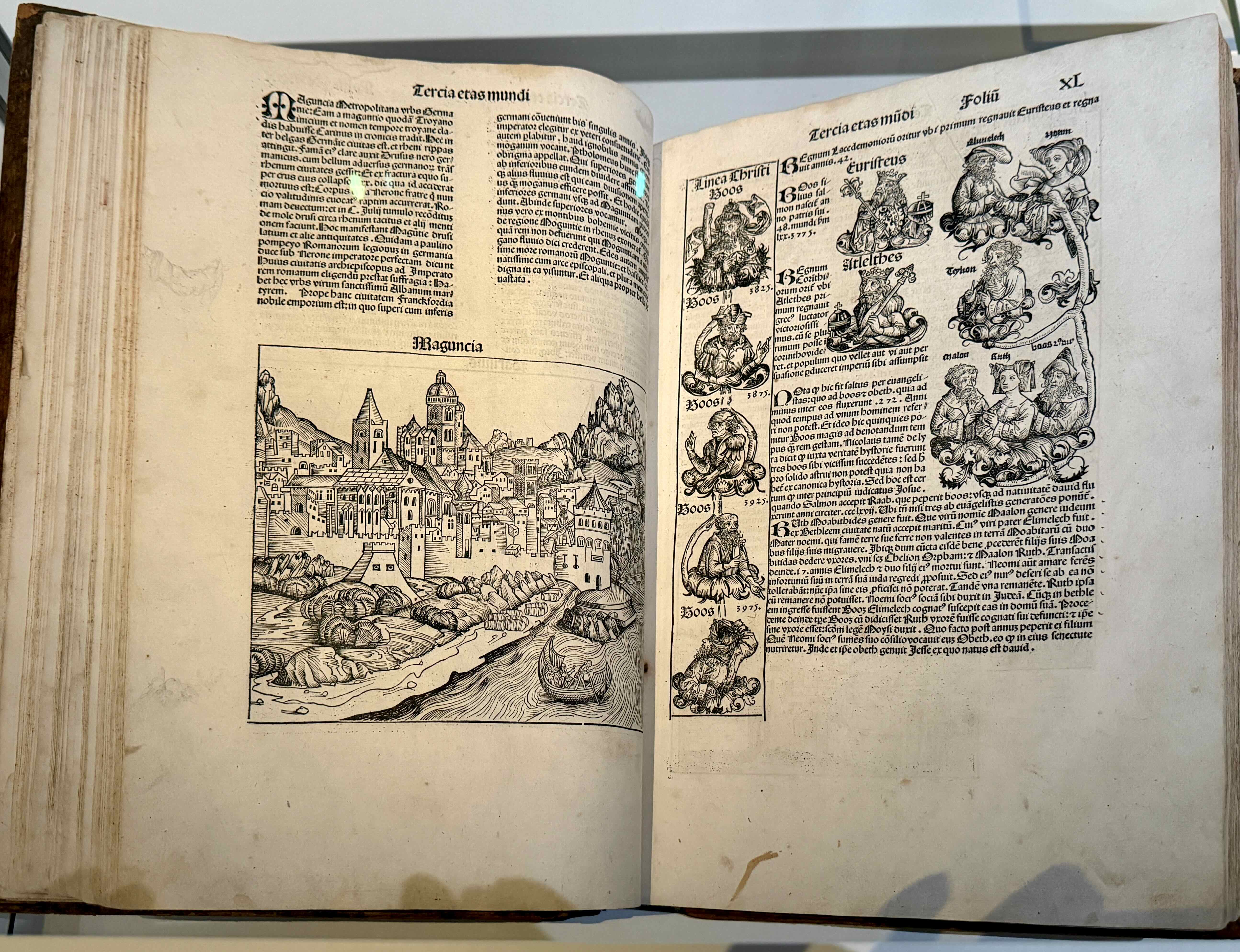
The World Chronicle is from 1493.

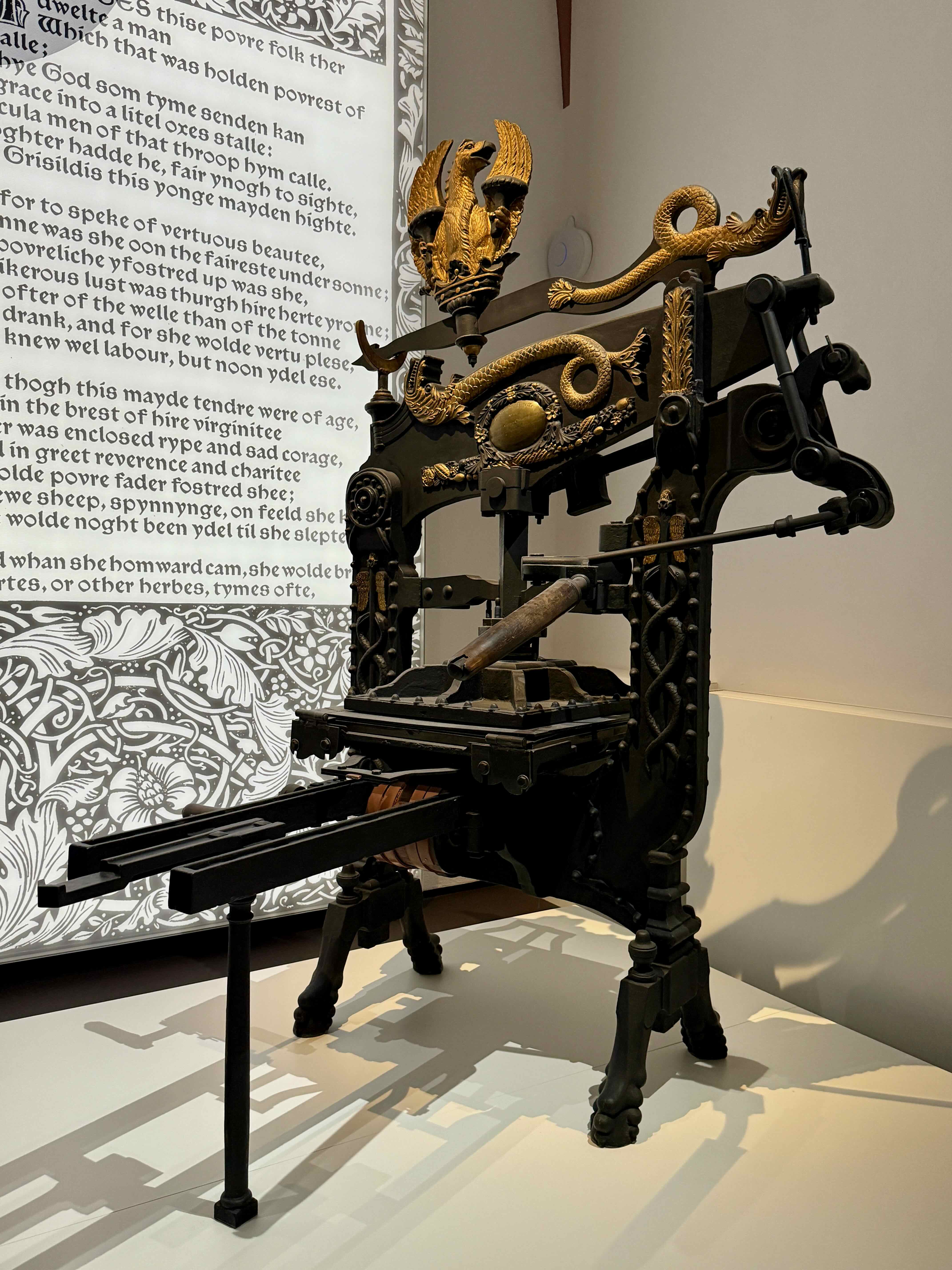
An ornate Columbia Printing Press from 1824.  

We are given a blank card that has a chip installed inside the paper when we entered the museum.  We place this card into a machine that takes a selfie of us. Then we take the still blank card to a modern printer and this is what we received.

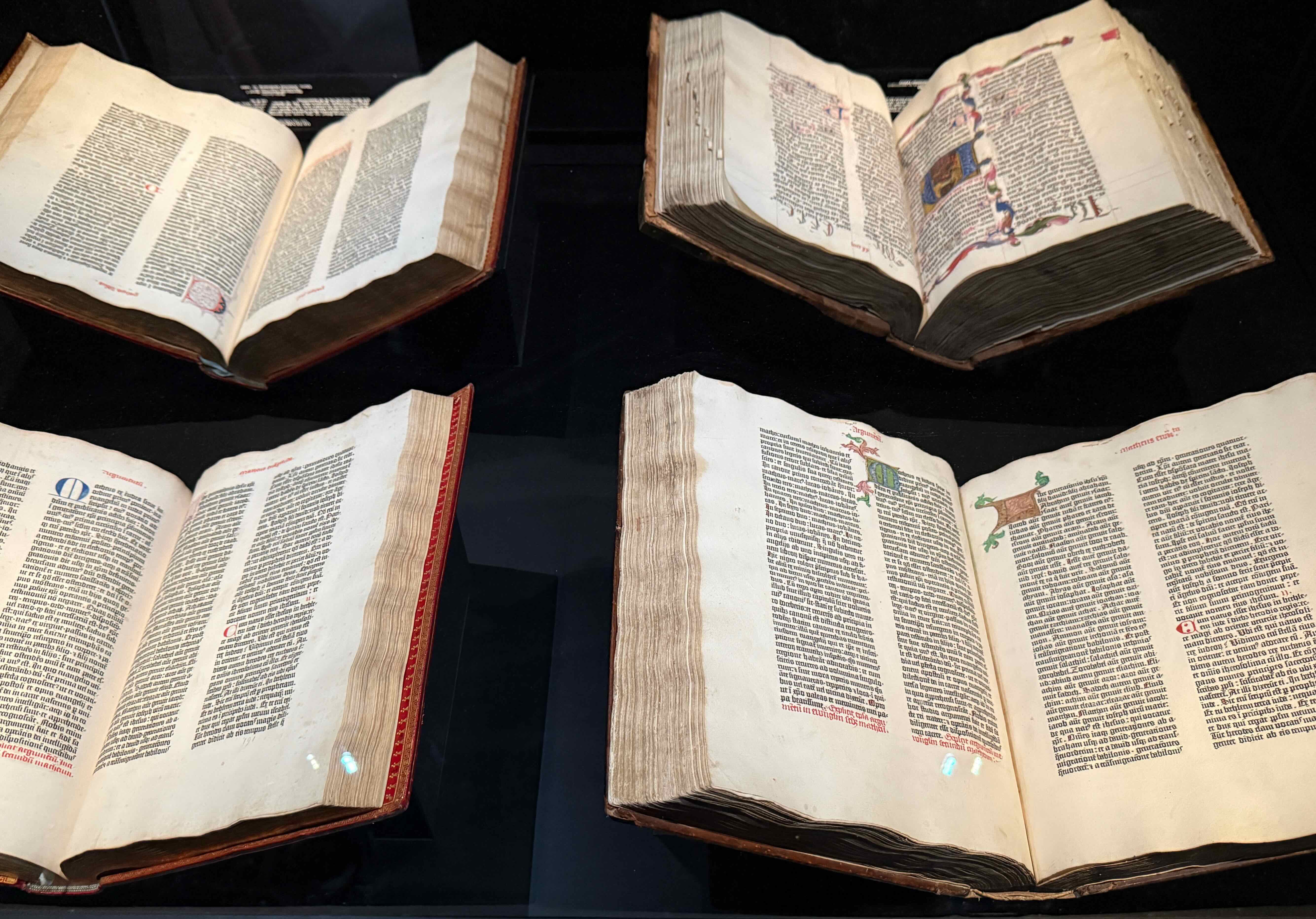
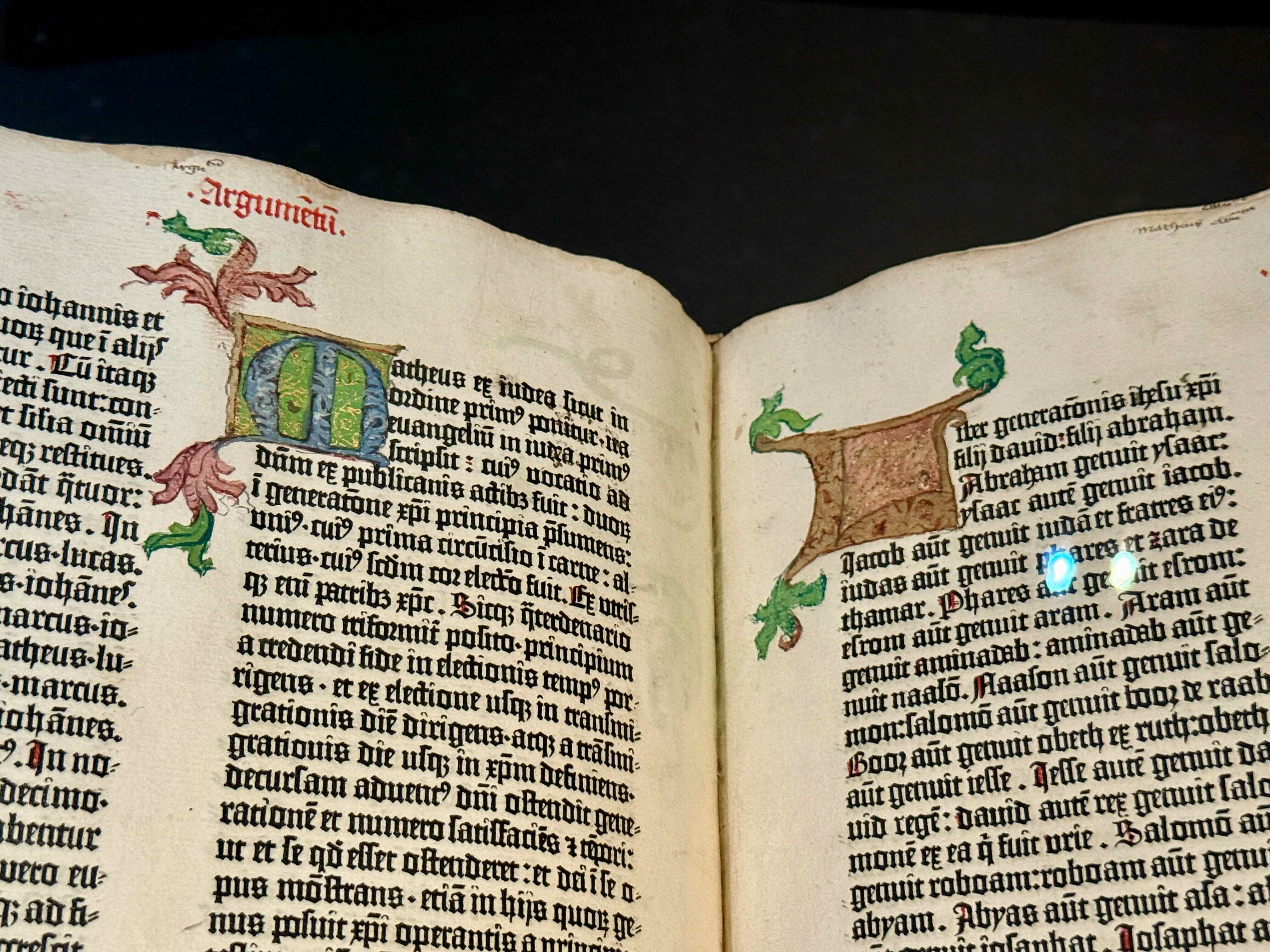
Entering a small room with dim lighting we see the Gutenburg Bibles. Only 49 of the approximately 180 printed Gutenberg Bibles have survived and the Gutenberg Museum owns two. The complete two-volume Bible shown in the bottom of this photo was added to the collection in 1978. The second Bible is incomplete, with only the second volume surviving. The book in the top right is a calligraphed manuscript.

The Bibles were only printed in black ink – two or more colors would have been too time-consuming and expensive. Spaces for colored ornamentation were left empty and the books were handed over to an illumination workshop. As a result, all surviving editions have different ornamentation.

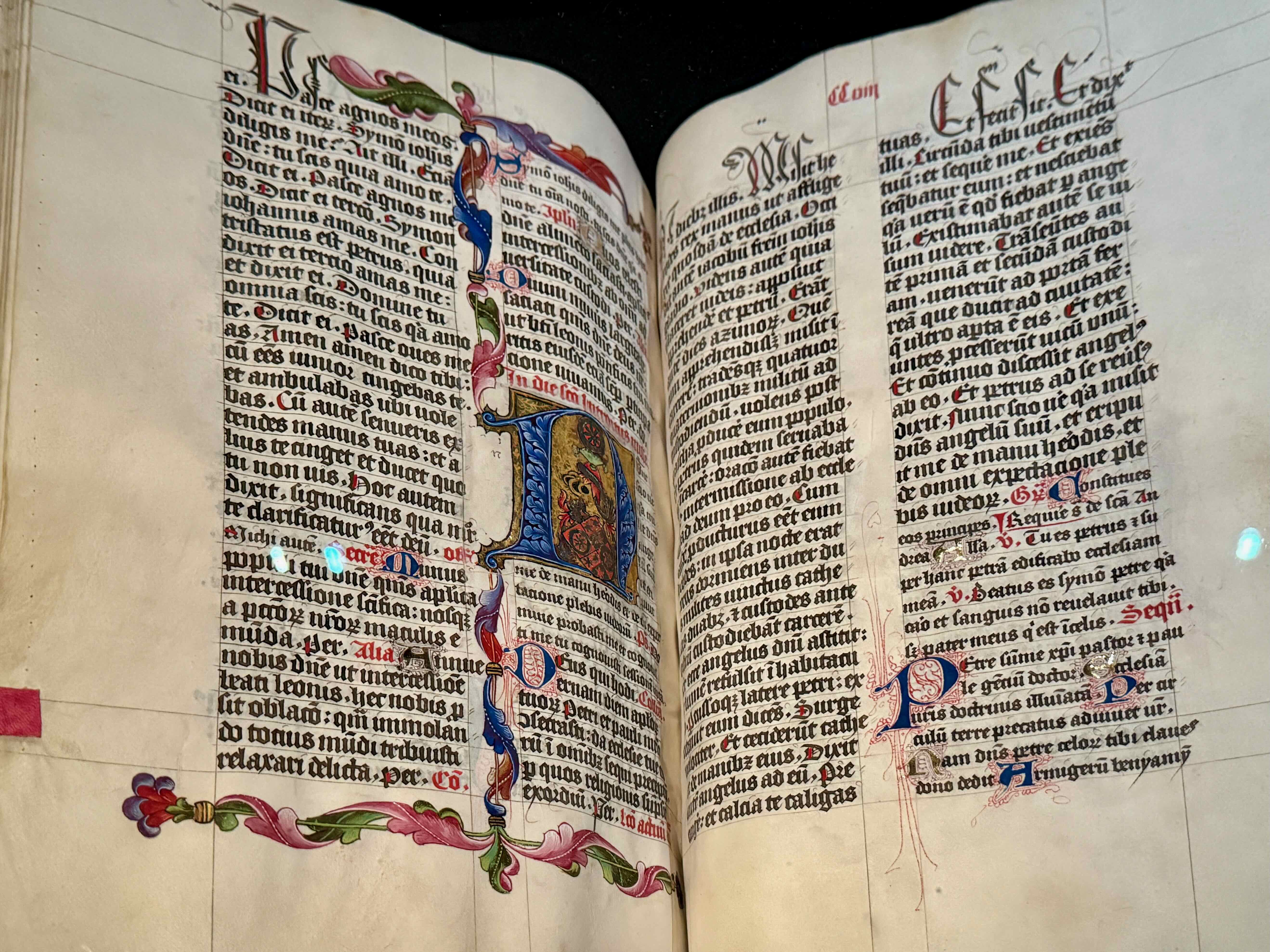
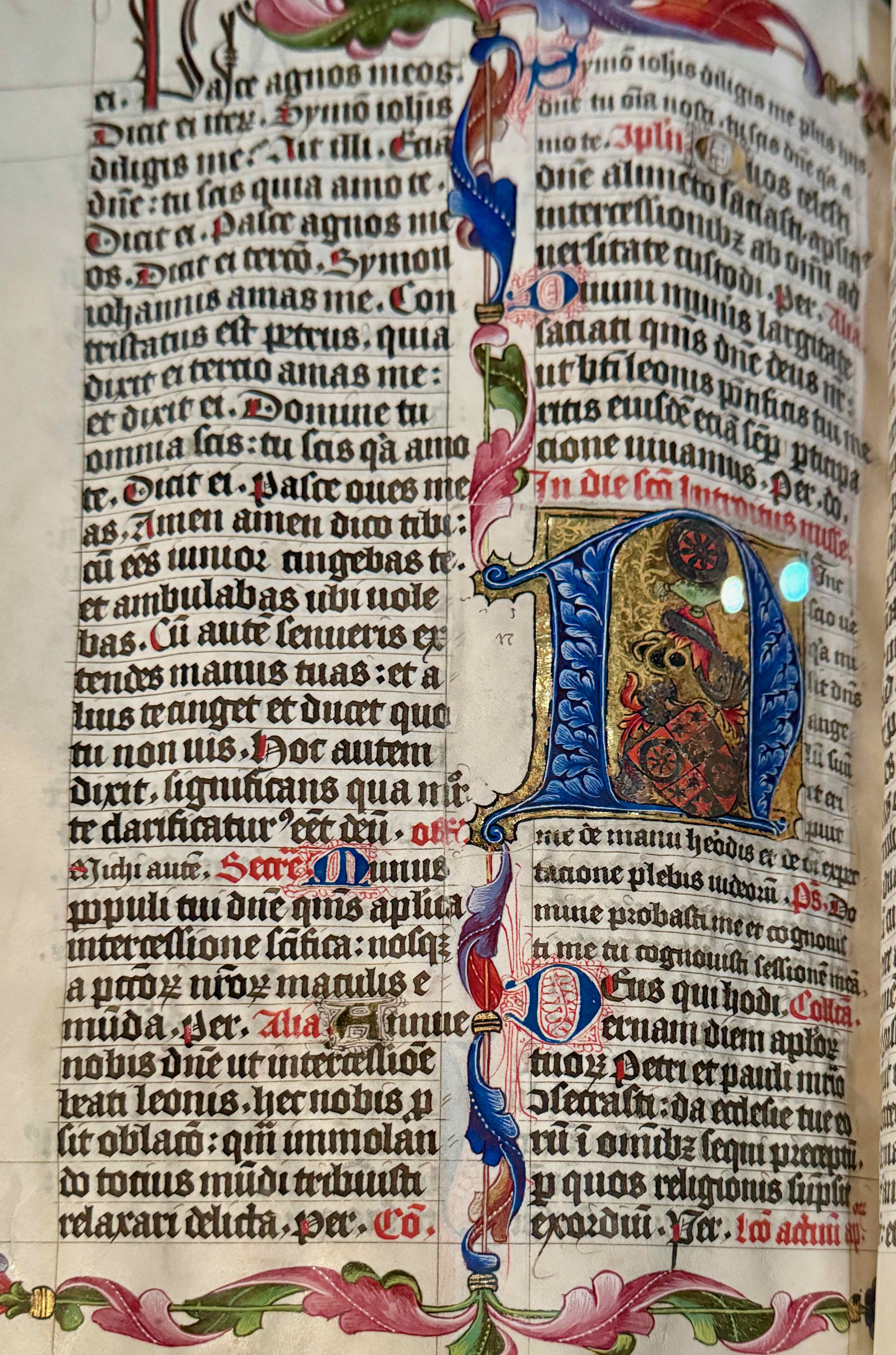
The Missale Moguntinum, was hand written on parchment between 1453 – 1459.

I love that the guide lines are still visible. Imagine writing this huge book. Gutenburg’s press changed how books were produced and made them available to so many more people. Seeing these bibles in person is special but I am still in awe of beautiful hand written and illustrated books.  

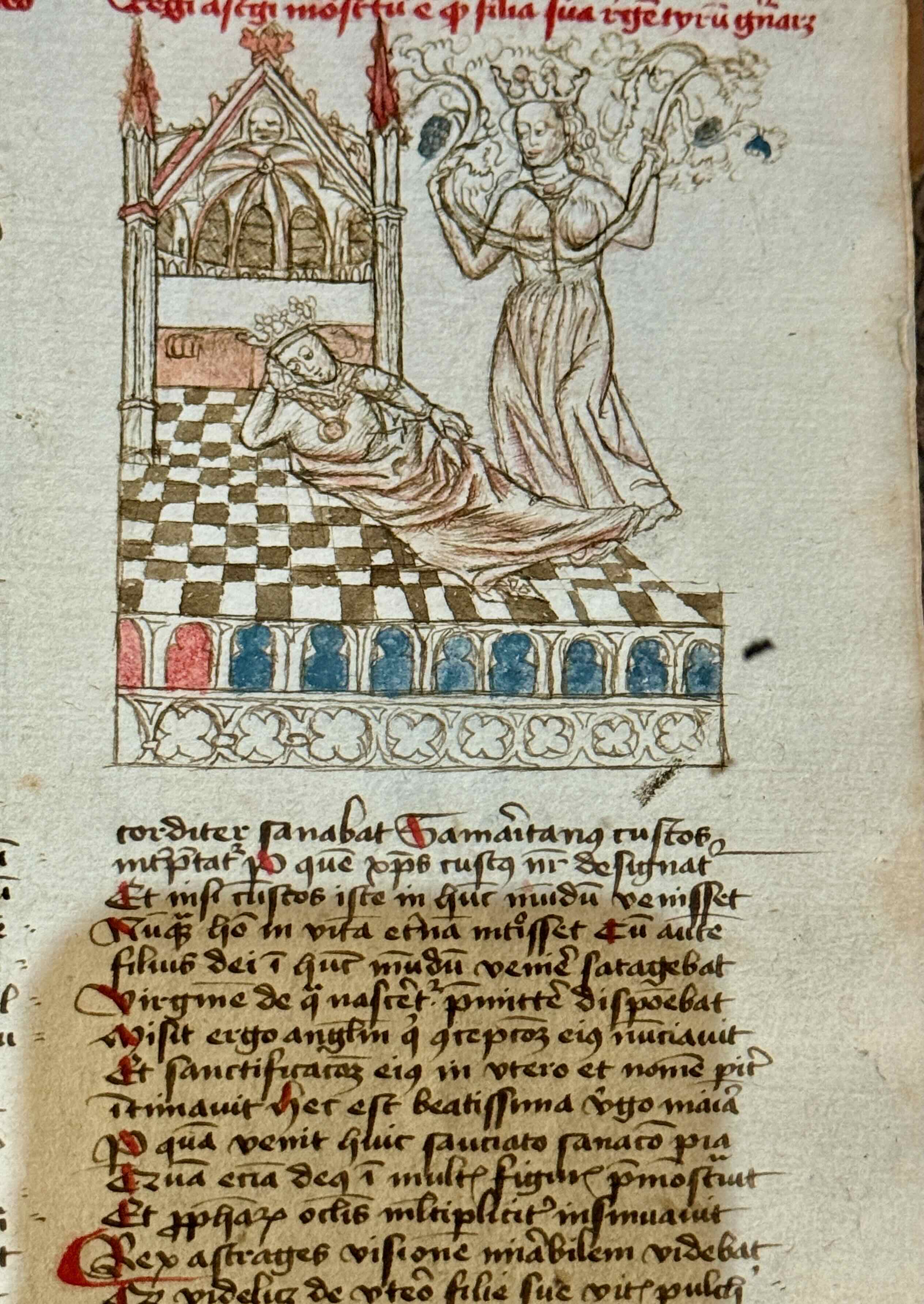
In the mid-15th century before printed books were readily available, the demand for books could not be met. One solution was to produce books faster. This was why copies of the “Speculum Humanae Salvationis” or “Mirror of Human Salvation,” were created in cursive and quick pen-and-ink drawings. The volumes are dated around 1450, making them approximately the same age as the printed Gutenberg bibles.

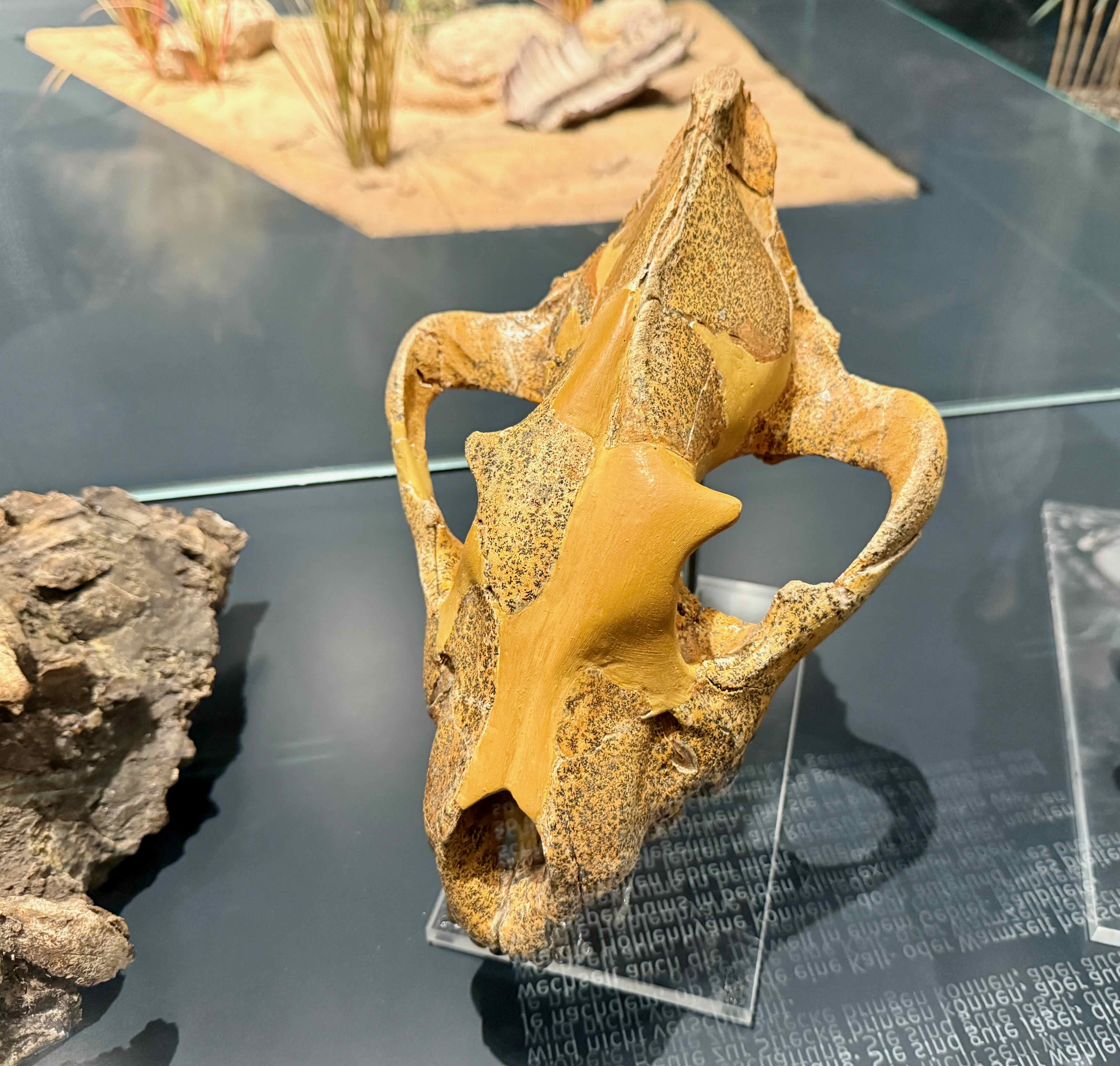
We wander through the Natural History Museum. I wonder how archaeologists are able to reconstruct skulls and bones from a pile of fragments.  It must be a very difficult puzzle.

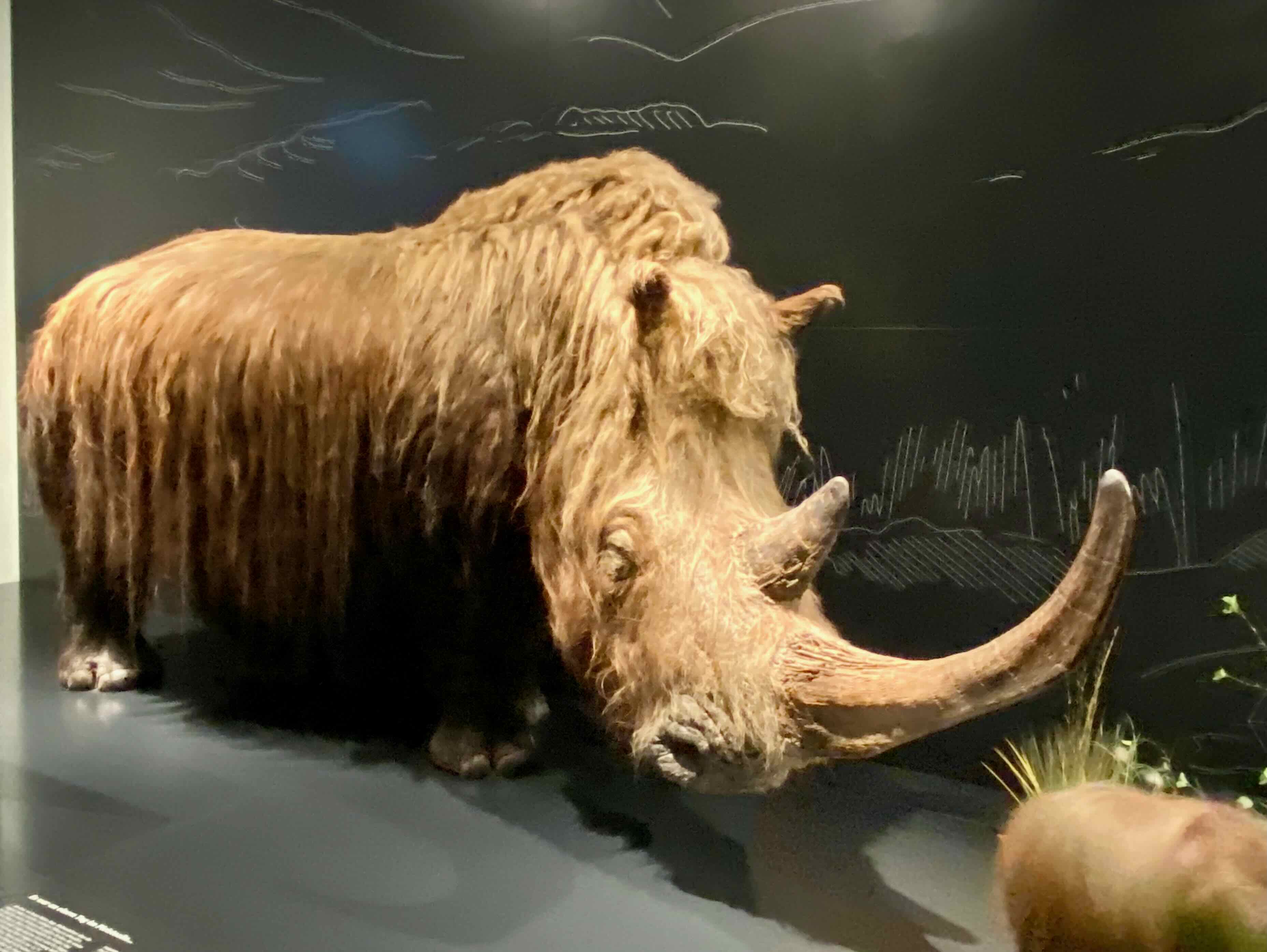
The Wooly Rhino had a huge head compared to the rest of its body.  There are samples of real wooly rhino hair on view that were found preserved in permafrost.

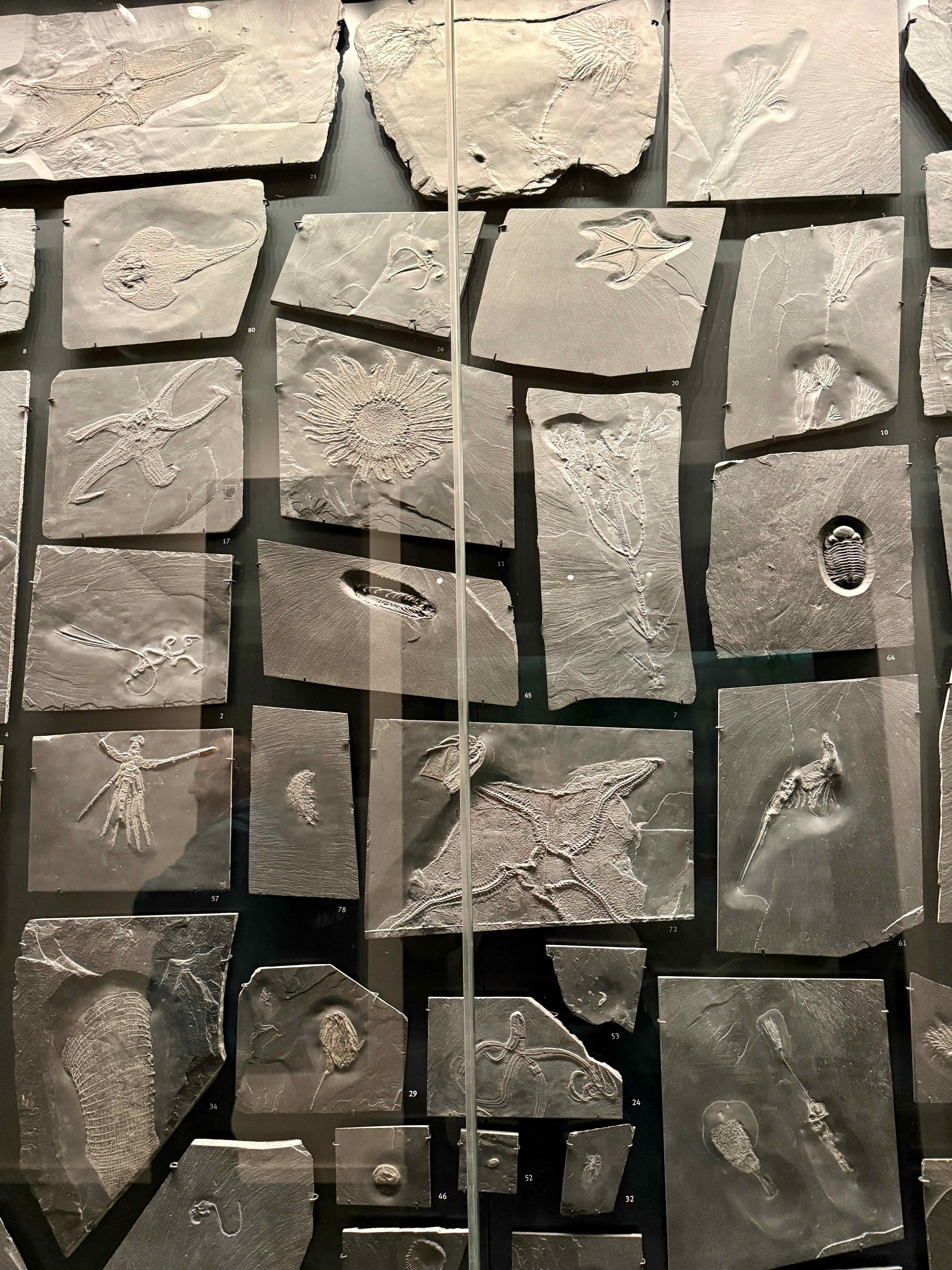
I thought these fossils were really beautiful.  The plants, insects and other animals are preserved in the finest detail. They are incredible.

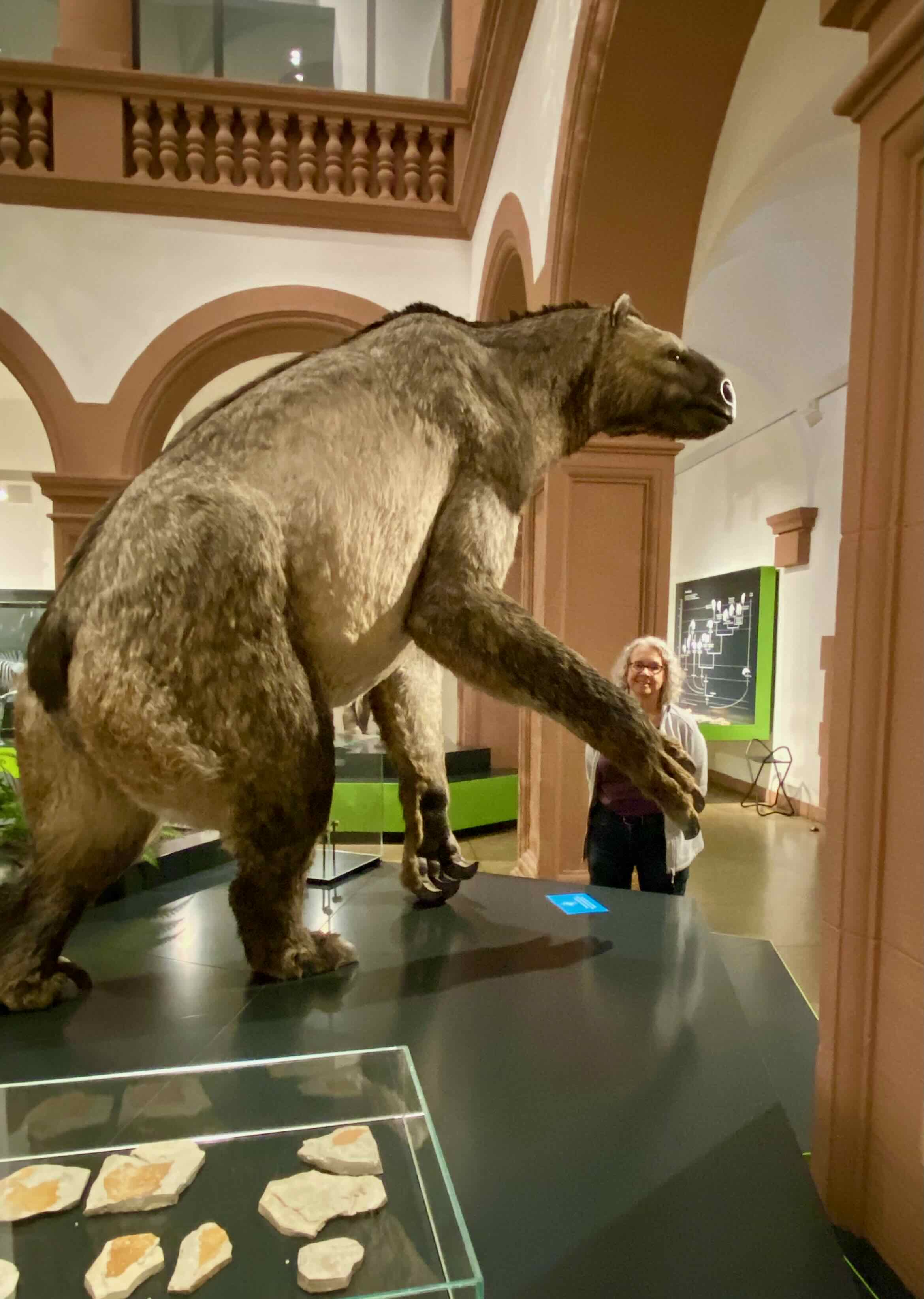
We forgot to check what this prehistoric creature was.  

There are a few more displays of stuffed animals.  I thought this one of different types of rabbits was interesting. It is a small museum so it doesn’t take too long to see everything.

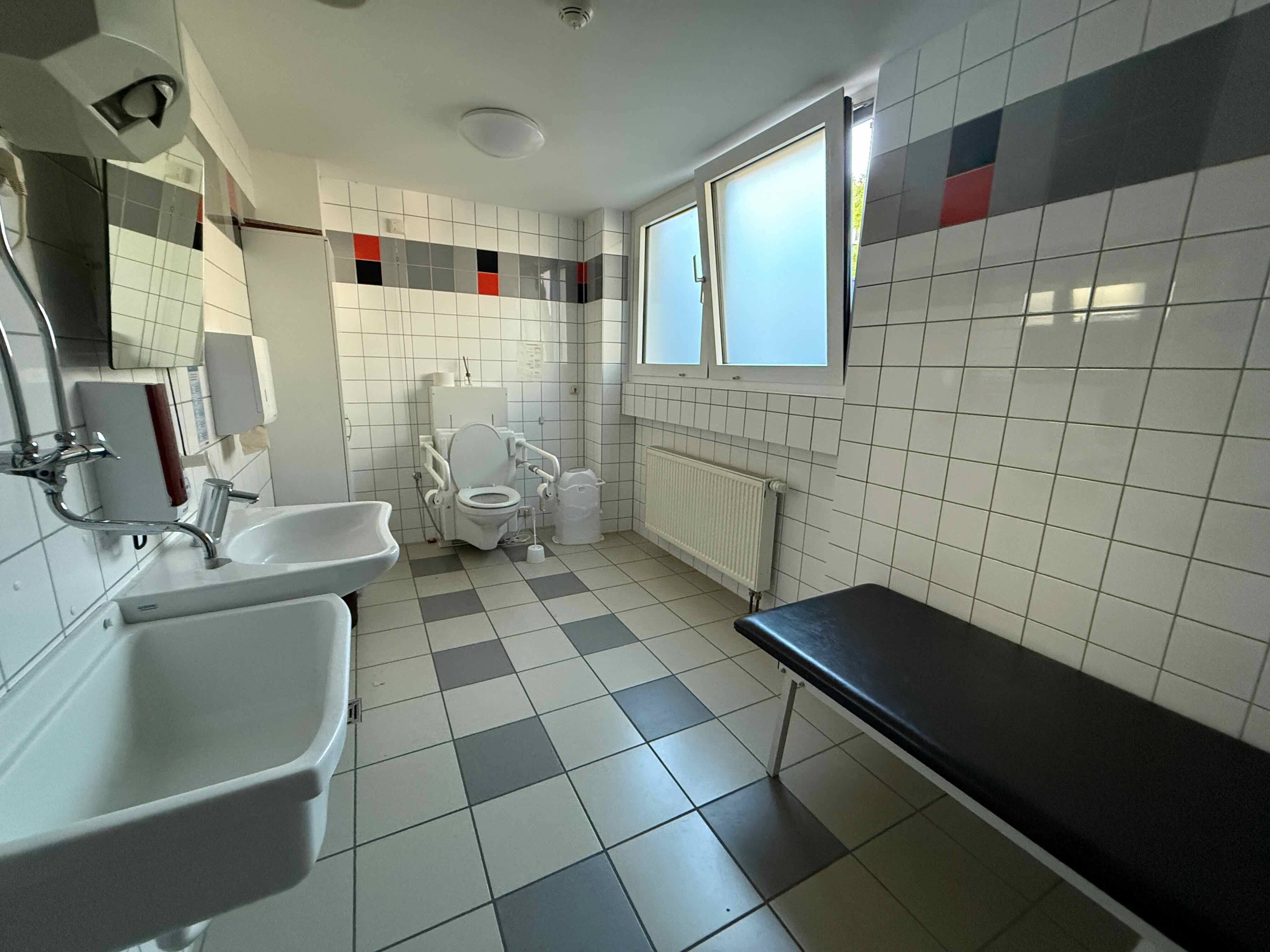
I know this is a strange photo, but this is the handicapped washroom at the museum.  I’ve never seen a public washroom like this.

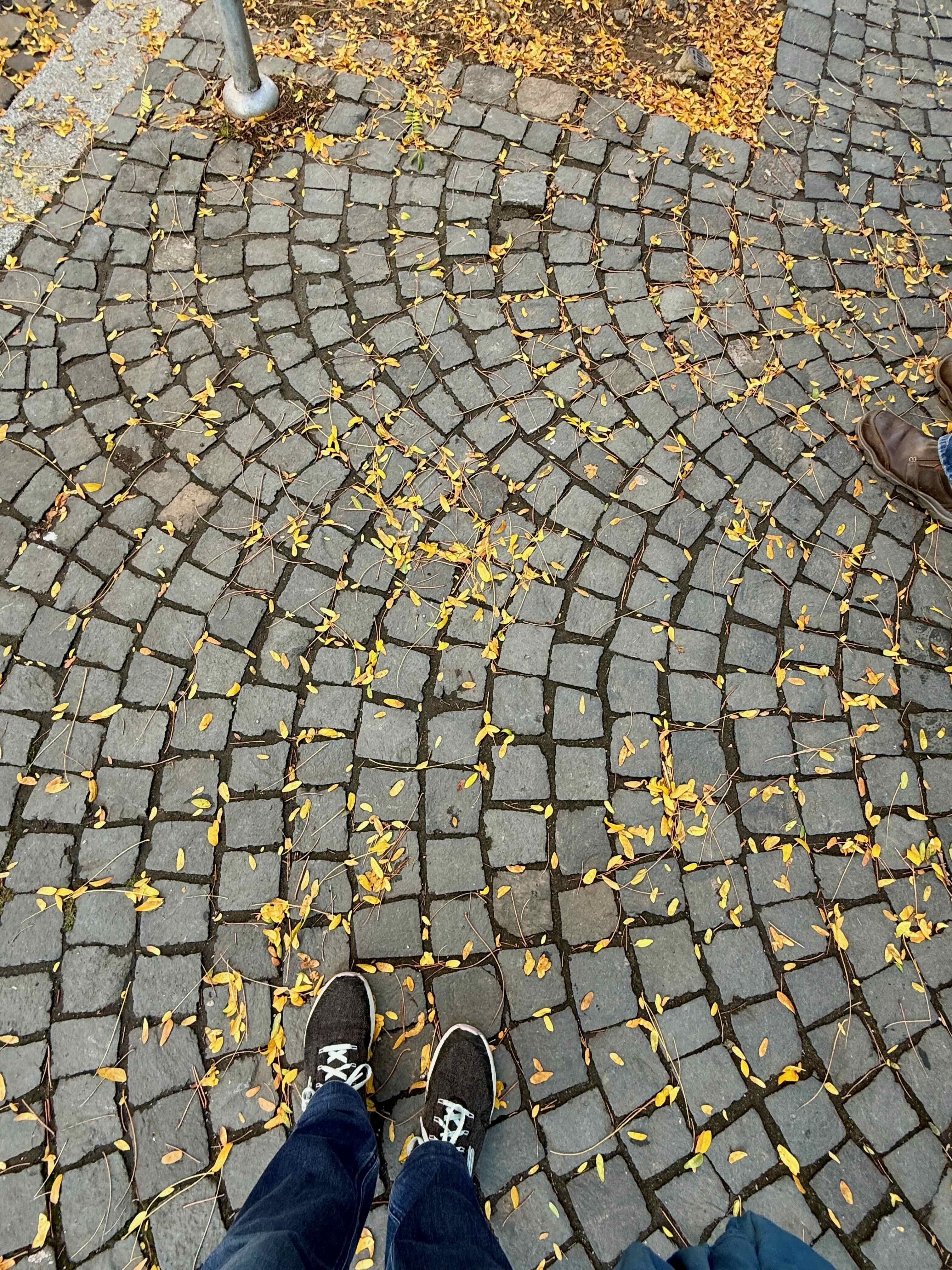
We walk along cobbled sidewalks with reminders that summer is over on our way to see the next sight on the agenda in Manz.

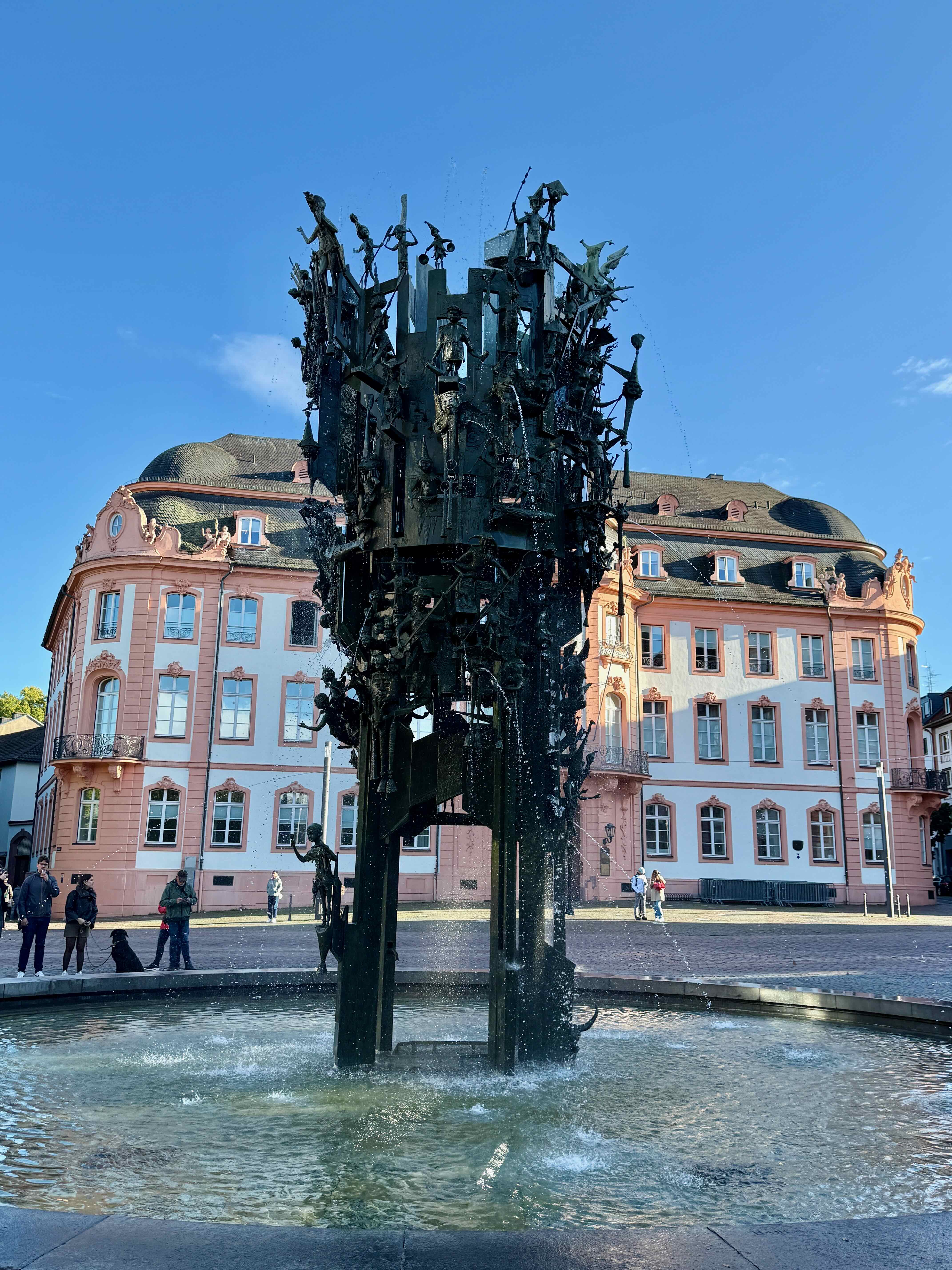
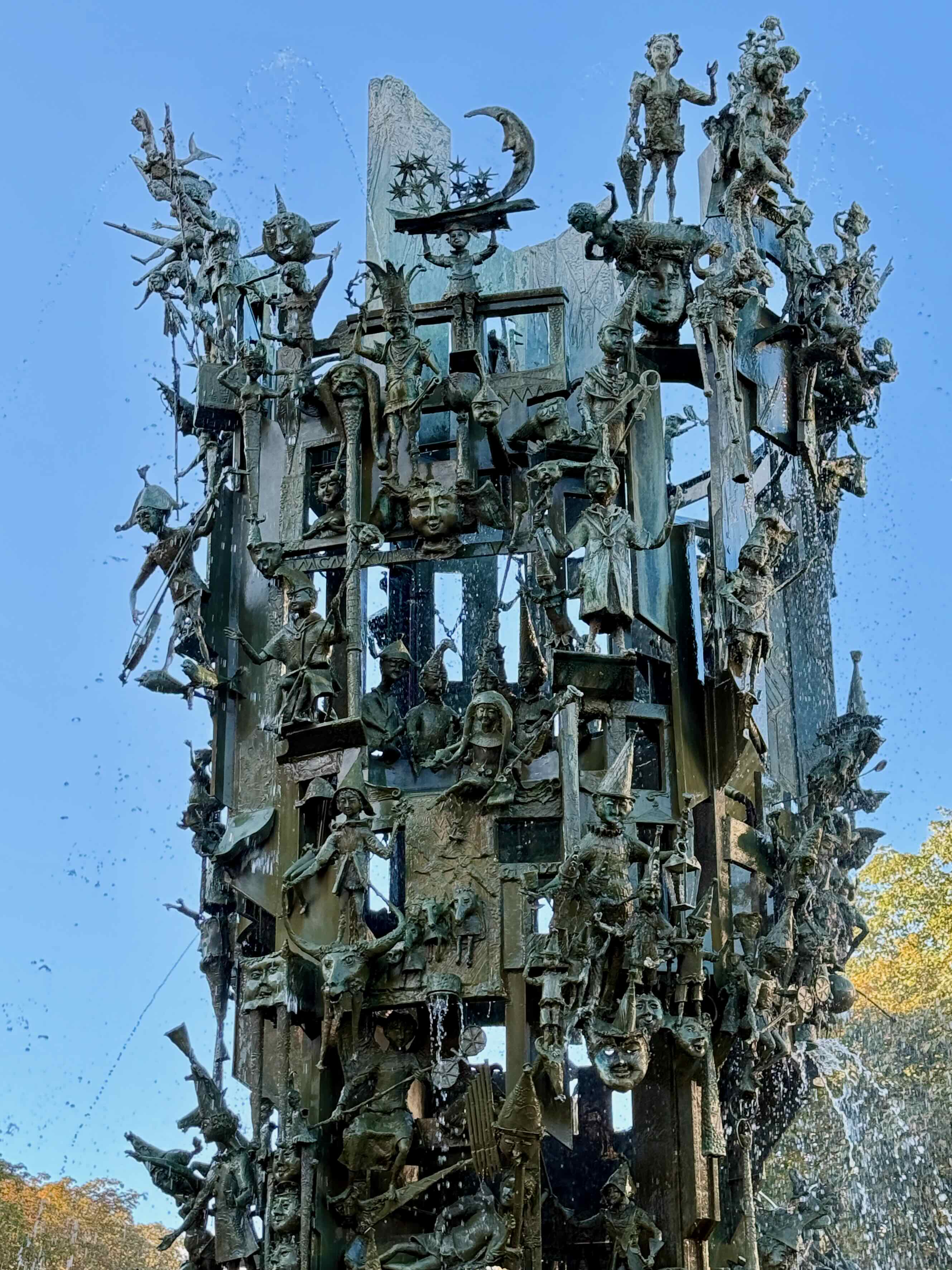
This huge fountain is the Fastnachtsbrunnen, or Carnival Fountain. It is almost nine meters high and has over 200 bronze figures from the Mainz Carnival Mythology. Every year on November 11, at 11:11 pm, people celebrating Carnival in Mainz gather here. When the clock strikes 11:11 pm the carnival officially begins.  

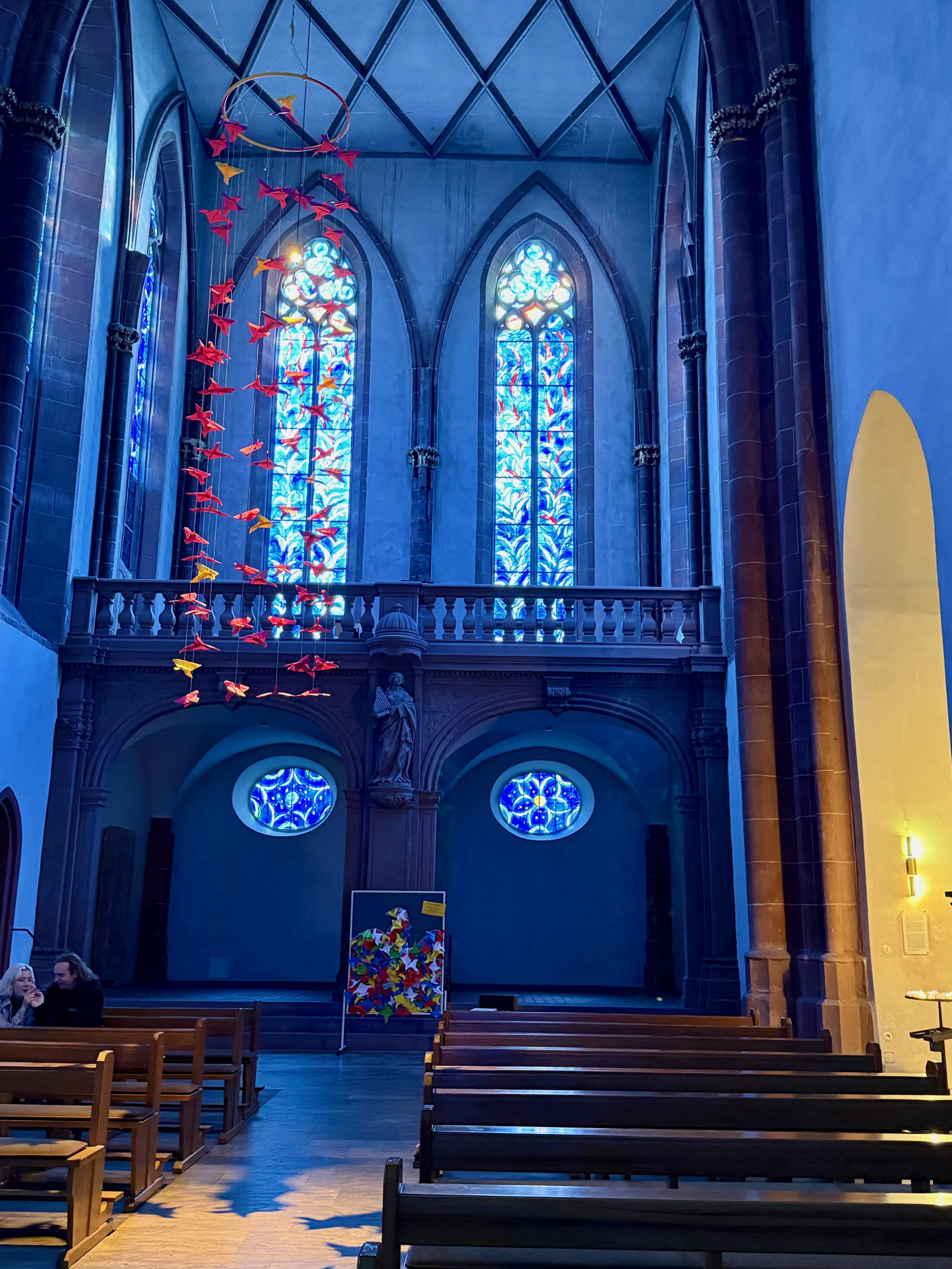
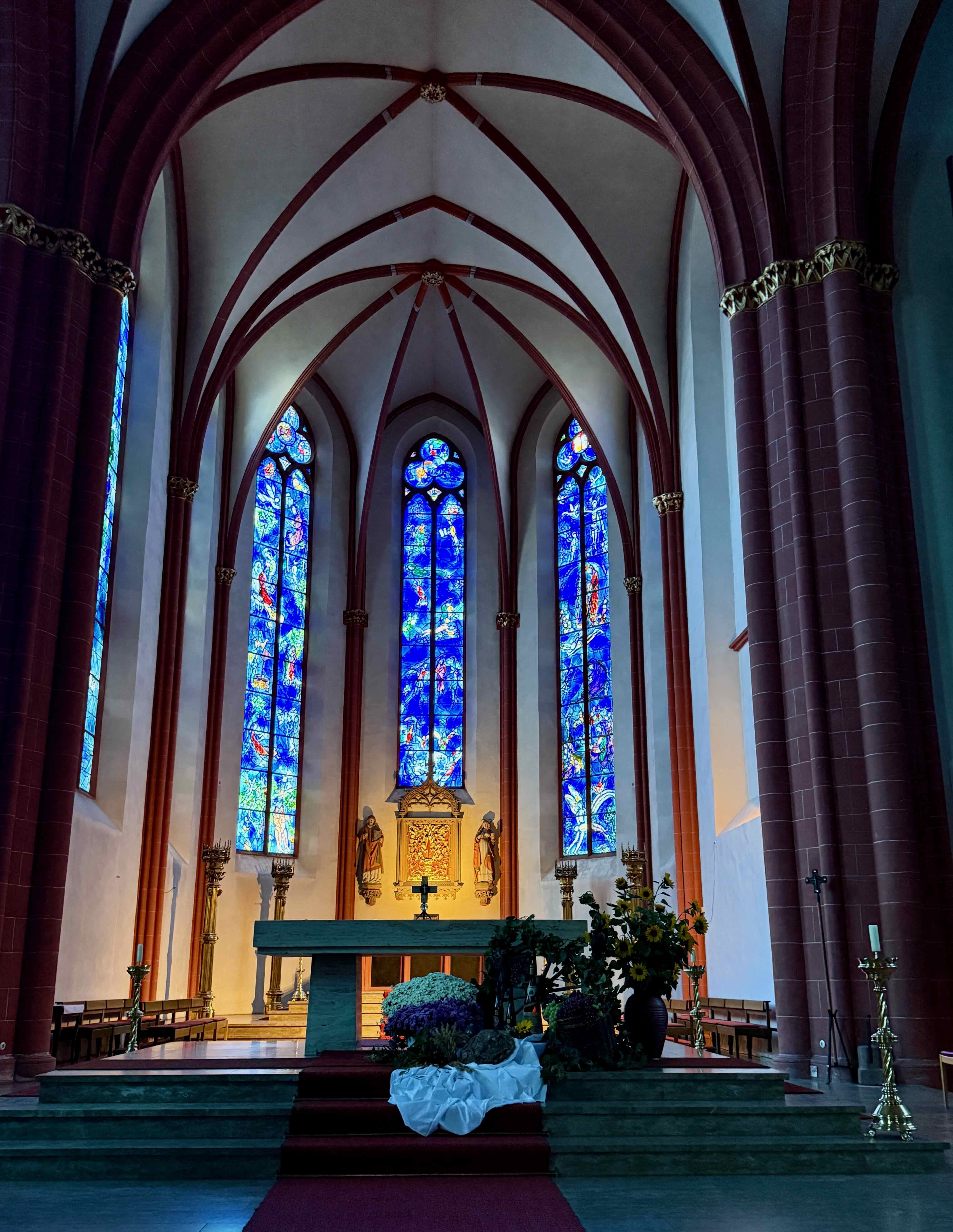
Our last stop before heading home is St. Stephen Church. This is the only German church for which the Jewish artist Marc Chagall created windows.

In 1978, the first window by the 91-year-old Chagall was installed. Chagall completed the final church window shortly before his death at the age of 97! Although all the windows are beautiful, I didn’t find the blue light in the church appealing…it felt too sombre,

Time to drive home…this was a very full day!

Quiet Day and Jazz Festival in Frankfurt. Germany

Day 34     October 3, 2025

We spend time last night sorting out why my Orange E-Sim is no longer working. Yes, another technical problem! You know the saying that you need to laugh or you would cry? Bob calls the help line and he finally figures out what happened.  My E-sim needed to be registered to extend its use beyond 30 days, which we did, but apparently we needed to do this within 20 days of buying the E-Sim. There were no messages from Orange that said that this had to be done within 20 days. It took two phone calls, and purchasing another E-Sim, but now my phone is working again.

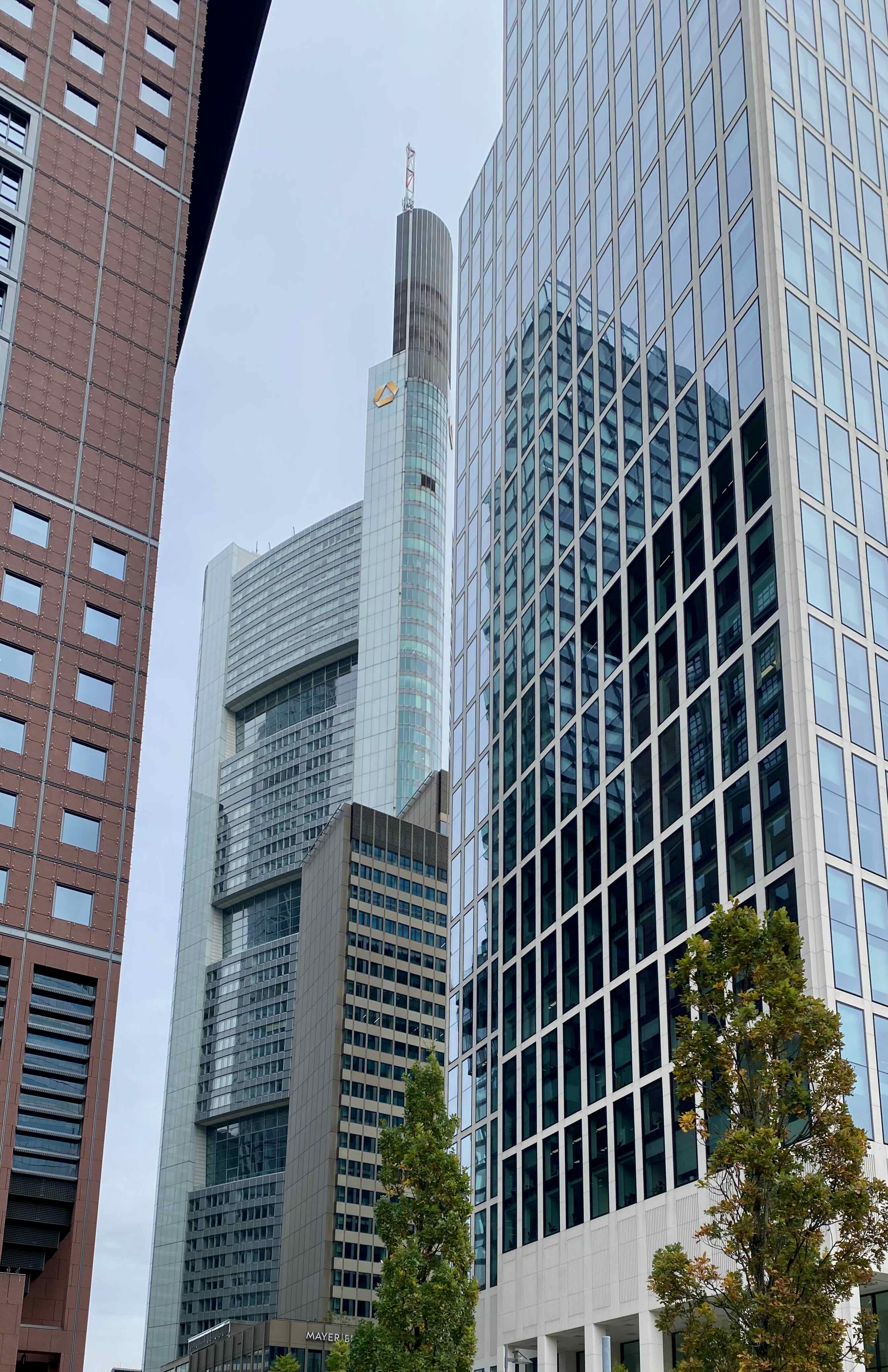
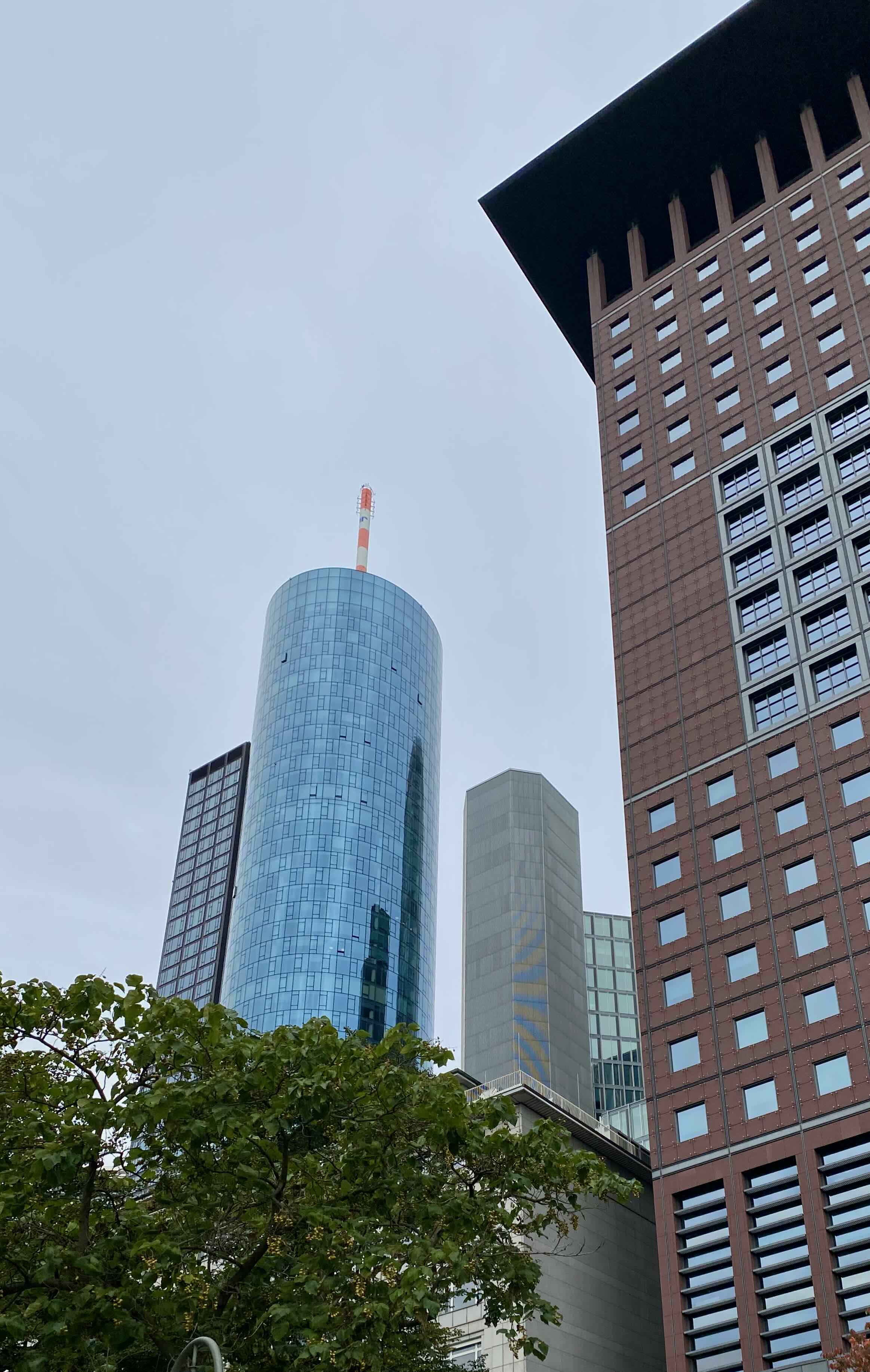
I spend the rest of the day at home and Bob goes back to Frankfurt because there is a Jazz Festival this afternoon. He didn’t take any photos of the Festival but these are from his walk around Frankfurt. Some of the modern high-rises in Frankfurt.

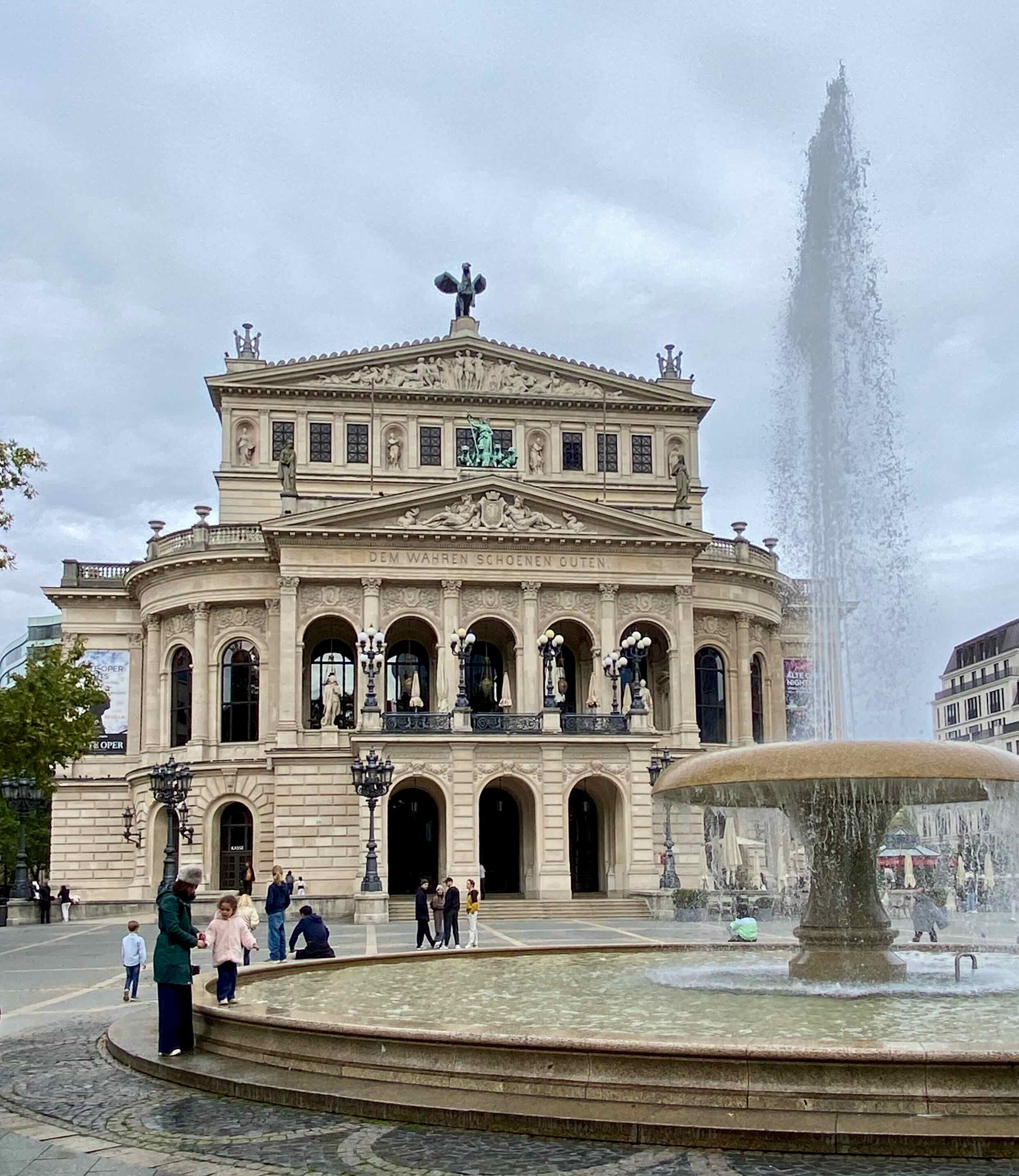
The Marshall Fountain has three bronze water nymphs that  represent the maidens of Goethe´s classic novel “Faust”. The Old Opera House had been bombed down to its foundation walls during WWII, and was rebuilt to the original design.
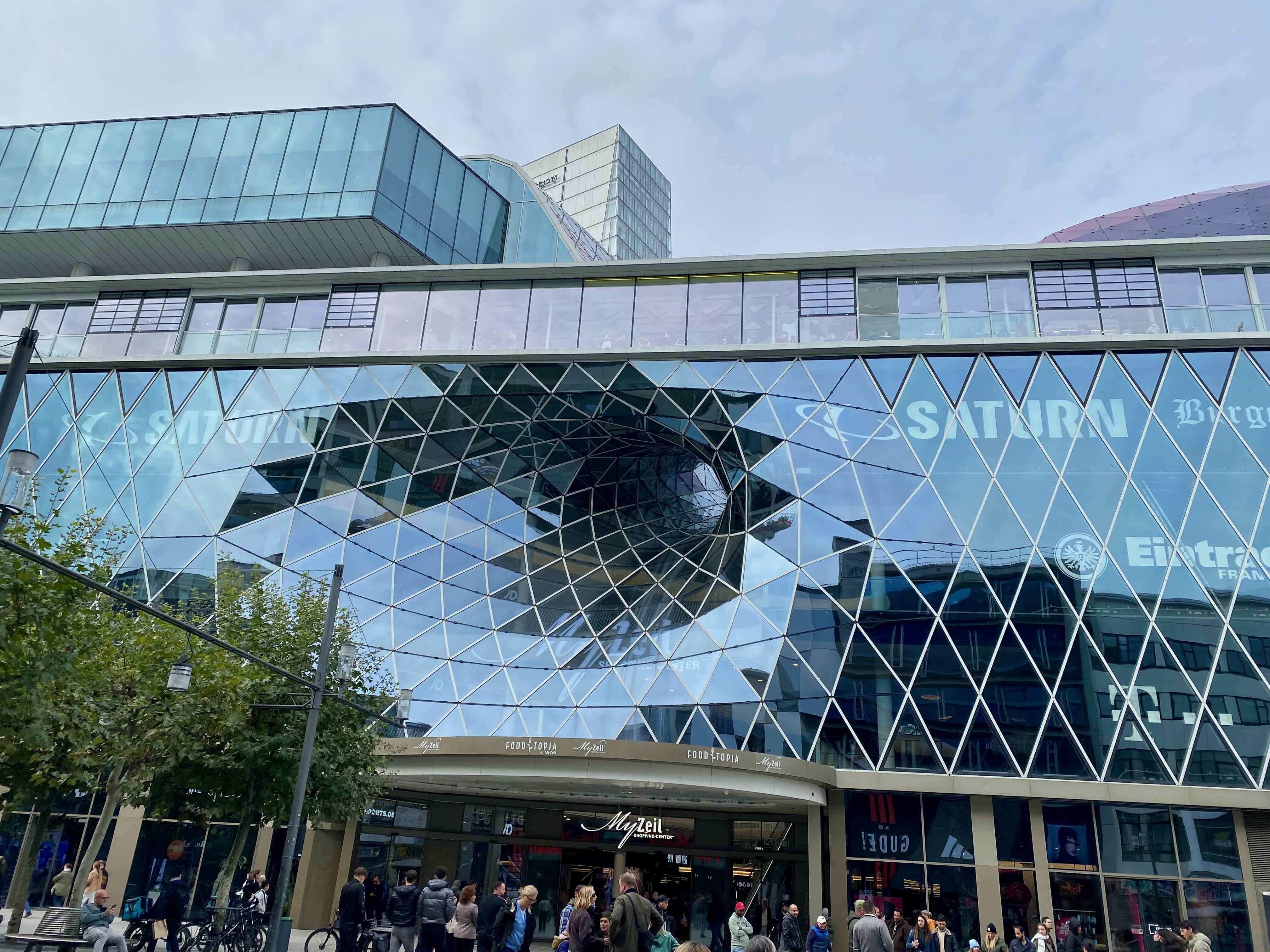
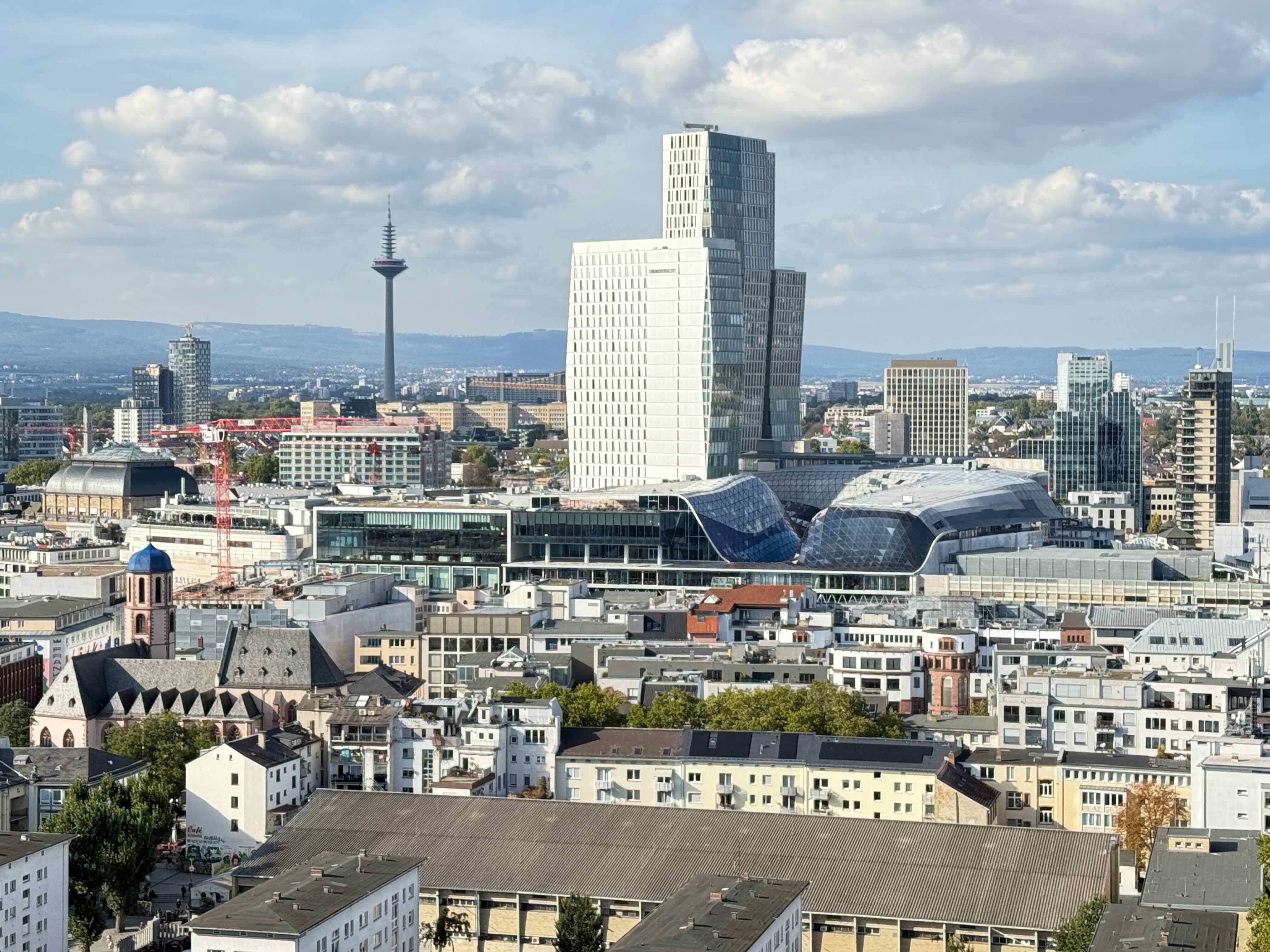
The MyZeil is a shopping mall has a unique design, a hole in the wall.

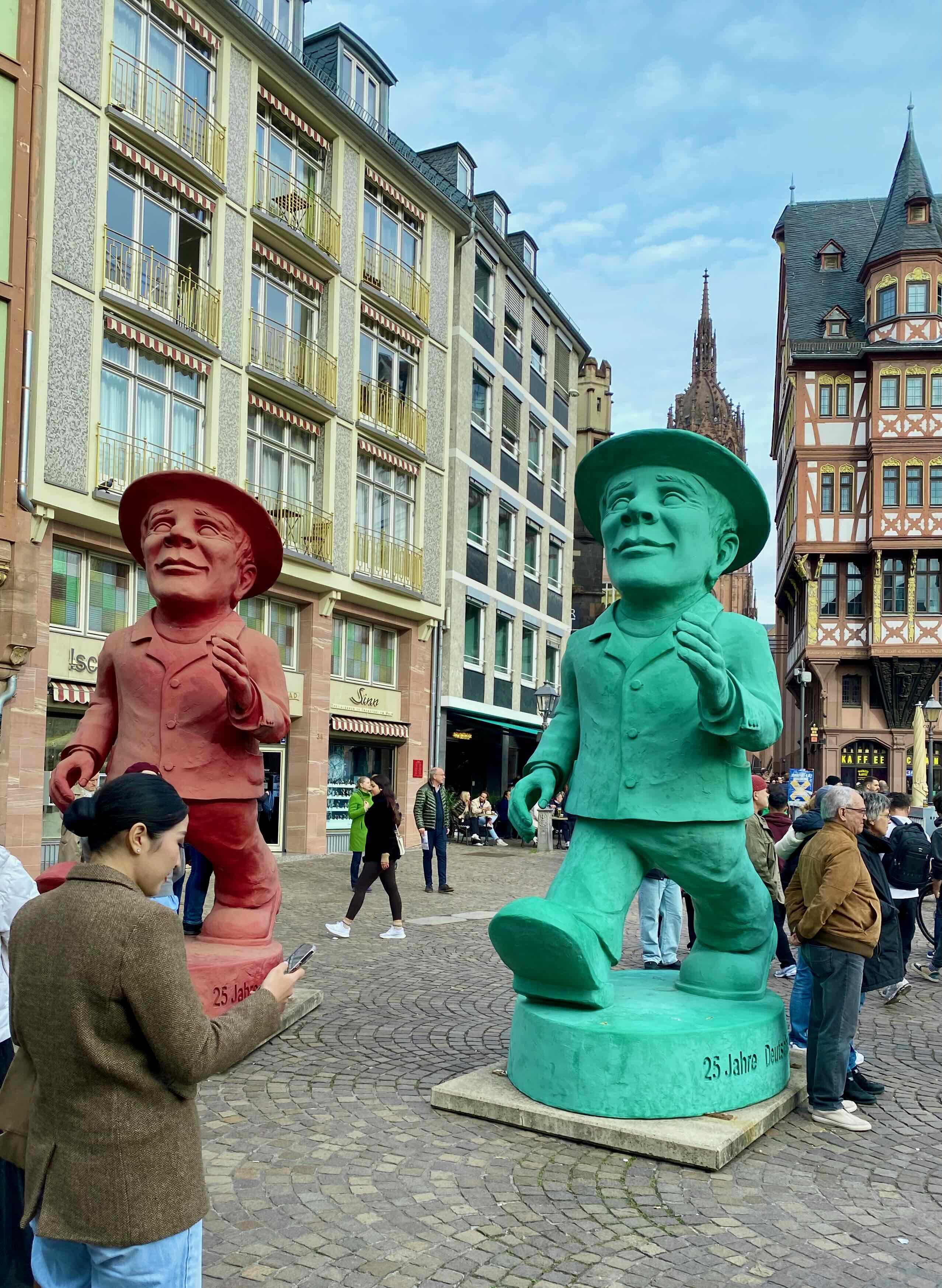
We saw this same shopping mall yesterday from the top of the bell tower we climbed. These two figures represent East and West Germany. Today was a holiday for the Reunification of Germany.
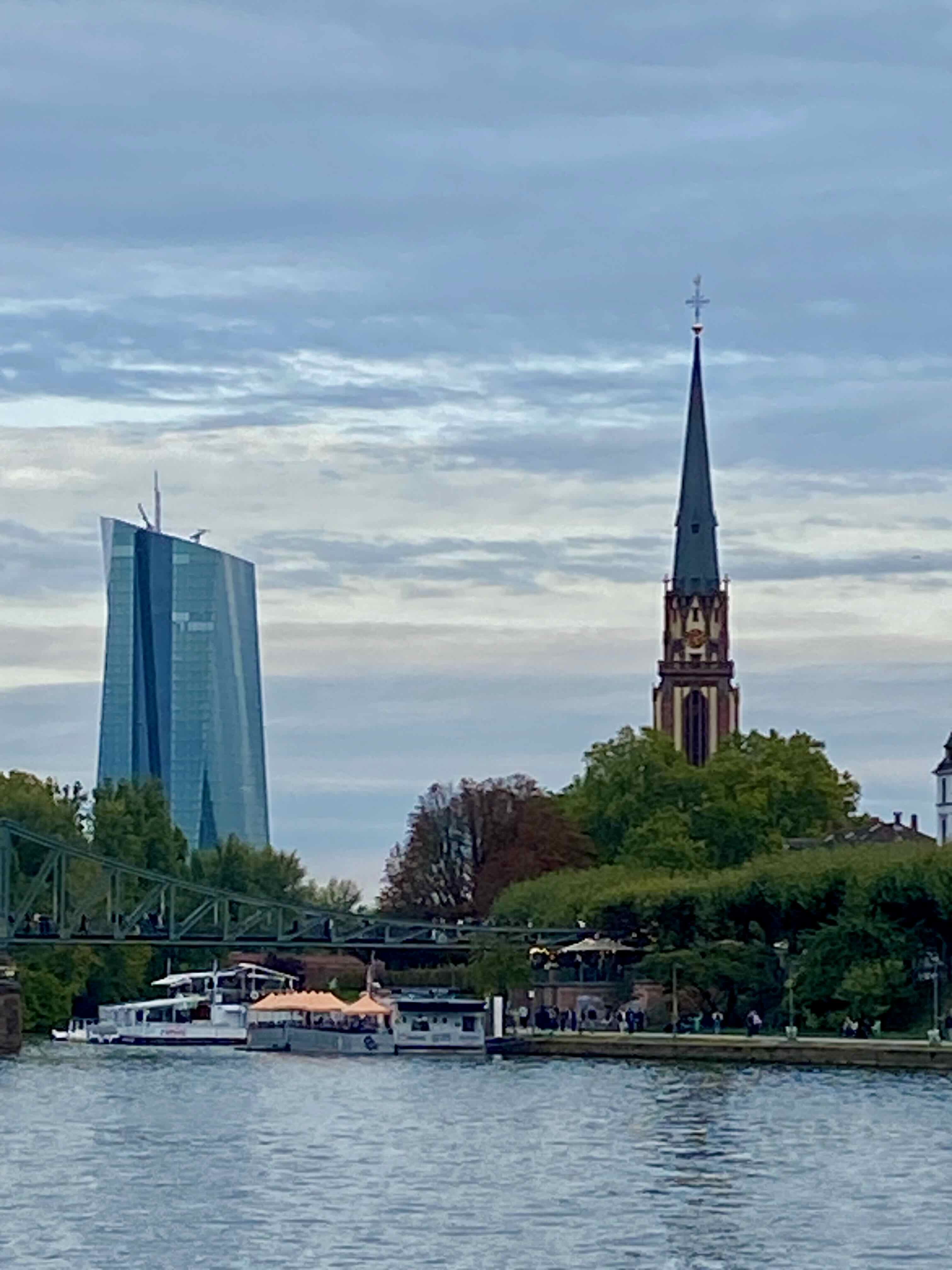
Two buildings, one old and one new and then home.