Day 29 Sunday, September 28, 2025
Bob found a free zoo in the countryside not far from us. Cities and museums are interesting but after a while we both need a change of pace. It is a sunny today and we are both ready for a more relaxing day. Every time we pass this crosswalk Bob mistakes these signs for real children. Perhaps they are a bit too lifelike?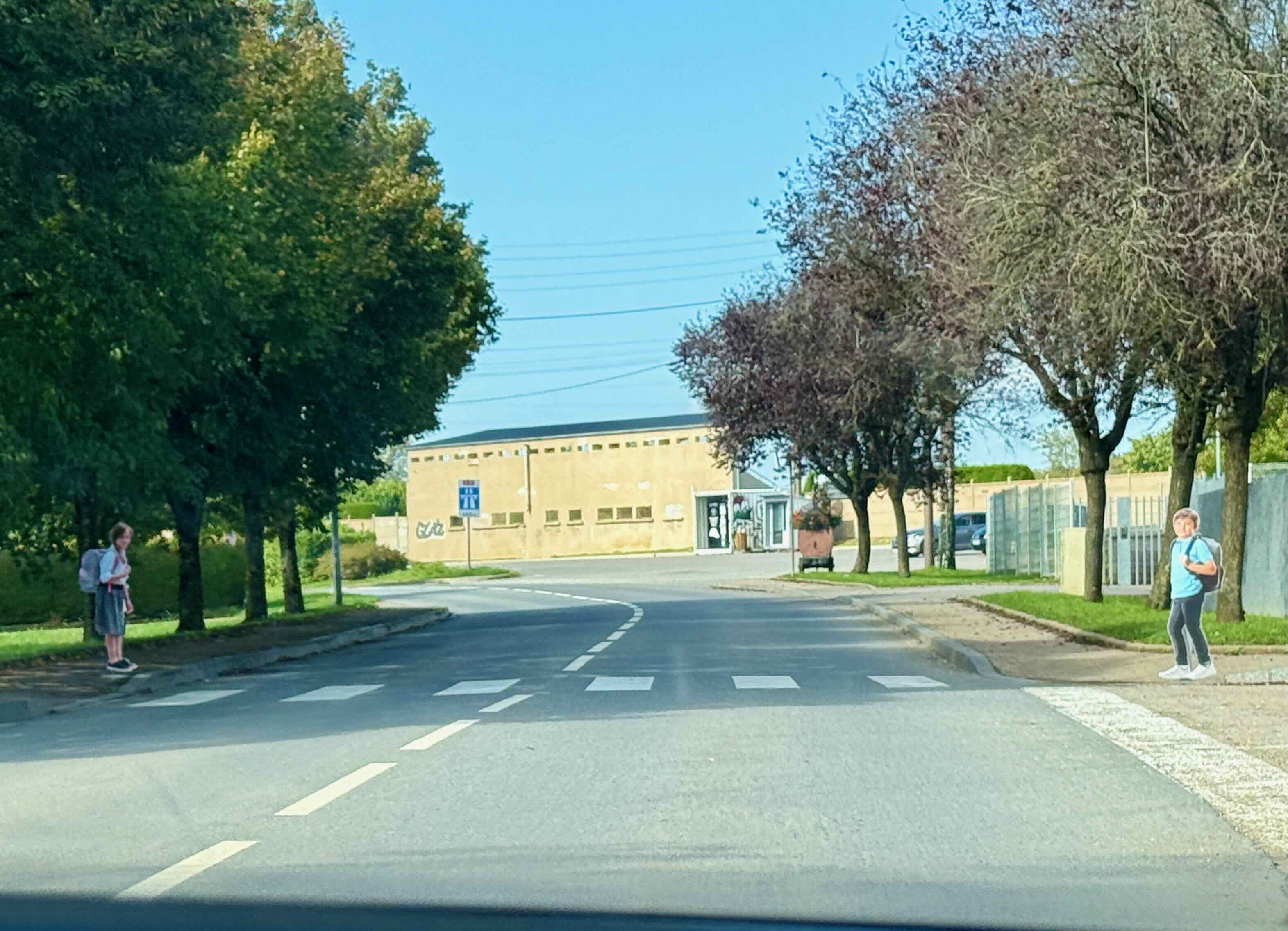
On our drive we see these cement pillboxes, remnants of the First World War. There are reminders of both the World Wars all over Europe, in cities, towns and the countryside. These reminders are a part of everyday life and make the wars seem not so distant. At home in Canada, it seems like we think about the world wars in November on Remembrance Day. Here I am thinking about them much more often.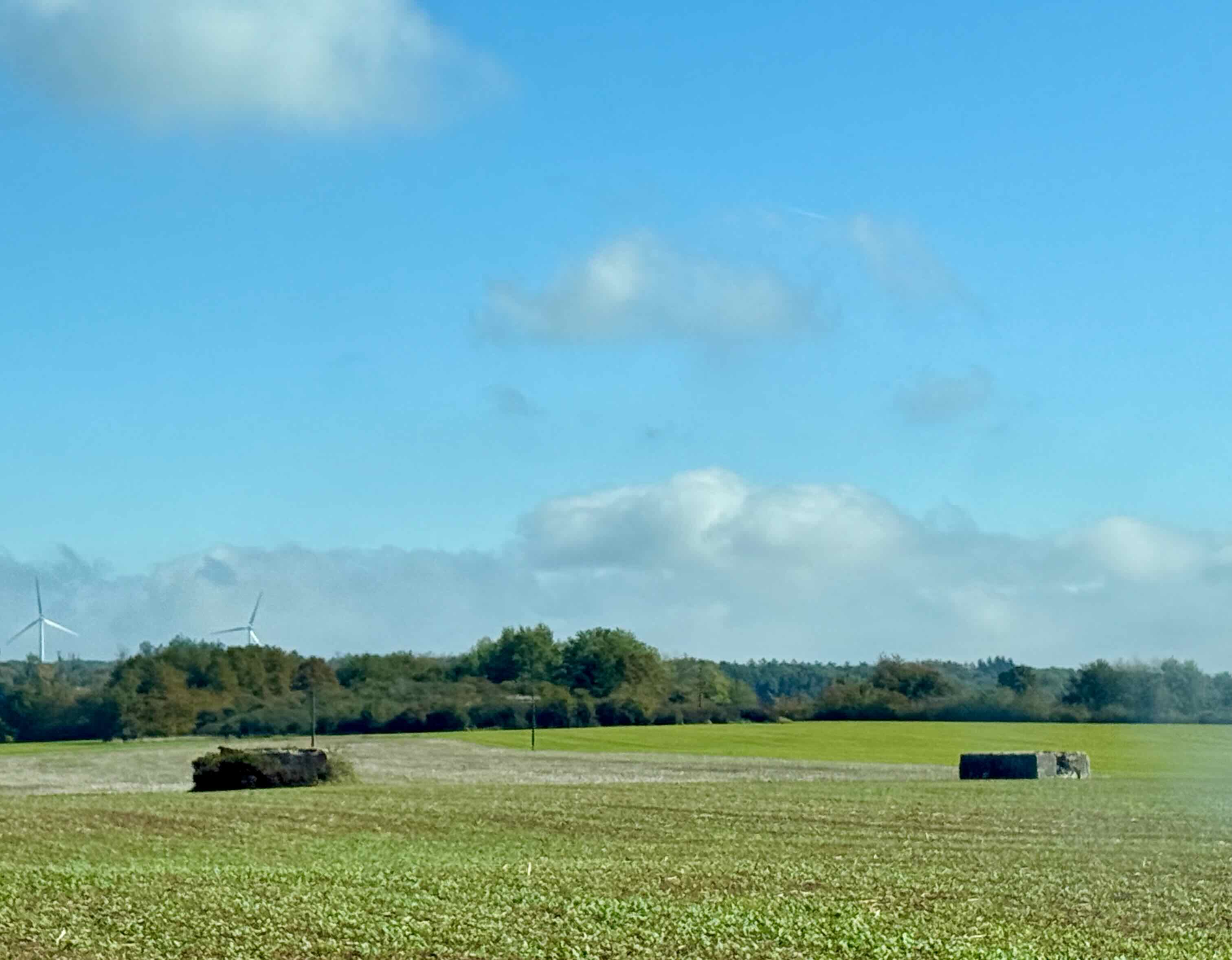
On the way to the zoo we stop at a place just off the highway where people go rock climbing.There is no hint that these cliffs are a couple minutes walk from the road.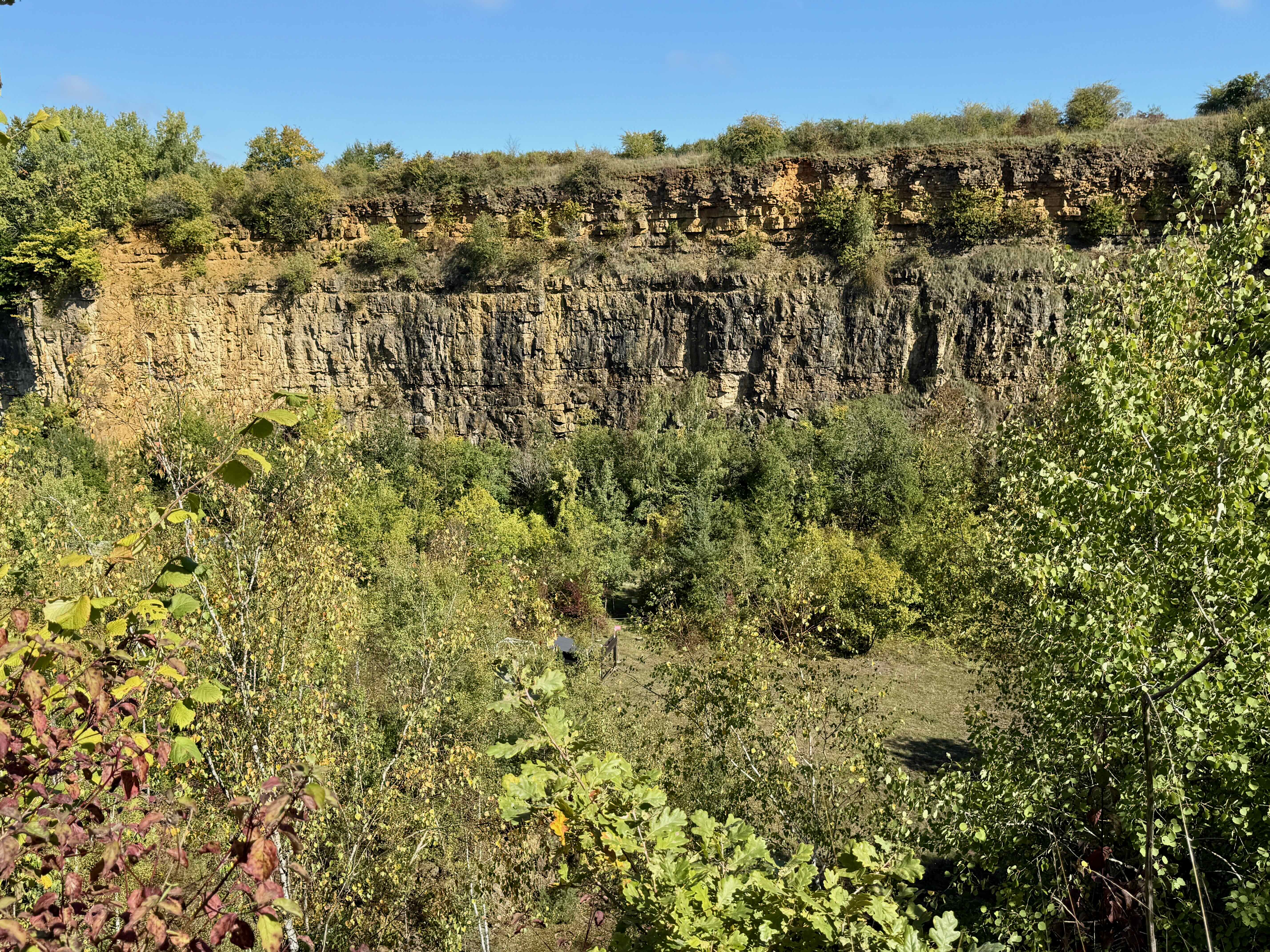
We hear voices, and walk around a corner to see a group of people rock climbing.
We sit on a big rock and watch for a while. I am amazed a the strength these climbers have in their fingers and toes. Of course they are strong overall, but so much relies on their fingers and toes finding the right nooks and crannies and supporting the climber’s weight as they slowly make their way up the rock face. It is amazing to watch them. We never had a chance to try anything like this when we were younger and I think it is a bit too late to begin now. 
One young couple went over to another rock face to climb. We heard a crash and I saw this climber fall from a height of about 3 meters, maybe more. He looked like he was free climbing as we didn’t see any rope. He lay on the ground not moving for a long time, then finally was able to sit up with help. He was carried over to a chair and I chatted with him as we left. He said several times that he was very lucky. He hurt his ankle but he didn’t think that it was broken. We wished him luck. I’m sure he will be black and blue and very sore as he fell sideways and landed on the full length of his body. It was scary to watch it happen. 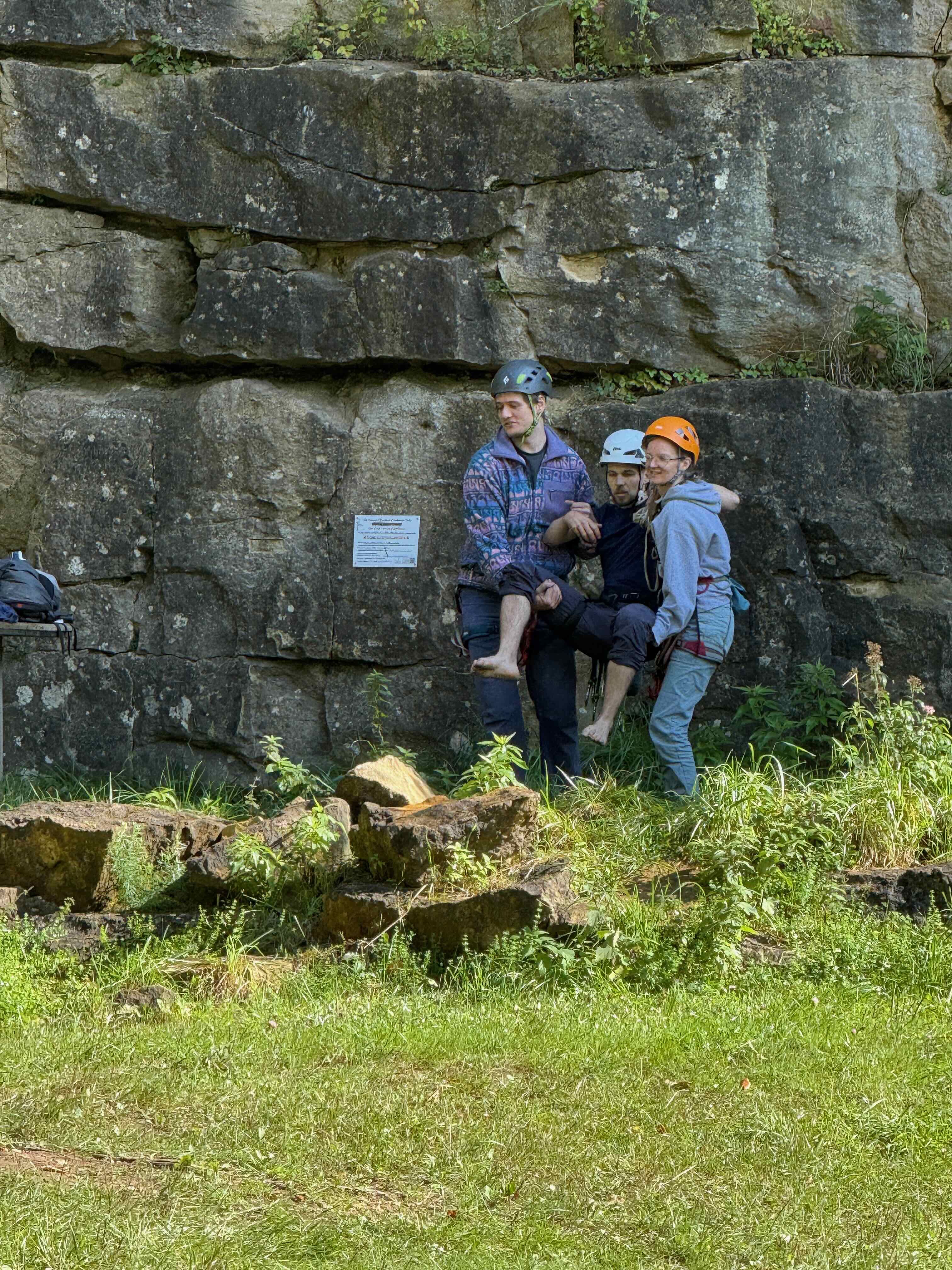
We walked a bit further and saw this woman climbing…she was impressive! She was climbing much higher than the first people we watched. In no time she managed to climb onto and over the outcropping of rocks just above her in this photo. Her husband was her belayer and their two children were watching. They had rock climbing harnesses as well. the boy ran up to us to welcome us to their spot, laughing and giggling the whole time with his sister.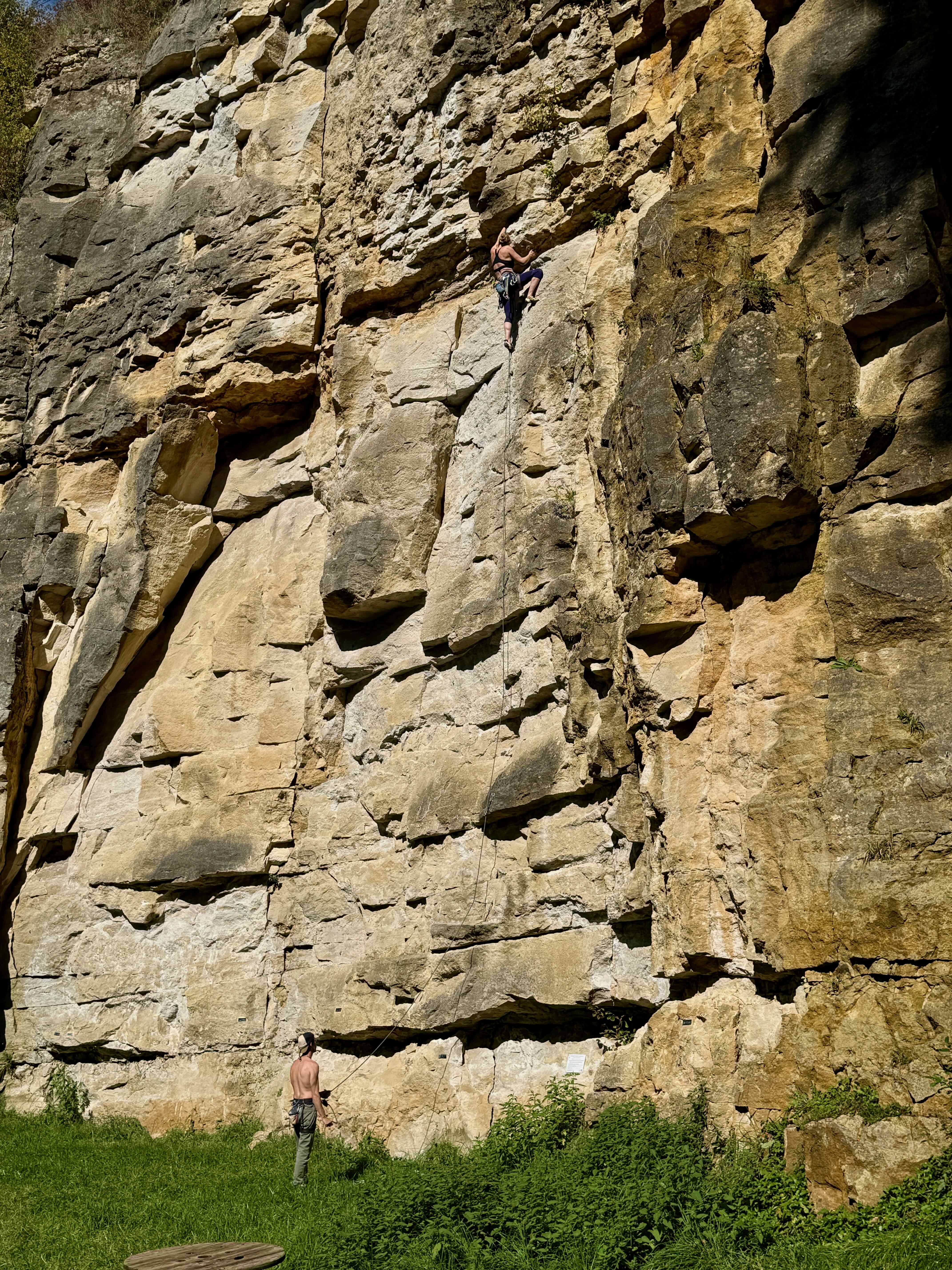
She is so strong! It was pretty incredible to watch her maneuver her way up a sheer rock face. I could have stayed even longer but we want to get to the zoo, so we head back to our car.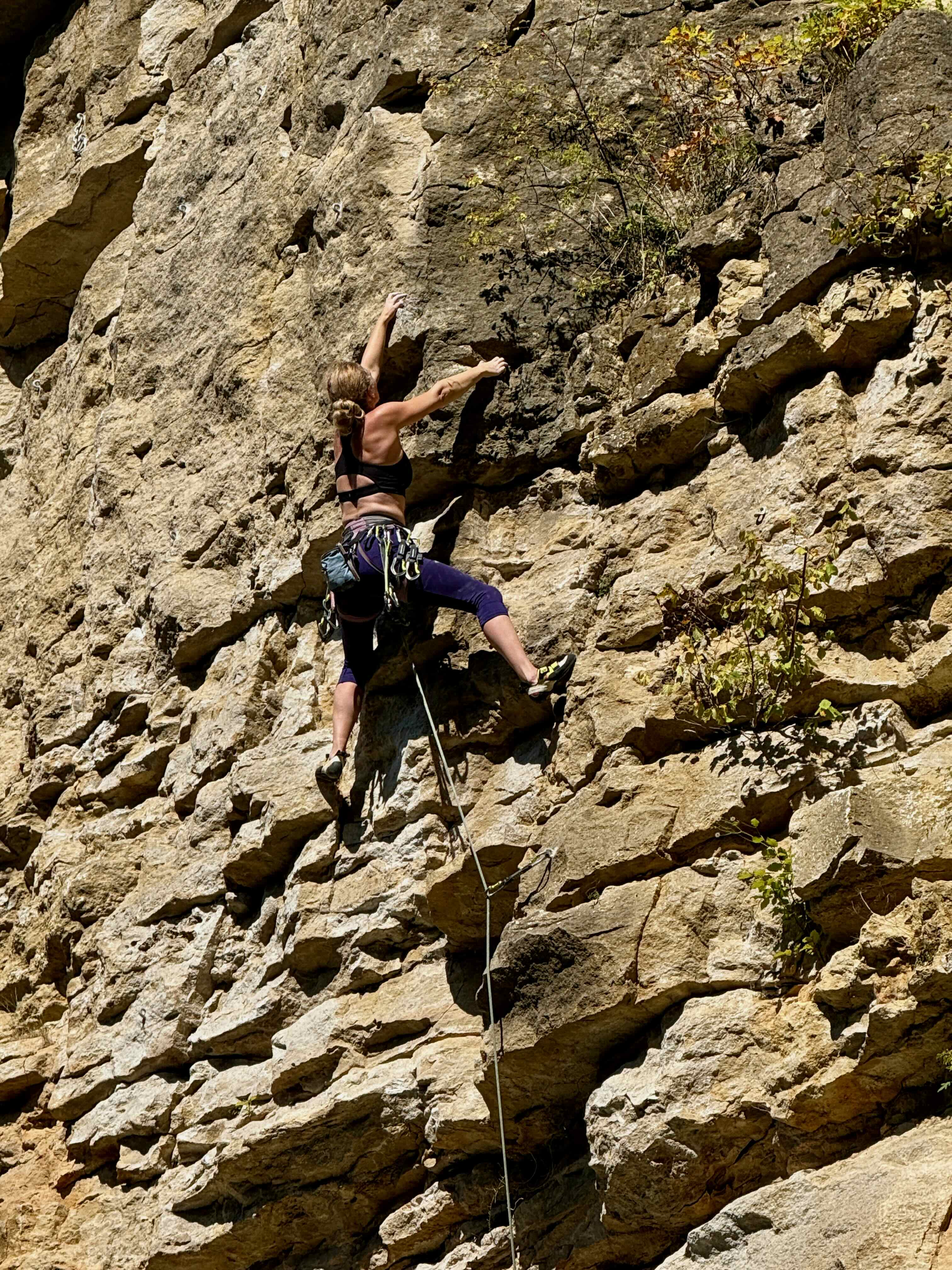
The Escher Déierepark-Tierpark is free and is more of a petting farm than a zoo. The animals are mostly farm animals, along with a few different types of deer, and they are quite tame. We are able to buy bags of pellets to feed them. I think we had as much fun as the kids! 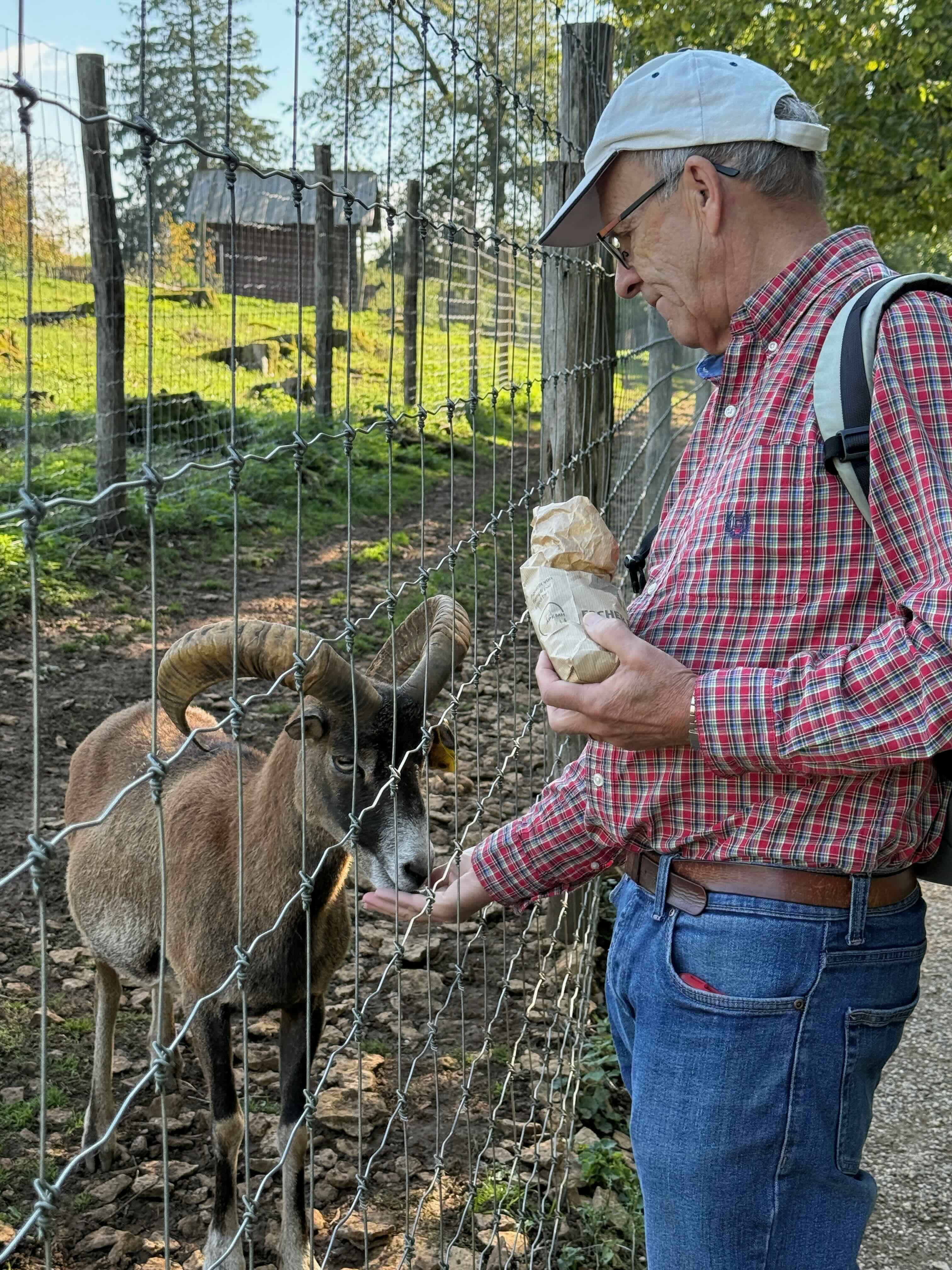
This beautiful Highland cow (I think it was a she) was my favourite. 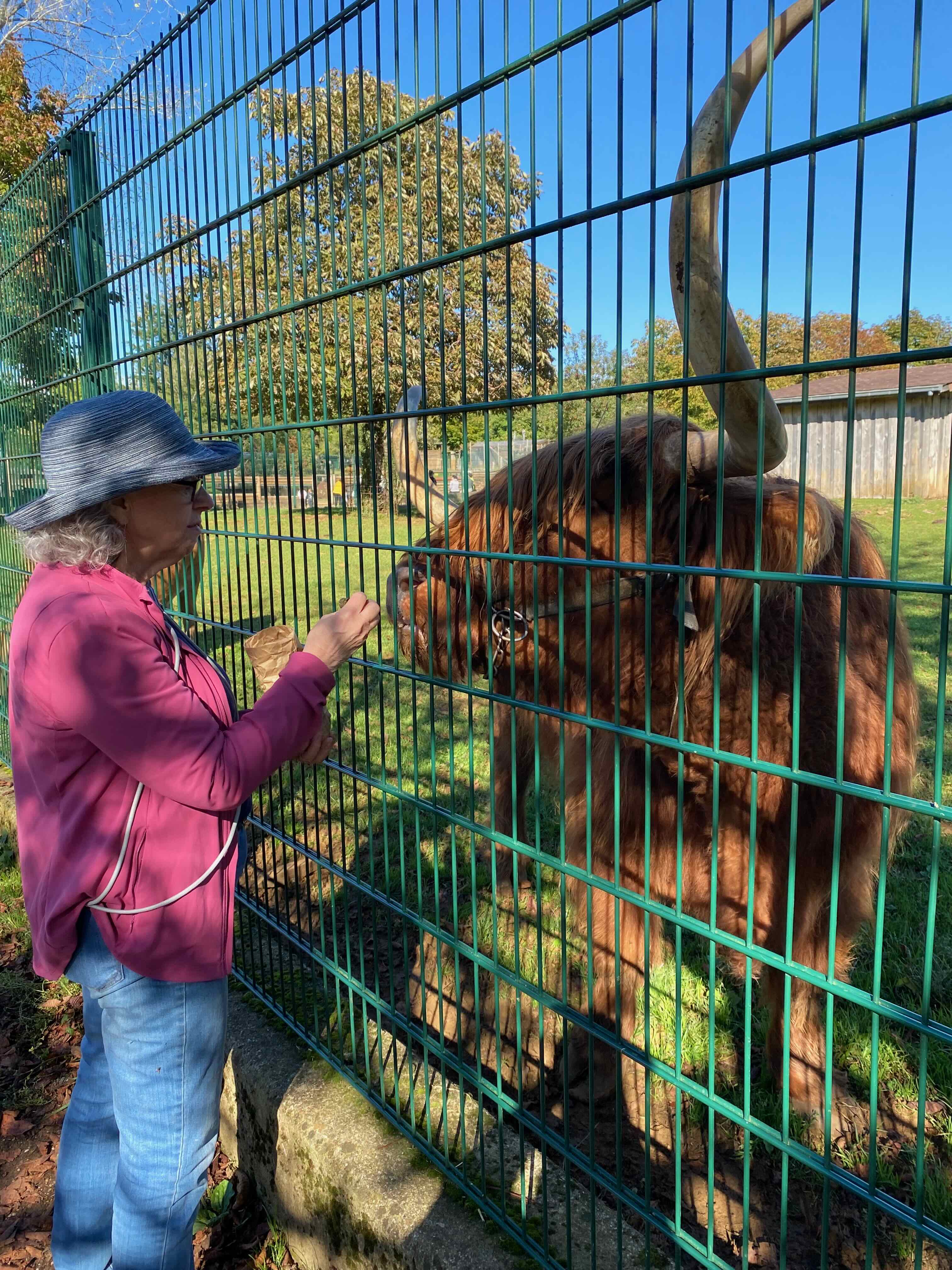
She really loves to be fed! I think we became friends!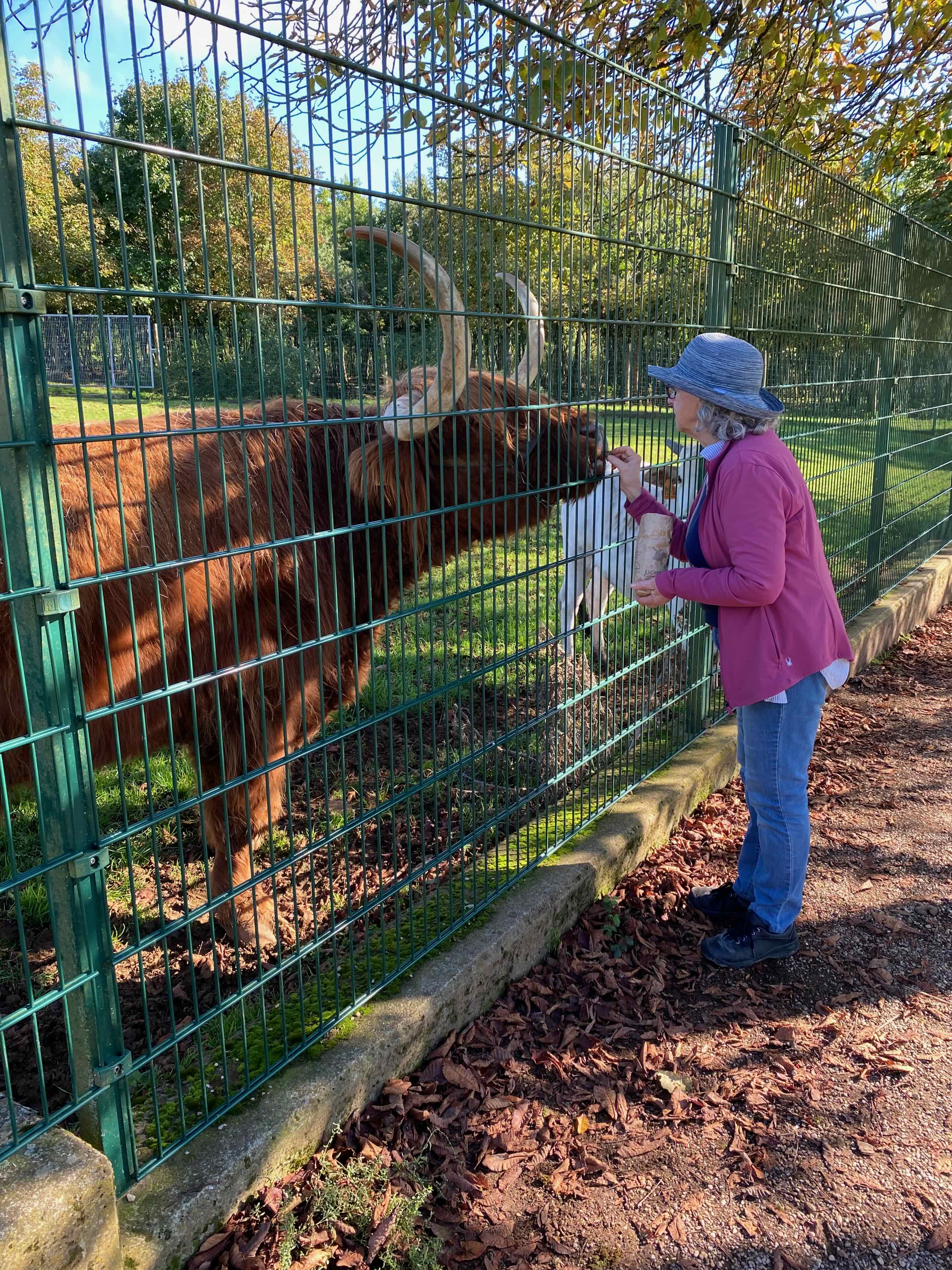
Bob made friends with this younger Highland cow.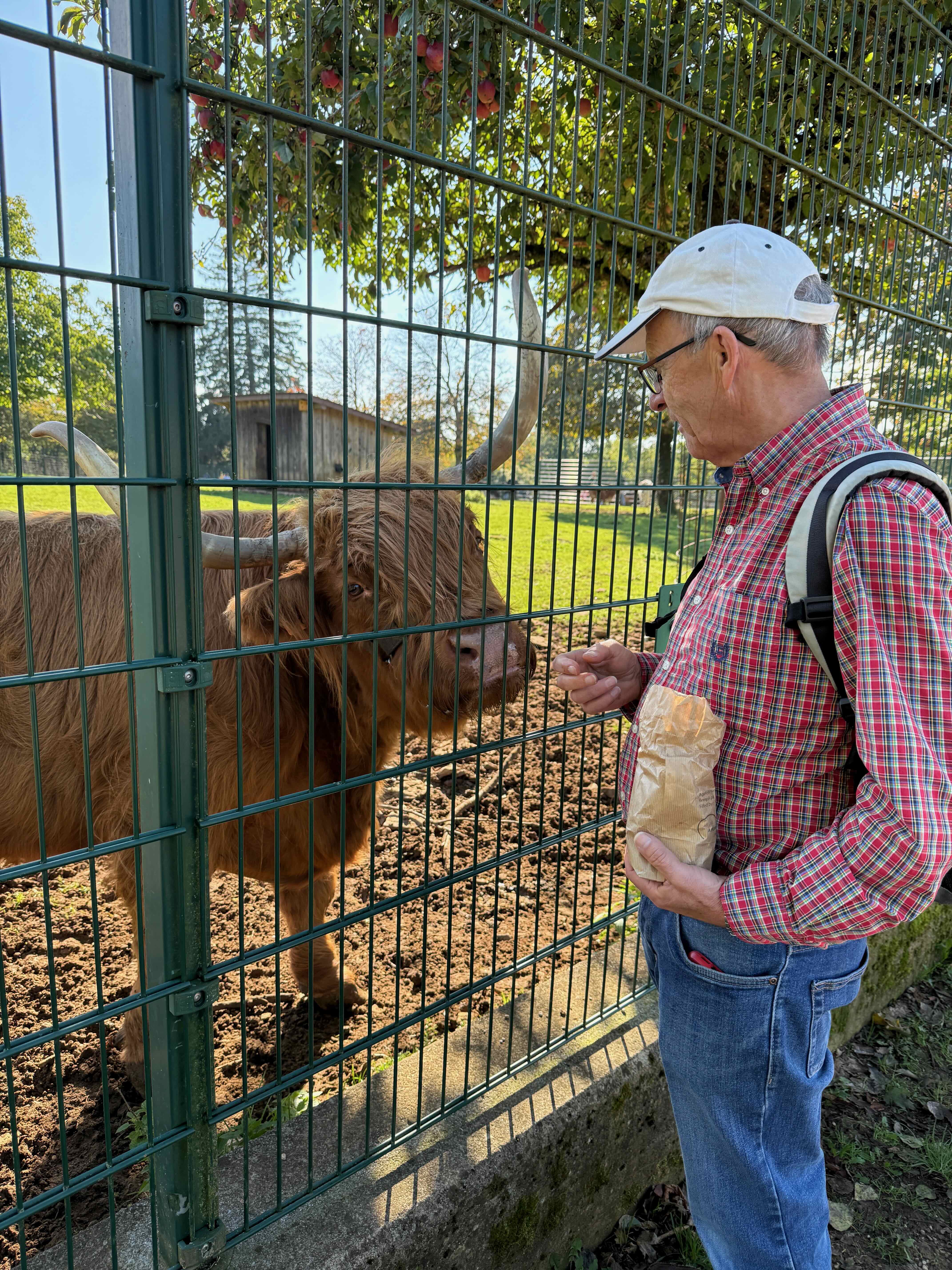
There is a sign asking not to feed the geese, and they object very loudly to being left out.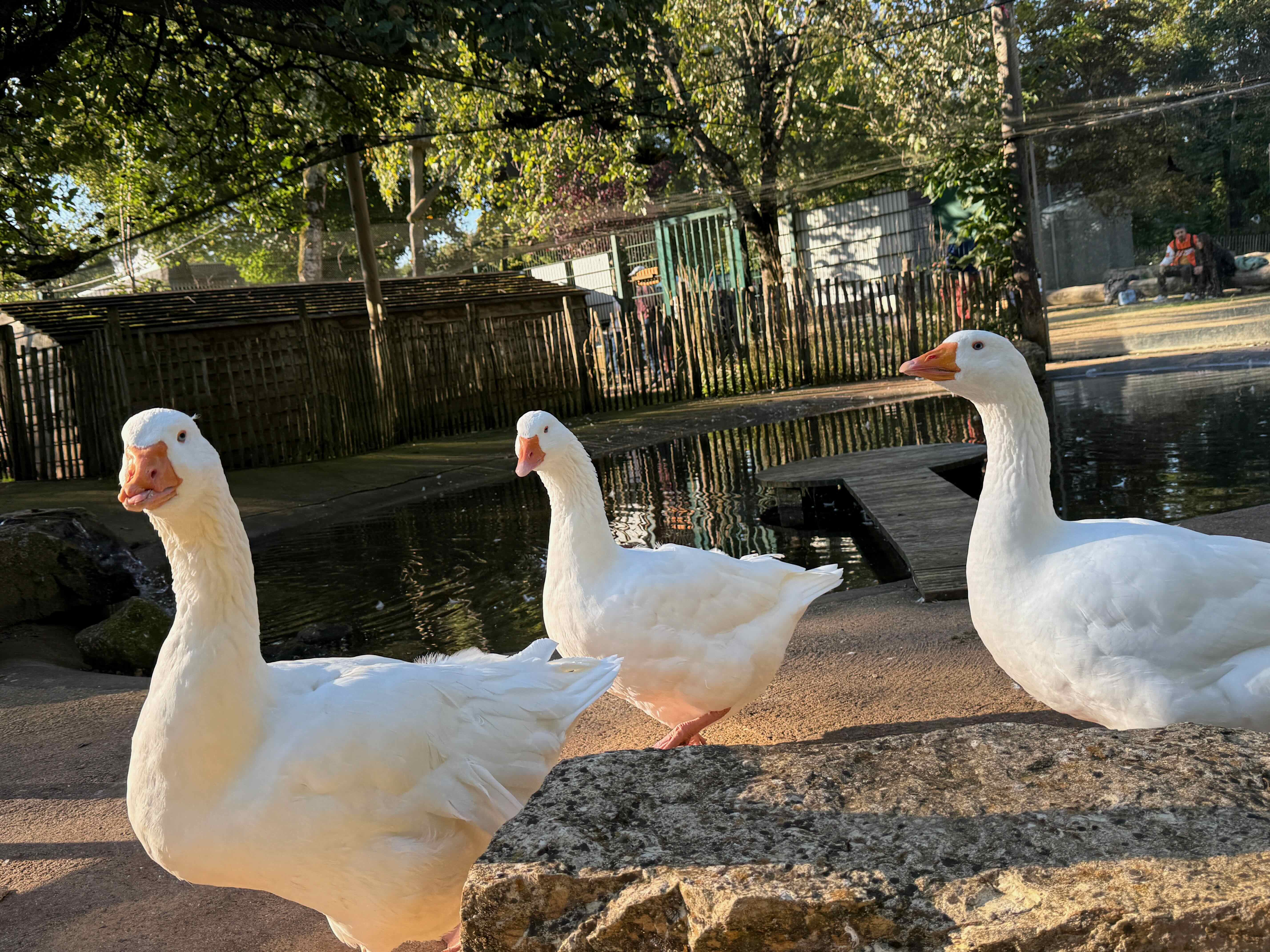
A few of the deer resting in the shade. We have our picnic lunch here and walk around the park twice. It was such a nice relaxing afternoon and we so enjoyed the sunshine and watching the children feed the animals.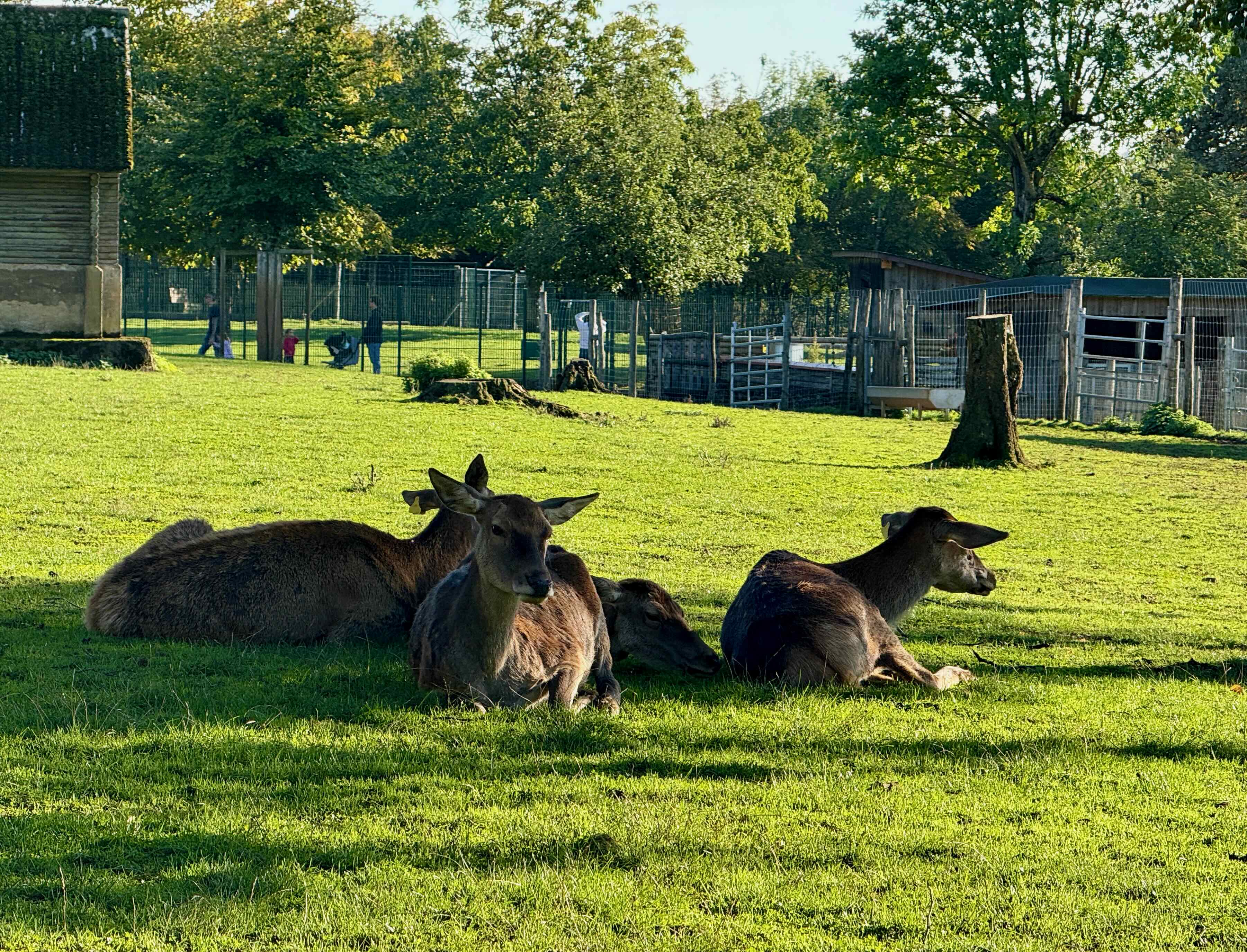
On the walk back to the car we see an area that has been uprooted by wild boars. Wild boars are found in Luxembourg and are considered Europe’s only “dangerous game” animal. Hunters in Luxembourg shoot about 5,000 animals annually. They are increasing in number and are becoming a problem as they move closer to inhabited areas.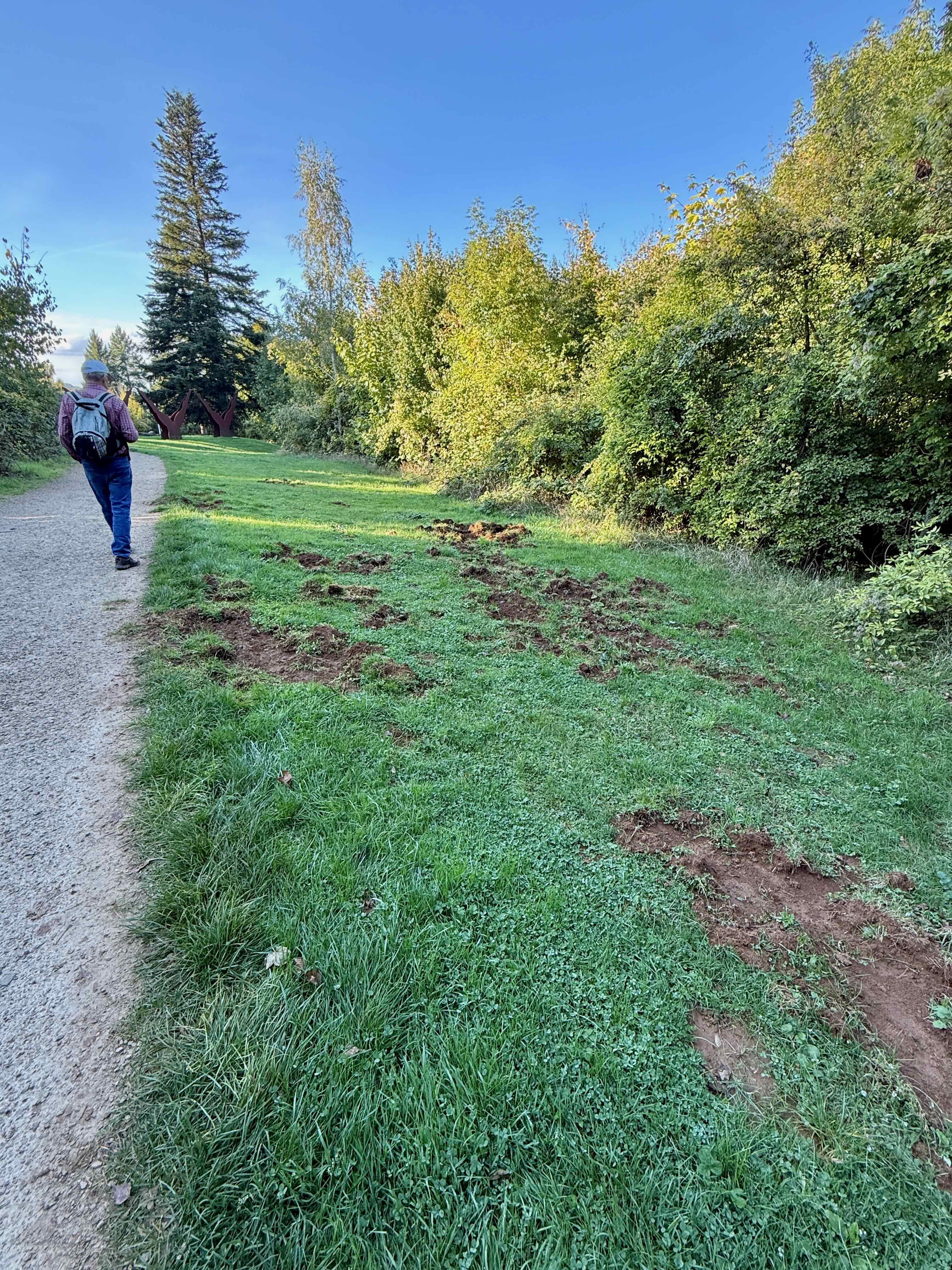
We see a garden folly and I take a closer look. 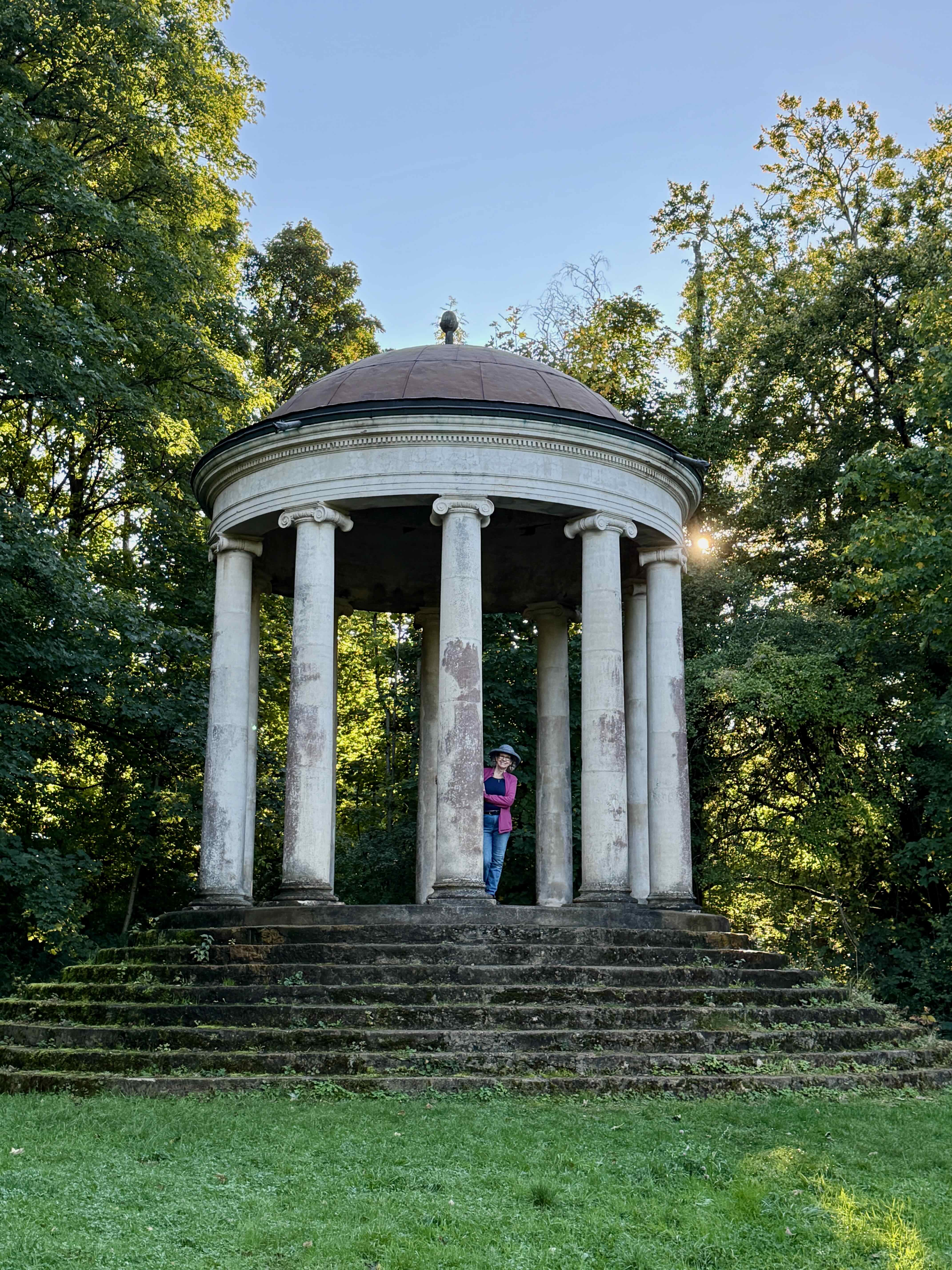
Sorry for the blurry photo. We have seen several of these large black cutouts of a person with a white cross on their chest. I google to find out what they are, only to discover these are used to mark the spot where a person has died in a motor vehicle accident. 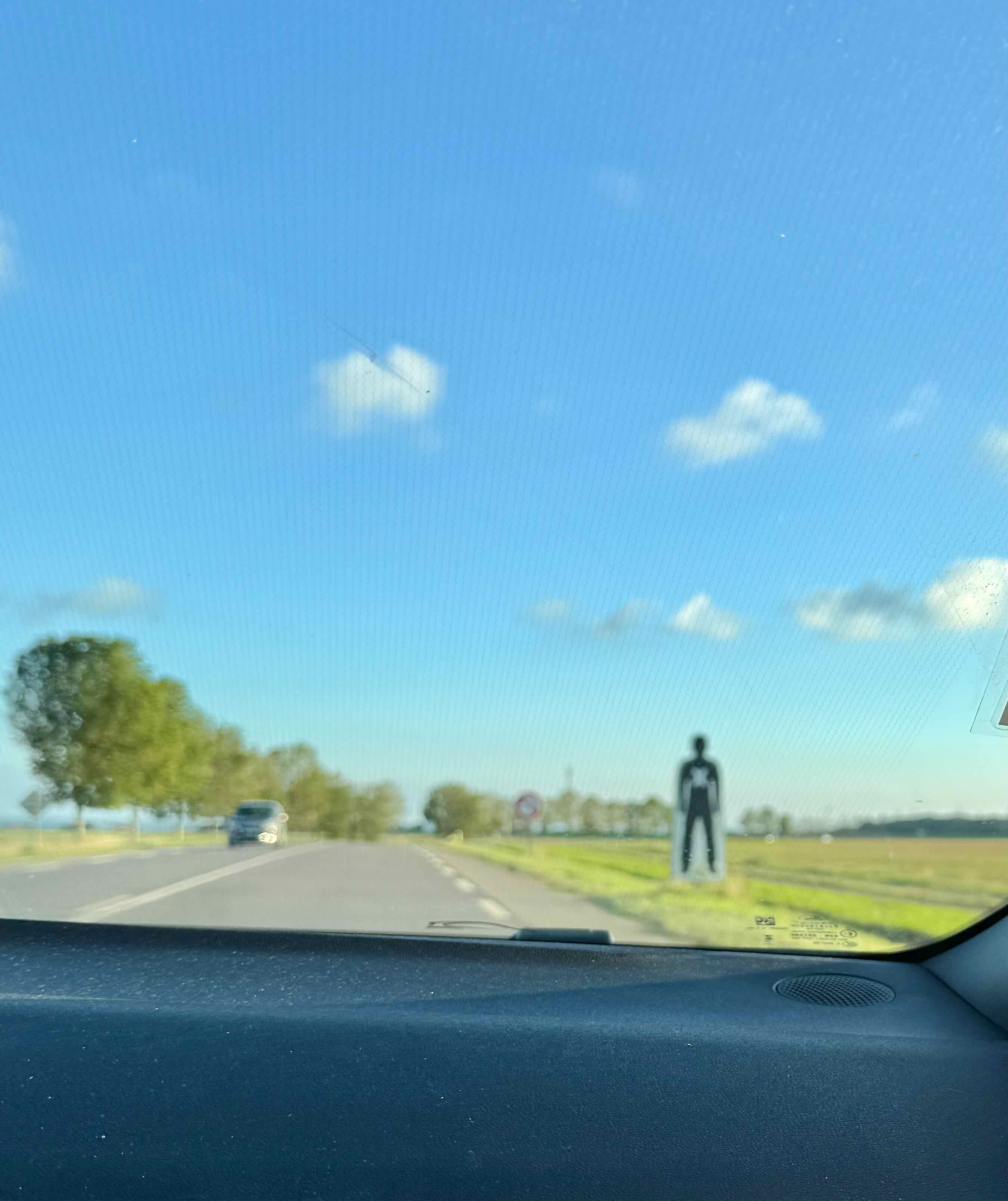
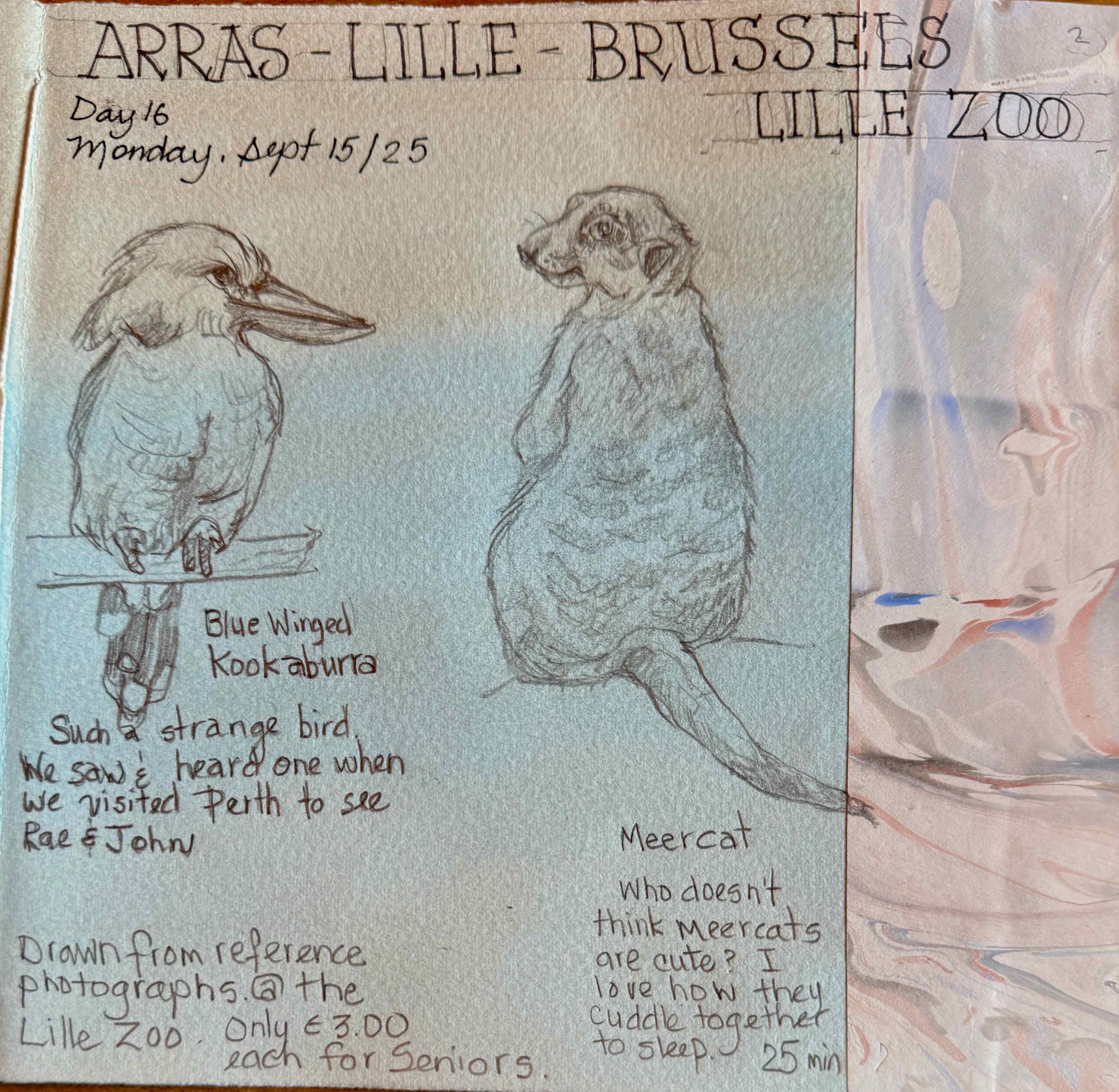
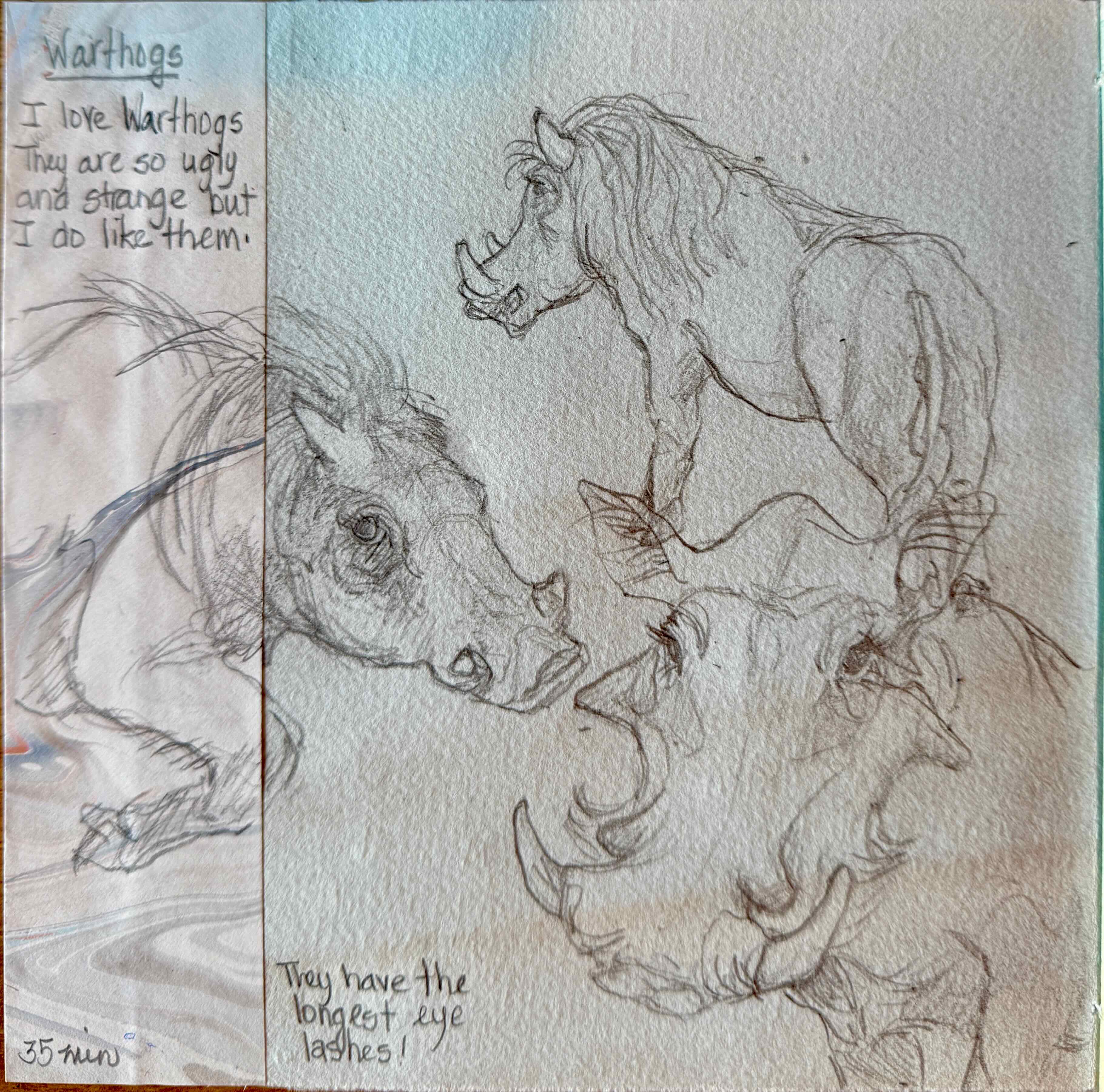


 There are many stunning stained glass windows surrounding the ornate altar.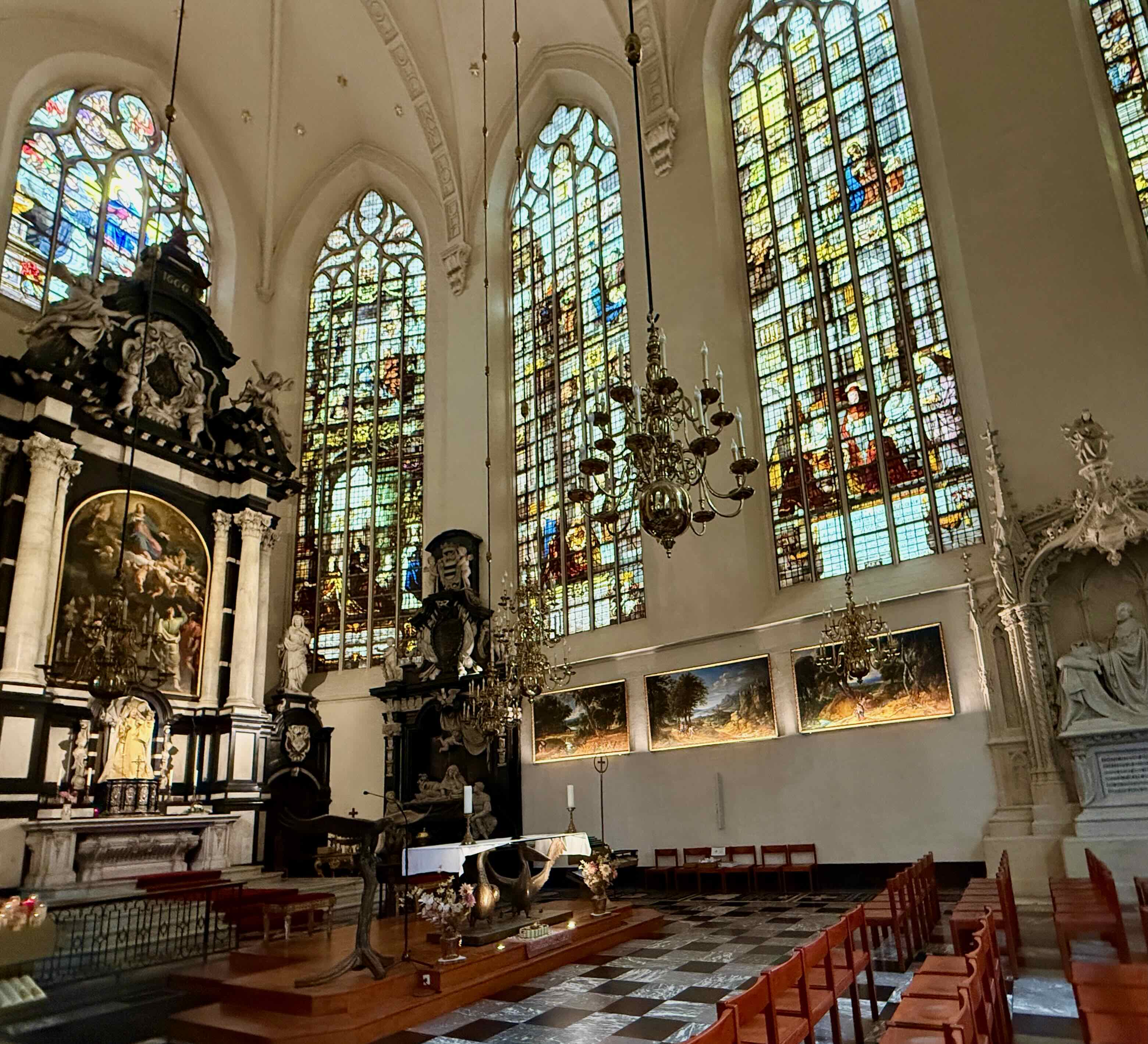
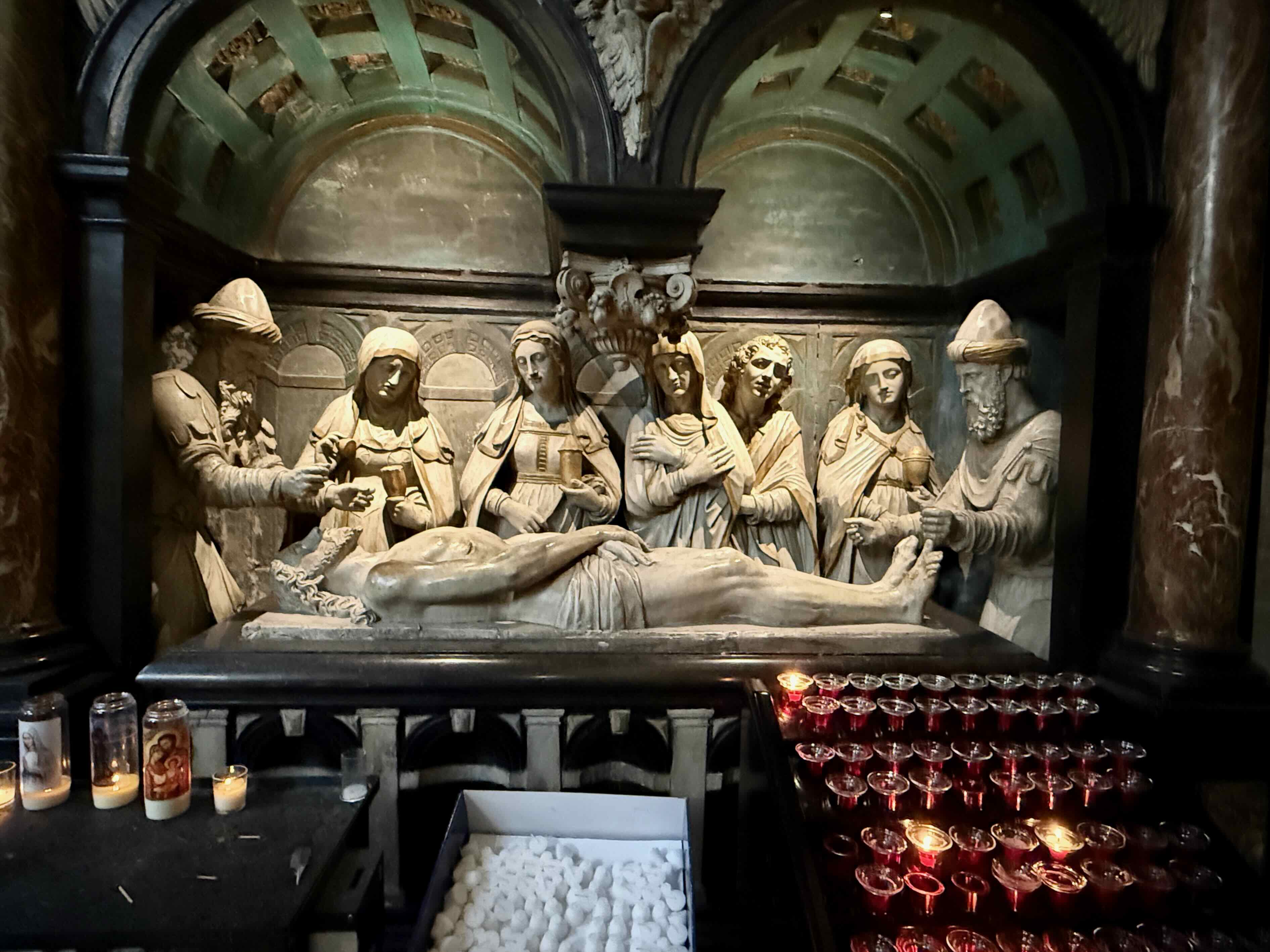
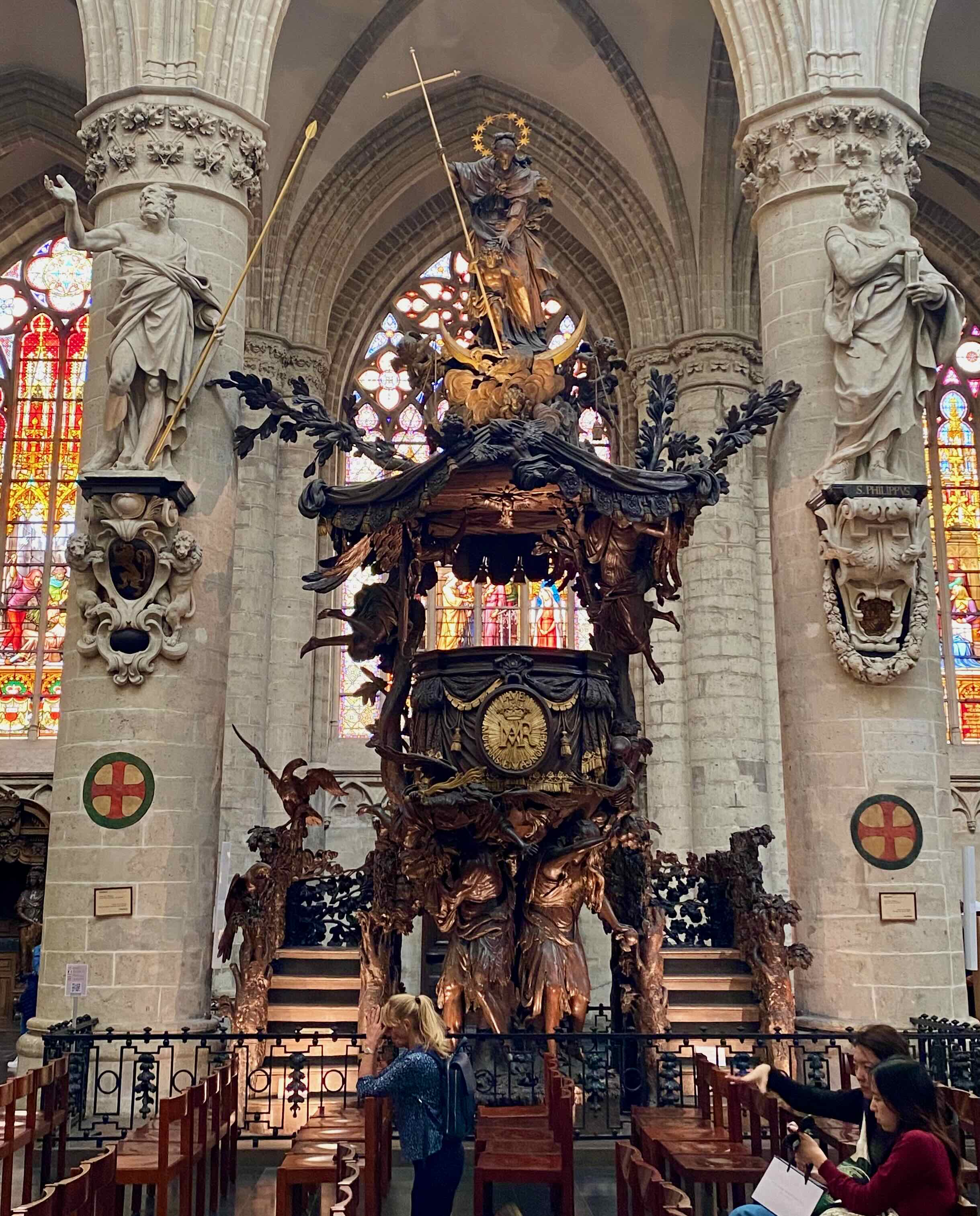
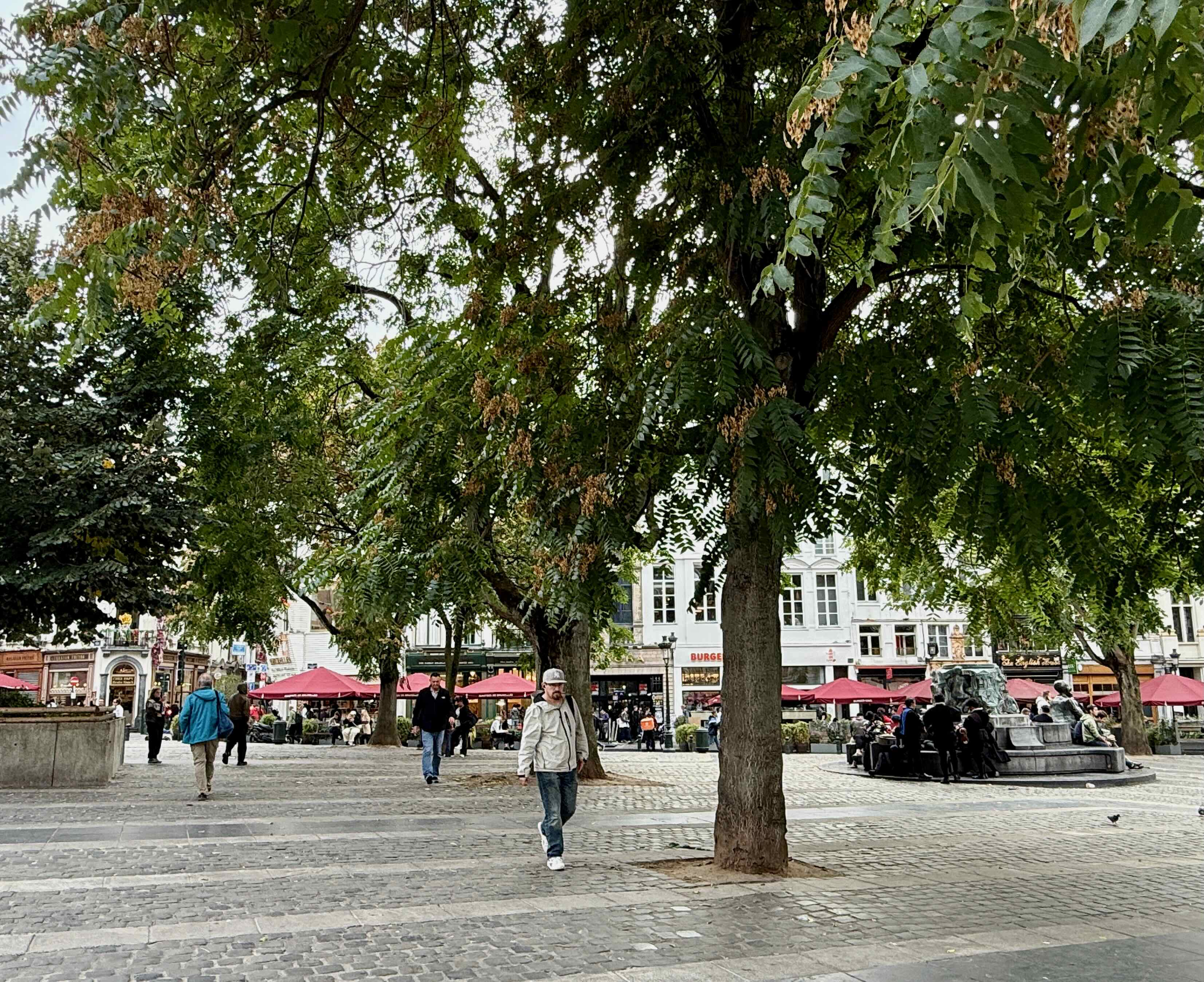
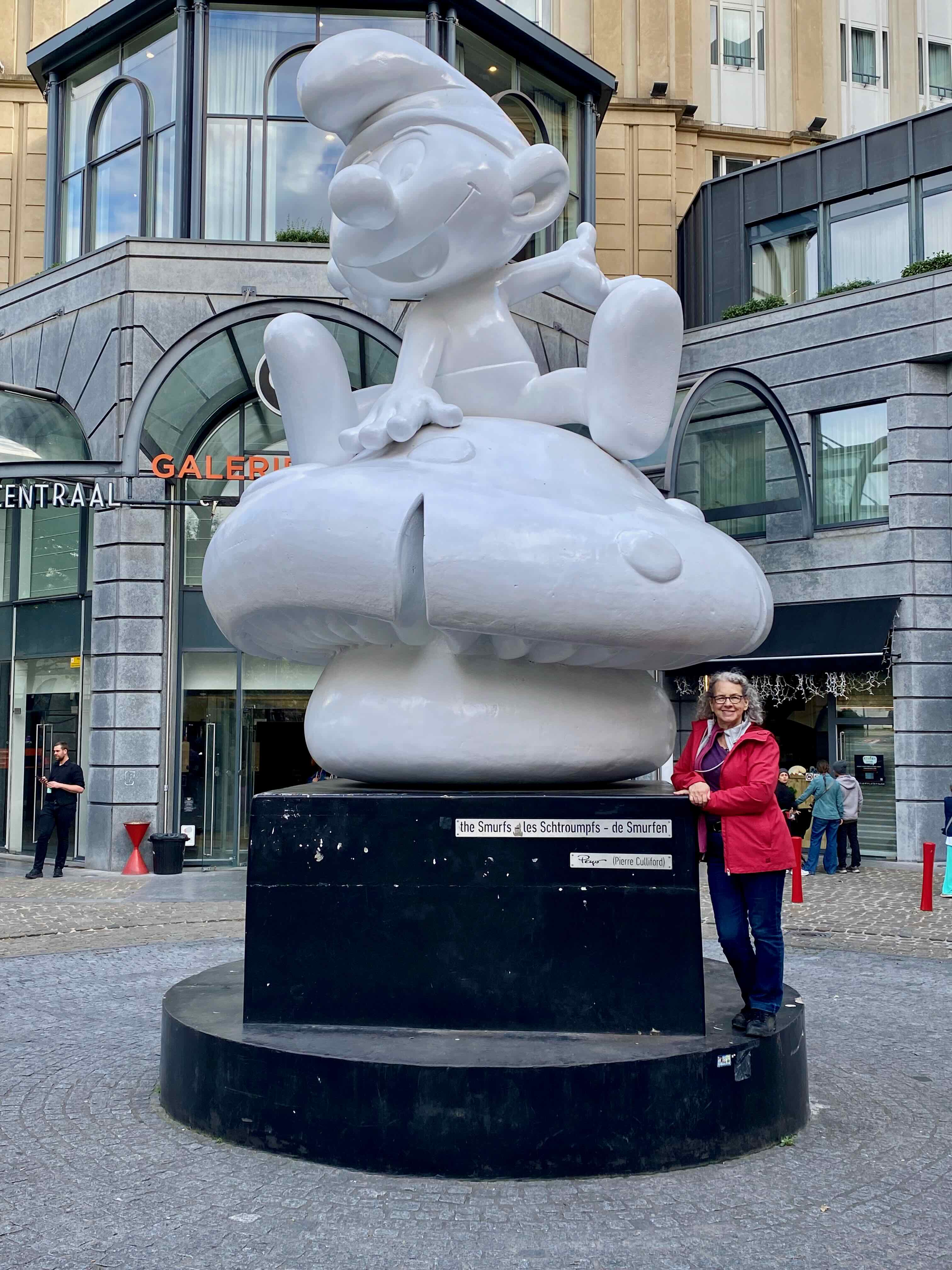

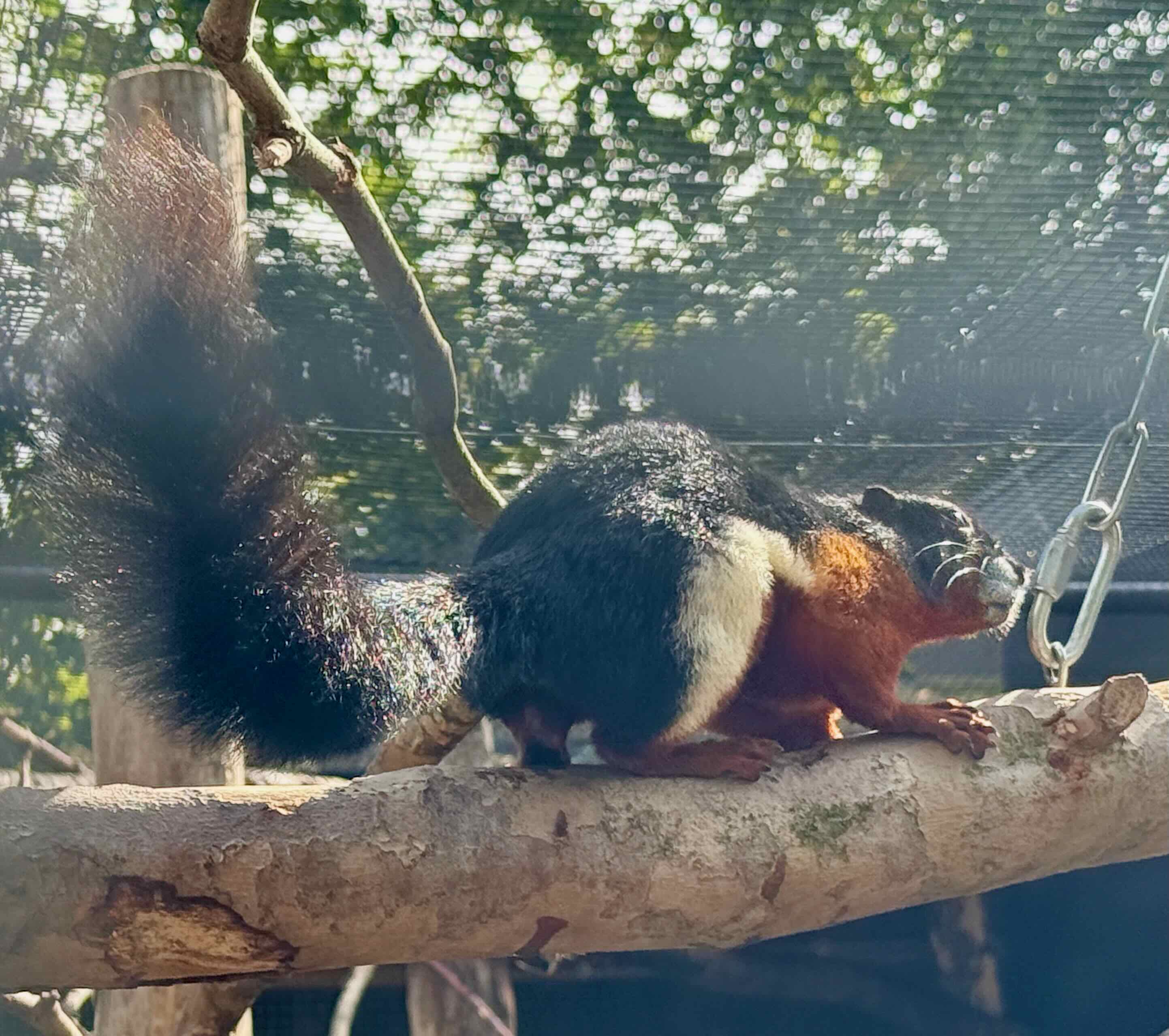
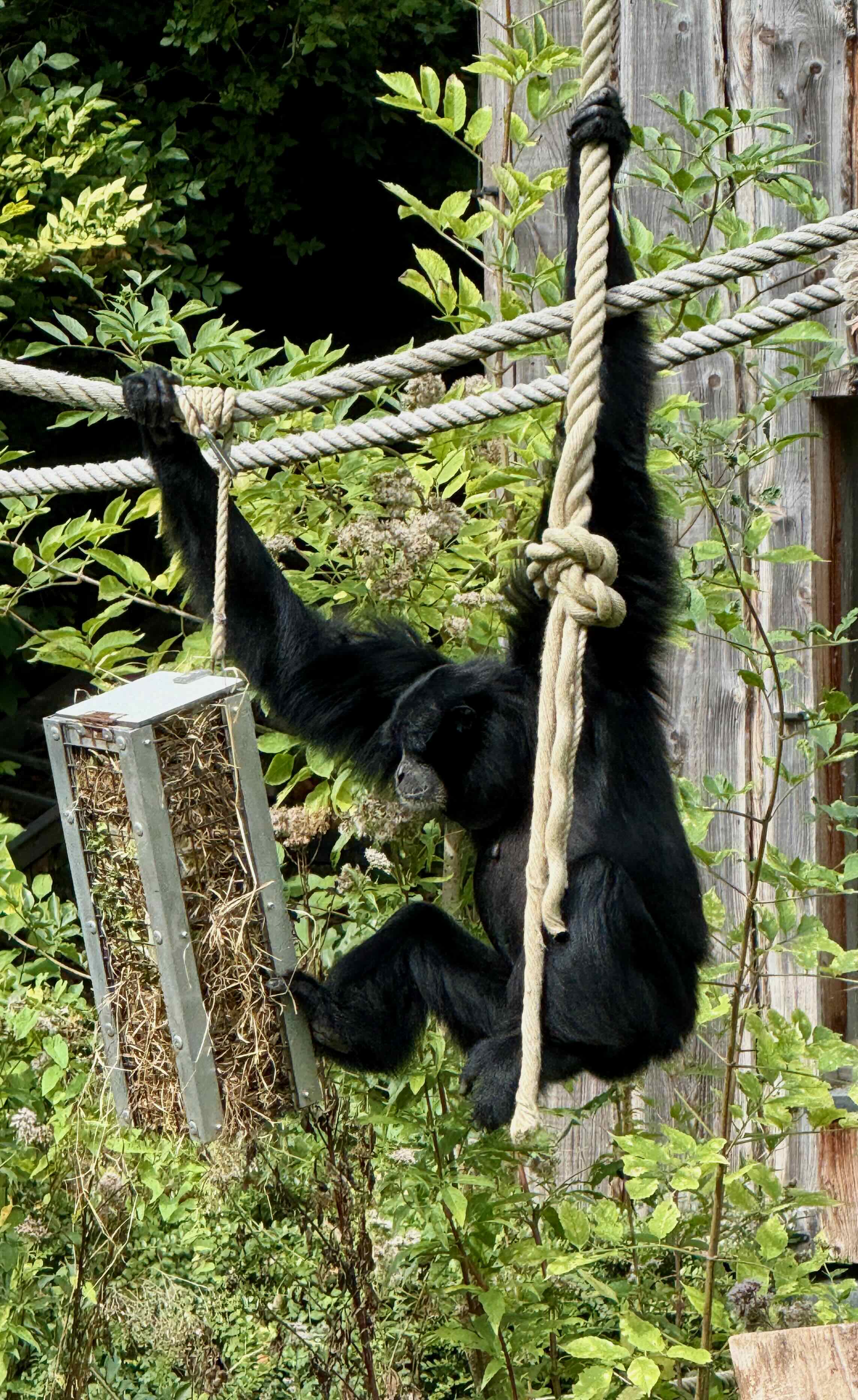

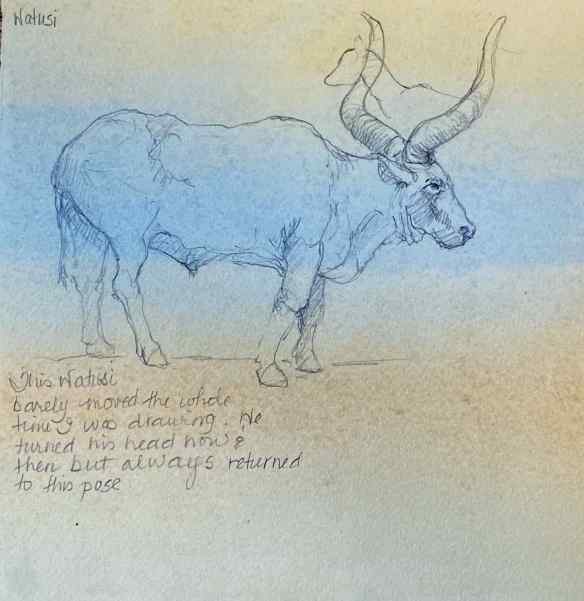

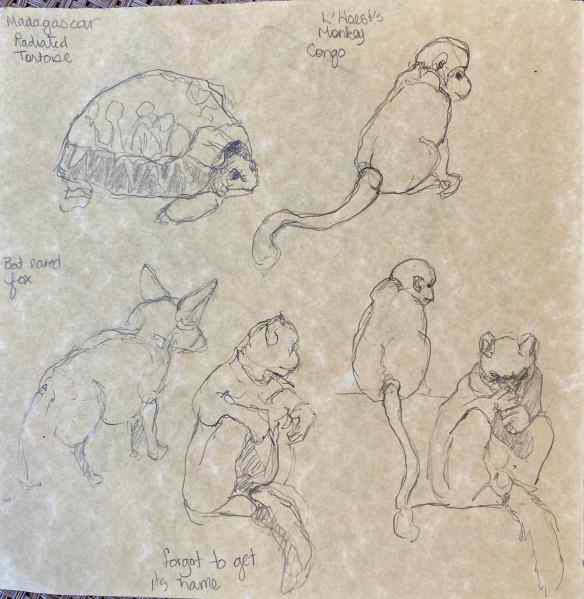
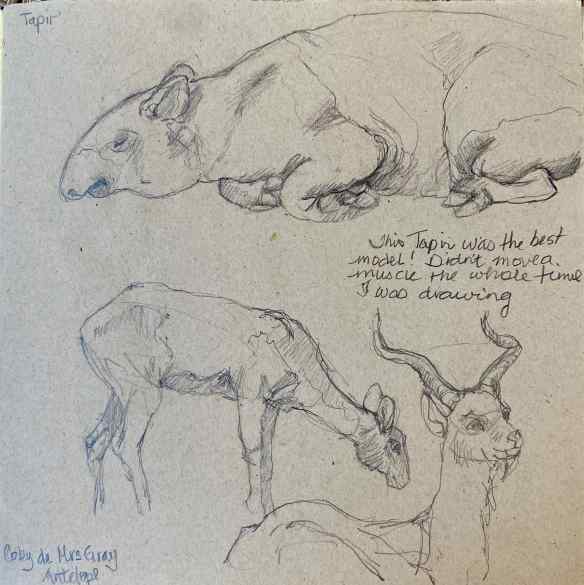


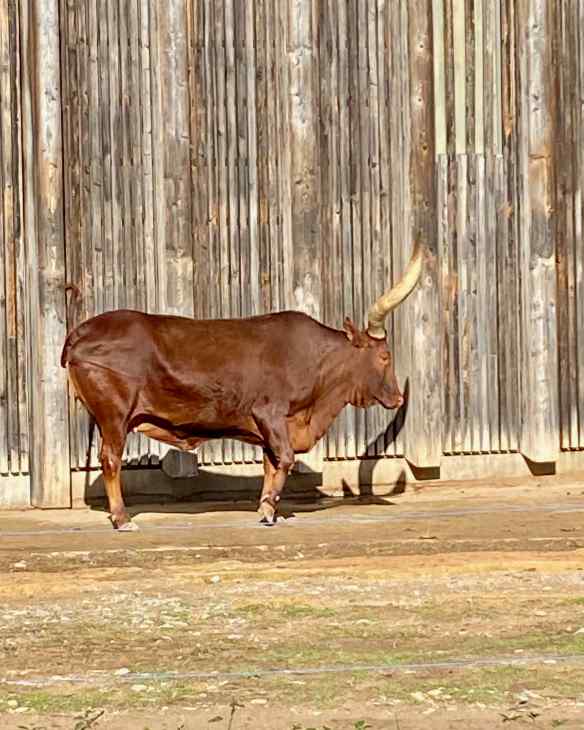
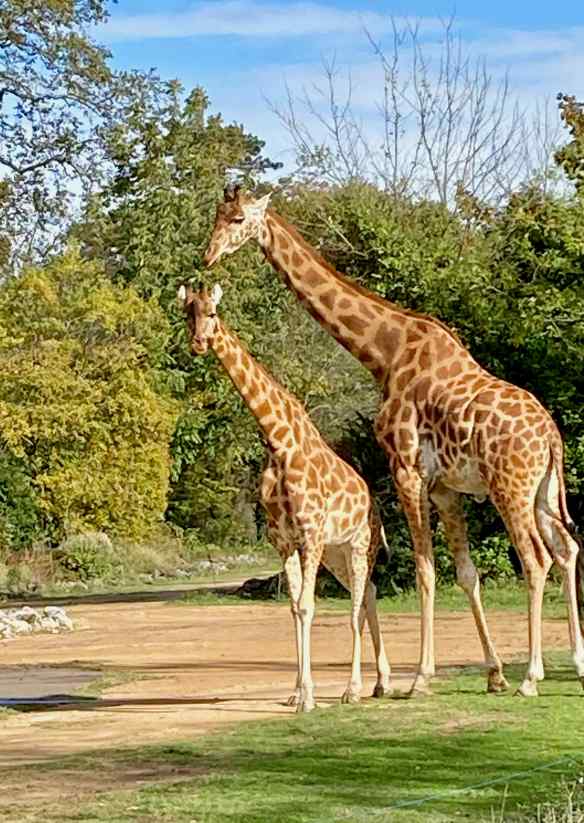
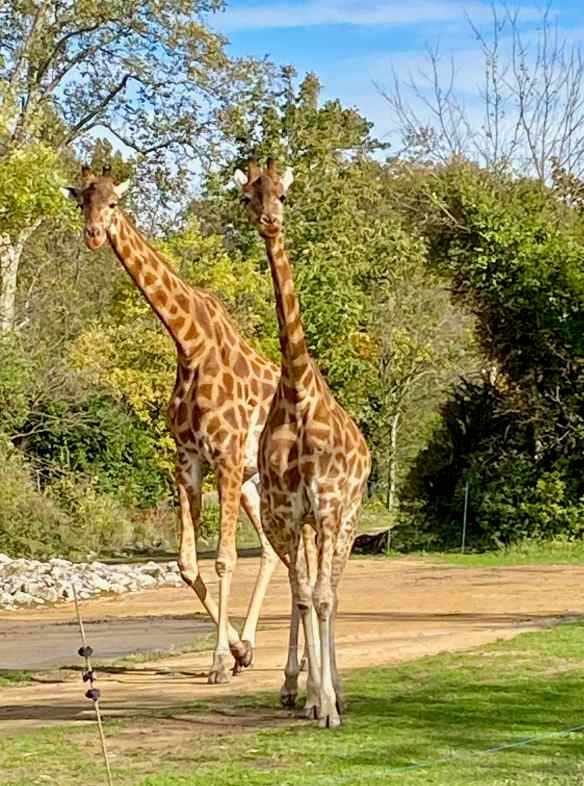
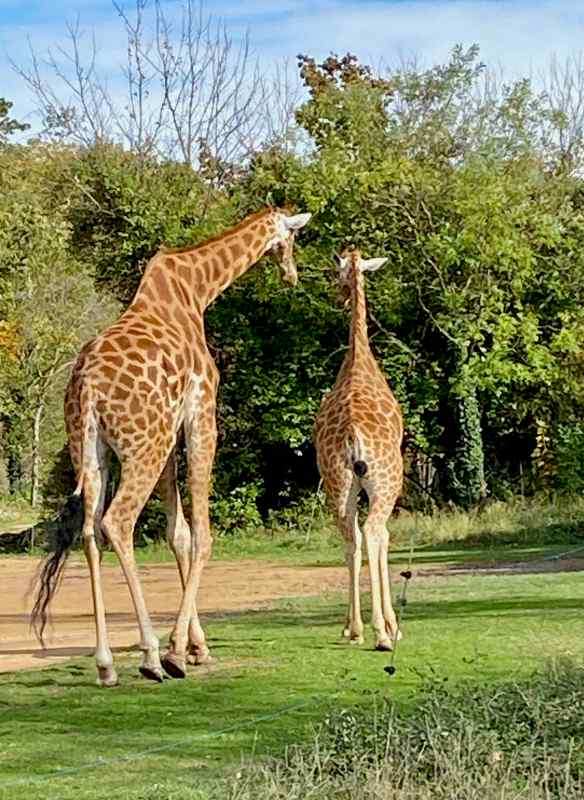
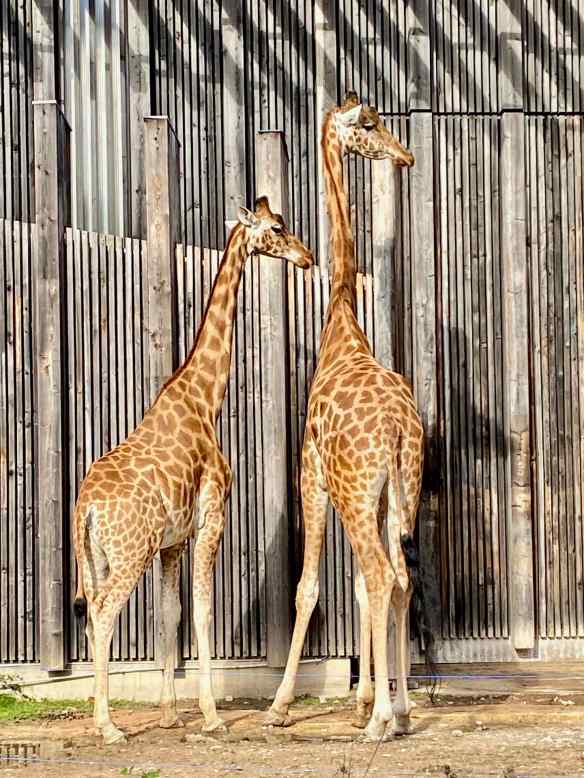
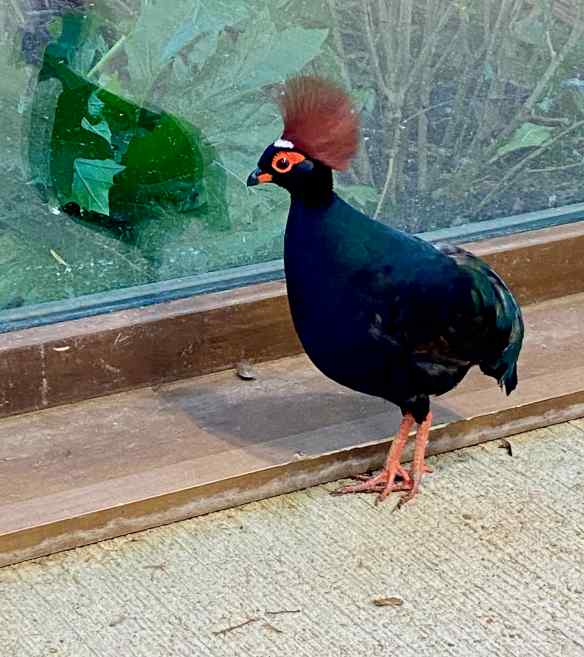
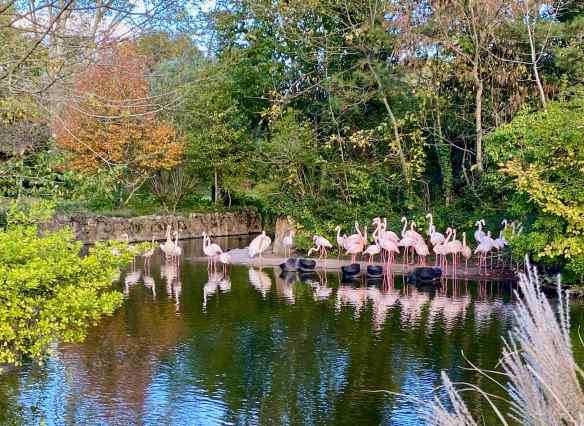
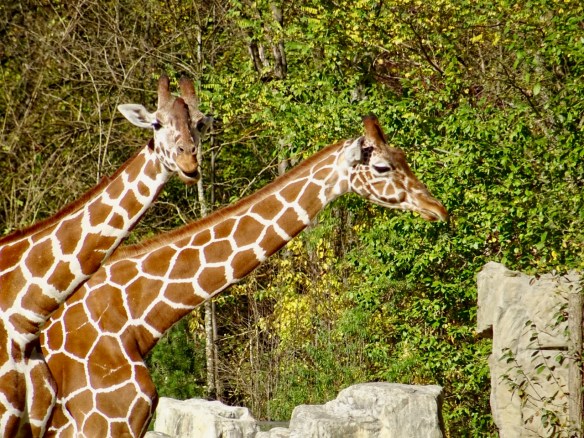
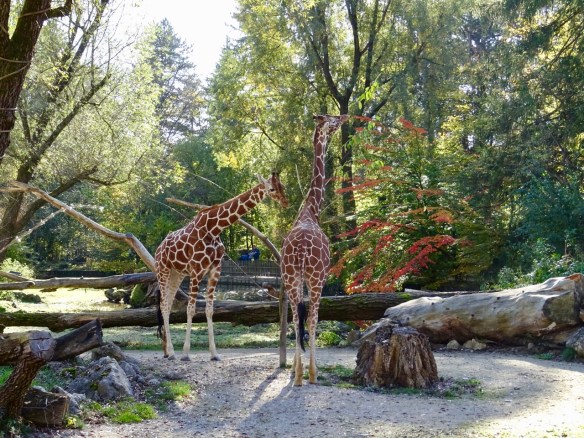 I love giraffes, and there were five of them at this zoo.
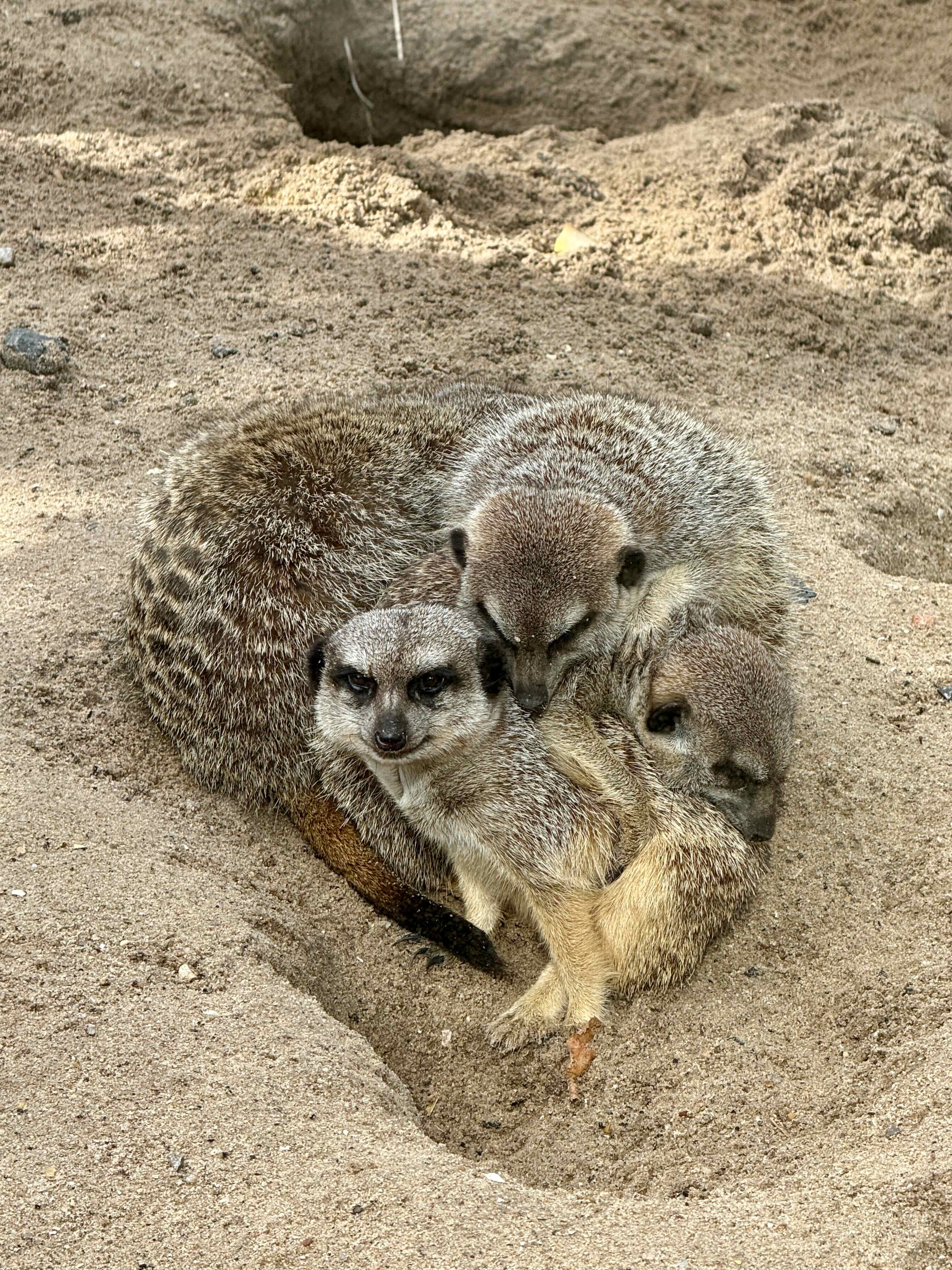
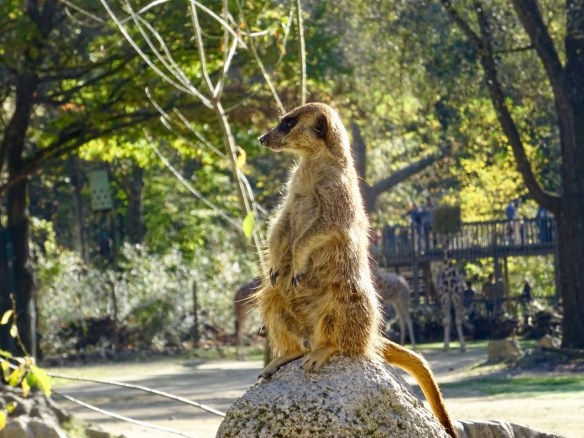
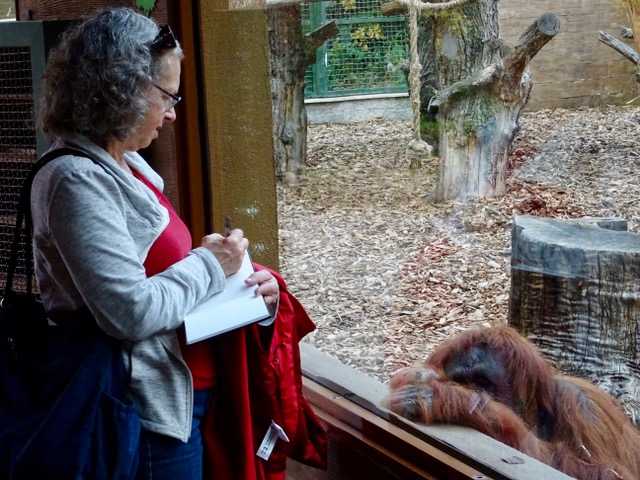
 I spent a bit of time sketching one of them while he was busy eating his lunch. The Meerkats live next door to the giraffes. This fellow was very busy checking out all the people who were checking him out.
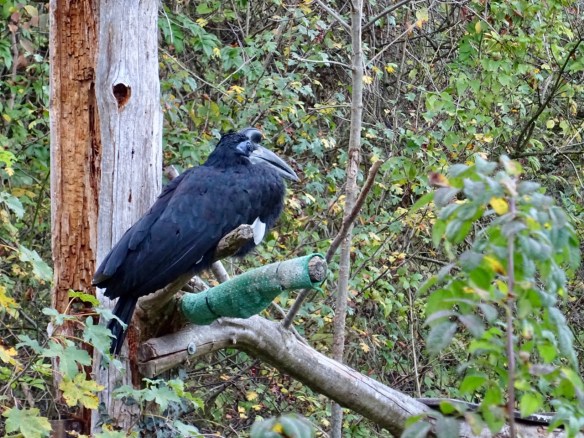
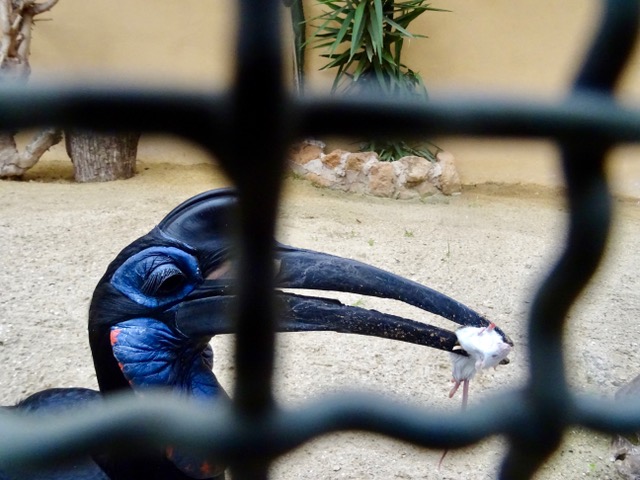
 There are lots of birds here. This is the first time I have seen a hornbill perched in a tree. They usually walk along the ground. This Abyssinian Ground Hornbill is a huge bird, about one metre in length and weighing about four kilograms.
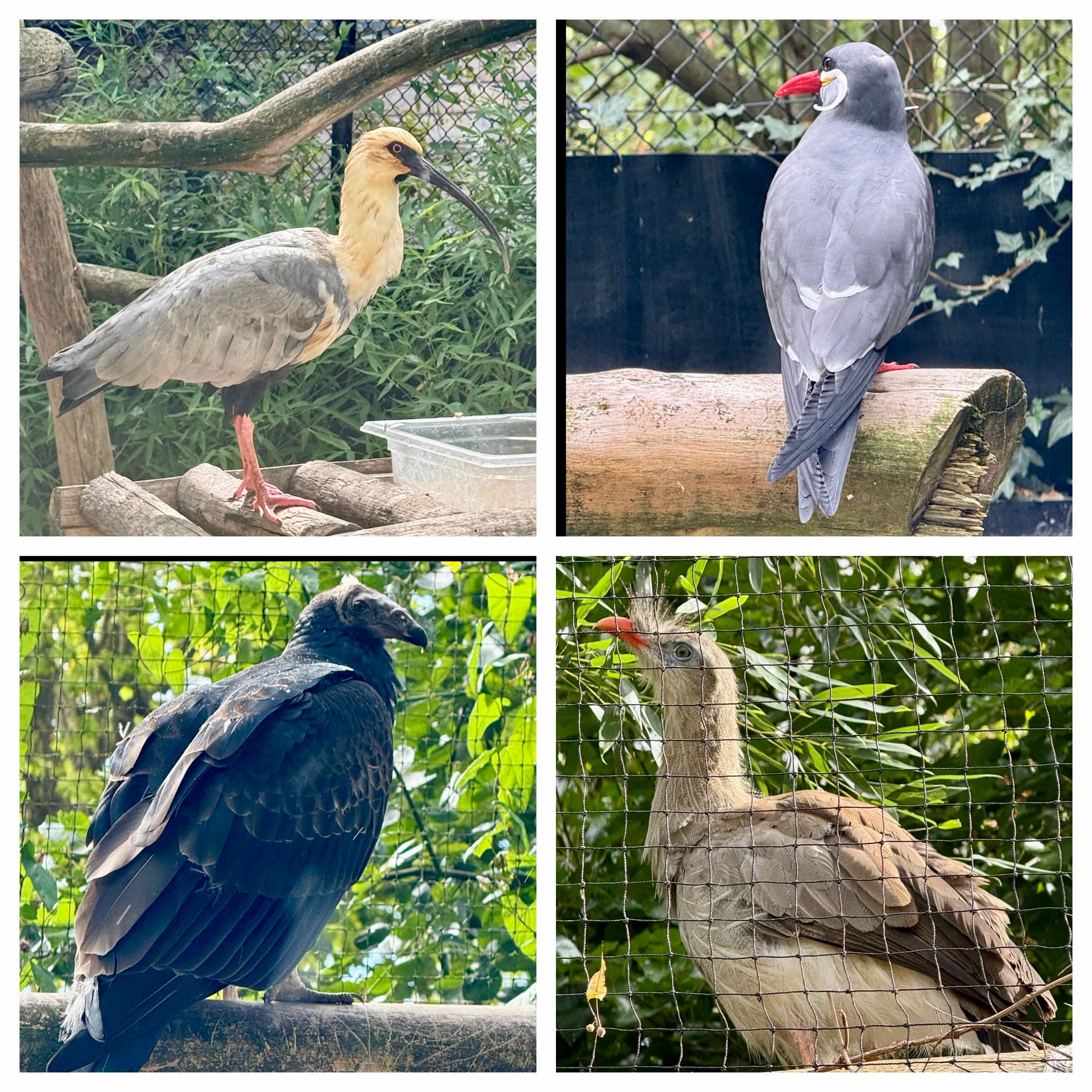
 The Northern Bald Ibis is a very strange looking bird. They are in a huge aviary with lots of other birds that we walk through.
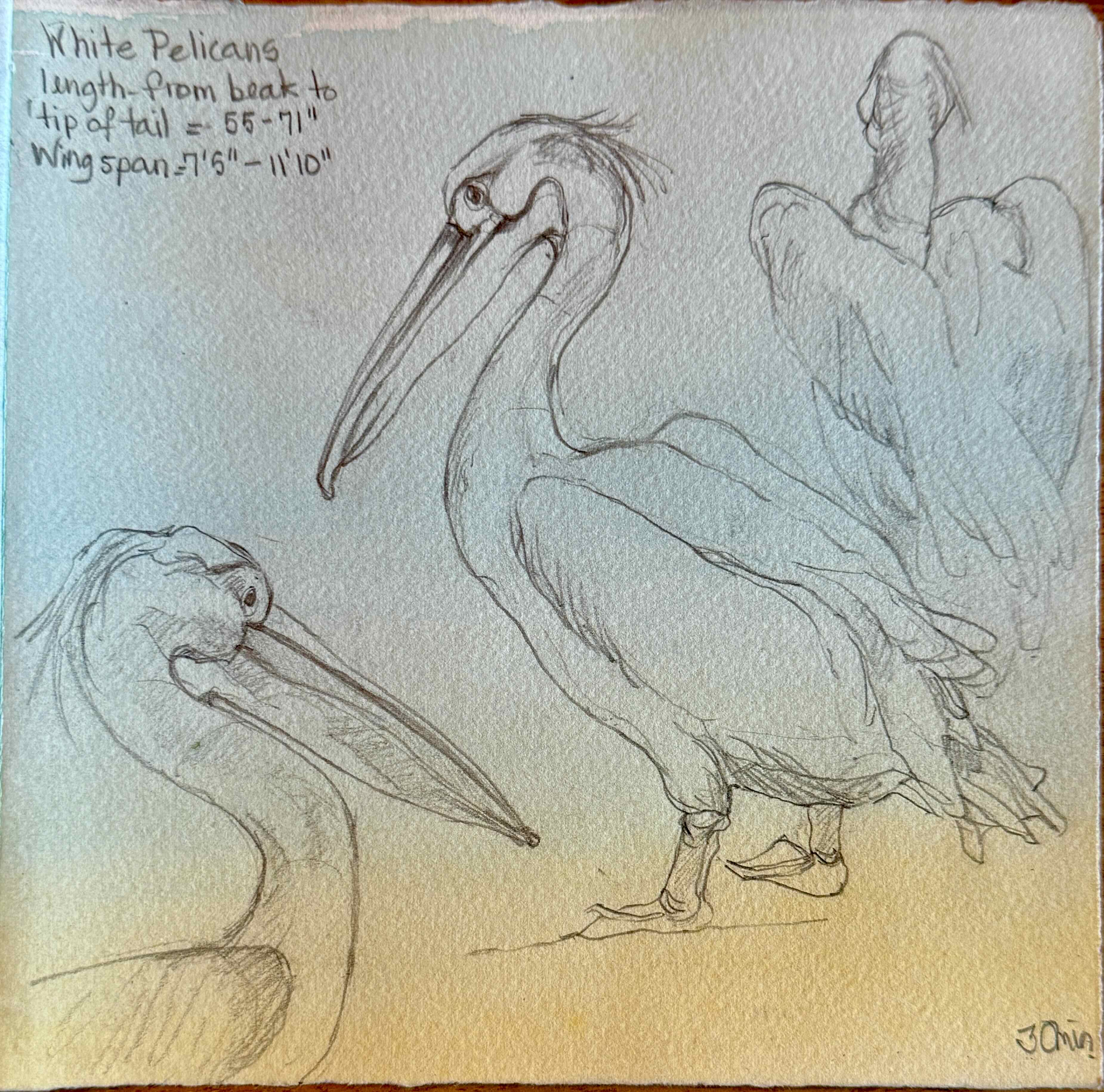
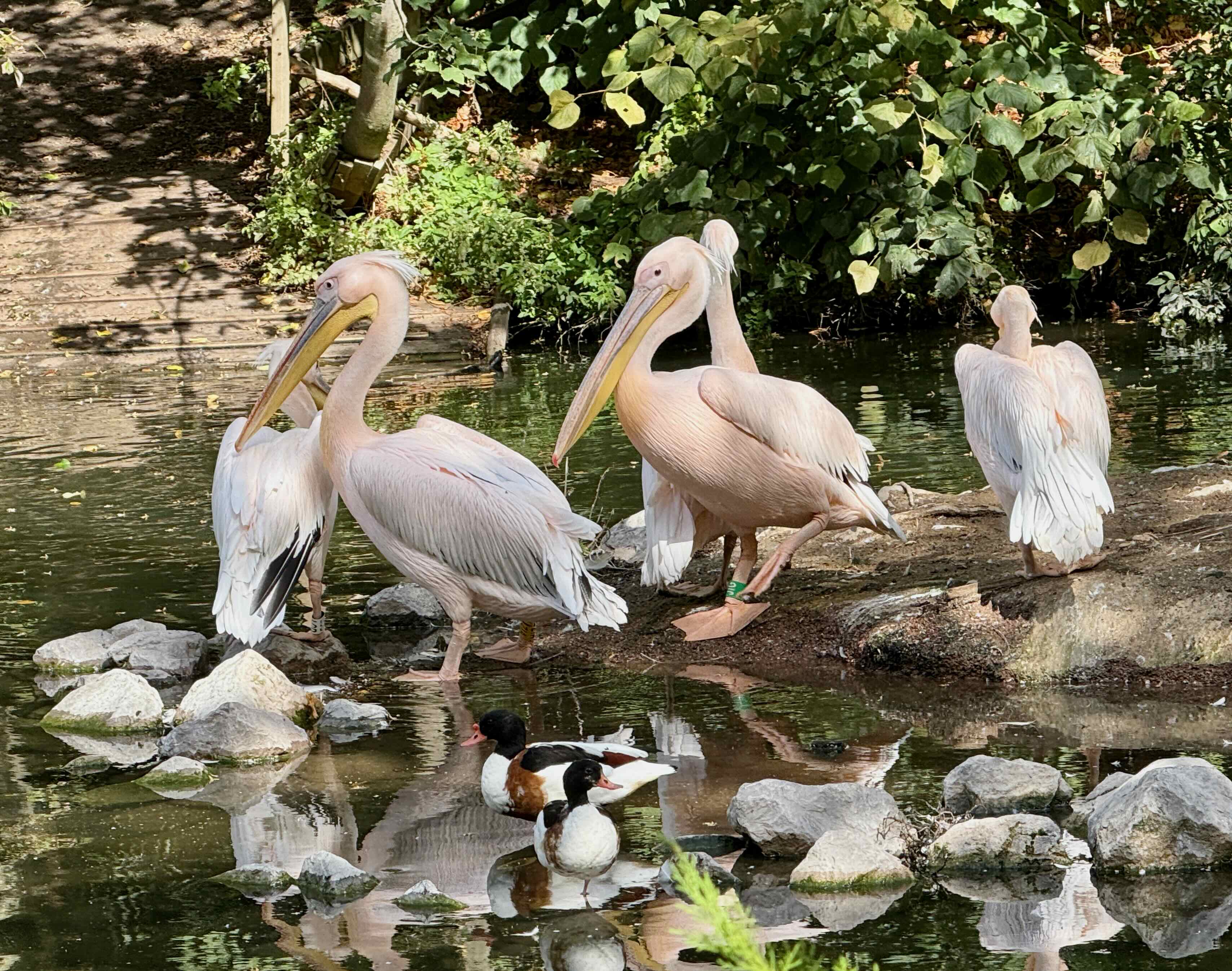
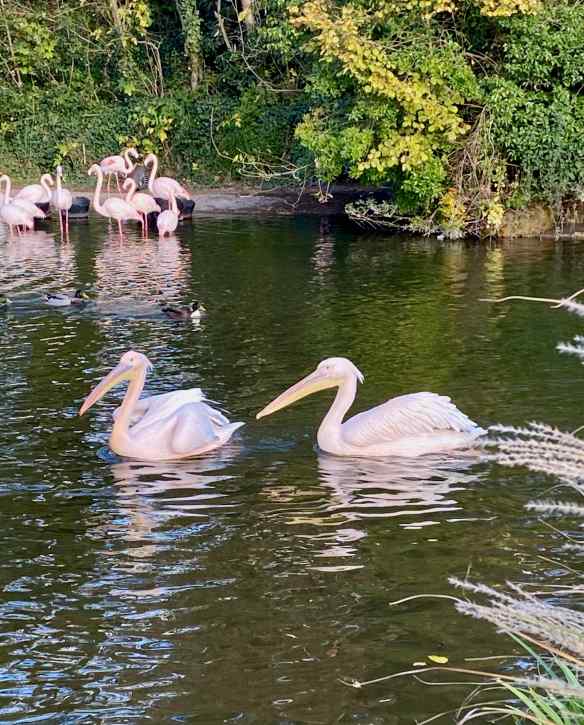
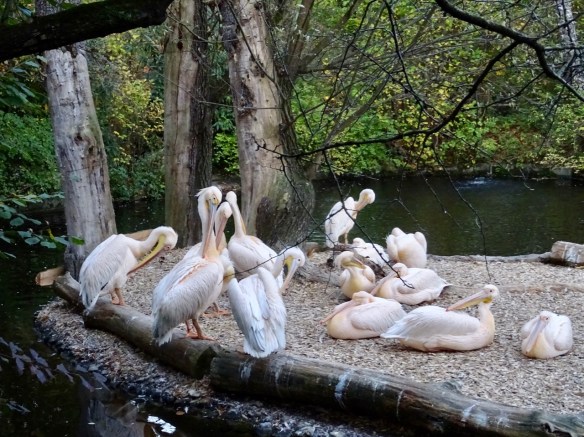
 These beautiful Rose Pelicans were busy preening and enjoying the sunshine.
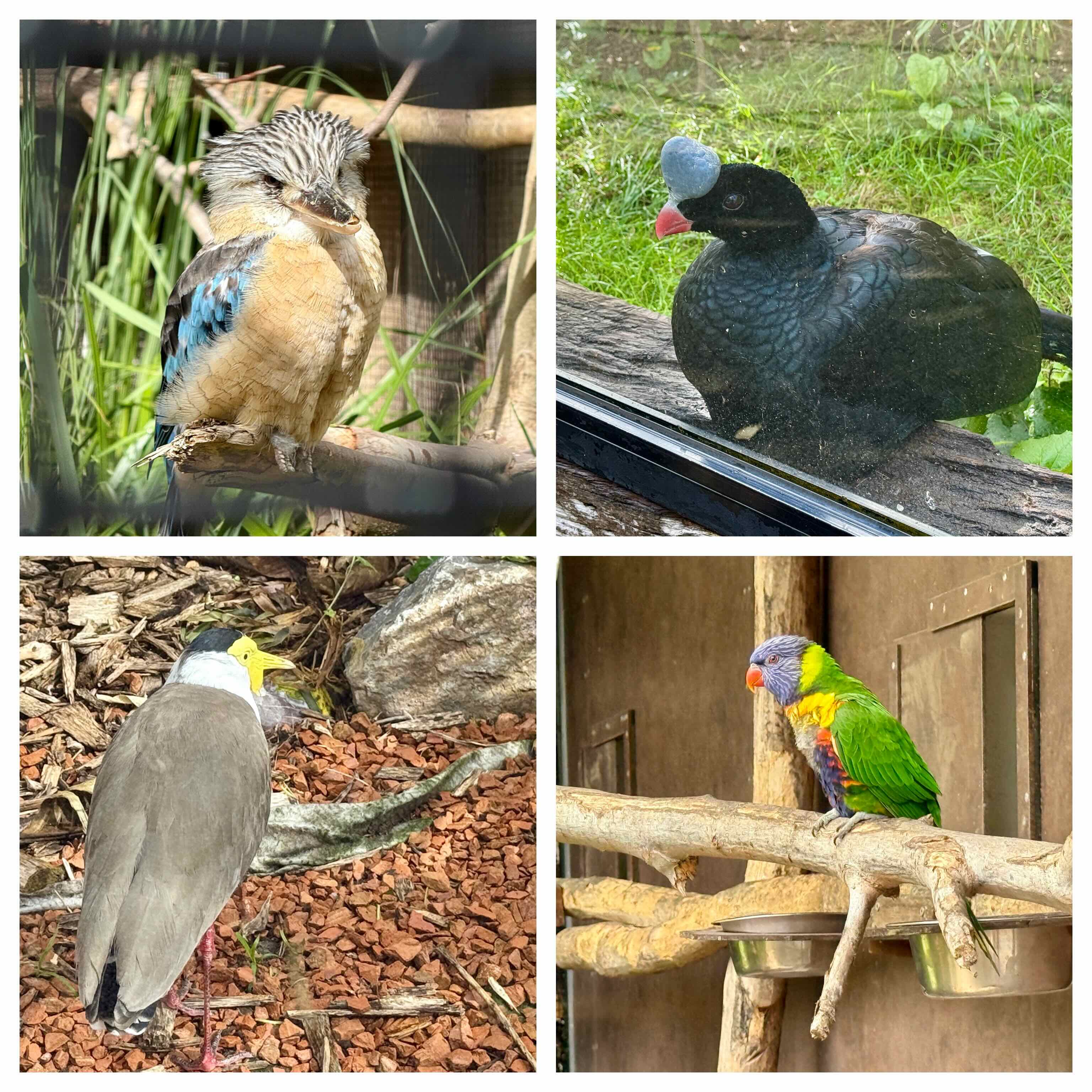
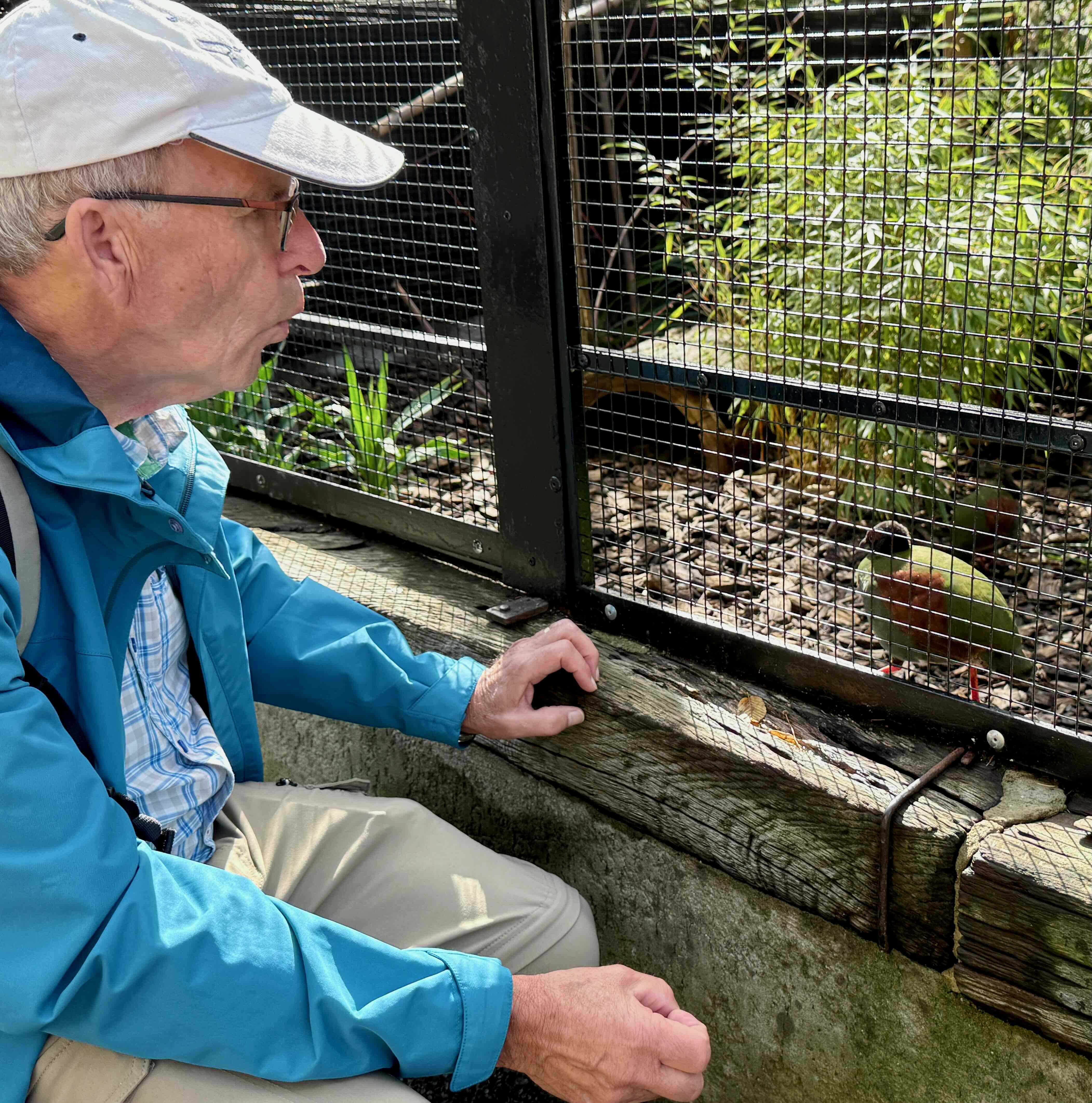
 We check out a building with lots of different little colourful birds and I didn’t even notice that there was no glass between us and the birds until Bob pointed it out!
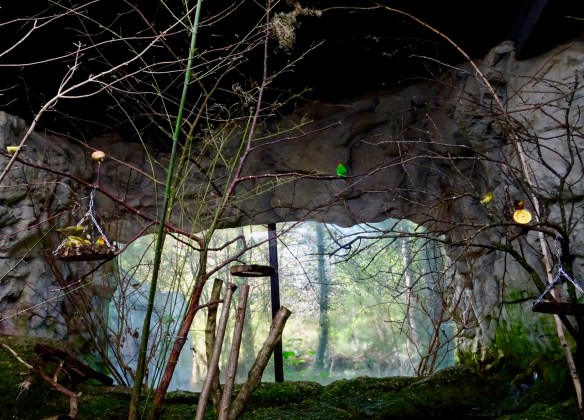 This is the bat cave, and yes it is full of flying bats, and we walk right into the cave with them! When I first entered the cave a bat brushed by my hand and startled me. I hadn’t realized that they were flying all about. It was almost impossible to take a photo, they move so very quickly and it was quite dark. The bats are just shadowy blurs in this photo, where they come to feed on fruit hanging fro the ceiling.
 We move from the tiny bats to this massive Indian Rhino. This is the first time we have seen an Indian Rhino and they are quite different from the African Rhino. I loved the way his skin forms armour-like plates. I absolutely had to try to draw this fellow. He moved about a bit but was quite a good model!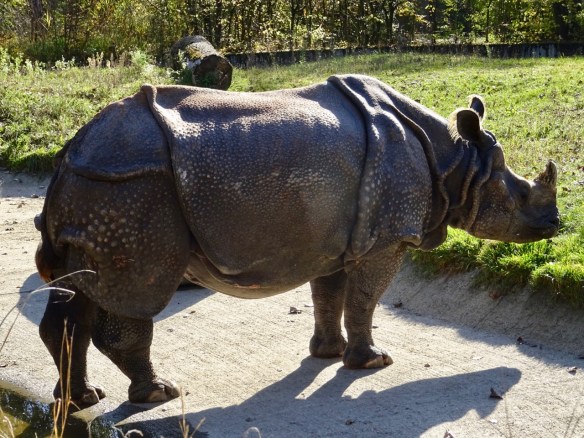
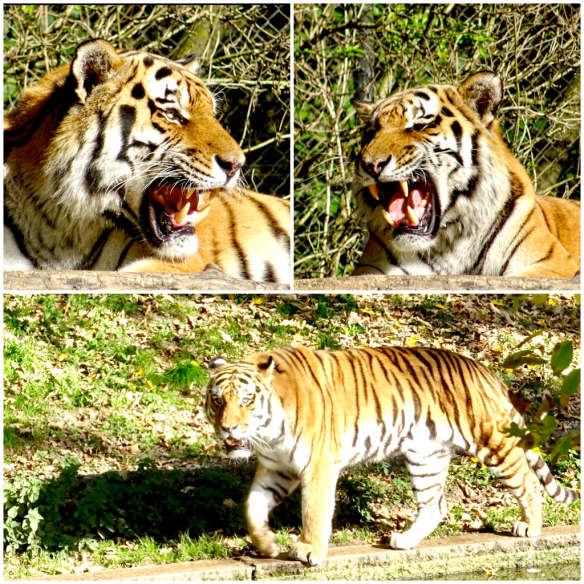 The Munich Zoo has a lot of different primates. This chimpanzee was busy using a stick as a tool to get food out of a box. He was very possessive of his stick and kept it close at all times.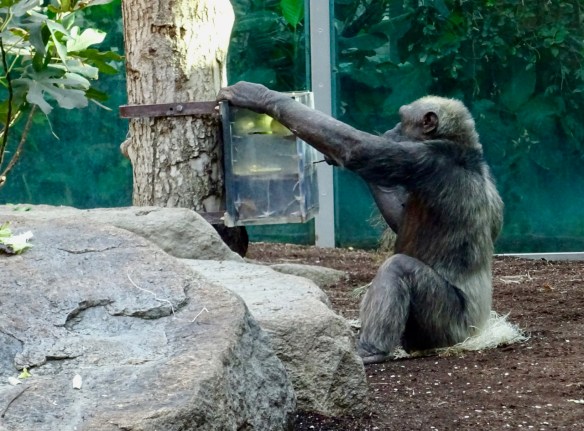
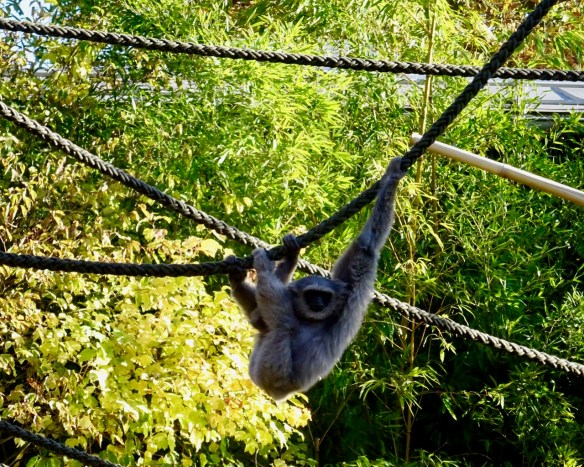 but this laid back guy just wanted to take it easy.
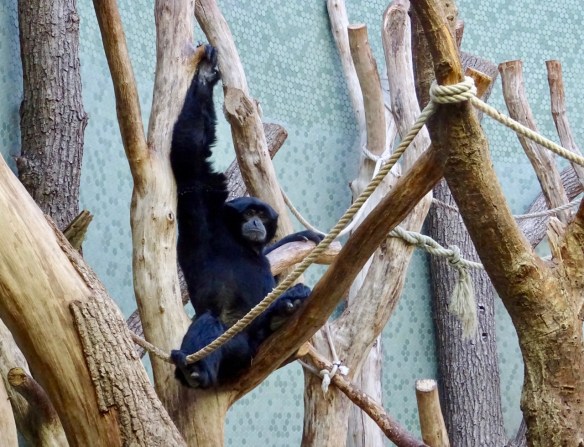 I always think that the gorillas are watching us as much as we are watching them. They seem so intelligent and always rather sad.
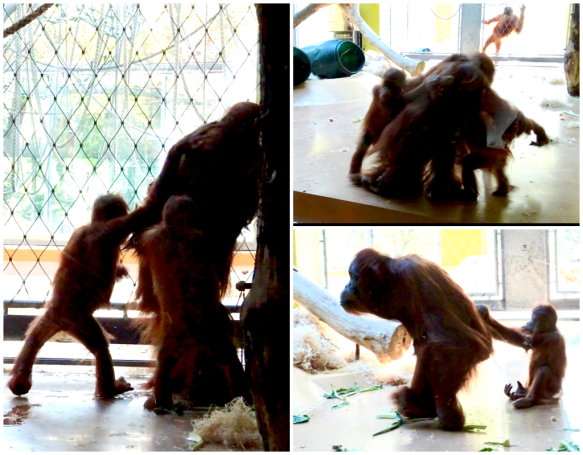
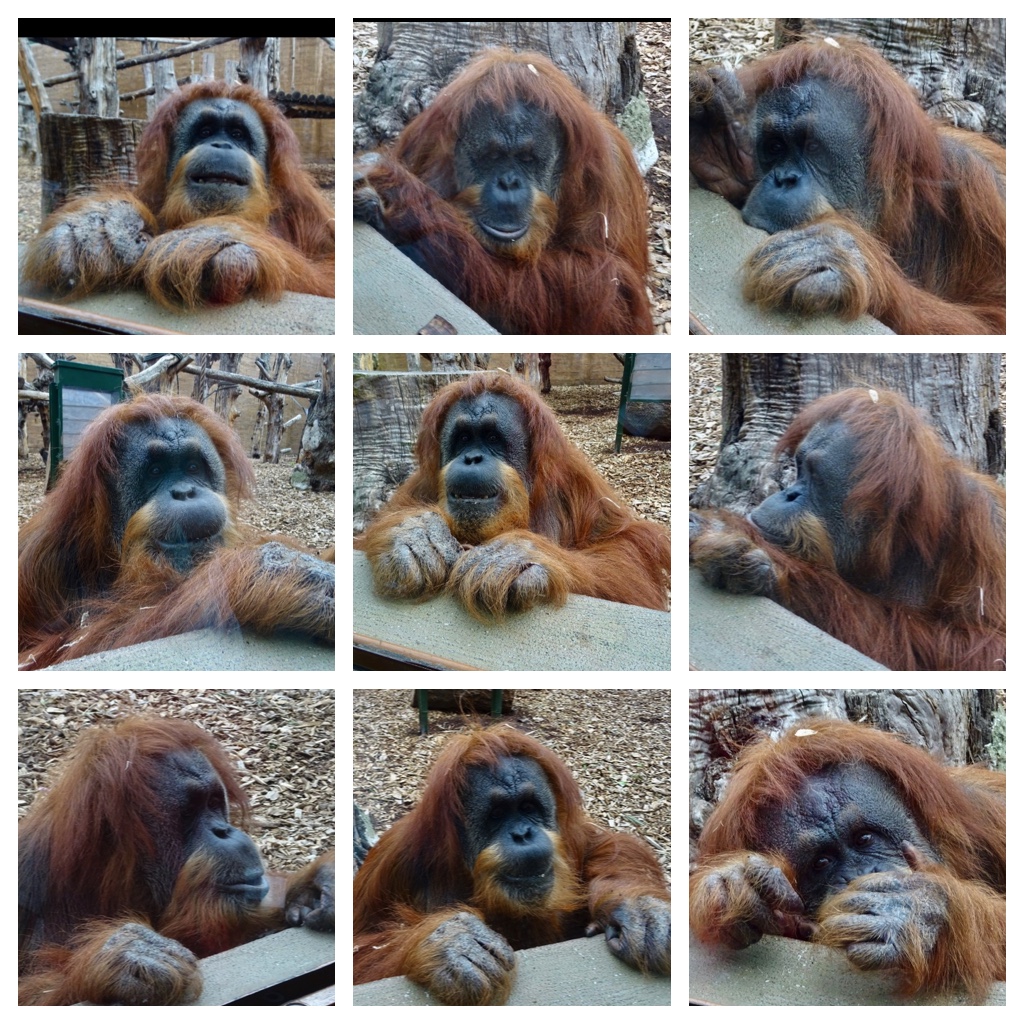
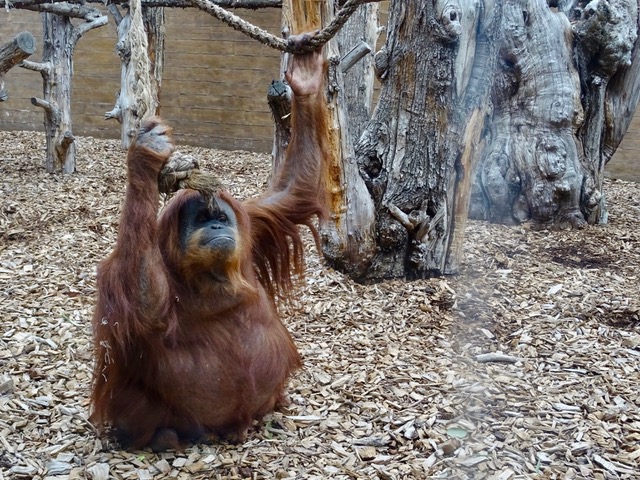
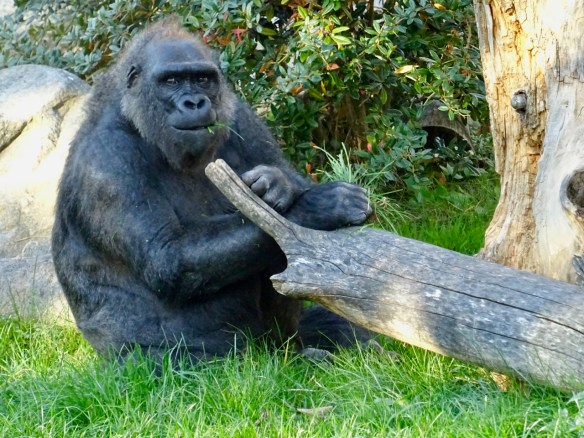 This Sumatran Orangutan mother and her twins were hilarious. The youngsters would not leave her alone no matter what she did. They were hanging on to her and pestering her even when she tried to hide in a corner. As she walked away, one of her youngsters grabbed hold of her hand and slid along the floor behind her. It just made me laugh.
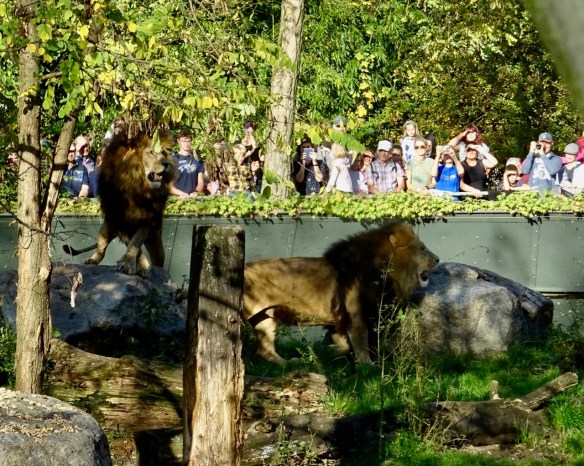
 We waited to see the lions being fed, expecting it to be quite exciting… but it consisted of the two males being separated and then thrown a couple dead plucked chickens. The lions took their food to a private spot so we couldn’t see them chowing down.
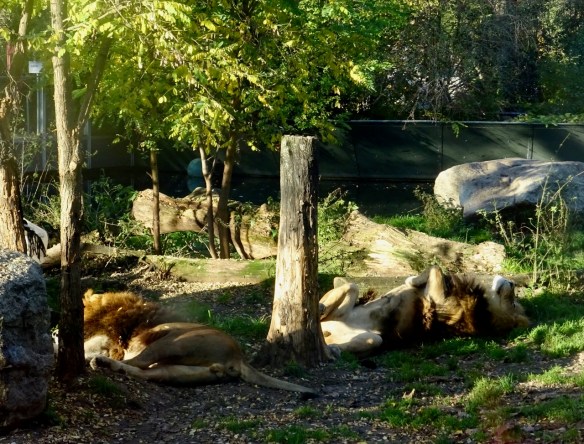
 We checked back a while later and I said that they would probably be sleeping after their meal. Here they are, looking very happy and content, and yes, they were sleeping.
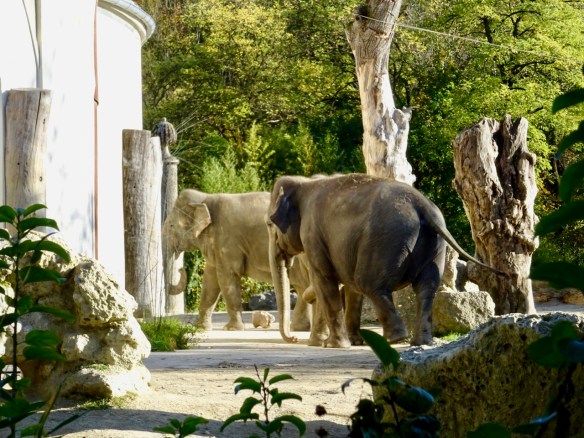
 The elephants were quite far away so I zoomed in for a photo.
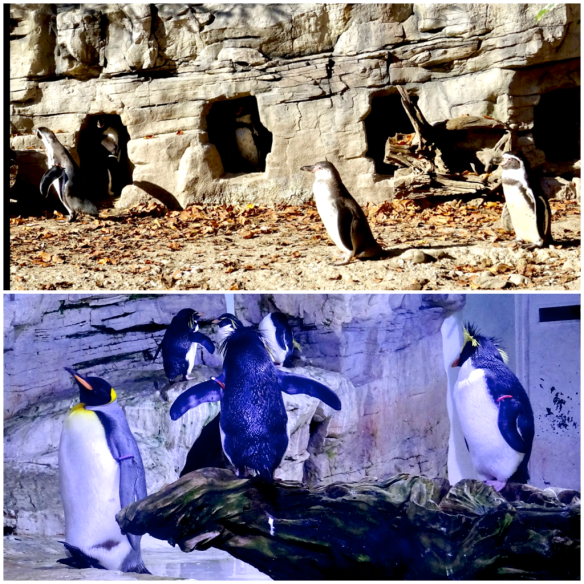
 There were several kinds of penguins. The Humboldt Penguins live on the coast of Peru and Chile and don’t mind being warm. The Emperor, and the Rock Hopper Penguins, however, like it cold and they had their own refrigerated area.
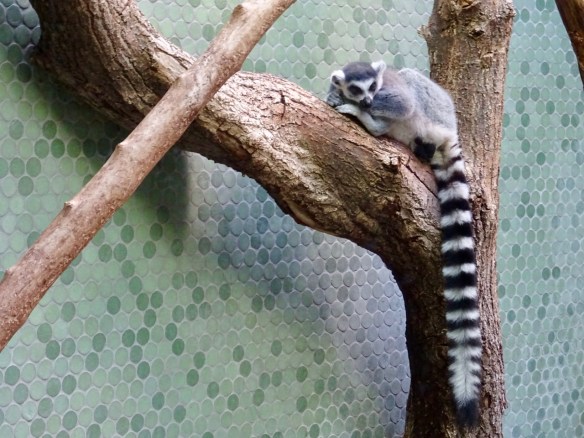
 The Ring Tailed Lemur from Madagascar holds his long tail straight up in the air when it travels on the ground so that everyone in the group can stay together. That must be quite the sight!
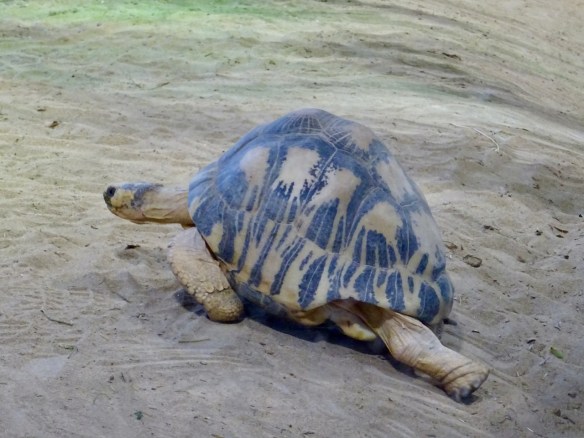
  We watched this tortoise take forever to climb this tiny little incline. It was really hard work for her and I so wished I could have just reached in and given her a little bit of help.
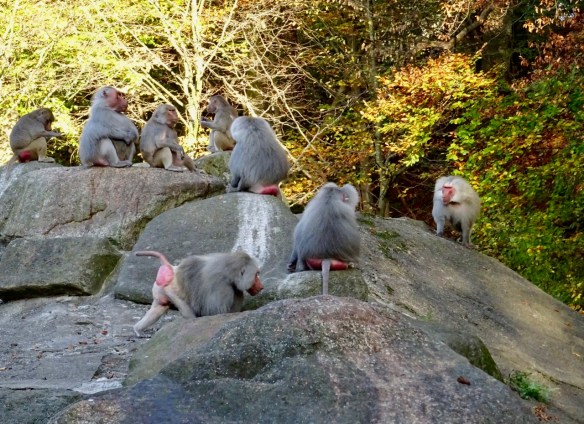
 There was great excitement at the Hamadryas Baboon enclosure. Lots of screaming and shrieking noises. It appeared that several of the big males were attacking one of the other baboons.
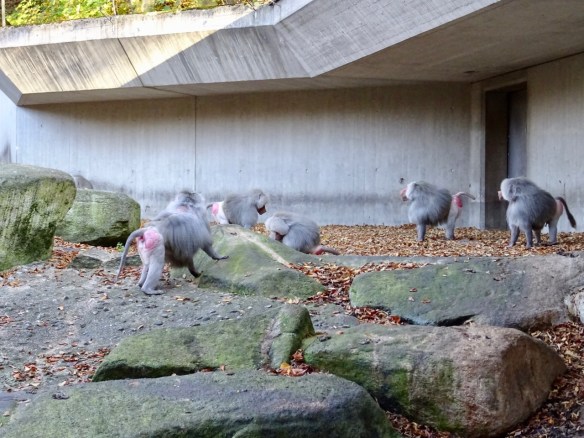 When these four big males come running everyone else clears out, getting away from them as quickly as they can.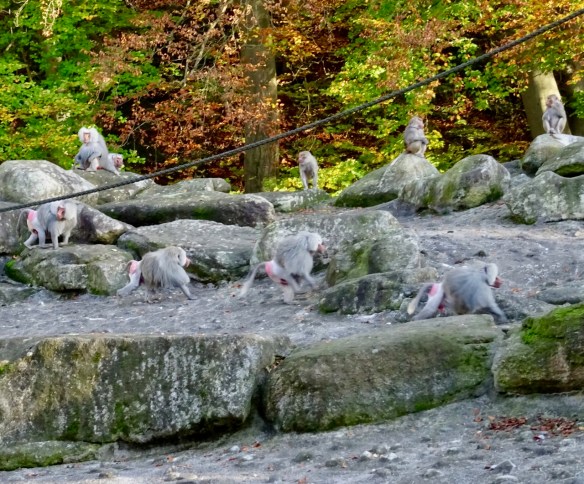
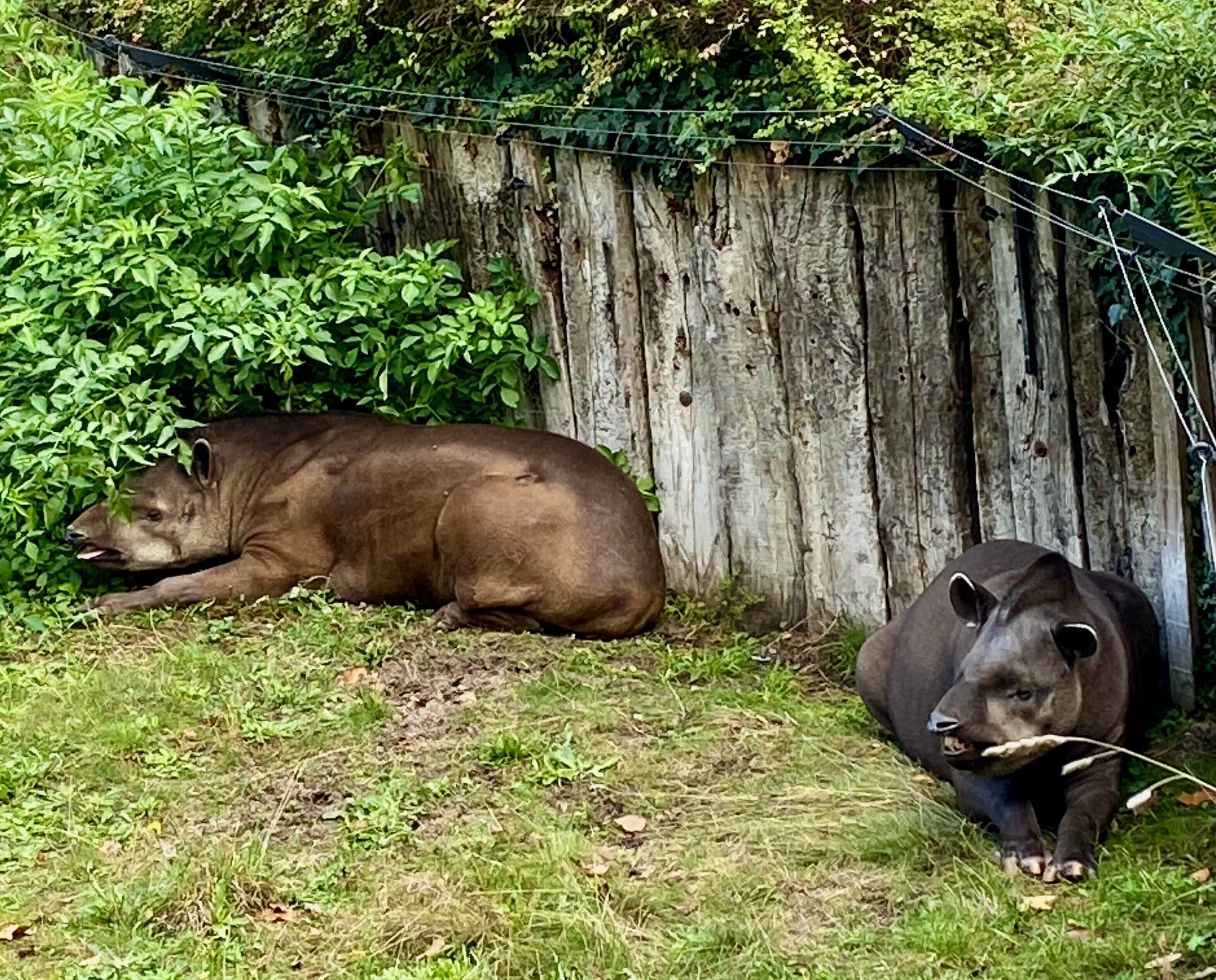
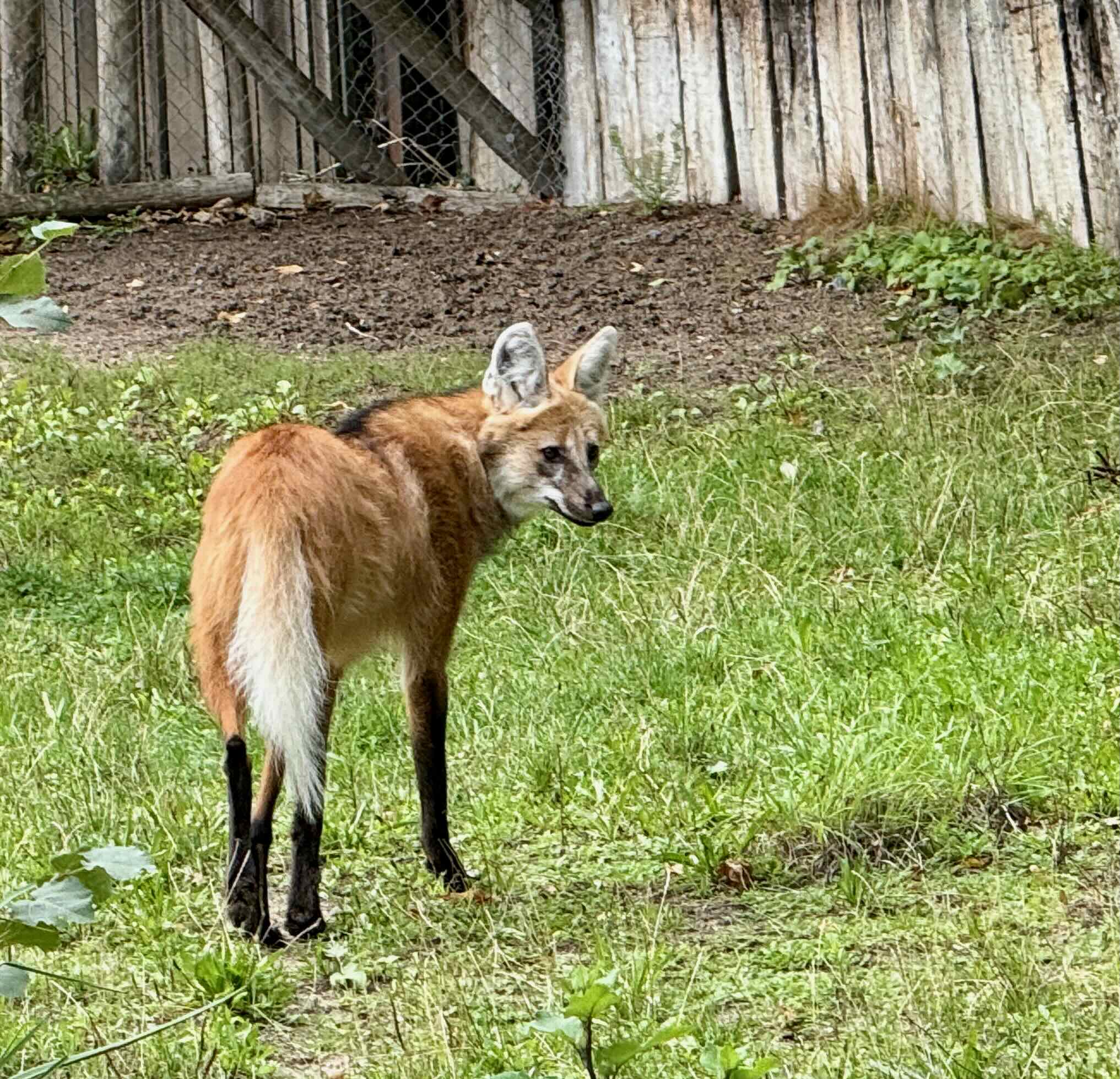
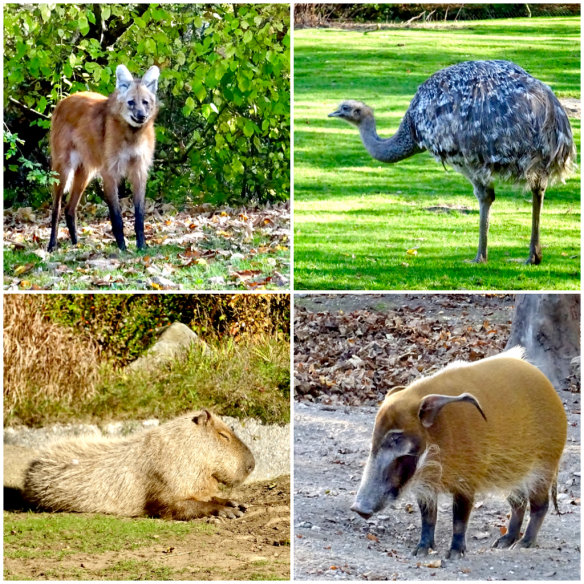
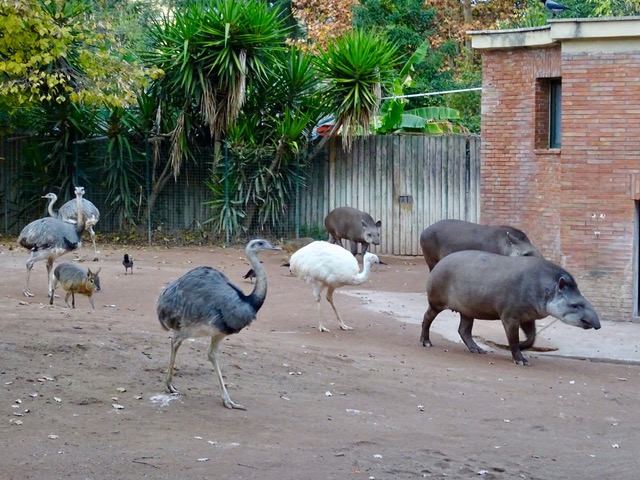
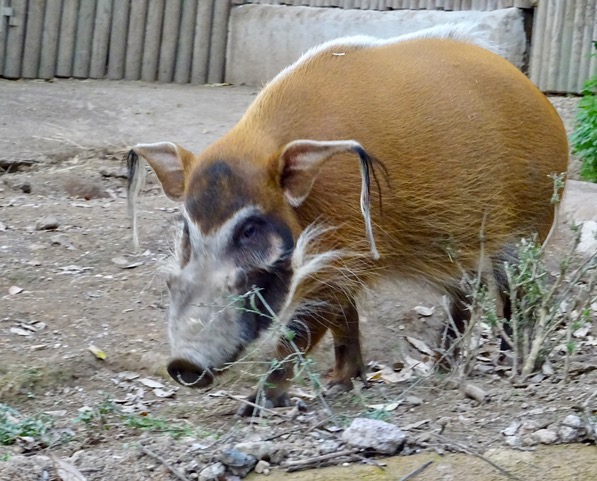
 We see lots of interesting animals, including a Maned Wolf, a Darwin’s Rhea, a Capybara and a Red River Hog.
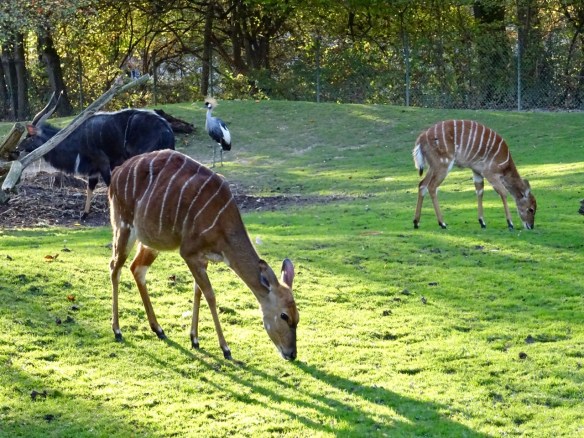
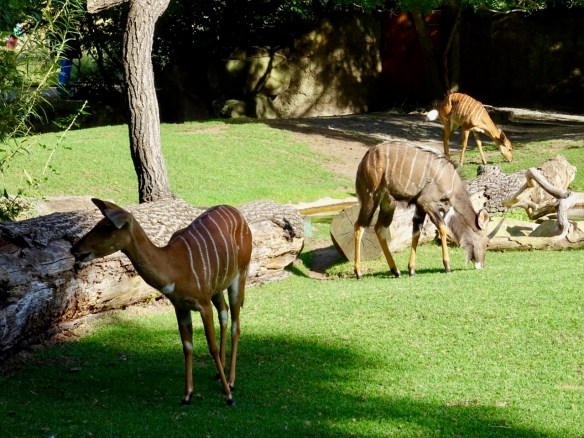
  The Nyalas are beautiful with their striking white stripes and the male is much darker with long yellow-tipped horns.
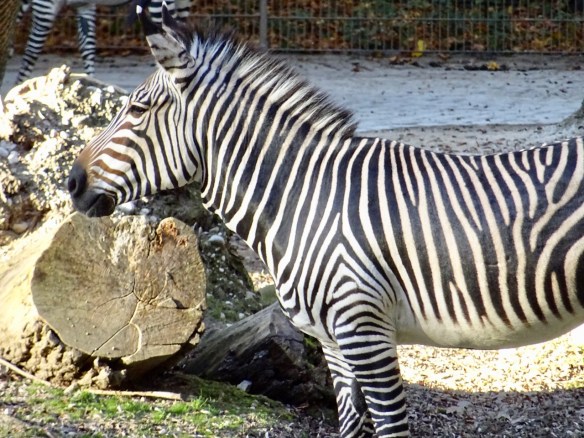
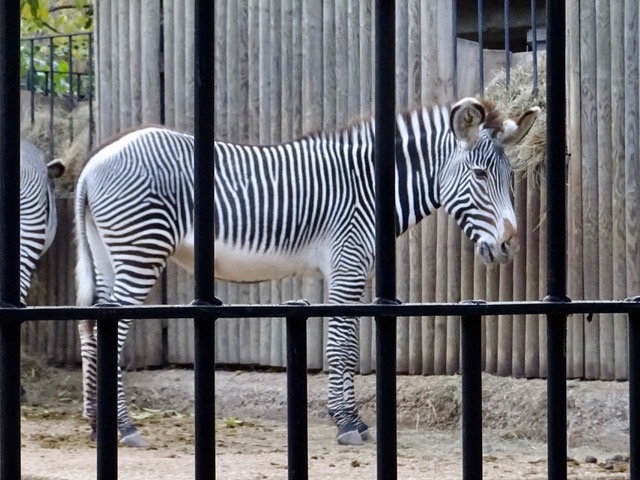
 I always love the zebras. They were mostly farther away but this beauty came close enough for a photo.
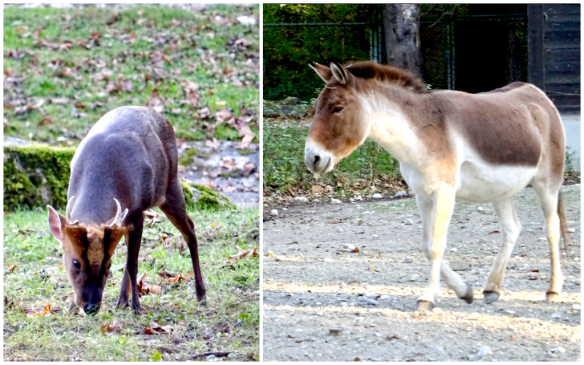
 Not sure that we have ever seen a Reeve’s Muntjac or a Kiang before.
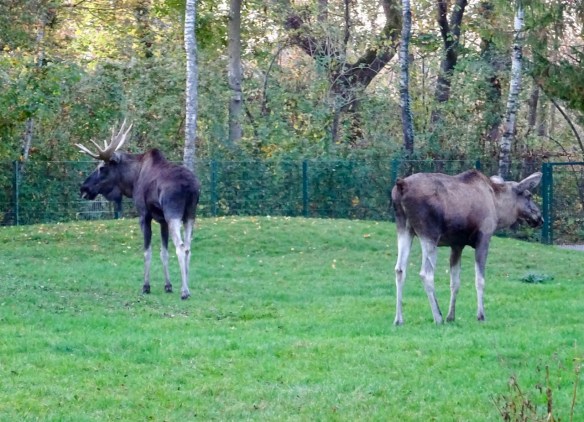
 Now these are called European Elk, but they sure look like moose to me. Google tells me this is what a moose is called in Europe. Interesting little fact.
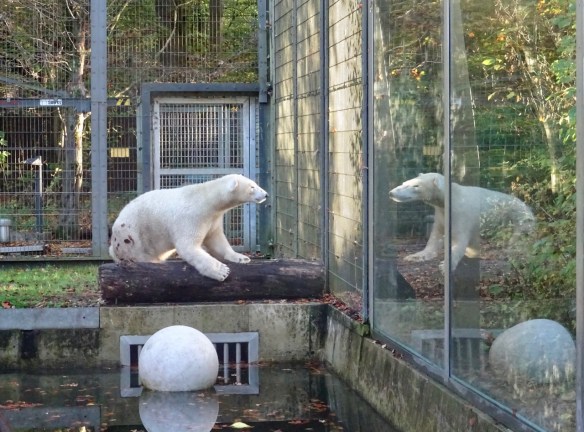
 This polar bear had a huge enclosure with a big water area as well as a big grassy, treed area, but it chose to sit in this corner. Something in the area next to him caught his eye and his reflection was caught in the glassed part of his cage.
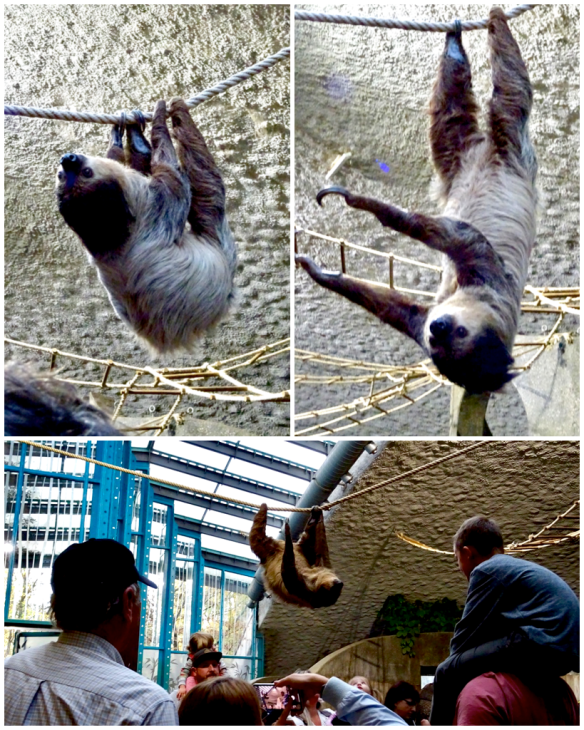
 We are almost finished our visit when we see a crowd of people and go check what they are looking at. A Linnaeus Two Toed Sloth was making his way across a rope just above everyone’s heads. It was quite exciting to see him up so close, and yes, they do move incredibly deliberately and very slowly!
 Now, this was something to see! This tall slide is in one of the zoo’s many playgrounds.
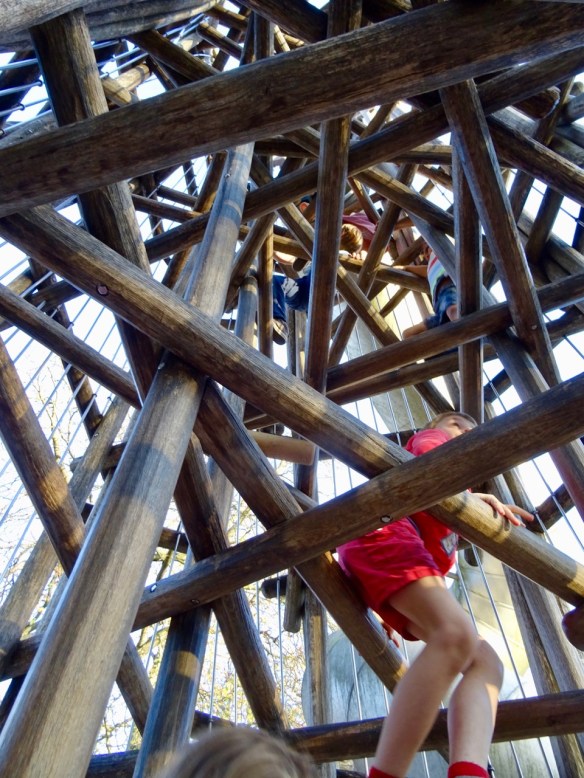
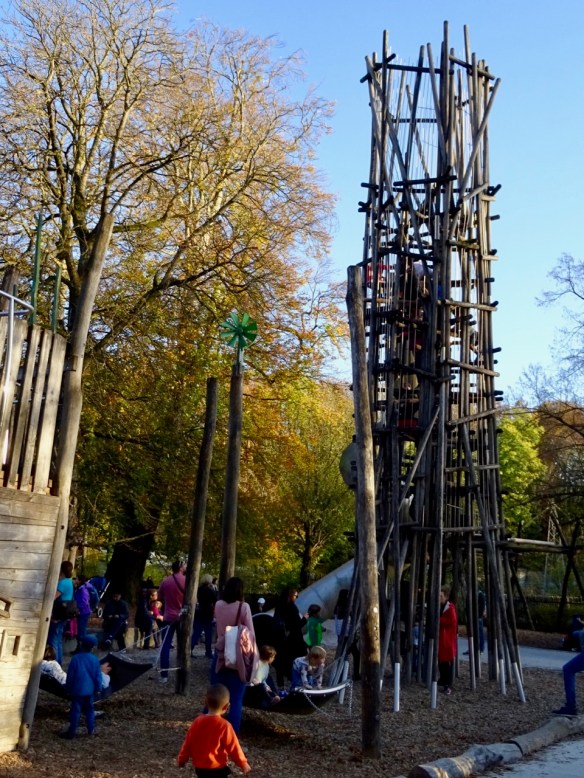 Did you notice all the kids inside the structure? They are climbing up to the top so that they can slide down. The inside of the tower is like a giant jungle gym, only really high!
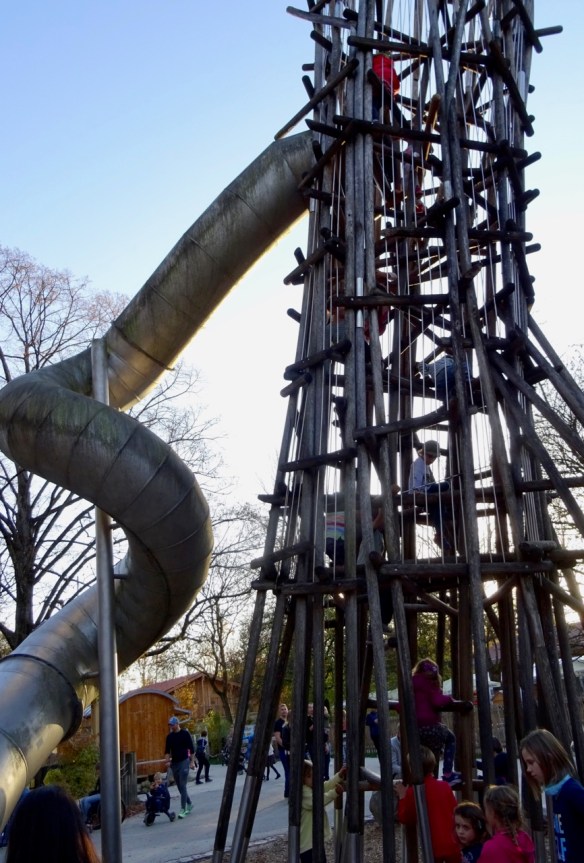 There are no safety features of any kind, just lots of little kids climbing way up high on these logs inside the tower. This is something that we would never see at home due to safety concerns and liability issues. The kids were all having a great time though!
 The zoo closes at 6:00 and we are one of the last to leave. It was an absolutely lovely day.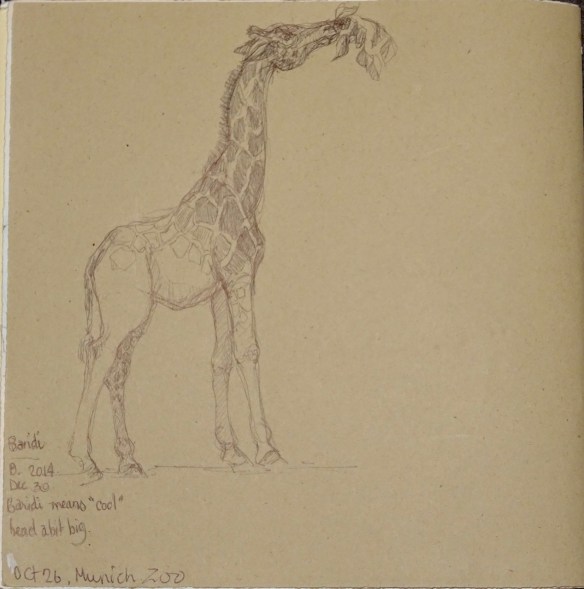
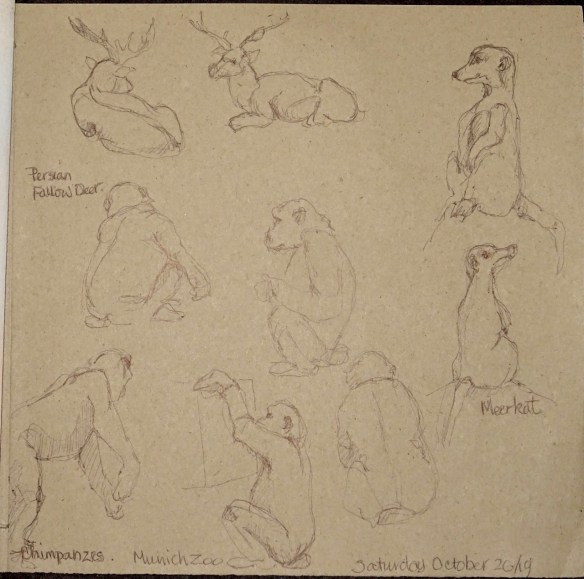
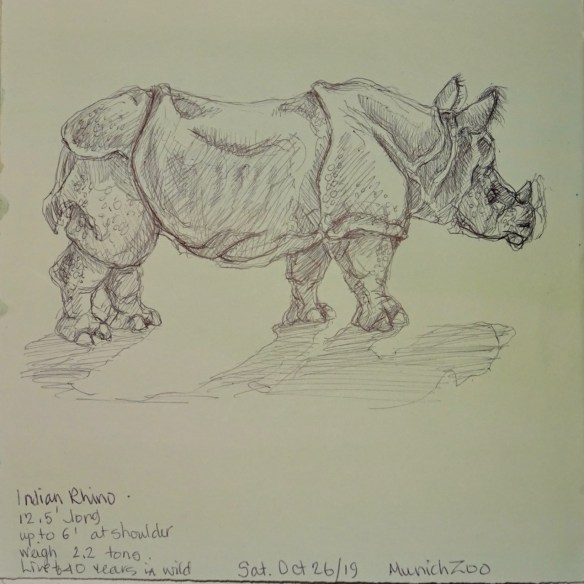
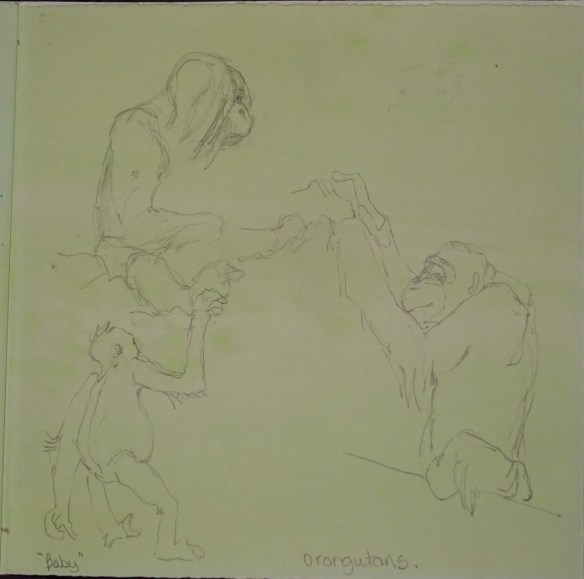 and my metro sketches.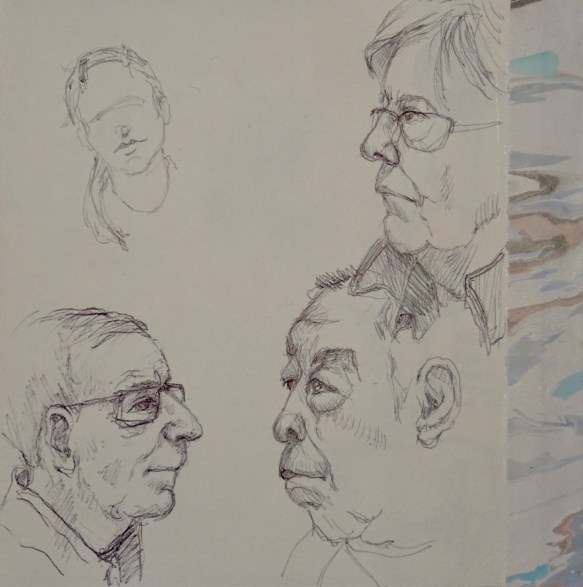
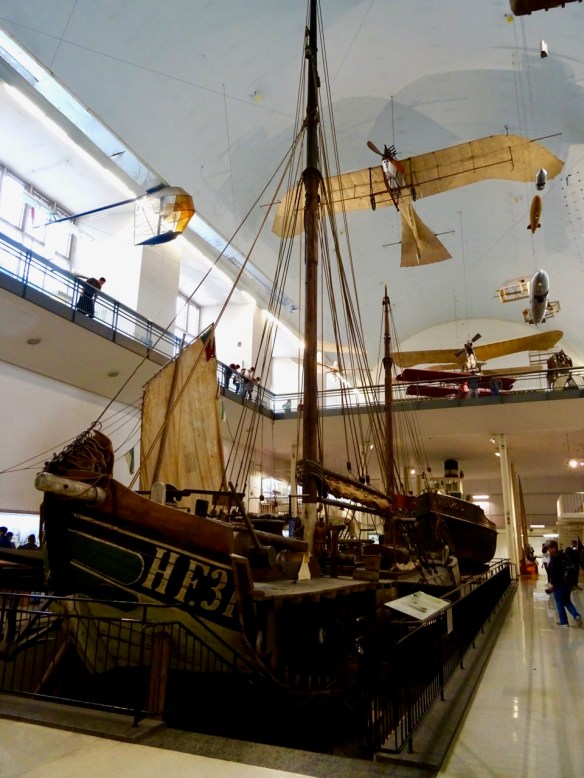
 The Deutsches Museum is the world’s largest museum of science and technology, with 28,000 exhibited objects from 50 fields of science and technology. It is an enormous museum. This is the Marine Navigation Hall. We remember this exhibit room from our first visit to this museum almost 40 years ago although I am sure some of the exhibits have changed. The hull on this sailing ship has been cut away so that it is possible to see the construction and the inside of the ship.
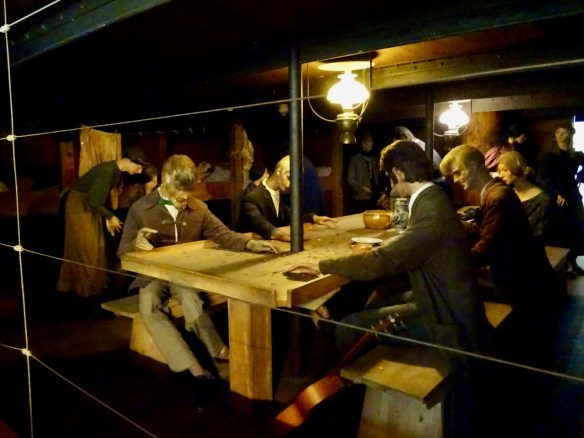
 There is also a basement level to the Marine Navigation Hall where there is a reconstruction of life between decks aboard an emigrant sailing ship in the 1870’s. It could take up to four months to cross the Atlantic! Emigrants had to provide all their own food, cooking utensils and bedding for the voyage. Lack of care and terrible hygiene conditions led to the death of 1 of every ten emigrants in 1853. It must have been a nightmarish voyage. Just think, we crossed the Atlantic in only a few hours!
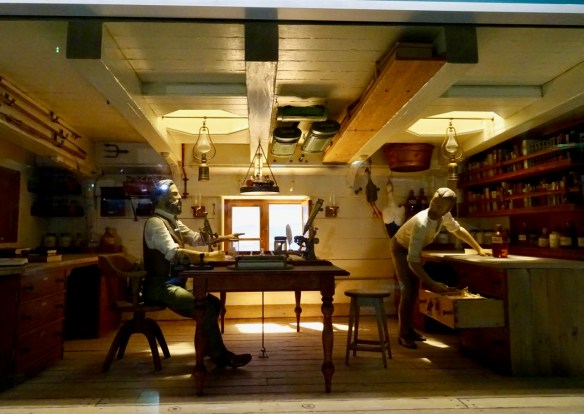
 The Challenger left England in 1872 on a 3 1/2 year voyage that marked the beginning of modern oceanography. There were laboratories, like the one depicted in this diorama, for studying flora and fauna. It was the first time cameras were used on a research expedition. The Challenger covered almost 69,000 nautical miles, the equivalent of travelling three times around the globe, and collected 10,000 pant and animal specimens. 4,717 previously unknown life forms were discovered and documented.
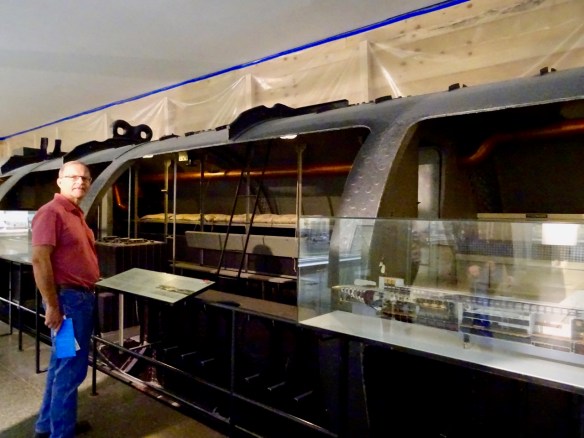
  Bob really liked this submarine exhibit with the cut out sides so we could see inside. I couldn’t imagine being underwater, inside this confined space…and I don’t suffer from claustrophobia!
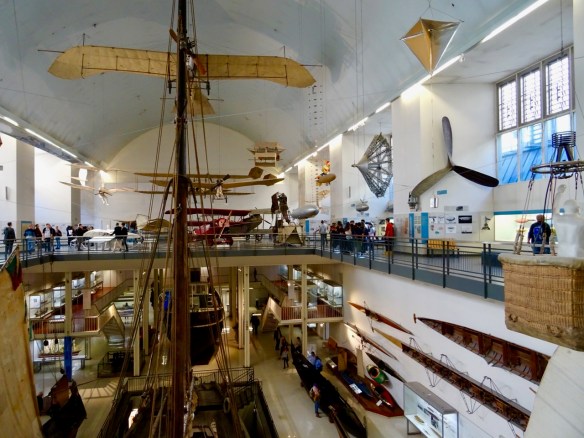
 This view from the second floor of the Marine Navigation Hall is from the same spot we stood in during our visit here years ago. Our guide at the time was this lovely old German woman who spoke five languages and conducted the tour in all five languages. We still remember her well, she was a treasure.
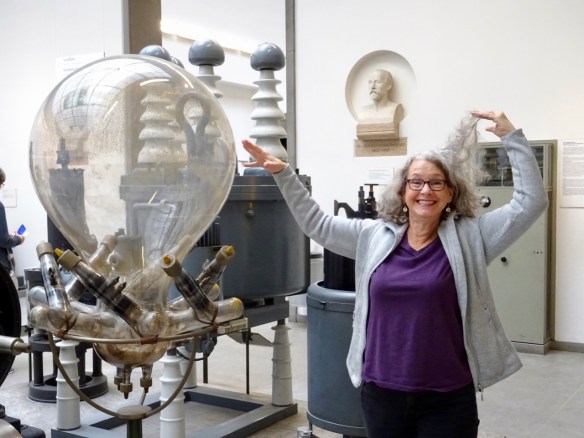
 The Electric Power display has devices I have seen in the movies.
 It would be easy to miss the entrance to the Mining display in the basement level, but once inside we were amazed at all the exhibits. The Rack was a hydraulic wheel used to both lift and lower loads.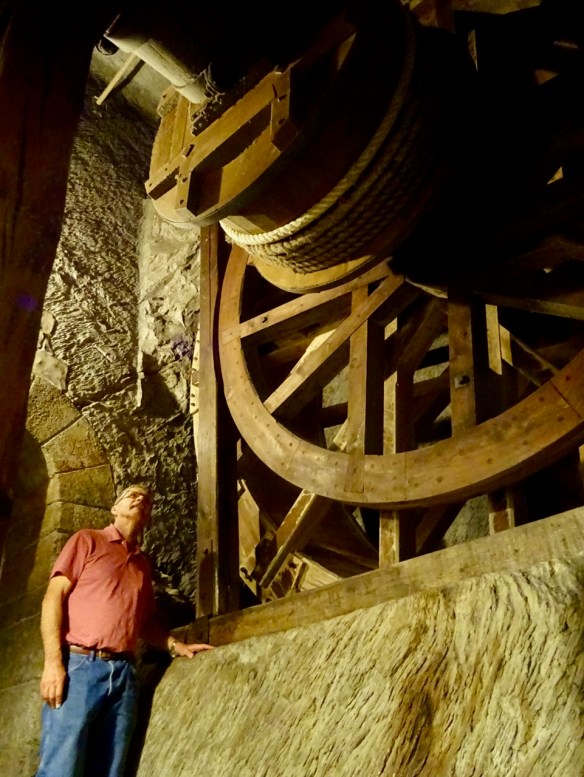
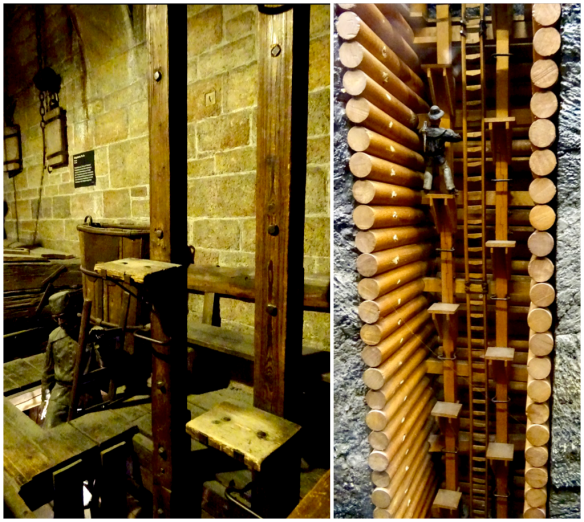 Three types of mines were represented: ore, coal and salt mining.
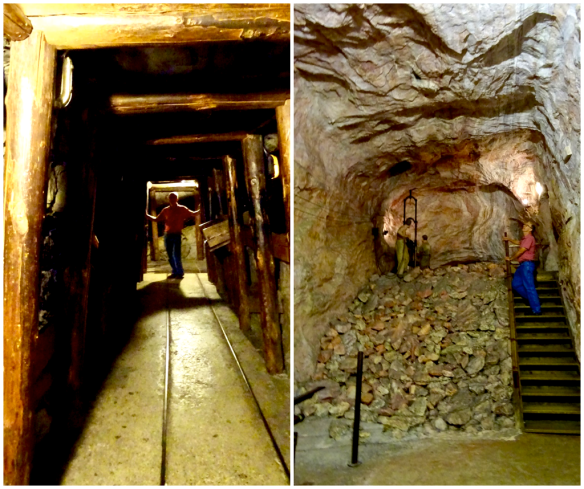 Working conditions in the mines were very difficult. Being a miner must have been a dangerous, hard life.
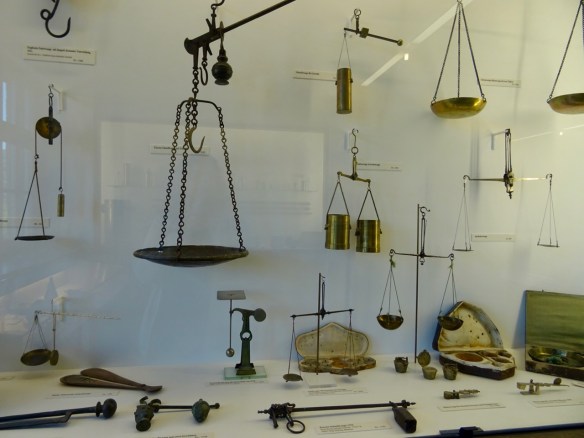
 Back above ground we walk through many more exhibit halls. Some of the exhibits are so technical that they would only be of interest to people in that particular field. We pass through these quite quickly. There was an interesting display of weights and measures…
 and astronomical devices…
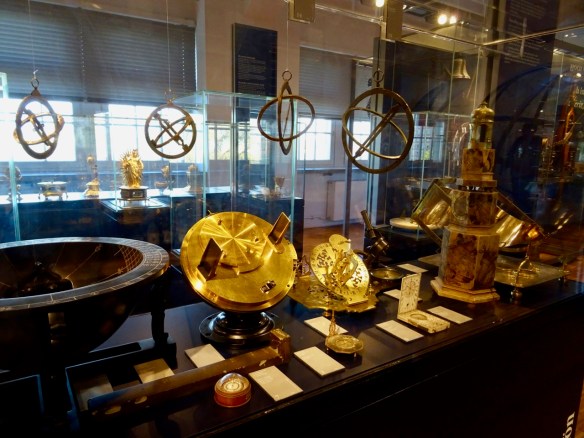 and all sorts of clocks and watches, dating back to antiquity. I thought this 24 hour clock face was interesting.
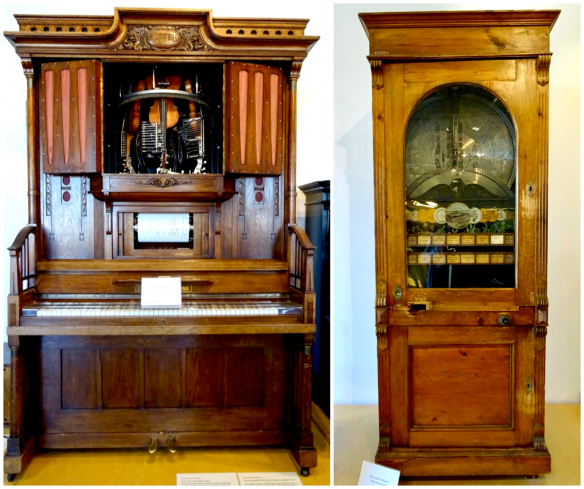
 The Musical Instruments Hall had some interesting pieces. The Phonoliszt-Violina, a player piano with violins was used in silent movie theatres from 1904 to1926, and the other piece is the very first Juke Box, displayed at the 1900 World Exhibition in Paris, complete with classical music selections.
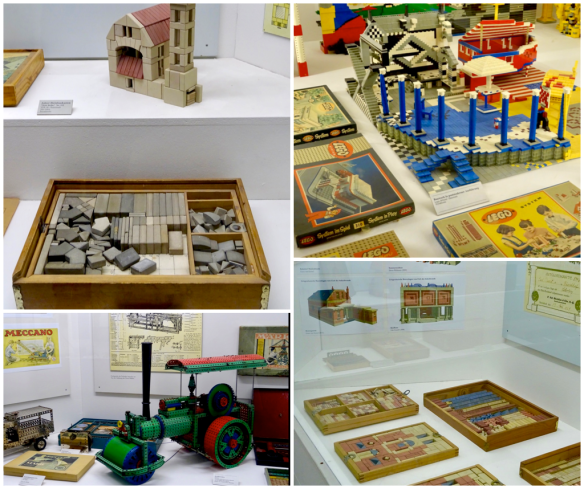
 An interesting toy exhibit has building block and construction toys that date back to the 1907, including early Lego and Meccano sets.
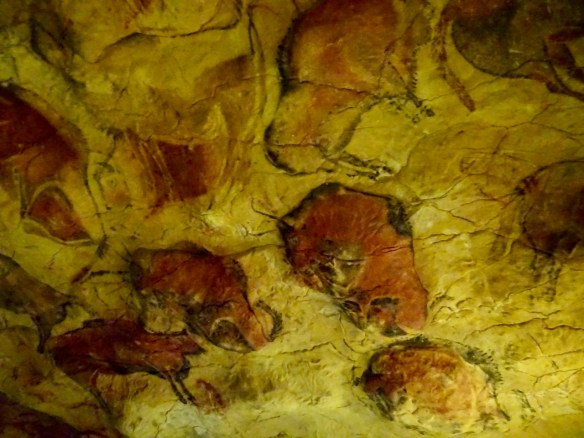
 The museum has a reproduction of the Altamira caves in Northern Spain. This reminded us of a similar exhibit we visited in Spain. Visitors are no longer allowed inside the actual Altamira Cave in order to preserve the cave paintings. The changes in humidity and temperature caused by visitors to the cave were causing damage to the paintings.
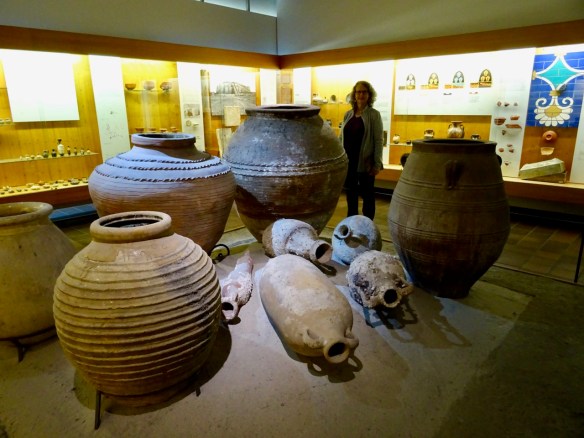
 I always enjoy pottery exhibits.
 This diorama demonstrates early pottery production with an interesting wood fired kiln that is itself made of clay.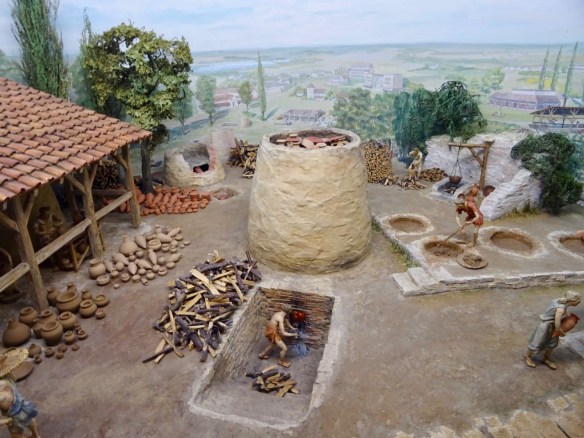
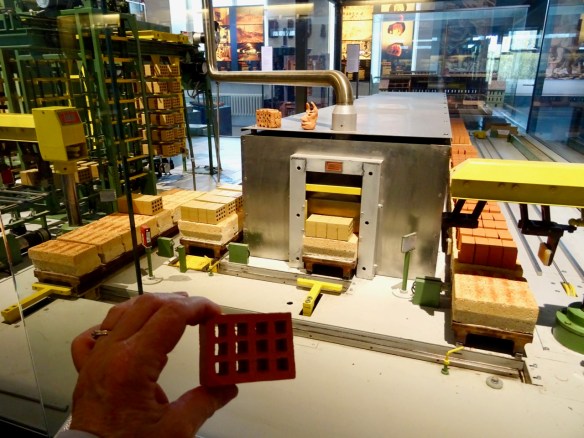
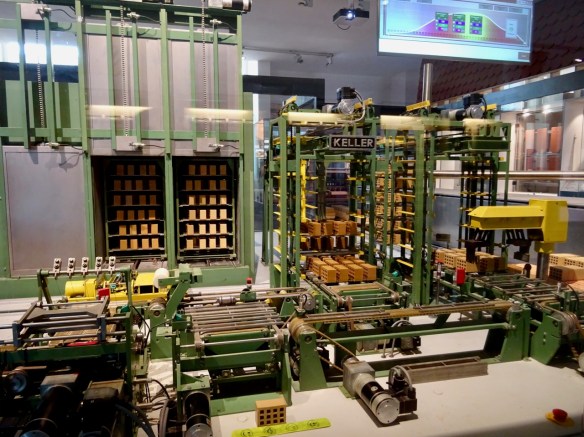 When the tiny bricks come out of the kiln they are stacked and available for purchase. I bought one as a little souvenir, only 1euro.
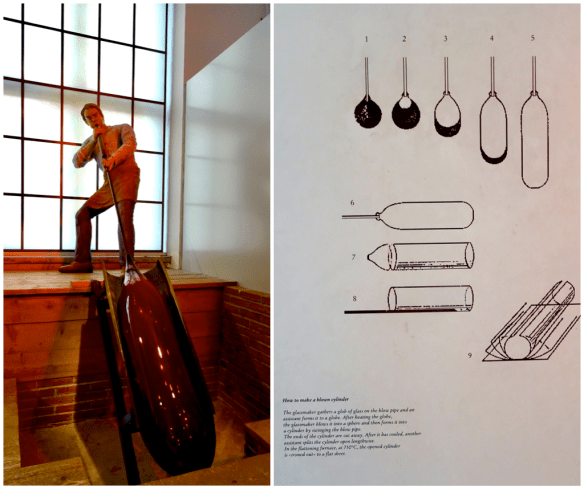
 I knew how early sheets of glass were made, and this life size display illustrated that process. It is hard to imagine blowing a piece of glass this large! We see many panes of glass in old buildings in Europe that were made just this way. This
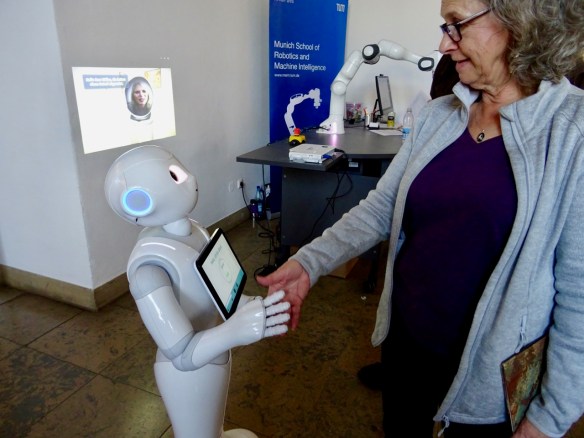
  On our way out of the museum I met Alvin. It was a bit bizarre talking to a machine, that looks and acts like a little person. I think he only understood German though, as we had problems communicating.
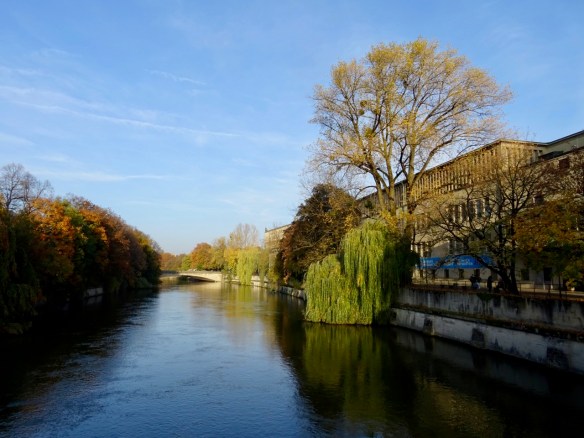
 The museum is on an island on the Isar River. There are two views from the bridge back to the mainland. One to the west…
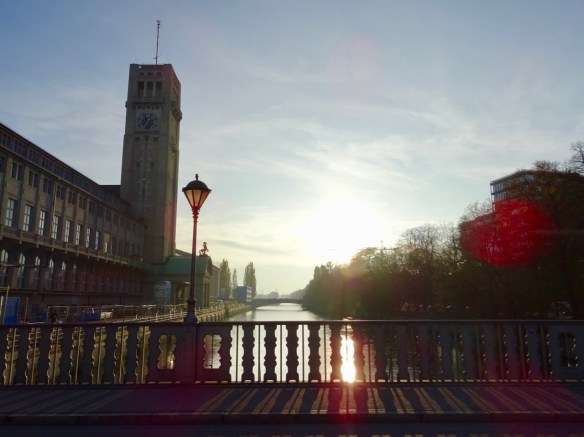 and one to the East. You can see how big the museum is.
 Walking back to the metro we pass through the food market again and I take photo of these beautiful garlics and peppers.
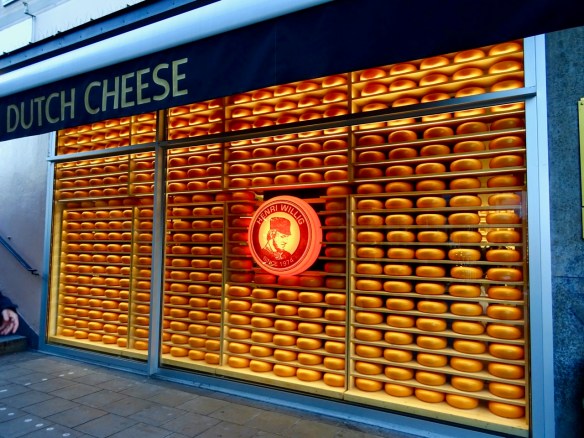
 We stop at this cheese store and sample some of the delicious cheese for sale.
  The metro station is beside the Glockenspiel tower and there is a group of Kurdish protestors. We have seen several protest groups and there is always a large police presence at these events.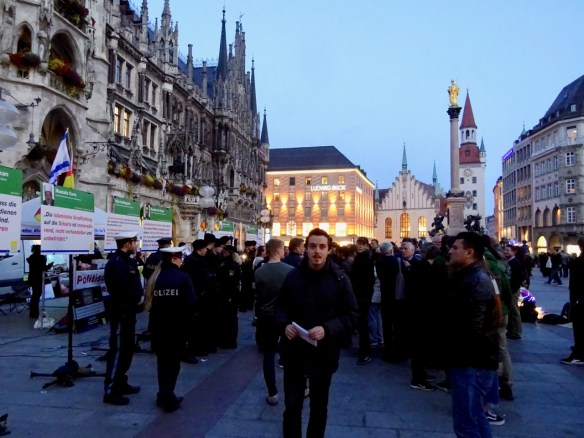
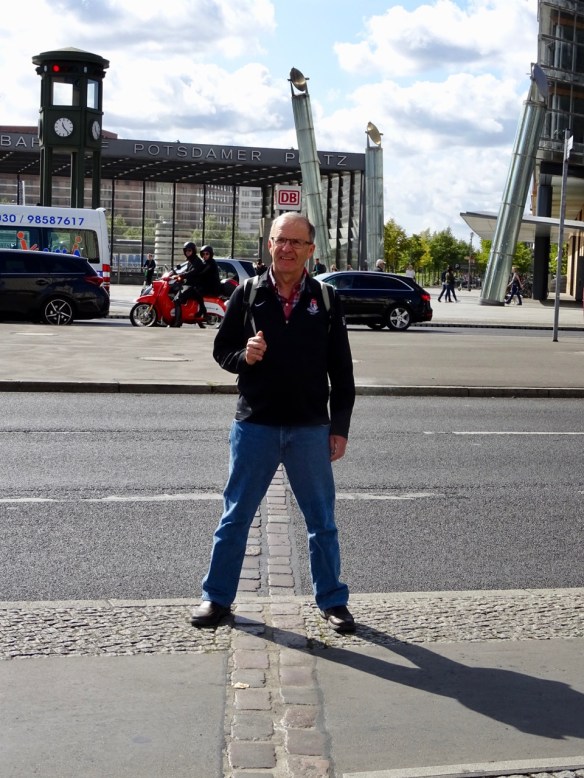
 We were here before but I wanted to get a photo of Bob with one foot in what used to be East Berlin and one foot in West Berlin. The cobble stone line marks where the Berlin Wall used to stand.
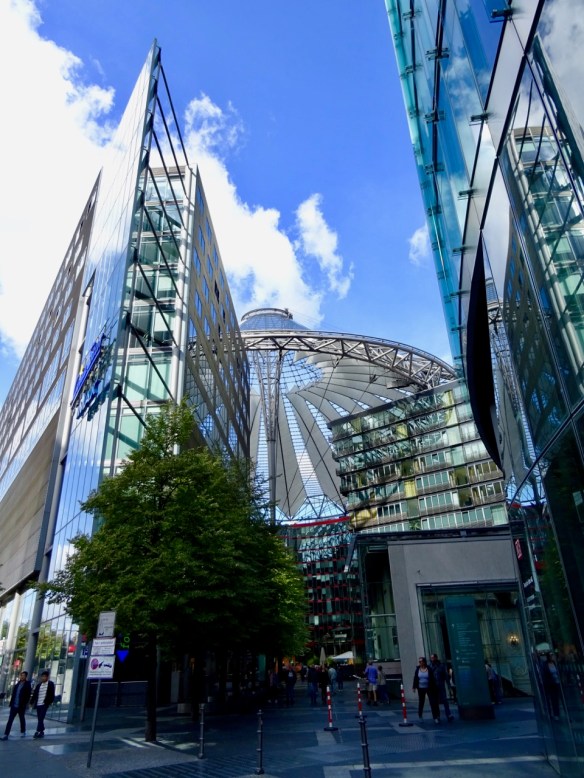
 Another view of the very unique Sony Centre. We catch the 100 Bus to the zoo near here.
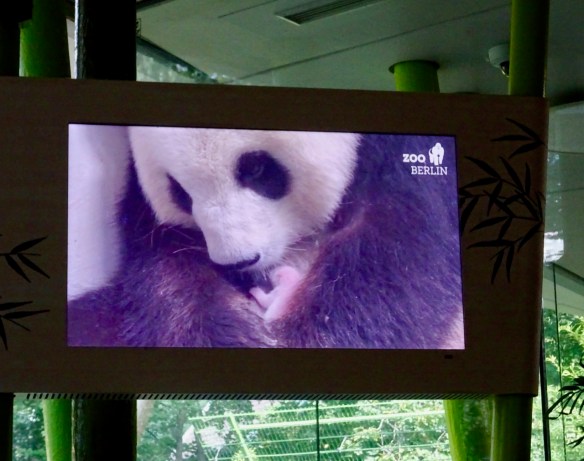
 First stop at the Berlin Zoo is the Panda enclosure. Unfortunately we don’t get to see any real pandas but there is a video of Meng Meng and her new babies.
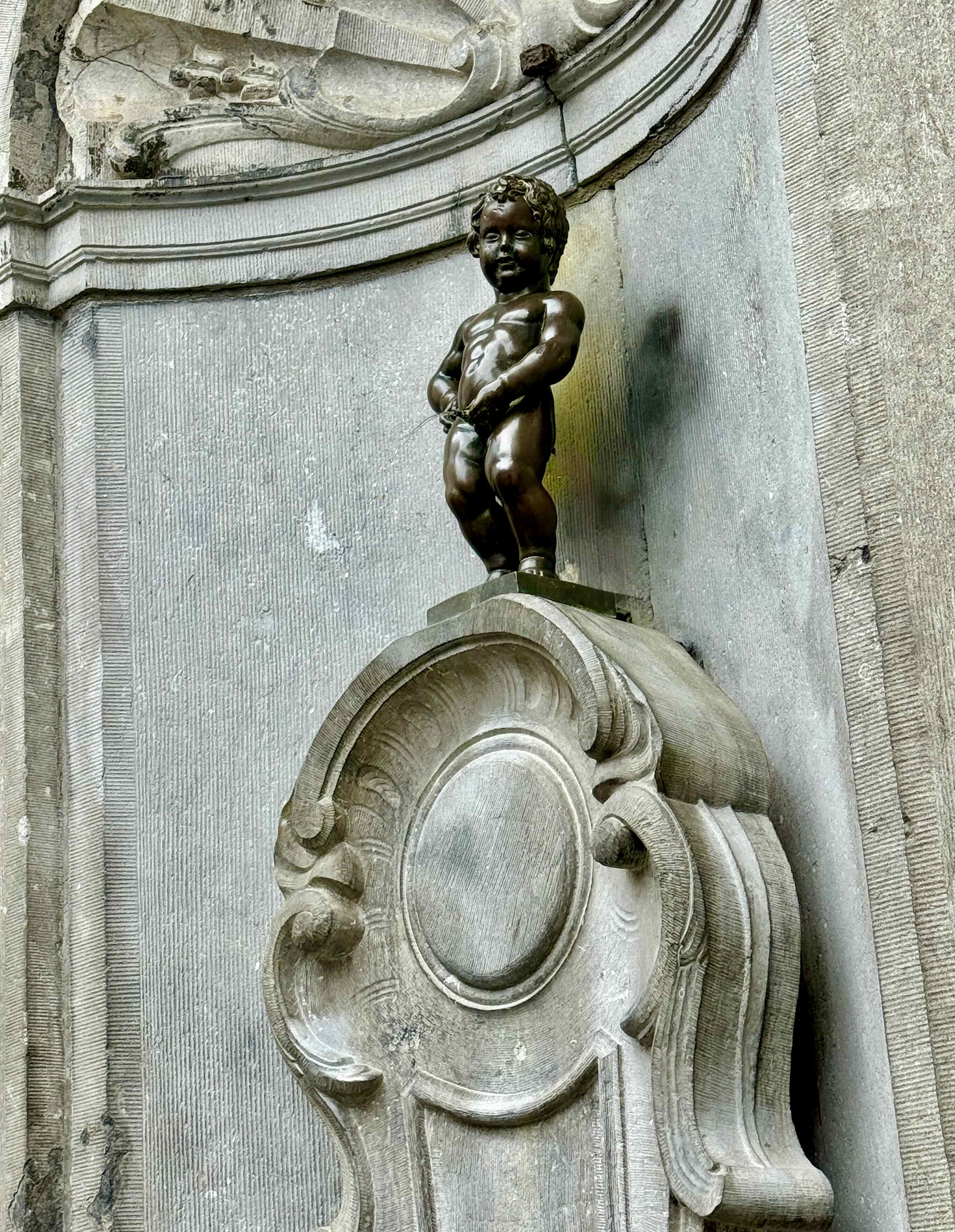
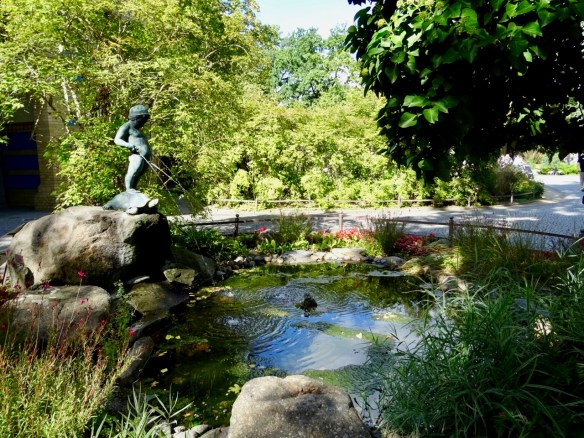
 We have our picnic lunch on a bench near this fountain. It reminds me of the famous Manneken Pis fountain in Brussels.
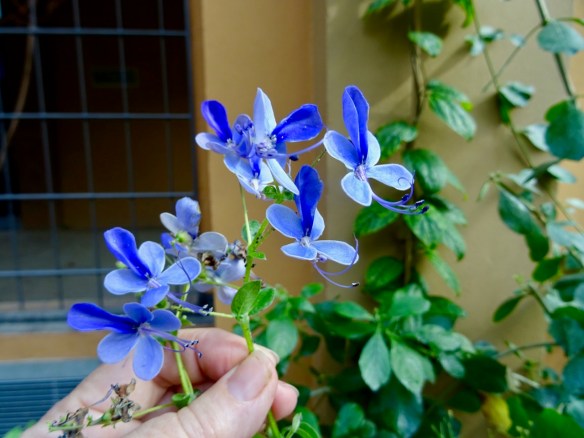
 I love blue flowers and these are gorgeous, but no idea what they are called. Does anyone know?
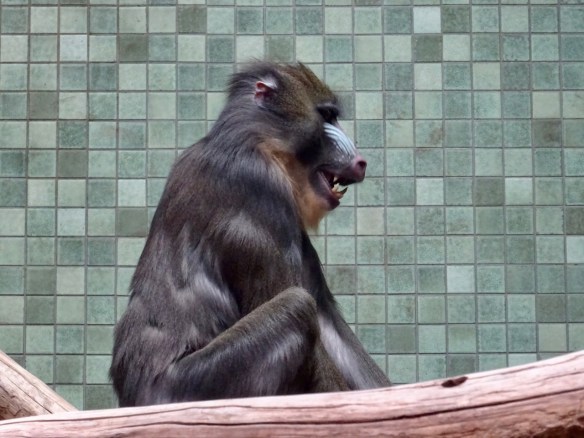
 The Berlin Zoo is Germany’s oldest zoological garden and home to the world’s largest variety of species. Almost 20,000 animals of around 1,300 species live in the 33 hectare zoo. For some reason at least 19,000 of them were in hiding today!! Here are some of the animals who were kind of enough to stay in view for us. This large male Mandrill monkey has formidable teeth.
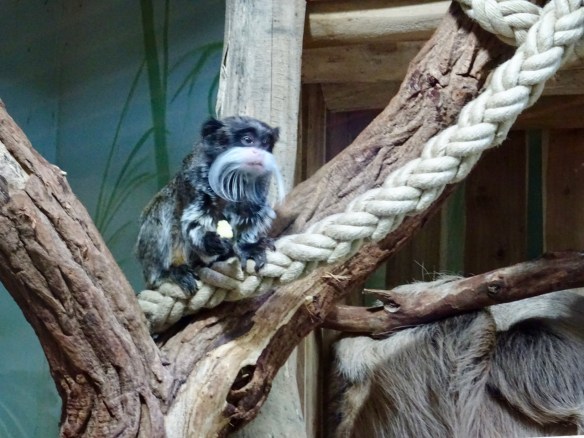
 The Emperor Tamarin has to be one of the cutest monkeys I have ever seen.
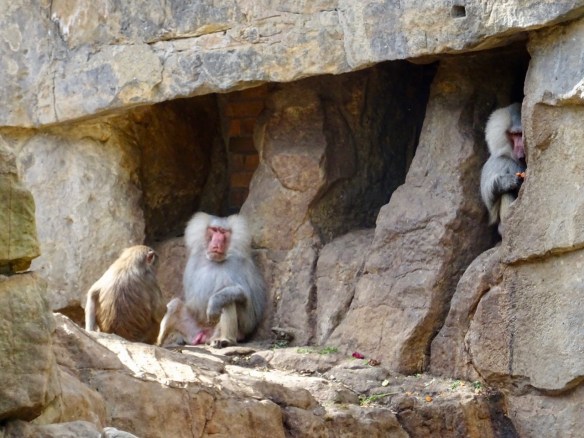
 The baboons were tucked far away in the rocks but I zoomed in for a photo.
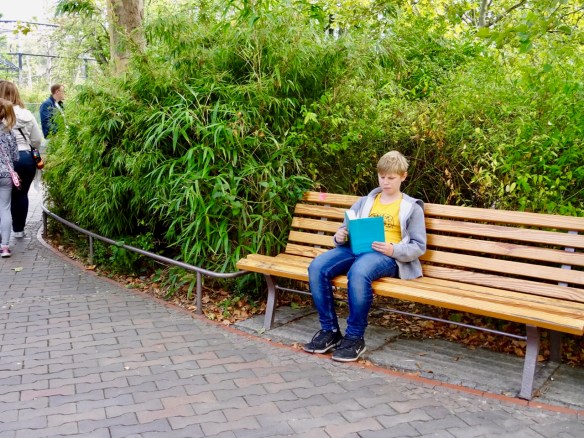
 This young man was engrossed in his book, and not interested in the animals at all. I tried to see what he was reading but the title was small and in German.
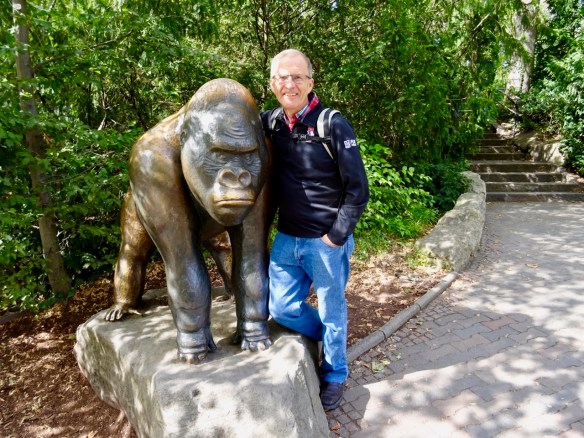
 Bob found a friend.
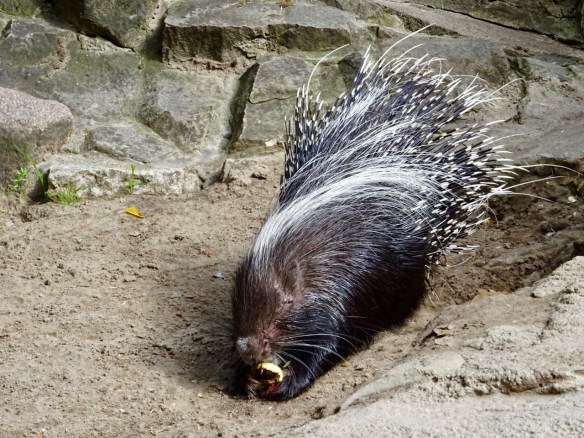
 This African porcupine was up nice and close, finishing off his lunch.
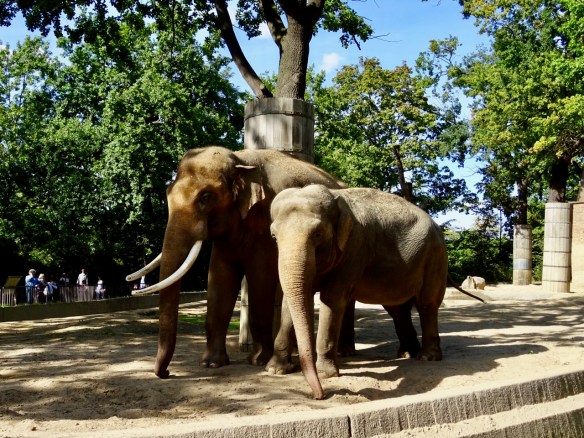
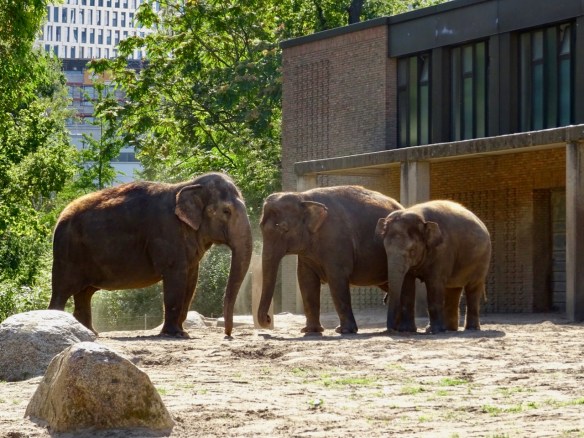
 Luckily the elephants were out and about. This is Victor, a 26 year old bull, and a female from his harem.
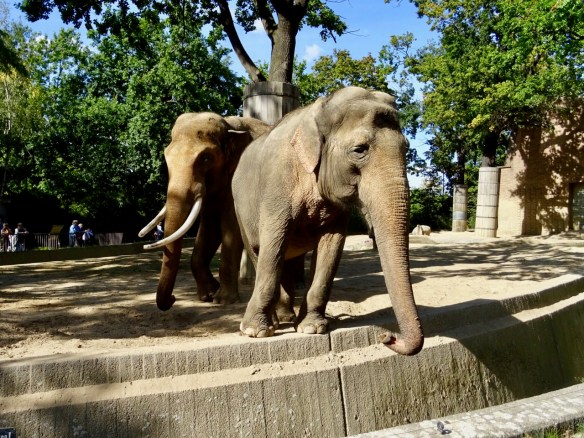
 She came over to say hi, extending her trunk out towards me!
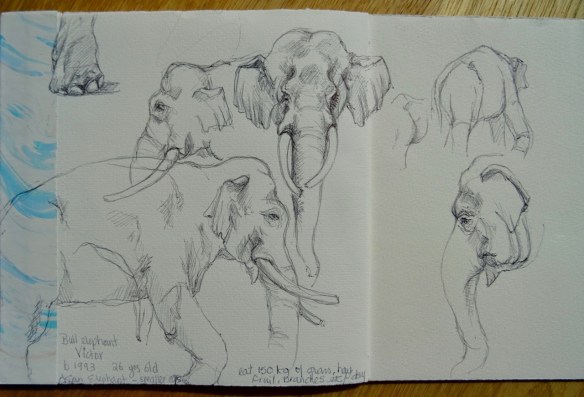
 I took lots of reference photos of the elephants and spent a bit of time sketching them live.
 These are the other two females in Victor’s harem. Each day he chooses who to hang out with in a separate enclosure. The young elephant is Victor’s daughter.
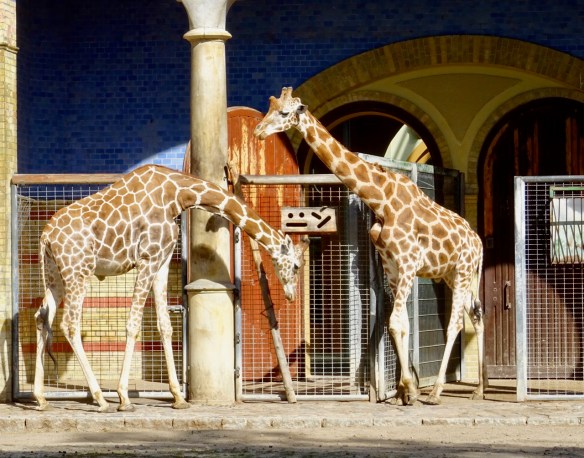
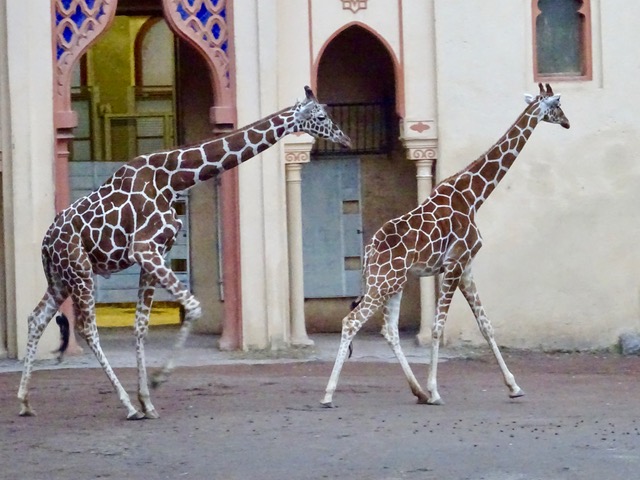
 I love giraffes too, but they were a bit too far away to easily see and draw.
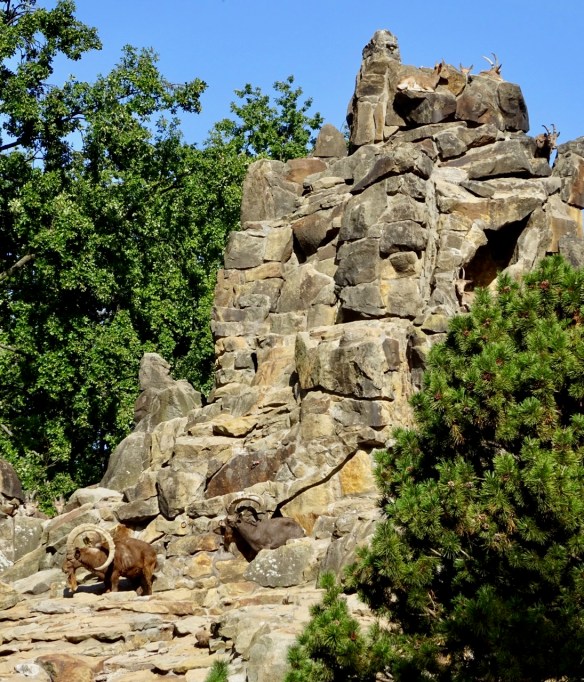
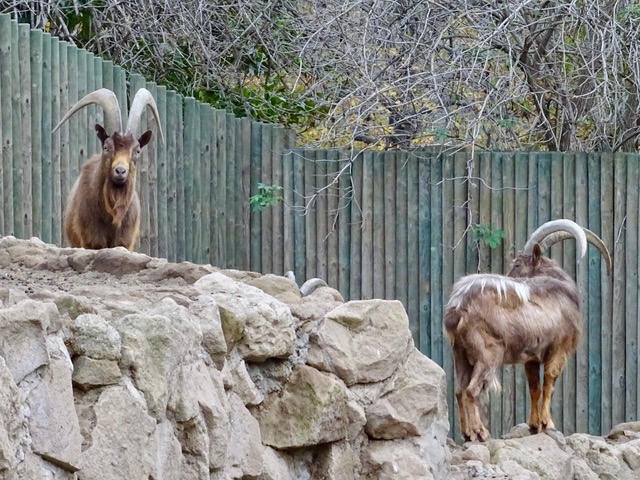
 Look carefully. How many Asiatic Ibex can you spot in this photo? Can you find all nine of them?
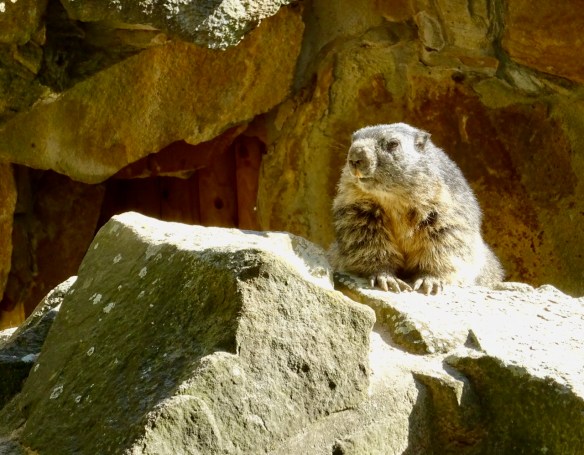
 When our oldest daughter was about three years old she kissed on of these Marmots on the nose! He was standing up on a stone retaining wall and she just walked up to it and gave it a peck. Kind of scared us though!
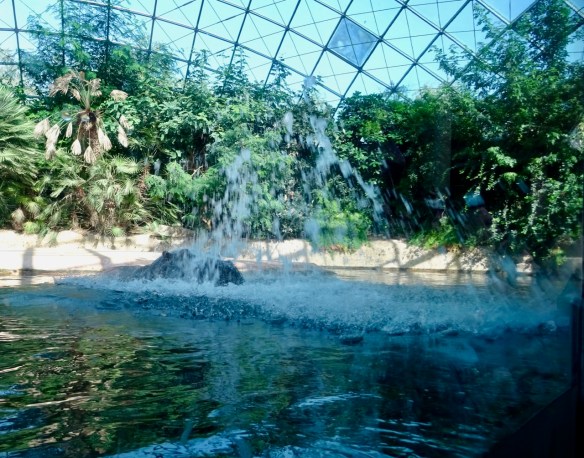
 In the hippo exhibit this big fellow opened his mouth wide and made a huge splash before sinking out of sight. Perhaps his way of letting all the visitors know what he thought of them?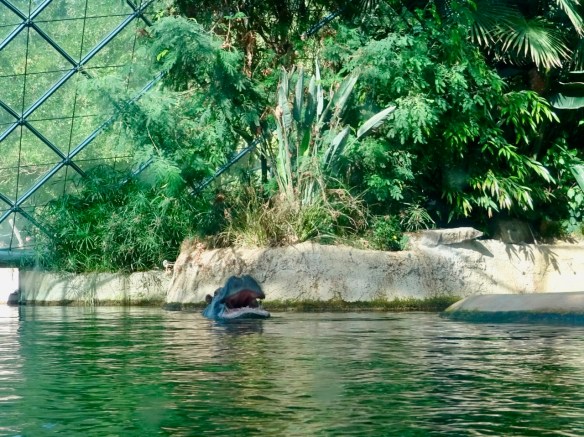
 The Nyalas are interesting with their distinctive white stripes.
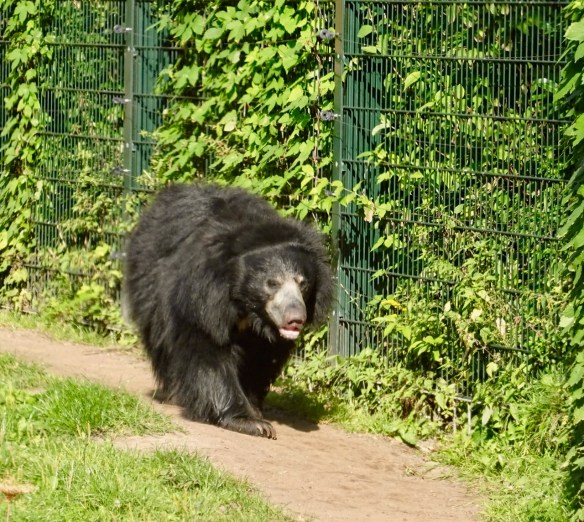
 There were several sloth bears but they were all in separate enclosures. Perhaps they aren’t very sociable. This fellow was pacing back and forth continuously. We saw several animals exhibiting repetitive behaviours which we know is a sign of stress from being in captivity. That is hard to see but this zoo, like many others we have visited, is building bigger more natural habitats for their animals. We also see attempts to keep animals engaged with different ways of offering them their food and ‘toys’ for them in their enclosures. It is a trade off. Without the protection and breeding programs of zoos some of these animals would perhaps be extinct.
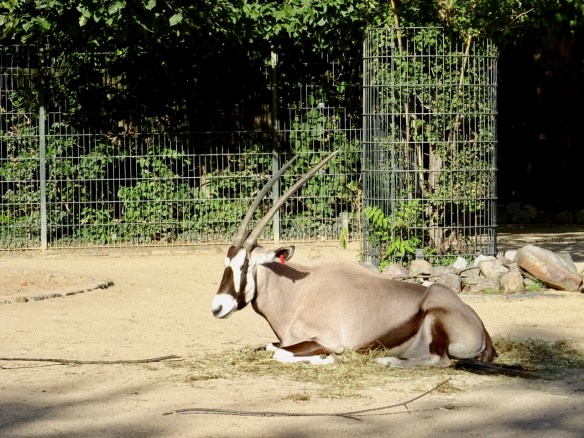
 We saw lots of Gemsbok when we were in South Africa. It was amazing to see them in their natural habitat.
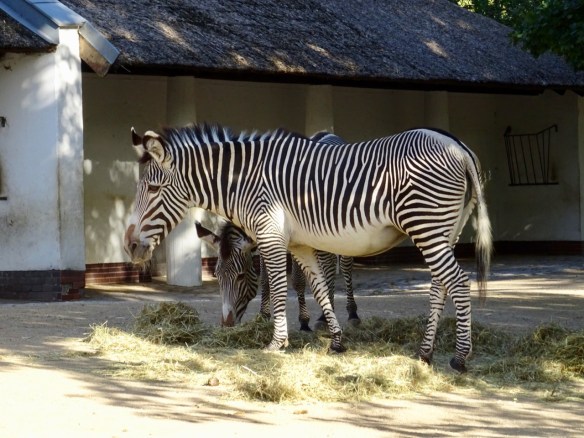
 I have soft spot in my heart for zebras. Just love their stripes!
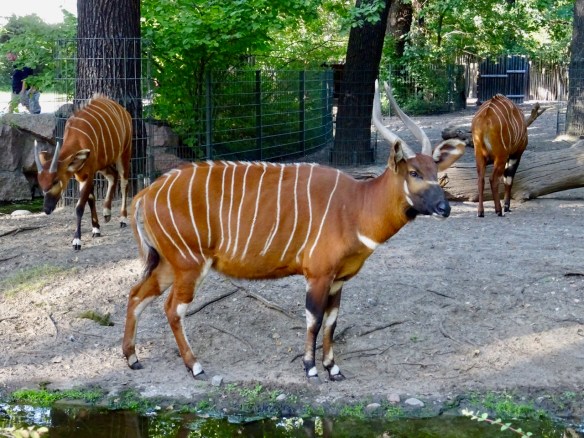
 This was a new species for us, the Mountain Bongo. Their legs seemed too small for the bulk of their bodies, but they were very striking, with their white stripes agains their reddish hides. There are only 100 of these animals left in the wild! Interesting fact…the red pigment in their hides can bleed in the rain!
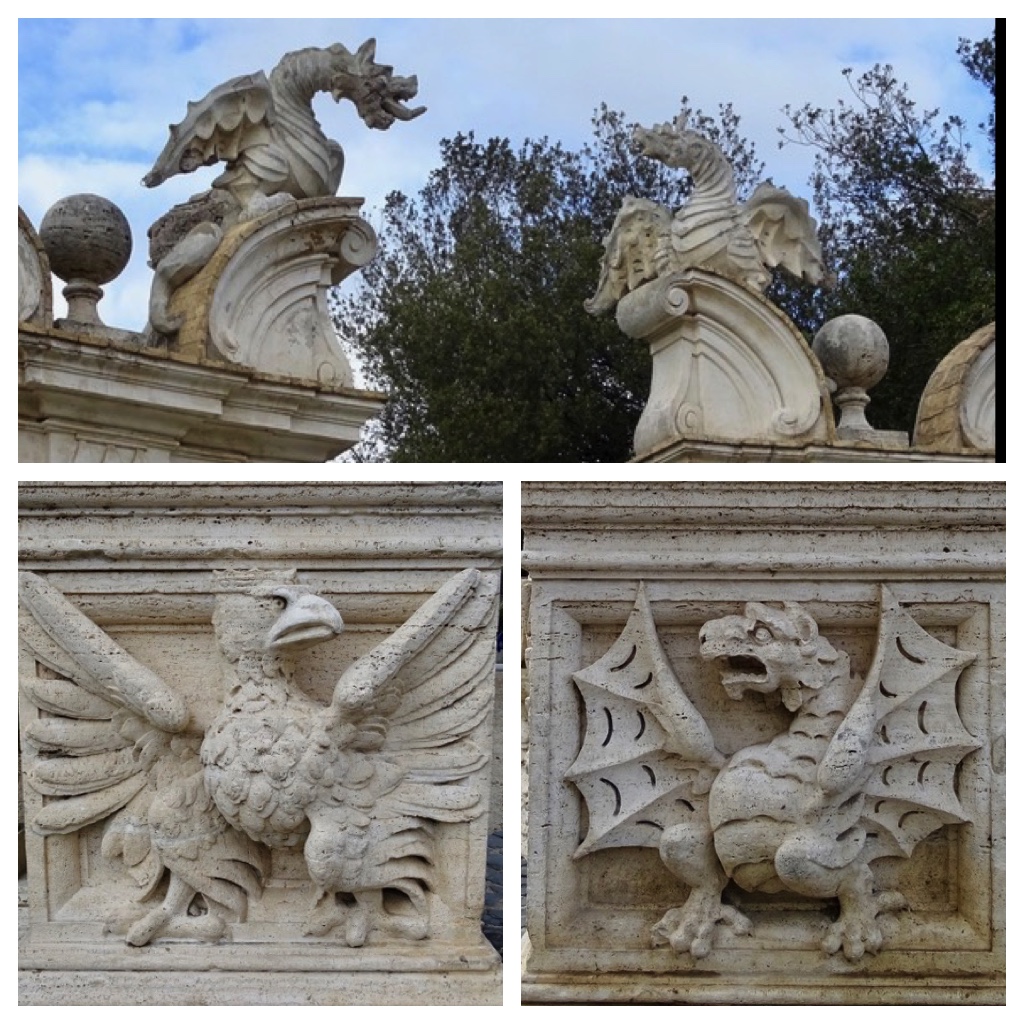
 I forgot to take a photo of the main gate when we arrived but took one of the side gate where we exited the zoo.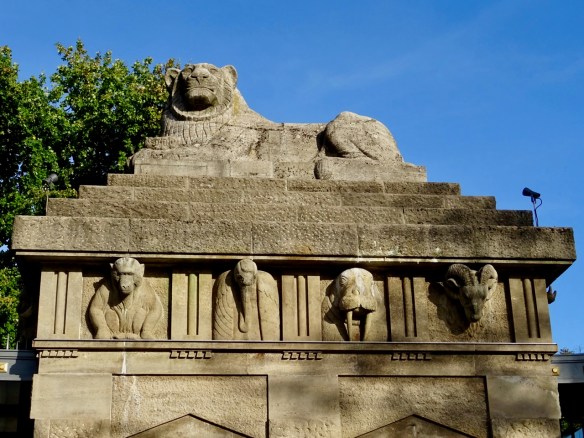




 trudymason.com