Tours, France

Day 25, Friday, September 22, 2023

Today we explore Tours.  Our apartment is within easy walking distance of downtown. First stop is the Tours Train Station which is one of the prettiest train stations in France. The architect is the same one which designed the station which is now the  Musée d’Orsay .  I can see the resemblance. The inside is decorated with tiled pictures of French towns and chateaus.

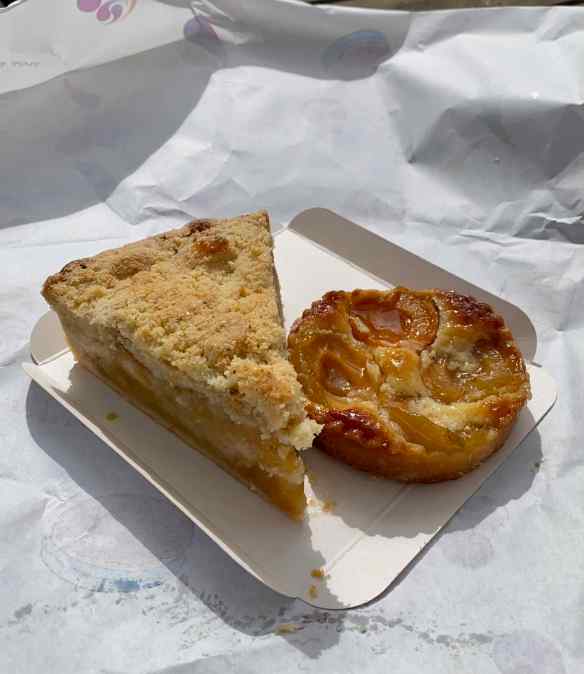
We pass a little patisserie and buy couple treats for our tea time.  So far I am able to have the odd gluten treat with no ill effects, although I am sensitive to gluten at home. They were delicious!
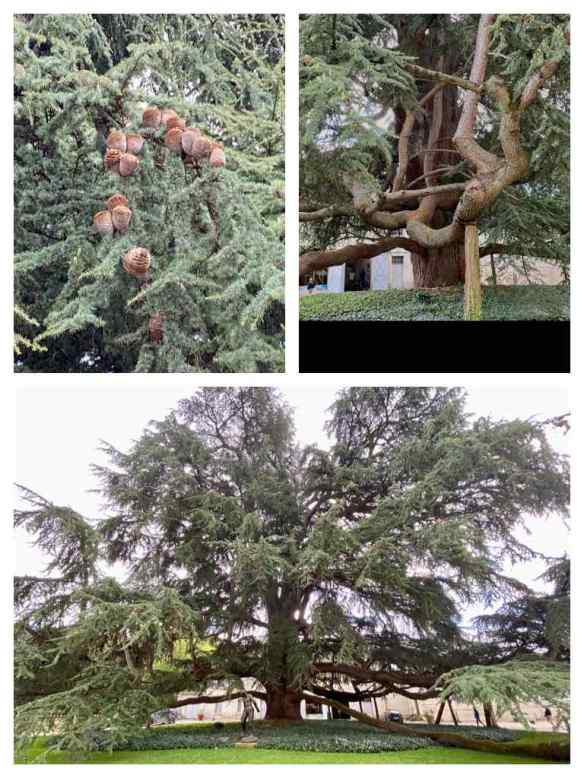
We visit the garden behind the Beaux Arts Museum and see this phenomenal tree!  It is an enormous Lebanon Cedar with a height of 31 metres, a width of 33 metres and a trunk with a circumference of 7.5 metres!  It is a magnificent tree.  
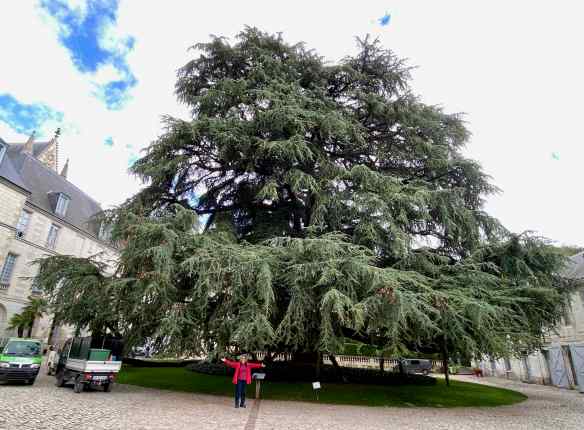
I love big trees, and this one is one of the biggest I have seen.  It has enormous cones, and long arching branches, some of which lie along the ground.  Pictures do not do it justice.
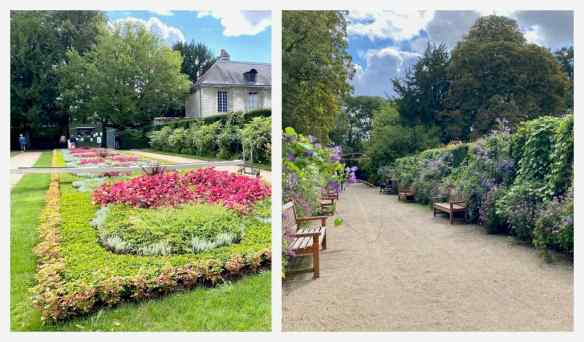
There are flowers and lots of benches.  The device just above the red flowers is used so that the gardeners can sit or perhaps lie down and weed without having to walk in the flower beds.
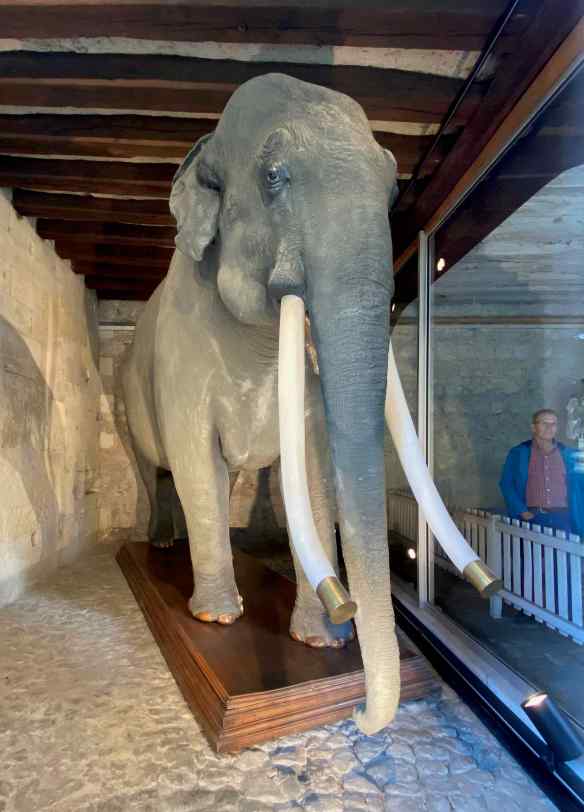
This is Fritz the Elephant.  He died in 1902 in Tours.  Please take moment to read about his tragic death.  He was stuffed and is on display in the gardens. https://graphicarts.princeton.edu/2017/05/26/fritz-the-elephant/  
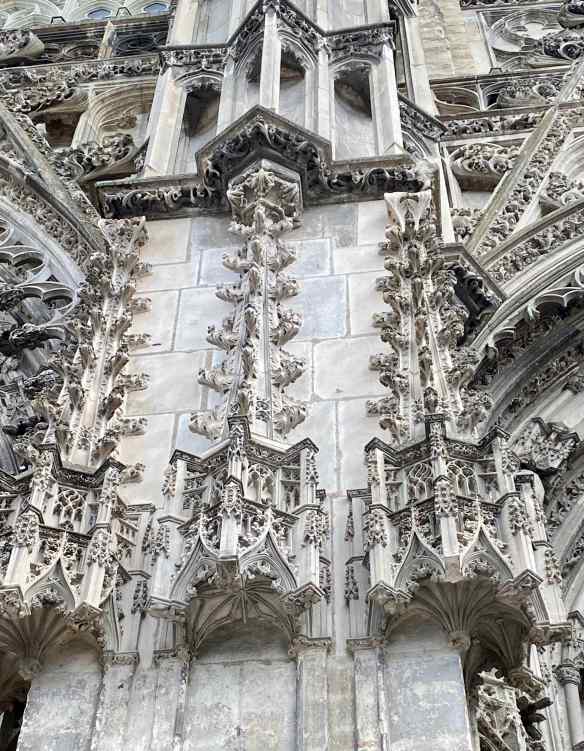
St. Gatien Cathedral is very ornate.  
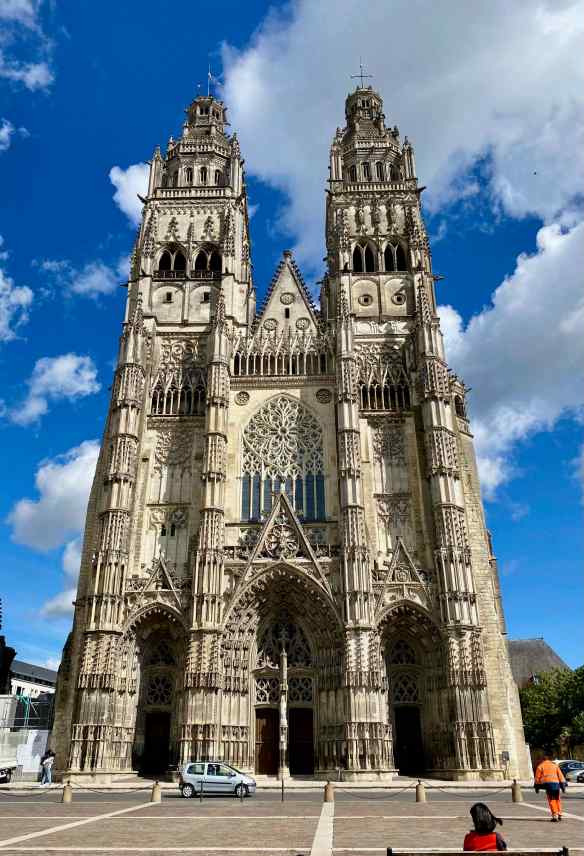
The decorative work on the outside of the church is very delicate and beautifully carved.
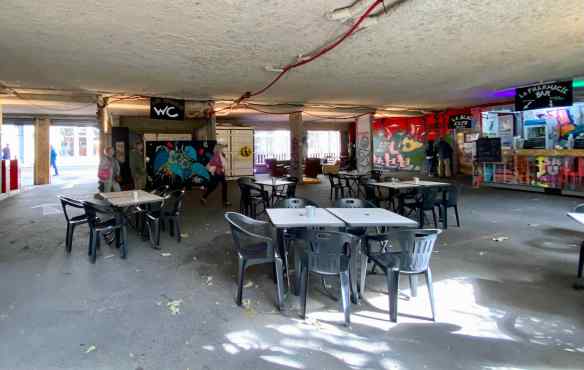
This interesting coffee shop/art gallery was under part of a building and open to the street.
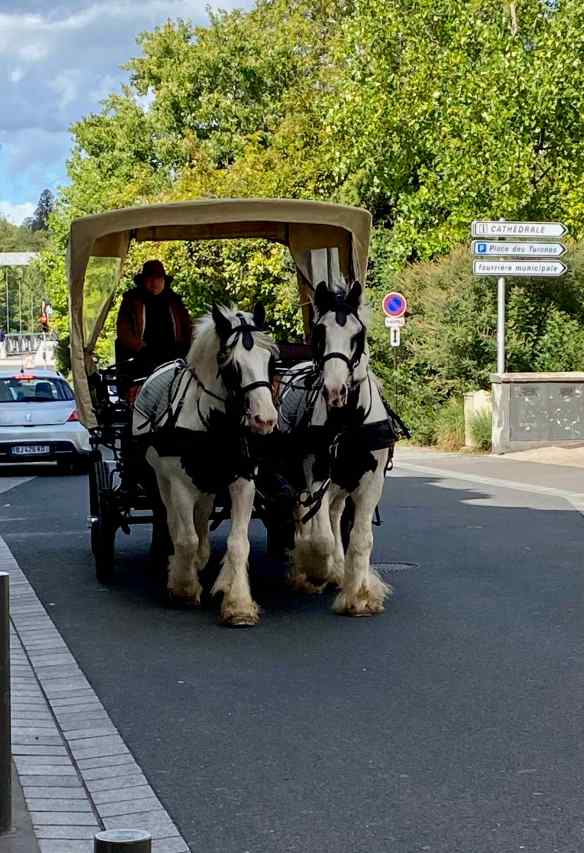
Tours has horse drawn wagons!
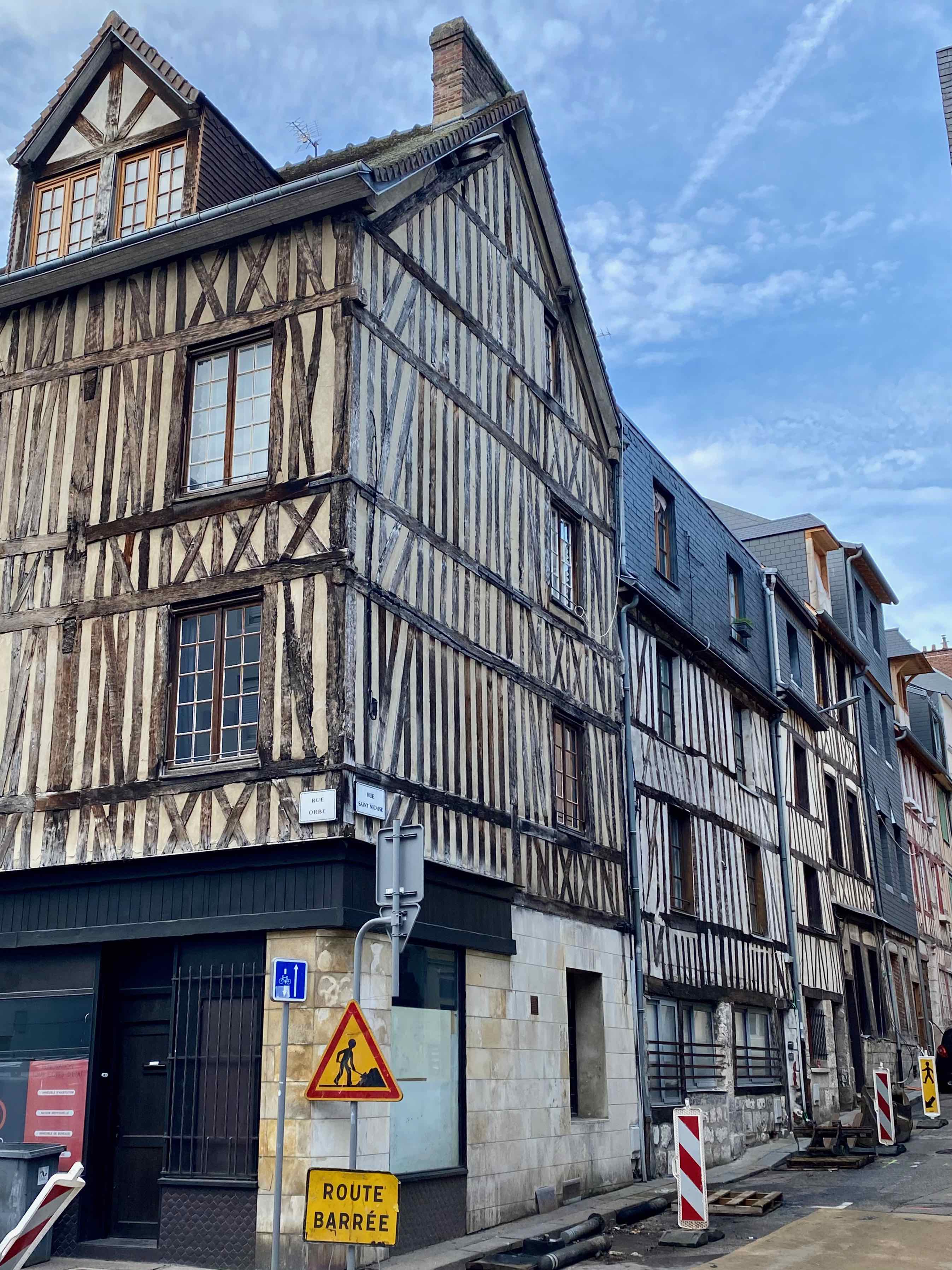
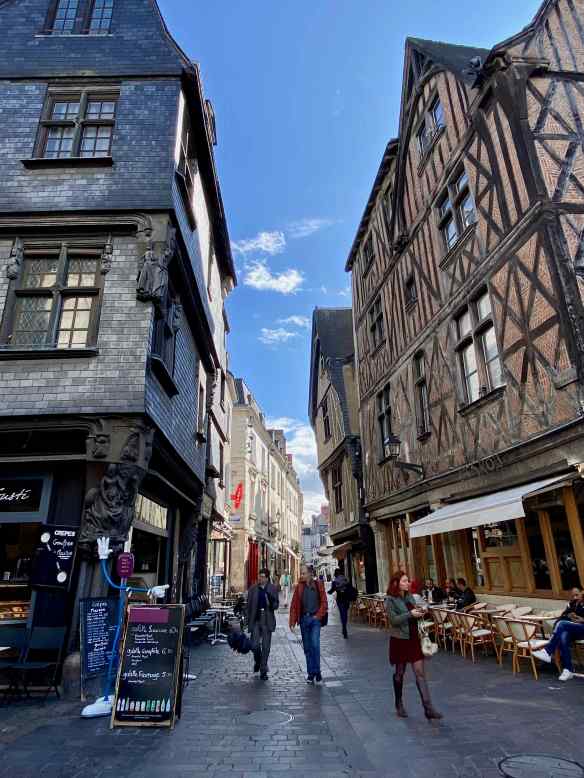
These medieval buildings lean out over the street.  Each floor extends a bit further out than the one below.  Note the interesting carvings on the grey building.  There is just so much to see everywhere.
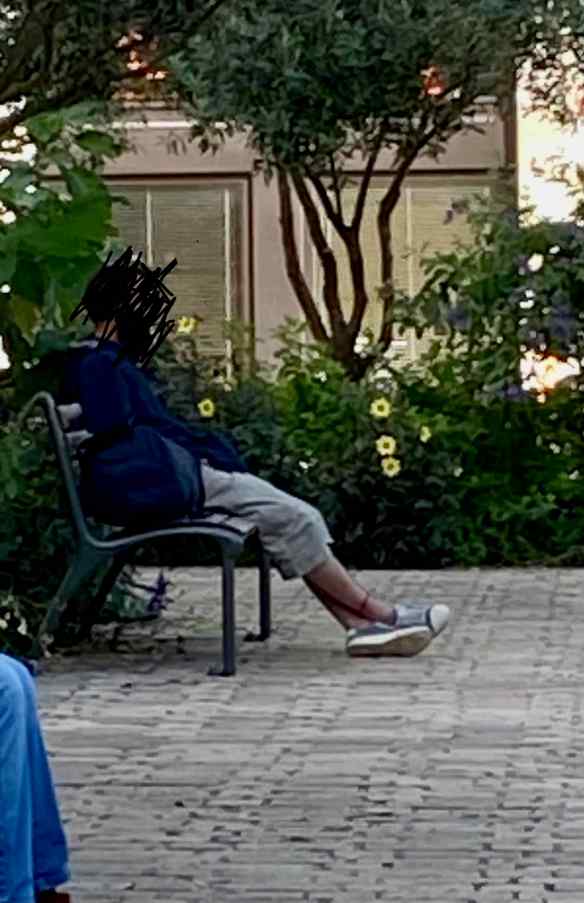
This photo has an interesting story.  We were having tea and I noticed that there was a large duffel bag sitting unattended on a bench some distance from us.  It made me rather nervous.  We have seen signs to be aware of abandoned bags or other unusual activity.      Several people walked by and looked at the bag, but just kept walking, until this fellow walks by, turns around and sits down beside the bag.  He sits there for about 5 minutes, then casually stands up, looks at the bag, picks it up and quickly walks away.  Pretty sure the bag wasn’t his.  Tours is a university town and Bob figures someone just forgot their bag, but I wonder how anyone leaves a big duffle bag behind.
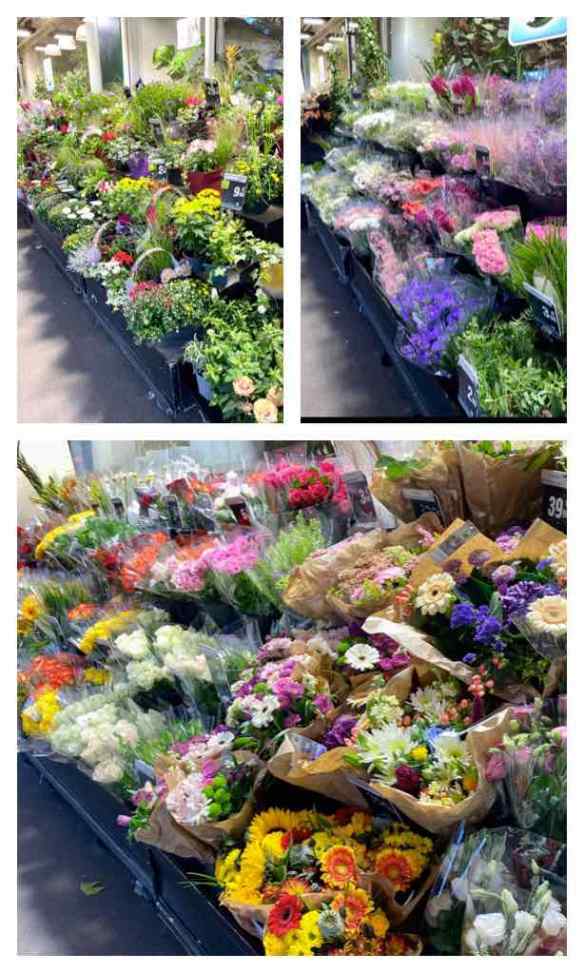
On the walk home we pass this flower store.  If we had a bit more room in our apartment I would have bought some flowers, they were so beautiful and not terribly expensive.
The Apocalypse Tapestry in Angers, France

Day 23,  Wednesday, September 20th, 2023

Oops, just realized that I forgot to publish this way back on September 20th!

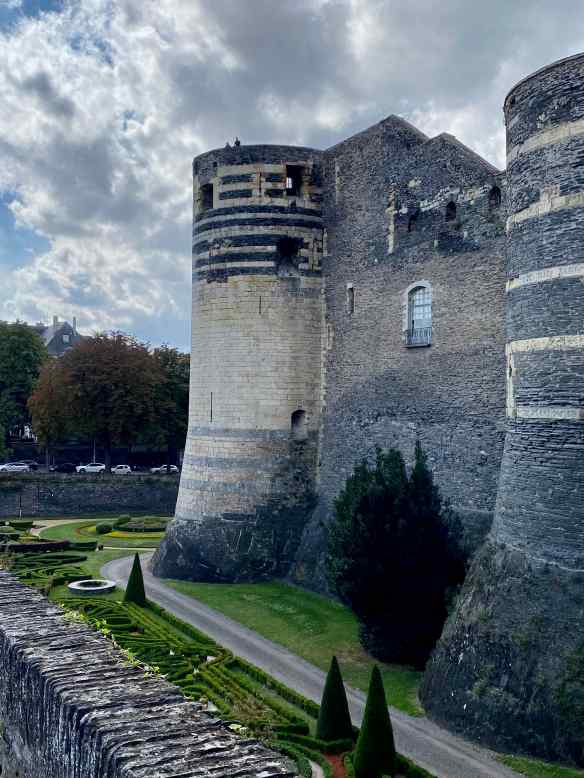
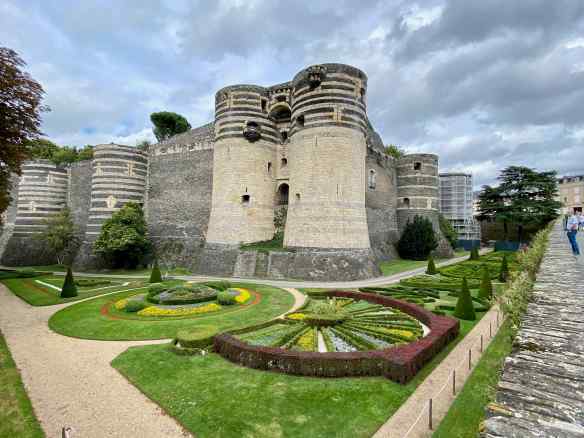
The Chateau d’Angers is huge..

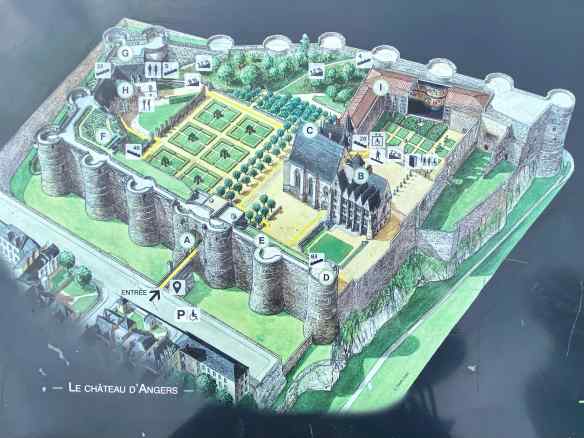
The fortress has 500 m long ramparts and 17 towers and was constructed in 1230. Here is an arial view.

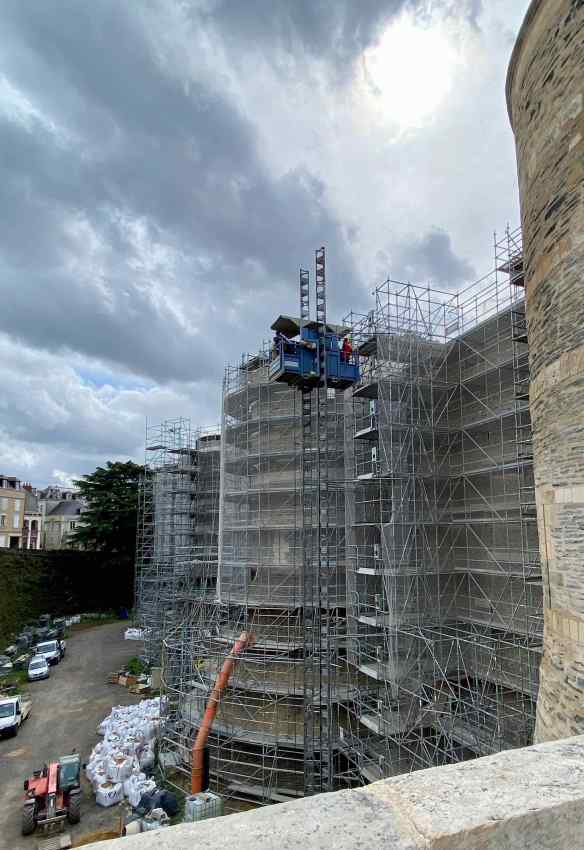
There is a lot of reconstruction happening on the north wall.  I can’t believe how rickety that elevator looks. You wouldn’t catch me riding on that.

The entrance of the castle is impressive.But then we enter the display area for the Apocalypse Tapestry and we are utterly astonished.  This is the largest medieval tapestry in the world!
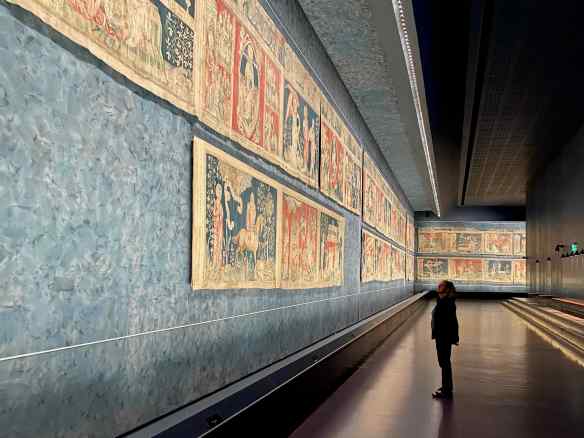
The tapestries turn the corner, and continue down another long wall and then turn yet another corner.  It is a magnificent sight. This information gives a brief history of this incredible tapestry.
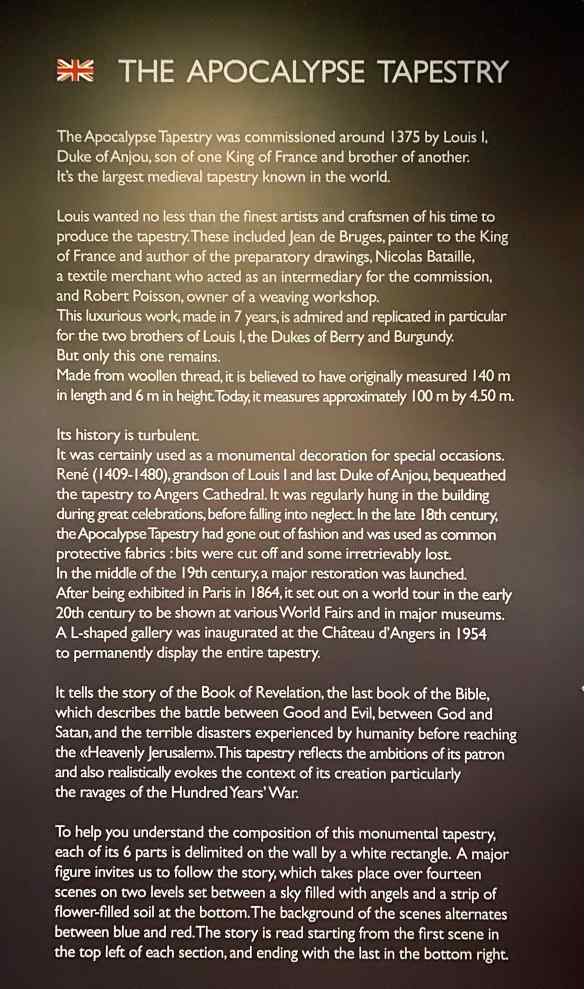
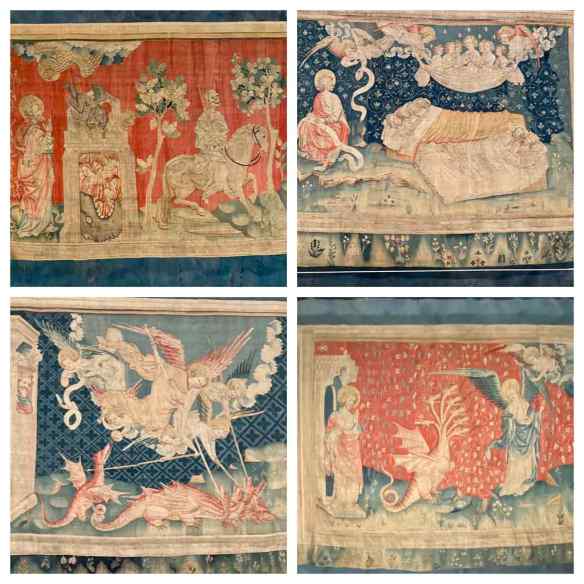
We are entranced and walk back and forth, each time noticing something new.  This is like a medieval graphic novel.  The panels are in order and tell a story.  

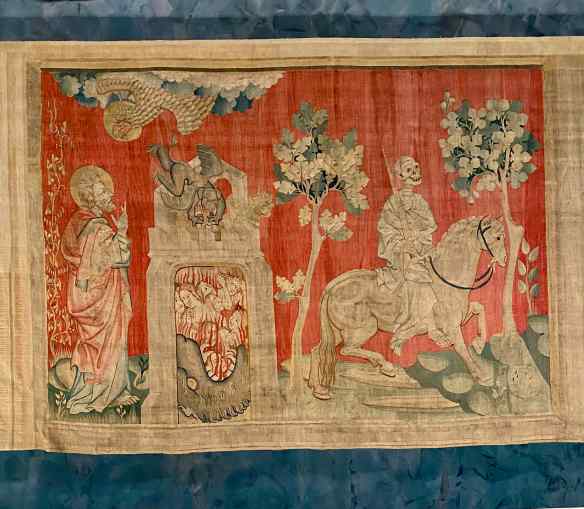
Here is one of the panels that has been partly lost.  When the tapestry fell out of fashion it was used for things like floor mats, insulation for orange trees and horse stables, and to plug holes in buildings.   Can you imagine?  It has had extensive restoration, but it is still so amazing that so much of it has managed to survive this long.

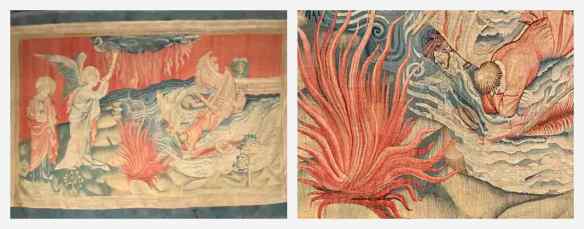
A close up of the weaving.  It is very fine work and both the front and back are equally legible – the ends of wool having been meticulously tidied up. This means it’s possible to know what the original colours were like, unfaded by sunlight or time.

This panel manages to show men underwater and captures the transparency of the water.

Another interesting panel…well, they are actually all very interesting.
One more view of the long wall around the corner from the entrance. It really is awe inspiring.

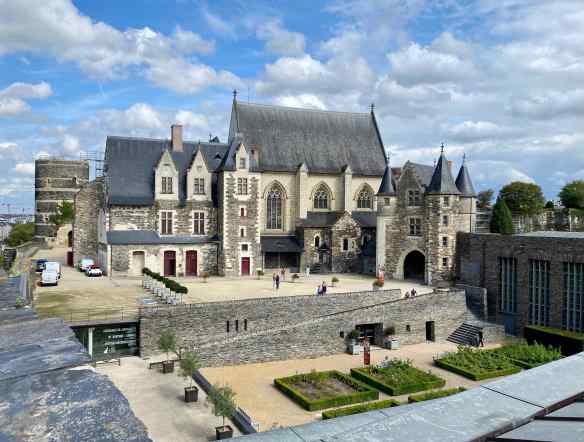
We explore a bit more, and climb the ramparts.  This view is over the roof of the Tapestry museum towards the manor house and the chapel.

We were way up where the people in this photo are.

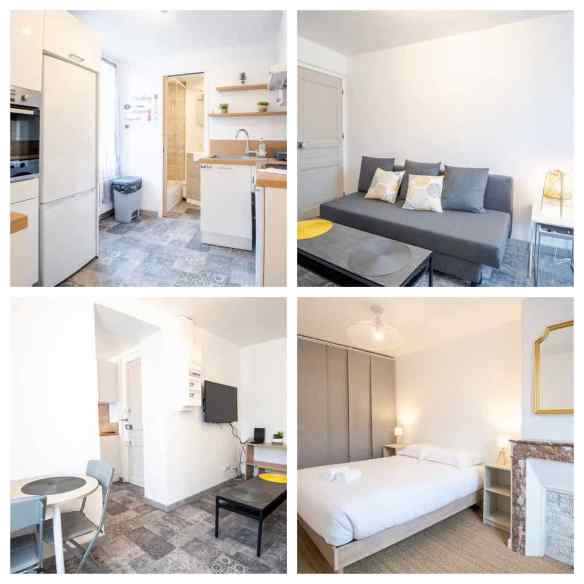
All too soon we are back on the road to our next destination, Tours France.  A detour causes some confusion for a bit but after some fantastic navigating and equally great driving we are soon at our new bnb.  It is small but I think it will be just fine.

Tours, France

Day 24, Thursday, September 21, 2023

It is raining on and off all day long so I decide I that I am having a pyjama day!  We do a bit of travel planning for the next week, watch some TV,  and I got caught up on our blog.

Mont St. Michel, France

Day 22,  Tuesday, September 19, 2023

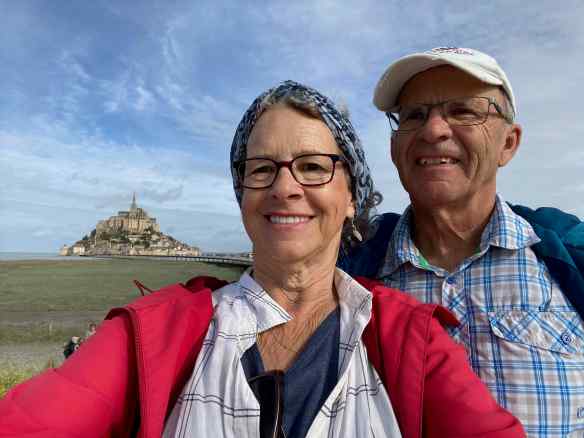
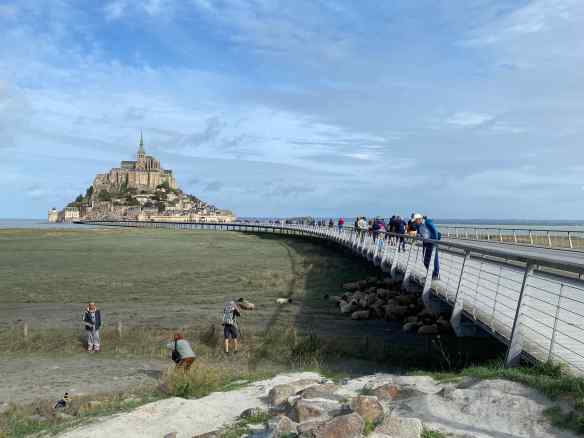
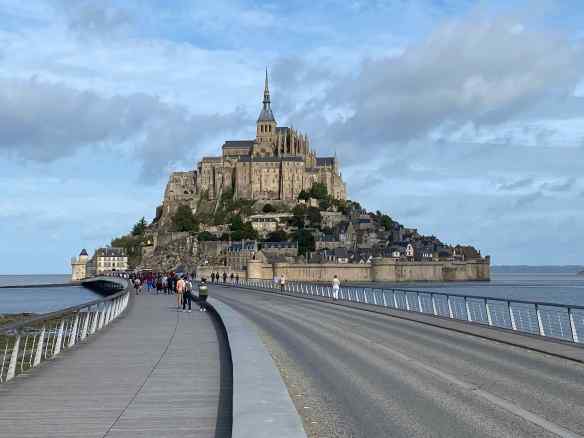
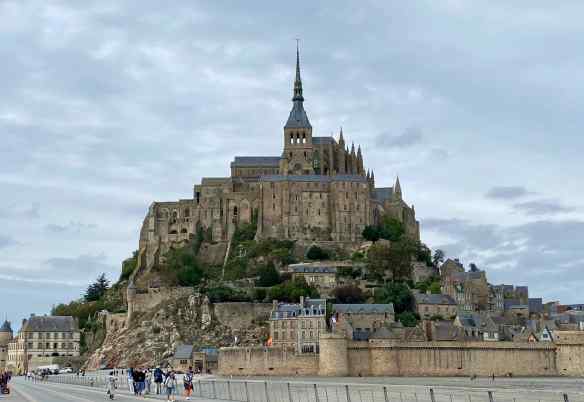
Here we are walking out to Mont St. Michel.  It is a three kilometre walk from the car park to this UNESCO World heritage site.  Be warned, this is a photo heavy post.

The sheep under the bridge attract a lot of attention.  I wish I had time to sit and draw them, but Mont St. Michel beckons…

Almost there!

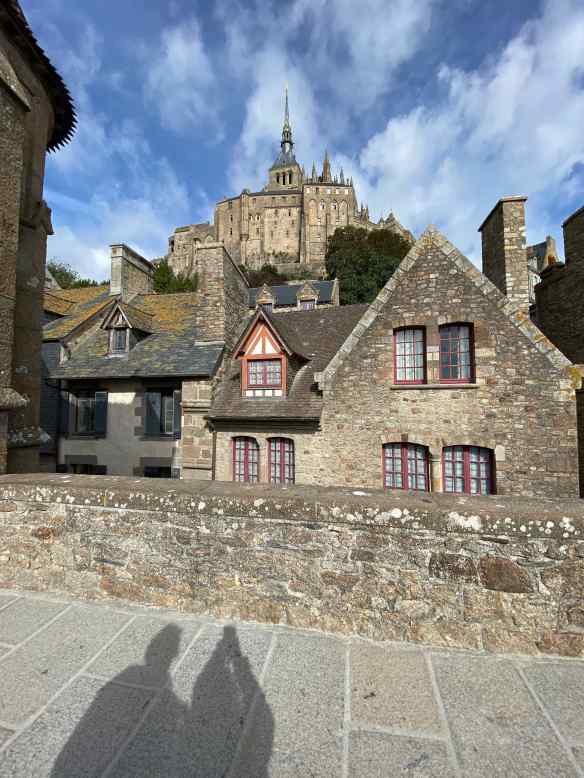
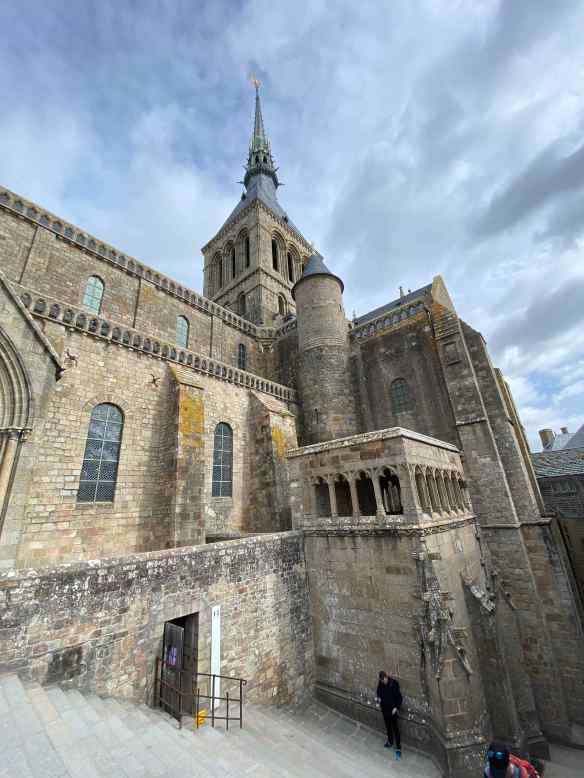
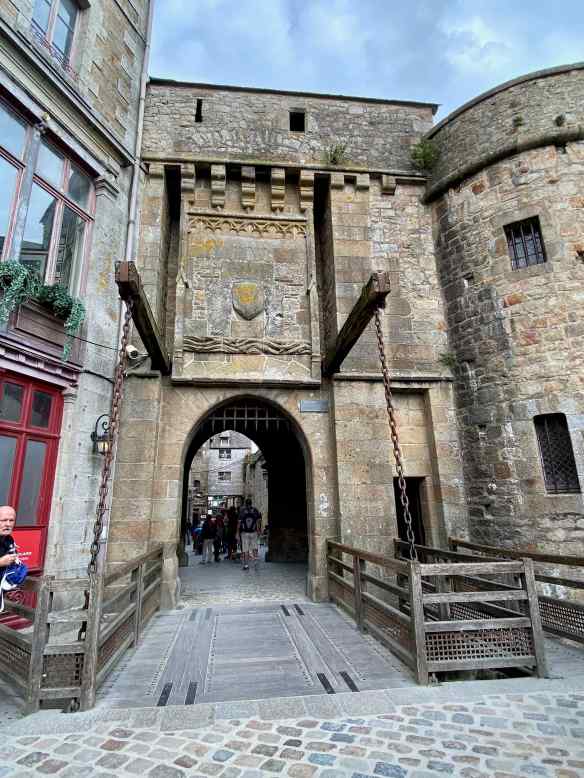
We climb the ramparts right after the entrance gates while the sun is shining.  There is a chance of rain this afternoon. The Abbey church dominates the skyline.

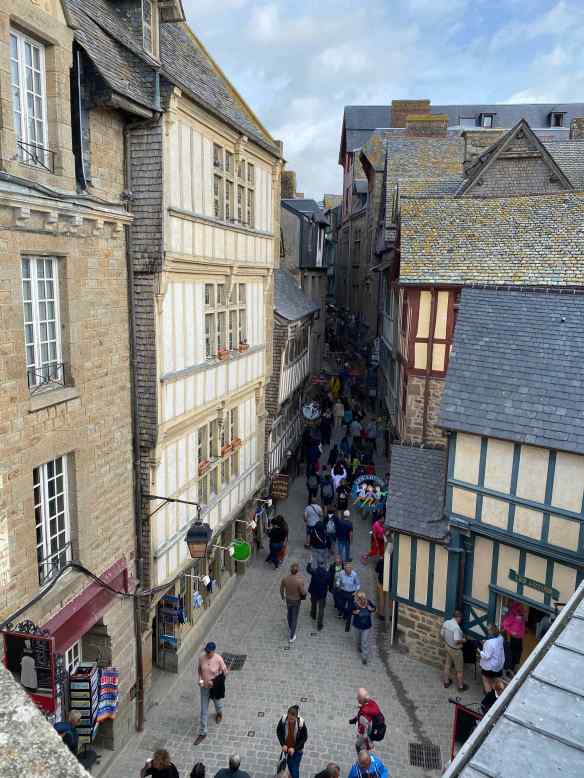
The streets below are crowded and more people are arriving by the minute.  The group with the white hats are pilgrims from Southern France.  I spoke to one of the ladies later in the day who sat by us while we were having lunch.

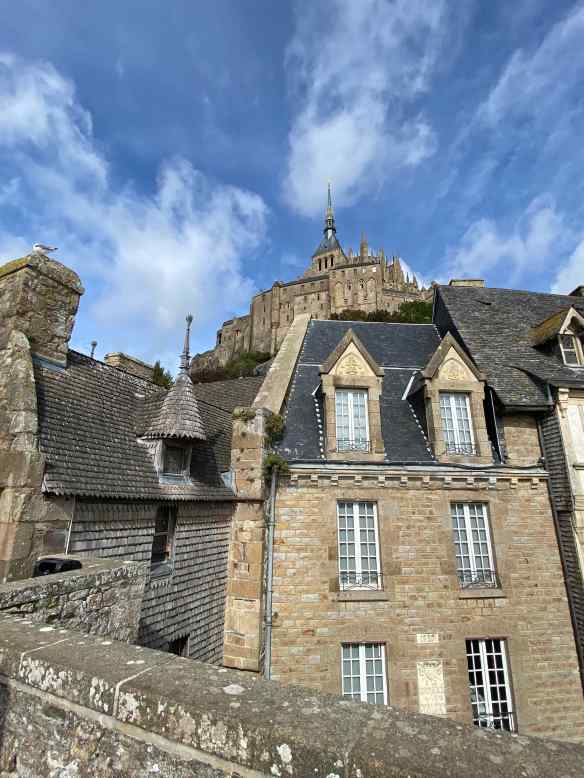
I love the little conical roof over the dormer window.

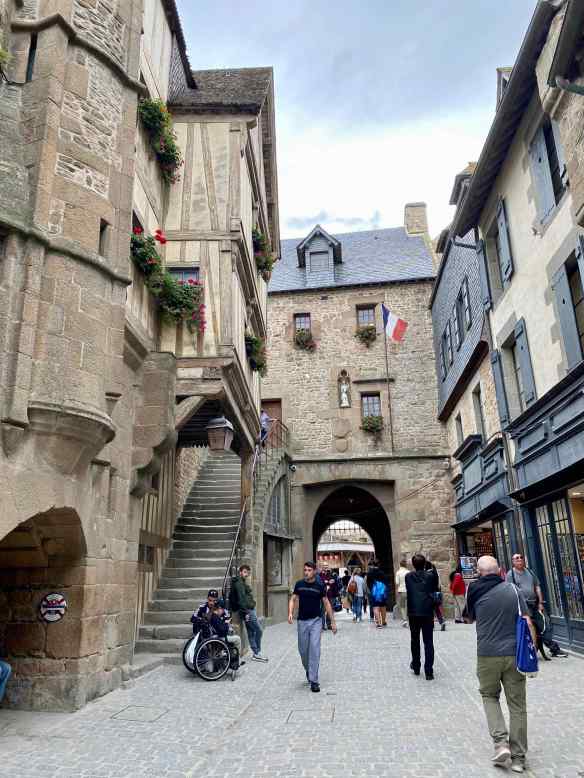
The streets are narrow and they fill up quickly.  We are told that in high season you can barely walk through the streets as there are so many people.

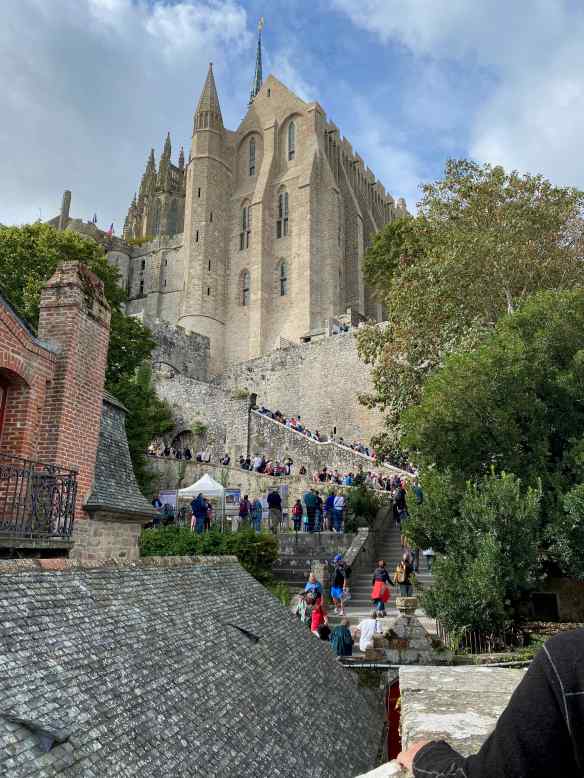
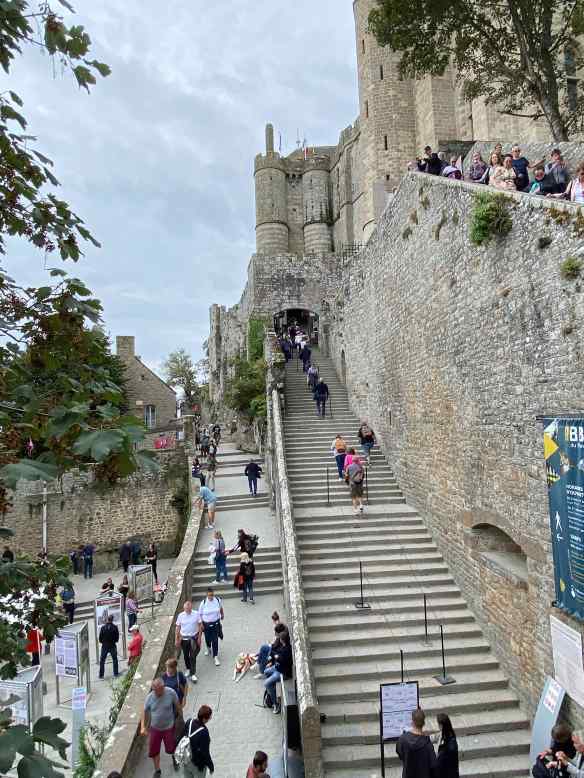
Soon we are among the hordes of people climbing the tall narrow 319 steps to the Abbey.

We bought our tickets online so we get to walk right past a long line of people waiting to buy tickets.

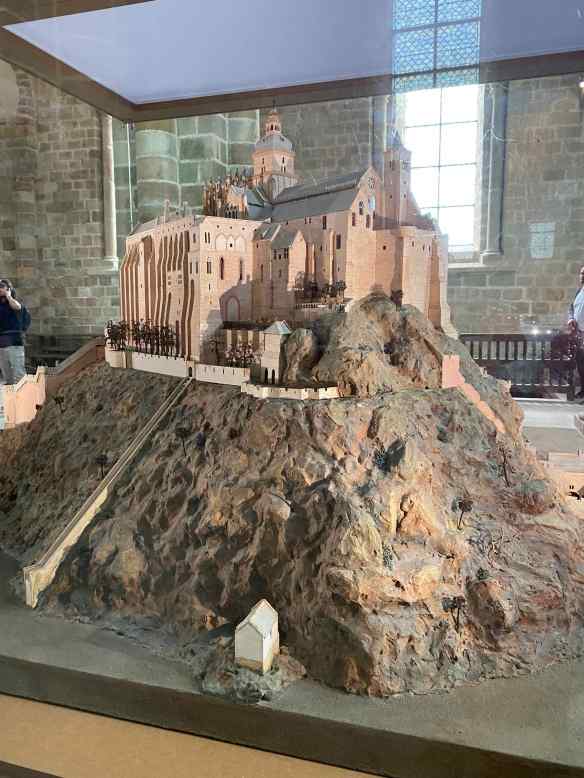
This model of the abbey shows the back side which is only visible if you walk on the sands  at low tide or travel by boat.There are usually 5 monks and 7 nuns who live at the abbey and there are only 25-30 people who actually live on Mont Saint Michel. We sat and listened to part of the mass, from the side of the church.  The singing was really lovely and I found it interesting that the nuns and the priest sat on the floor of the church during the service.
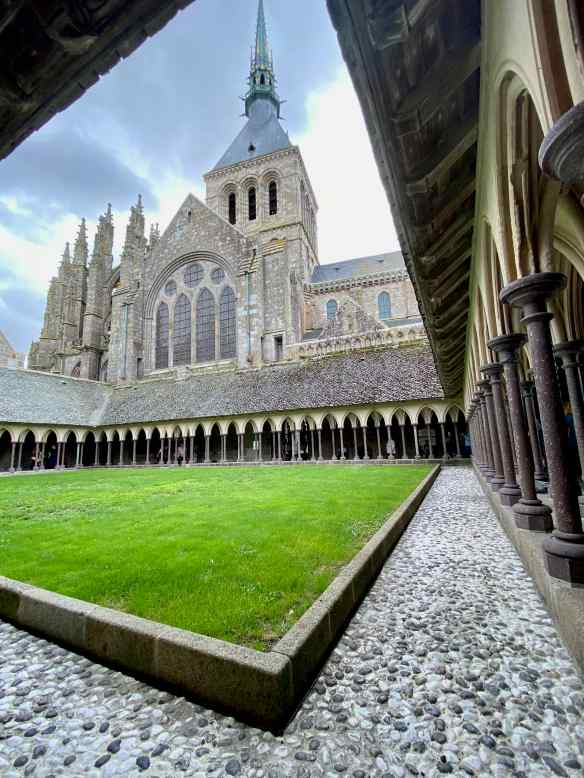
Next we walk through the cloister with its many narrow columns and a view of the church tower.

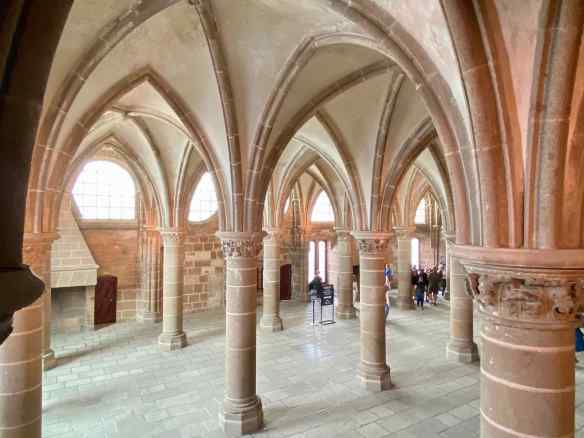
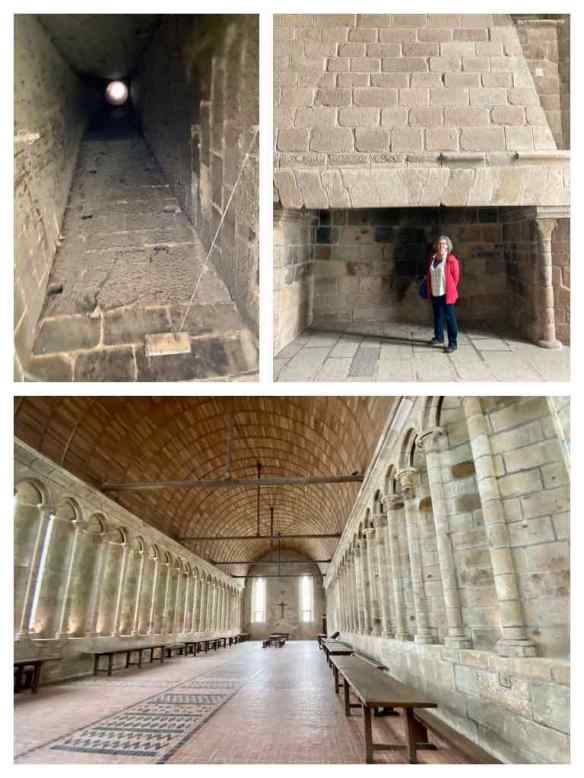
The Host’s room has two enormous fireplaces. Here I am standing in one and the little round circle is looking up the chimney towards the sky.  This is where food was prepared and where the Abbot received important visitors.  The bottom photo is the Refectory where the monks ate their meals.

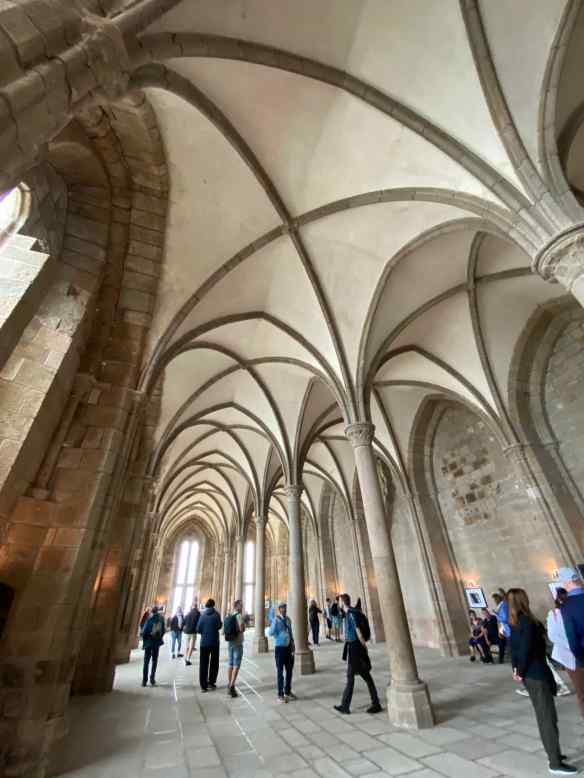
Another view of the Host’s room with its beautiful arched ceiling.
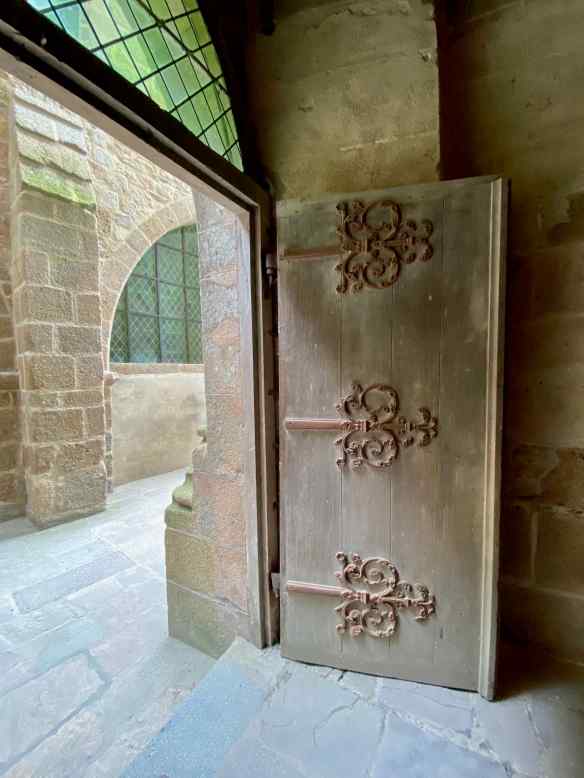
There are so many interesting doors in this abbey.
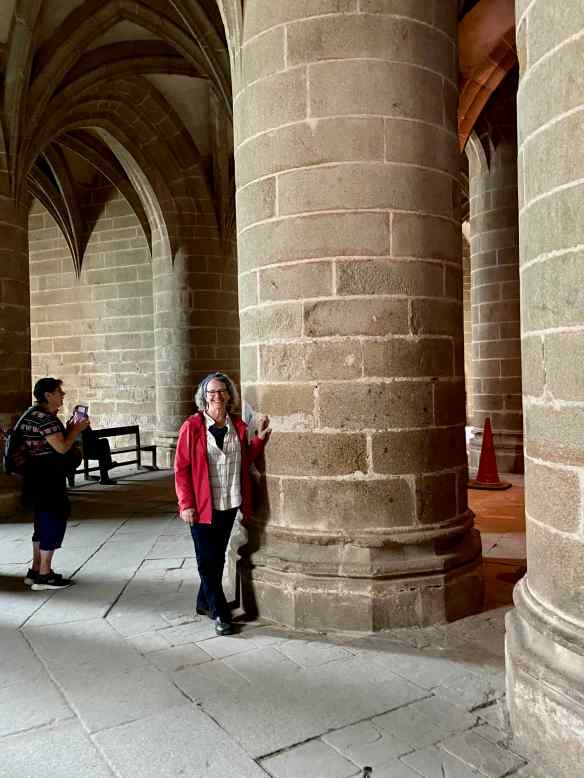
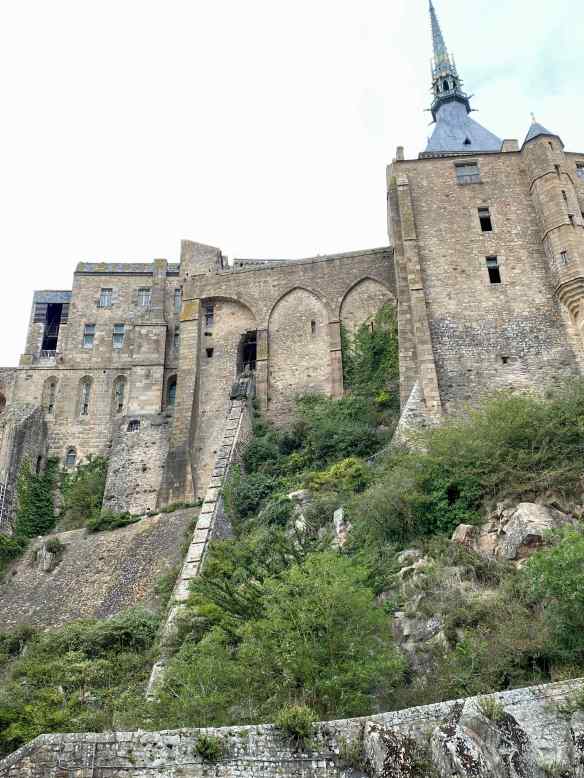
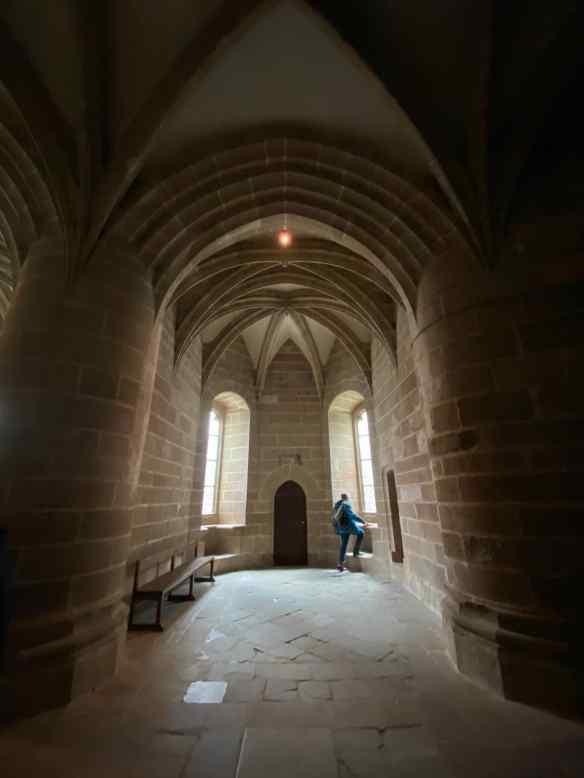
The Crypt des Gros Pillars (Big Pillars’ Crypt) with its ten huge pillars was built to support the choir in the abbey above.There are so many smaller rooms and interesting spaces to be explored.  This one is off the side of the crypt.When the Abbey was used solely as a prison in the 1800’s, this huge wheel was was used to haul supplies up to the abbey.  Prisoners walking inside the wheel were able to raise and lower a cart along a stone ladder inclined along the rock wall.  
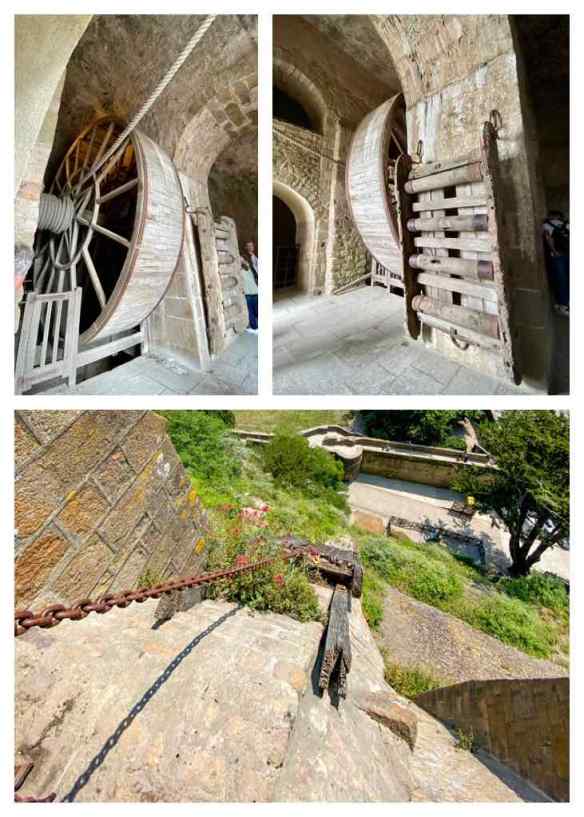
Here you can see where the cart was hauled up the side of the abbey.

The Salle des Chevliers or Knight’s room was most likely used by the monks as a place of meditation and for copying and illustrating manuscripts.  

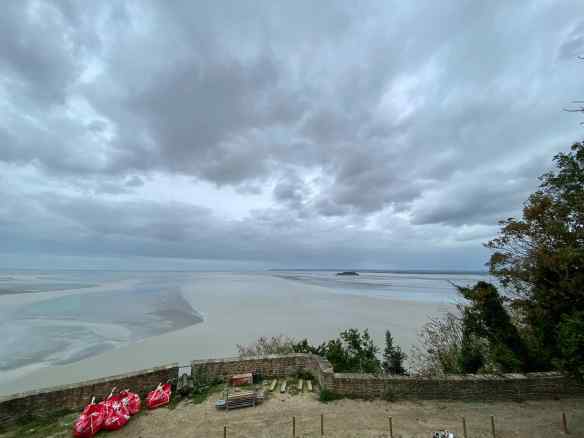
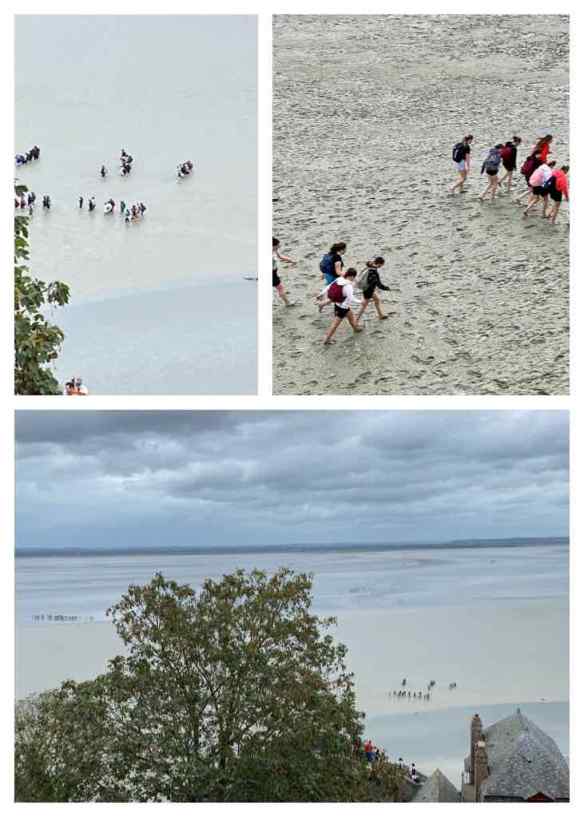
When we walk out into the gardens we see that the ocean is now at low tide and the sand bars are visible all around Mont St. Michel.We hear shrieks and peals of laughter and realize that is is coming from the people out walking on the sands now that the tide is out.  Some of them are thigh deep in the water!  There are a lot of people out there, some of them way off in the distance.  Thanks, but I am happy to pass walking in mud and cold water.
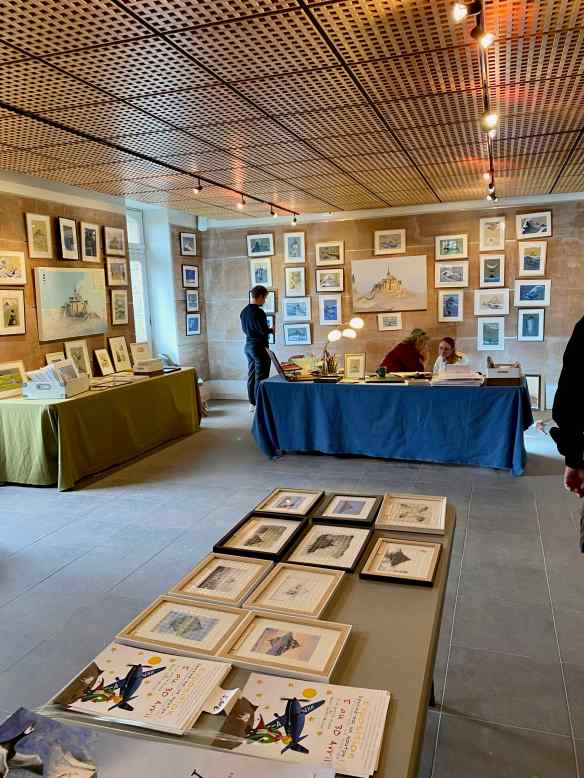
We stop at this little art gallery and I have chat with the artist.  She has a variety of different styles and media, and I found her work very appealing.

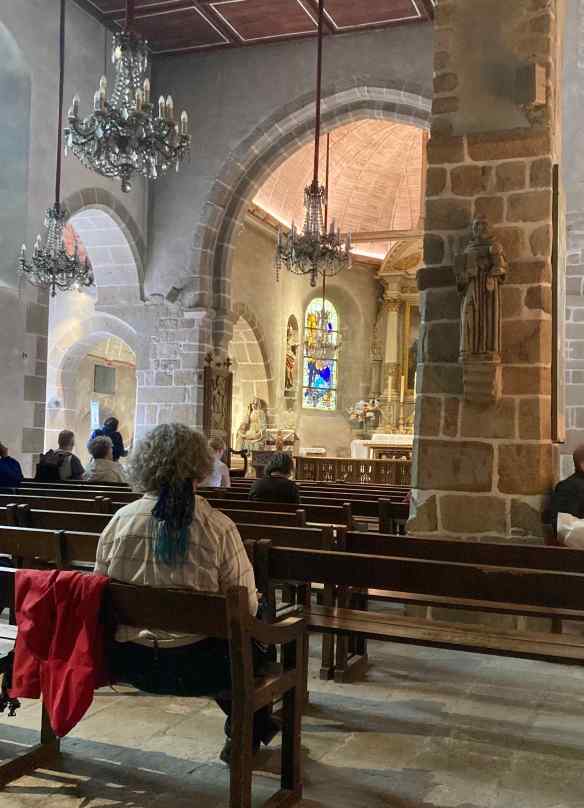
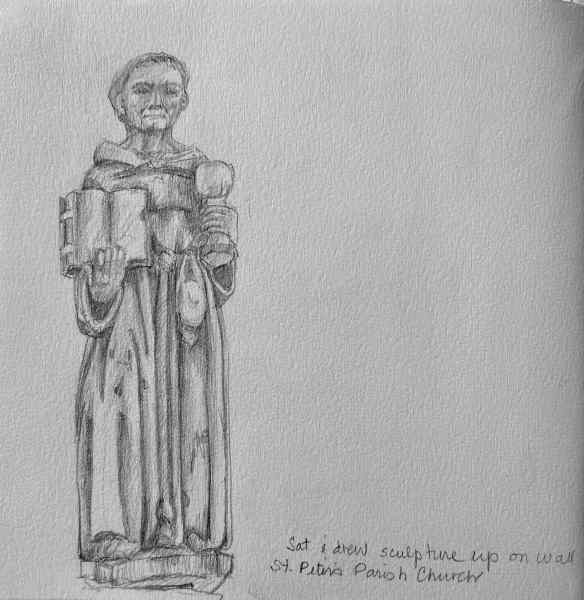
It starts to rain so we duck into the Parish Church of St. Peter for a well needed sit down.  I draw the statue on the wall while Bob rests and then goes for a little walk about so that I have time finish my drawing.

I forgot to see if there was plaque saying who the sculpture was.Bob took interesting photos of the inside and outside view of these two stained glass windows.
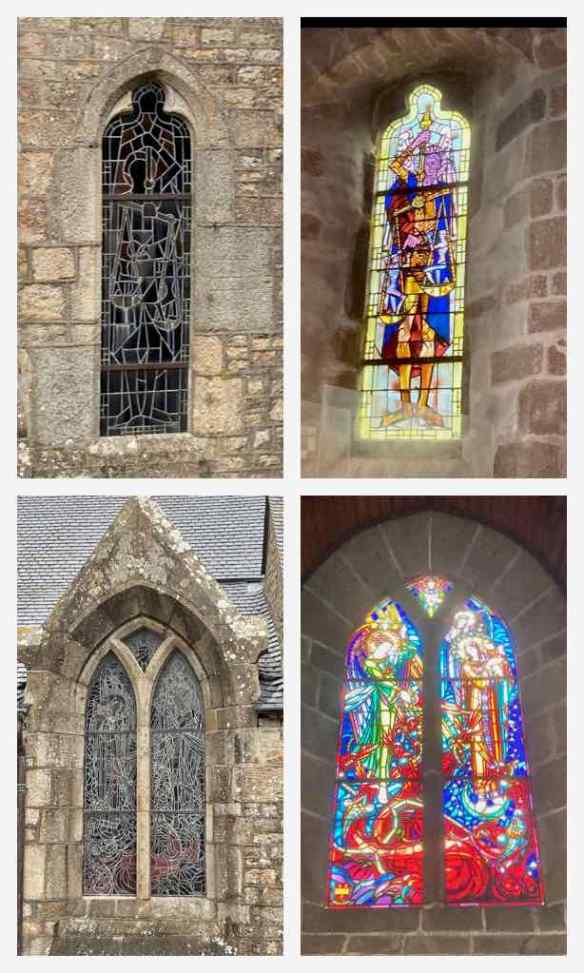
People are still coming and going…lots of people!

This photo of the bell tower just barely shows the golden statue of St. Michael threatening a dragon, who represents evil, with his sword.  St. Michael is perched 156 metres high, is 4.5 metres tall and weighs 520 kg. The statue is made of gilded copper and serves as a lightning rod.

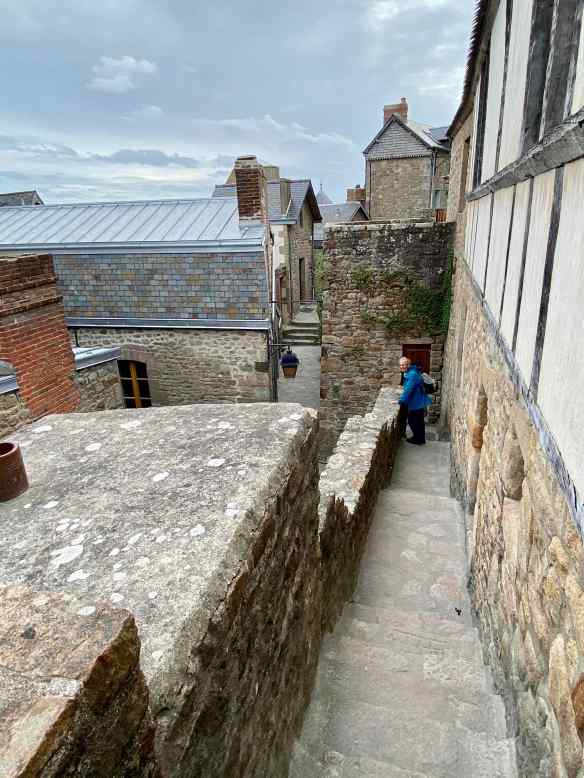
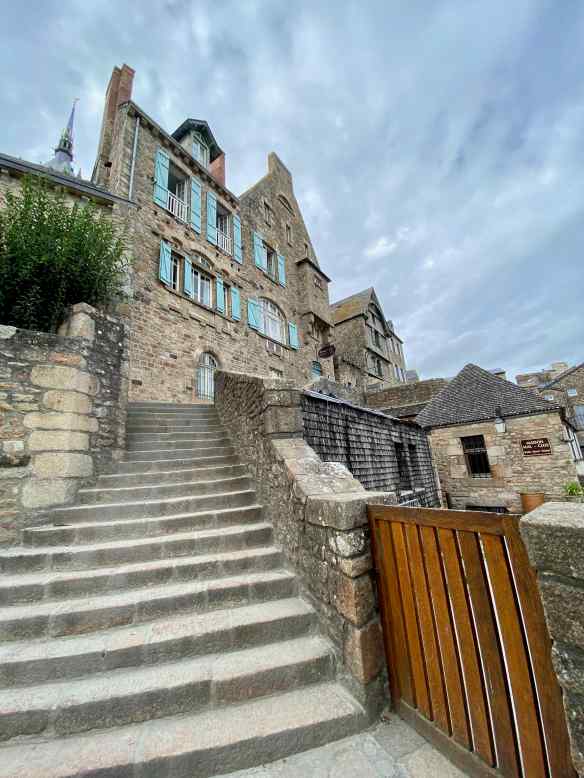
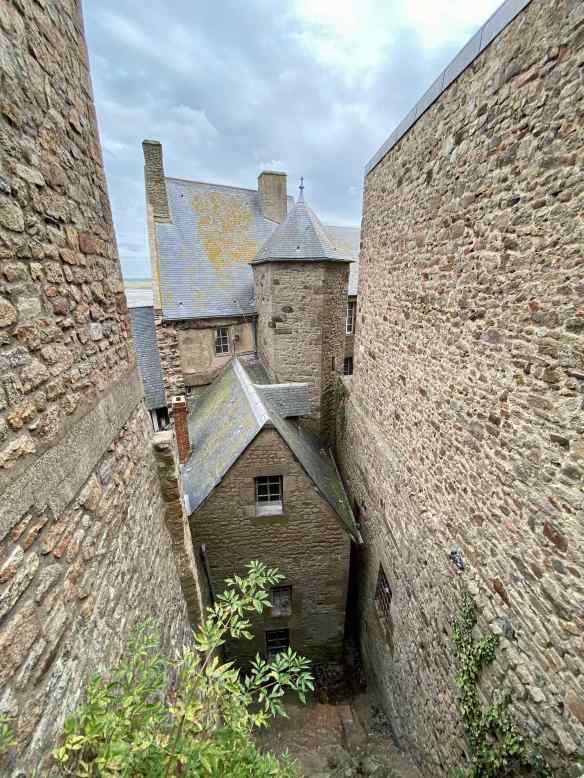
We wander the back streets which most people seem to ignore. There are lots of steps…. …interesting details…

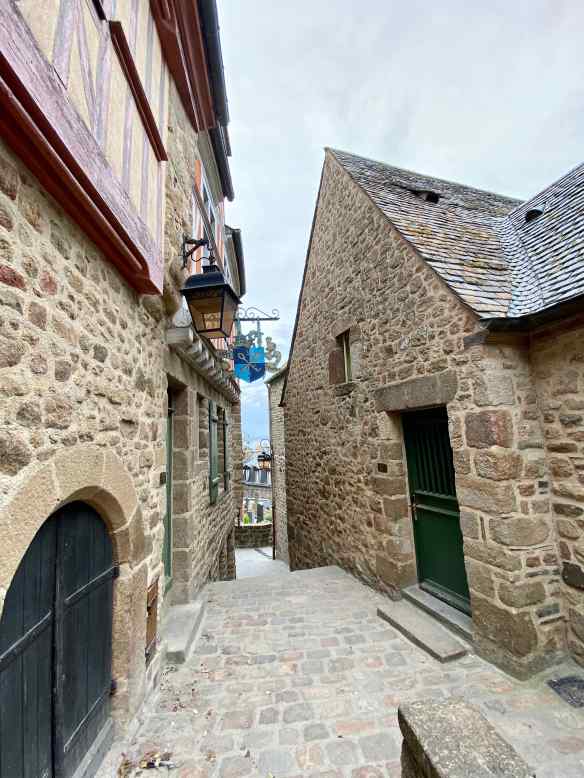
…narrow streets… …crooked roof lines…

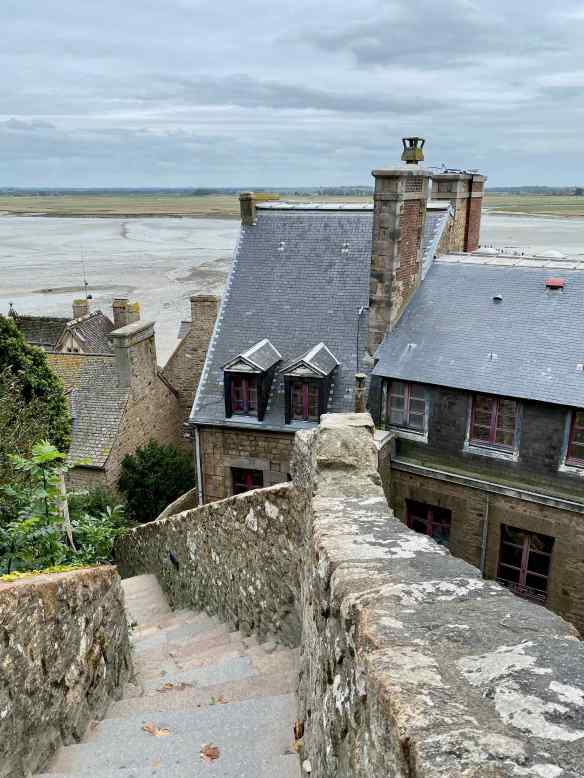
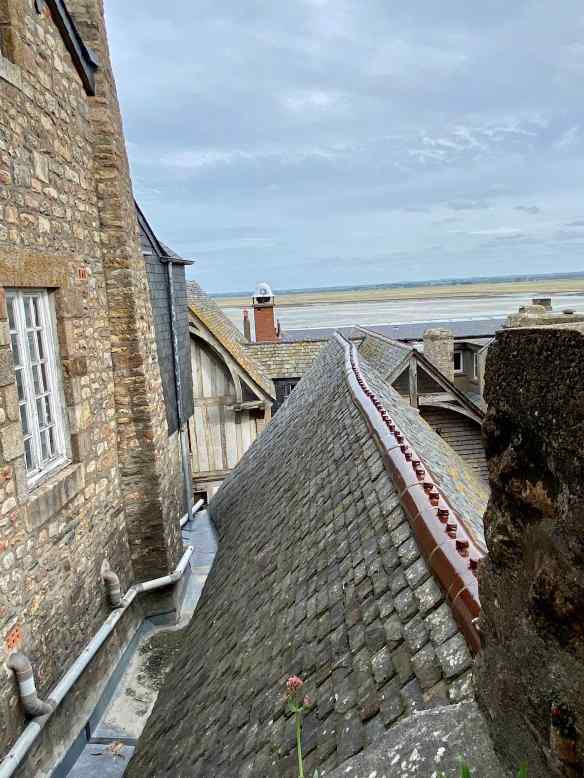
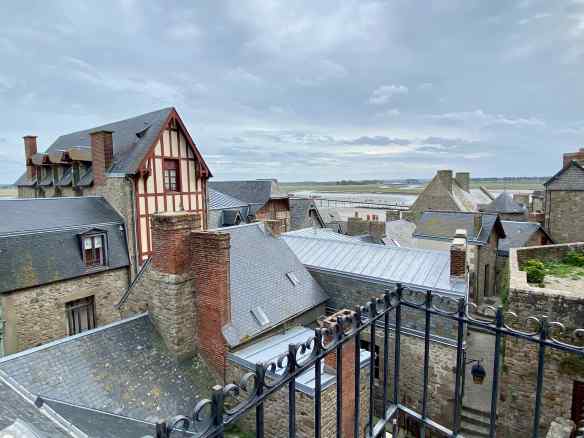
…fantastic rooftop views…

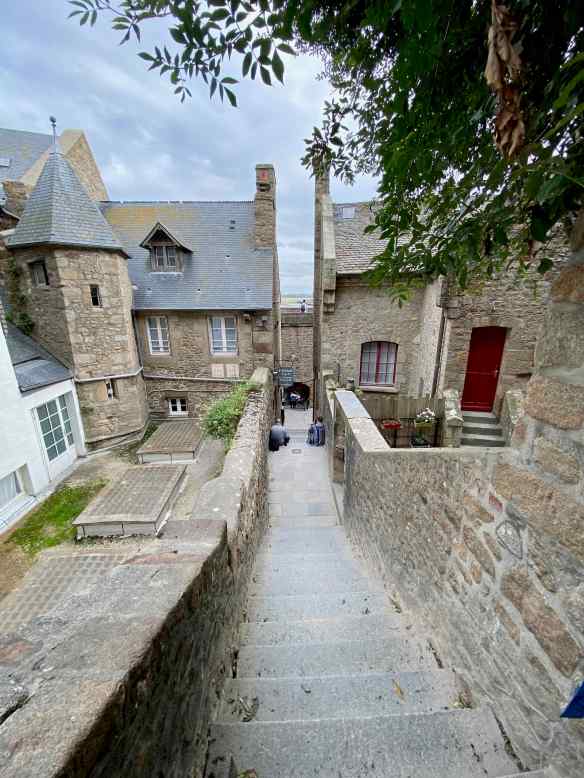
…more steps and stone walls…

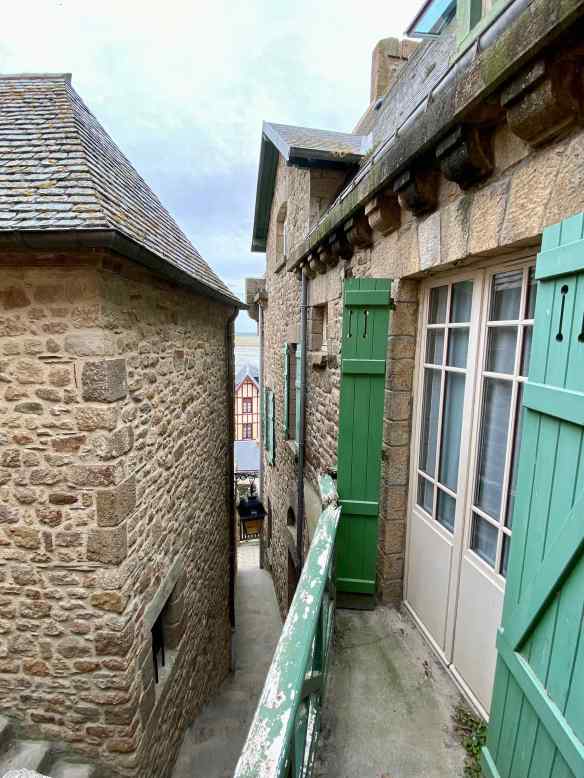
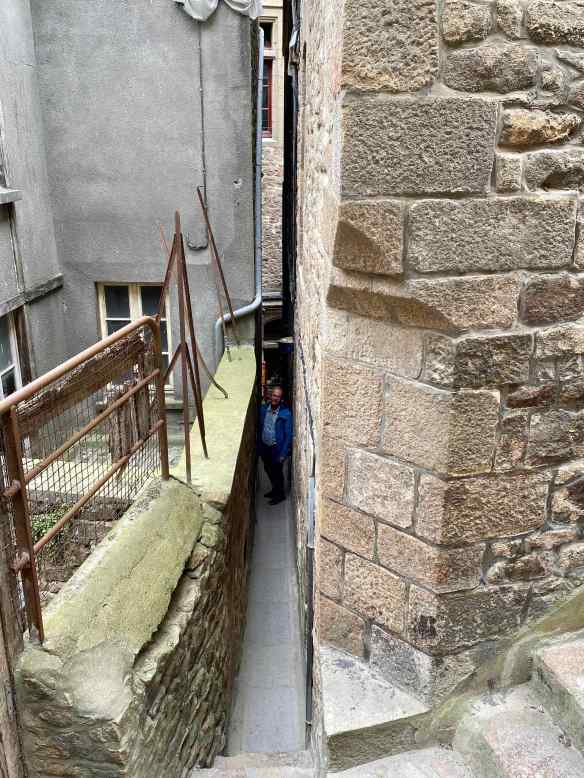
…the narrowest street ever…This is Cuckold’s Alley!

I think I may have mentioned steps…

and buildings tucked into the strangest places…

…and more steps with a tiny view of the ocean…

…which leads us back to the Main Street.

Time to cross the drawbridge and leave Mont St. Michel.

We say goodbye to Mont St. Michel after 7 hours of exploring this fabulous island.  

Day 21,  Monday, September 18, 2023

Yesterday was a stay at home day. No photos, just relaxing and catching up on my blog and planning the next part of our trip.

Saint-Malo, France

Day 20, Sunday, September 17, 2023

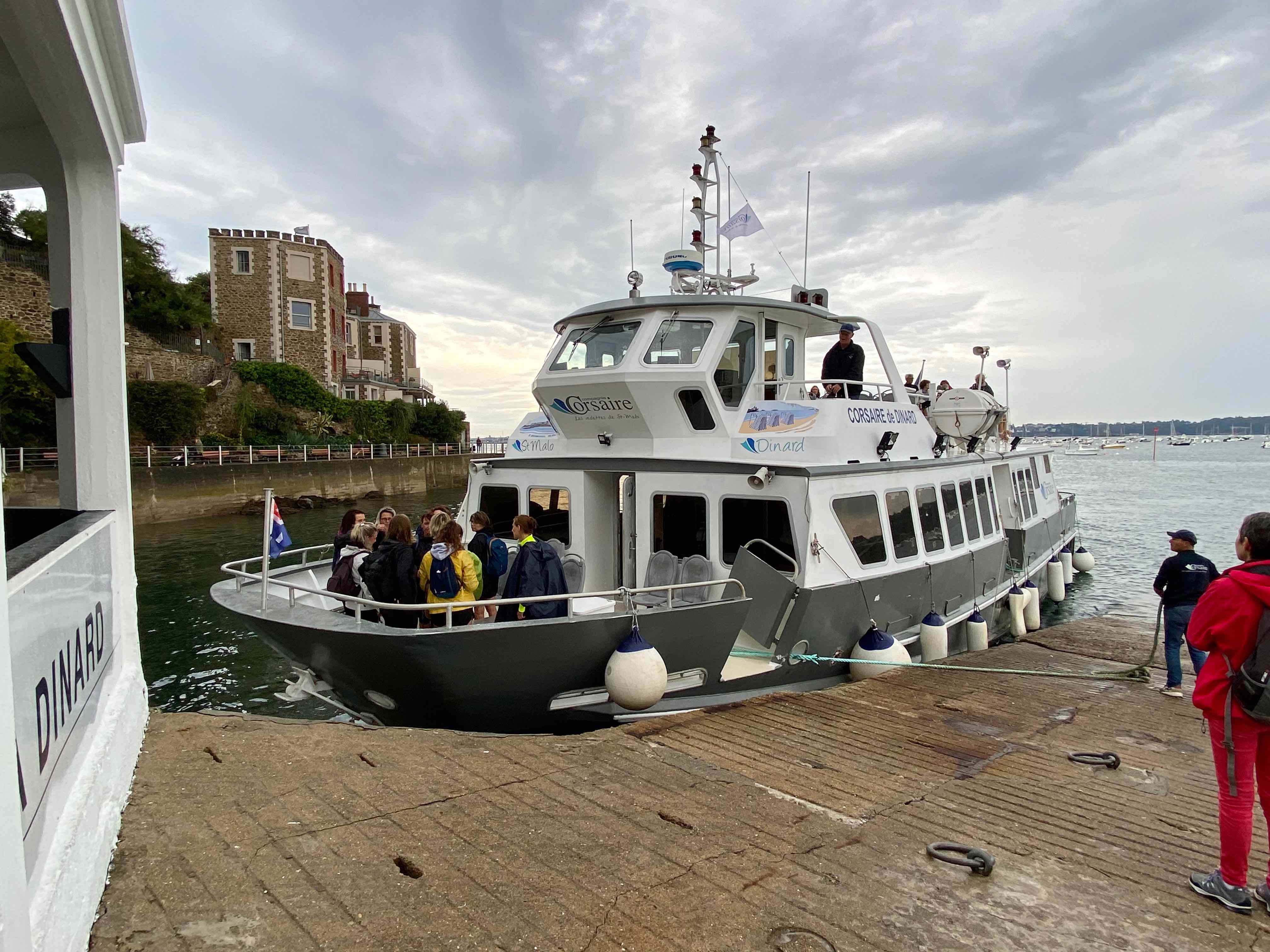
We are on our way early this morning to catch the ferry to Saint-Malo. Yesterday’s walk  was at low tide and there was no water here.  High tide was at 9:30 this morning…what a difference. It is cloudy, much cooler and there is a chance of rain today.The ferry loads right at the top of the ramp, yesterday it was down near the bottom of the ramp.

After a ten minute ferry ride, the captain docks effortlessly at Saint-Malo Take note of how high the water is.

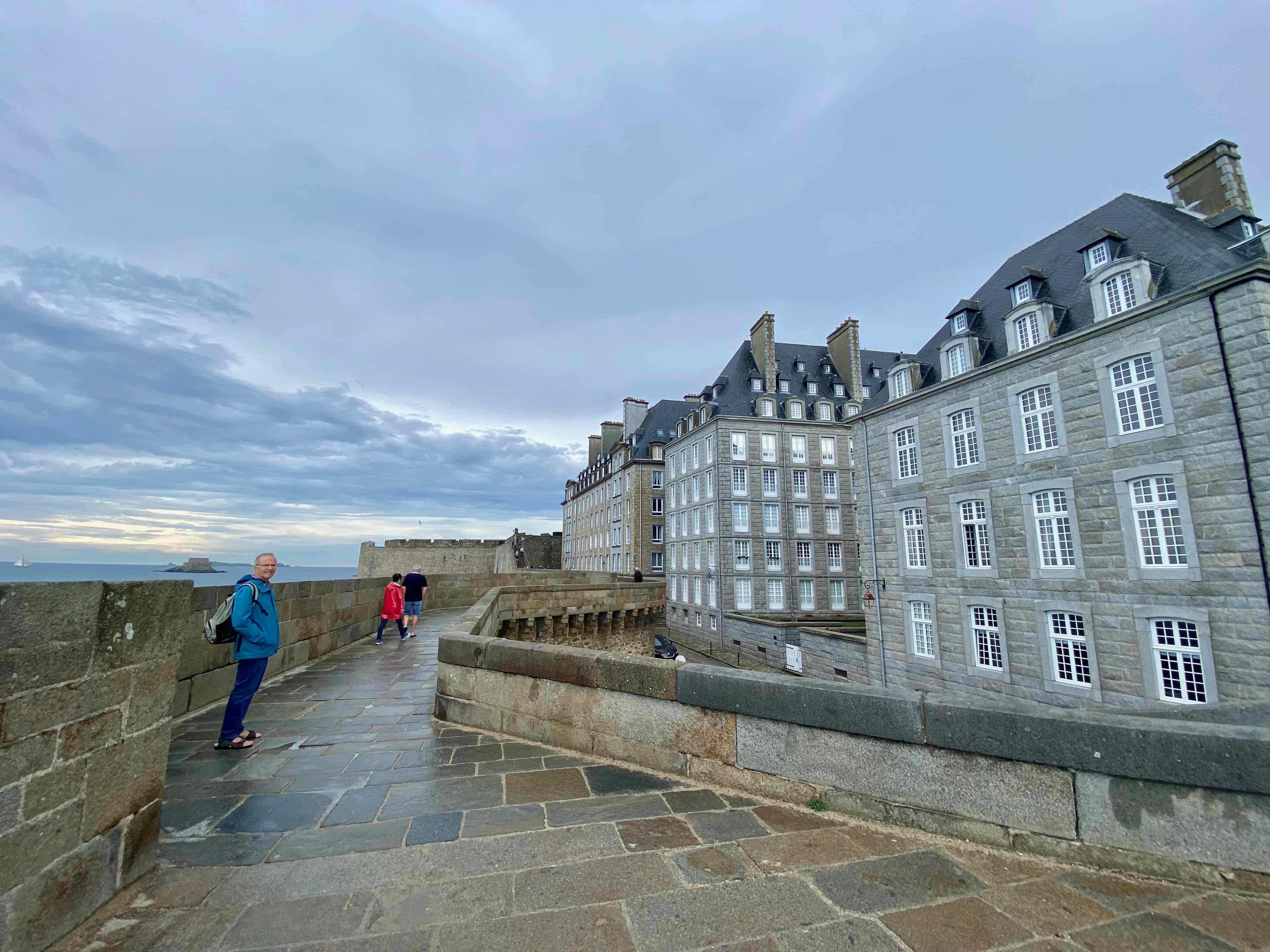
Soon we are walking the ramparts of Saint-Malo. The walls below are as thick as these walkways.
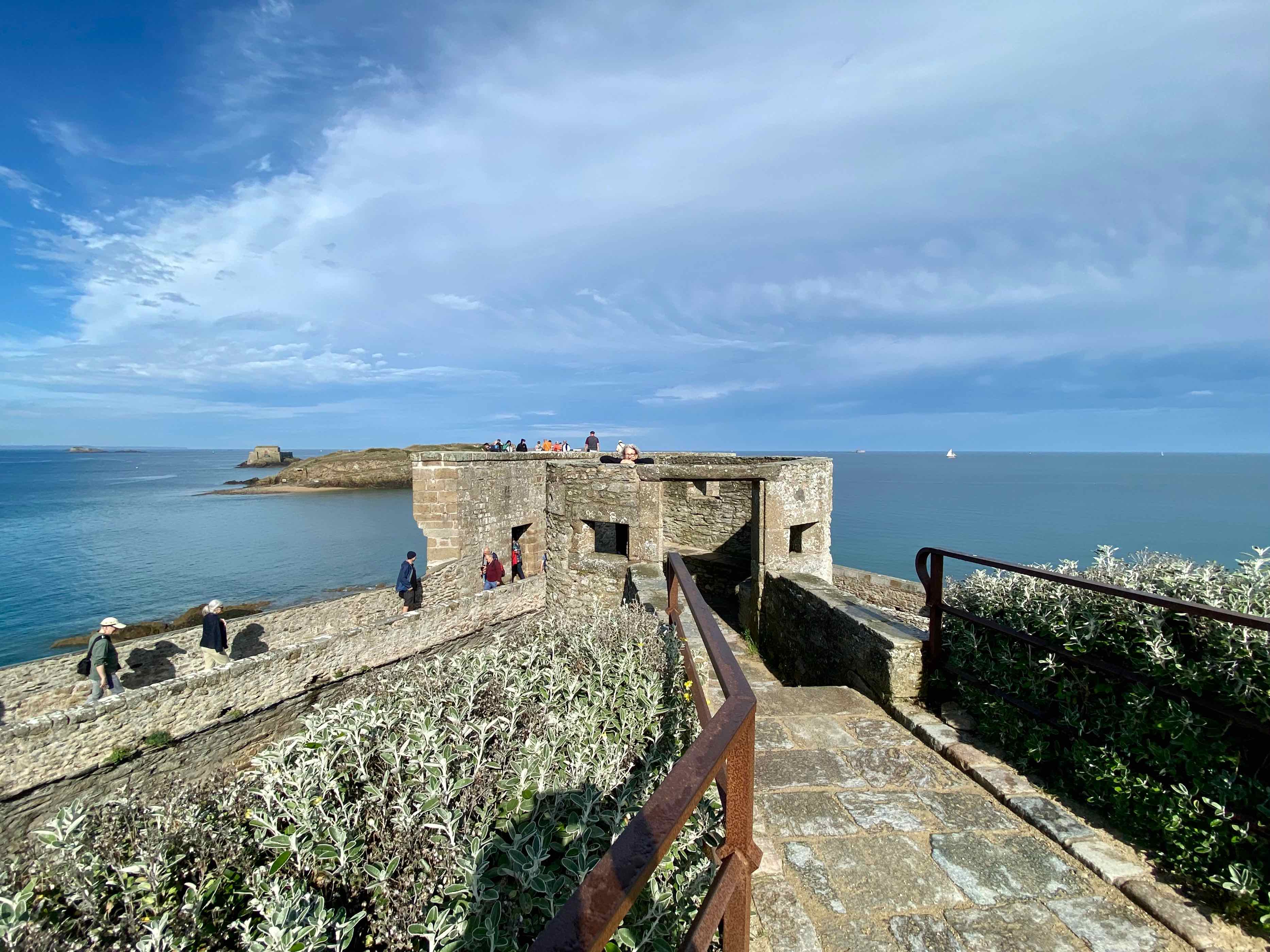
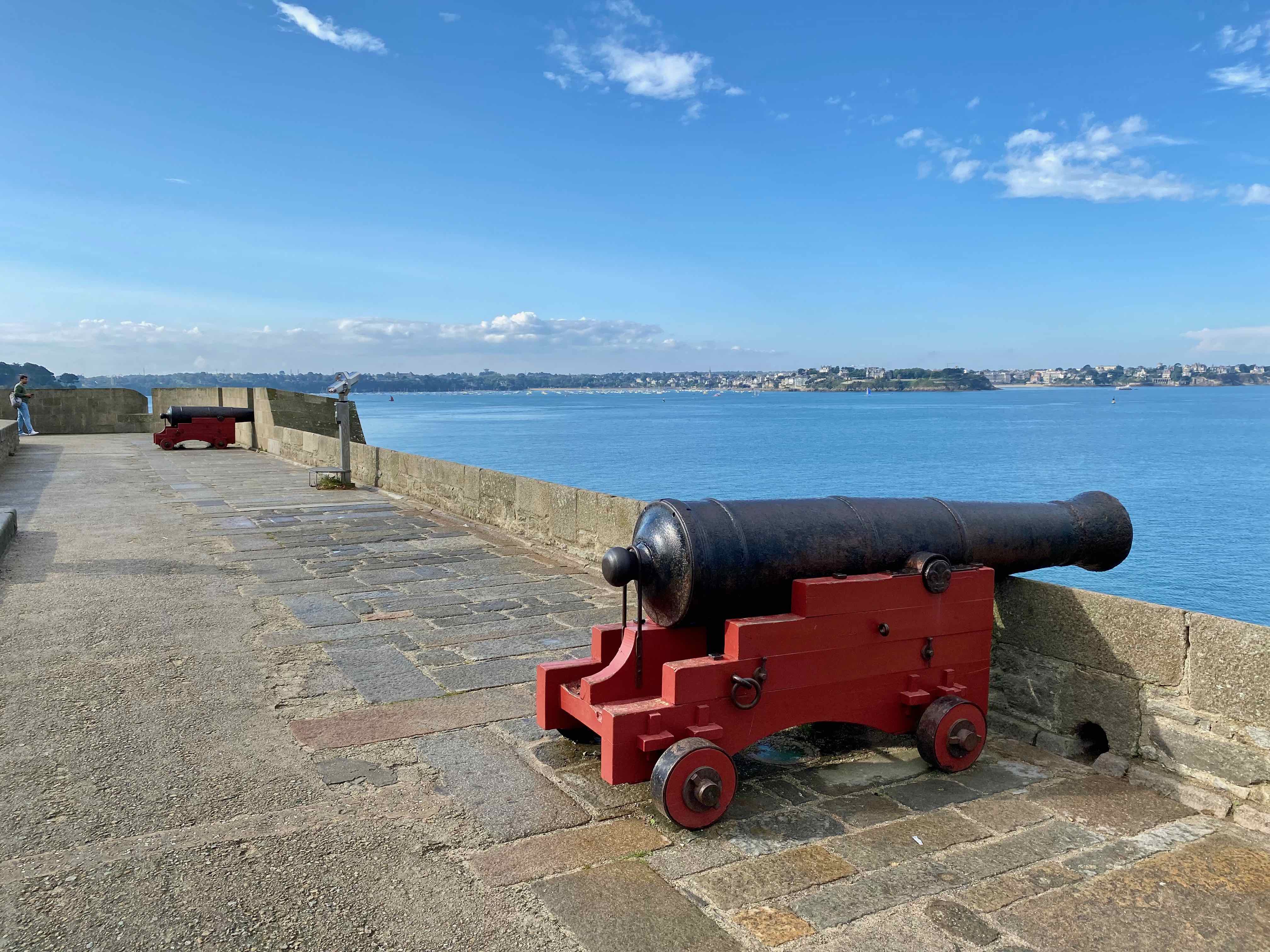
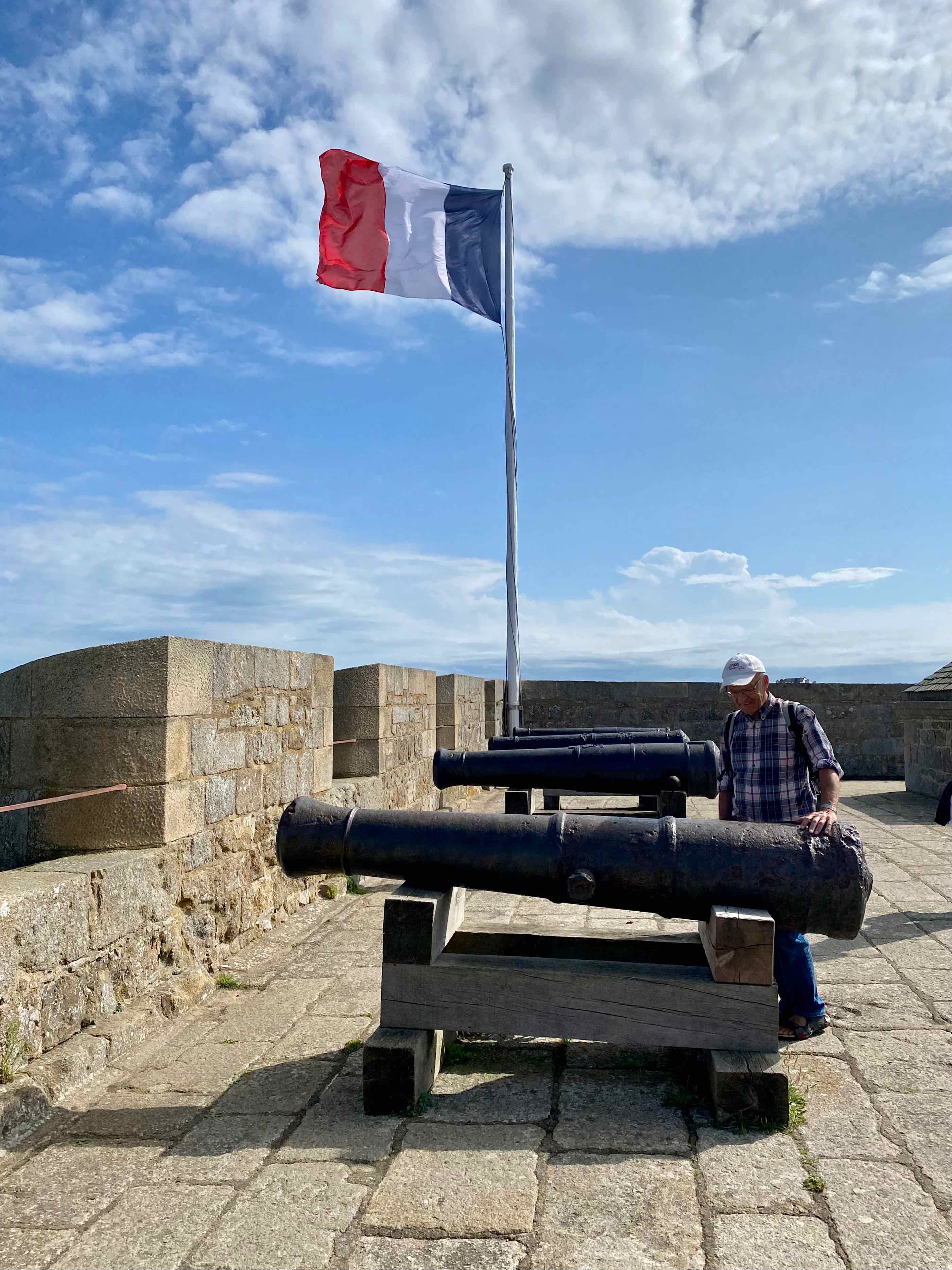
There are still some cannons protecting this walled city..Checking out the view… …and here is the view.  The tide is already starting to go out and more beach is visible.
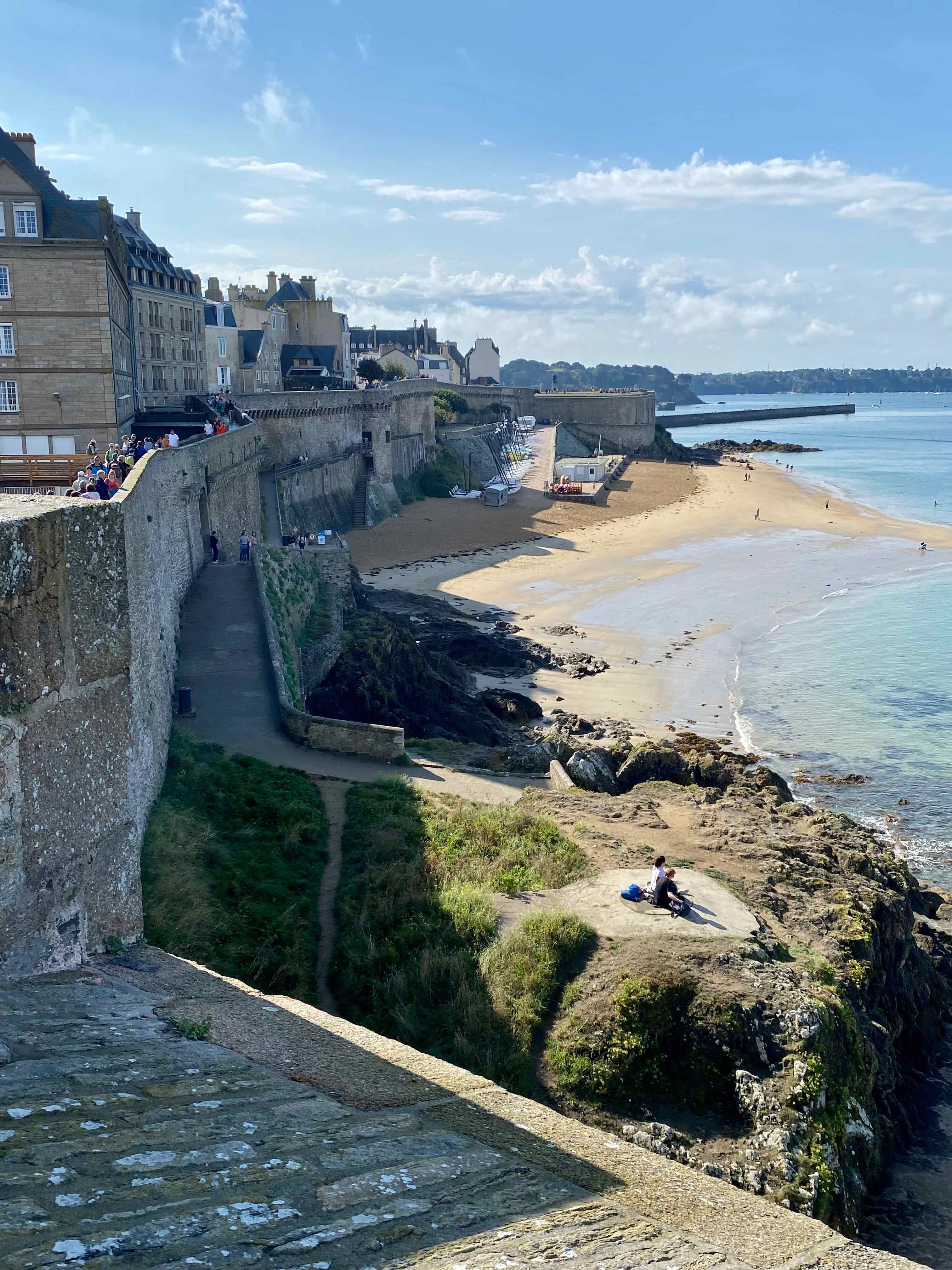
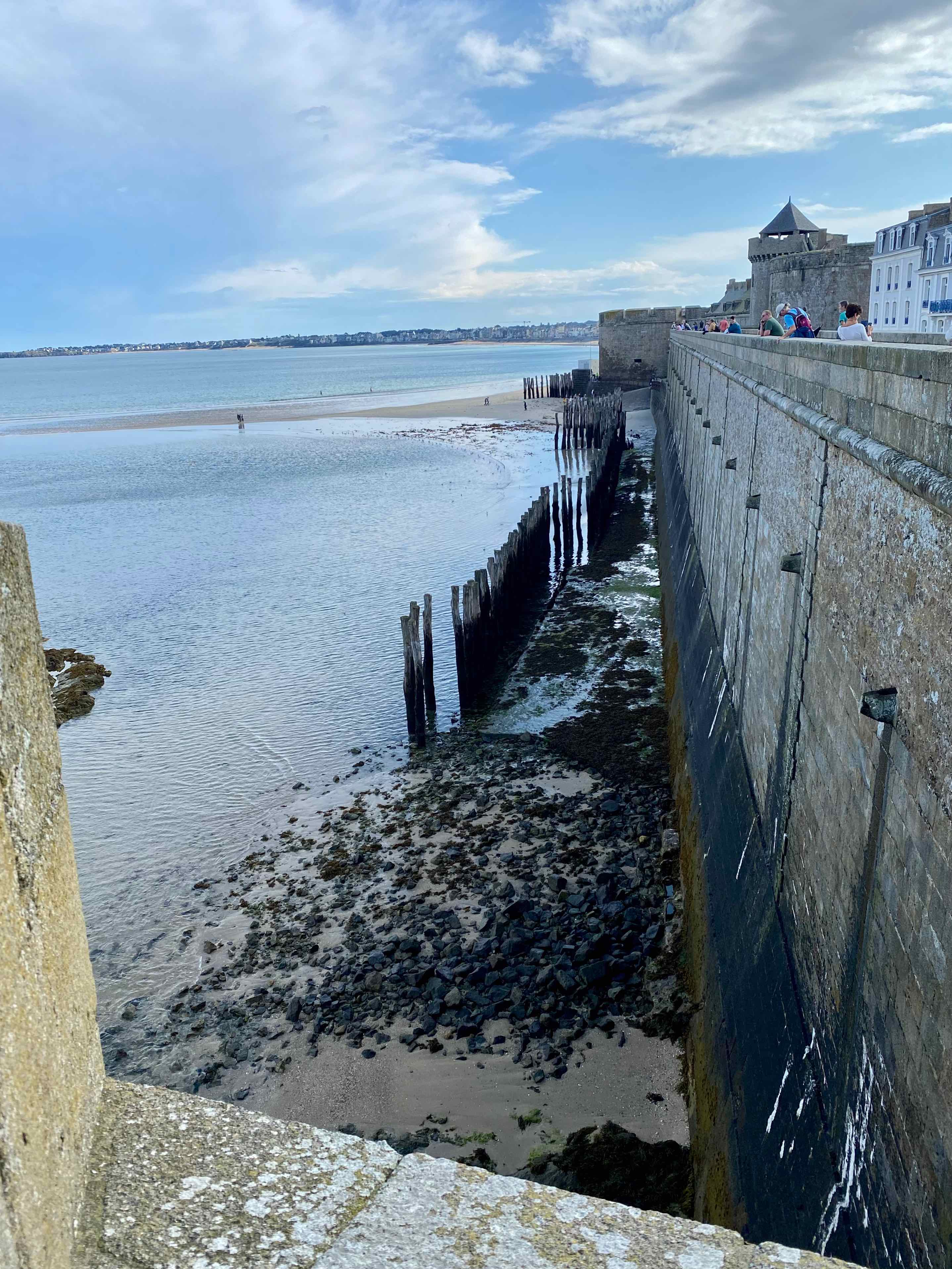
That dark line on the pillars and the wall is where the water reaches at high tide!

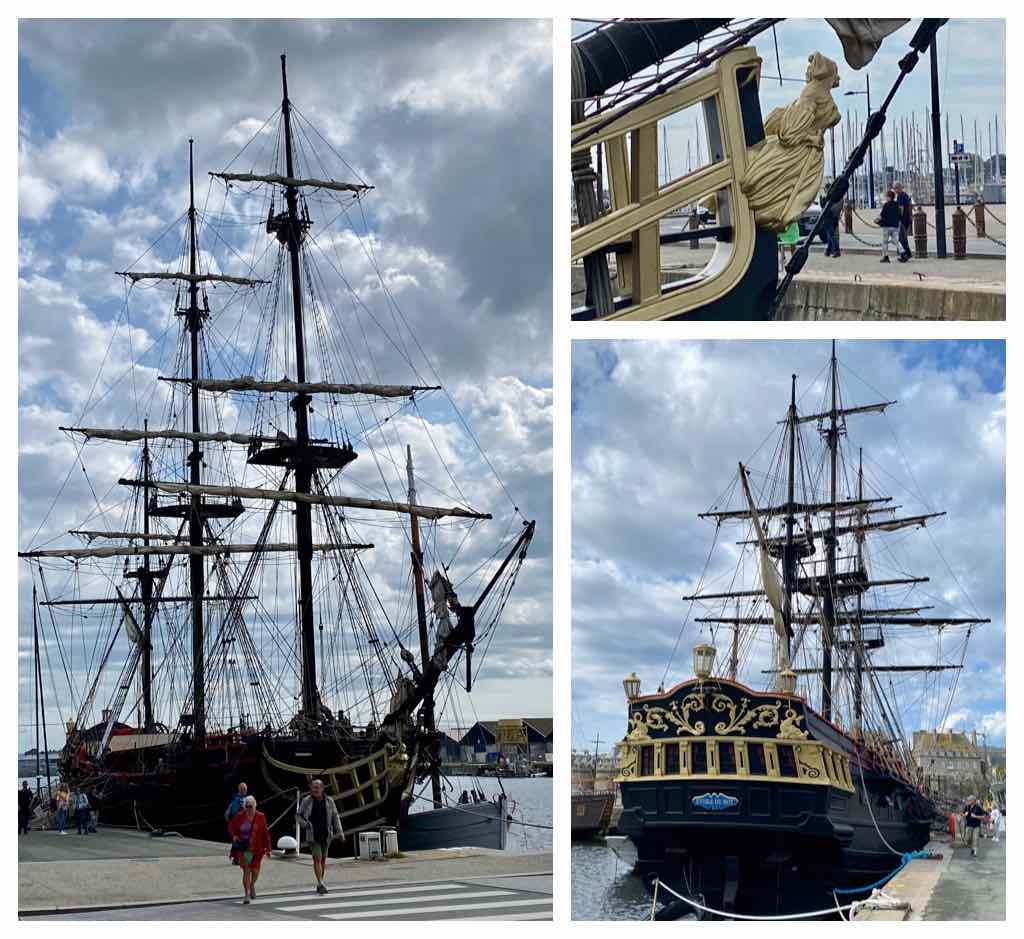
The Etoile du Roy  is the second largest replica tall ship in France. For most of the year, she is moored in the port. The Etoile was originally built as the Grand Turk for the British ITV series Hornblower, and has appeared in several films and TV series.  it was closed to visitors when we were there, too bad.  It would have been very interesting to climb on board.

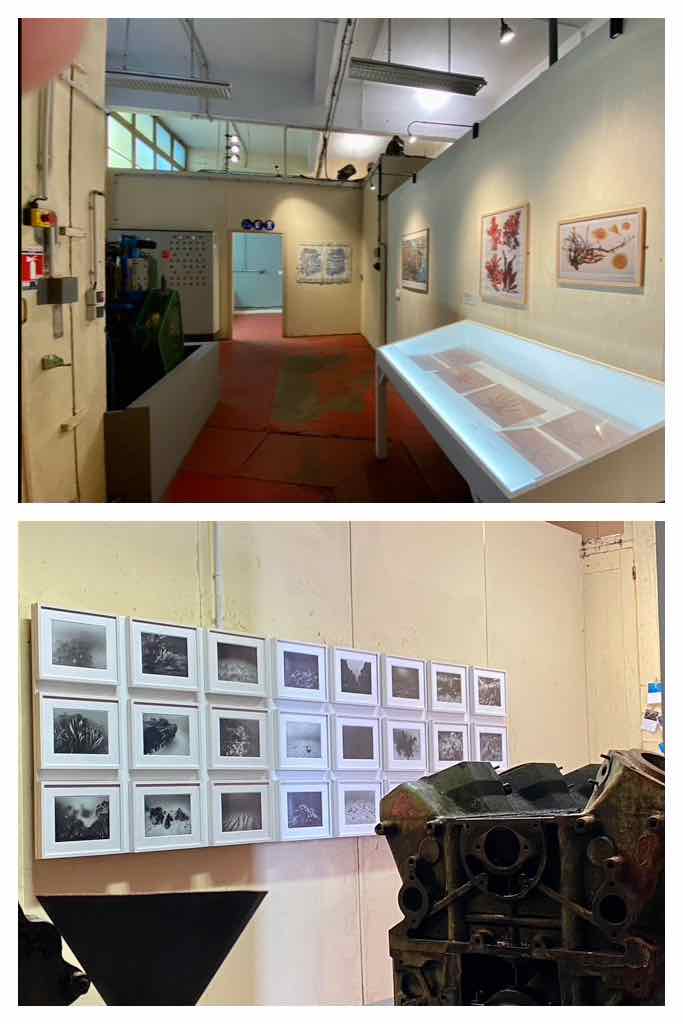
We visited and art exhibit in a very strange venue…it was full of very large, very old, very smelly engines.

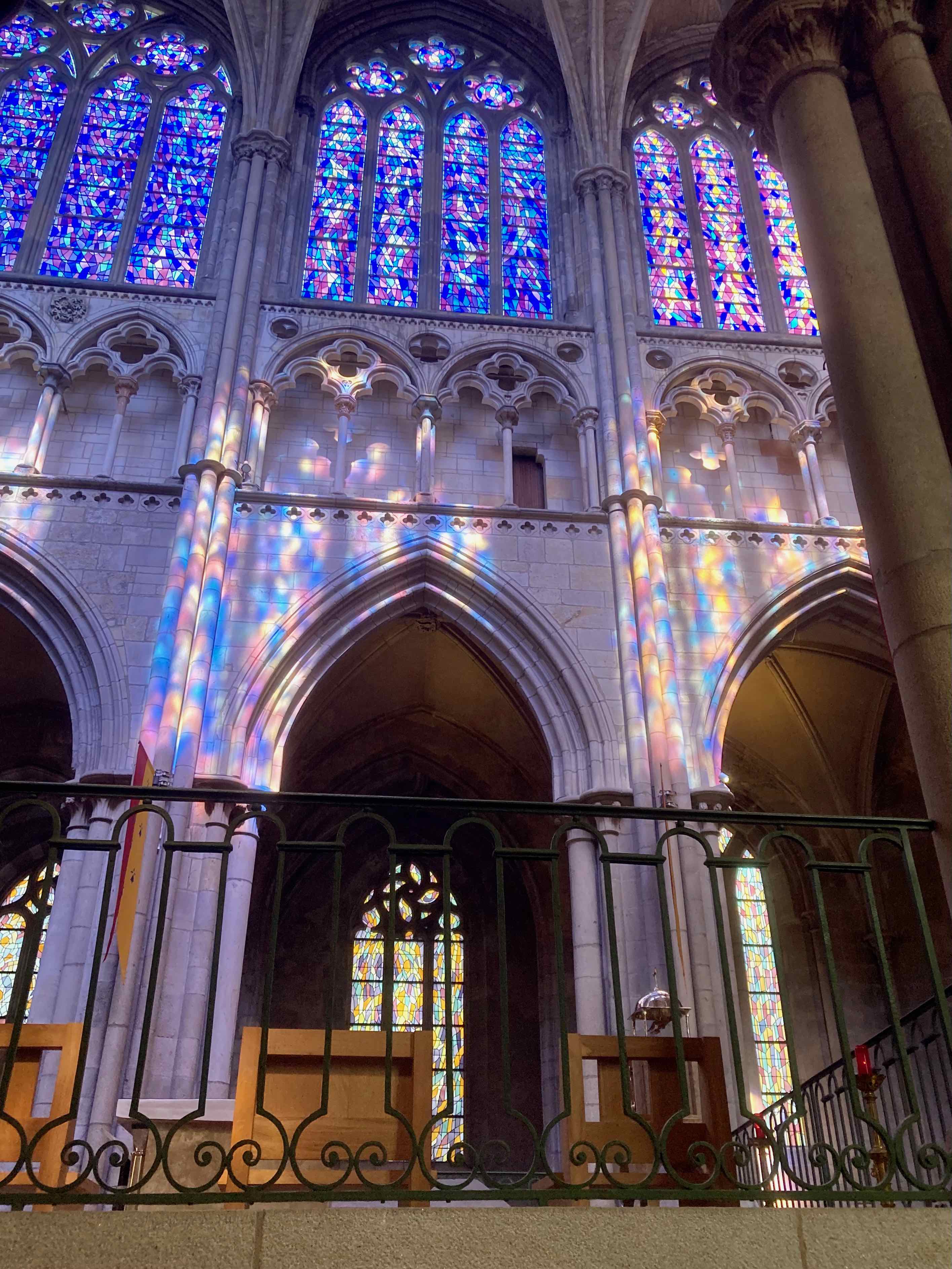
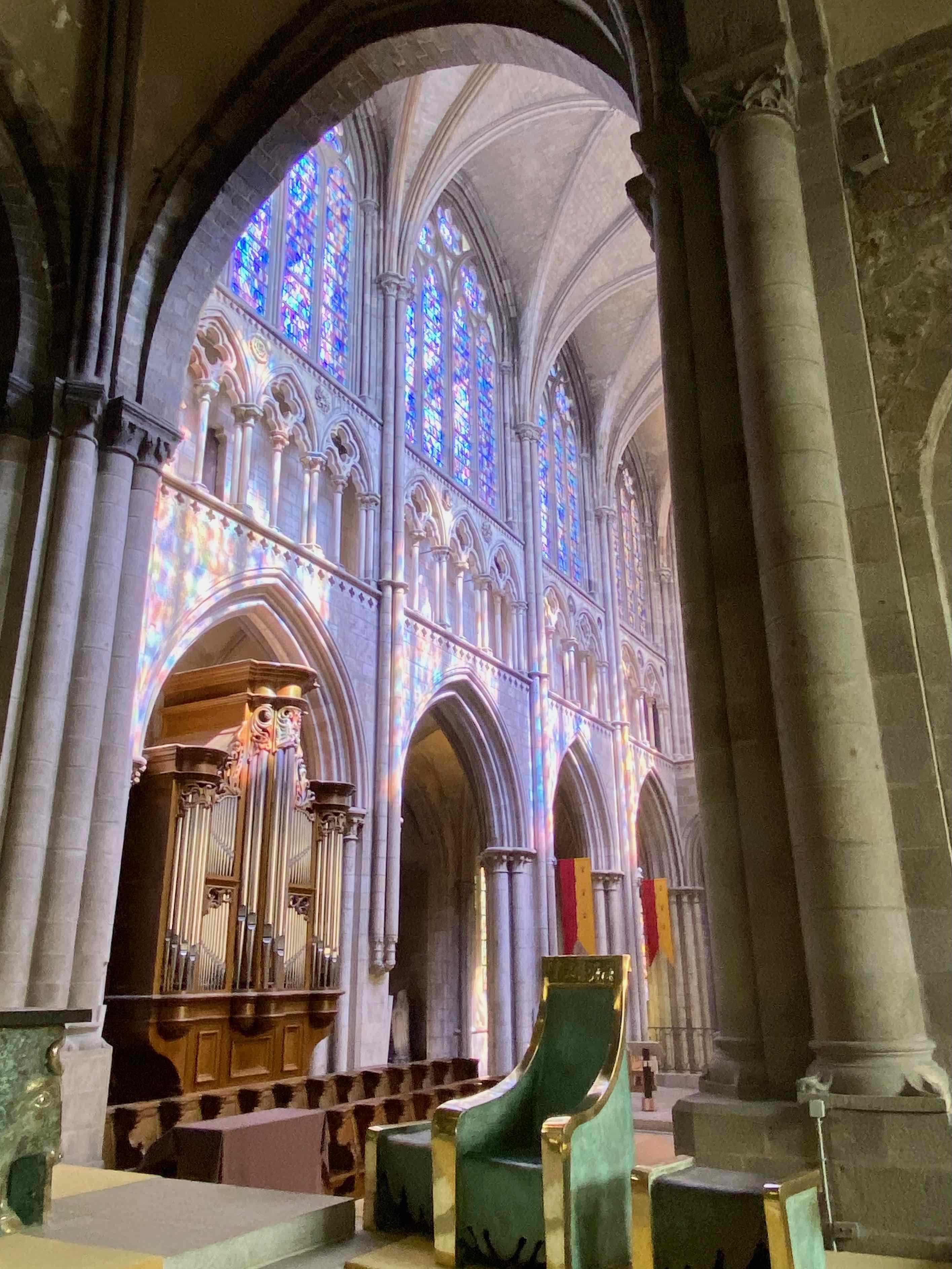
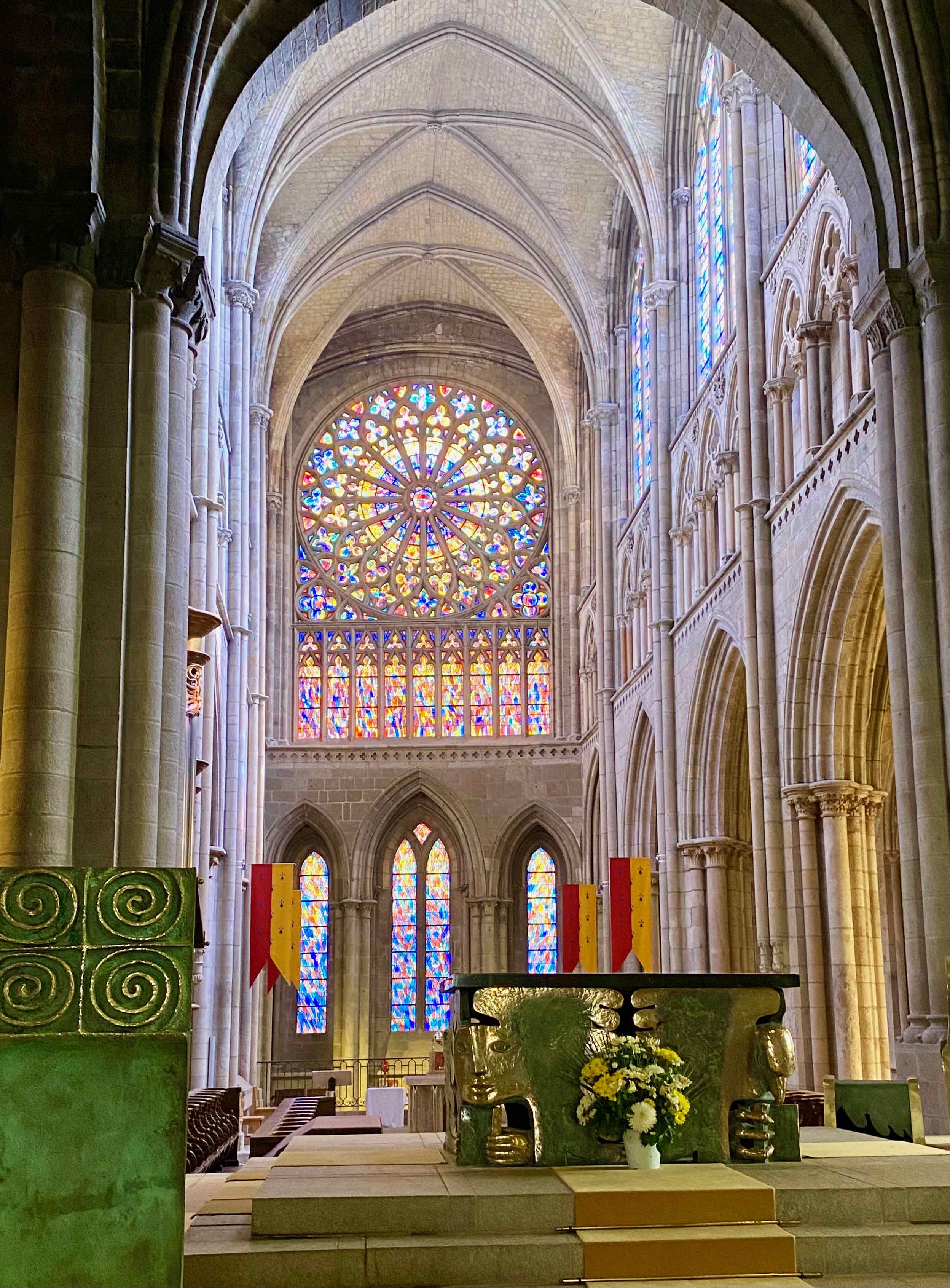
After lunch we  visit the Saint-Malo Cathedral. This cathedral was heavily damaged in the liberation battles at the end of WWII where nearly 80% of the city was destroyed.  Somehow the walls protecting the city remained undamaged.  The cathedral has been restored, keeping faithful to its original form. The stained glass window are beautiful…

and the sunlight shining through them throws colour over the interior of the church.

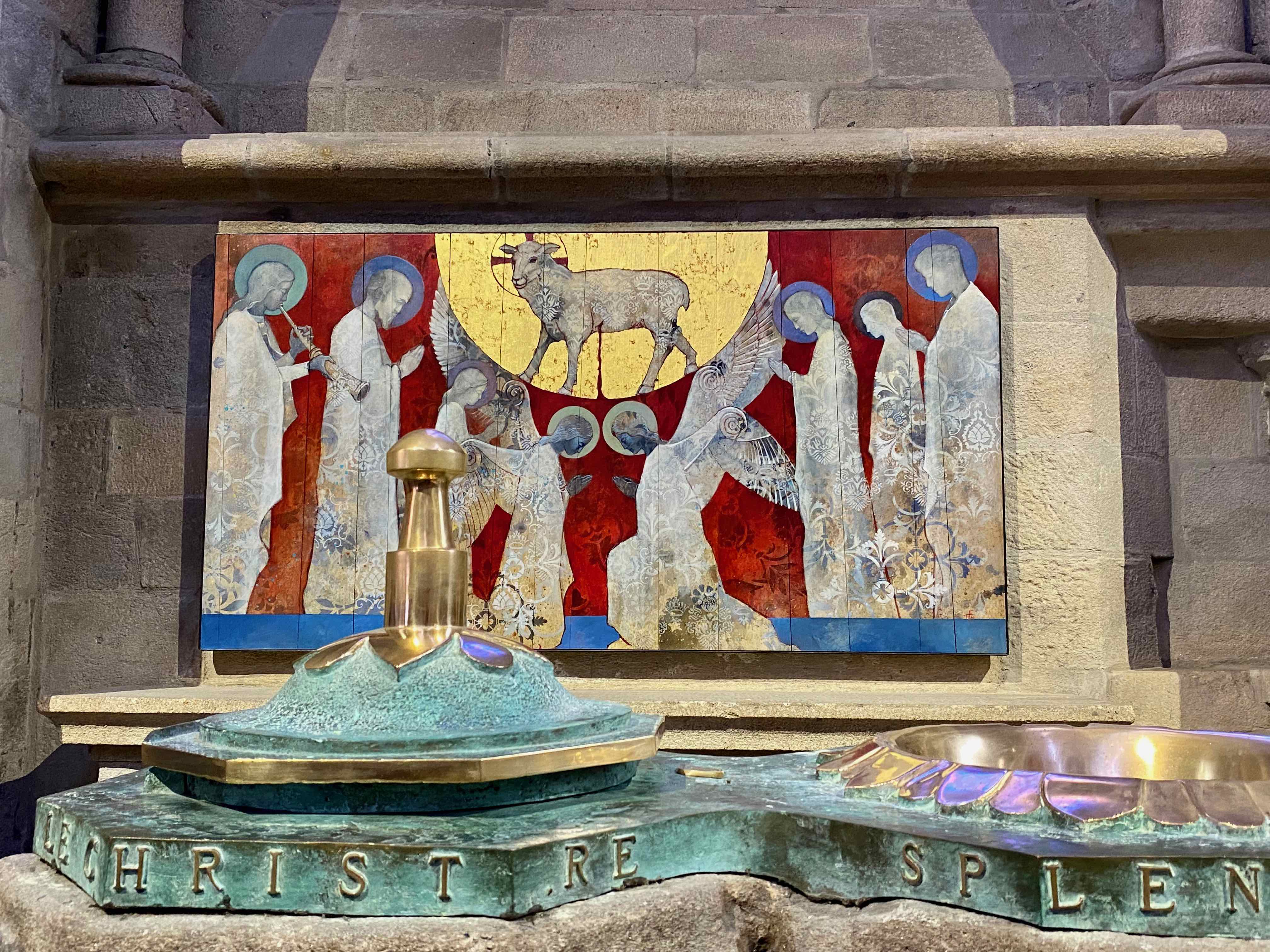
There are several beautiful modern Biblical paintings.

The rose window is magnificent and the unique altar and podium are glazed ceramic. 

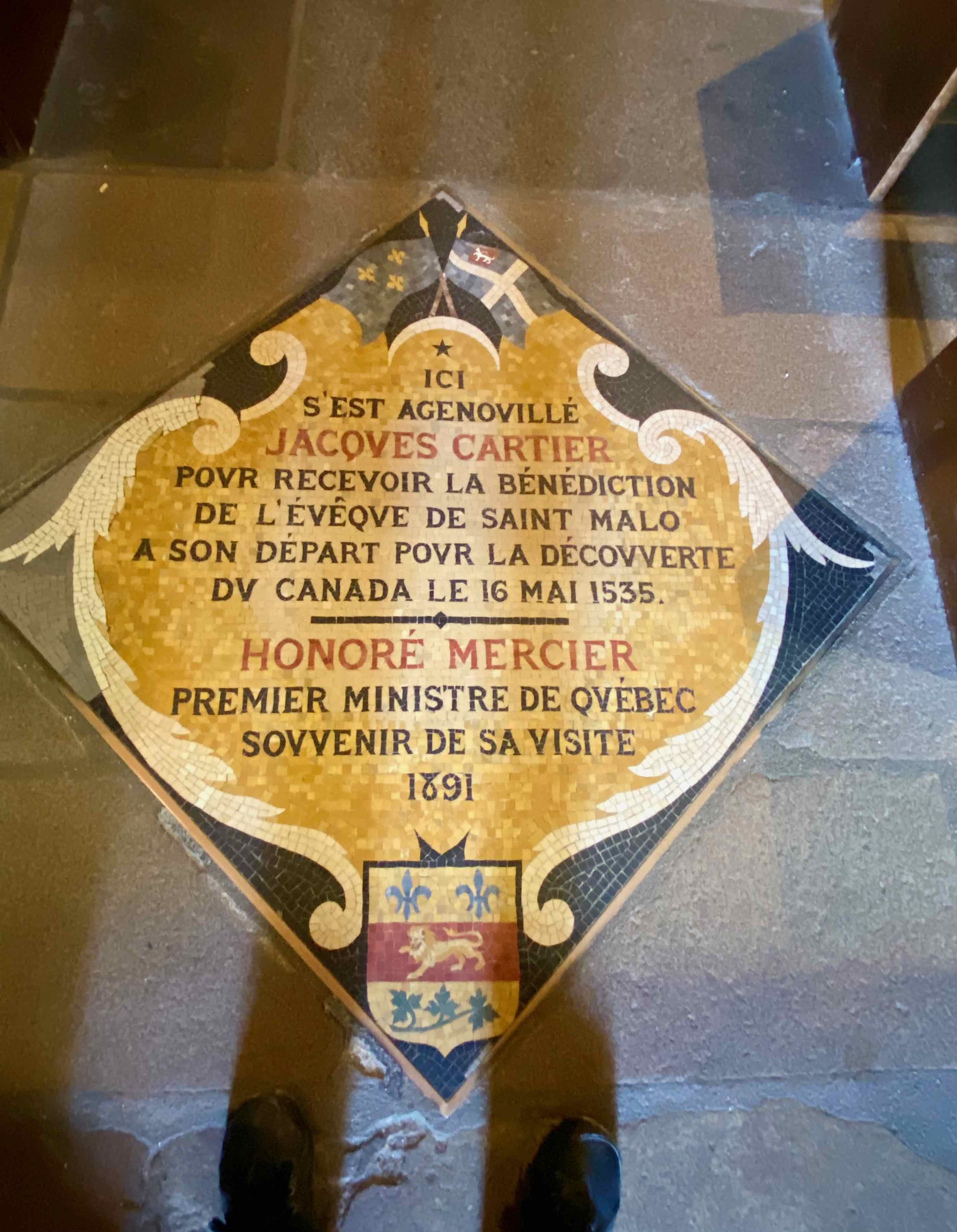
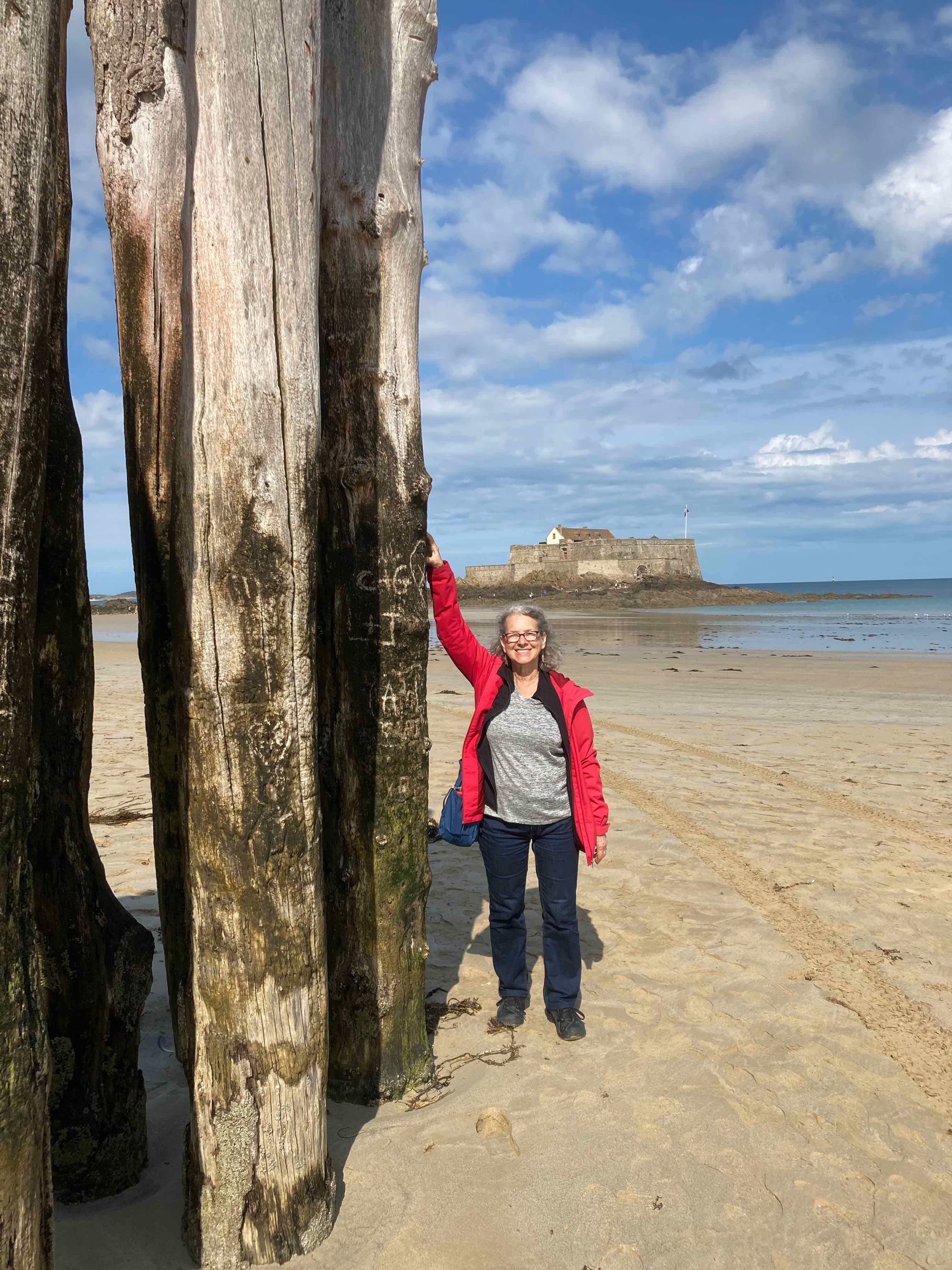
Saint-Malo’s most famous seafarer was not a corsair (pirate) but the explorer Jacques Cartier. Born in Saint-Malo in 1491, it was from his home port that Cartier set out on his first voyage of discovery to the New World, where he was to establish “New France” on the Gaspé peninsula of the North American continent, now a part of Quebec. On a second voyage, Cartier sailed up the Saint Lawrence river, as far as a point where a hill rose up on the north bank of the river. He named it “Mont Royal”… or to use the phonetic spelling of the age, “Mont  Réal”.   Cartier is buried in the cathedral at Saint-Malo. ~AboutFrance.comBack to the beach where it is getting closer to low tide.  These pillars are wet higher than I can reach.

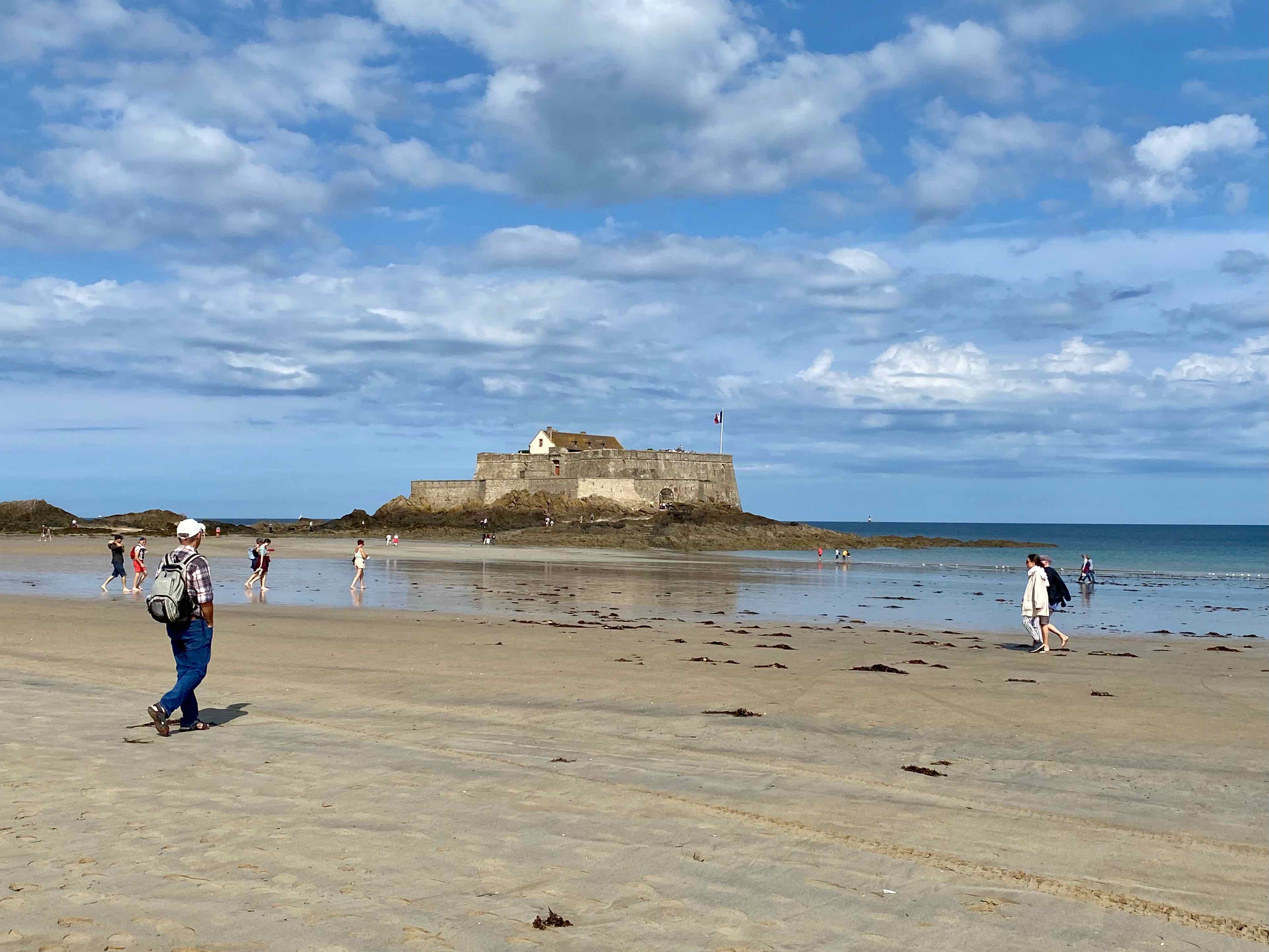
The tide is low enough to walk to Fort National.  There is a flag flown at the fort when it is safe to do this.

We walk to the fort and Bob finds more old cannons to examine.

The view from the fort to the walled city of Saint-Malo. Just a few hours ago all those rocks were under water and boats were able to sail through here!

This man’s wife was fixing the scarf around his neck as we walked by.  Bob chuckled and said this was going to be us in a few years, having our picnic lunches with tea towels on our laps!  

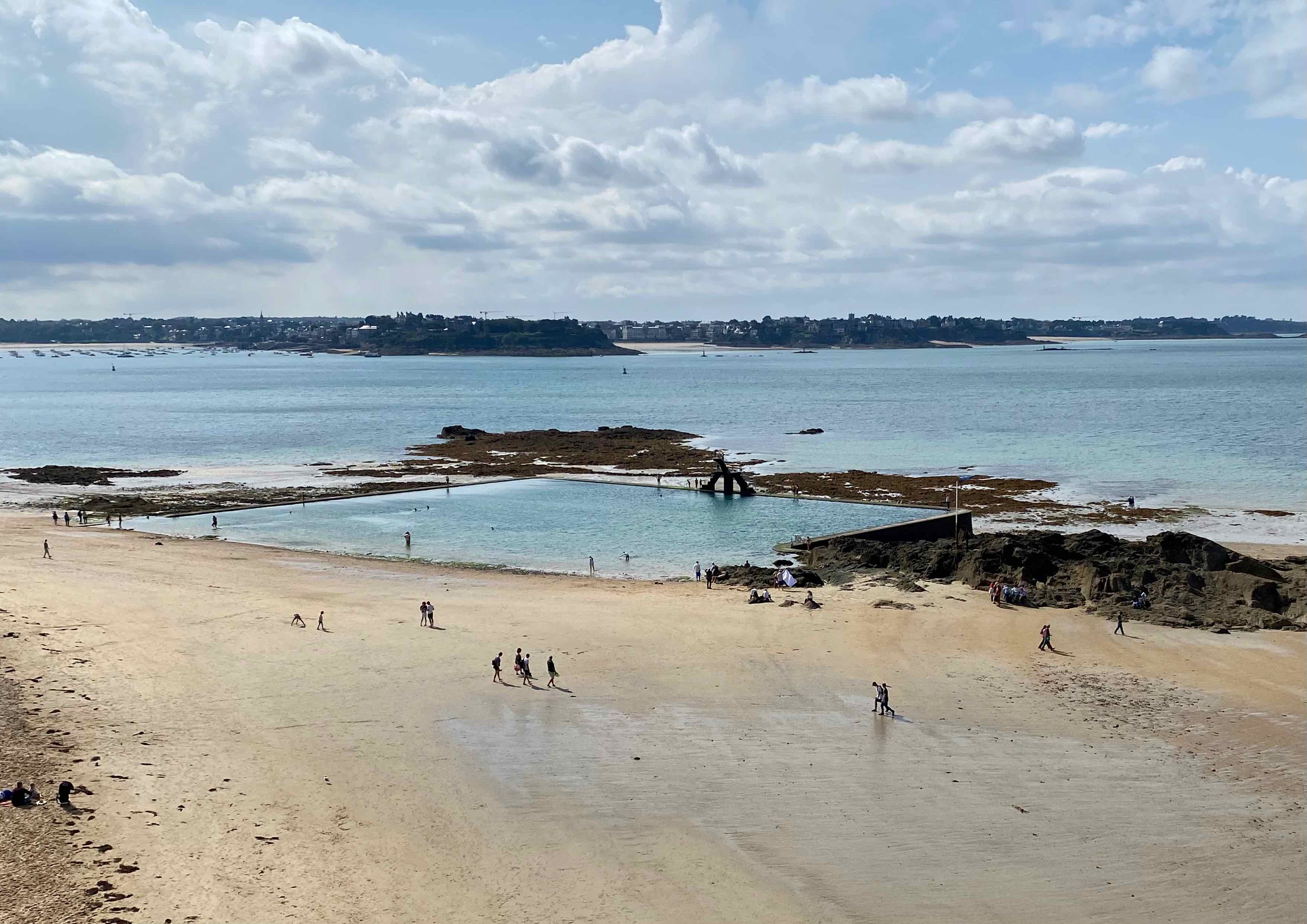
Walking back to the port there is now a swimming pool visible where earlier we could only see the top of the diving board. This is the same ‘island’ that we saw earlier…
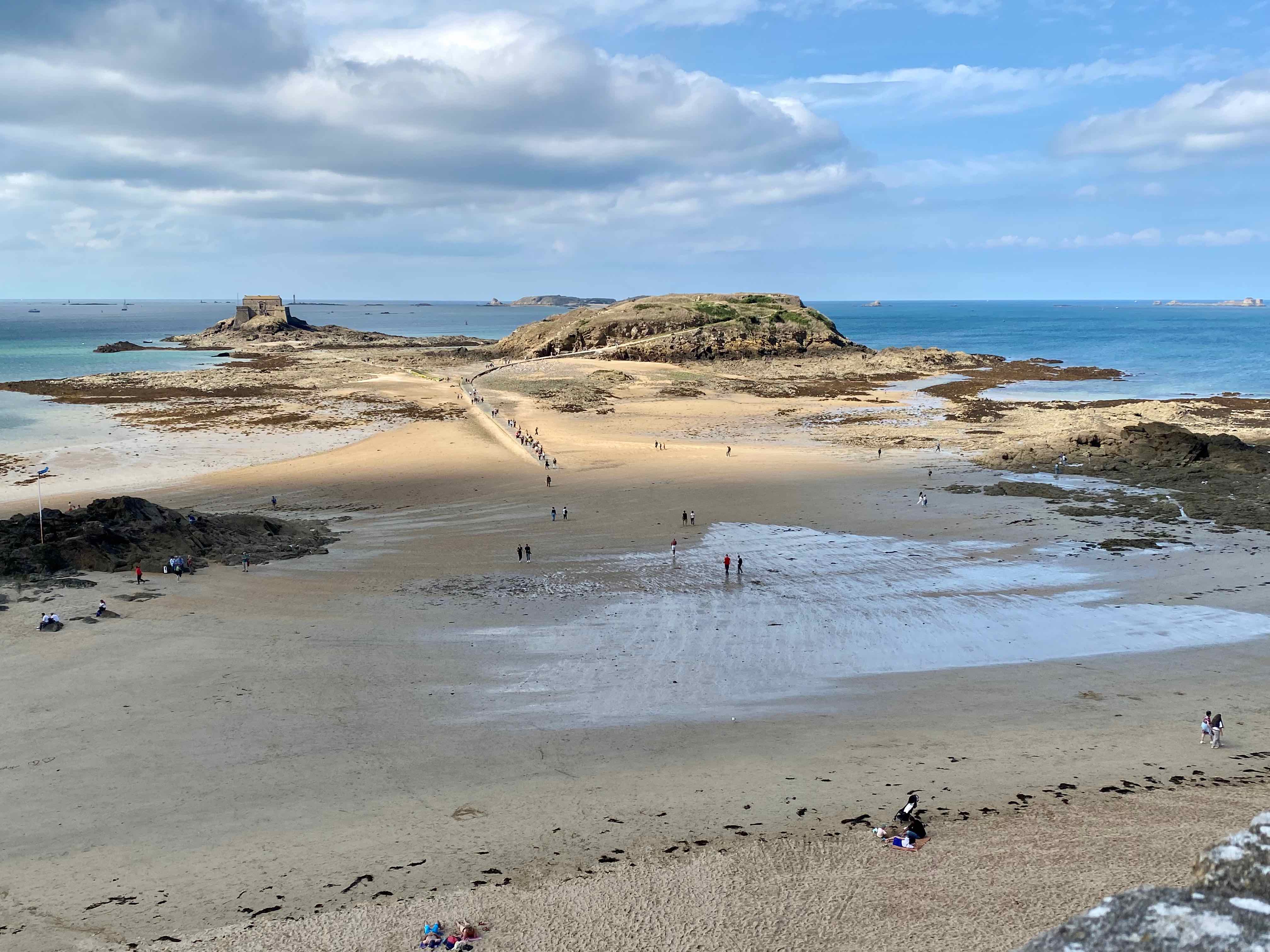
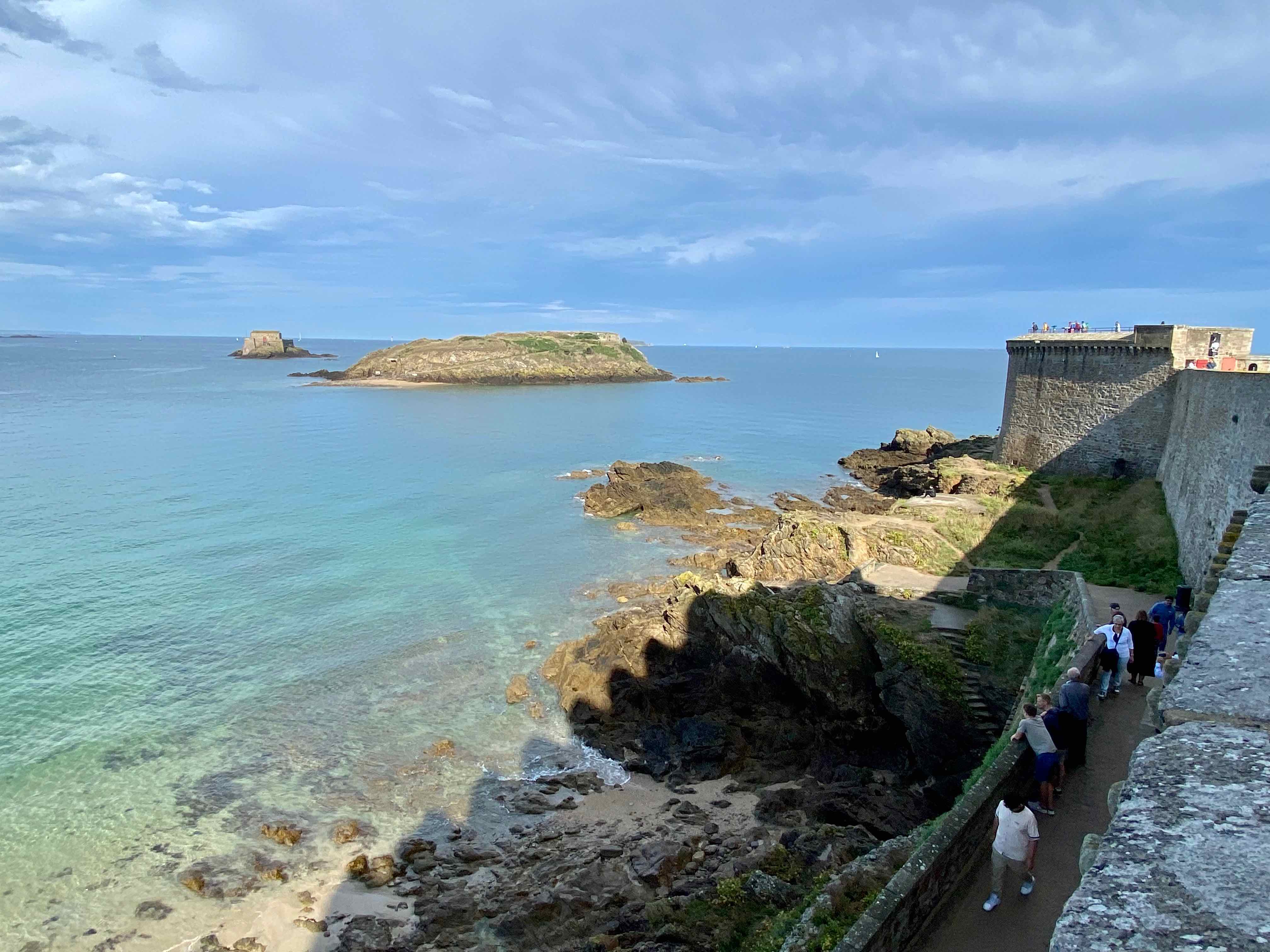
when the tide is higher, and we see boats crossing between it and Saint-Malo. When we arrived the water was almost up to the white part of this lighthouse..
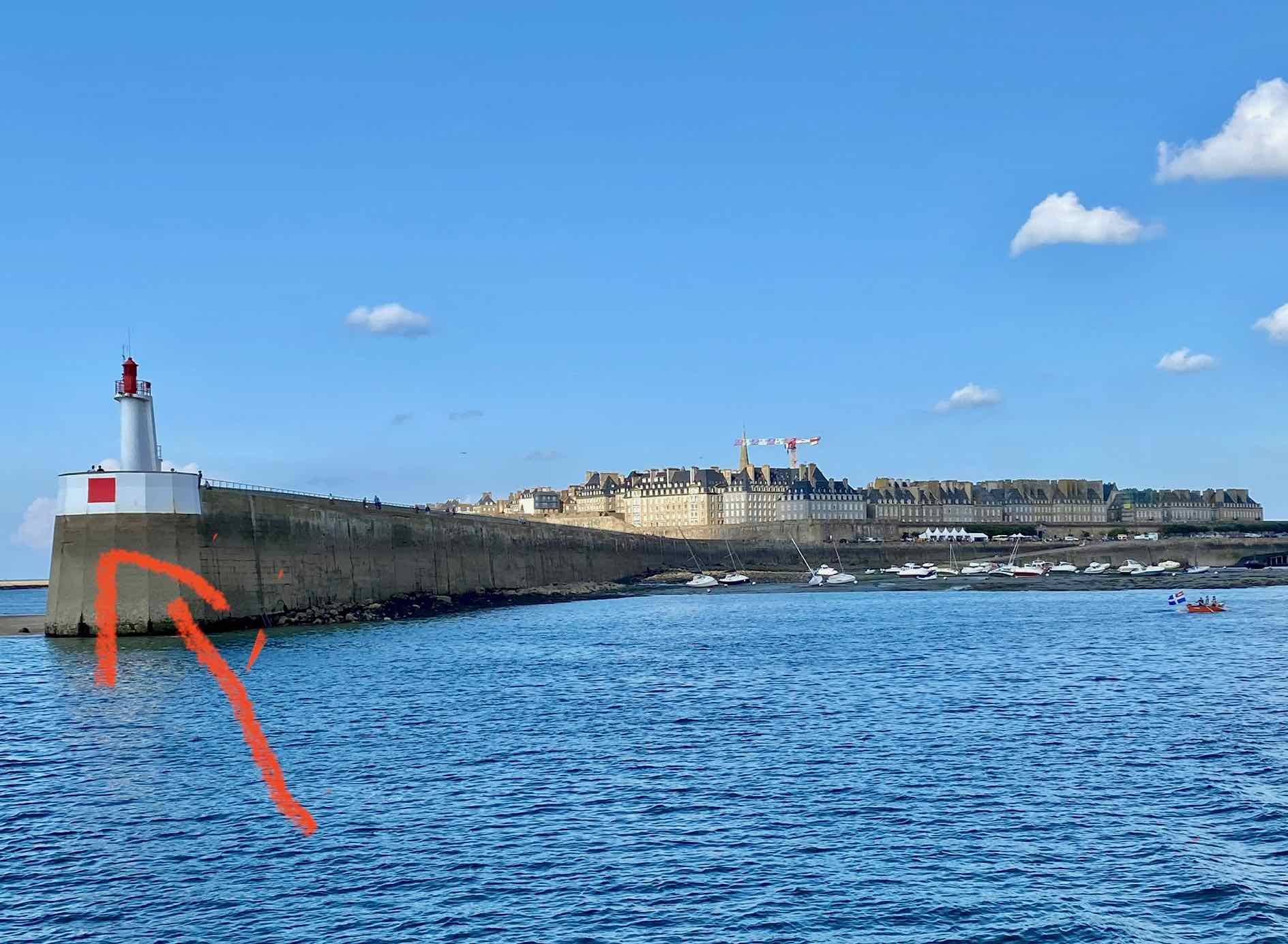
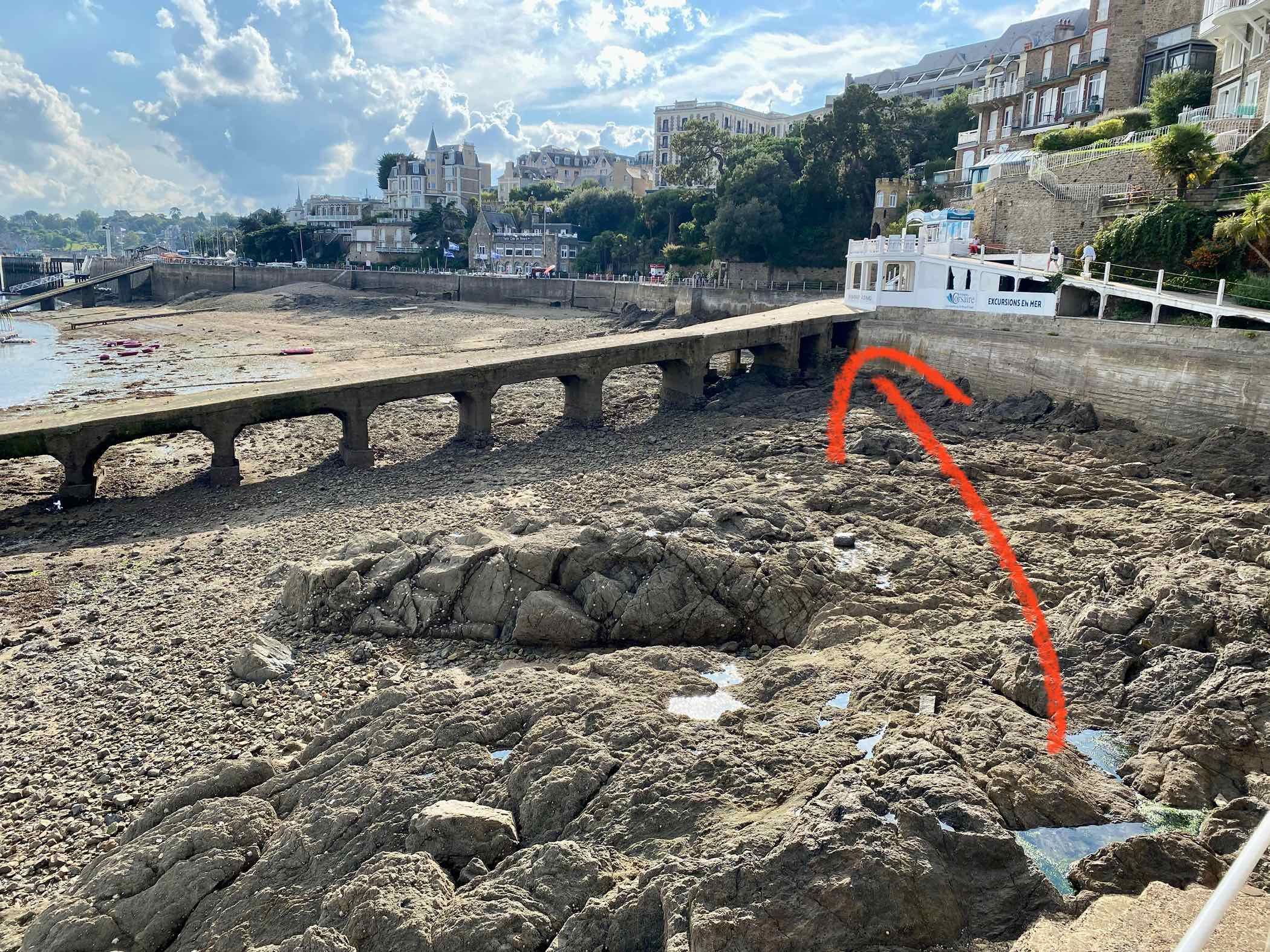
…and we got off the ferry just above the red arrow on the right of the photo.  When we leave to go home we get back on the ferry way down on the bottom left of the photo.  It is hard to believe that the water level can change that dramatically in just a few hours.

We have to walk a lot further when we arrive back at Dinard because the ferry could not sail into the main dock.  We boarded at the top of this ramp this morning!

A lot of the boats that were in the water this morning are now beached on the ocean floor.  We were lucky, the day turned out warm and sunny…no rain.


Dinard, France

Day 19, Saturday, September 16, 2023

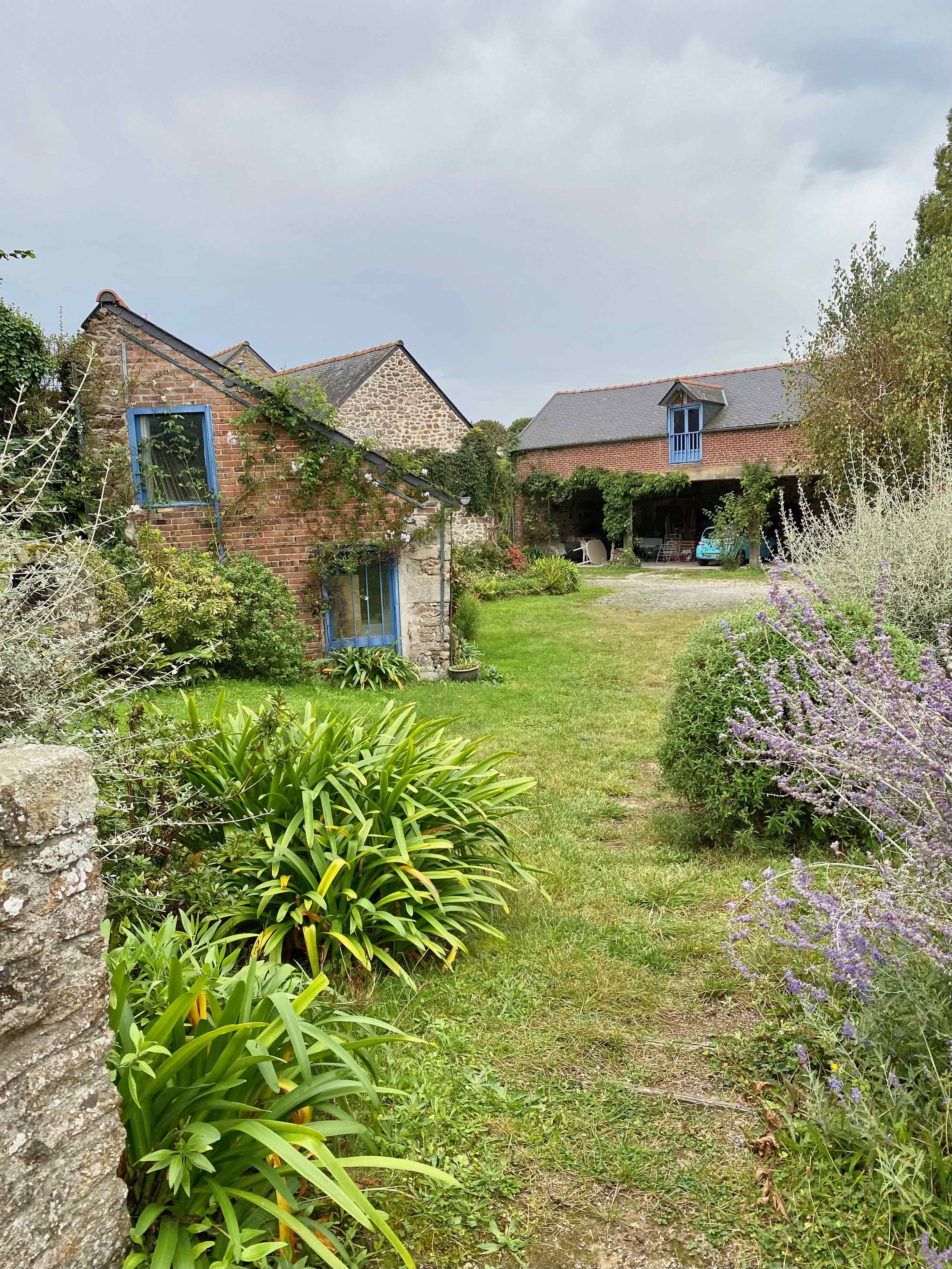
It is only 800 metres from our apartment to the beach.  There are a lot of large houses along the road.  I think many of them used to be farms but are now in the city. These look like farm buildings and the yard is huge.

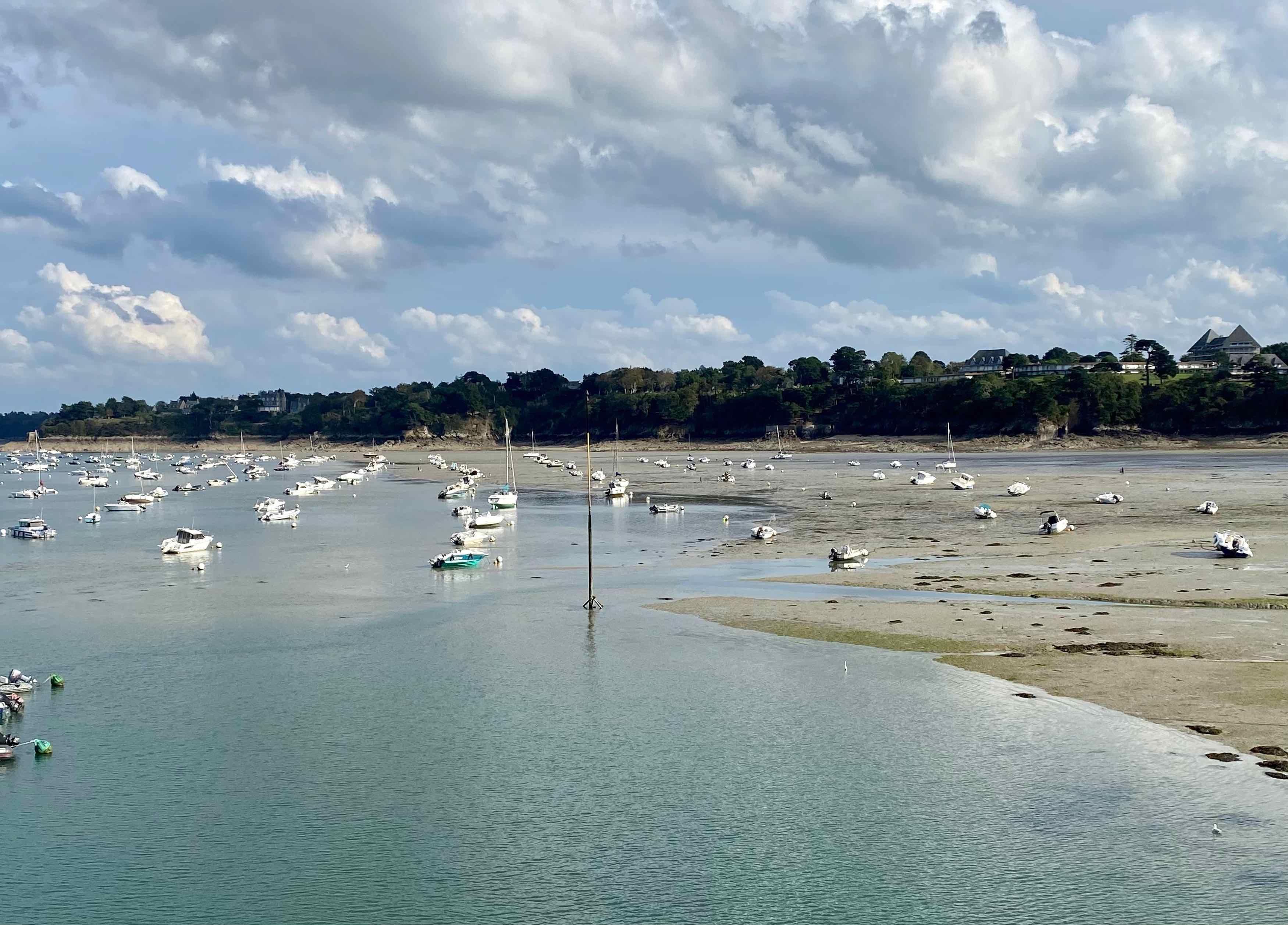
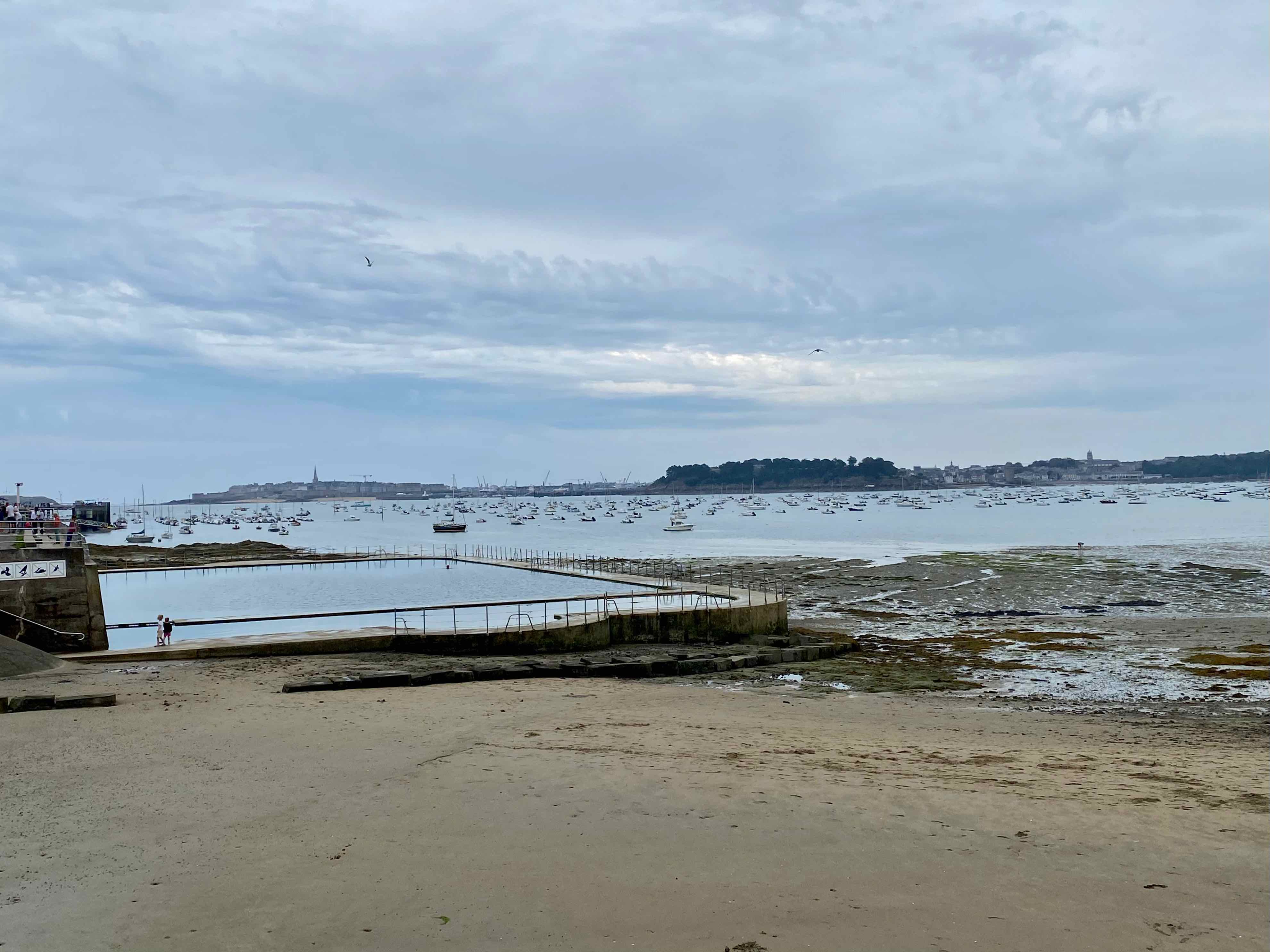
Thee is a swimming pool built into the side of the beach that is freshly filled when the tide comes in. This is at 5:45,  about an hour after low tide.

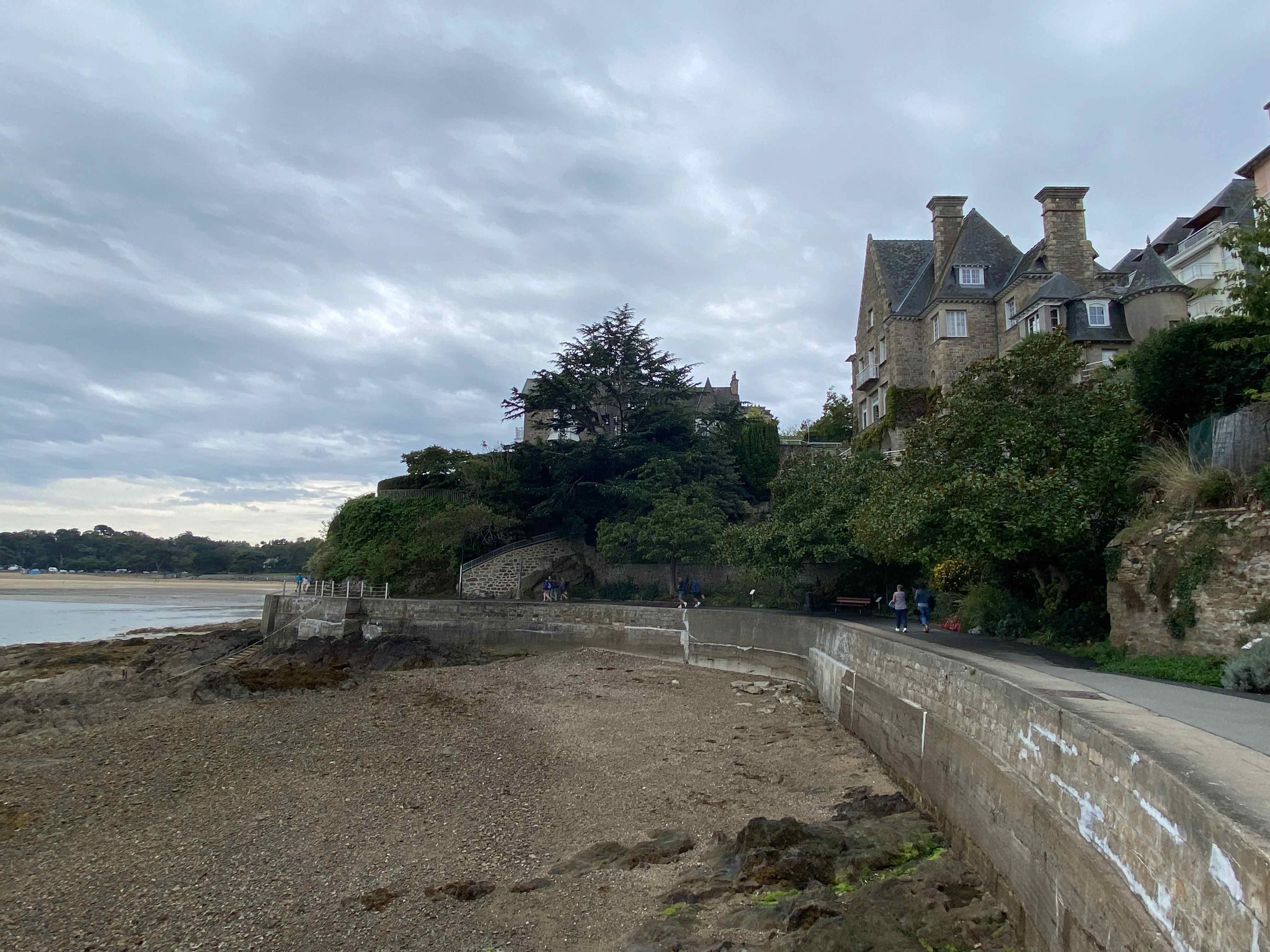
There is a boardwalk all along the water, with large houses and hotels on the hills above.

We watch the ferry to Saint-Malo dock.  People have to walk way down the ramp because the water is so low.

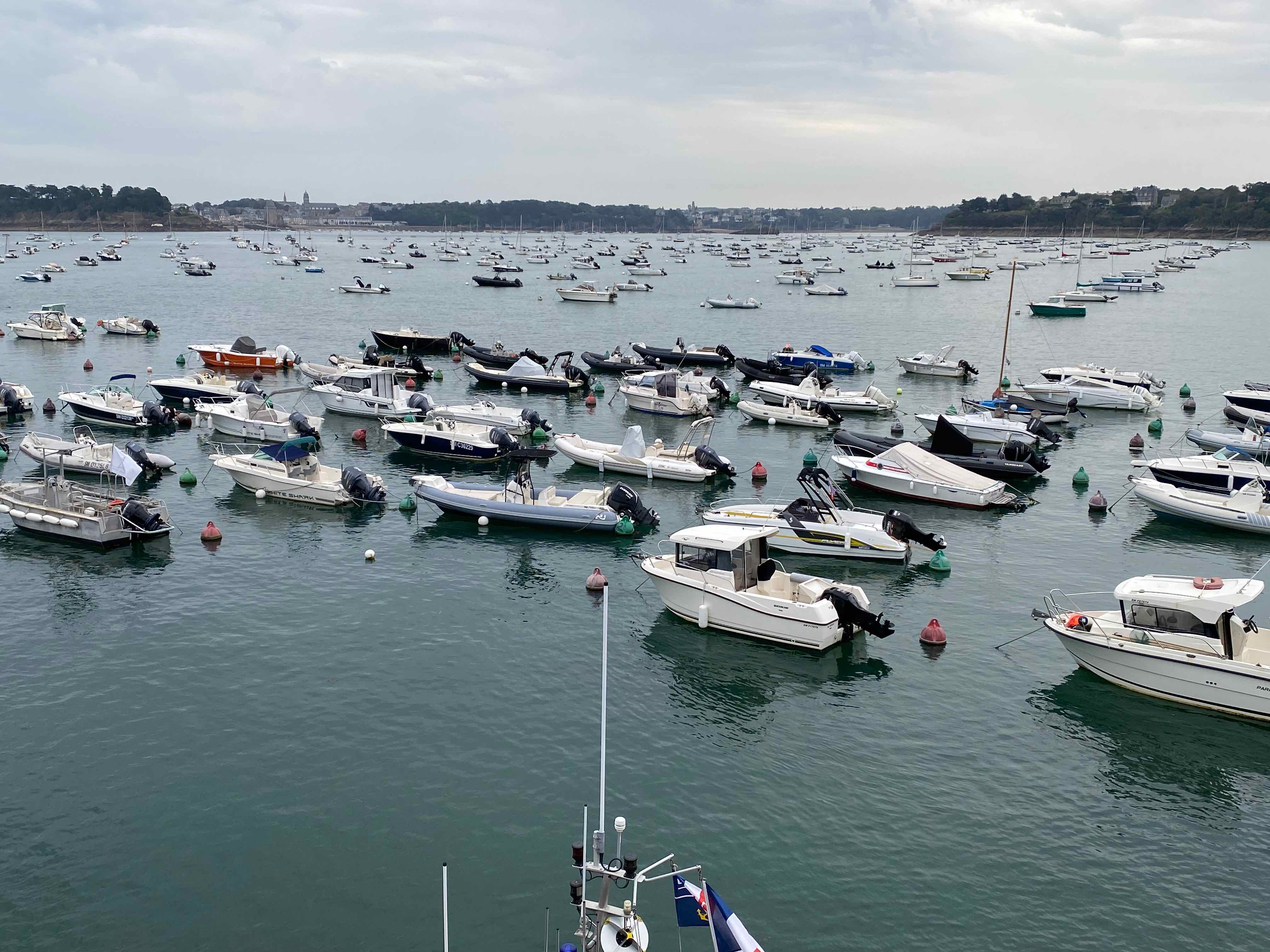
There are boats everywhere as far as the eye can see!

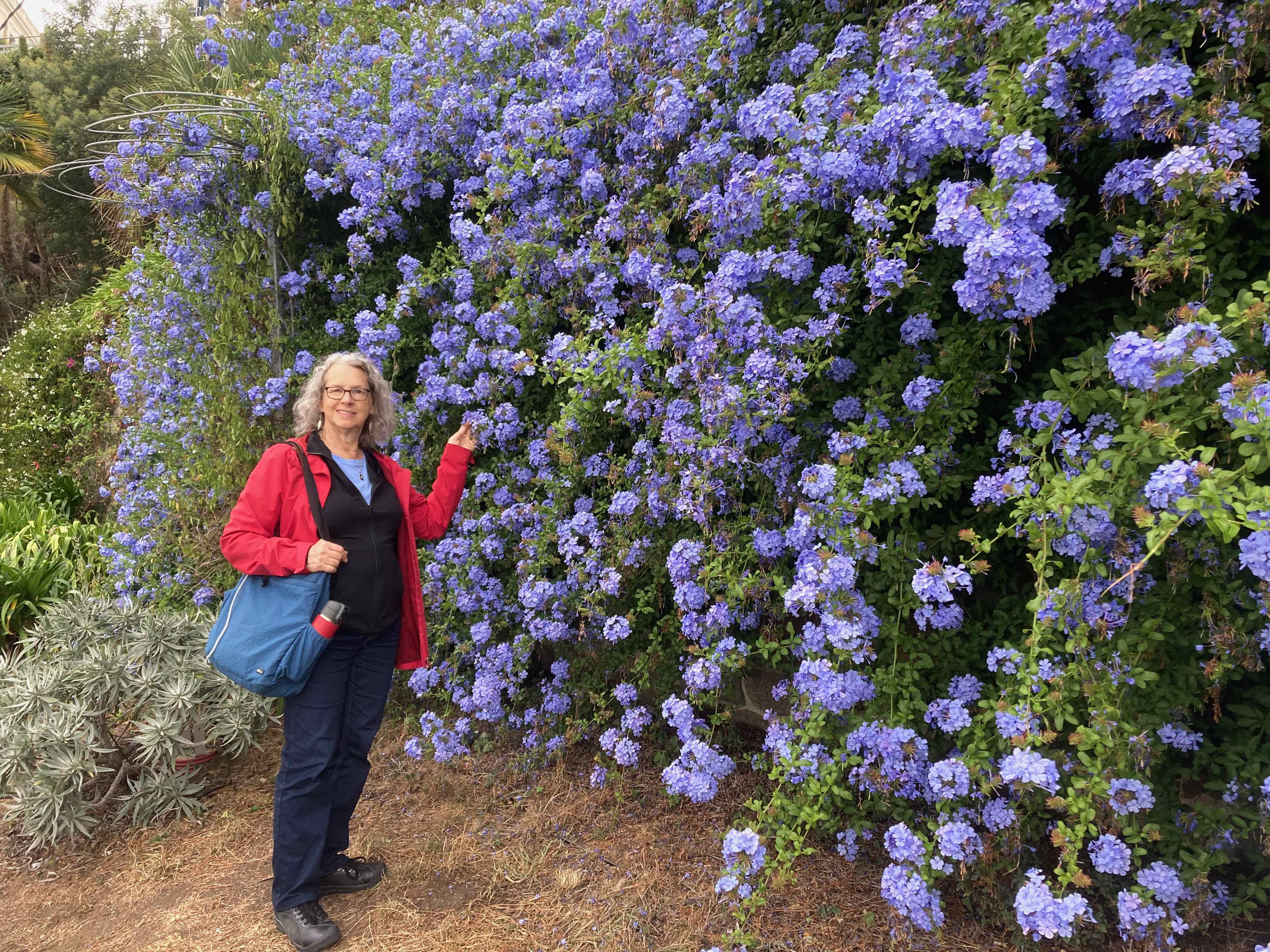
These are the prettiest blue flowers. 

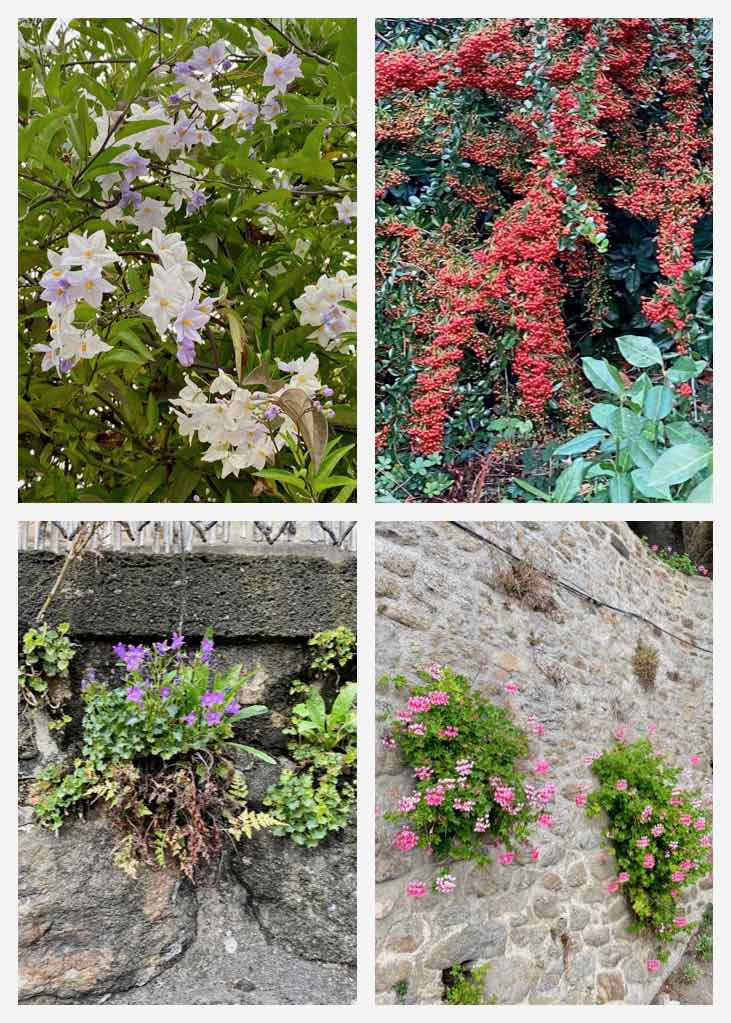
There are flowers all along the side of the boardwalk.  

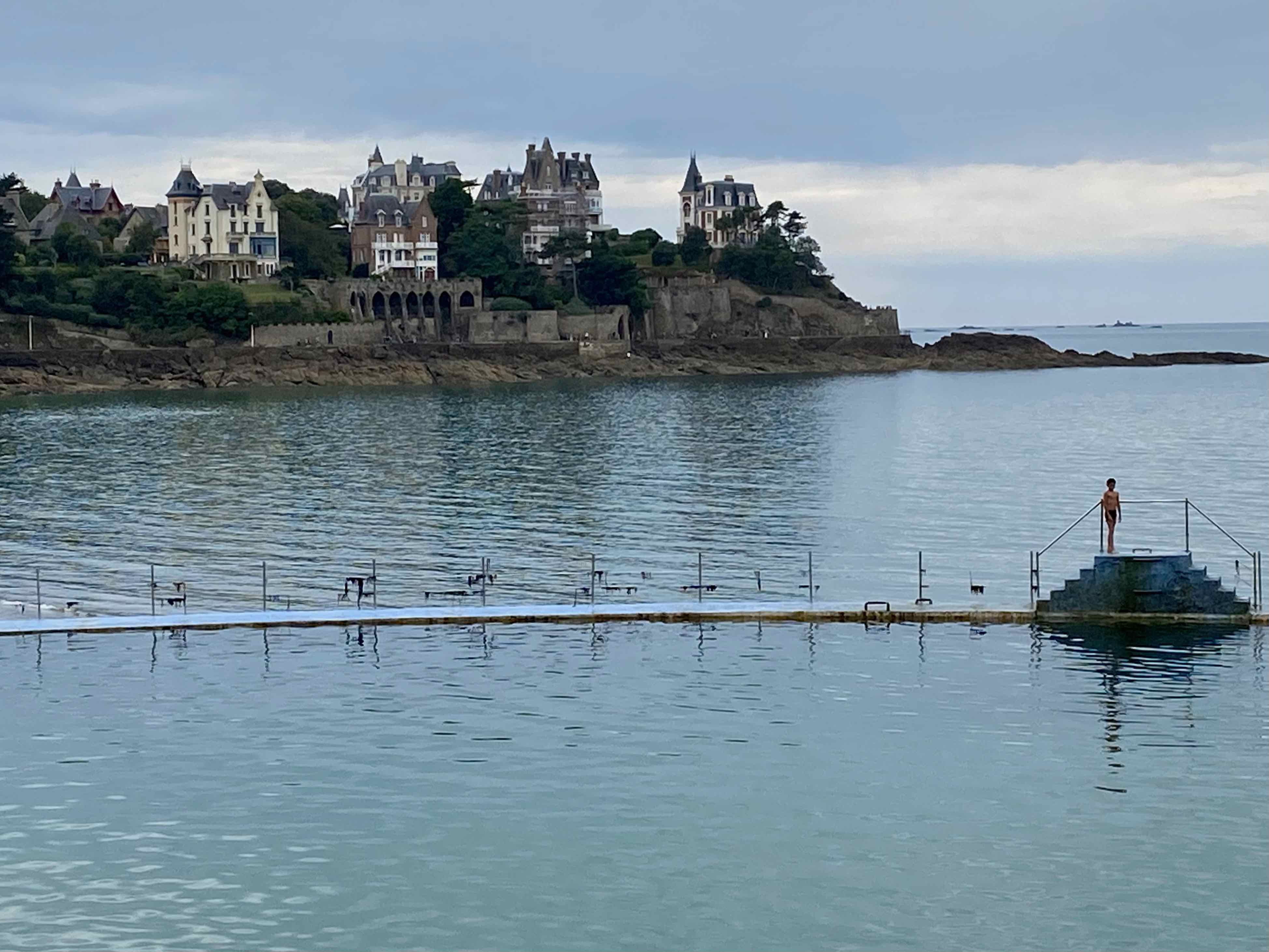
We walk all the way to the end of the boardwalk and there is another swimming pool in the bay around the corner.  This one is little bit fancier.  I love the big houses on the hill across the water.

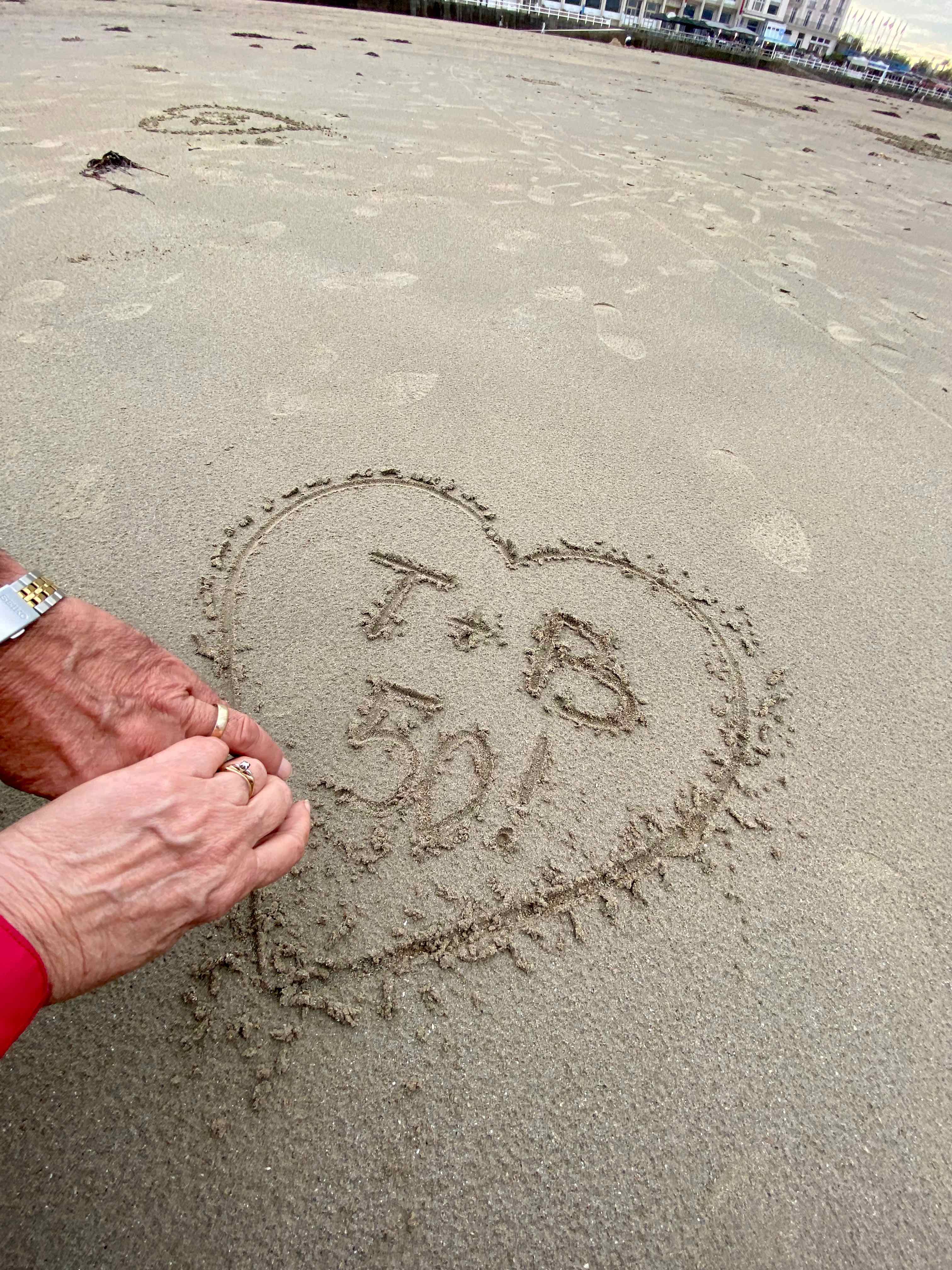
We take the opportunity to write our names in the sand celebrating that it is our 50th anniversary this year.

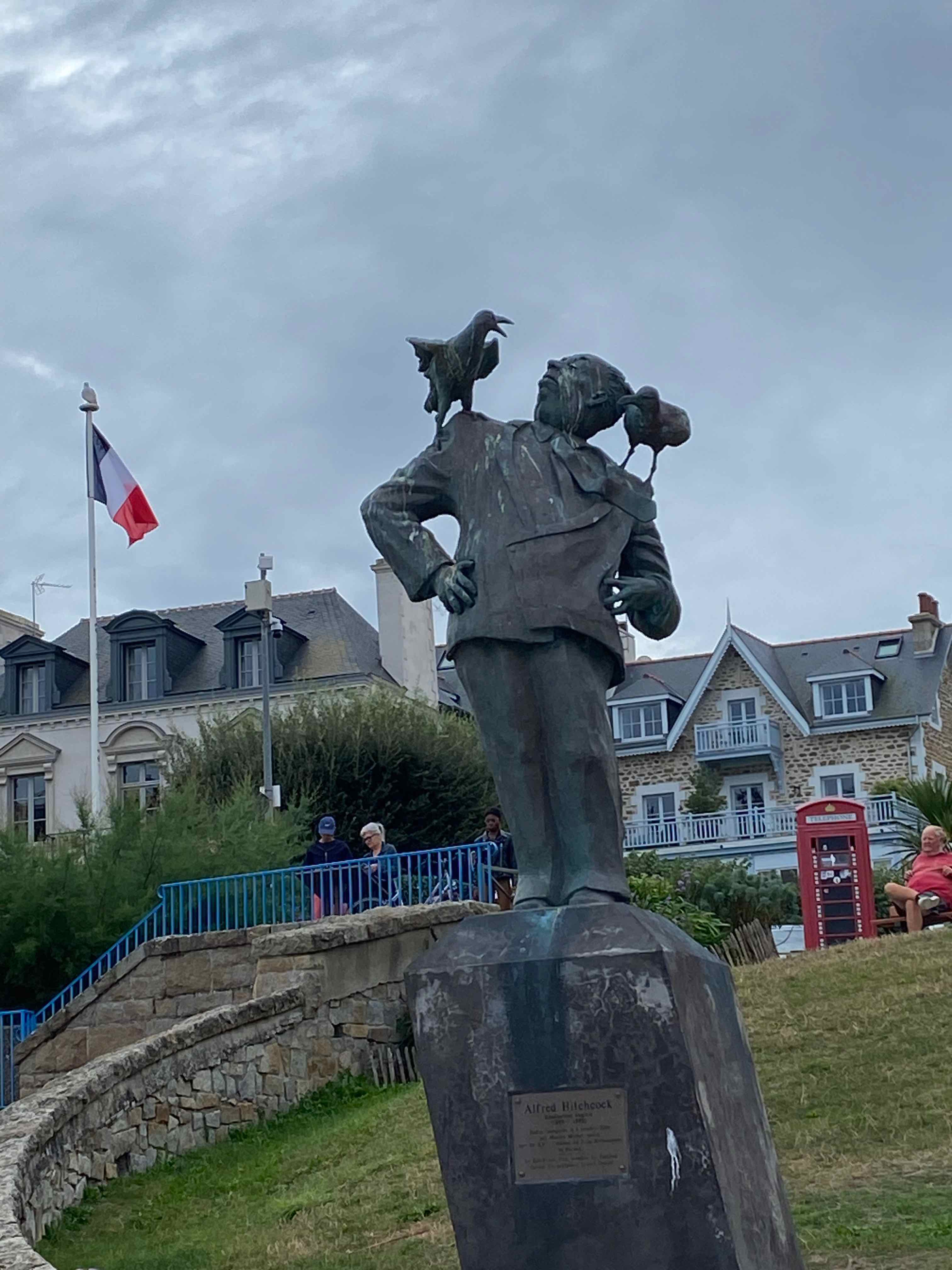
We thought we would have dinner downtown but seems that everything closes up at 7:00 today. I liked this statue of Alfred Hitchcock and ‘The Birds’, and the real birds have it well christened!

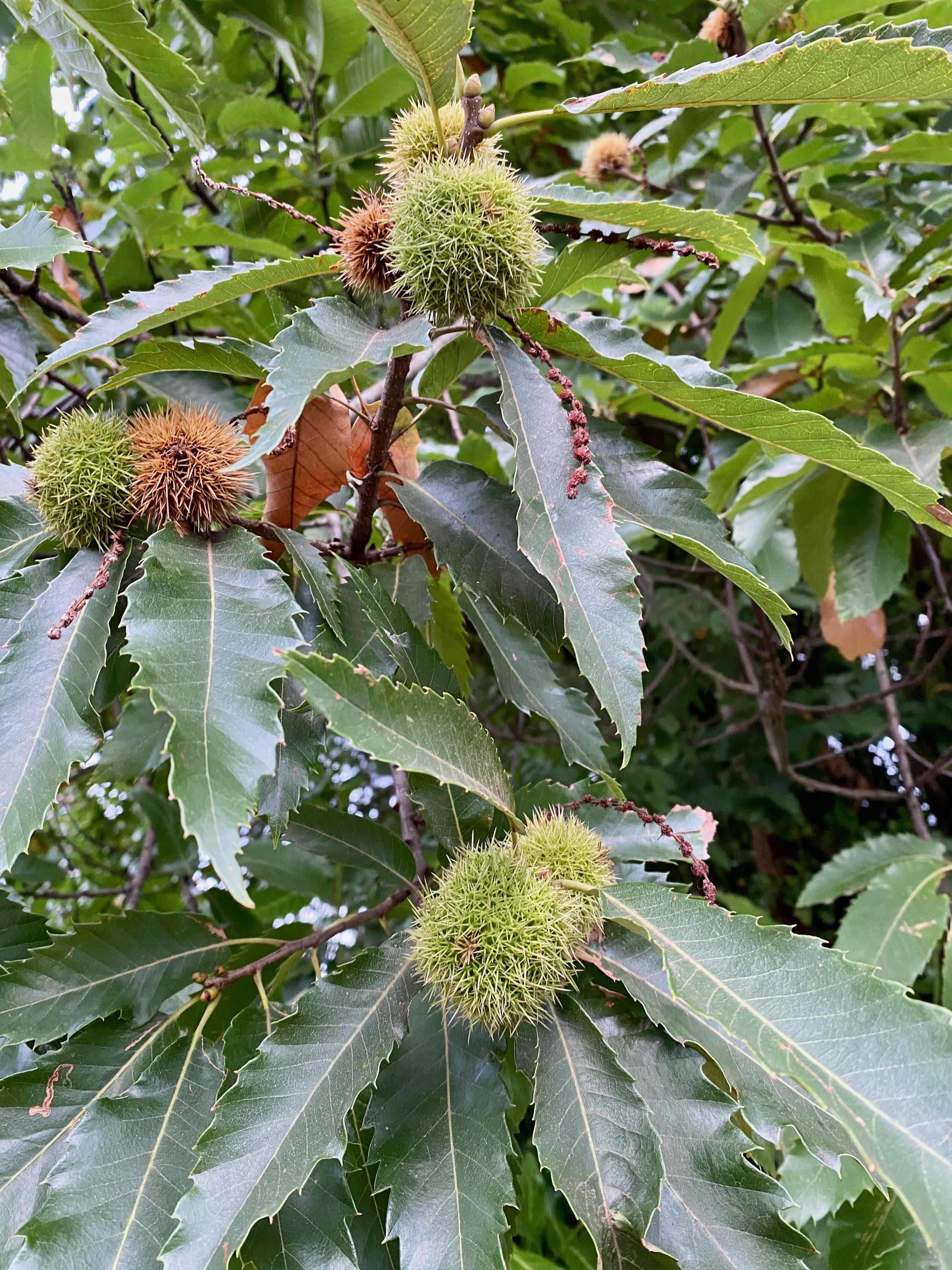
We pick up a few groceries in a little shop and head home to make dinner.  Over 14,000 steps today.  I see these strange fruits/nuts on the way home, but have no idea what they are.

Bayeux Tapestry, France

Day 18, Friday, September 15, 2023

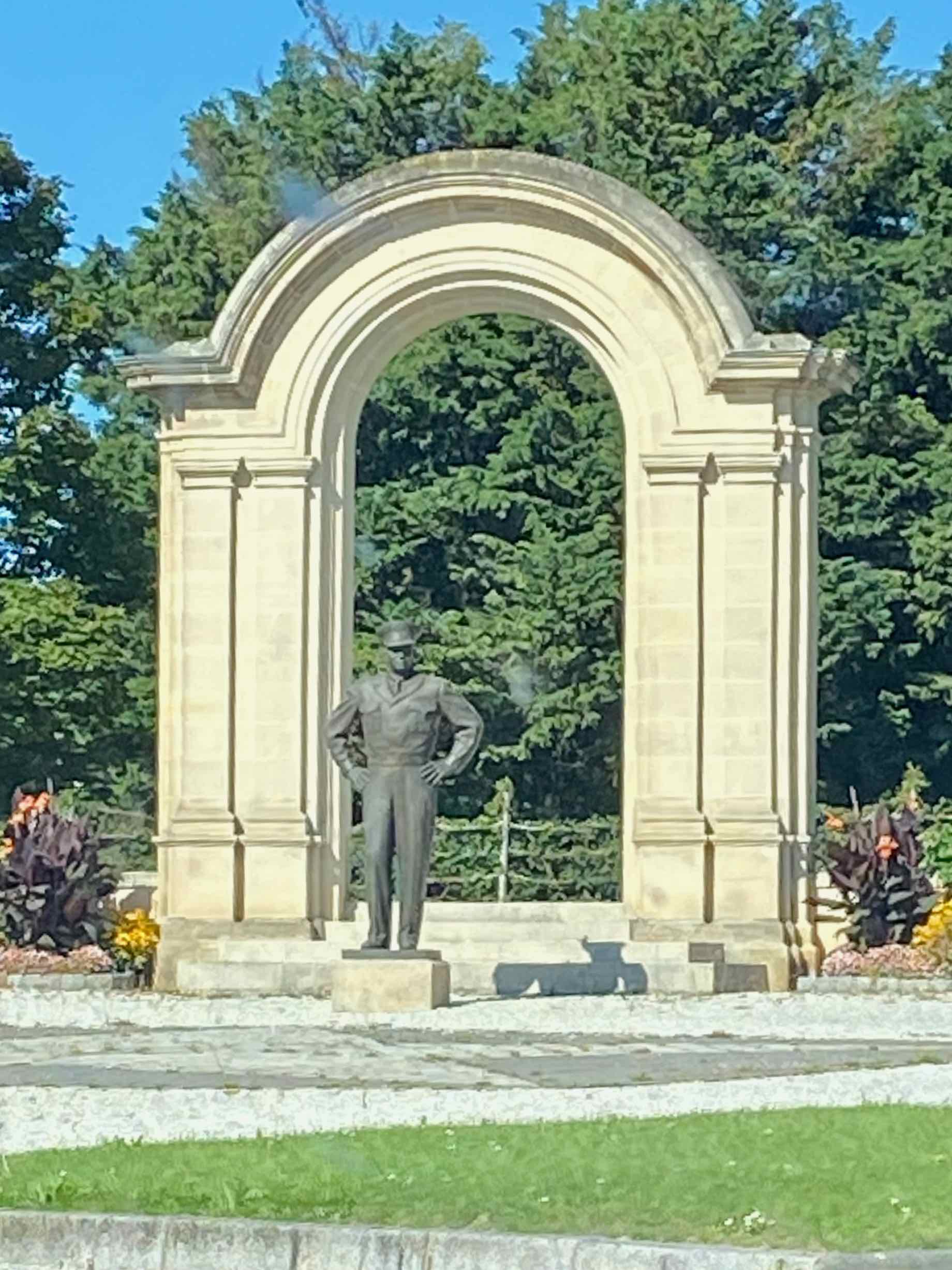
We are leaving Rouen and driving to our next bnb in Dinard. We are stopping in Bayeux to see the Bayeux Tapestry.  I manage to get a photo of the monument at the traffic circle as we drive into Bayeux.  

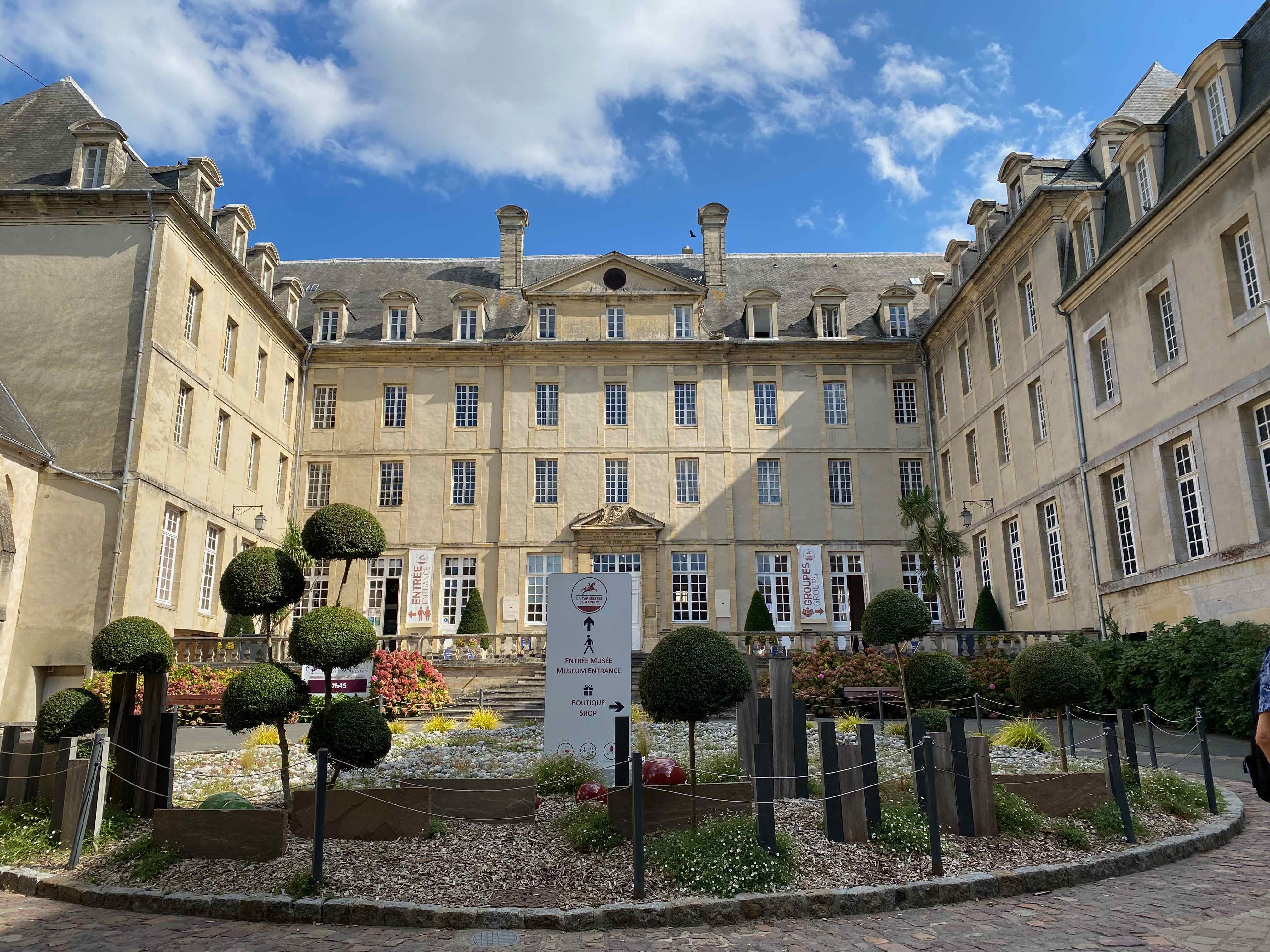
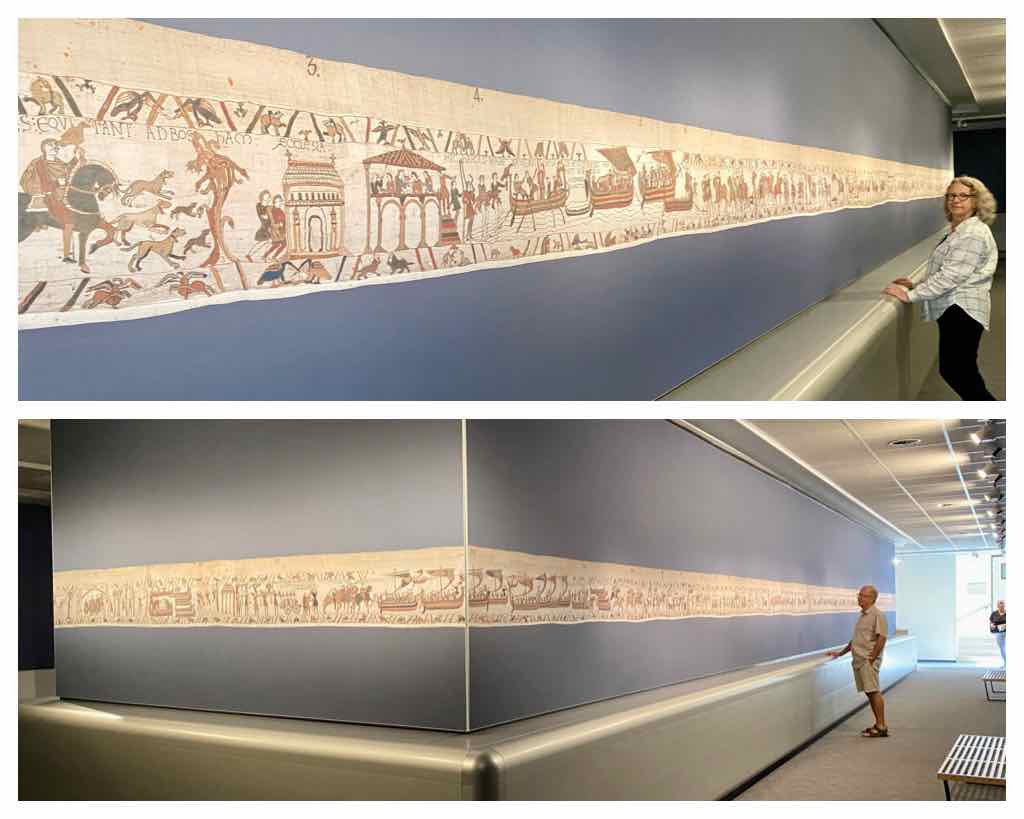
. The Bayeux Tapestry Museum.The tapestry is located in a darkened room with only the tapestry illuminated, no photos allowed. It was created in the 11th century, so it is almost a thousand years old!  It is actually an embroidered cloth, and not a tapestry.  There is another room with a replica of the tapestry displayed where photos are allowed.  The original tapestry is displayed in a very similar manner.  This monumental work is almost 70 metres long and 50 centimetres tall.  It depicts the events leading up to the Norman conquest and culminating in the Battle of Hastings in 1066.
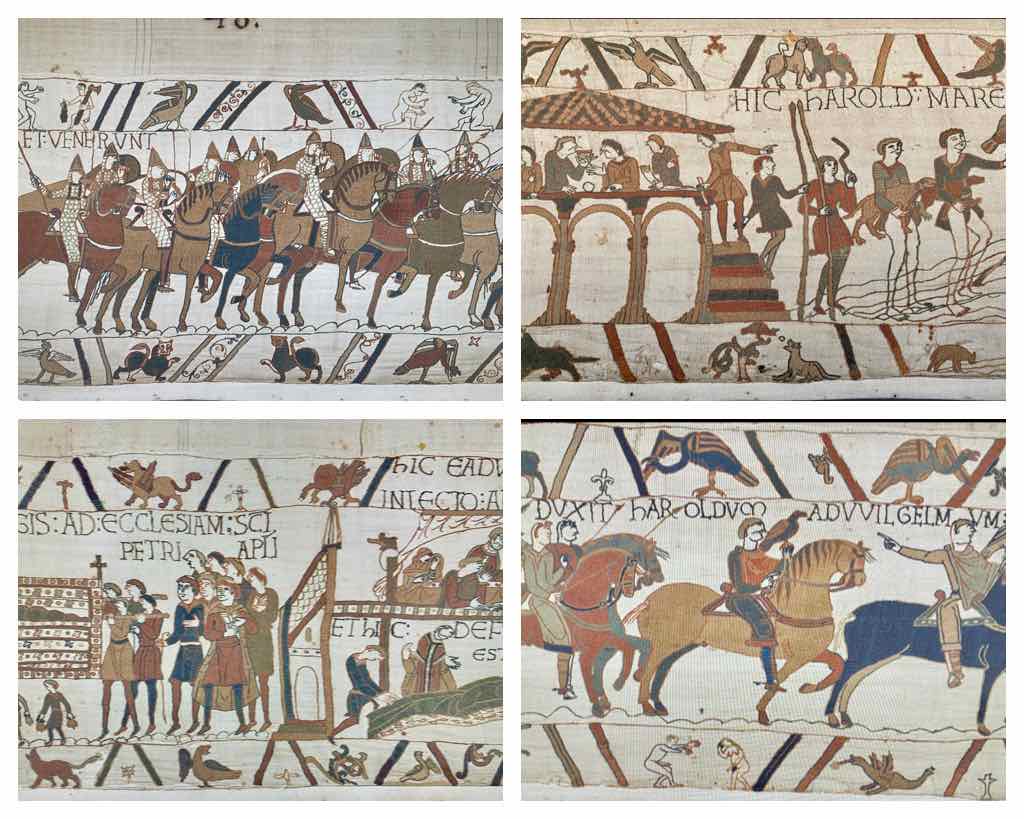
Here are a few close ups of some of the 56 scenes depicting the events leading up to the Norman Conquest of England, led by William, Duke of Normandy challenging Harold II, King of England, and culminating in the Battle of Hastings in 1066. Can you find Adam and Eve in the frieze running below the main panel?  or the fox and the grapes from Aesop’s fables?
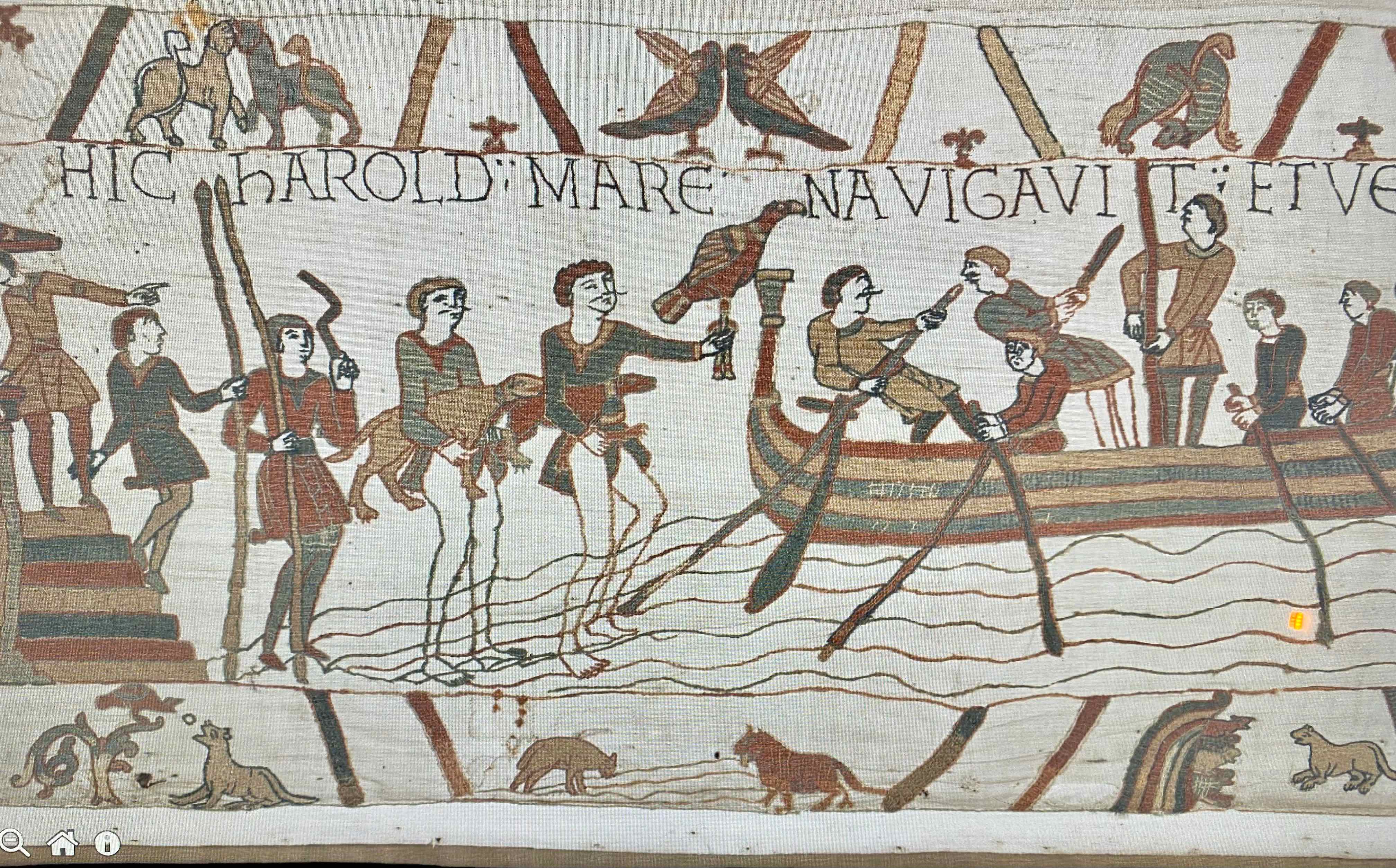
The tapestry is extremely beautiful. The figures are so expressive and often show emotions through body and head positions.  I loved this scene that shows men walking through the water to get into their boats, with bare feet, their clothing held high, and carrying their dogs.  It is such a clever way to show the transparency of the water.

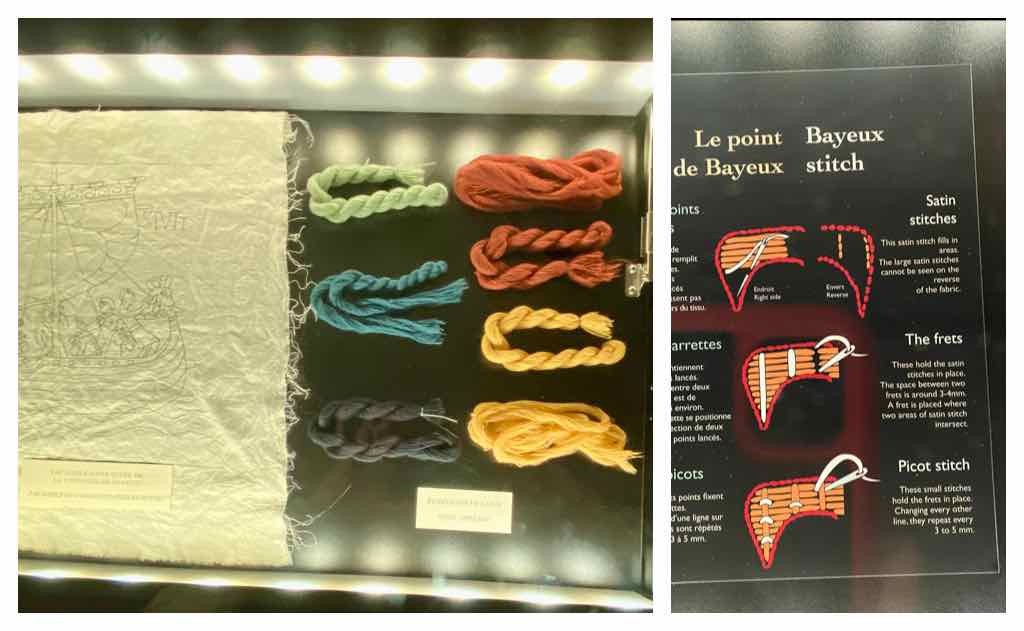
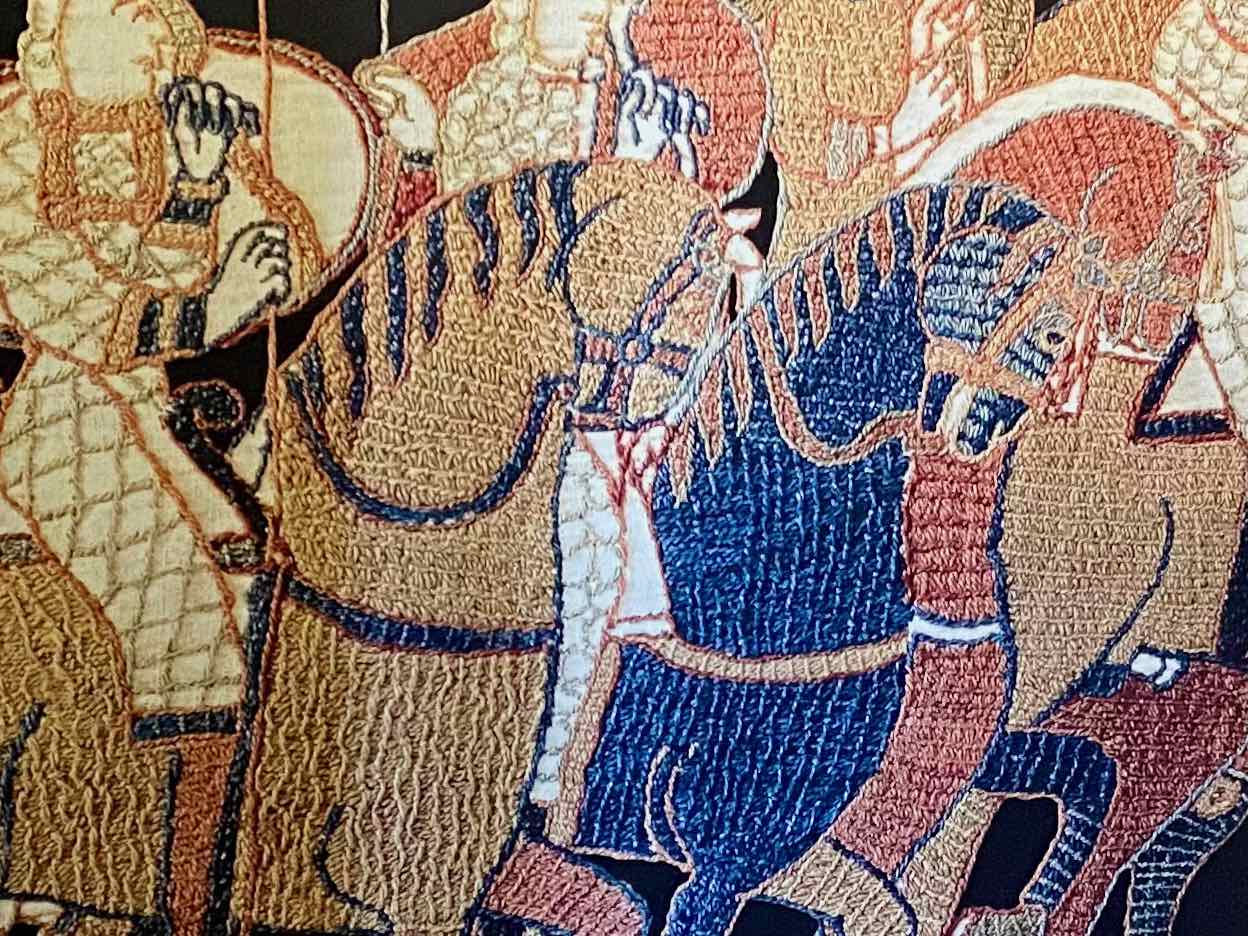
Here is a closeup of the embroidery stitches.There are only 14 colours used in the tapestry:  Dark red, Terracotta, Orange, Gold, Pale Yellow, Beige, Dark Blue, Mid Blue, Pale Blue, Dark Green, Pale Green, Olive Green, Sage Green, Blue – Black.

There are only four embroidery stitches used to make this tapestry: stem stitch, chain stitch, split stitch using two threads, and couching stitch, or “Bayeux stitch”, this last being used to fill in coloured surfaces.

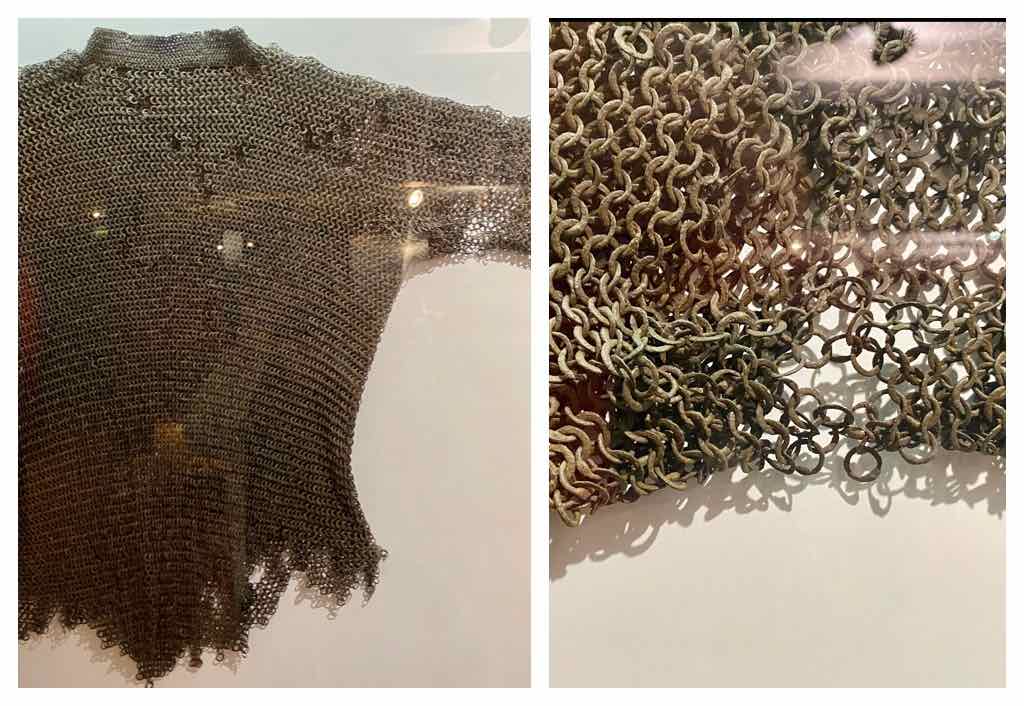
There are other displays as well.  I thought this chain mail was amazing.  The detail and fineness of the work is incredible.  Just think how many of those tiny iron circles had to be made for just this piece of protection.

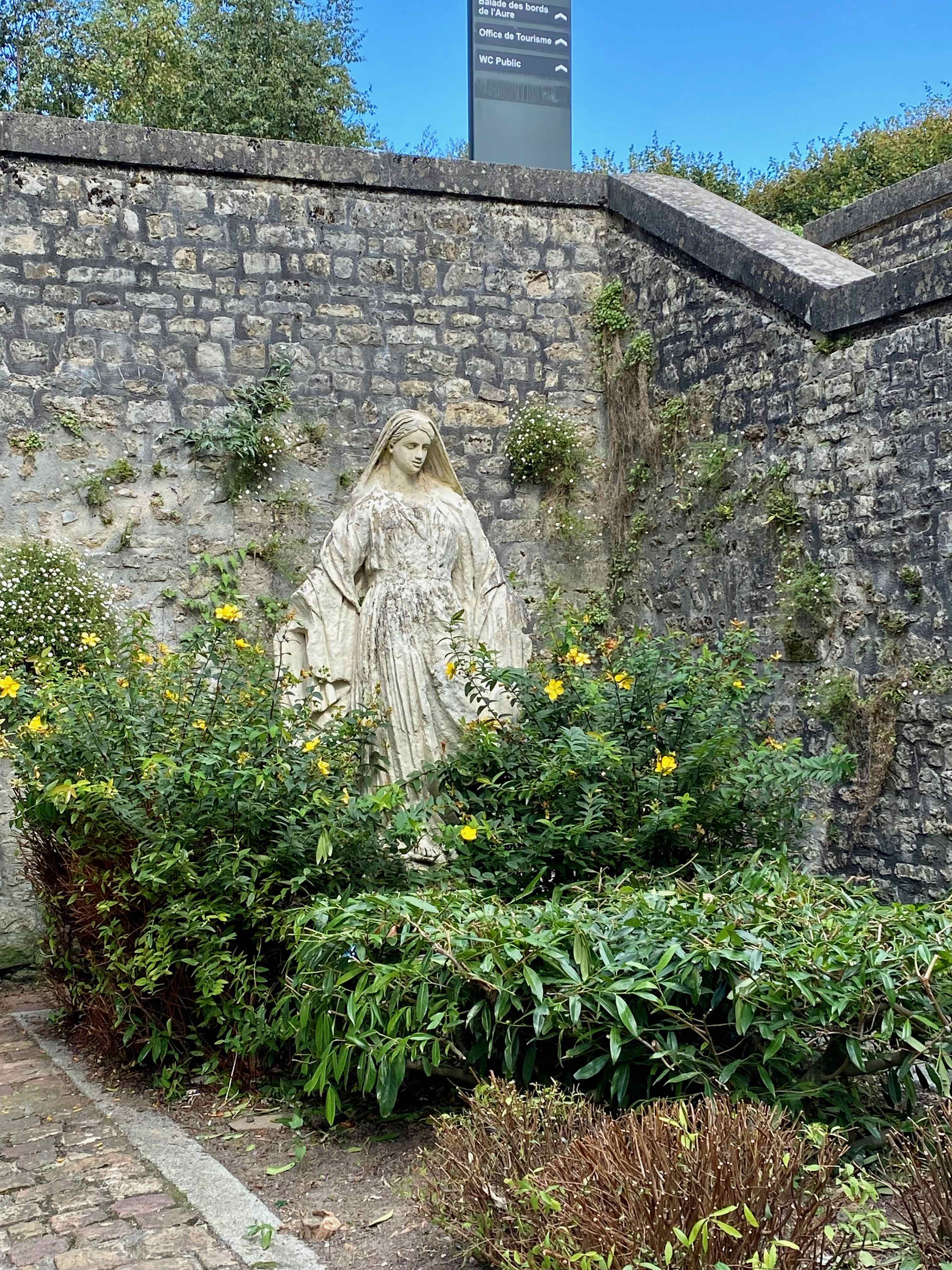
We leave the museum and find this statue in a little garden on our way to…

Bayeux’s Notre Dame Cathedral.

The light in this cathedral is beautiful.


The stained glass has a lot of blues, pinks, reds and yellows.

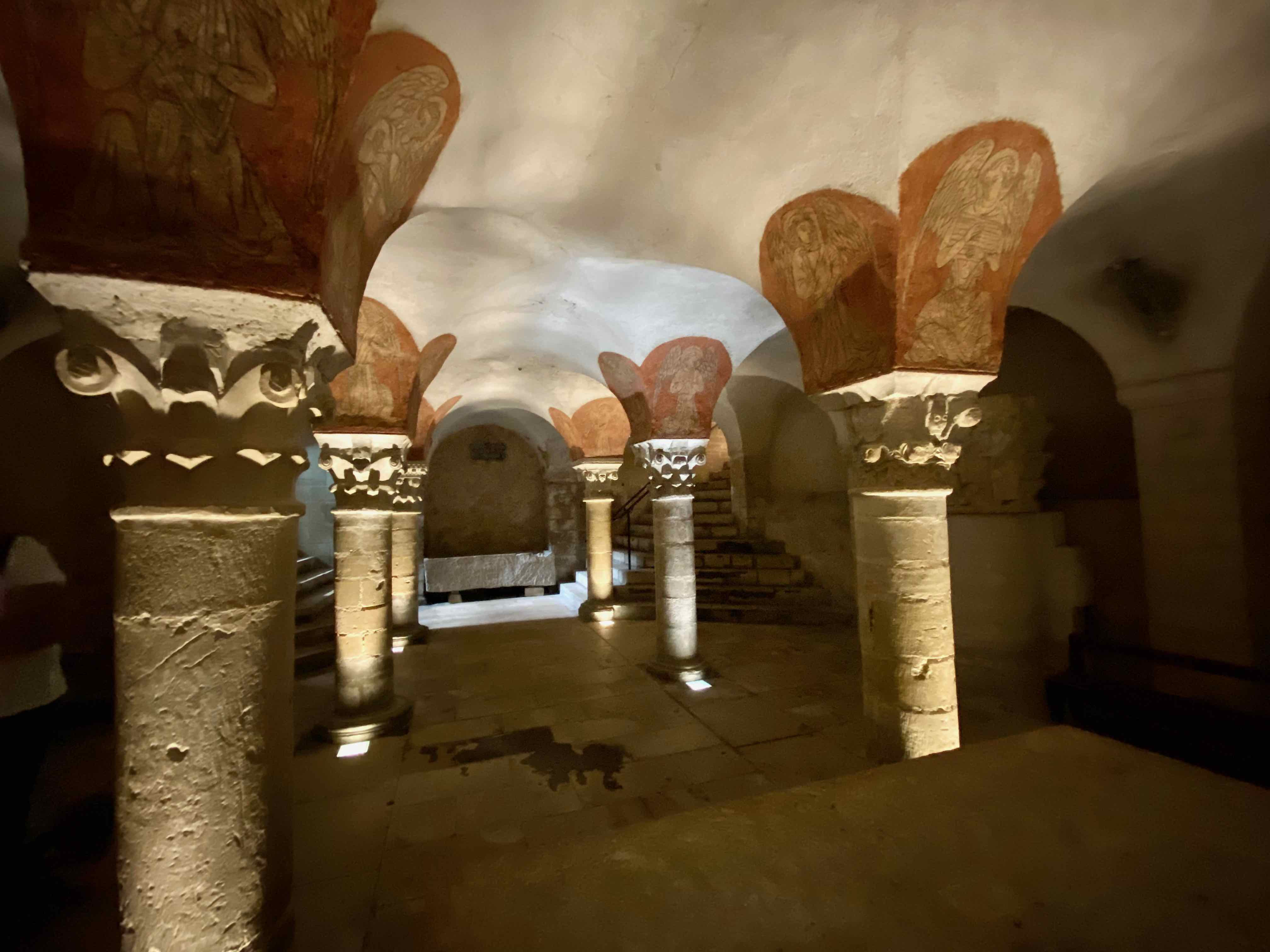
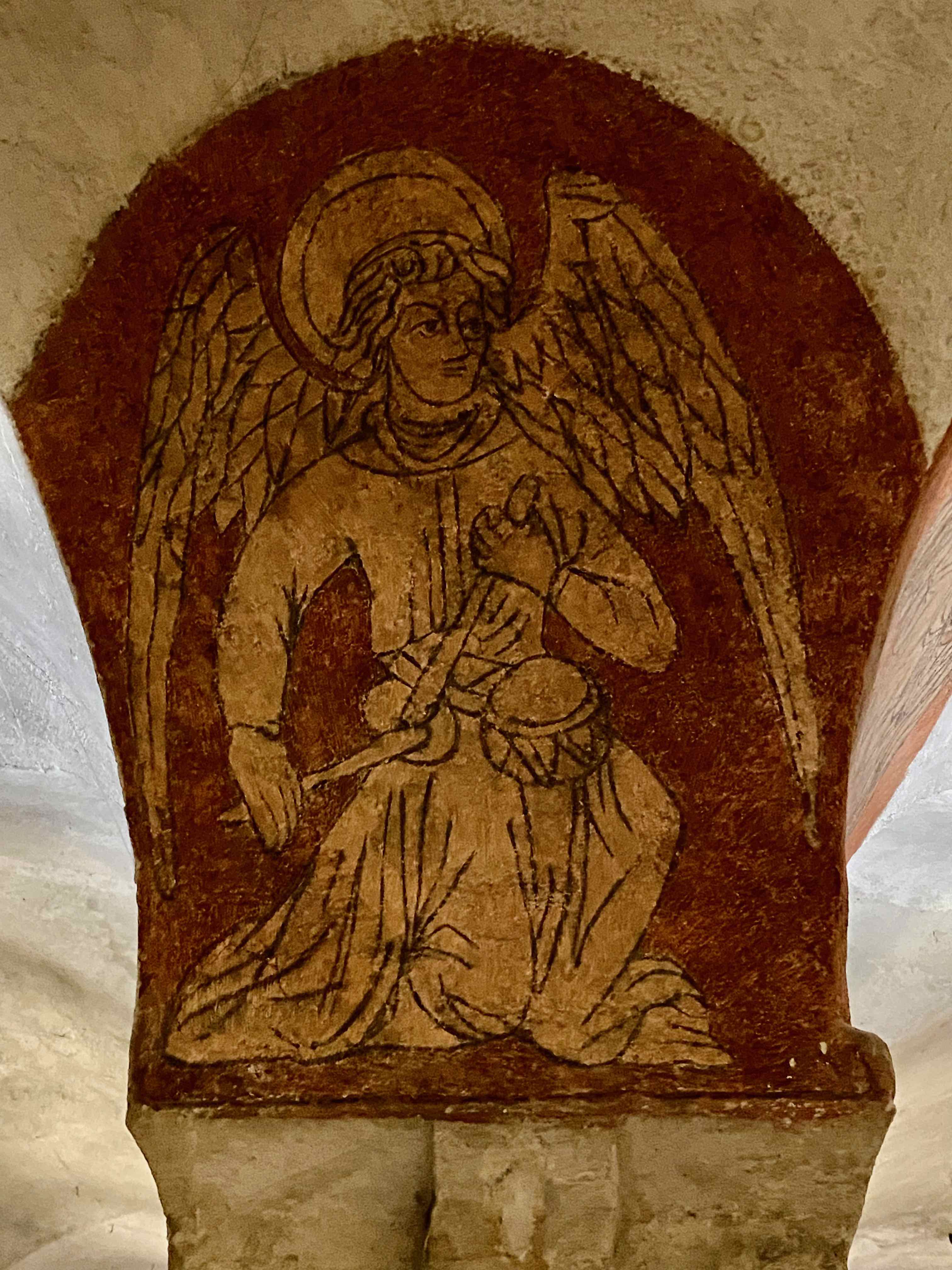
The crypt is open so we climb down the stairs to find these wonderful pillars, each painted with panels of angels playing different musical instruments.

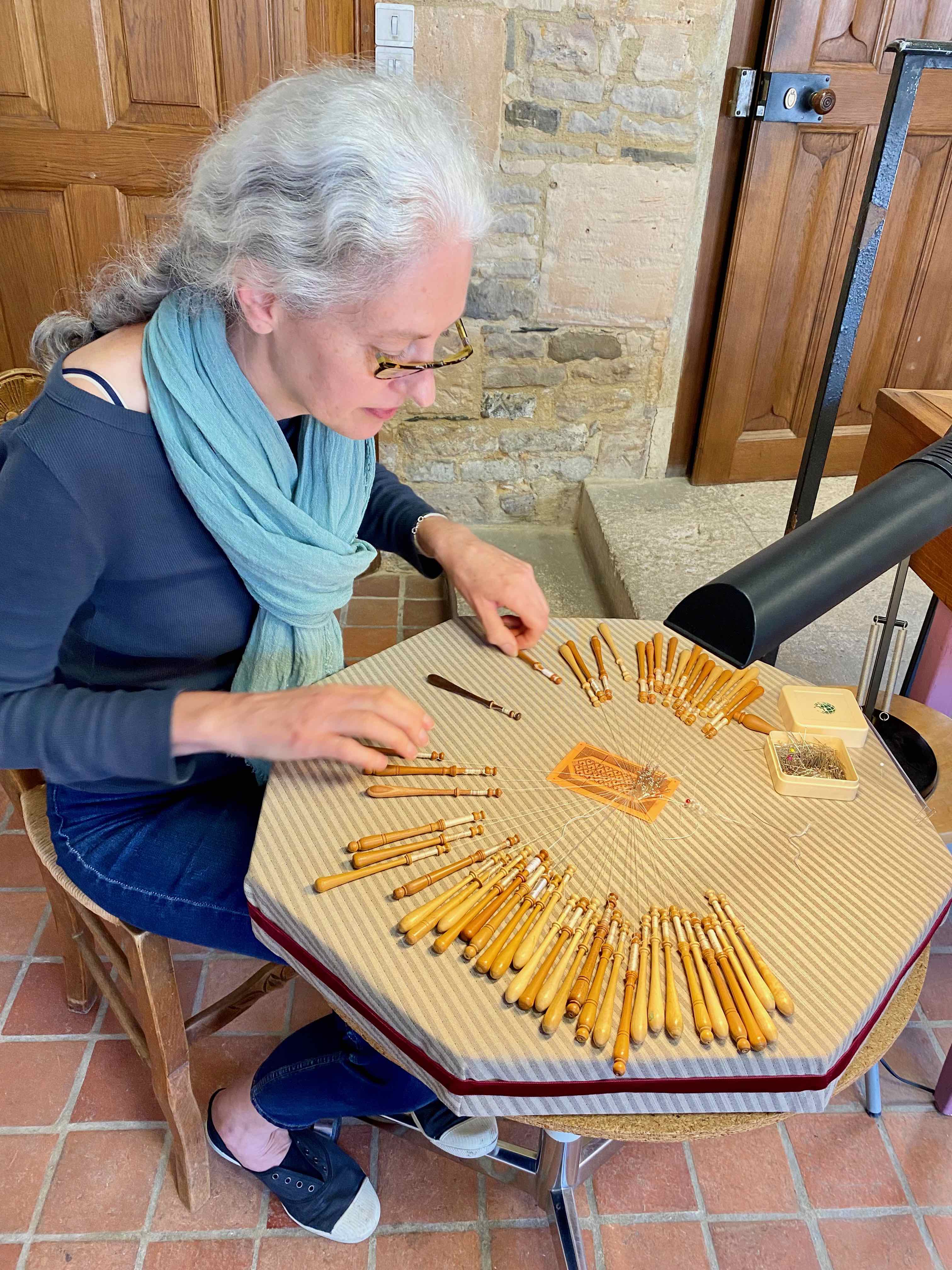
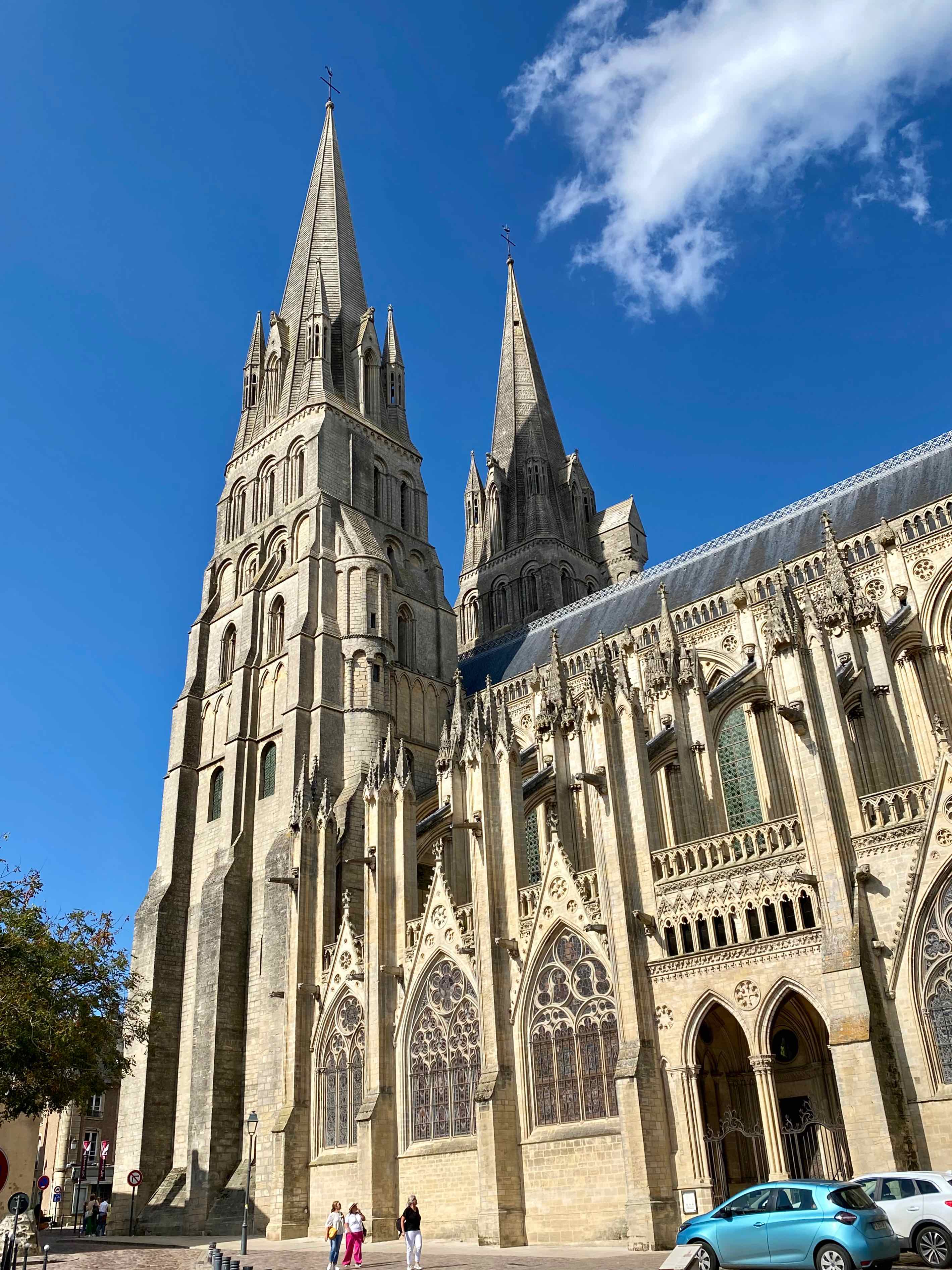
As we leave the cathedral I notice a small shop with a sign for Dentelle, so go in and chat with this nice lady about making bobbin lace.  My maternal grandmother used to make this type of lace and I have her lace pillow and some of the bobbins that my grandfather made for her. I also have a French book of patterns but I have never tried to make any.  Maybe I could find some instructions online and give it a try. One more view which shows the unique towers on the front of the church.
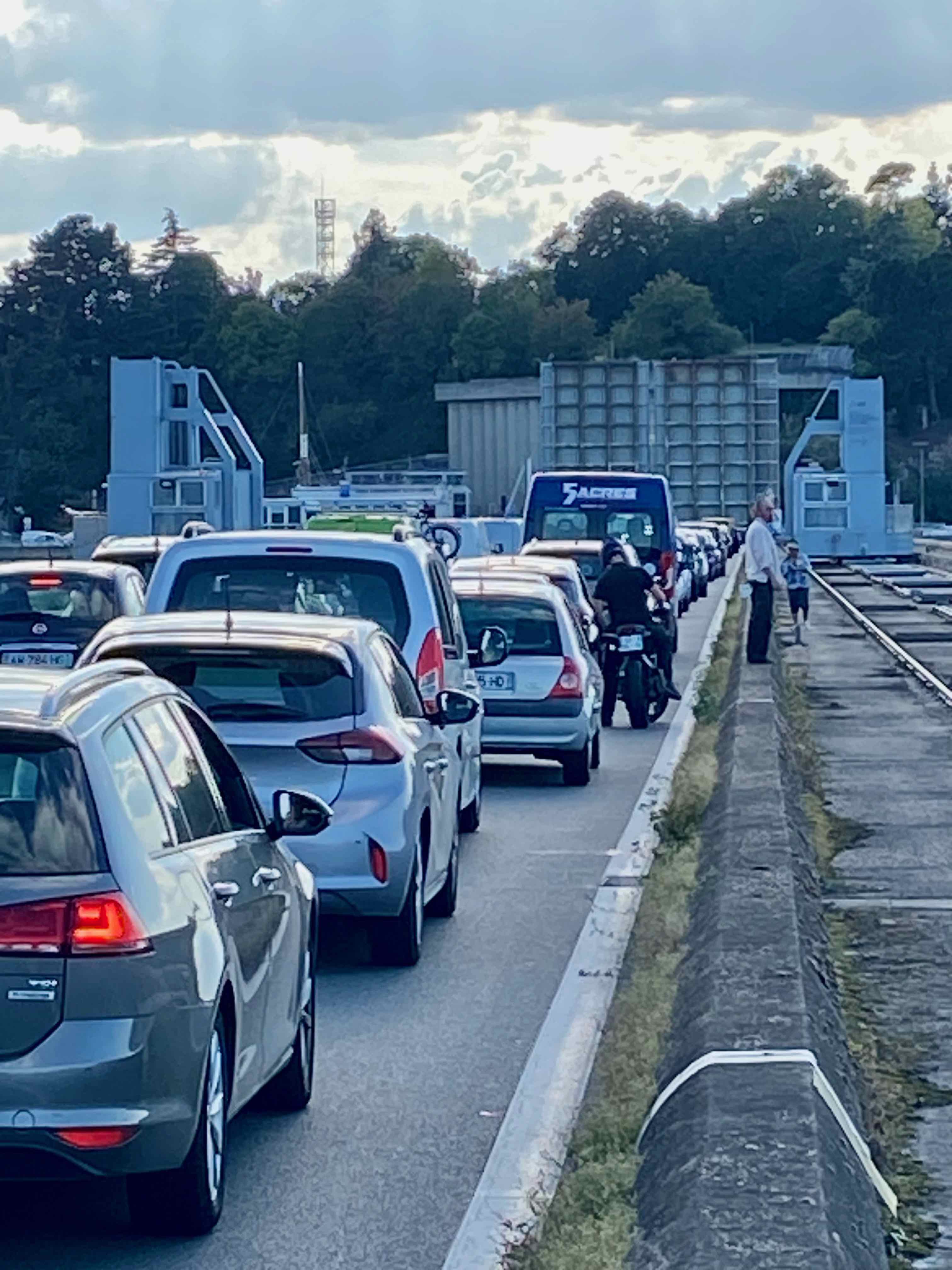
We still have a two hour drive to our next Airbnb in Dinard.  All goes well until we come to the bridge on top of a dam, just a short distance from our apartment.  We wait about 15 minutes while part of the bridge moves to allow four sailboats to pass from one side to the other.  Not sure exactly how it worked as we were a bit too far back to see what was happening.  Look closely and you can see the mast of one of the sailboats as it crosses.

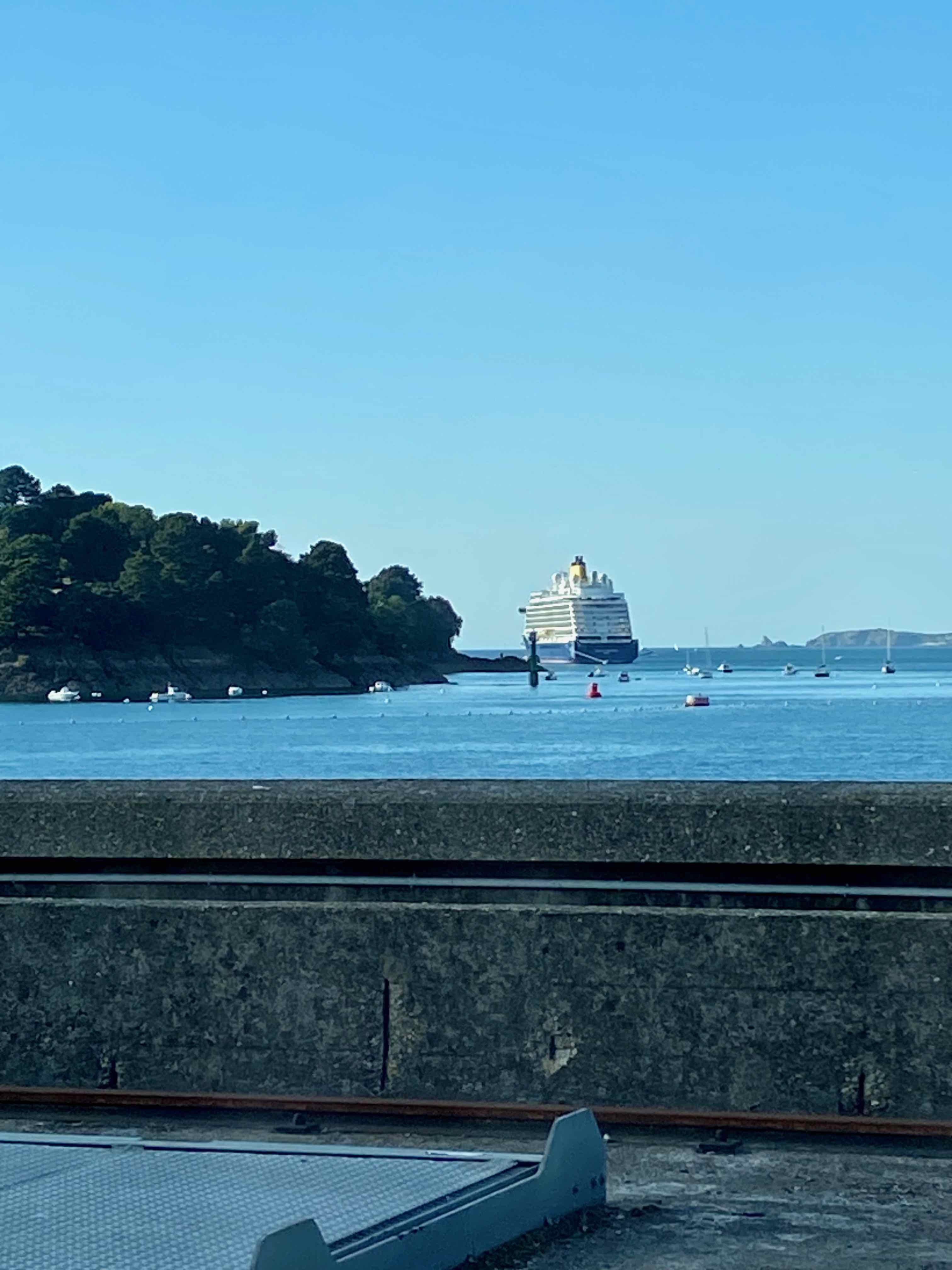
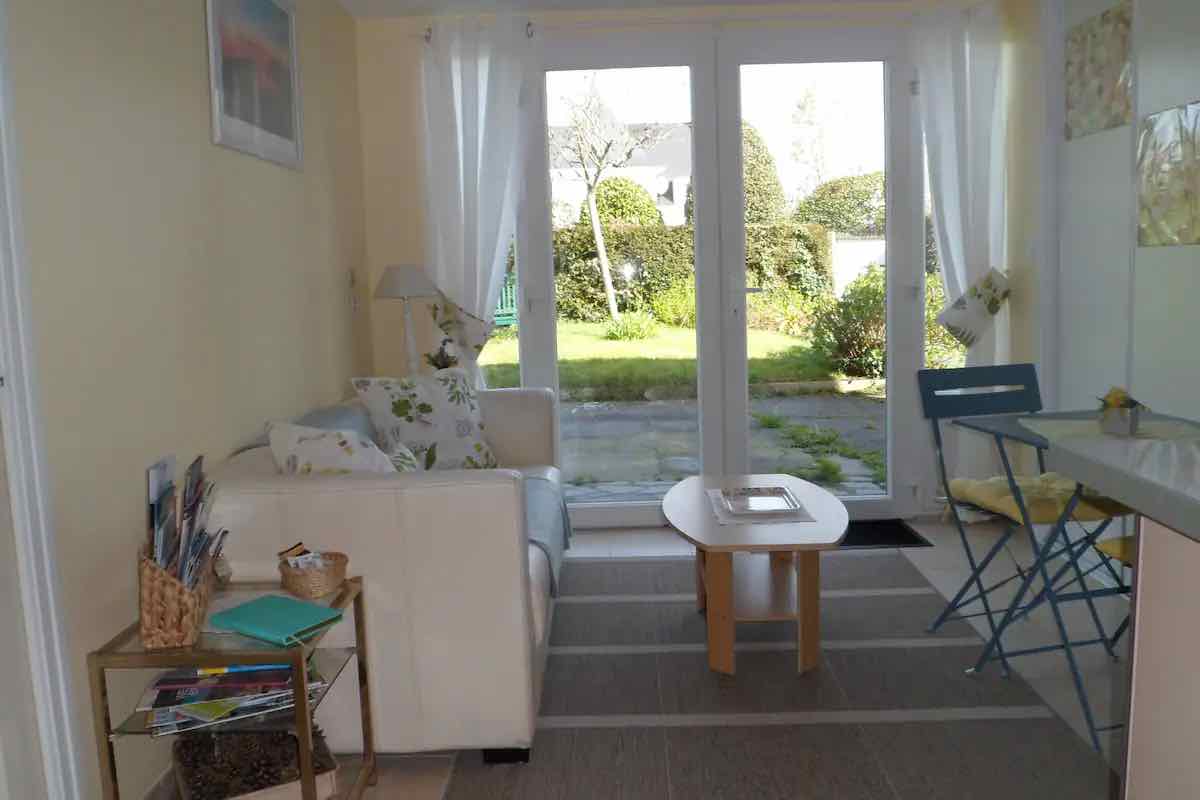
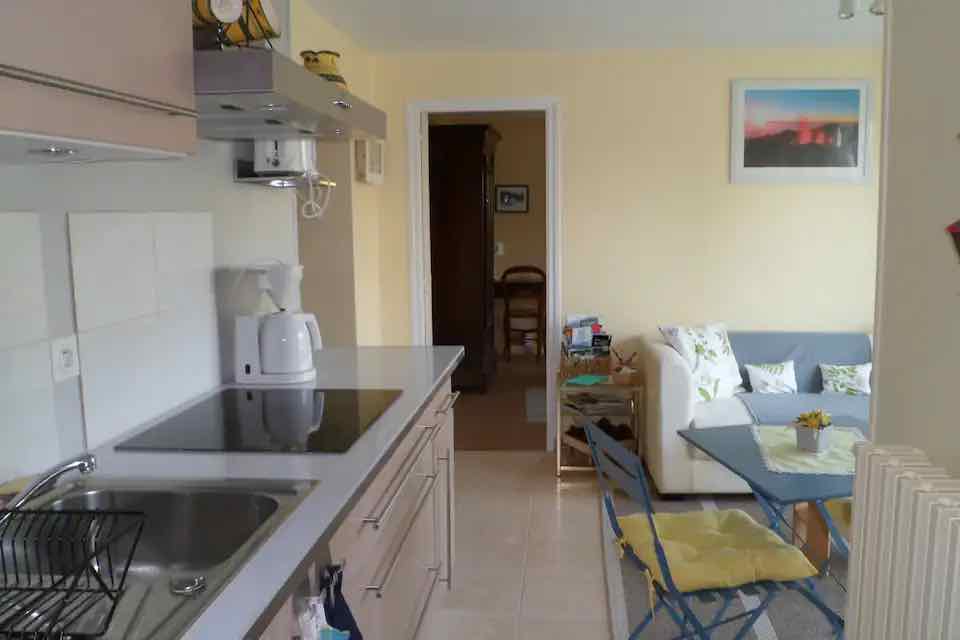
There is a big cruise ship in the harbour as well.We must be tired because we have a hard time finding our apartment, in spite of driving right by it about 4 times!  Google maps seems to show it in the wrong place, but we eventually manage to sort it out and our host is waiting for us. She only speaks French but I understand most of what she is telling us about the apartment. Here is our home for the next five days.
Fecamp and Étretat, France

Day 17,  Thursday, September 14, 2023

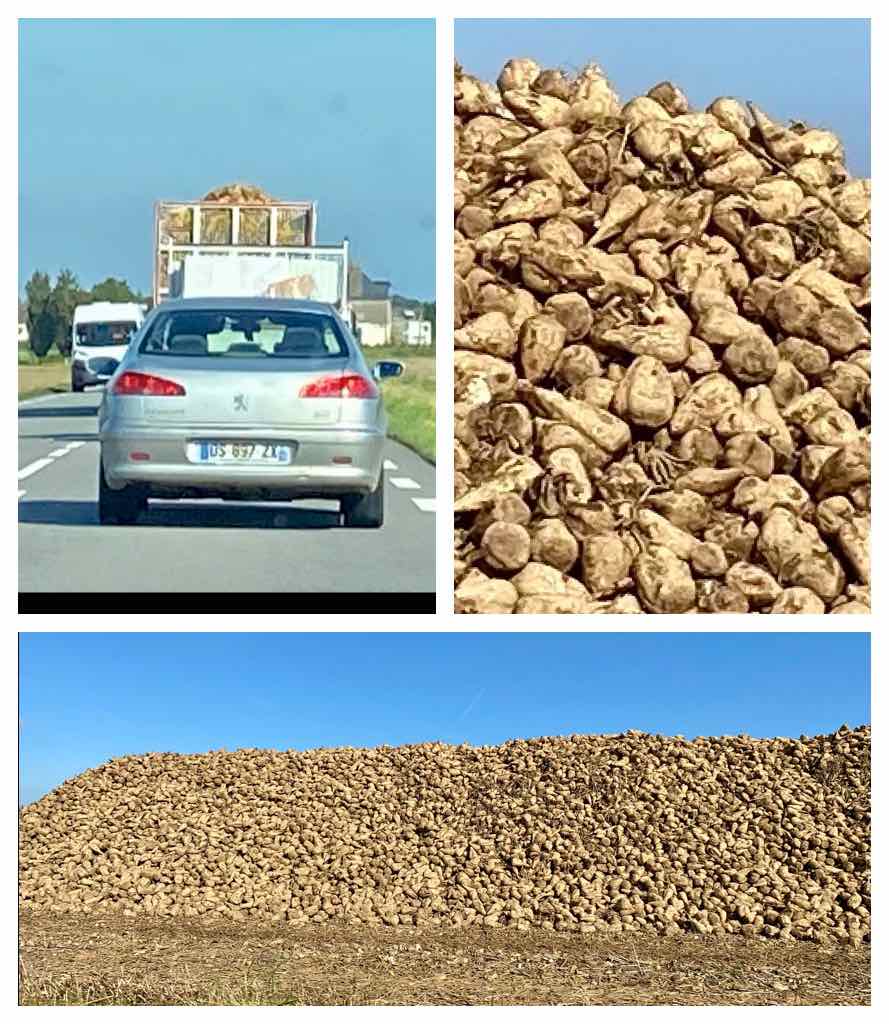
We are driving to Fécamp to see the cliffs and the English Channel and then to Étretat to see some famous stone arches.  On the way we see a truck full of some sort of root vegetable.  Then a bit further along the road we see long piles of this same crop.  Perhaps sweet potatoes?

Near Fécamp we find a lookout spot for the coast, and a beautiful spot for lunch.

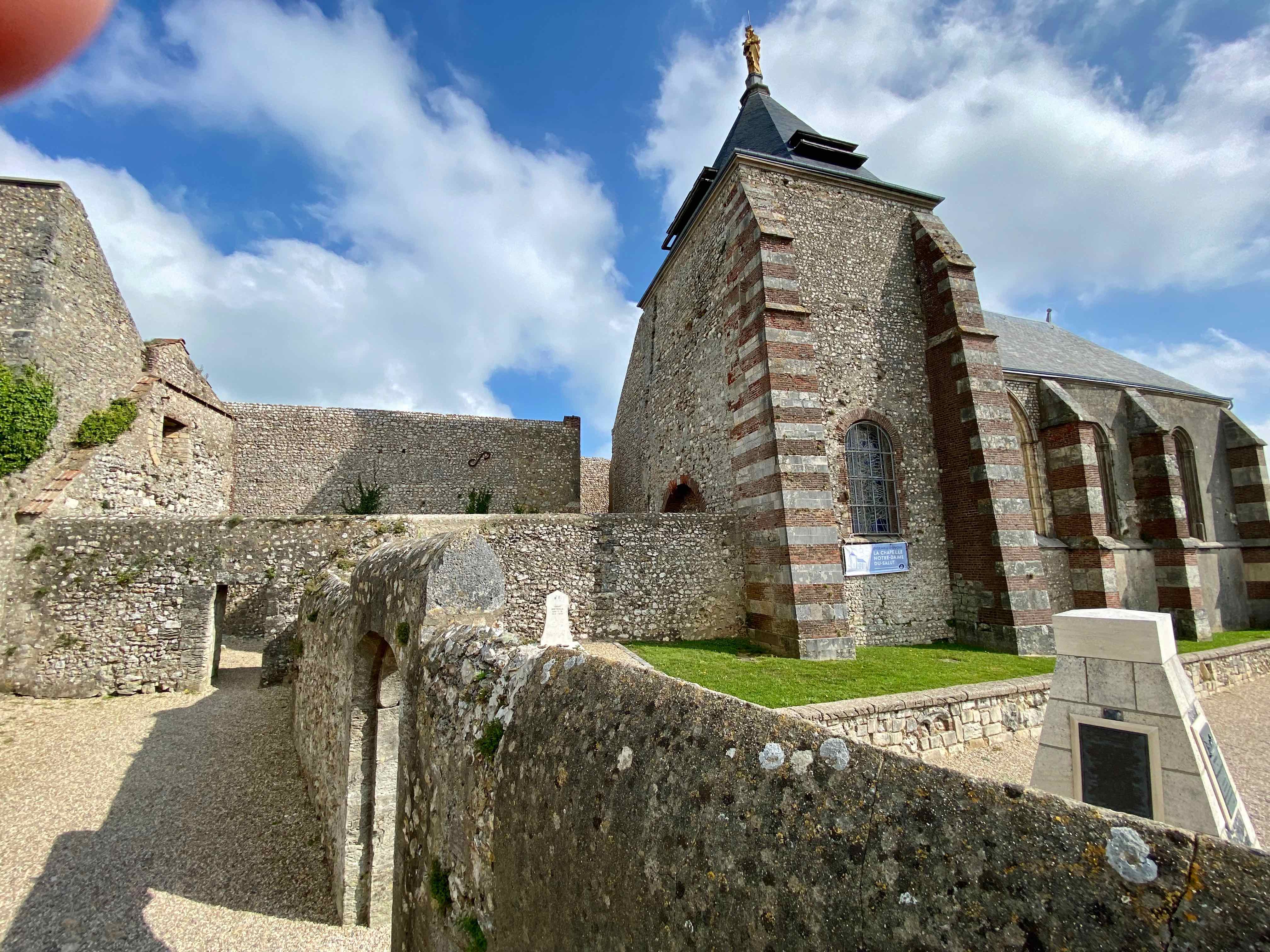
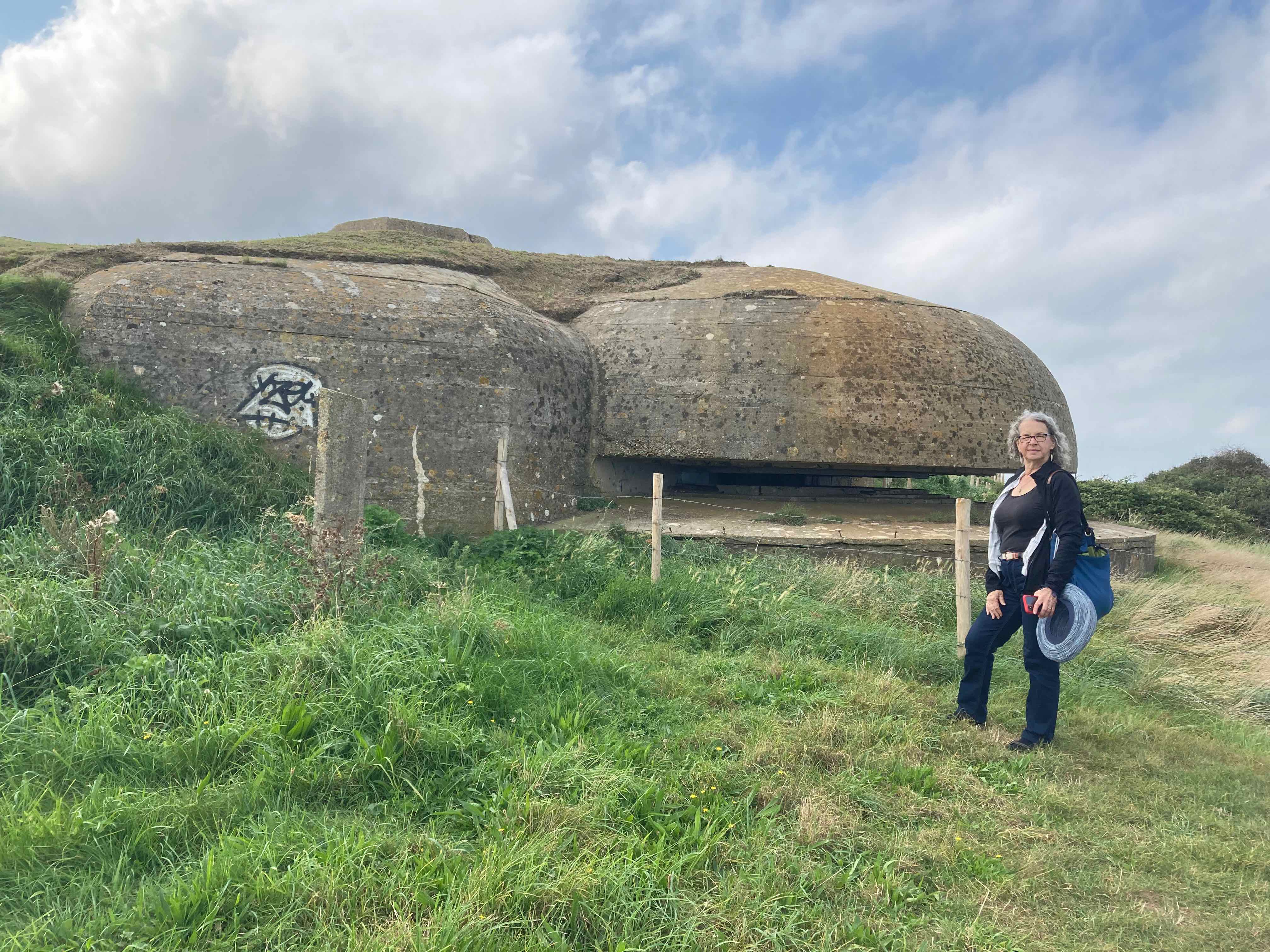
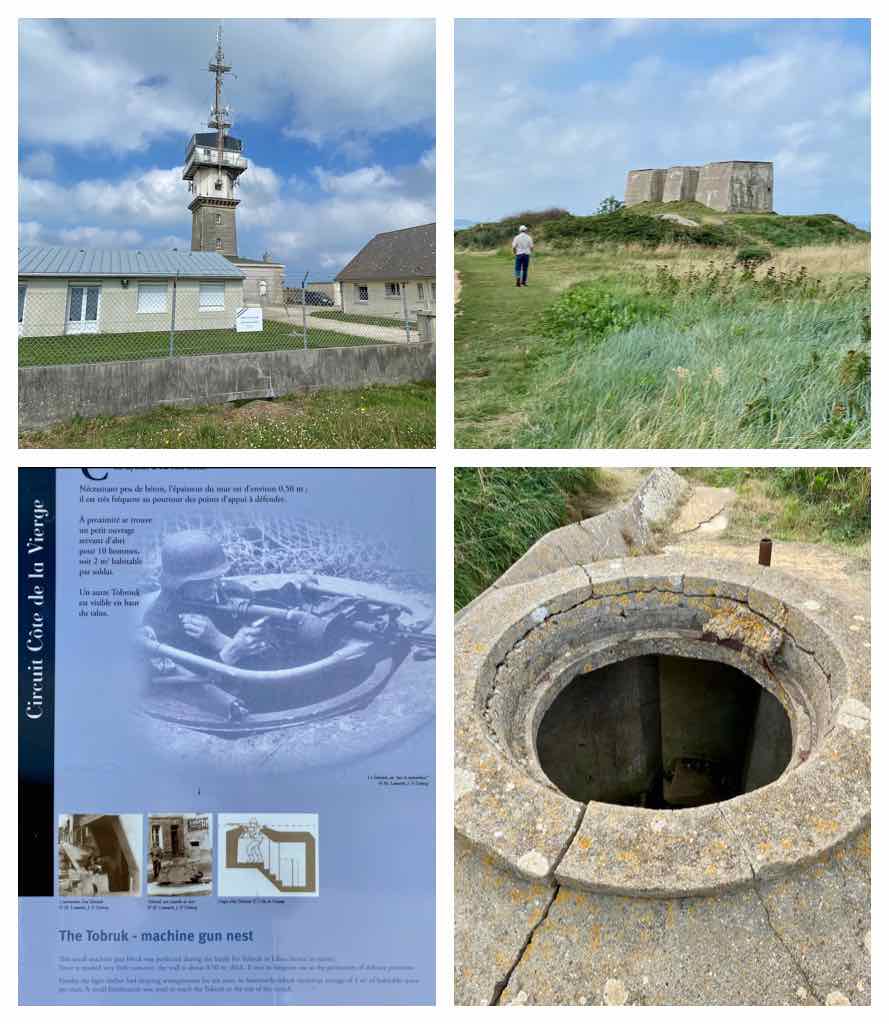
There is an 11th century church here but it is closed as it needs restoration and is not safe to enter. We discover a semaphore station built in the early 1900’s on the same site as an old lighthouse built in the early 1800’s.  There are also more World War II bunkers here.  Not surprising since they were built all along the coast of France.  The three pillars were to hold radar equipment, but it was never installed, and there are several Tobruks,  or machine gun nests.One of several large bunkers.
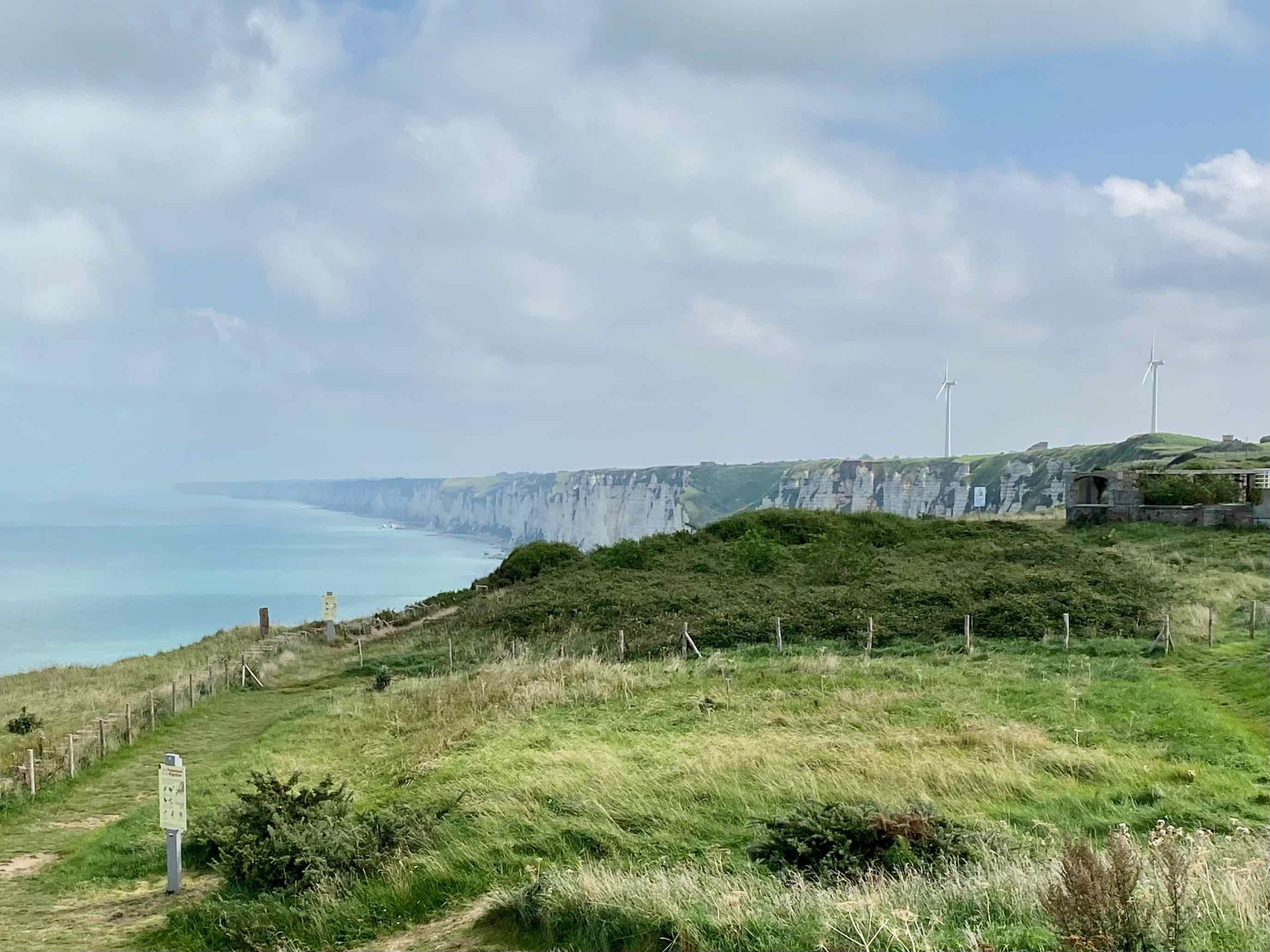
This is a view of the cliffs in the other direction. They stretch as far as we can see.

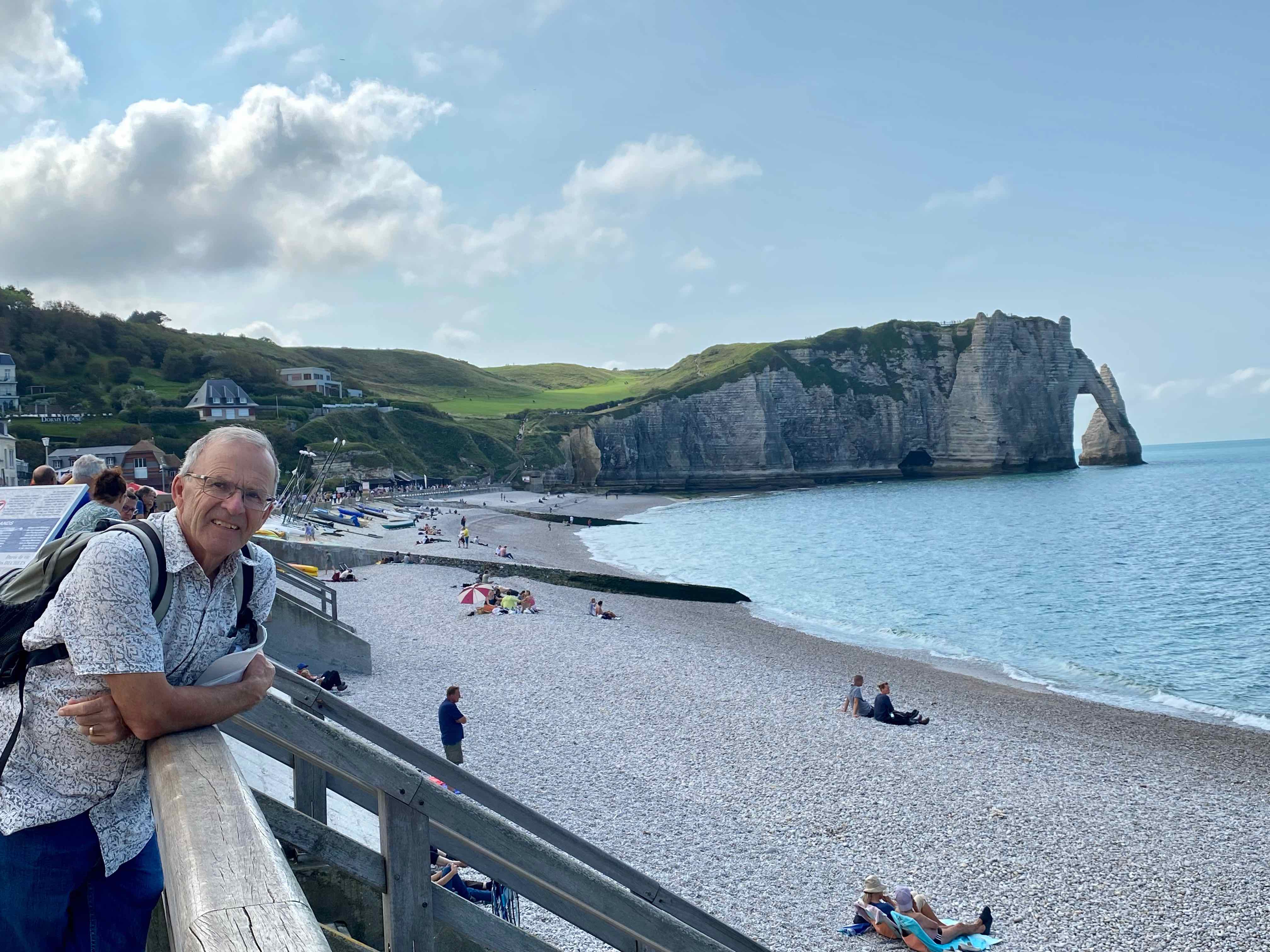
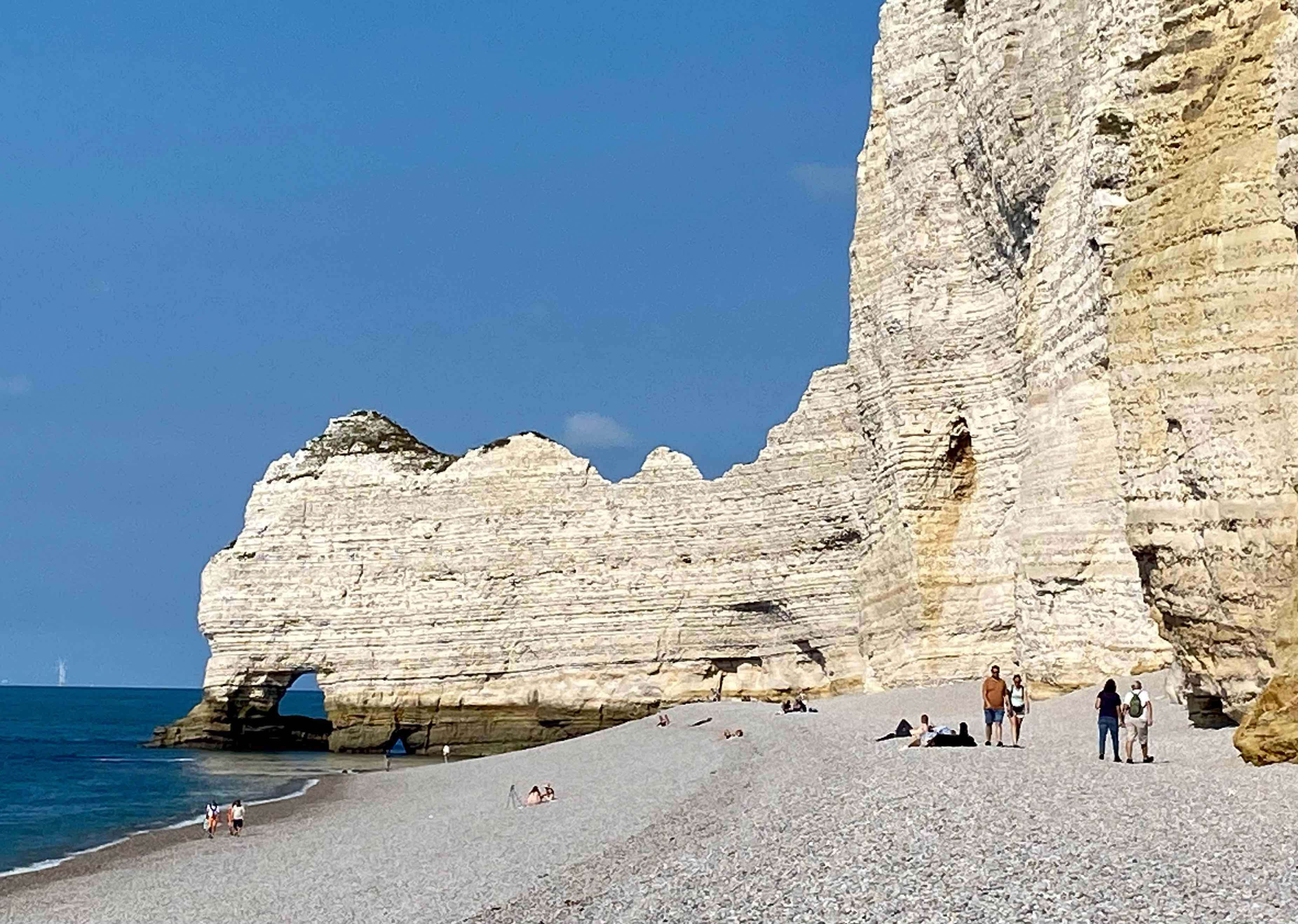
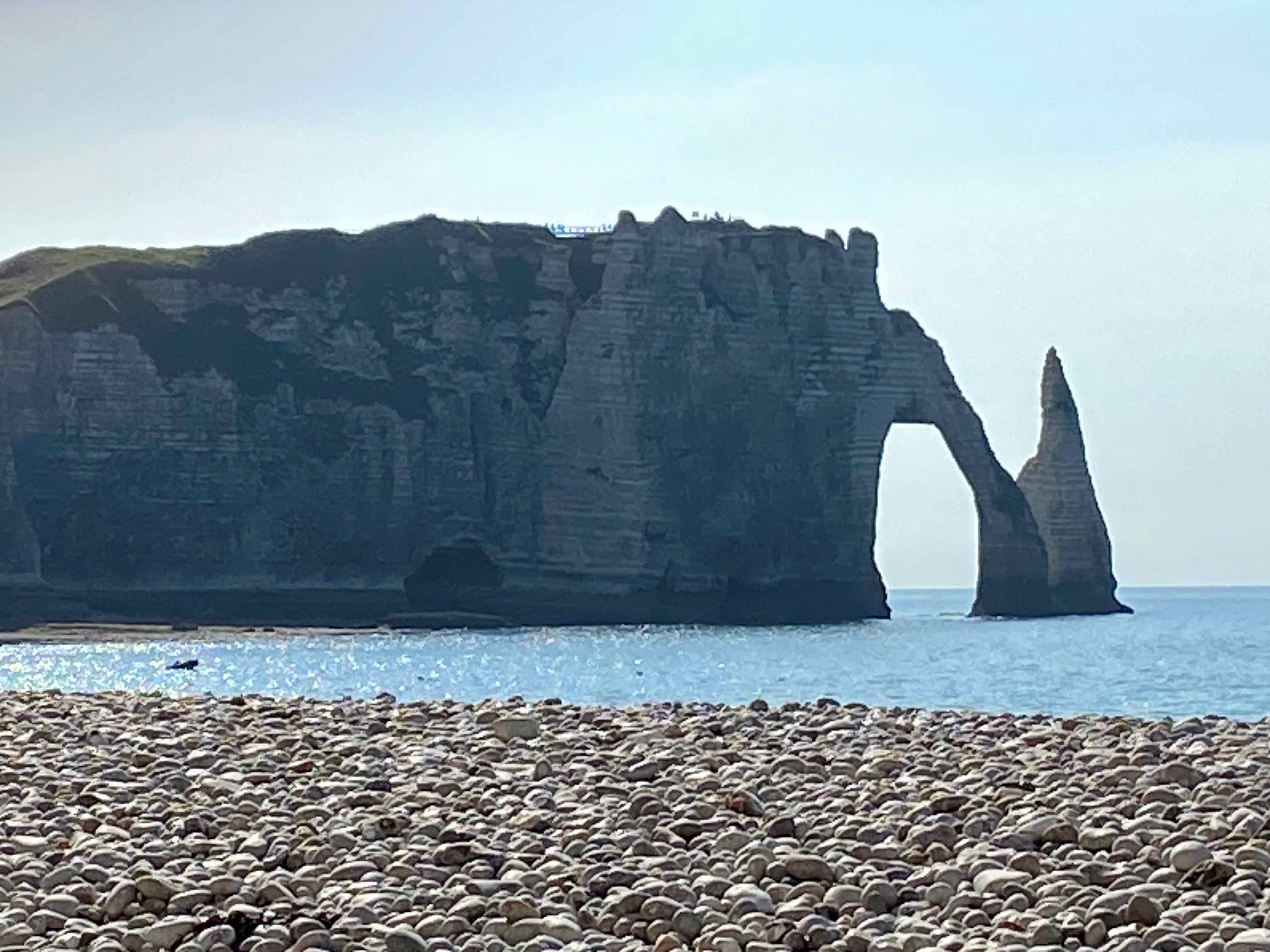
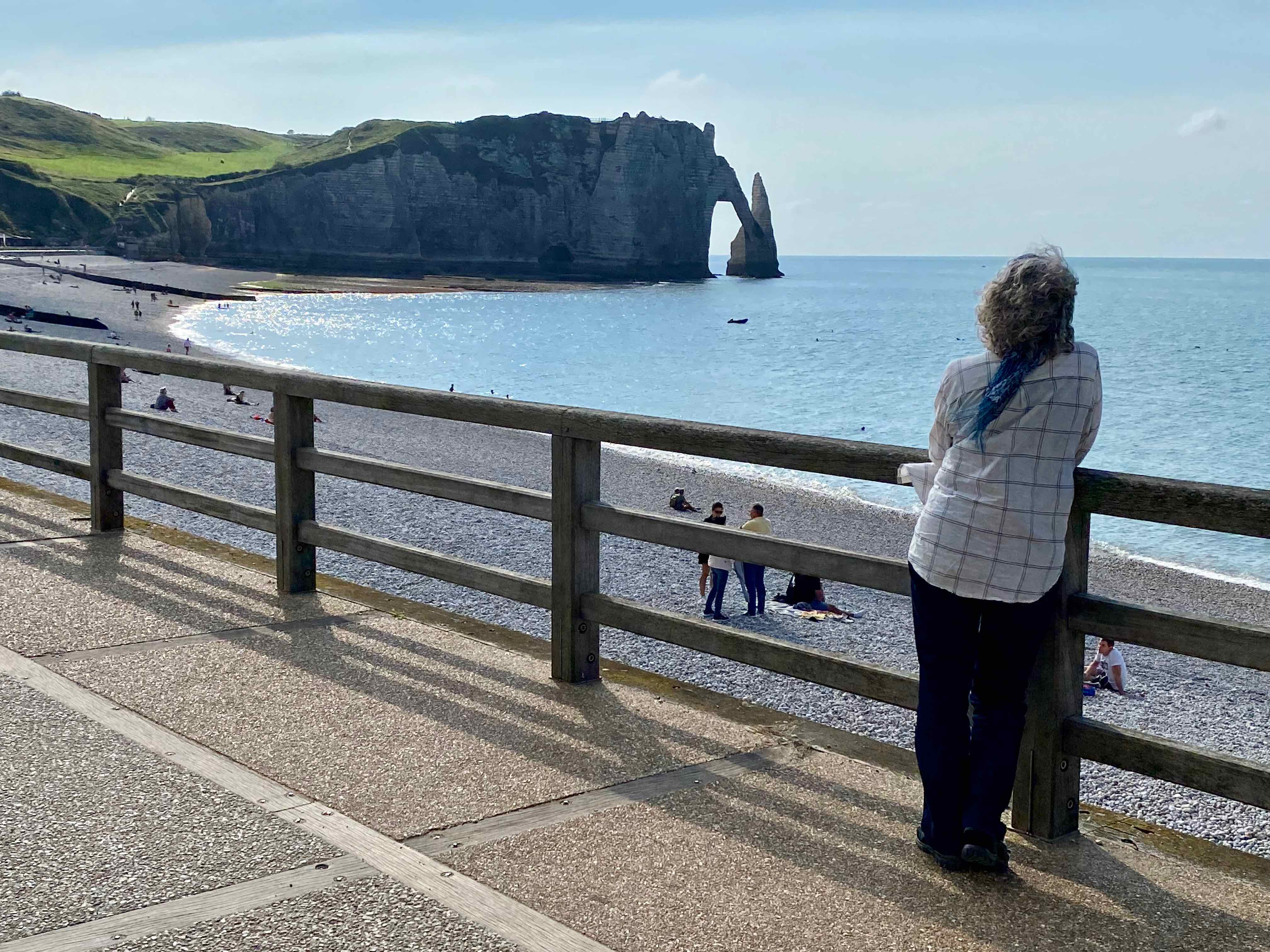
We find parking in Étretat fairly close to the beach and we get our first glimpse of the stone arches this area is famous for. This is the Falaise d’Aval.

And this is the Falaise d’Amont. The cliffs are high and the beach consists of fairly large pebbles, no sand here.  Falaise means cliff or clifftop.

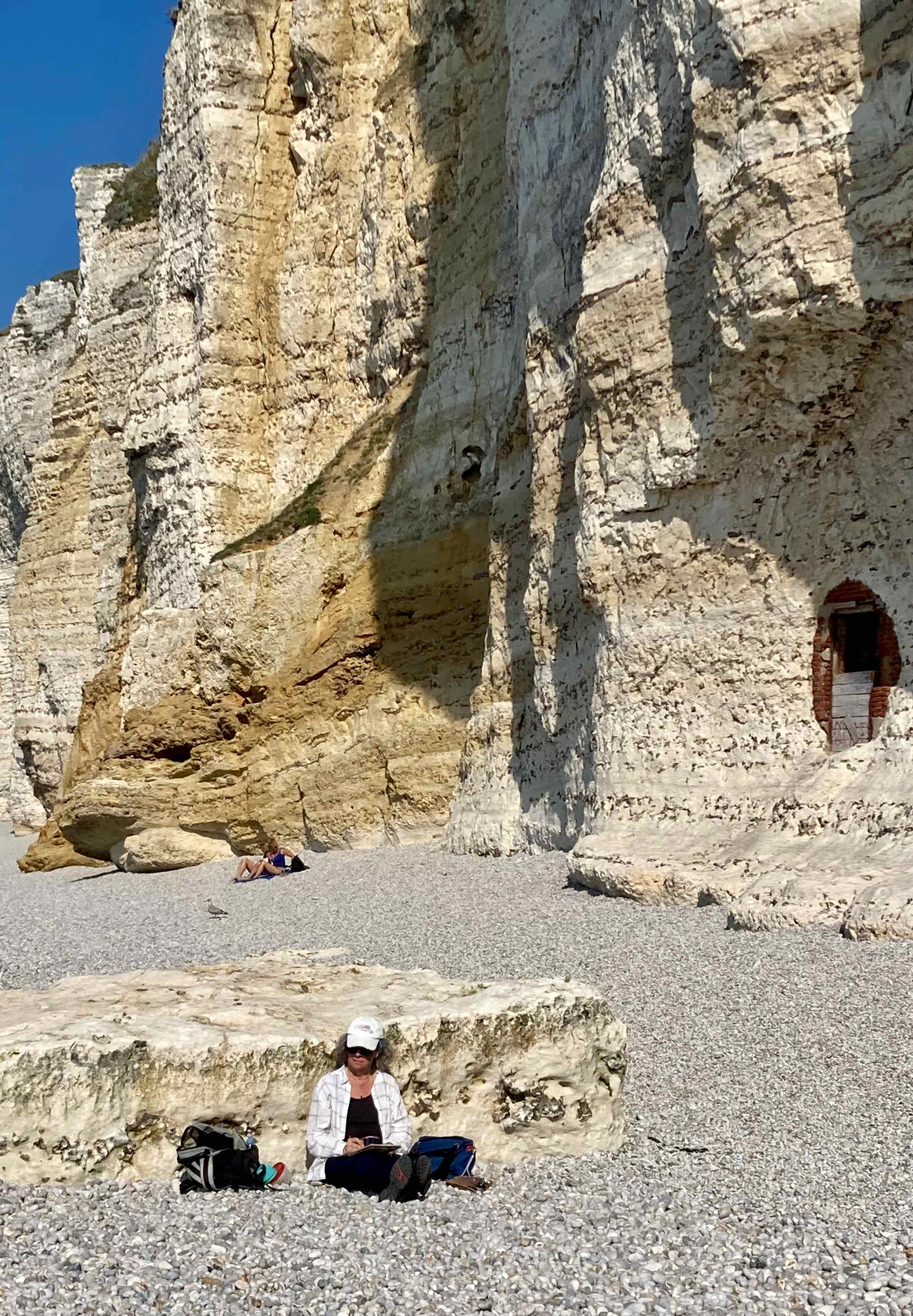
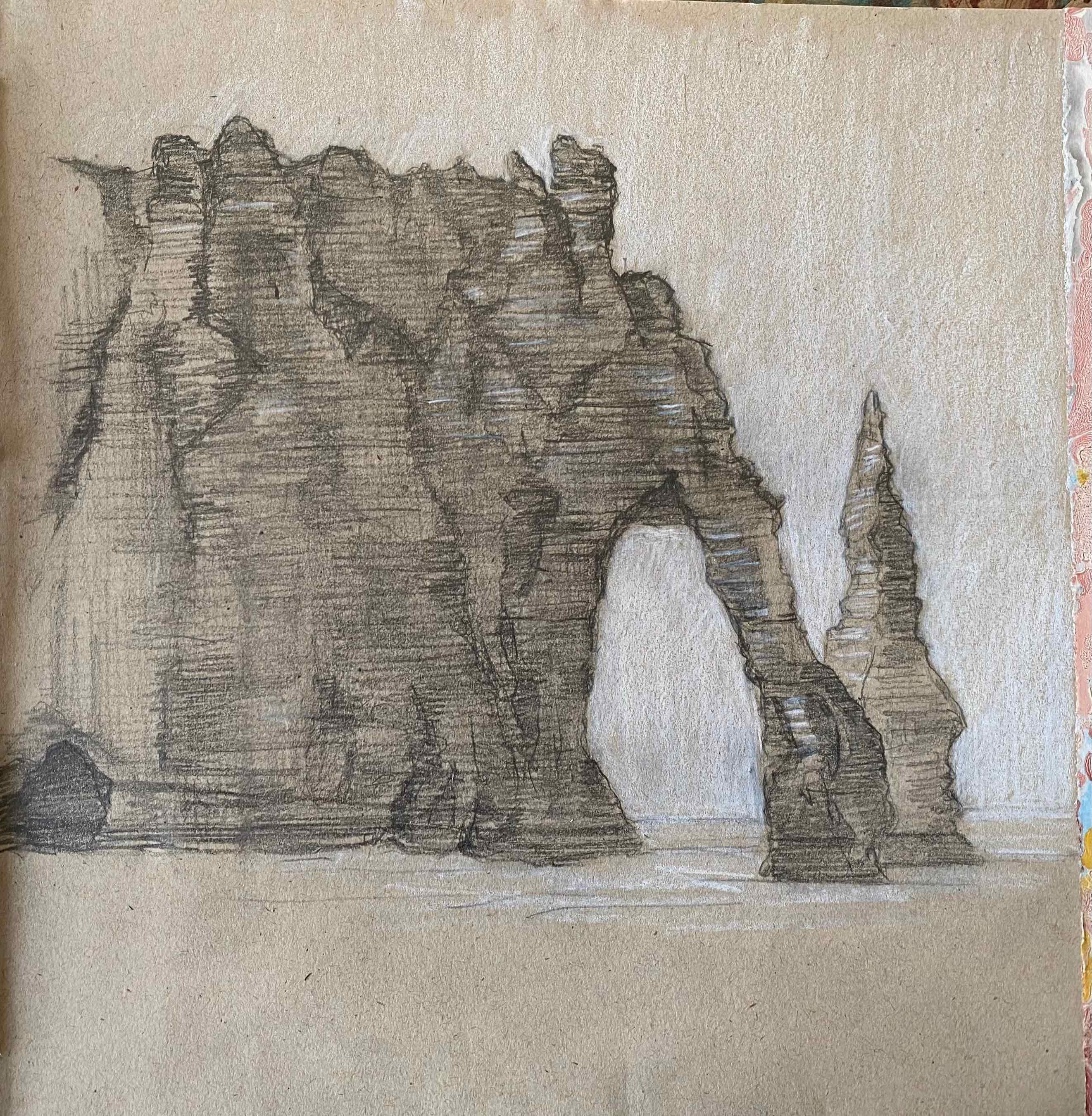
I find a spot to sit and sketch.  When I first started drawing a group of high school students arrived at the same rock I am sitting beside and their teacher gave them hammers so they could chip off pieces of this big rock I am leaning against.  Interesting, seeing as are signs say that the stones on the beach are protected and can not be removed.  Then there was a lot of commotion and screaming…a flock of  seagulls flying overhead pooped on many of the students!  I escaped such an indignity but my sketchbook was not so lucky.  Too funny…I gave the students a wet wipe to clean up and they were very grateful.

Here is the view…

…and here is my sketch.I have seen this view in so many paintings, and finally, here I am seeing it in person.

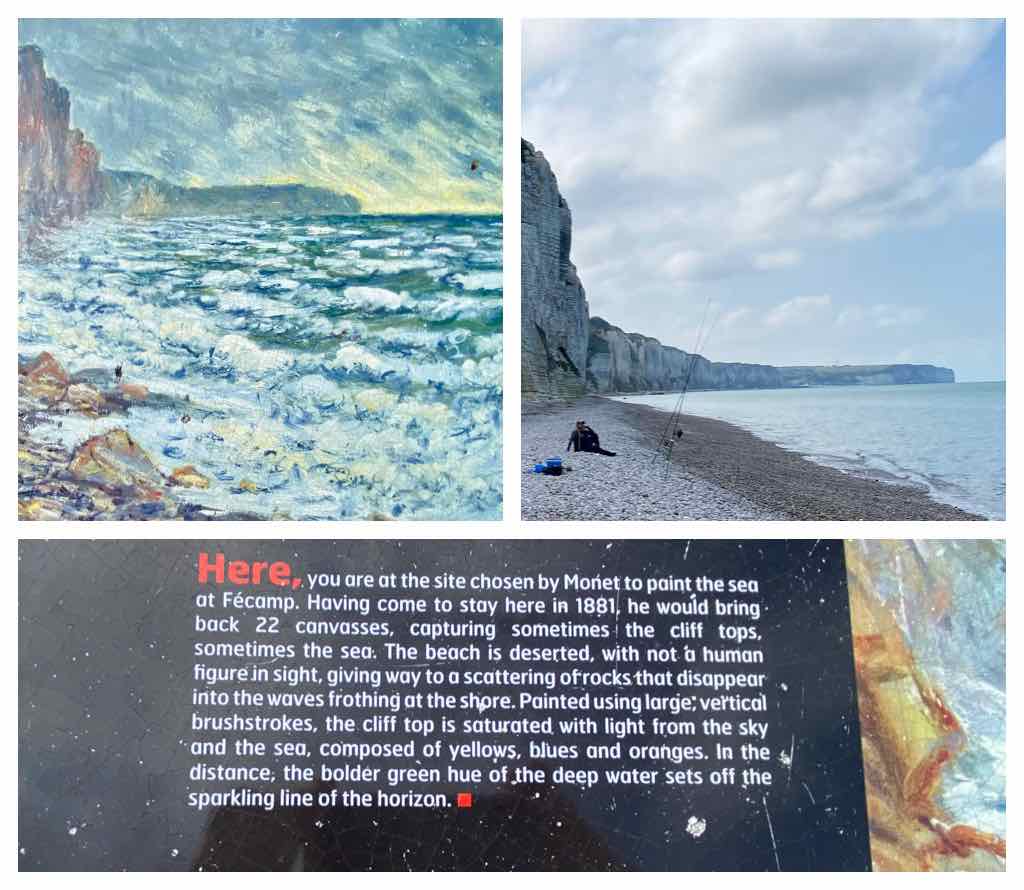
Monet painted many canvases here at Étretat and nearby Fécamp.

Le Grand Cours de Nu…The Big Nude Class!

Day 16,  Wednesday, September 13, 2023

Bob went to the Nature Museum and I had a quiet morning, resting up after yesterday for my art class tonight.  One of the nice things about Rouen Museums is that there are no entrance fees, they are all free. “The Rouen Natural History Museum is the 2nd most important natural history museum of France after the museum of Paris thanks to its collections richness and diversity (ornithology, ethnography, botany).”  ~from Rouen Tourist Information
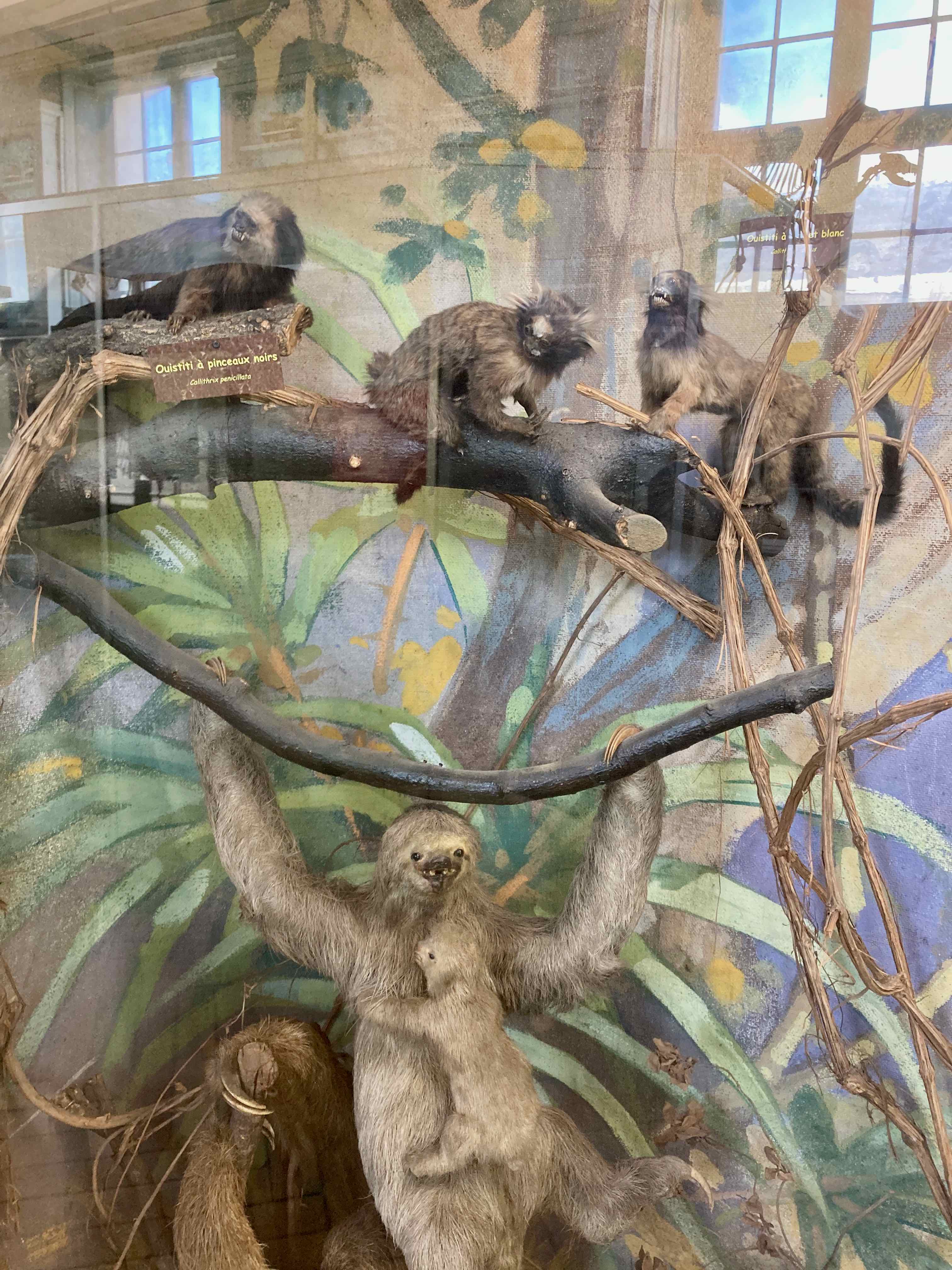
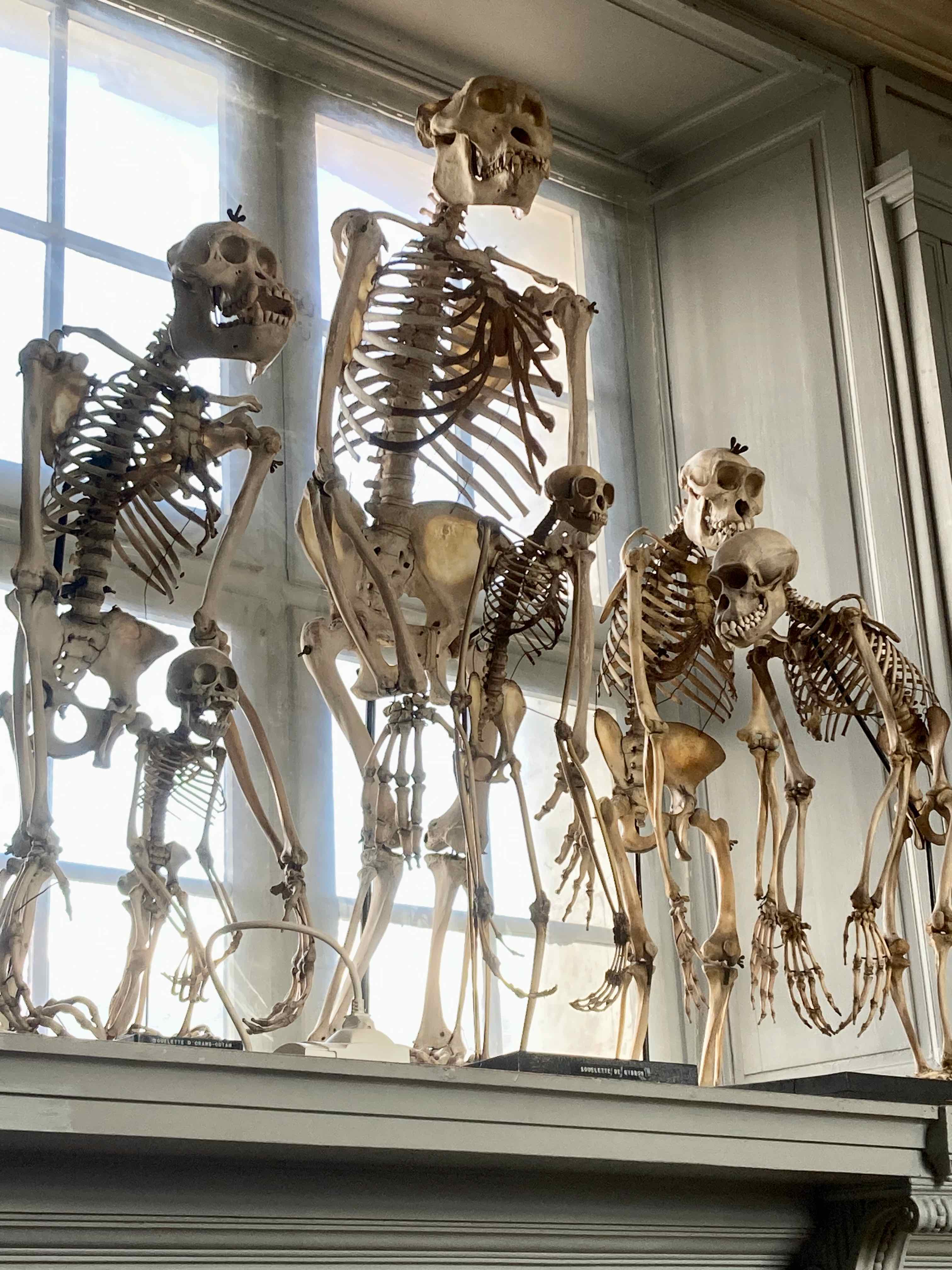
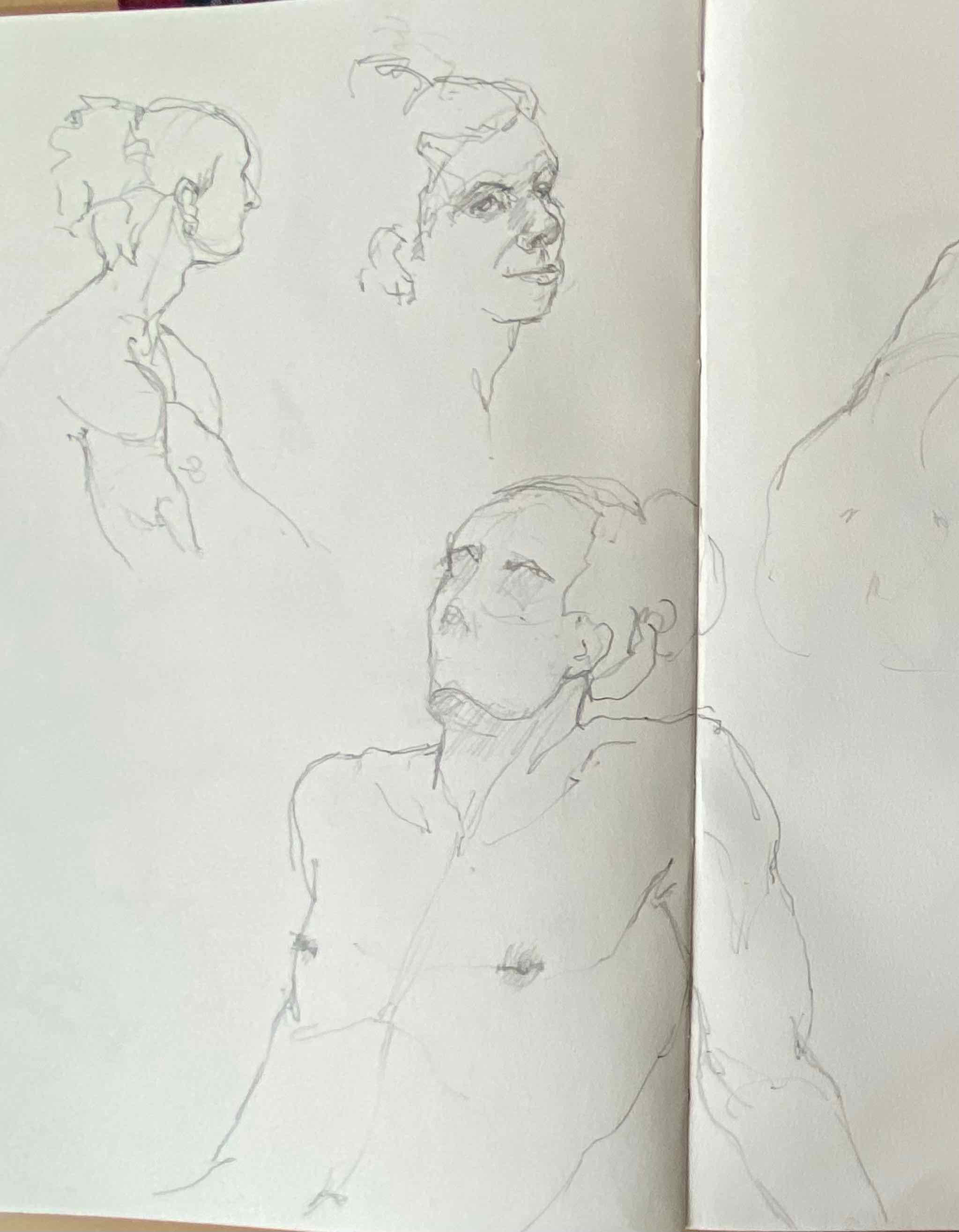
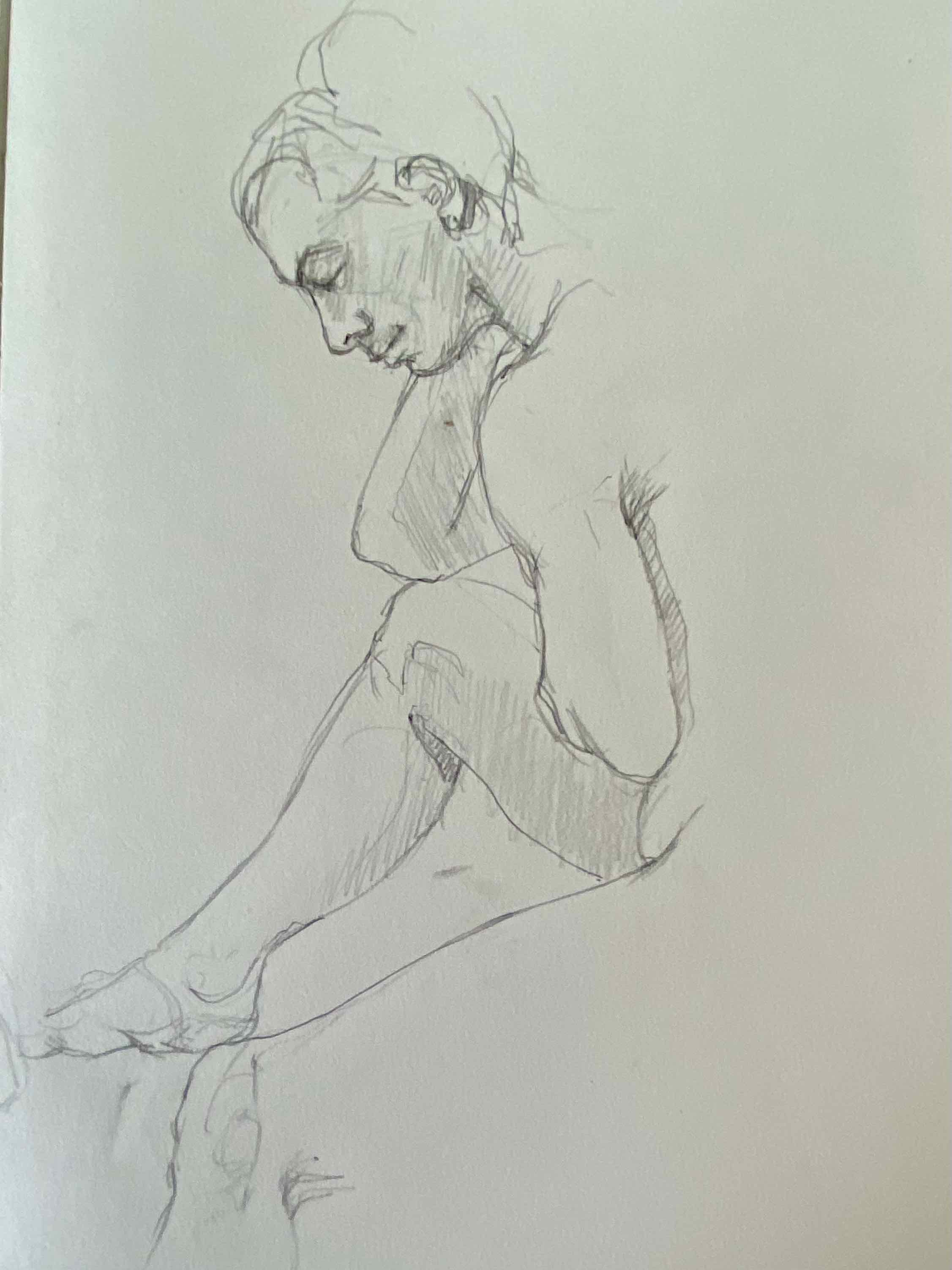
More than 800 000 items are gathered there and half of them are exhibited.I walk to the Musée de Beaux Arts for my Grands Cours de Nu, or the Big Nude Class.  It takes place in one of the museums exhibition rooms.  35 people attend this class and there is a male and a female model on two separate stands.  We were encouraged to move between the two models whenever we want.  It was interesting and a different format than other life drawing classes I have attended.  There were four instructors who circulated and offered help as needed.  After the break I found five young women gathered around my sketchbook…seems I have fans of my work!  They asked if they could take photos and wanted to know about my drawings.  The instructors were also gave me very positive feedback.  Lots of fun!
The strange line on the back view is part of a tattoo. I usually don’t draw tattoos, but this one followed the contours of the back so I included it.
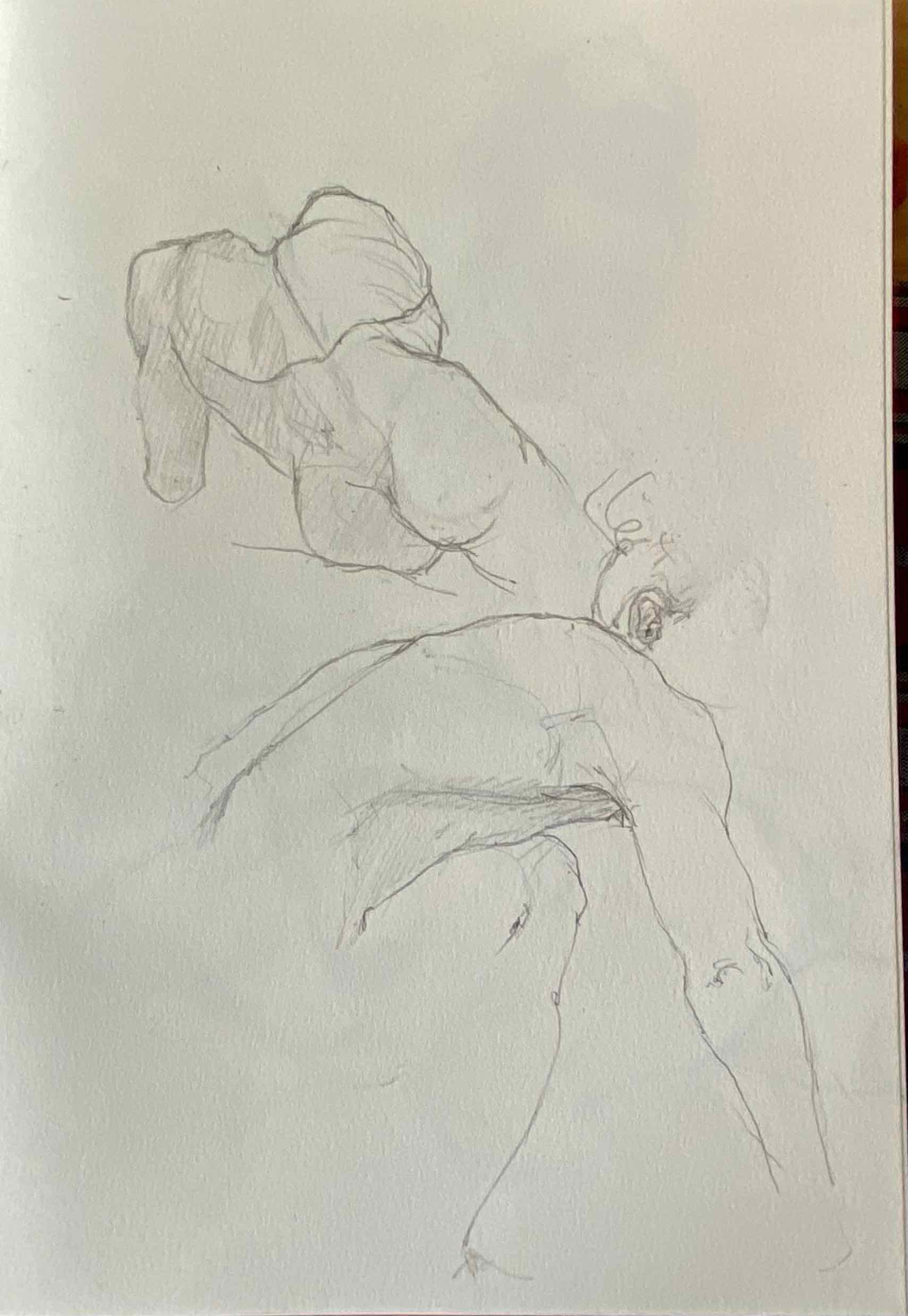
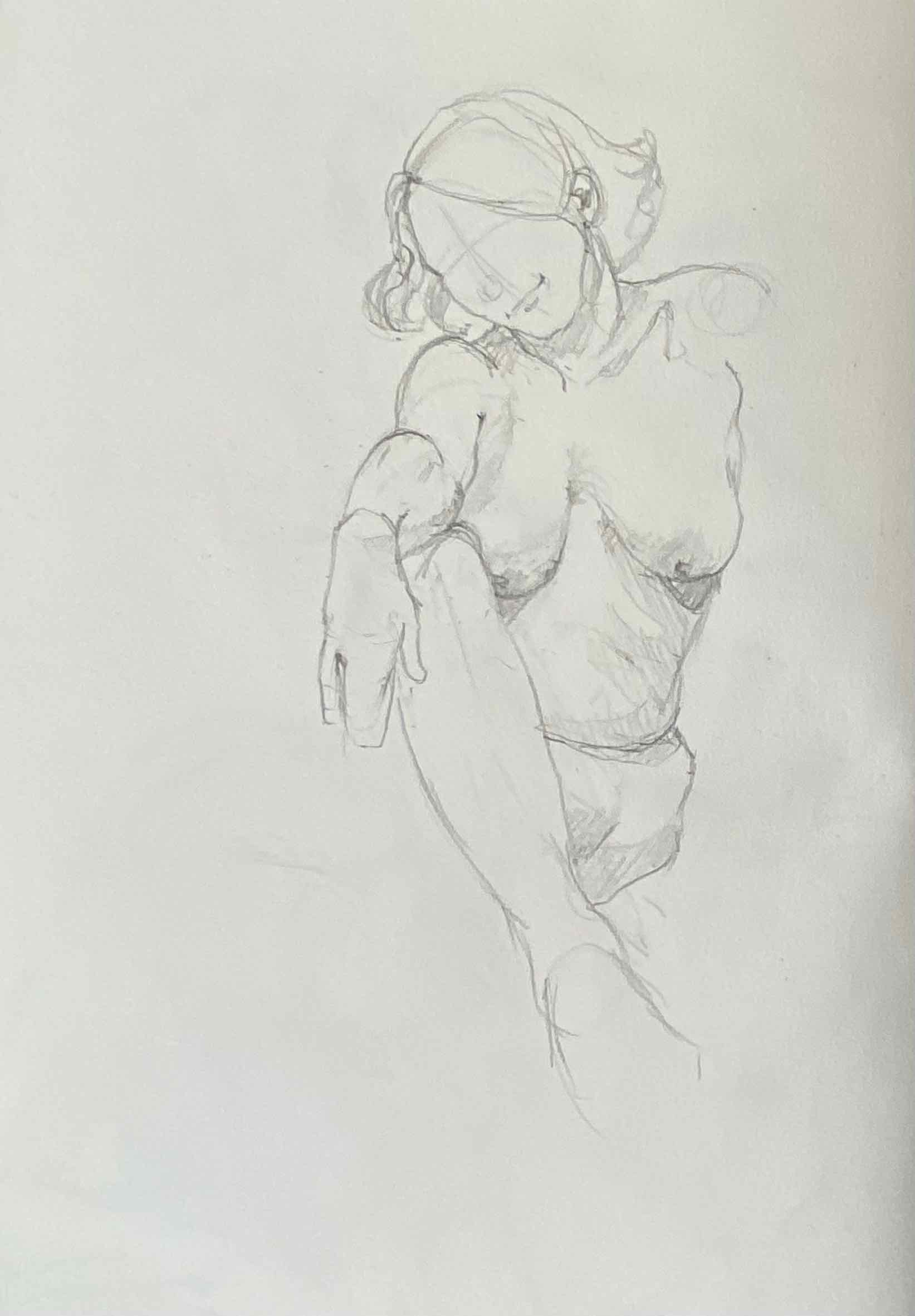
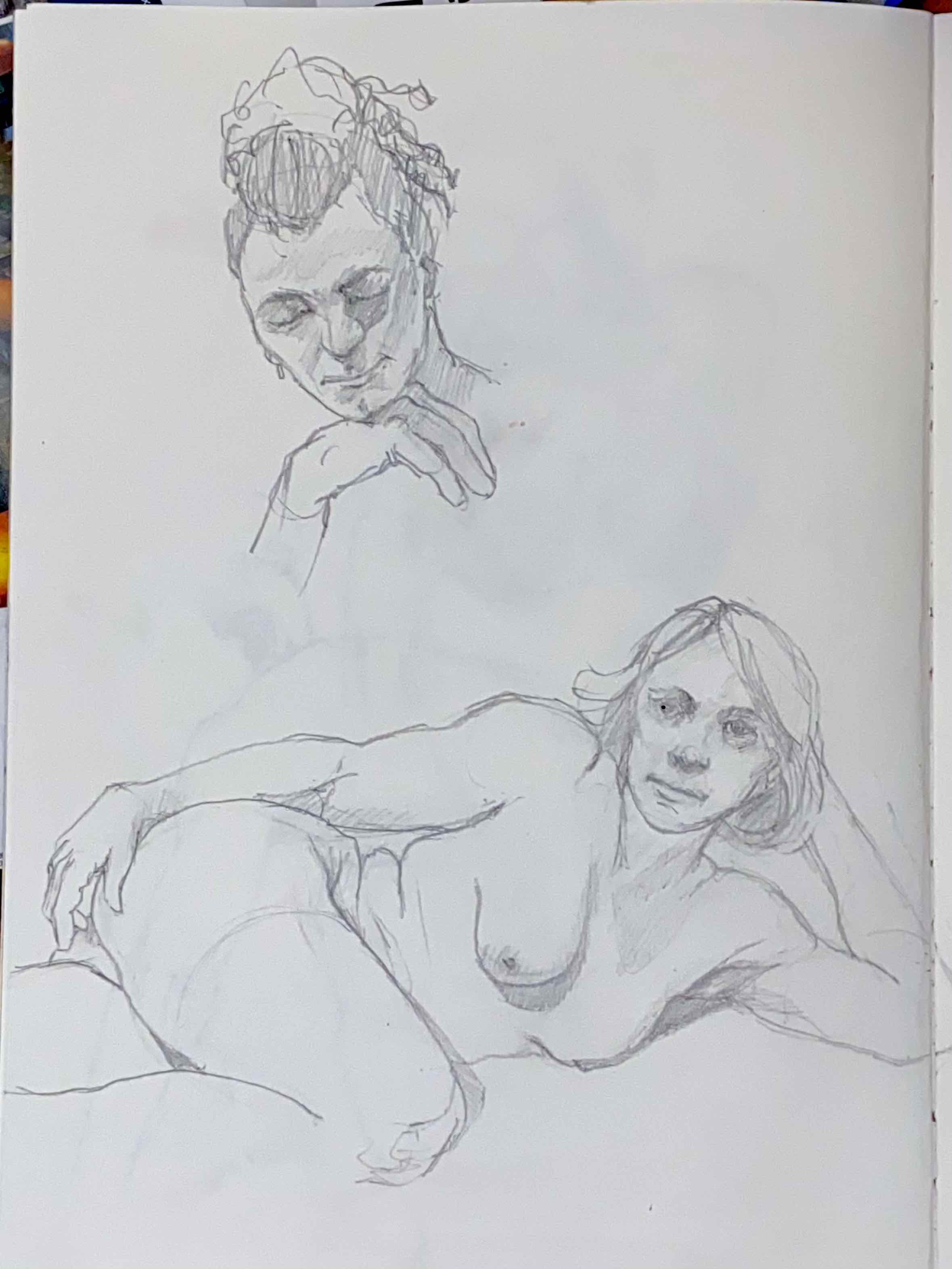
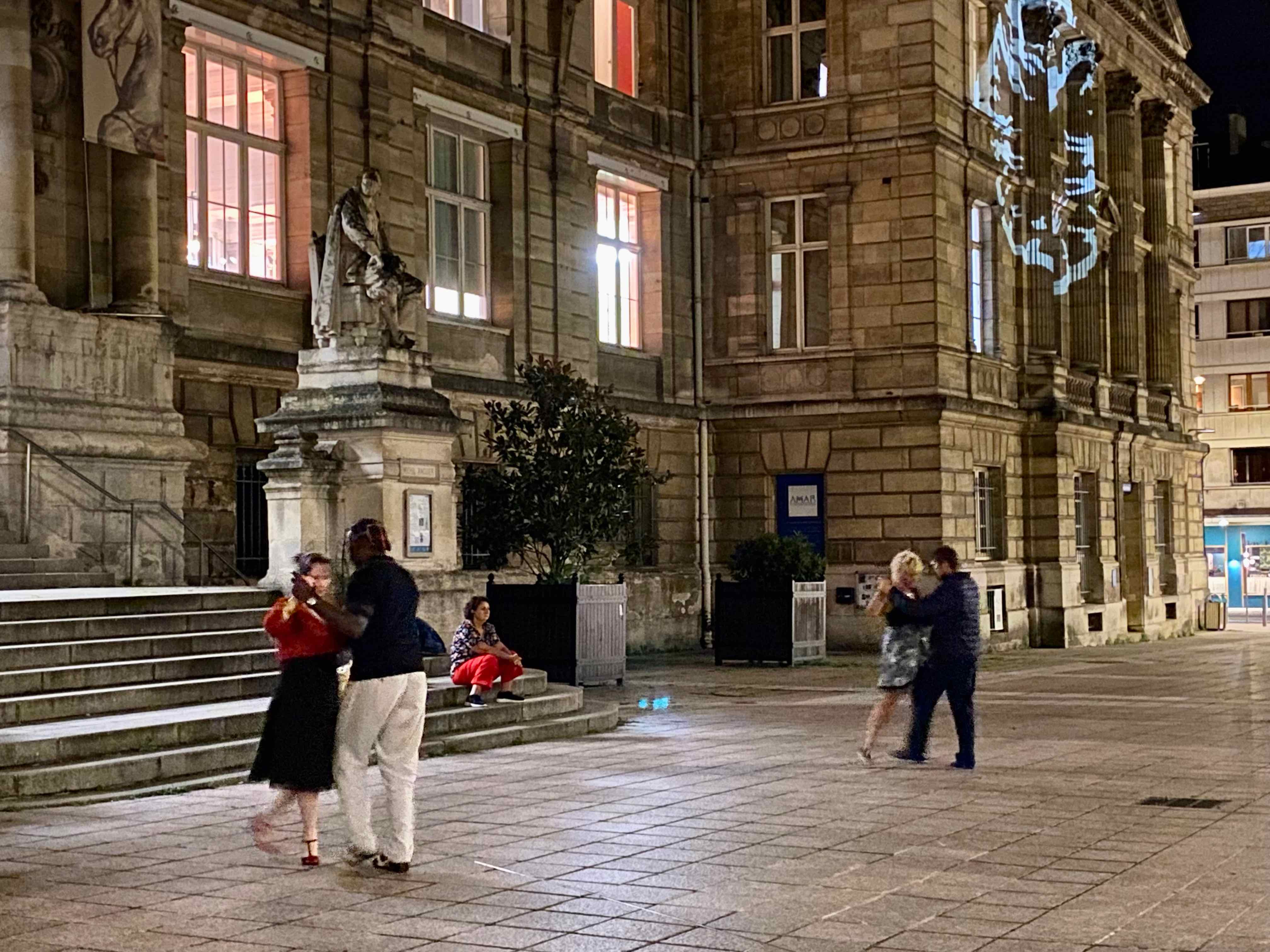
Bob meets me outside after the class and we sit for awhile to watch people dancing the Tango outside the Museum before heading home.

Normandy Juno Beach

Day 15,  Tuesday, September 12, 2023

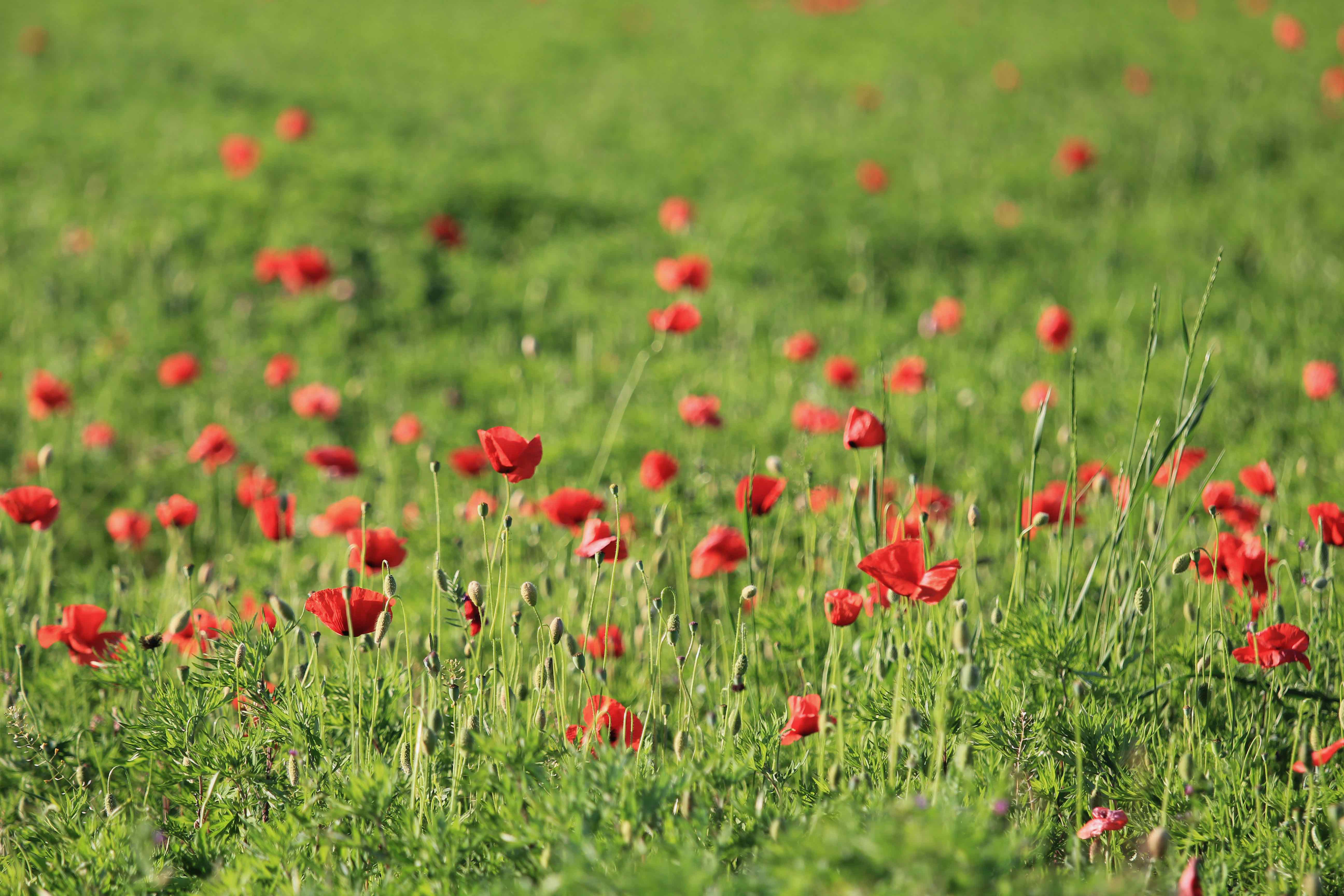
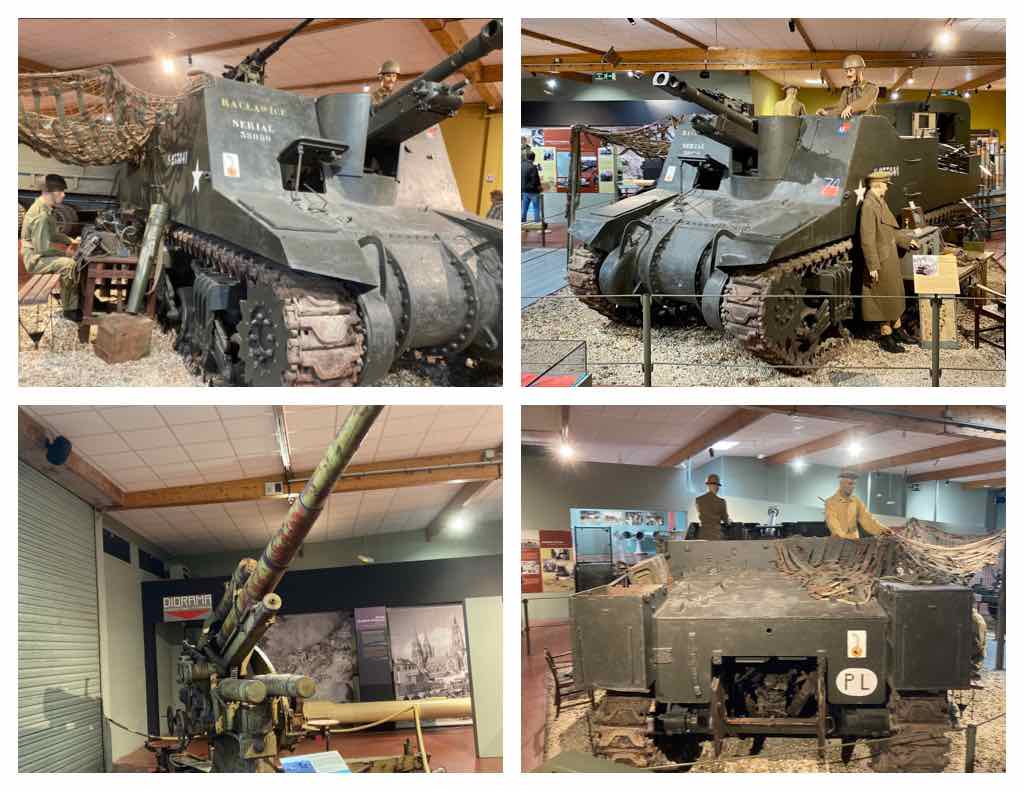
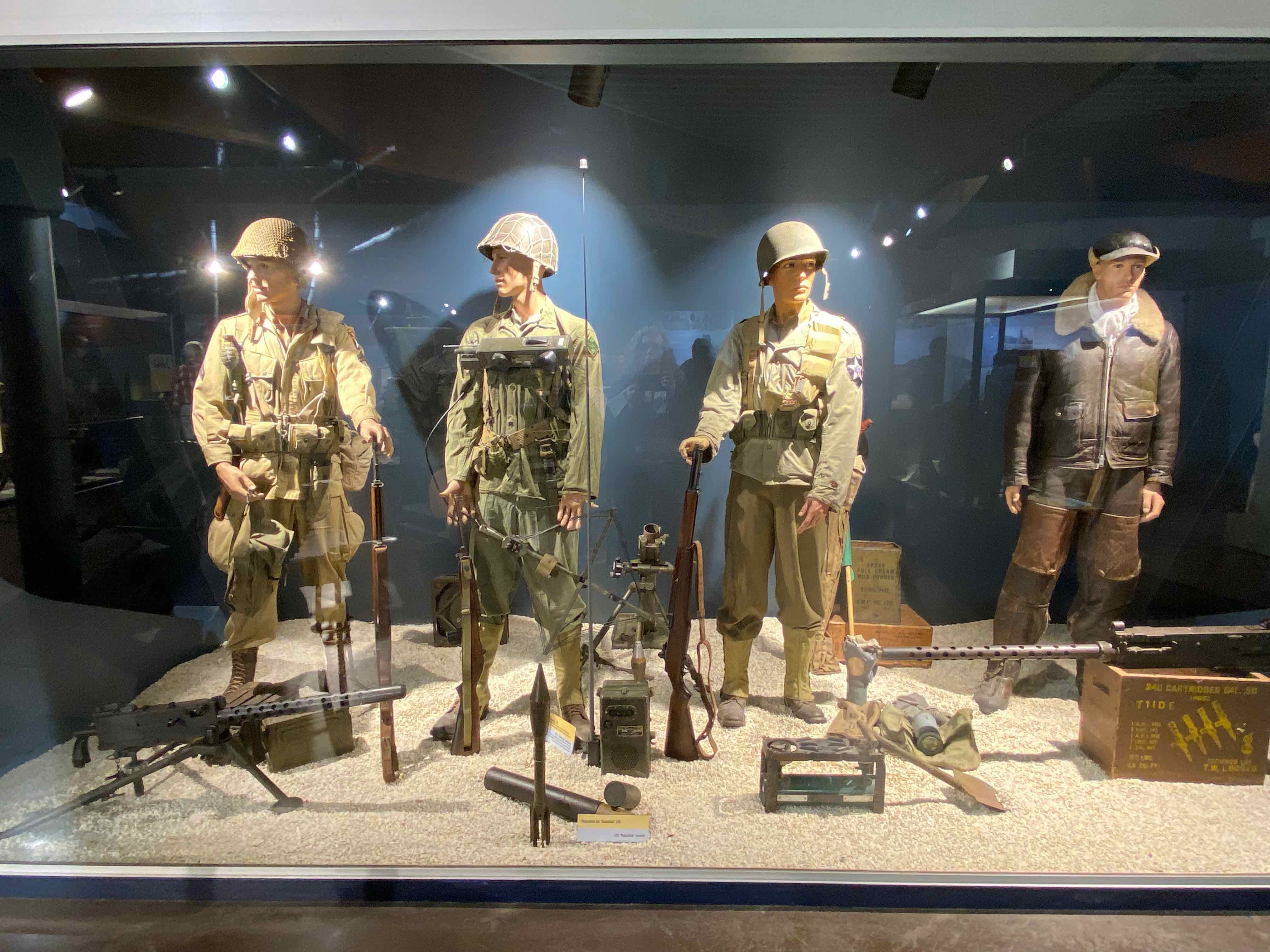
We drive to Bayeux to visit the Normandy war museum about D-Day.  On the way I am surprised to see red poppies on the side of the road.  It was a beautiful reminder of horrors of war.  We were driving too quickly to take a photo but I found one online that is very much like what I saw. Photo credit Vesna D.The Normandy landings took place on Tuesday 6, June 1944 . Code named Operation Neptune and often referred to as D-Day, it was, and still is, the largest seaborne invasion in history. This is a big museum with lots of displays.  There are examples of the uniforms worn at this battle.
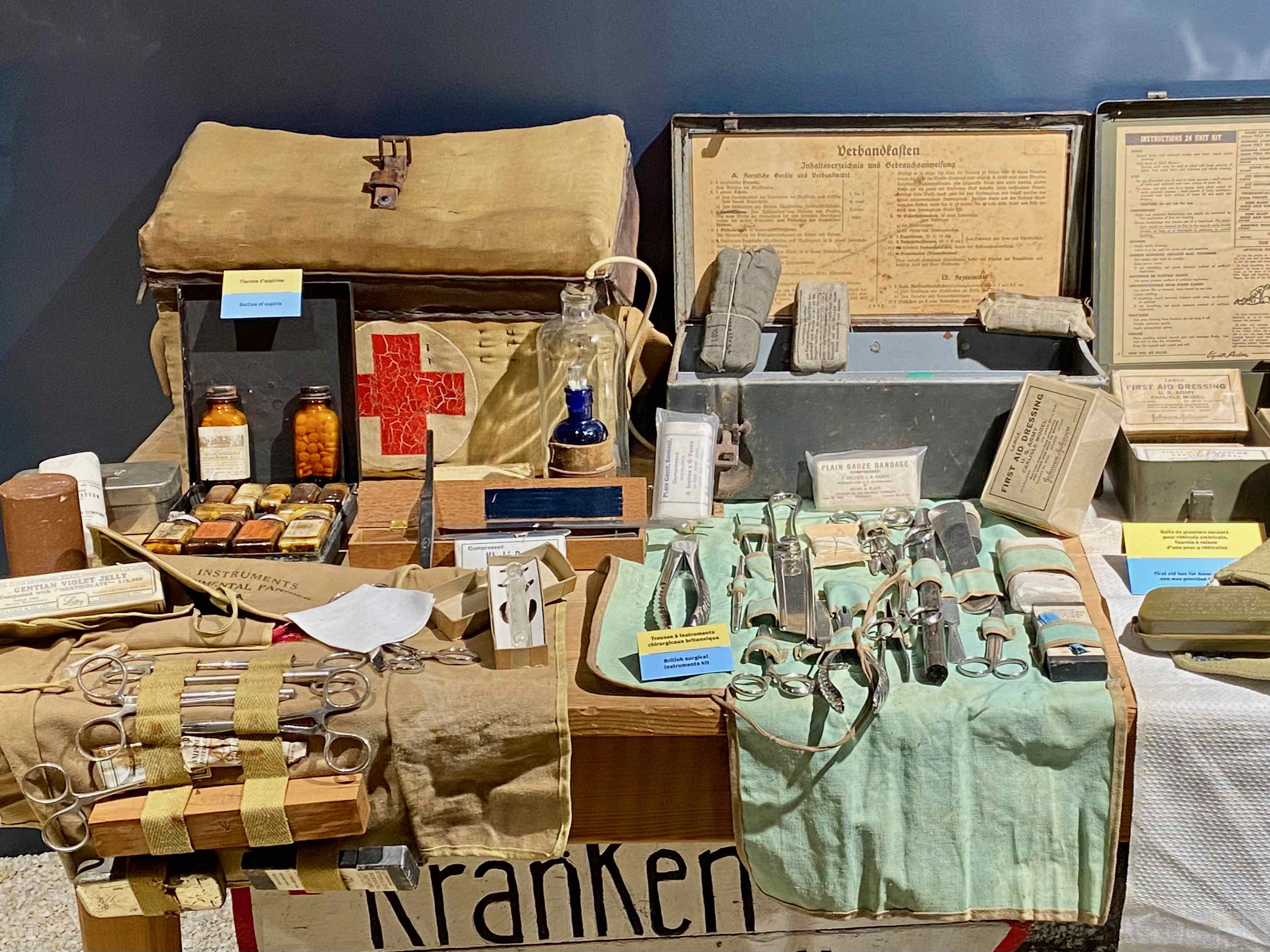
This is a display of the surgical instruments used for operating in the field hospitals.  There were 6 tables in the surgical tent and doctors would operate side by side for 12 to 18 hours at a time.  Their patients would often still be in their muddy uniforms and boots.  It made me think of the movie and TV show Mash.  Much the same scenario only the equipment used was much more primitive during WWII.

There are a lot of the tanks and guns that were used during this invasion.

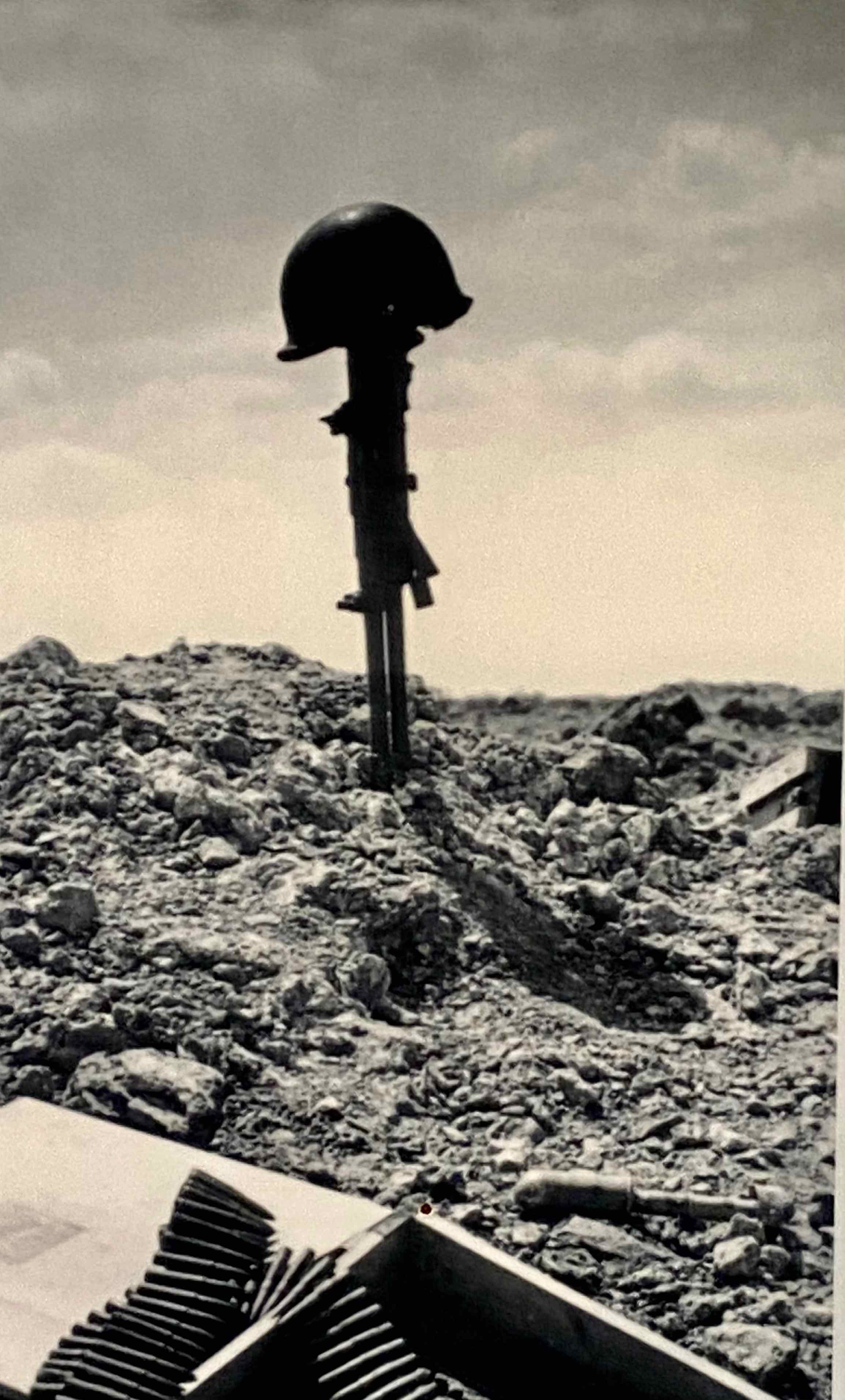
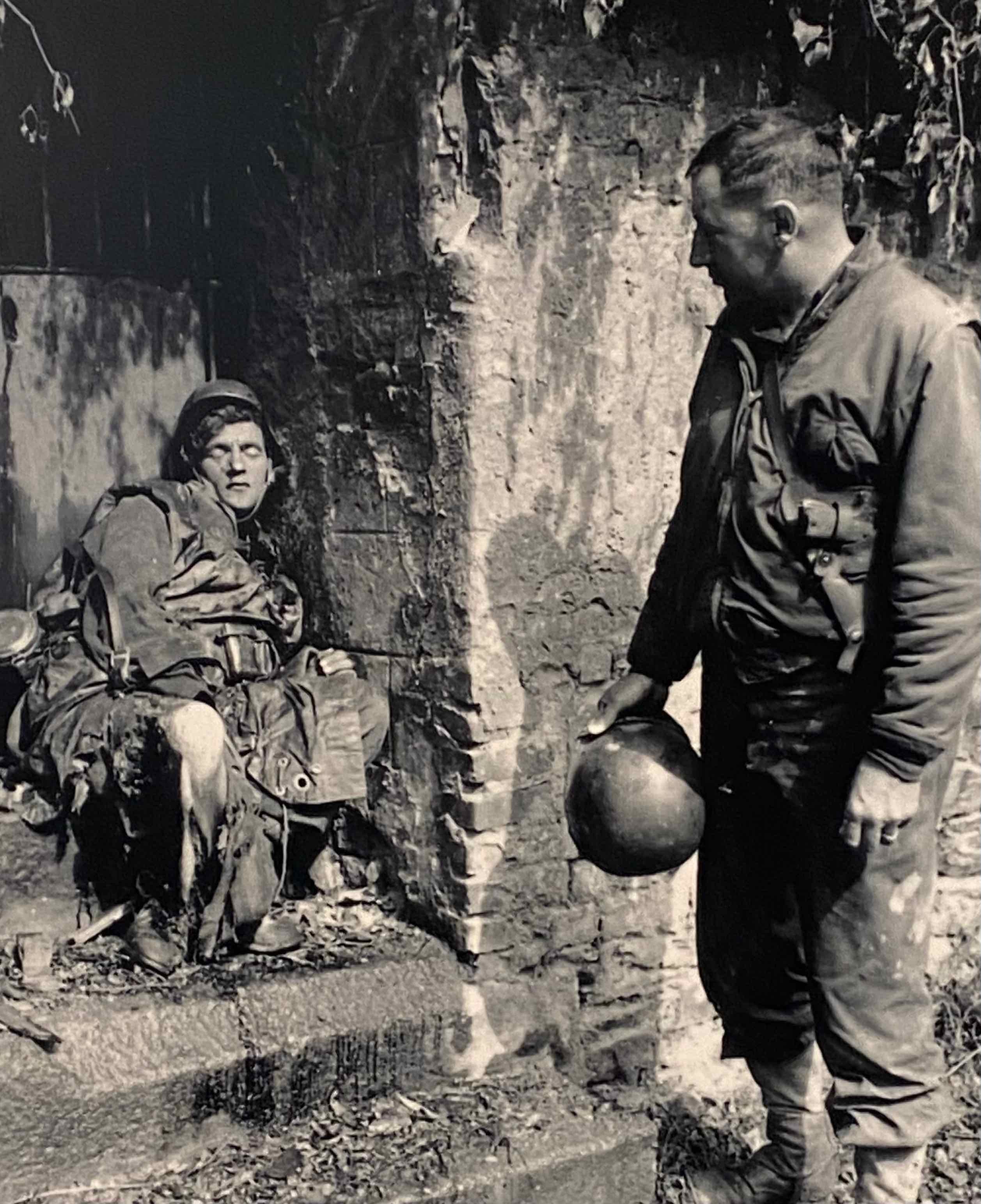
The museum is well laid out with a lot of information in an easy to read format.  It was the photos that really told the story for me, especially these two. 

I really can’t imagine the horrors experienced by these young men in this and so many other battles.

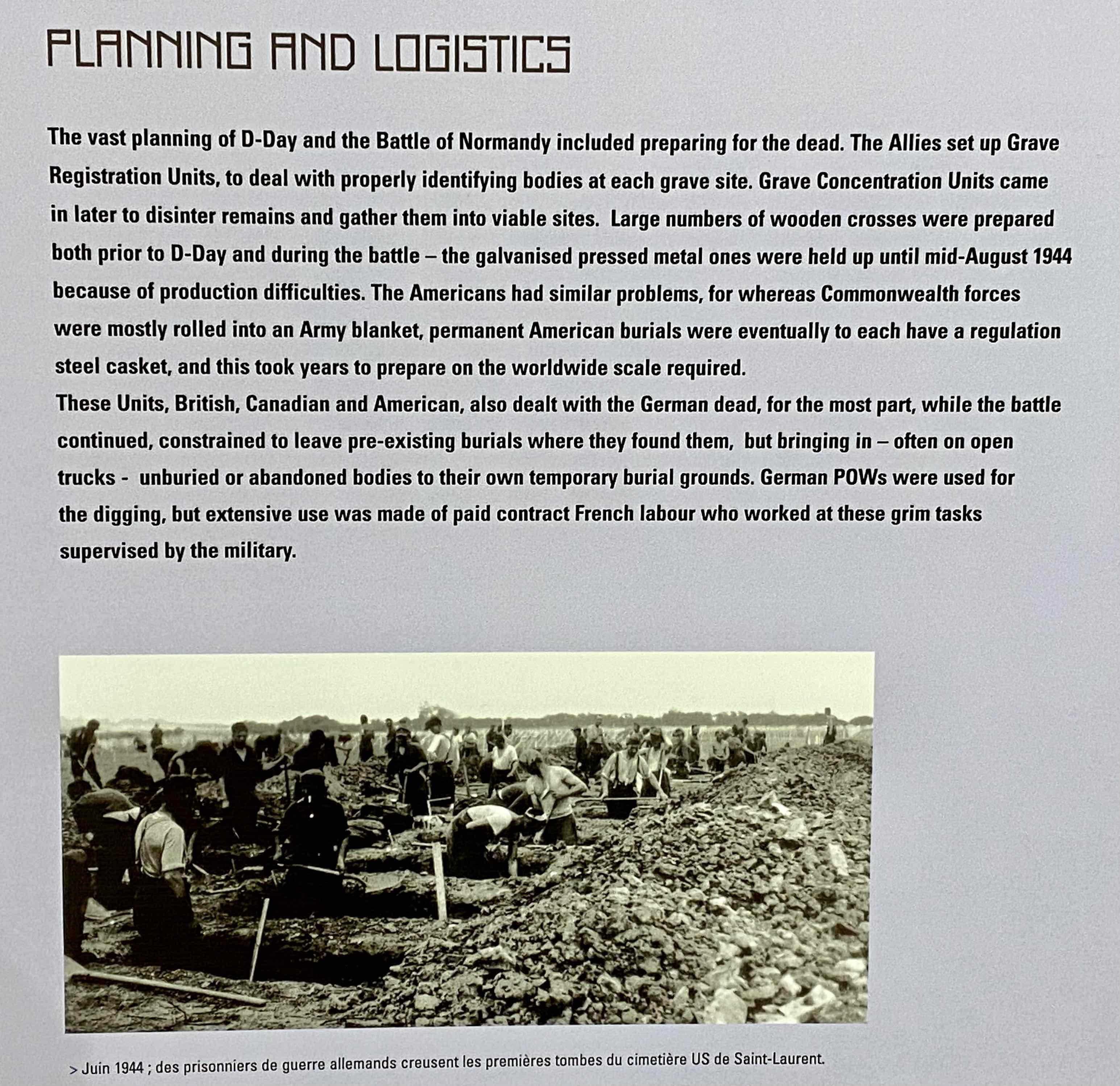
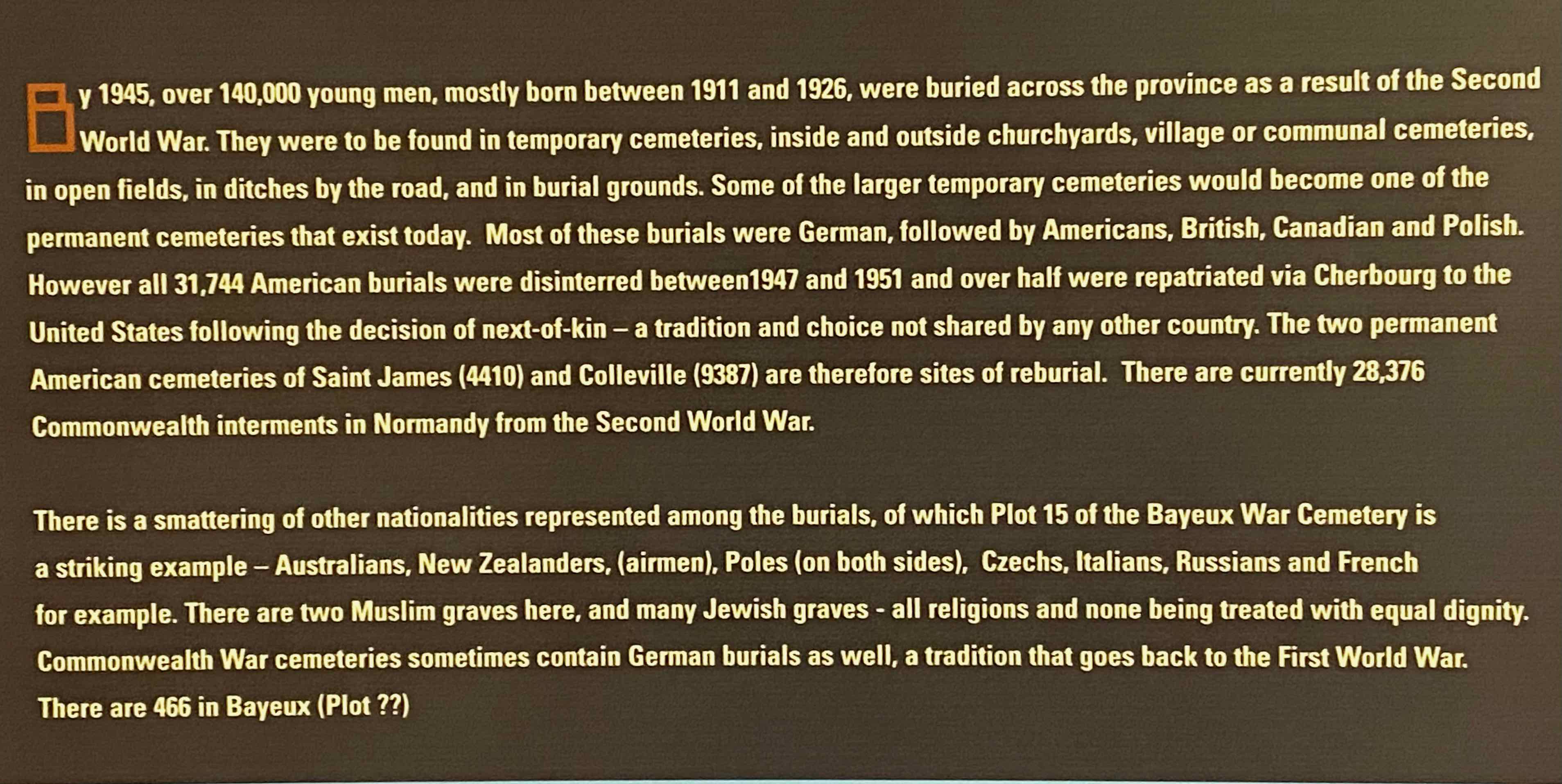
I had been wondering how the dead were gathered and buried during battle. It seemed to me to be an impossible task. There were explanations provided for this monumental undertaking.

I had never thought about the necessity of include plans for taking care of the dead when planning a military battle .

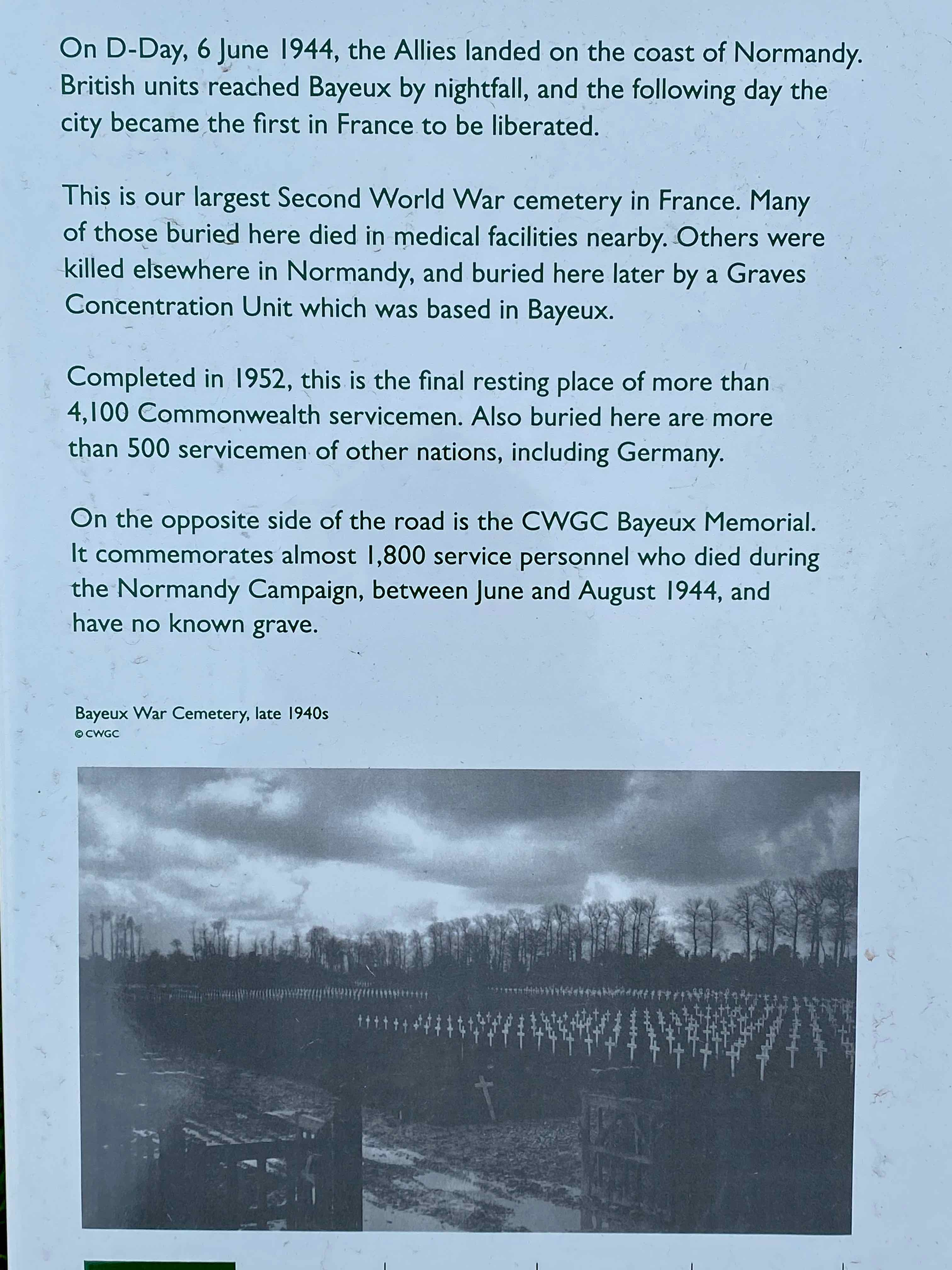
These 3 photographs of information are from the museum.  It seems the easiest way to  include this information.

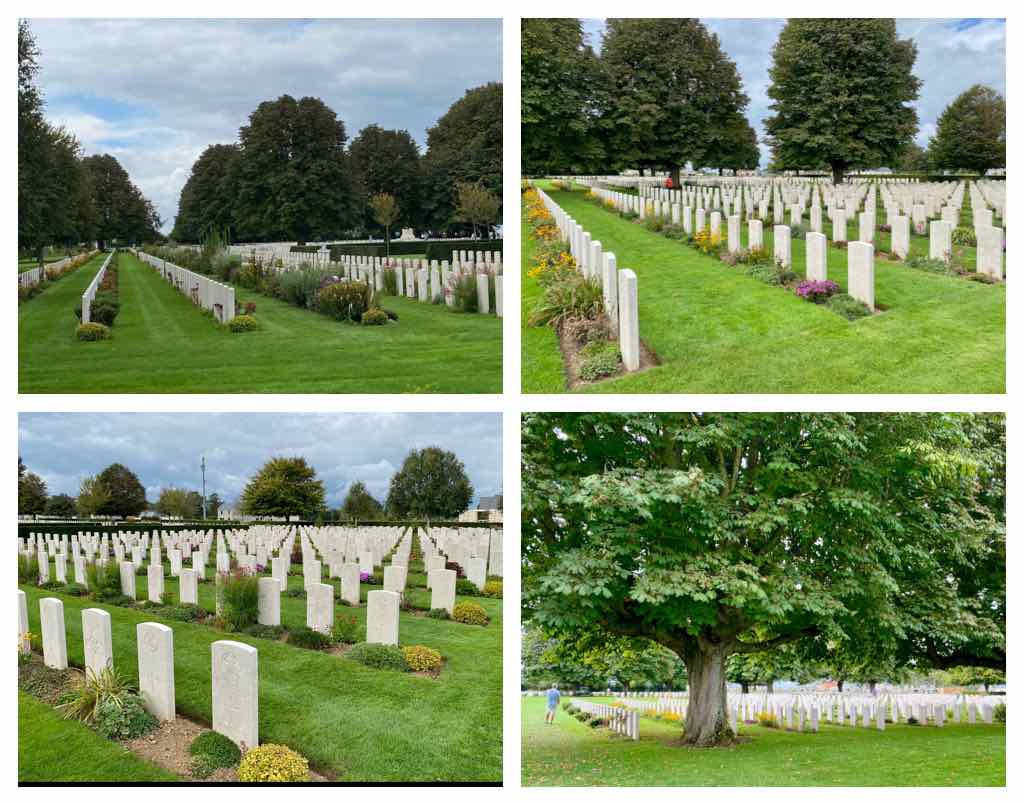
We visit the cemetery.  There are indeed ‘crosses row on row’ so very many crosses.  So many lives lost.

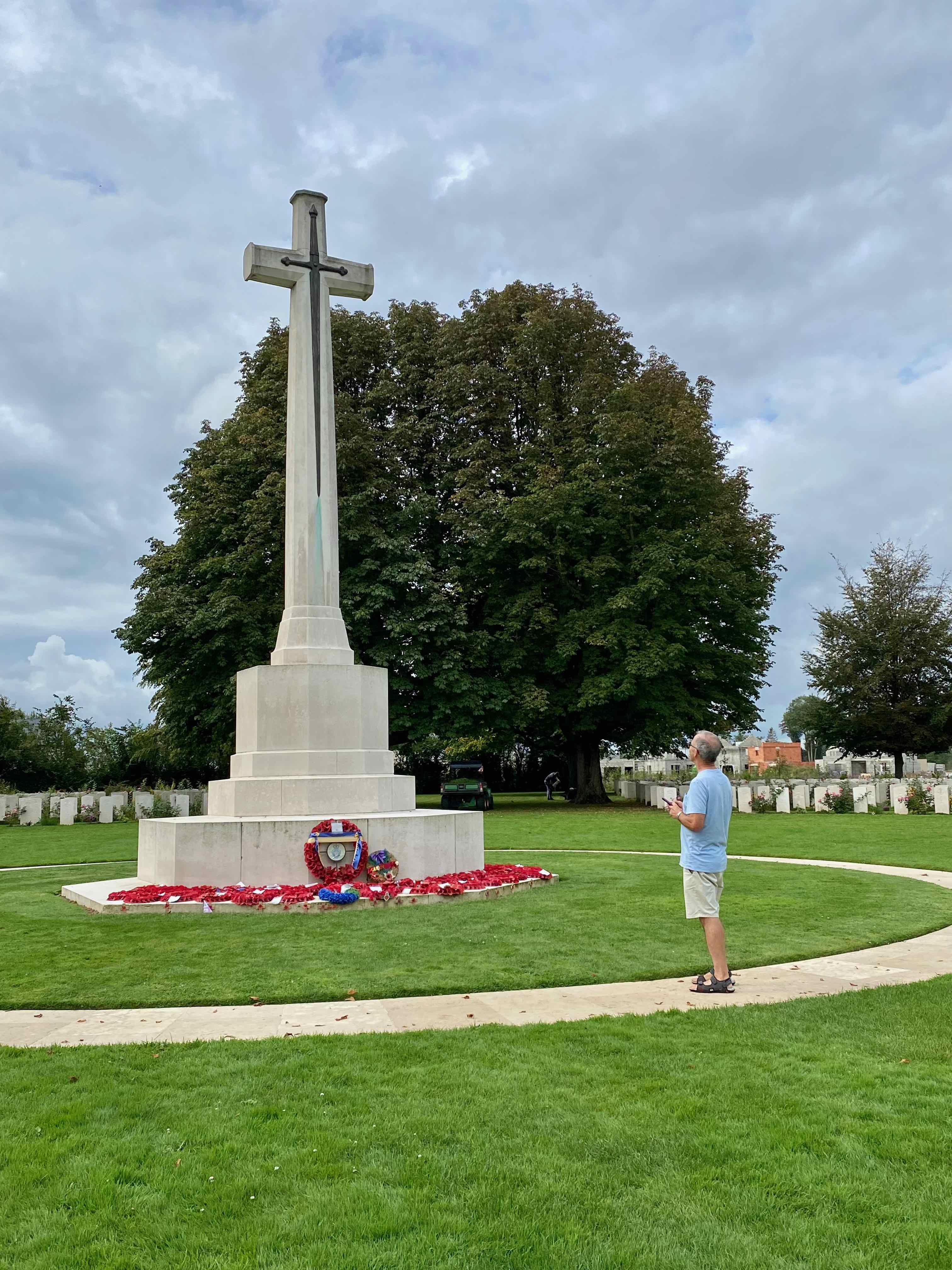
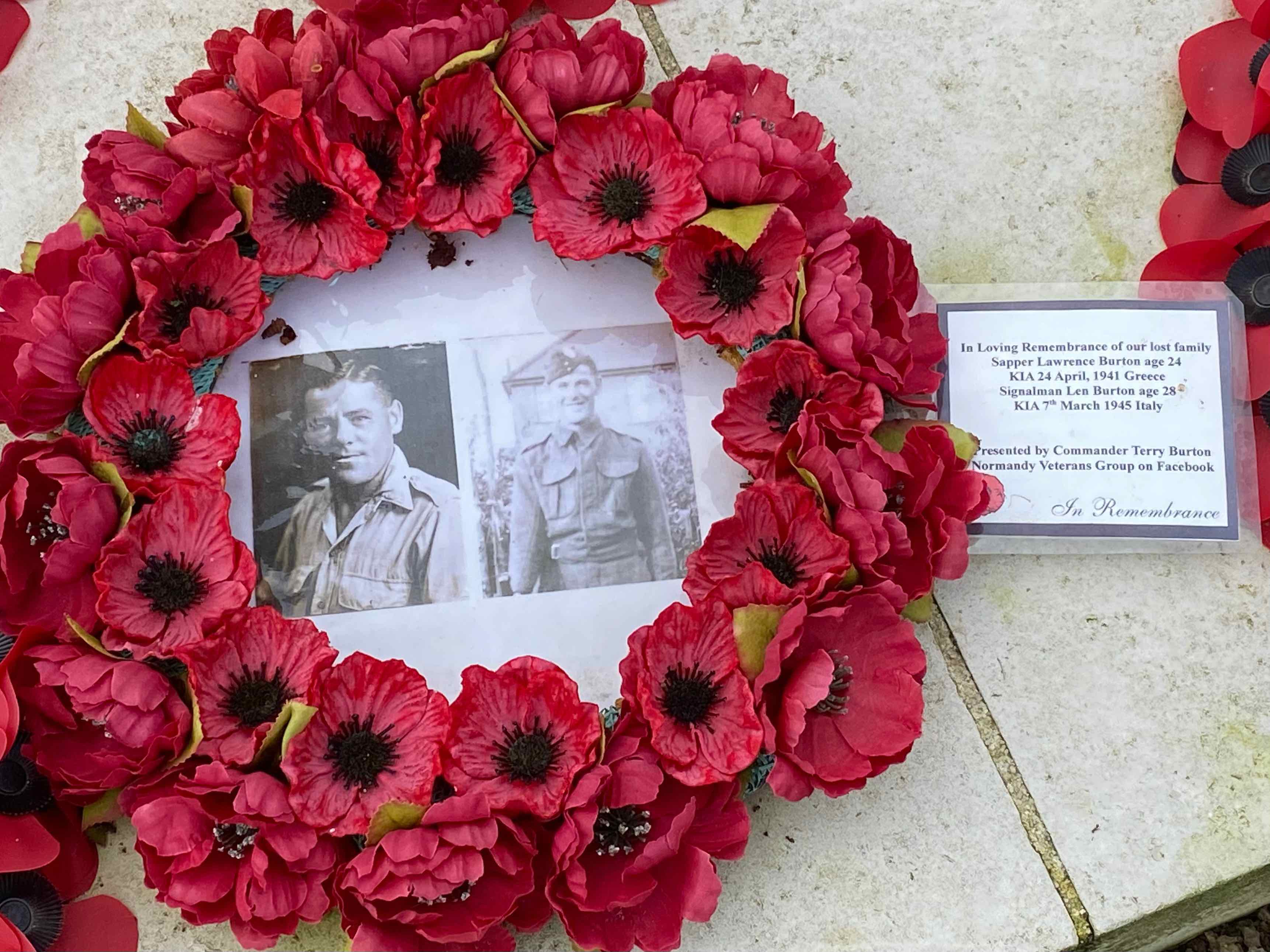
This memorial, in the centre of the cemetery, has wreathes left in memory of those who died.

Once again a photo has such an impact.  I am in tears again.

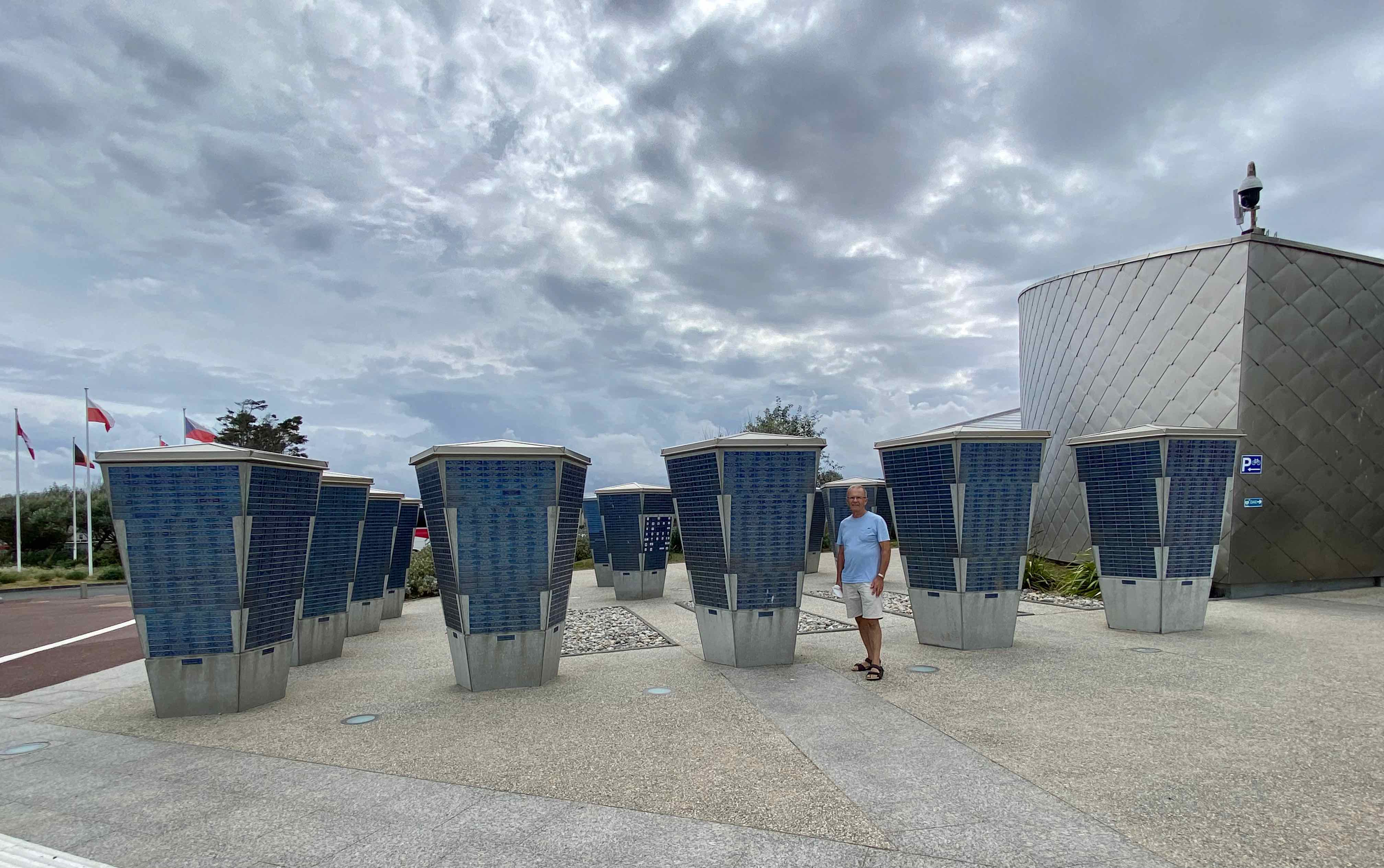
We drive to Juno Beach where the Canadians landed. This is a very heavy day. These pillars are engraved with the names of those who died on D-Day.  So many names. So many dead.  A total of 4,414 Allied troops were killed on D-Day, including 2,501 Americans and 359 Canadians.  More than 5,000 were wounded. In the ensuing Battle of Normandy, 73,000 Allied forces were killed and 153,000 wounded. The battle — and especially Allied bombings of French villages and cities — killed around 20,000 French civilians.

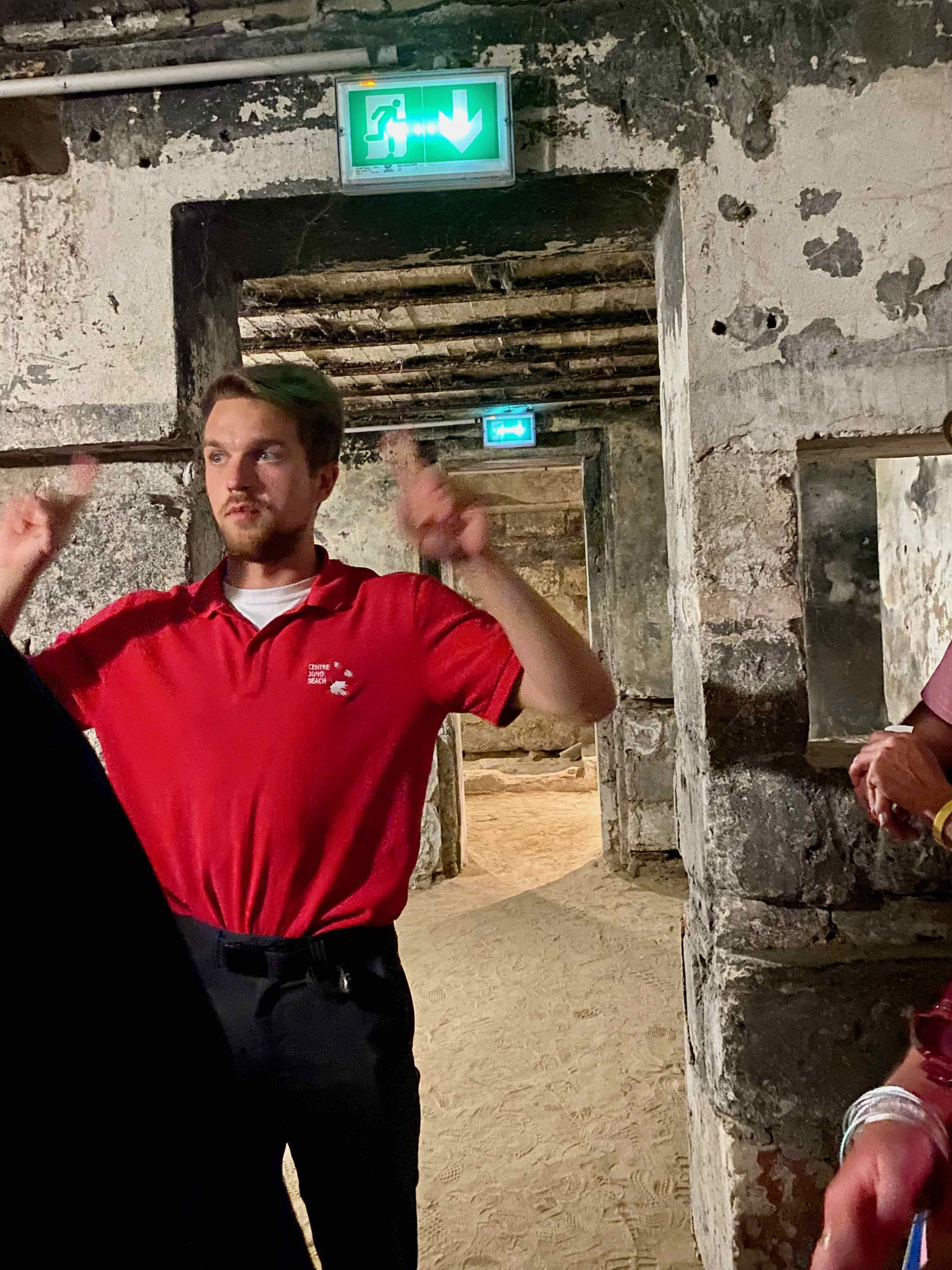
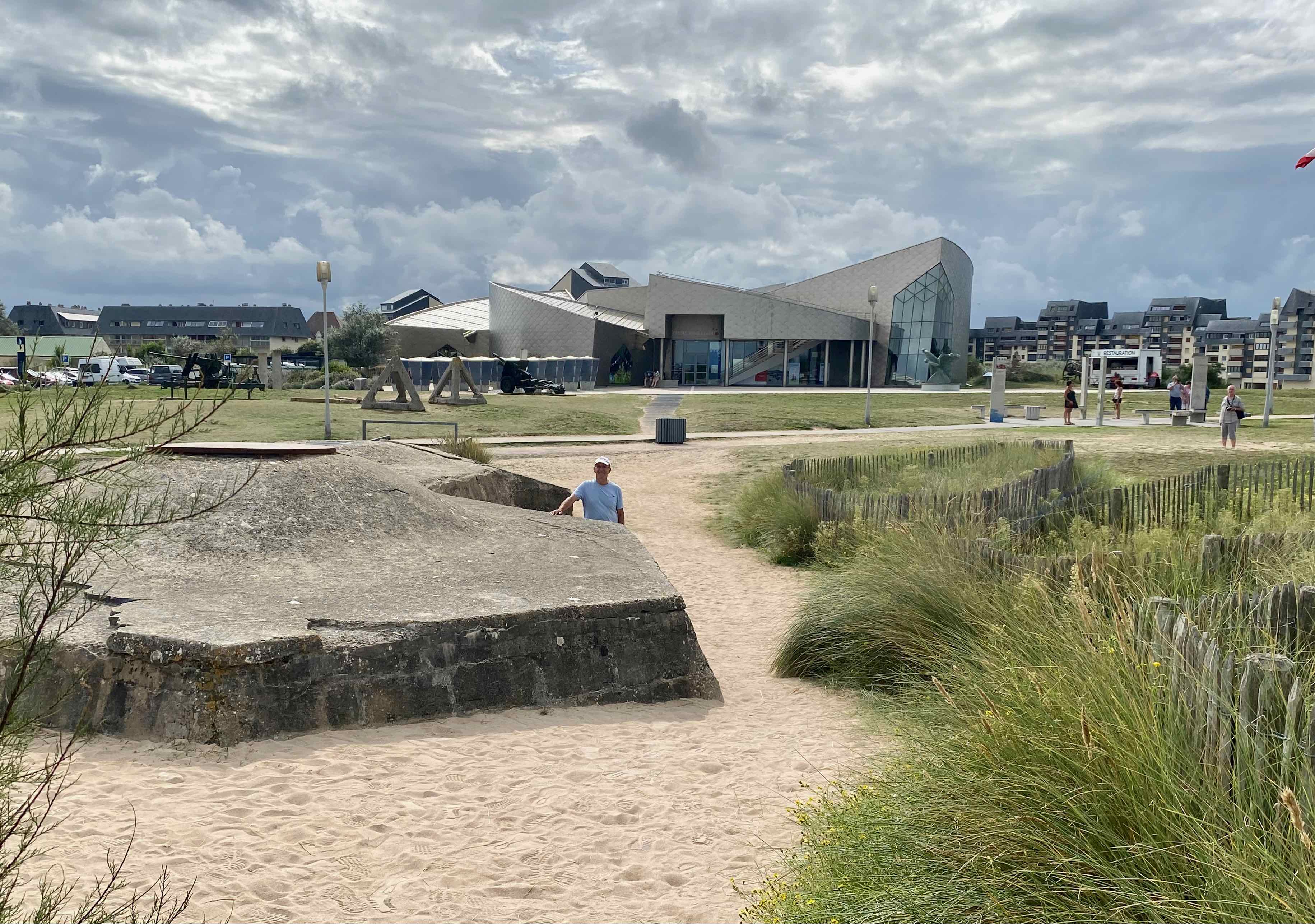
We  take a tour of the bunkers on the beach and our guide is a young French Canadian from Quebec.  All the guides are from Canada and they are all about the same age as the soldiers who fought and died on these beaches.

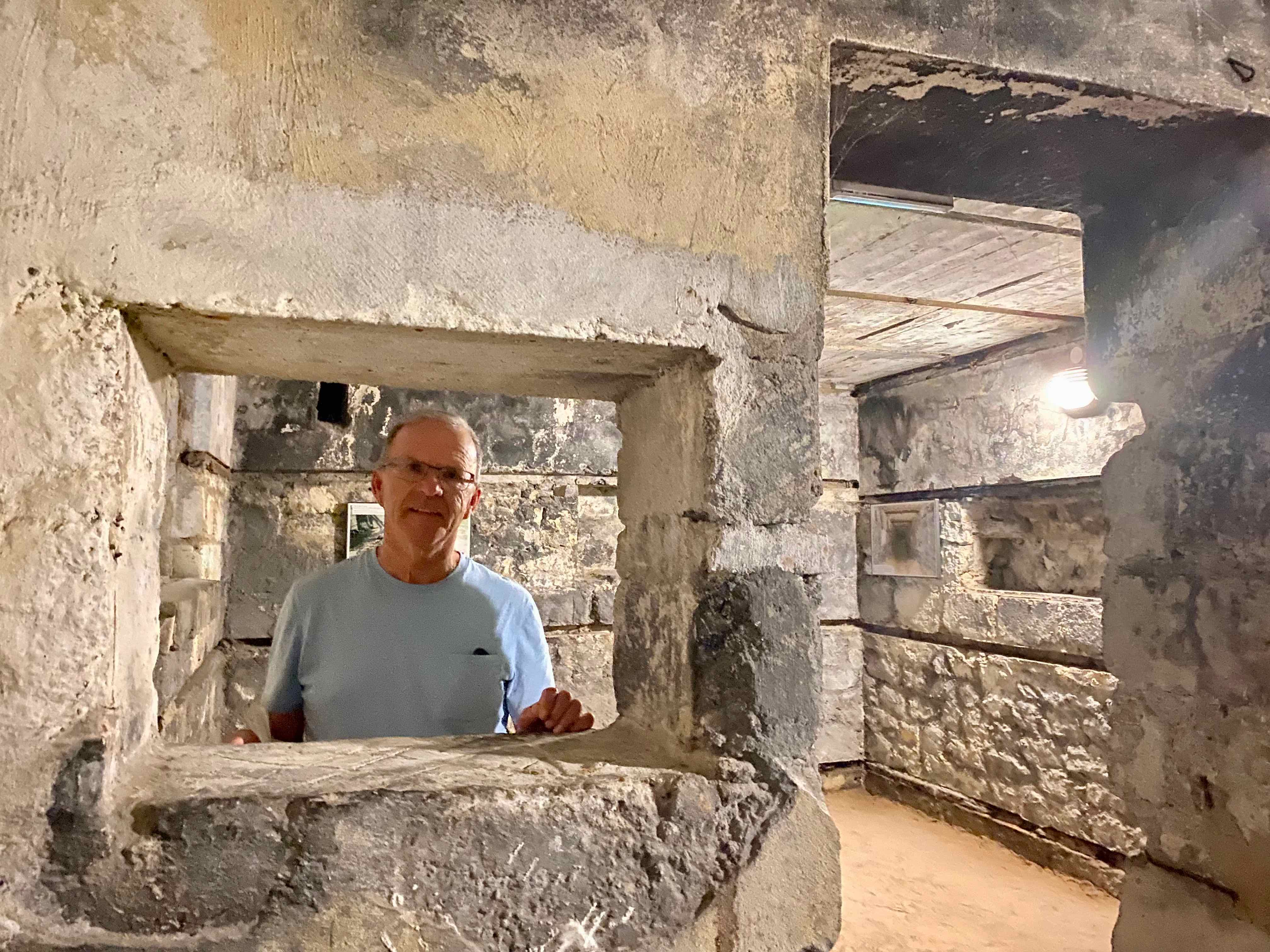
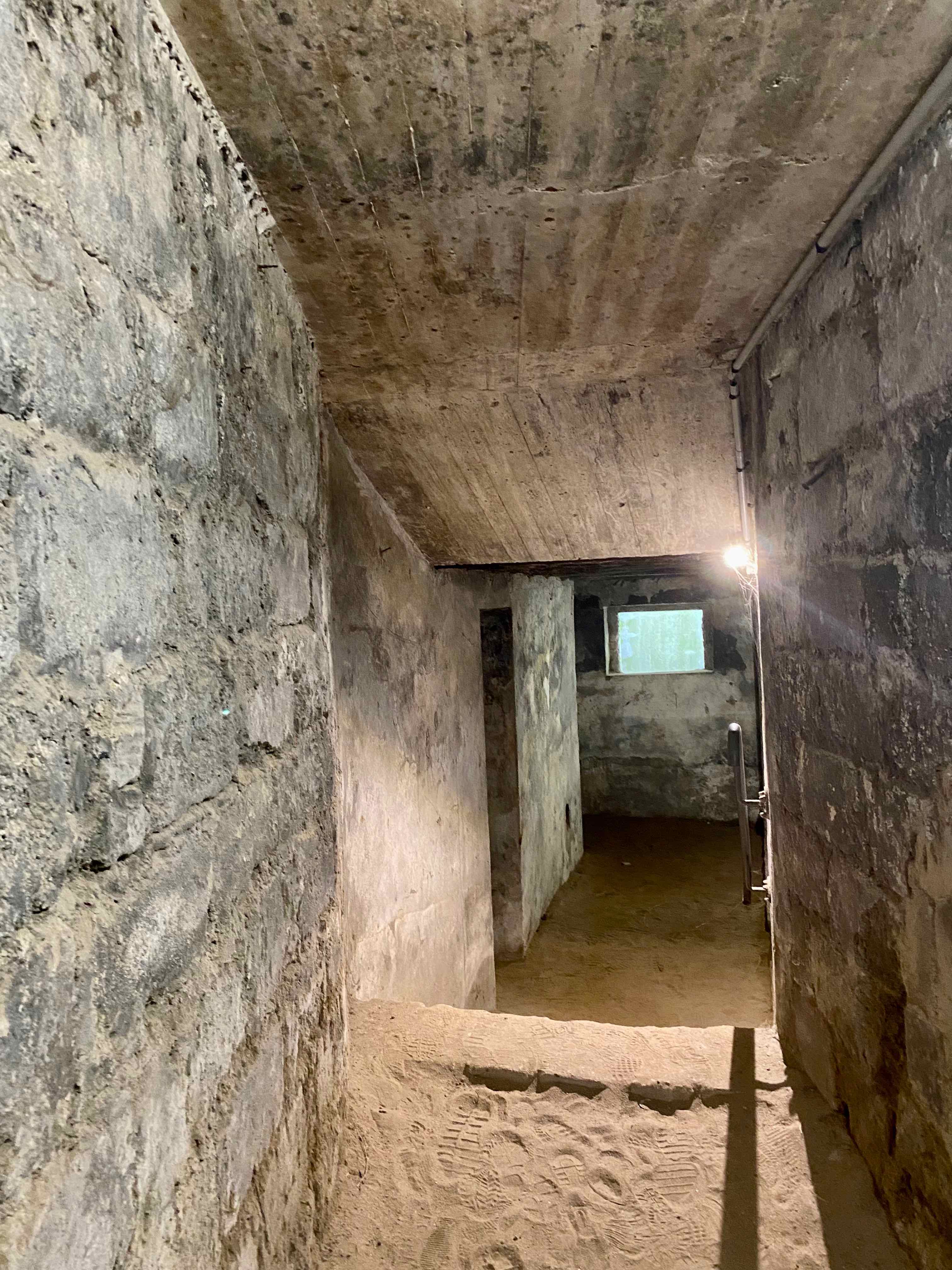
This German bunker is fairly large with several rooms.

It is a grim place, I think perhaps haunted by a ghost or two.

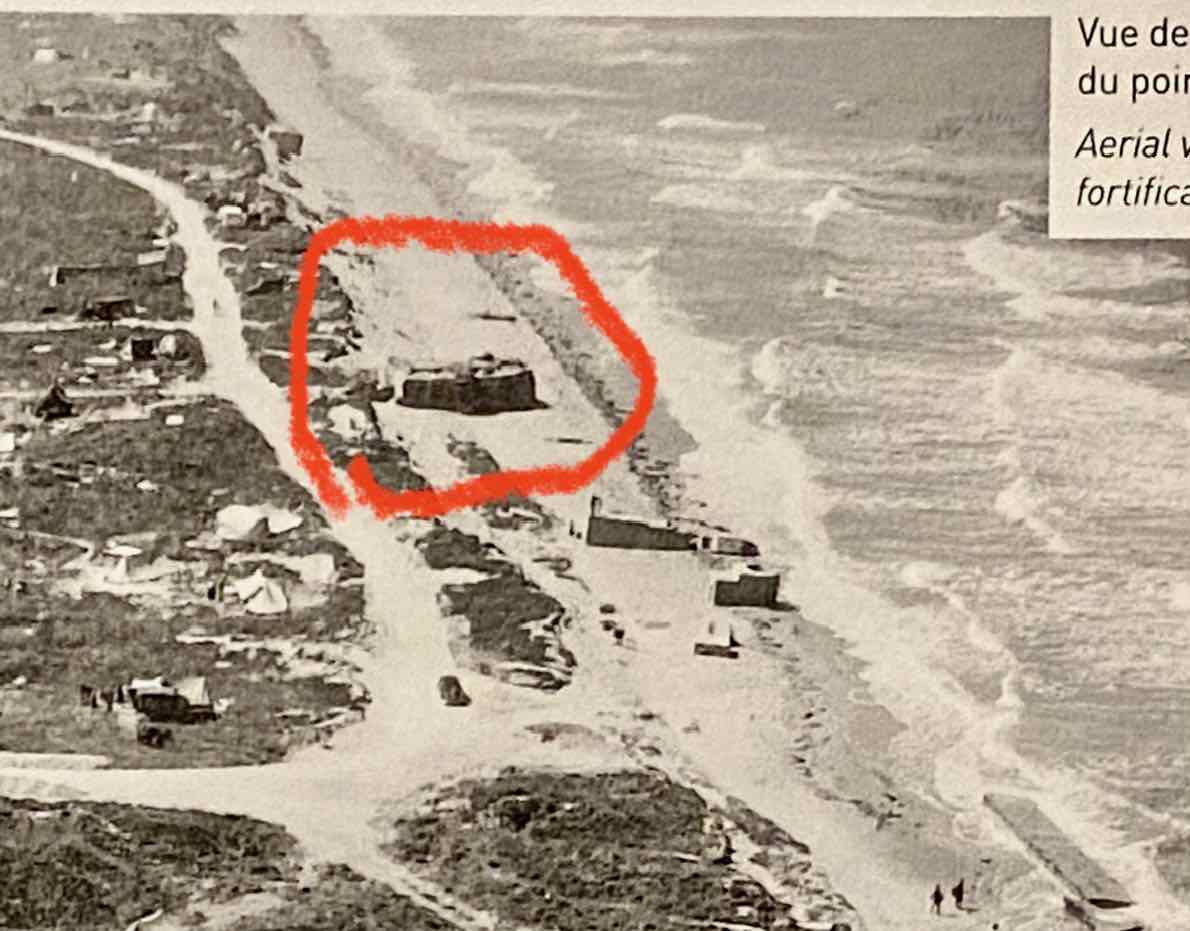
At one time the bunker was right at the water’s edge and completely visible.

But now it is mostly covered with sand.  It was only discovered and opened to the public in 2014.  It had been completely covered with sand and the ocean is now several hundred feet away.

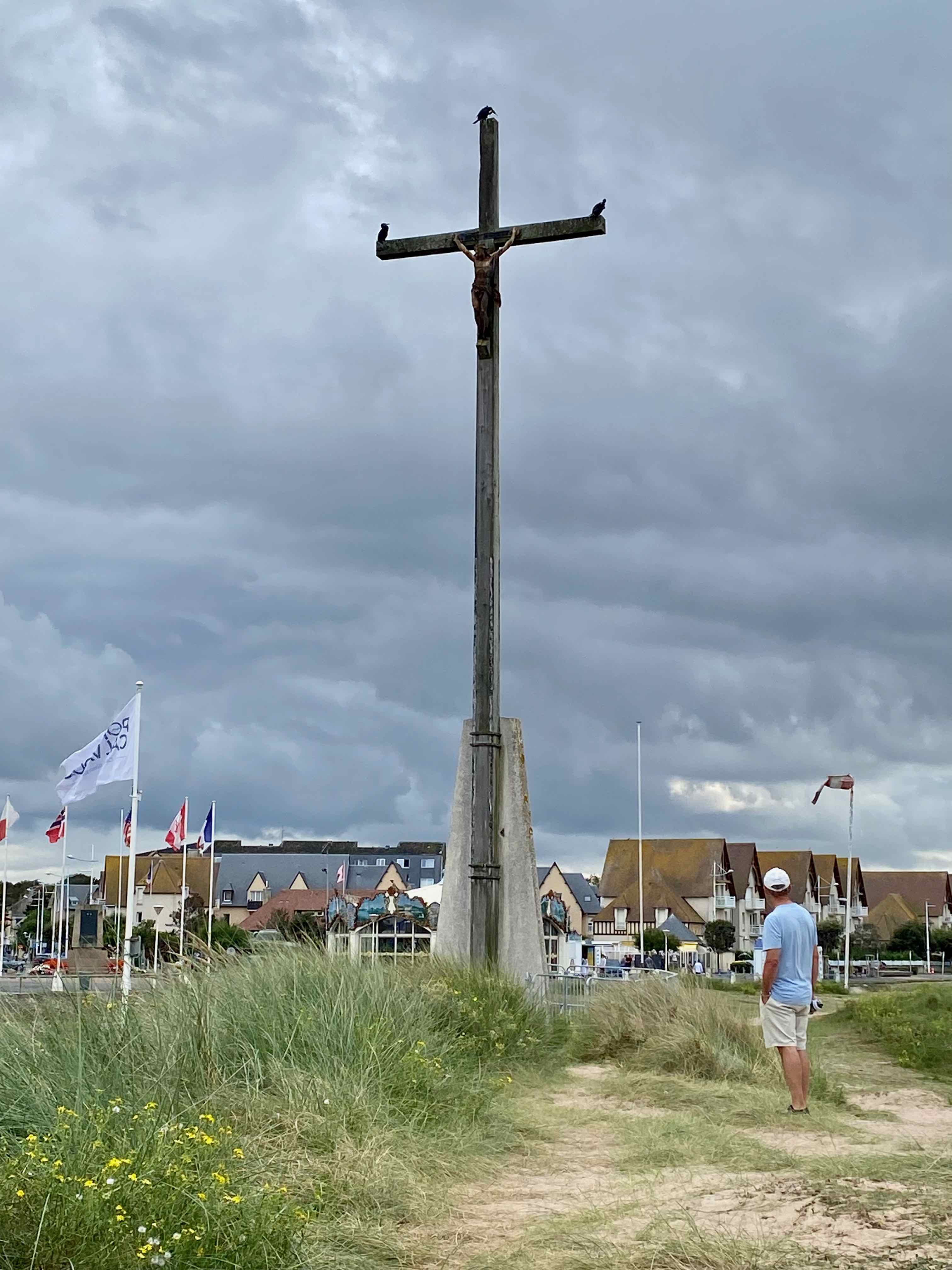
A commemorative  cross has three birds sitting on it, cormorants, I think.


Rouen the Musée Le Secq des Tournelles (The Iron Museum), Rouen

Day 14, Monday September 11, 2023

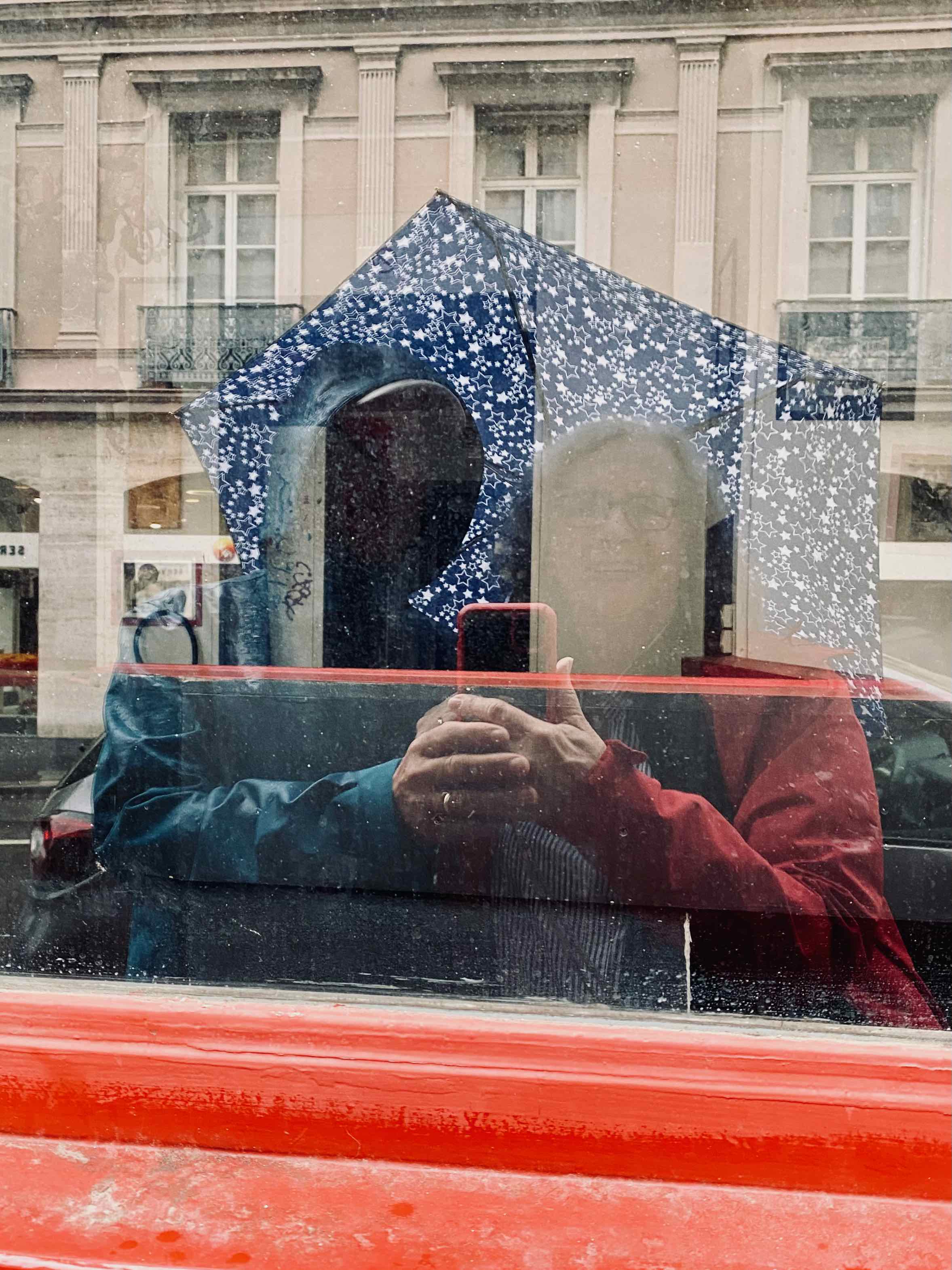
It is raining when we leave this morning and we take a  photo of our reflection in a store window.

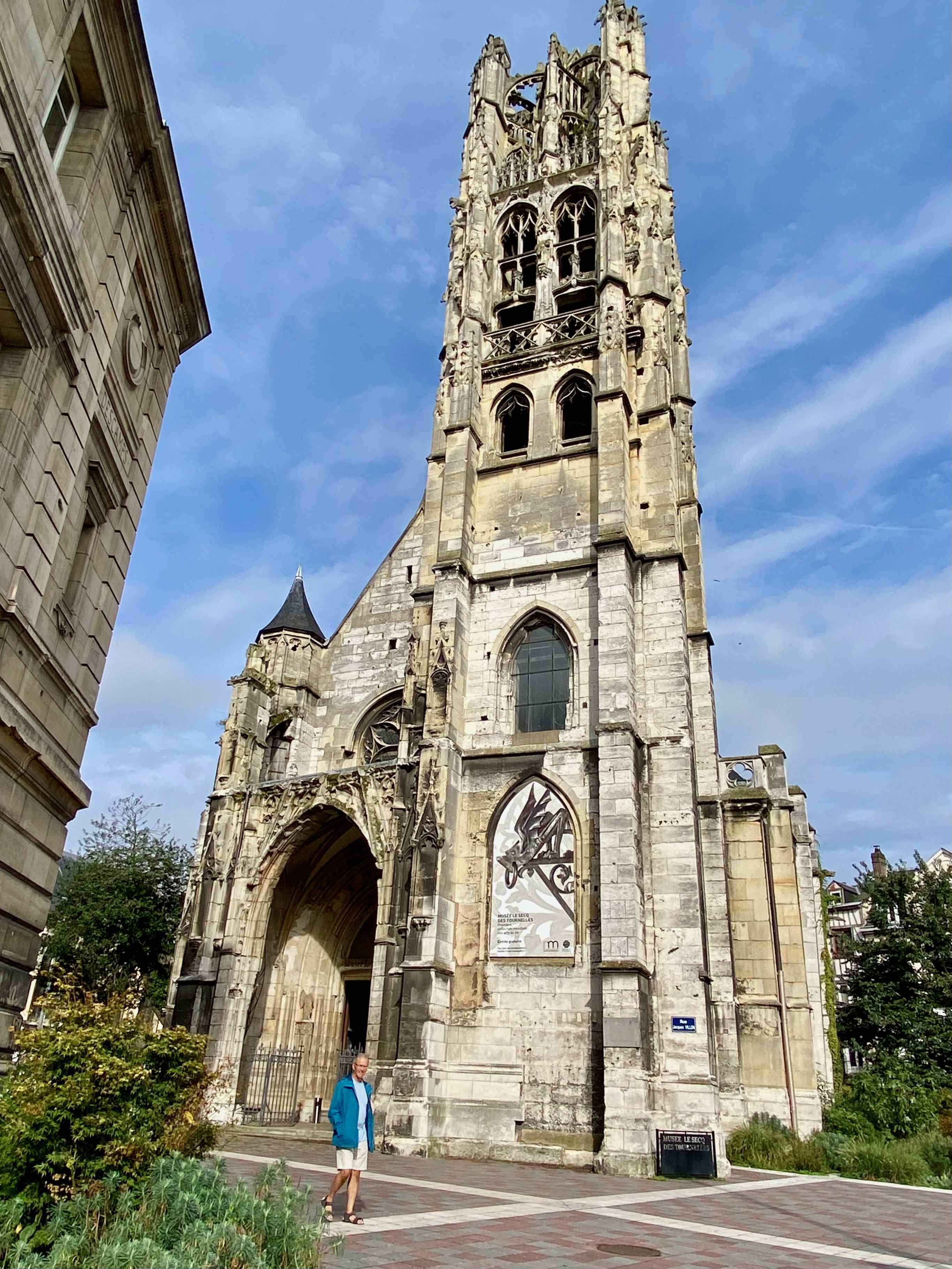
We visit the Musée Le Secq des Tournelles, the Iron Museum, which is housed in an old church in Rouen.

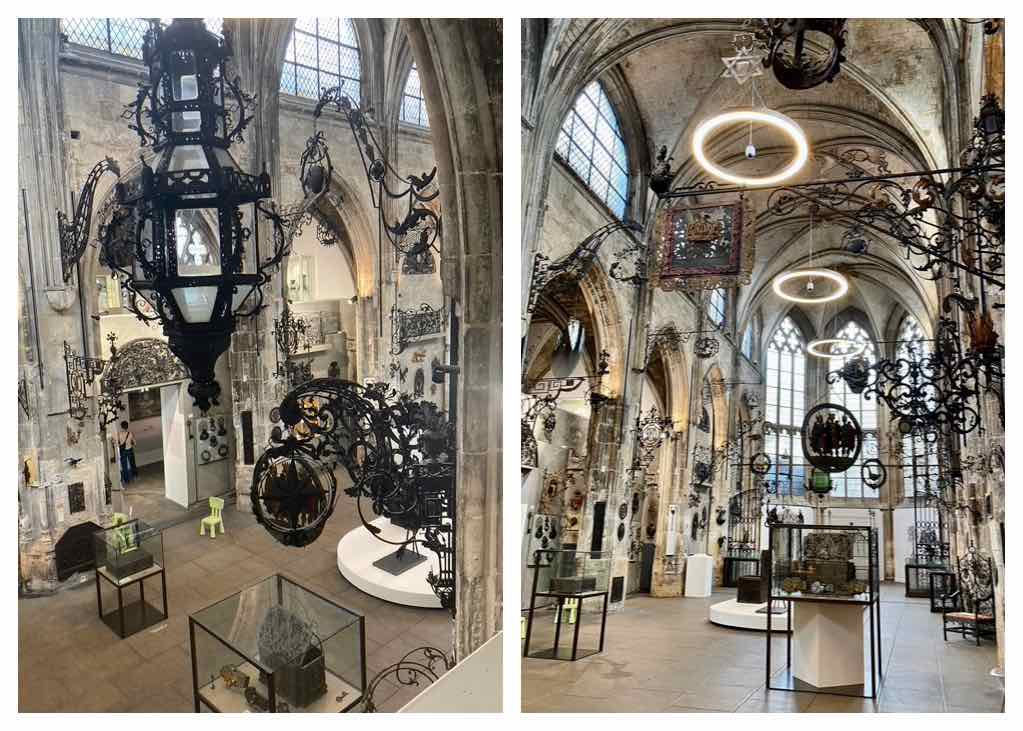
The main themes represented are shop and property signs, cutlery, trade tools, objects of embellishment and enjoyment, and equipment and decoration for churches, homes and doors, particularly locks, coffers and caskets.  The first photo is looking down from the second floor. There is a lot to see here.

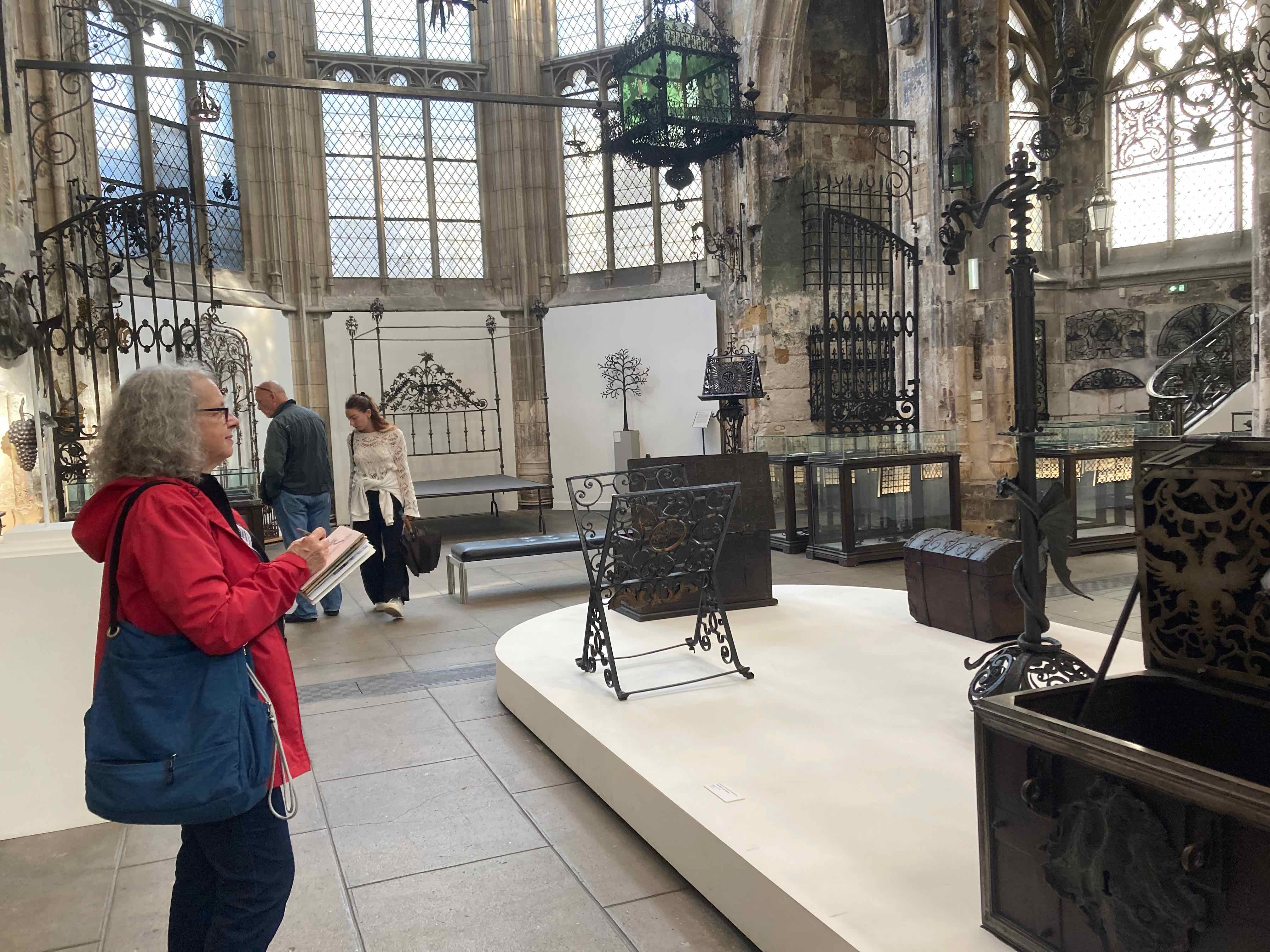
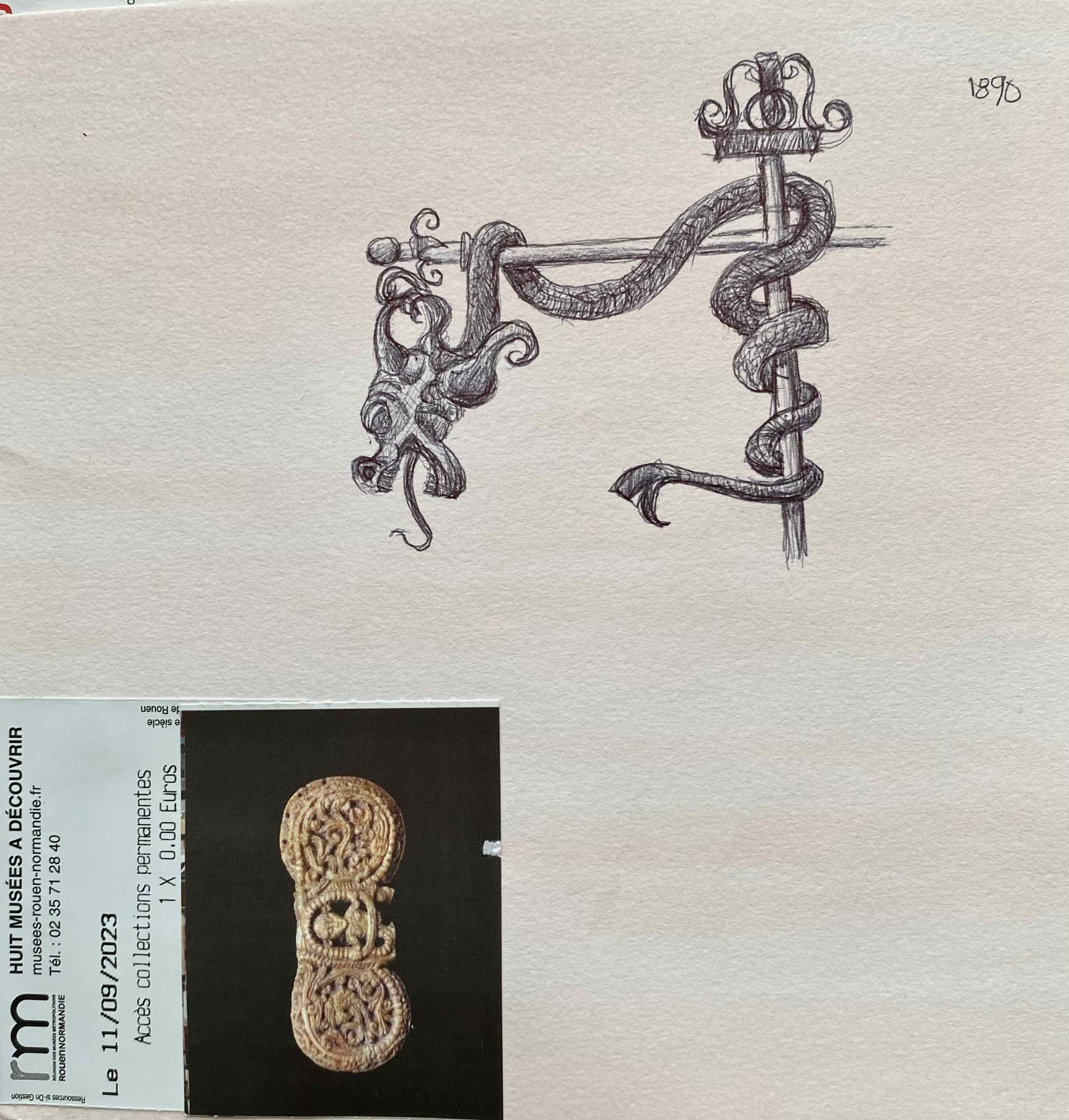
I take the opportunity to sketch a little dragon wrapped around a post.  I love dragons, and there are several wrought iron ones here.

There was a class of high school students here when we first arrived, and they were all sketching objects in the museum as well.

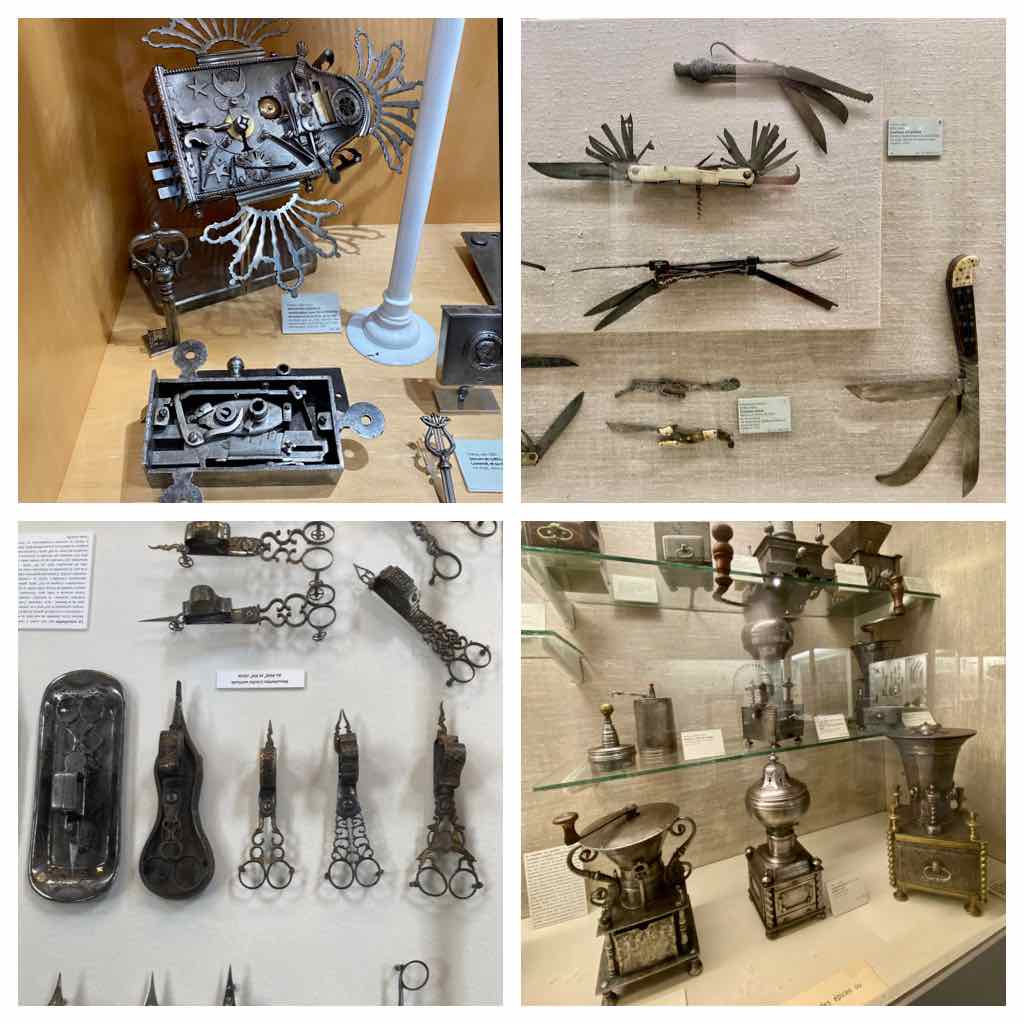
Bob finds all the locks very interesting, and there are ‘Swiss army type knives’, moustache trimmers, with containers to catch the cut hairs and beautiful coffee bean grinders.

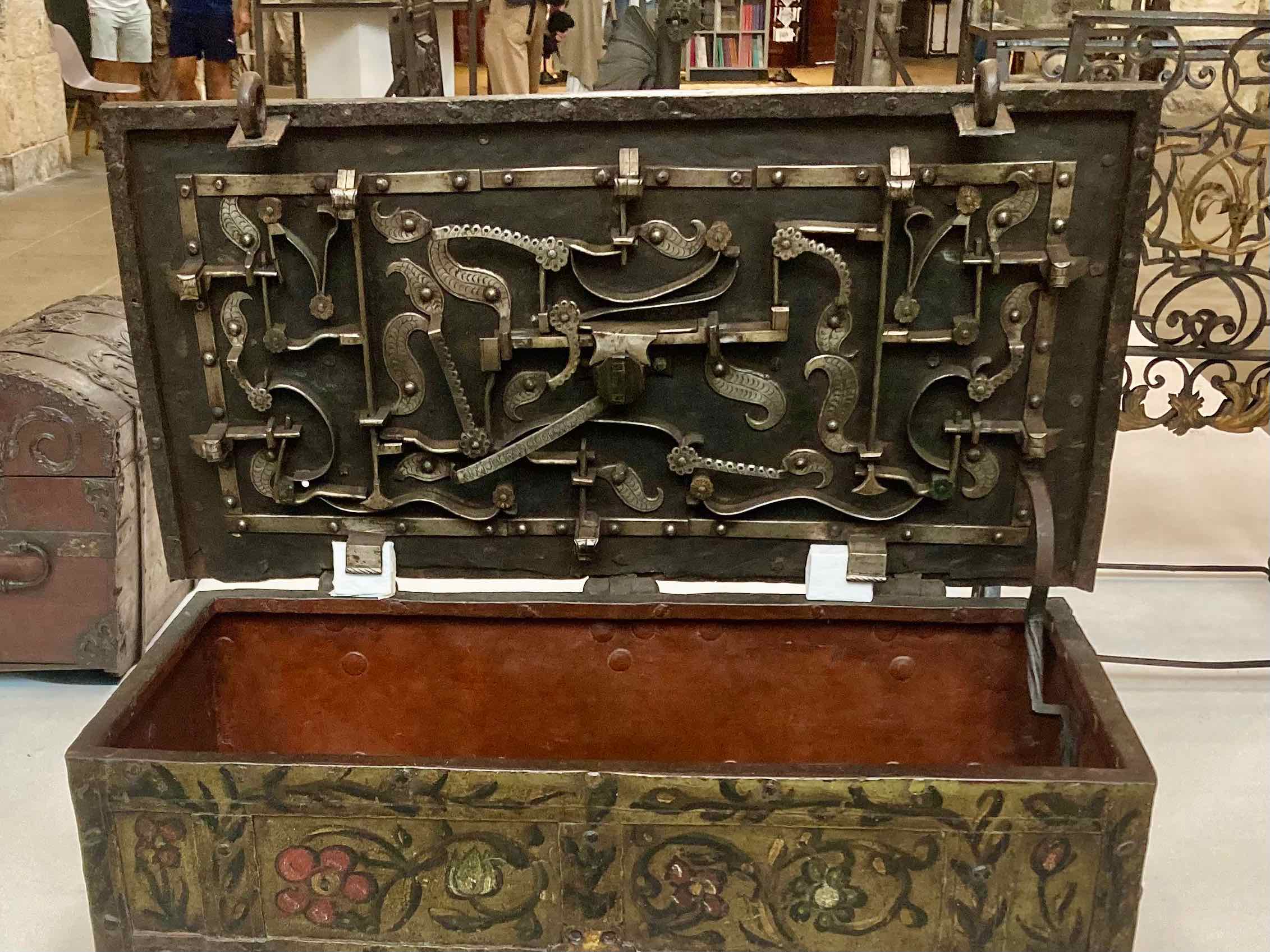
This large trunk has a very intricate lock that opens with a key in the very centre.  The locking mechanism is visible on the underside of the lid.  We think it was probably a strongbox for storing money and valuables with such a complex lock.

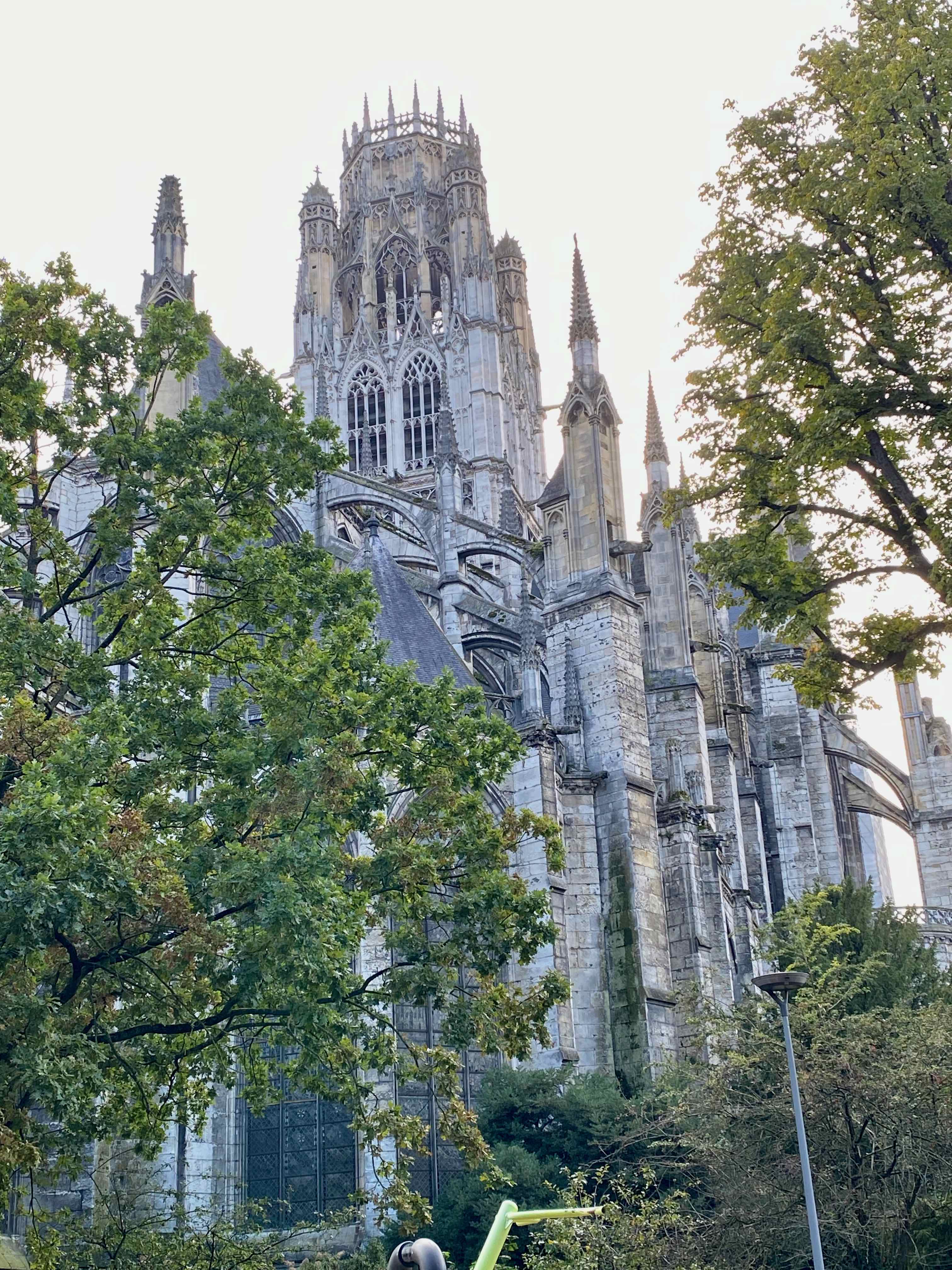
On the way home we pass Saint-Ouen Abbey, a large Gothic Catholic church that is undergoing extensive restoration.

We walk around behind the cathedral and can see the part that is not shrouded in tarps and scaffolding.  It is magnificent.

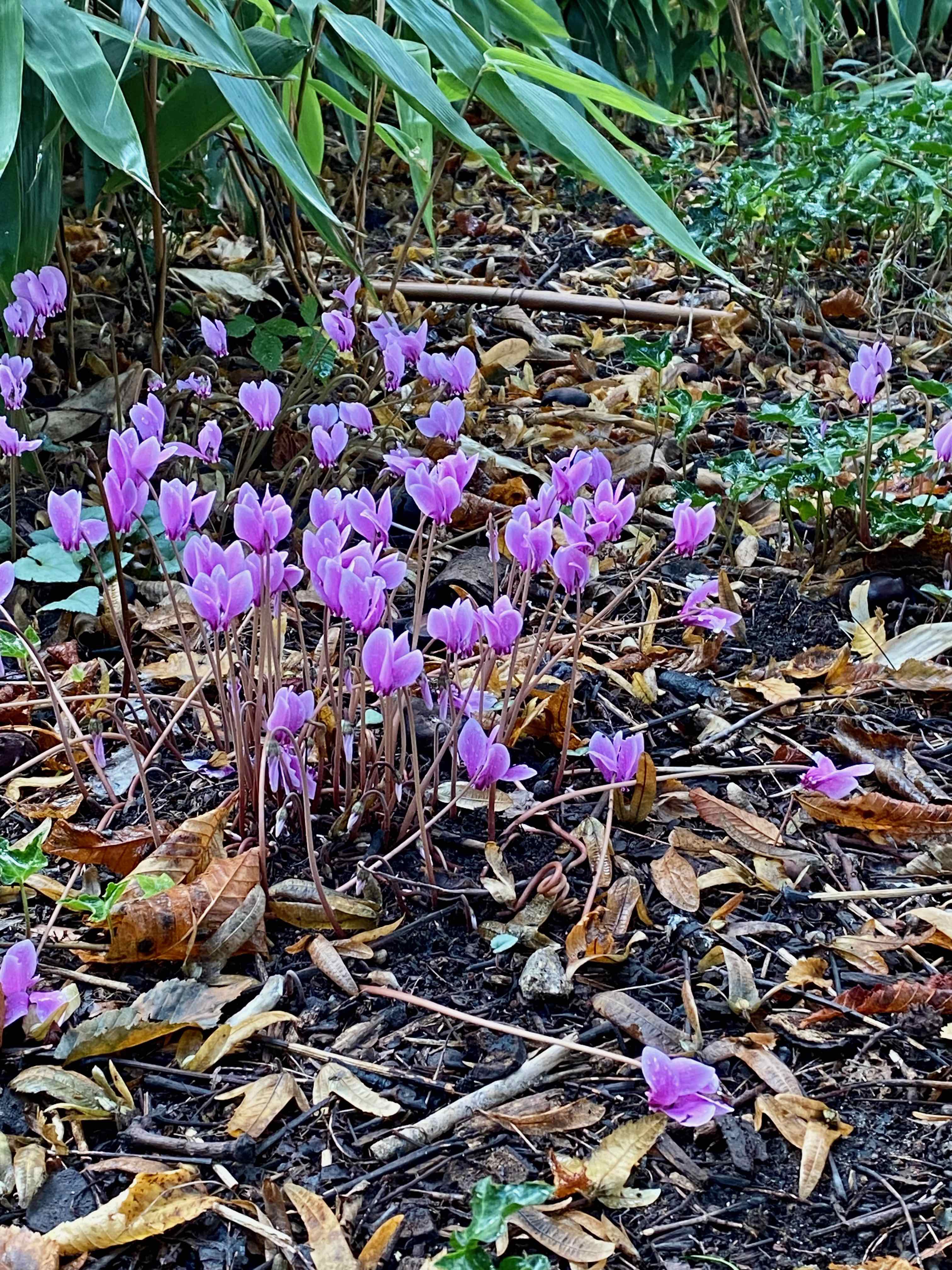
There is a little garden behind the cathedral and these miniature cyclamen are in full bloom.

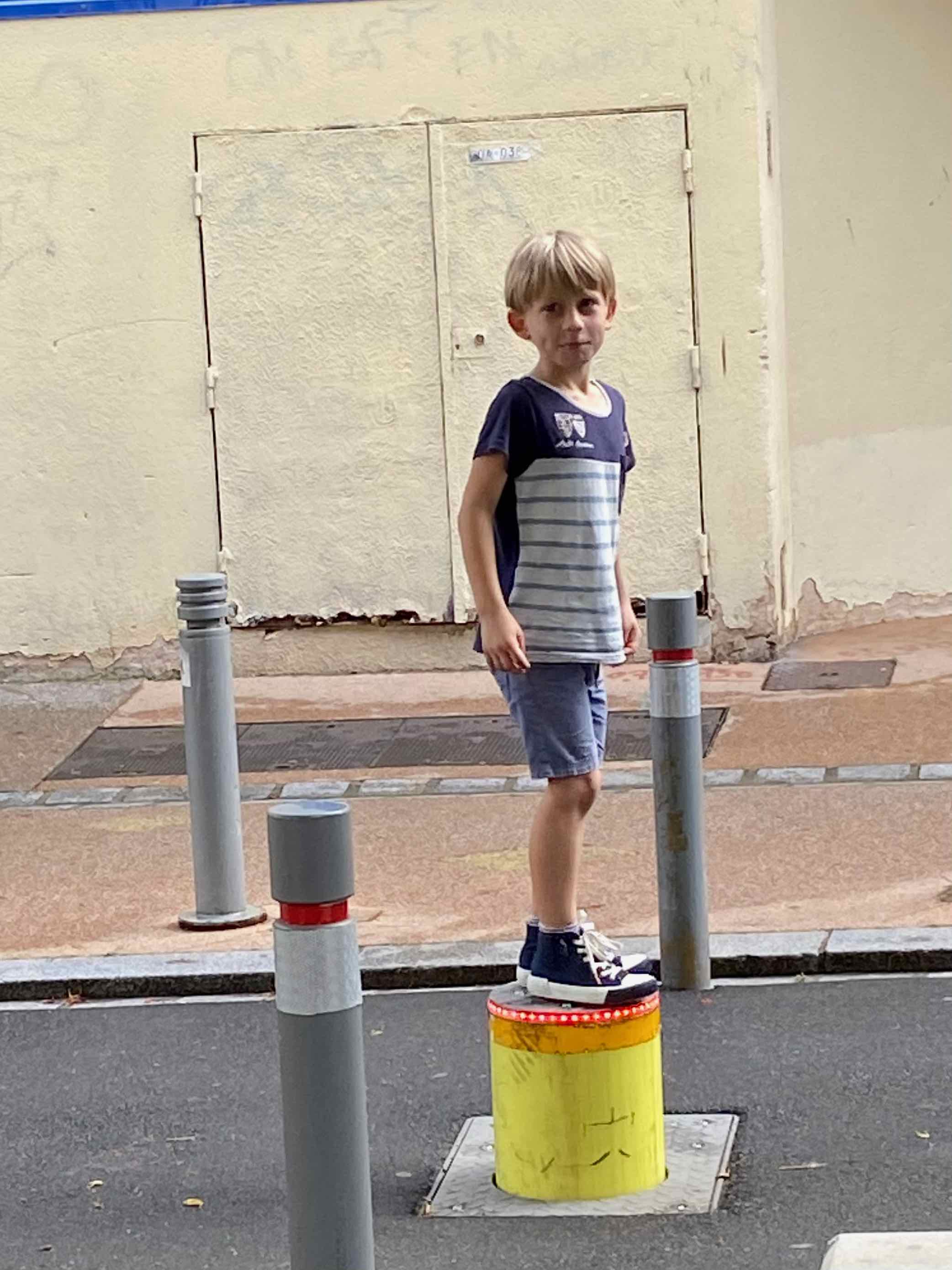
These pillars block traffic unless the driver has the code to make them sink into the road. A favourite pastime of children in Rouen is waiting until a car passes over one of these, they quickly step on top and balance as the post raises up to its original height of about two feet.  

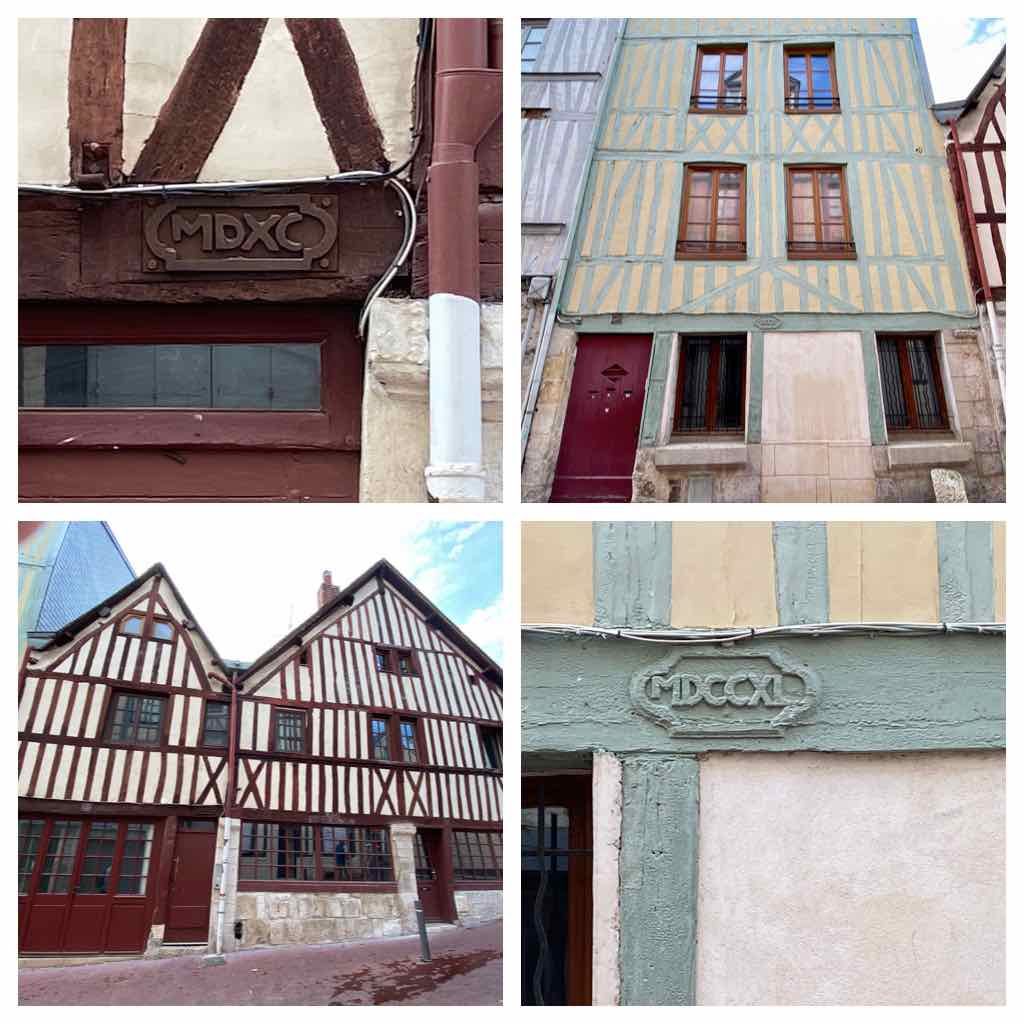
We finally find some houses with dates on them. The brown sign says 1590 and the green on is 1740 or 1711, depending in the last letter is an L or an I.

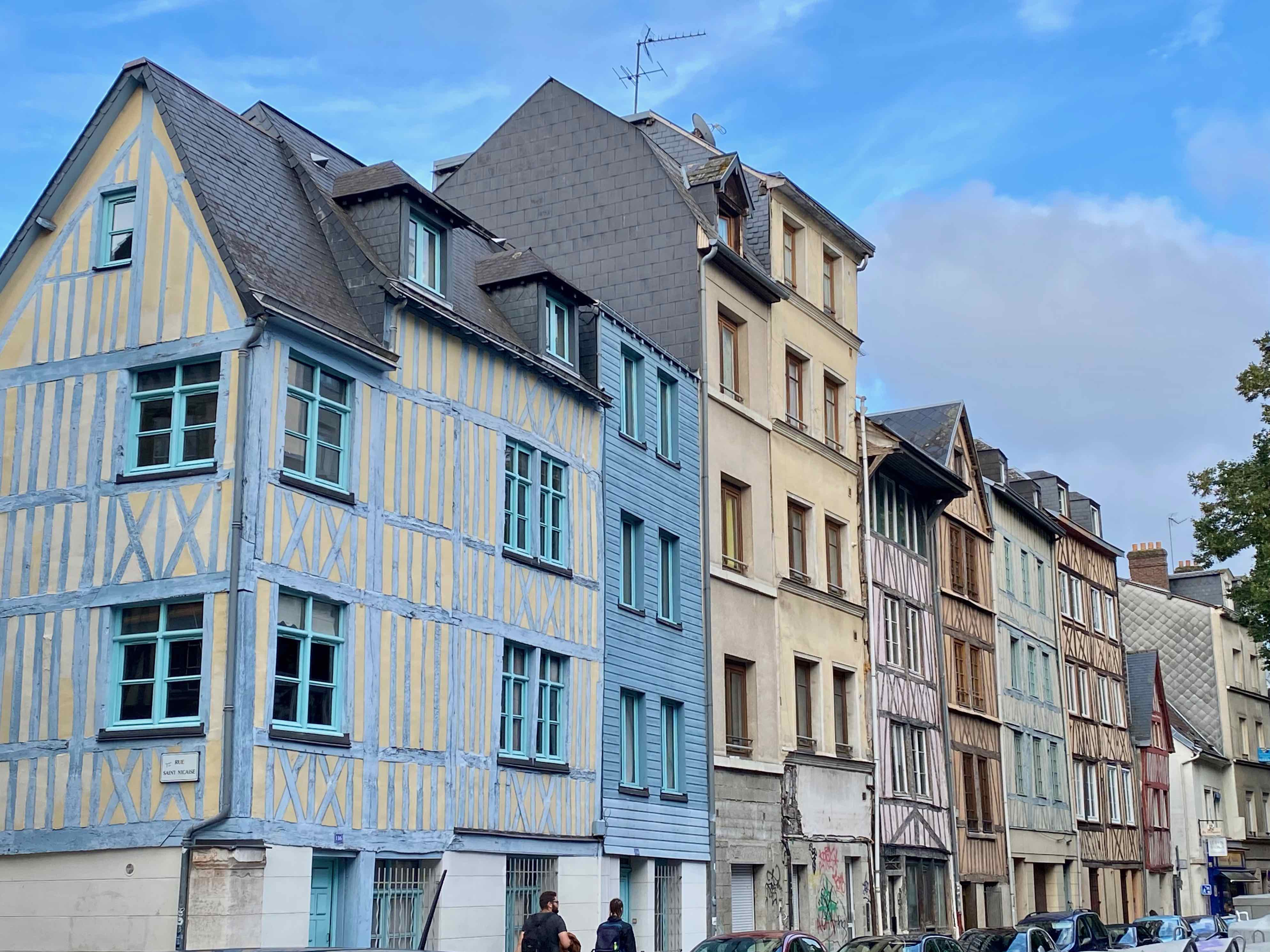
There is street after street of these ancient homes and shops.  These are only a few blocks from our apartment.

Although the buildings are very old, most of them have new windows.  Good windows help to block out the noise of living on busy roads.