Day 44 Monday, October 13, 2025
First stop on our way to Mulhouse is a pretty little town called Esslingen. At first sight we thought this was a real person!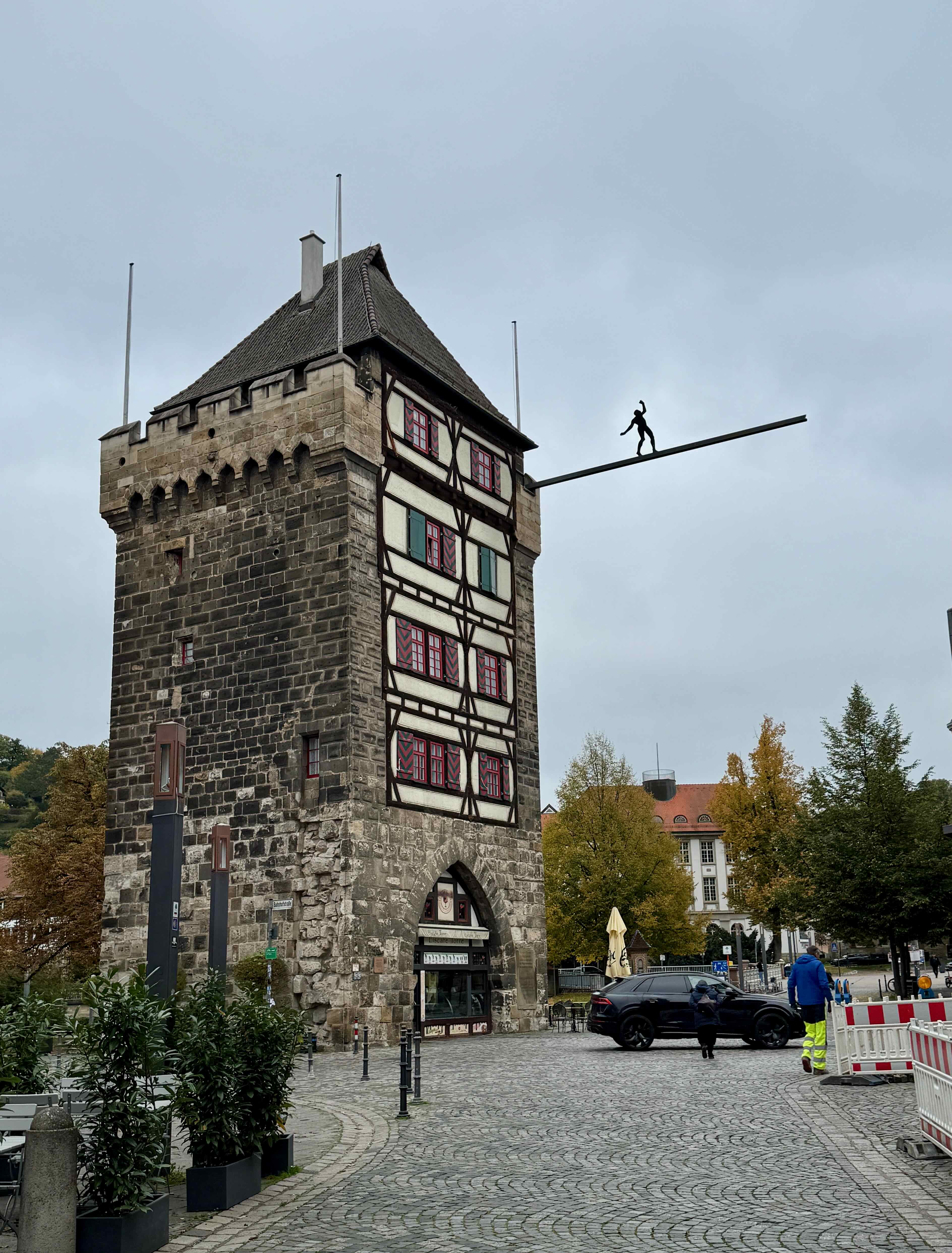
Our Airbnb in Stuttgart had a calendar with almost this exact photo. It was the impetus to visiting Esslingen.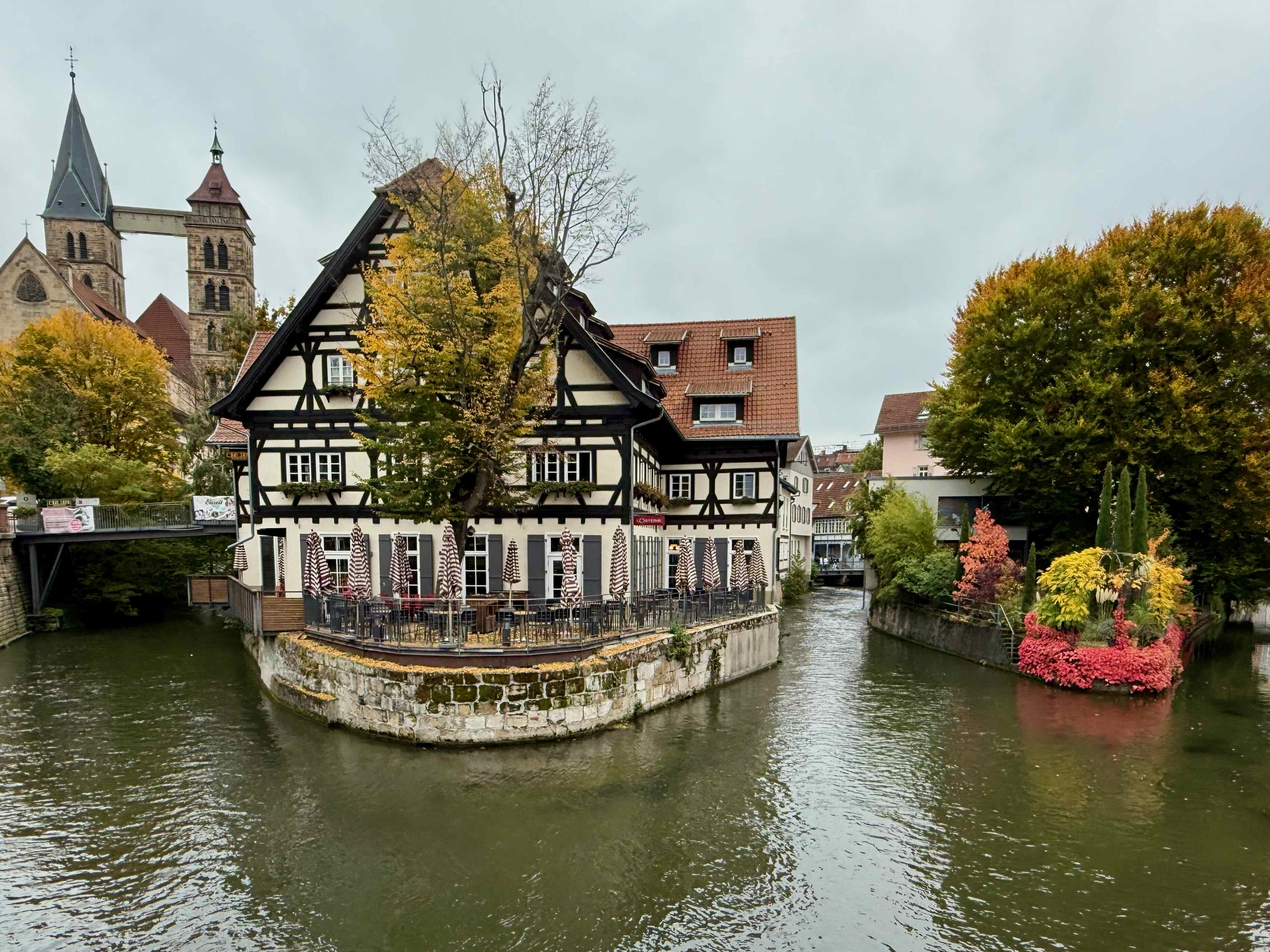
Autumn has definitely arrived. I love walking through the fallen leaves.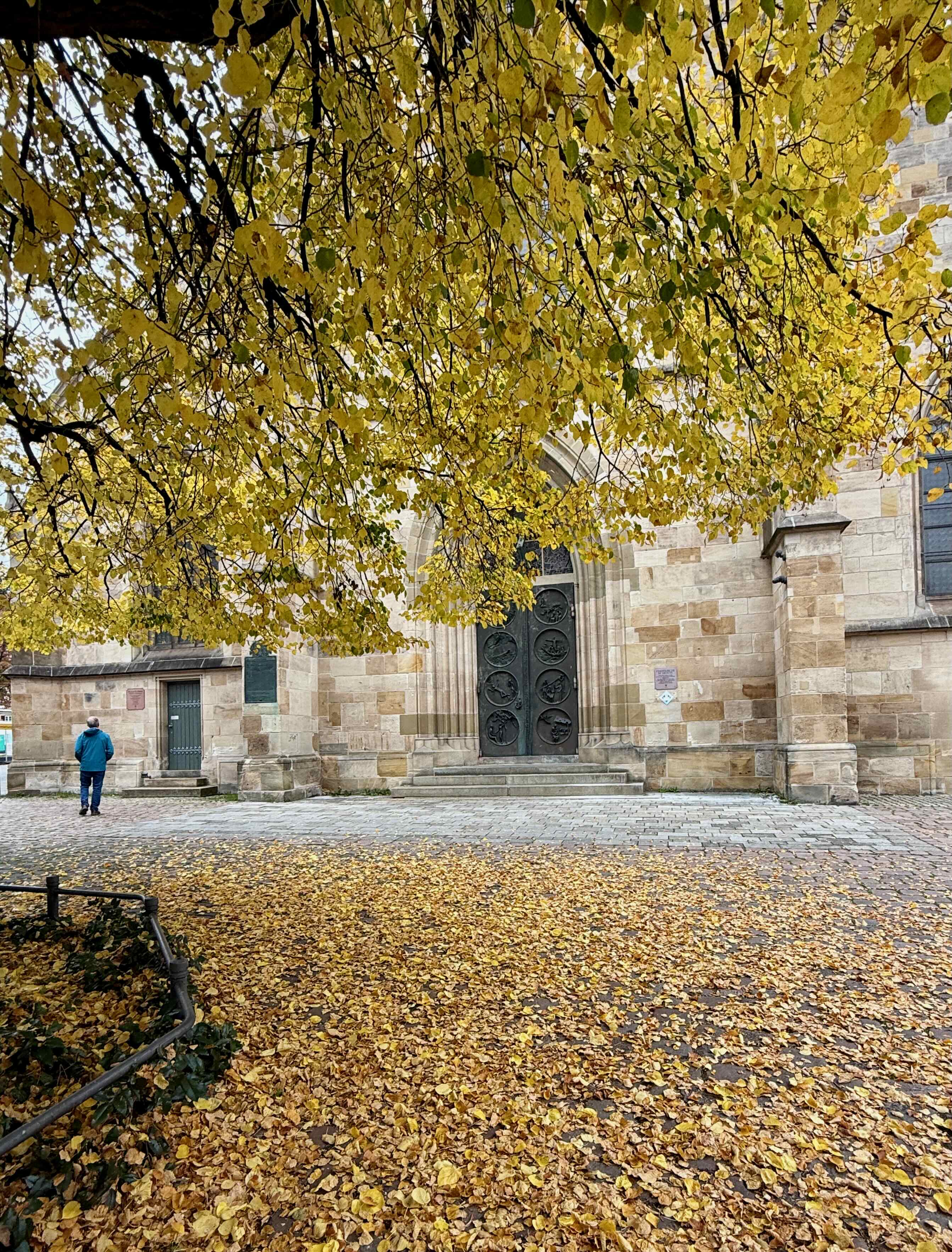
We walked into this church because its doors were so interesting,
I didn’t record the name of this church, but it had a very austere dark interior…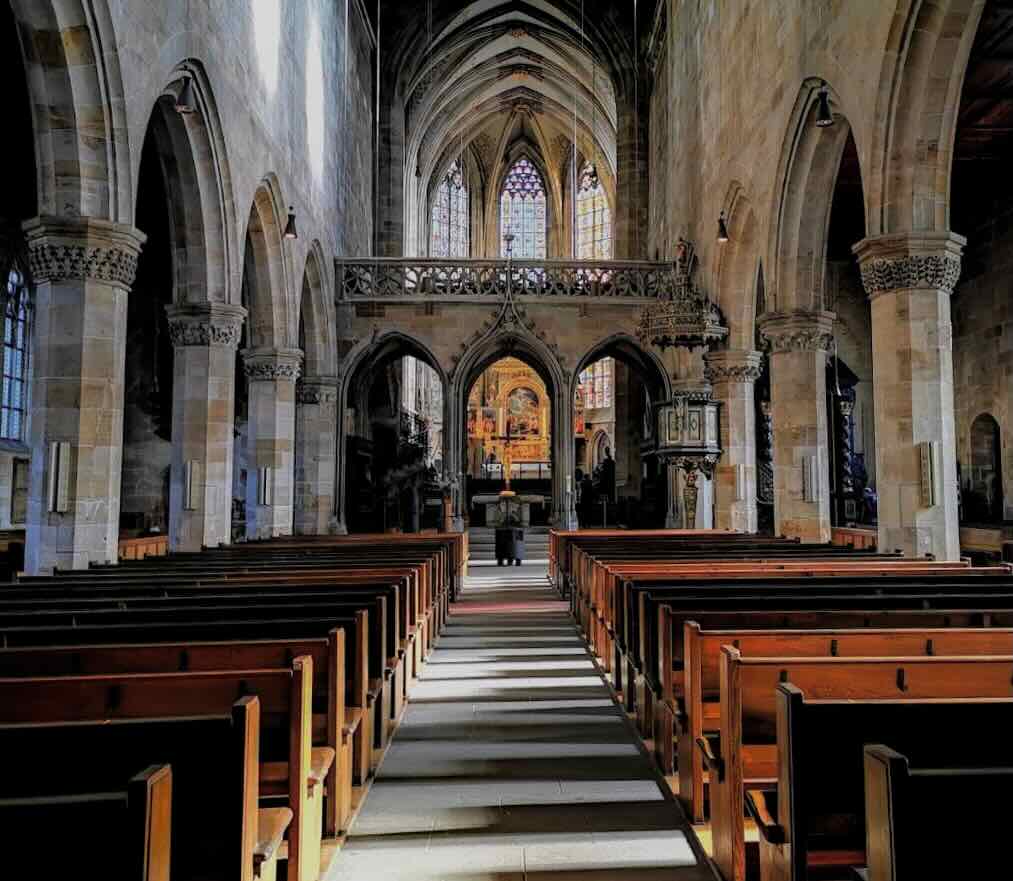 …but the area to light candles was small and intimate and appealed to me. We lit a candle for all our family members and friends who are facing health challenges right now, and spent a few moments in silent contemplation.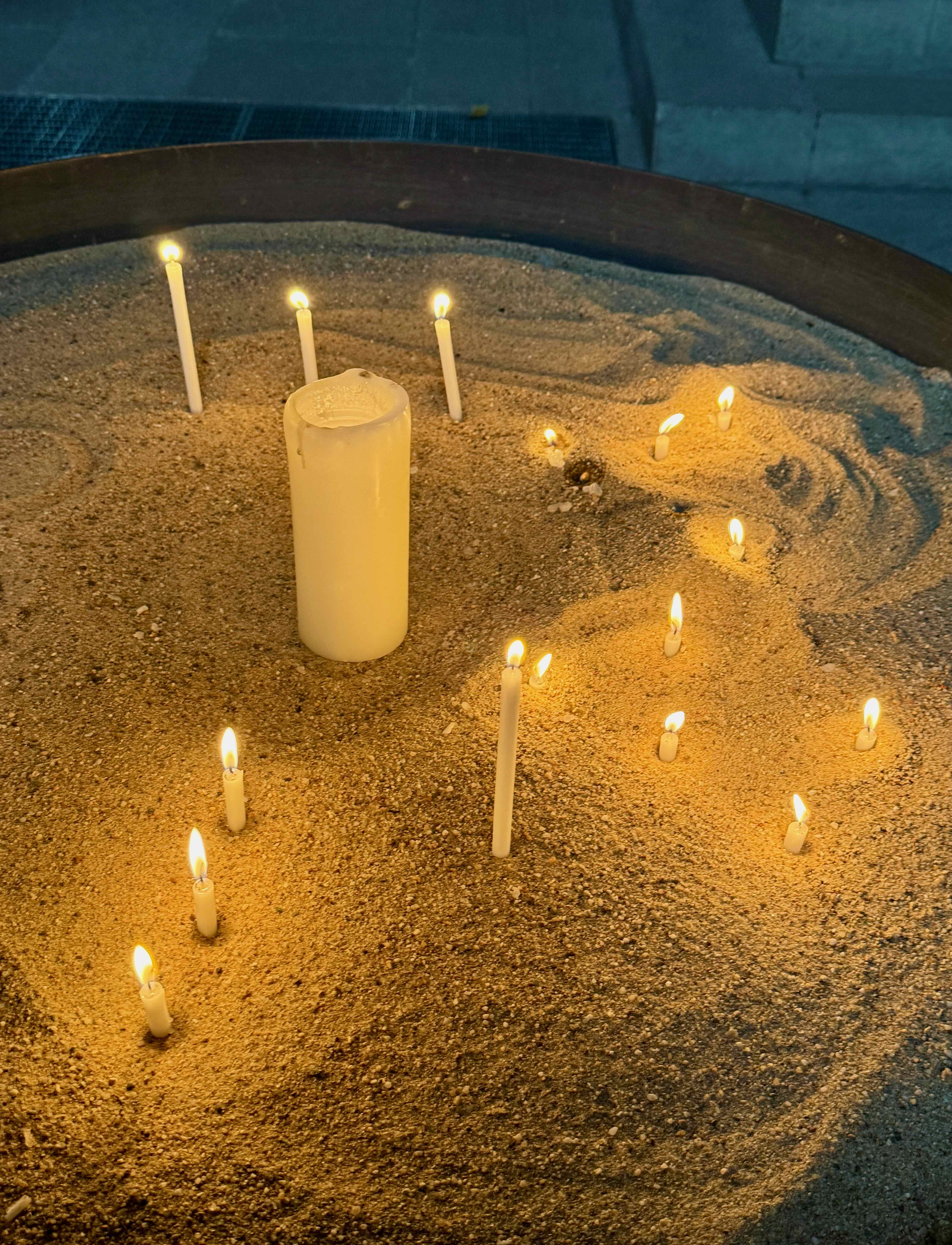
Back outside, we see Esslinger Castle in the distance. But this castle isn’t actually a castle, it is a well-preserved part of the medieval city fortifications, located high above the city centre. Originally expanded in the 13th century, it was reinforced in the 16th century with walls up to 5 meters thick. We can see people up there but we don’t have time to go and explore. Travel days don’t allow for in depth exploration and only give us a chance for brief visits to sites along the way.
One thing I love about European cities and towns are the unexpected little things, like the face on this wall. There is always something interesting and different to discover.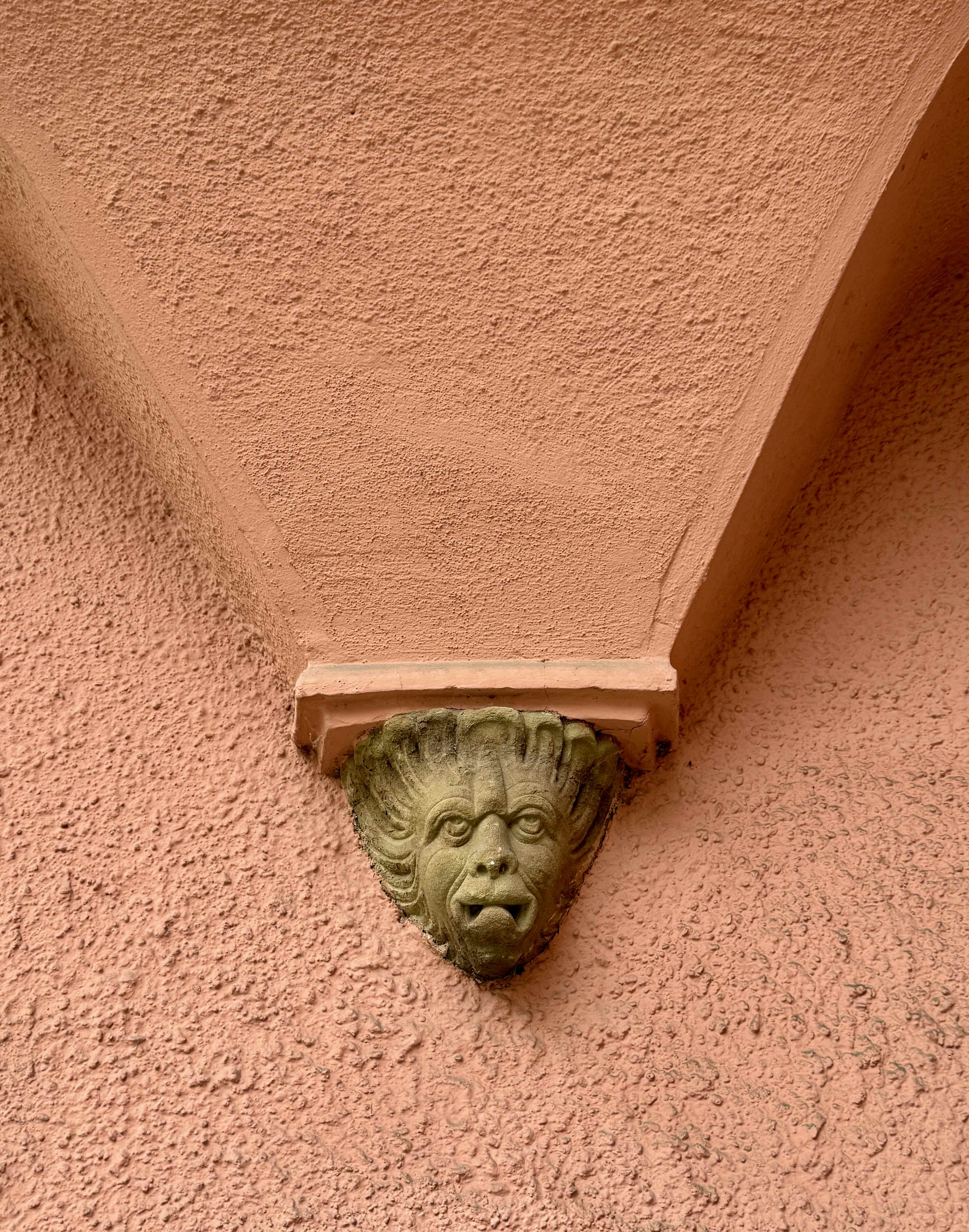
We pass this road construction site. I think they were replacing some pipes. All the little stones from the cobbled sidewalks and streets are piled up and then relaid in the pattern that matches the rest of the in place stones. Very labour intensive, but such a wonderful final result.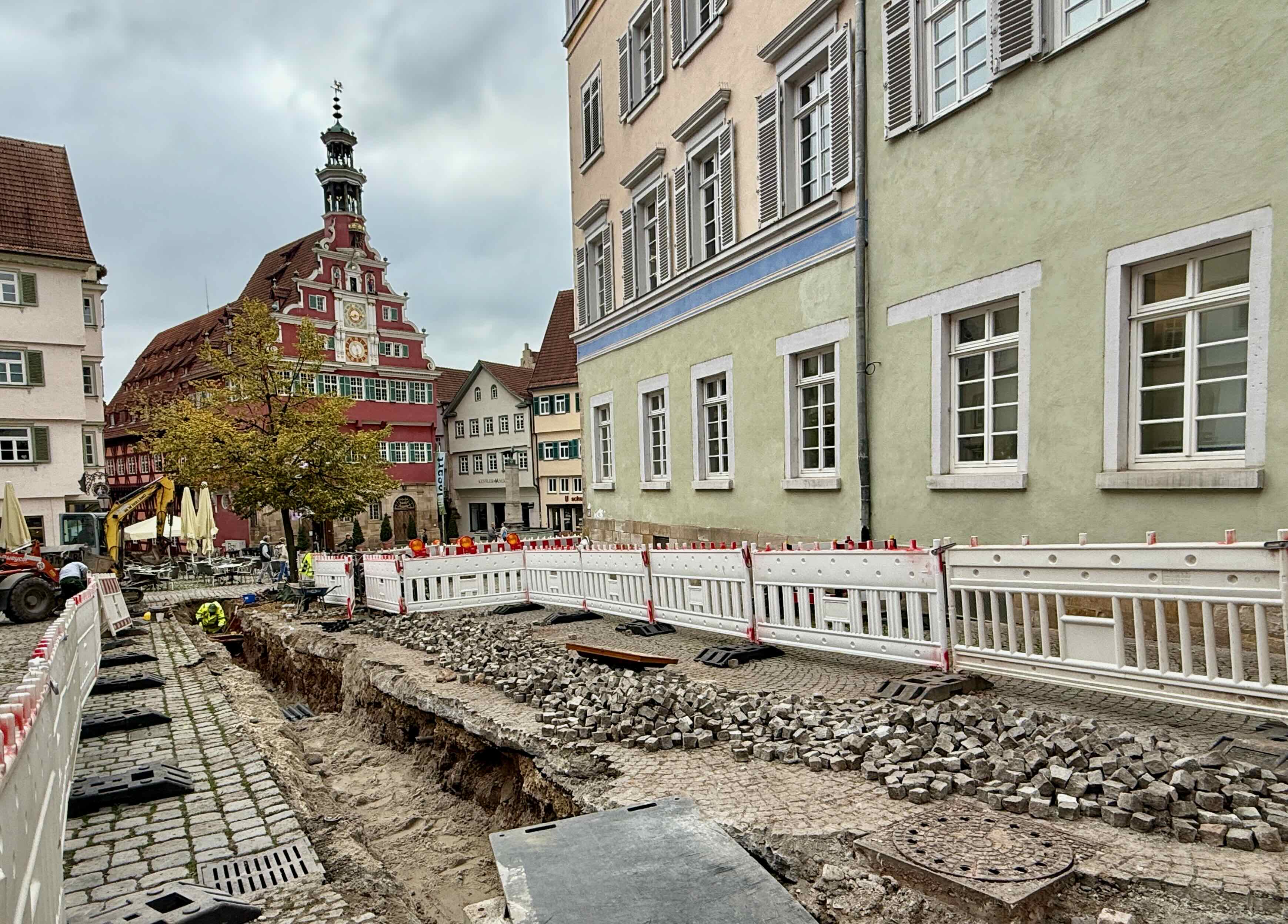
Built in 1423 as a sales hall and tax house this building is the Old Esslingen Town Hall. We were hoping to hear the Glockenspiel and see the figures on the clock move but later discovered that only happens five times a day. We are out of luck.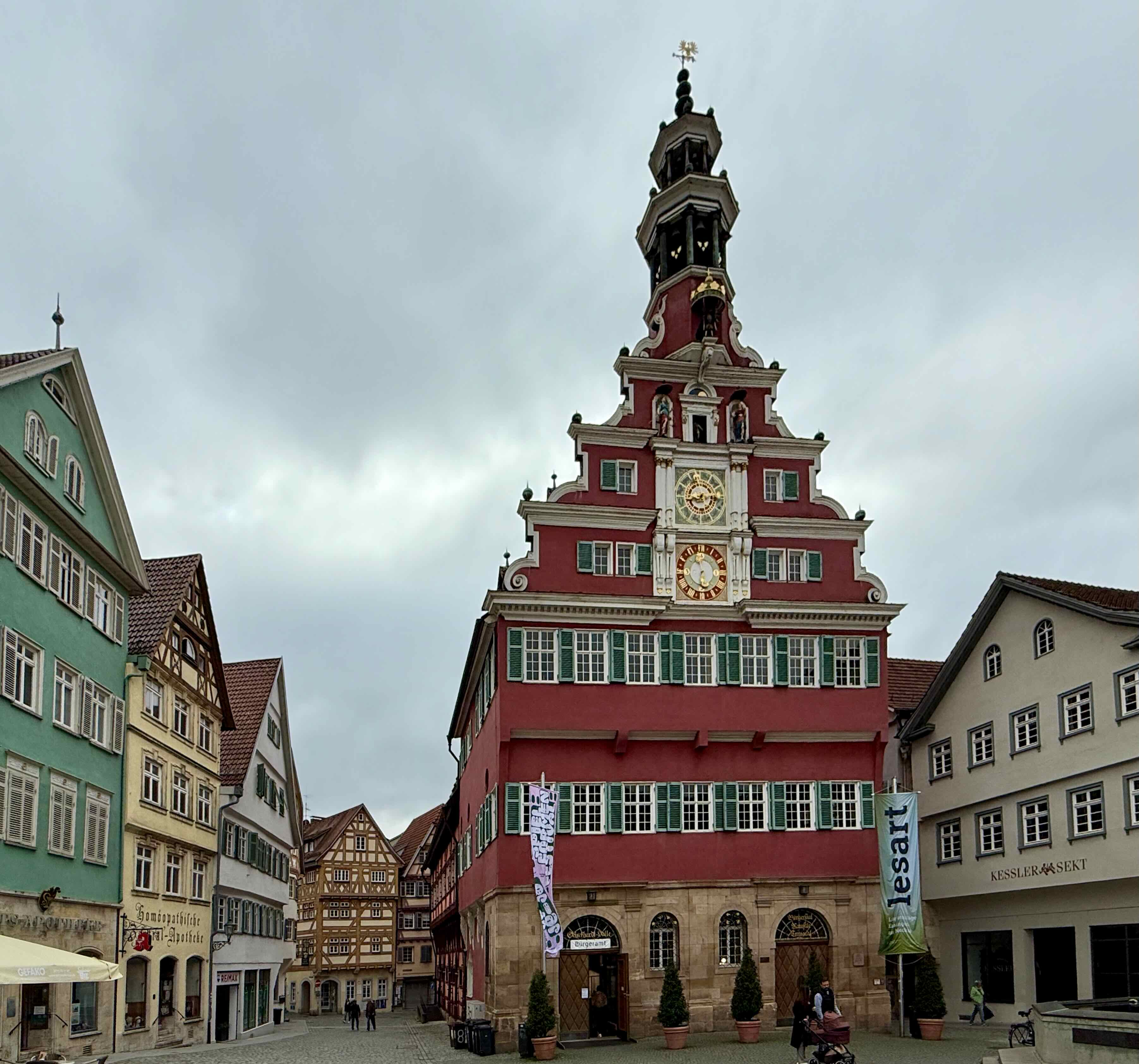
The cobbled streets are lined with ancient timbered houses…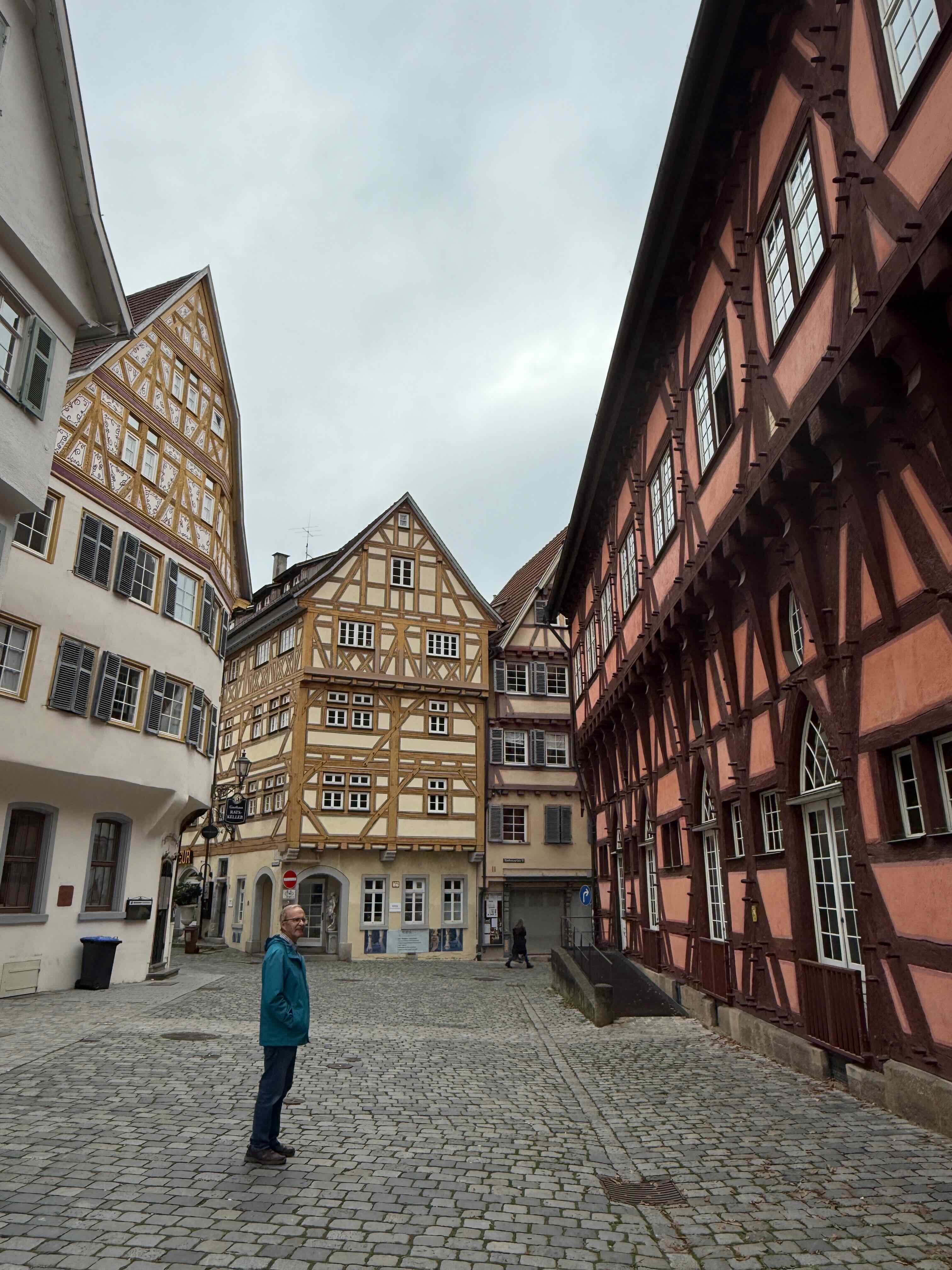
…and there are canals here too. We could have piloted our own electric boat for a trip on the canals but they stopped operating the end of September.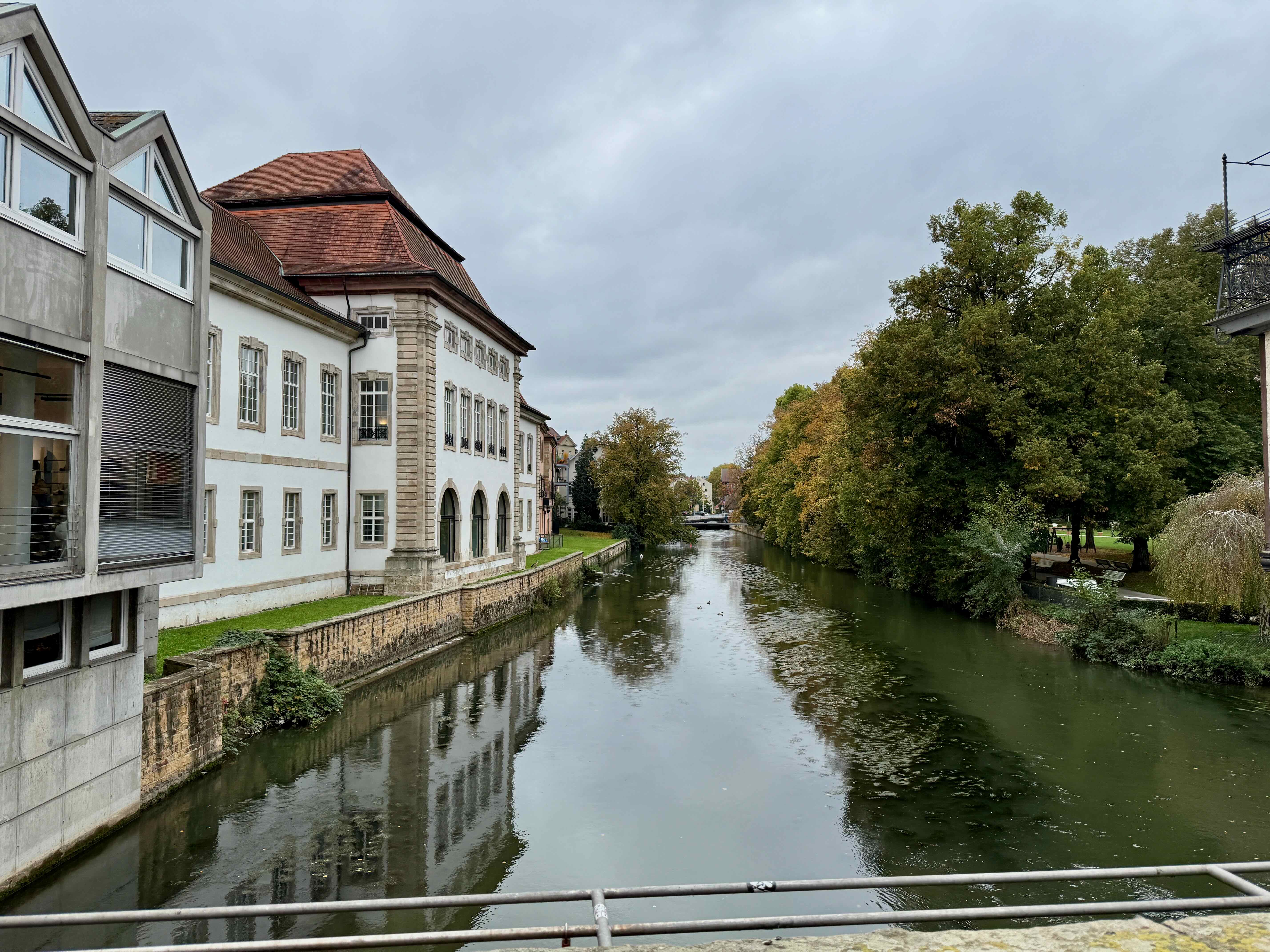
The town is surrounded by vineyards.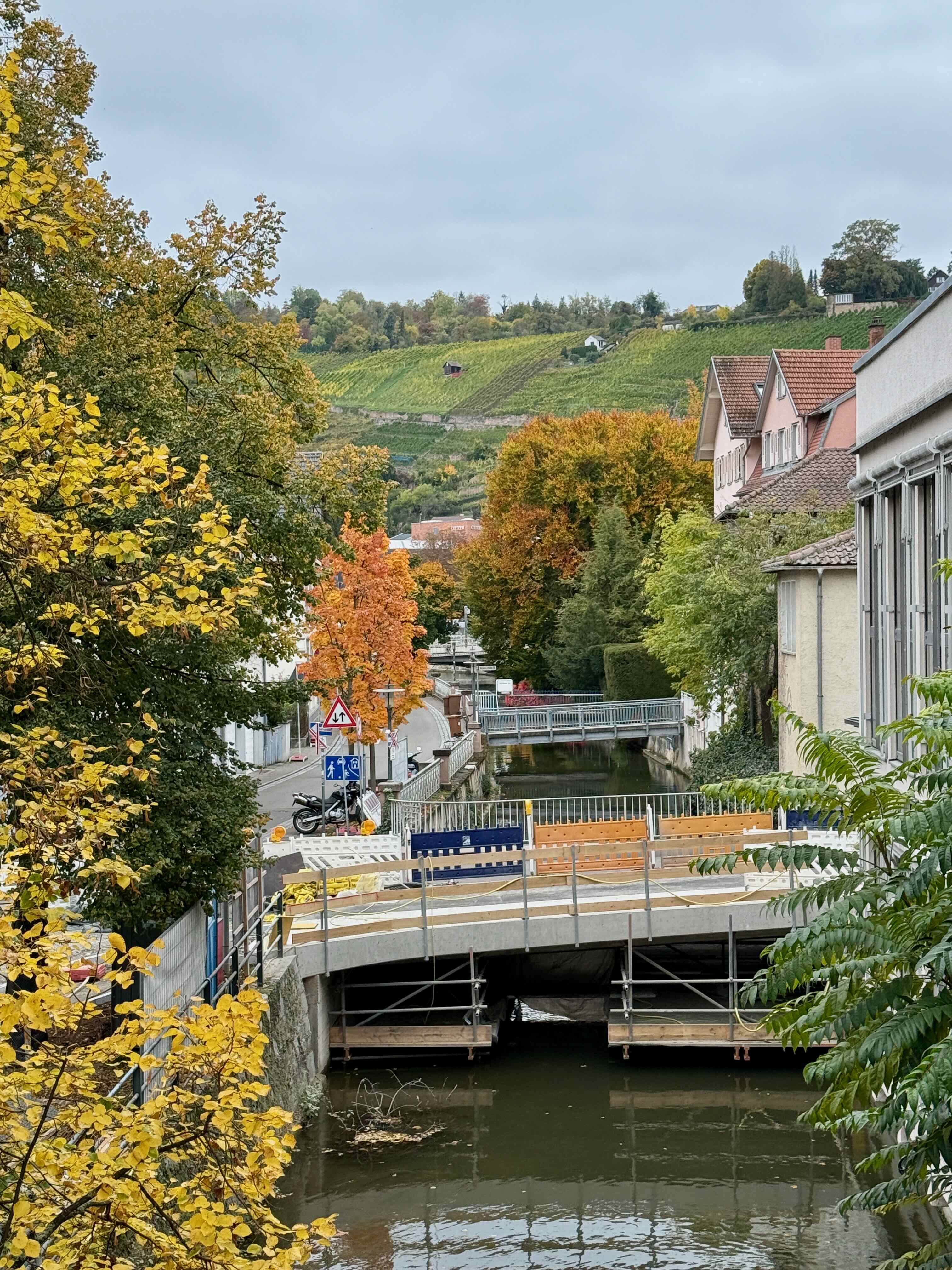
I thought this house was particularly spectacular. It is dated 1531! 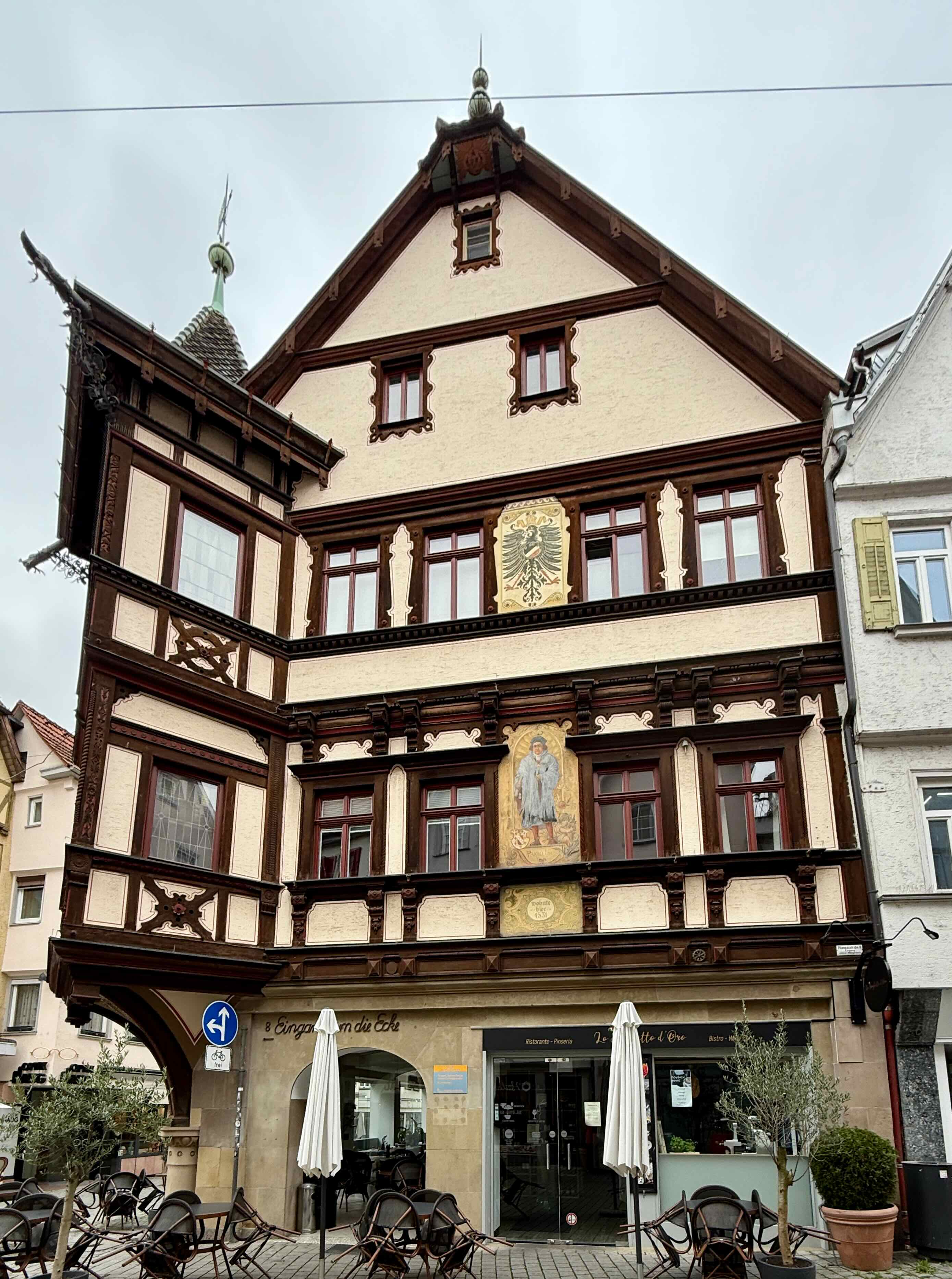
As we are leaving Esslingen I quickly snap this photo from the car window! I just googled it and dick means thick in German, but also discovered that F. Dick is a German cutlery manufacturer that owns this smokestack…too funny!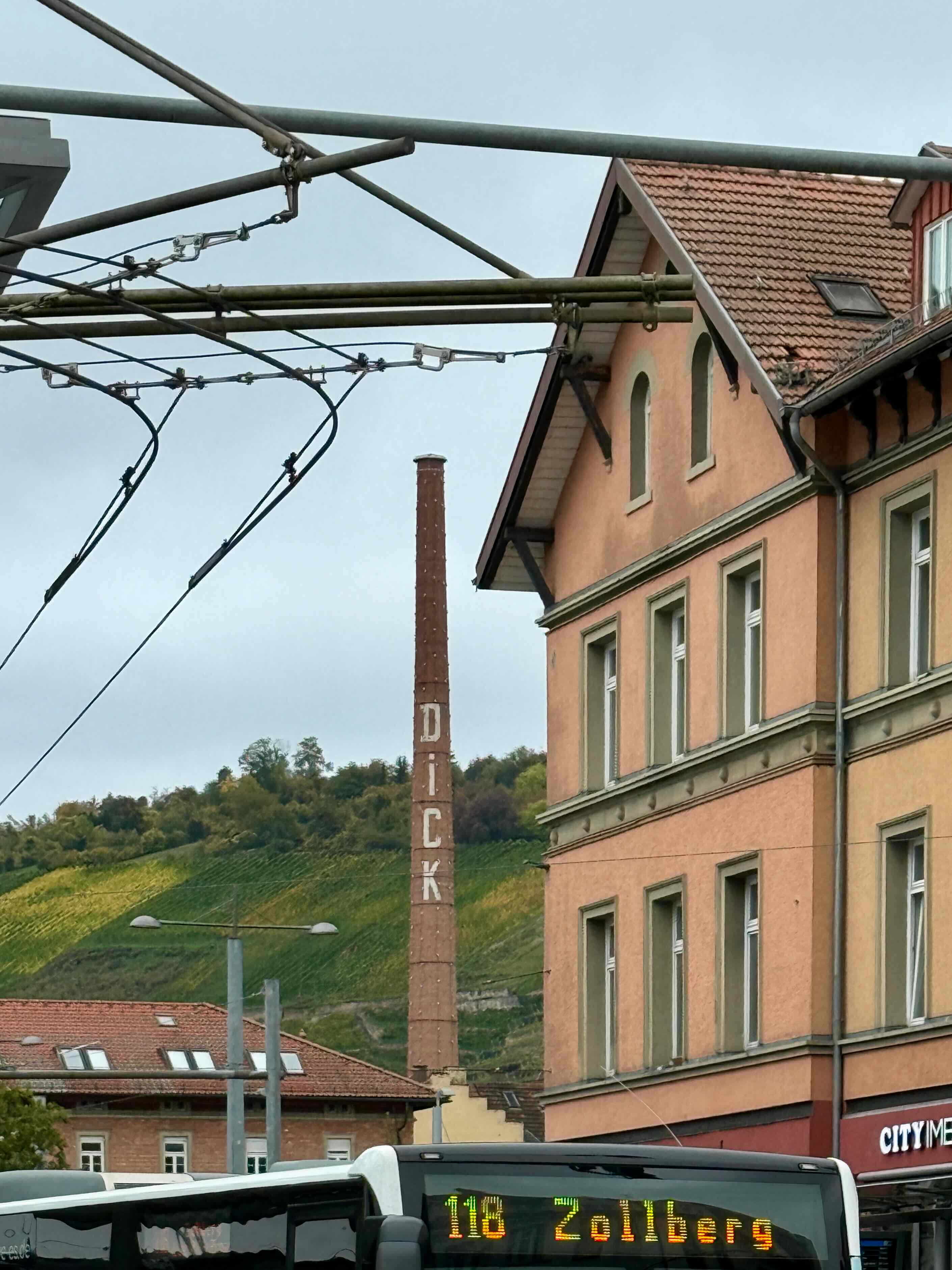
Next stop is Baden Baden. We spent some time in Baden Baden a long time ago so we thought we should stop there for a visit. There are flowers everywhere, but bathrooms are few and far between! We spent 45 minutes trying to find a bathroom. Using Google maps we walked several blocks to where there was a WC…but we couldn’t find it. Turns out it was in a parking garage and both of us walked right past the doors to the washroom twice without seeing them! They were on either side of the of the parking payment machine with a tiny sign on each door!
I love how people have tiny potted gardens on their window ledges or on the street beside their doors. 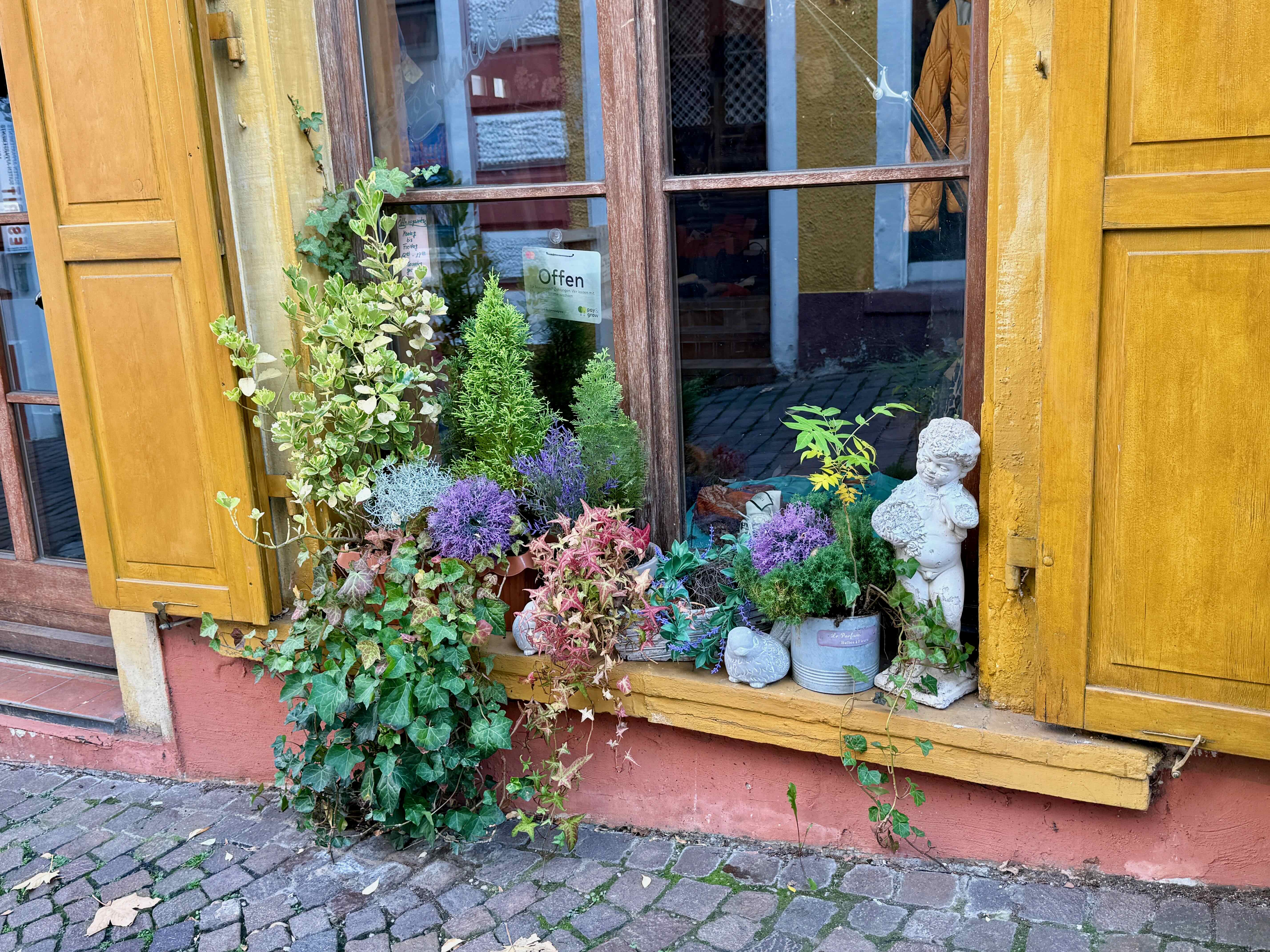
Baden Baden has a lot of very high end shops. This watch is priced at €15,500…no prices on the others. I presume they are even more expensive. We also see small diamond earring studs that range from €399 to €820 and there were no clothing items on display in the shop windows below €100! A bit too pricey for us, but it is fun to window shop.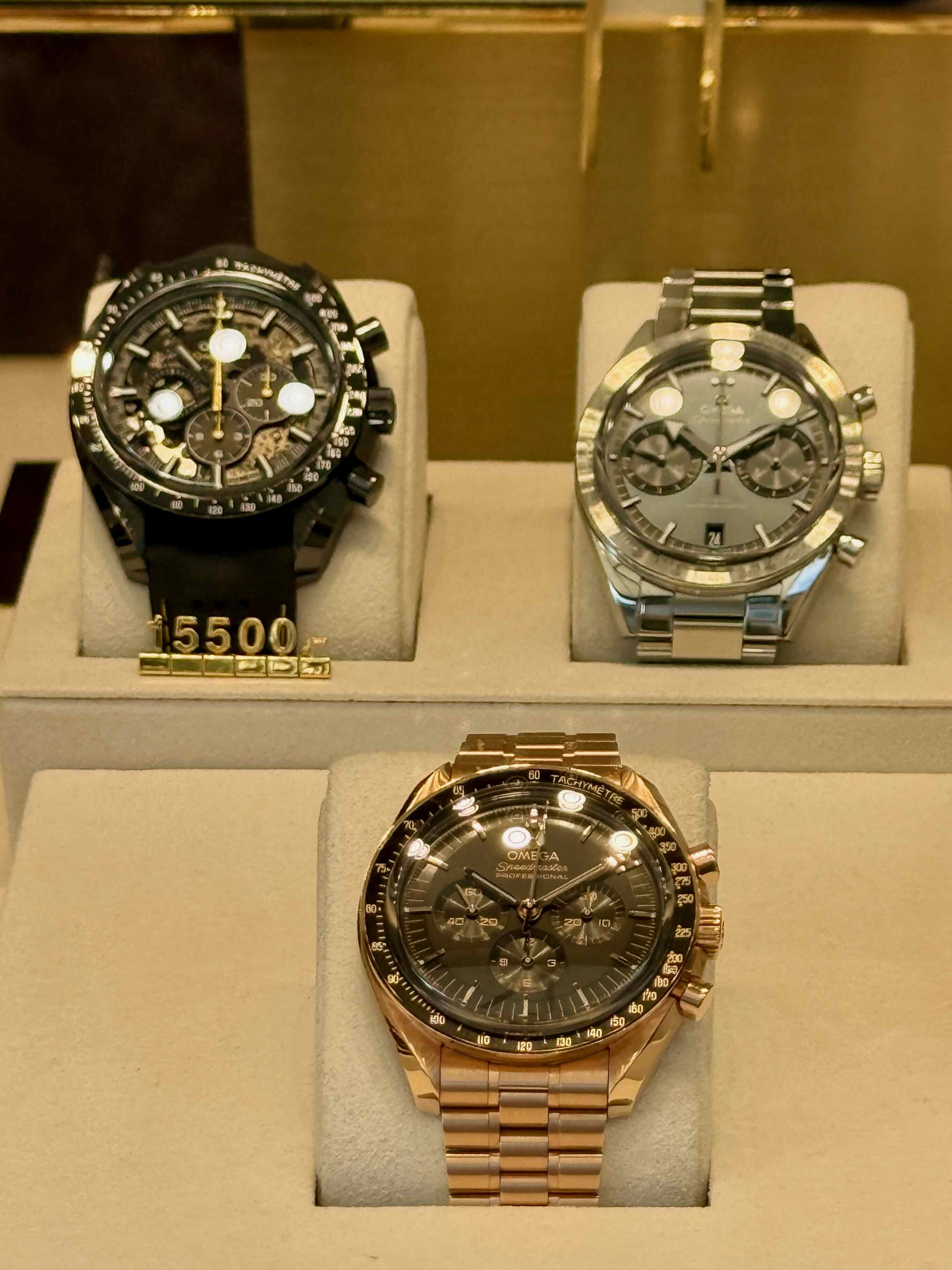
Loved this stork fountain!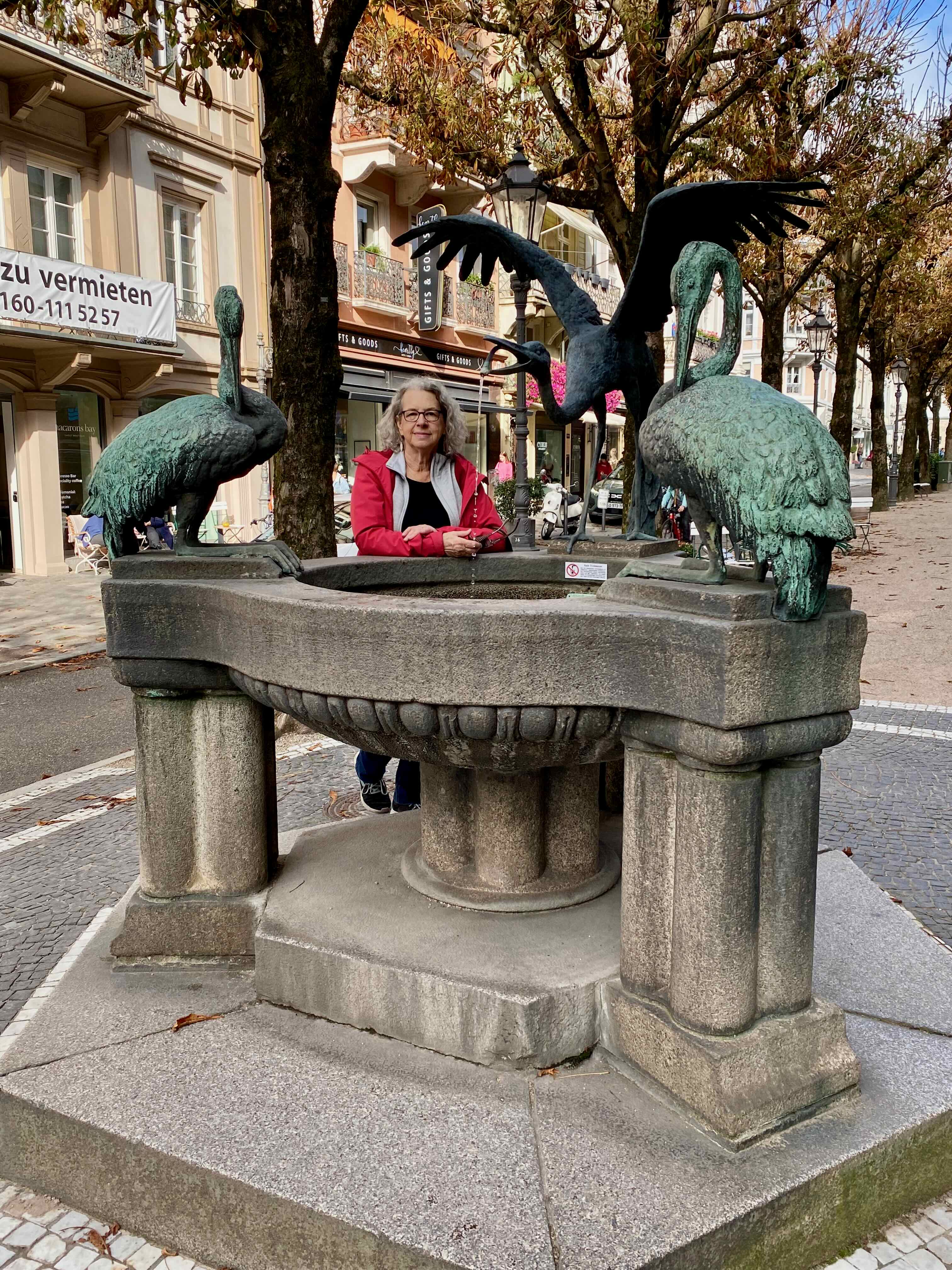
This is the Baden Baden Casino. Bob thought we could go in and tryout luck but men must wear a suit jacket and tie. We wouldn’t be allowed in with our jeans and casual sweaters.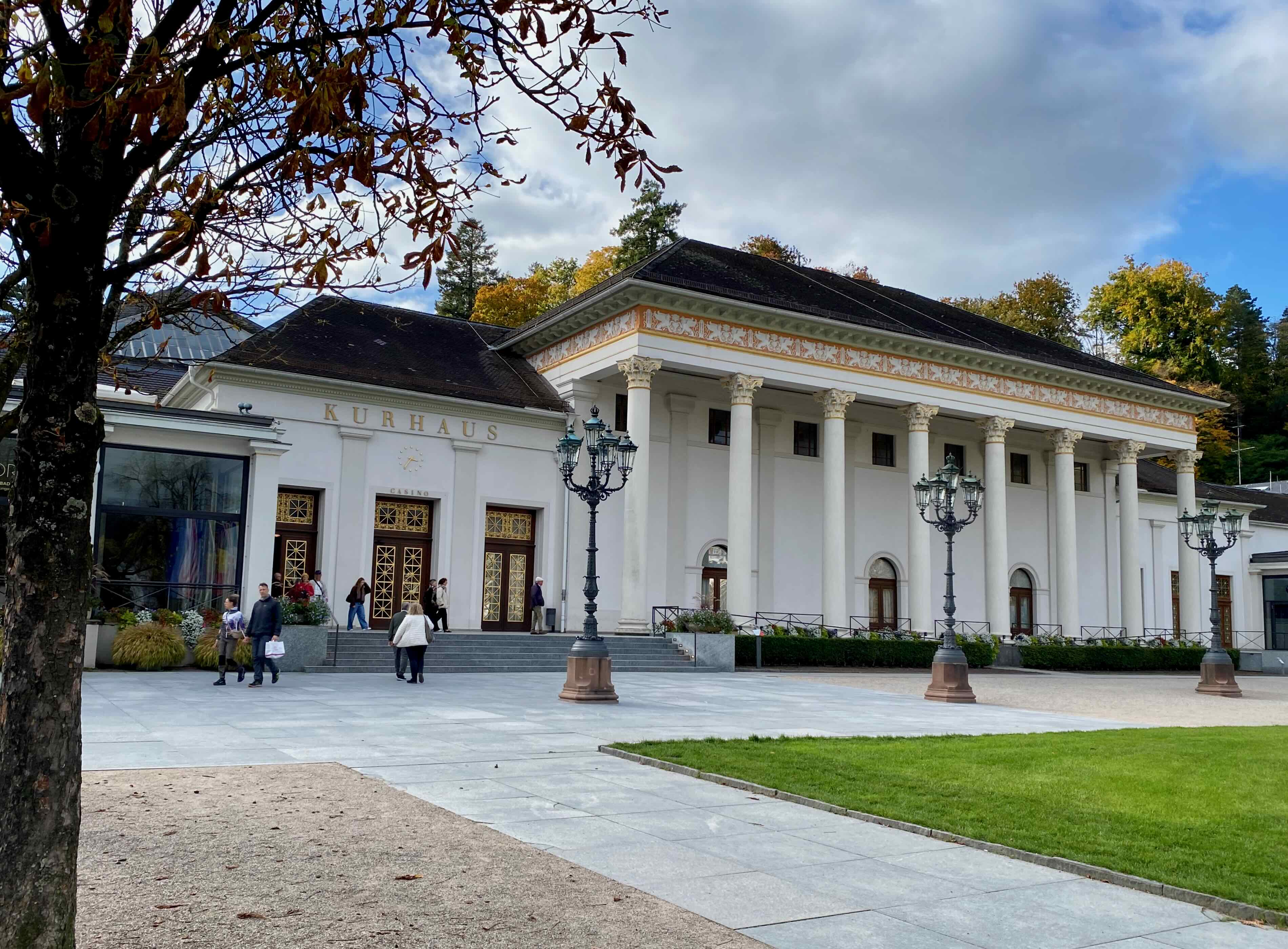
The drive from Baden Baden to Mulhouse in France was interesting. I see these strange structures on Google maps while navigating…turns out they are huge shopping malls with parking on the roofs of the buildings.
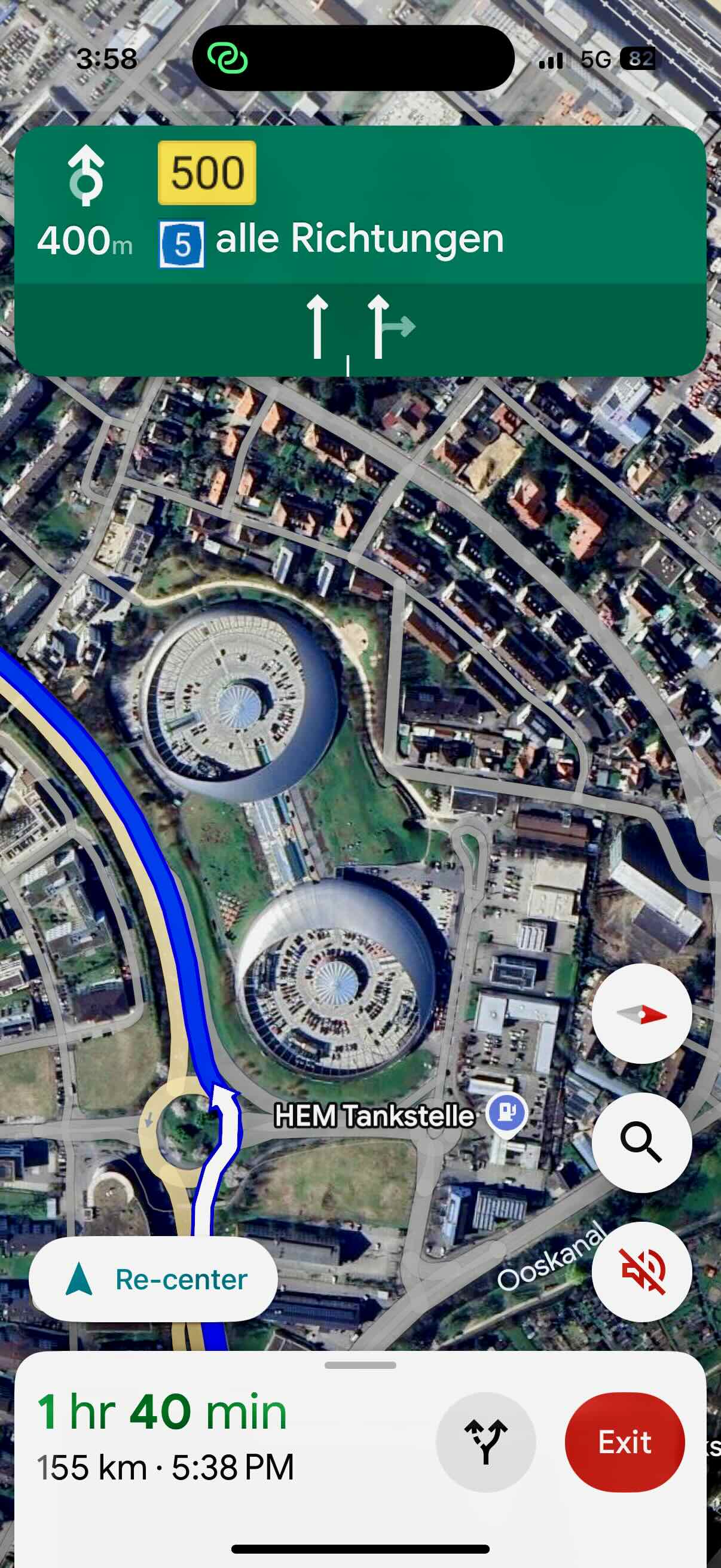
Screenshot
Just a few kilometres down the road I see this huge truck rest stop on Google maps. I count 86 trucks stopped for a break! Bob’s biggest complaint about driving in Europe is all the trucks on the roads. The right lane is one truck after another and when a truck pulls into the car lane to pass a slower moving one all the cars have to slow down until it manages to pass and get back into the truck lane.
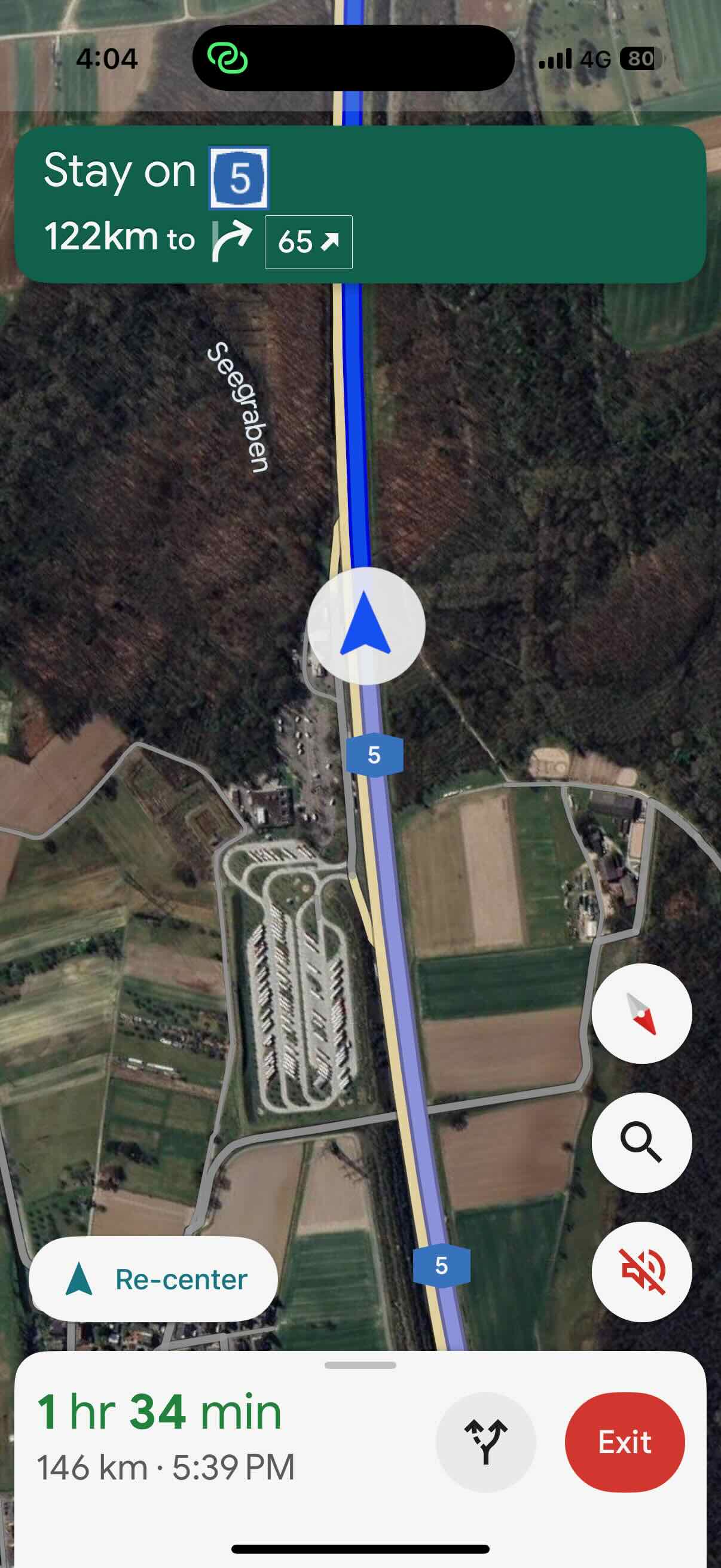
Screenshot
Remember the German highway speed limit is usually 130 km and often there is no speed limit so a truck pulling into your lane at 90 km is actually quite dangerous. Bob does enjoy the chance to drive at 156 km/h though!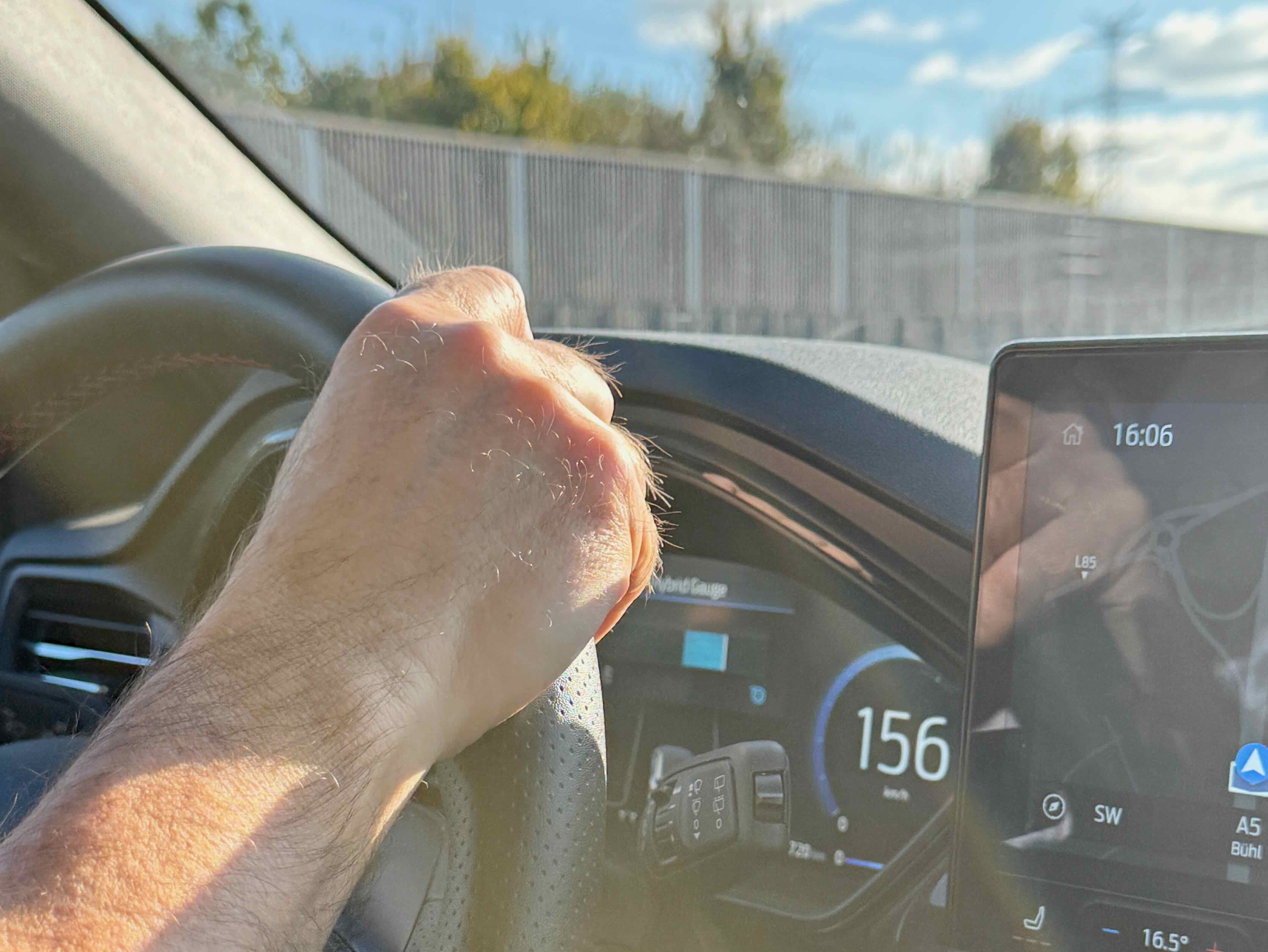
We get caught in traffic for almost half an hour, moving just a car length at a time. We finally figure out why. This huge boat was trying to move through a rather small covered bridge so all traffic was stopped during this operation. Notice our speed now…1.6 km/h!
We arrived just in time to meet our Airbnb host, but our planned stop for groceries has to wait for another day.
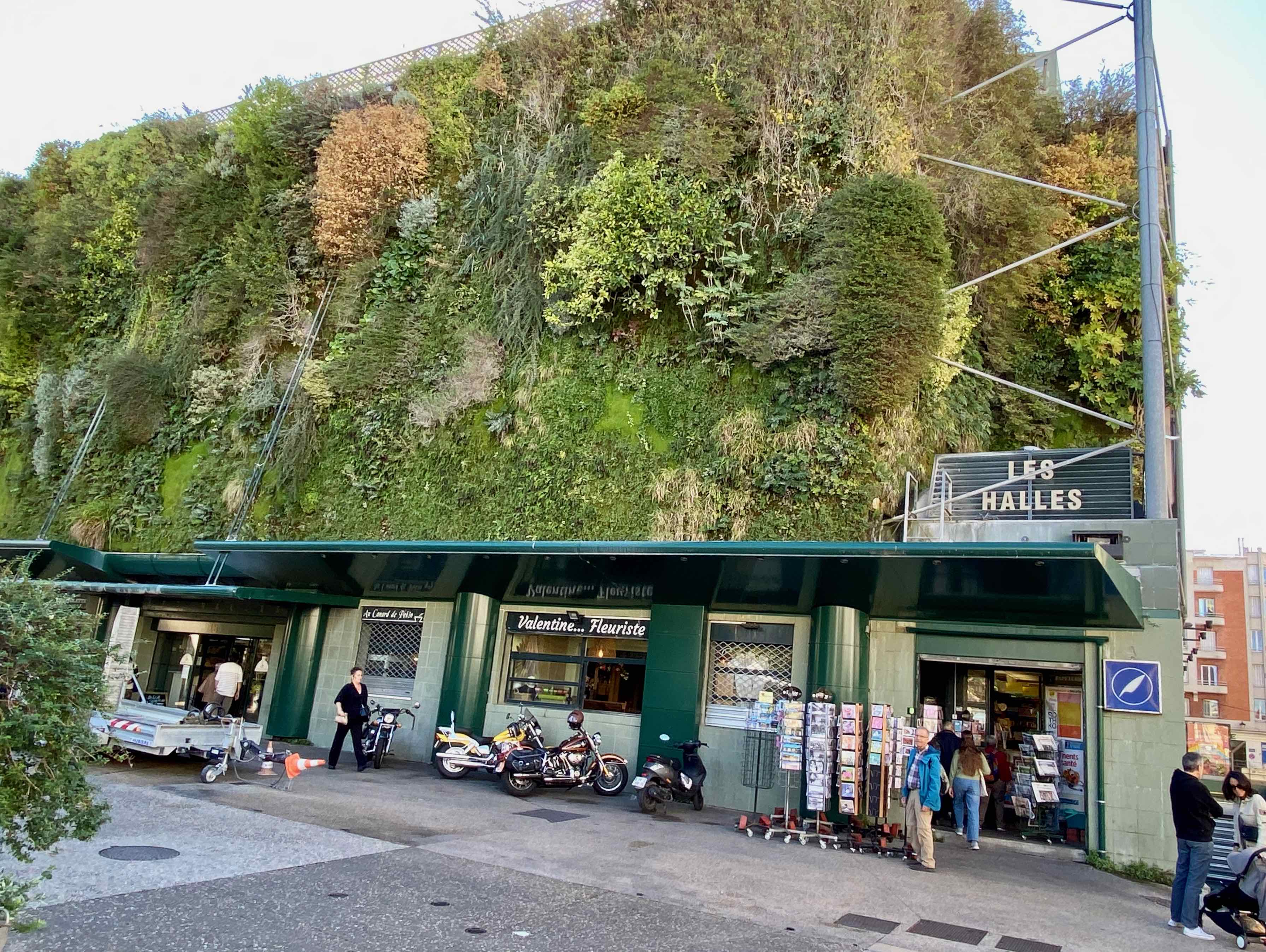 and lots of seafood. Too bad neither Bob nor I are fans. The very last picture is of Lapin…Rabbit. Not something we are used to seeing. I had rabbit once many years ago and although it was OK, it isn’t something I am interested in trying again.
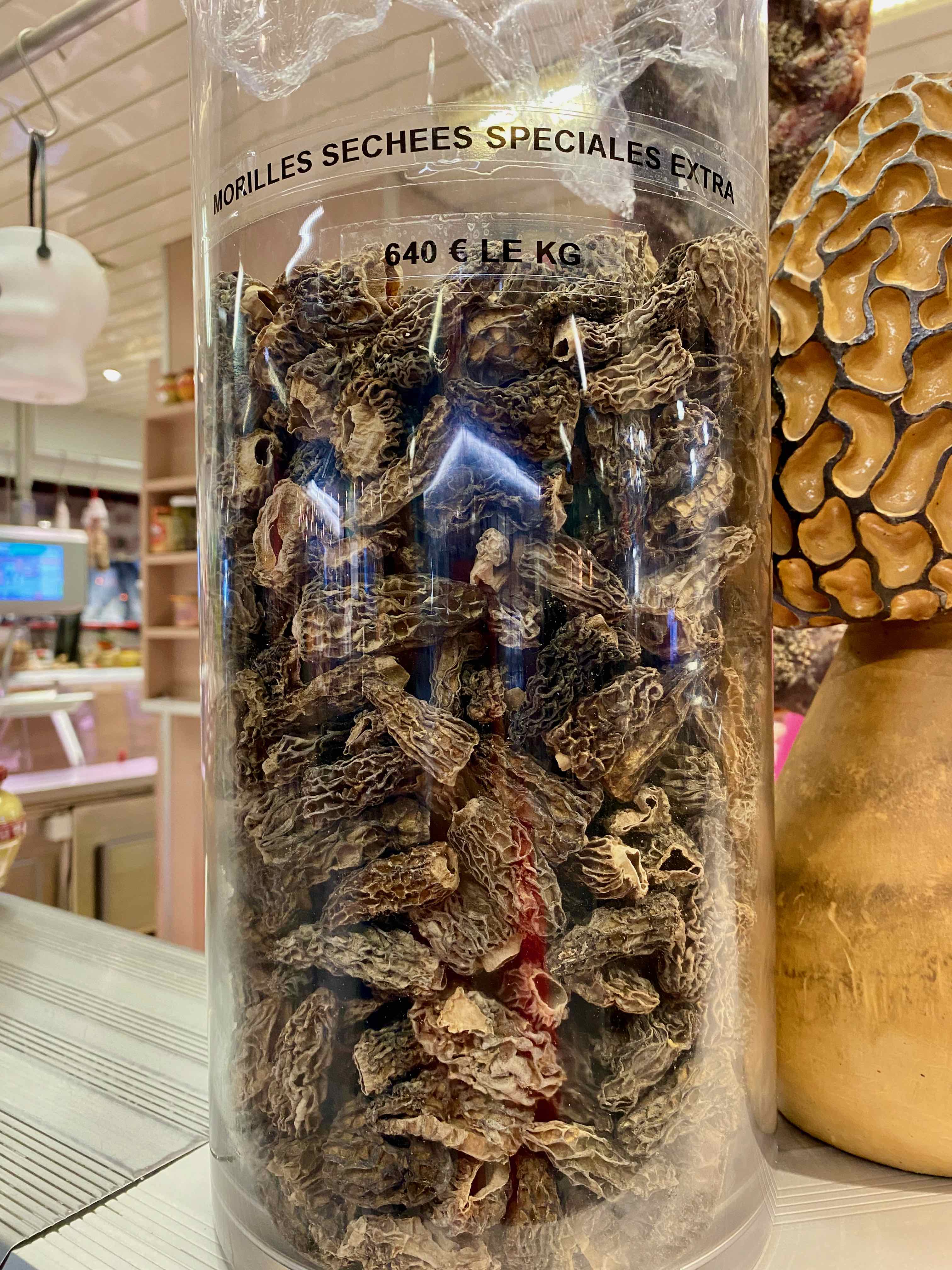
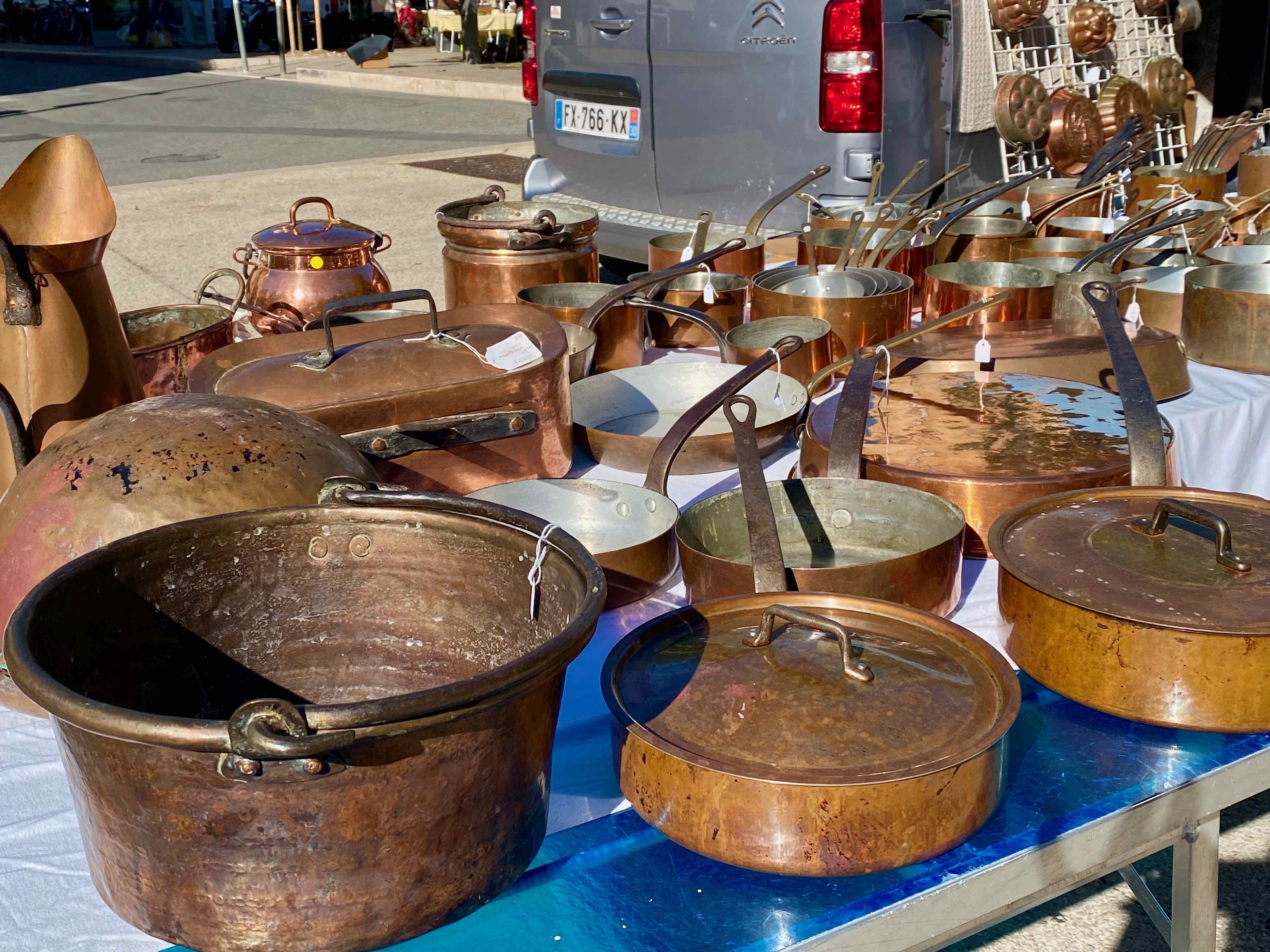
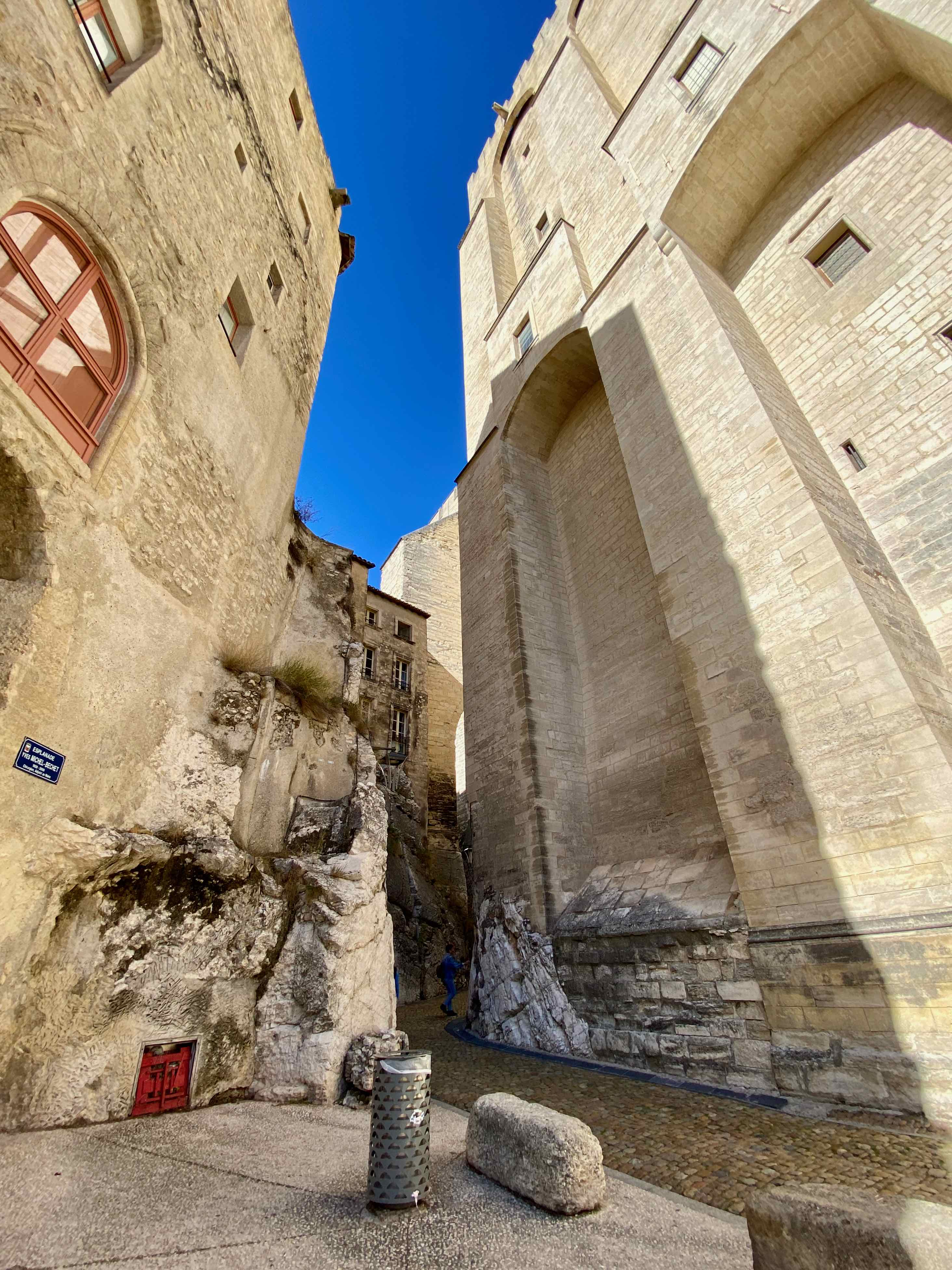
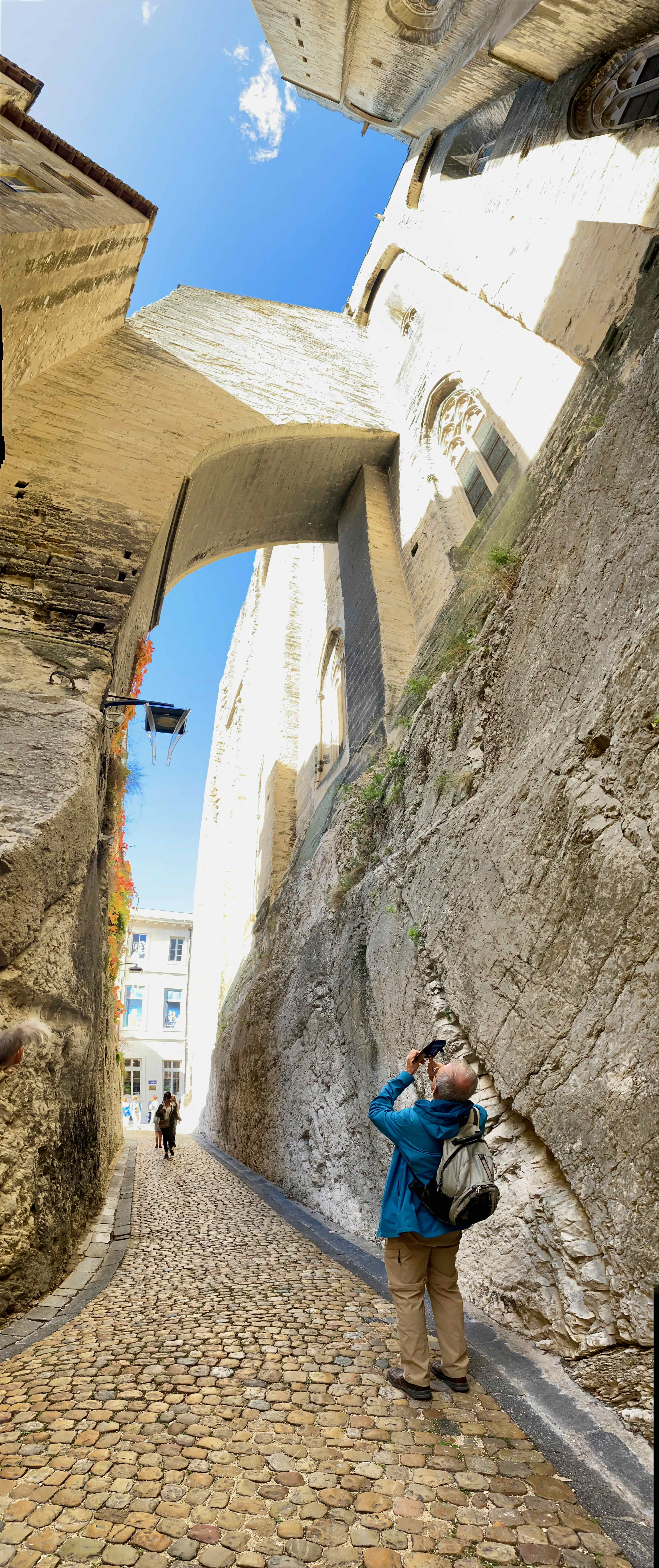

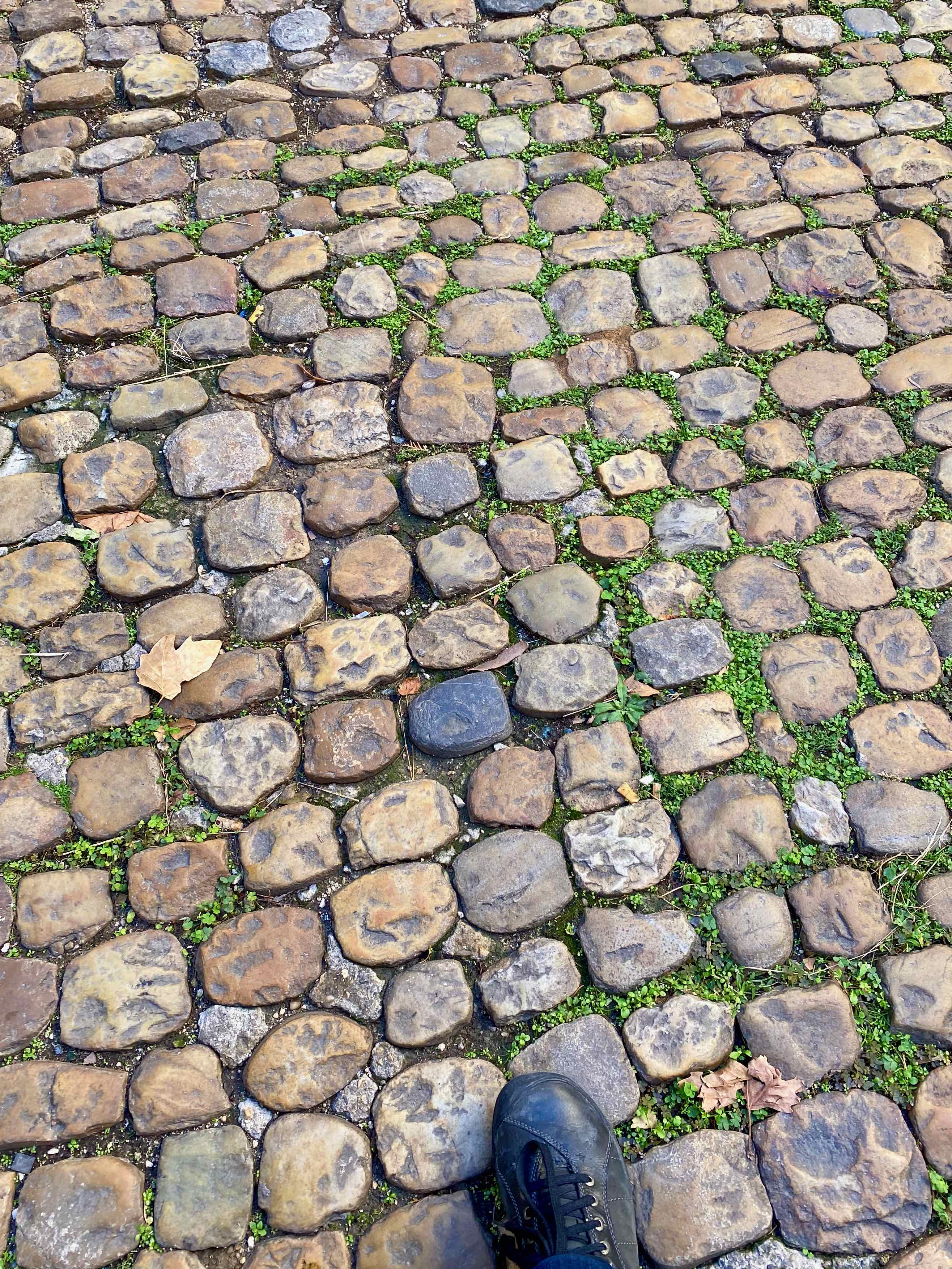
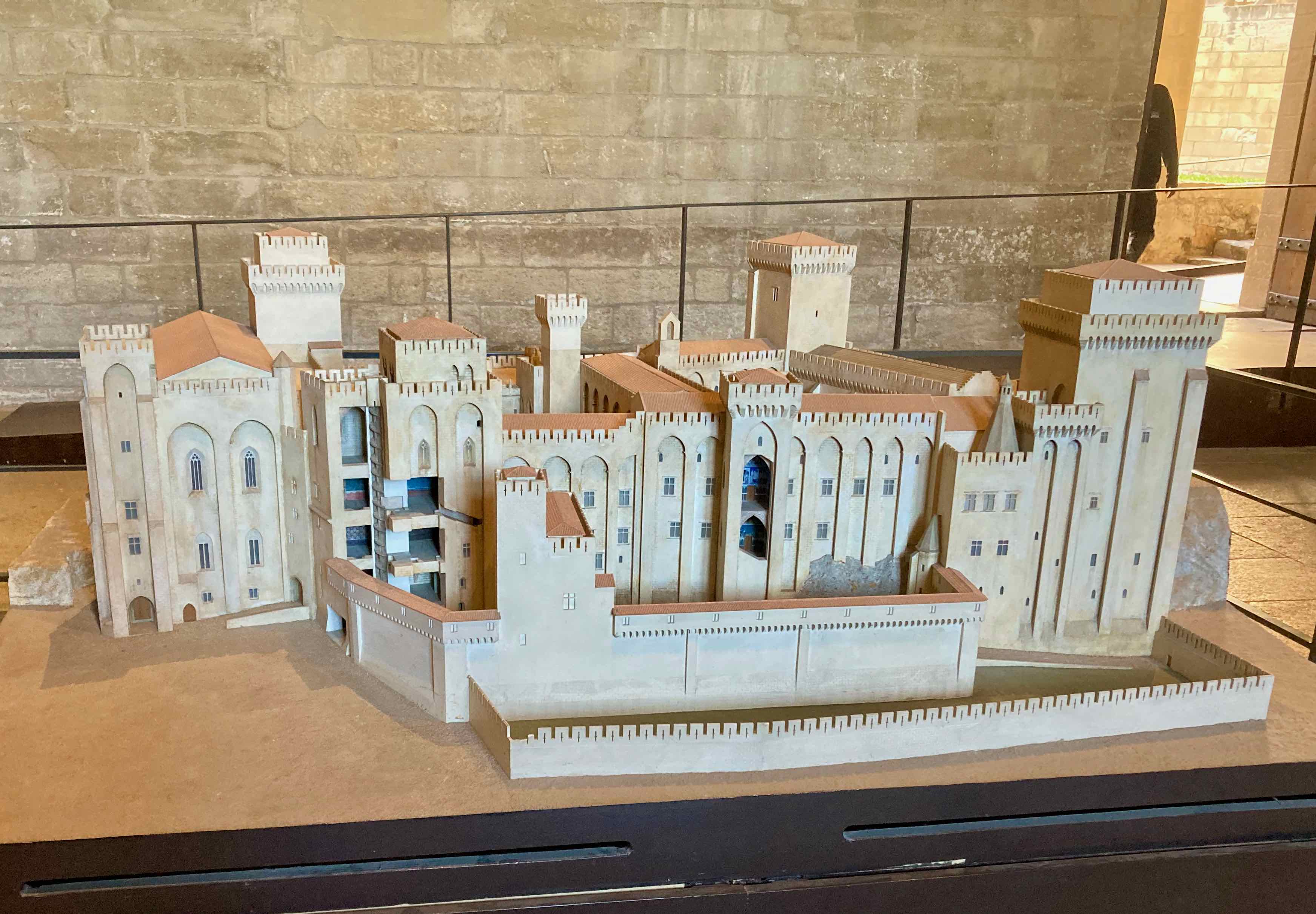
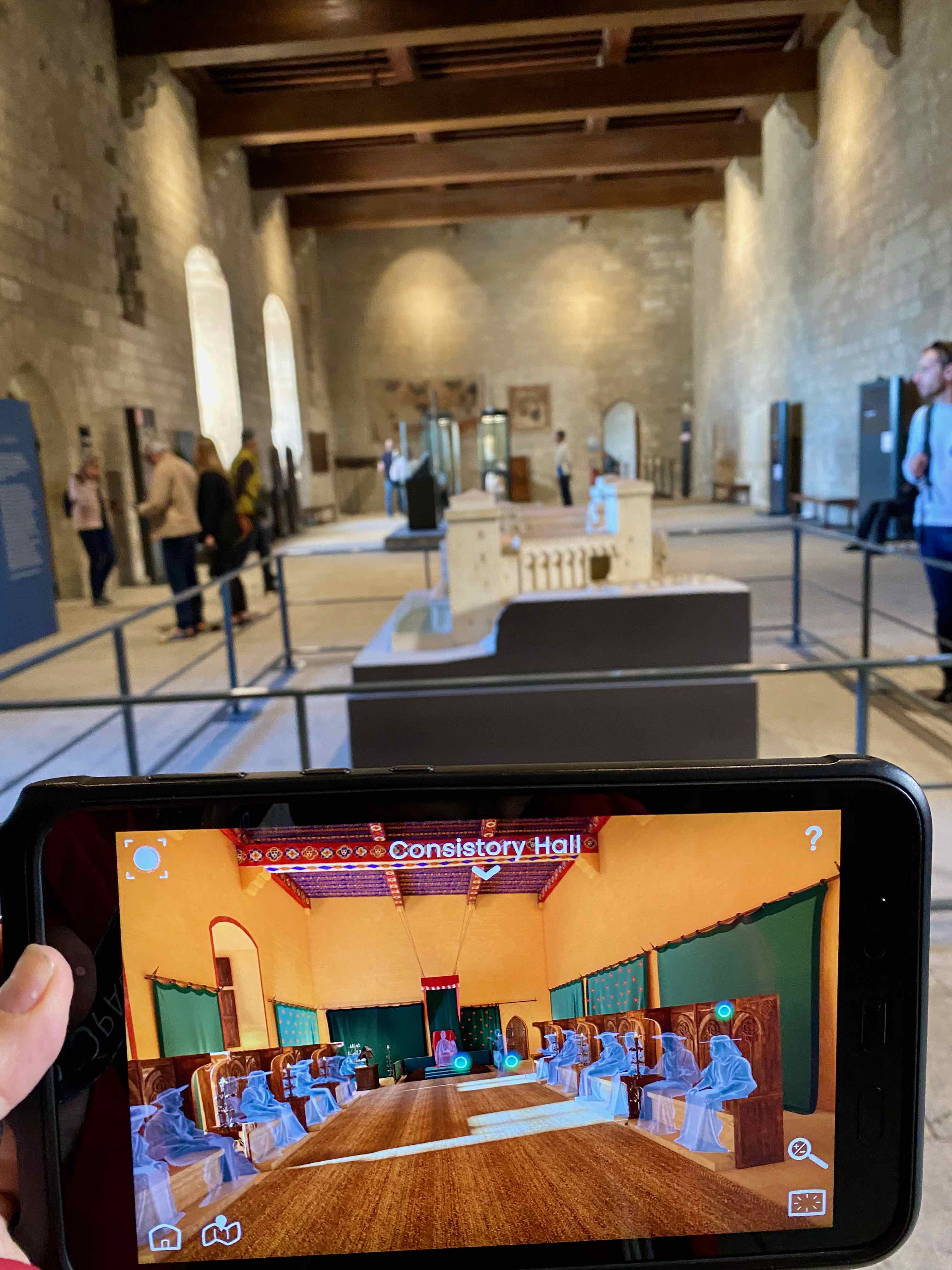
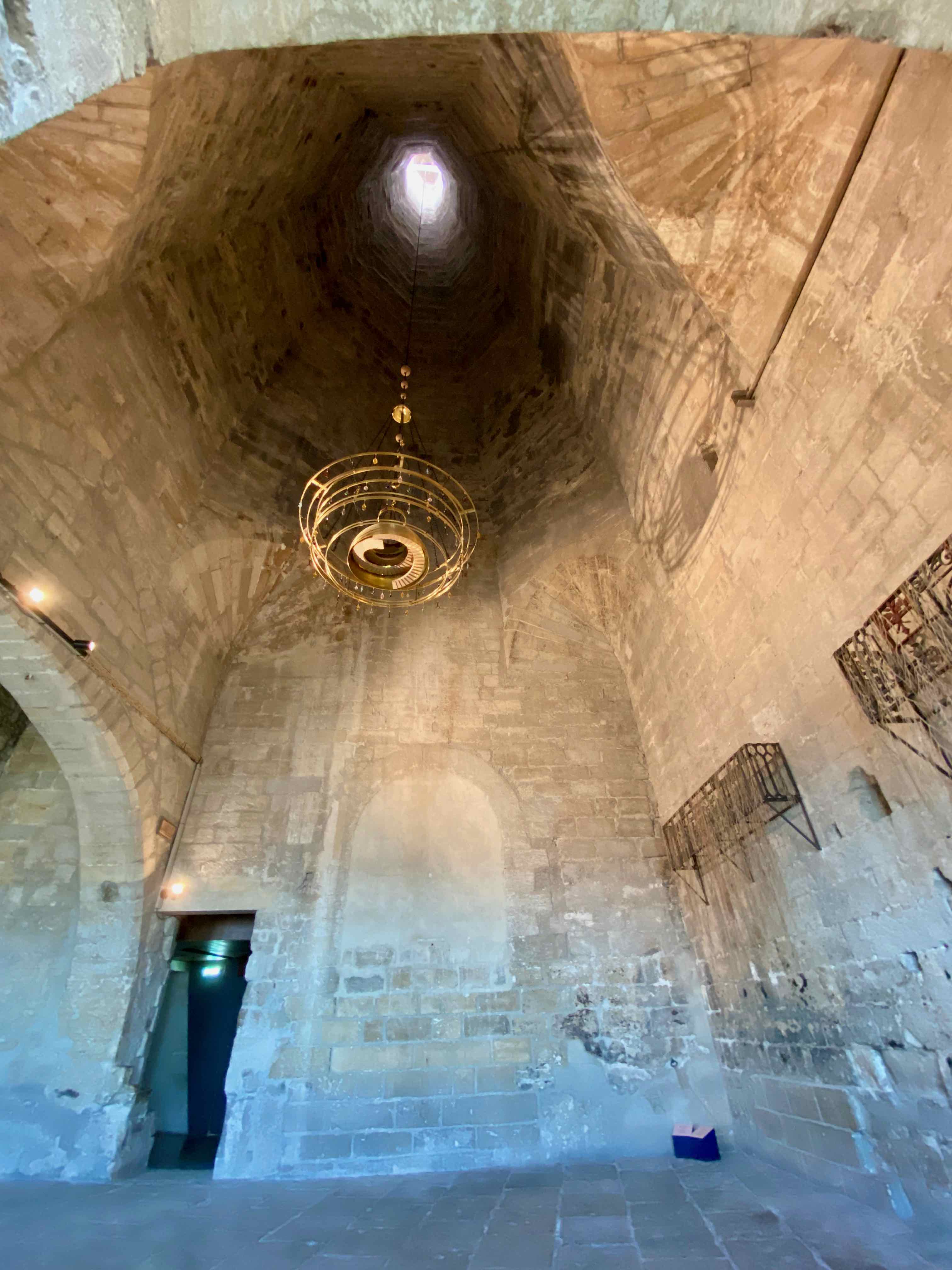
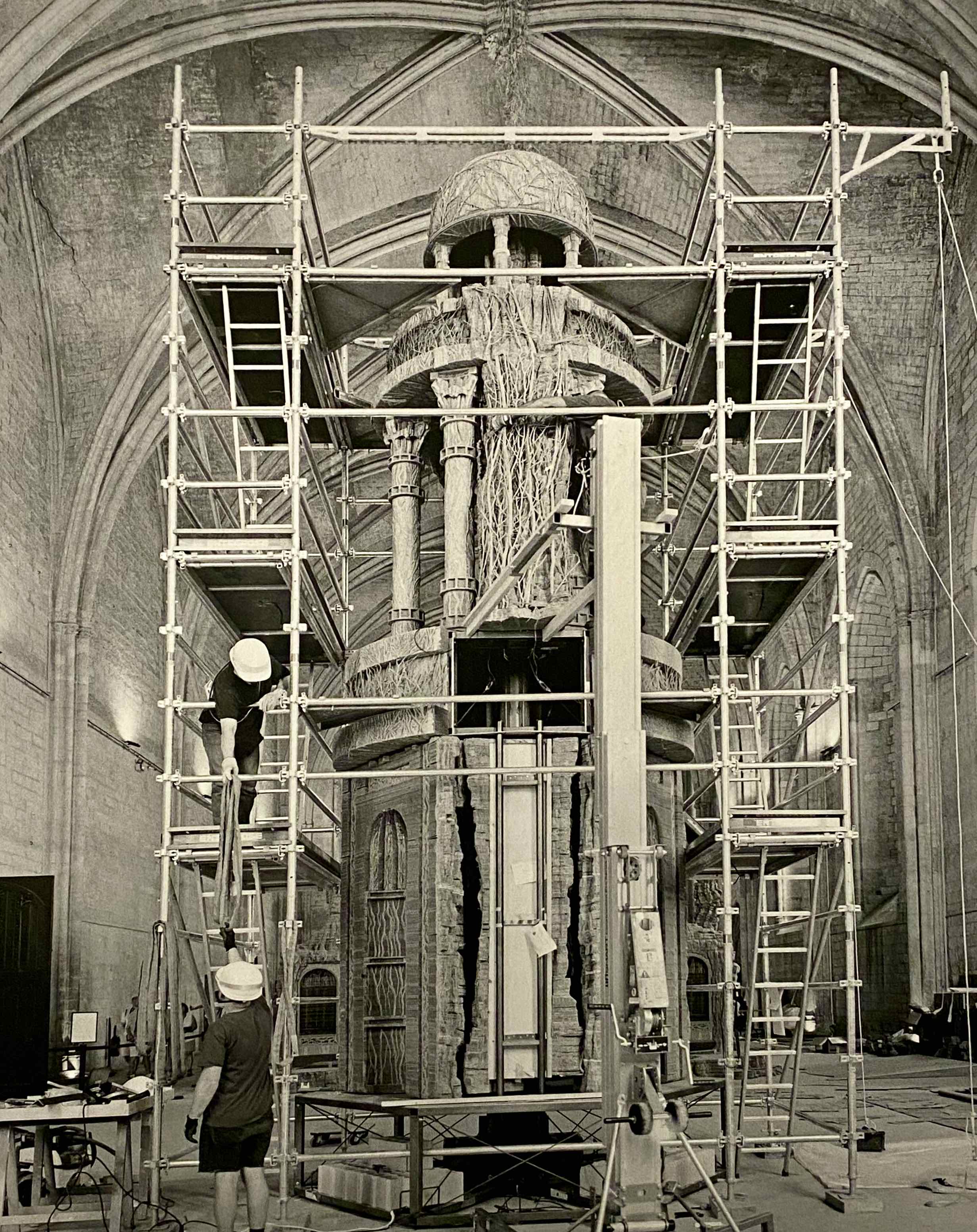
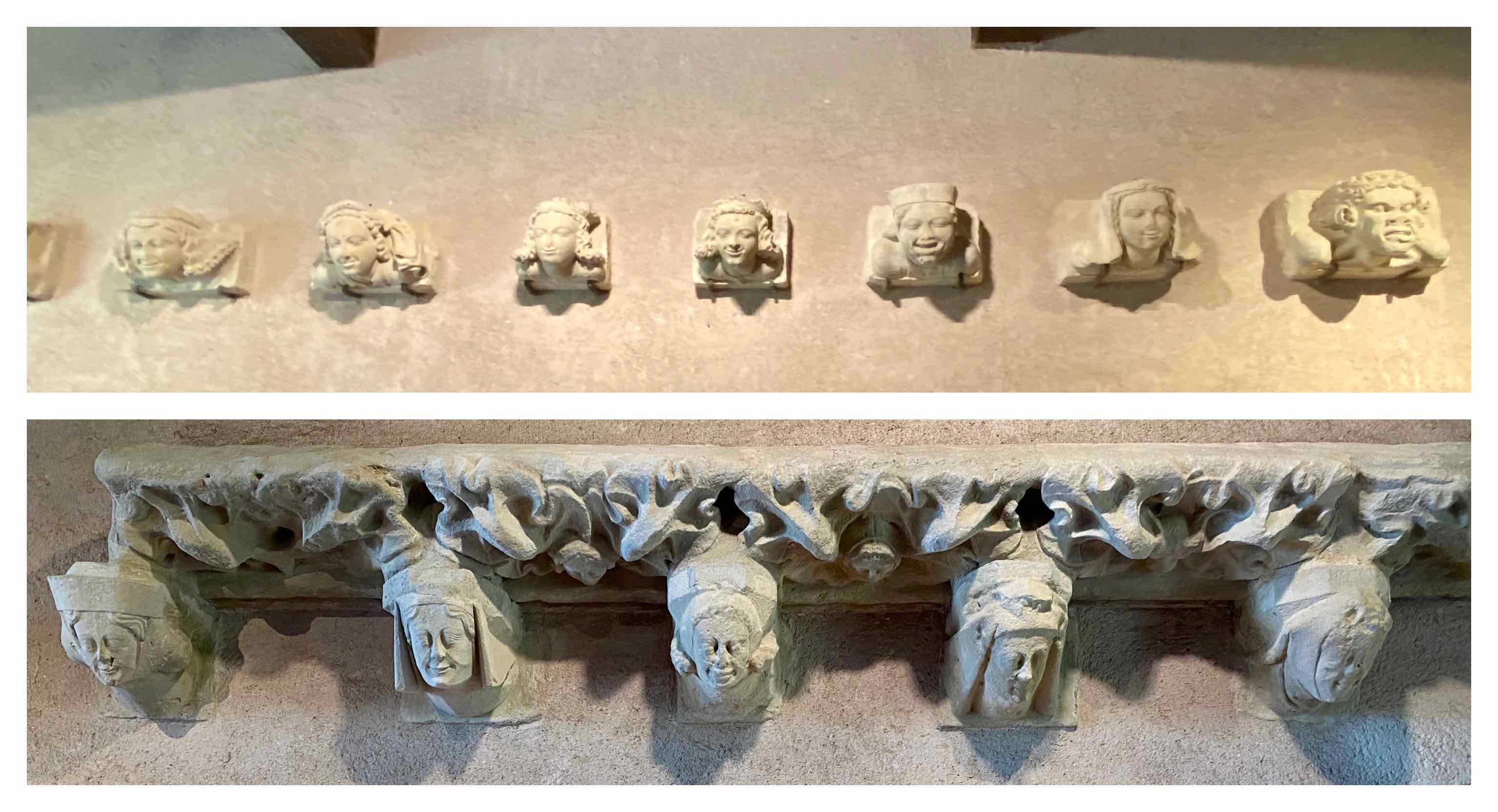
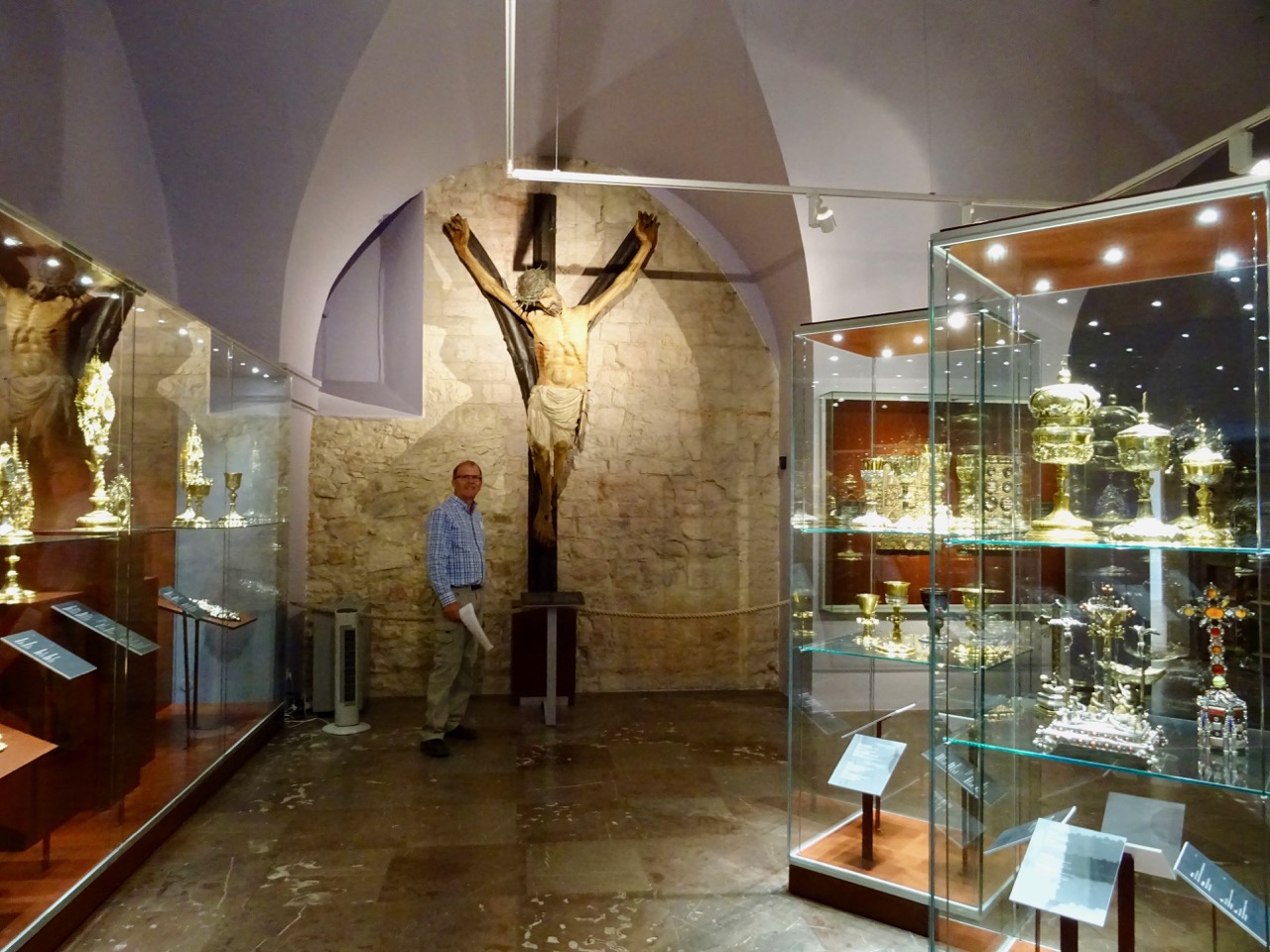
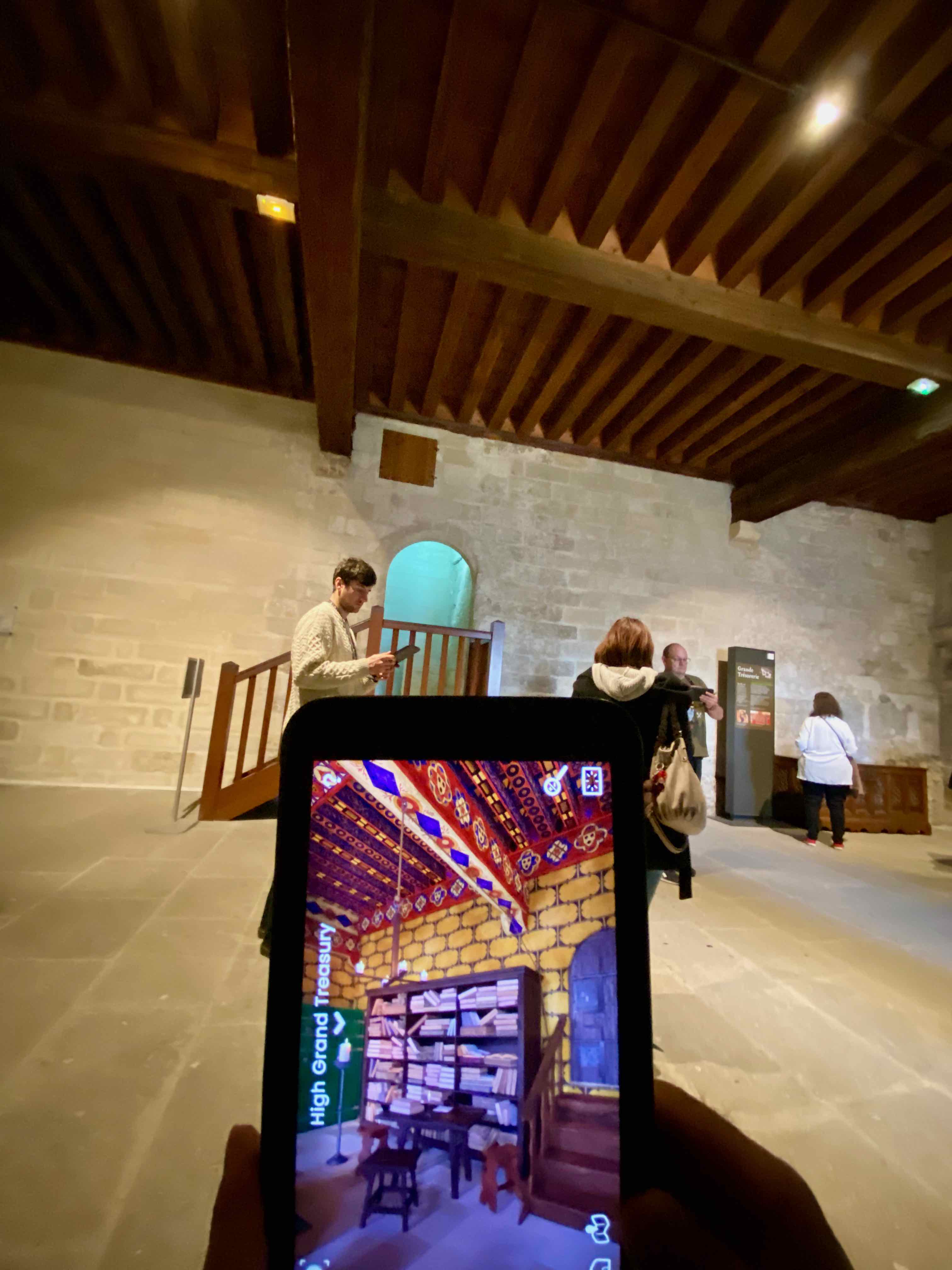 This room was the treasury and in 1995 a secret chamber was discovered under the stone floor, that still contained precious treasures from hundreds of years ago. There was no information on how this chamber was discovered. It is amazing that it would still be there after all this time. Bob is standing beside this secret chamber in the photo.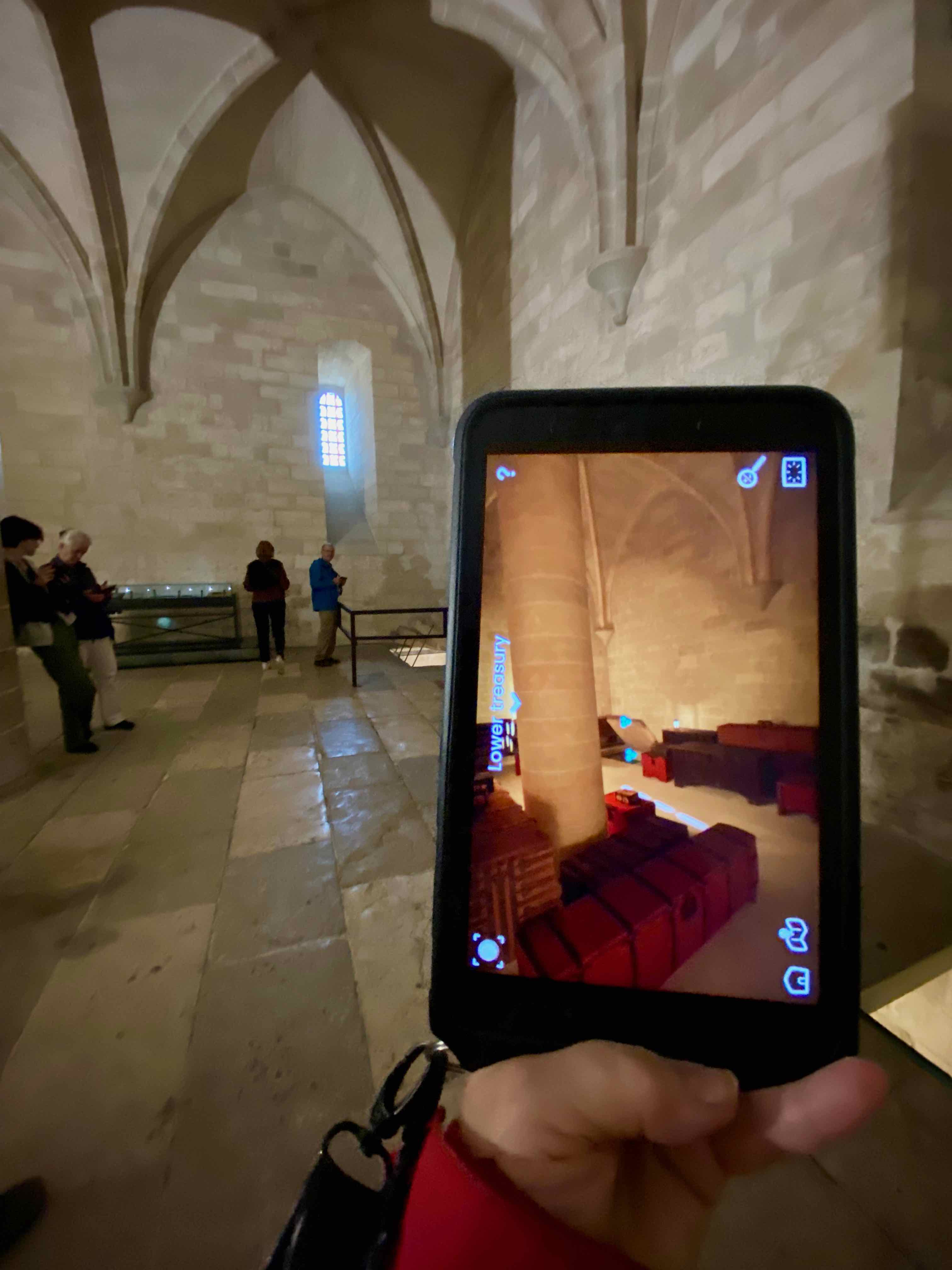
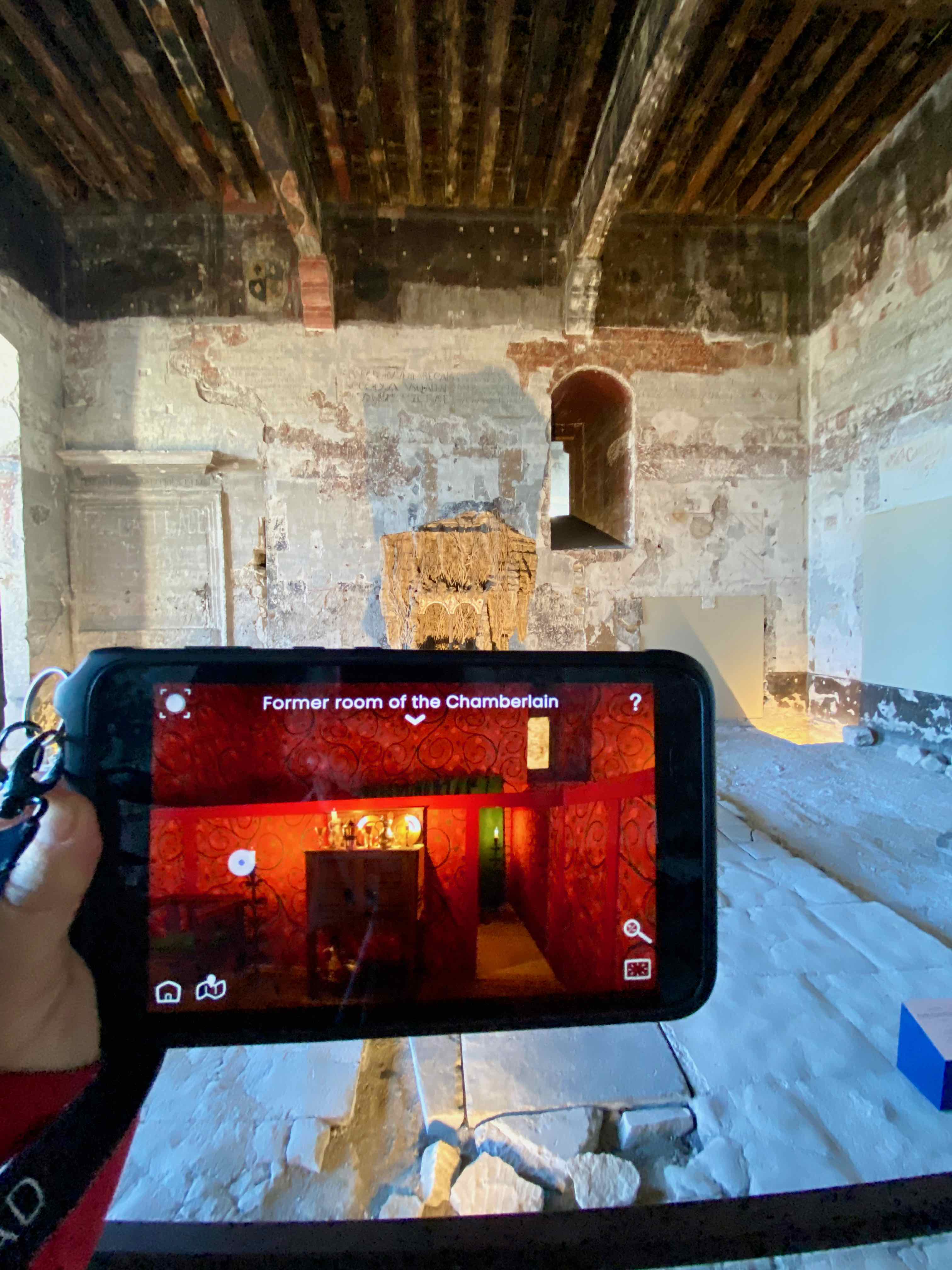
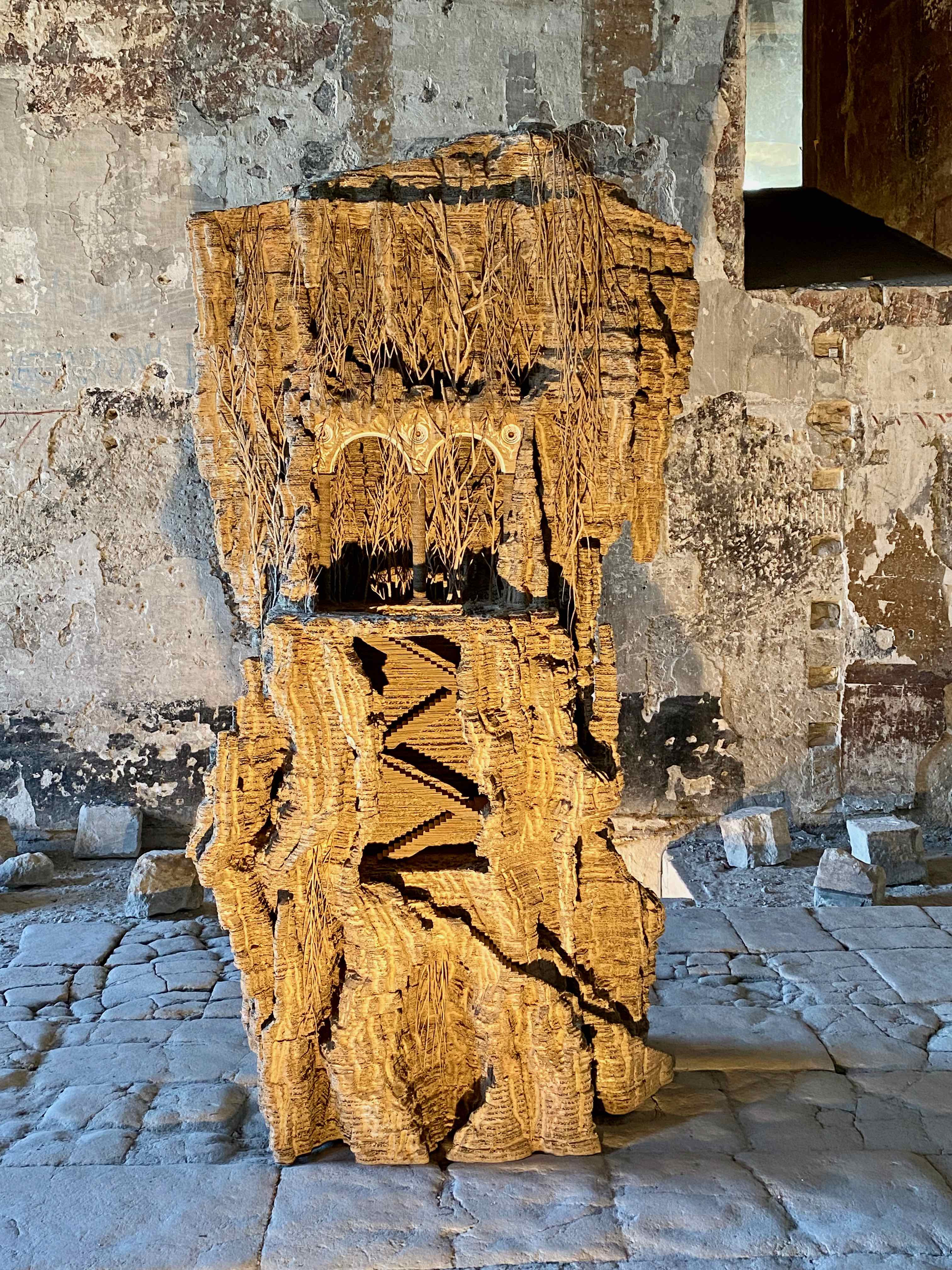
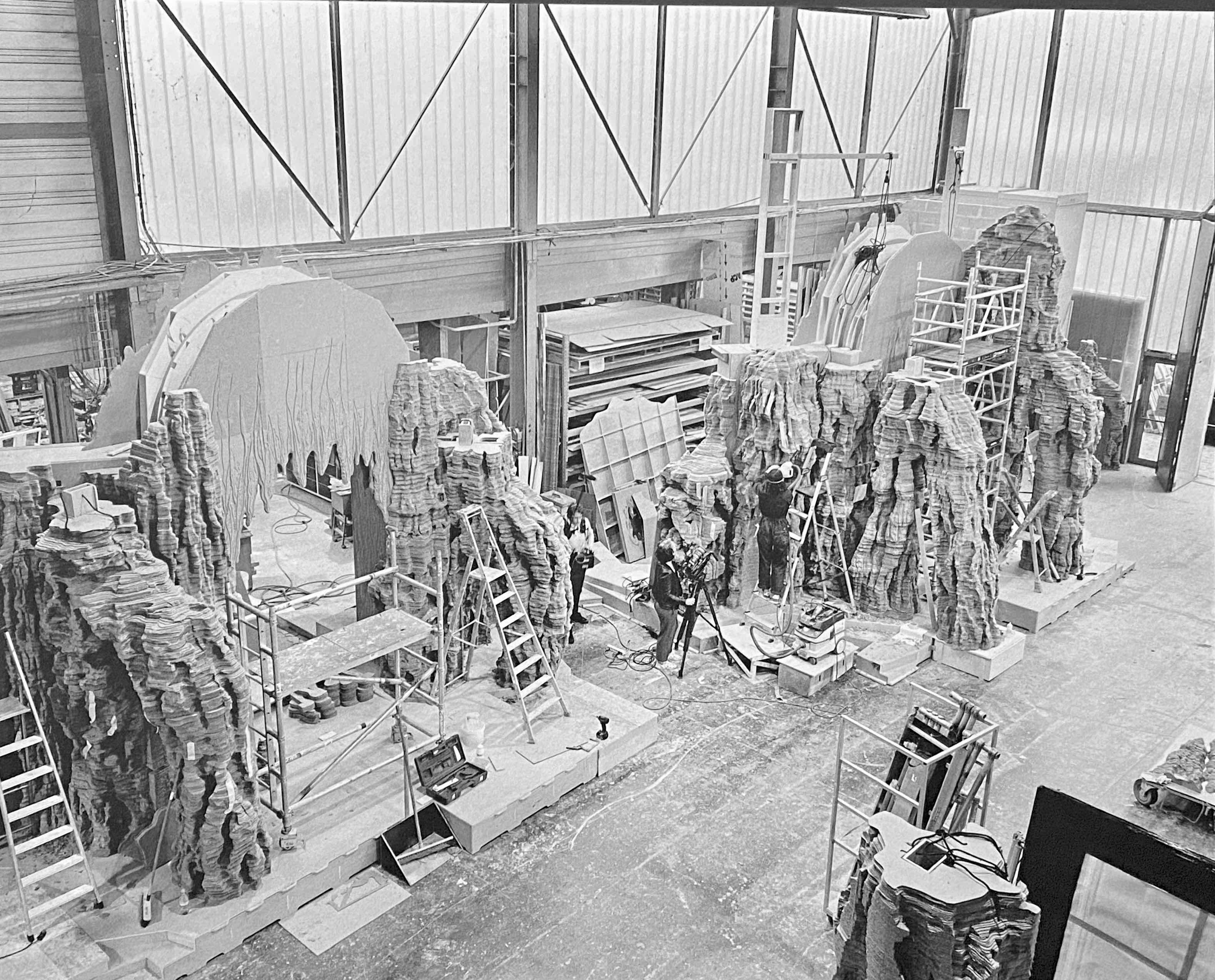
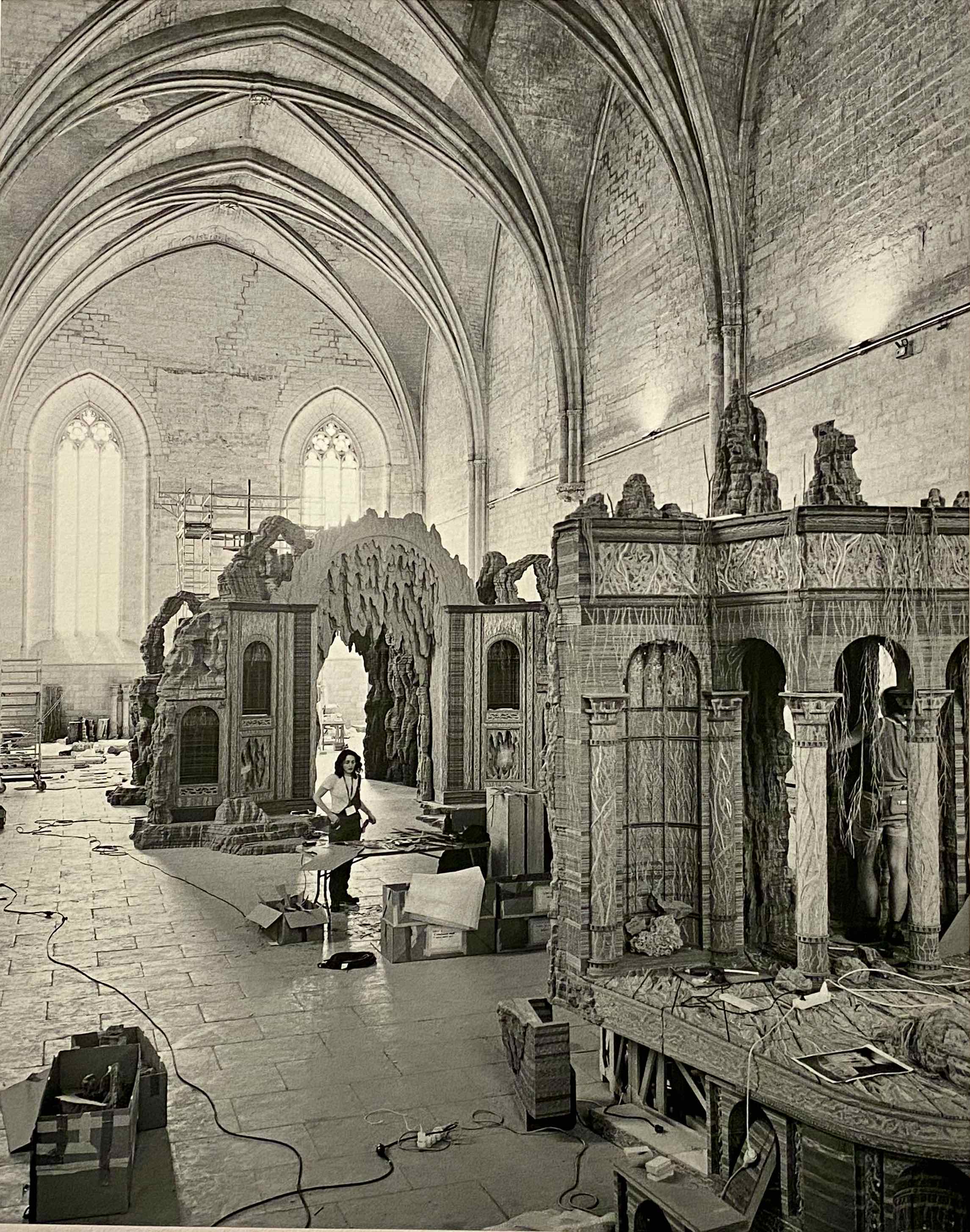
 Rather it is the three enormous silk embroidered wall hangings displayed on one of the long walls. ‘Chamber de Soie’ or ‘Silk Room’ is also created by Eva Jospin.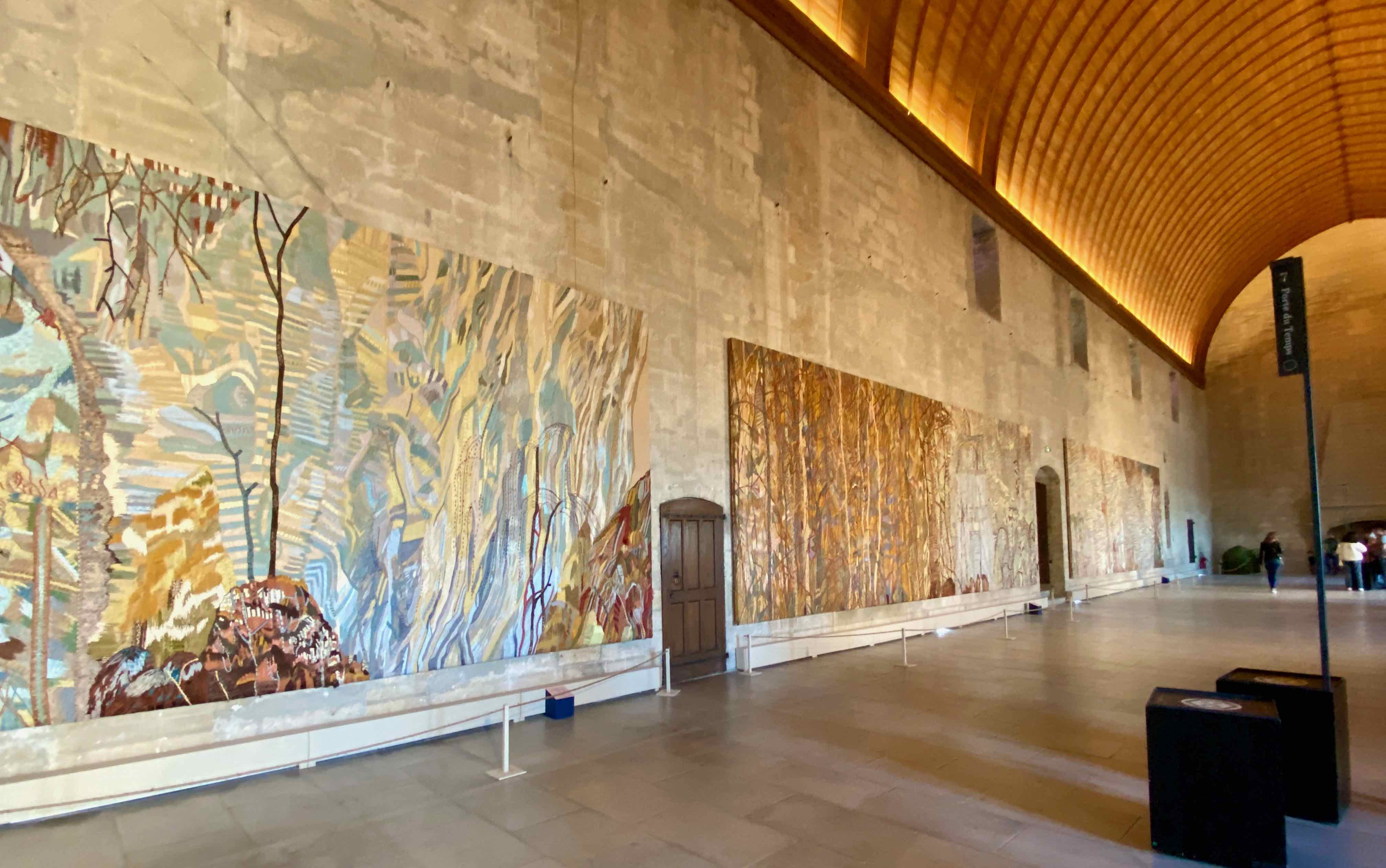
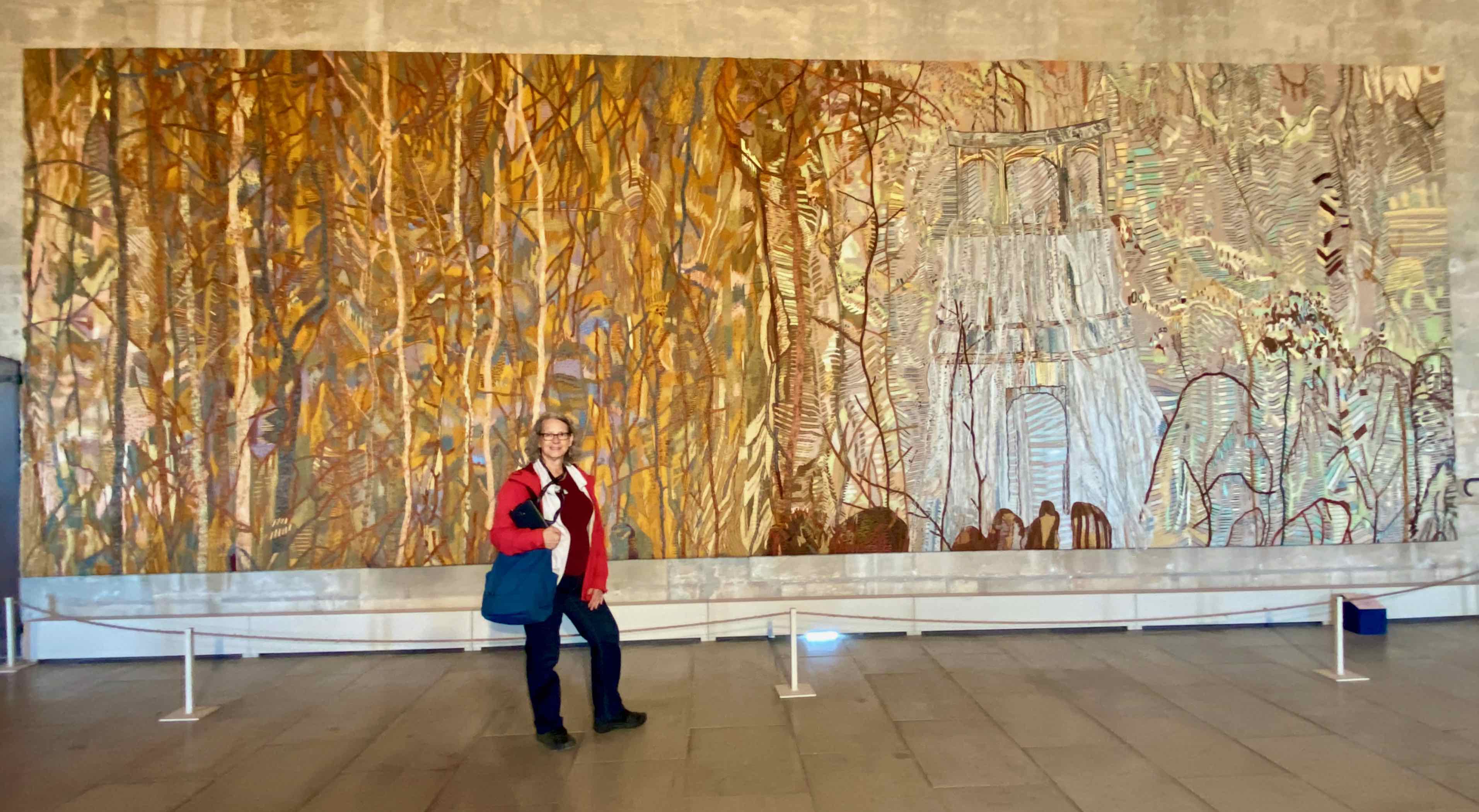
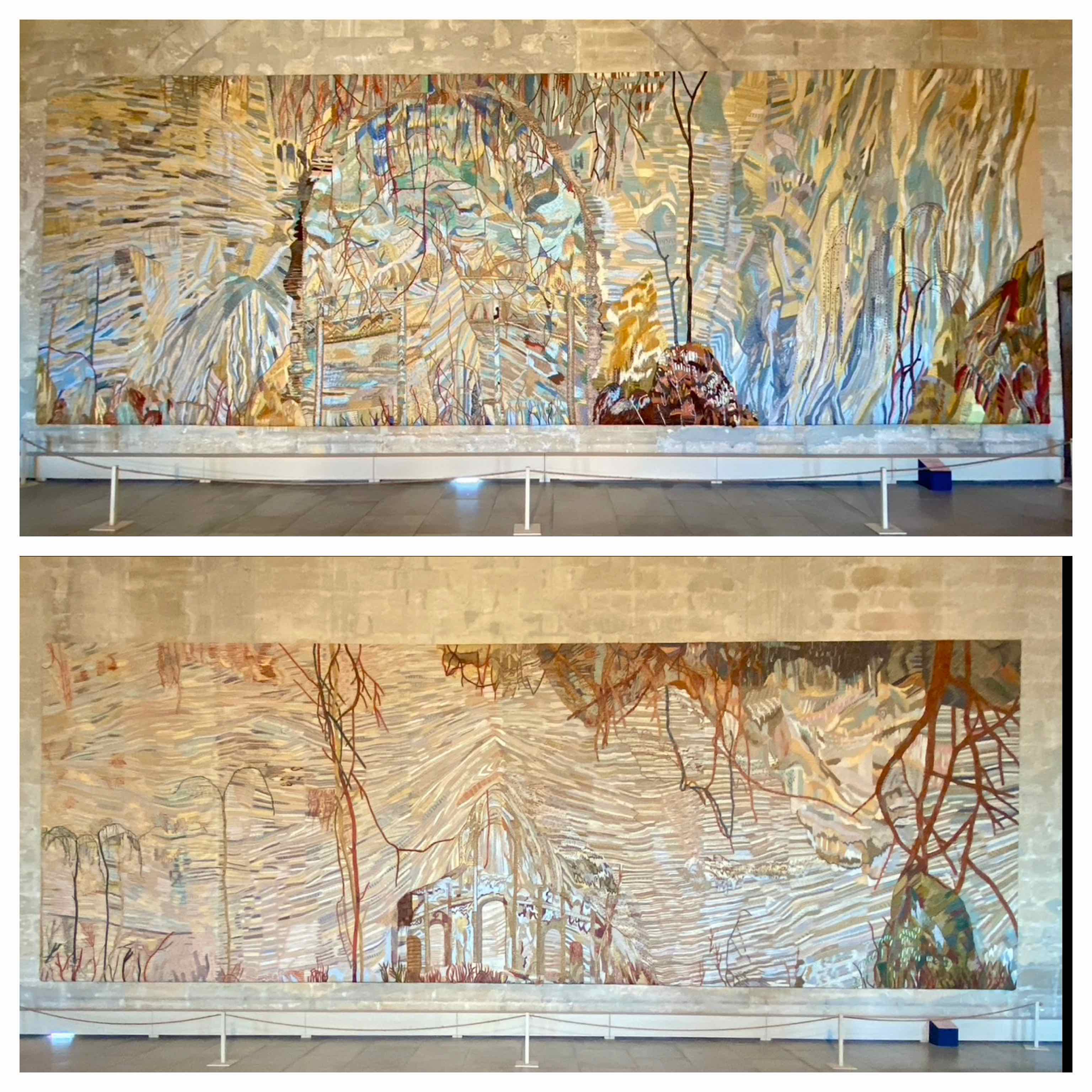

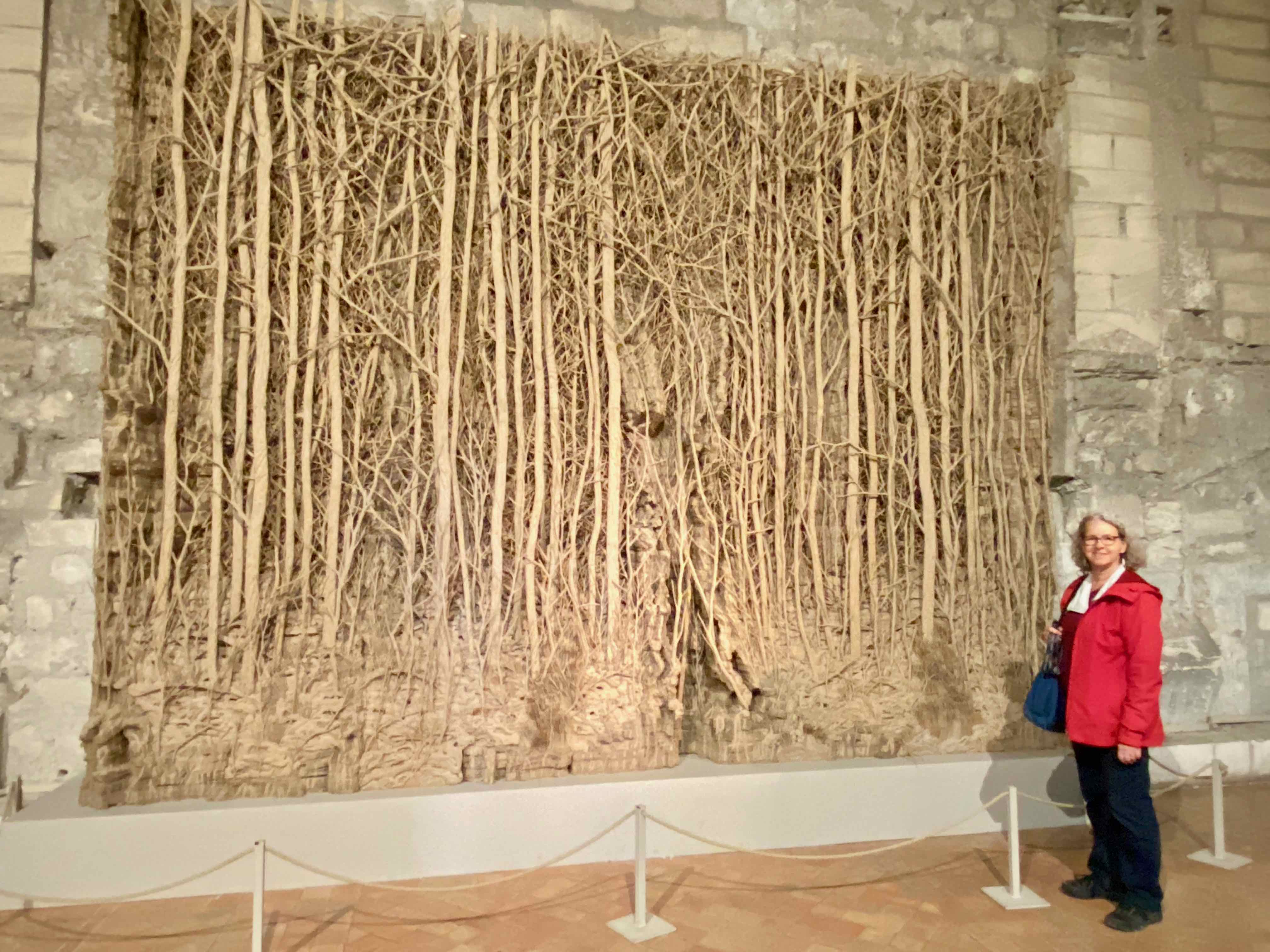
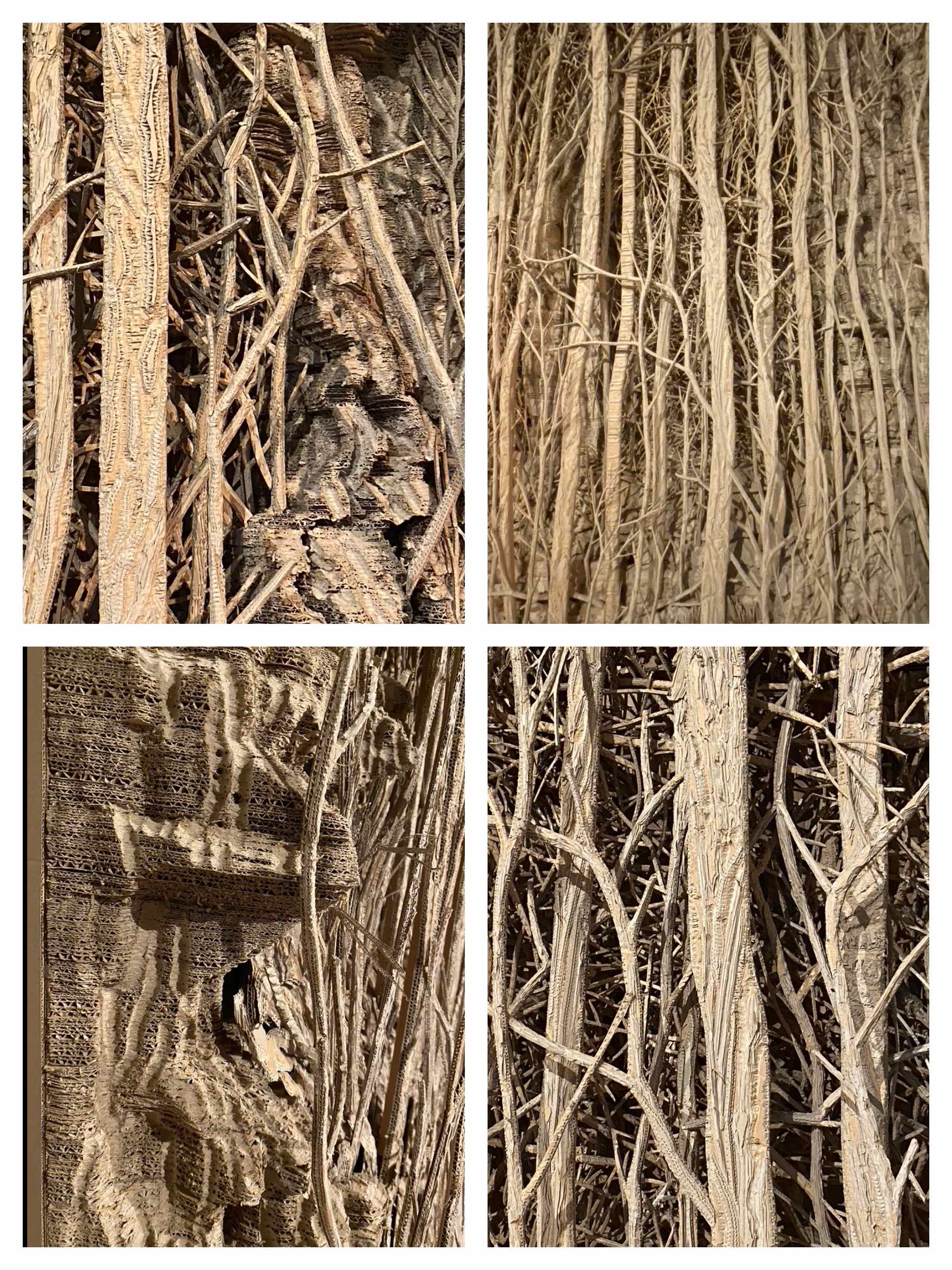
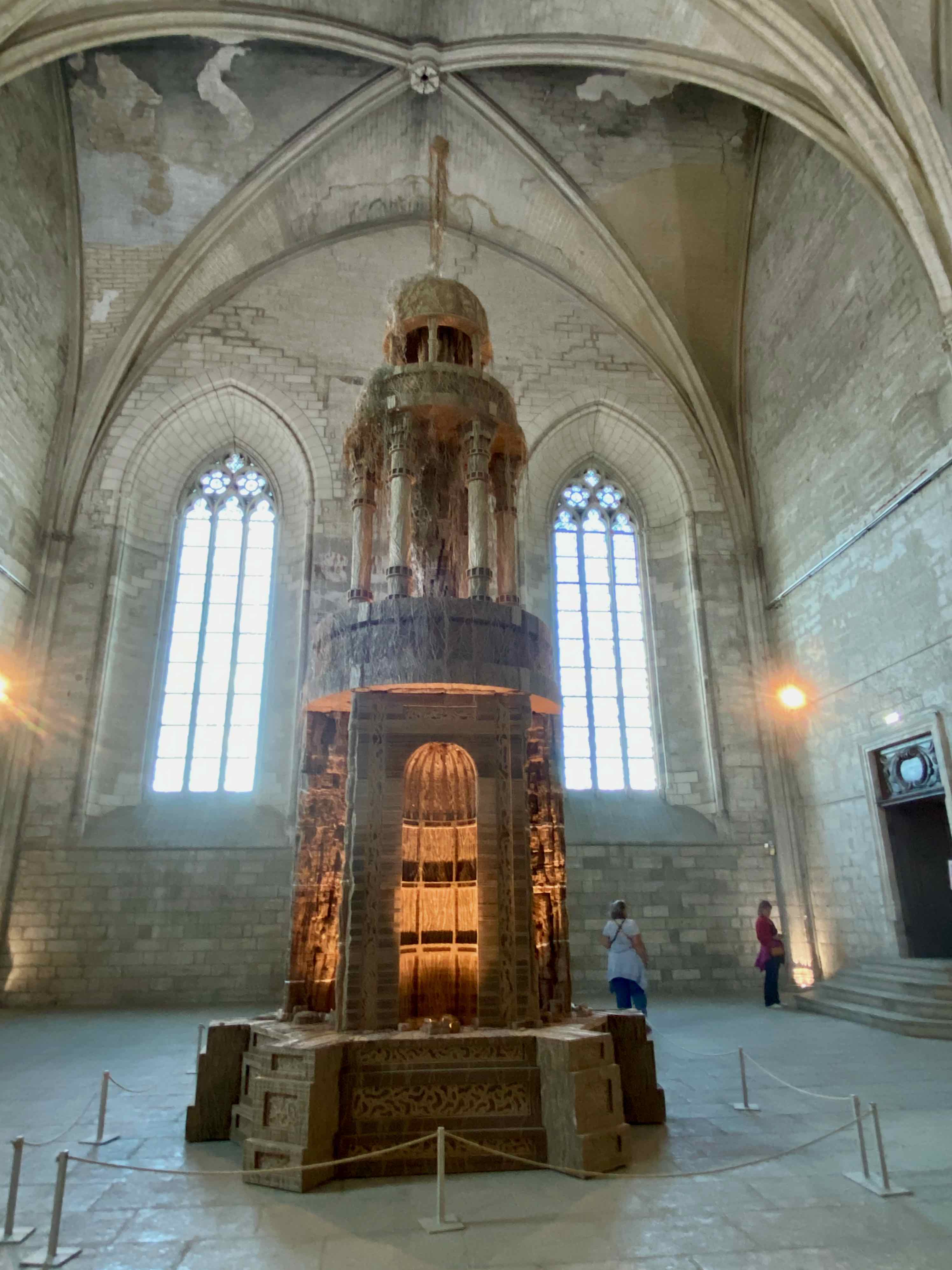
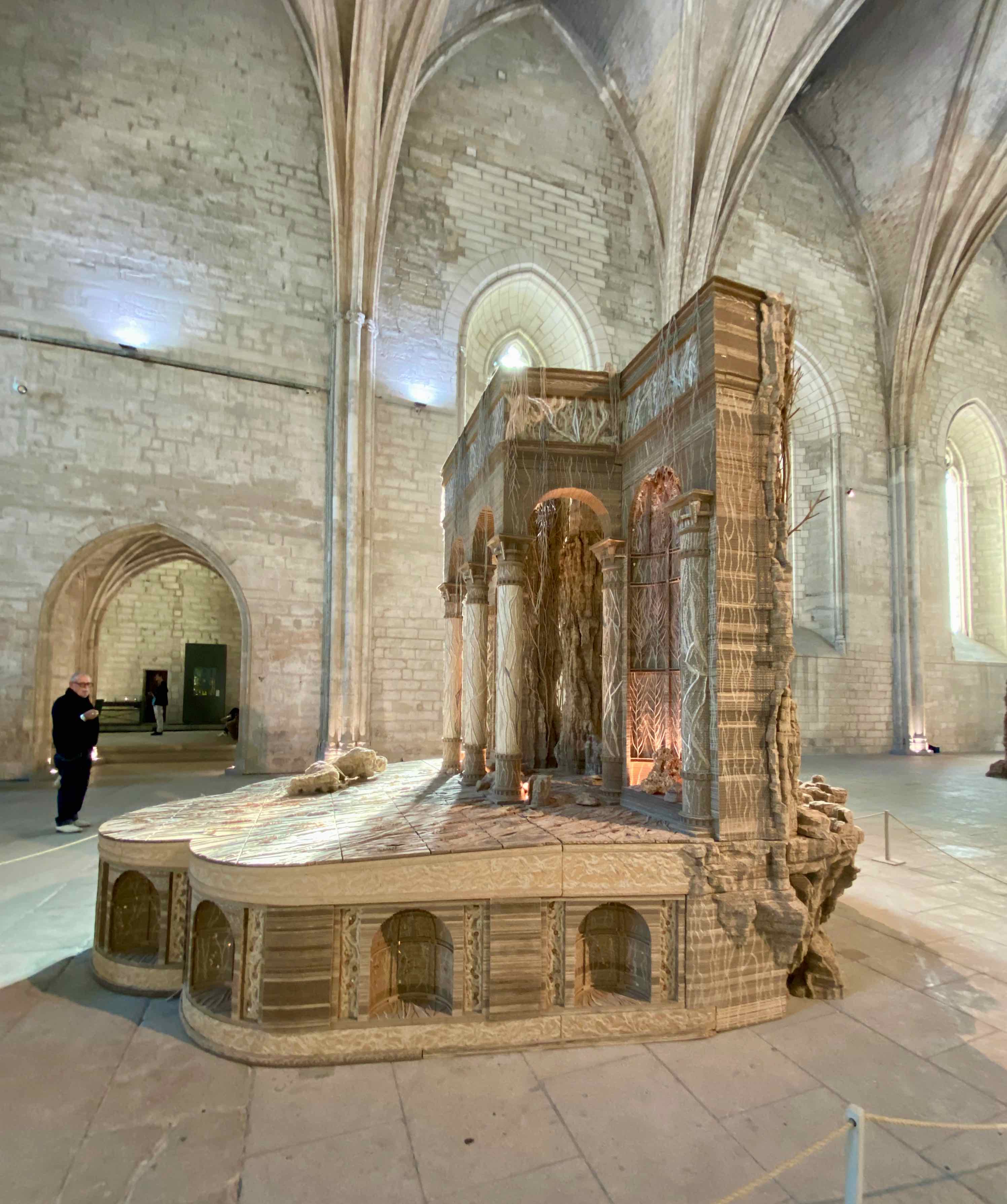
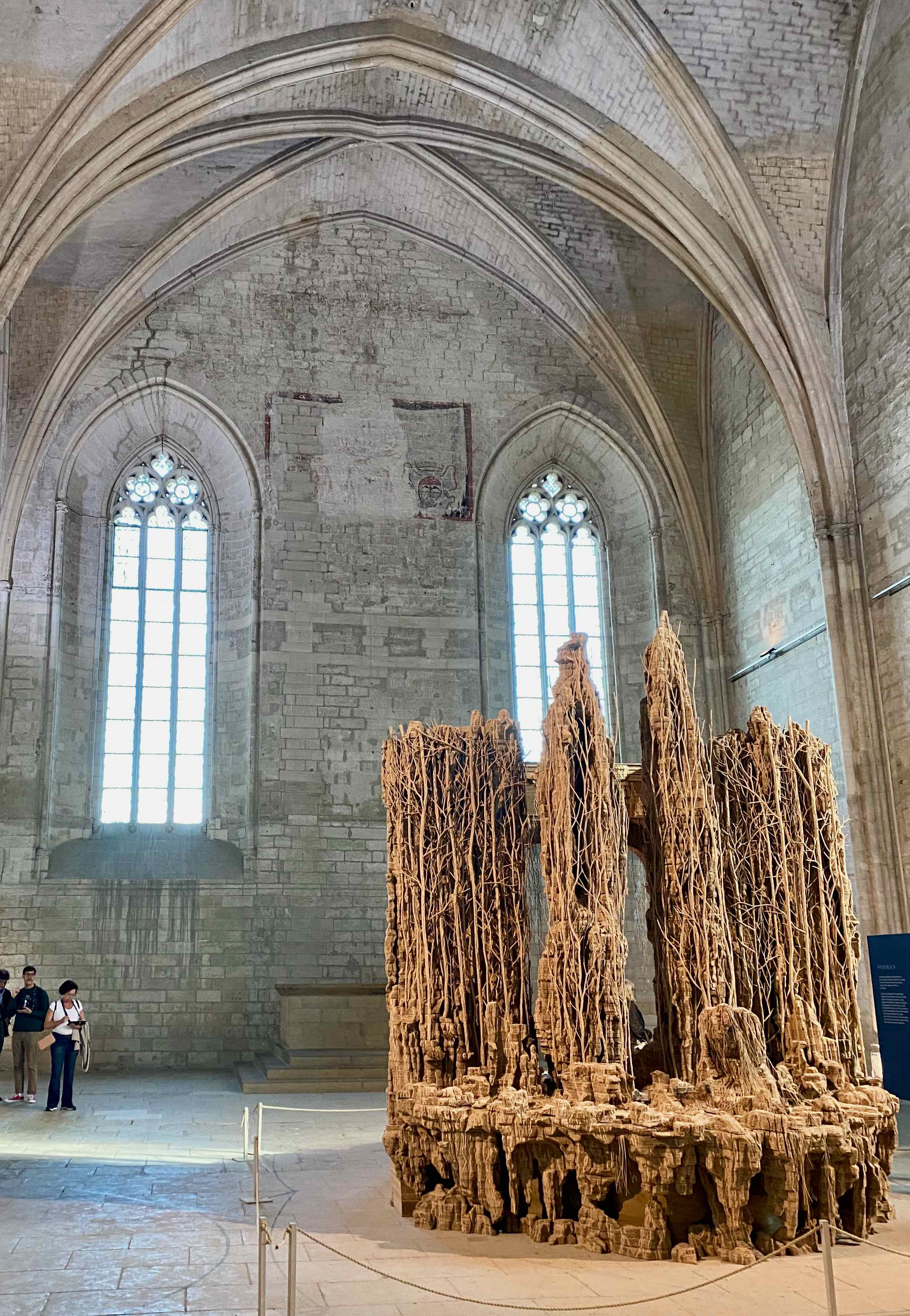
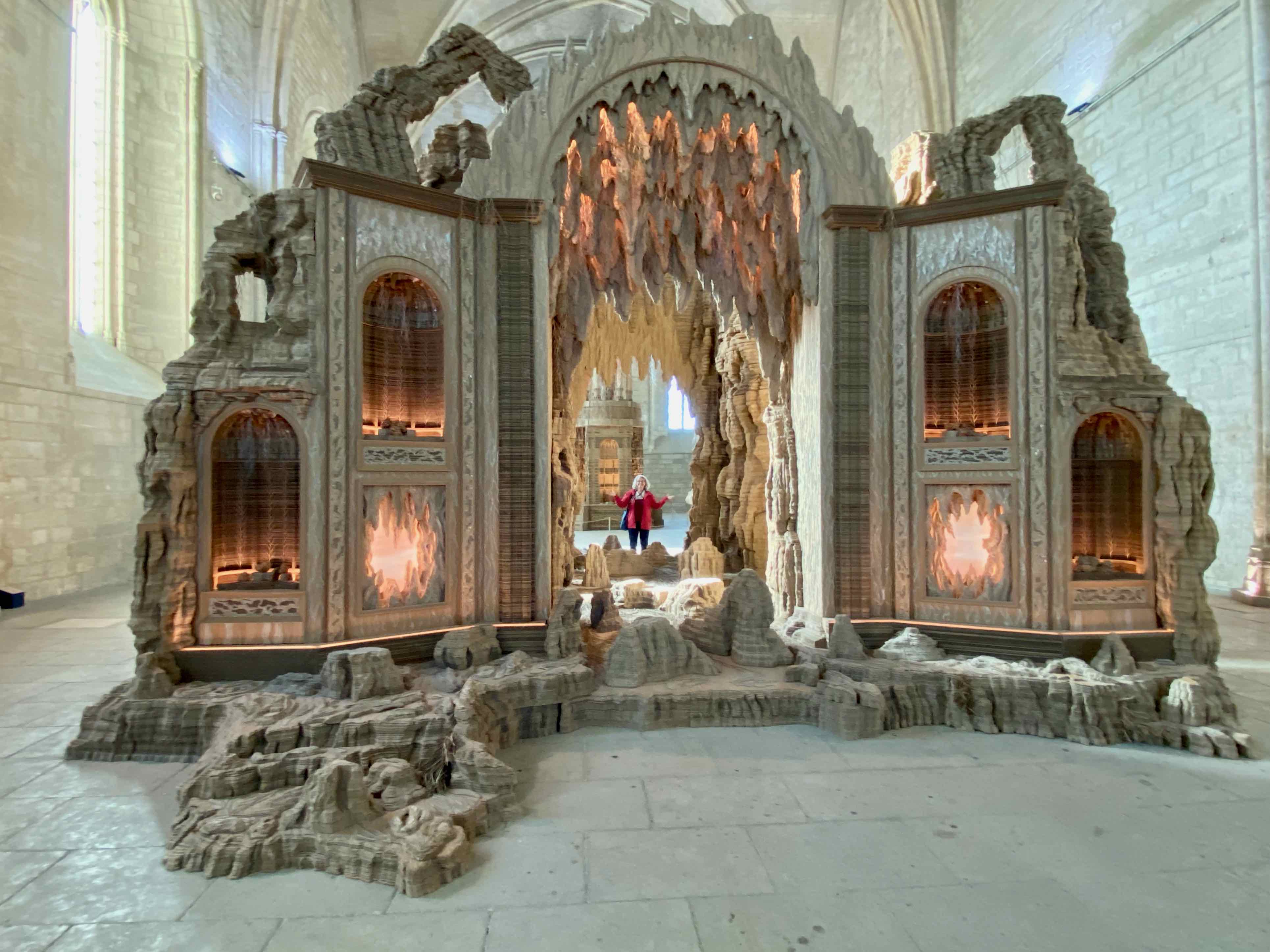
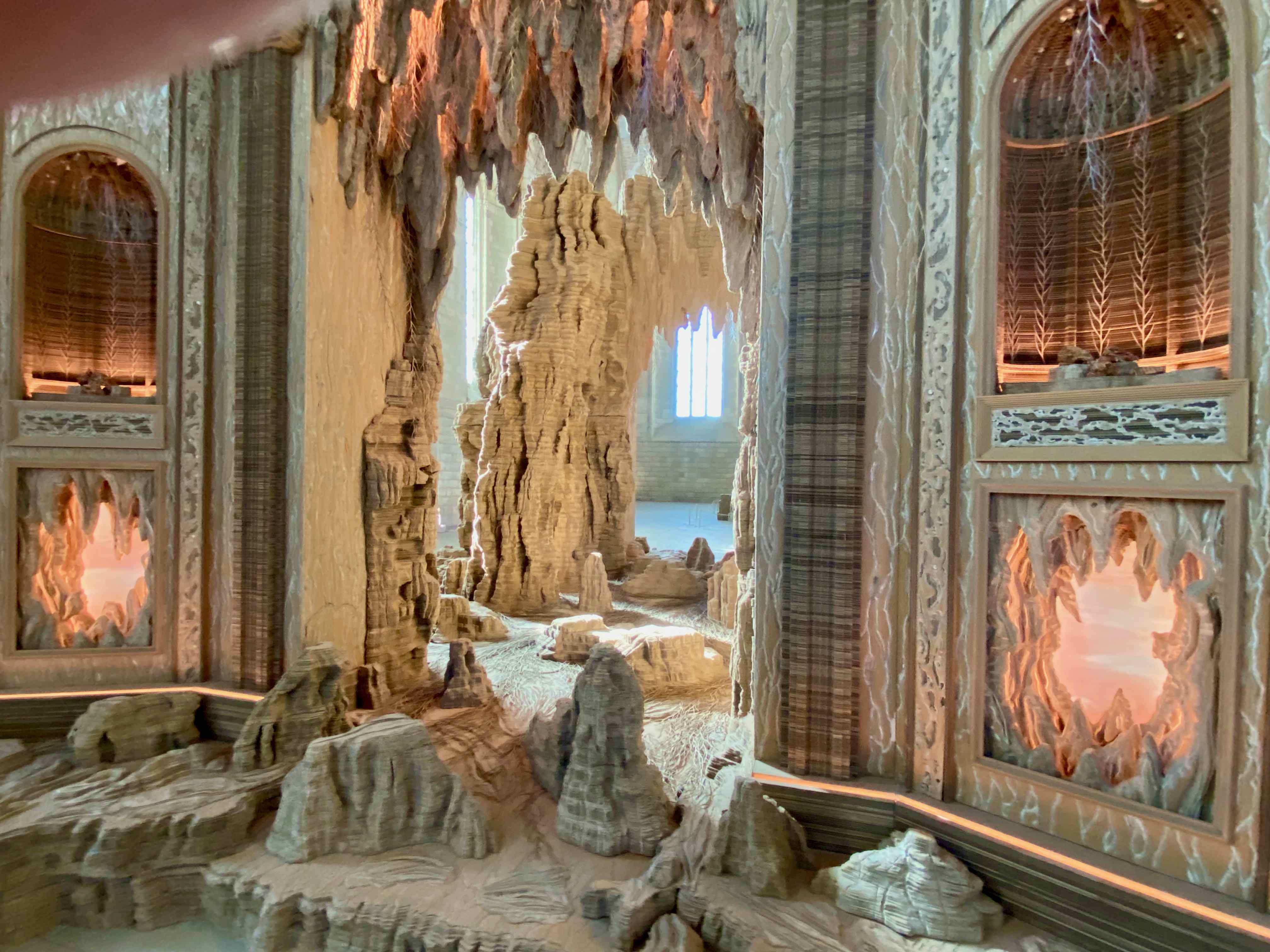
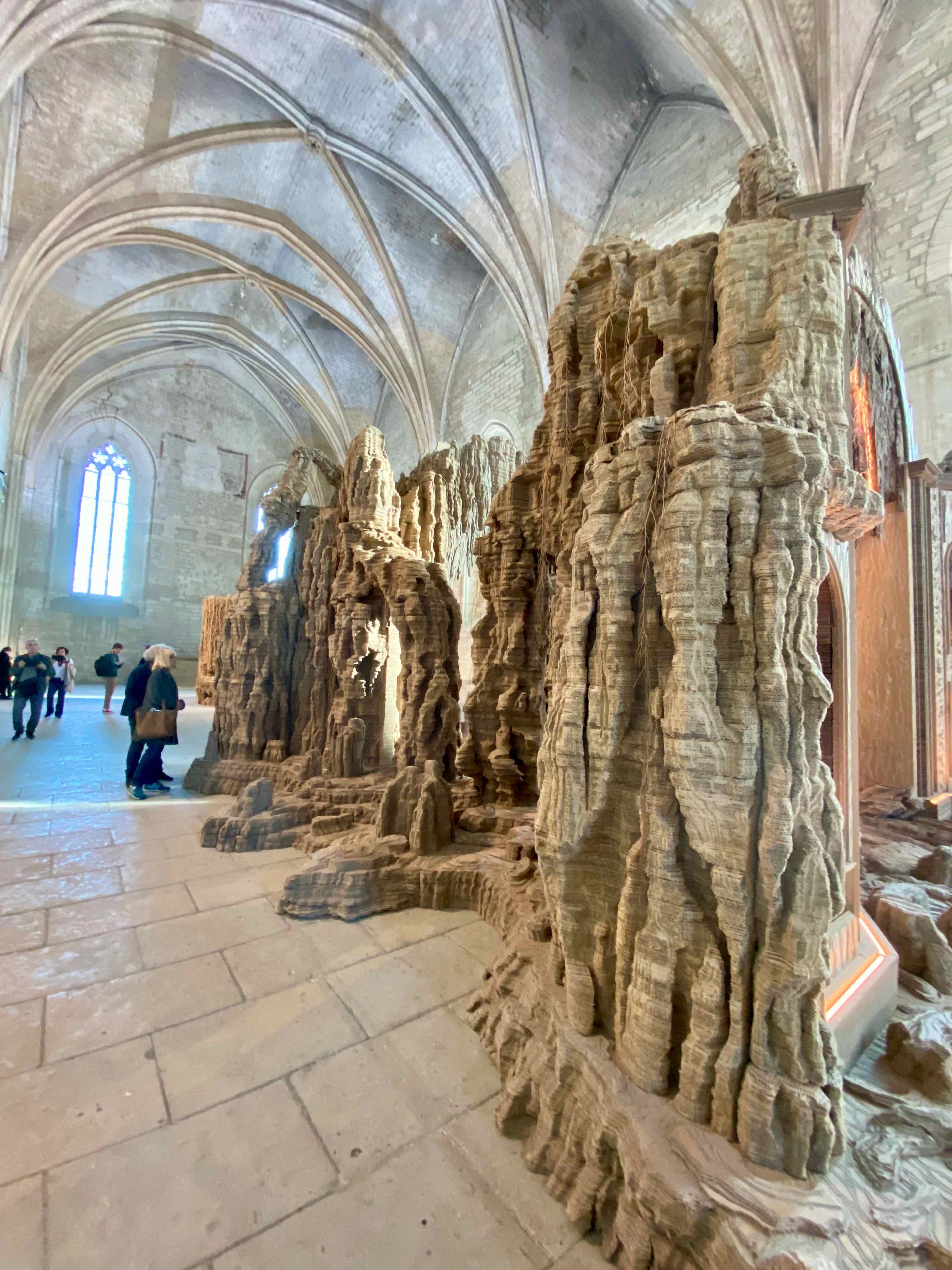

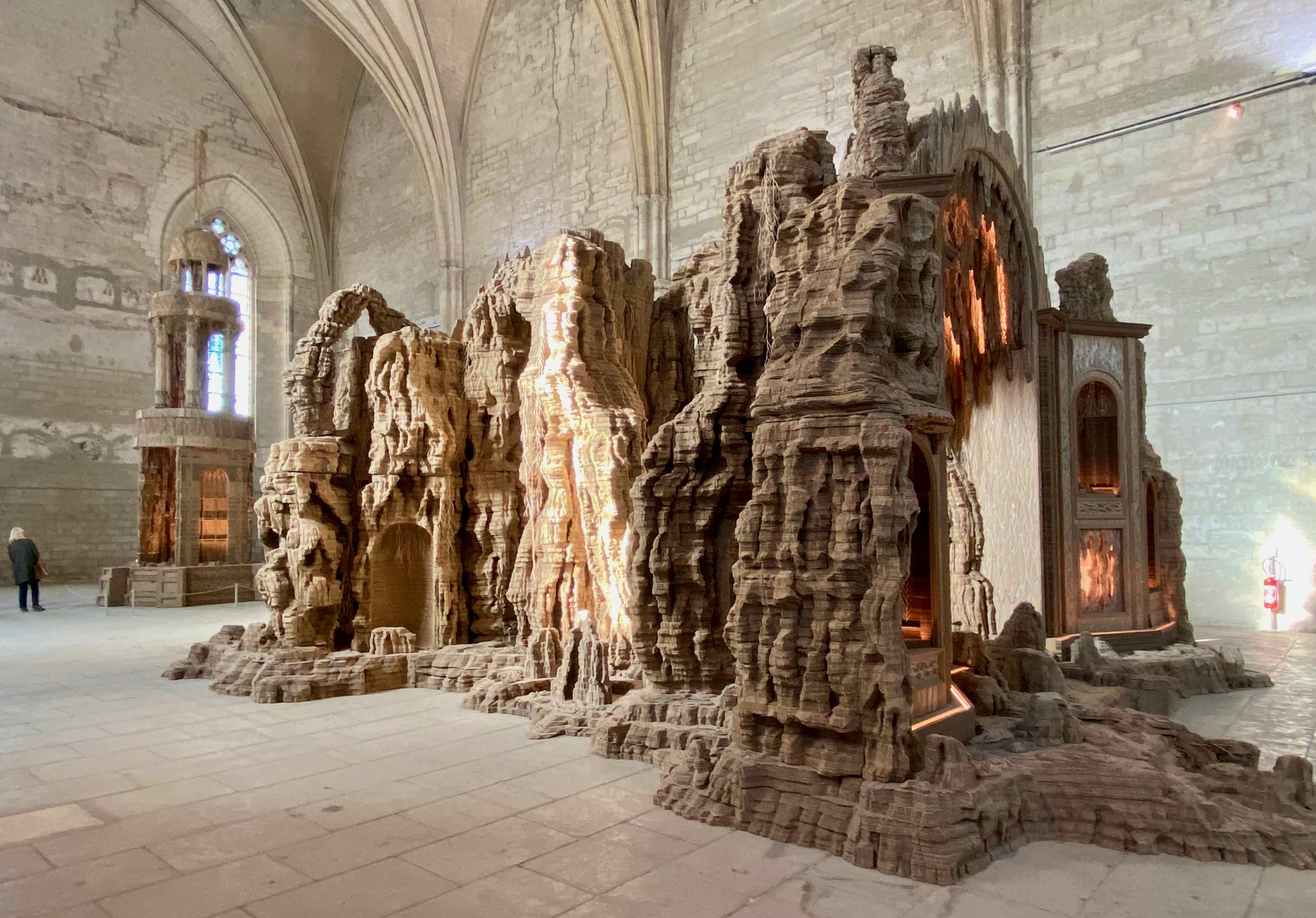 I did find a video explaining how these pieces are constructed with corrugated cardboard, but sorry, it is a FaceBook video so not everyone may be able to view it.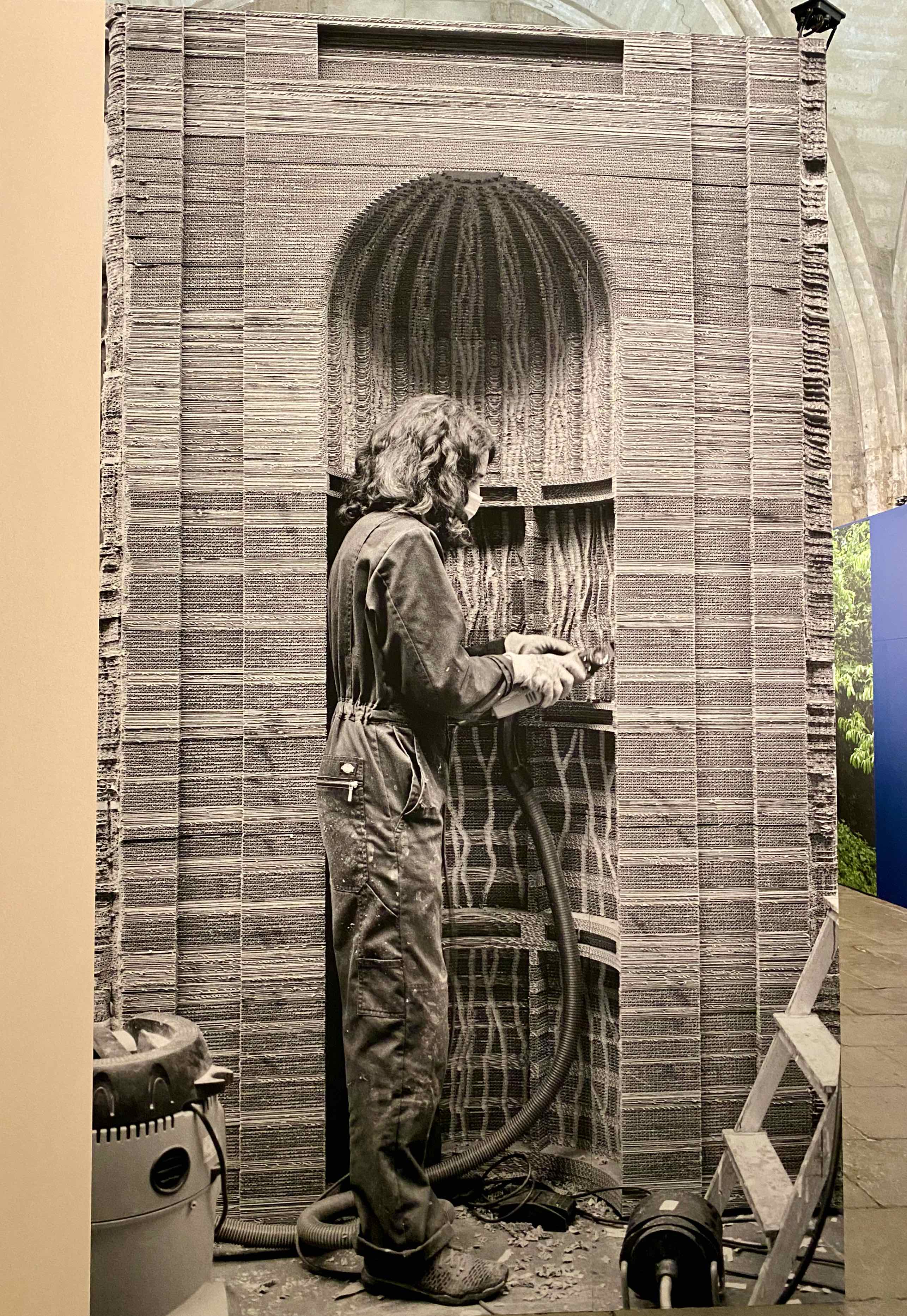

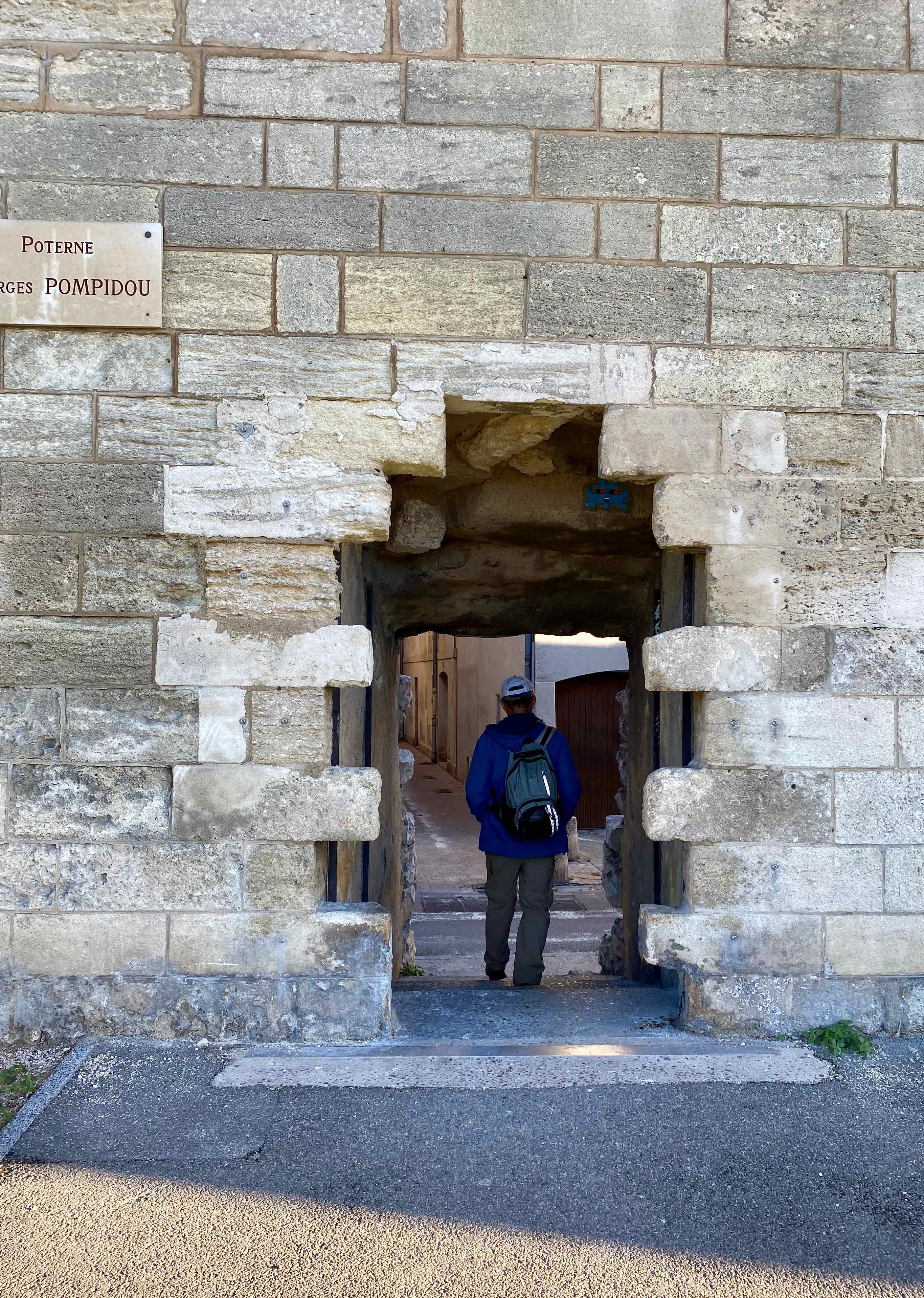
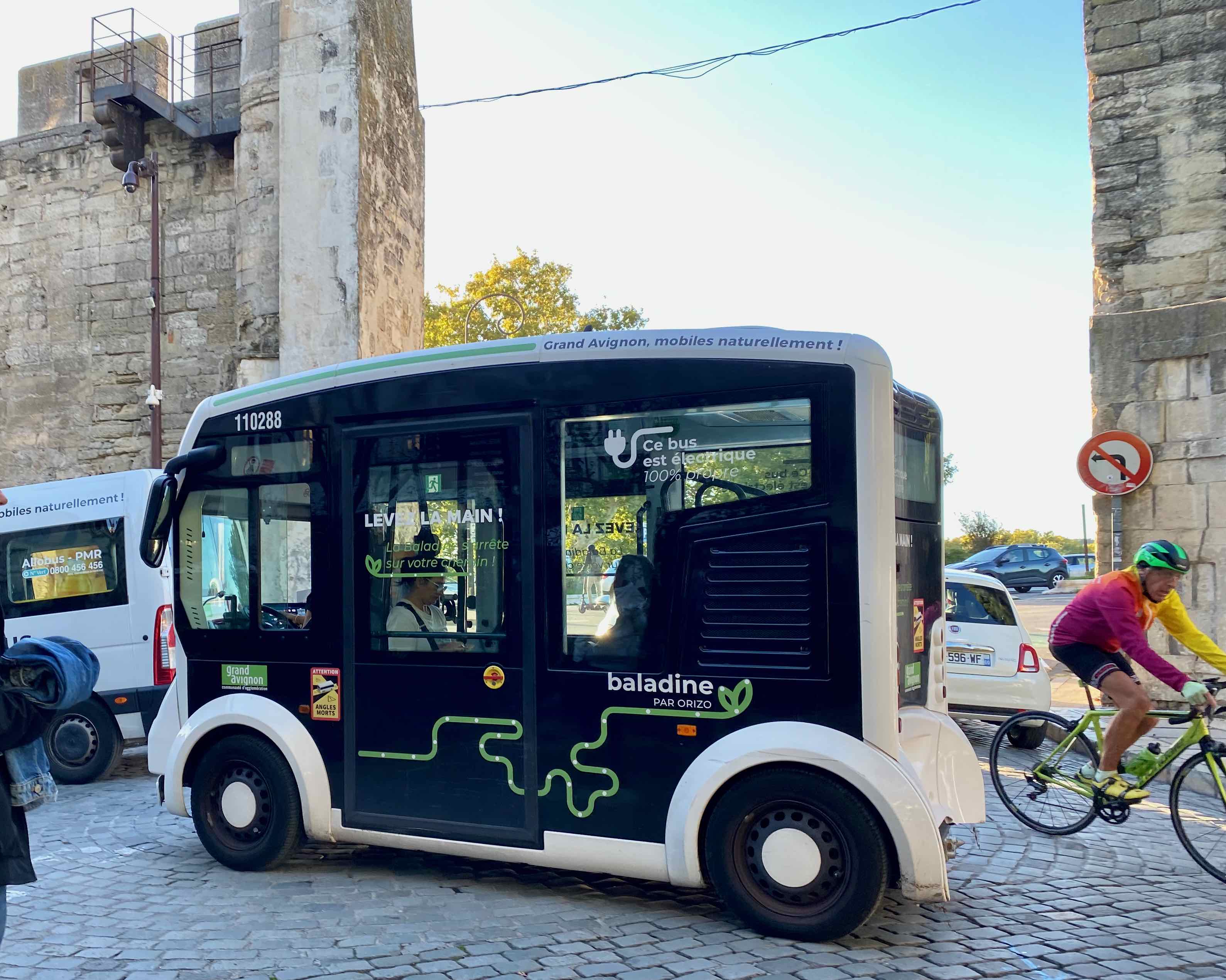
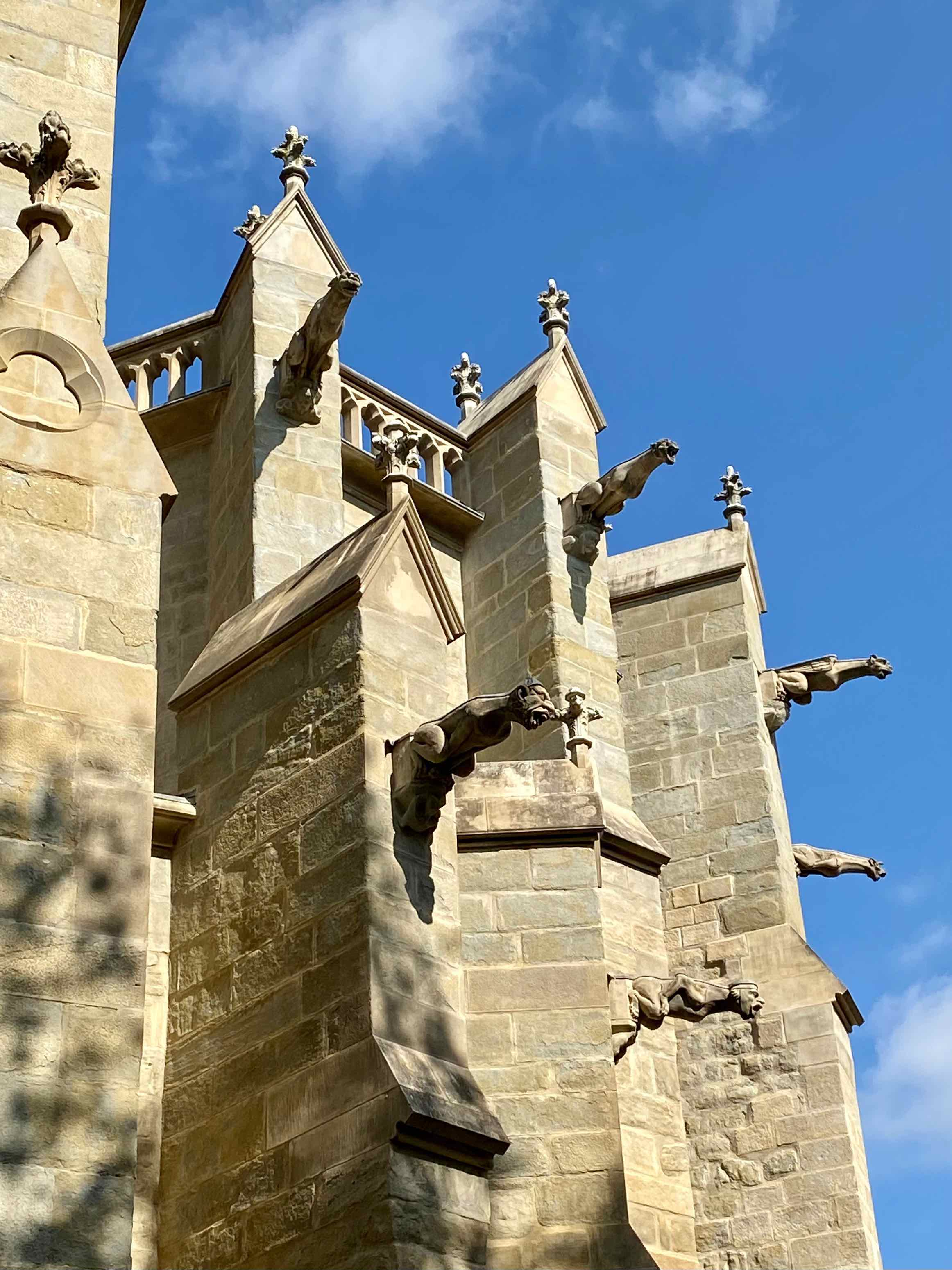
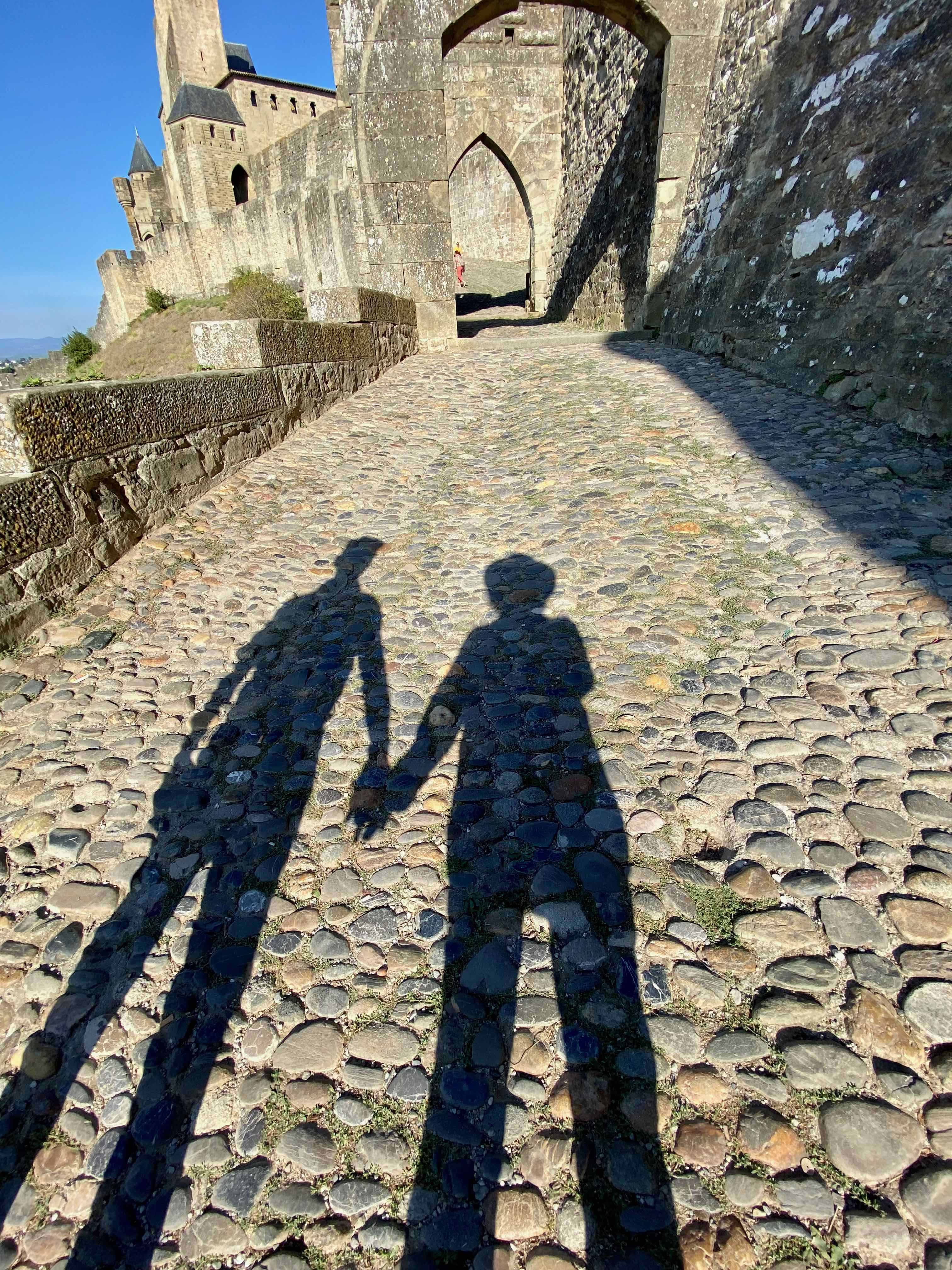
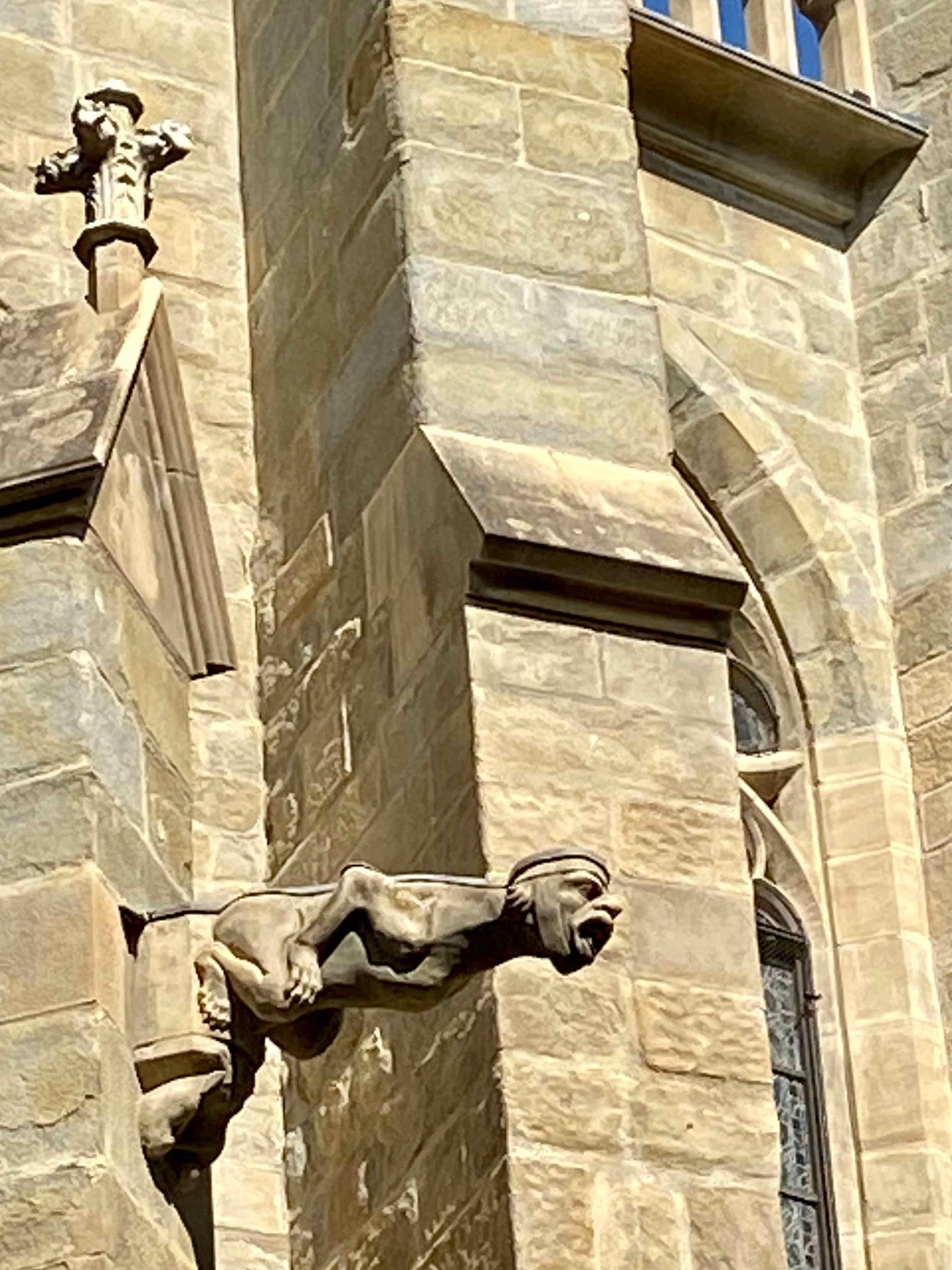 This is one of the entrance gates to the old city of Carcassone.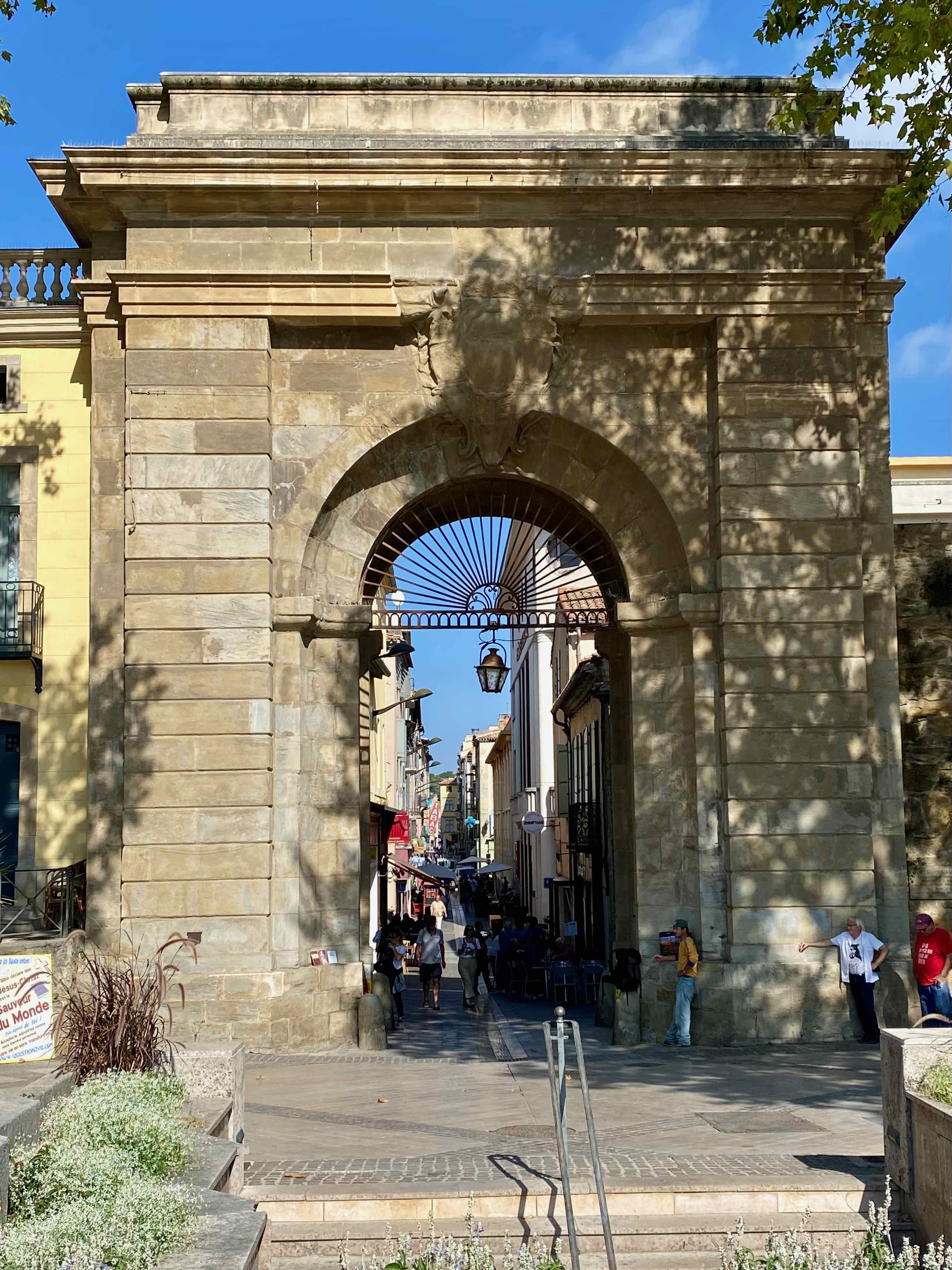
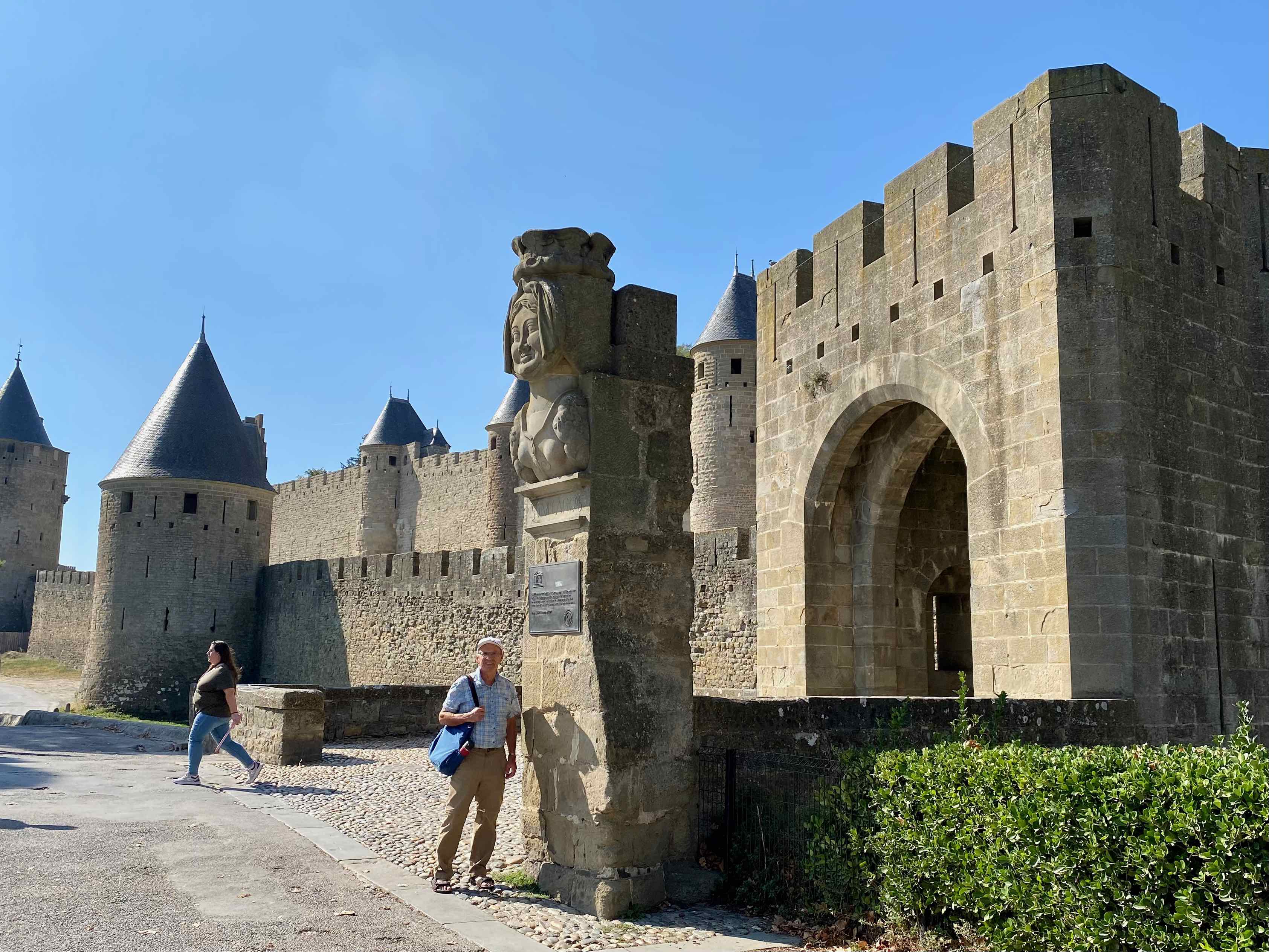
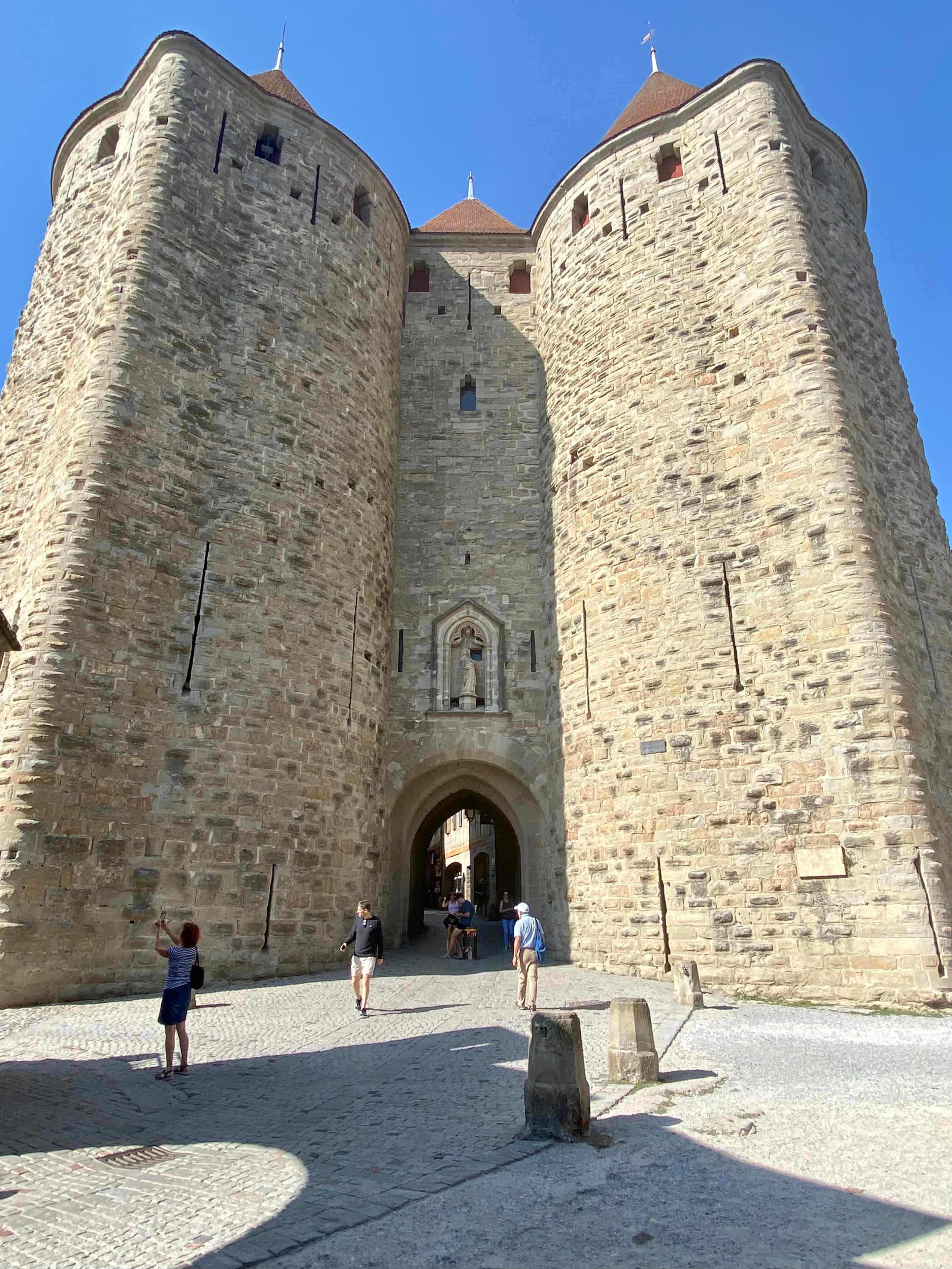
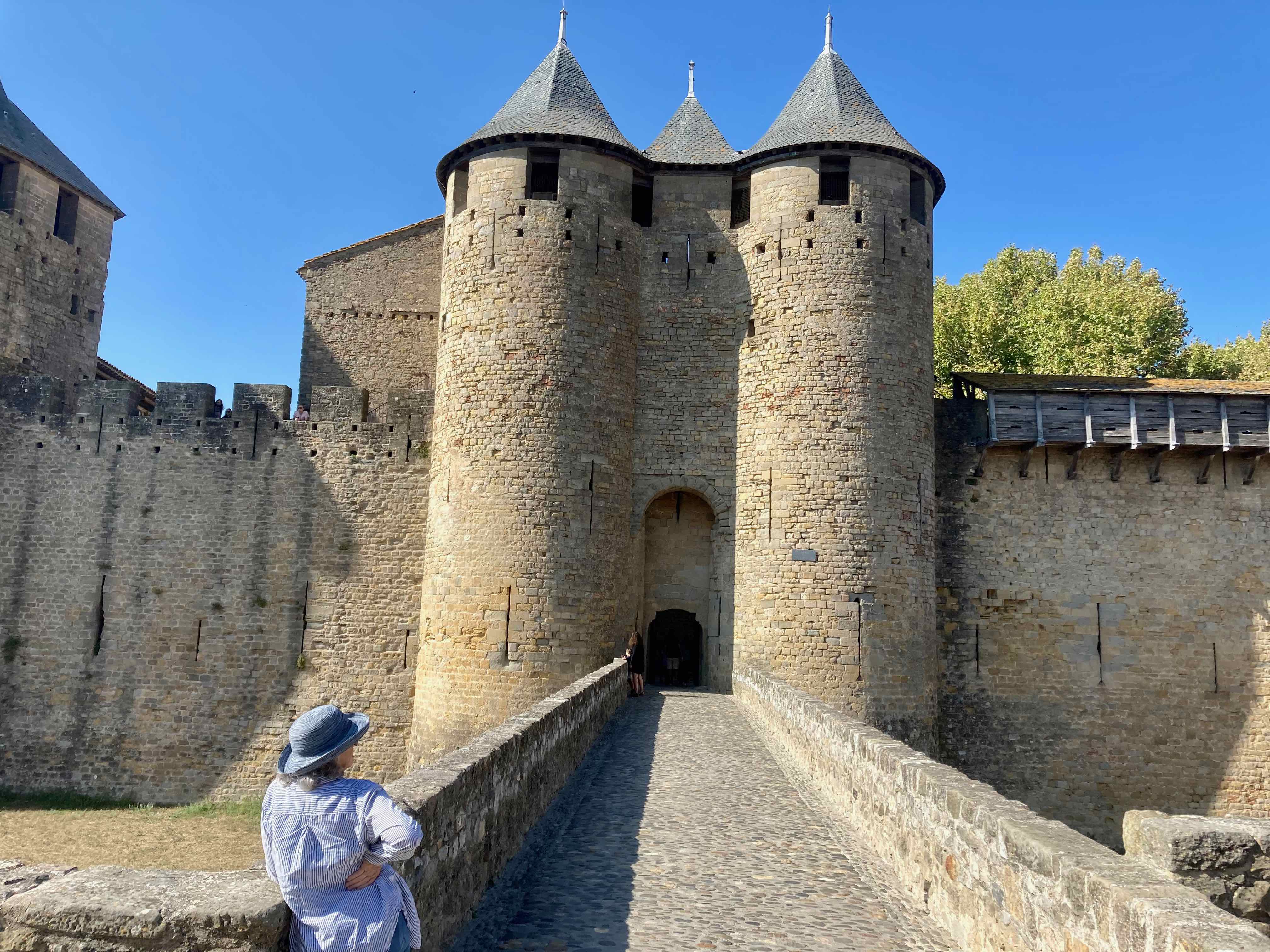
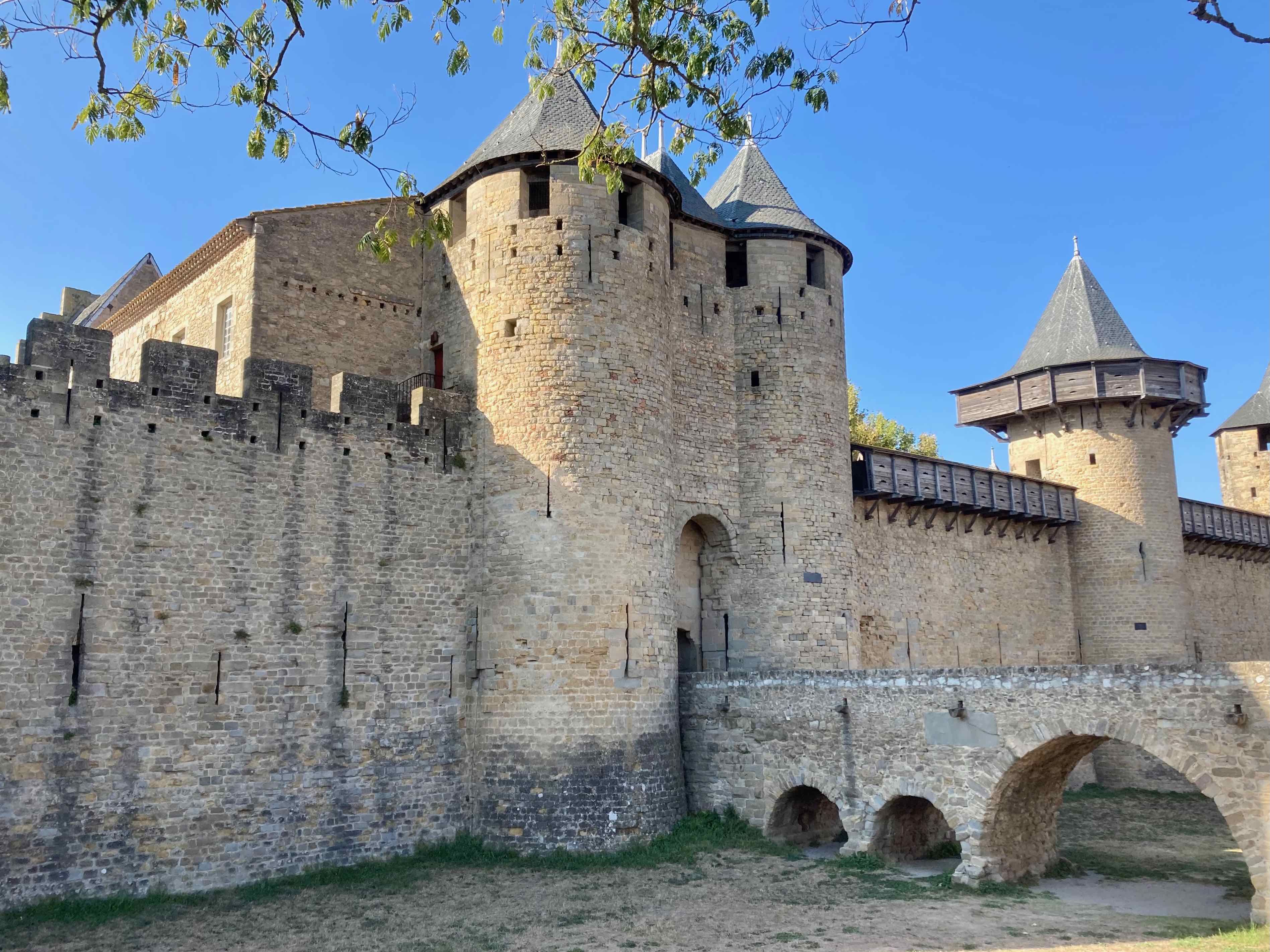
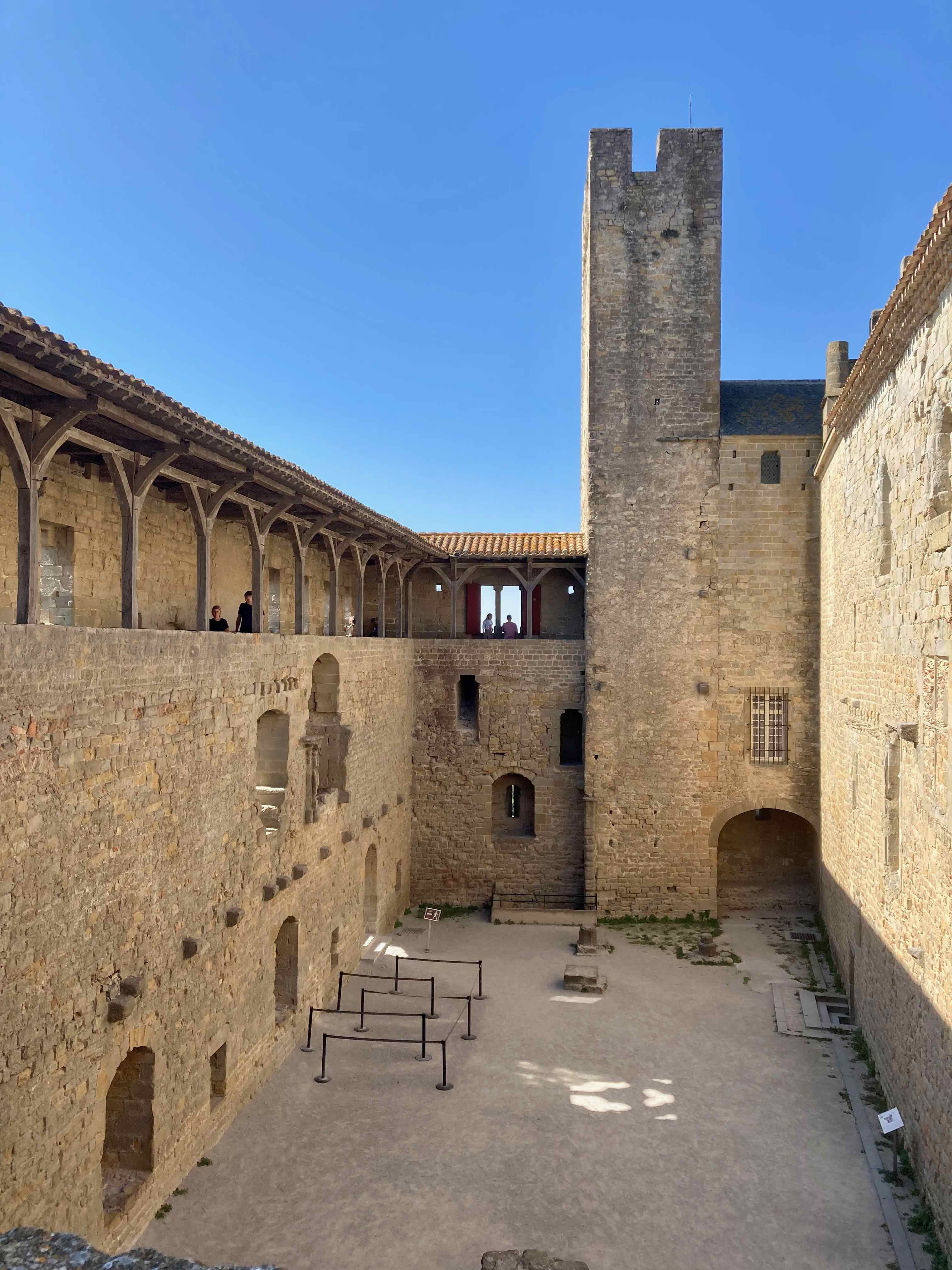
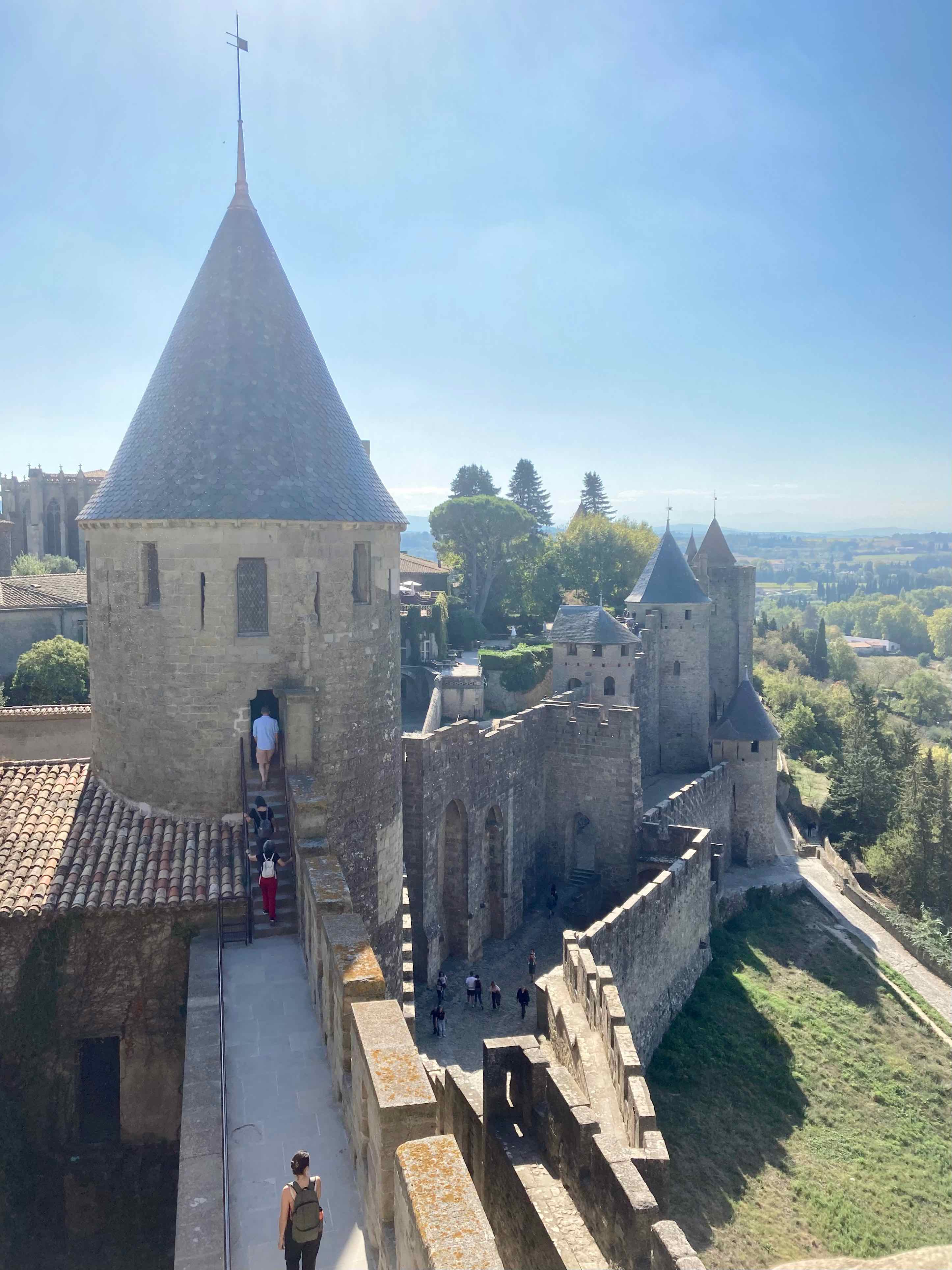
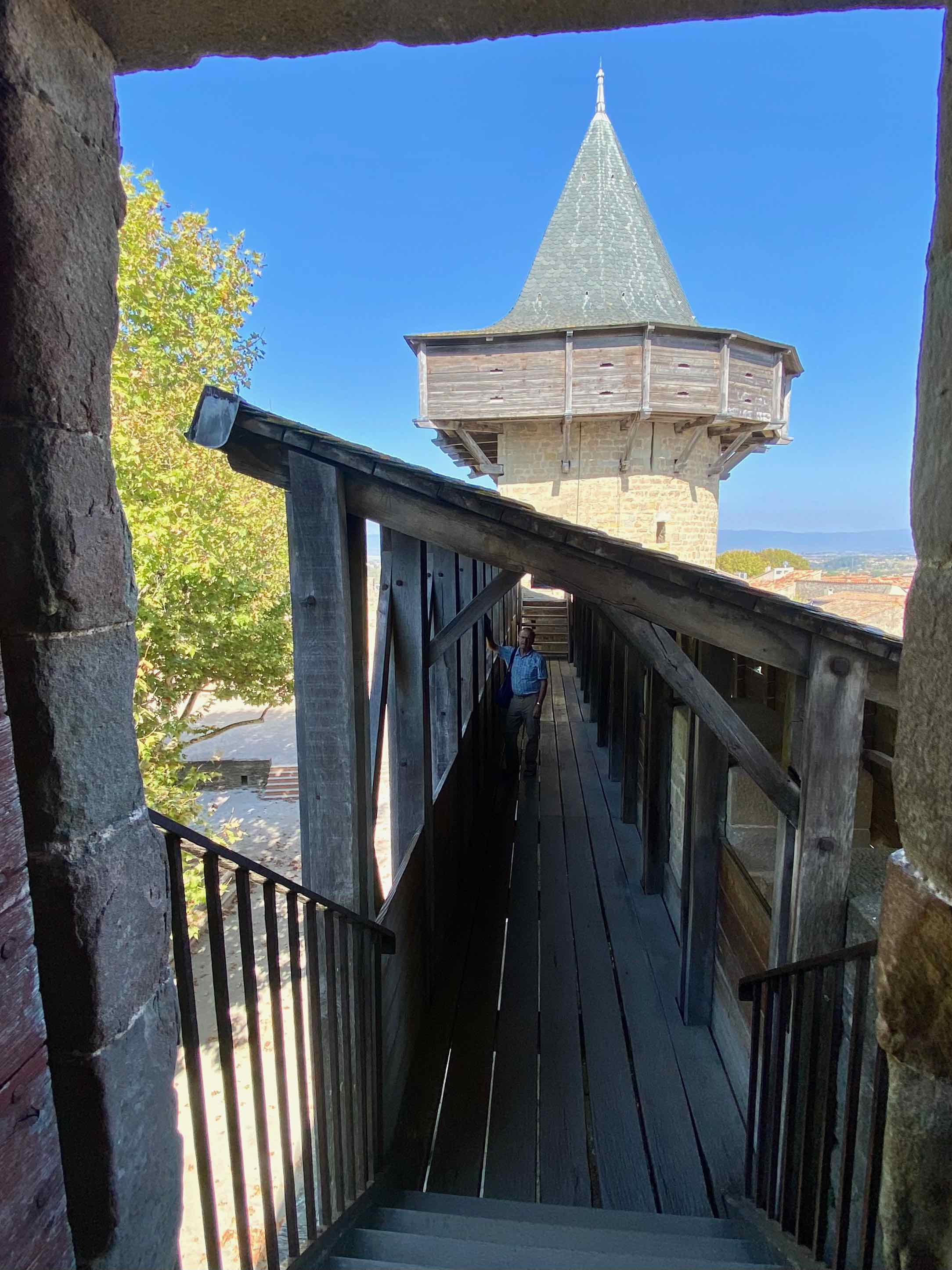
 This is mostly an opportunity to see the fortifications that make this citadel so unique.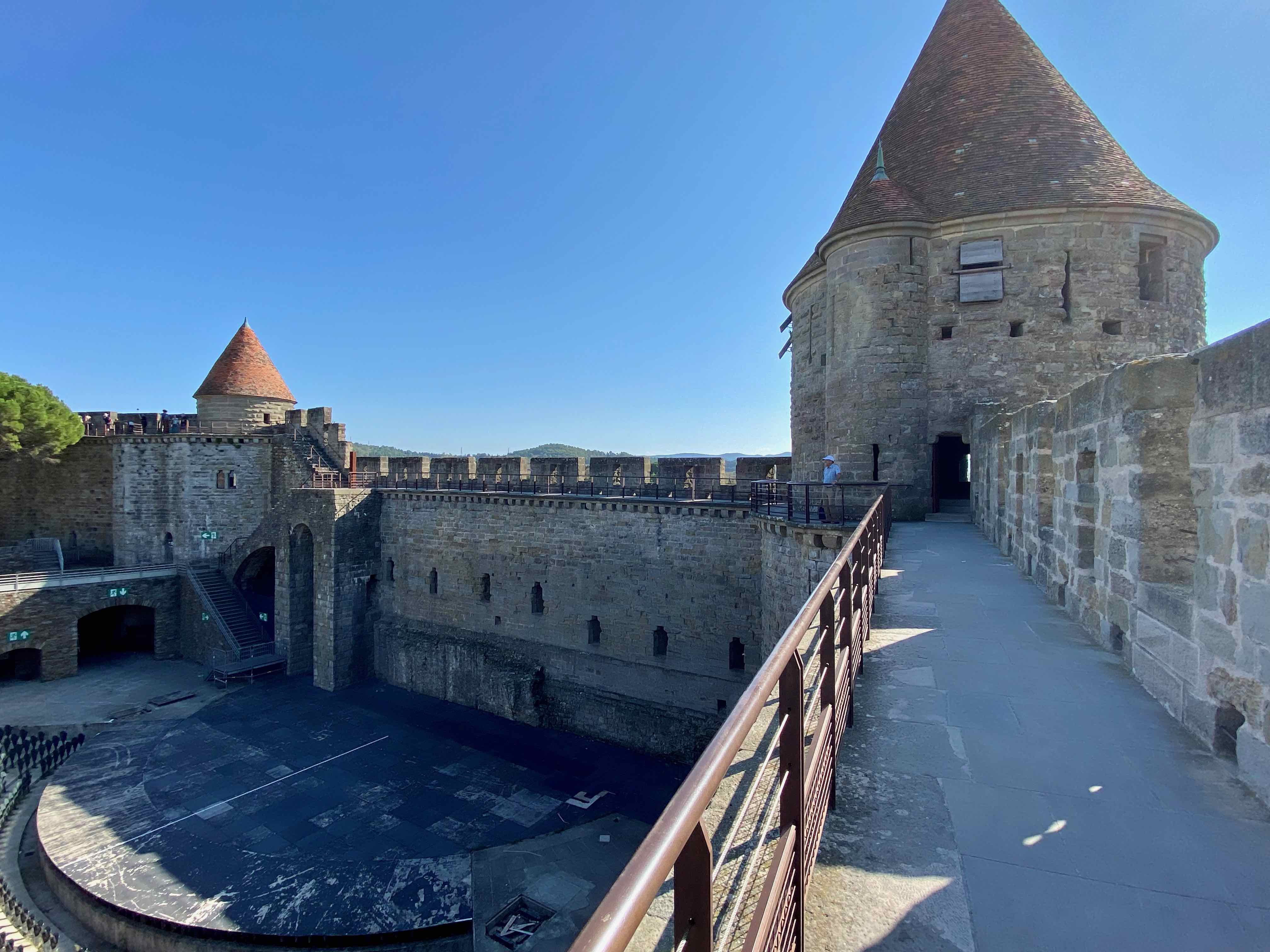
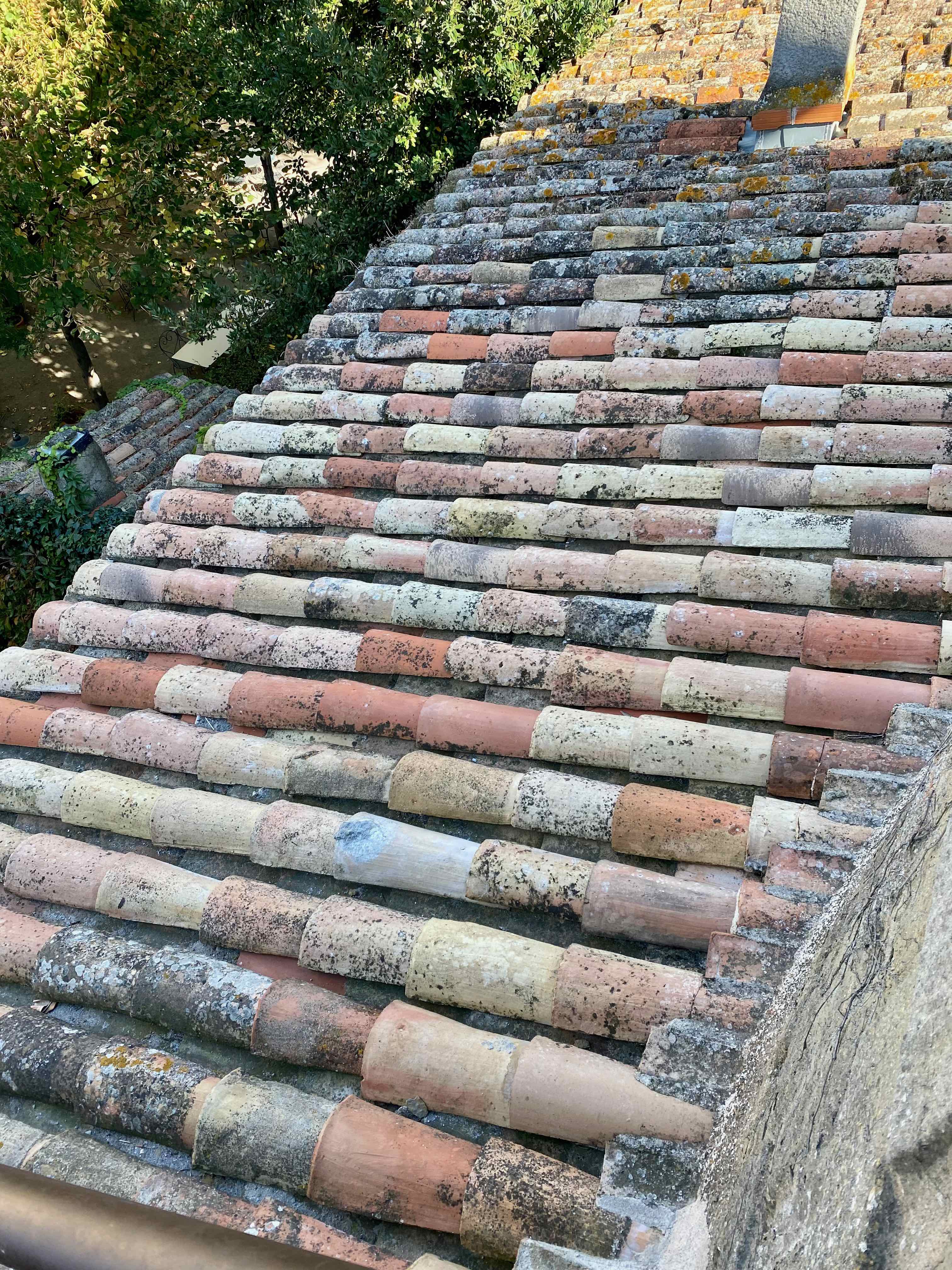
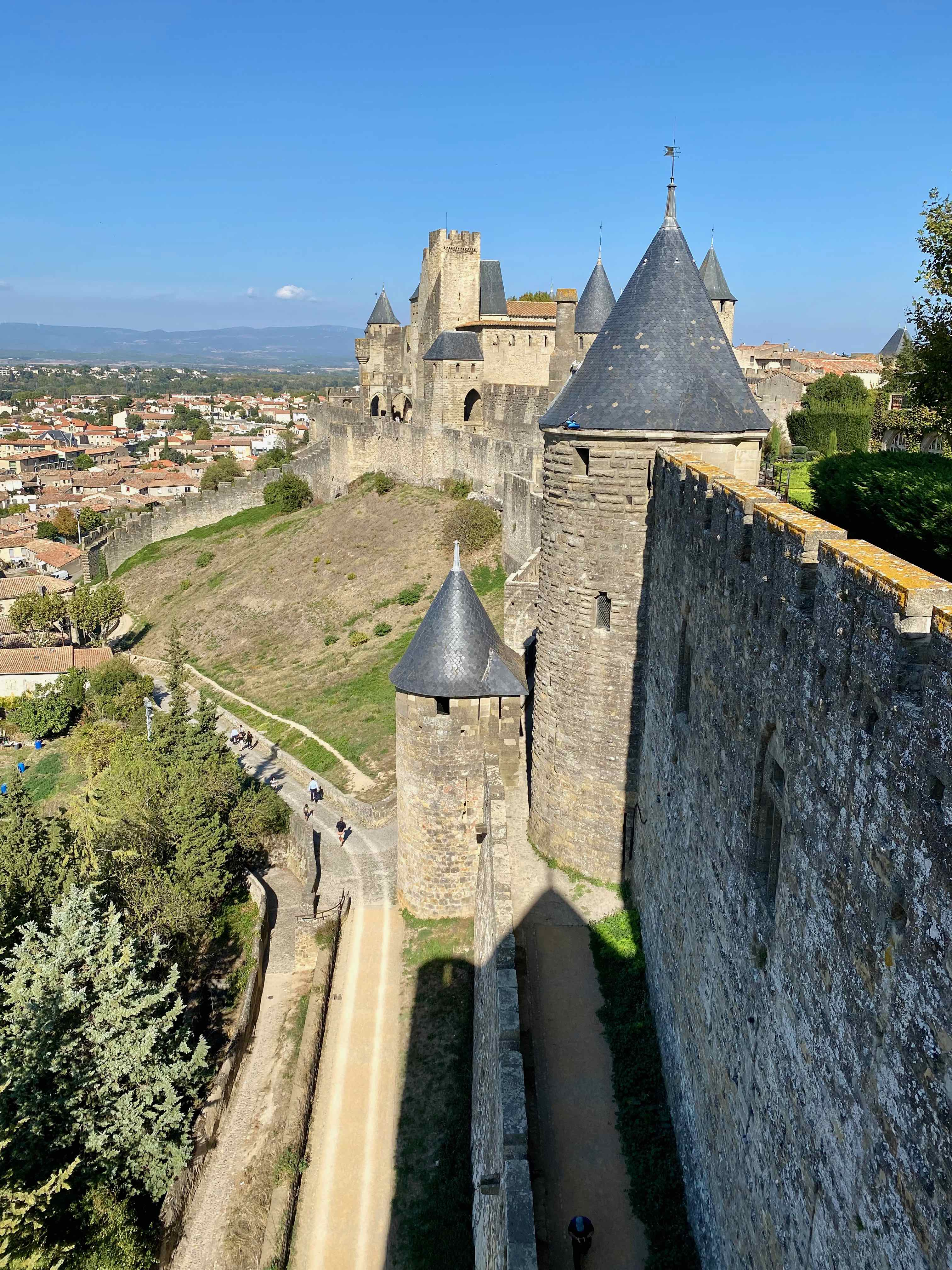 Carcassonne is now considered to be the largest and best conserved medieval fortress in Europe. It is impressive with its set of double walls and ramparts. Both sets of walls and the area between them can be seen in this photo.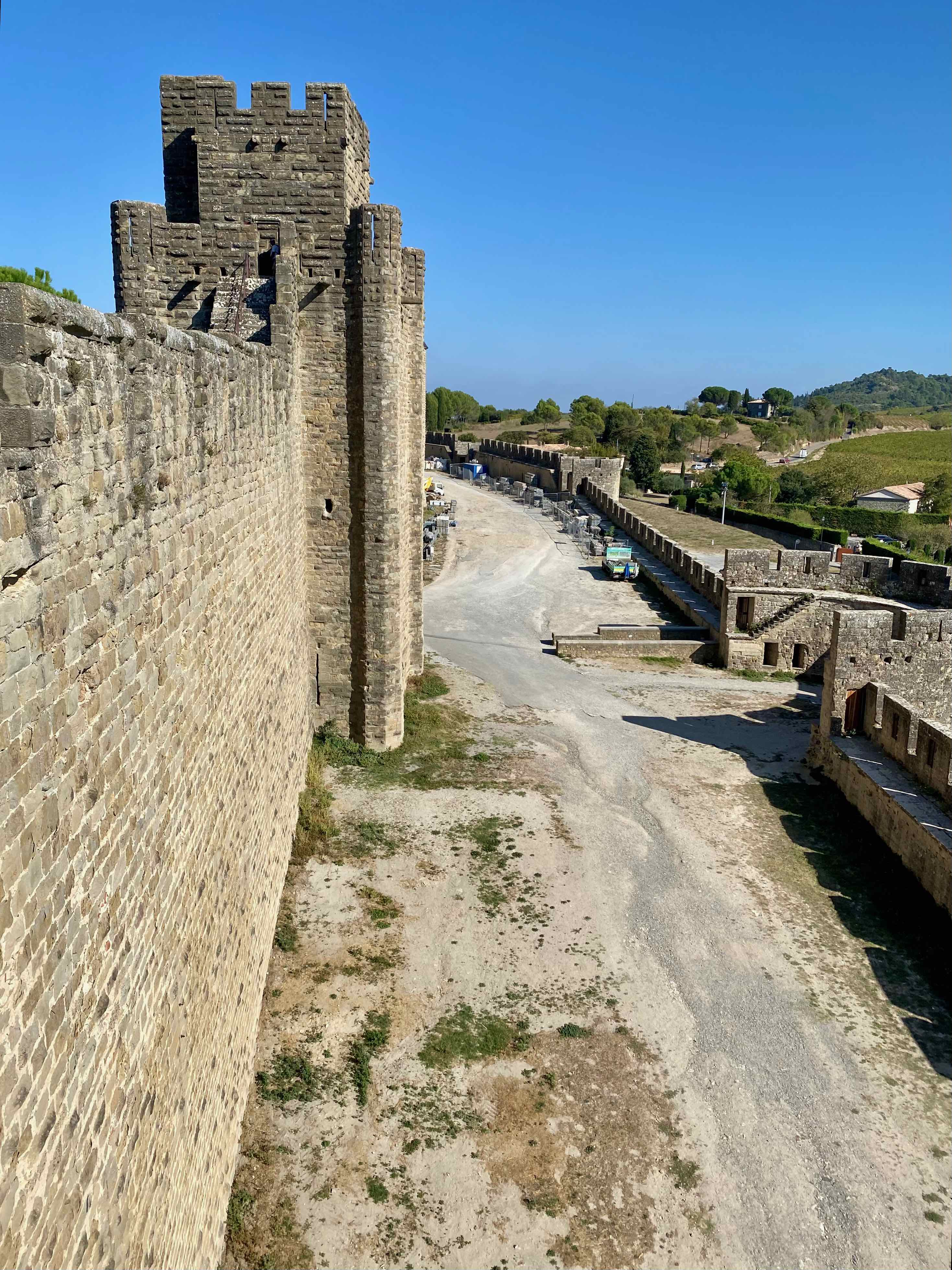
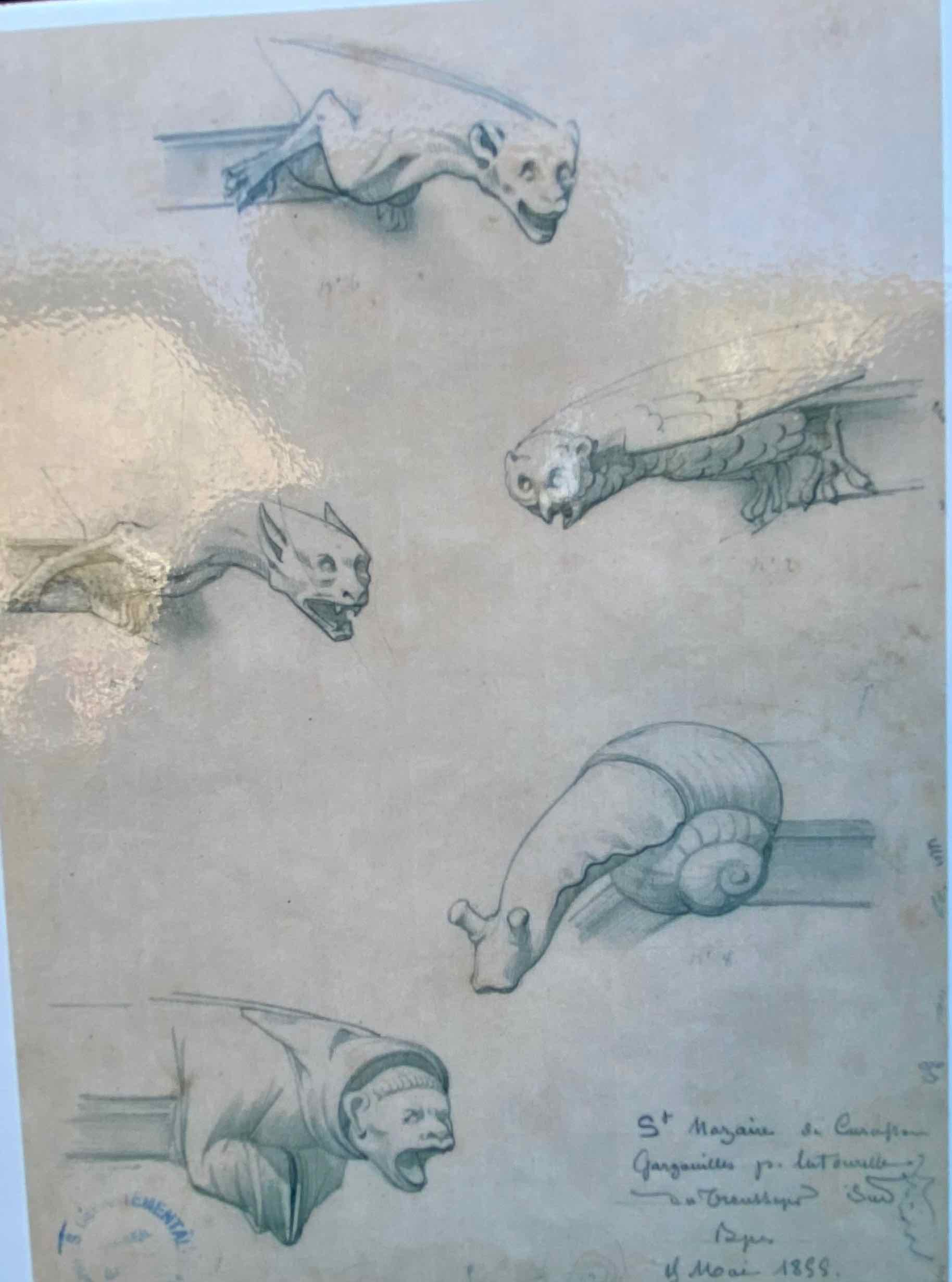
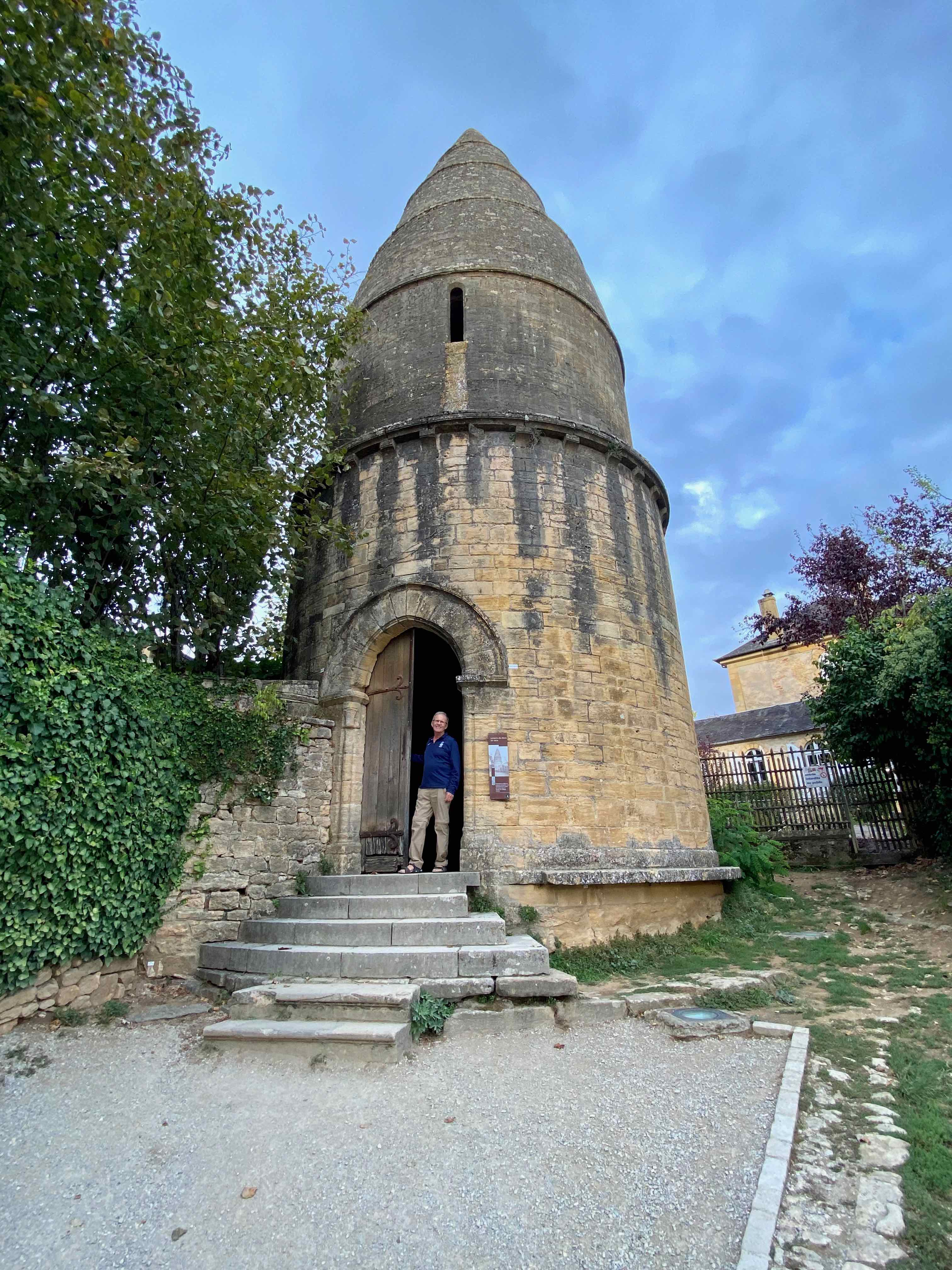
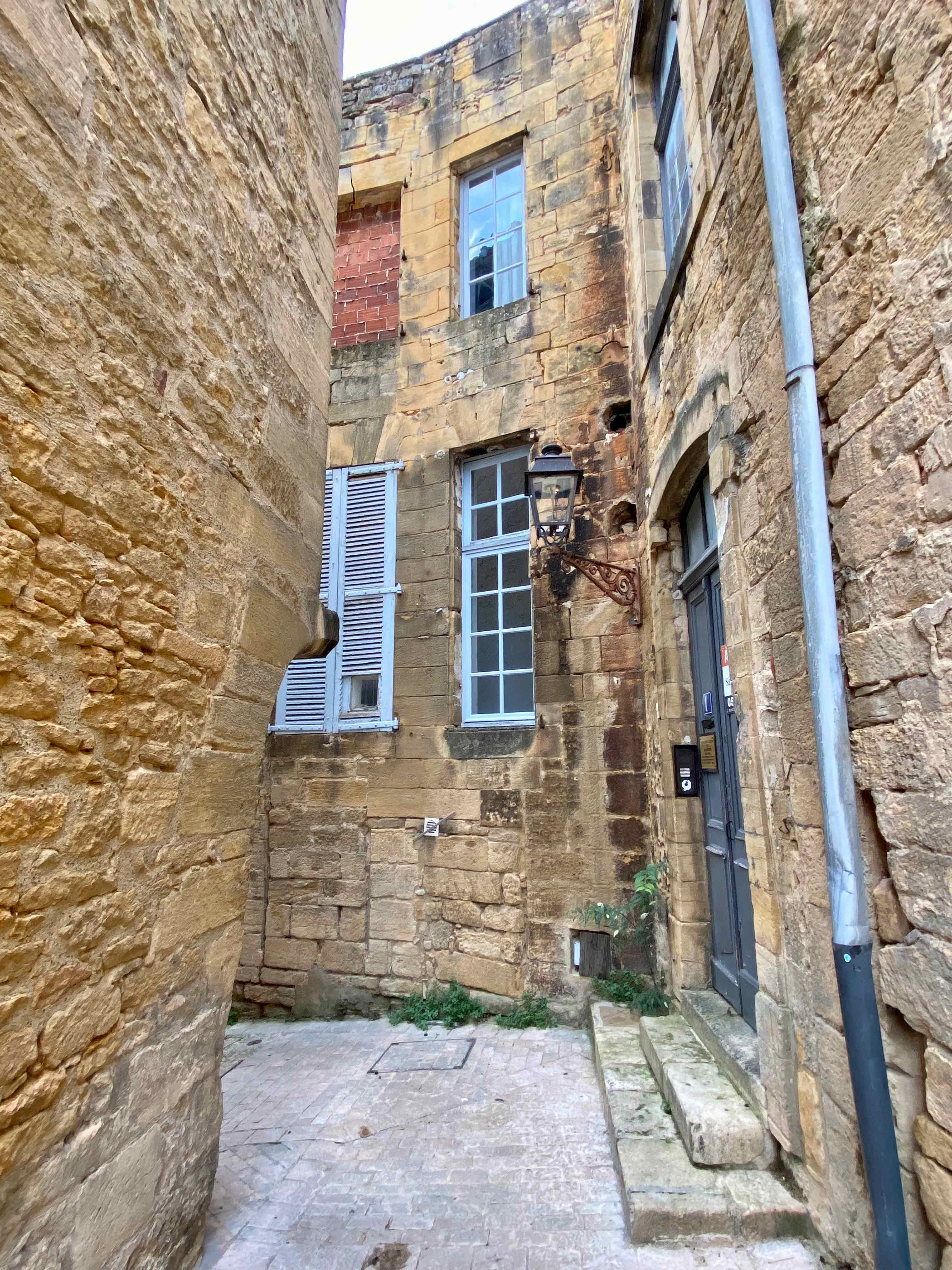
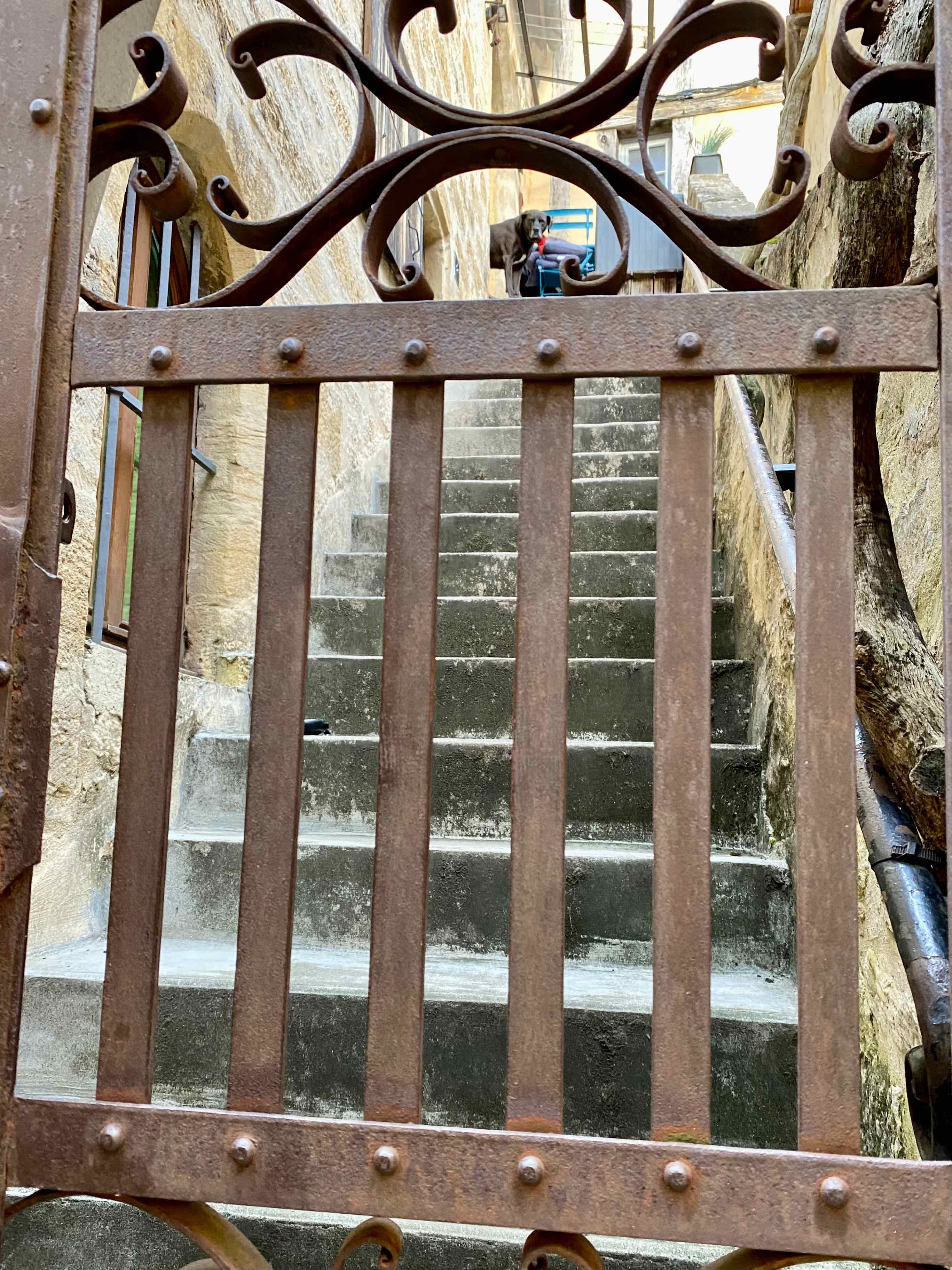
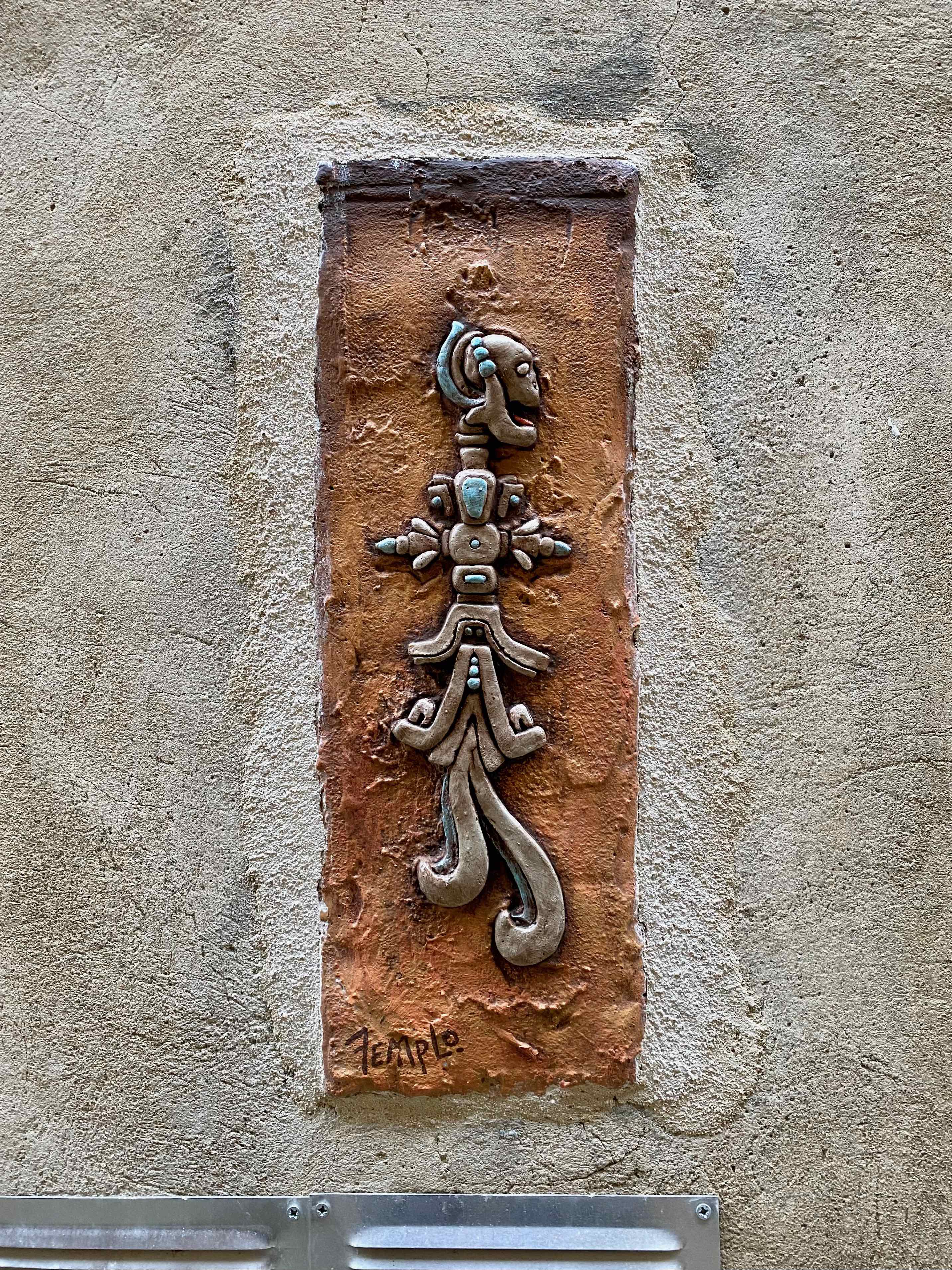

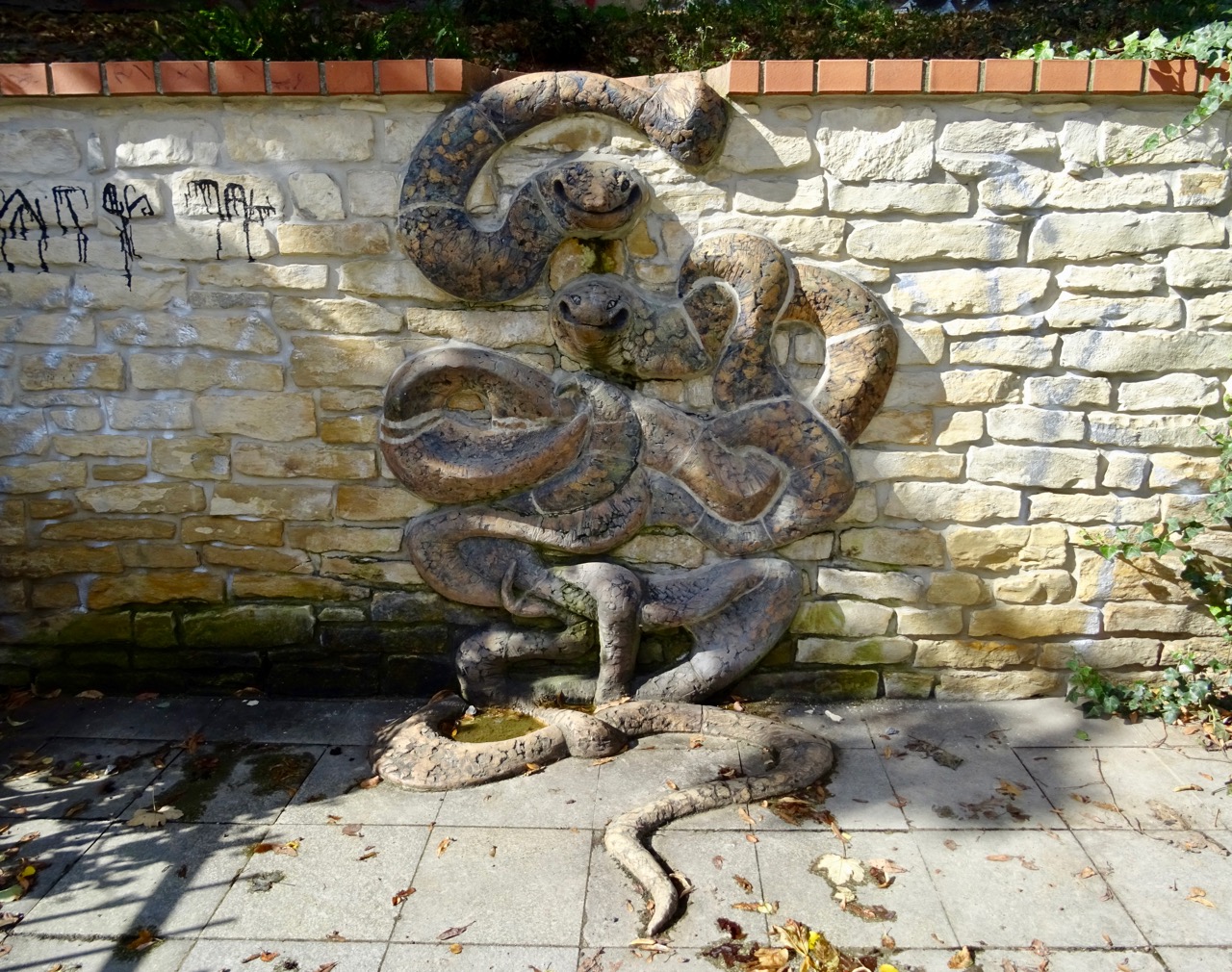
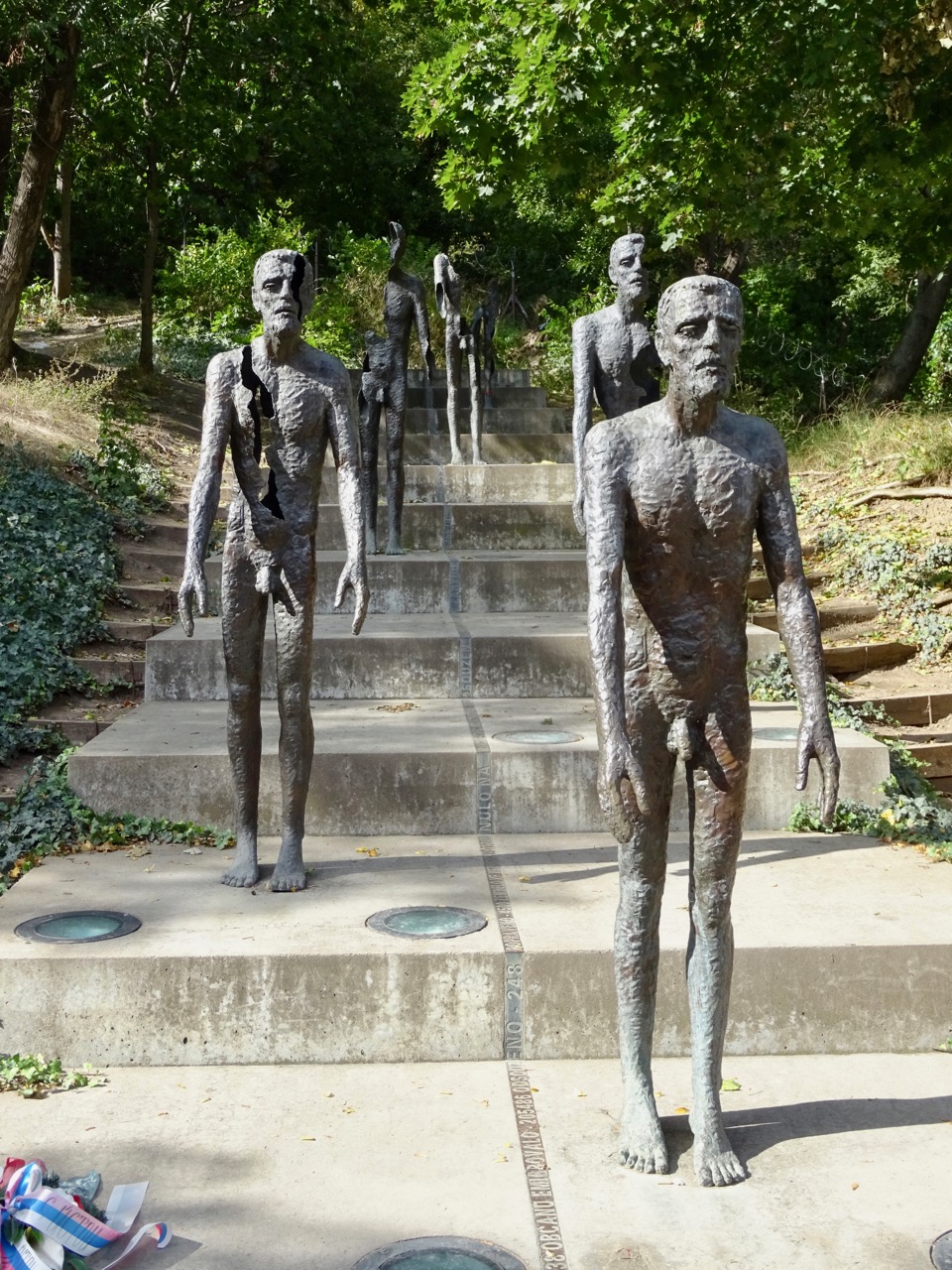 This sculpture makes us smile. It appears to have a dog drinking dish at its bottom.
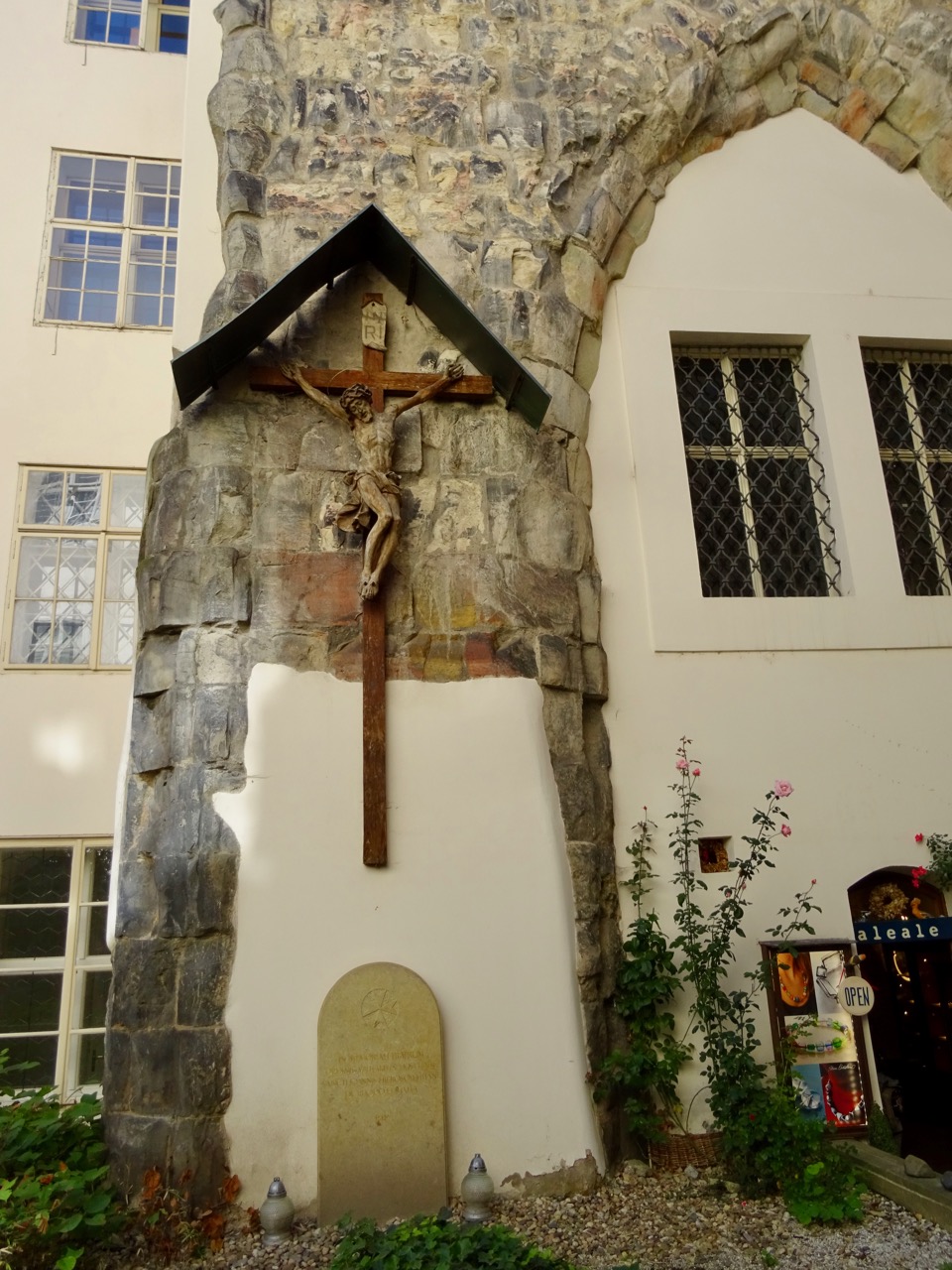
 Peering into a church courtyard we see this crucifix right beside a gift shop. It seems strange to have an upscale gift shop in a church courtyard.
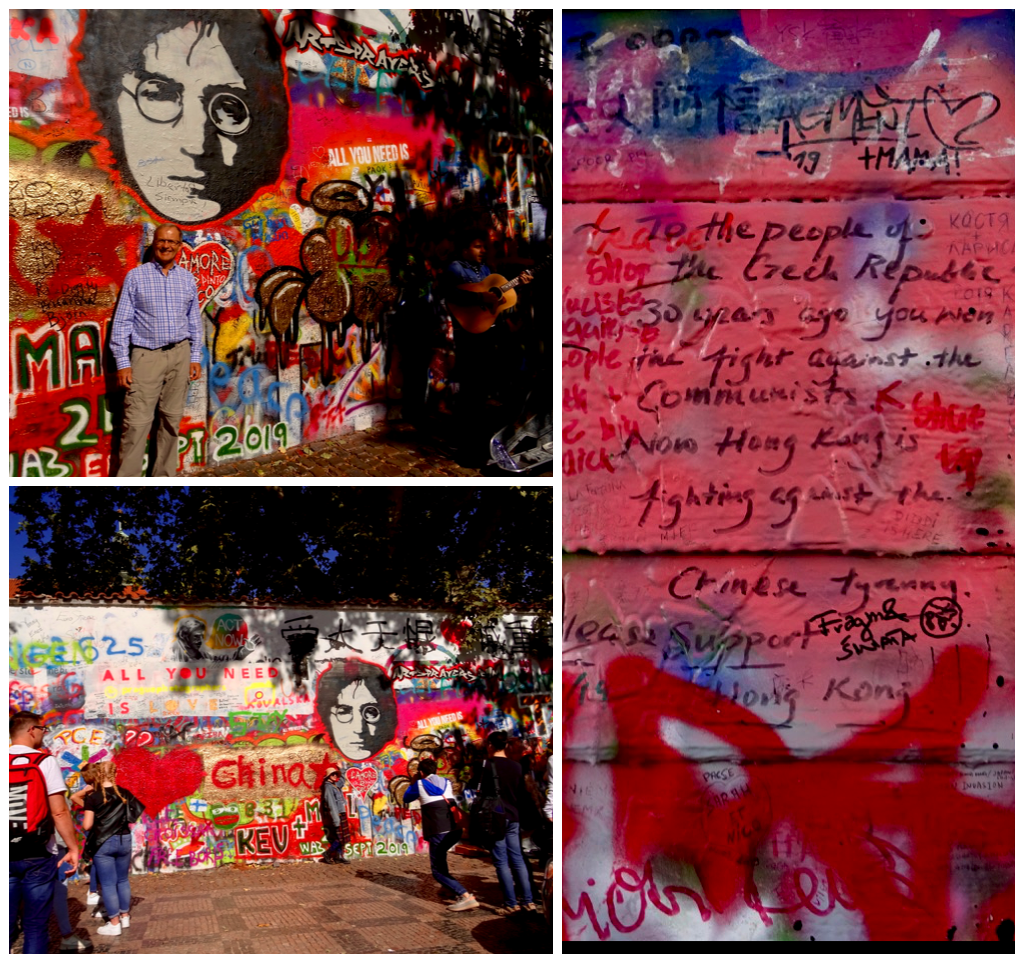
 Bob leads us down several little side streets to the John Lennon Wall. Since the 1980s it has been filled with John Lennon-inspired graffiti, pieces of lyrics from Beatles’ songs, and other designs relating to local and global causes.
 We stop for a picnic lunch in this little park beside St. Charles Bridge…
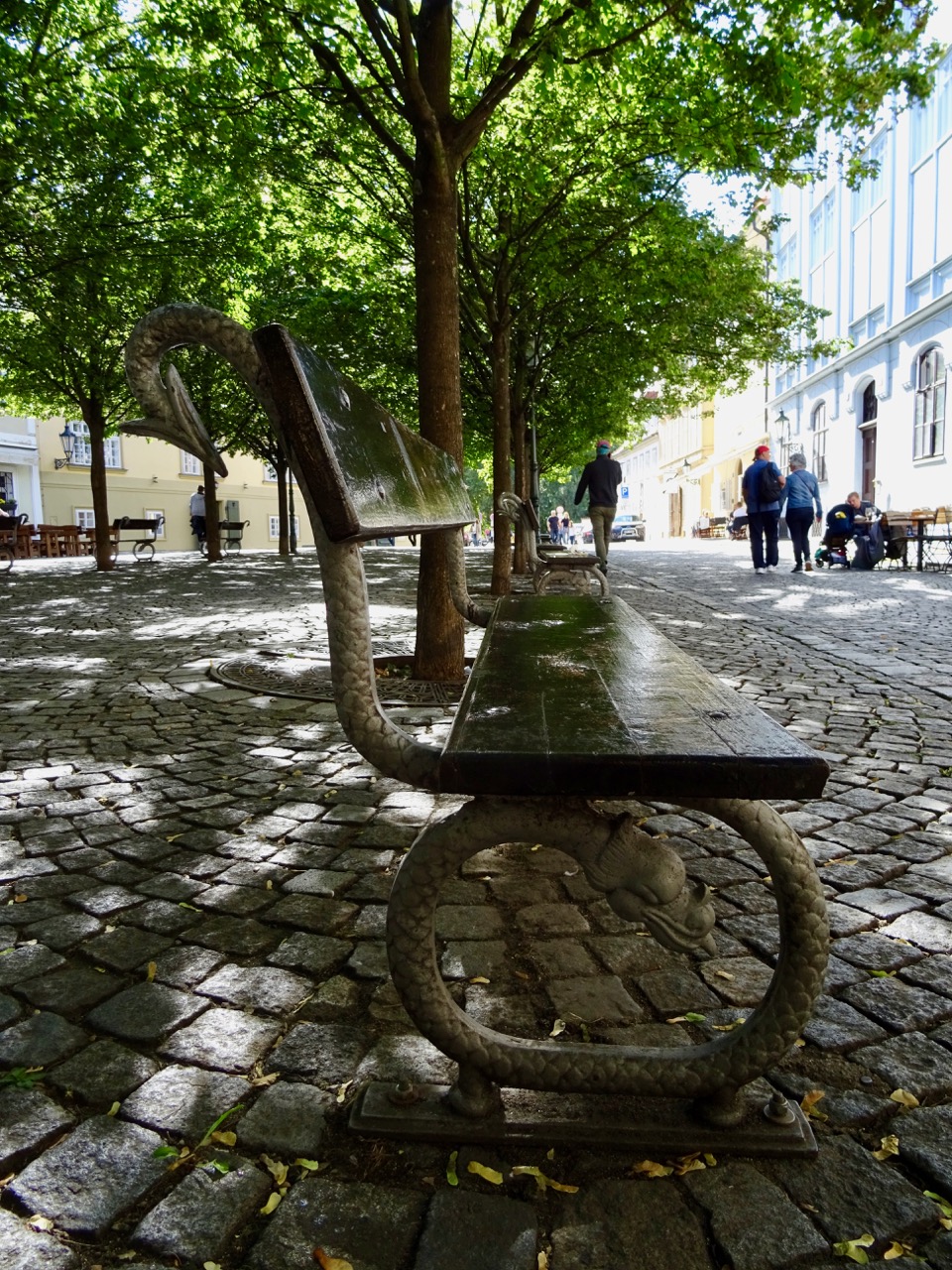
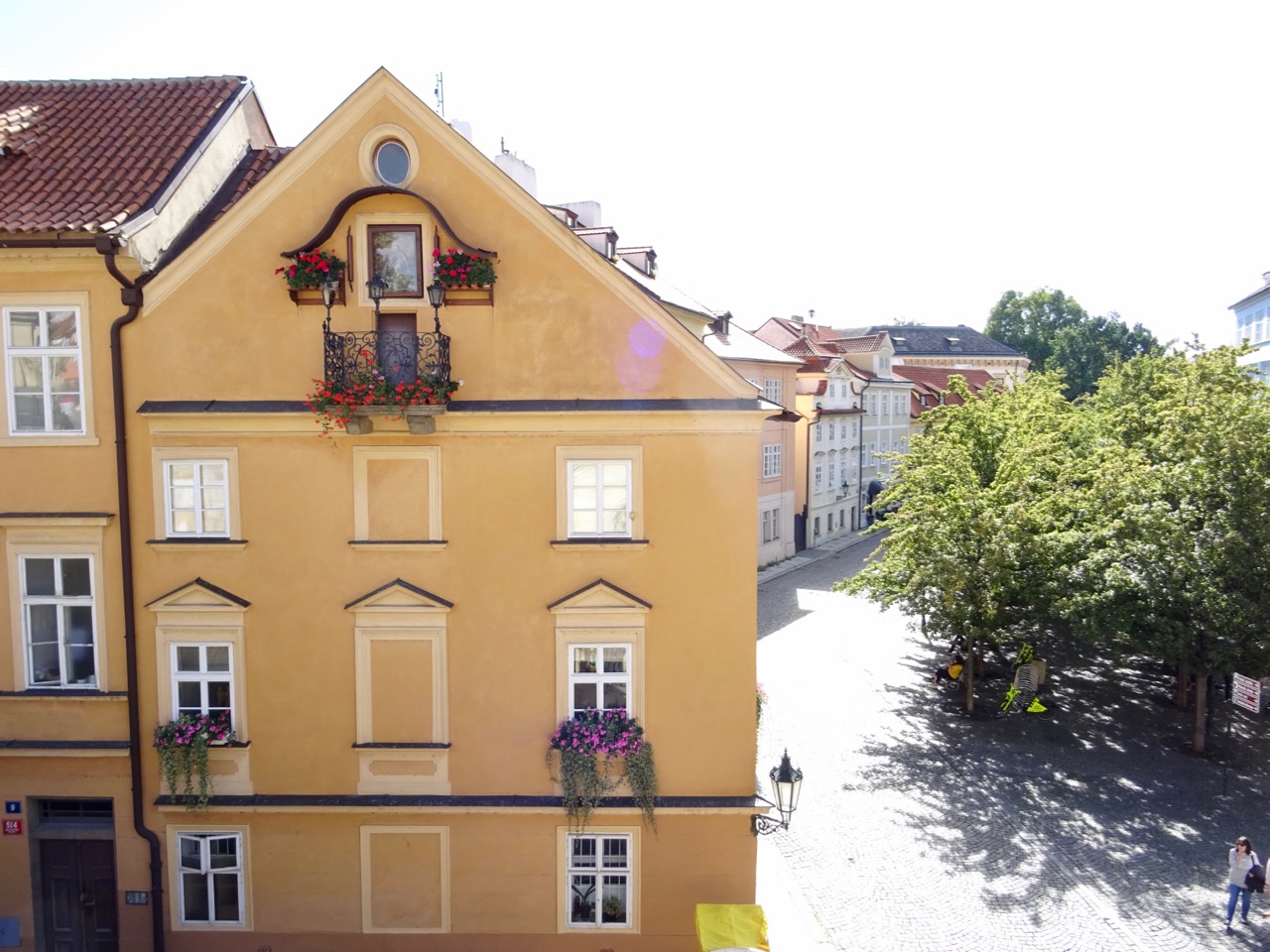 and sit on a dragon bench.
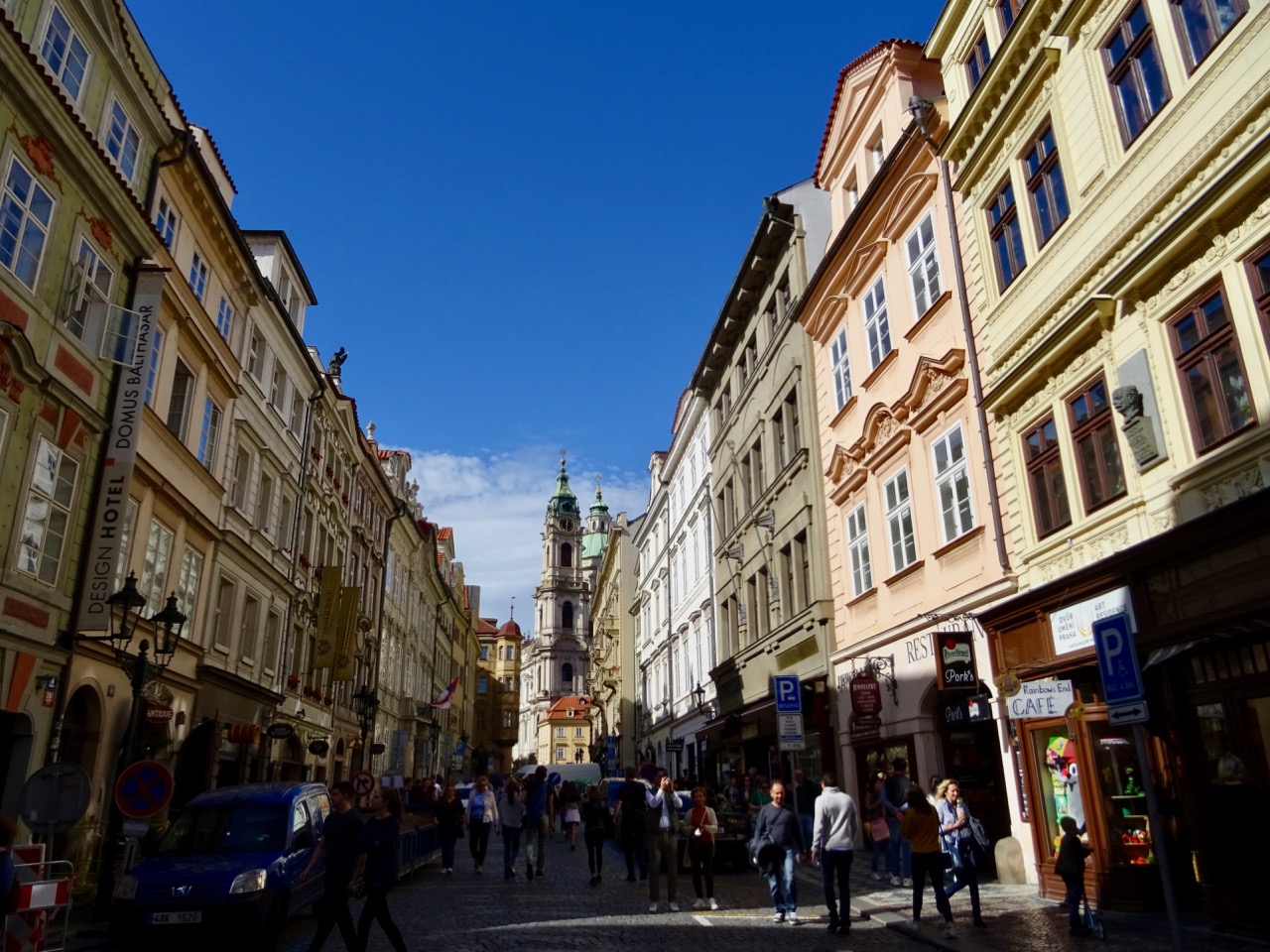
 The streets in Prague are busy no matter where we go. We wonder what they must be like during the summer months?
 It showers on and off as we arrive at the monastery. Note the cobbled road. All these uneven cobbled surfaces are quite hard on our feet and ankles.
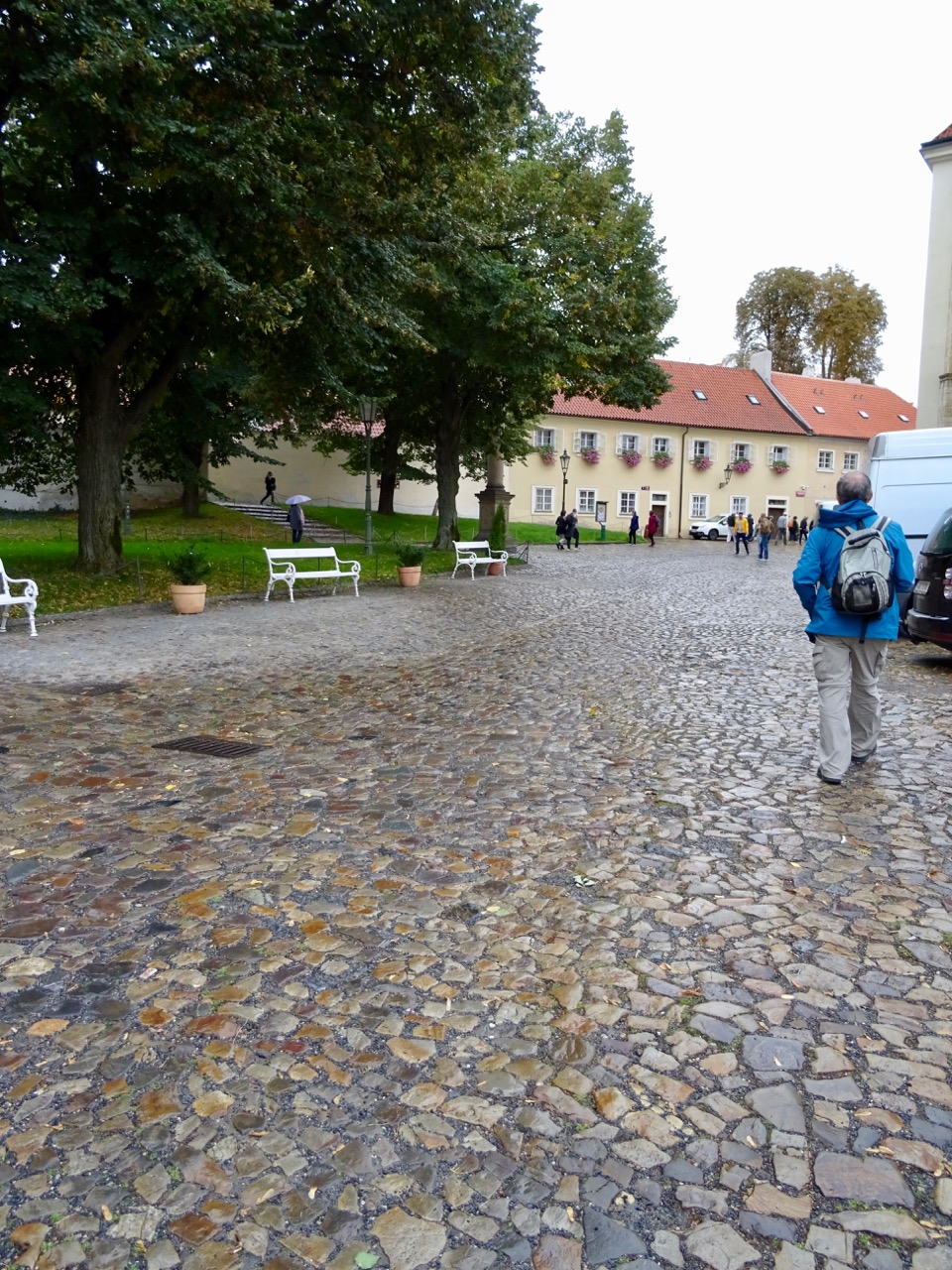 The Strahov Monastery was founded in 1143 and has many buildings and extensive gardens.
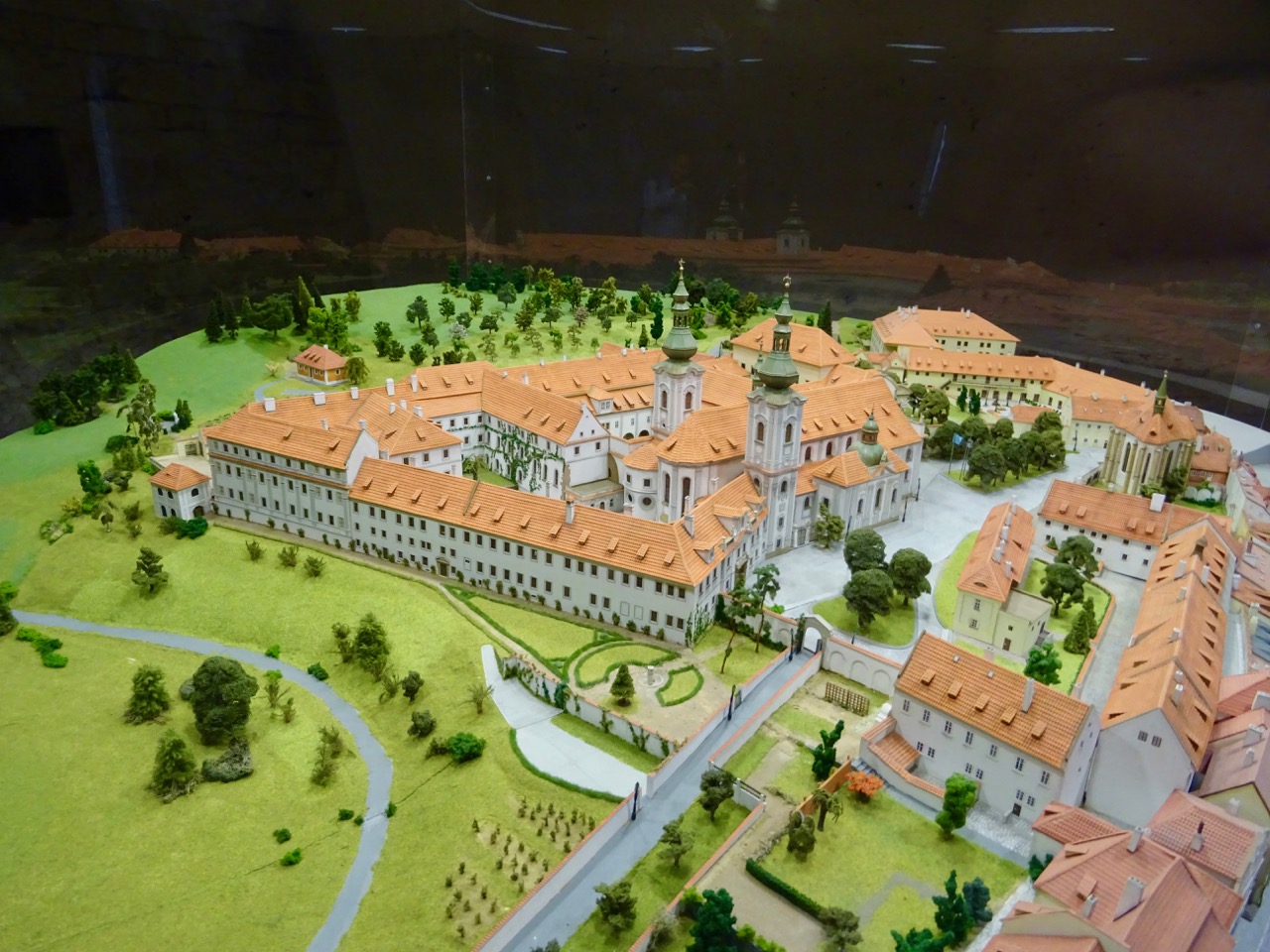 First stop is the Strahov Library and I am delighted to find that there is an exhibit of Cabinets of Curiosities!
 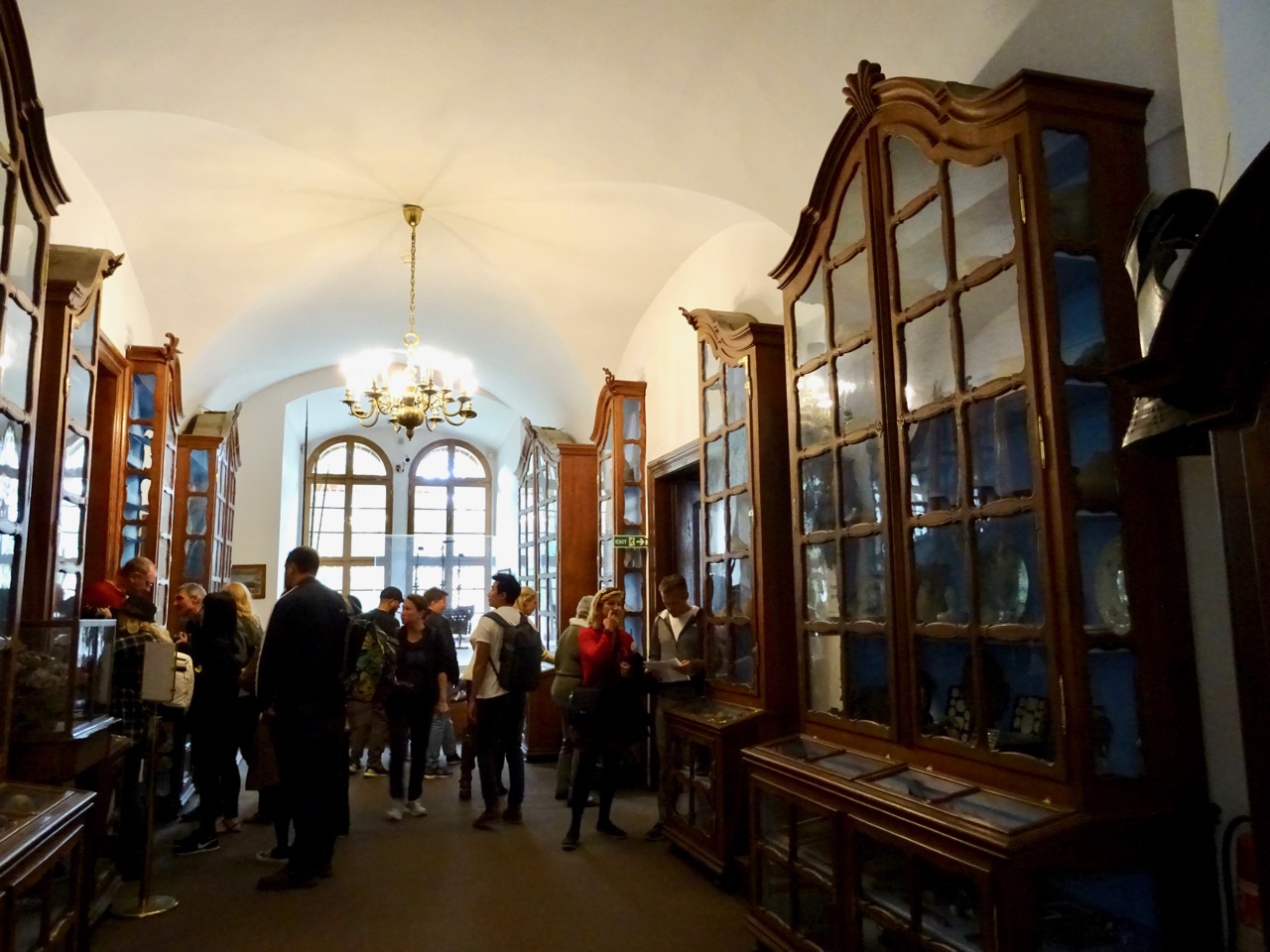 I love these cabinets and have several drawers at home with my own curiosities. Perhaps I need to make my own Cabinet of Curiosities?
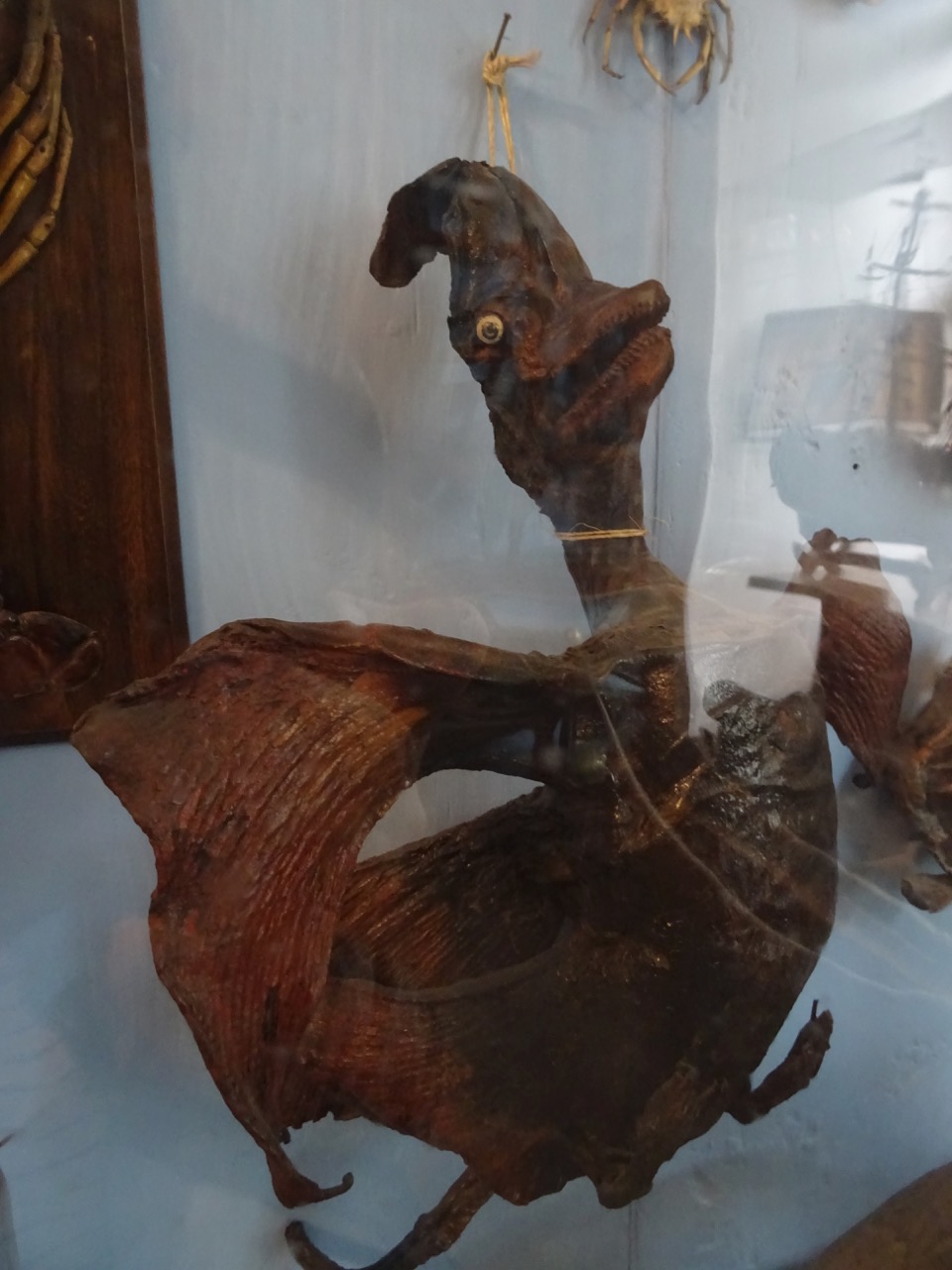
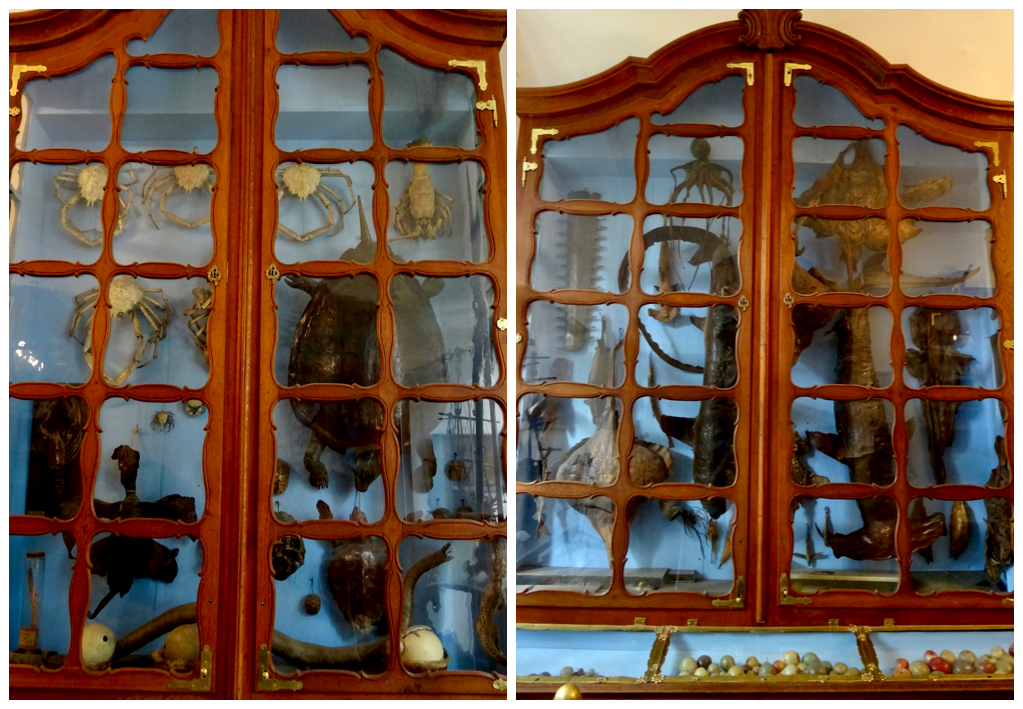 Some of the contents are rather strange.
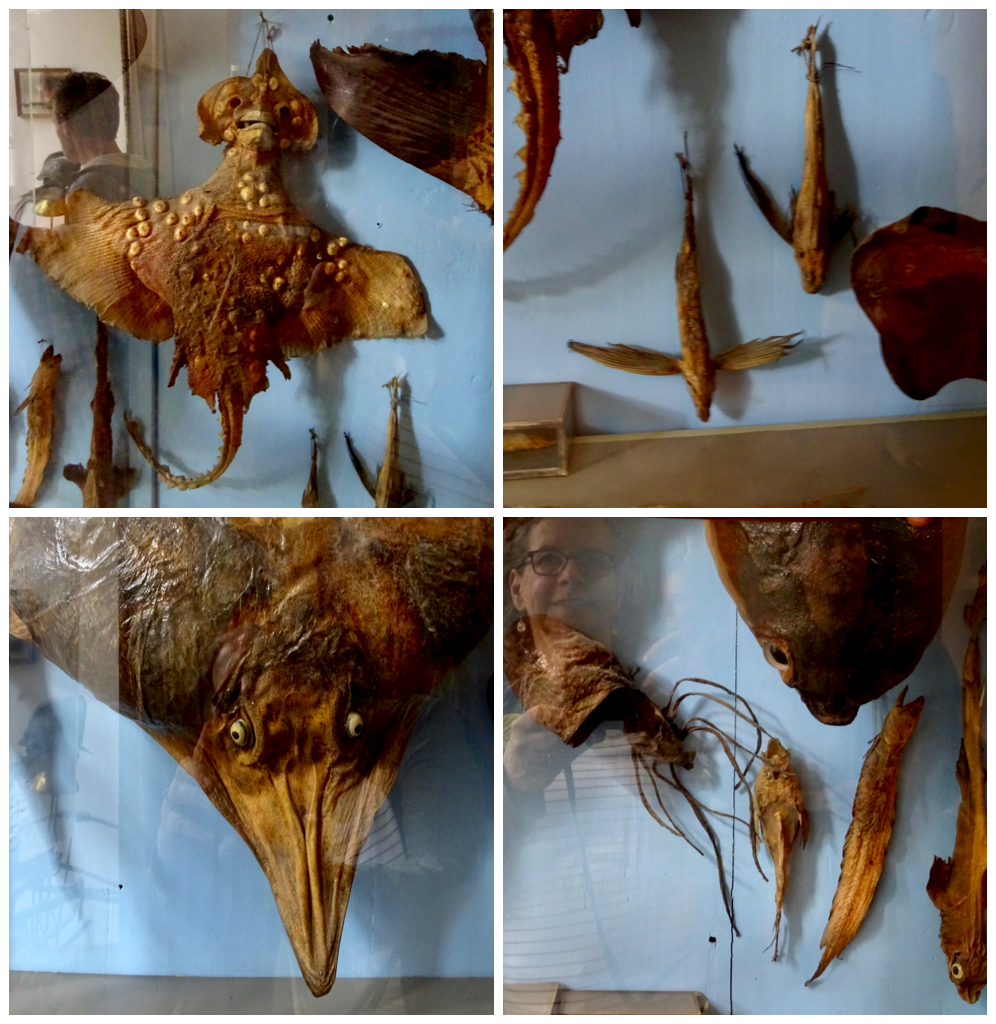 We are told that this ‘might’ be a young dodo bird!
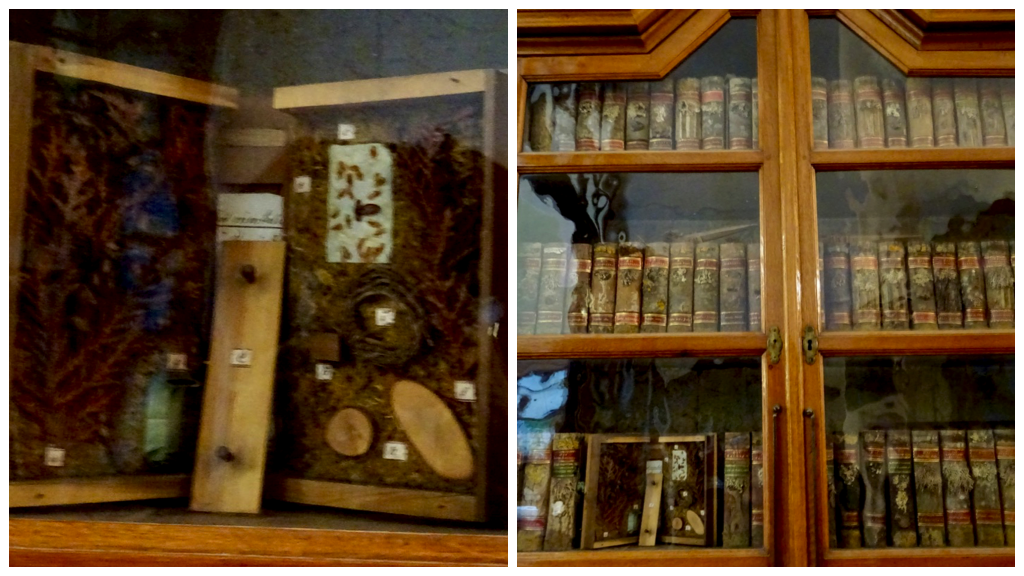
 These books are very unusual. This is a 68 volume Dendrological Library. Dendrology is the science and study of wooded plants. The covers of each volume are made of the wood of a particular tree, the spine has its name in Latin and German, and inside each volume are pieces of the roots, branches and twigs, as well as leaves, blossoms, fruit, and sometimes even insect pests. As a paper artist and bookmaker, I find these unusual volumes fascinating and inspiring.
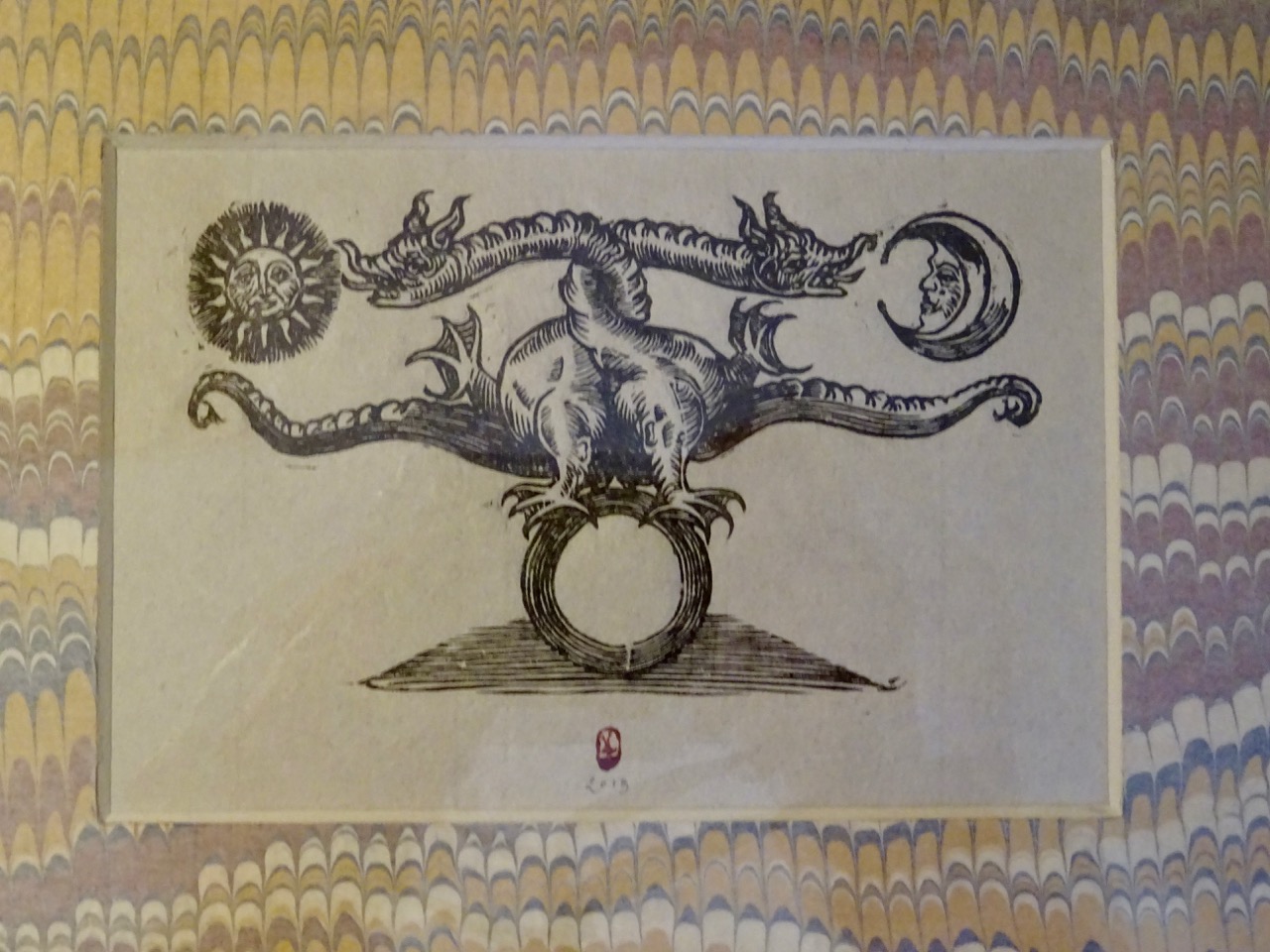
 Along the hallway between two magnificent libraries are display cases with very old volumes. This 1632 woodcut first appeared in a compilation of English Alchemical texts. This piece was printed by hand on Japanese hand made paper and the pass-partout, or mat, is covered in handmade marbled paper.
  The John of Šellmberk’s Bible preserves the oldest translation of the Bible into the Czech language and dates from the 1400’s. Notice how thick the volume is!
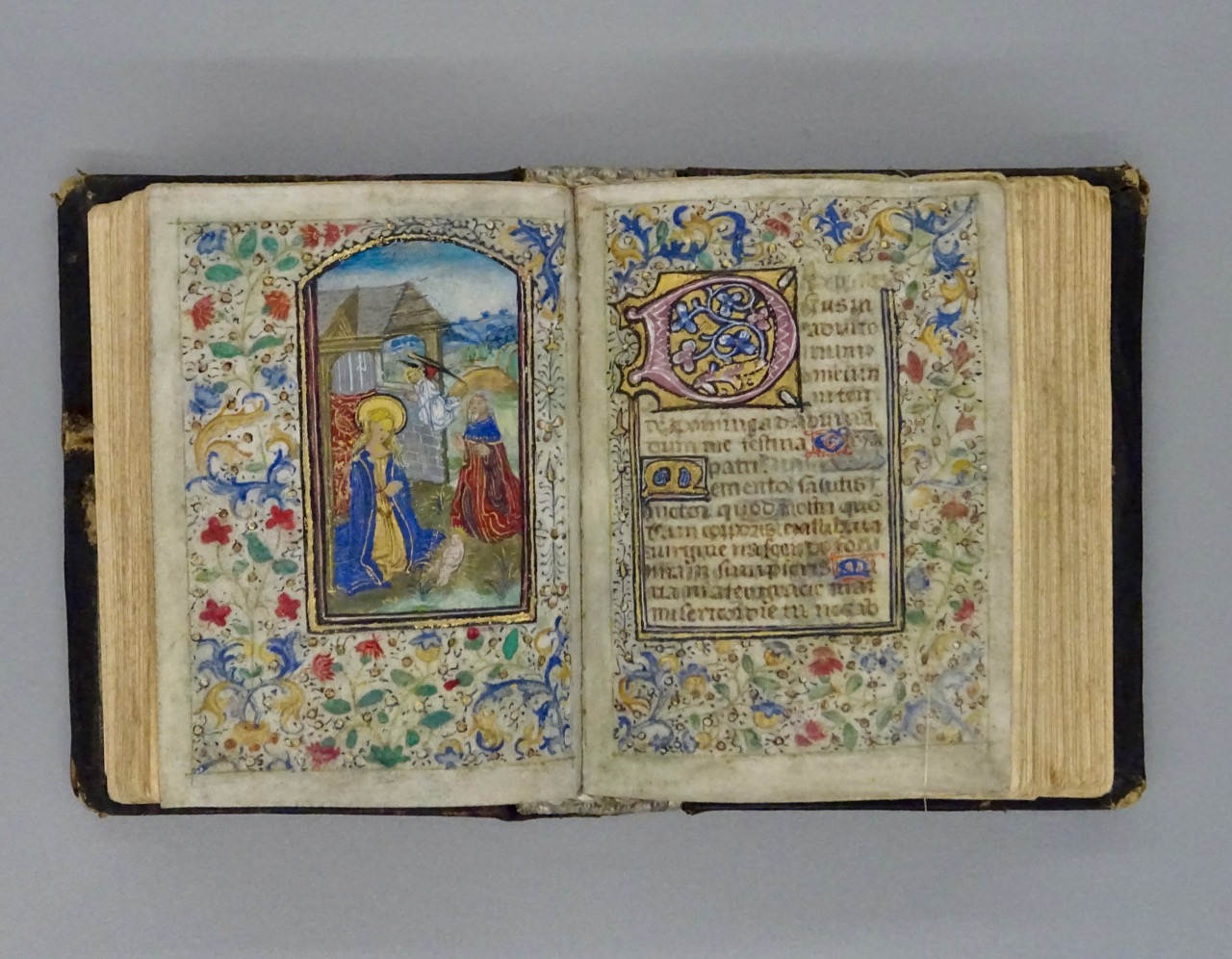
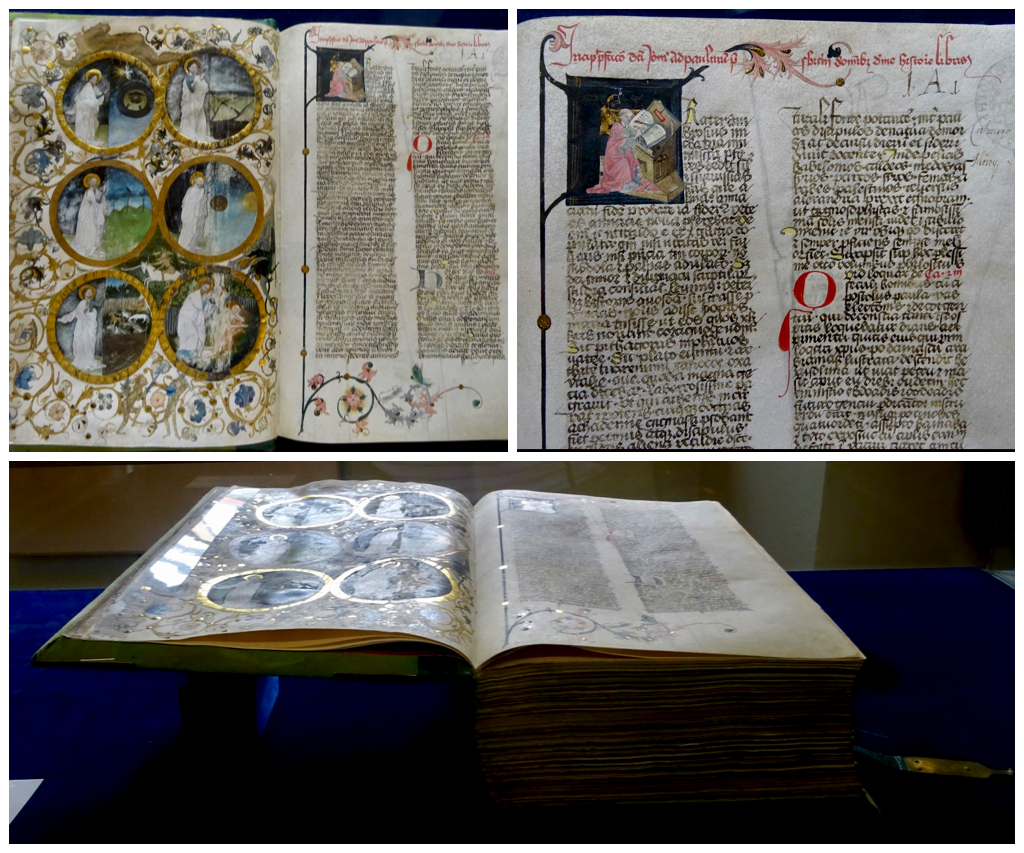 This exquisite miniature book from the 15th century is only about 3″ x 4″ and would have belonged to a private citizen.
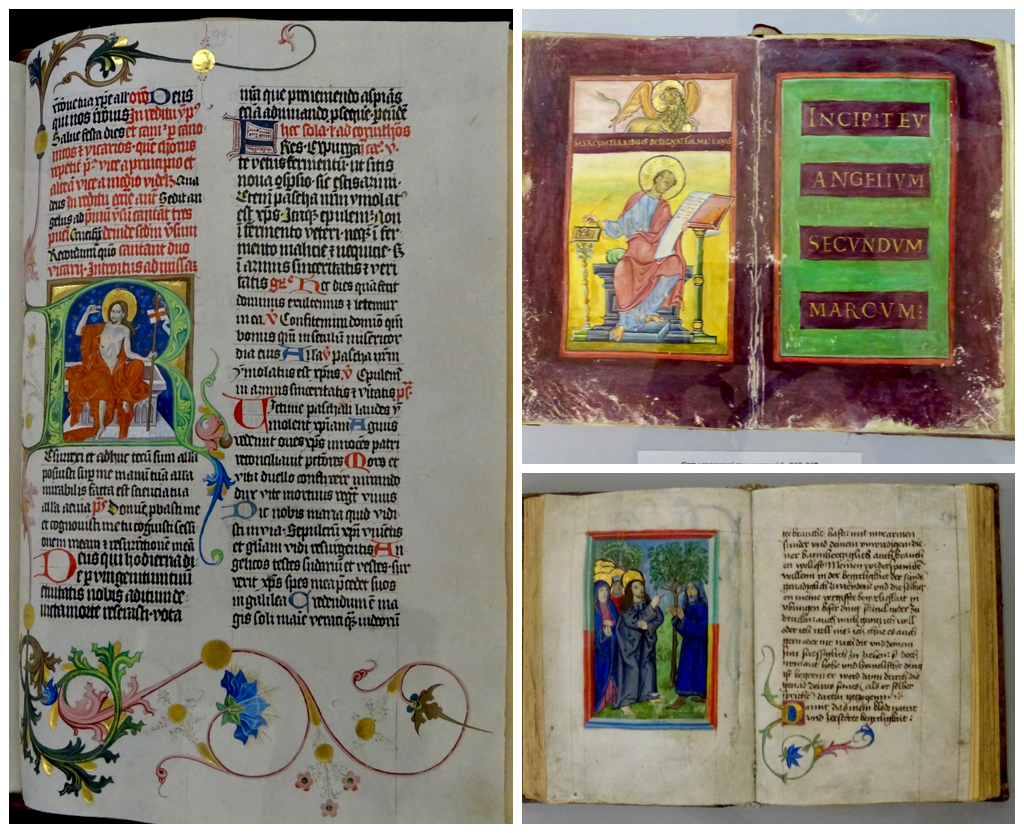
 A page from the Missale of Louka, 1483, illuminations from the Strahov Evangeliary, 860-865 AD and on the bottom right, a book for private use from the 15th century.
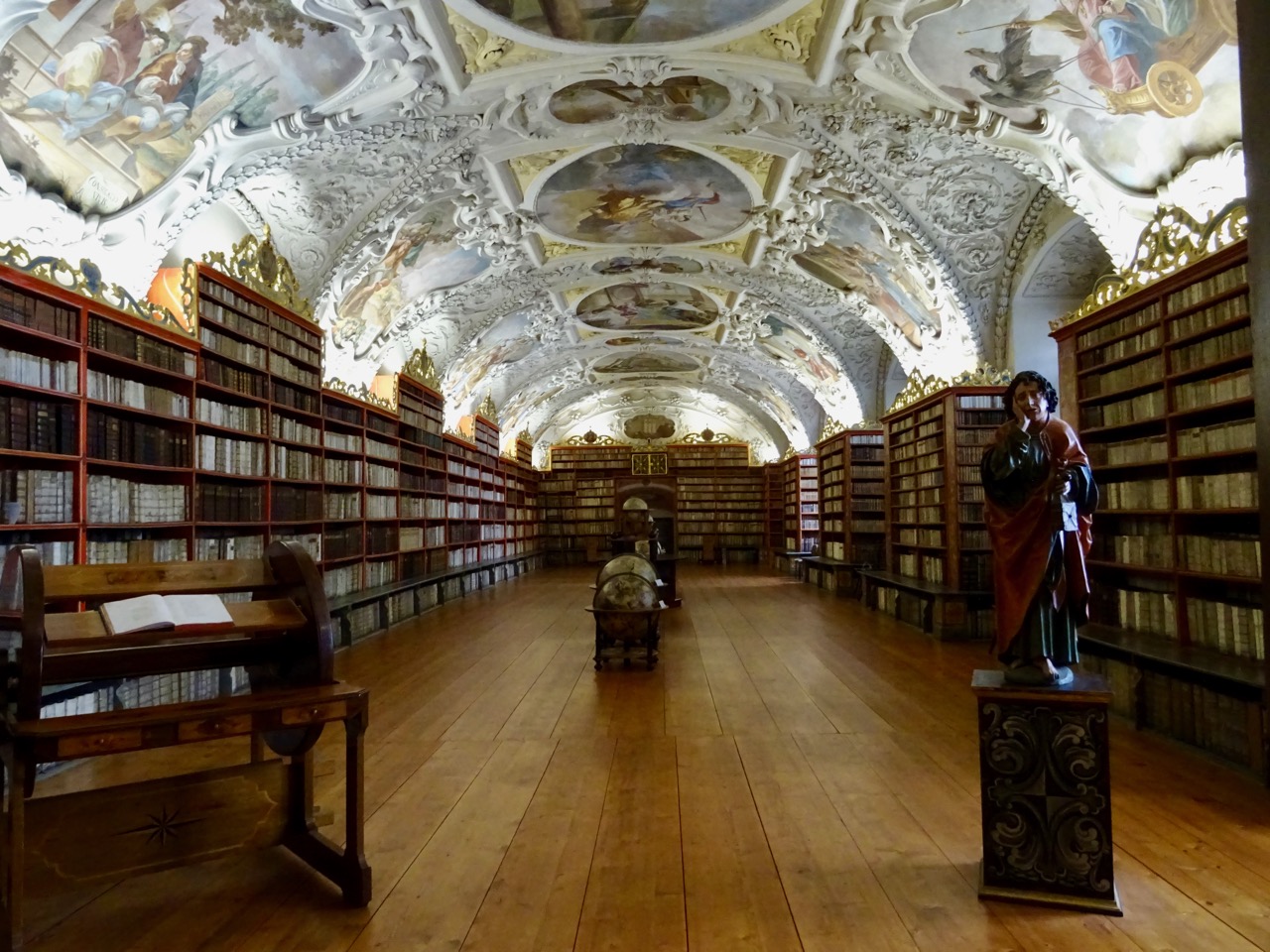
 The Theological Hall was built in the 1600’s and holds over 20,000 volumes. One whole wall is filled with various editions of the Bible, or its parts, in various languages.
 The ceiling depicts the life of the librarian.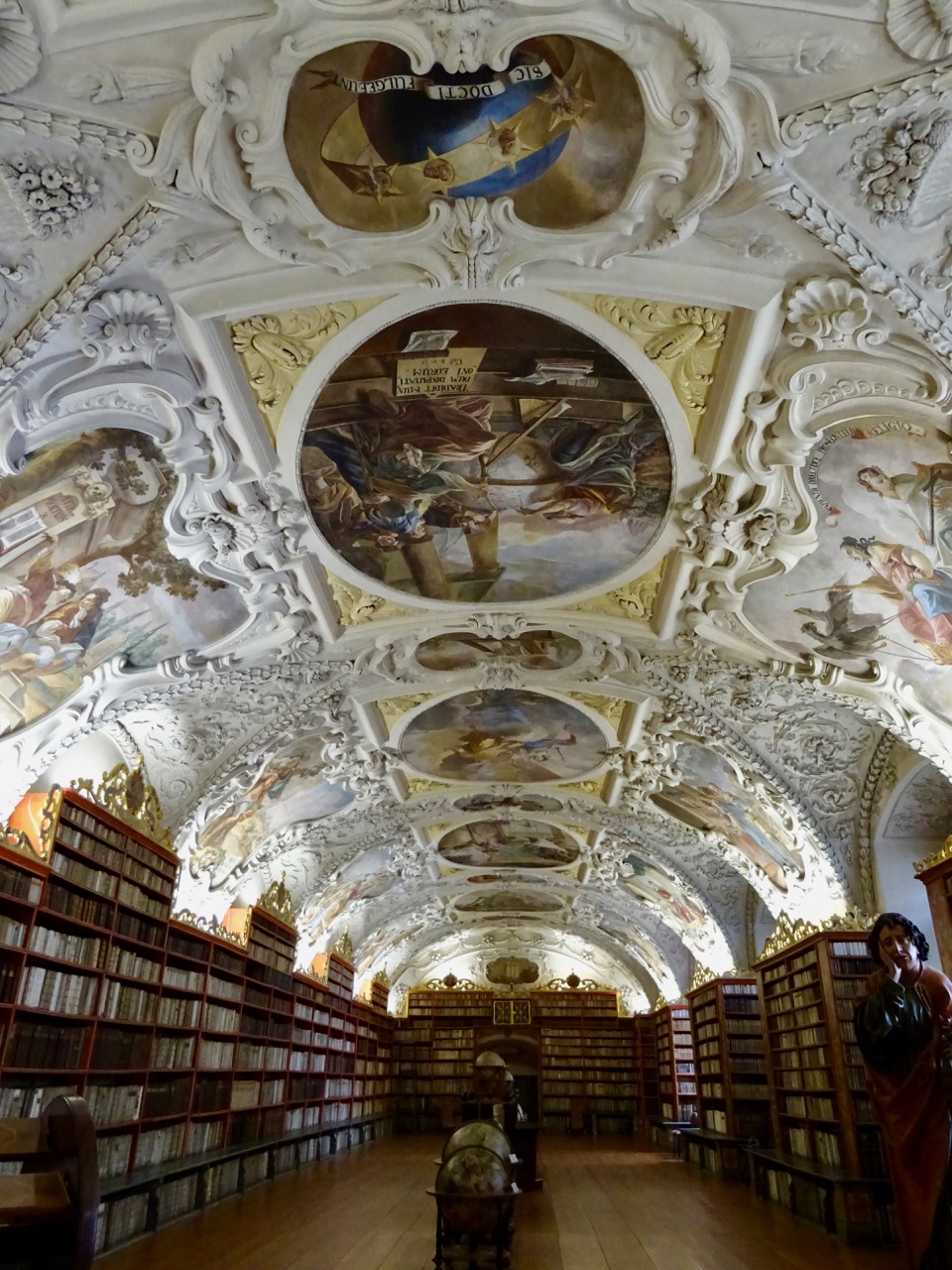
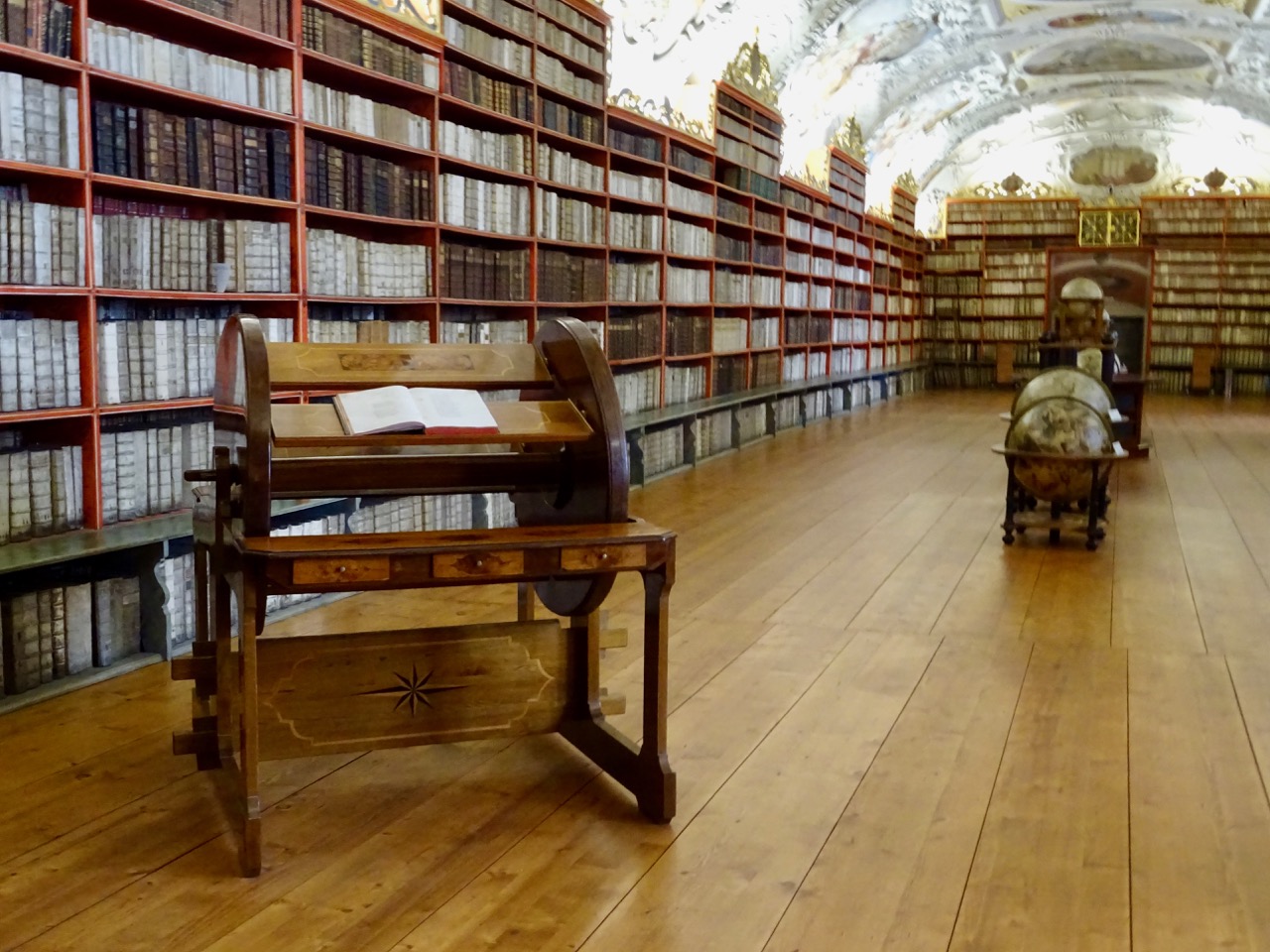
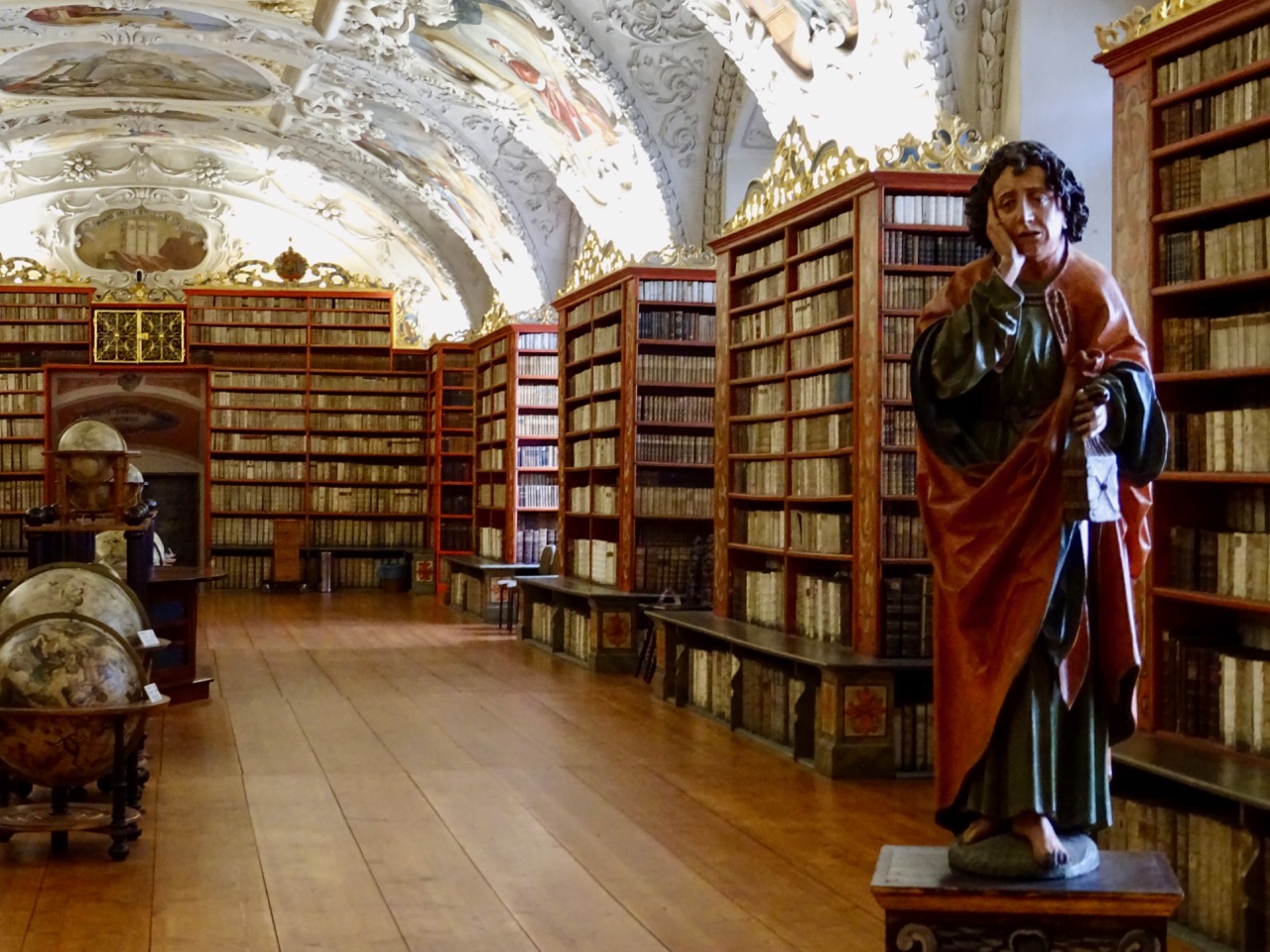 There are several globes, both terrestrial and astronomical, in the centre of the room and the interesting device on the left is a book wheel from 1678 for the study and compilation of books. The gear inside enabled the shelves to remain at the same angle when they are turned so that the books would not slide off the shelves.
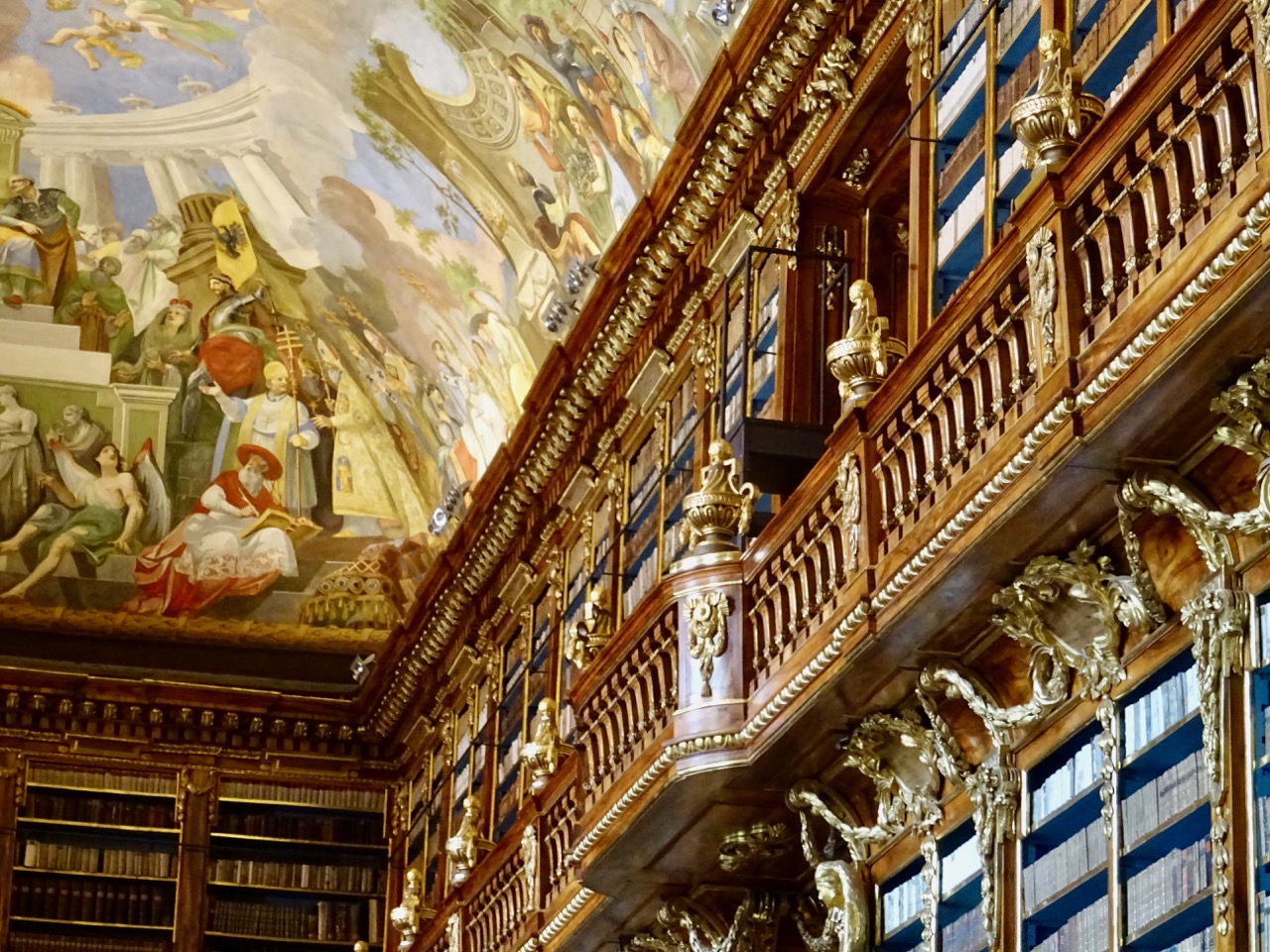
 As magnificent as the Theological Hall is I think that the Philosophical Hall is even more impressive. This library, finished in 1794, is 32 metres long, 10 metres wide and 14 metres in height. The ceiling painting, ‘The Spiritual Development of Mankind’, was created by a Viennese artist, and one assistant in just six months!
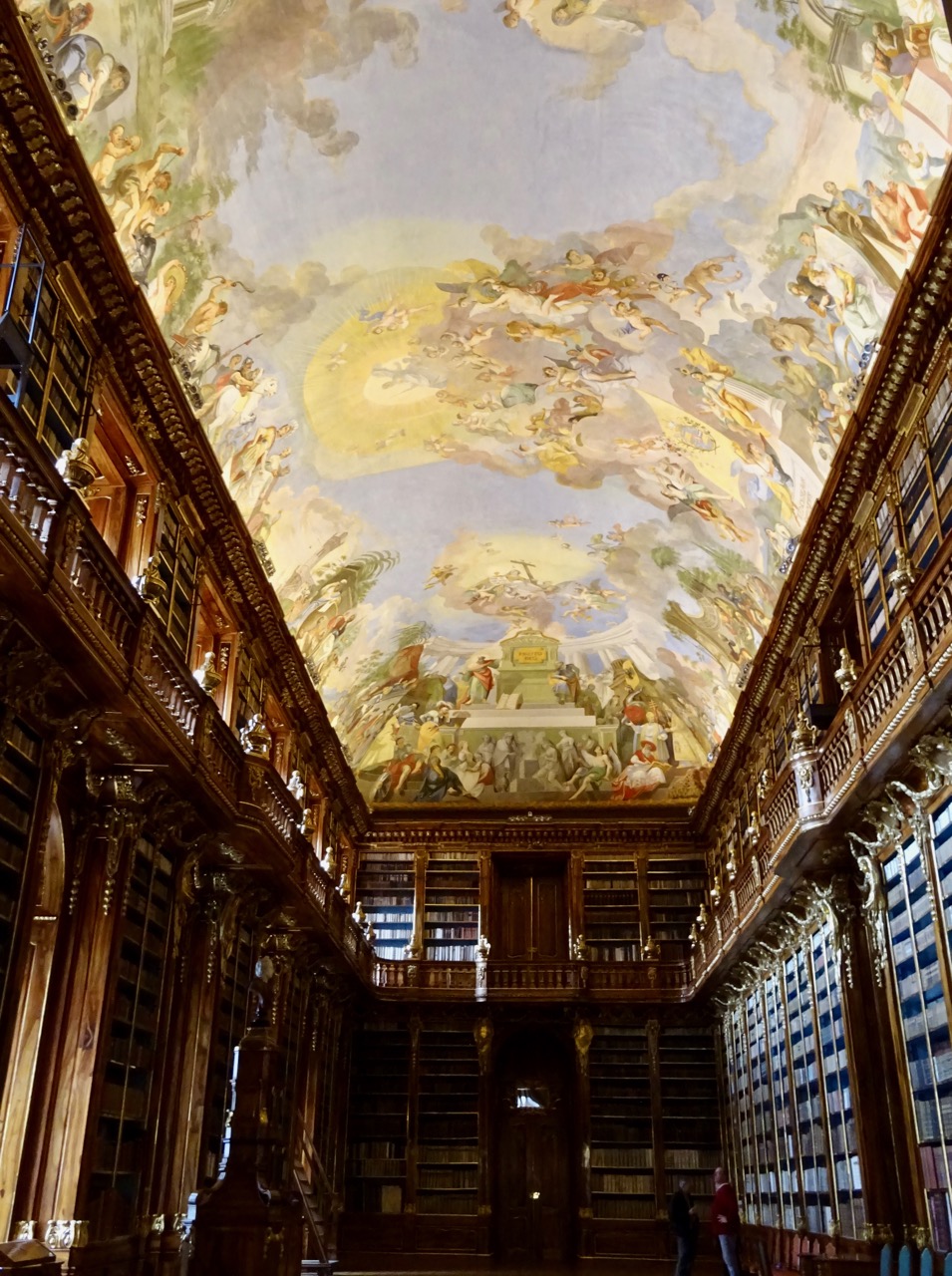 The shelves of books in the gallery are only accessible from hidden spiral staircases in both corners, masked by false book spines.
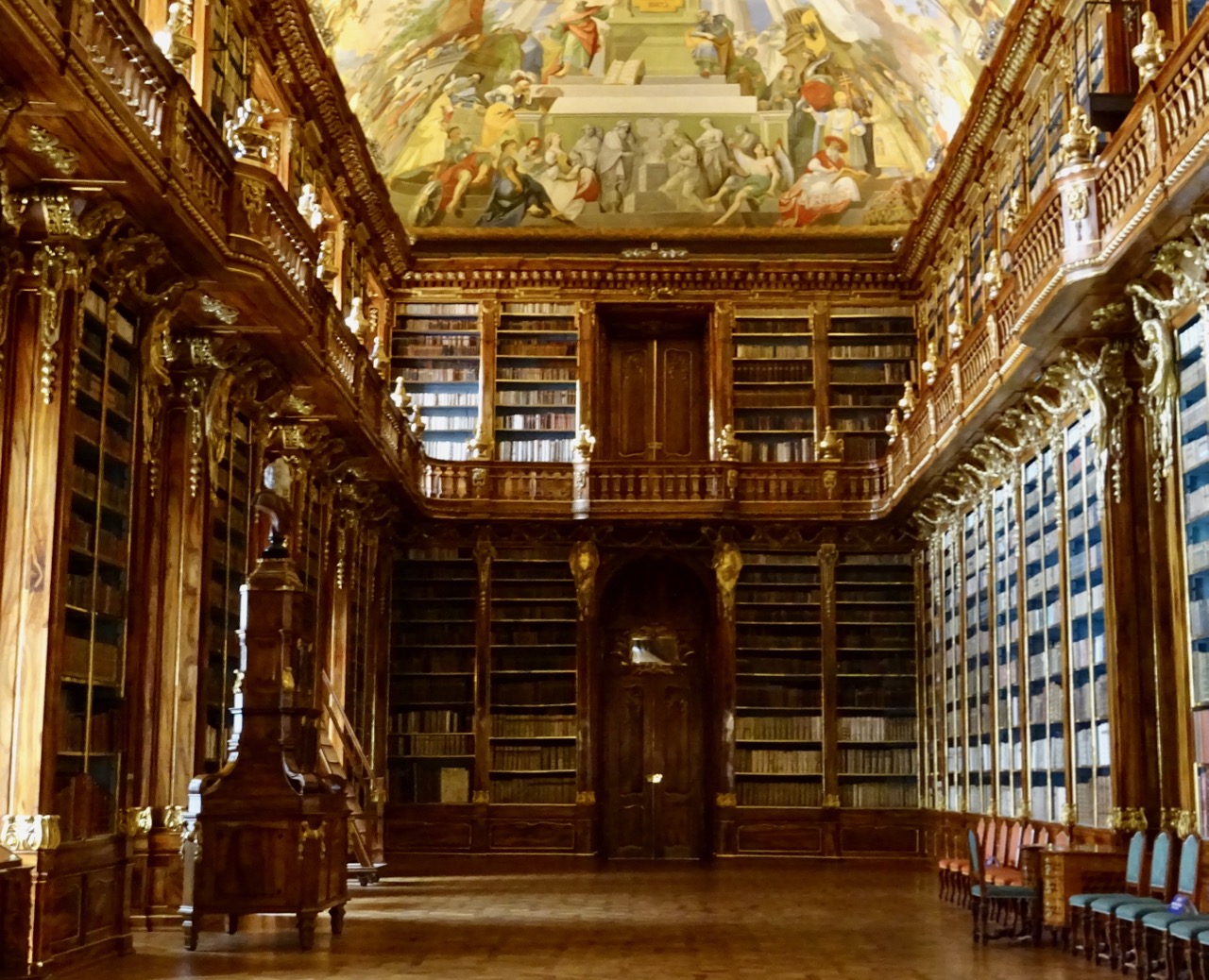 The books are shelved two deep. At one time tourists were allowed to walk through the library but this caused too much humidity and put the paintings and volumes at risk. Now we have to contend ourselves with peering in from the doorway. Too bad but it is still wonderful to see these incredible libraries.
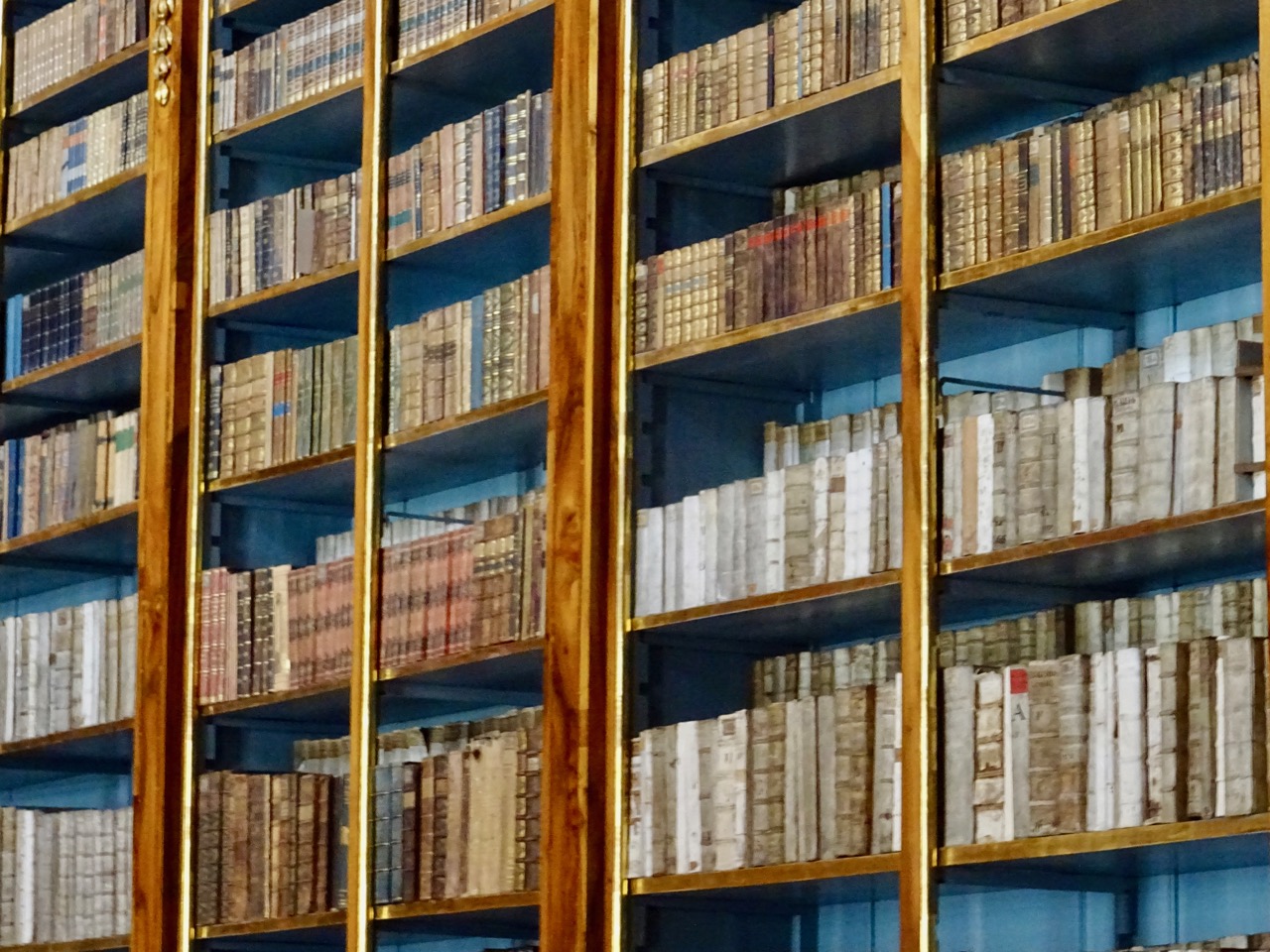 The Philosophical Hall contains more than 50,000 volumes on Philosophy, all the sciences, history, law, and natural sciences.
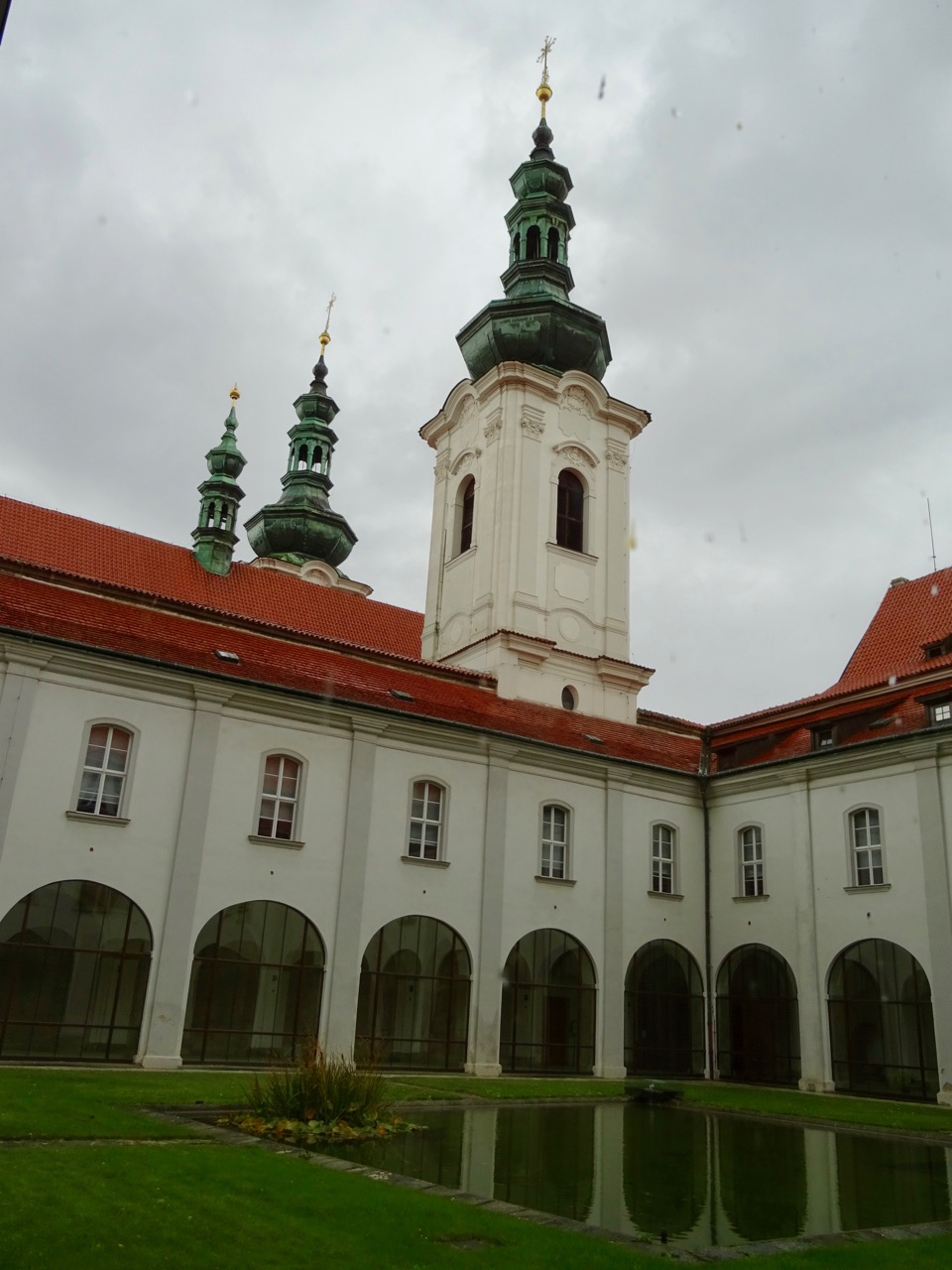
 Next we visit the Convent Building which has galleries on two floors around this cloister with its unusual trapezoid pool.
 There is an exhibit of large restored paintings depicting the life of St. Norbert but they were difficult to see. My neck got sore from looking up all the time.
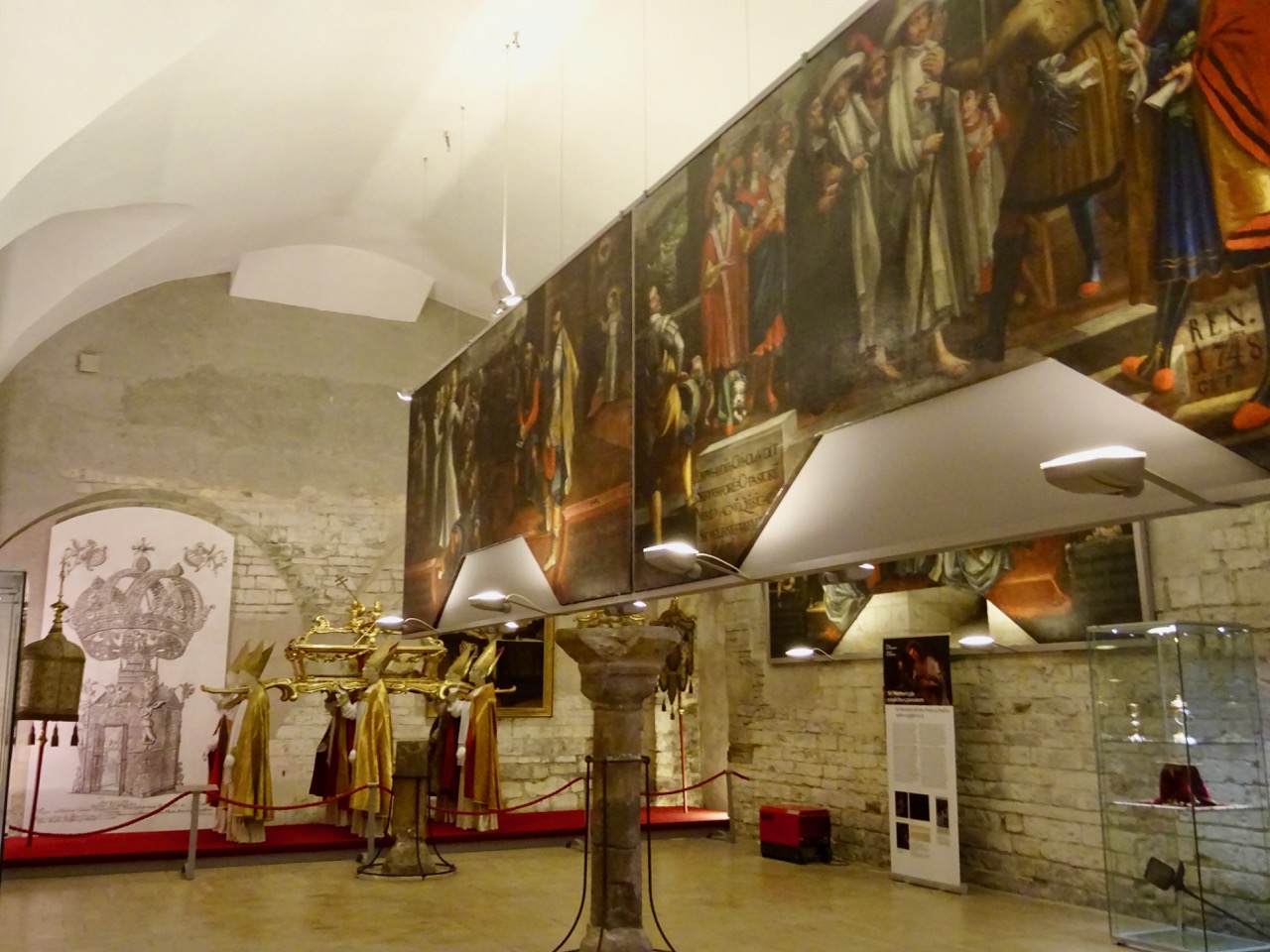 The ‘procession’ at the end of the room holds a reliquary with what appears to be part of St. Norbert’s skull.
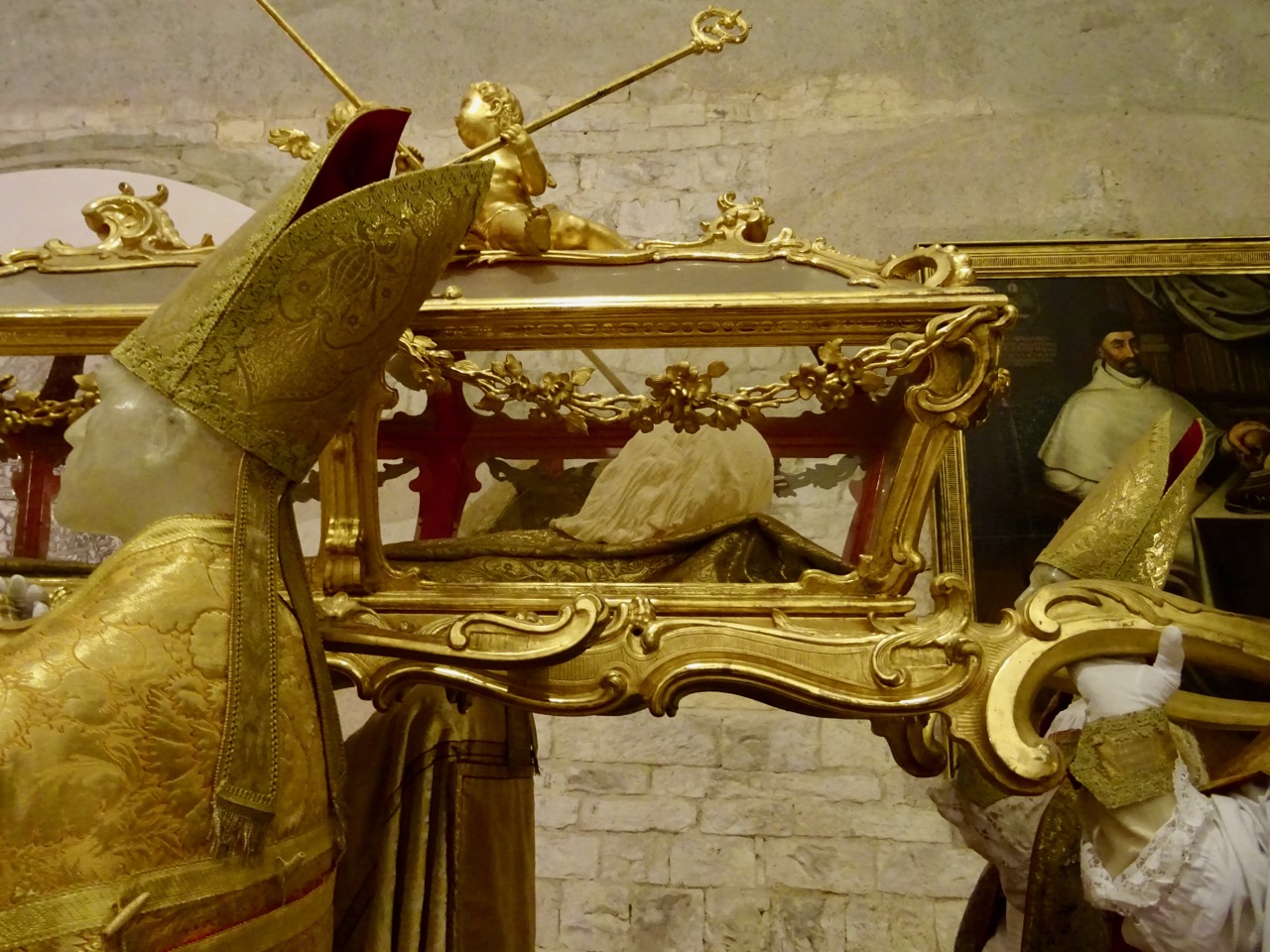 Another room has exhibits of beautifully embroidered church vestments and other liturgical objects including heavily jewelled monstrances.
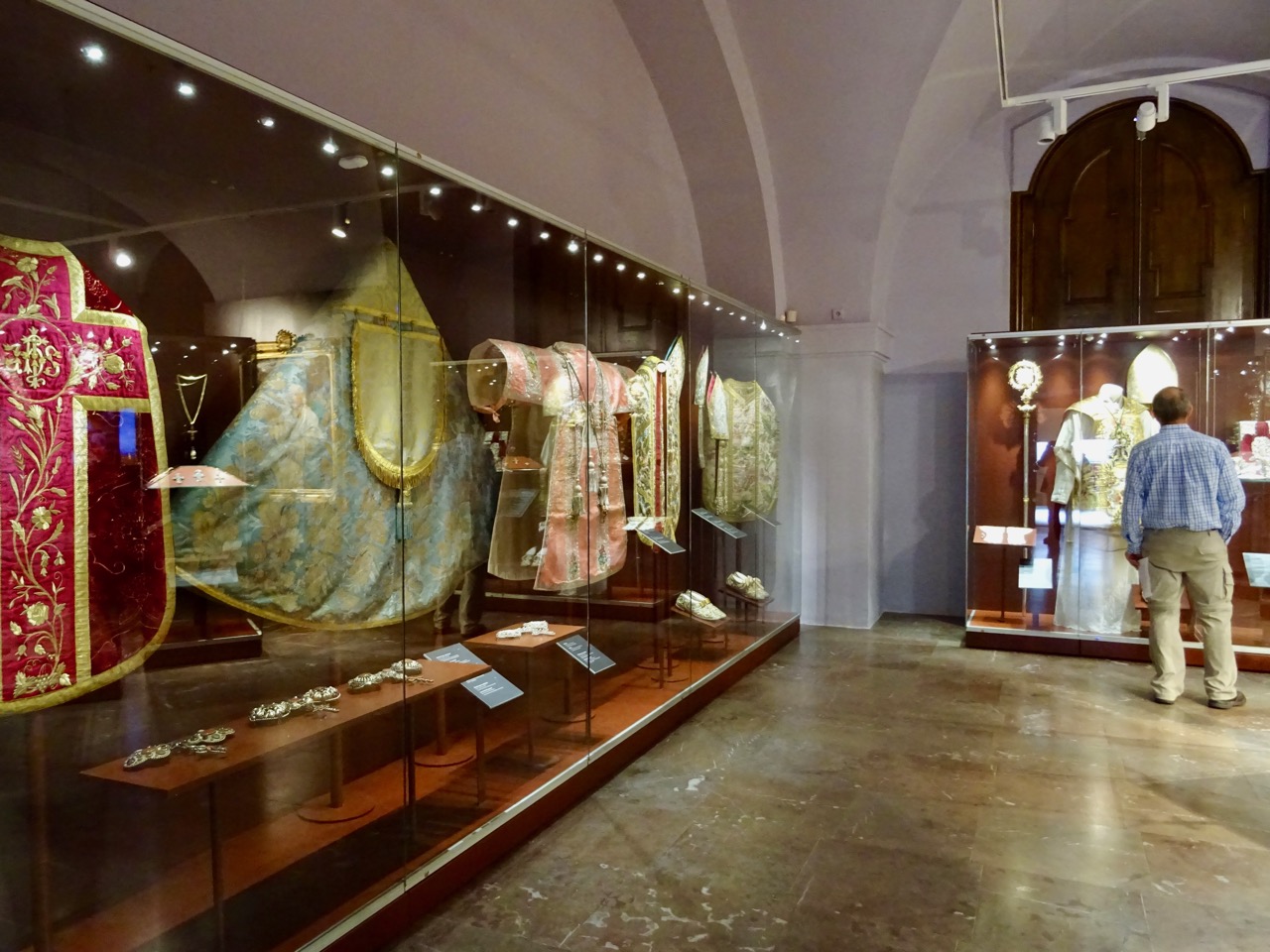 It does make me wonder just how much money the Catholic Church has?
 The second floor has a gallery around three sides of the cloister.
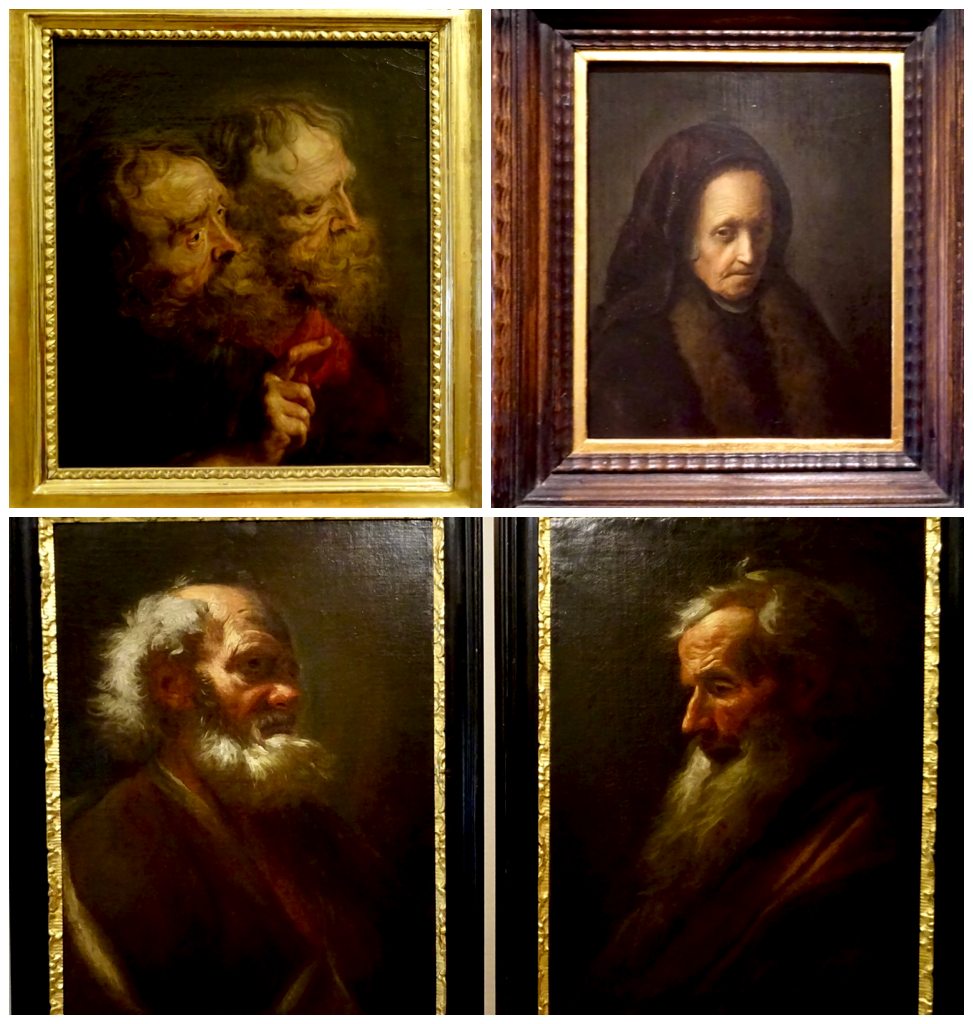
 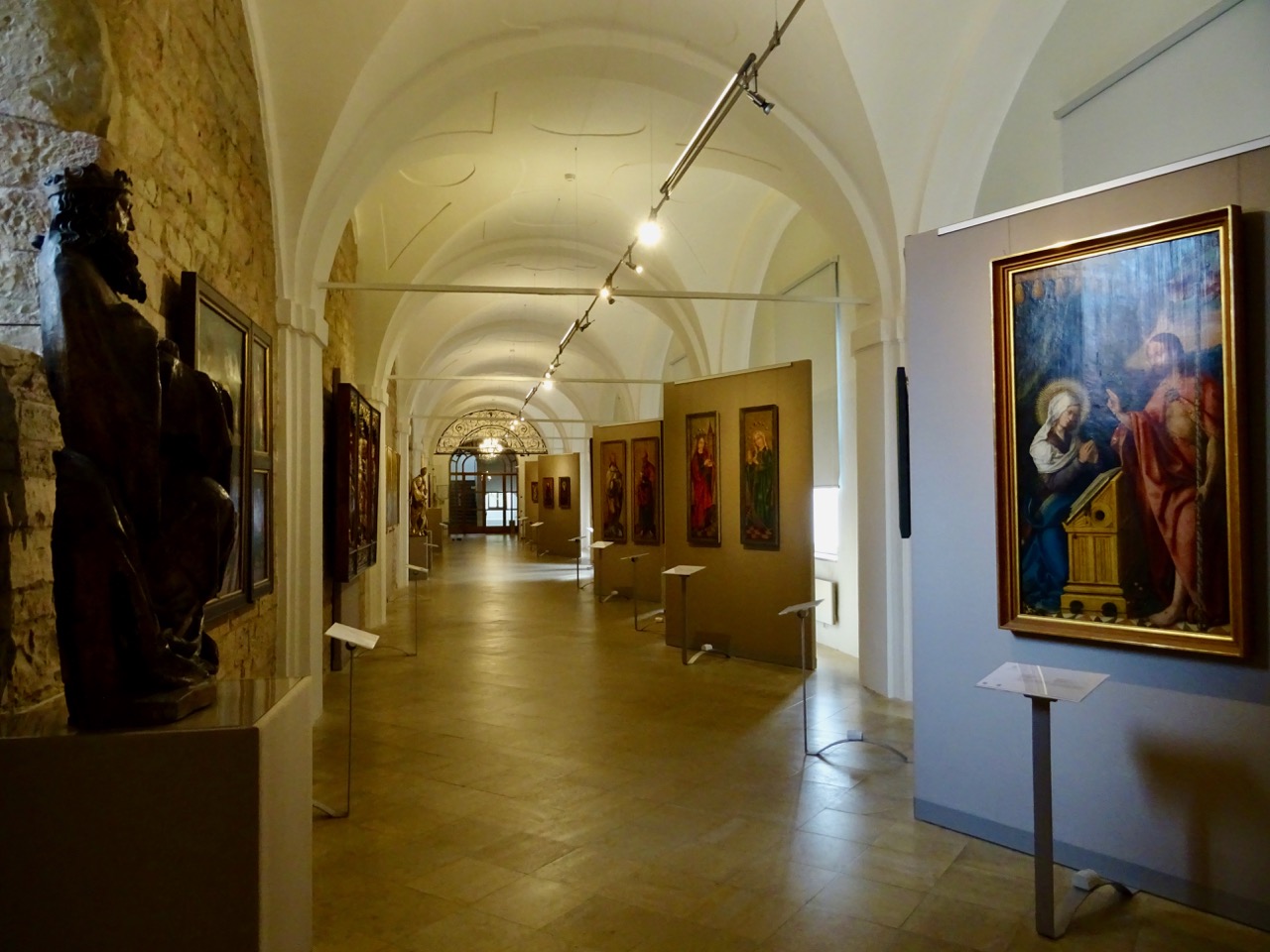 There were a few paintings I liked but most of them didn’t really impress either of us all that much.
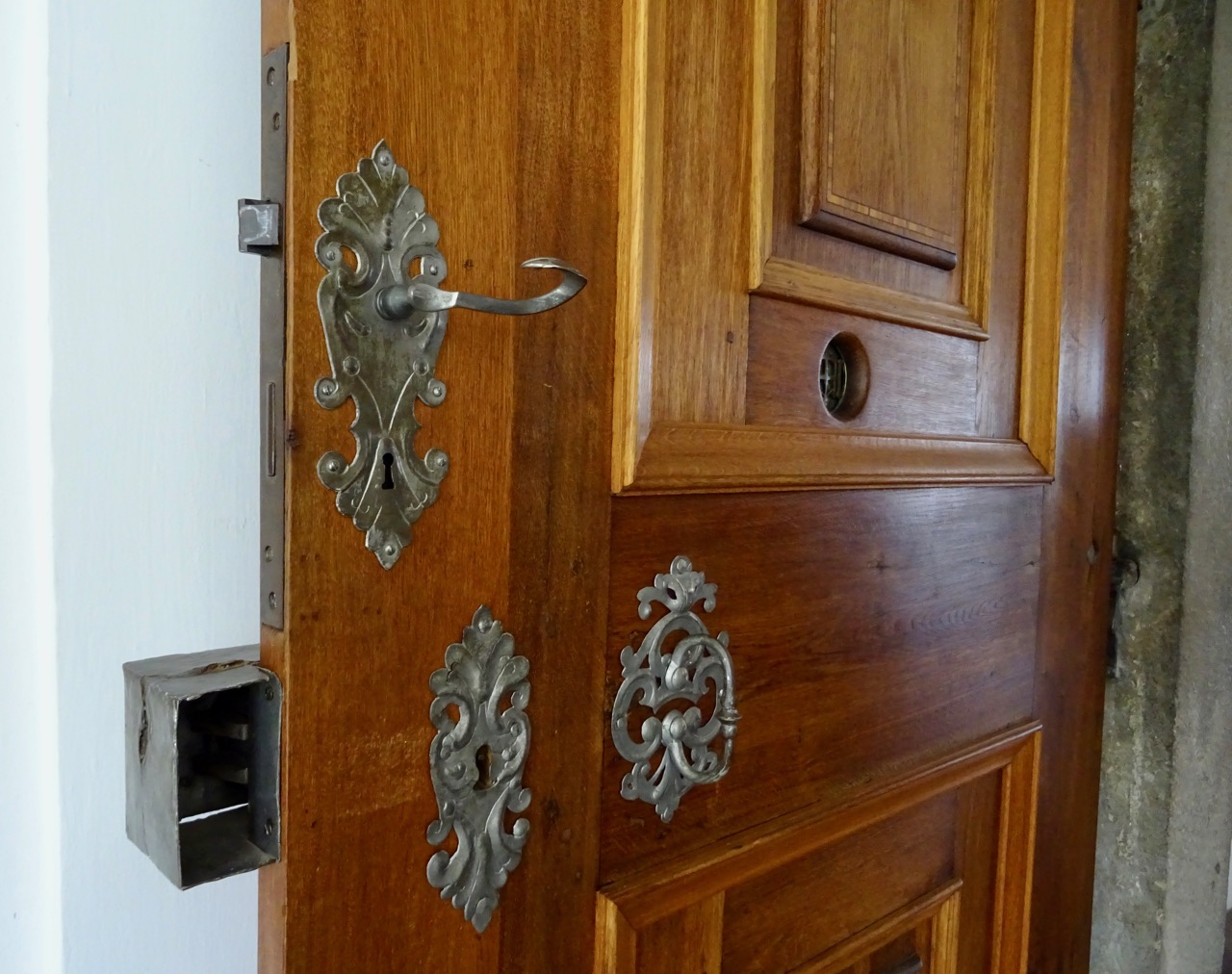
 Bob notices another ornate old lock.
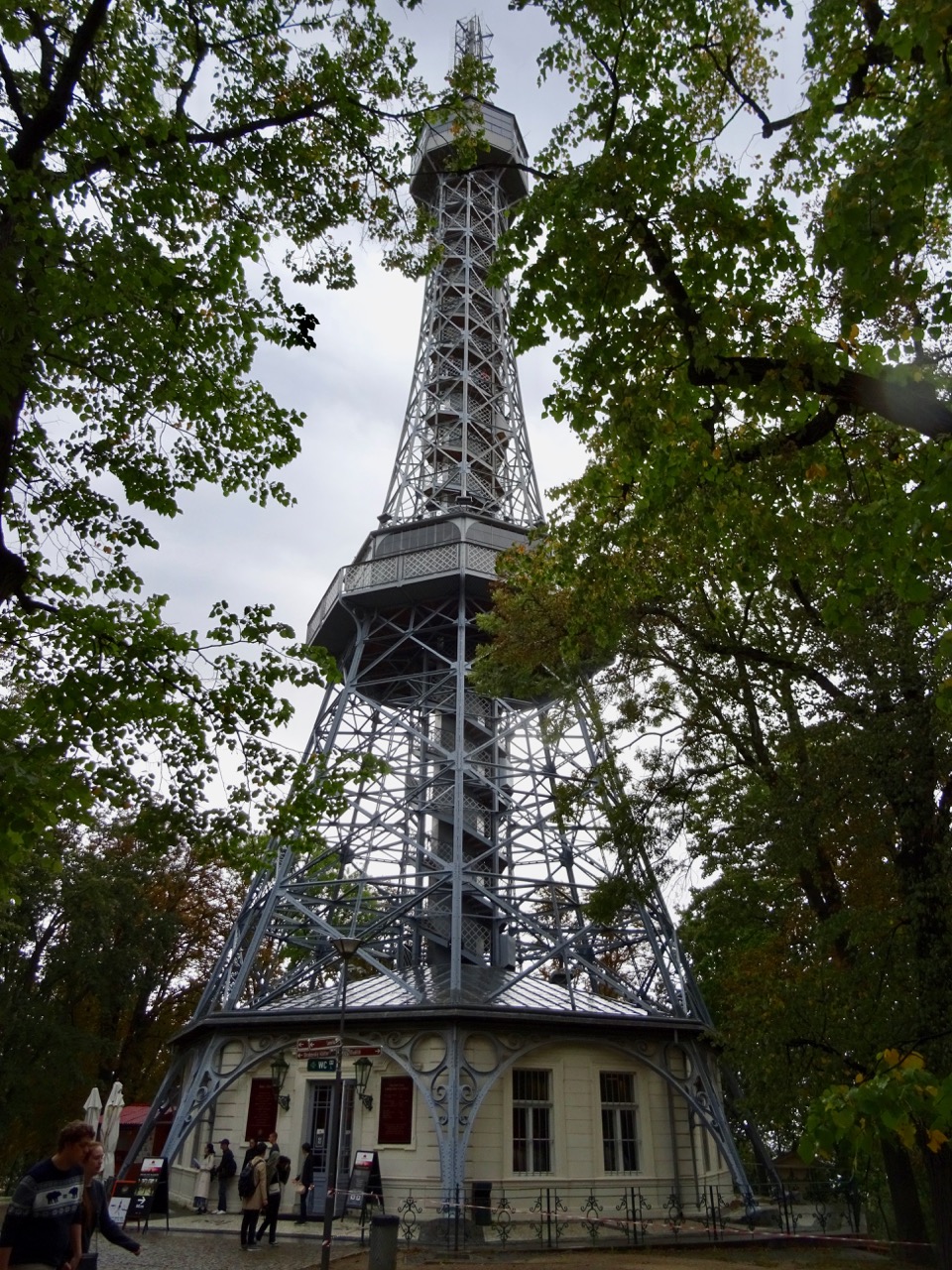
 As we leave the monastery grounds on our way to the Prague Funicular, we pass the 63.5 metre high Petrin Tower, which is reminiscent of the Eiffel Tower. This tower was built in 1891, and is used as an observation tower as well as a transmission tower.
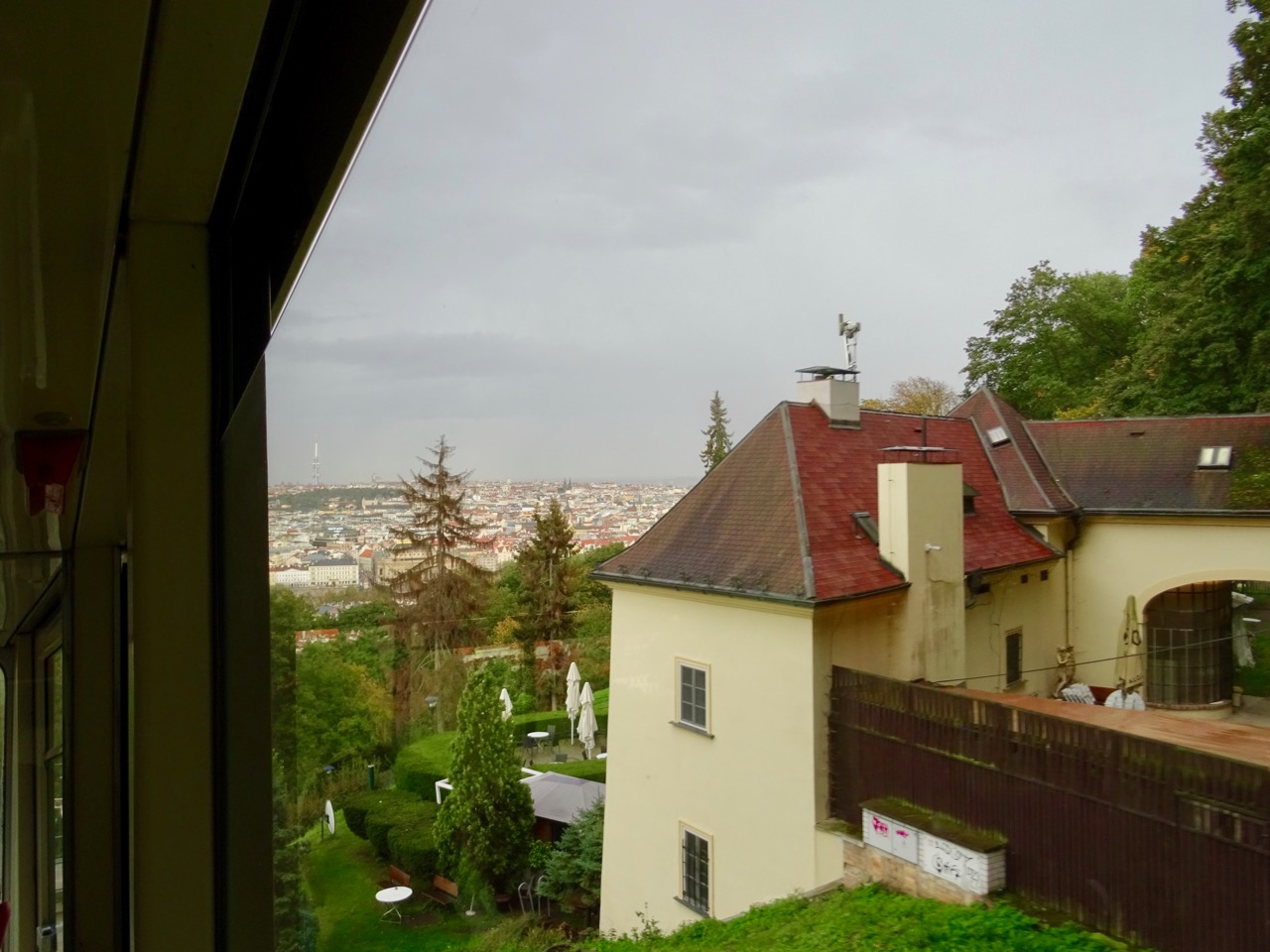
 The 383 metre long funicular takes us back down to Prague city streets. I didn’t get much of a view because some young people kindly jumped up to give me a seat, so instead of standing where I could see I sat all the way down! The hazards of having grey hair!
 It has been a full day and we are happy to be home. I had planned on going to life drawing again tonight, but we need to clean and pack for our trip to Vienna tomorrow so I decide not to go.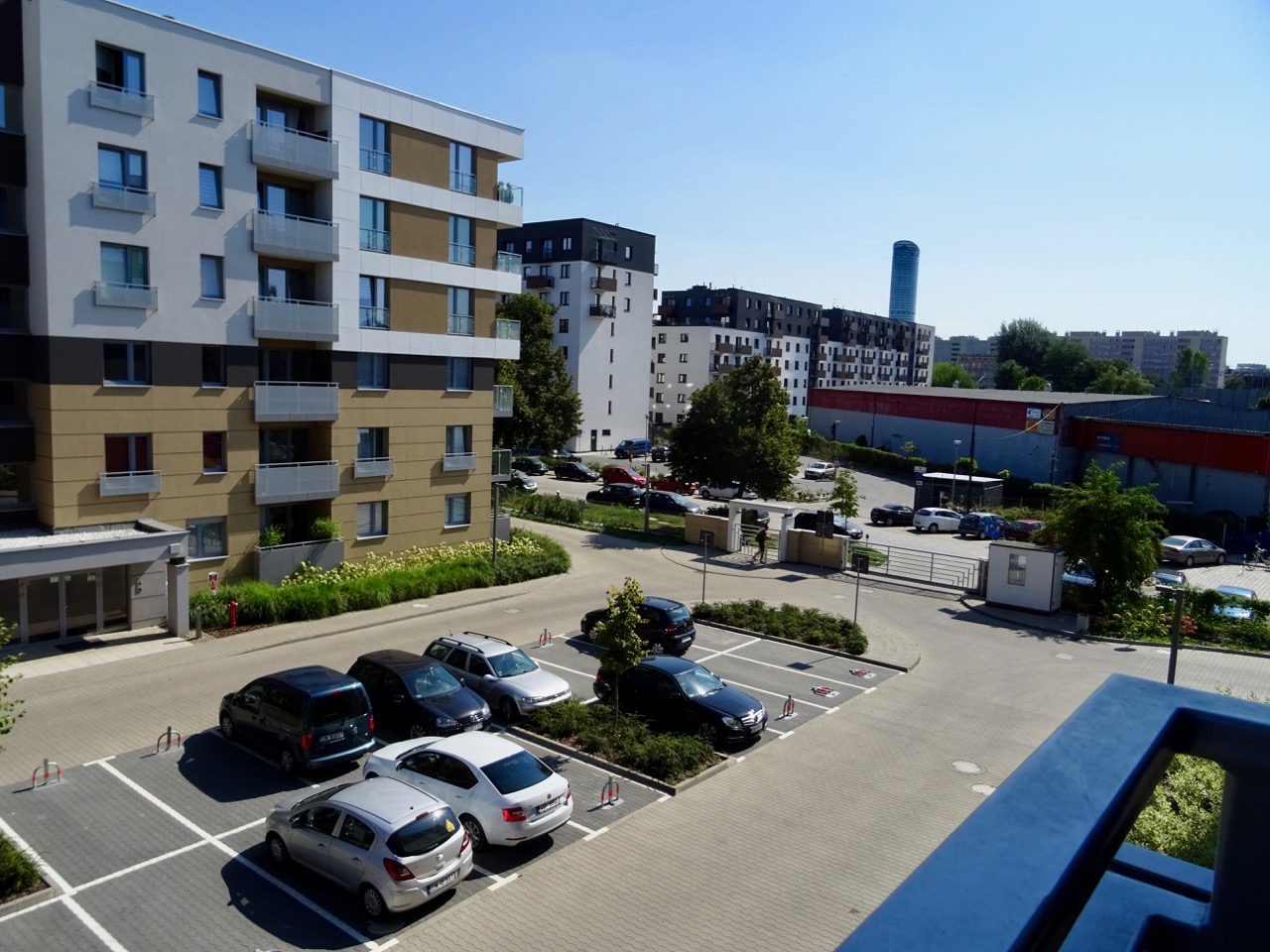
 Here’s how big items get delivered!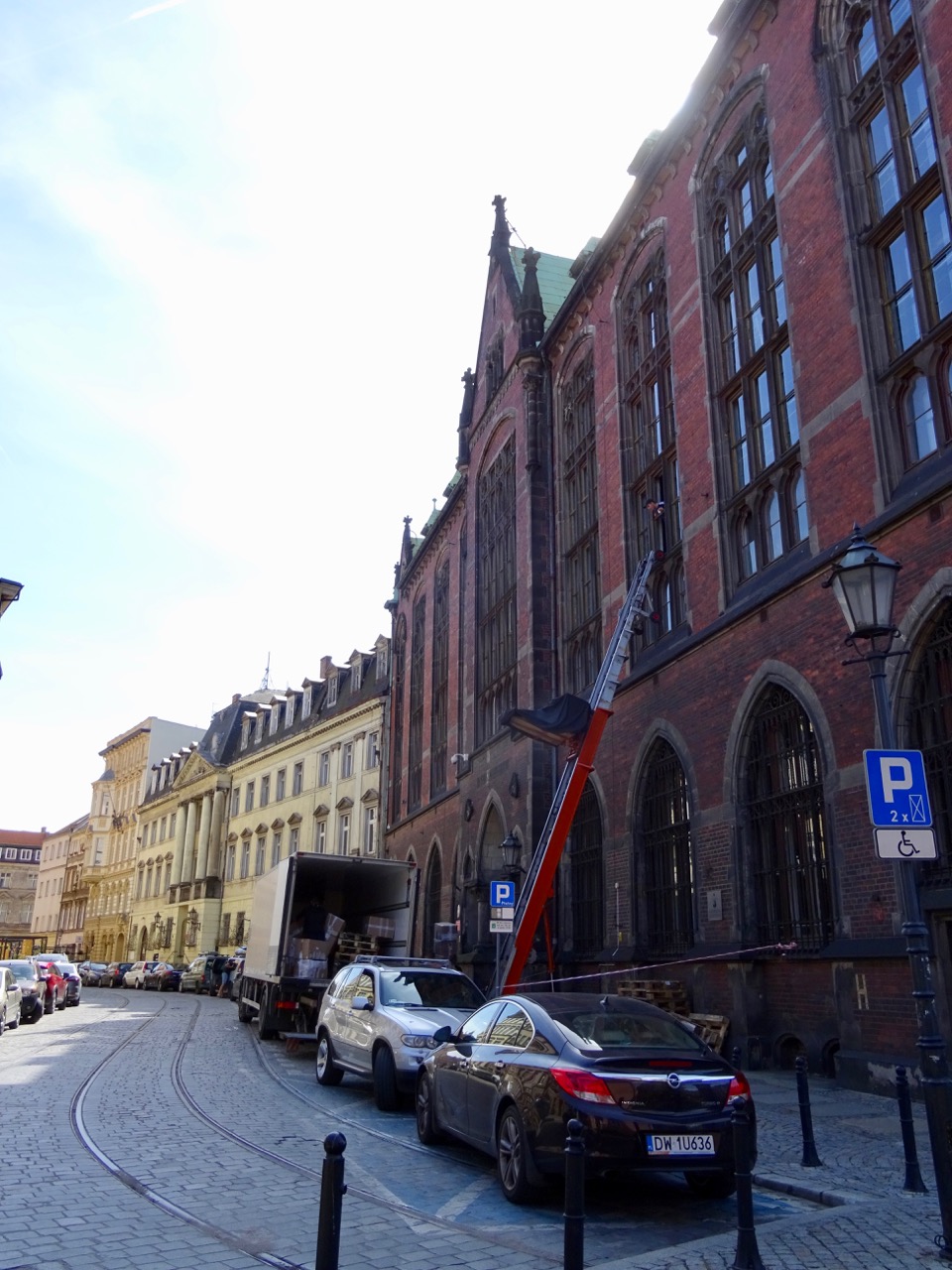
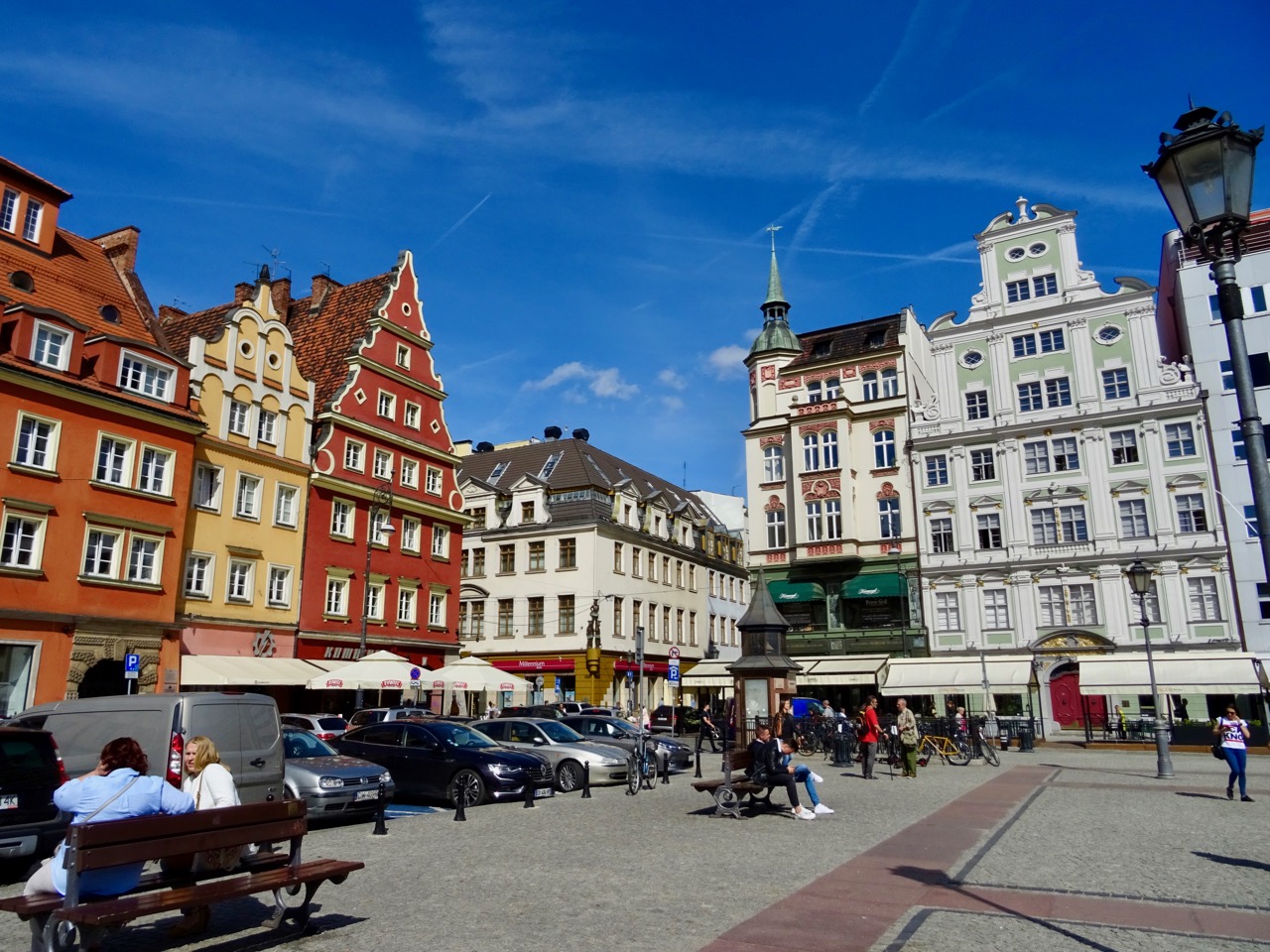
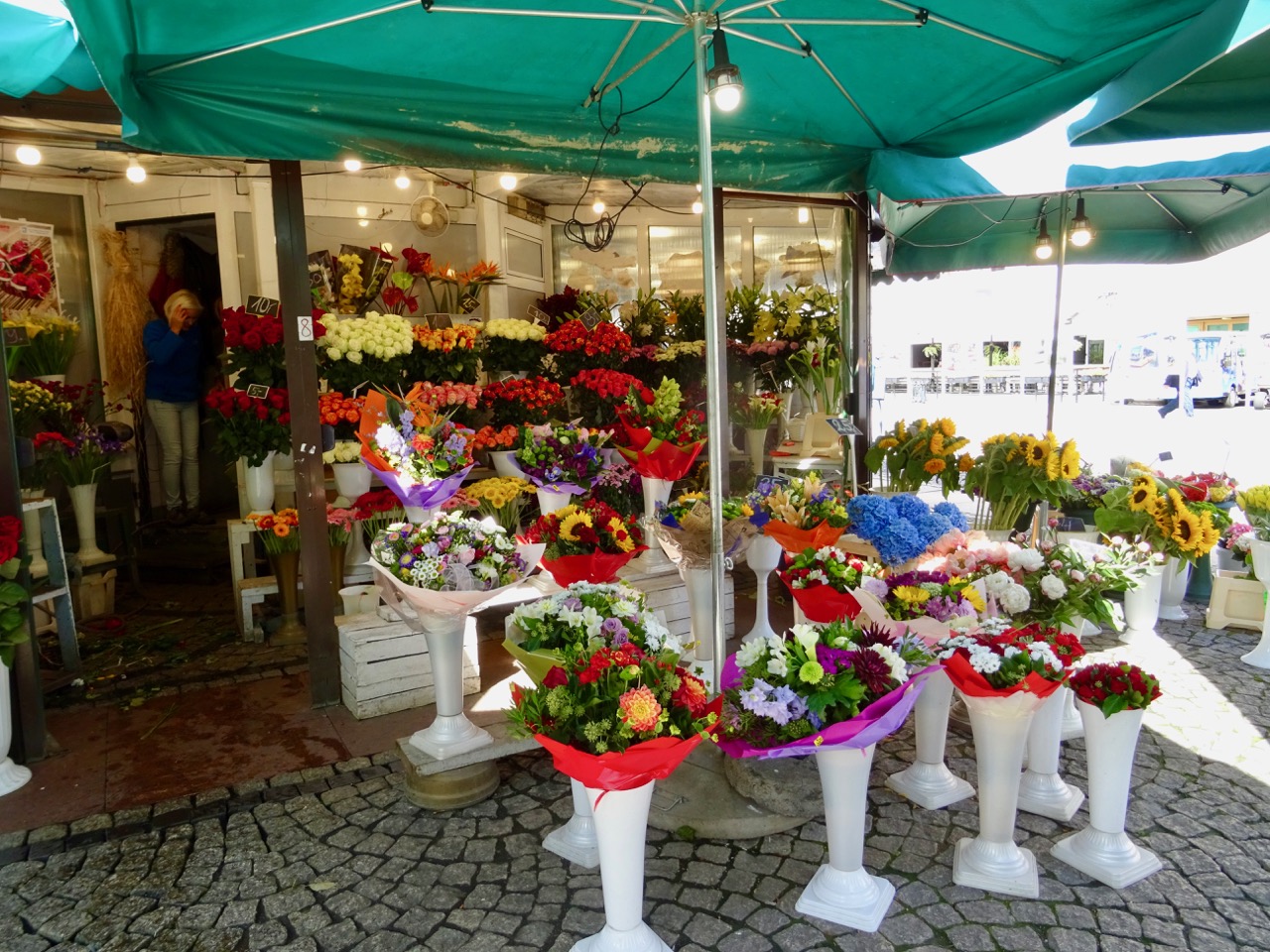 Wroclaw has an ever growing populations of gnomes. In fact, our guidebook states “the little buggers are currently rumoured to be running rampant to the score of over 300 making it literally impossible for us to try to keep track of them!” I think they are delightful and I am happy to make their acquaintance .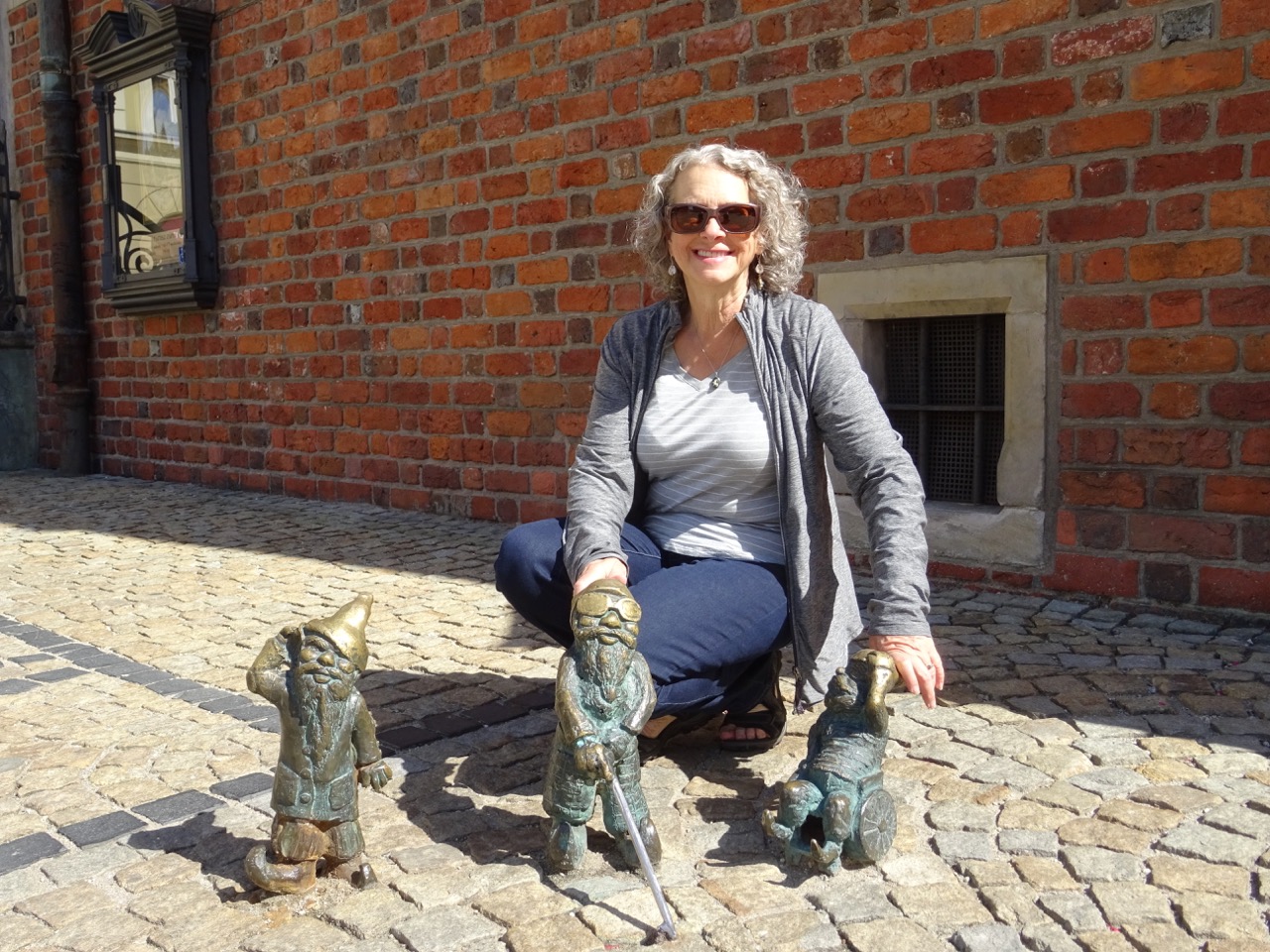
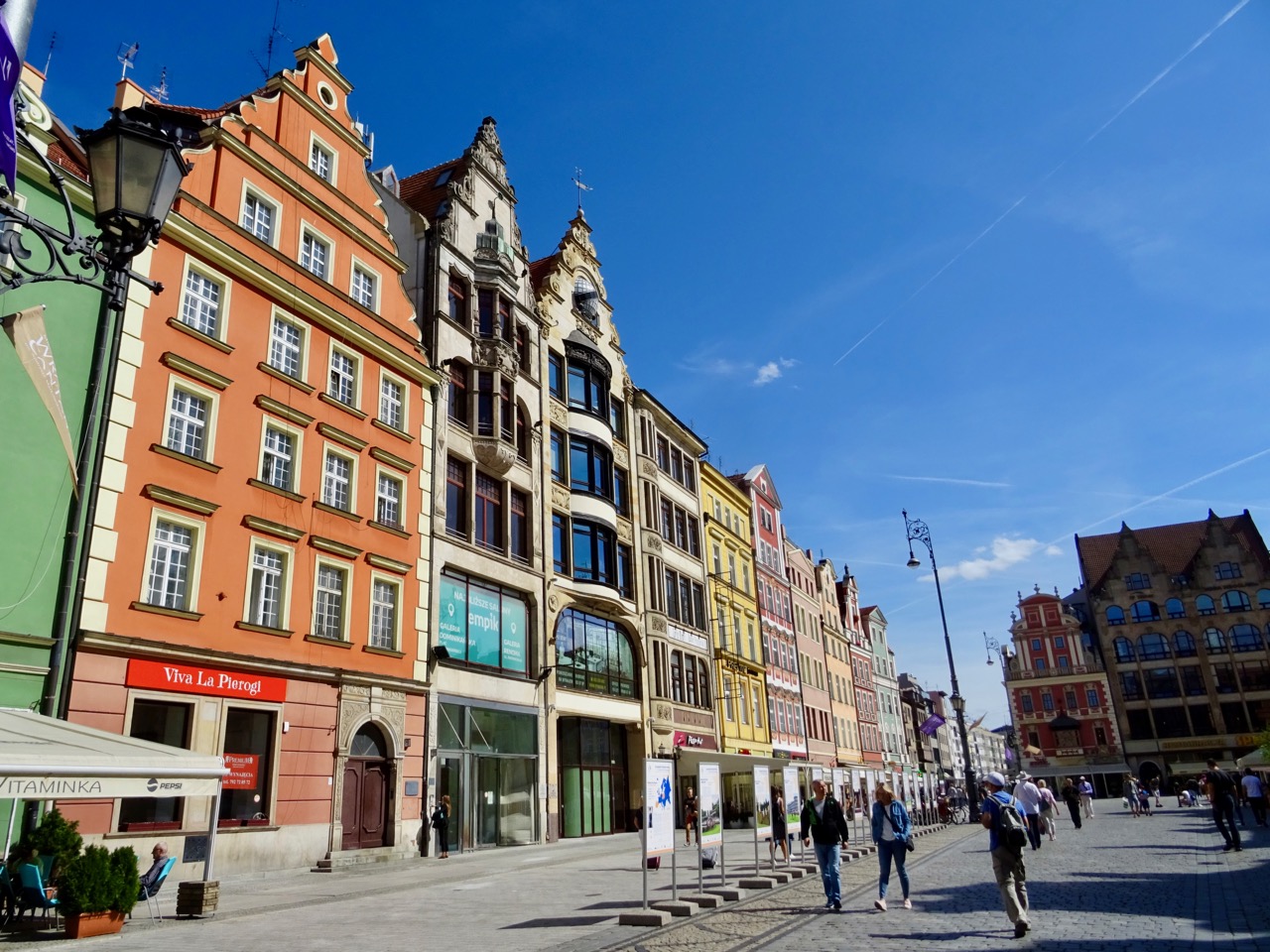
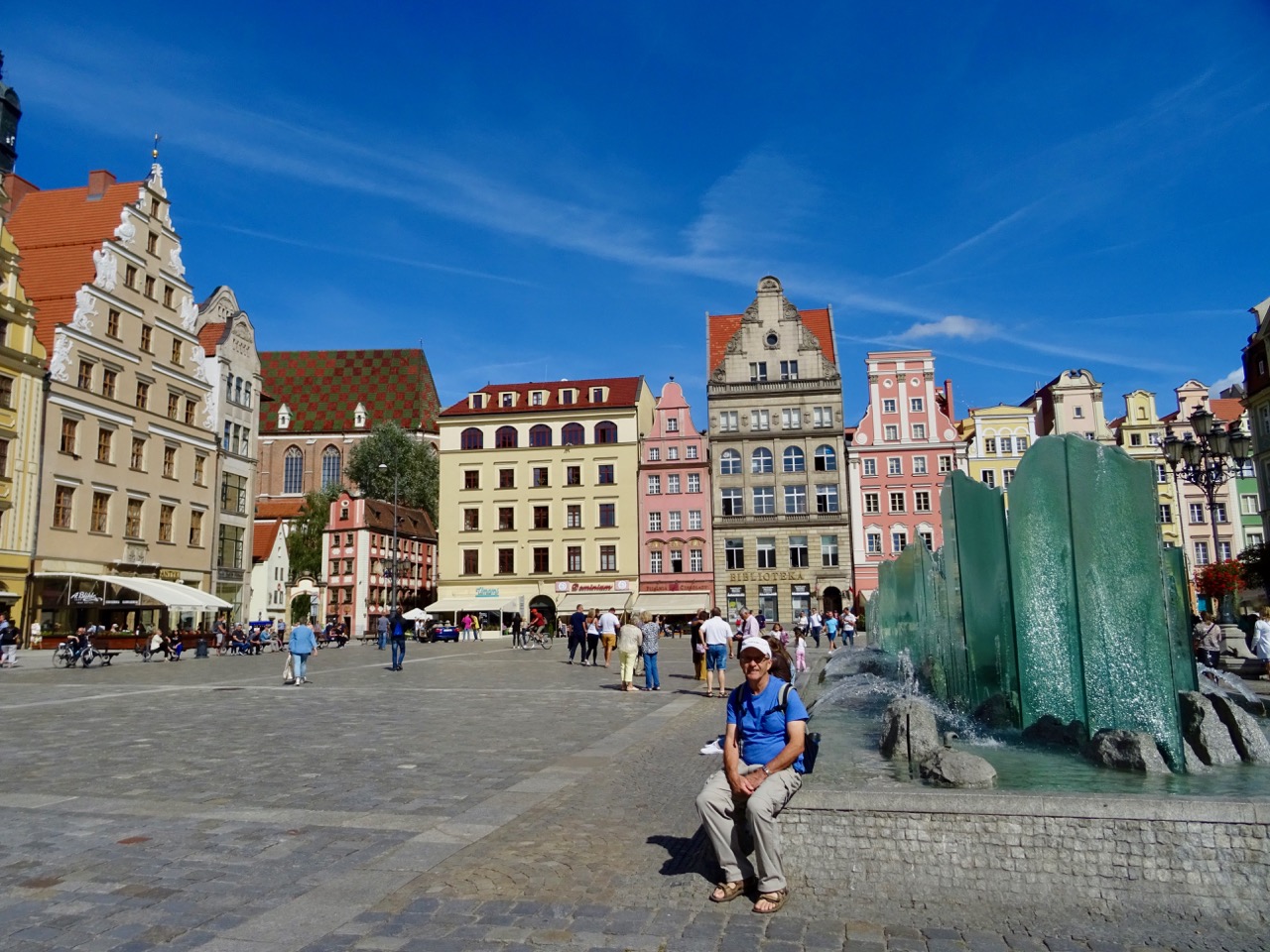 and more tenement houses in the town square.
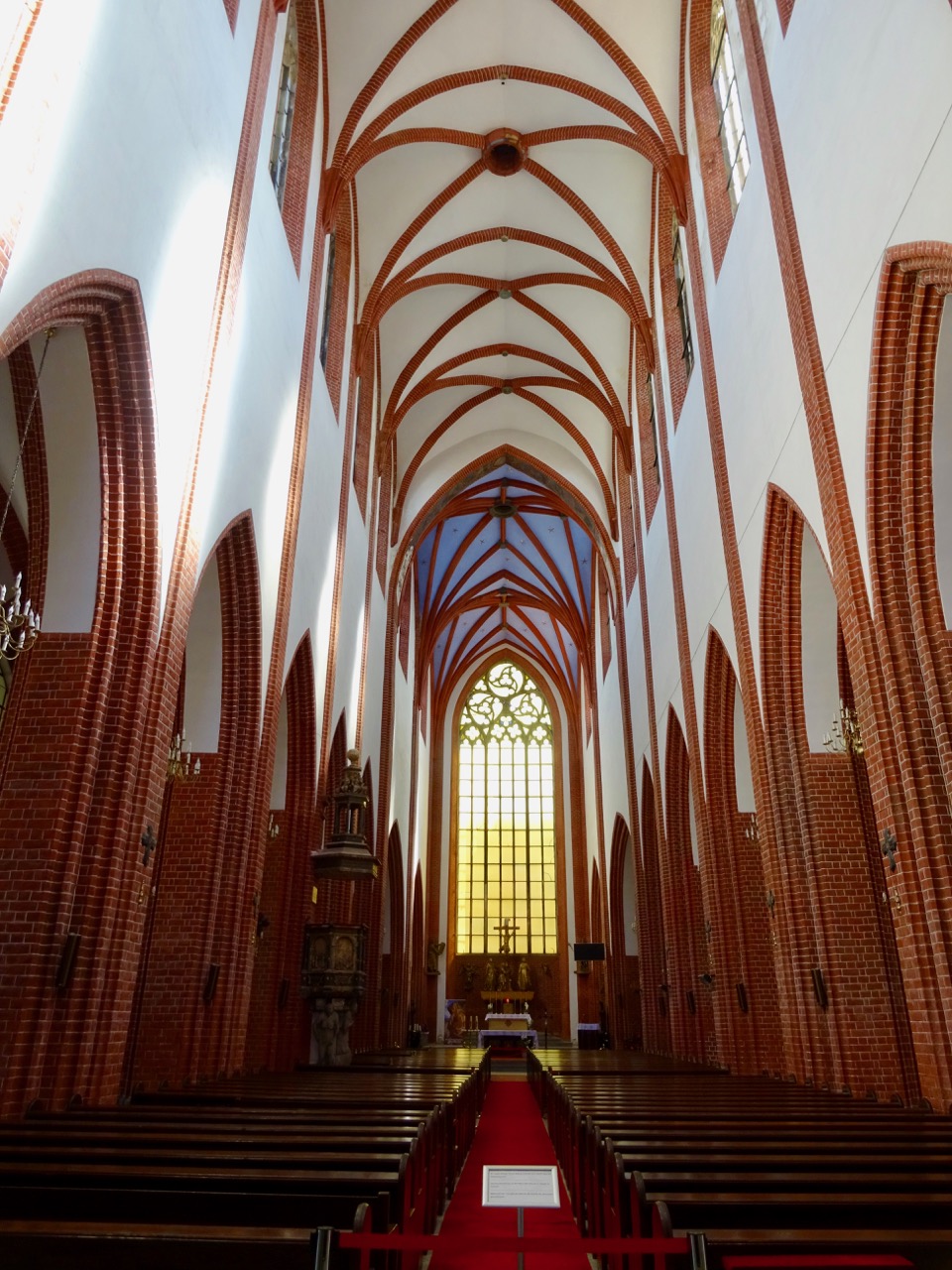
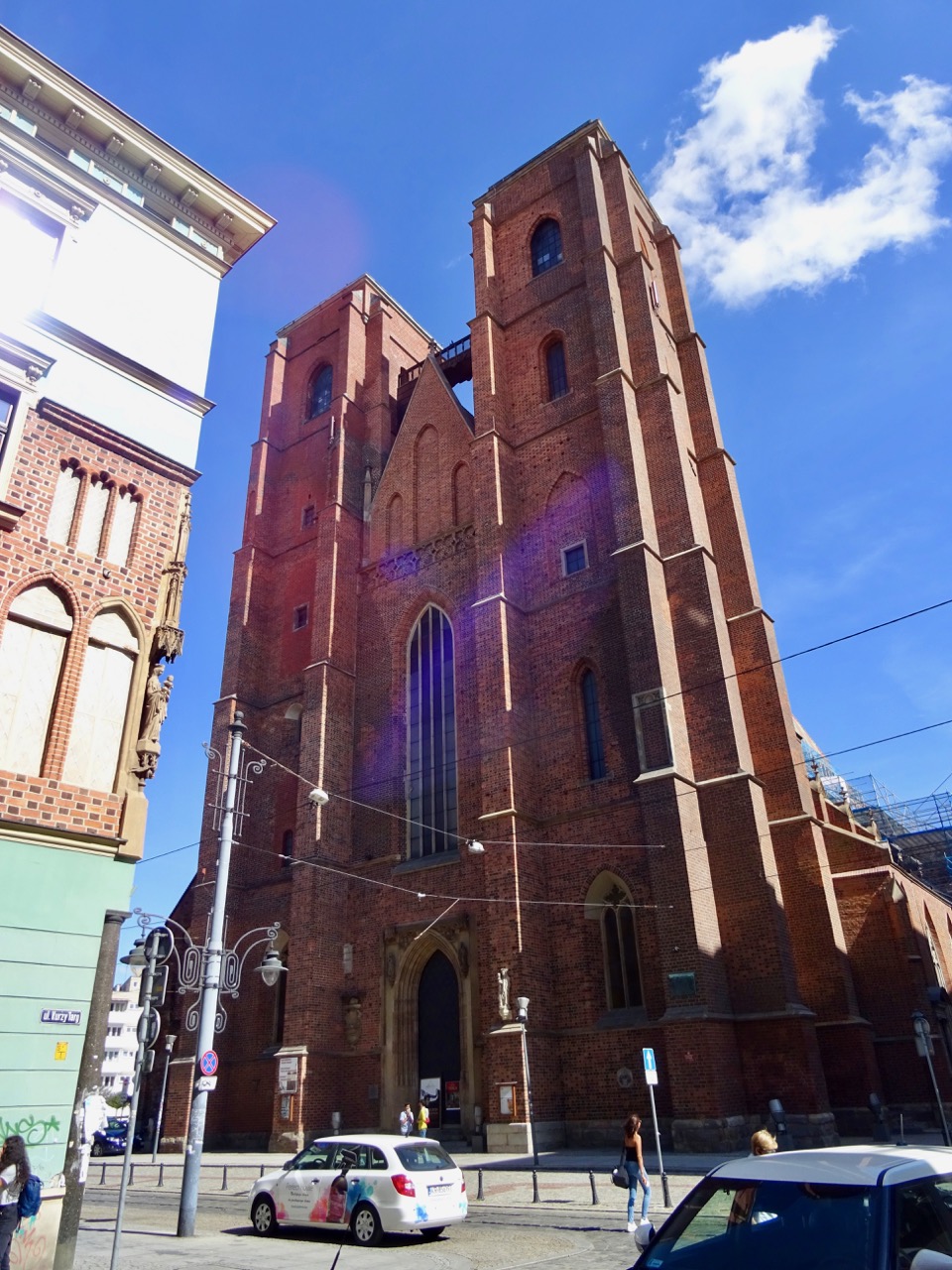
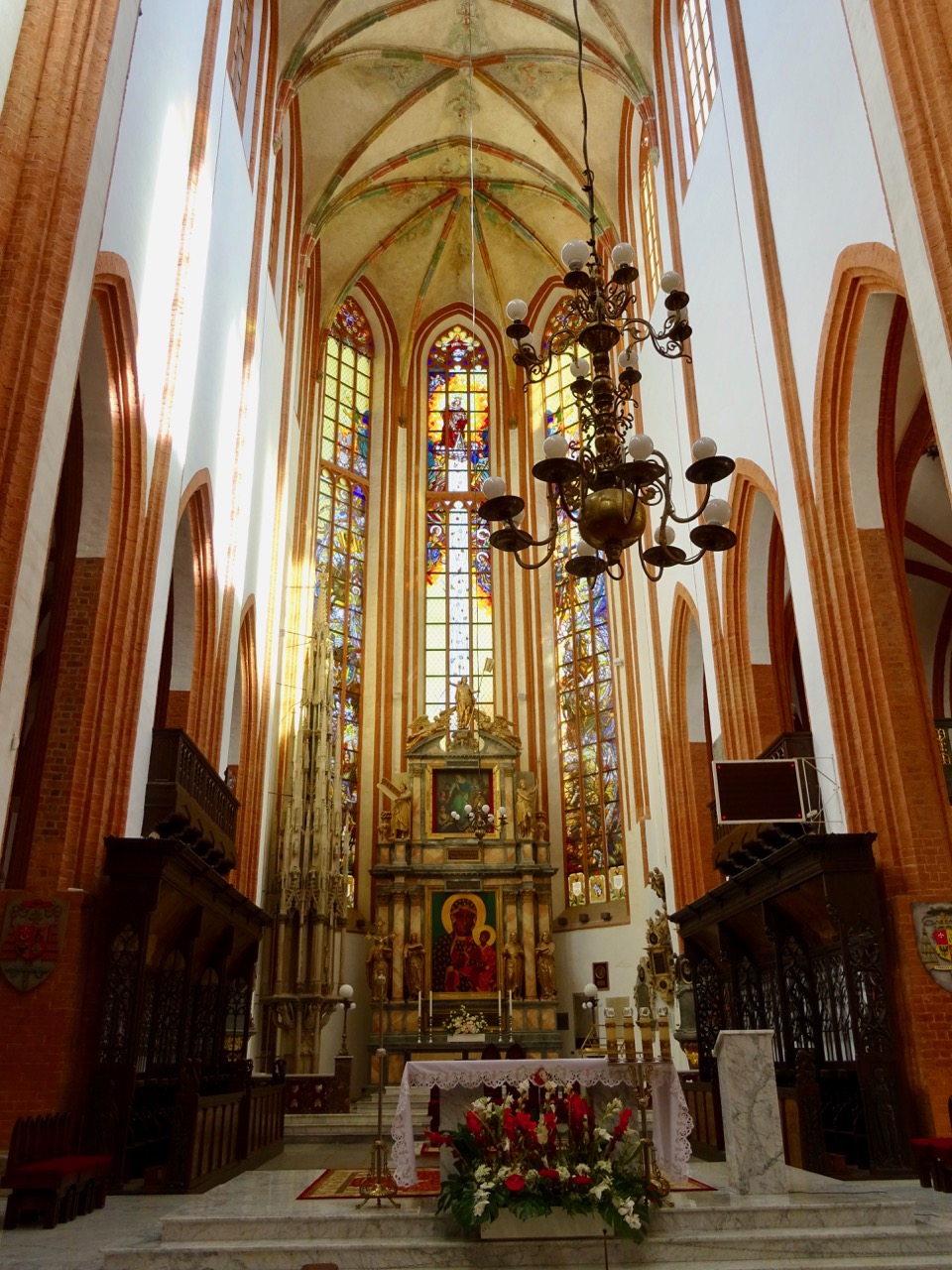
 The interior of St. Mary Magdalene’s Church which dates from 1330.
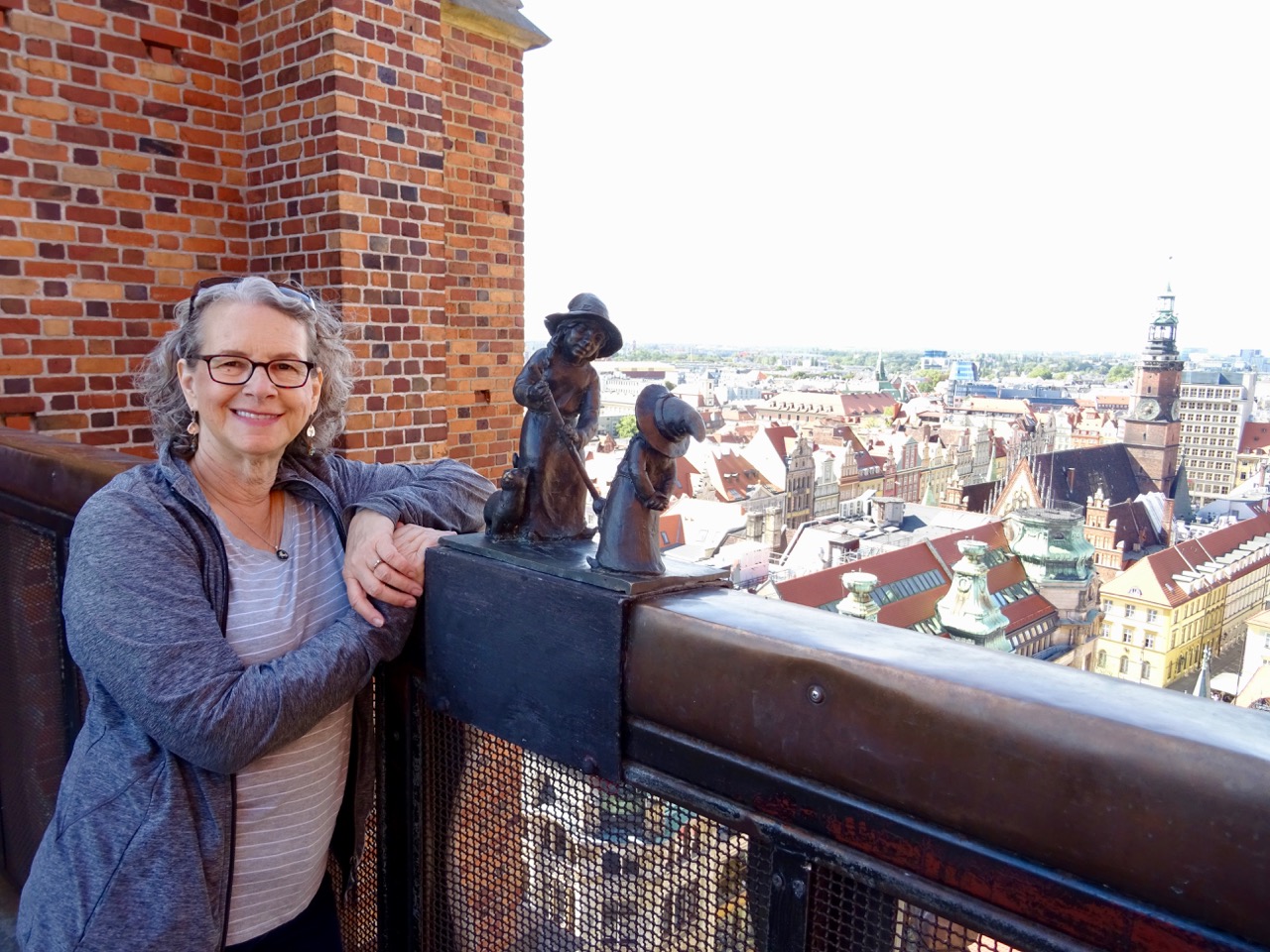
 We climb 147 steps up to the walkway between the two towers. In times past women suspected of being witches were forced to cross this walkway (there were no railings then) and if they made it across safely they were branded as a witch. If they fell to their death, then they were innocent of the crime of being a witch! You certainly didn’t want to be accused of witchcraft! I am very glad there are railings now and I meet another couple of gnomes.
 We have great views of the city from up here.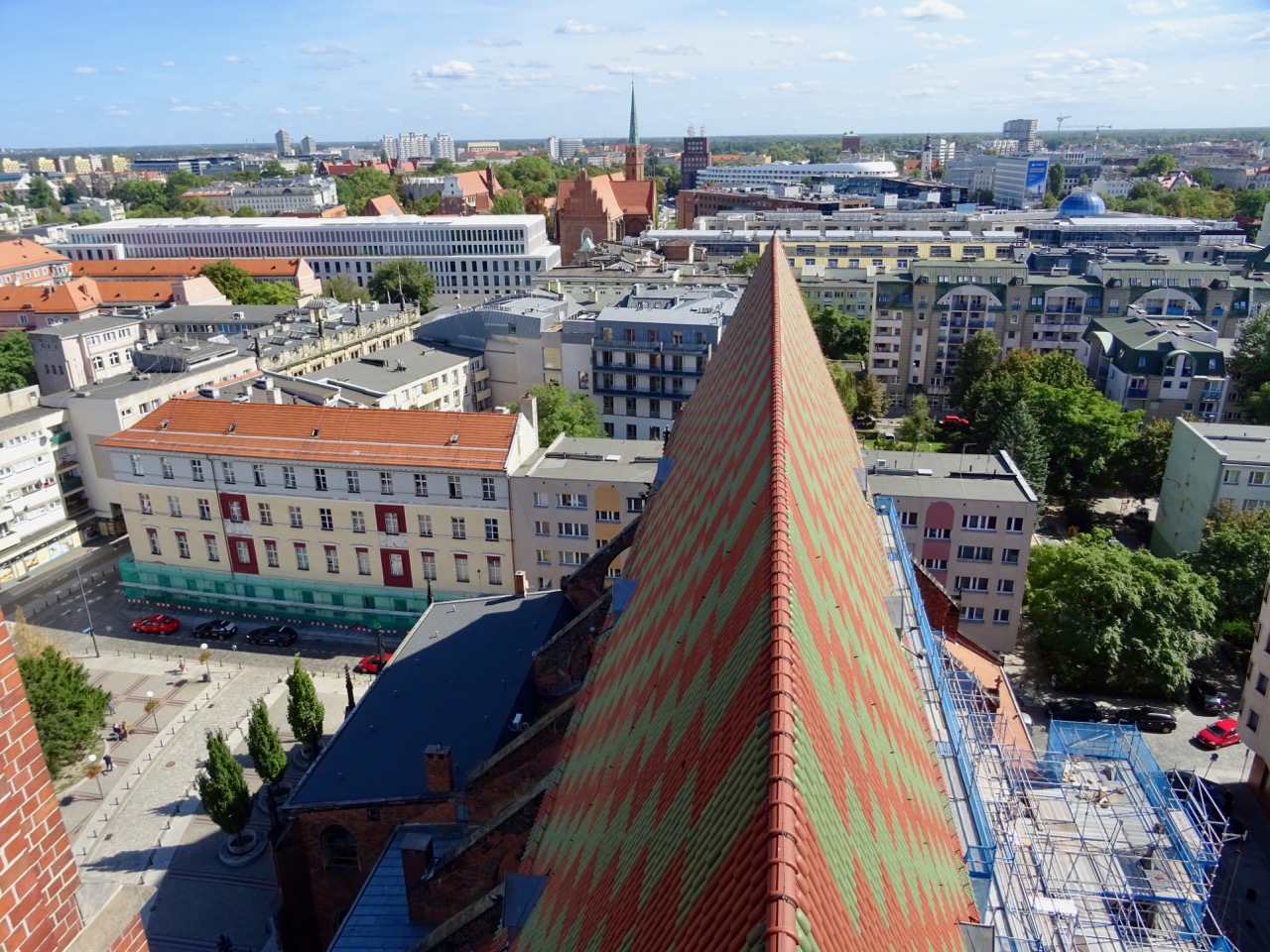
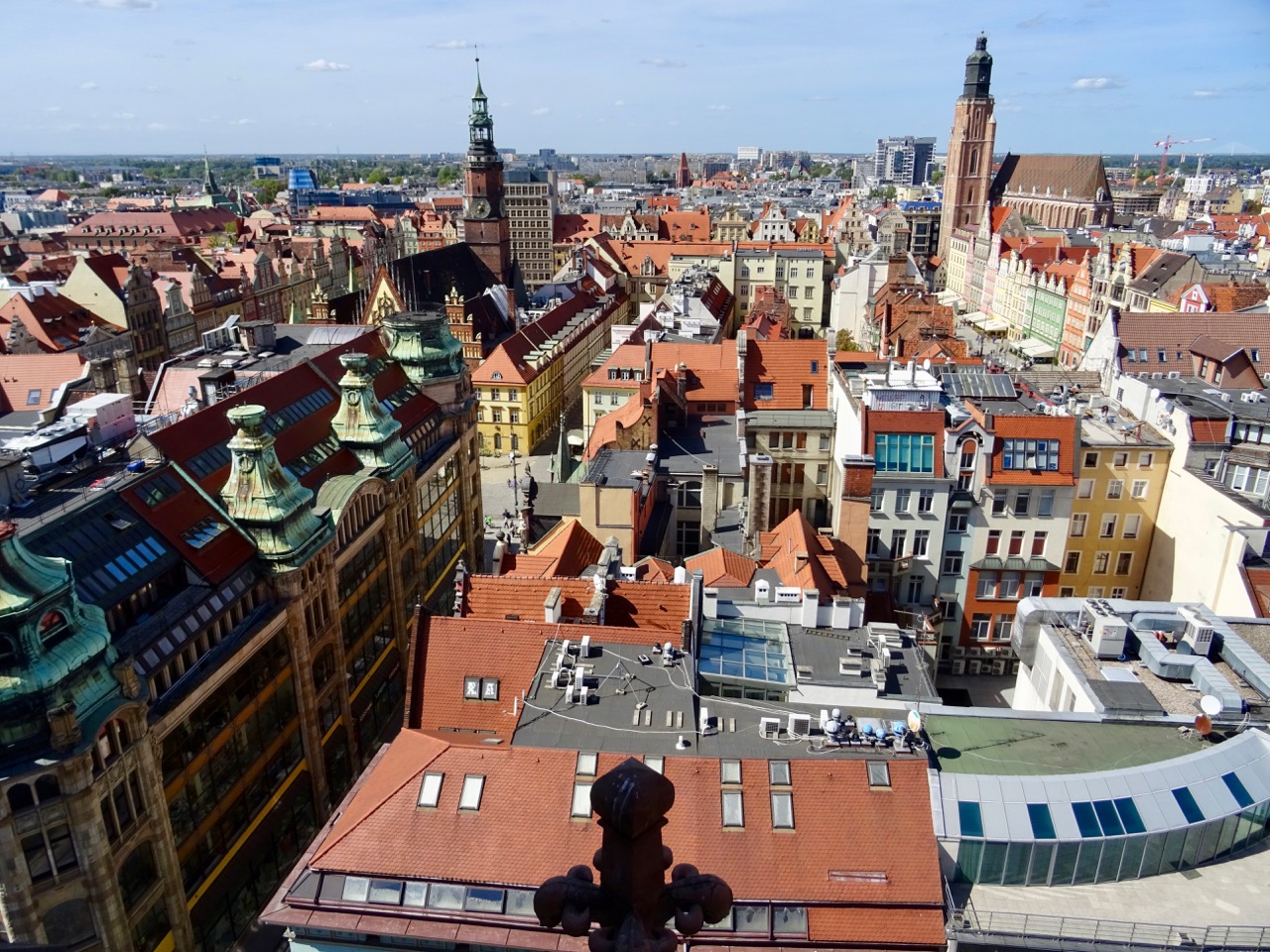 Here is a view of the walkway, way up there between the two towers.There were steeples on these at one time, not sure if they were destroyed during the war?
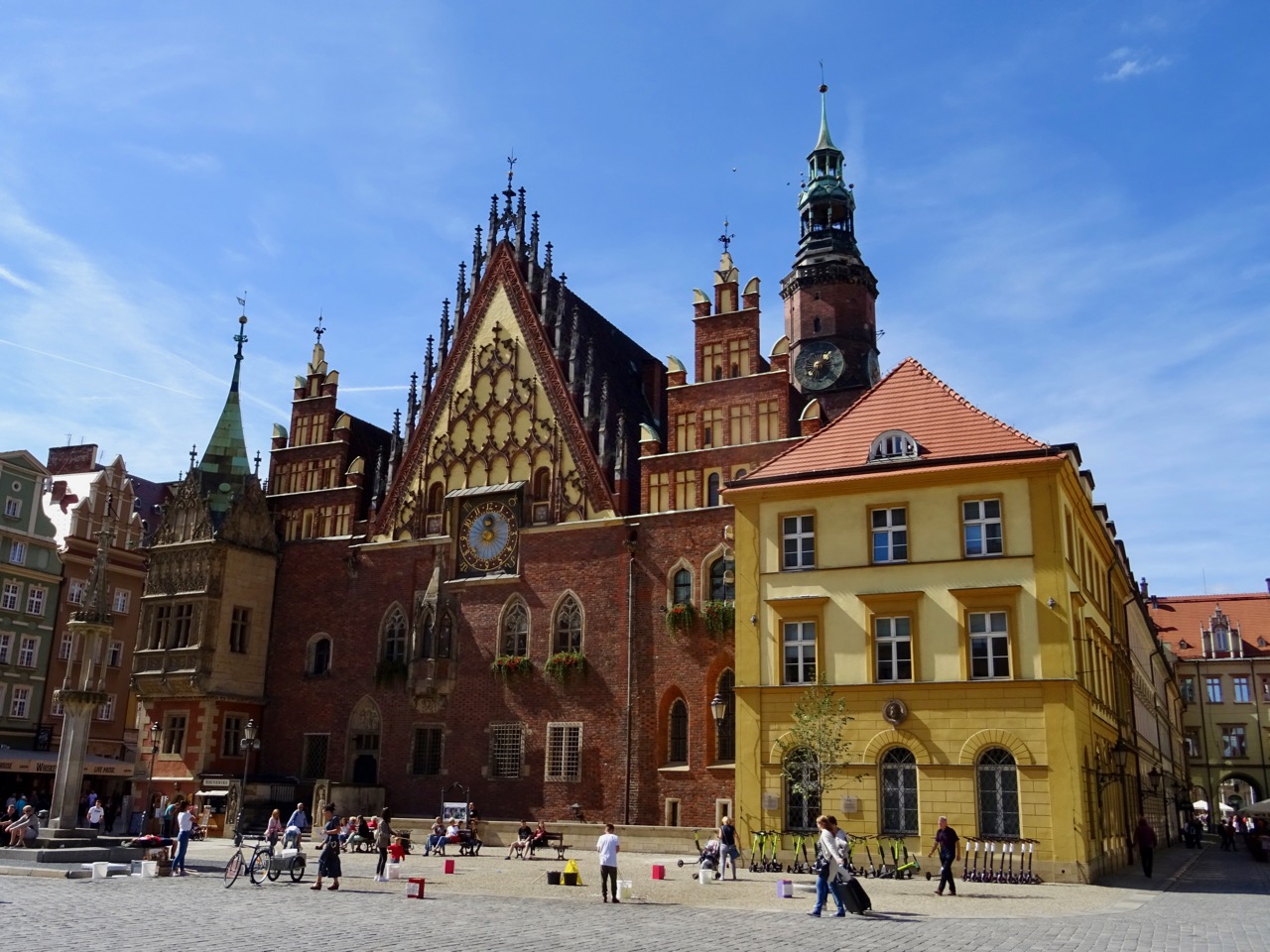
 More ornate colourful buildings.
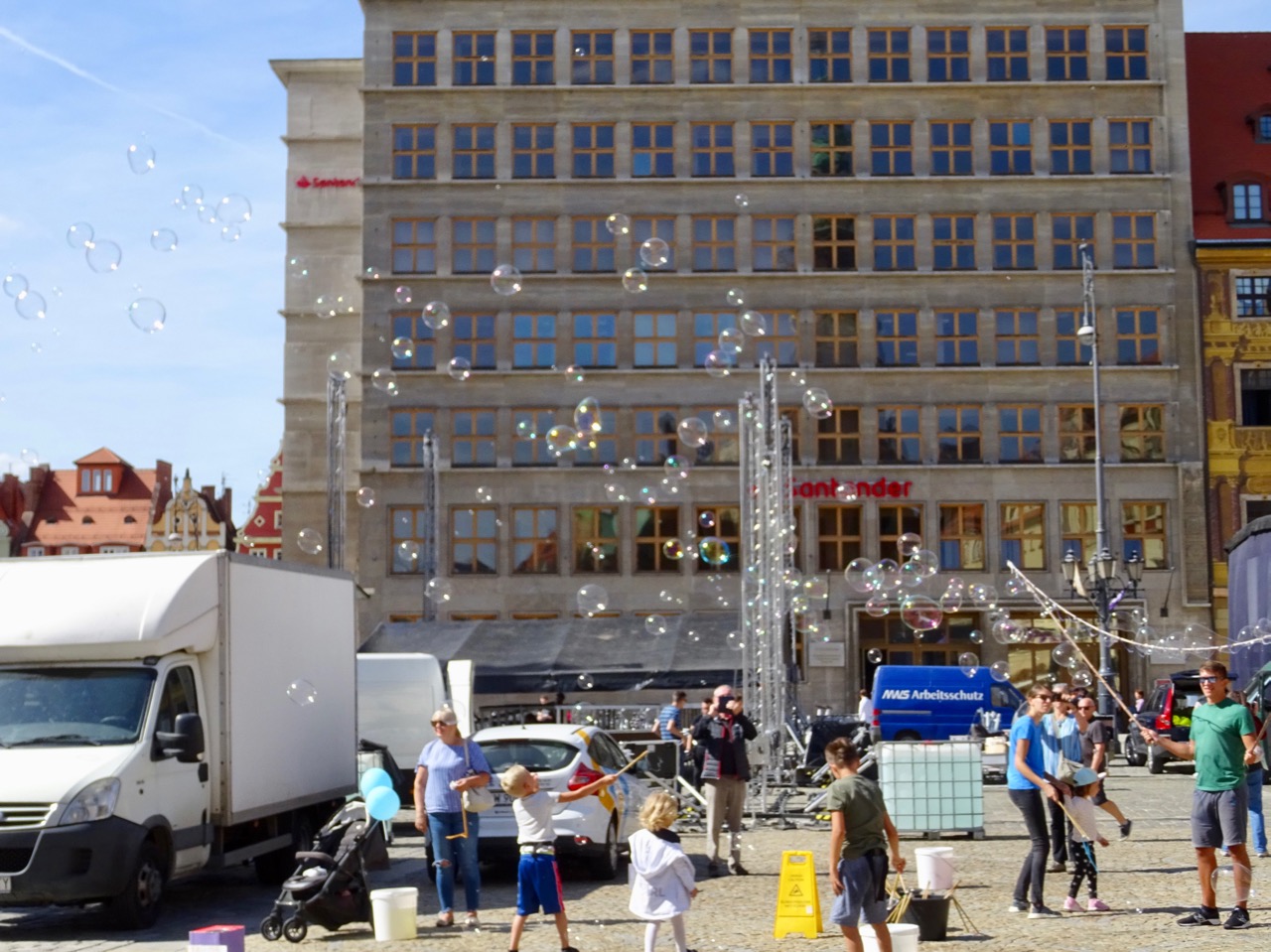
 I wish I knew the recipe for the bubble mixture this guy was using! He made hundreds of bubbles at a time with his string between two sticks. Kids had such fun chasing all the bubbles.
 We found quite a few more of these little fellows, on doorsteps, or tucked into corners.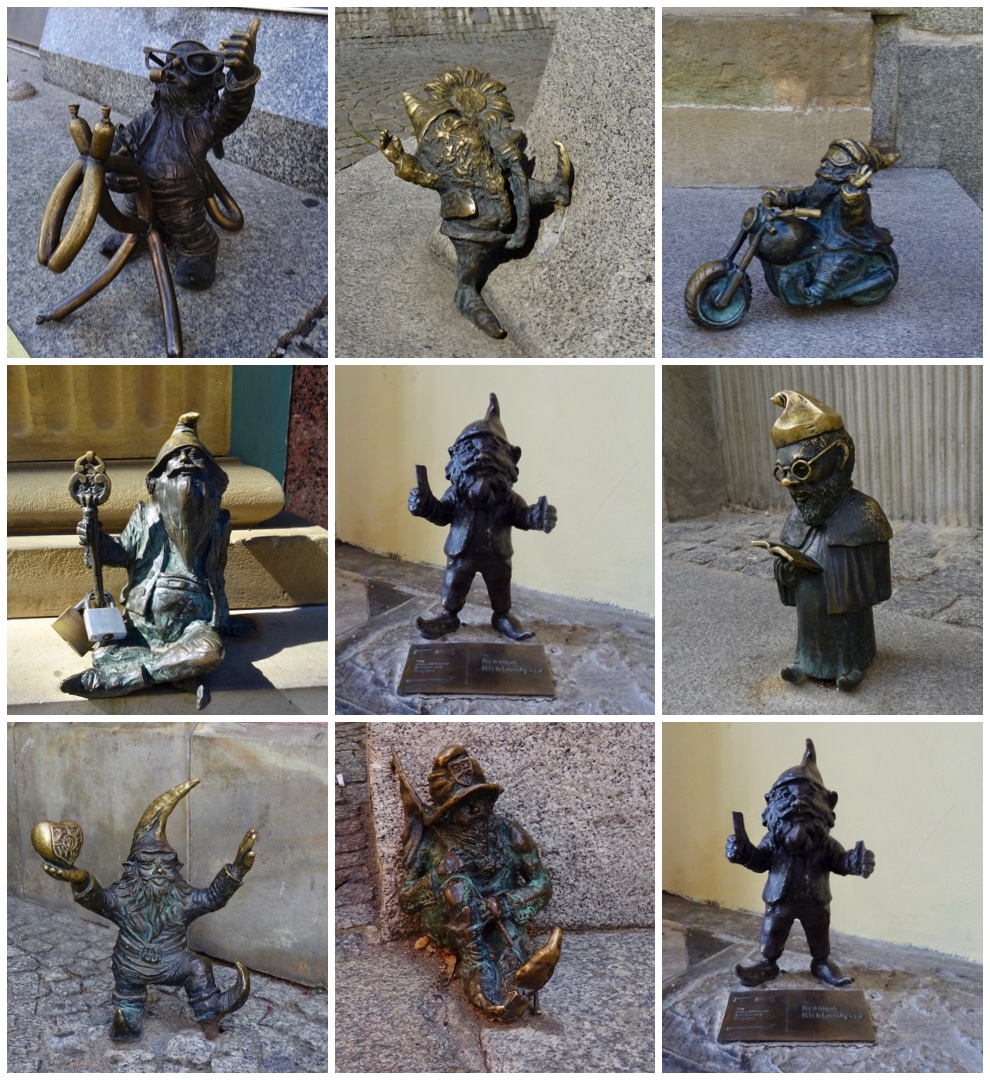

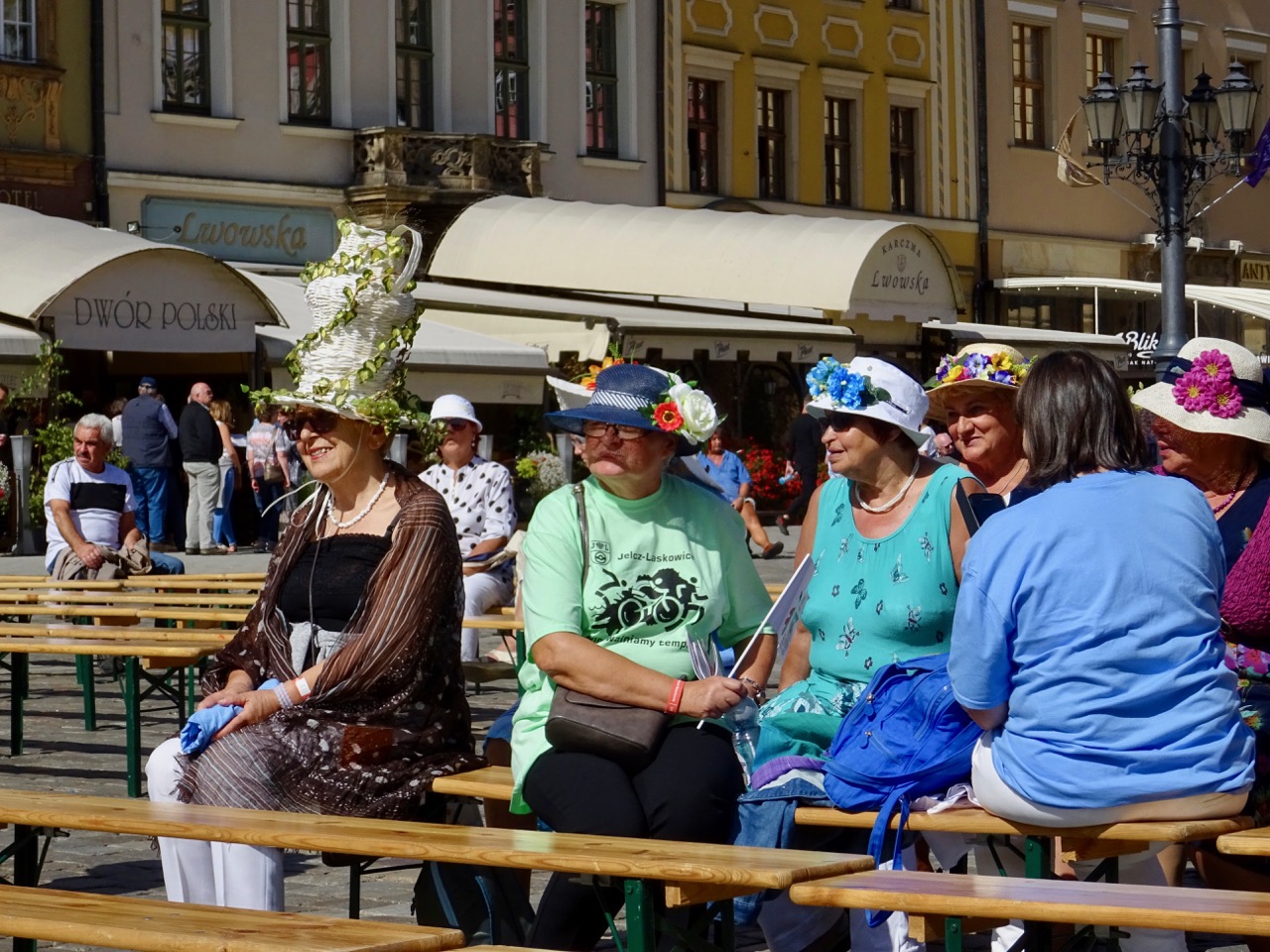 The two little houses in the corner called Hansel and Gretel are the only two houses left of streets that used to surround a cemetery. The cemetery closed in 1773. I wonder where the graves went?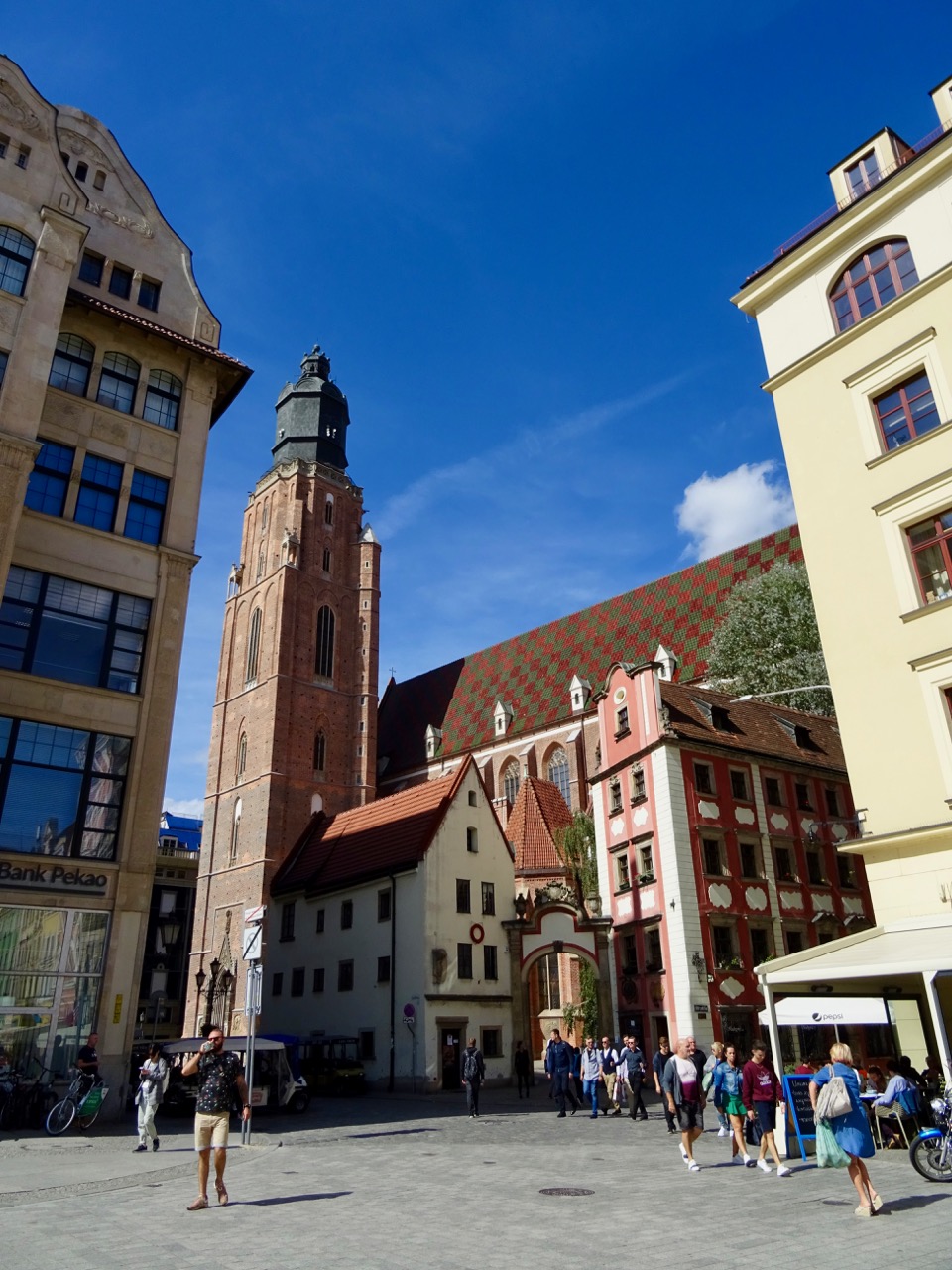
 and more busy gnomes.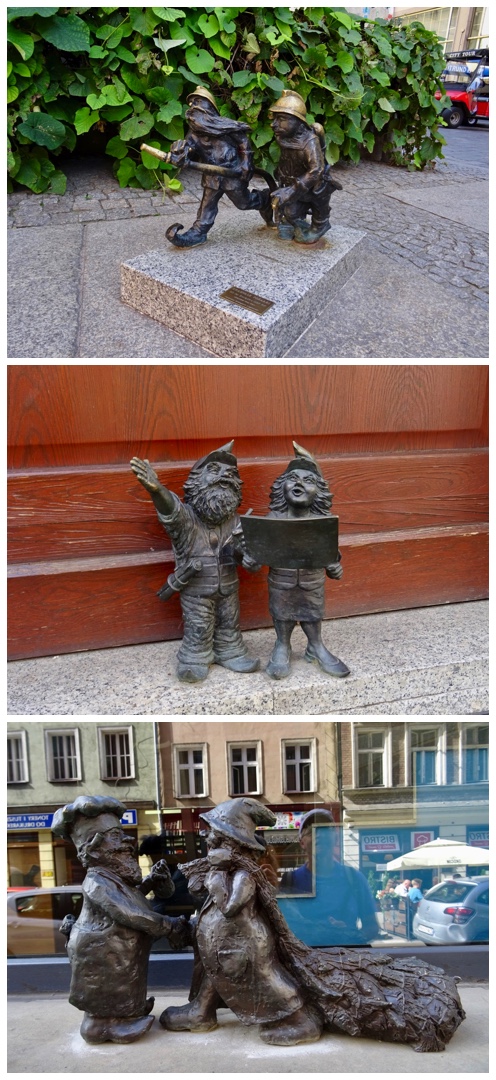

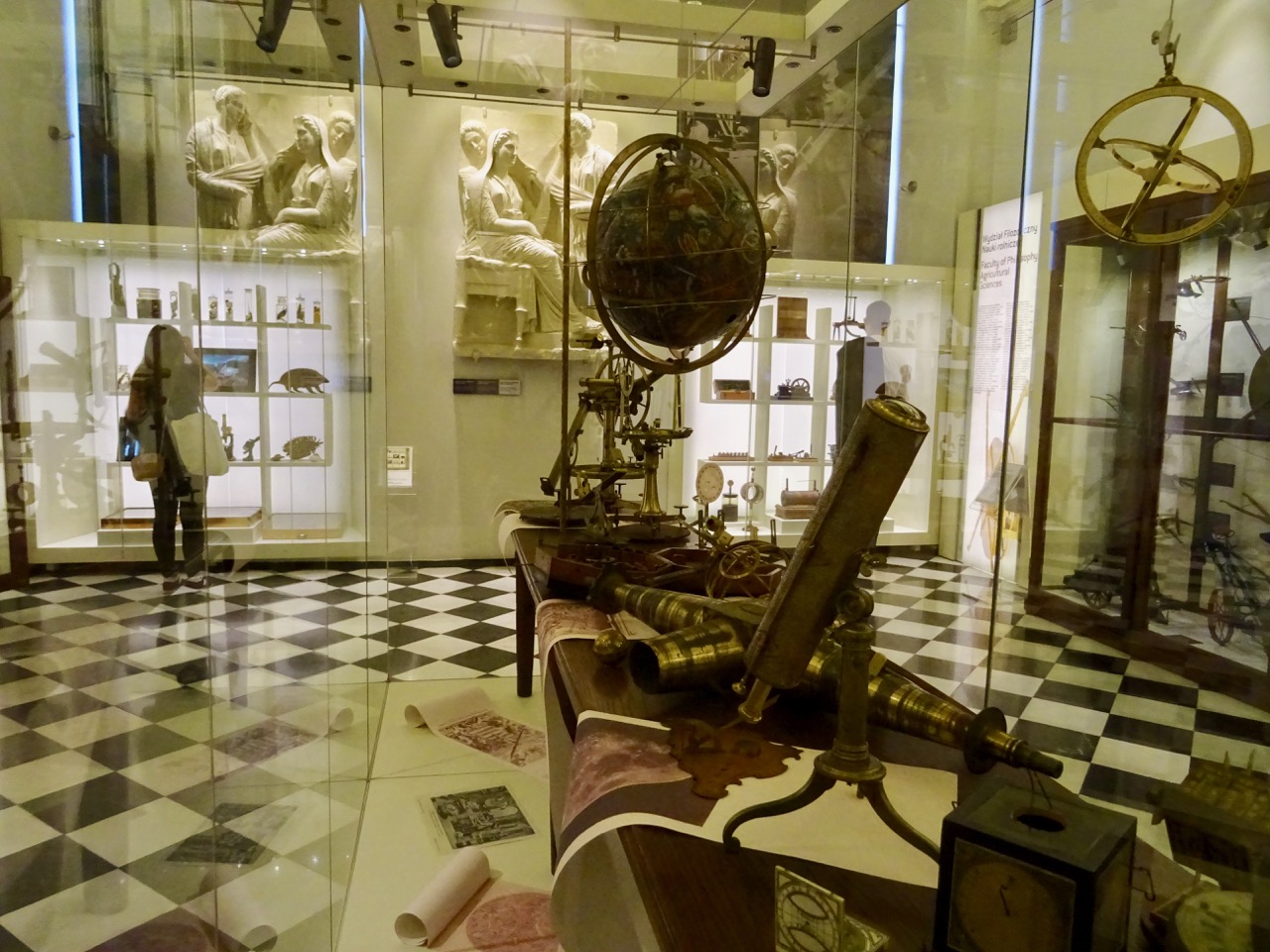
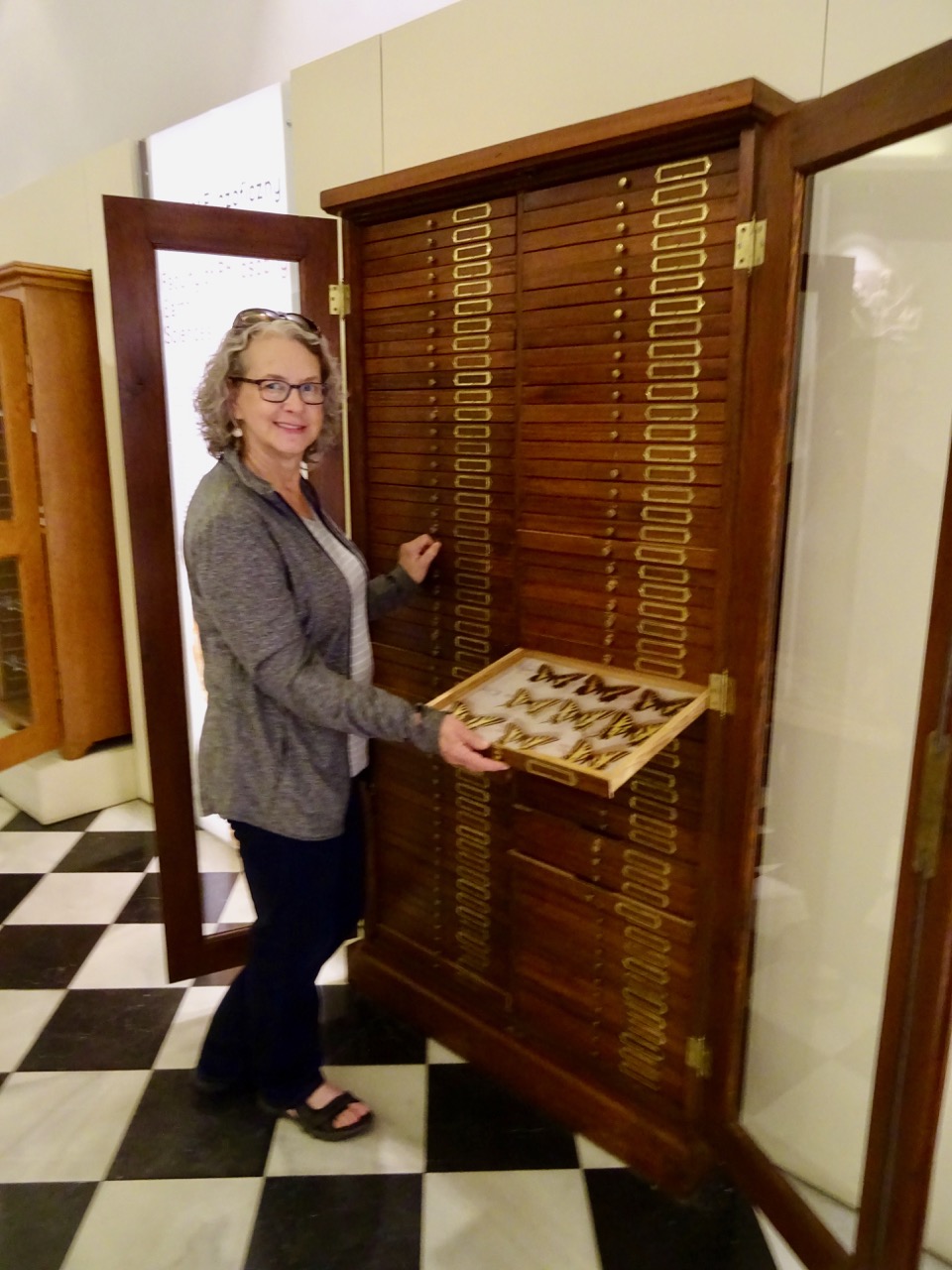
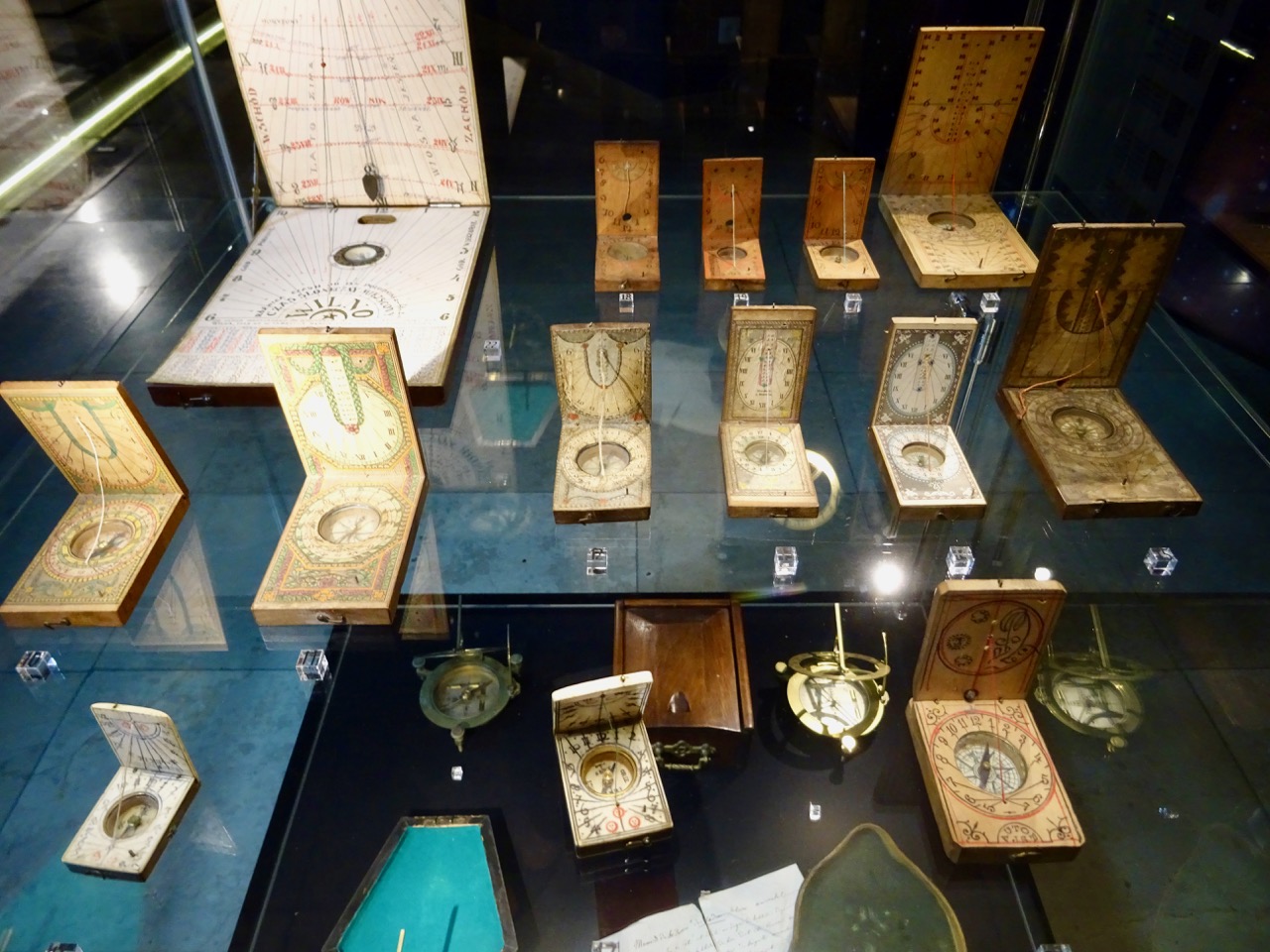
 and an interesting collection of artifacts. This is a chart for determining eye colour.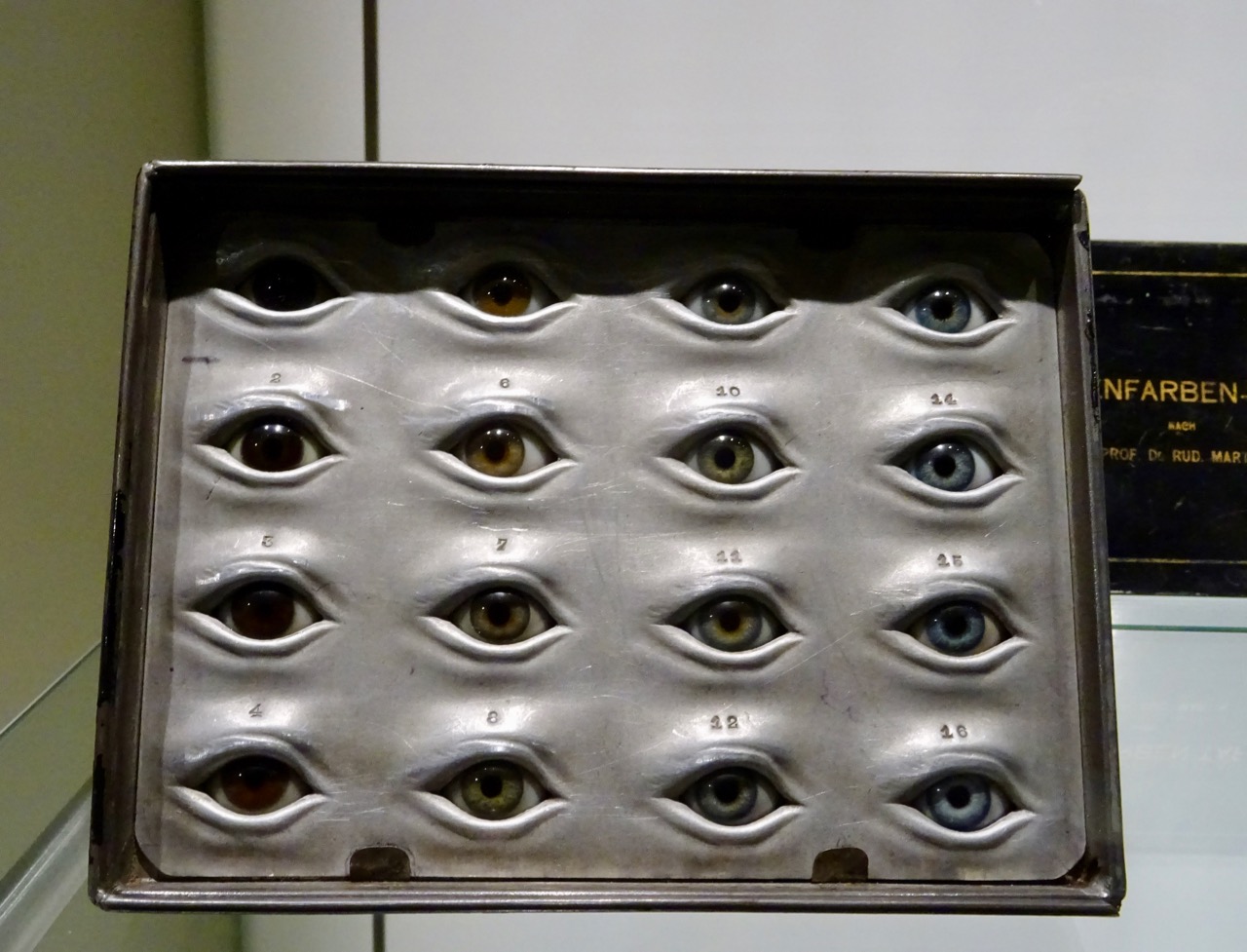
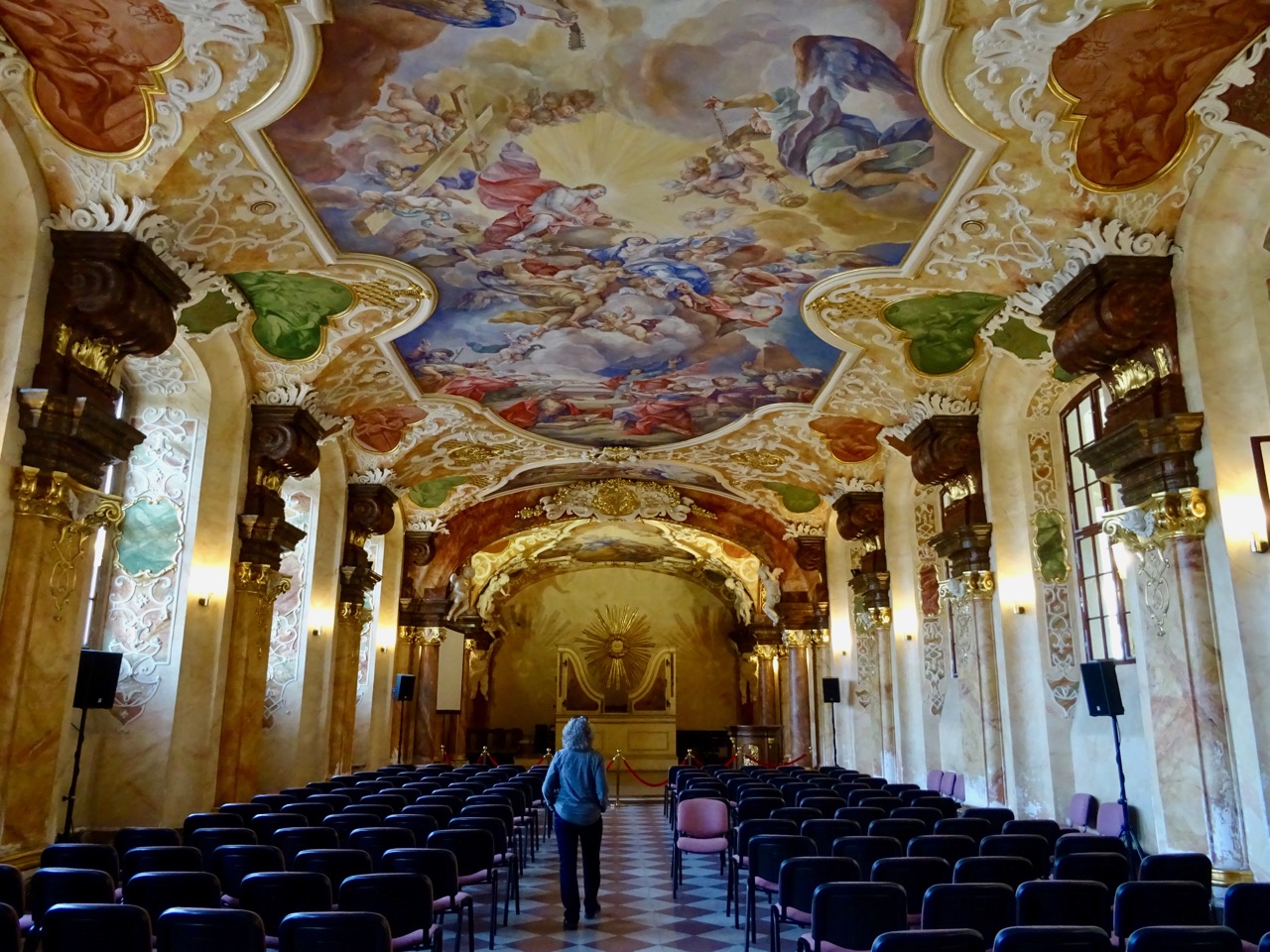
 The Music Hall is under restoration but we are allowed a peak inside.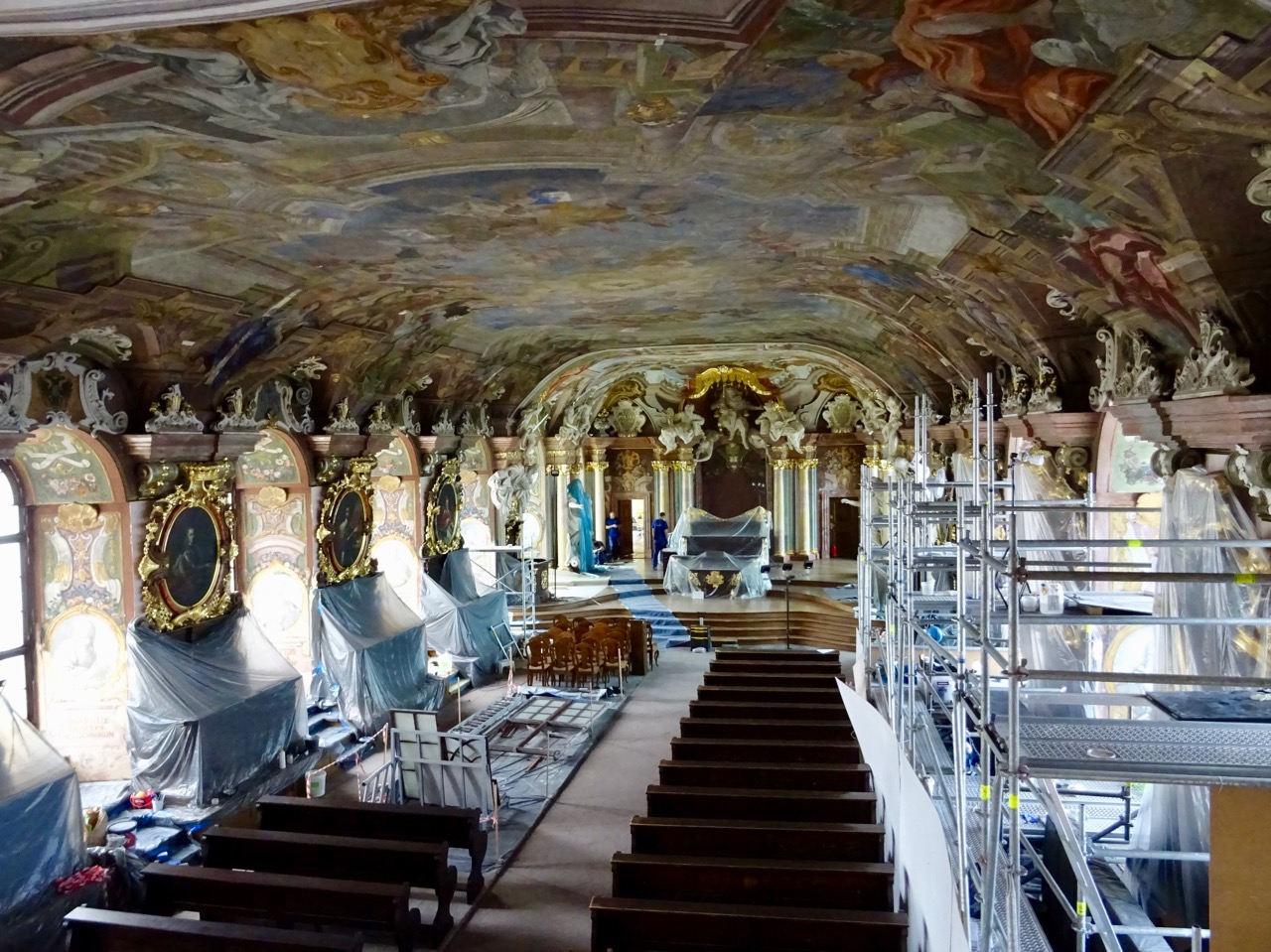
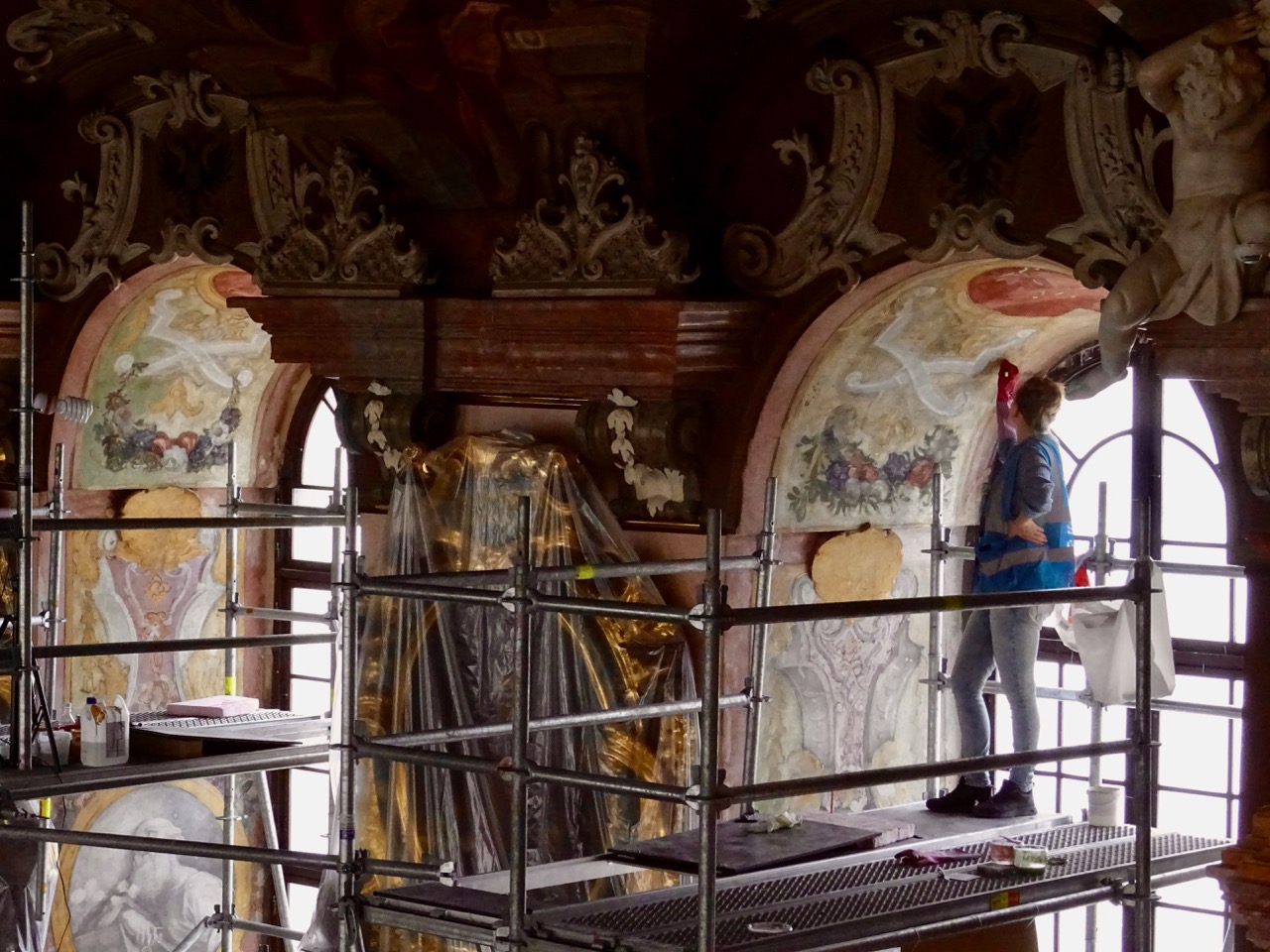 We. climb another 203 steps up the Math tower, which has displays along the way.
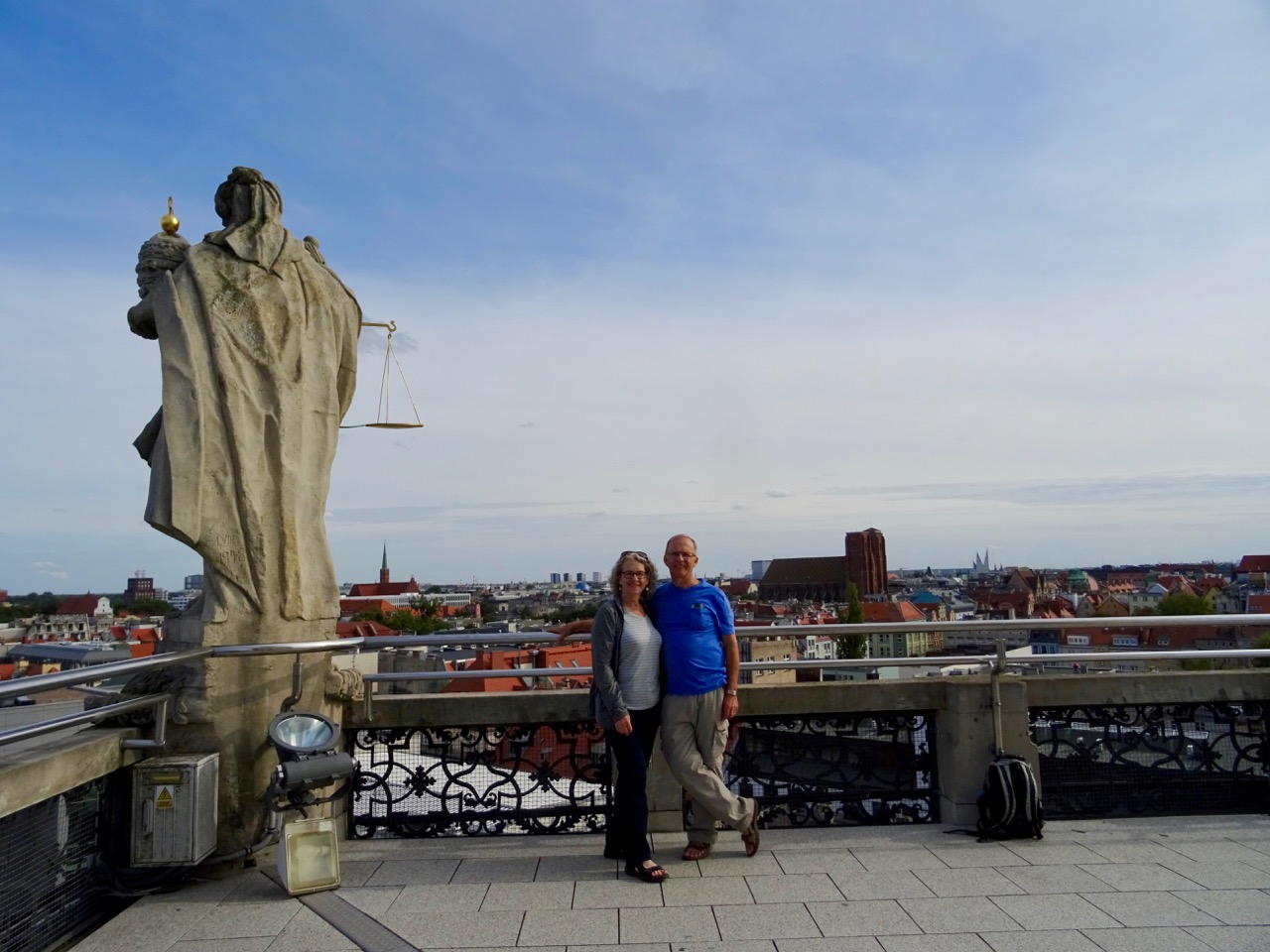 and the views. Notice the very modern looking tower among the old.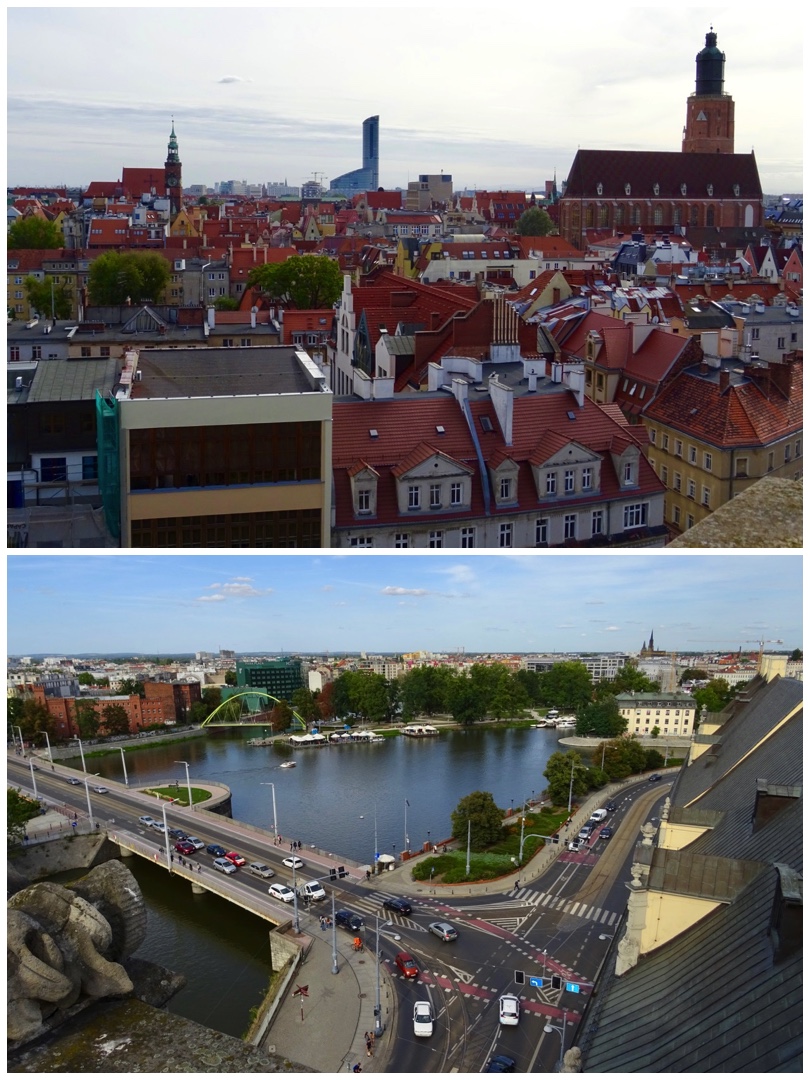
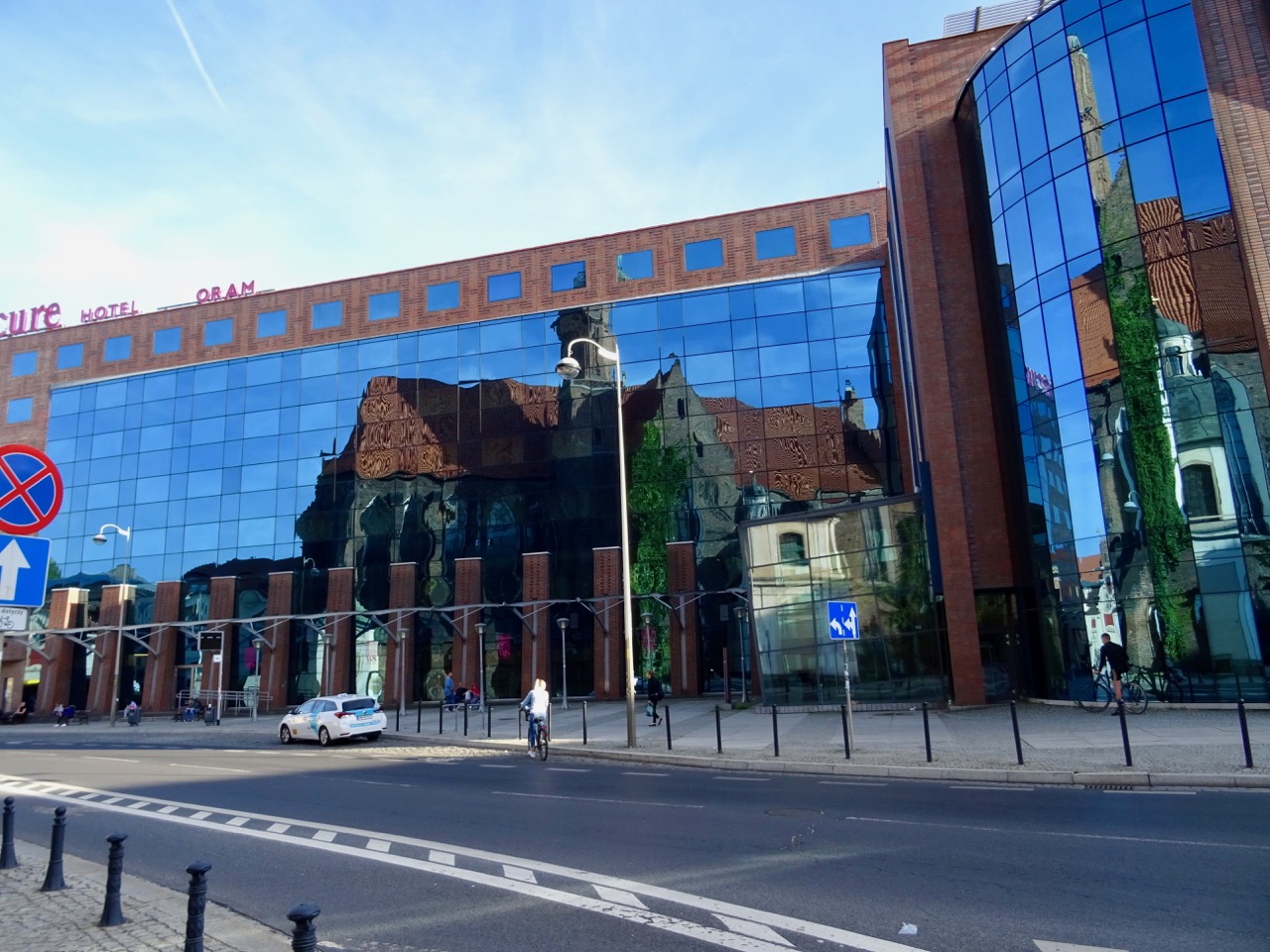
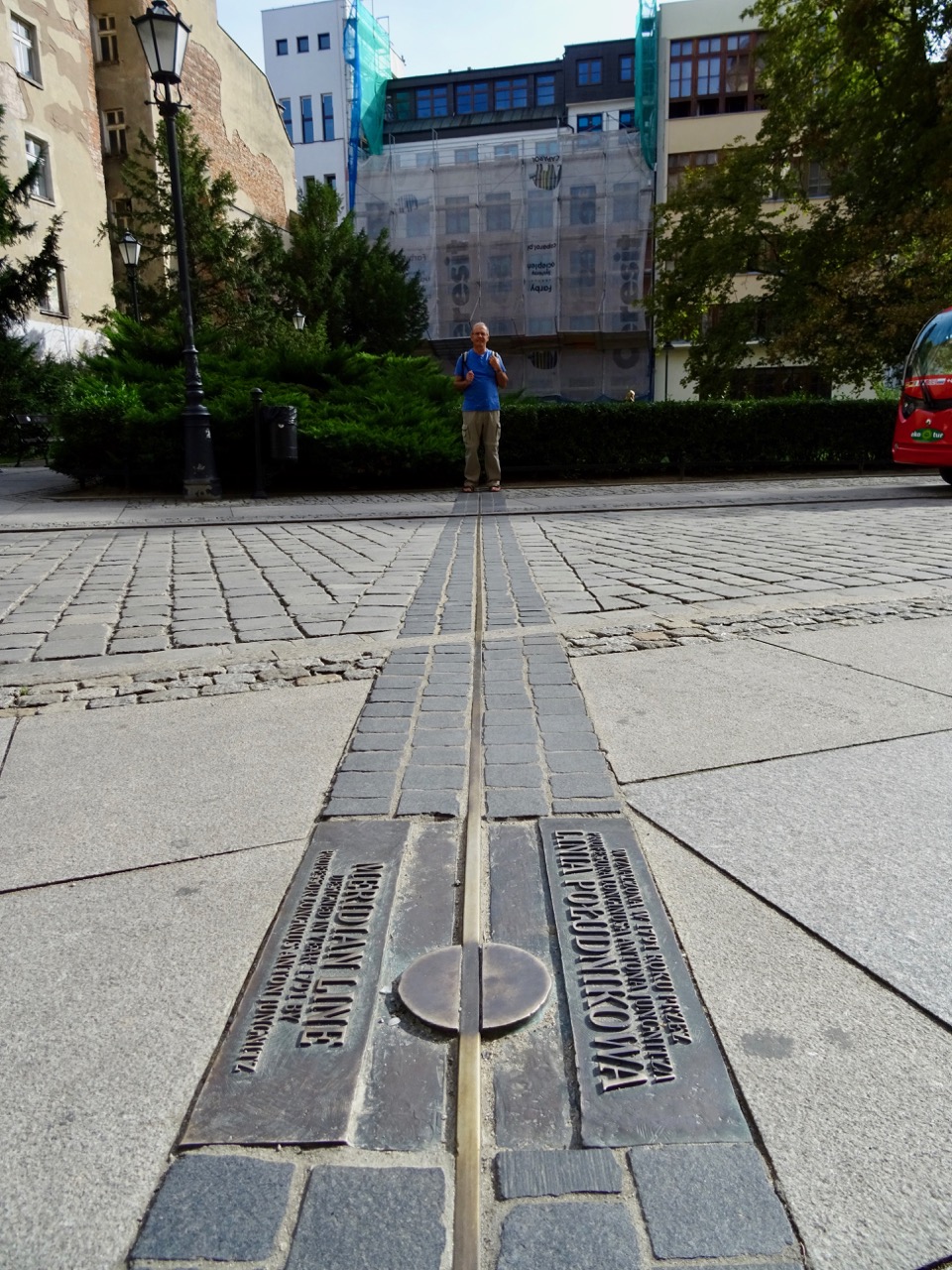 I just love all the reflections of the old buildings in the glass walls of the modern new buildings!
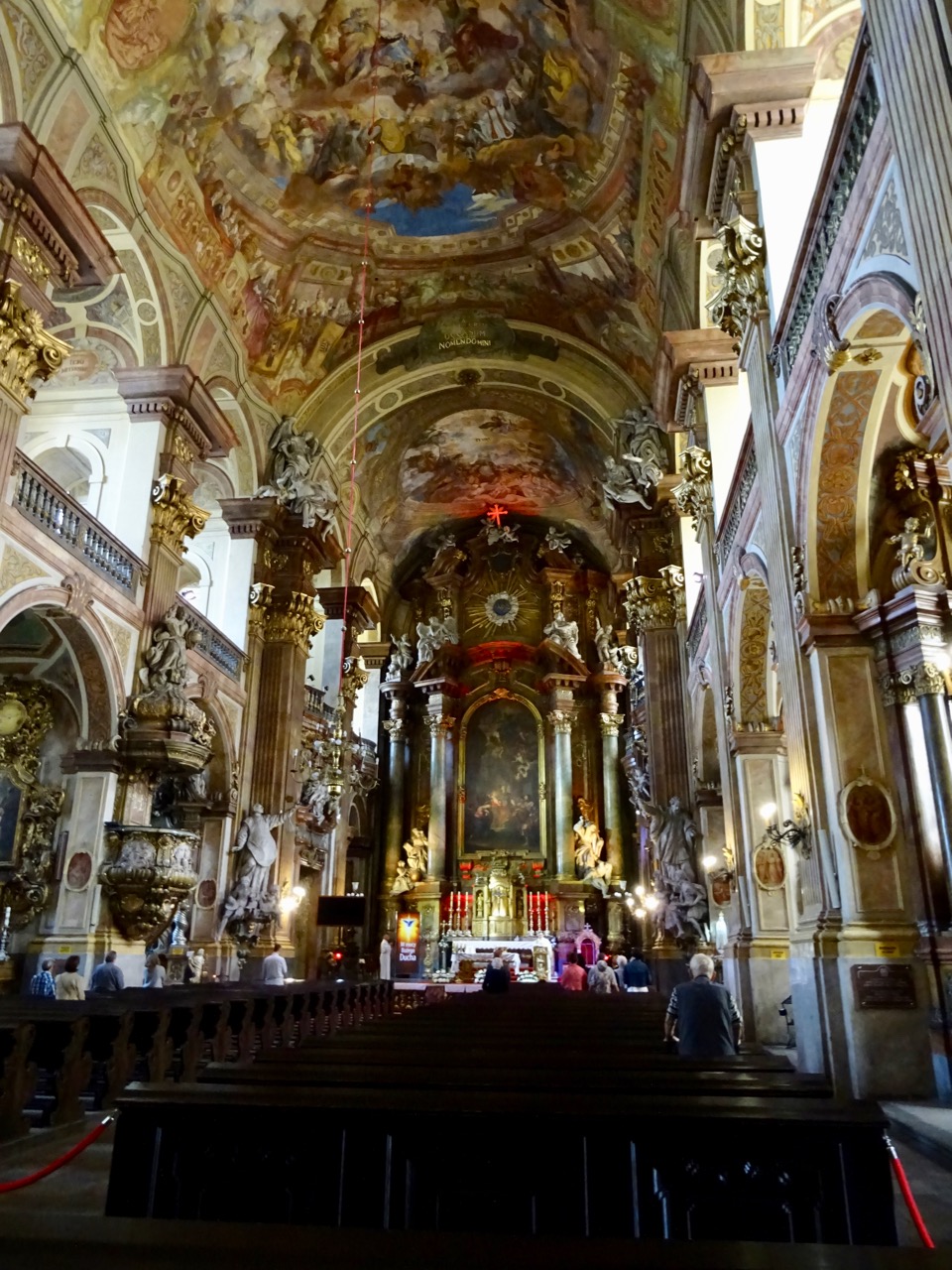
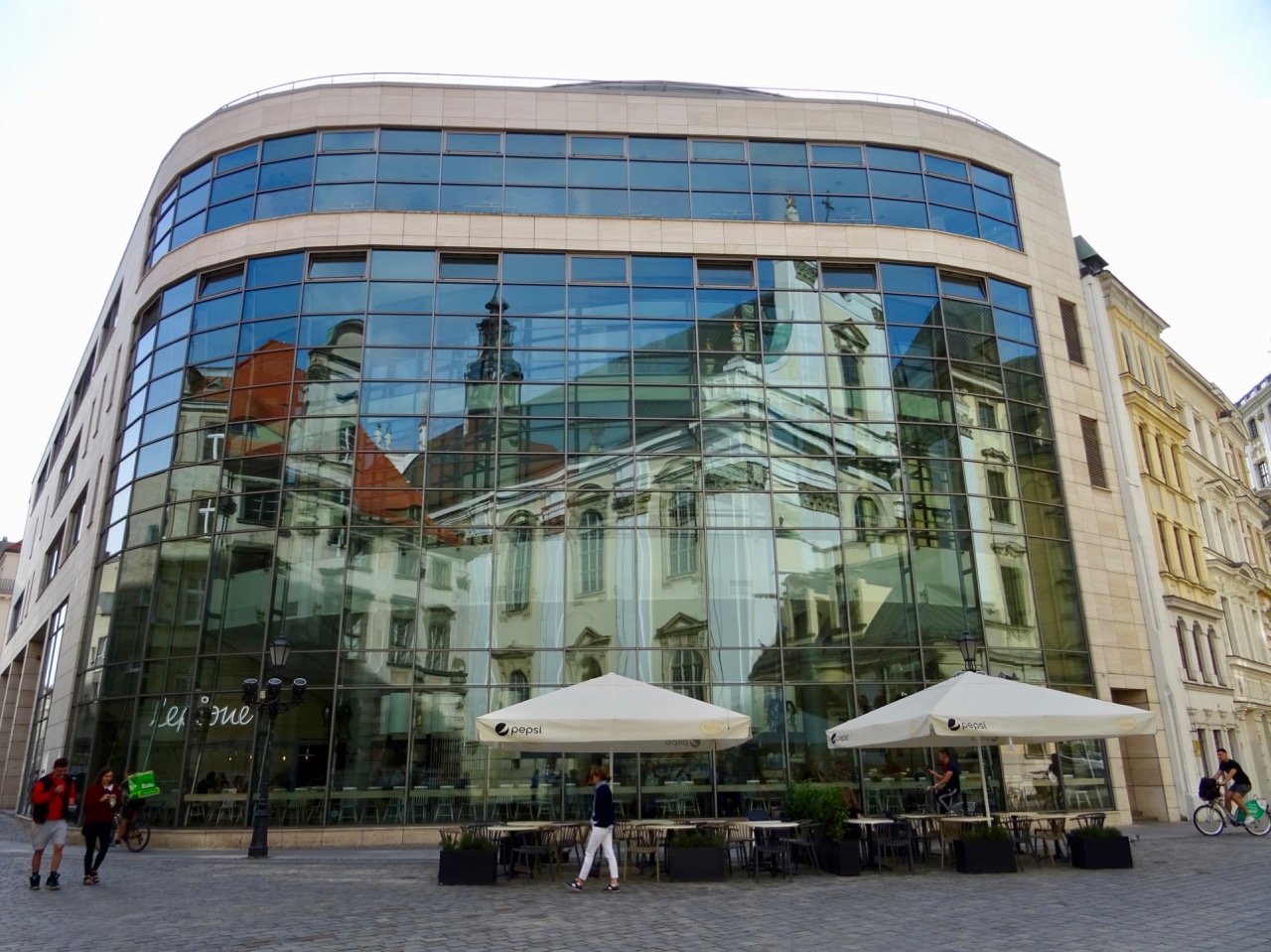 Churches here are either very ornate…
 or look like this. The late afternoon sun was shining through the windows casting everything in a lovely olden glow.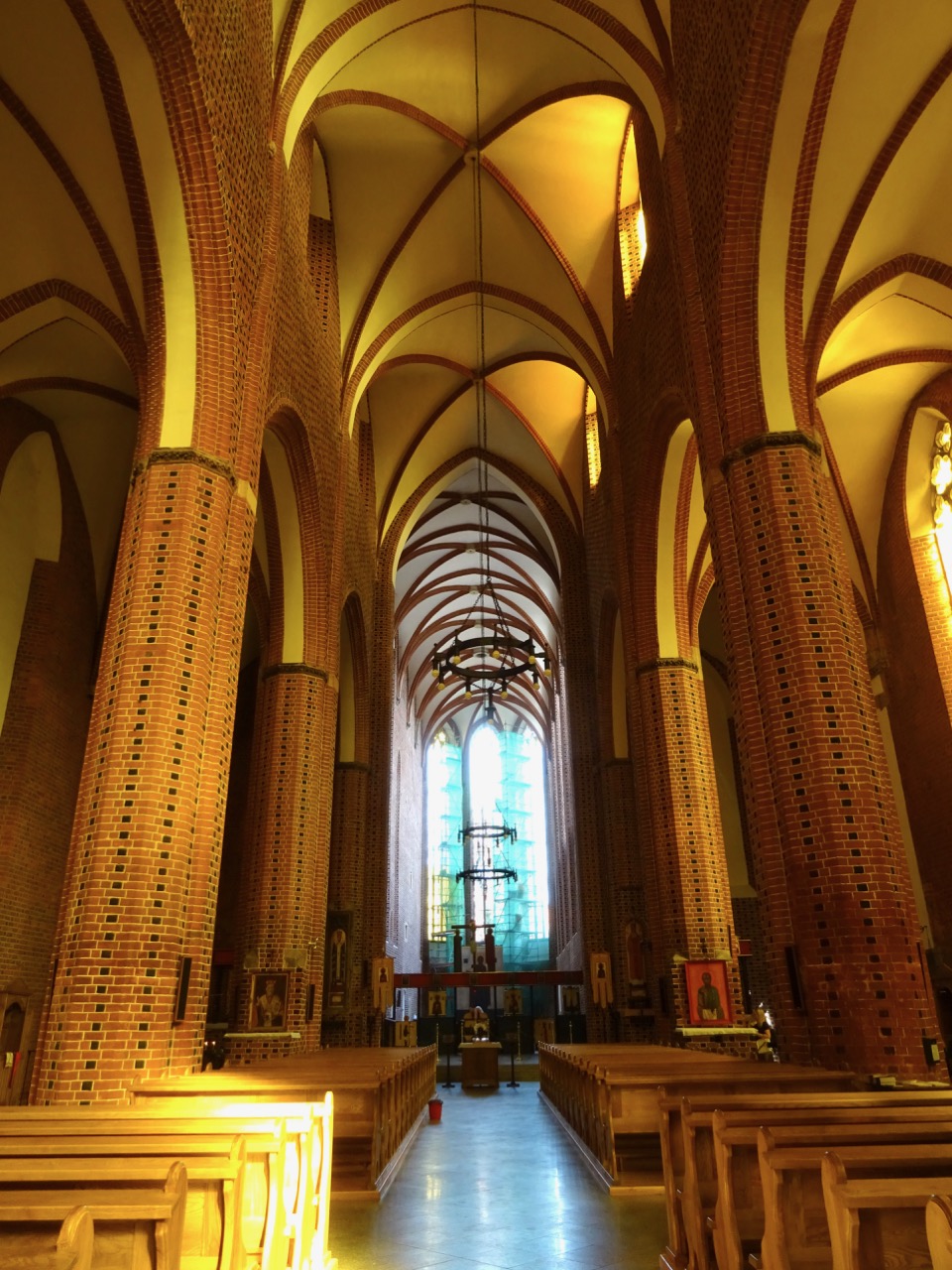
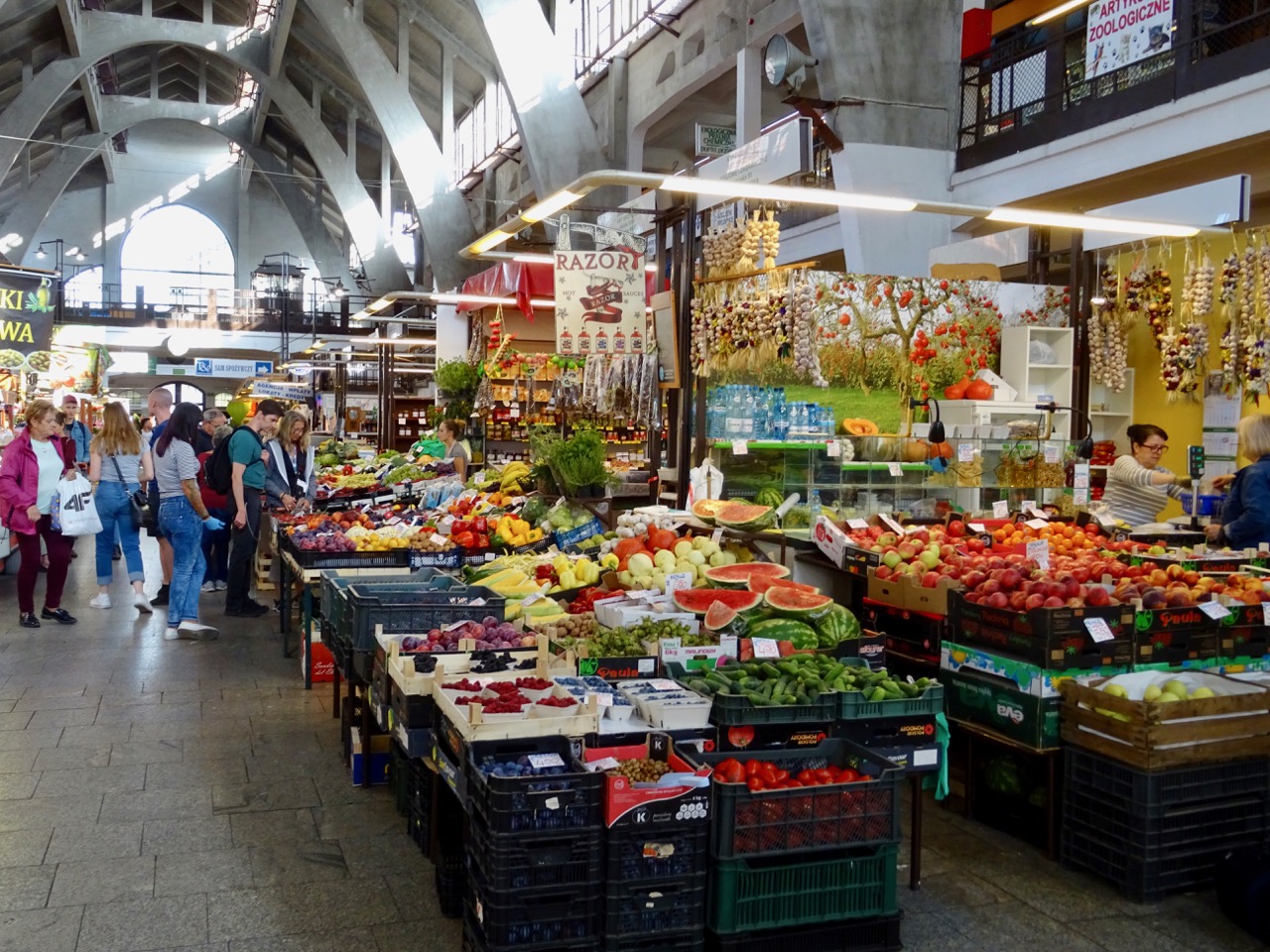
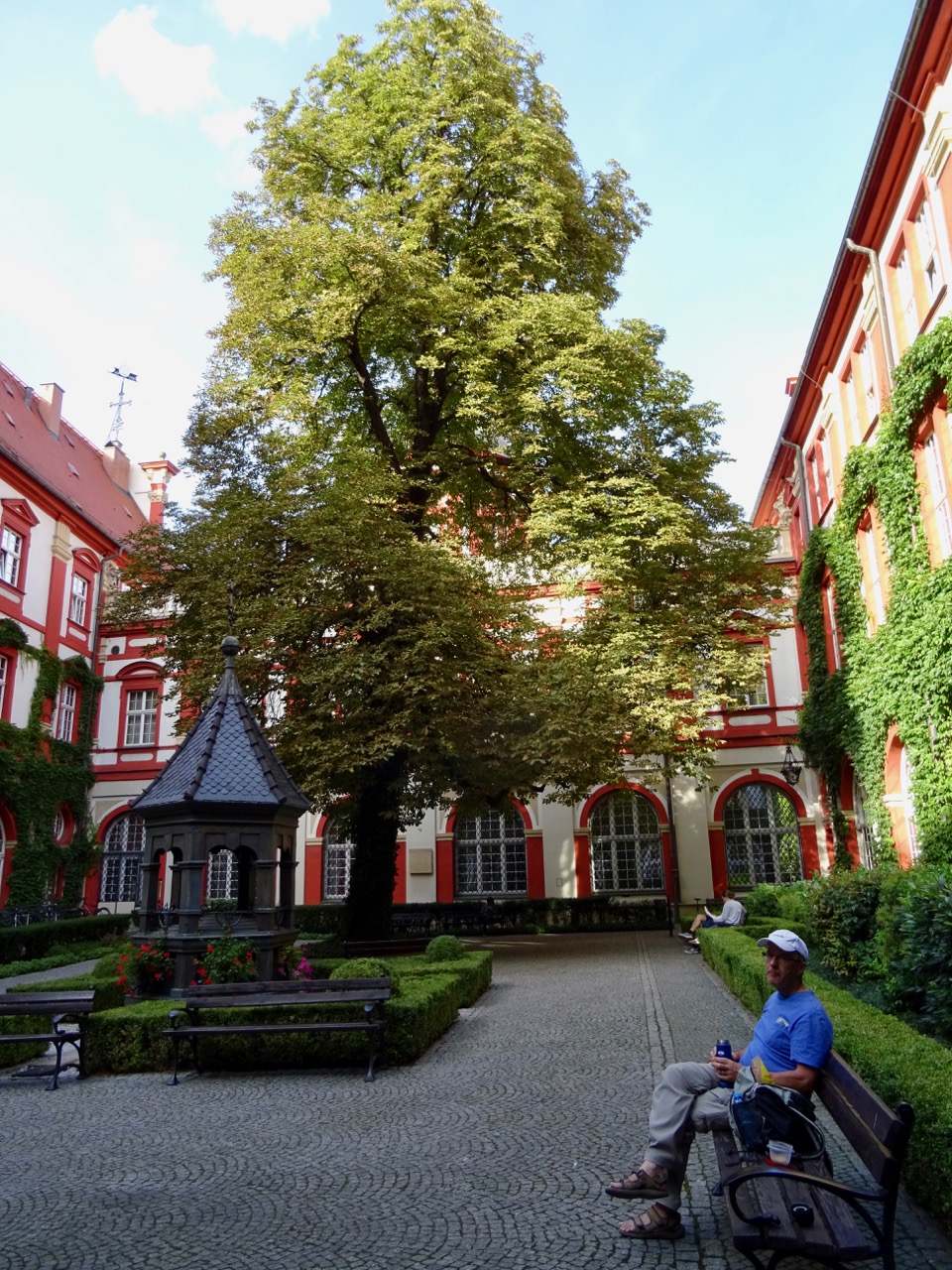 Then we visit the market and buy some fruit. Food prices are very reasonable here.
 More reflections.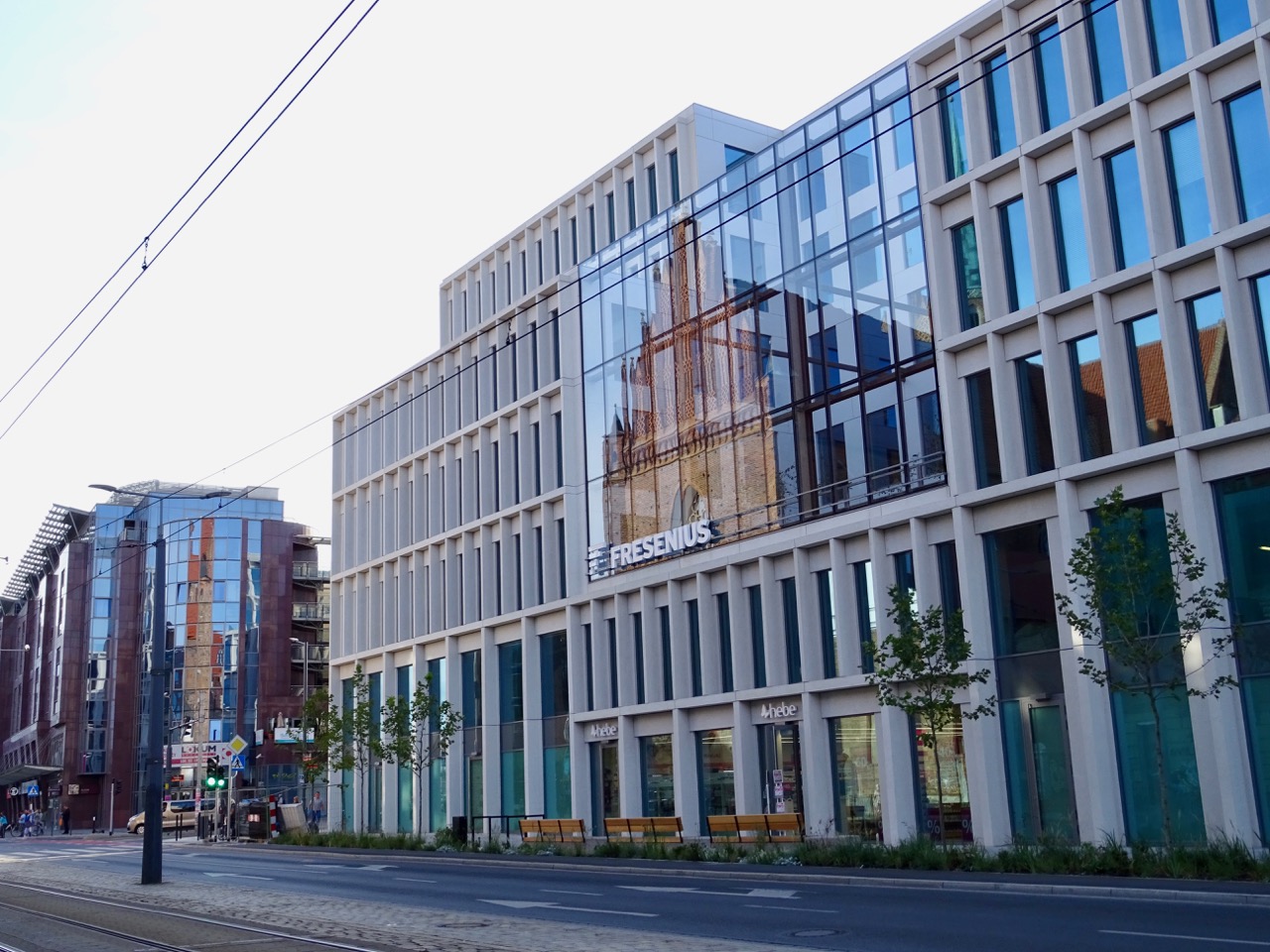
 We catch a trolley bus home. We haven’t seem many paved streets or sidewalks here. Most of the streets and sidewalks here are cobbled in one fashion or another. All the uneven footing is hard on the feet and ankles. We walked 16,700 steps today and climbed the equivalent of 31 floors!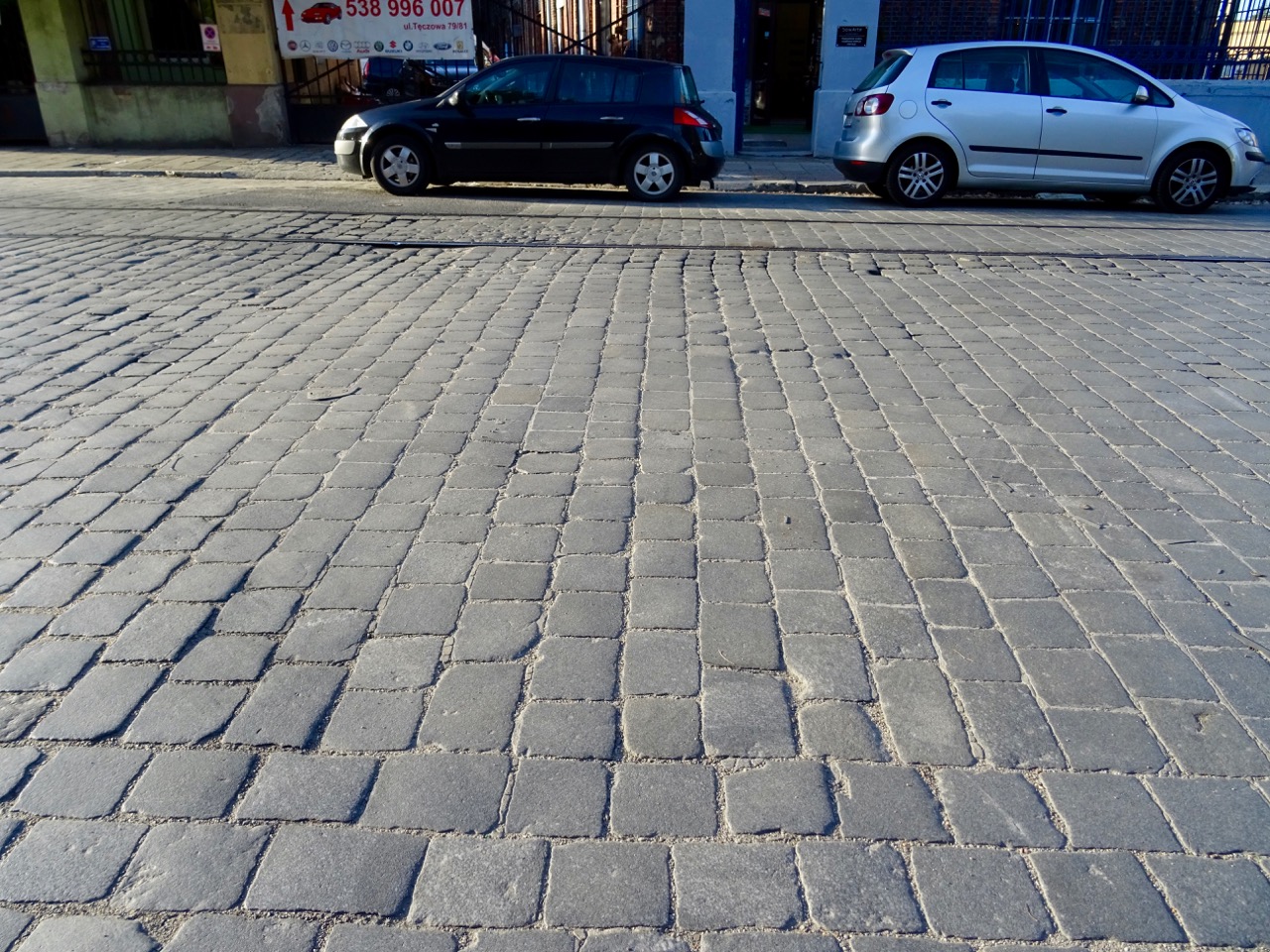
 trudymason.com