Day 20 Friday, September 19, 2025
Today we visit the In Flanders Fields Museum in Ypres, Belgium.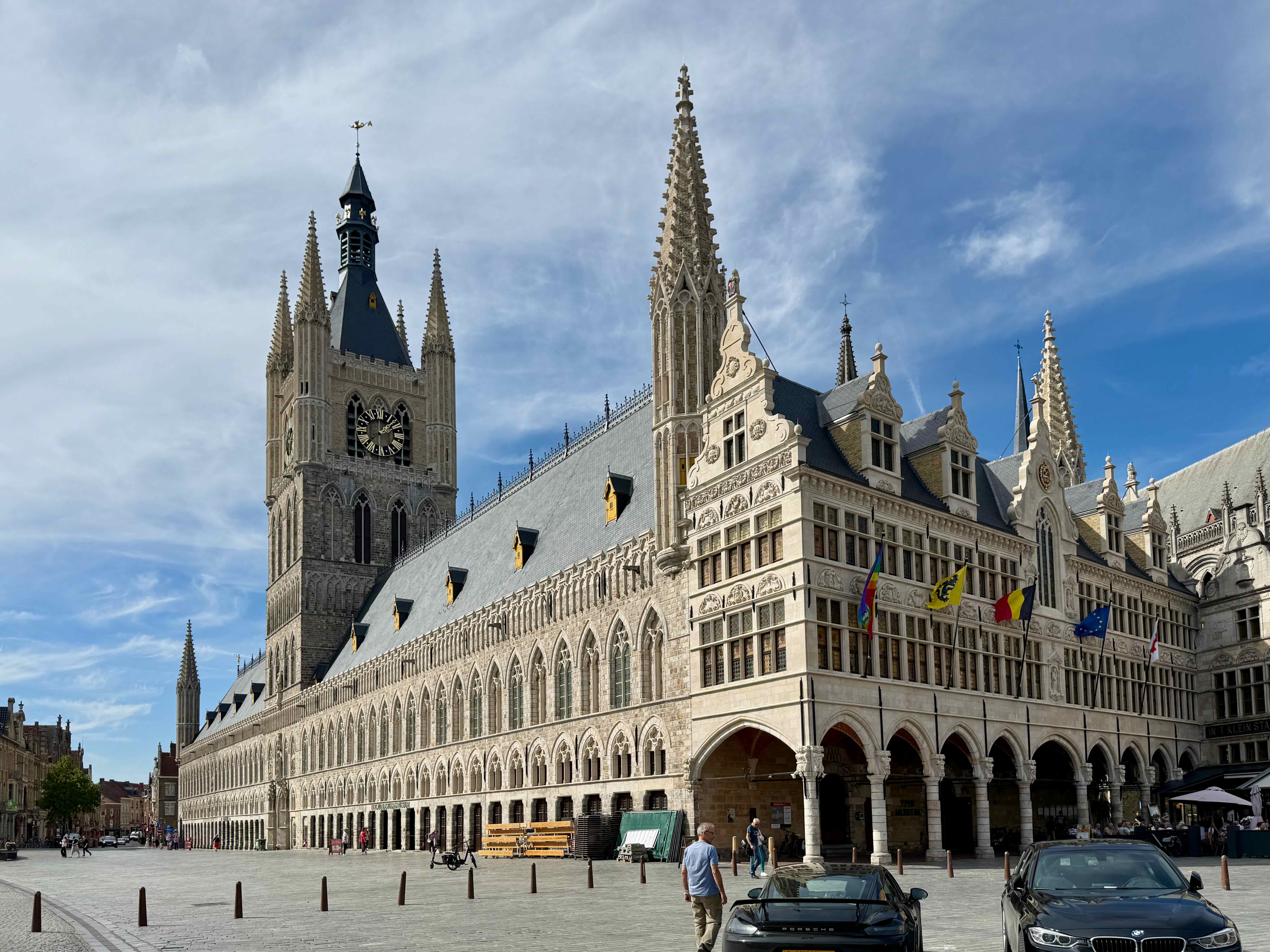
This museum uses a variety of displays to tell the story of the invasion of Belgium in World War I. There are holographs which use actors to tell the stories of actual people.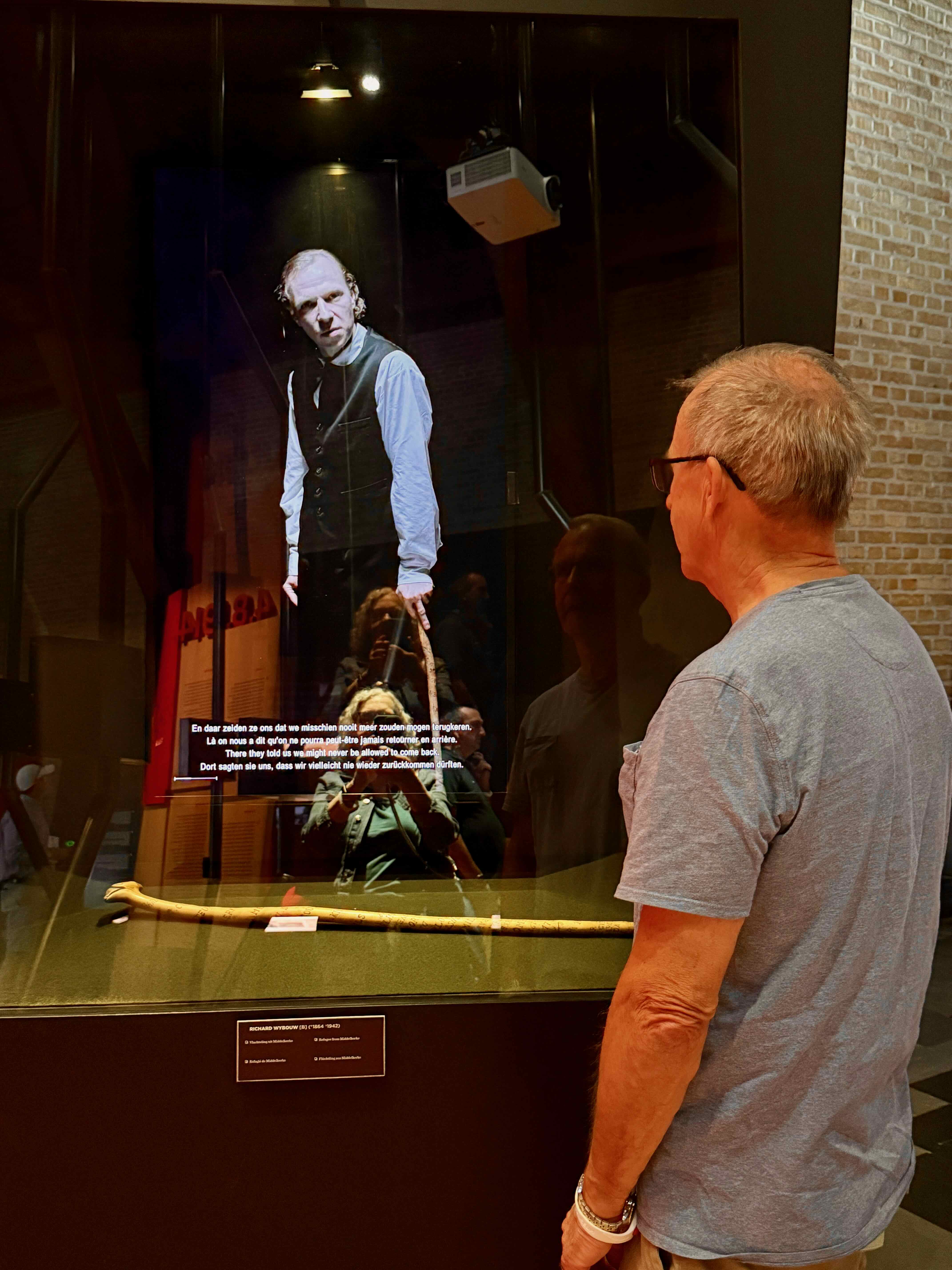
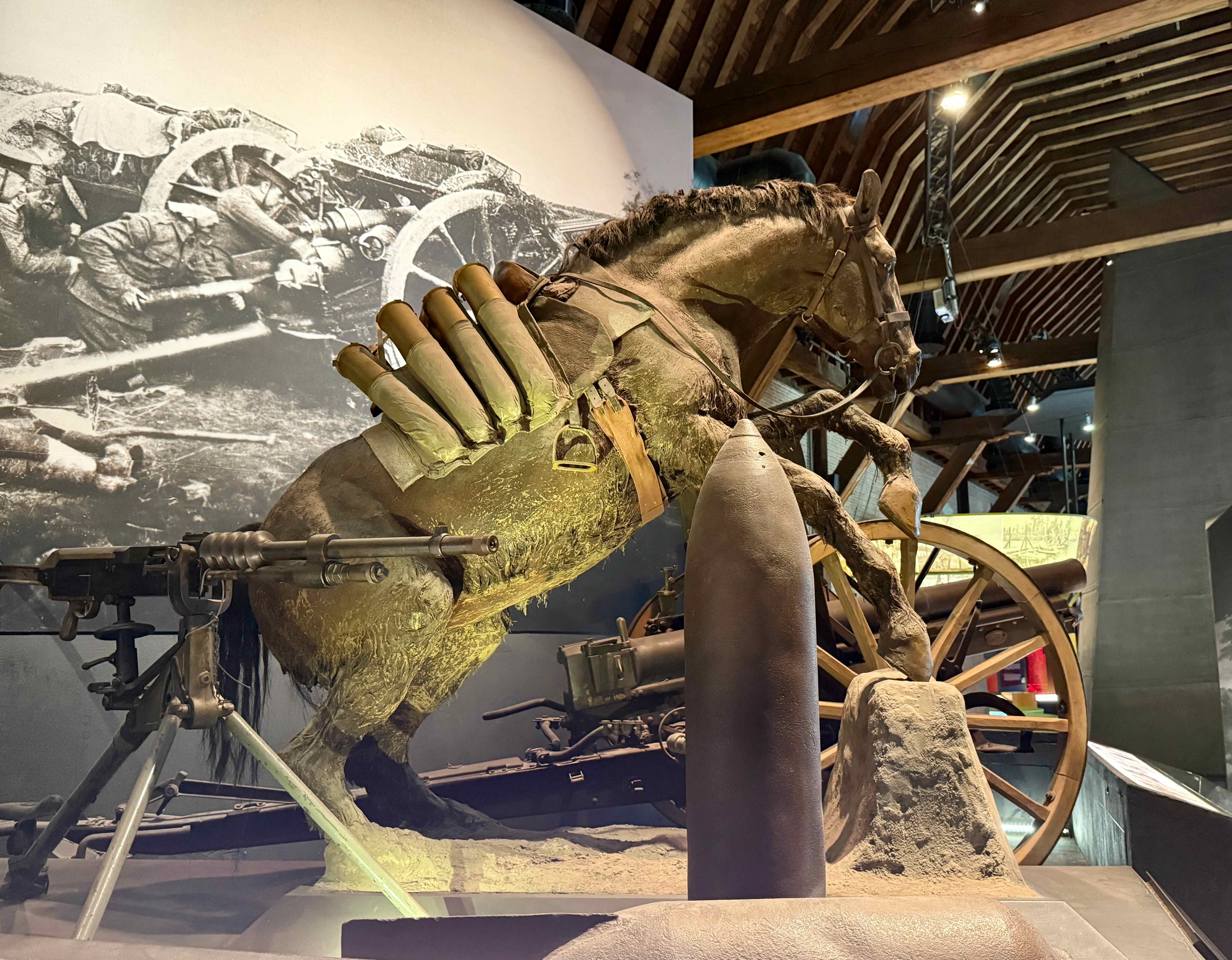
These early gas masks provided some protection against chlorine gas, which was used for the first time during WWI, but were only effective for about five minutes with concentrated doses of the gas. 
We take a break and climb 231 steps to reach the top of the bell tower. half way the steps change from a concrete spiral staircase to these metal steps, which are a bit scarier to climb.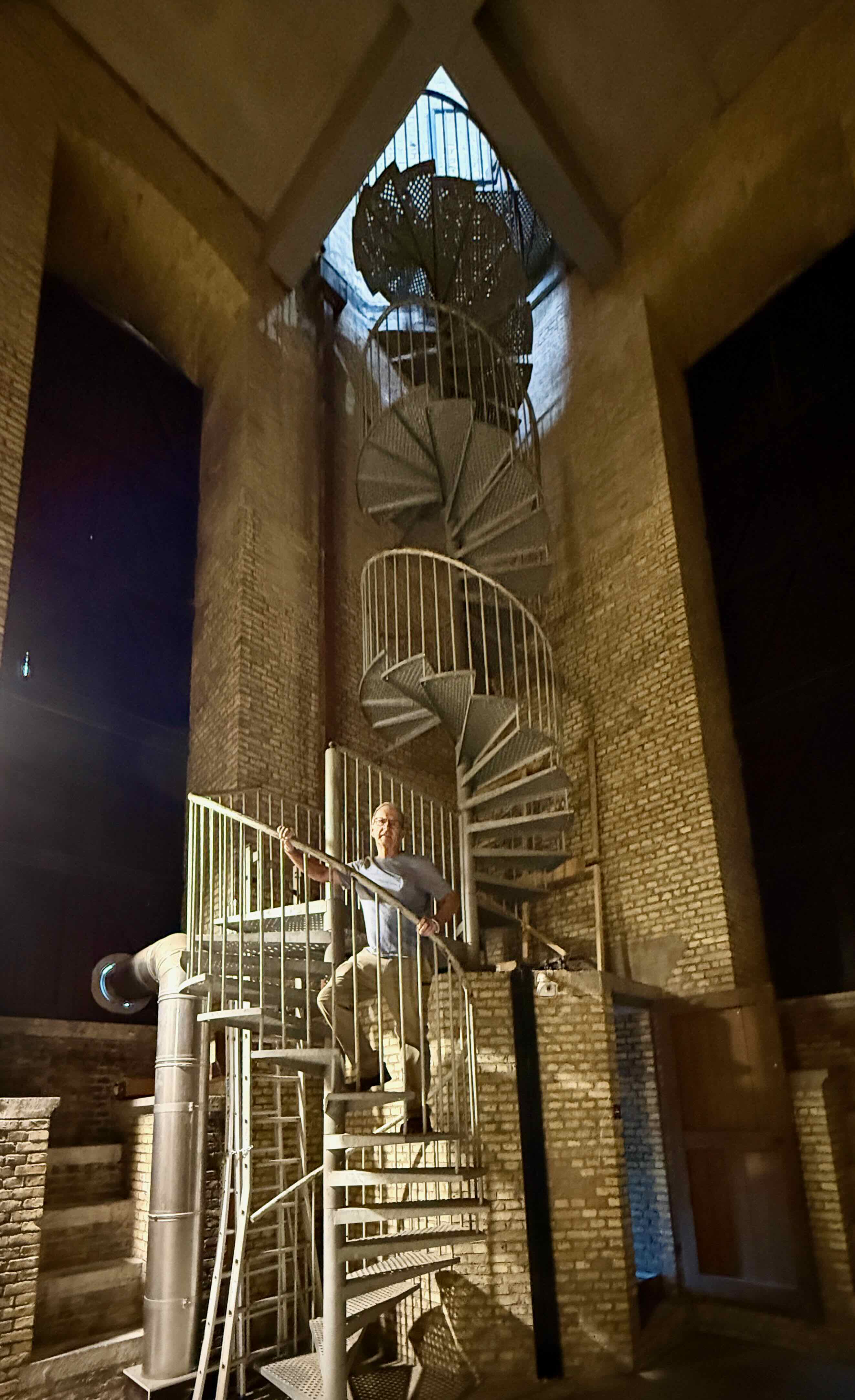
We are always amazed at the size of the bells in these bell towers.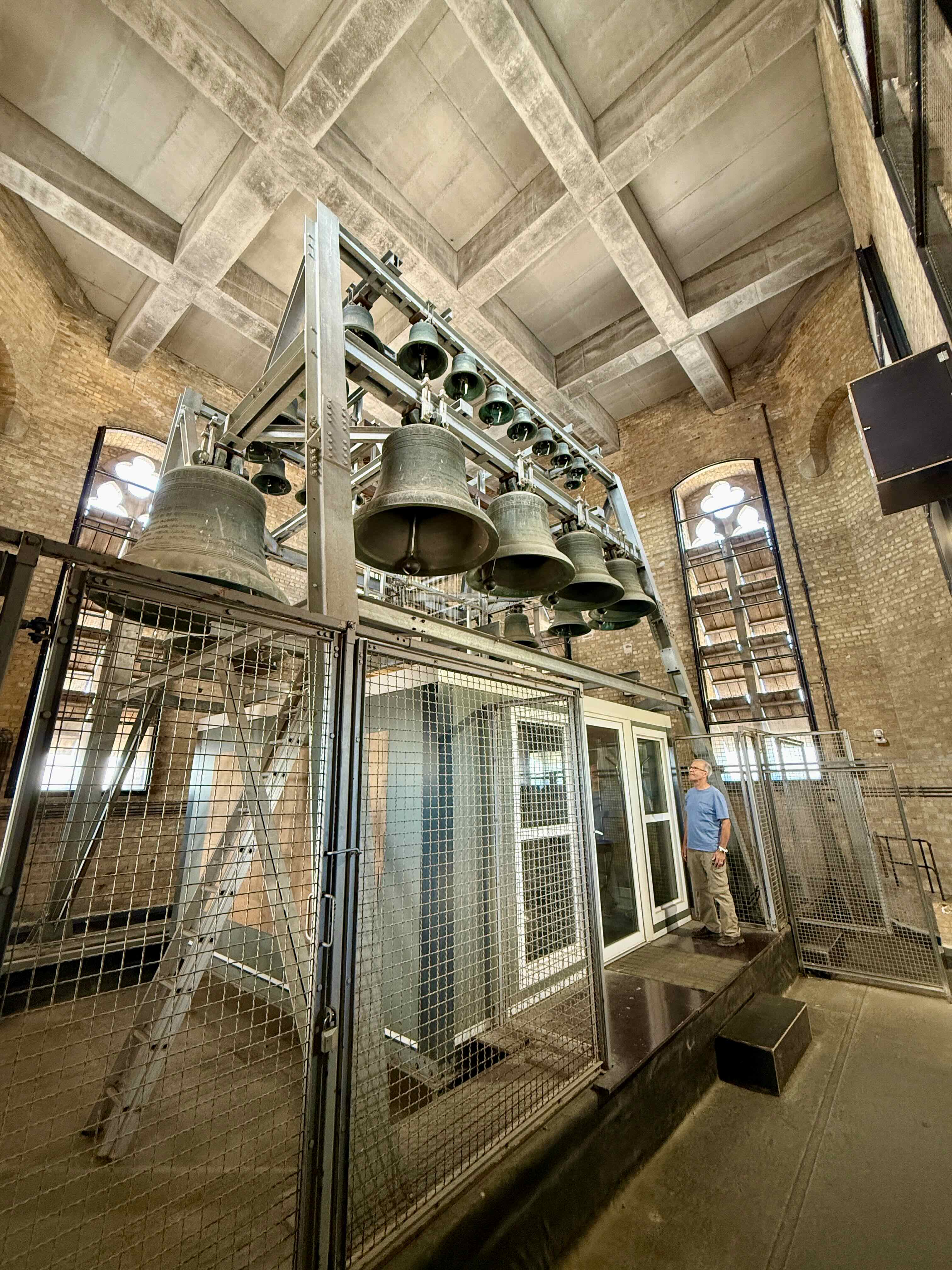
Soon we are outside taking in the views of the town and countryside.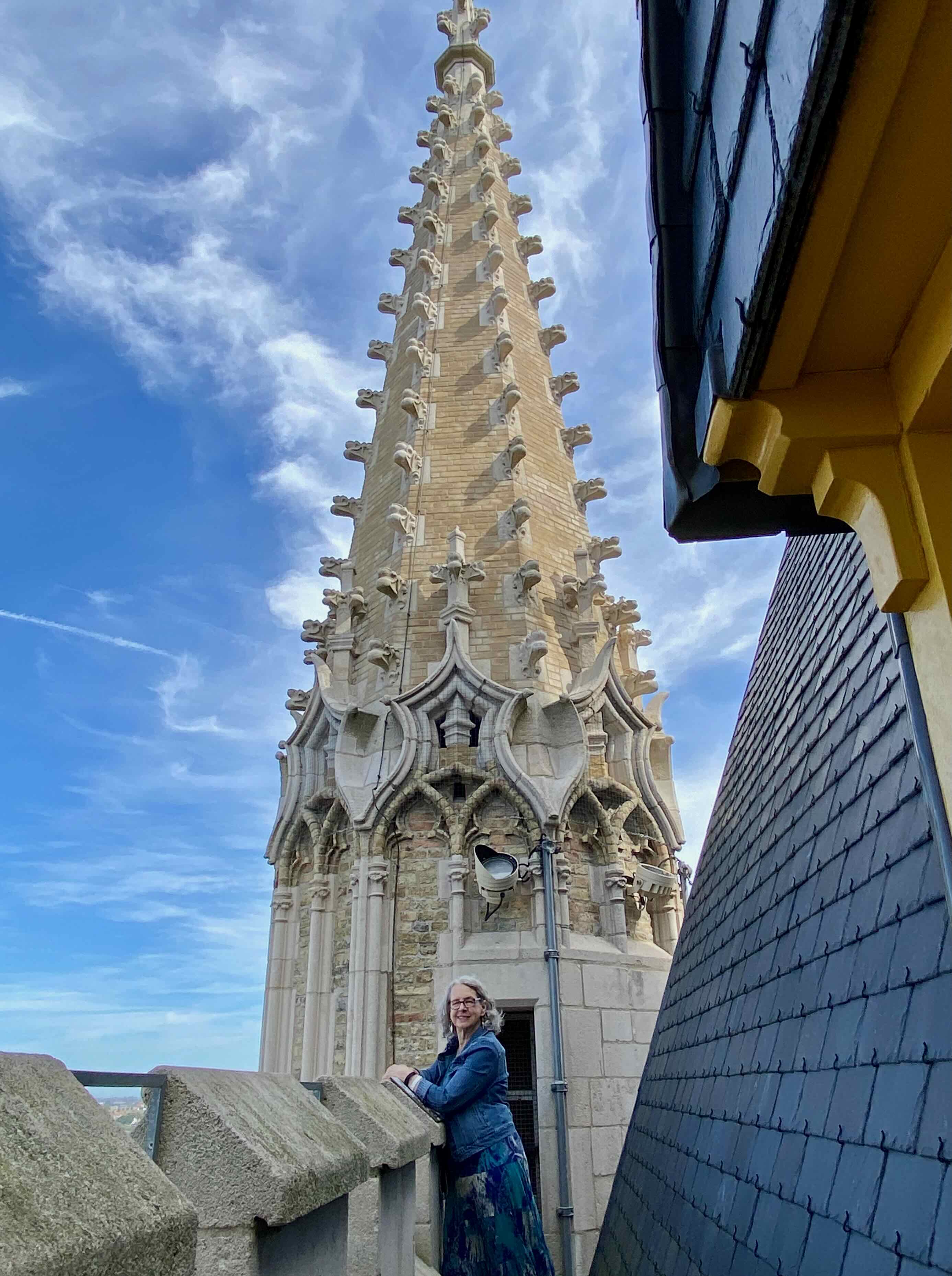
We can see for miles.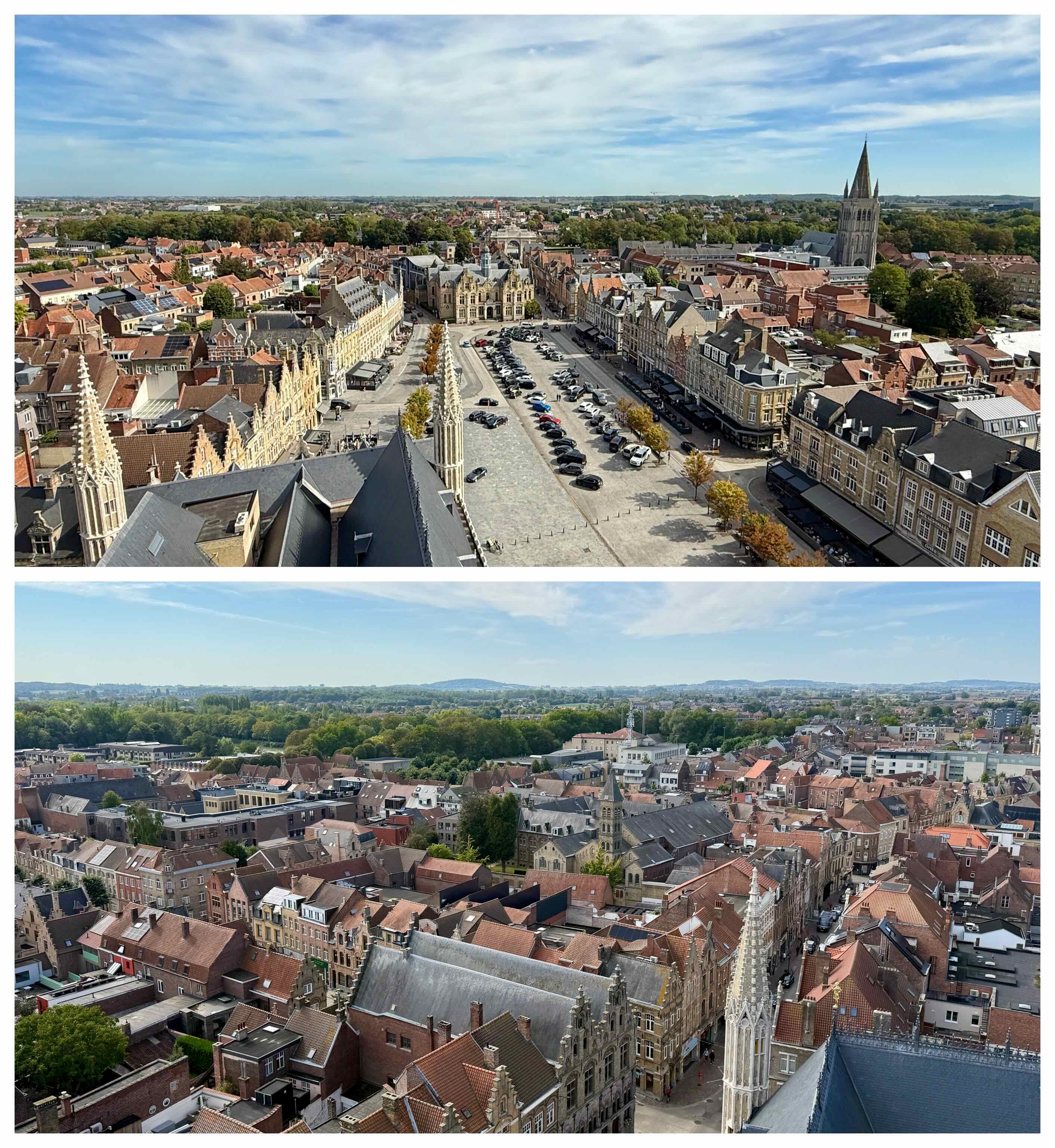
I am very happy that the 231 steps down from the tower are cement. I really didn’t like those metals ones.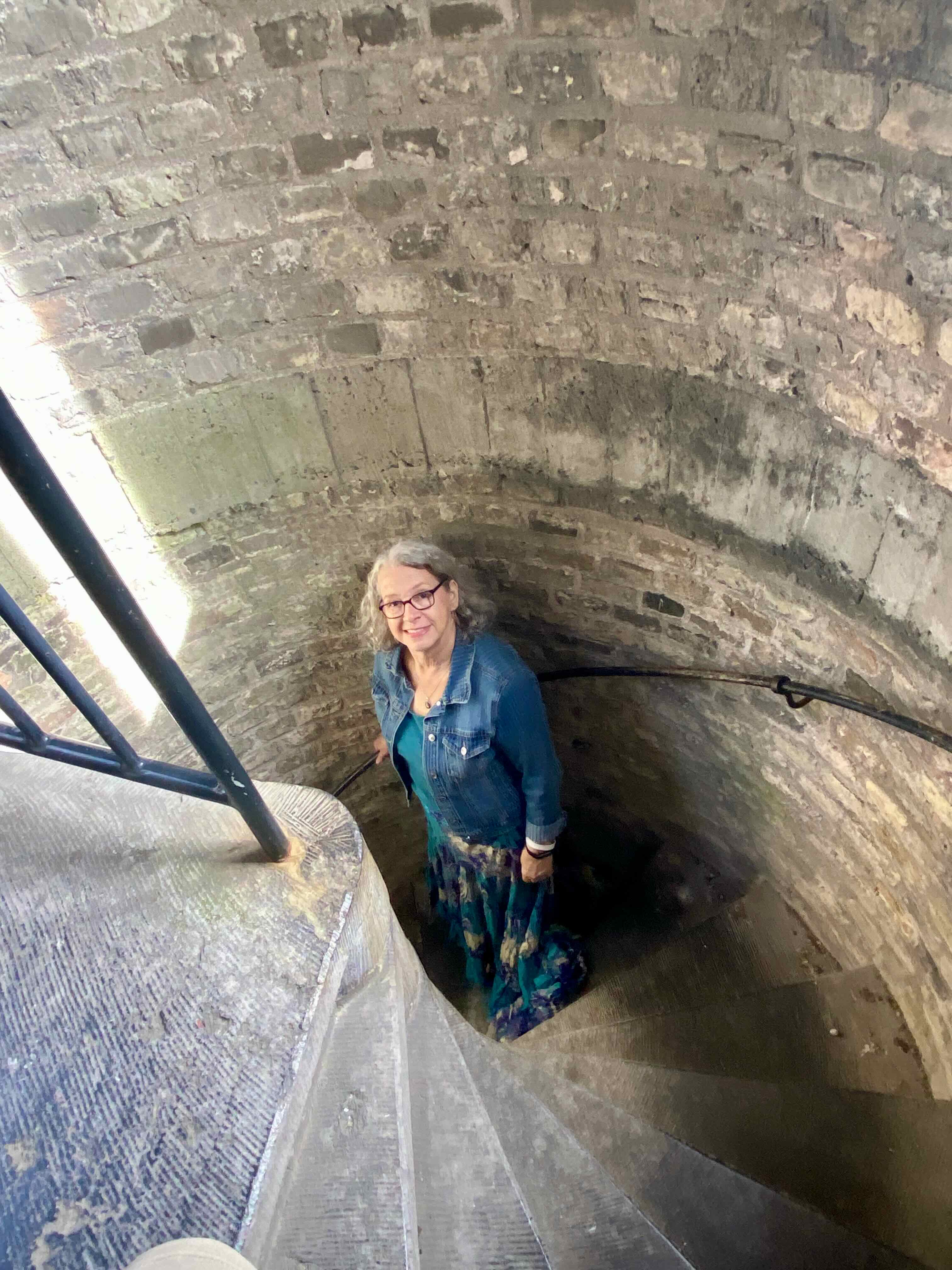
After the clim to the top of the tower we have lunch and chatted with this Belgium couple who like to travel on their colourful bike. We were surprised as they were both quite elderly.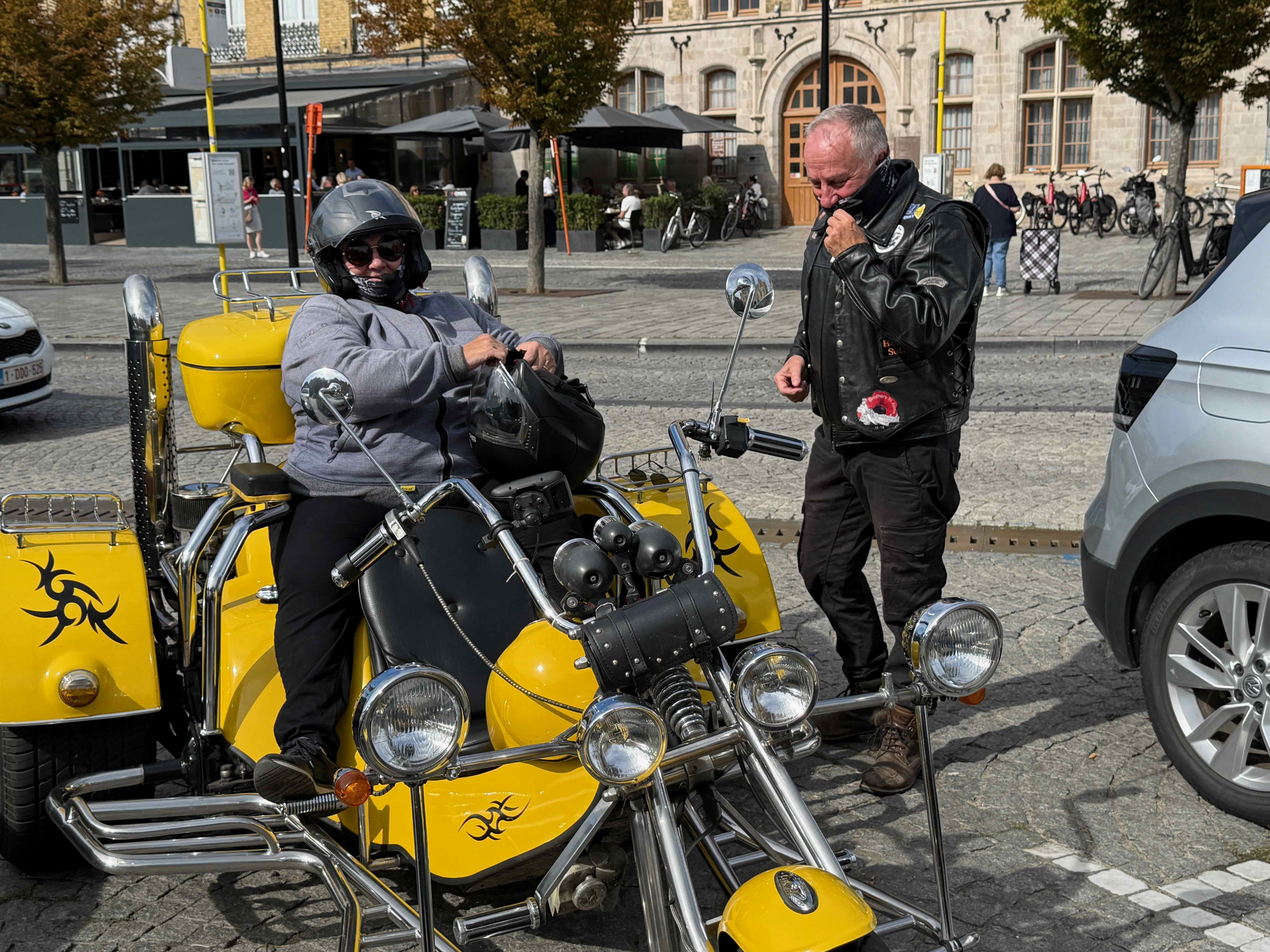
Back in the museum. There were lots of photos and film clips from the war. They bring the horror of the war to life.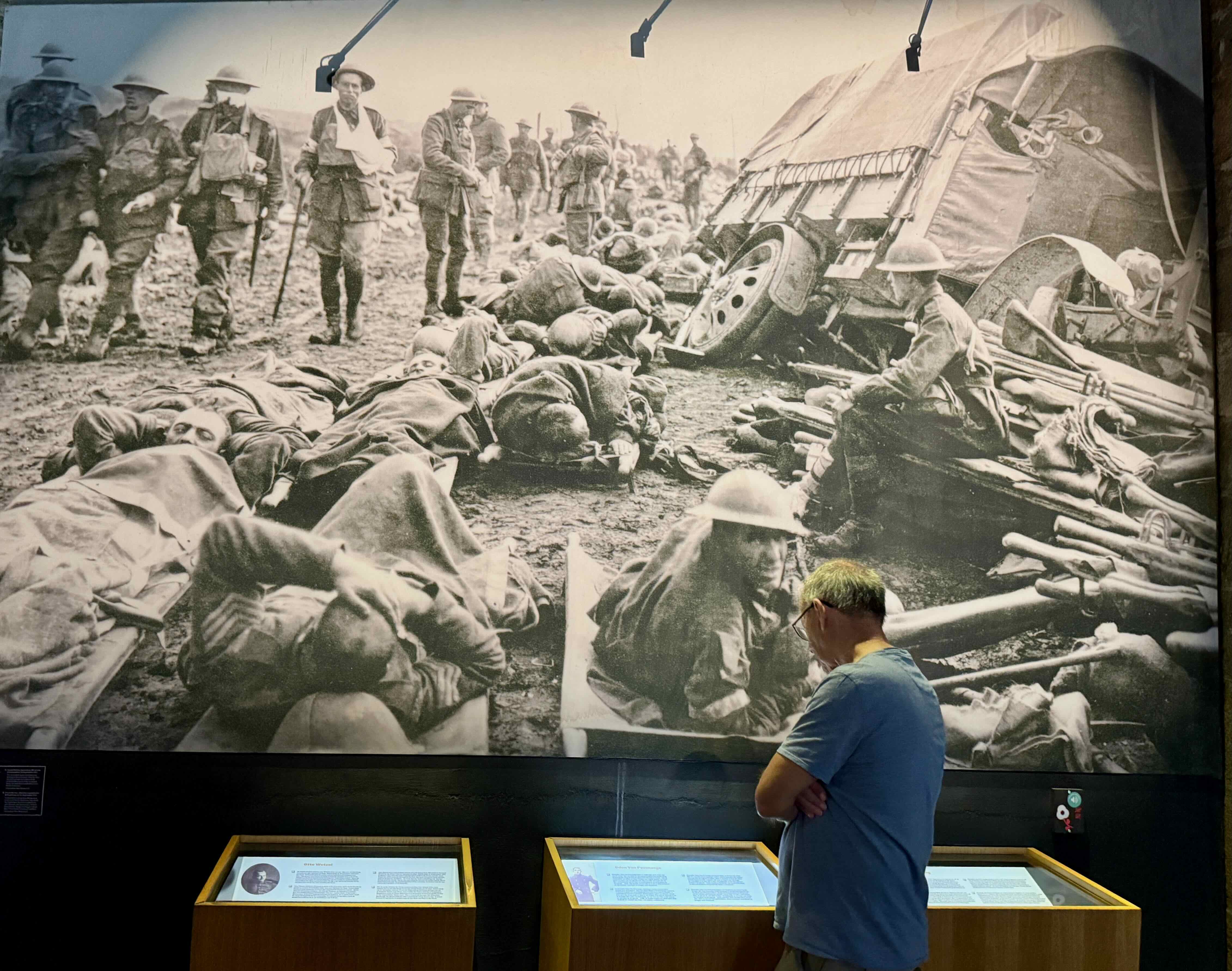
The bottom photo shows the damage done to the building that now houses this museum. It was rebuilt after the war.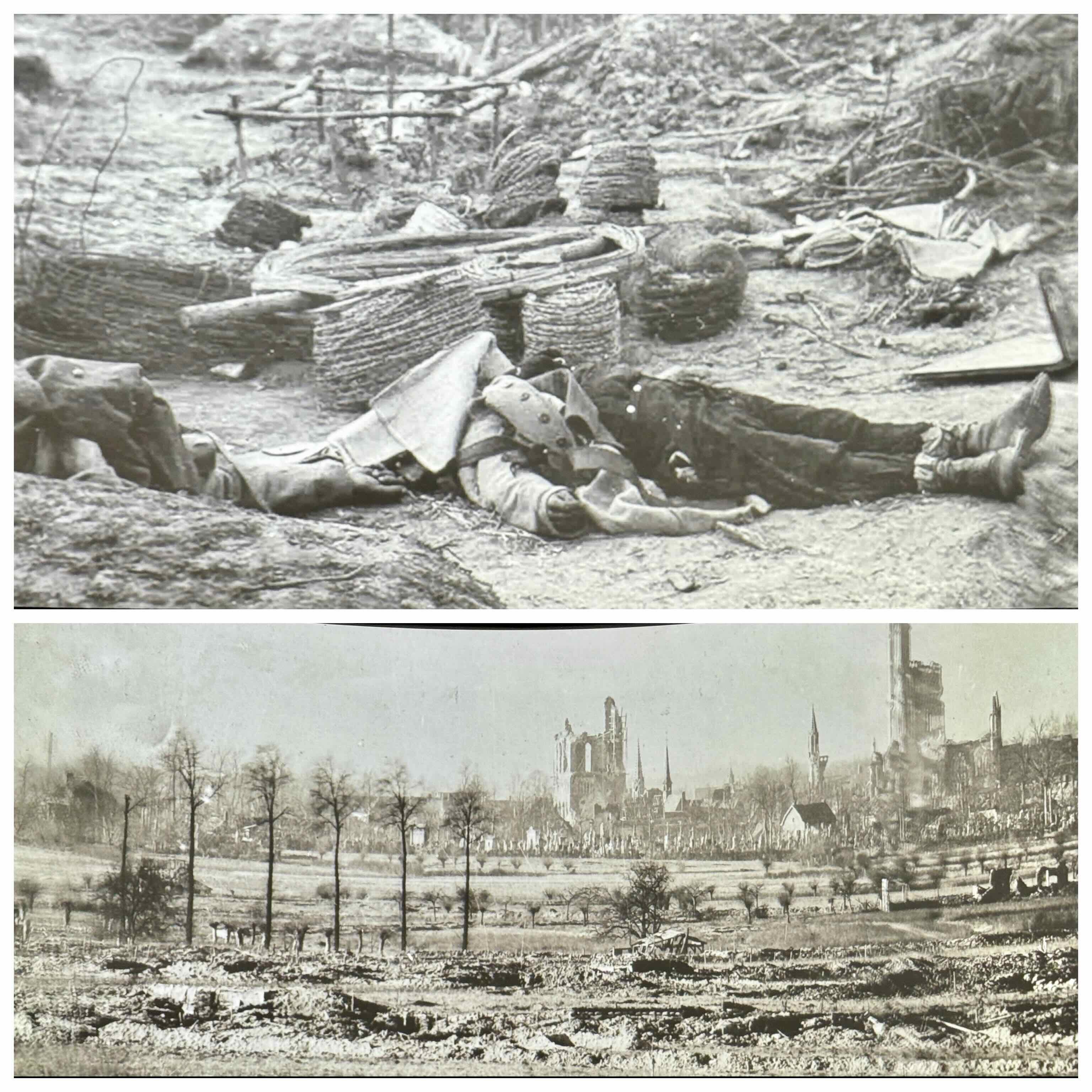
Men sleeping in closely packed conditions underground. 
There were displays of the full kit worn by soldiers from the countries that fought in the war. The first display with the kilt is from the Canadian Black Watch Royal Highland Regiment.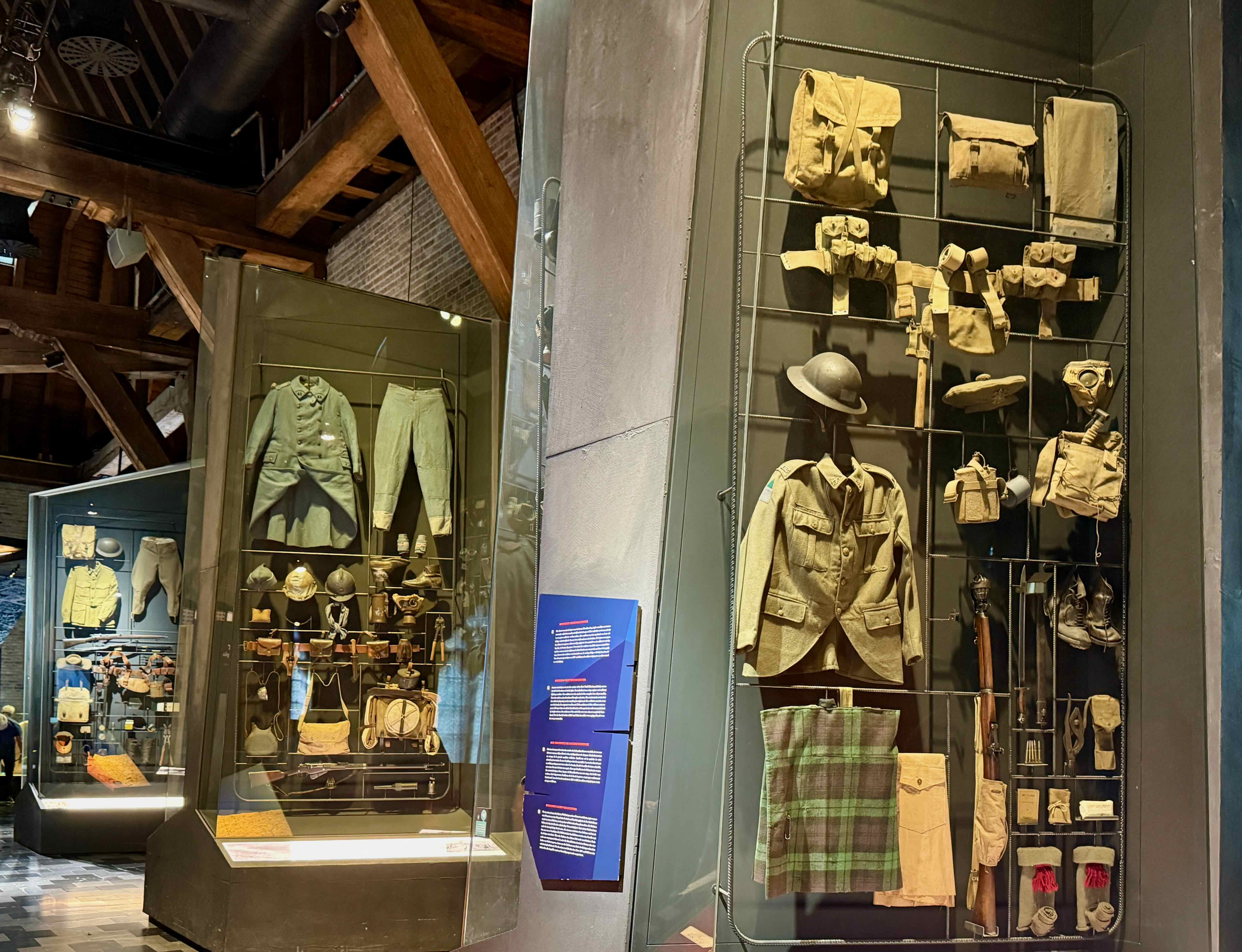 These banners are for John McCrae’s poem “In Flanders Fields”.
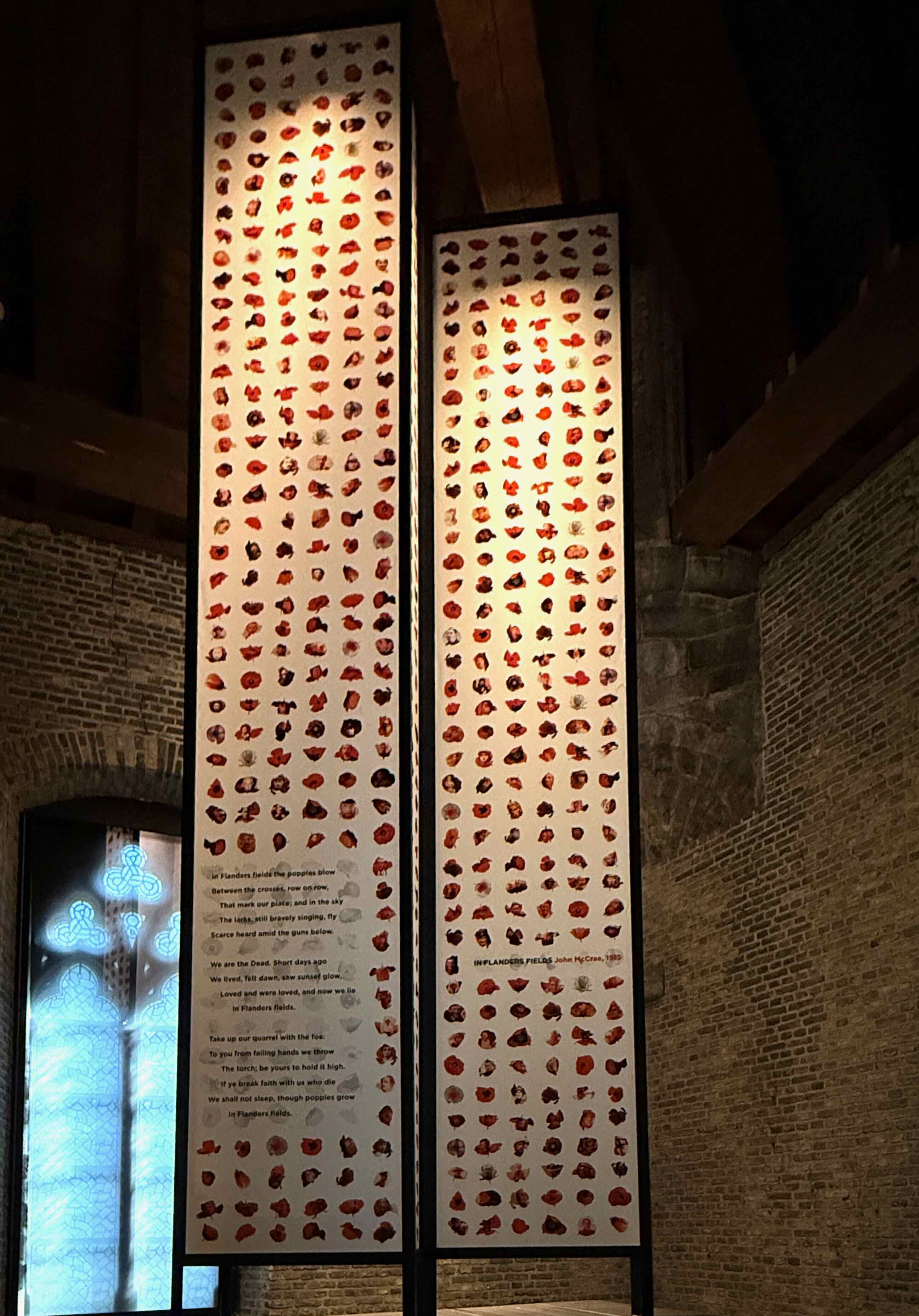
A closer look reveals that there are photos of soldiers hidden in the poppies.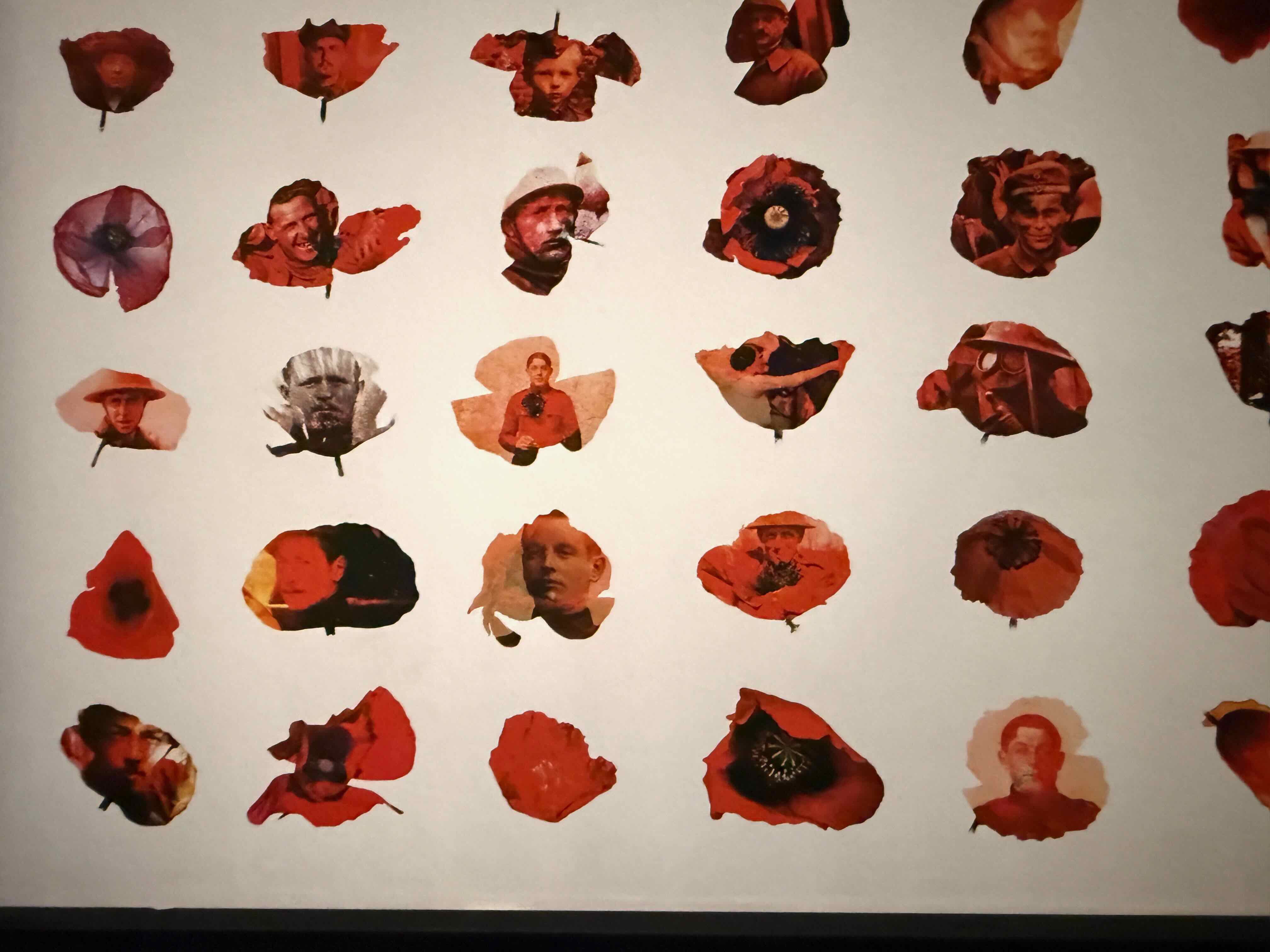
Taps is played at 8:00 every night at the Ypres Menin Gate memorial.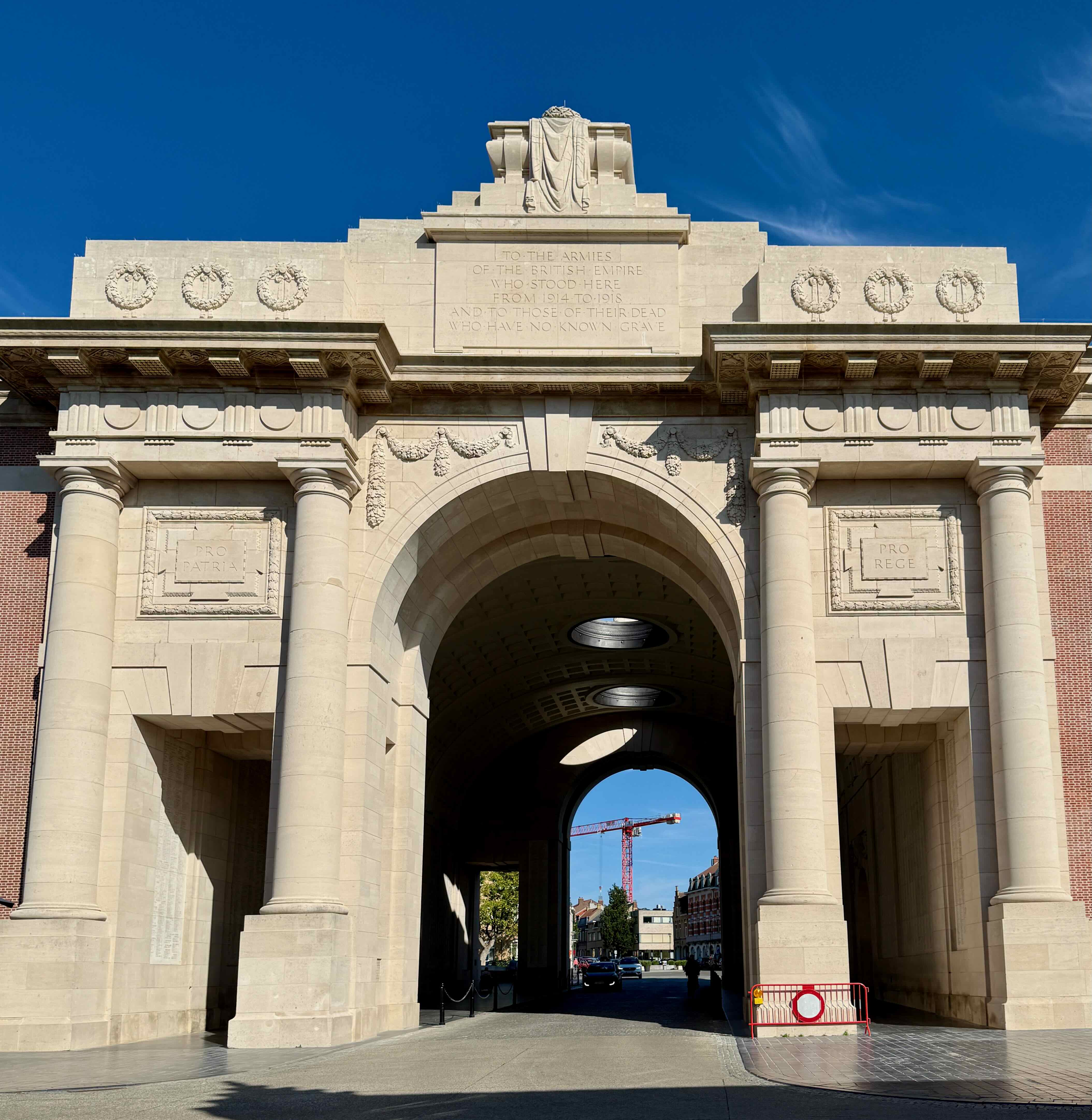
This memorial is engraved with the names of more than 54,000 officers and men whose graves are not known. I feel emotional when viewing these lists of those who died but were never found and buried. 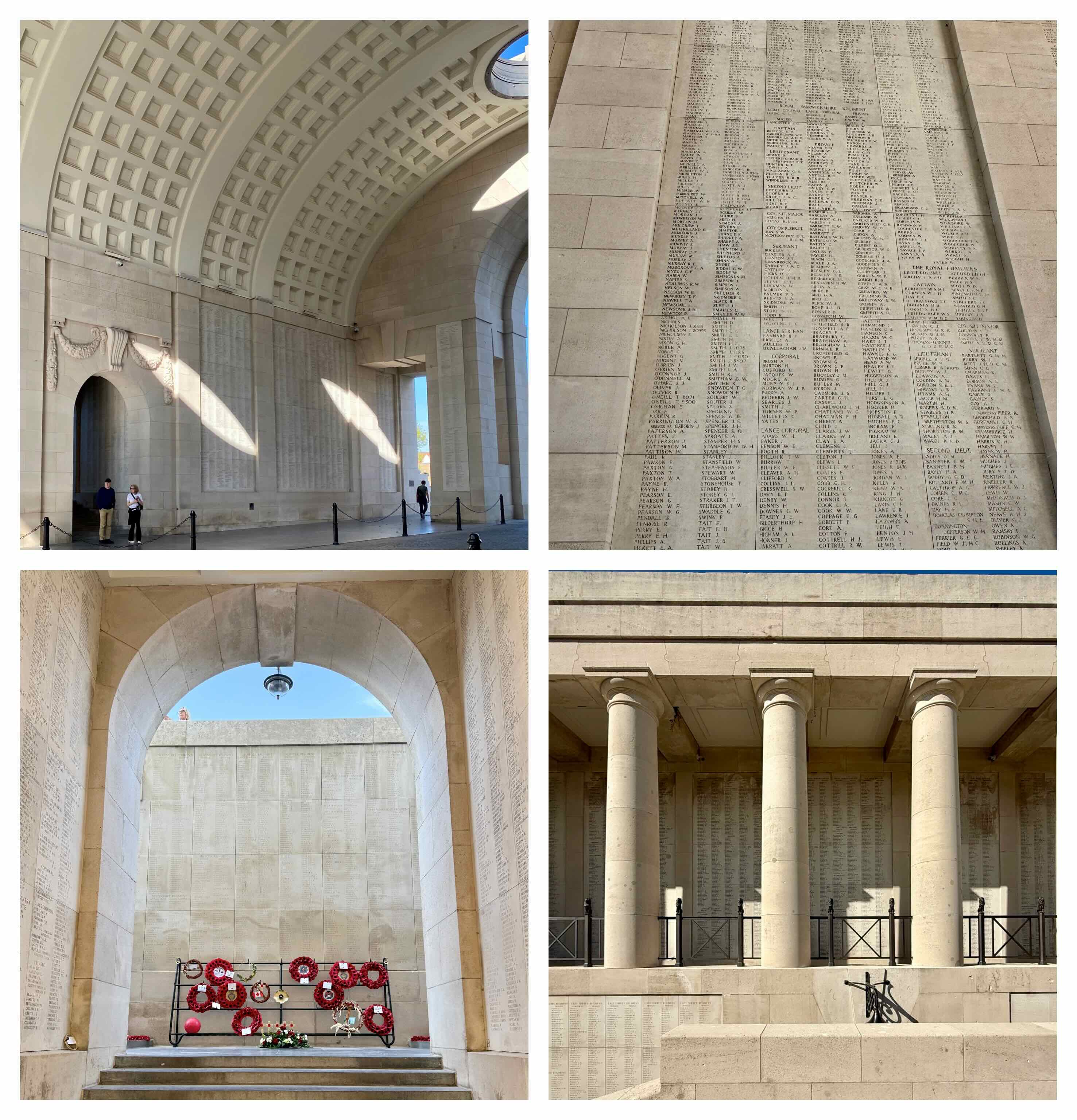
Walking back to the car we pass a gallery with these amazing porcelain sculptures by Bénedicte Vallet.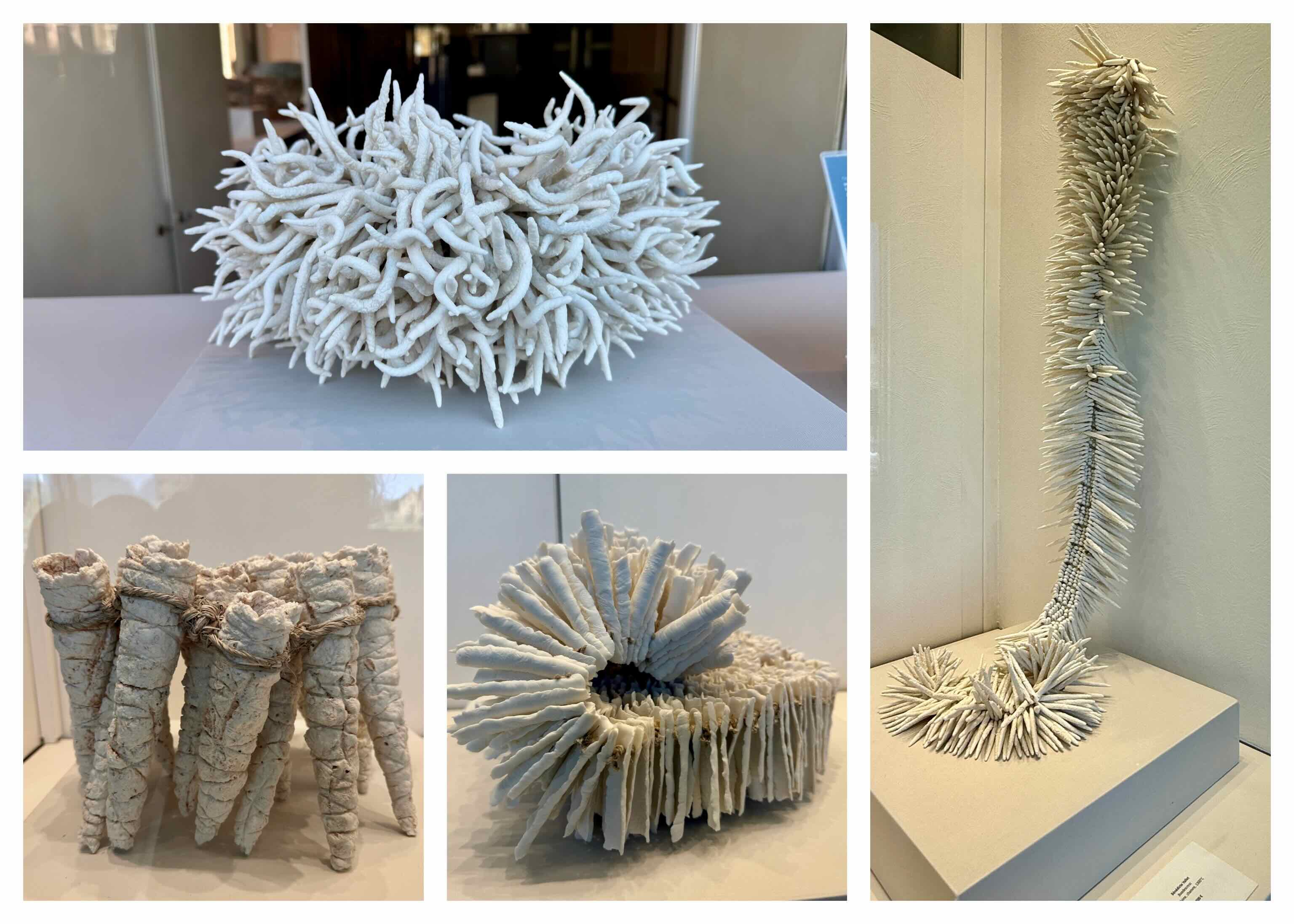
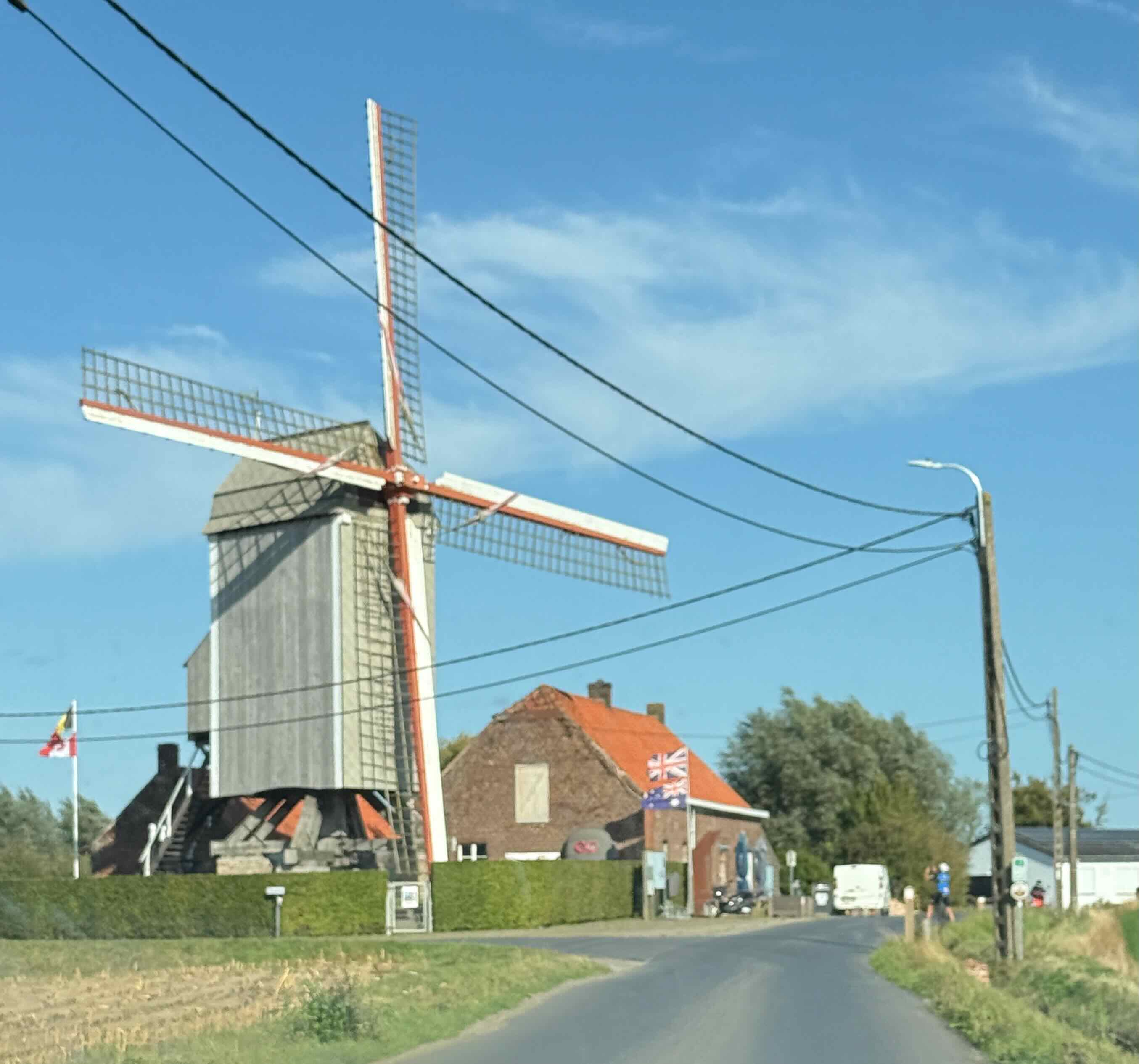
Next stop is the Essex Farm Cemetery where the Canadian doctor, Lieutenant Colonel John McCrae wrote his now famous poem “in Flanders Fields” after seeing poppies growing in battle-scarred fields. The poem was written in memory a friend who died at Ypres, 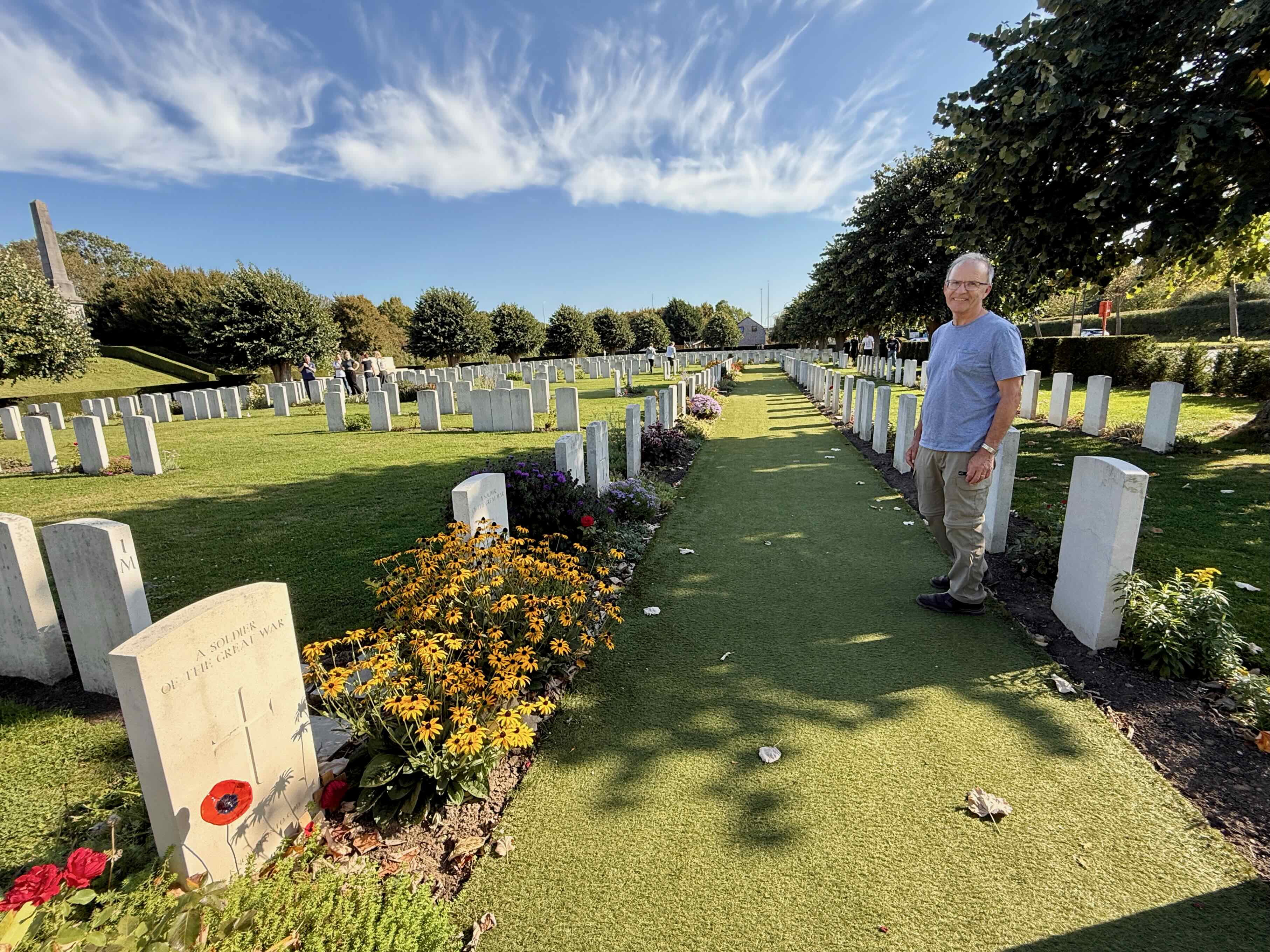 We pass some windmills on the way to the last cemetery we will visit on this trip.
Tyne Cot cemetery, located near Ypres, is the largest Commonwealth cemetery in the world and a memorial to the missing soldiers of World War I. It contains the graves of 11,956 Commonwealth soldiers, primarily from the Battle of Passchendaele. 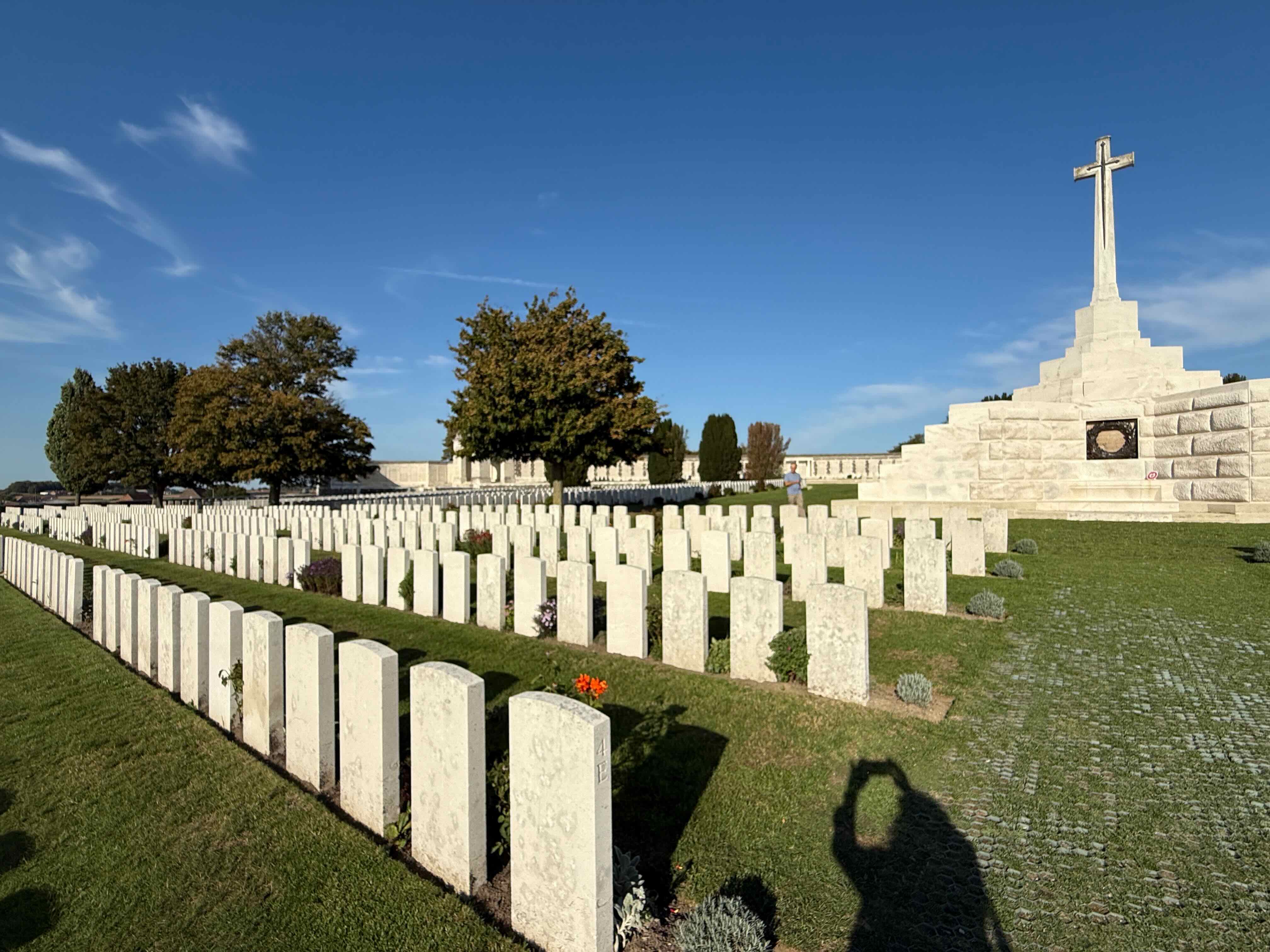
So many graves and 8,367of them are unidentified British or Commonwealth servicemen.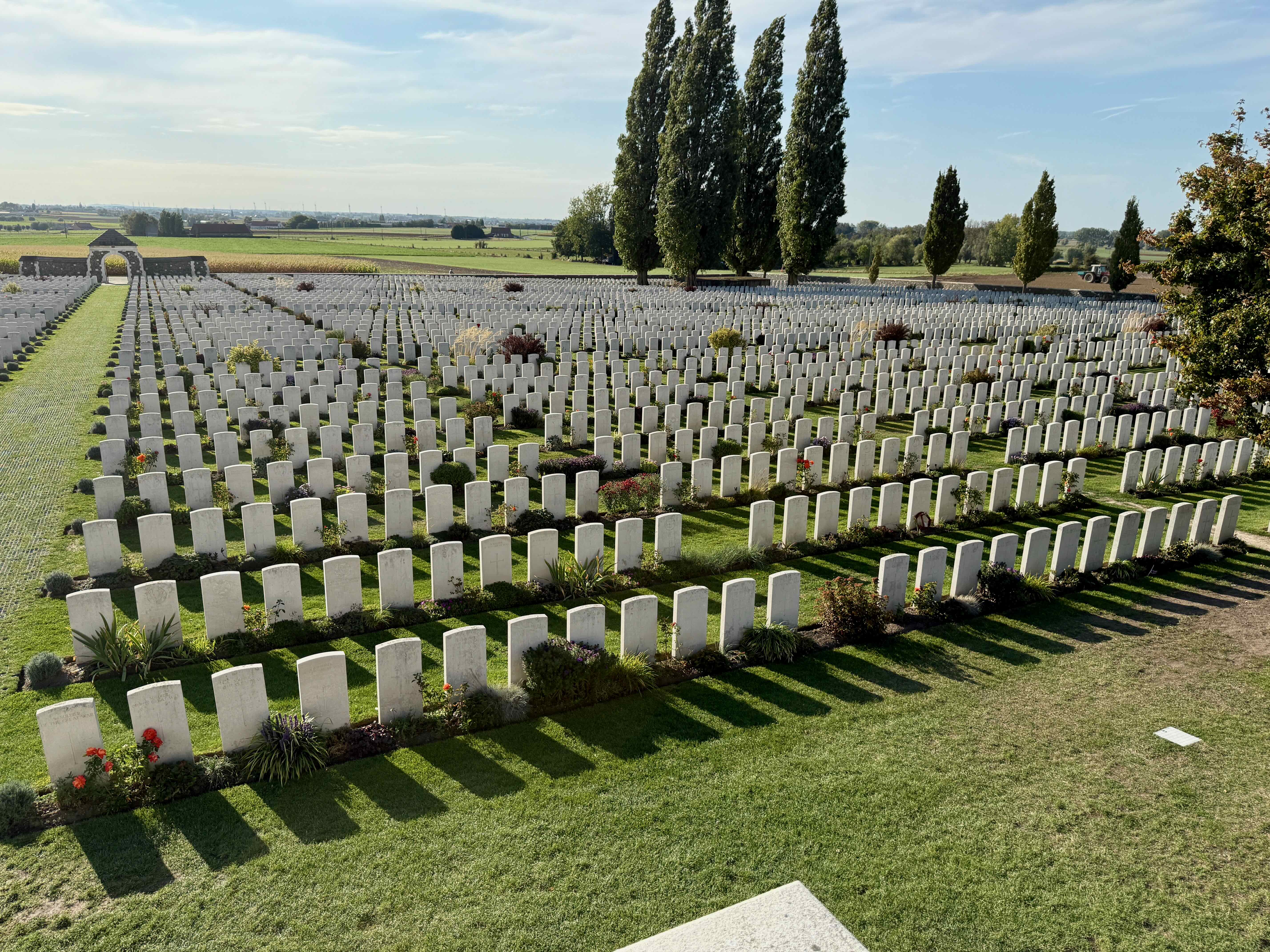
The wall in the background of this photo is engraved with the names of the 35,000 soldiers whose remains were never found or identified.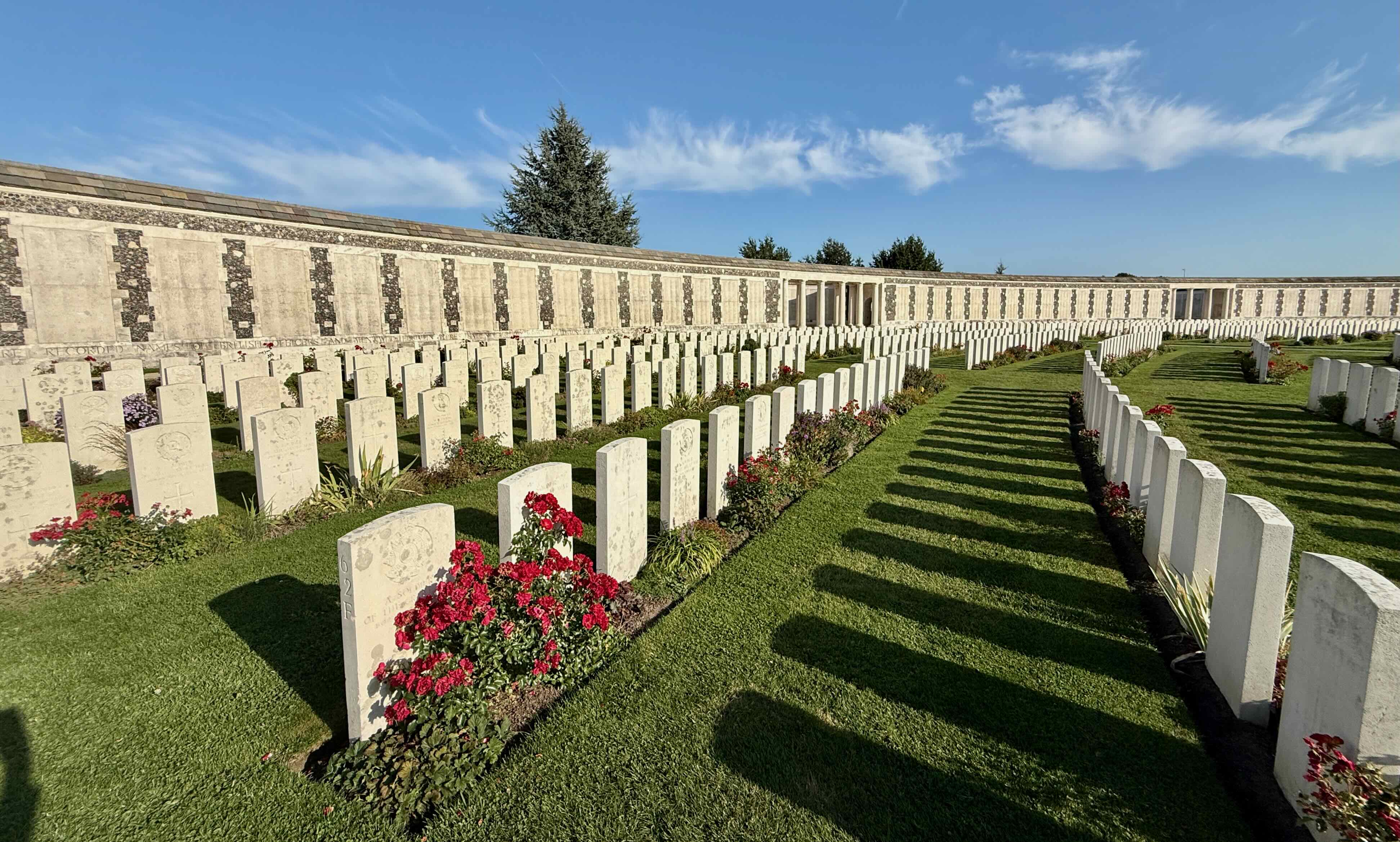 One last stop at the Canadian Memorial which commemorates the actions and sacrifices of the Canadian Corps during the First World War’s Battle of Passchendaele.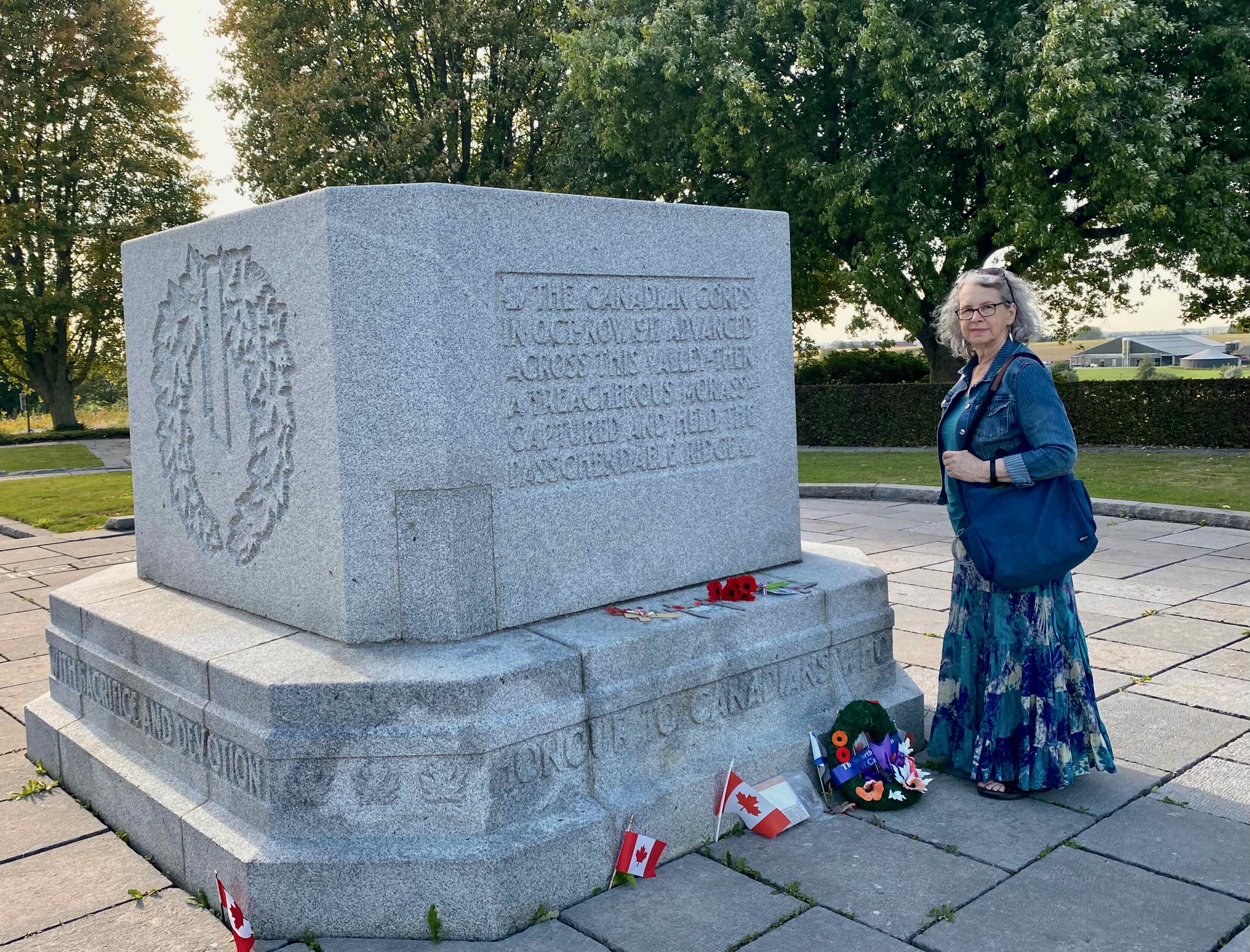
“The Canada Gate is the second of two linked ‘Portals of Remembrance’. The first is The Last Steps Memorial Arch, marking the spot in Halifax Nova Scotia where 350,000 Canadian soldiers took their last steps in Canada before embarking on ships for service overseas in Belgium and France during the First World War. For thousands, their last steps in life were taken here at Passchendaele. For those who survived, their lives were forever changed.”~ veterans.gc.ca
Another heavy duty day. 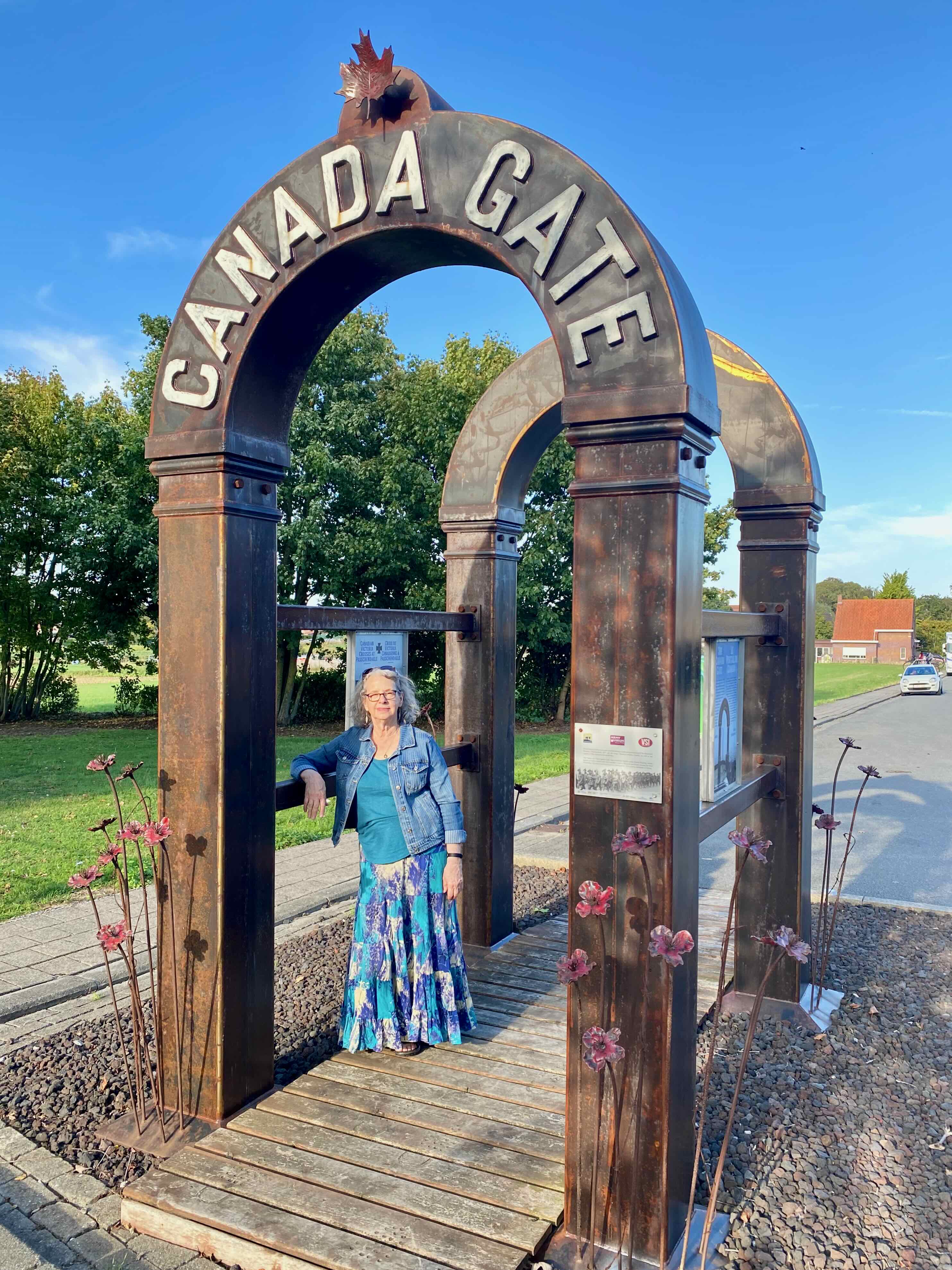
 trudymason.com