Day 33 Thursday, October 2, 2025
We take a train into Frankfurt. Once we had our tickets it was easy but once again we had problems using one of our credit cards. This trip has been a challenge with credit card, debit card and cell phone issues. I am beginning to think we are jinxed! It is so good to be traveling together. I think if either of us were trying to sort out these problems on our own it would be much more difficult. The saga continues as we find the Hertz car rental company in the train station. This trip we are told we need to extend our car rental contract every 30 days by simply checking in to any Hertz office. Well, it turns out that a Hertz office in Germany cannot extend contracts that was signed in another country. Sorting this out takes more than an hour and we are still not sure it actually will be taken care of. We will see.
We walk down the street across from the train station. I am struck by the contrast between the old and the modern buildings. I should have paid a bit more attention to the signs on the storefronts.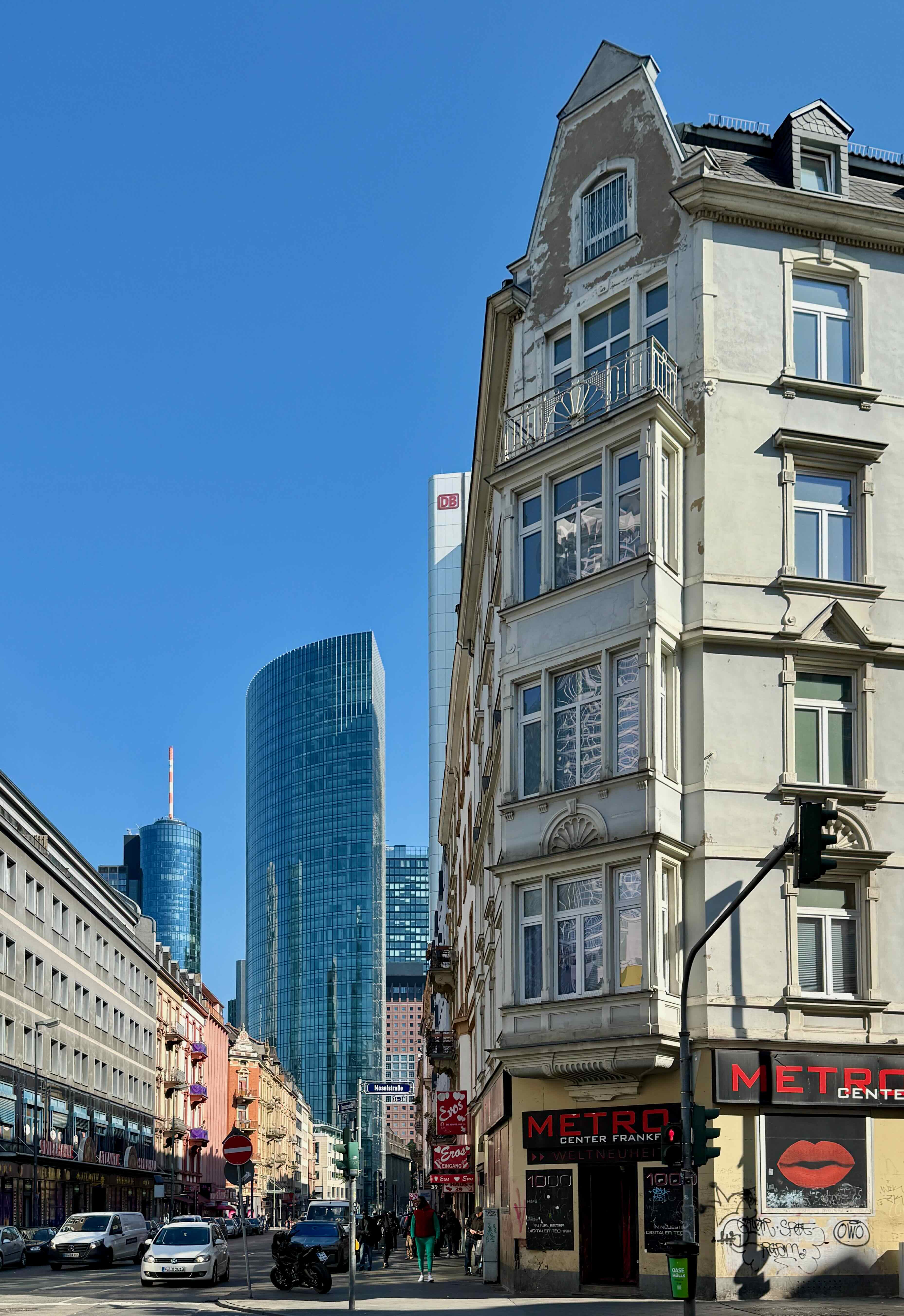
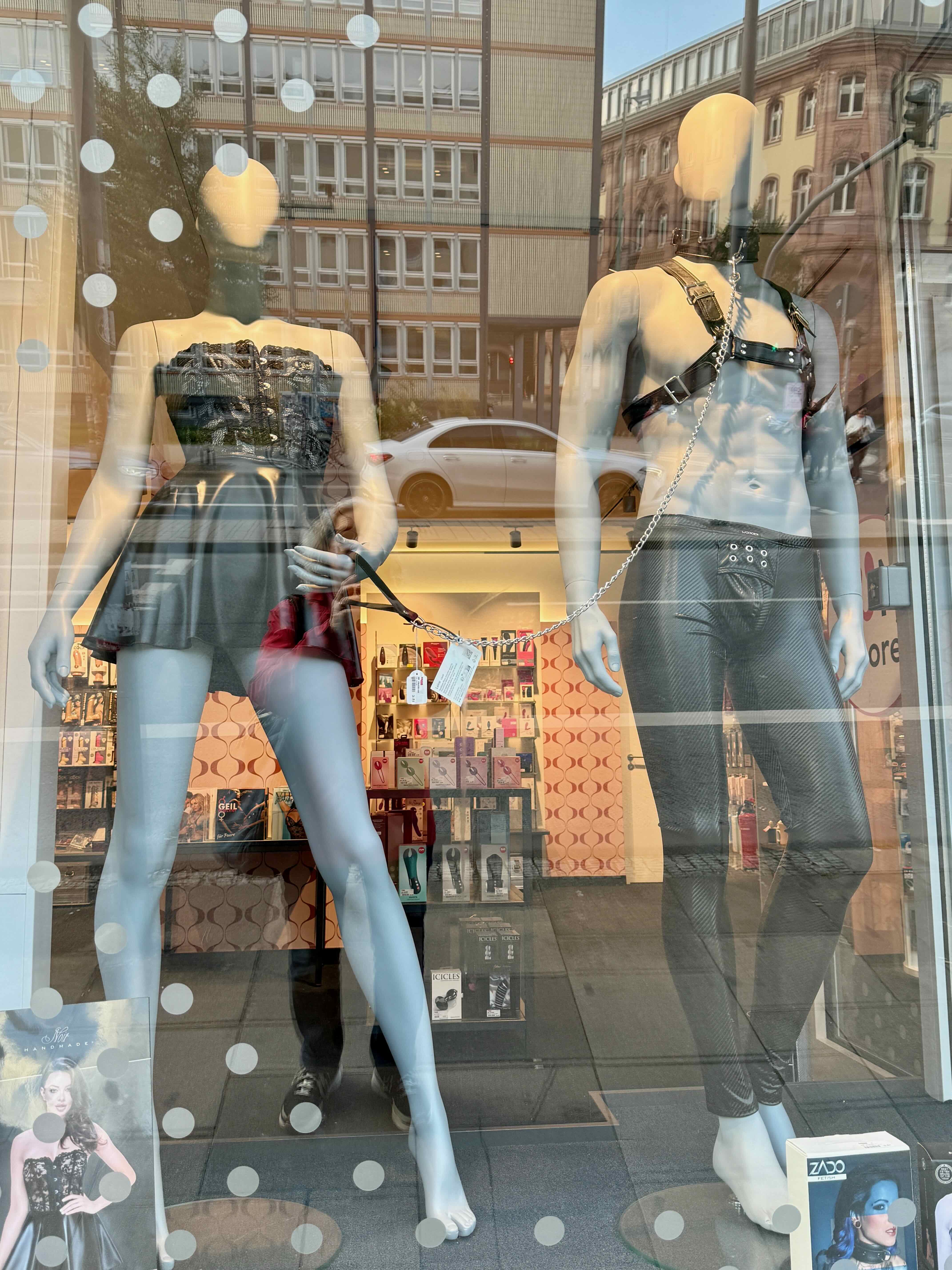
After a man and his lady friend propositioned me we noticed that we were walking through the red-light district! We had a bit of a chuckle!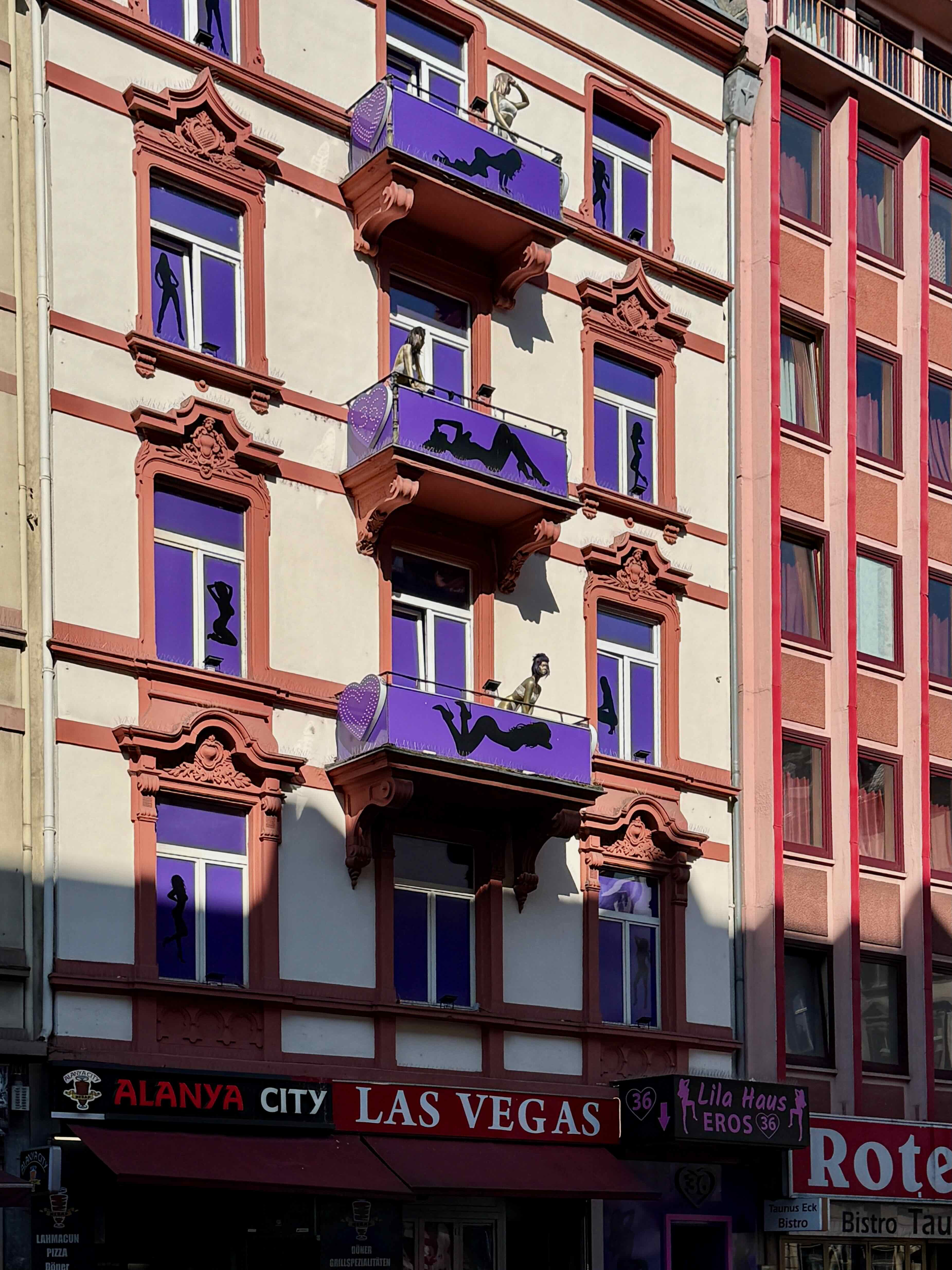
Nearly 70% of Frankfurt was destroyed during the Second World War but many of the buildings look older than they actually are.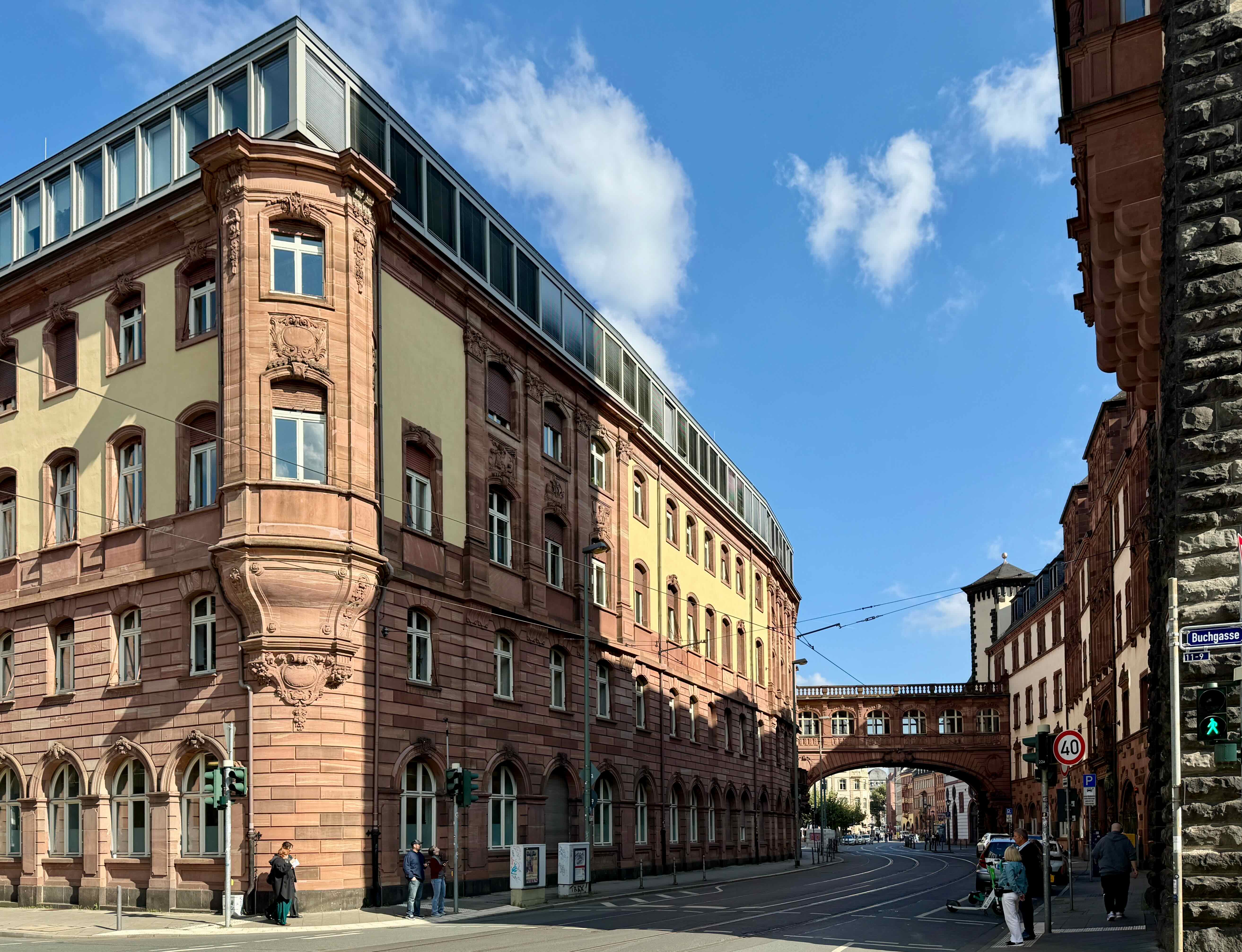
There were four of these massive sculptures supporting the bridge across the street in the above photo. 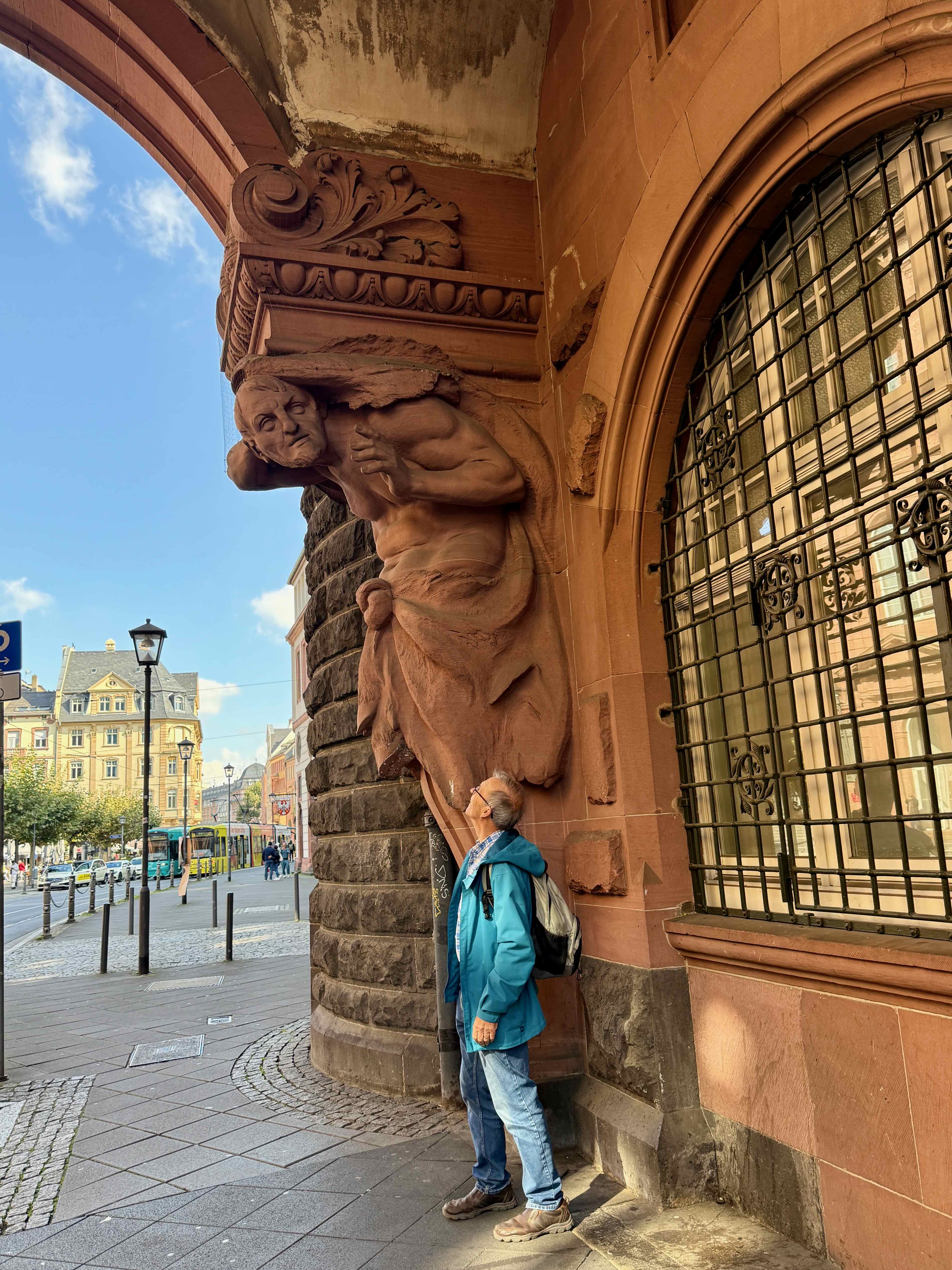
In1405, two houses were joined together to make Frankfurt’s City Hall. It is a striking building.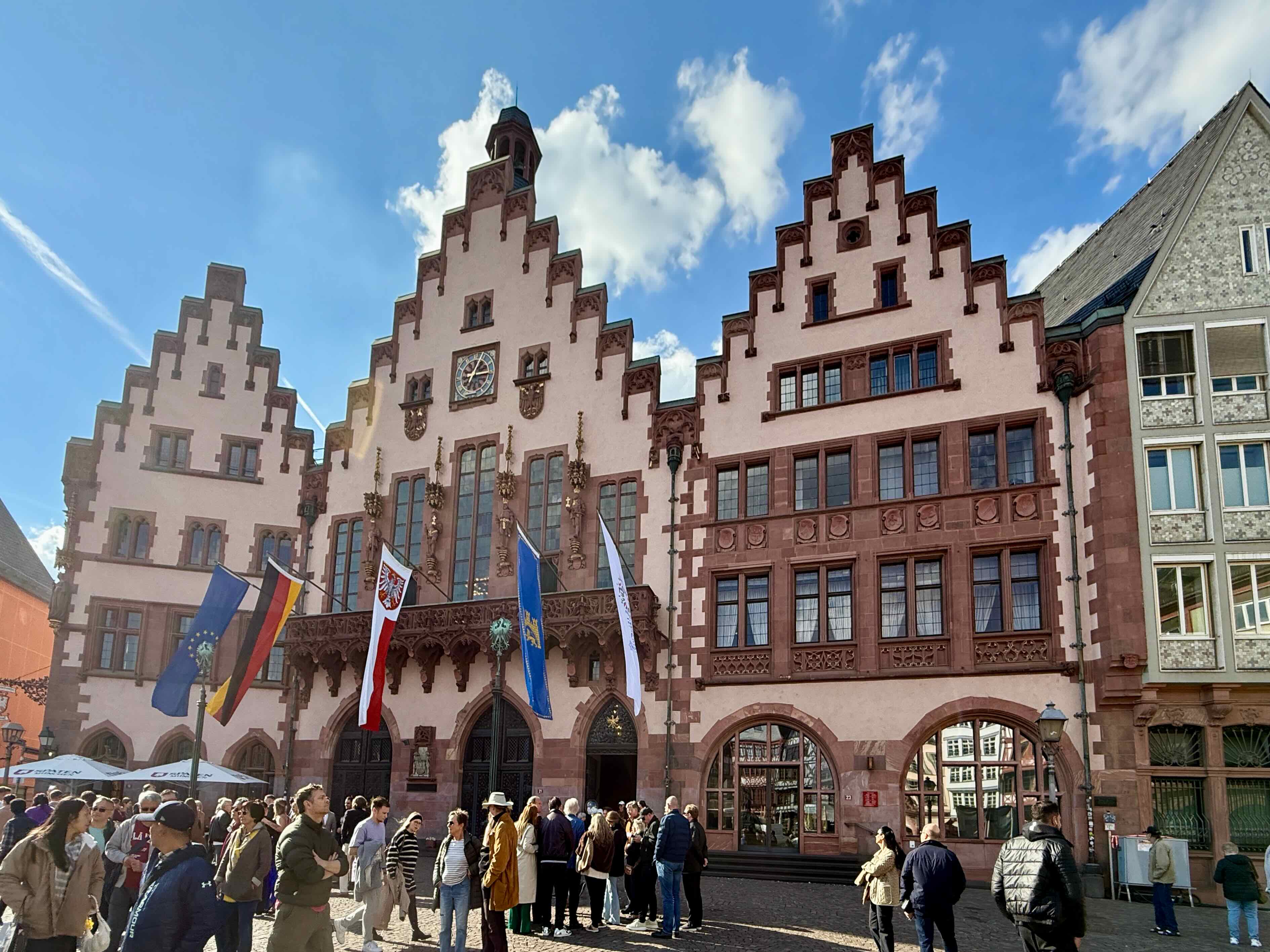
Saturday is a popular day to get married and there is a steady parade of weddings taking place. The bridal couple and their guests wait outside for their turn to be married. It seems strange to me but is perfectly normal here.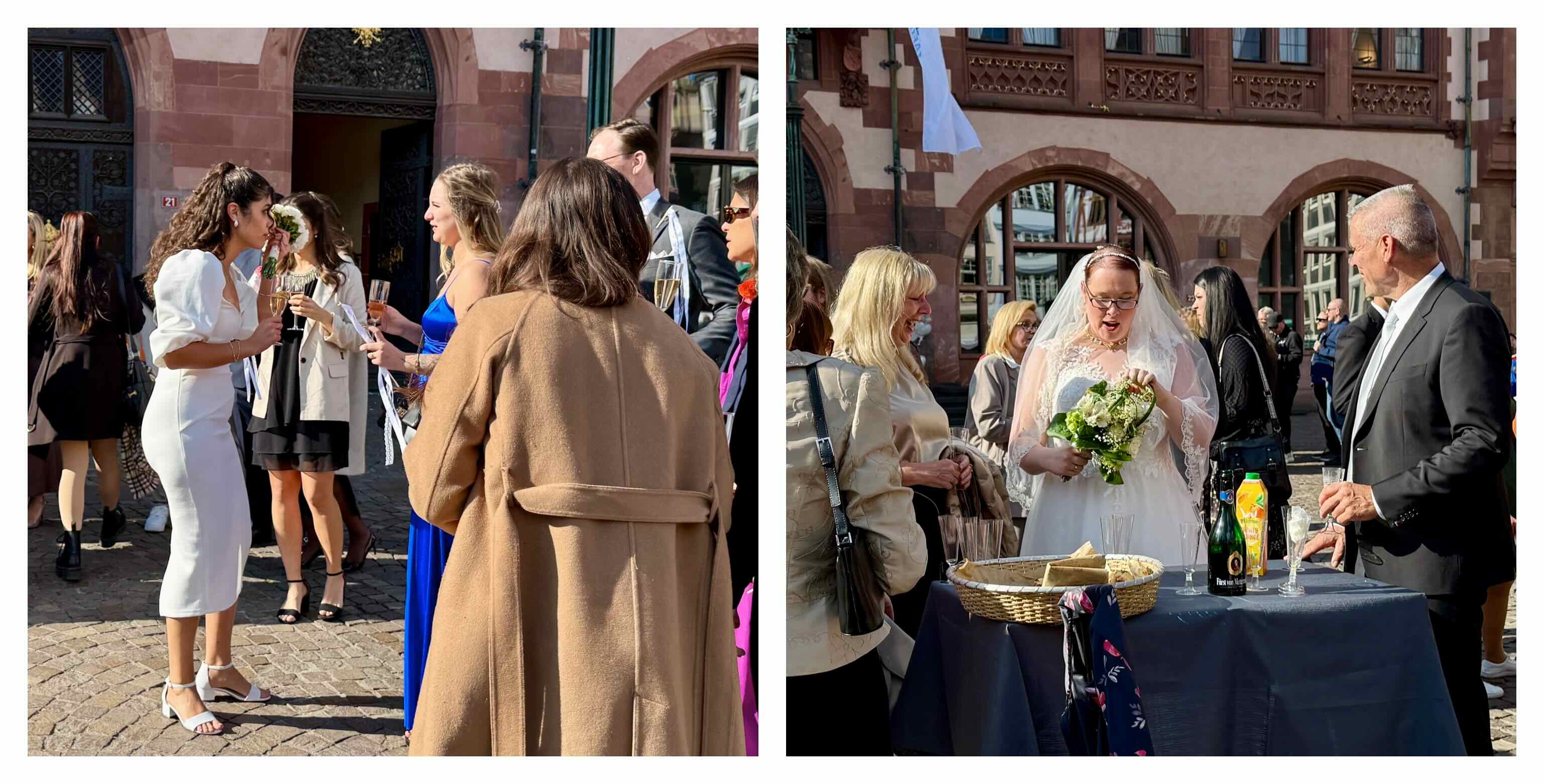
We have our picnic lunch on the banks of the Rhine River and then visit this pedestrian bridge. ‘Love locks’ are covering this bridge. I suspect that before long authorities will have to remove these locks before their weight begins to damage the bridge because of their weight like the bridge in Paris that was covered with locks.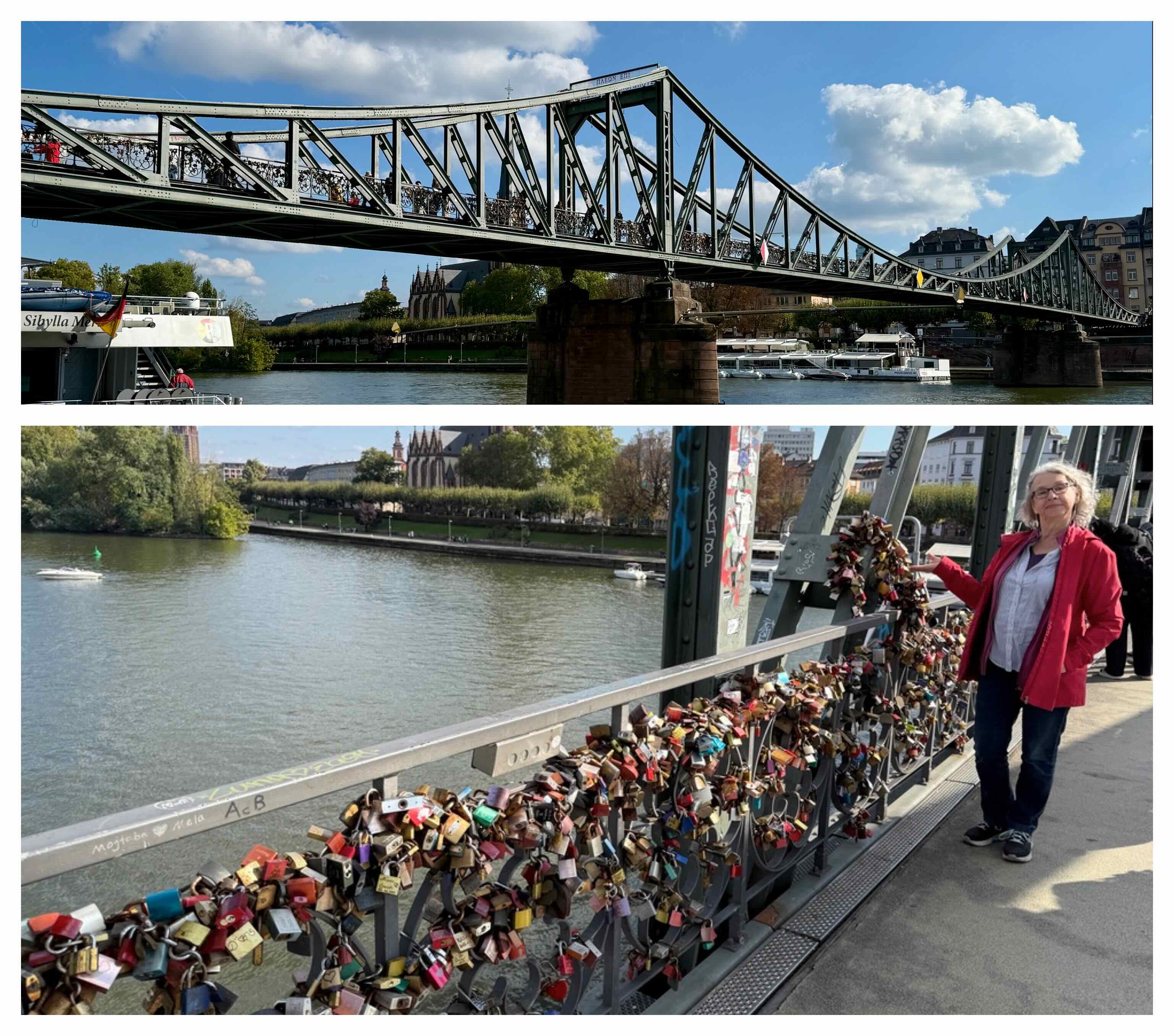
Saint Bartholomew Cathedral is the only church in Frankfurt that survived the bombing of WWII. Divine intervention?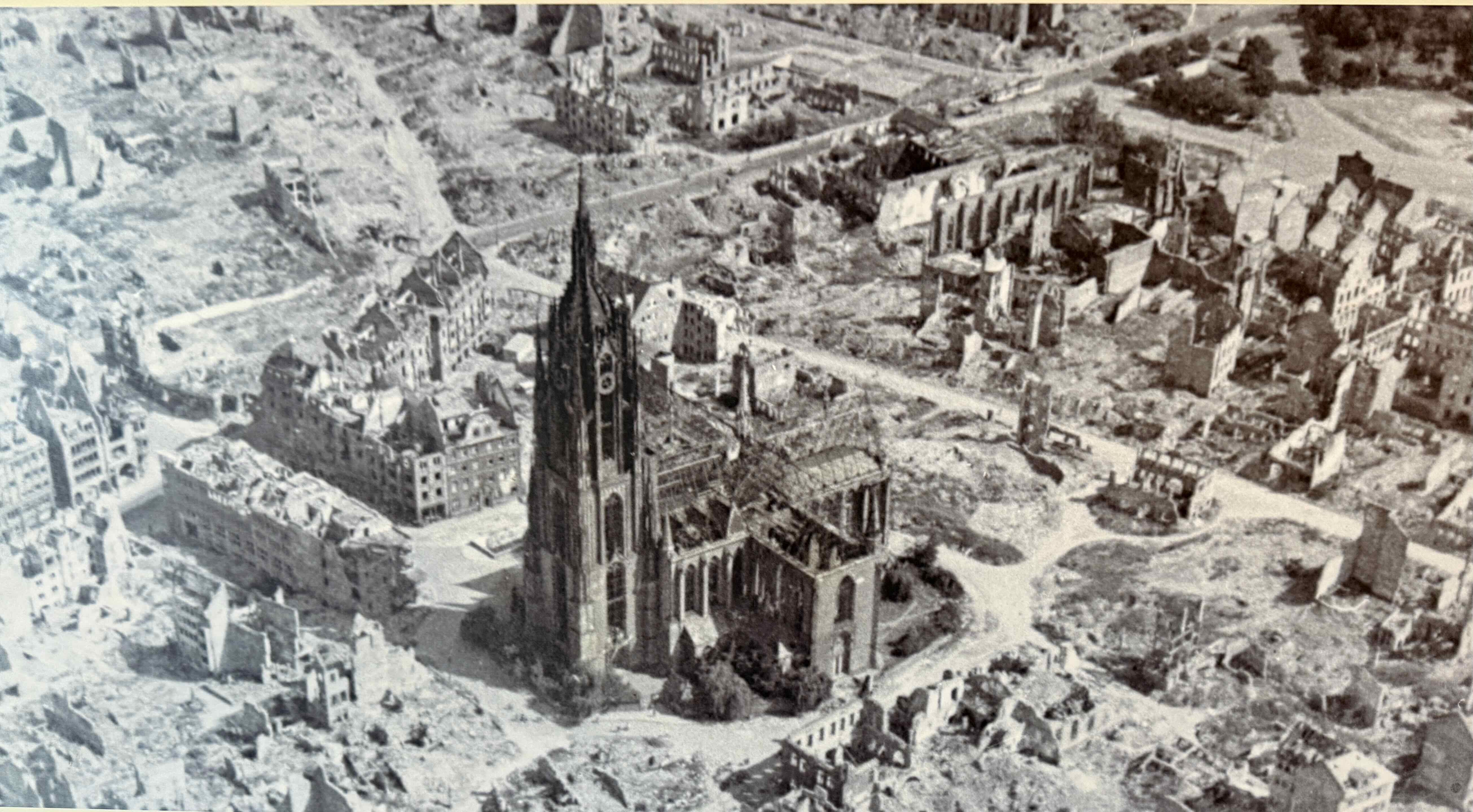
As we enter the church we see this group of sculptures depicting Christ being crucified on Calvary Hill. 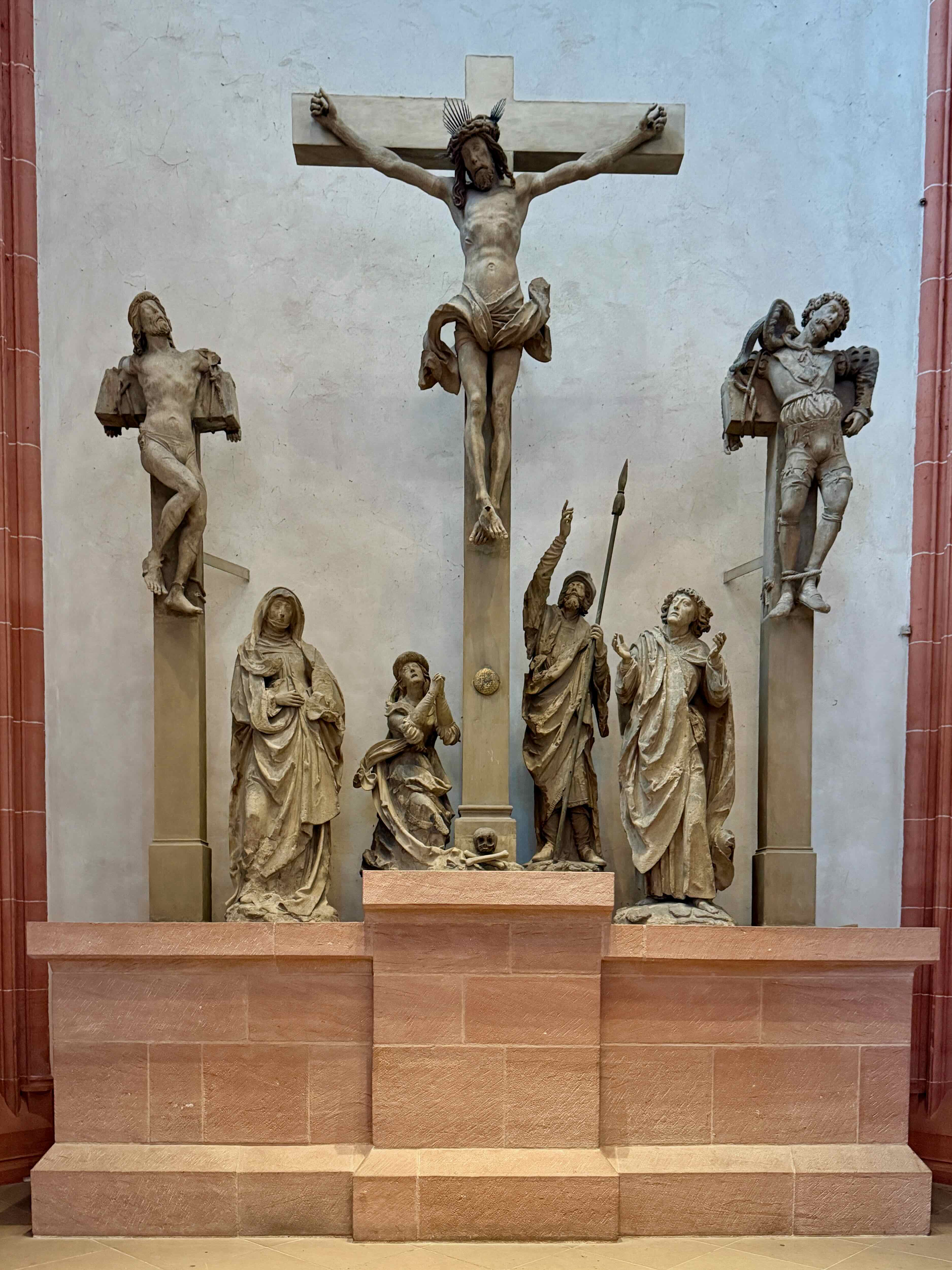
The cathedral was built in the Gothic style between 1315 and 1358, but suffered a fire in 1867 and then the bombing of Frankfurt in 1944. The reconstruction after these events changed parts of the church. Today it is a hall church with three naves. 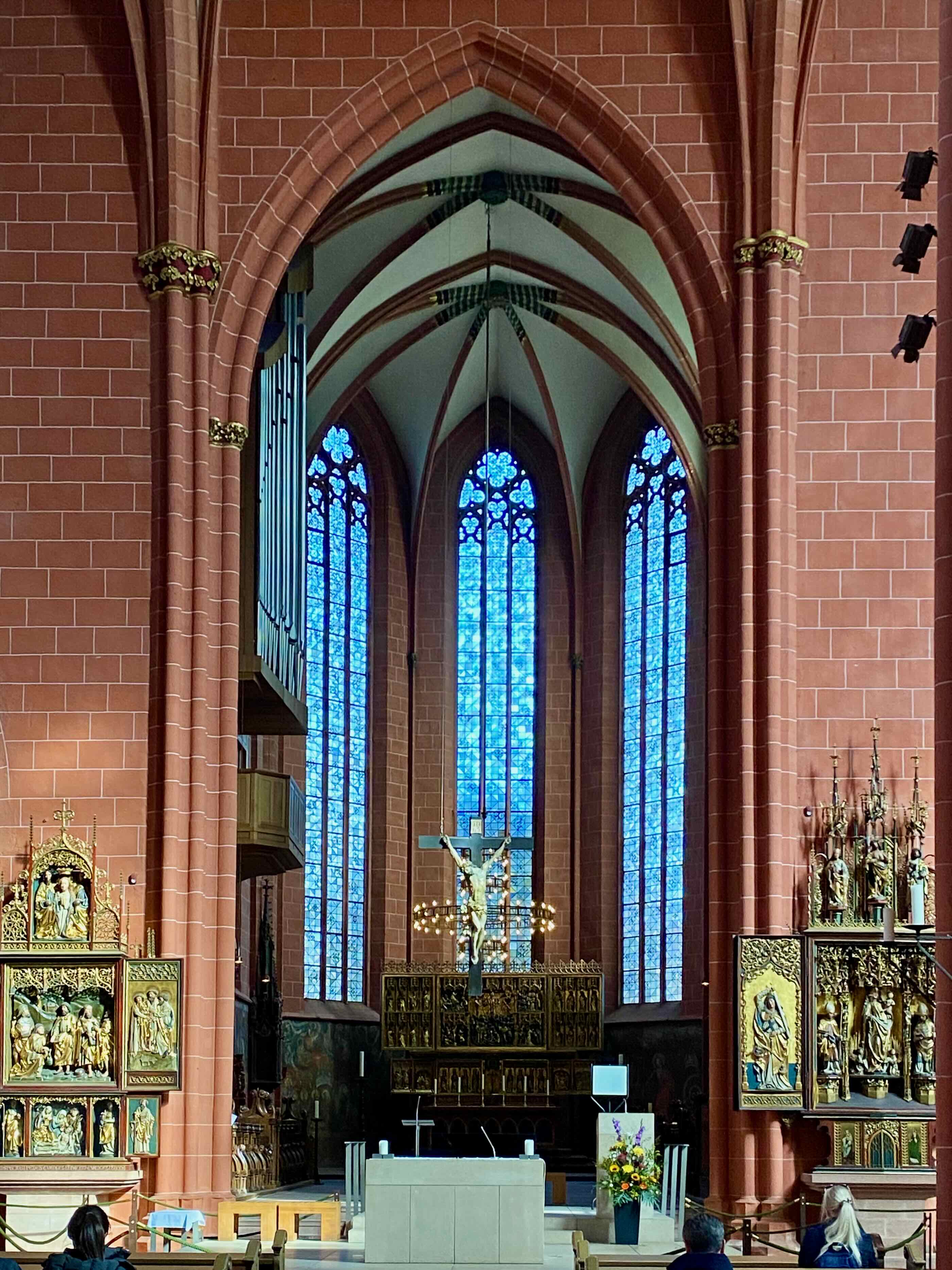 The cathedral’s organ is impressive and has a different layout of pipes.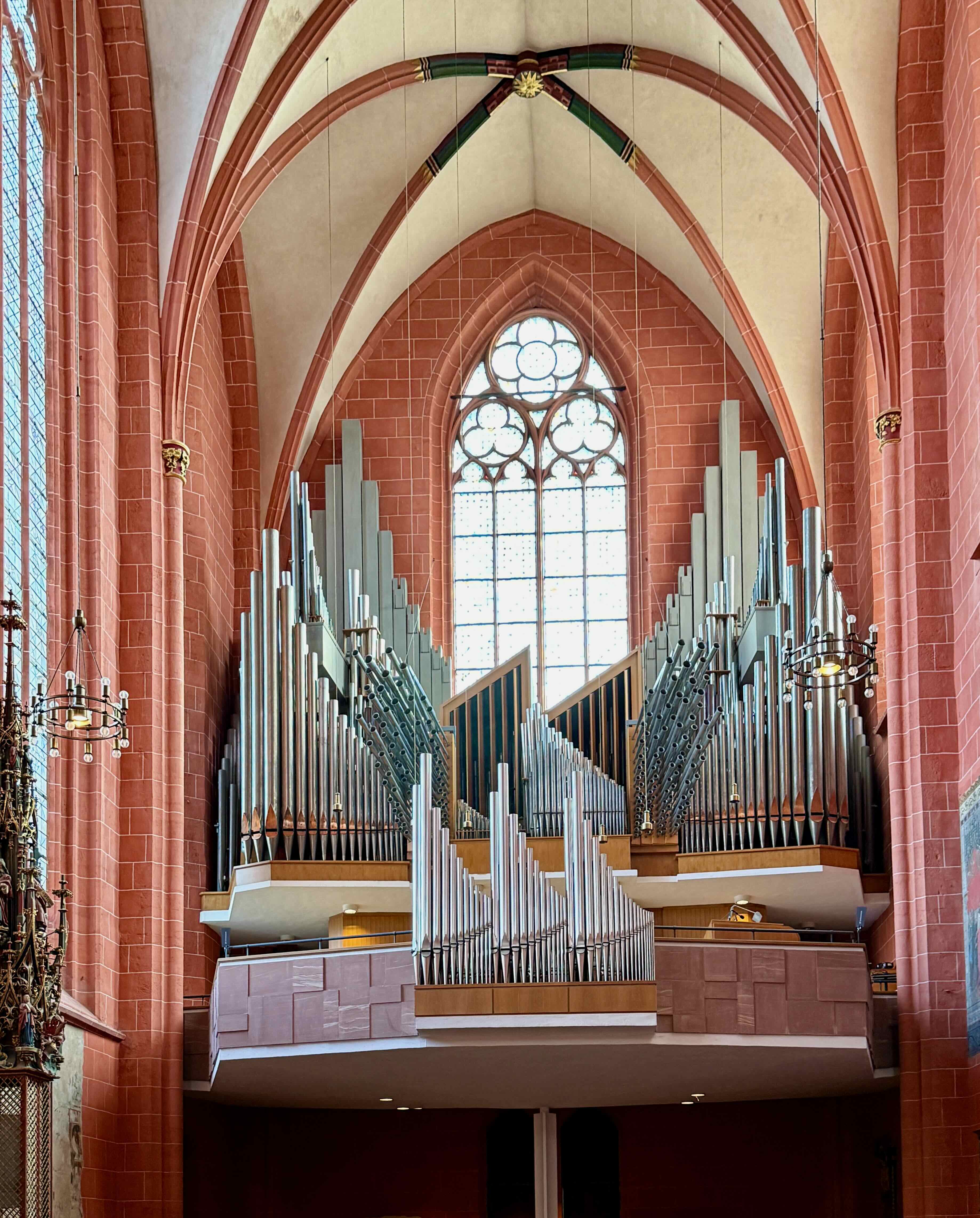
I saw two priests walking out of the church and hurried to take a photo. They look like they belong in another age and appear very intense. 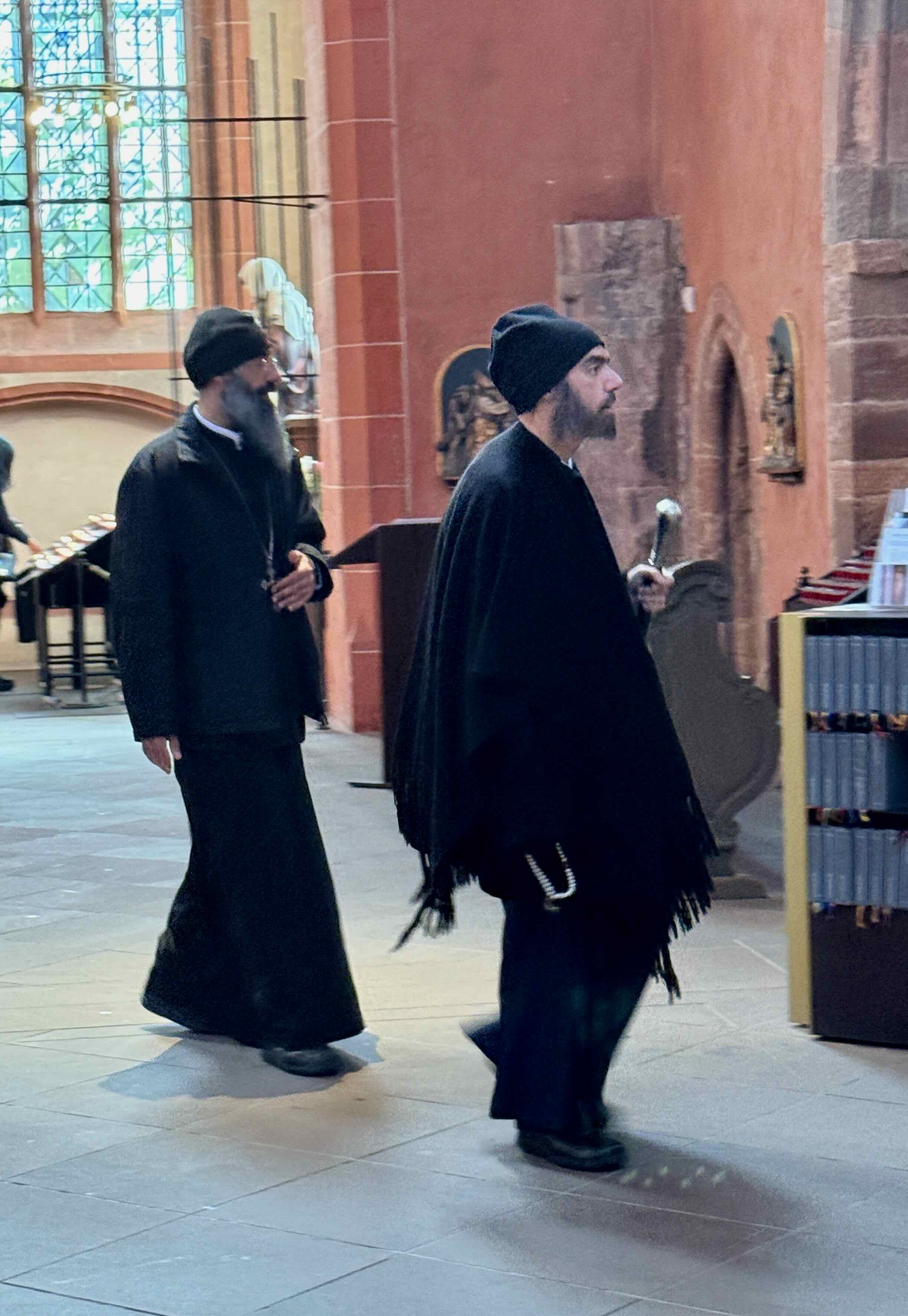
The cathedral’s bell tower has survived from the 15th century and we are climbing it. This is the view from about halfway up the 66 meter high tower.
We are above the gargoyles.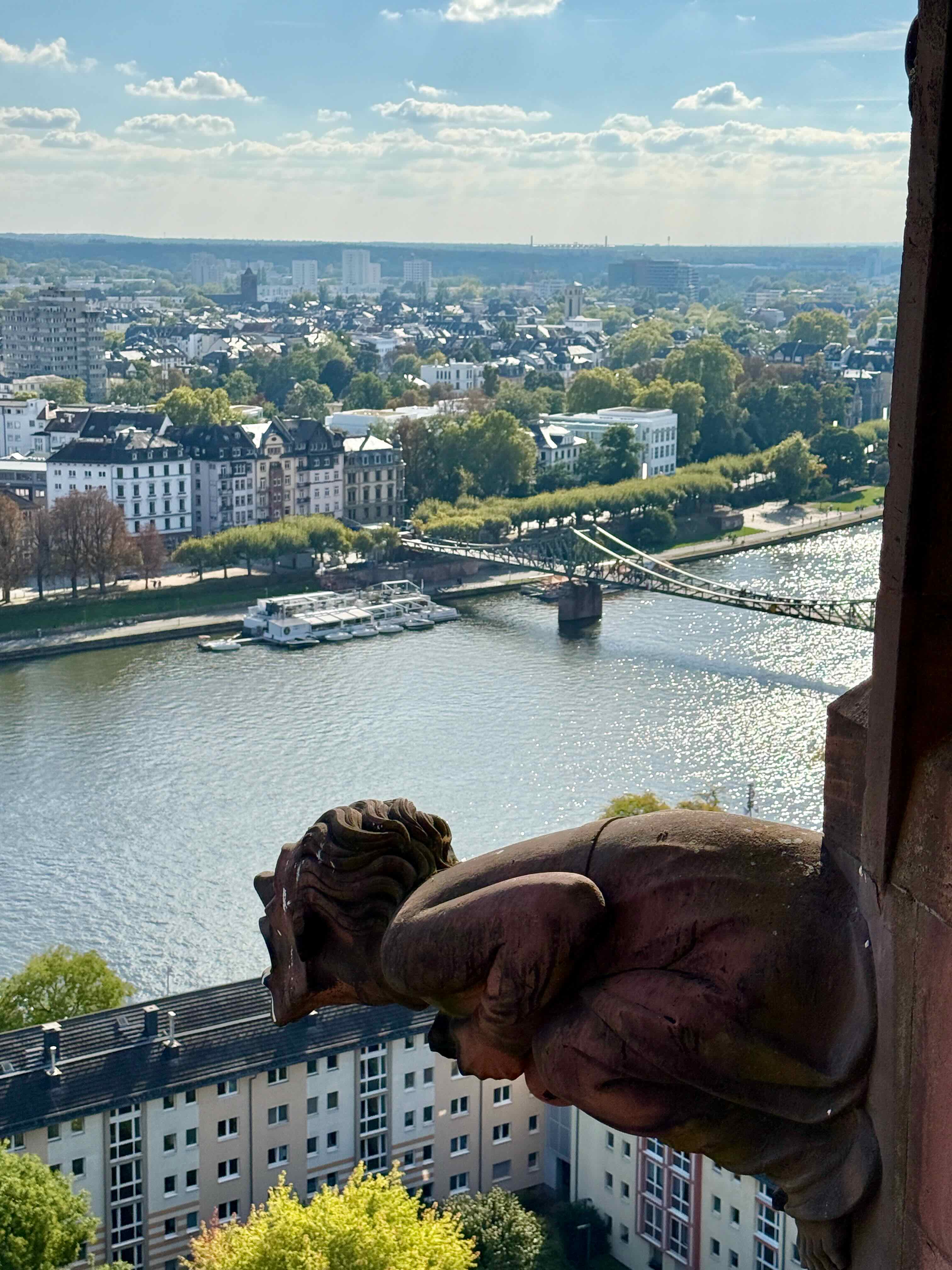
I will admit that I needed to stop and rest a few times as we climbed 328 steps to the viewing platform, although there were people much younger than me were who huffing and puffing more than I was! We had a spectacular view of Frankfurt.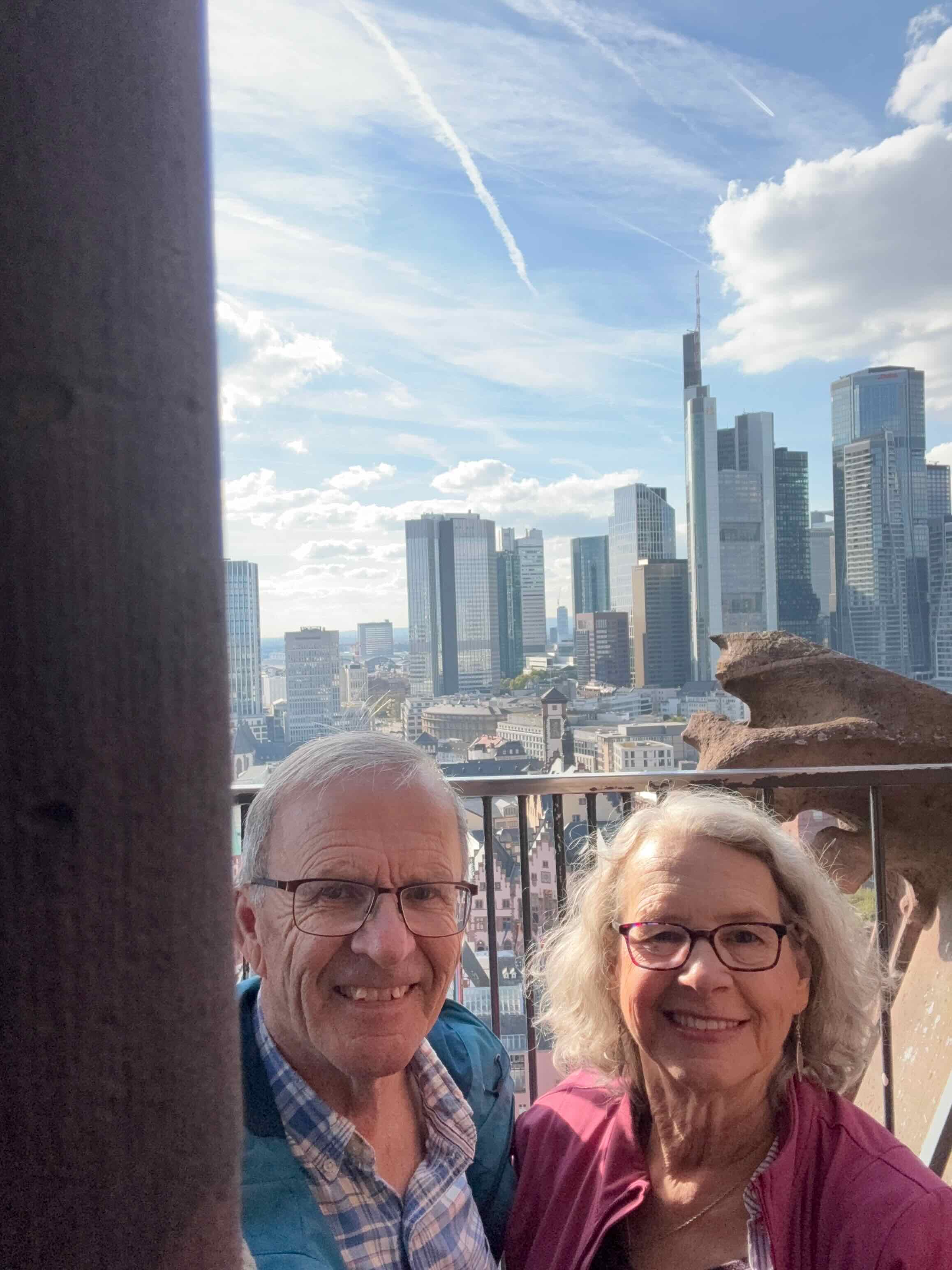
Some views from the tower.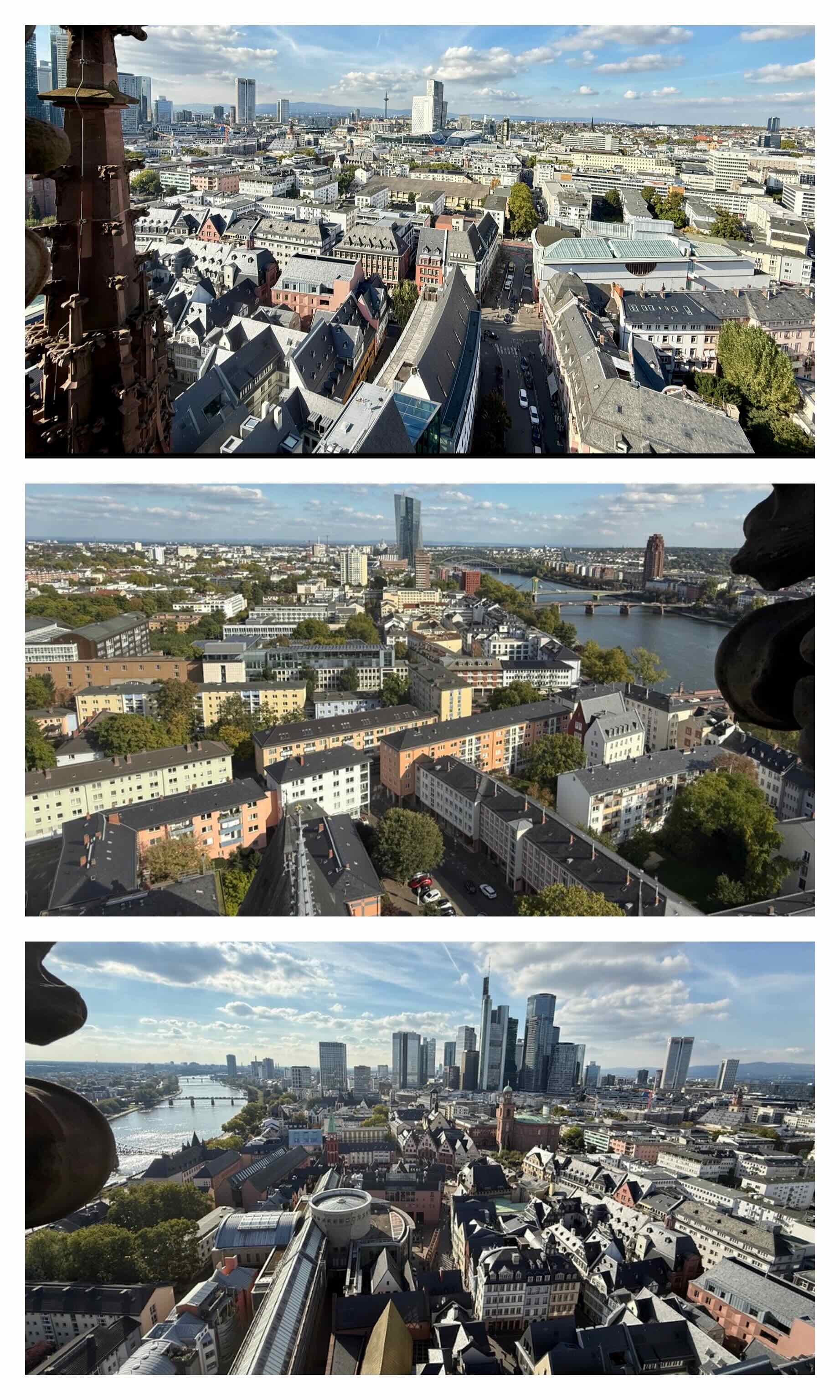
We walk around the platform several times. I wasn’t going to climb all those steps for one quick tour around the tower!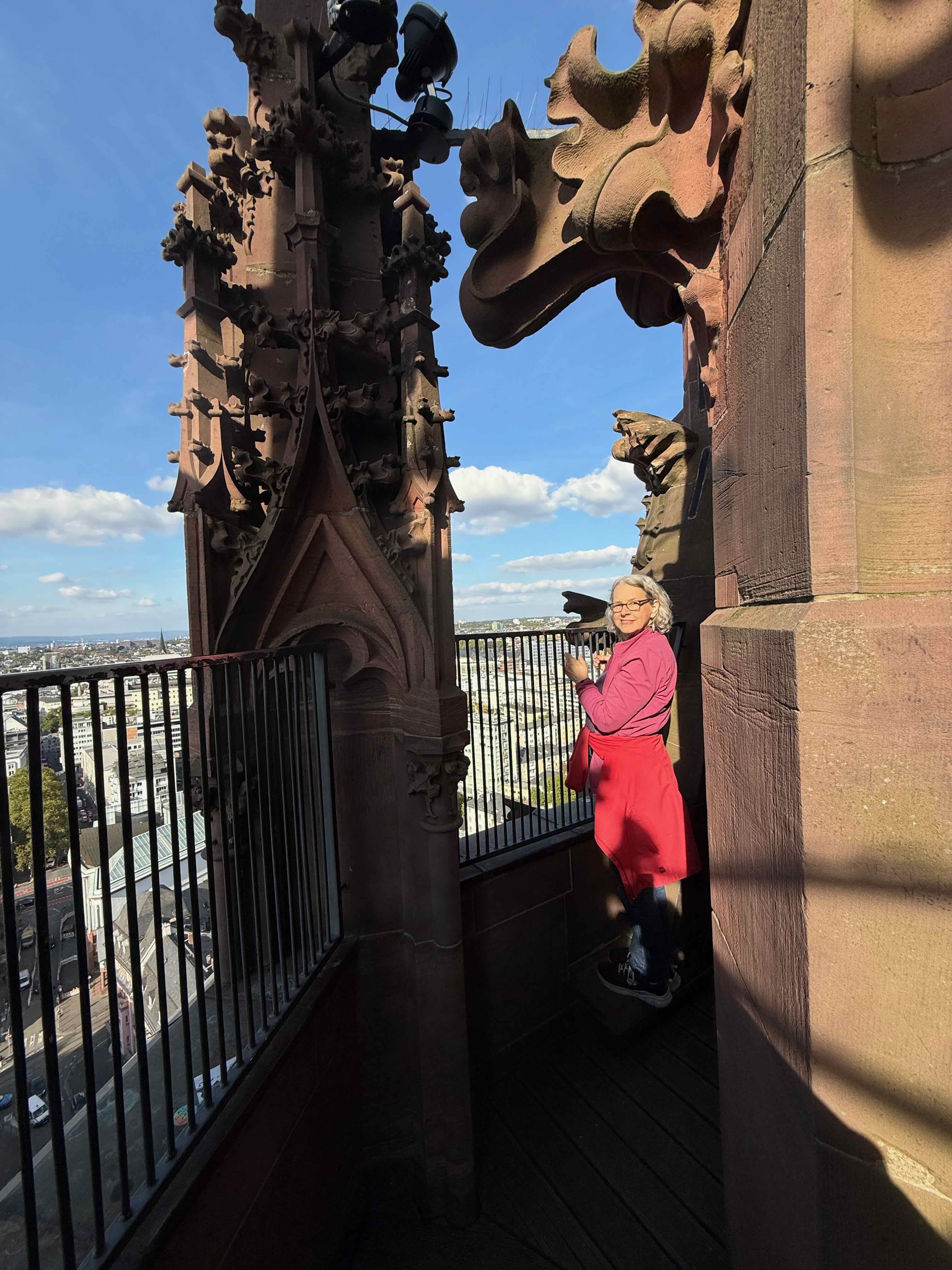
We begin our descent of those 328 steps. I am very thankful that they are solid stone and I don’t have to contend with see-through wire steps, specially as this is the only staircase to access the tower. We have to squeeze to the side when people pass us their way up the stairs. 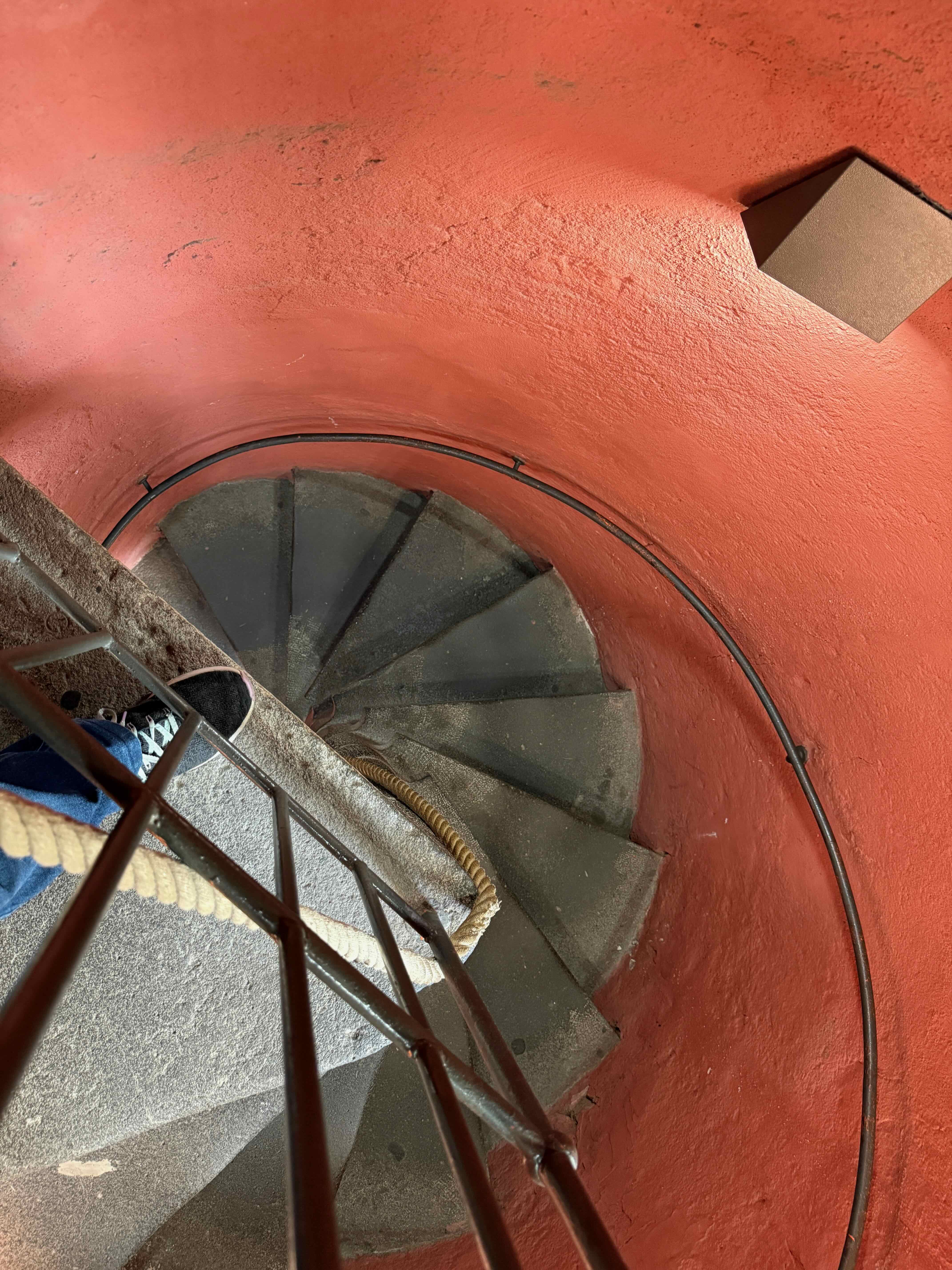
The view through a glass window in the stairwell.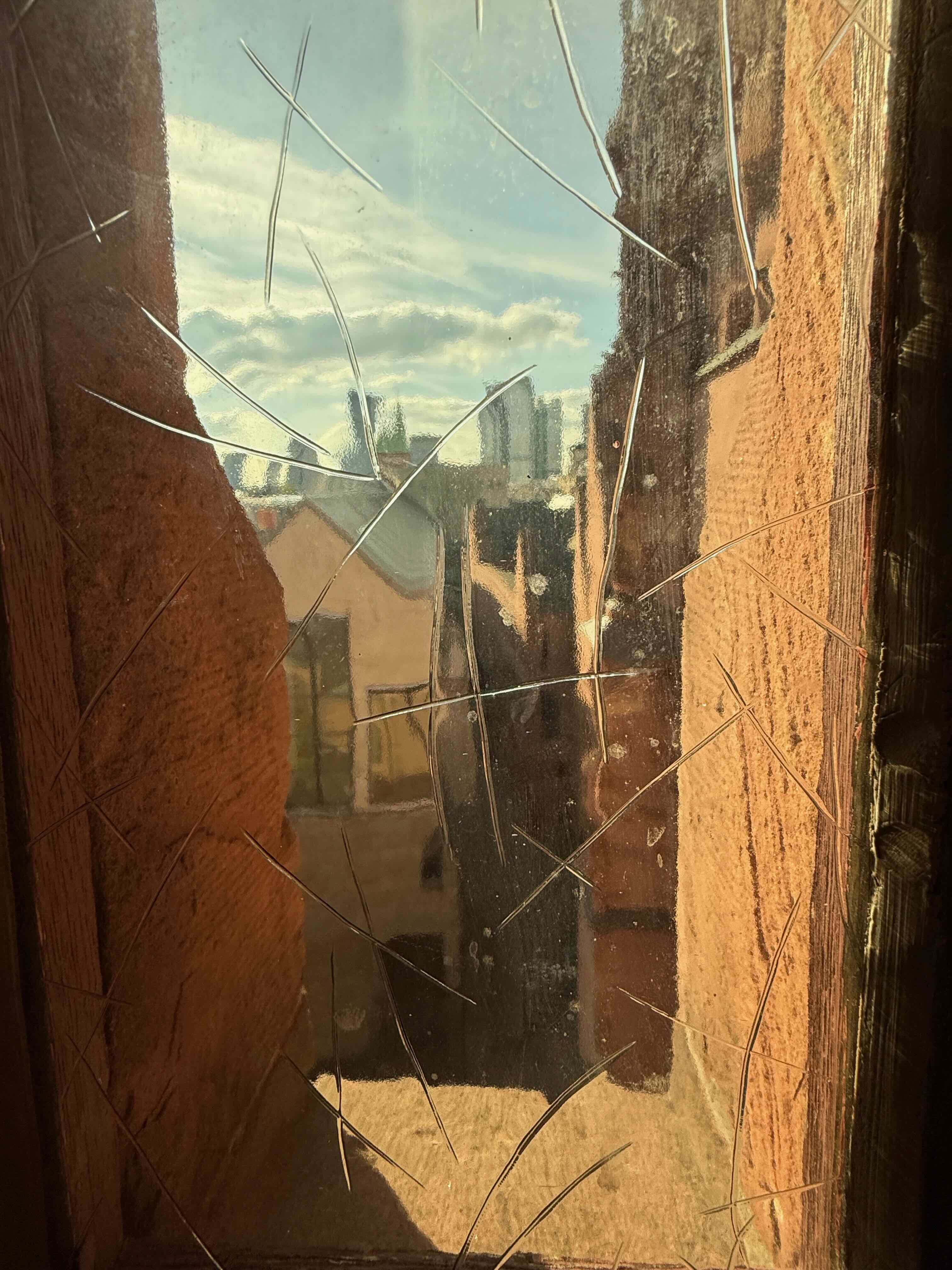
This is the tower…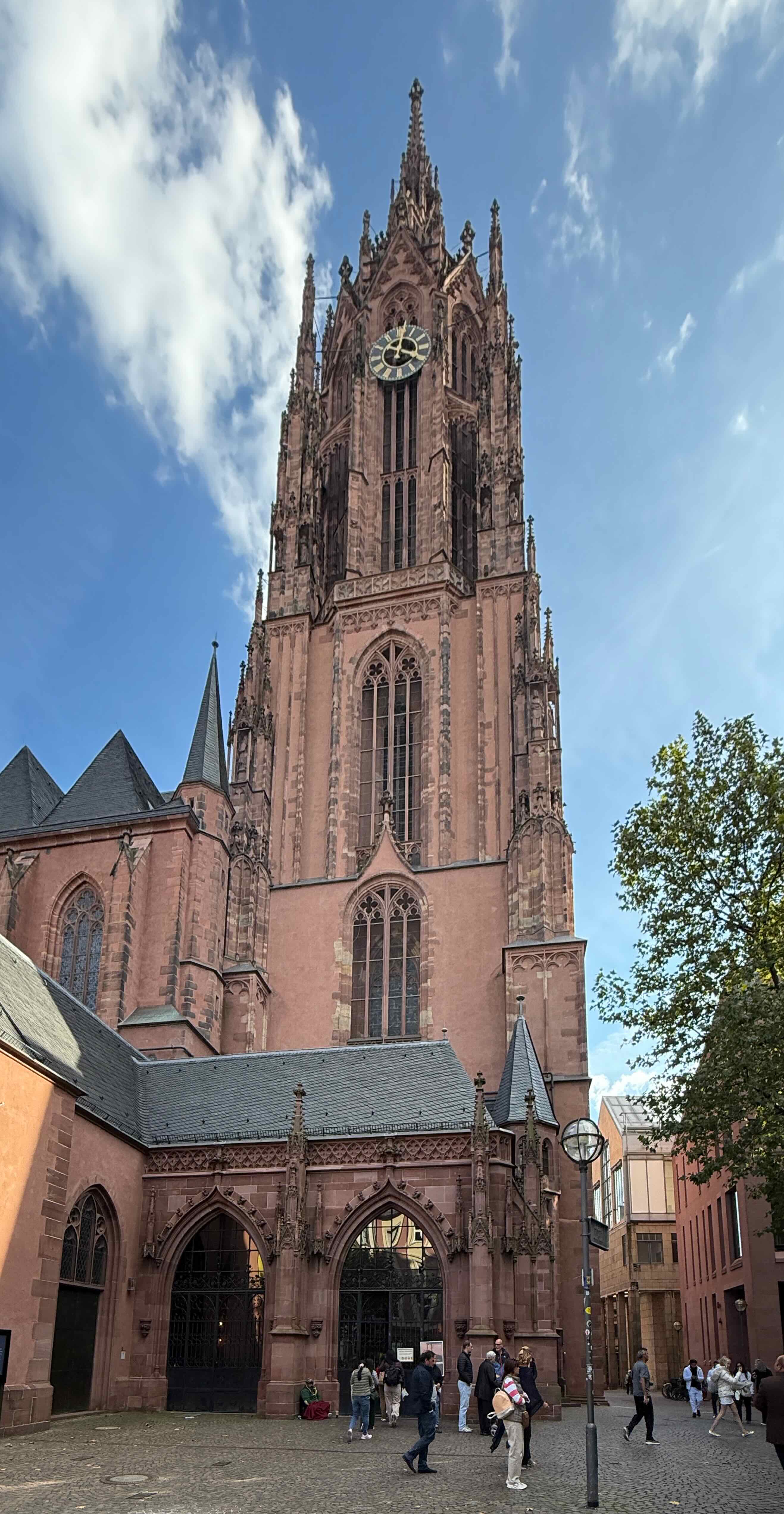
and here is the viewing platform above the clock! If you look closely you can see the platform railings.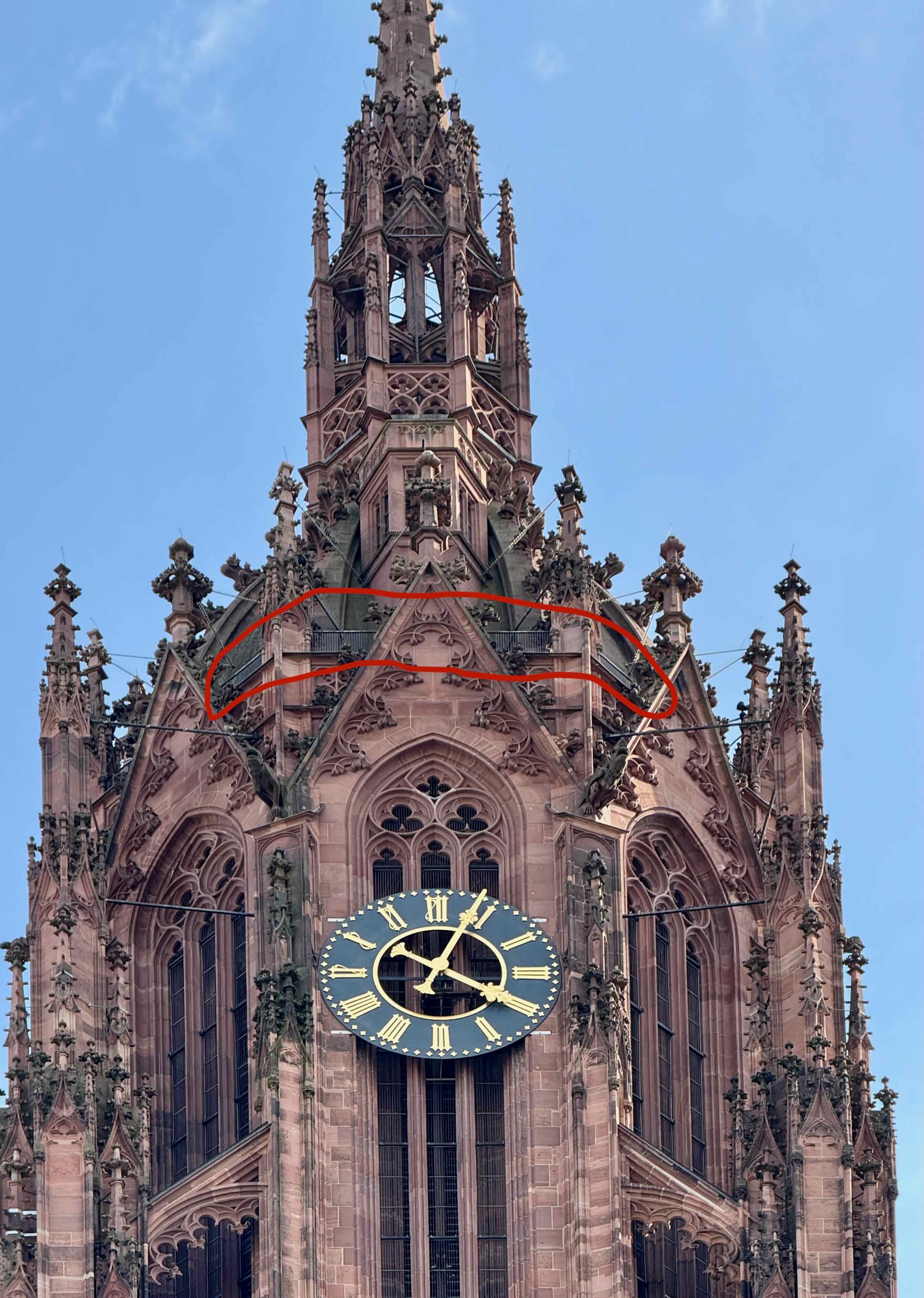
Next we visit the indoor market. I am so tempted to buy some flowers.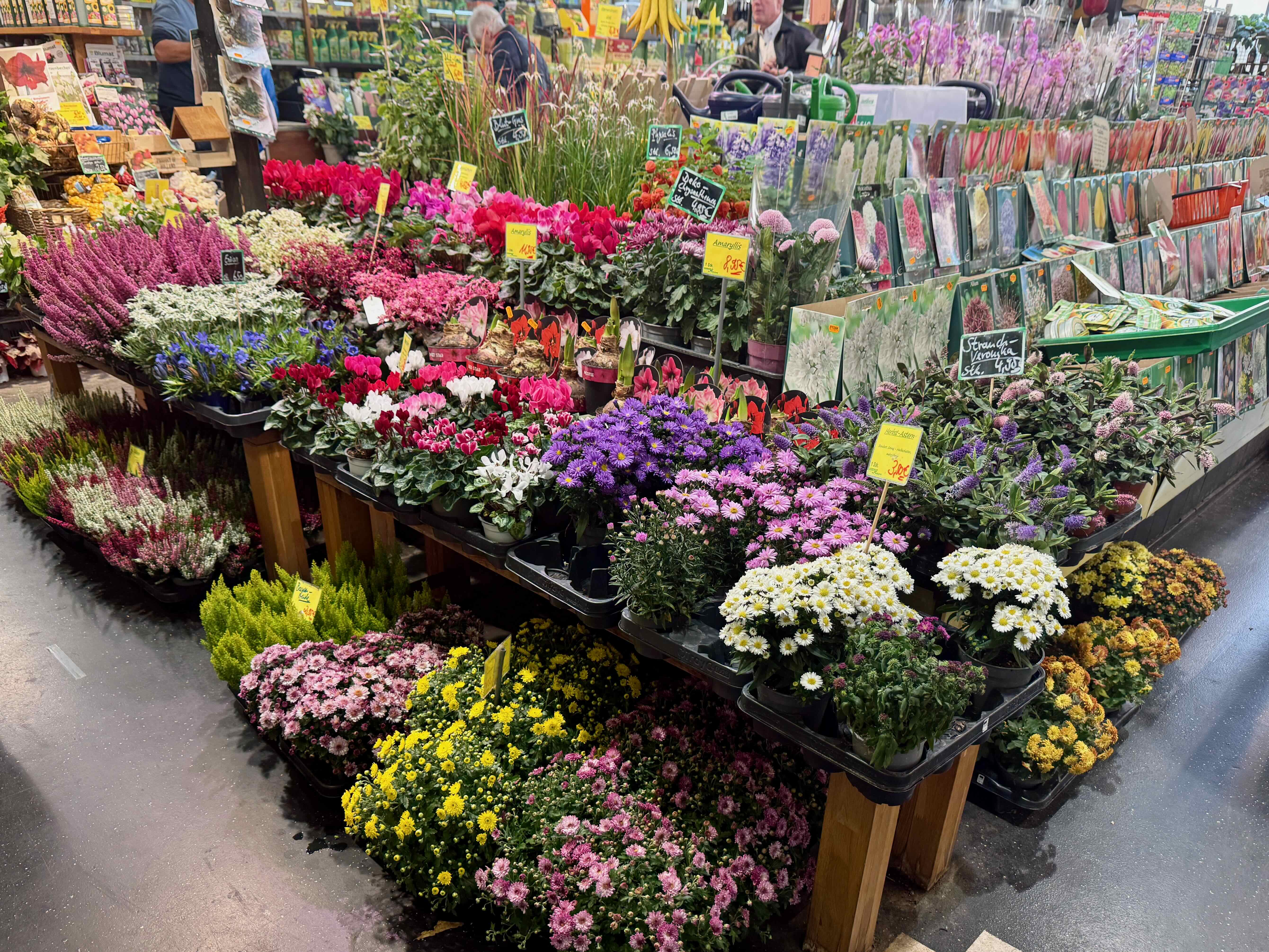
Edelweiss and Gentians, two of my favourite flowers.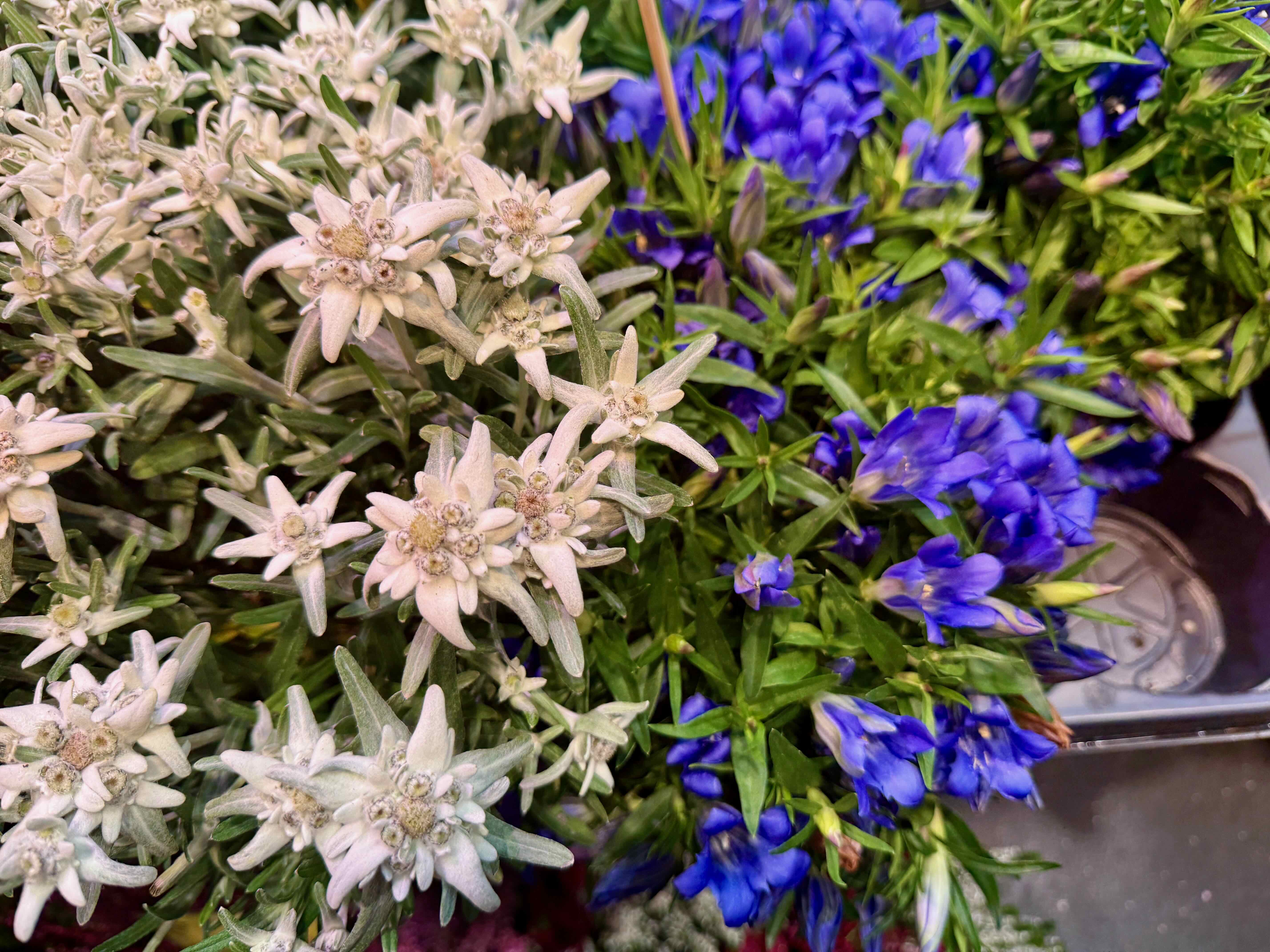
Everything is so colourful and looks delicious.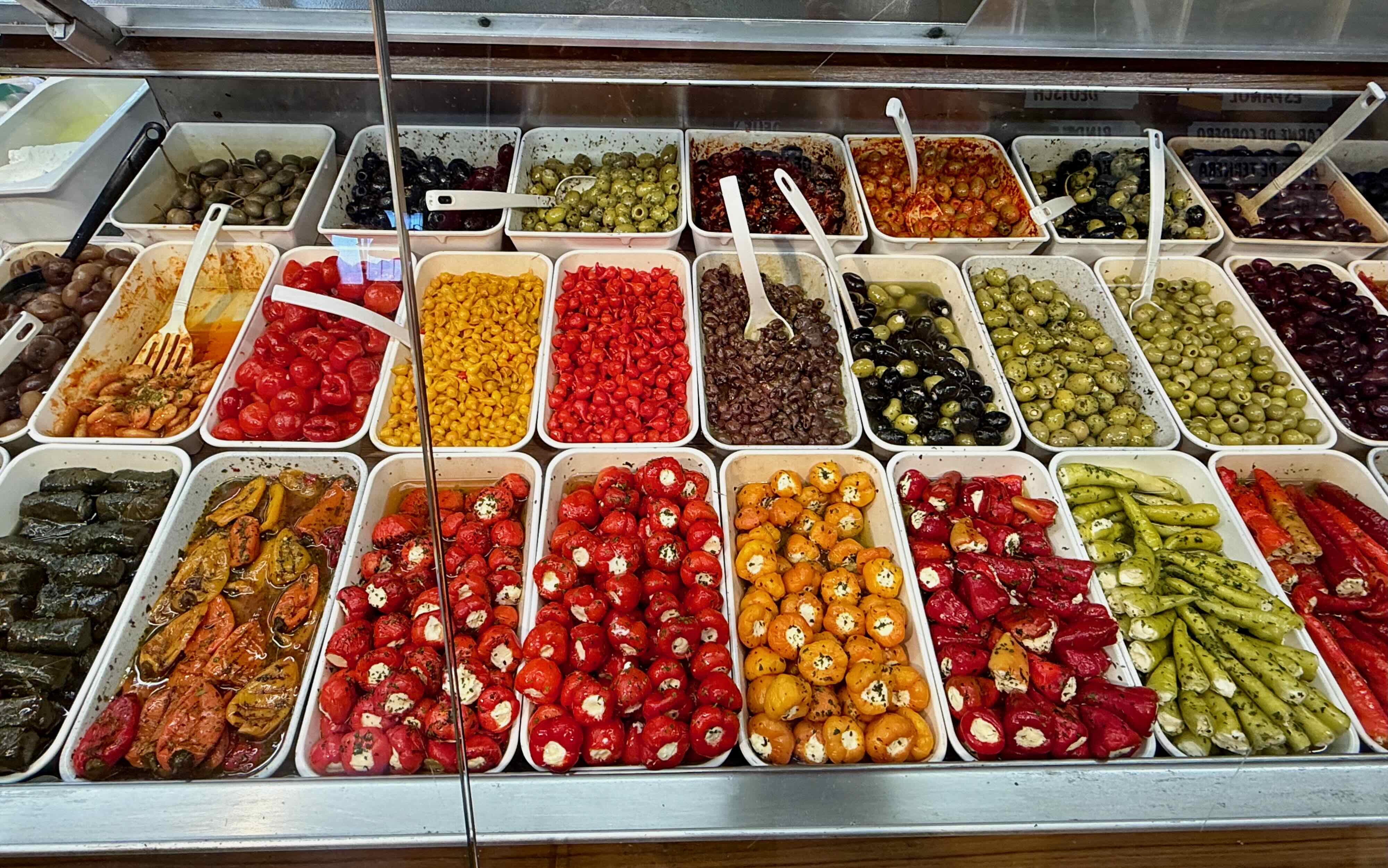
Produce doesn’t look this appealing at home.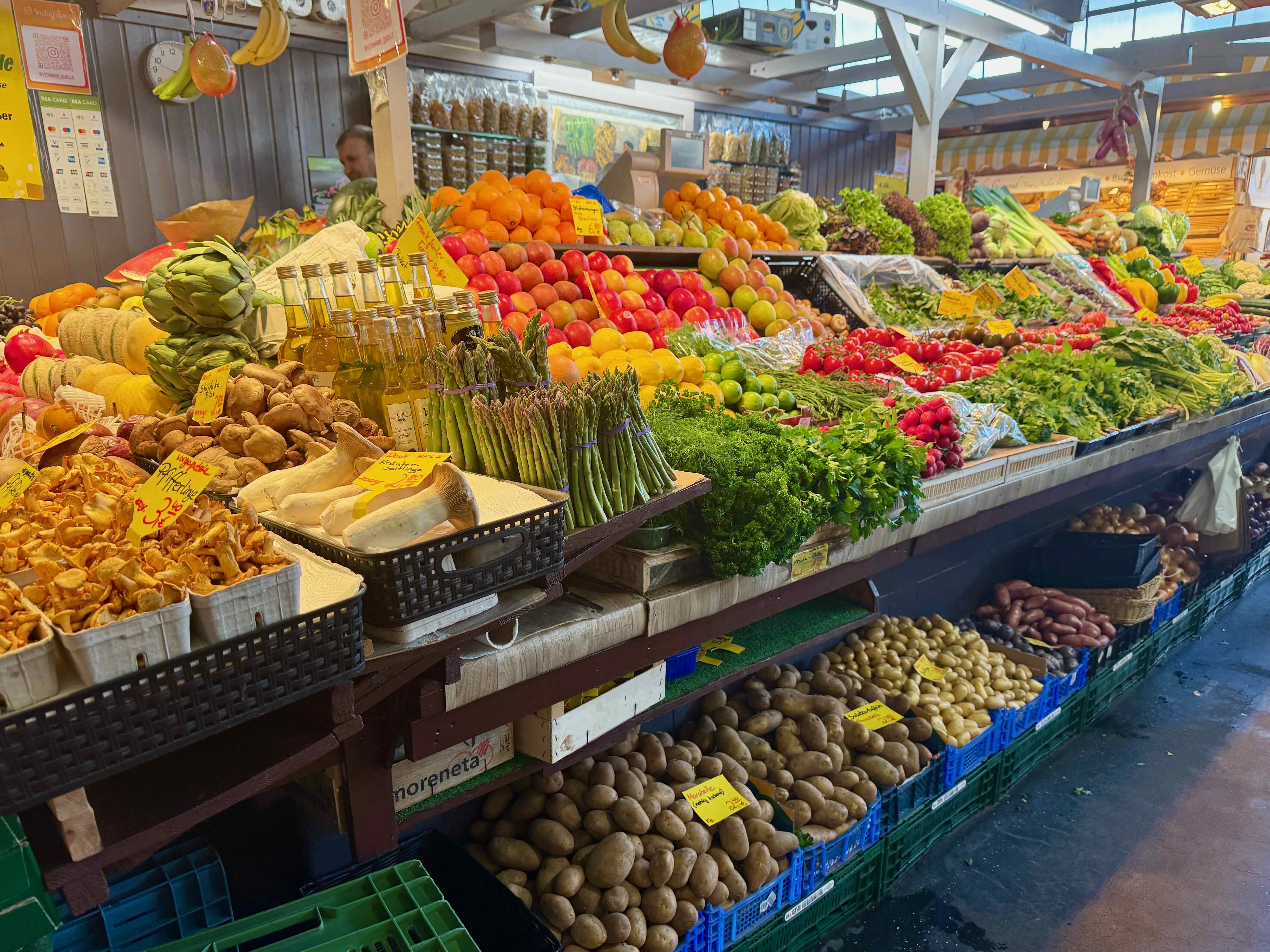
The leeks are enormous! We buy some pastry for a snack and I even find a slice of yummy gluten free apple cake.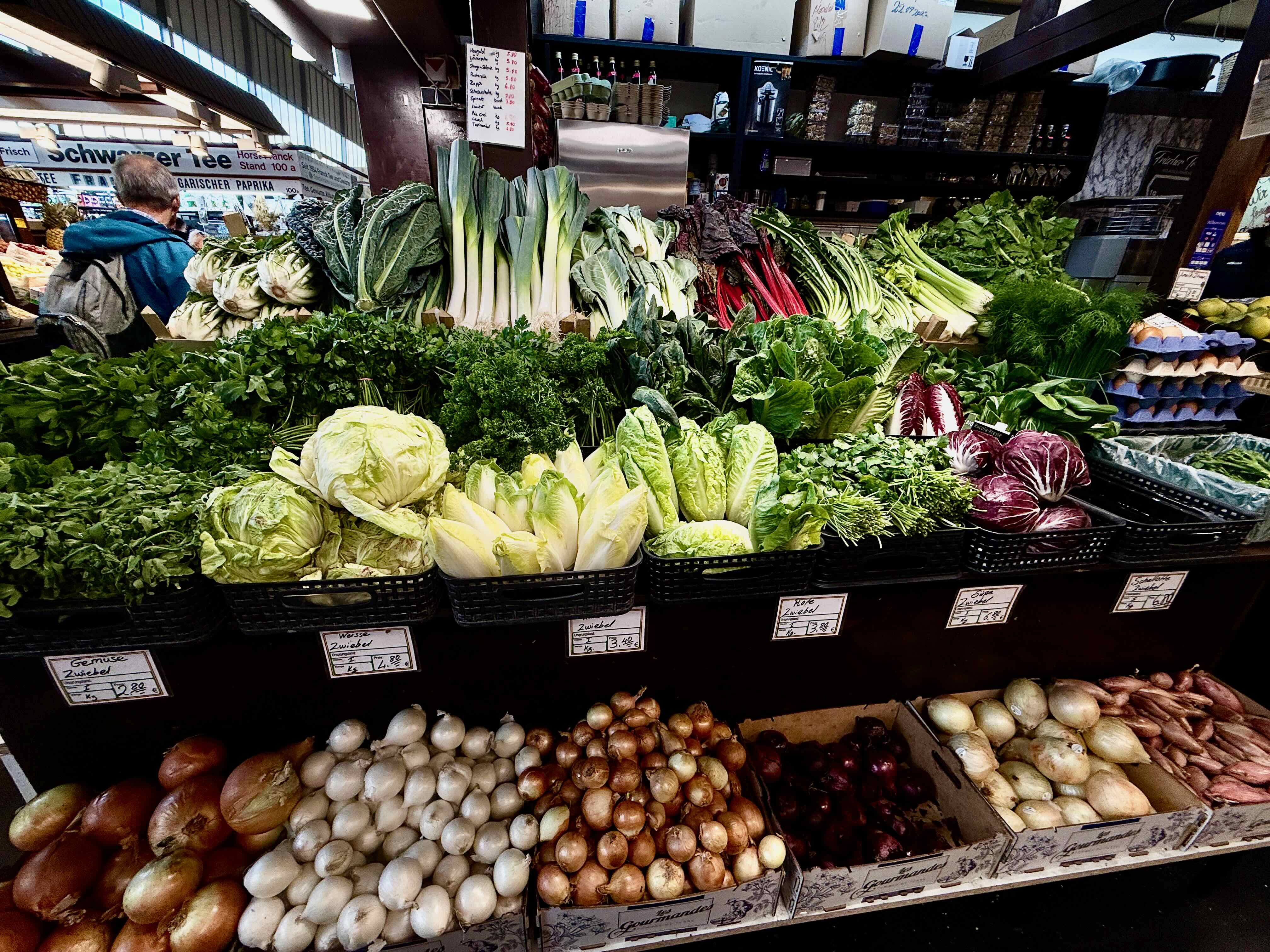
Heading back to the train station we do a bit of window shopping. We don’t buy souvenirs as a rule. It is just too difficult to carry purchases around during an extended trip.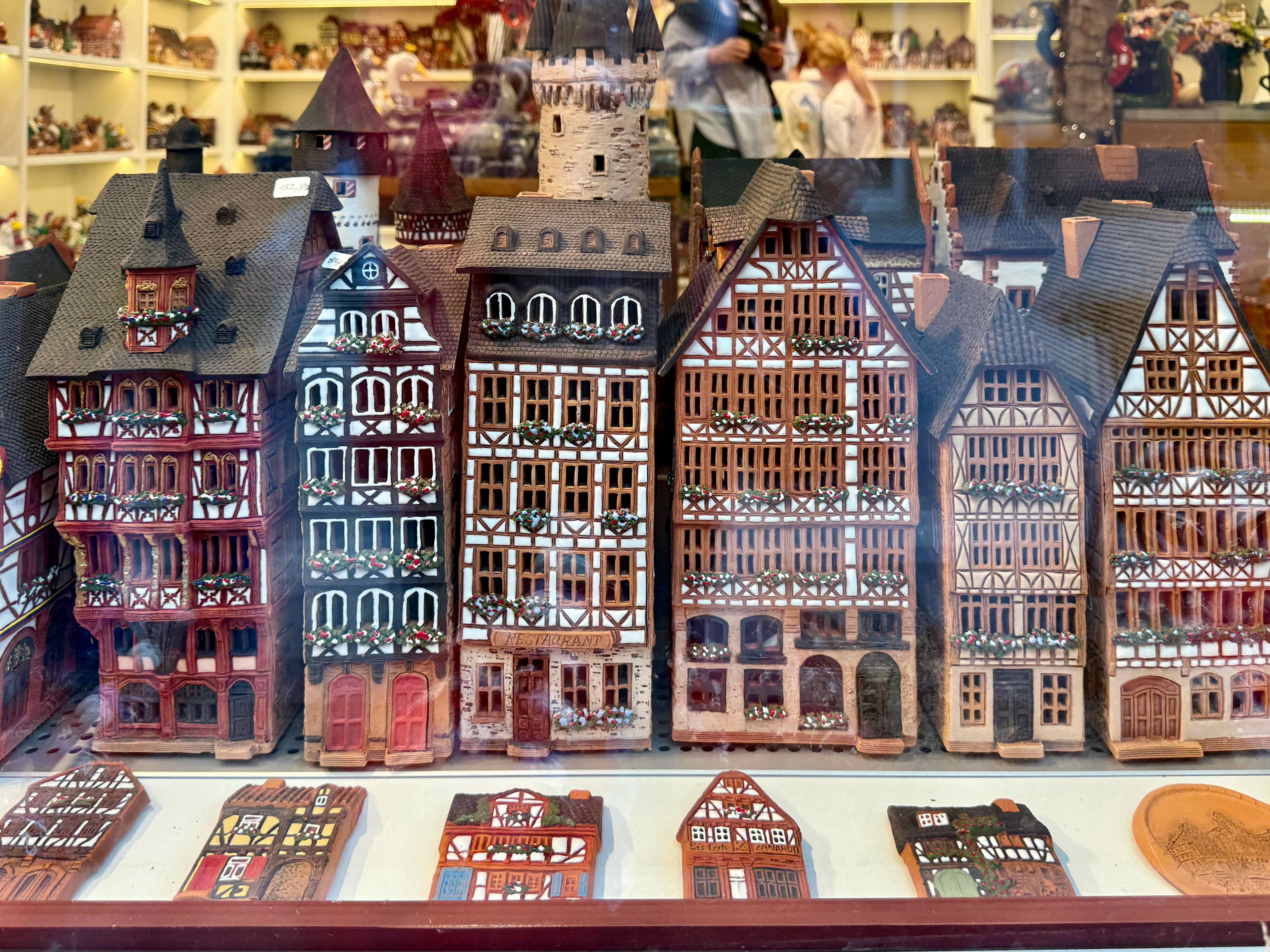
These characters made us laugh. This store carried some interesting merchandise.
I am always kind of shocked to see semi-automatic weapons and other guns on display in store windows! 
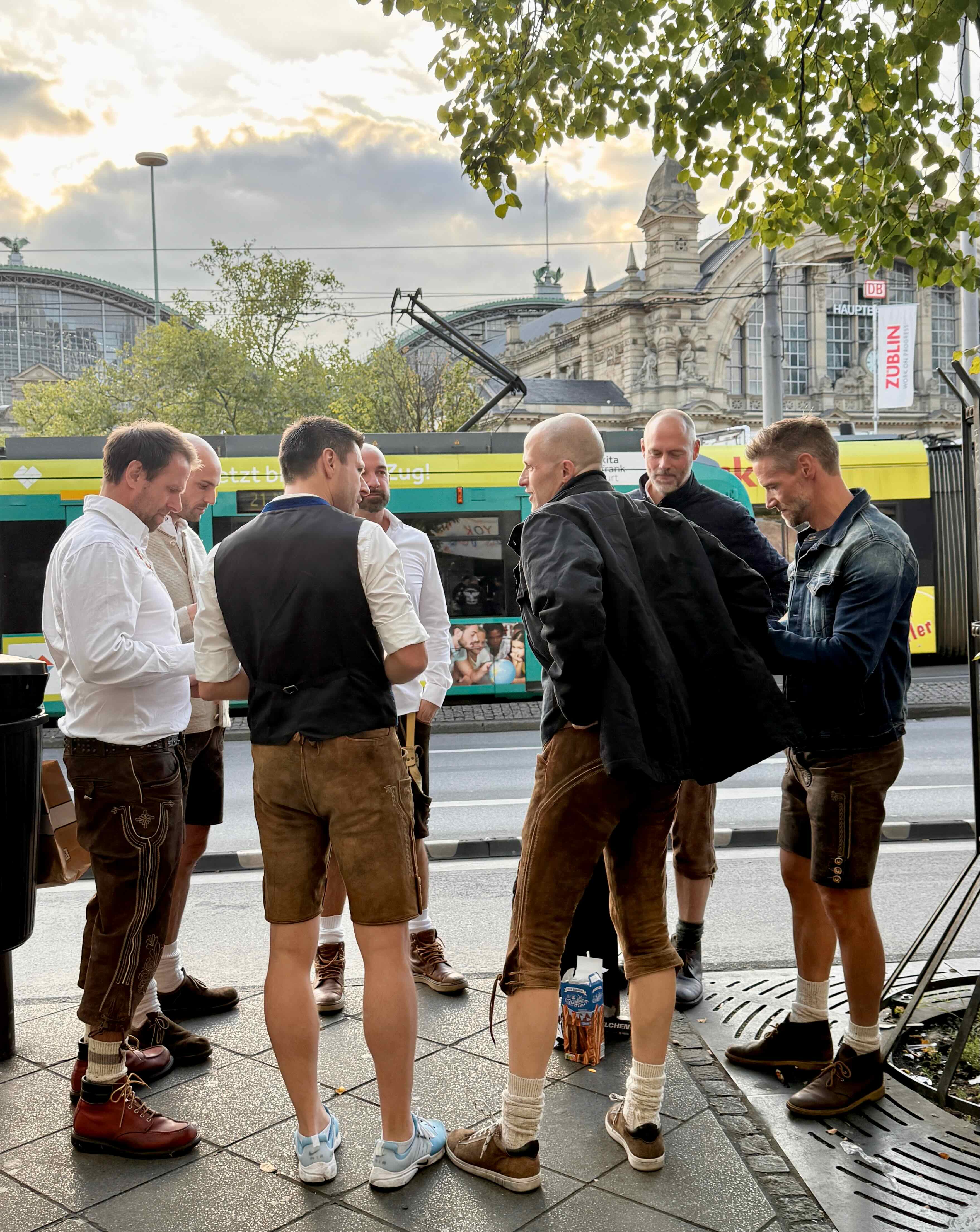
In front of the train station this group of friends are all wearing Lederhosen. I think it was for some special event as they were taking photos of themselves.
Back to the train station to head home. Another full day!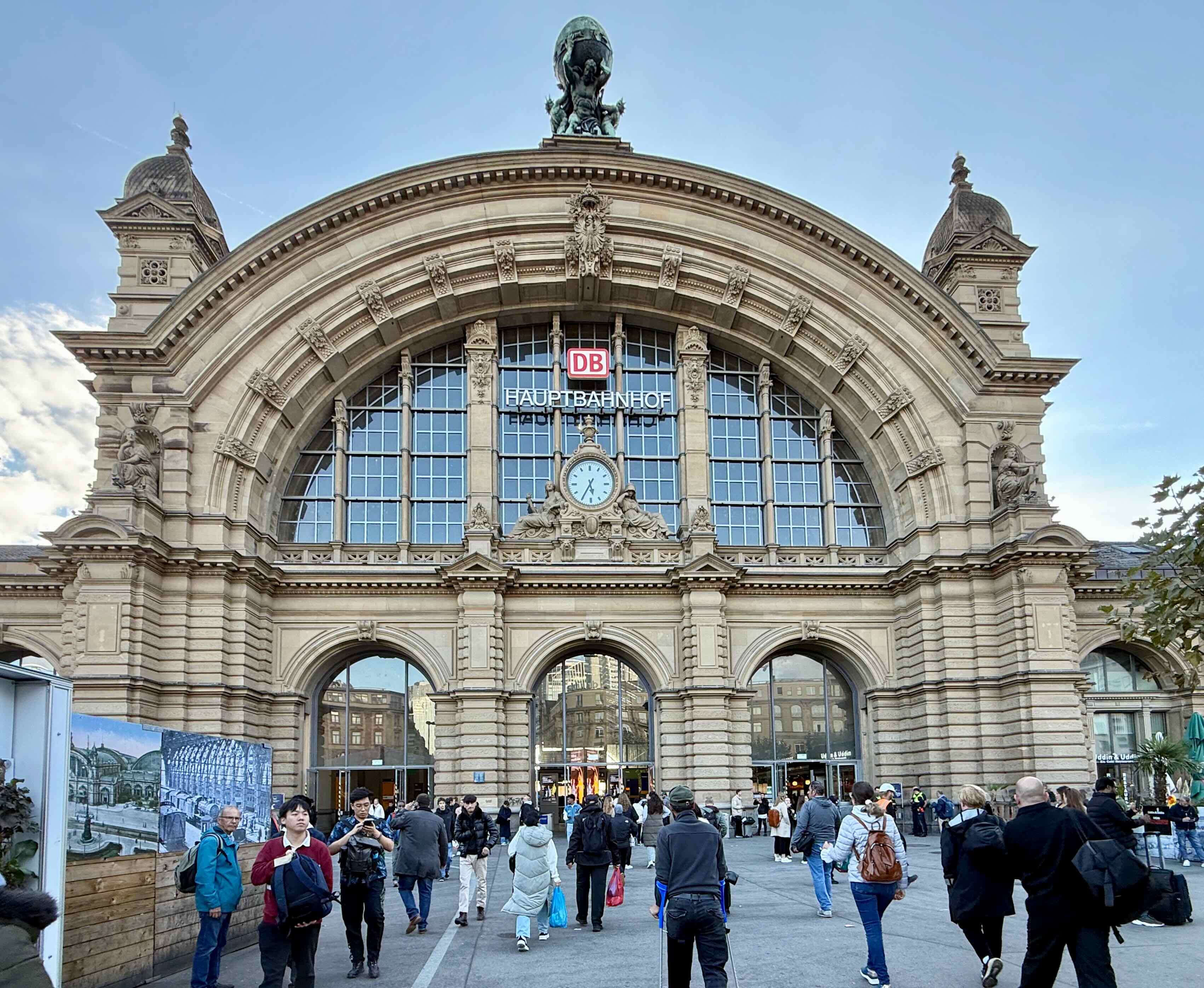
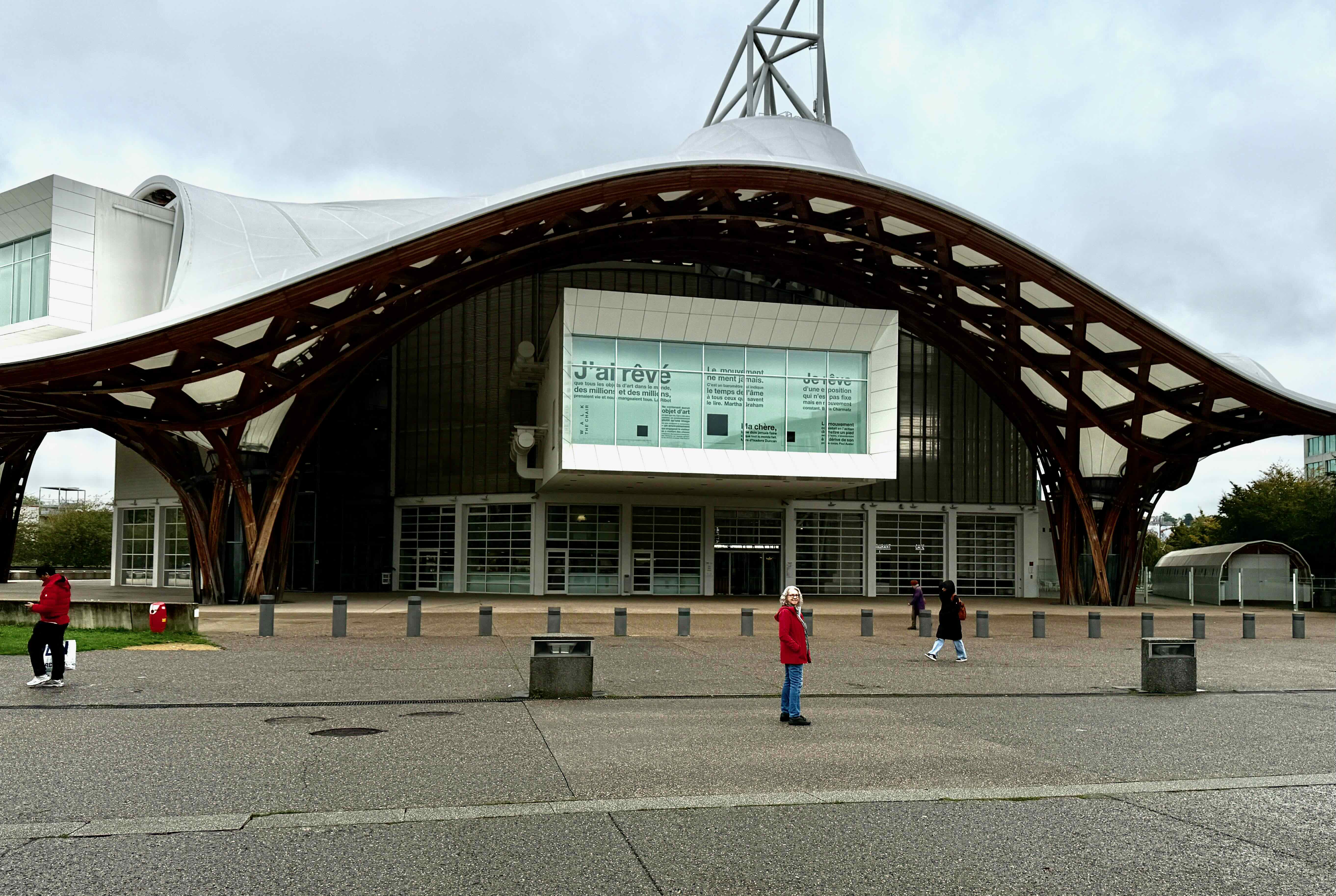
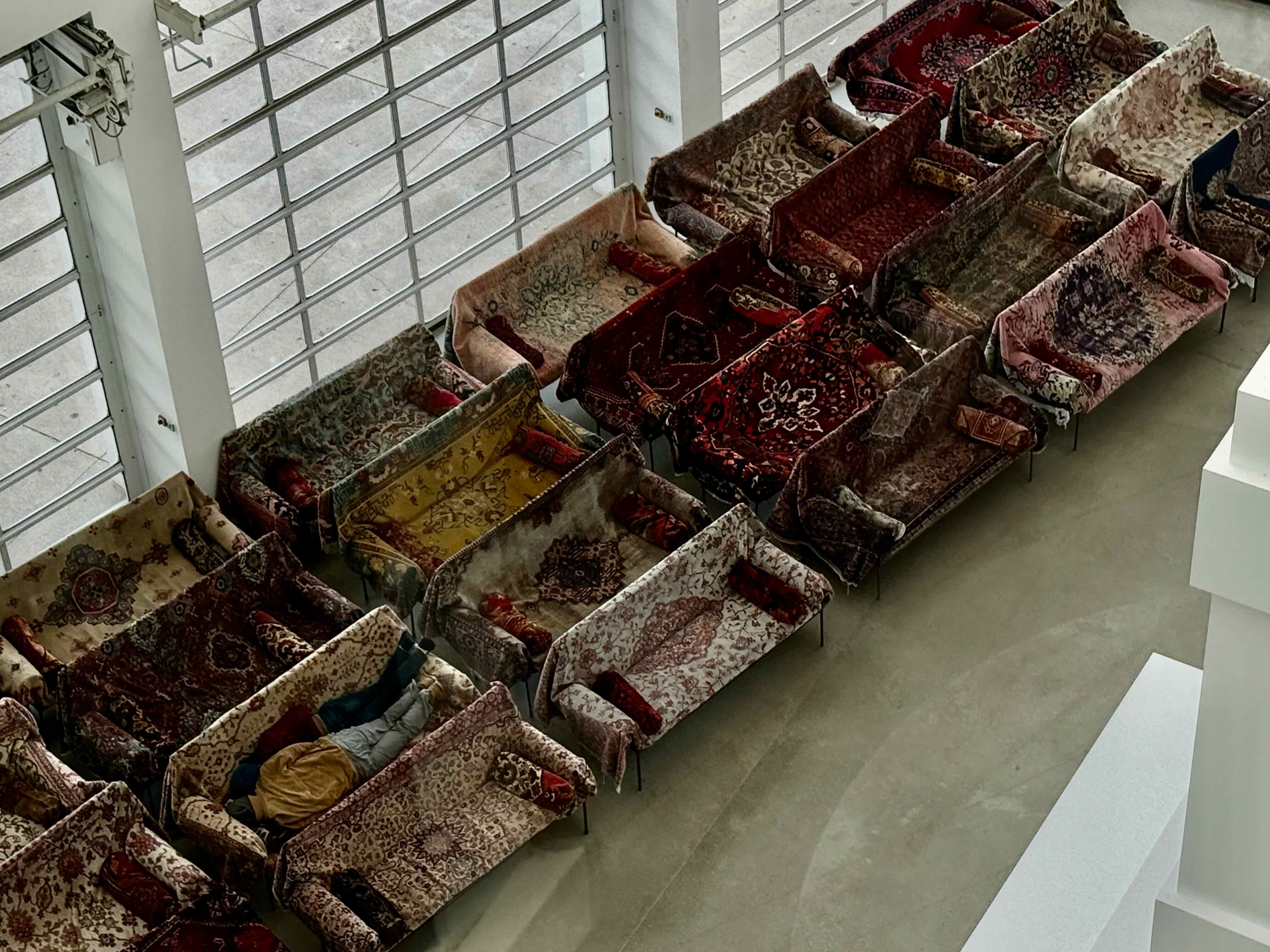
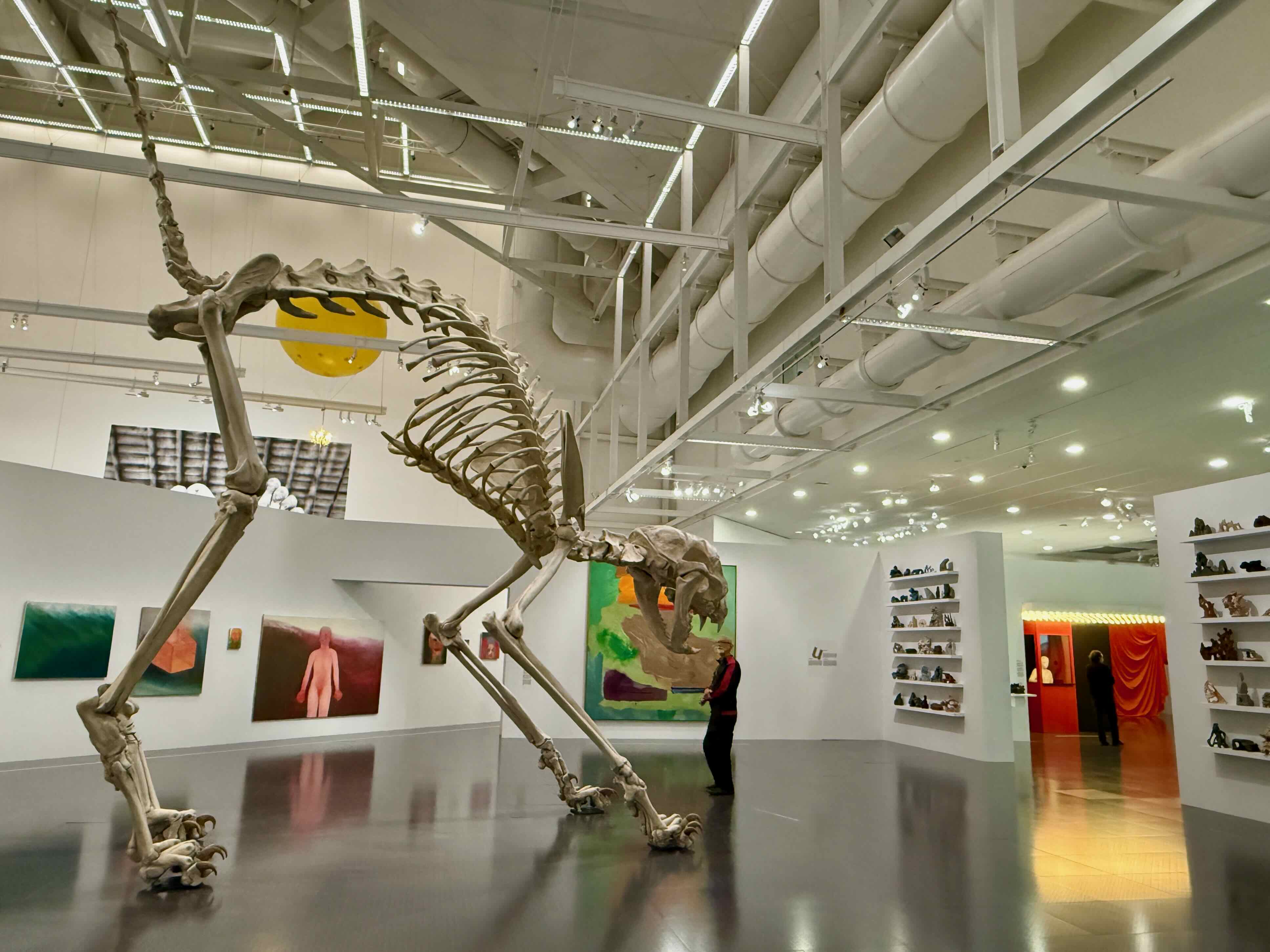

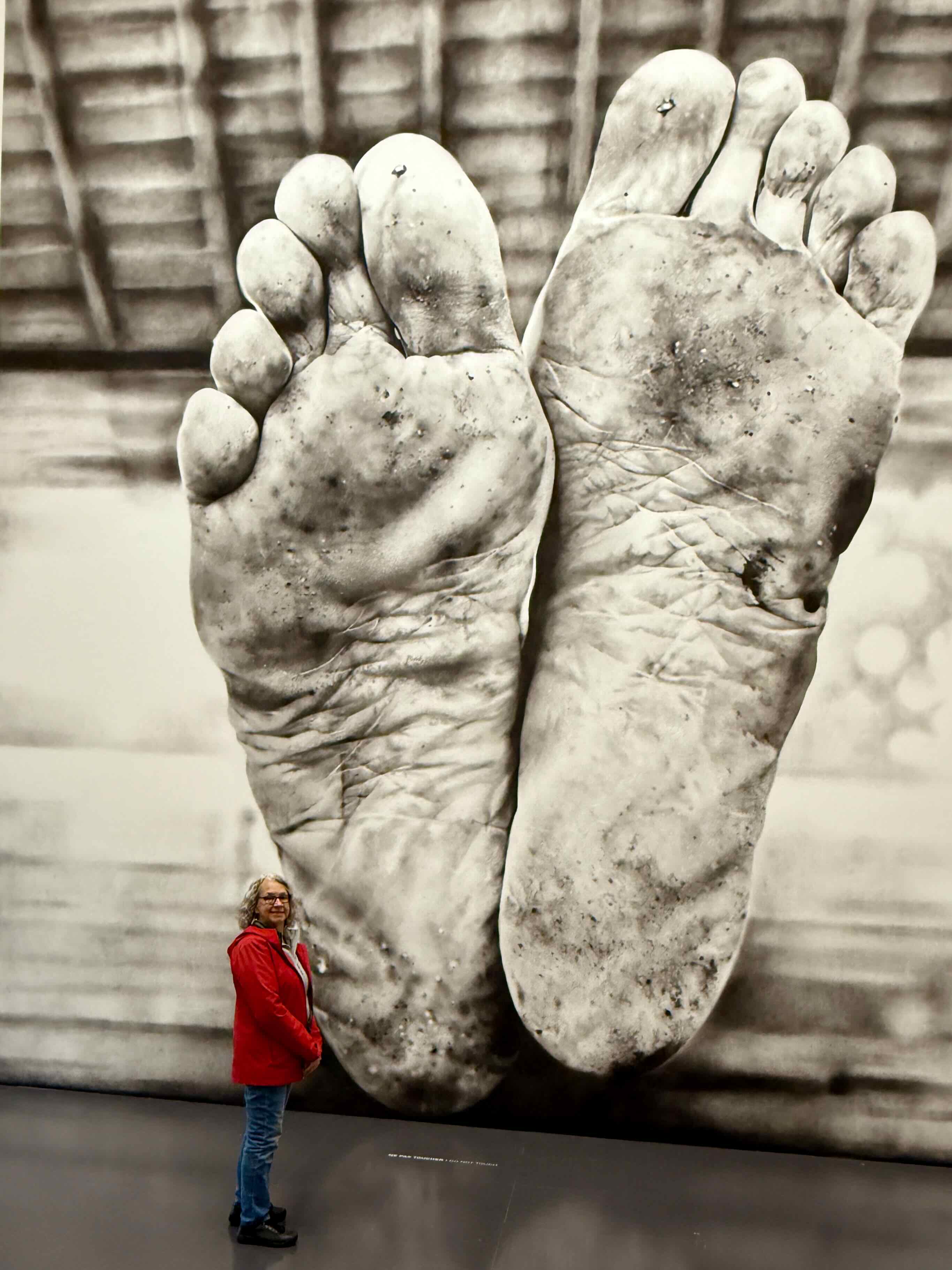
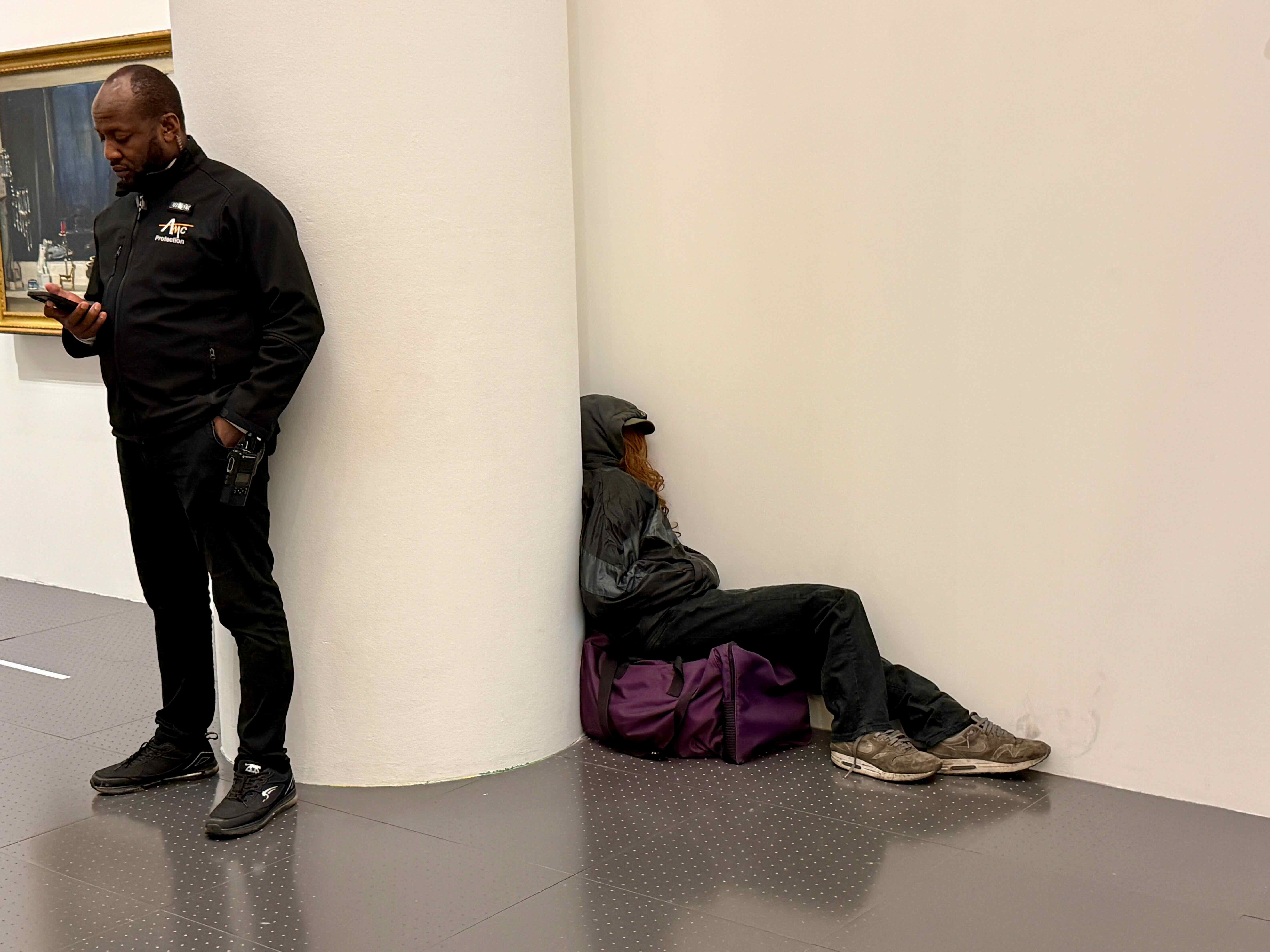 ‘Father’ These bare feet stand for the whole body, a reminder of the human body and its finiteness..they become a symbol of vulnerability.
 This tiny elevator makes a sound, and opens and closes its doors, just as in real life. It is perfectly functional and totally unusable. One can imagine a tiny world coming to life somewhere behind these walls.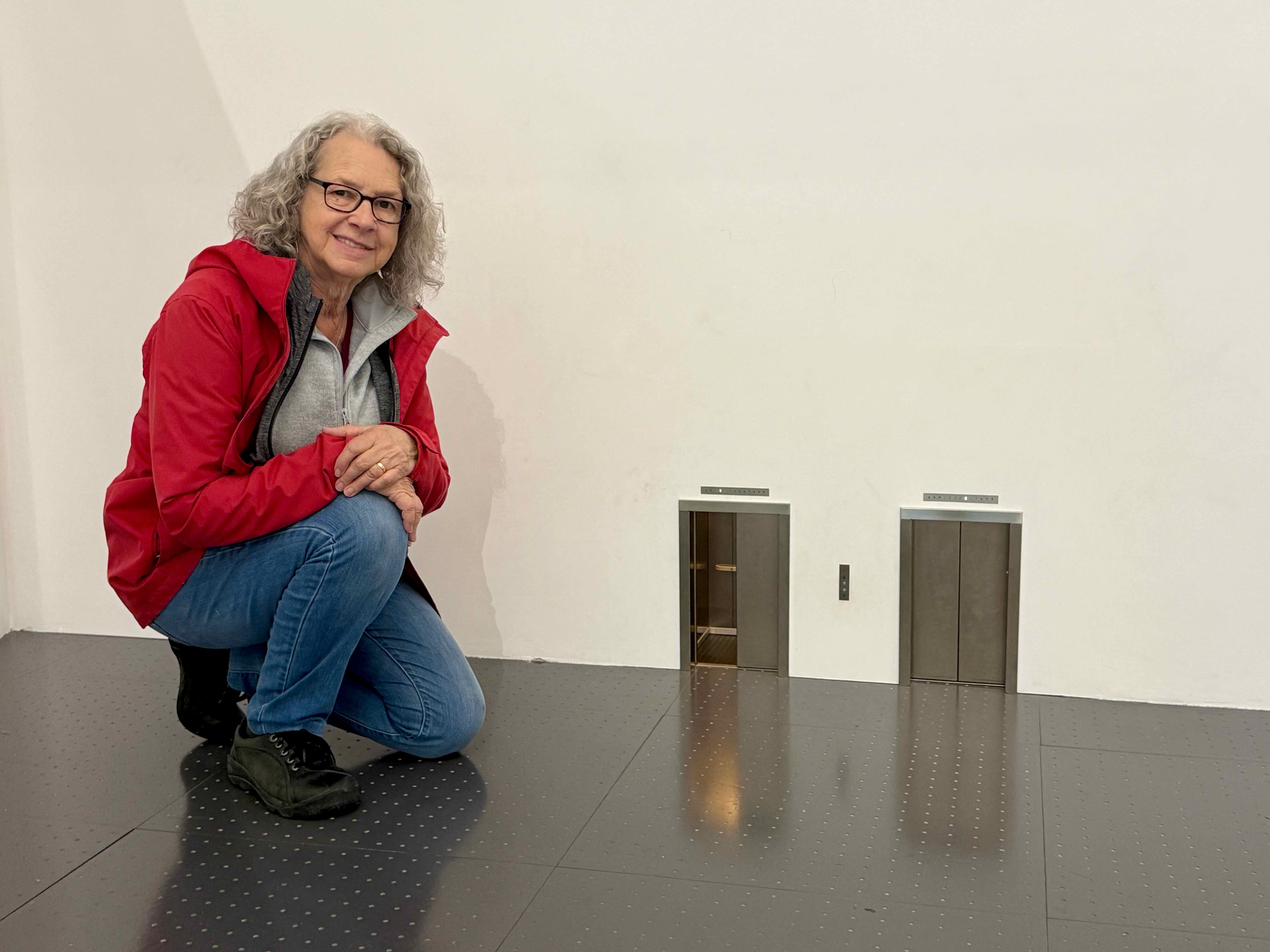

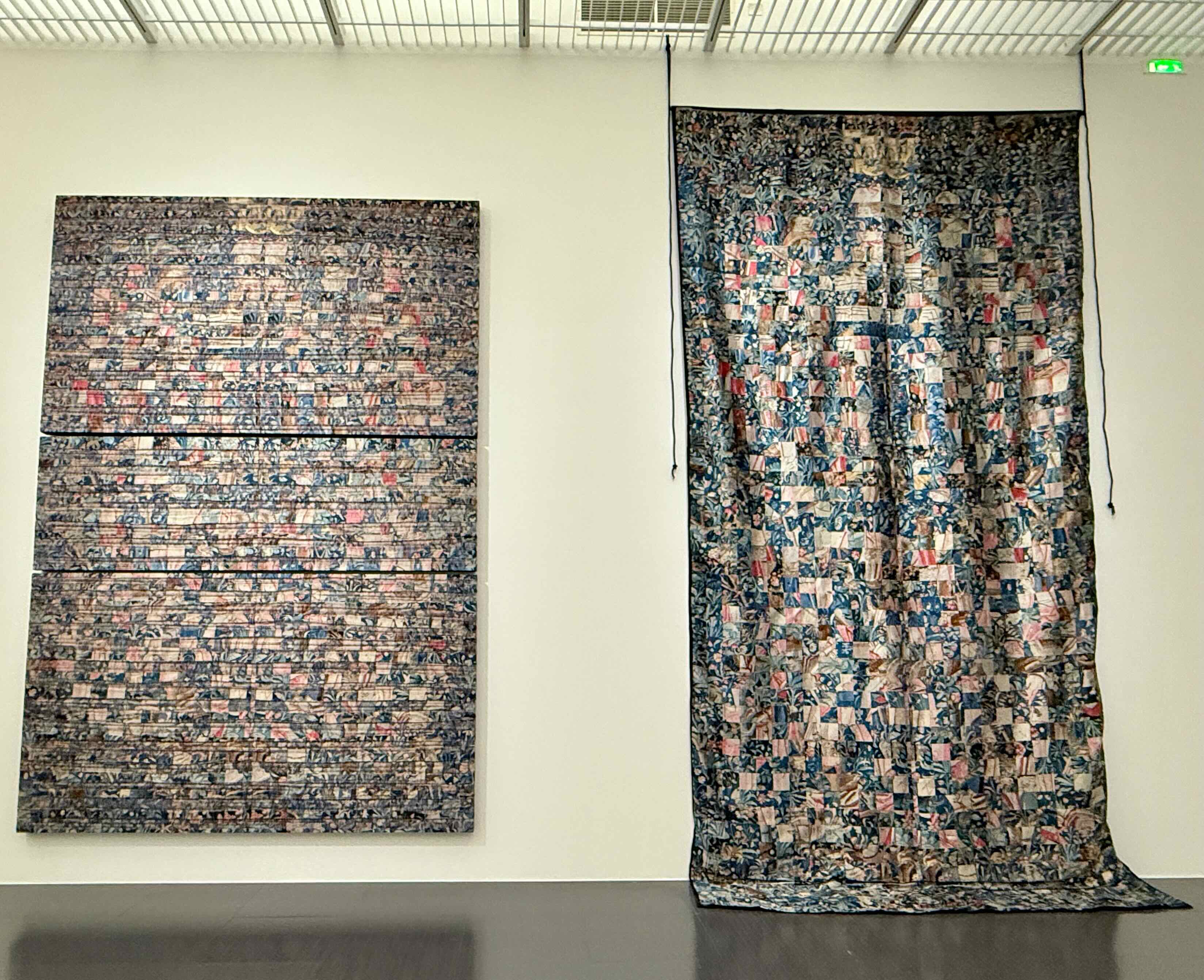
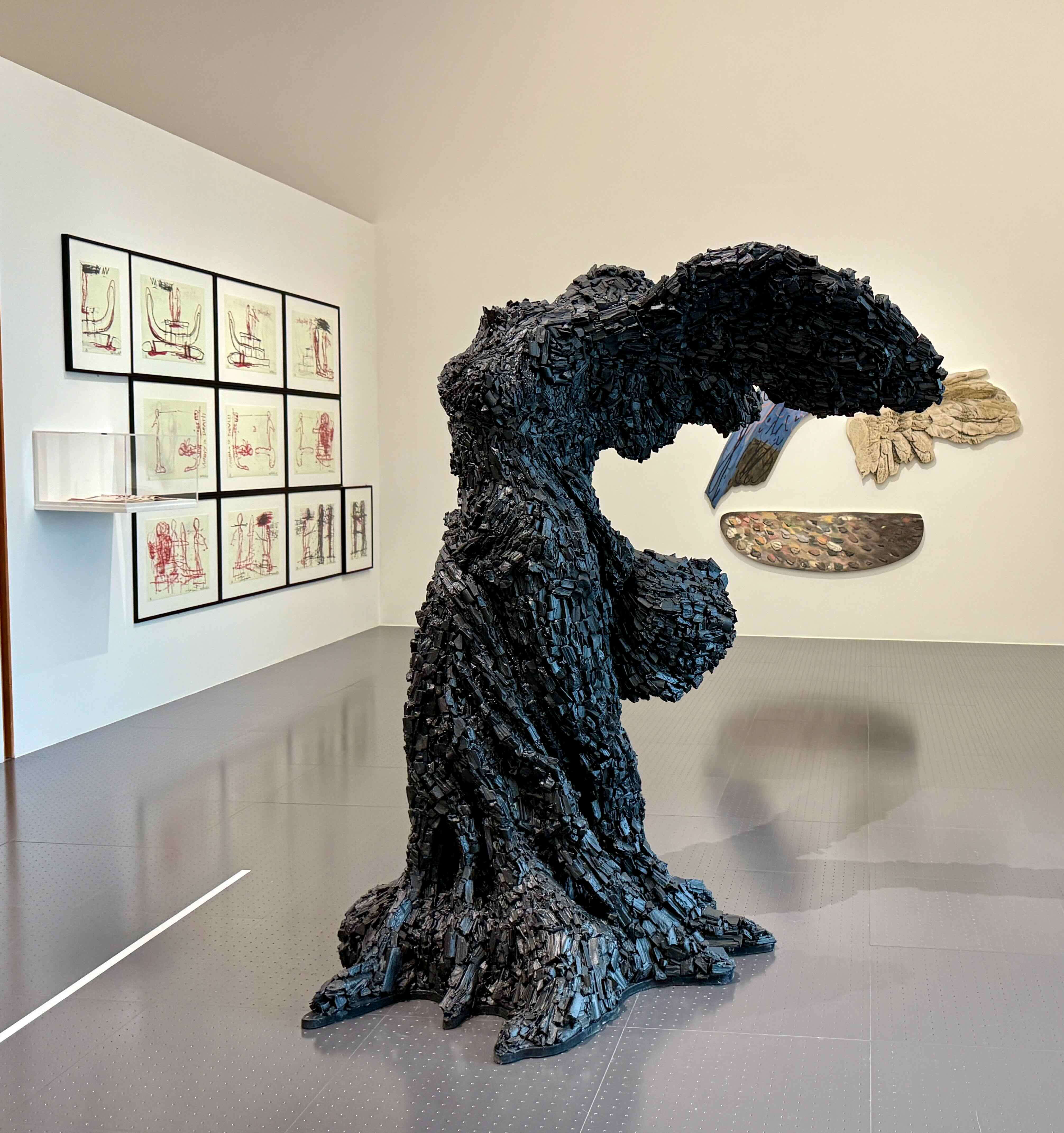
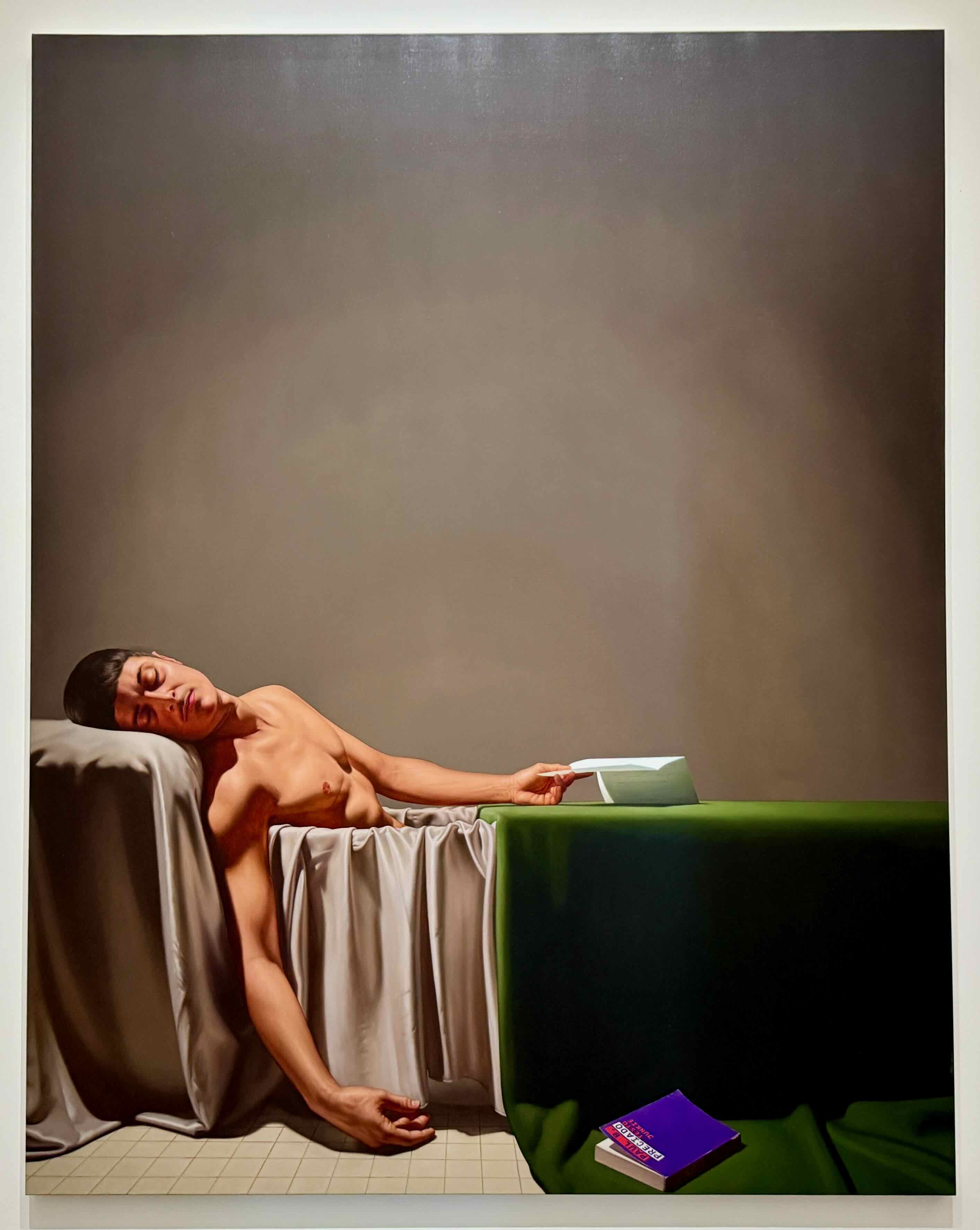
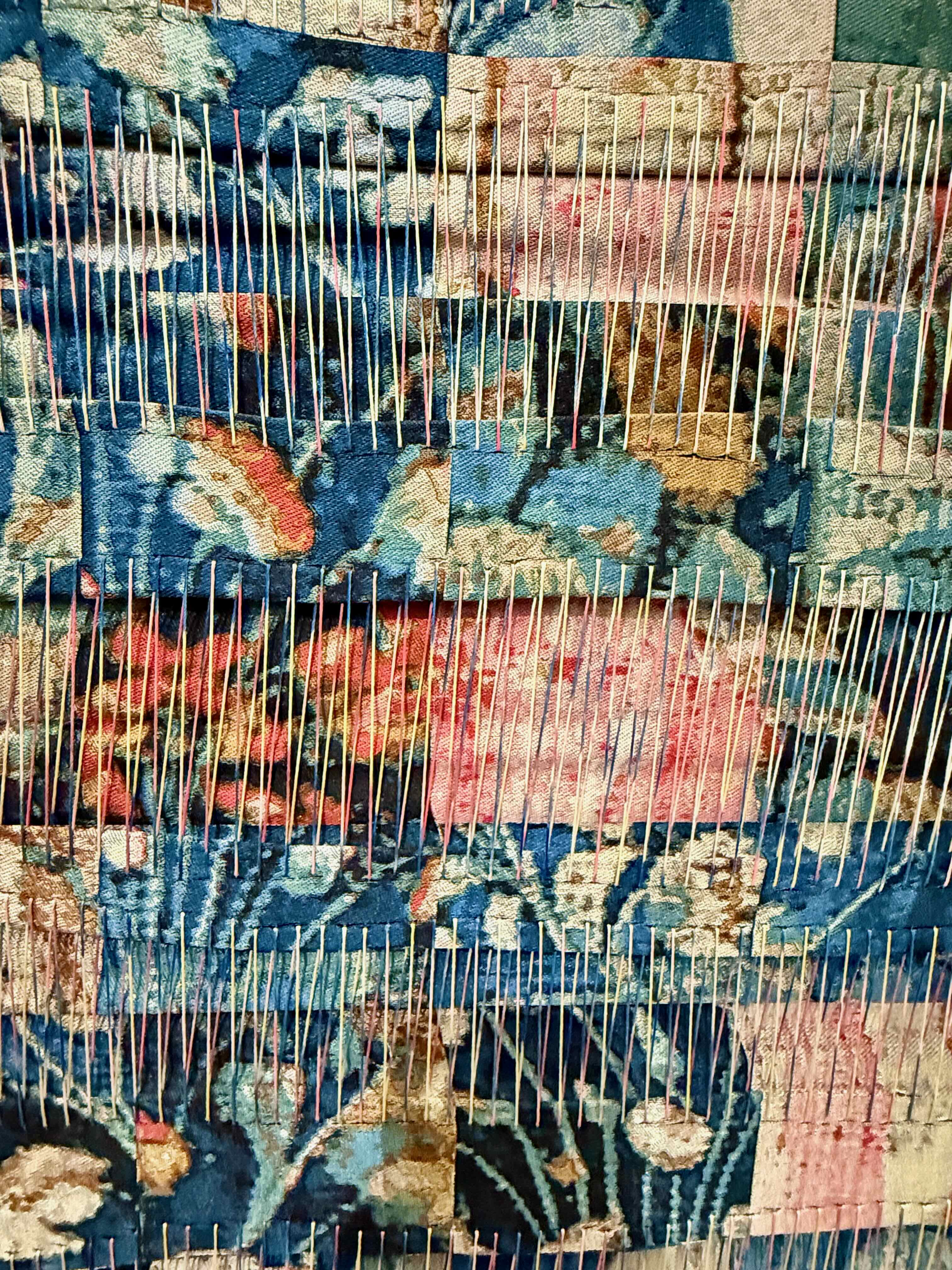 The next exhibition is Copyists. One hundred artist were invited to choose their favourite piece of art in the Louvre and use it as inspiration for their version of the work. Humberto Campana used charcoal to make this black charred version of the Victoire de Samothrace. This is a cry of alarm in the face of ecological and political crisis.
 Miquel Barcelo’s copy of Géricault’s Raft of the Medusa.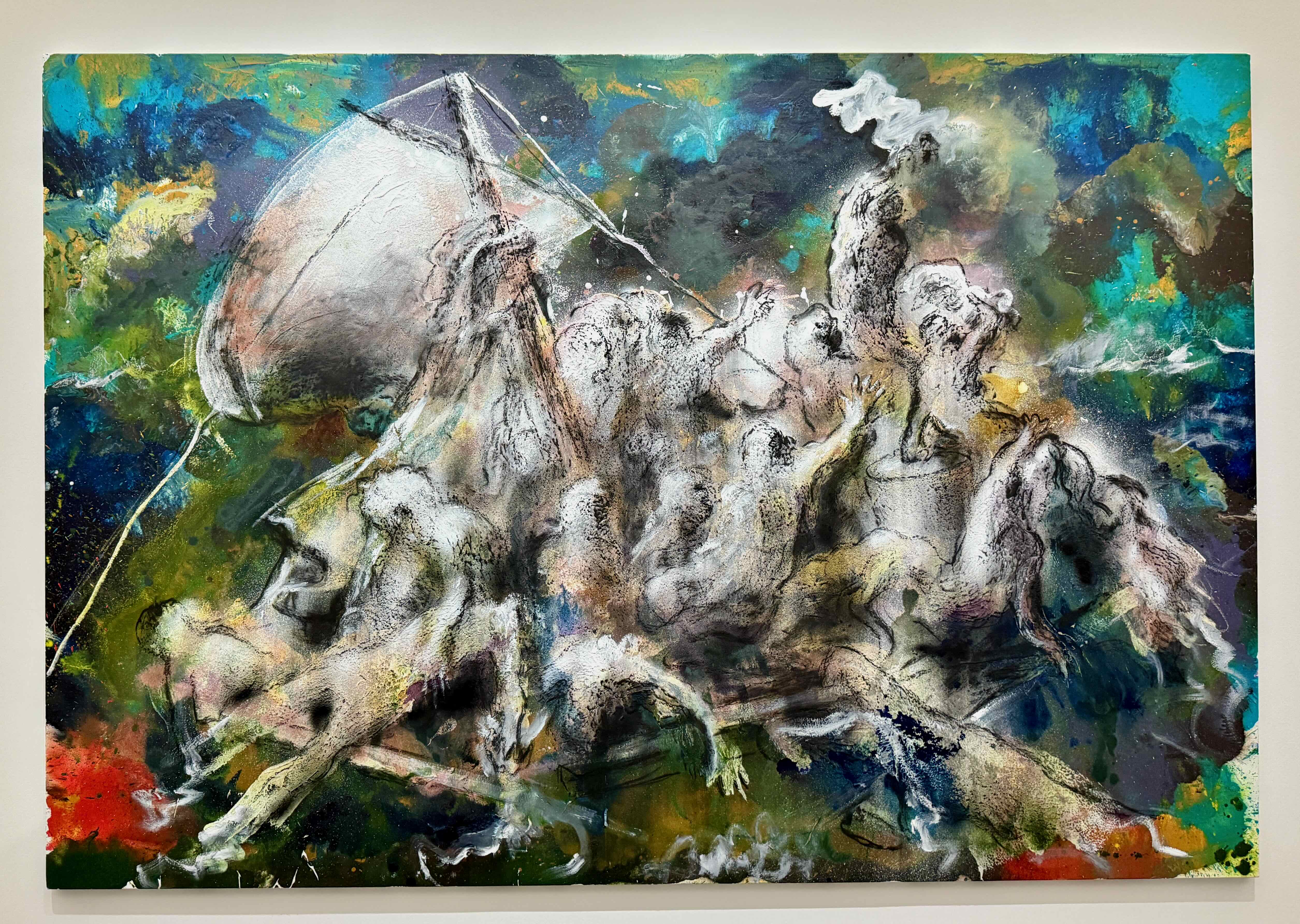


 trudymason.com