Day 70, Monday November. 6, 2023
This morning when Bob is taking our stuff out to the car he meets the sniffer dog in the hallway. He was quite excited to start his bedbug hunt! I’m sure he gets treats when he does his job well.
Today we are driving to Dijon with a stop in Cluny. It is cloudy and rainy today and we are surprised to see these sunflowers still in full bloom. They were finished and harvested over a month ago elsewhere.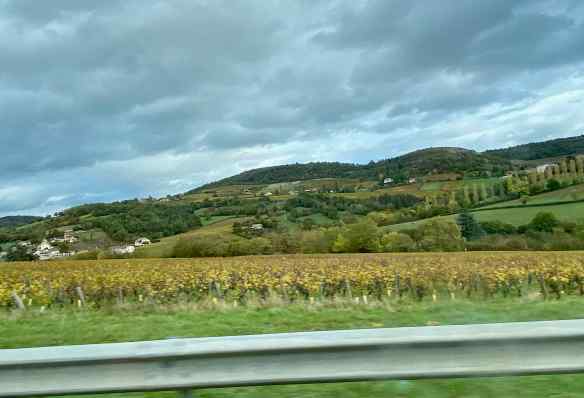
These medallions set in the road and sidewalks help us find our way…kind of like our walk in Vincent’s footsteps in Arles. They were really helpful, and before too long we arrive at the museum. We find out that the museum closes in half an hour so we barely have time to see everything. Good thing it is a small museum.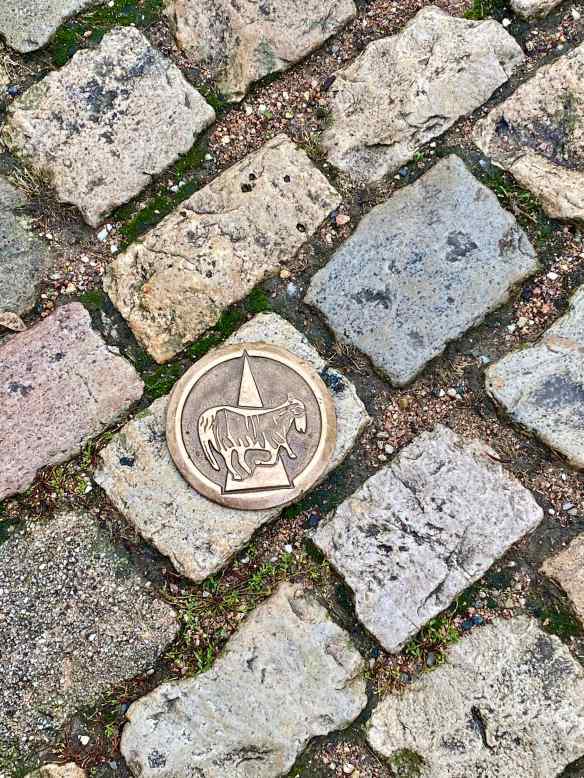
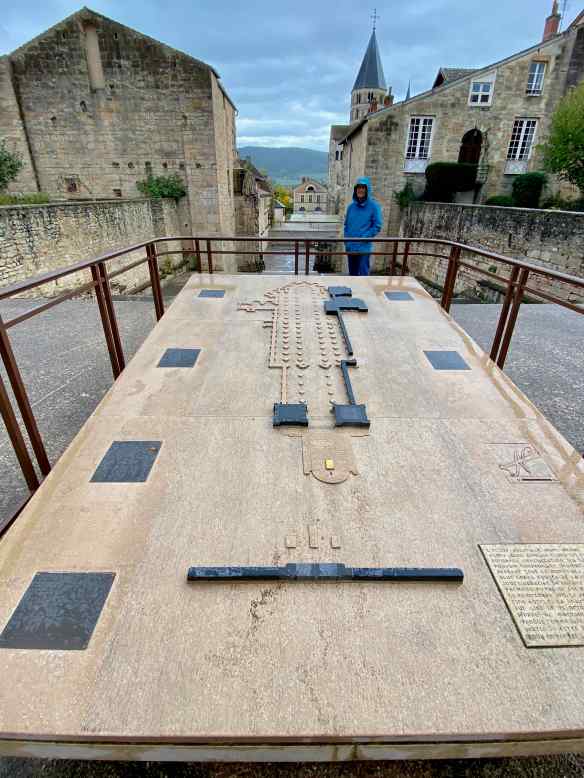
The museum is all about the Cluny Abbey, the oldest Abbey in France. It was founded in 910. This is a model of the Abbey in 1250 when it was at its peak.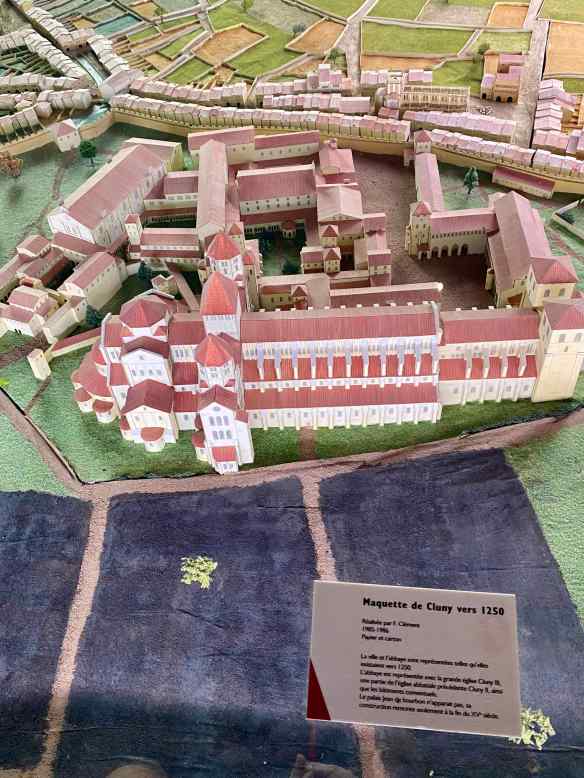
The lady who works at the museum suggested we visit the library before it closes. It has a lot of very old books and manuscripts but the room is not climate controlled, and I think the books are suffering because of that.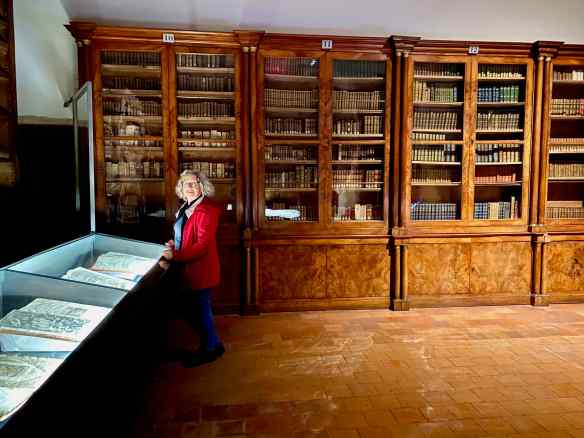
The books on display have warped, wrinkled pages…from moisture I wonder? It seems a shame but everything costs money and I don’t think this little museum would have the funds to make the library climate controlled. As soon as we left the library they locked the doors behind us…they kept it open so that we could see it. Nice!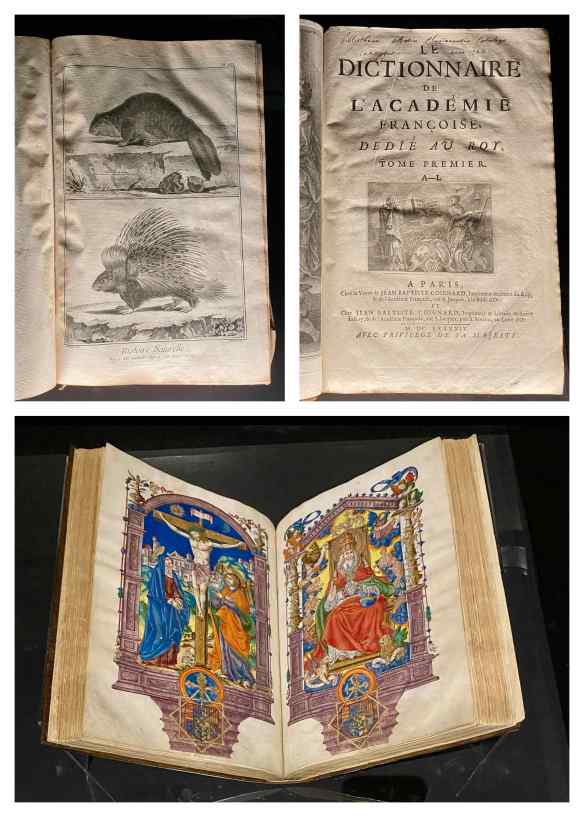
In the museum we see this carved stone with the same symbol as the bronze medallions that helped us find our way earlier. It is called the ‘keystone of the paschal lamb’. I looked up paschal and it means relating to Easter and the Jewish Passover.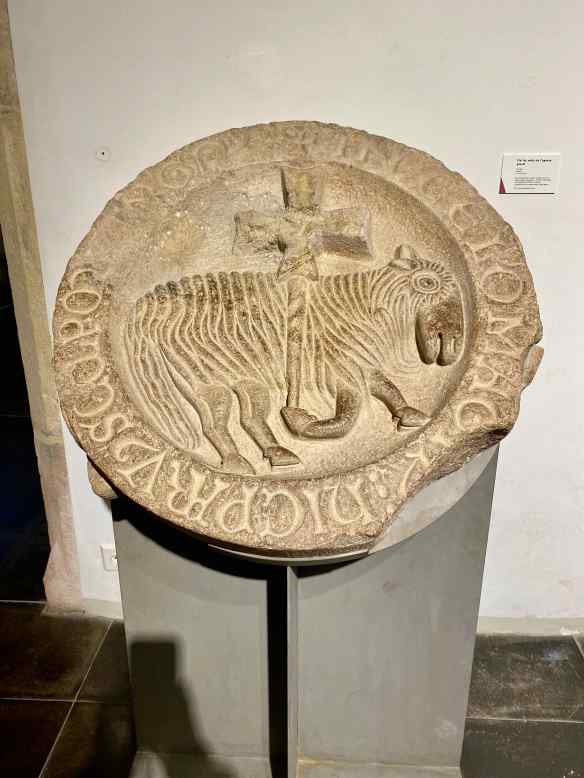
There were interesting carved panels that lined one of the museum rooms. Every circular design was different than the others.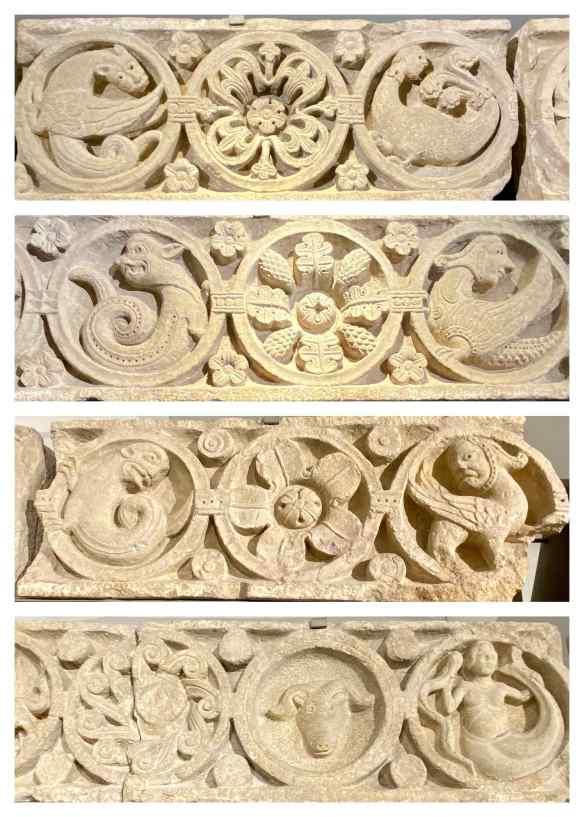
These reliquaries were interesting. The relic is usually so revered that the reliquary is traditionally made of precious metals or gems like these two below. Relics may include pieces of bone or hair, pieces of cloth, or natural objects that were significant in the lives of a saint or holy person. The bottom photo is of two unusual portrait reliquaries.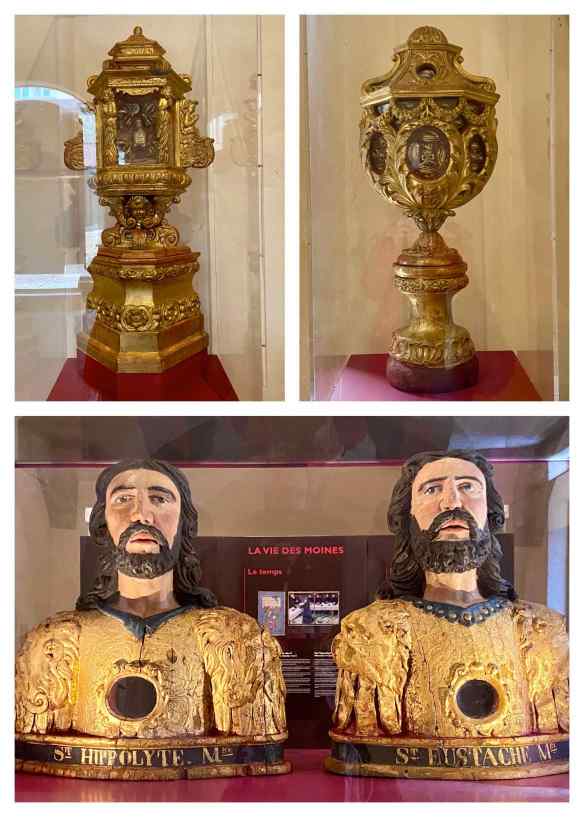 We have a rather quick look a the rest of the museum and then we are told that they need to close up so we go outside to find the ruins of the Abbey. On the way we walk by a lovely medieval herb garden.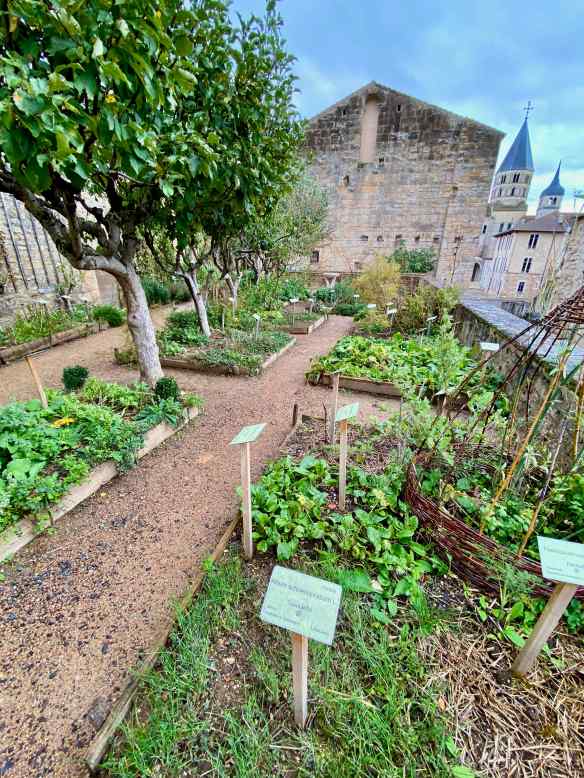
The Abbey Church was the largest church in the world until the construction of the St Peter’s Basilica in Rome. These are the remains of a few of the church pillars.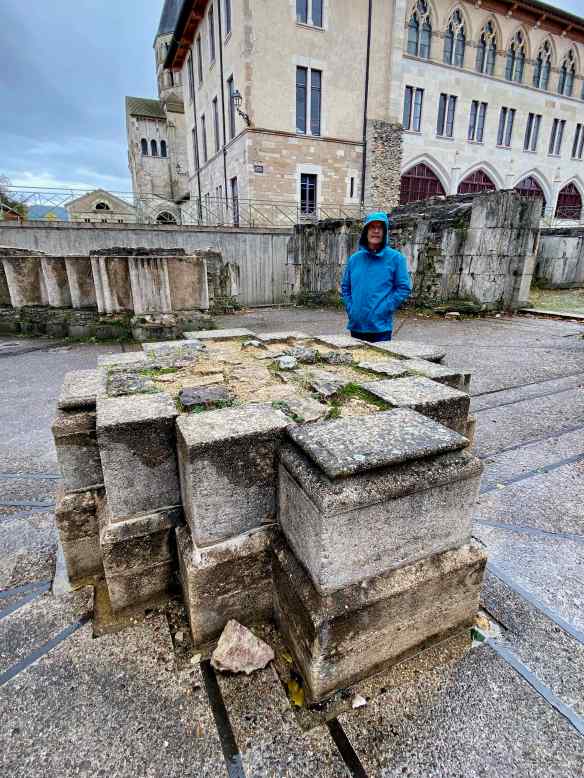
Our entrance to the museum also gives entrance to the Abbey. There is a fantastic 3D film that shows the construction of the Abbey and we walk through many of the existing Abbey buildings. Today only part of the transepts and bell tower remain of the Abbey Church. There is only 8% of the Church still in existence today, but that little bit is spectacular. 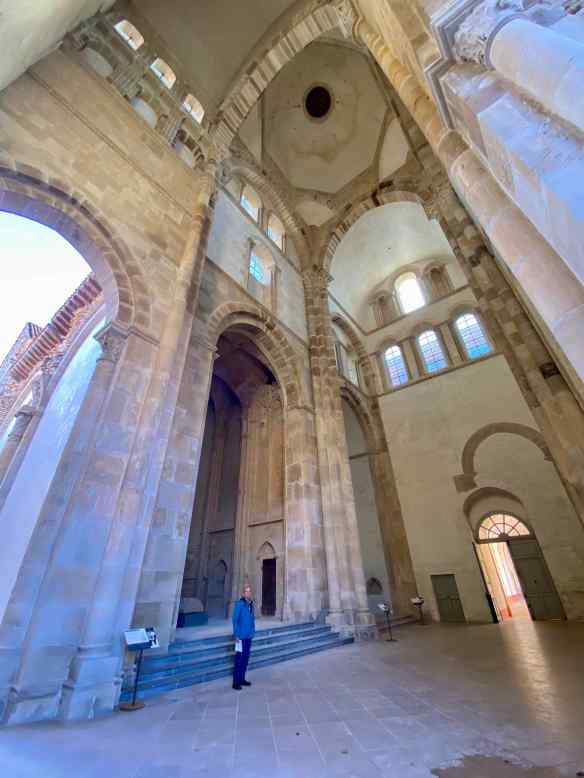
It is 30 meters up to the vault above us.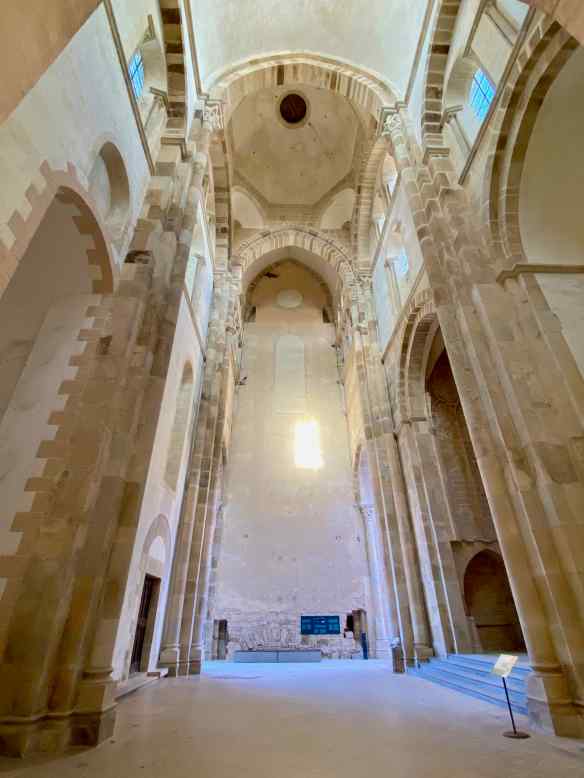
Around 1100, Cluny and its monastic order held authority over 10,000 monks and 1,500 monasteries across Europe. The decline set in from the end of the Middle Ages. The abbey became the target of an entrepreneur who used explosives to demolish the buildings, and sold the stones as building materials! 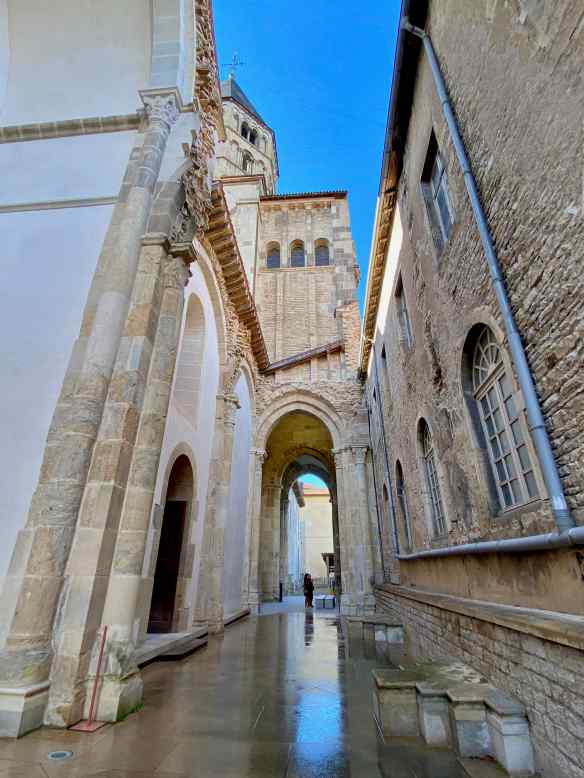
There is a small chapel with sculptures of biblical figures. Some of then still have bits of their original paint. We are used to seeing sculptures as bare stone and it is easy to forget that they used to be colourfully painted.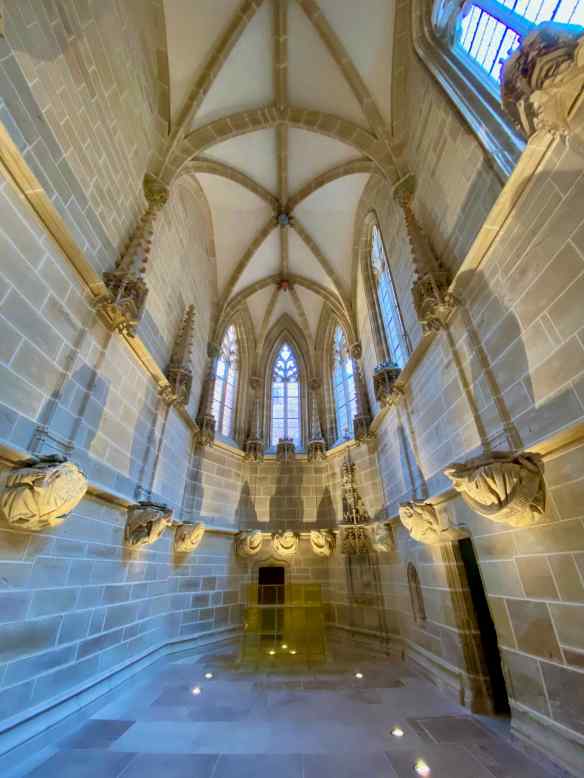
We marvel at this intricately carved stone and wonder at the skill it would have taken to carve such delicate work.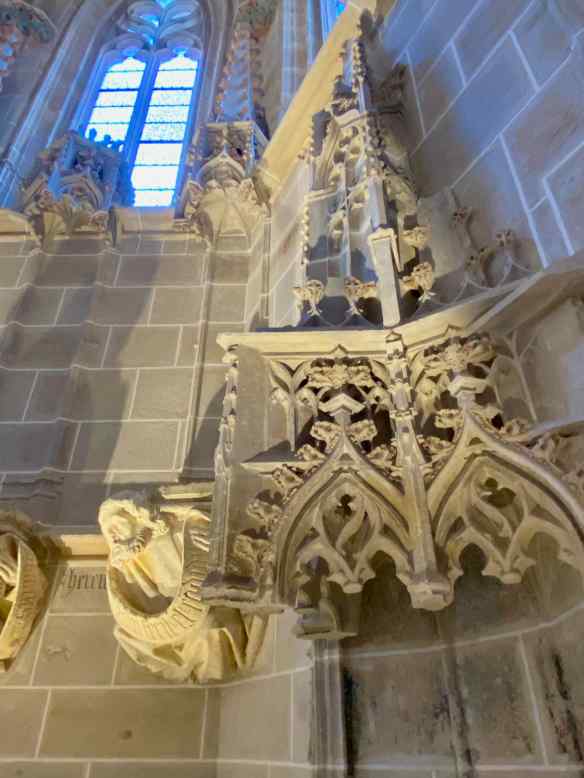
The remaining abbeys is currently a trade school. Here are some of the hallways around what used to be a cloister.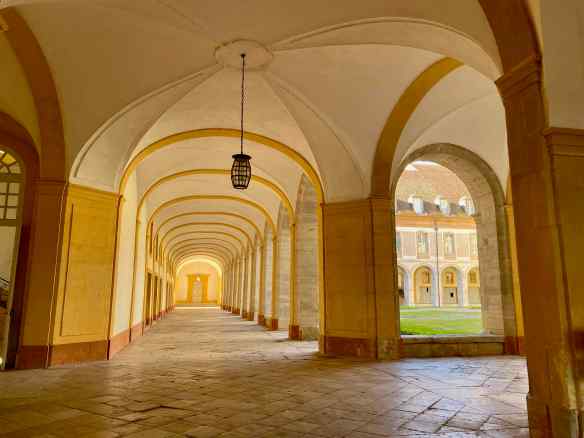
The granary has the most amazing wooden roof that was constructed using wooden dowels, which you can see in the bottom right photo. The basement of the grainery was used for storage.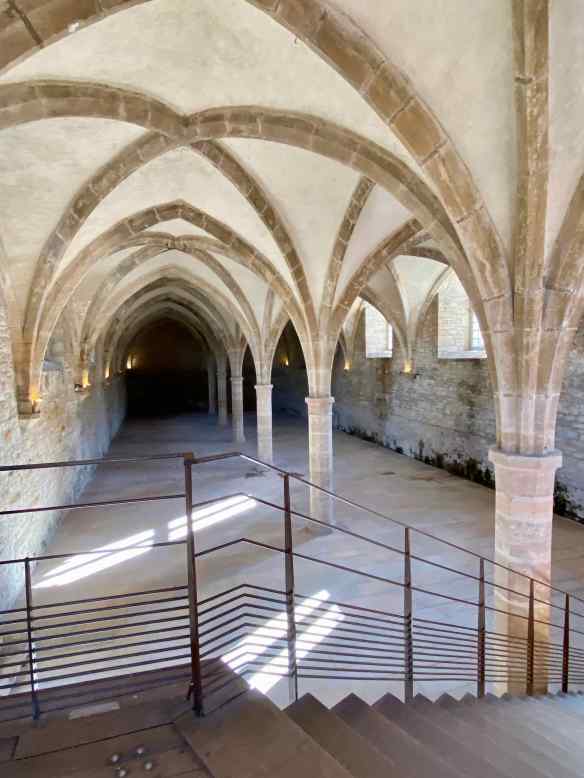
Parts of the remaining abbey are shown their age and really need major repairs.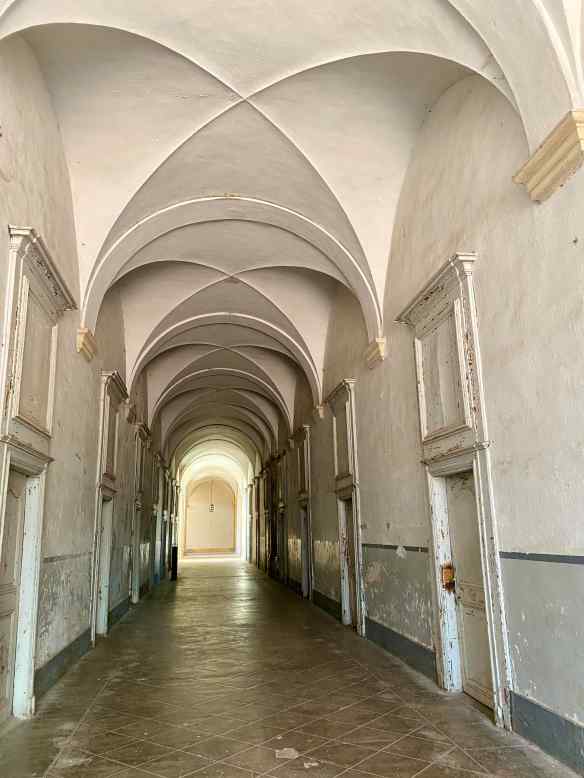
The cloister looks quite lovely…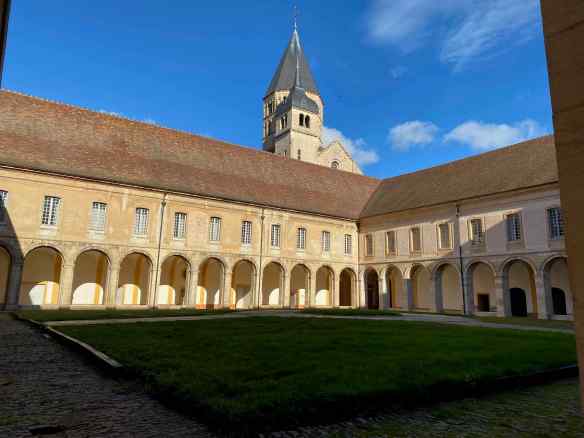 but when I hold my camera up to a broken panel in one of the doors along the cloister walkway this is what is inside! Not what I was expecting. I thought these doors would open into rooms but at least some of them seem to be storage rooms…for what looks like junk.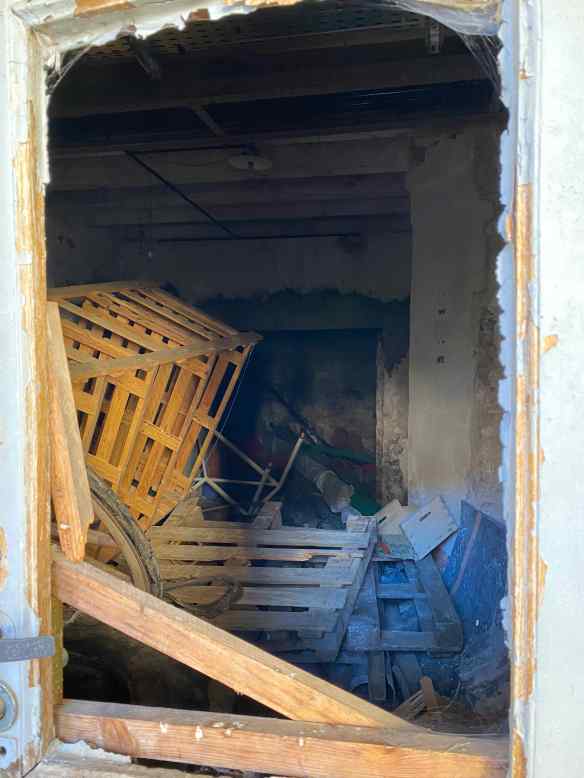
On our way back to the car we pass an artists studio, which is closed but I sneak a photo through the window. 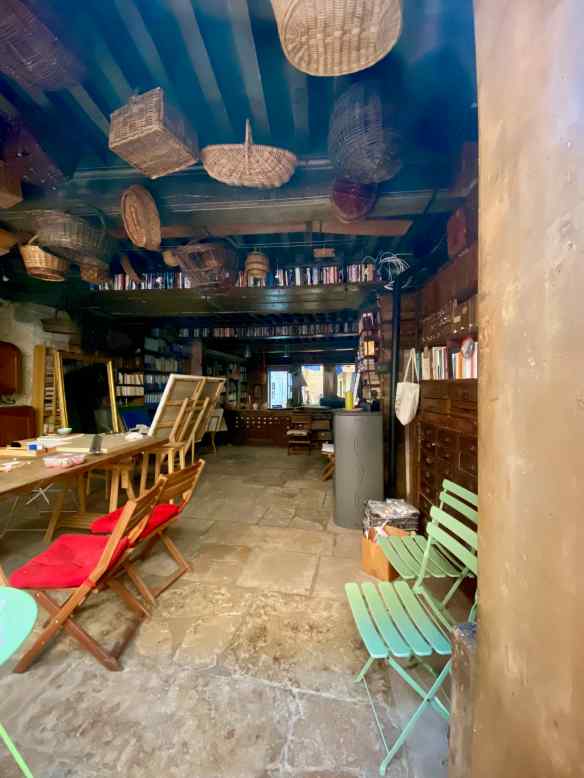
It is another two hour drive to Dijon and we see a lot of army trucks on the highway. We wonder where they are going. 
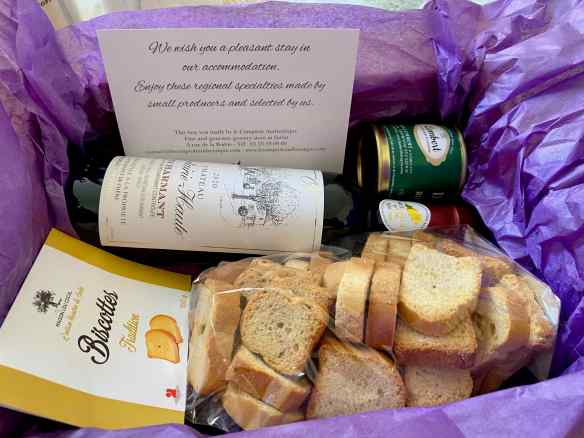
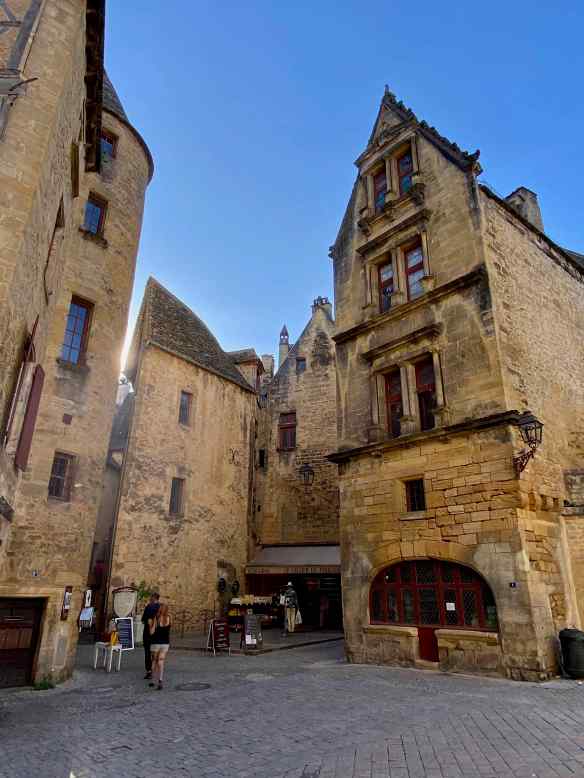
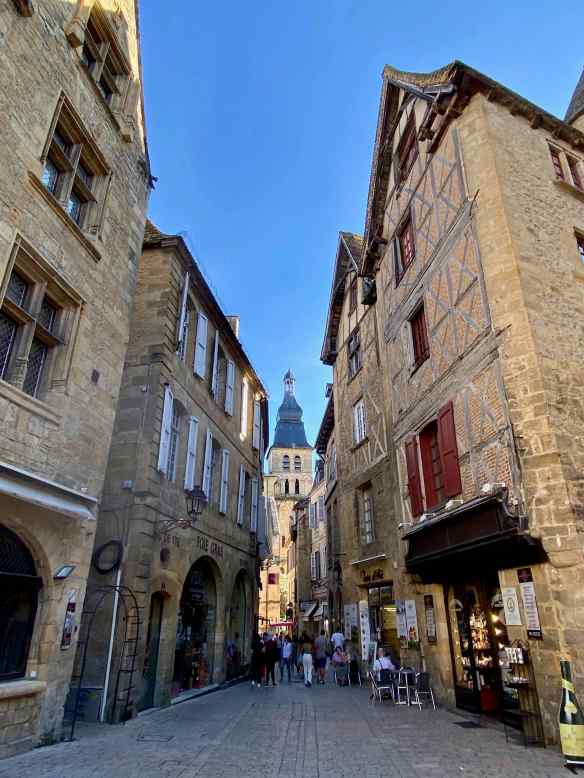
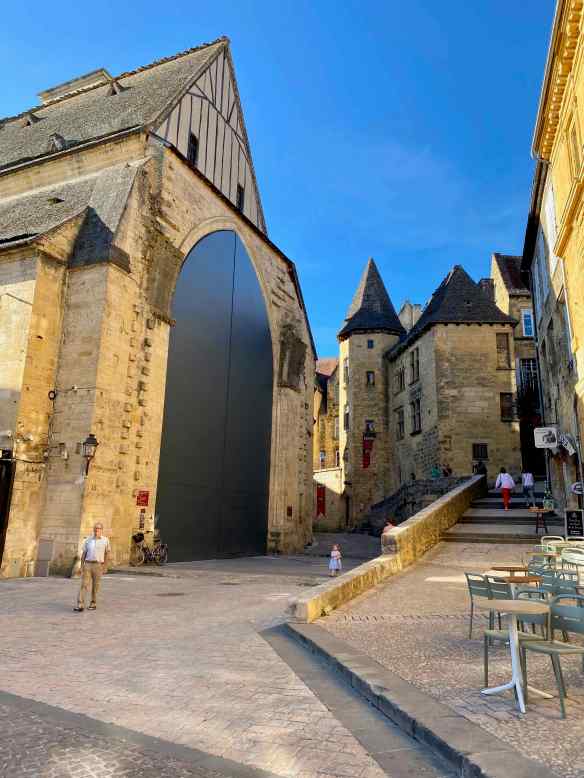

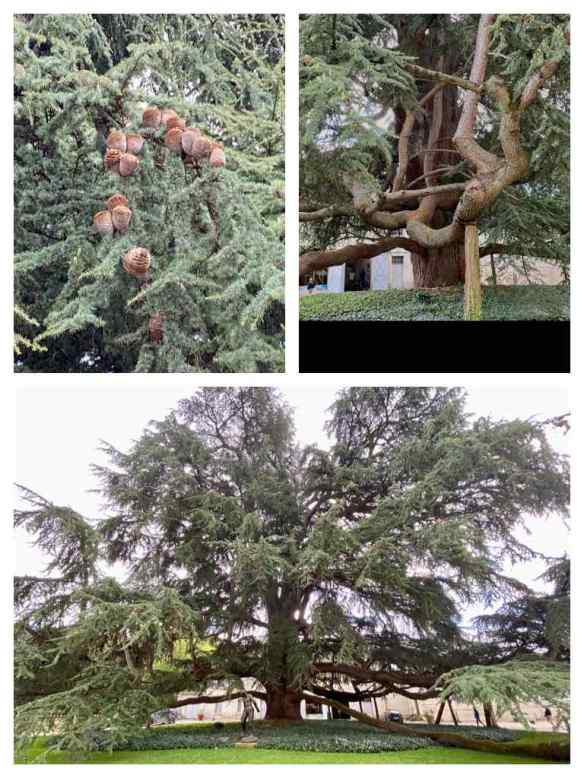
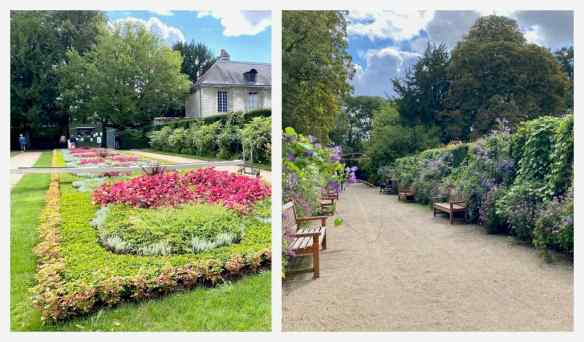
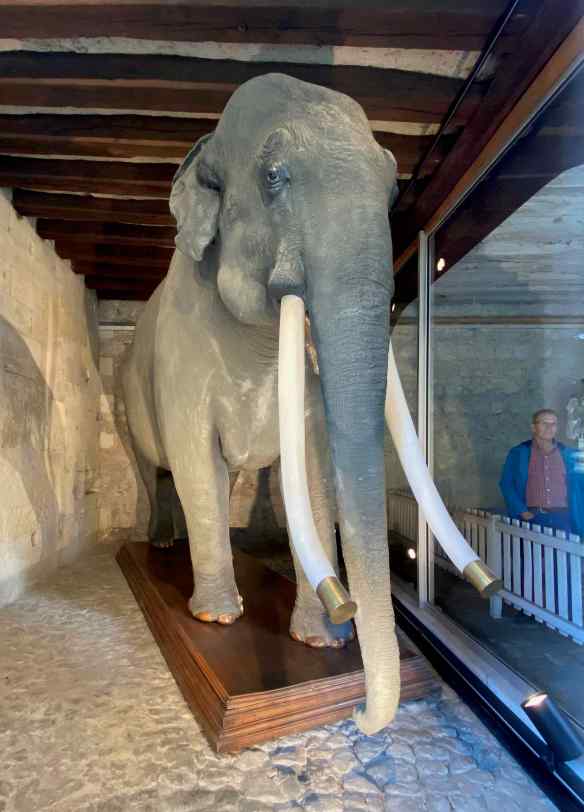
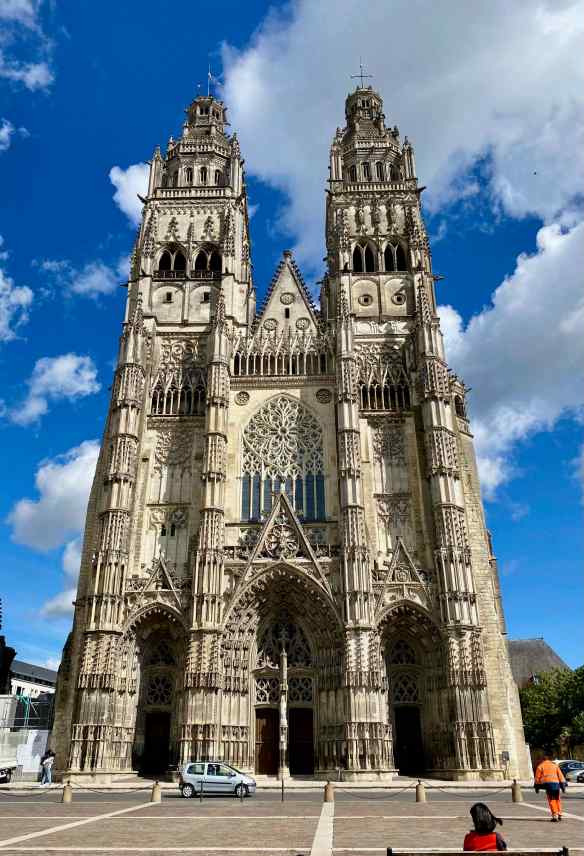
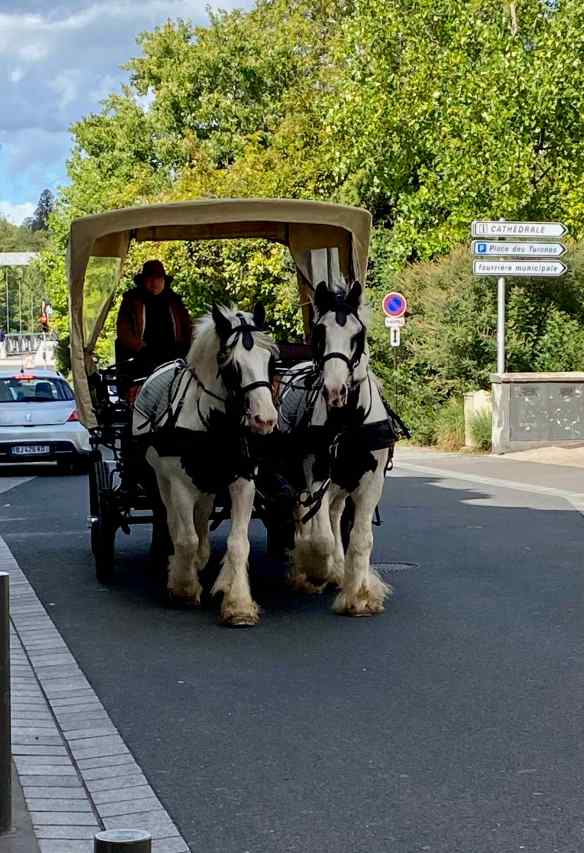
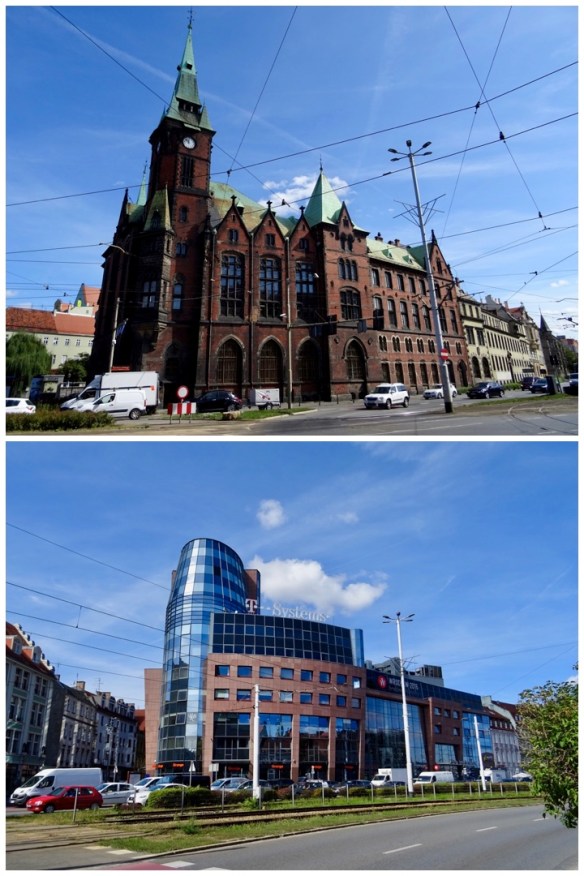 Here’s how big items get delivered!
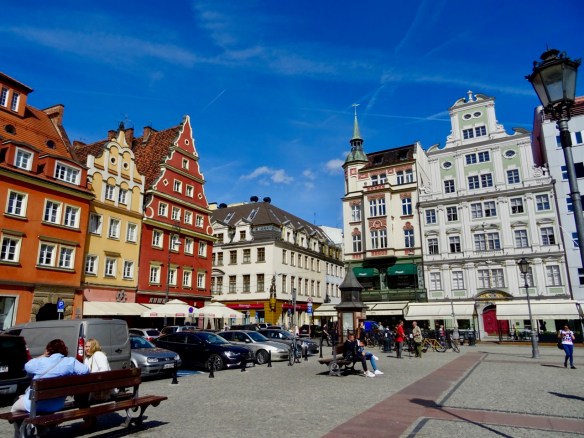
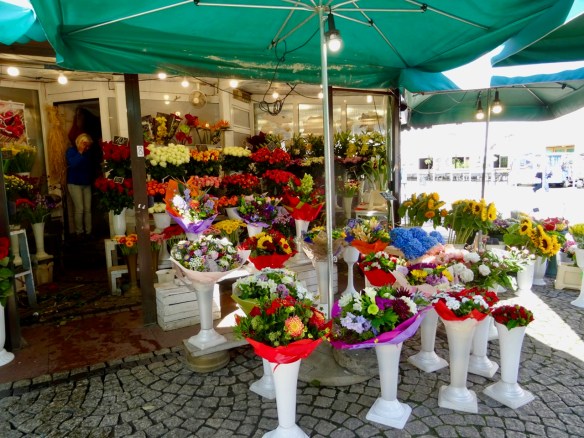 Wroclaw has an ever growing populations of gnomes. In fact, our guidebook states “the little buggers are currently rumoured to be running rampant to the score of over 300 making it literally impossible for us to try to keep track of them!” I think they are delightful and I am happy to make their acquaintance .
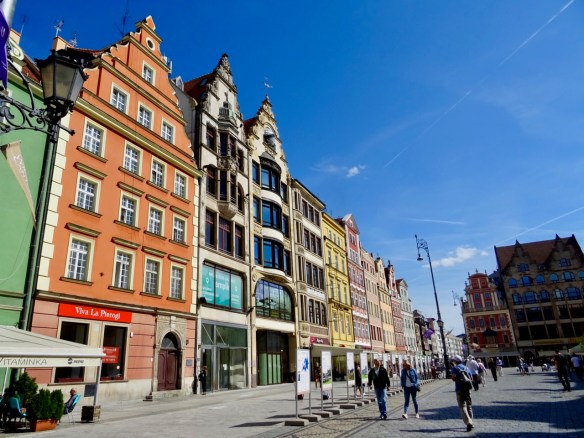
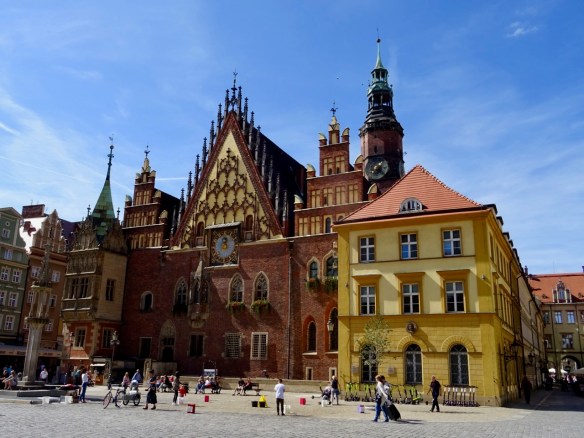
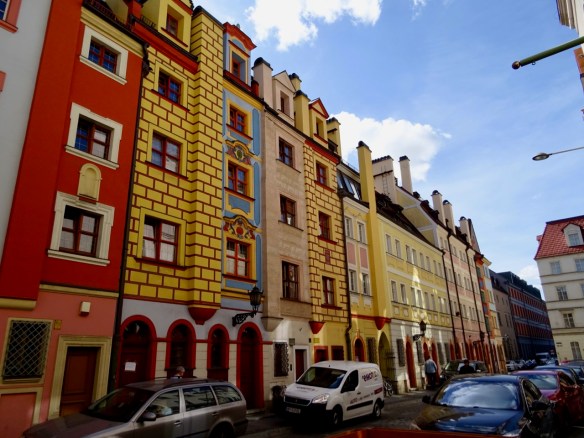
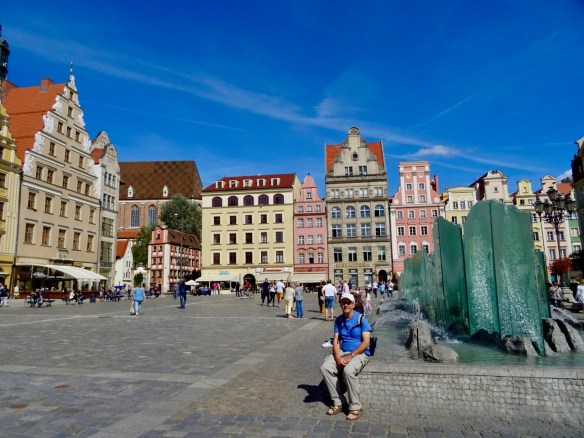 and more tenement houses in the town square.
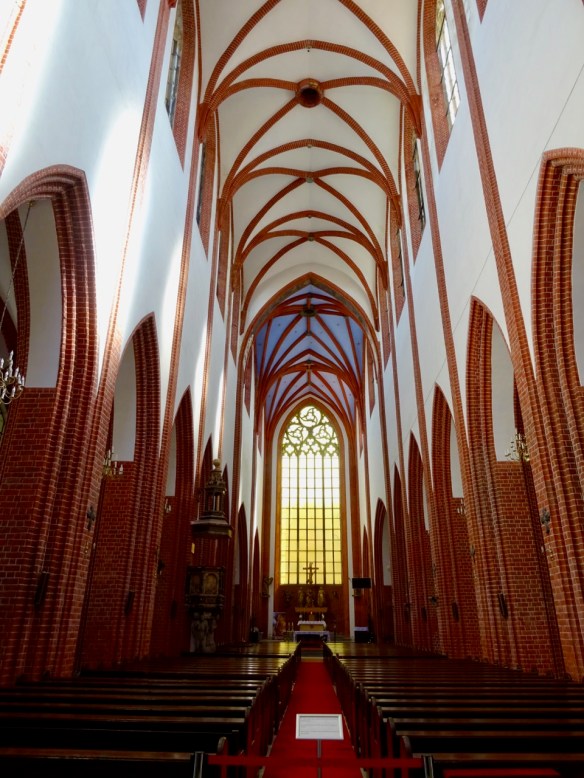
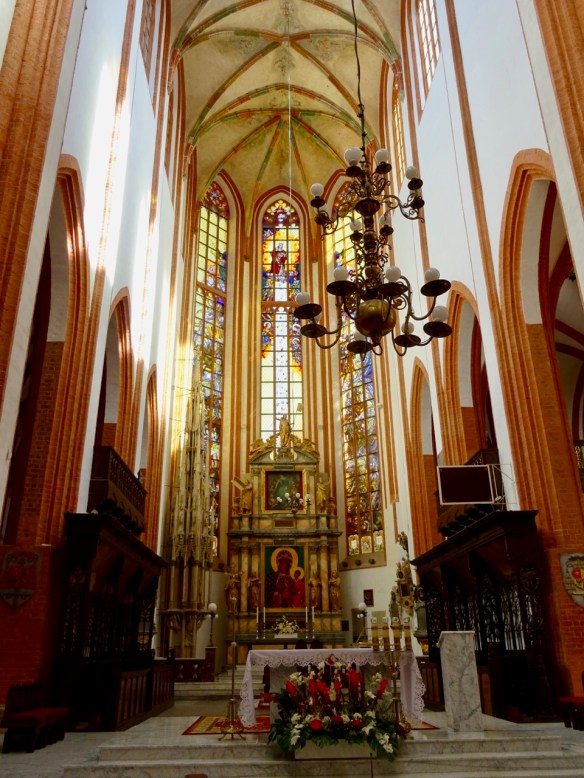
 The interior of St. Mary Magdalene’s Church which dates from 1330.
 We climb 147 steps up to the walkway between the two towers. In times past women suspected of being witches were forced to cross this walkway (there were no railings then) and if they made it across safely they were branded as a witch. If they fell to their death, then they were innocent of the crime of being a witch! You certainly didn’t want to be accused of witchcraft! I am very glad there are railings now and I meet another couple of gnomes.
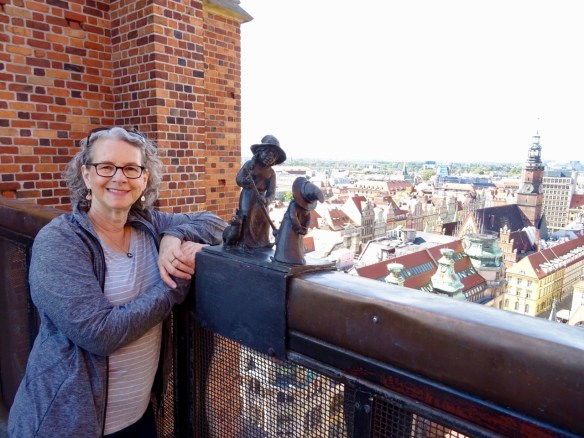 We have great views of the city from up here.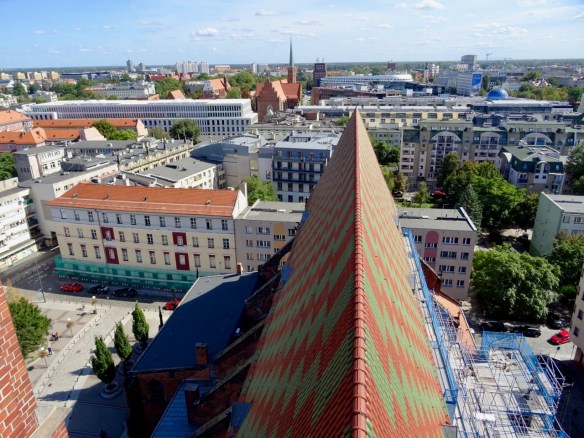
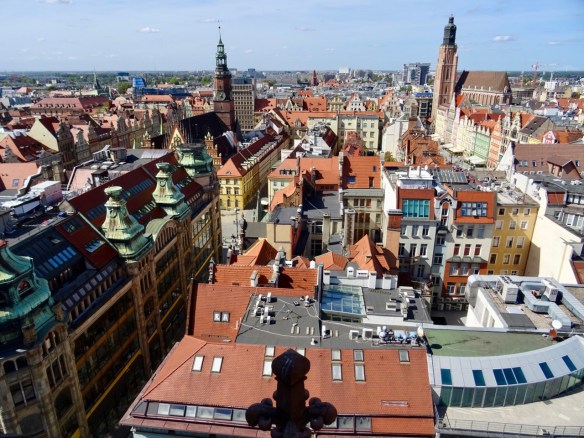 Here is a view of the walkway, way up there between the two towers.There were steeples on these at one time, not sure if they were destroyed during the war?
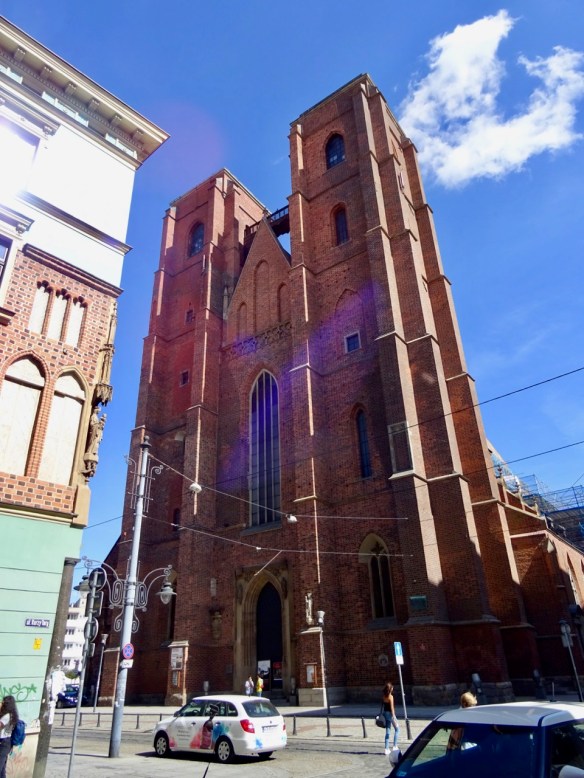 More ornate colourful buildings.
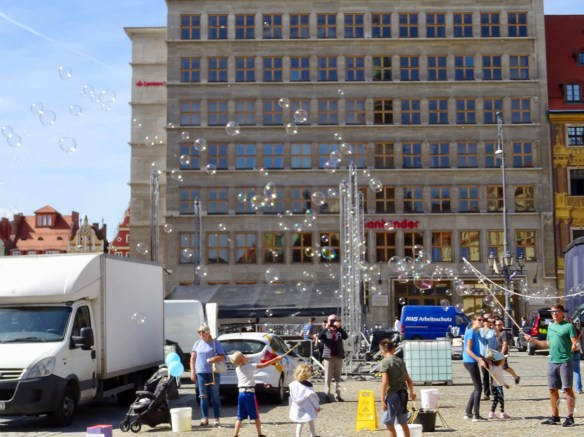
 I wish I knew the recipe for the bubble mixture this guy was using! He made hundreds of bubbles at a time with his string between two sticks. Kids had such fun chasing all the bubbles.
 We found quite a few more of these little fellows, on doorsteps, or tucked into corners.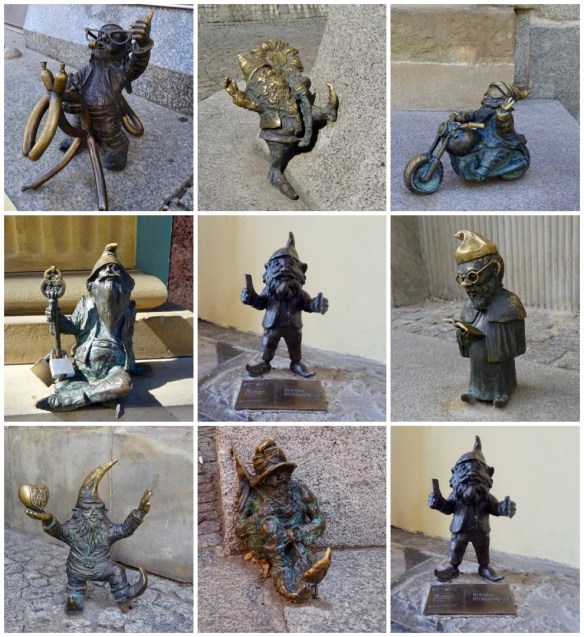
 The two little houses in the corner called Hansel and Gretel are the only two houses left of streets that used to surround a cemetery. The cemetery closed in 1773. I wonder where the graves went?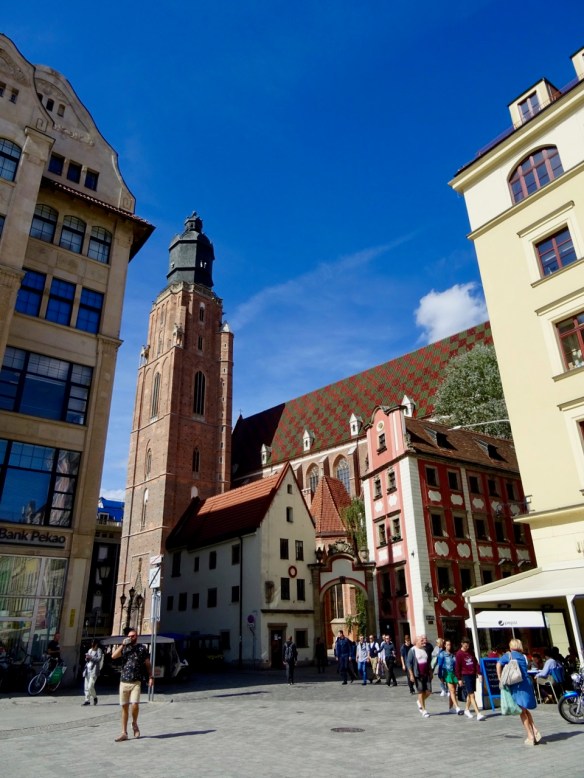
 and more busy gnomes.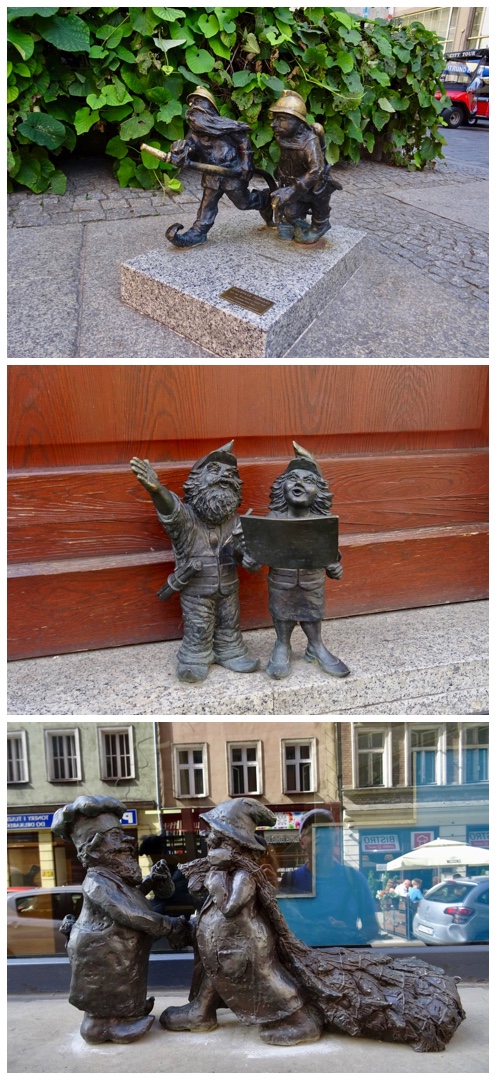
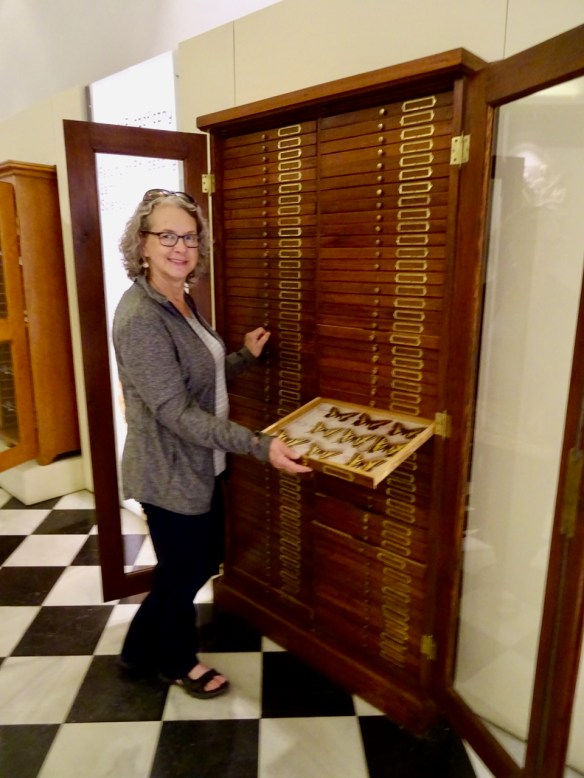
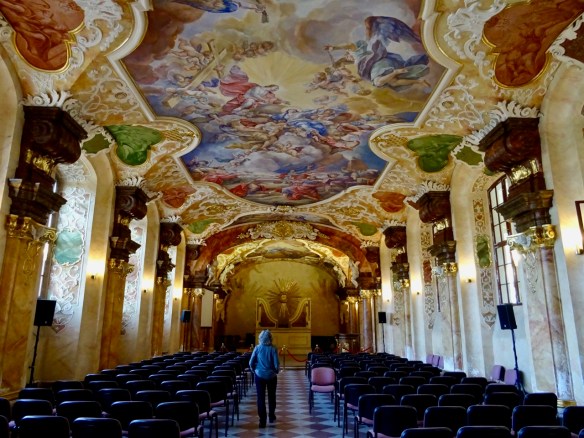 and an interesting collection of artifacts. This is a chart for determining eye colour.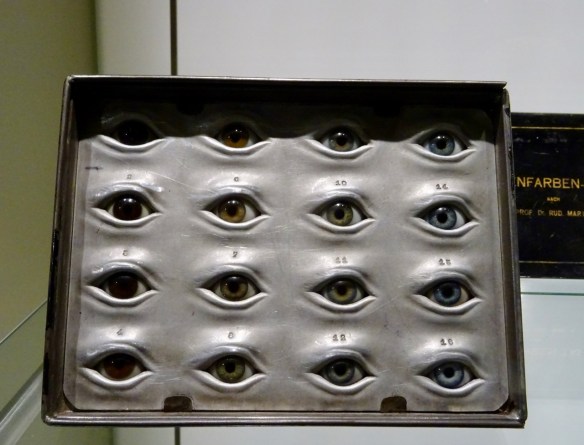
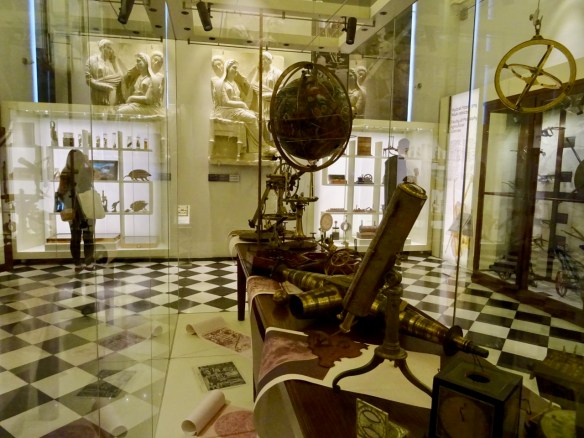
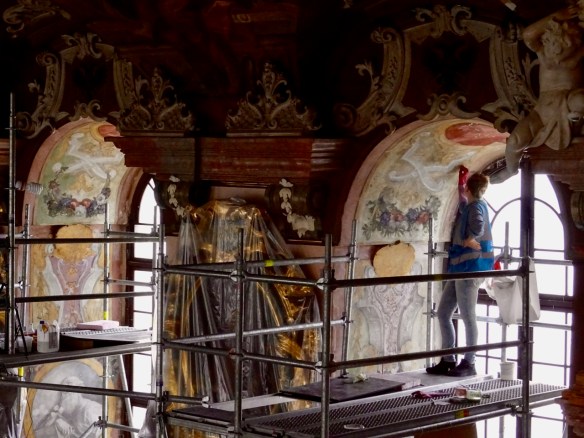
 The Music Hall is under restoration but we are allowed a peak inside.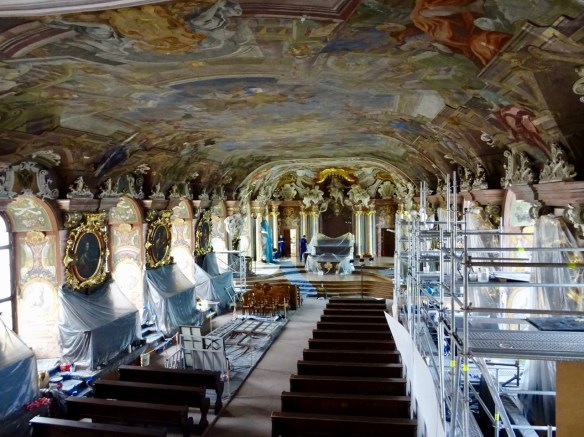
 We. climb another 203 steps up the Math tower, which has displays along the way.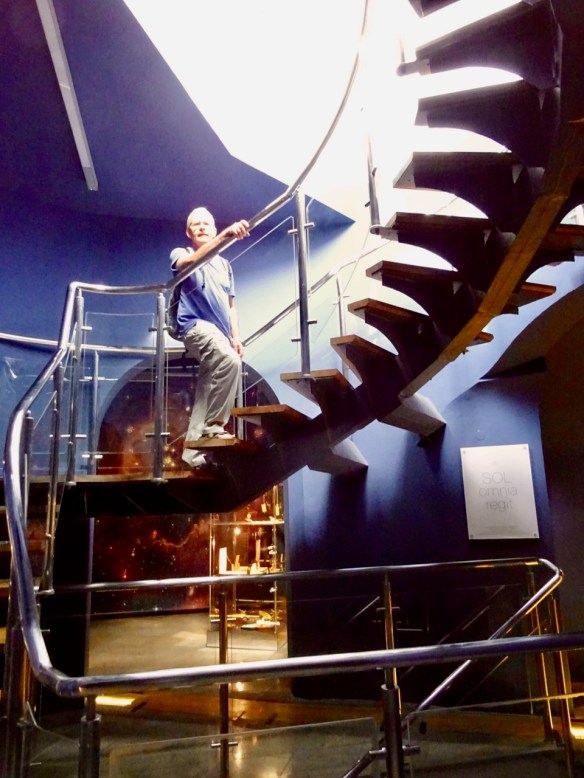
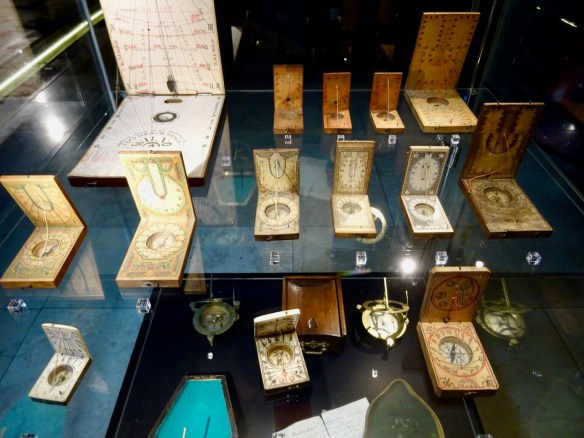
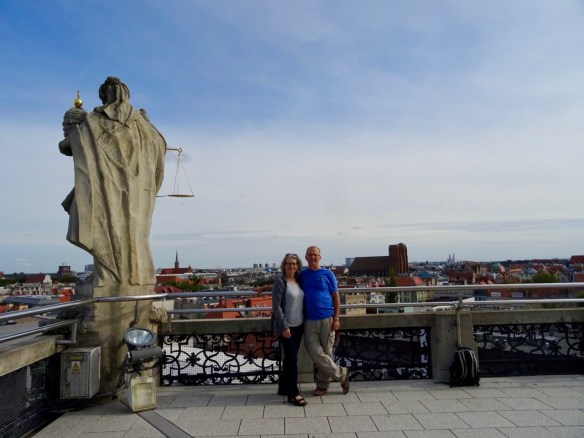 and the views. Notice the very modern looking tower among the old.
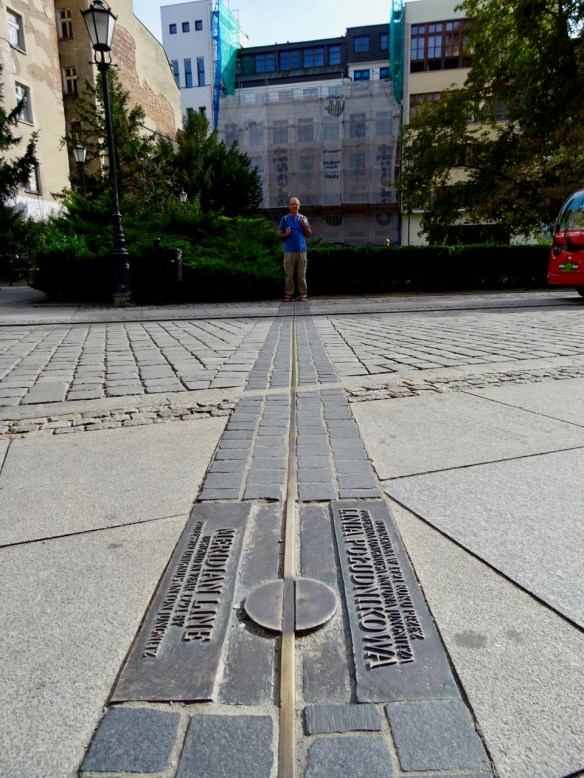 I just love all the reflections of the old buildings in the glass walls of the modern new buildings!
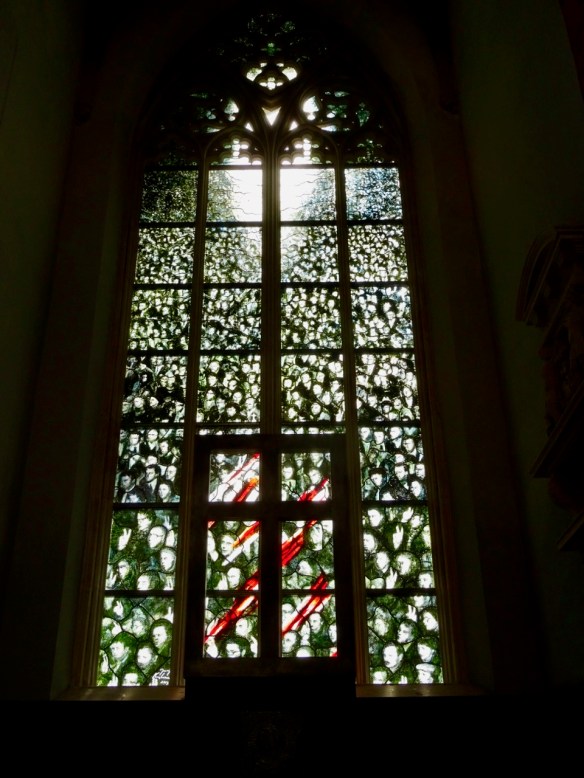
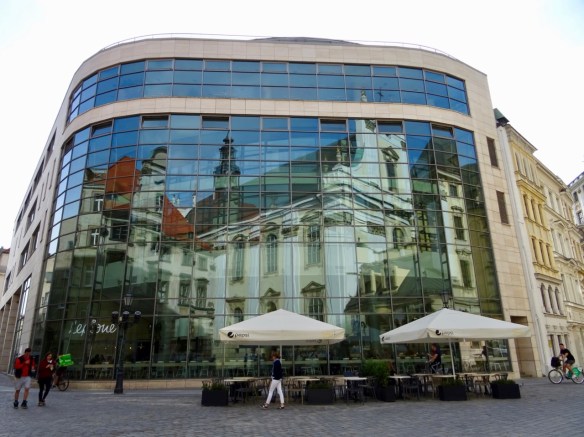 Churches here are either very ornate…
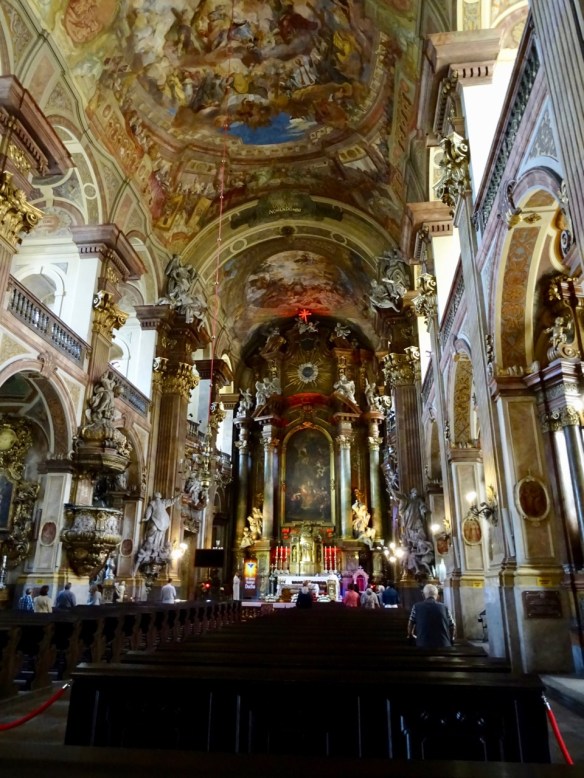 or look like this. The late afternoon sun was shining through the windows casting everything in a lovely olden glow.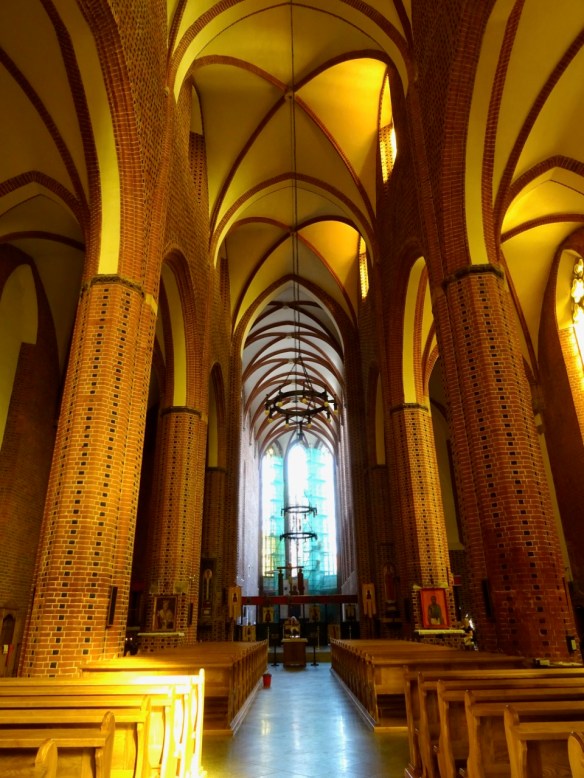
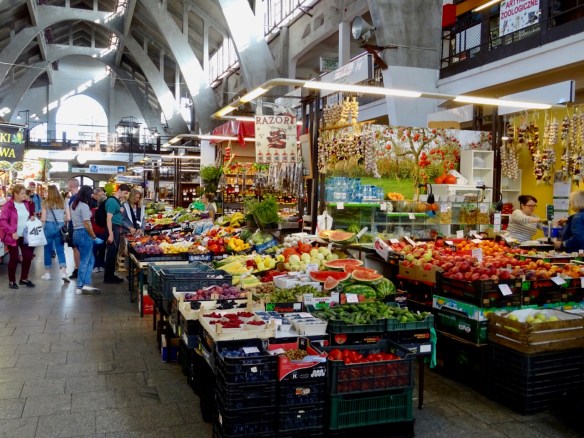
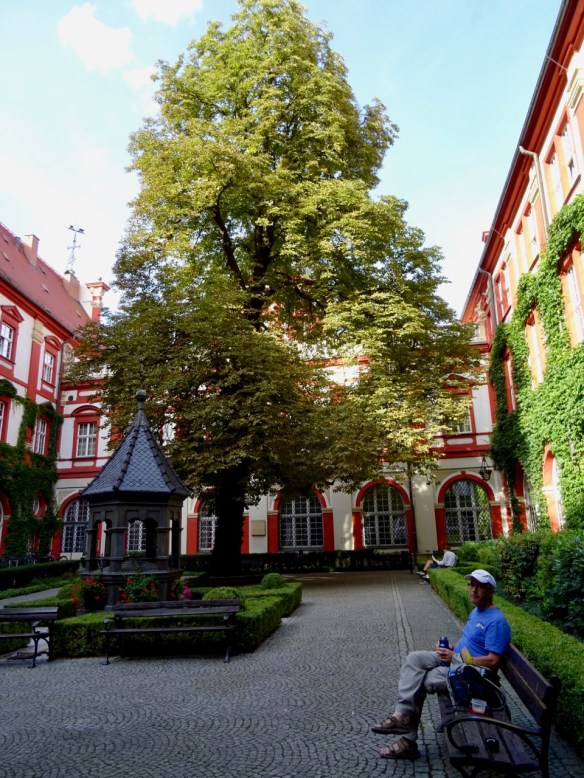 Then we visit the market and buy some fruit. Food prices are very reasonable here.
 More reflections.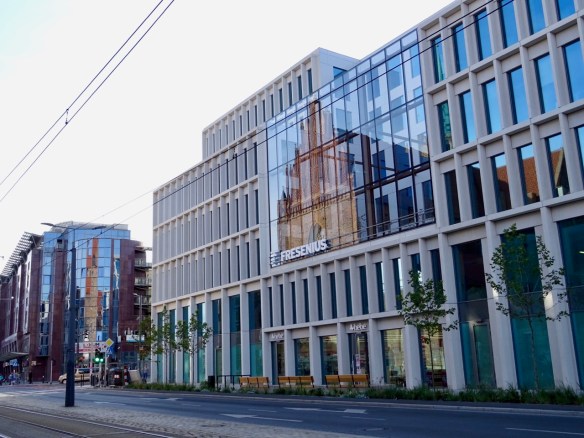
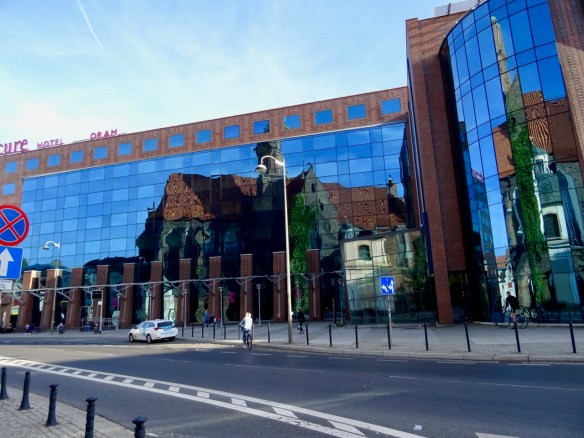 We catch a trolley bus home. We haven’t seem many paved streets or sidewalks here. Most of the streets and sidewalks here are cobbled in one fashion or another. All the uneven footing is hard on the feet and ankles. We walked 16,700 steps today and climbed the equivalent of 31 floors!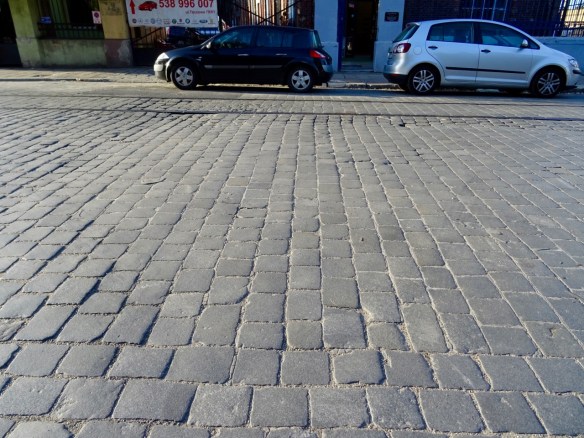
 trudymason.com