Day 13. Friday, September 12, 2025
It is an hour drive to Amiens from Arras where we will visit Jules Verne’s house, the largest cathedral in France, and take a unique boat ride.
We luck out and find a parking space right beside the Jules Verne museum. Parking downtown in French cities is very difficult, there are more cars than spaces available. We have our picnic lunch in a little park right by the museum but these chestnuts were falling and landing with a crash around us…the spikes on the green fruit are very sharp and we decide to move to a safer bench.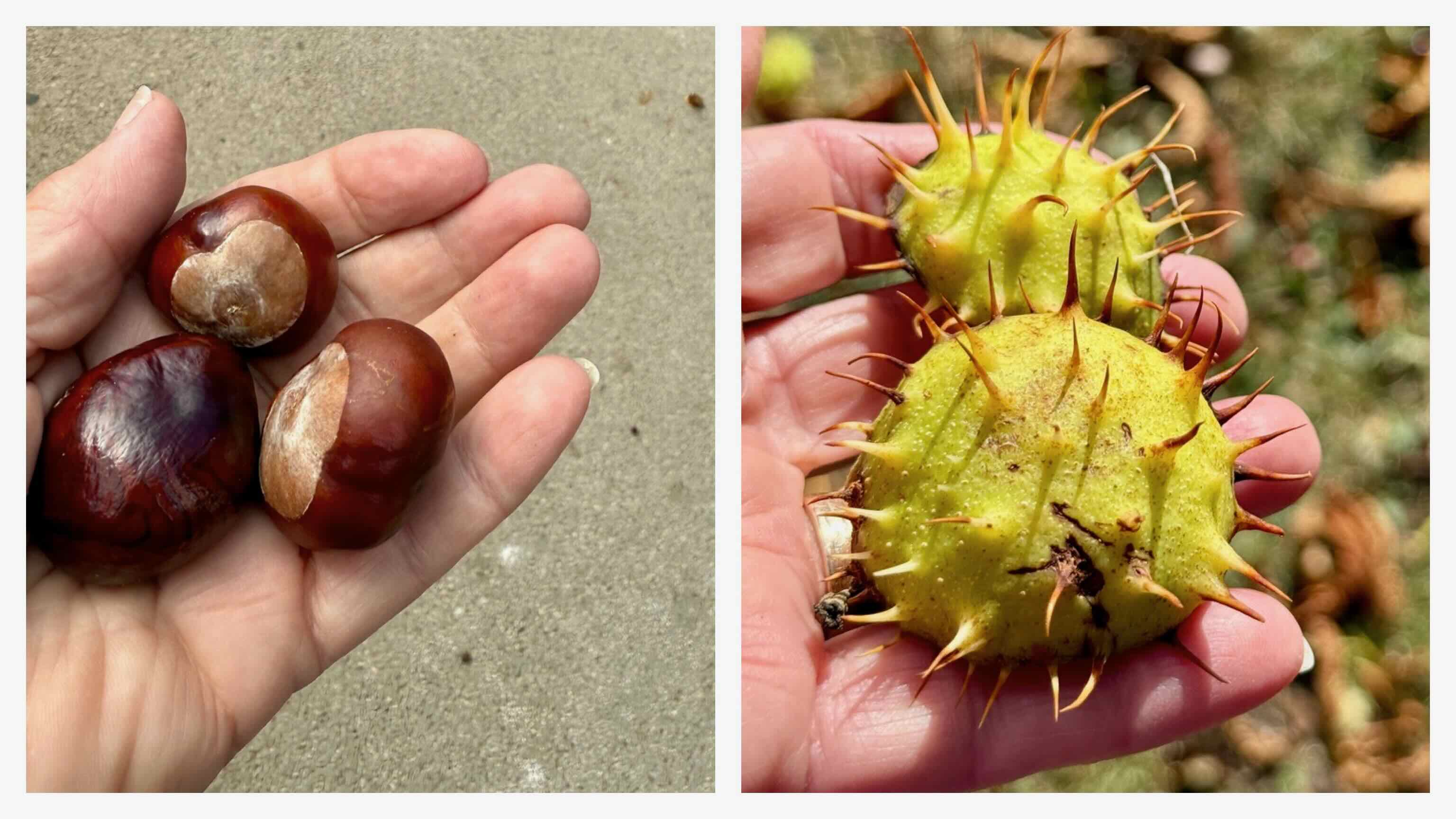
Jules Verne (1828-1905) was a French novelist, poet and playwright. Jules Verne is the second most translated author in the world, ranking below Agatha Christie and above William Shakespeare. His novel Around the World in 80 Days is printed in 18 languages.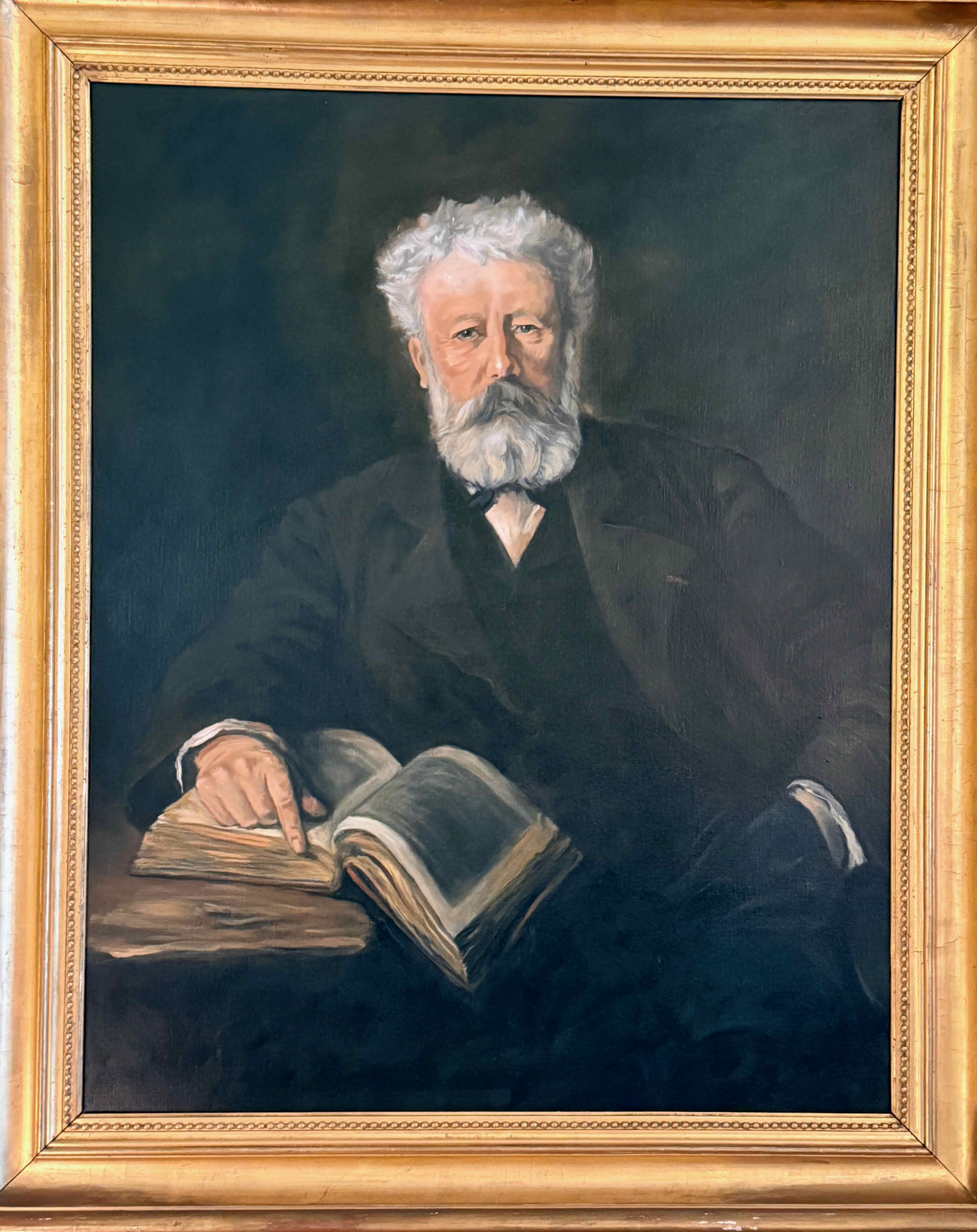
The winter garden was the original entrance to the Jules Verne house. Tropical garden plants were moved indoors here to spend the winter.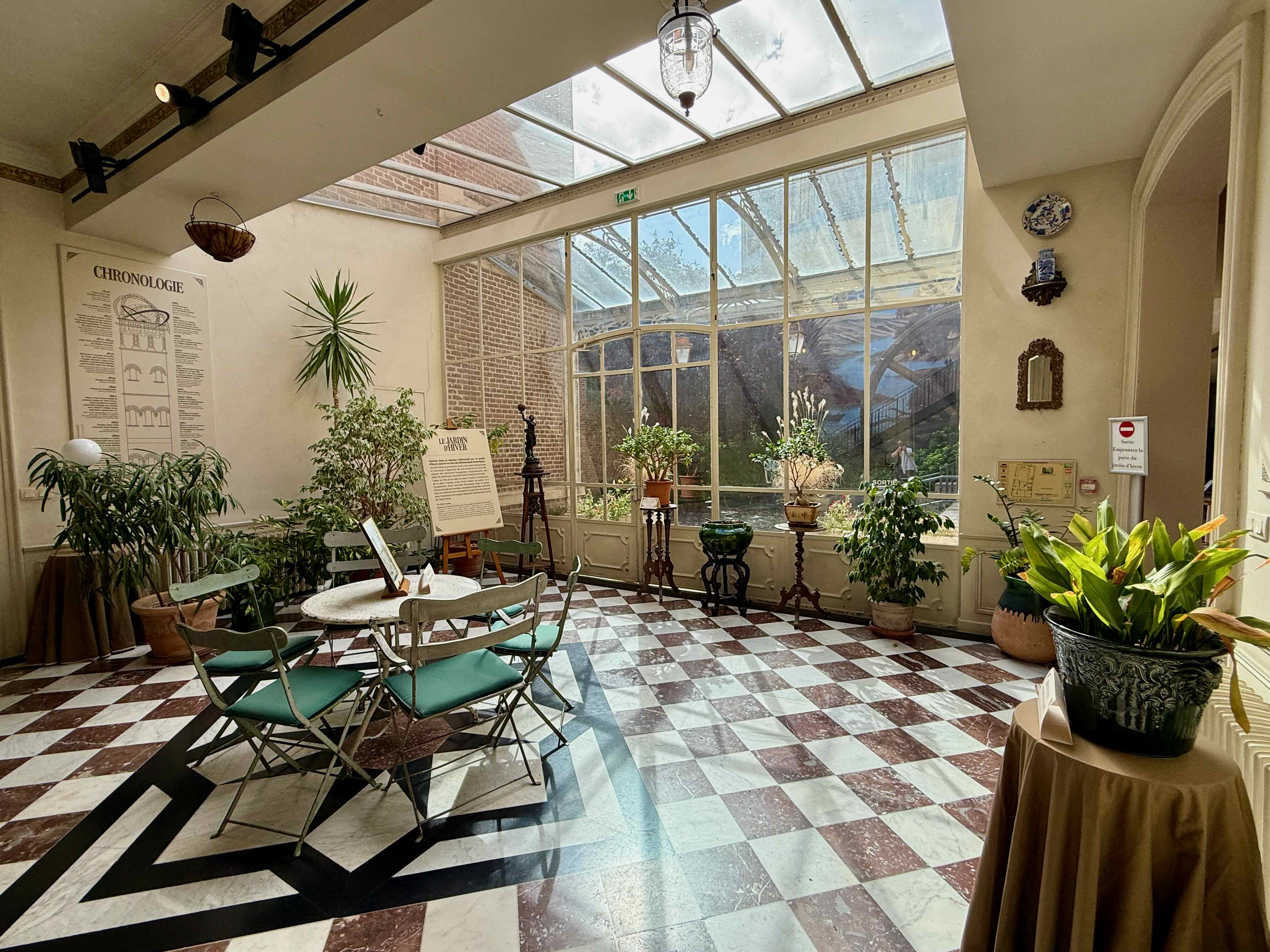
The dining room and salon on the main floor.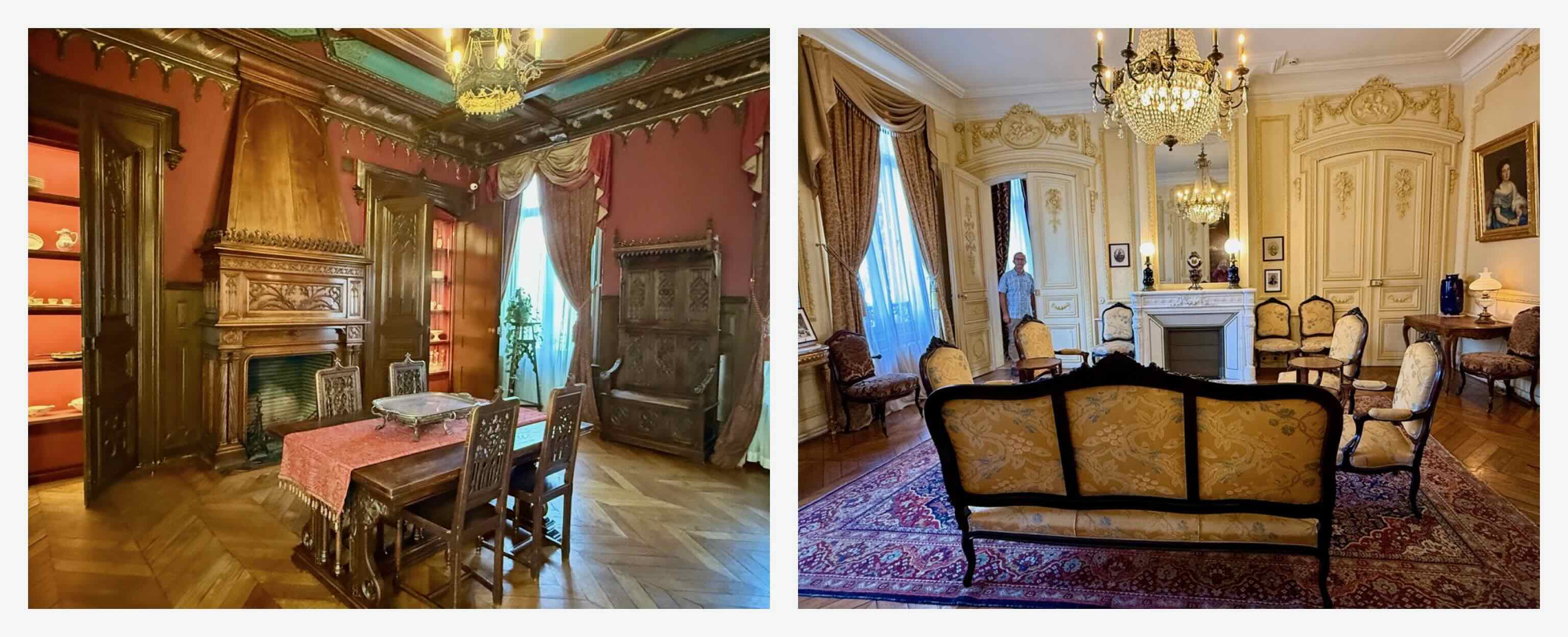
One of the second floor rooms was a reconstruction of his first boat. Jules Verne loved to sail and his first boat was a 9 metre long. His second boat was 20 meters in length and the third was 30 meters! 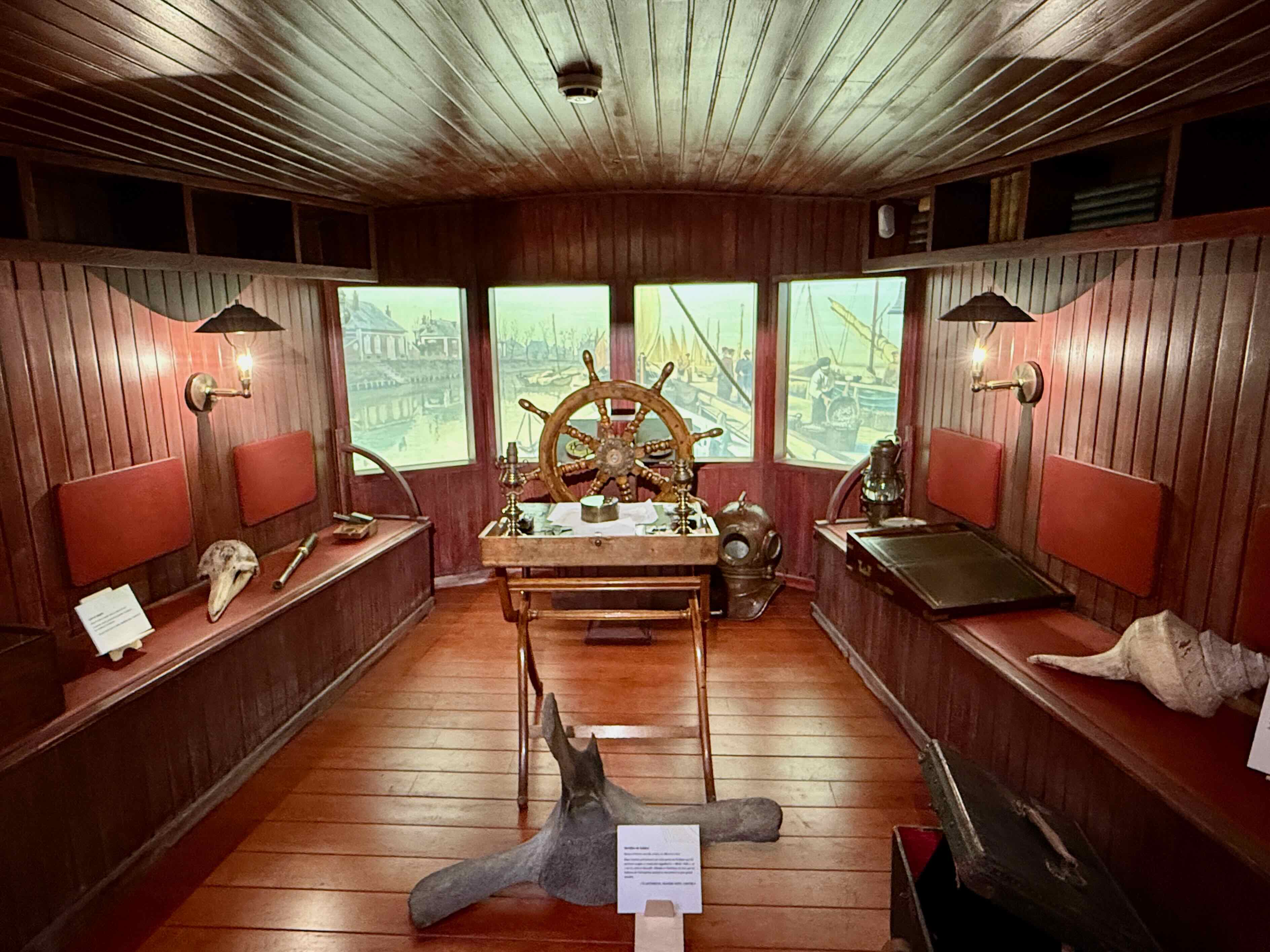
This second floor room was a library. The second photos shows the original library with over 12,000 books. When he read these books Jules Verne wrote notes on index cards to use as reference information for his novels.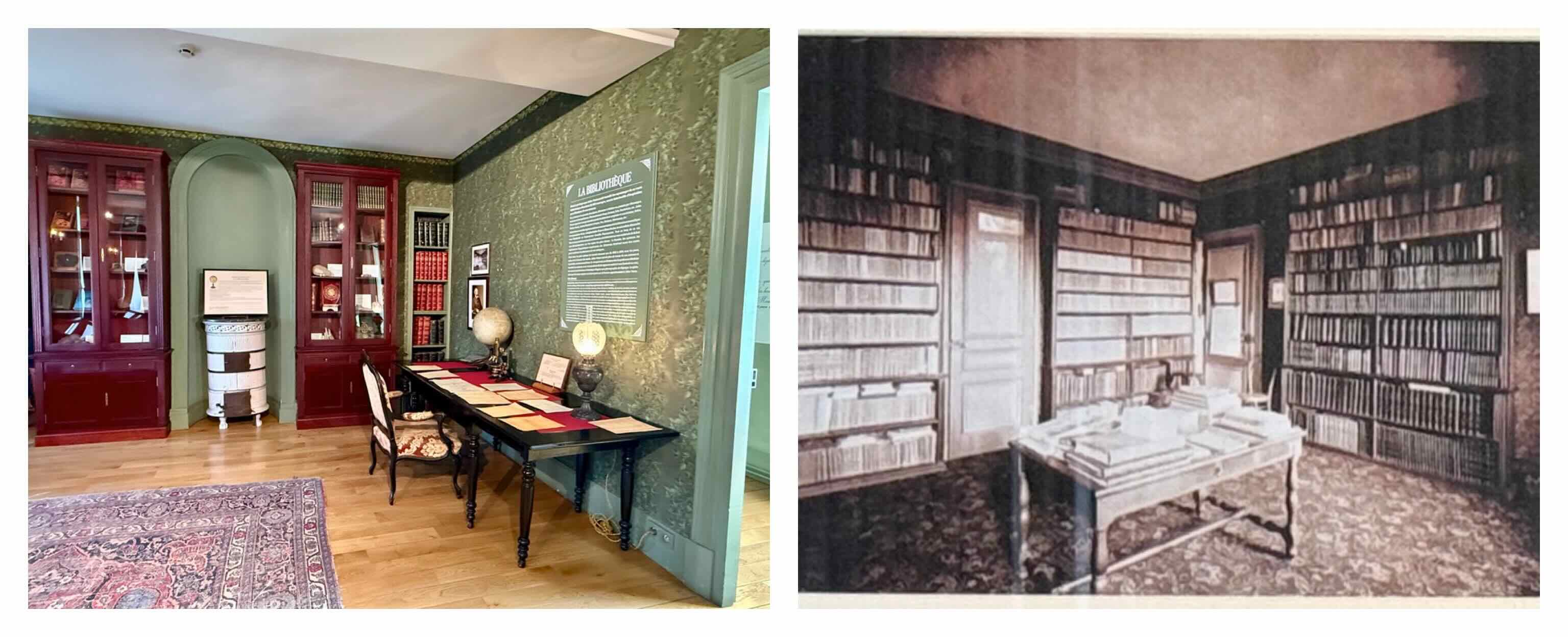
From 1882 to 1900 Jules Verne wrote every day from 5:00 am until 11:00 am in this little room.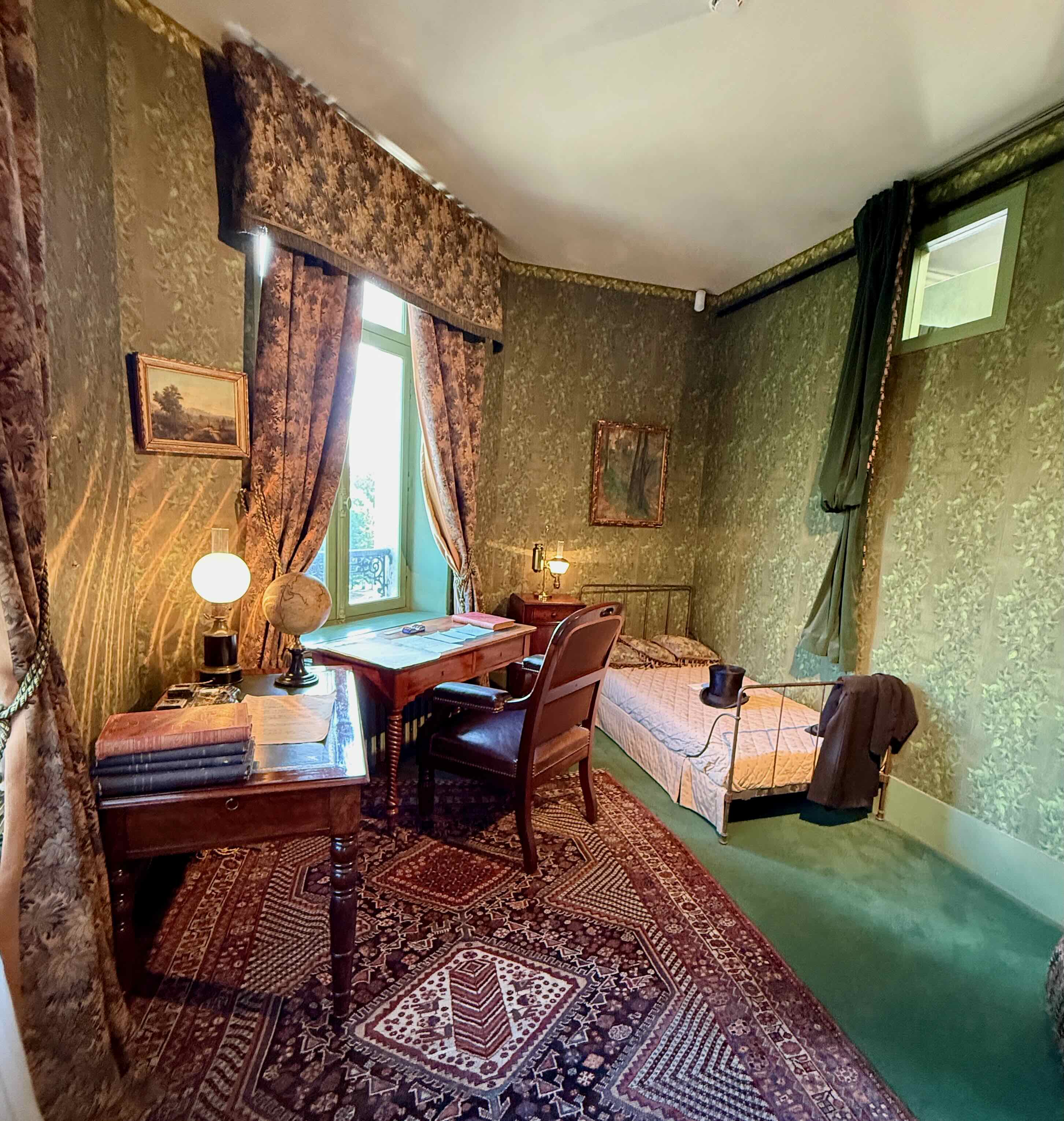
Climbing the tower which was added to the house by Jules Verne. It allows access to all three floors of the house.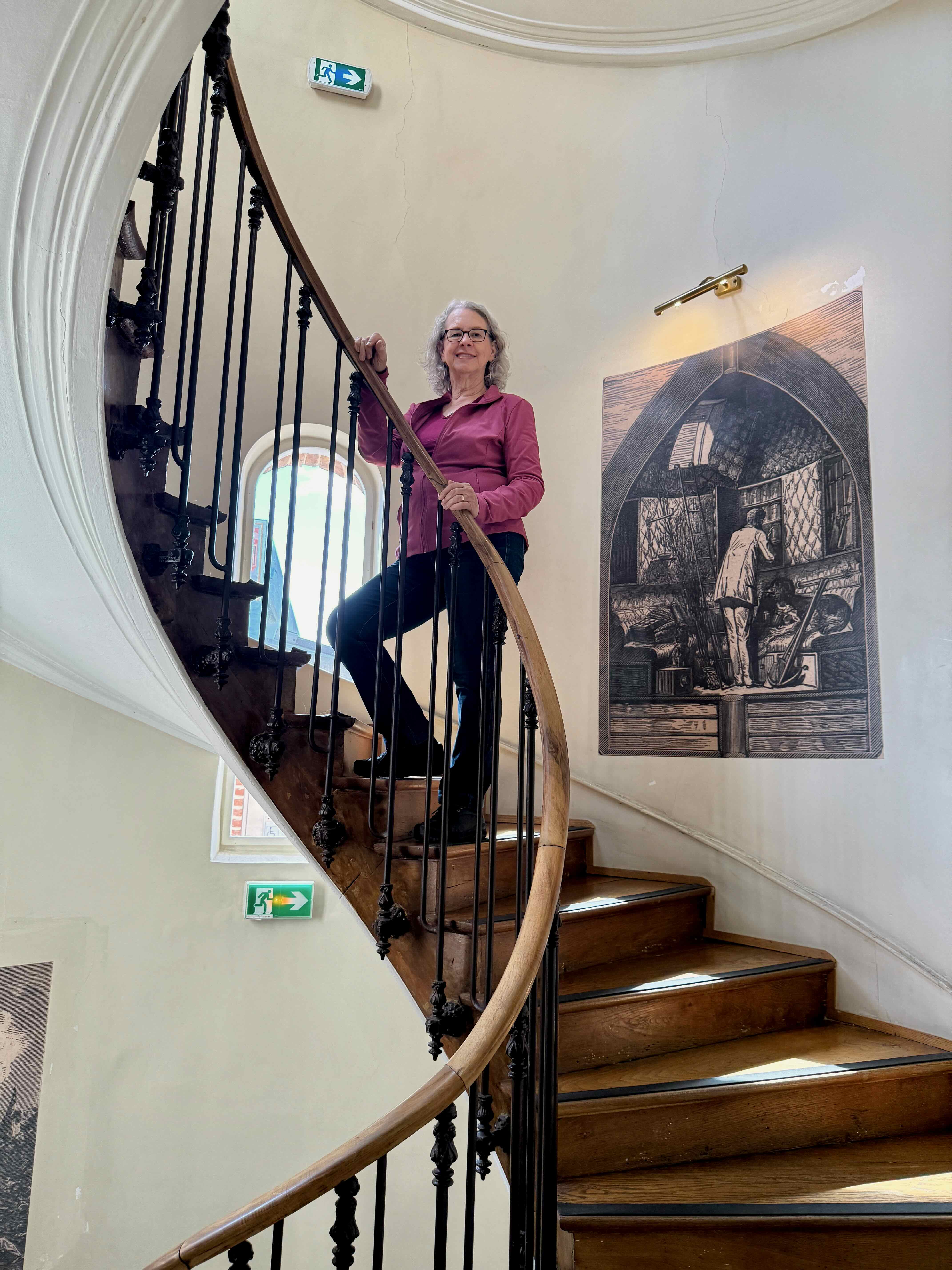
The third floor attic has a collection of original movie posters…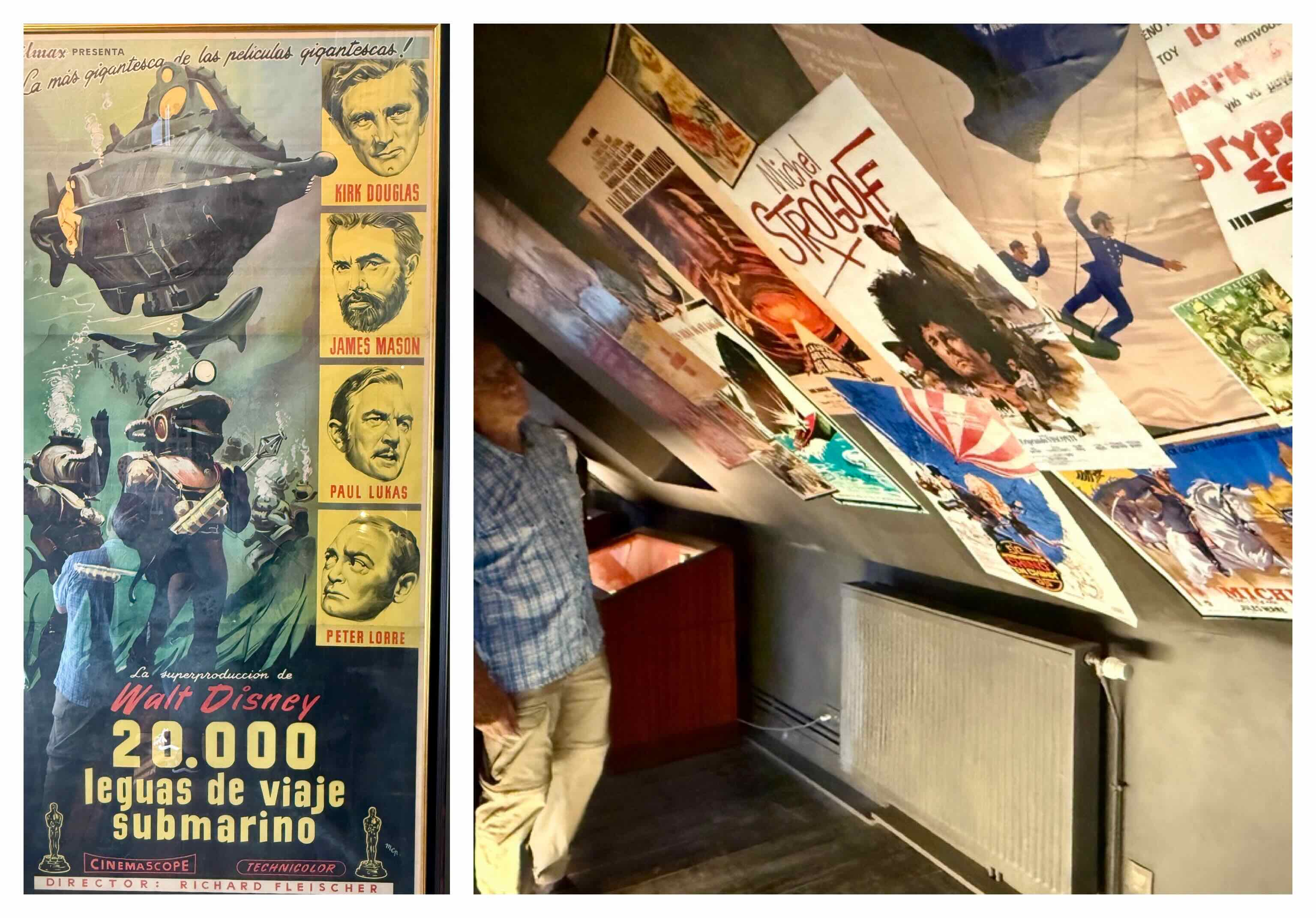
…and other memorabilia. I look like I am one of the exhibits!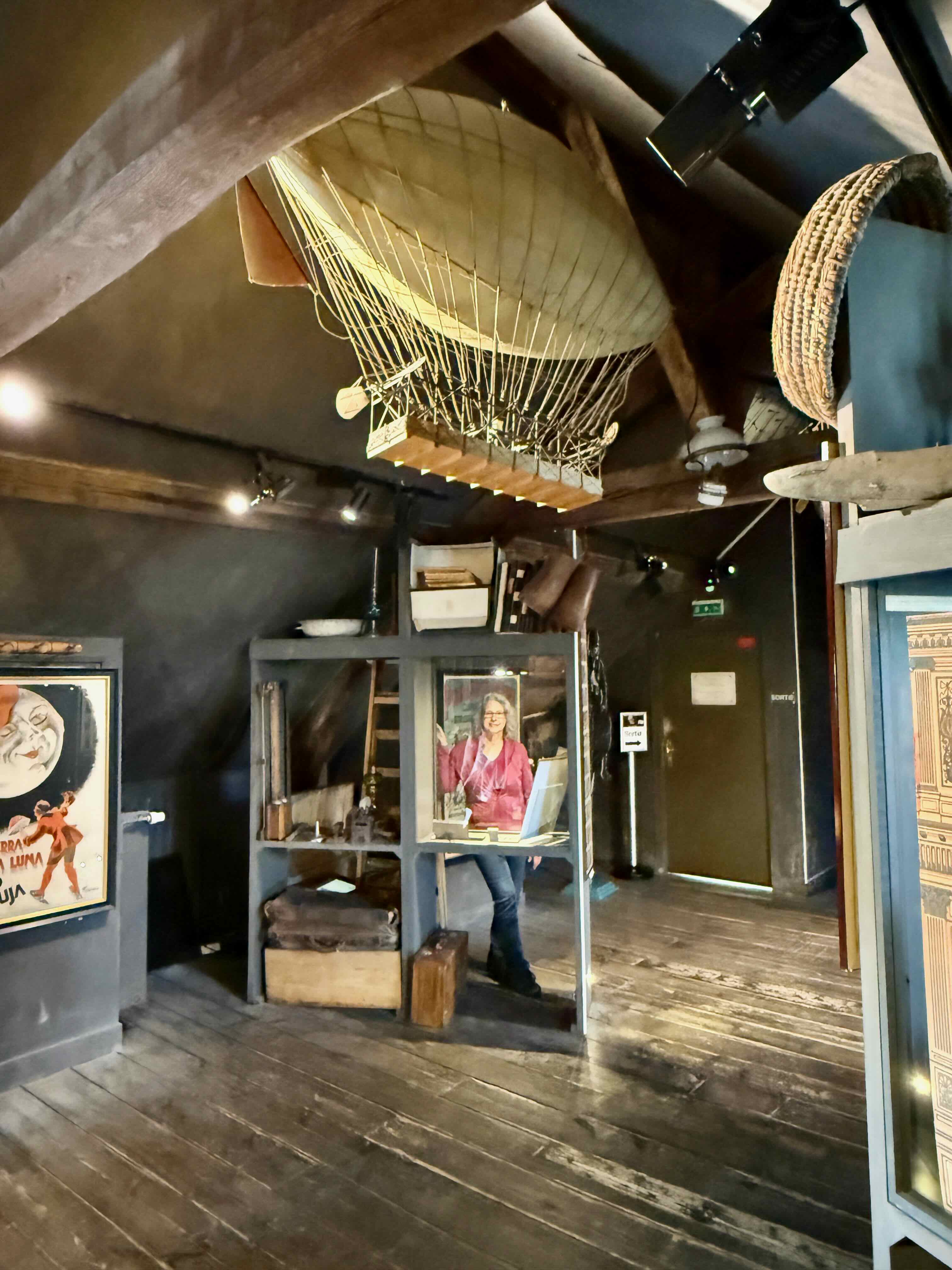
Bob and a fictional flying machine from one of Verne’s novels. 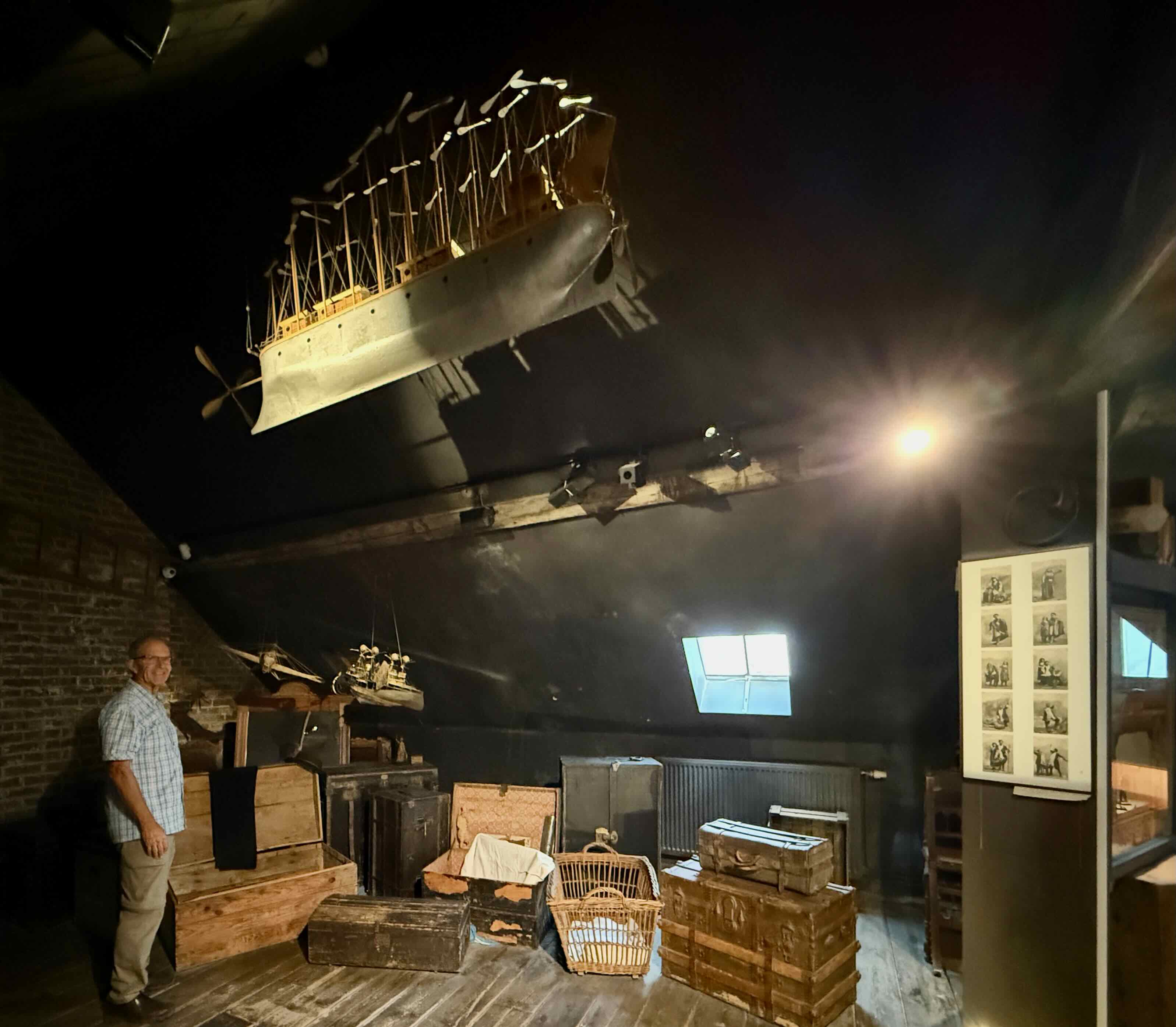 A view from the front of the house showing the winter garden.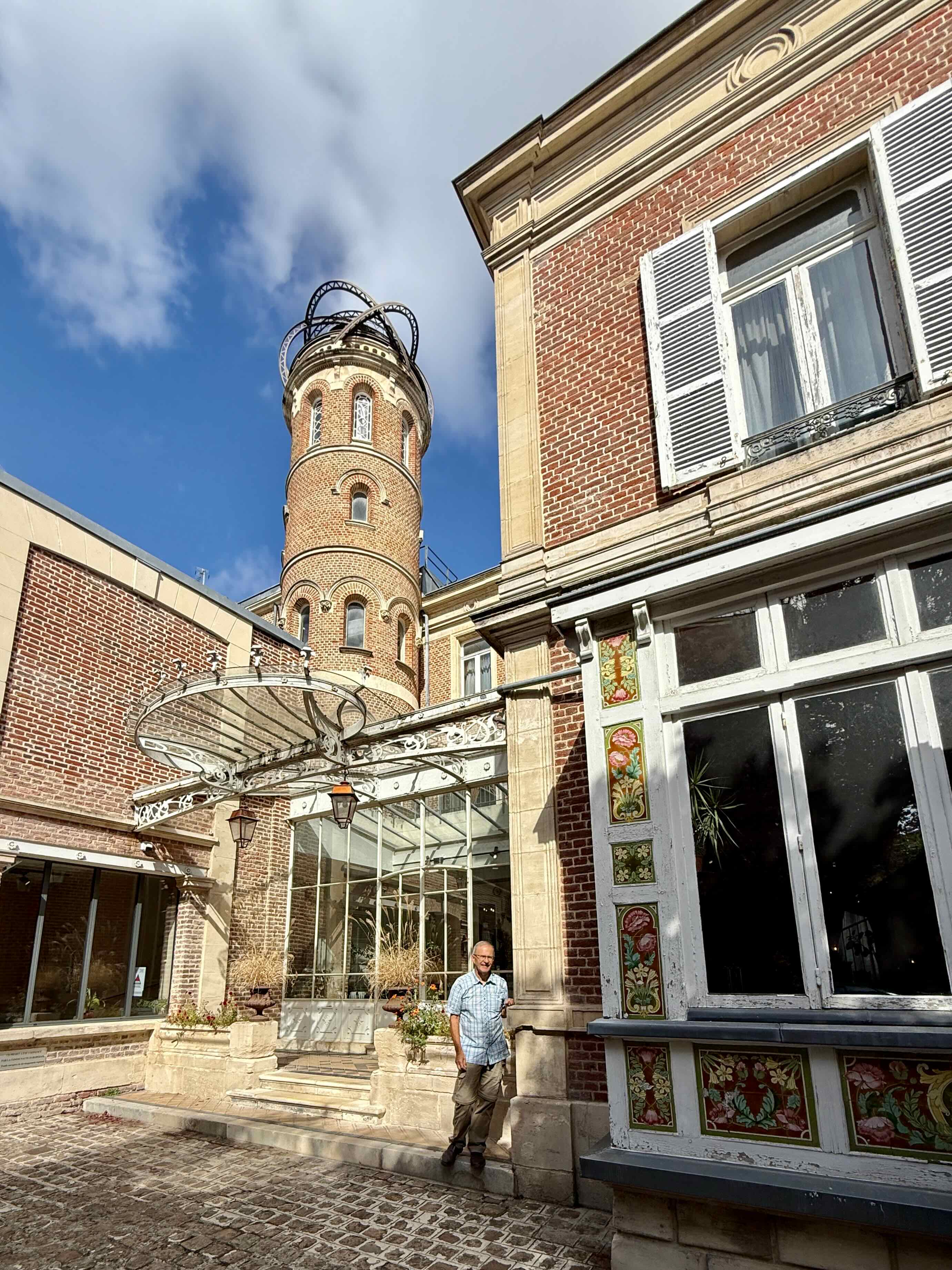
it is a short walk to the Amiens cathedral. Notre-Dame d’Amiens is the largest medieval cathedral in the world. It was built in 1269 and is twice the size of Notre Dame in Paris.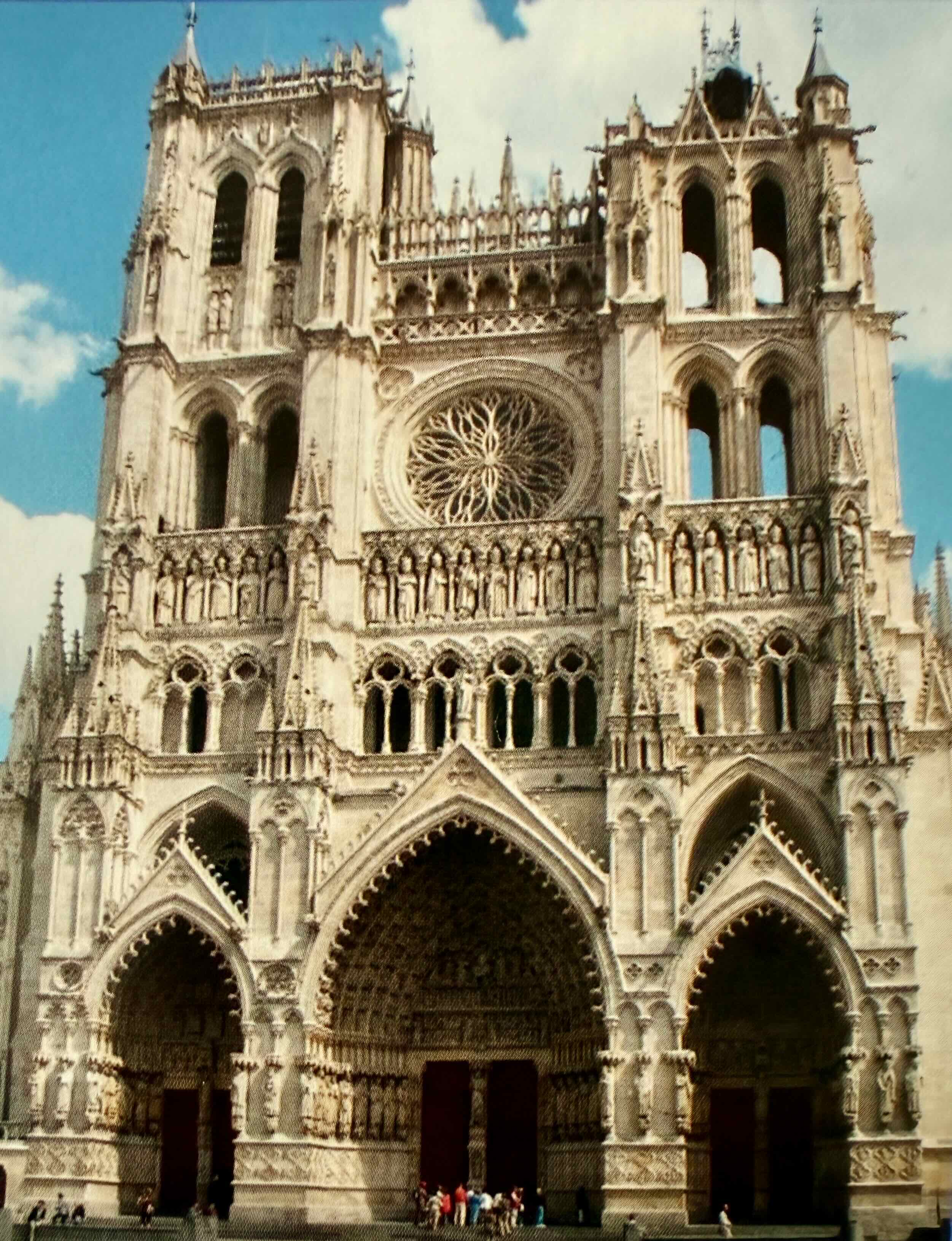
The sculpted decorations in the portals have survived in a remarkable state of preservation…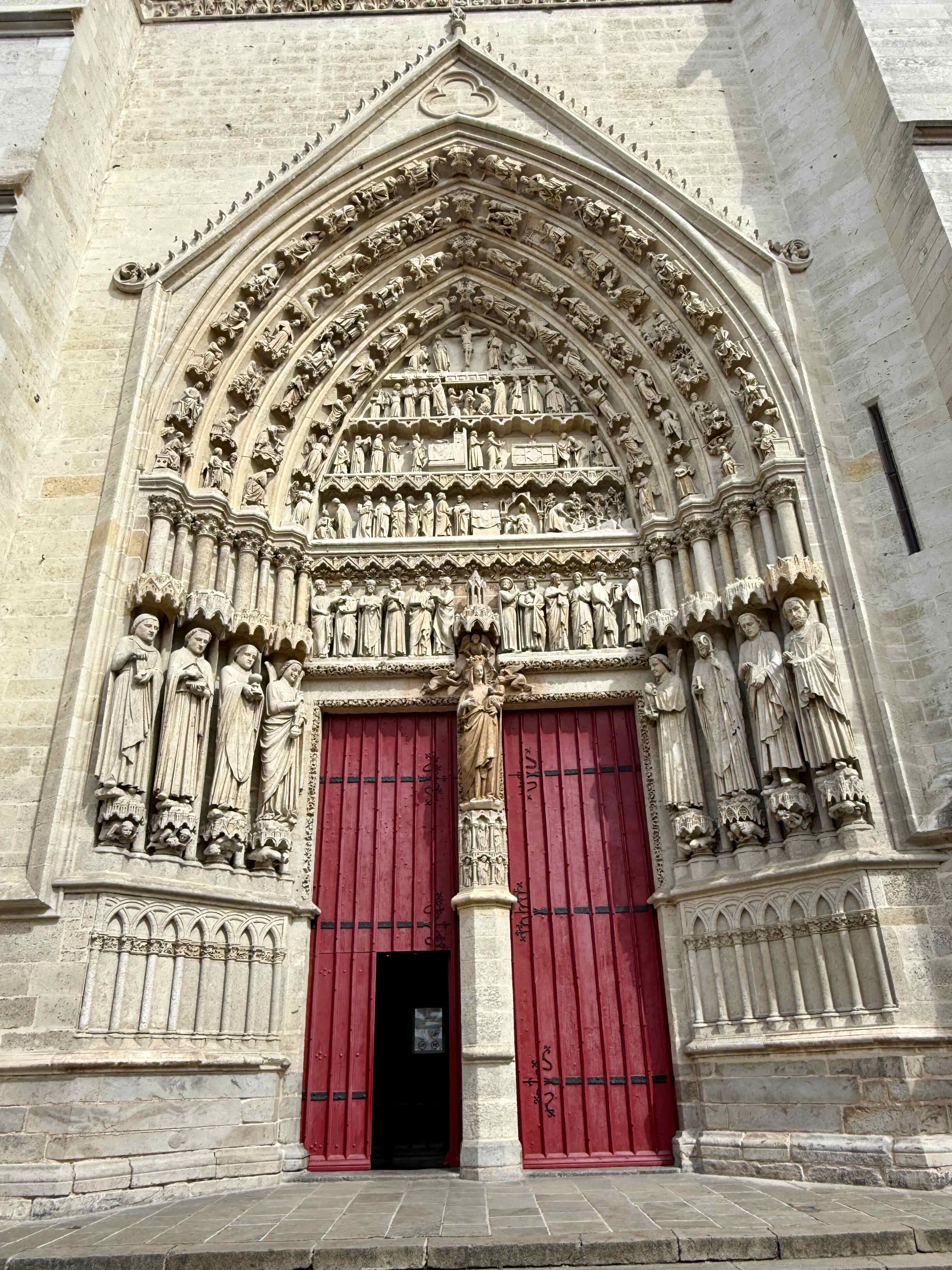
…and the 16th century wood carvings of the choir stalls are unique in the world. 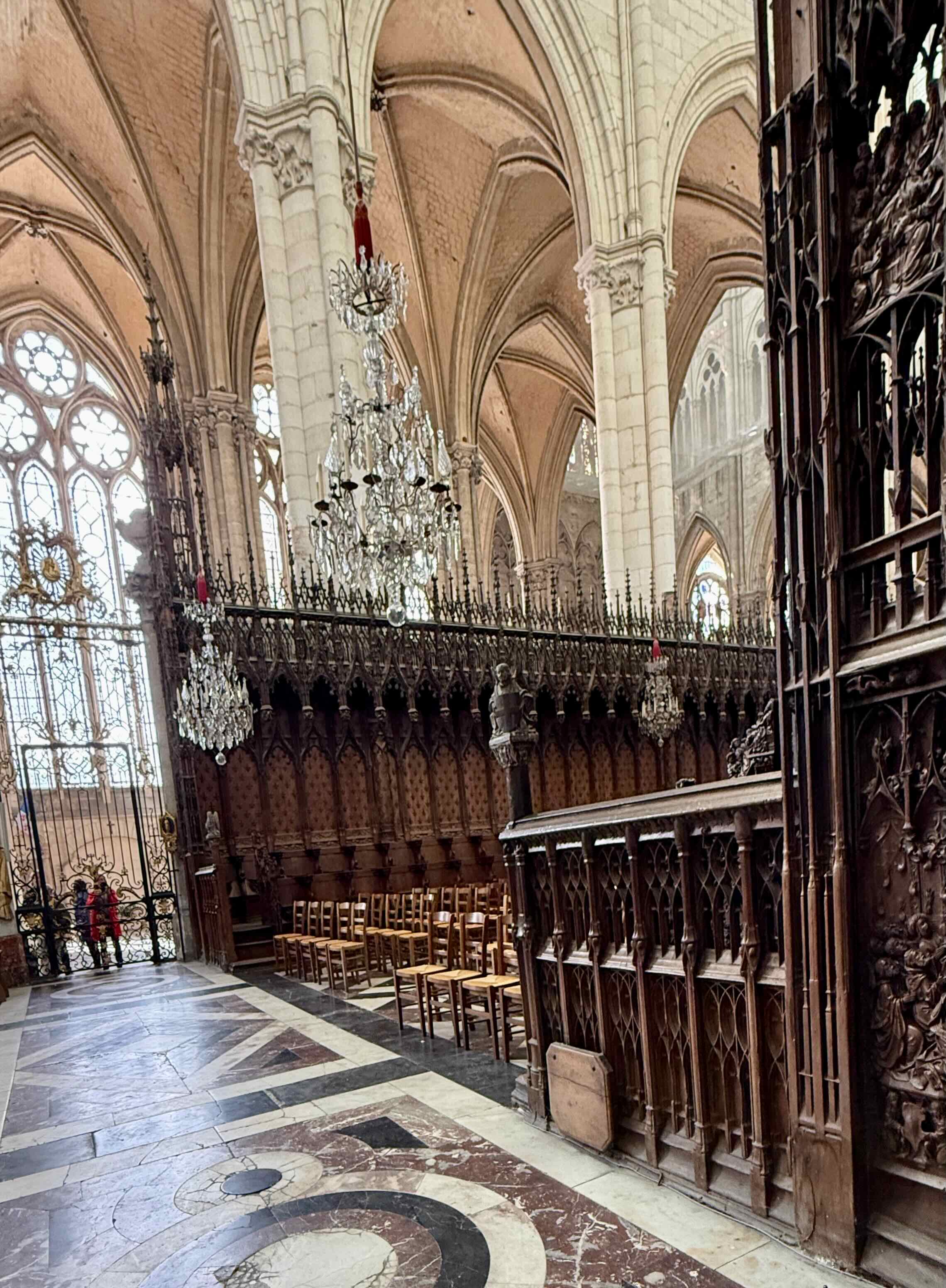
Sandbags were used to protect the exterior and interior of the church during WWI. The stained glass windows were removed and stored elsewhere. Unfortunately there was a fire and some of the windows were destroyed. A bomb did fall directly on the church but it did not detonate. Whether by faulty fuse, divine intervention or sheer luck, the cathedral stood unharmed. Info and photo~ church heritage.eu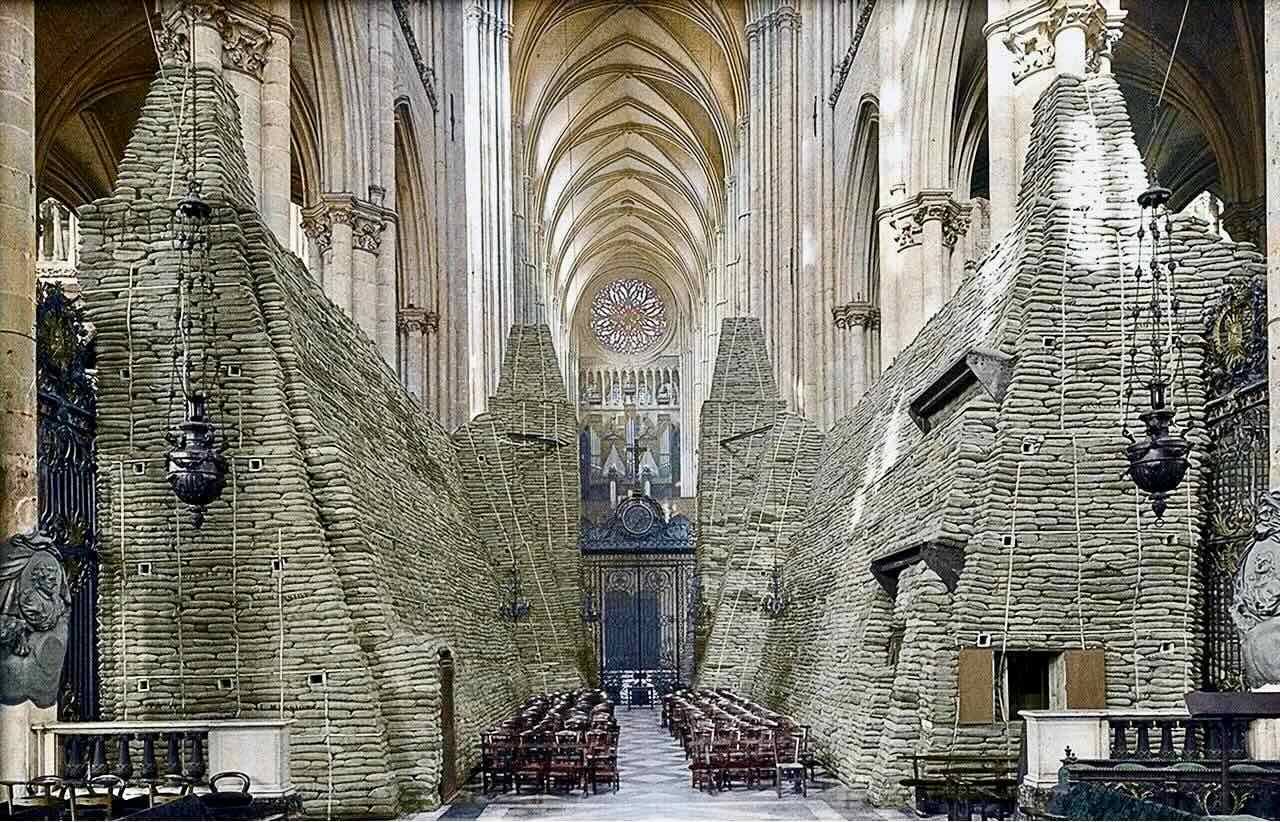
This is a massive cathedral…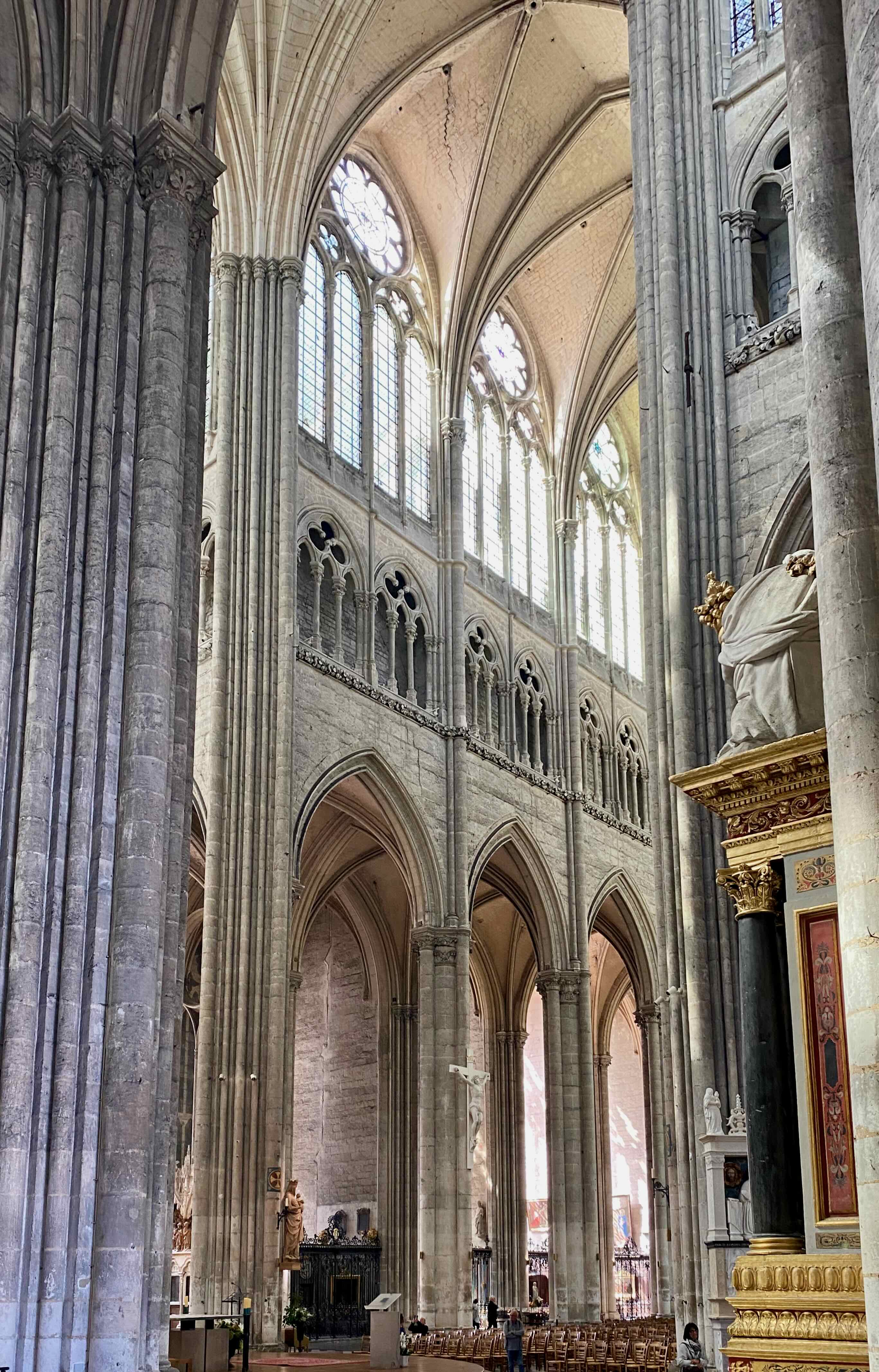
…with stunning stained glass windows.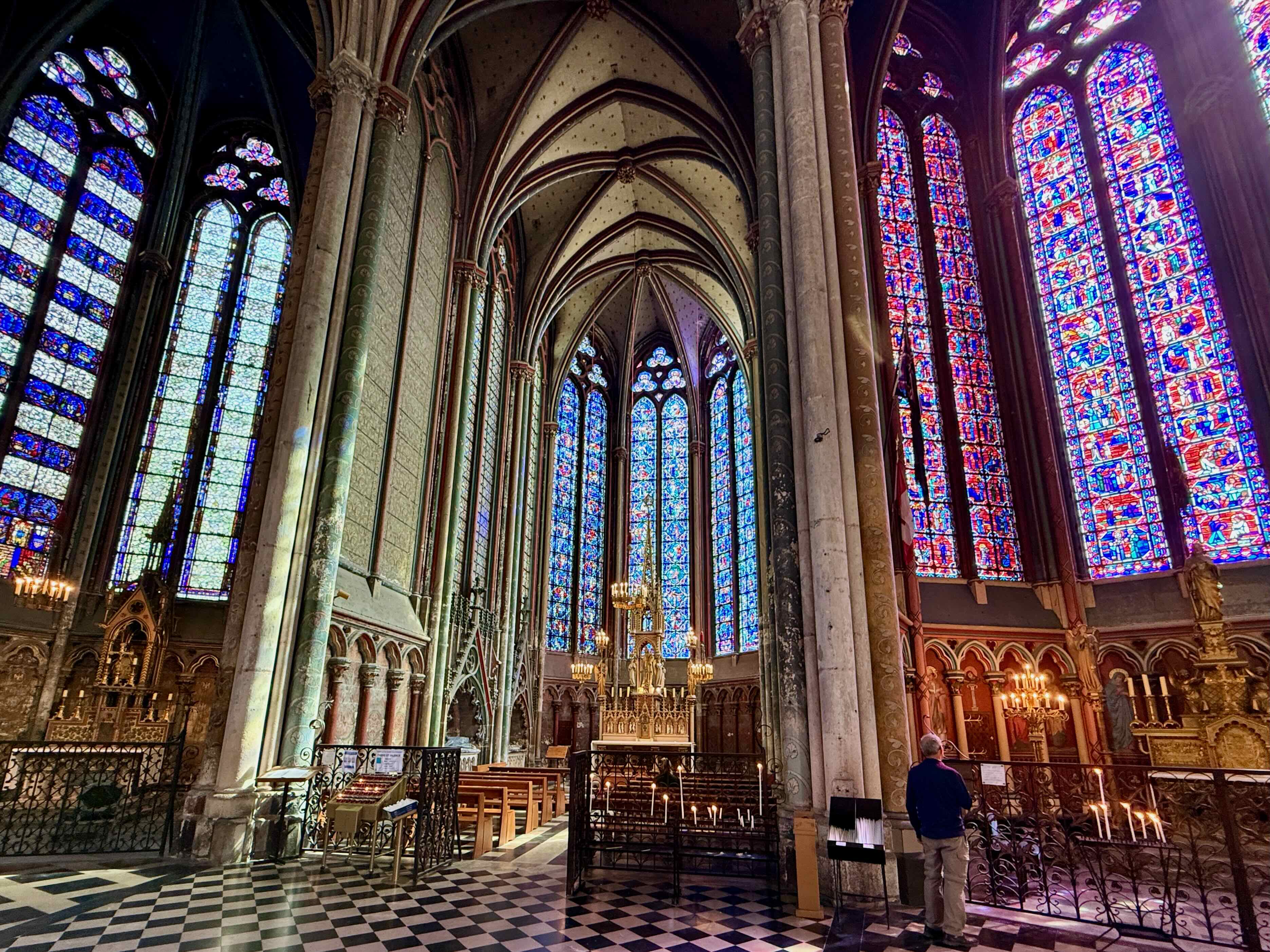
Do you see the people? They give a sense of scale.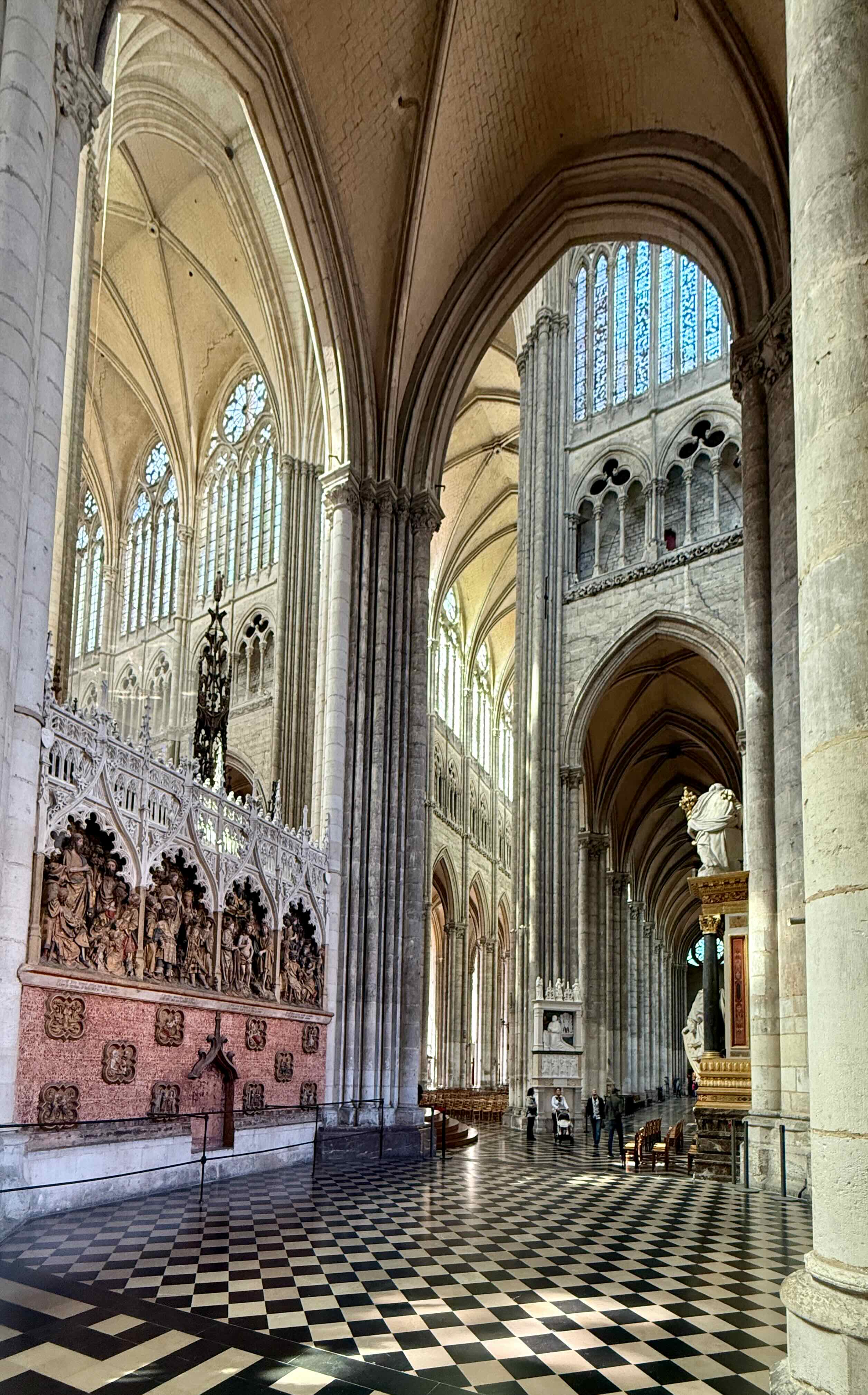
Looking towards the richly decorated altar…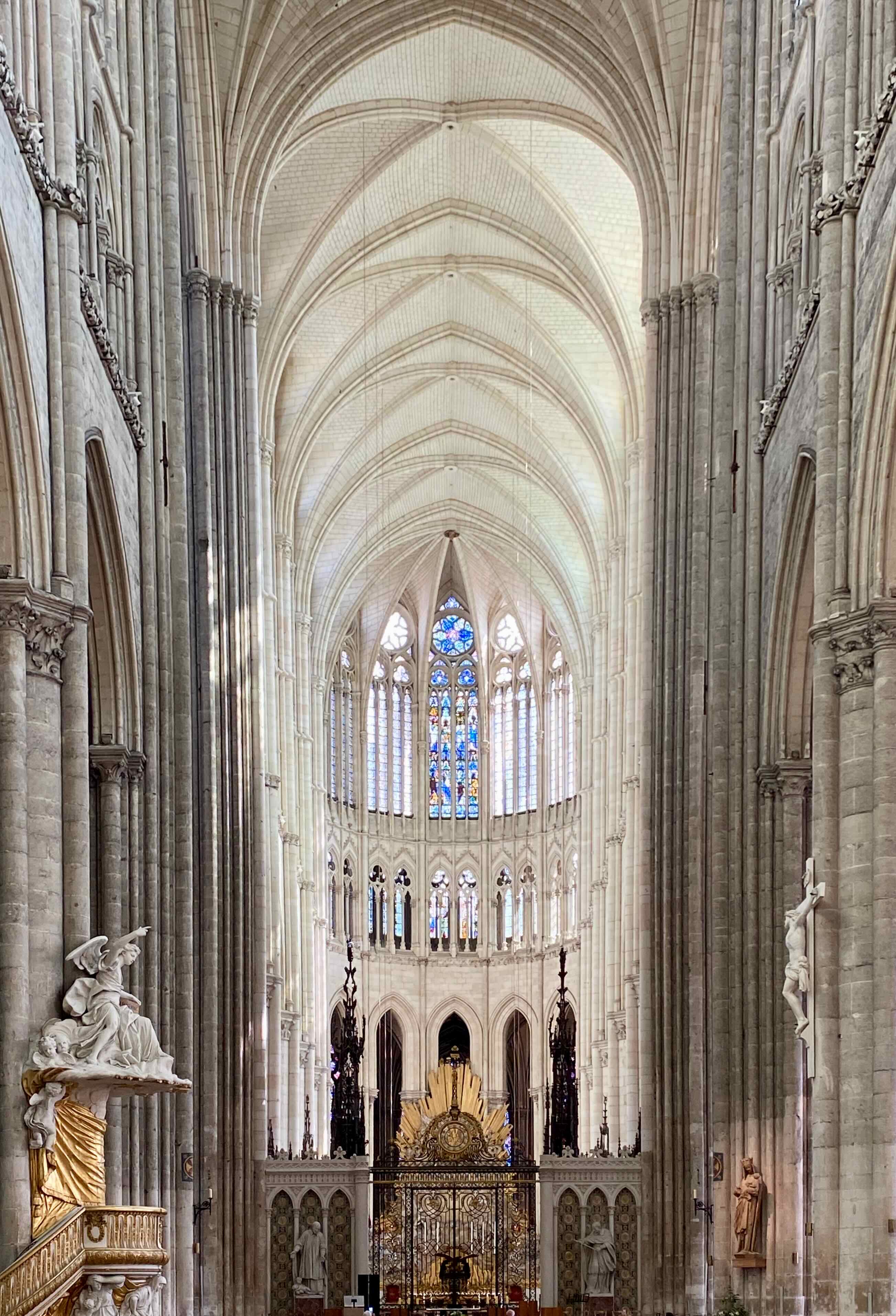
and in the opposite direction, the organ that was built in 1549…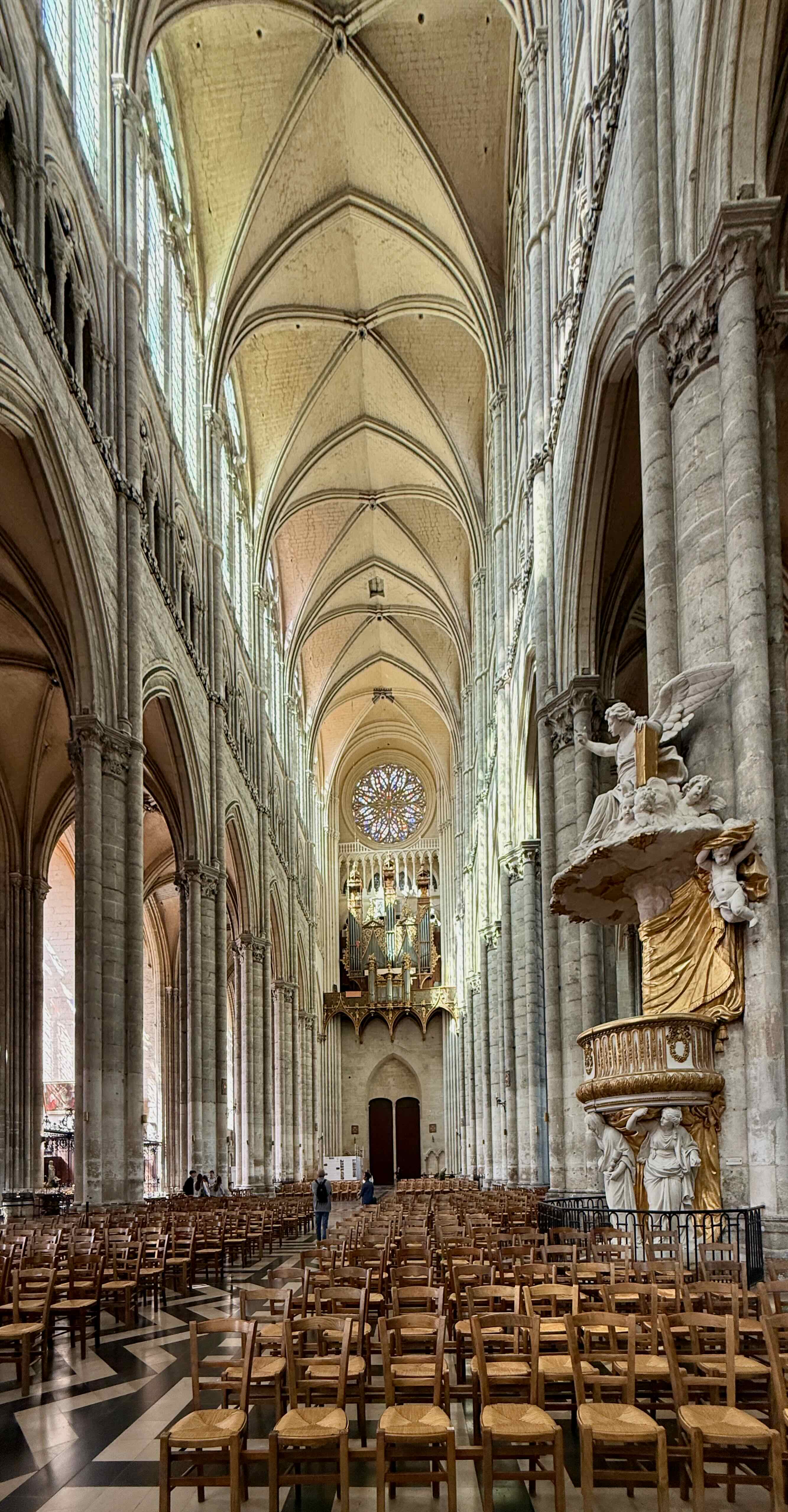
which has just been cleaned and restored.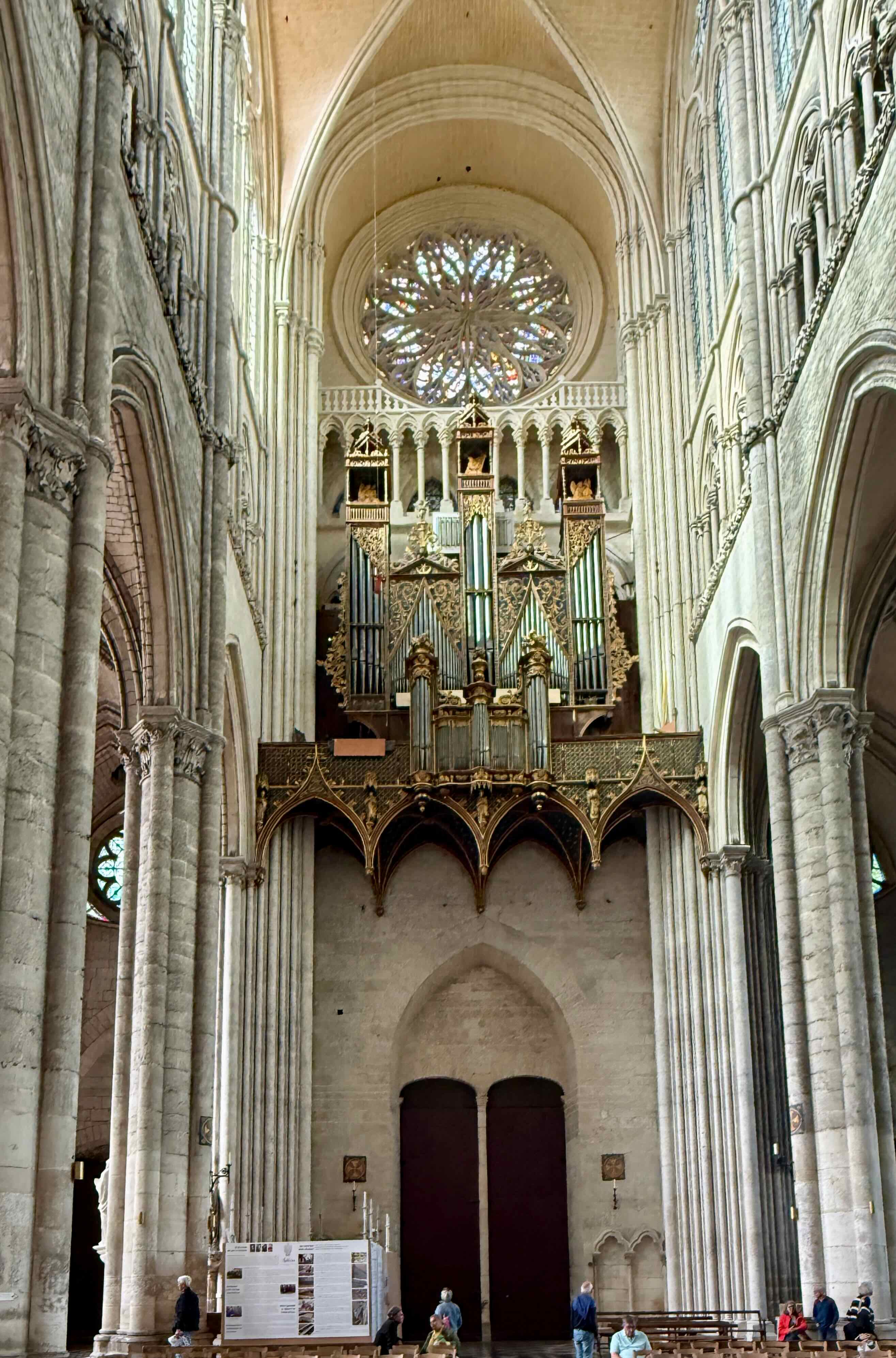
Love this statue of Joan of Arc.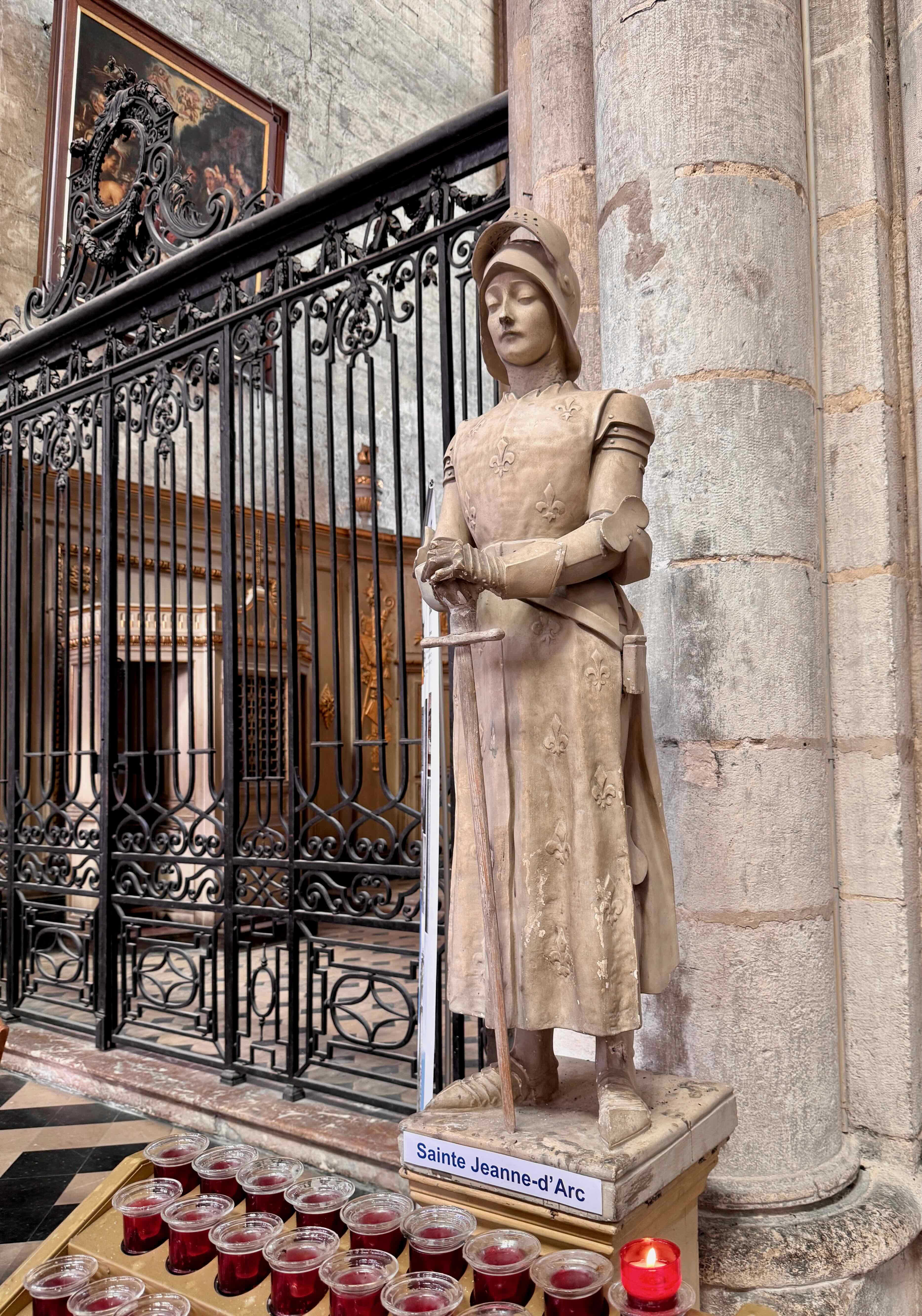
There is also a labyrinth from 1288.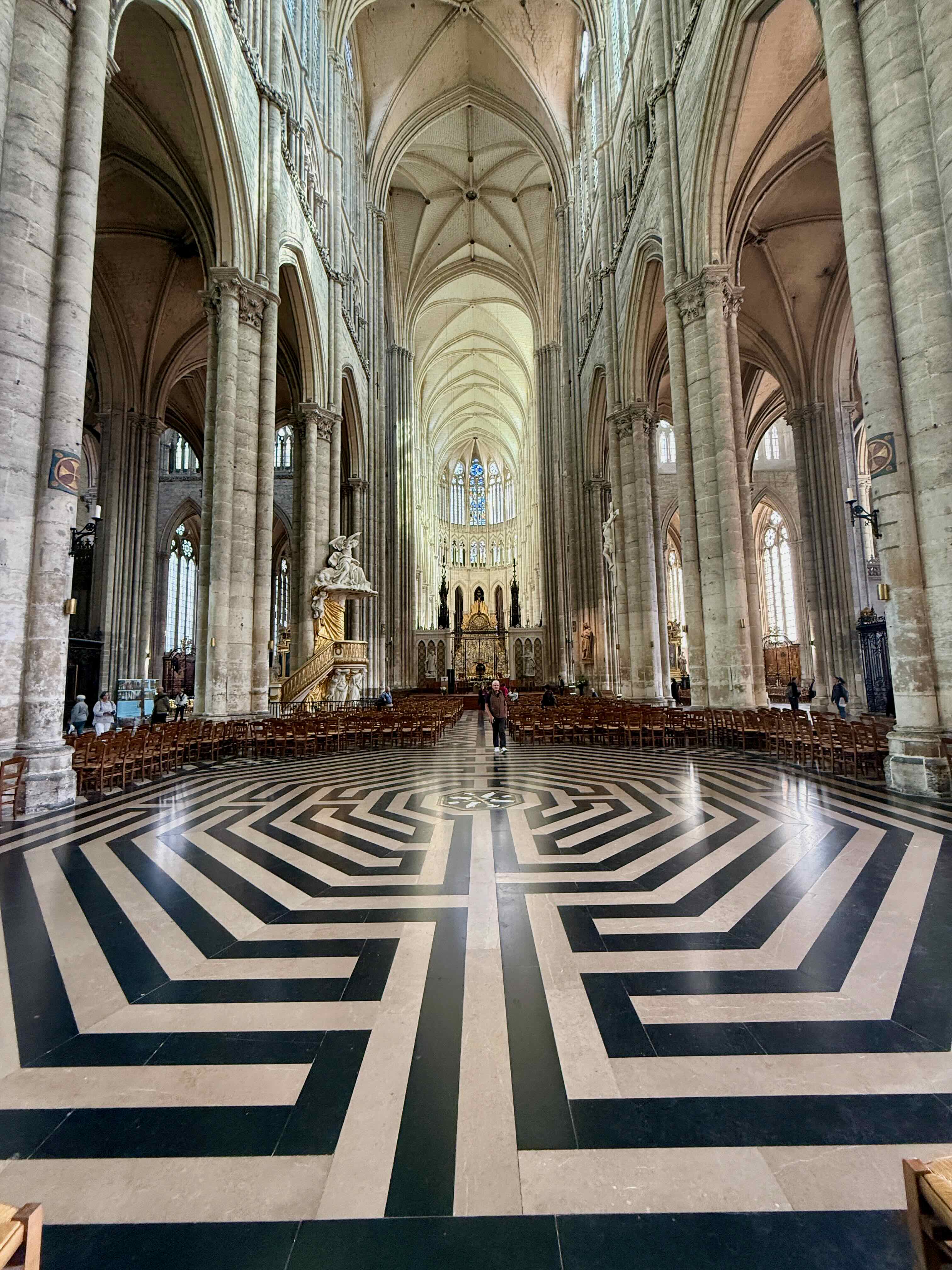 When we leave the cathedral, I look up and there are the gargoyles! I am very fond of gargoyles.
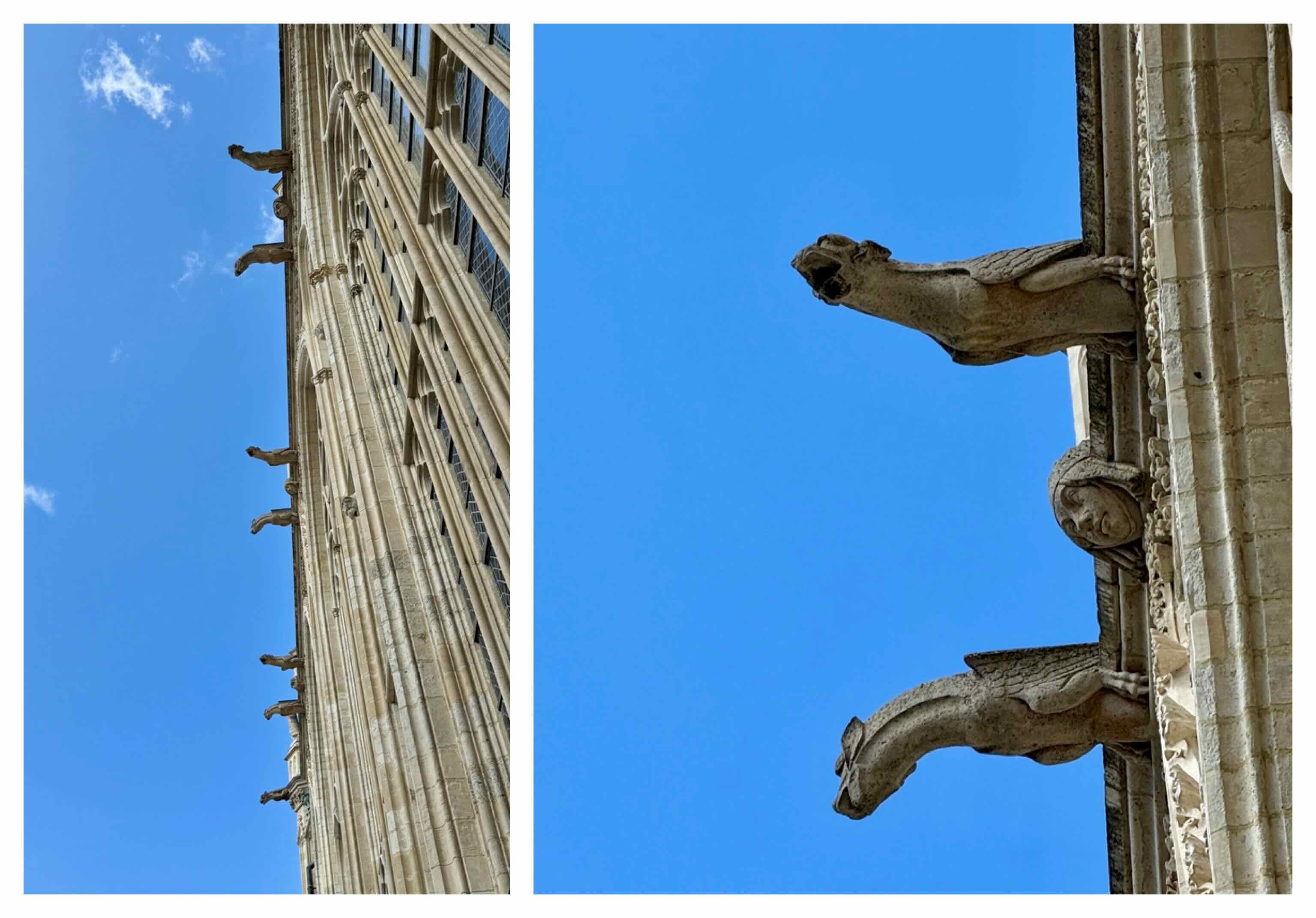 We have time to walk back to the car for tea and cookies and a little down time before we get ready for our boat ride at the Hortillonages.
Shaped by generations of market gardeners known as ‘hortillons’, this site is the only one of its kind in France. The Hortillonnages are made up of a multitude of small cultivated islets surrounded by water, accessible only by boat on a network of waterways
We spend a relaxing 45 minutes travelling these waterways. We see market gardens, private gardens, cottages and some islands that look very wild and unkept.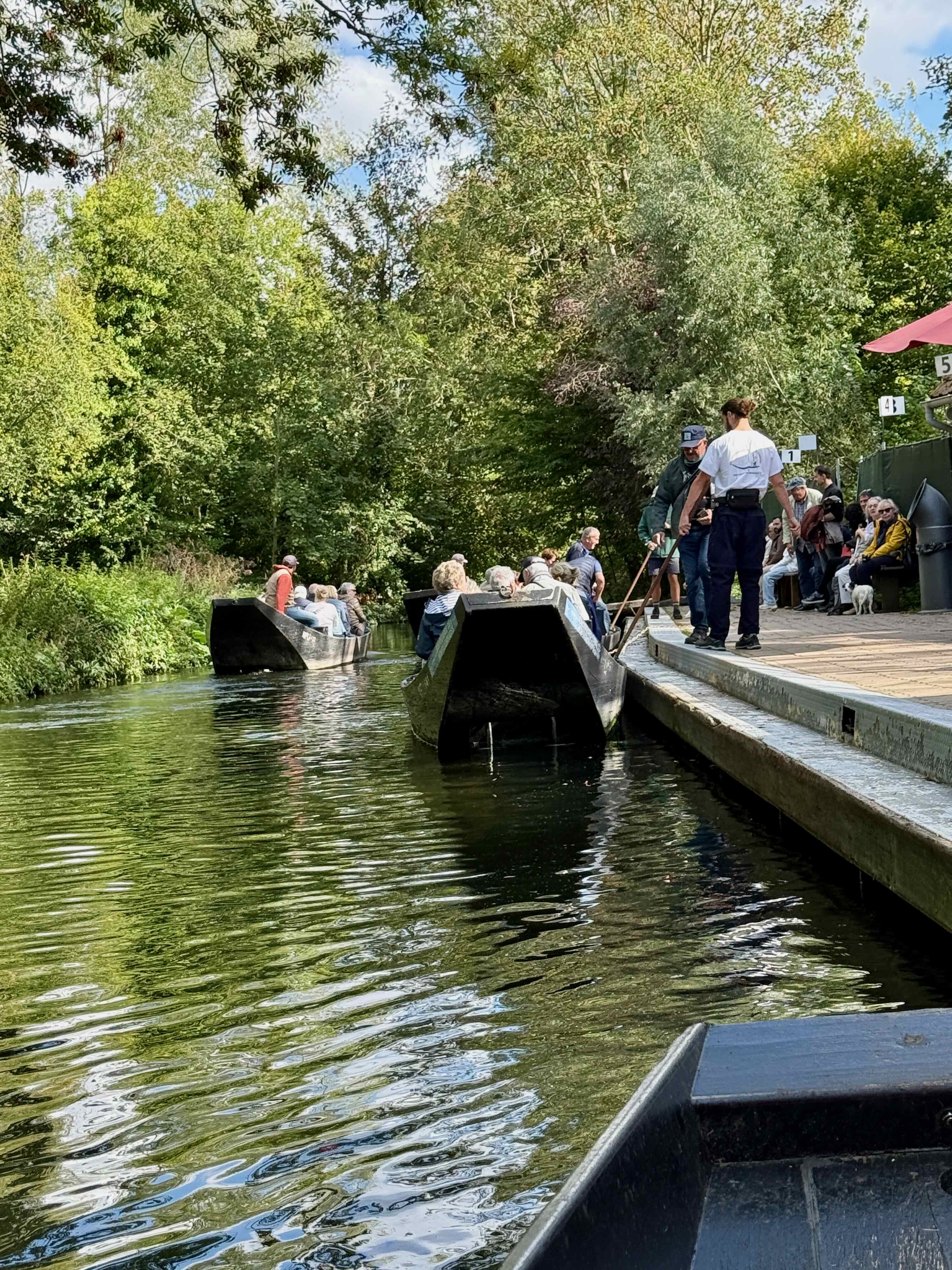
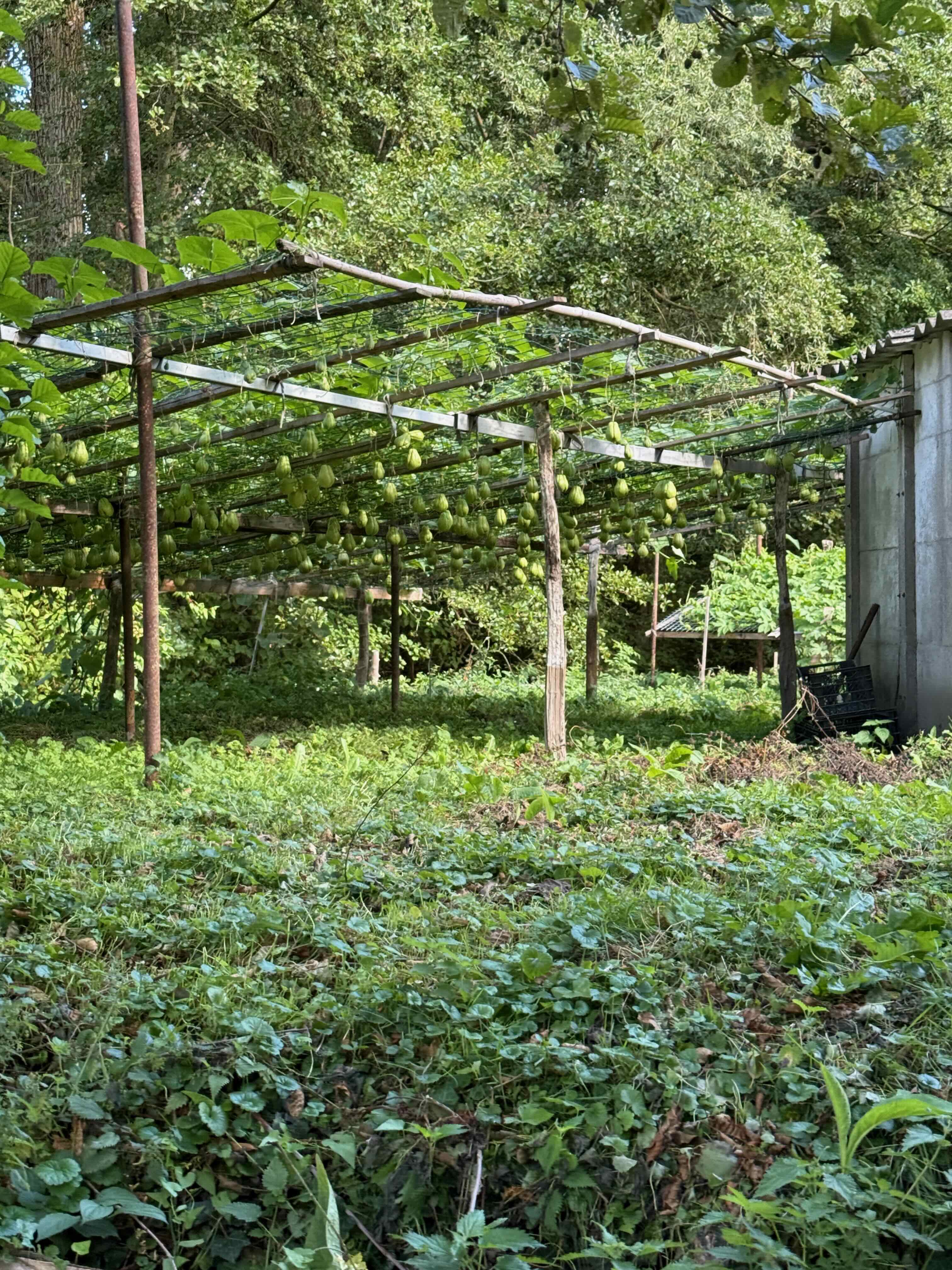
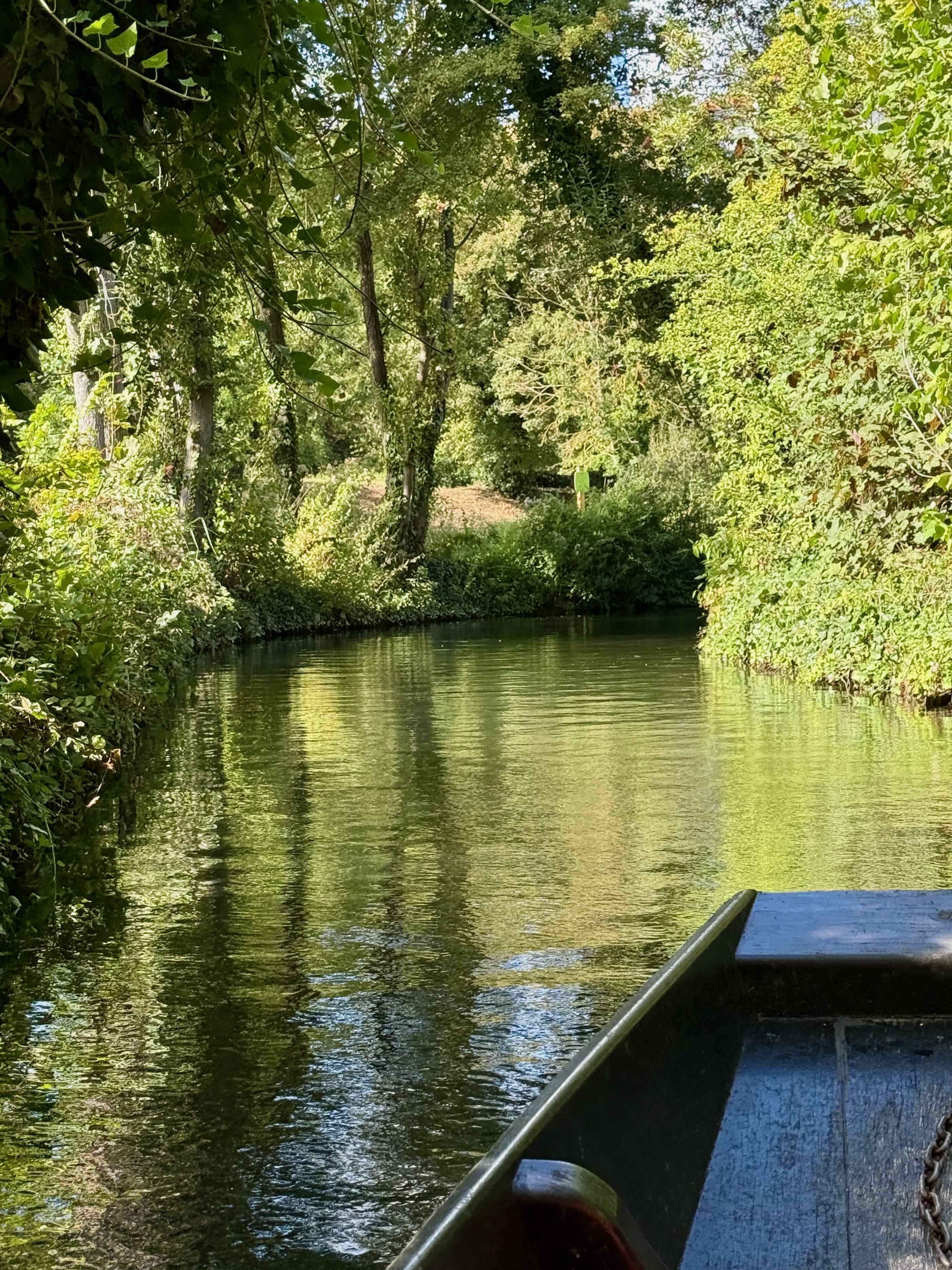
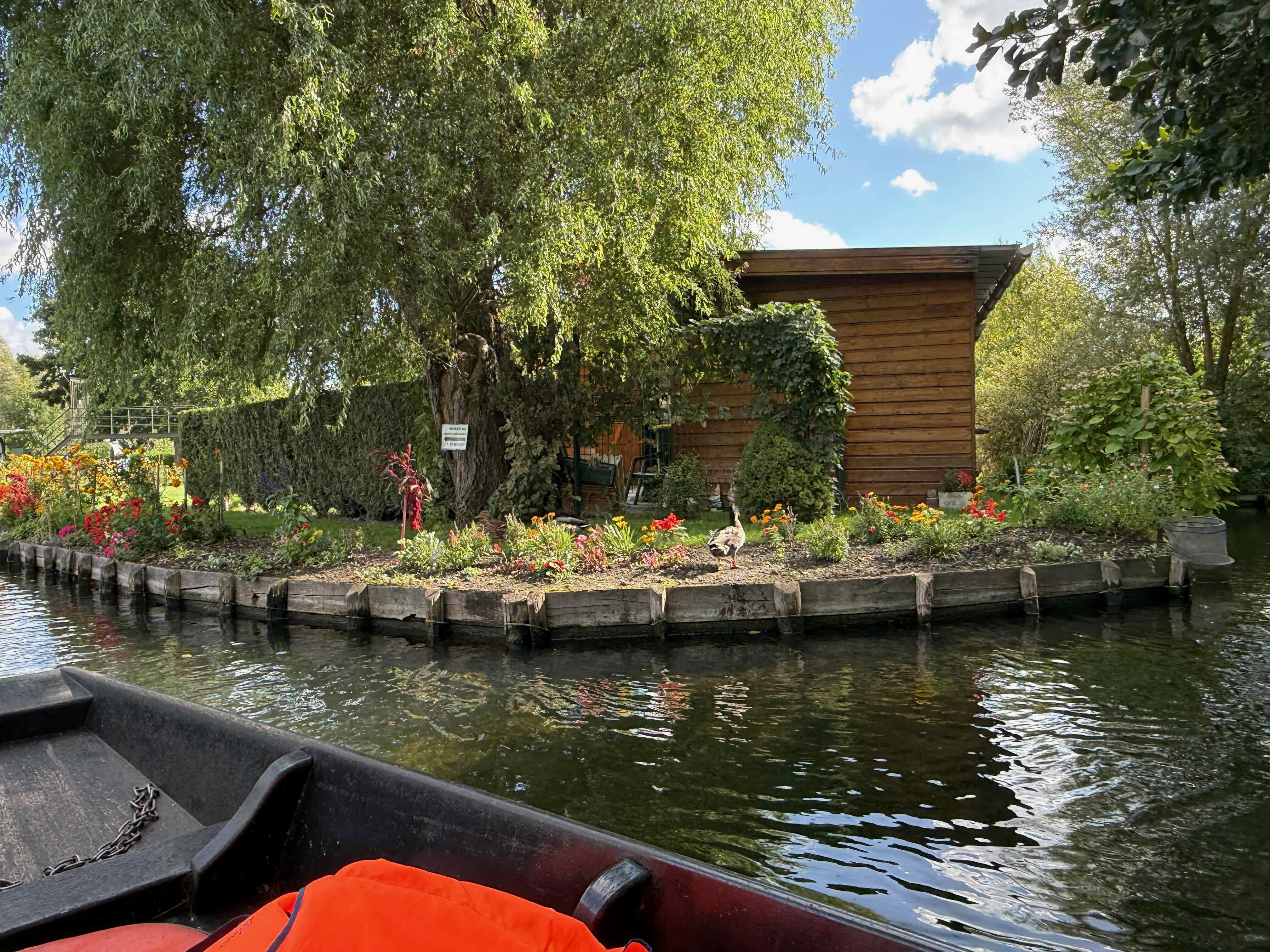
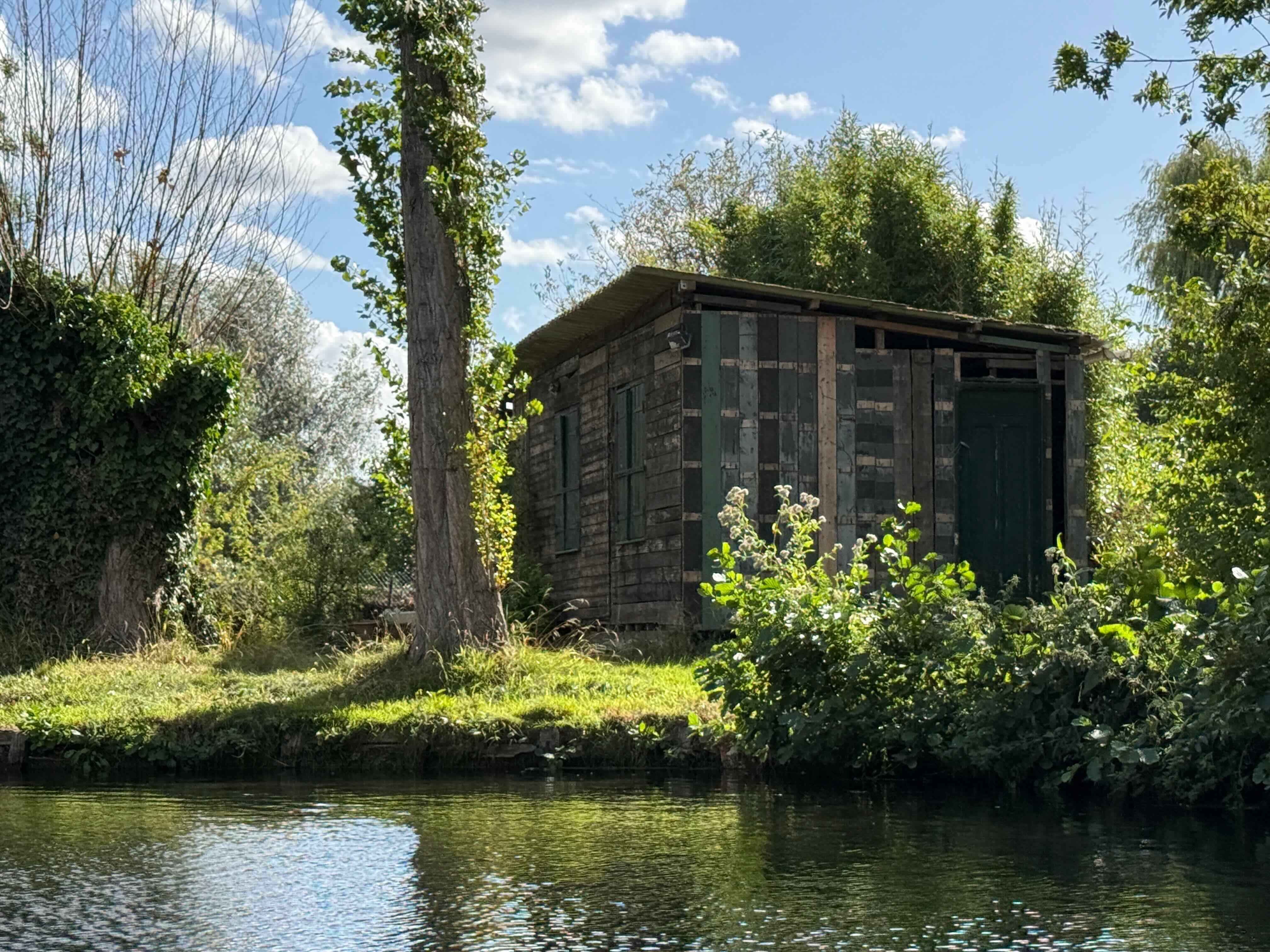
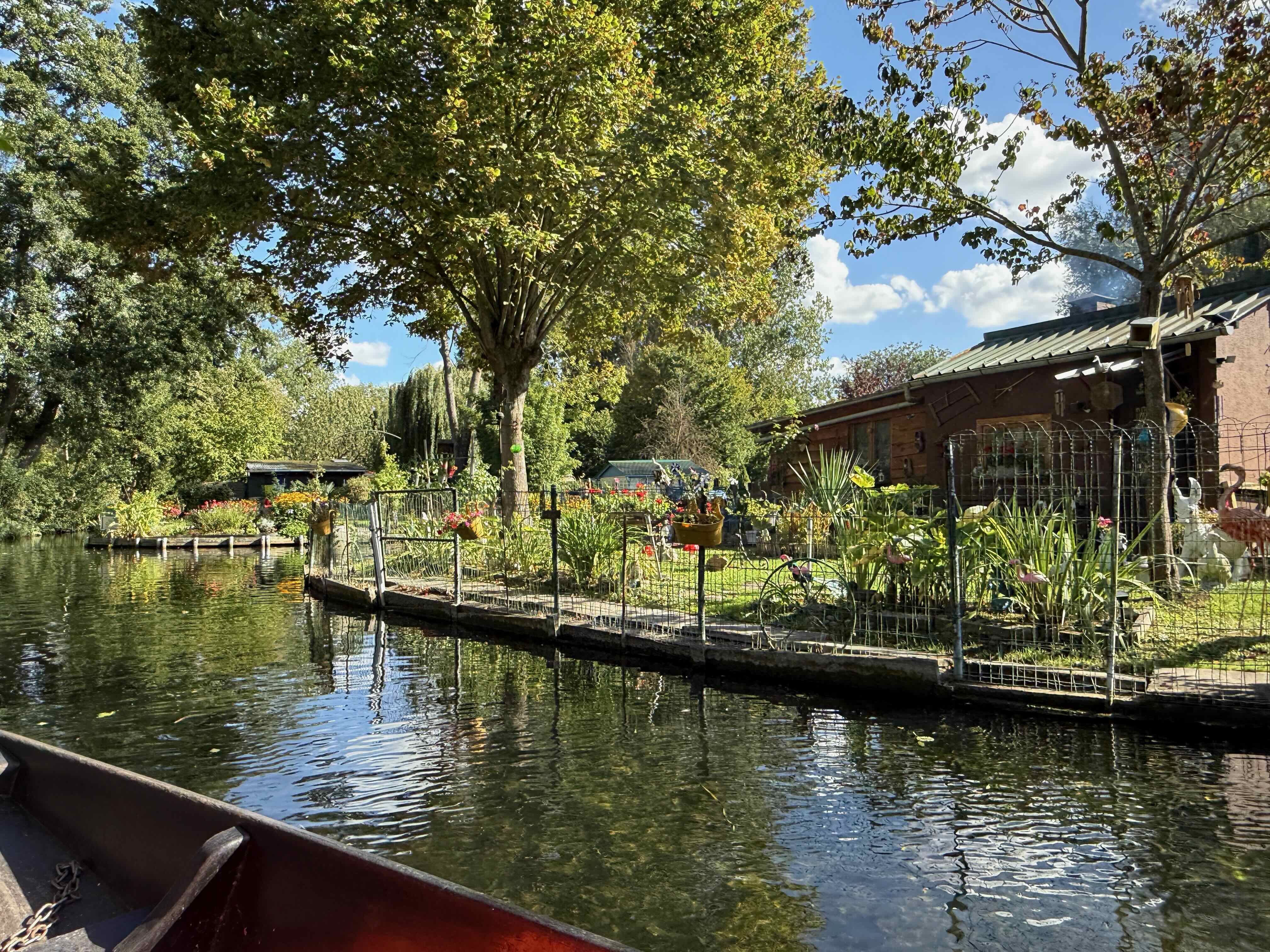
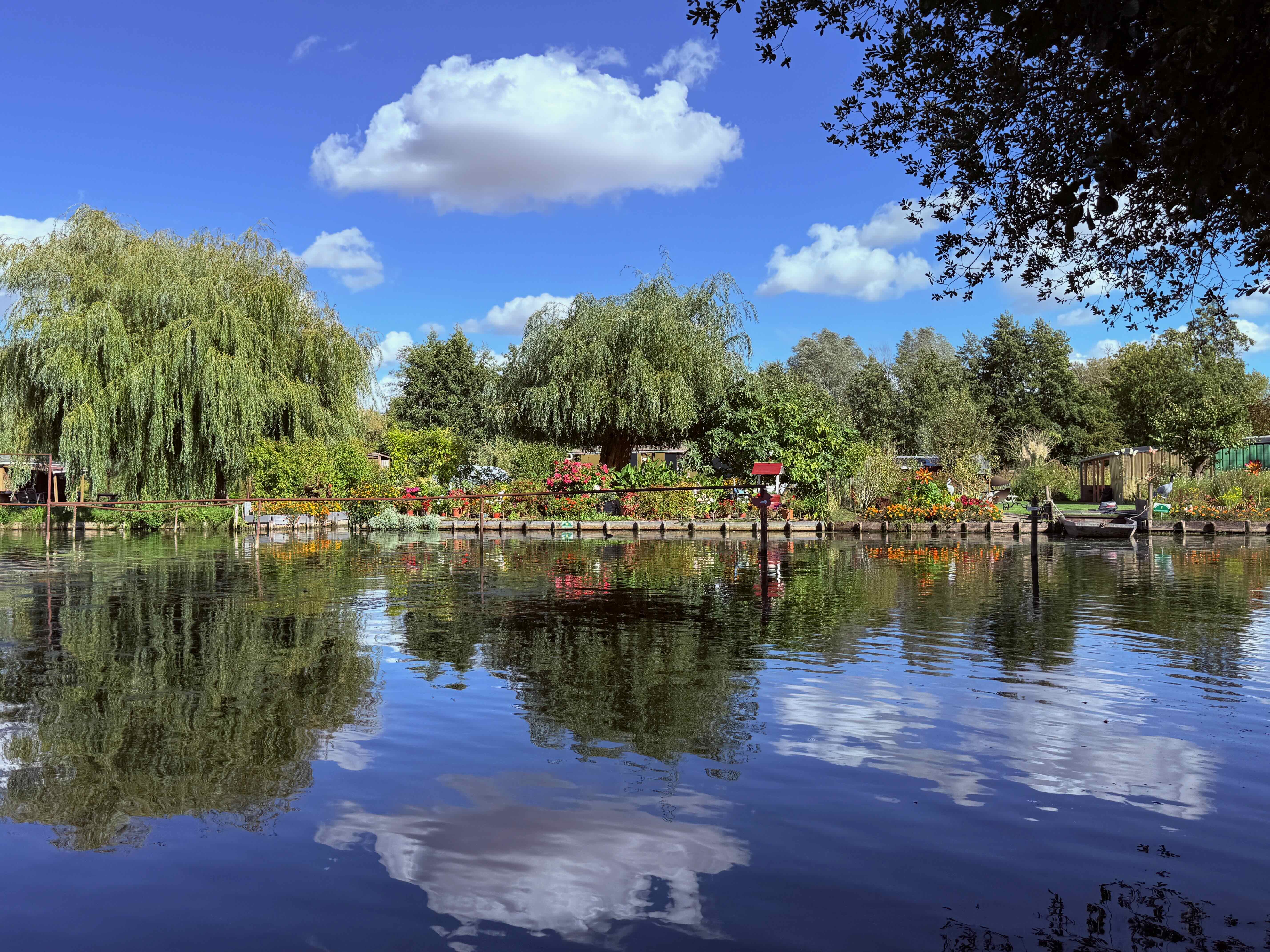
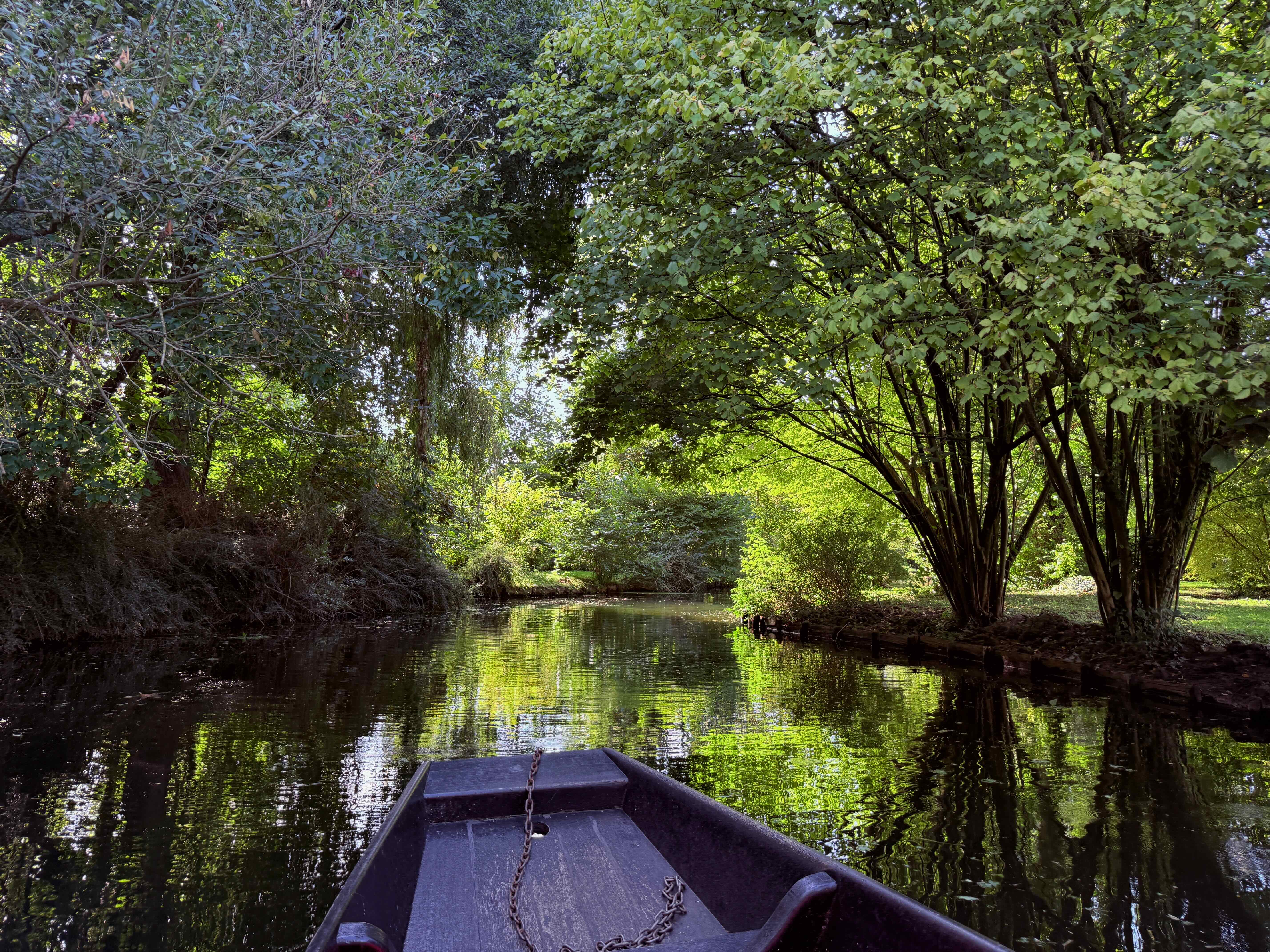
The Hortillonnages have been here since ancient times. They are located on the naturally marshy terrain of the old bed of the River Somme. The site’s name has its origins in the Latin ‘hortus’ meaning garden. Nowadays, the ownership of this 300-hectare site is shared by over 1000 individuals who use it for market gardening or leisure activities such as gardening, fishing, and observing nature.
Walking back to our car we pass yet another war memorial, a reminder of the war and those who fought and died for France. 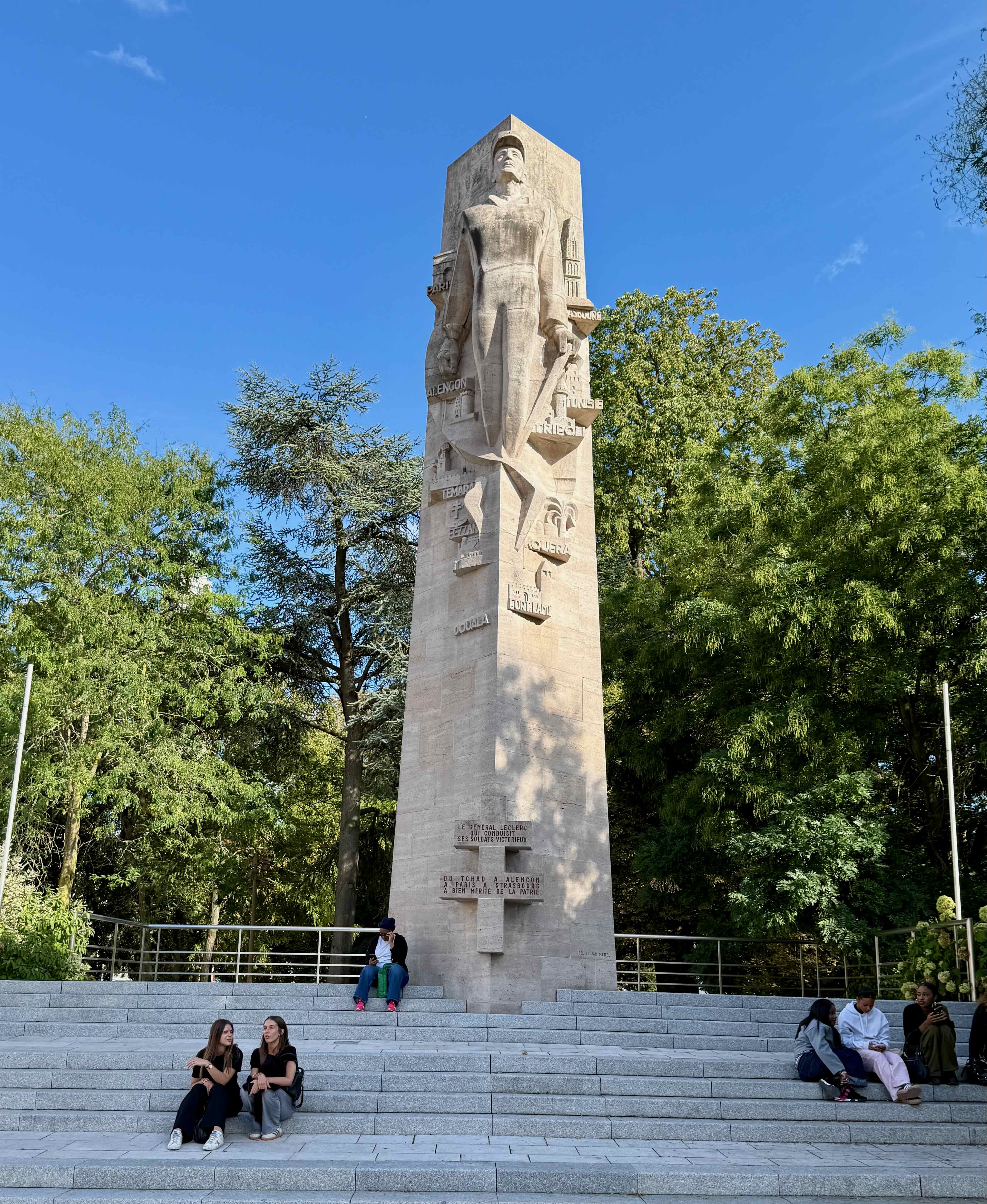
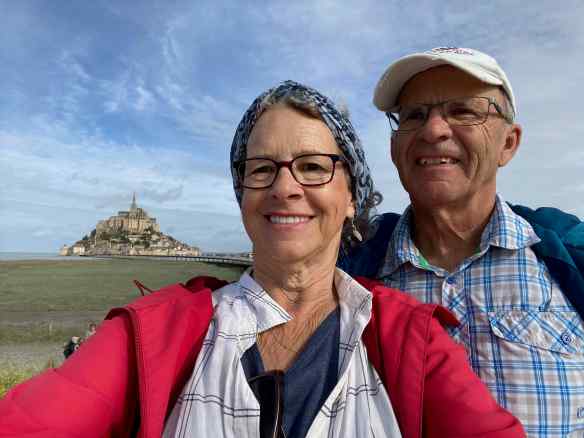
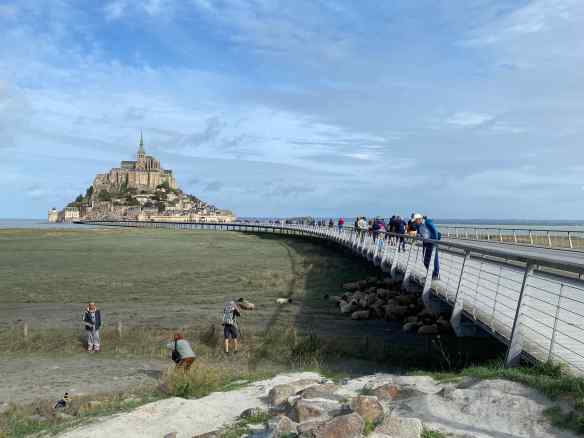
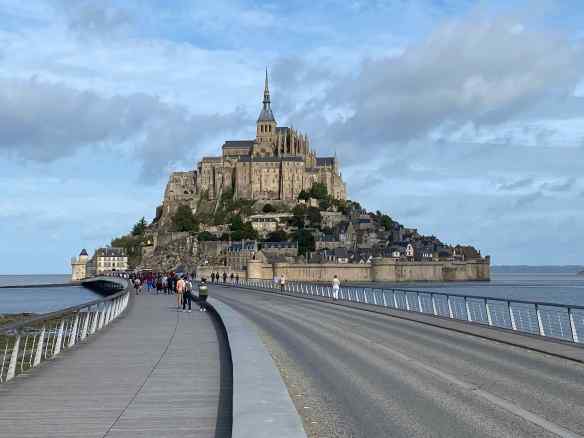

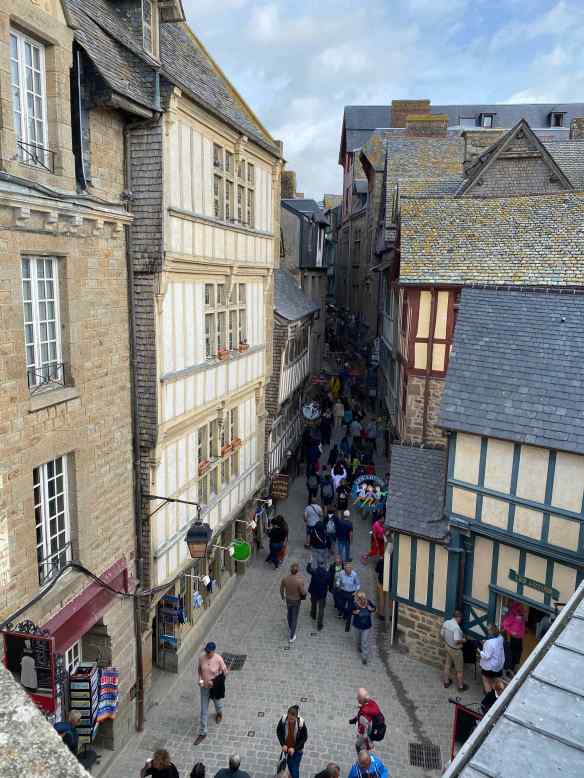
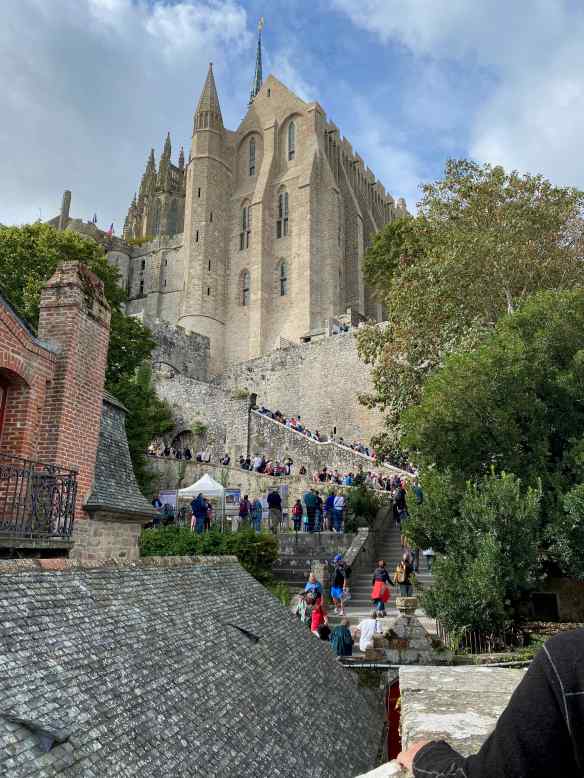
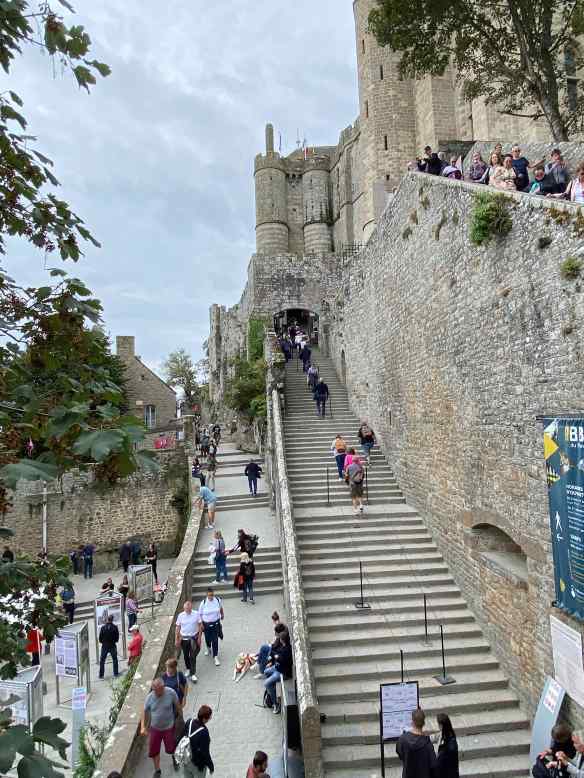
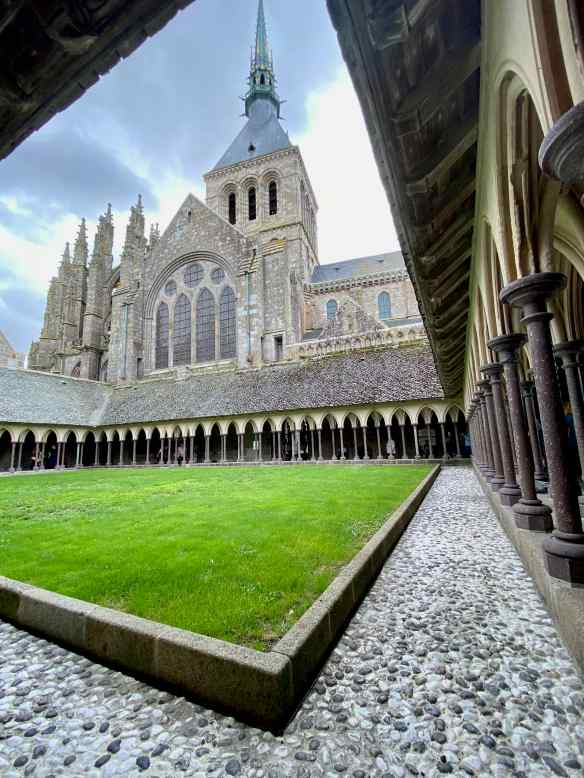
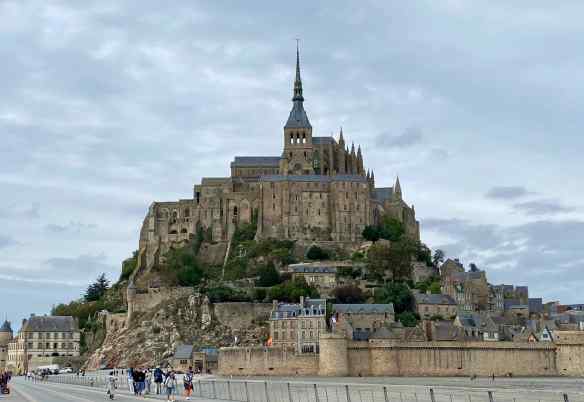
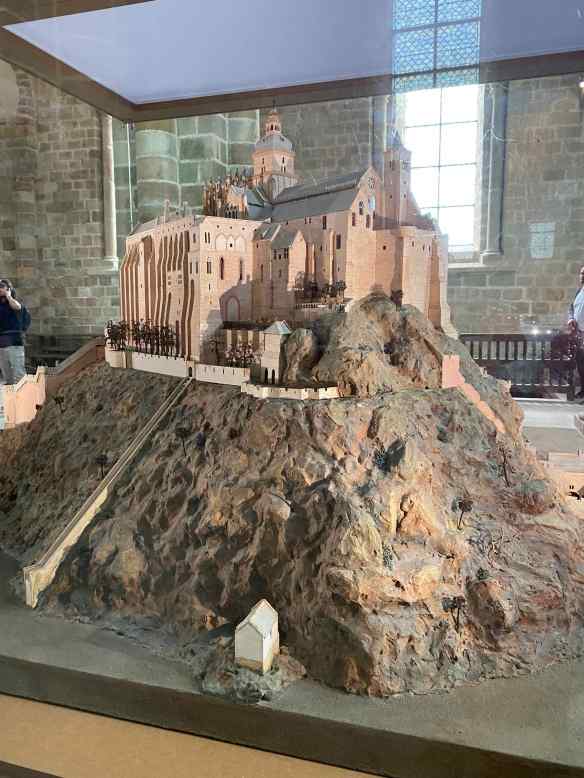 There are usually 5 monks and 7 nuns who live at the abbey and there are only 25-30 people who actually live on Mont Saint Michel. We sat and listened to part of the mass, from the side of the church. The singing was really lovely and I found it interesting that the nuns and the priest sat on the floor of the church during the service.
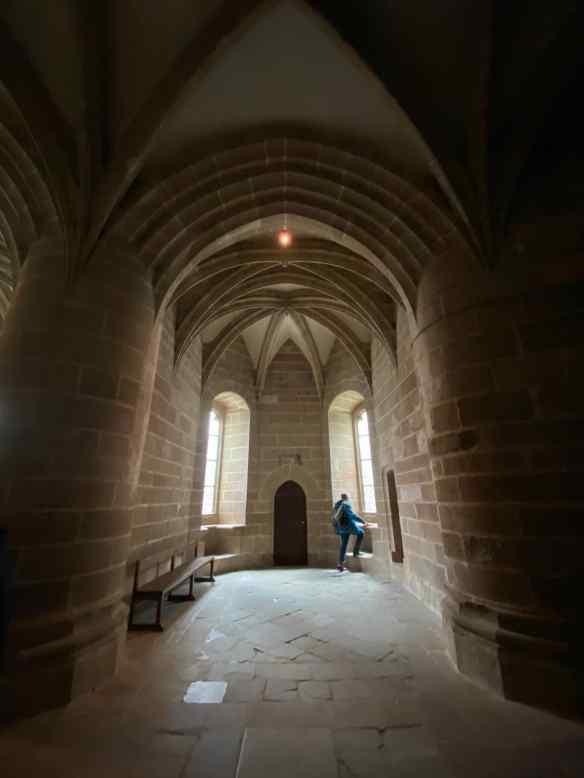
 There are so many interesting doors in this abbey.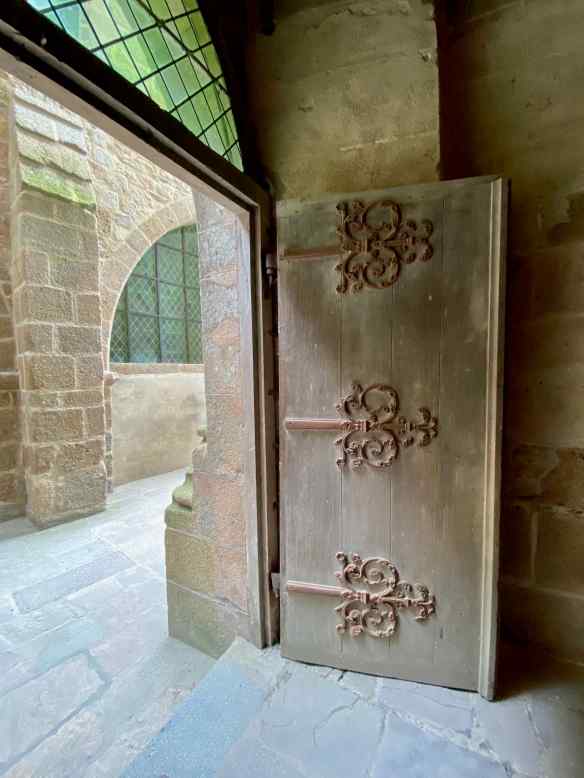
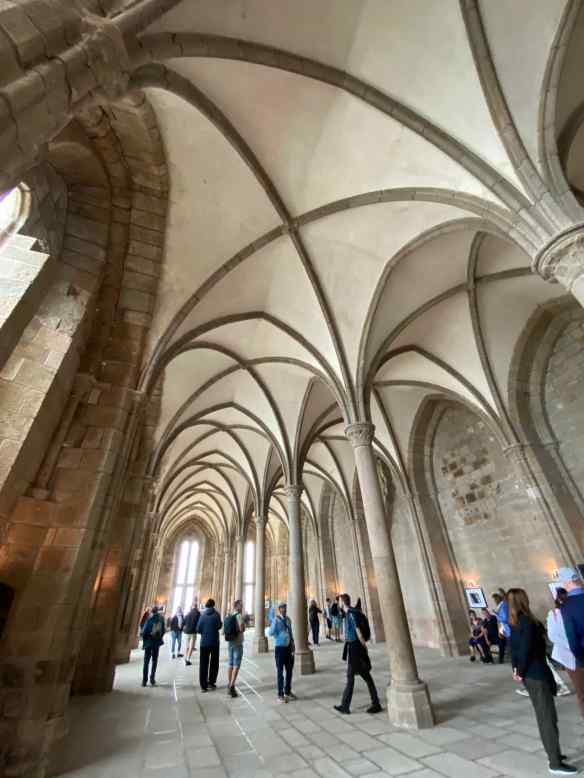
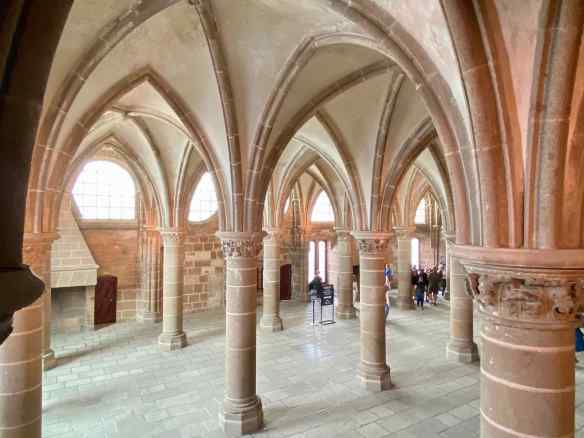
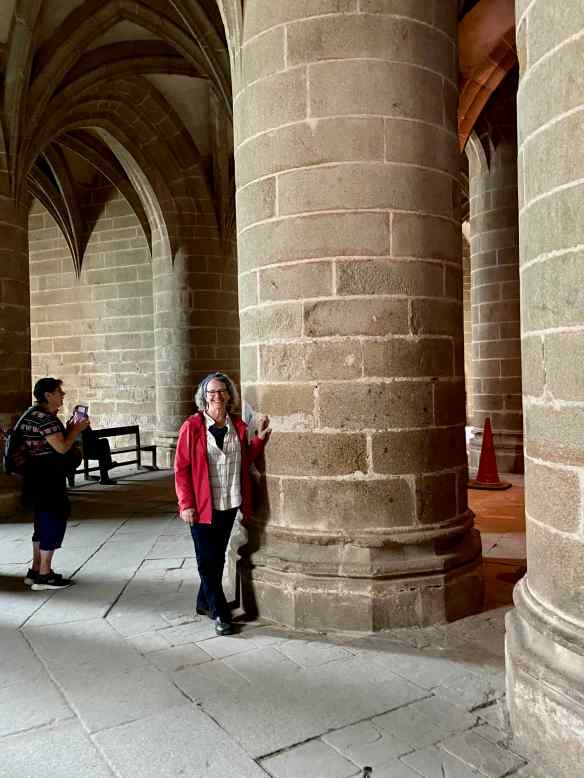 There are so many smaller rooms and interesting spaces to be explored. This one is off the side of the crypt.
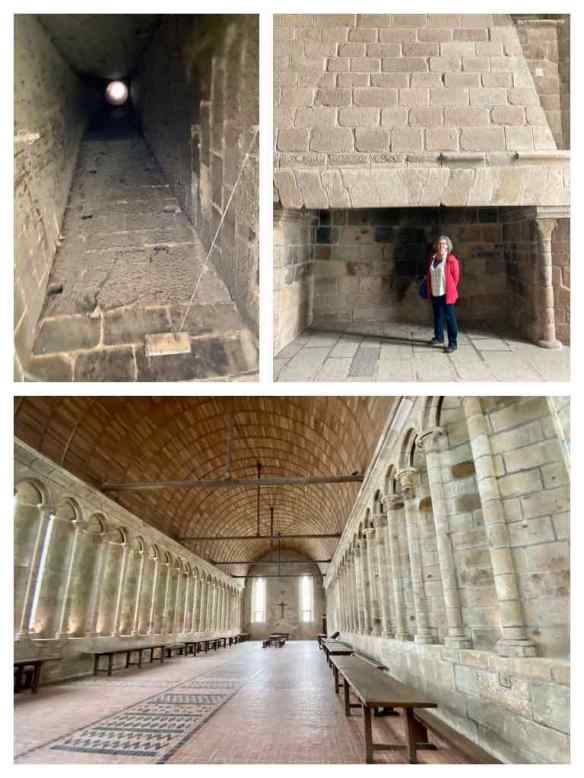
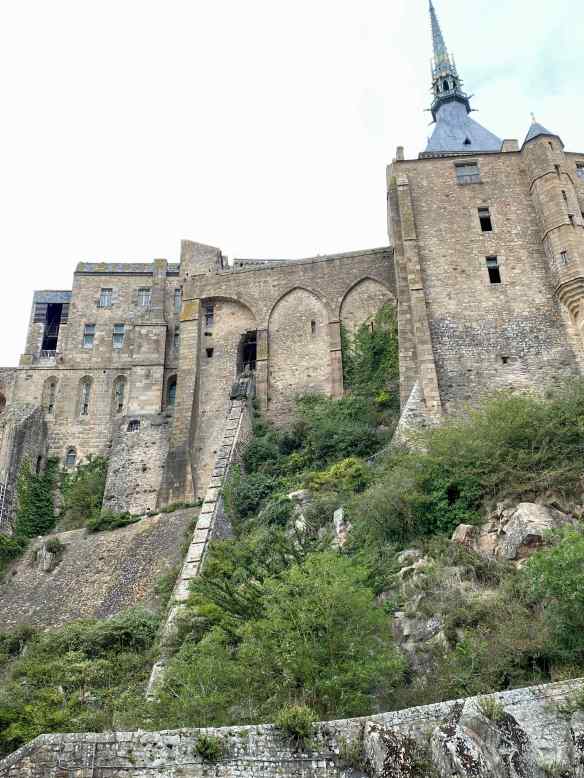
 When the Abbey was used solely as a prison in the 1800’s, this huge wheel was was used to haul supplies up to the abbey. Prisoners walking inside the wheel were able to raise and lower a cart along a stone ladder inclined along the rock wall.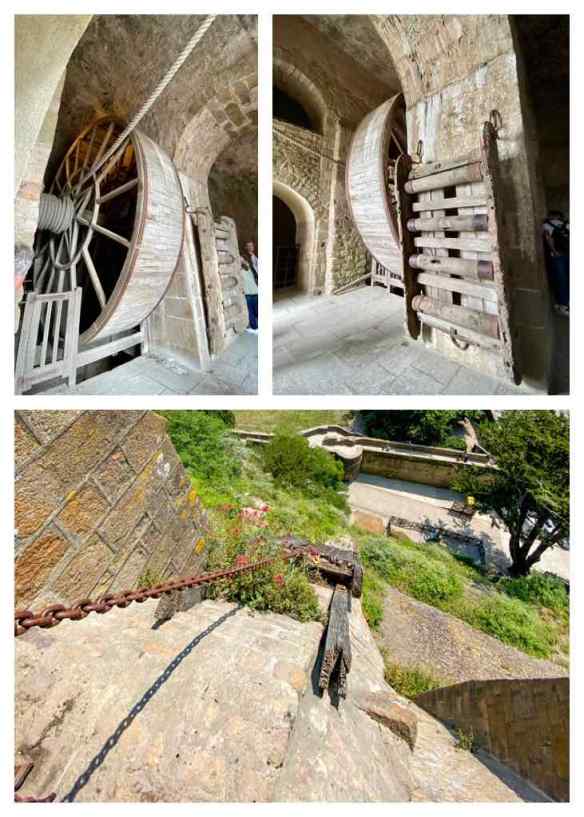
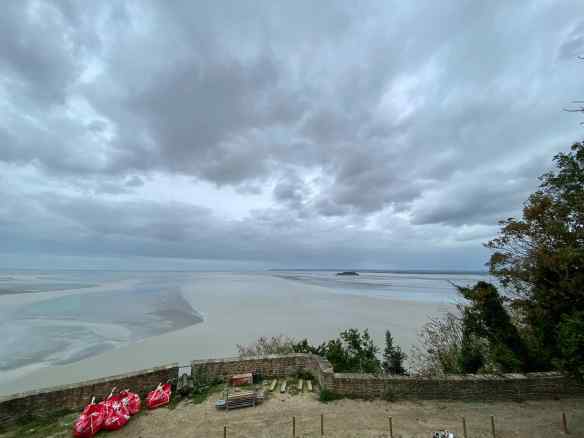 We hear shrieks and peals of laughter and realize that is is coming from the people out walking on the sands now that the tide is out. Some of them are thigh deep in the water! There are a lot of people out there, some of them way off in the distance. Thanks, but I am happy to pass walking in mud and cold water.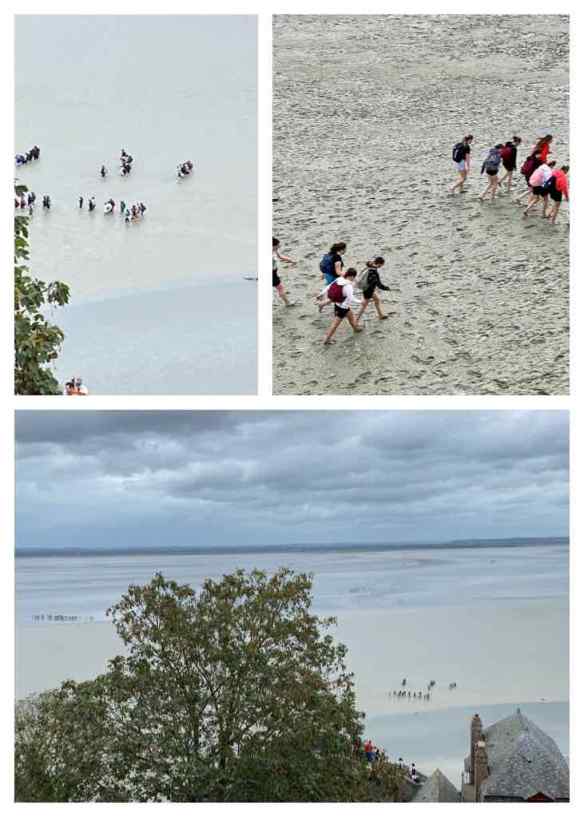
 Bob took interesting photos of the inside and outside view of these two stained glass windows.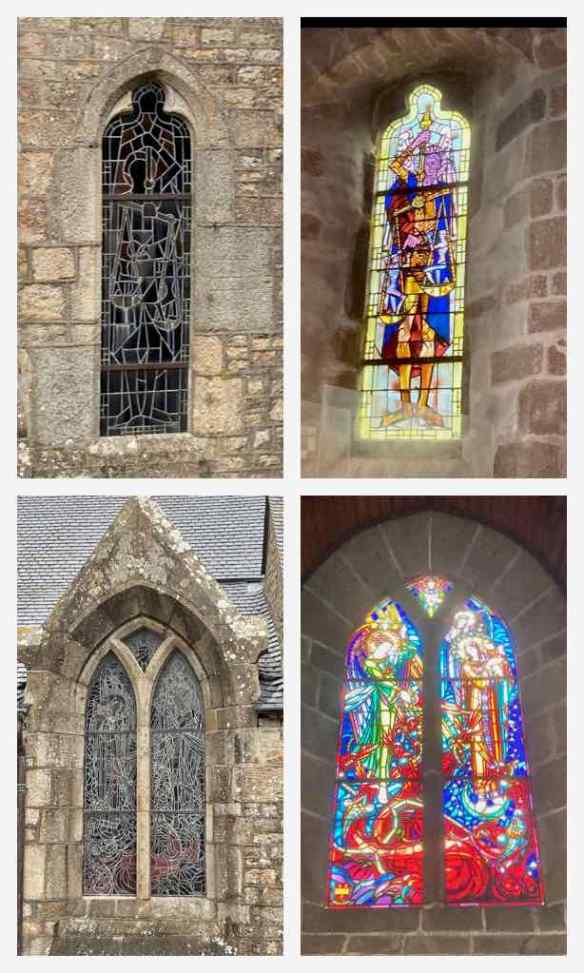

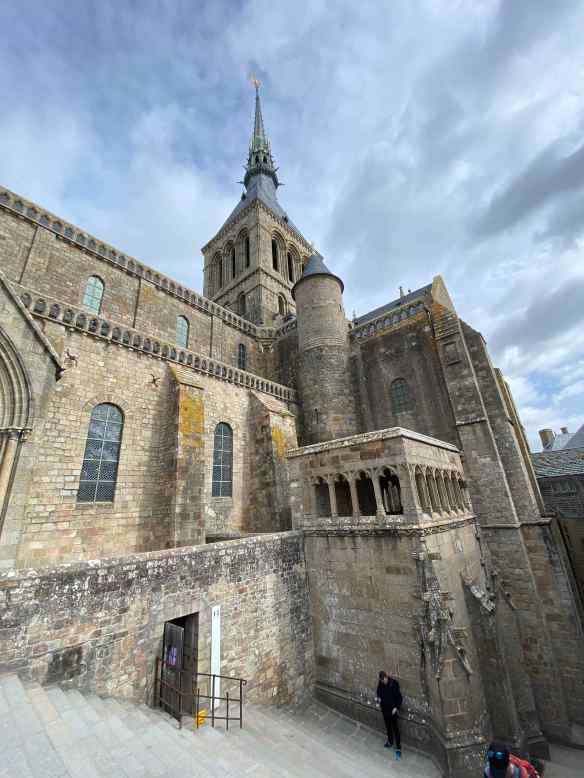
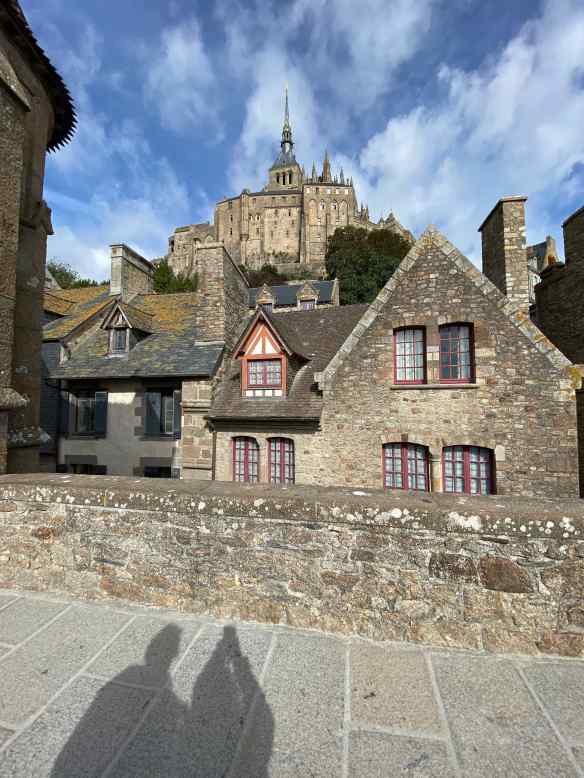
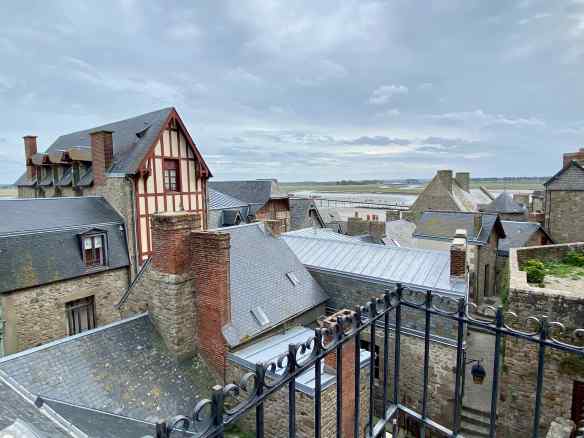
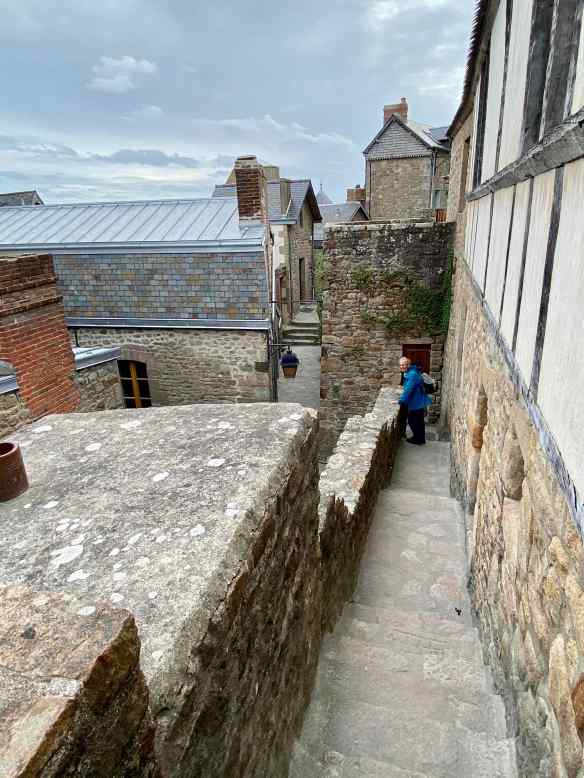
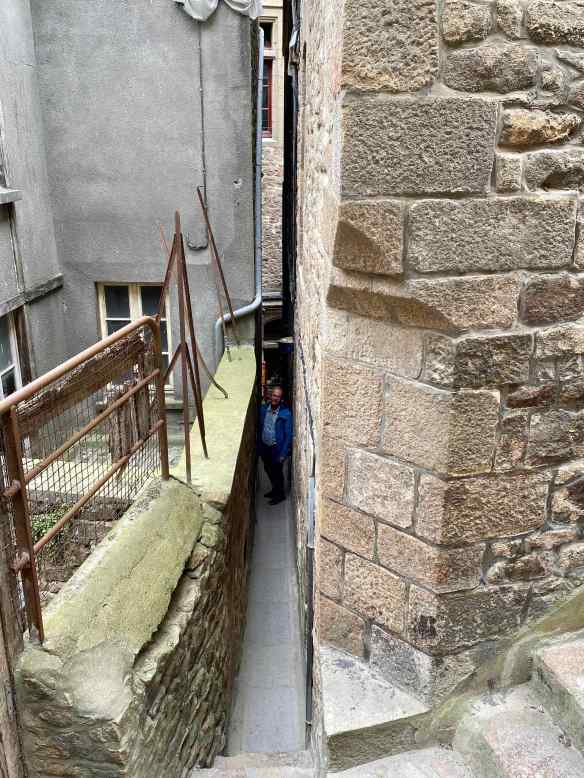
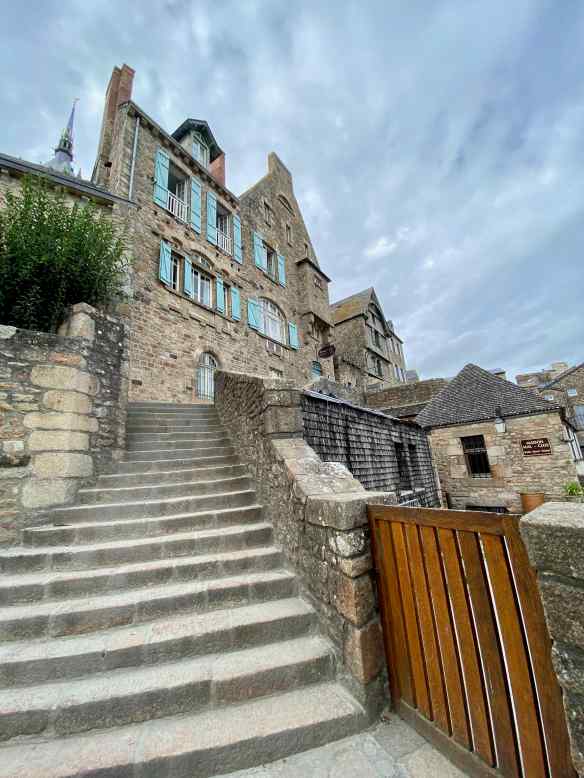
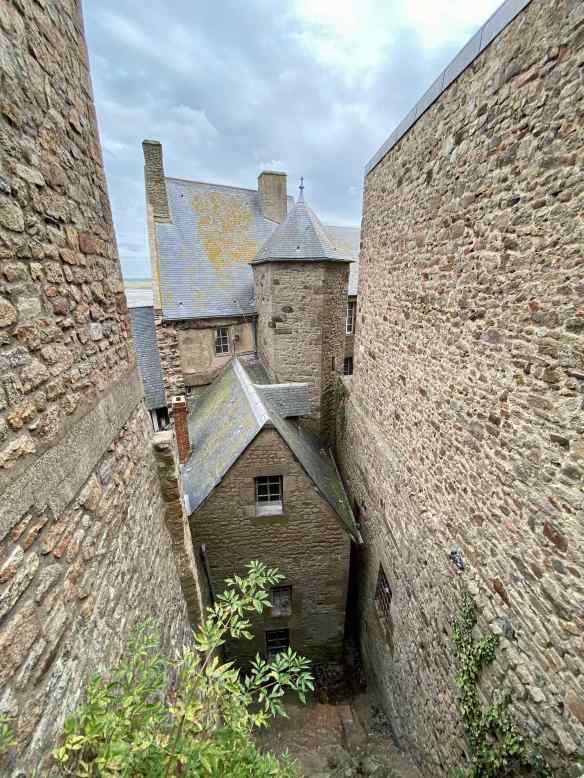
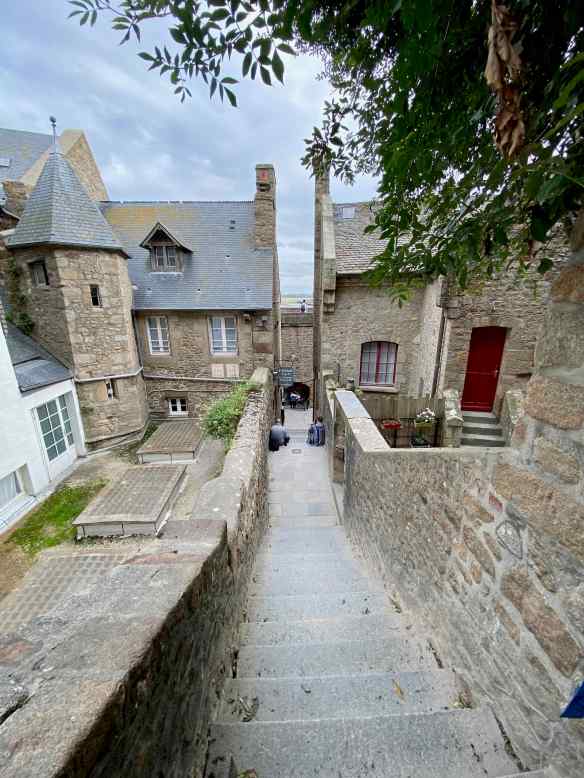
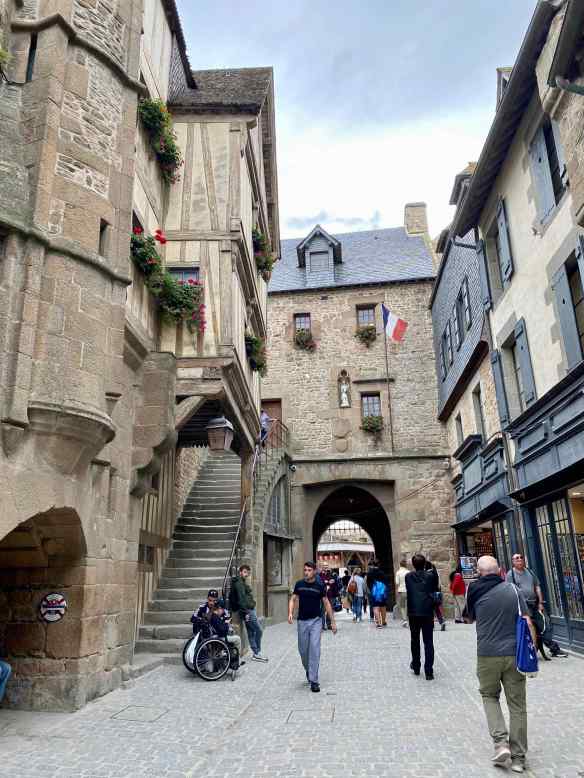
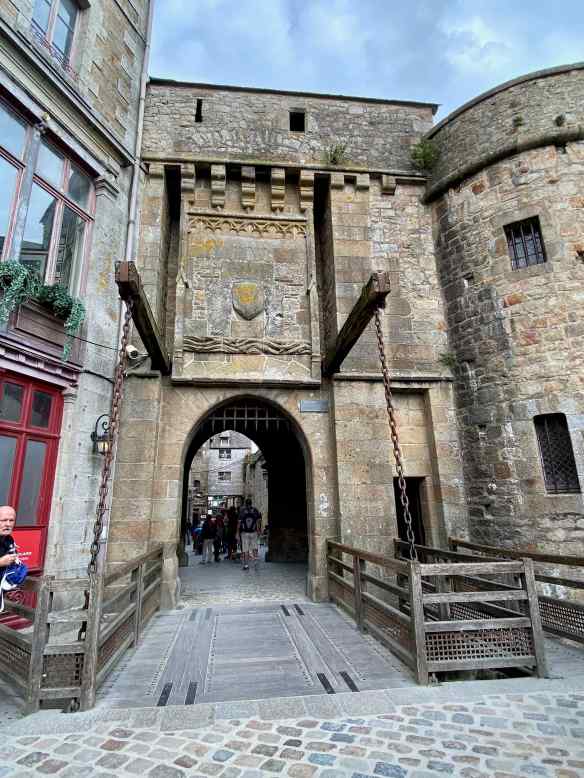
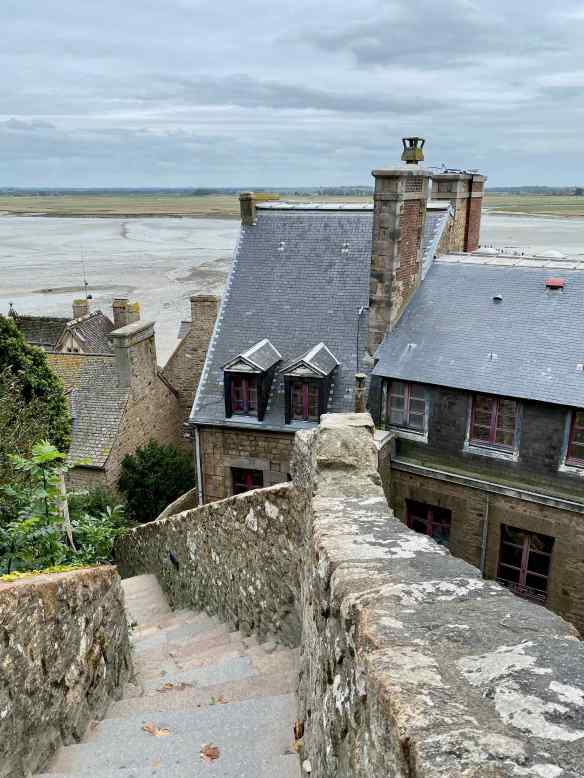 …interesting details…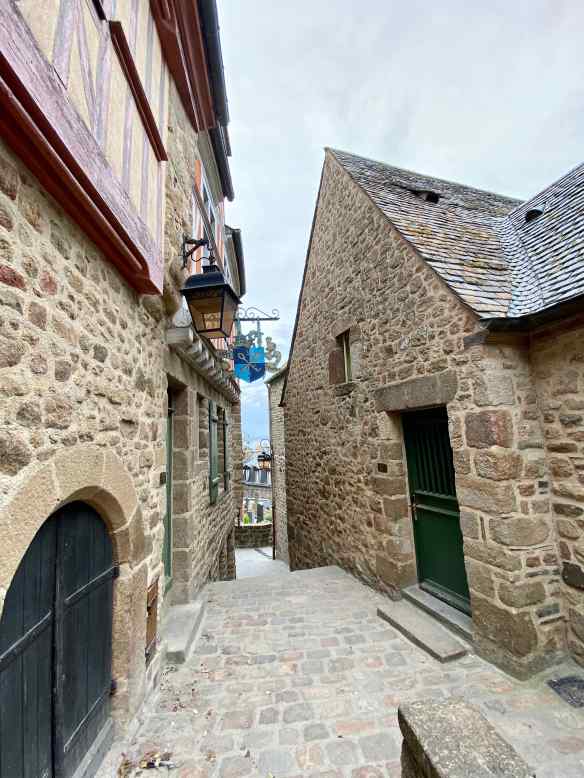
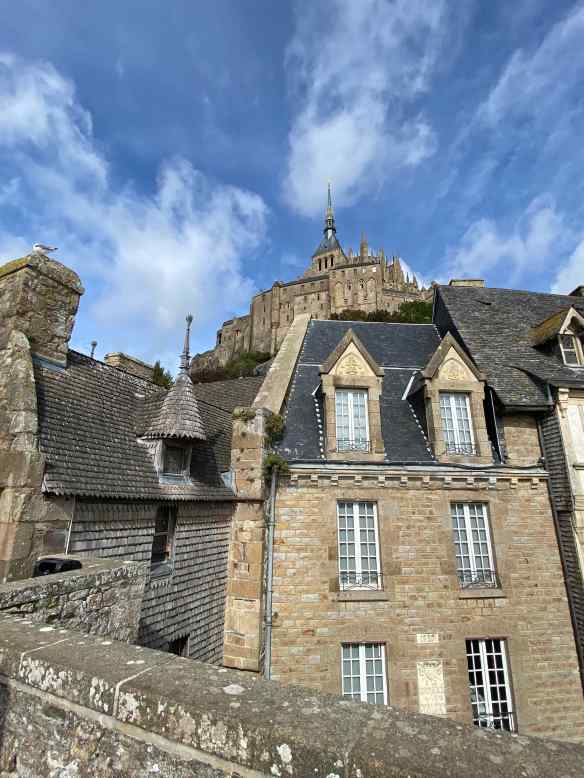
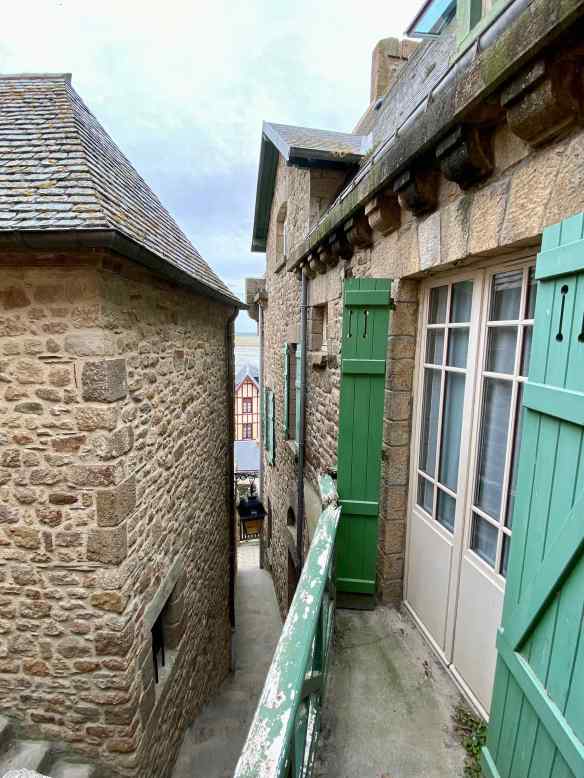 …crooked roof lines…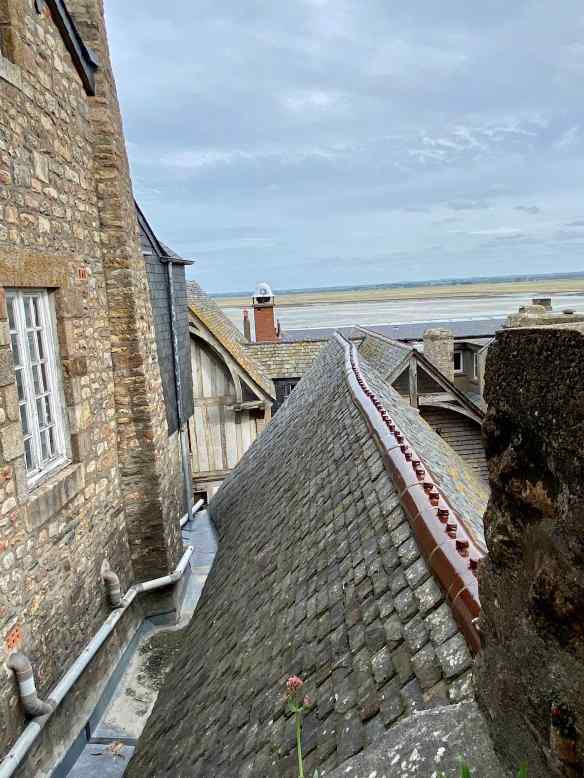
 trudymason.com