Day 19 Thursday, September 18, 2025
We are on the road by 10:00, heading to Waterloo which is the site of the famous Battle that ended Napoleon’s French Empire. The roads can be challenging to drive. Many are fairly narrow and today we share the road with trolley cars, automobiles, trucks, motorcyclists and bicyclists! There is a lot to pay attention to and Bob its doing an amazing job driving. I am usually a good navigator but I didn’t have the best night and today we get to Waterloo in spite of my navigating!!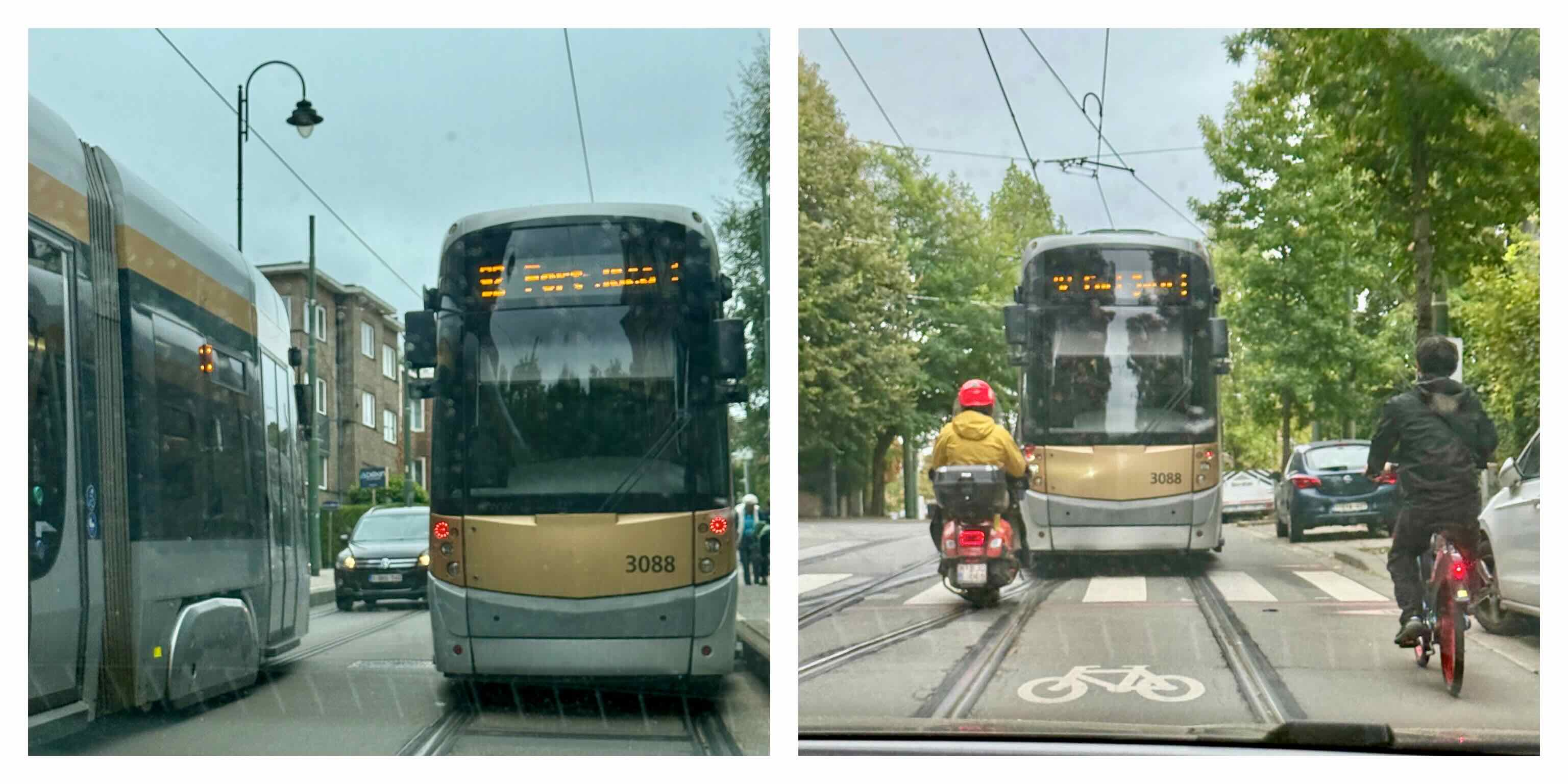 The Wellington Museum was easy to find and there was free parking nearby. The museum is located in the building that the British Duke of Wellington used as his headquarters when he defeated Napoleon at Waterloo in1815. The soldiers uniforms displayed are, from left to right, the French Carabiniers, the British Light Dragoons and the British 8th Hussars.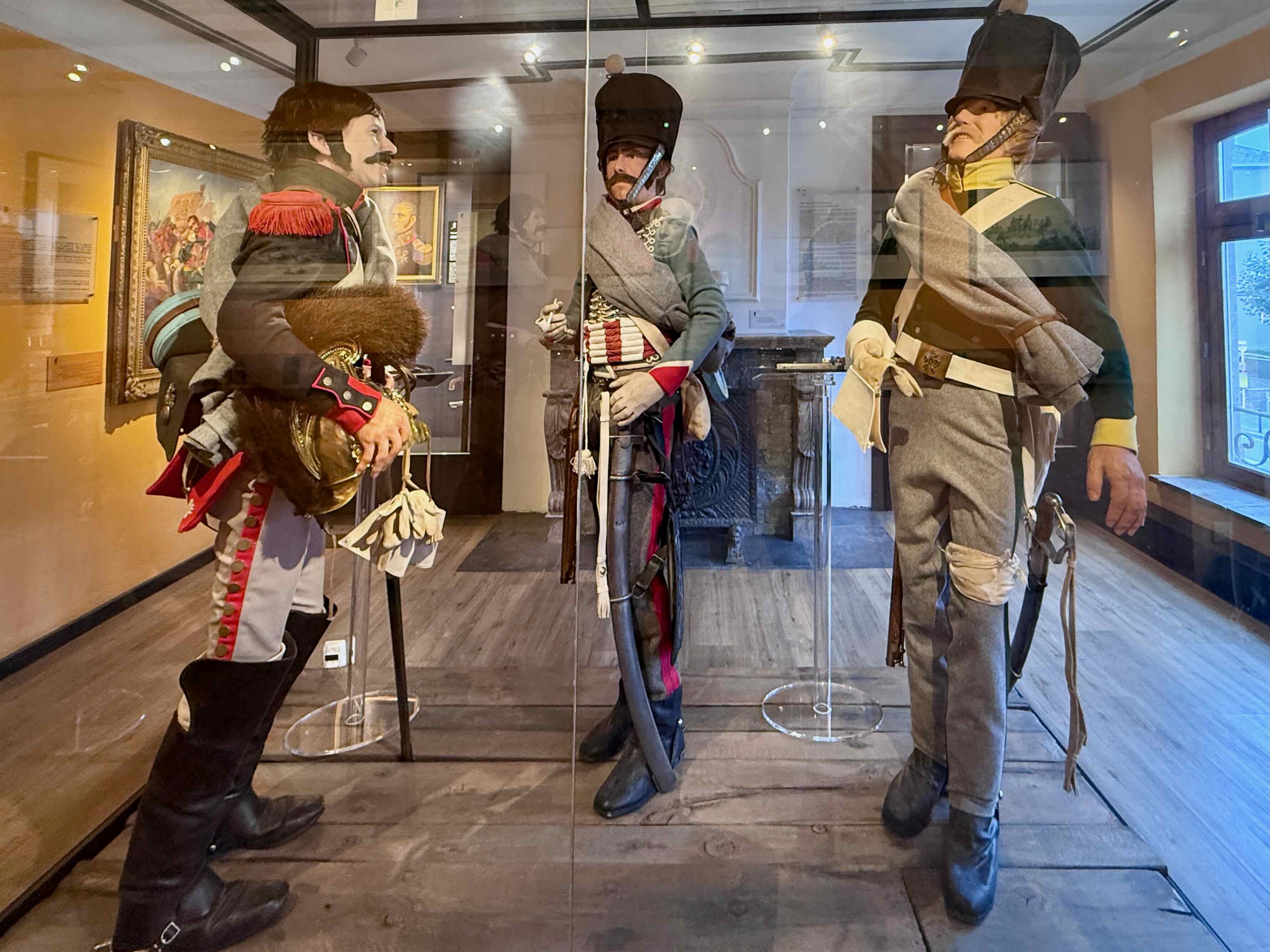
The museum has a room with weapons used during the Battle of Waterloo.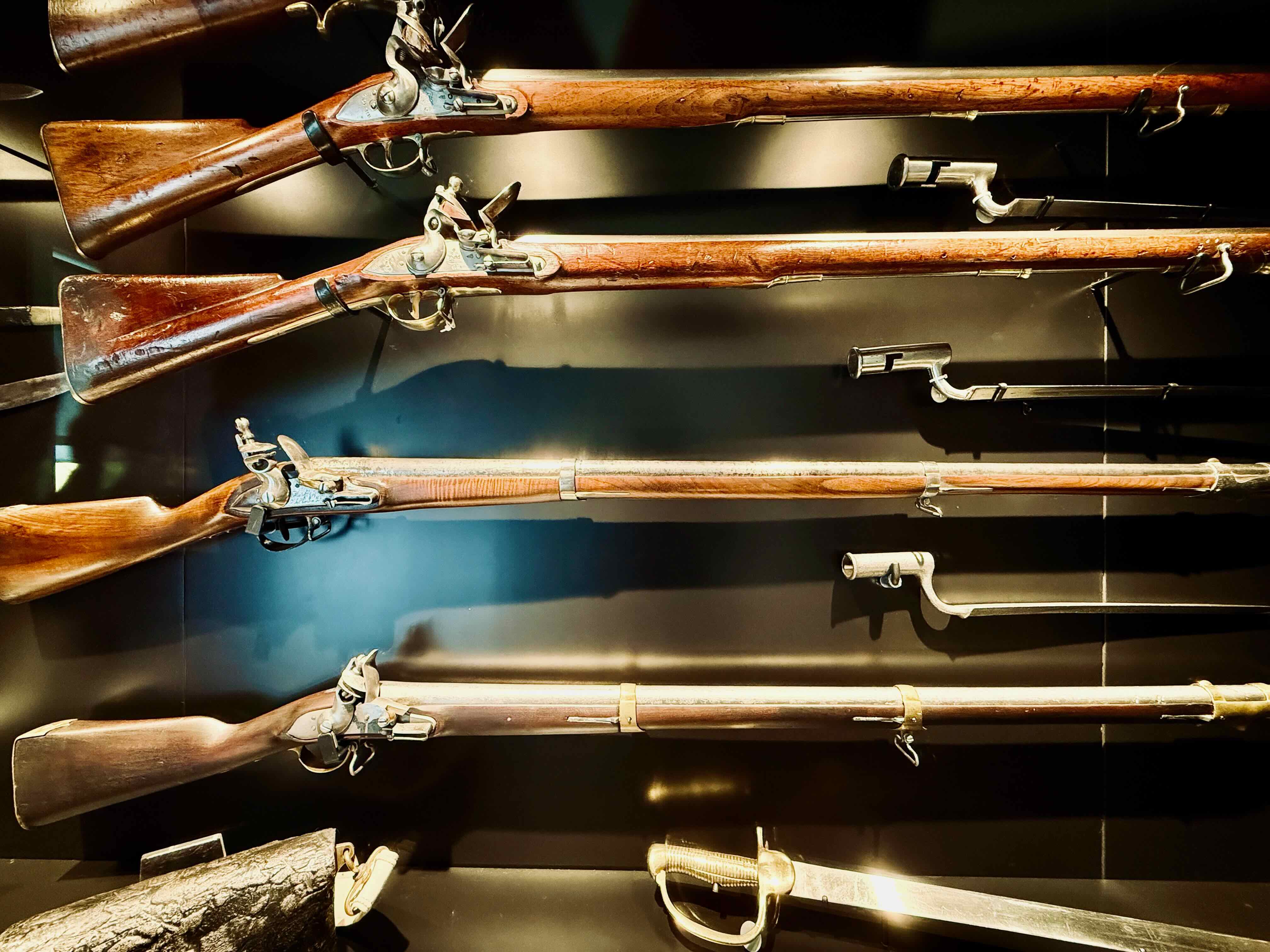
A lot of artwork, paintings and information about the battle and even the death mask of Napoleon which I find rather unsettling.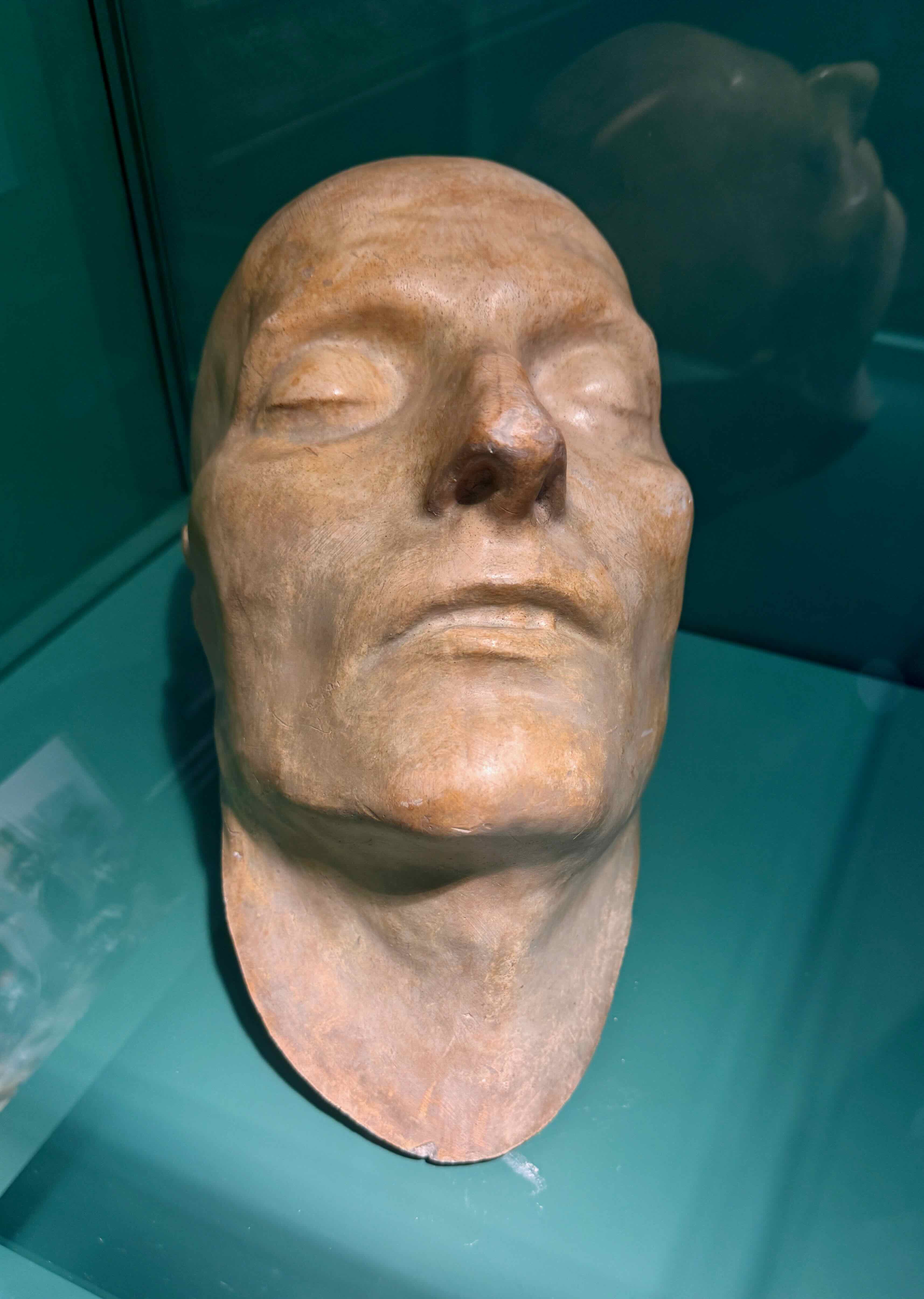
The French troops had to forage to survive, and many soldiers died of disease, malnutrition and exhaustion brought on by the extremely difficult conditions they endured. Meanwhile the French generals travelled with dining sets that included items like crystal containers and silver and gold plated egg cups and spoons!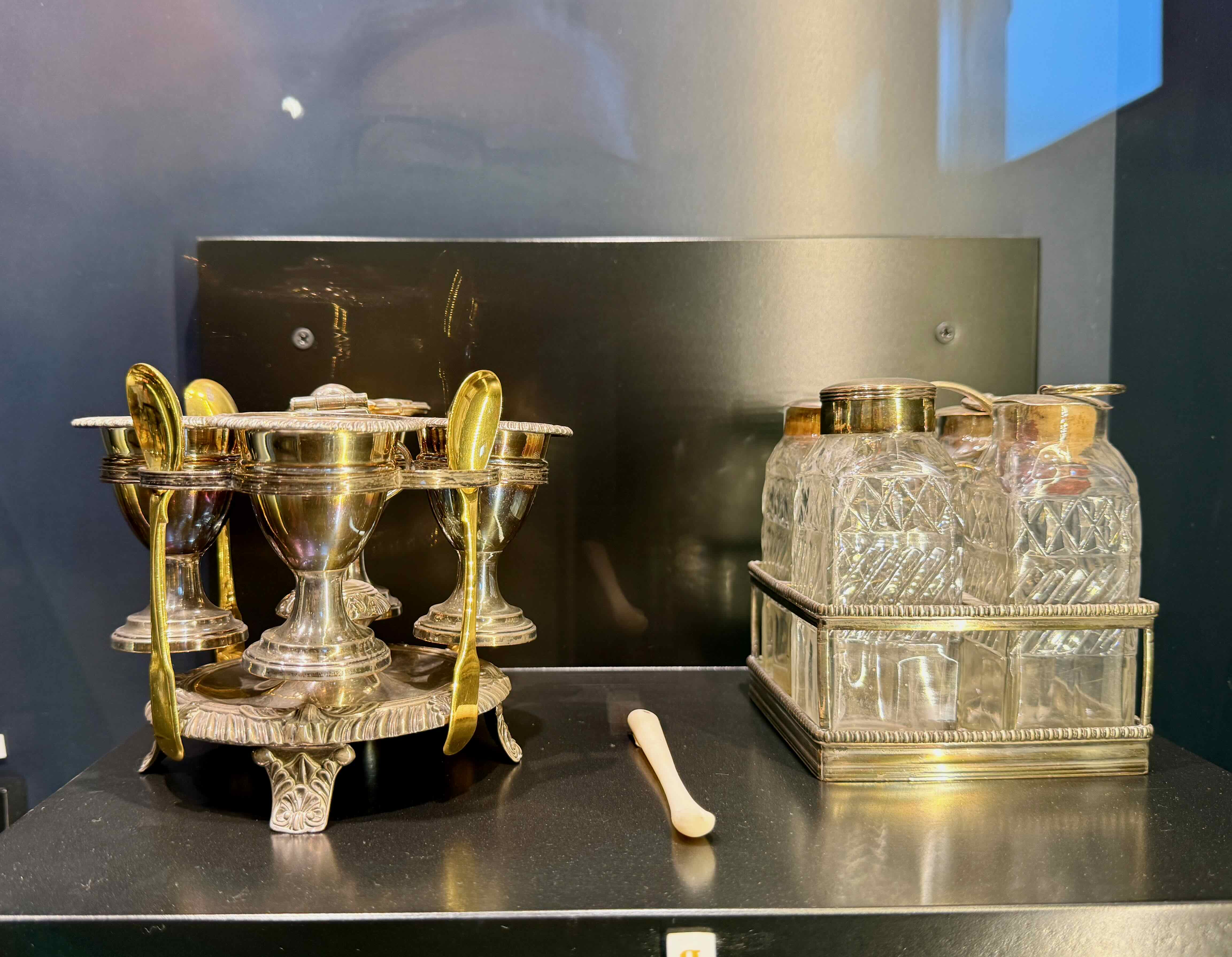
Soldiers were treated by amputating injured limbs to prevent gangrene. This is a typical surgeons kit for amputations which were performed quickly without anaesthetic and in five minutes. The saws and other medical equipment were not cleaned between patients so the post operative mortality rate was very high.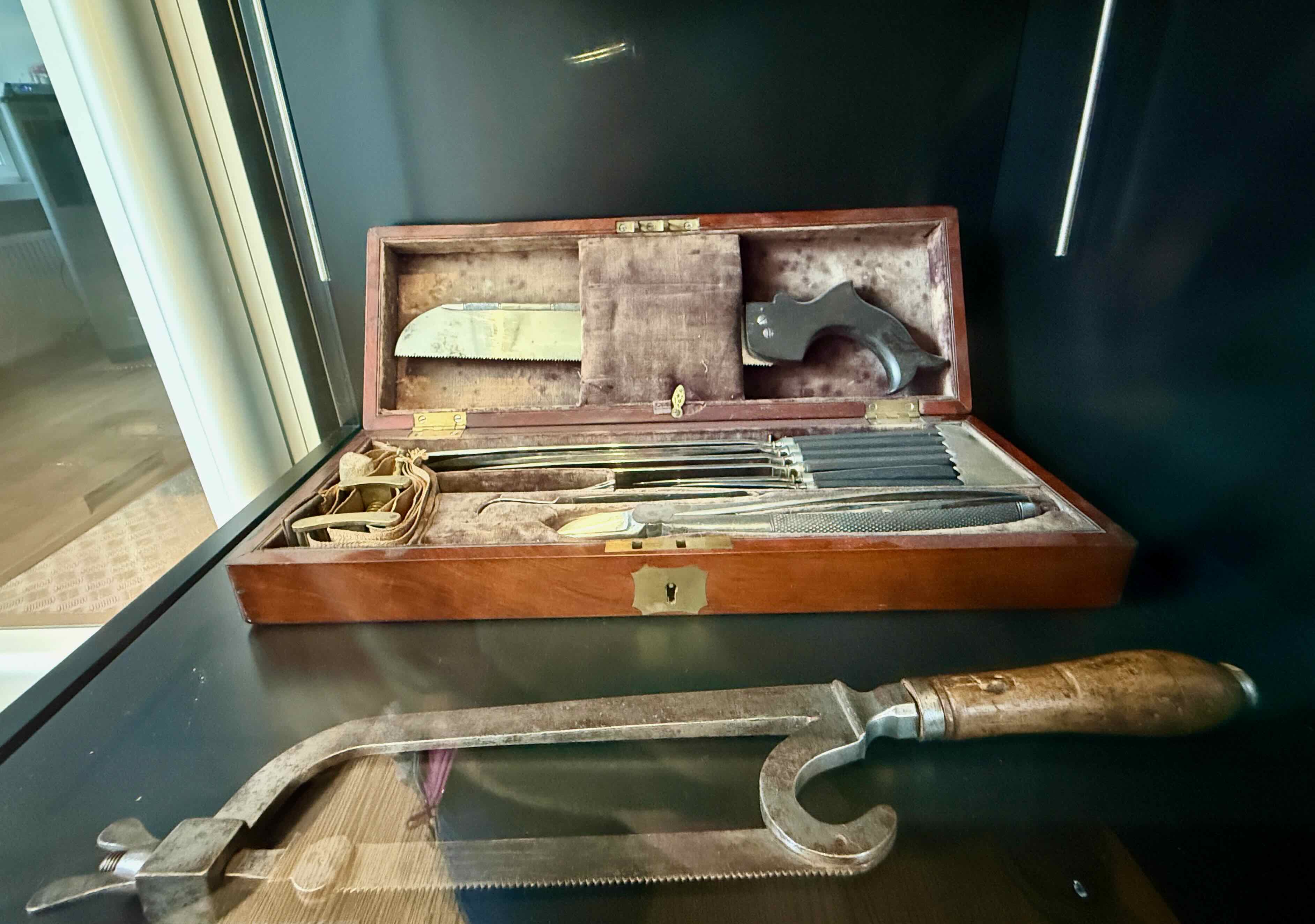
If you survived the amputation and had enough money your prosthetic leg could look like this. I imagine most common soldiers made do with some sort of simple wooden peg leg.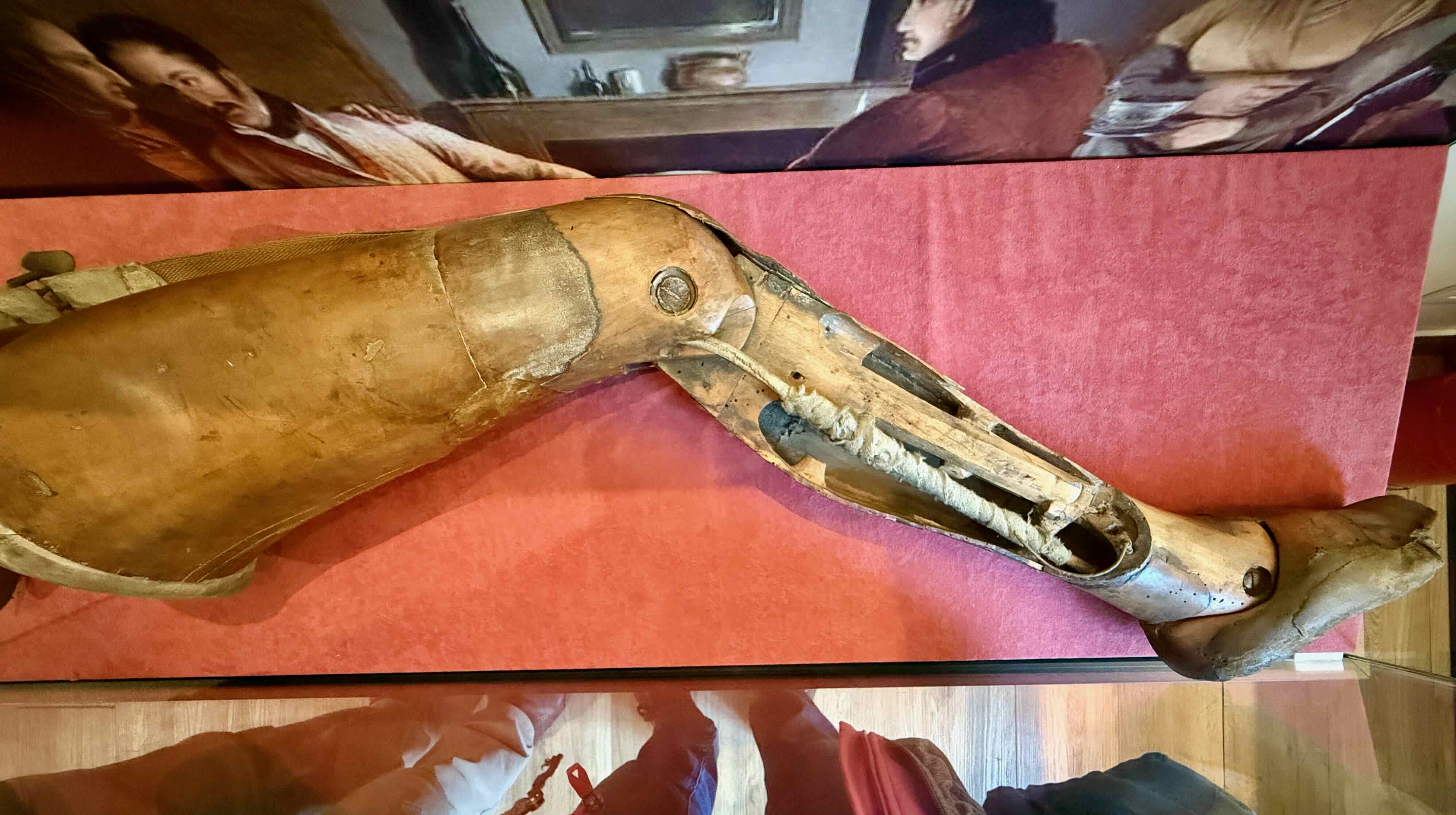
We cross a patio to enter another part of the museum and are surprised to find a huge Playmobile exhibition titled ‘A History of Empires’. There are 16 display cases, each depicting a different time in history.
The war between Julius Caesar and the Gauls in 54 B.C.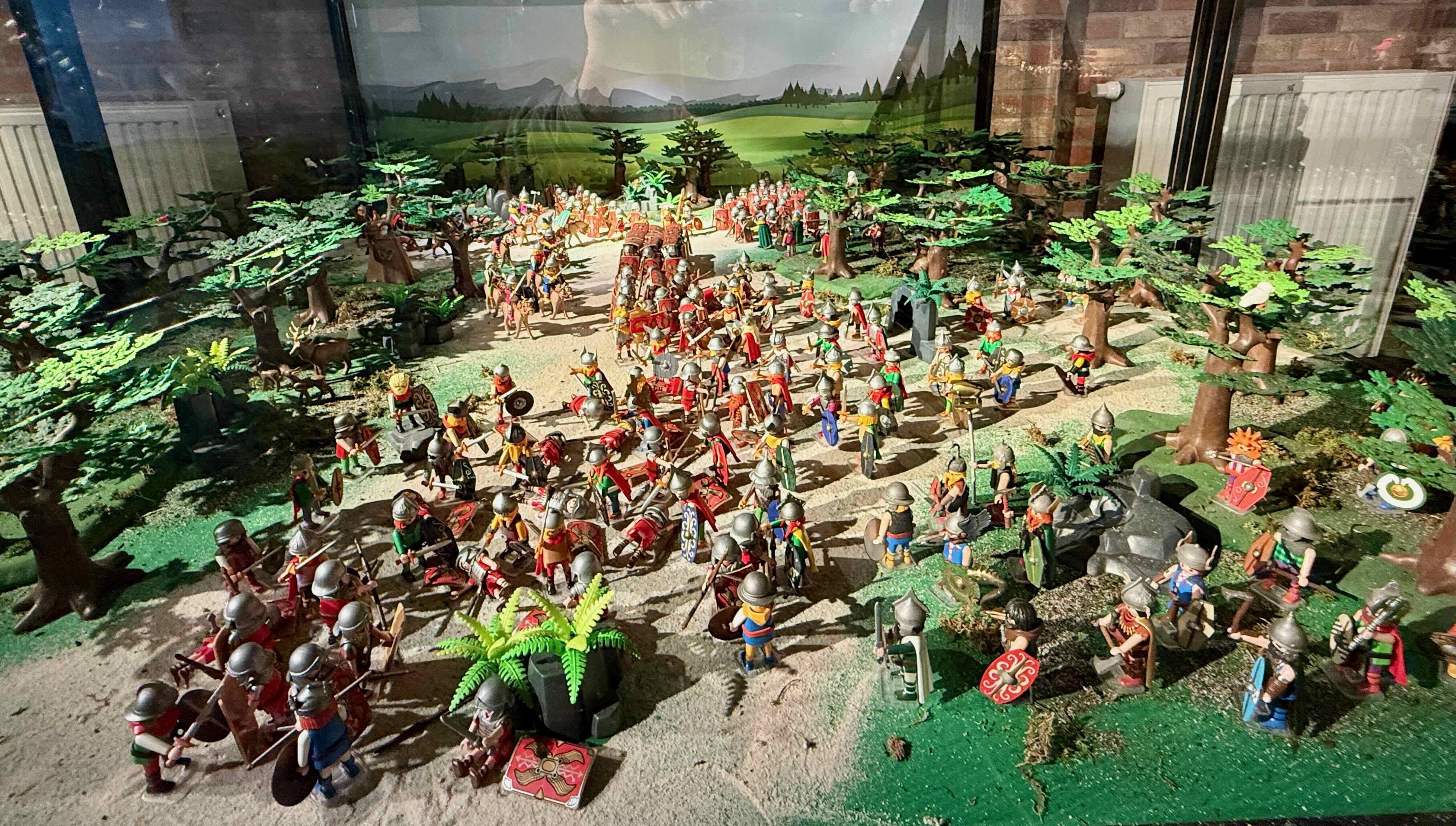 Rome’s first race course built in 599 B.C.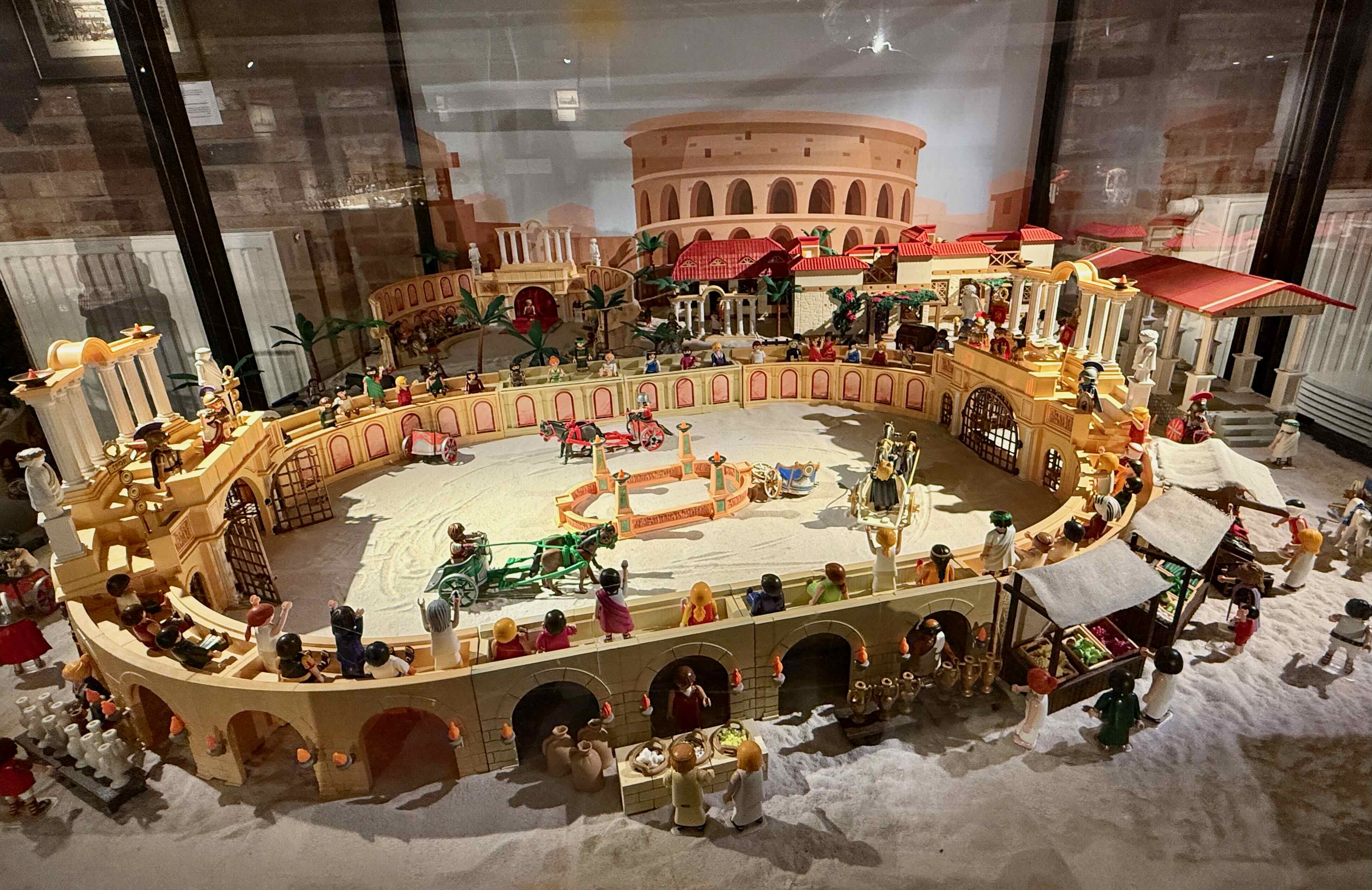
A naval Battle but I don’t remember which one.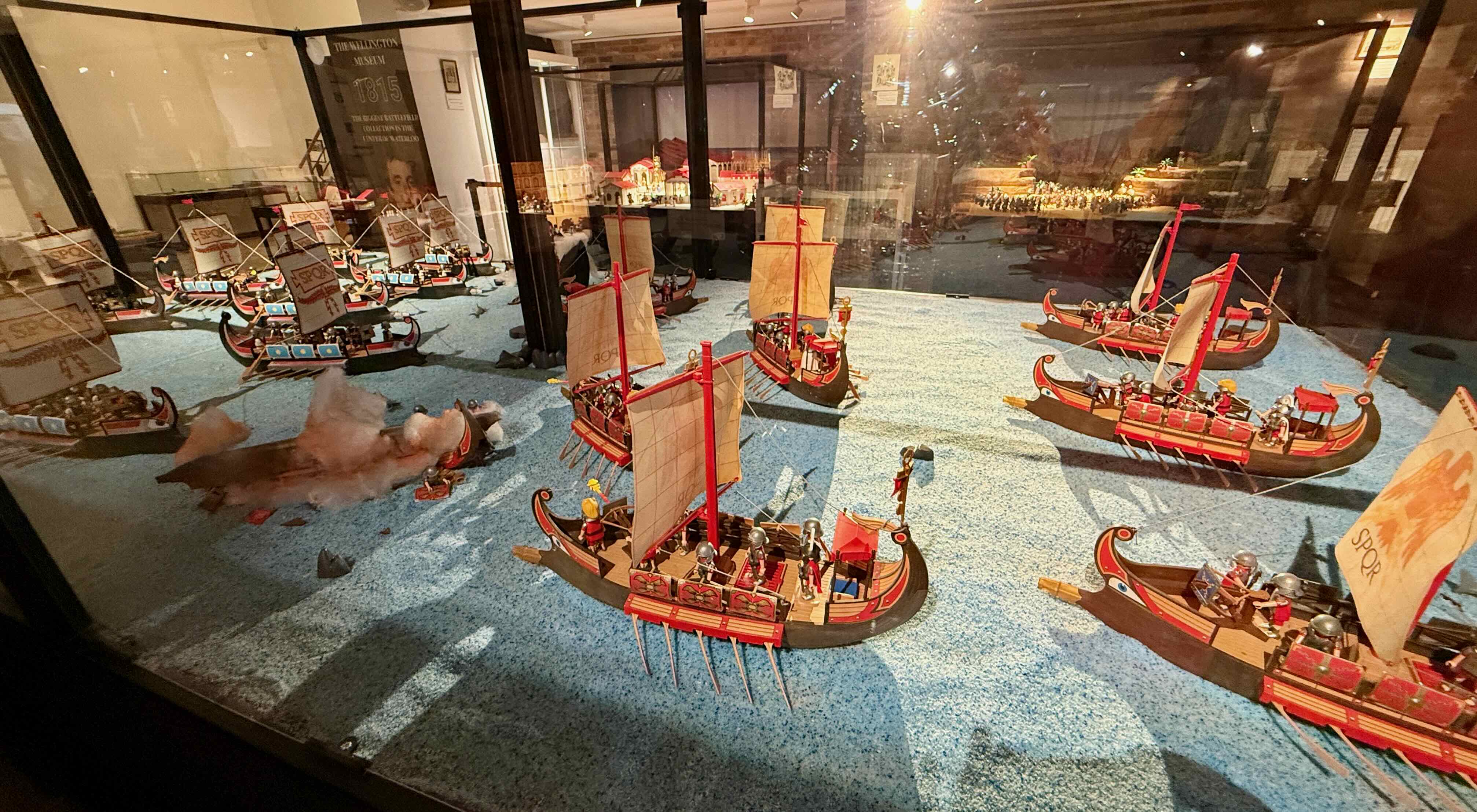
The Roman Coliseum. We really enjoyed this unusual exhibit and marvelled at the thousands and thousands of Playmobile figures and accessories that were used to create these dioramas. 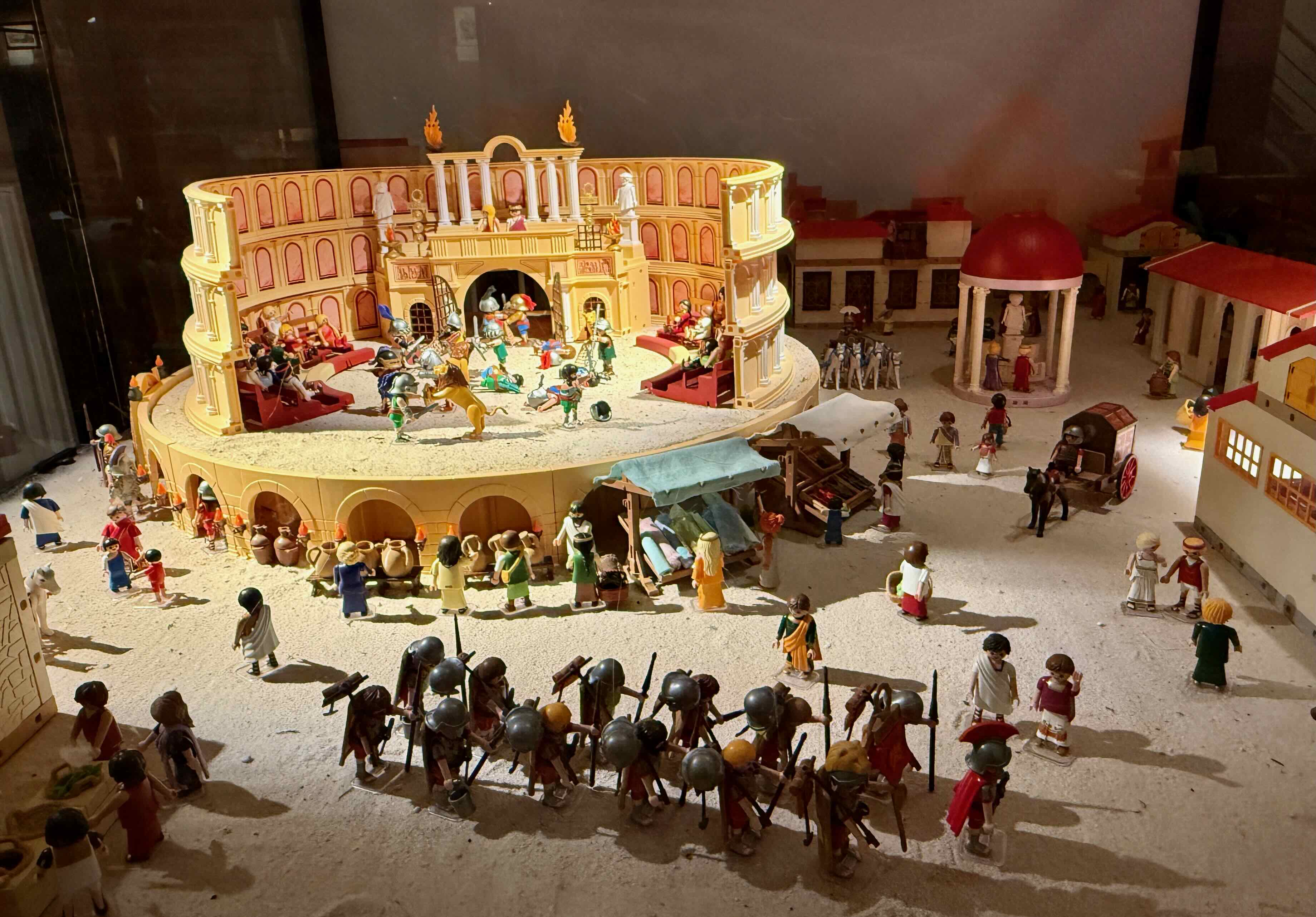 This very old St. Joseph Church from 1690 is right across the street so we had a look.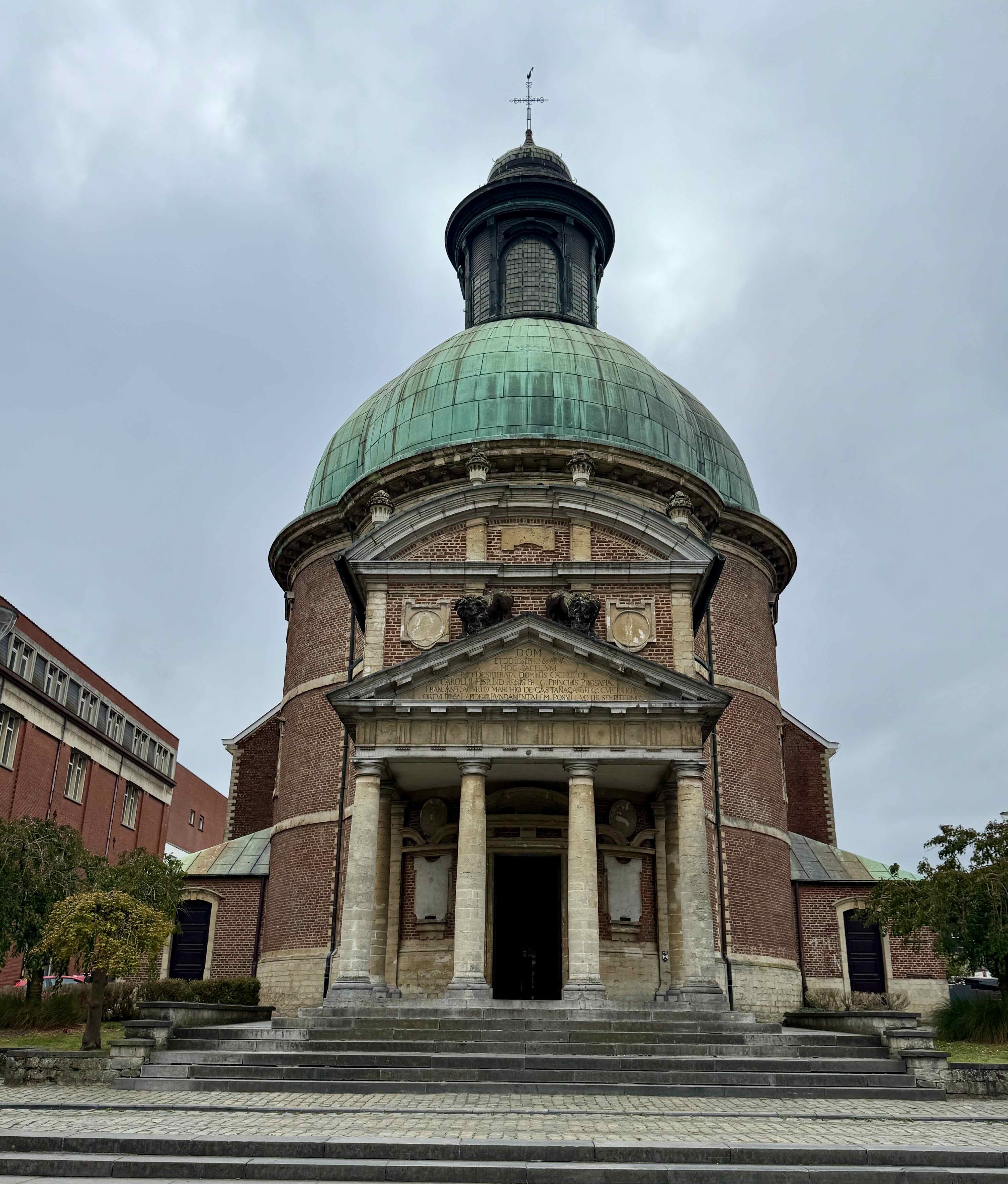
The area under the dome is huge and the church itself has large columns on either side of the nave. We have visited many churches and Cathedrals on our travels, but they are all so different from one another. 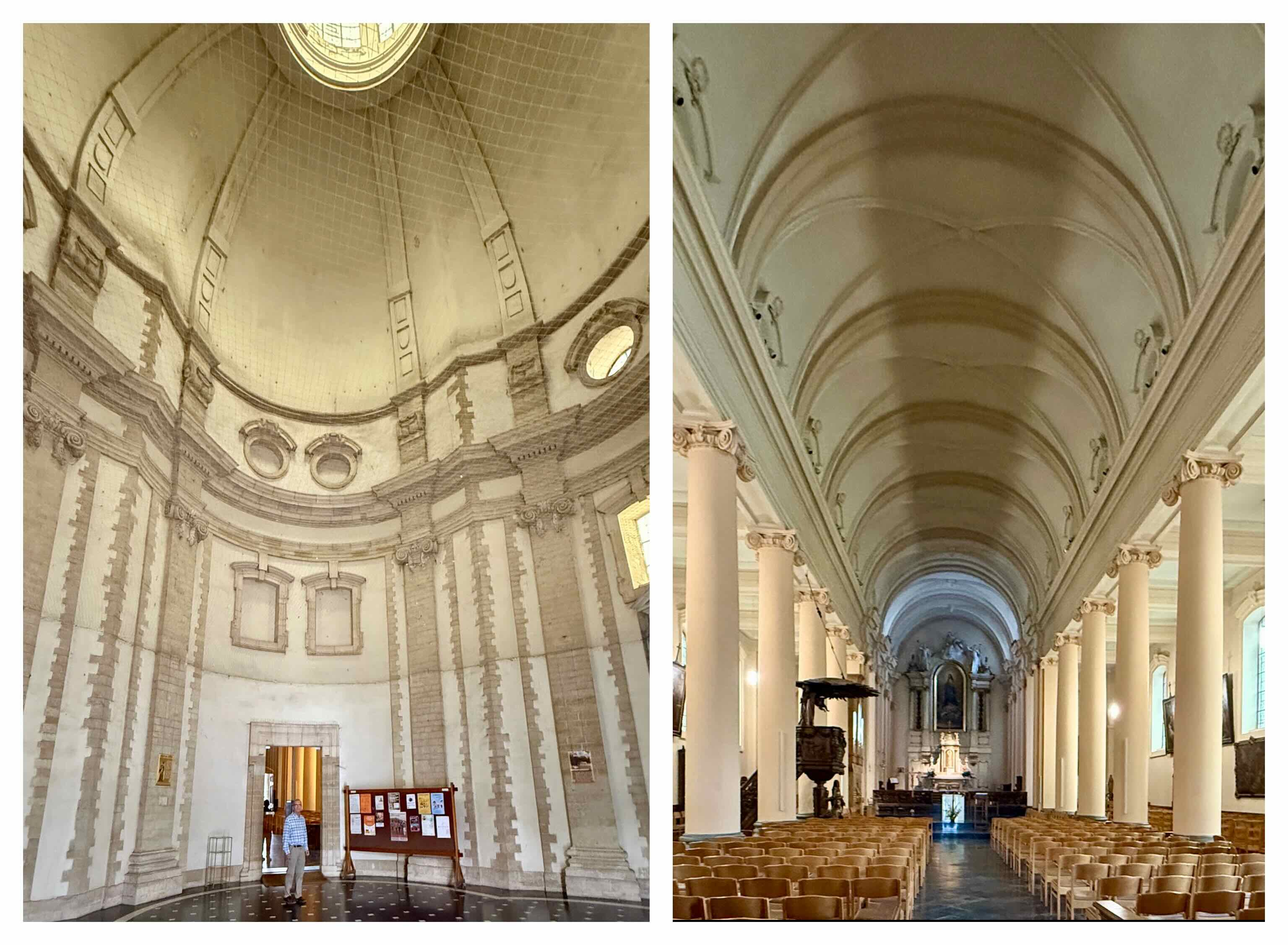
The road in front of the Church is cobble-stoned and we can see the depressions in the road made over the years by cart wheels.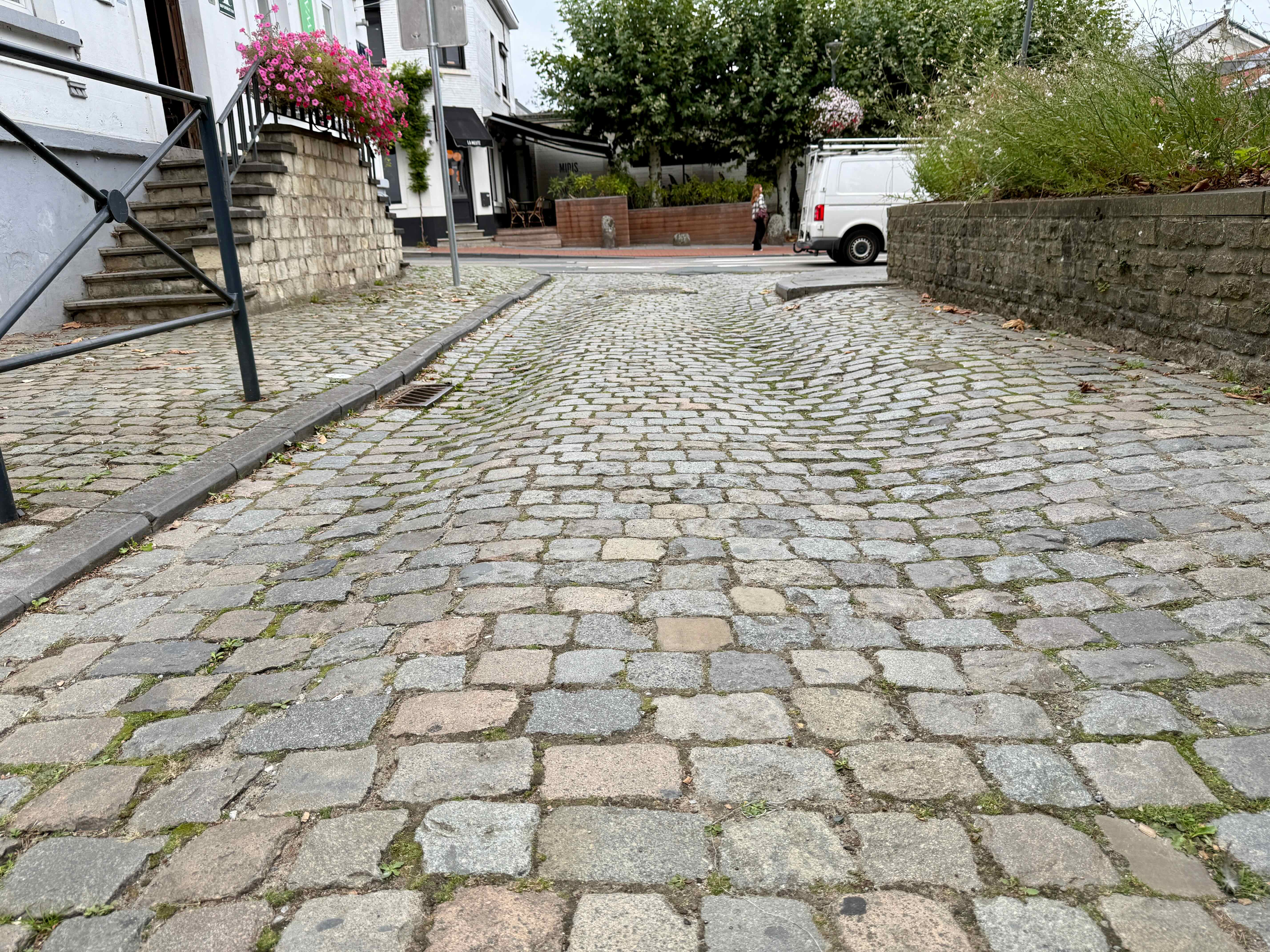
I adore these white and pink small daisy-like flowers. No idea what they are called but wish we could grow them back home.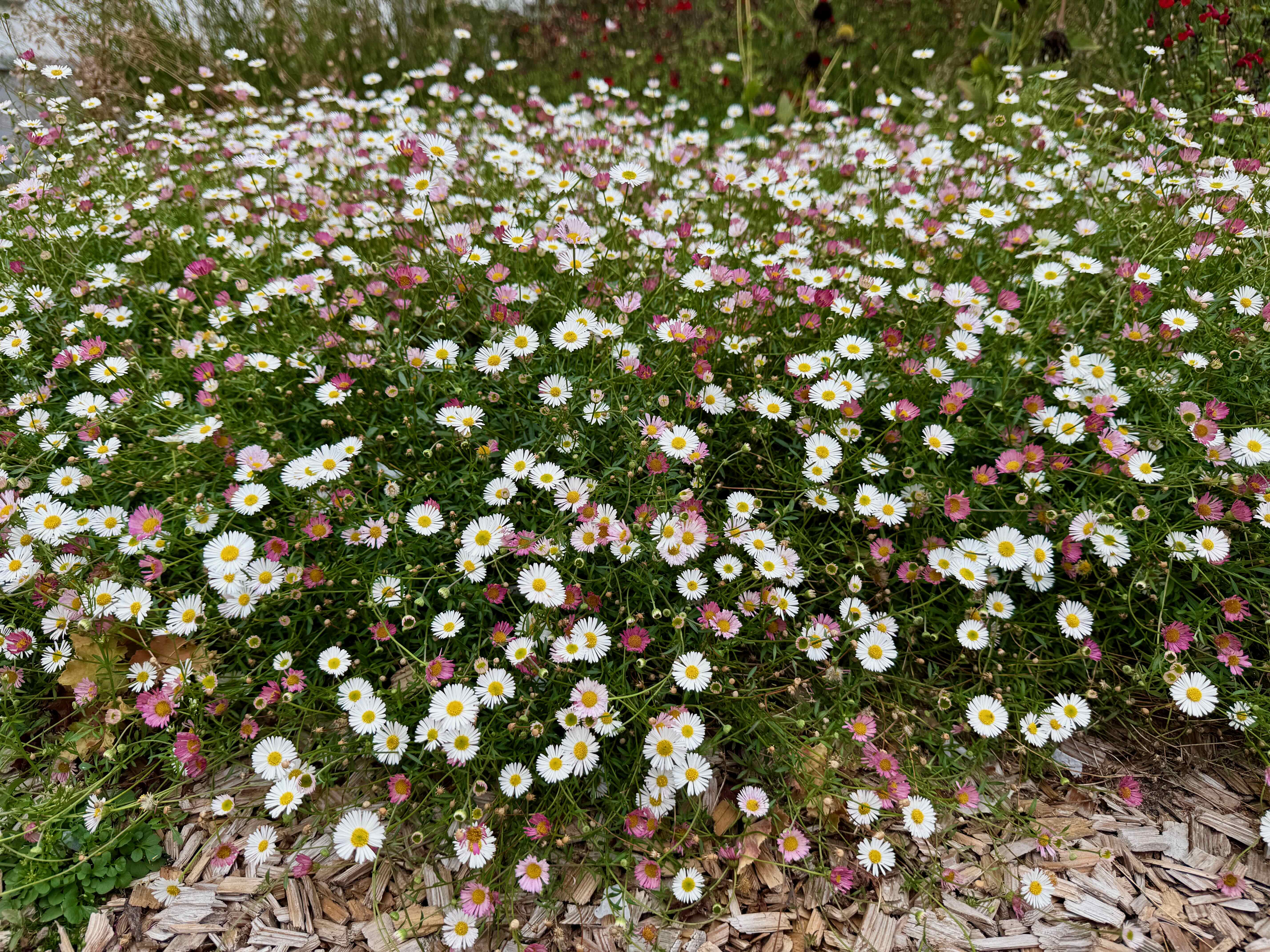
Next we drive to ‘The Lion’s Mound’ which is located at the site of the Waterloo Battle. This earthen cone is 169 m in diameter and 41 m high. An enormous lion, 4.50 m long, 4.45 m high and weighing 28 tons is located on the top of the mound. 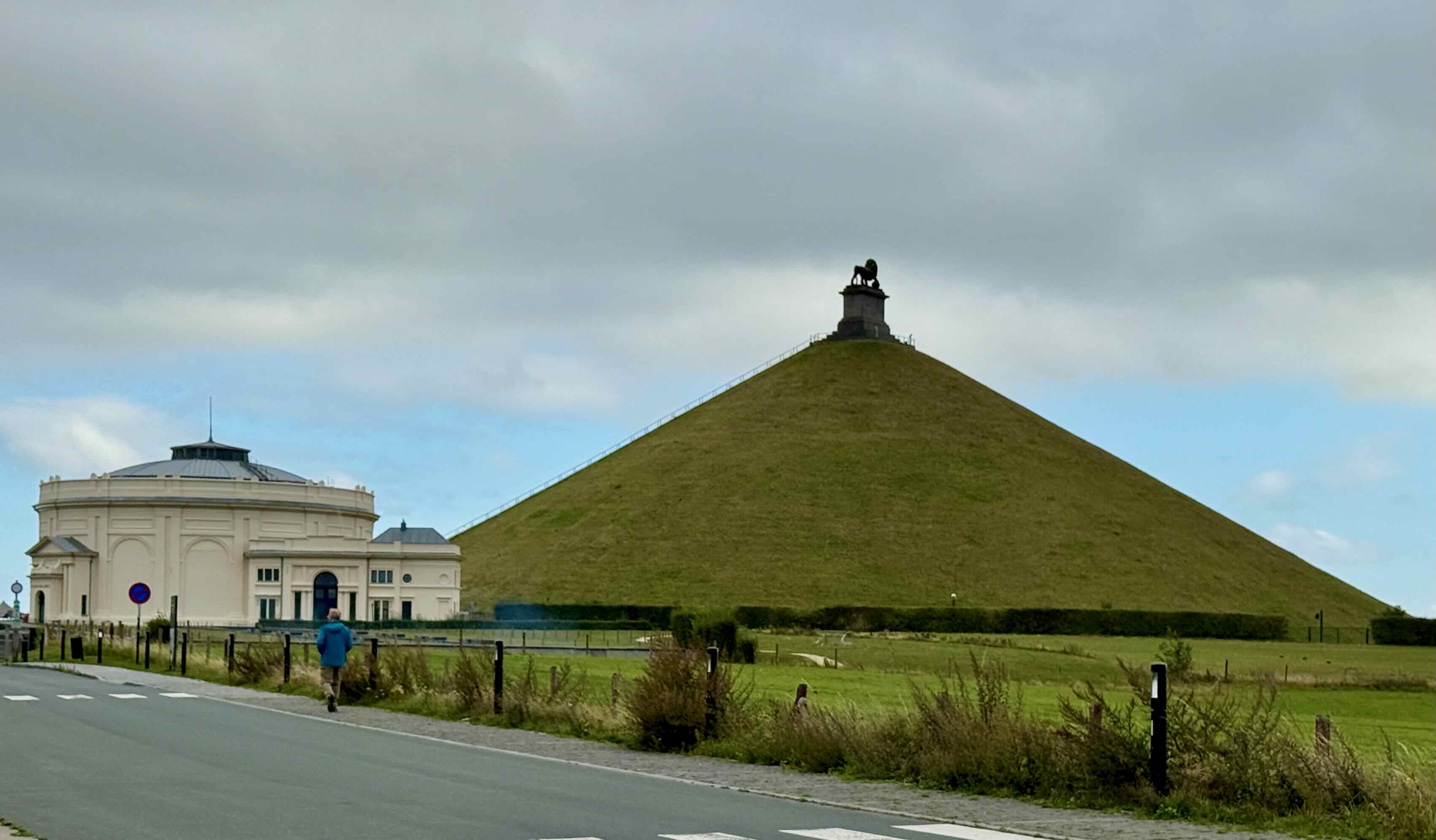
It symbolizes the victory of the monarchies; its open mouth is turned towards France, defeated; its paw resting on the terrestrial globe represents the peace that Europe has won. Bob went for a walk all the way around the mound but I was tired and it was cold and windy so I stayed in the car. We hit rush hour on the way home. I am so glad I am not driving!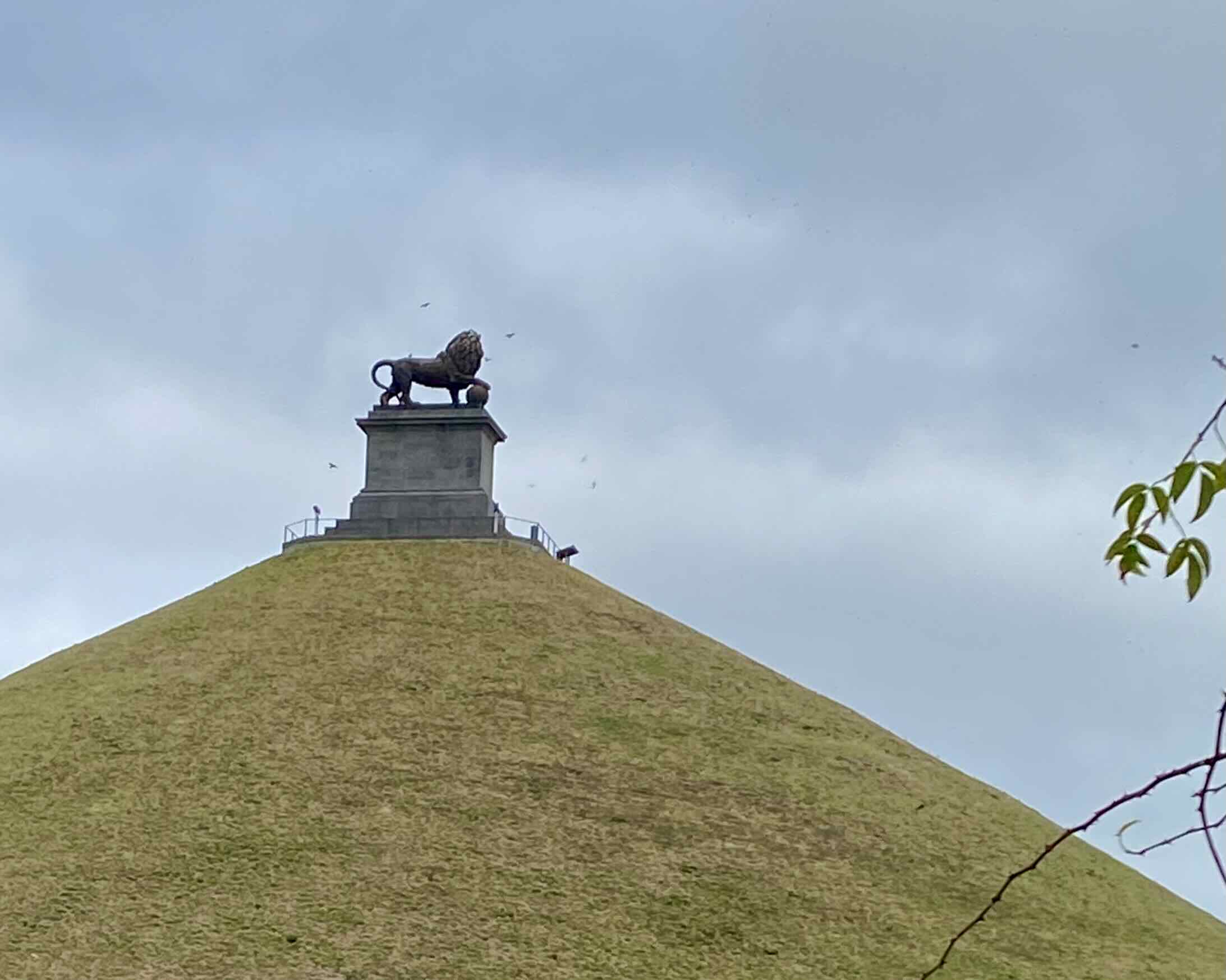
 trudymason.com