Day 35, Monday, October 2, 2023
The Lascaux Cave contains one of the most outstanding displays of 20,000 year old prehistoric art in the world and it is a UNESCO World Heritage site. We were very lucky to get tickets to visit Lascaux II. We had completely forgotten about needing to book ahead but thankfully it is not high season and we were able to get tickets for an English tour of the cave. The Lascaux Cave was discovered on September 12 1940 by 18 year old Marcel Ravidat when his dog Robot investigated a hole left by an uprooted tree that had fallen over in a storm. 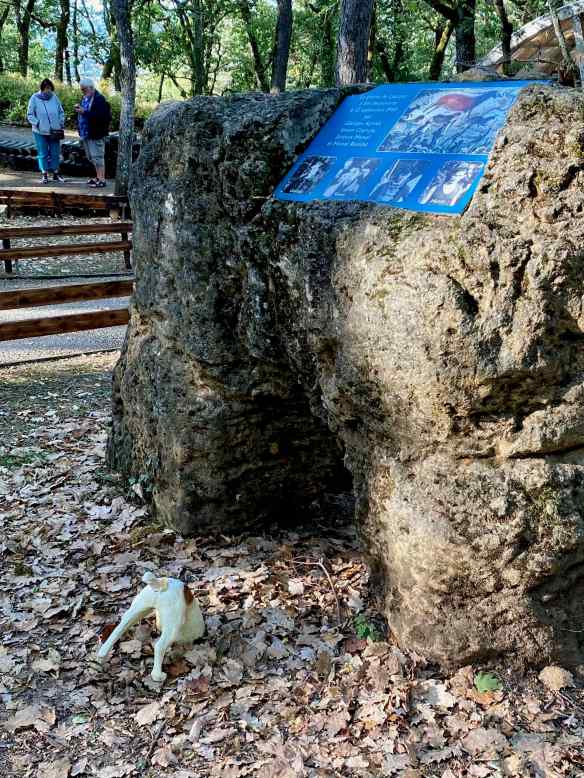
Of course we are visiting a replica cave. It was the first replica cave in the world when it opened in 1983 near the site of the original cave…however there are still no photos allowed. The original cave was closed in April, 1963. The continuous flow of visitors (1500/day) and the carbon dioxide and human breath began to degrade the prehistoric paintings in the decorated cave. Lascaux II is an exact replica of the two main chambers of the cave. This short video has a segment with a walk through the cave by torch light. This is what we experienced at Lascaux II. We were standing in a dark cave, with only a flickering torch to illuminate these 20,000 year old cave paintings. It was an amazing experience. https://www.youtube.com/watch?v=VWUUiFxbEE4&t=87s
I manage to do a couple quick drawings while in the cave, but the lighting is poor and I decide to enjoy the experience and forget about trying to draw.
We visit Parc de Thot which is a small zoo with animals that are similar to those drawn in the caves…bisons, wolves, deer, and bulls. There was an interesting short film and some displays in their building. It was a nice place to have our lunch but that was about it.
This display shows the different techniques that were used to make the cave paintings and engravings. I was surprised to learn that paint brushes, pencils (pieces of pigment attached to sticks}, stencils and a primitive sort of airbrush were all used 20,000 years ago! The artist would blow pigment from his, or perhaps her mouth onto the walls of the cave, sometimes even using a hollow bone for more accuracy.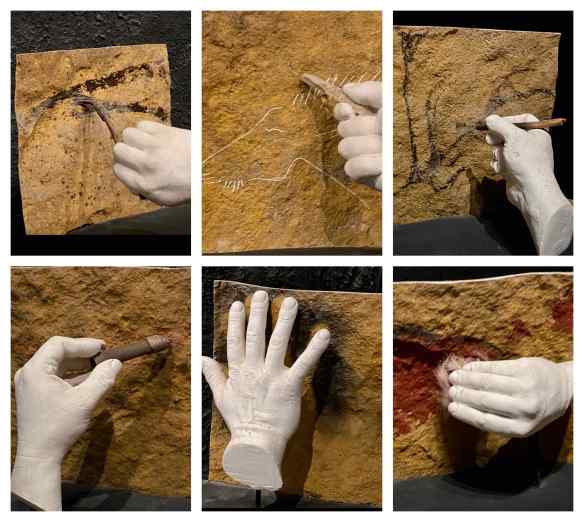
This display shows one of the cave paintings…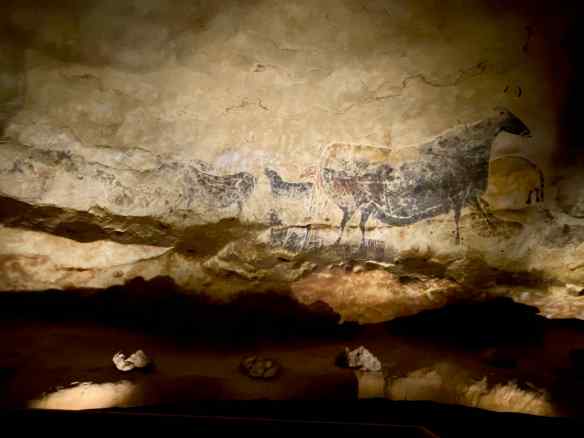
and then uses black light to show all the engraved lines that are difficult to see.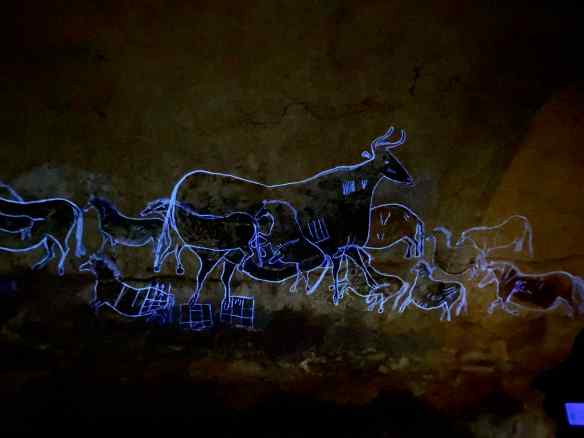
After we ate our lunch I did a bit of drawing and Bob did a bit of reading before we left for Lascaux IV.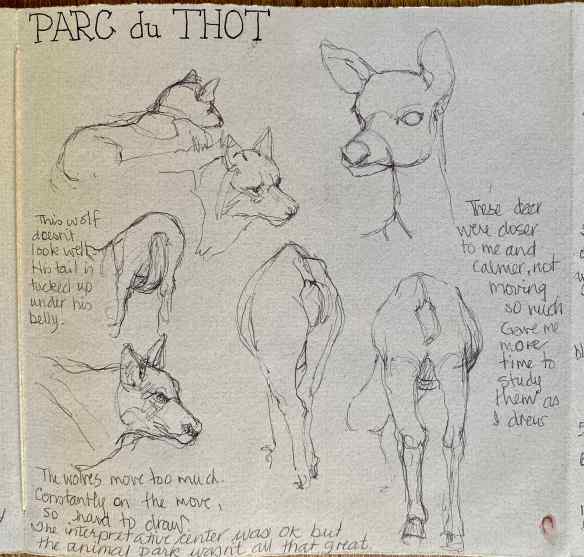 In 2016, a new replica, Lascaux IV, was opened to replace Lascaux II. It is adjacent to the original cave and offers an even more authentic experience than Lascaux II, with changes in air pressure, along with a series of atmospheric cave scents and sounds.
 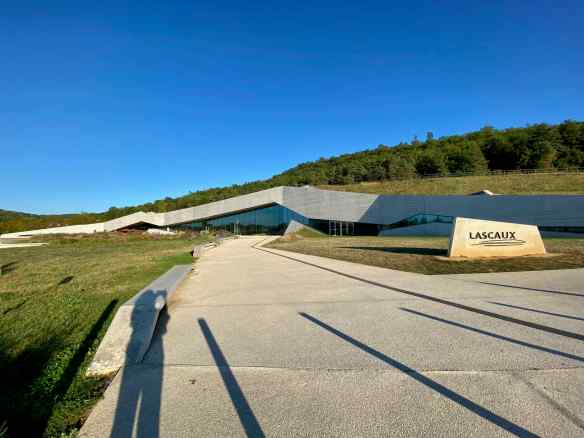 Once again no photos allowed however there is an interpretive area that has more replica displays and we can take photos there.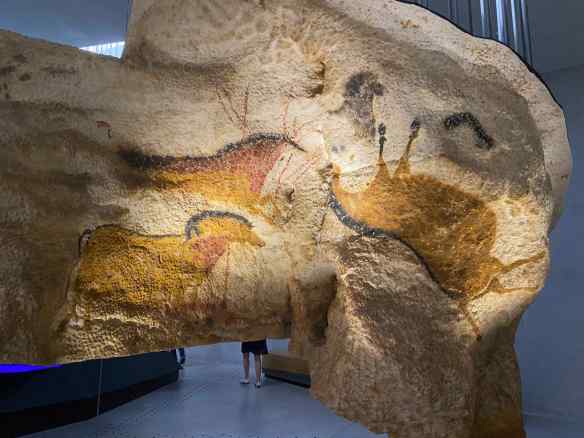
These displays are just as well done as the paintings in the cave..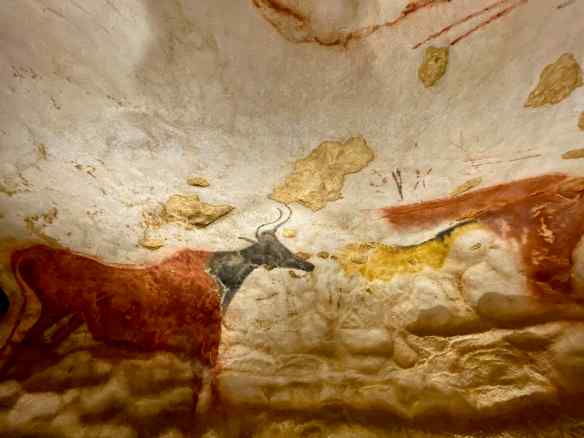
It is nice to have a bit more time to really examine some of the the paintings up close and in better light.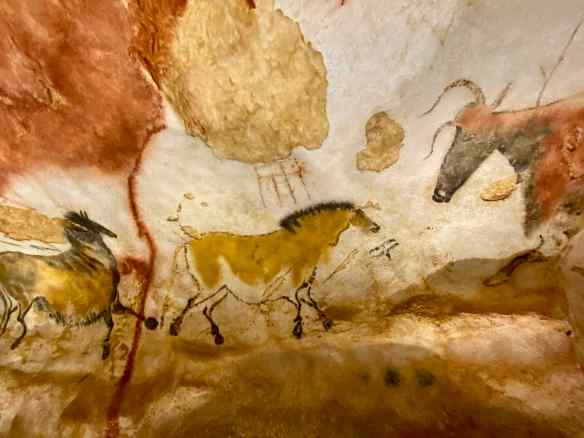
They are spectacular, and photos do not come anywhere near ot capturing this incredible art that was created 20,000 years ago by Cro-Magnons, who were the first early modern humans. 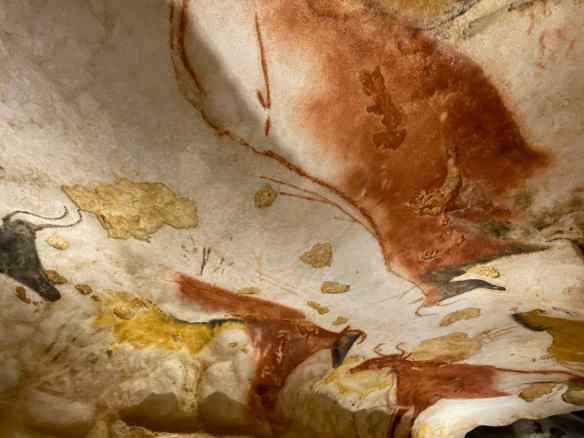
This stag is particularly beautiful with its magnificent set of antlers.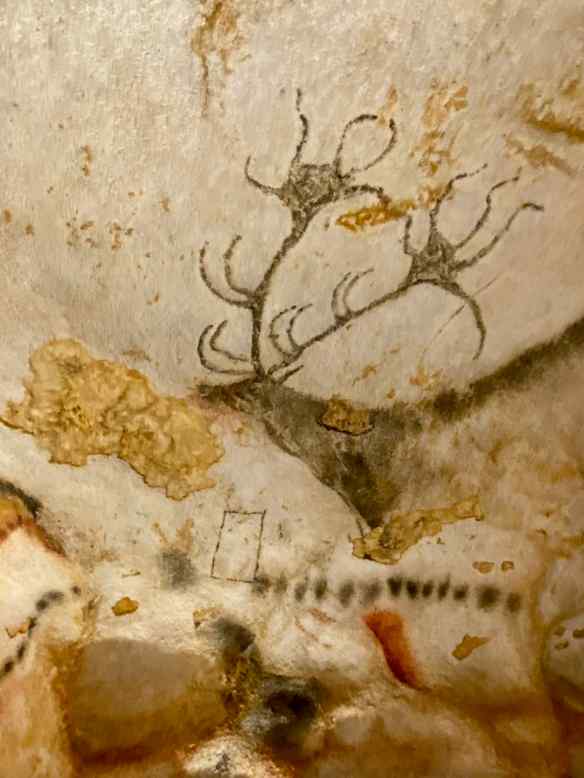
This is one of the first figures we see when we enter the cave. It is called ‘The Unicorn’ even though it has two horns. It is an animal drawn from the imagination of the artist and did not actually exist.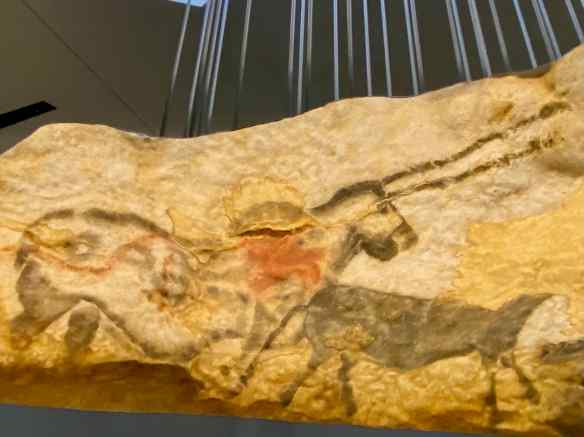
There is a deep shaft that has the only depiction of a human, although it does have the head of a bird. This is also in the interpretive area as it would be impossible to climb down the shaft in the replica cave. Here we can walk in at the bottom and look upwards to see the paintings.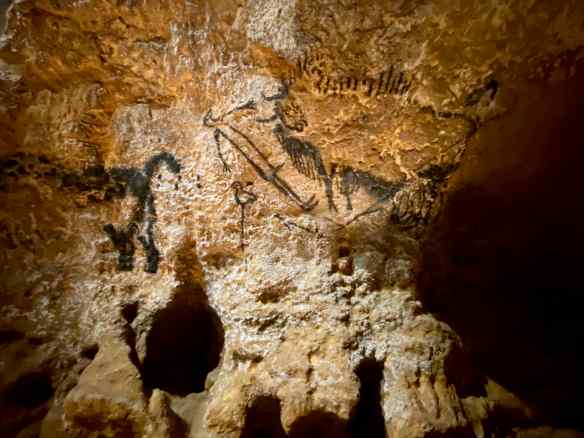
This gives some idea of the size of these paintings. This is one of the largest animals in the Lascaux caves.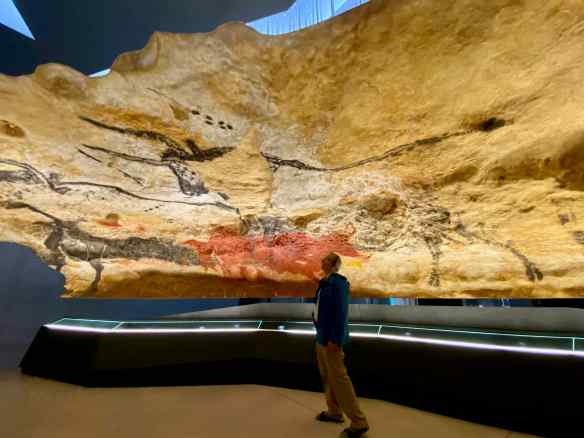
I like this bull. It is the one I drew in Lascaux II. 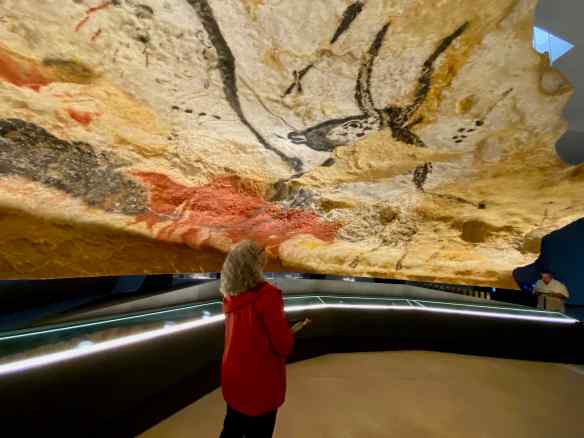
This display showed the engraved lines of this bull. Giving the bull two heads was used to portray movement.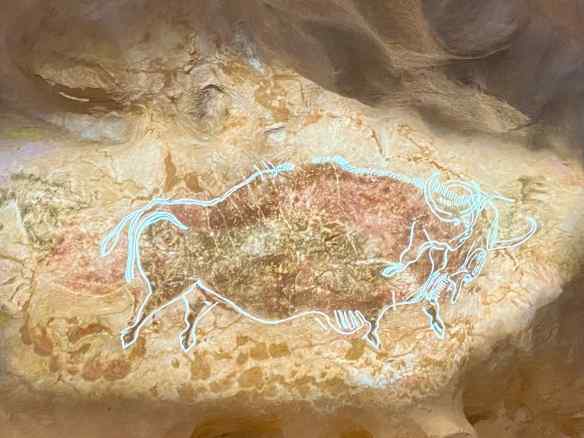
Leaving the interpretive area we walk down this long corridor which has several theatres with more information on Lascaux and the history of the discovery of the caves. There are over 150 prehistoric sites in this area.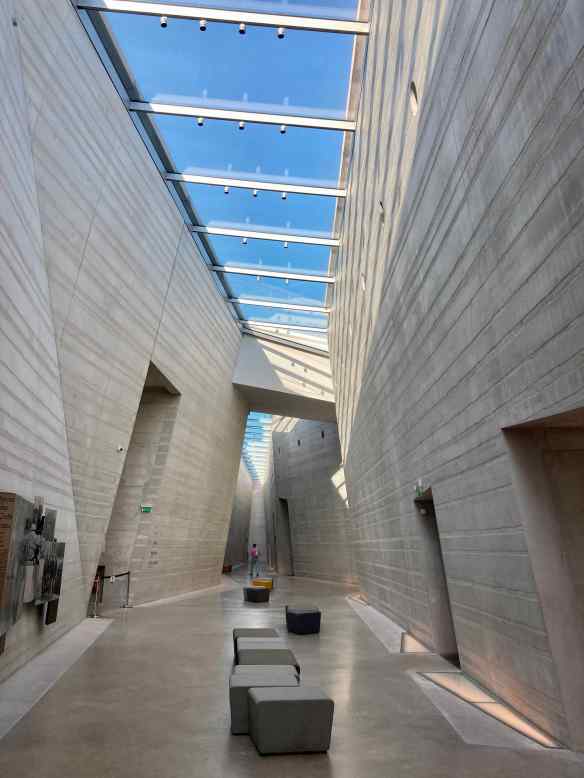 The last room we entered had huge animations which travels across three walls and sometimes over the floor and ceiling as well. I particularly liked this one which shows mammoths from the Rouffignac Cave, which we hope to visit later this week. https://www.youtube.com/watch?v=G2yv2ydzsJ0
We are the last people to leave and they lock the doors behind us after we walk out. It was a great day.
 trudymason.com
Incredible!
LikeLike
Totally incredible! I am so glad I had the opportunity to see these incredible cave drawings and paintings. Just loved it!
LikeLike
I remember reading about these caves. A shame the original cave can’t be seen but good th
LikeLike