Stuttgart, Germany to Mulhouse, France

Day 44     Monday, October 13, 2025

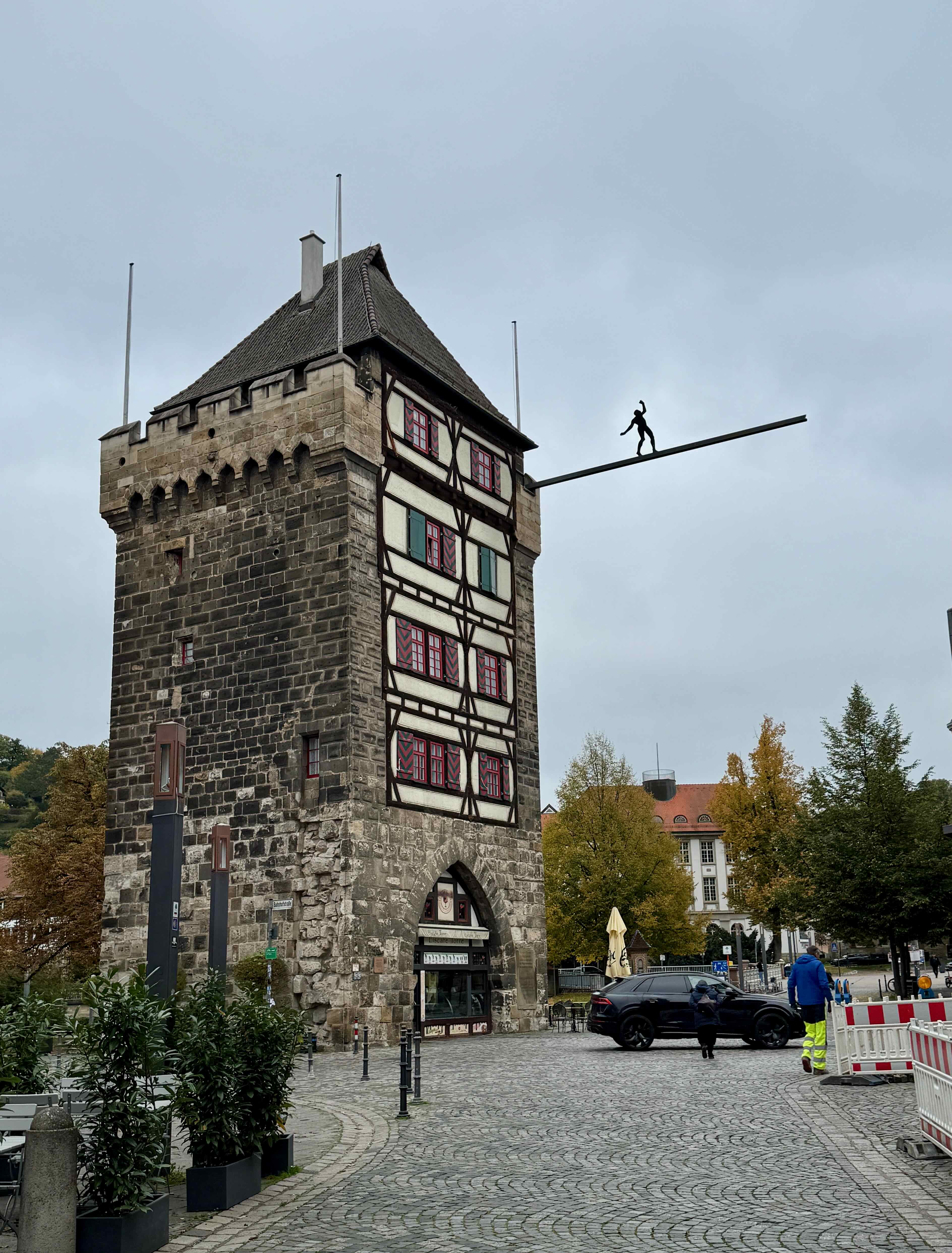
First stop on our way to Mulhouse is a pretty little town called Esslingen.  At first sight we thought this was a real person!
Our Airbnb in Stuttgart had a calendar with almost this exact photo.  It was the impetus to visiting Esslingen.
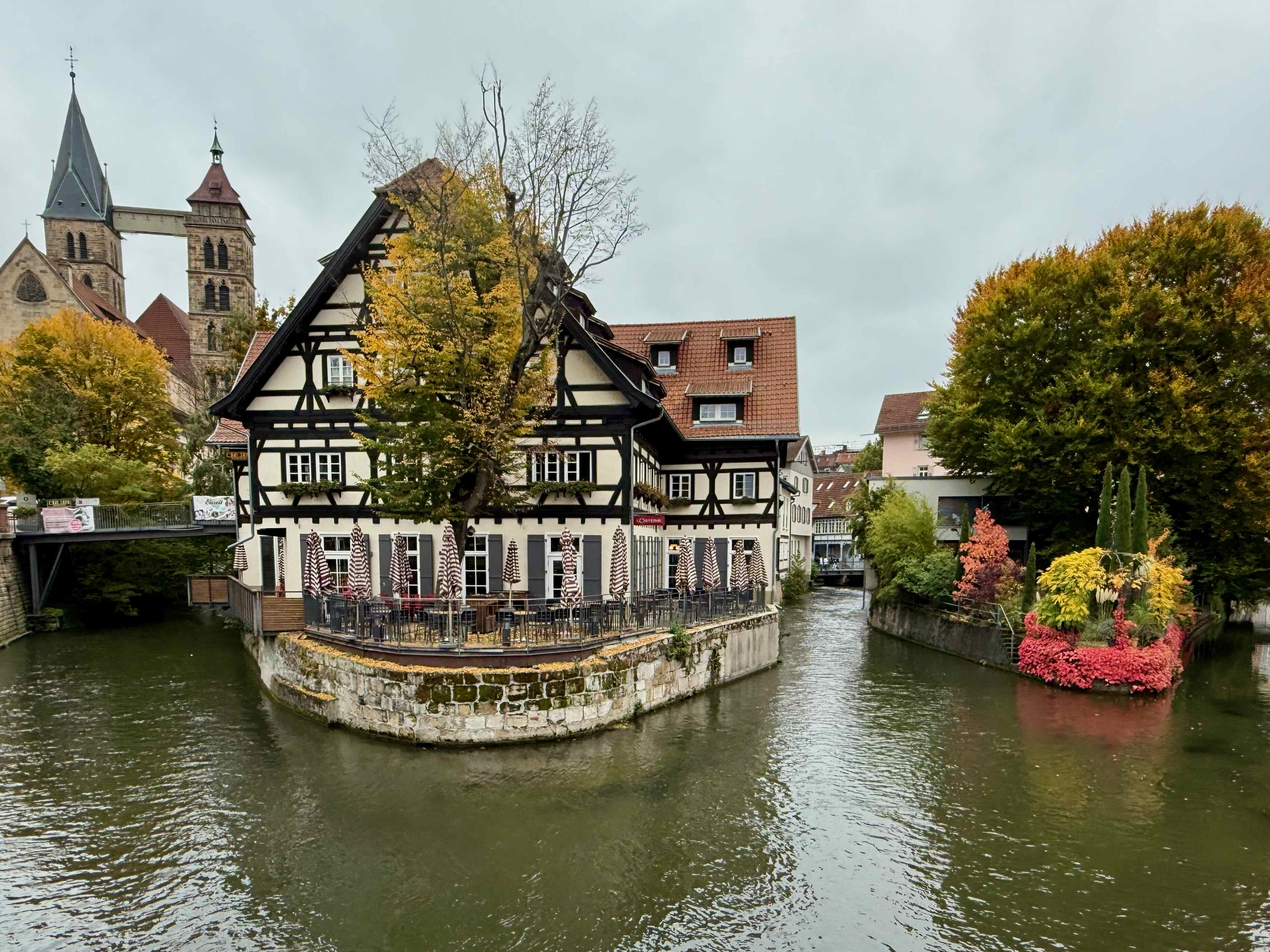
Autumn has definitely arrived.  I love walking through the fallen leaves.
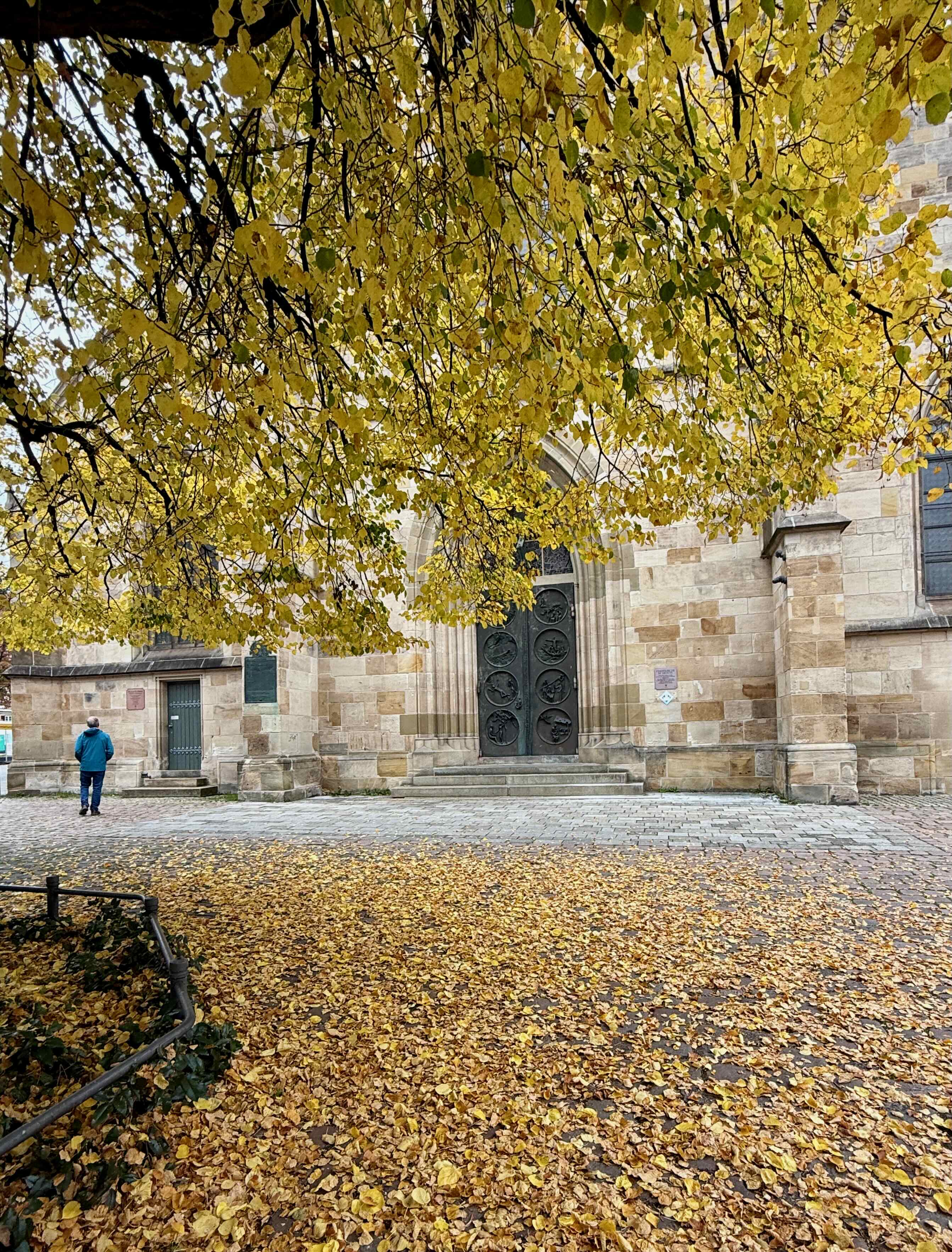
We walked into this church because its doors were so interesting,

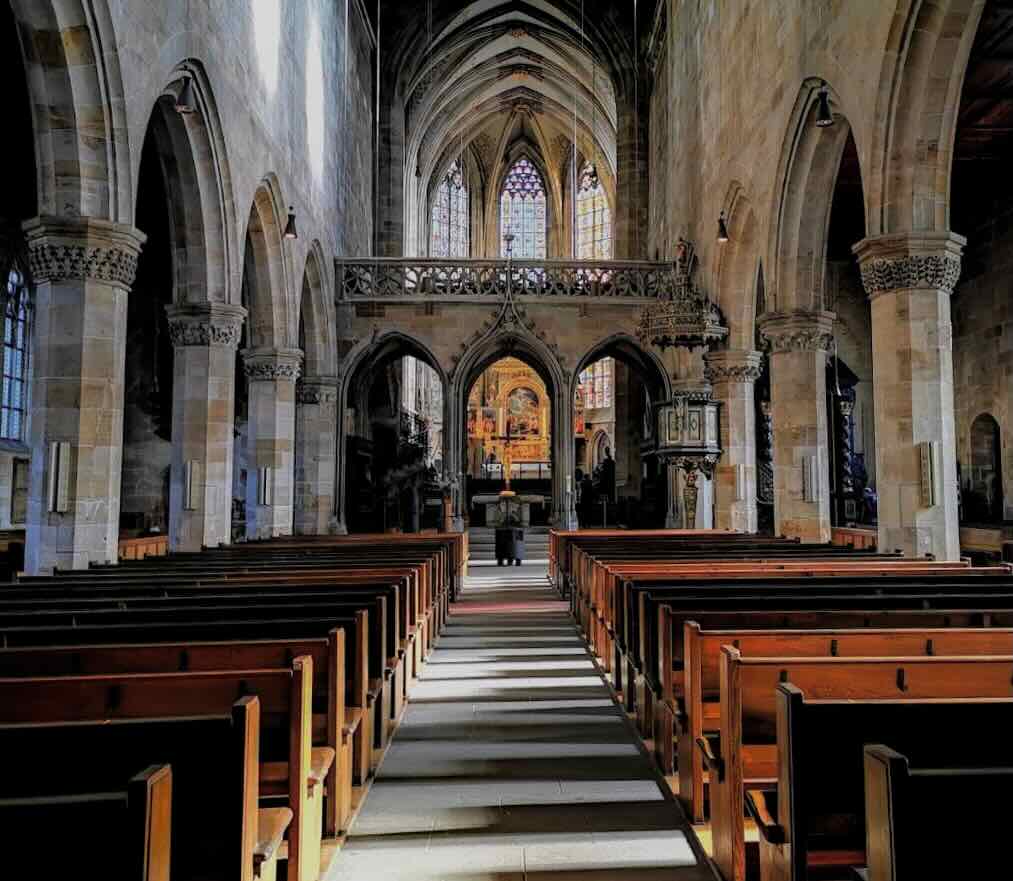
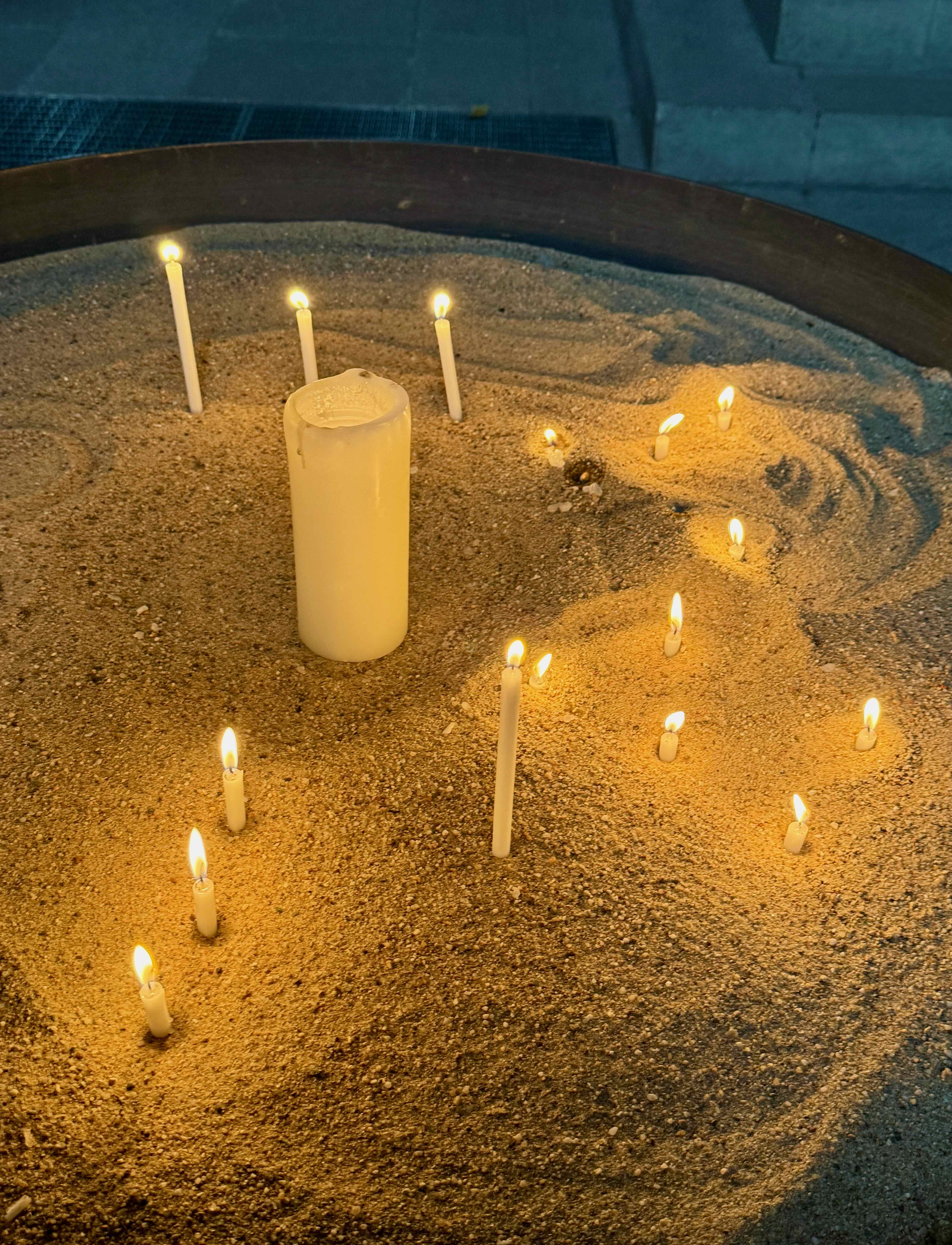
I didn’t record the name of this church, but it had a very austere dark interior……but the area to light candles was small and intimate and appealed to me.  We lit a candle for all our family members and friends who are facing health challenges right now, and spent a few moments in silent contemplation.
Back outside, we see Esslinger Castle in the distance. But this castle isn’t actually a castle, it is a well-preserved part of the medieval city fortifications, located high above the city centre. Originally expanded in the 13th century, it was reinforced in the 16th century with walls up to 5 meters thick. We can see people up there but we don’t have time to go and explore. Travel days don’t allow for in depth exploration and only give us a chance for brief visits to sites along the way.

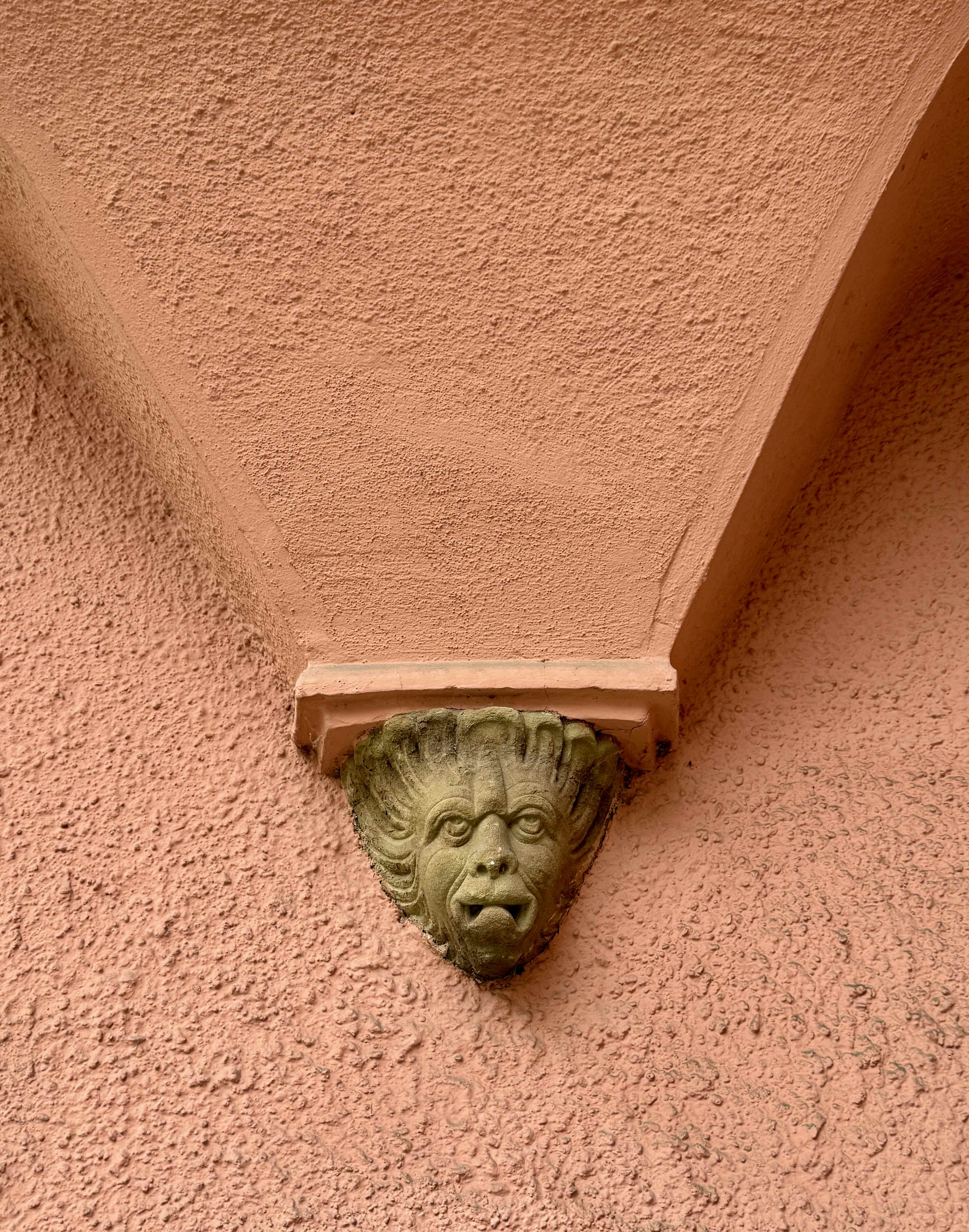
One thing I love about European cities and towns are the unexpected little things, like the face on this wall. There is always something interesting and different to discover.
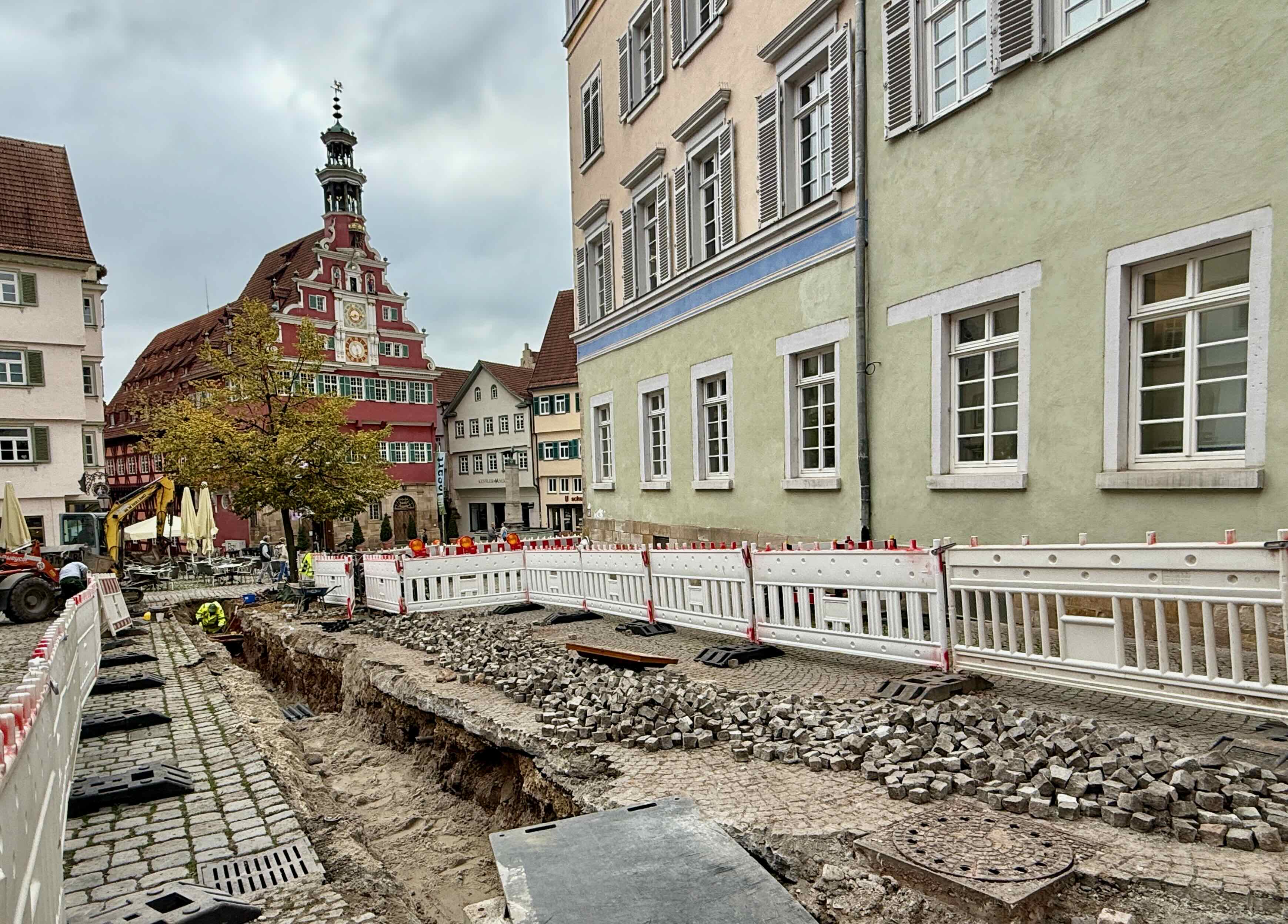
We pass this road construction site. I think they were replacing some pipes.  All the little stones from the cobbled sidewalks and streets are piled up and then relaid in the pattern that matches the rest of the in place stones.  Very labour intensive, but such a wonderful final result.
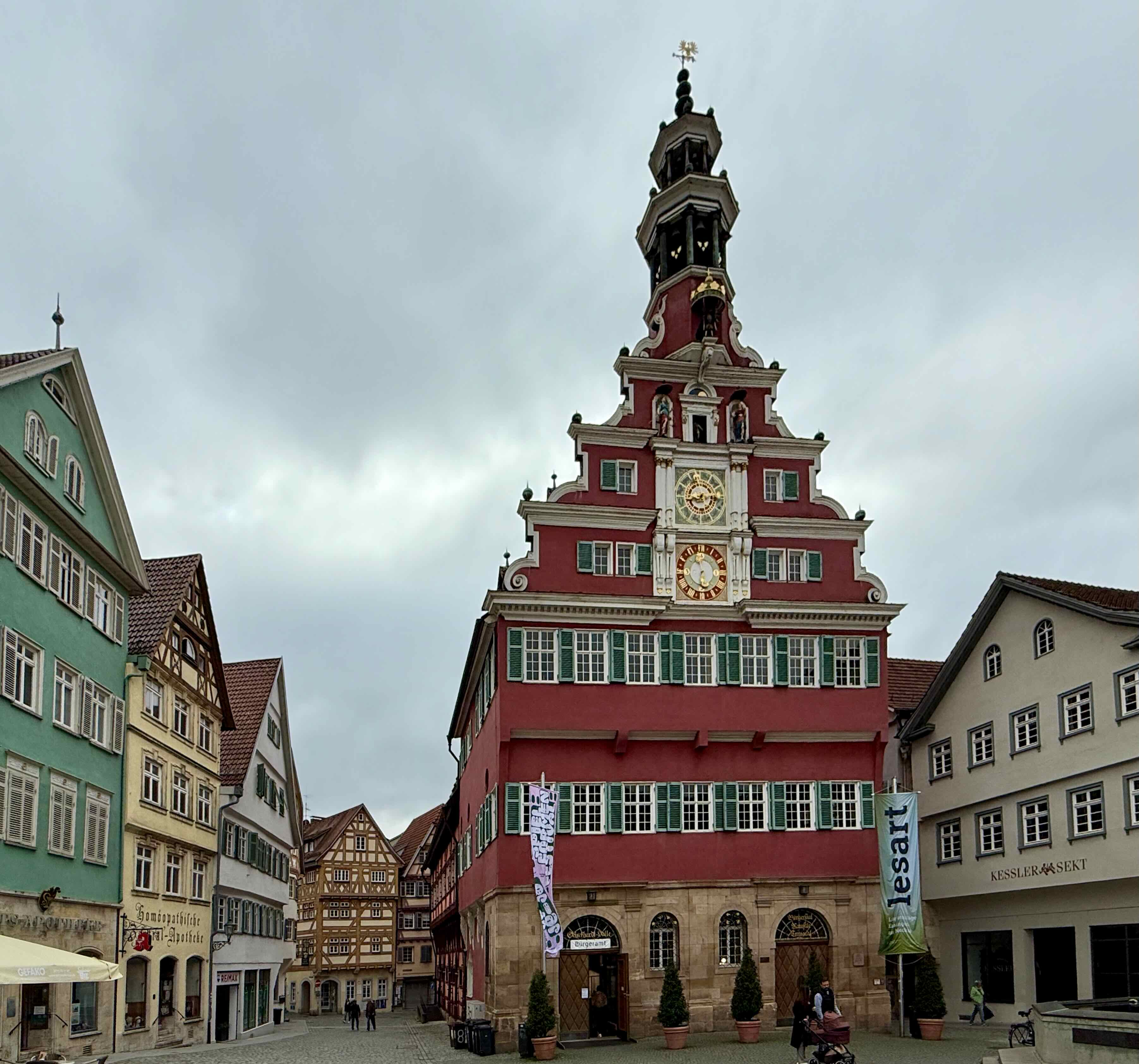
Built in 1423 as a sales hall and tax house this building is the Old Esslingen Town Hall. We were hoping to hear the Glockenspiel and see the figures on the clock move but later discovered that only happens five times a day. We are out of luck.
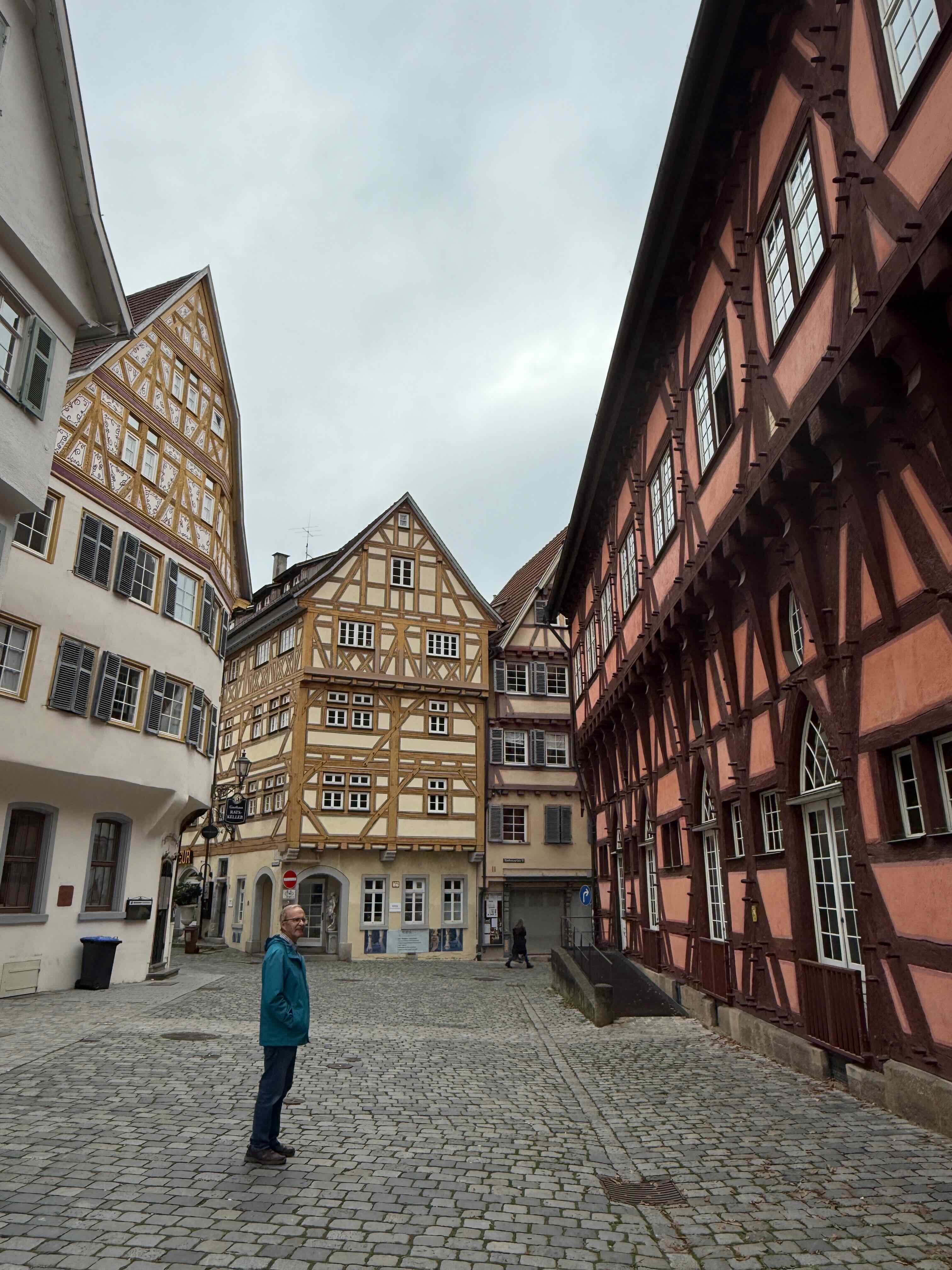
The cobbled streets are lined with ancient timbered houses…
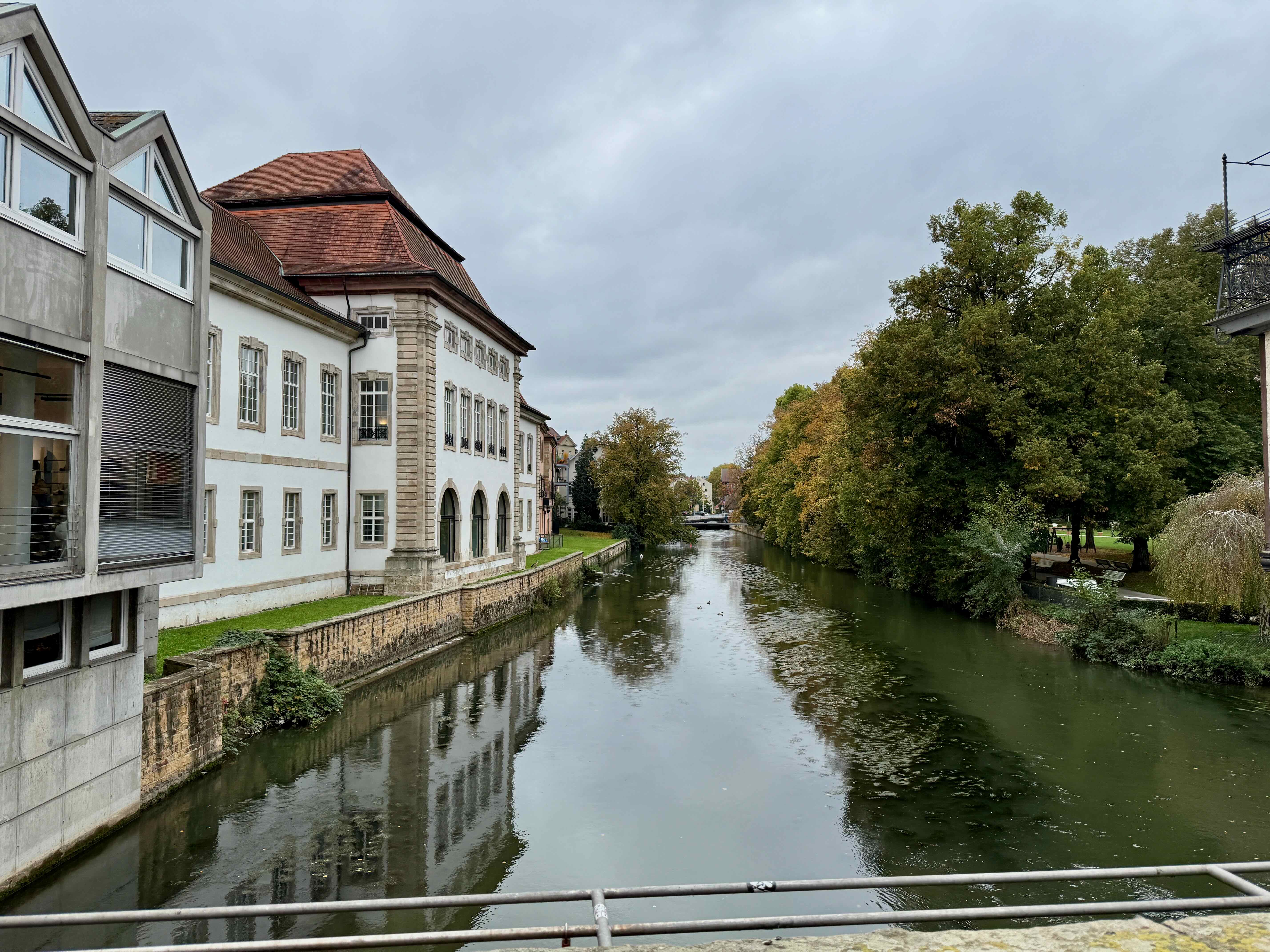
…and there are canals here too.  We could have piloted our own electric boat for a trip on the canals but they stopped operating the end of September.
The town is surrounded by vineyards.
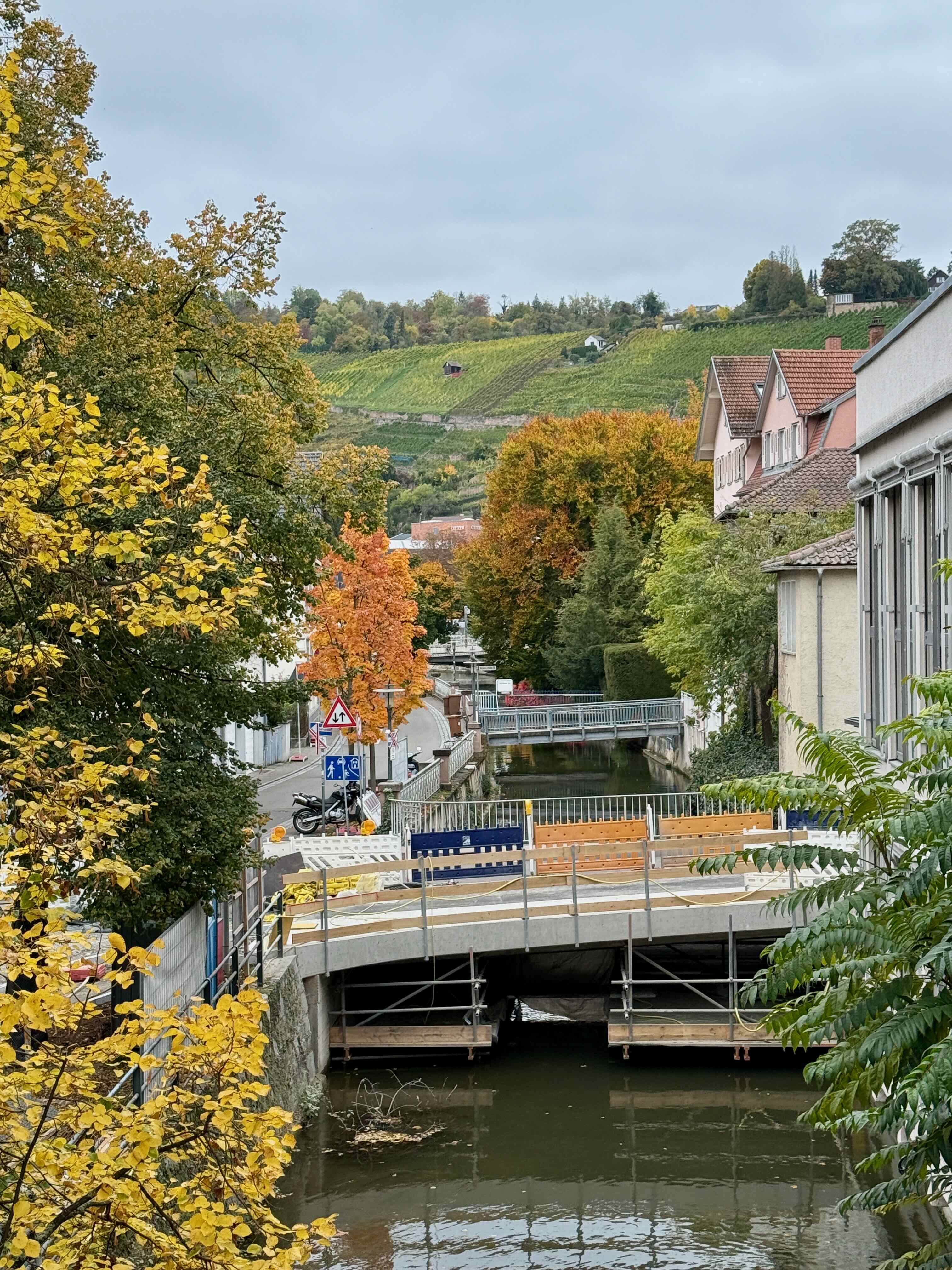
I thought this house was particularly spectacular. It is dated 1531!
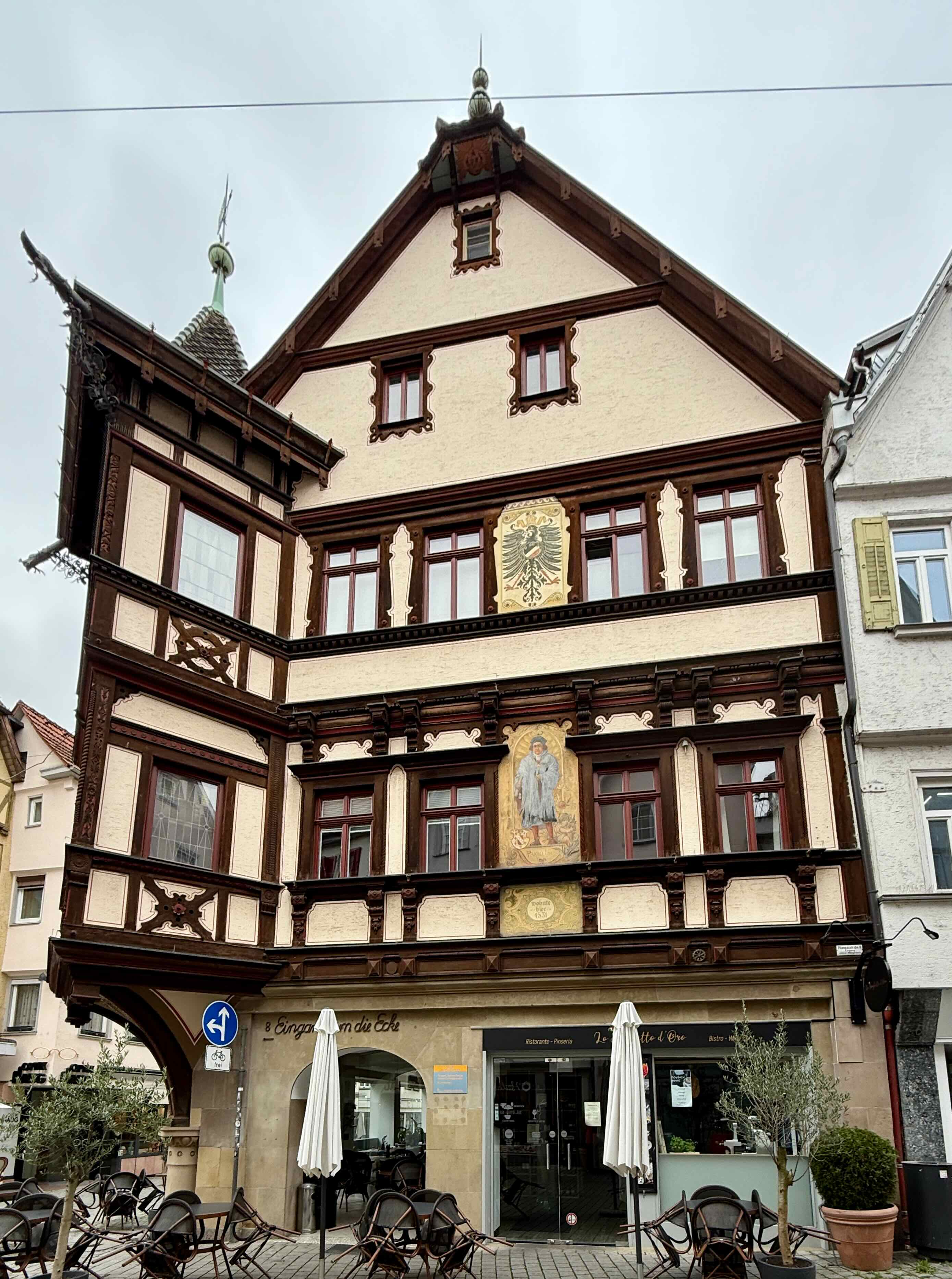
As we are leaving Esslingen I quickly snap this photo from the car window!  I just googled it and dick means thick in German, but also discovered that F. Dick is a German cutlery manufacturer that owns this smokestack…too funny!
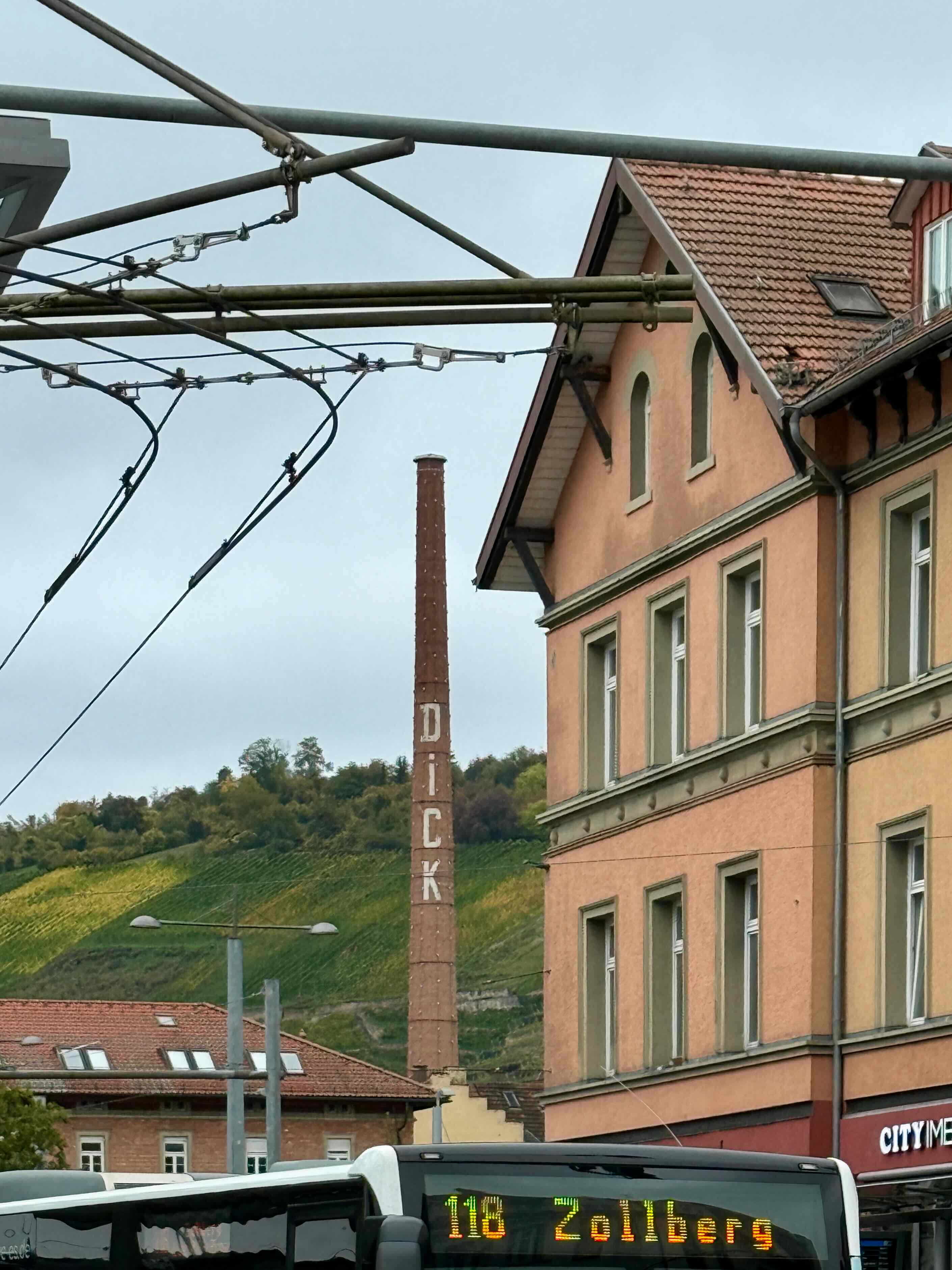
Next stop is Baden Baden. We spent some time in Baden Baden a long time ago so we thought we should stop there for a visit. There are flowers everywhere, but bathrooms are few and far between!  We spent 45 minutes trying to find a bathroom. Using Google maps we walked several blocks to where there was a WC…but we couldn’t find it. Turns out it was in a parking garage and both of us walked right past the doors to the washroom twice without seeing them! They were on either side of the of the parking payment machine with a tiny sign on each door!

I love how people have tiny potted gardens on their window ledges or on the street beside their doors. 
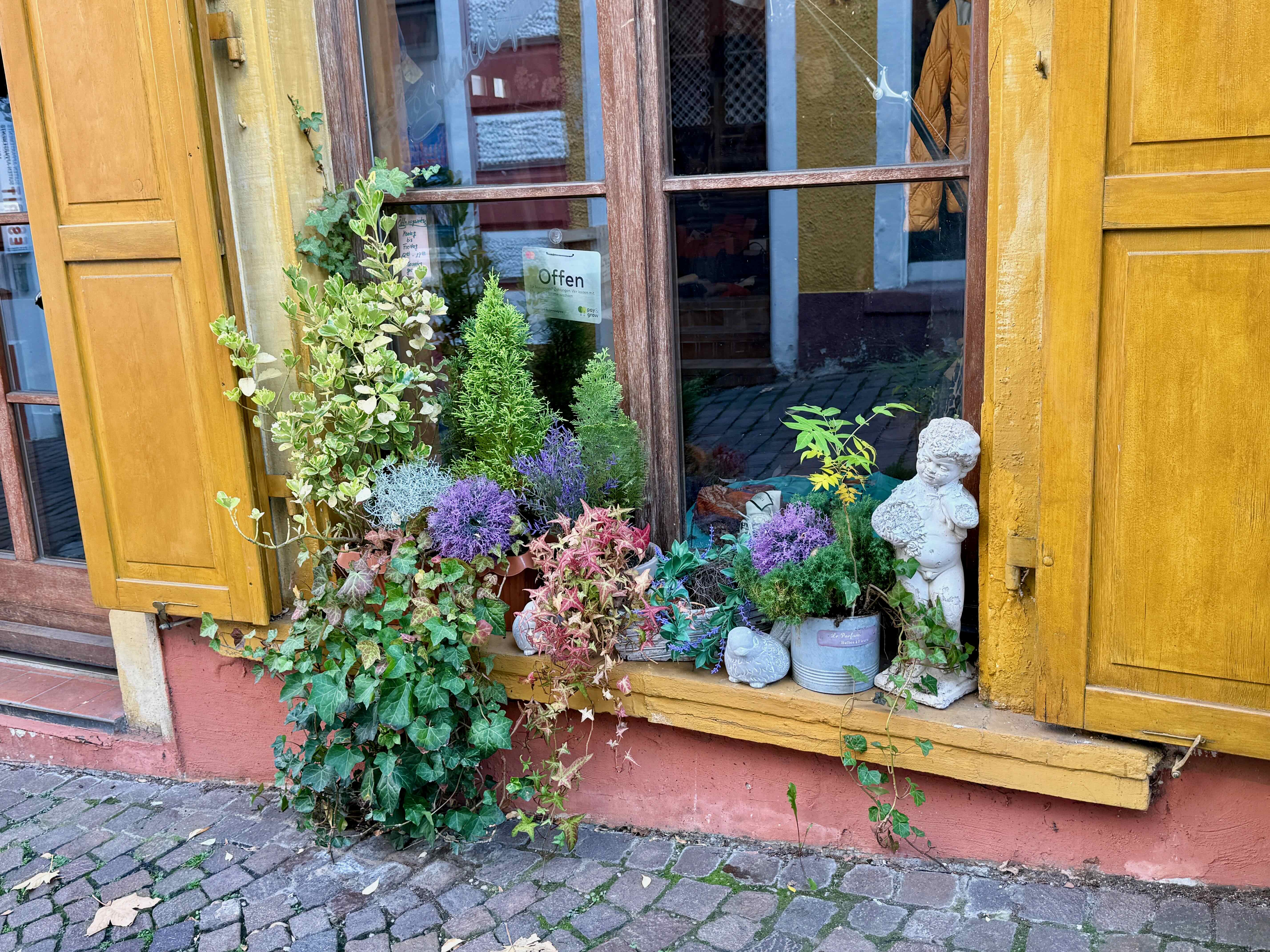
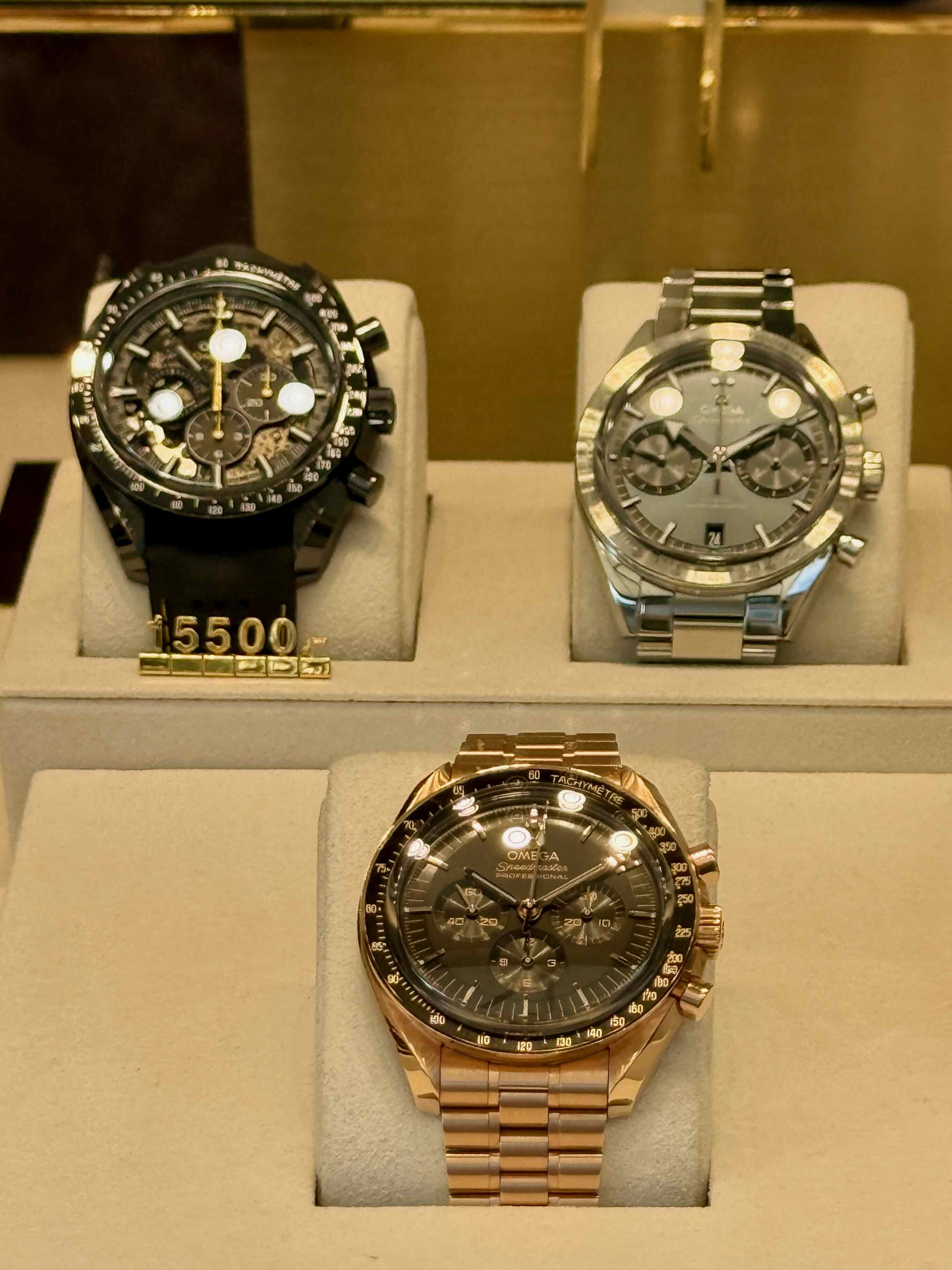
Baden Baden has a lot of very high end shops.  This watch is priced at €15,500…no prices on the others. I presume they are even more expensive.  We also see small diamond earring studs that range from €399 to €820 and there were no clothing items on display in the shop windows below €100!  A bit too pricey for us, but it is fun to window shop.
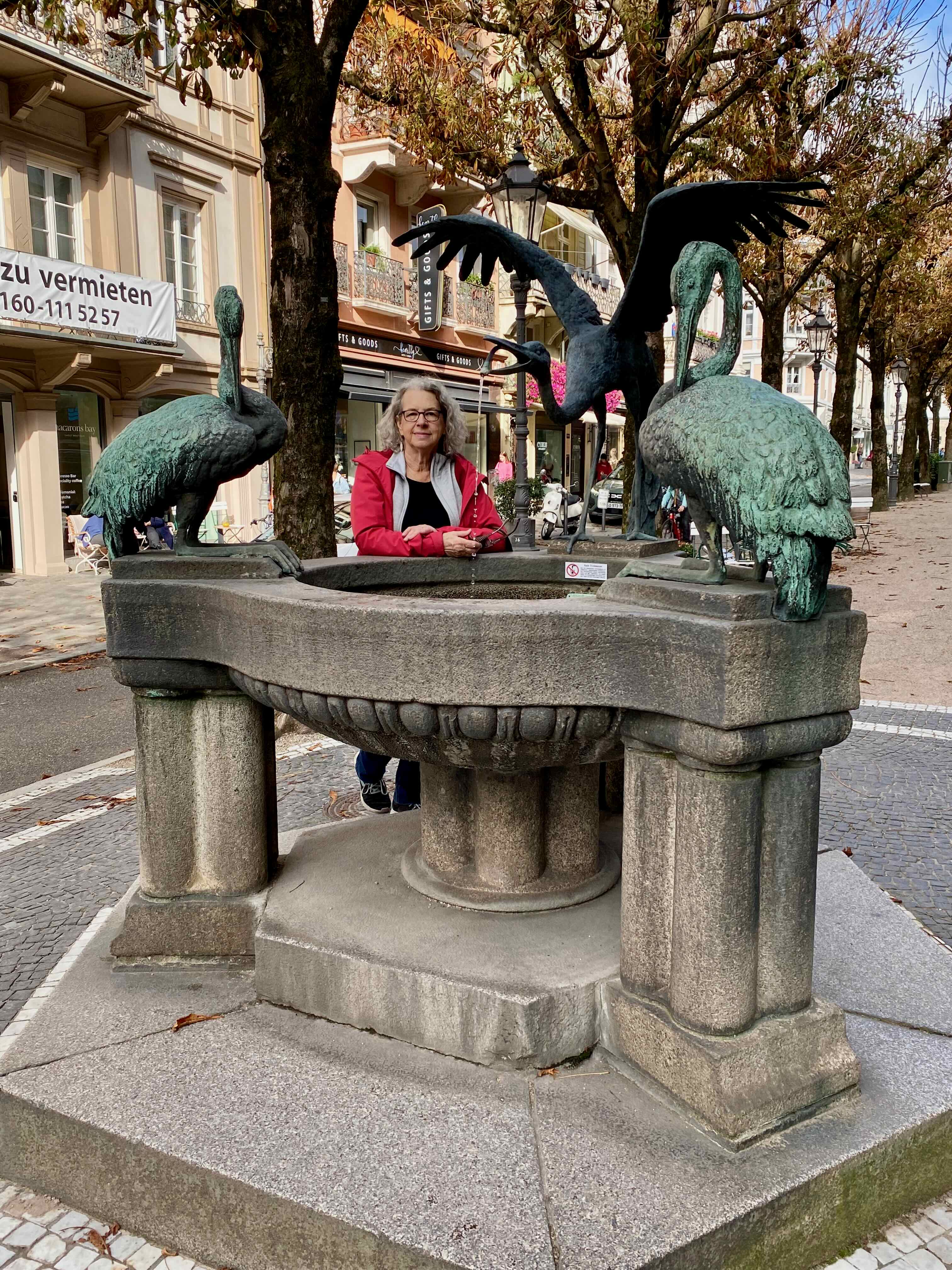
Loved this stork fountain!
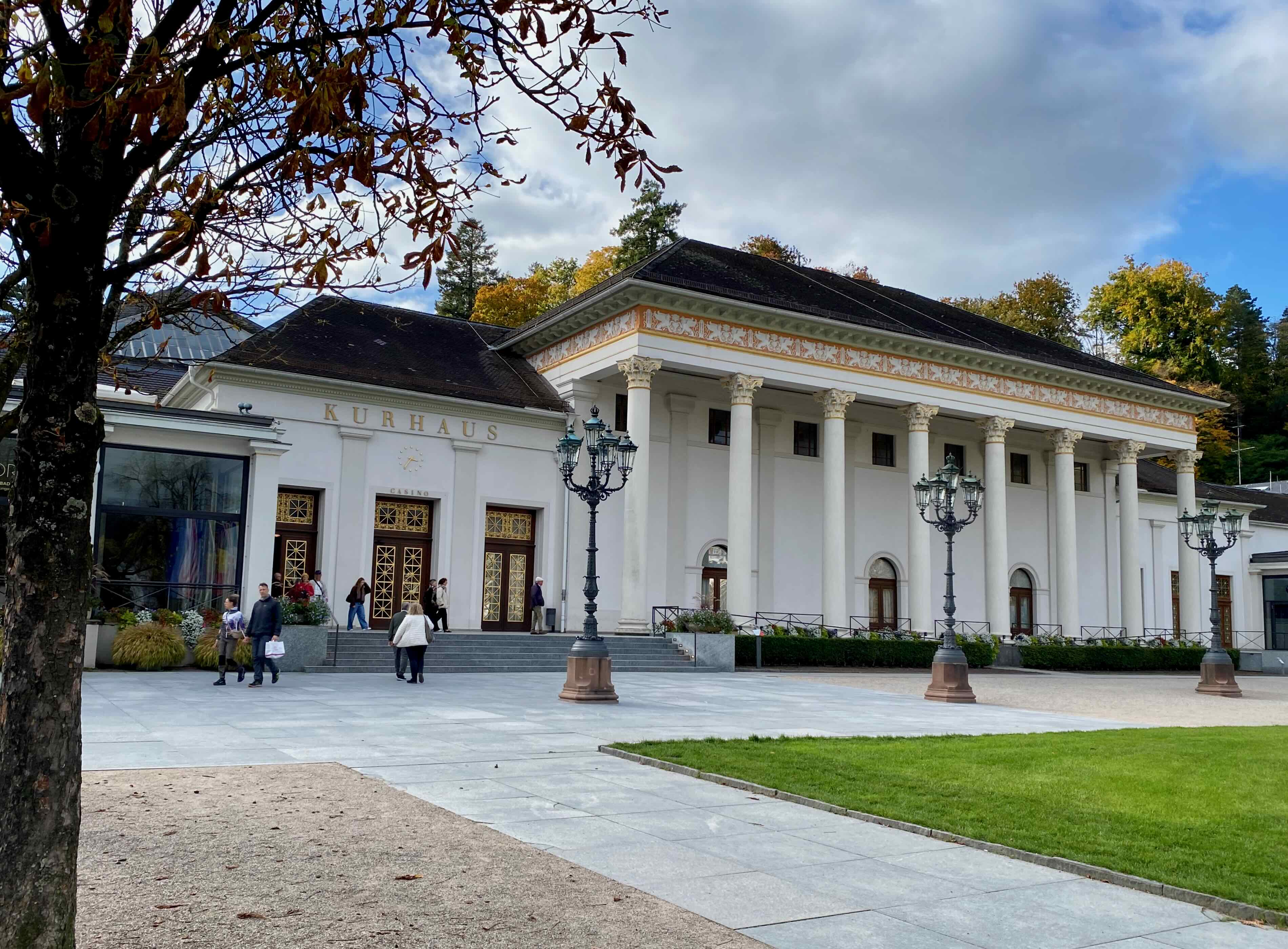
This is the Baden Baden Casino.  Bob thought we could go in and tryout luck but men must wear a suit jacket and tie.  We wouldn’t be allowed in with our jeans and casual sweaters.
The drive from Baden Baden to Mulhouse in France was interesting.  I see these strange structures on Google maps while navigating…turns out they are huge shopping malls with parking on the roofs of the buildings.
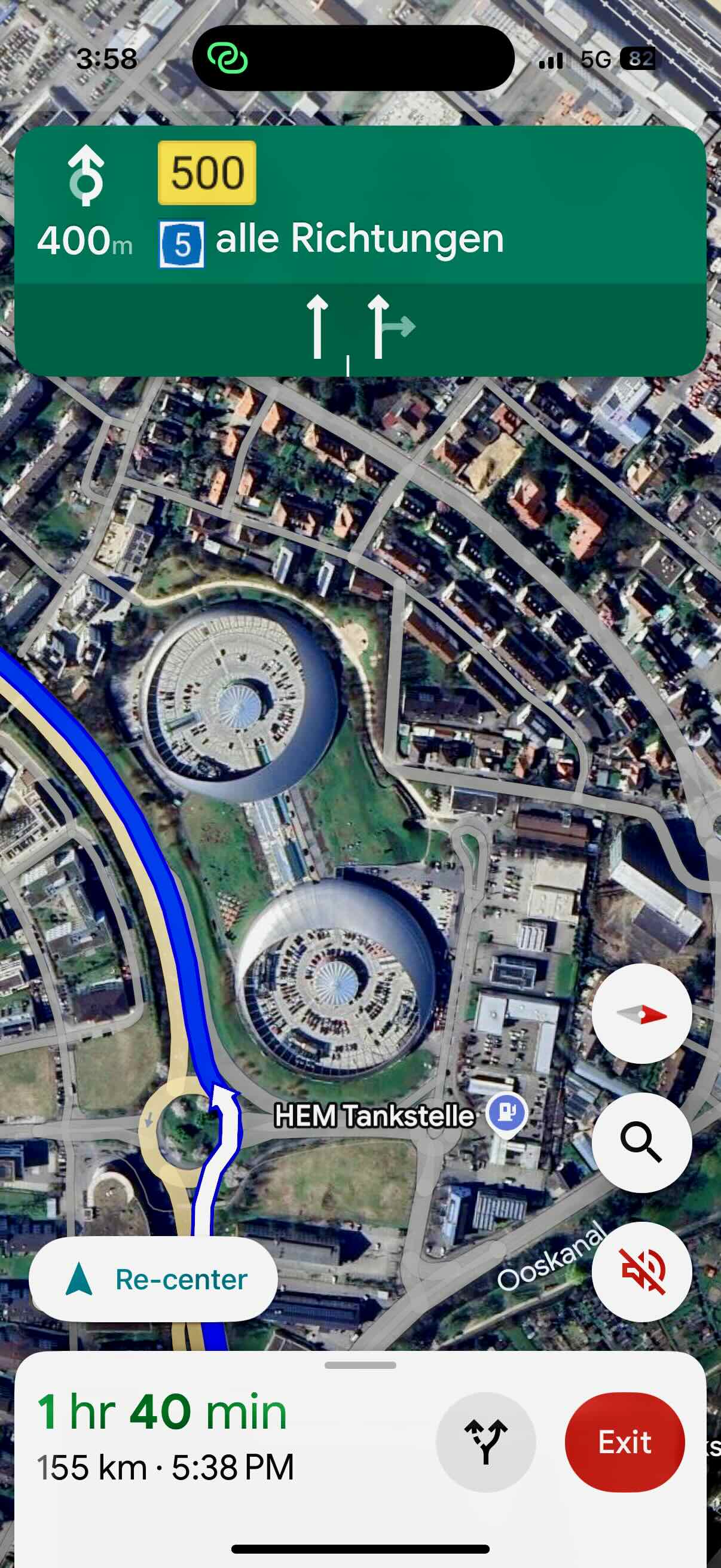
Screenshot

Just a few kilometres down the road I see this huge truck rest stop on Google maps. I count 86 trucks stopped for a break! Bob’s biggest complaint about driving in Europe is all the trucks on the roads. The right lane is one truck after another and when a truck pulls into the car lane to pass a slower moving one all the cars have to slow down until it manages to pass and get back into the truck lane.  
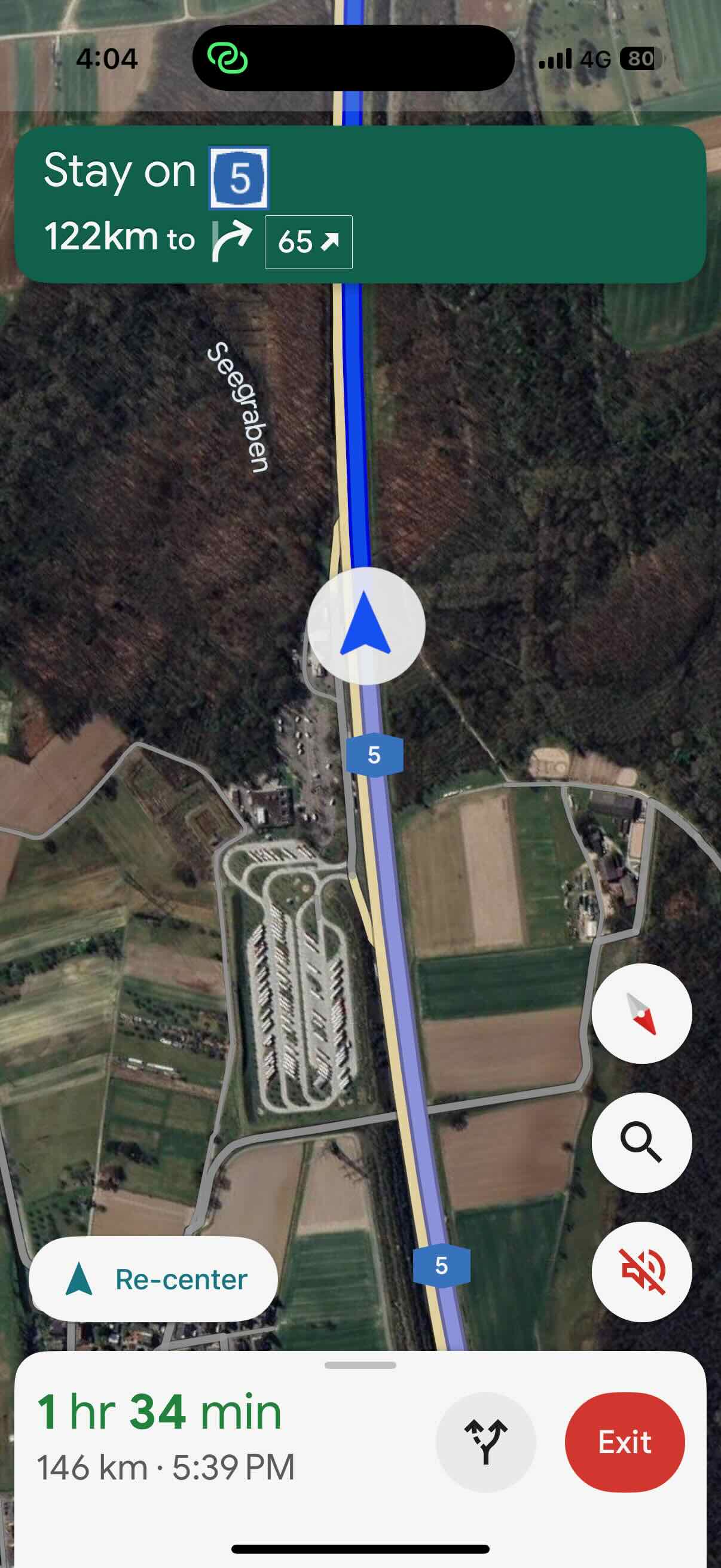
Screenshot

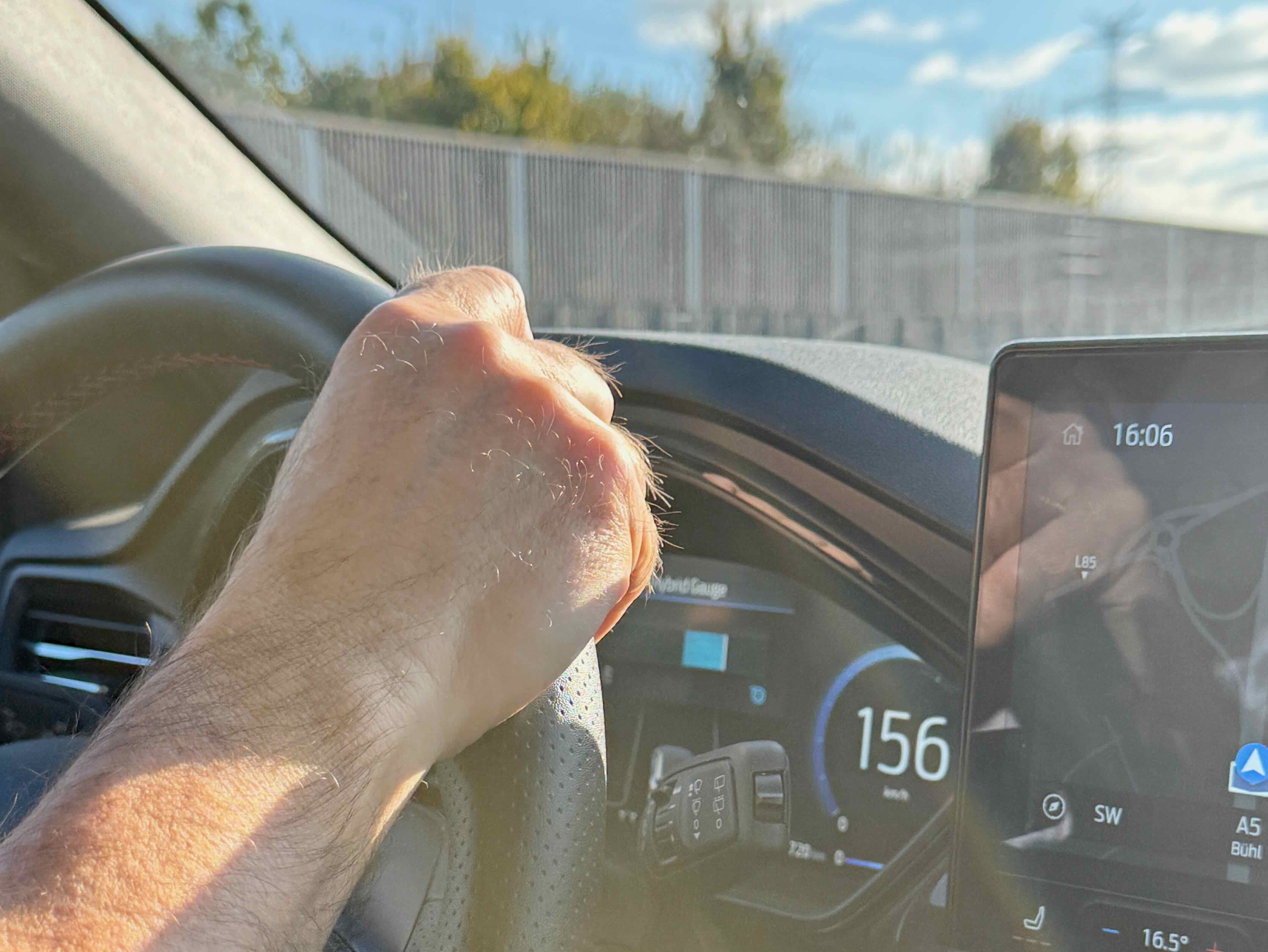
Remember the German highway speed limit is usually 130 km and often there is no speed limit so a truck pulling into your lane at 90 km is actually quite dangerous.  Bob does enjoy the chance to drive at 156 km/h though!
We get caught in traffic for almost half an hour, moving just a car length at a time.  We finally figure out why. This huge boat was trying to move through a rather small covered bridge so all traffic was stopped during this operation.  Notice our speed now…1.6 km/h!

We arrived just in time to meet our Airbnb host, but our planned stop for groceries has to wait for another day.
Metz, France

Day 27     Friday, September 26, 2025

I had most of this post written and somehow lost it! So I had to start all over again. Lesson learned, remember to save a draft often!!

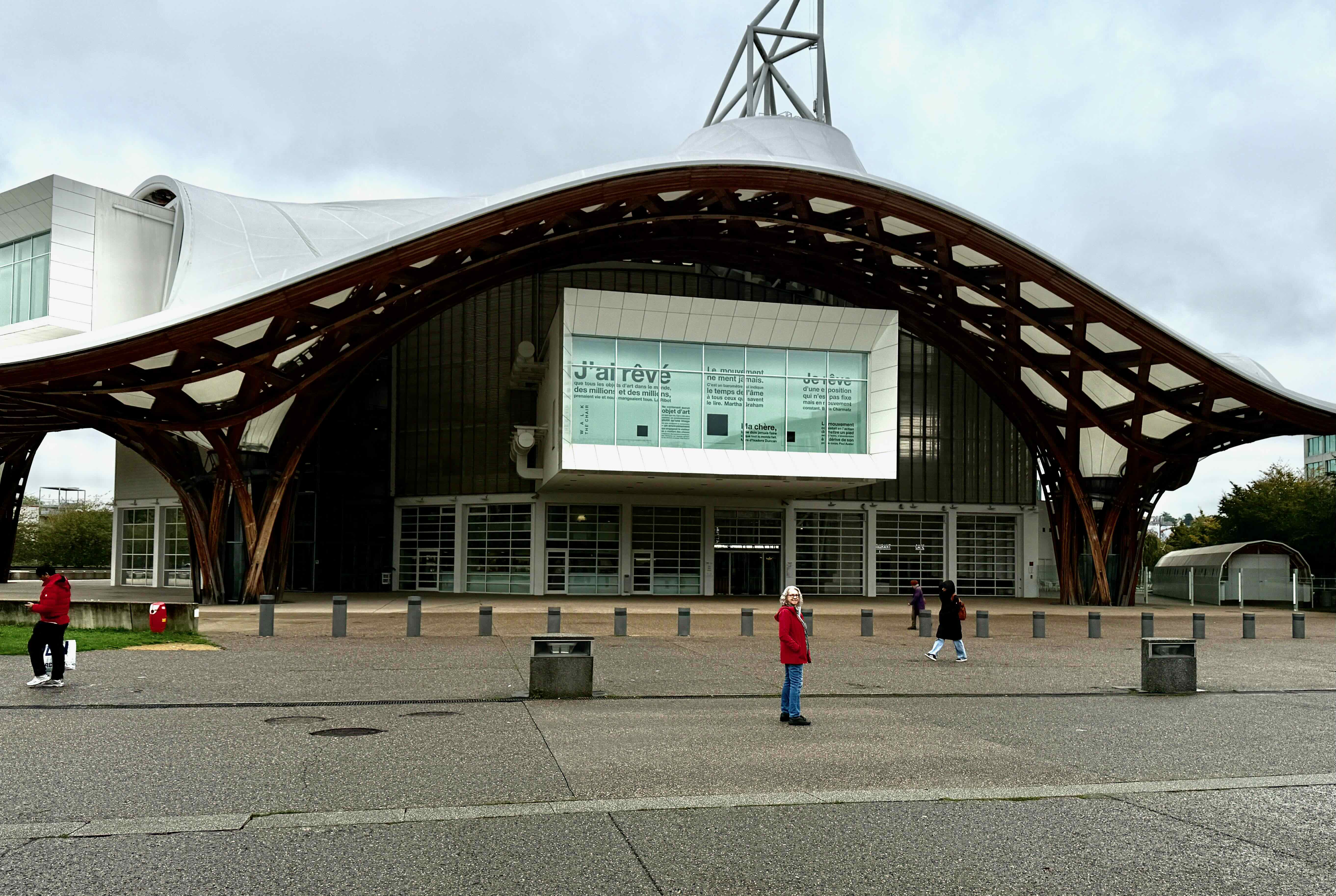
Today we drove a half hour to Metz.  First stop is the Centre Pompidou-Metz, a branch of the Georges Pompidou Centre in Paris, that displays contemporary art and hosts temporary exhibitions, events, films and presentations.  The dark lattice work supporting the roof is made of huge wooden beams.

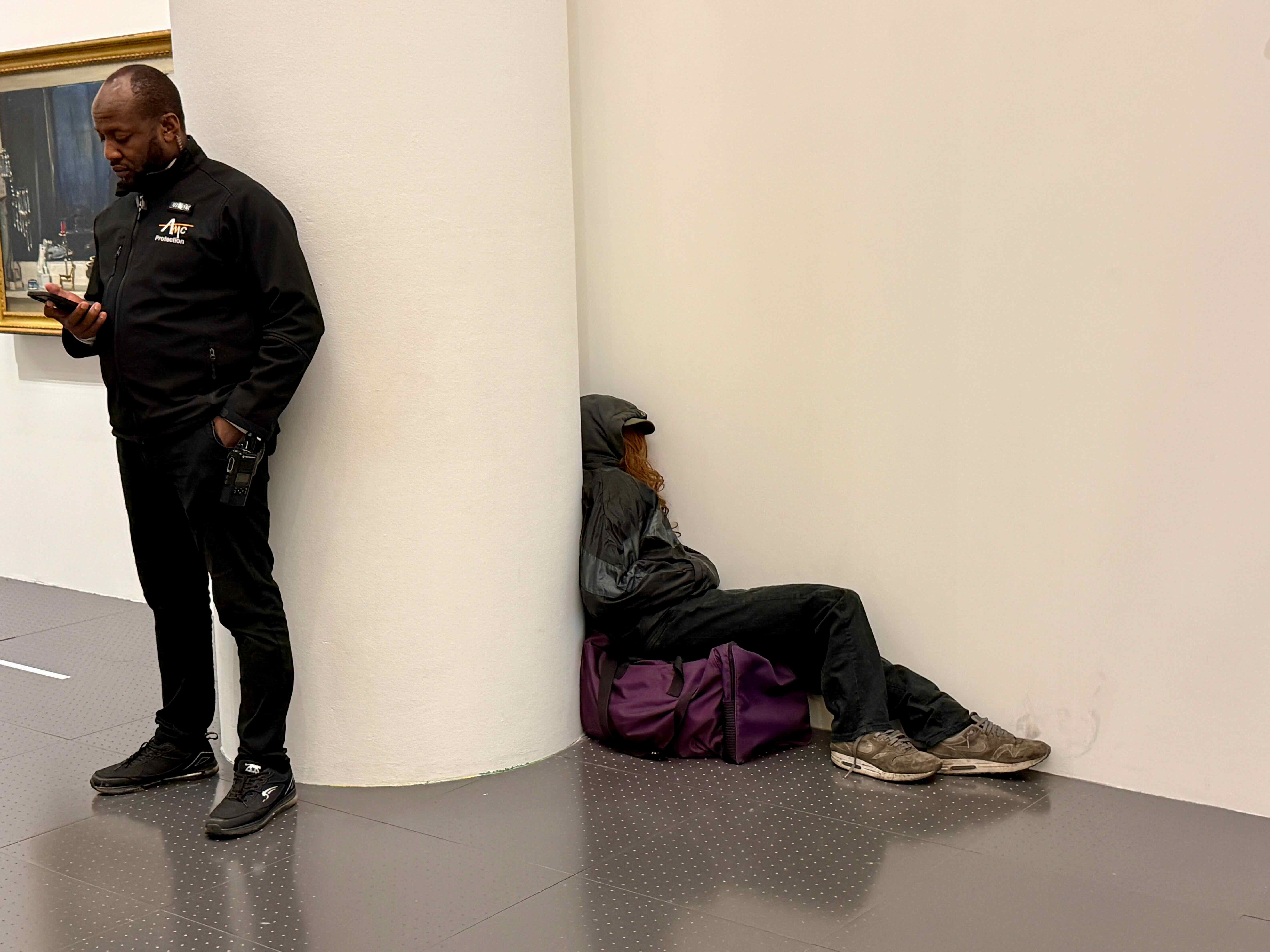
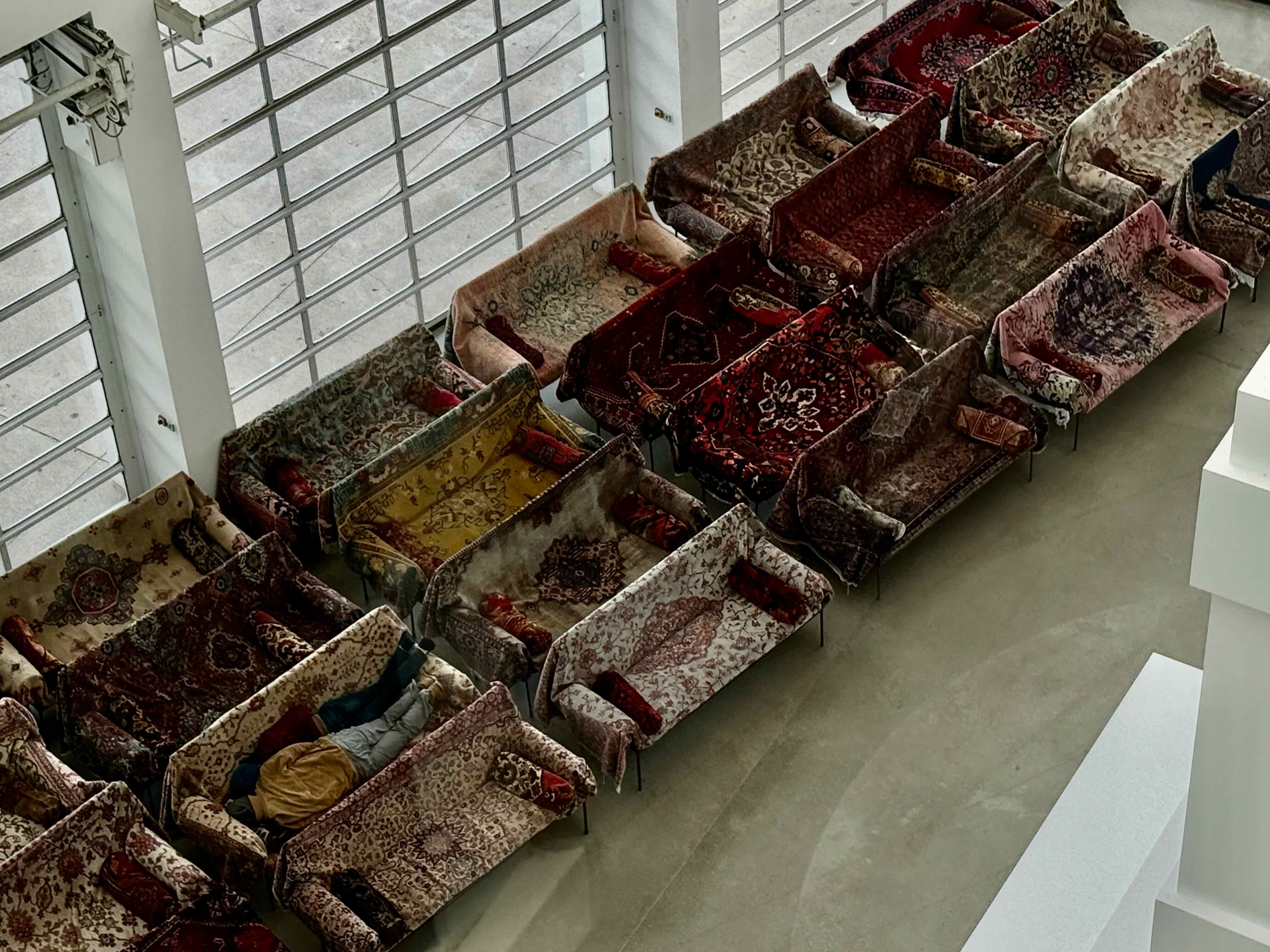
I didn’t get the artists name but can you see the two figures sleeping on one of the couches?

Maurizio Cattelan is a self-taught artist from Italy known for creating sculptures, and installations that are humorous, satirical and unconventional. Wanting to explore the power of images, Cattelan frequently appropriates uncomfortable imagery in his art.

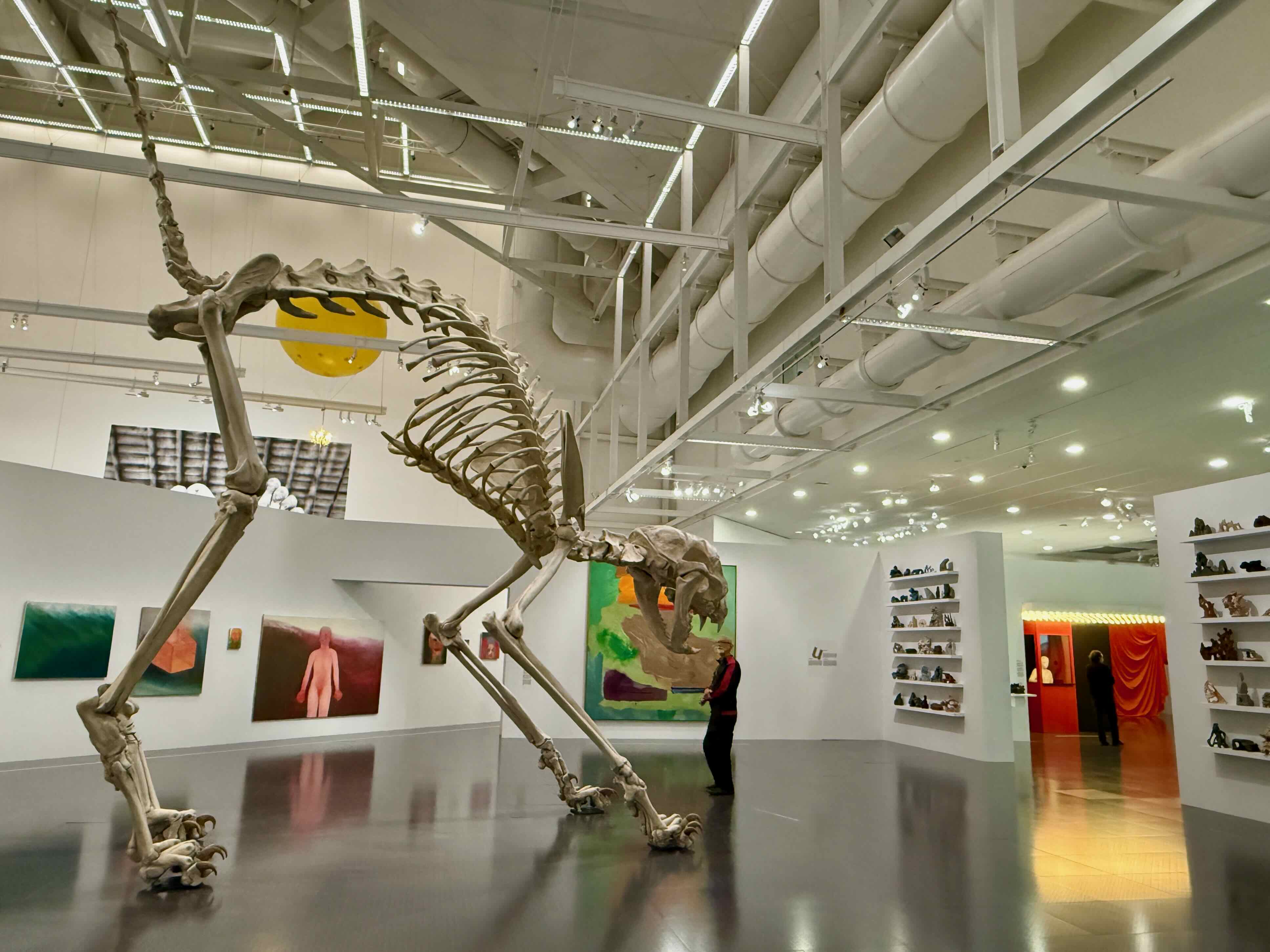
This domestic cat skeleton seems frozen with fear and its gigantic scale reminds us of the dinosaur skeletons we have seen in Natural History Museums.  Be warned, some of the images of Cattelan’s work are disturbing.  I did not include some of the works because they were so upsetting to view.

I walk around the corner, saw this and gasped. Kaput is a display of five stuffed horses with their heads in the wall to reveal the absurdity of hunting trophies.  The traditional head trophy is reversed with the entire body suspended and powerless. I do not have the words to describe how I felt when I saw this installation.

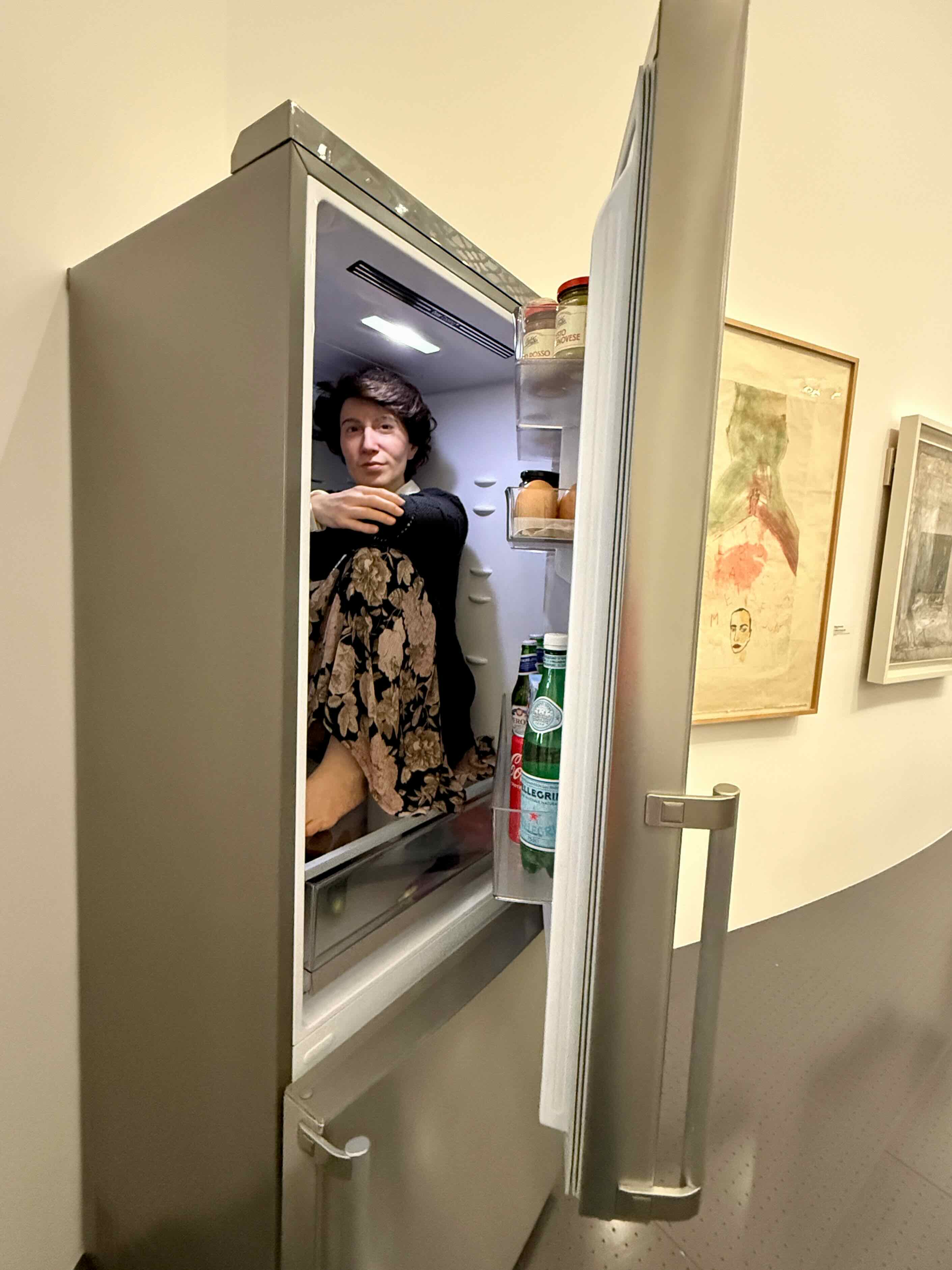
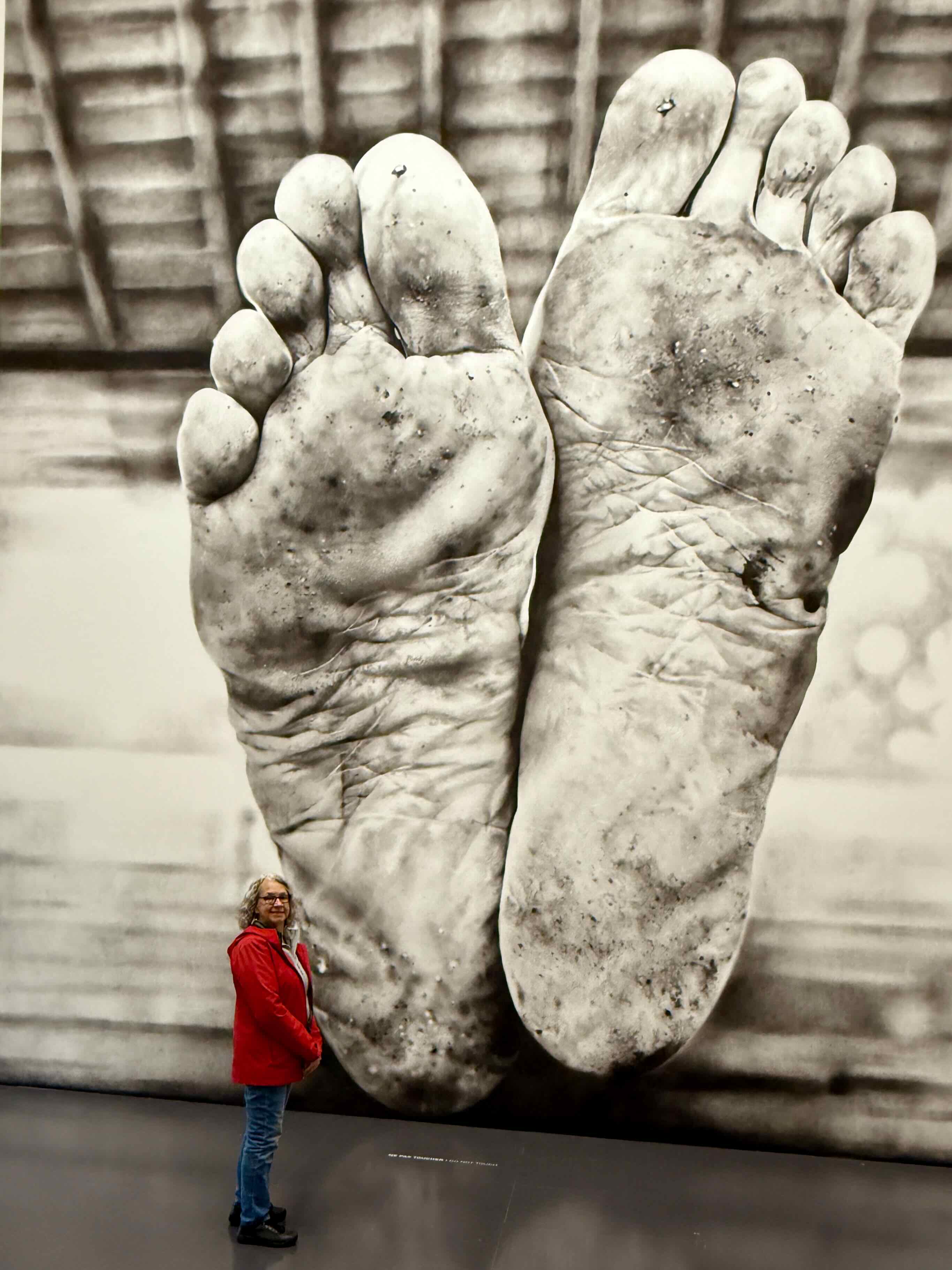
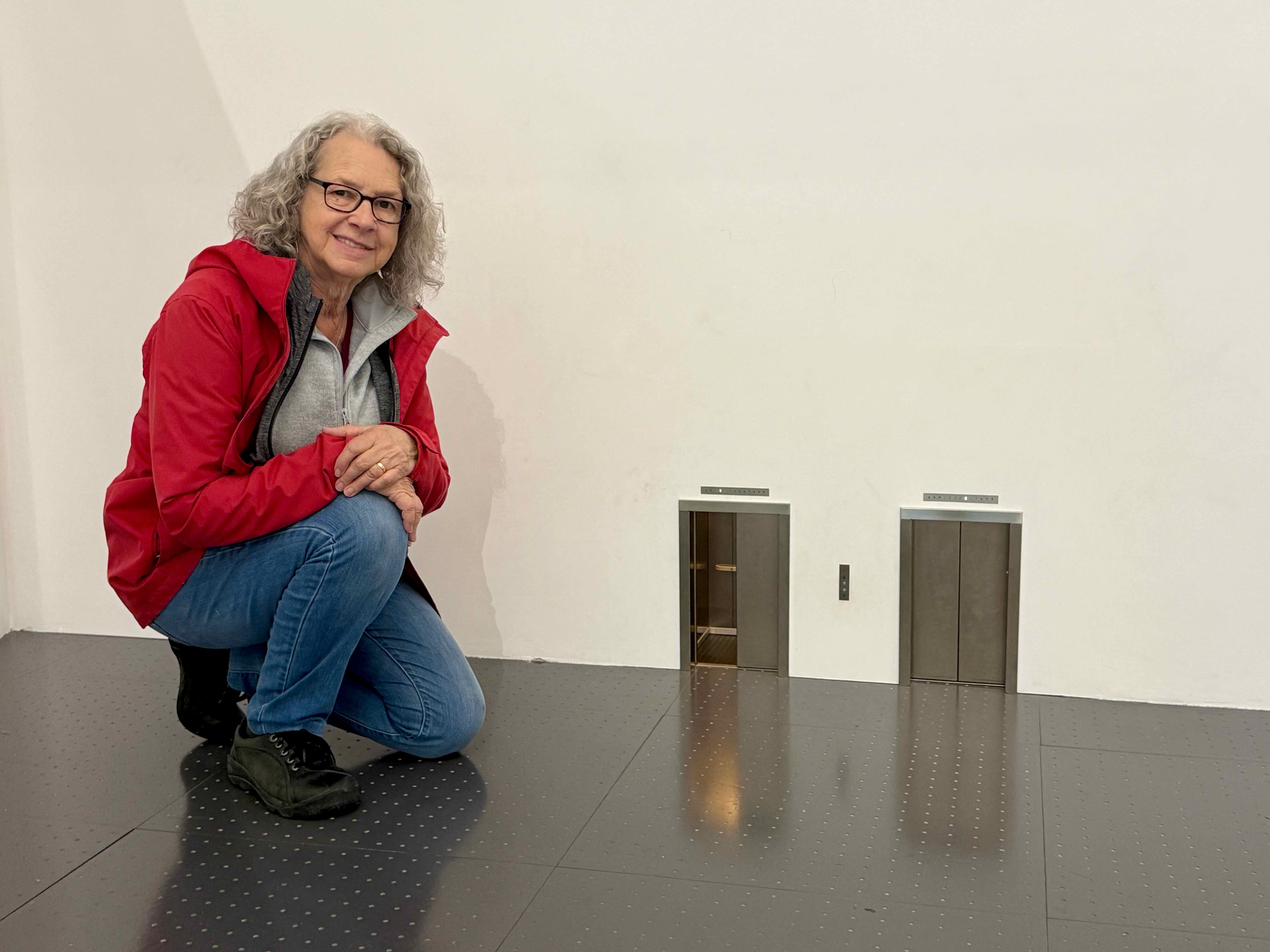
Cattelan often uses figures in his works. This person startled me, at first I thought it was a real person sleeping. ‘Father’ These bare feet stand for the whole body, a reminder of the human body and its finiteness..they become a symbol of vulnerability. This tiny elevator makes a sound, and opens and closes its doors, just as in real life. It is perfectly functional and totally unusable. One can imagine a tiny world coming to life somewhere behind these walls.
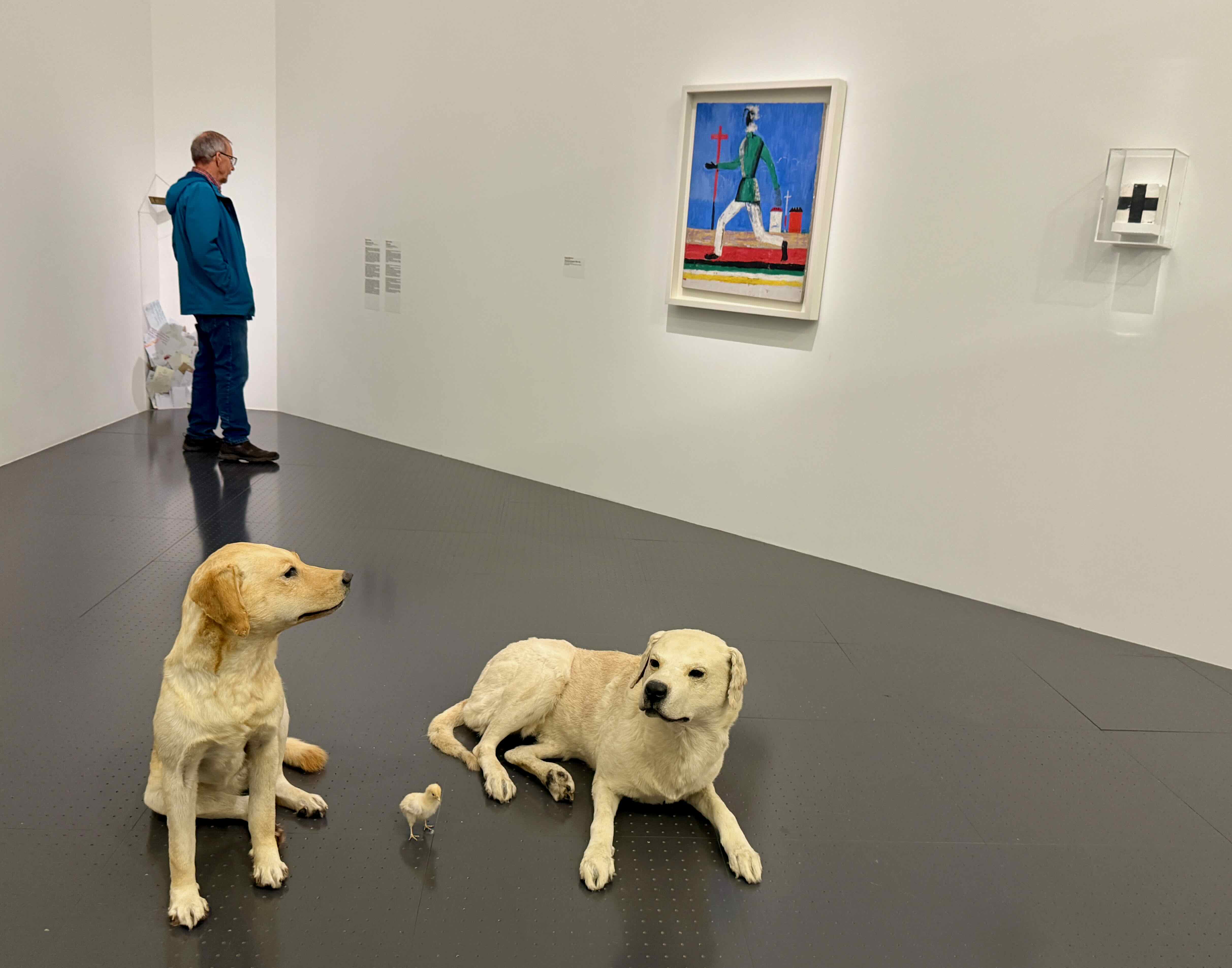
More stuffed animals, these two labradors and the tiny chick represent a reflection on power dynamics and the fragility of life.

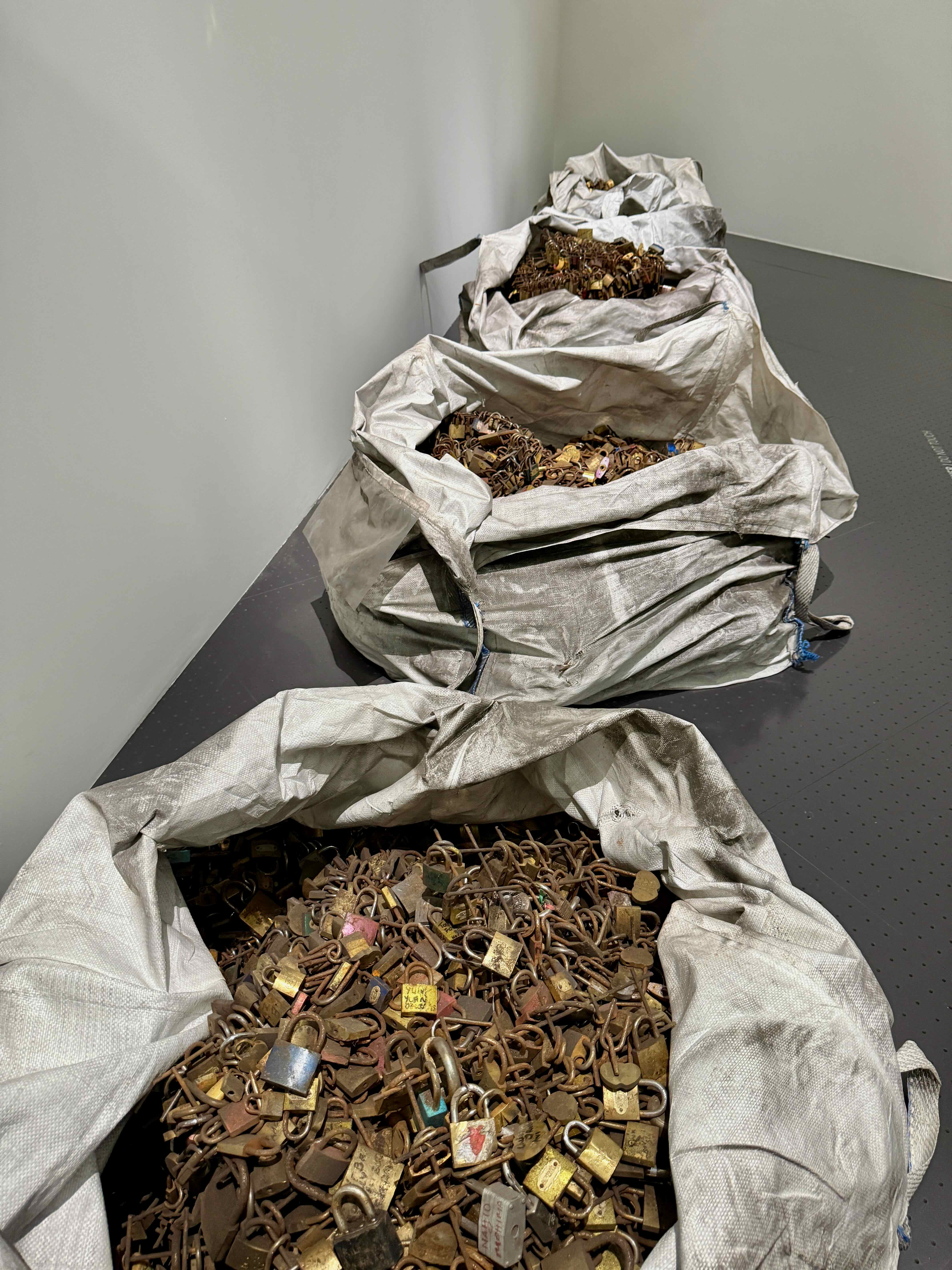
Artist Cyprien Gaillard’s five bags contain the tons of locks removed from the Pont des Arts where tourists once declared their undying love by attaching a lock to the bridge and throwing the key in to the Seine River. He displays them in construction bags, like unearthed artifacts, the rusty ruins of a bygone ritual.

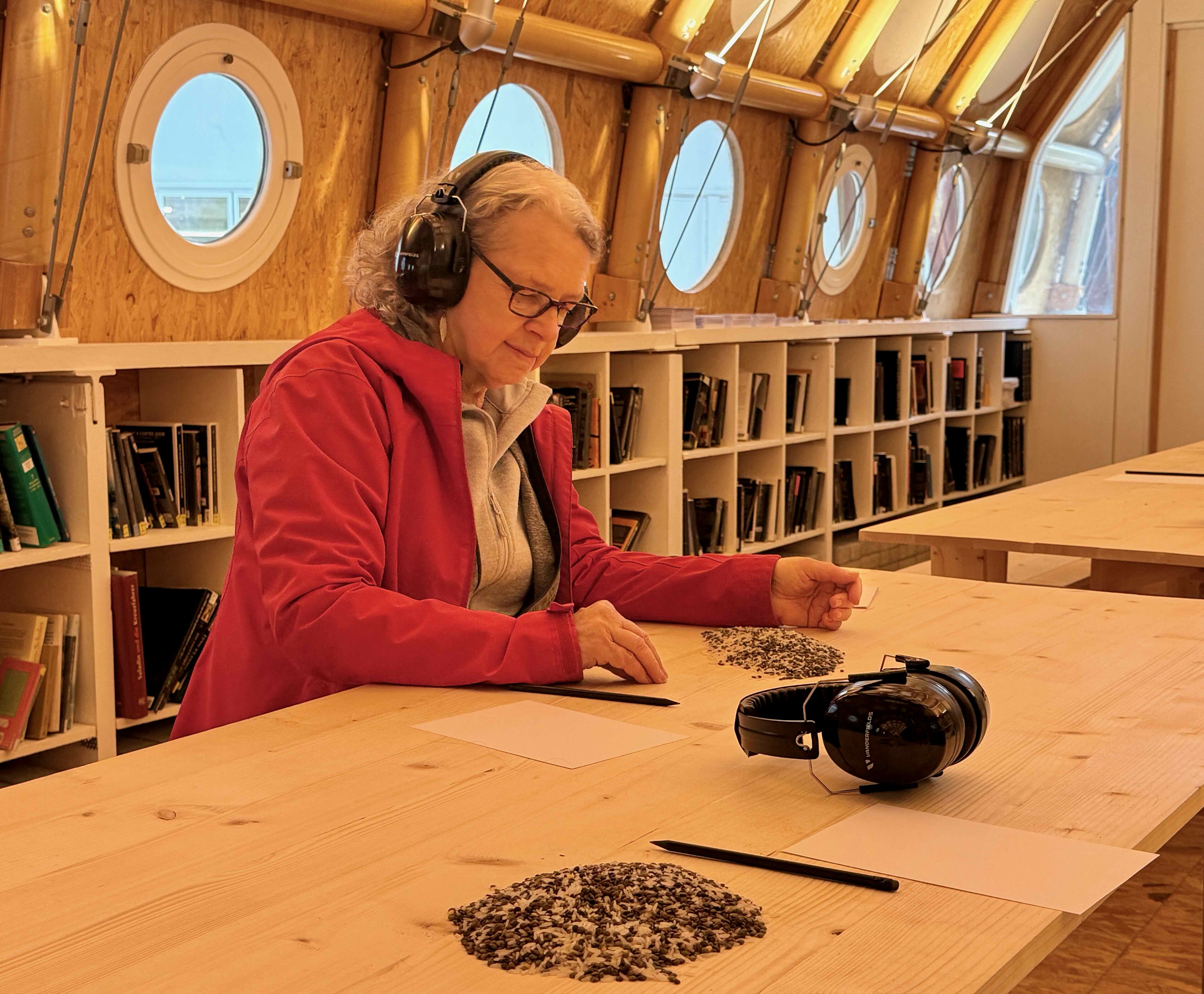
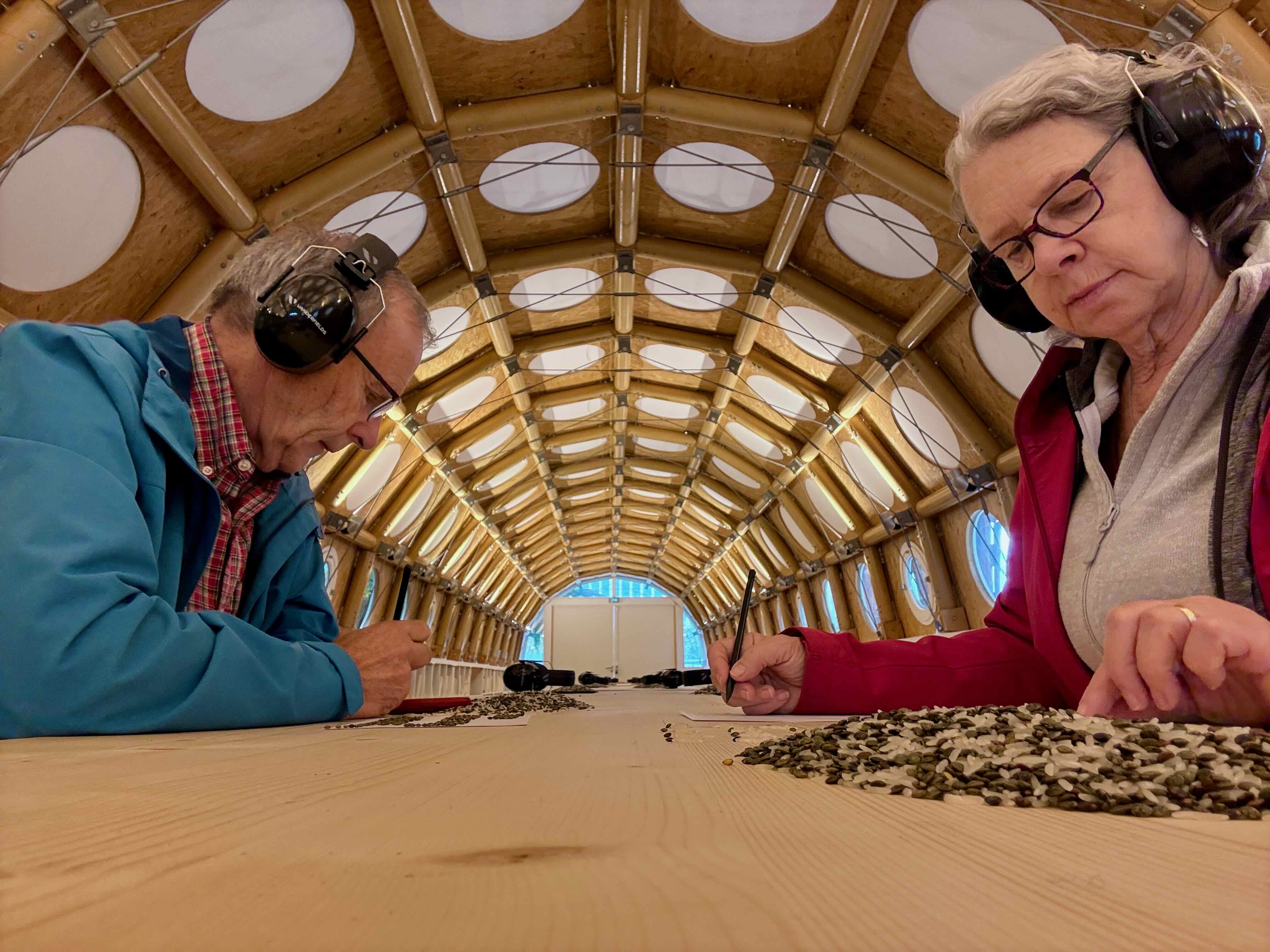
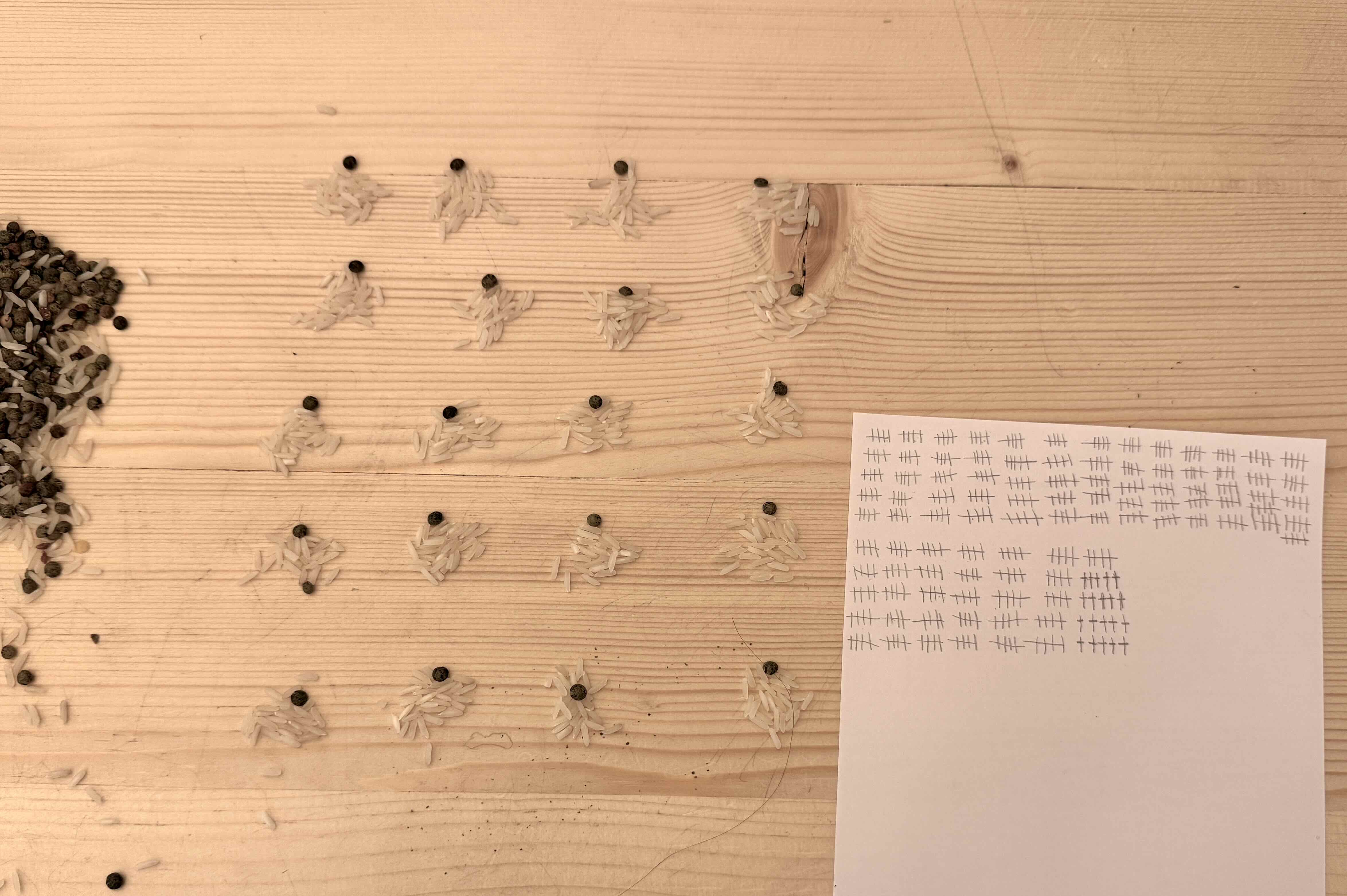
In a long white building called The Paper Tube studio there is a Marina Abramović installation called “Counting The Rice. We are invited to patiently sort grains of rice and lentils – a simple meditative gesture that calls for attention and self-awareness.  Through this repetitive task everyone can experience art as a tool for concentration, introspection and transformation.”

We begin counting the rice.

As I am counting the grains of rice and placing them in piles of 25 I have a strange experience.  I start to think of all the soldiers who died in the First World War and each grain of rice began to represent the dead body of a soldier. When I found some grains of rice that were broken I thought of the soldiers who were “blown to bits” by the intense mortar shelling during the battles. There bodies were often never found. I felt the need to identify each pile of ‘bodies’ and place a lentil at the top of each pile as a marker or headstone of sorts. I fought back tears, as my tally marks of ‘bodies’ turned into crosses.

Bob did not have the same experience as I did.  He is soon reading a book on his phone.

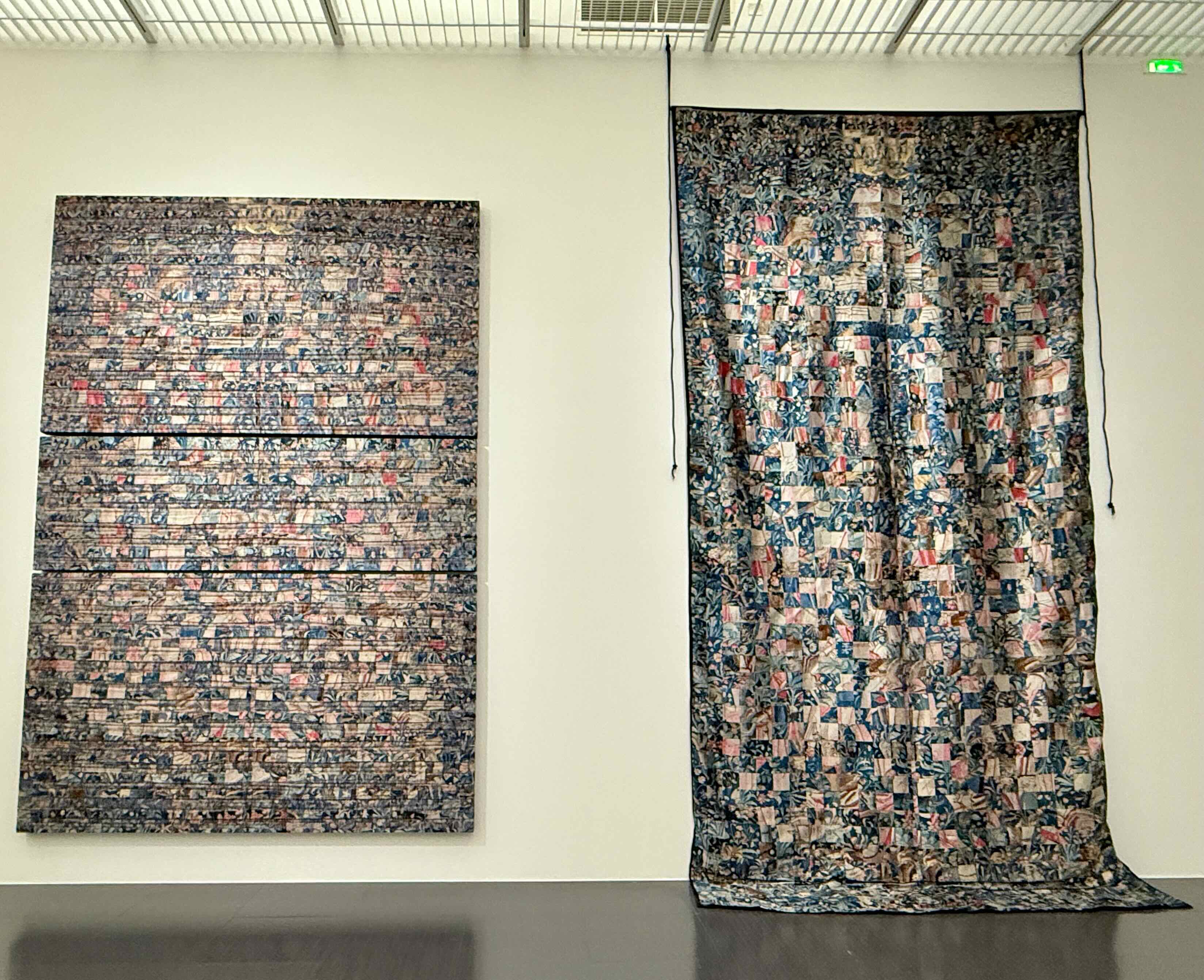
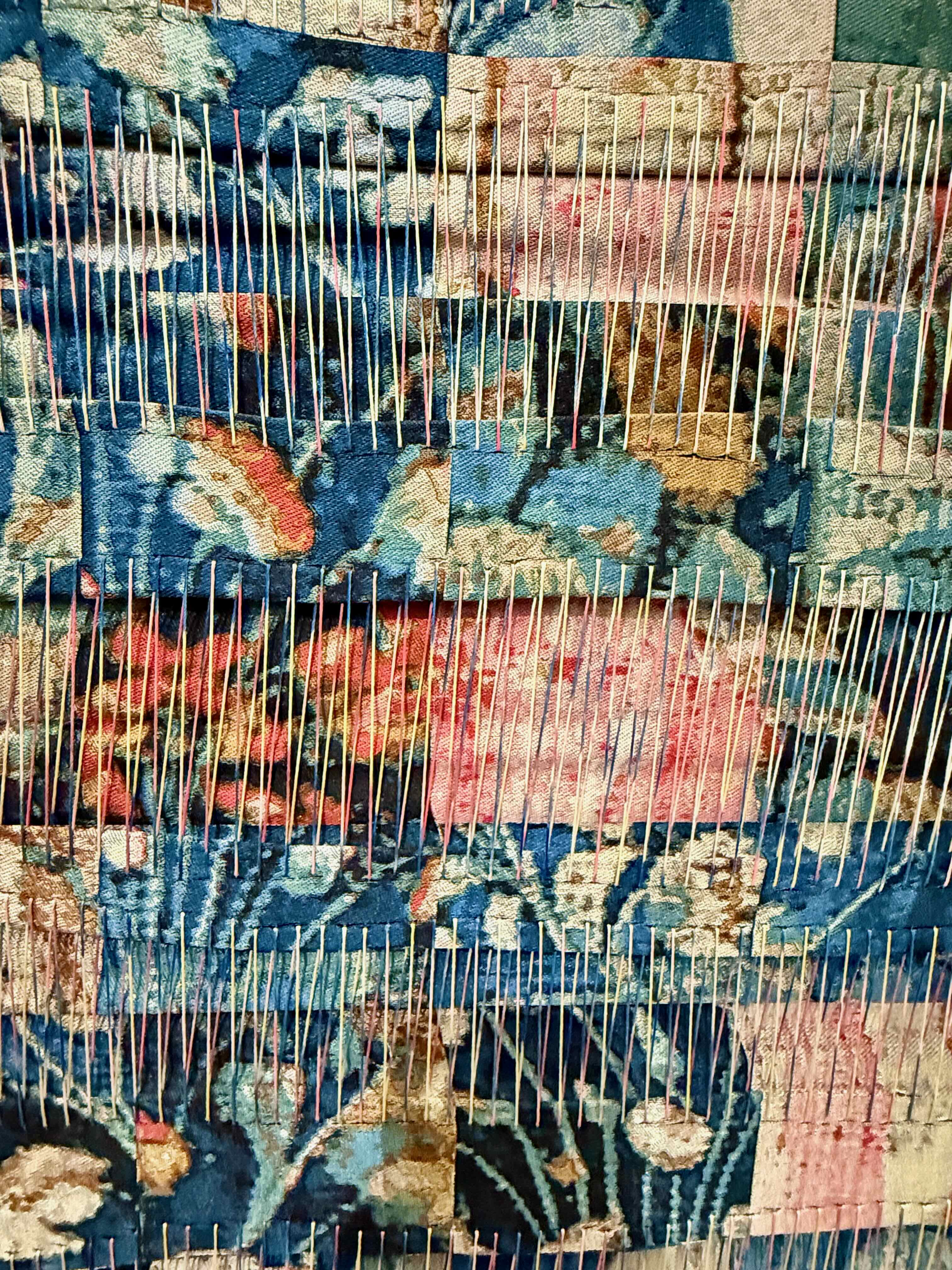
These two large textile pieces were quite interesting.  The artist, Sidival Fila, cut, overlayed and recomposed the original tapestry.  

A close up of the piece on the left.The next exhibition is Copyists.  One hundred artist were invited to choose their favourite piece of art in the Louvre and use it as inspiration for their version of the work. Humberto Campana used charcoal to make this black charred version of the Victoire de Samothrace. This is a cry of alarm in the face of ecological and political crisis. Miquel Barcelo’s copy of Géricault’s Raft of the Medusa.
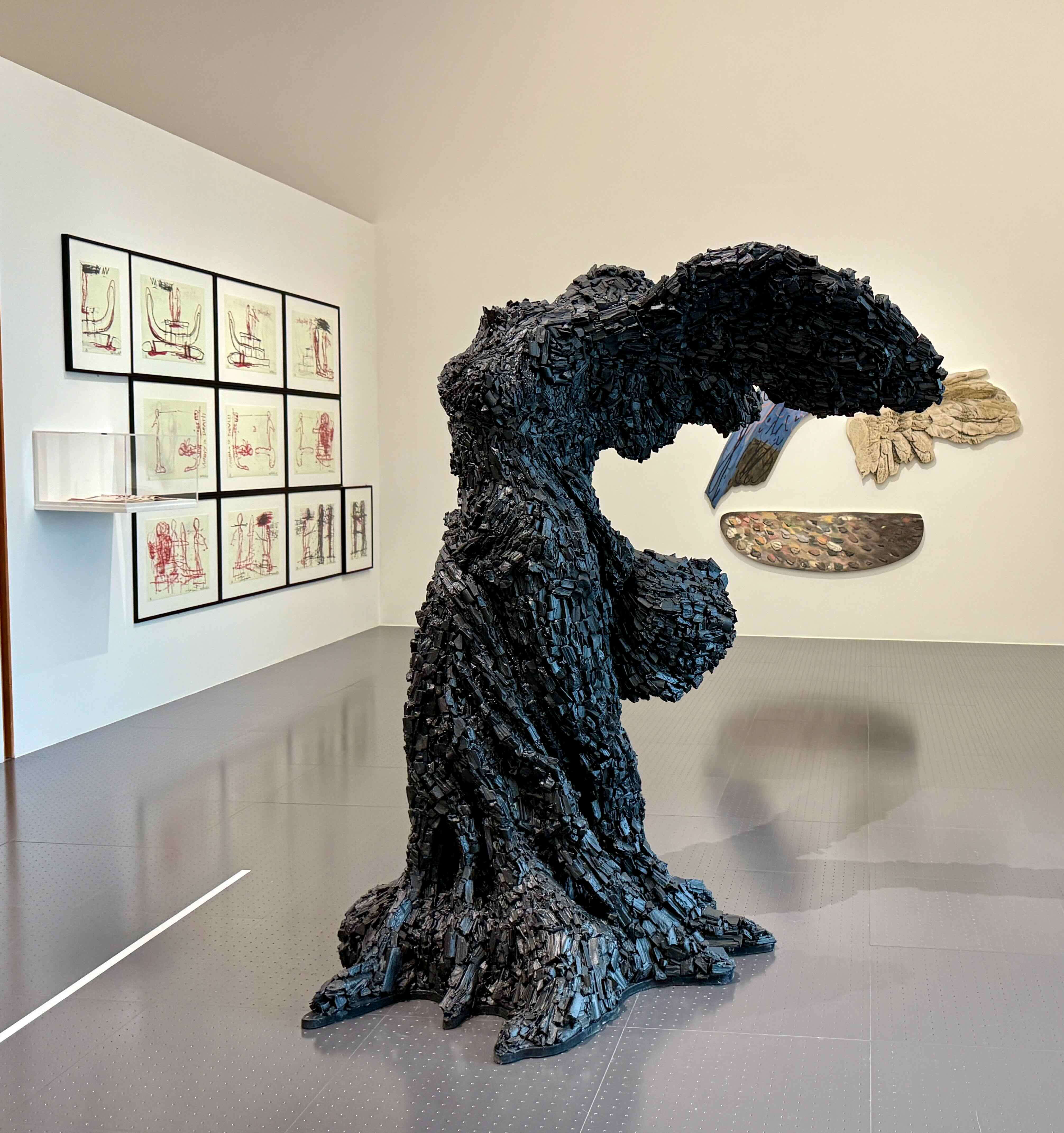
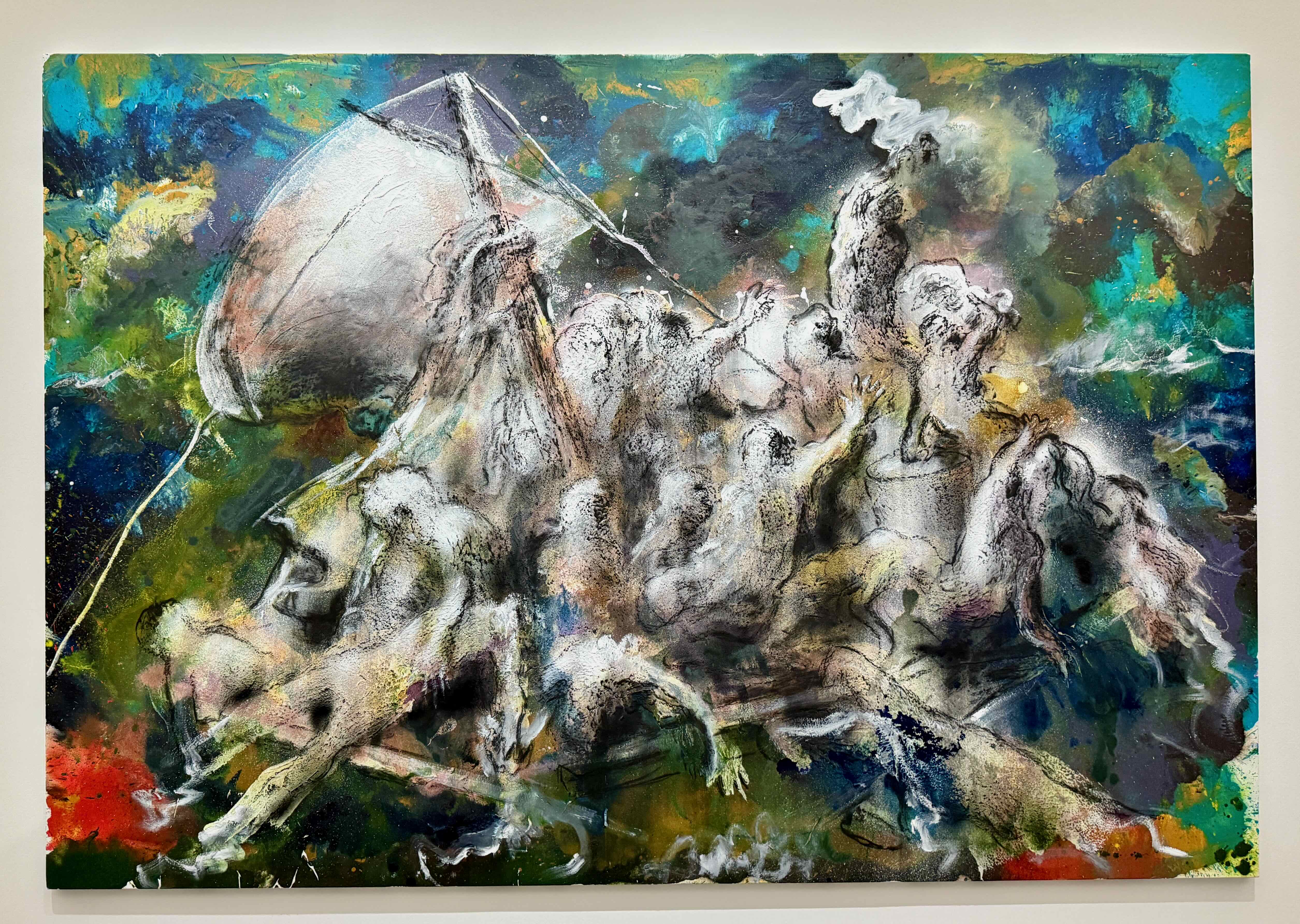
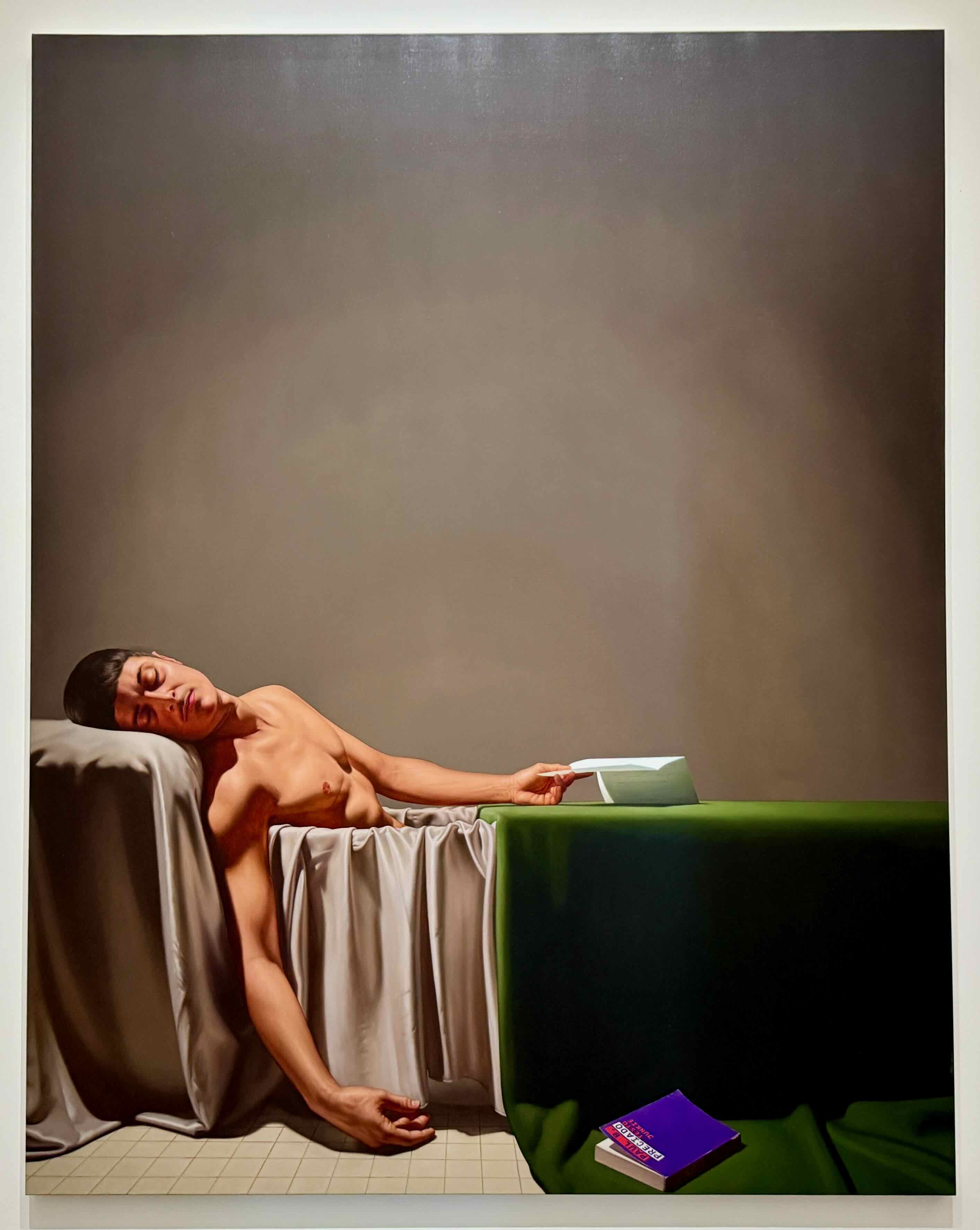
Dhewadi Hadjab’s copy of the Death of Marat becomes the death of a transgendered friend of the artist.

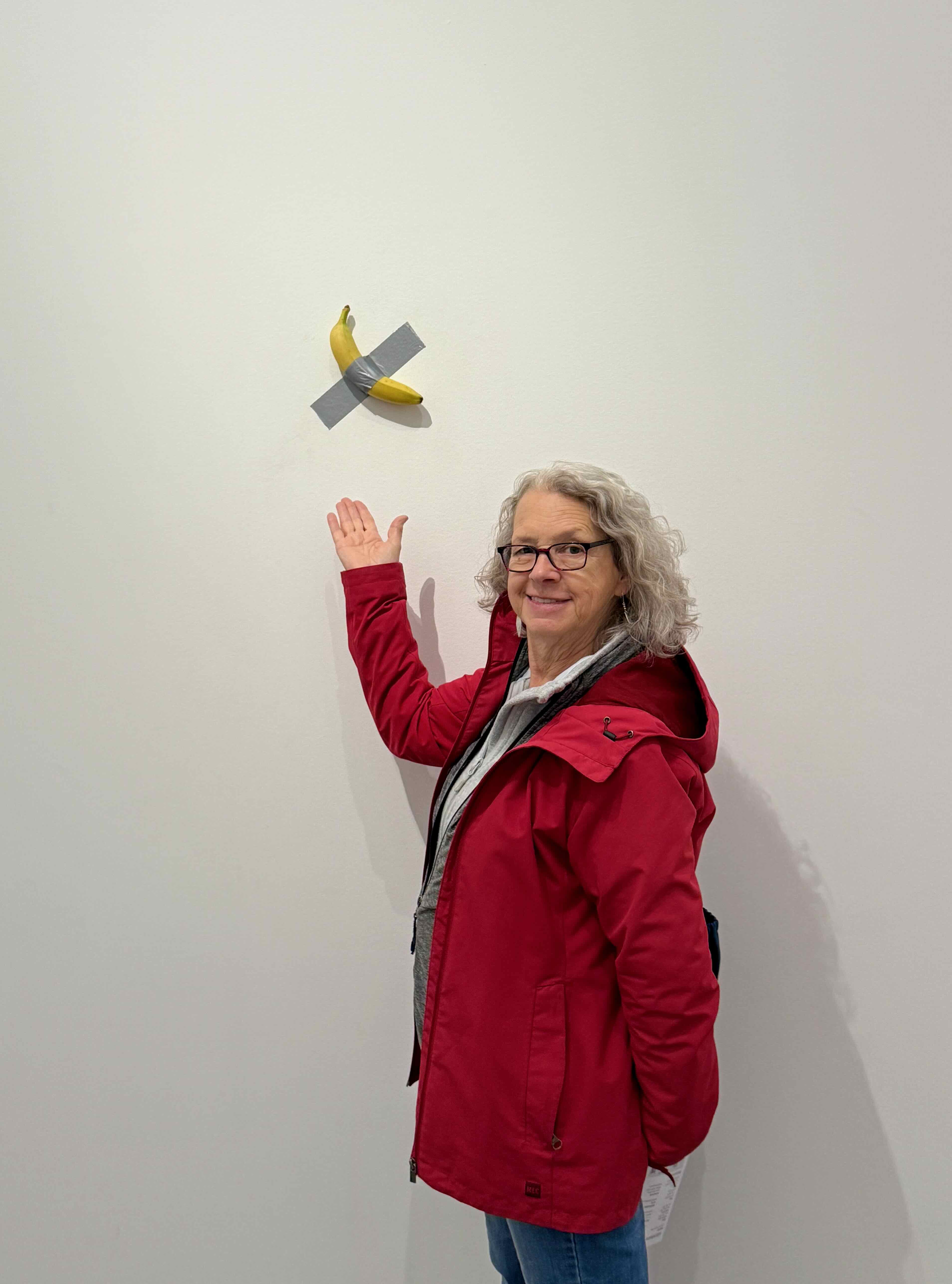
More of Maurizio Cattelan’s work. ‘Comedian’ is a fresh banana duct taped to a wall exactly 1.6 metres above the floor. The work includes a certificate of authenticity, along with detailed instructions for its proper display, for its owner to use when displaying the work. The banana and the duct tape can be replaced as needed. The Comedian sold for 6.2 million dollars!  The purchaser later ate the banana on stage!

Cattelan’s ‘Shadow’ is a work representing Cattelan’s mother who died when the artist was young.  

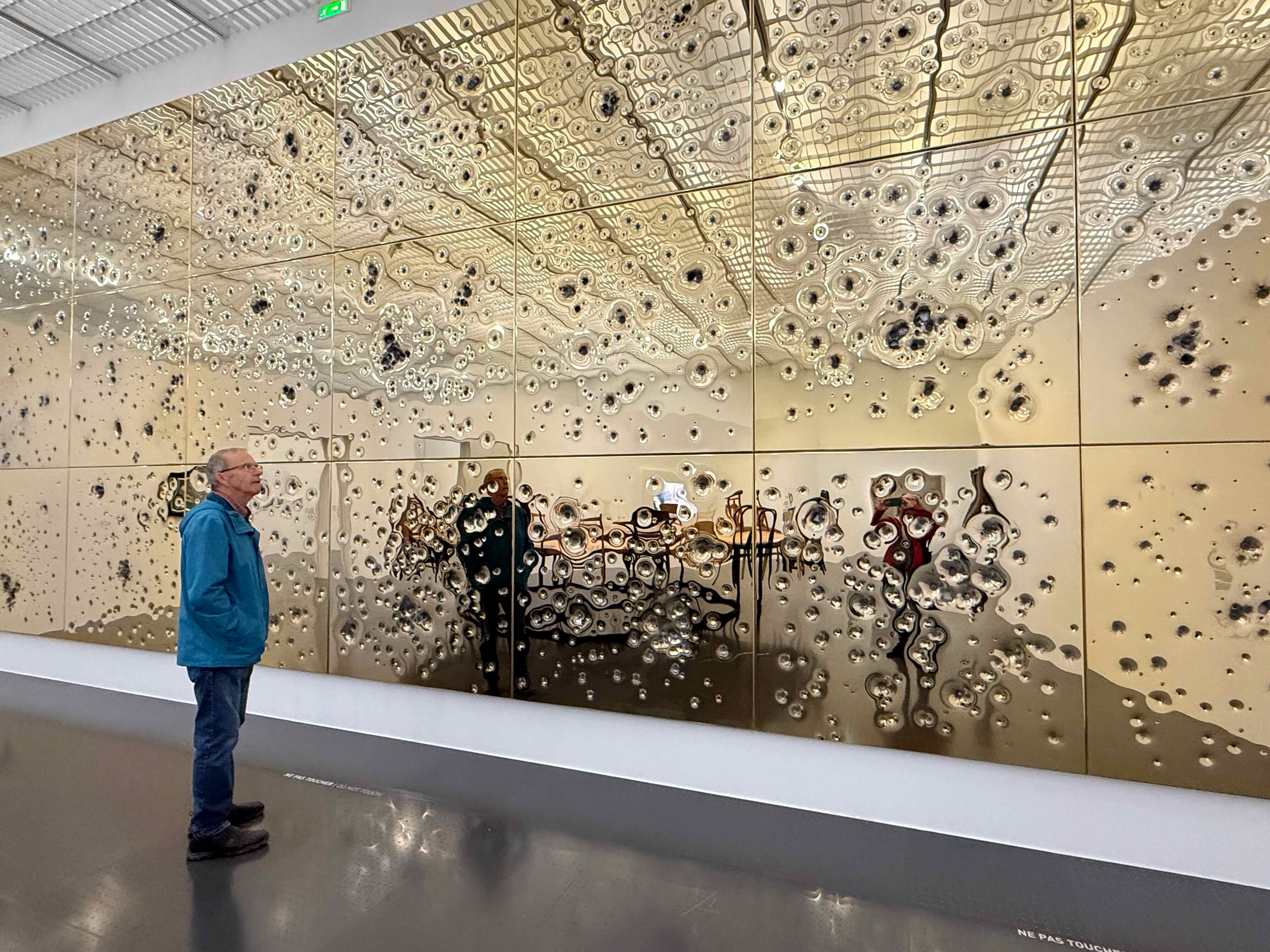
‘Sunday” invites the viewer to reflect on the economic inequality and the link between power and access to weapons.  Cattelan riddled 24 carat gold plated stainless steel panels with hundreds of bullet holes.

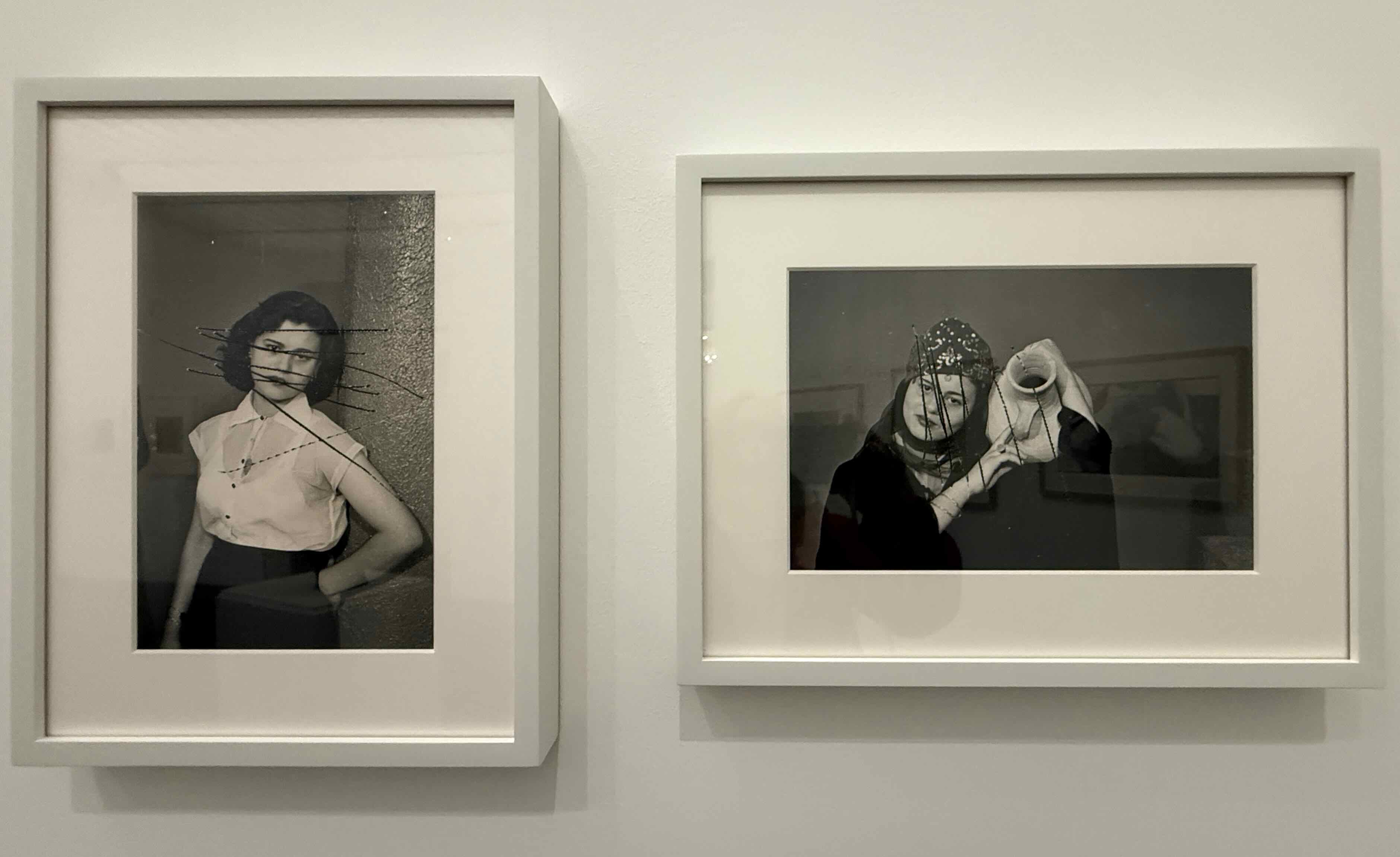
The photographer at Studio Shehrazade in Lebanon wrote…”These negatives were scratched because of a jealous husband from the Baqari family, who never let his wife go out by herself. He was upset to leam that she had come to be photographed in my studio without telling him. He came asking for the negatives. I refused to give them to him, because they were on a 35 mm roll. In the end we agreed that I would scratch the negatives of his wife with a pin, and I did so in front of him. Years later, after she had set herself on fire to escape her misery, he came back, asking for enlargements of those photographs, or other photographs she might have taken without his knowledge.”

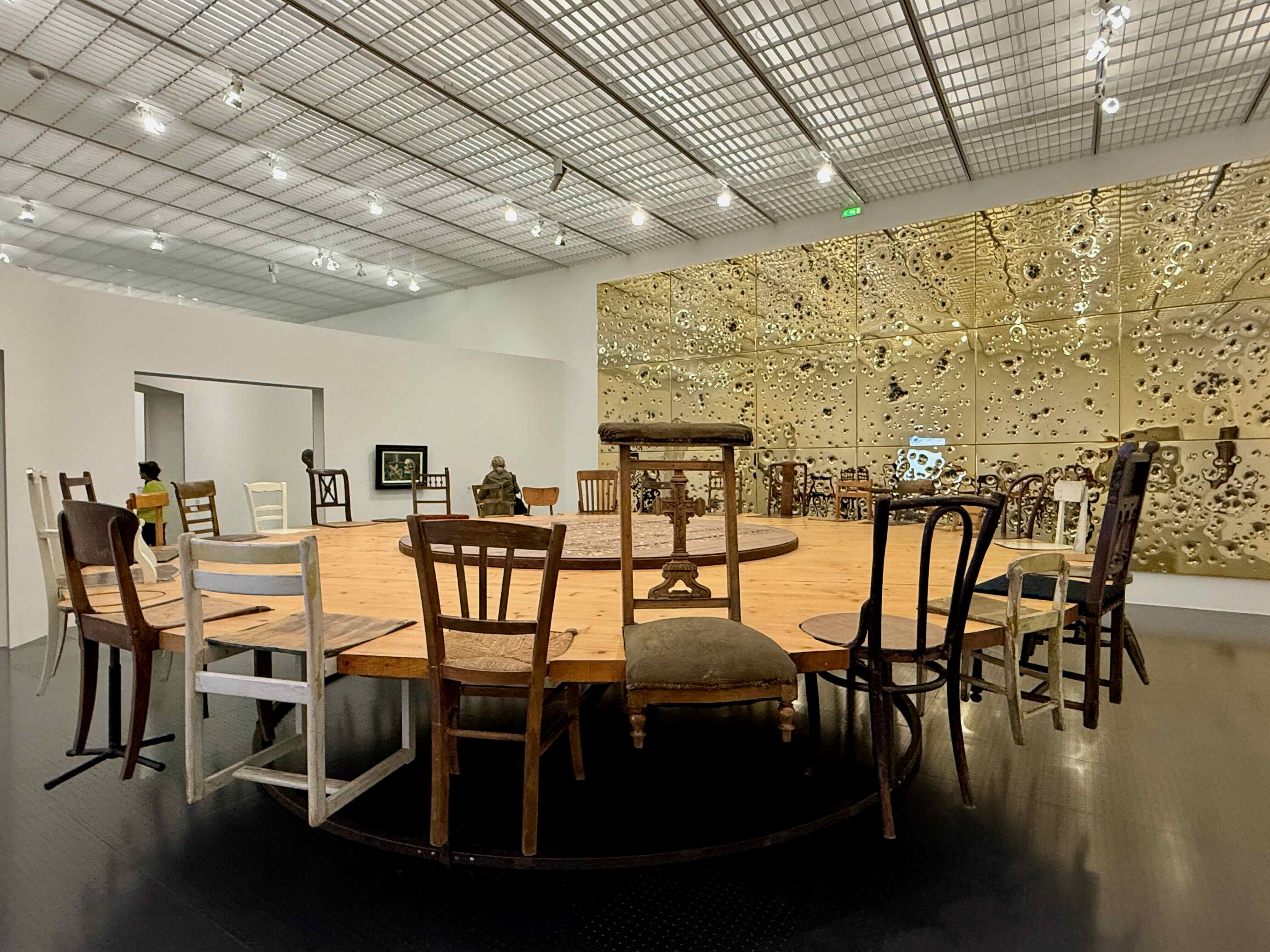
Chen Zhen invites viewers to sit at this table with 29 chairs gathered from five continents and different social classes, however they are embedded in the table and suspended from the floor…inaccessible.

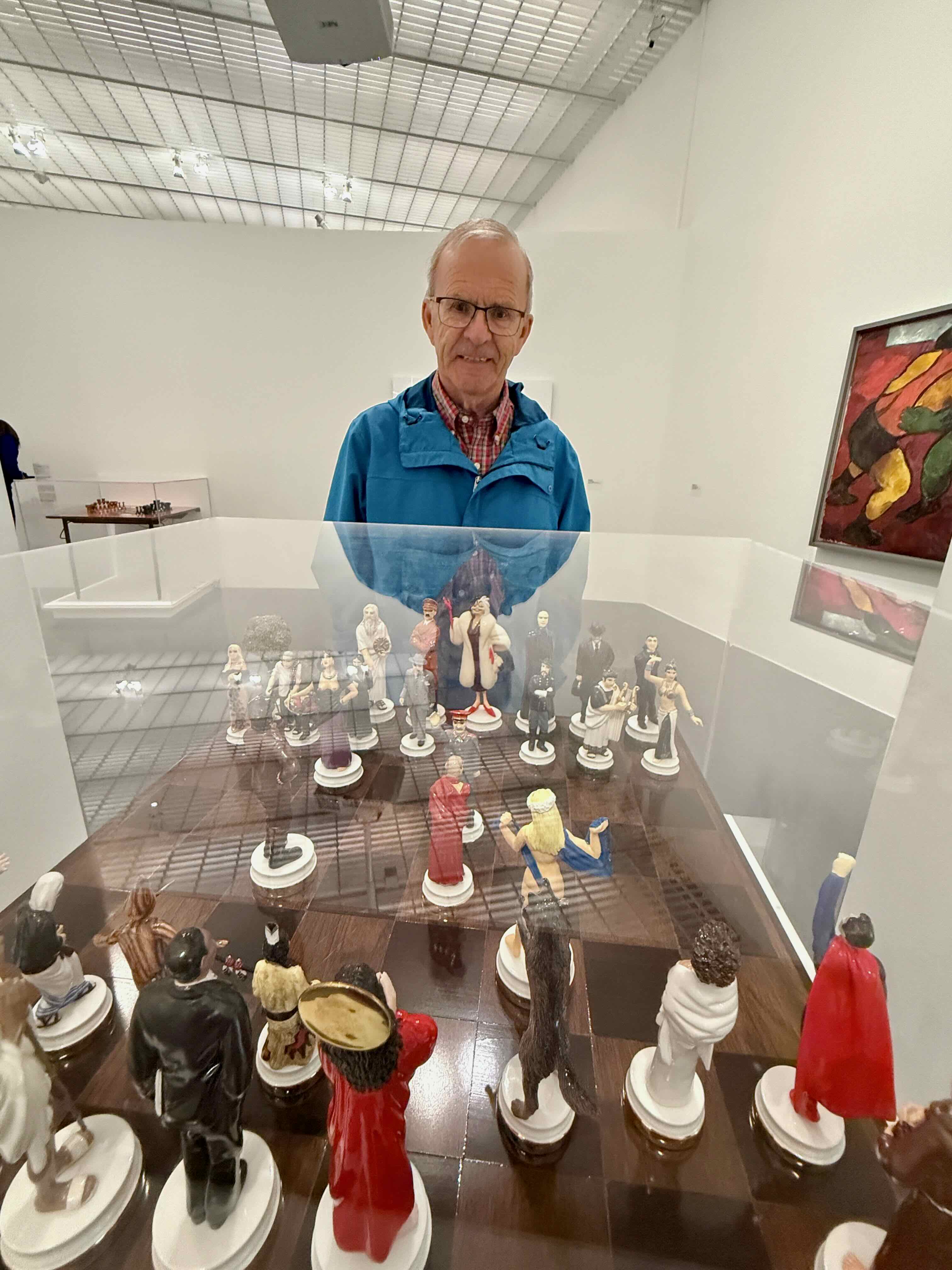
Bob like this chess “Good versus Evil” One side includes Martin Luther King Jr, the Virgin Mary and Snow White.  The other side is Adolf Hitler, Cruella de Vil and Rasputin!

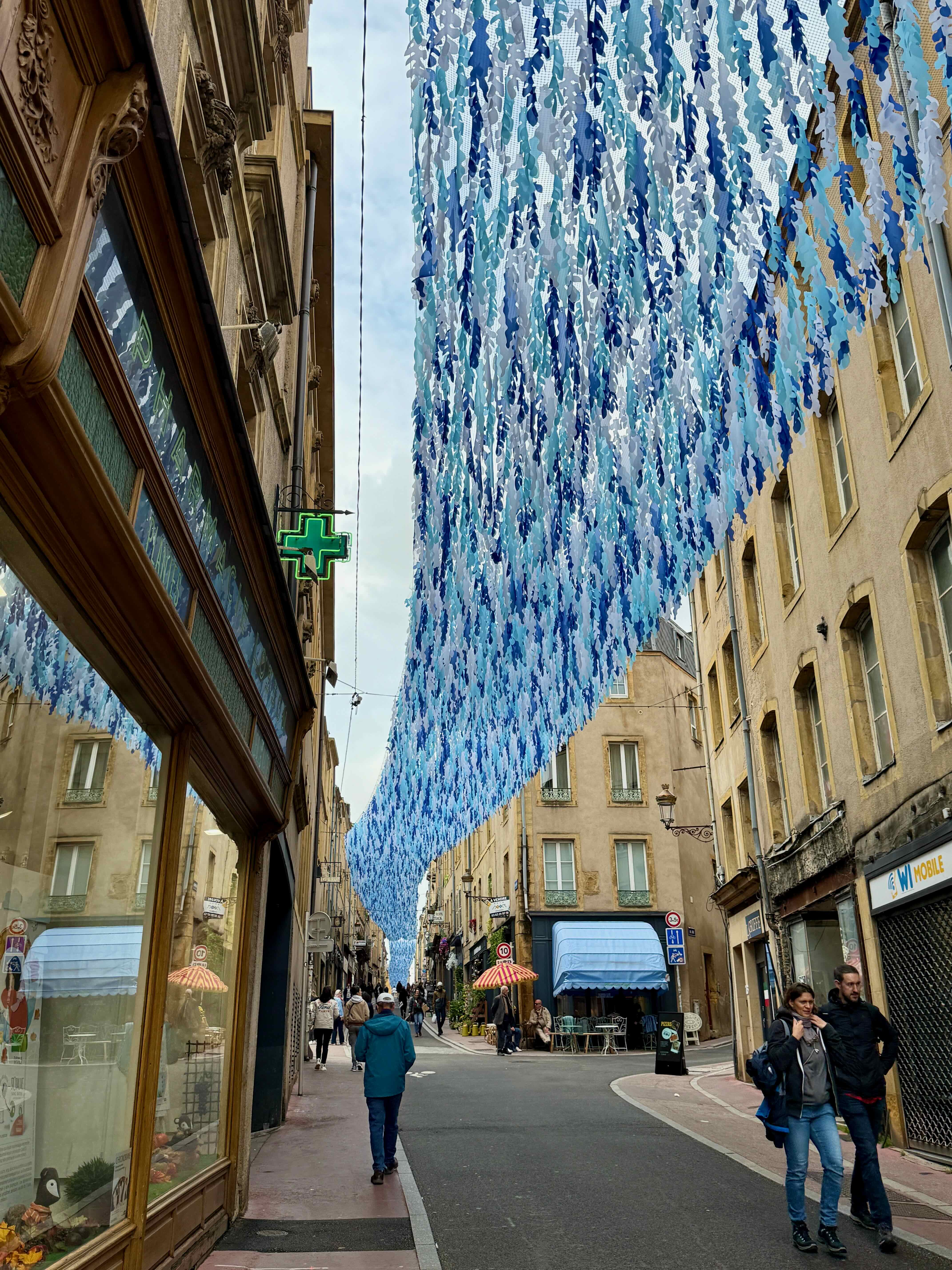
After leaving the Art Gallery we walk under these bright blue street decorations on our way to the Metz’s Notre Dame Cathedral.

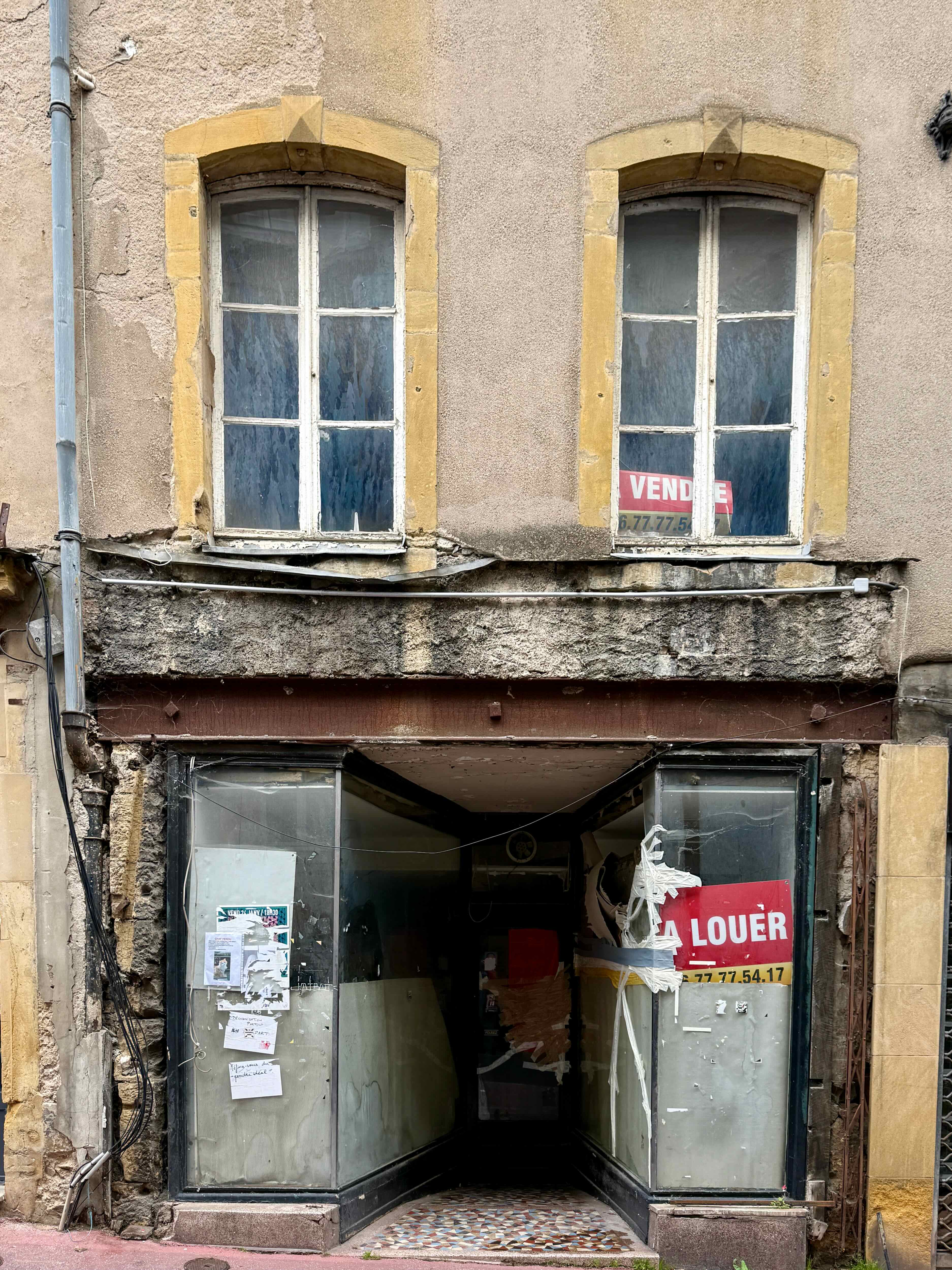
I wonder who would be interested in renting this storefront building?

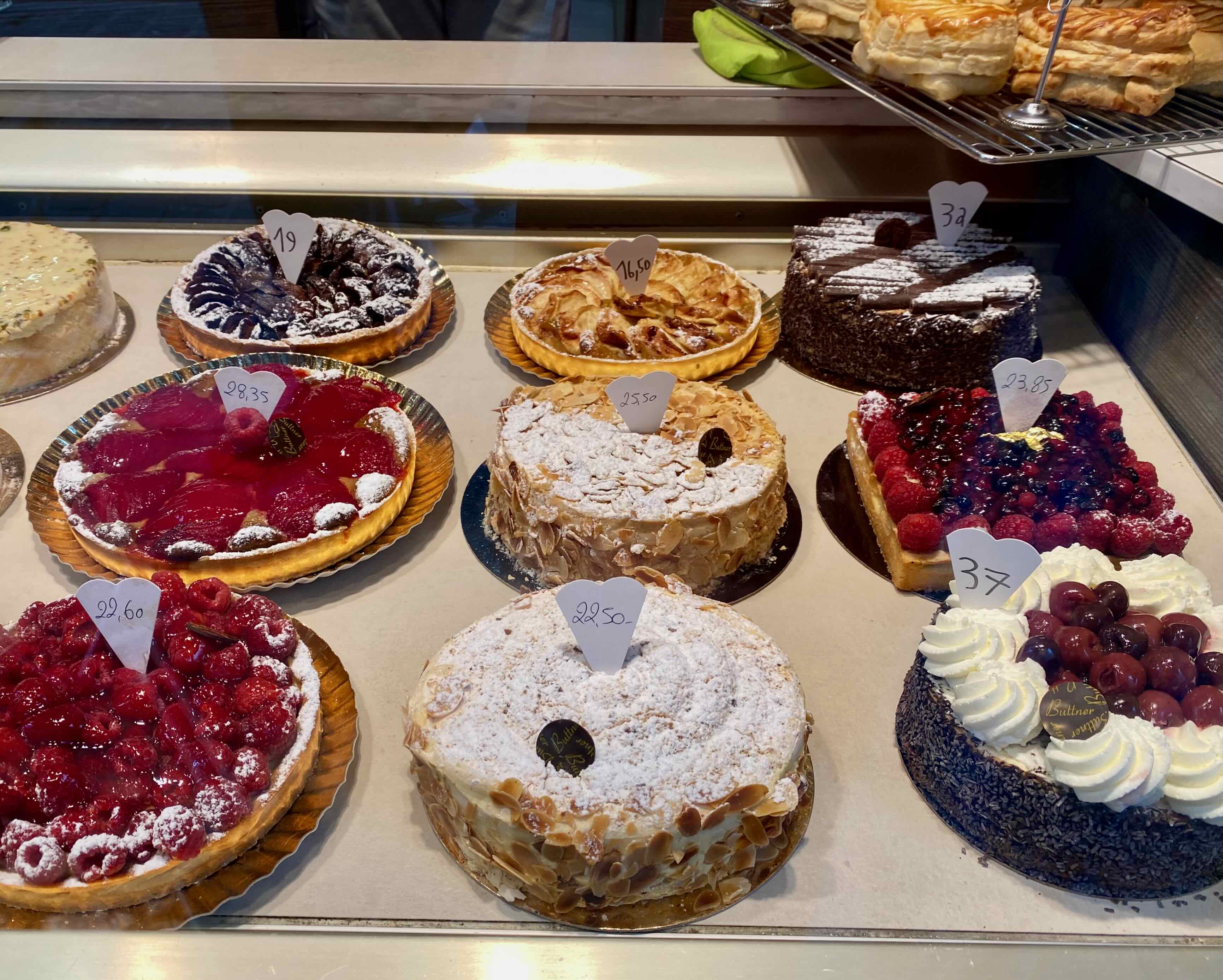
These cakes look delicious, but they are quite expensive. €37 is $60.50 Canadian!

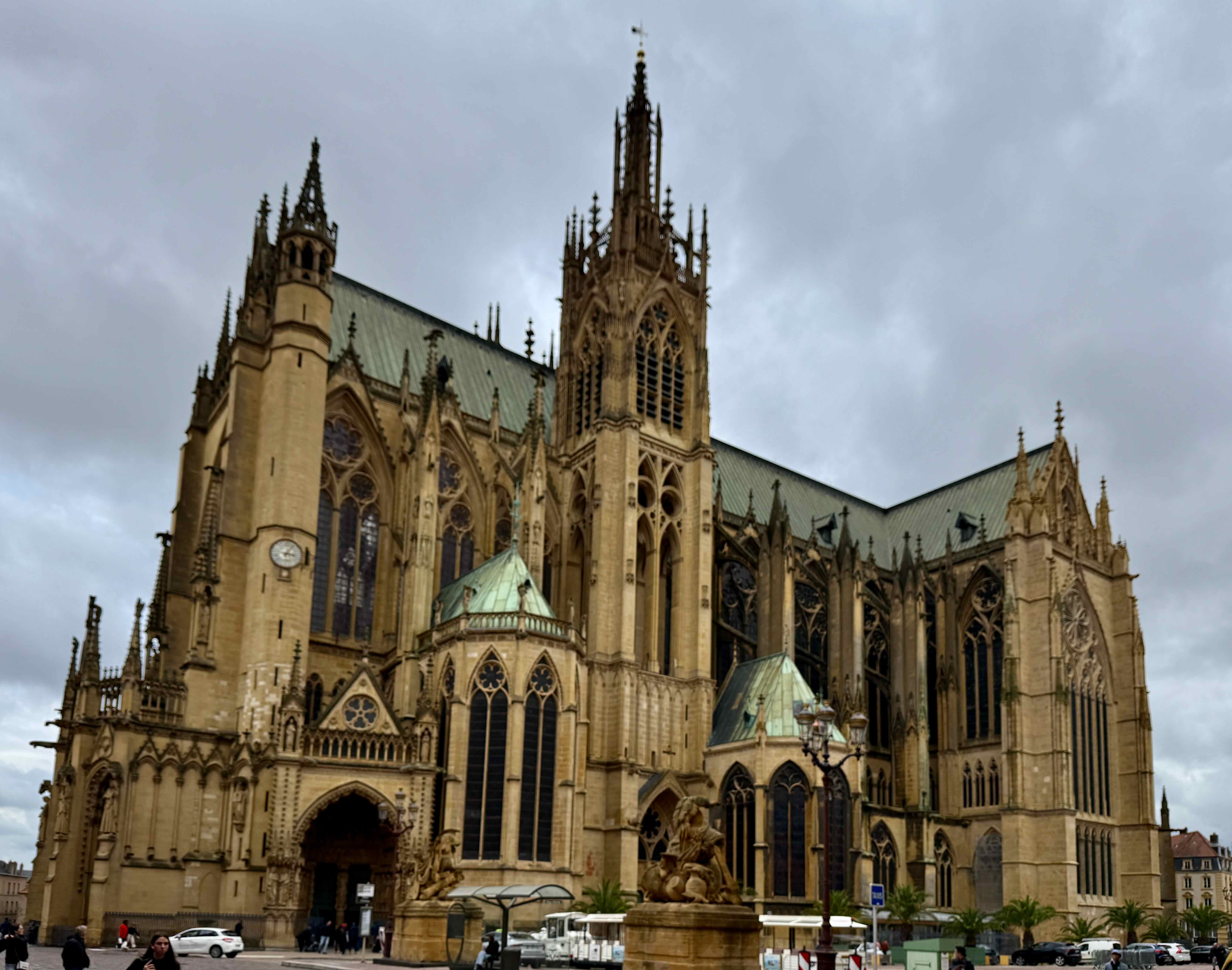
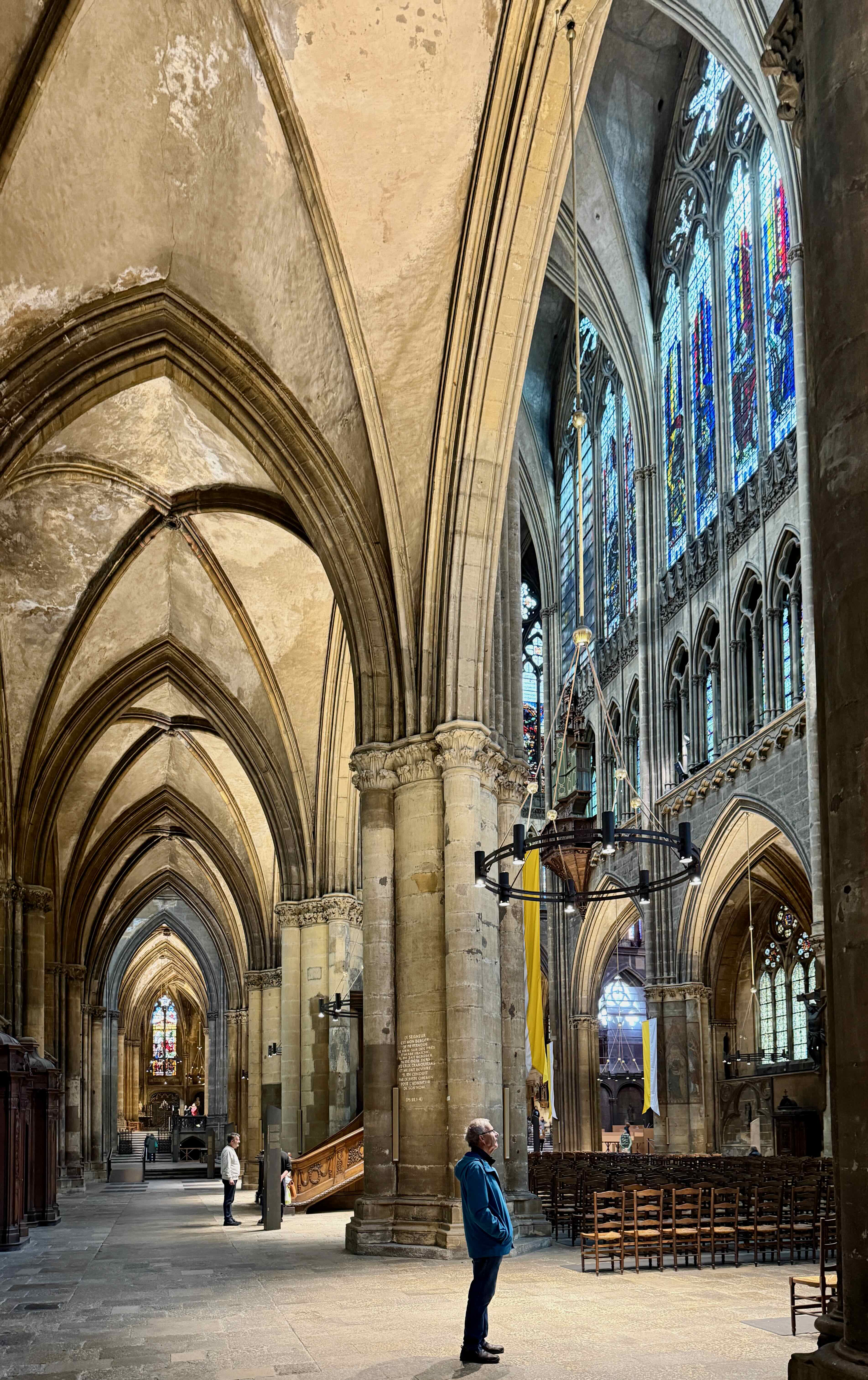
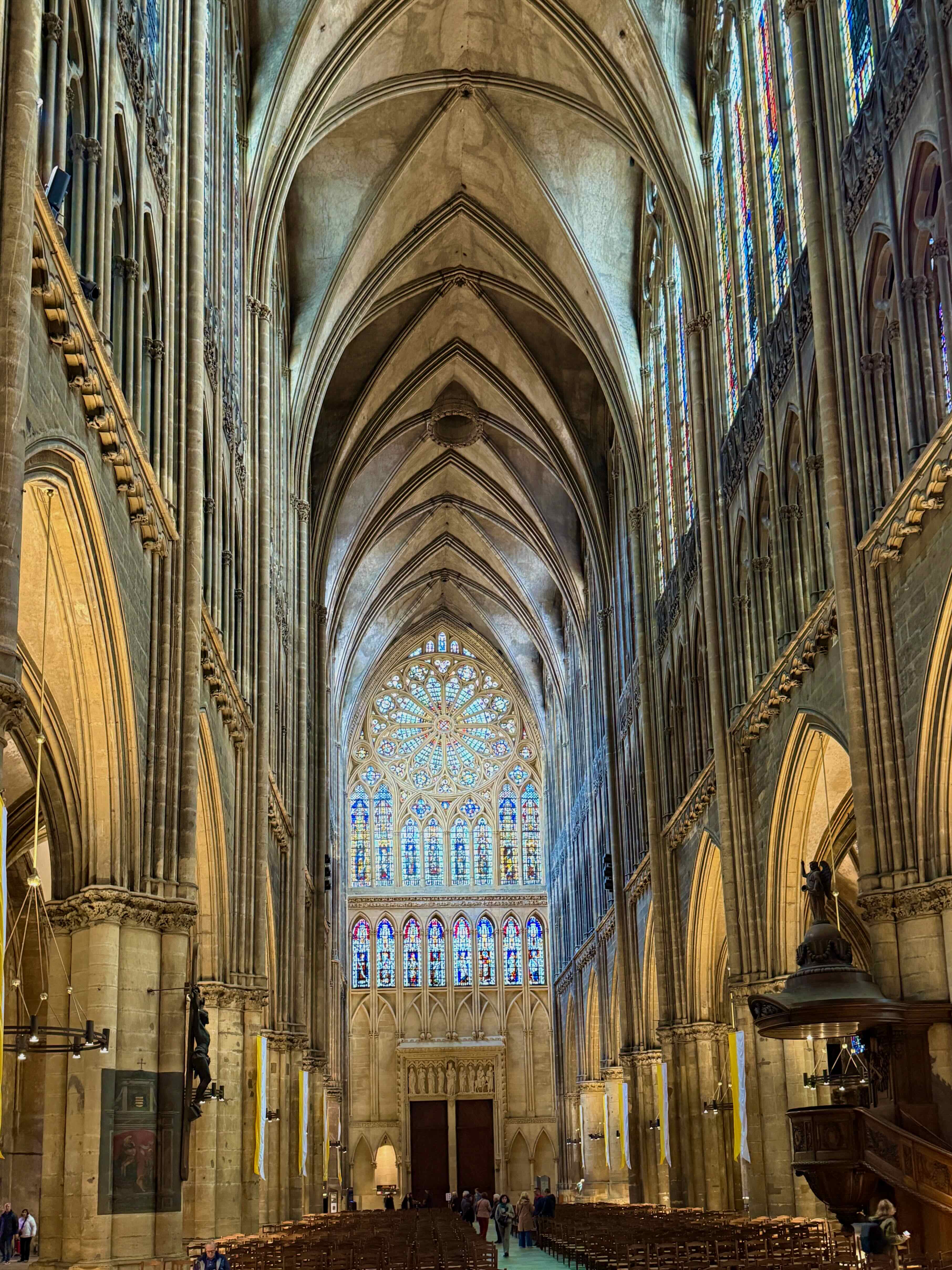
Metz’s Notre Dame Cathedral was begun in the early 14th century. This Cathedral has the third highest nave in France (41.41 meters or 135.9 ft), after the cathedrals of Amiens and Beauvais, both of which we visited earlier this month!        

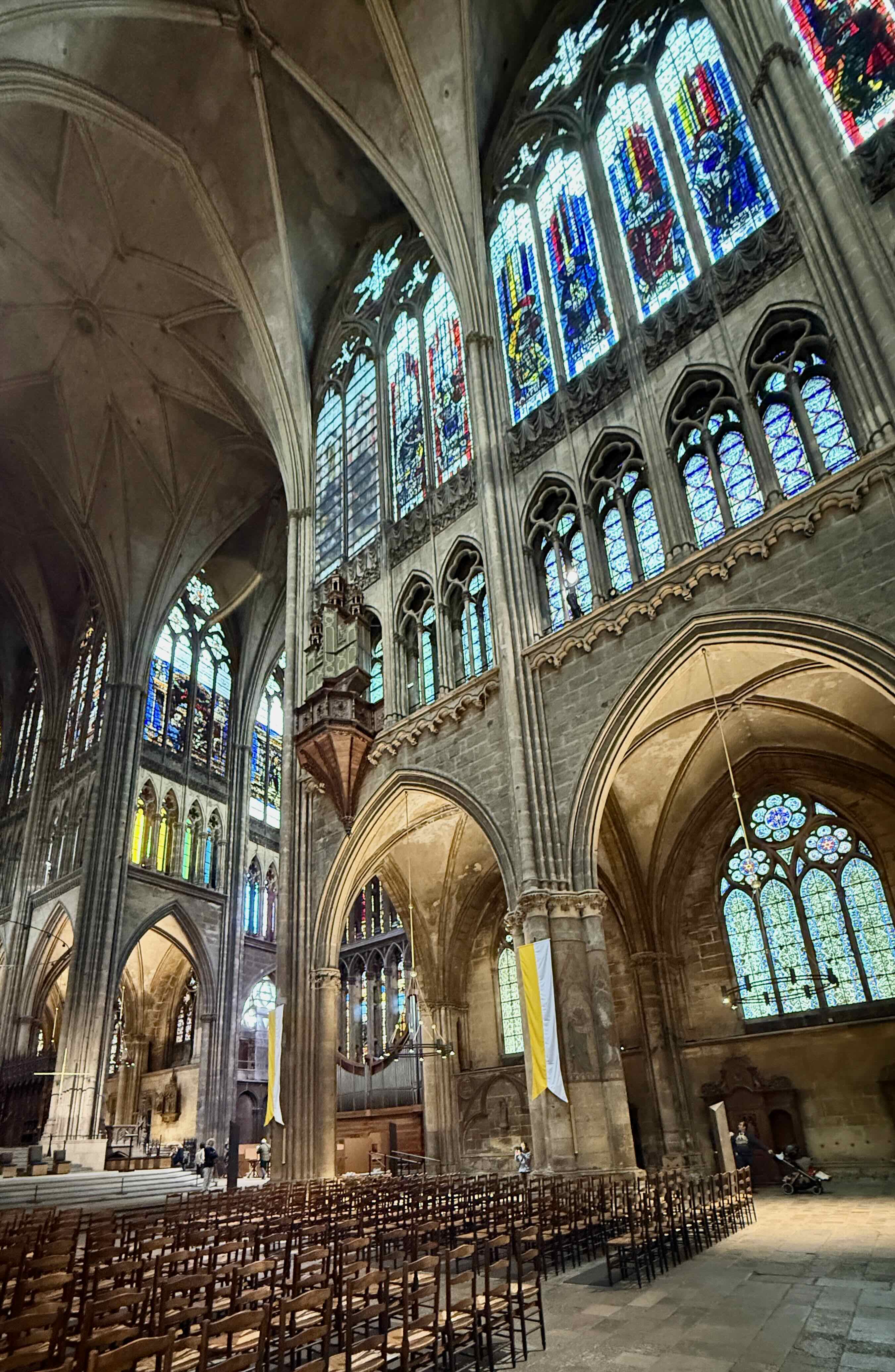
A few photos of the impressive interior. We have seen so many cathedrals but somehow we keep being drawn into seeing more. They are so different from one another and we never know what we will be seeing when we walk through the cathedral doors.

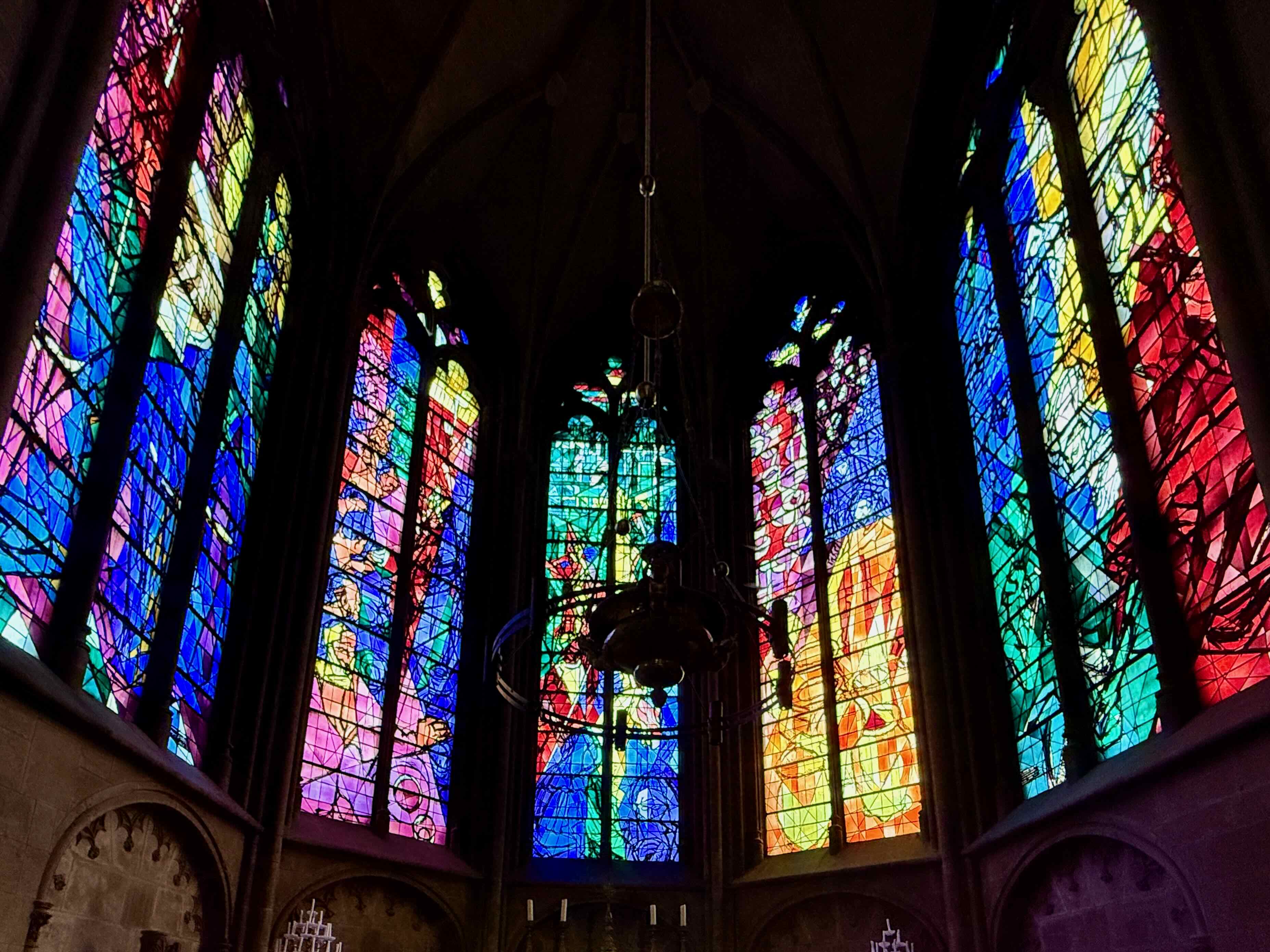
These stained glass windows were designed by Marc Chagall.

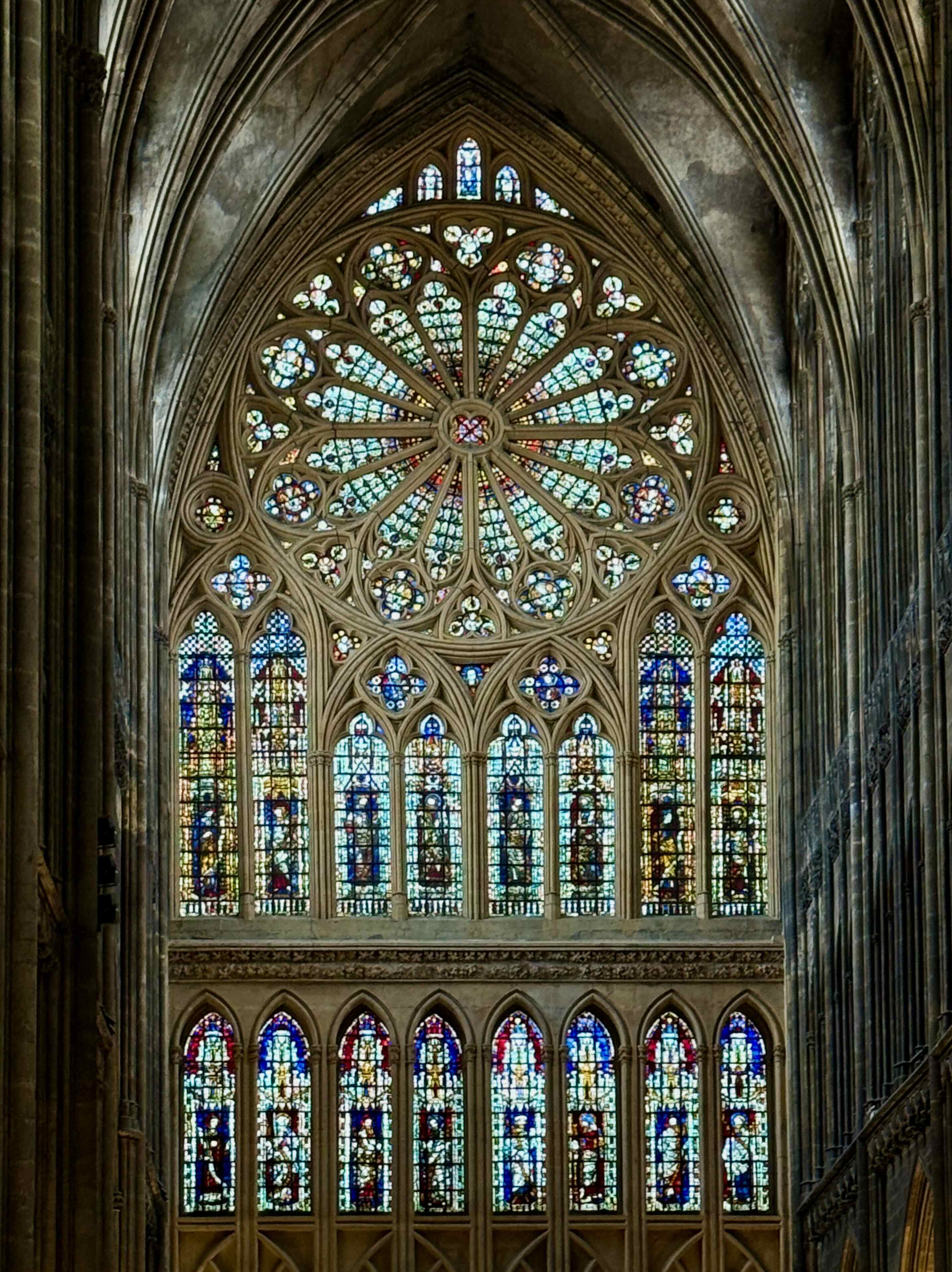
The cathedral’s Rose Window is very impressive.

More modern stained glass windows by Jacques Villon completed in 1957.

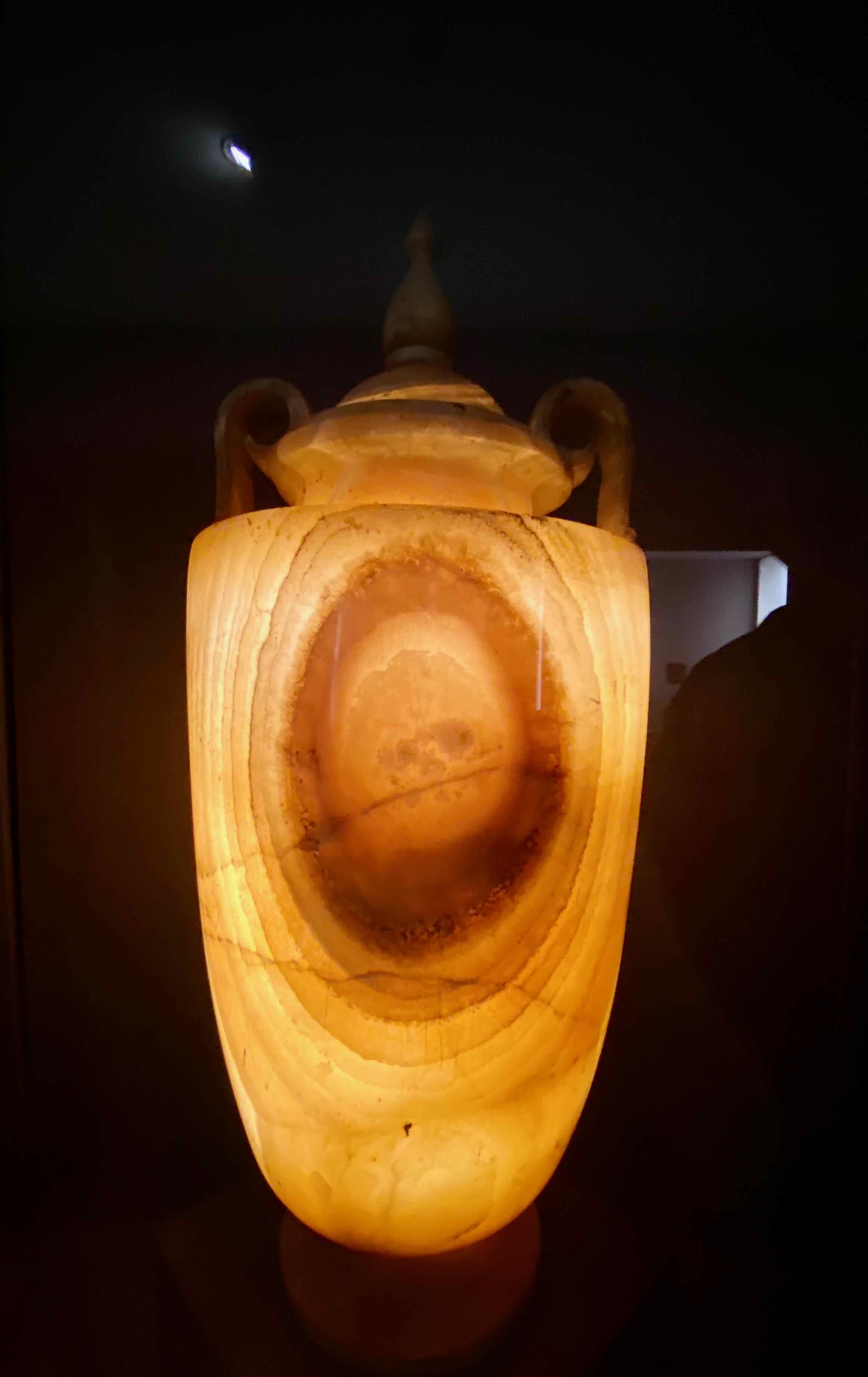
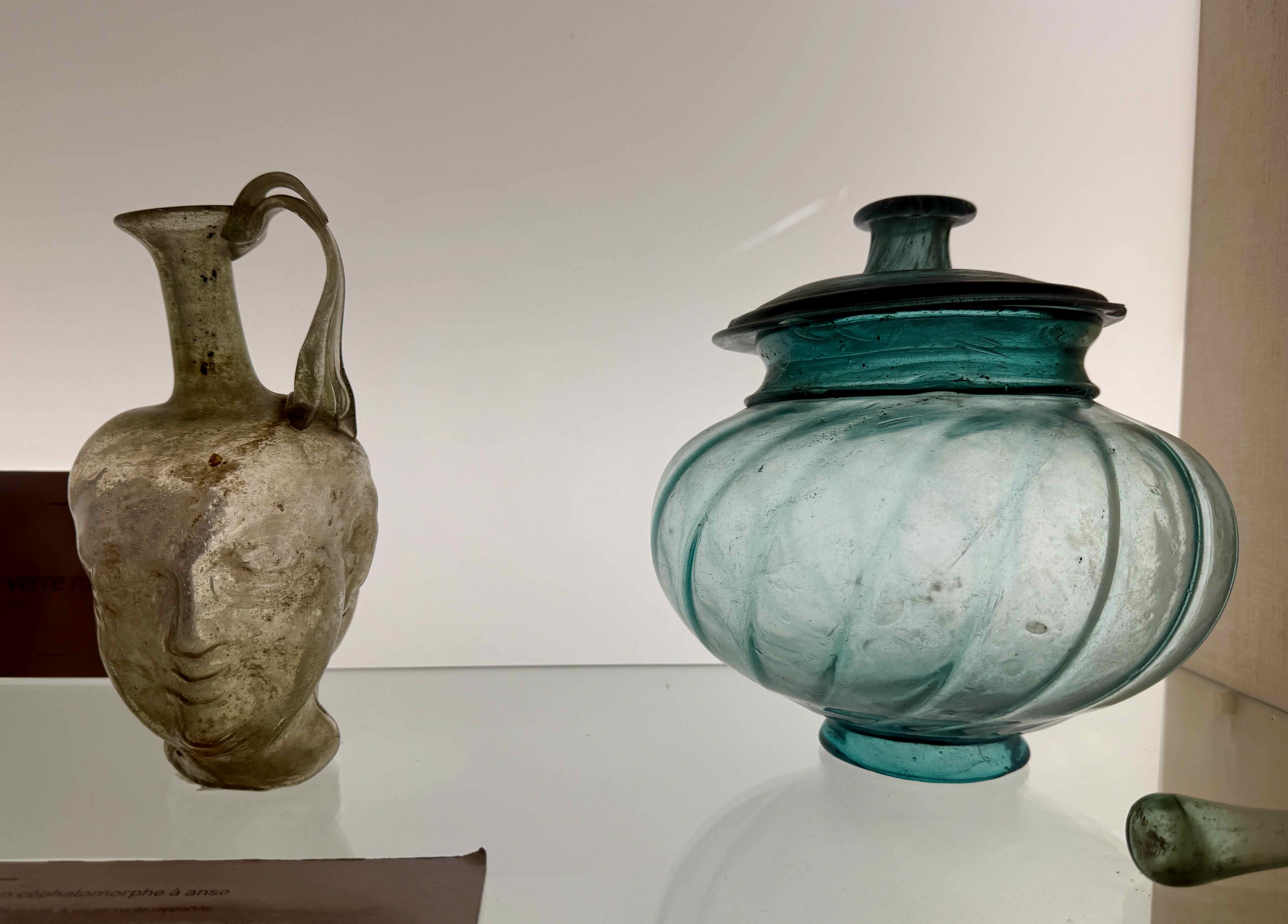
Next stop is the Musée de La Cour d’Or.  It is a maze of rooms that covers 6,000 m² of exhibition space and 2,000 years of history in the city of Metz. This incredible onyx vase is a cremation urn from the 1st century B.C.

There is so much to see….

including this glass vase with a human face…

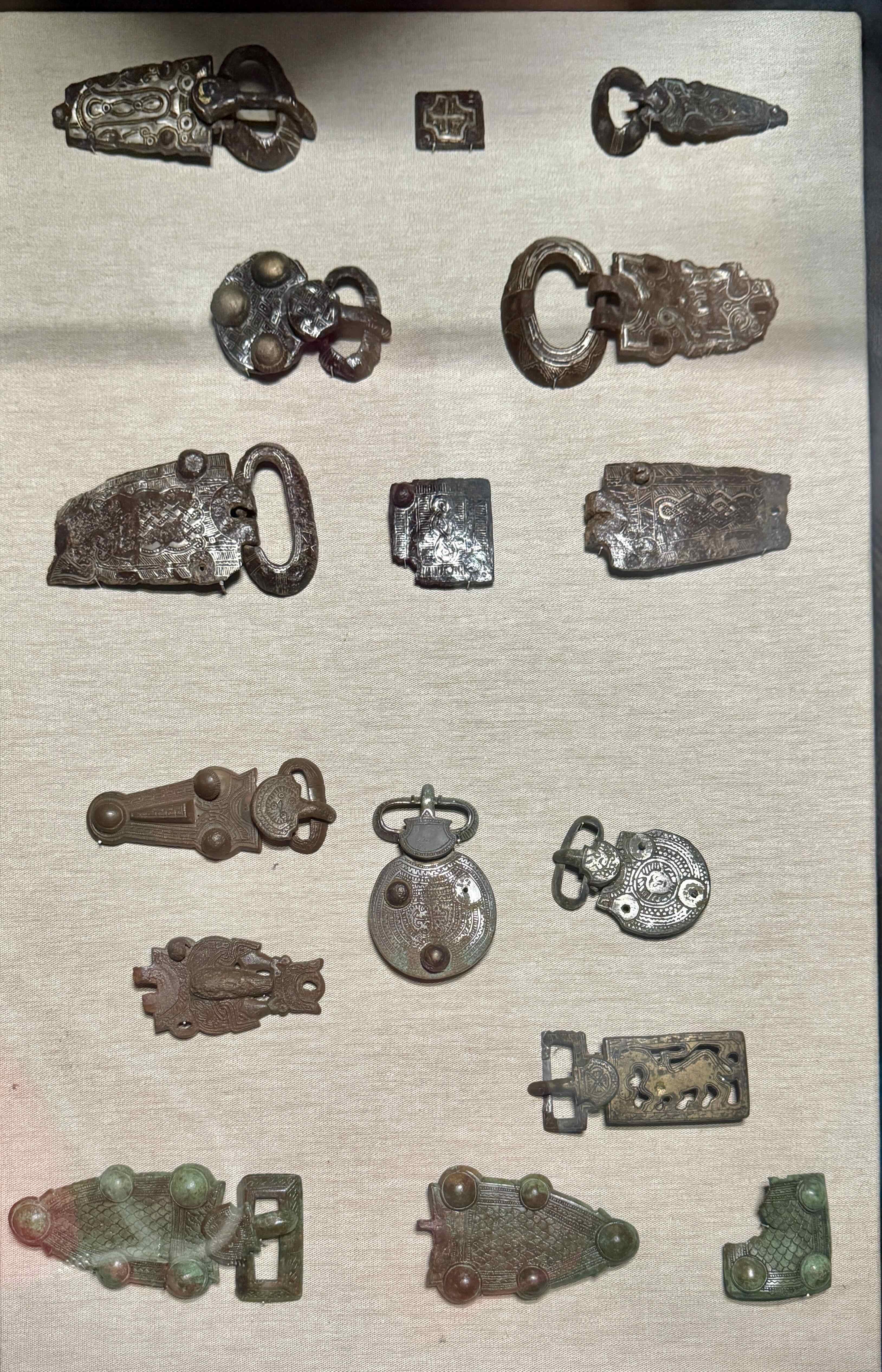
ancient locks,..

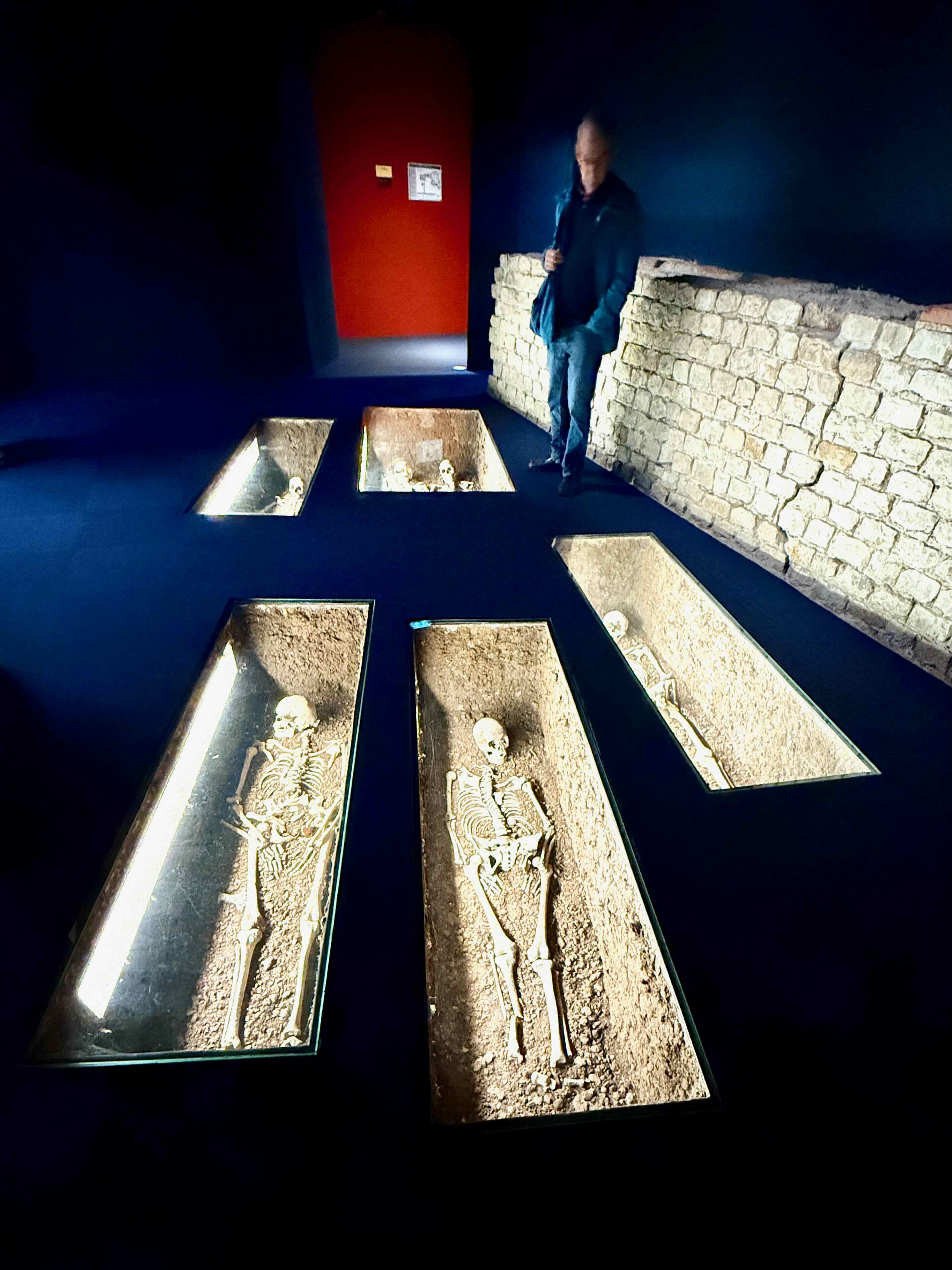
human skeletons…

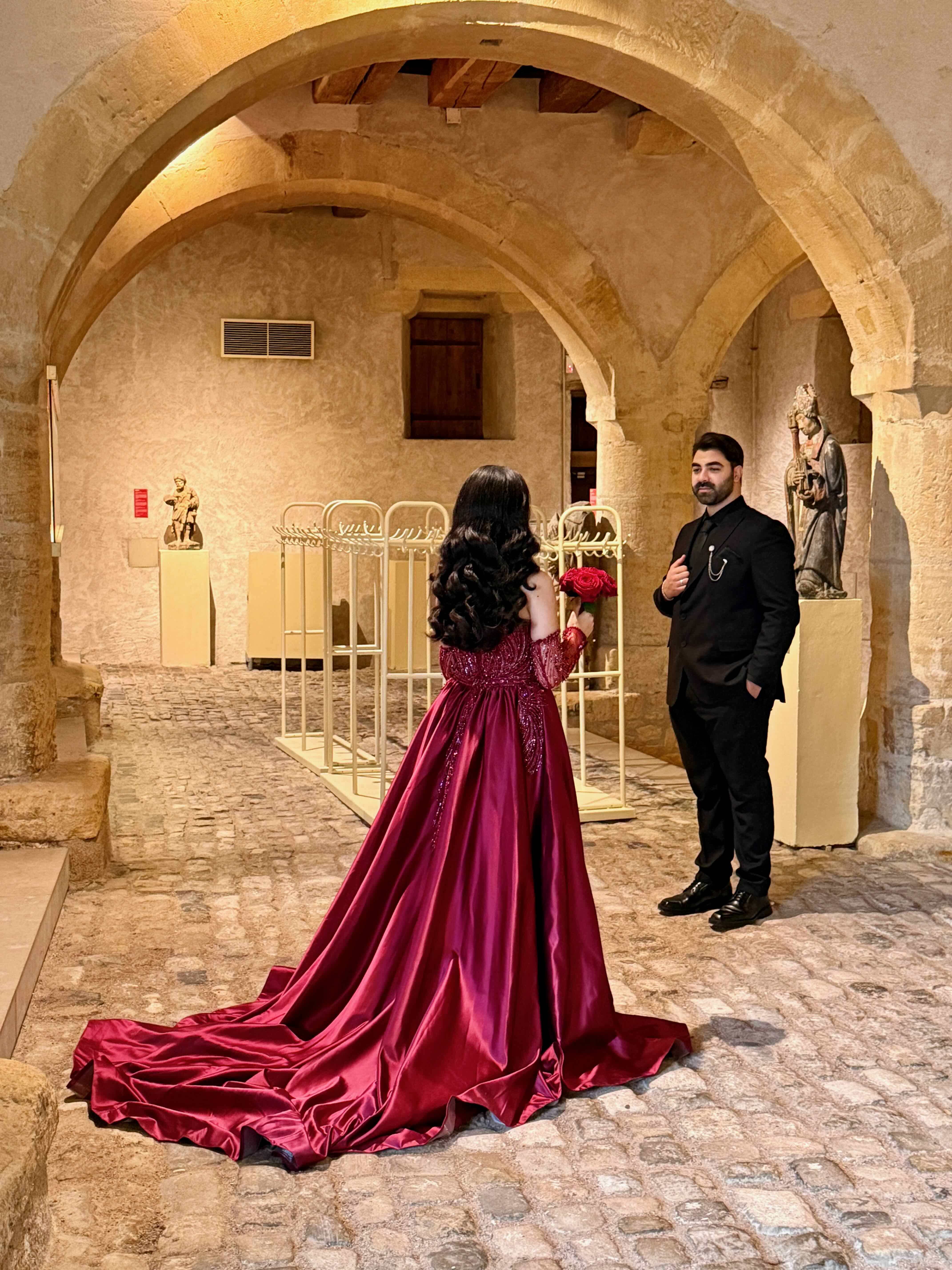
and a couple taking wedding photos!

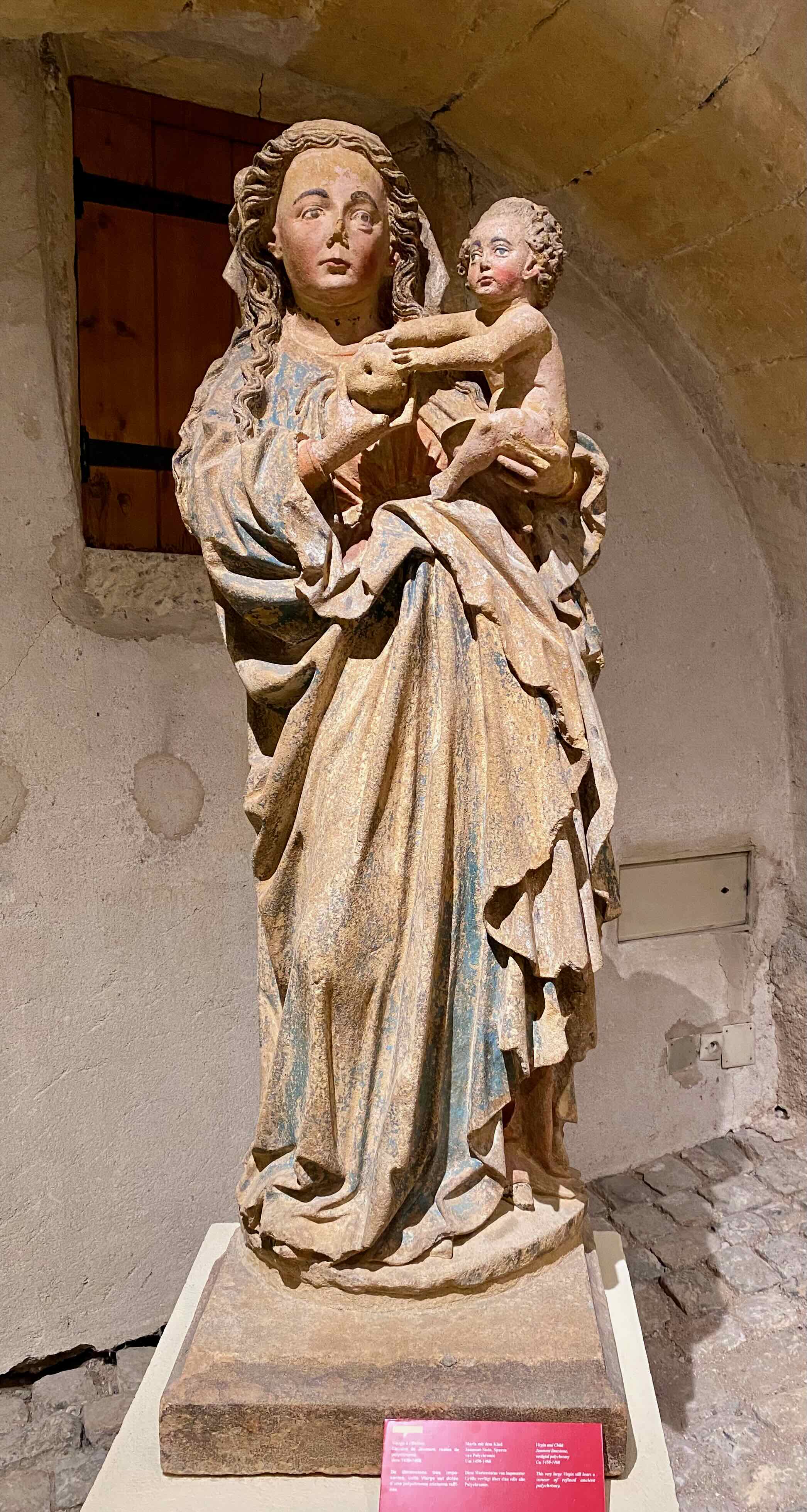
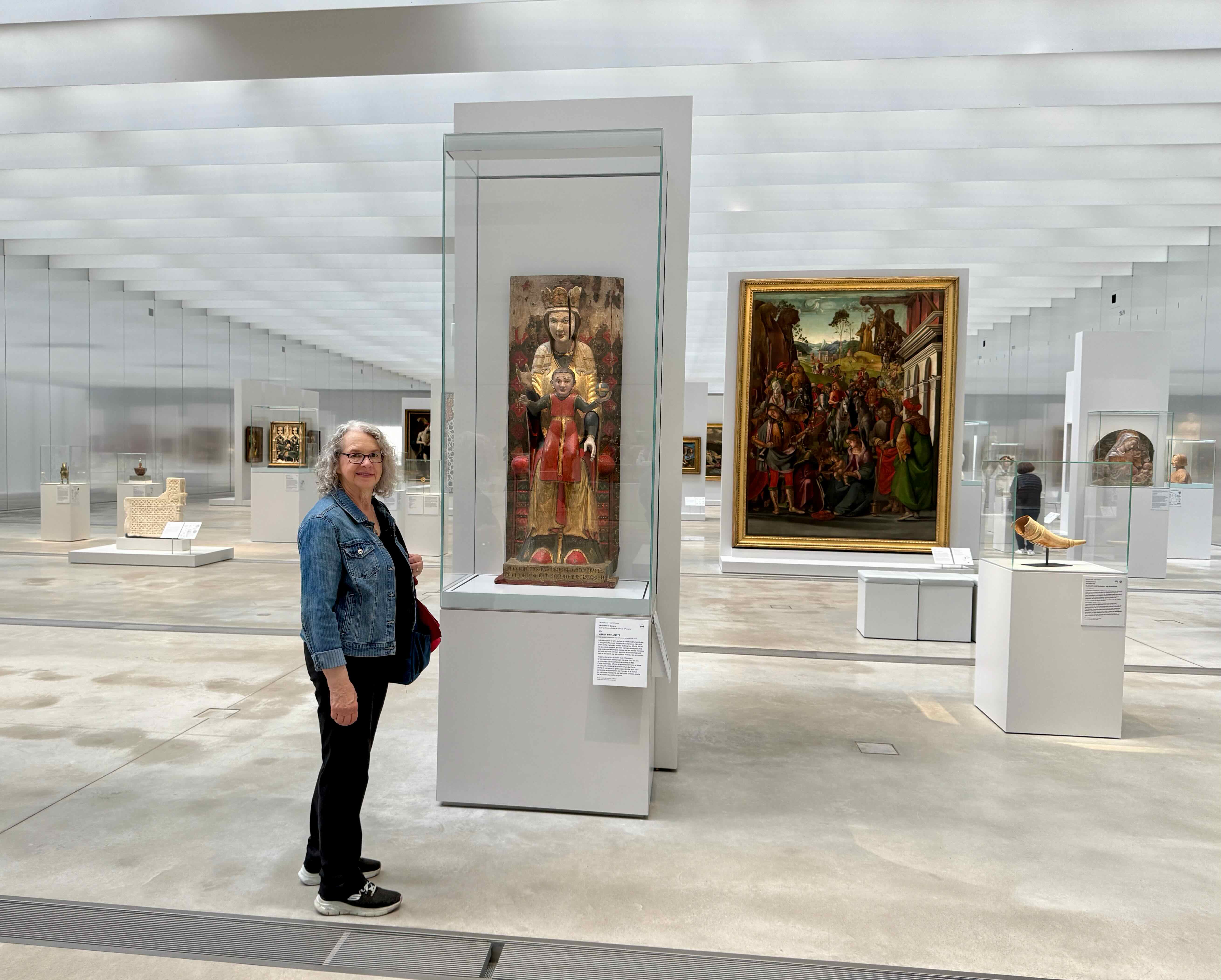
Both Bob and I took a photo of this Madonna and Child.  Something about it spoke to both of us.

These painted ceiling panels were discovered when a house was being renovated. They are from trees that were chopped down in 1218-1219.  This was determined by the thickness of the tree rings. They are the oldest preserved painted ceilings in Metz.

The rooms on the museum follow the chronological history of the city of Metz. It was interesting, but a lot to take in.  Finally we are in the last room.

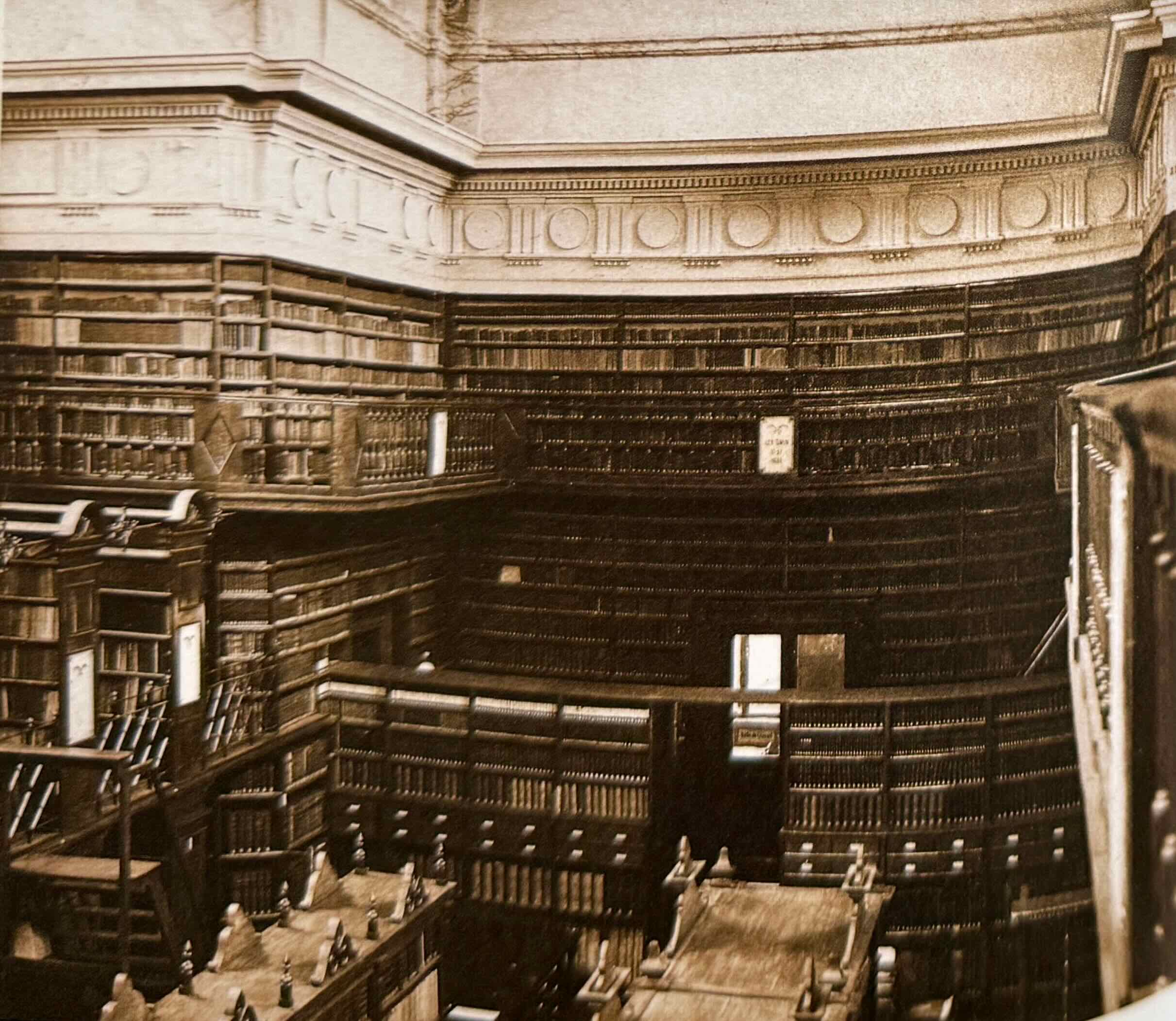
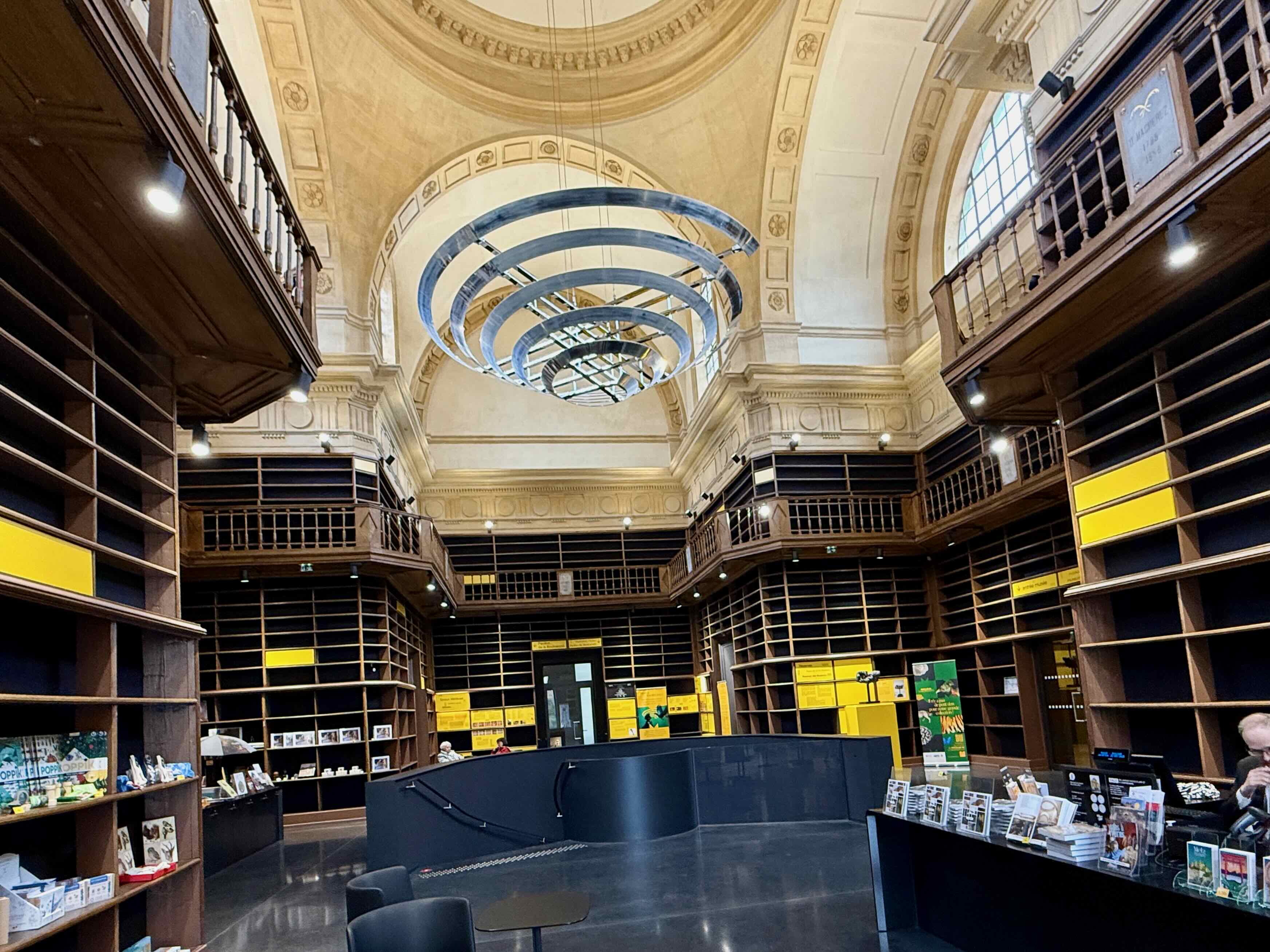
The entrance to the museum is located in what used to be a library. This is a photo of the room when it was a library, and…

this is how it looks today.

Fontoy, France

Day 26     Thursday, September 25, 2025

Another quiet day, but I do venture out. We drive 15 minutes to a nearby town to do a bigger grocery shop. The store Bob has been going to in Fontoy is limited so we are going to a big E.Leclerc grocery store.

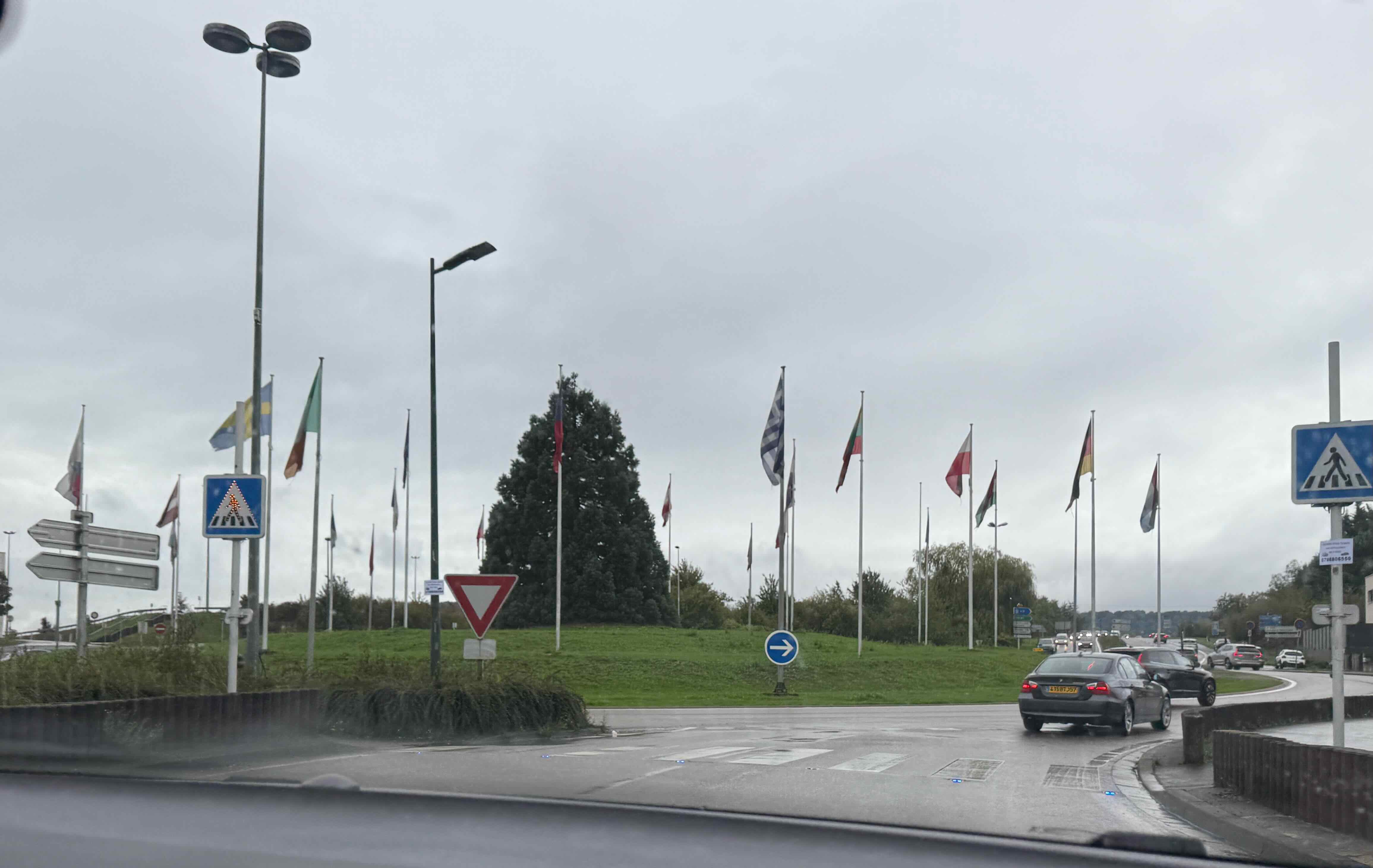
Traffic circles often have interesting displays in their centres.  This one has flags from many European countries.  There are a lot of traffic circles of all sizes in France and Belgium!

After 1 1/2 hours shopping we spend €104 for two big bags of groceries, which seems fairly reasonable. This  store is huge and it takes a while to find all the items on our list. Heading home, the countryside is pretty but it is cloudy and still raining on and off.

This is just down the street from our apartment, which happens to be right beside train tracks!  Luckily the windows are very soundproof and we barely hear the trains at all.

The plan is to drive to Metz tomorrow. There are a couple museums we want to visit.

Waterloo, Belgium and the Defeat of Napoleon

Day 19     Thursday, September 18, 2025

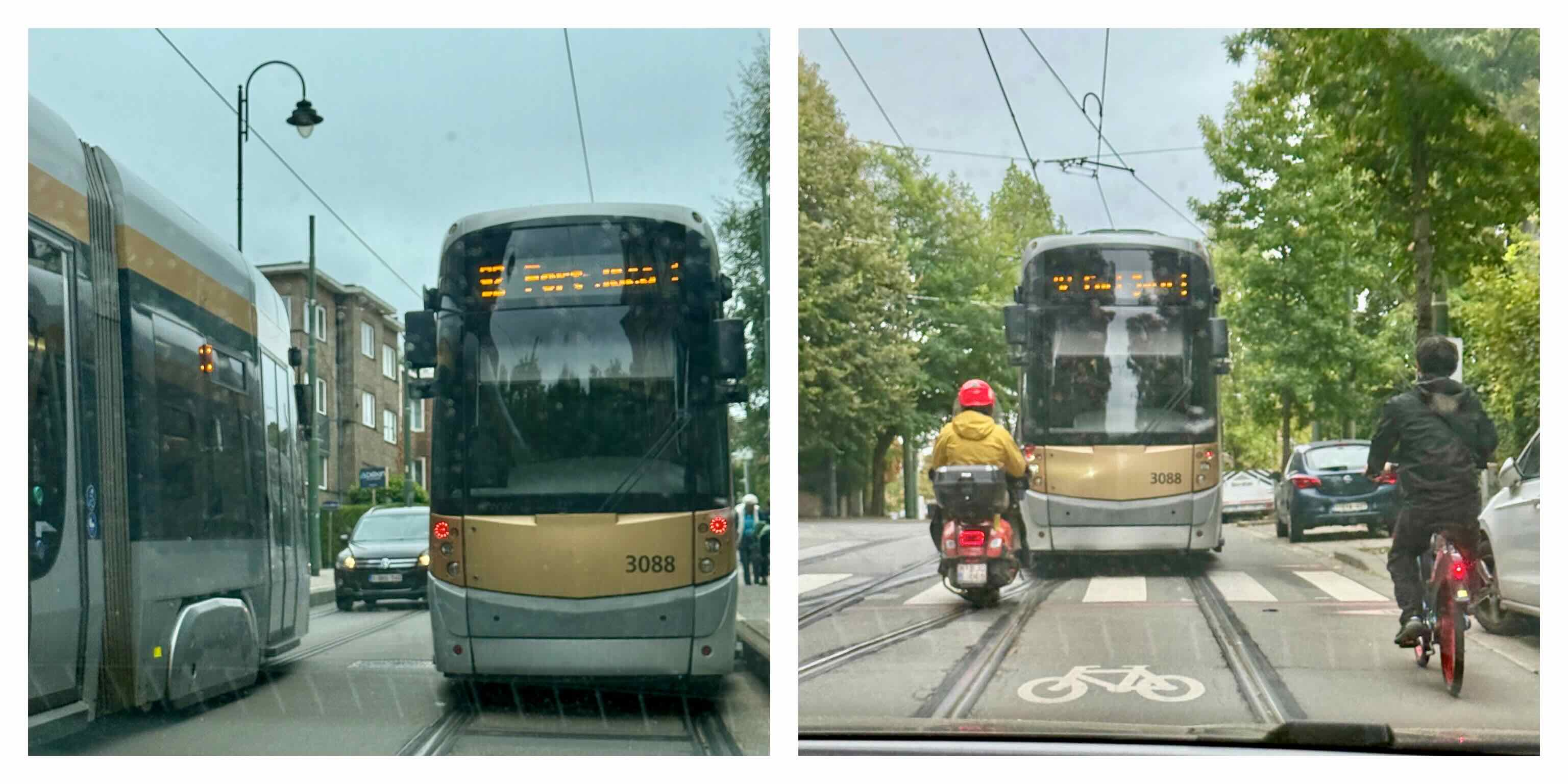
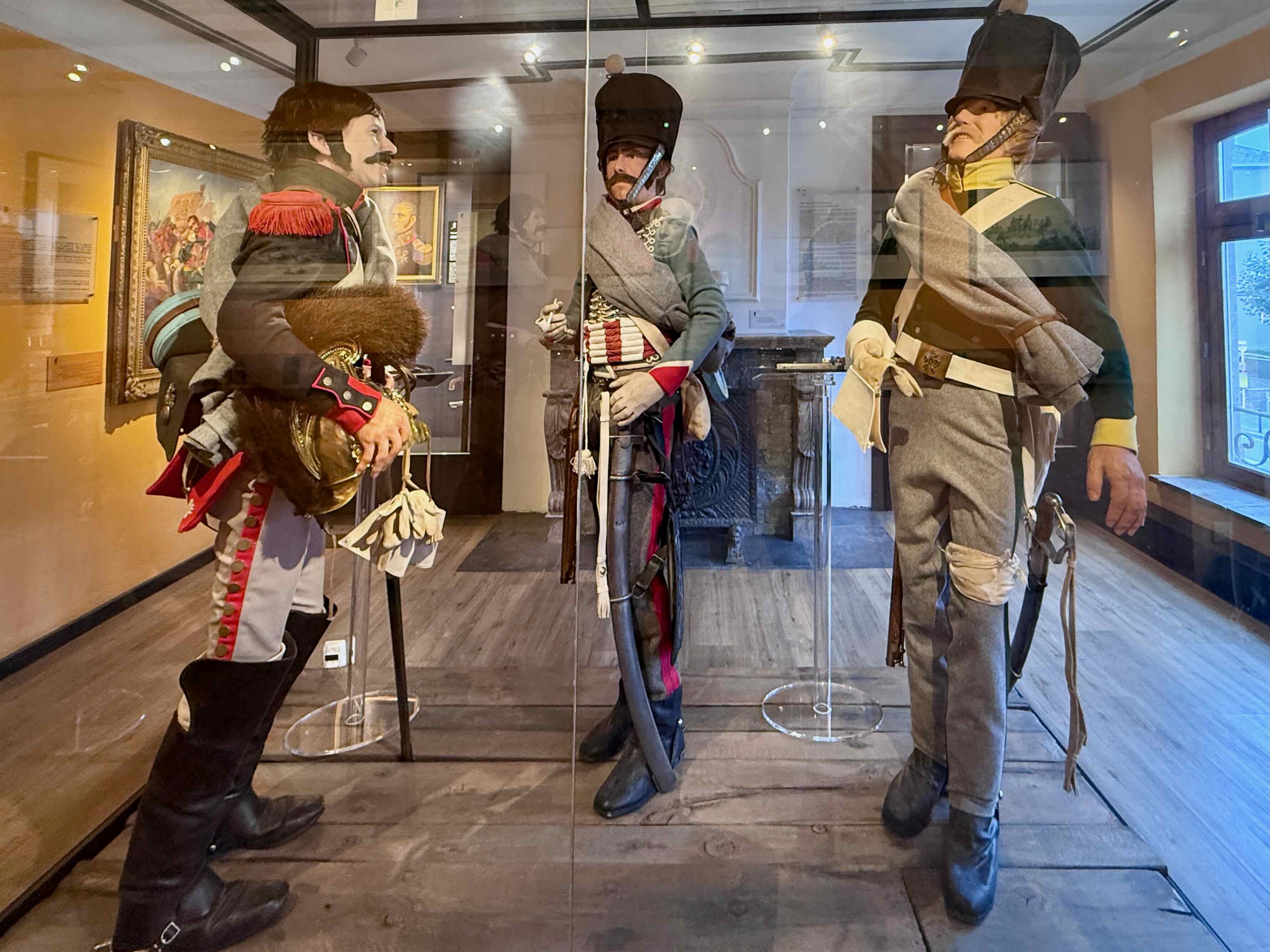
We are on the road by 10:00, heading to Waterloo which is the site of the famous Battle that ended Napoleon’s French Empire. The roads can be challenging to drive. Many are fairly narrow and today we share the road with trolley cars, automobiles, trucks, motorcyclists and bicyclists! There is a lot to pay attention to and Bob its doing an amazing job driving.  I am usually a good navigator but I didn’t have the best night and today we get to Waterloo in spite of my navigating!! The Wellington Museum was easy to find and there was free parking nearby.  The museum is located in the building that the British Duke of Wellington used as his headquarters when he defeated Napoleon at Waterloo in1815.  The soldiers uniforms displayed are, from left to right, the French Carabiniers, the British Light Dragoons and the British 8th Hussars.
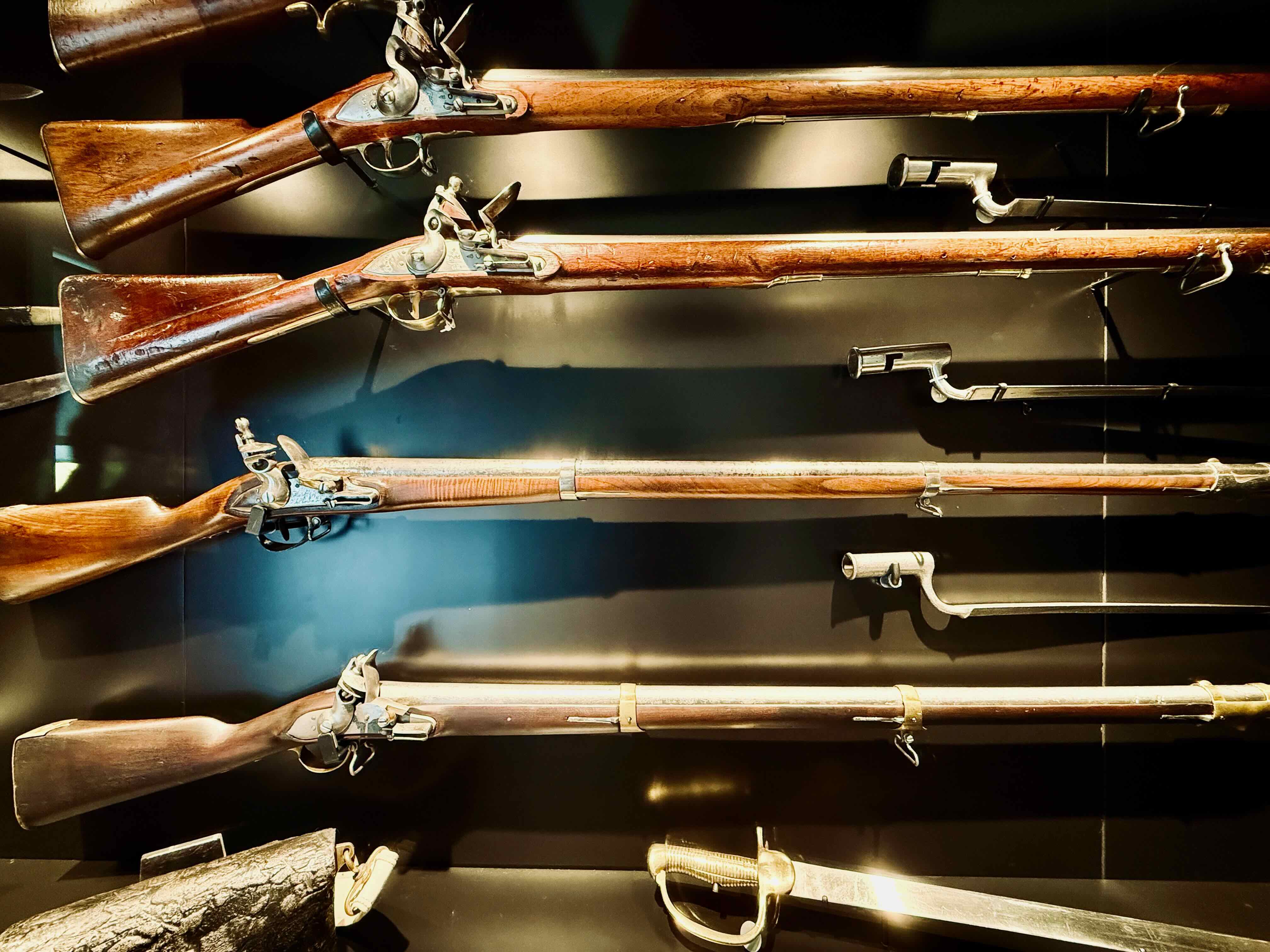
The museum has a room with weapons used during the Battle of Waterloo.

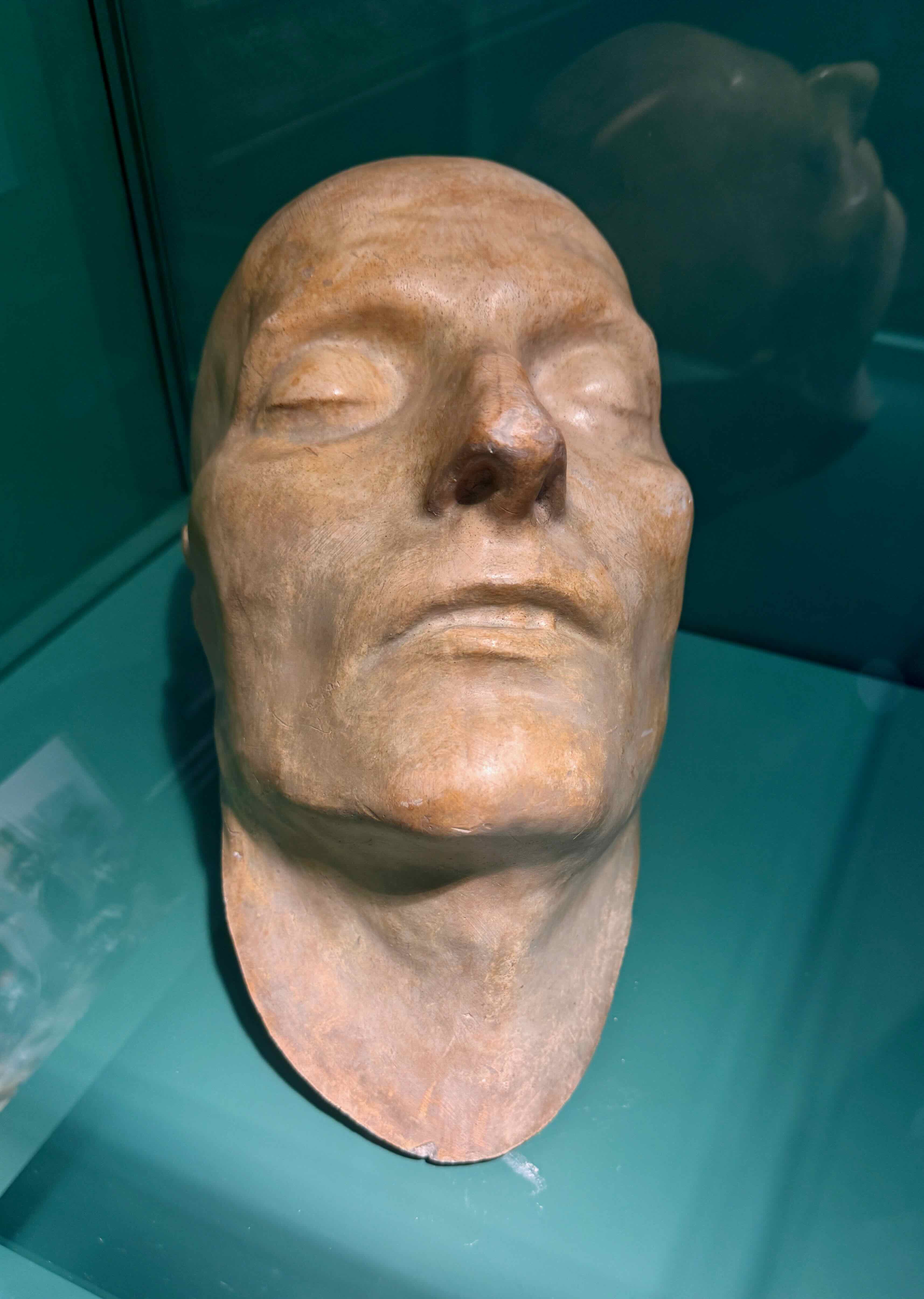
A lot of artwork, paintings and information about the battle and even the death mask of Napoleon which I find rather unsettling.

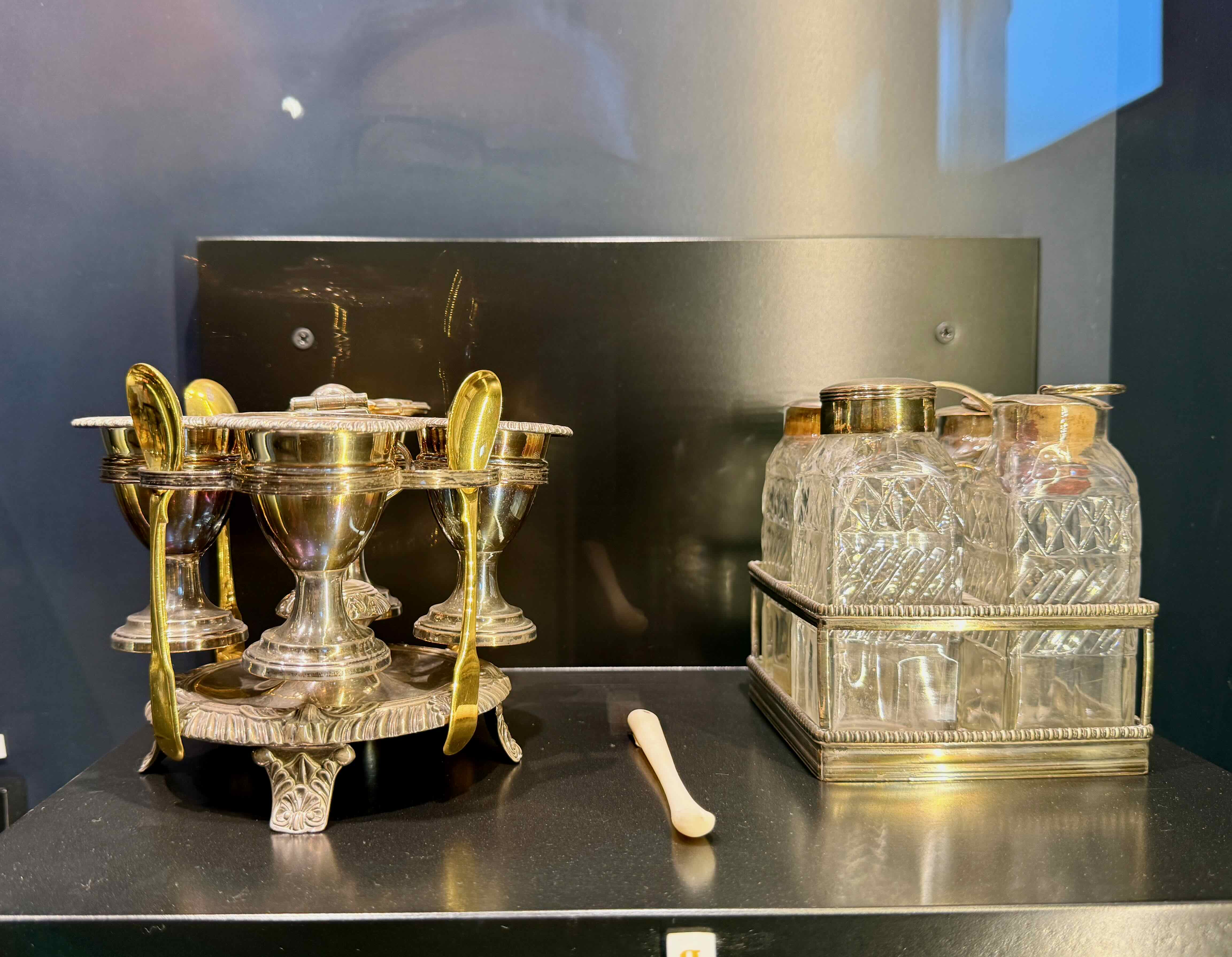
The French troops had to forage to survive, and many soldiers died of disease, malnutrition and exhaustion brought on by the extremely difficult conditions they endured.  Meanwhile the French generals travelled with dining sets that included items like crystal containers and silver and gold plated egg cups and spoons!

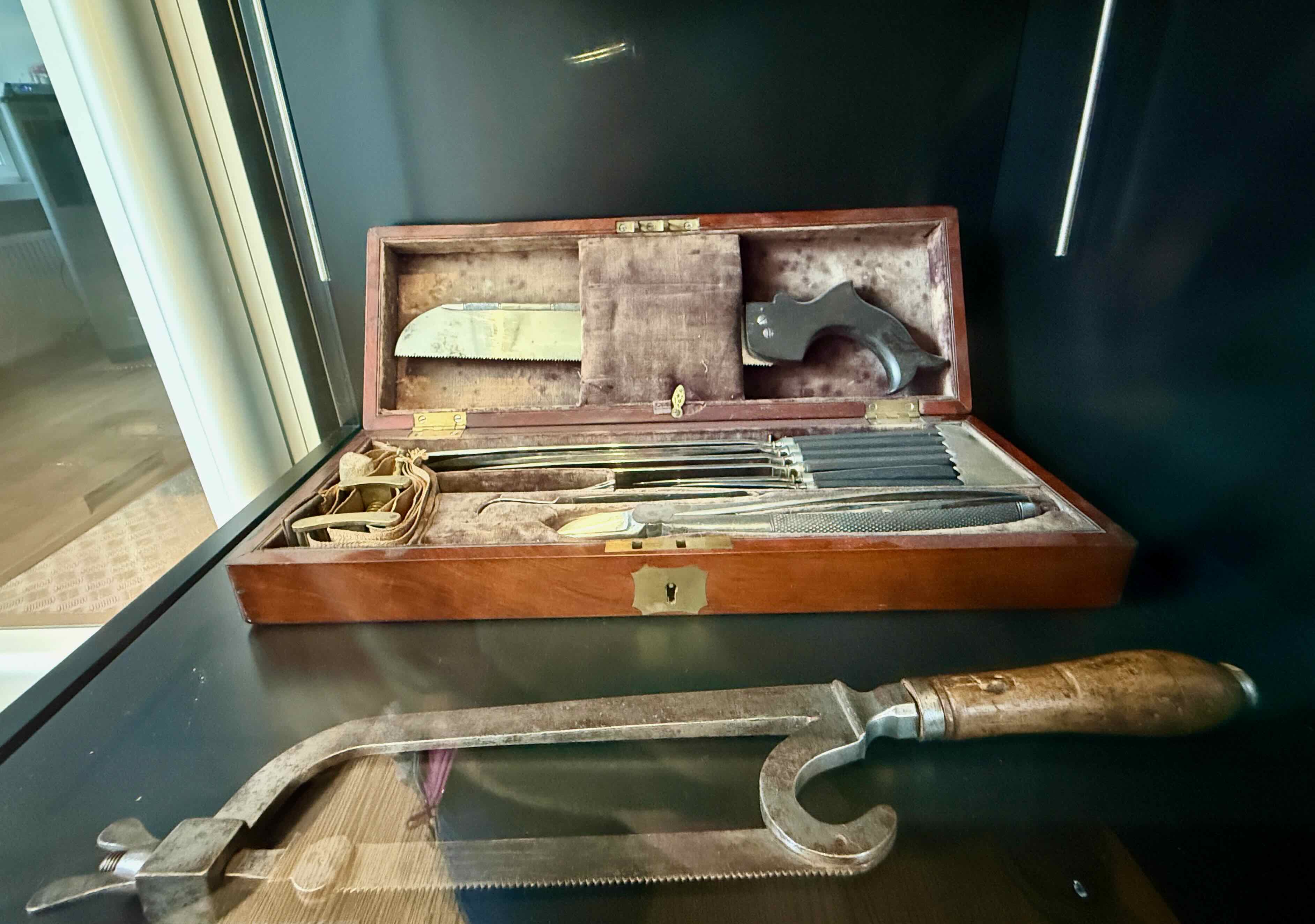
Soldiers were treated by amputating injured limbs to prevent gangrene. This is a typical surgeons kit for amputations which were performed quickly without anaesthetic and in five minutes. The saws and other medical equipment were not cleaned between patients so the post operative mortality rate was very high.

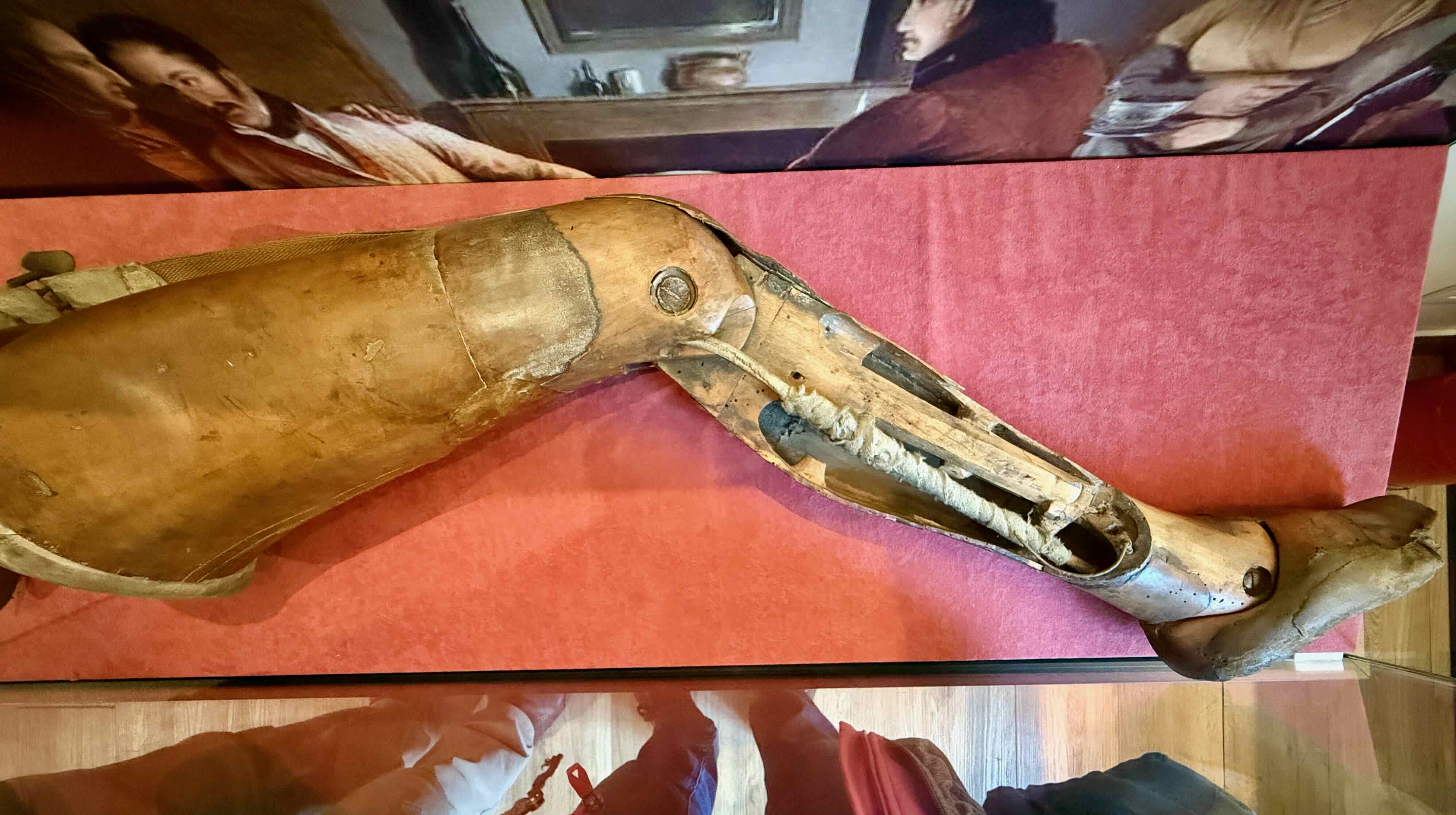
If you survived the amputation and had enough money your prosthetic leg could look like this.  I imagine most common soldiers made do with some sort of simple wooden peg leg.

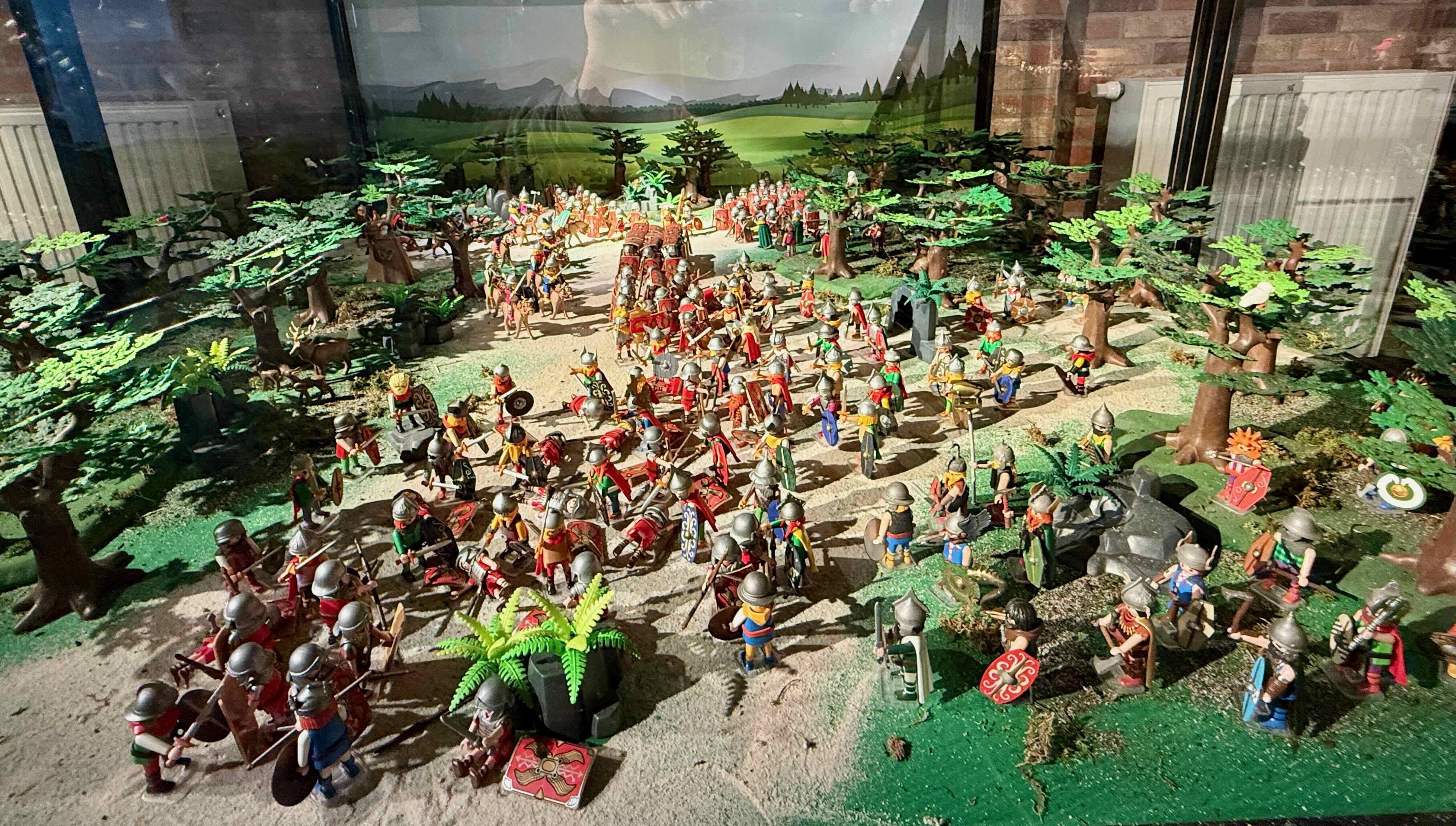
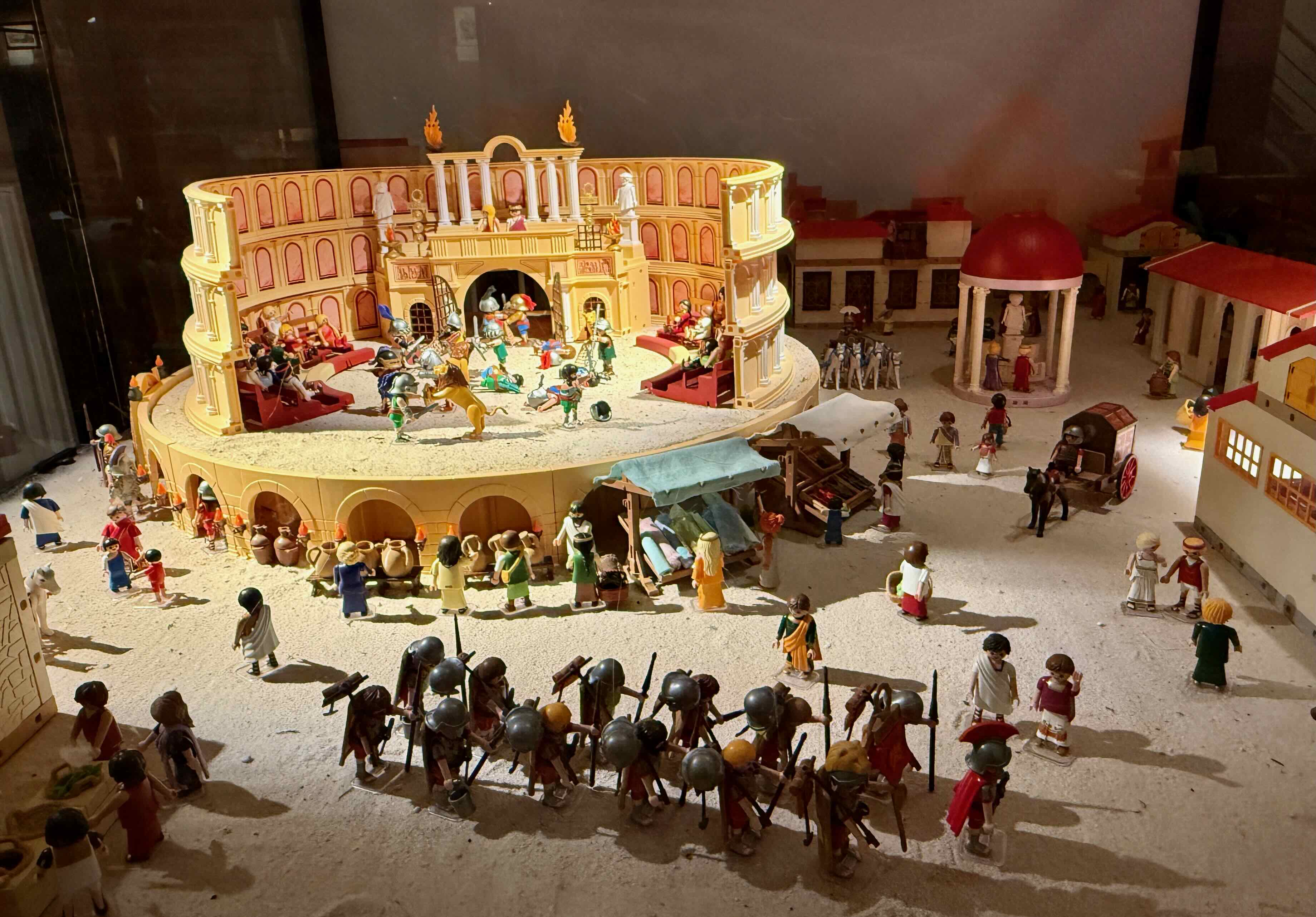
We cross a patio to enter another part of the museum and are surprised to find a huge Playmobile exhibition titled ‘A History of Empires’.  There are 16 display cases, each depicting a different time in history.

The war between Julius Caesar and the Gauls in 54 B.C. Rome’s first race course built in 599 B.C.
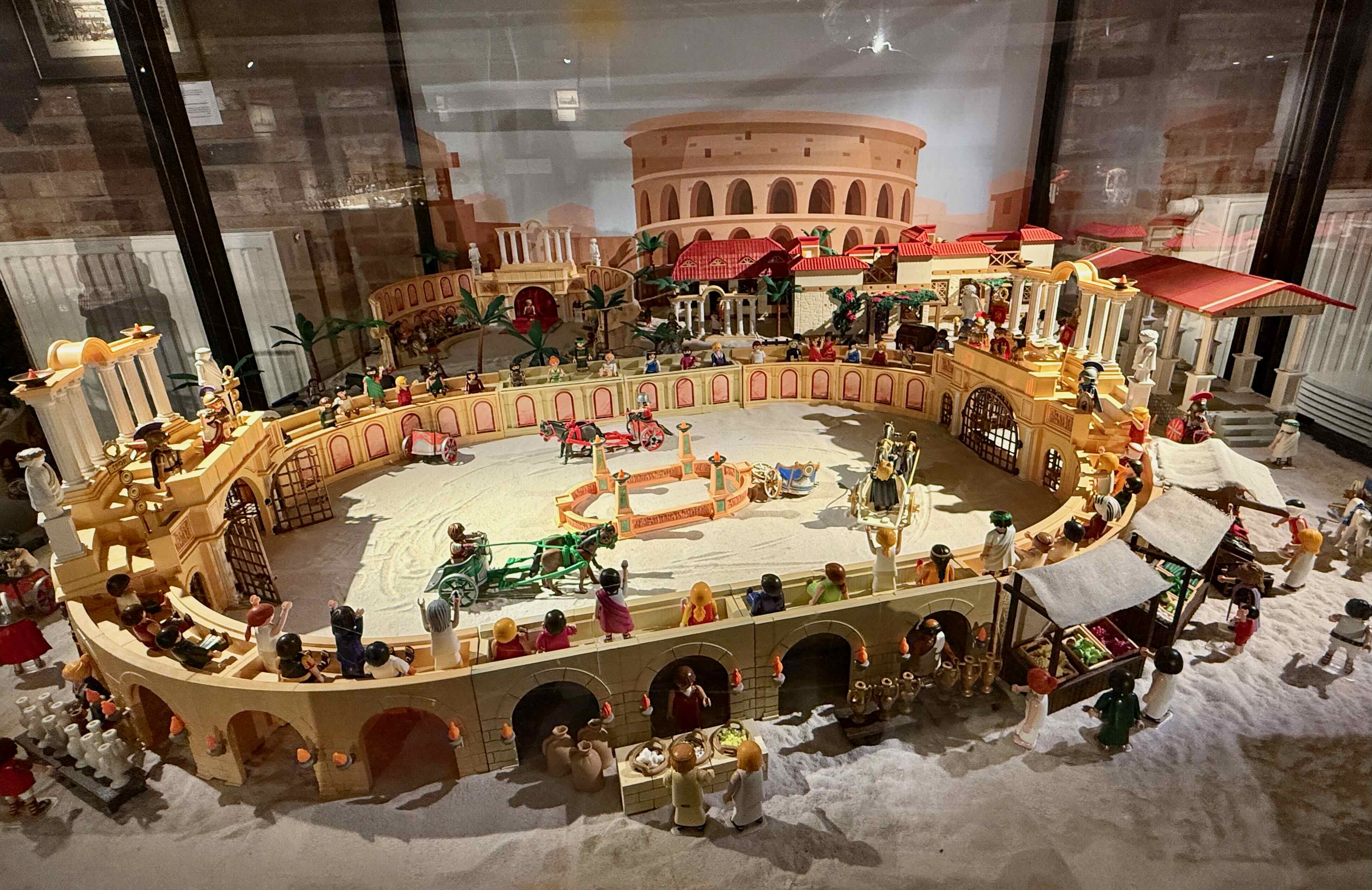
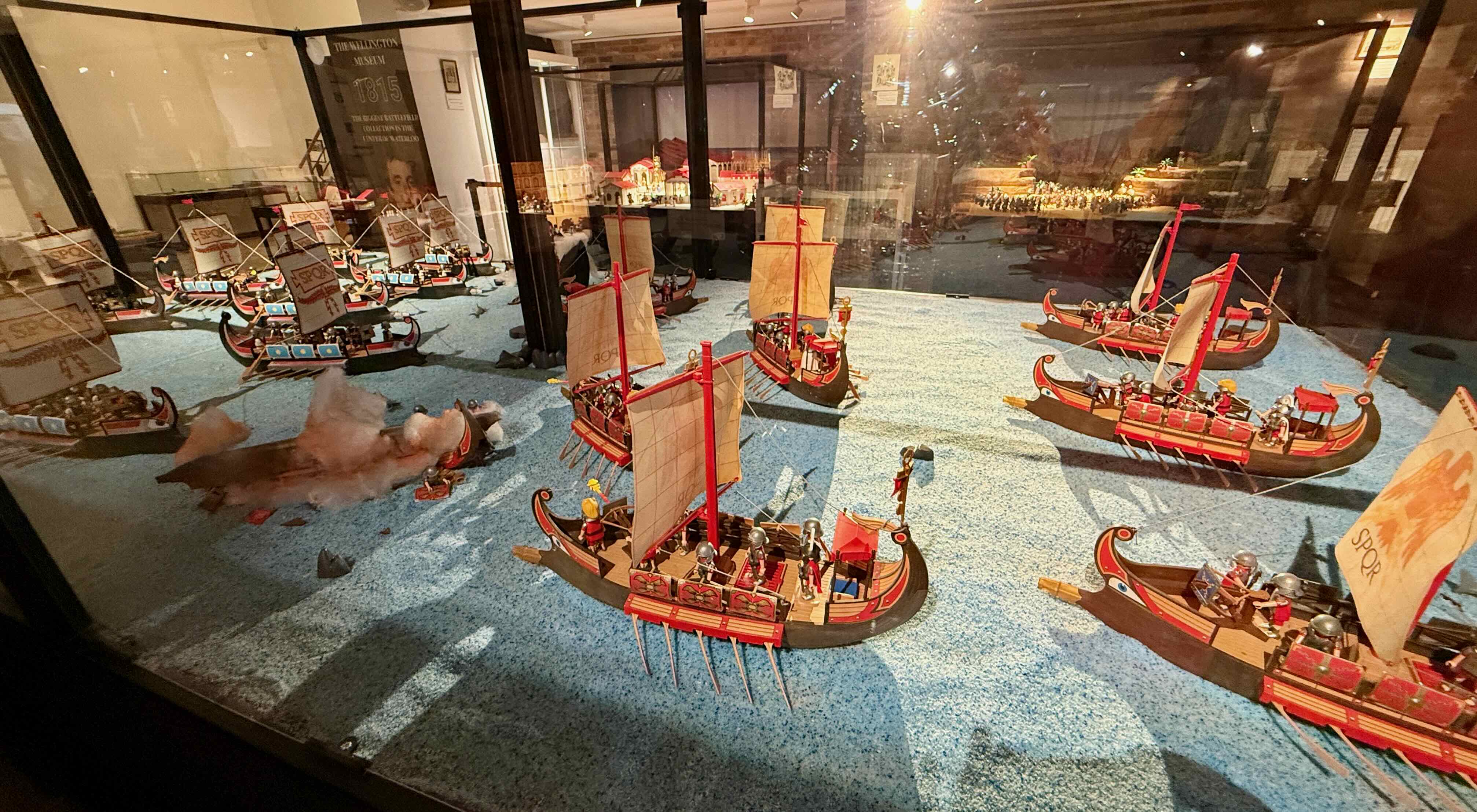
A naval Battle but I don’t remember which one.

The Roman Coliseum. We really enjoyed this unusual exhibit and marvelled at the thousands and thousands of Playmobile figures and accessories that were used to create these dioramas. This very old St. Joseph Church from 1690 is right across the street so we had a look.
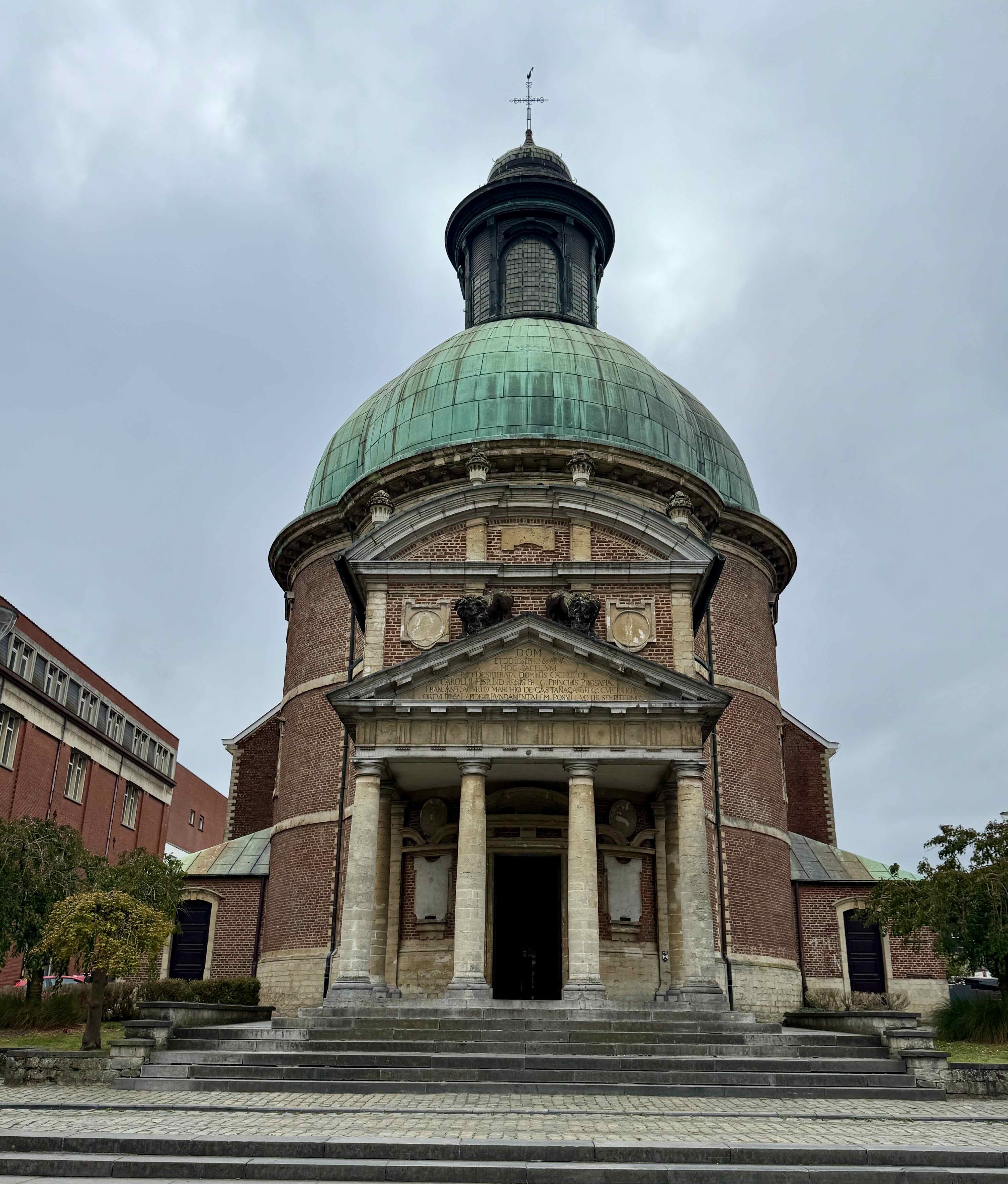
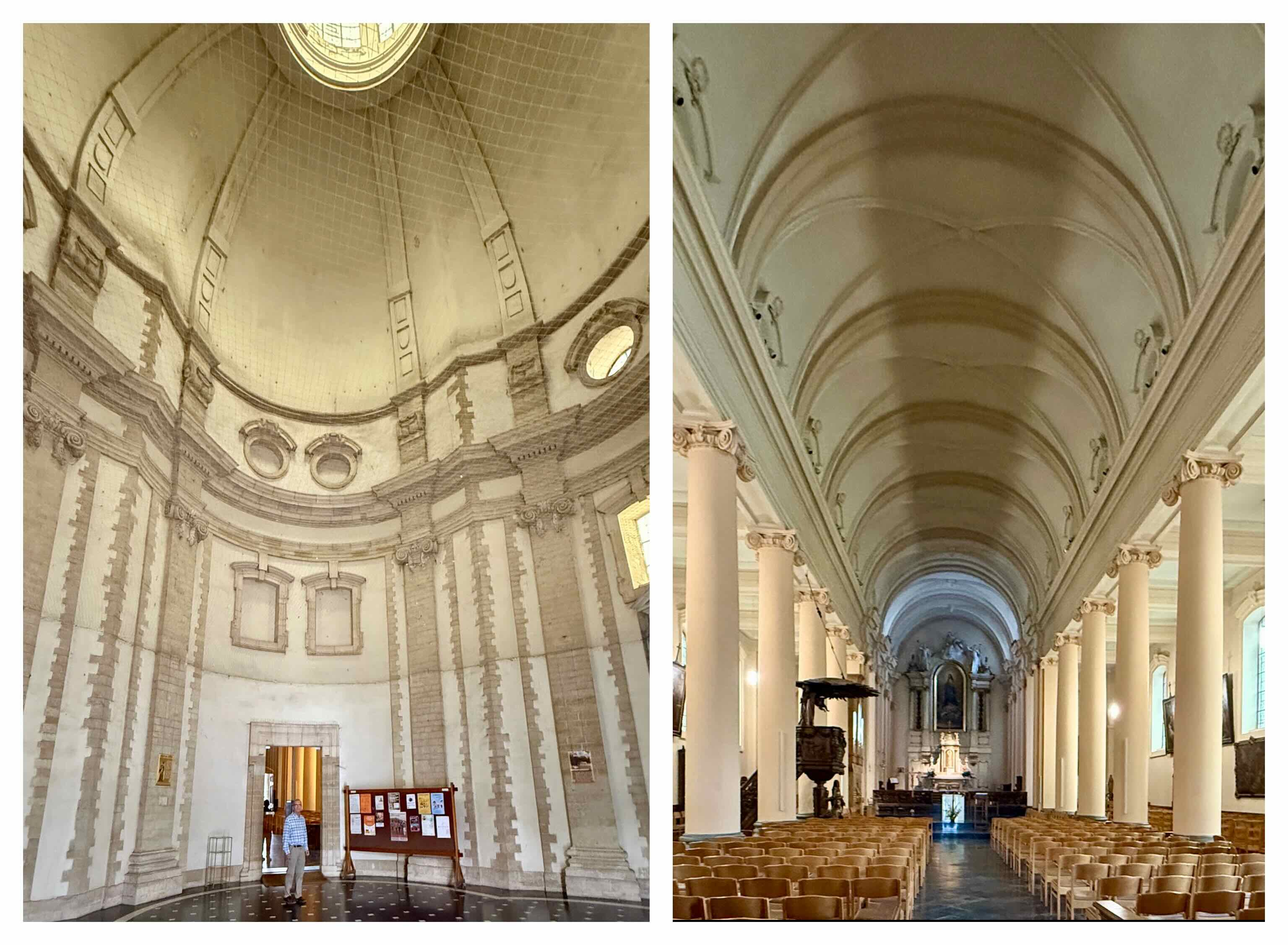
The area under the dome is huge and the church itself has large columns on either side of the nave. We have visited many churches and Cathedrals on our travels, but they are all so different from one another.  

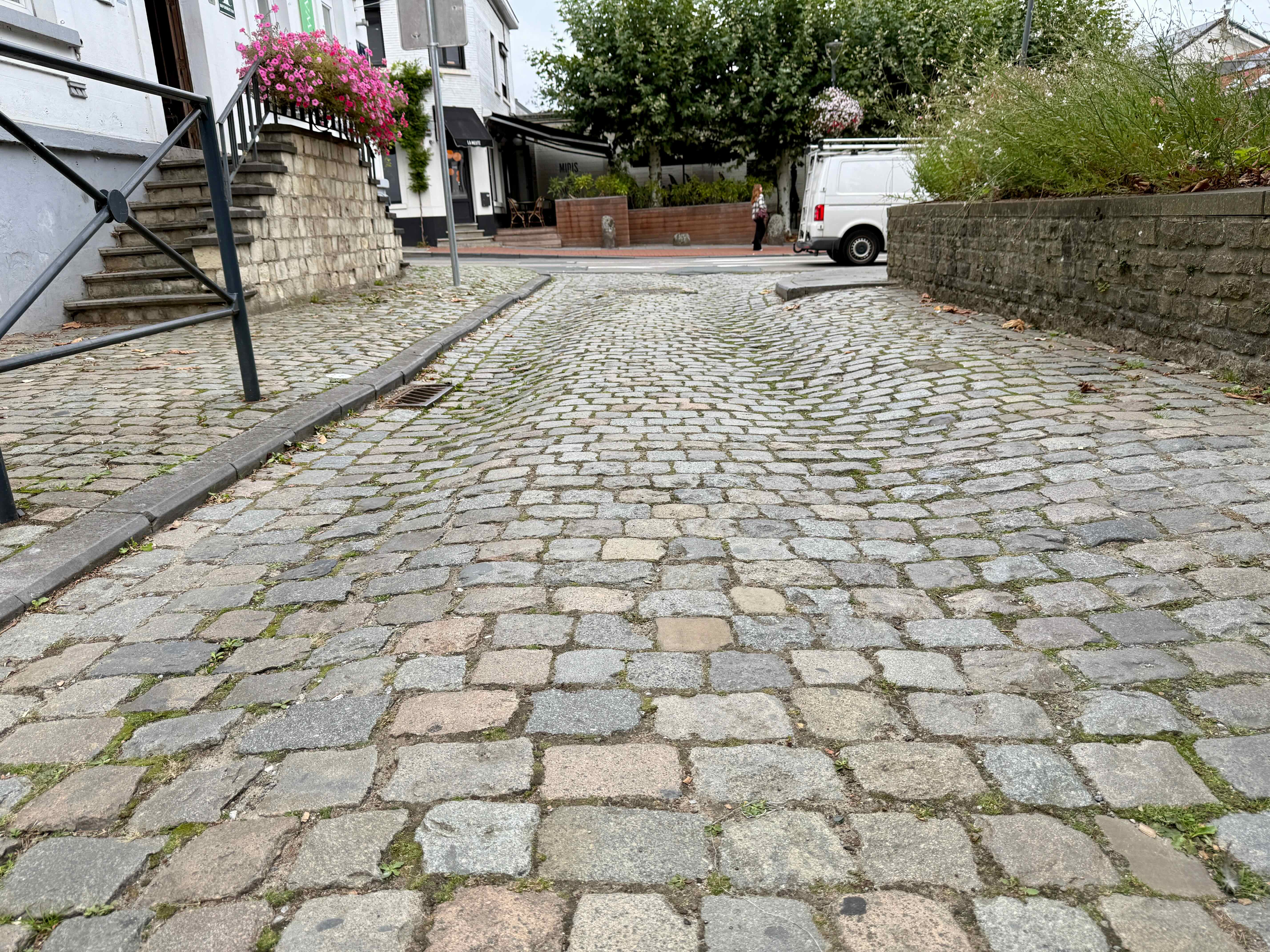
The road in front of the Church is cobble-stoned and we can see the depressions in the road made over the years by cart wheels.

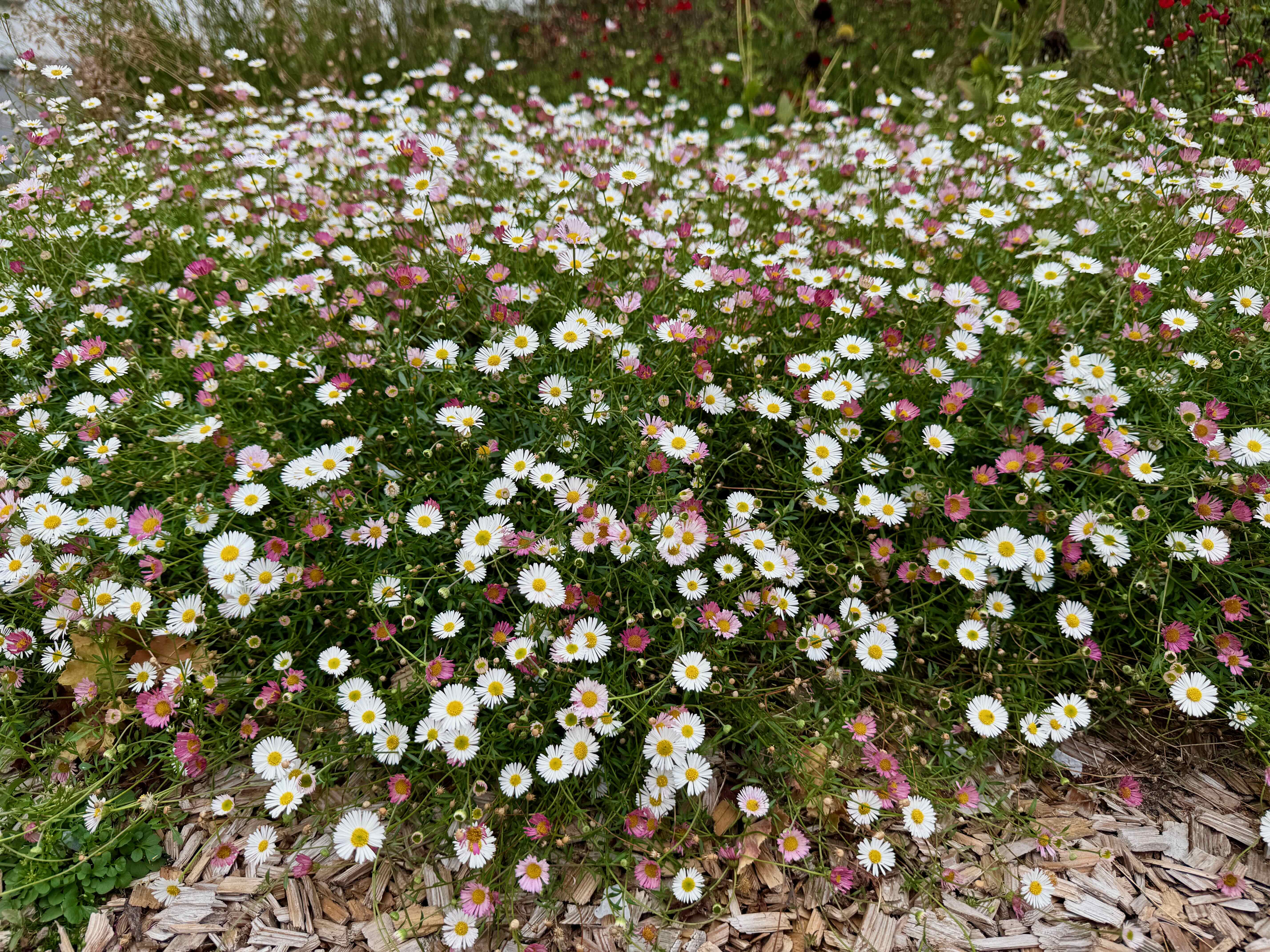
I adore these white and pink small daisy-like flowers.  No idea what they are called but wish we could grow them back home.

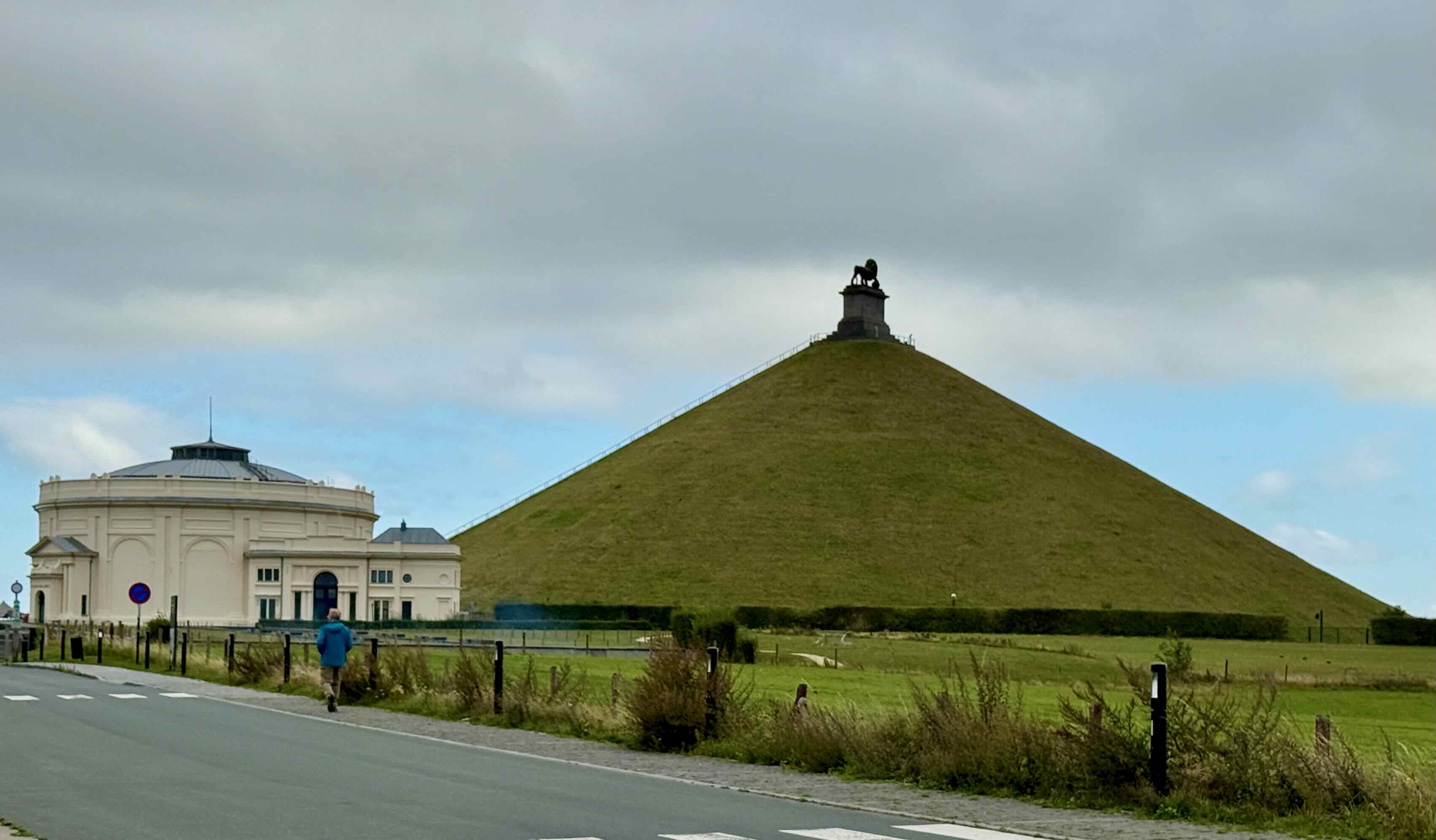
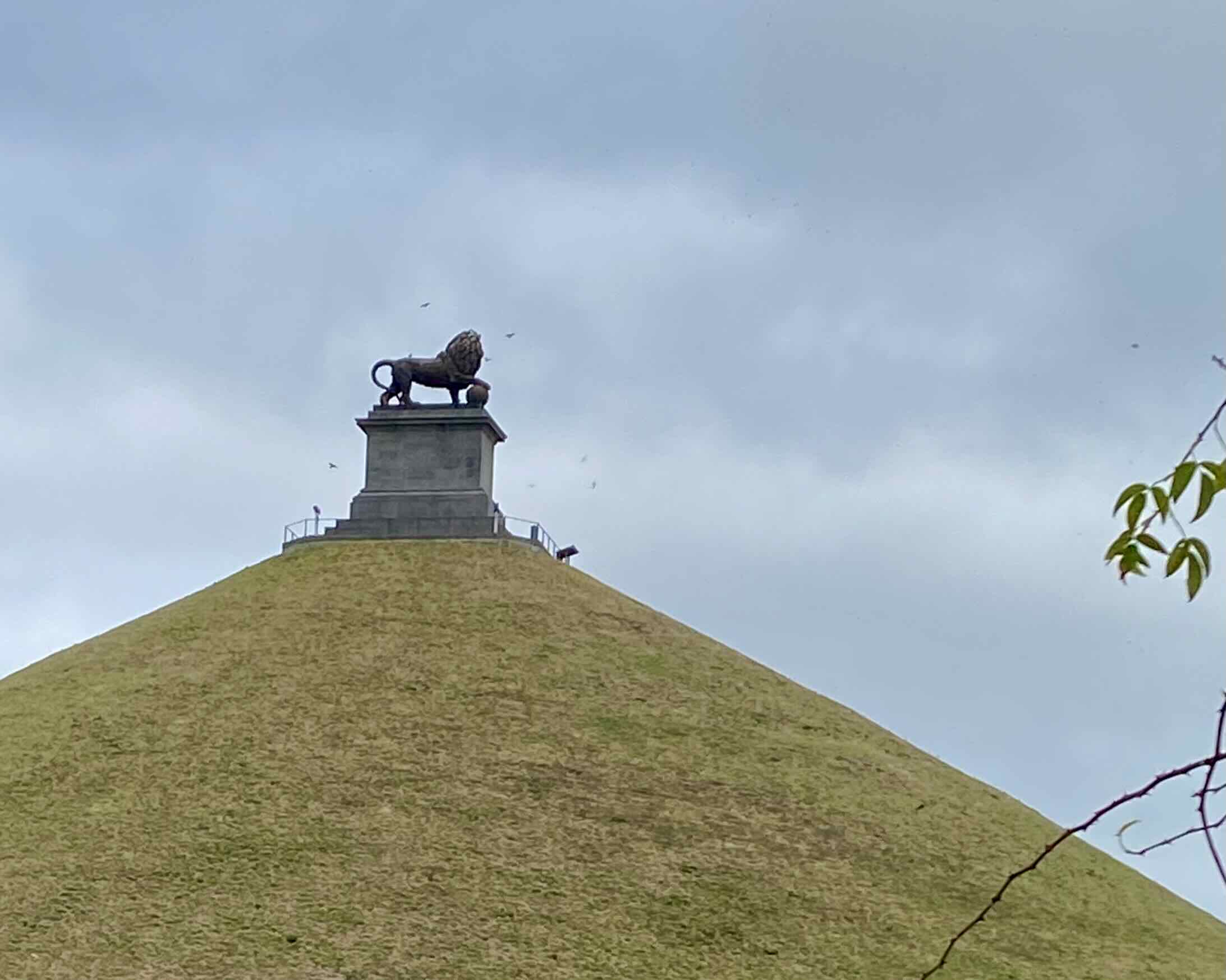
Next we drive to ‘The Lion’s Mound’ which is located at the site of the Waterloo Battle. This earthen cone is 169 m in diameter and 41 m high. An enormous lion, 4.50 m long, 4.45 m high and weighing 28 tons is located on the top of the mound.

It symbolizes the victory of the monarchies; its open mouth is turned towards France, defeated; its paw resting on the terrestrial globe represents the peace that Europe has won. Bob went for a walk all the way around the  mound but I was tired and it was cold and windy so I stayed in the car. We hit rush hour on the way home. I am so glad I am not driving!

Brussels, Belgium

Day 17     Tuesday, September 16, 2025.

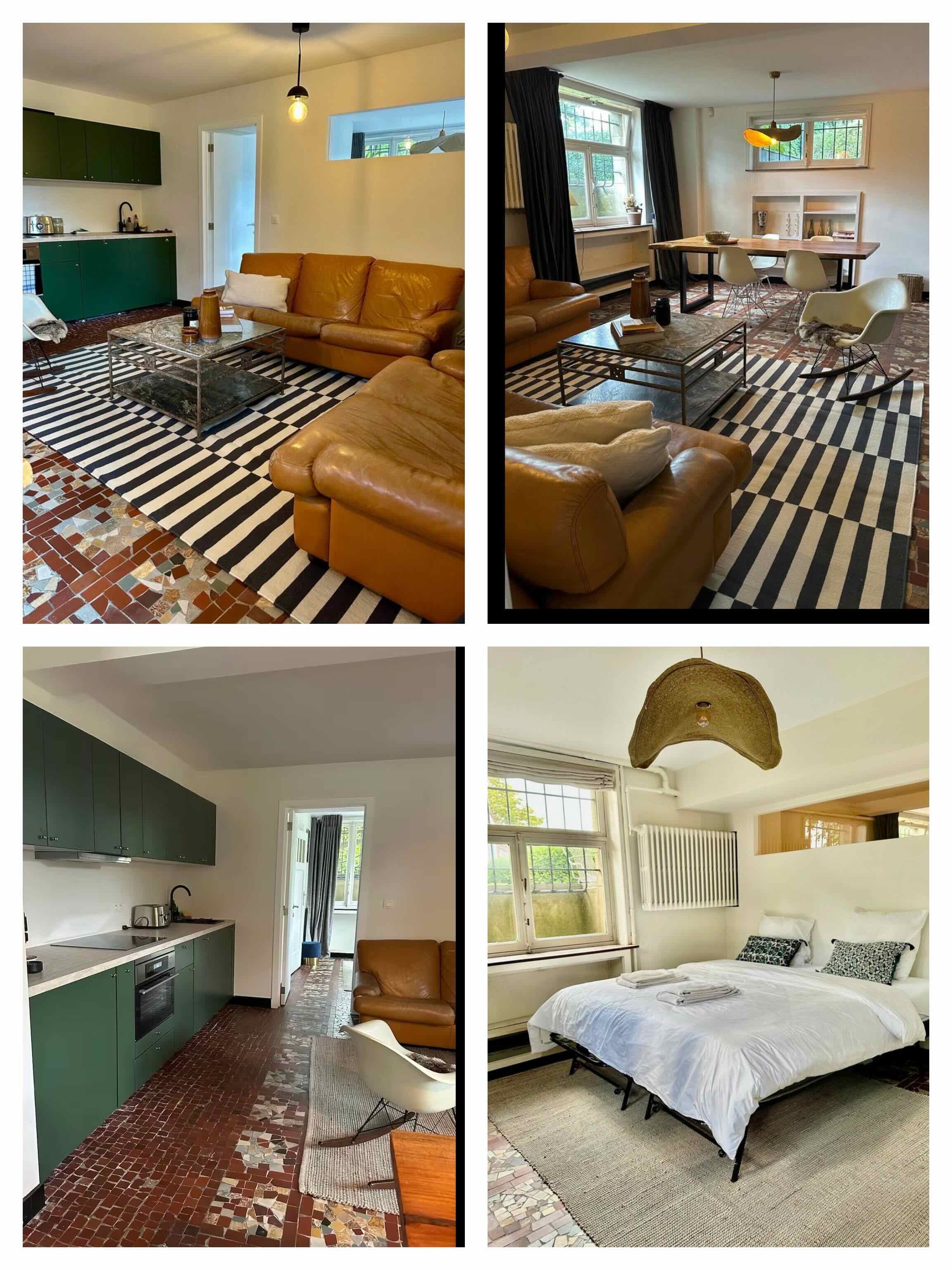
Our Airbnb is in the basement of a huge old house on the outskirts of Brussels.  You can see the widows to our suite which is actually quite bright.

The suite has a lot of character. We got settled last night and just before bed plugged in all our electronics…and we blew the breaker! All the lights in our suite went out. We messaged our host, who came down in her jammies to fix everything. We were lucky she heard the message beep on her phone as she was already asleep. It was quite the day yesterday!

I really needed a quiet day, so I stayed home and got all caught up on the blog. That feels really good. It is hard when I get behind. It takes quite a while to get each day’s post done but I really love having this souvenir of our trip. I joke that when we aren’t able to travel anymore we can revisit trips on the blog and say “remember when..”

Bob gets restless on these stay at home days so he goes to visit a car museum in Brussels. He writes the rest of this post.

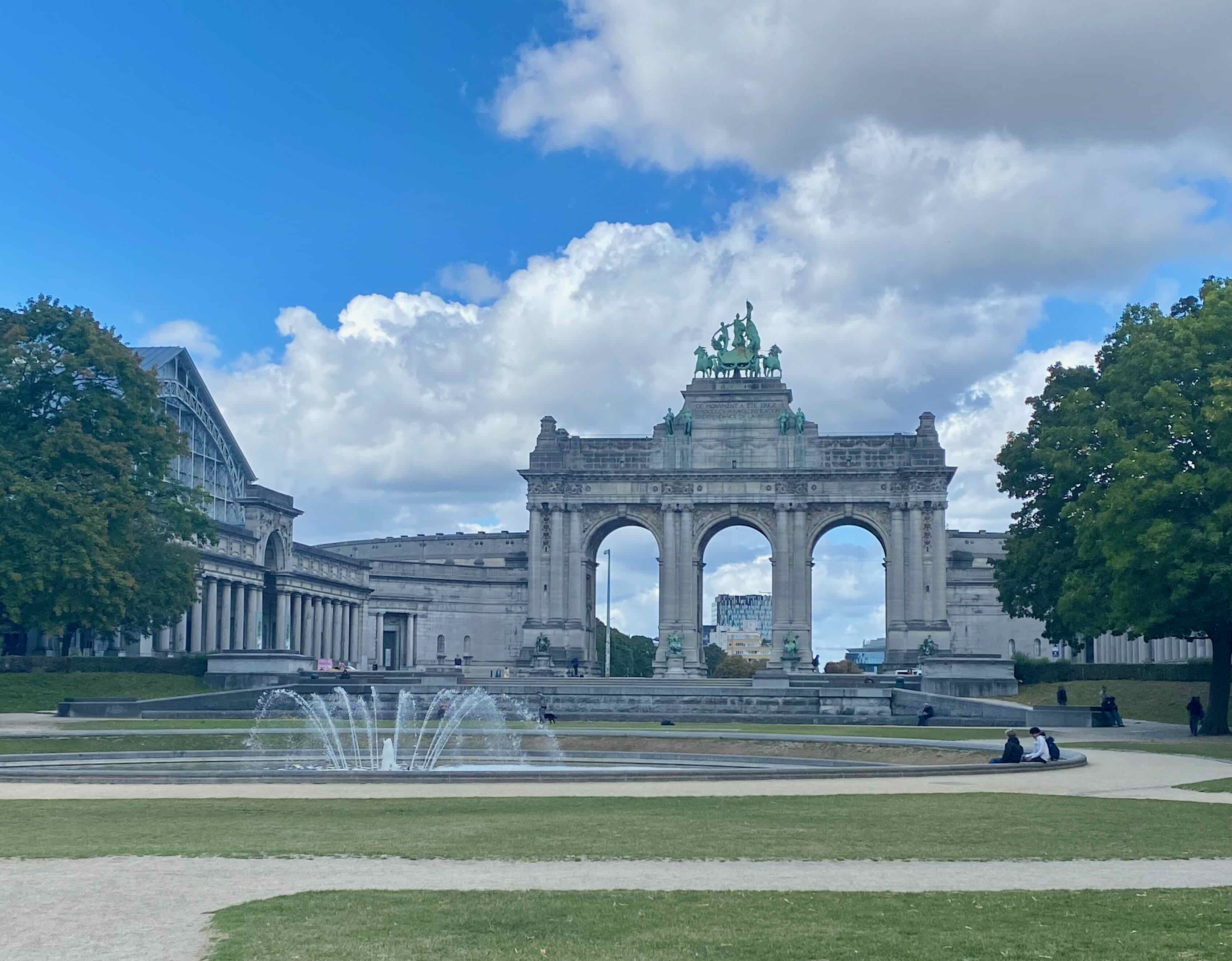
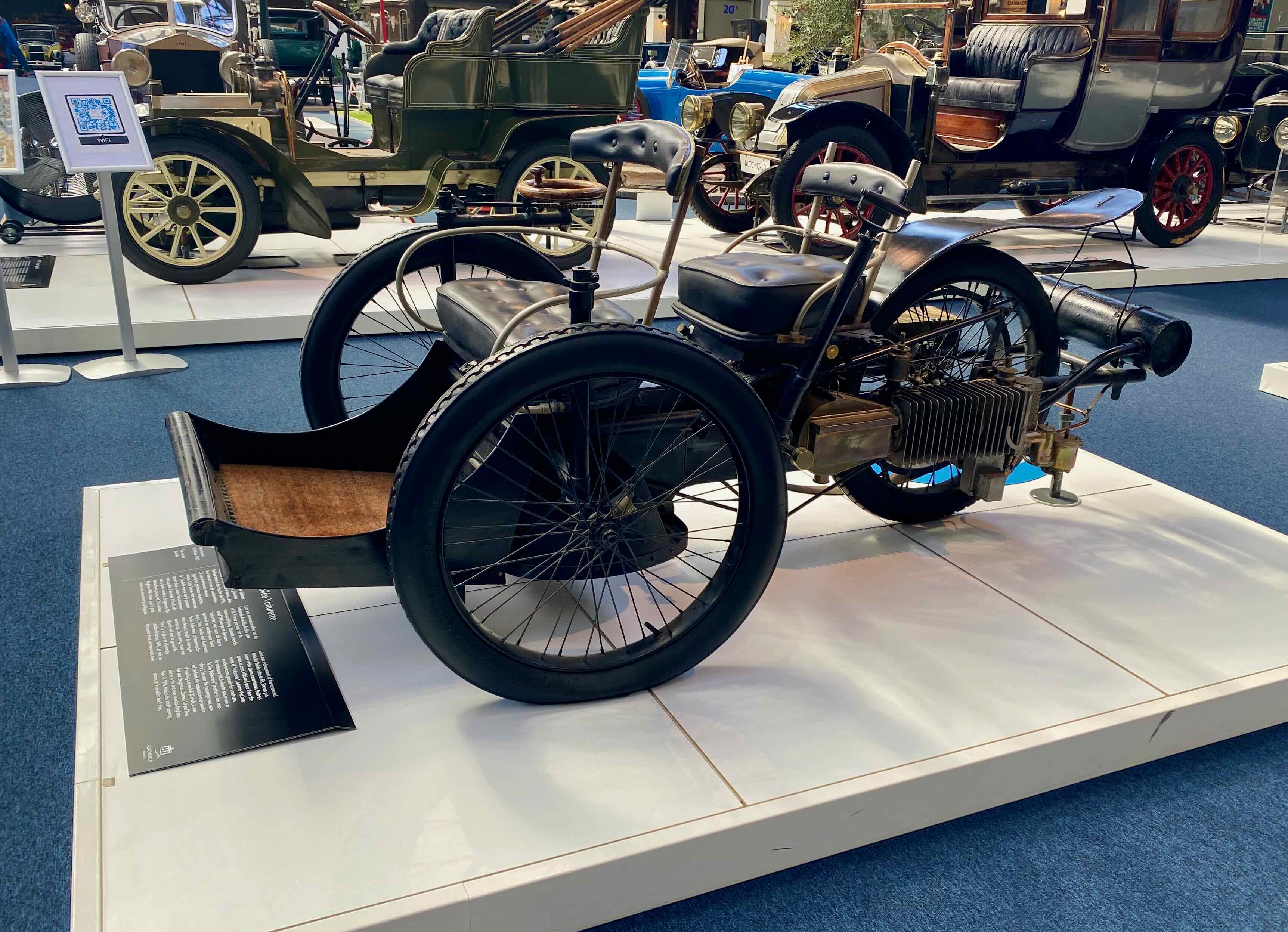
Autoworld is located in a plaza near the Art & History Museum, Royal Museum of Military History and a Napoleon Museum. It is the building to the left of the arches.A 1896 Bollee Voiturette called a Mother-in-Law Murderer, because the passenger sat up front.  It could go 30 kph.
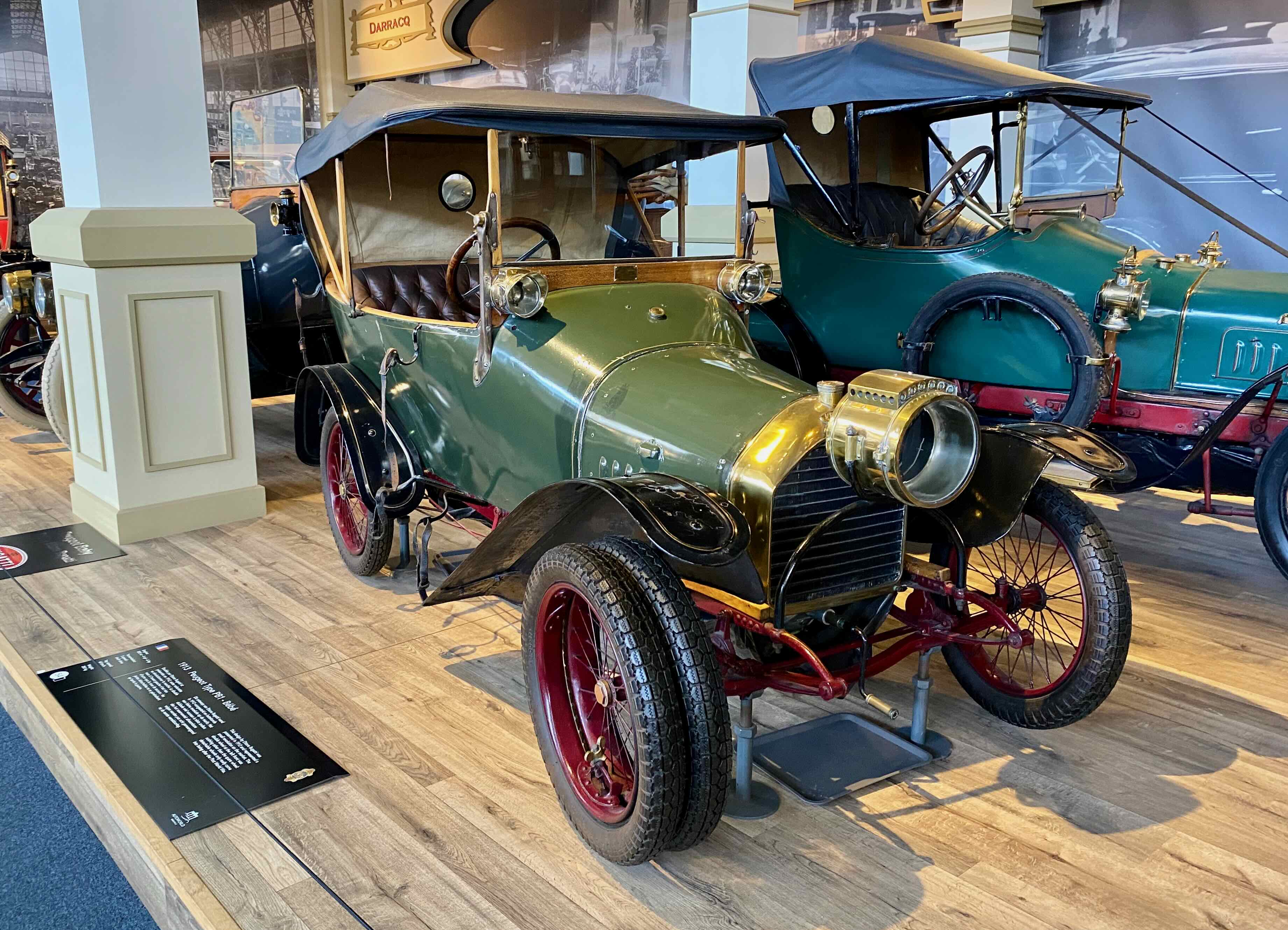
A 1913 Peugeot. The spare tire is bolted onto the front tire, rather than being mounted on the fender.

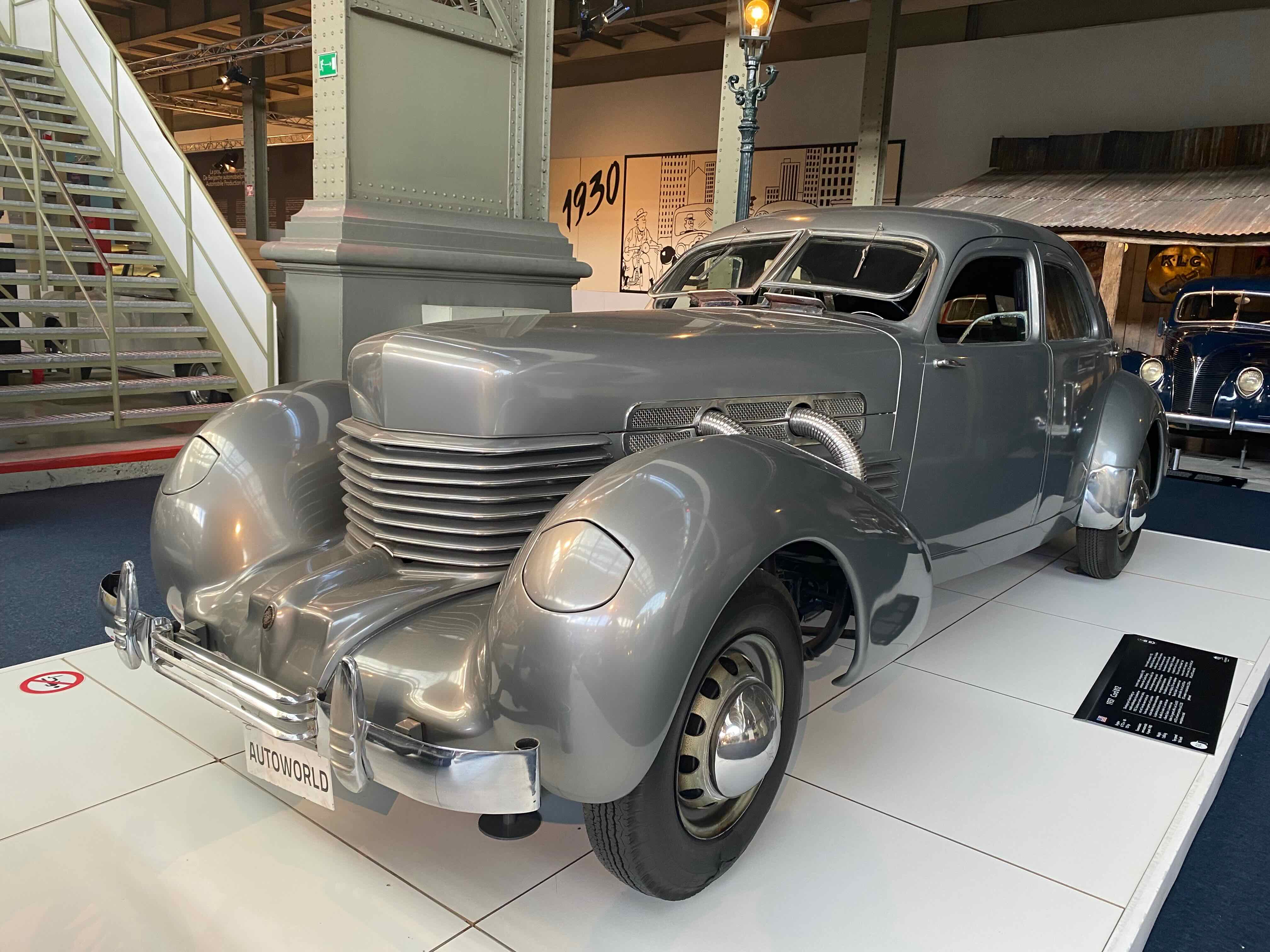
A classic 1937 Cord with front-wheel drive and retractable headlights.

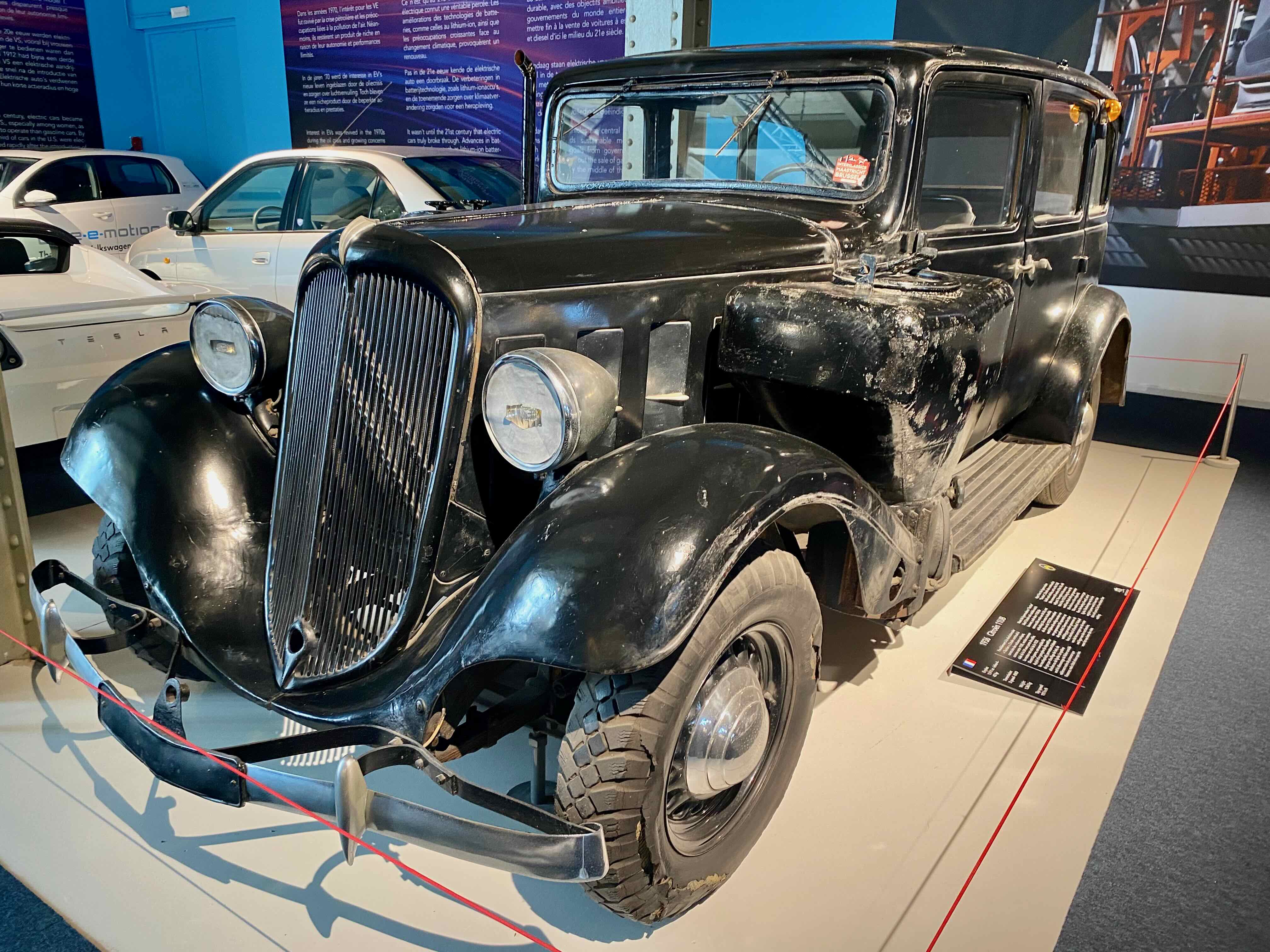
A 1936 Citroen fitted with a gas generator (behind the front fender) used during the Second World War. As gasoline was in short supply, the car used the captured gas (from burning wood or coal) to fuel the vehicle.  

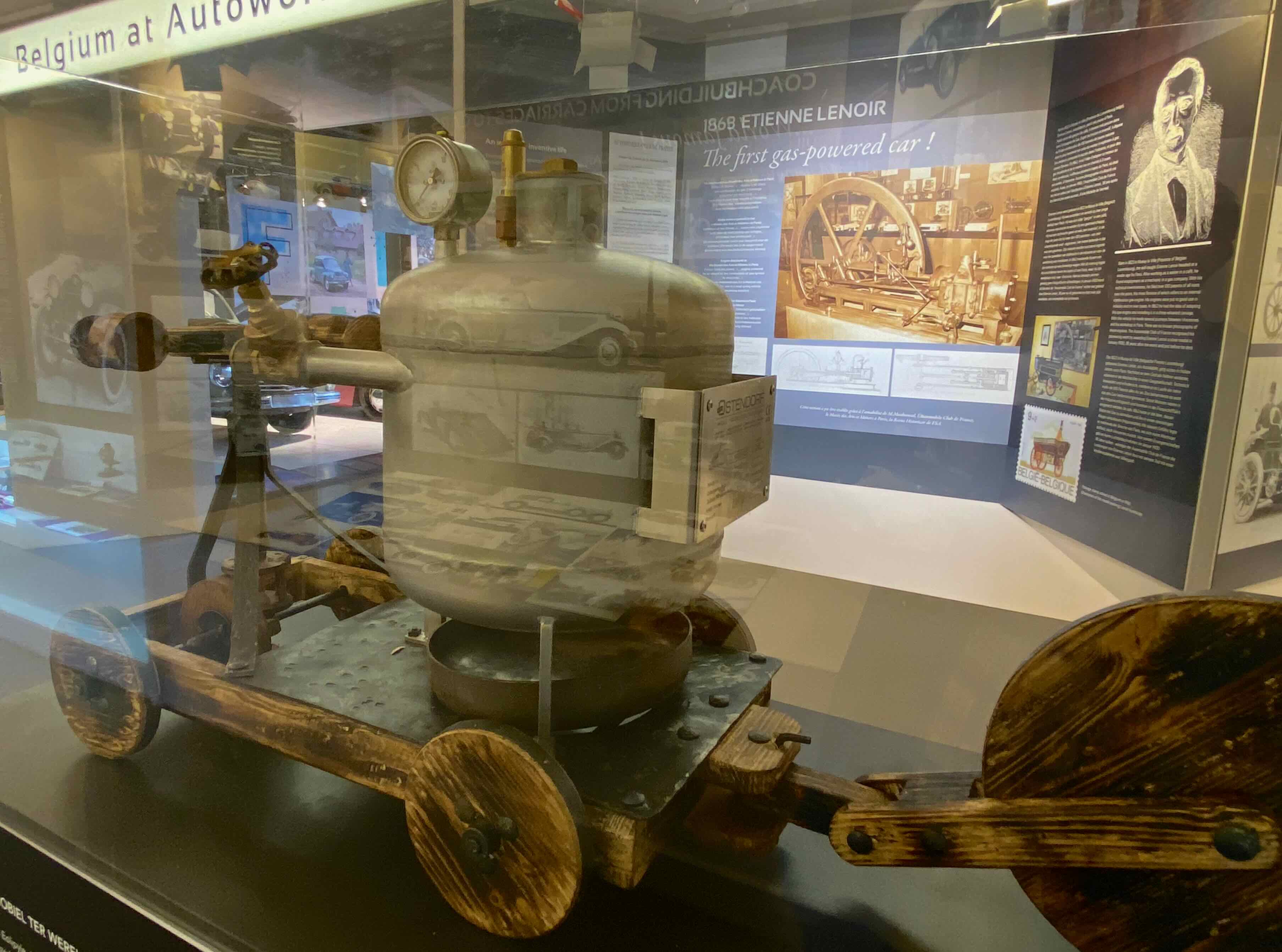
I thought the first vehicle ever built was the 1770 steam powered Cugnot.  But 100 years earlier in 1672 a Belgian priest in the Imperial Court of Peking designed this steam powered vehicle called an Eolipyle.  It was 2 feet long and built as a toy for the Emperor.  High-pressure steam comes out the front and forces the cups on the shaft to rotate, similar to how a waterwheel works.  Instead of water turning the wheel, the high-pressure steam turns the wheel.

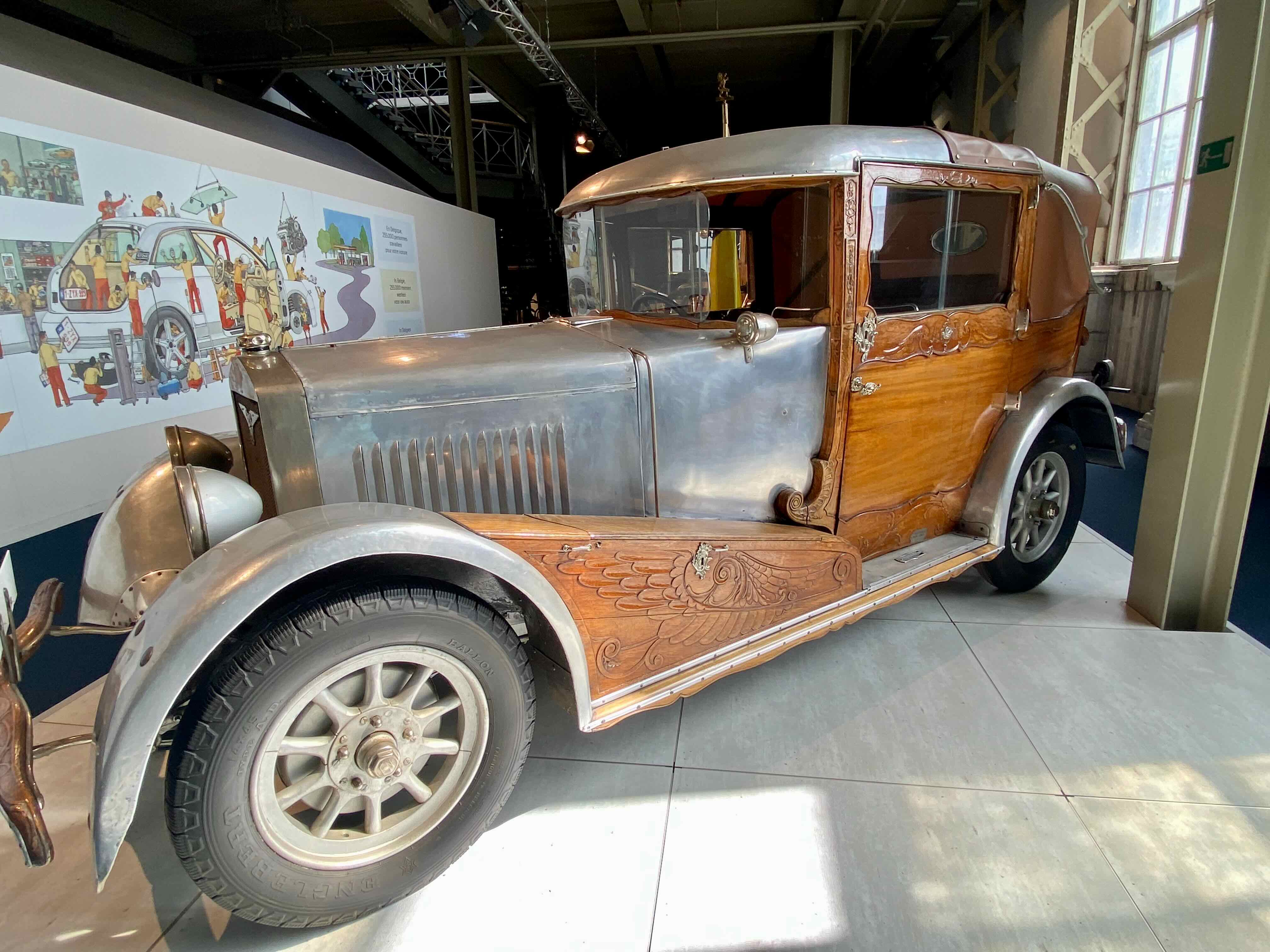
A Fabrique Nationale 1930 car built for a Shah but never paid for or delivered.

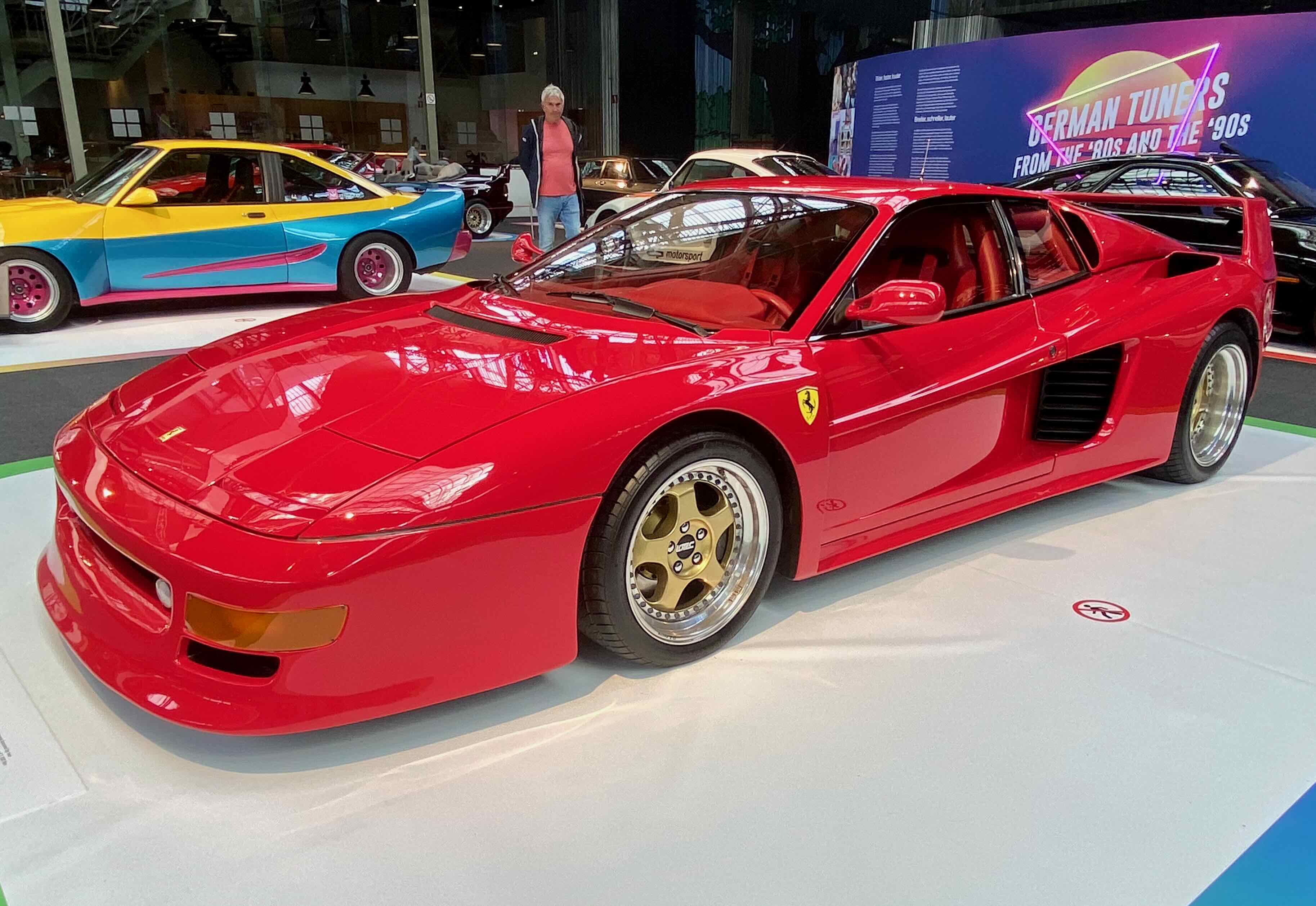
A one-of-a-kind 1991 Lotec TT1000 based on a Ferrari Testarossa, with twin turbos and 1000 HP. It was fast, 370 kph and cost $3.6 million.  

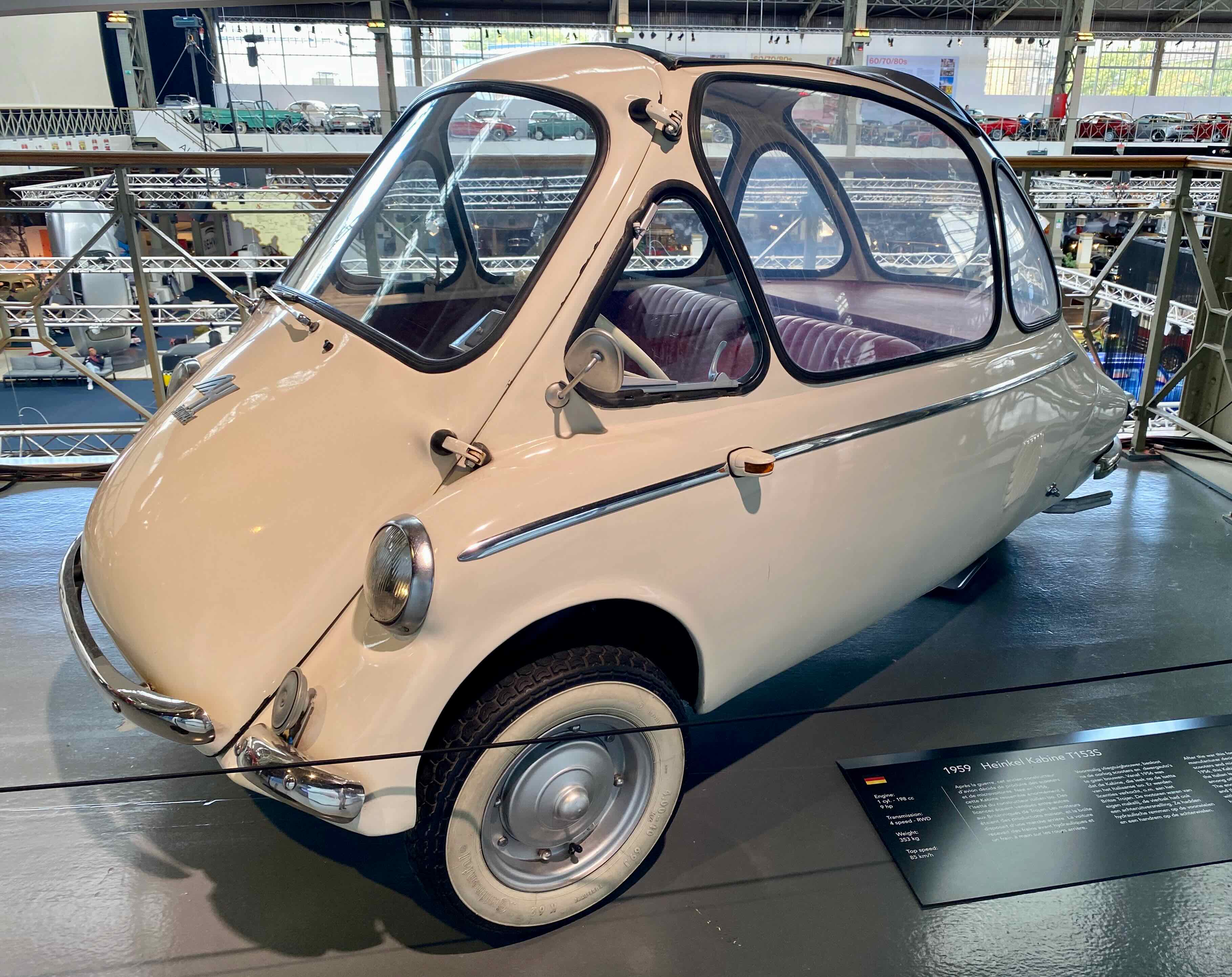
And for something more budget-minded, a 1959 Heinkel Kabine. This model came standard with hydraulic brakes and a reverse gear. The original cost was around 300 euros. 

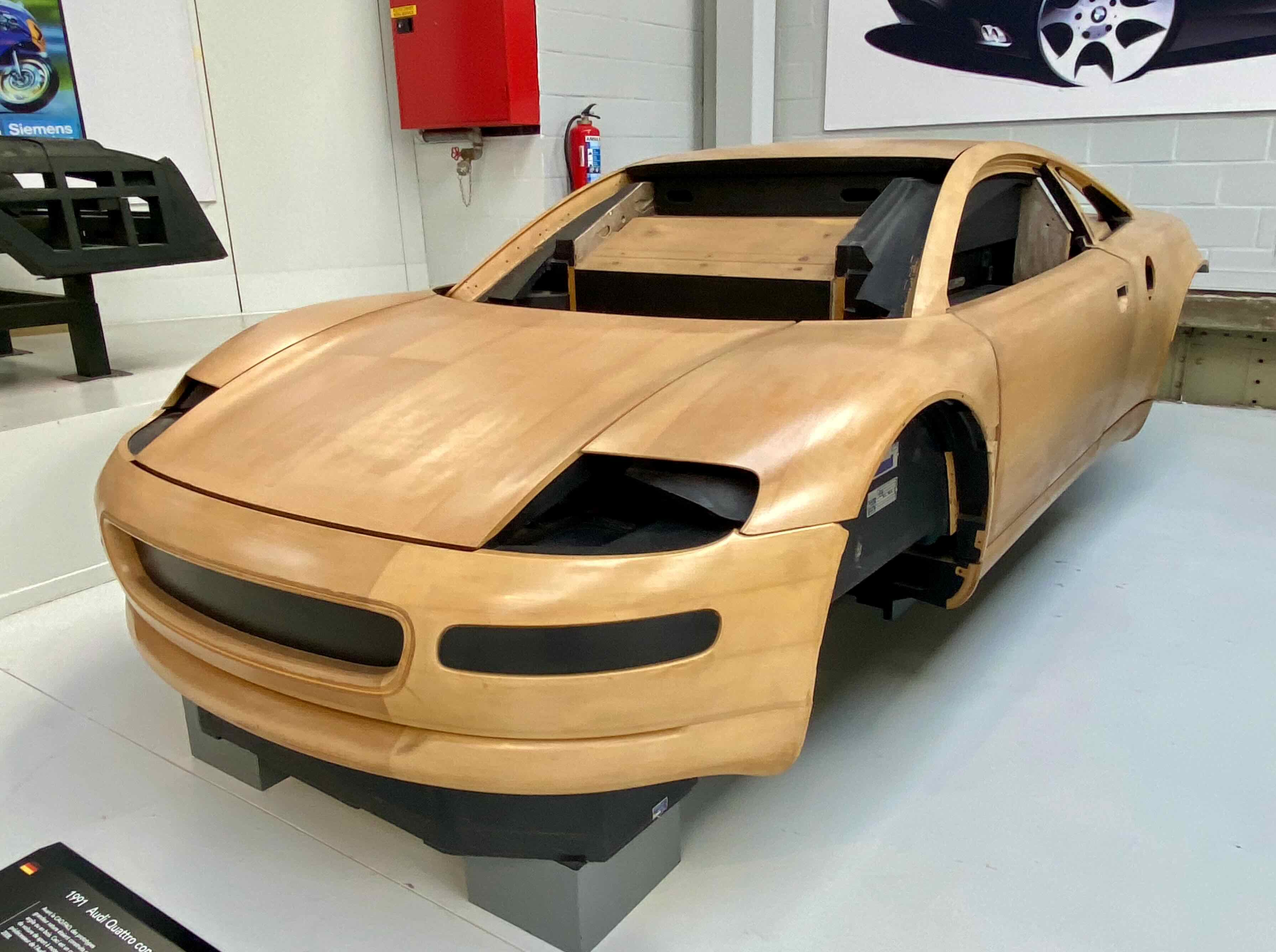
A 1991 Audi Quatro prototype made out of wood.

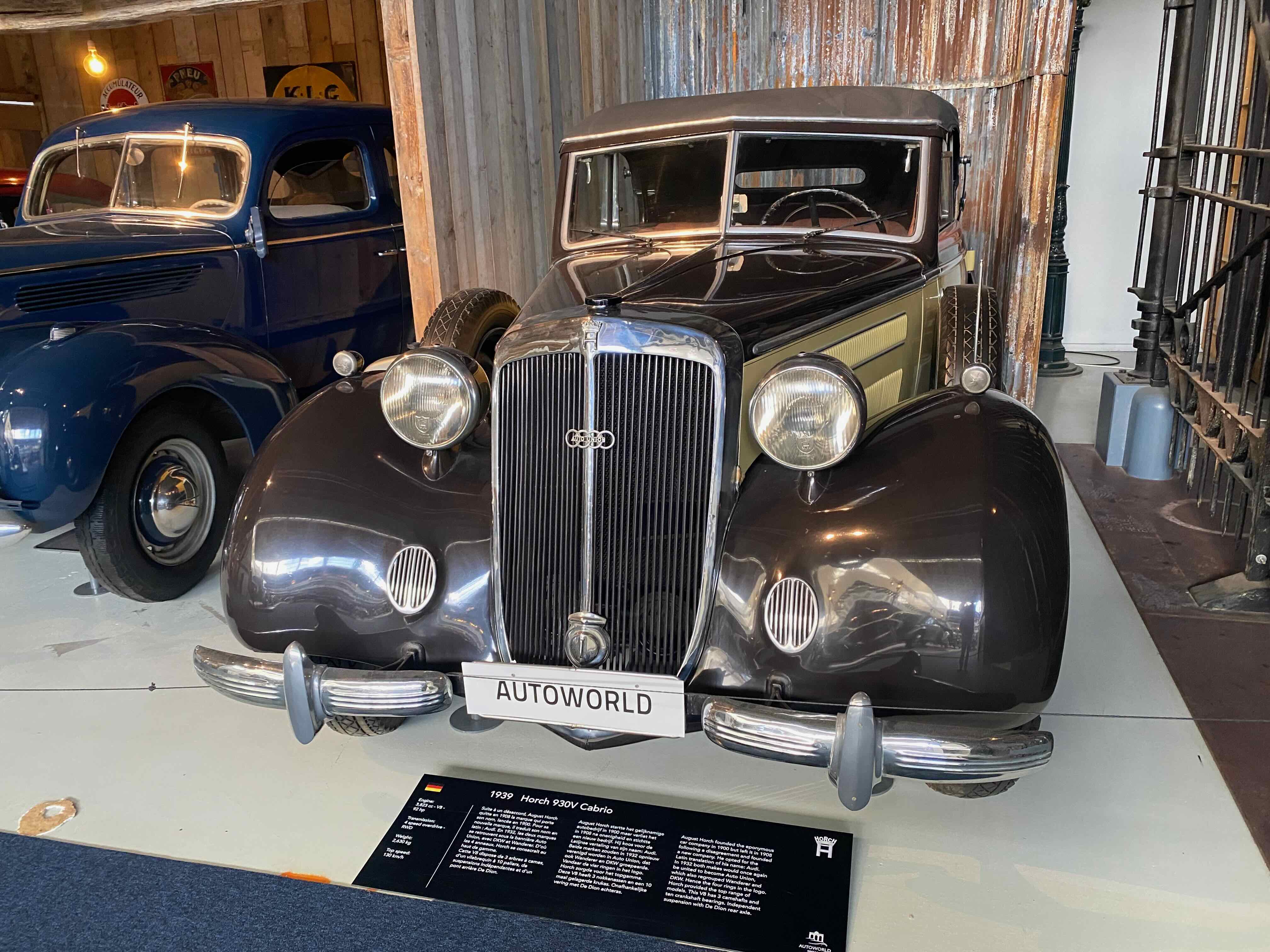
A 1939 Horch Cabrio.  August Horch started his car factory in 1900 but left in 1908 after a dispute and started a new company Audi (based on the Latin translation of his name).  In 1932 both companies merged with 2 others to form the new Audi, hence the four rings in the logo.

Driving to Belgium

Day 16    Monday, September 15, 2025

Today we drive to our next location in Brussels. We stop on the way to visit a zoo in Lille, France. It isn’t a very big zoo but we are surprised that senior admission is only €3!

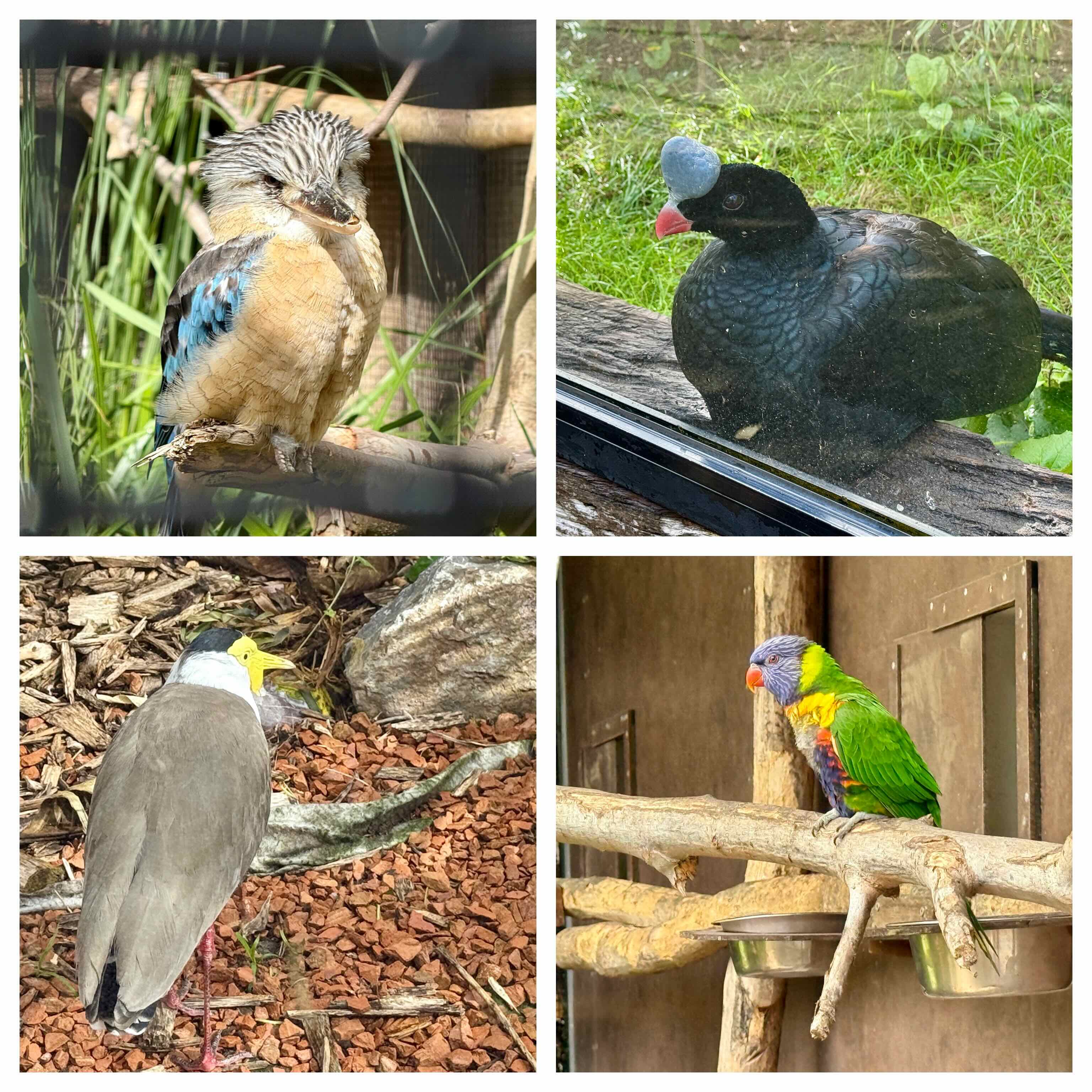
They have a lot of interesting birds. Clockwise… Blue Winged Kookaburra, Helmeted Curassow, Masked Lapwing, Rainbow Lorakeet.

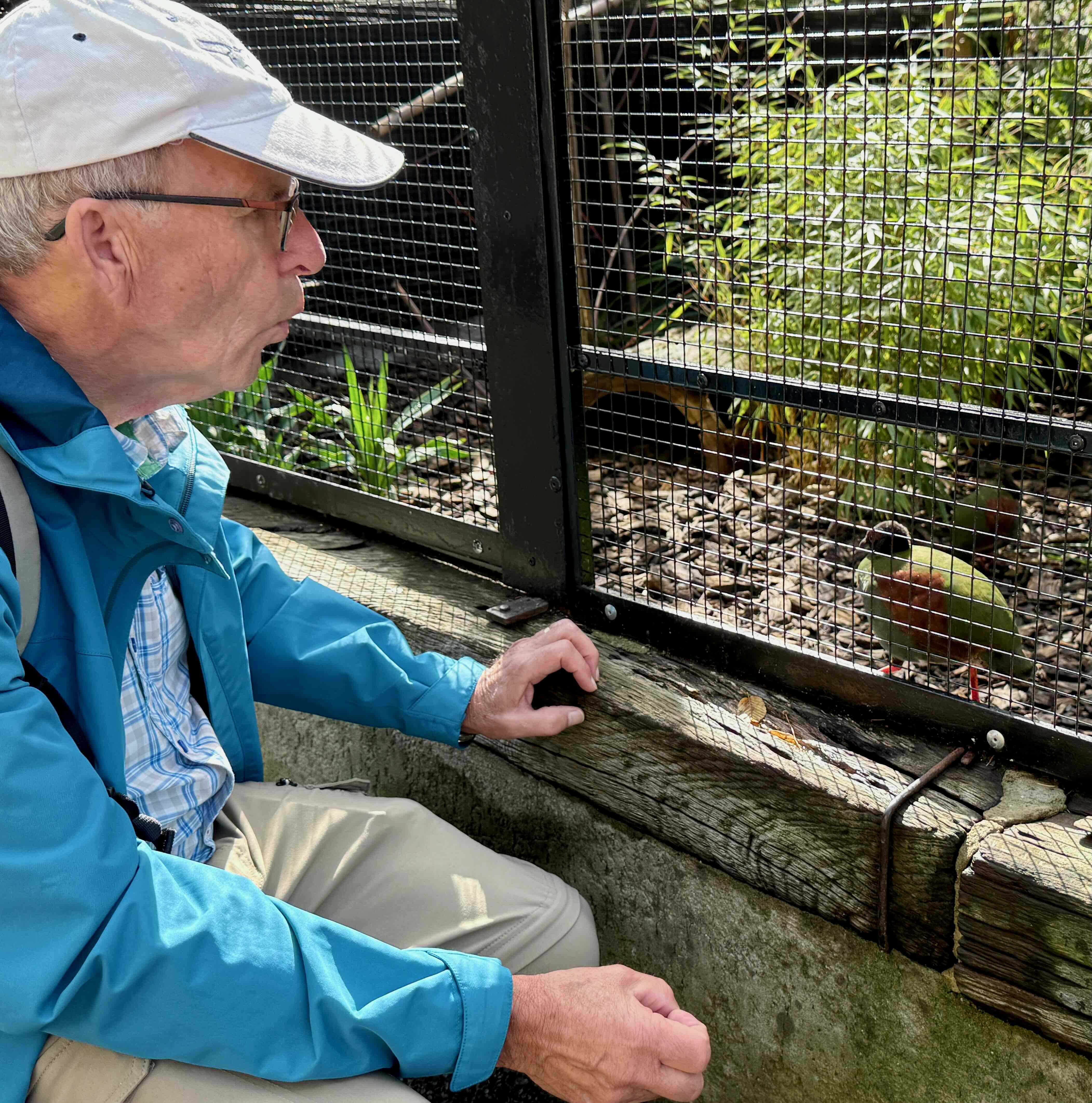
This Crested Partridge seems to like Bob’s whistling.

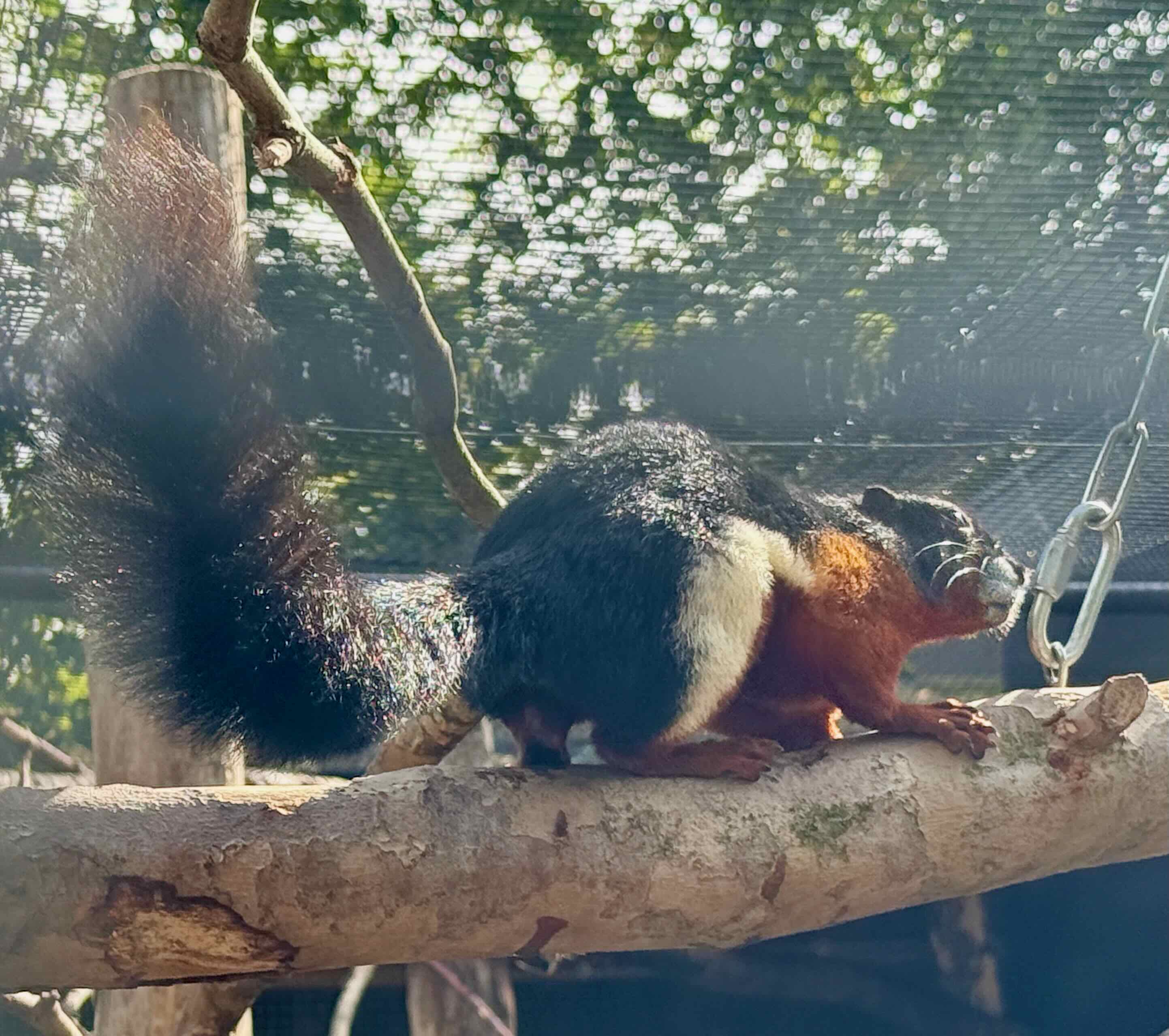
The Prevost Squirrel lives in tropical forests.  Several of these squirrels are very busy running up and down all the branches in their enclosure. They look like they are playing.

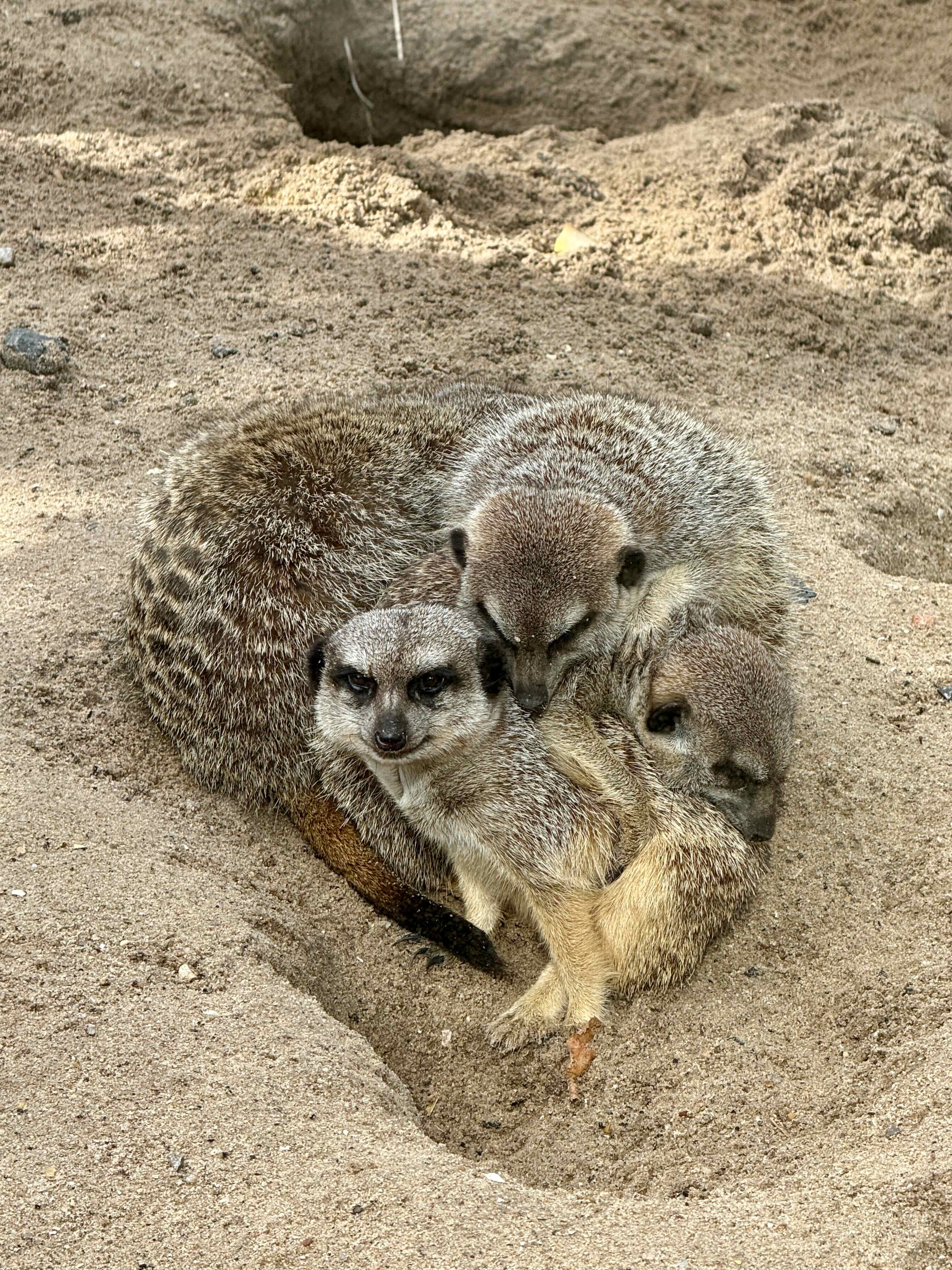
Who doesn’t love Meerkats?  They certainly seem to love each other!

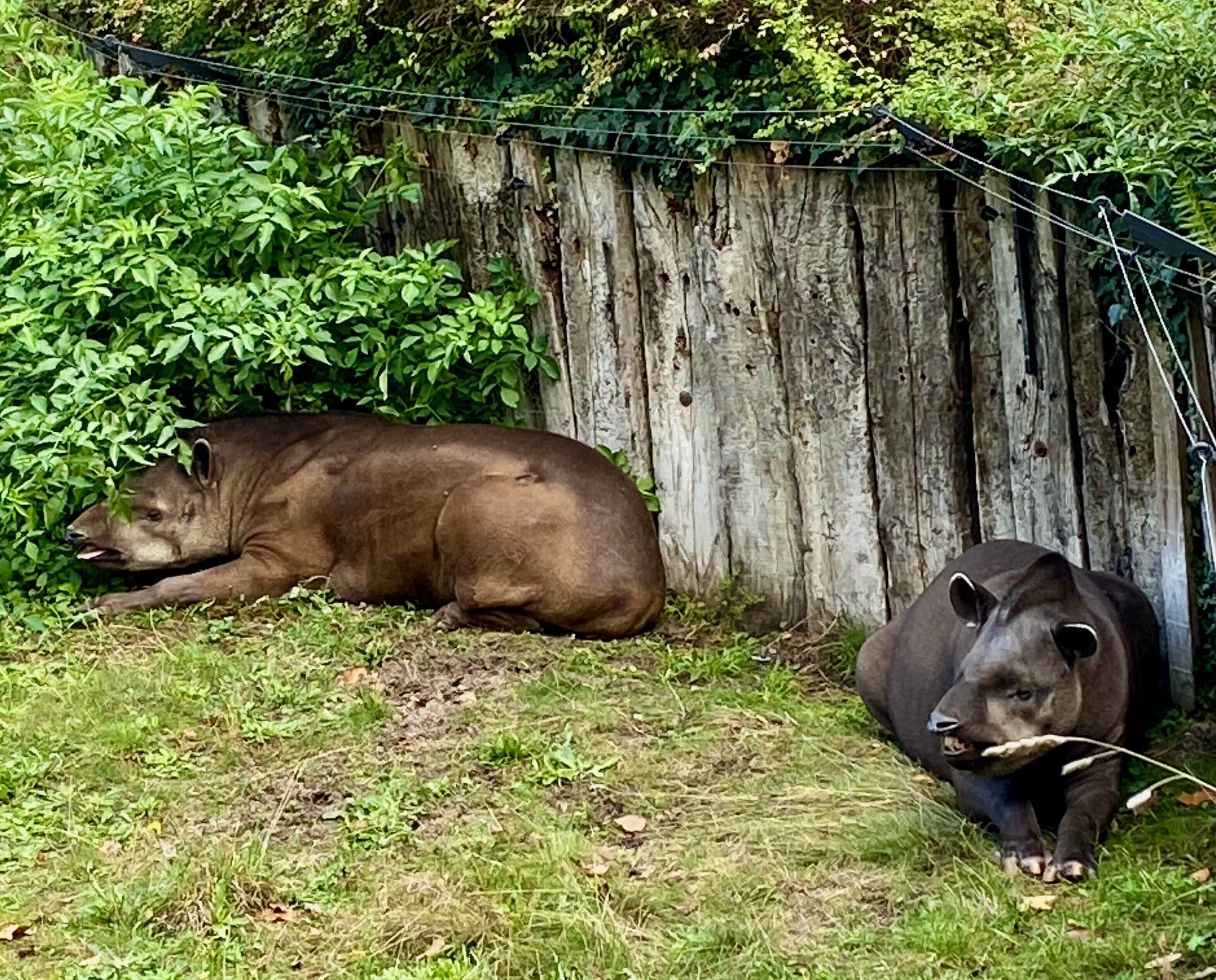
These two huge tapirs share their enclosure…

…with two of these beautiful Maned Wolves from the South American Savannah. They are not in fact related to wolves or foxes. They are their own genus.

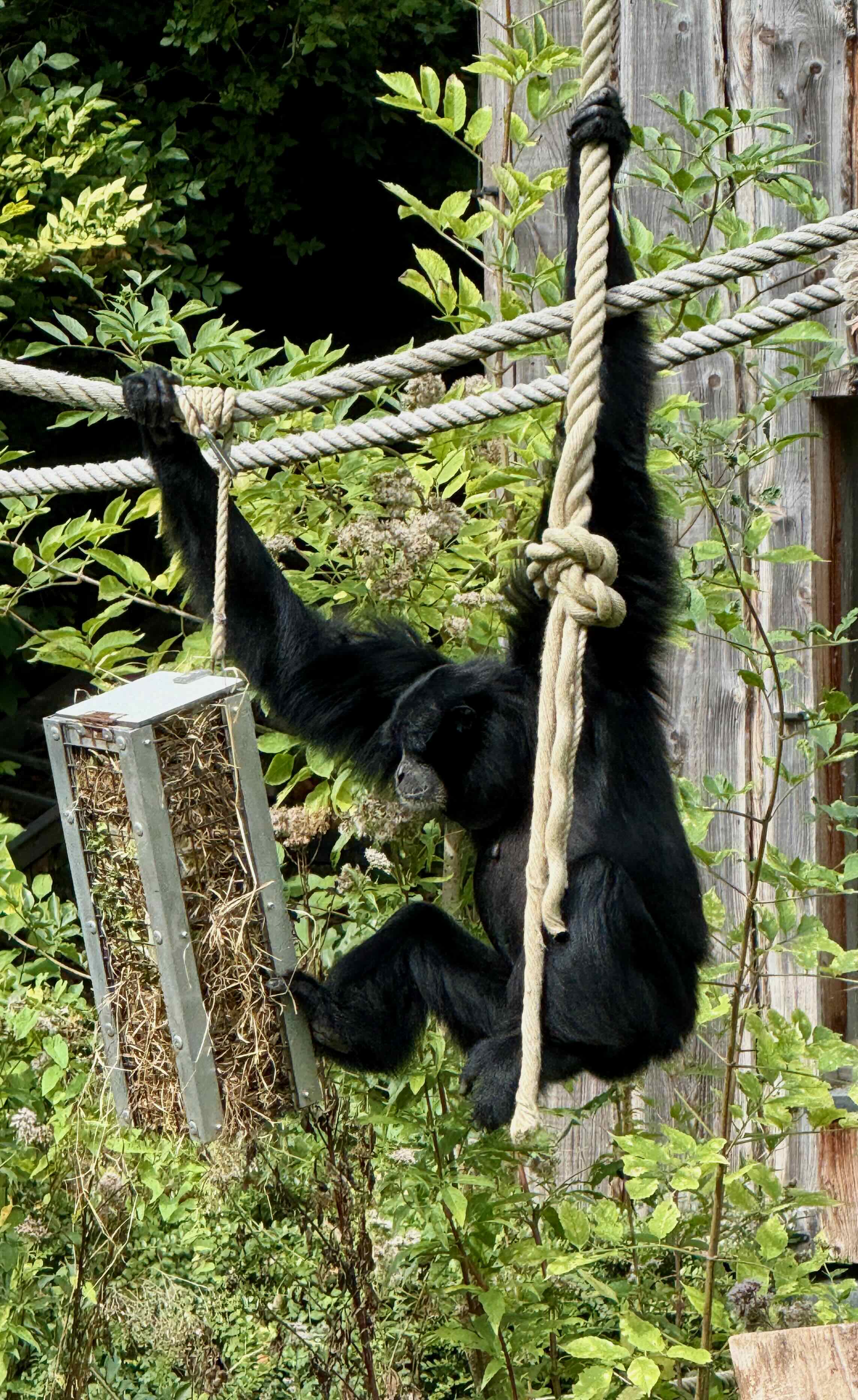
This Siamang uses its feet and hands to get at their food.

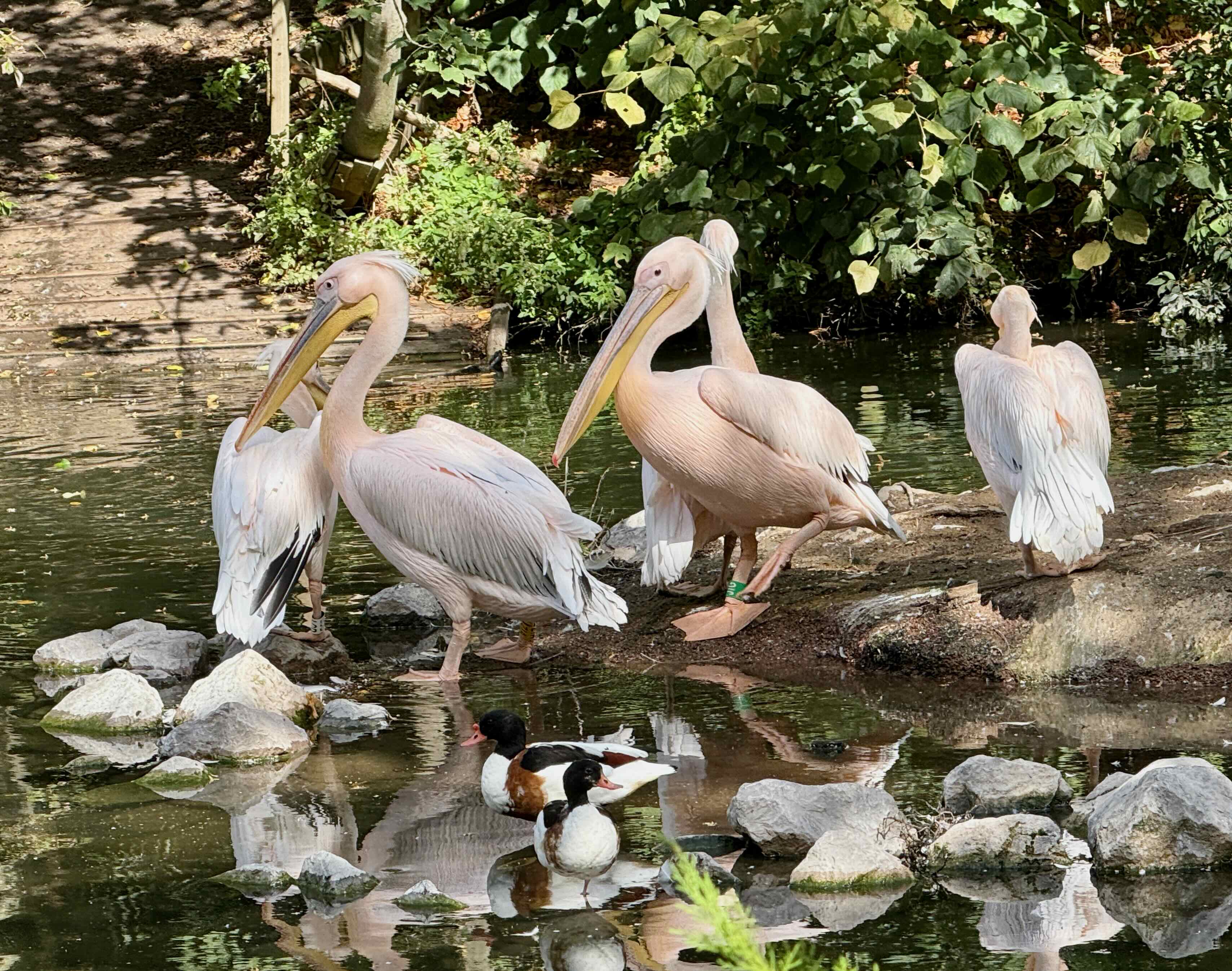
These are White Pelicans. I am reminded of the time years ago I sat and drew one of these beautiful birds in the Greek Islands. The bird I drew was quite tame and hung about near the fishing wharf. I sat about three feet away from this enormous creature and spent a lovely hour or so drawing him. The locals gave him a name, which I don’t remember, but he was definitely a male.

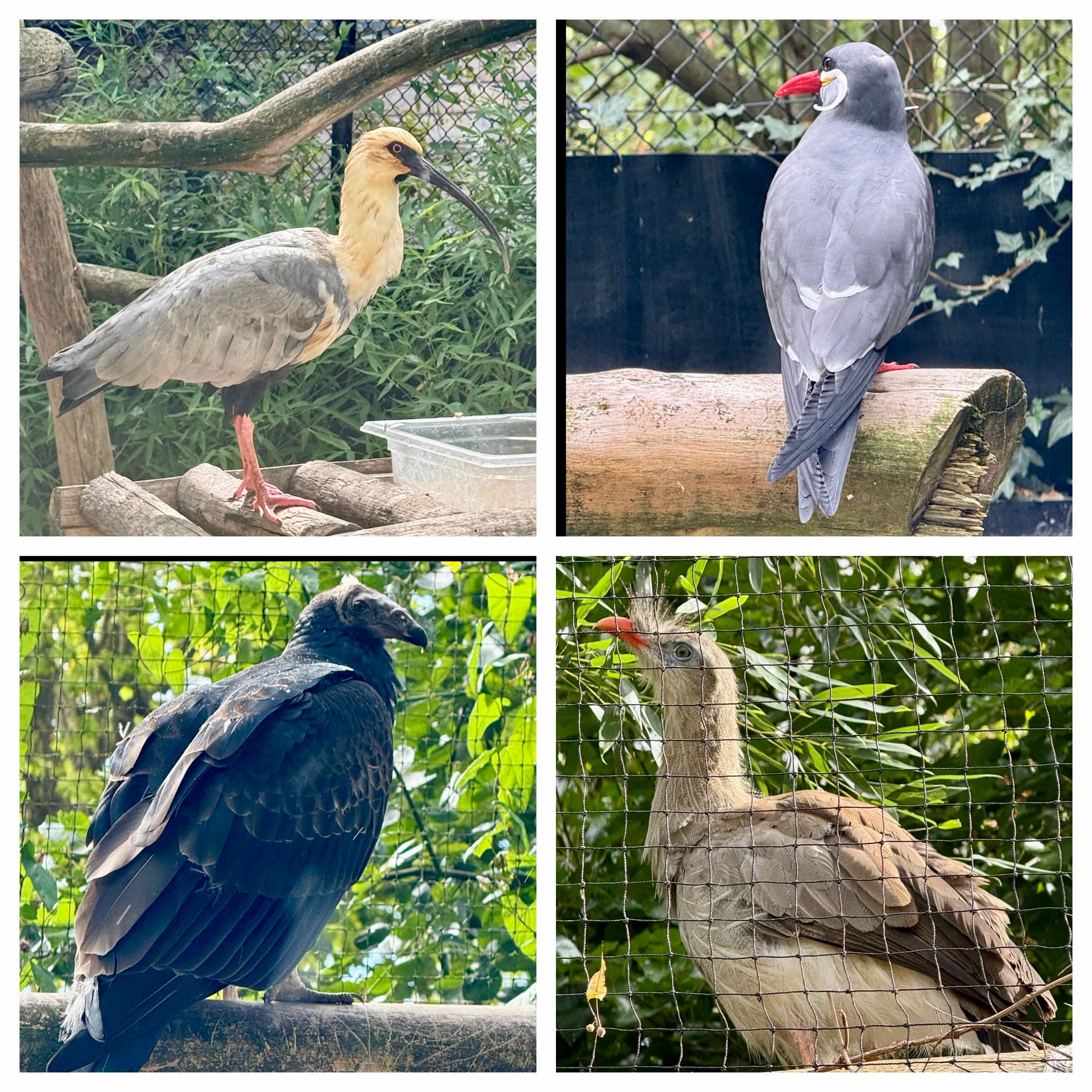
The last enclosure is a large aviary for tropical birds. These Scarlet Ibis are so colourful and a bit comical with their very long beaks.

Darn, I forgot to take a photo of the information for these birds, except for the Cariama Huppé which is the brown one with feathers on his beak.

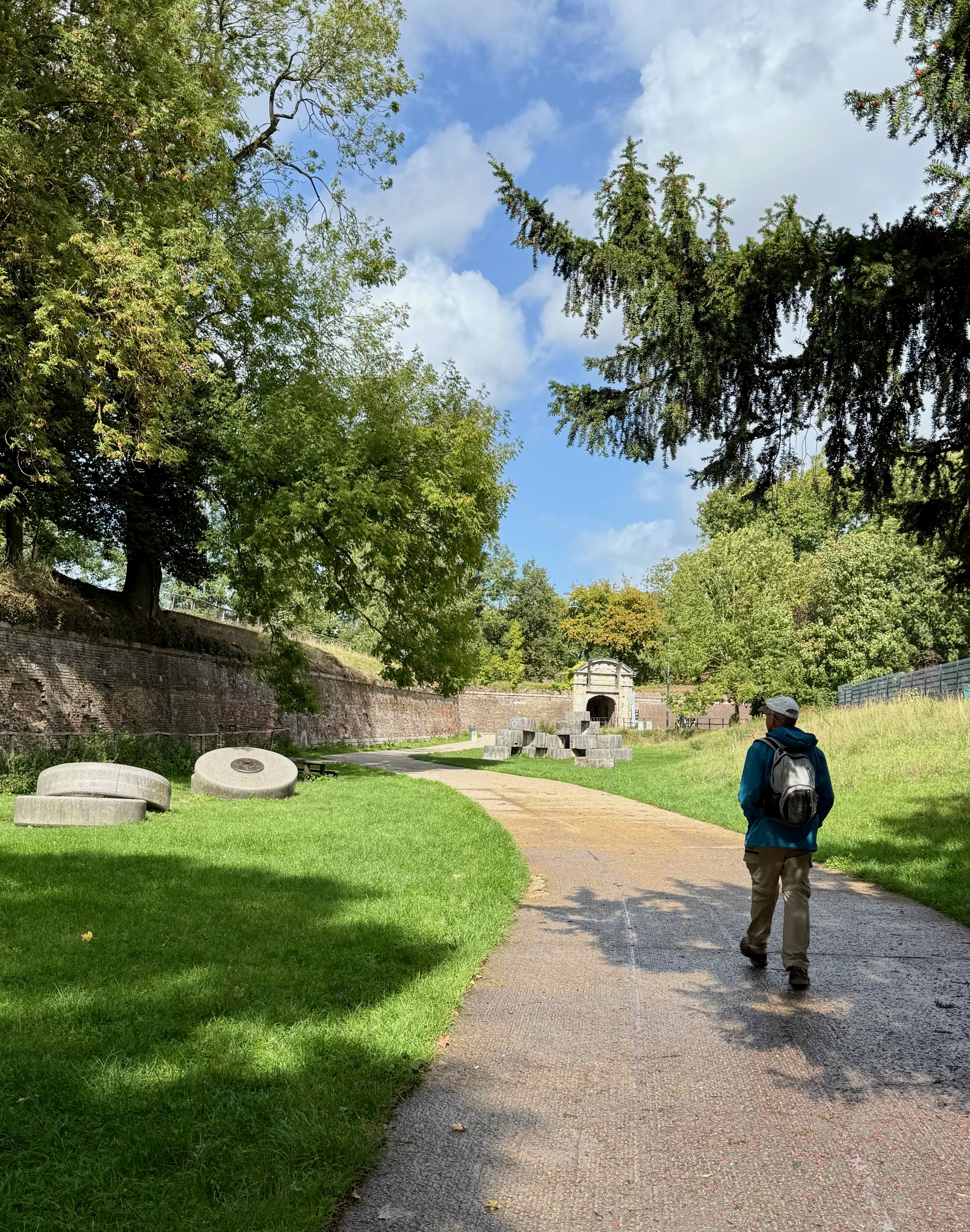
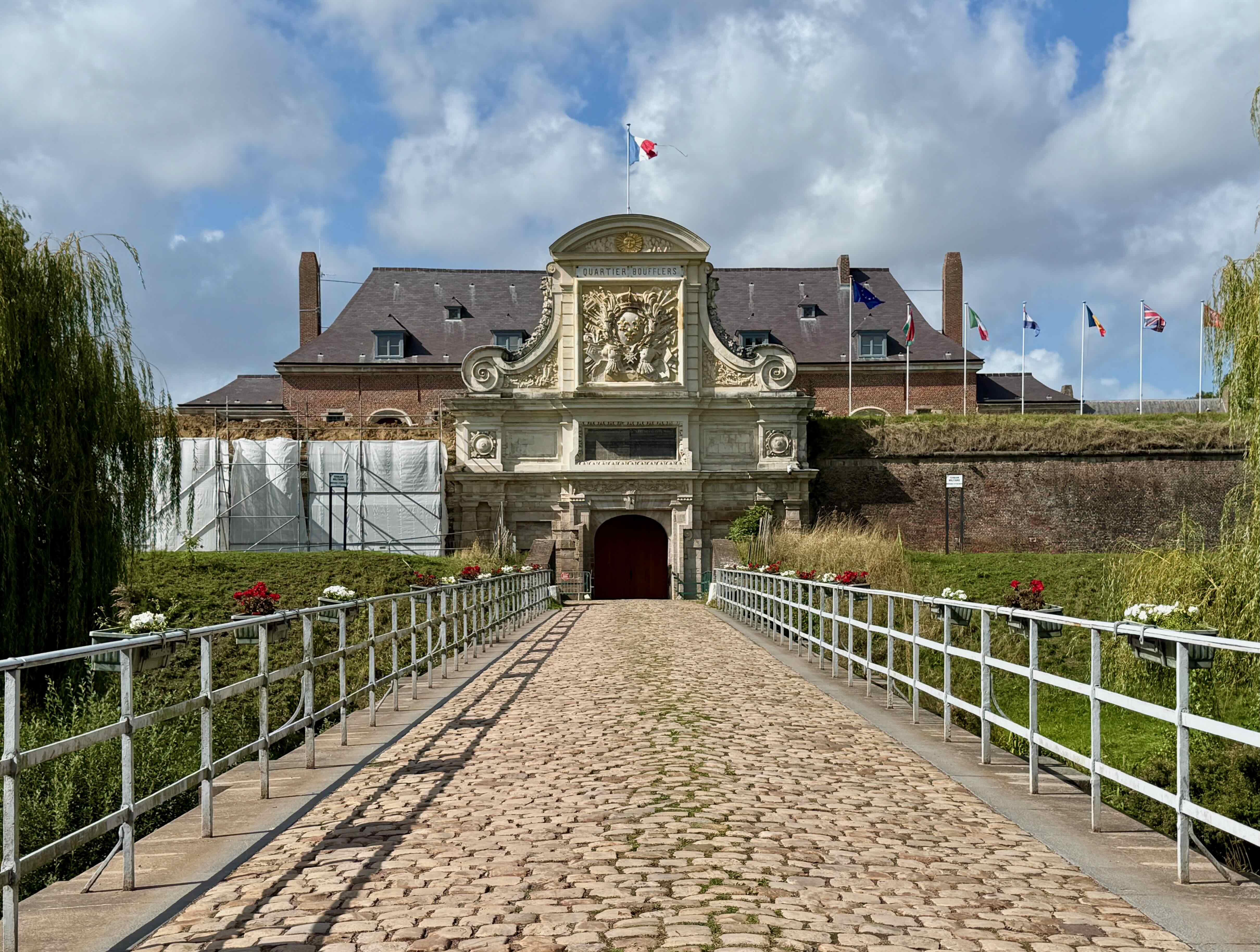
After the zoo we head towards the Citadel but unlike the one Bob visited in Arras, this citadel is still in use by the military.

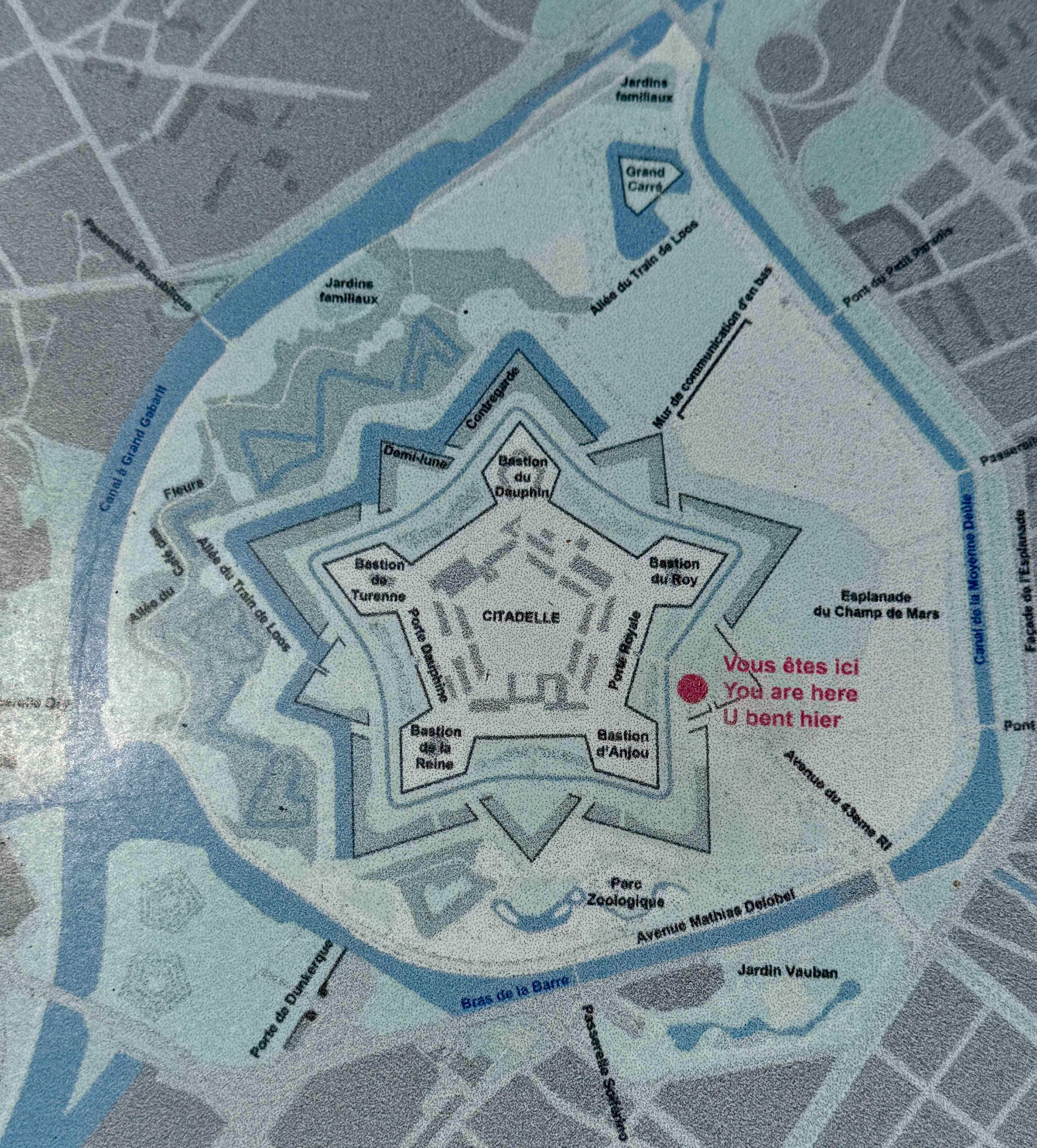
The Lille Citadel is the headquarters for the Rapid Reaction Corps-France.  This is a high-level,   deployable operational unit for the French Army and a NATO-certified force. This unit comprises around 450 soldiers from 14 allied nations.

The white area of the Citadel is used by the military but the surrounding areas have been converted to parkland for the use of the public.

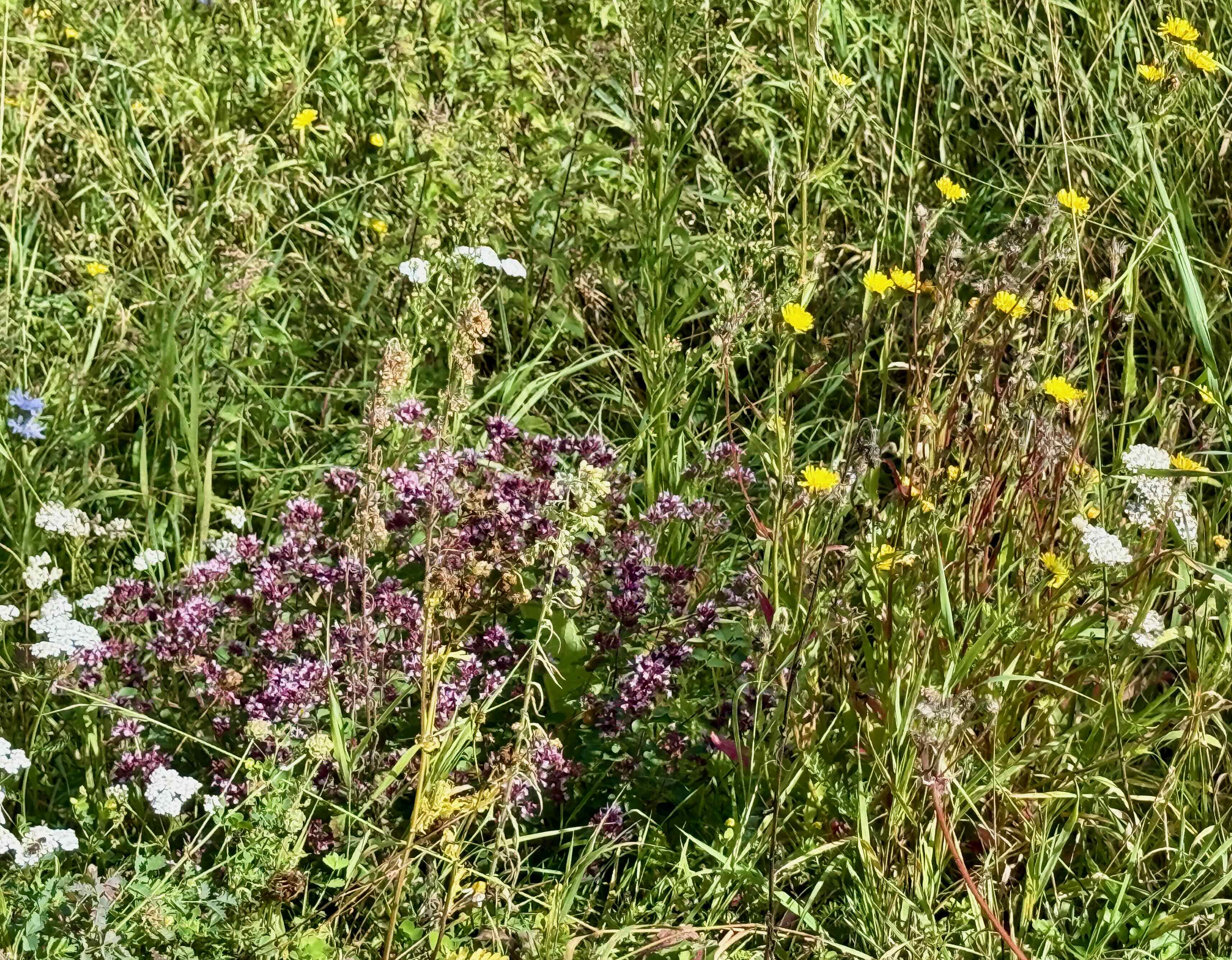
On our way back to the car there is a field with wild flowers.  I am surprised at how many wildflowers I see this late in the year.

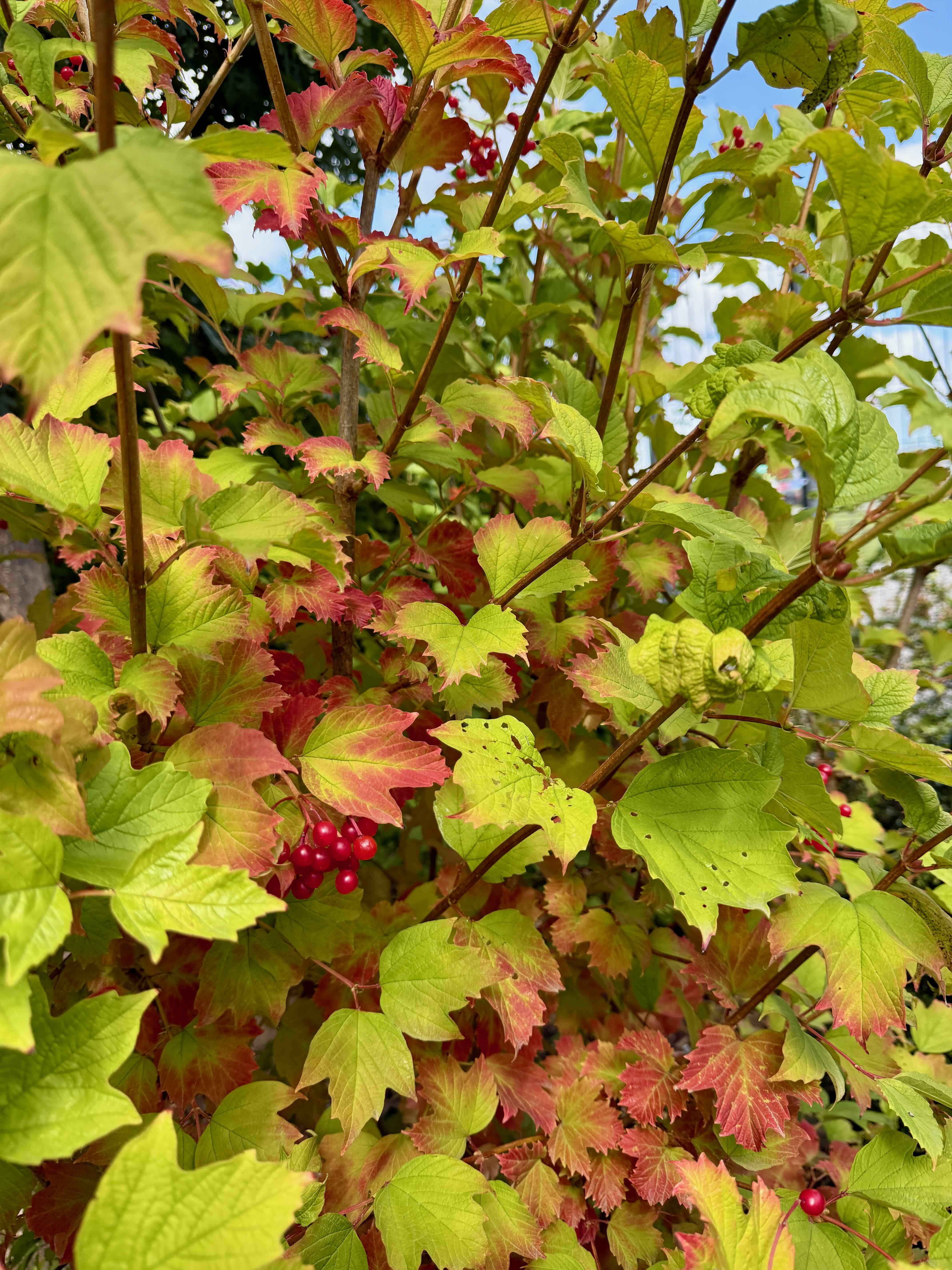
Some of the bushes and trees are starting to turn colour.

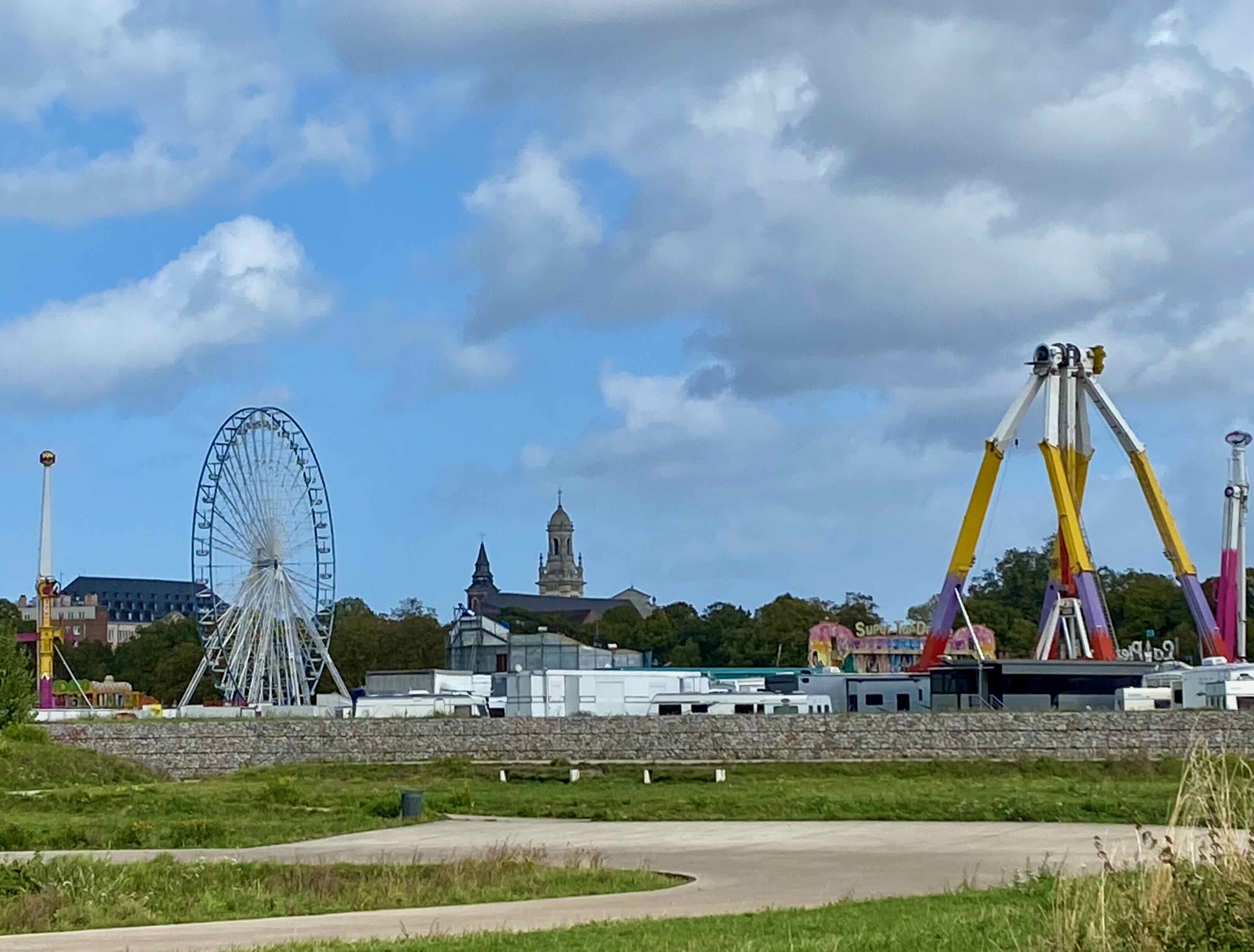
There is a huge fair setting up next to the parking lot. Too bad we aren’t staying longer.

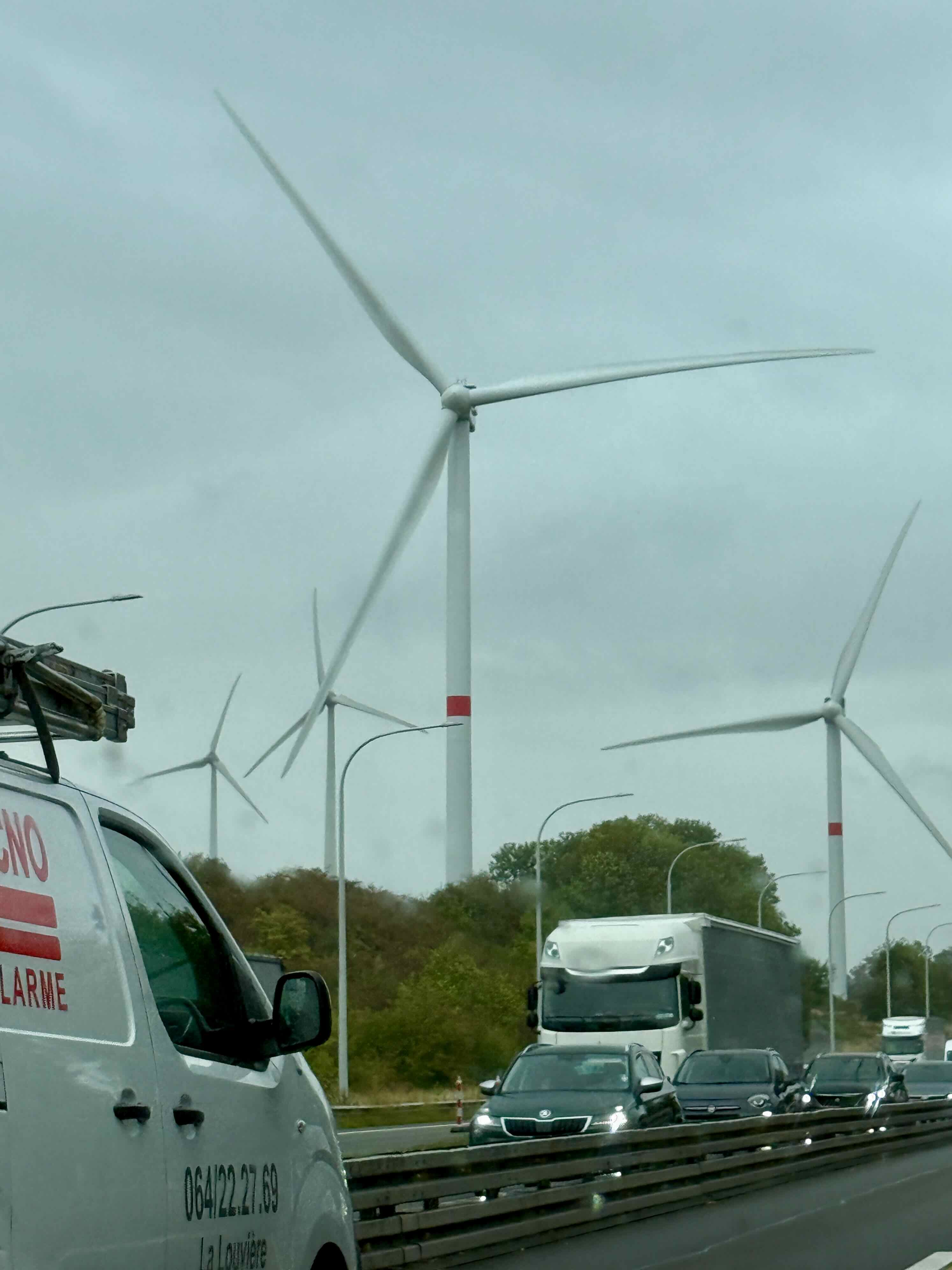
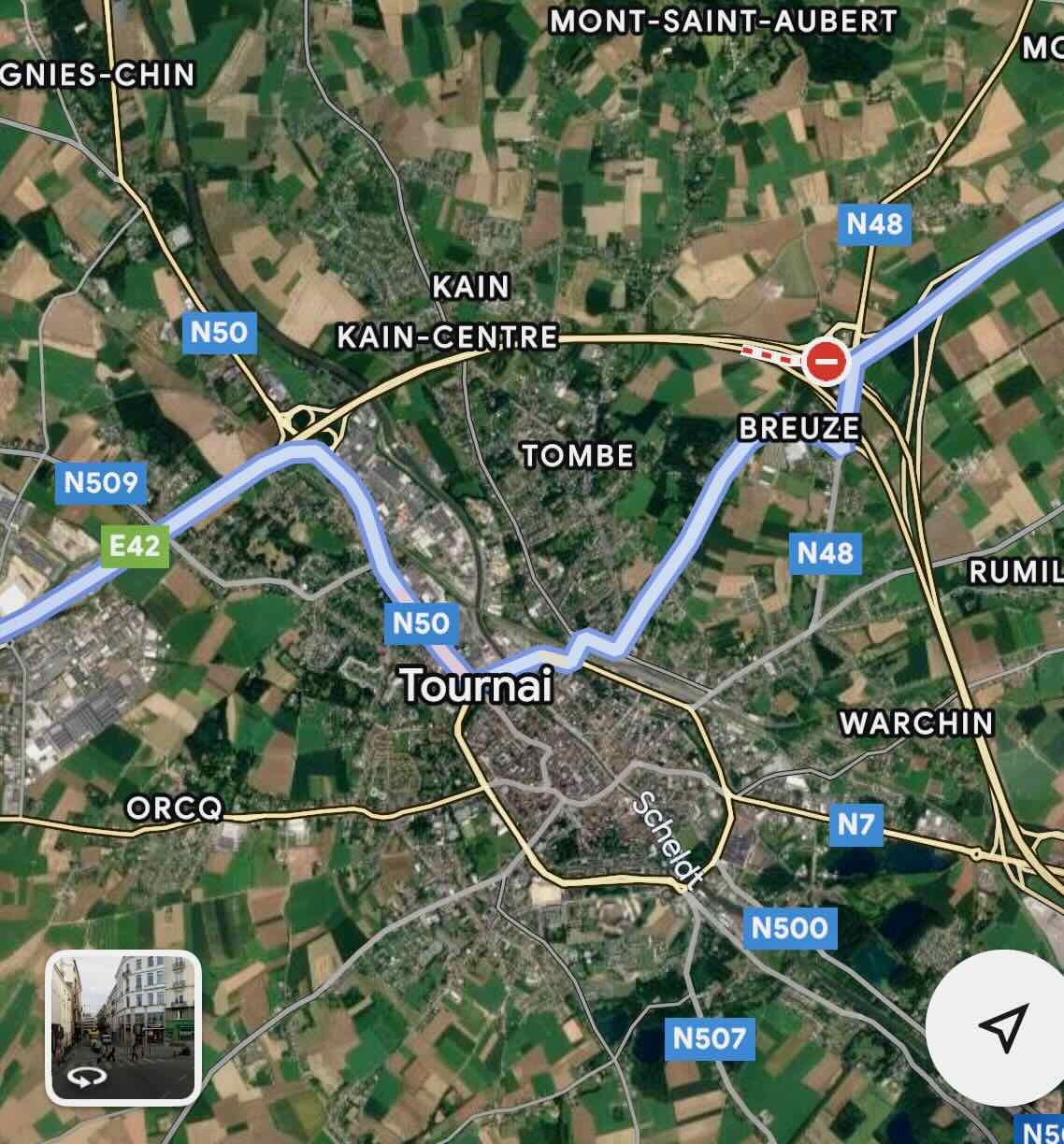
The weather is all over the place today. Sunny and warn one minute and then cloudy, very windy and rainy the next.  On our drive to Brussels we see a lot of wind turbines.  Many of them are really close to the road. They are so big!Everything was going well until we got close to a town called Tournai. Our route was supposed to take the yellow road that on this map ends in a no entry sign.  Instead we got detoured down the N50 which looked like we would still be OK but we weren’t. We were detoured onto the southbound lane of the highway which had a barrier to allow half of the road to be used for northbound traffic so it was impossible to make an exit left or right!  We had to keep driving..in the wrong direction …until we could get off the detoured road. We then rerouted our map to get to Brussels only to hit more detours, and then Google maps froze!..and Bob is asking me which way to go!!  We find a place to pull over and figure out a work around which means going in the wrong direction again until we get to a place called Mons, where we should be able to take a completely different road to Brussels. That did work but we hit at least four more construction zones where we were detoured again…only this time we kept going in the right direction. Needless to say we were both very happy to finally arrive in Brussels and check in to our Aibnb.

Screenshot

Quiet Day and the Citadel in Arras, France

Day 15     Sunday, September 14, 2025

I stay home for a much needed rest and work on my blog and journal. Bob goes to visit the Citadel. He writes the rest of today’s blog…

The military Citadel was built in the late 1600’s to protect Arras. It could house up to 1500 troops. It is now a UNESCO World Heritage Site. 

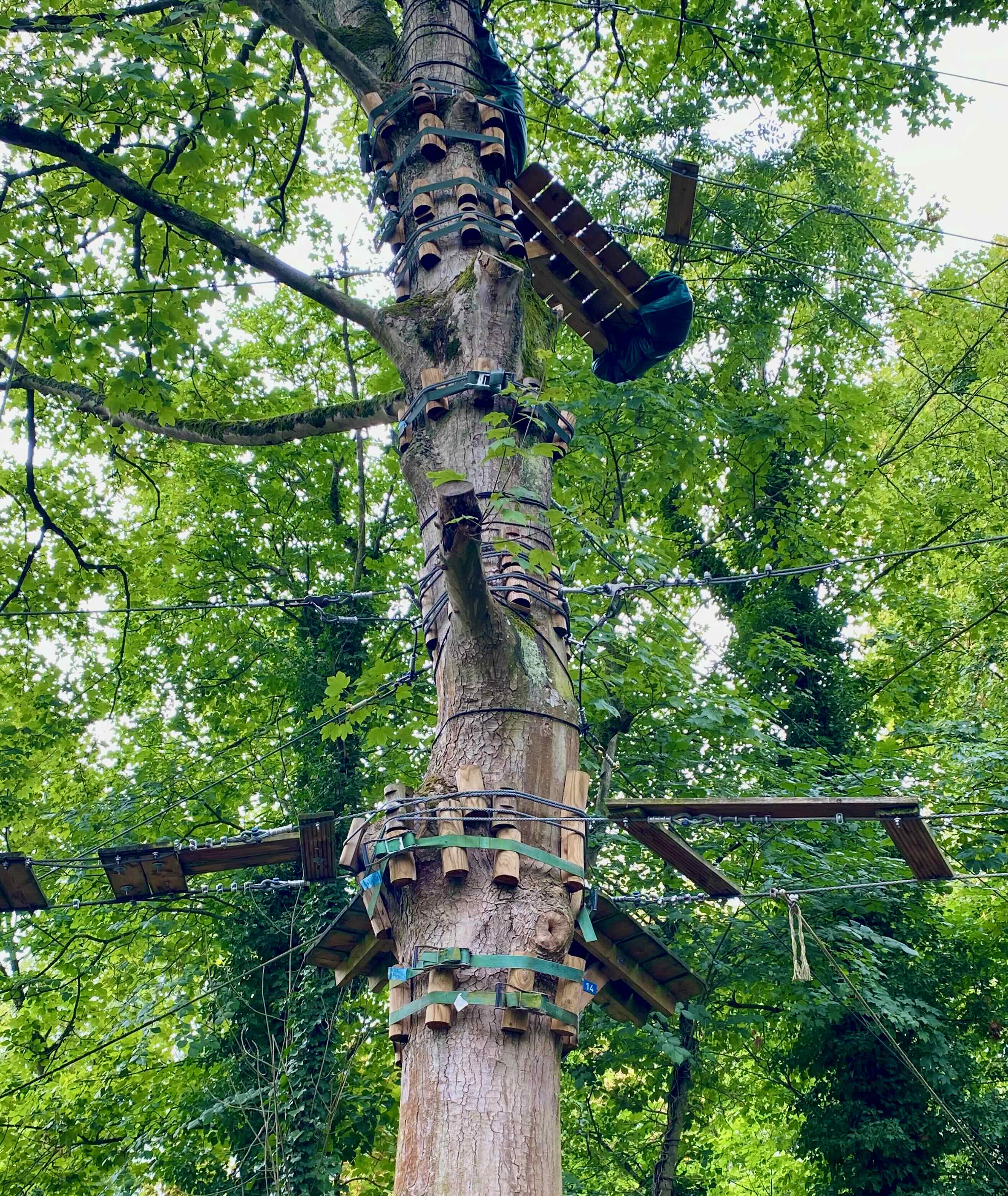
Beside the Citadel is a park with a zip-line course. Notice how the platforms are secured to the trees so that there is no damage.

Sorry for being so long winded. Bob

Arras Market and Carrière Wellington. France

Day 14.    Saturday, September 13, 2025

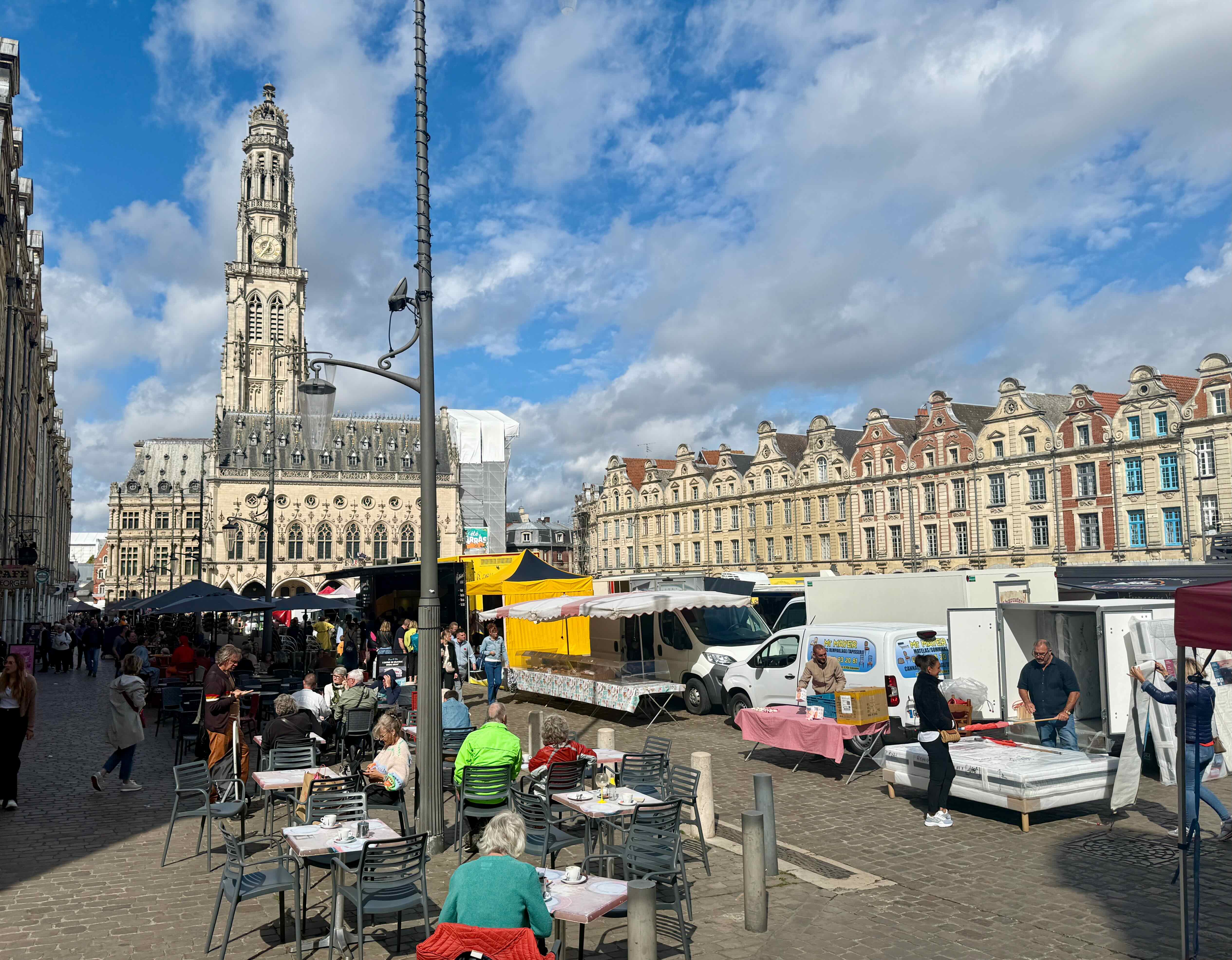
We visit the Arras market which is held in the Place des Héros in front of City Hall. It is packed with tables, tents and trailers selling a wide variety of goods. I adore these baskets, but they would be a difficult to take home.

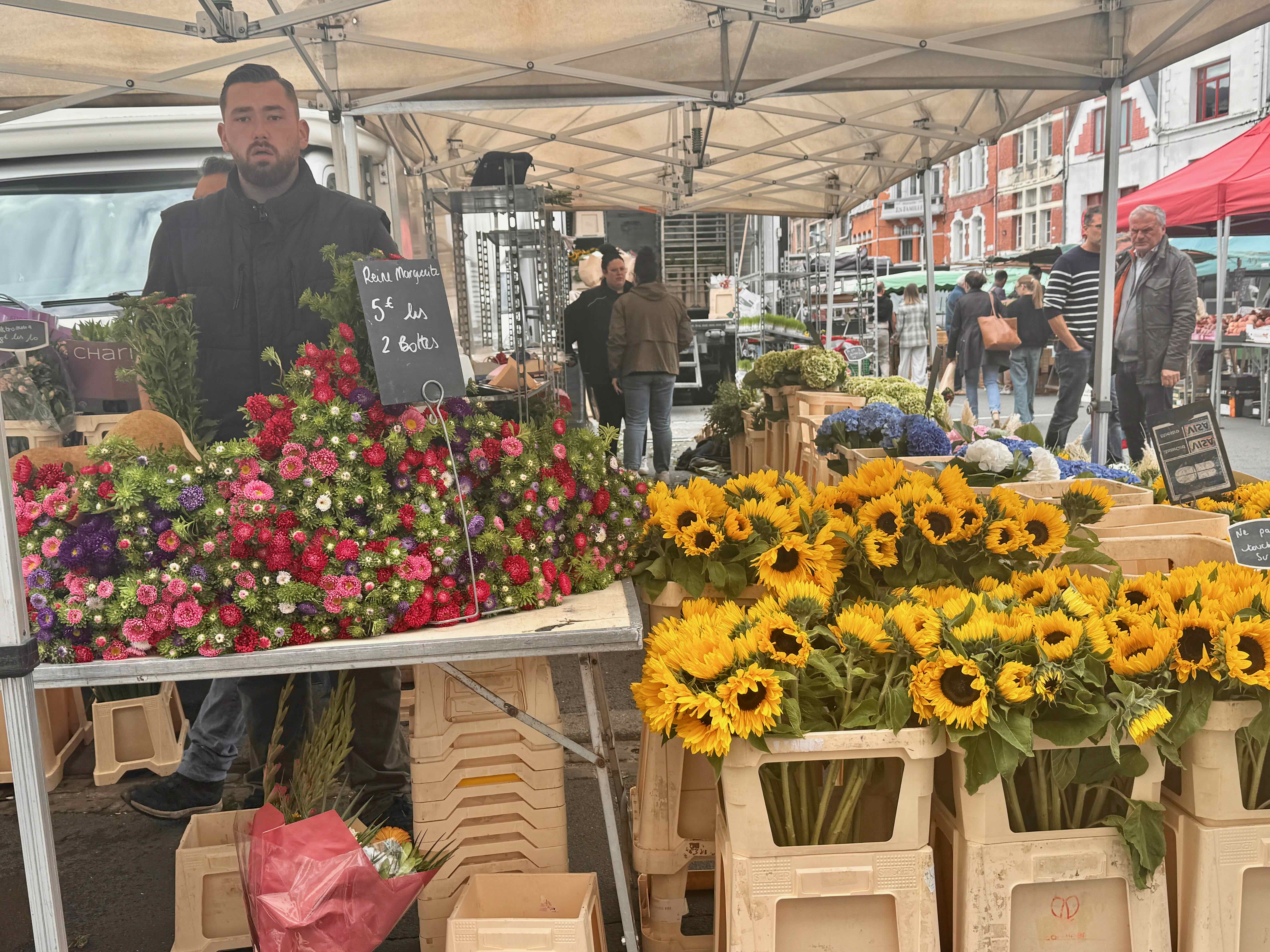
Many shoppers are carrying beautiful bouquets of flowers. Two of these pink bouquets are only €5!

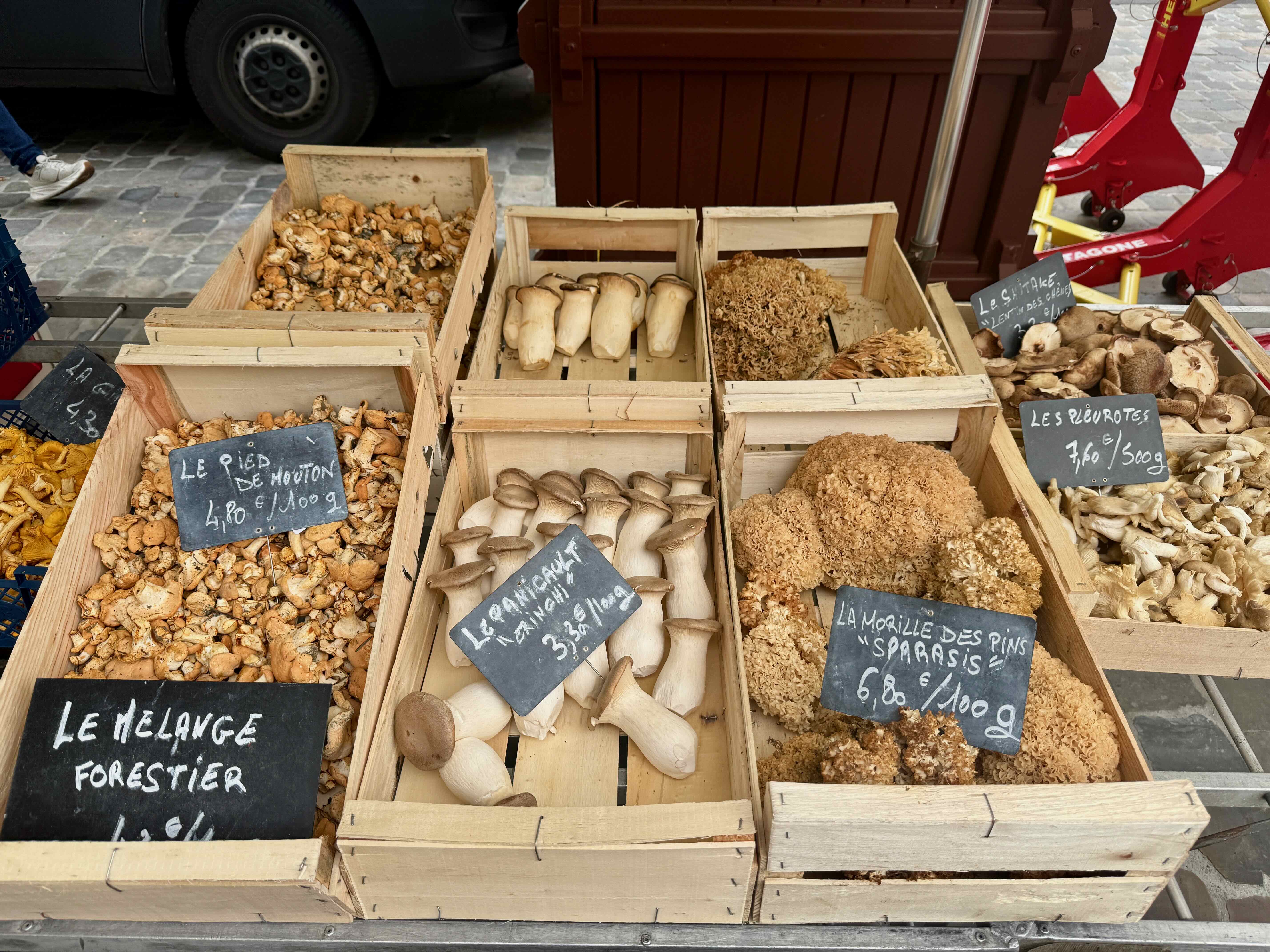
European markets often have an interesting assortment of mushrooms…

…and of course, many different cheeses.

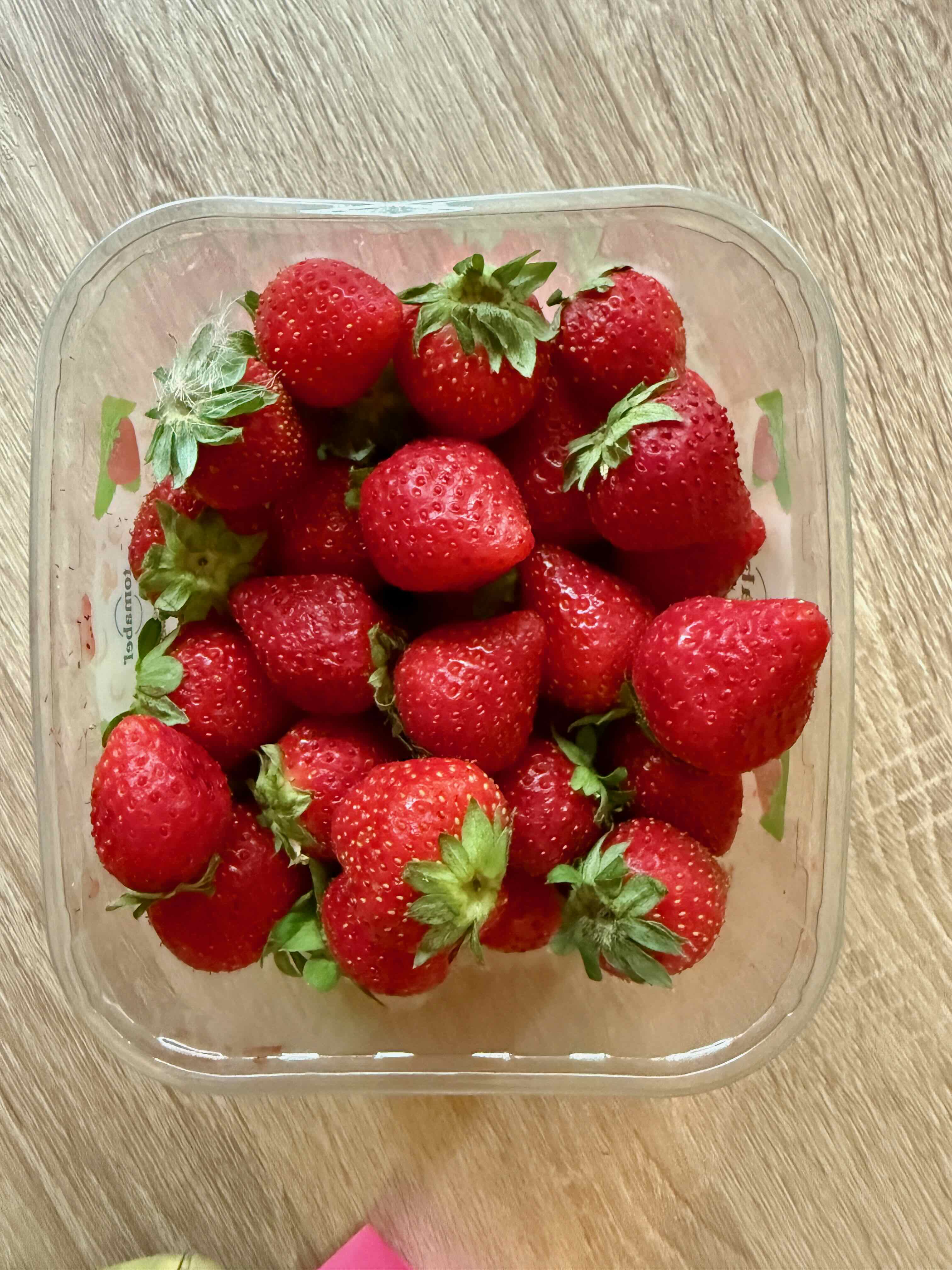
We buy sausages, green beans, a baguette, a red pepper, bananas and two baskets of yummy Belgium strawberries.

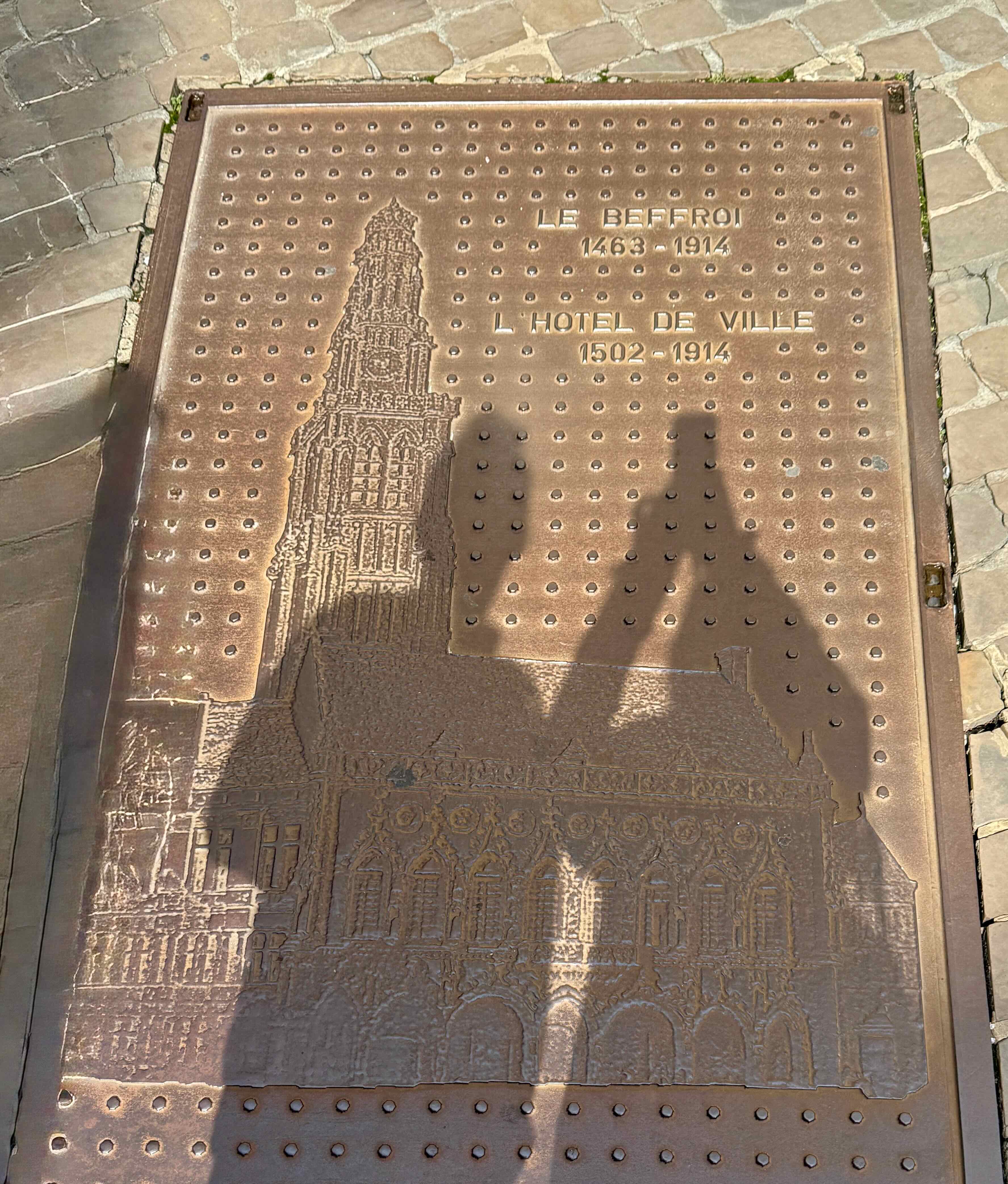
This plaque with our shadows shows the Original Belfry survived from 1463-1914, and the City Hall from 1502-1914. They were both almost completely destroyed by German bombardment in October 1914.  They were rebuilt in the 1920s, using modern materials but replicating their original style.  

A view of the huge market in front of the Town Hall. The vendors were also located down the side streets of the square.

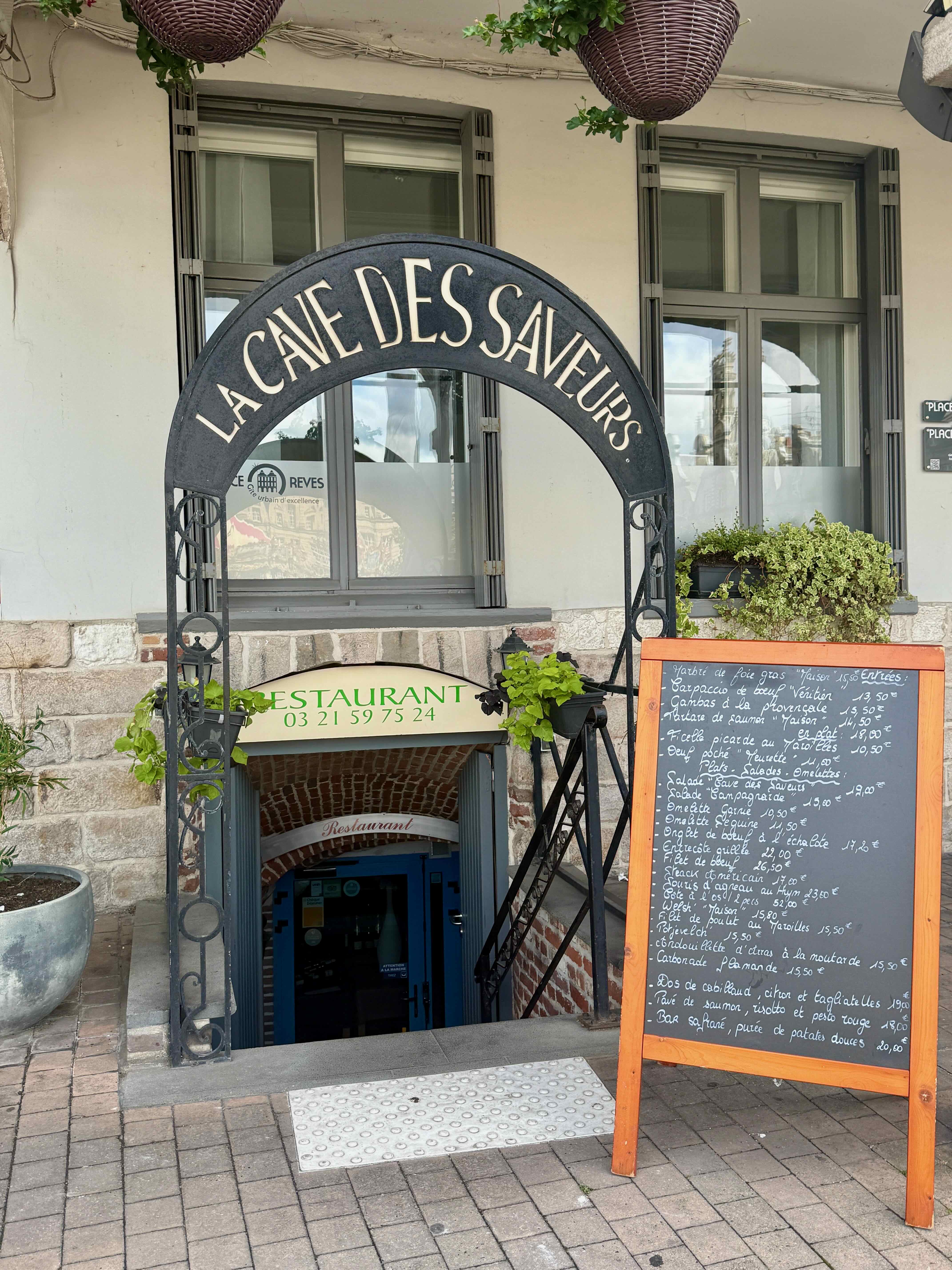
During our tour of the Boves on Wednesday our guide said that every building around the Grand’Place and the Place des Héros has underground cellars that are part of the caves that were dug under Arras. Each building has three levels of cellars, one at each of 4, 8 and 12 meters. Many restaurants and pubs are now located in these cellars. Each building’s cellars are “lined with metal” to prevent any thefts. Our guide’s English was fairly basic so we weren’t sure if she meant metal gates, or something else.

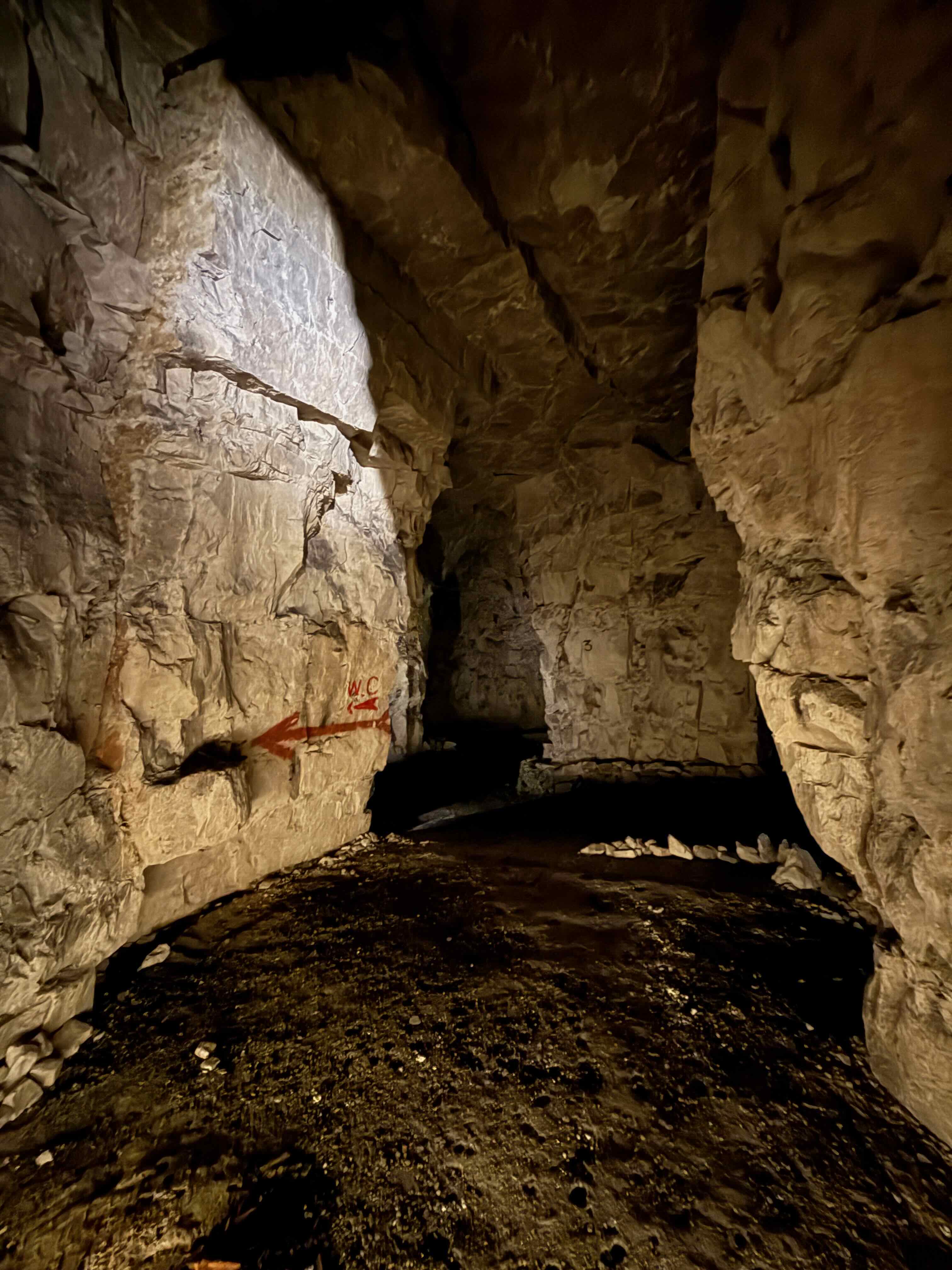
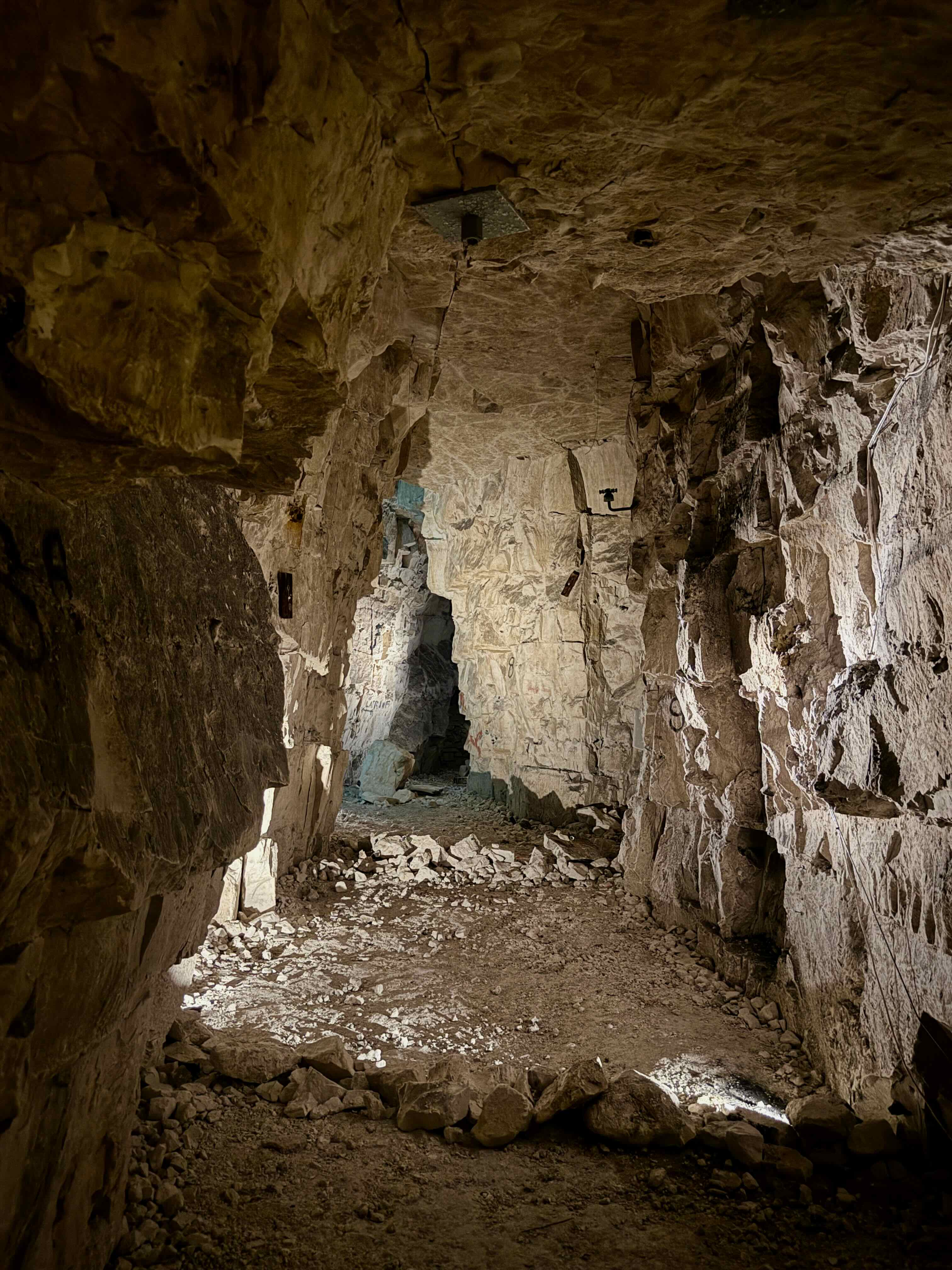
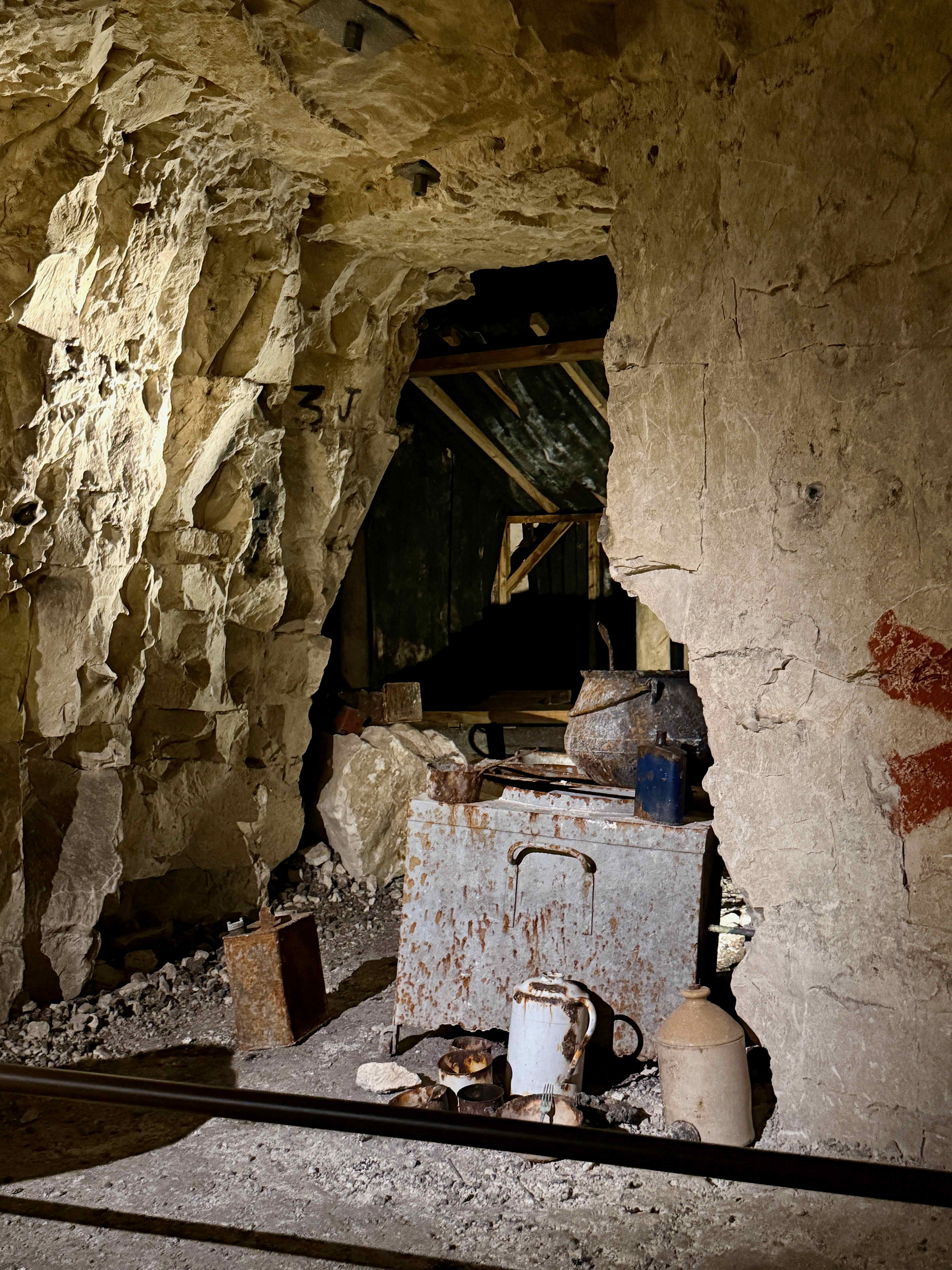
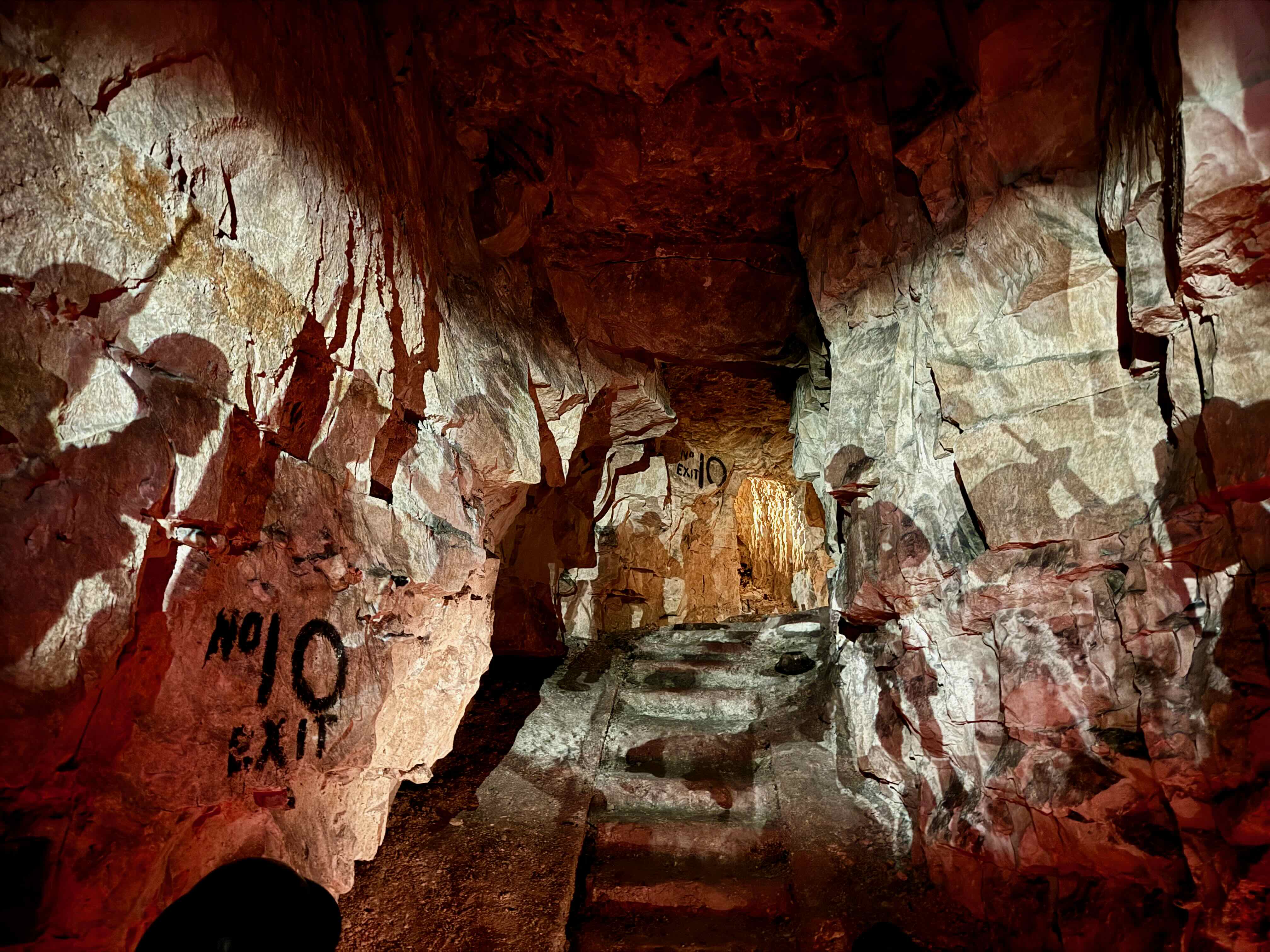
It is a short 10 minute drive to the Carrière Wellington.  We don hard hats and we are soon 20 meters underground.  

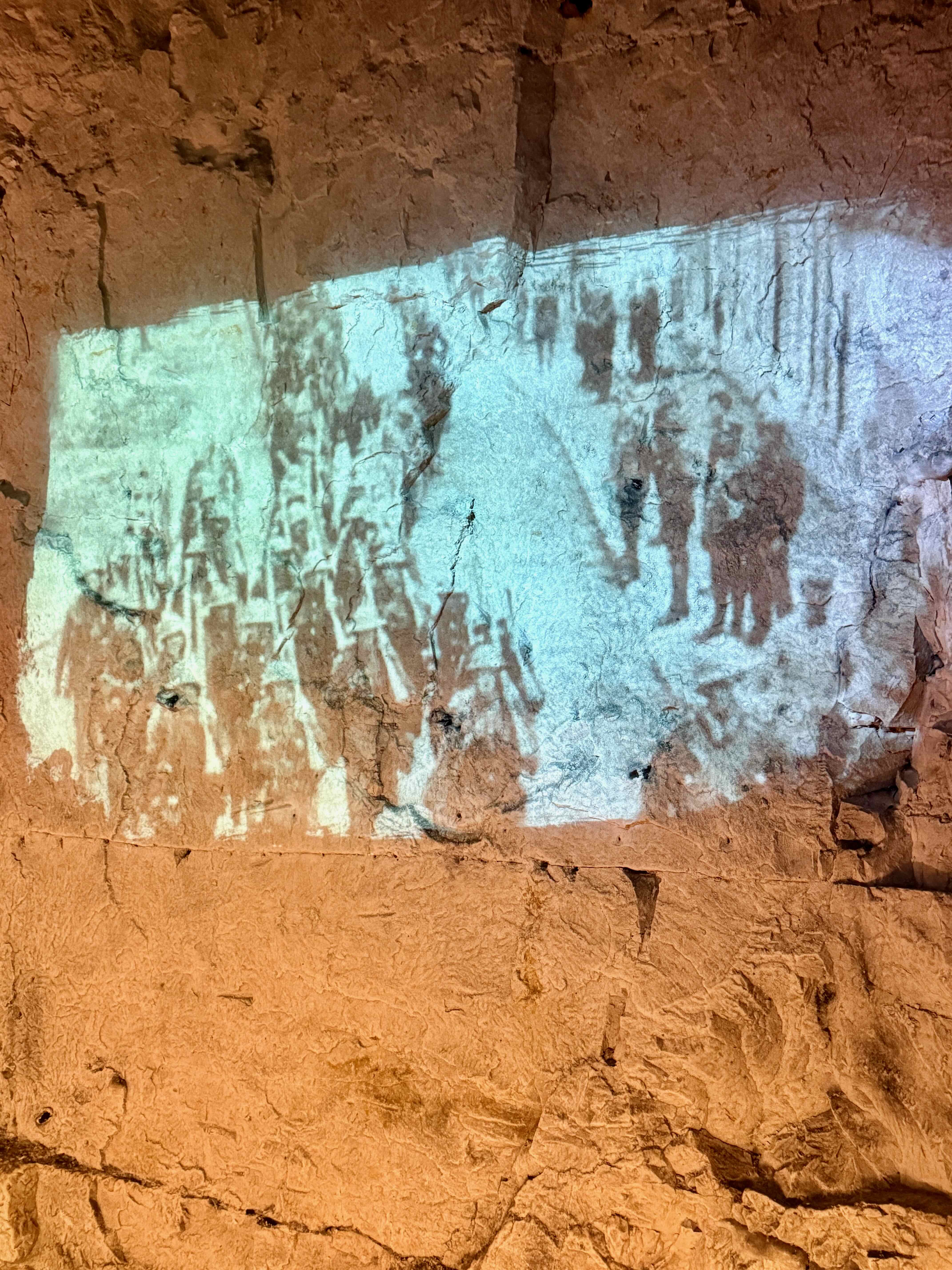
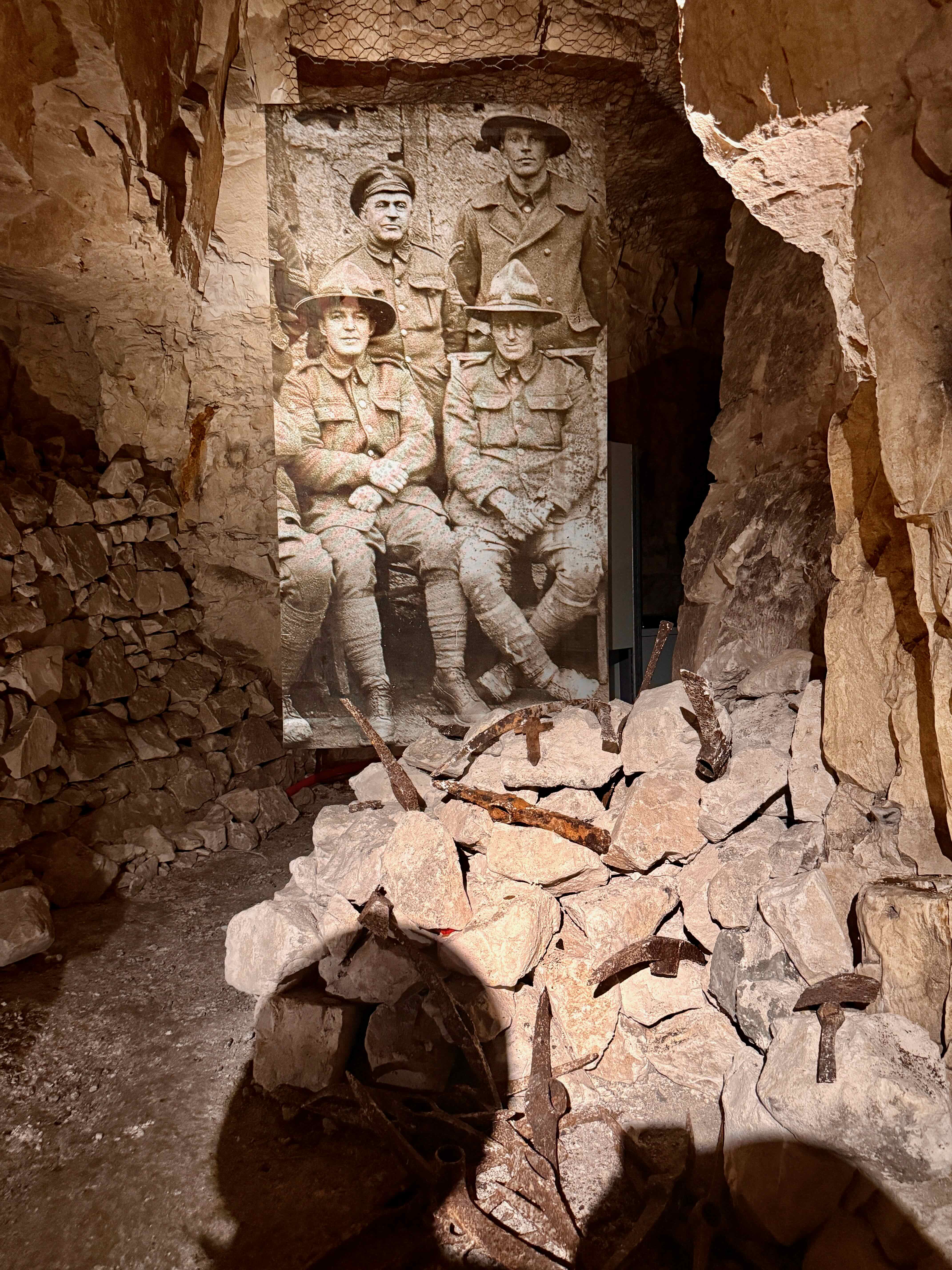
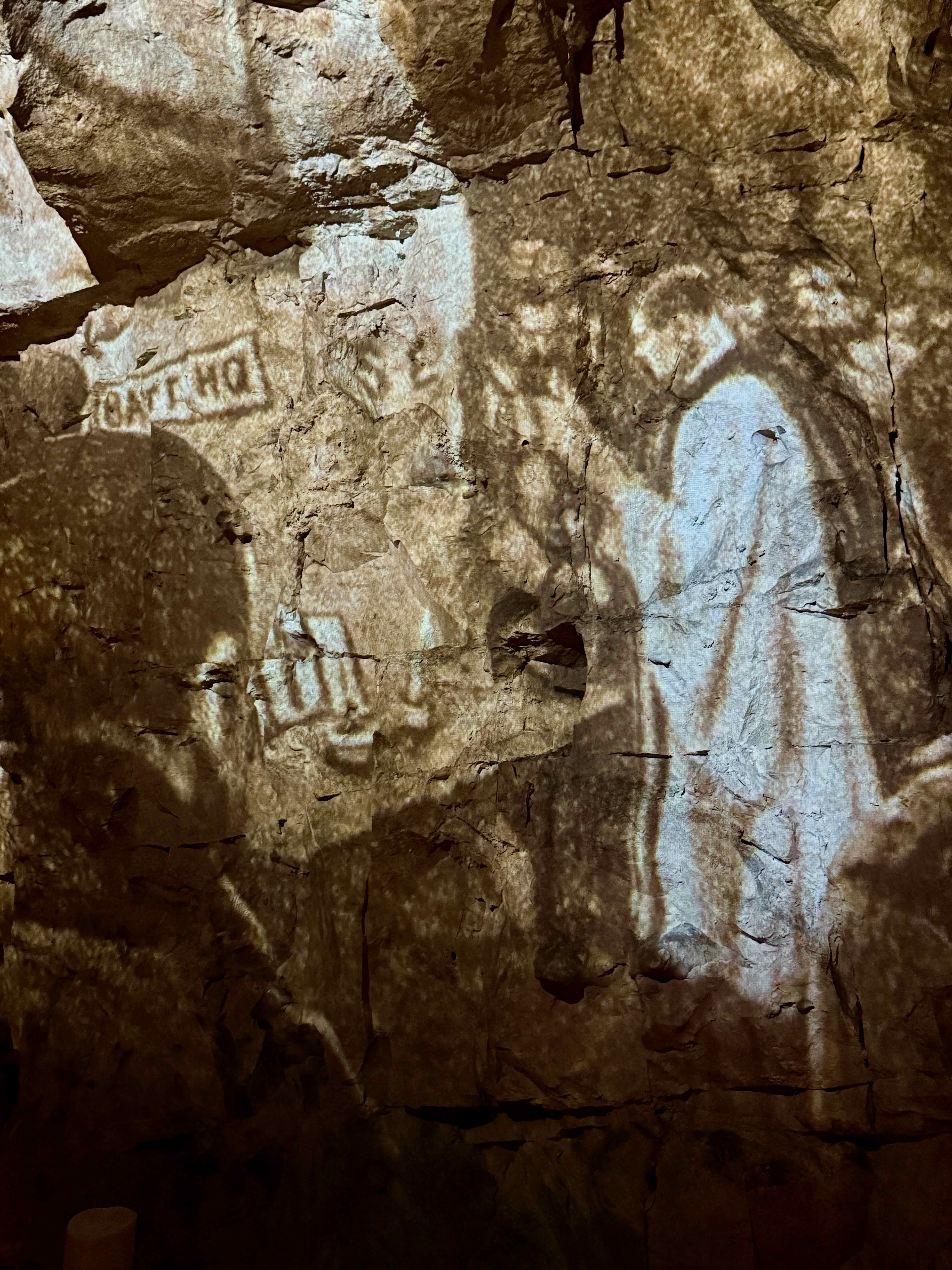
Tunnellers from New Zealand connected the town’s medieval chalk caves and tunnels to create a network of underground barracks to accommodate 24,000 soldiers in the First World War. Images and films are projected onto the cave walls throughout our tour. These are the NZ tunnellers.

The tunnels we visit today housed 1,500 soldiers in the weeks up to the surprise attack against the Germans on April 9, 1917. Film of British troops arriving in Arras

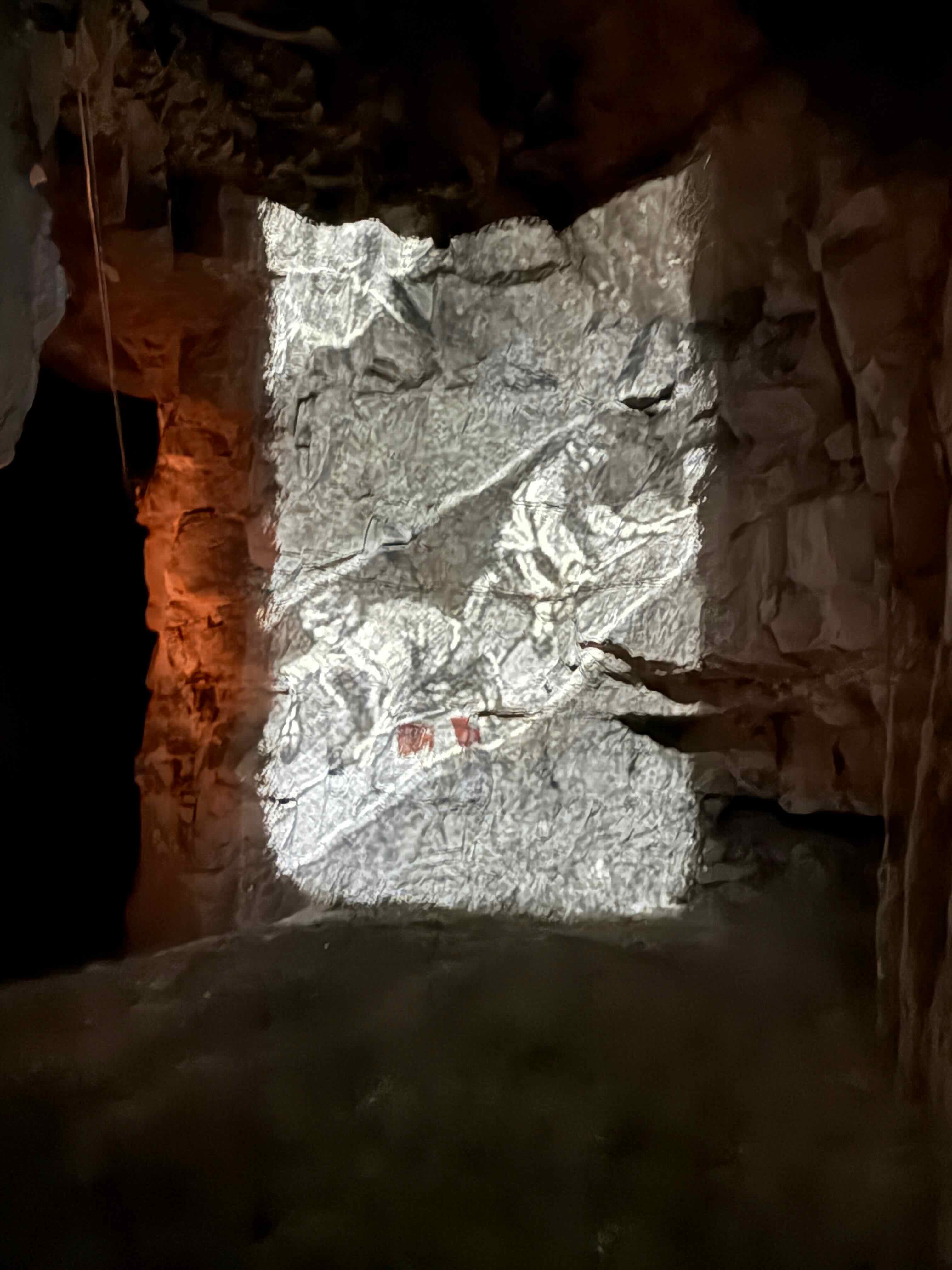
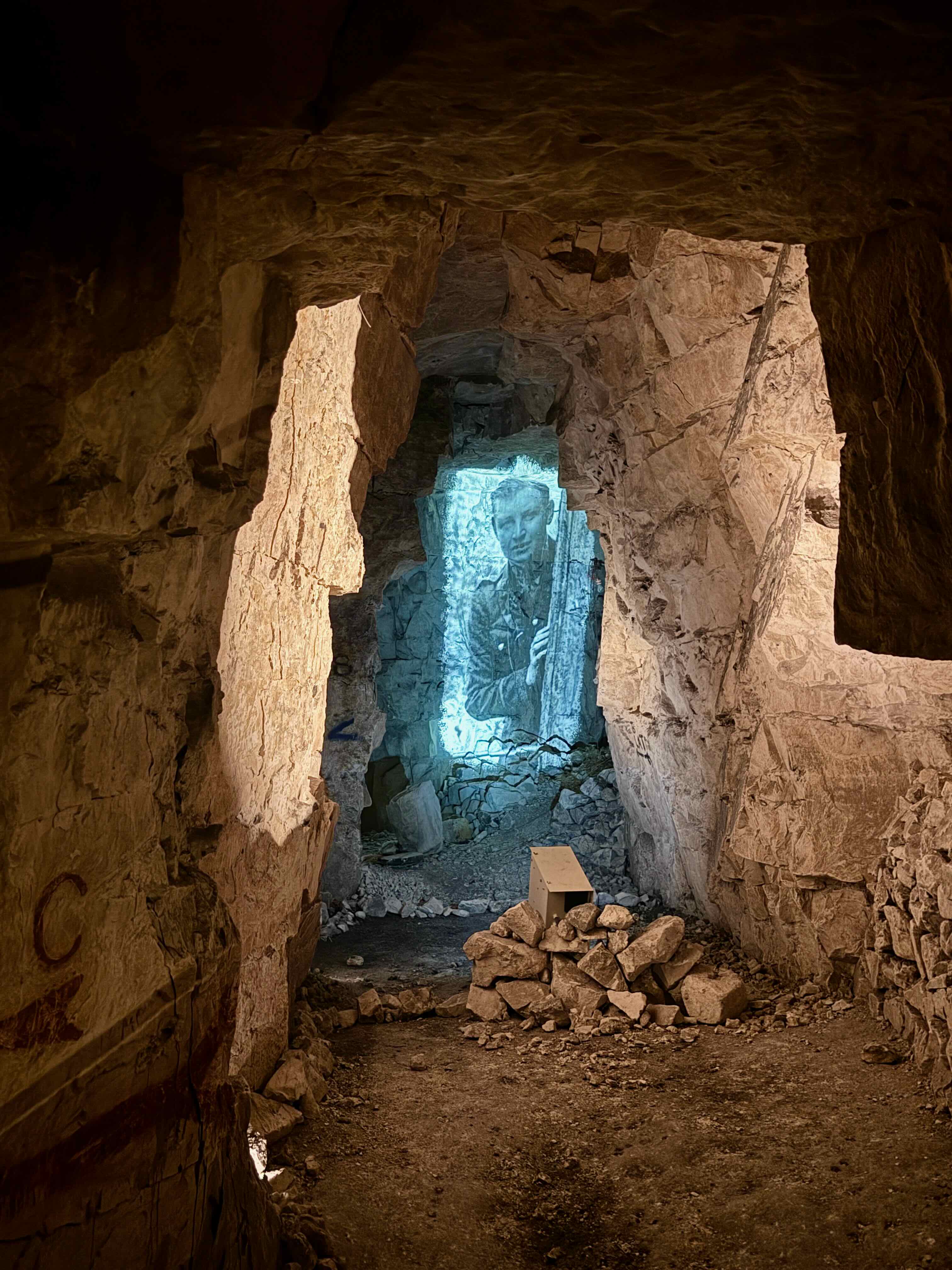
Images of individual soldiers were projected here. I wonder how many of them died in the coming battle. These ancient caves were used as building stone quarries for Arras in Medieval times. They are very large with high ceilings.

This projection showed some of the NZ tunnellers who volunteered to come to Arras. In front of the image are pick axes and shovels used to build the tunnels. No sledgehammers or explosives were used as the noise could have been heard by the Germans. The German front line was very close to the town of Arras.

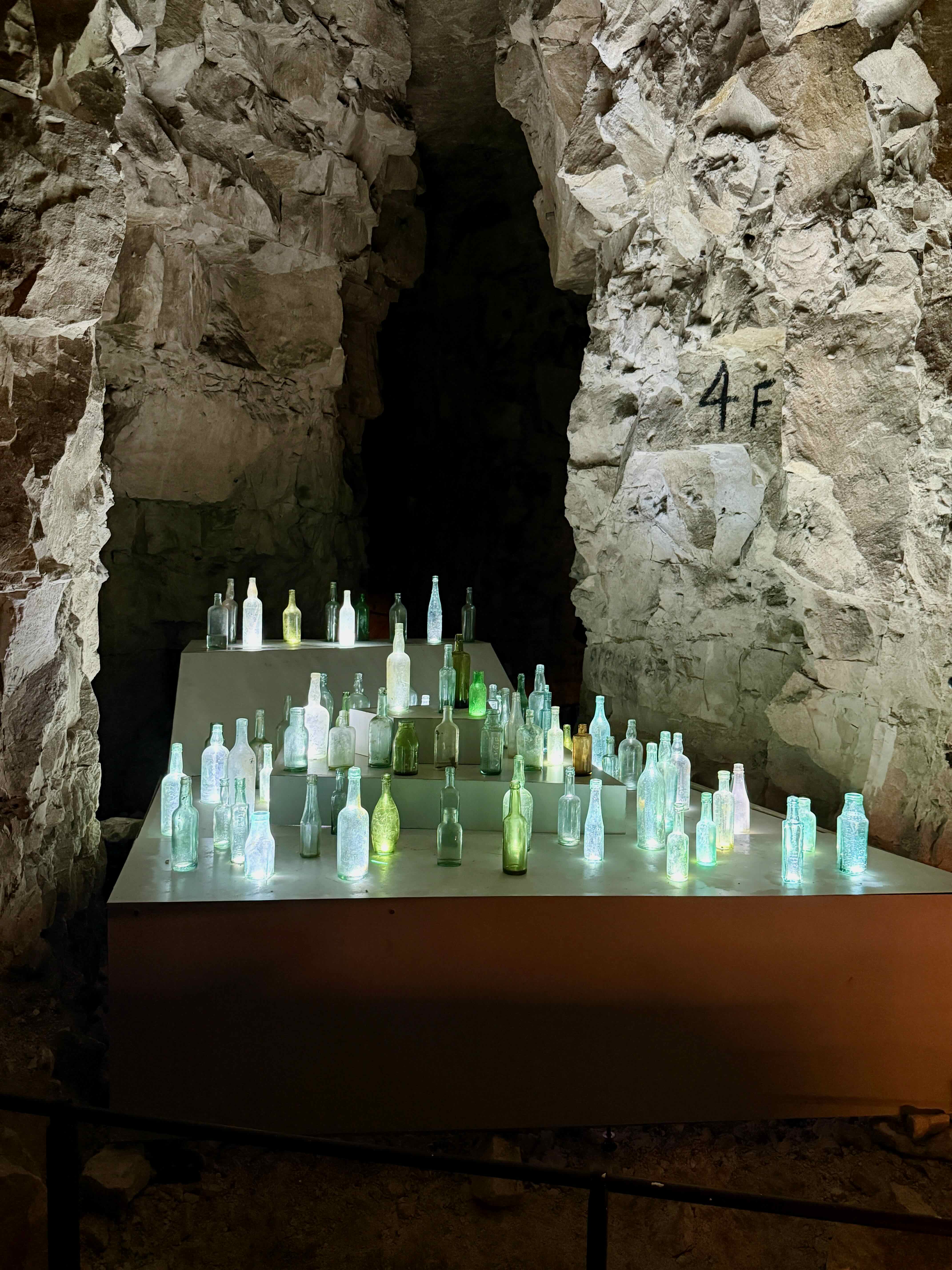
Bottles found in the caves, included everything from Perrier water bottles to beer, liquor, cream and HP sauce bottles.

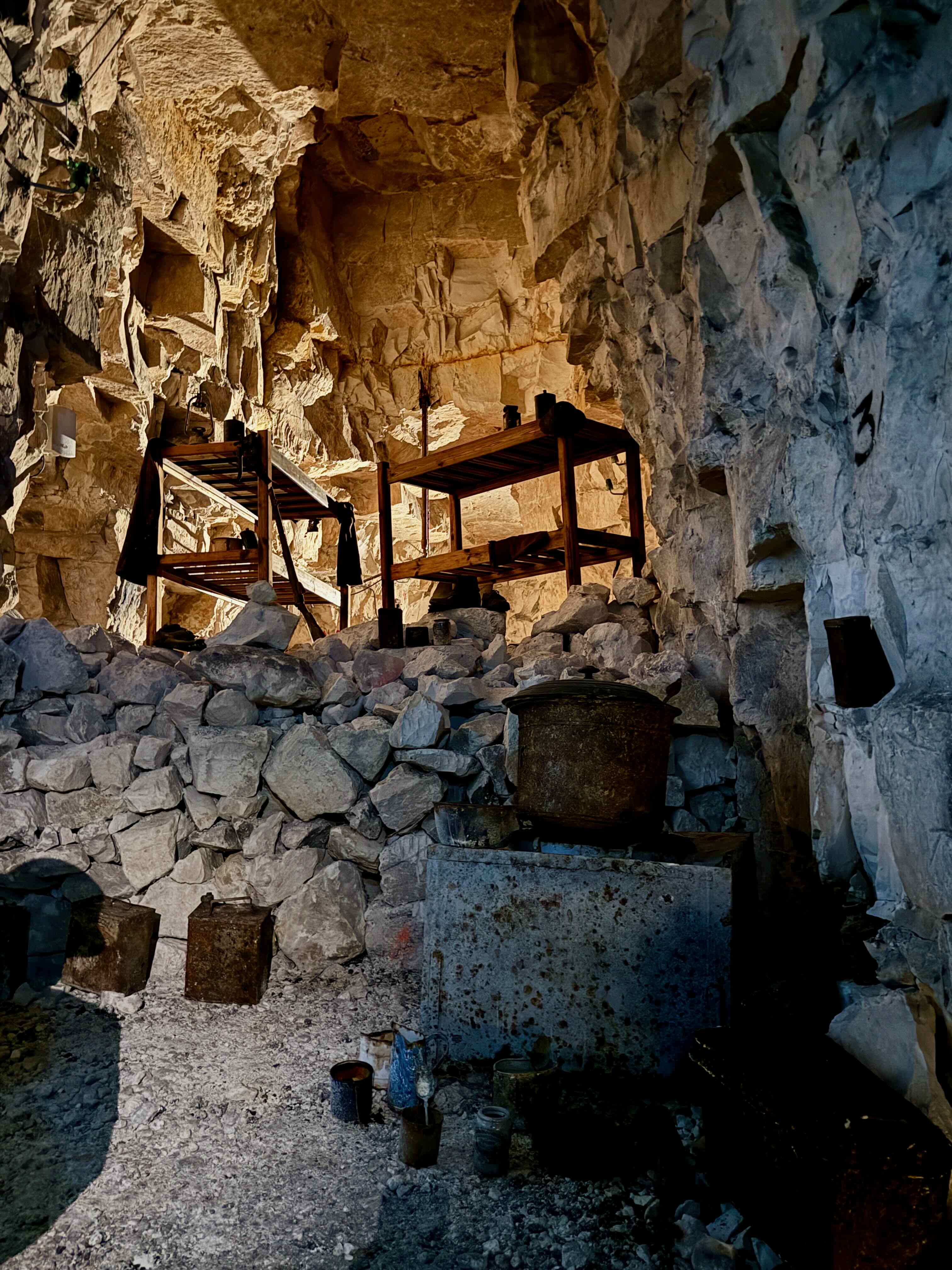
A facsimile of the bunks that were made for the soldiers. It was damp and cold and water dripped onto the men as they slept.

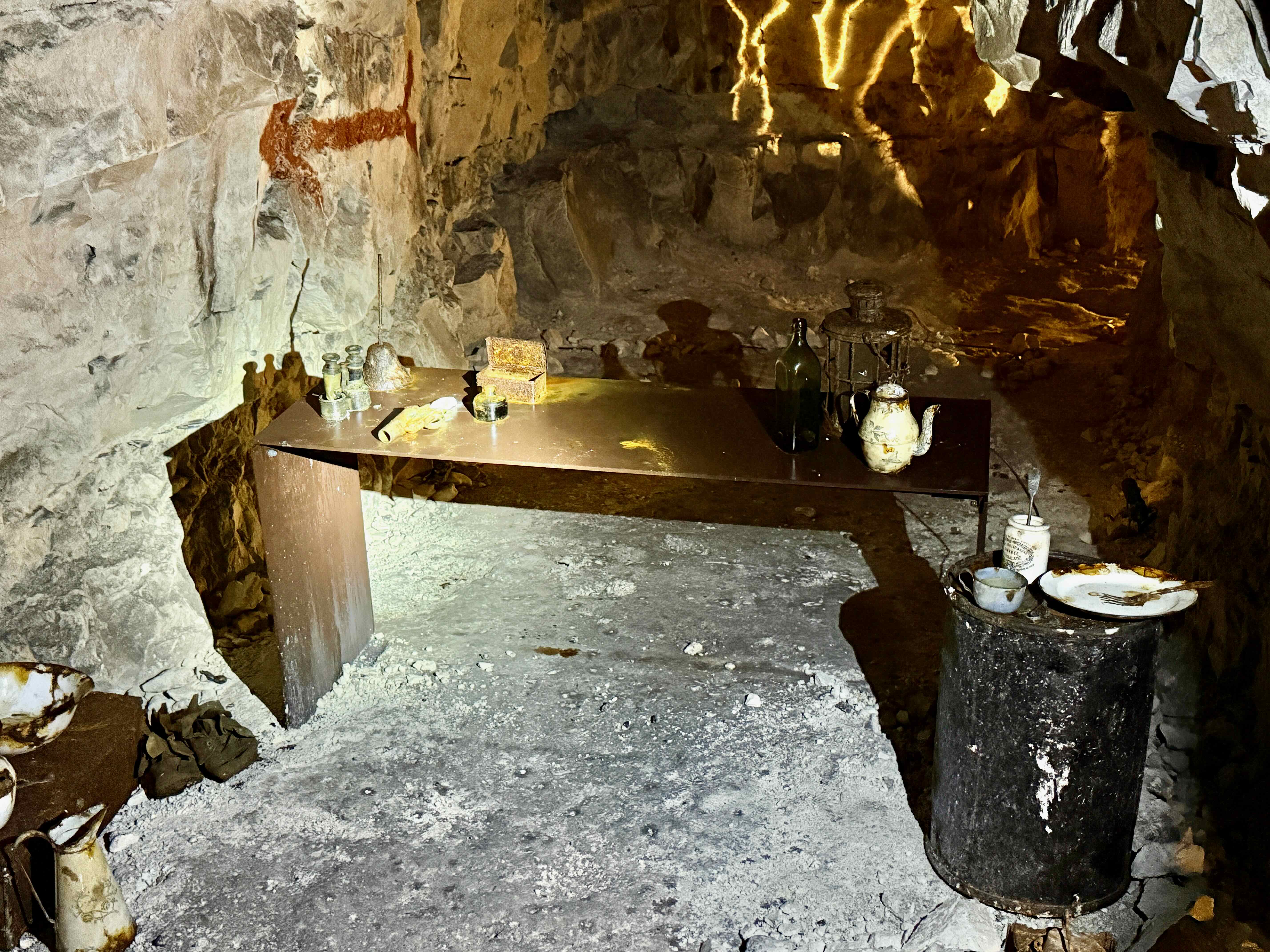
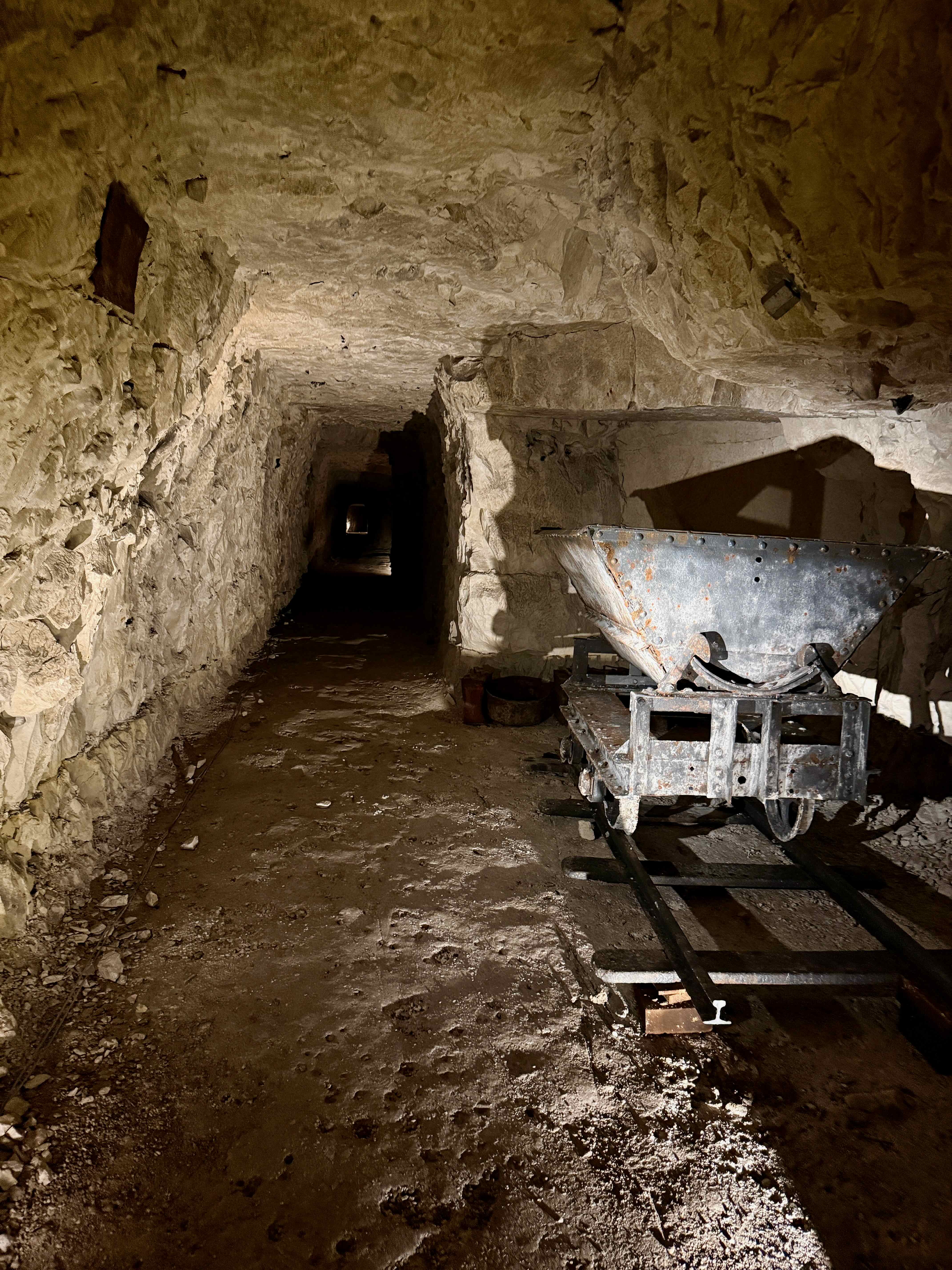
This underground ‘city’ included running water, electricity, kitchens, latrines, a light rail system, and a medical centre with an operating theatre.The stoves used small wood fires, and the soldiers smoked while they were underground. I imagine the air quality would have been awful.

We hear a recording of a church service that plays while we view this projection of a soldier’s drawing of the service given just before the battle. 1,500 men crowded together in this part of the caves to attend the service.

This is Command Headquarters.  

A view down a long tunnel towards an opening where the soldiers will exit onto the battlefield after an underground explosion opens the way.

This last part of the tour was very moving.  Projections of men writing their letters home before the battle. The contents of some letters are read aloud and we hear if the writer was injured or died in battle. Then we see these steps leading to an exit. There is a film with shadows of soldiers charging up the stairs to exit a doorway that flashes bright with loud explosions. We can hear the soldiers yelling and breathing hard. It is so difficult to watch…so many died to launch this surprise attack on the Germans.   In a theatre after the tour we watch a film about what happened after this battle and I am shocked to learn that the British advance slowed in the next few days and the German defence recovered. The battle became a costly stalemate for both sides and 4,000 men a day died in the days after the surprise attack. The British had 160,000 casualties and the Germans about 125,000. Up until hearing this I thought this Arras surprise attack was at least a success. I really hate war!

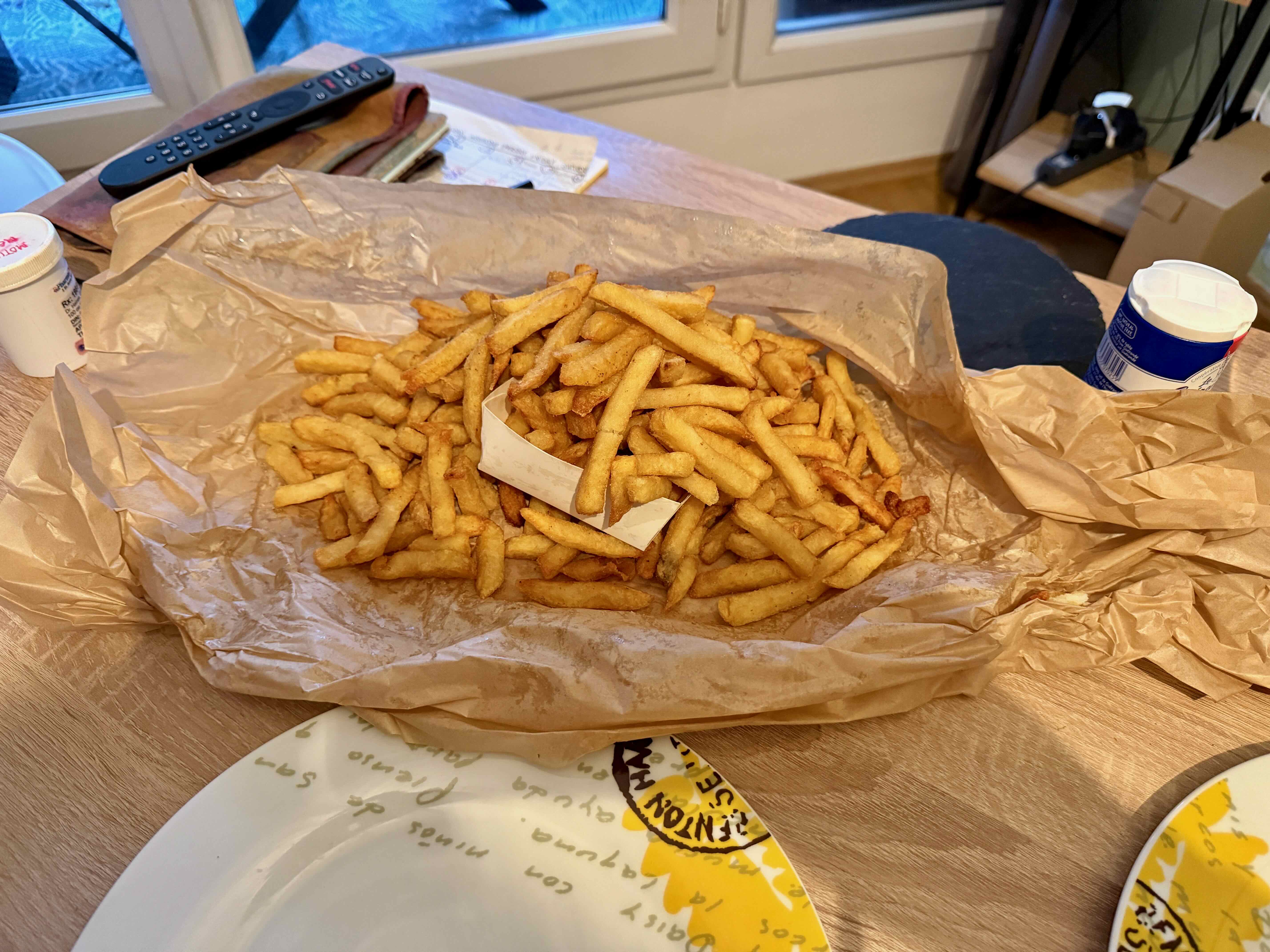
On a lighter note…for dinner tonight we have a salad and an order of Arras’s world famous frites.  Yes, this is one €6.00 order of large frites.  More than the two of us can eat!

Amiens, France

Day 13.    Friday, September 12, 2025

It is an hour drive to Amiens from Arras where we will visit Jules Verne’s house, the largest cathedral in France, and take a unique boat ride.

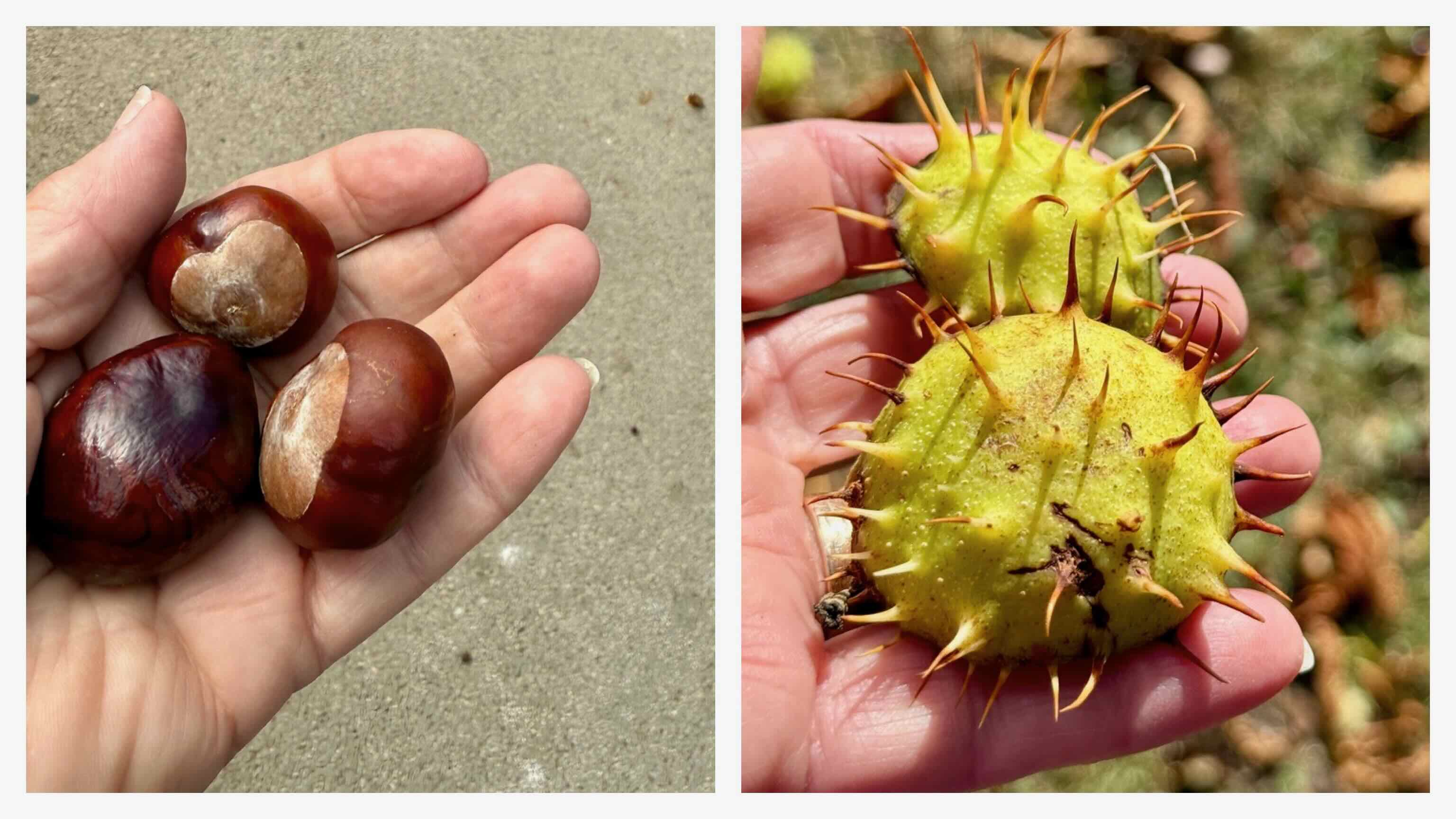
We luck out and find a parking space right beside the Jules Verne museum.  Parking downtown in French cities is very difficult, there are more cars than spaces available.  We have our picnic lunch in a little park right by the museum but these chestnuts were falling and landing with a crash around us…the spikes on the green fruit are very sharp and we decide to move to a safer bench.

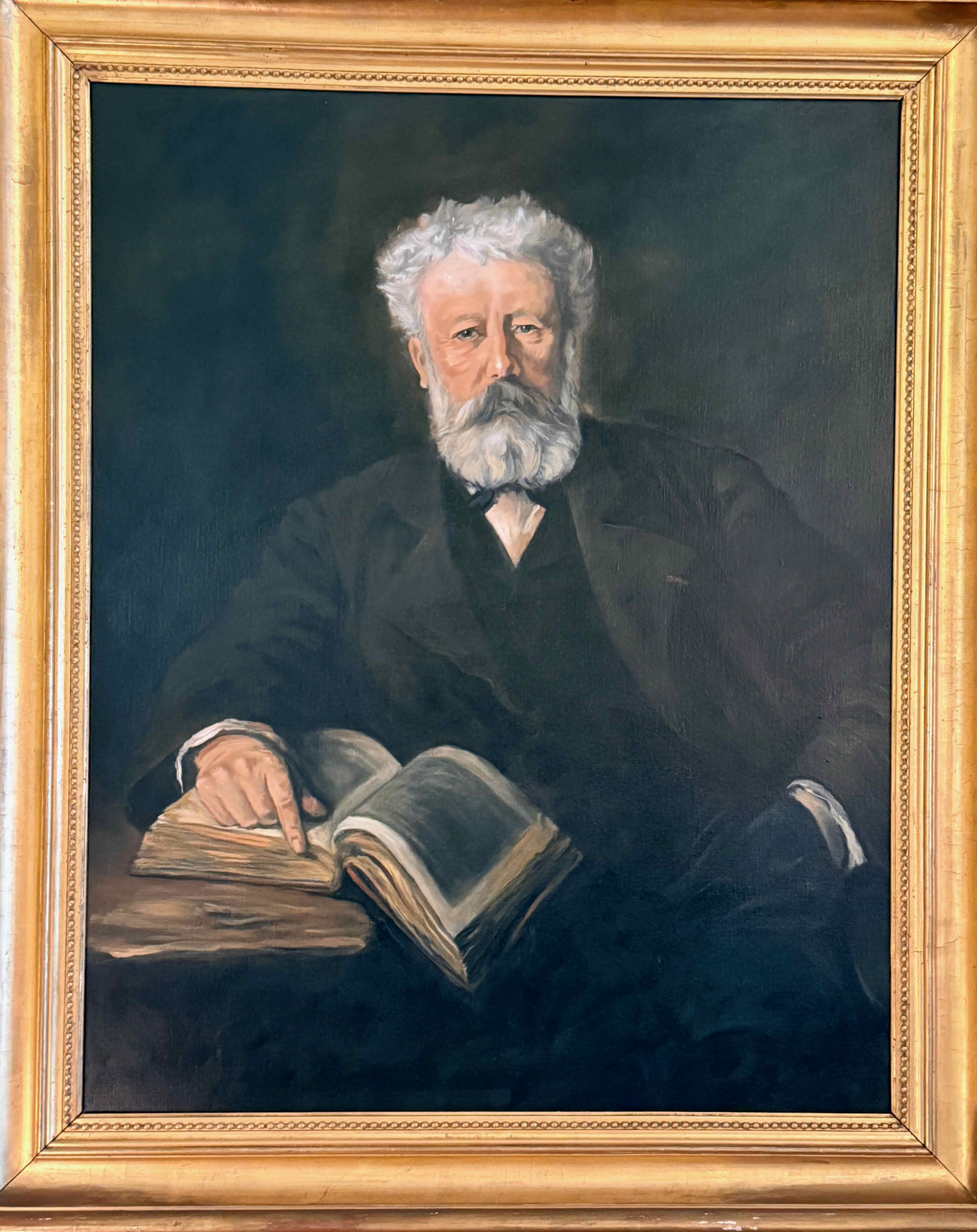
Jules Verne (1828-1905) was a French novelist, poet and playwright.  Jules Verne is the second most translated author in the world, ranking below Agatha Christie and above William Shakespeare.  His novel Around the World in 80 Days is printed in 18 languages.

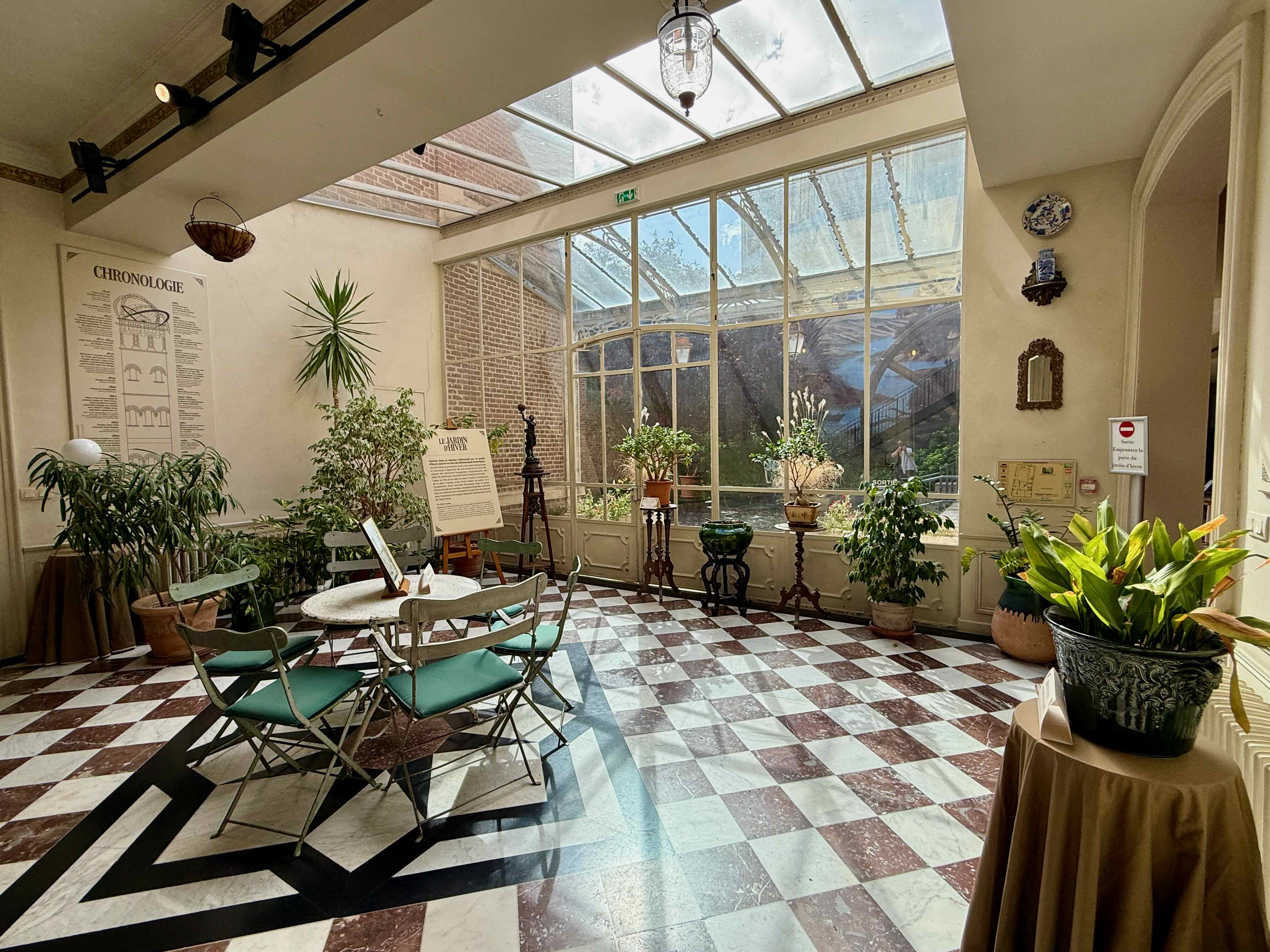
The winter garden was the original entrance to the Jules Verne house.  Tropical garden plants were moved indoors here to spend the winter.

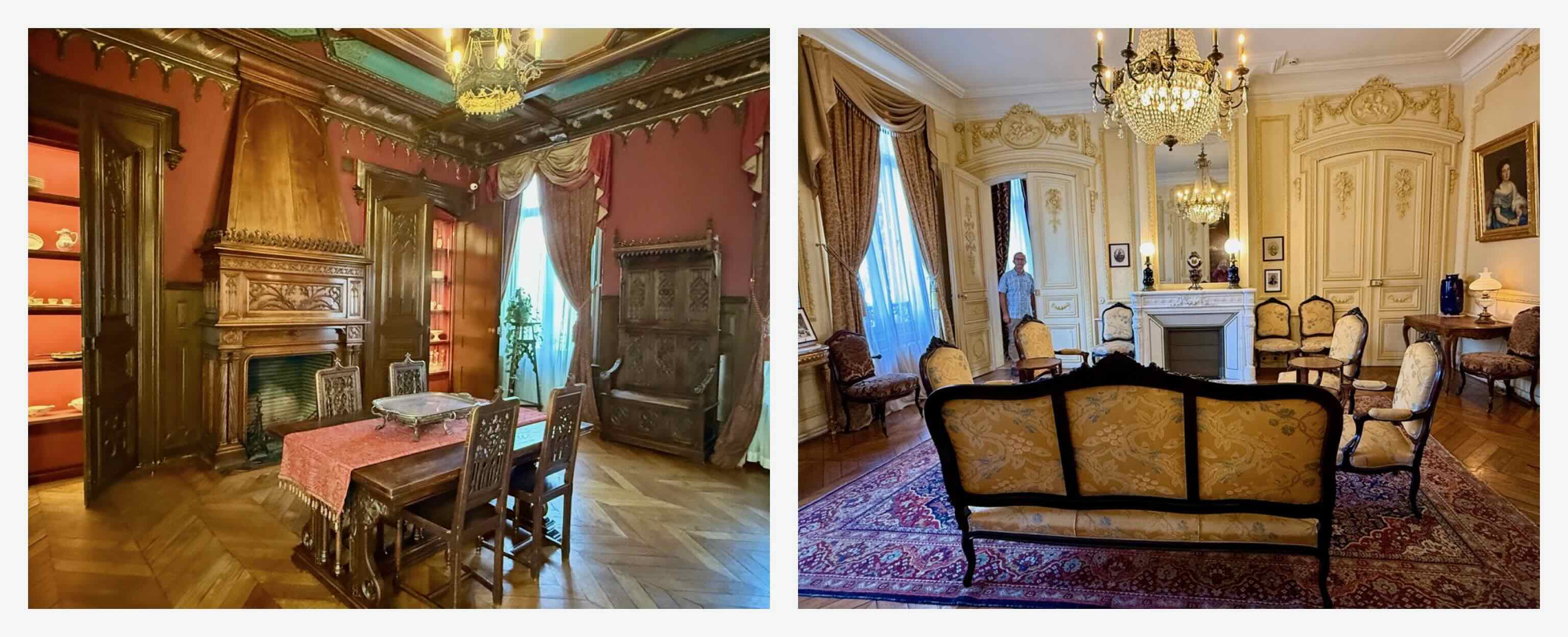
The dining room and salon on the main floor.

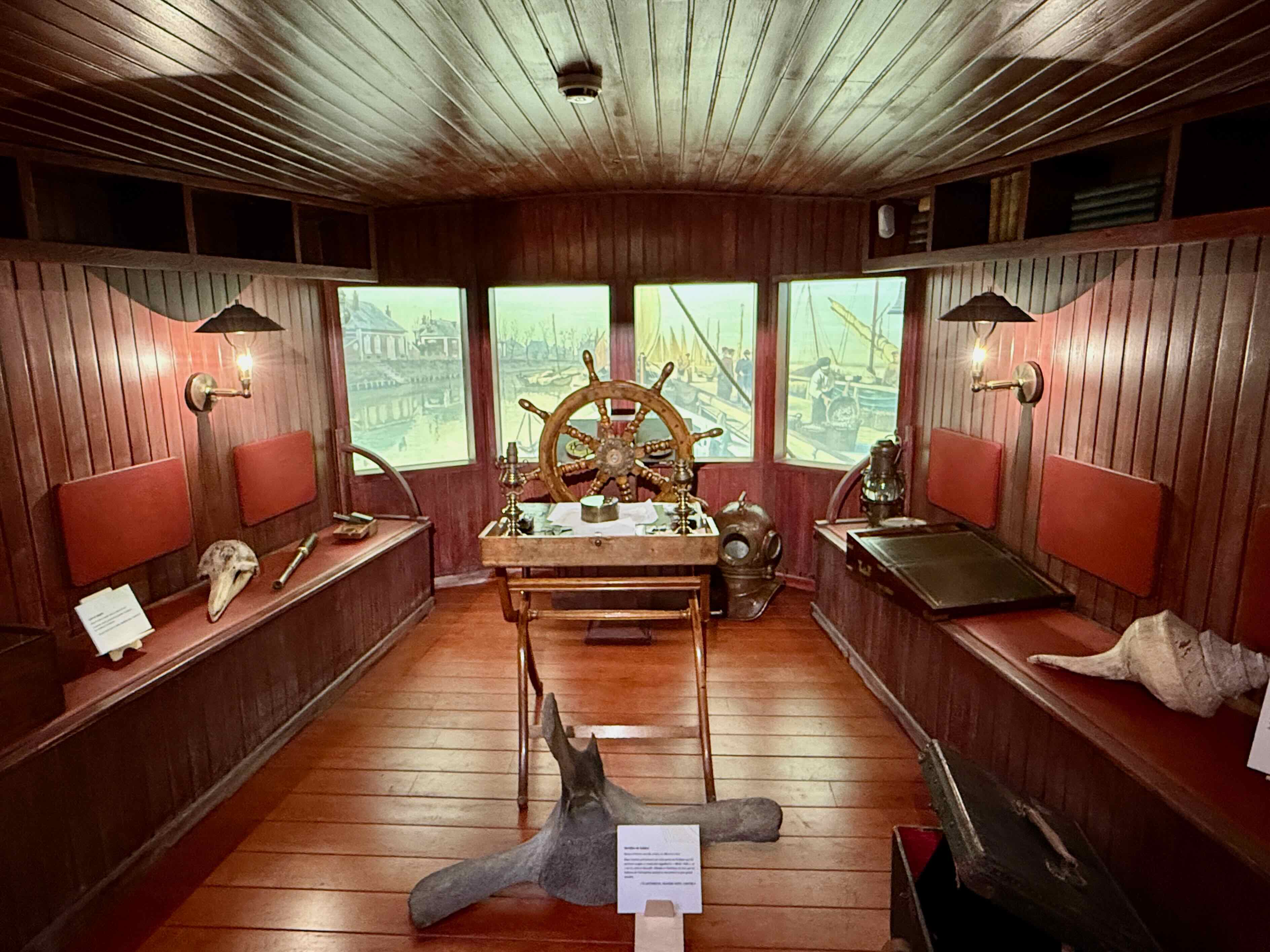
One of the second floor rooms was a reconstruction of his first boat.  Jules Verne loved to sail and his first boat was a 9 metre long.  His second boat was 20 meters in length and the third was 30 meters!  

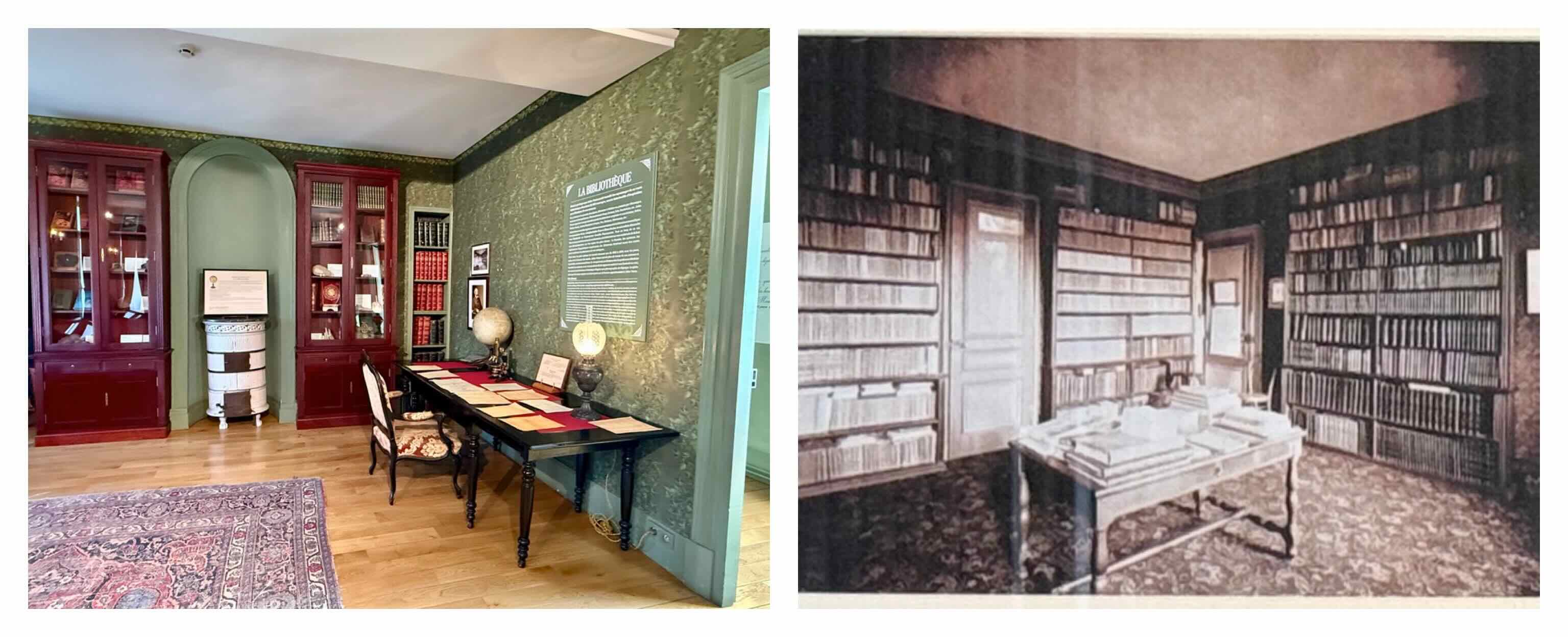
This second floor room was a library. The second photos shows the original library with over 12,000 books.  When he read these books Jules Verne wrote notes on index cards to use as reference information for his novels.

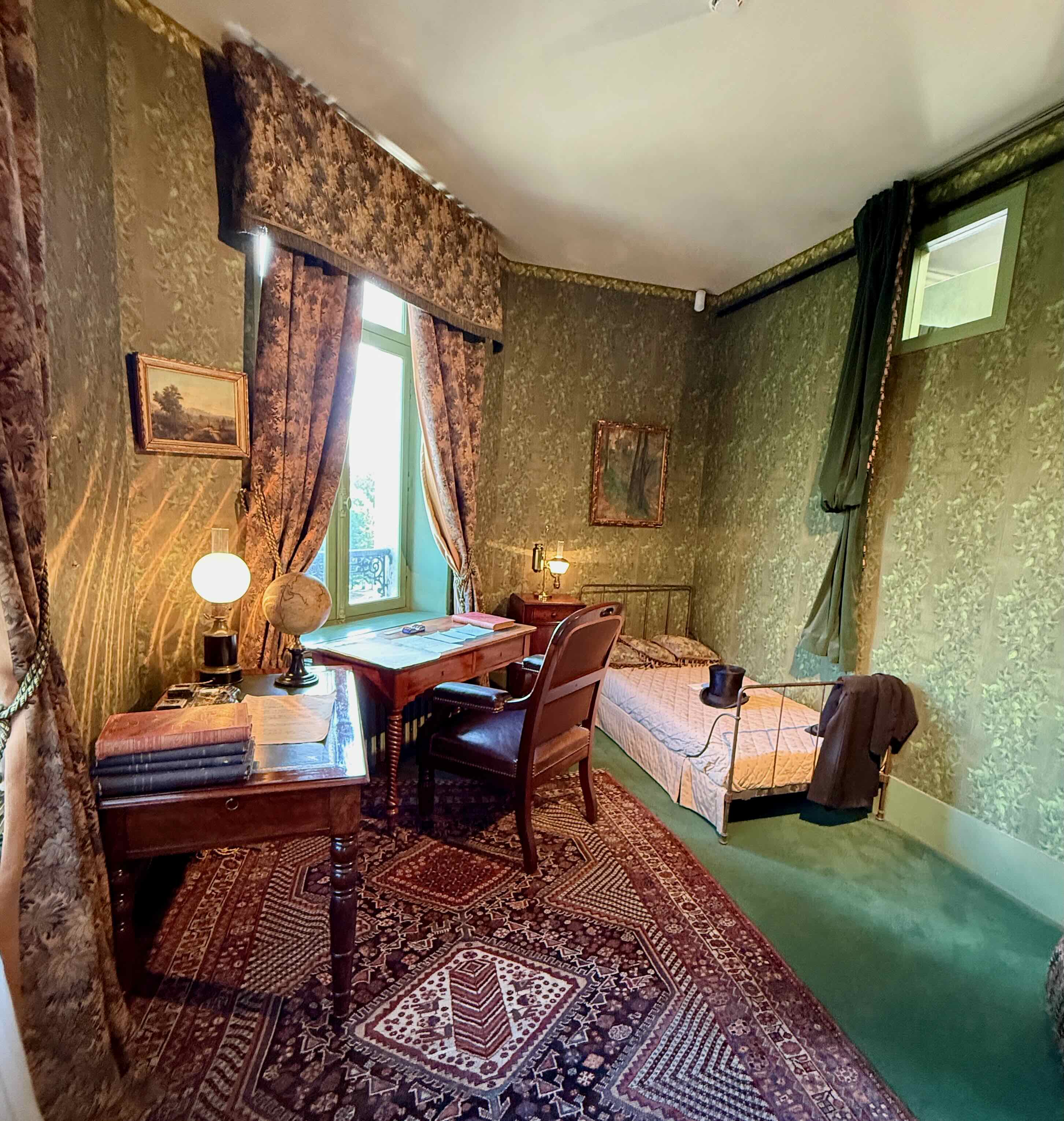
From 1882 to 1900 Jules Verne wrote every day from 5:00 am until 11:00 am in this little room.

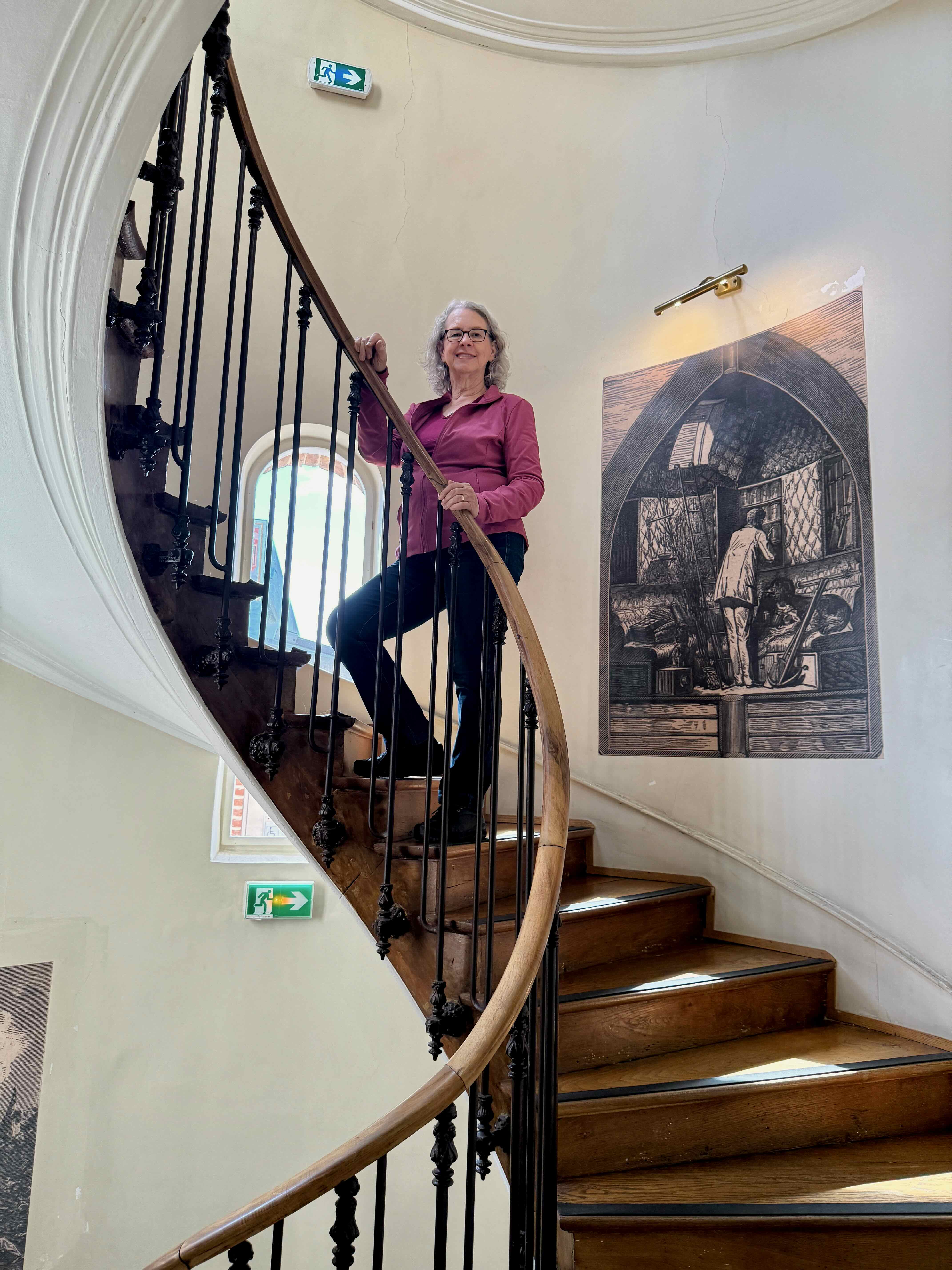
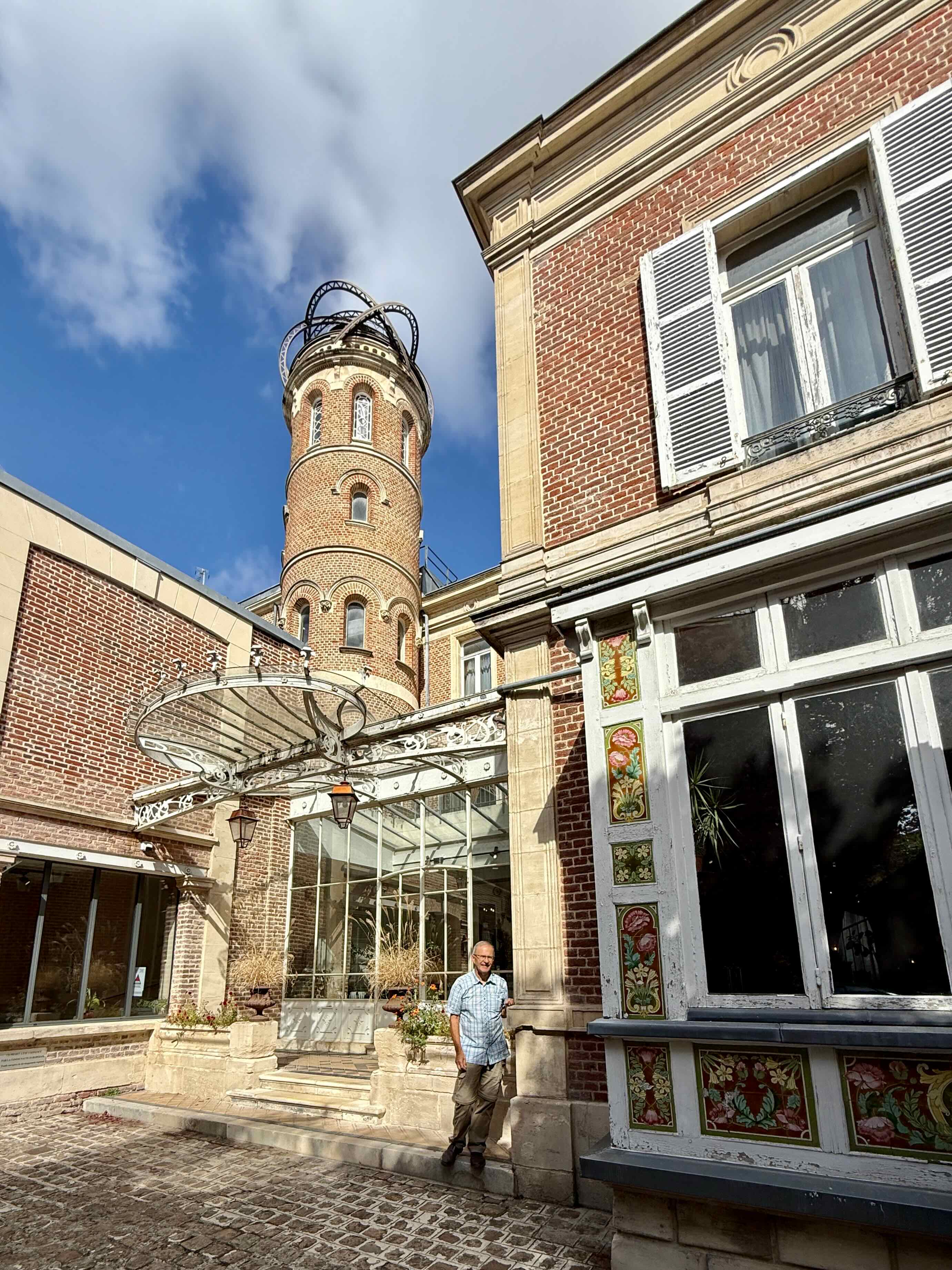
Climbing the tower which was added to the house by Jules Verne.  It allows access to all three floors of the house.

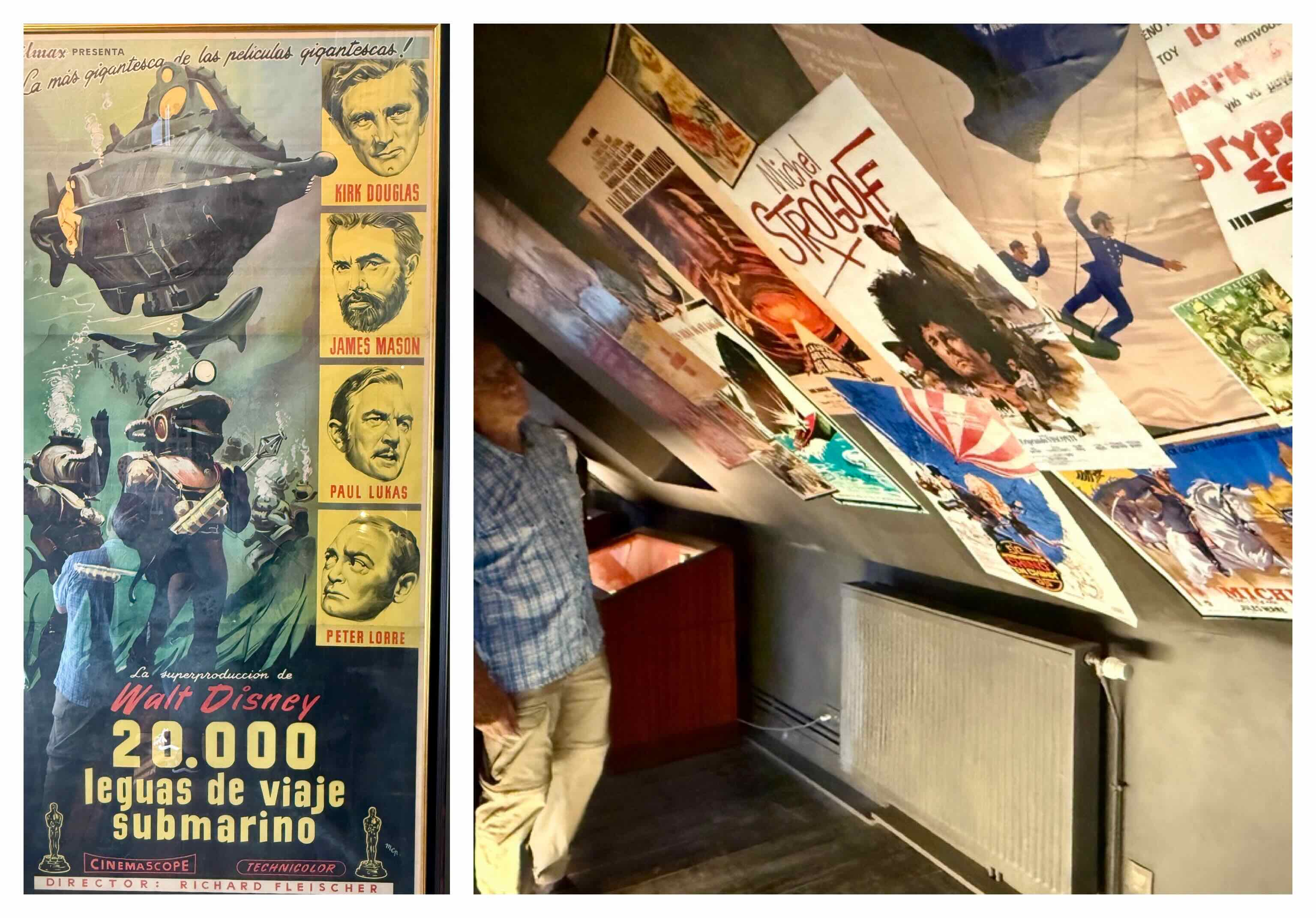
The third floor attic has a collection of original movie posters…

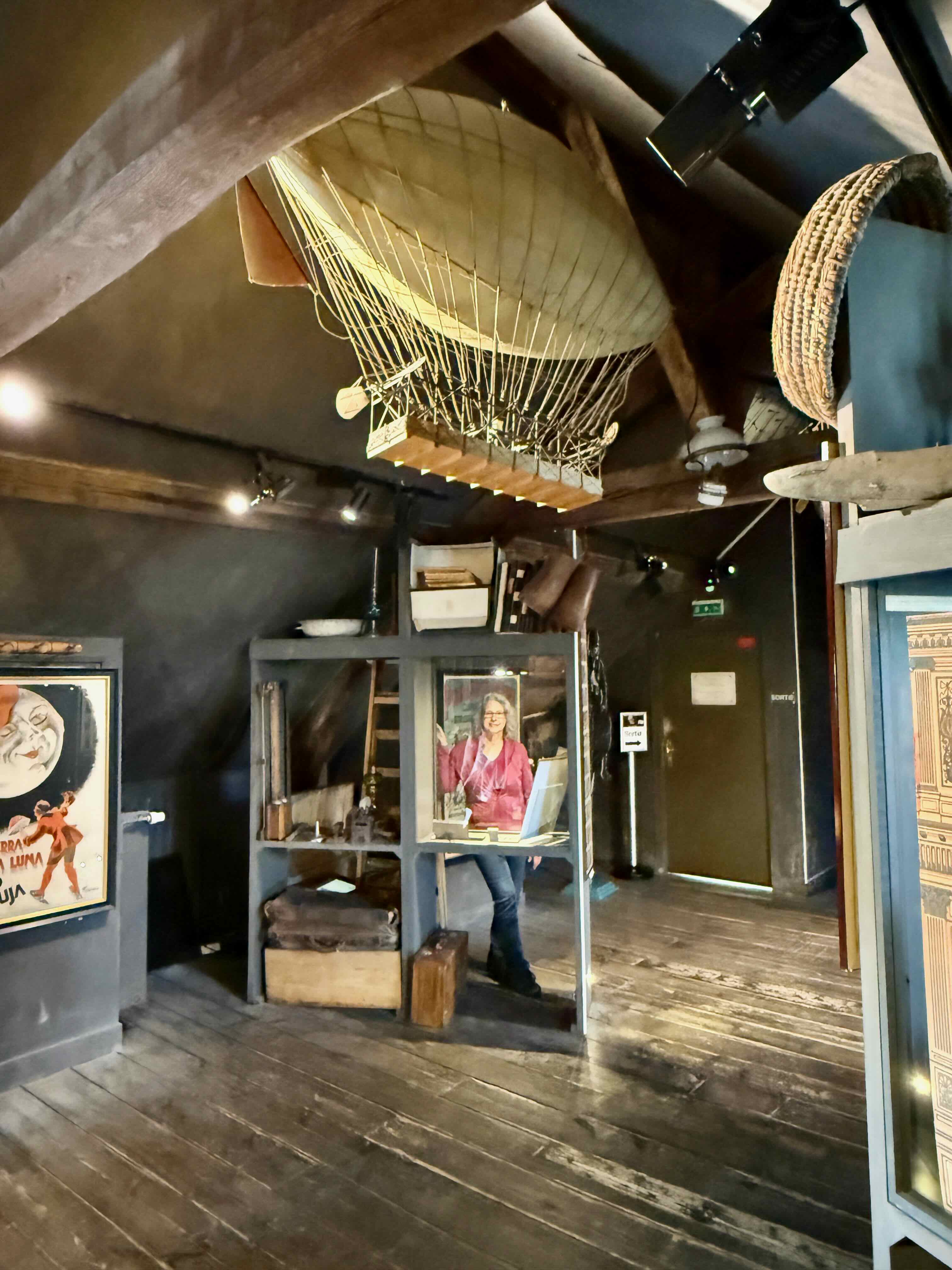
…and other memorabilia.  I look like I am one of the exhibits!

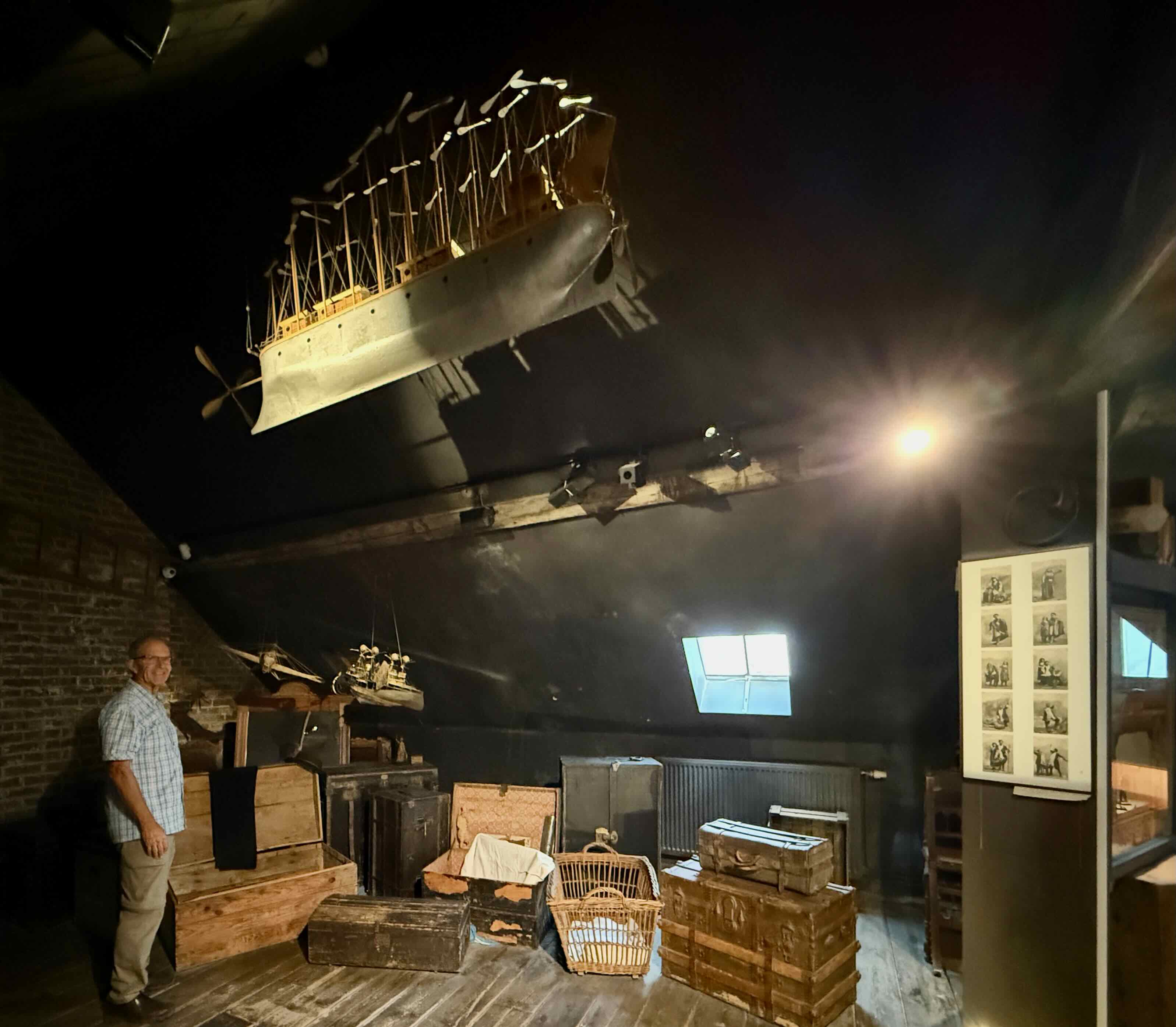
Bob and a fictional flying machine from one of Verne’s novels.  A view from the front of the house showing the winter garden.

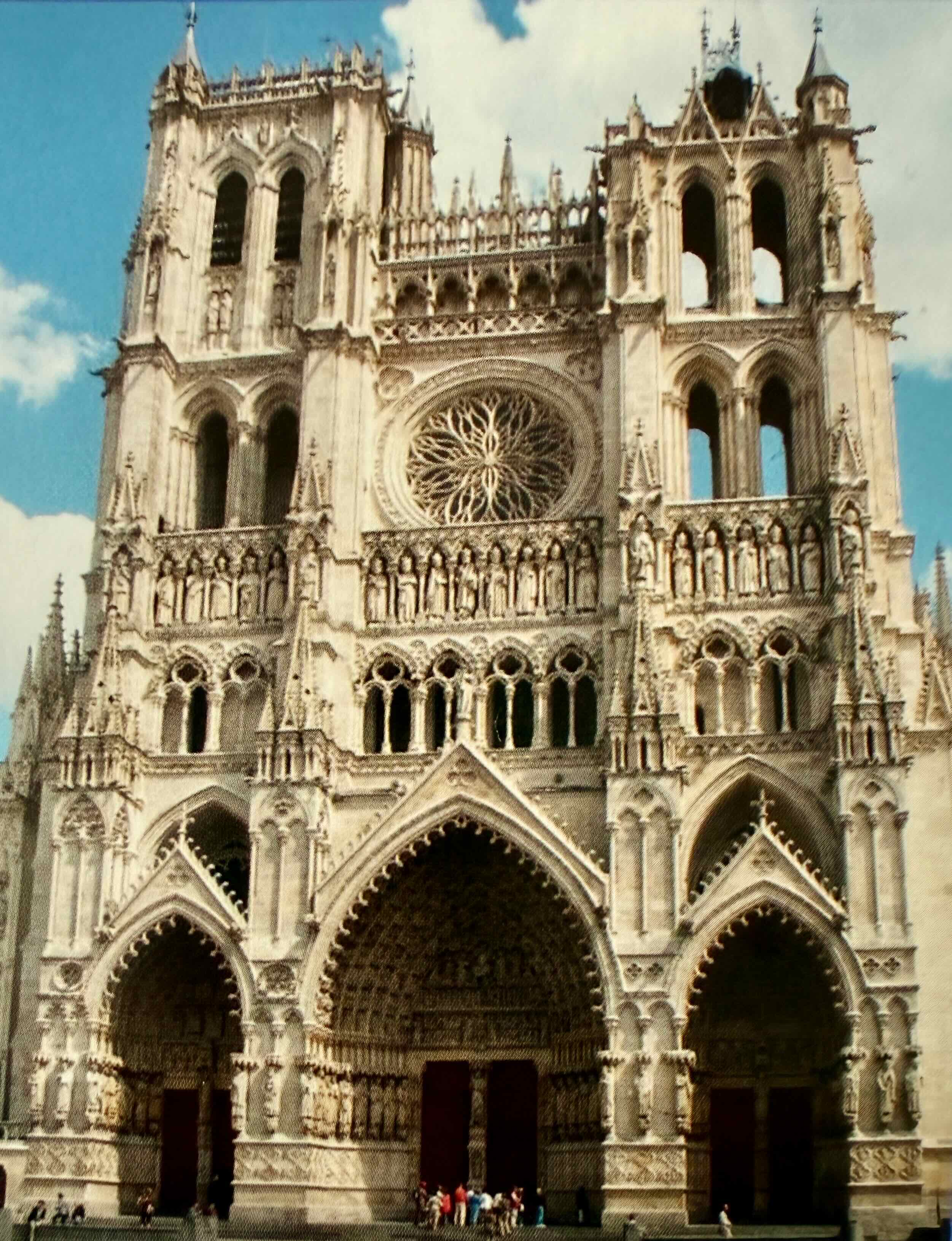
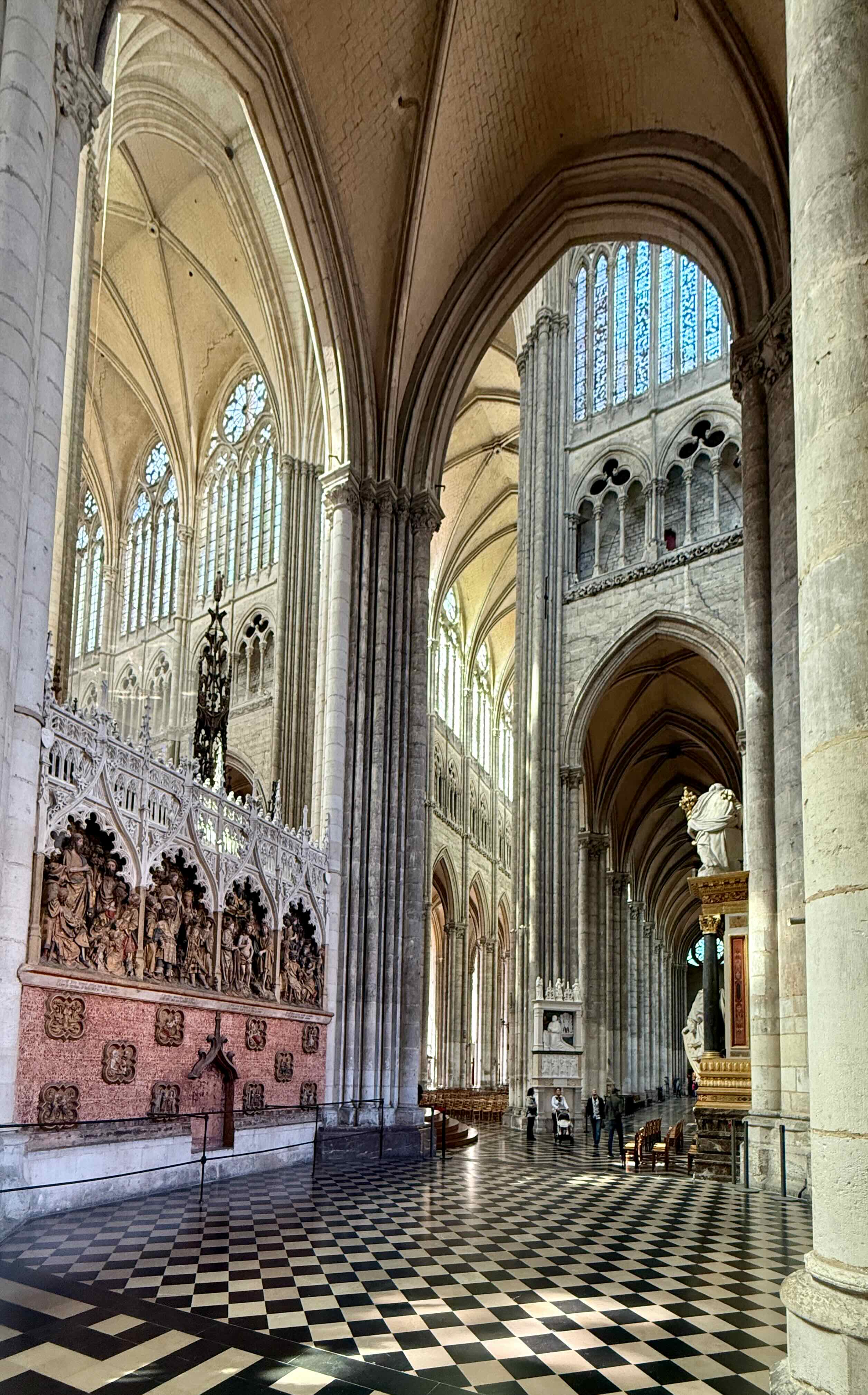
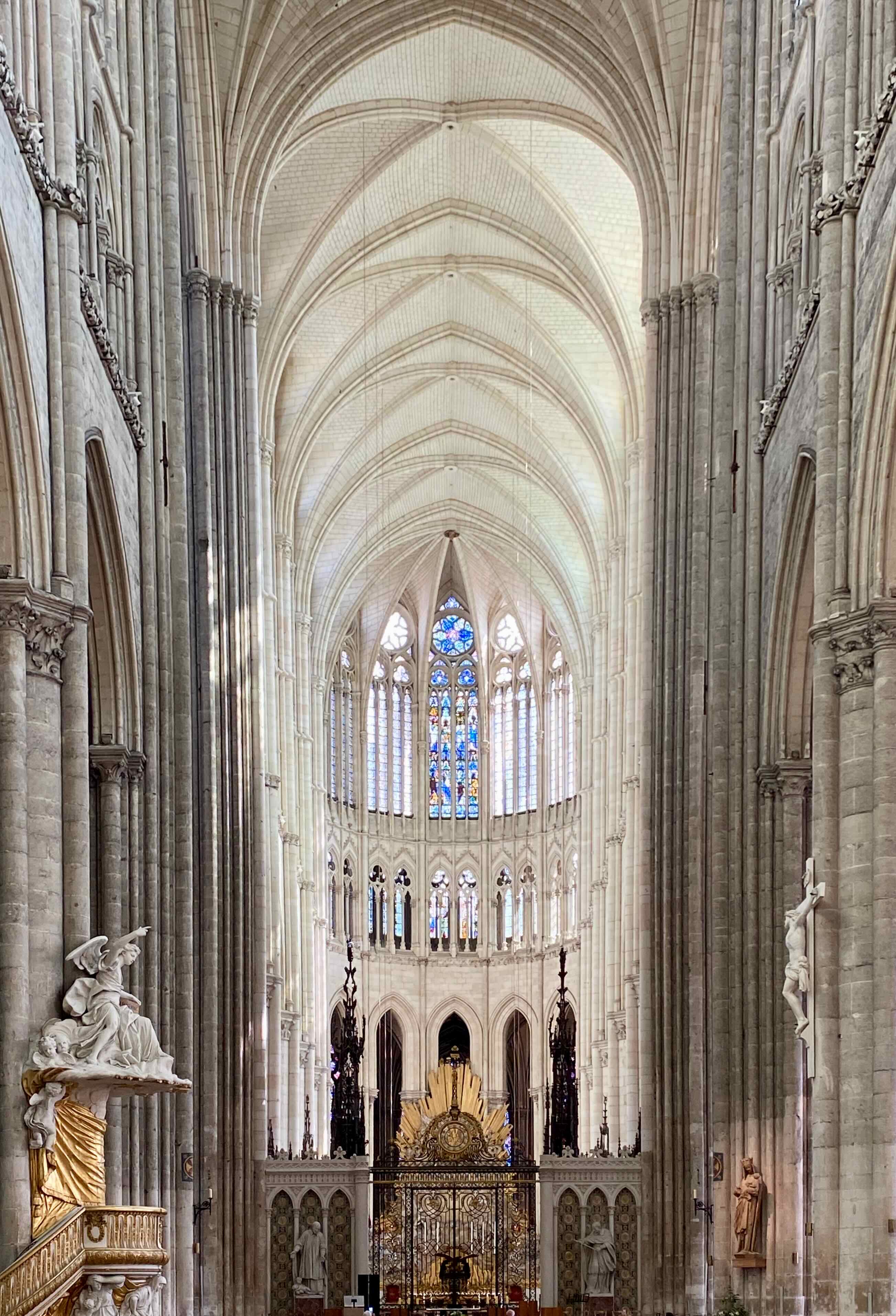
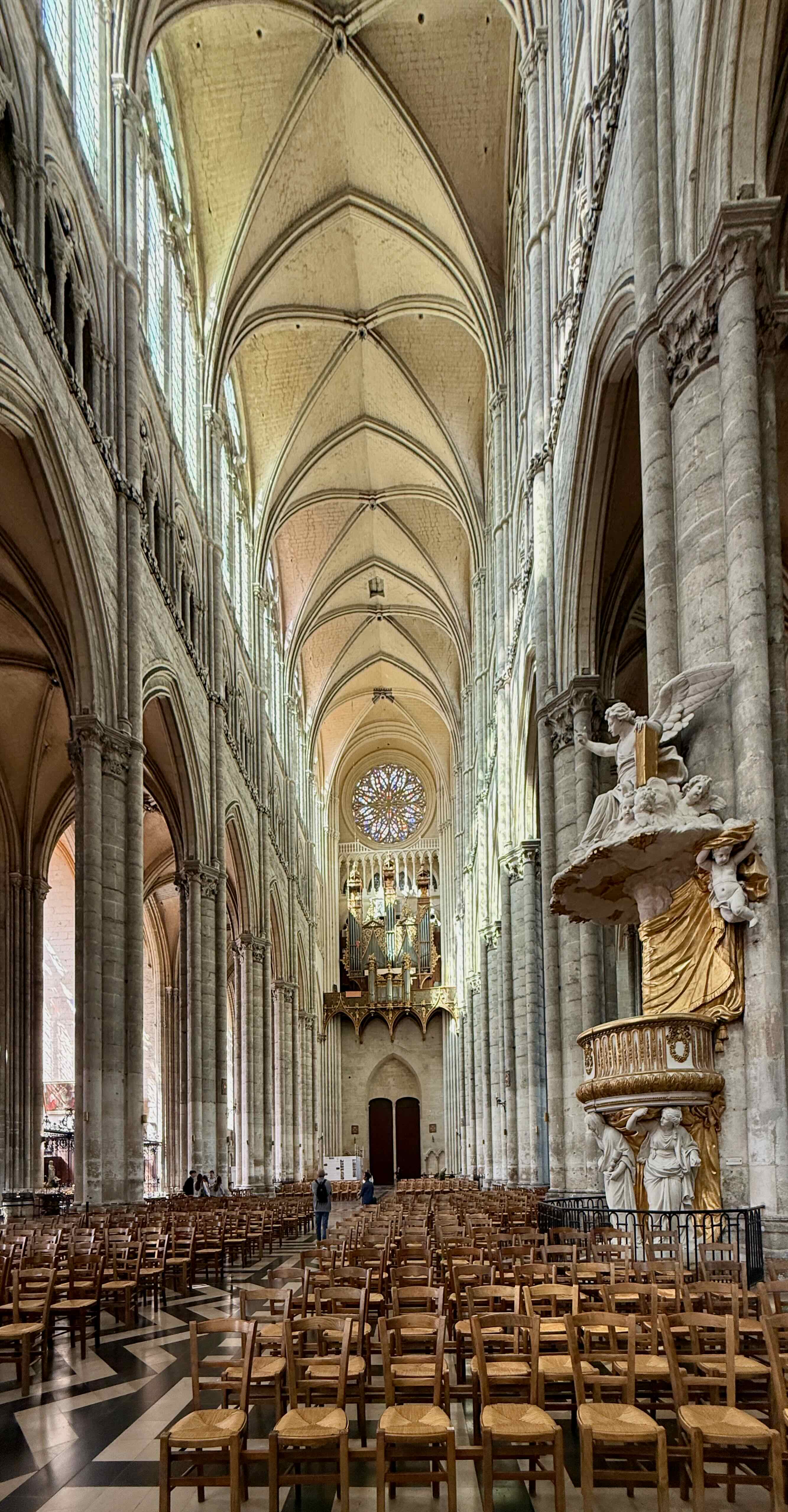
it is a short walk to the Amiens cathedral. Notre-Dame d’Amiens is the largest medieval cathedral in the world.  It was built in 1269 and is twice the size of Notre Dame in Paris.

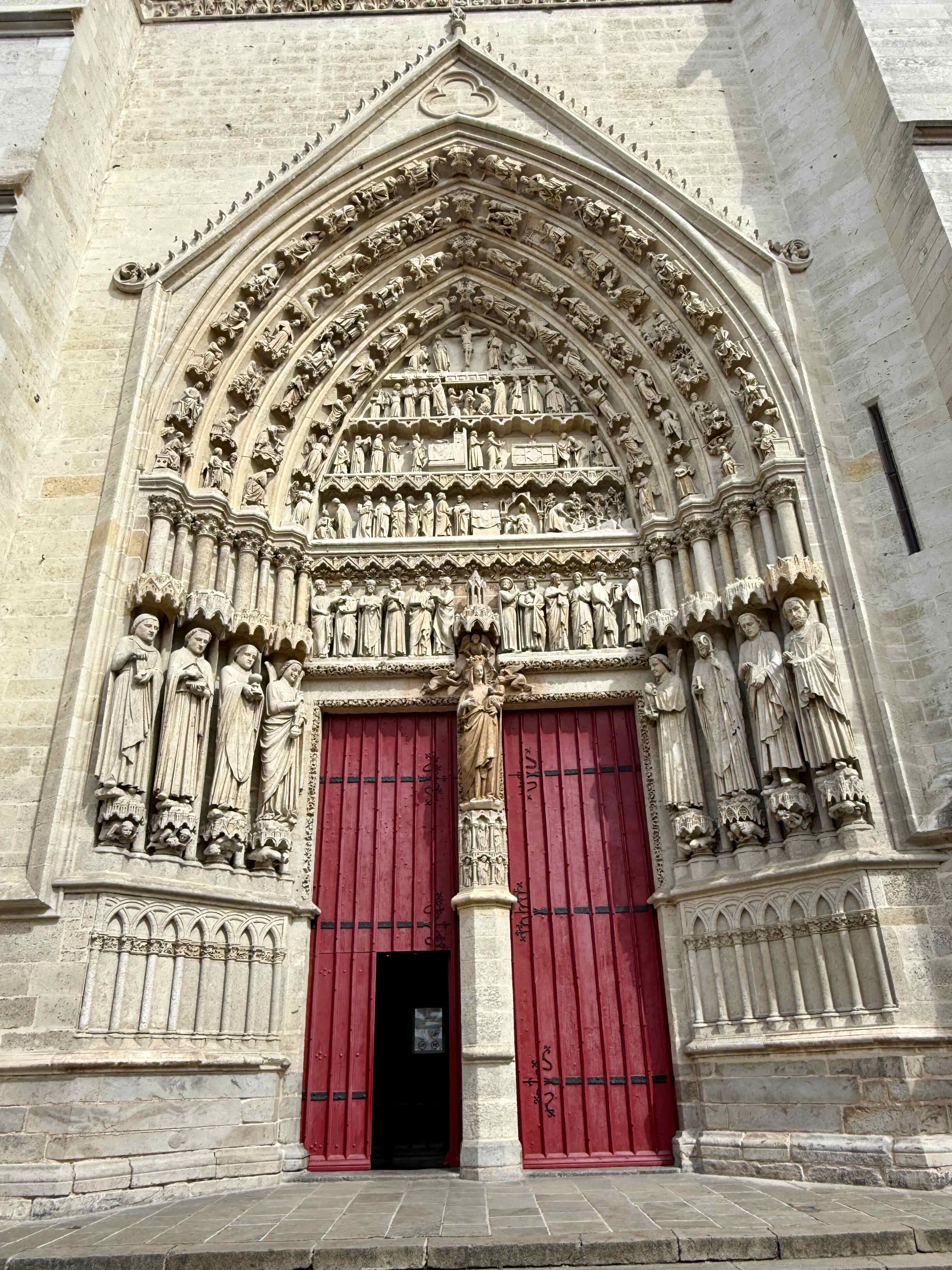
The sculpted decorations in the portals have survived in a remarkable state of preservation…

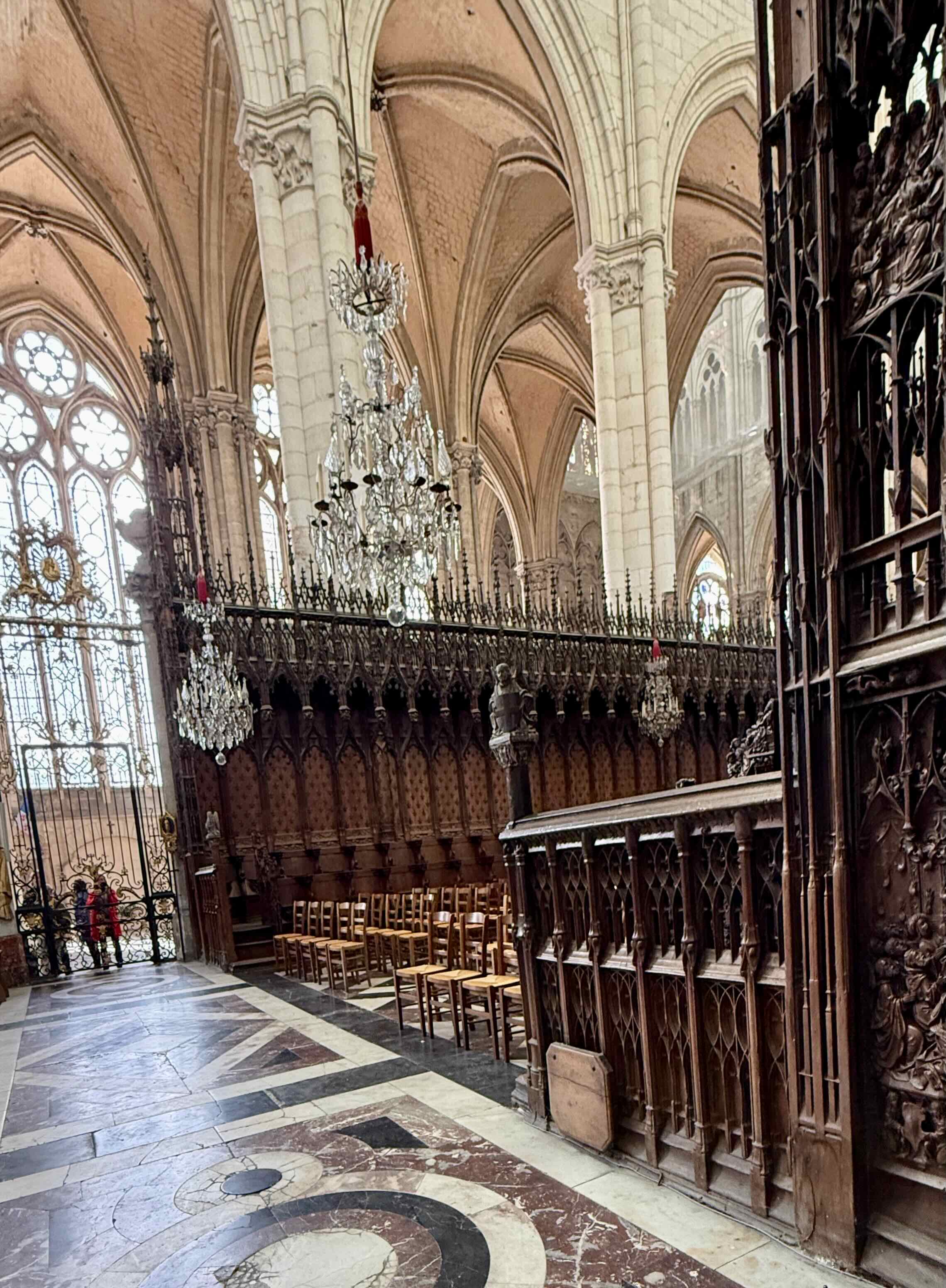
…and the 16th century wood carvings of the choir stalls are unique in the world.

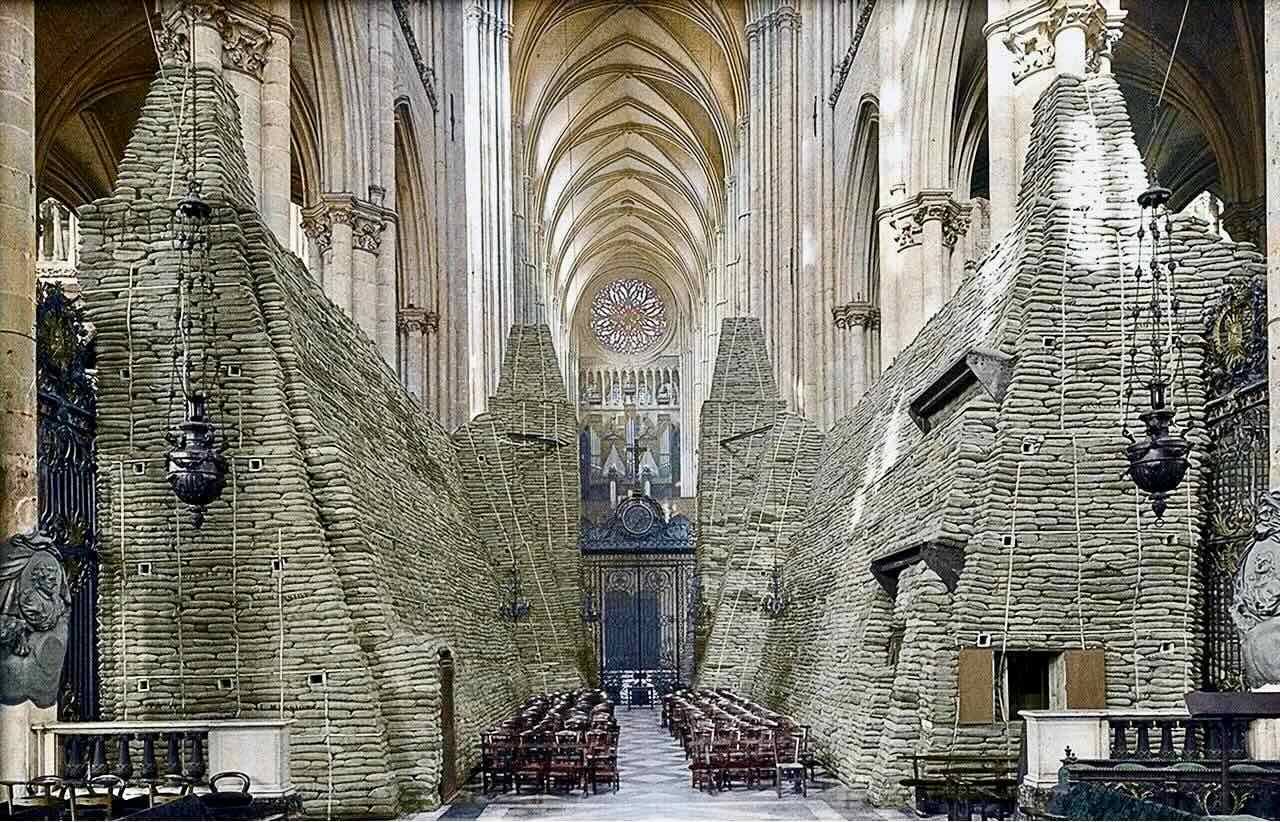
Sandbags were used to protect the exterior and interior of the church during WWI.  The stained glass windows were removed and stored elsewhere.  Unfortunately there was a fire and some of the windows were destroyed.  A bomb did fall directly on the church but it did not detonate. Whether by faulty fuse, divine intervention or sheer luck, the cathedral stood unharmed.  Info and photo~ church heritage.eu

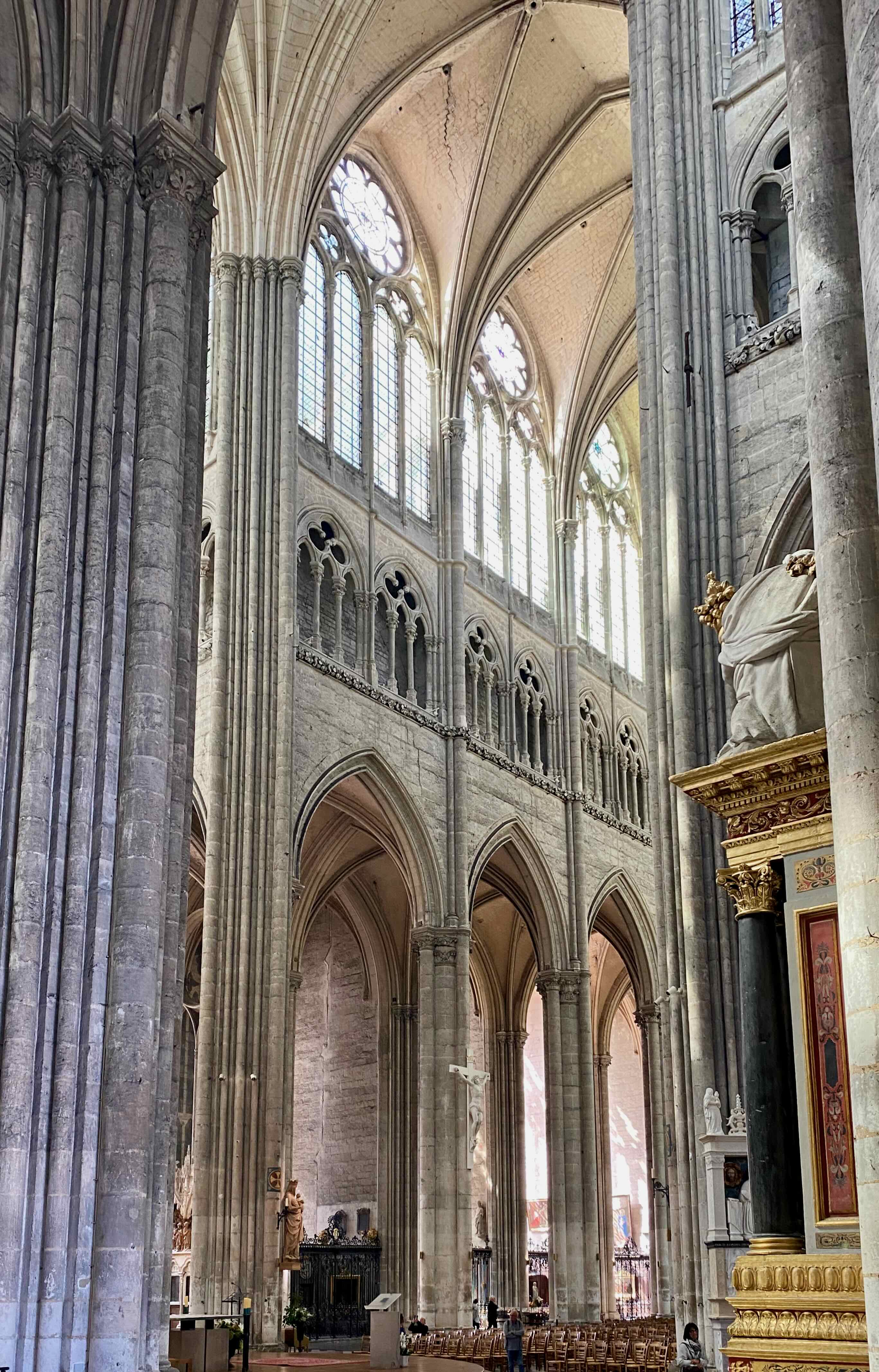
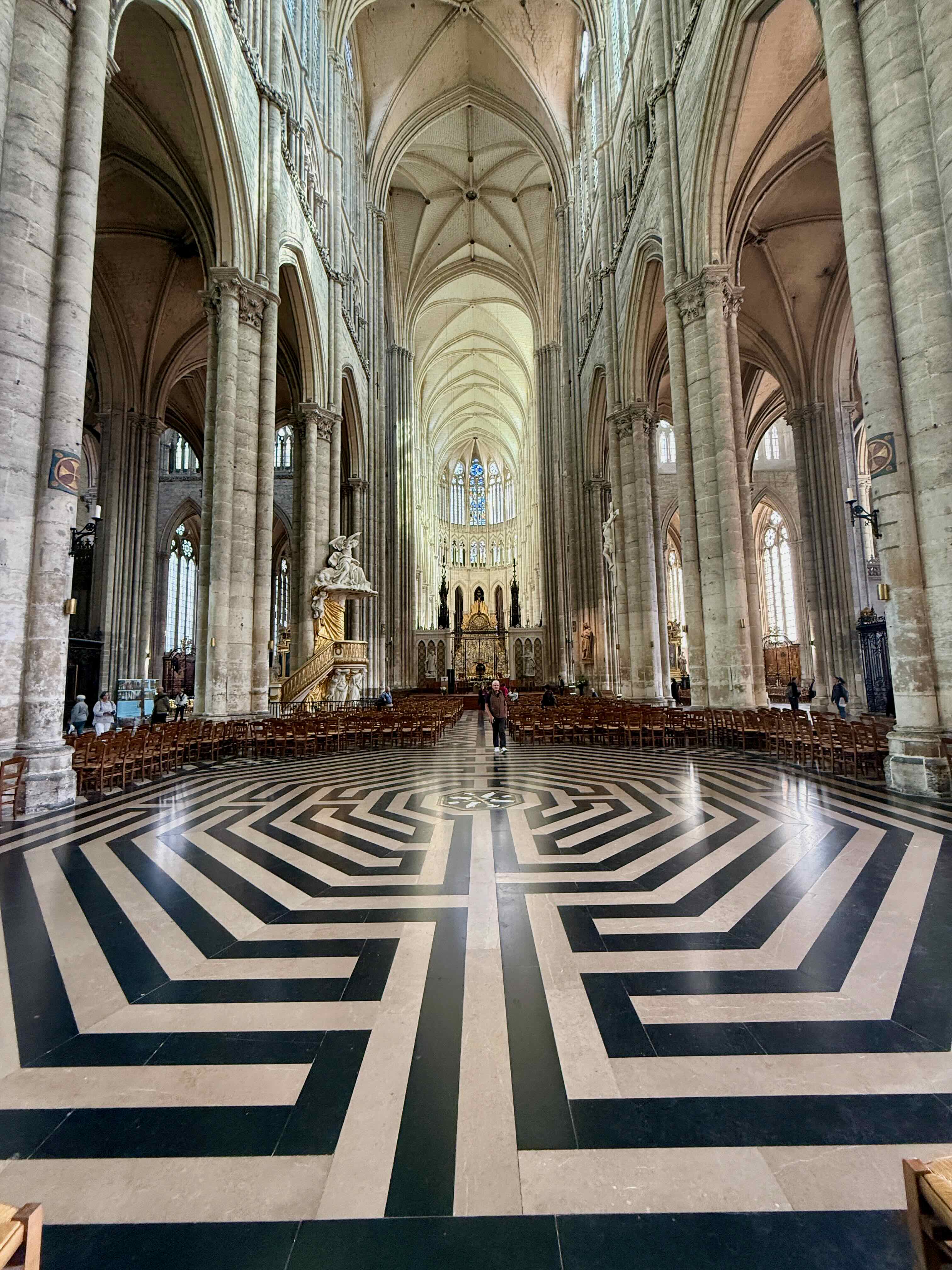
This is a massive cathedral…

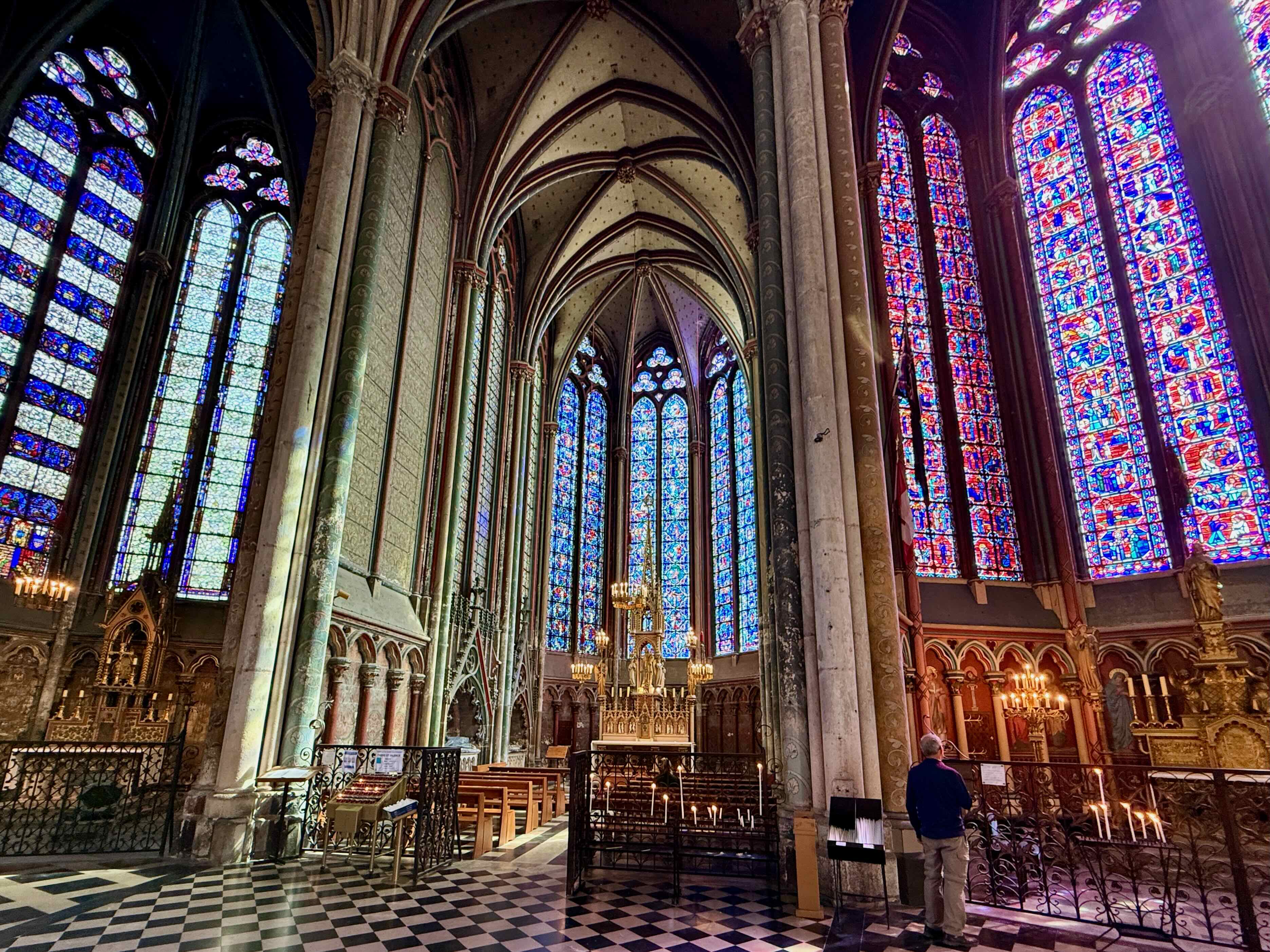
…with stunning stained glass windows.

Do you see the people? They give a sense of scale.

Looking towards the richly decorated altar…

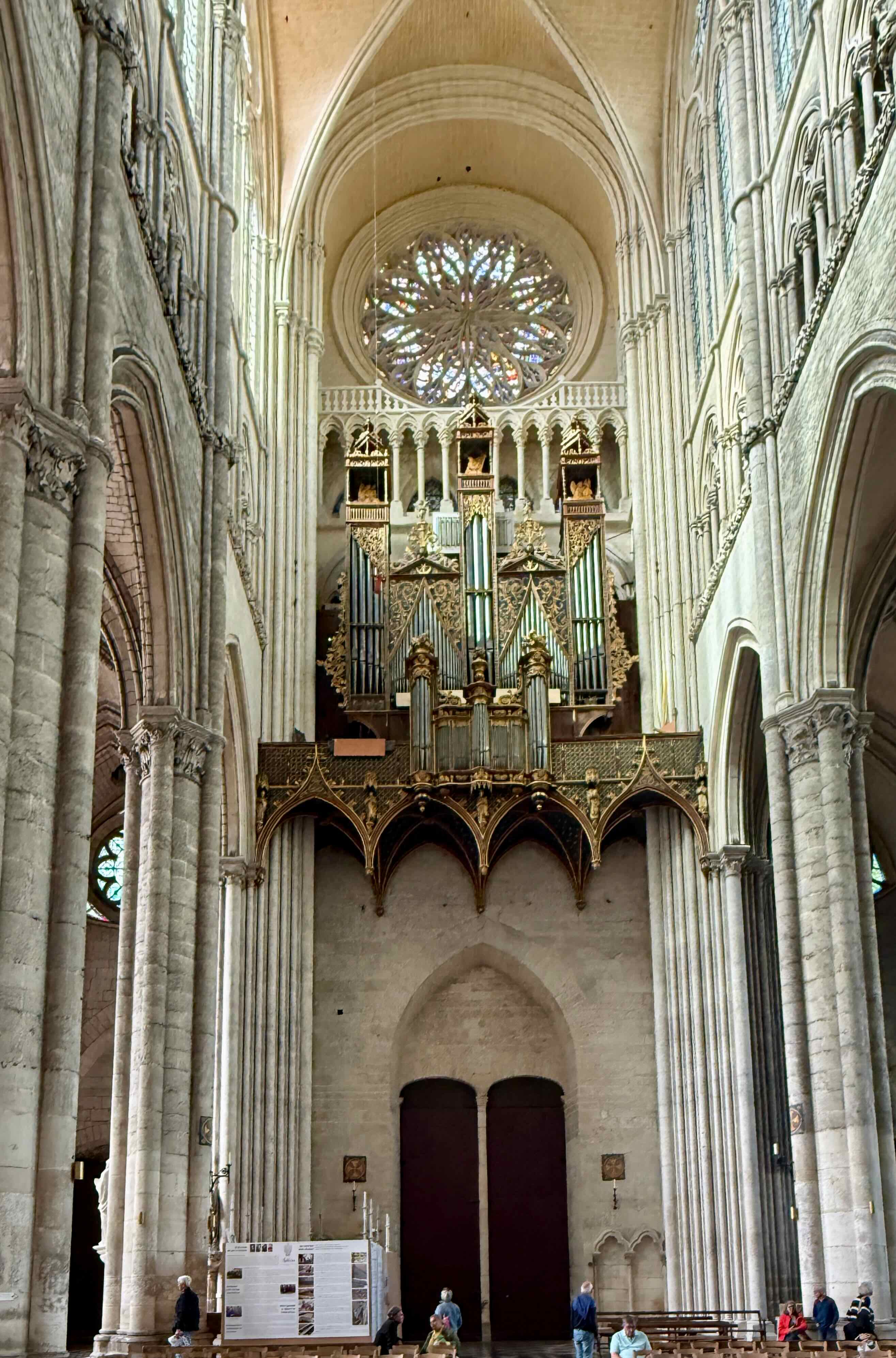
and in the opposite direction, the organ that was built in 1549…

which has just been cleaned and restored.

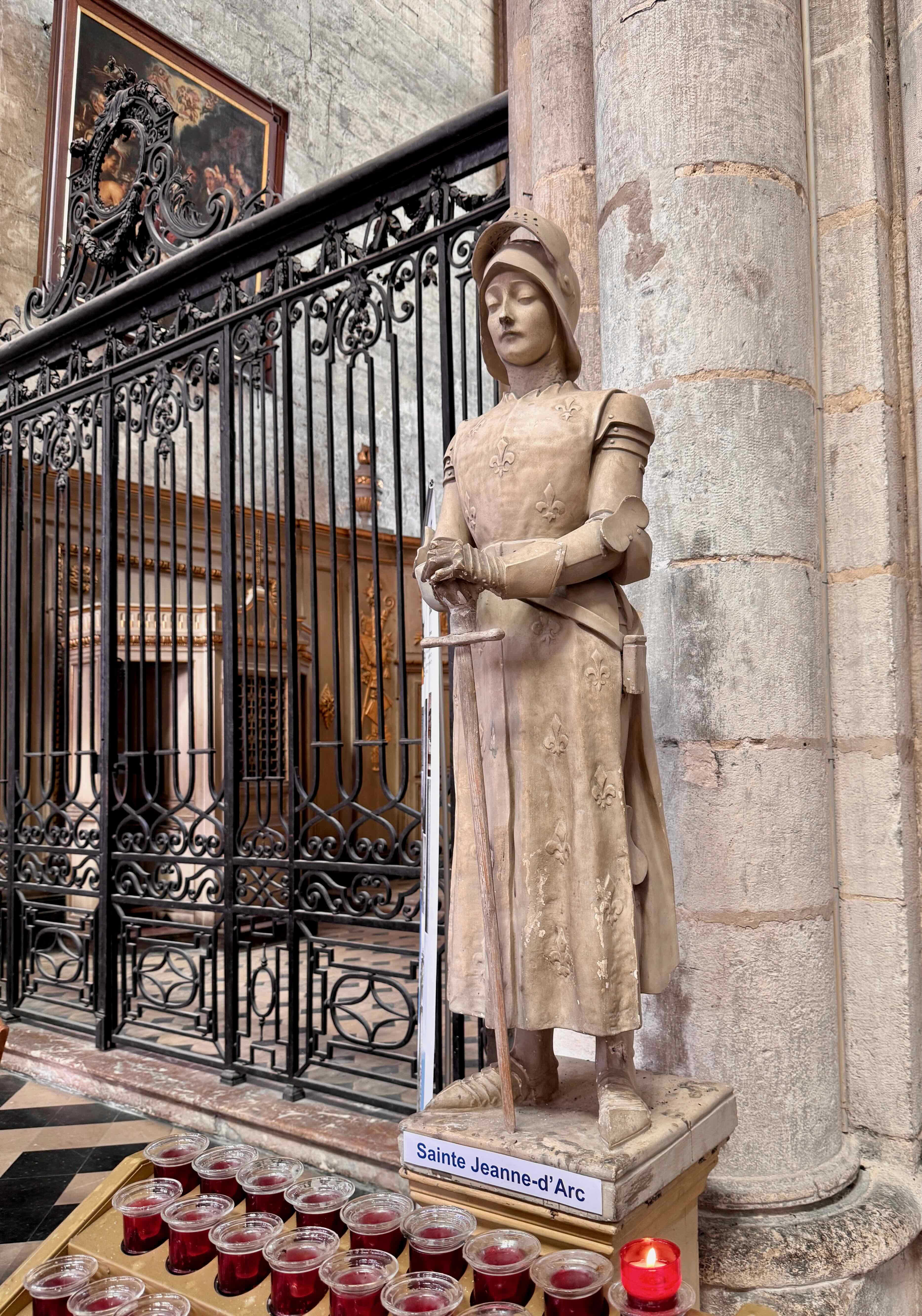
Love this statue of Joan of Arc.

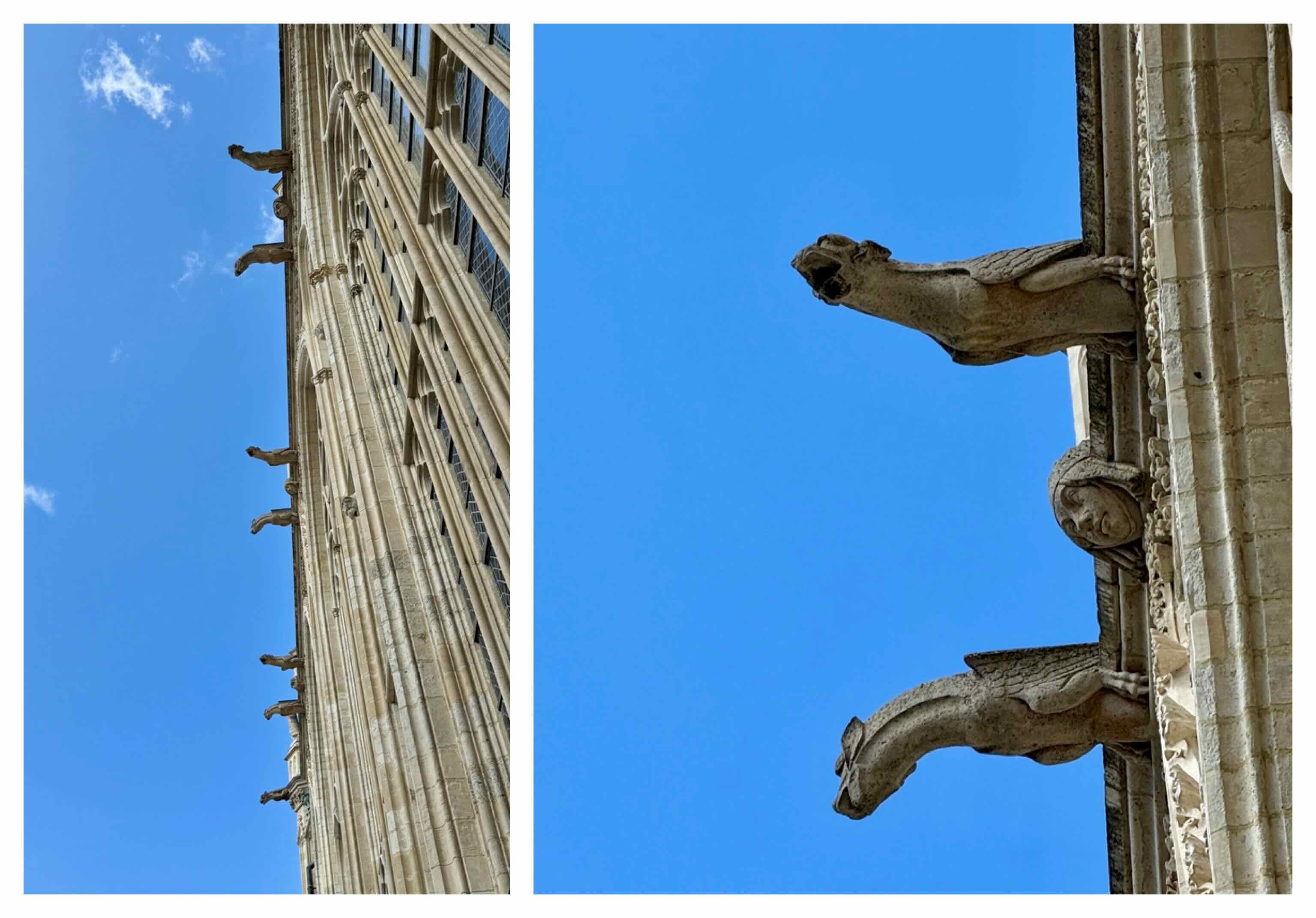
There is also a labyrinth from 1288.When we leave the cathedral, I look up and there are the gargoyles!  I am very fond of gargoyles.
We have time to walk back to the car for tea and cookies and a little down time before we get ready for our boat ride at the Hortillonages.

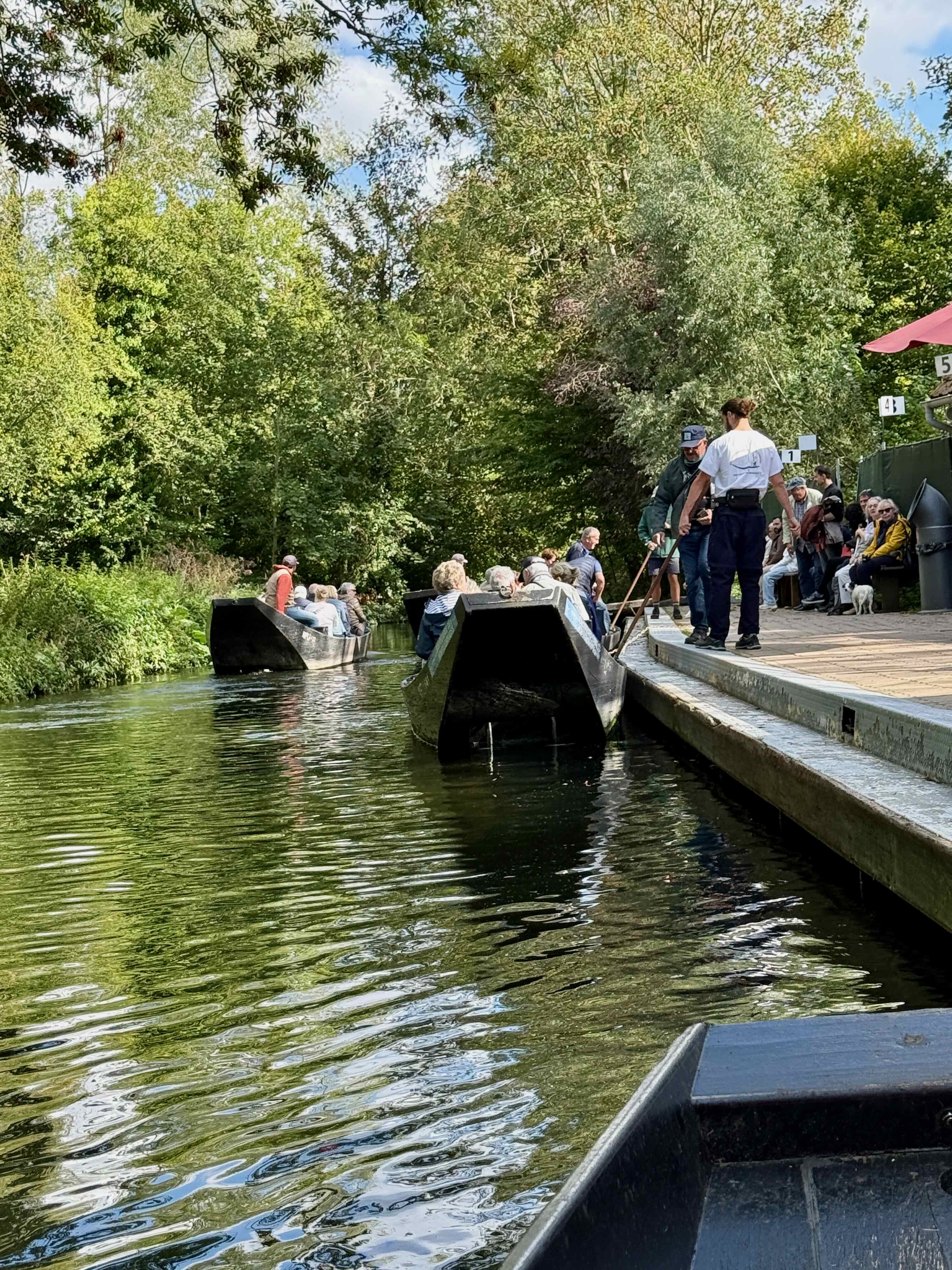
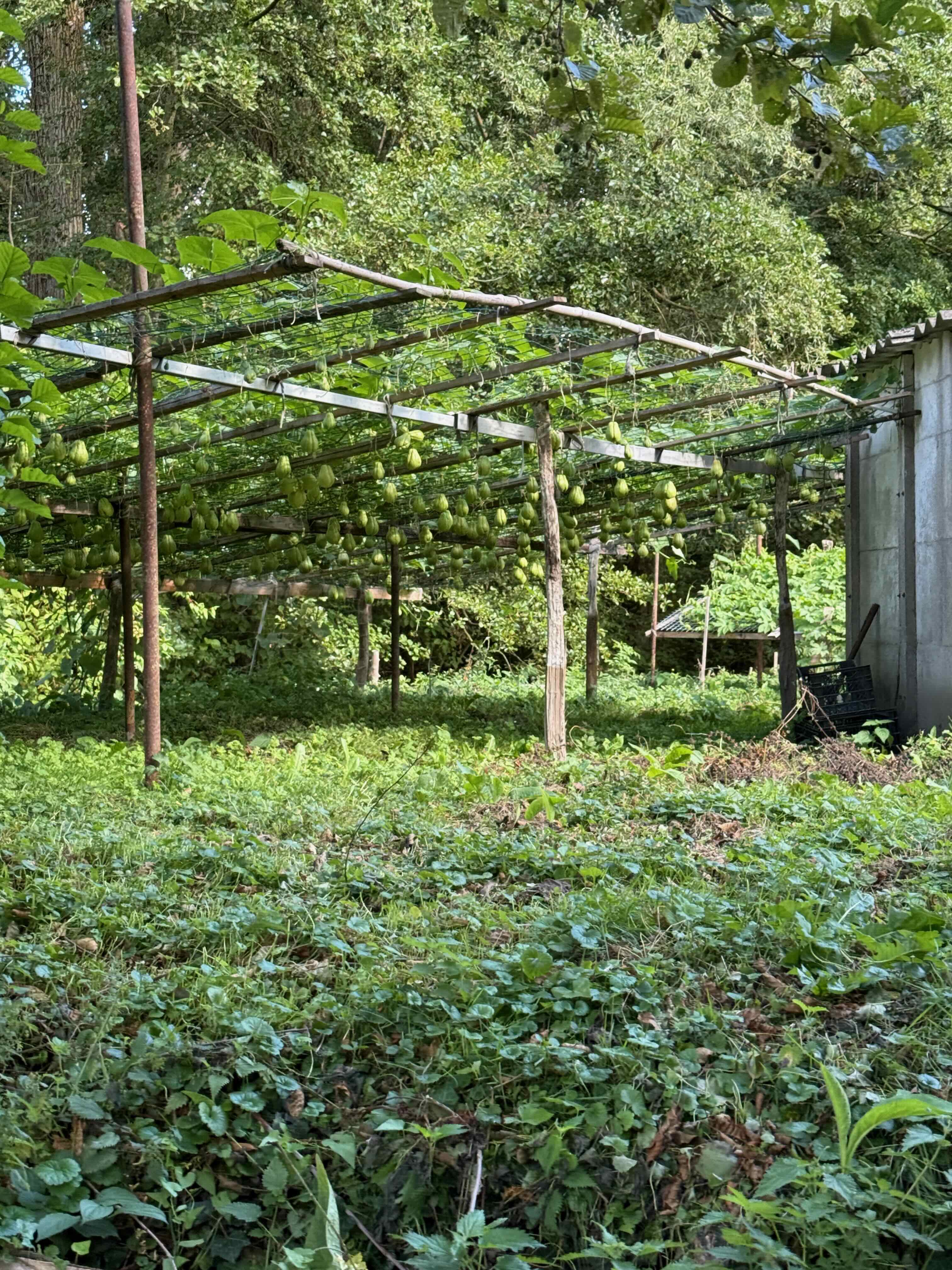
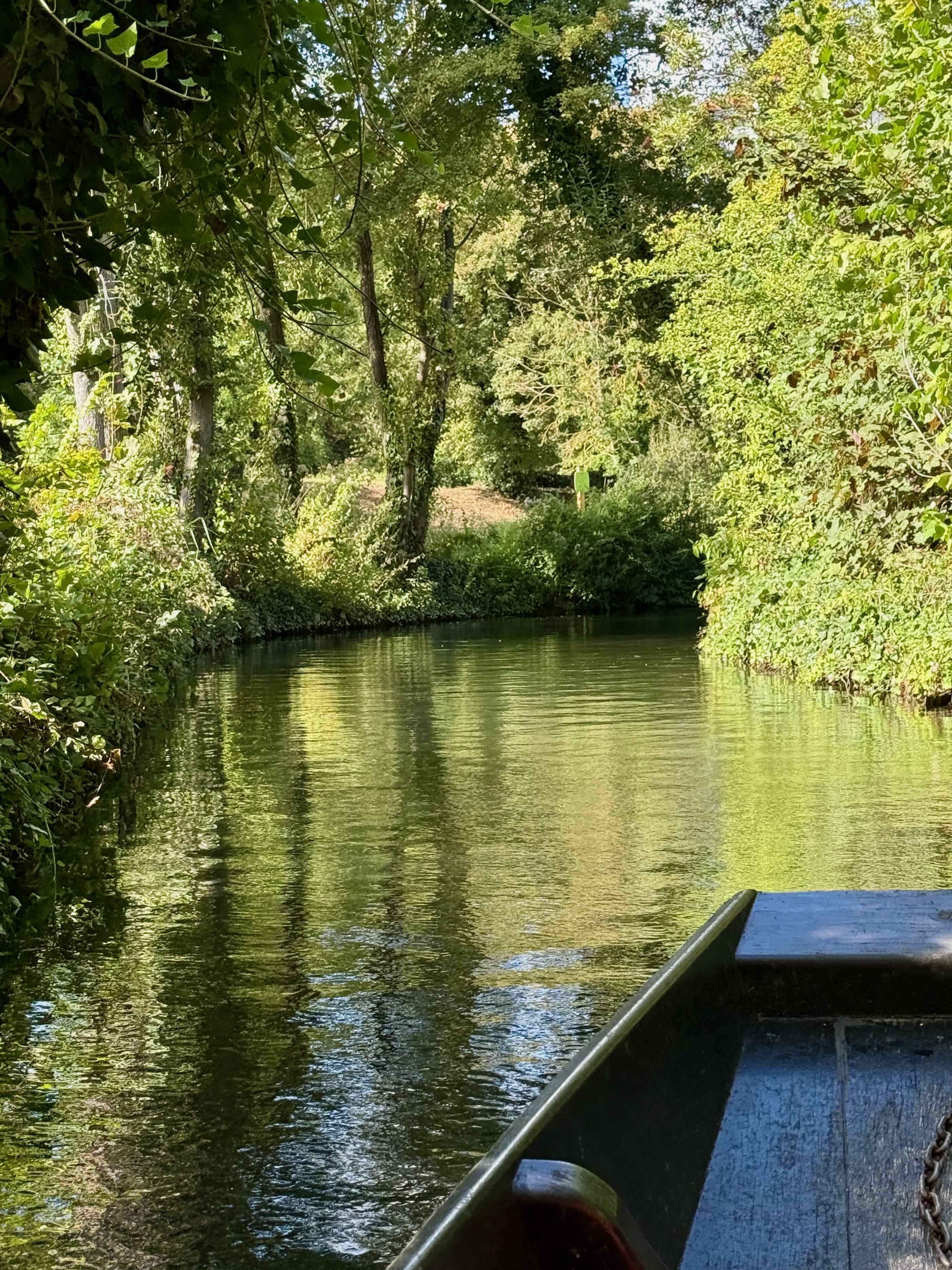
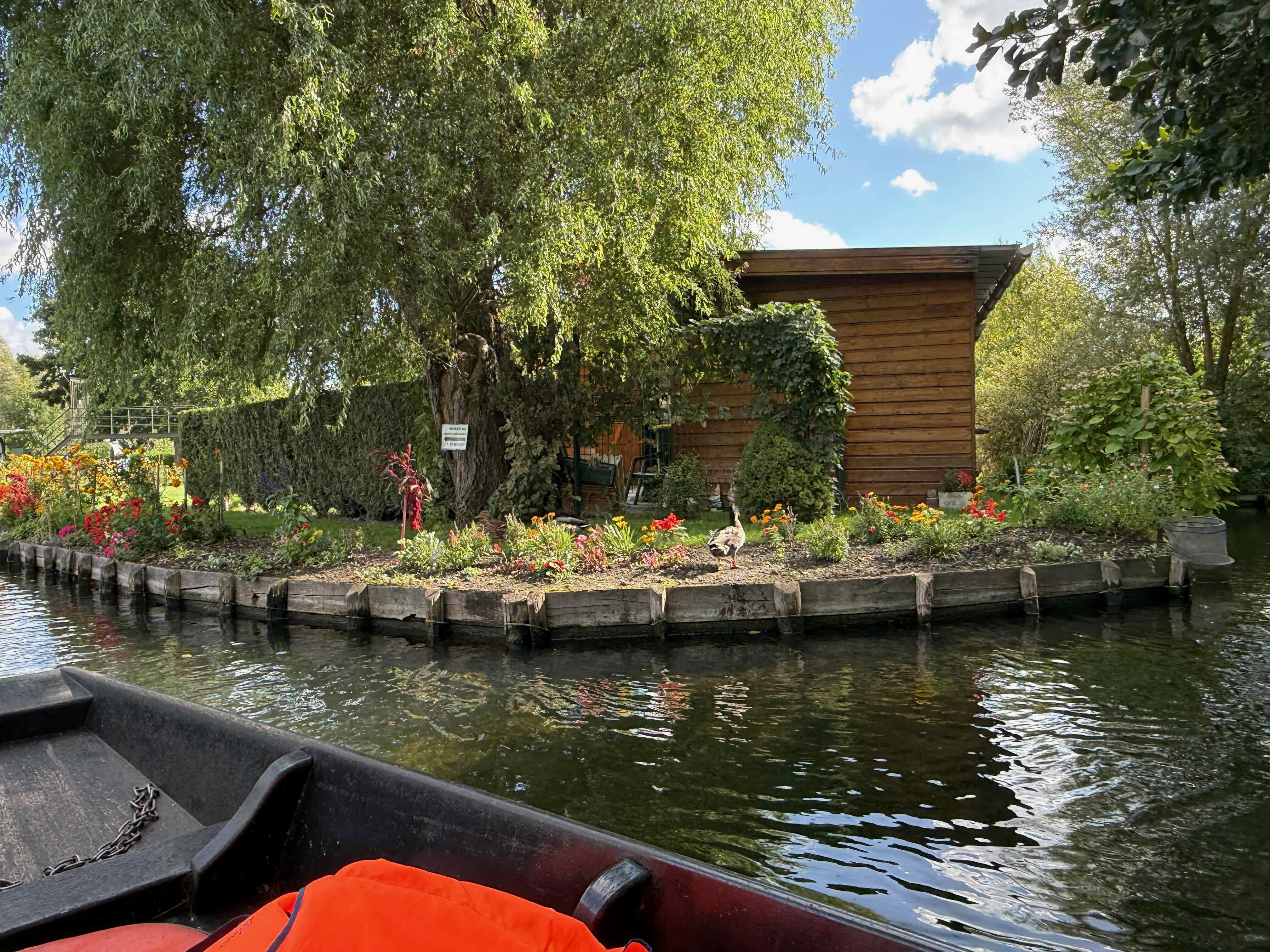
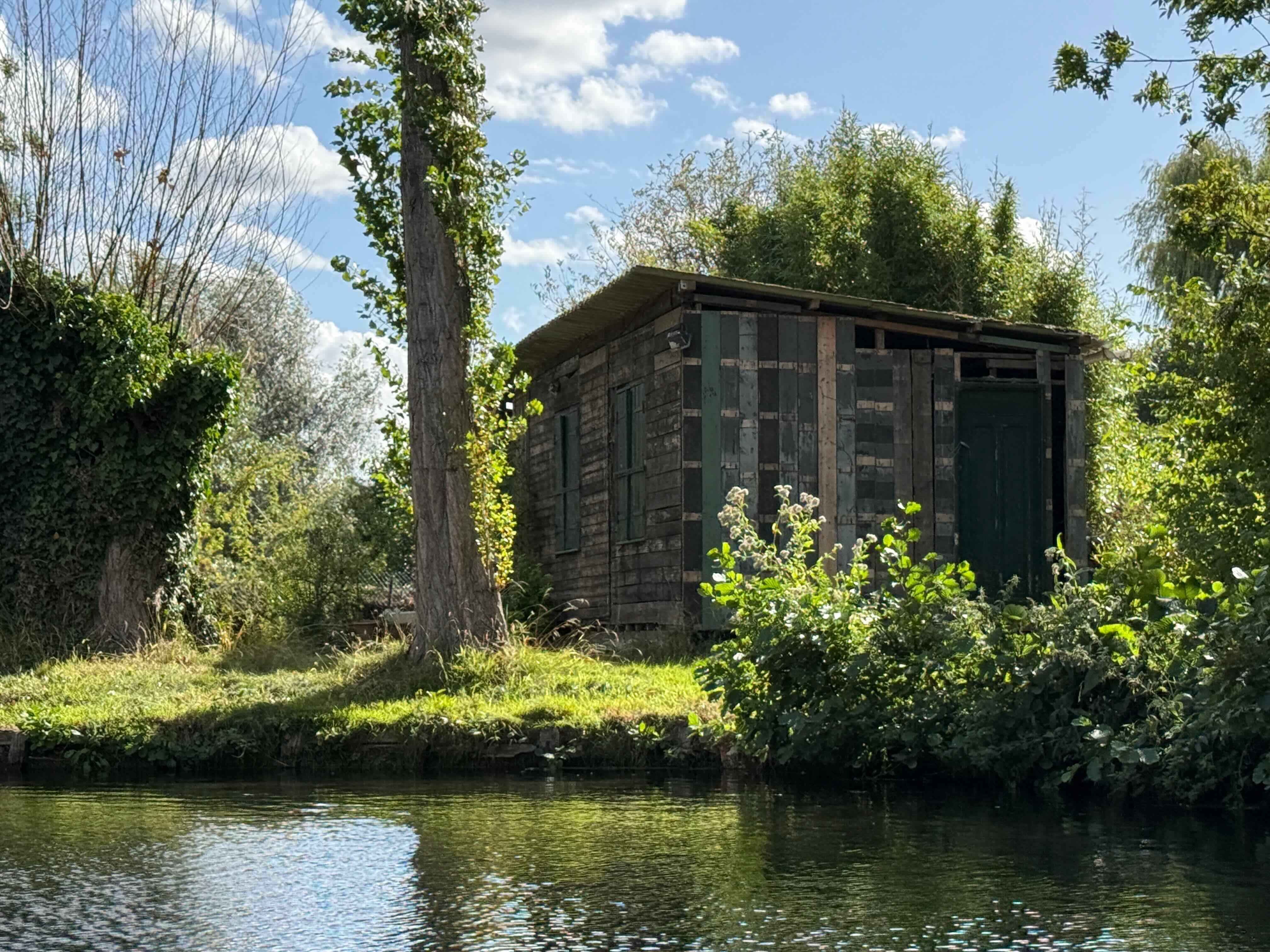
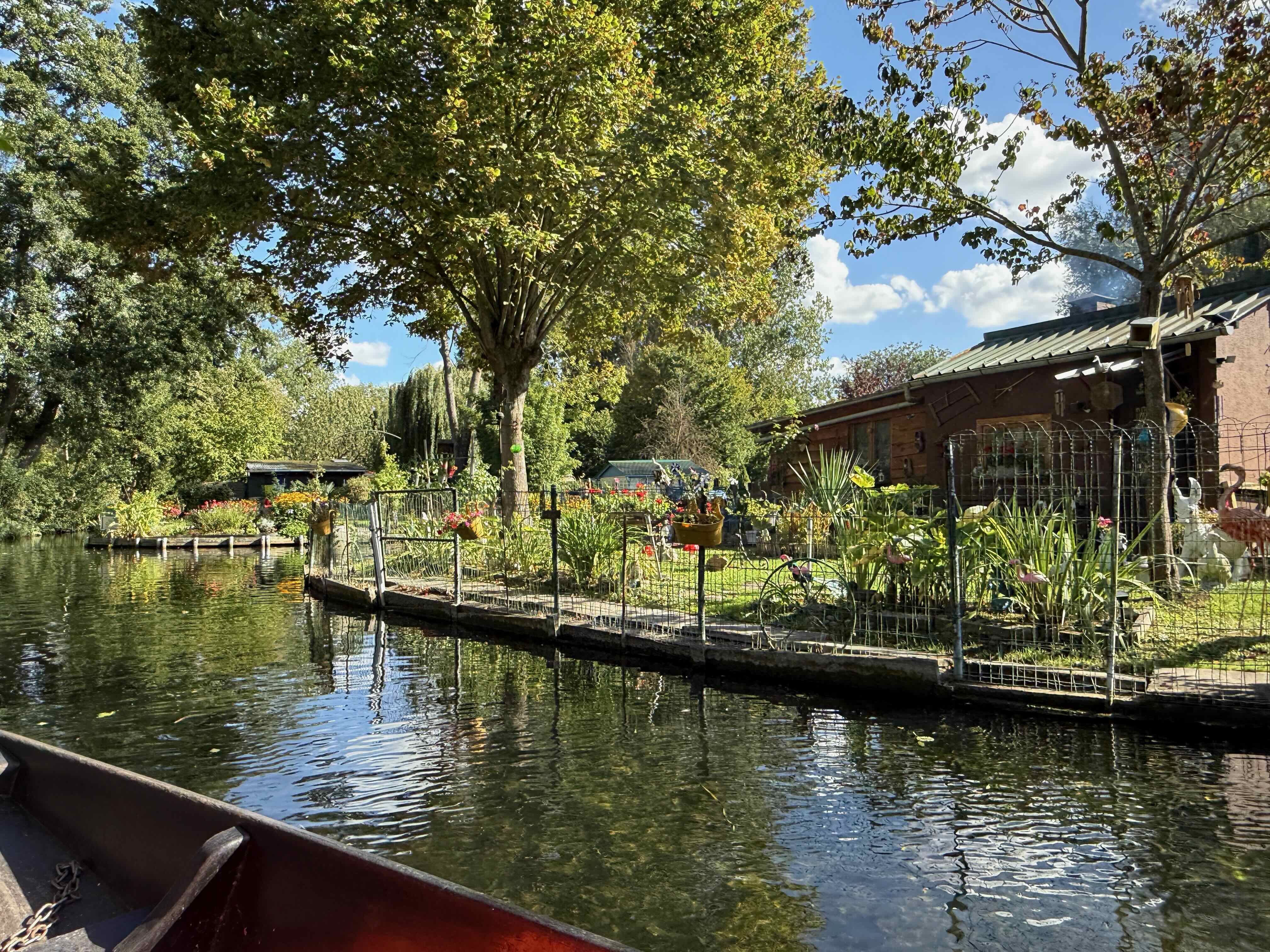
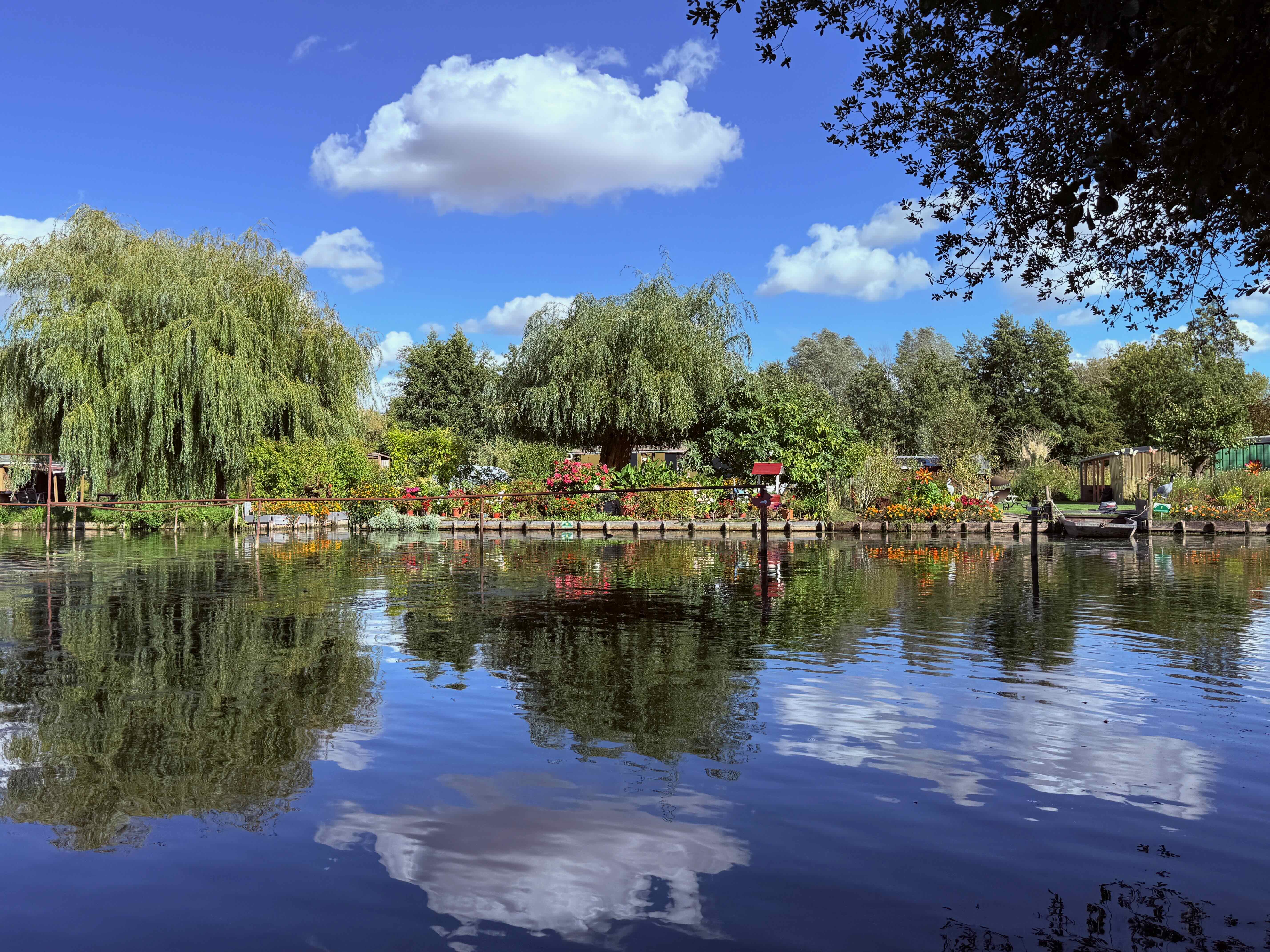
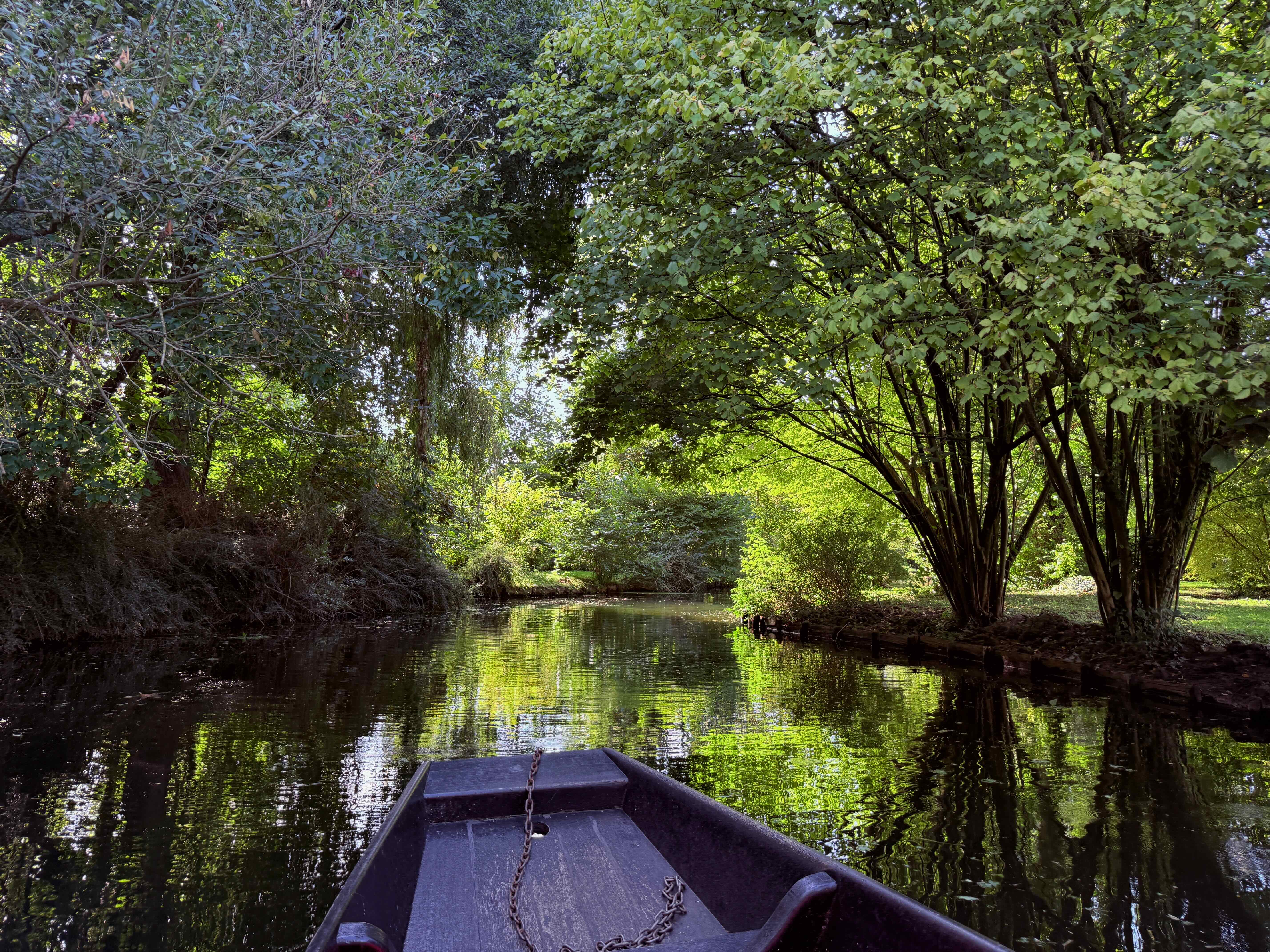
Shaped by generations of market gardeners known as ‘hortillons’, this site is the only one of its kind in France. The Hortillonnages are made up of a multitude of small cultivated islets surrounded by water, accessible only by boat on a network of waterways

We spend a relaxing 45 minutes travelling these waterways. We see market gardens, private gardens, cottages and some islands that look very wild and unkept.

The Hortillonnages have been here since ancient times. They are located on the naturally marshy terrain of the old bed of the River Somme. The site’s name has its origins in the Latin ‘hortus’ meaning garden. Nowadays, the ownership of this 300-hectare site is shared by over 1000 individuals who use it for market gardening or leisure activities such as gardening, fishing, and observing nature.

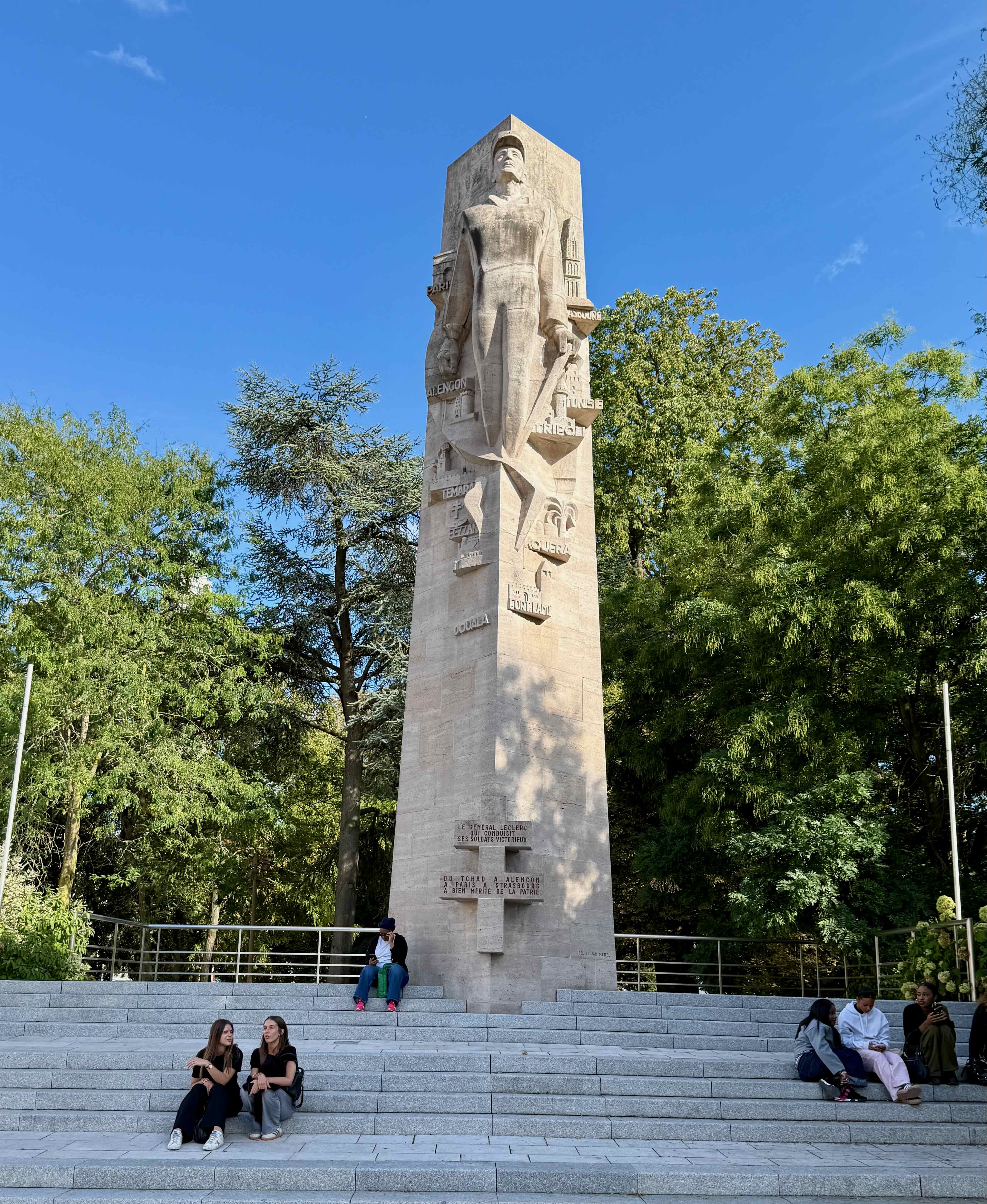
Walking back to our car we pass yet another war memorial, a reminder of the war and those who fought and died for France.

Lens Louvre

Day 12.   Thursday, November 11, 2025

I did not know that the Louvre had a satellite museum.  It is located in Lens, which is about 25 minutes from Arras.  There is free parking and the museum is free to visit.  We arrive early afternoon and walk up a tree lined lane to the entrance to the museum.

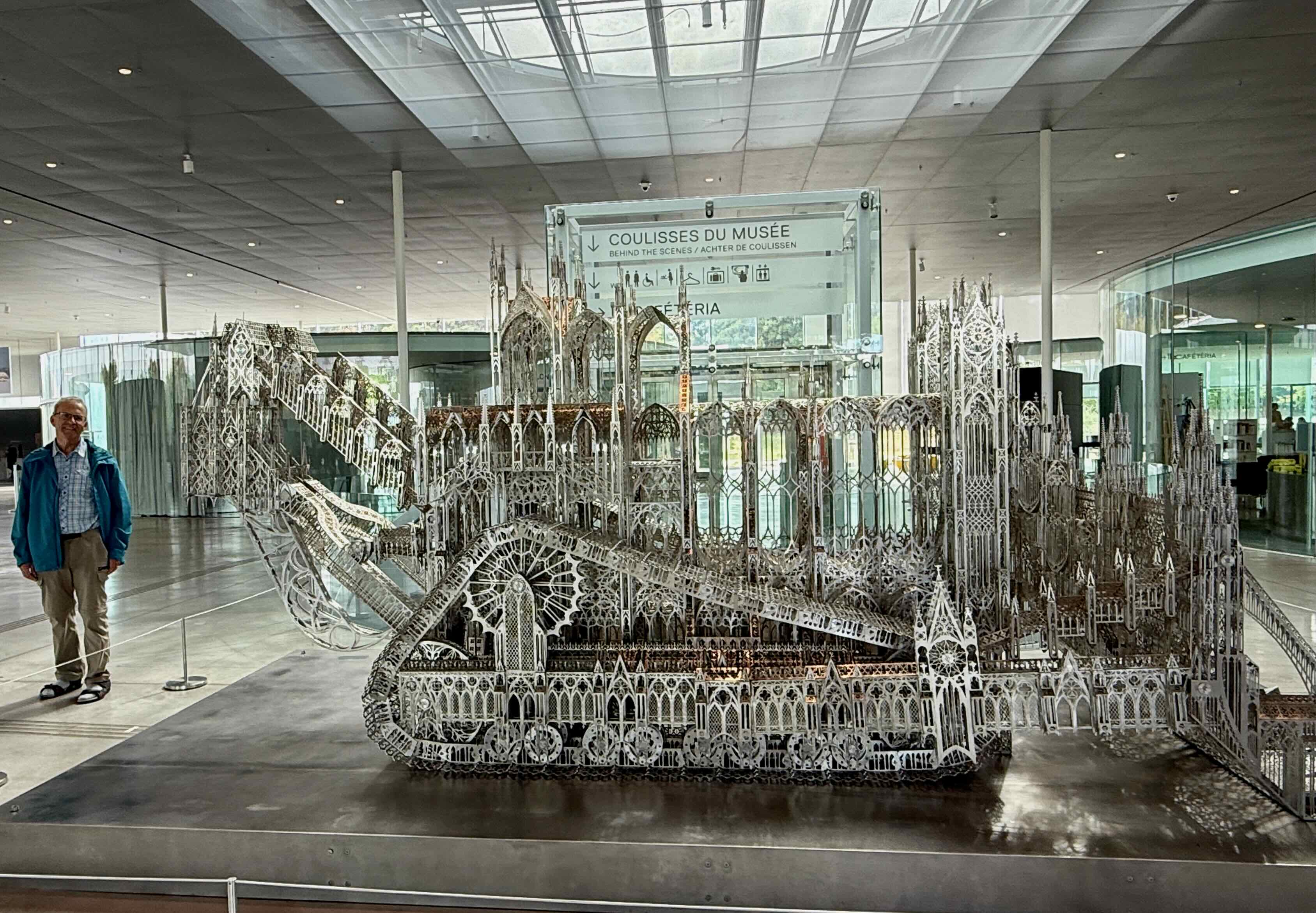
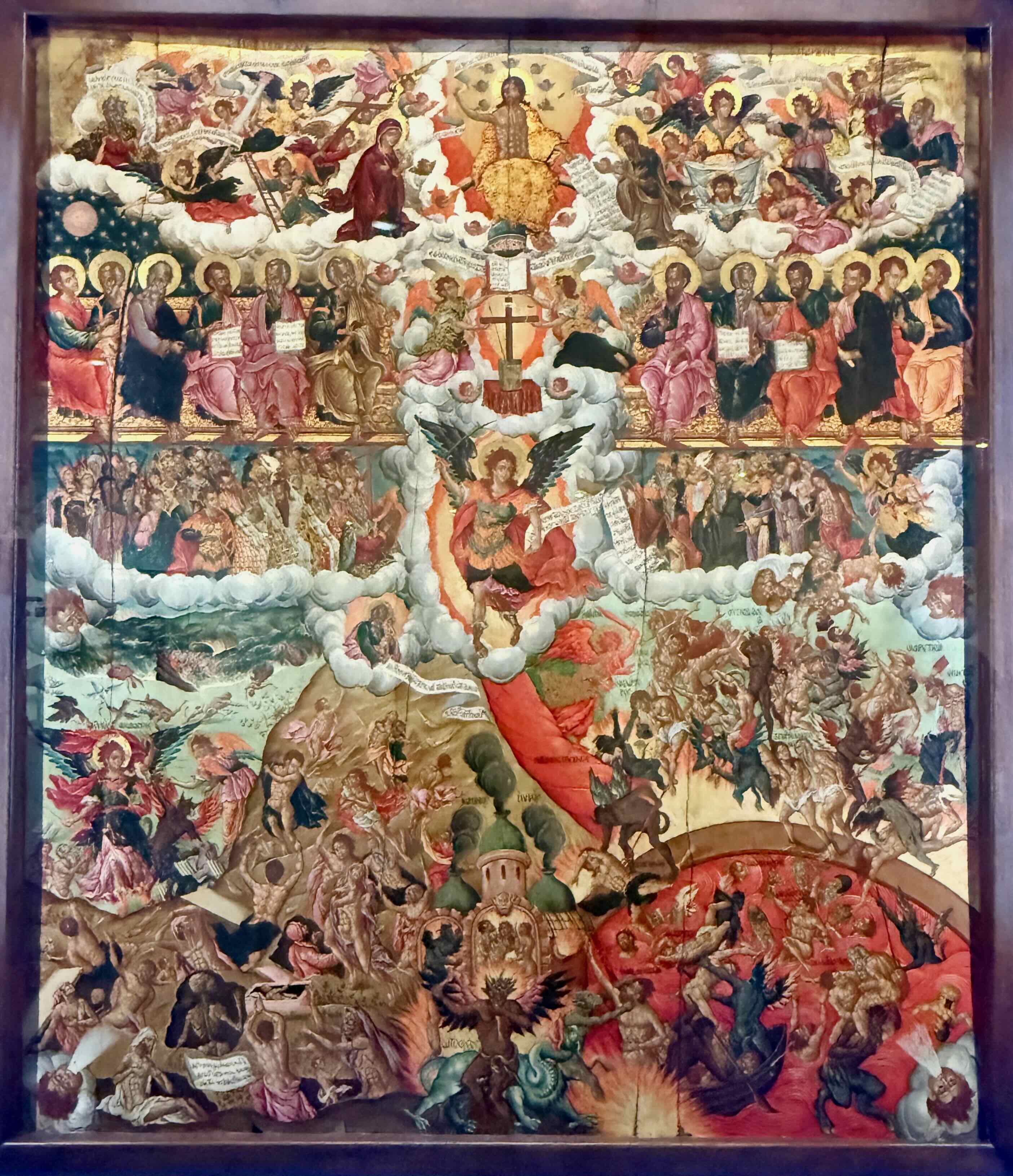
The first thing we see on entering the museum is this Gothic Bulldozer. It is very intricate and difficult to photograph.  Zoom in for a closer look.Downstairs is an exhibit of Ukrainian Icons. Today the term «icon» refers primarily to paintings made with tempera (egg-bound pigments) on a prepared wood panel. Icons are also characterised by the use of gold leaf.  Museums around the world are safekeeping artwork from the Uraine until the war ends. The Louvre-Lens has four of Ukraine’s Icon paintings on display. This is The Last Judgement by Theodore Poulakis, 1661.
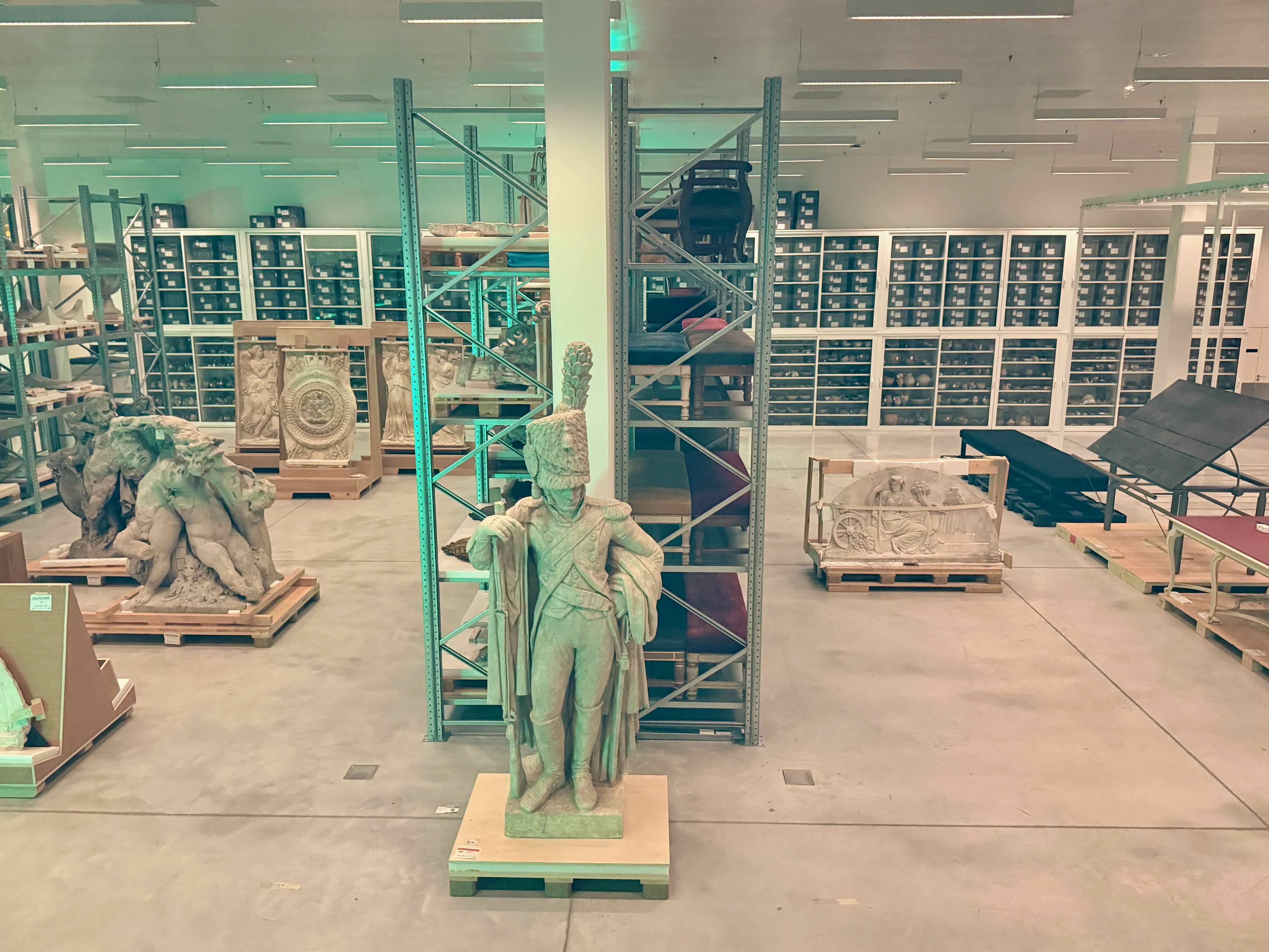
Alongside this exhibition space is a glass wall that allows visitors to view works in the restoration area of the Museum.The main exhibit at the museum is The Gallery of Time.

The Gallery of Time is an original showcase for a variety of art forms from different civilisations, all of which come together in an open-plan layout covering some 3,000 square metres. Visitors are invited to immerse themselves in the story of more than 5,000 years of human history and artistic creation. The Gallery of Time takes visitors on a chronological journey from the 4th millennium BCE to the 19th century, drawing on the collections of the Musée du Louvre and on other works which combine to tell a story of human creation, from the earliest recorded times to the most recent.
 

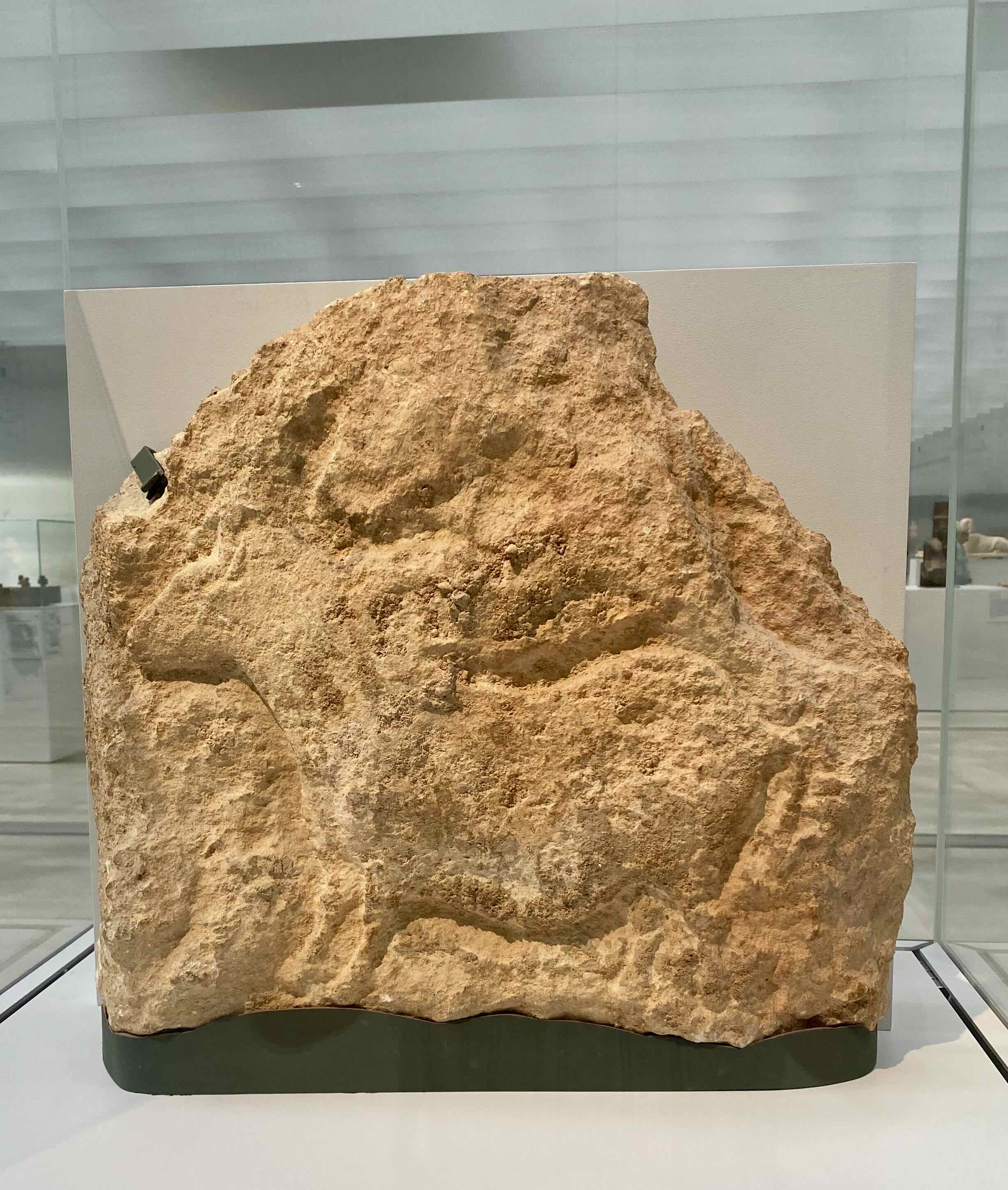
This is the beginning of The Gallery of Time. The first exhibit is the Roc-de-Sers, a stone with a carved horse that was part of a frieze found in a shallow cave in the south west of France. It is from 18,000 BC.

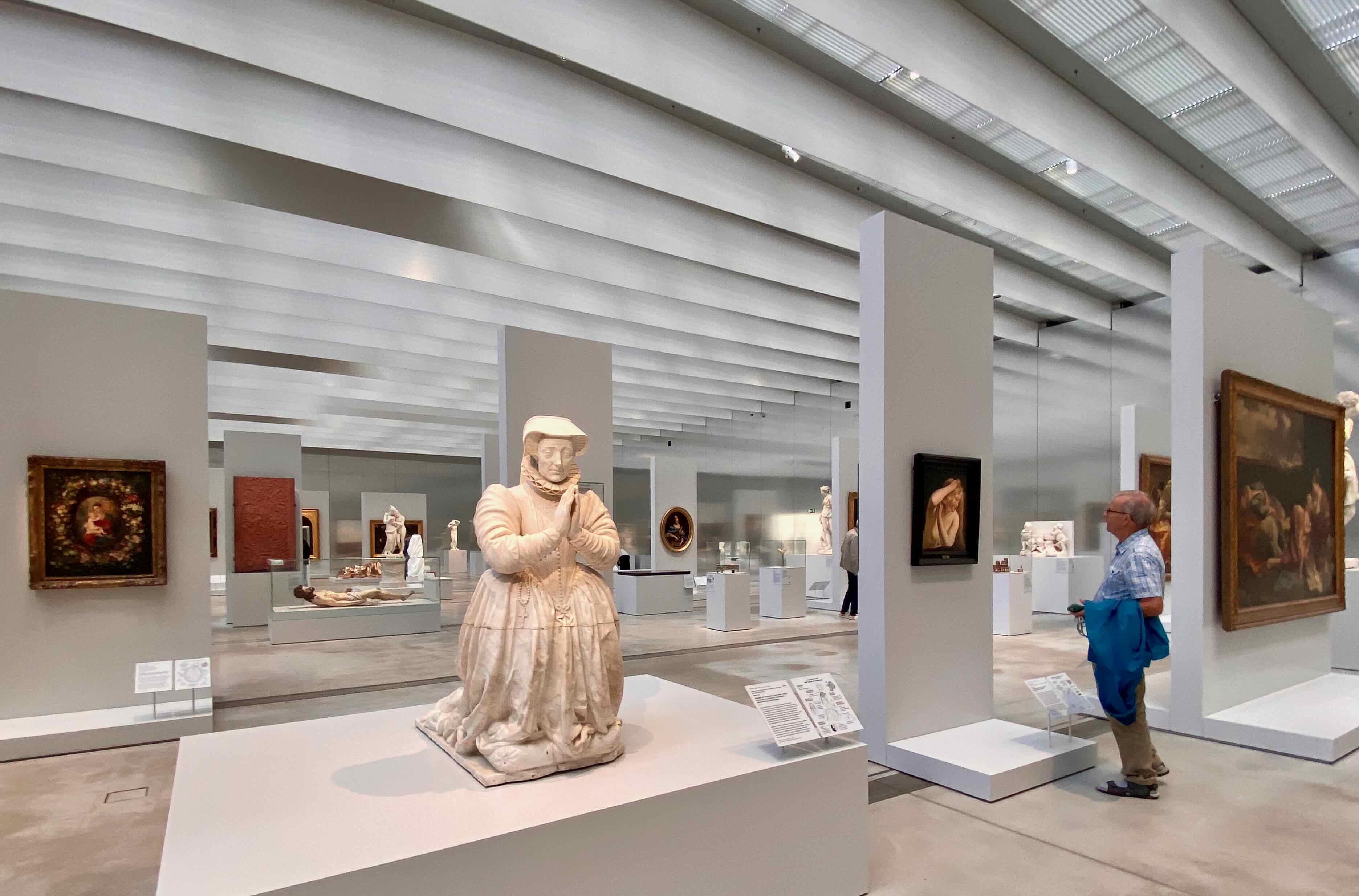
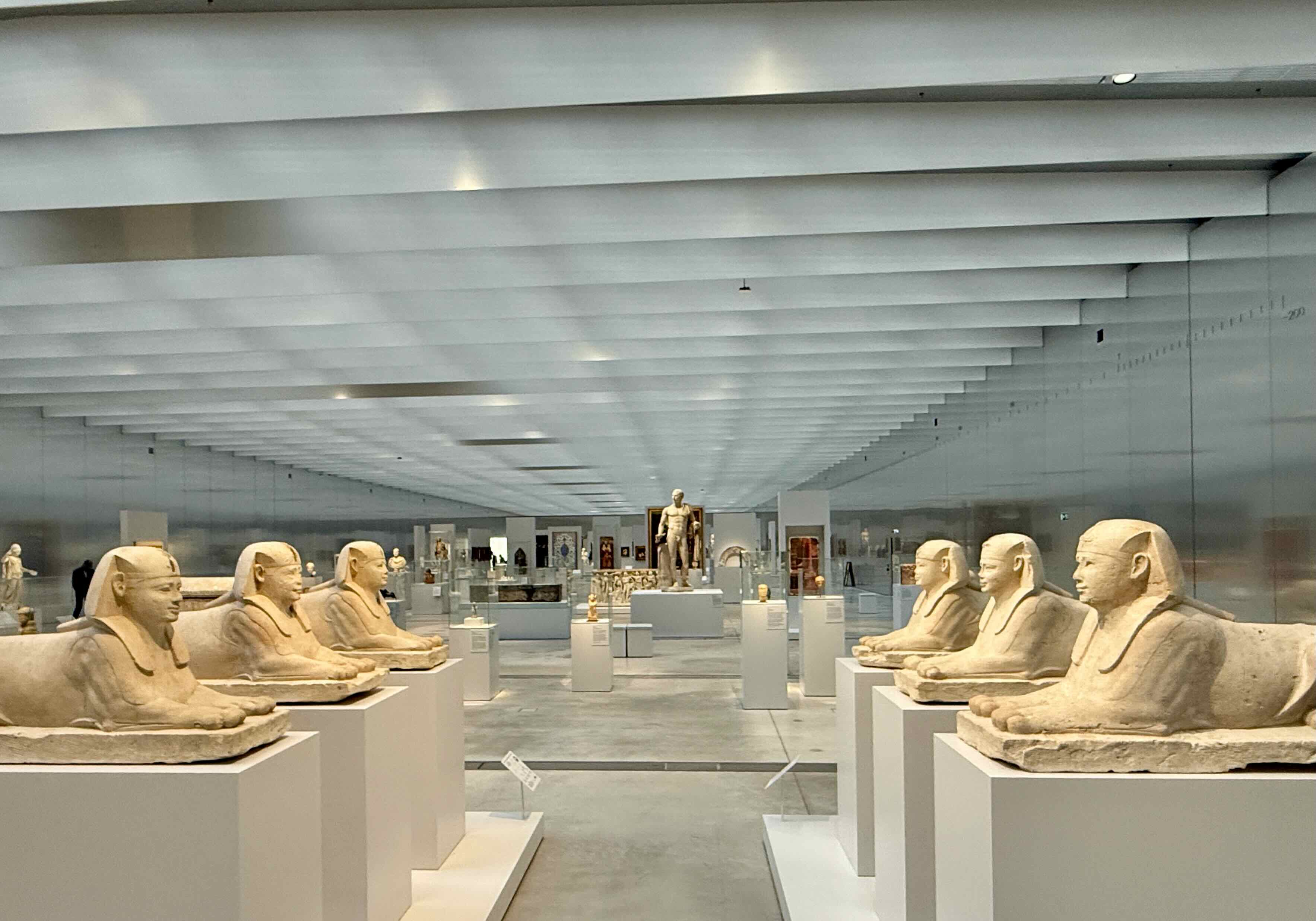
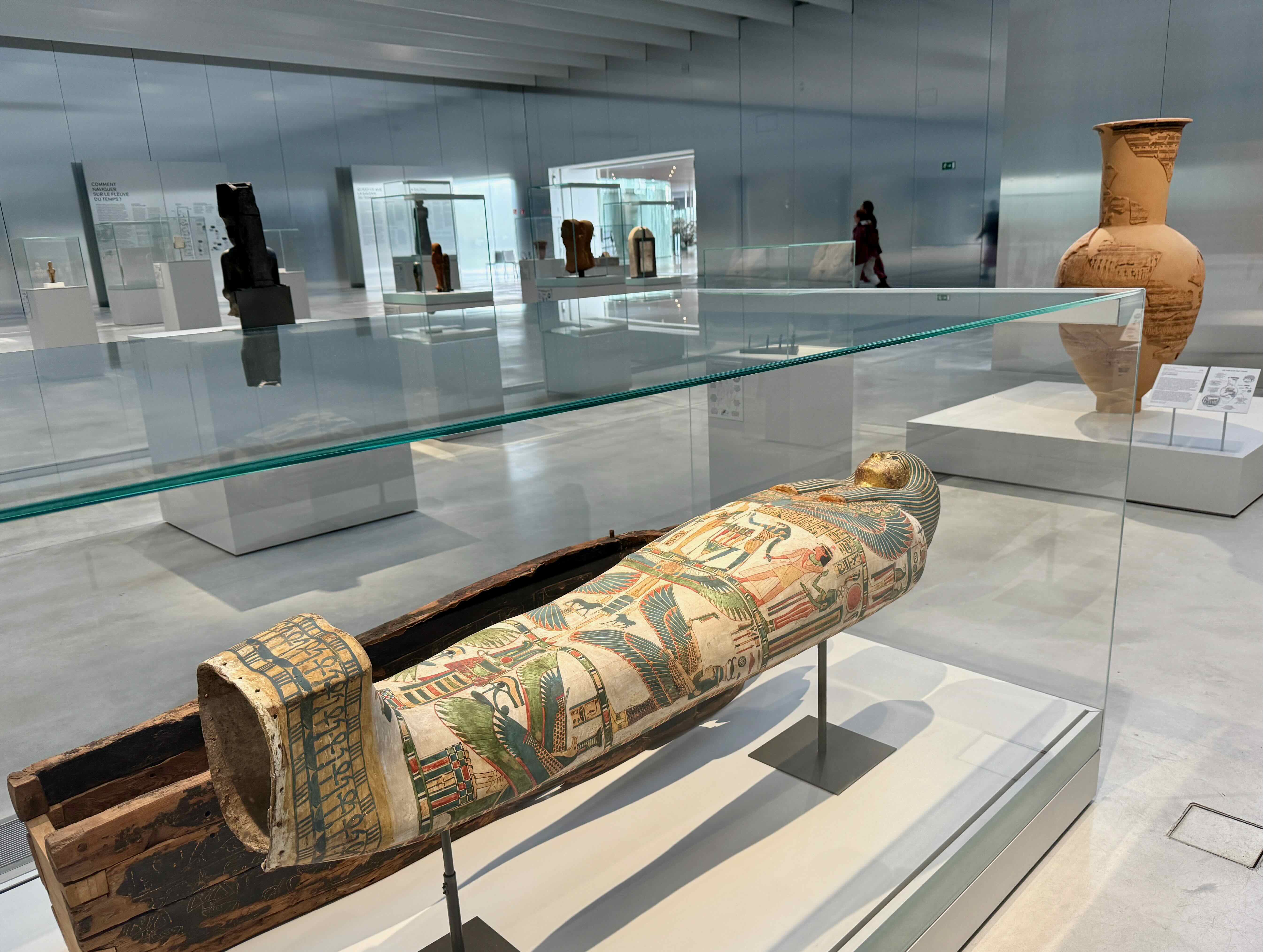
Some views of more than 250 pieces of art on display in this huge gallery.

And here, in no particular order, are a few of the pieces that we found especially interesting.

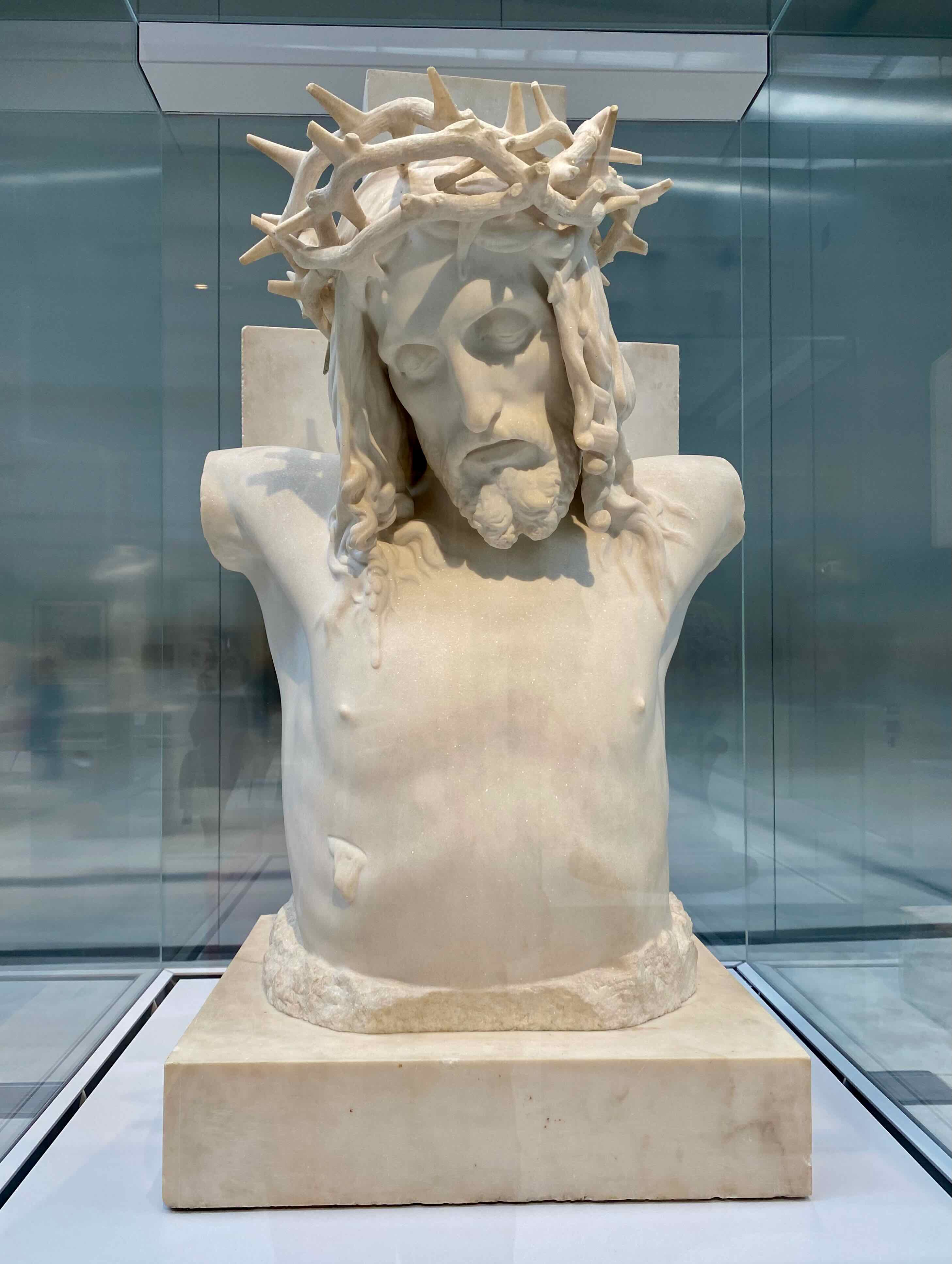
Francois Rude, Christ on the Cross.  Rude started this marble sculpture in 1885 but died before it was completed.  His student and nephew Jean Baptiste Paul Cabet completed it.  I found it very moving, and marvelled at being able to carve the crown of thorns in marble!

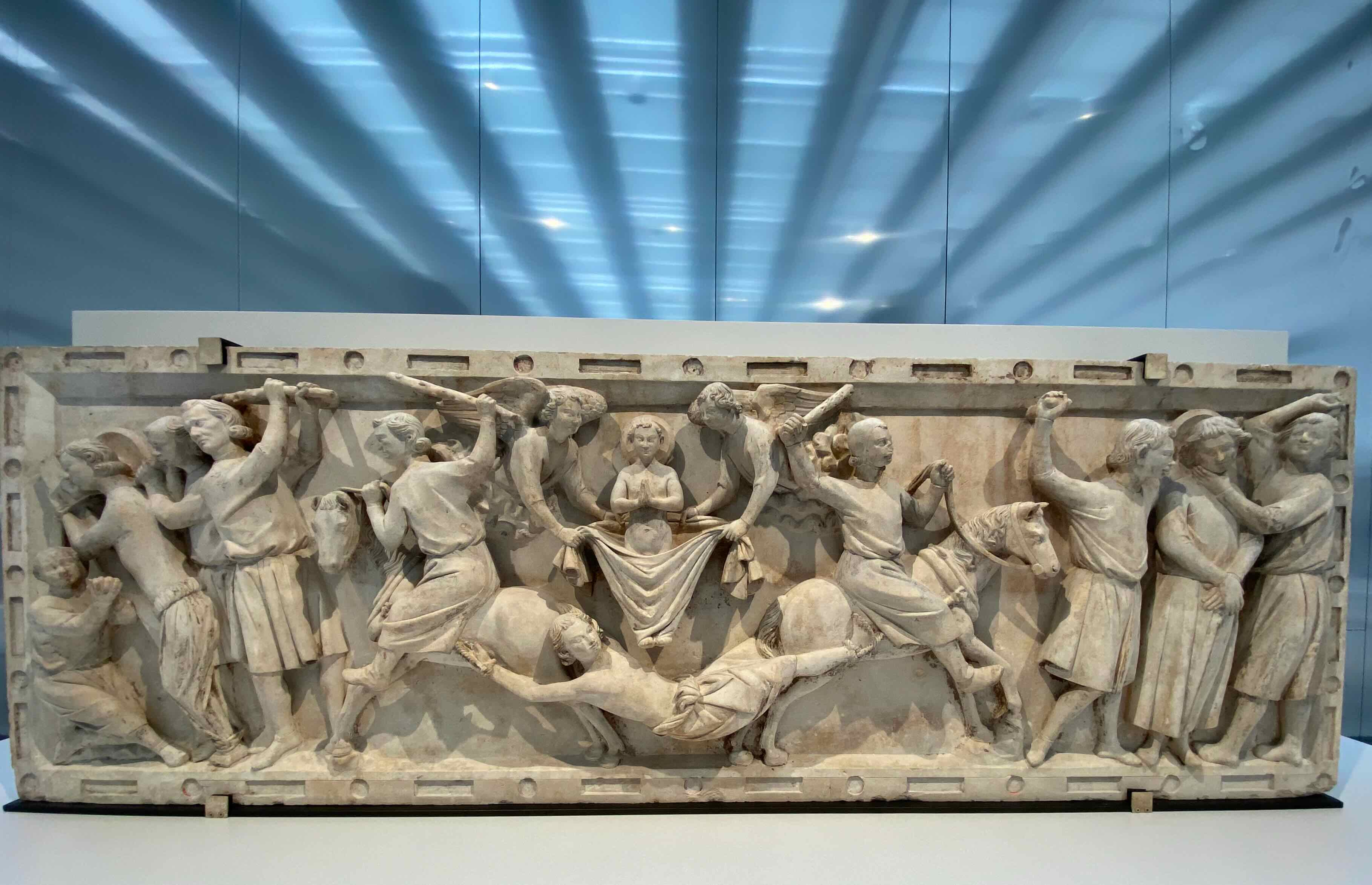
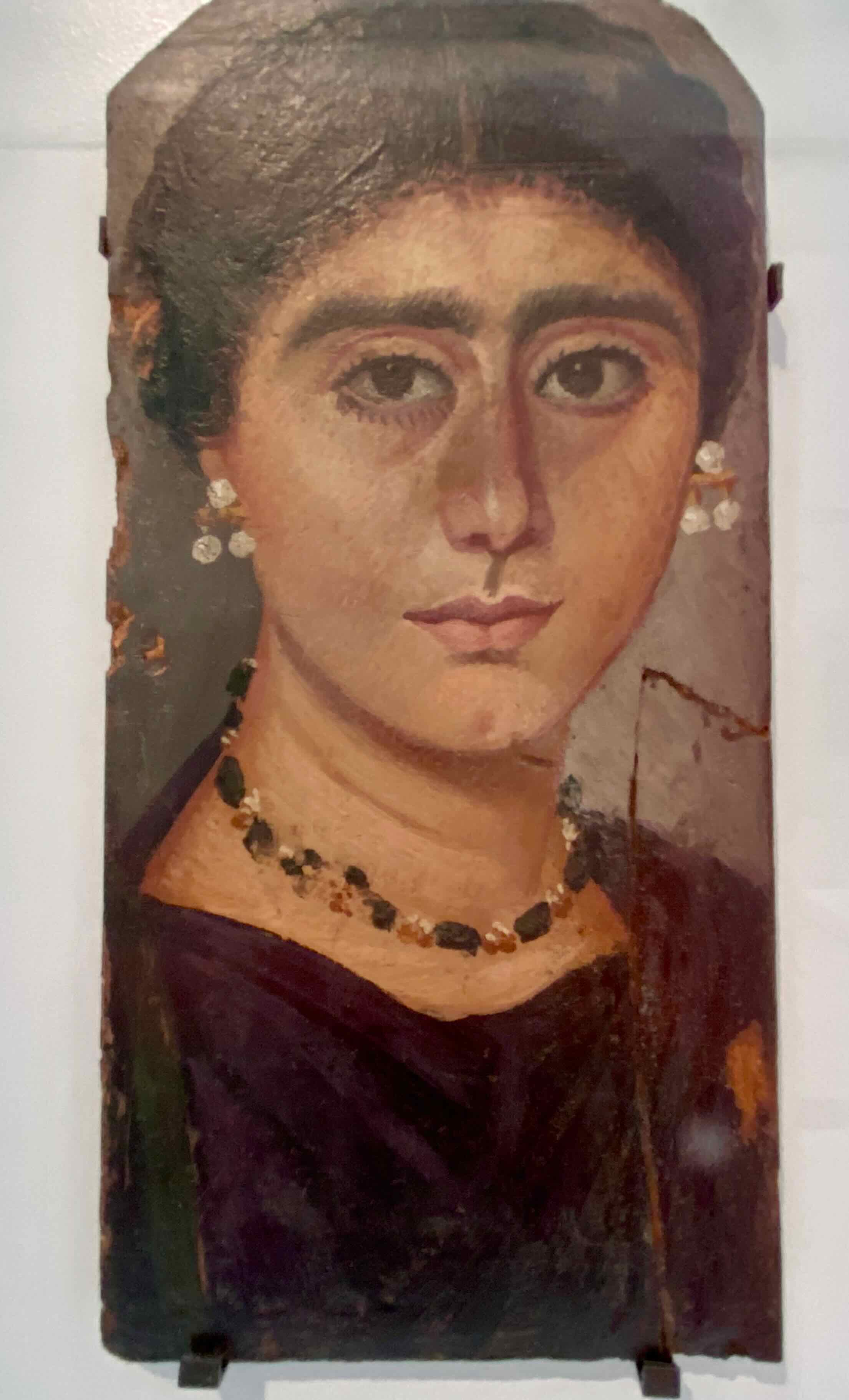
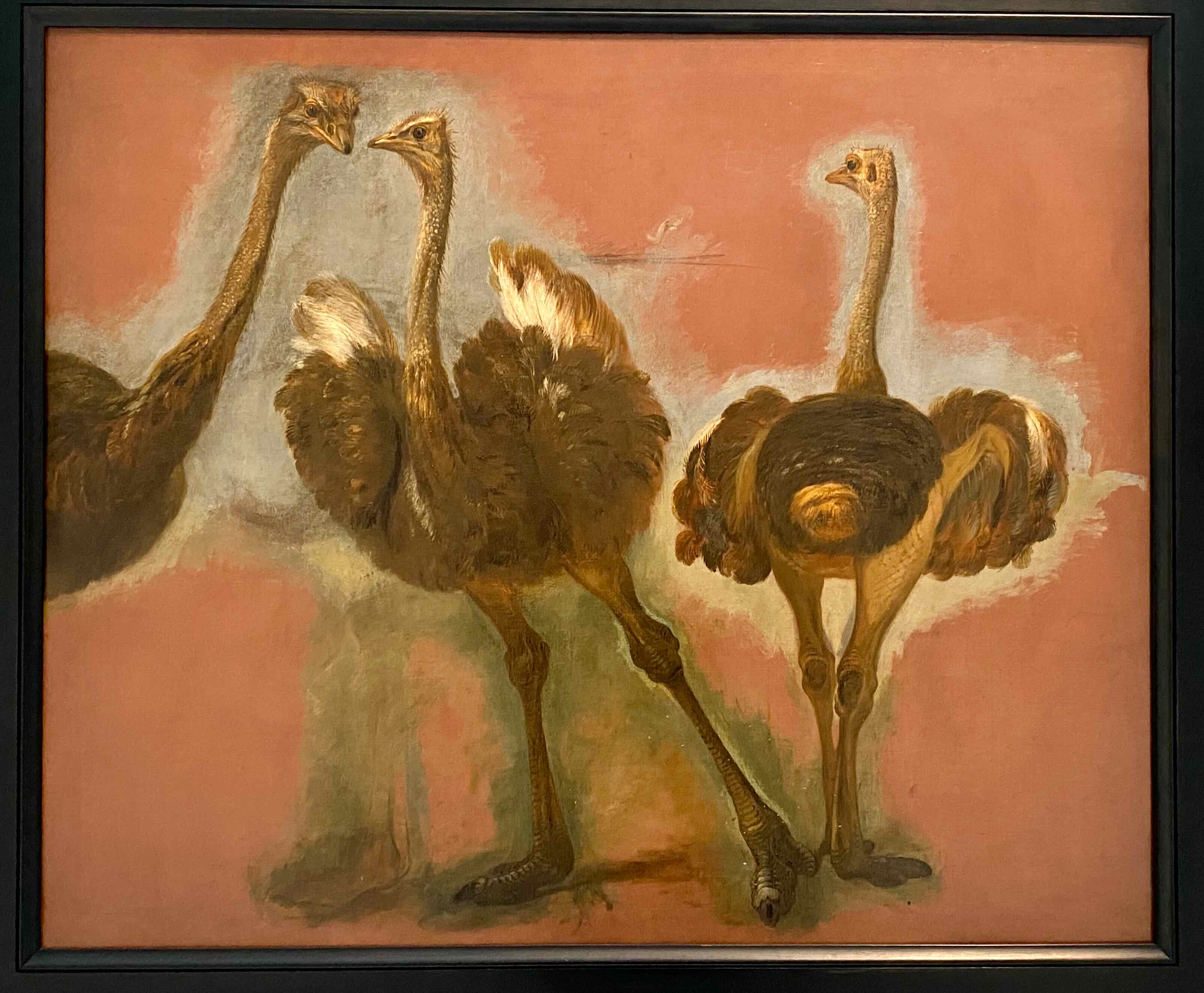
The Martyrdom of Saint Hippolyte, Cathedral of Sant-Denis, France, c. 1225-1250,  My first thought seeing this was what would it feel like to be pulled apart by horses? Egyptian Tomb Portrait of a Woman c. 150 AD.  I love these tomb paintings.  We saw several of them years ago when we visited Egypt.  Pieter Boel, c.1669-1671 Triple study of an Ostrich. 
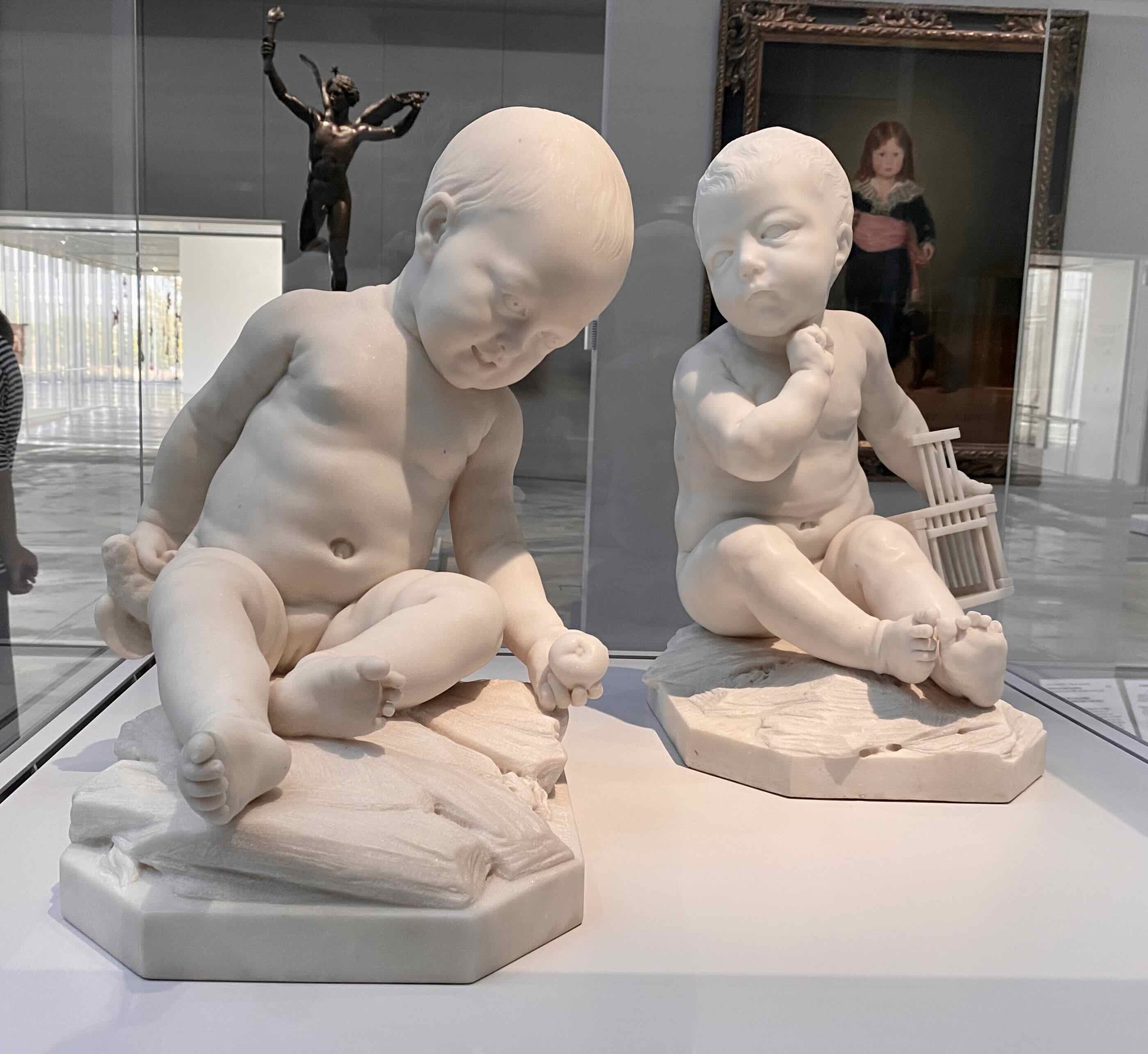
Jean-Baptiste Pigalle, Paris 1714-1785, The Child and the Cage and The Girl with a Bird and an Apple. I fell in love with this two cherubic statues.  The dimples and folds in their skin were so incredibly life-like.
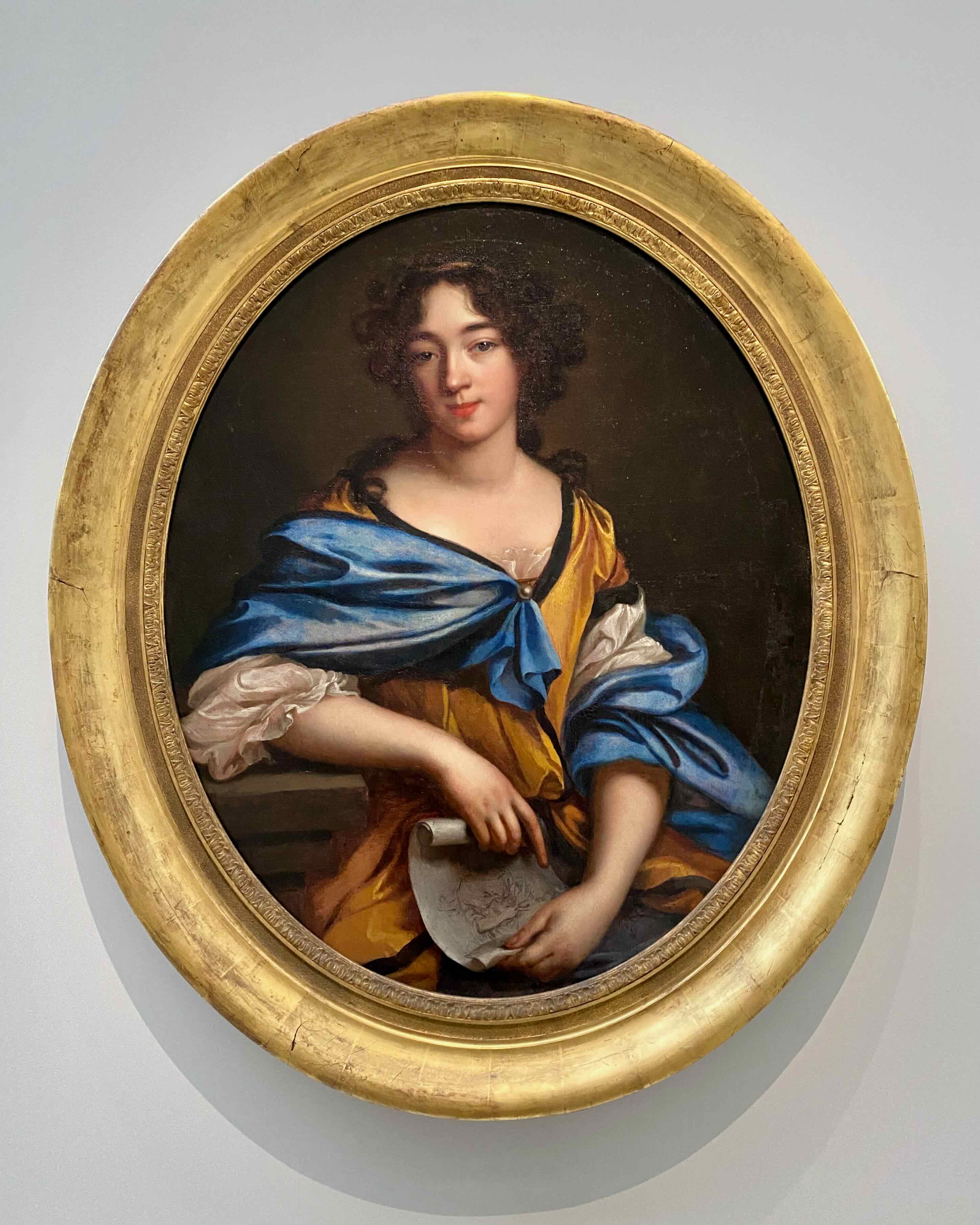
Élisabeth-Sophie Chéron, (1648-1711), 1672 Self Portrait.  This is the oldest self portrait of a French female artist in the possession of a Museum.

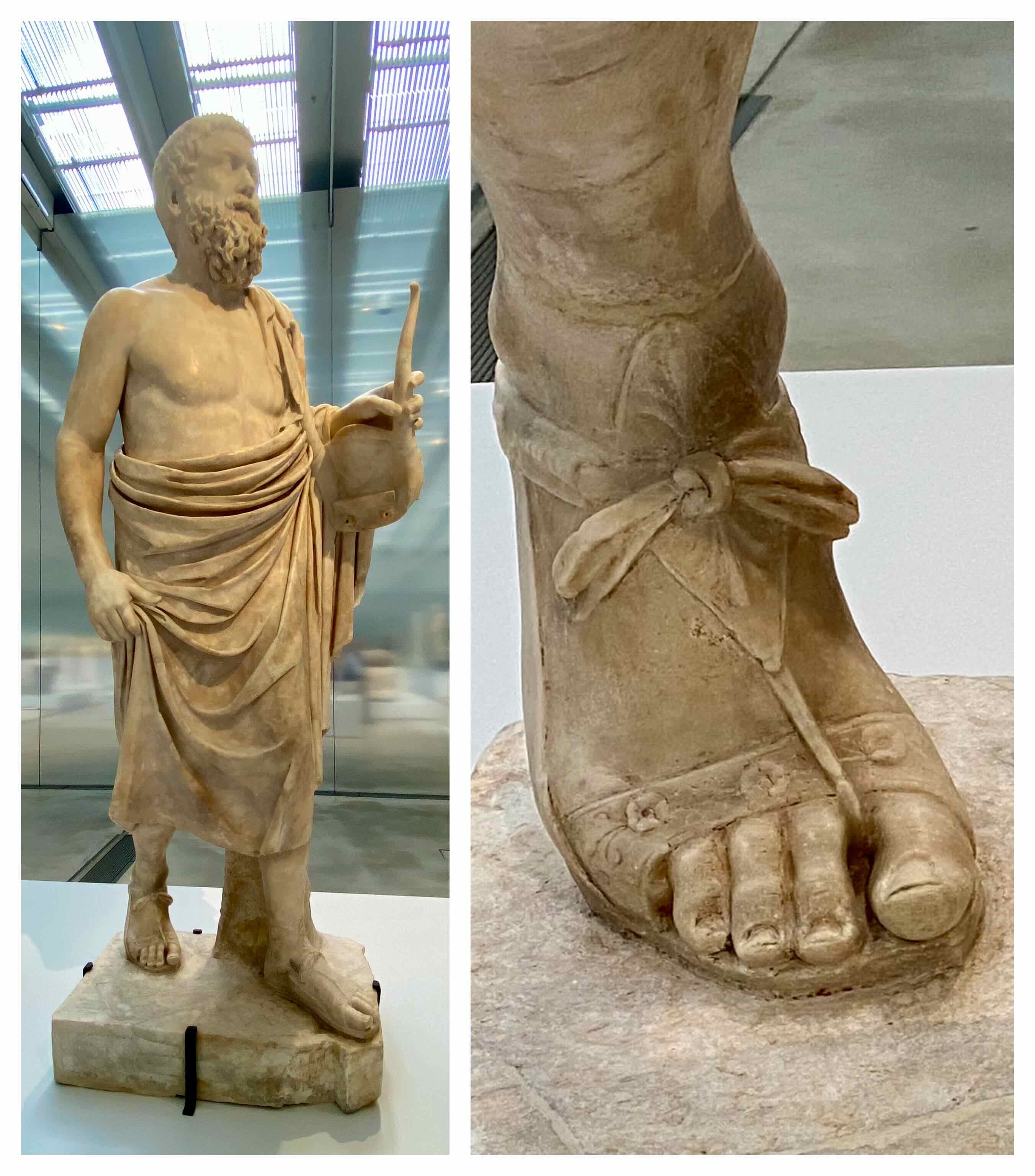
The Marching Player, 1063 AD. This statue is a replica of a Greek bronze original created around 440-400 BC.  I love the detail in his feet and toes.

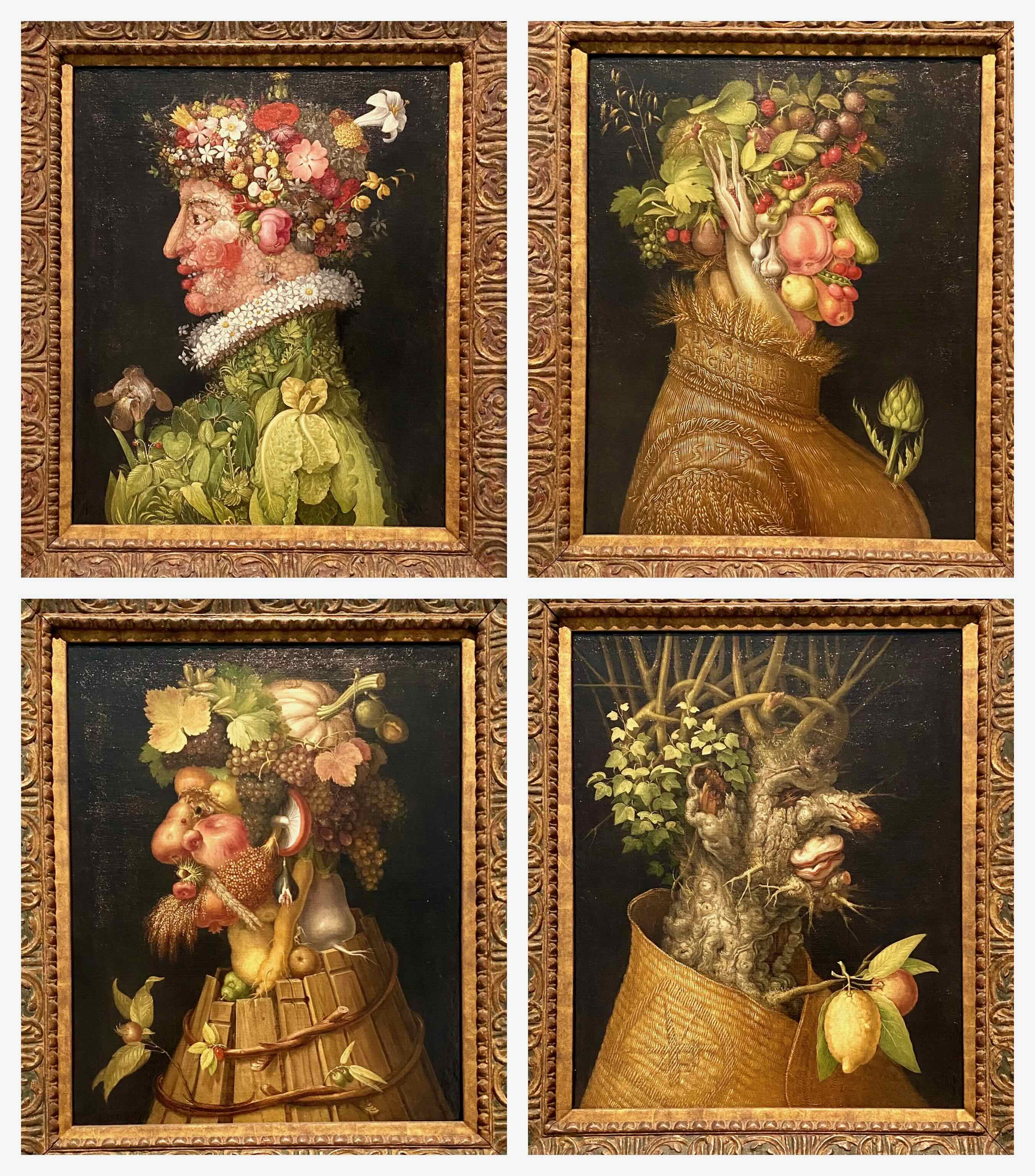
Giuseppe Arcimboldo, Milan, c. 1527-1593. We have seen other work by this artist…it is pretty distinctive. This is Spring, Summer, Autumn and Winter.

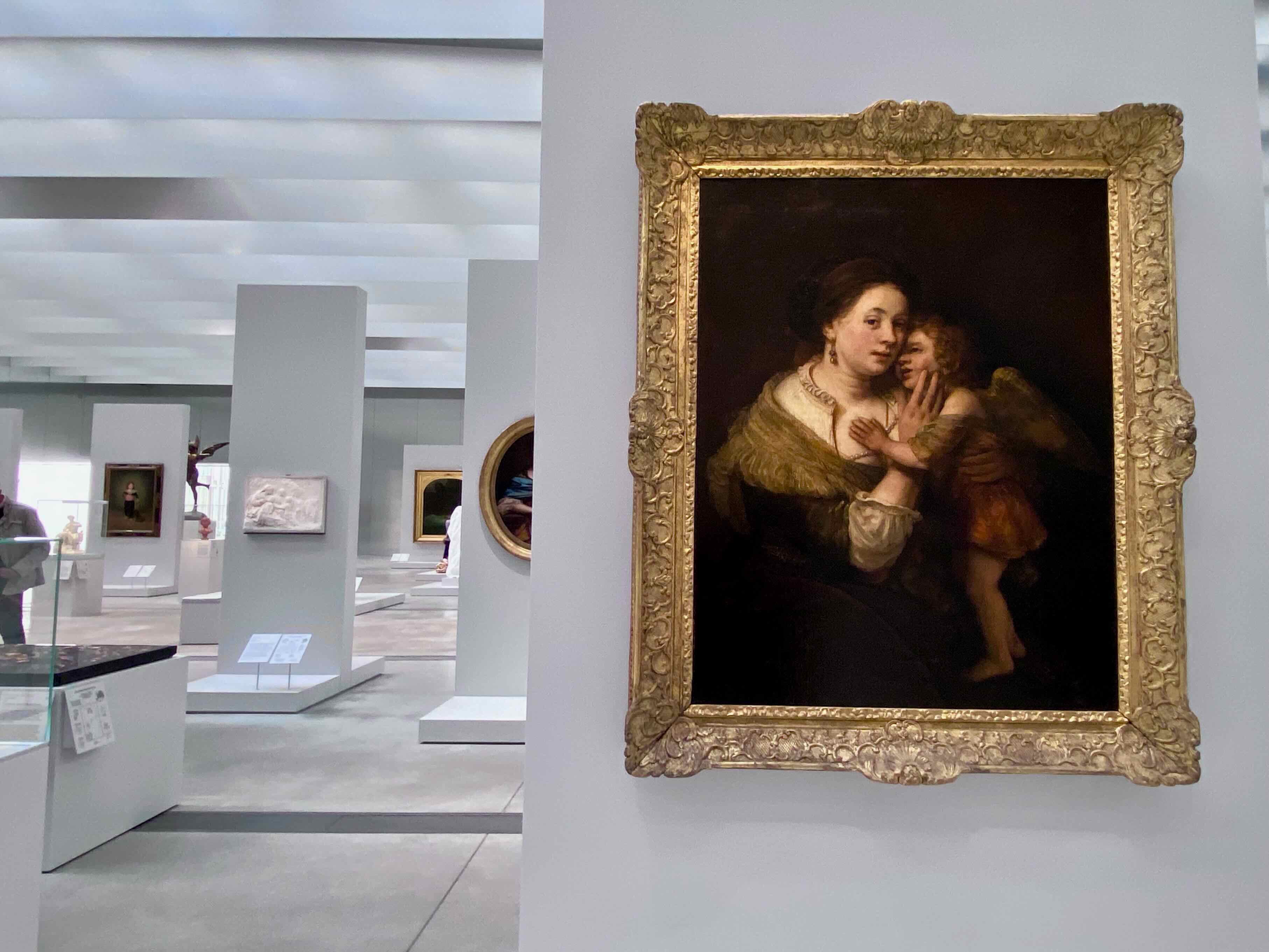
Rembrandt van Eijn, 1640-1660, Venus et L’Amour

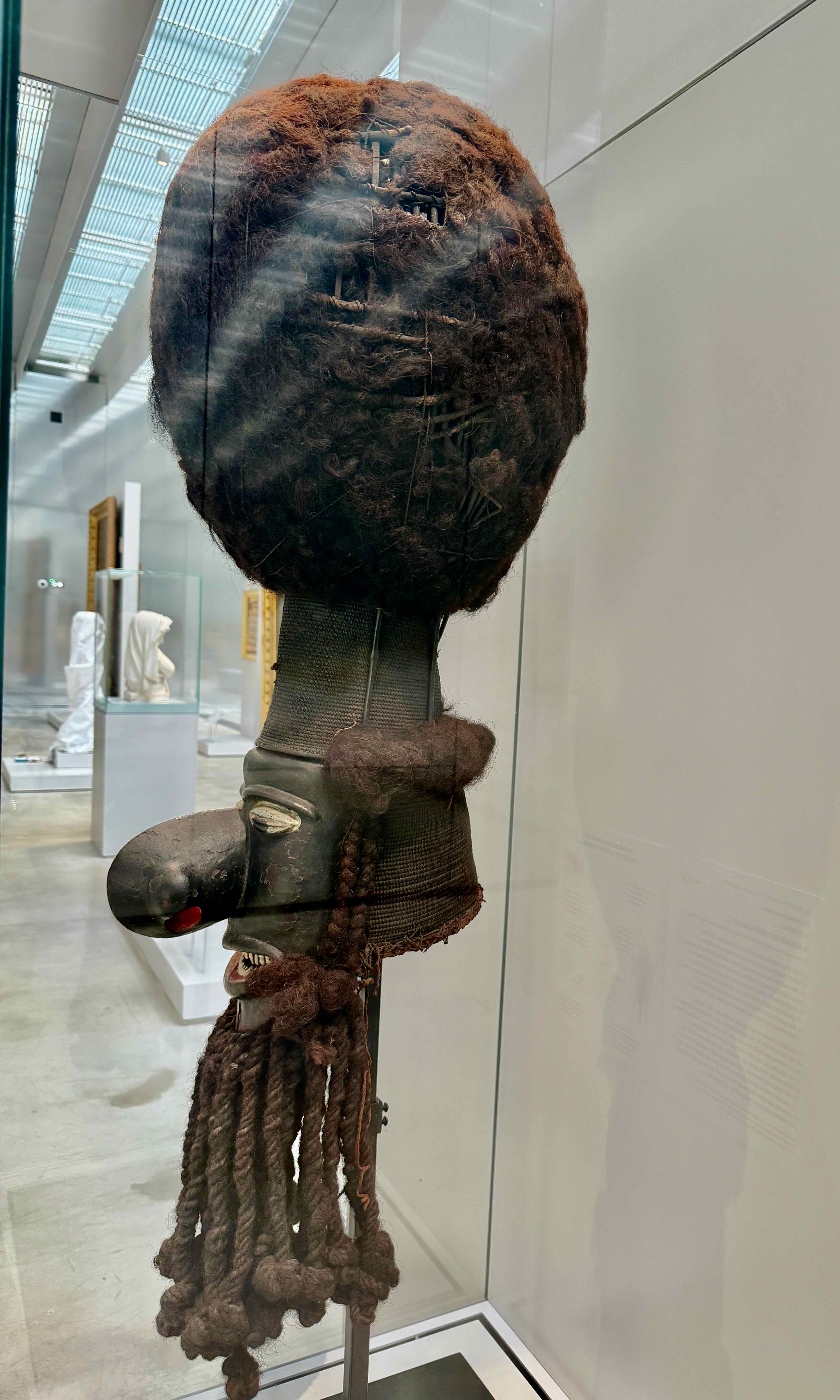
Mourner’s Mask, New Caledonia c.1850

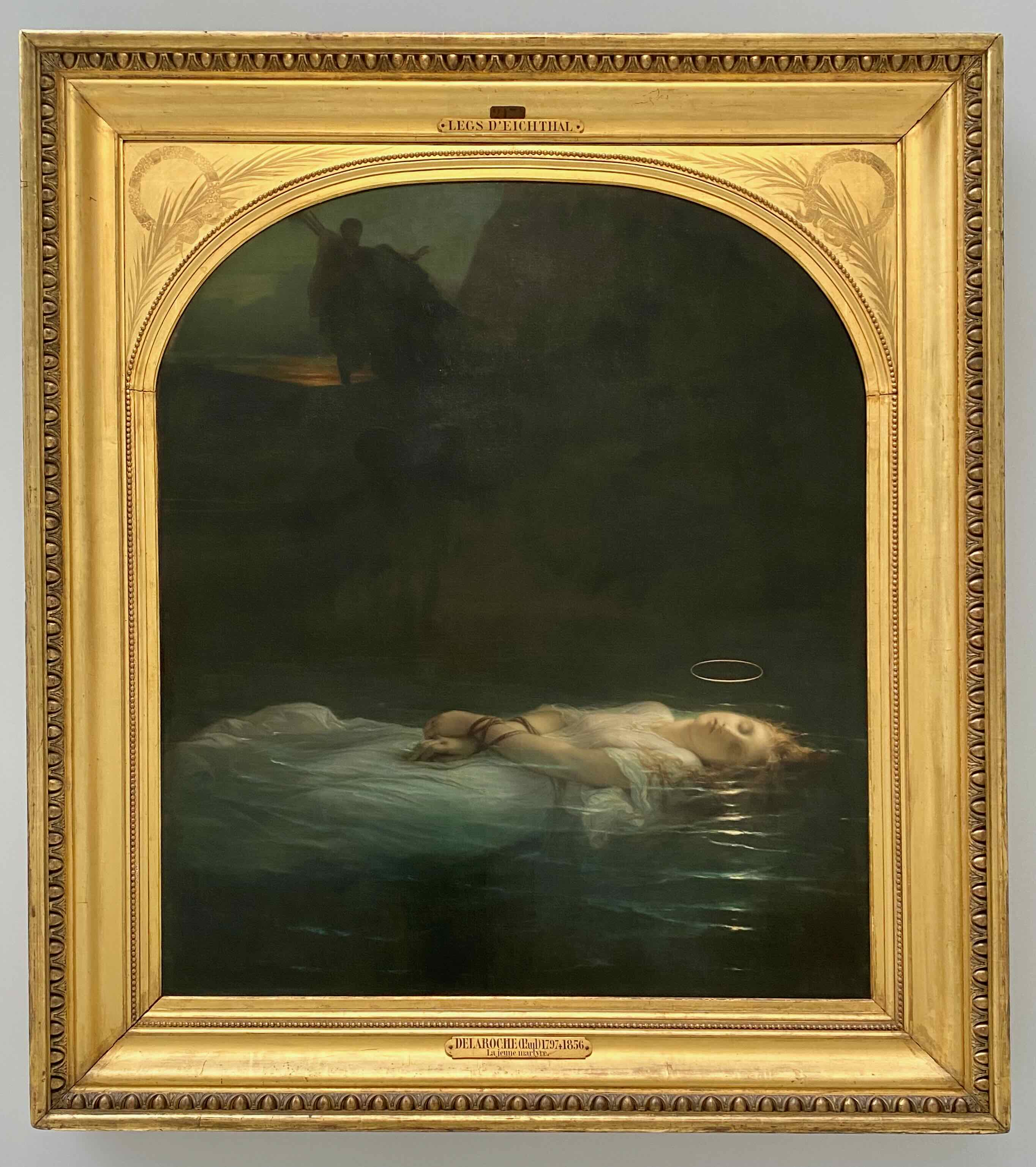
This was the last piece in the Gallery of Time.  A painting by Paul Delaroche, 1885, The Young Martyr.  A painting of a young woman who was killed for refusing to renounce her Christian faith.

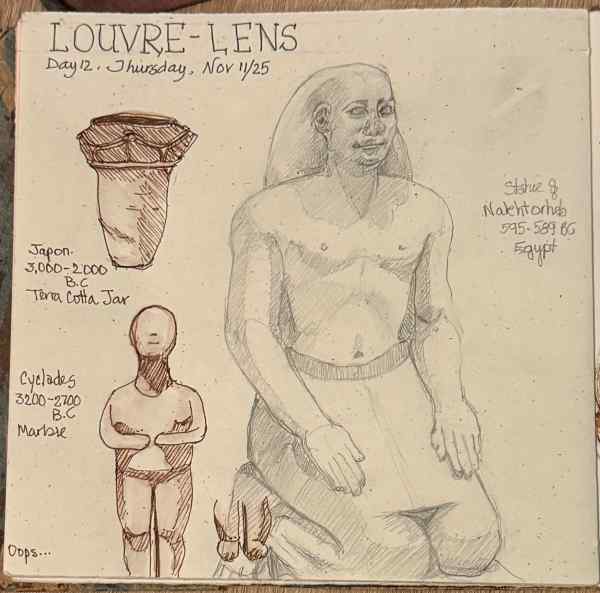
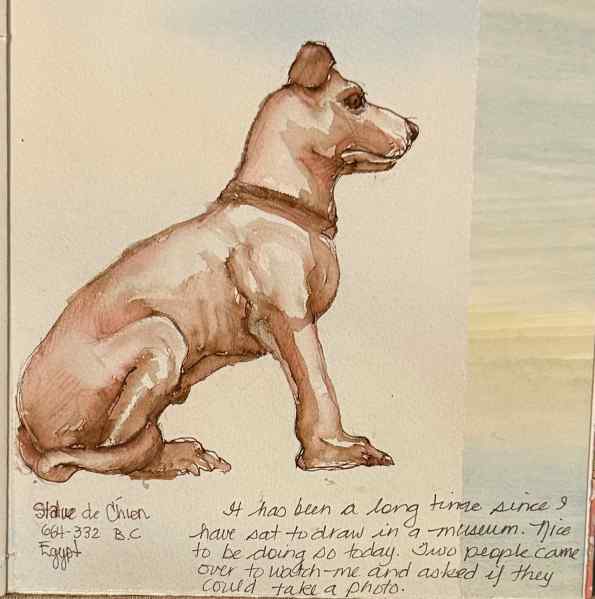
We have a much needed tea break. I asked how big the tea was and was assured that it was very big…well, this rather ‘very large” cup of tea was €5.50!  Bob finds a spot to read and I go back to the gallery to do some sketching.  They aren’t the best sketches but I had such an enjoyable time doing them.  Two people asked if they could take a photo…people are always interested in what I am drawing.
We stay until the museum closes at six and we are surprised to see it is raining outside.  The Louvre -Lens is a very modern building, so different than the Louvre in Paris.  We really enjoyed the Gallery In Time”. It was interesting, and not as overwhelming as the Louvre.