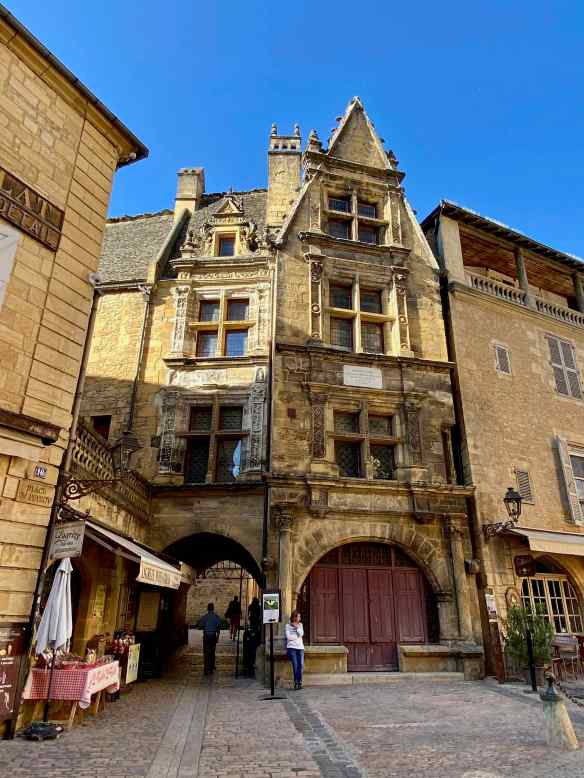
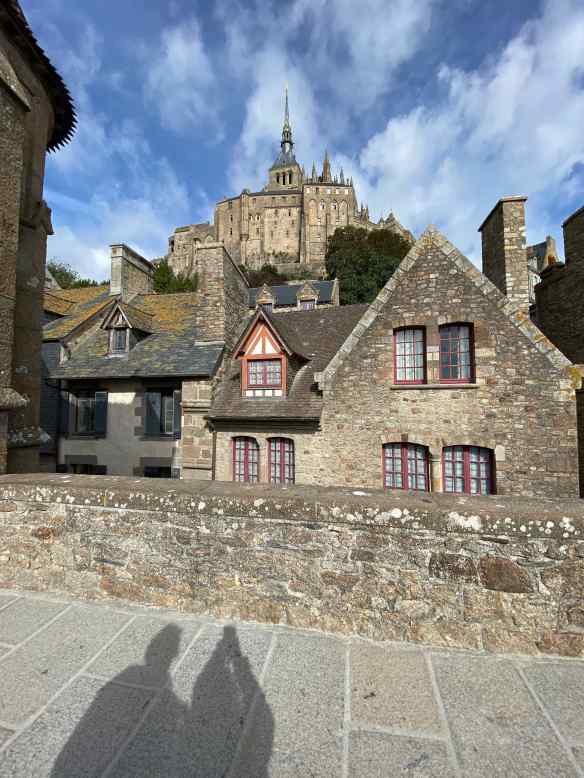
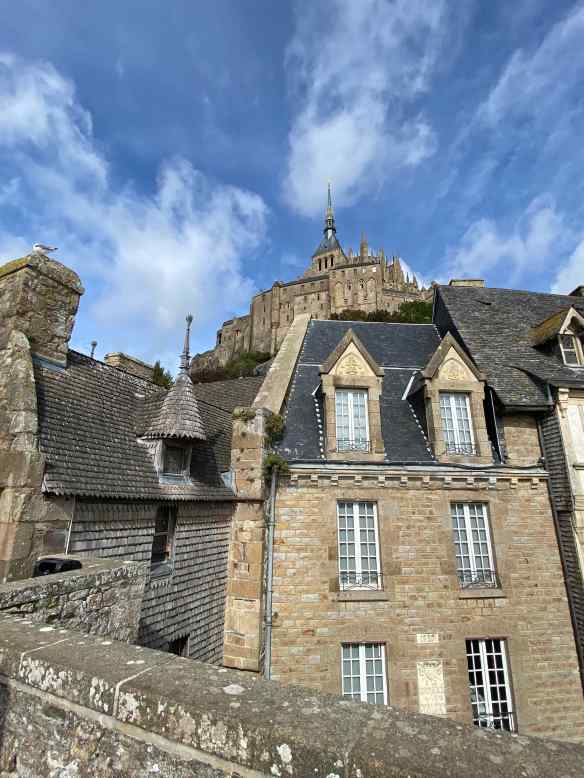
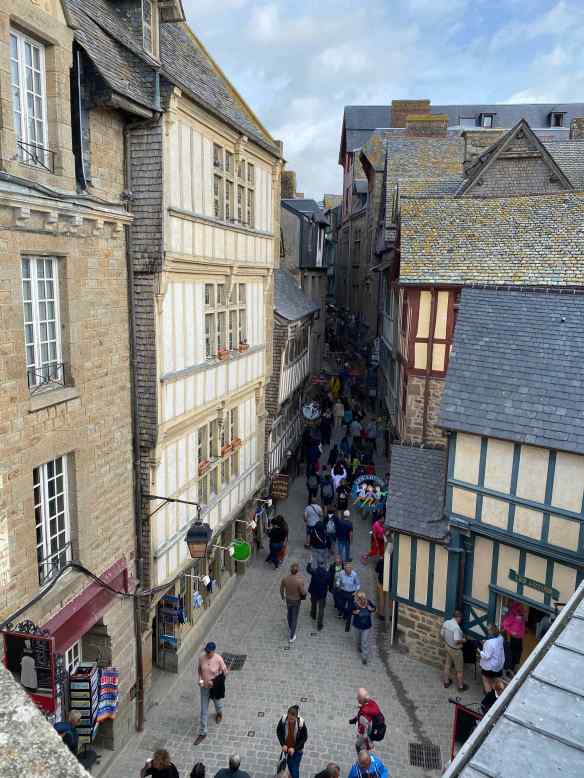
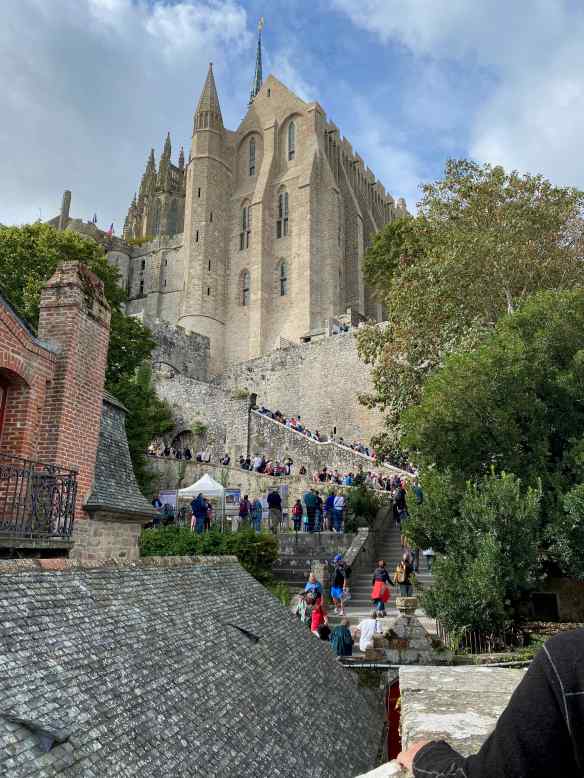
Market day in Sarlat-le-Canéda, France

Day 40, Saturday, October 7, 2023

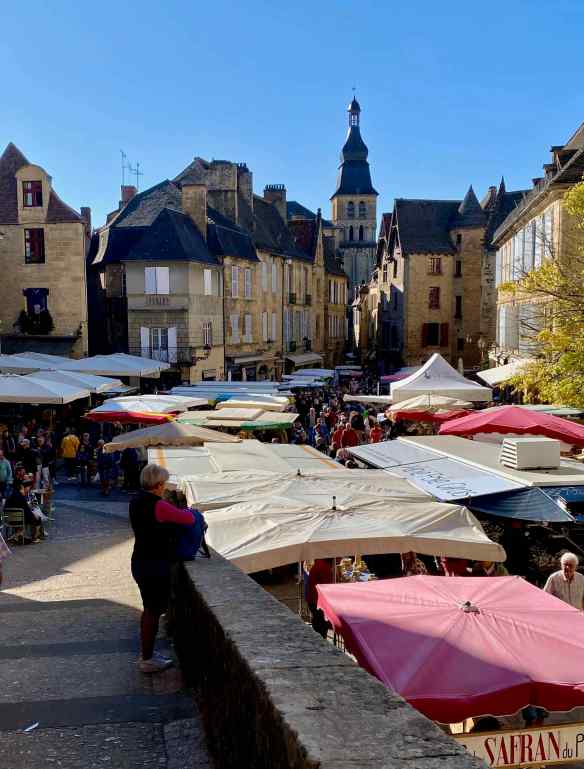
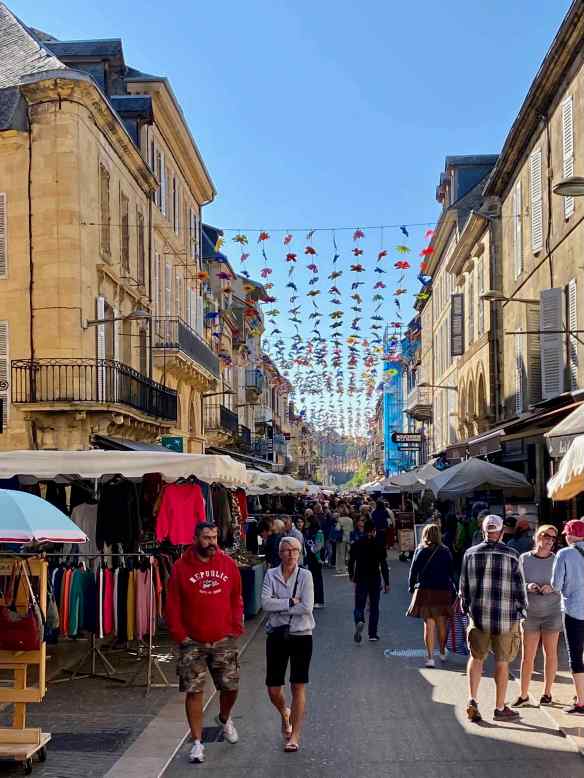
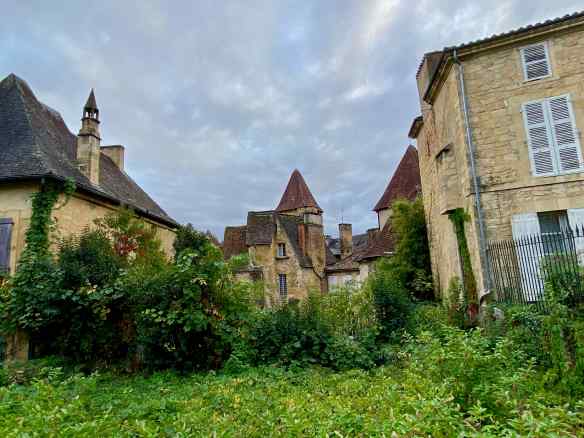
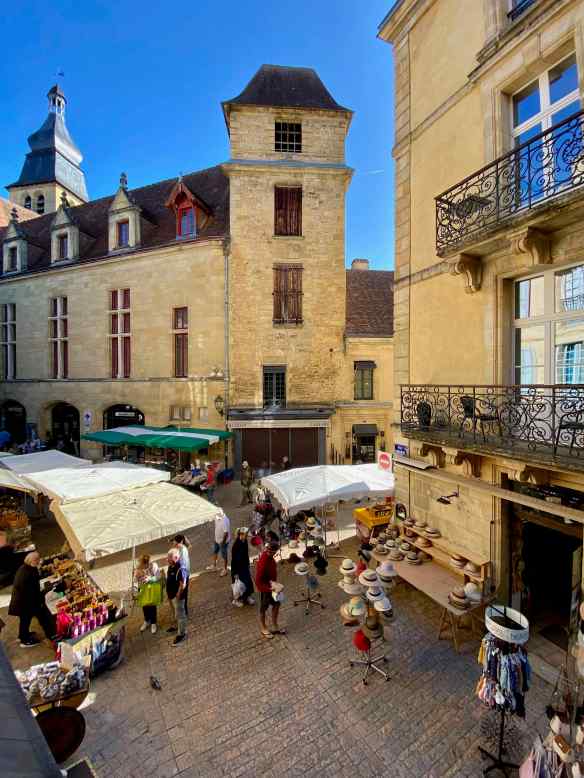
Saturday is market day.  We woke up to the sounds of vendors setting up their tents and tables.  This is the view from our window. After breakfast we go check out the market.  The streets are crammed with vendors…

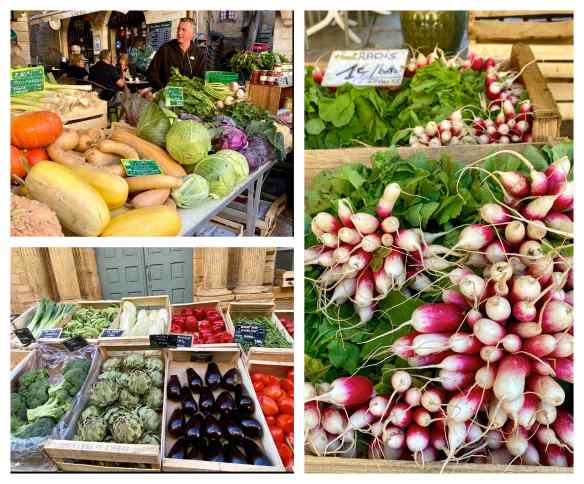
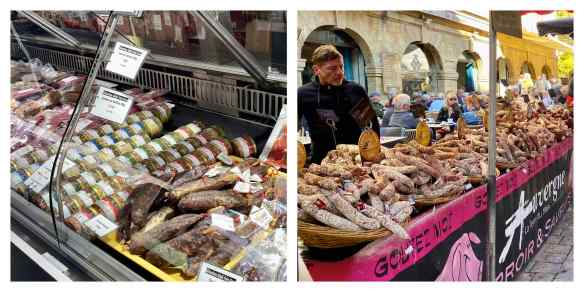
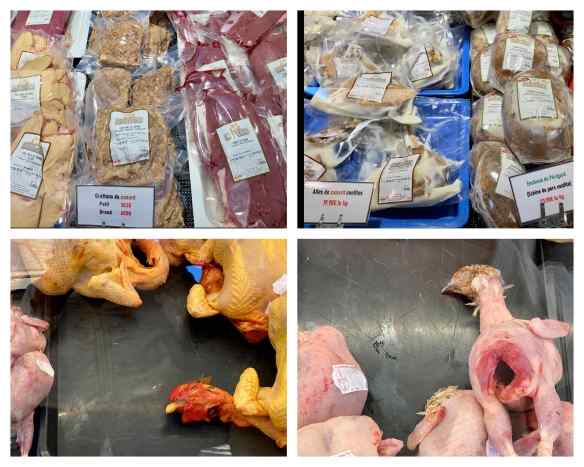
There are fresh fruits and vegetables.  These little radishes are so yummy, and very reasonable, just 1euro for a big bunch. However there are many more vendors selling a variety of meats and foie gras.  I’m afraid we weren’t tempted by these stalls.

These are duck and goose livers, and other items that I do not even recognize.  The chickens and I think perhaps grouse all still have their heads!

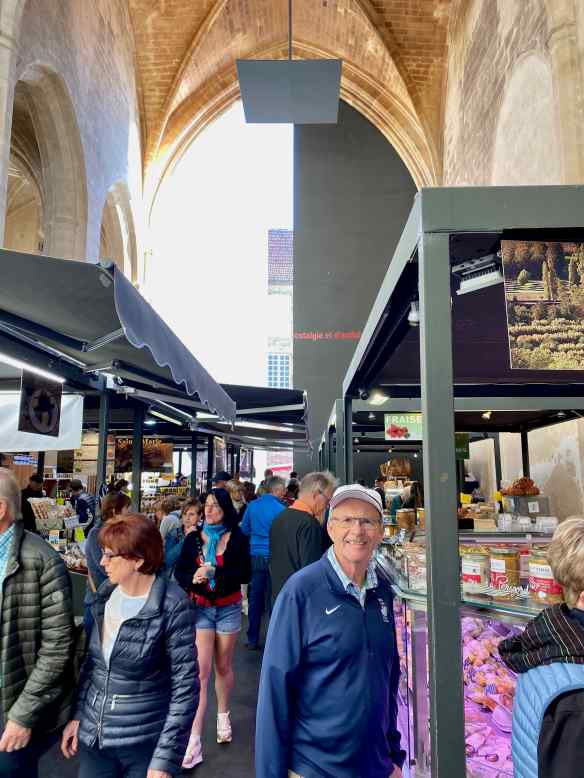
This is the old church that is now an indoor market.  You can see the big doors open behind Bob.

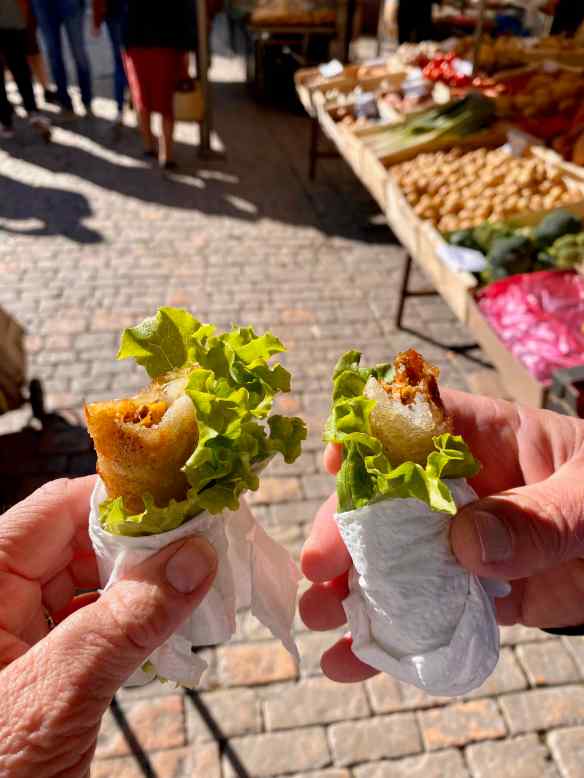
We try out some street food…

and after a stroll down another street…

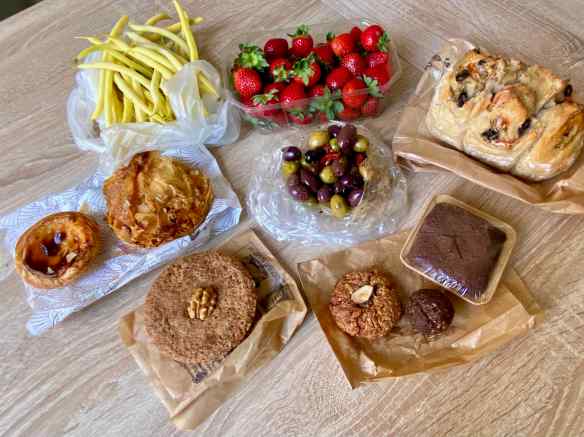
We head back to our apartment for lunch, perhaps not the healthiest, but it sure was good.  We saved the beans for our dinner.

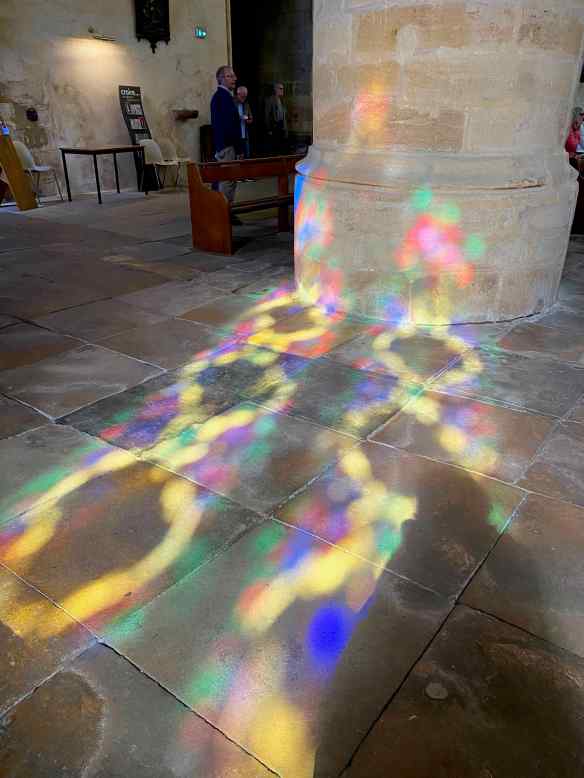
We wander through the Cathedral Saint-Sacerdos, and I find these beautiful reflections from the stained glass window. We visit the Hotel de Maleville which has an artist’s studio on the top floor attic.

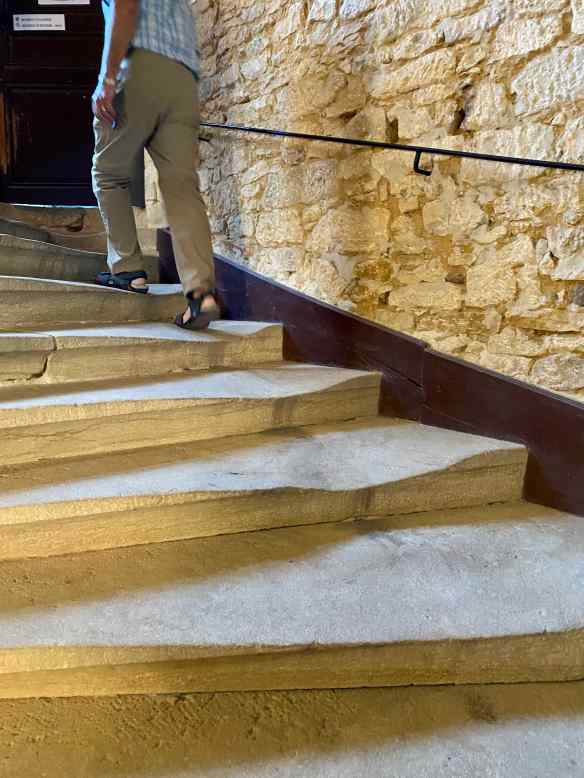
The stairs up to the attic have seen a lot of use.

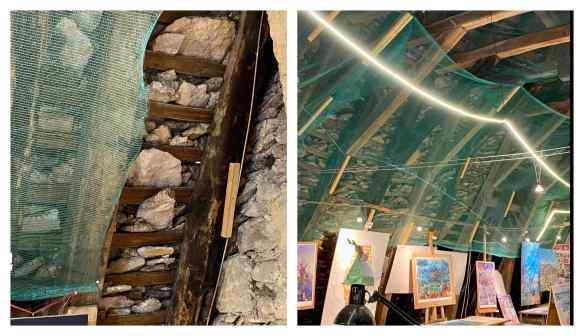
The attic roof is ‘shingled’ with fieldstone’s.  These ‘Thackstone’ roofs are very steep.  This shape distributes the weight throughout the walls.  Once a thackstone roof is installed, it does tend to stay in place! Here is a peek at the underside of one of these roofs.

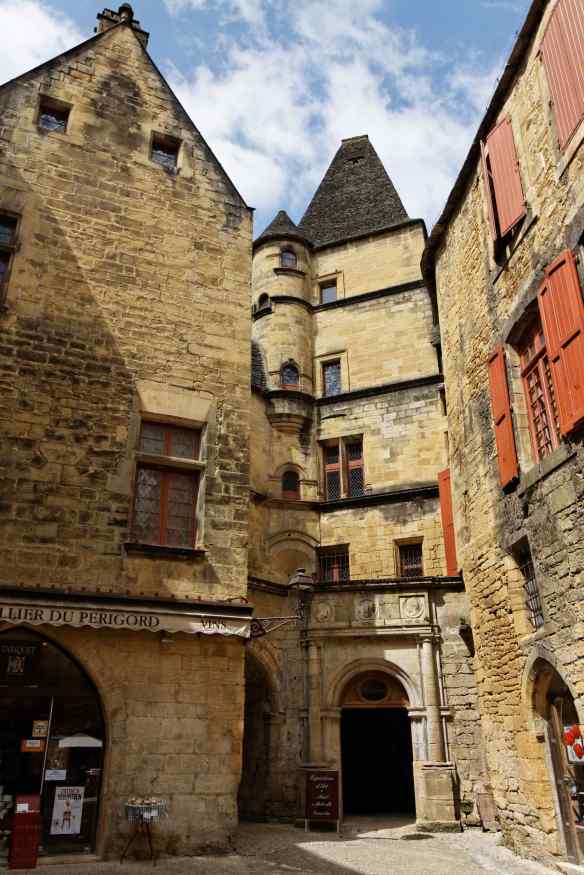
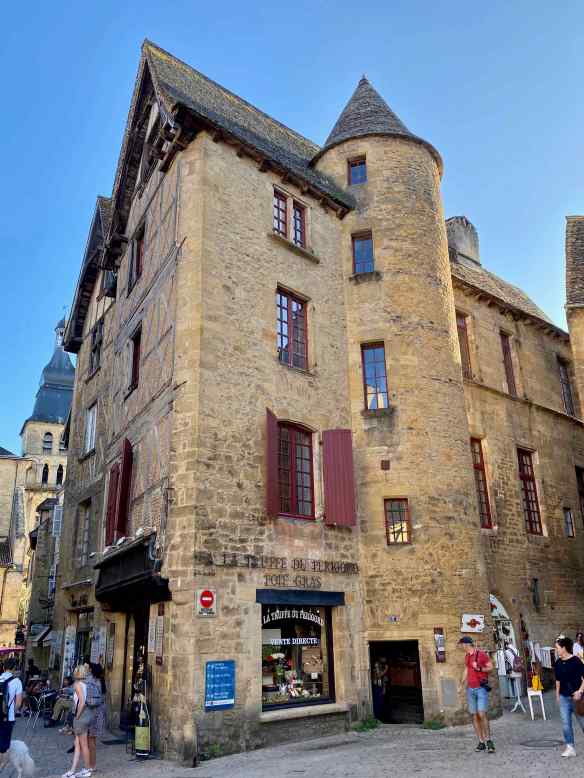
Here is what these roofs looks like from the outside.  The Gisson Manor is composed of two different buildings linked by a hexagonal stair tower. This manor’s origins are in the 13th century.

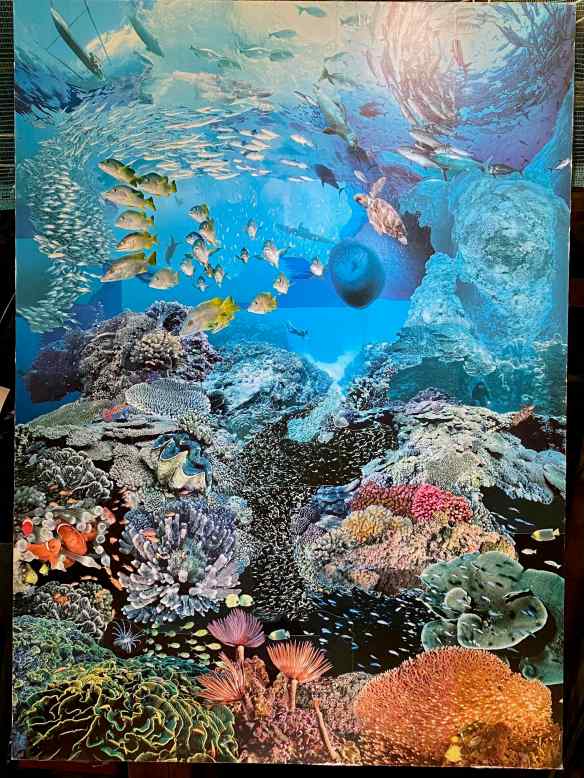
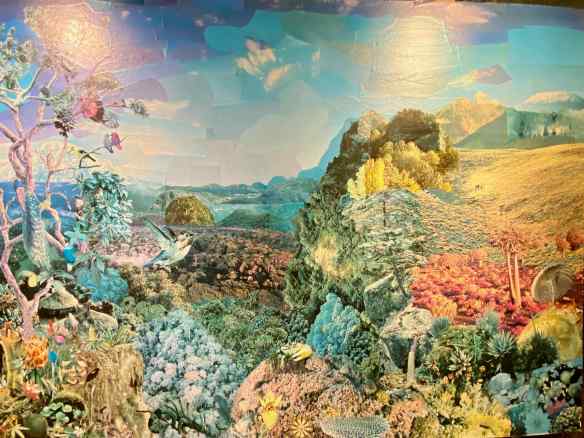
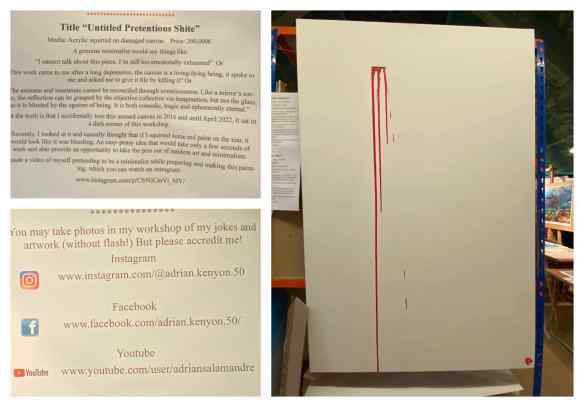
The artist, Adrien Kenyon, https://www.adriankenyon.com/ who works in this unique studio makes collages, and has an interesting sense of humour.  The collages are unique, and large.

He doesn’t mind people taking photos and just asks to be given credit for his work.   Here is another beautiful old building, the house of Etienne de La Boétie.  He was born in Sarlat on November 1,1530 and died on August 18, 1563.  He was a French magistrate, classicist, writer, poet and political theorist who died when he was only 32.

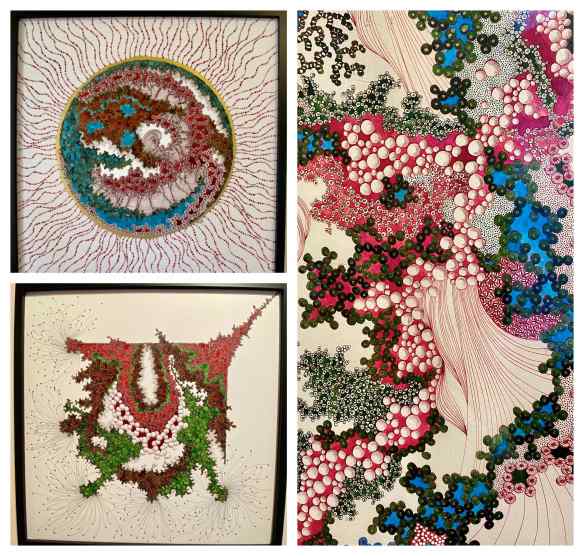
We find another building with artist’s studios and there are two rooms full of works similar to these.  I lost the artist’s card so don’t know her name, but I wonder about being able to draw all those tiny circles.  Some of the artwork is a 90 x 60 cm or larger.  

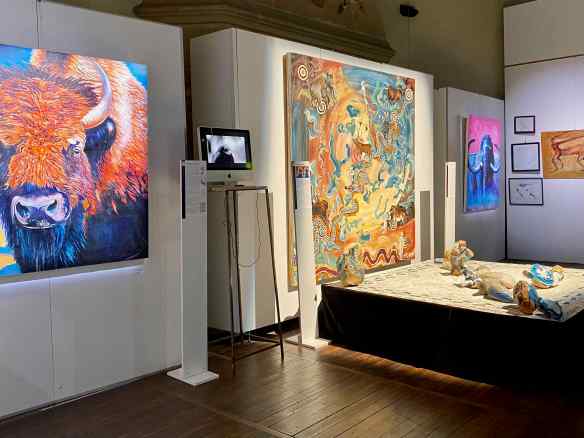
Another studio has a variety of work, some interesting, some not so much.

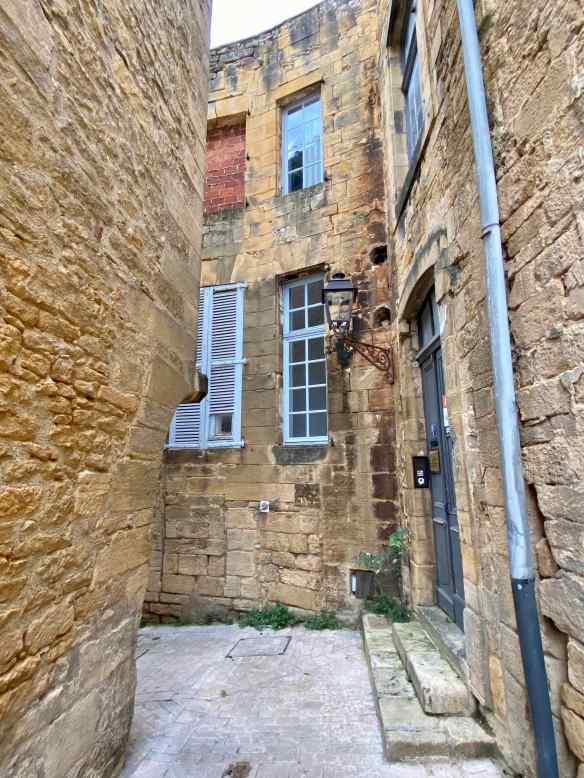
Time to go home, but first here is one more of Sarlat’s medieval streets.

Gouffre de Padirac and Rocamadour, France

Day 38, Thursday, October 5, 2023

Today we are visiting the Gouffre de Padirac which is about 1 1/4 hours east of Sarlat. This cave was opened to visitors in 1899 and now receives 800,000 visitors a year.  A gouffre is sinkhole or pothole.  Well, this is one heck of a pothole!  
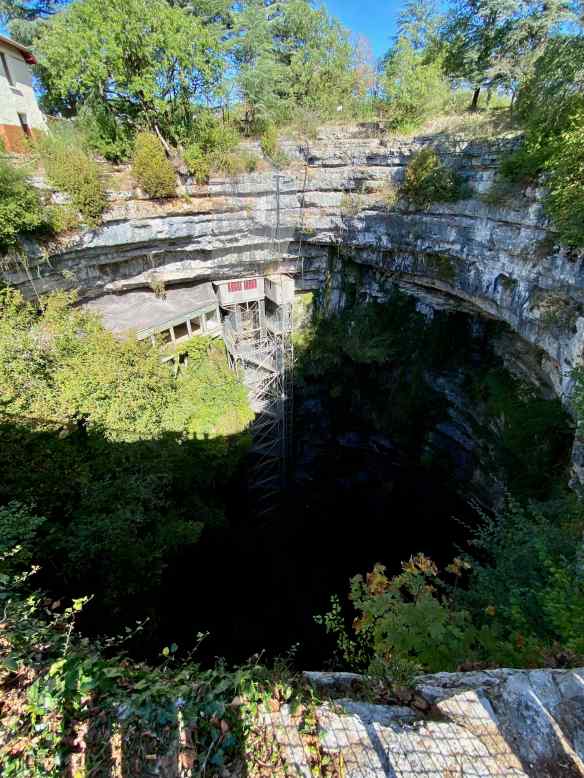
We climb down several flights of stairs cut into the rock and exit this first staircase to start descending the metal exposed stairs on the side of the gouffre.  We are going way down there.
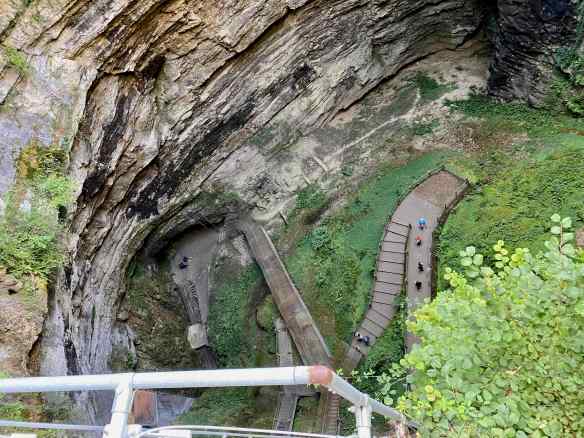
When we reach the bottom…we look up…way up…
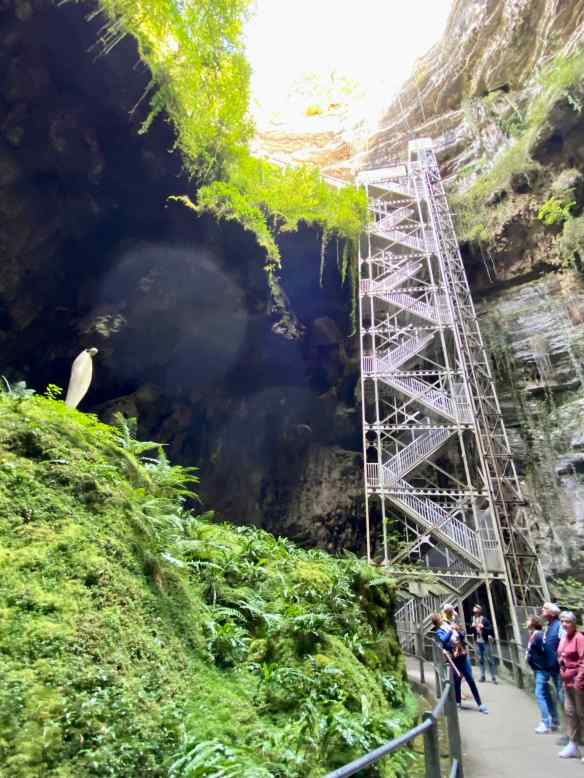
and then down…and surprise…more stairs. Once we are inside the cave there are even more stairs…
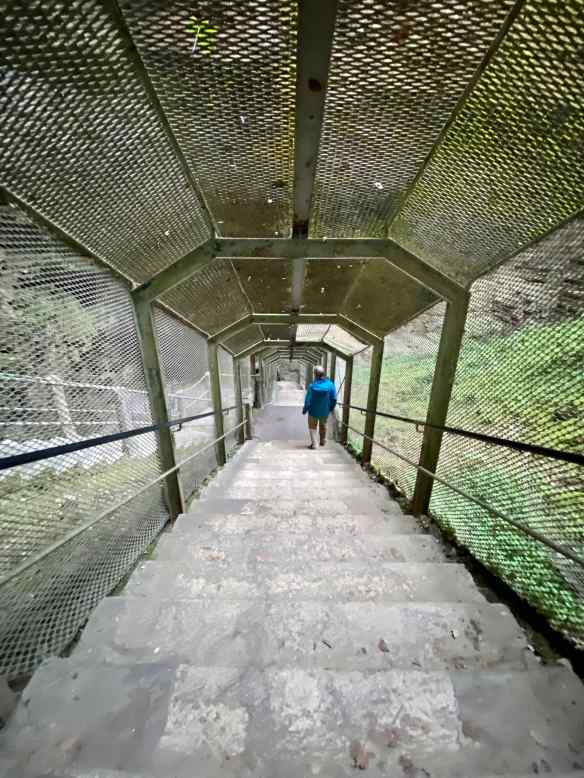
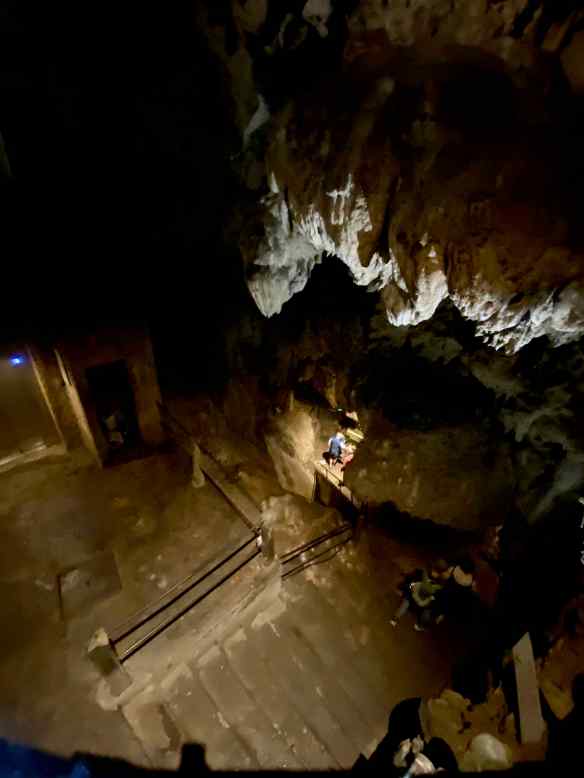
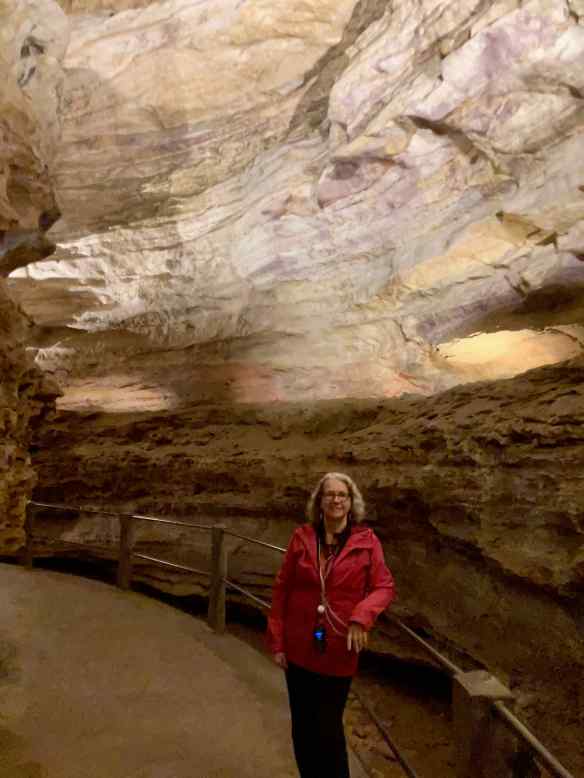
We finally reach the floor level of the cave, after descending 543 stairs!  But wow!  It was so worth it and non flash photos are allowed everywhere except during the boat rides, so I am happy.  Yes…there are lakes and two boat rides 103 meters below the surface!

I took this photo after we disembarked from our boat ride.  The lake that we rode on is called Lac de la Pluie, because it is always raining. We had light rain falling on us on that part of the boat ride.  Can you imagine continuous rain? and at 103 meters underground!
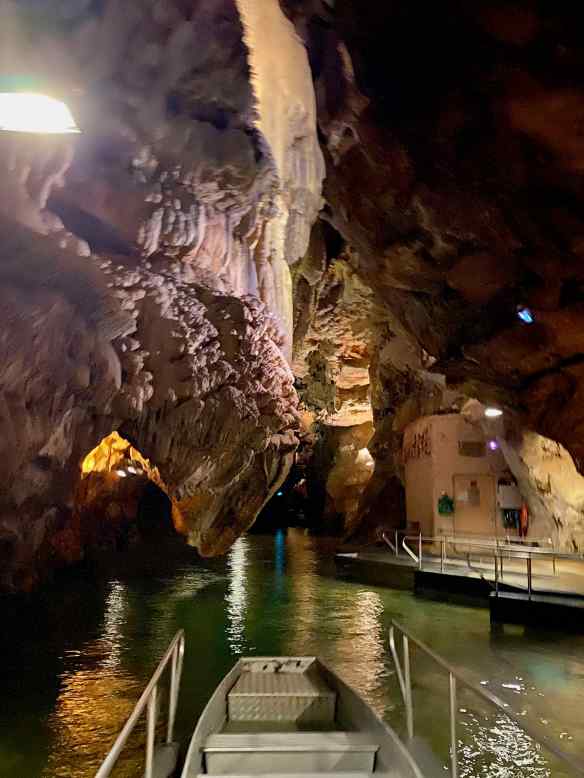
Our walk continues past amazing rock formations …
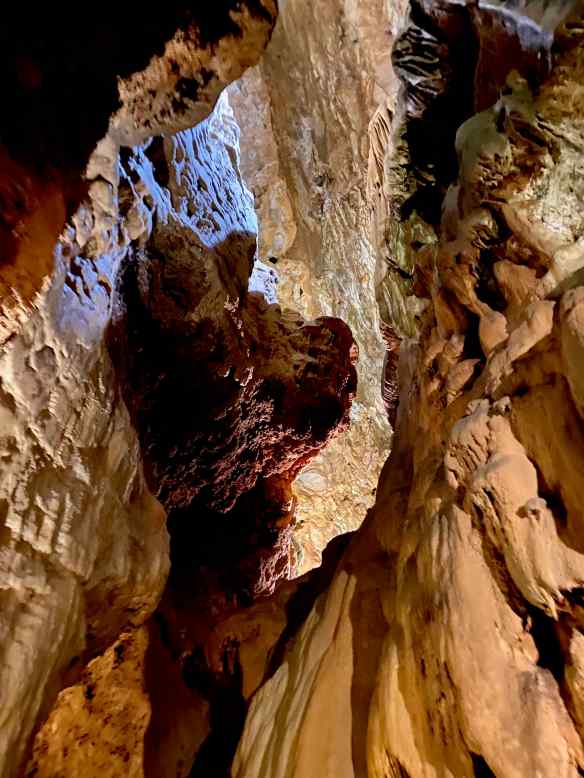
that are enormous…
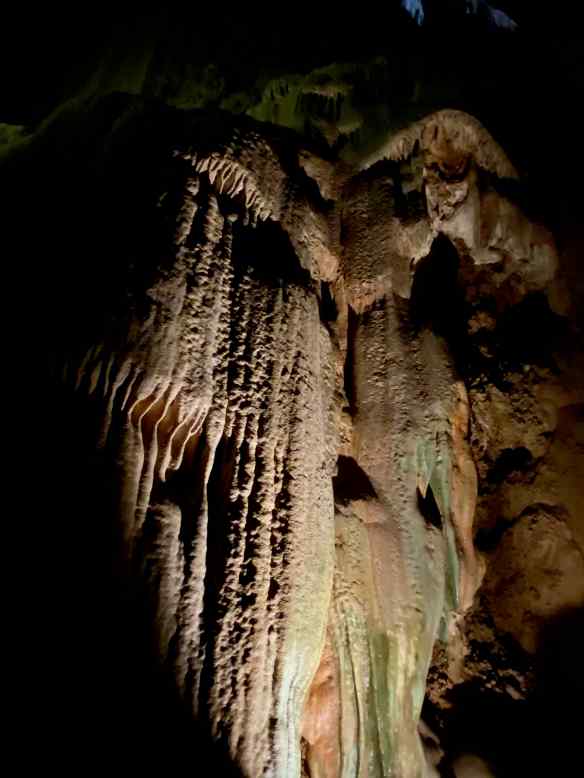
with incredible shapes and colours…
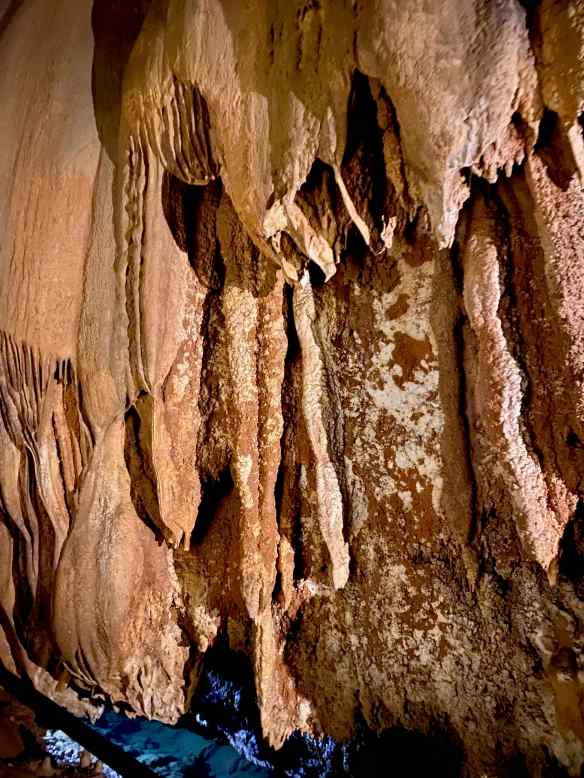
only to arrive at the beautiful Lac des Gours with crystal clear reflections.
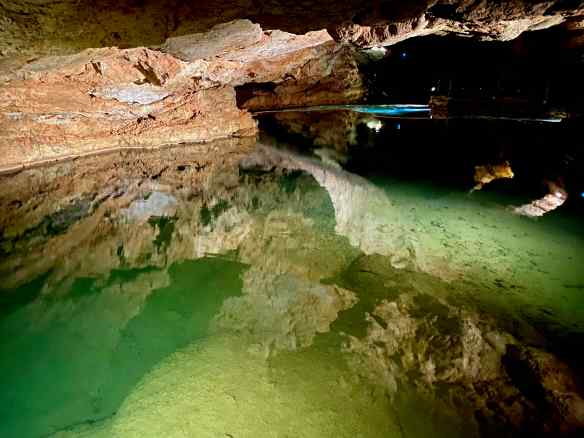
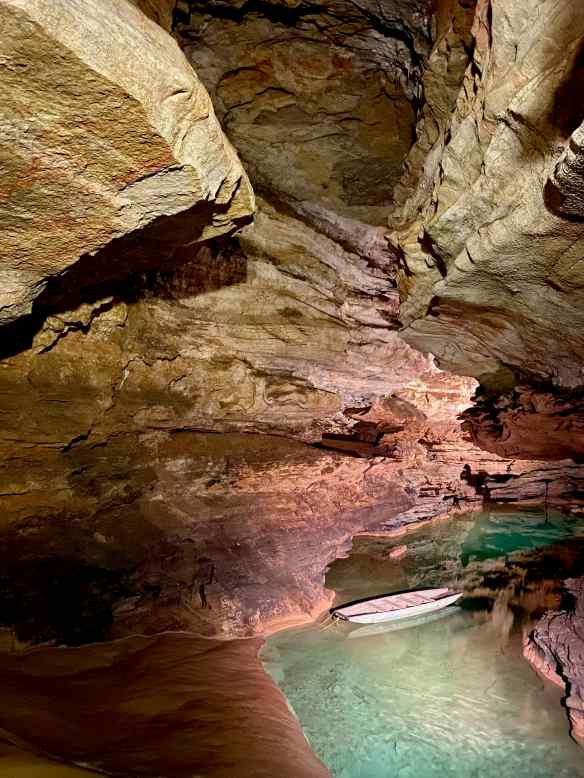
At the far end of this lake we can see the river below with an old boat.  I don’t think the public is allowed in that part of the cave.
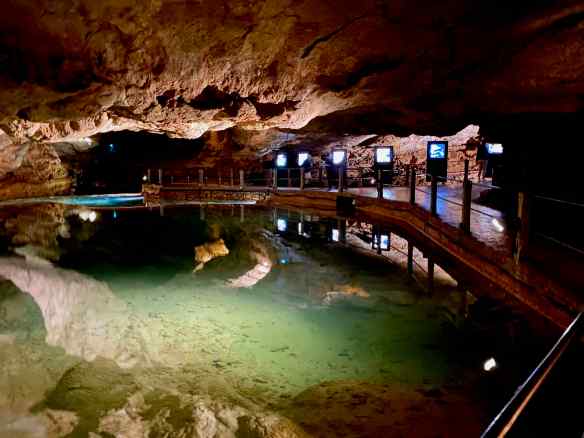
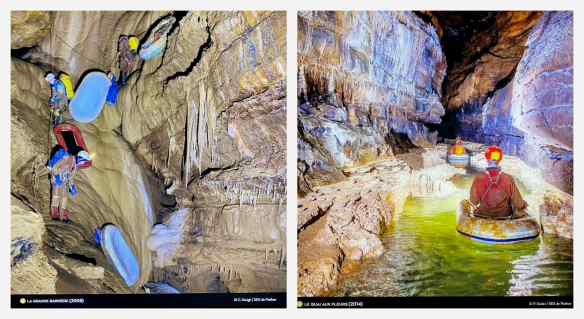
At this point we are given the option of returning the way we came or we can continue to another part of the cave that requires climbing more steps…lots more steps!  Of course we choose to continue further into the cave!The displays here shows some pictures of cave exploration…not for me..it looks cold, wet and exhausting and rather frightening as well. In all, 42 kilometres of galleries have been mapped by speleologists but there are still more areas that have not yet been explored.
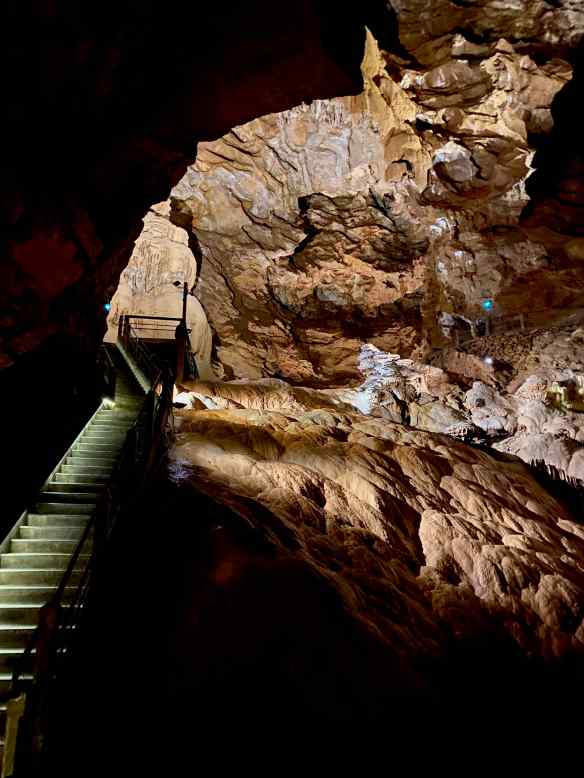
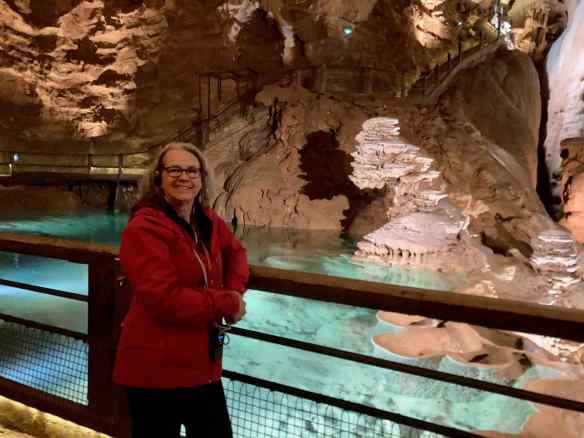
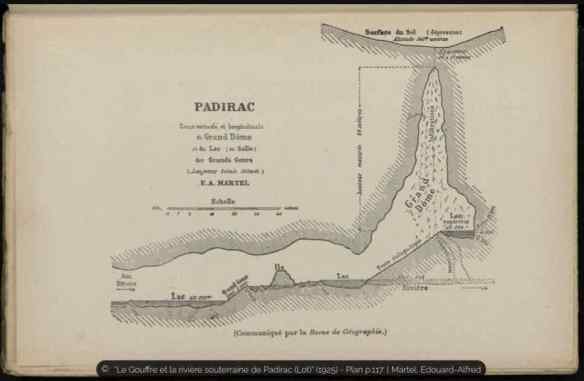
There is a warning that there are lots of stairs, and wet, slippery sections…that isn’t going to stop us.  So up we go… And there is another lake, twenty metres above the river!  Mind boggling!  Lake Superior (Upper Lake), is crystal clear and an incredible aqua colour.  The round tan shaped formations on the right hand of the photo form a dam that holds the water in this lake.“A remarkable stalagmite lies above the lake. It is nicknamed the Pile d’Assiettes (Pile of Plates) because of its surprising resemblance to stacked-up china. It is a typical high-roof stalagmite formed when such a structure exceeds several tens of metres in height. Drops of water fall to the ground at great speed and explode, depositing limestone in circles and giving rise to very flattened formations.”  ~ https://www.gouffre-de-padirac.com/en/salle-du-grand-dome   We are standing beneath the Grand Dome, which rises 94 meters above us.
This diagram shows how high above the river Lake Superior is, and the incredible dome that rises above it.
There are still more steps, many more steps…
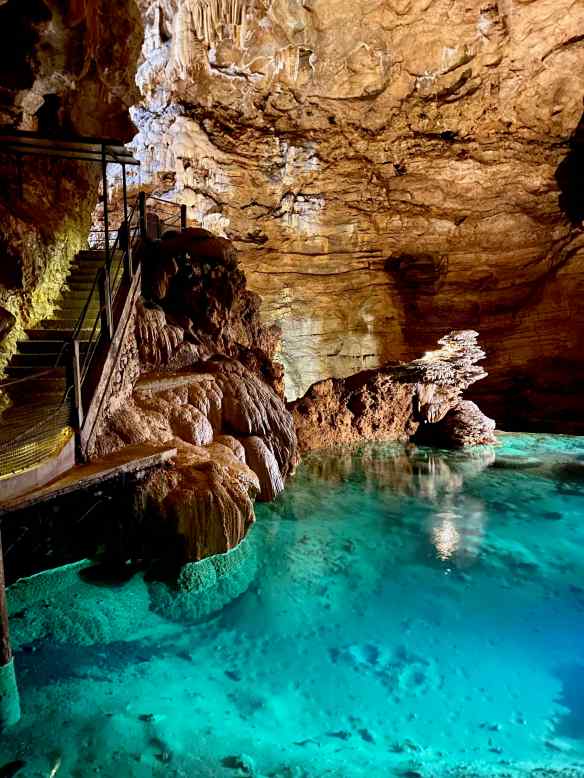
and many more amazing formations…

that are enormous. Bob is in the bottom of this photo to give an idea of their size. I am quite relieved that we do not have to climb these steps!
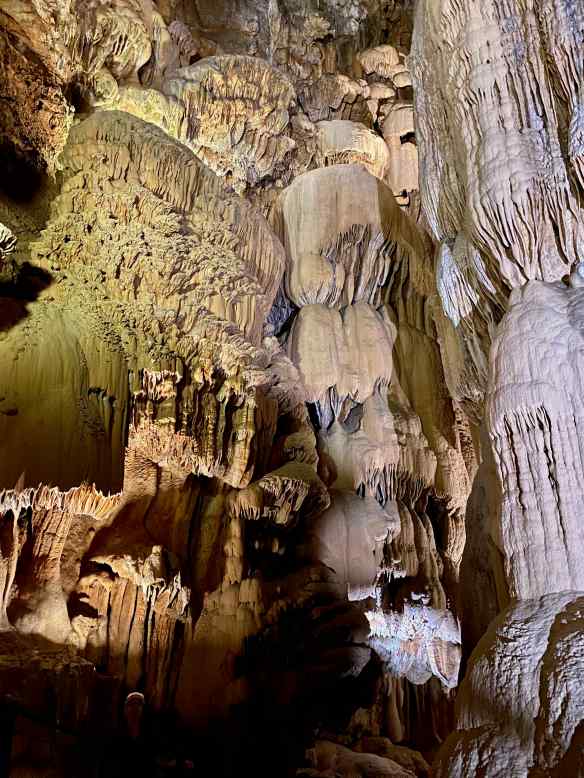
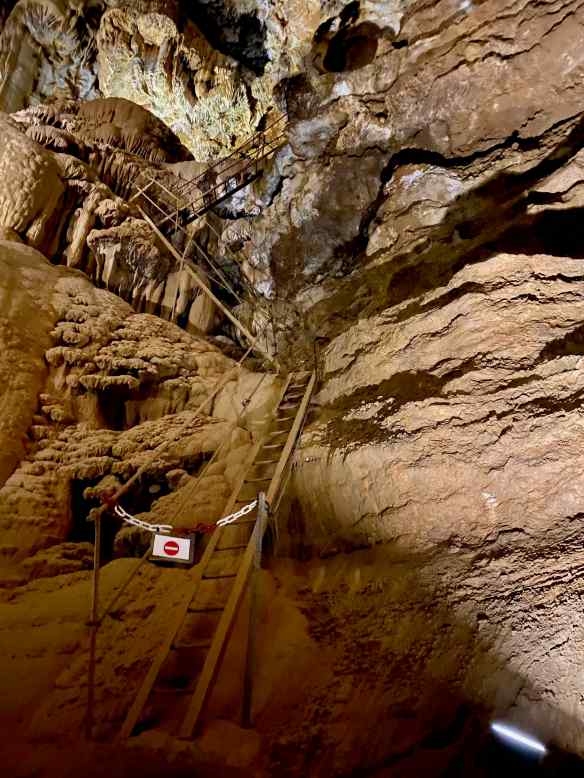
This is a magical underground world!
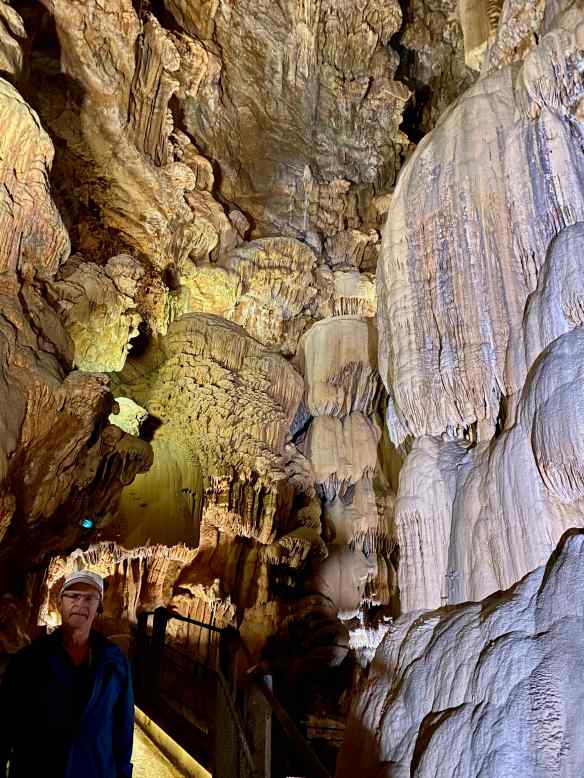
More formations, just because they are so wondrous…

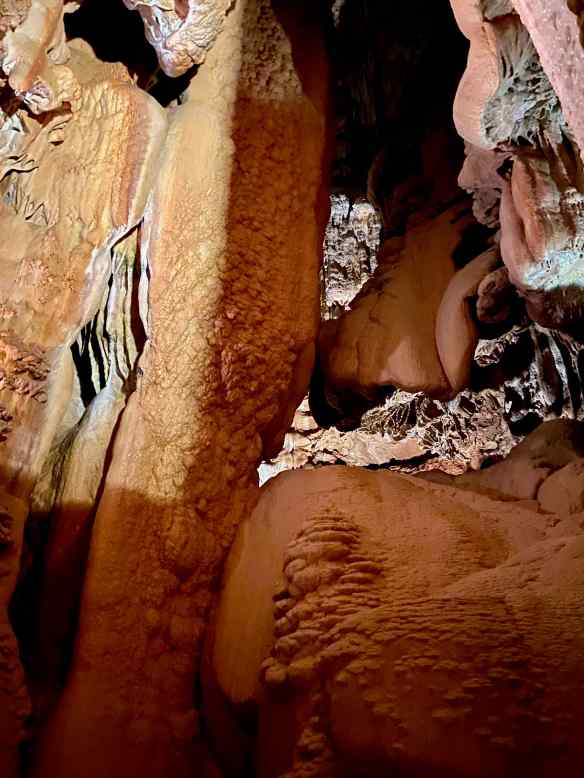
and I am amazed by their colours. It is difficult not to include all even more photos.
We need to descend way down there!
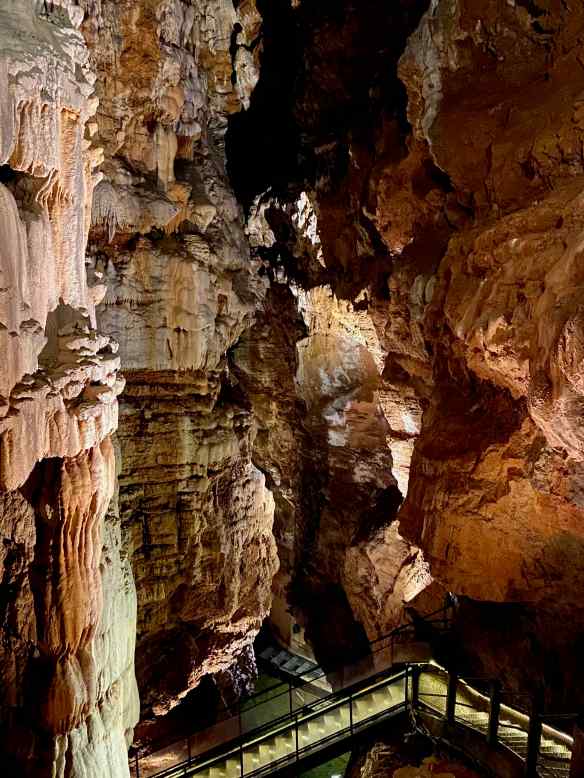
We continue to walk by so many rock formations…I have run out of words to describe how amazing they are.  Édouar-Alfred Martel, the discoverer of this cave said that these are “Marvellous areas that can only be lived in by fairies.”     
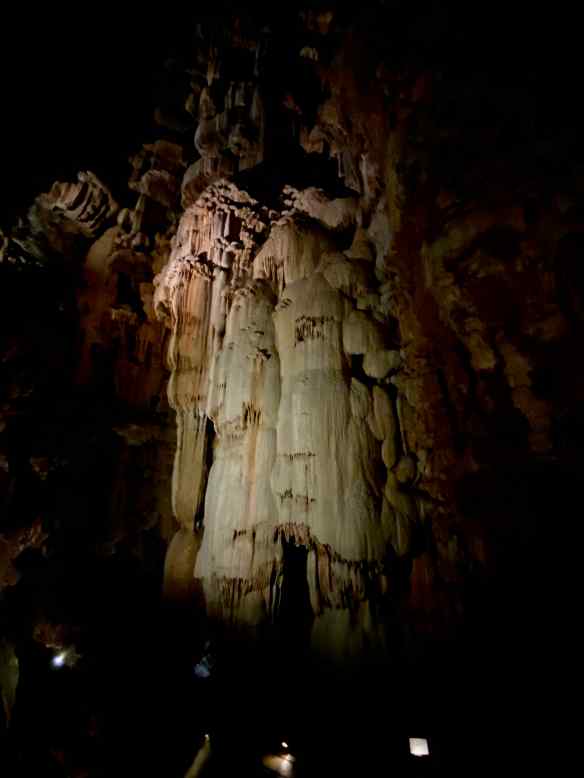
We need to go way down to where that light is.
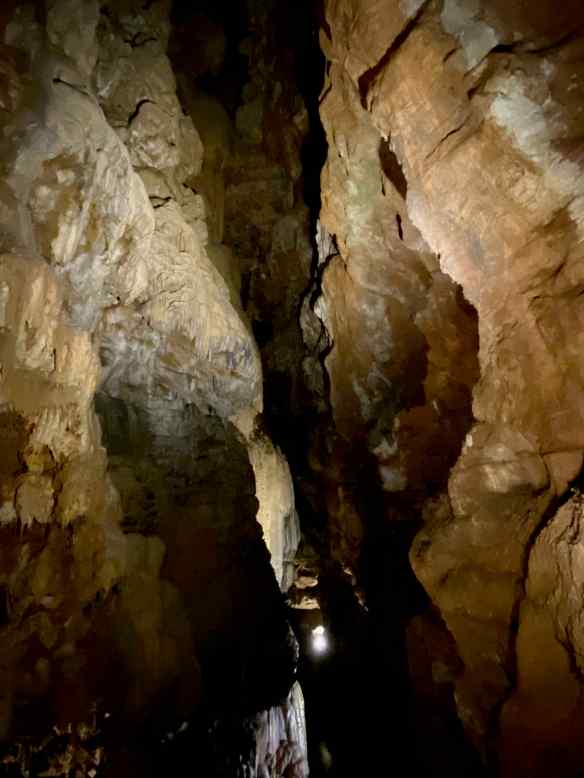
Finally we can see the dock for our return boat ride.
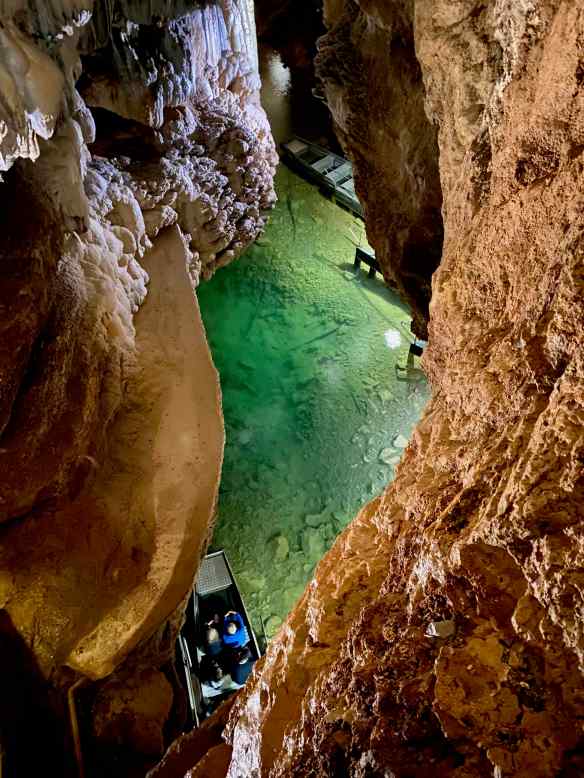
But first we still pass by even more formations.  The roof on the bottom right protects us from water drops as we walk past this one.
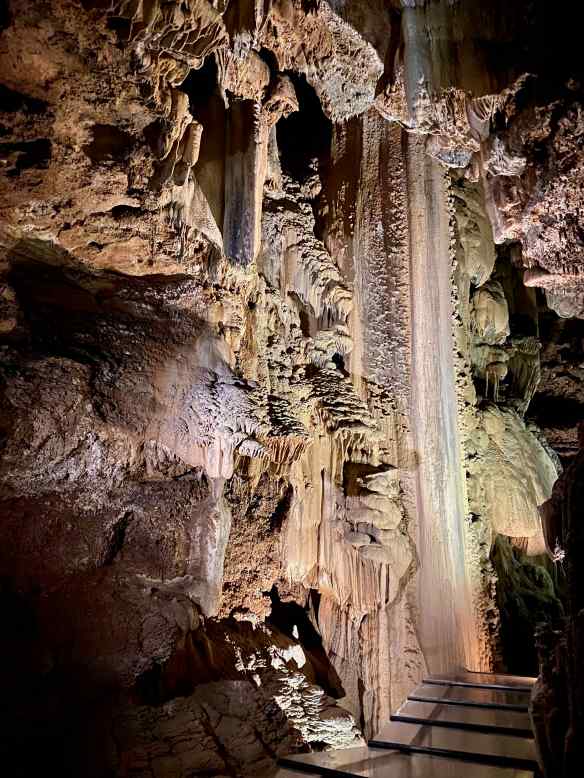
All too soon we are back at the boats.  Honestly, I would have been happy to just turn around and trace our steps a second time…but there are no washrooms down here!  This boat just arriving is the one we take on our return journey.
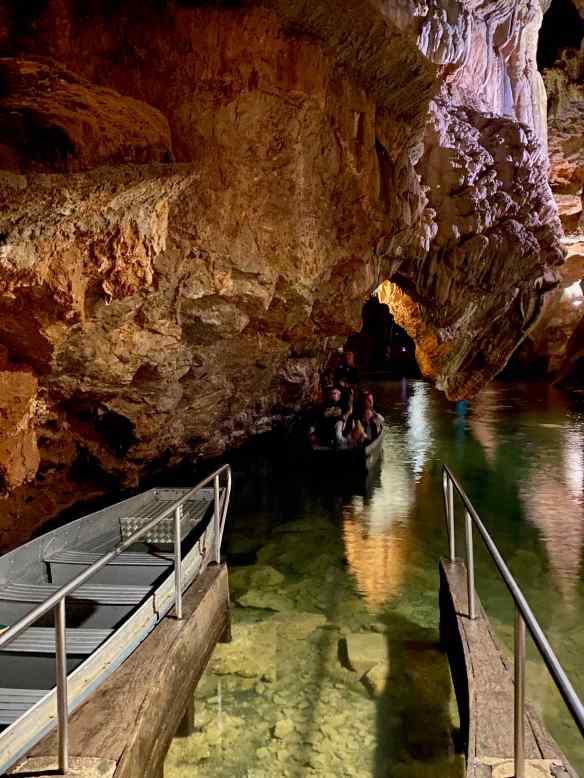
We sit right at the front, so we will have a great view of the Grande Pendeloque (Great Chandelier) which is a 60-m-long series of calcite formations that seems to hang in the air above our heads, but no photos are allowed on the boat trip.
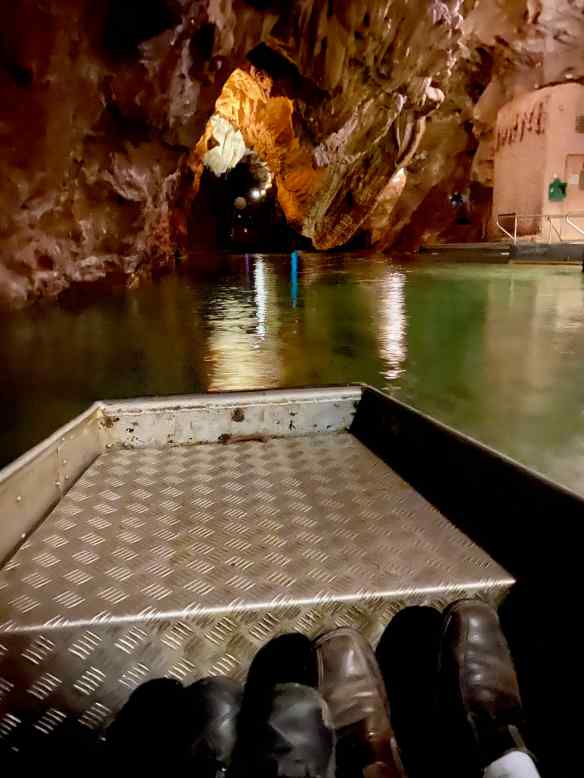
We reluctantly make our way back to the exit.  One last photo in the cave.

We decide to take the elevators back up to the surface from here.  We are going to visit Rocamadour this afternoon and it also has lots of steps.

It is less than a half hour drive to Rocamadour, which is a famous pilgrimage site and a  UNESCO World Heritage site.  It takes a while to figure out where to park but we finally find spot near the top rather than the bottom of this cliffside village. This it our view while having lunch.
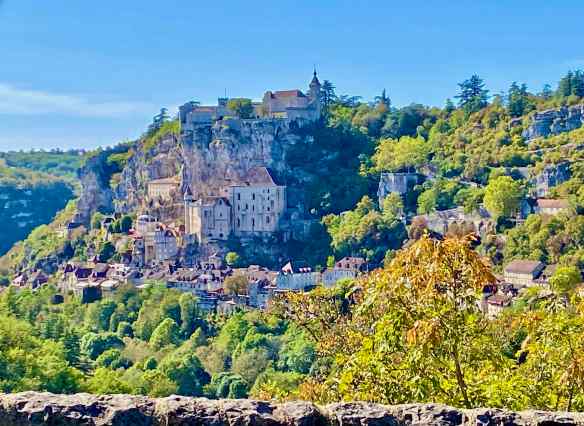
We are disappointed to discover that the ramparts are closed for restoration.  We were looking forward to the views from the ramparts,  so we start on our way down towards the church and chapels.  Part way down the winding path, this cave marks the end of the Stations Of The Cross.  Turns out we are starting at the end instead of the beginning.  
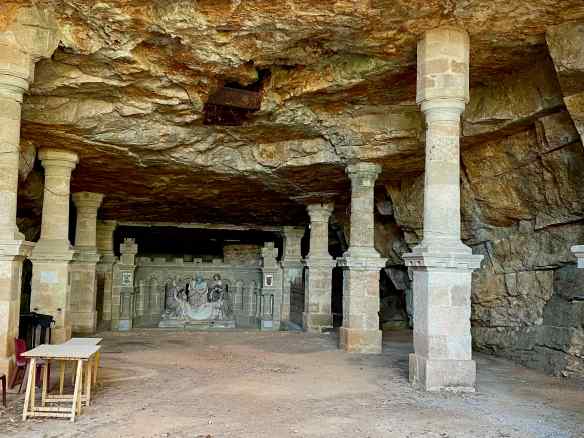
One of the fourteen Station of the Cross.
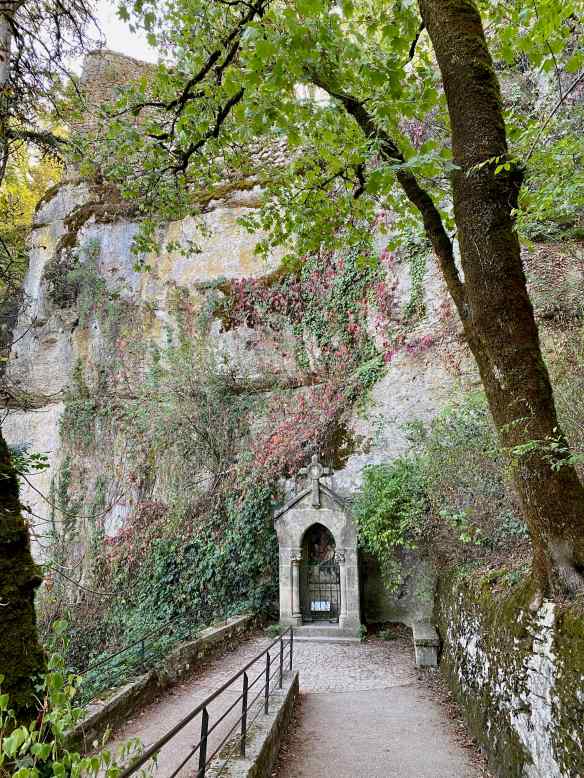
I did mention that it was a winding path, and fairly steep.
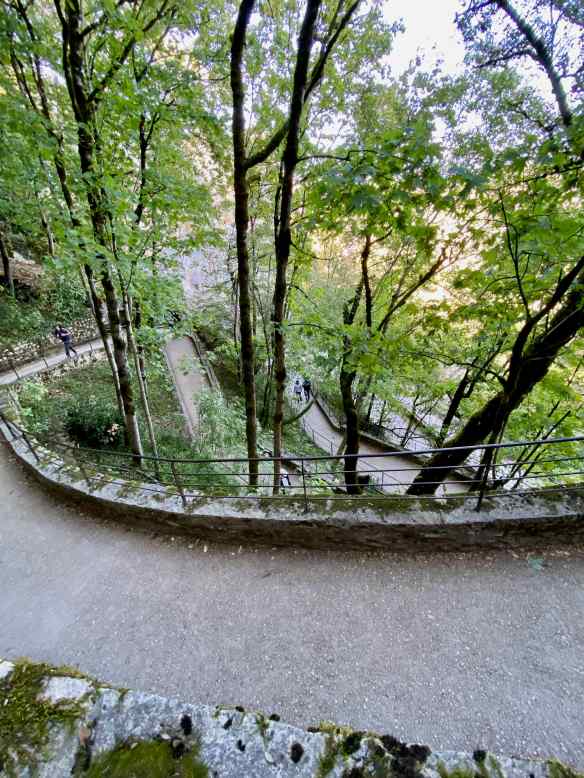
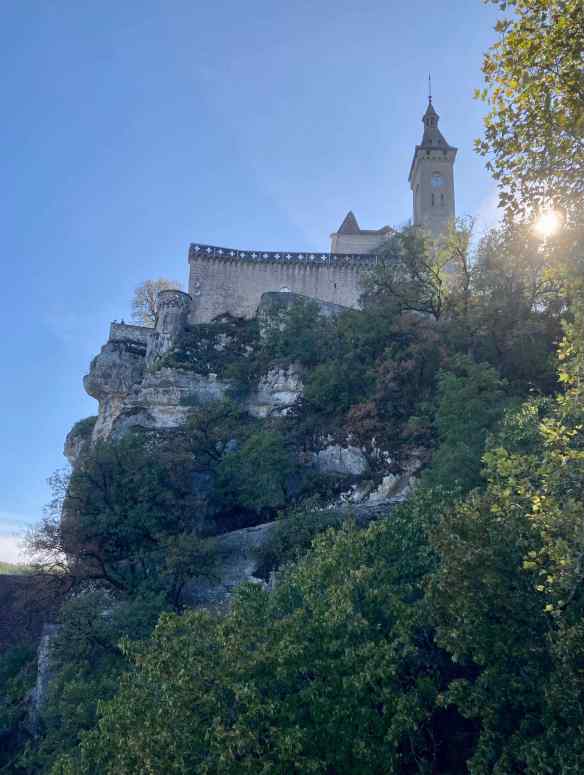
Looking up towards the ramparts, with the afternoon sun looking low in the sky because of the steep angle.
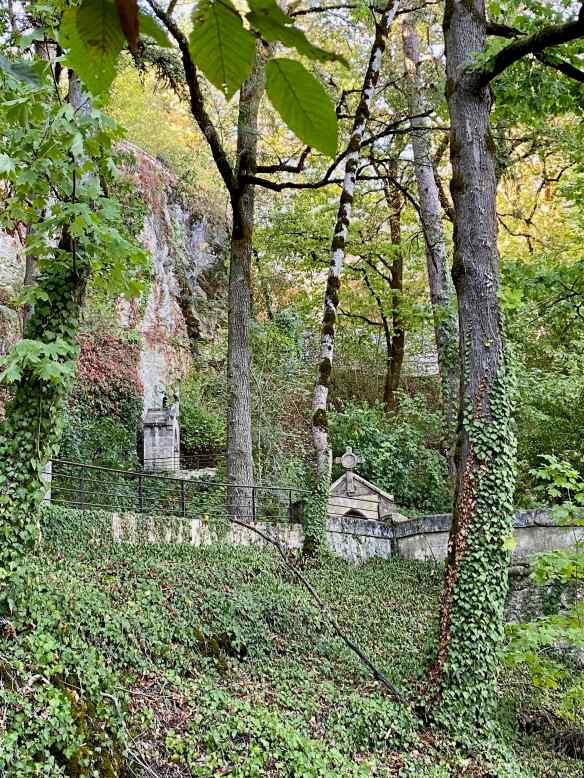
The trees and hillsides are covered with ivy.  The grounds are not terribly well kept here.
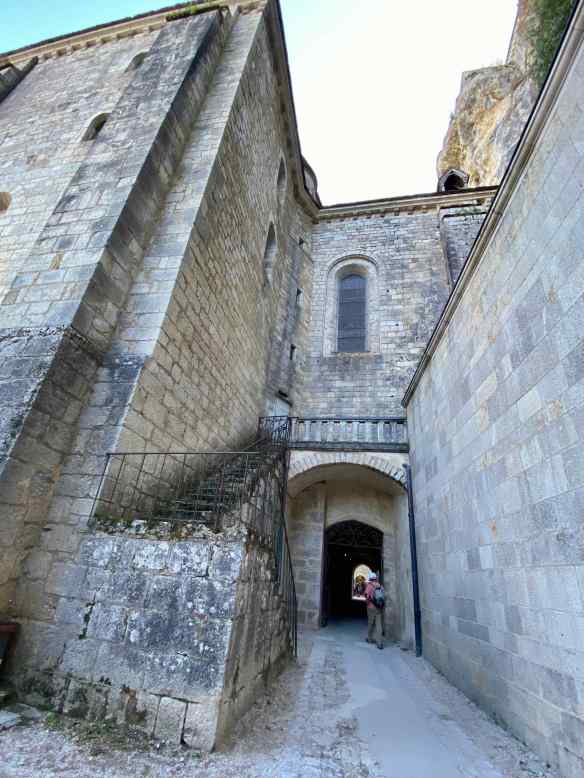
Finally we enter the Sanctuary… 
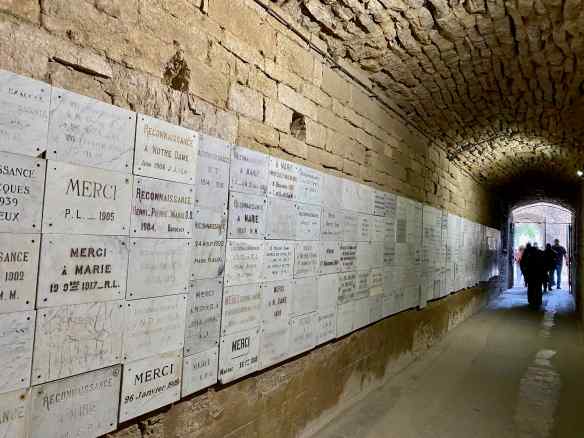
and walk past many plaques engraved with thanks for prayers answered.
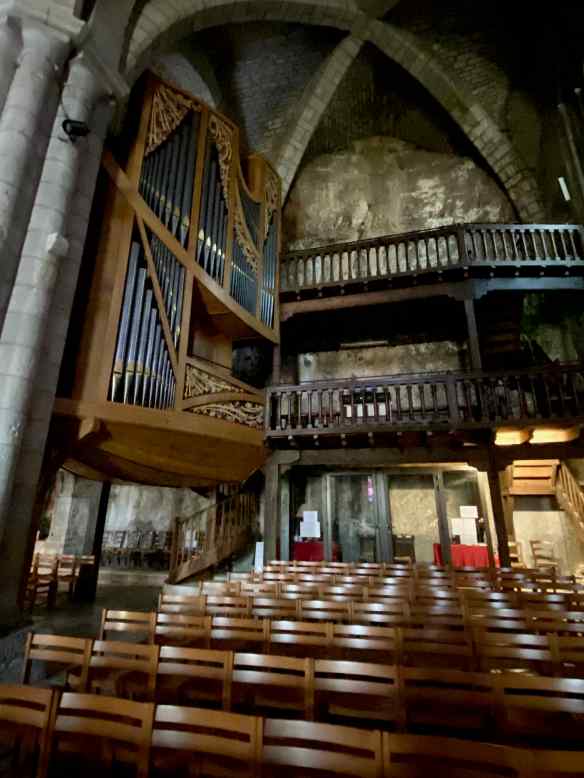
Some of the churches and chapels are built right into the stone cliffs, which are visible in the back of the 850 year old Basilica of St. Saviour.
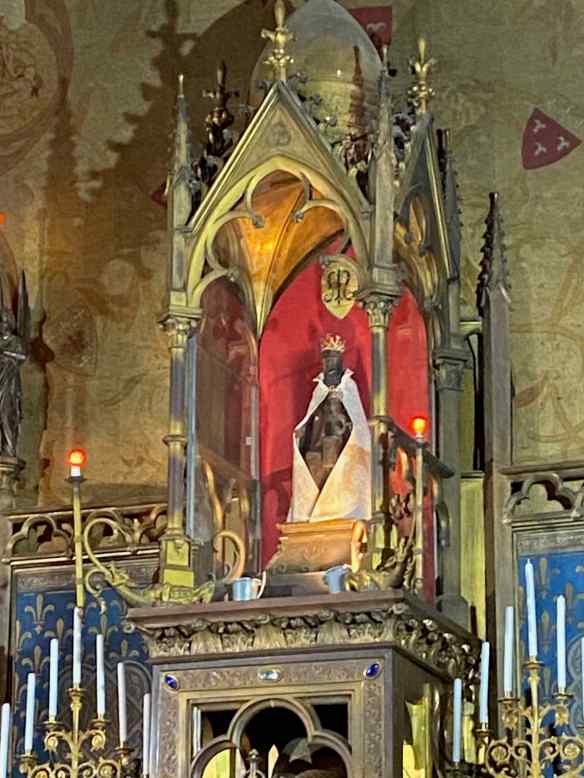
The Black Virgin in the Notre Dame Chapel.  A group has arrived for a private mass so we don’t stay long.  This is the second Black Virgin we have seen on our travels.
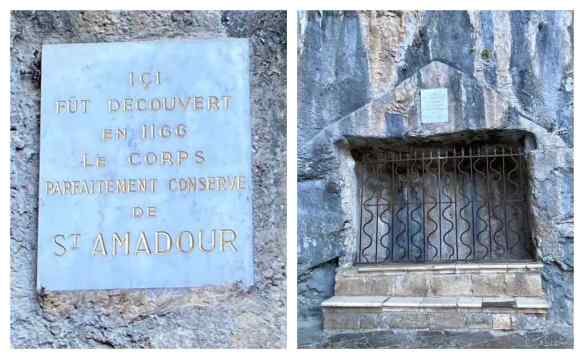
In this spot, in 1166 the perfectly preserved body of an early Christian hermit who died in 418 AD was discovered… St. Amadour.
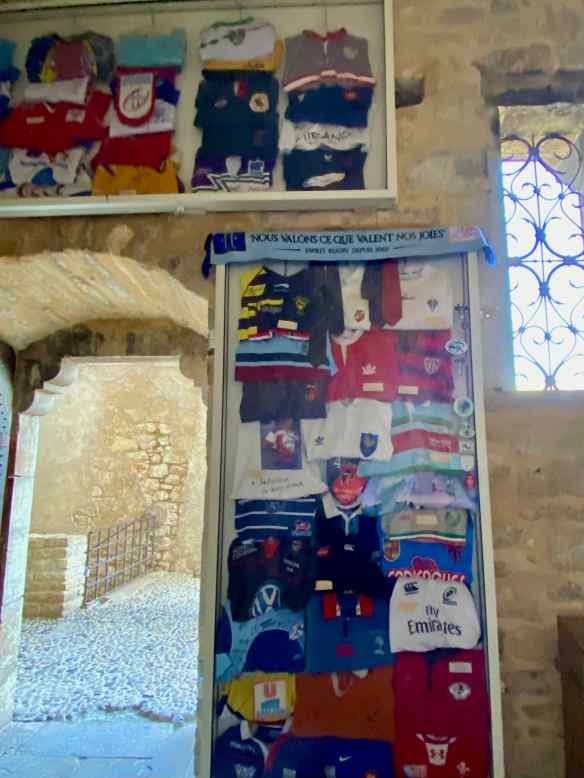
However, there is also a small chapel and a patron saint for Rugby!  We were not expecting that.
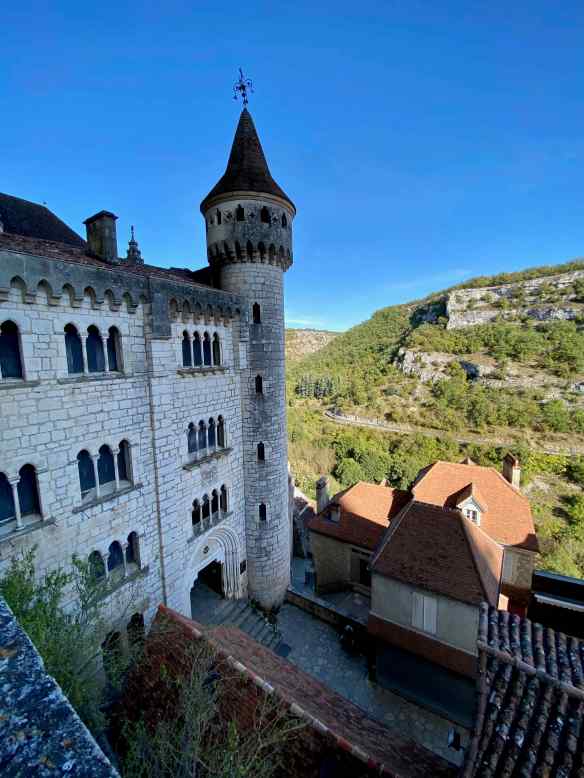
A view of the valley from the sanctuary.
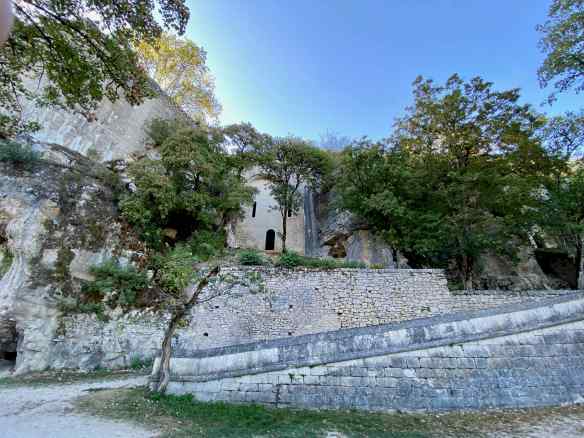
We start walking back up the hill to our carpark.  We decided not to go all the way down to the Medieval village at the bottom of Rocamadour.  It now consists of lots of shops selling tourist souvenirs and restaurants.  It has been a long day and we are ready to go home.
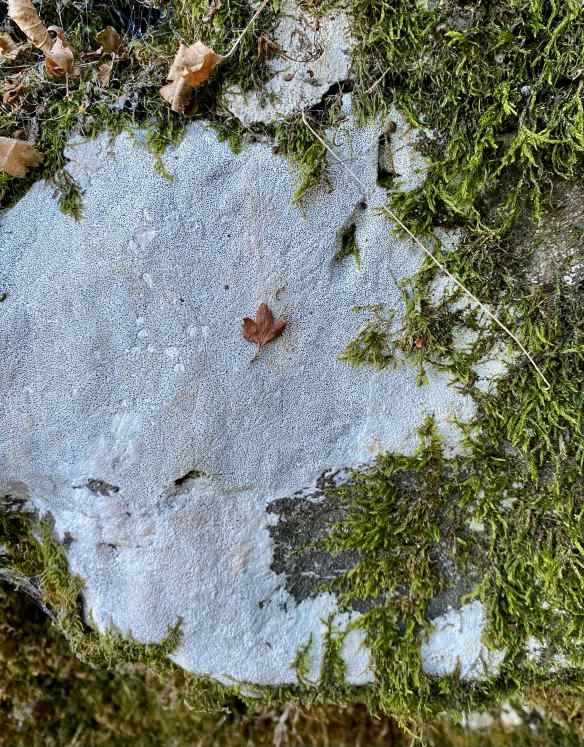
I loved this little red leaf stuck on the side of this rock.
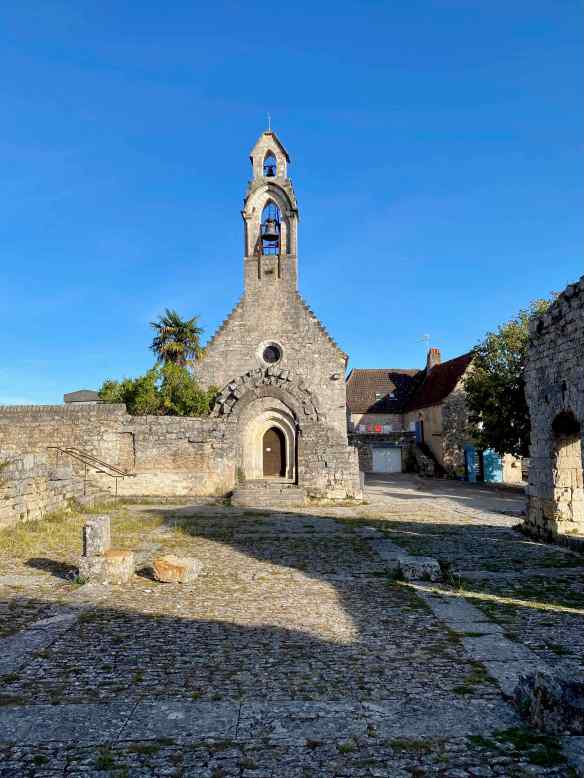
There is a little church in the hamlet of L’Hospitalet on our way to the carpark but it isn’t open so we head home.  We were both a bit underwhelmed by Rocamadour….it didn’t have the presence that we were expecting…although we are not really sure how to explain why.
Sarlat le Canéda, France

Day 36, Tuesday, October 3, 2023

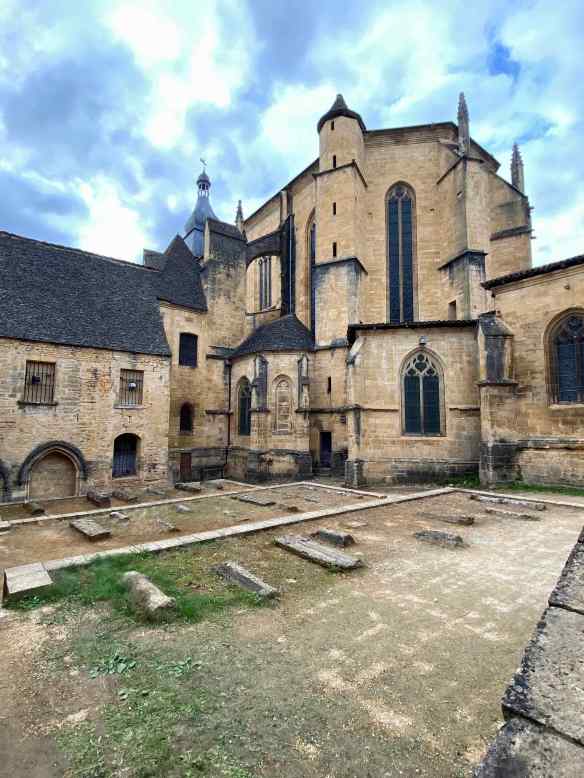
Bob is out early exploring the streets of Sarlat and he comes home to tell me how interesting this medieval town is. We both go out in the afternoon for a walk. Sarlat Cathedral, just around the corner from our apartment is a Roman Catholic church.  It is a national monument and was established in 1317!  We hear its bells chiming several times a day. It is a nice wake up call at 7:05 am when the bells chime for several minutes.  The ringing of the bells at 7:05 am and 7:05 pm each day is called “Angelus,” and that it is an ancient pattern of bell-ringing that is a call to prayer for Catholics to pray a particular prayer.  This is the back of the church, with several ancient sarcophagi, which I discovered is the plural form of sarcophagus.
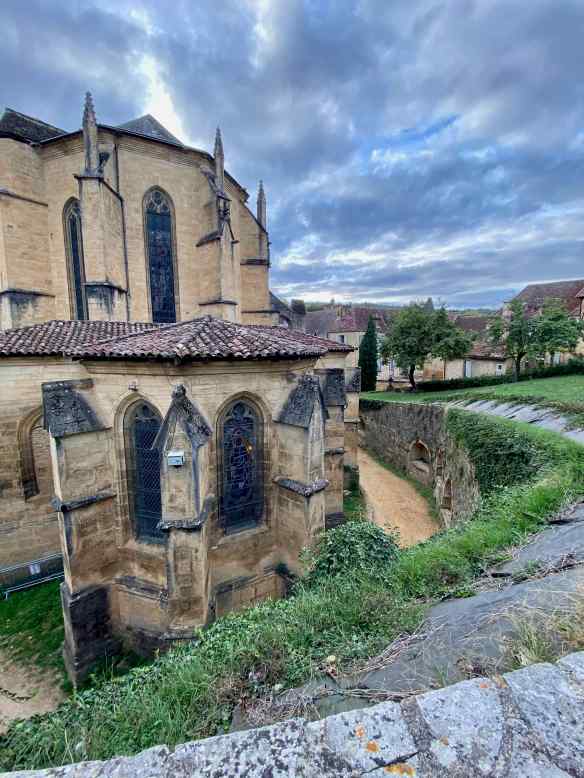
We climb the steps behind the church and I notice a light shining through the stained glass window, although the church is closed at the moment.

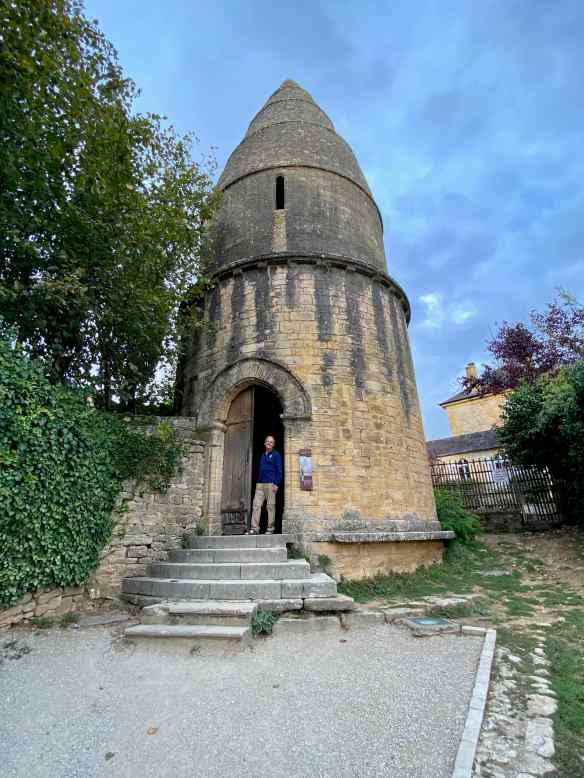
At the top of the steps behind the church we find this Lanterne des Mortes, which means Lantern of the Dead. Lanternes des Mortes are small stone towers. “Pierced with small openings at the top, a light was exhibited at night to indicate the position of a cemetery, hospital, or leper colony. These lanterns were originally constructed to warn passers-by of the danger of infection, as well as to illuminate cemeteries where it was feared that repenting souls, ghosts, and criminals could hide. Later, they were also erected at the intersections of important routes and roads.”  ~Wikipedia

Bob checks it out but there are no repenting souls, ghosts or criminals about.

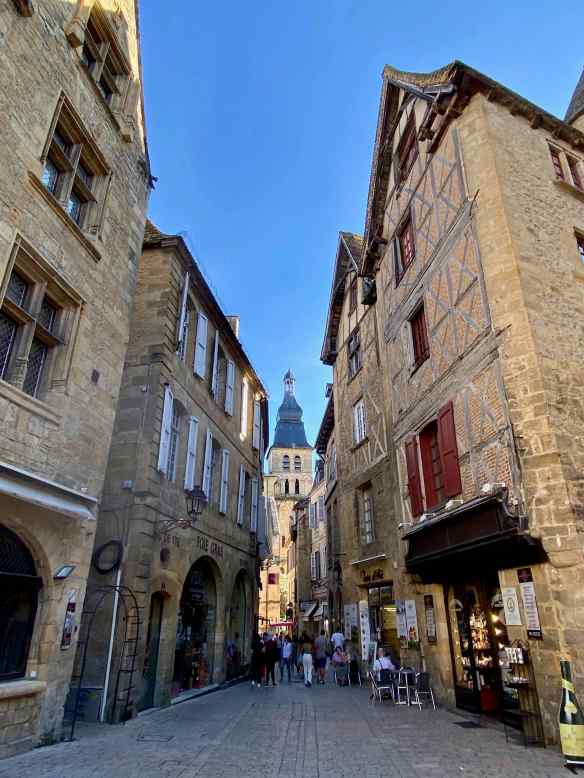
We continue to explore the old narrow streets.

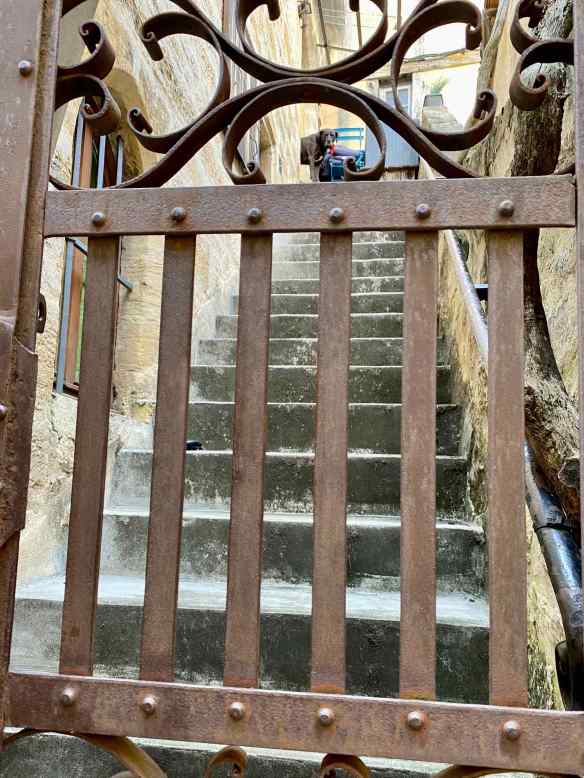
This very large dog just quietly watched us peek through the gate, even when I called to him he didn’t move a muscle.

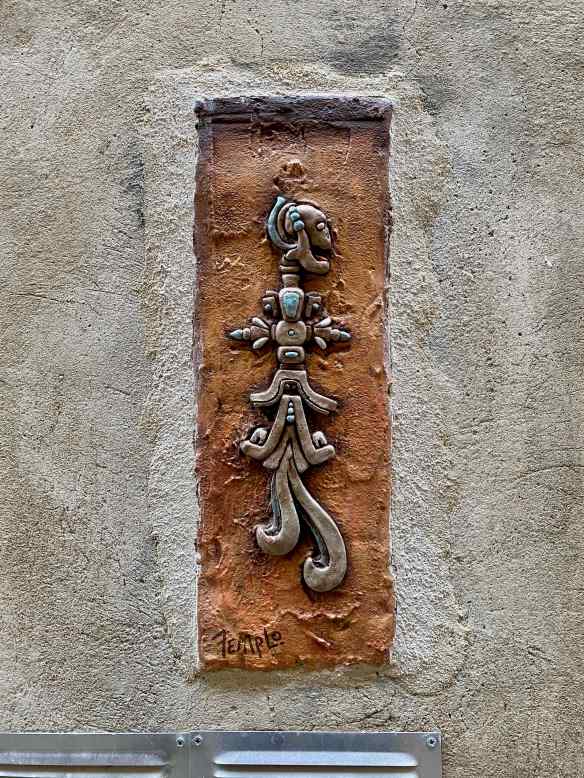
Someone cemented a little piece of art onto the wall on one of the side streets. It makes me smile.

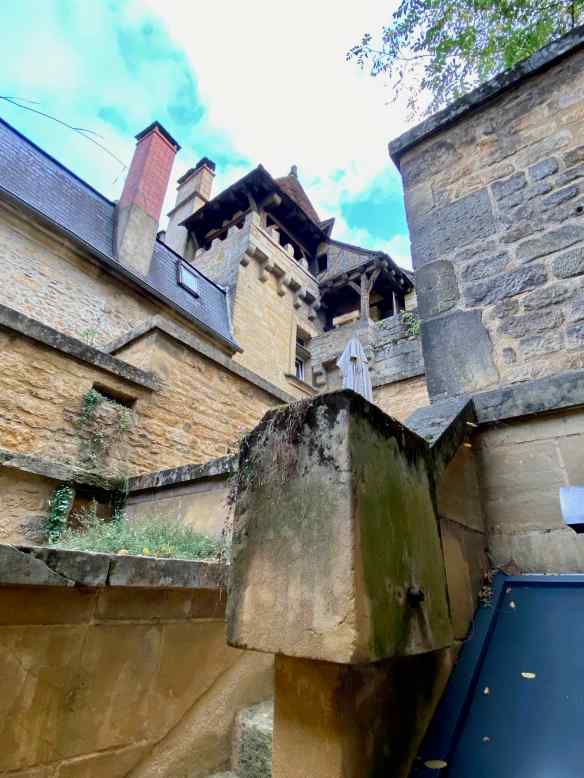
Everywhere we look the old buildings are crammed together, often one on top of another up the hillsides.  This one looks a bit castle like.

This charming little stained glass room is on the roof of the Présidial, which was built in the17th century.  At the time it was a sort of Court House where a Royal Officer would hear complaints and make rulings.  

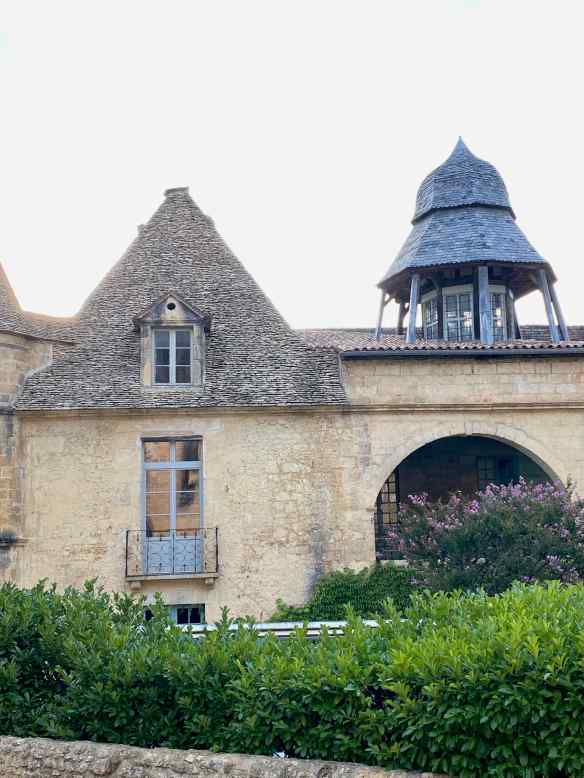
I have mentioned that I love peeking in windows and courtyards whenever it is possible.  I don’t think this is being renovated, it just sits empty.  

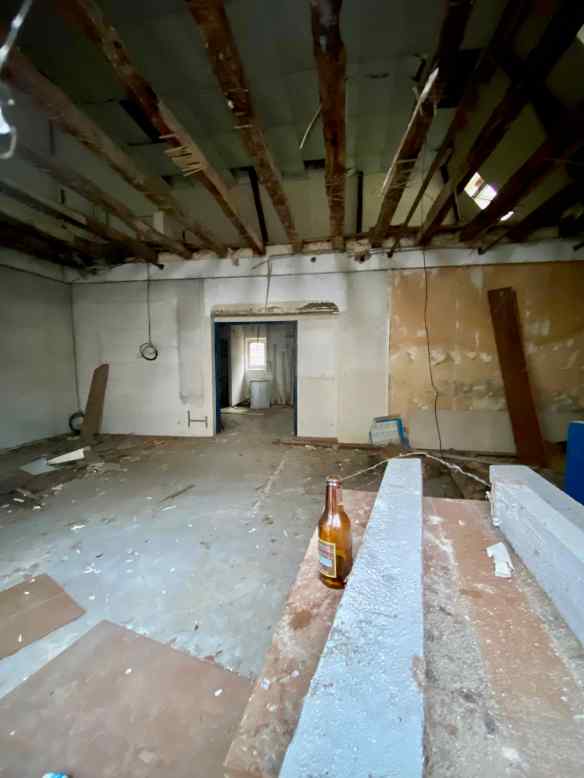
A block or so away a renovation is definitely taking place. there even was a box with old dishes sitting on the sidewalk, free for the taking.

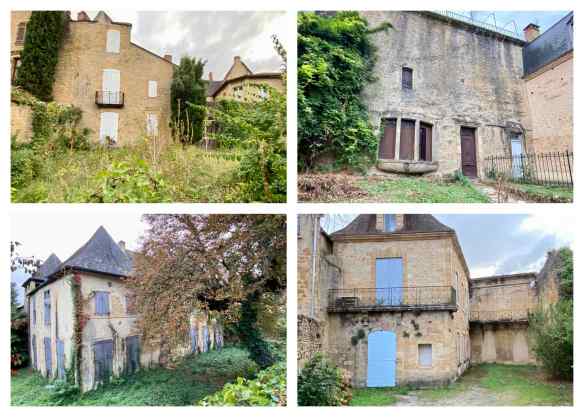
There are so many old houses boarded up and for sale.  I think we could probably buy one quite reasonably, but the renovations would be terribly expensive. If they are historic buildings, which they probably are, there are many restrictions on what renovations are able to be done and how they are done.  Guess we will pass on owning a little piece of Sarlat.

Most of the yards in this area are very overgrown and unkept.  Tidy gardens are not the norm here.

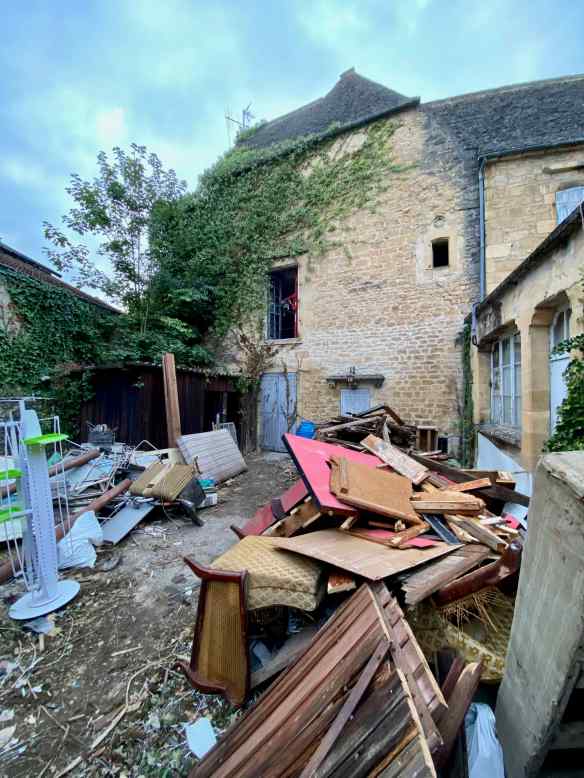
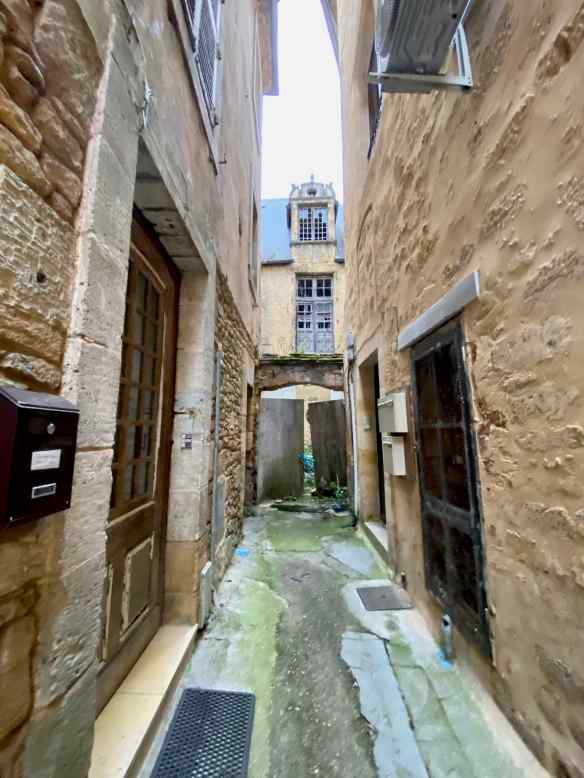
This narrow street ends in an abandoned overgrown yard and building with a lot of ‘stuff’ lying about.  Kind of creepy but just before the broken gate leading to this are doorways to apartments with new mailboxes and doors.  I wouldn’t want to be walking home at night here.

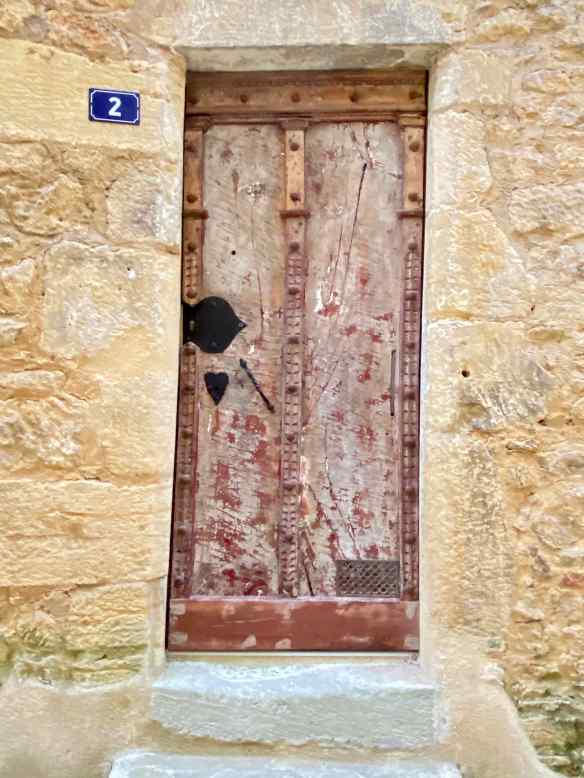
I don’t know what it is about French doors, but so many of them are very very old, and have peeling paint like this one.  But notice, it has nice new hardware…just not a new paint job.  There seems to be some sort of pride in having a very ancient looking door.

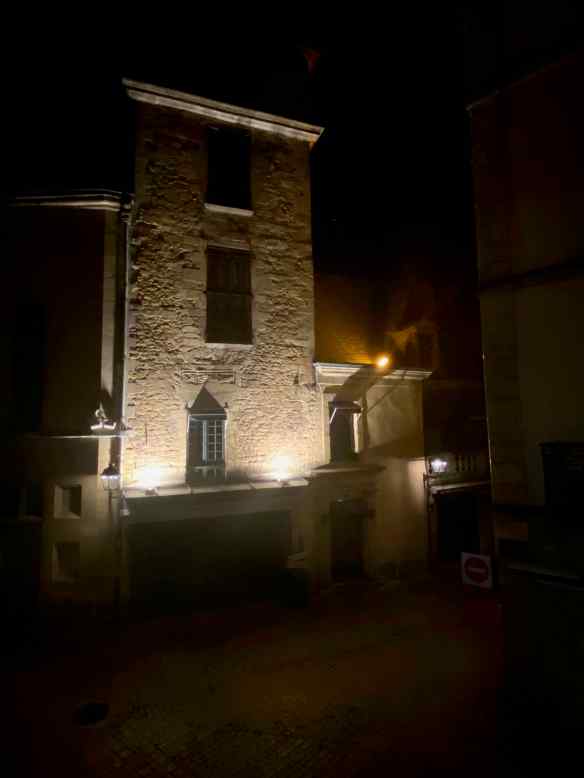
I forgot to take a daytime photo from our apartment window but this is the view when it is dark.

Sarlat le Canéda, France

Day 34, Sunday, October 1, 2023

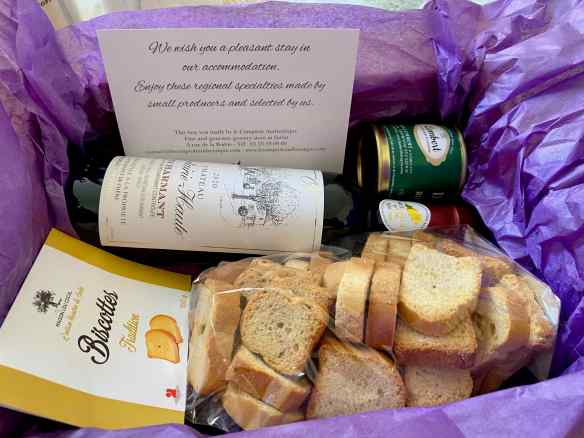
Our first day in Sarlat, Bob goes for a walk to check out the neighbourhood and I am quite content to watch the world go by from our window.  There is a knock at our door and when I answer it there is a box of local goodies from our Airbnb hosts.

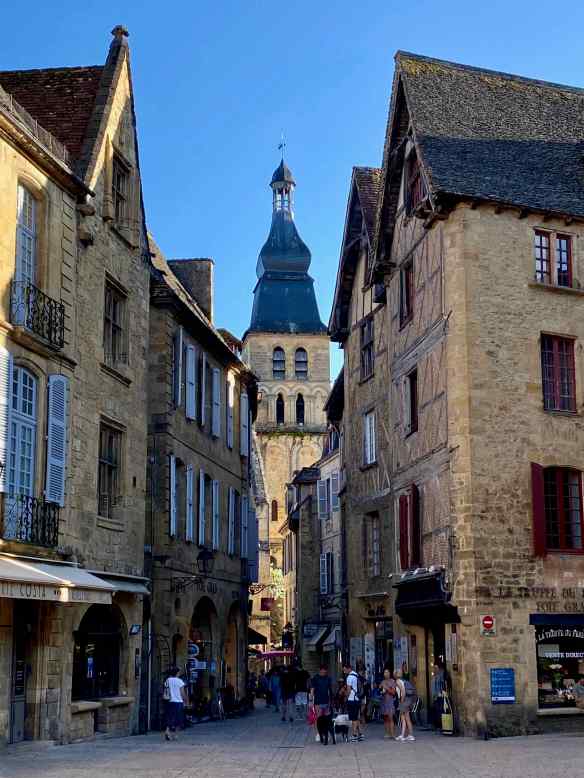
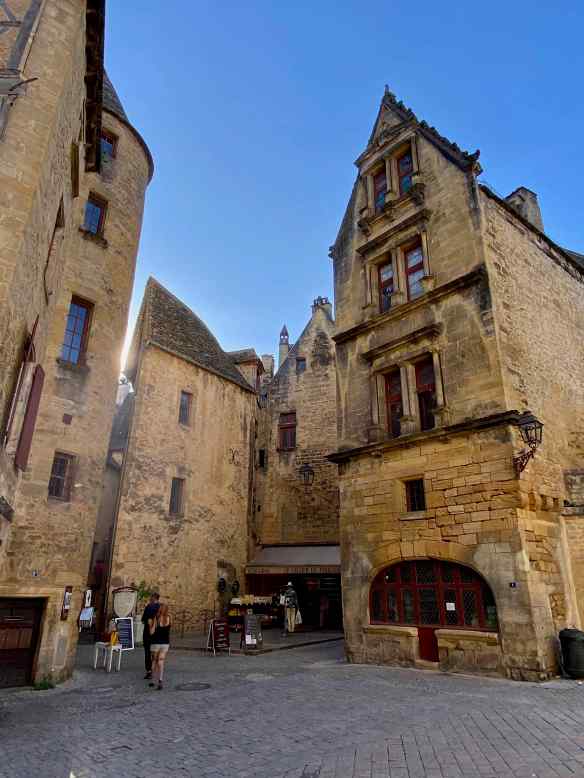
In the late afternoon we go for a little walk through the narrow cobblestoned streets.

This is a Medieval town and most of the buildings date from the the 15th century and even some from the 13th century!

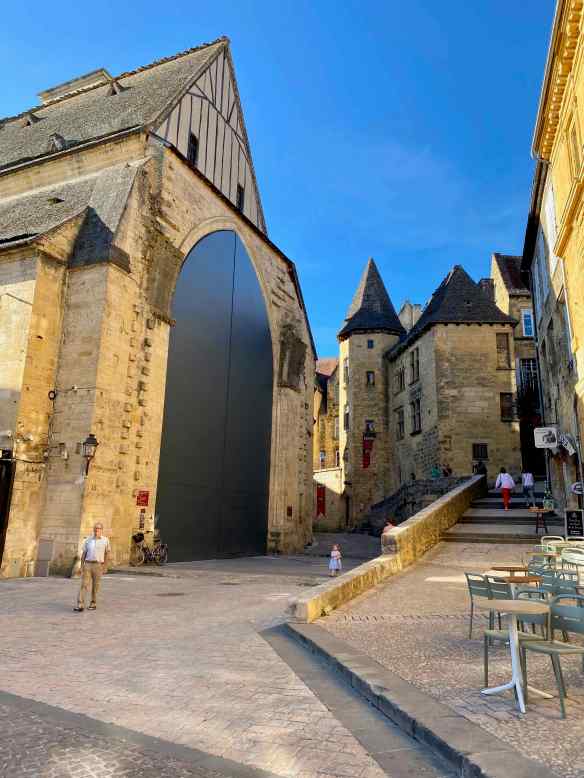
This old church is now an indoor market.  We will have to return when it is open.

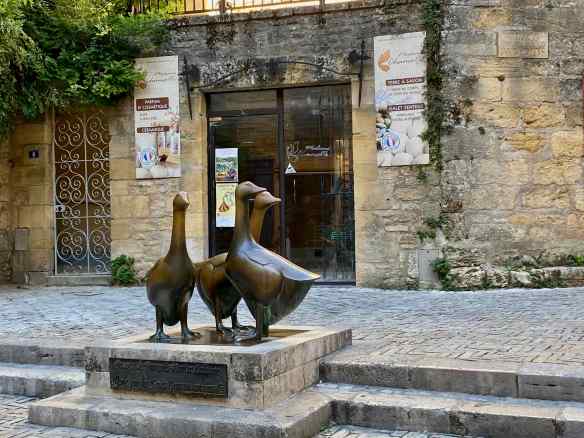
This statue of three geese is a reminder of the importance of the local fois gras industry.

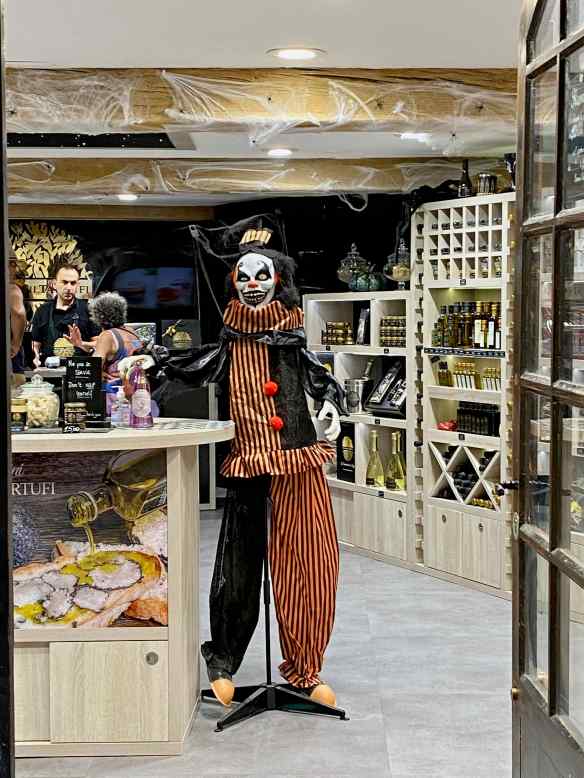
Some of the shops are already starting to decorate for Halloween.  This clown is particularly creepy.

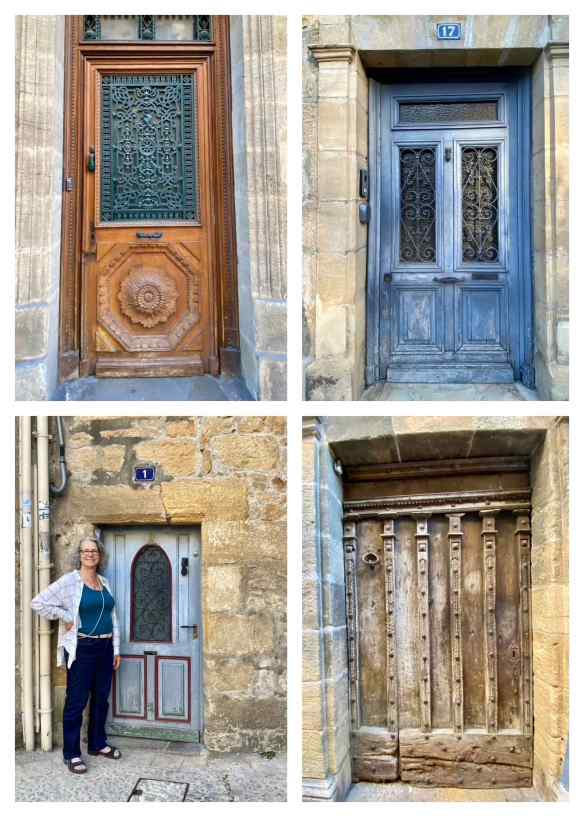
There are always interesting doors in French cities and towns.

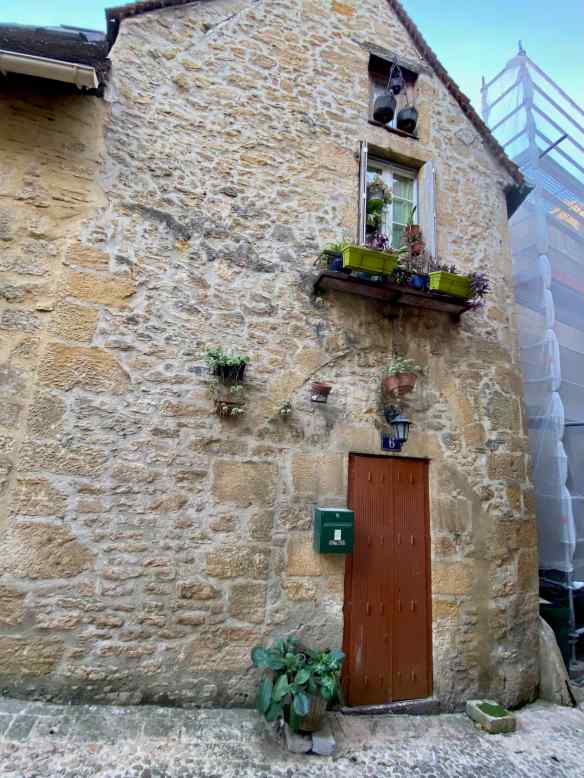
What to do when you want a garden but don’t have a yard.

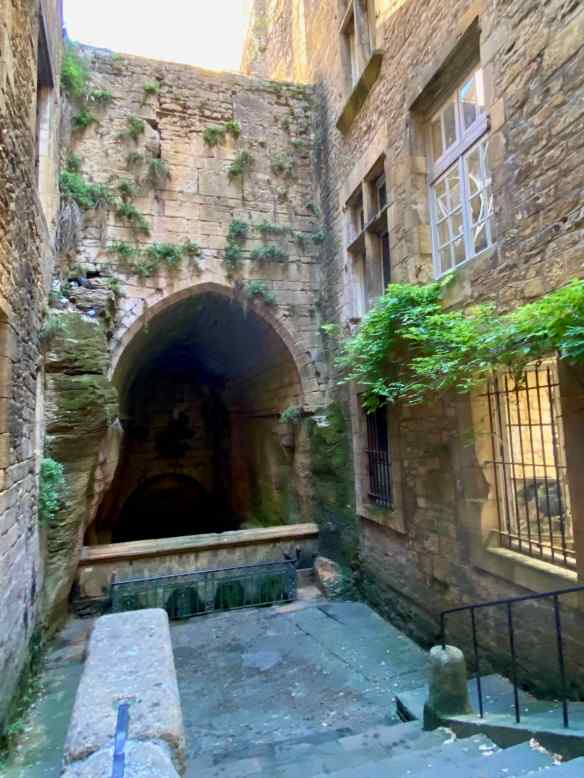
The Fontaine Sainte-Marie is nestled in a natural grotto not too far from our apartment.. This 12th century fountain was used until the 18th century when the water became polluted from nearby streets and stables.  

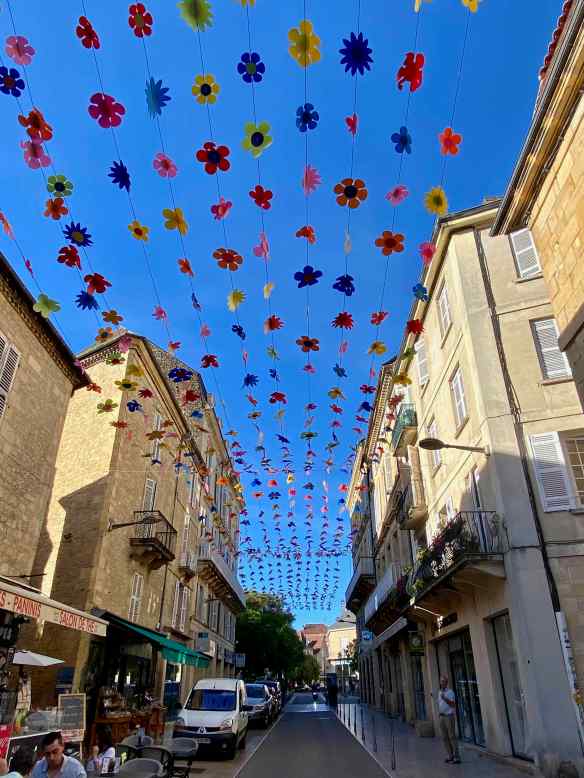
We walk back home under a street festooned with flowers.  This is going to be an interesting place to stay.

Montrésor and Sarlat le Canéda, France

Day 33, Saturday , September 30, 2023

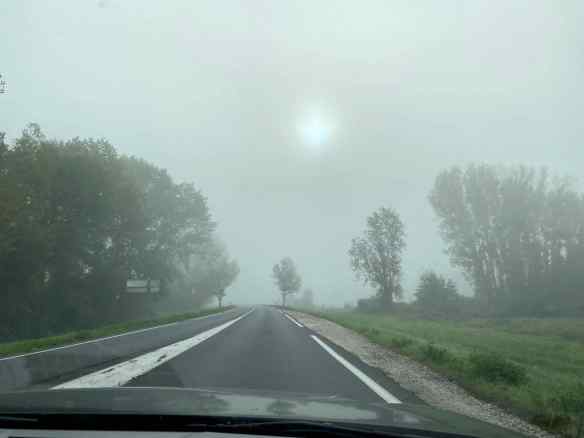
We leave for Sarlat la Canéda in a heavy fog.  It is quite beautiful , but not the easiest driving.

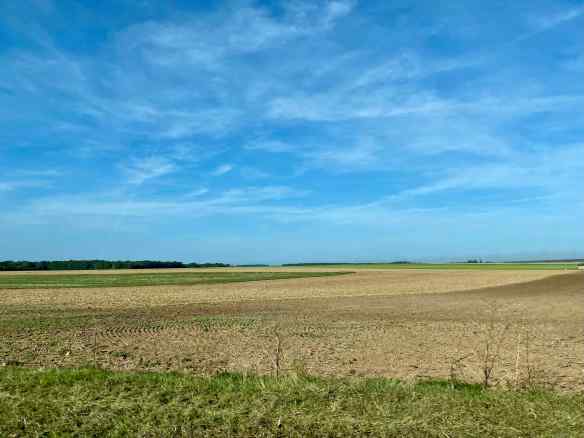
Before too long the sun is shining and we are driving through farmland that looks a lot like Alberta. 

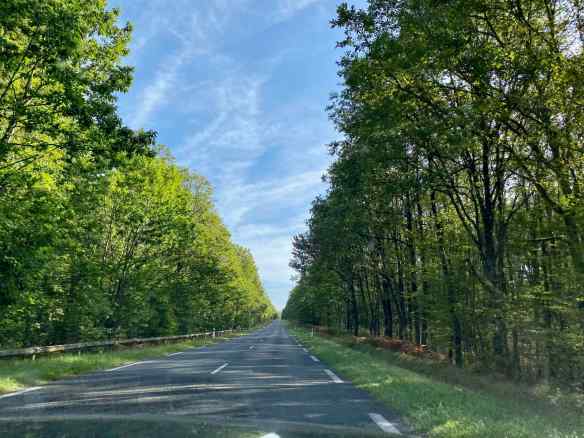
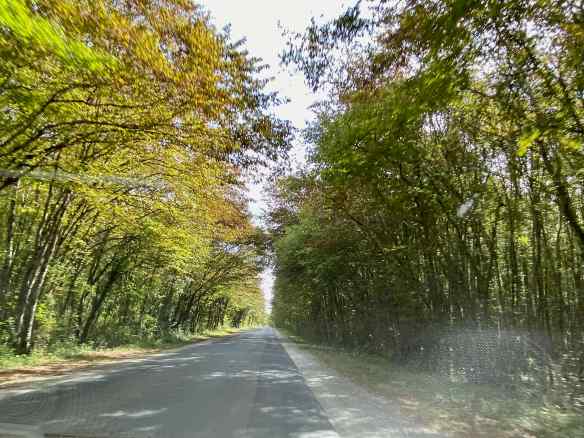
Then we drive through a beautiful forested area.

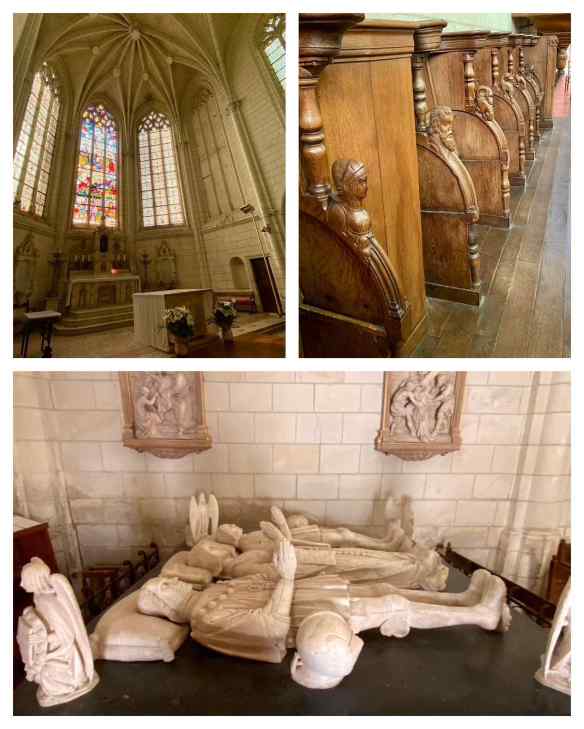
We stop for a visit and lunch in Montrésor which is listed as one of France’s 140 most beautiful towns.  The church is small but interesting.  The church was built to house this white alabaster tomb for three family members.  The stained glass windows and the carved wooden stalls all date from the 16th century when the church was built.

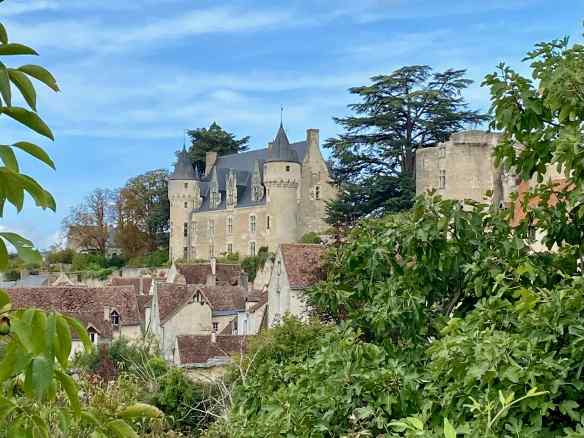
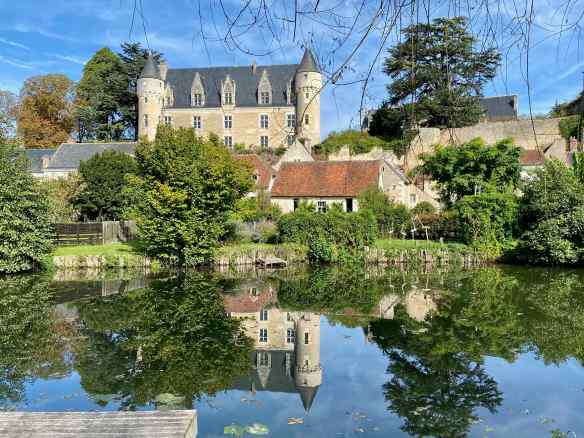
We walk along the river which has interesting information plaques and great views of the Château de Montrésor and the village.

Loved the reflections in the river.

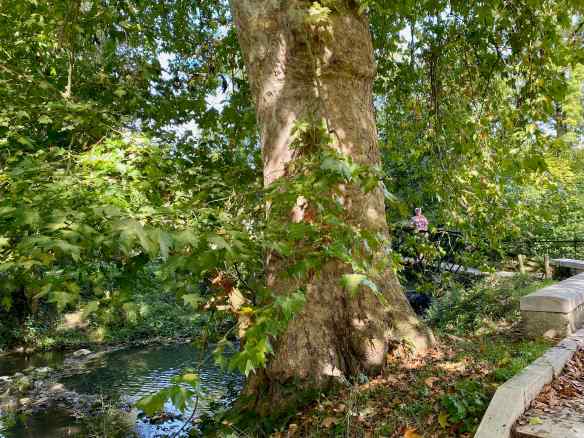
There are some very large, very old trees along the way.  Bob is standing on the bridge just behind the tree.

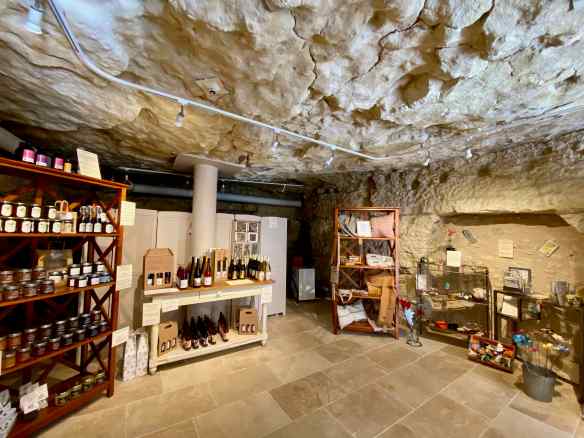
Many of the houses are built right into the stone cliffs.  This little shop is an example, the ceiling and back wall are all natural stone.

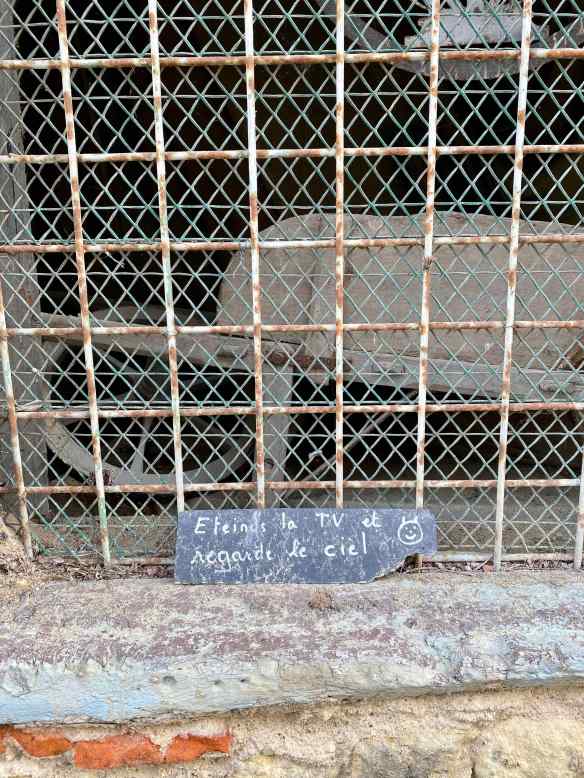
I loved this sign in the window. It says “Turn off the TV and look at the sky.”

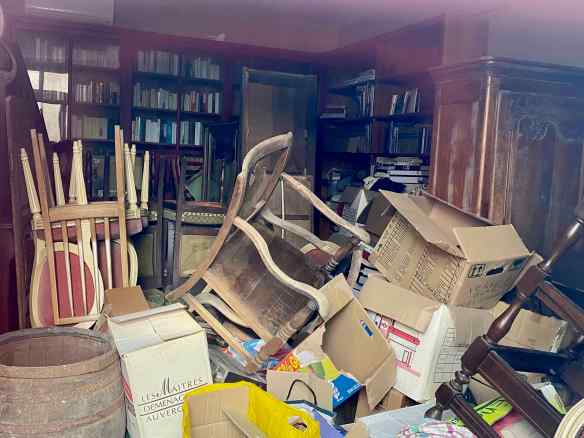
I also love peeking in windows and open gates whenever I have the chance.  You never know what you might see.  I wonder what happened to the owner of this little bookstore?

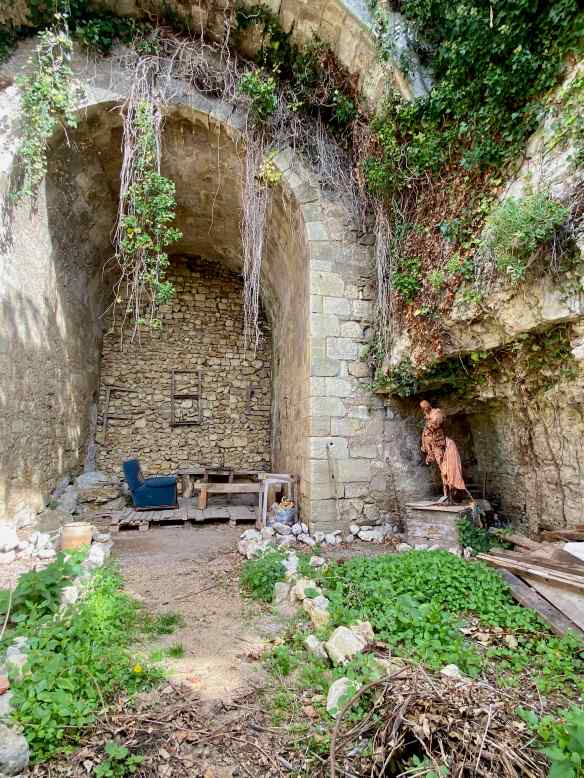
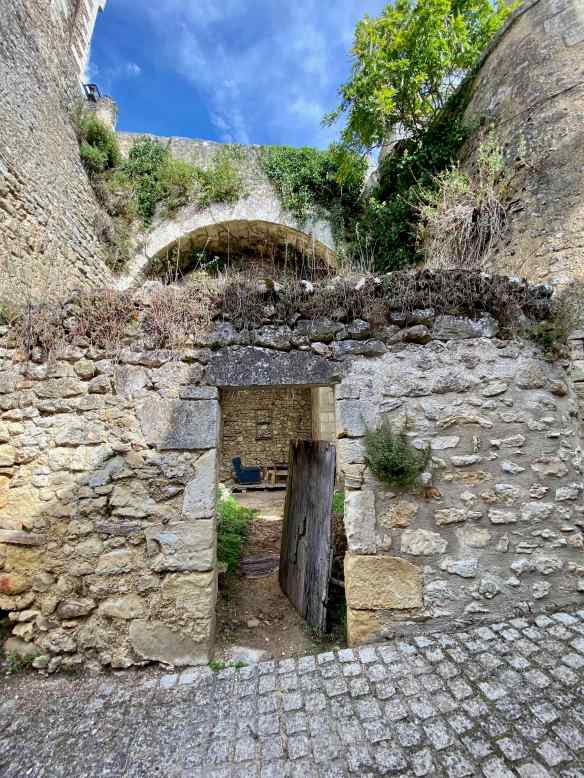
This gate looked interesting…

and it hid this tiny garden complete wth a chair, a bottle of wine and a very interesting statue.

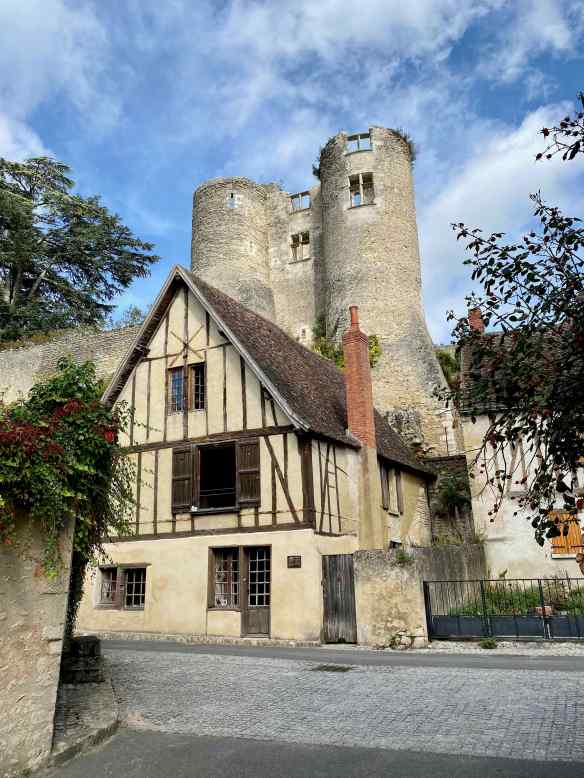
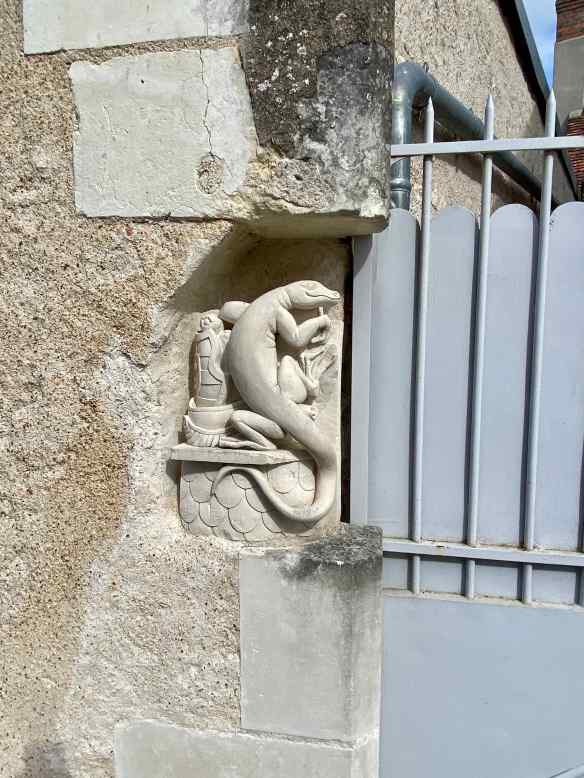
The half-timbered houses date back to the 15th century!  In the background are the towers of the Medieval Keep of the Château de Montrésor.I loved this carved lizard, which is the symbol of Montrésor.
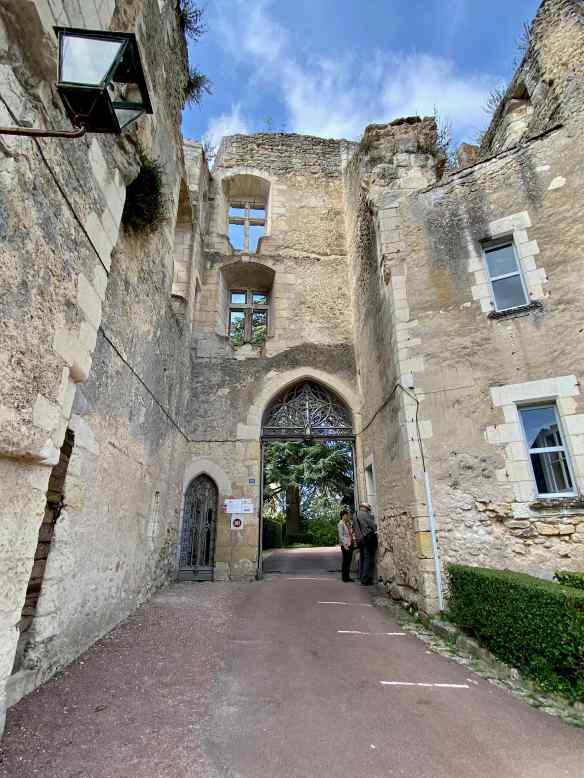
The Château de Montrésor is a medieval castle with a Renaissance mansion built in the grounds.  We decided not to tour the château and soon we are back on the road to Sarlat.

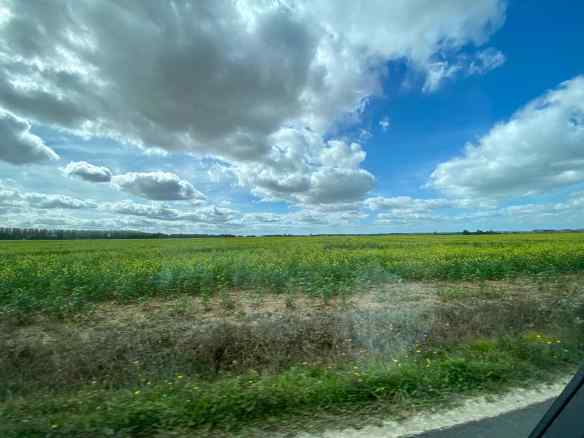
The canola fields are just starting to turn yellow here, much later than back home.

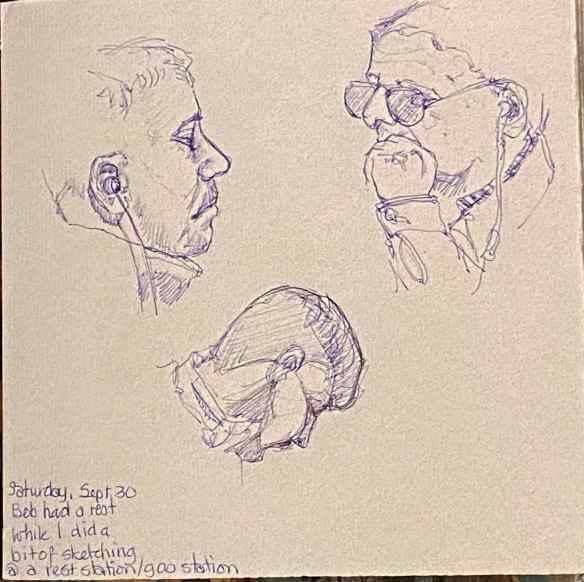
I have a chance to sneak a few sketches of people waiting for a bus at the gas station when we stop to fill up.  There hasn’t been much opportunity for this so far this trip.I notice that the leaves are staring to turn colour…winter is coming!
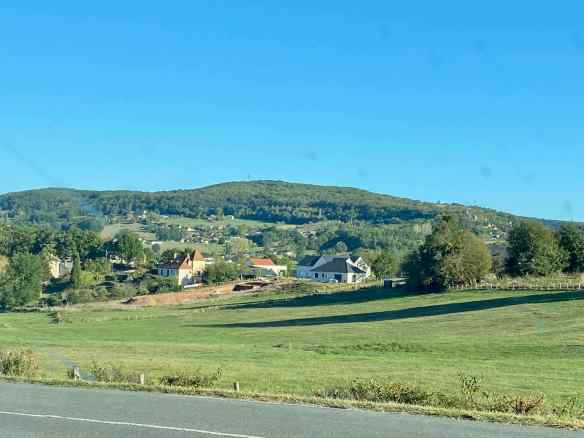
The hillsides are dotted with charming little villages.

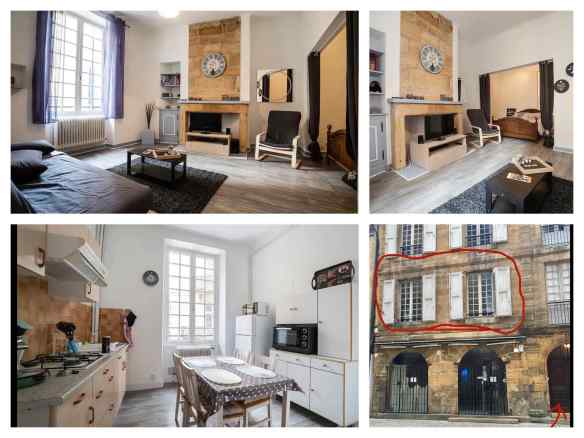
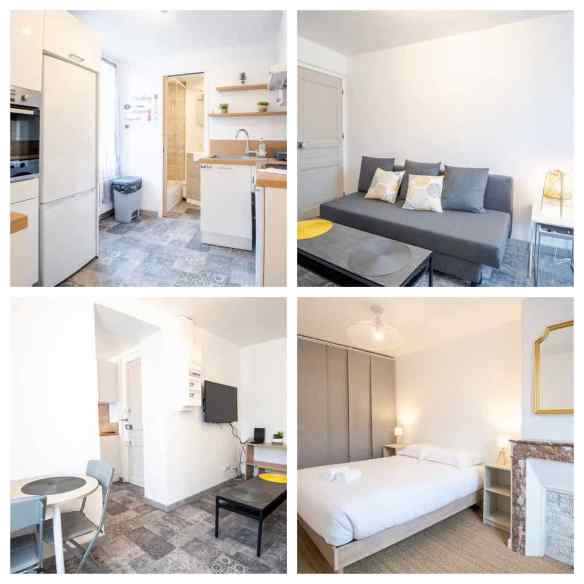
Our bnb in Sarlat is right in the heart of the old town.  On the Airbnb website it says “Come and discover the entertainment, restaurants, shops, the famous market of the city with its local products, surrounded by the walls and history of the city of Sarlat. All at your feet.”  It should be interesting, we have never stayed right in the heart of an old city before. The circled windows belong to our apartment.


Château de Chenonceau, France

Day 32, Friday, September 29, 2023

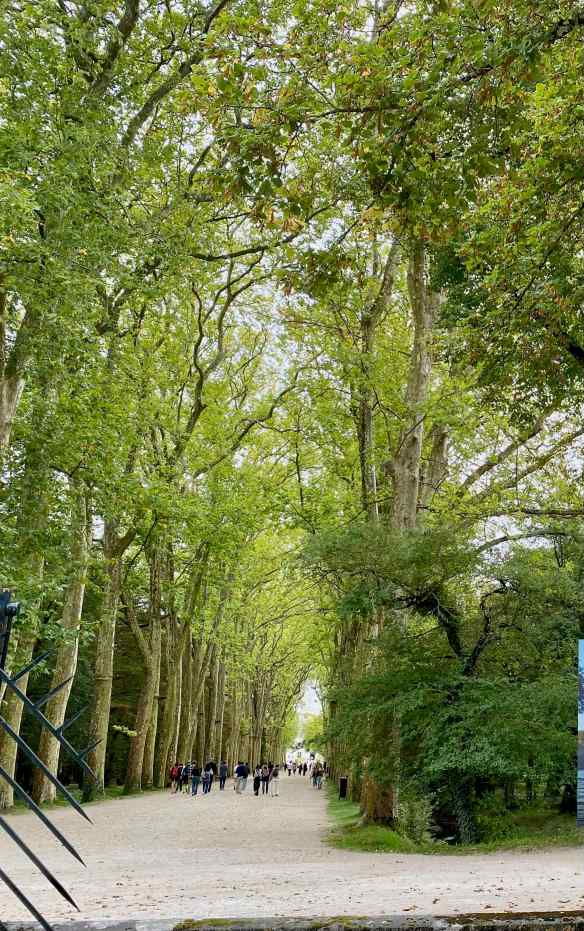
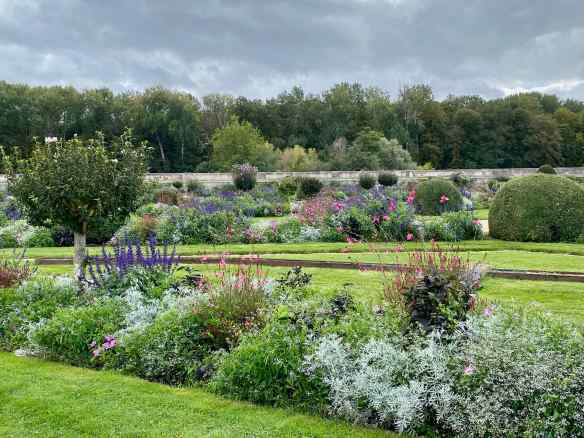
The Château de Chenonceau is approached by walking down a very long tree lined road called the Great Driveway…. that continues through the beginnings of gardens.
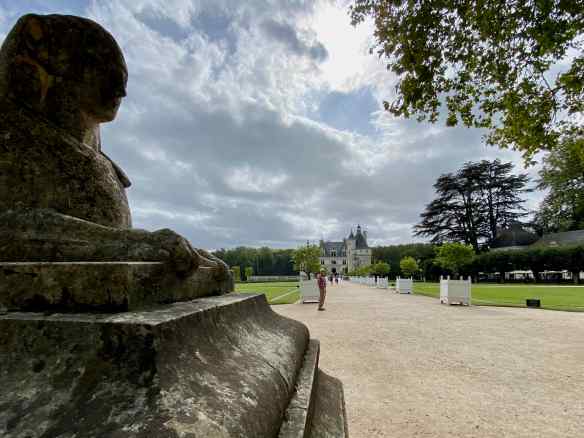
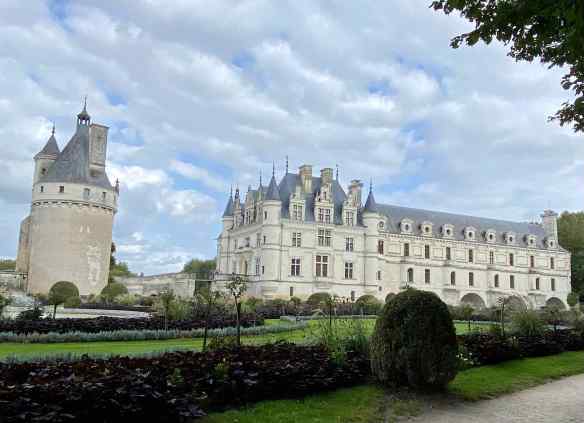
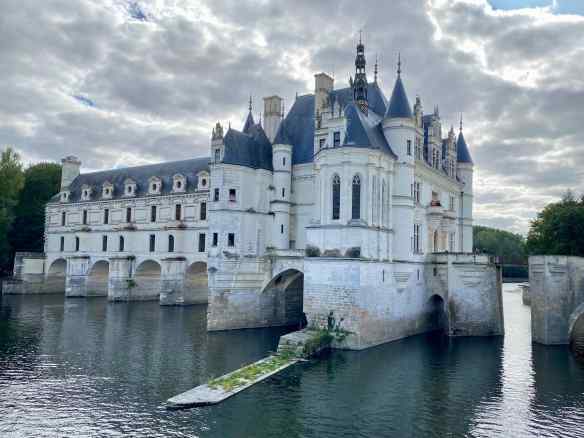
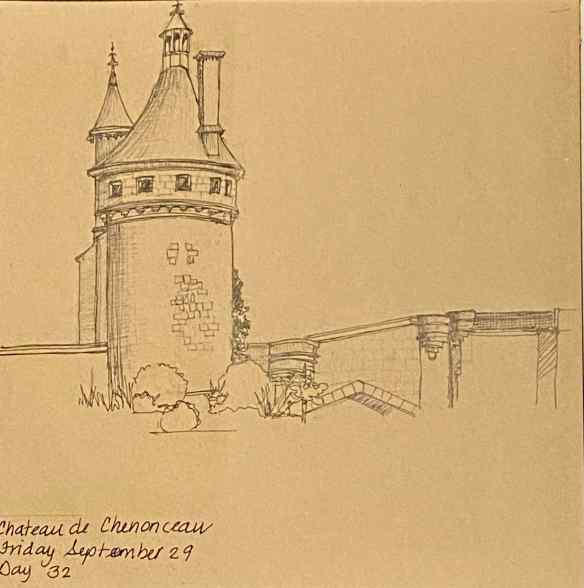
We finally arrive at the magnificent Chenonceau Château.  This tower on the left is part of the keep from the original fortified castle.  The rest of the castle was demolished in the 16th century to build Chenonceau.

We enter the Guard’s room beside the main gate and I notice that there is still part of the original pattern on the floor along the walls and under furniture. There is no trace of the pattern on the rest of the floor.

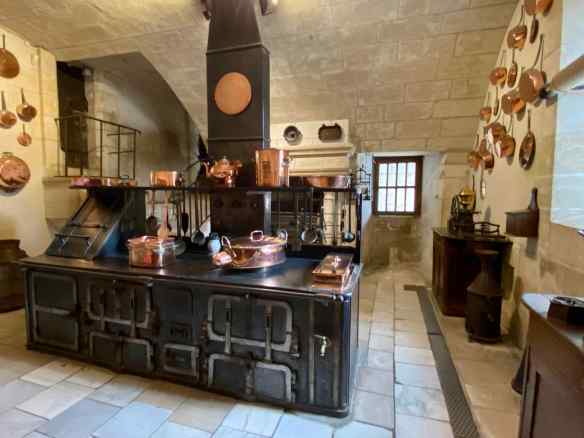
Next stop is the kitchen.  This is the first chateau we have seen that has a kitchen that looks capable of making meals for hundreds of guests.  This is the biggest wood fired stove I have ever seen.

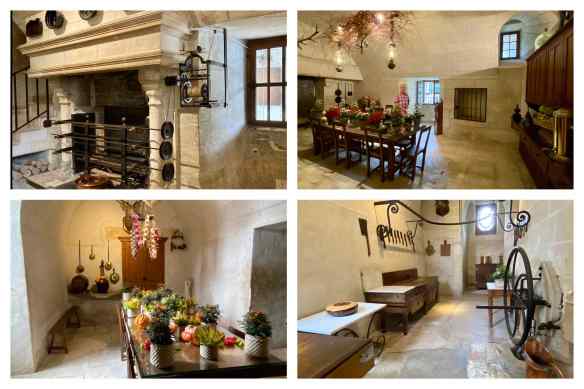
Here are the other rooms that make up the complete kitchen area.  A huge fireplace with automatic rotating spits for cooking meat behind the wood stove, the dining room for Chateau employees, the larder and the butchery are all magnificent. There is also one more room with an enormous bread oven.

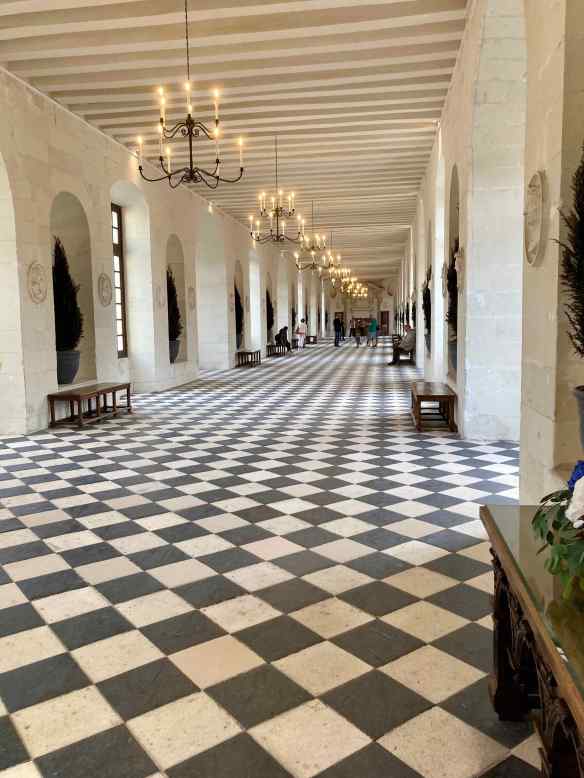
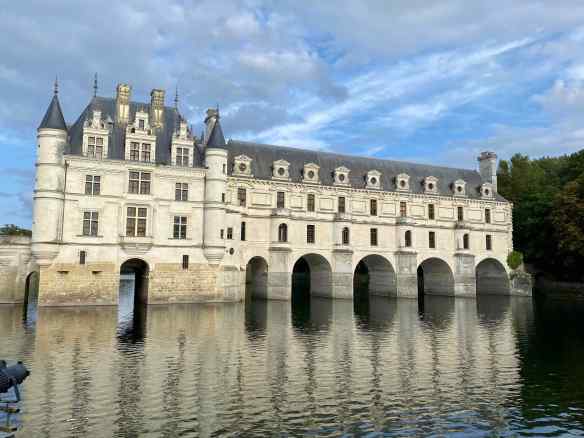
The Gallery was built on top of the chateau’s bridge by Catherine de Medici.  This was used as a ballroom and for other festivities.  It is 60 meters long but only 6 meters wide.  I noticed that the white floor tiles must have been made of a softer stone than the black as they are considerably more worn.  Like the coloured tiles in the Guard’s room, the tiles near the walls are not worn and remain the same height.

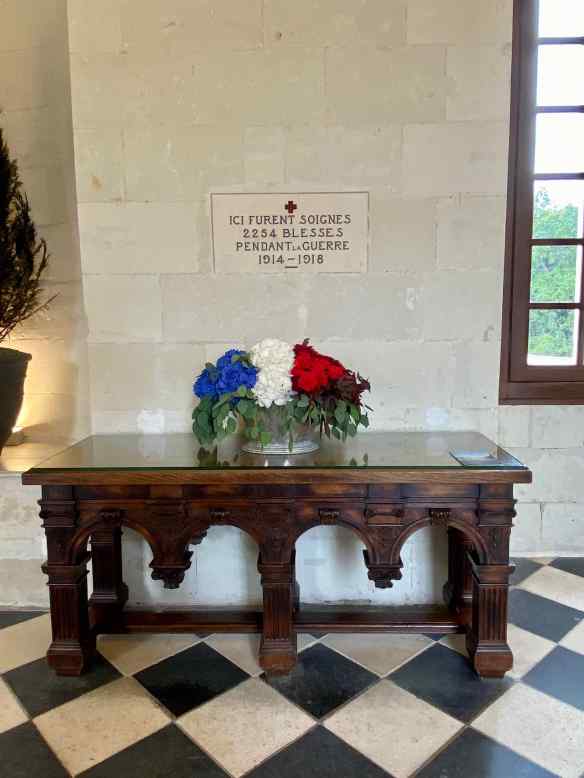
During the First World War, 2,254 injured were treated here.   The chateau was turned into a hospital and the gallery was filled with beds.
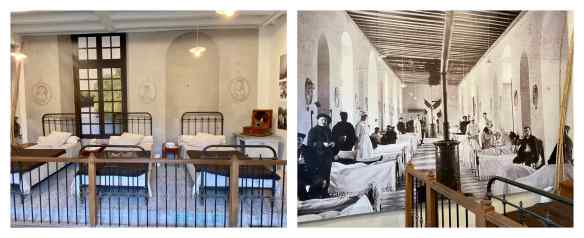
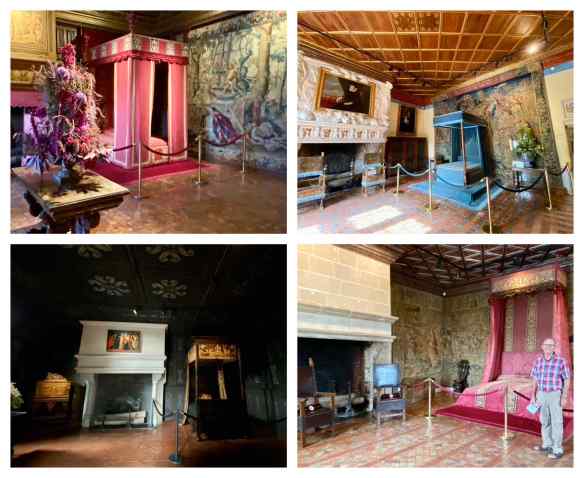
Cesar of Vendôme’s bedroom (the owner of Chanonceau in1624), Diane de Poitiers room,  (King Henri II’s favourite mistress), the bedroom of the wife of King Henry III (who stayed in mourning after his assassination in 1589), and the Five Queen’s Bedroom, in memory of Catherine de’Medici’s two daughters and her three daughters in law.

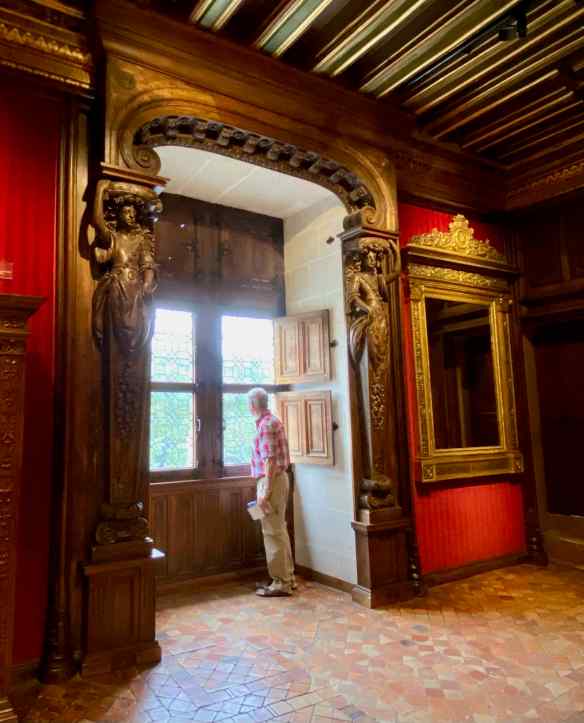
Bob didn’t even notice the caryatids framing this window opening.

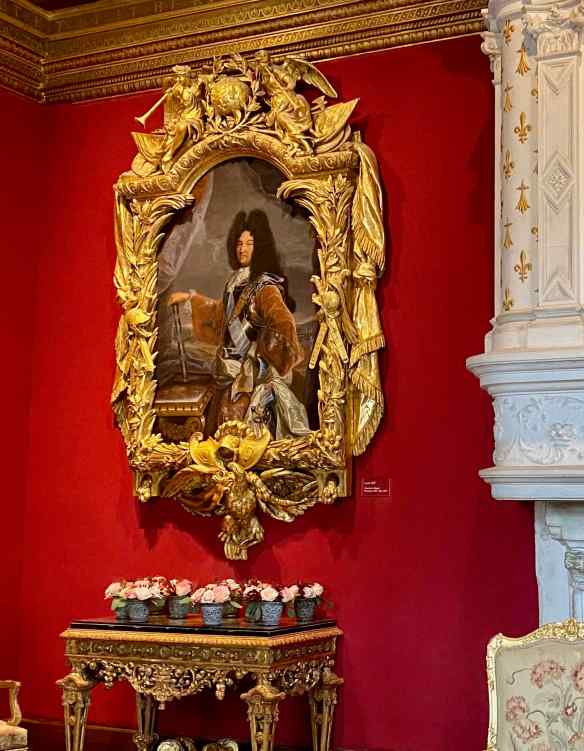
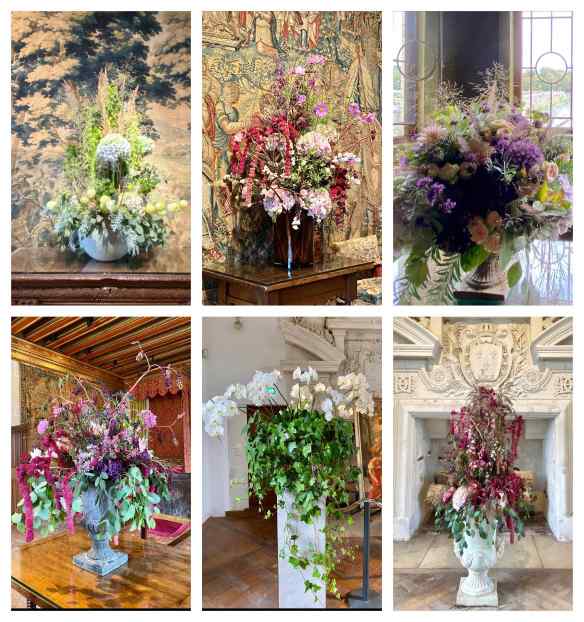
This incredibly ornate frame is found in Louis XIV’s drawing room.  Notice the collection of rose bouquets below the painting.  Château Chenonceau is filled with the most incredible floral displays.

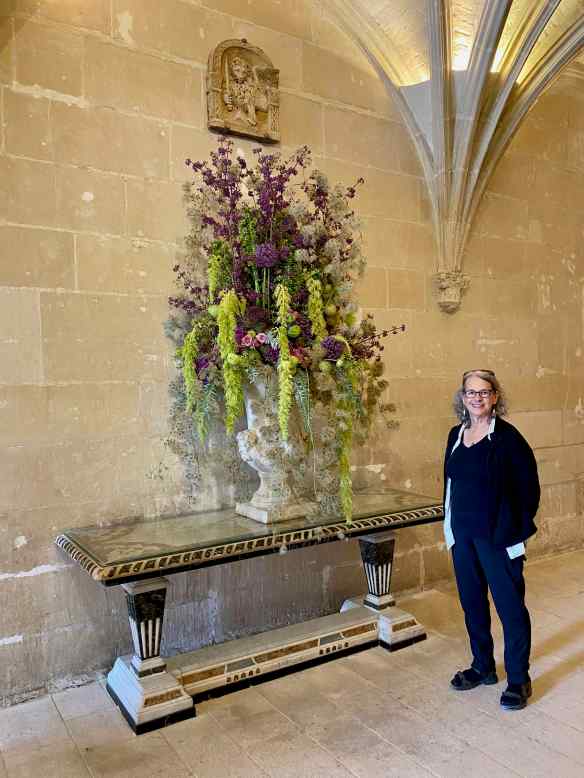
These are only a few of the enormous floral displays we saw.

I did mention that they are enormous!Jean-François Boucher is the head florist at the Chateau. He creates 200 bouquets a week every week of the year for display in the chateau.  This link has an interesting article and video about all this. https://thegoodlifefrance.com/the-chateau-de-chenonceau-the-castle-of-flowers-in-the-loire-valley/

I have never seen so many orchids.  The first photo shows one of two identical arrangements and the second is outside the door to the public washrooms.

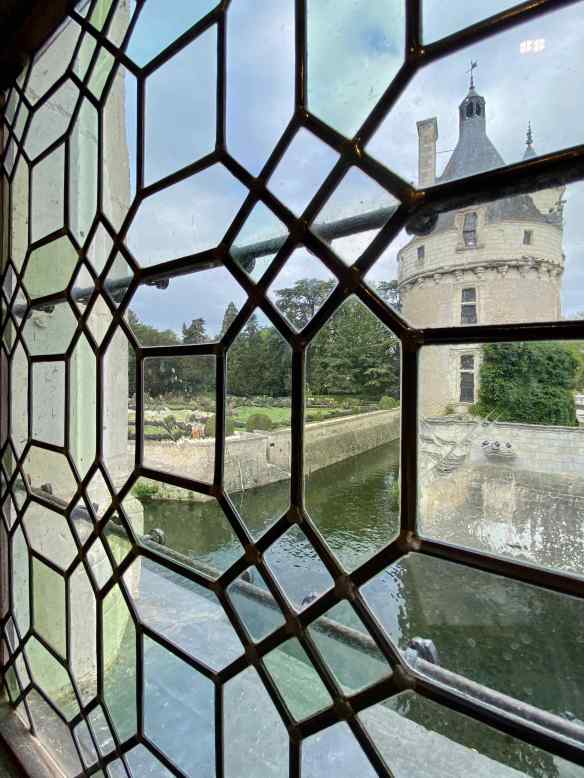
A view through the leaded glass windows towards the Keep and the moat.

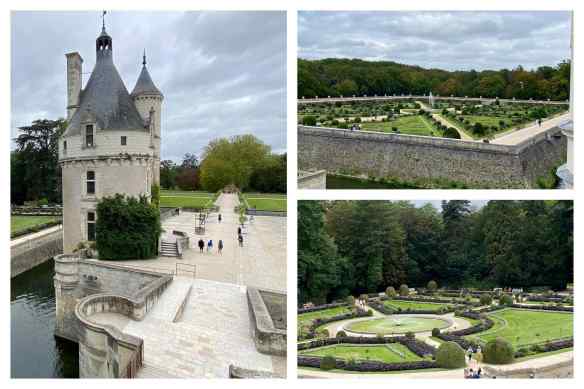
There is a little balcony that offers views of the Keep, and the two flower gardens. The top one is Diane’s Garden (remember the mistress?) and the bottom is Catherine’s garden (the wife of King Henry II.)

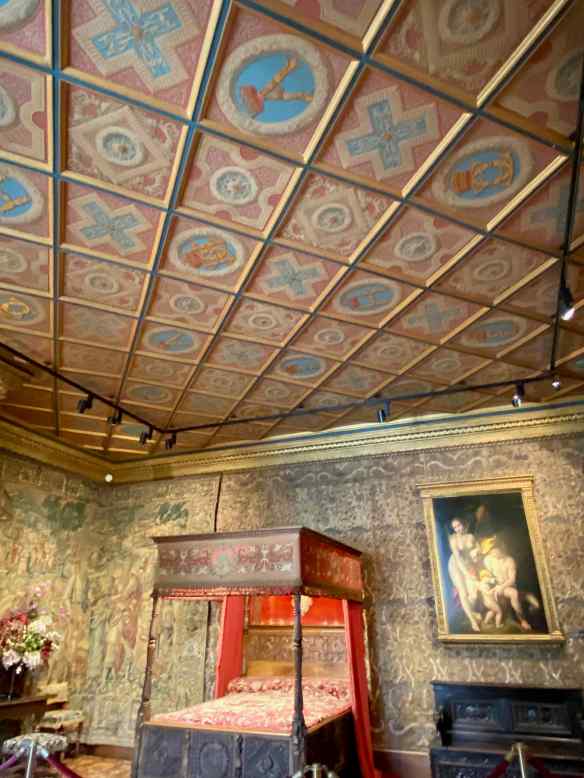
One more bedroom, that of Catherine de’ Medici, reminds us that it is always wise to look up when visiting Chateaus and castles.

The ceilings are painted and gilded with numerous initials and coats of arms of Catherine and Henri.

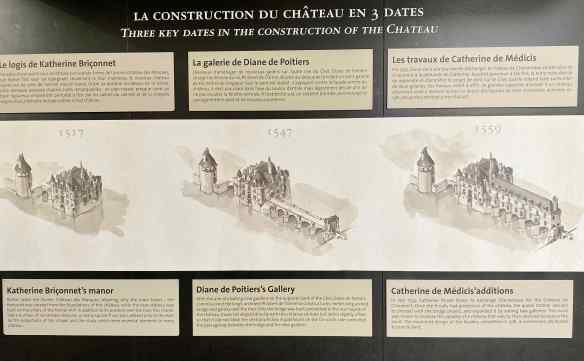
I find it fascinating how these chateaus evolve over the years.

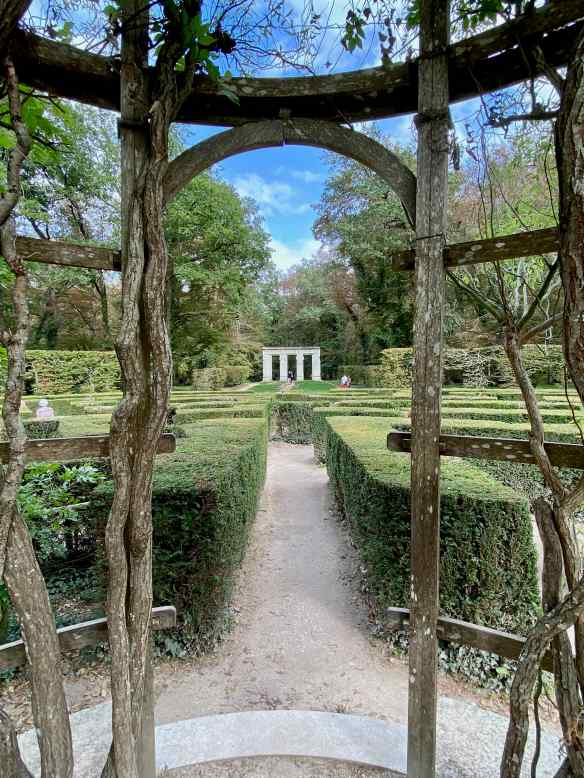
We finish our visit of the chateau and find a lovely spot for our picnic lunch before heading back to walk through the grounds of the chateau.  We find our way to the center of the maze with a view of caryatids that once decorated the front of the chateau.

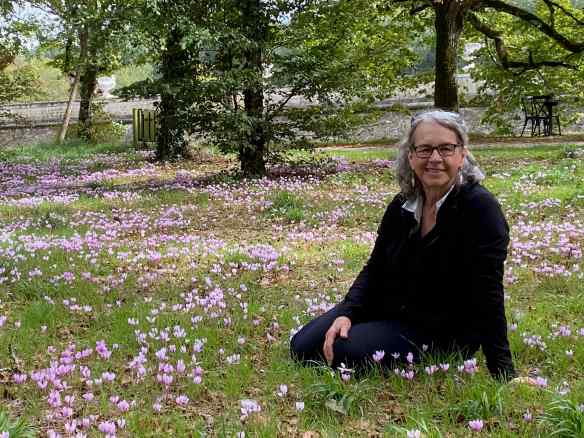
The cyclamens are in full bloom everywhere under the trees.  

We walk through Diane’s garden which is pretty but rather monotonous.  All the flower beds are the same, once you see one of them there isn’t much incentive to walk around to see the others.

We walk towards the chateau, which is truly magnificent…

and as we pass to the back side, the sun comes out to beautifully illuminate the chateau. During the Second World War, the River Cher was the demarcation line, so the entrance to the chateau was in the occupied zone but the Gallery’s south door gave access to the left bank and made it possible for the Resistance to pass many people into the free zone.

We find a comfortable bench and I do a drawing of the Keep while Bob catches up on a bit of reading.

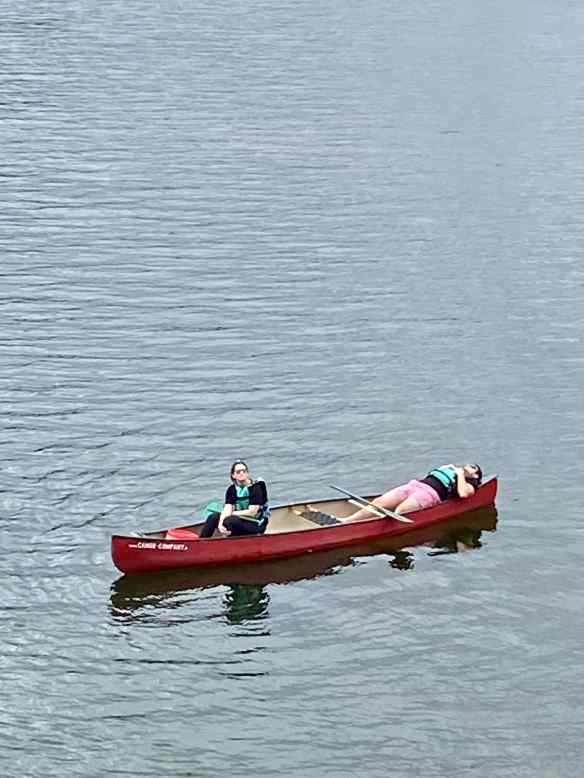
I thought it might be fun to rent a canoe and paddle about on the Cher River, but maybe it is harder than it looks?

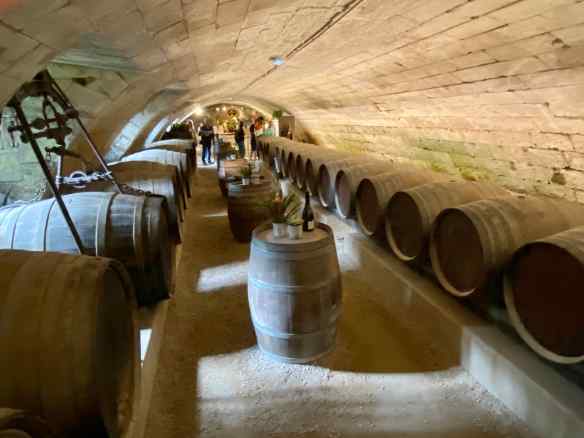
The historic 16th century wine cellar is still in use today.

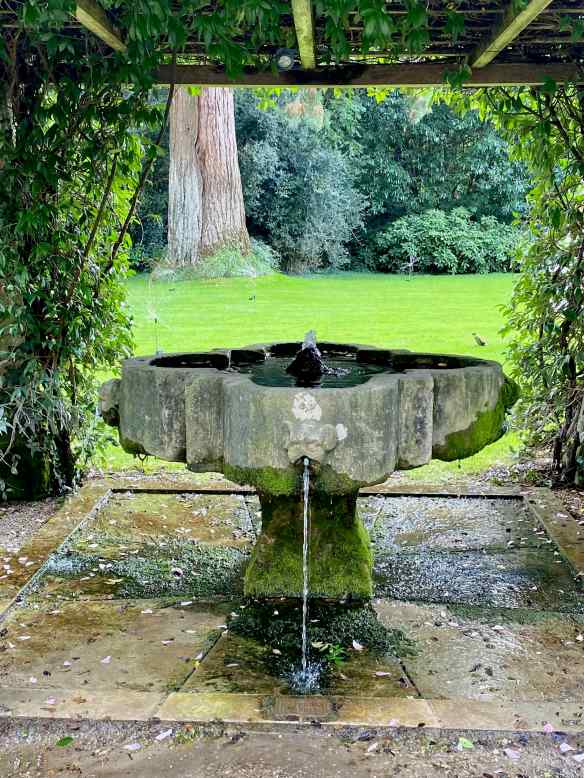
There is much to see, including this interesting fountain…

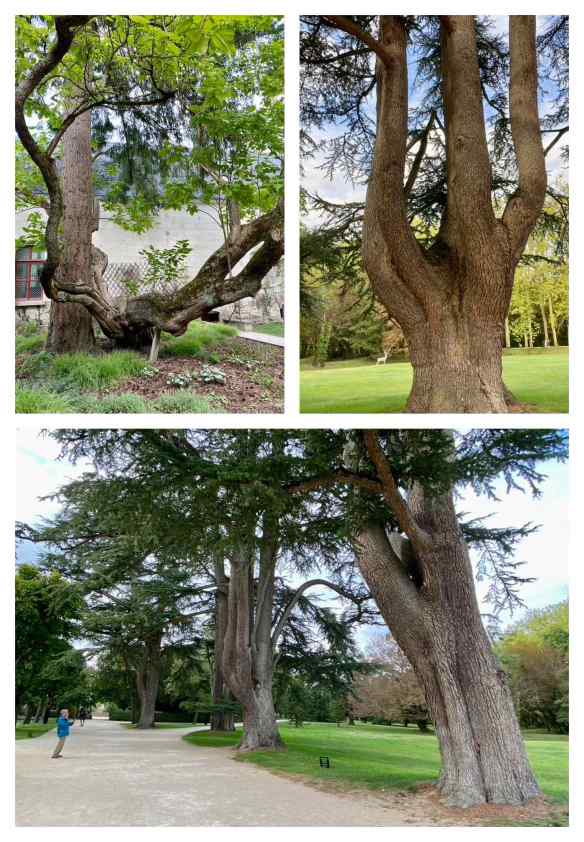
and so many incredibly huge trees.  The deer is a statue.

You can just make out Bob’s head peeking out between the trunks of this tree.

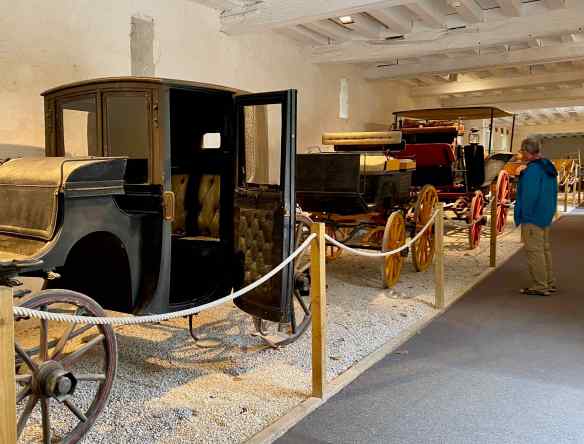
There is a Carriage Gallery in one of the stables with both noble and rural horse drawn vehicles.

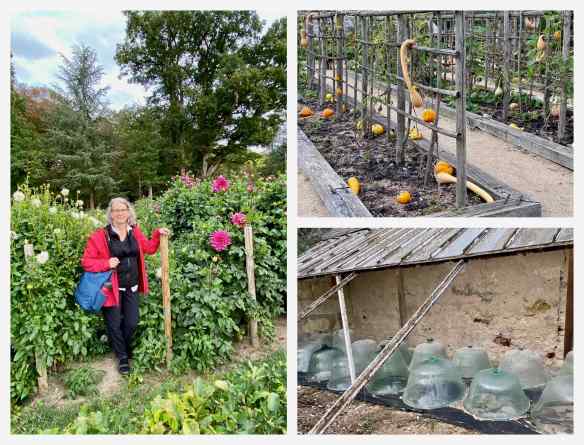
And then there are the gardens which are used to grow the many flowers and plants for those enormous bouquets in the chateau, along with some vegetables.  These are strange looking squash with such long necks.  I love the hand blown cloches that are stored under  the eaves of a shed.  I’d love to have these for our garden back home, instead of our plastic ones.

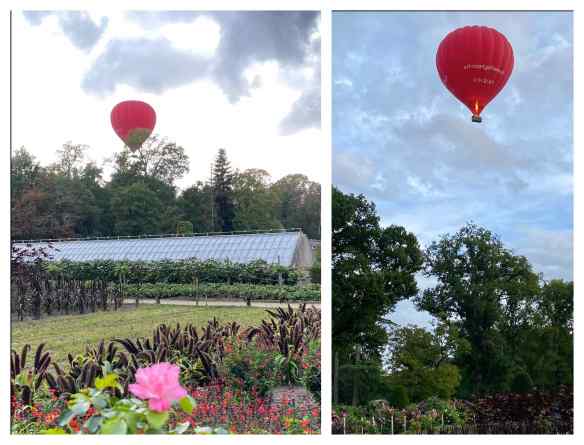
As we are leaving the gardens we see hot air balloons taking flight from behind a line of trees.

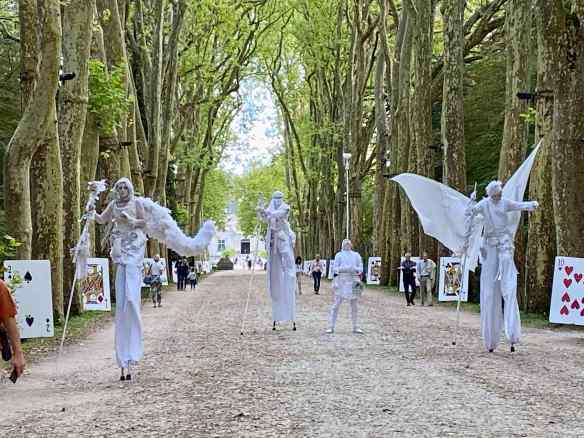
As we leave, walking back along the Great Driveway we encounter these strange, rather spooky beings. For some reason they make me think of the Game of Thrones Whitewalkers…but they are only entertainers for a fundraising event for sick children that is taking place in the evening.


Château du Close Lucé, France: the home of Leonardo da Vinci

Day 29, Tuesday, September 26, 2023

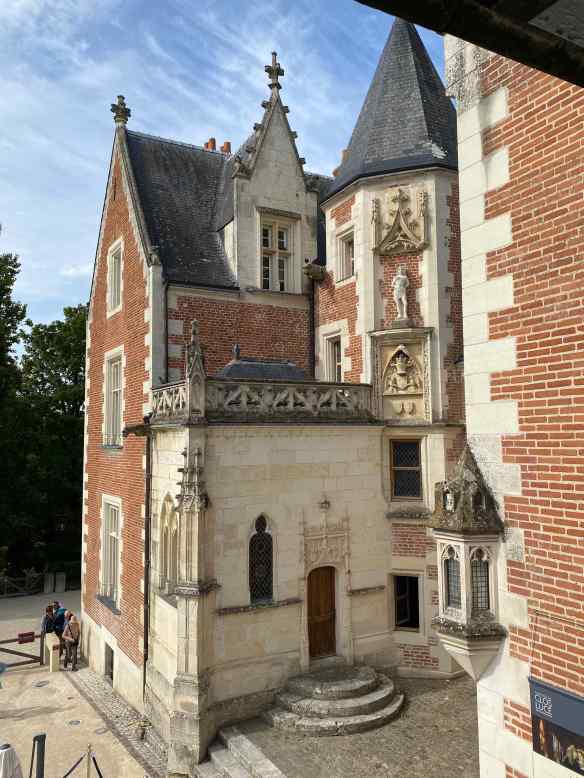
In 1516 King Francis I invited Leonardo da Vinci to come live and work in Close Lucé. When Leonardo was 64, he crossed the Alps on a mule with some of his pupils and three of his major paintings, the Mona Lisa, the Virgin and the Child, and St. John the Baptist as well as his notes, sketches, and manuscripts.

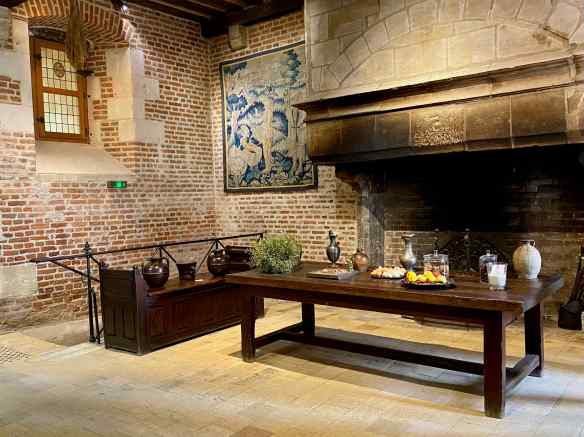
Leonardo spent the last three years of his life working here.This is Leonardo’s bedroom. I am standing in the room where Leonardo da Vinci slept!
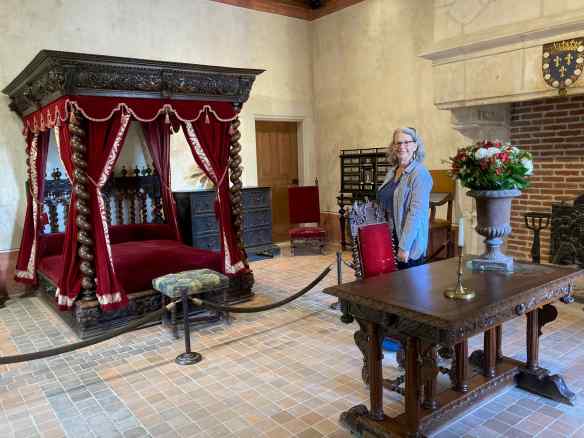
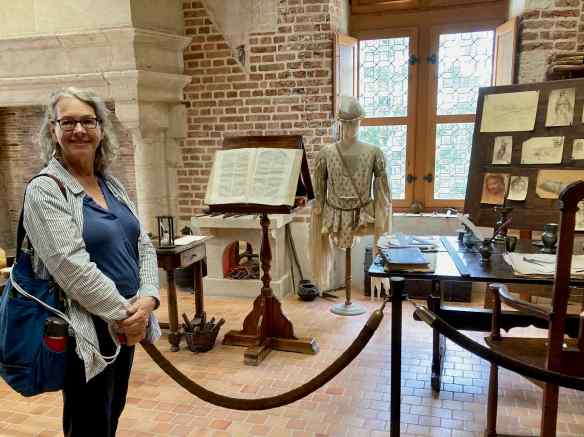
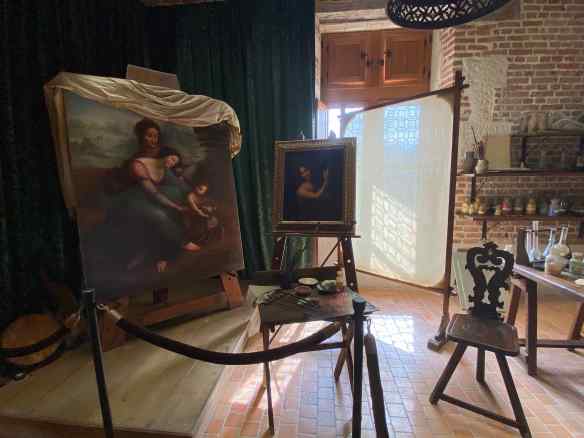
At one time the walls were decorated, but little of it remains.The adjoining room is his studio, where he painted…
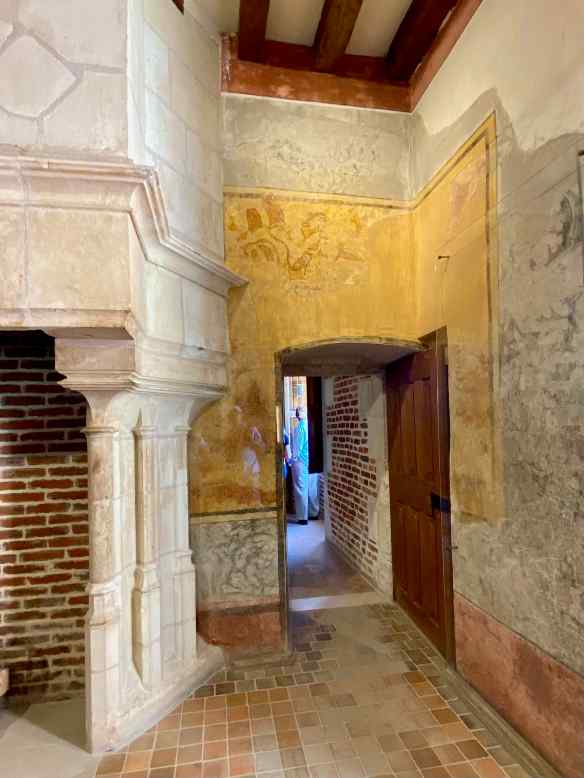
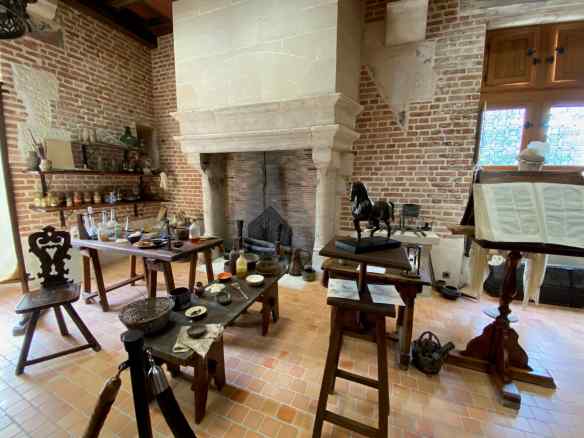
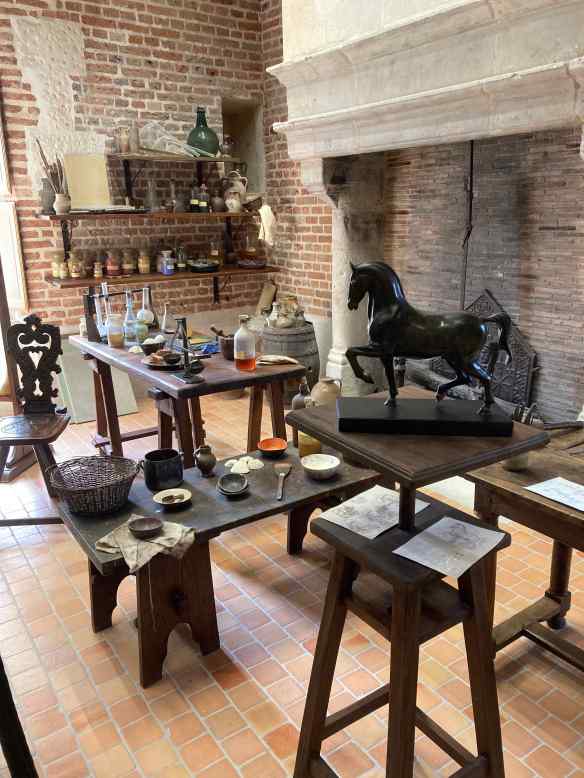
…sculpted…

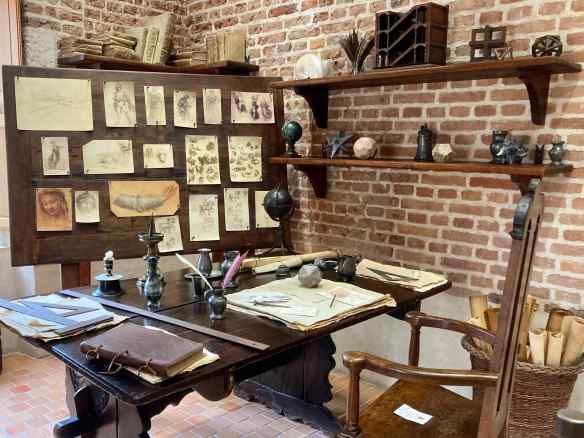
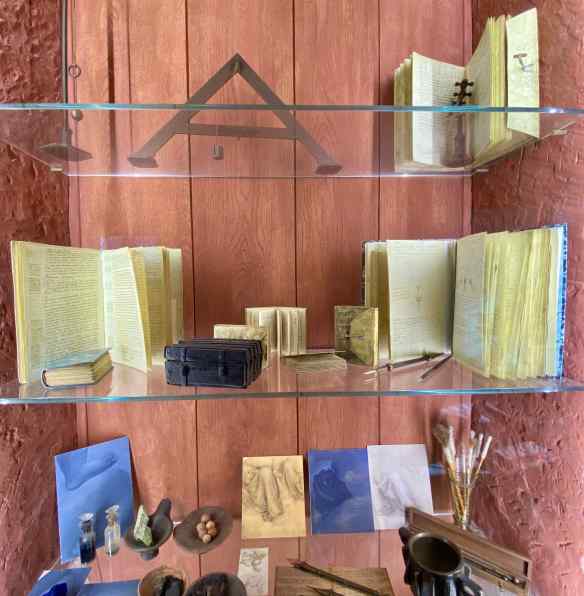
and worked on his drawings and manuscripts.  

It is quite the experience to be in the same place as this amazing man lived and worked.  His studio is furnished in the manner of a 16th Century artist’s workshop, with reproductions of his drawings…

paintings…

and replicas of his books and the little notebooks that he carried in his pocket.

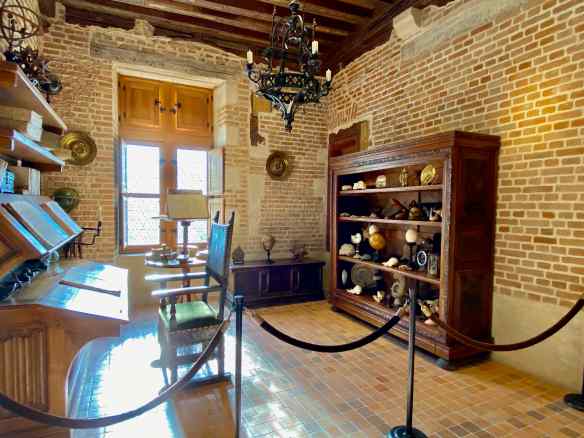
His study contains ancient texts and a cabinet of curiosities.  Leonard had a library of 200 books which was very unusual for an individual in 1516.

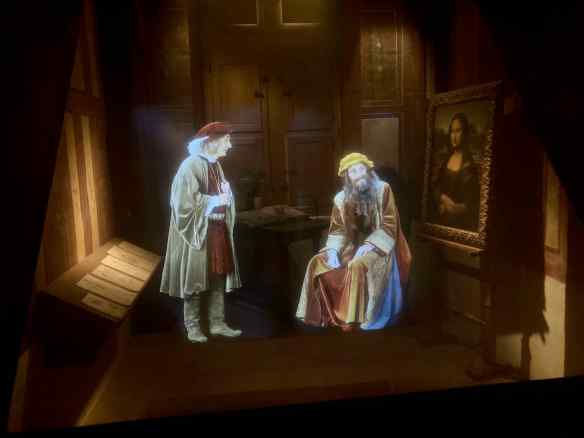
An audio visual production in the next room recreates a historical meeting between the Cardinal of Aragon and Leonardo, who shows the Cardinal his paintings.  .https://youtu.be/Ih_uiJSrths

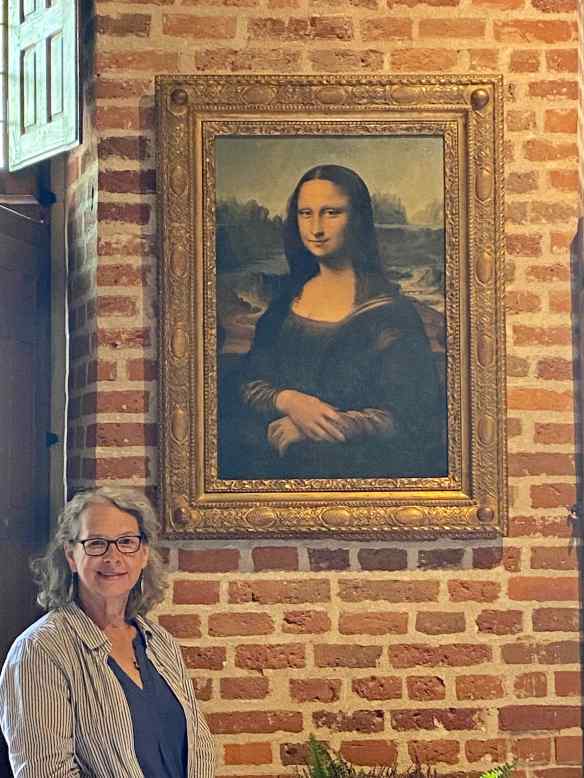
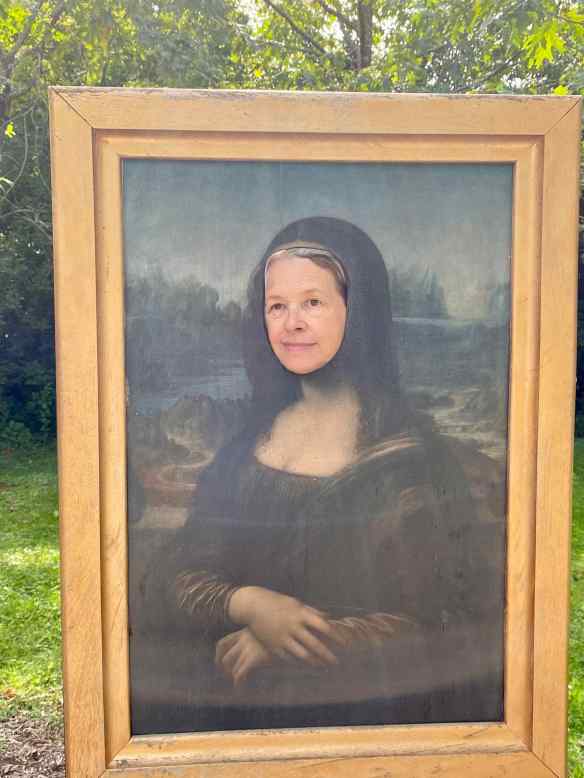
The dining room has a reproduction of the Mona Lisa.  We saw the original in Paris and now we are in Leonardo’s home and studio where it resided until his death in May, 1519.

I didn’t know that Leonardo was a vegetarian. He believed that “sobriety, healthy meals and a proper sleep will keep you in good health.”Downstairs there is a display of 40 of his inventions, recreated from his drawings by IBM.  He was truly a genius. Among his many inventions are life preservers, ballbearings, cam shafts that are used in modern engines, and this screw wrench that is still in use today in plumbing.
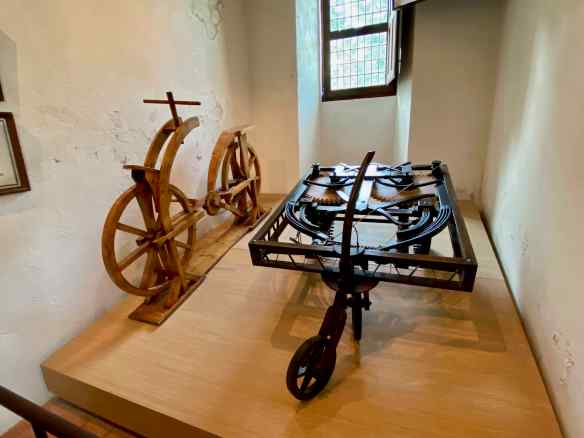
He also had ideas for bicycles and cars centuries before they were actually invented.

After our visit of the chateau we find a spot for our lunch near this life size model of his idea for a helicopter.  The school kids loved it and were fun to watch.

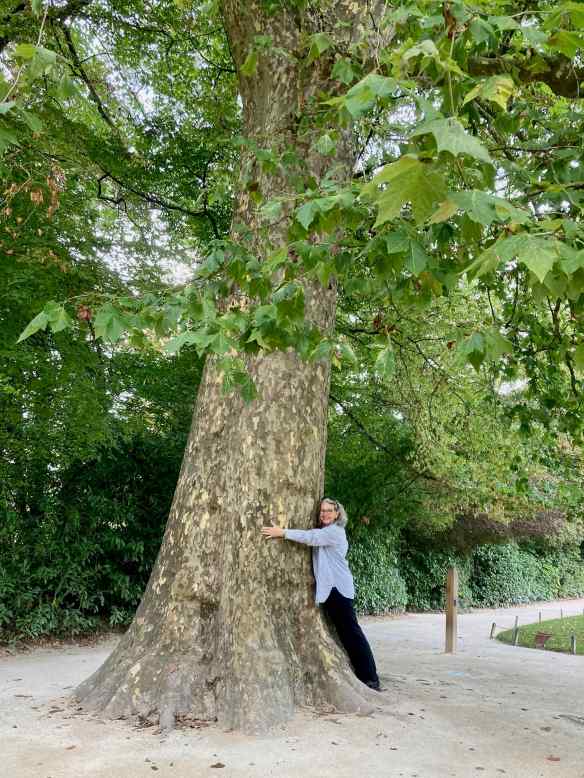
We sat under this enormous tree which I like to think was growing when Leonard walked these gardens.  The literature says that there are centuries old pines, cypresses and yews growing here so it is entirely plausible.

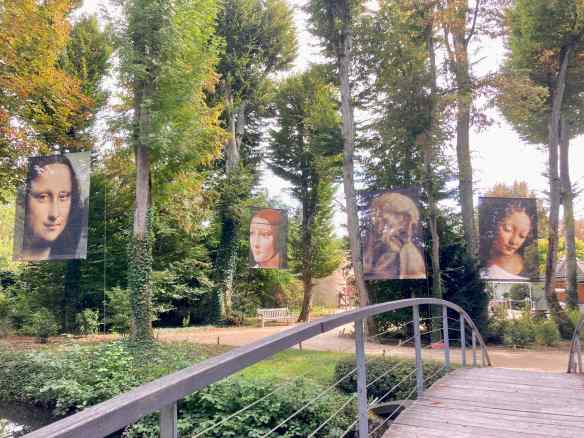
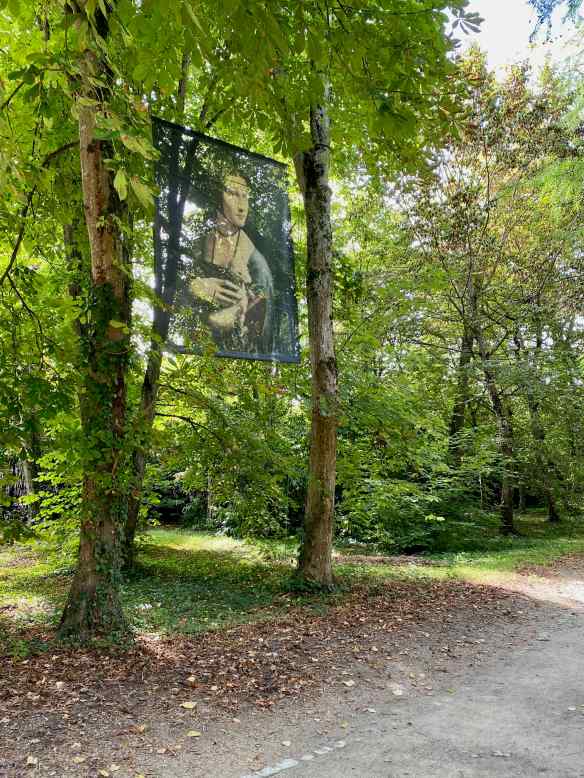
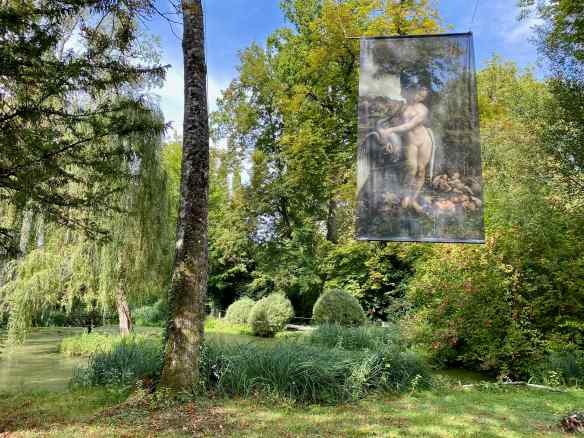
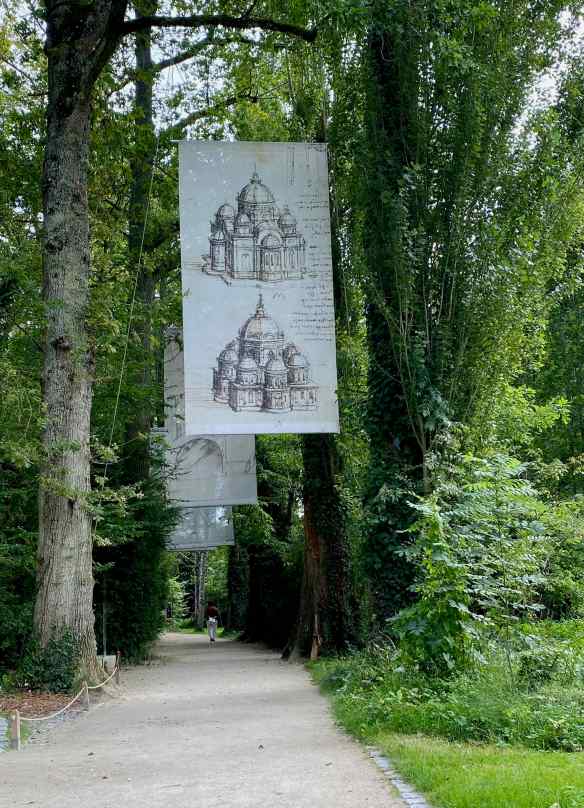
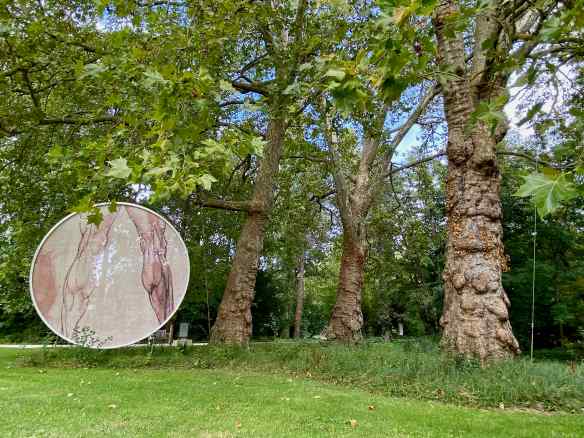
There are  forty 3 and 4 meter tall translucent canvases hung throughout the garden.  We love these…

and the many life size models of his inventions.

We saw the original of this painting during a previous trip.  It looks fantastic high in the trees…

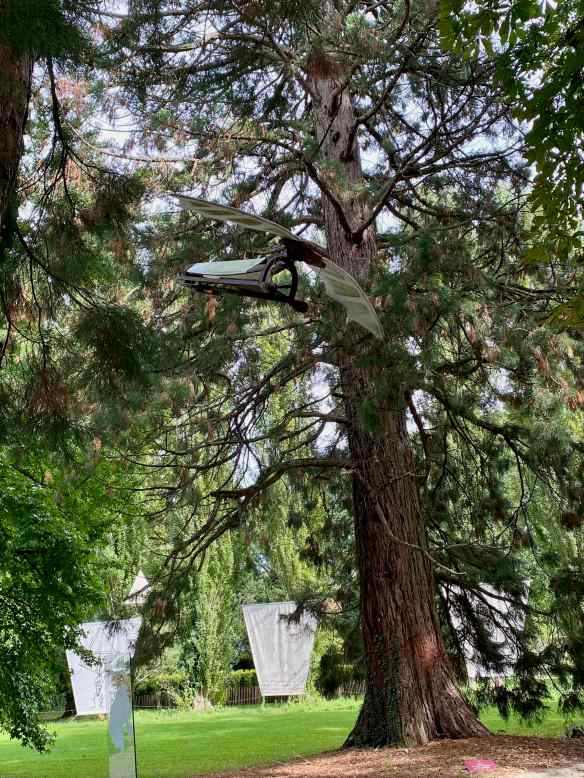
along with this model of a flying machine.

Everywhere we look there are beautiful installations showcasing Leonardo’s work, and enhancing the beauty of the gardens.

I’m not so sure that this was enhancing anything!

One of the paths showcases many of Leonardo’s most well known drawings. They are very impressive…

as were these.

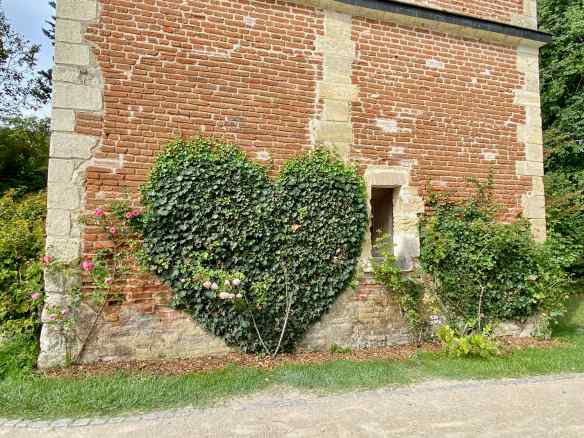
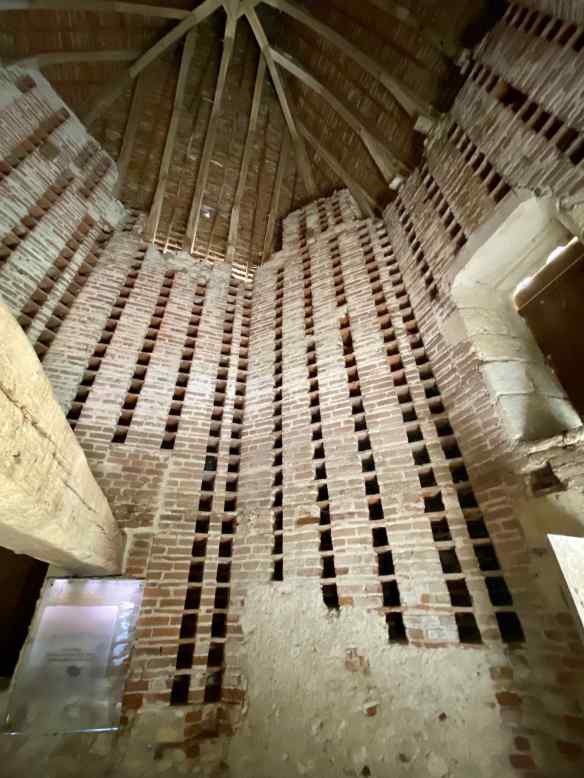
I loved this heart growing on the wall of the pigeon house.

This five hundred year old pigeonnier (pigeon house) was built not long before Leonardo arrived.  It held 1,000 pigeons!  Pigeonniers were status symbols, proof of wealth, authority and power. The keeping of pigeons was a right restricted to royalty, the clergy and the nobility.  Peasants were prohibited by law from killing pigeons which attacked their crops. Pigeons were kept for their meat, their eggs and their guano, which was used to fertilize the fields.

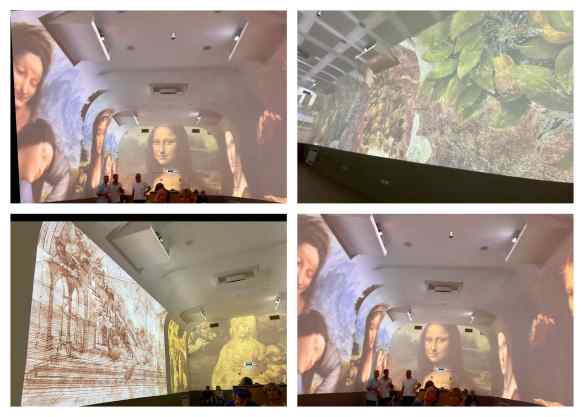
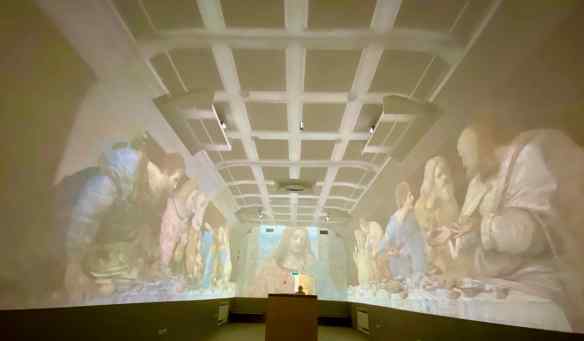
There is a new exhibit, The Leonardo da Vinci Painter and Architect Gallery.  17 of his masterpieces and 200 of his drawings are projected in a giant fresco on the walls and ceiling of the gallery.  It is incredible.  I sit through the 15 minute show twice. We are so fortunate to have seen most of these paintings in museums during our travels.  The one we missed is the Last Supper.  We didn’t realize that we needed to book way in advance so we were out of luck.  We do see the Last Supper here, projected with larger than life details and preparatory sketches.  It isn’t the real thing but it was pretty wonderful anyways. https://www.youtube.com/watch?v=we38niQIB4U
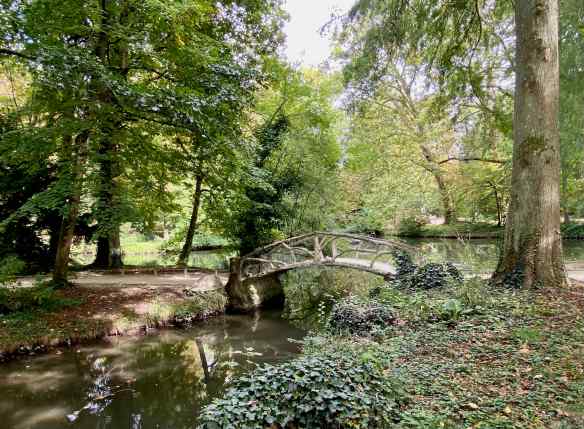
The gardens are beautiful, and have amazing views everywhere we look.

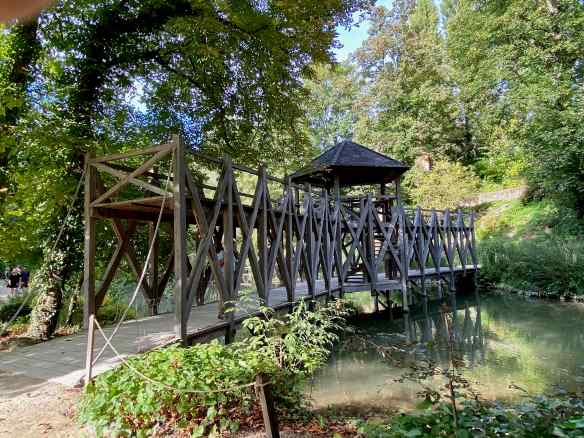
There are lots of bridges that were designed by Leonardo, including this double decker one.

The garden has been planted with many of the same plants that were growing when Leonardo lived here.  He drew the trees and plants in his garden. There are plaques showing his drawings along side of the same plants growing today.

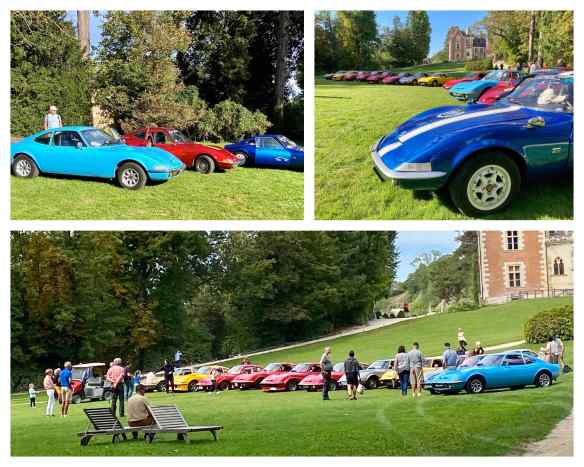
As we leave the gardens we check out the cars that drove in while we were having lunch.  They are all Opels, which I had never heard of but Bob recognized them right away.

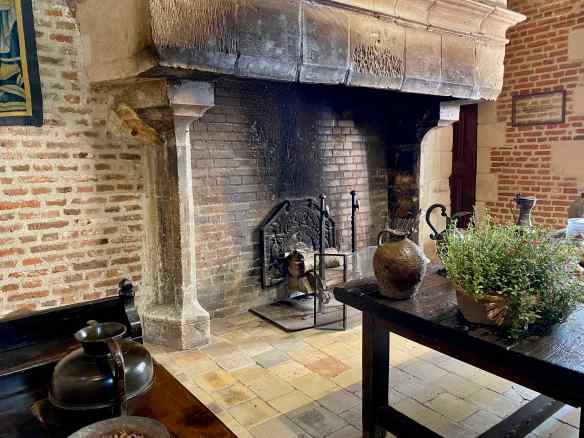
I need to walk through the house one more time before we leave.  Leonardo was known to sit here beside this fireplace to keep warm.  This whole visit was quite remarkable.  I was overcome with emotion several times, walking in Leonardo’s home, studio and garden, and standing in the room where he died. It was an amazing day.

Quiet Day

Day 30,  Wednesday, September 27, 2023

AlthoughI really enjoyed yesterday I completely ran out of energy on the drive home, and needed a two hour sleep once we were back in Tours.  Then to bed early and I didn’t wake up until almost noon today, still feeling really tired so just took it easy all day.  No pictures, nothing interesting to write about.

Tours, France

Day 25, Friday, September 22, 2023

Today we explore Tours.  Our apartment is within easy walking distance of downtown. First stop is the Tours Train Station which is one of the prettiest train stations in France. The architect is the same one which designed the station which is now the  Musée d’Orsay .  I can see the resemblance. The inside is decorated with tiled pictures of French towns and chateaus.

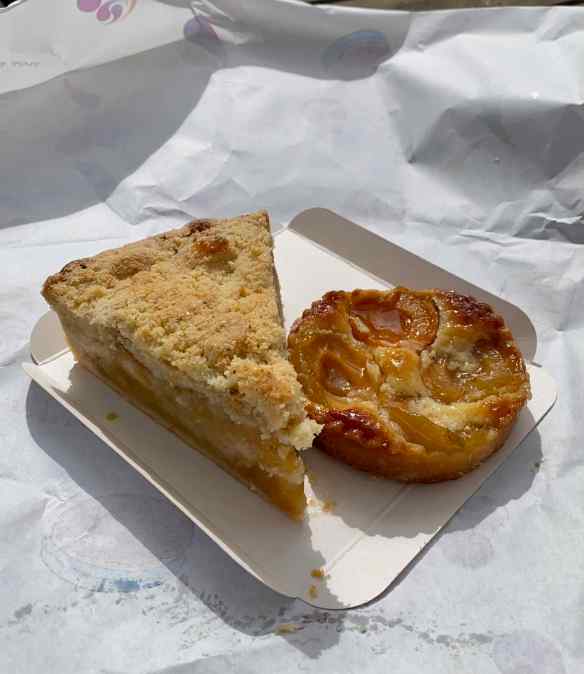
We pass a little patisserie and buy couple treats for our tea time.  So far I am able to have the odd gluten treat with no ill effects, although I am sensitive to gluten at home. They were delicious!

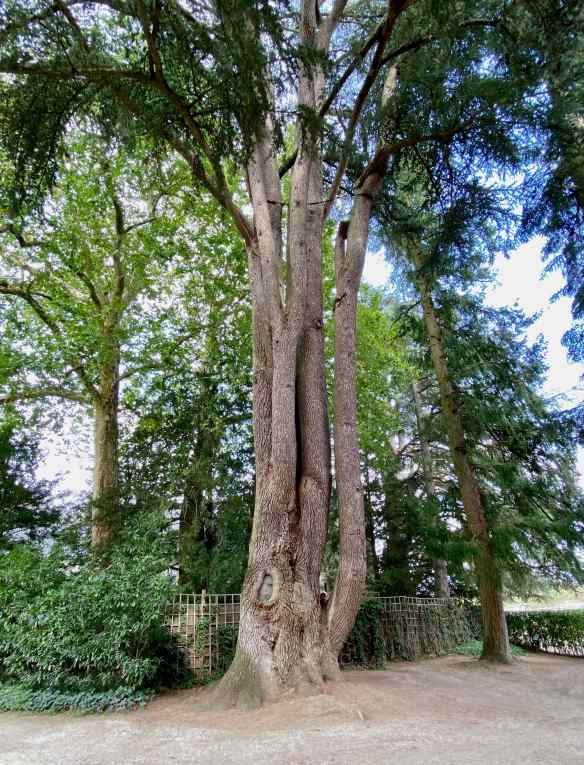
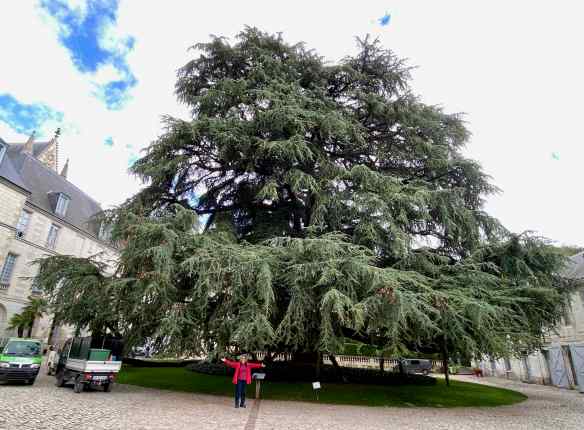
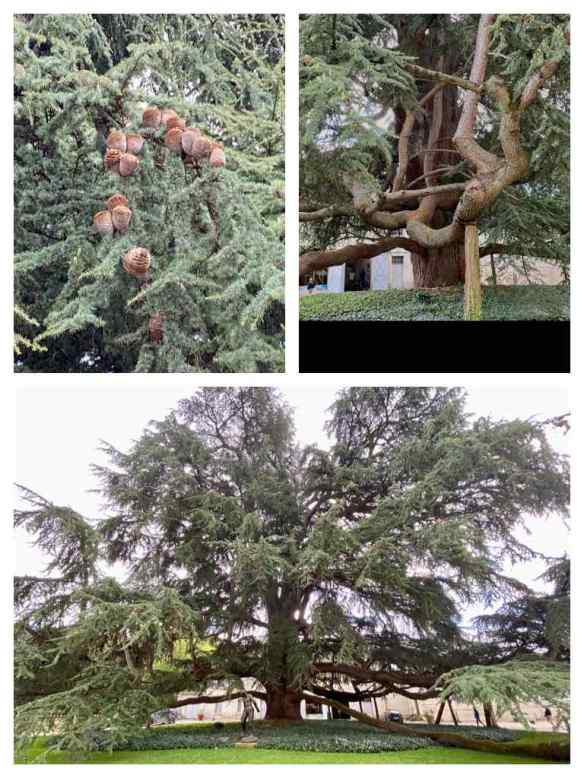
We visit the garden behind the Beaux Arts Museum and see this phenomenal tree!  It is an enormous Lebanon Cedar with a height of 31 metres, a width of 33 metres and a trunk with a circumference of 7.5 metres!  It is a magnificent tree.  

I love big trees, and this one is one of the biggest I have seen.  It has enormous cones, and long arching branches, some of which lie along the ground.  Pictures do not do it justice.

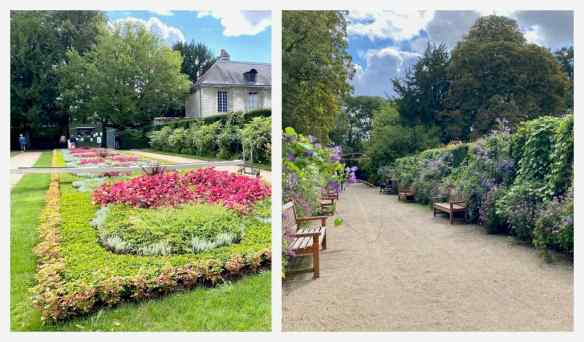
There are flowers and lots of benches.  The device just above the red flowers is used so that the gardeners can sit or perhaps lie down and weed without having to walk in the flower beds.

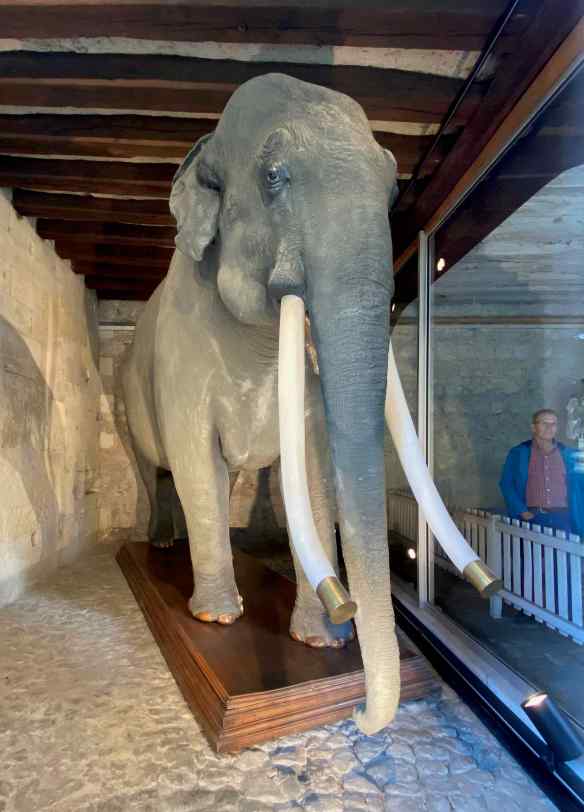
This is Fritz the Elephant.  He died in 1902 in Tours.  Please take moment to read about his tragic death.  He was stuffed and is on display in the gardens. https://graphicarts.princeton.edu/2017/05/26/fritz-the-elephant/  

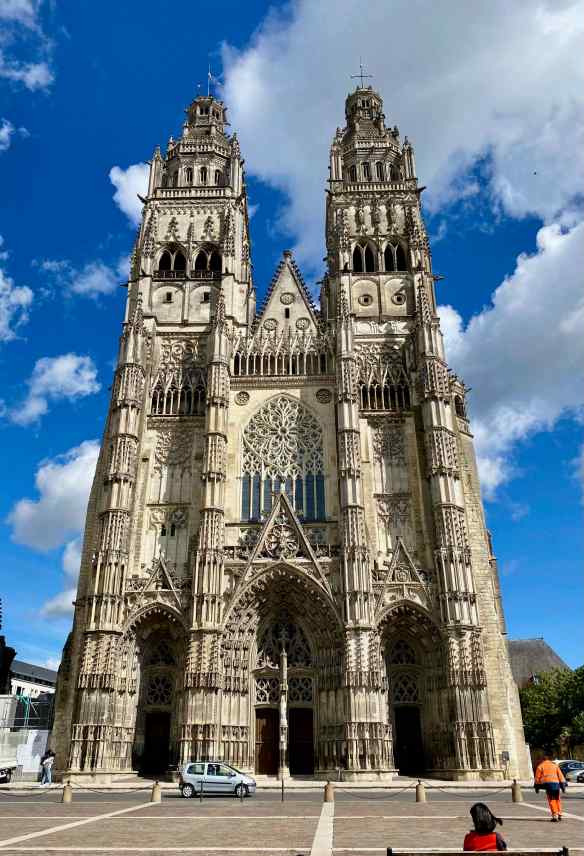
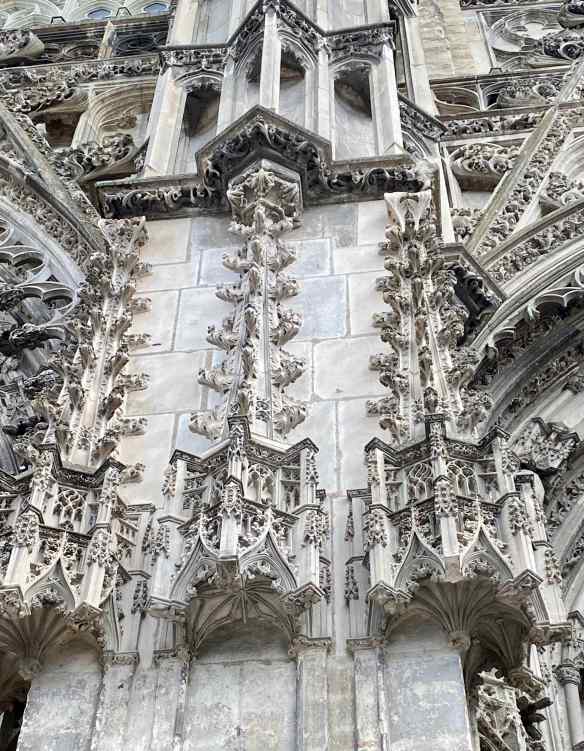
St. Gatien Cathedral is very ornate.  

The decorative work on the outside of the church is very delicate and beautifully carved.

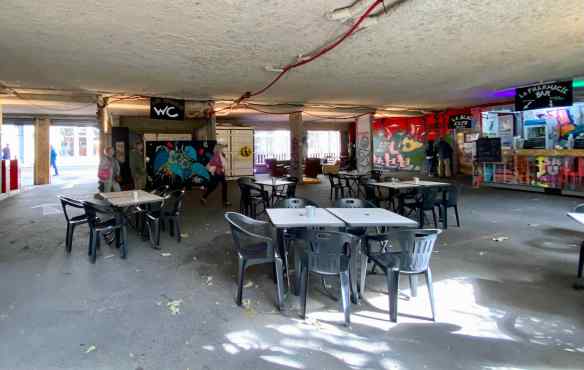
This interesting coffee shop/art gallery was under part of a building and open to the street.

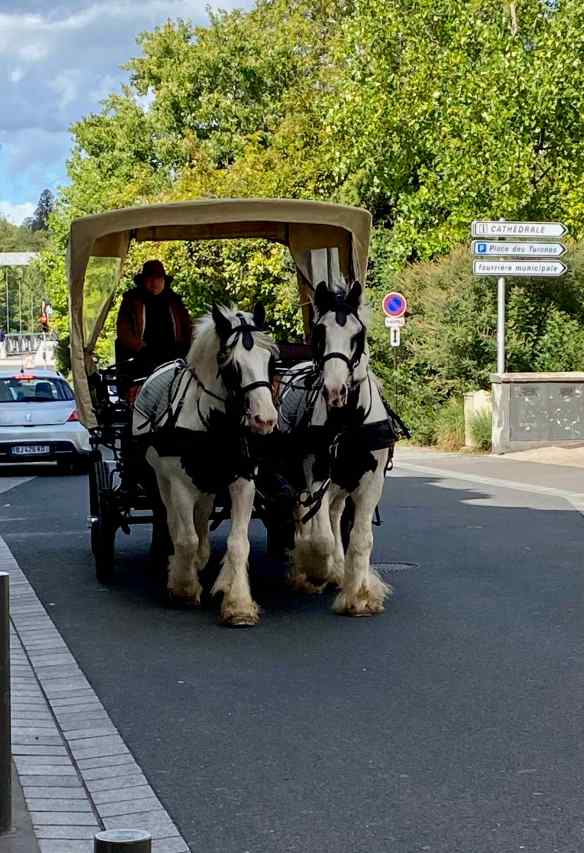
Tours has horse drawn wagons!

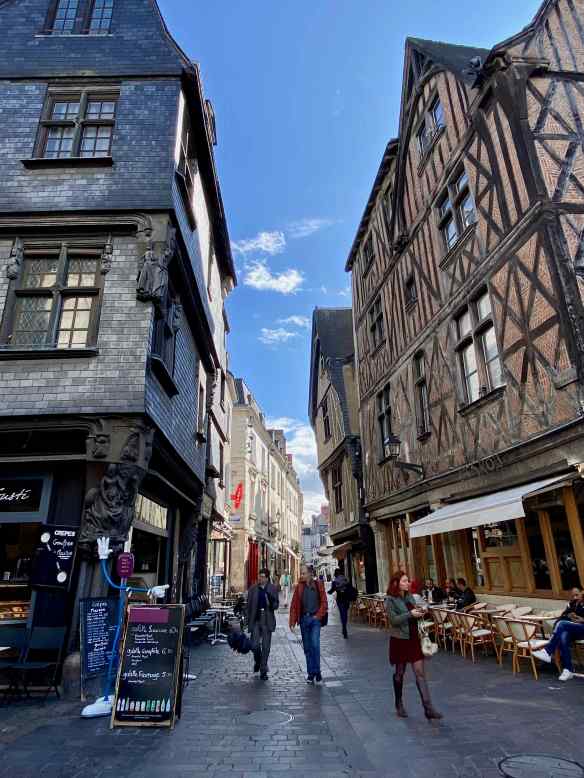
These medieval buildings lean out over the street.  Each floor extends a bit further out than the one below.  Note the interesting carvings on the grey building.  There is just so much to see everywhere.

This photo has an interesting story.  We were having tea and I noticed that there was a large duffel bag sitting unattended on a bench some distance from us.  It made me rather nervous.  We have seen signs to be aware of abandoned bags or other unusual activity.      Several people walked by and looked at the bag, but just kept walking, until this fellow walks by, turns around and sits down beside the bag.  He sits there for about 5 minutes, then casually stands up, looks at the bag, picks it up and quickly walks away.  Pretty sure the bag wasn’t his.  Tours is a university town and Bob figures someone just forgot their bag, but I wonder how anyone leaves a big duffle bag behind.

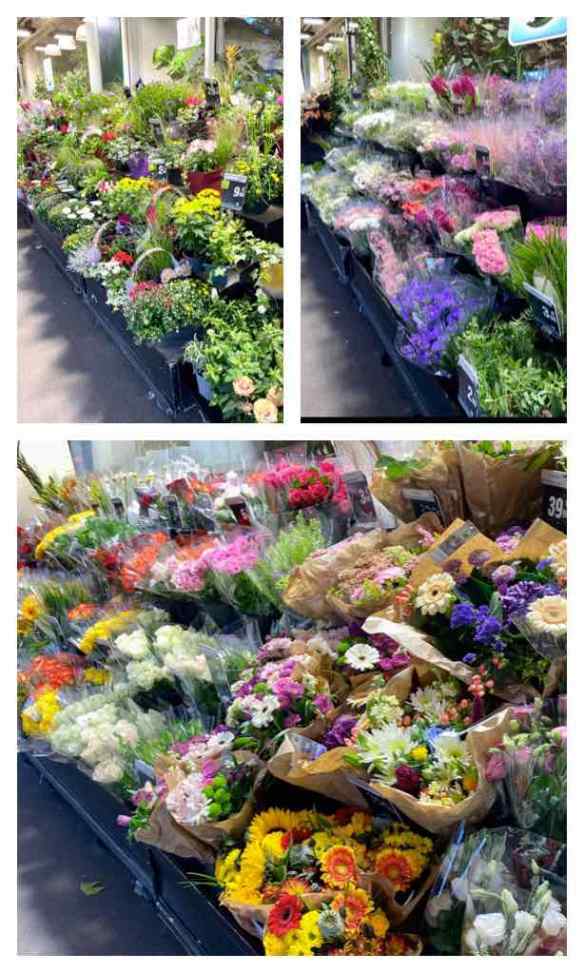
On the walk home we pass this flower store.  If we had a bit more room in our apartment I would have bought some flowers, they were so beautiful and not terribly expensive.

The Apocalypse Tapestry in Angers, France

Day 23,  Wednesday, September 20th, 2023

Oops, just realized that I forgot to publish this way back on September 20th!

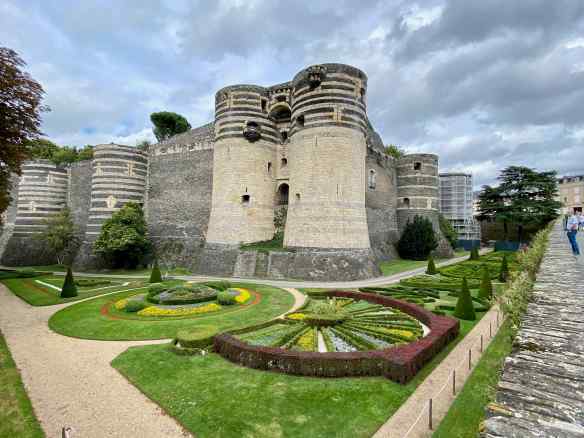
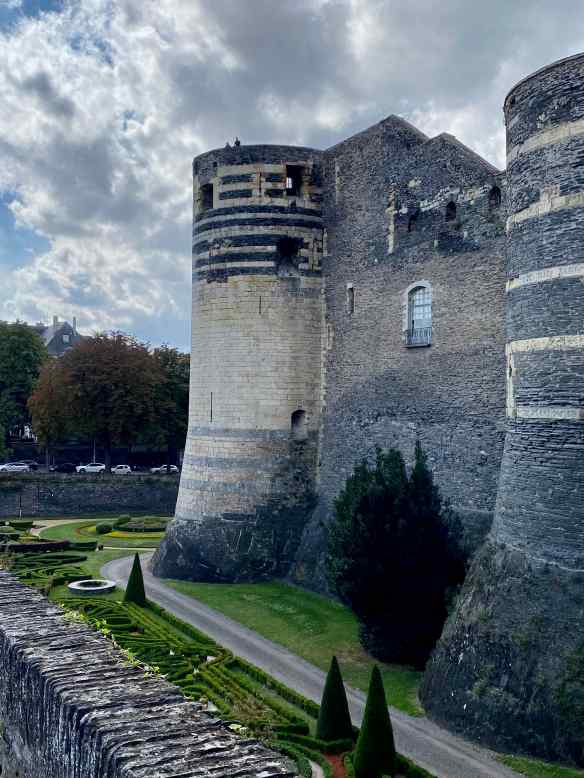
The Chateau d’Angers is huge..

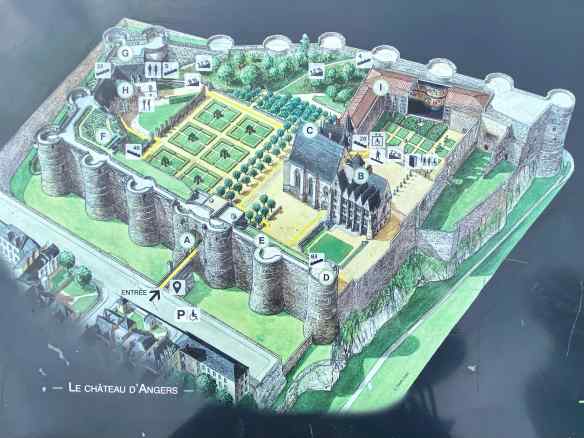
The fortress has 500 m long ramparts and 17 towers and was constructed in 1230. Here is an arial view.

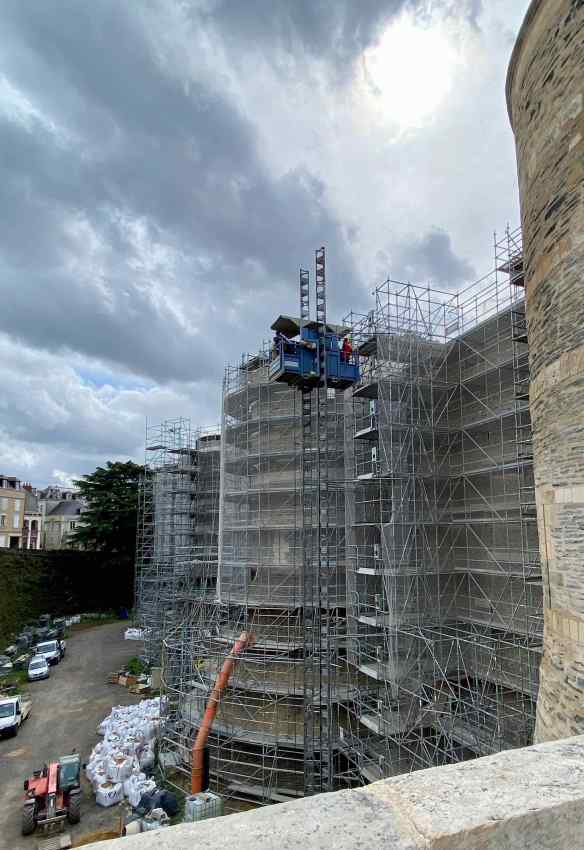
There is a lot of reconstruction happening on the north wall.  I can’t believe how rickety that elevator looks. You wouldn’t catch me riding on that.

The entrance of the castle is impressive.But then we enter the display area for the Apocalypse Tapestry and we are utterly astonished.  This is the largest medieval tapestry in the world!
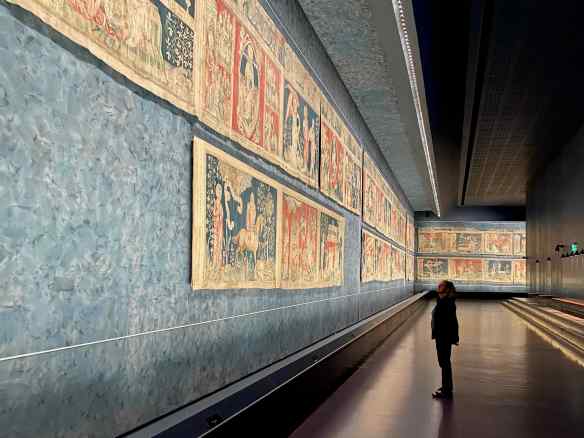
The tapestries turn the corner, and continue down another long wall and then turn yet another corner.  It is a magnificent sight. This information gives a brief history of this incredible tapestry.
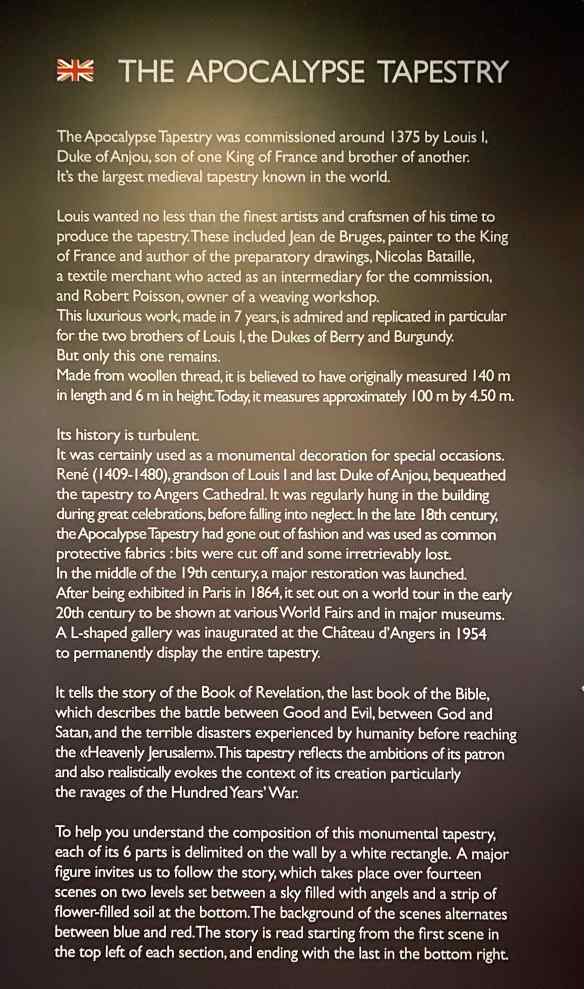
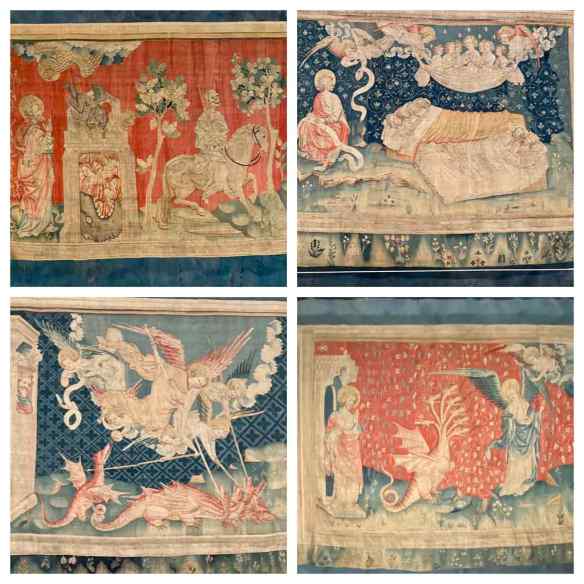
We are entranced and walk back and forth, each time noticing something new.  This is like a medieval graphic novel.  The panels are in order and tell a story.  

Here is one of the panels that has been partly lost.  When the tapestry fell out of fashion it was used for things like floor mats, insulation for orange trees and horse stables, and to plug holes in buildings.   Can you imagine?  It has had extensive restoration, but it is still so amazing that so much of it has managed to survive this long.

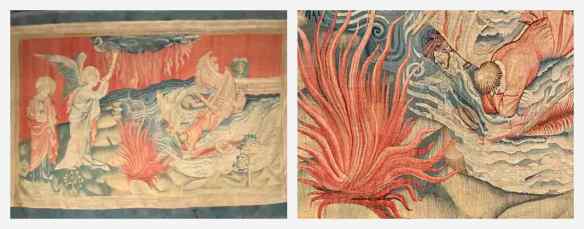
A close up of the weaving.  It is very fine work and both the front and back are equally legible – the ends of wool having been meticulously tidied up. This means it’s possible to know what the original colours were like, unfaded by sunlight or time.

This panel manages to show men underwater and captures the transparency of the water.

Another interesting panel…well, they are actually all very interesting.
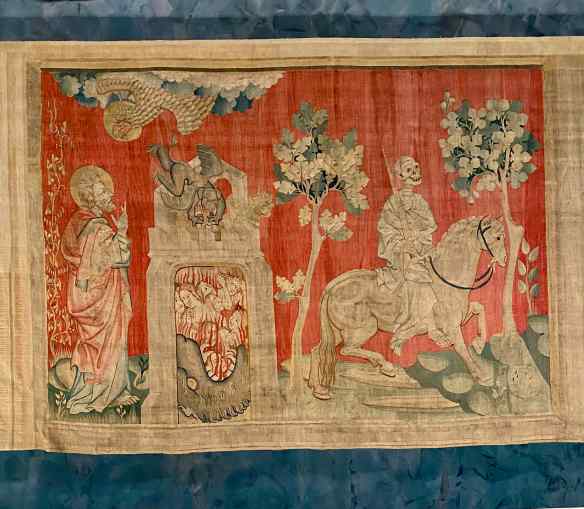
One more view of the long wall around the corner from the entrance. It really is awe inspiring.

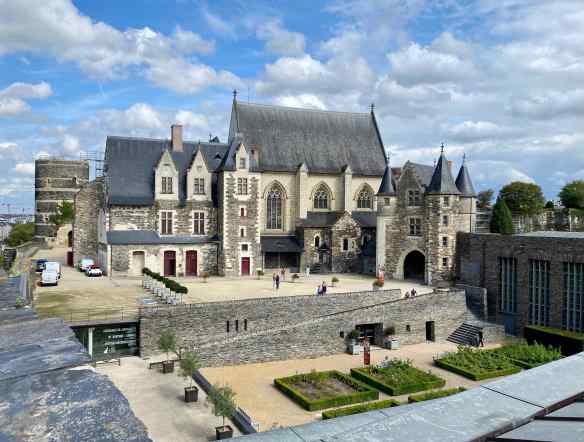
We explore a bit more, and climb the ramparts.  This view is over the roof of the Tapestry museum towards the manor house and the chapel.

We were way up where the people in this photo are.

All too soon we are back on the road to our next destination, Tours France.  A detour causes some confusion for a bit but after some fantastic navigating and equally great driving we are soon at our new bnb.  It is small but I think it will be just fine.

Tours, France

Day 24, Thursday, September 21, 2023

It is raining on and off all day long so I decide I that I am having a pyjama day!  We do a bit of travel planning for the next week, watch some TV,  and I got caught up on our blog.

Mont St. Michel, France

Day 22,  Tuesday, September 19, 2023

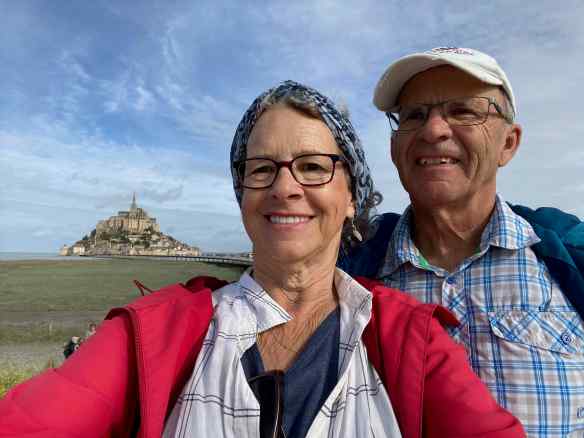
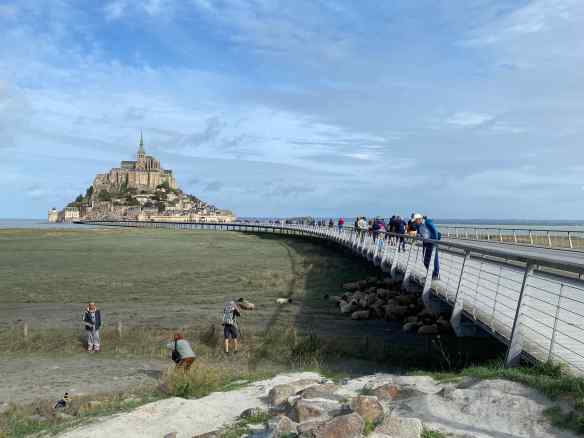
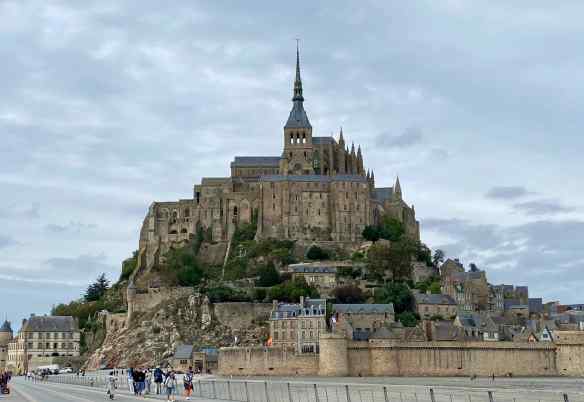
Here we are walking out to Mont St. Michel.  It is a three kilometre walk from the car park to this UNESCO World heritage site.  Be warned, this is a photo heavy post.

The sheep under the bridge attract a lot of attention.  I wish I had time to sit and draw them, but Mont St. Michel beckons…

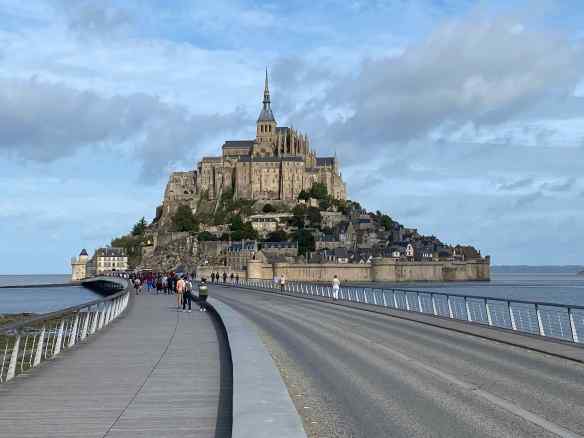
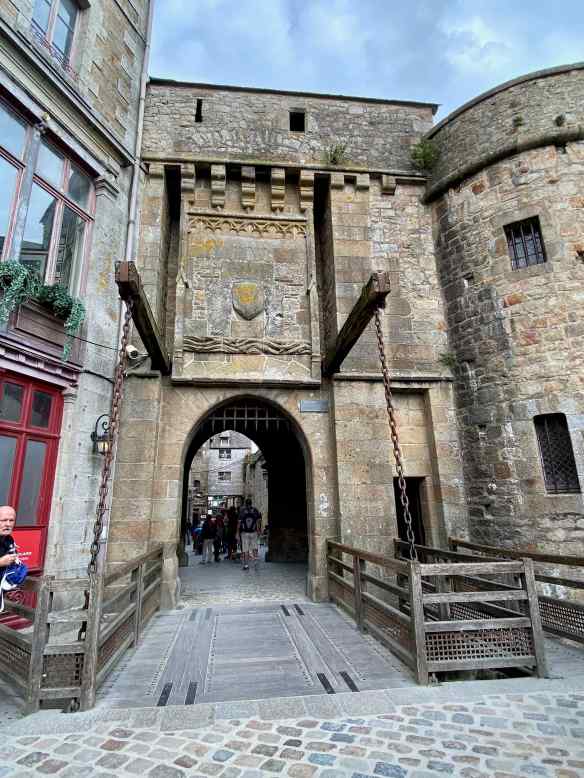
Almost there!

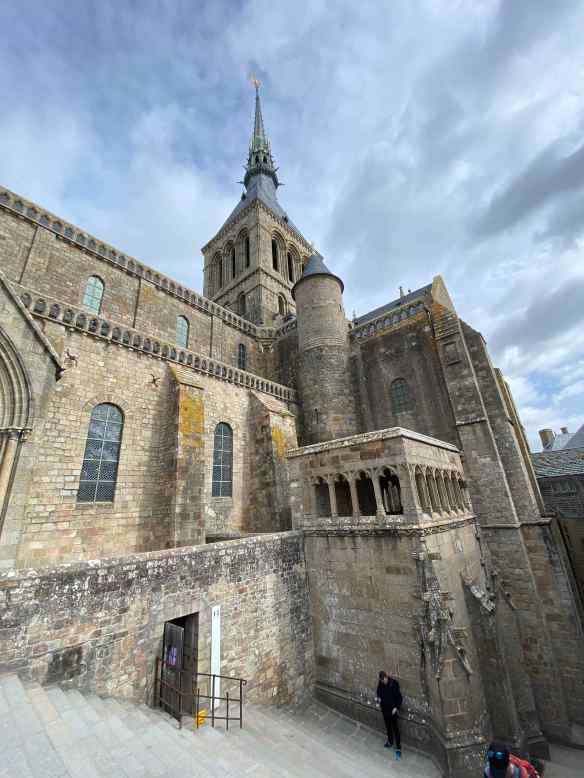
We climb the ramparts right after the entrance gates while the sun is shining.  There is a chance of rain this afternoon. The Abbey church dominates the skyline.

The streets below are crowded and more people are arriving by the minute.  The group with the white hats are pilgrims from Southern France.  I spoke to one of the ladies later in the day who sat by us while we were having lunch.

I love the little conical roof over the dormer window.

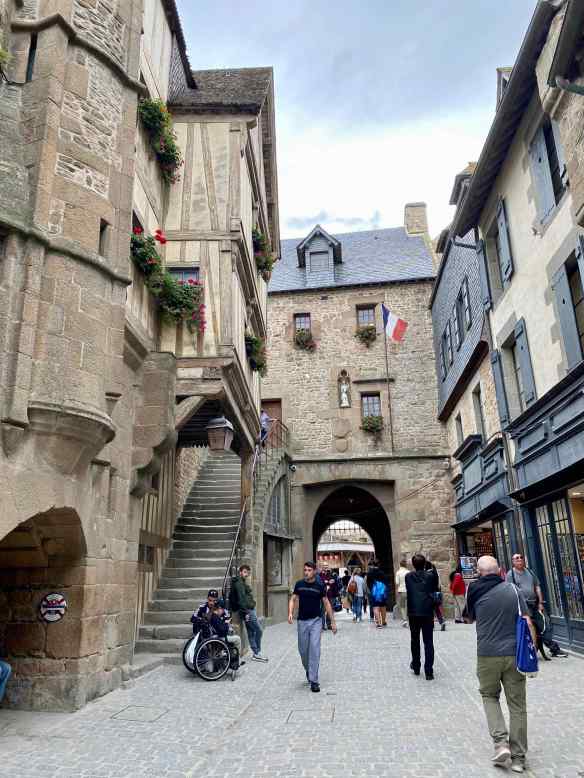
The streets are narrow and they fill up quickly.  We are told that in high season you can barely walk through the streets as there are so many people.

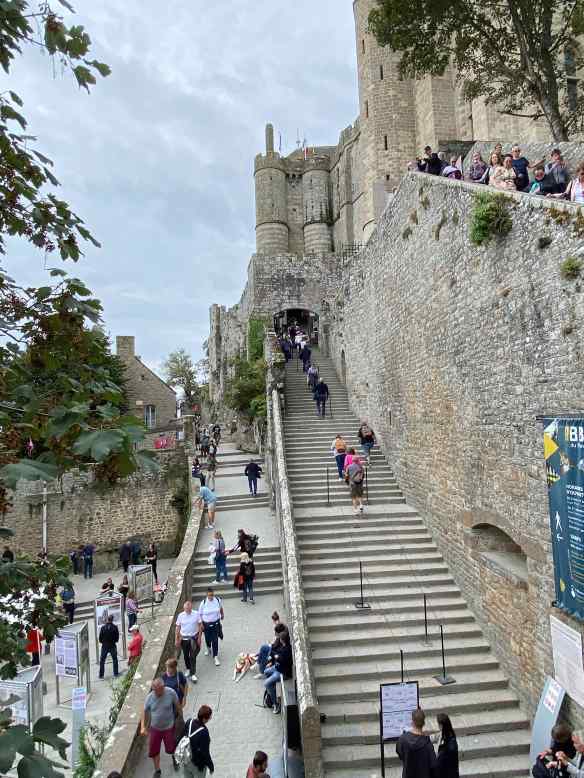
Soon we are among the hordes of people climbing the tall narrow 319 steps to the Abbey.

We bought our tickets online so we get to walk right past a long line of people waiting to buy tickets.

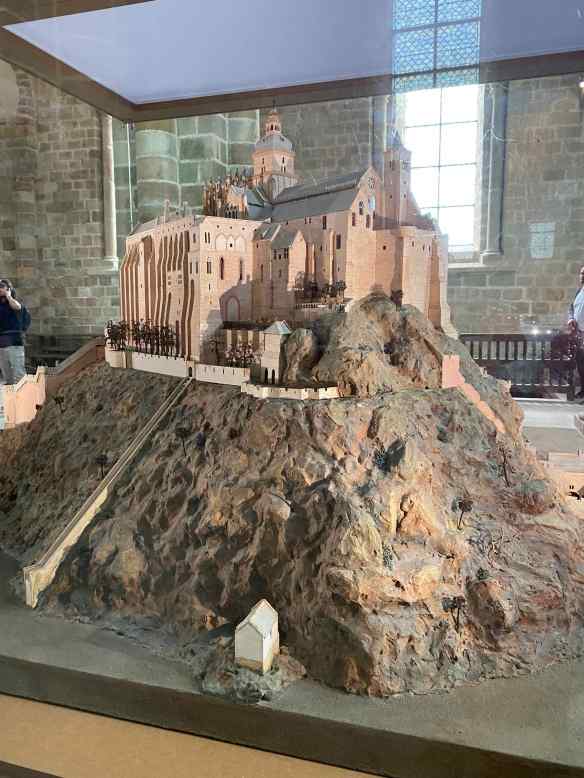
This model of the abbey shows the back side which is only visible if you walk on the sands  at low tide or travel by boat.There are usually 5 monks and 7 nuns who live at the abbey and there are only 25-30 people who actually live on Mont Saint Michel. We sat and listened to part of the mass, from the side of the church.  The singing was really lovely and I found it interesting that the nuns and the priest sat on the floor of the church during the service.
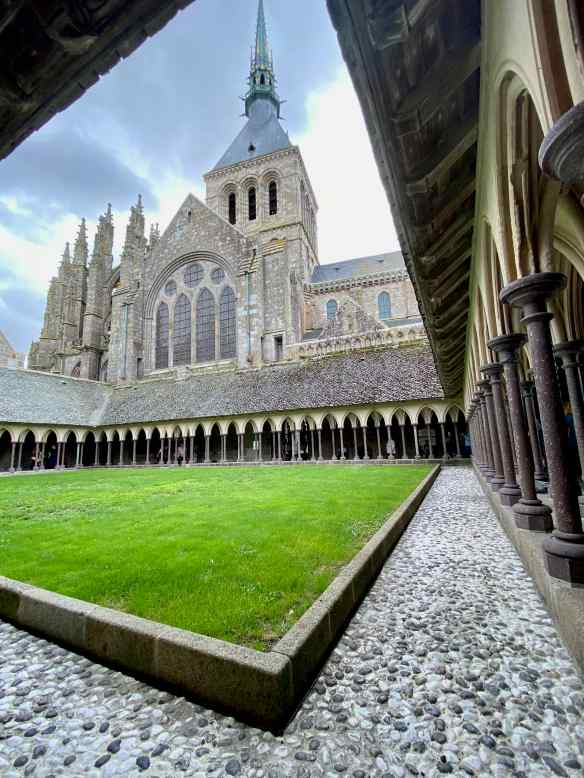
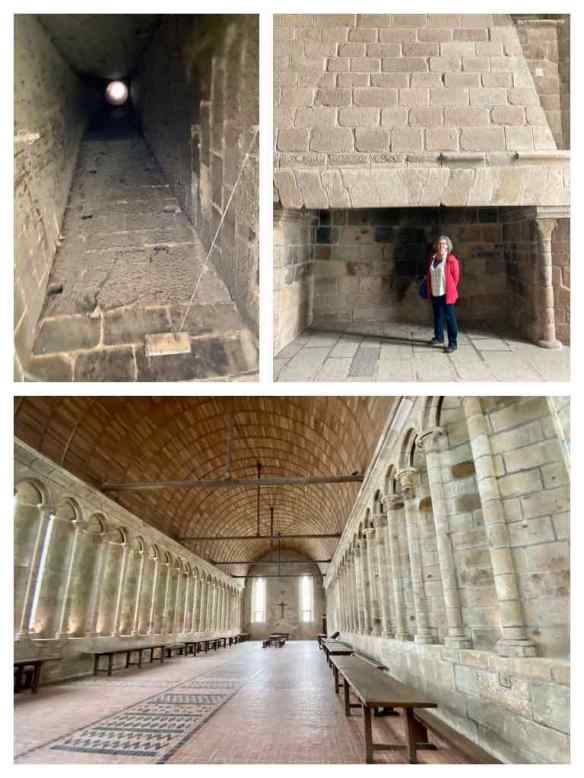
Next we walk through the cloister with its many narrow columns and a view of the church tower.

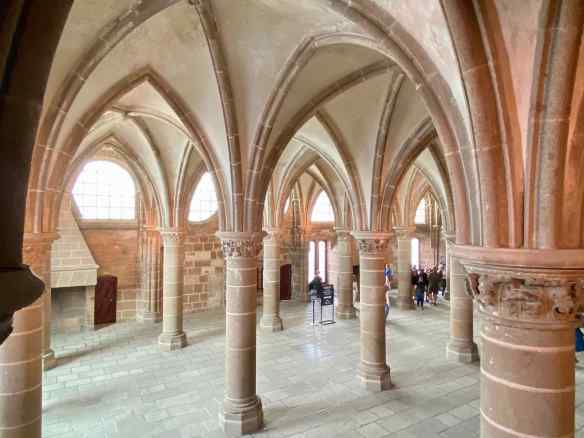
The Host’s room has two enormous fireplaces. Here I am standing in one and the little round circle is looking up the chimney towards the sky.  This is where food was prepared and where the Abbot received important visitors.  The bottom photo is the Refectory where the monks ate their meals.

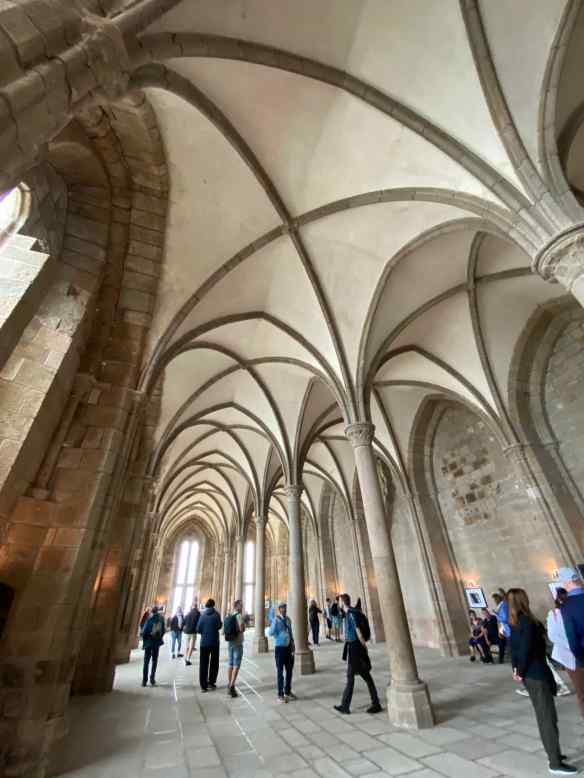
Another view of the Host’s room with its beautiful arched ceiling.
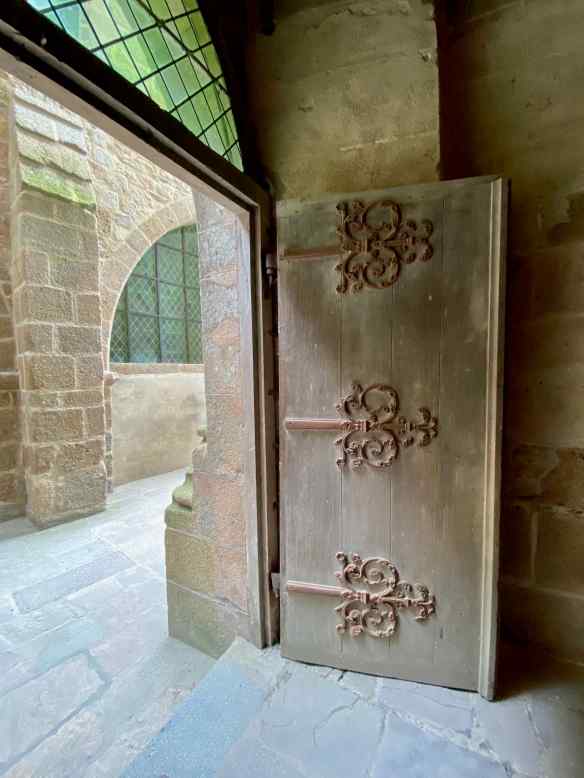
There are so many interesting doors in this abbey.
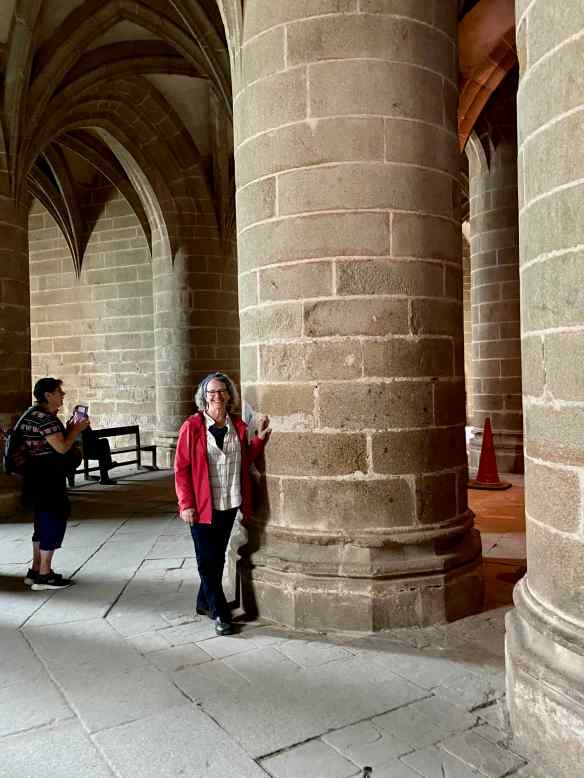
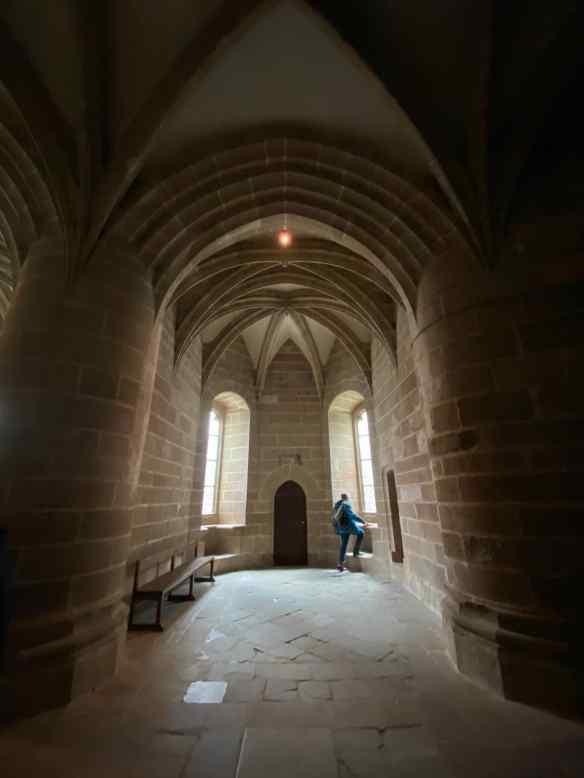
The Crypt des Gros Pillars (Big Pillars’ Crypt) with its ten huge pillars was built to support the choir in the abbey above.There are so many smaller rooms and interesting spaces to be explored.  This one is off the side of the crypt.When the Abbey was used solely as a prison in the 1800’s, this huge wheel was was used to haul supplies up to the abbey.  Prisoners walking inside the wheel were able to raise and lower a cart along a stone ladder inclined along the rock wall.  
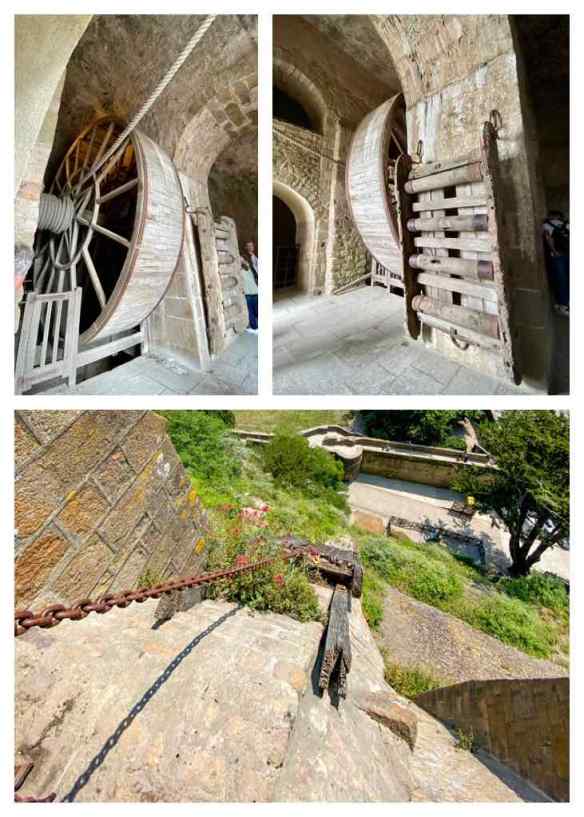
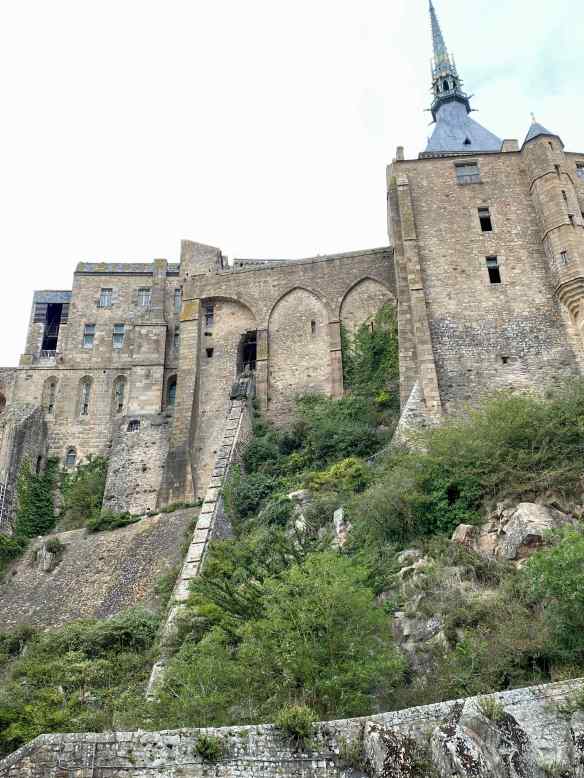
Here you can see where the cart was hauled up the side of the abbey.

The Salle des Chevliers or Knight’s room was most likely used by the monks as a place of meditation and for copying and illustrating manuscripts.  

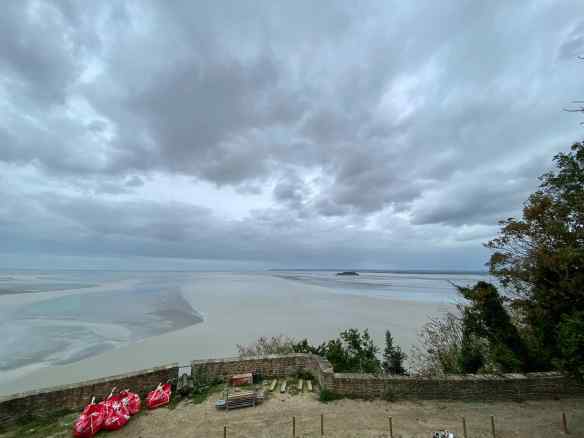
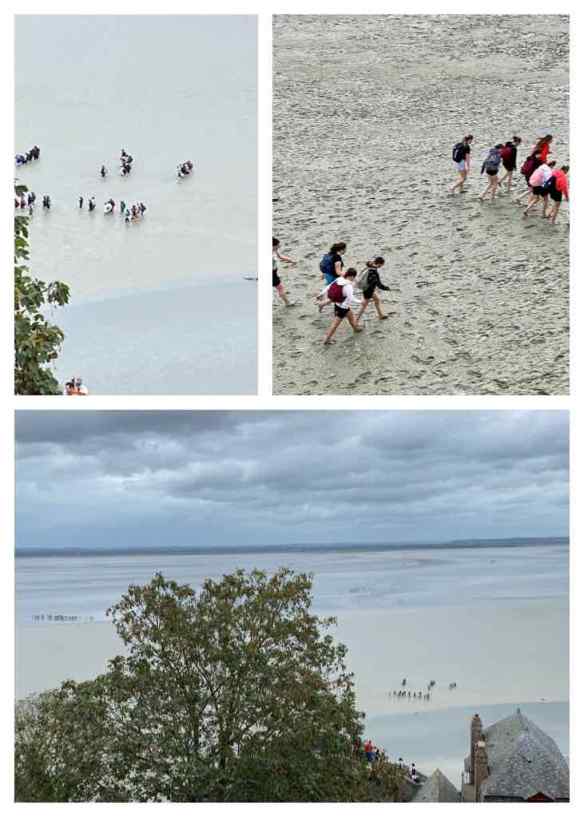
When we walk out into the gardens we see that the ocean is now at low tide and the sand bars are visible all around Mont St. Michel.We hear shrieks and peals of laughter and realize that is is coming from the people out walking on the sands now that the tide is out.  Some of them are thigh deep in the water!  There are a lot of people out there, some of them way off in the distance.  Thanks, but I am happy to pass walking in mud and cold water.
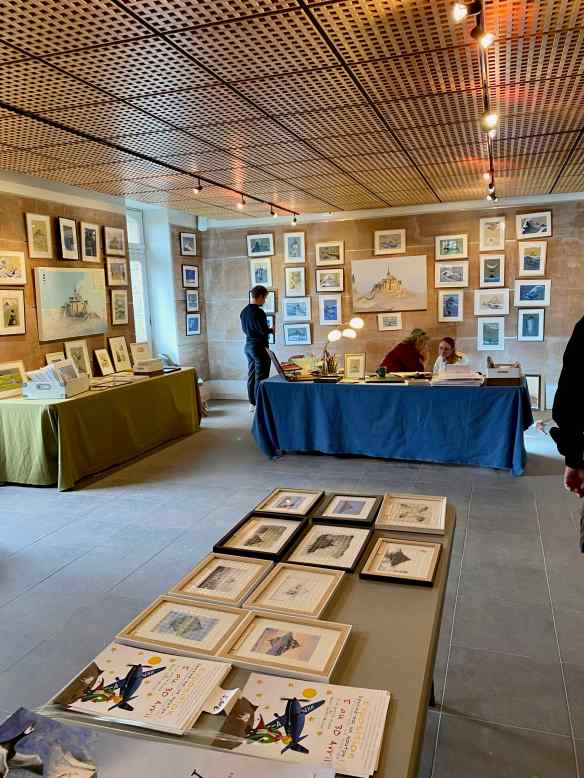
We stop at this little art gallery and I have chat with the artist.  She has a variety of different styles and media, and I found her work very appealing.

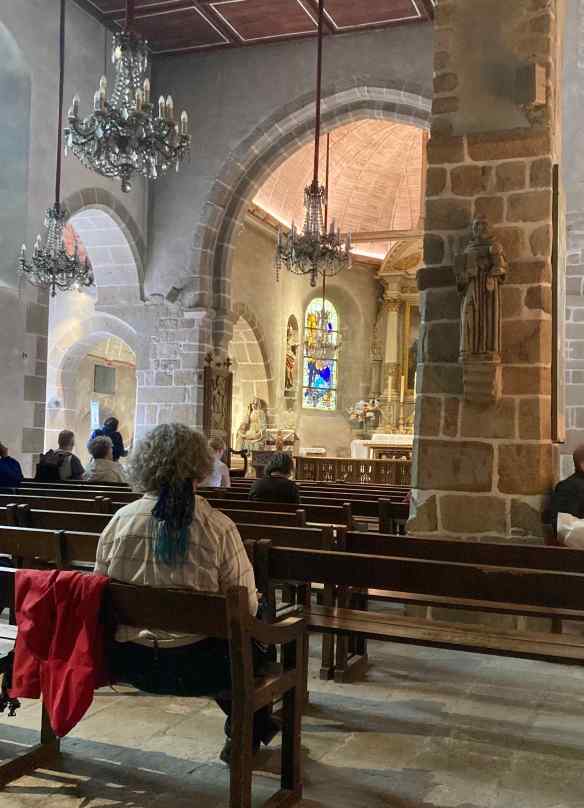
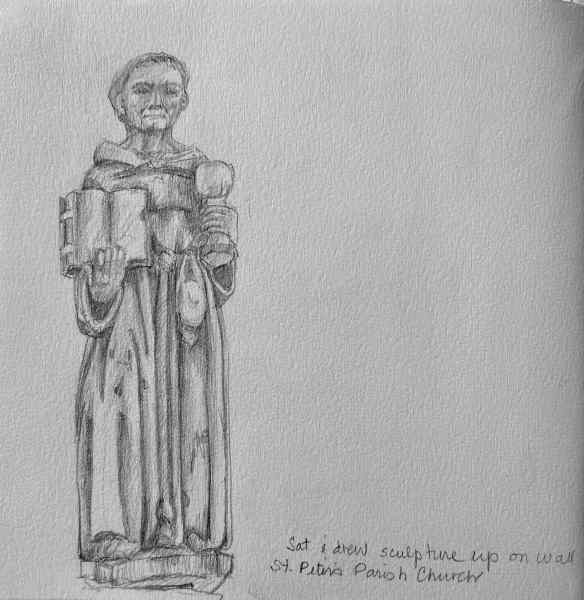
It starts to rain so we duck into the Parish Church of St. Peter for a well needed sit down.  I draw the statue on the wall while Bob rests and then goes for a little walk about so that I have time finish my drawing.

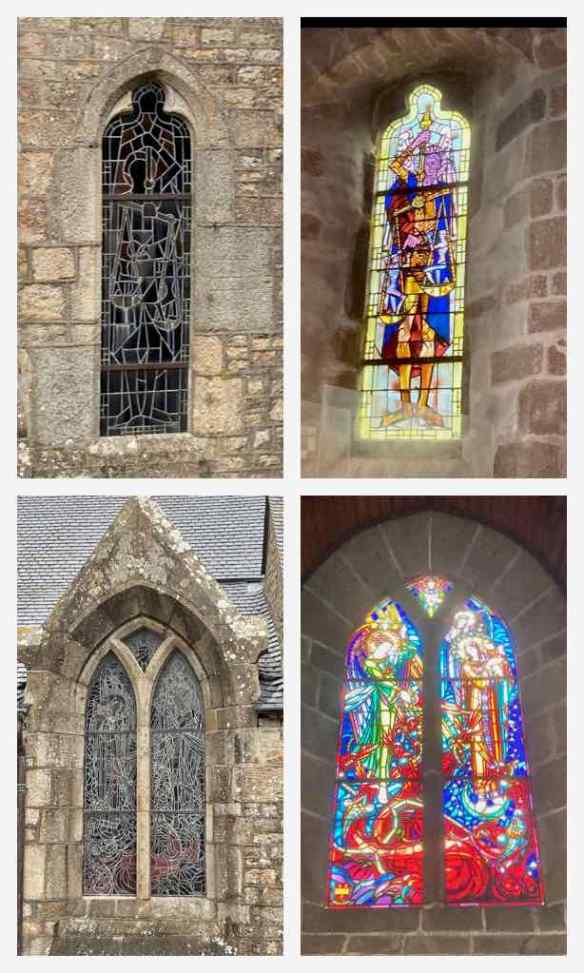
I forgot to see if there was plaque saying who the sculpture was.Bob took interesting photos of the inside and outside view of these two stained glass windows.
People are still coming and going…lots of people!

This photo of the bell tower just barely shows the golden statue of St. Michael threatening a dragon, who represents evil, with his sword.  St. Michael is perched 156 metres high, is 4.5 metres tall and weighs 520 kg. The statue is made of gilded copper and serves as a lightning rod.

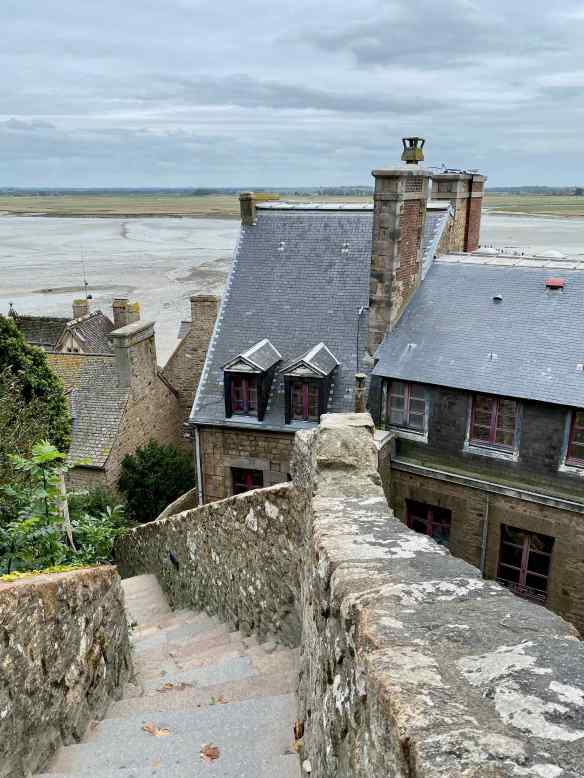
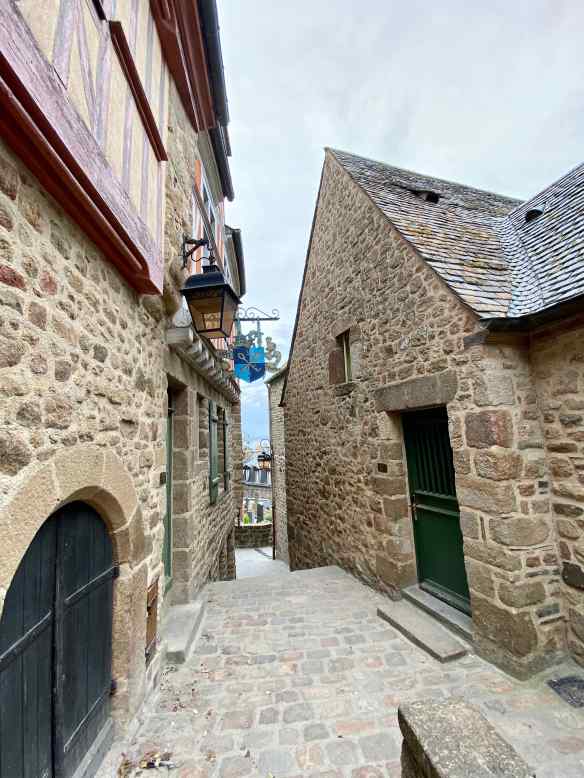
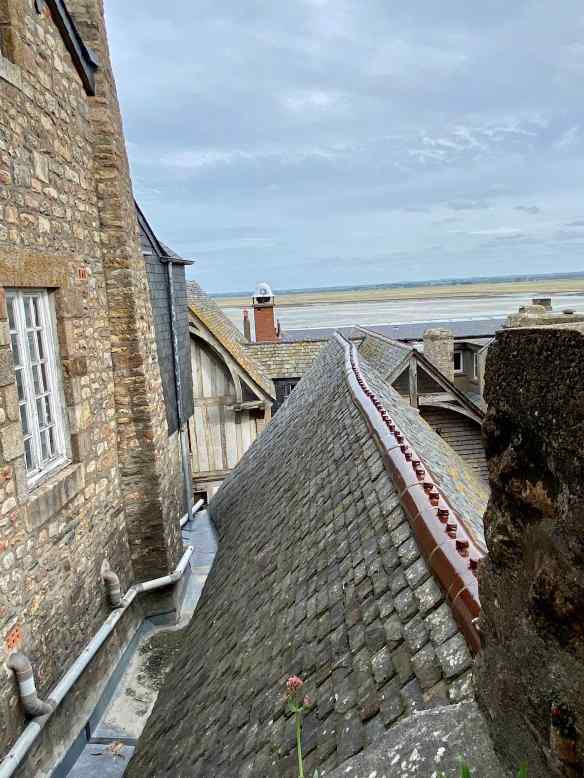
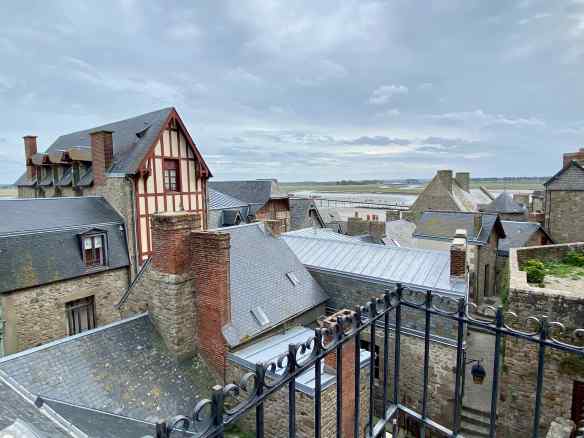
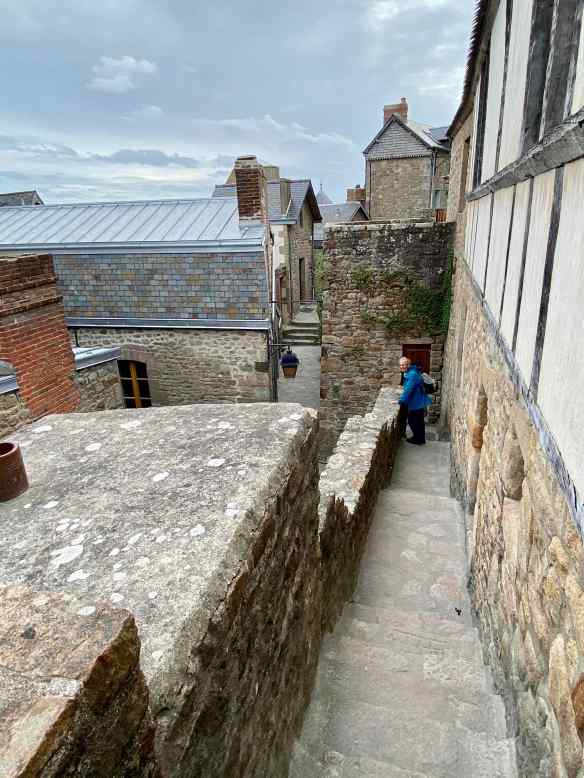
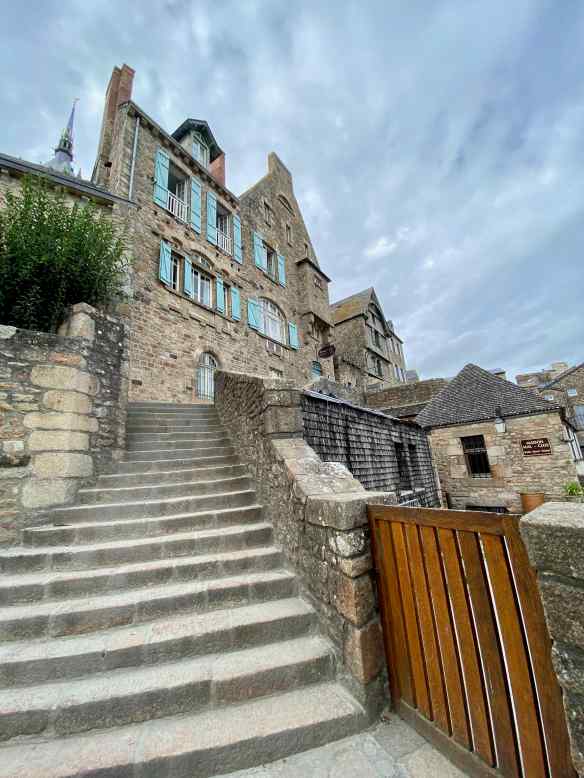
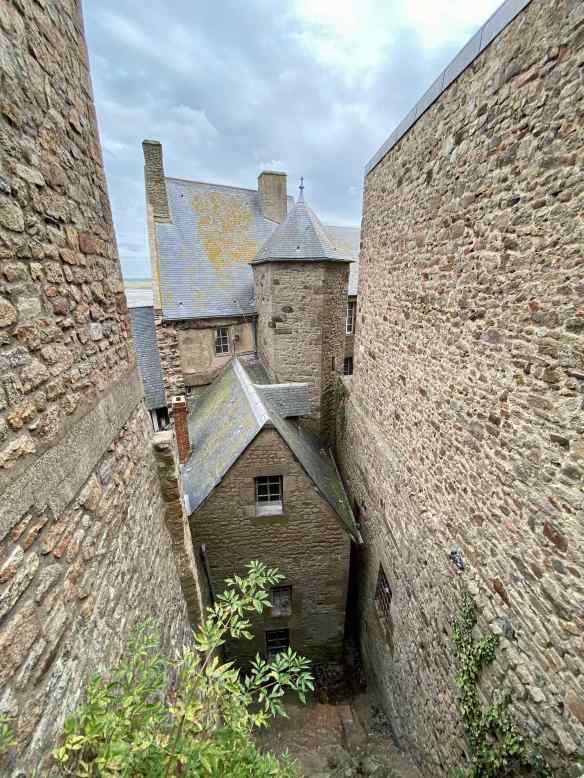
We wander the back streets which most people seem to ignore. There are lots of steps…. …interesting details…

…narrow streets… …crooked roof lines…

…fantastic rooftop views…

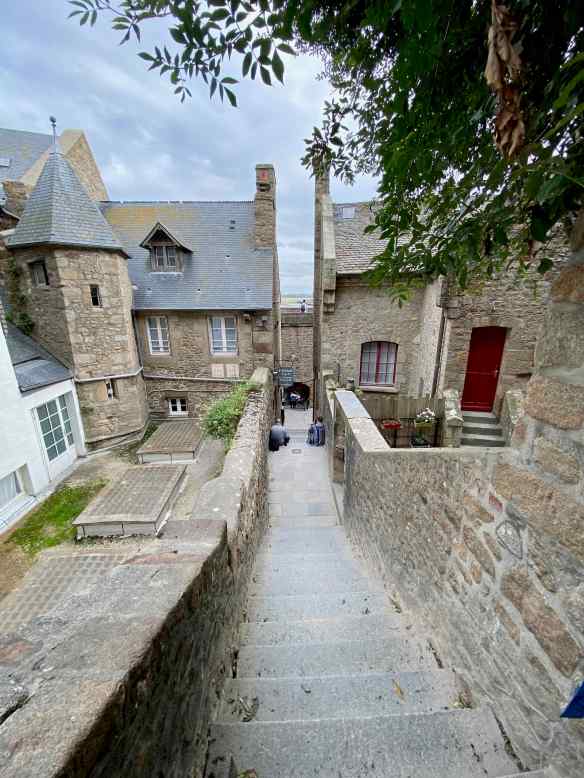
…more steps and stone walls…

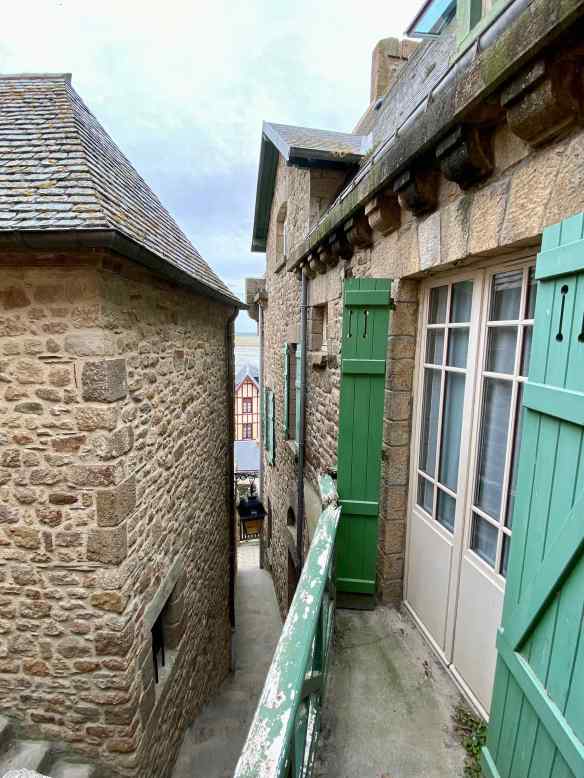
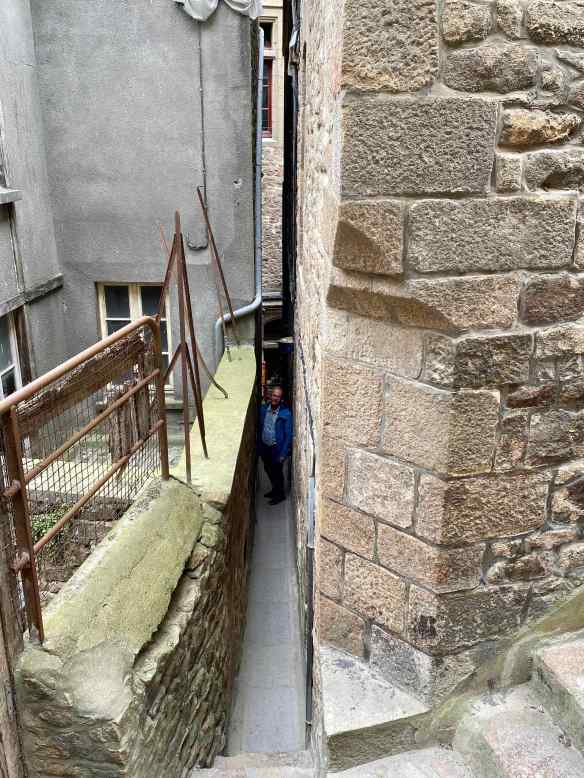
…the narrowest street ever…This is Cuckold’s Alley!

I think I may have mentioned steps…

and buildings tucked into the strangest places…

…and more steps with a tiny view of the ocean…

…which leads us back to the Main Street.

Time to cross the drawbridge and leave Mont St. Michel.

We say goodbye to Mont St. Michel after 7 hours of exploring this fabulous island.  

Day 21,  Monday, September 18, 2023

Yesterday was a stay at home day. No photos, just relaxing and catching up on my blog and planning the next part of our trip.