Day 35 Saturday, October 4, 2025
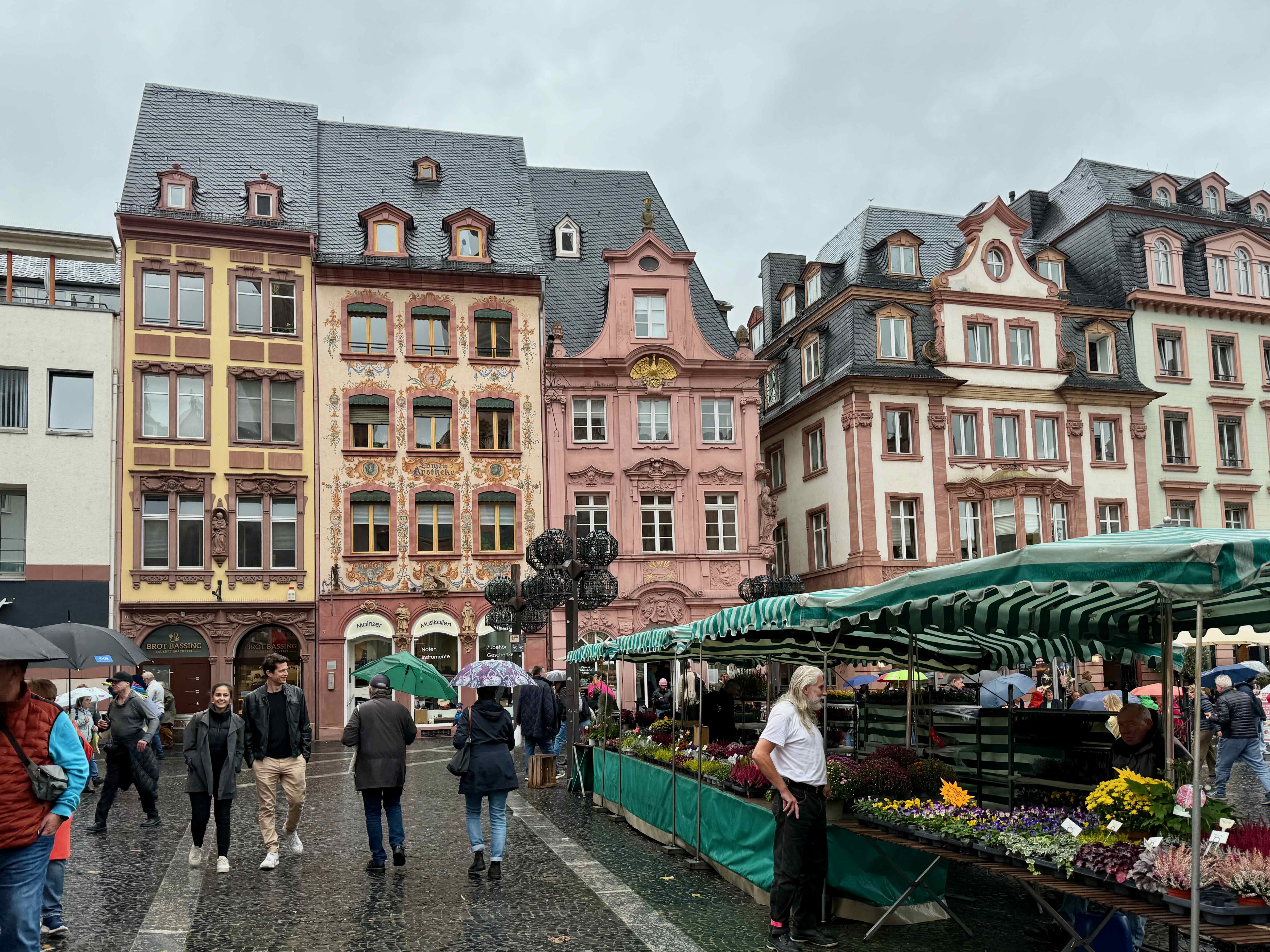
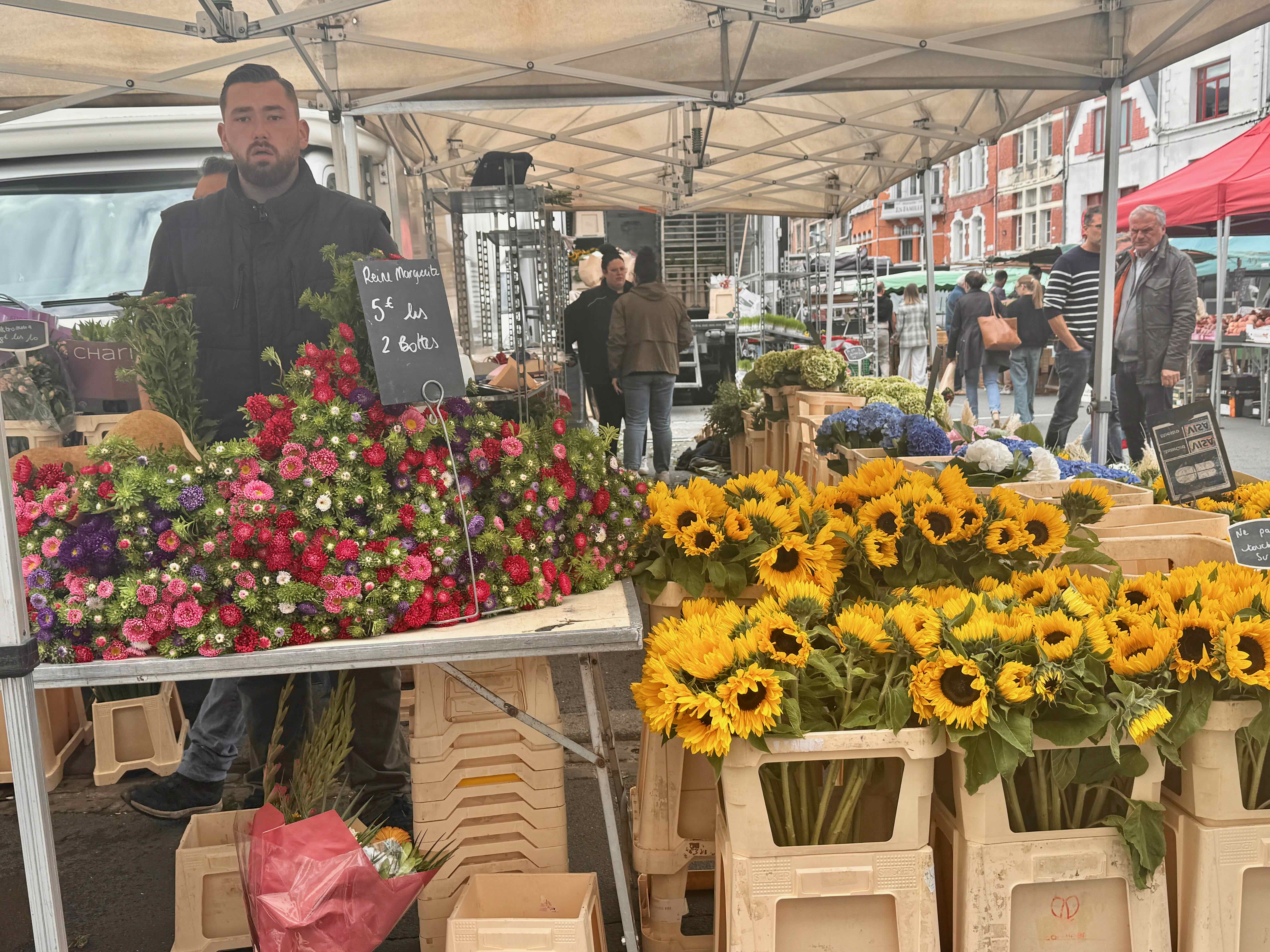
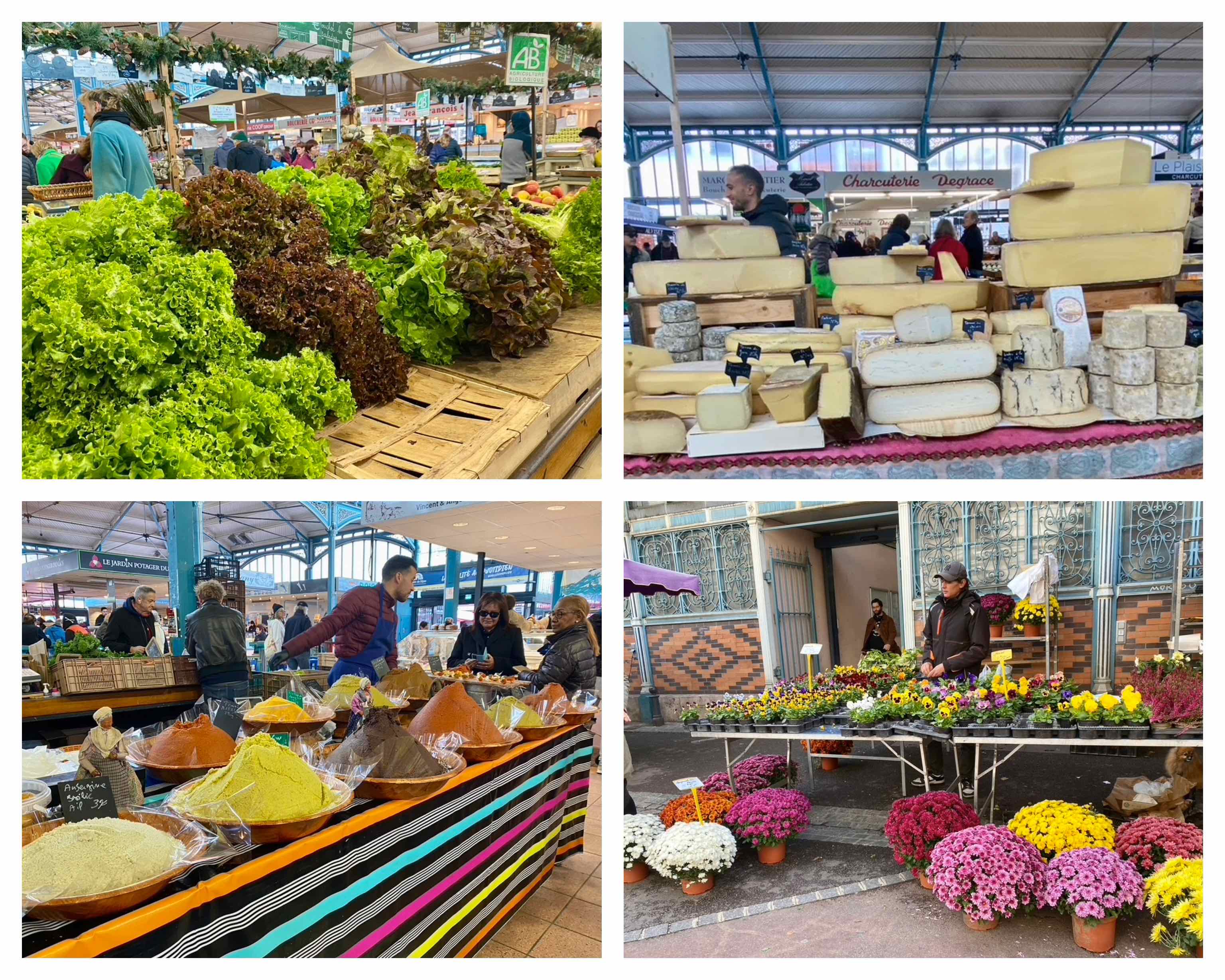
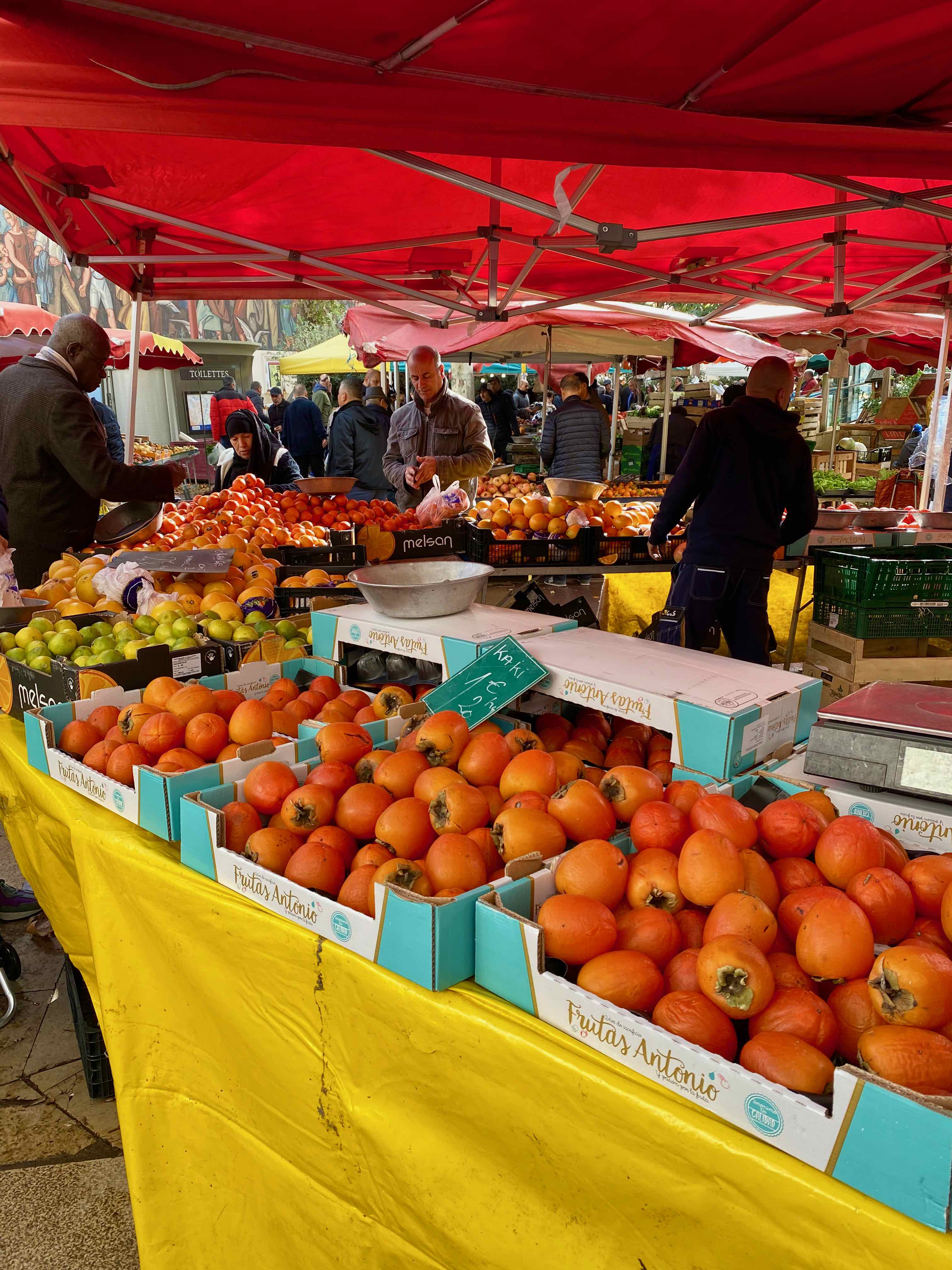
It is a 45 minute drive to Mainz, and Bob has several items on our ‘must see’ agenda. First stop is the market. The flowers at these markets are always so beautiful and very reasonably priced.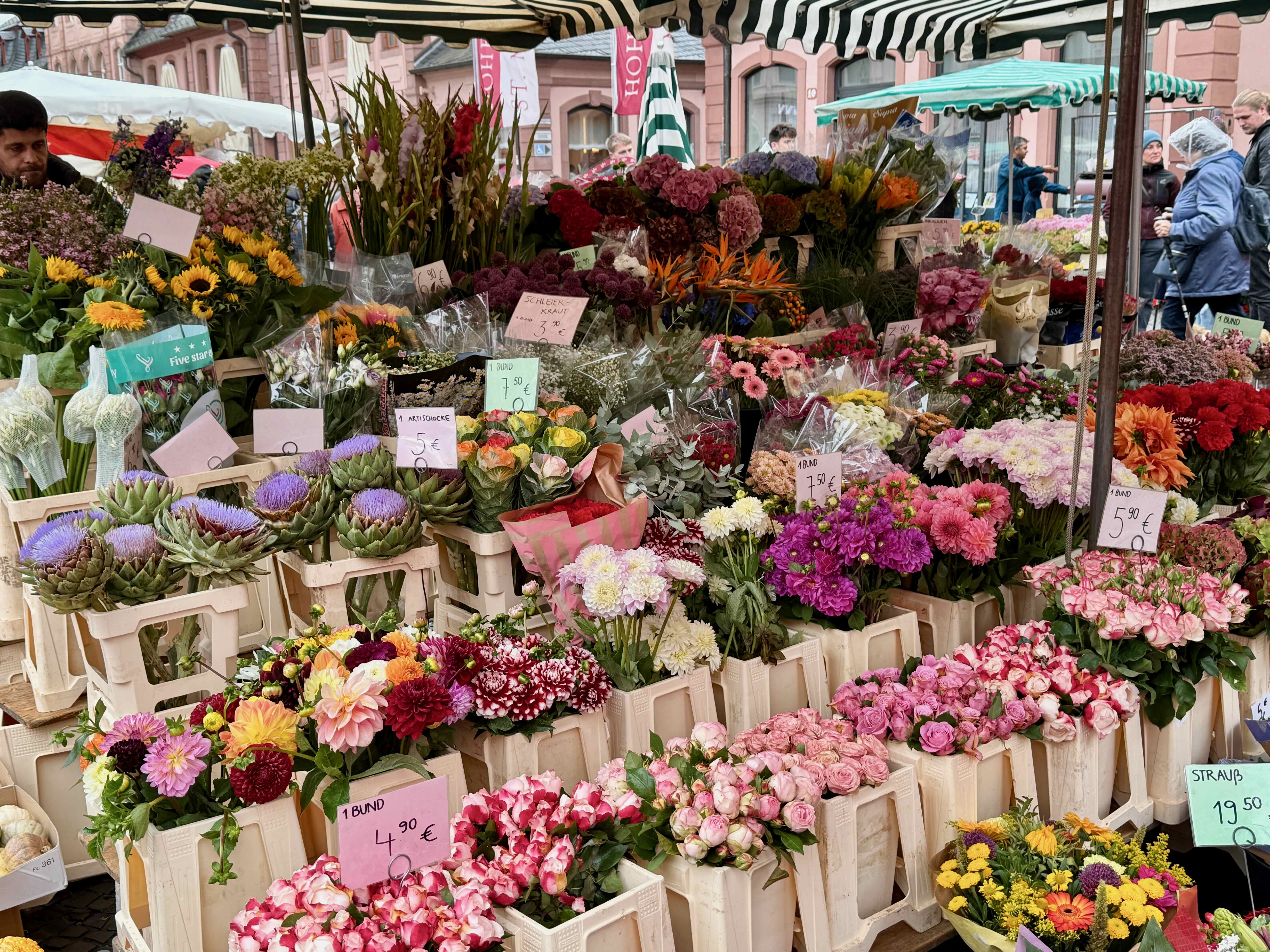
The main sculpture in the main square (market) of Mainz is the Heunensäule, or Hay Column. It is a 1,000-year-old sandstone column with a bronze casing, depicting various symbols of Mainz’s history and culture like a fool’s cap and bishop’s miter. It is in the market square in front of the Mainz Cathedral. 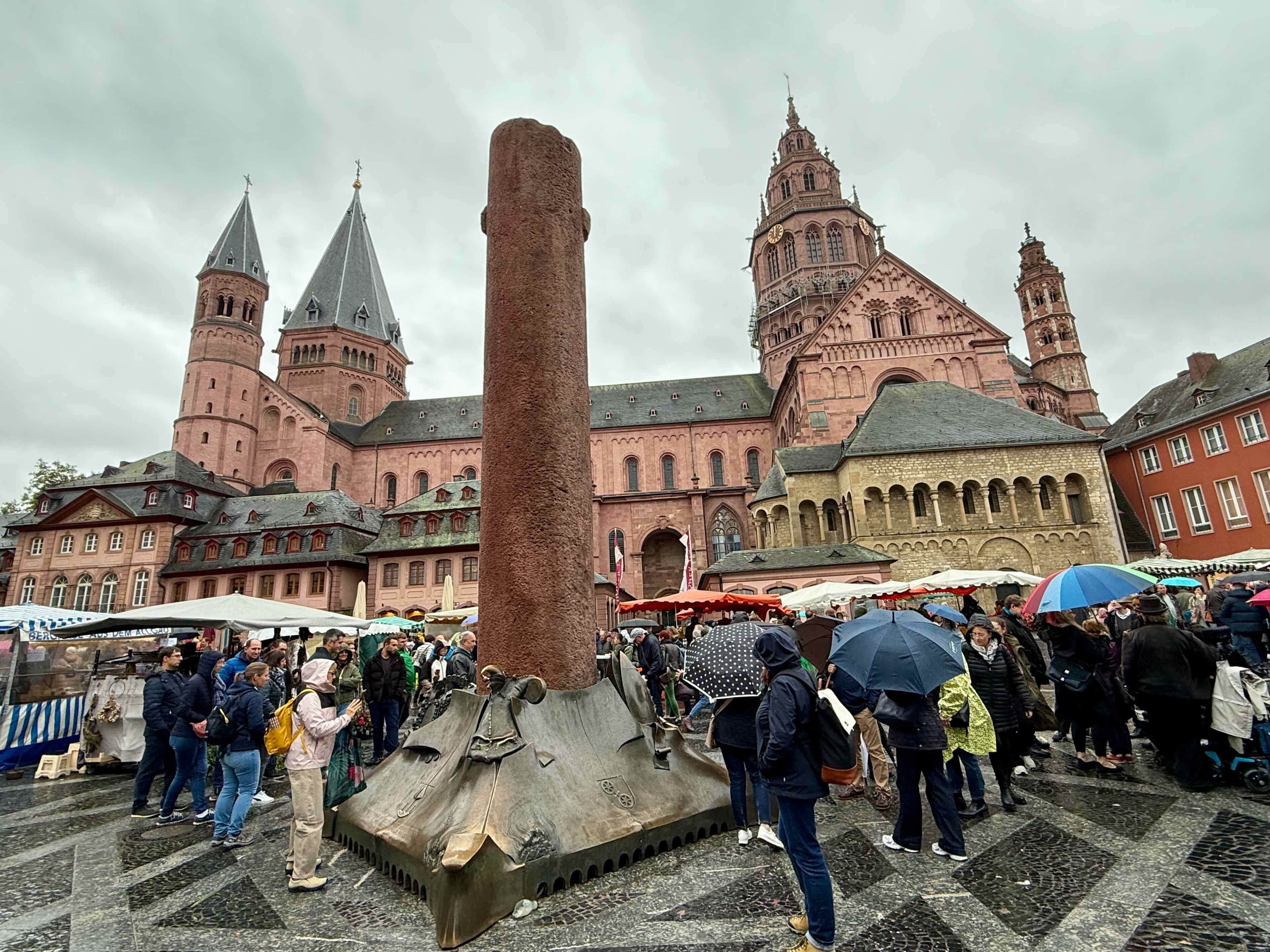
I like this wishing well and we both toss in a coin and make our wishes.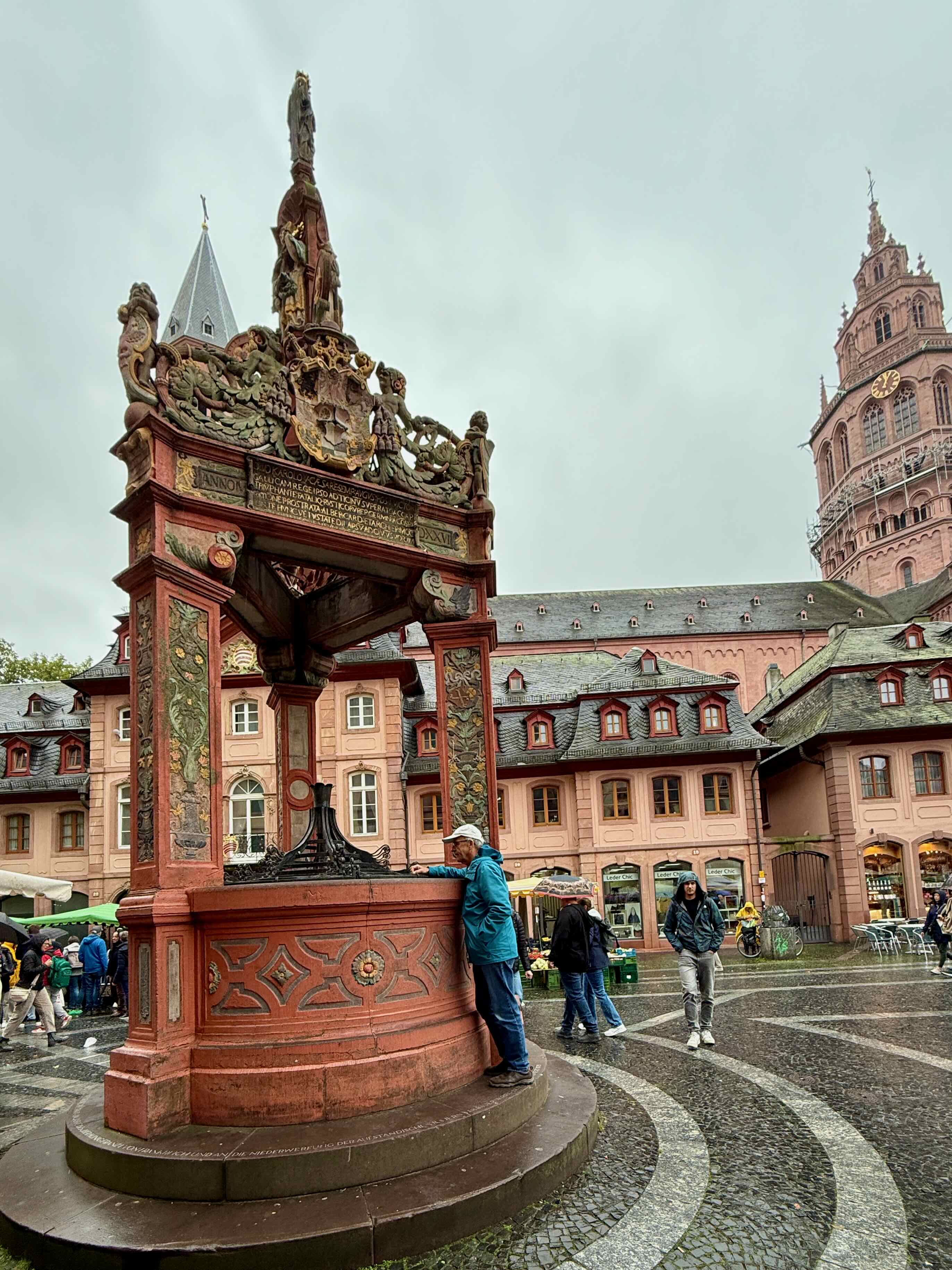
We both like the interestingly shaped squash…we might have to try growing some next year.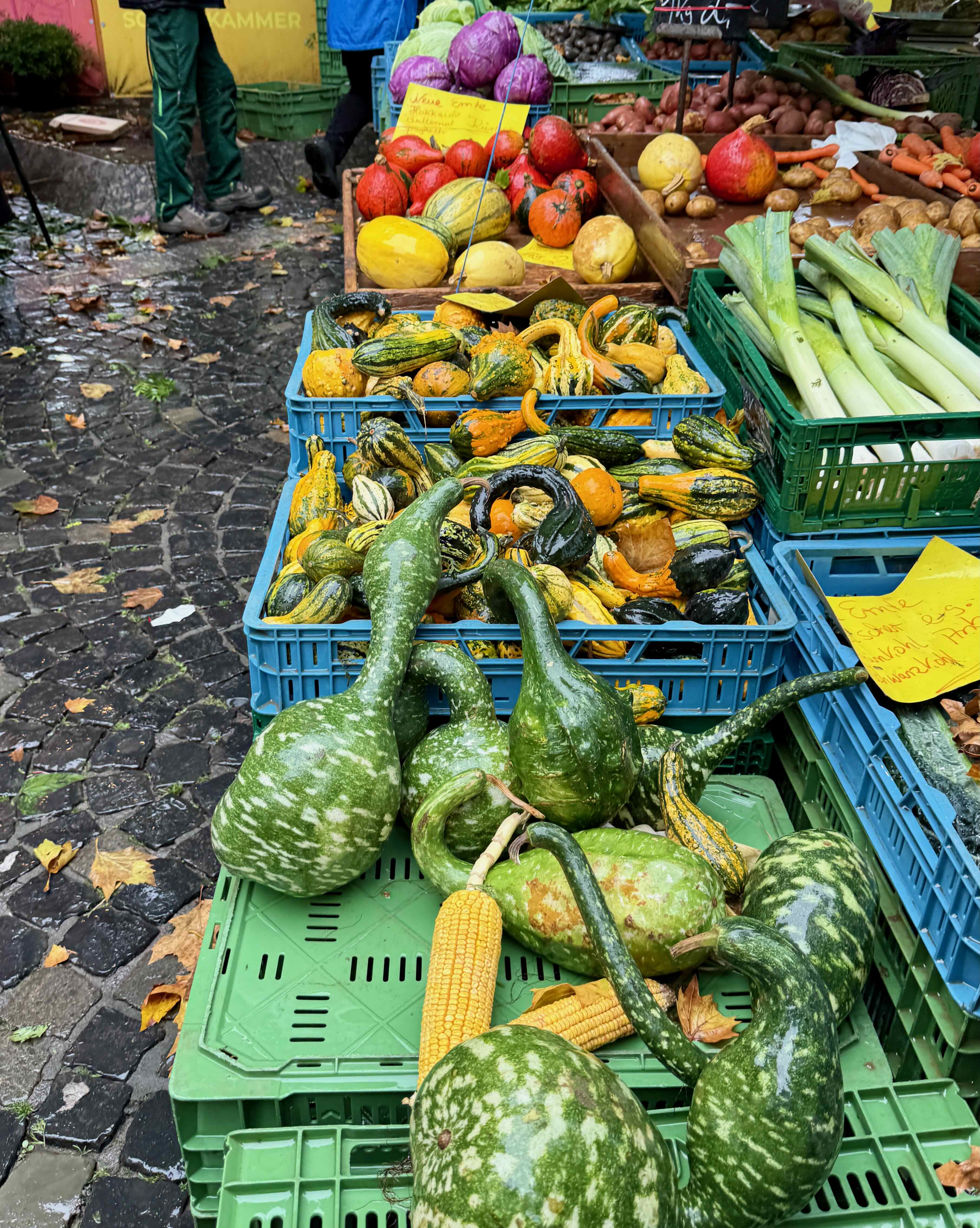
We have seen these coloured eggs in the grocery stores and wondered what they were. Turns out they are hard boiled eggs that are coated in a tinted resin that keeps them fresh for months! The colour helps to identify them as being hard boiled.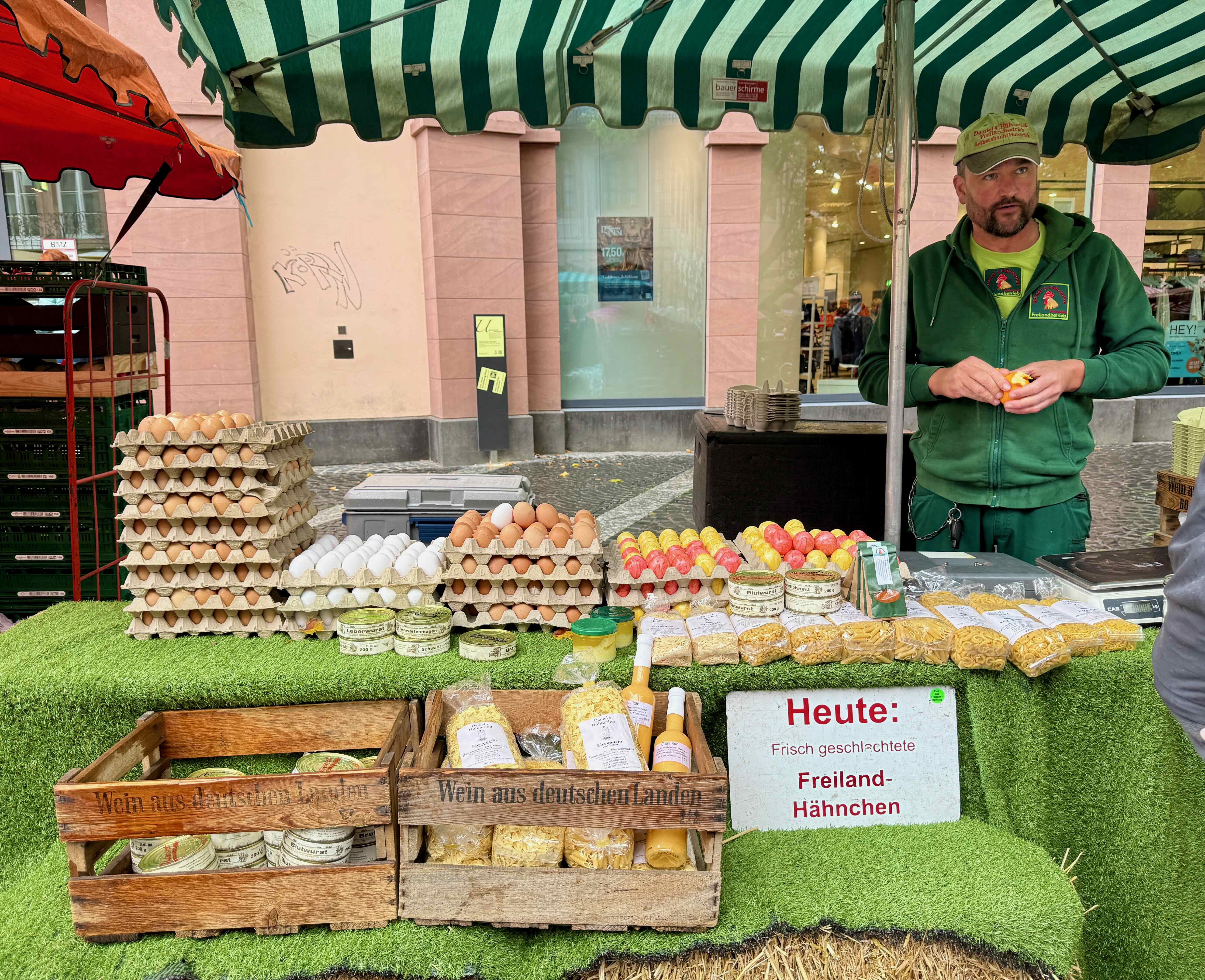
Gorgeous sunflowers! I am definitely planting some of them in our garden next year. They are so cheerful.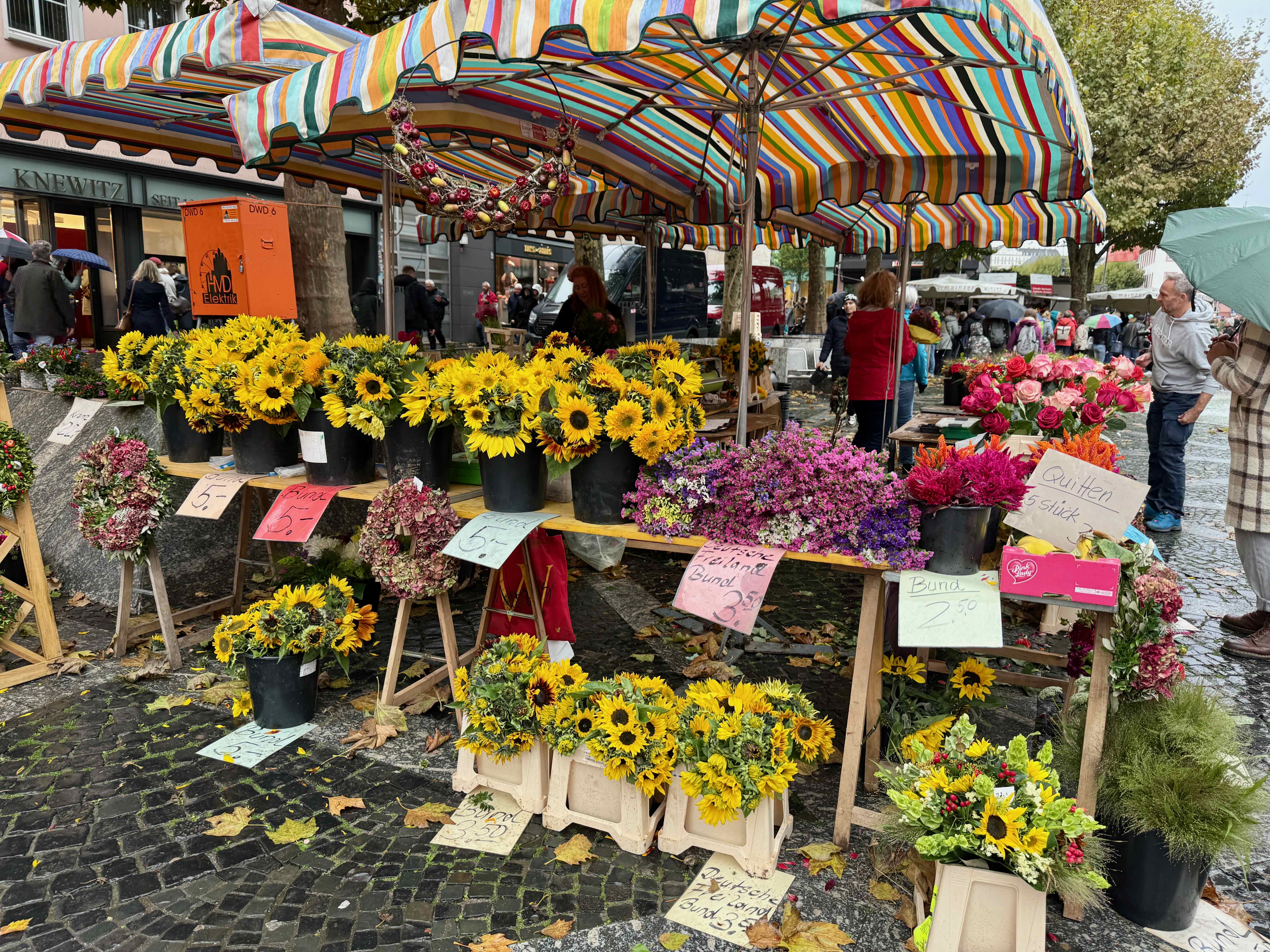 Next stop in the Mainz Cathedral. We are met at the door and told that there is a concert starting and if we enter the church we have to stay for the 45 minute concert. Sounds perfect as it is raining and cool outside!
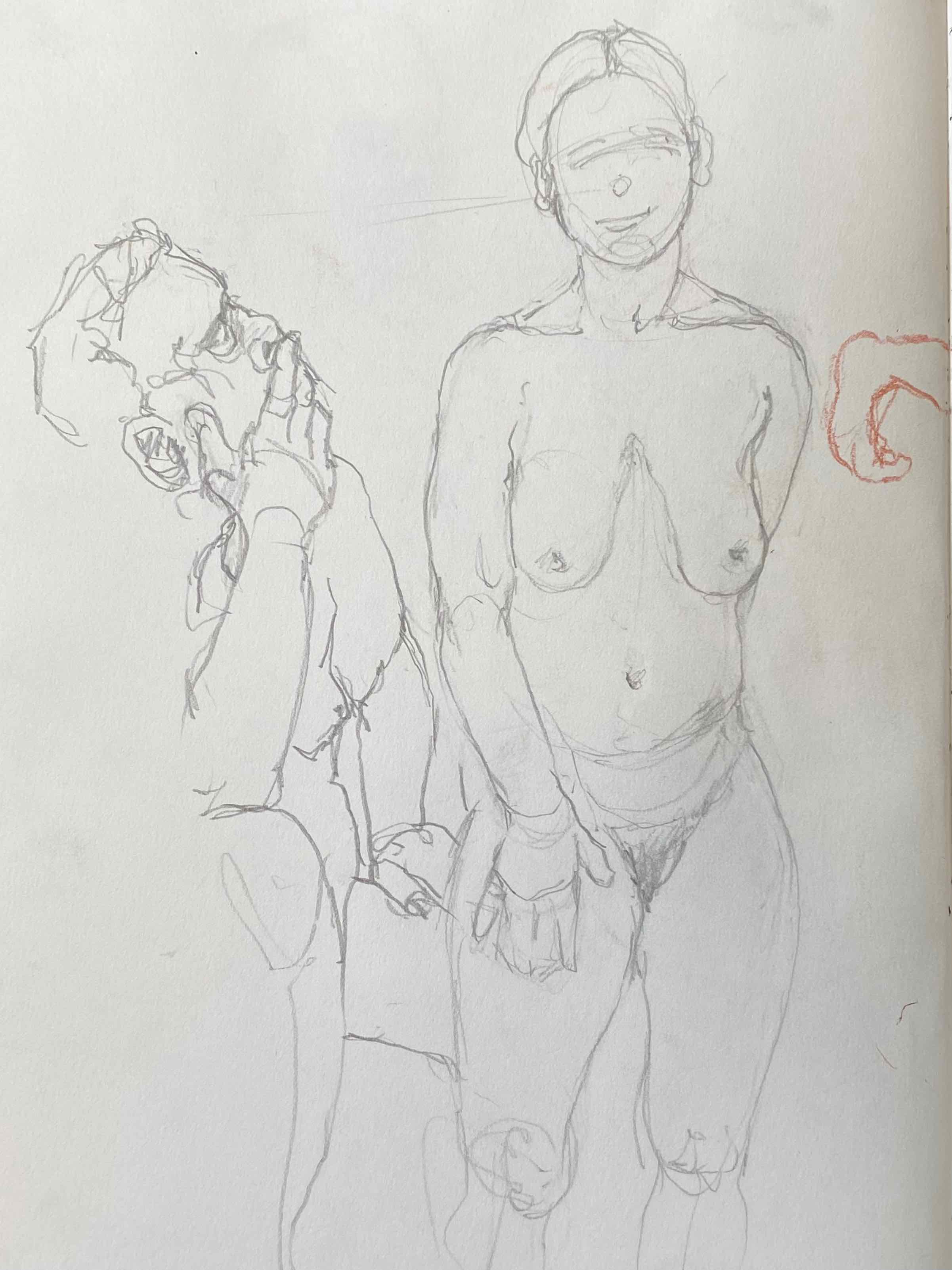
We spend the next 45 minutes listening to an amazing organ concert to commemorate the new cathedral organ. The musician, Alexander Grün, is only 25 years old and has three Masters Degrees! He plays some traditional organ music and then music that is innovative. The 45 minutes absolutely flew by. I sketched for a bit while listening to the music. Loved it. I wish I had recorded more of the music, especially the finale of the concert…it gave me goosebumps! https://youtube.com/shorts/HykSsp-S-9E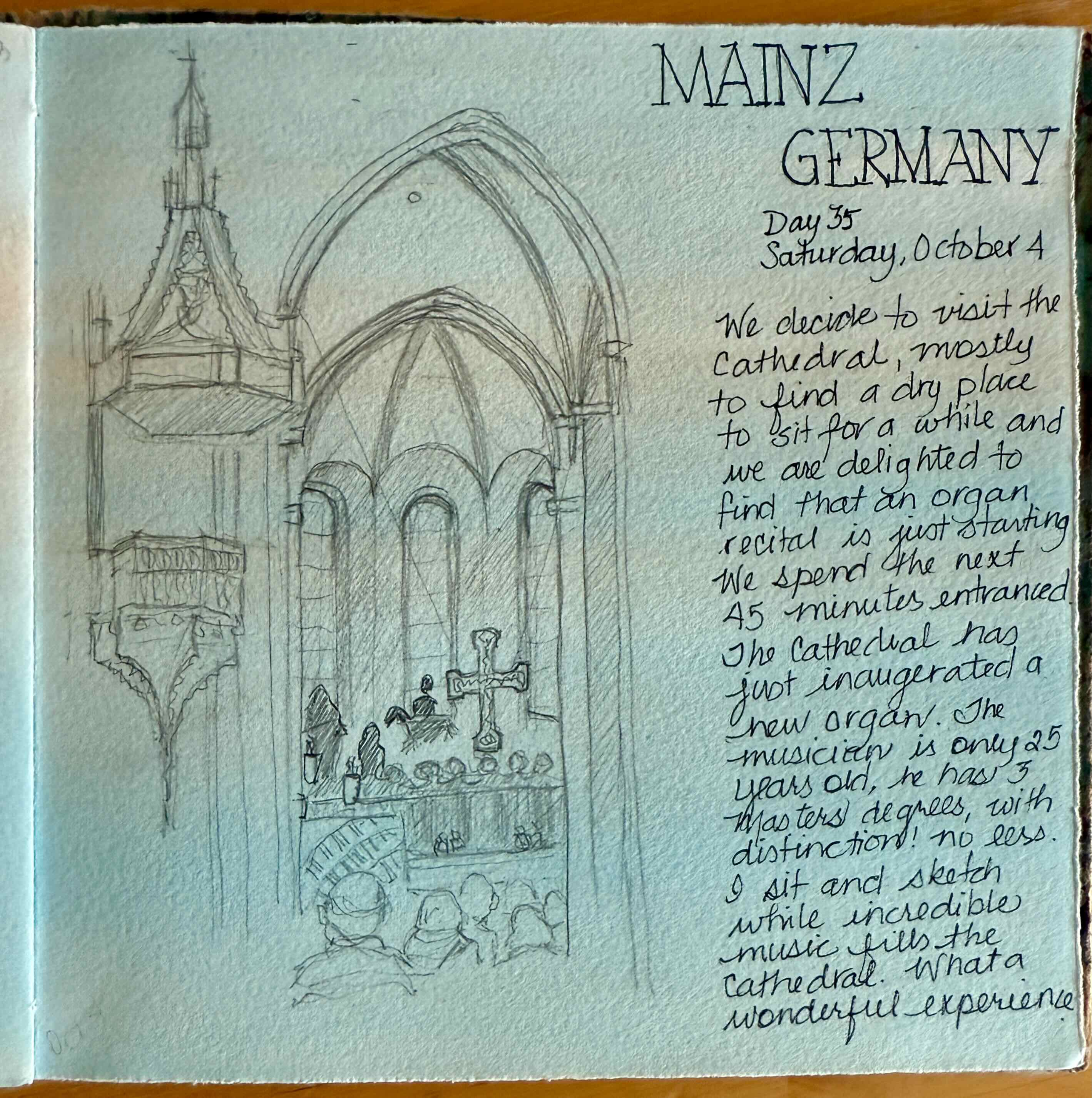
There are fall foods displayed on the steps to the altar to remind people to give thanks for the harvest, and to share with those in need. 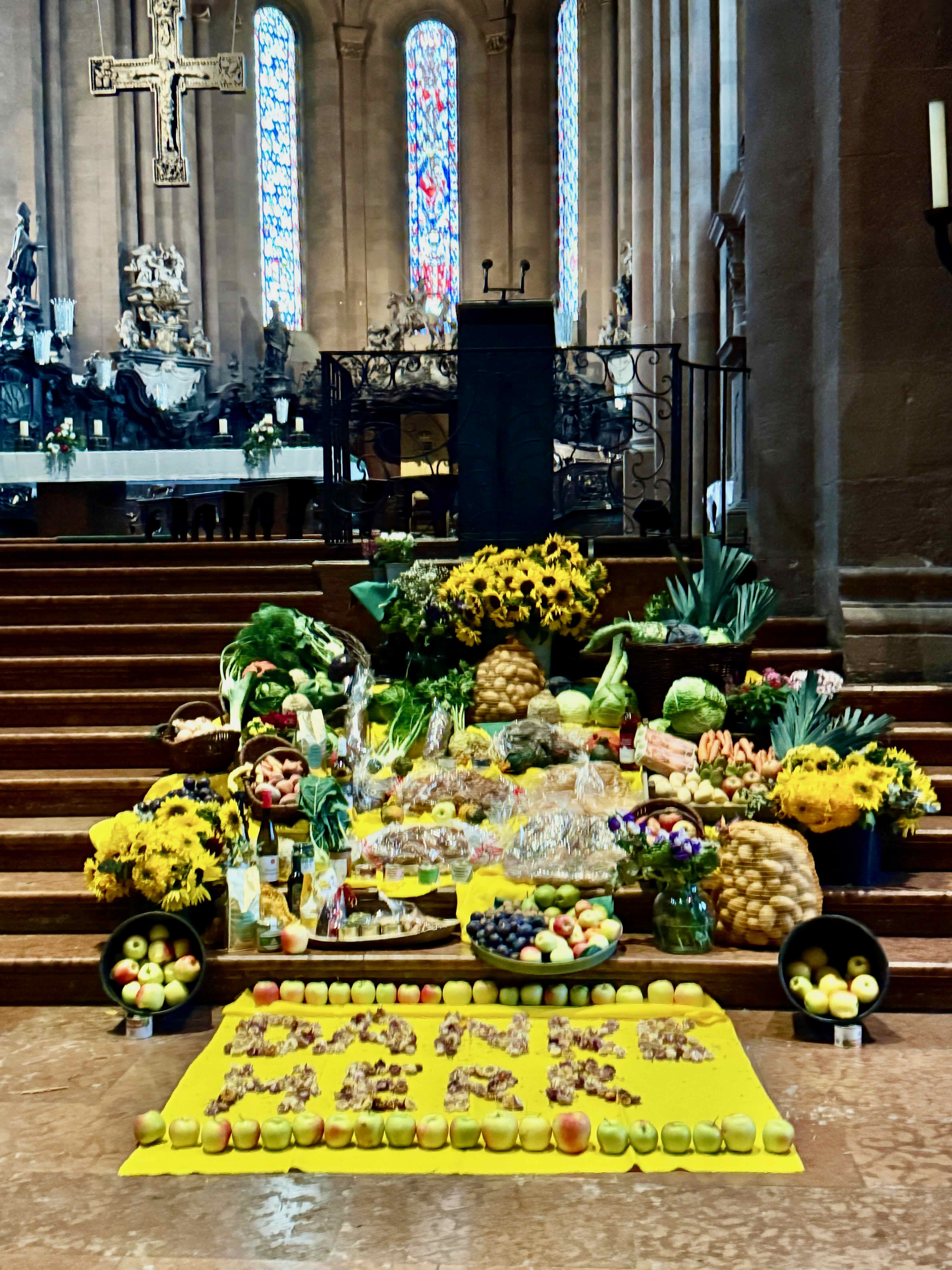
The Cathedral cloister has a beautifully tended garden,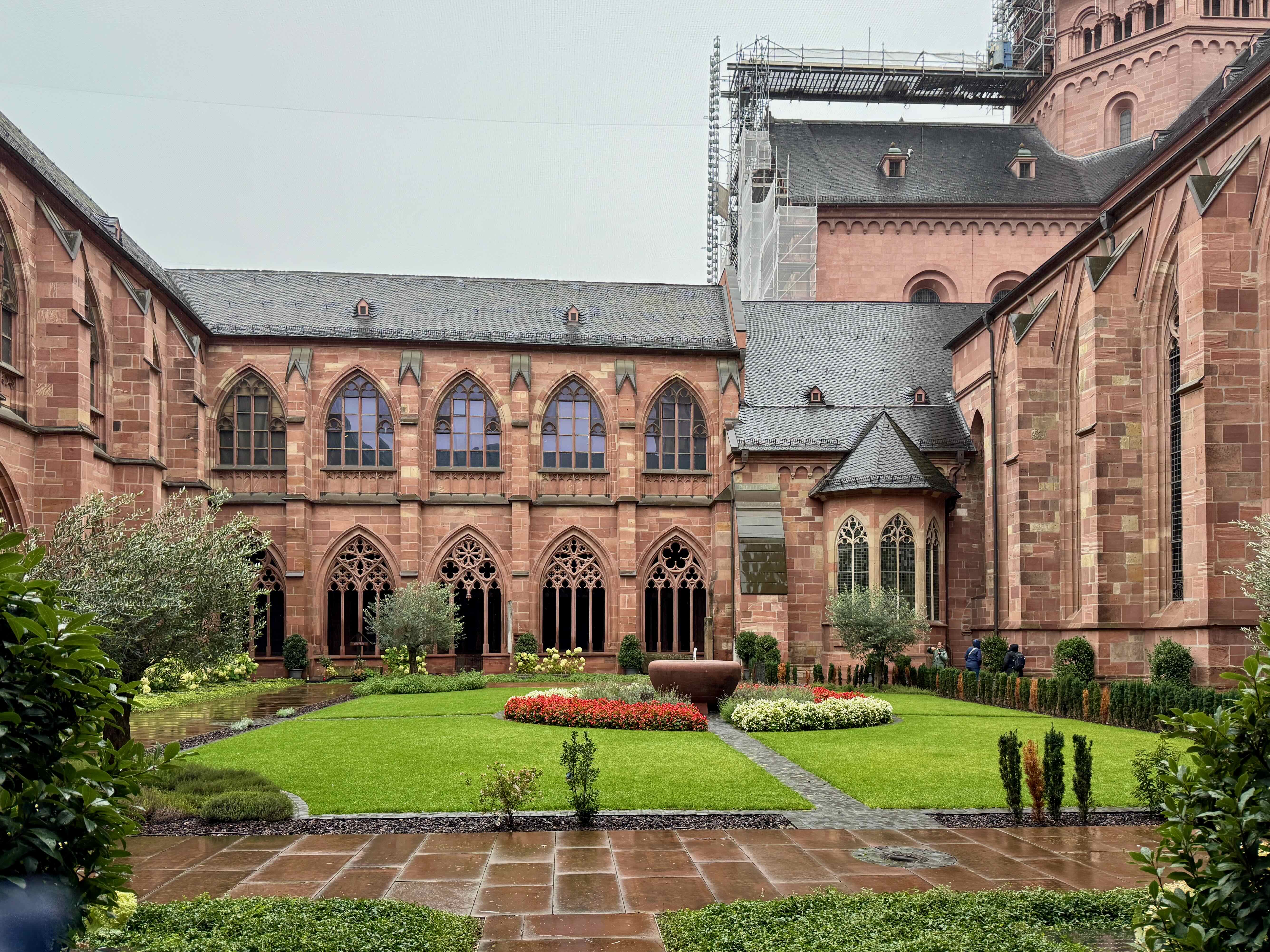
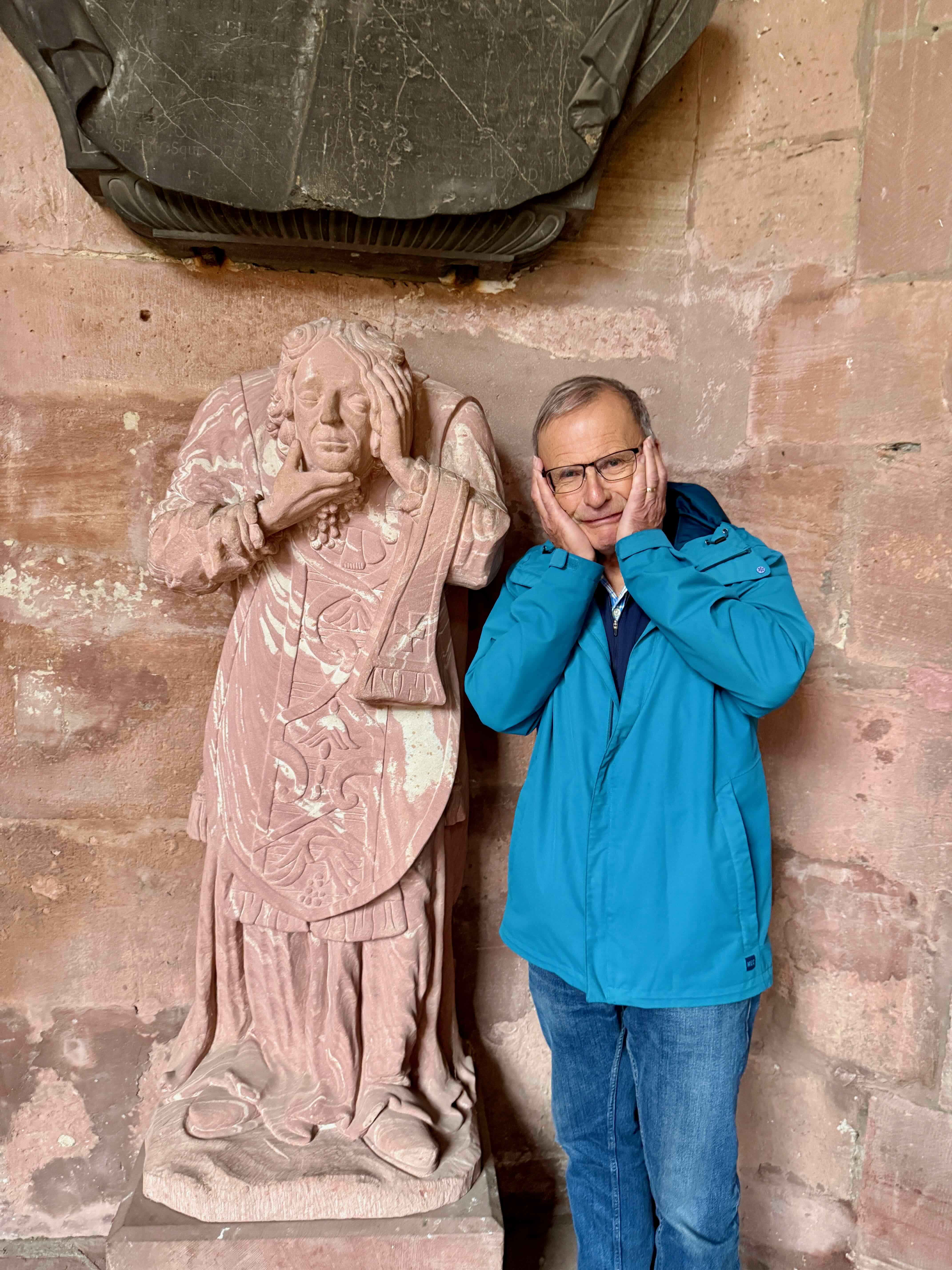
Bob liked this statue statue of a man holding his head. This is probably Saint Denis, who was beheaded but picked up his head and walked some distance, preaching the Gospel.
The buildings surrounding the market square are tall, narrow and decoratively painted.
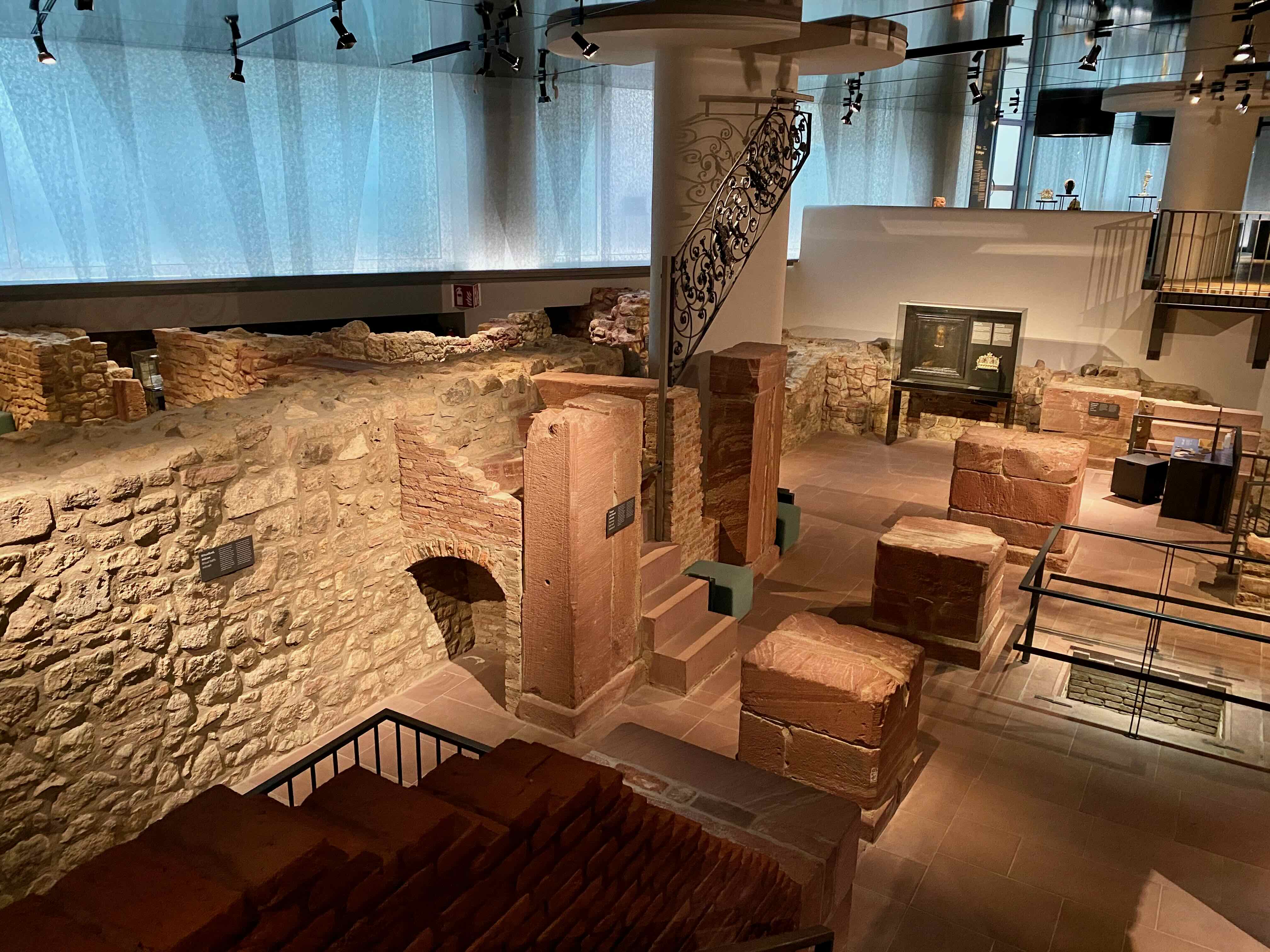
 Next on Bob’s agenda is a visit to a small museum underneath a shopping mall. We see Roman ruins from before the fall of the Roman Empire in the 5th century. These ruins were discovered when excavations began for the shopping mall. The area was thoroughly excavated and recorded, but ultimately the mall was built and most of the ruins were destroyed.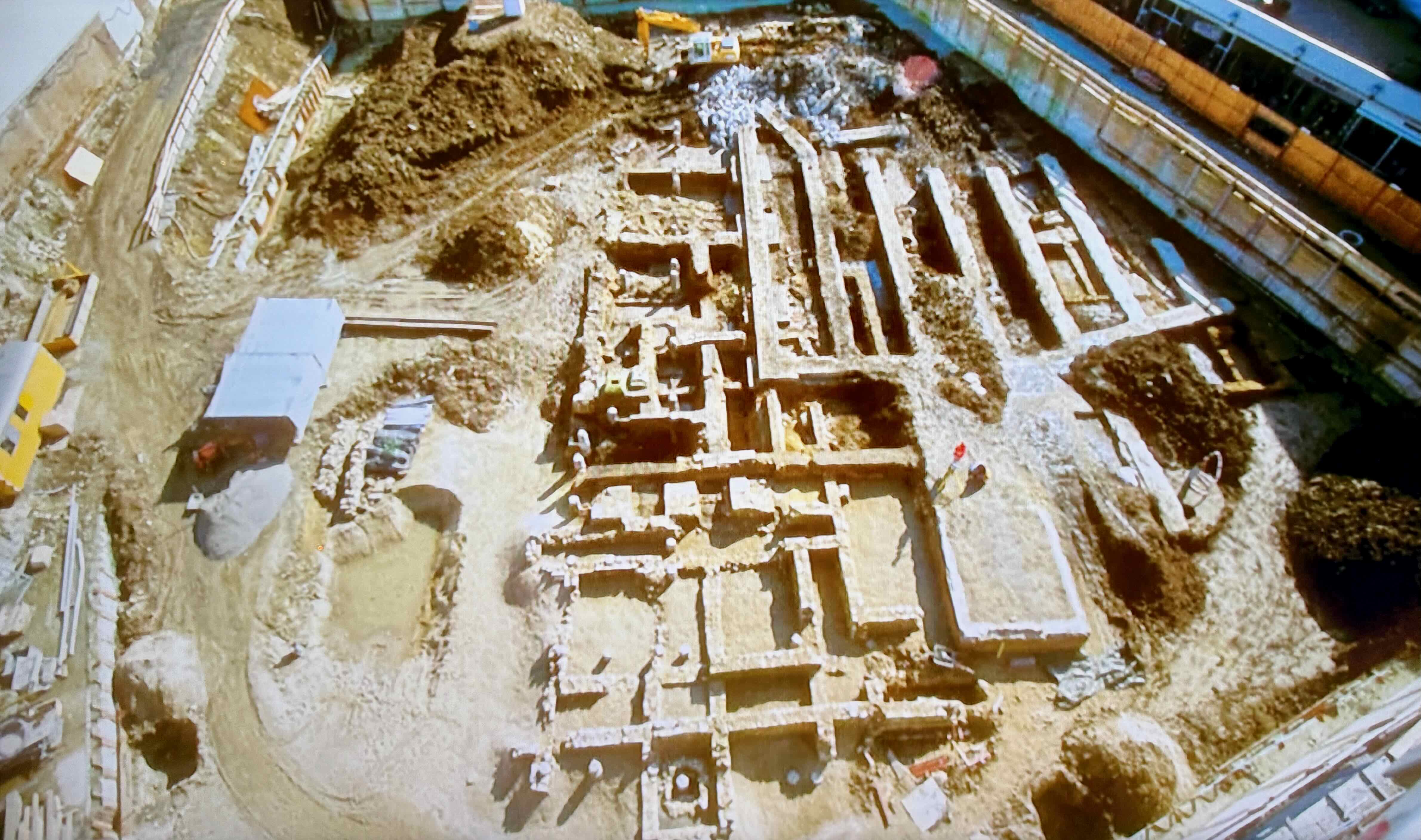
This little museum has the reconstructed ruins of a temple, under a ceiling of constellations. 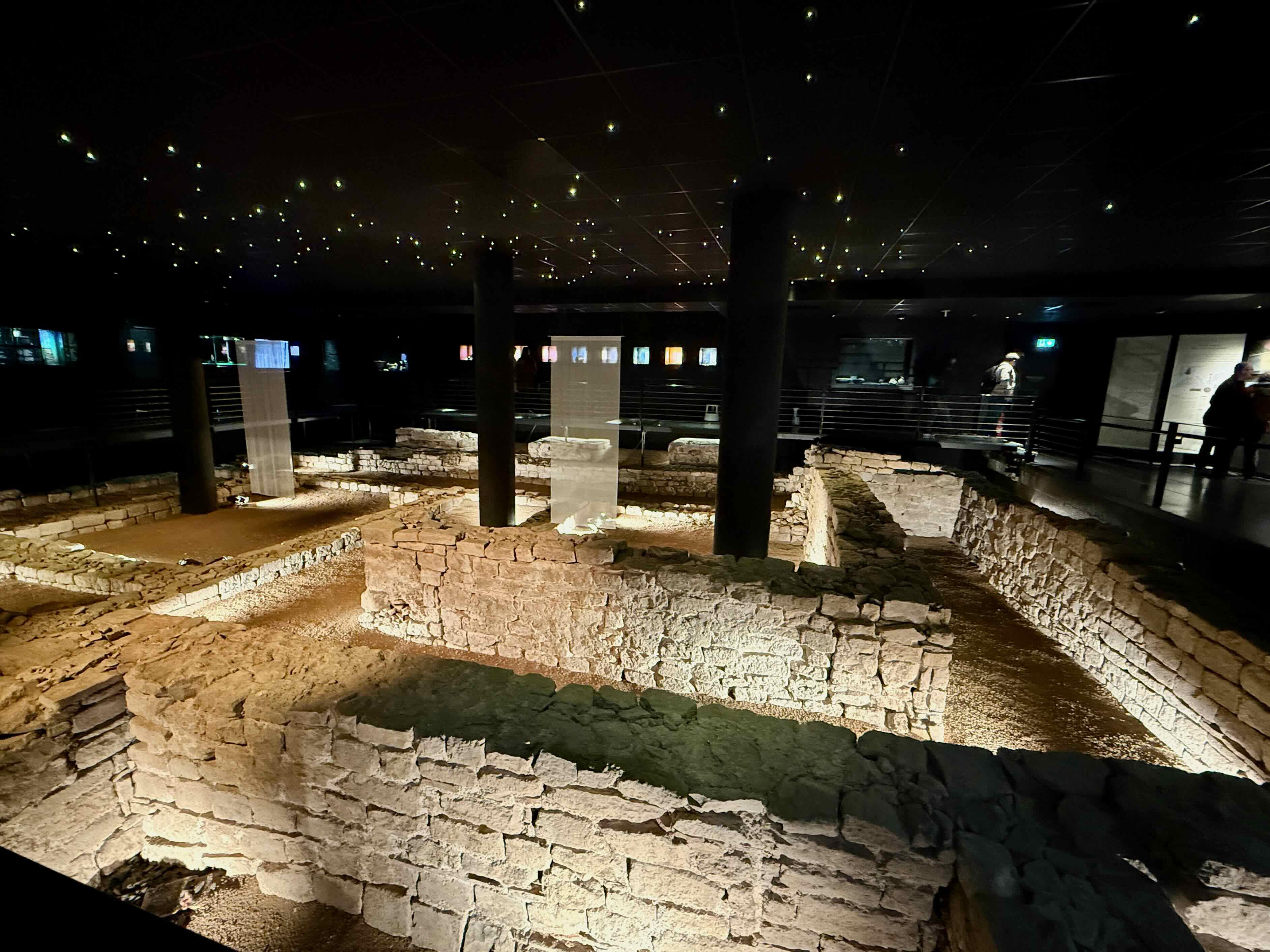 Some of the items found when the ruins were excavated. Well endowed males were well represented.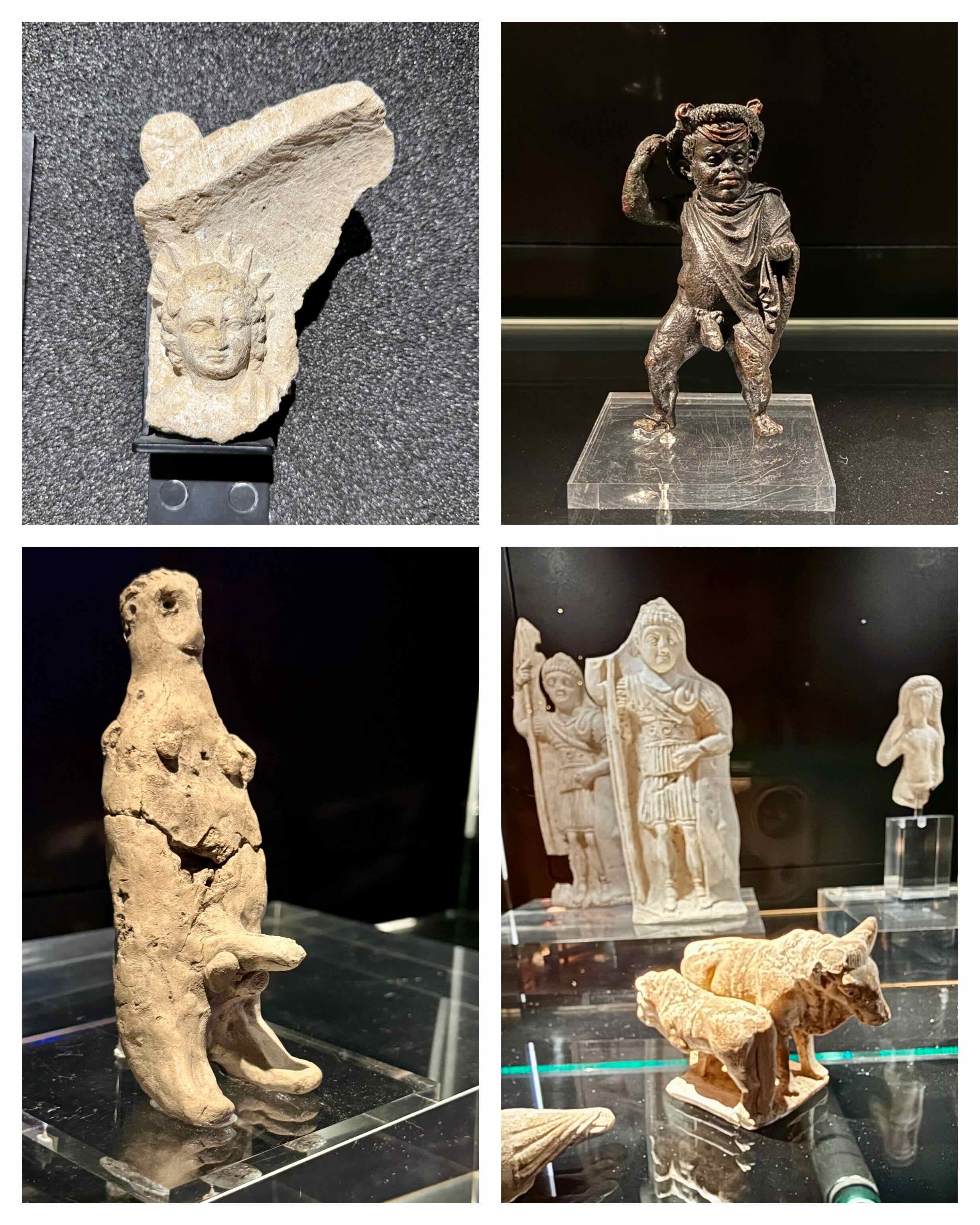
Our final stop in Mainz is to visit the Gutenburg Museum, which is connected to a small Natural History Museum. This display in the entrance is quite striking.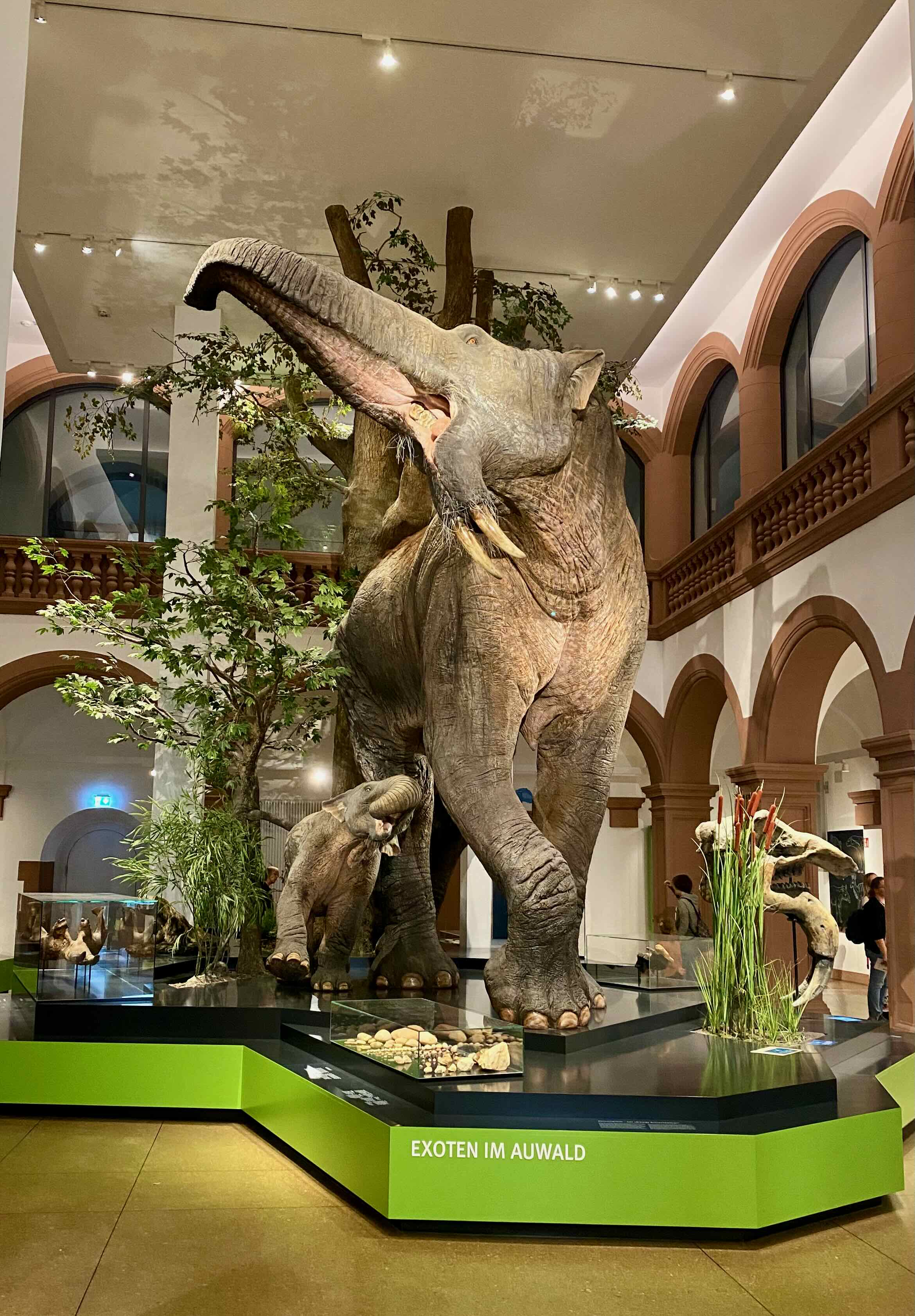
We start with the Gutenburg Museum which shows the impact of Johahannes Gutenburg’s invention of a moveable type printing press in 1440. This press allowed for the printing of 3600 pages a day, compared to 40 by hand printing and only a few by hand copying. There were several beautiful ancient books on display. This Atlas of the World was printed in 1482.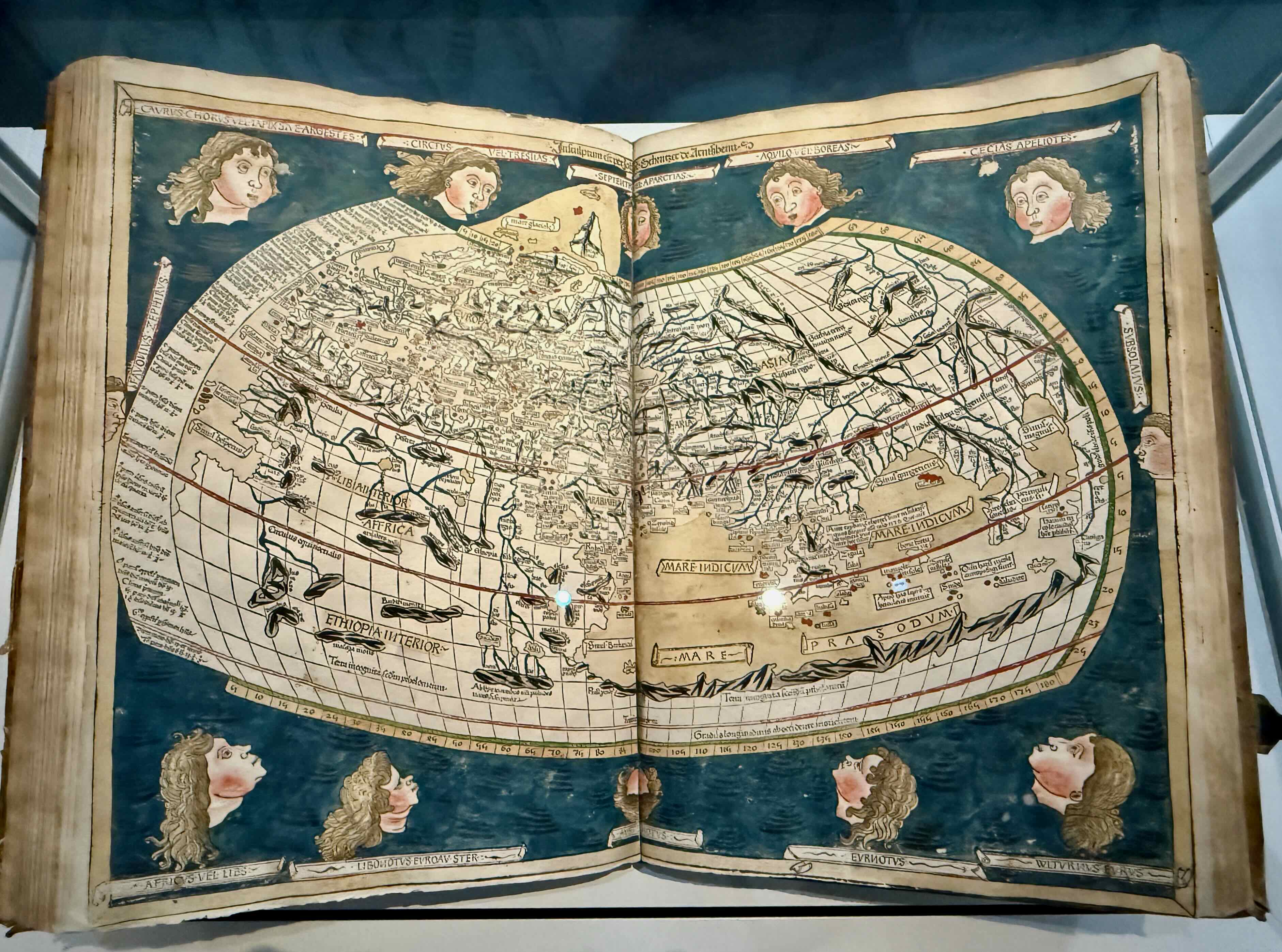
The World Chronicle is from 1493.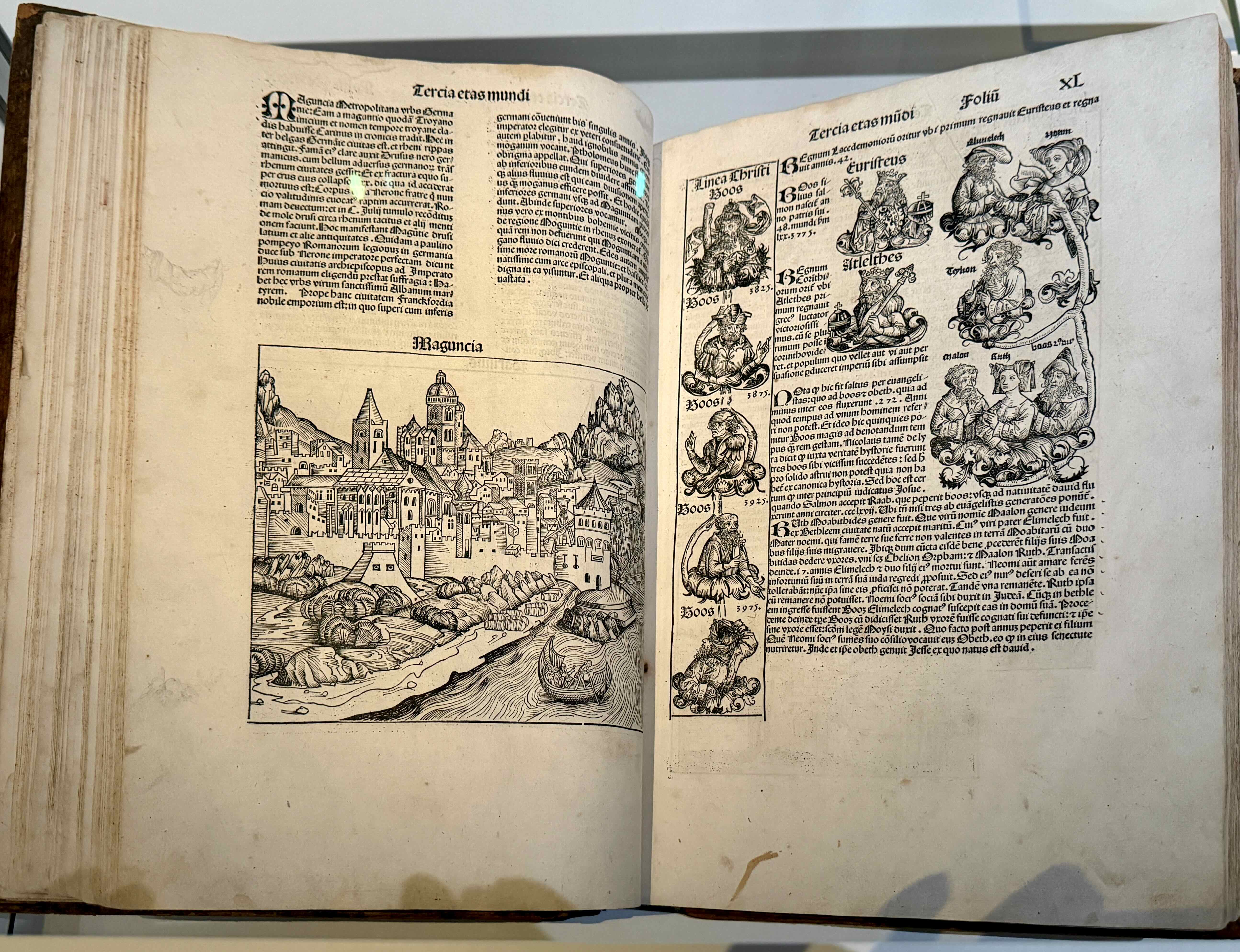
An ornate Columbia Printing Press from 1824. 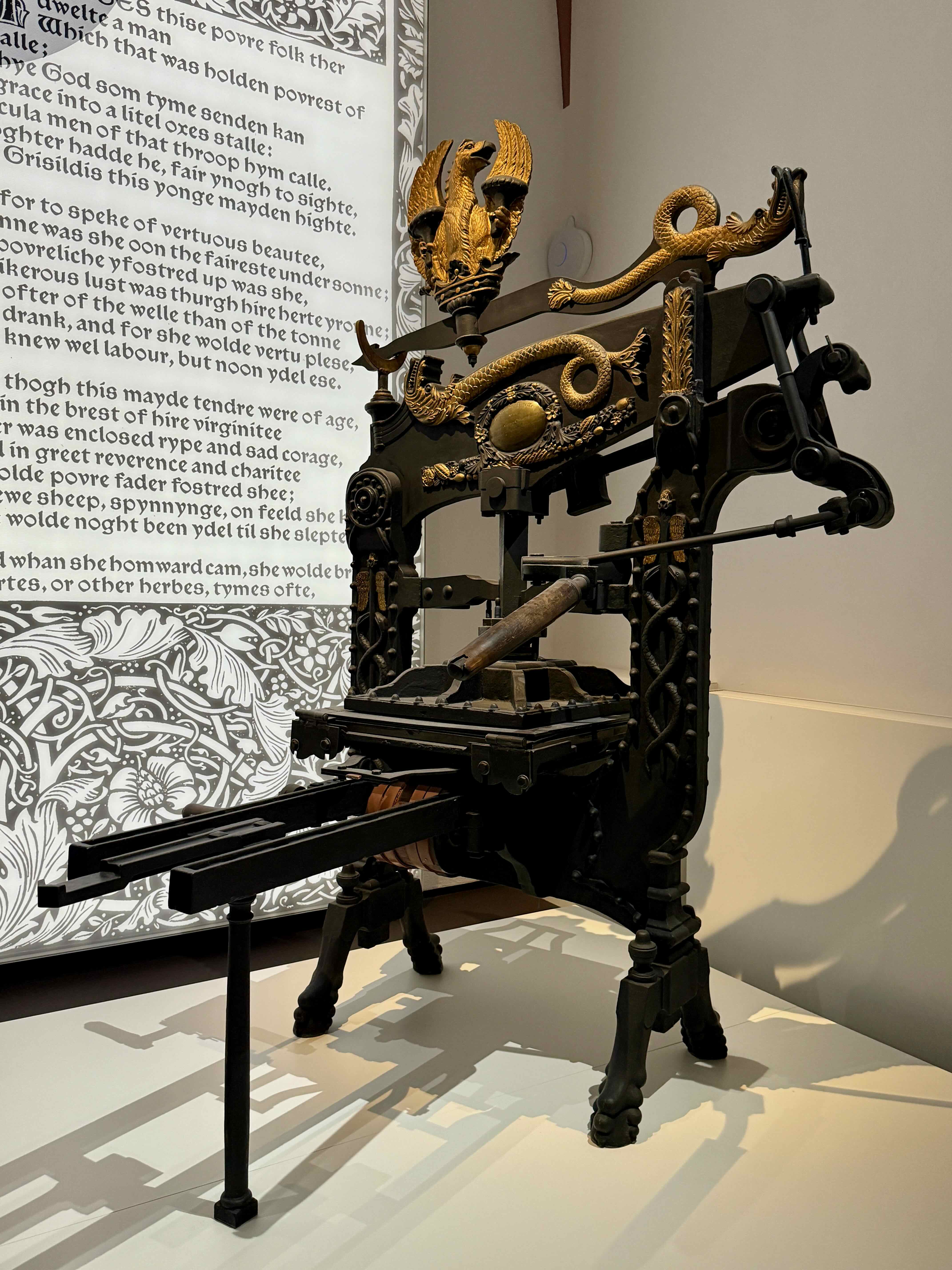
We are given a blank card that has a chip installed inside the paper when we entered the museum. We place this card into a machine that takes a selfie of us. Then we take the still blank card to a modern printer and this is what we received.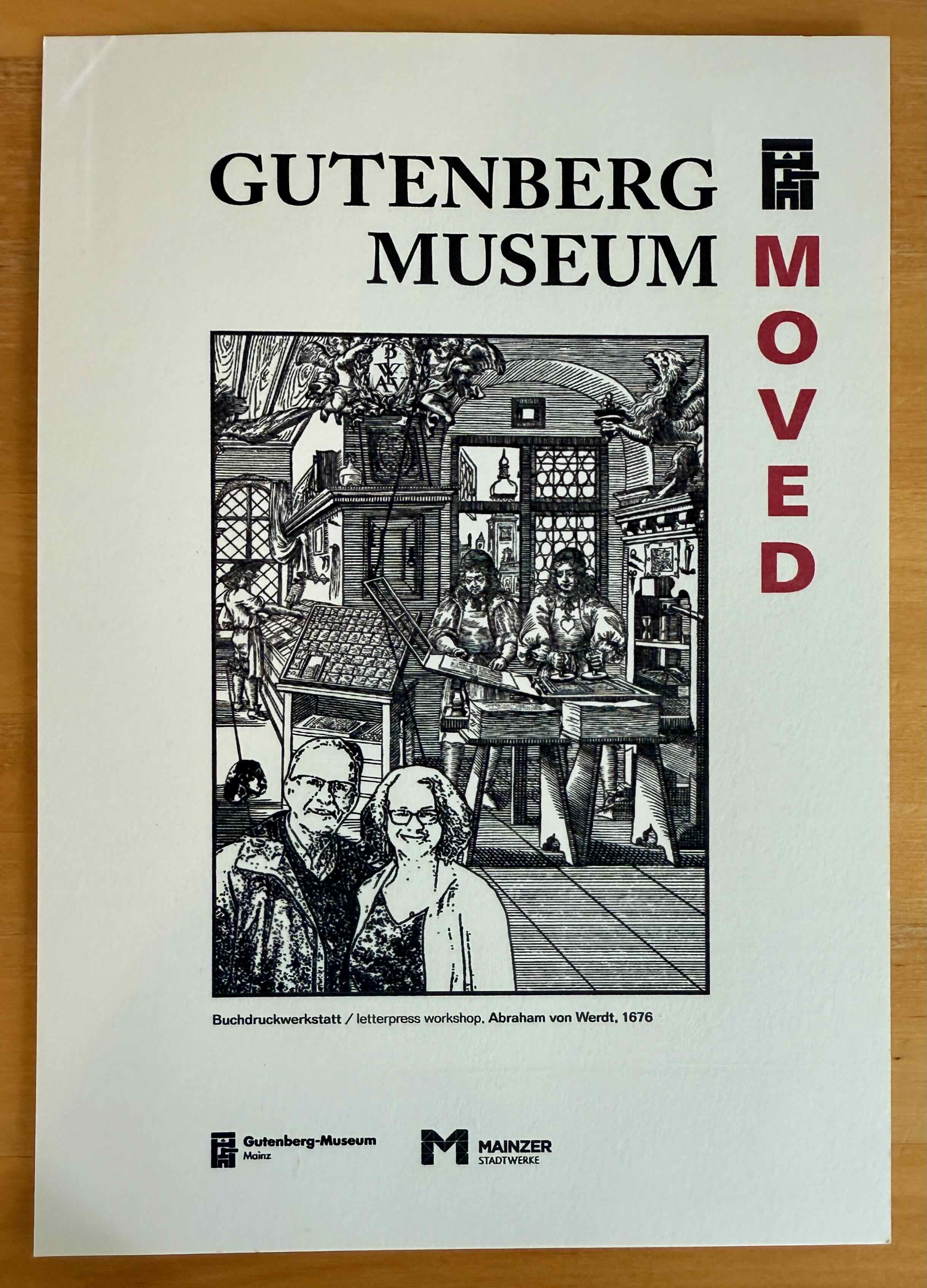
Entering a small room with dim lighting we see the Gutenburg Bibles. Only 49 of the approximately 180 printed Gutenberg Bibles have survived and the Gutenberg Museum owns two. The complete two-volume Bible shown in the bottom of this photo was added to the collection in 1978. The second Bible is incomplete, with only the second volume surviving. The book in the top right is a calligraphed manuscript.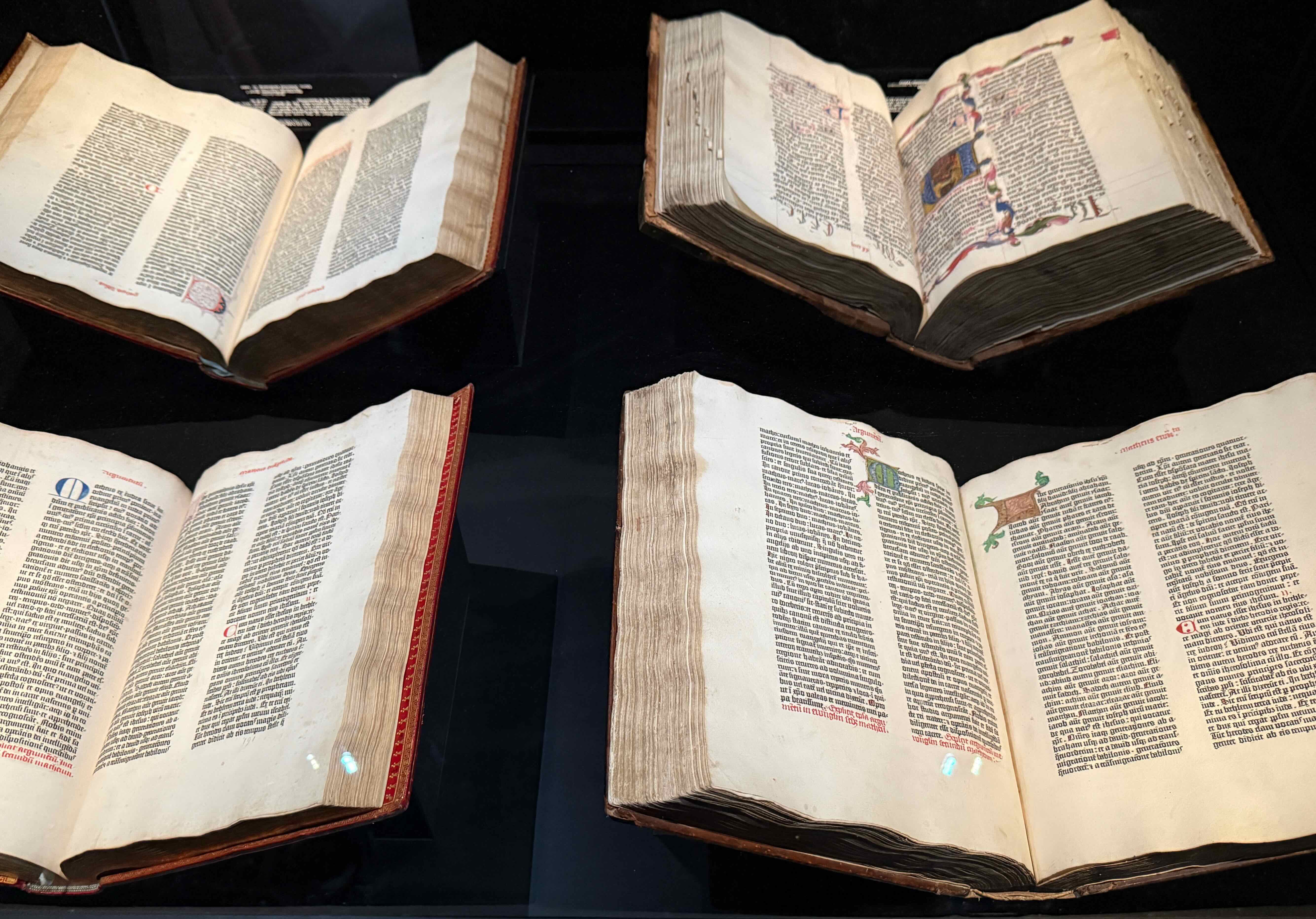
The Bibles were only printed in black ink – two or more colors would have been too time-consuming and expensive. Spaces for colored ornamentation were left empty and the books were handed over to an illumination workshop. As a result, all surviving editions have different ornamentation.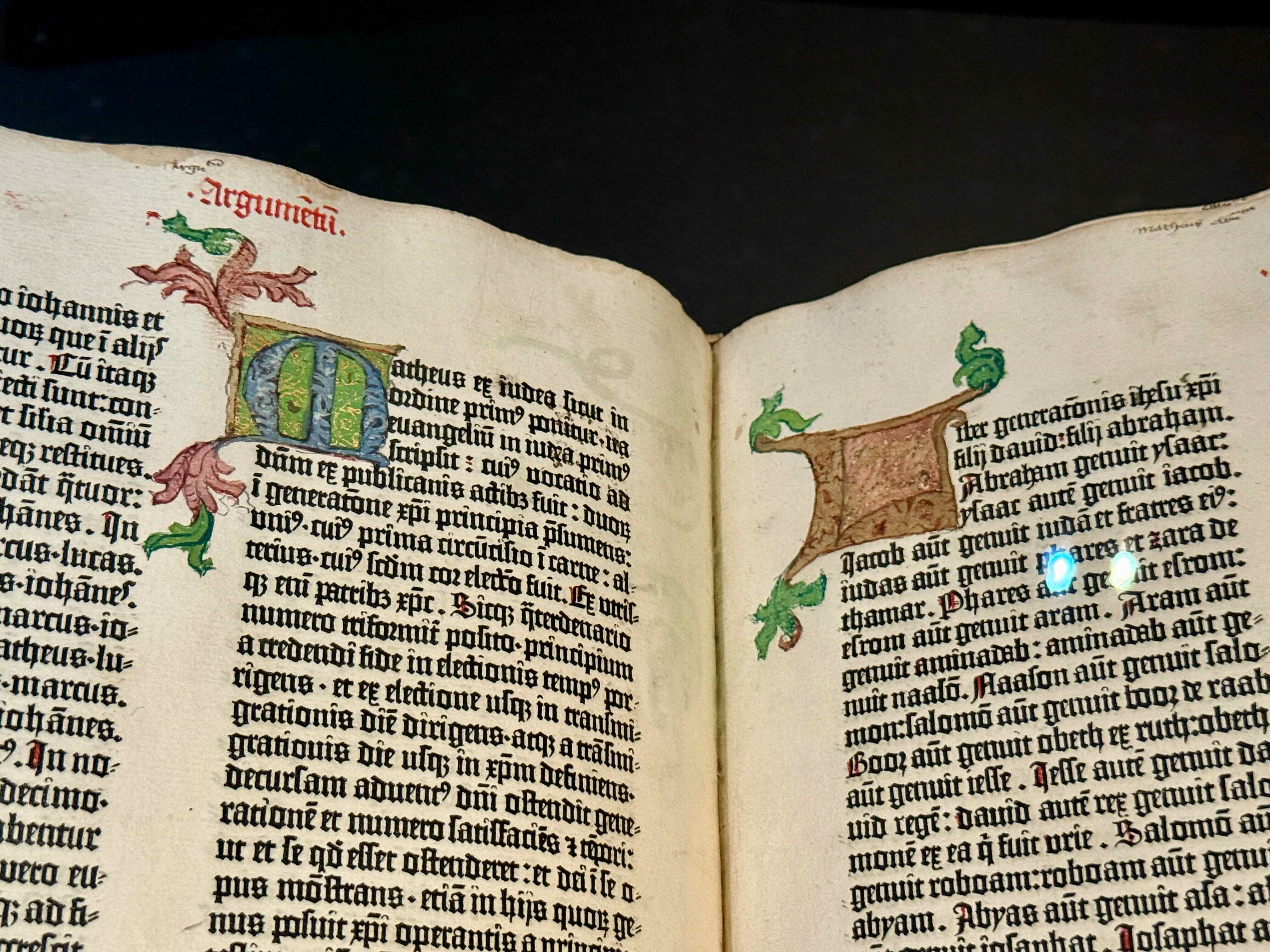
The Missale Moguntinum, was hand written on parchment between 1453 – 1459.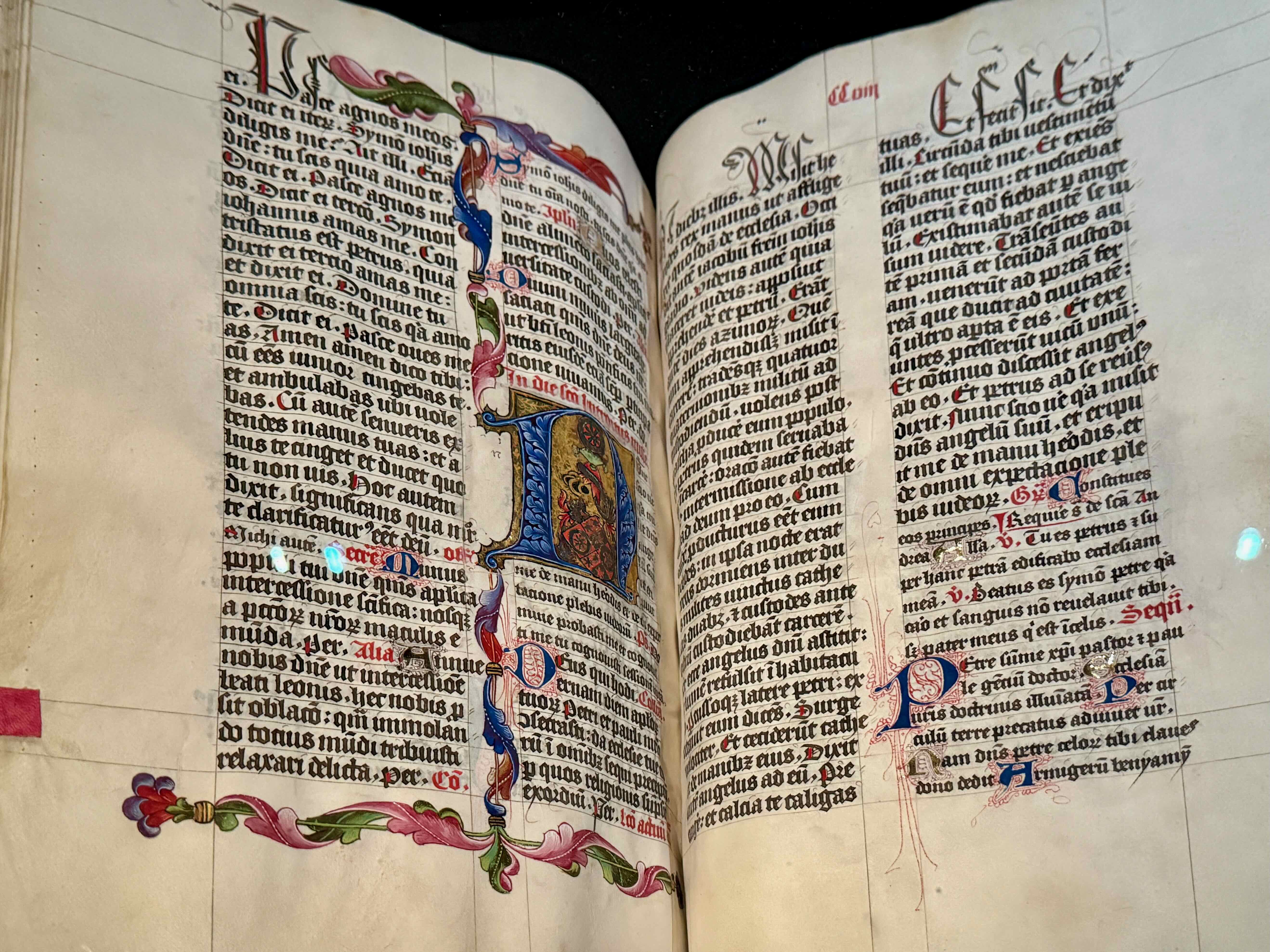
I love that the guide lines are still visible. Imagine writing this huge book. Gutenburg’s press changed how books were produced and made them available to so many more people. Seeing these bibles in person is special but I am still in awe of beautiful hand written and illustrated books. 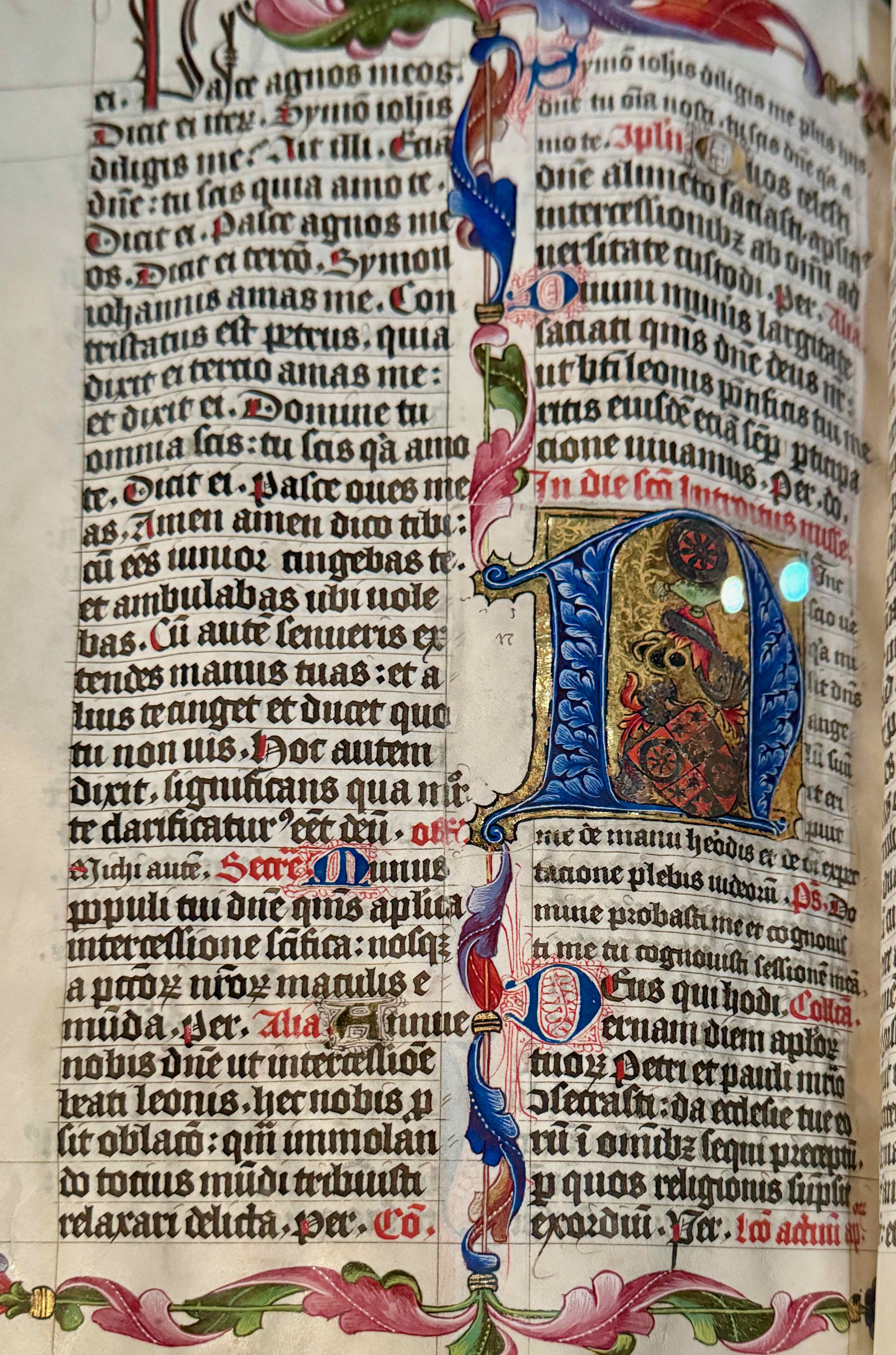
In the mid-15th century before printed books were readily available, the demand for books could not be met. One solution was to produce books faster. This was why copies of the “Speculum Humanae Salvationis” or “Mirror of Human Salvation,” were created in cursive and quick pen-and-ink drawings. The volumes are dated around 1450, making them approximately the same age as the printed Gutenberg bibles.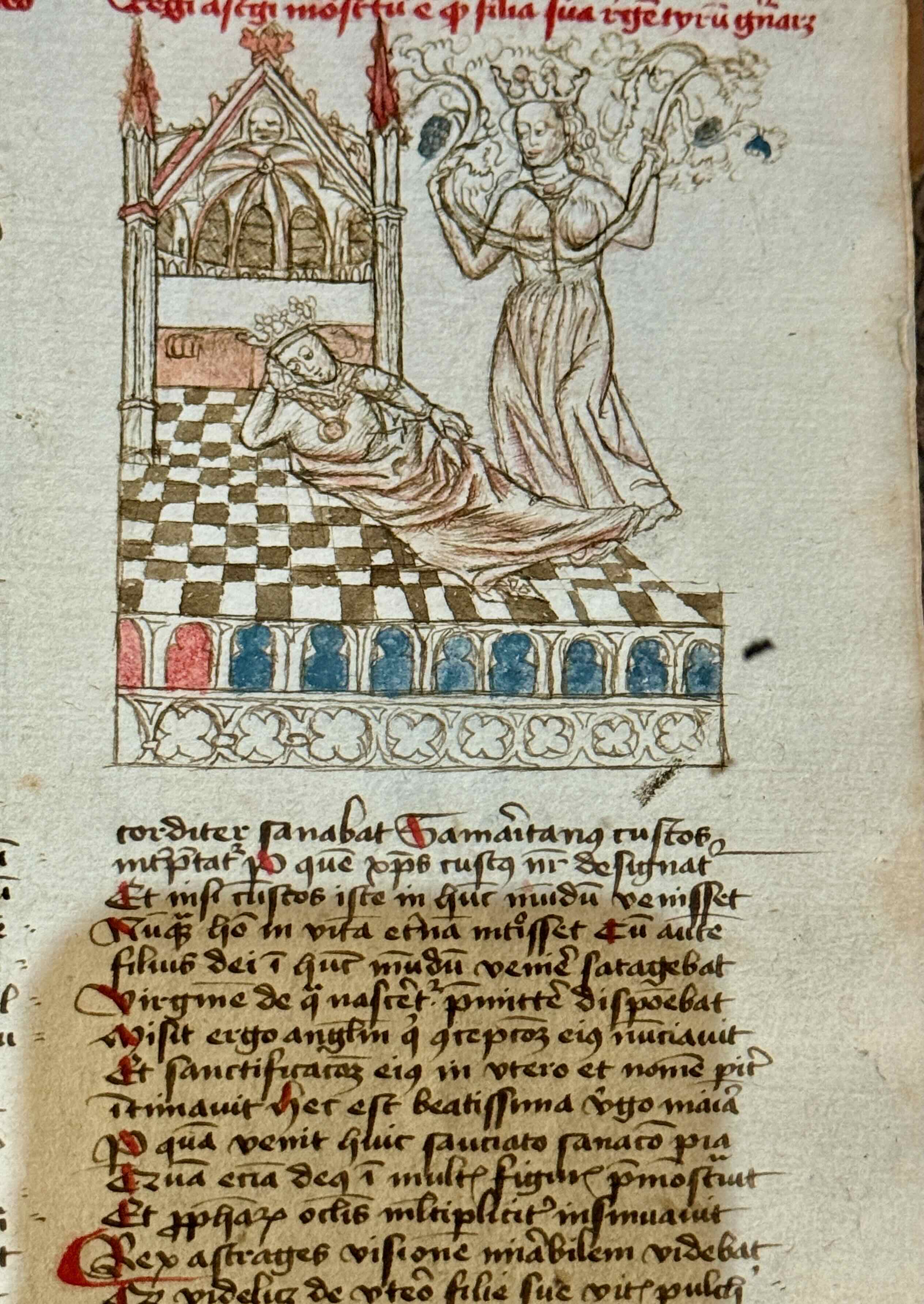
We wander through the Natural History Museum. I wonder how archaeologists are able to reconstruct skulls and bones from a pile of fragments. It must be a very difficult puzzle.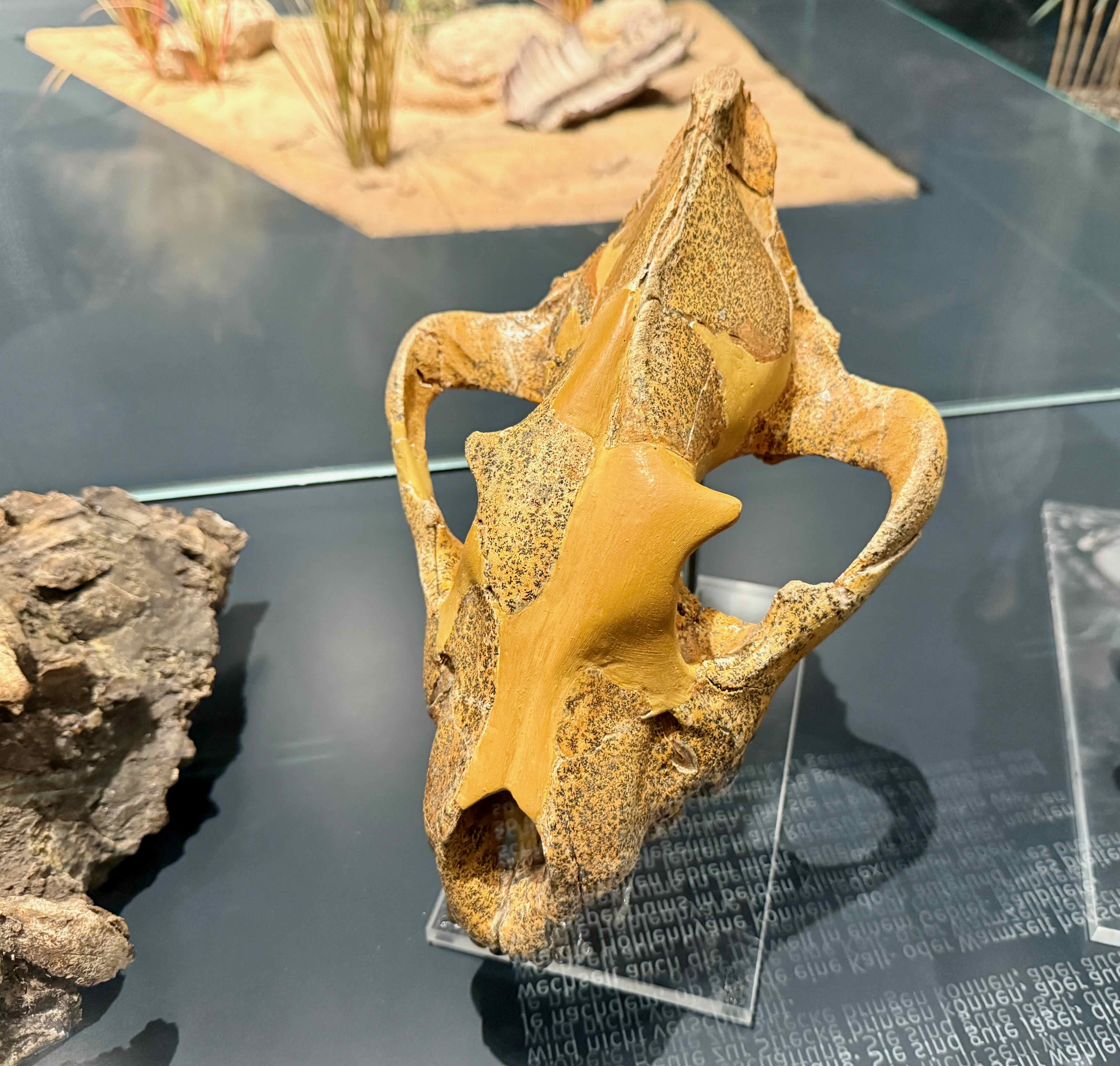
The Wooly Rhino had a huge head compared to the rest of its body. There are samples of real wooly rhino hair on view that were found preserved in permafrost.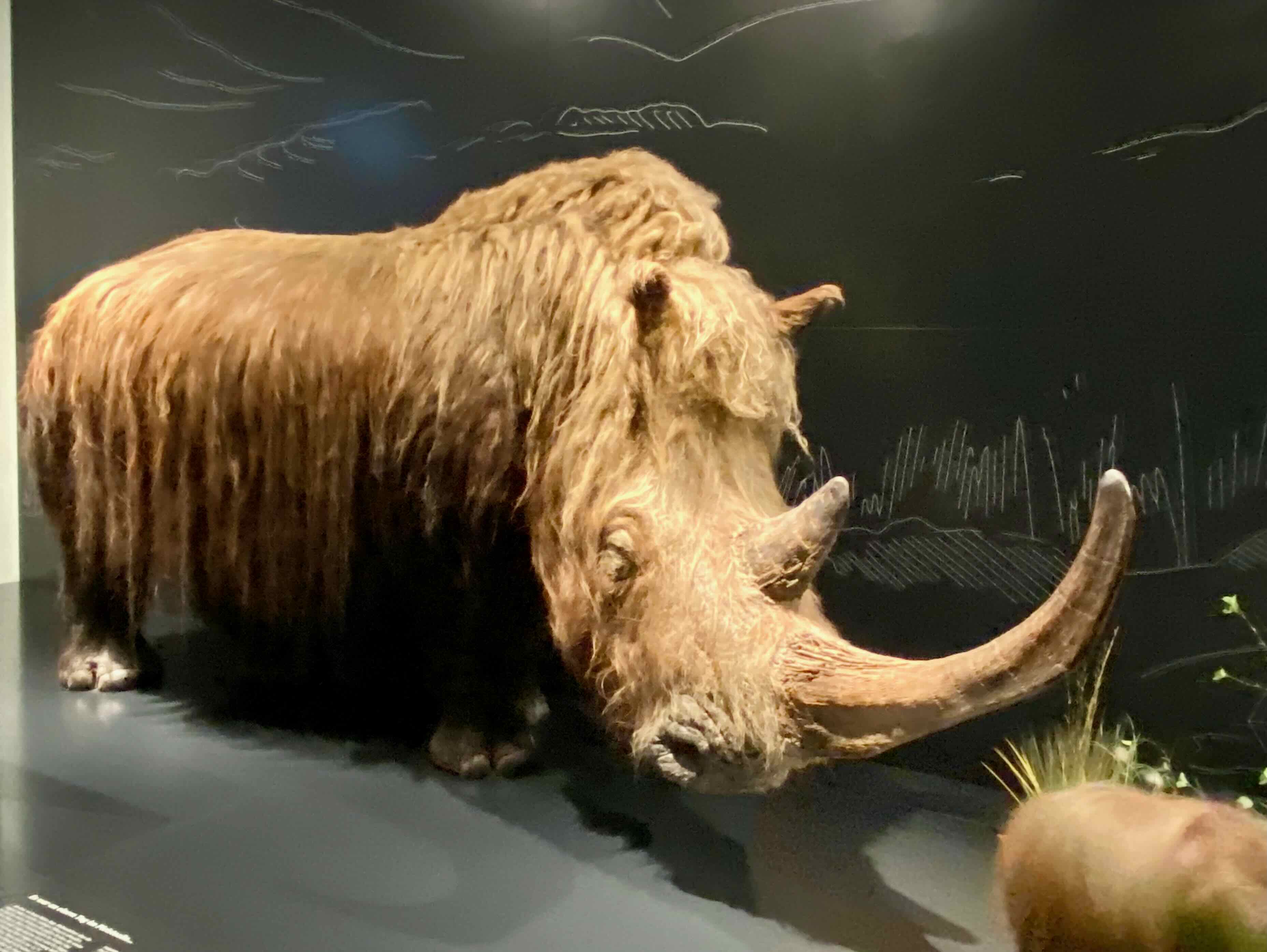
I thought these fossils were really beautiful. The plants, insects and other animals are preserved in the finest detail. They are incredible.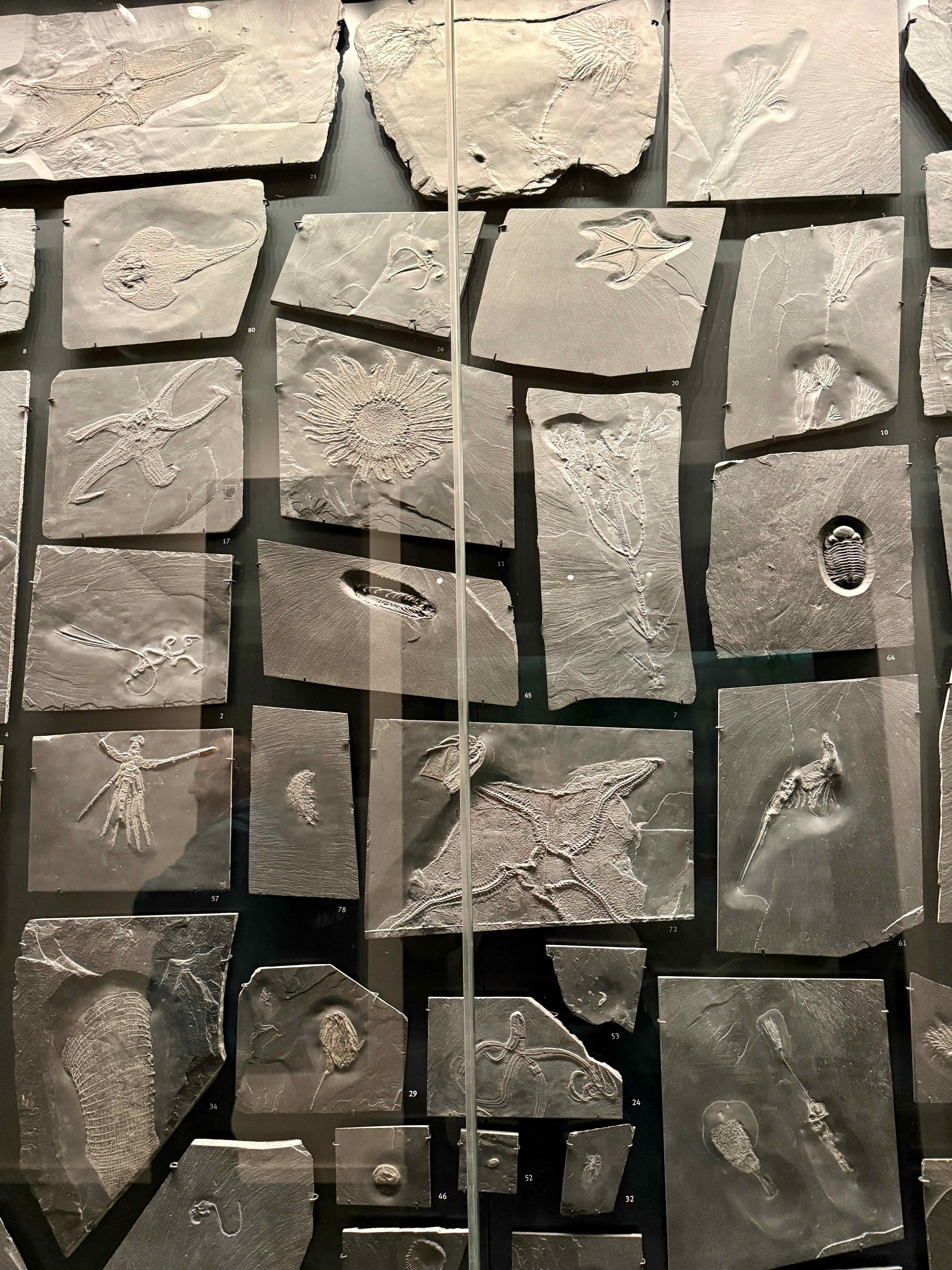
We forgot to check what this prehistoric creature was. 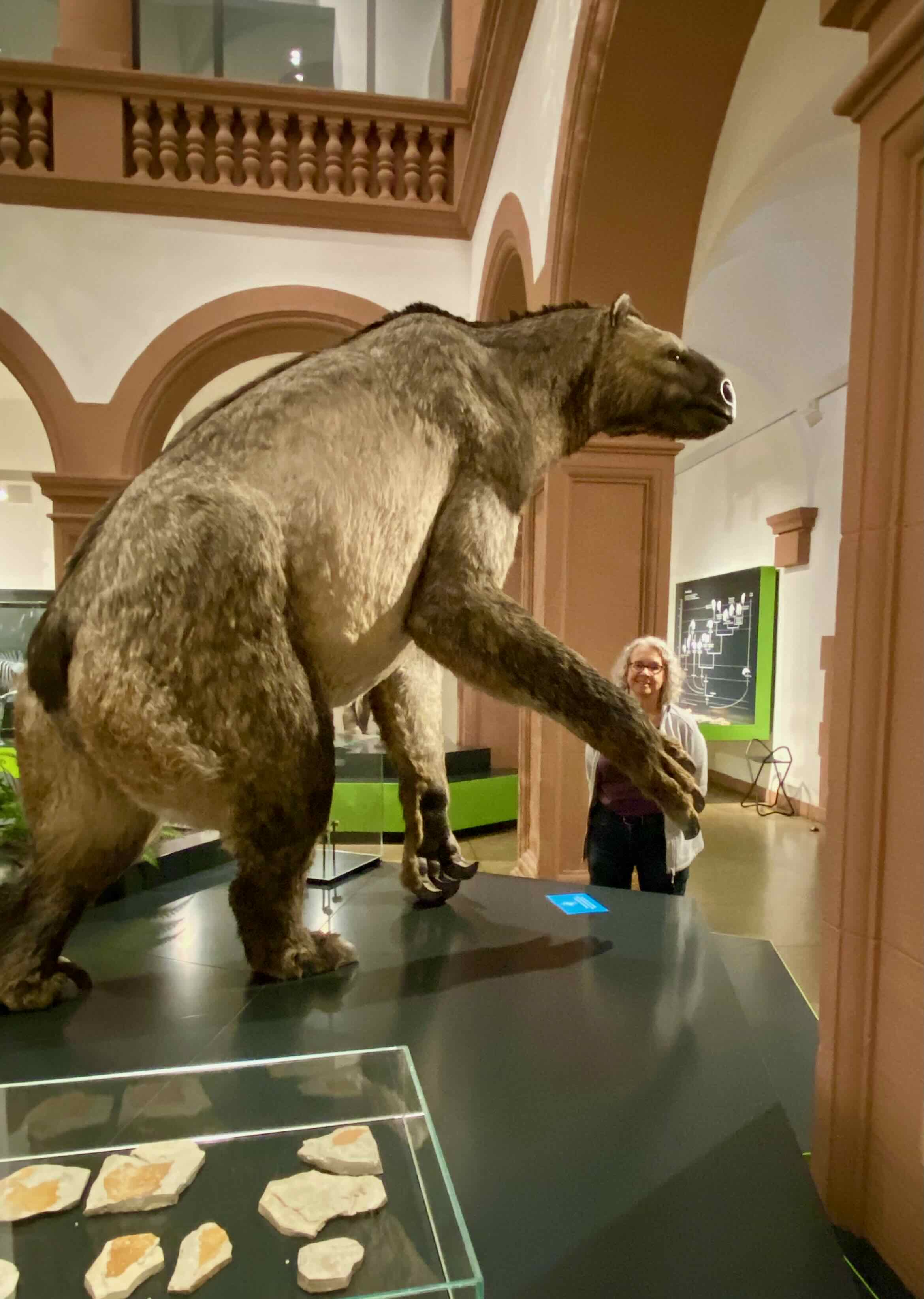
There are a few more displays of stuffed animals. I thought this one of different types of rabbits was interesting. It is a small museum so it doesn’t take too long to see everything.
I know this is a strange photo, but this is the handicapped washroom at the museum. I’ve never seen a public washroom like this. 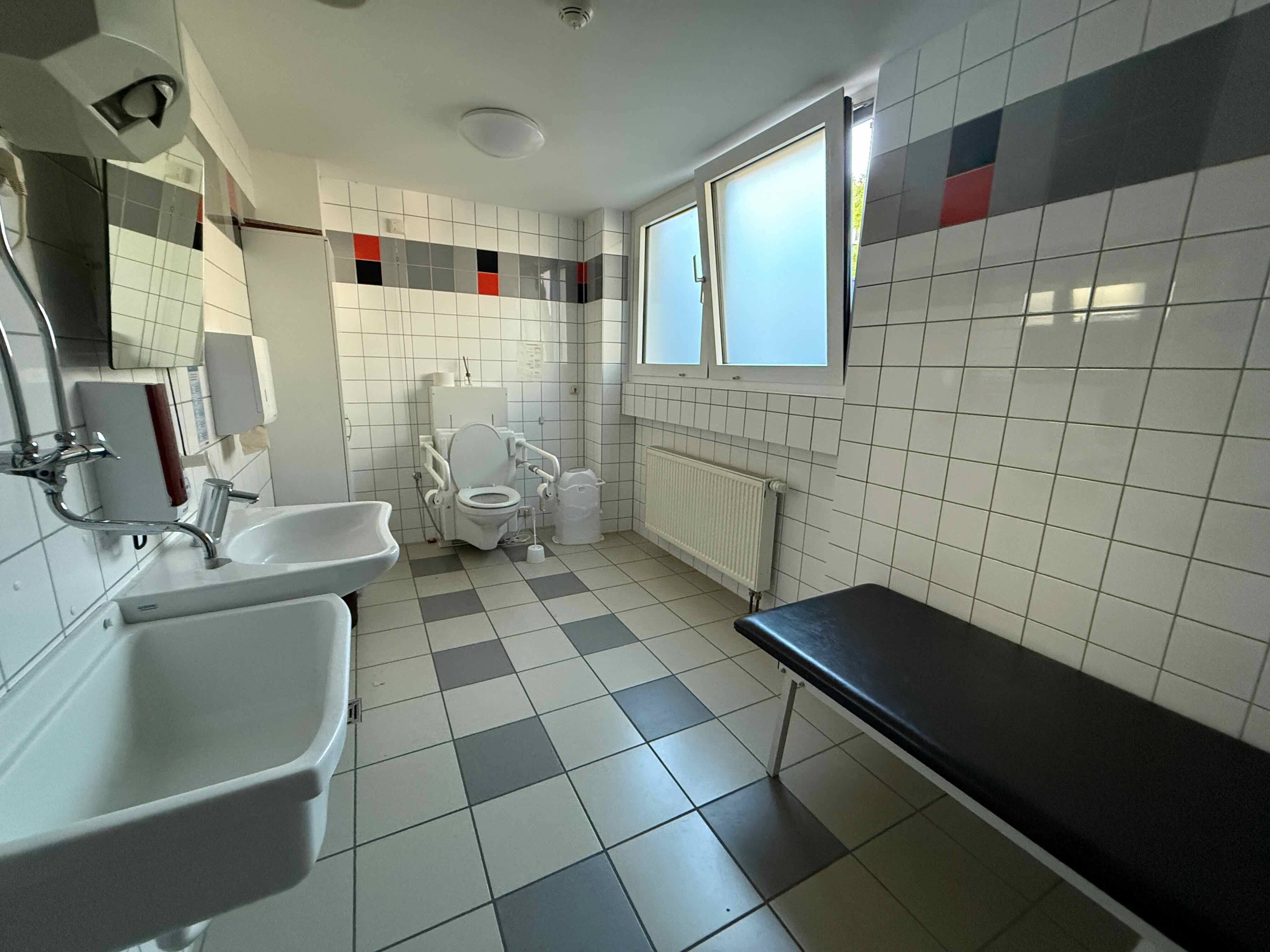
We walk along cobbled sidewalks with reminders that summer is over on our way to see the next sight on the agenda in Manz.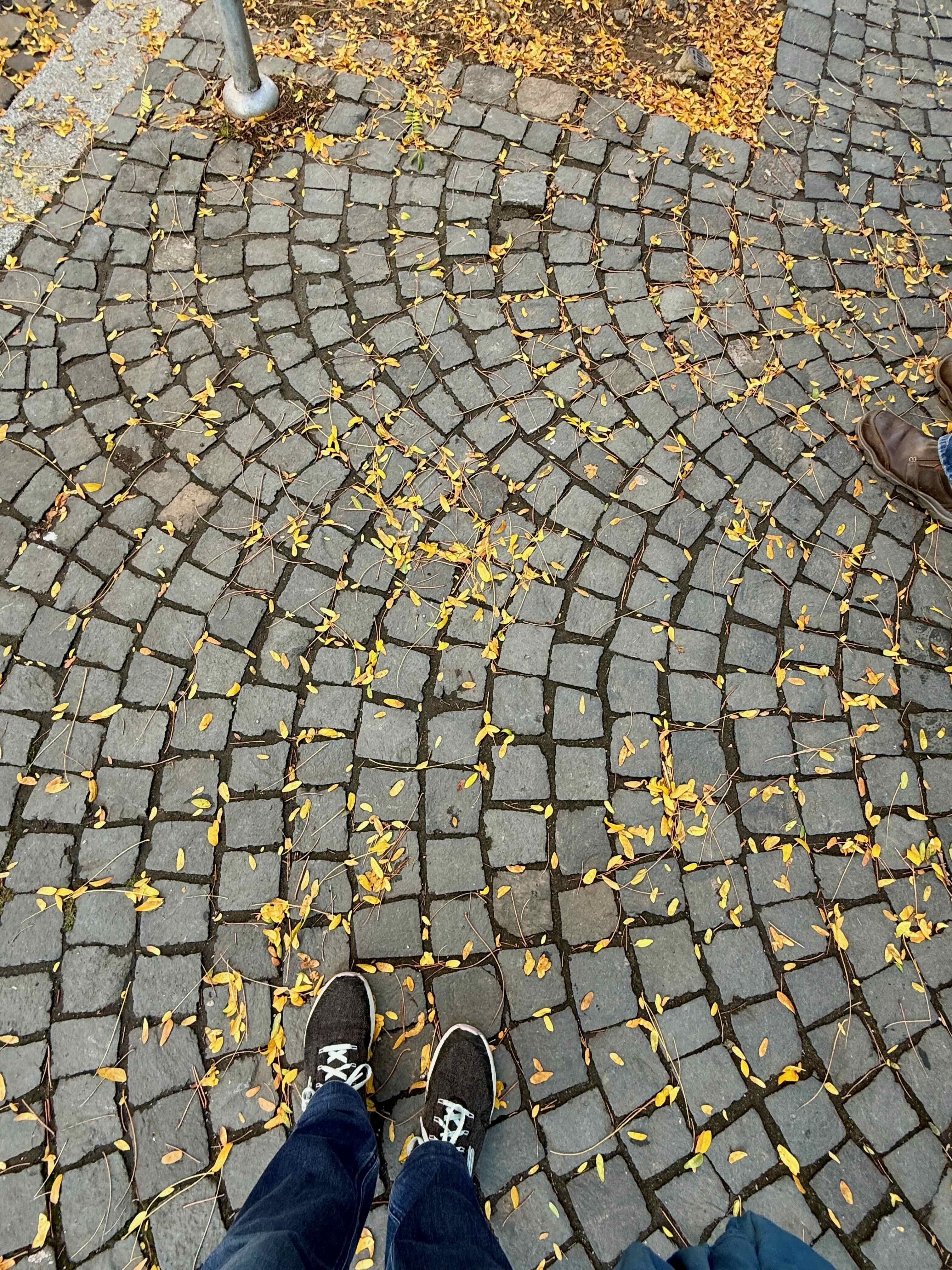
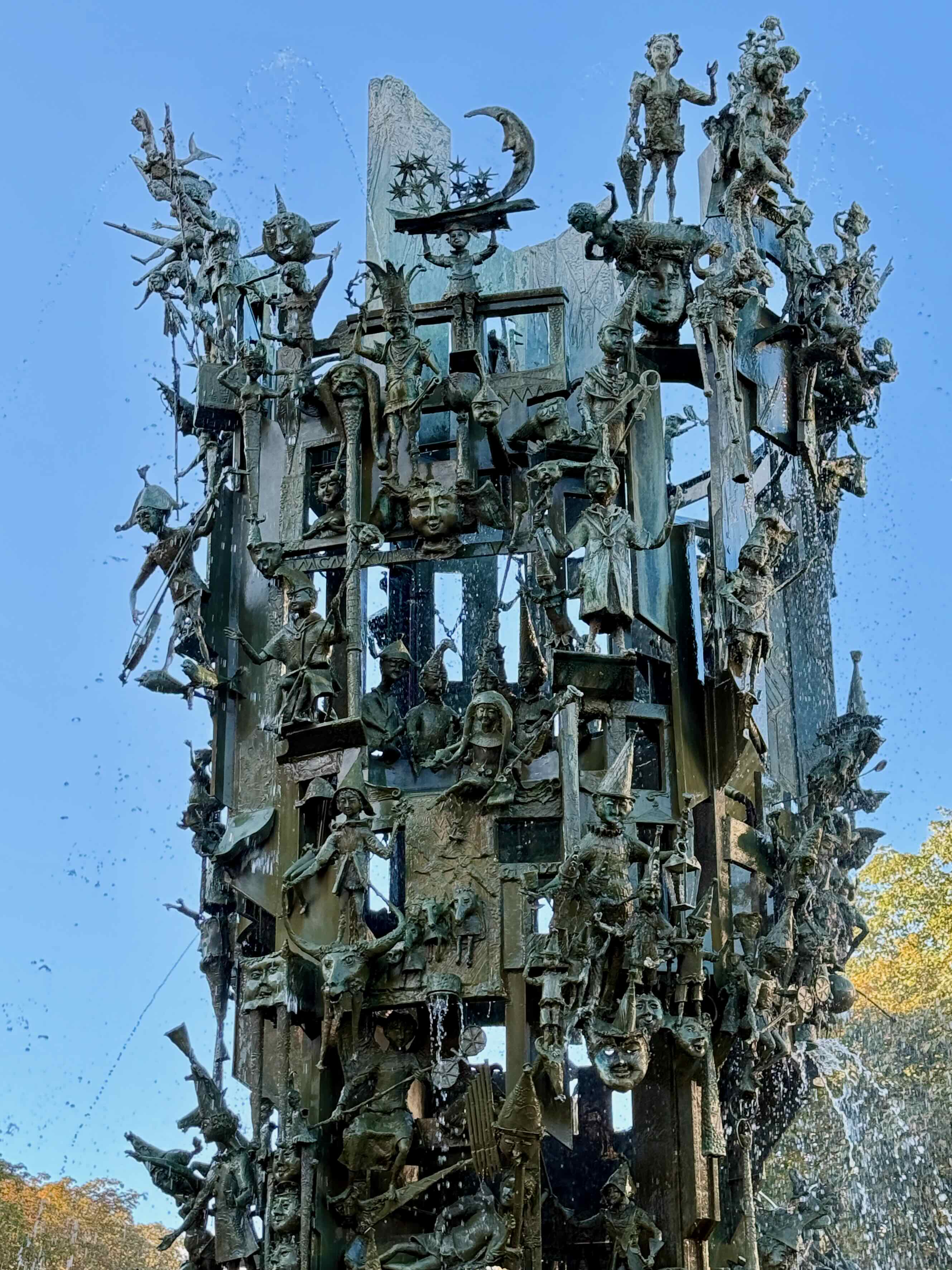
This huge fountain is the Fastnachtsbrunnen, or Carnival Fountain. It is almost nine meters high and has over 200 bronze figures from the Mainz Carnival Mythology. Every year on November 11, at 11:11 pm, people celebrating Carnival in Mainz gather here. When the clock strikes 11:11 pm the carnival officially begins. 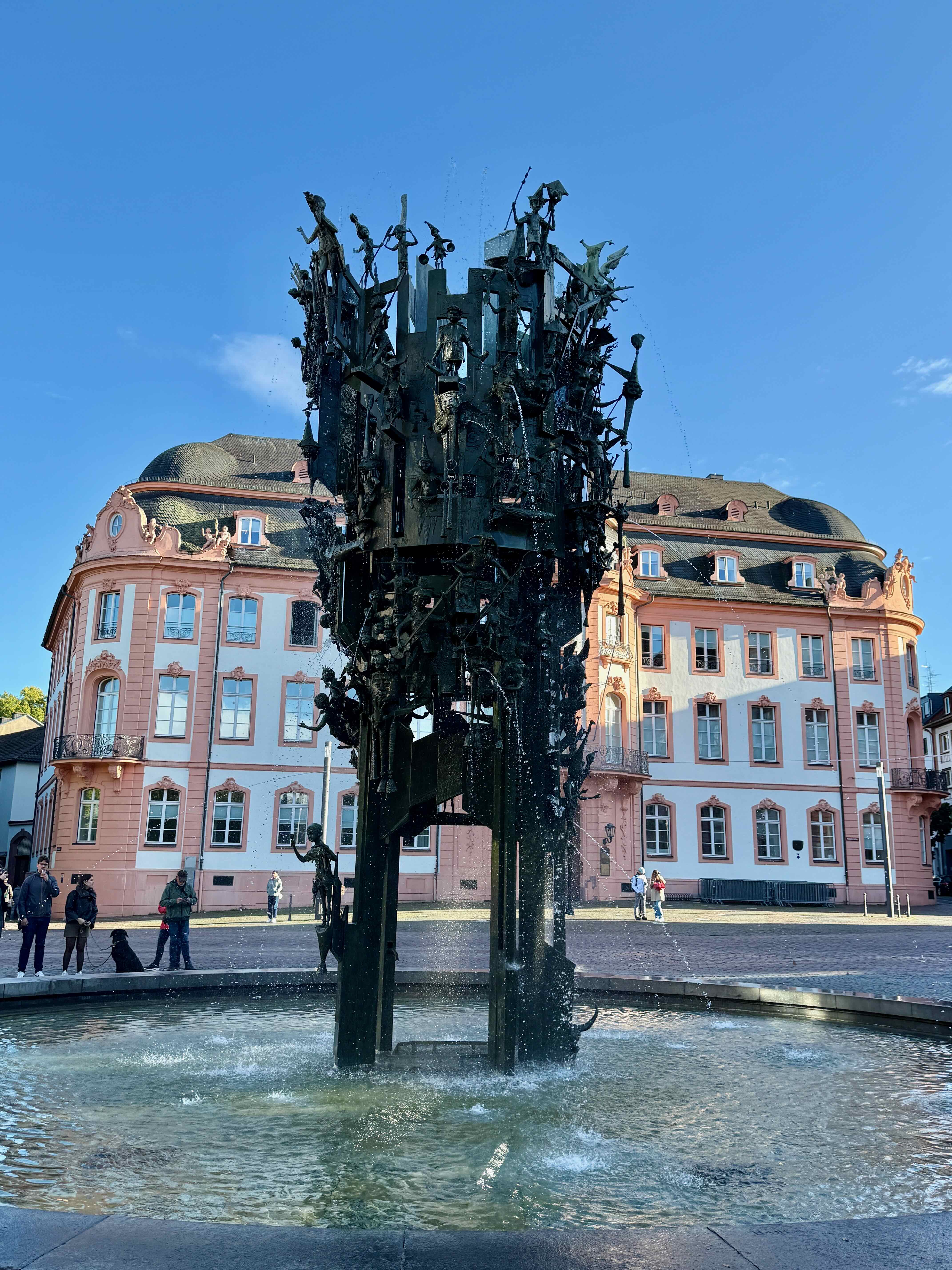
Our last stop before heading home is St. Stephen Church. This is the only German church for which the Jewish artist Marc Chagall created windows.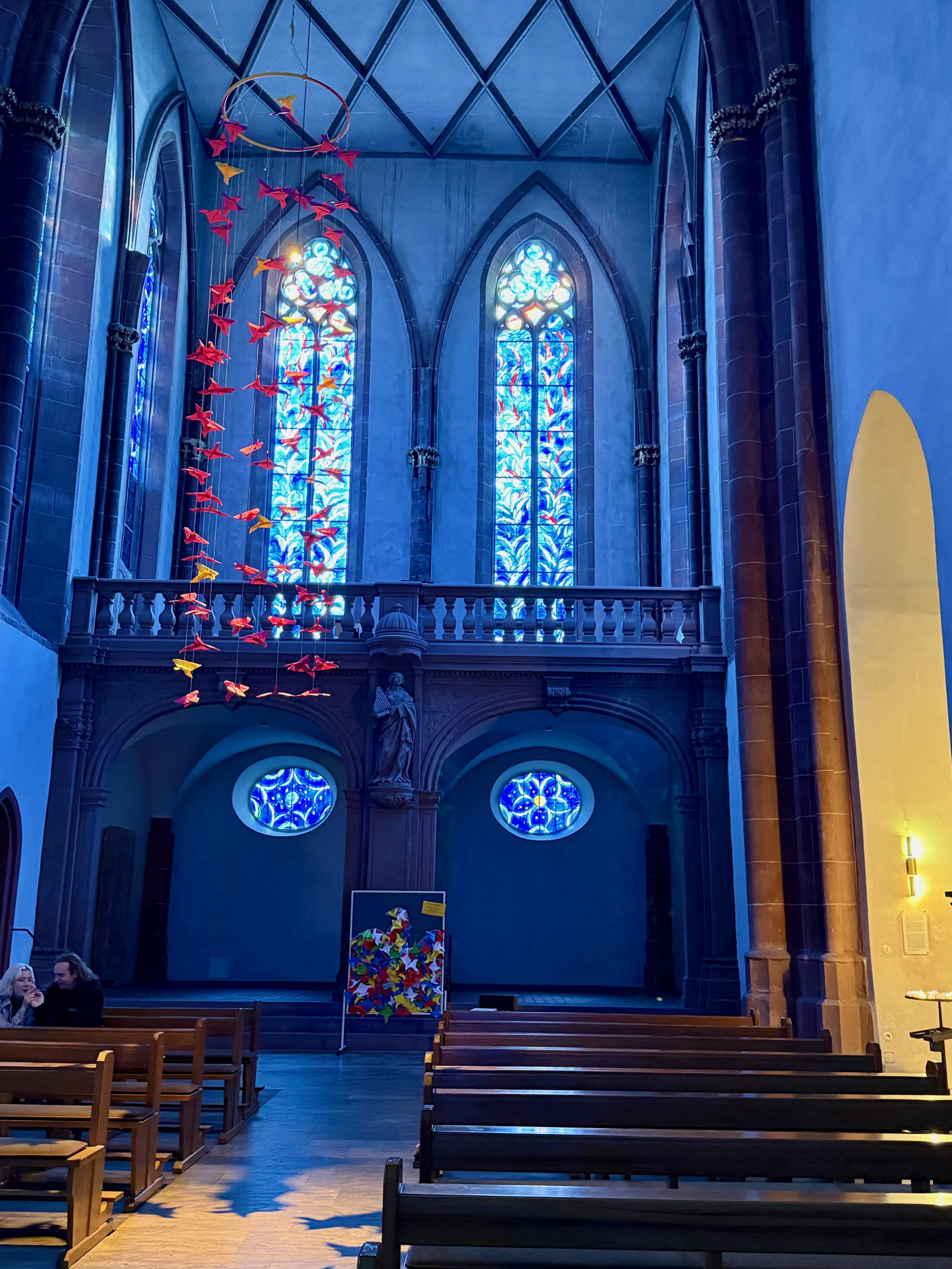
In 1978, the first window by the 91-year-old Chagall was installed. Chagall completed the final church window shortly before his death at the age of 97! Although all the windows are beautiful, I didn’t find the blue light in the church appealing…it felt too sombre, 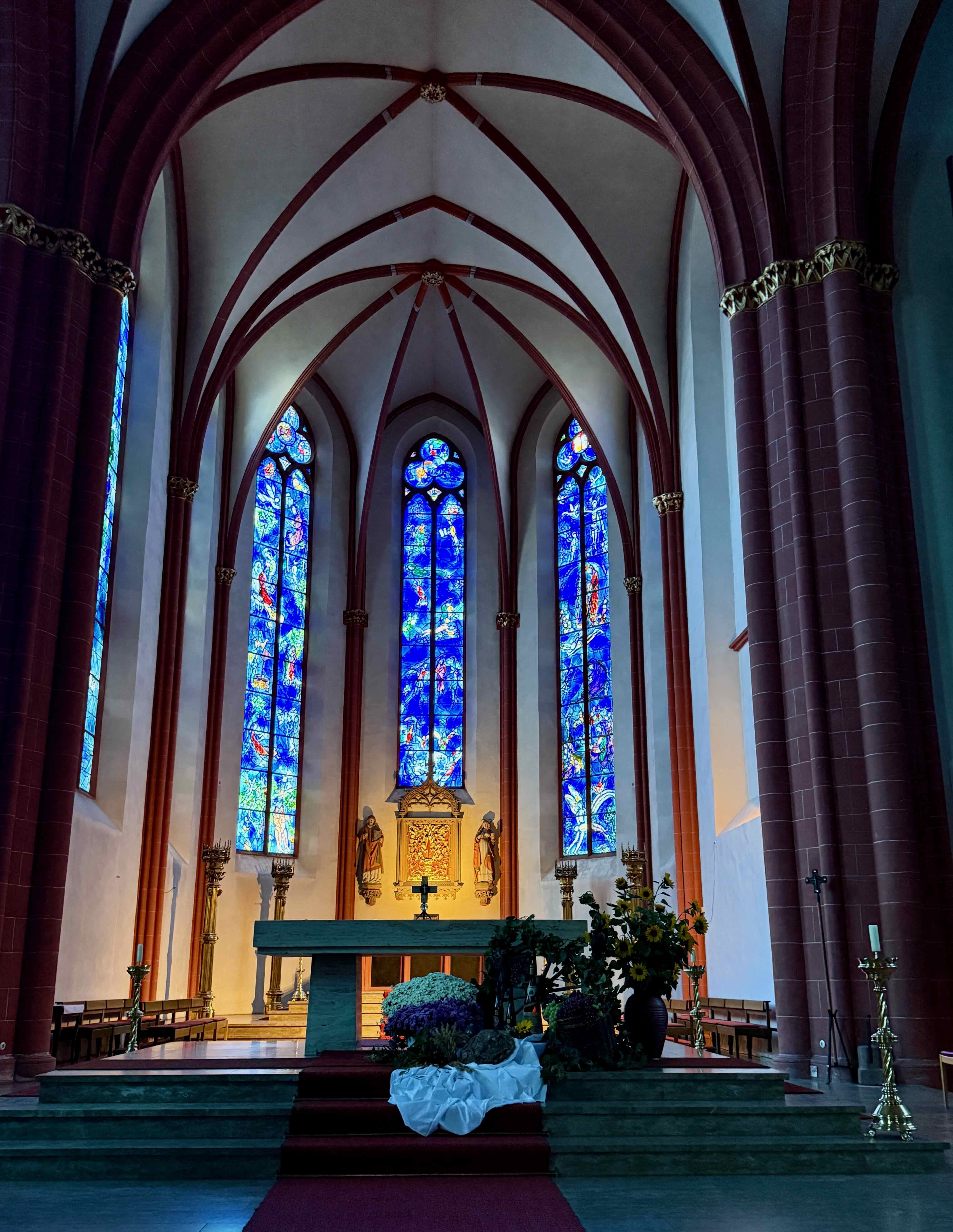
Time to drive home…this was a very full day!
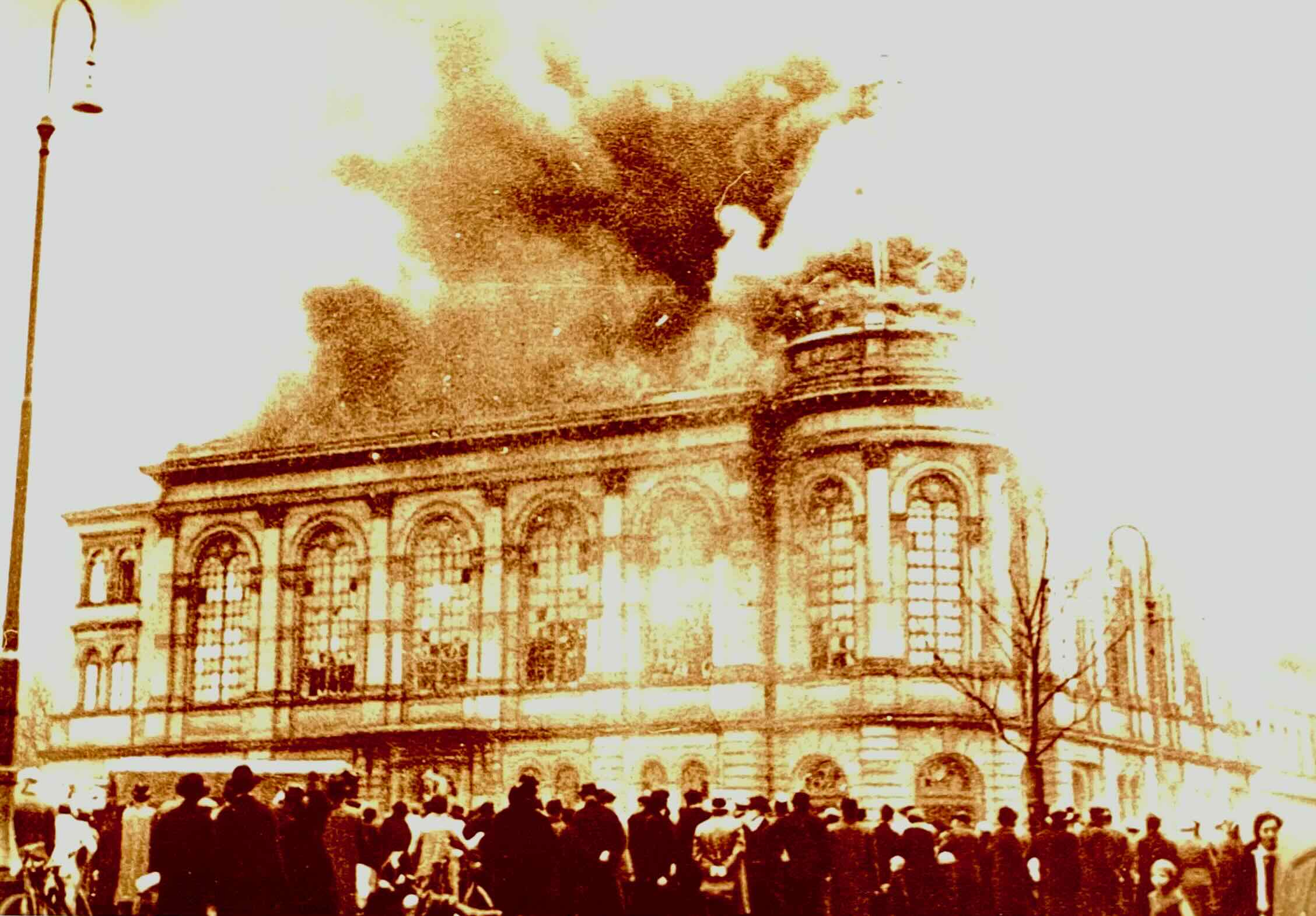
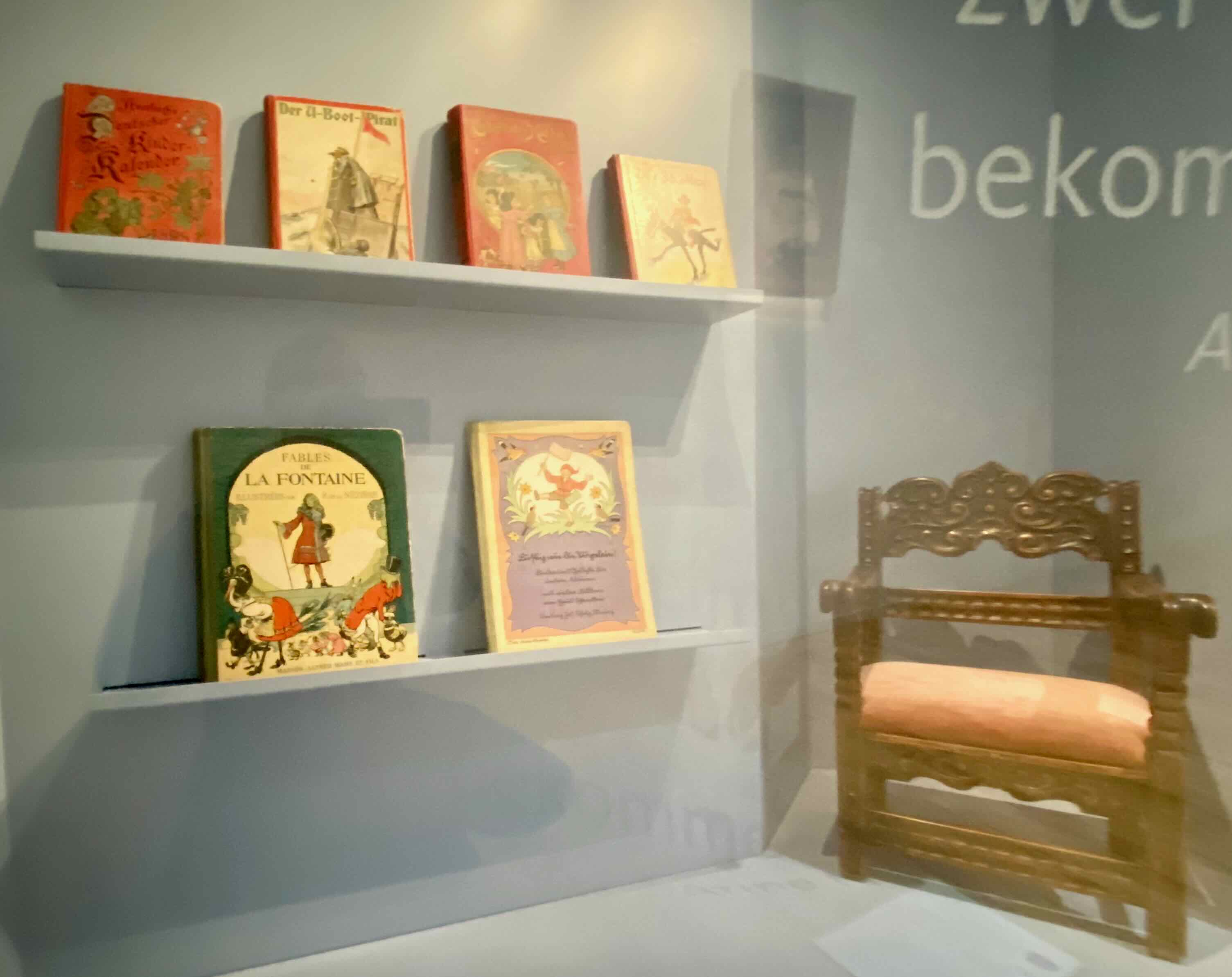
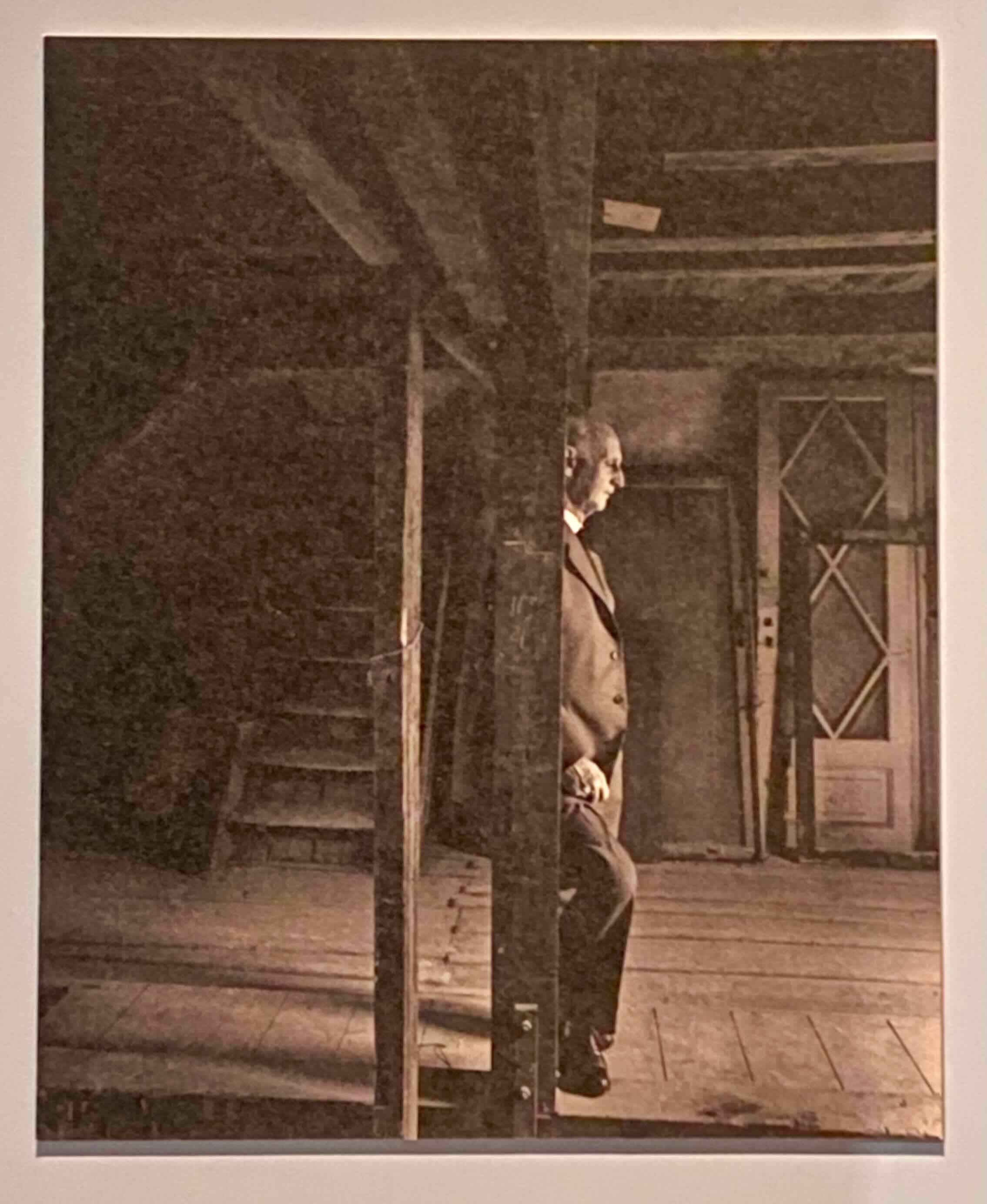 This is the father’s copy of the book, later titled “The Diary of Anne Frank”.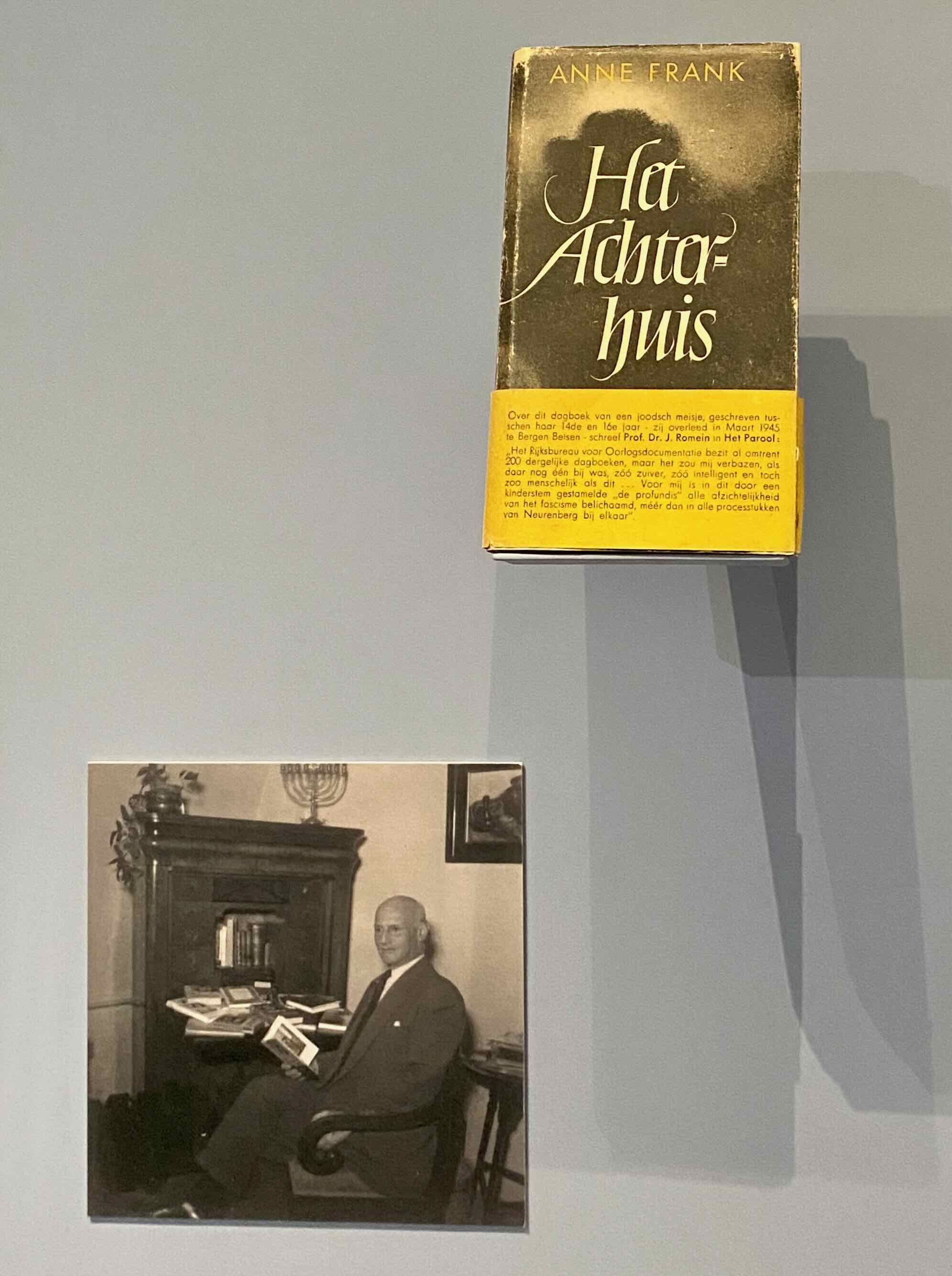
 There were a number of artifacts uncovered. The most interesting is this 16th century wedding belt. The belts of the bride and groom were tied together during the wedding ceremony as a symbol of their eternal bound.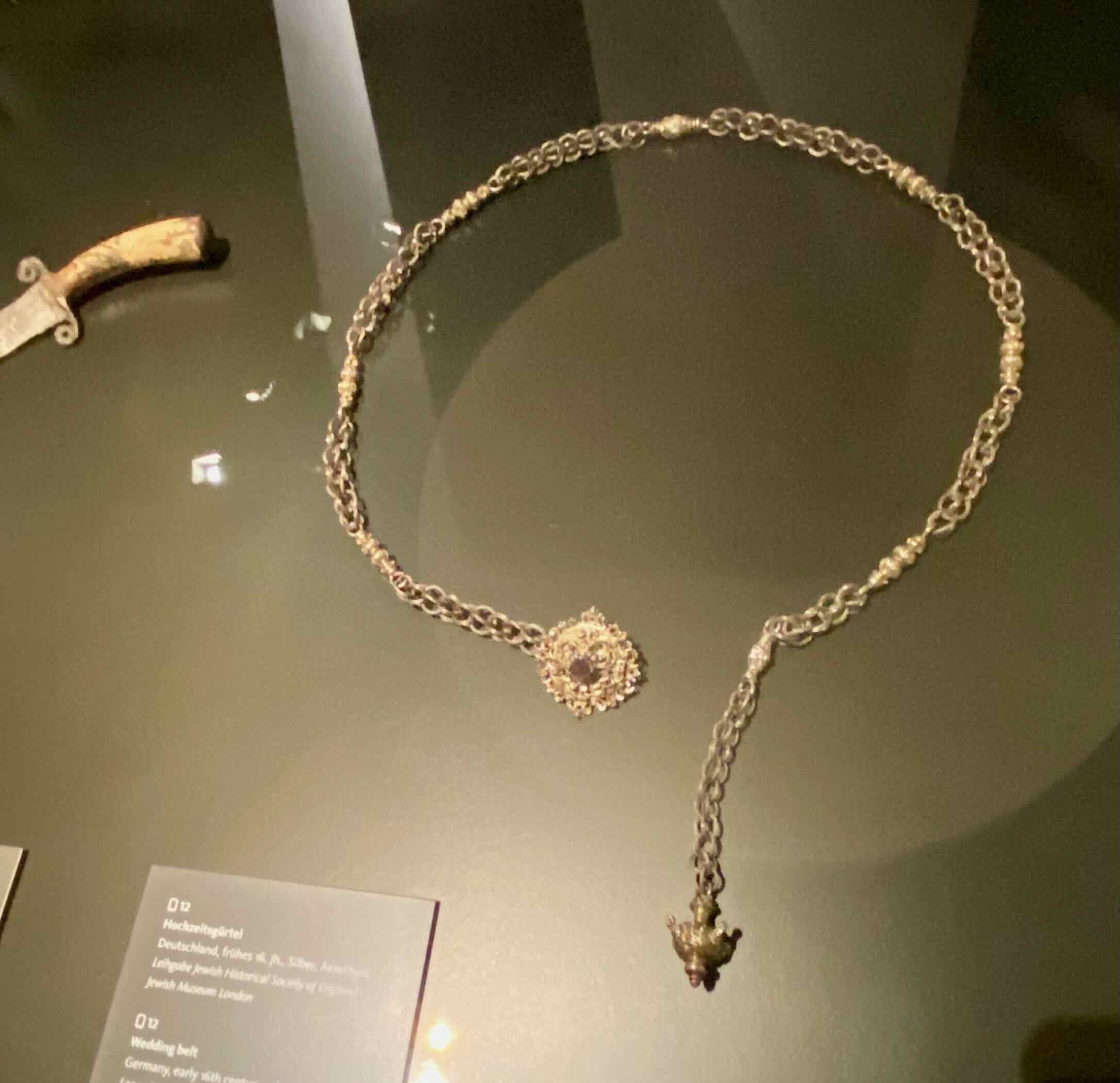


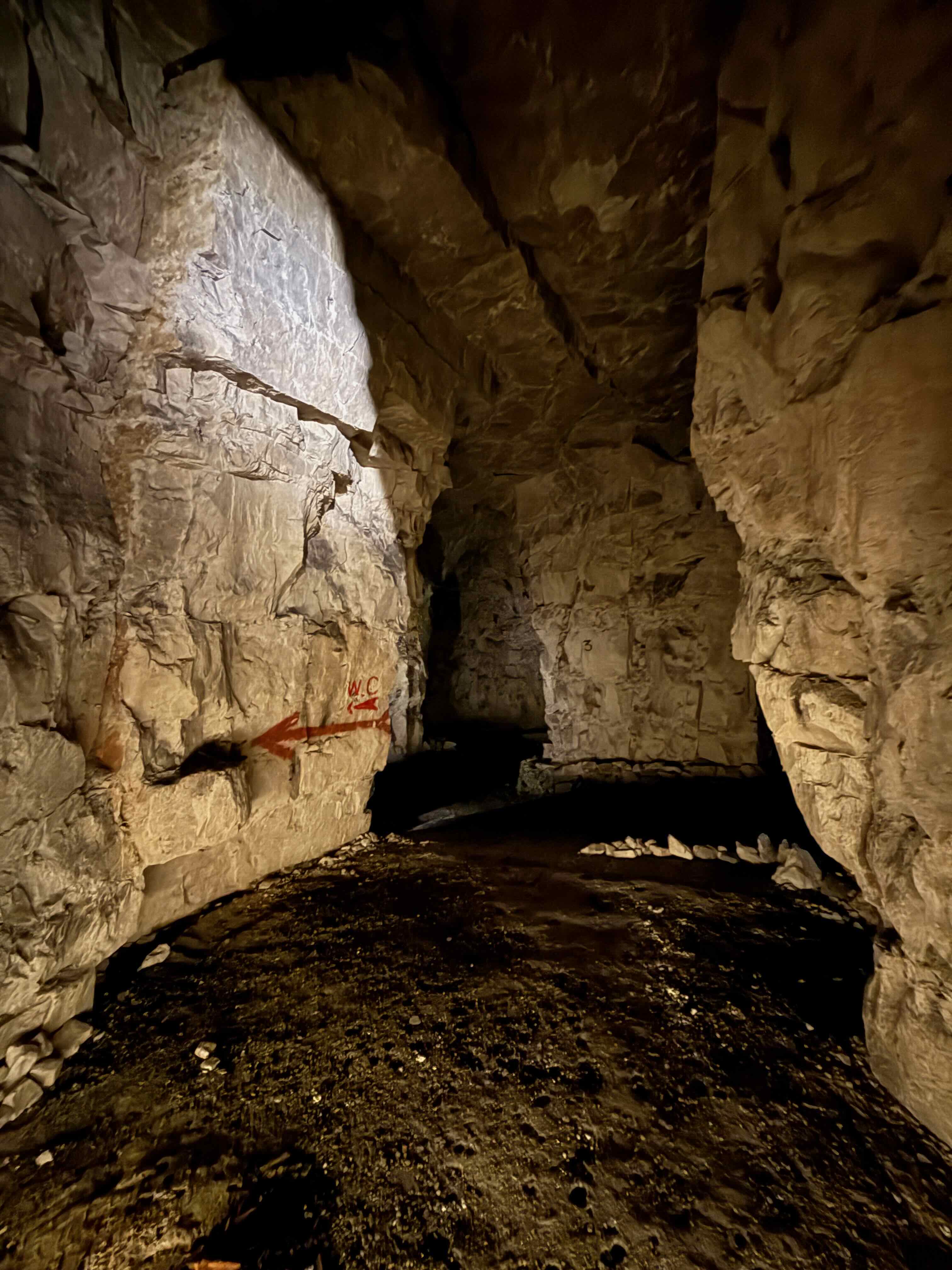
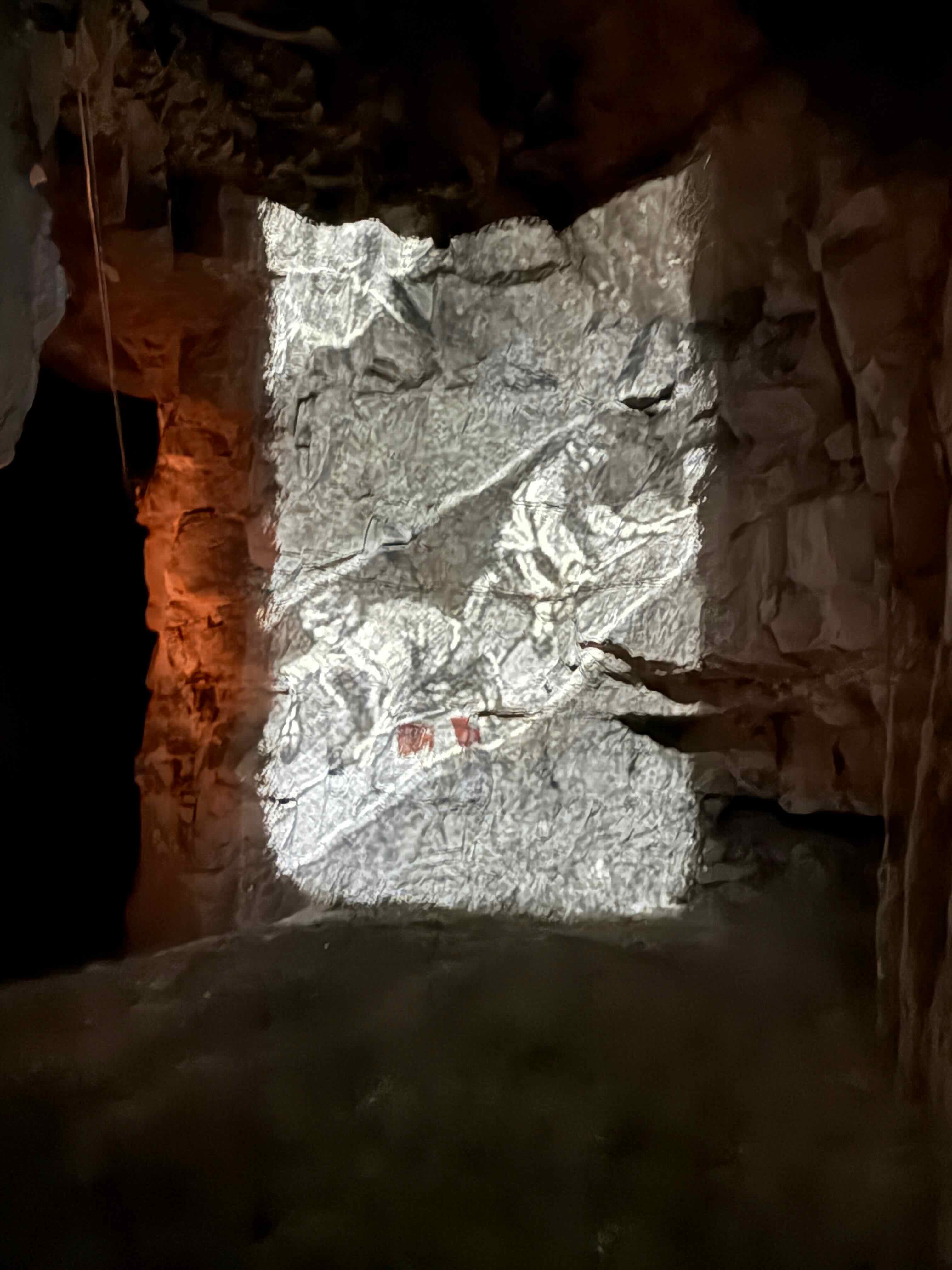
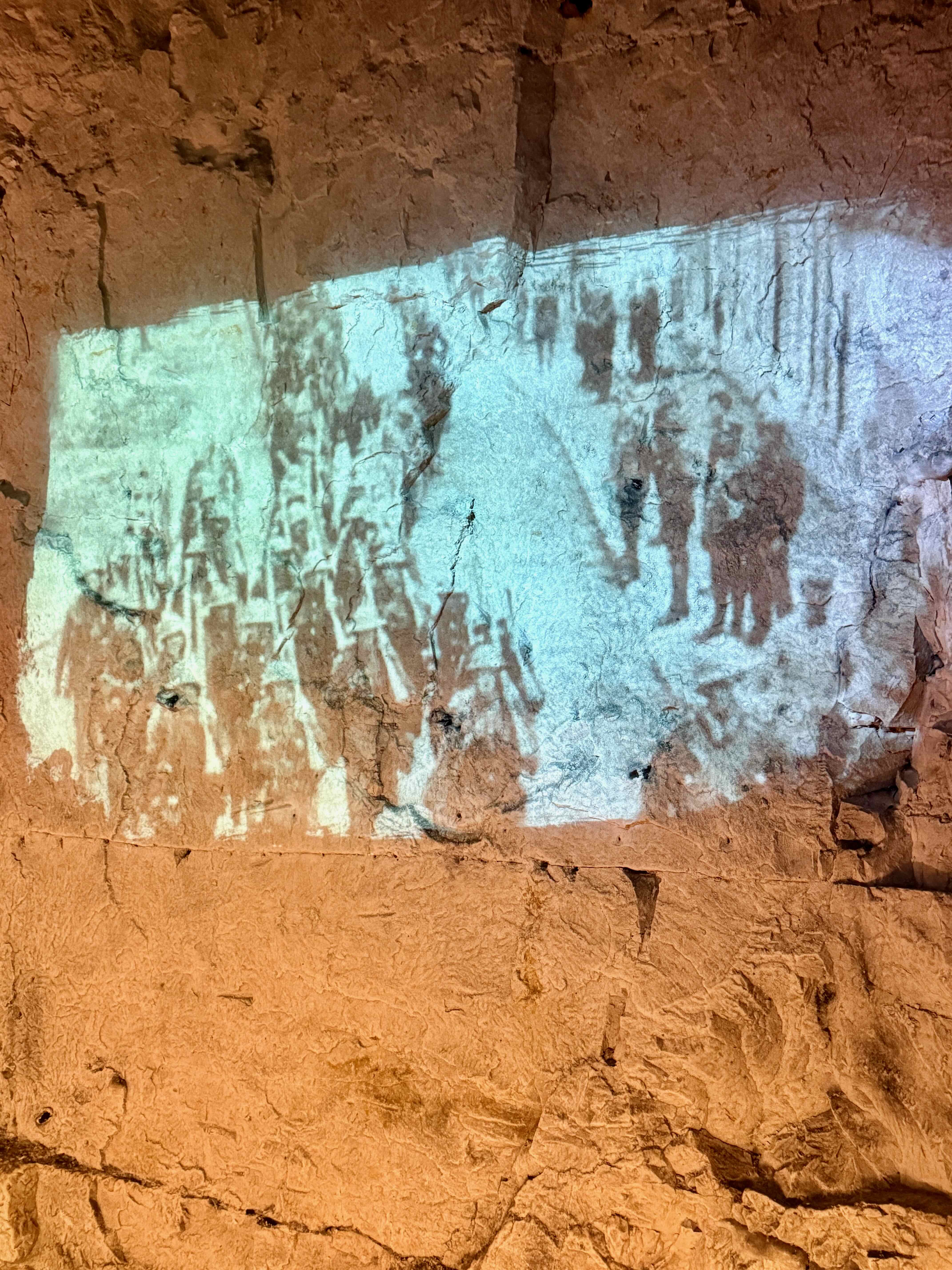
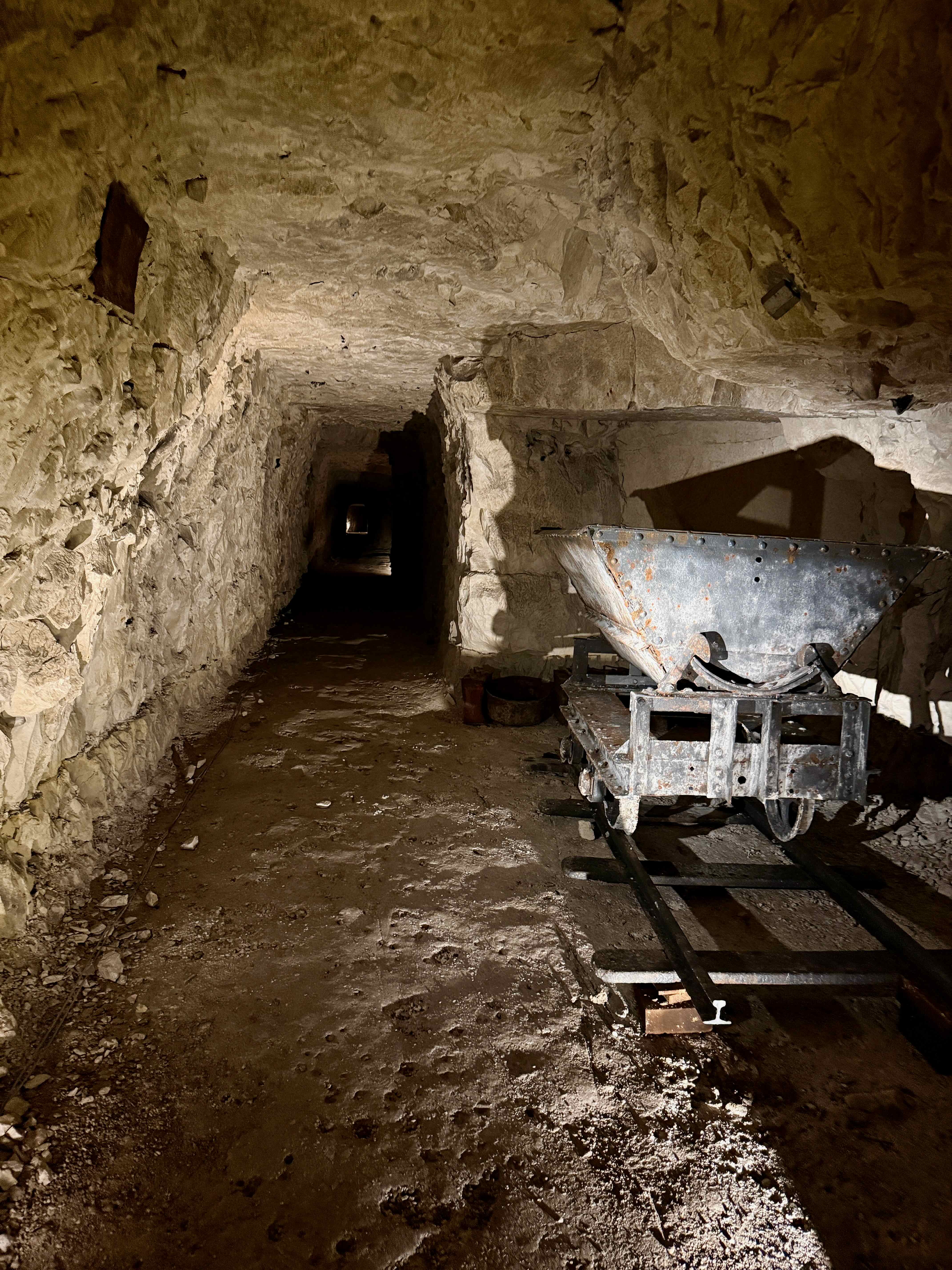
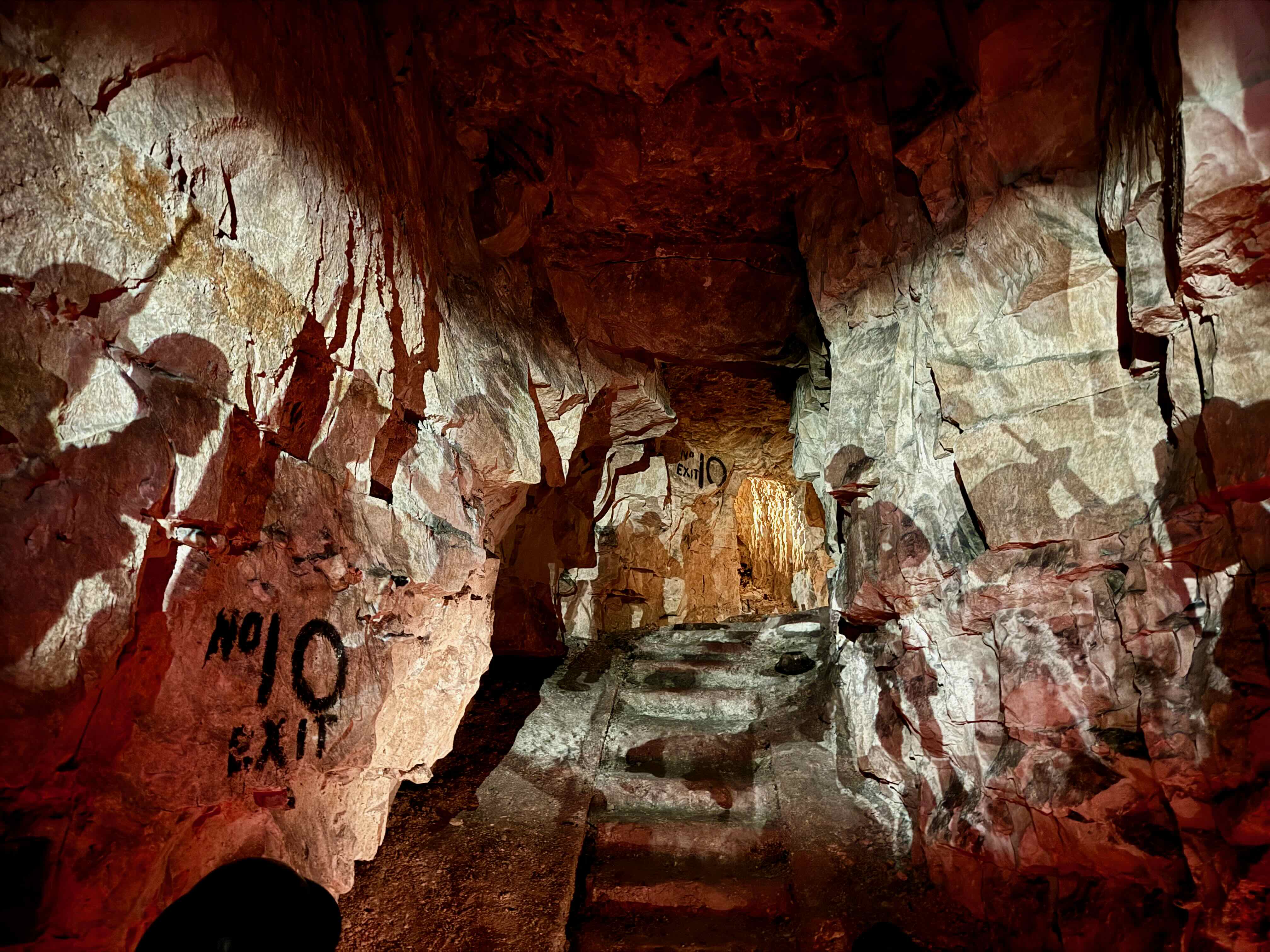
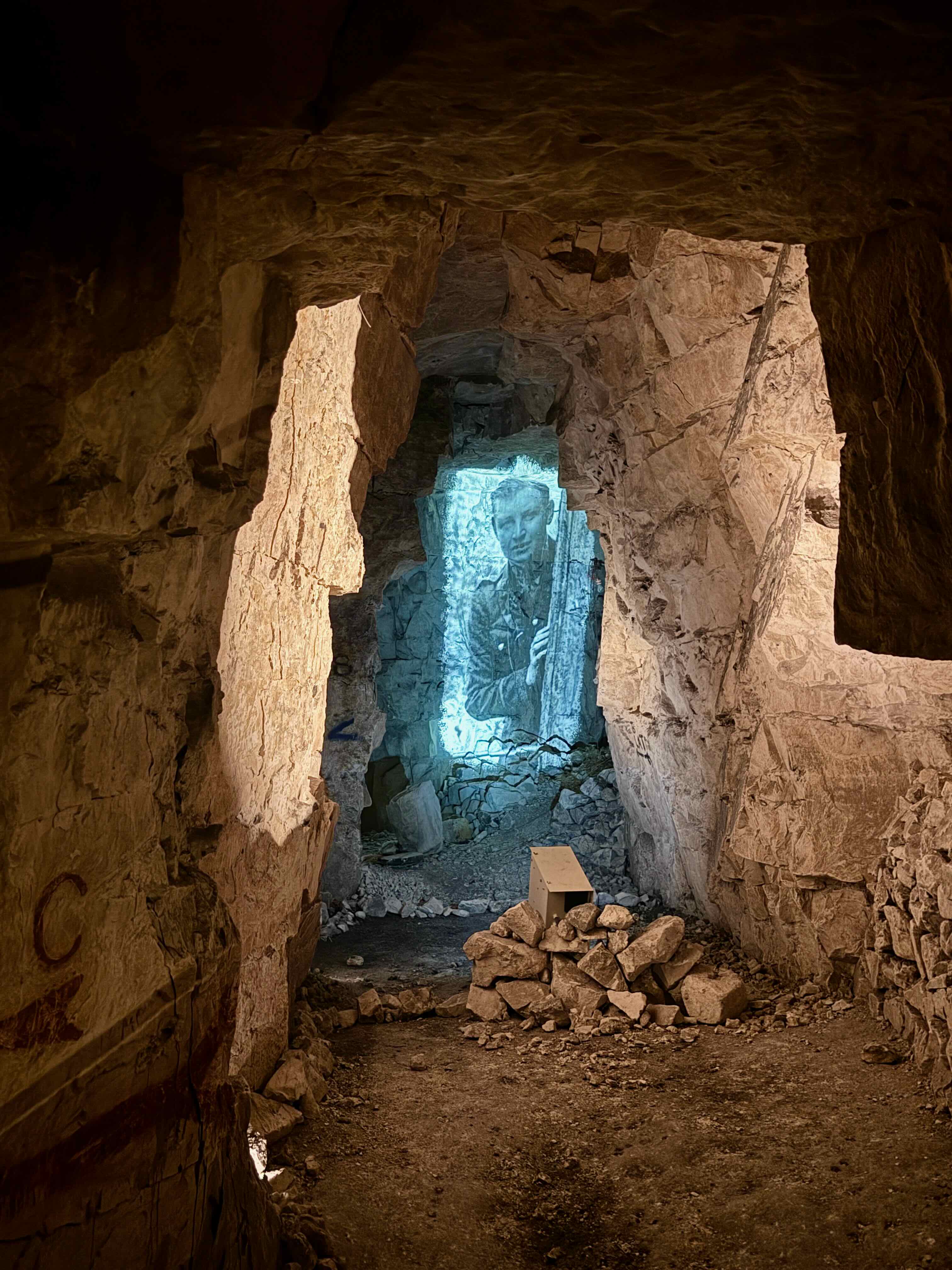 These ancient caves were used as building stone quarries for Arras in Medieval times. They are very large with high ceilings.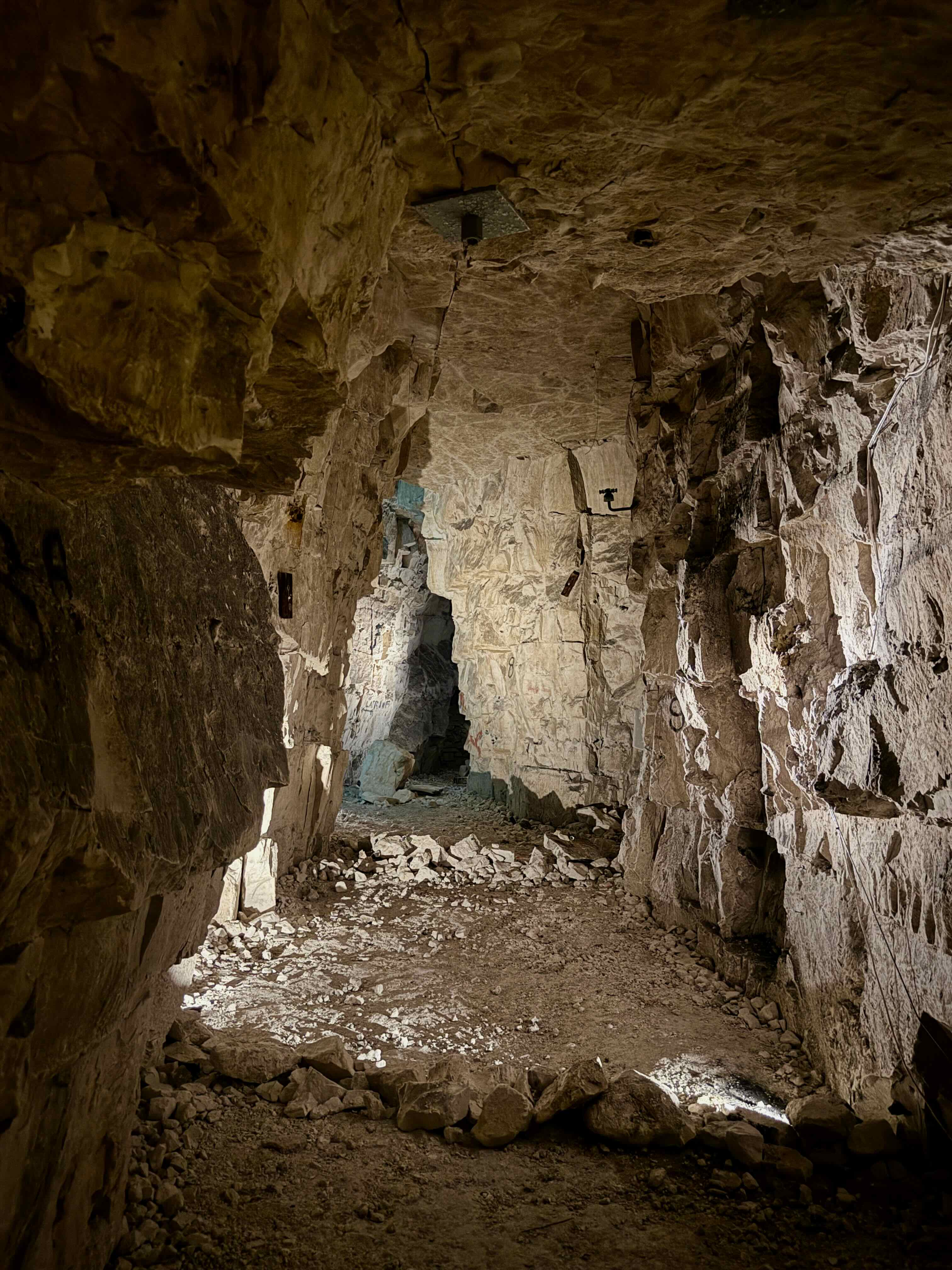
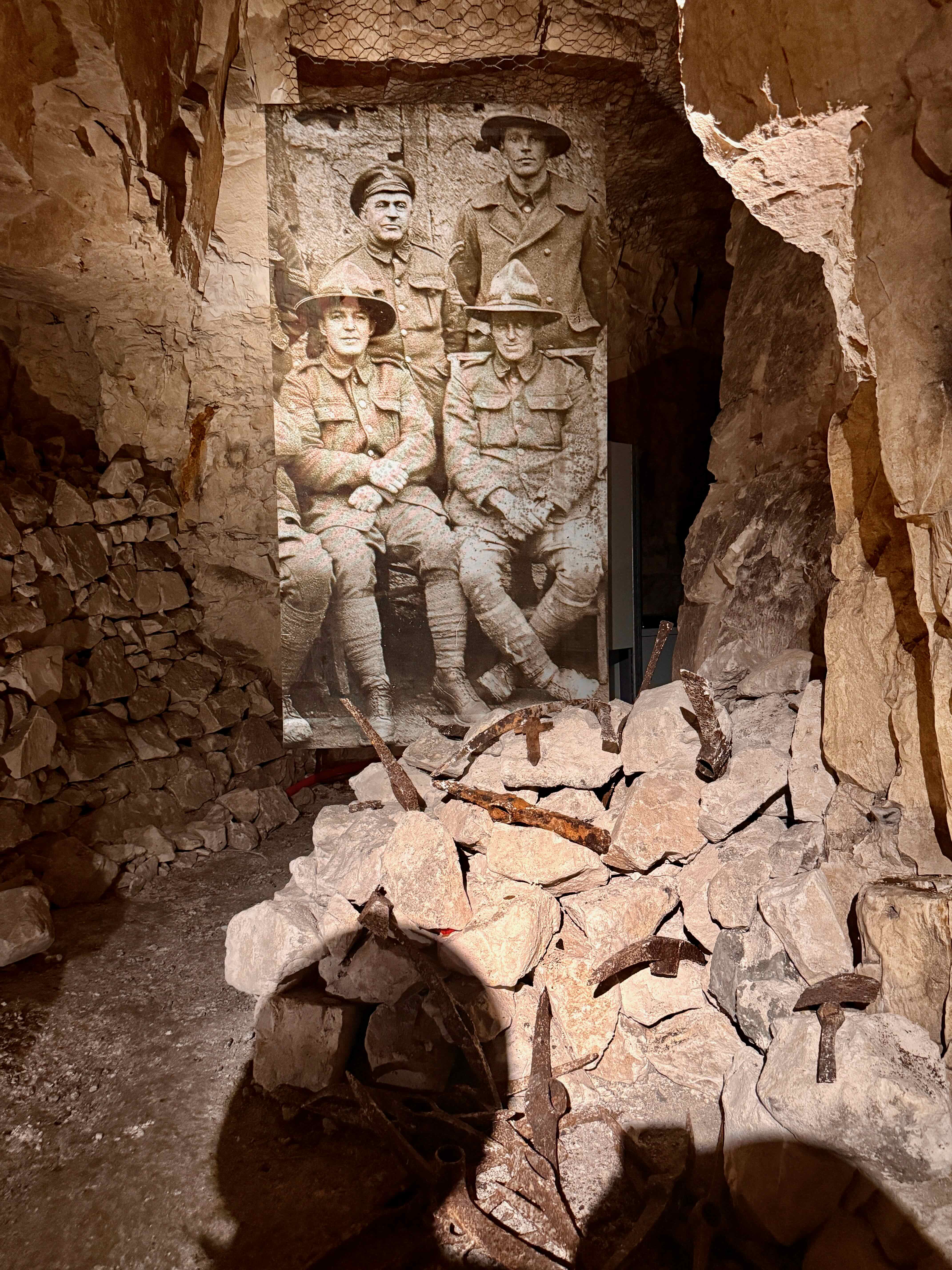
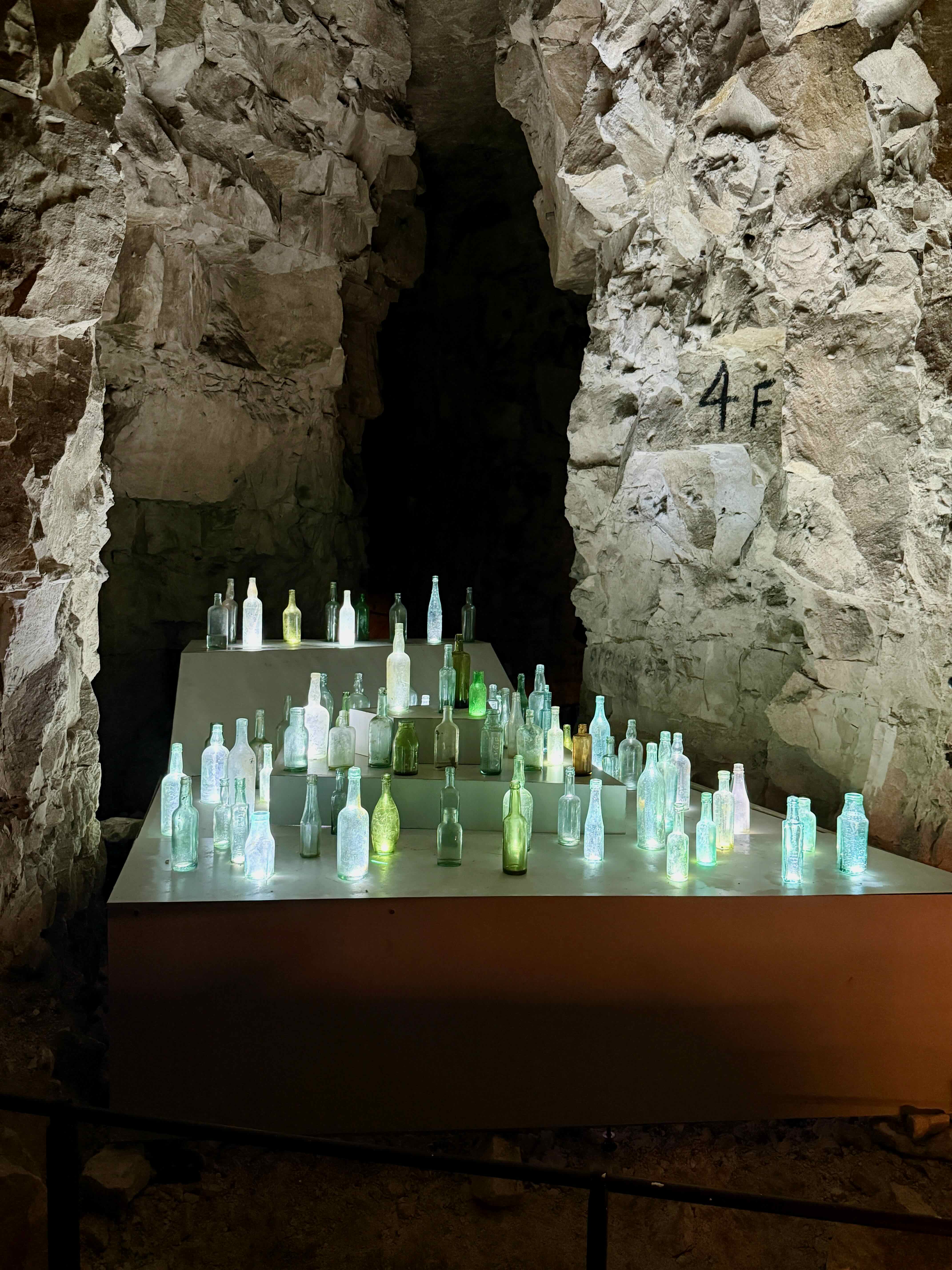
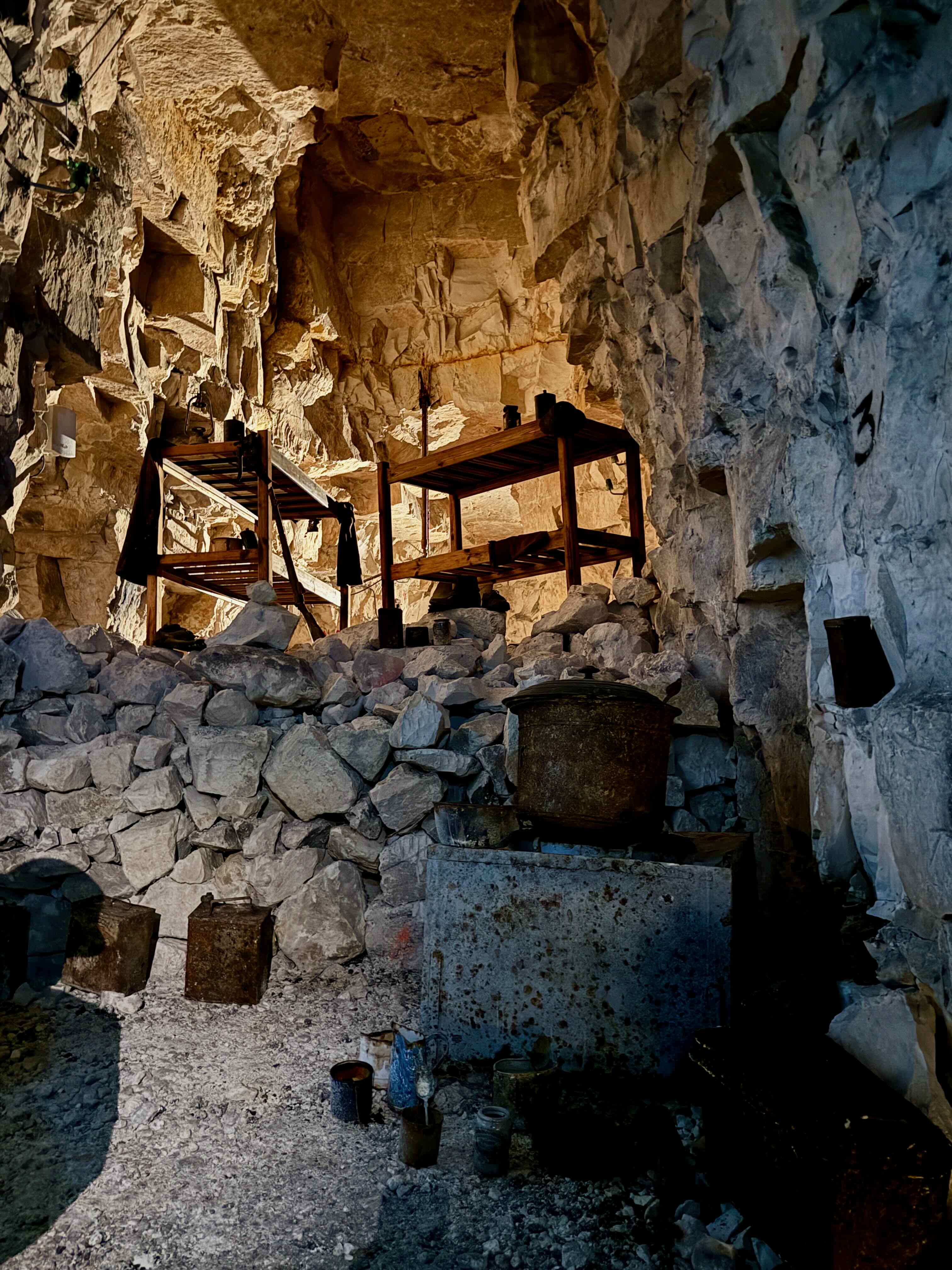
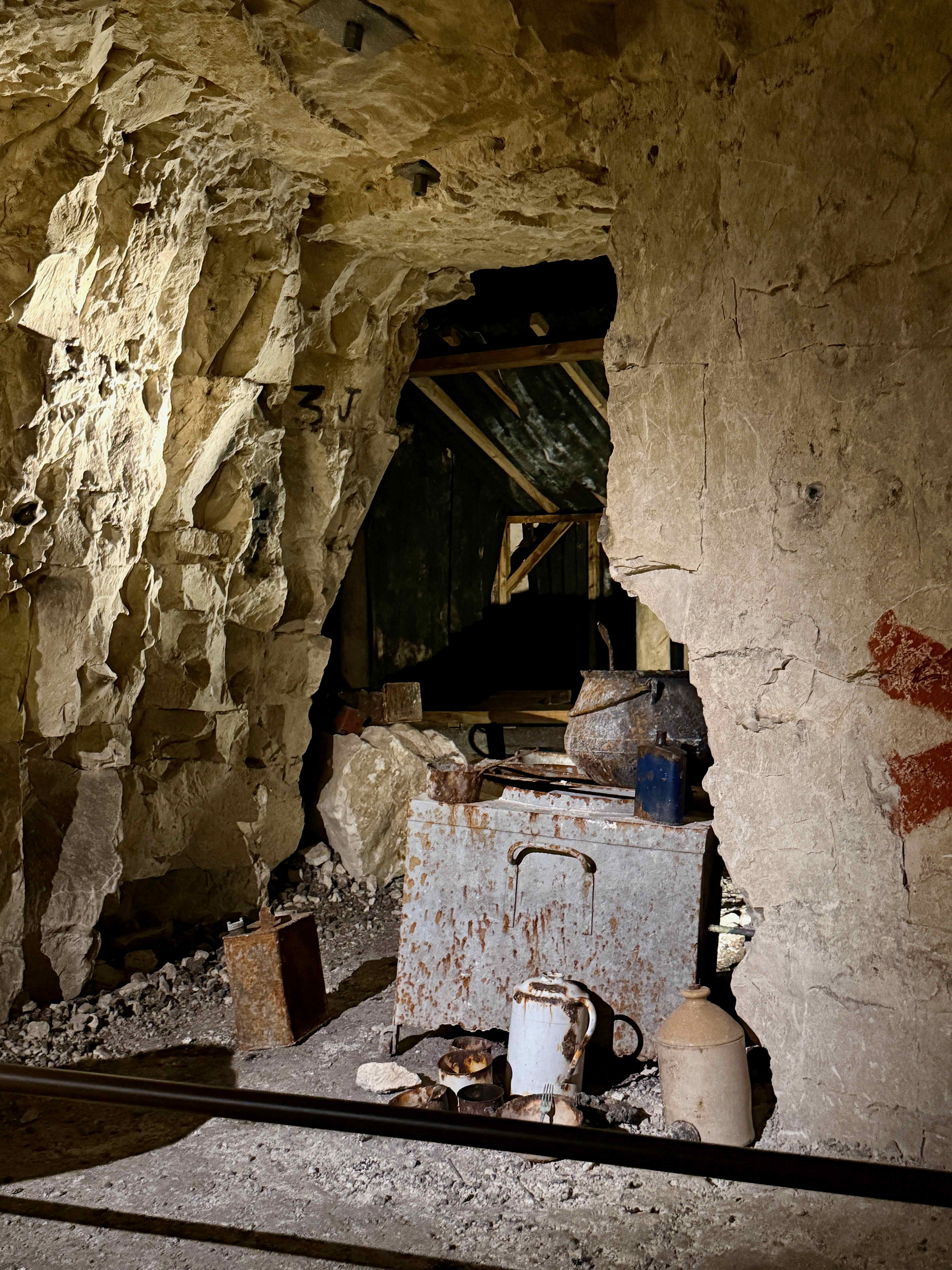
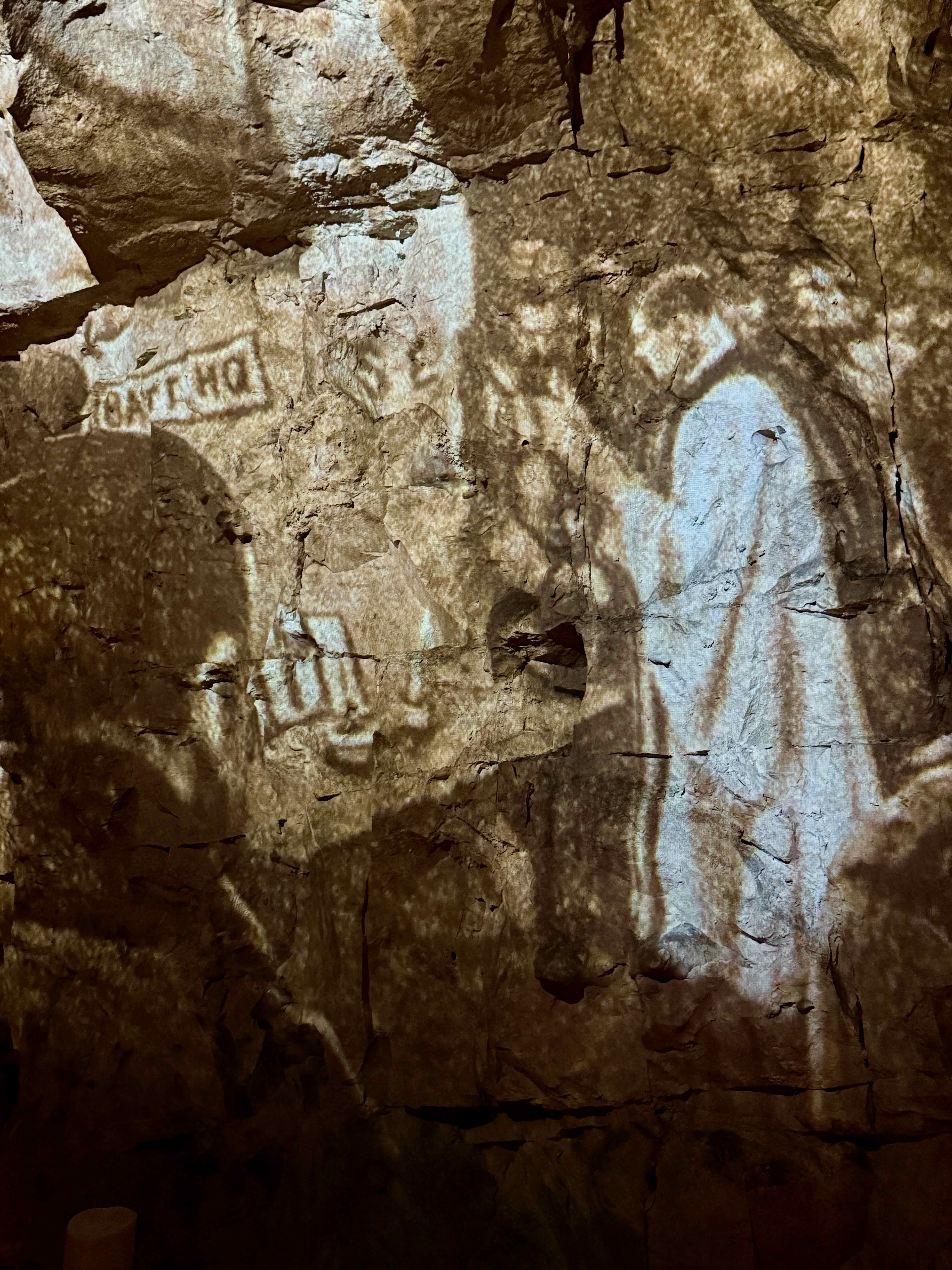
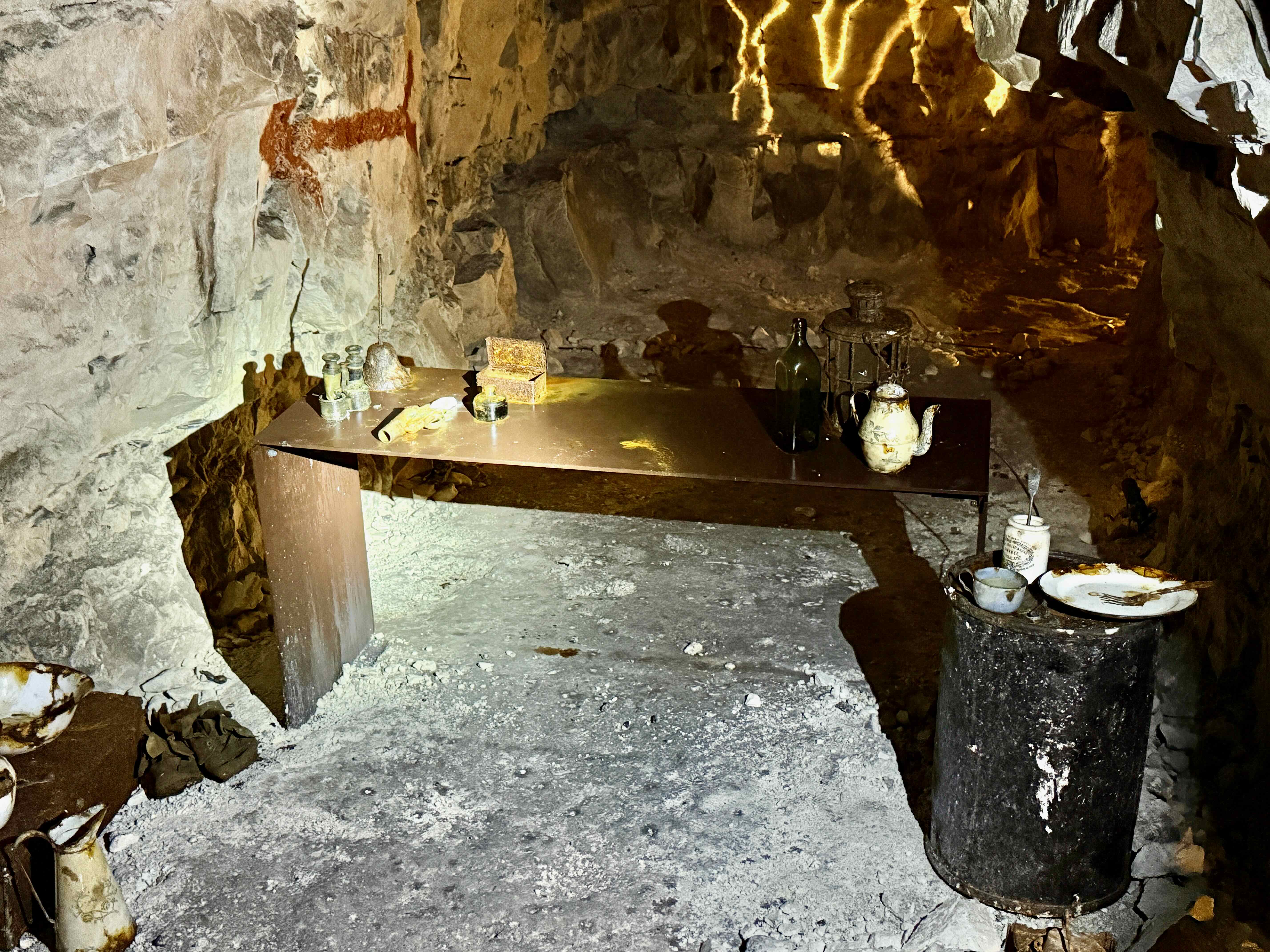
 In a theatre after the tour we watch a film about what happened after this battle and I am shocked to learn that the British advance slowed in the next few days and the German defence recovered. The battle became a costly stalemate for both sides and 4,000 men a day died in the days after the surprise attack. The British had 160,000 casualties and the Germans about 125,000. Up until hearing this I thought this Arras surprise attack was at least a success. I really hate war!
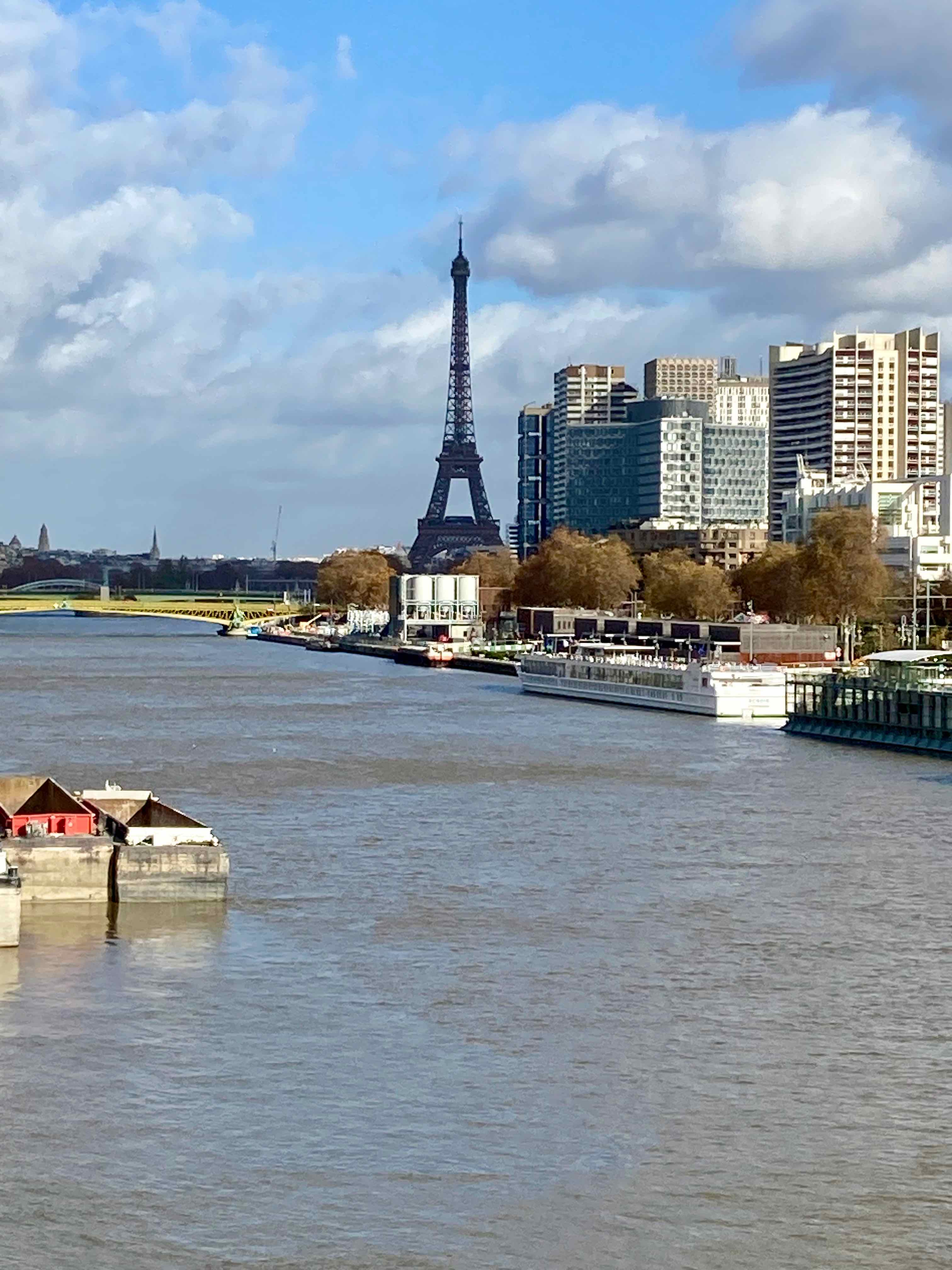
 I attended sessions with the Montmartre Life Drawing group in September so no problem finding their location even though I was coming from a different starting point. The first thing I see when I leave the metro is this impressive statue in the centre of a traffic circle.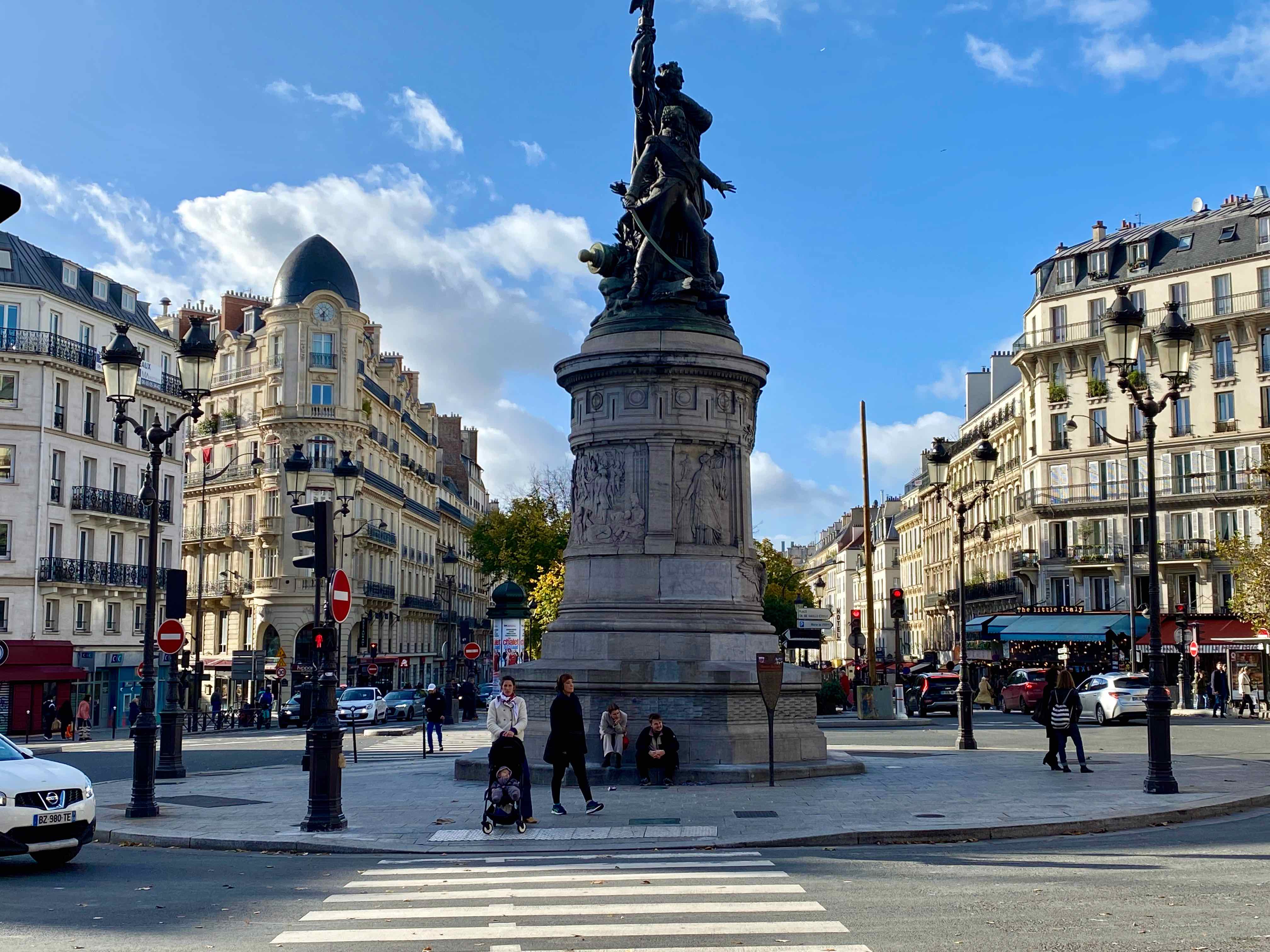
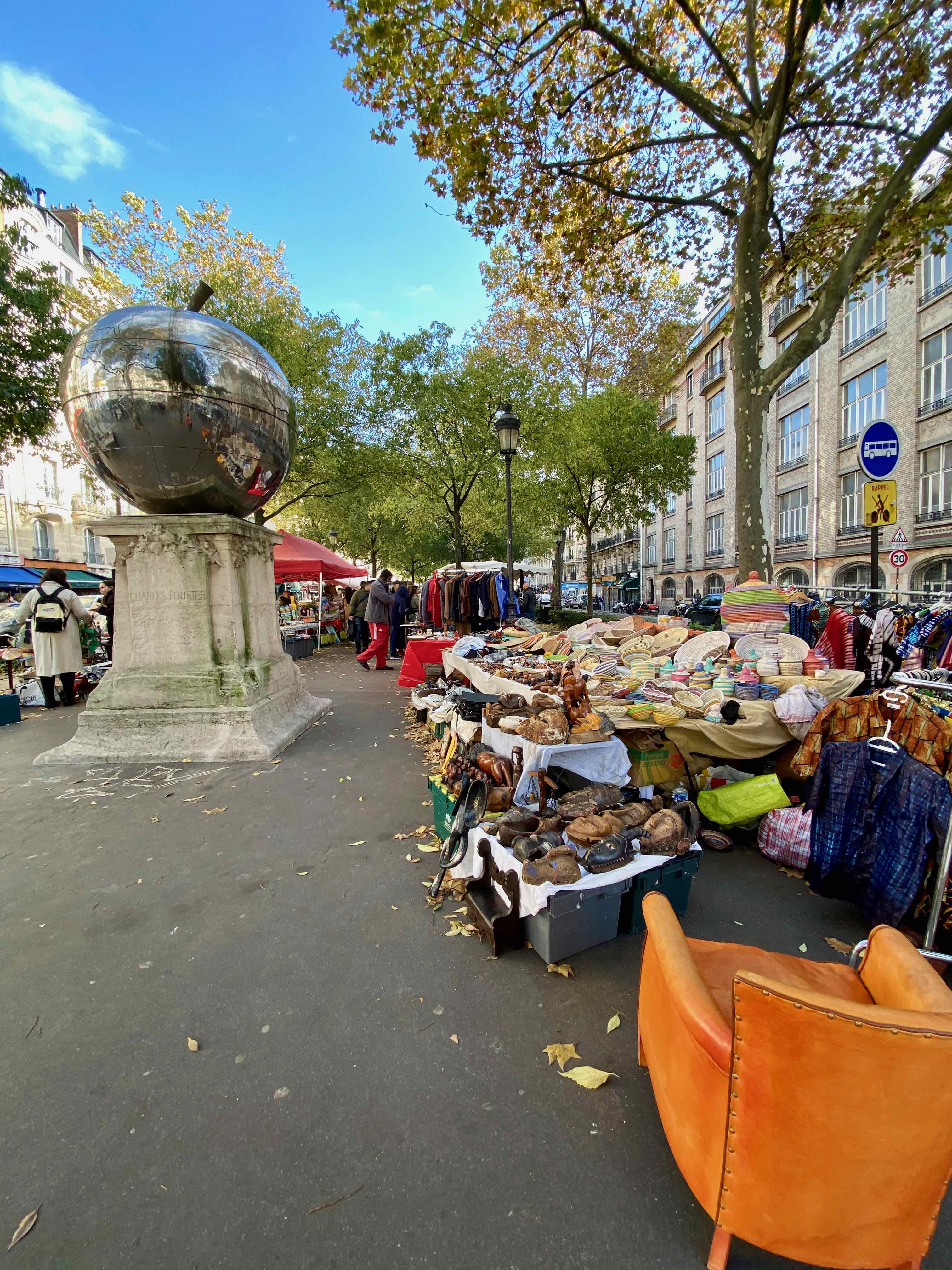
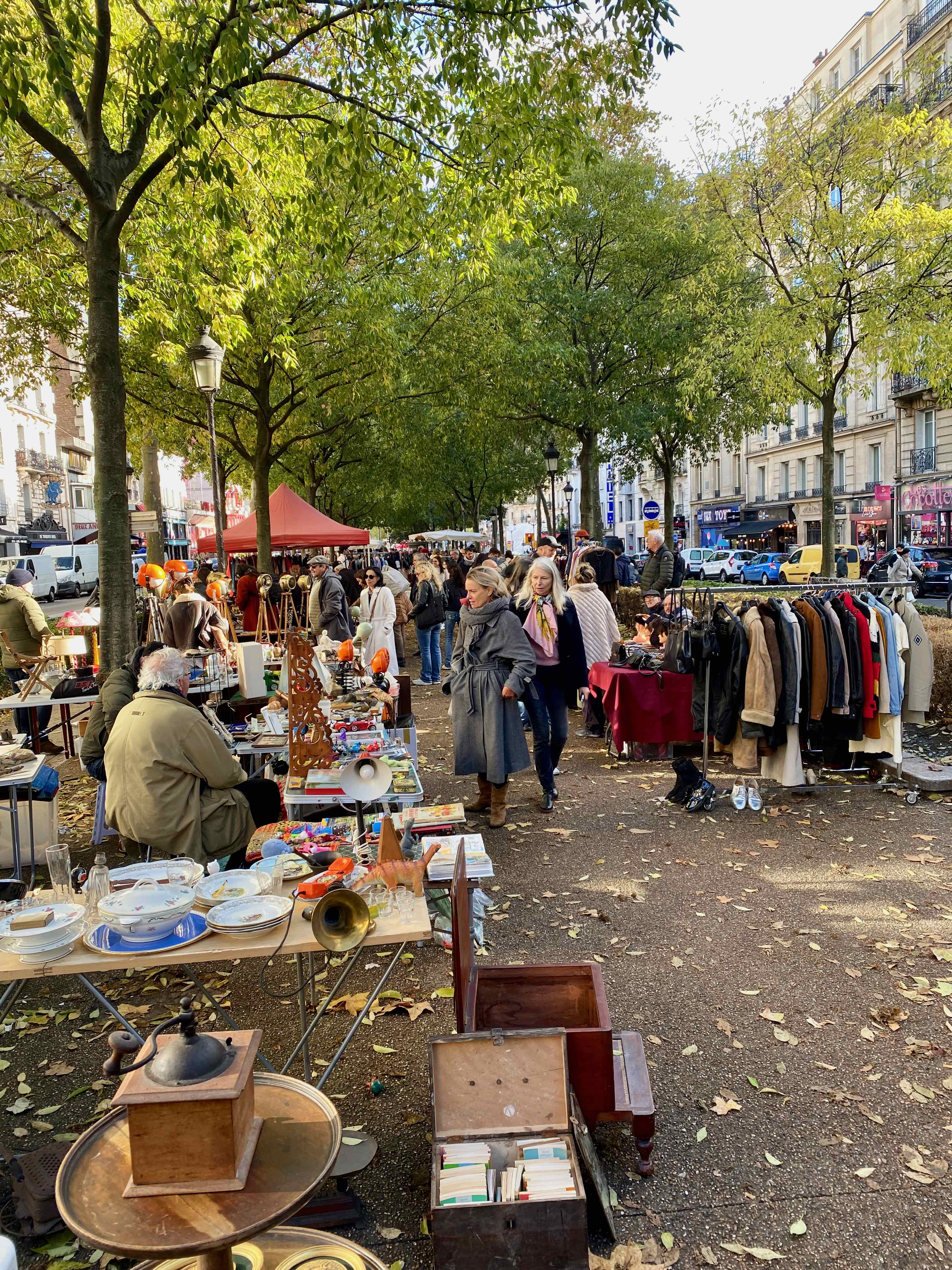
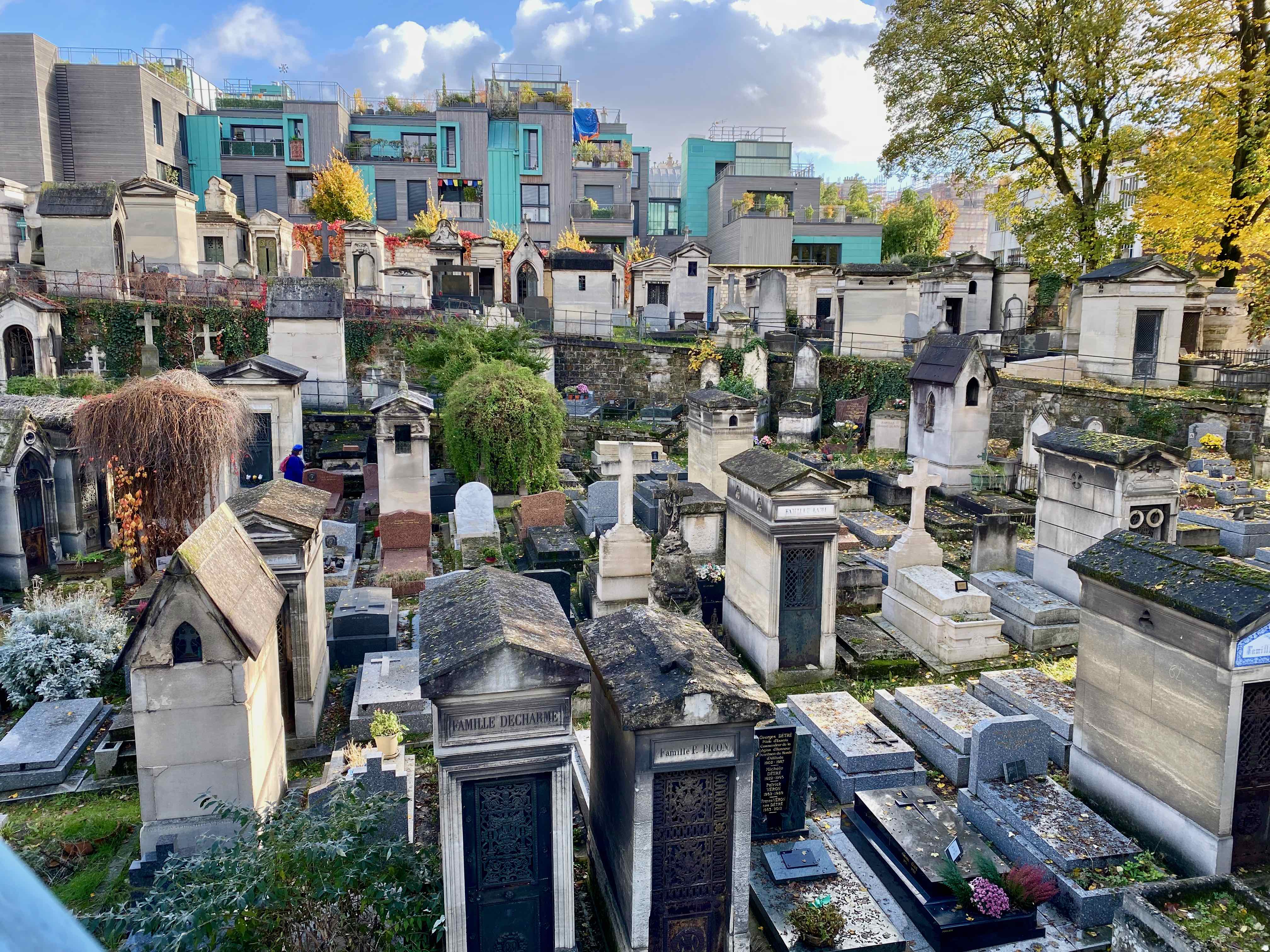
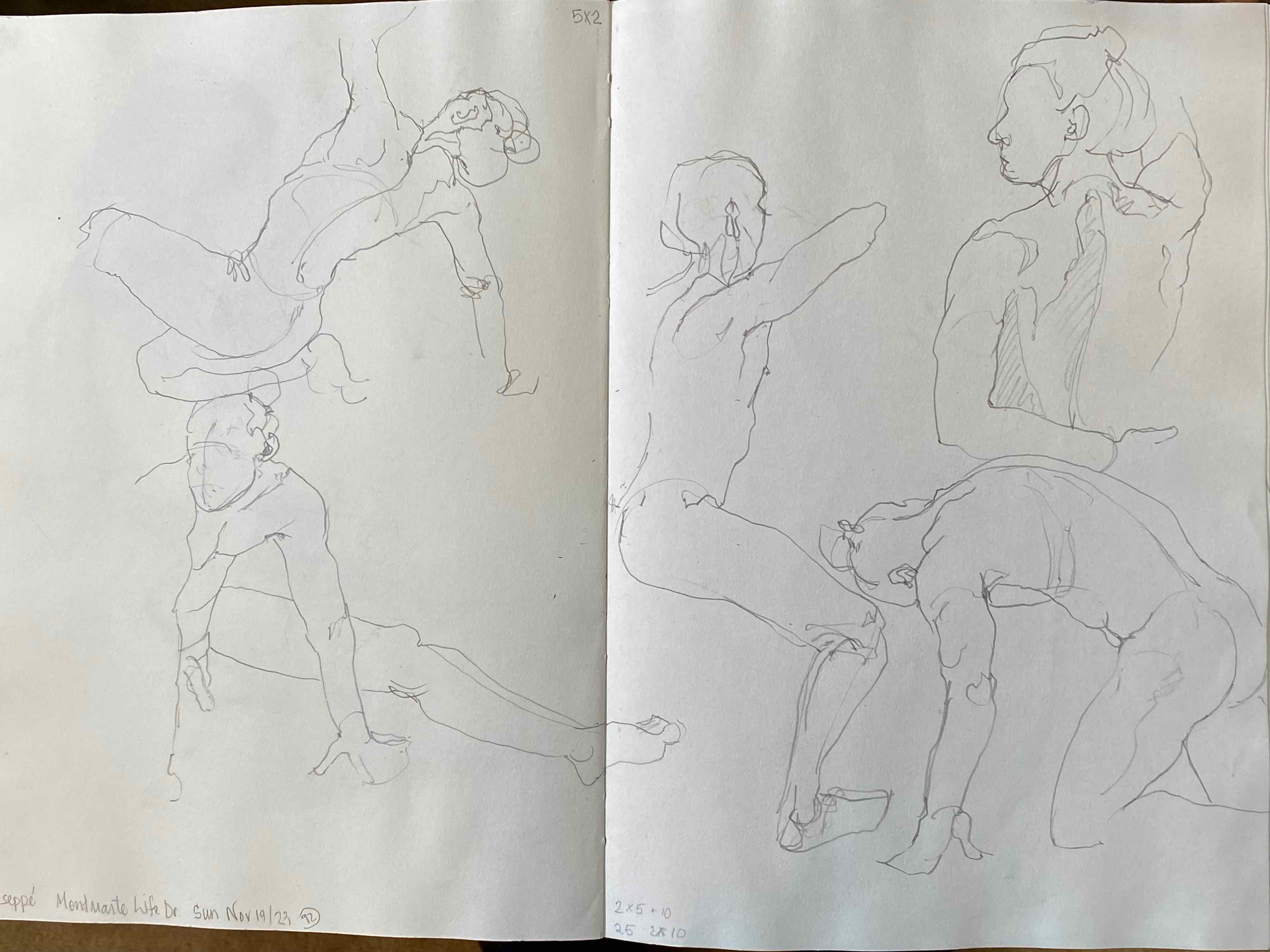
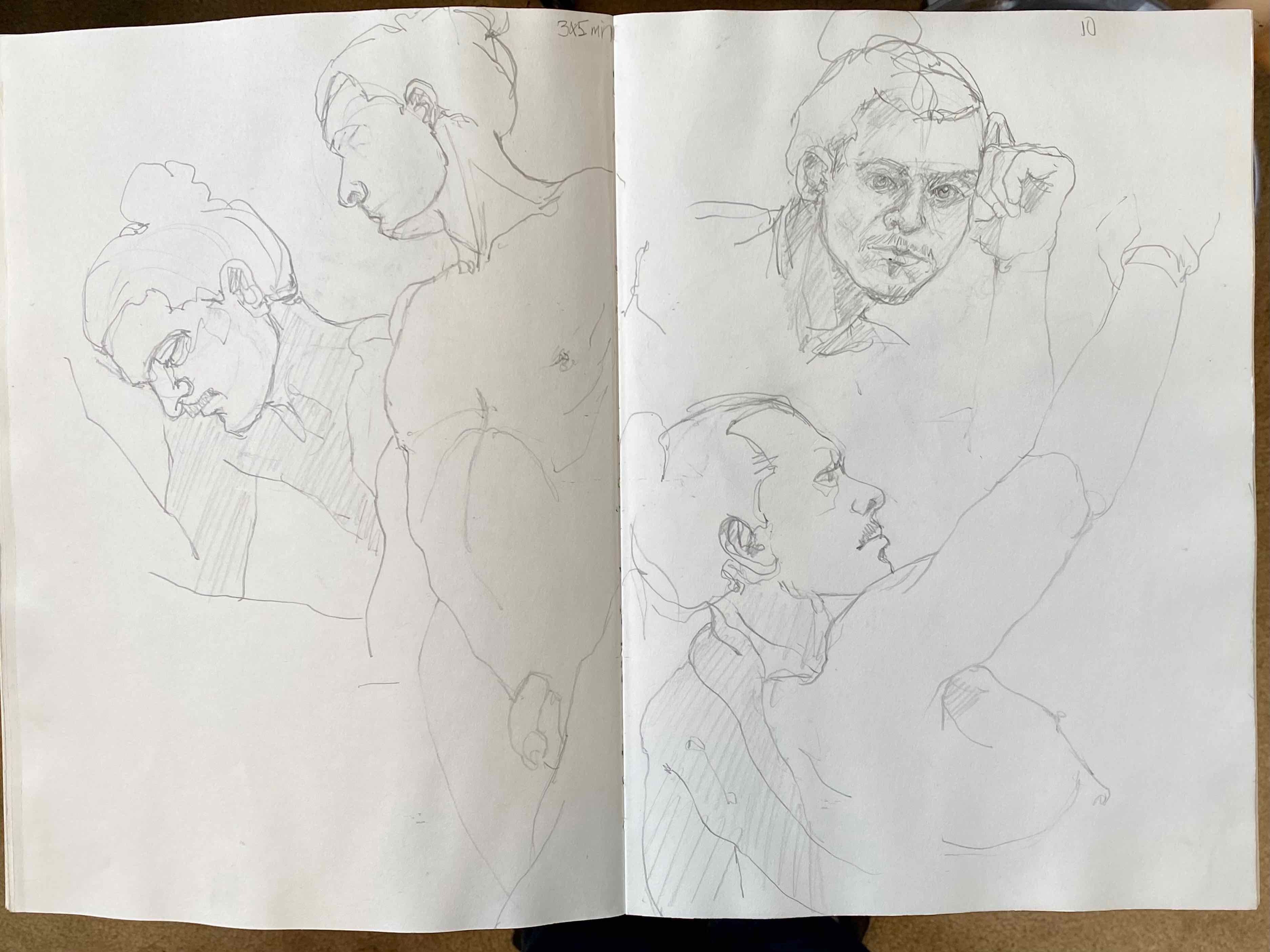 A 25 minute pose…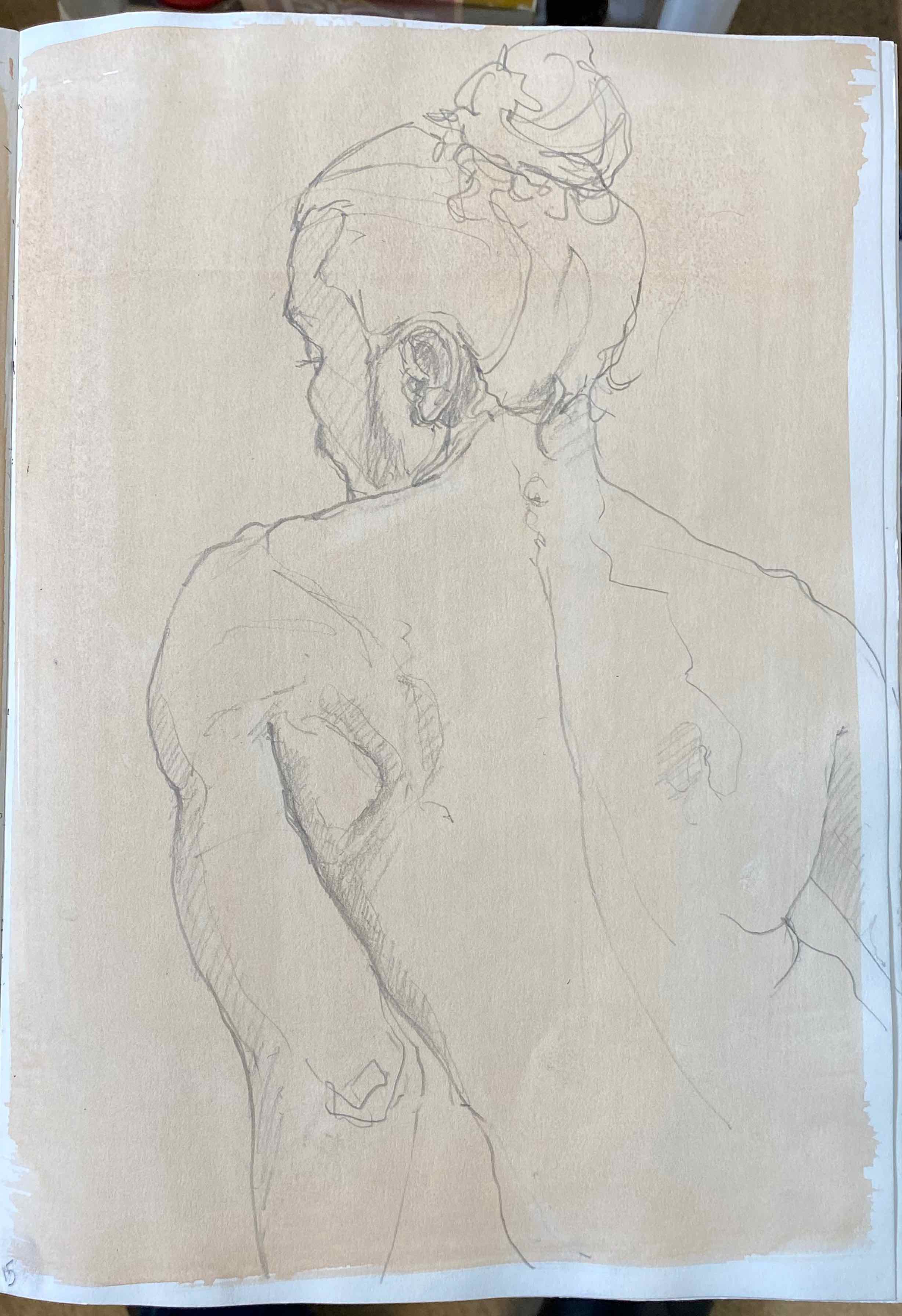
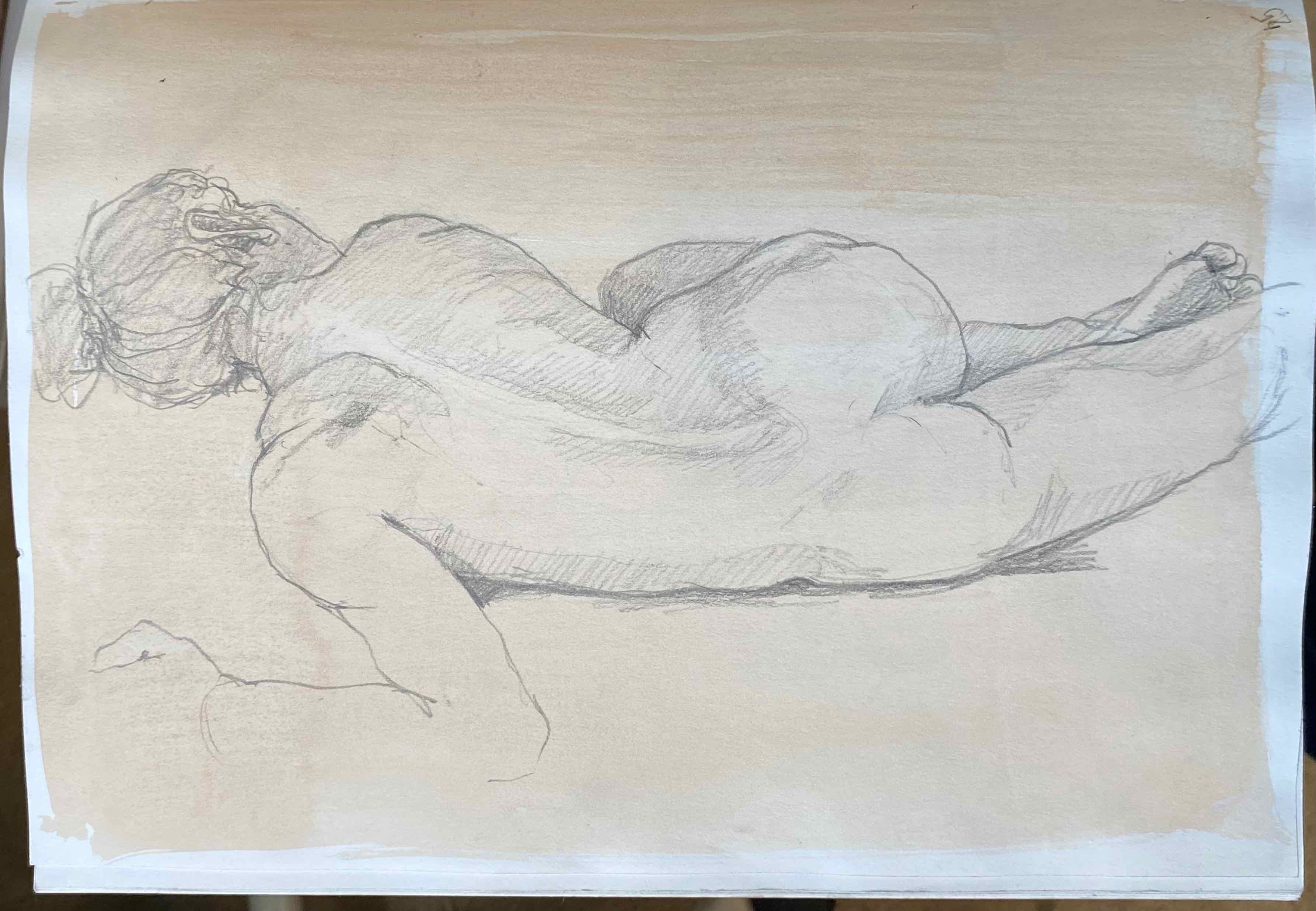
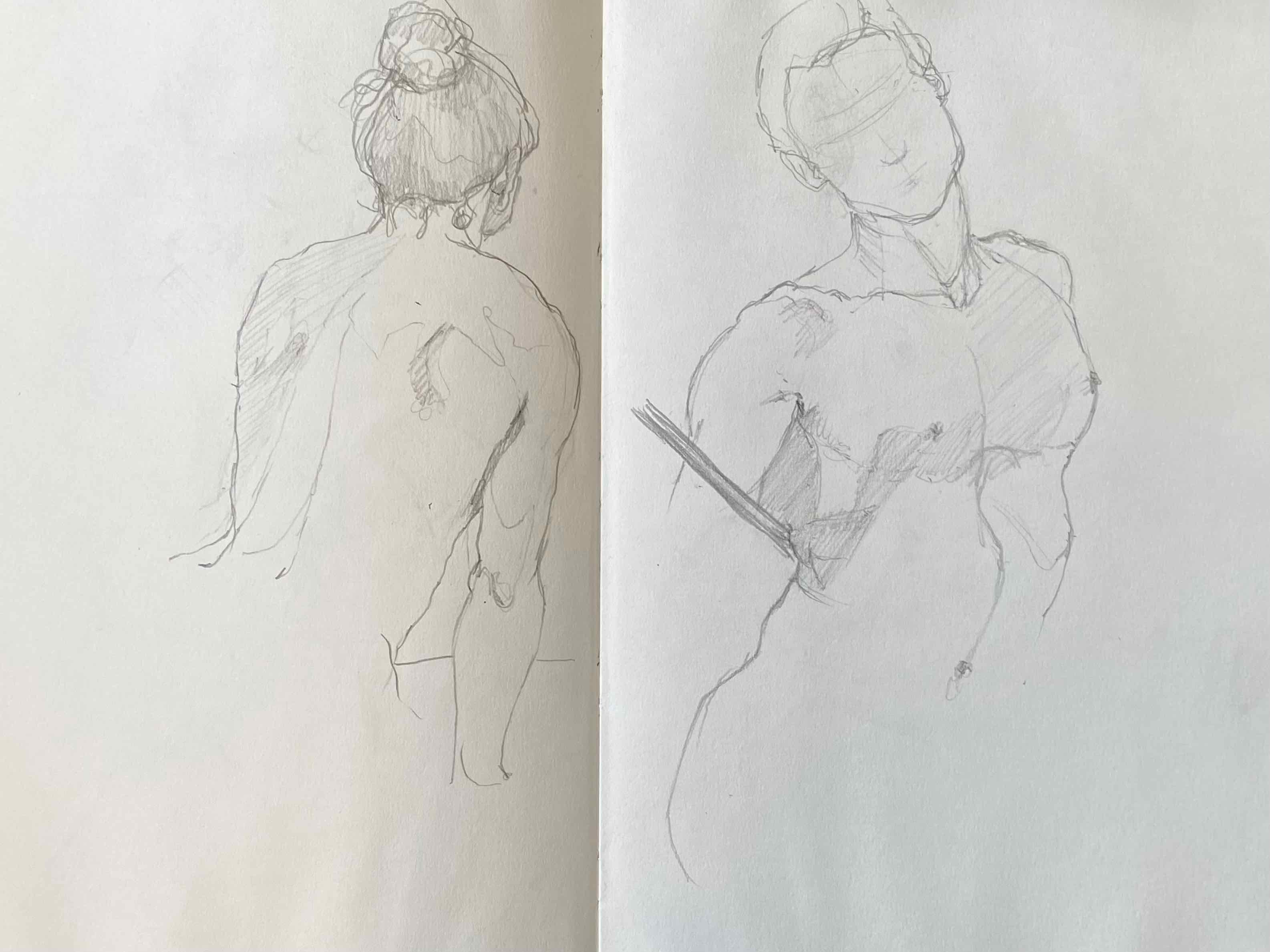
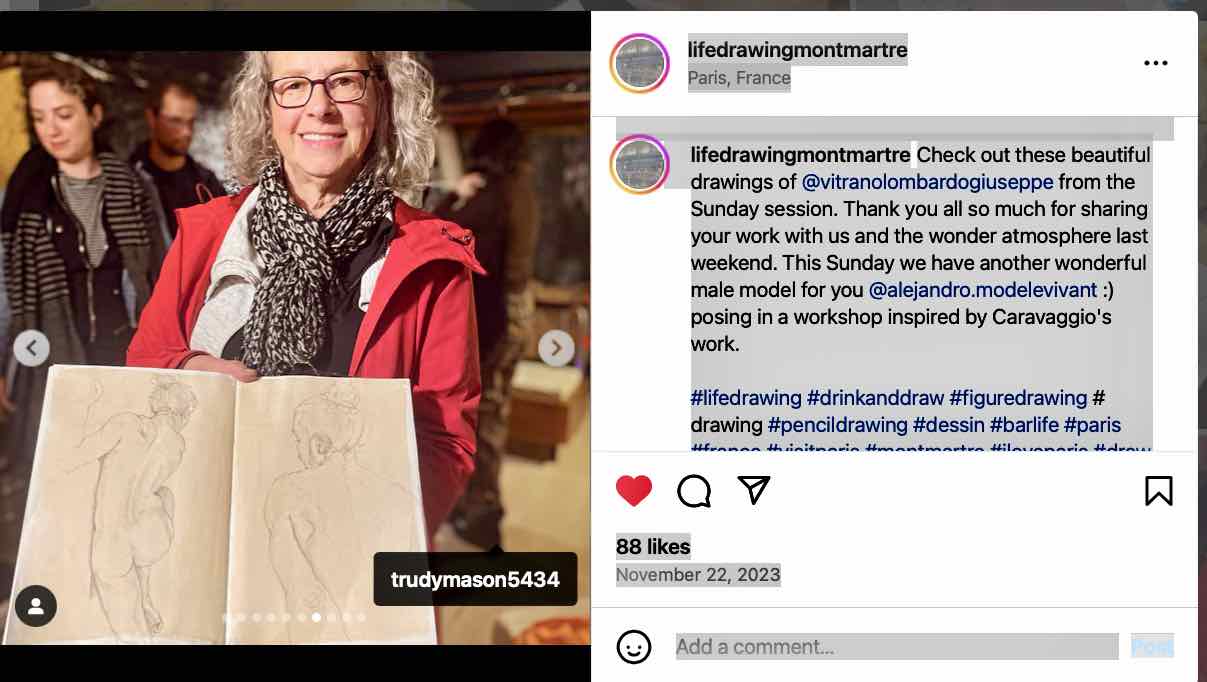
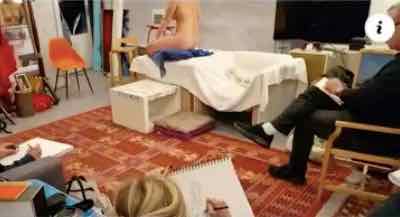
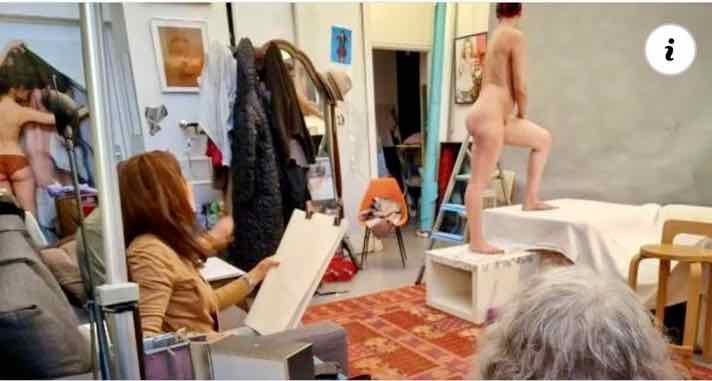
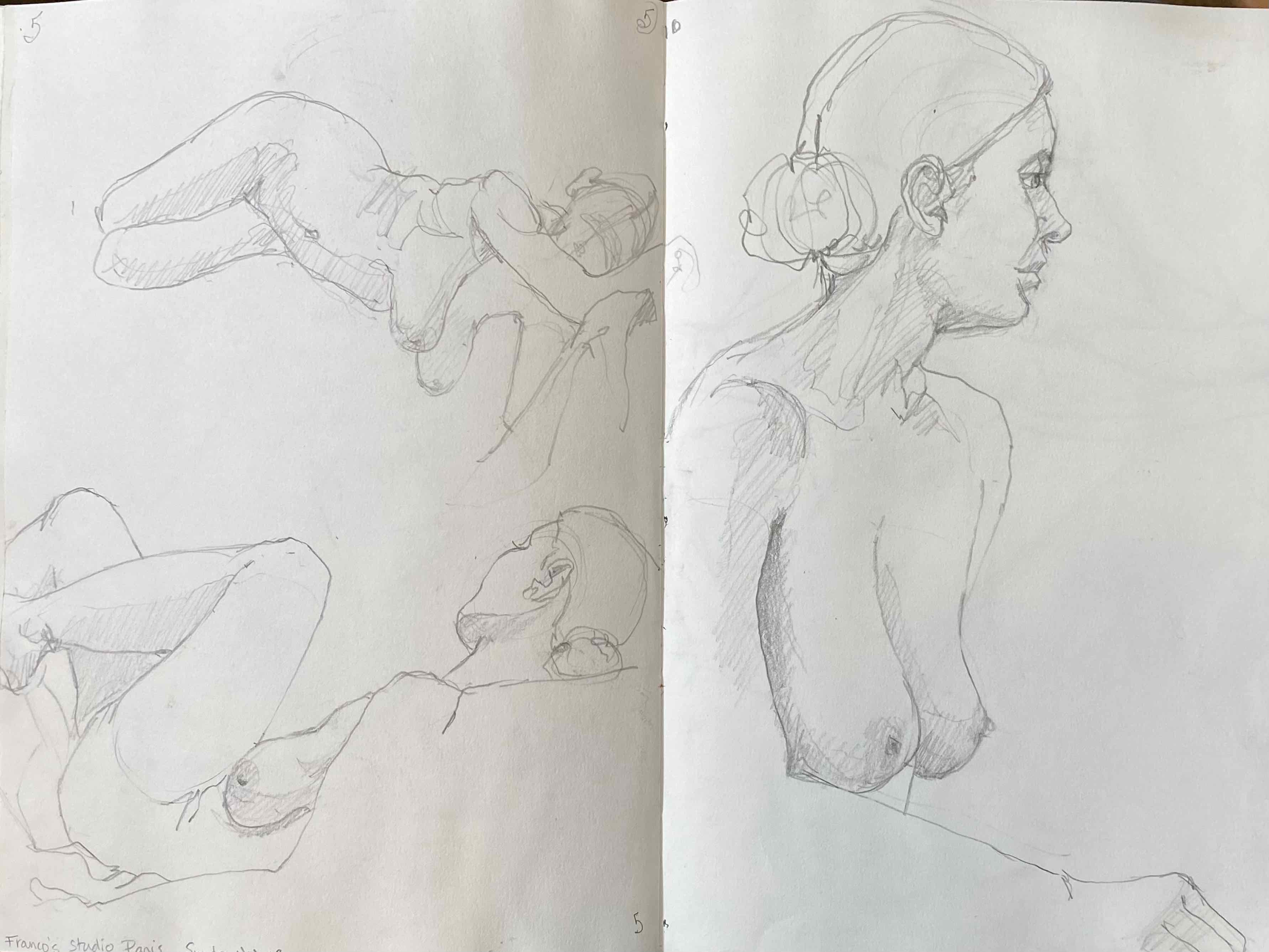
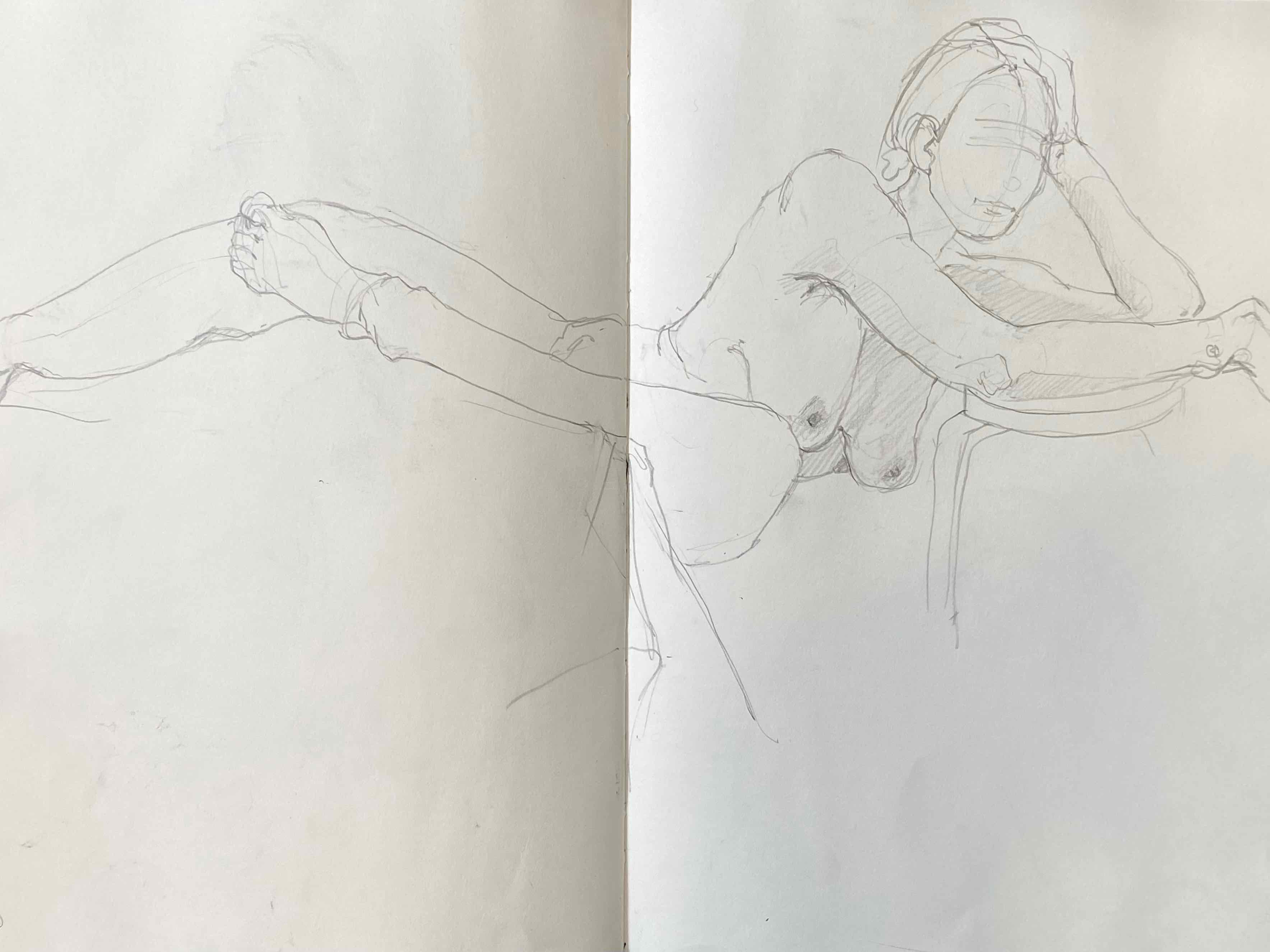
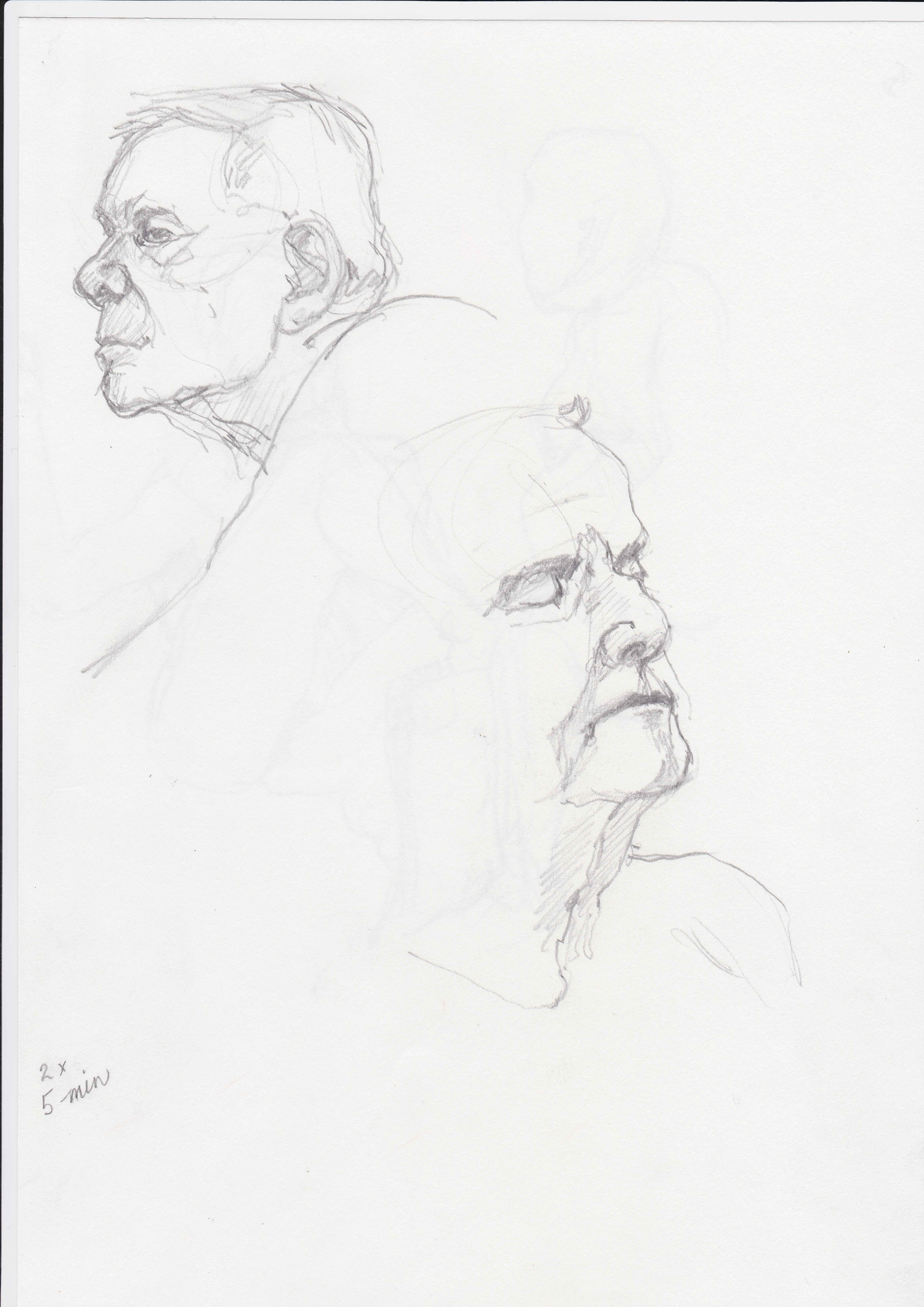 two 3 minute and one 5 minute pose. Then we drew both models together in a 10 minute pose,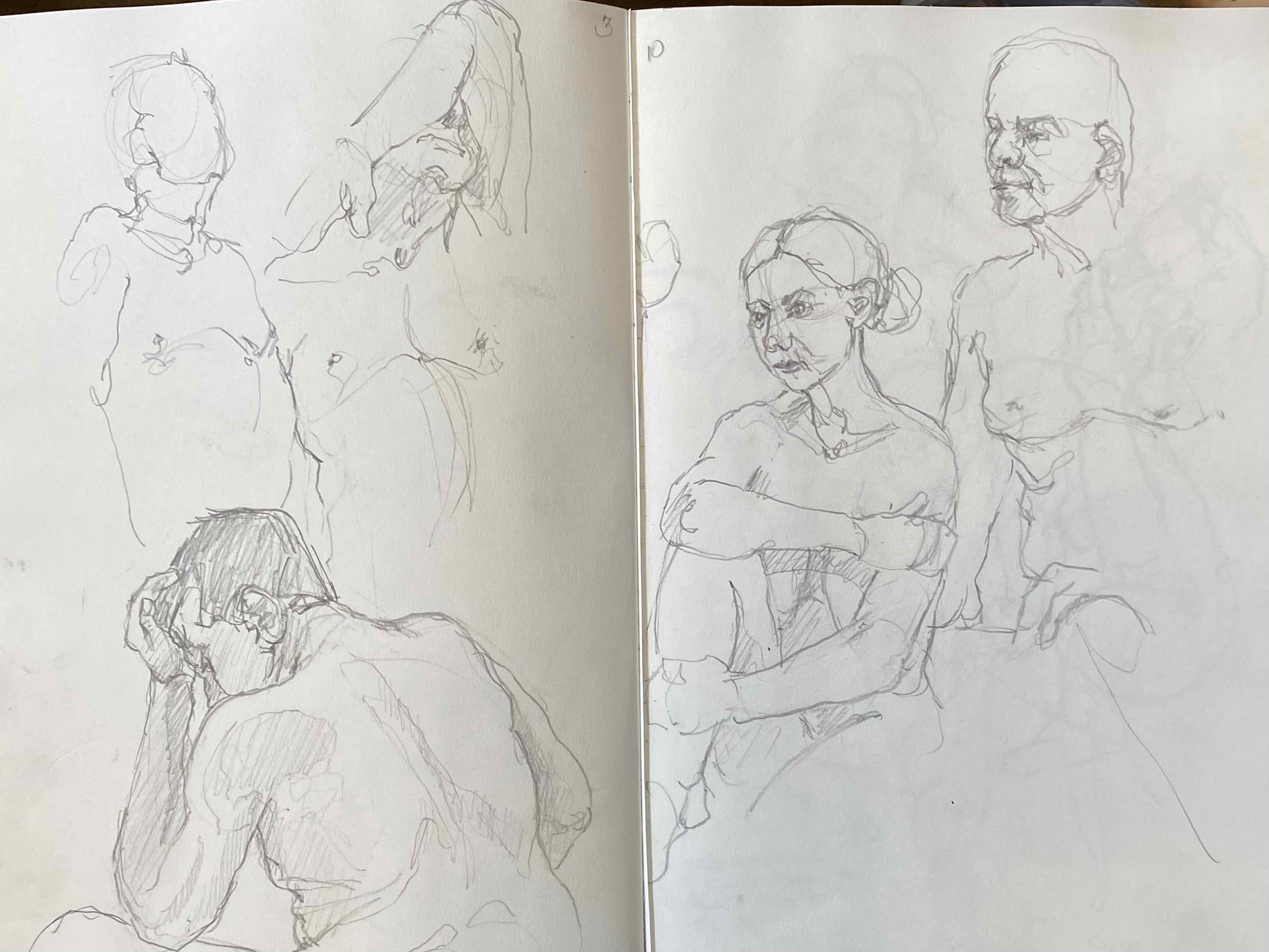
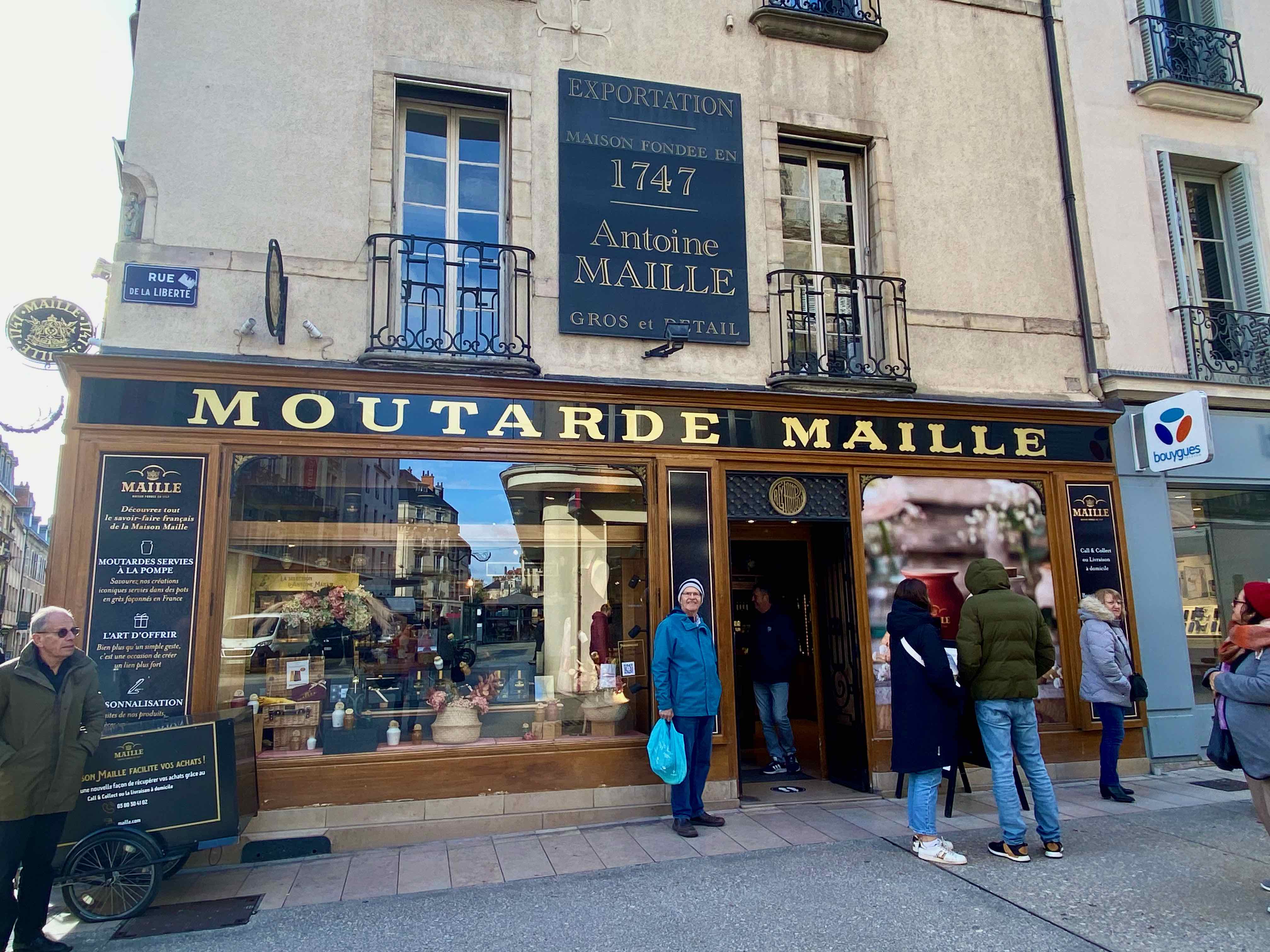 This fabulous Art Nouveau building was built in 1907. It reminds me of some of the buildings we saw in Barcelona.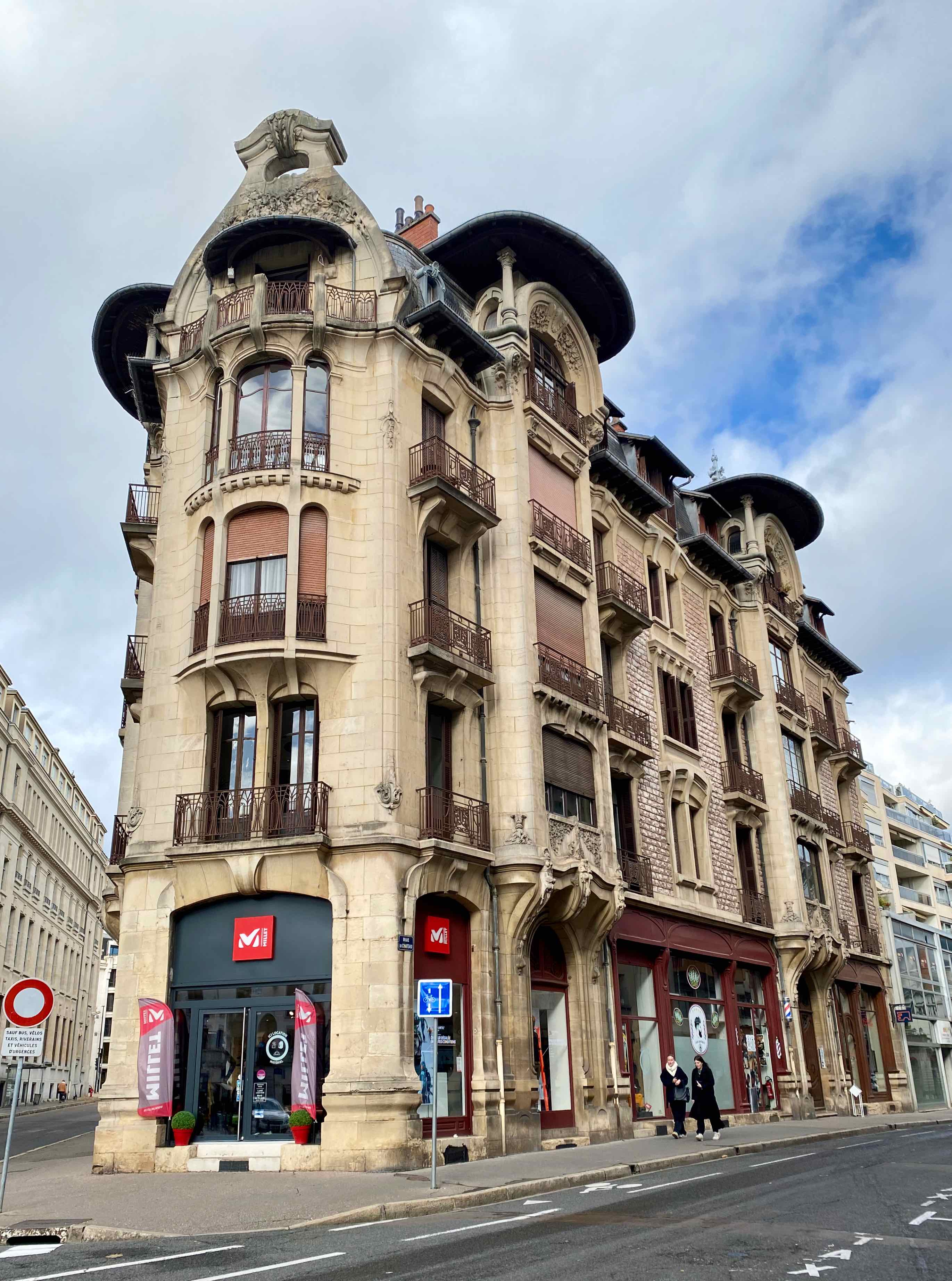

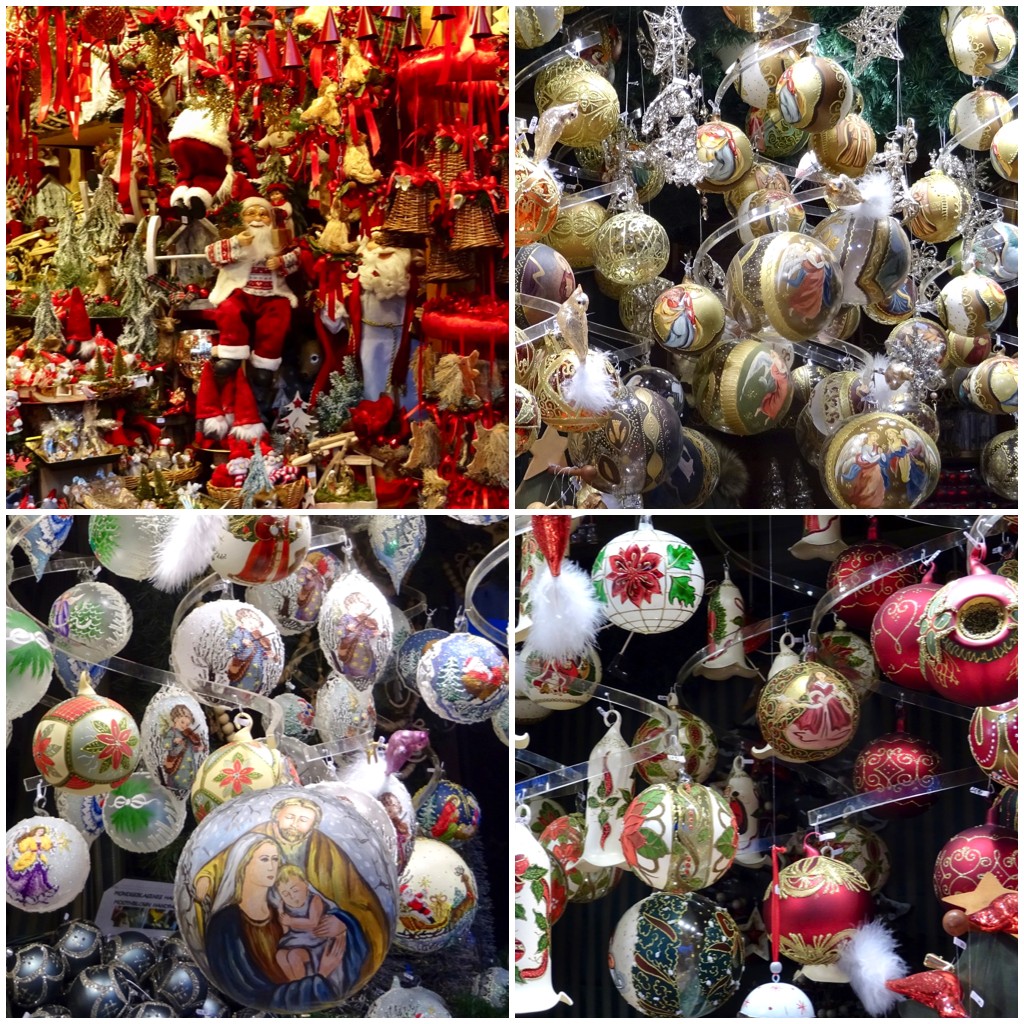 We were pleasantly surprised though to find that food here was reasonable. I bought a cone of yummy hot roasted potato slices for just 3 euros. There were lots of other affordable food options as well as hot chocolate and hot alcoholic drinks and mulled wines for 3 to 5 euros. There are so many people here that sometimes it is difficult to get to the front of a booth to see what is for sale.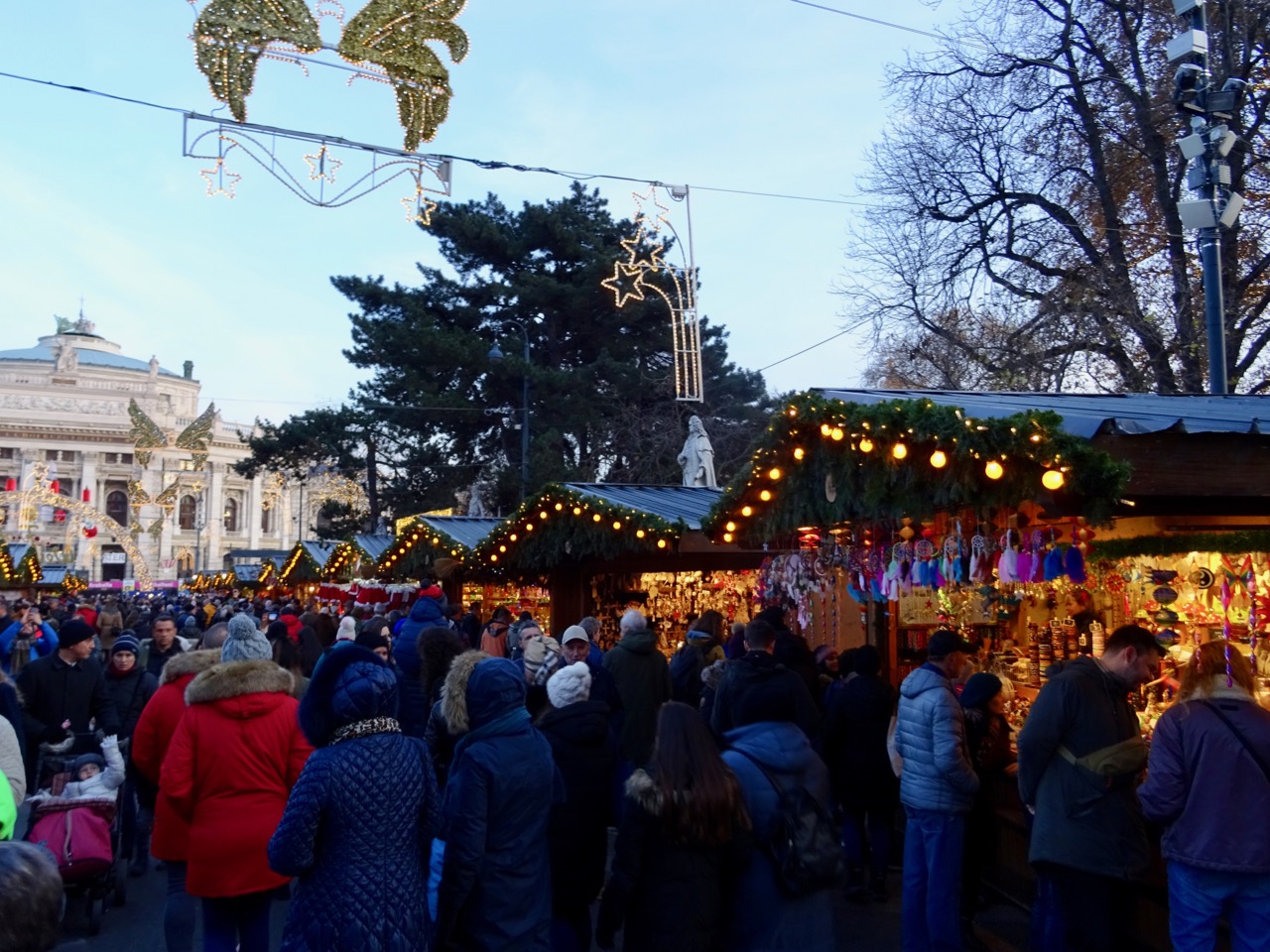
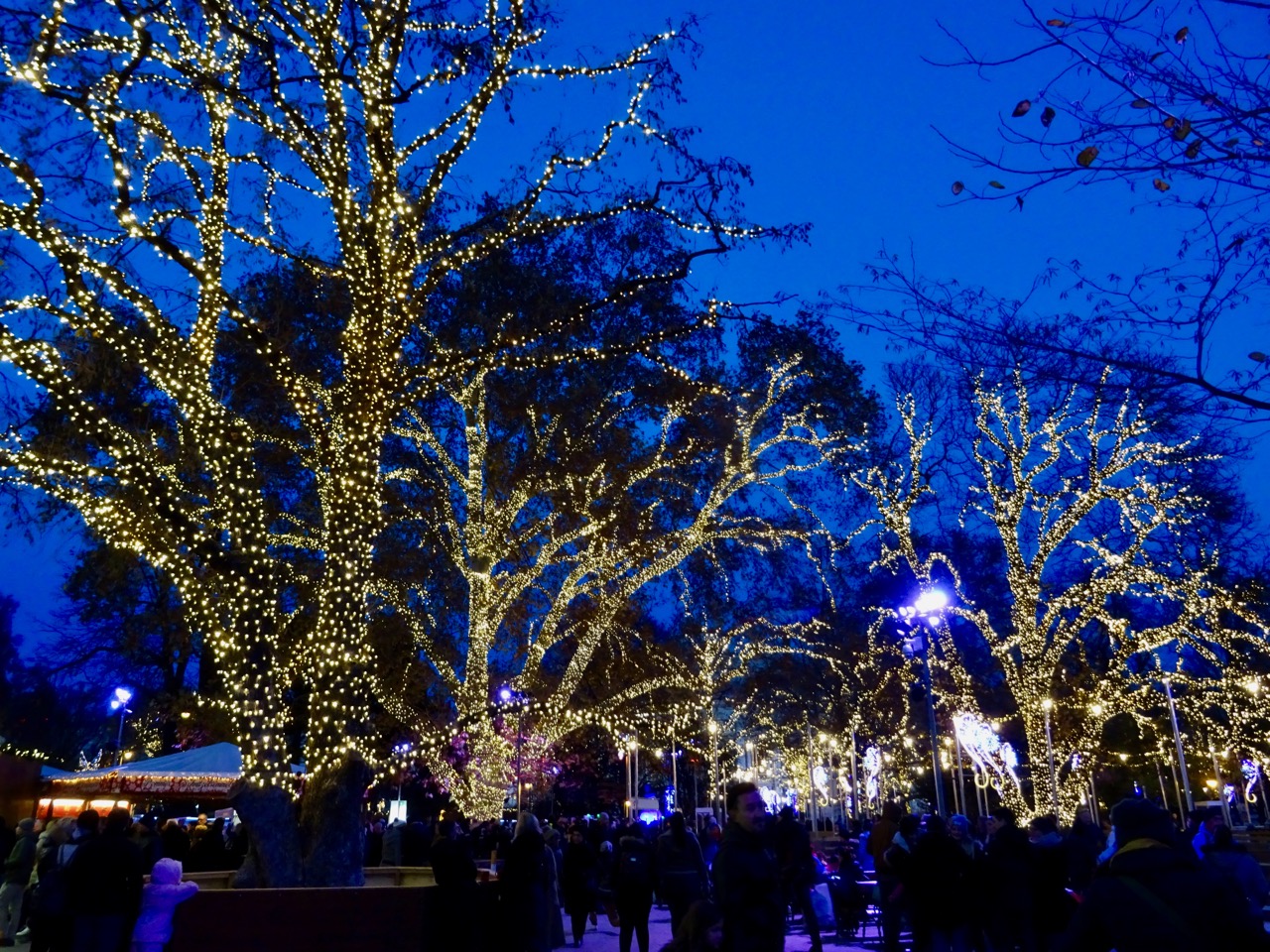
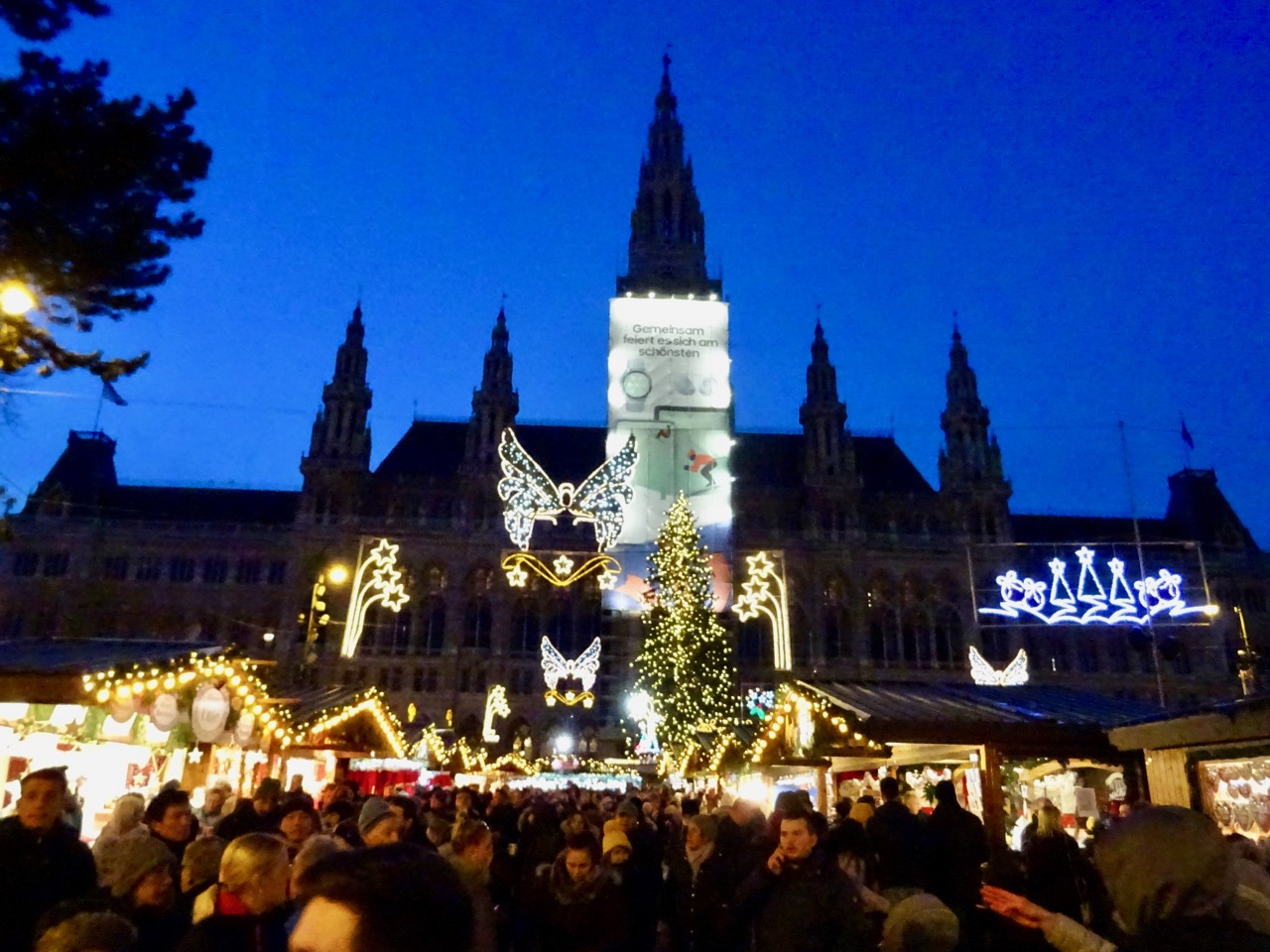 Near the booths is an area with beautifully decorated trees and ….
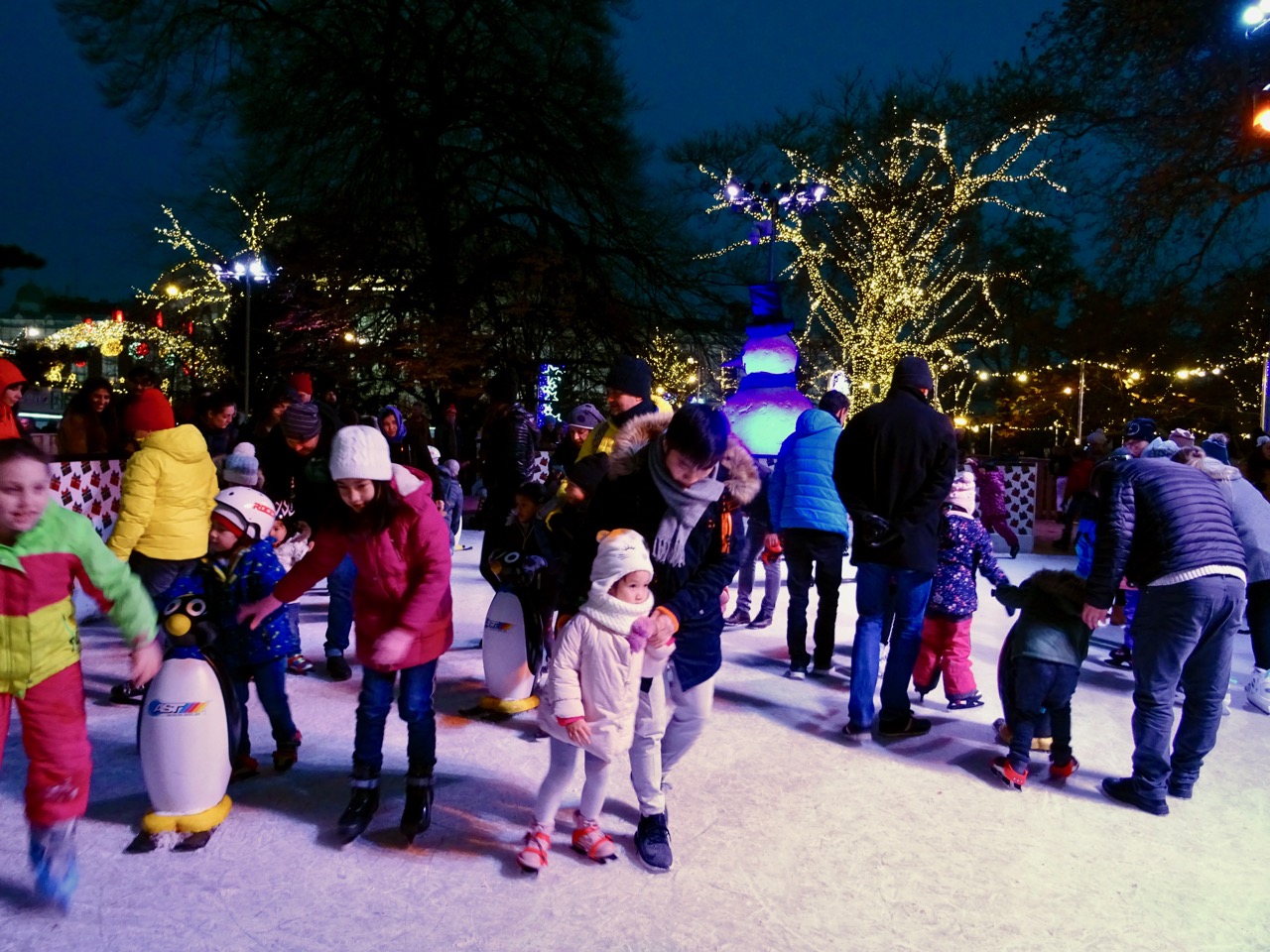
 a skating rink! There is a 3,000 m² artificial ice rink with skating paths throughout the park. We watch the kids learning to skate, everyone is having a good time.
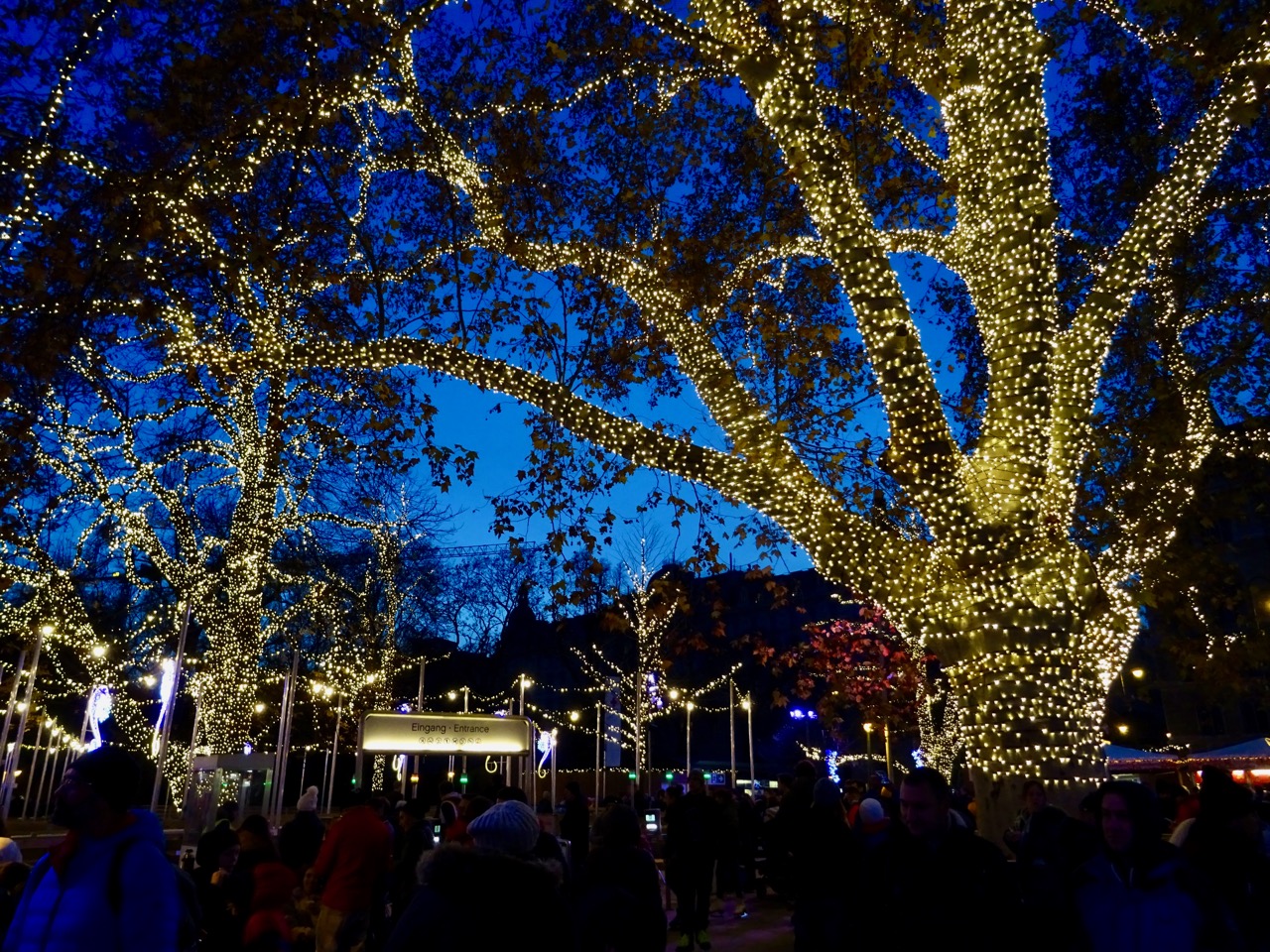
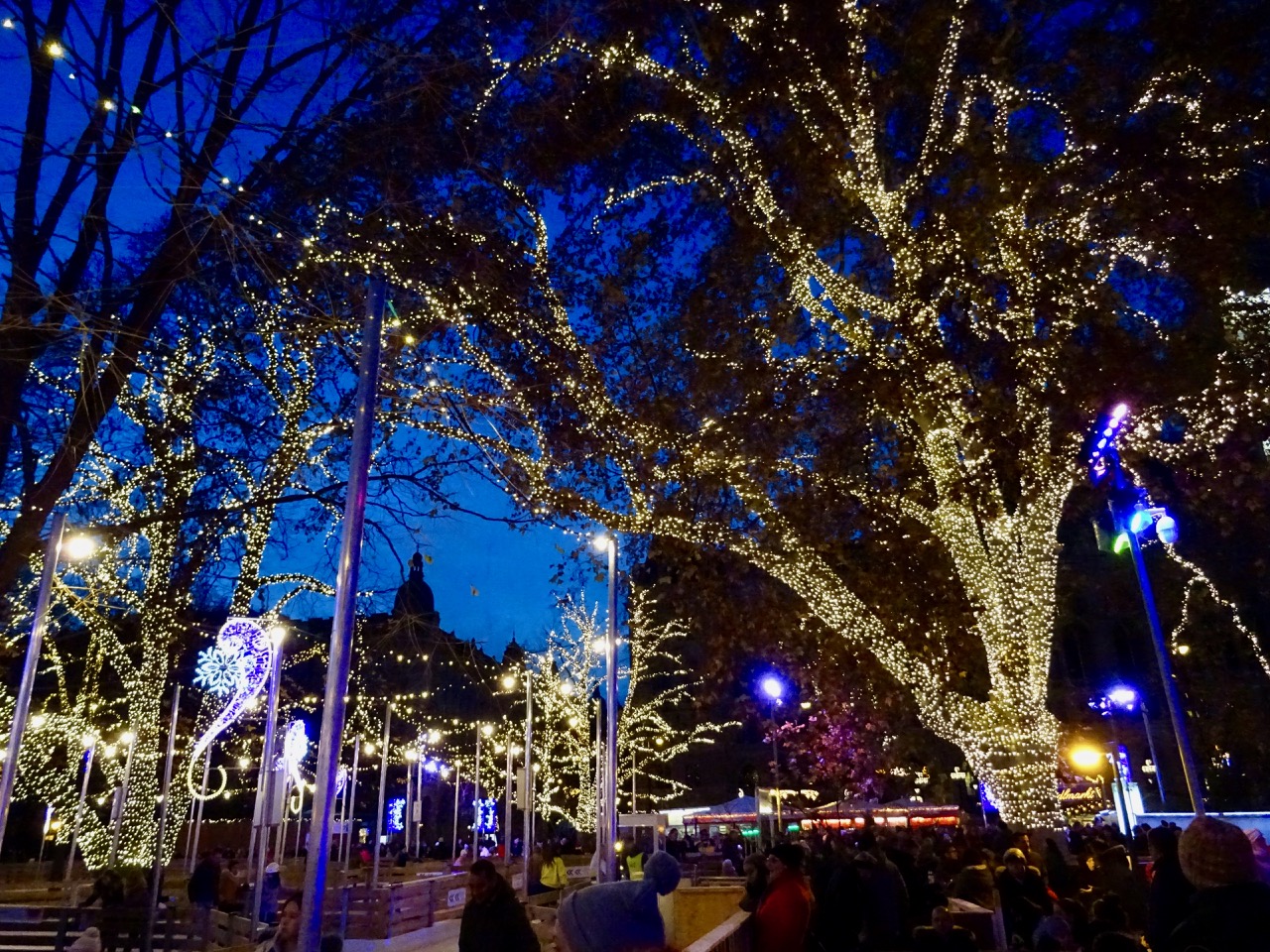
 This all takes place under a canopy of the most beautiful trees, all lit up with thousands and thousands of white lights.
 Just take look at the size of this tree! It is enormous!
  A special attraction is the tree of hearts, and we see couples taking selfies here.
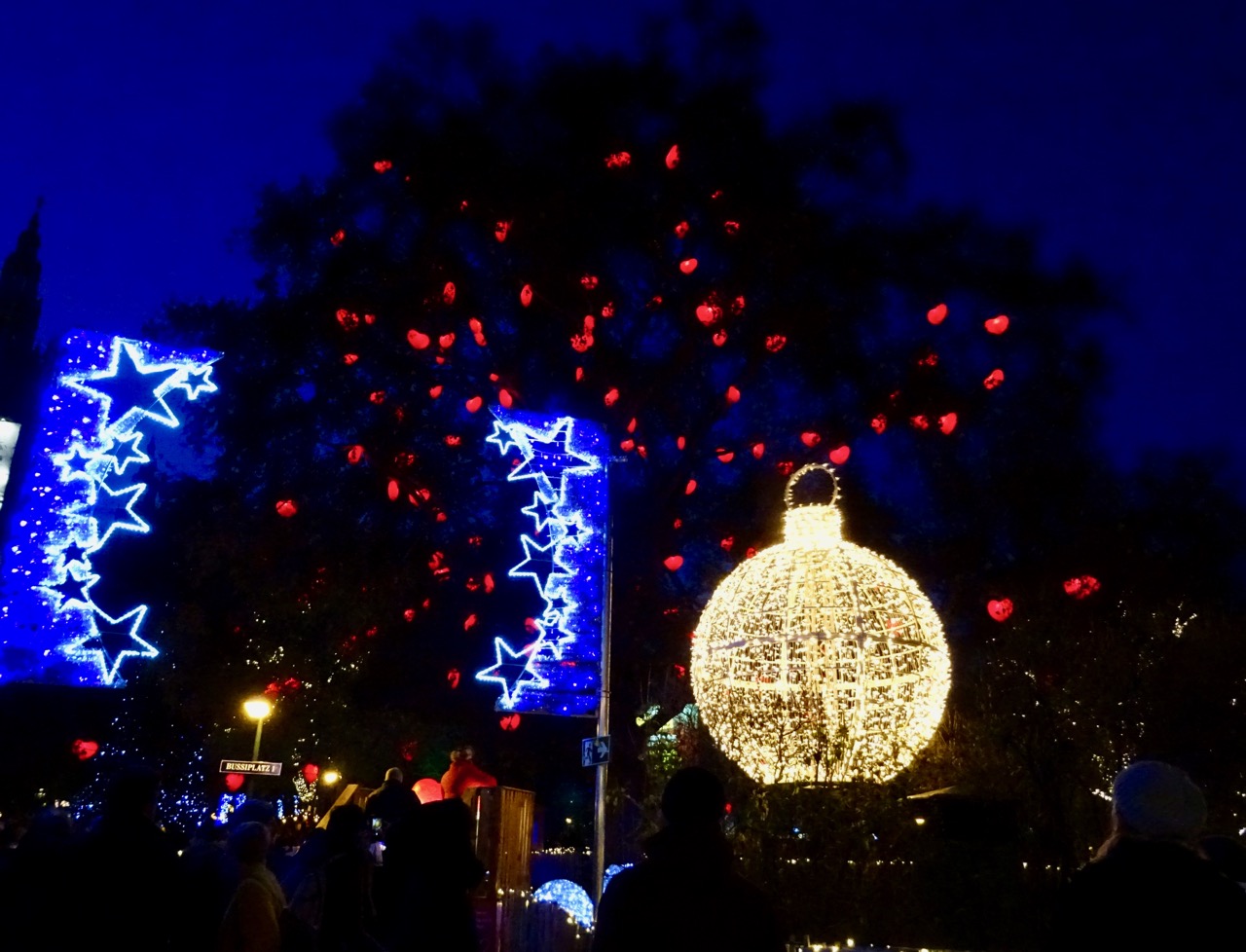 I love all the lights and there is Christmas music playing, children laughing and everyone is enjoying the evening. I am beginning to feel Christmassy!
 As we leave the market, I take one last photo looking back towards the Parliament Building…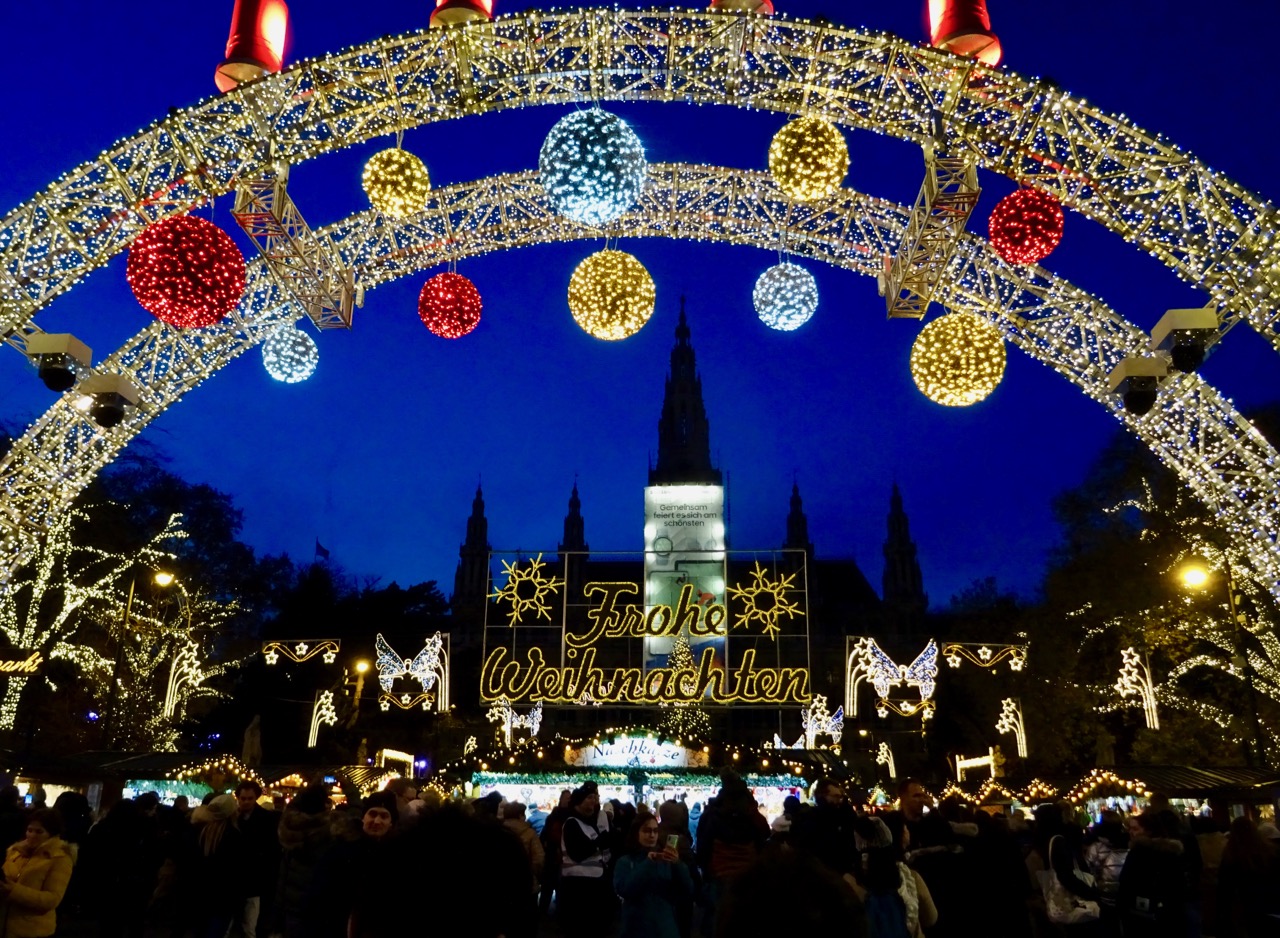
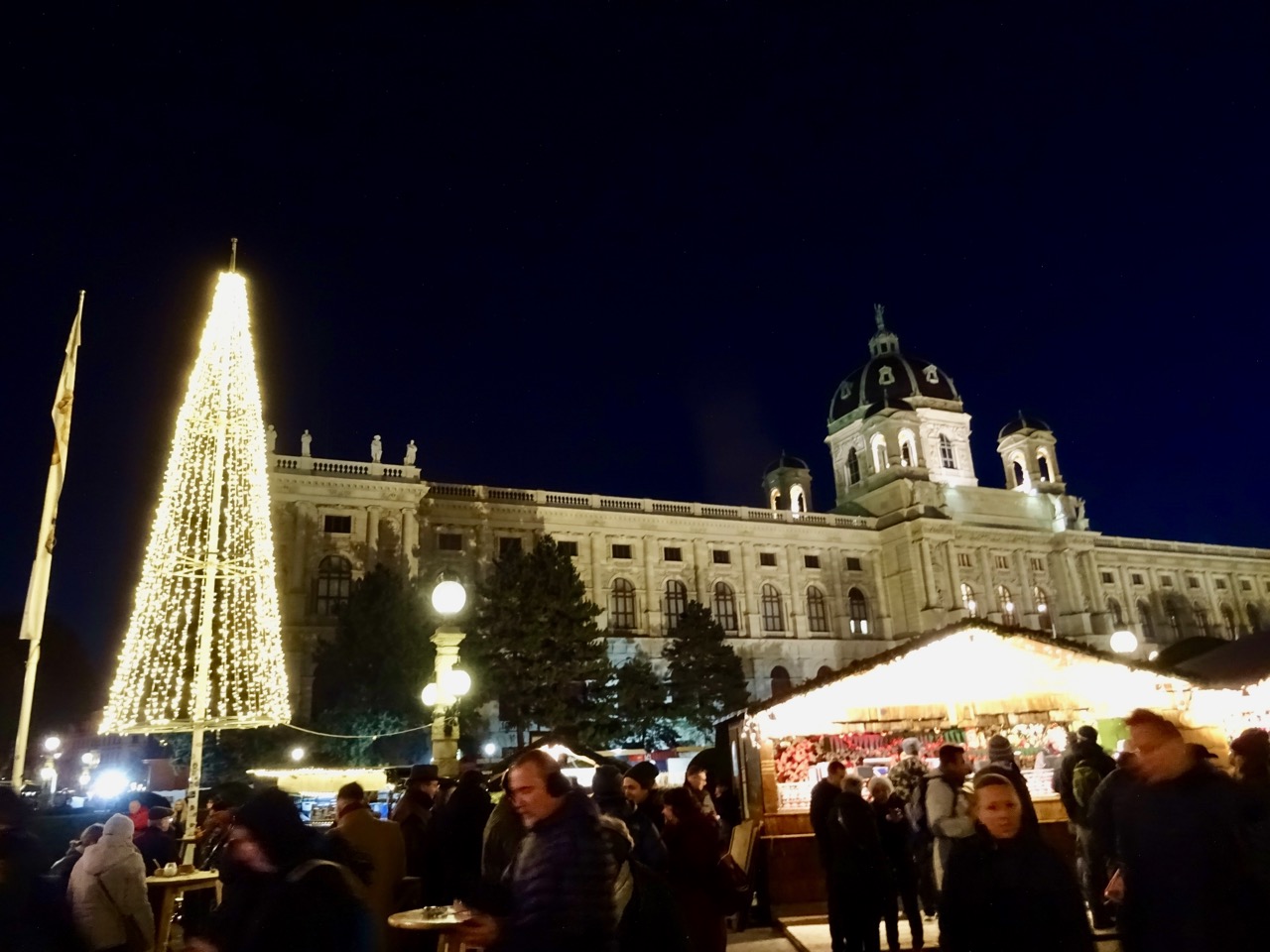
 This is a smaller market, only 70 stalls, and the only decorated trees are the man-made ones.
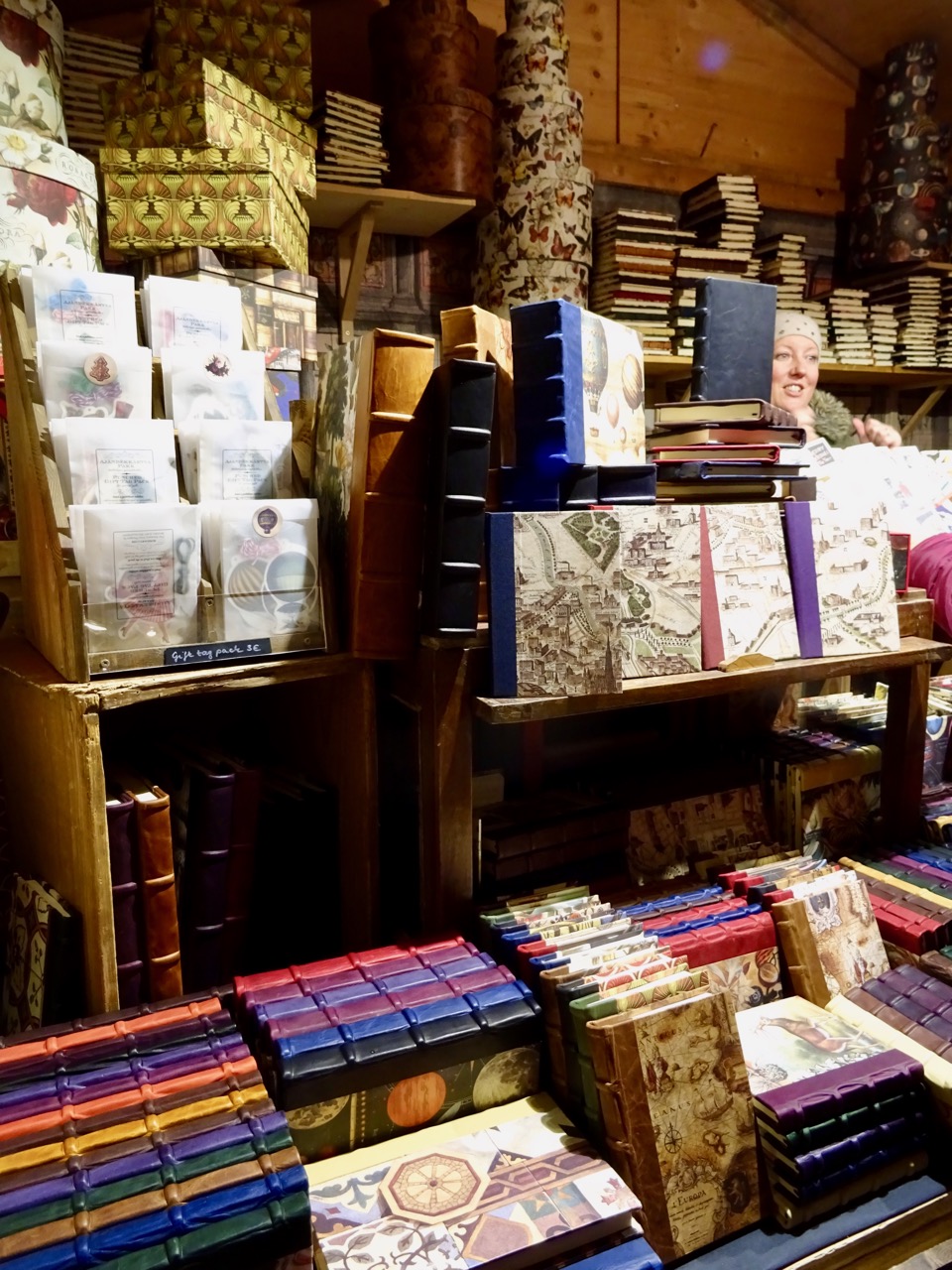
  We see a booth with goods from Bomo Art, the little handmade book store we visited in Budapest.
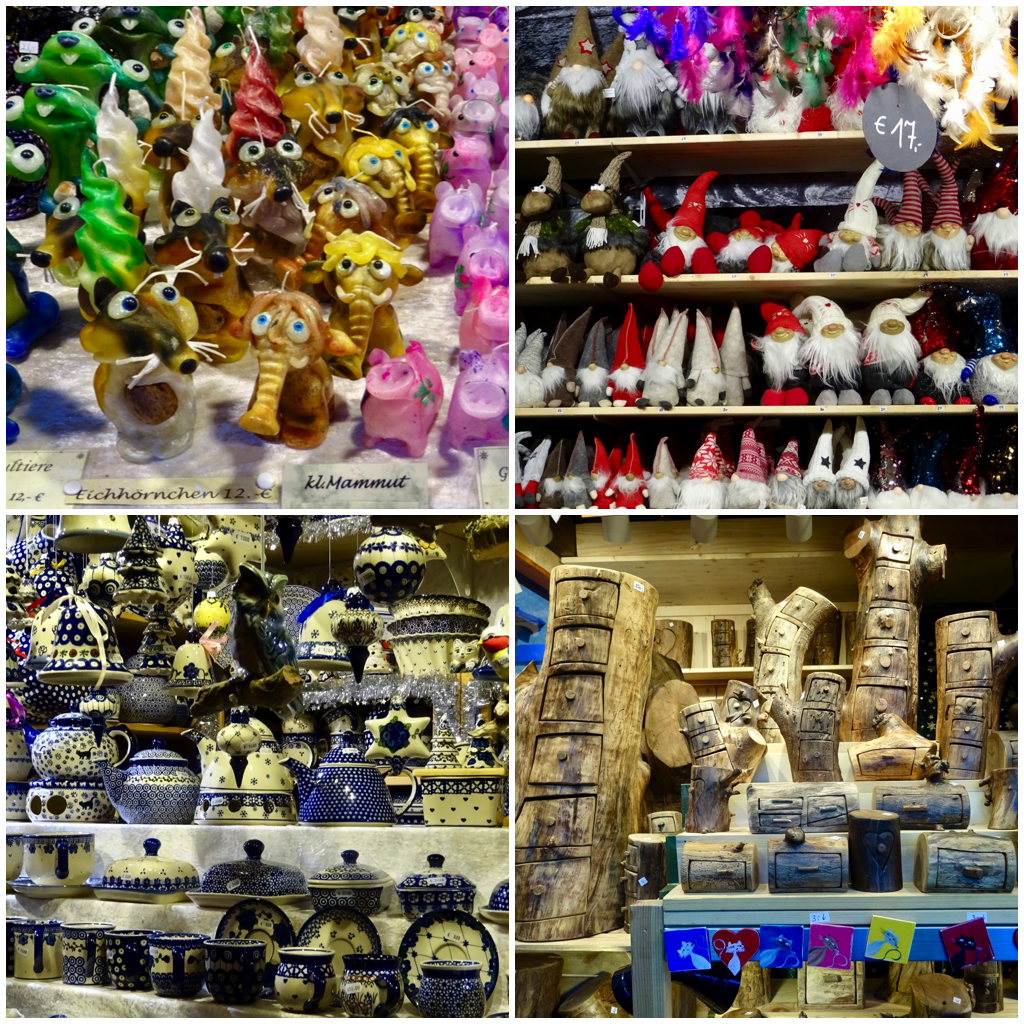
 There are also some pretty crazy animal candles, cute stuffed gnomes, blue and white pottery and wooden boxes and cabinet with drawers. The tall one with six drawers is ‘only’ 350 euros! That is about $500.00 Canadian. Still nothing I really love to take home with us though.
 These little pink snowmen were kind of cute…
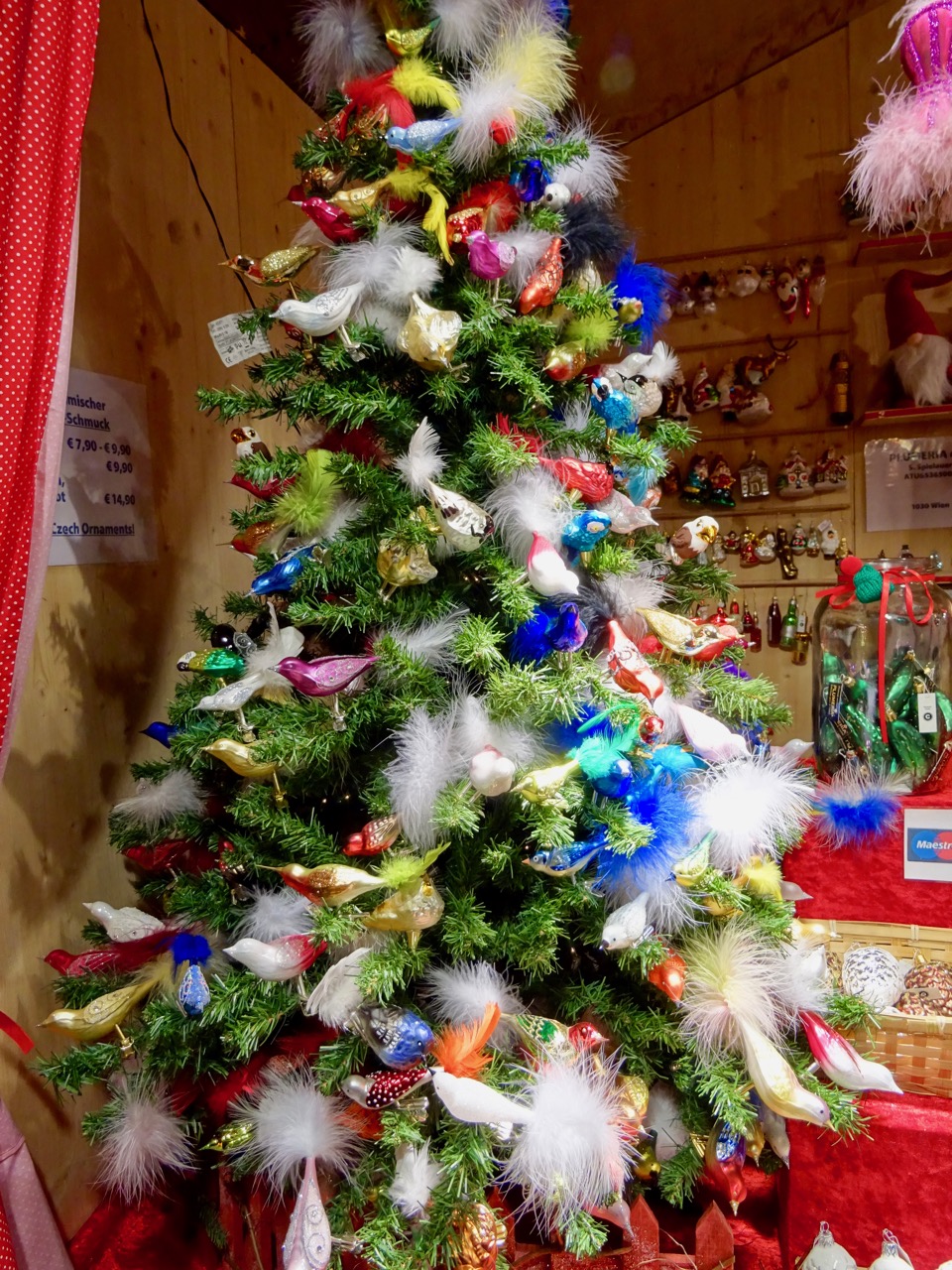
 and a tree decorated with bird ornaments is different. Only at 10 to 15 euros a bird this would be a very expensive little tree! There are at least 150 birds on this tree, so it would cost between 1,500 and 2,250 euros, which is $2000.00 to $3,200.00 Canadian! No bird trees for me!
 The booths are centred around this big fountain…
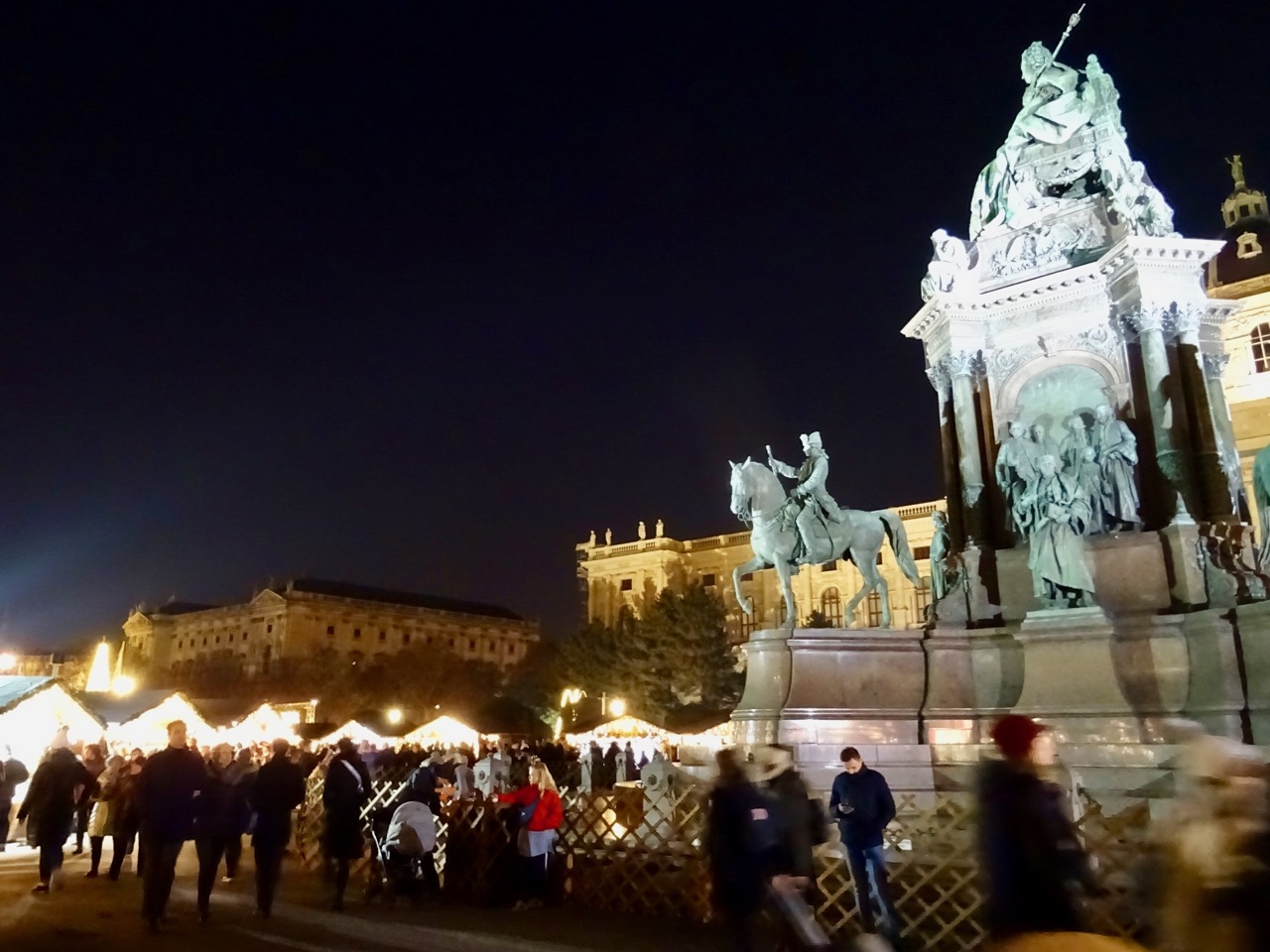 and there are lights projected on a nearby building, adding to the festive feeling.
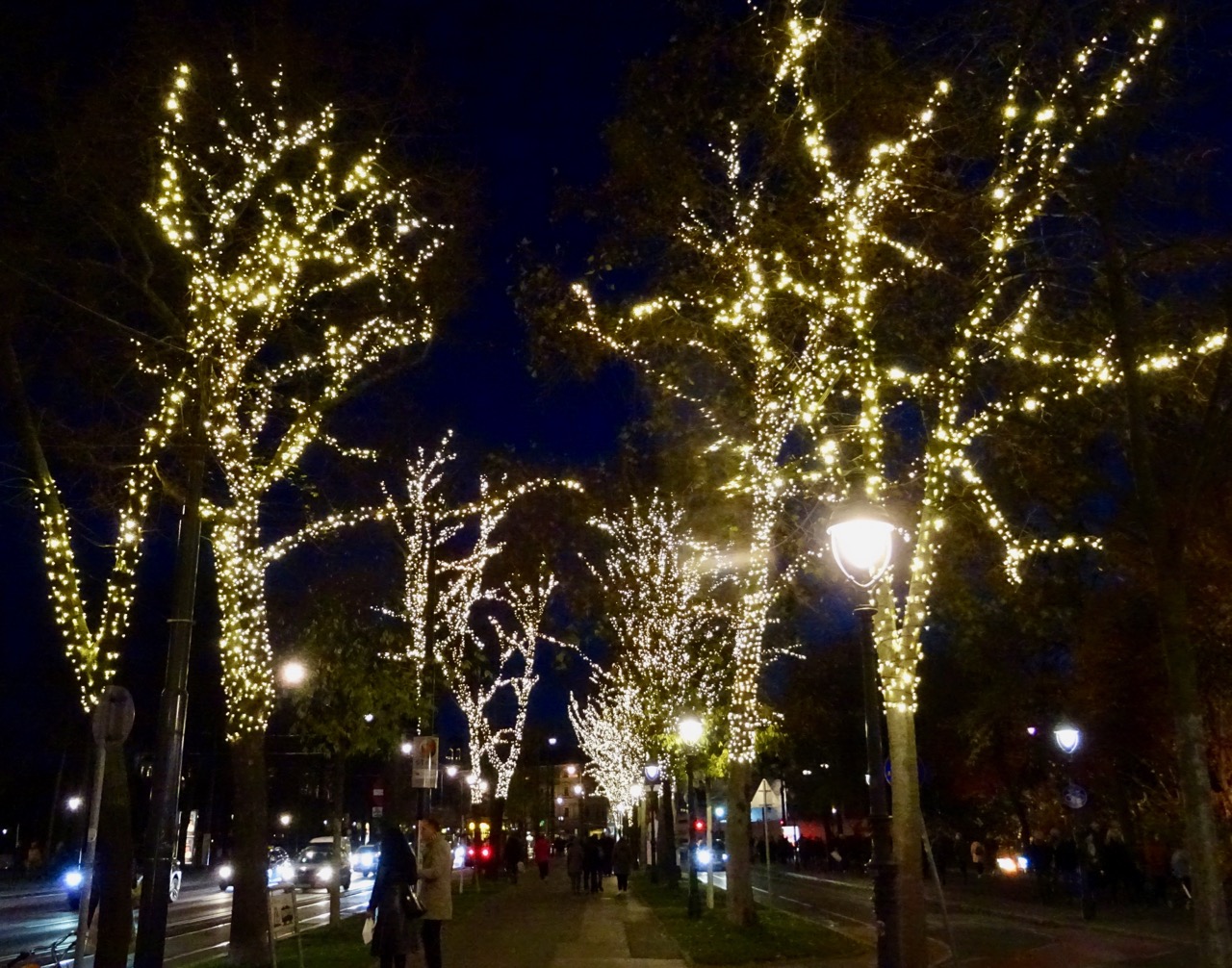
 It isn’t very warm, the high today was only 9° and it is colder now that the sun has gone down. We want to walk and see some of the streets lit up for Christmas …
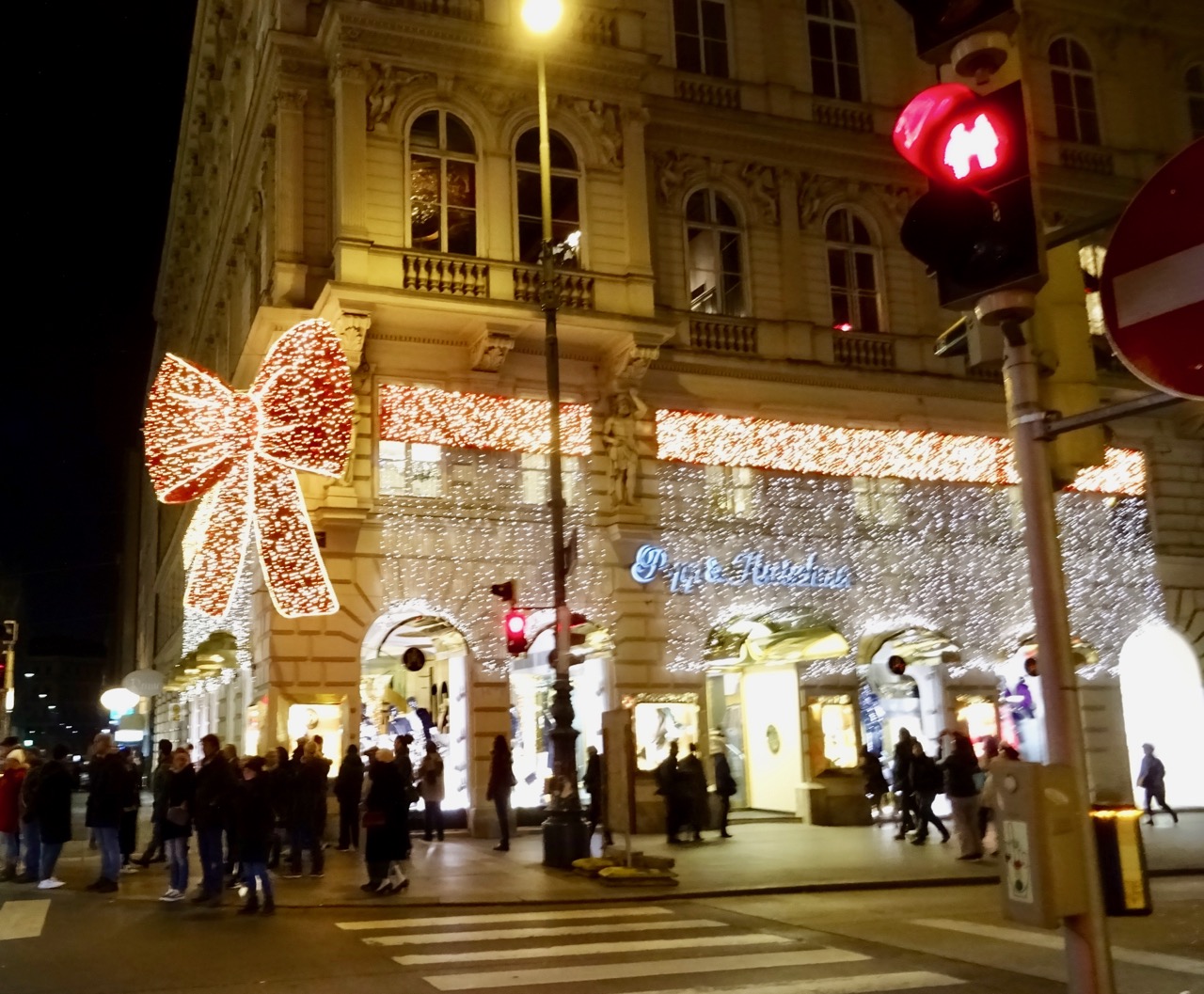 but we are both getting chilled so we head home to finish getting ready for our trip home tomorrow.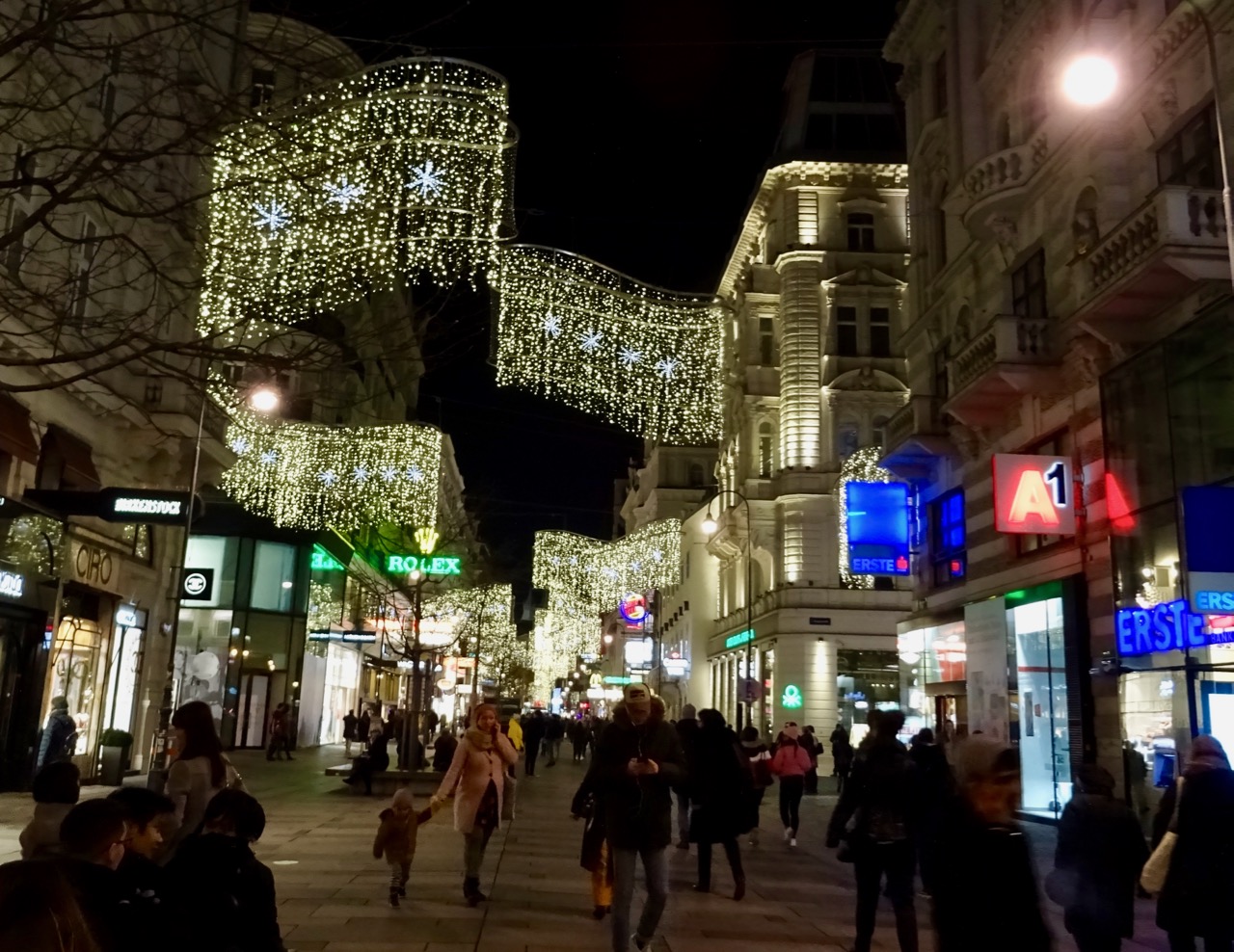
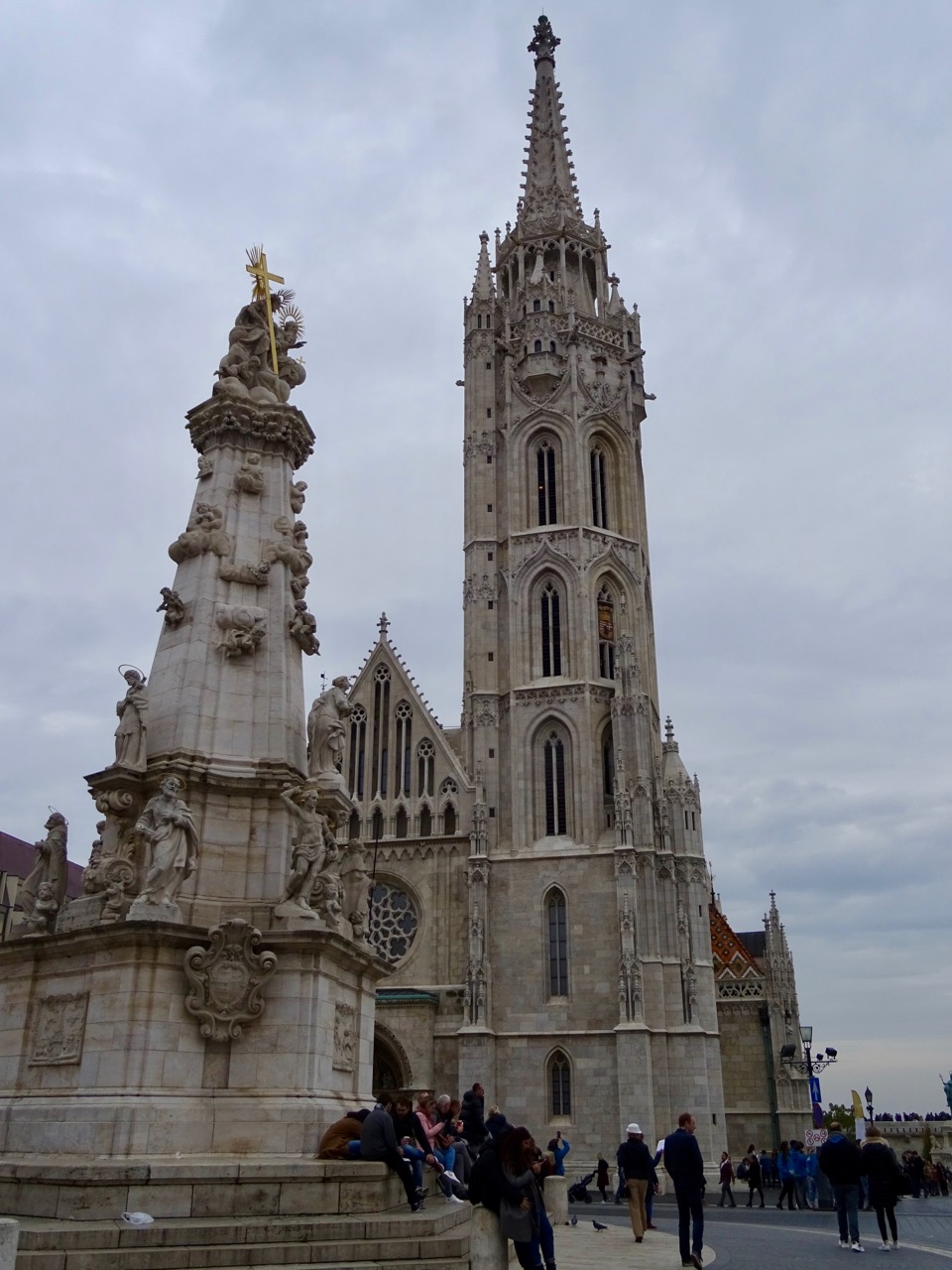
 We visit the Buda side of Budapest today. First stop is the Matthias Church, located in the Holy Trinity Square in front of the Fisherman’s Bastion. It has a beautiful tiled roof and a 60 metre tall bell tower.
 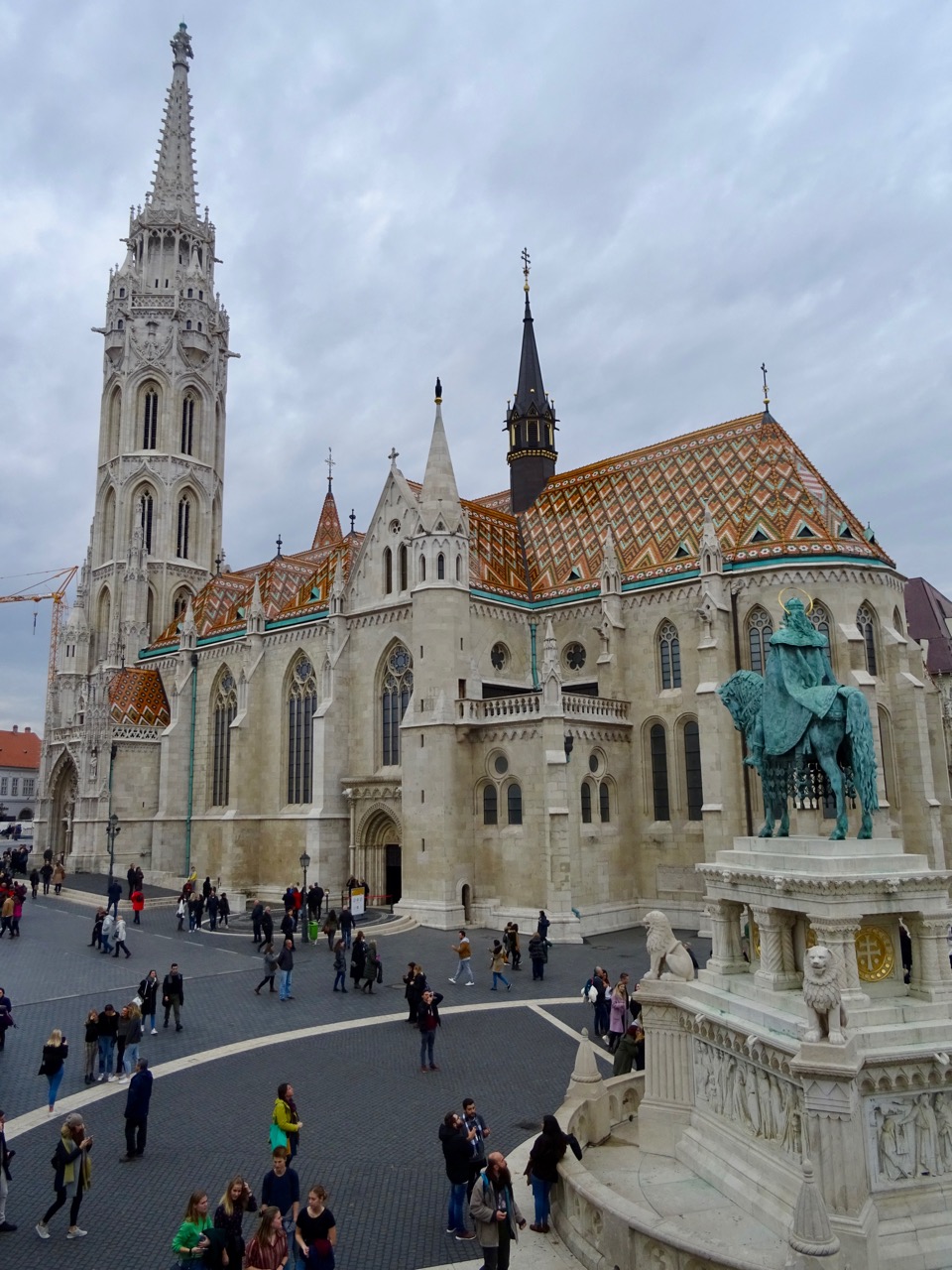 There are a lot of people here.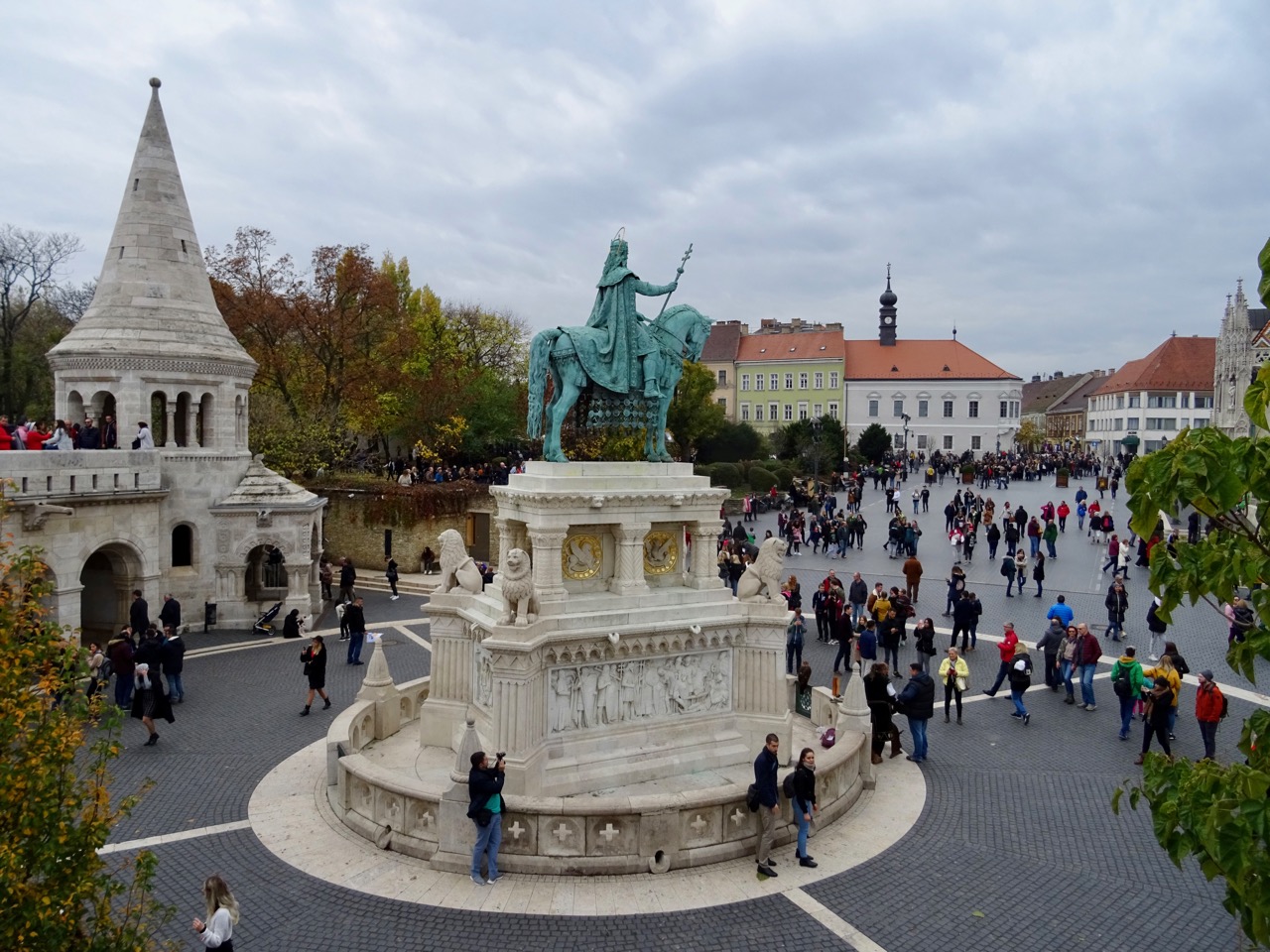
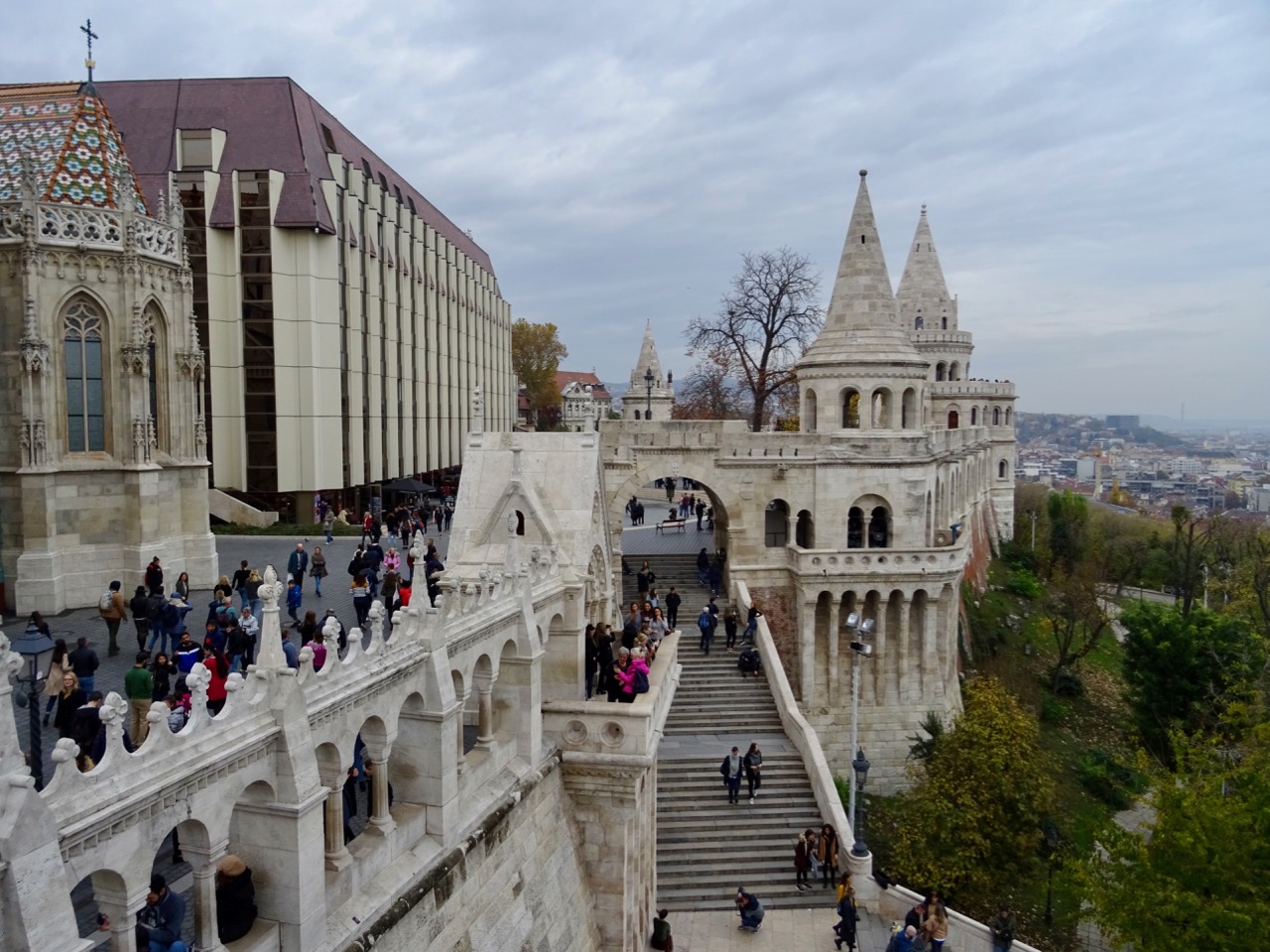 One of the many great views from the Bastion.
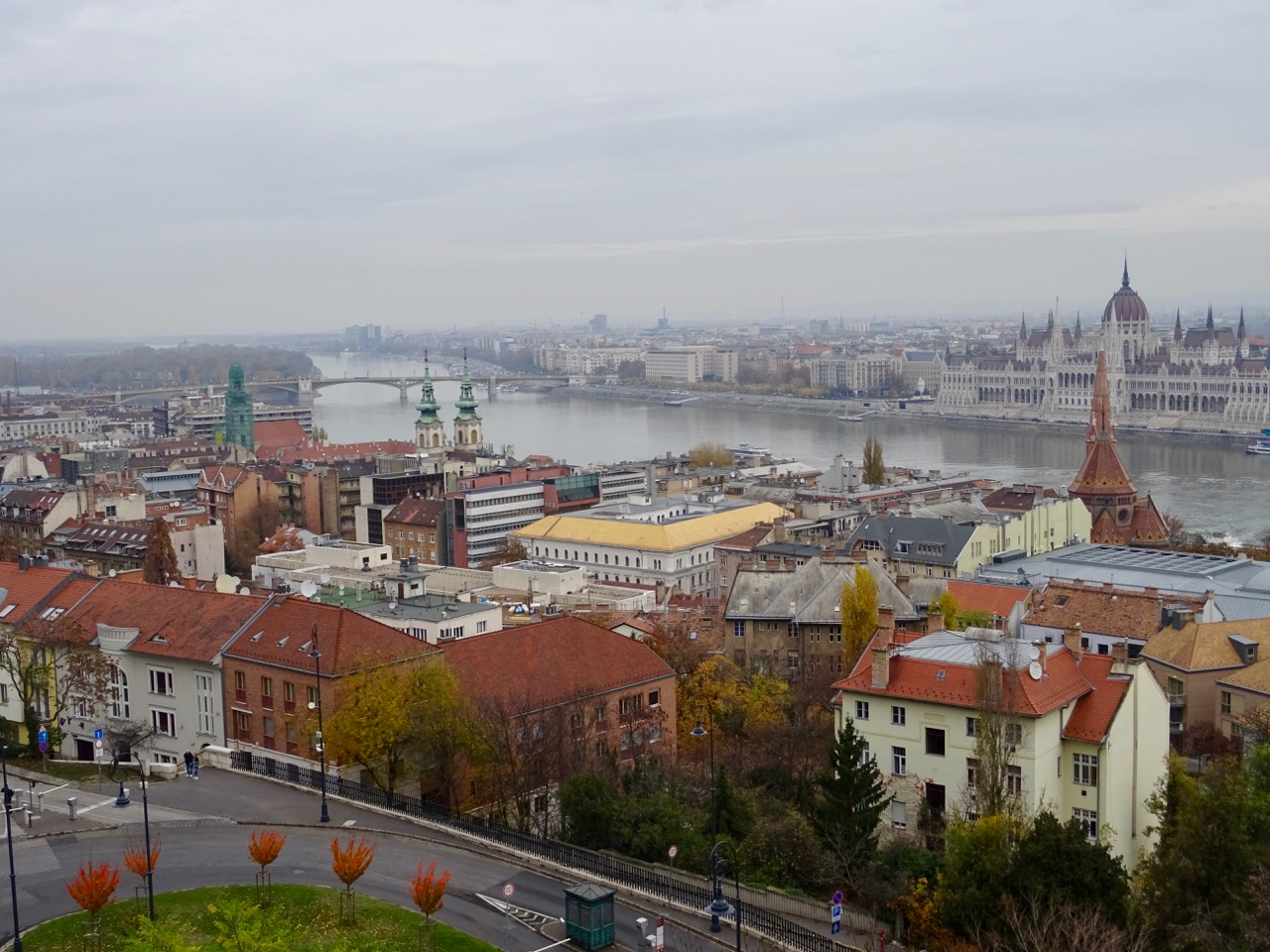 We had to wait a bit to find an arch not filled with other tourists. It often takes a while before I can get a decent photo, which involves deciding where I can get the best view and waiting until vehicles and other people are not in my picture frame. Bob is very patient, waiting for me to take photos. I probably take at least 5 or 6 photos for every one I use in this blog.
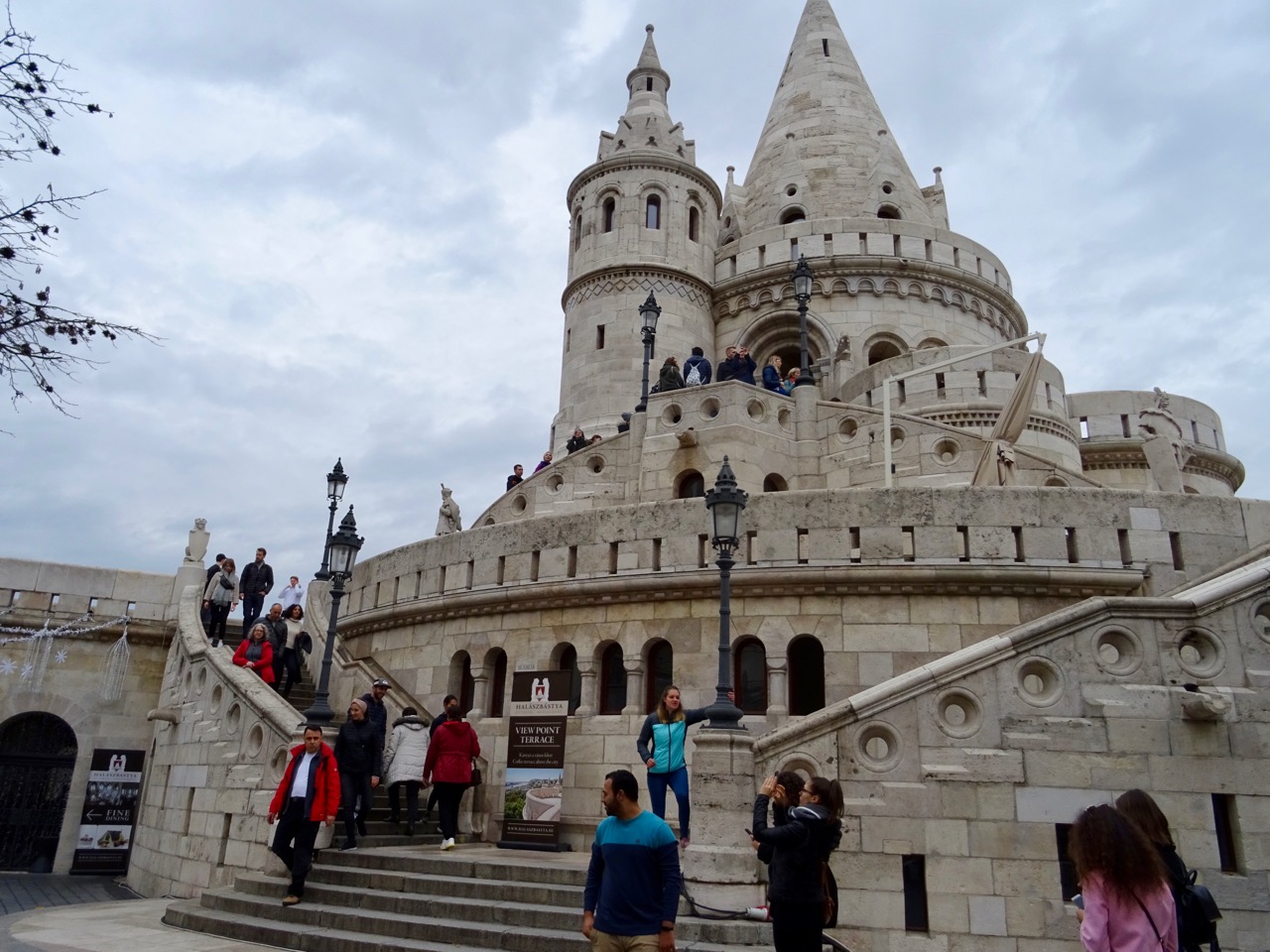
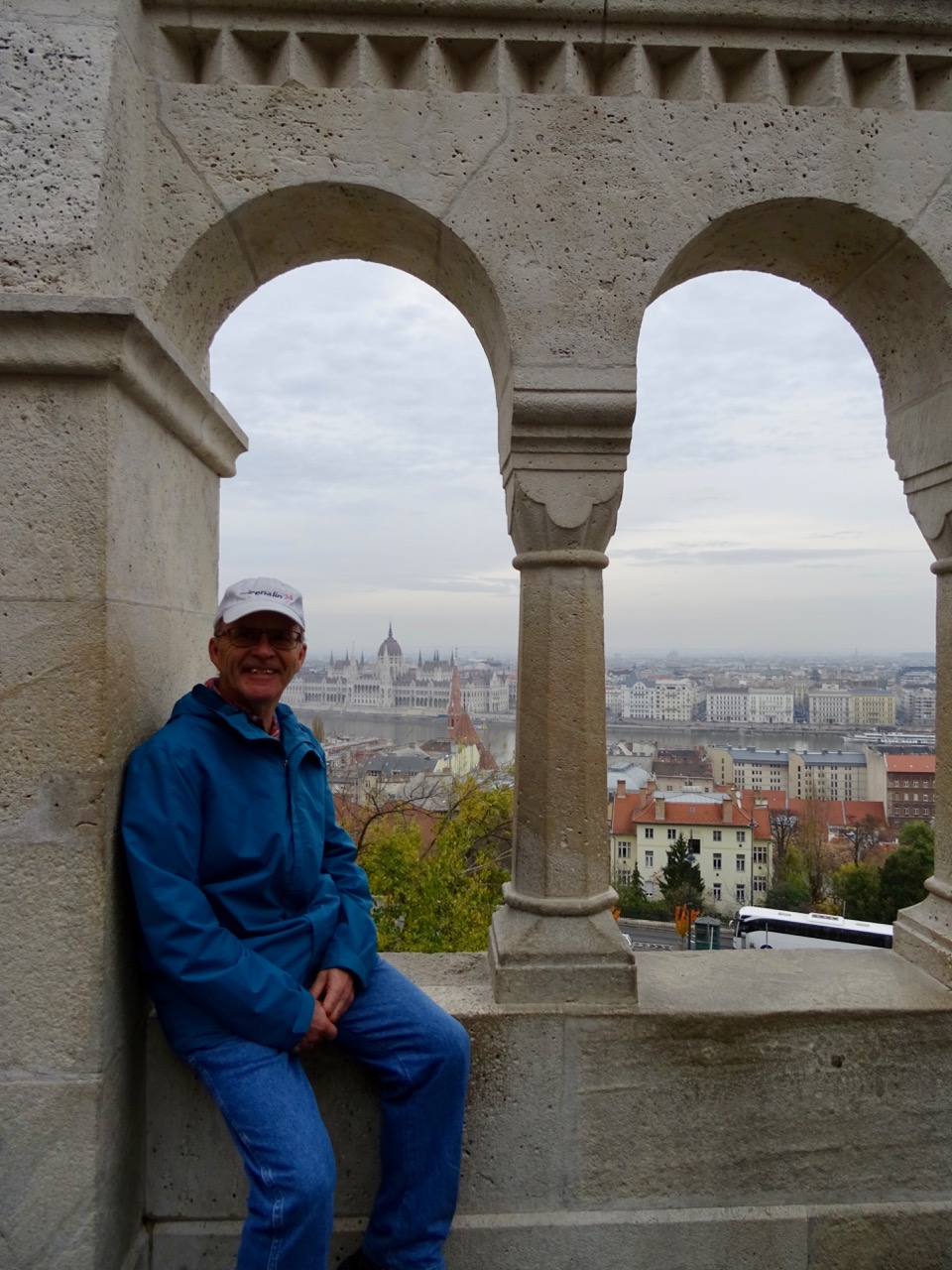 The Bastion was inspired by the architectural style of the early medieval times. It has many towers and was meant to feel like a fairy tale castle, as it wasn’t built for defence.
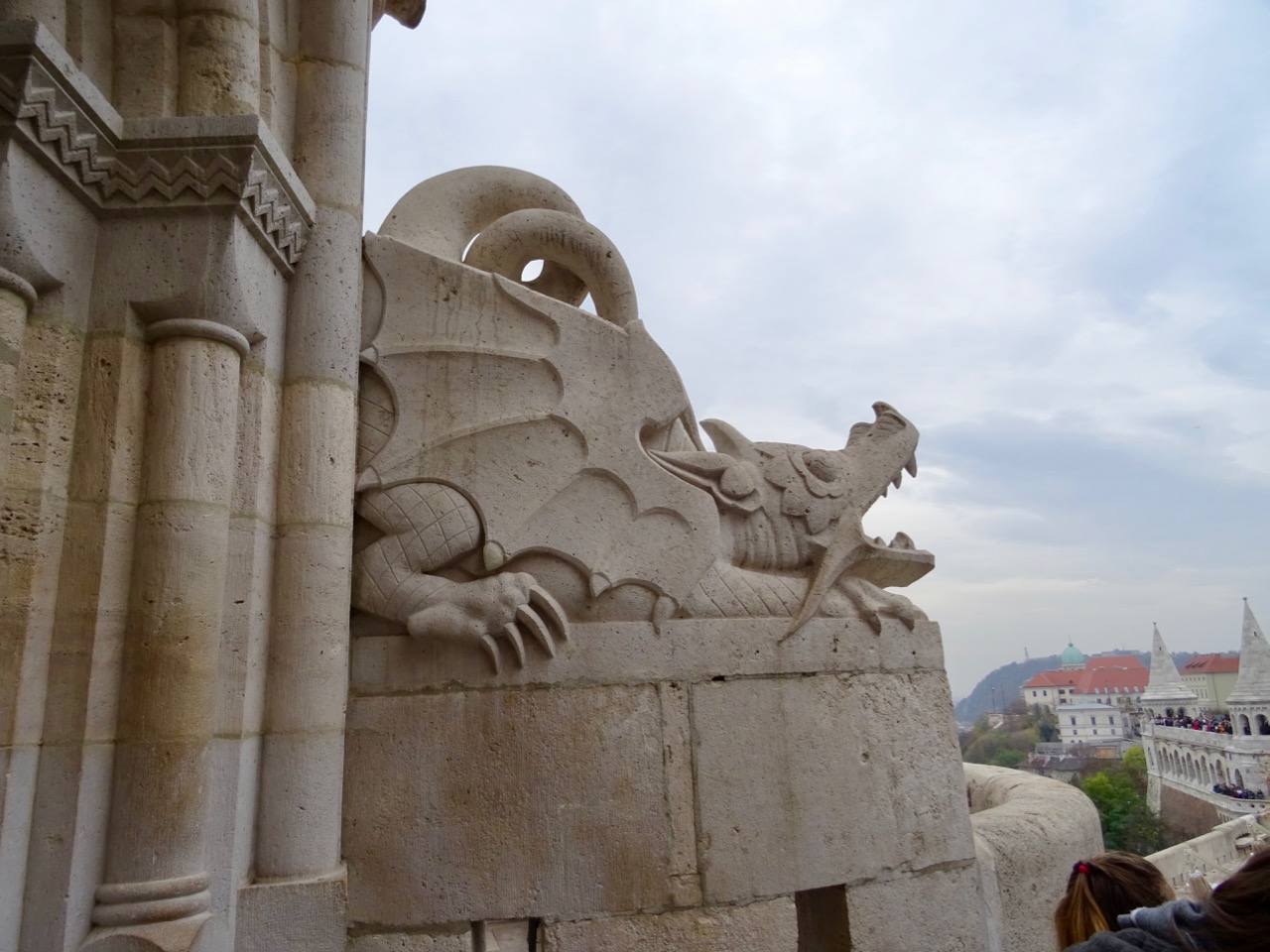
 I am always happy when I find a dragon!
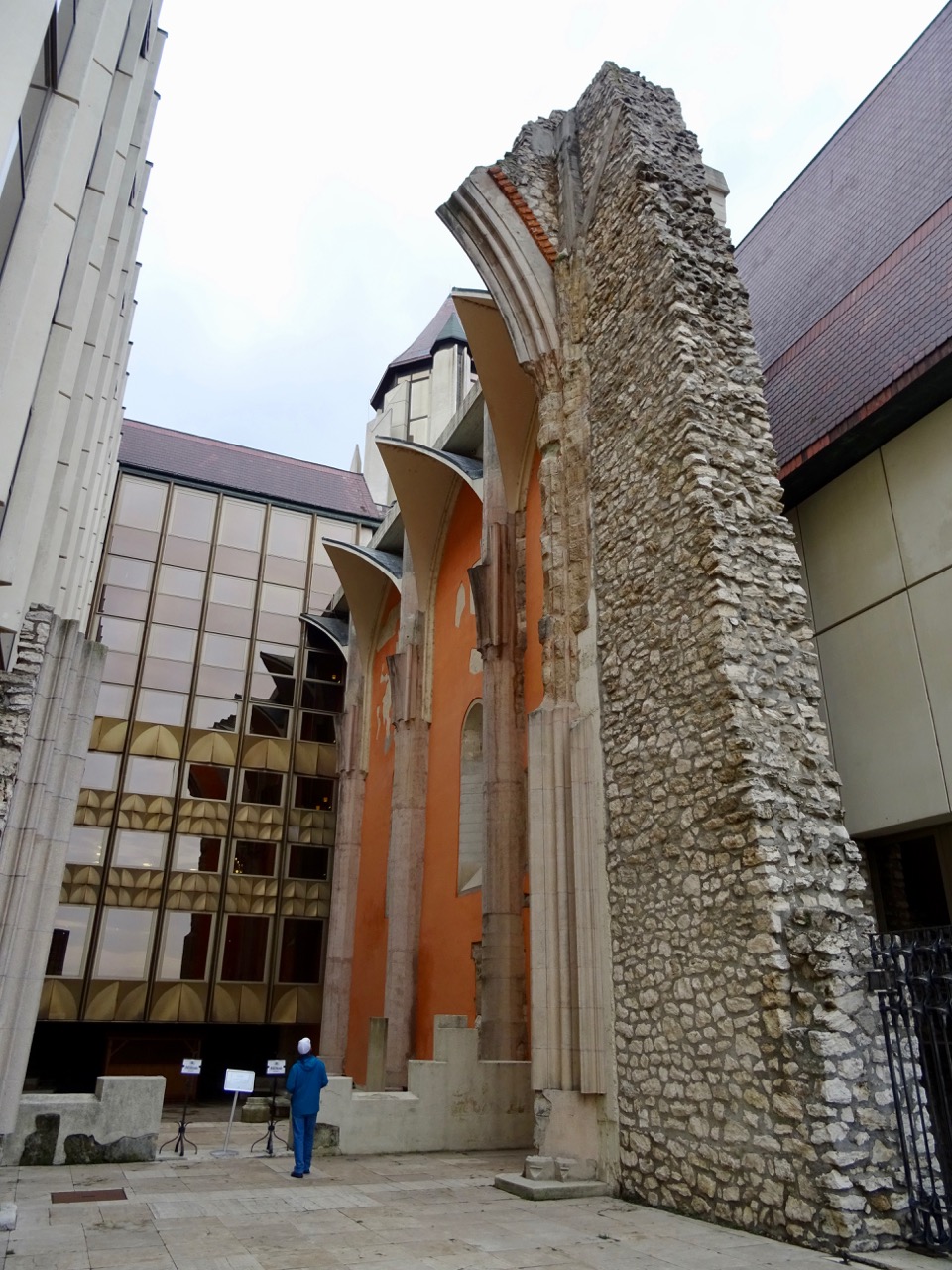
 These medieval church ruins were built into the modern Hilton Budapest Hotel.
 The Black Plague caused the death of 30-60% of Europe’s total population in 1691 and 1709. People believed that erecting a column would protect them from the plague. The carving on the top of the column represents the Holy Trinity. Below this the whole column is decorated with smaller statues depicting angels, and saints. The central sculpture shows King David praying to God to let his people avoid the outbreak of a plague. Residents believed the Holy Trinity Column did its job, as the plague never returned after 1709.
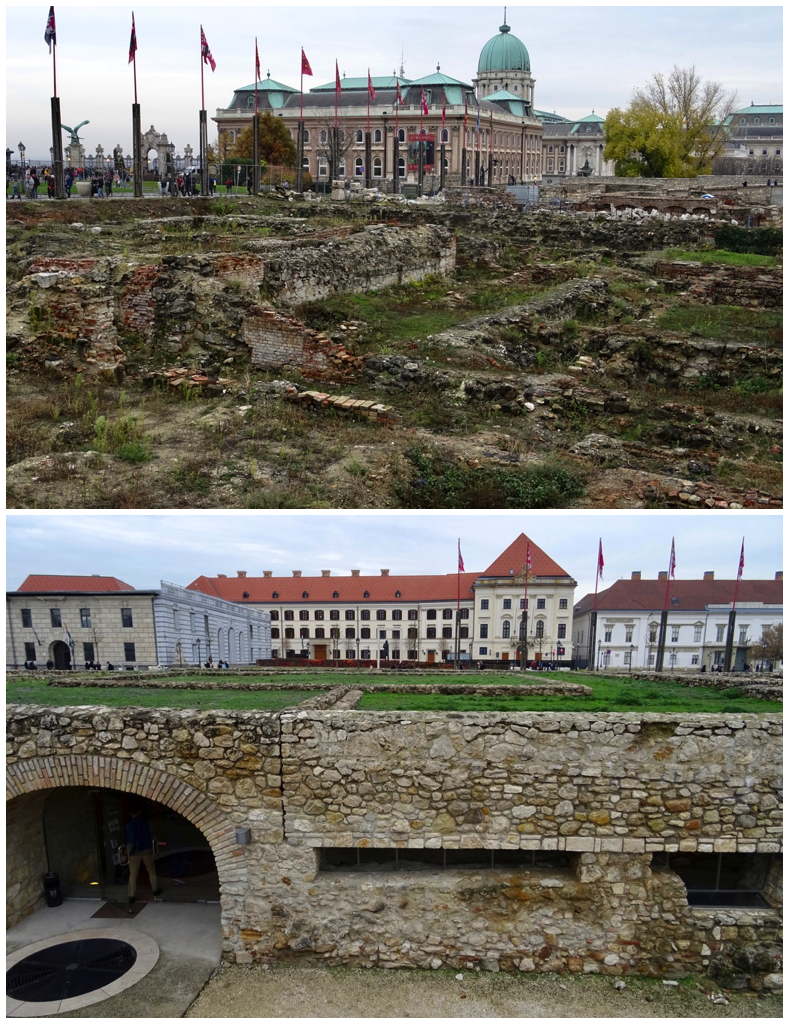
 On our walk to the nearby Buda Castle we pass these Medieval ruins. Beneath some of the ruins there is a wine cellar which offers wine tastings. It is located below the remains of a 13th century Dominican Cloister, which is part of a huge labyrinth system underneath the Castle Hill.
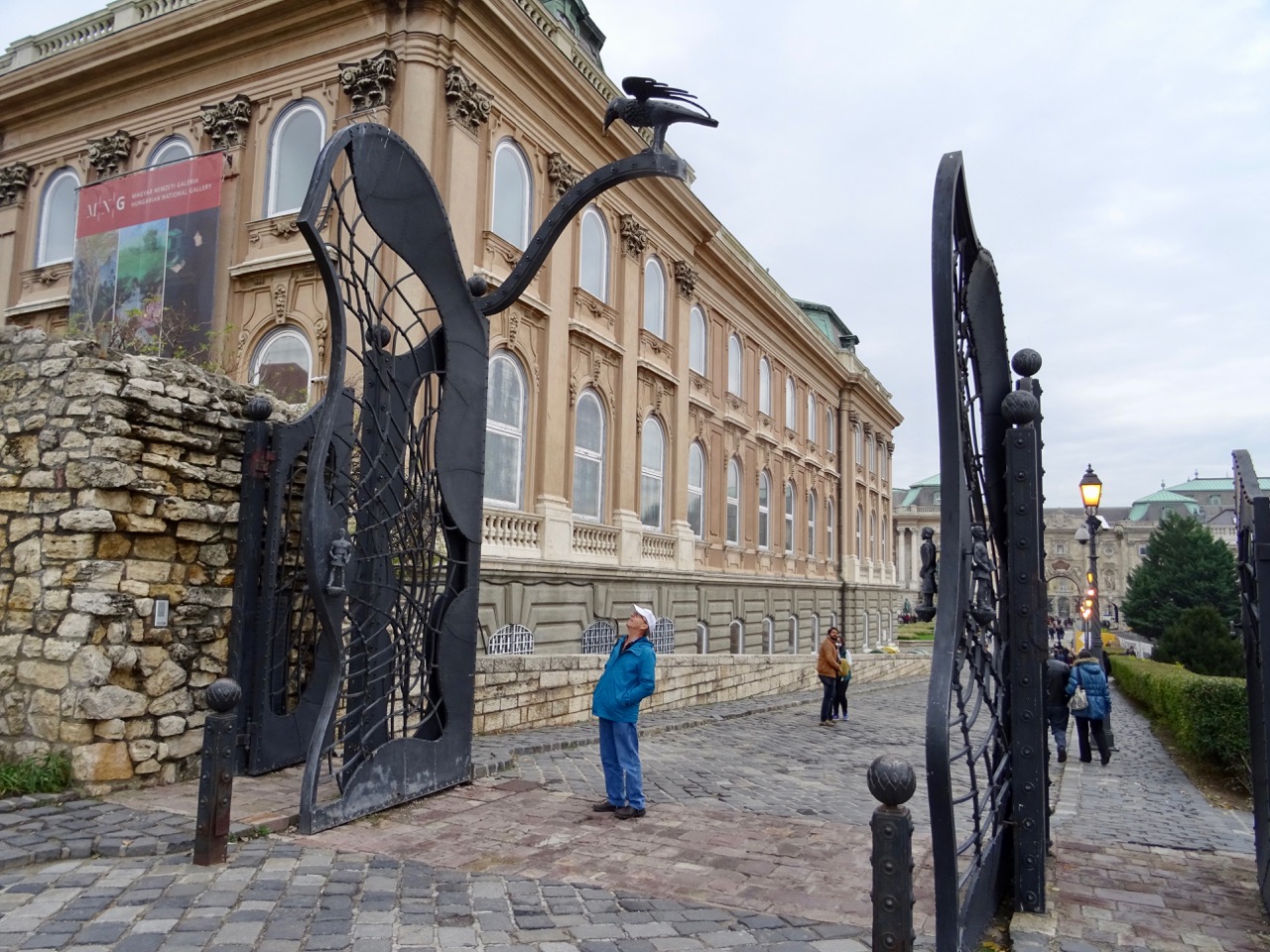
  King Matthias (1457-1458) adopted the crow as his heraldic emblem after catching one of them stealing a ring, and killing it to get his ring back. These gates are topped with a crow with a ring in its mouth. The gates are very bizarre, almost creepy looking.
 This is the back side of the Buda Castle…
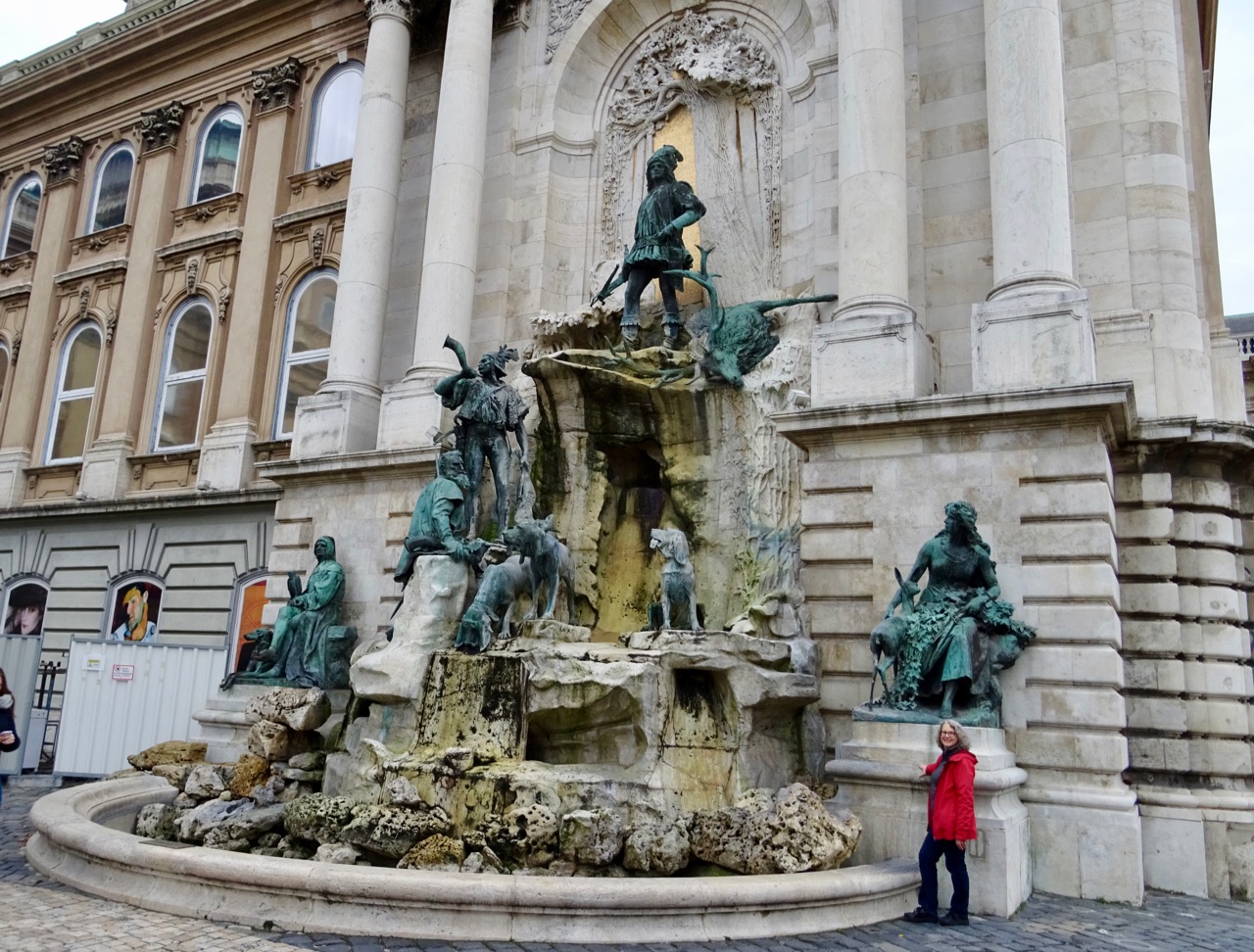
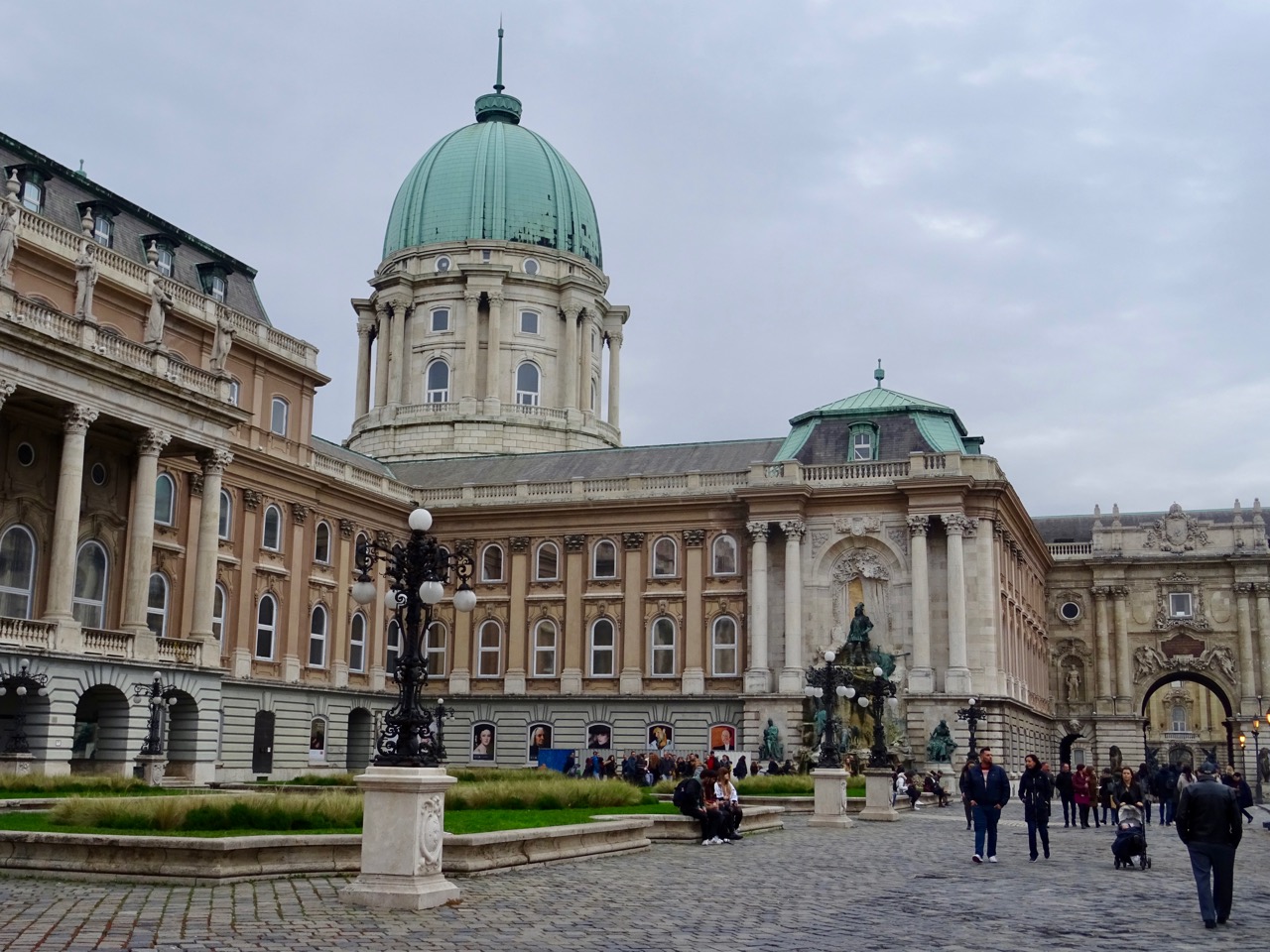 and here is a close up of its fountain. Too bad the water in all the fountains in Budapest has already been turned off for the winter.
 The front of the Buda Castle with lots of tourists…
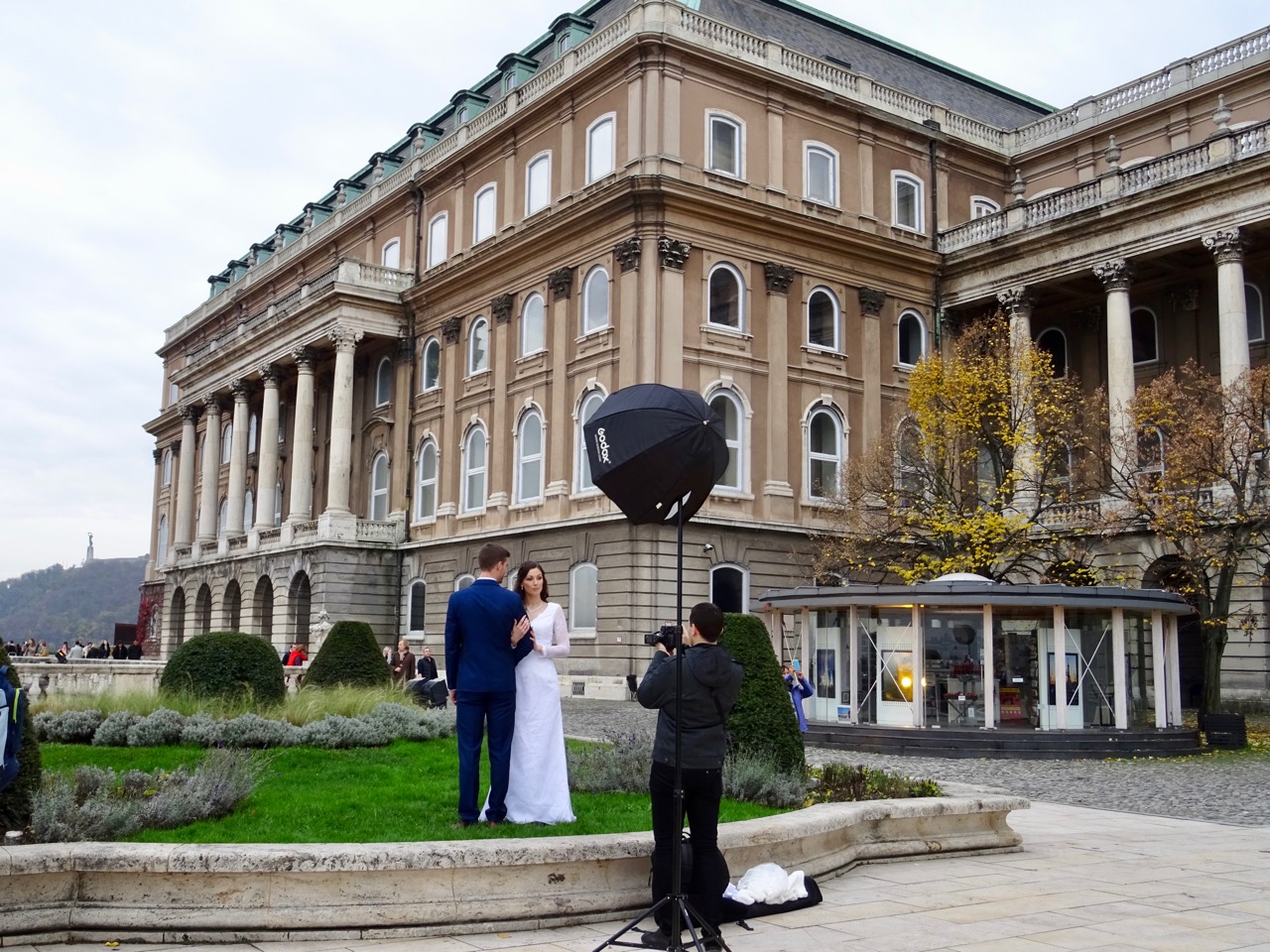
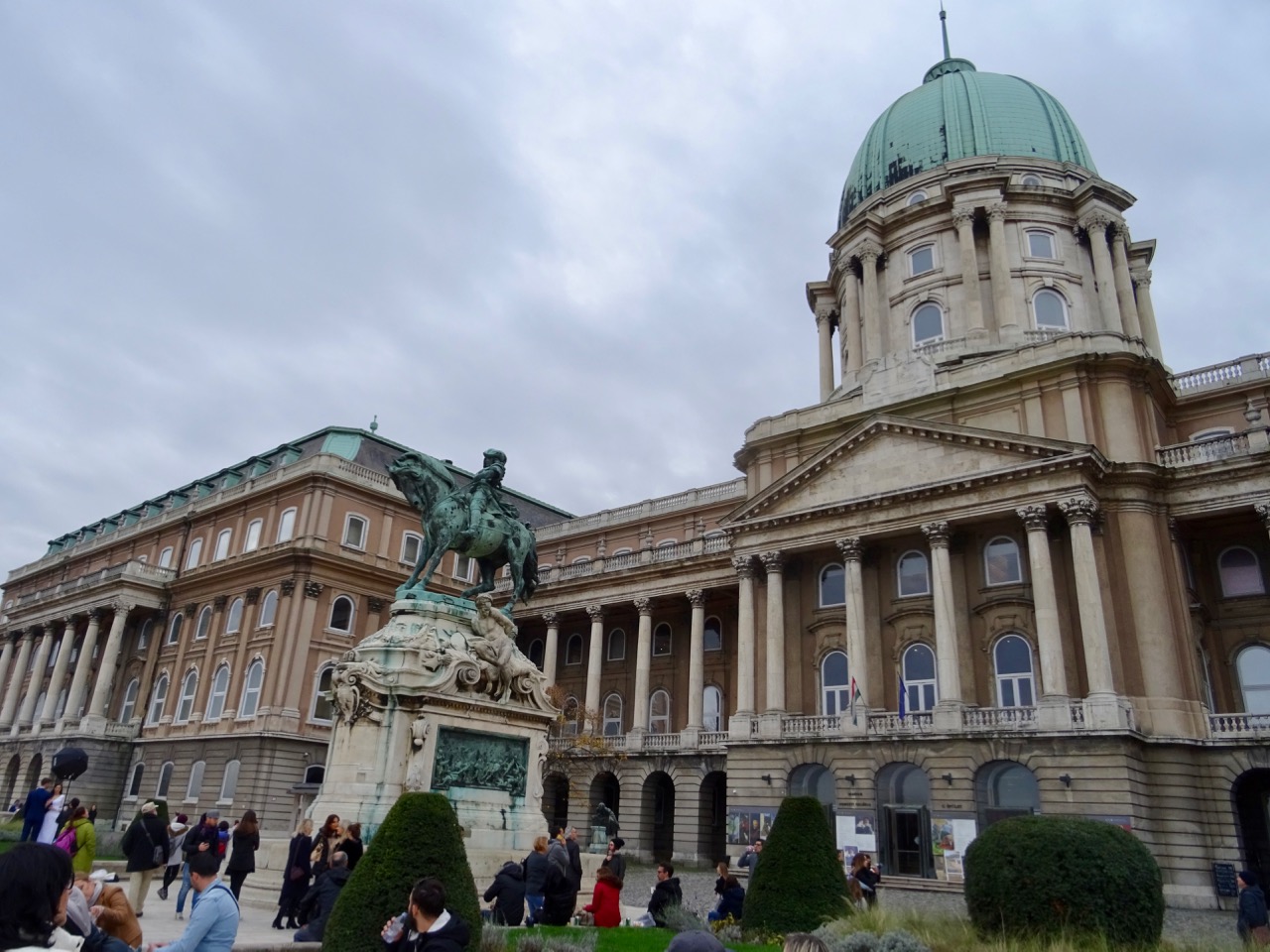 and a bride and groom taking their wedding photos. I wonder if the photographer has to photoshop out all the tourists?
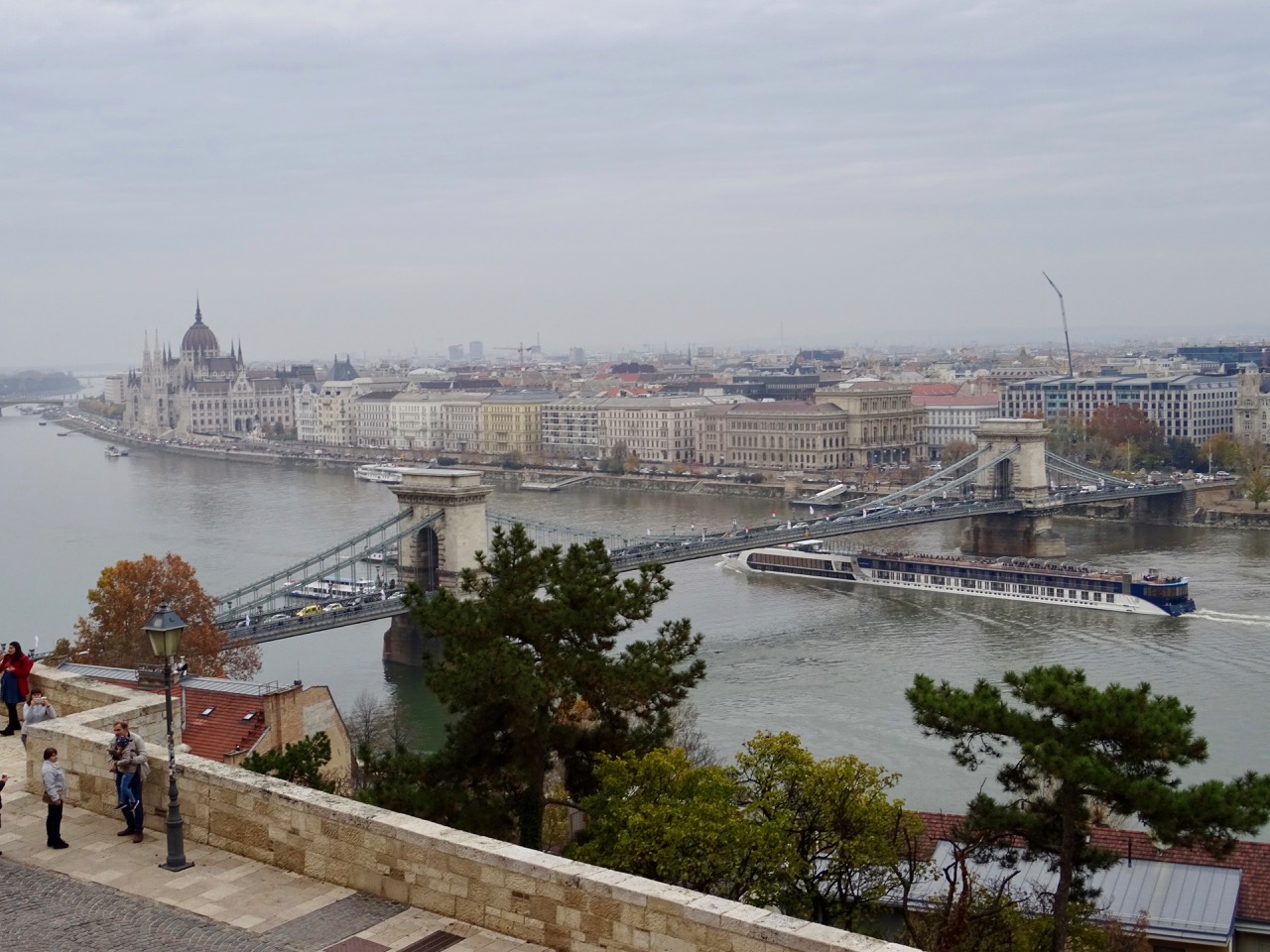
 We see a large river cruise ship o the Danube.
 There are walkways high above Medieval walls.
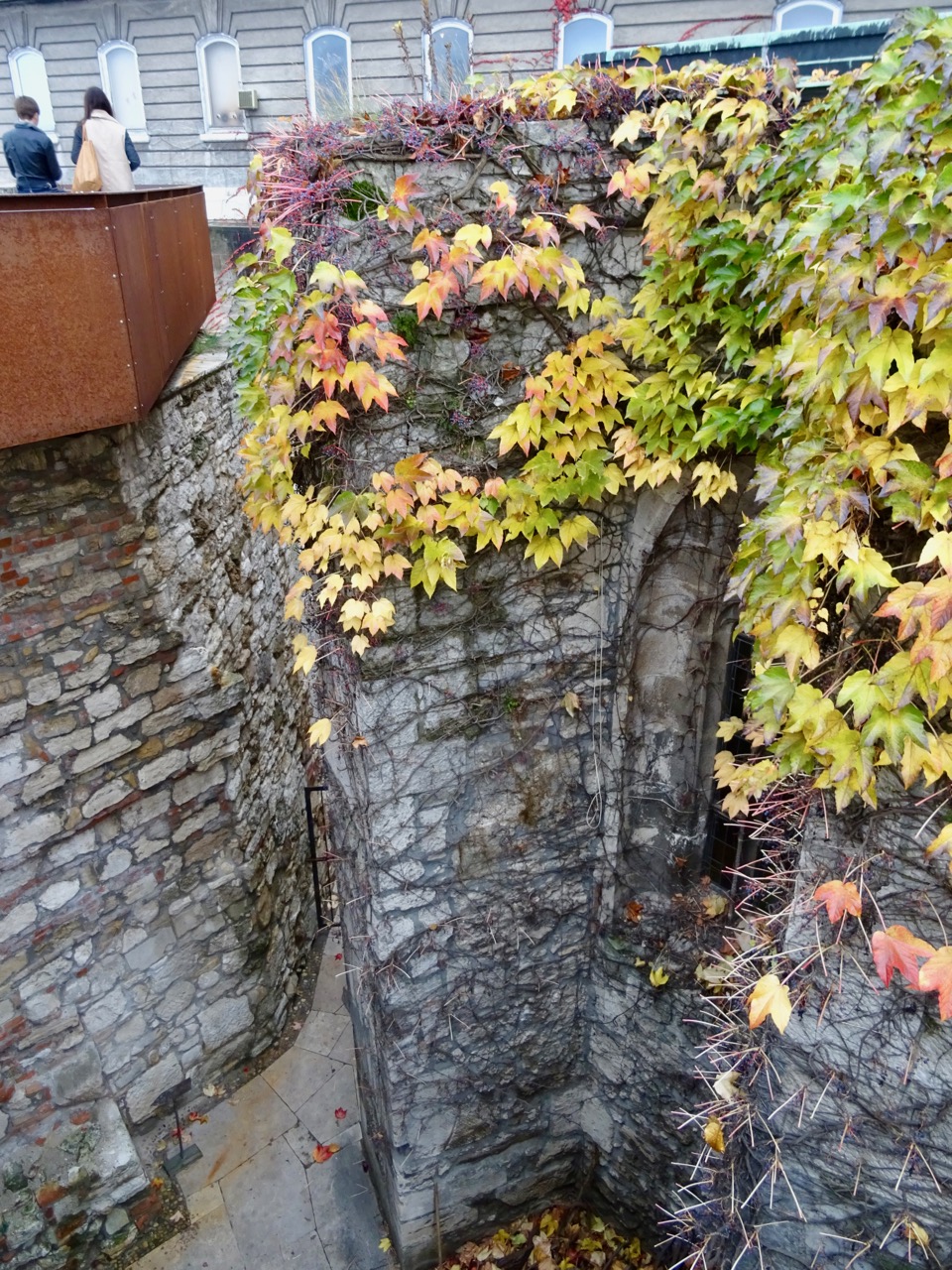 We walk down a flight of stairs below a statue of the Madonna and baby Jesus.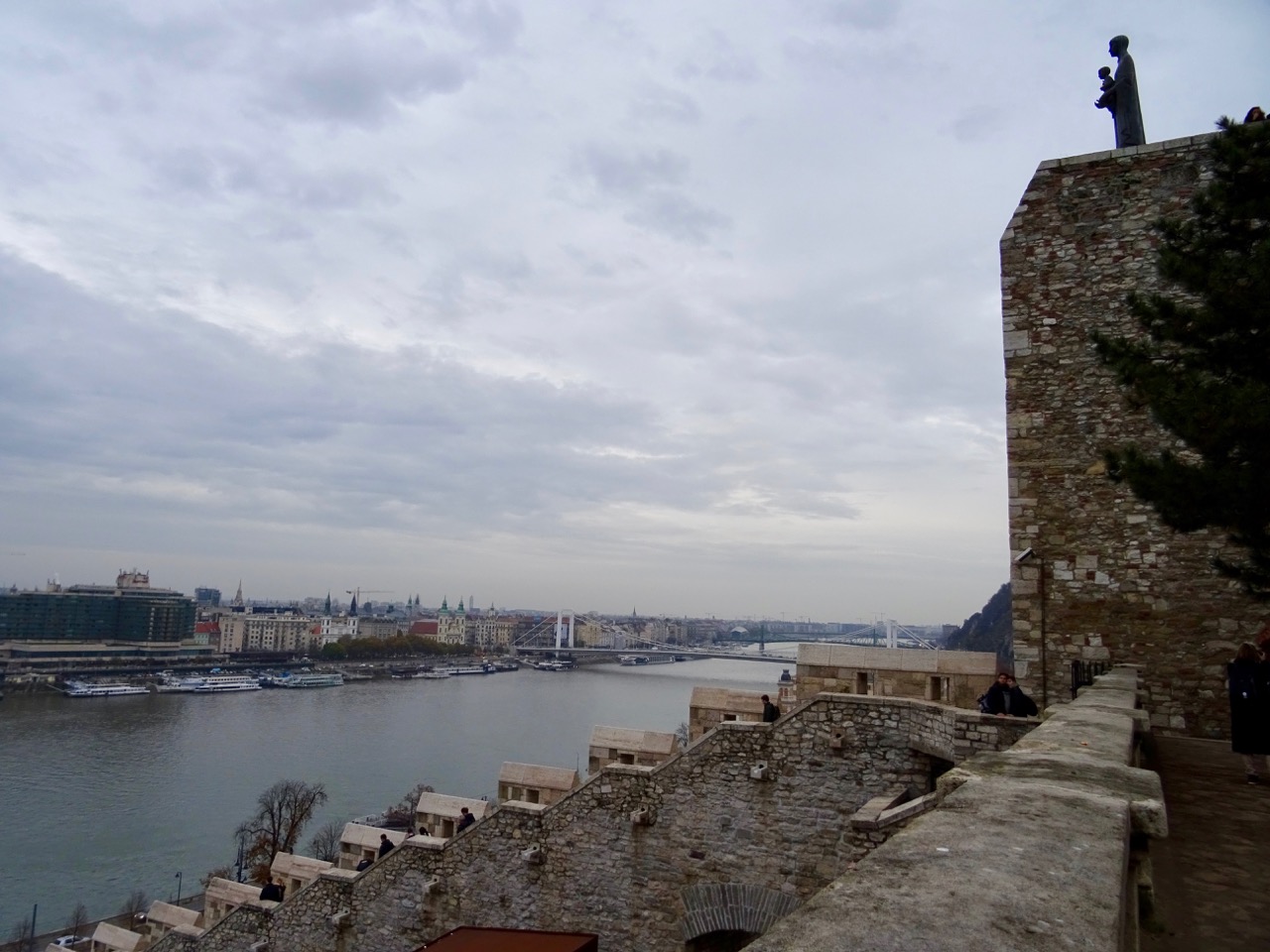
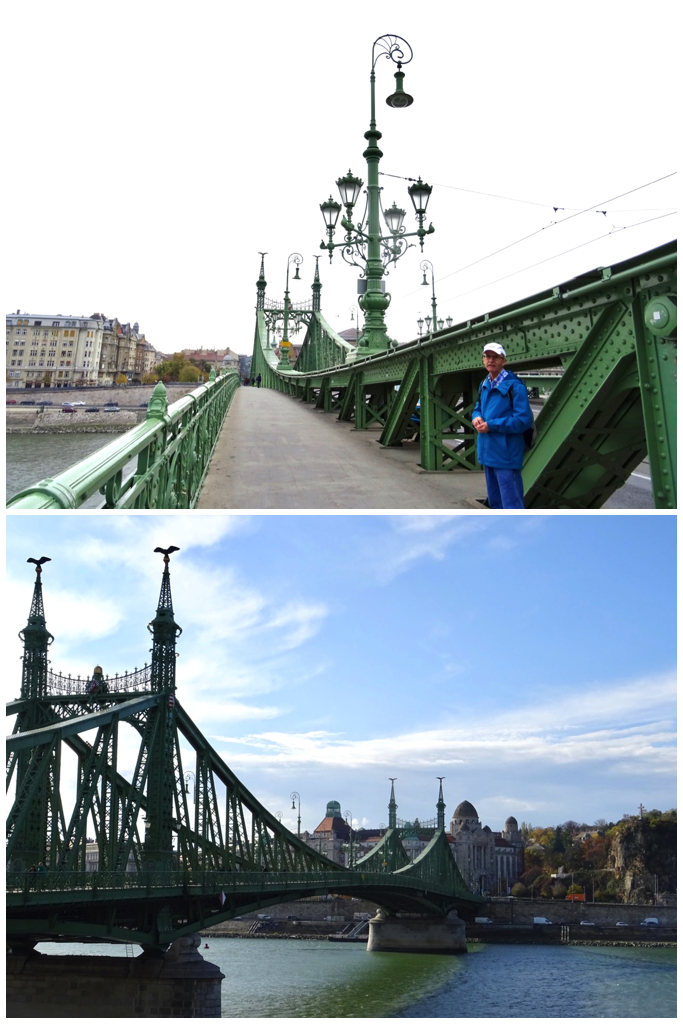
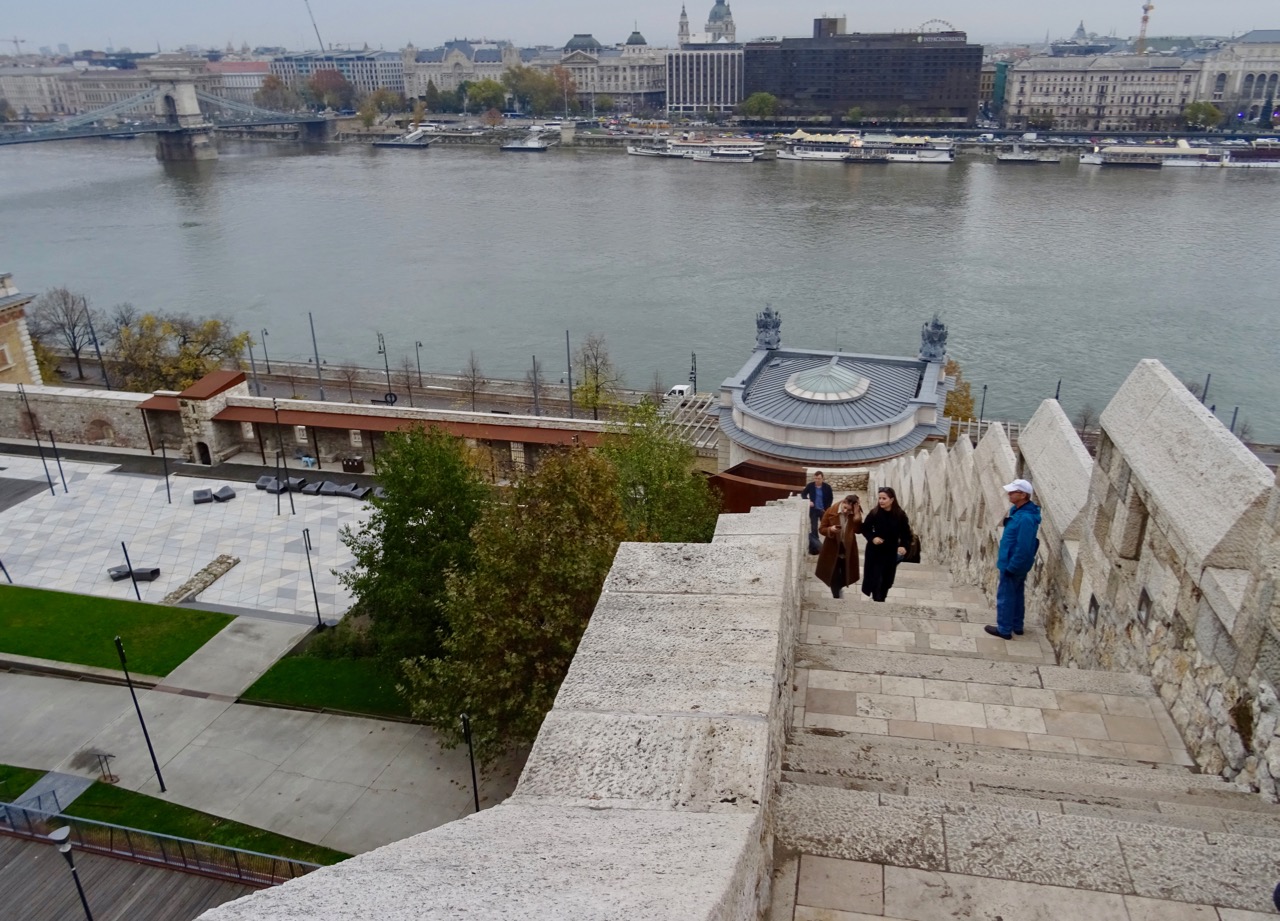 When we walk across this bridge we can see these same stairs on the far left side of this photo.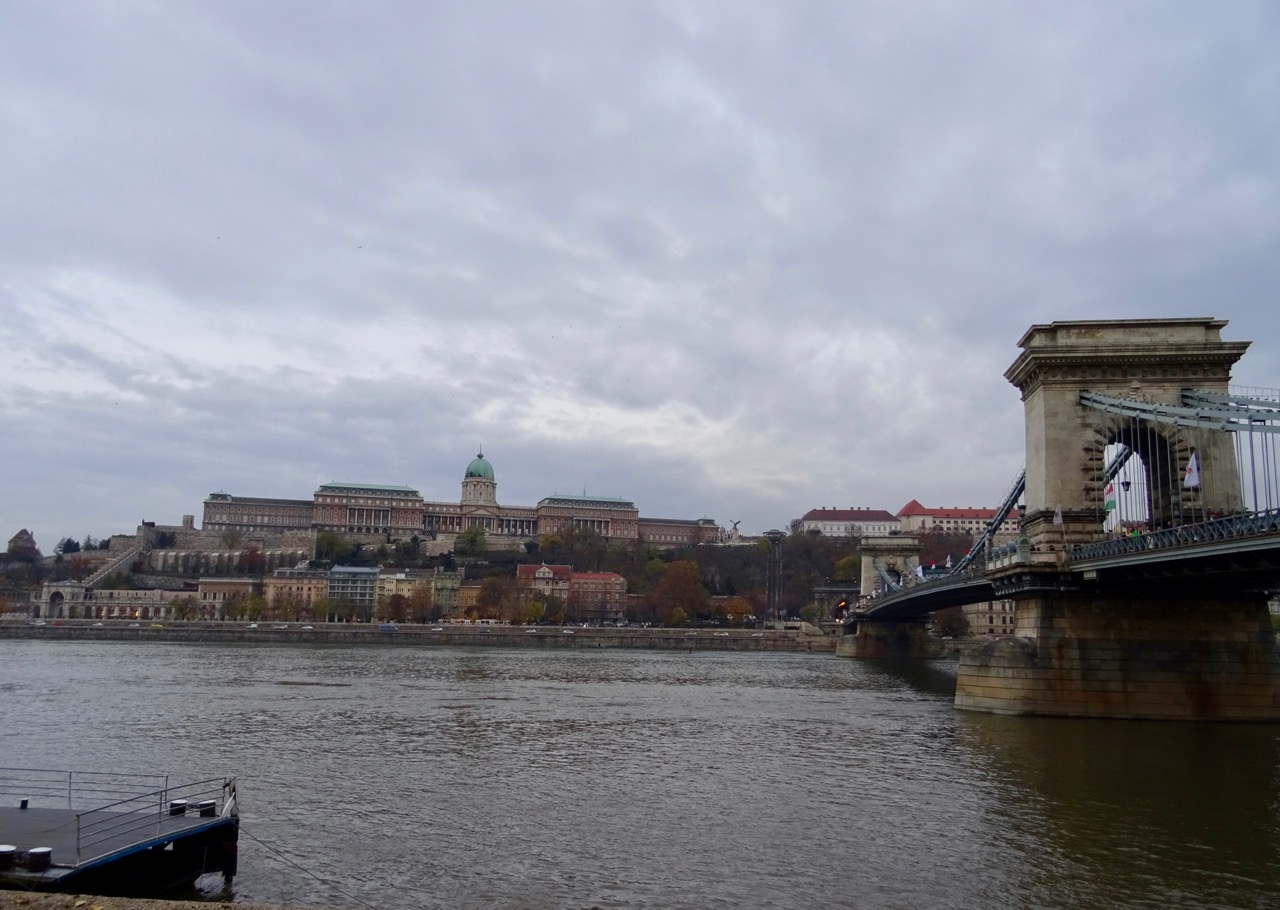
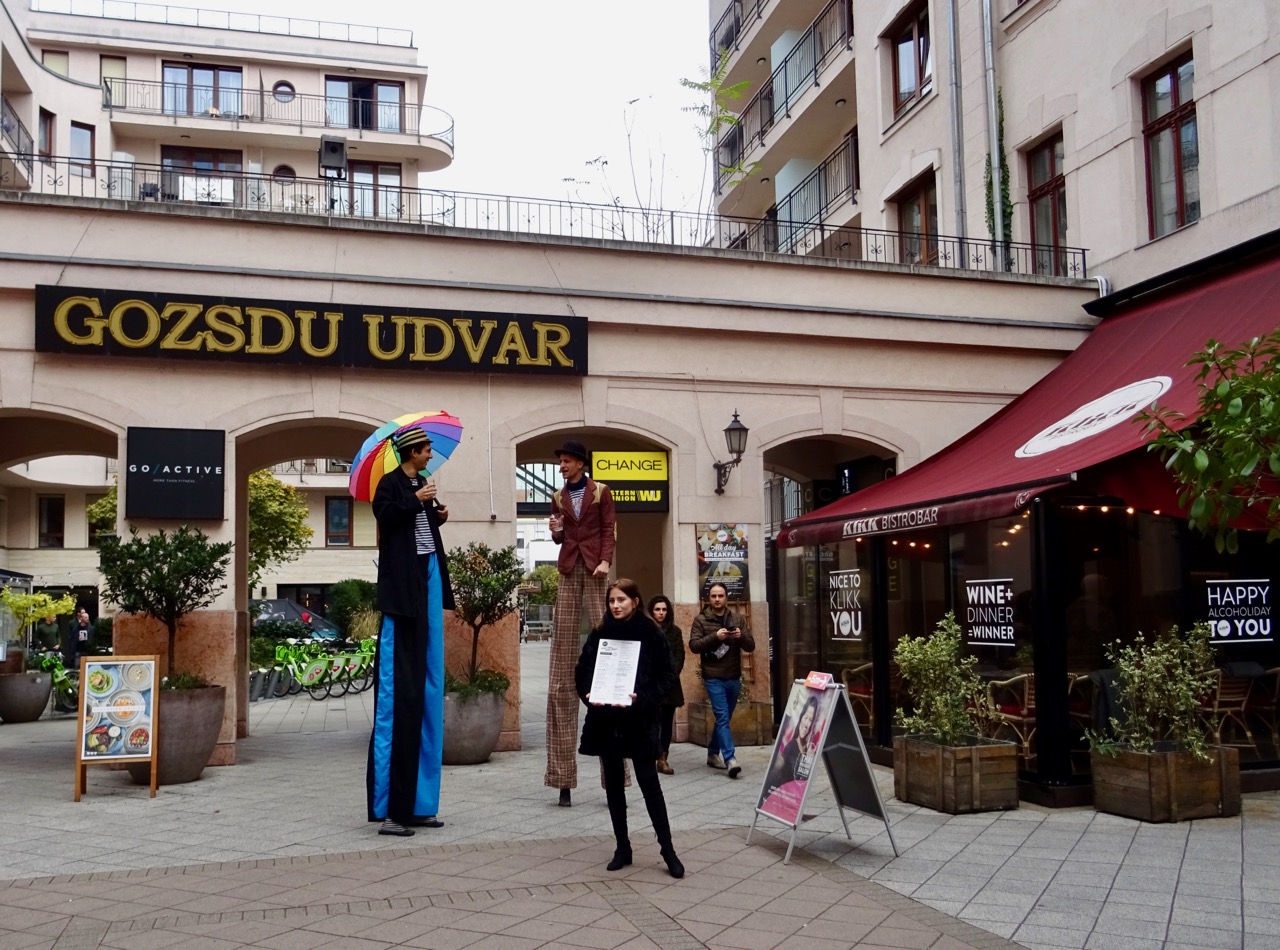
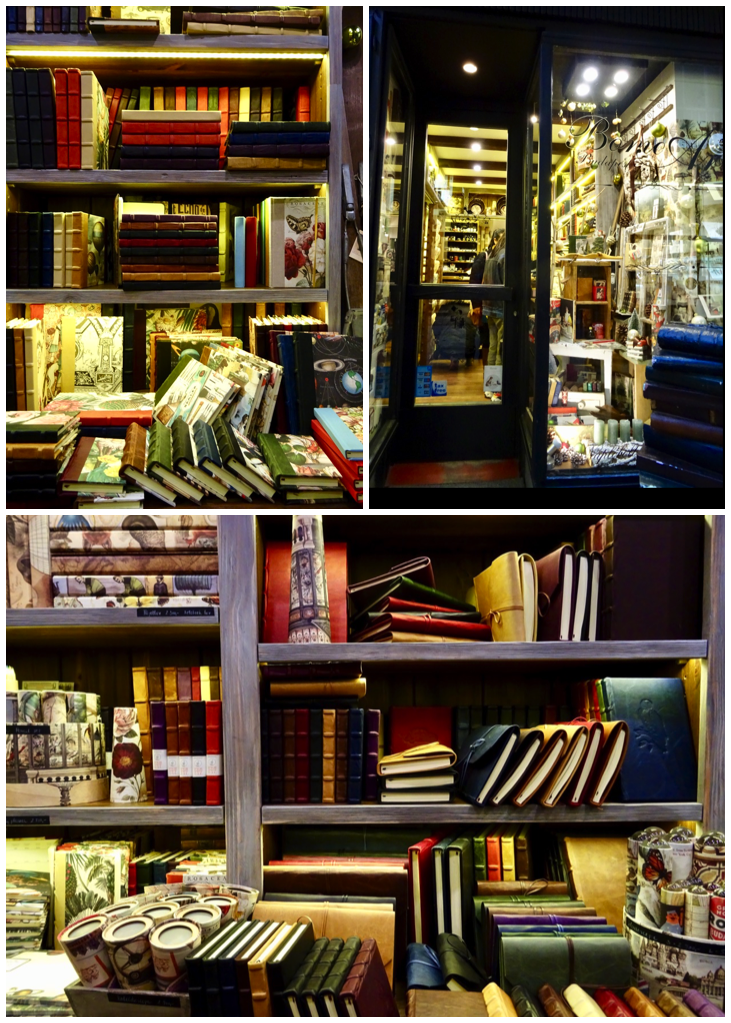
 We are walking to this little bookstore that sells handmade journals. Bomo Art is a tiny store, less than 2 metres wide! It didn’t have any larger sketchbooks with good paper for drawing. Too bad, or maybe it was good. My suitcase is already pretty heavy with the two sketchbooks I bought in Linz, and the huge Dürer book I got in Vienna.
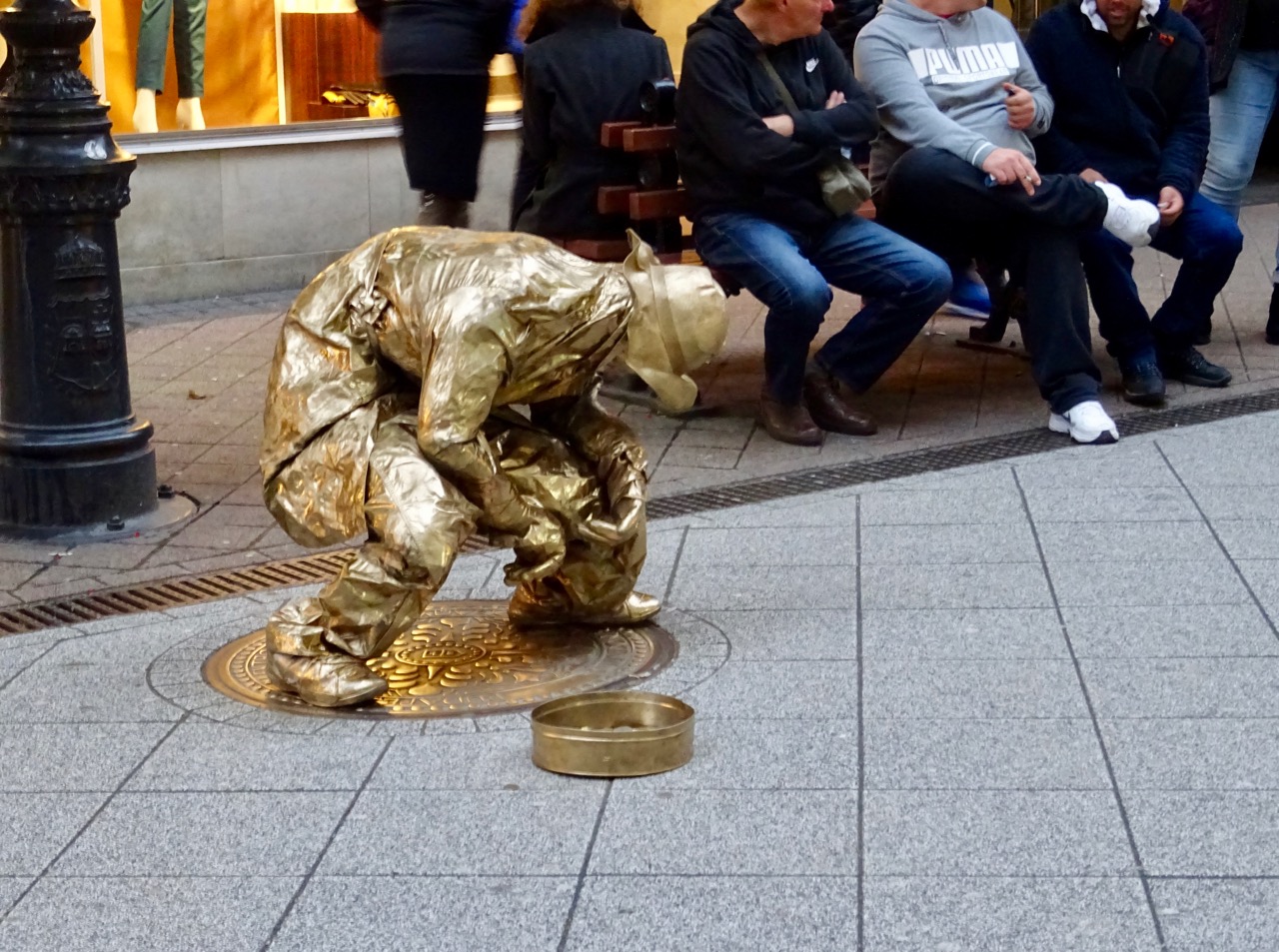
 We watched this street performer for a while and wondered how he was able to hold this difficult pose. We later saw him in a different position but when we walk by again we see a guy lean heavily on him and to our surprise he crumples! Turns out he is a mechanical man! People were putting lots of coins into his can, trying to get him to move. They had no idea they were being tricked into thinking this was a man in costume.
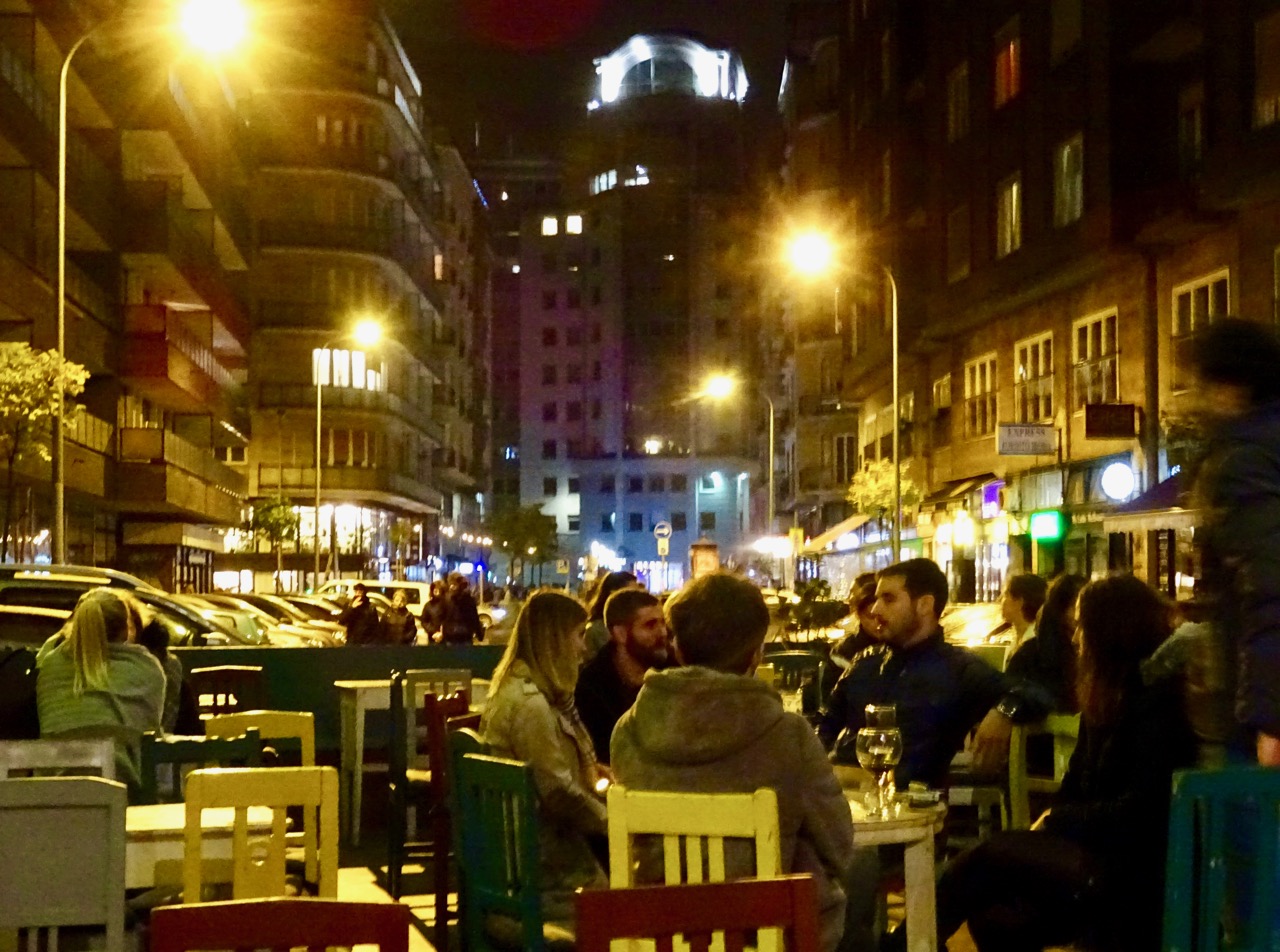
  It is quite cool at night but it doesn’t stop people from sitting outside drinking beer.
  One last walk down the decorated street towards the Christmas Market. There are so many more people out on the streets tonight.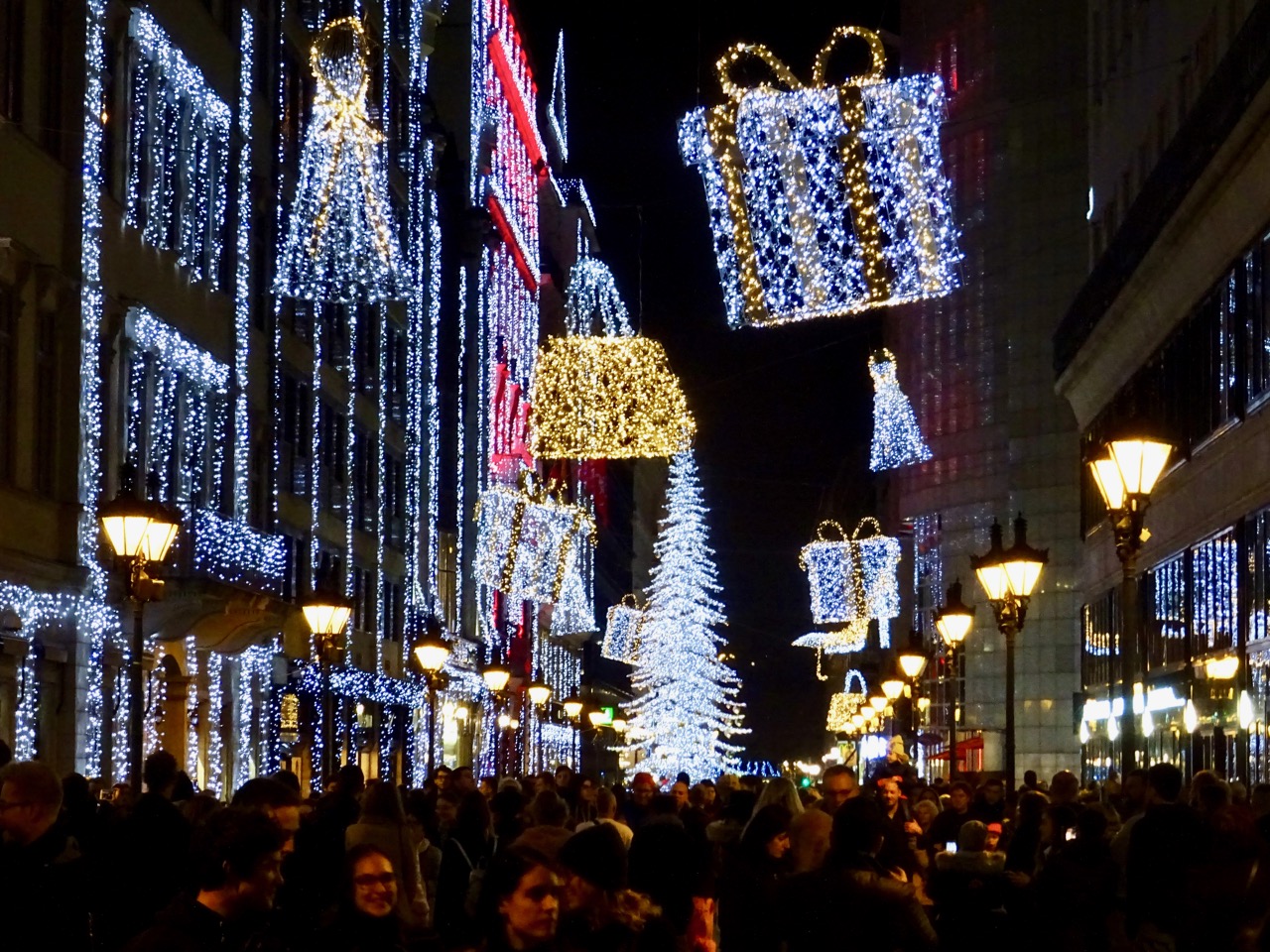
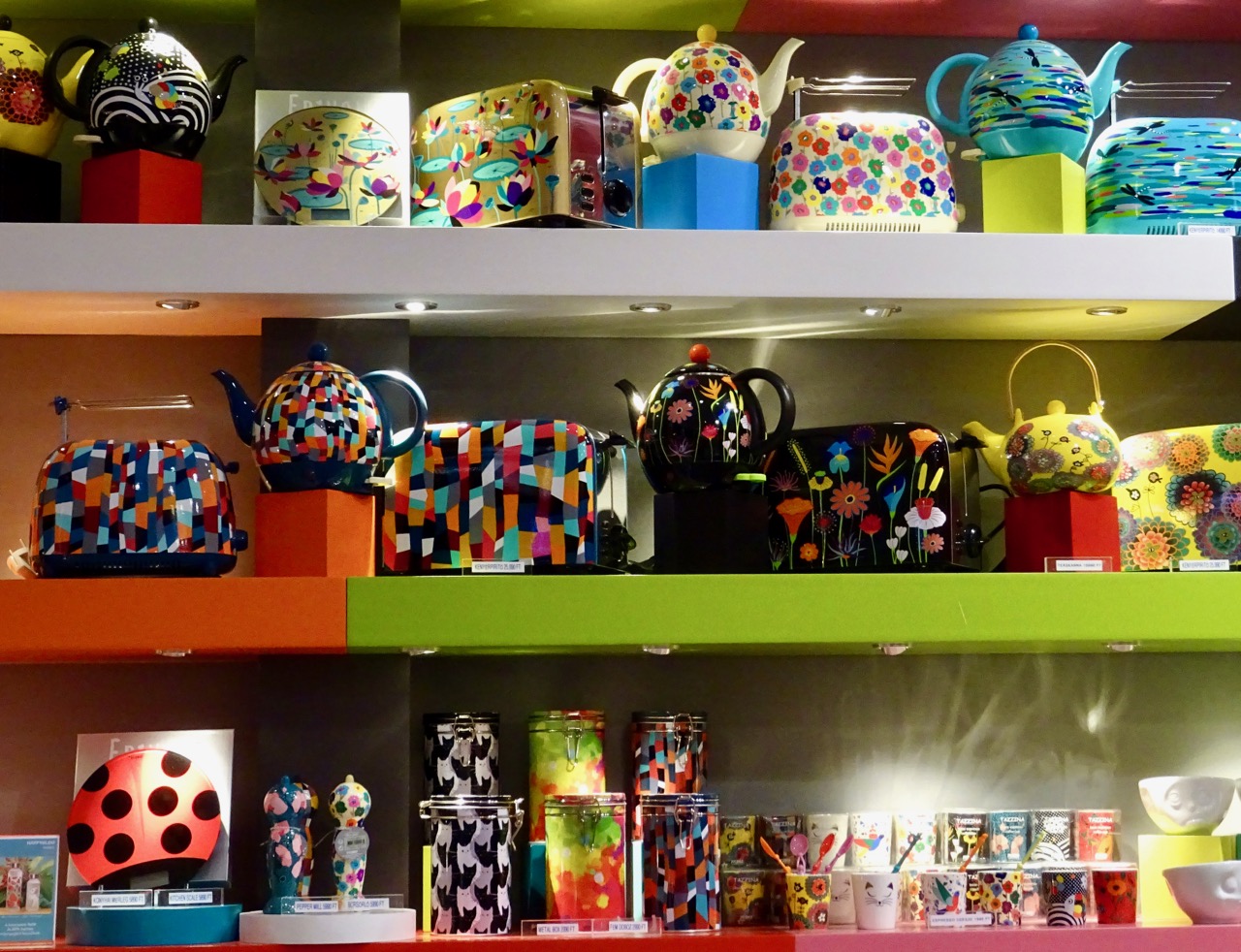 We stop at one of the stalls and I buy a couple small gifts I have been eyeing every time we walk by.
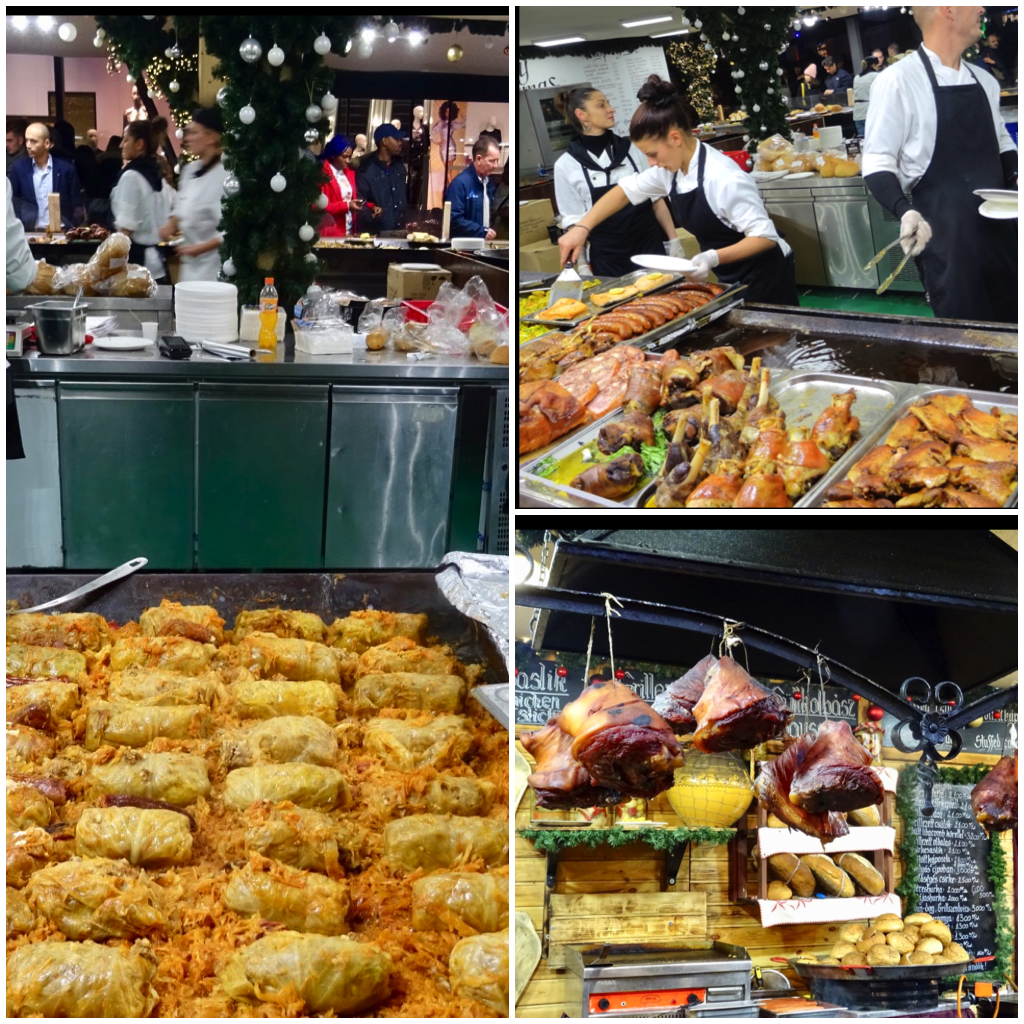
 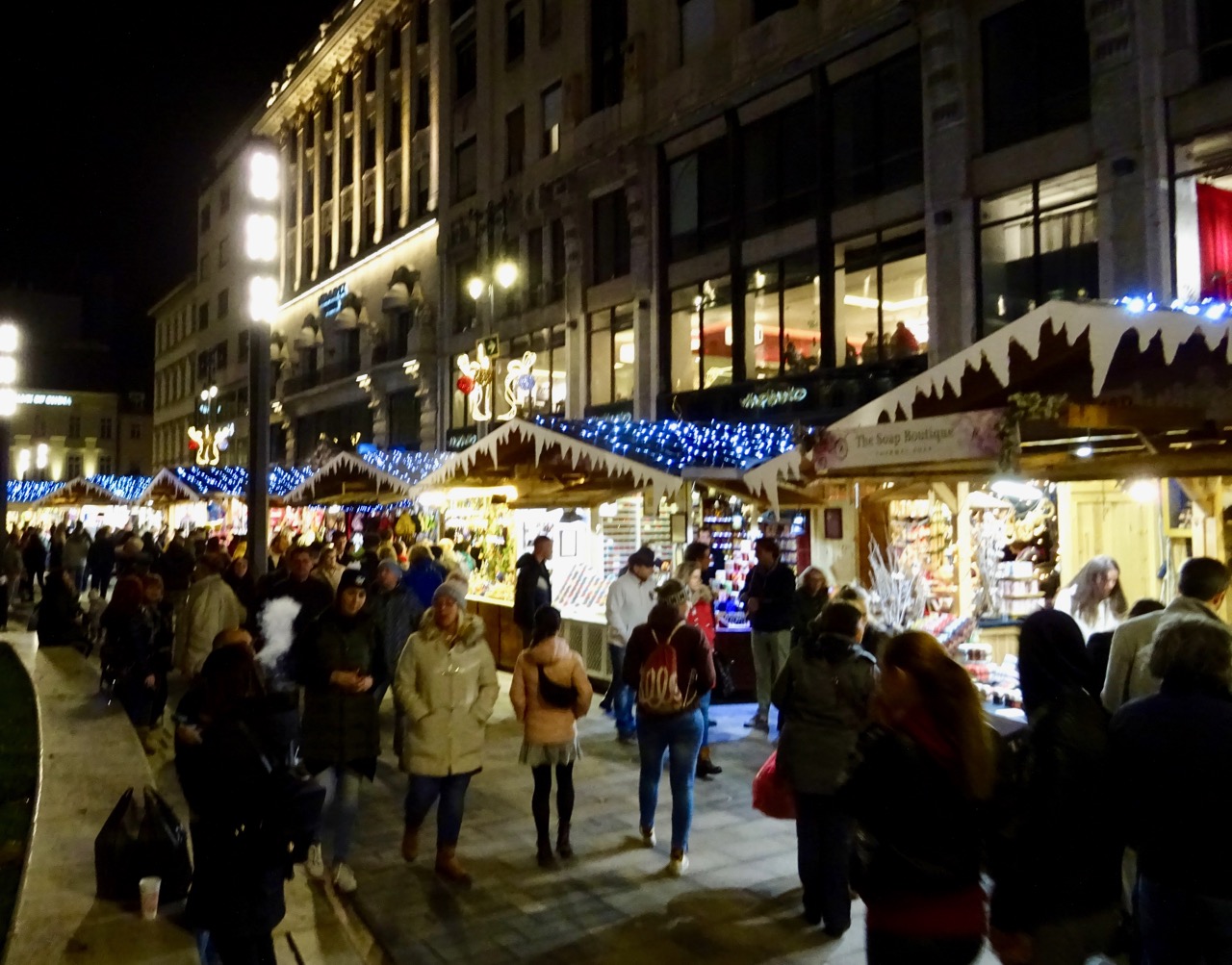 I also took photos of the food stands. Pork hocks are a big item here! We were going to buy a meal here a few days ago but quickly changed our minds when we discovered that one cabbage roll, albeit a big one, would cost us 5,000 Forints, the equivalent of $25 Canadian! A small plate with a sausage and two small helpings of side dishes was $35.00! We were rather shocked at how expensive it was. We saw other tourists change their mind and refuse to purchase what they had ordered when they realized the price.
 I saw lots of these sparkling balloons and thought they were so pretty. They were even nicer in person than in the photo. We spend the rest of the evening tidying the apartment and packing for our drive to Croatia tomorrow. Oh, and the puppet show we saw ws ‘Coraline’.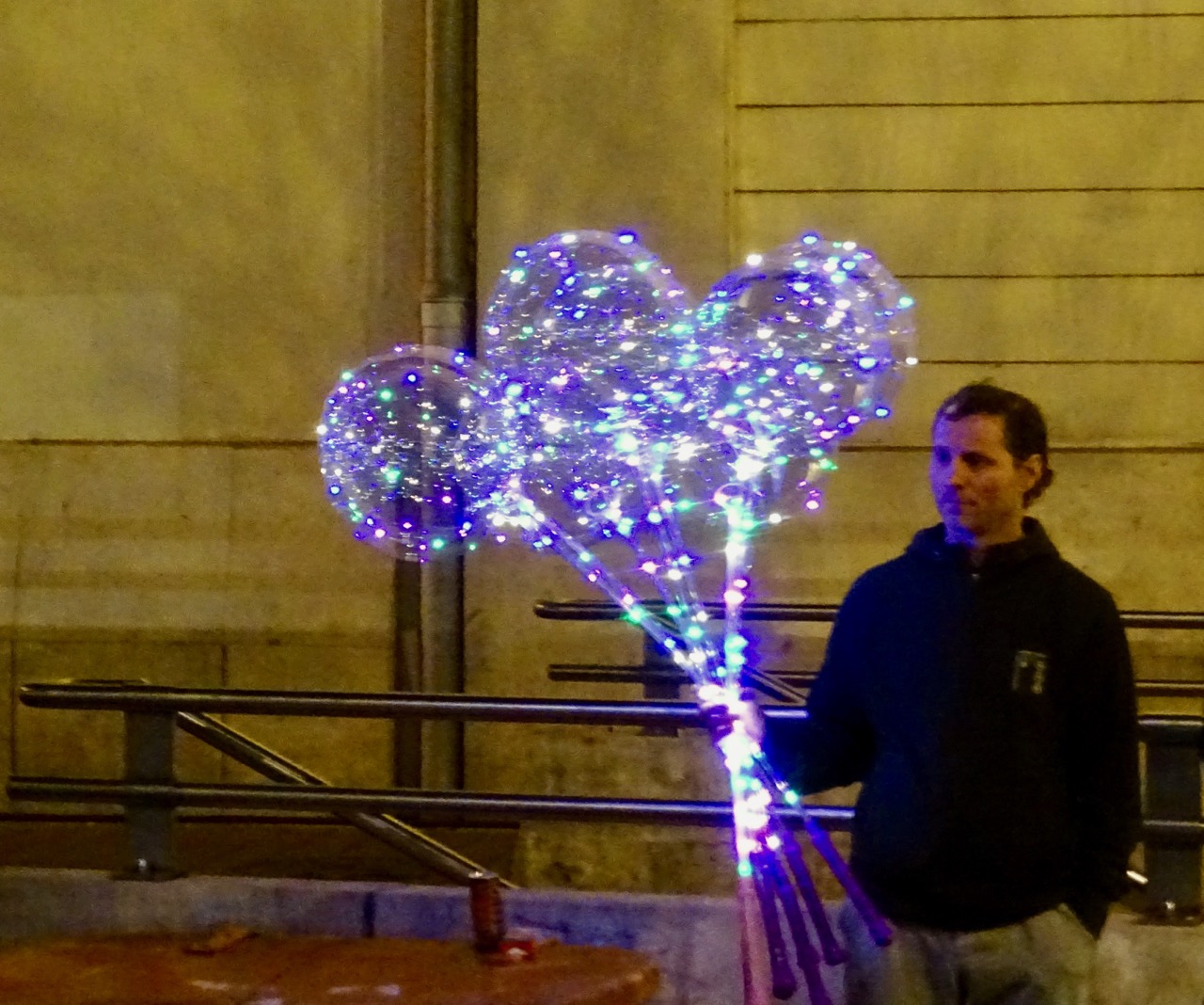
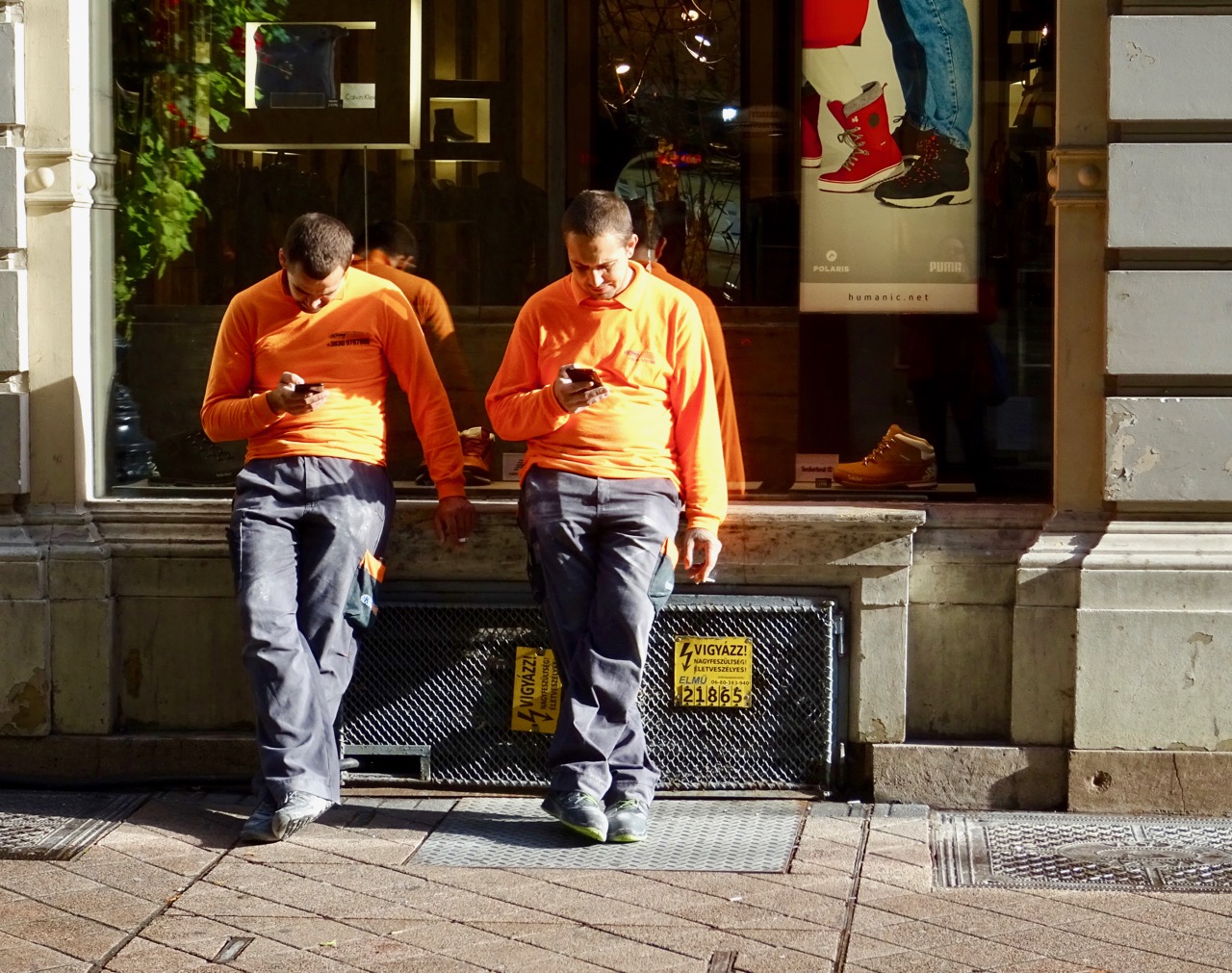
 I laugh watching these two guys. They are dressed the same, stand the same and both are smoking and looking at their cellphones. They even both take a drag on their cigarettes at the same time!
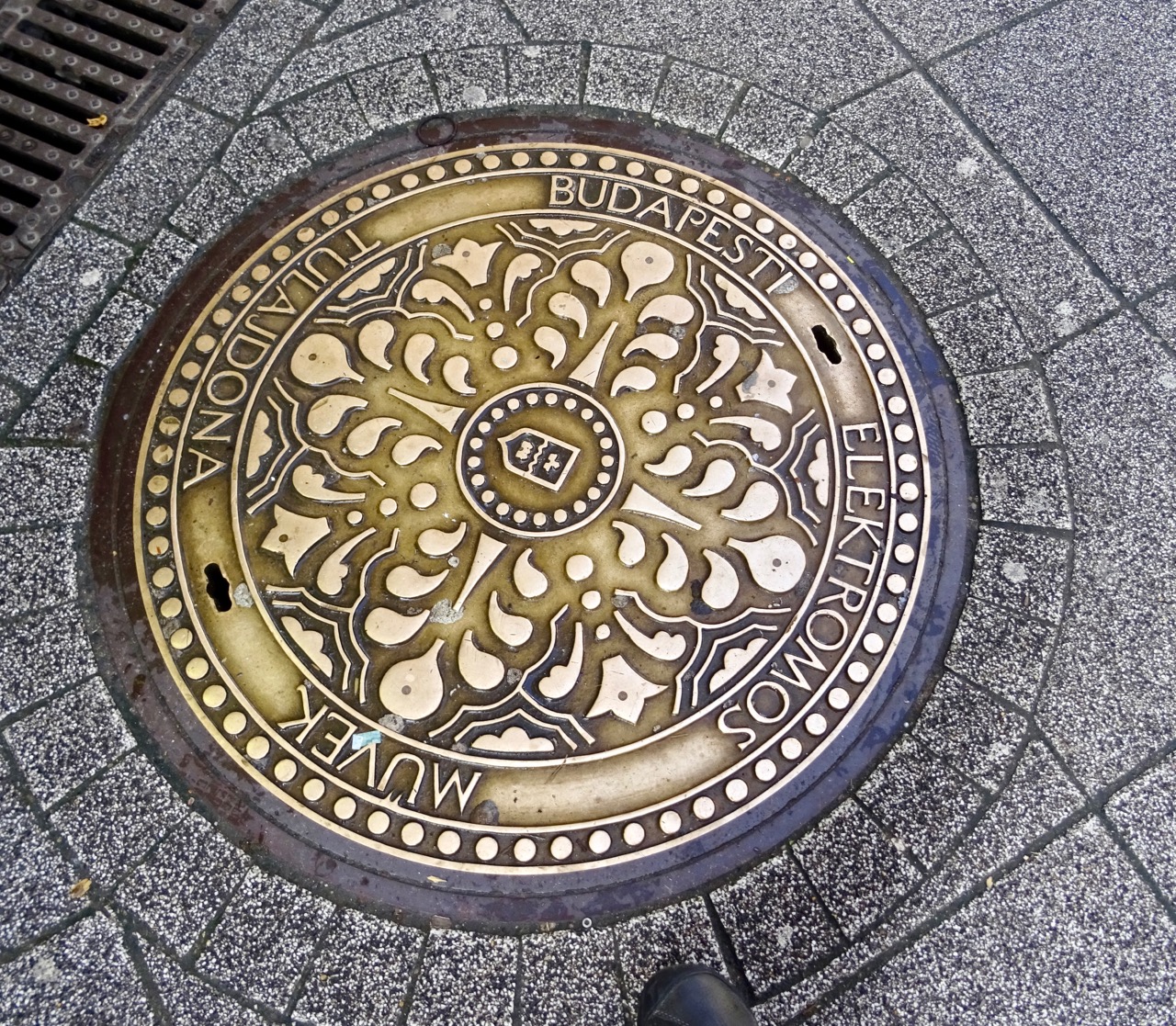
 Budapest has very pretty manhole covers.
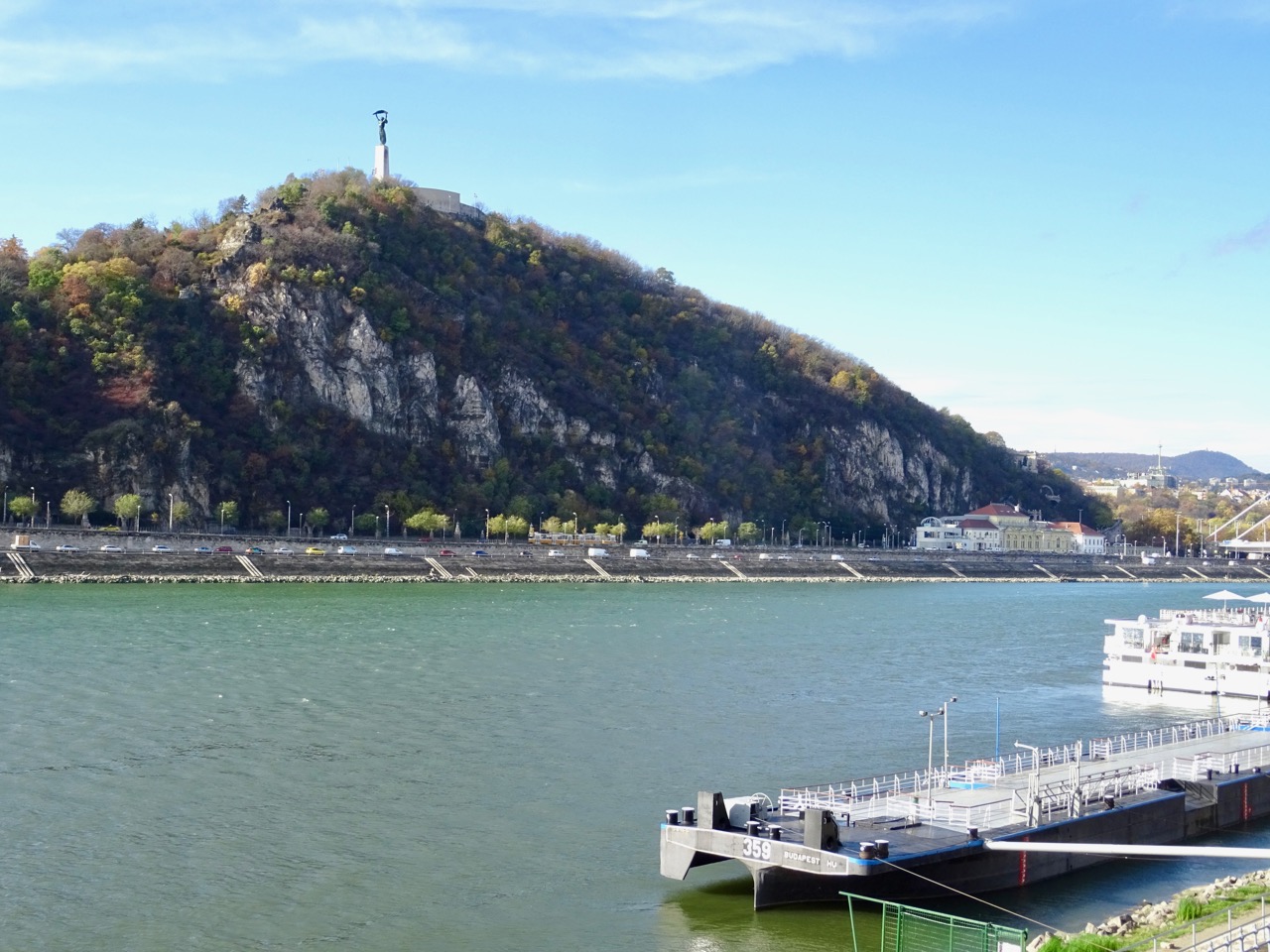
 Bob tells me we are going to the top of that hill across the Danube River on the Buda side of the city. I am quite happy to hear there is a bus that will take us most of the way.
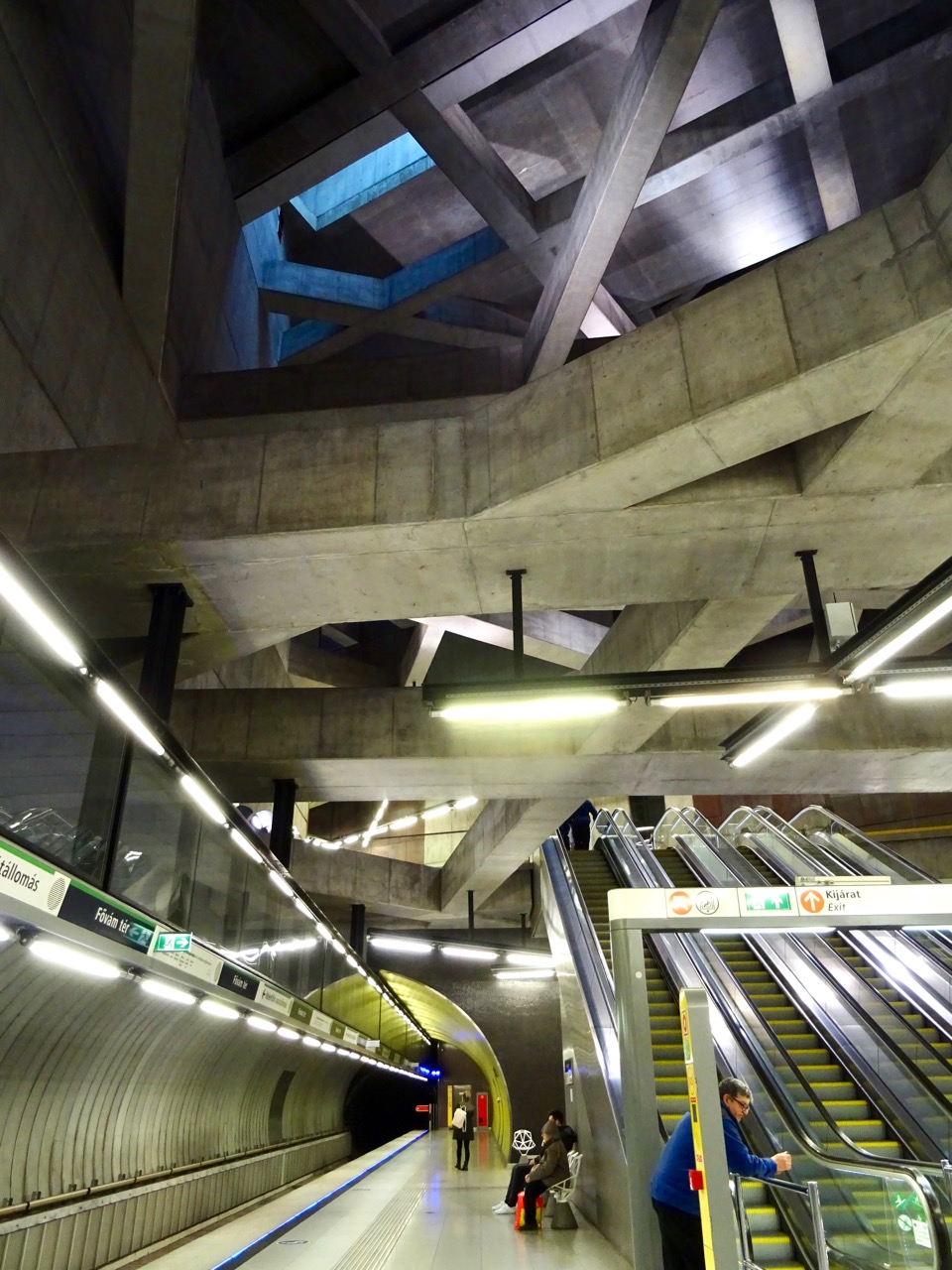
 The metro stations in Budapest are very deep underground. They were built so that they could be used as bomb shelters. I wonder what would happen if a bomb fell above a station full of people. How would they get out…would they be trapped by all the rubble? Then I decide that they could walk down the tracks and maybe get out at another spot. Bob says I think too much!
 We are on top of Gelléert Hill and it was only a short climb from the bus stop. There are great views of Budapest looking to the East…
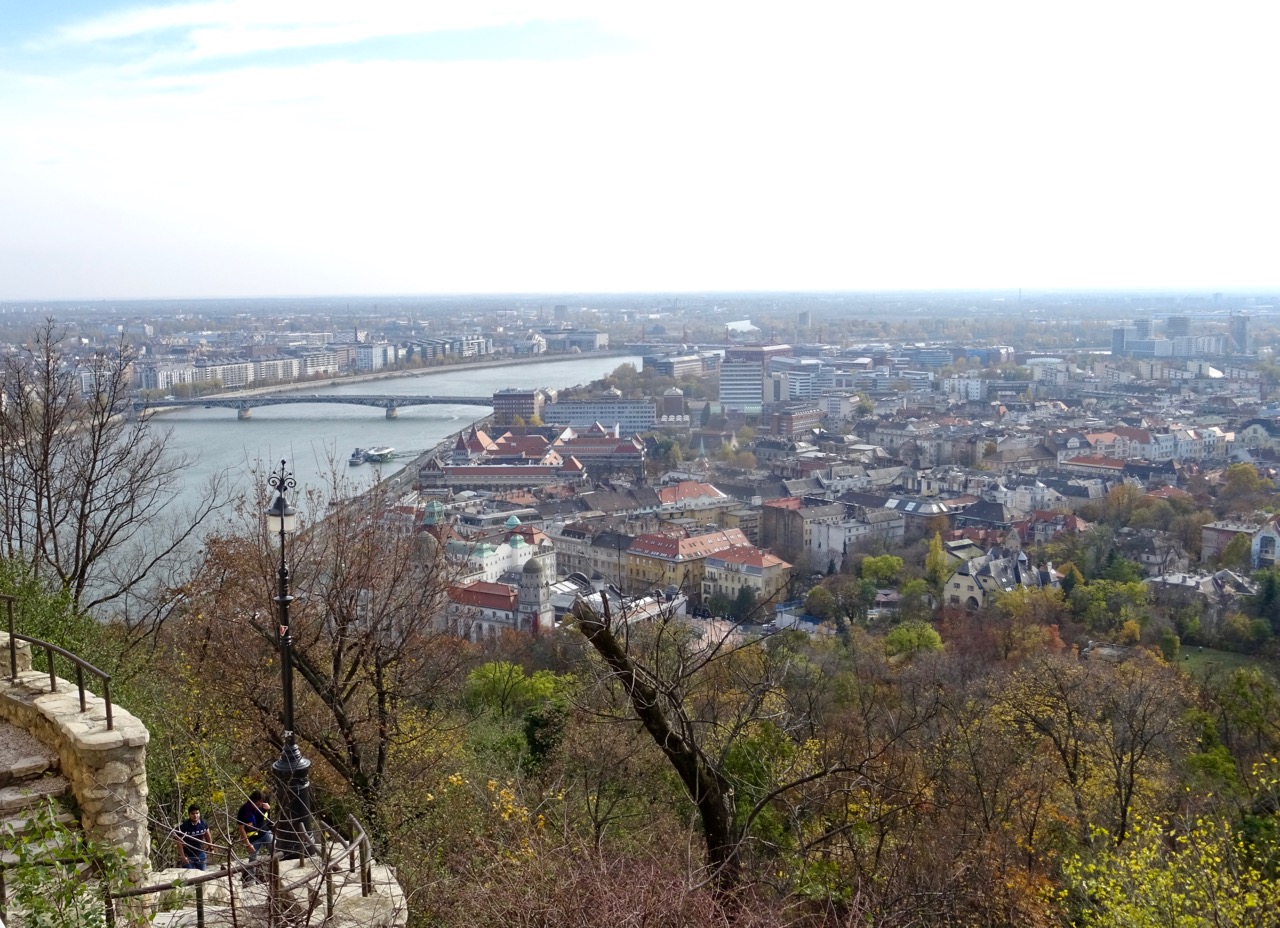 and the West.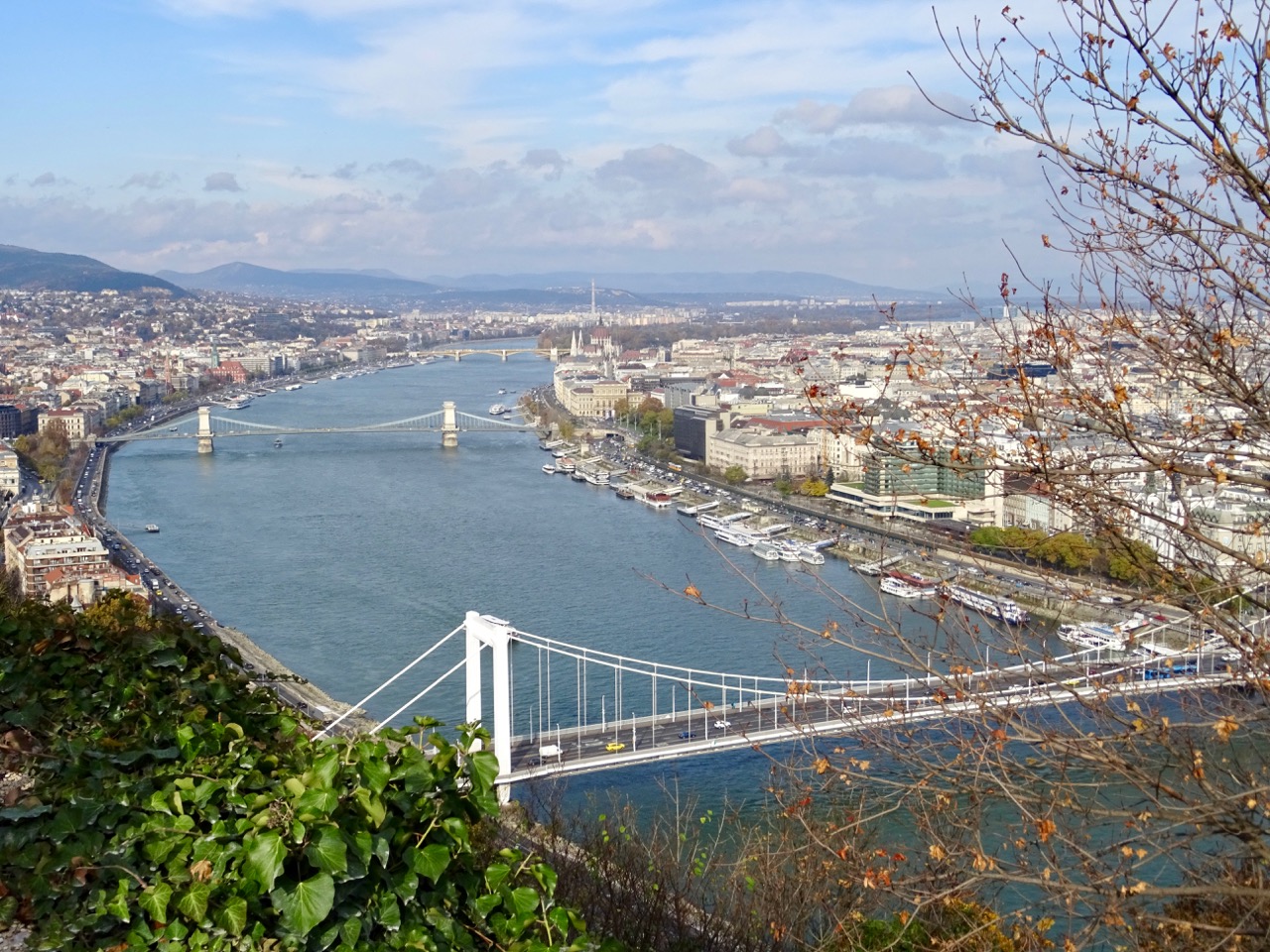
 Bob called me over to watch an older man operating a shell game near here. He had a cardboard box and three shells, and people bet on which shell a pea was under after they were shuffled. We were astounded that he was able to convince people to bet 400 or 500 euros.
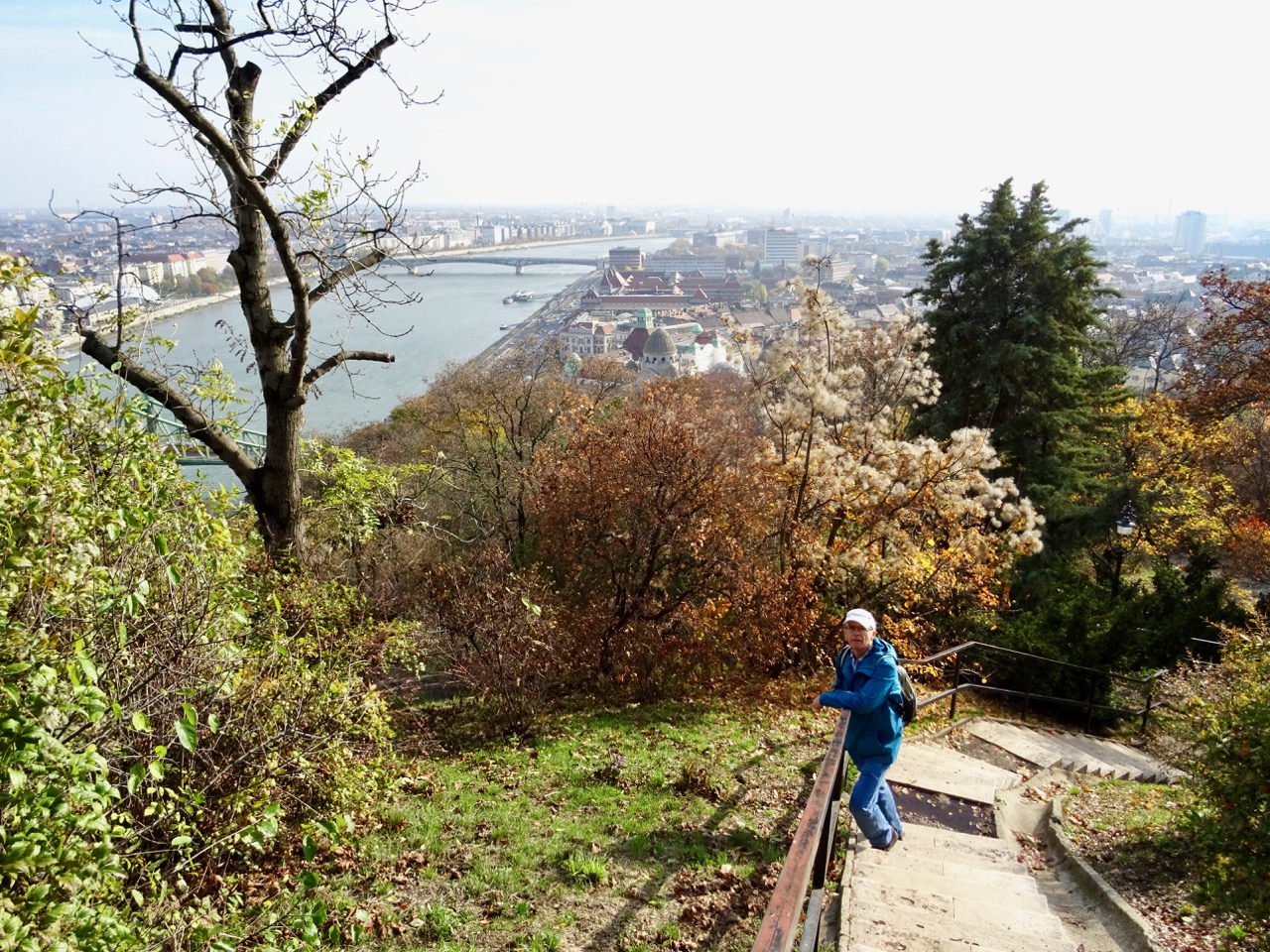
 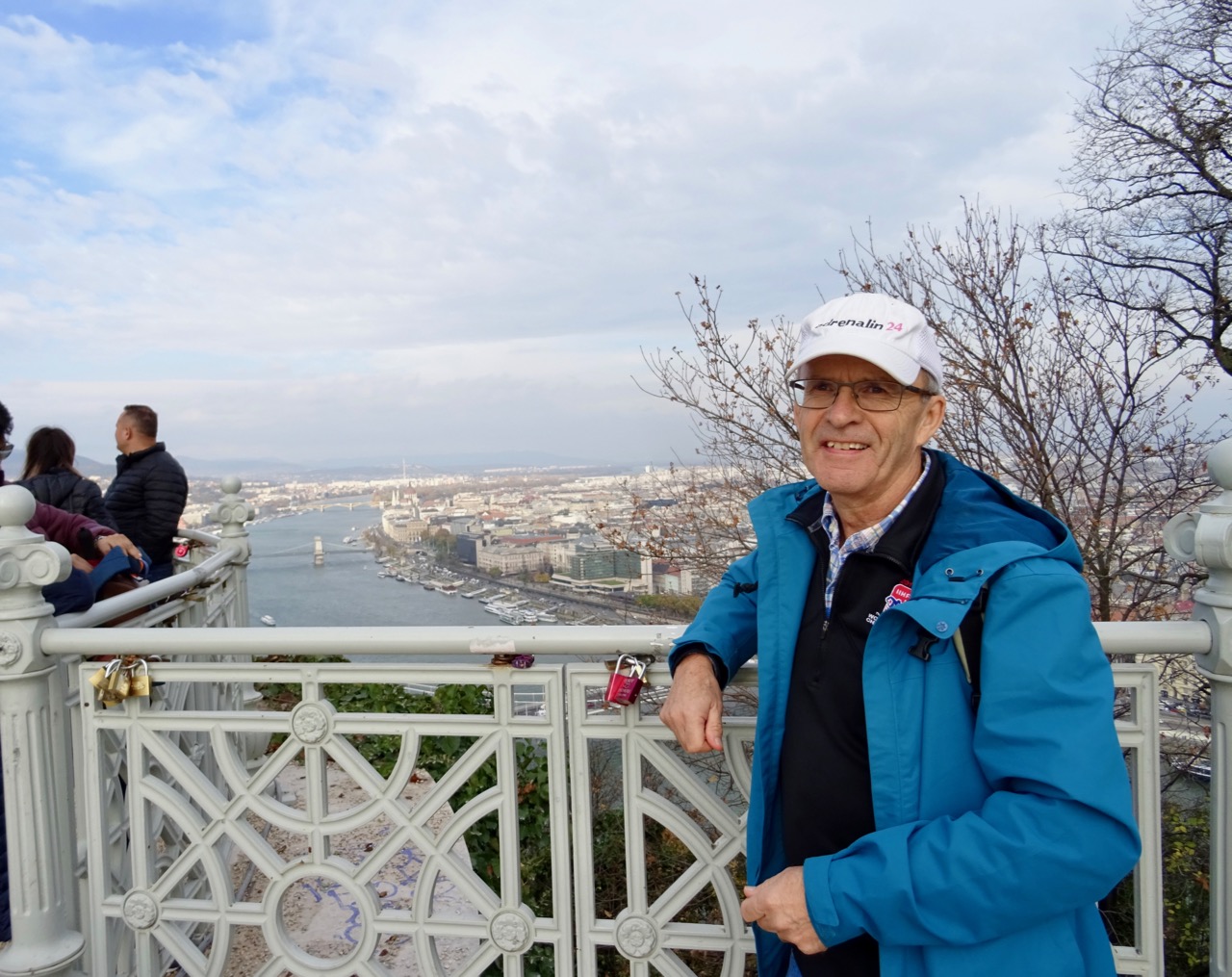 It is getting windy so we start down the hill. We are walking down…
 through a park with lots of trees…
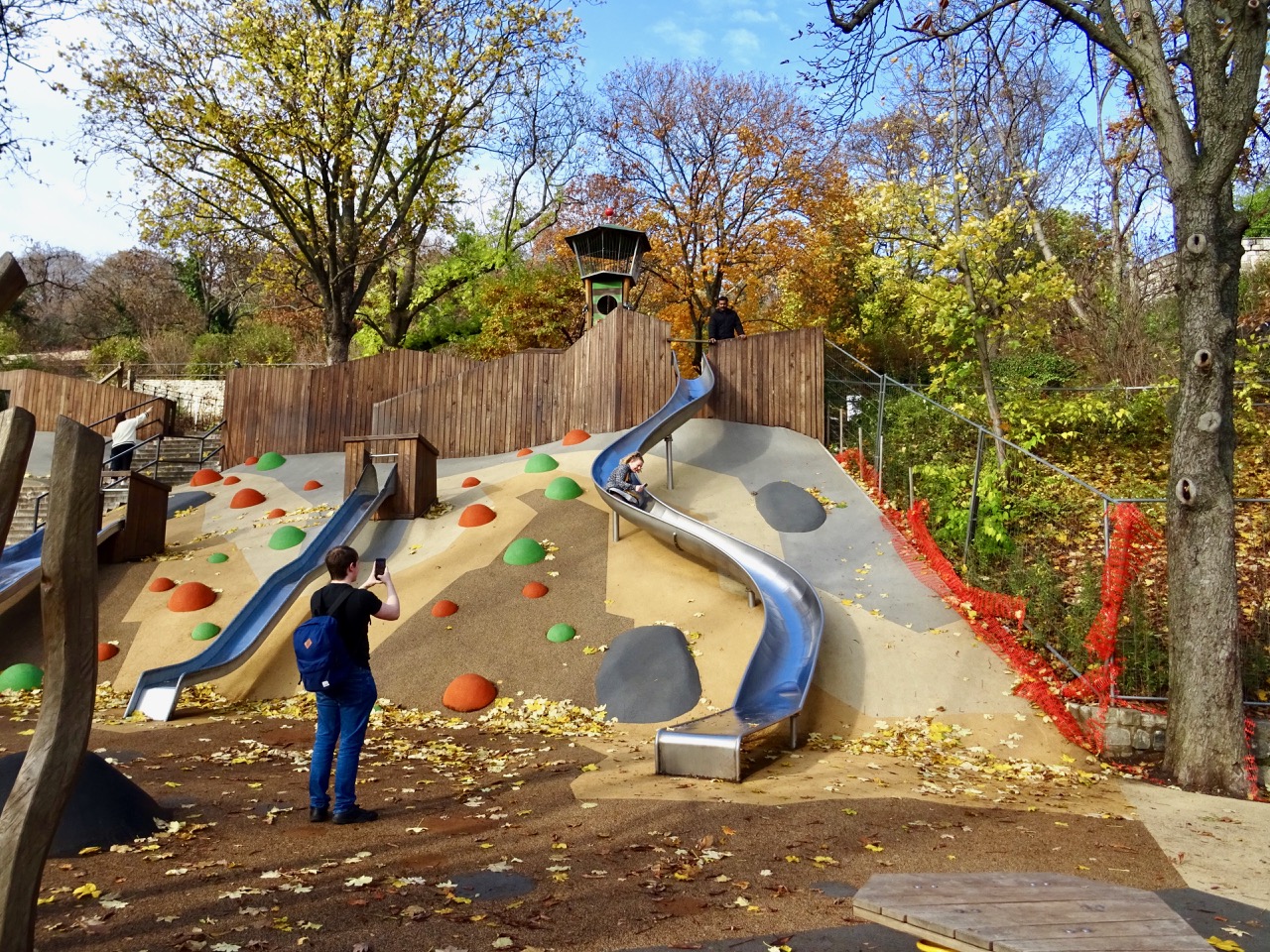
 and a couple playgrounds. This one takes advantage of the hillside. We tried this slide too.
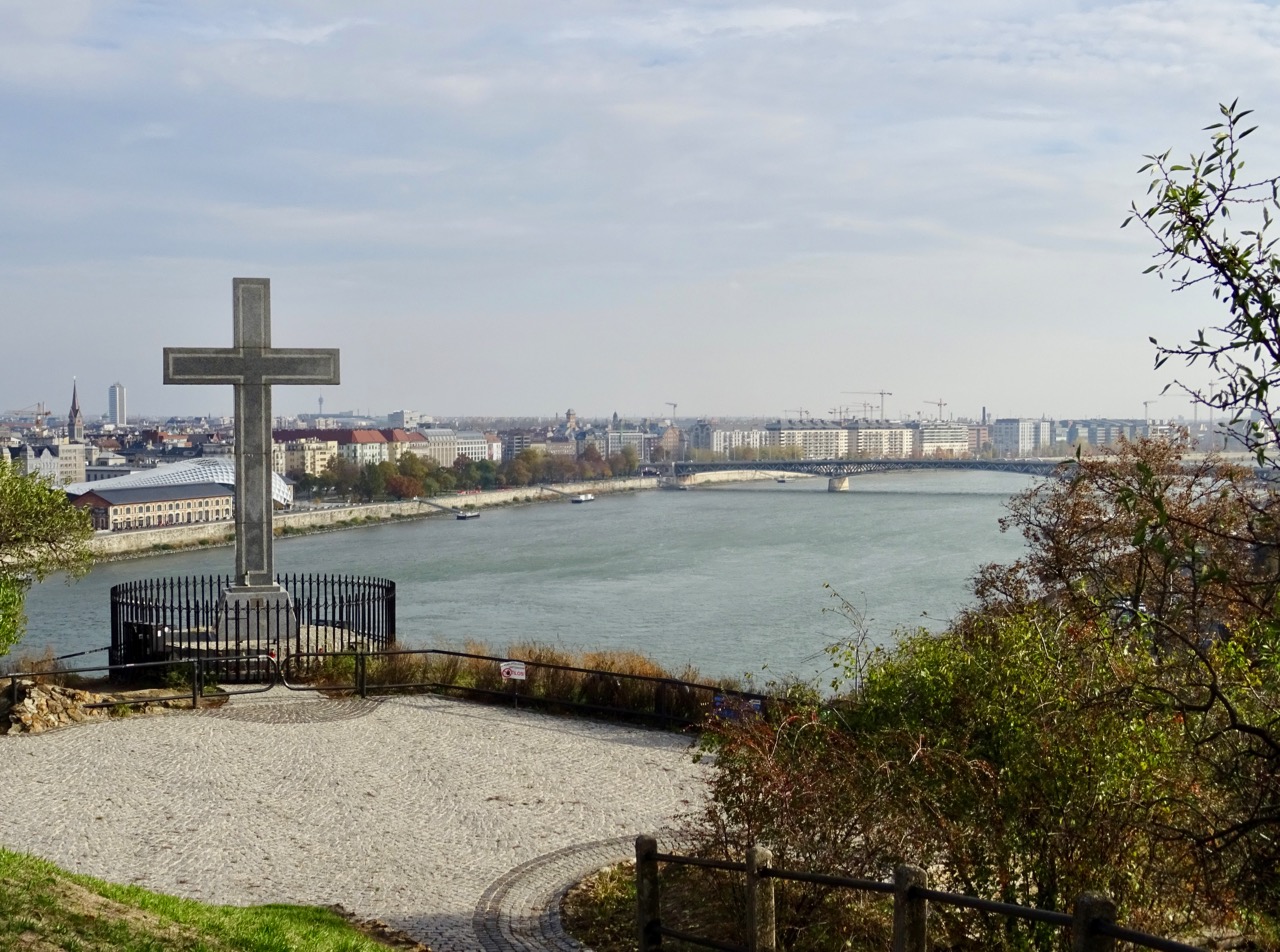
 This cross is about halfway down the hillside and marks the location of the Cave Church directly below it.
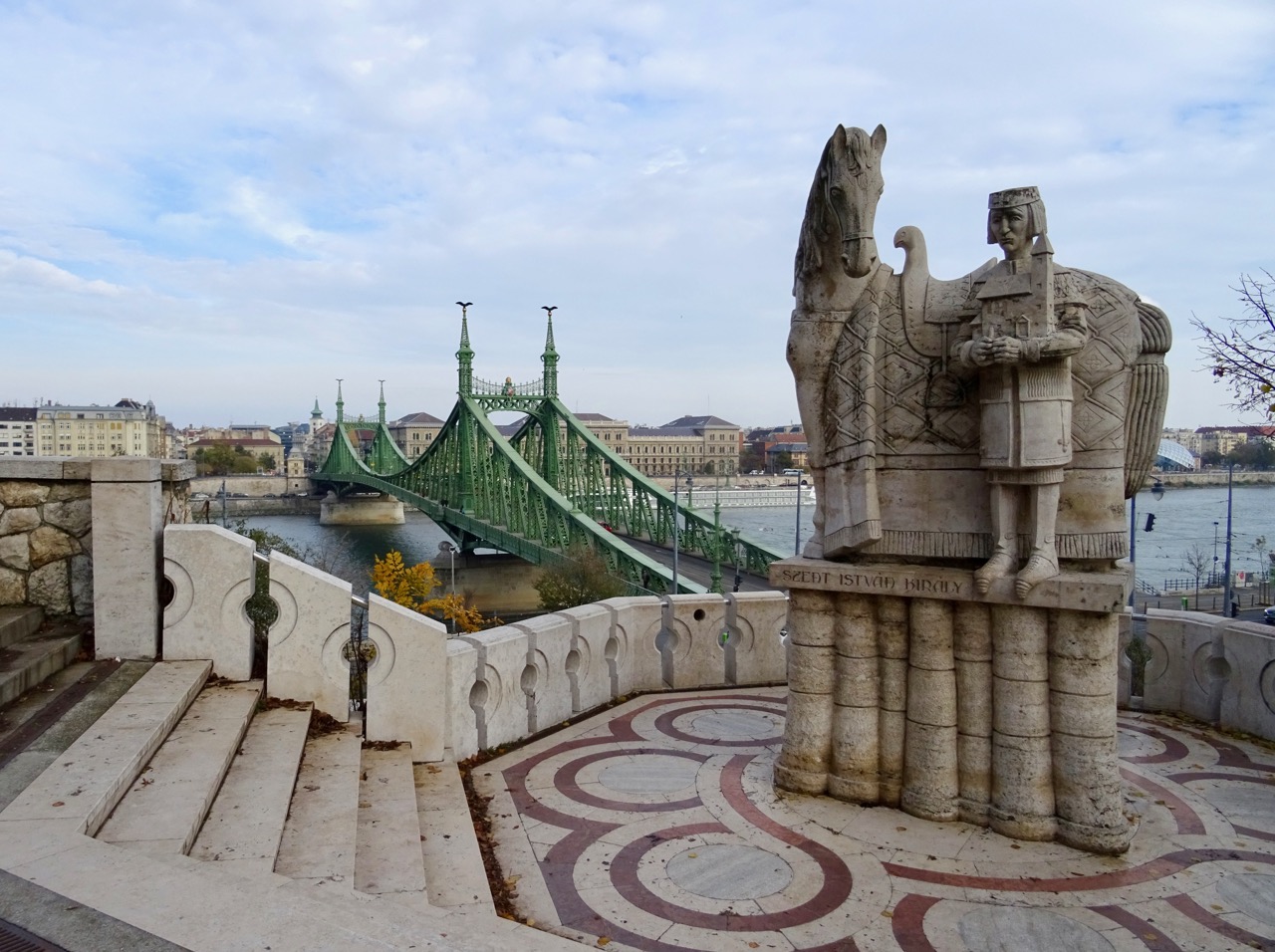
 This statue of St. Stephen is near the entrance to the Cave Church.
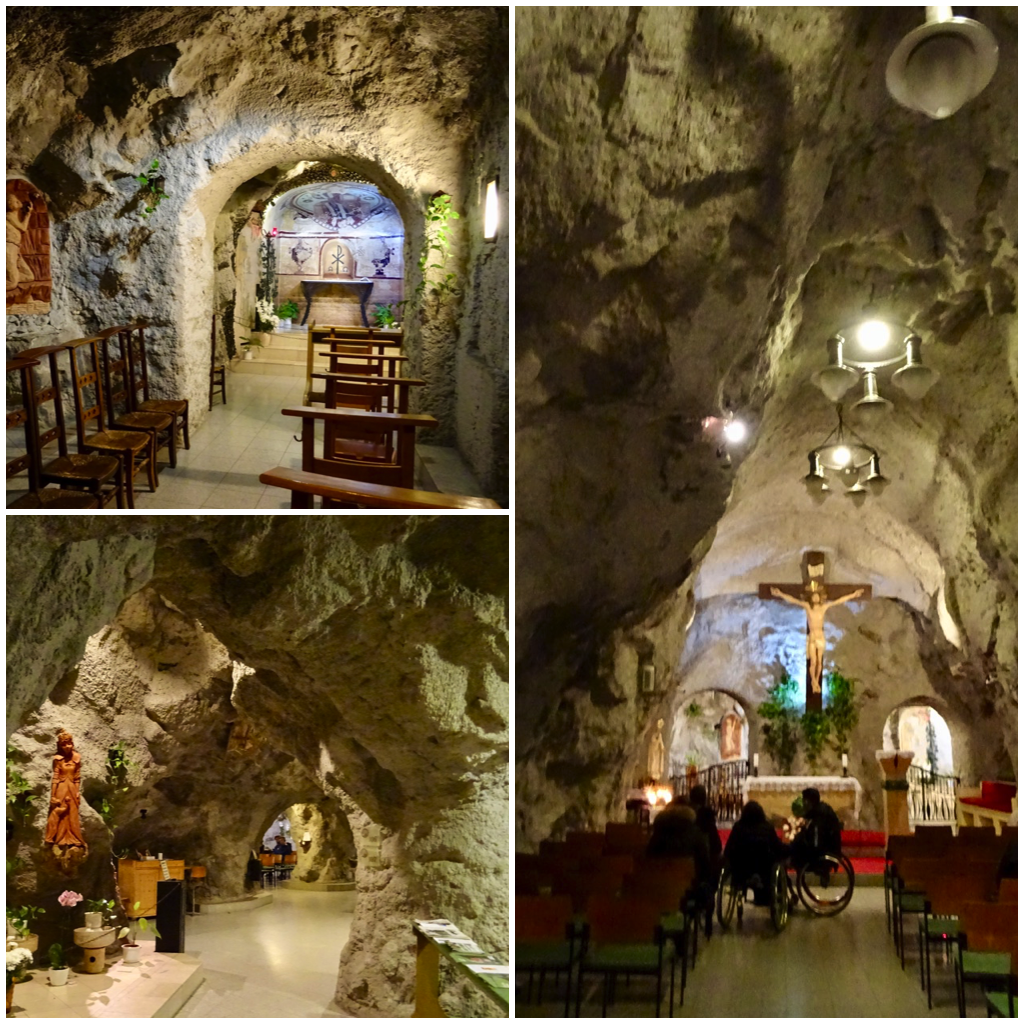
 For more information and photos about this curious church check
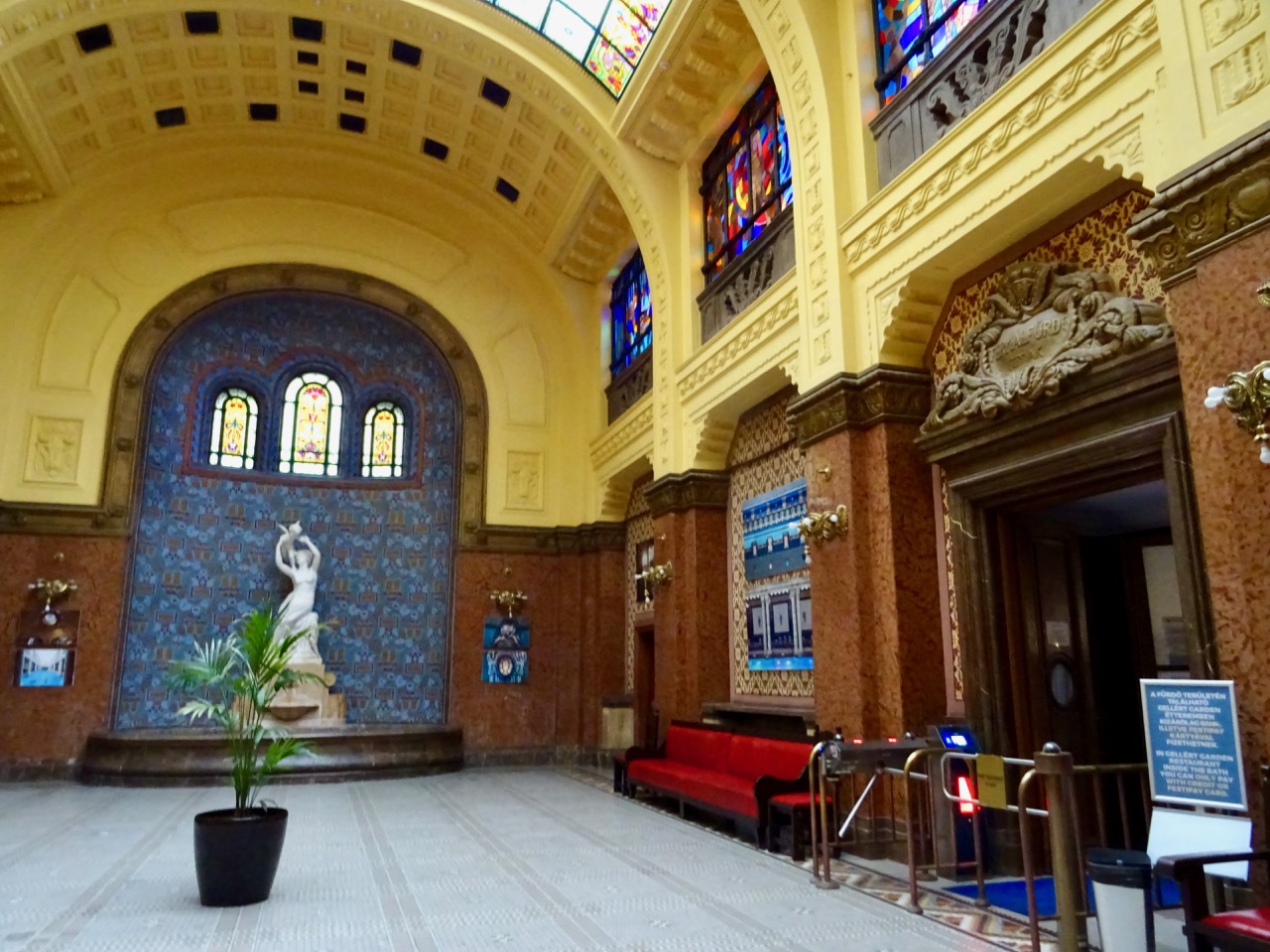
 A bit further down the hill we peek inside the Gellért Hotel…
 which houses one of Budapest’s thermal bath houses. It looks very fancy.
 Here is a view of the cave entrance from the street below…
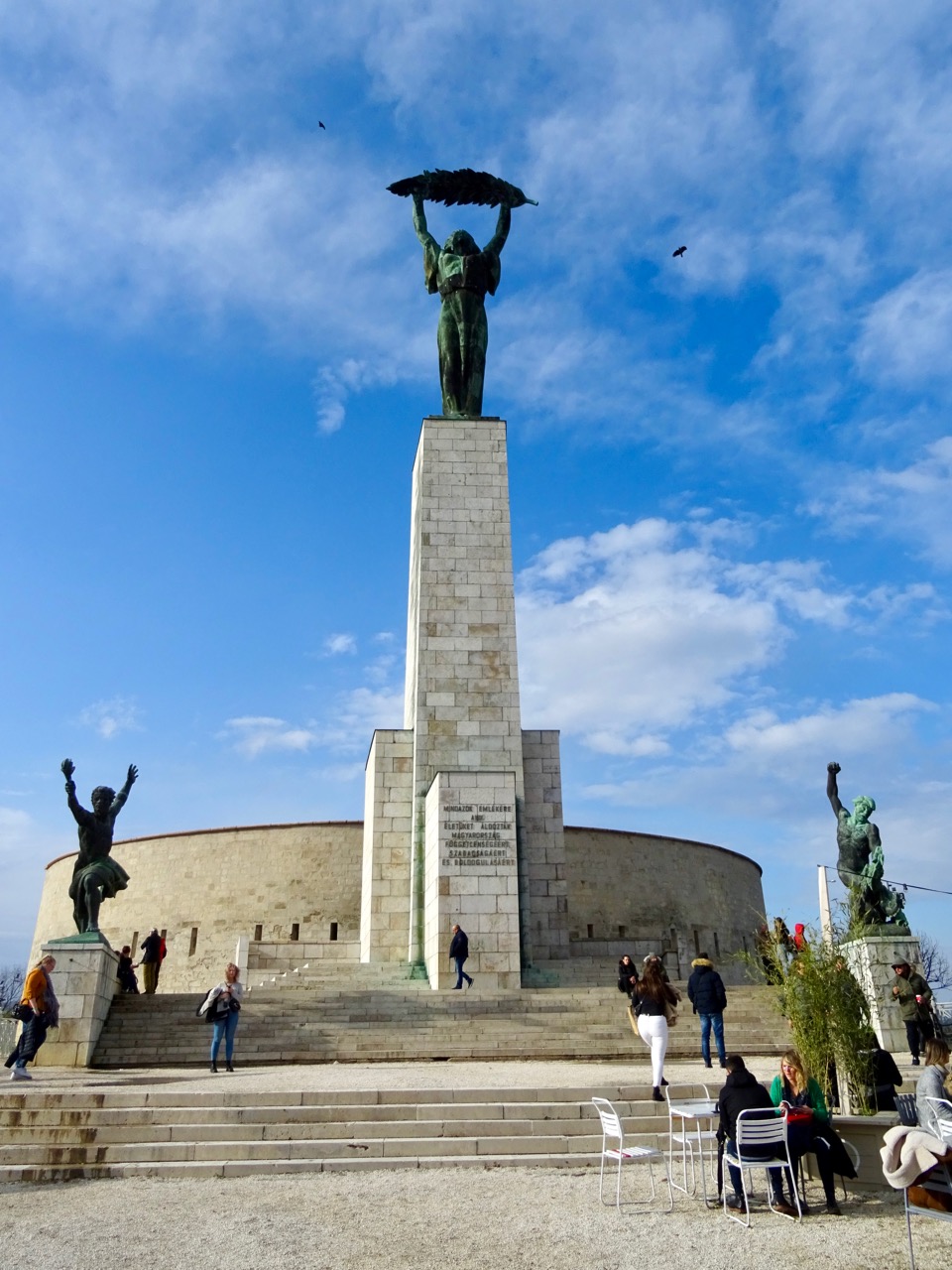
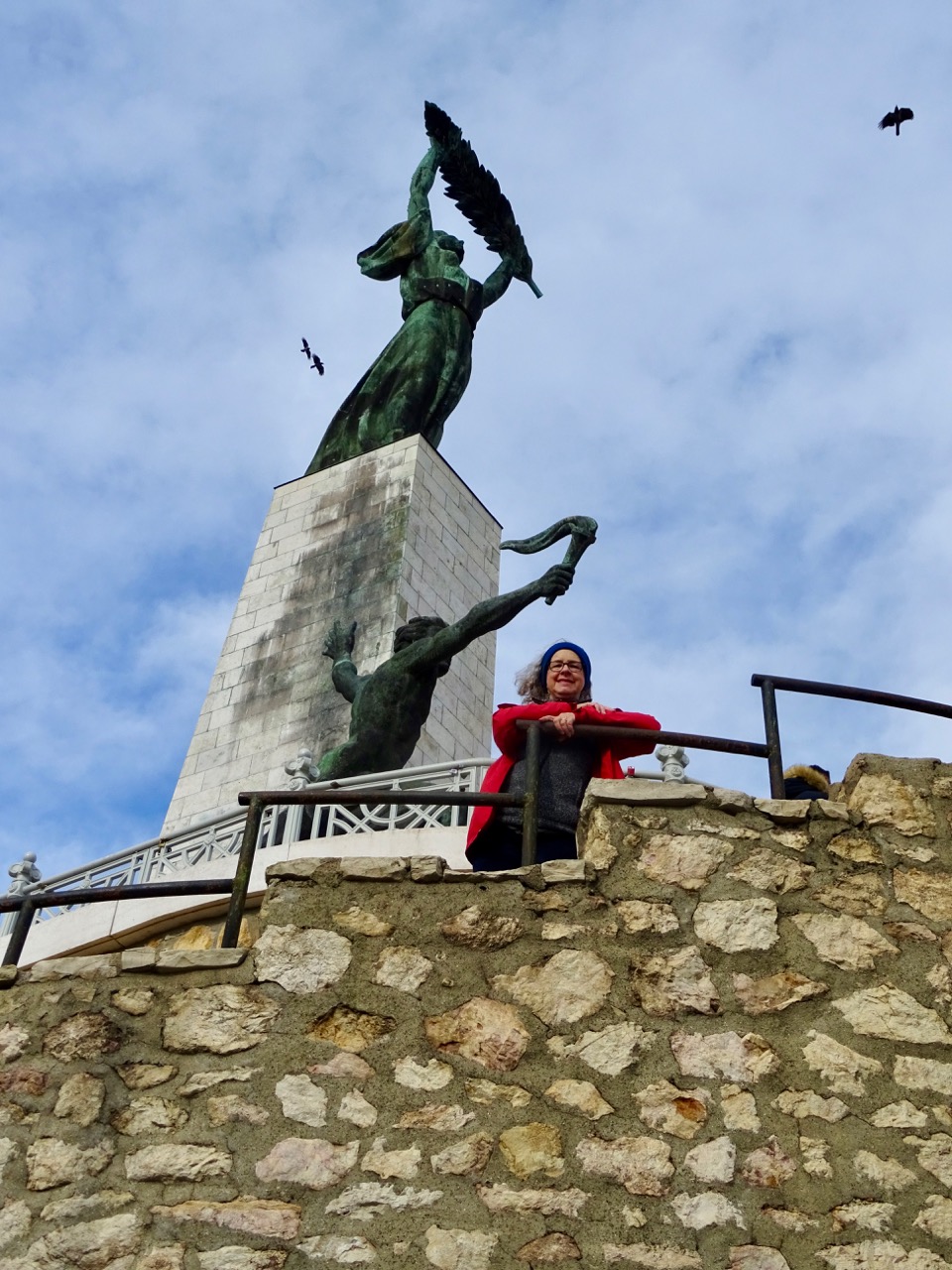
 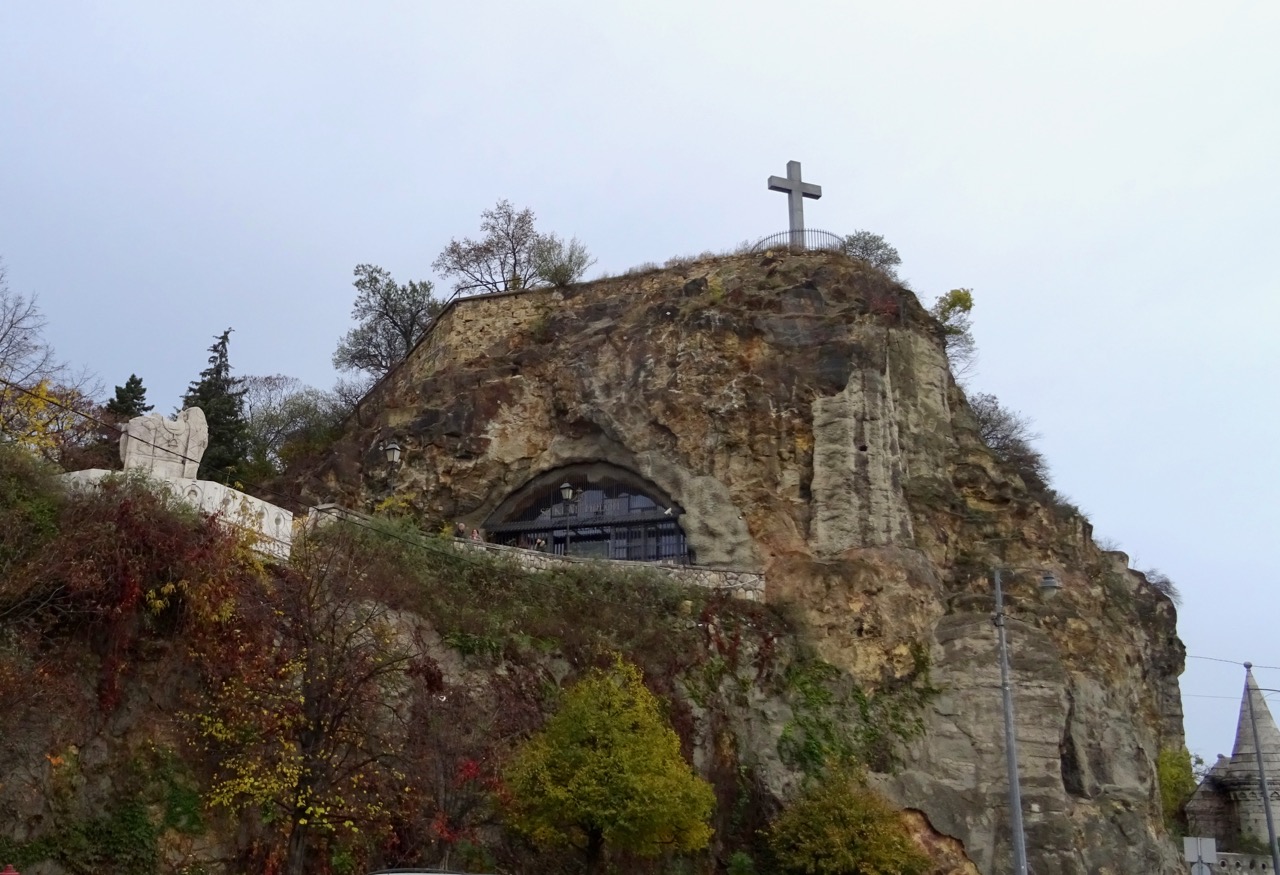 and the Liberty Statue at the top of the hill.
 We walked back across the bridge to the Pest side of the river…
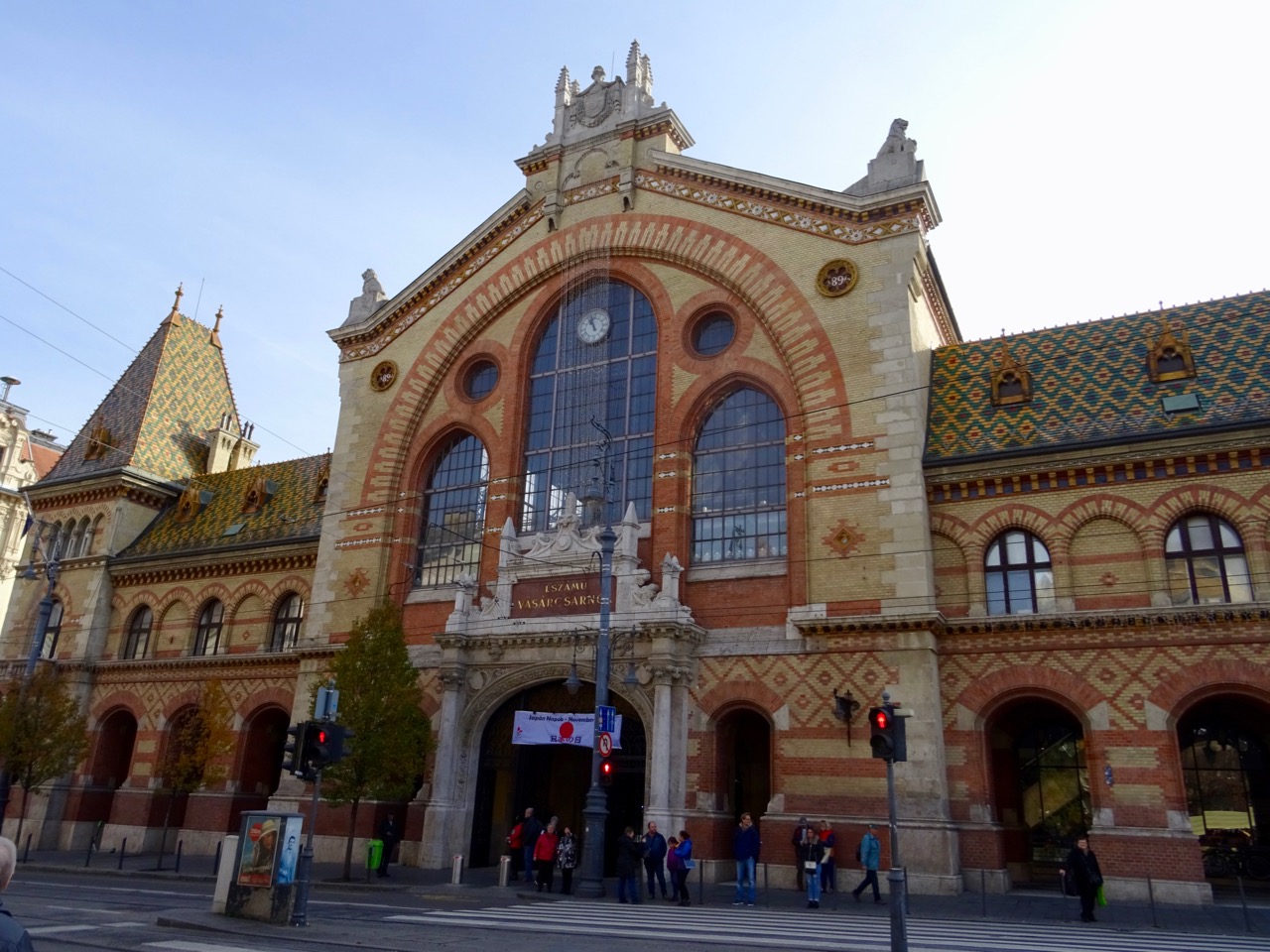
 and visit the Indoor market.
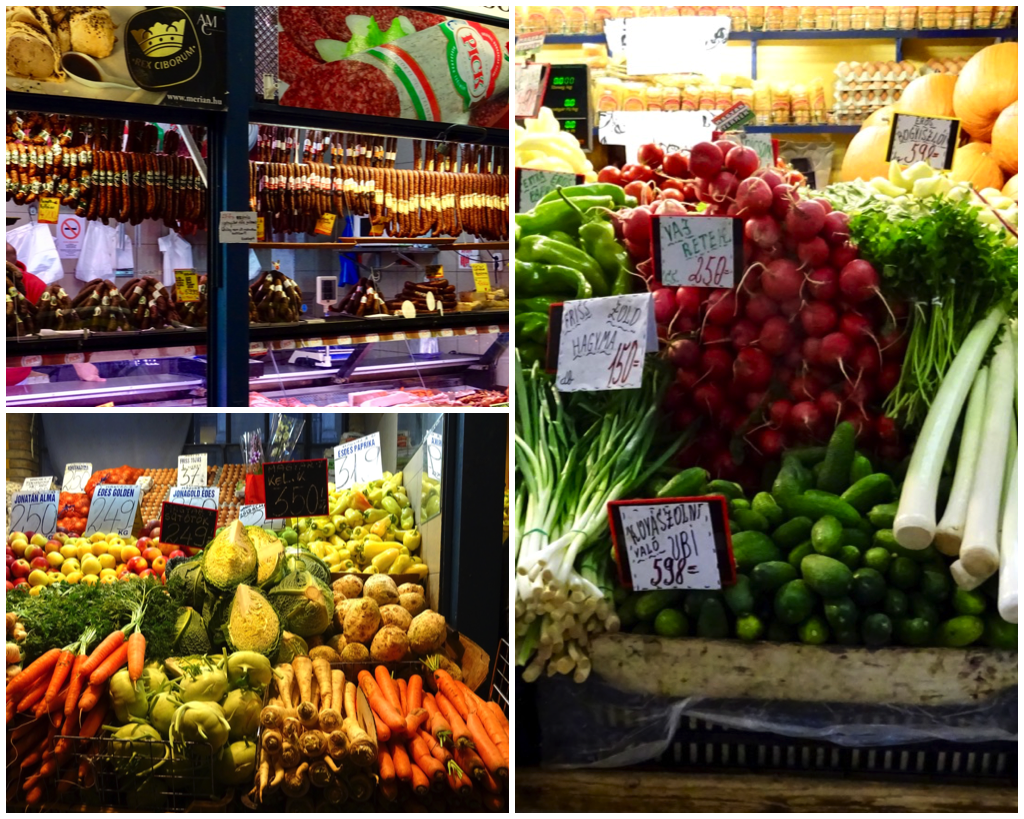
  I thought these kohlrabi were huge but the radishes were enormous, about the size of an egg! I’ve never seen radishes that big! We have supper here but unfortunately the food wasn’t really all that great.
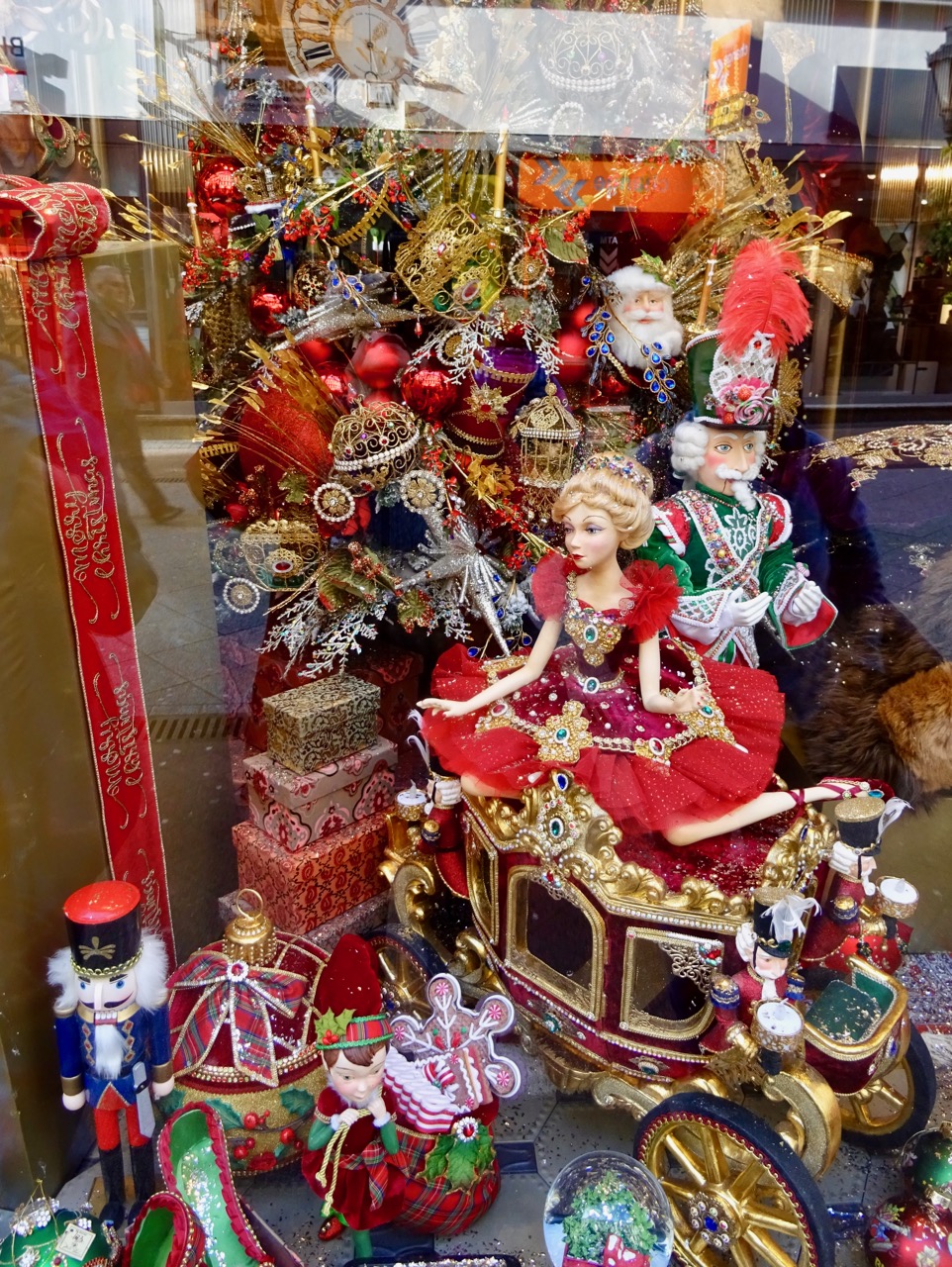
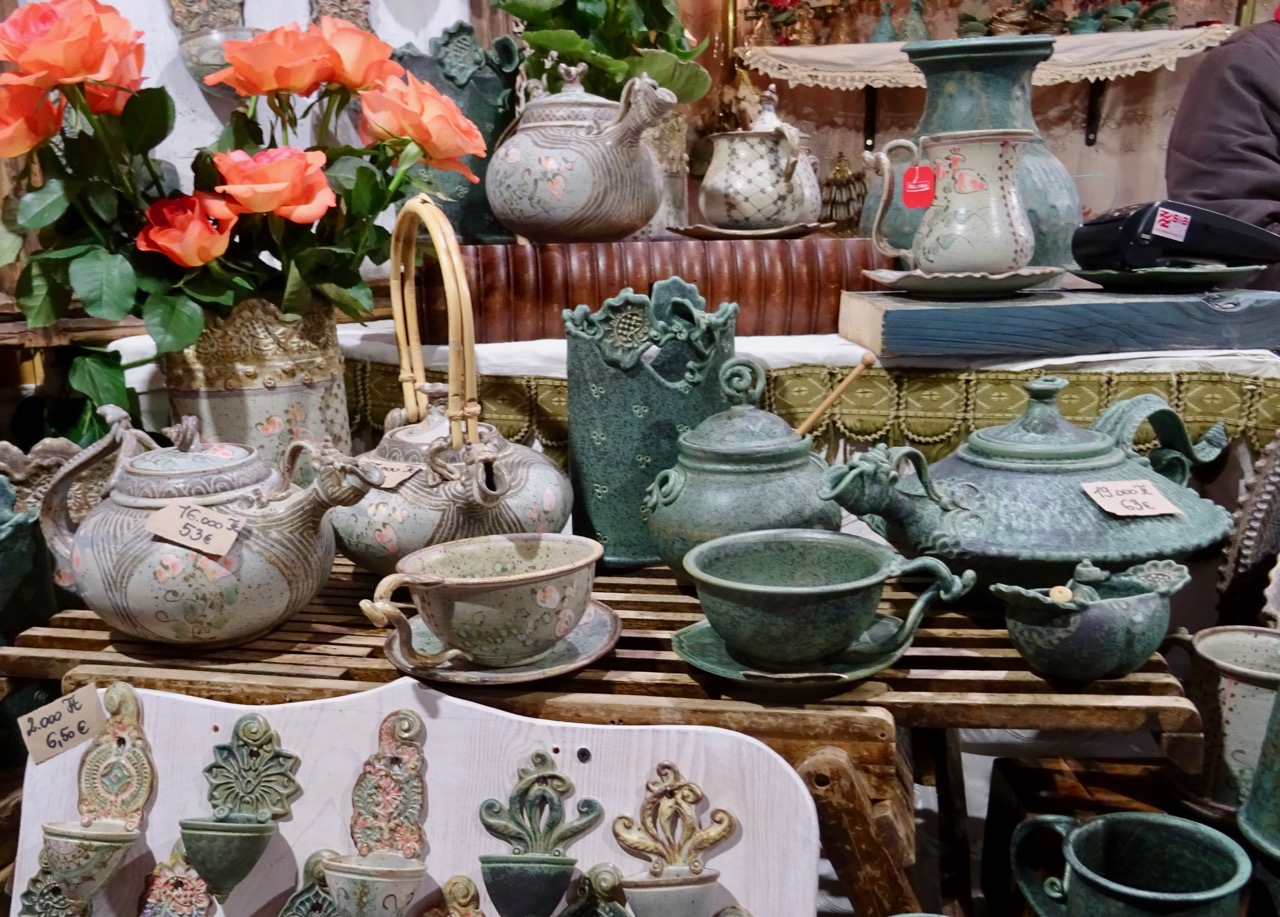
  On our walk back home we pass through the Christmas Market and I notice these teapots. I would have loved to have bought one but worried about getting it home in one piece.
 These necklaces are made with seed beads! Imagine how long it would take to make each one.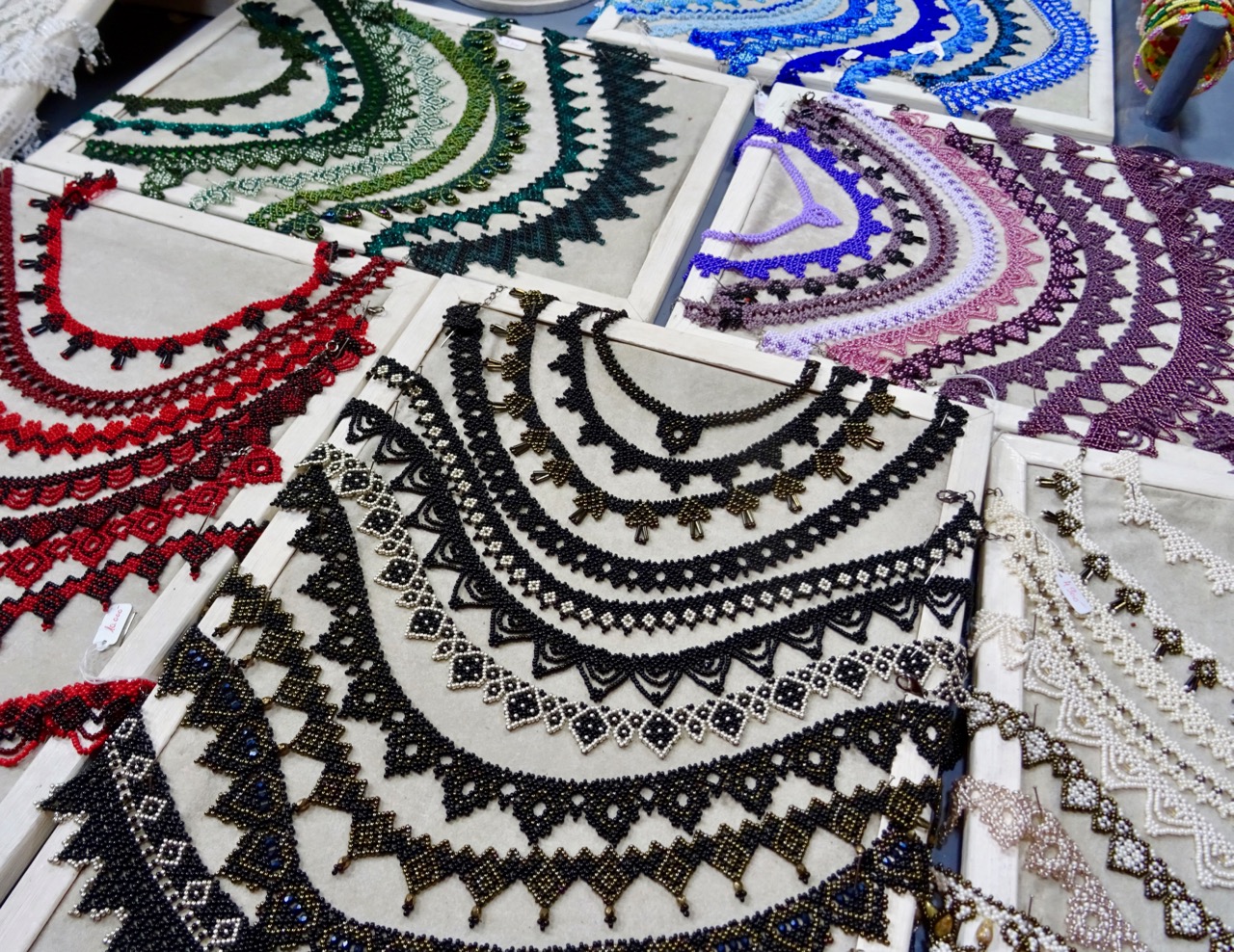
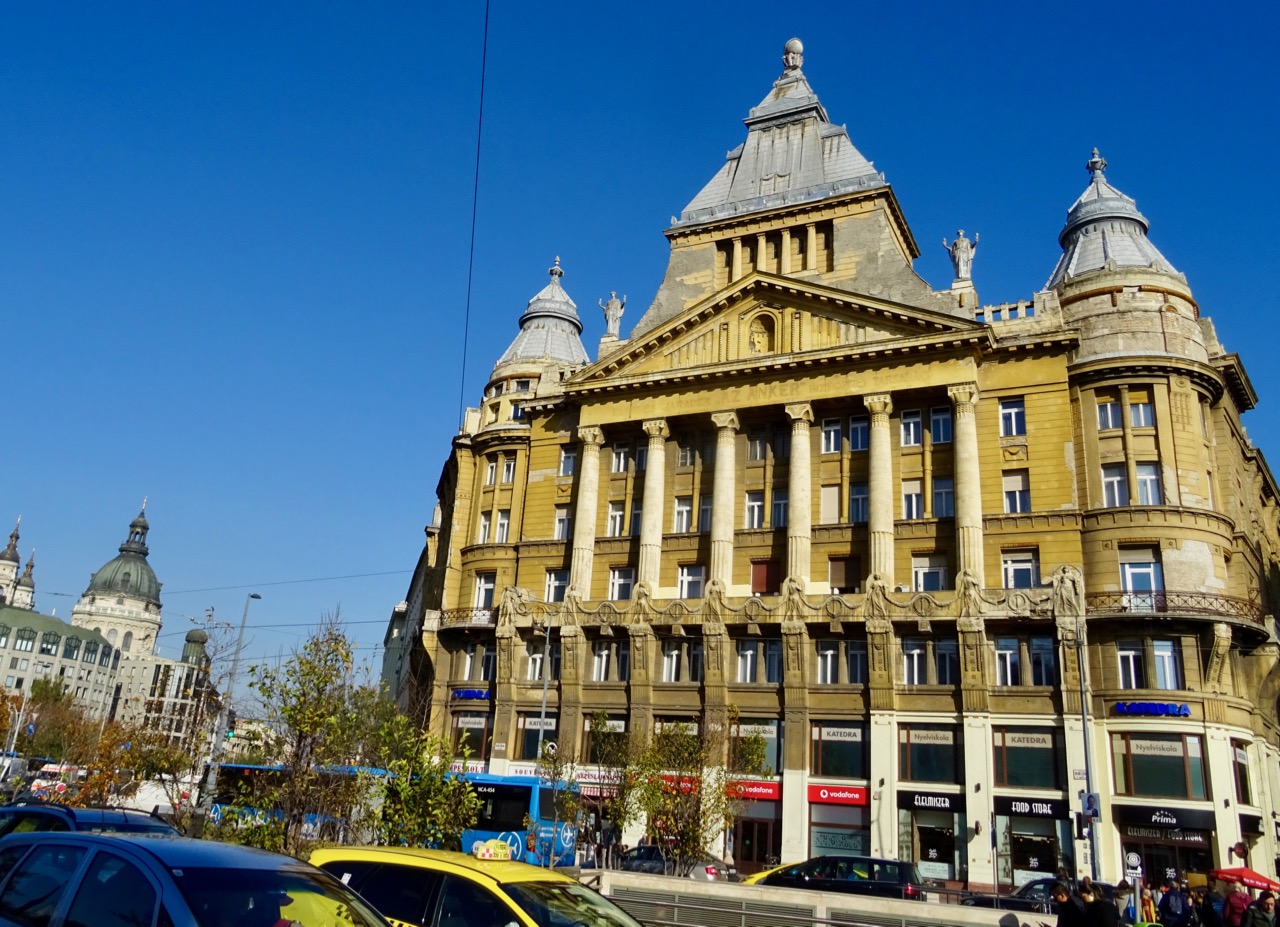
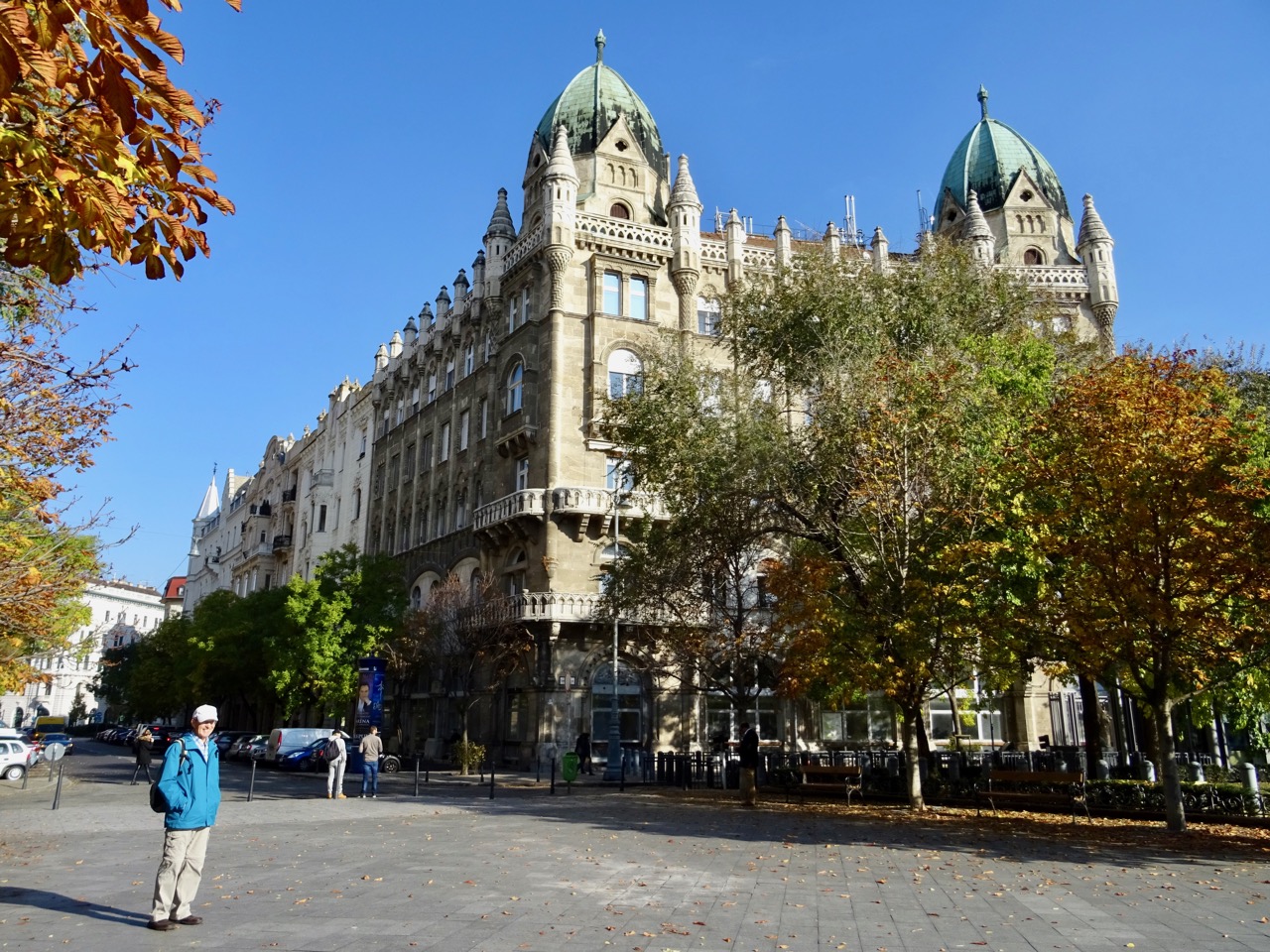
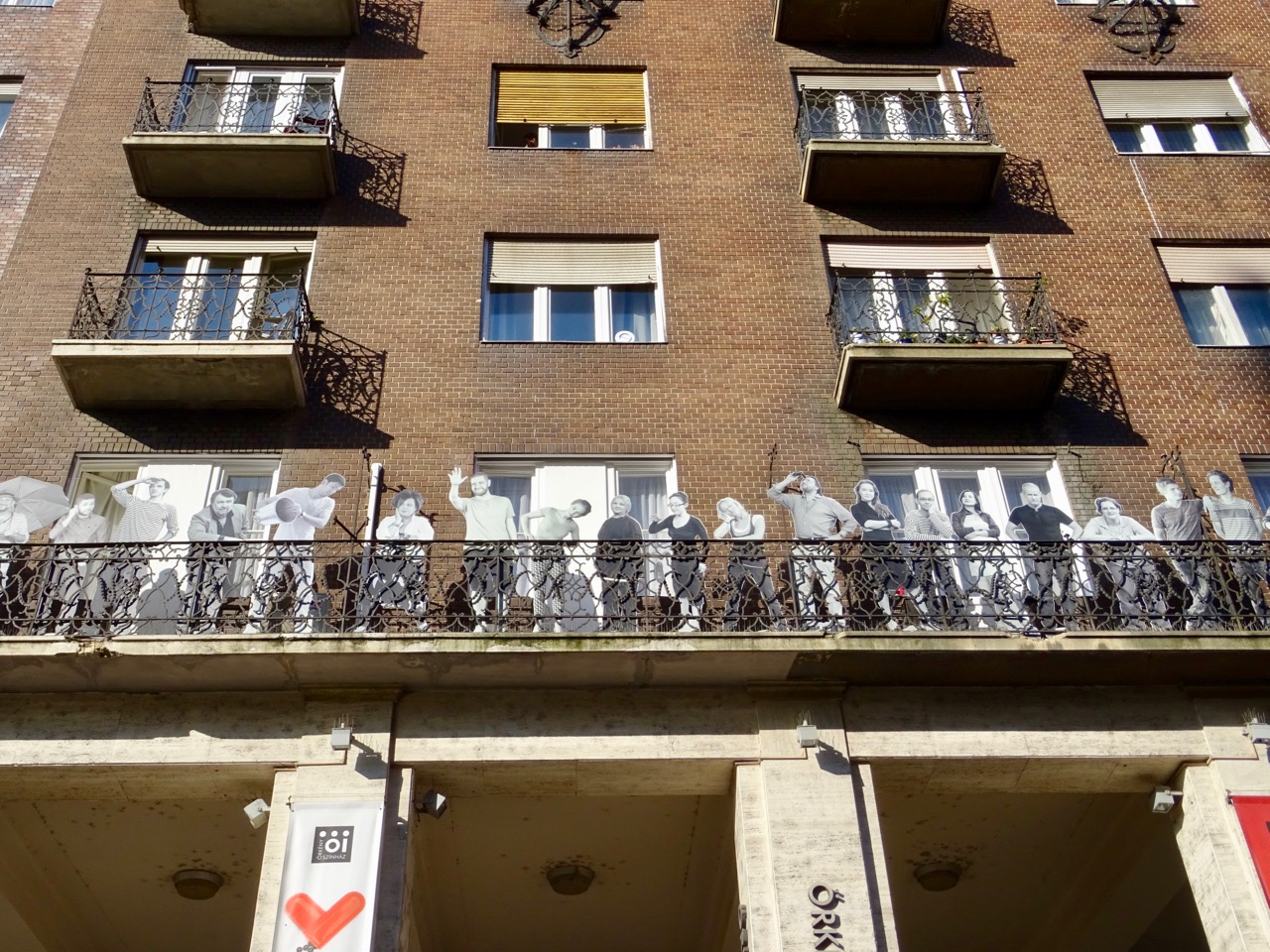 We are staying in the Old Jewish Quarter and the roads are very narrow and crowded. As we leave this area, the roads widen and there are many pedestrian-only roads and big plazas. This large ornate building is the first large building I see on the main Street near our apartment.
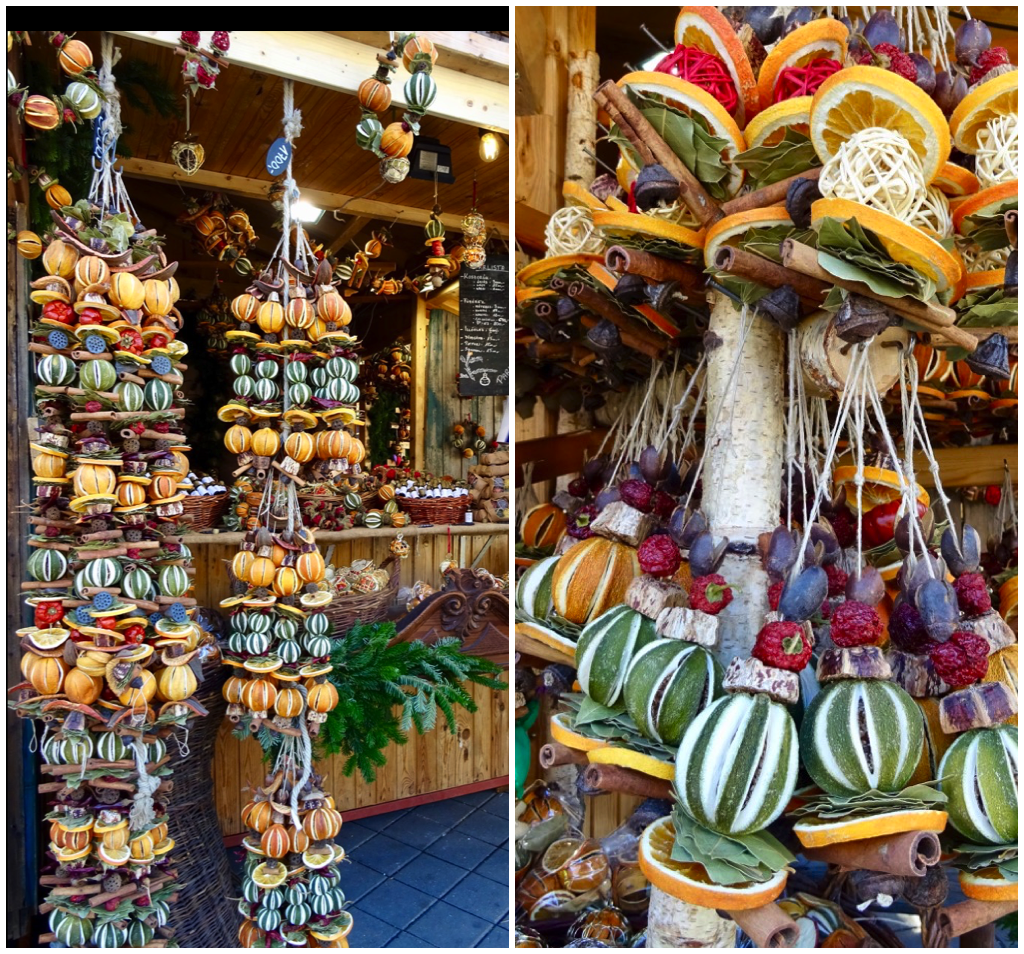
 We walk towards the nearby Christmas Markets. There are lots of small wooden ‘cabins’ filled with beautiful crafts. I loved these dried fruit ornaments, but I am sure that I wouldn’t be allowed to bring these through Canadian Customs. Too bad, they are lovely and smell wonderful.
 There are several stands with all sorts of candies…
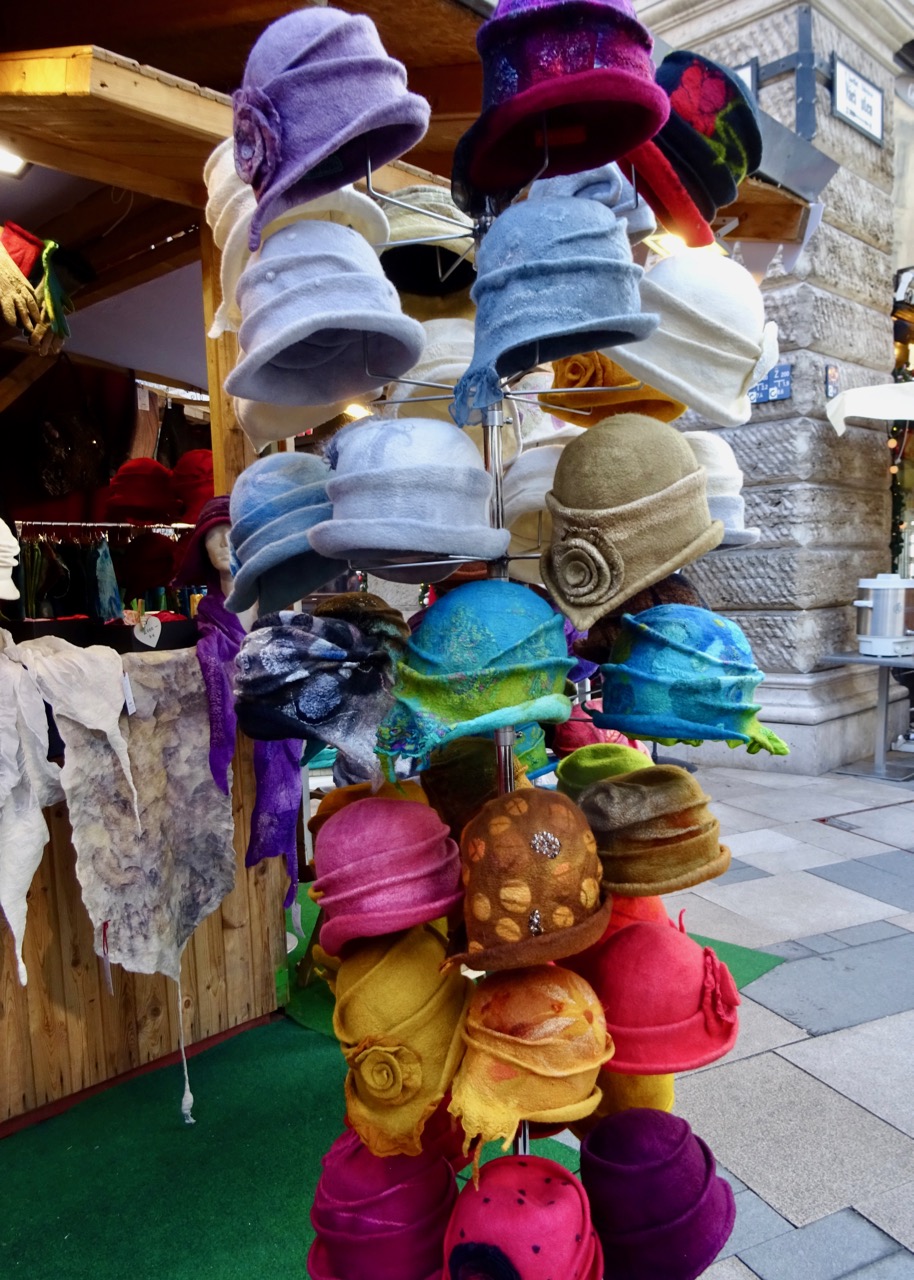
 beautiful felted hats, that are priced starting at $150.00 CAD.
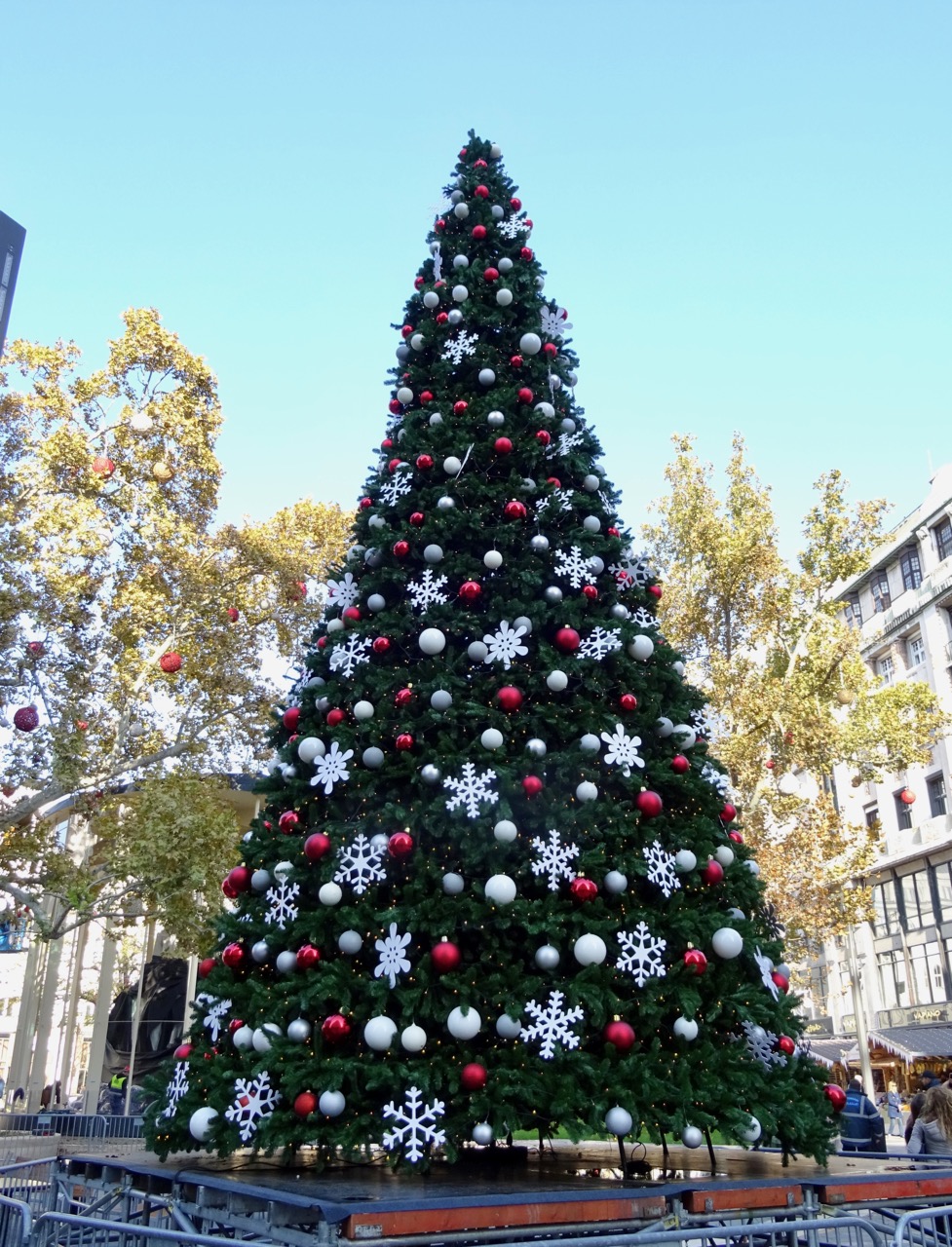
 This our first Christmas tree of the year.
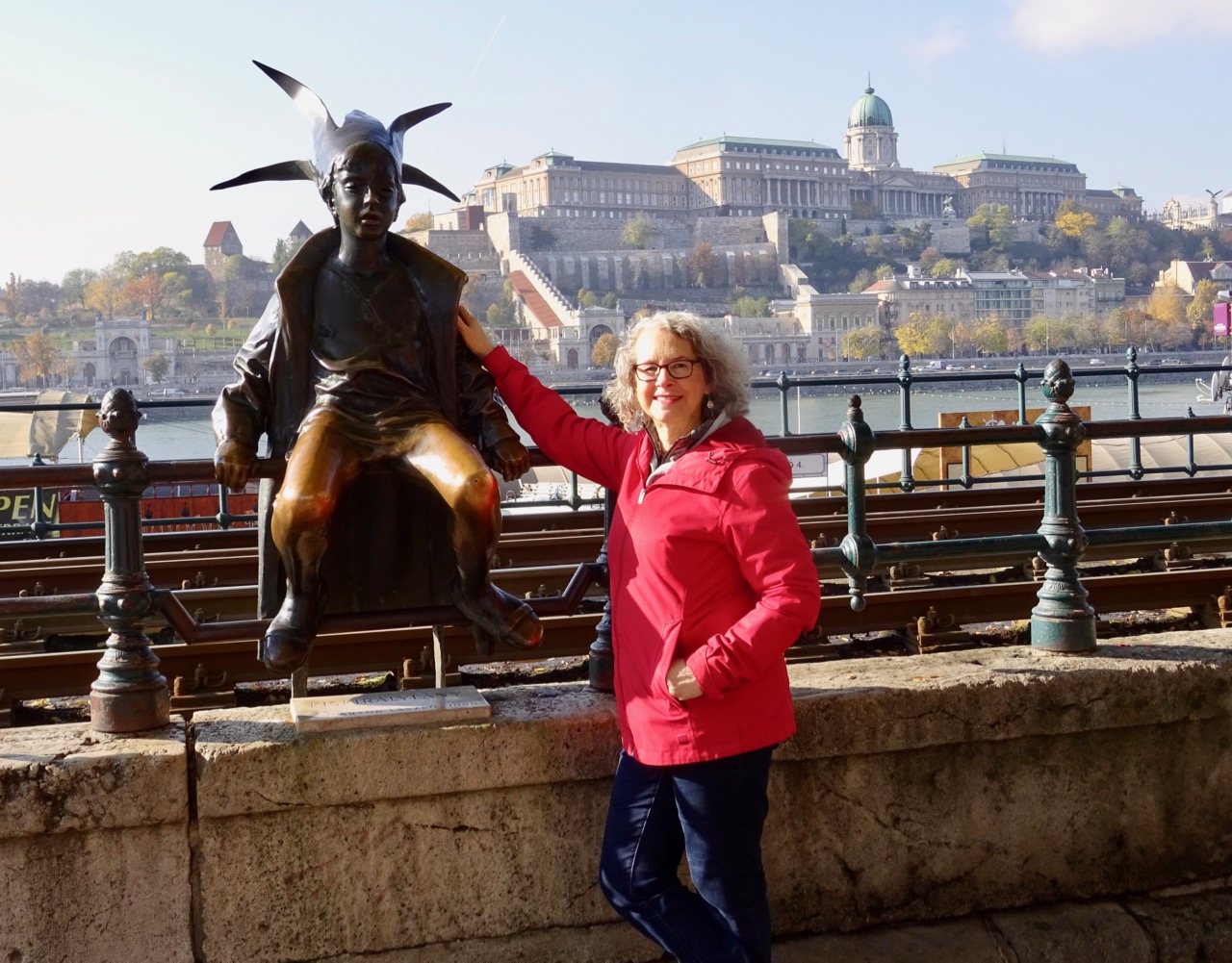
 This ‘Little Princess’ is the first of many statues we see on the streets of Budapest.
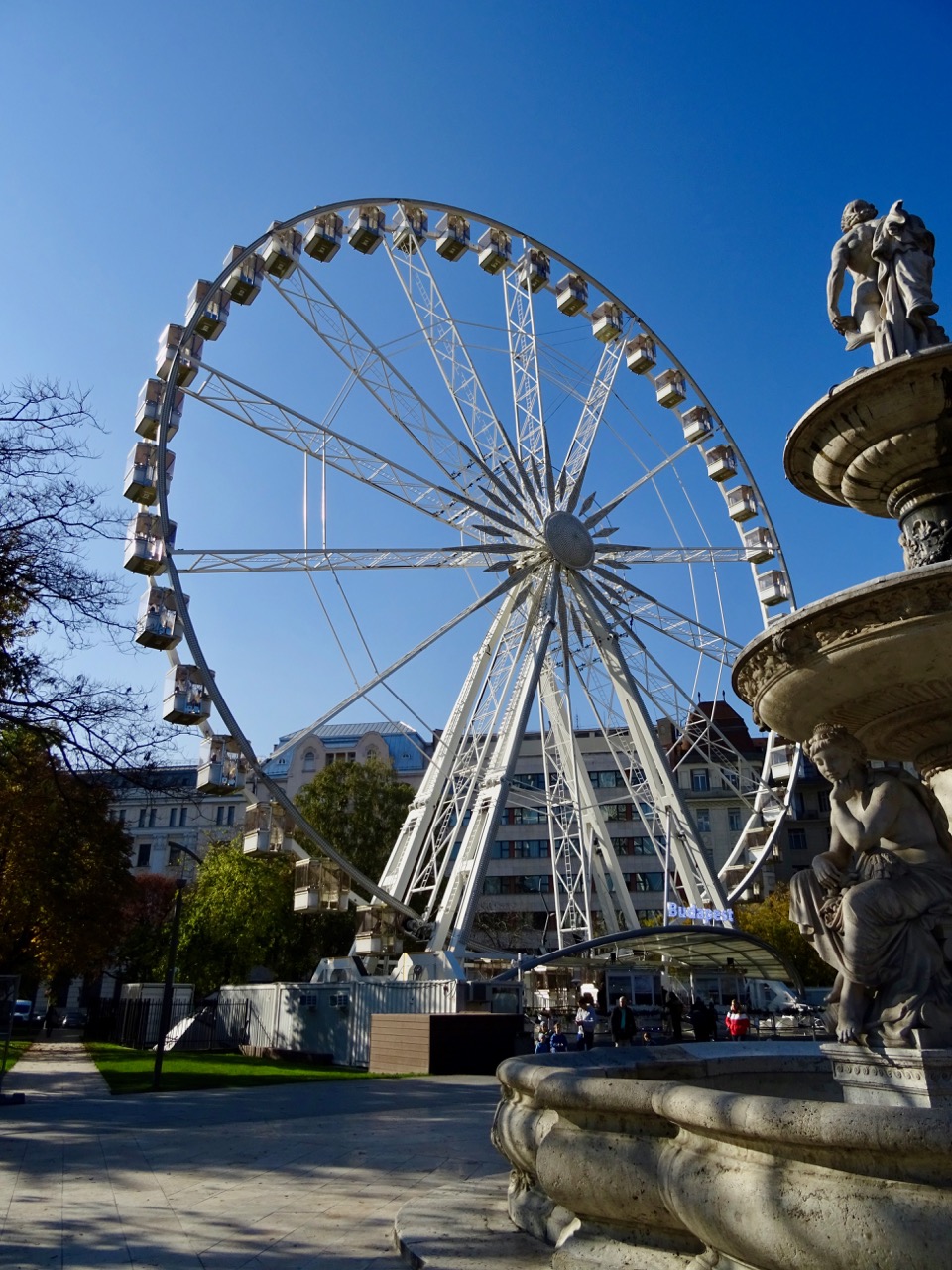
 Another ferris wheel, but we decide to pass on riding this one.
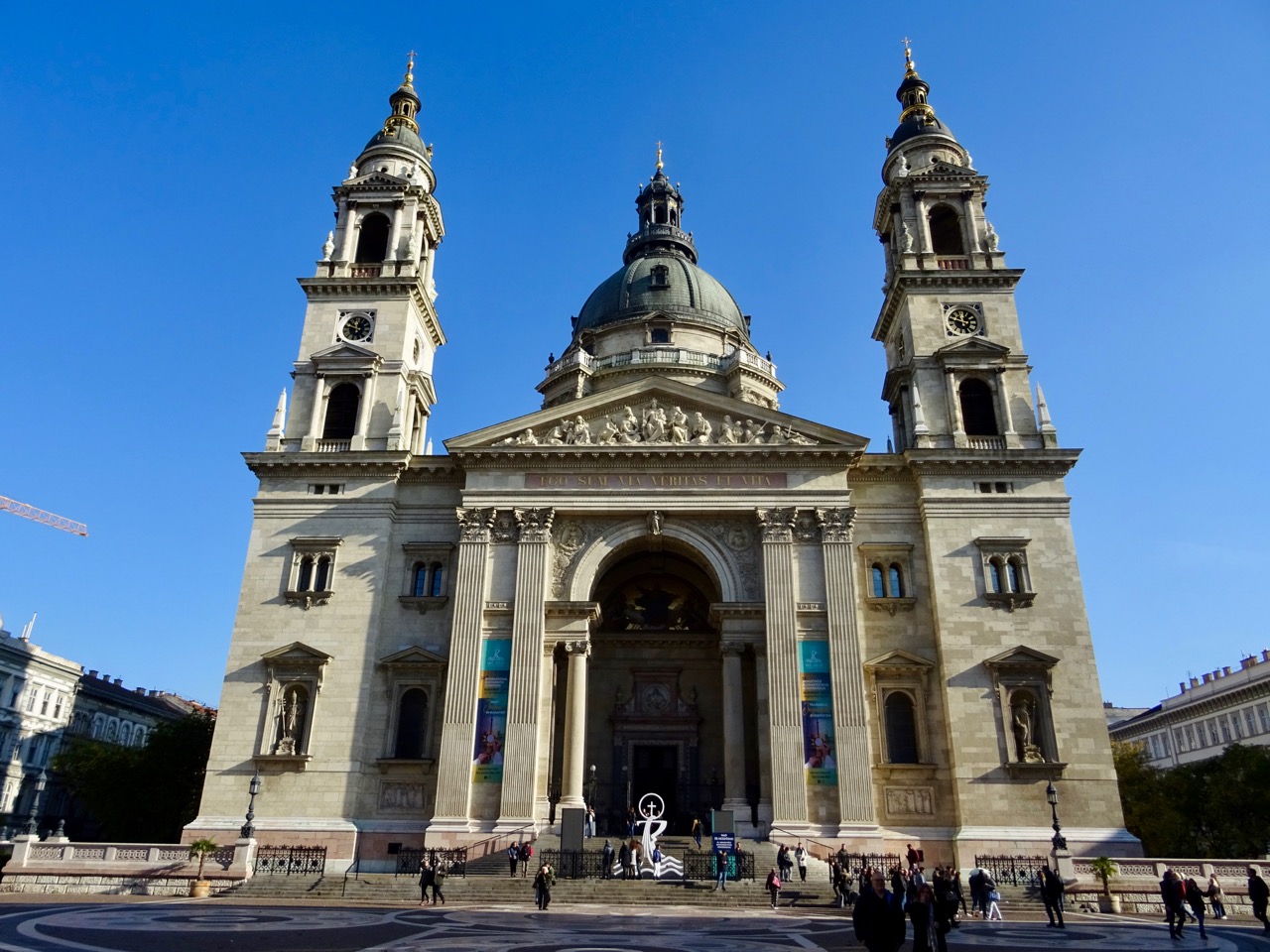
  St. Stephen’s Basilica is in the centre of Budapest.
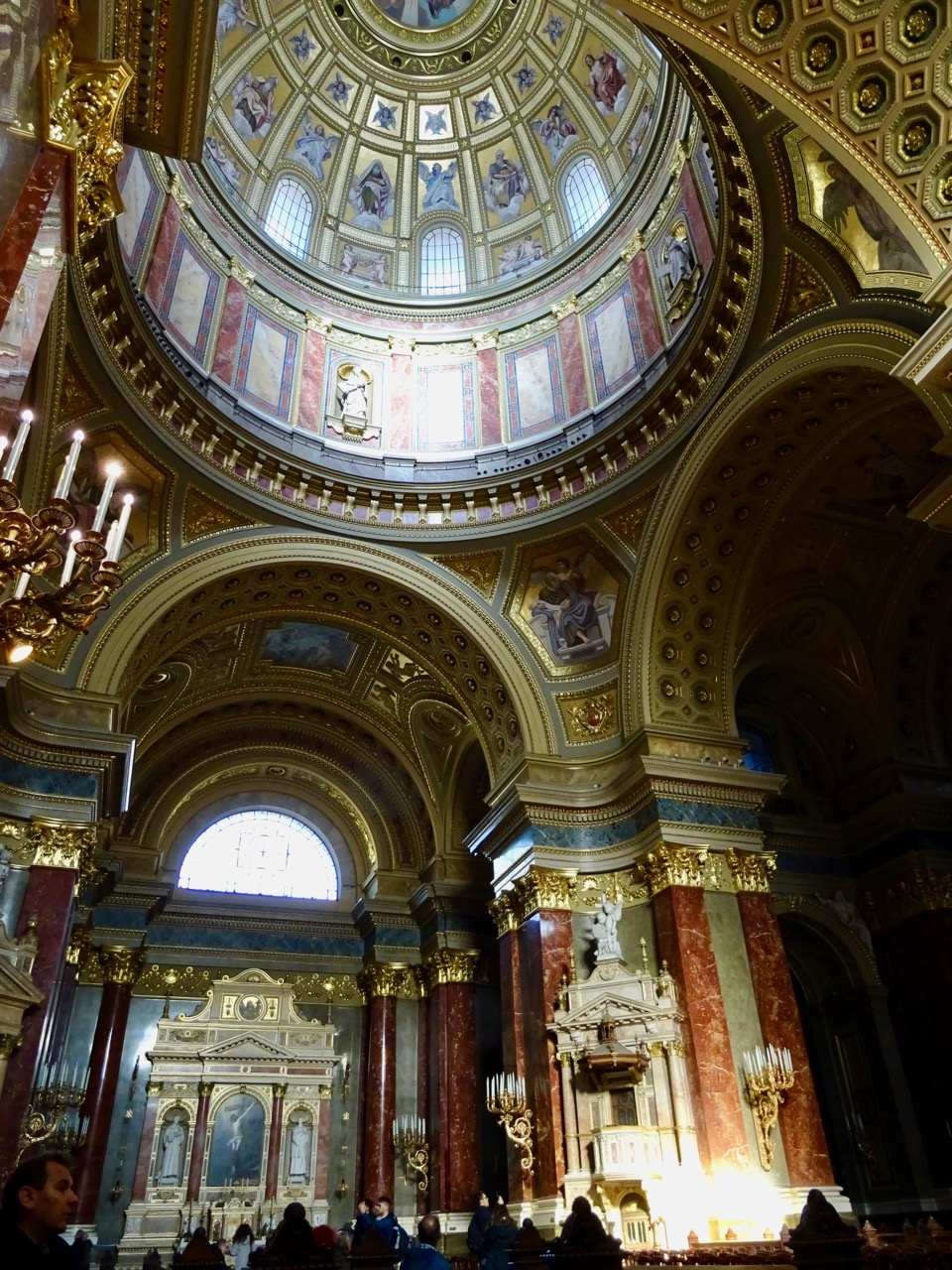
 The inside off the church has lots of gilded ornamentation and a beautiful dome.
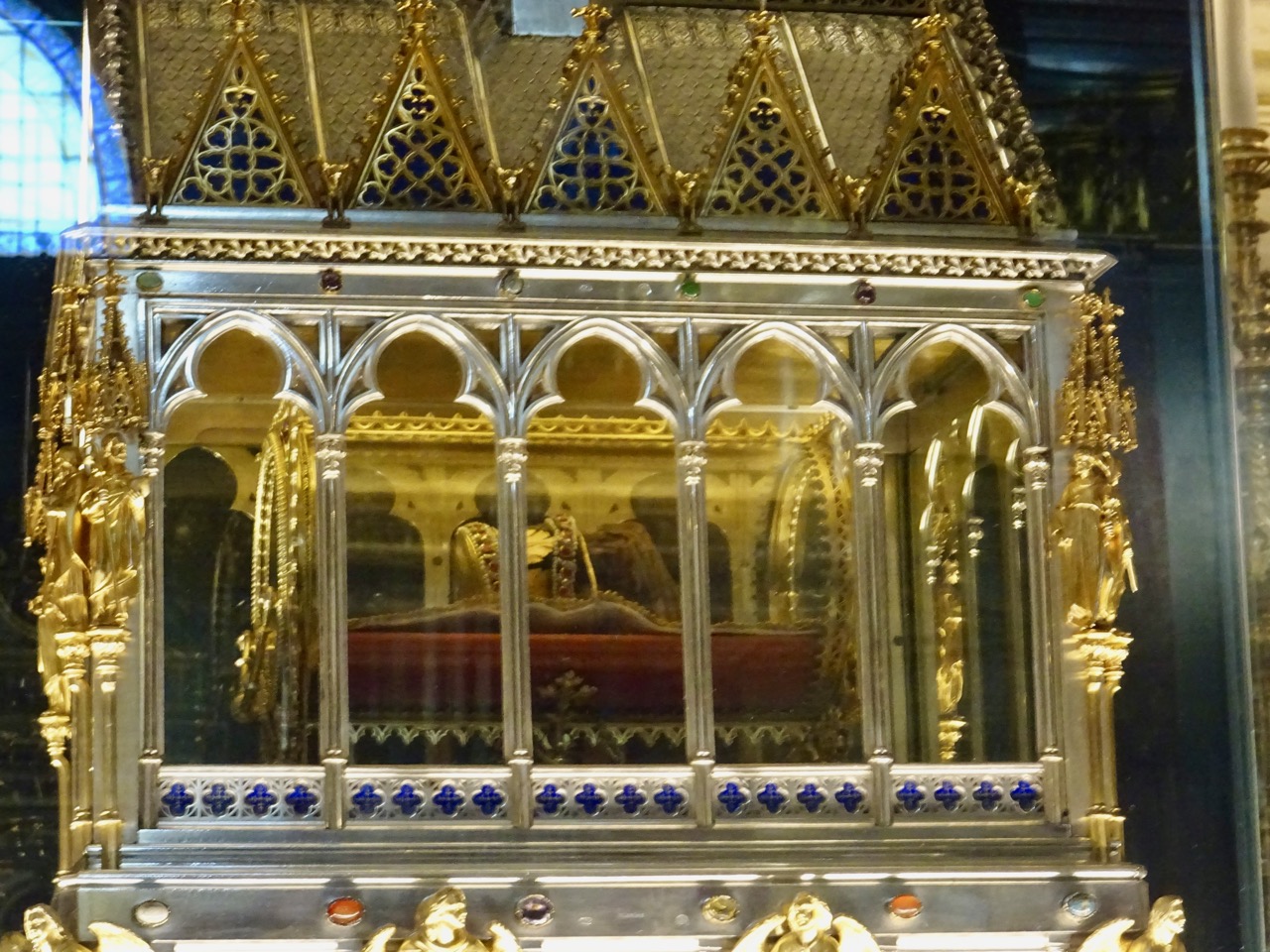
 The main attraction in this church is the thousand year old mummified right hand of King Stephen. If you want to see this relic, deposit a coin and a light comes on to view the hand.
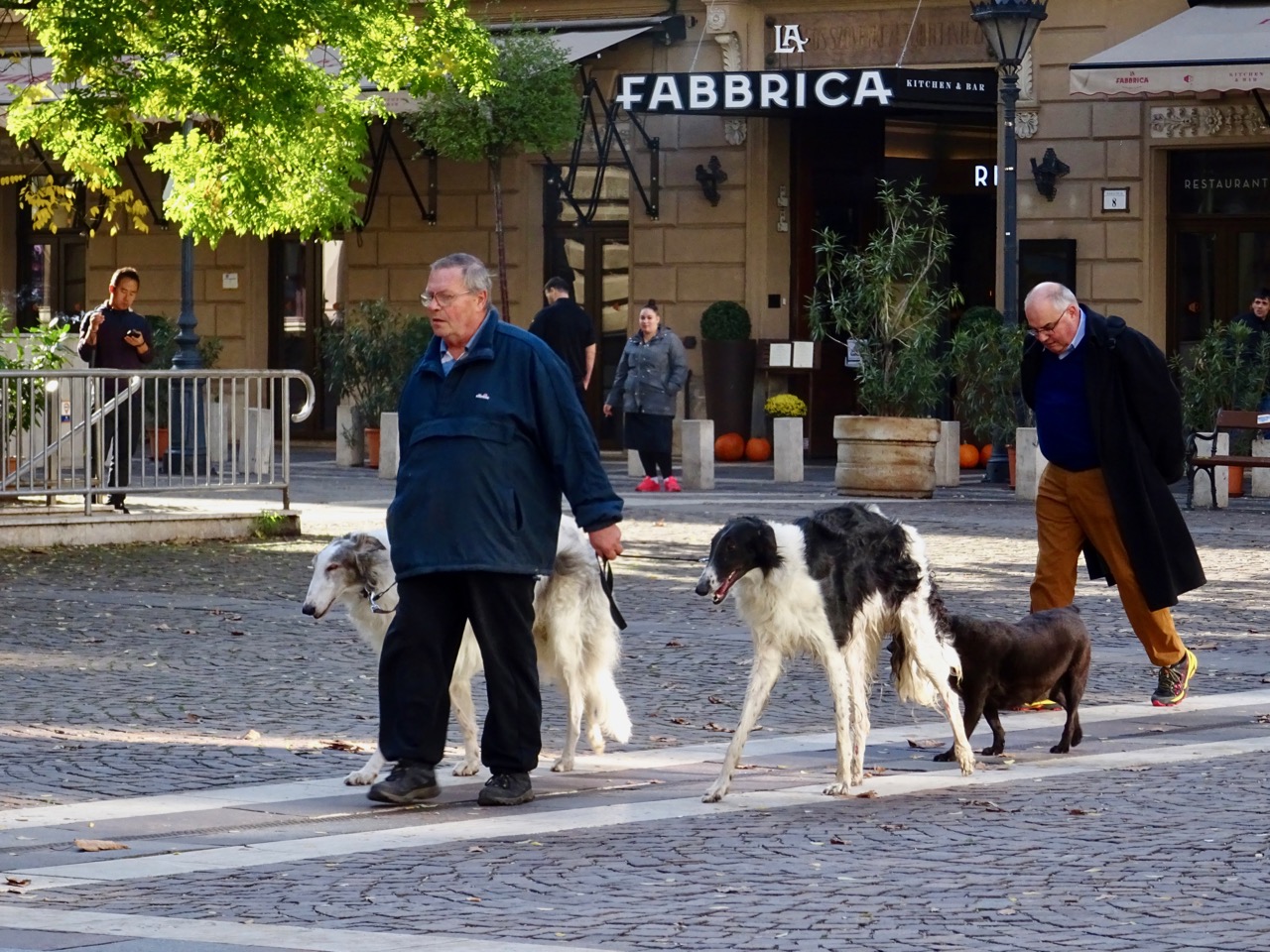
 These two borzoi dogs looked like they needed a bath and brushing. There are lots of dogs here and they live their lives on pavement. I kind of feel sorry for them.
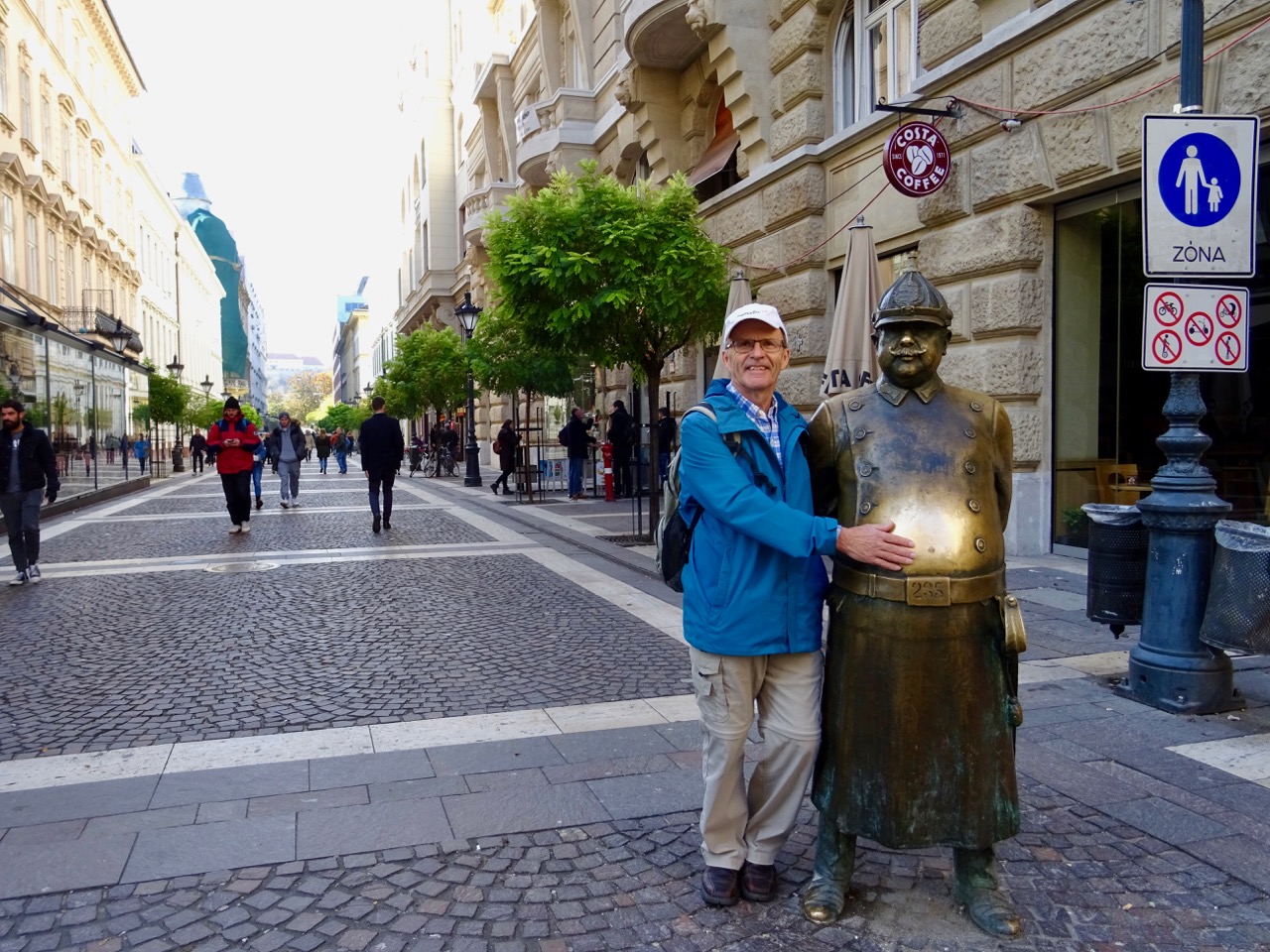
 The Fat Policeman Statue represents how hearty the Hungarian foods are, and rubbing his tummy is supposed to bring good luck. There are many ‘good luck’ statues on the streets of Budapest.
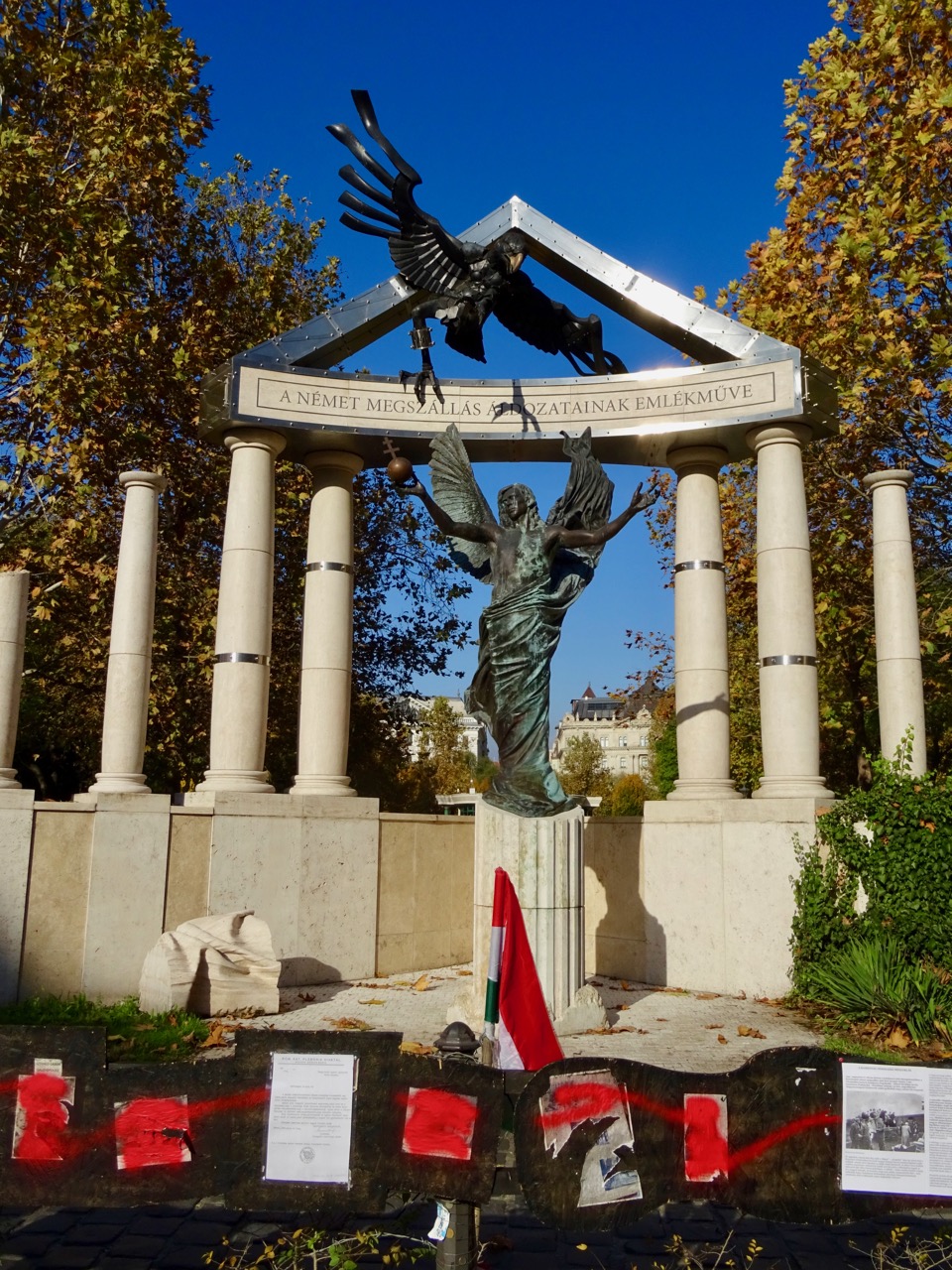
 The Hungarian government erected the ‘Memorial for Victims of the German Occupation’ statue in the middle of the night in July 2014.
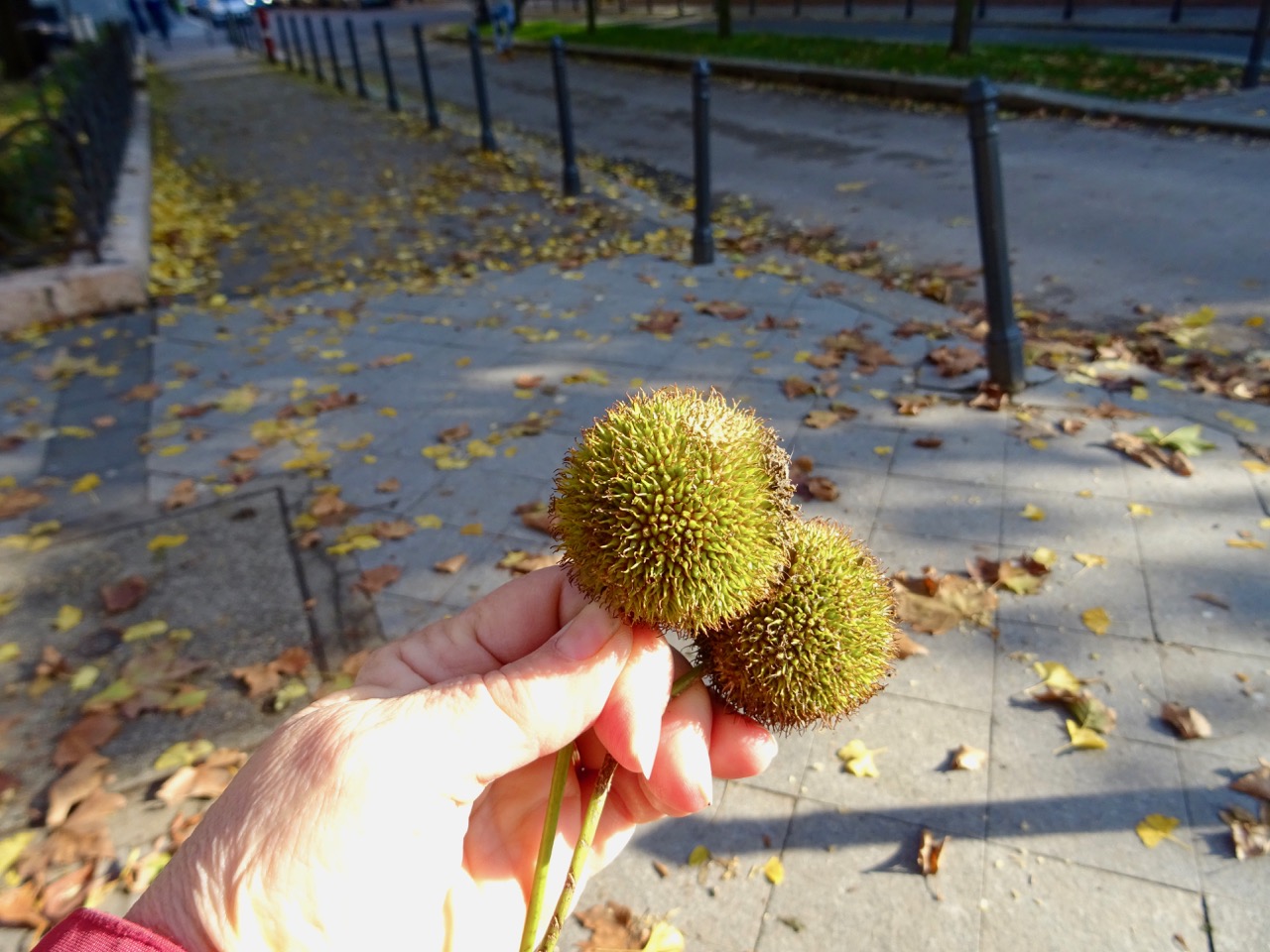
 Some seed pods from one of the trees near this statue are interesting.
 There is a statue of Ronald Reagan in this plaza as well because of his efforts to end the Cold War.
 There are so many ornate buildings here…
 like the Parliament Building! It is so big I can’t get it all into one photo.
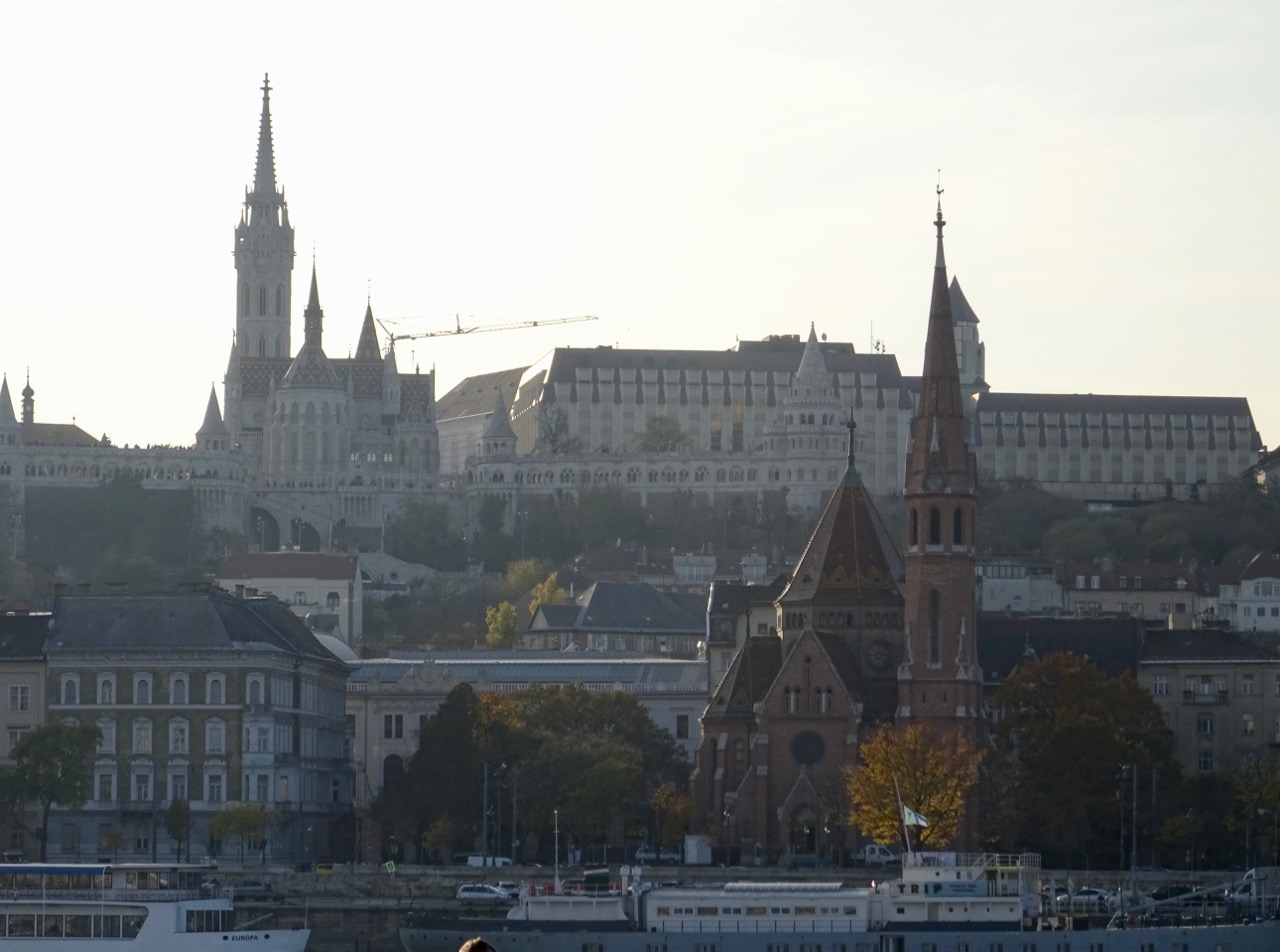
 Across the river we can see the Buda Castle.
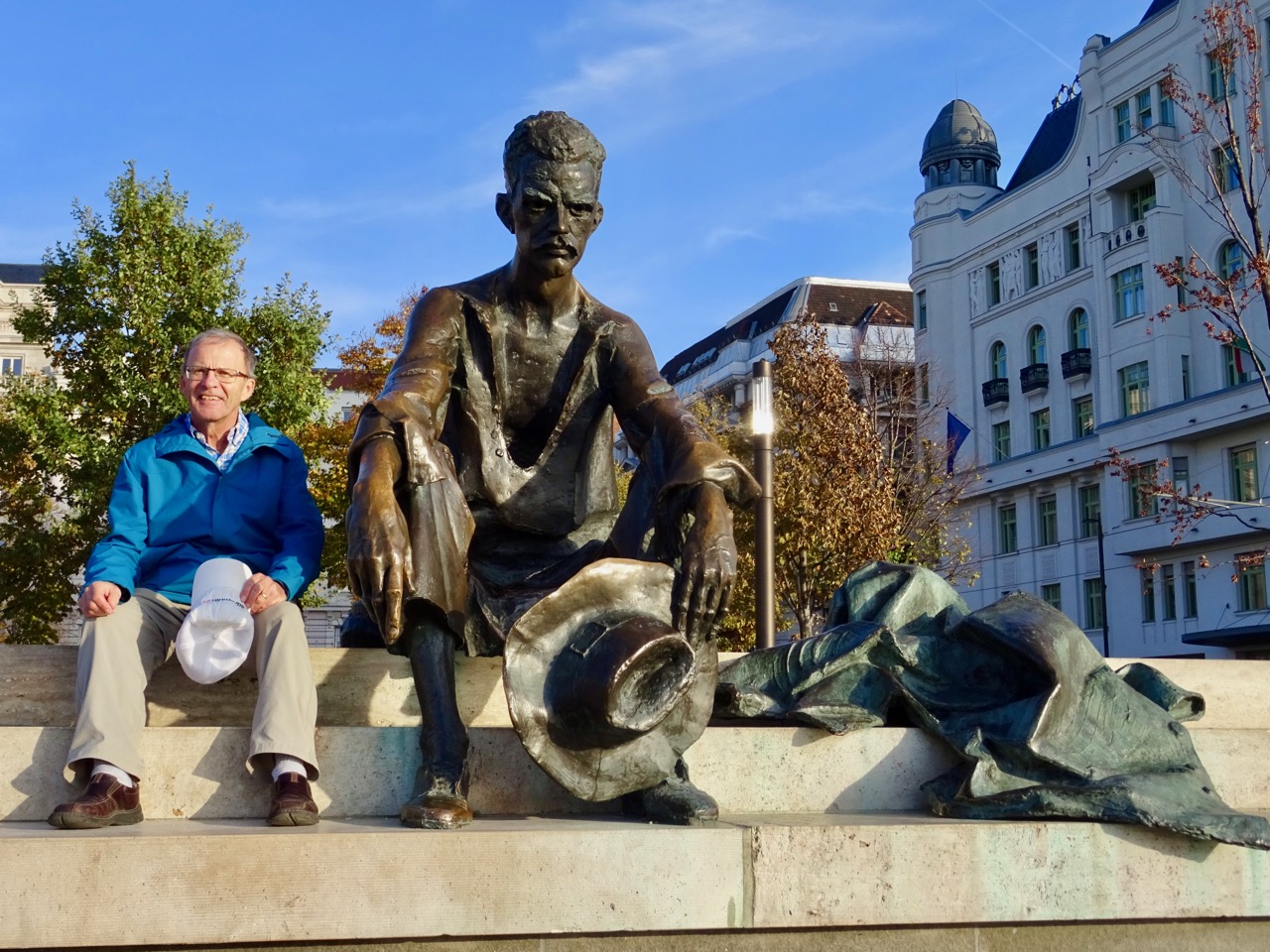
 Bob takes a moment to sit with the Hungarian poet Attila József…
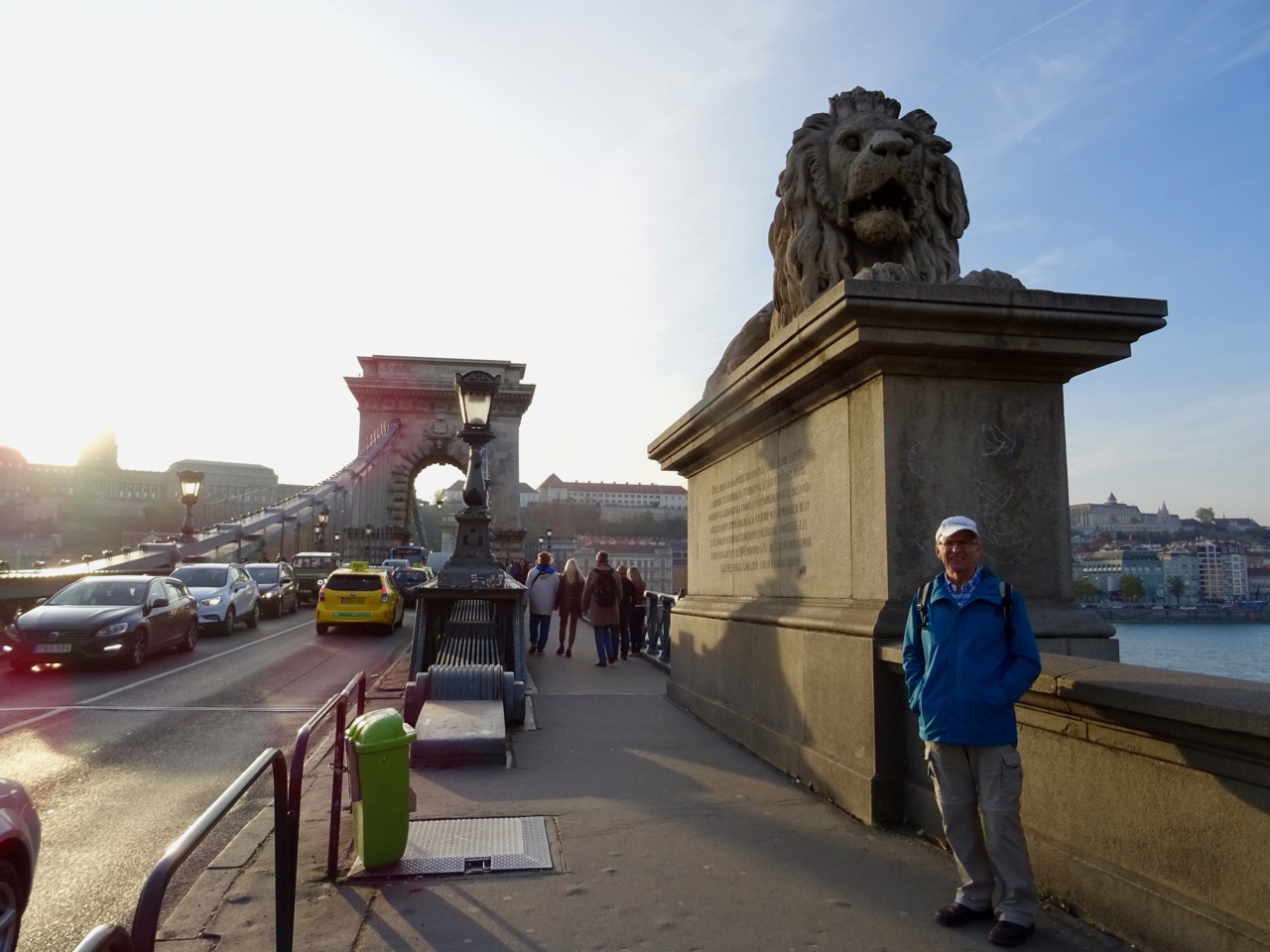
 and then we walk onto the Chain Bridge with its guardian lions for a view of Budapest from the river.
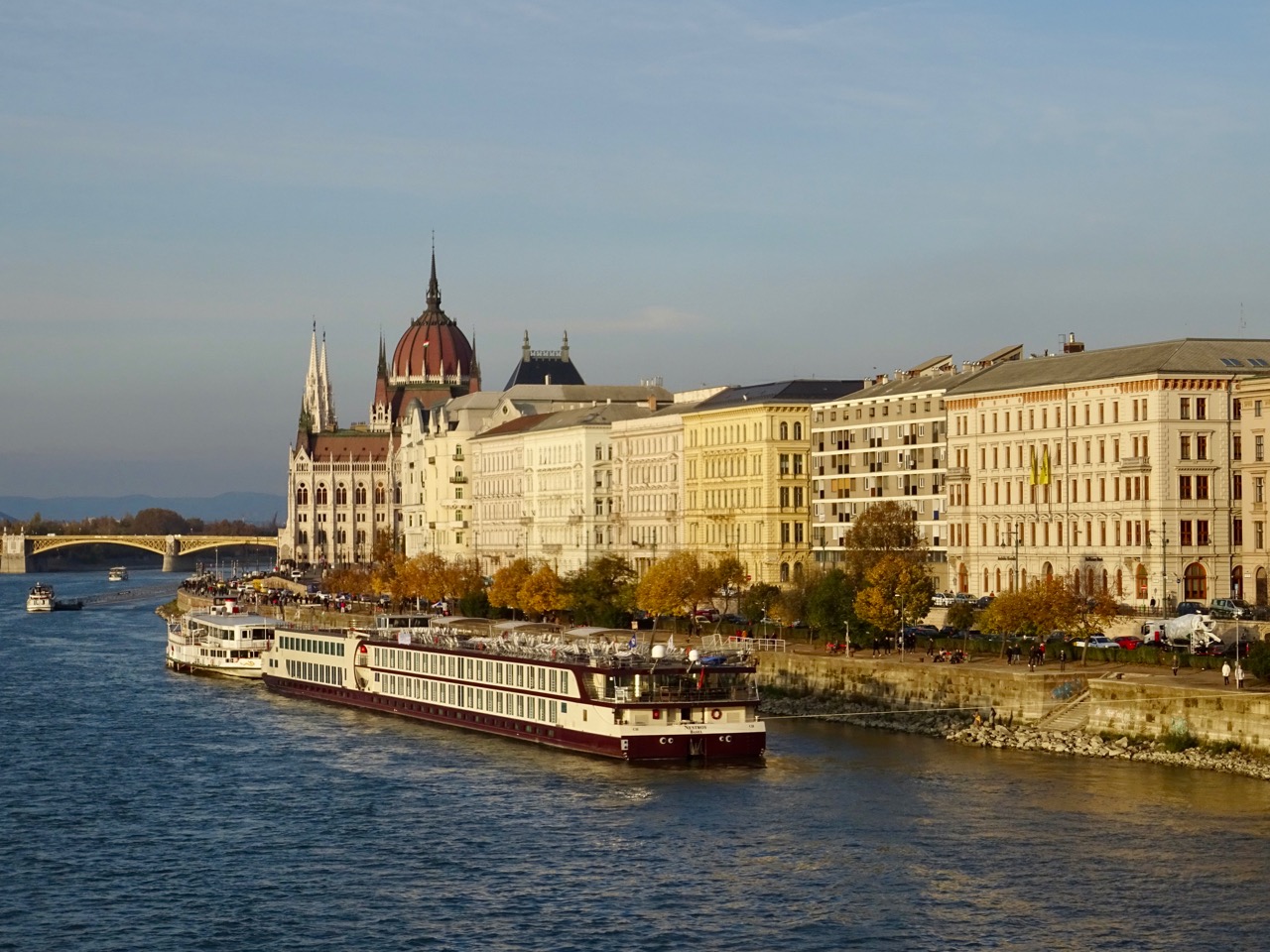
 This is the Pest side of the river, the side our apartment was on…
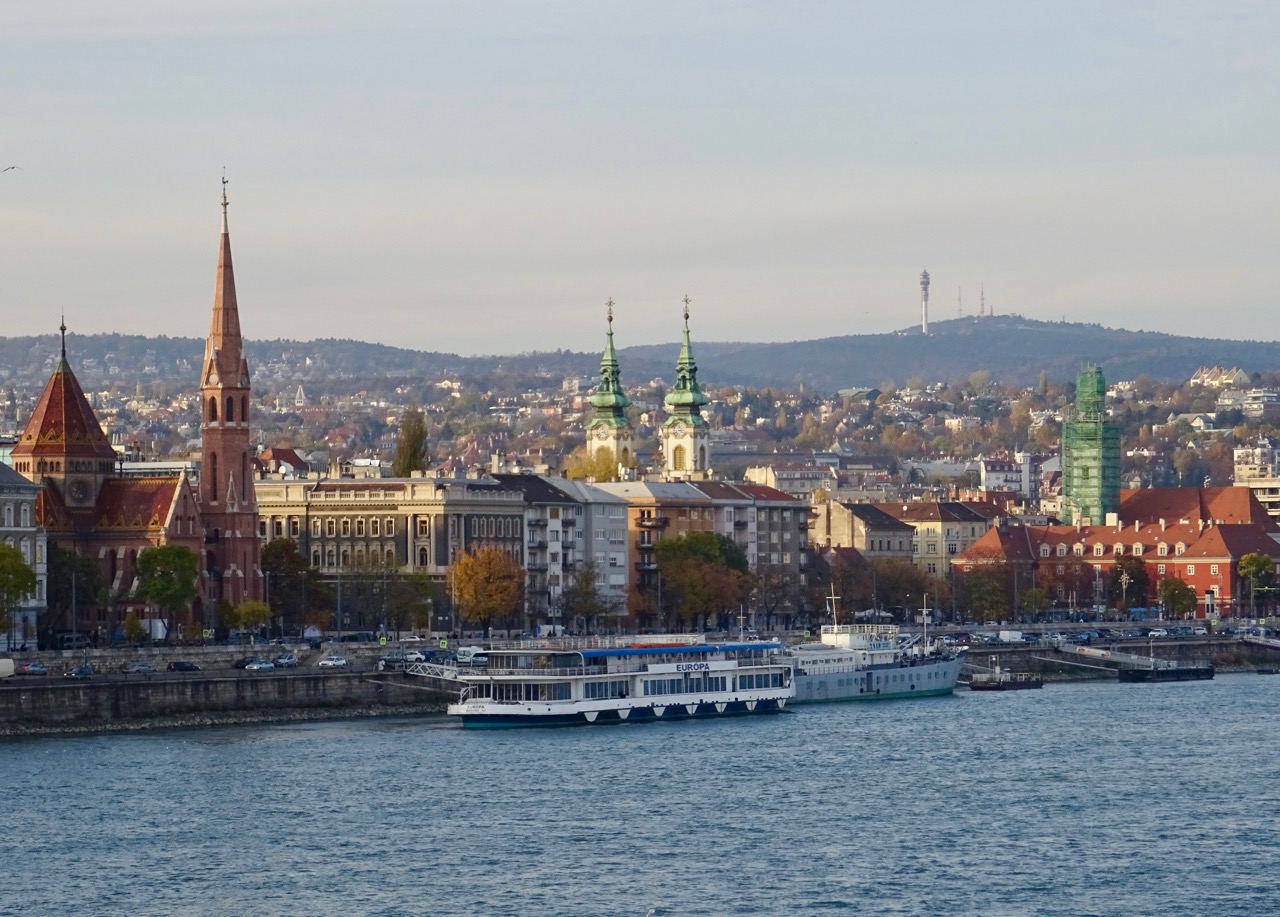
 and this is the Buda side. These two cities were united in November 1873, and the name ‘Budapest’ was given to the new capital.
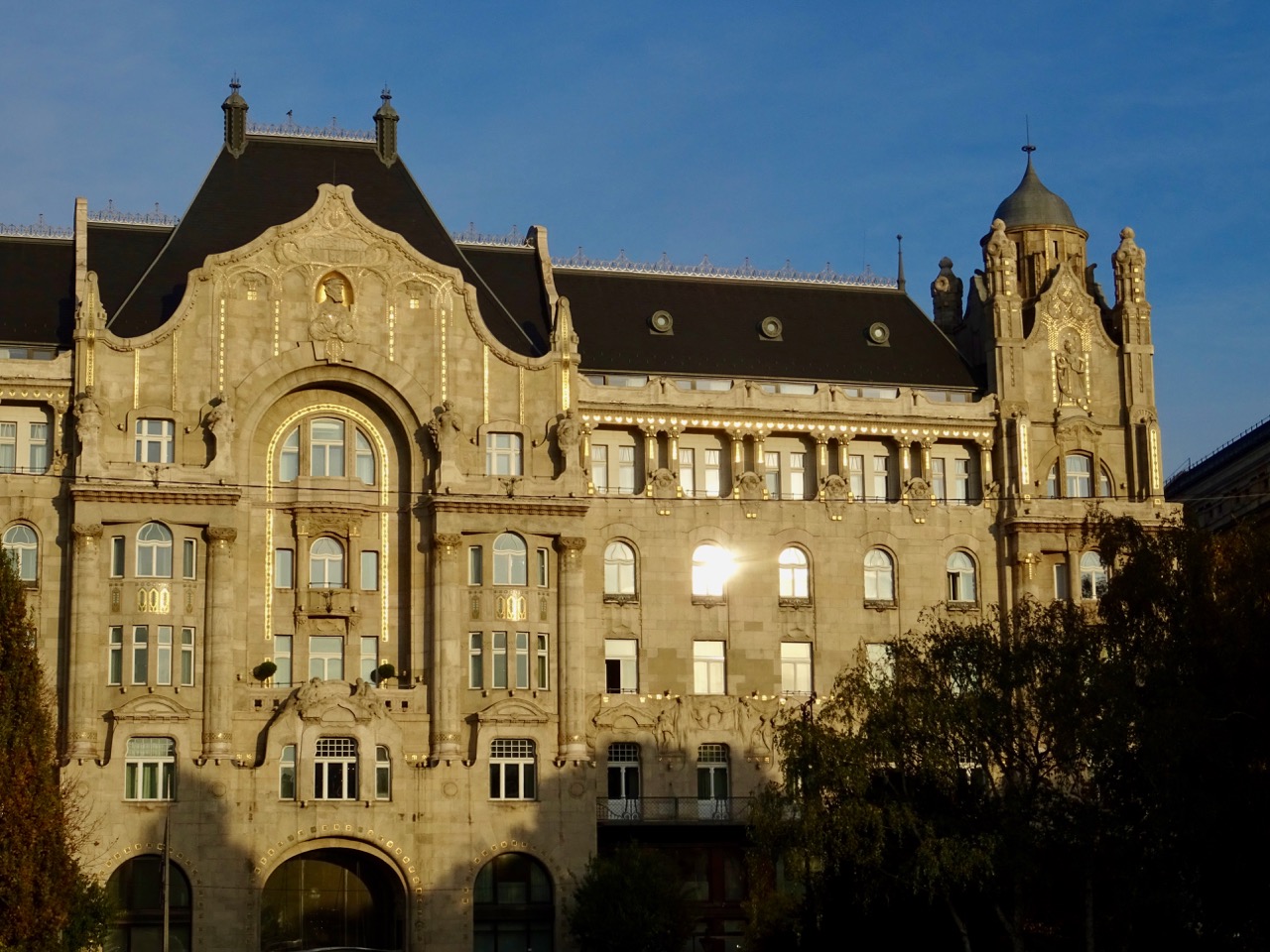
 I don’t know what this building is but it had delicate golden trim that sparkled in the late afternoon sun.
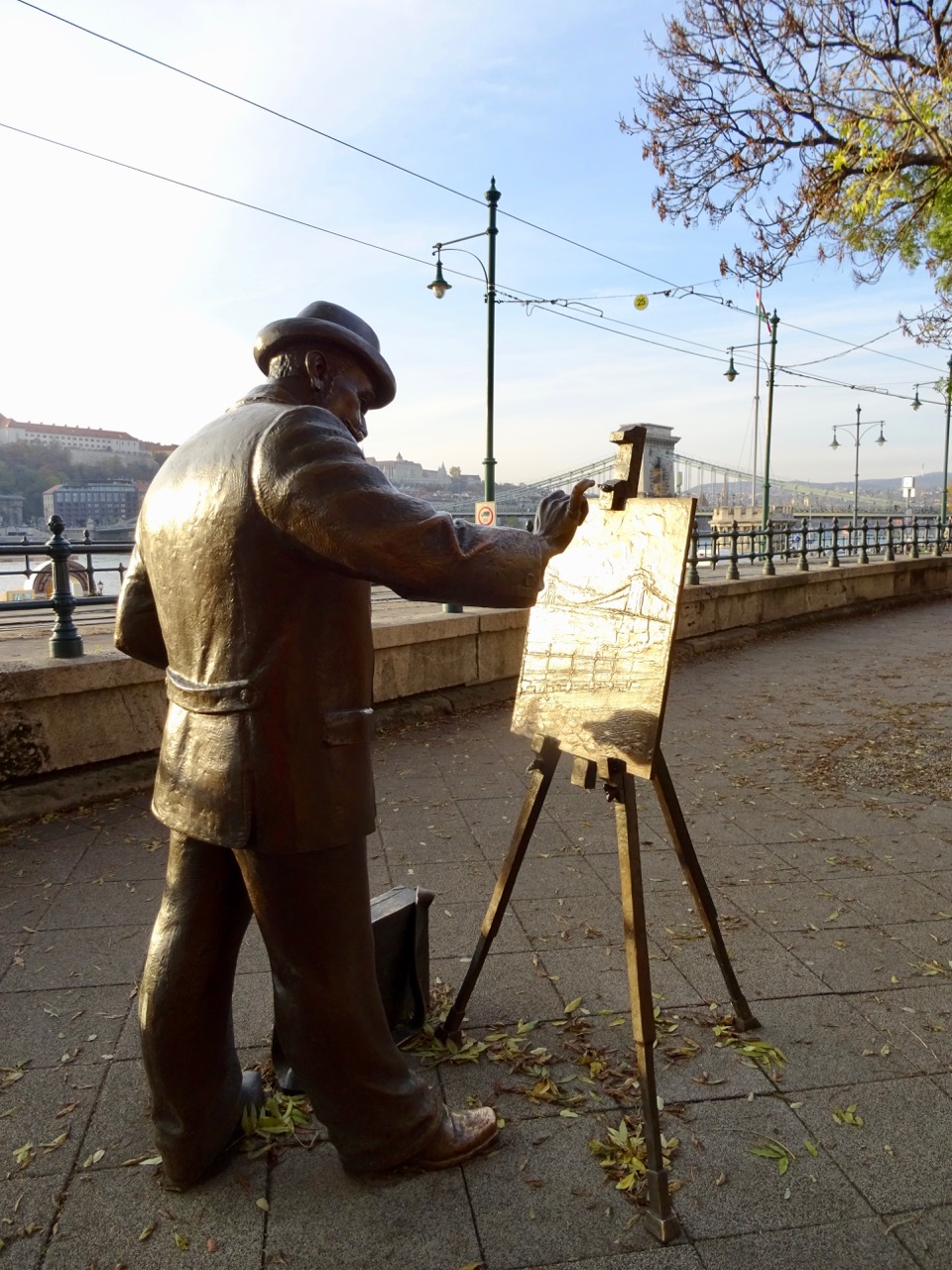
 We find a statue of Roskovics Ignác, a famous Hungarian painter, on our walk along the Danube River.
 Walking through the Christmas Market on our way home I notice this jar of pickled onions! They made me laugh!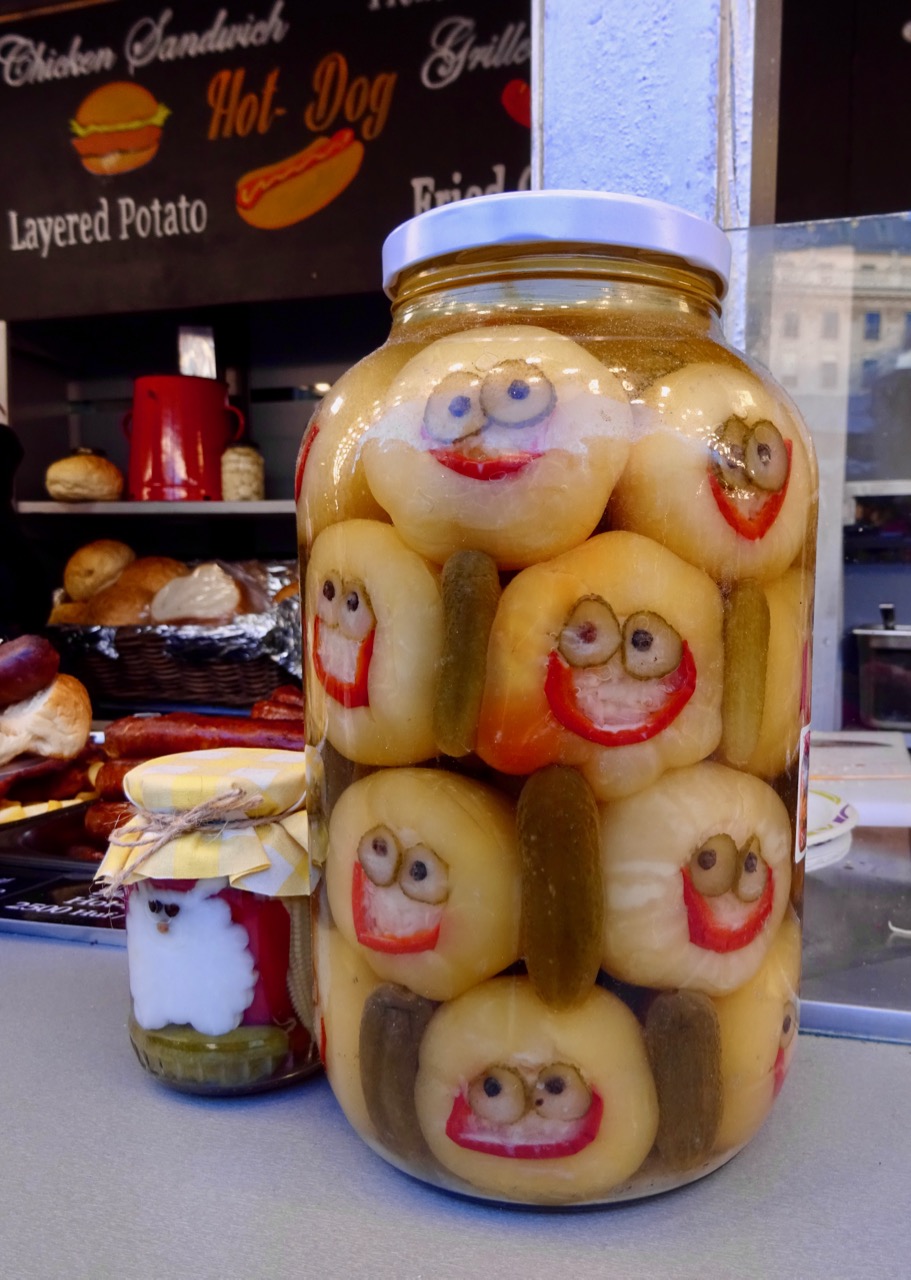
 trudymason.com