Day 37 Monday, October 6, 2025
On our drive to Stuttgart we stop at Worms, Germany. Worms is pronounced Vurmz. We passed through this huge gate on the bridge over the Rhine River.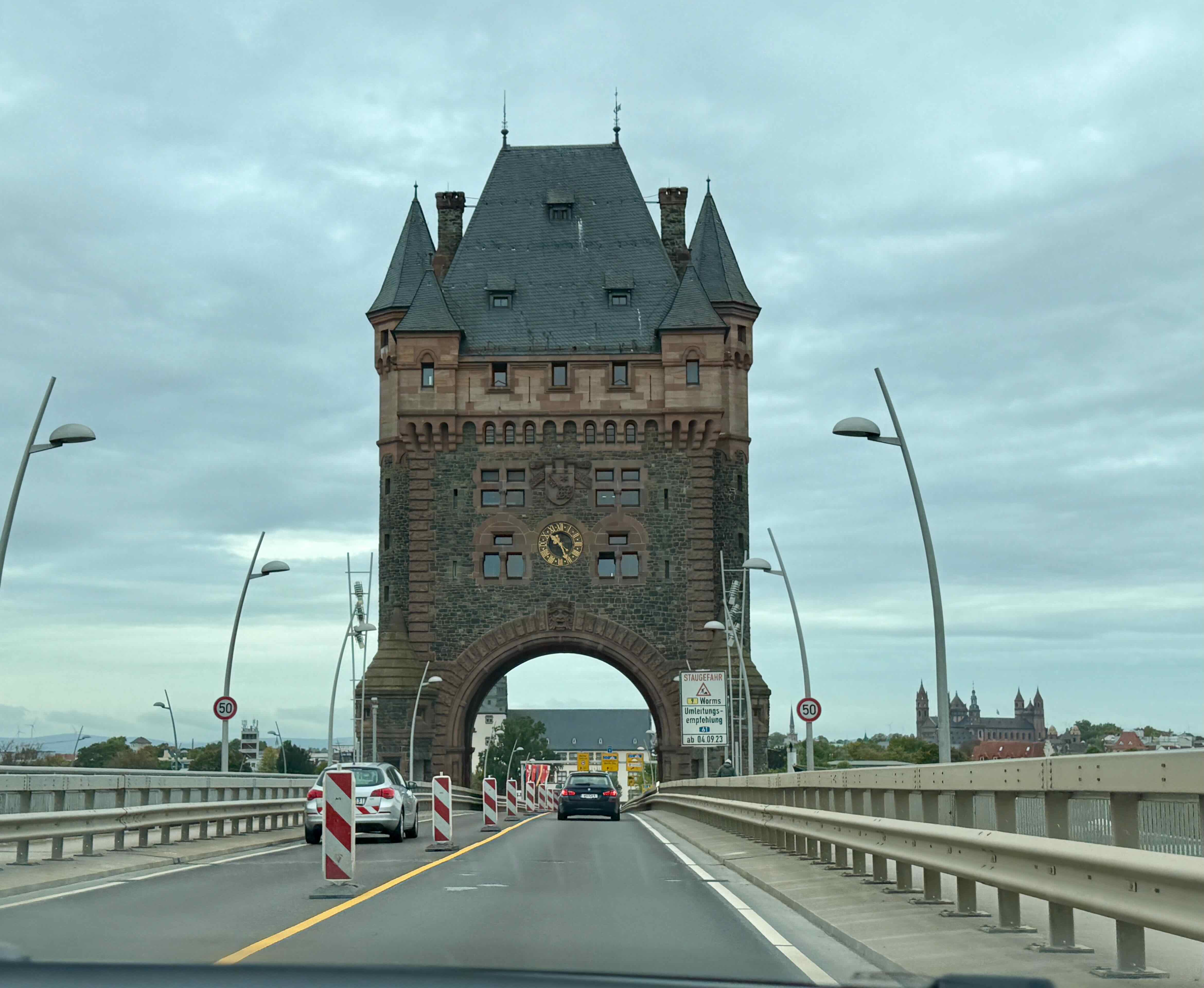
We find a place to park on the street but have to move to a parkade because the street machine won’t take our euros…big surprise! St Peter’s Cathedral is our first stop but we can’t find the door to get inside! 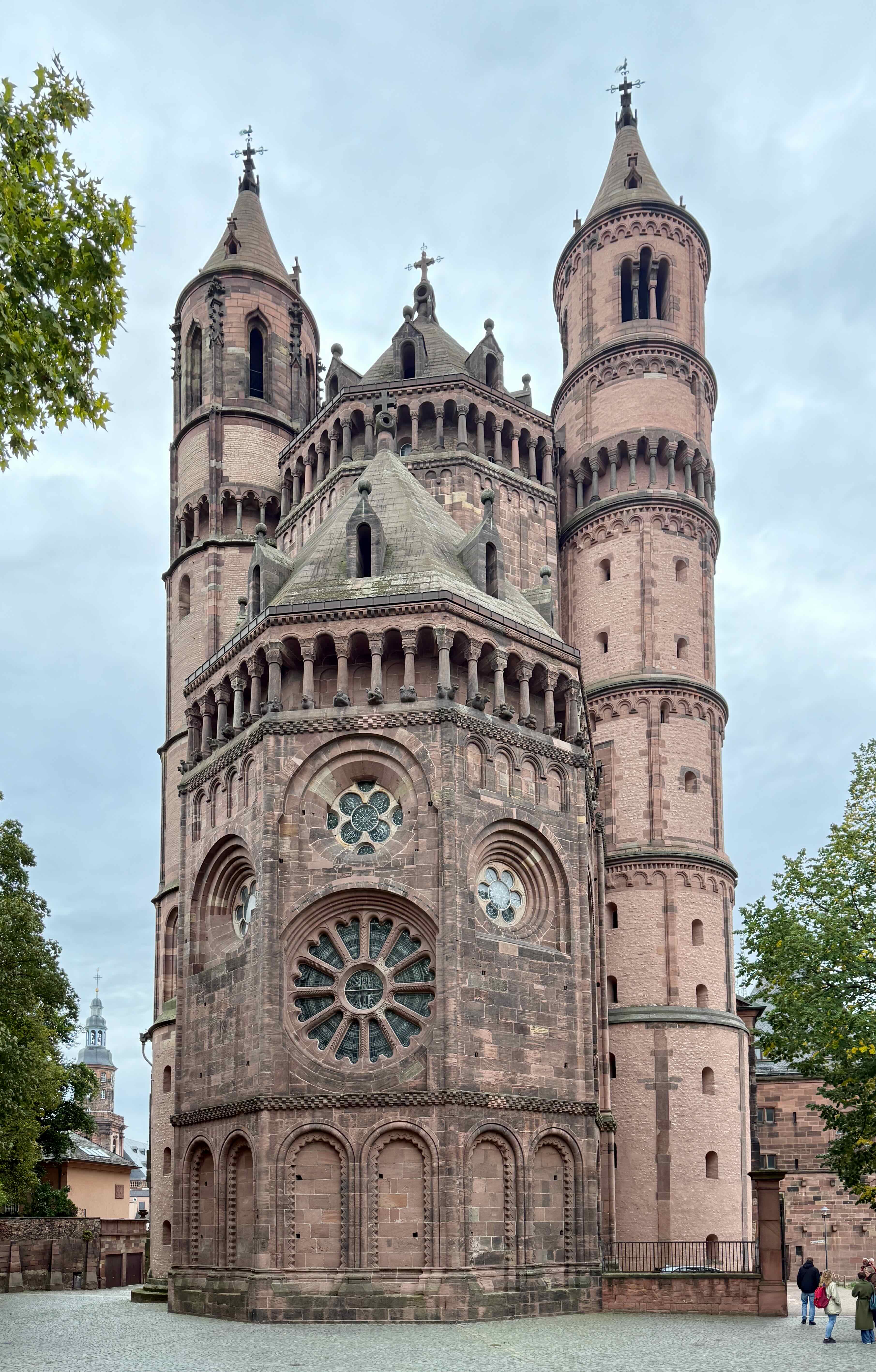
In our walk around the church I see steps leading into what looked like a private area, but I take a look anyways and it is actually a public garden so we go inside. When I see something like this I am so curious. I wonder what it is, why it is there and where does it lead to? 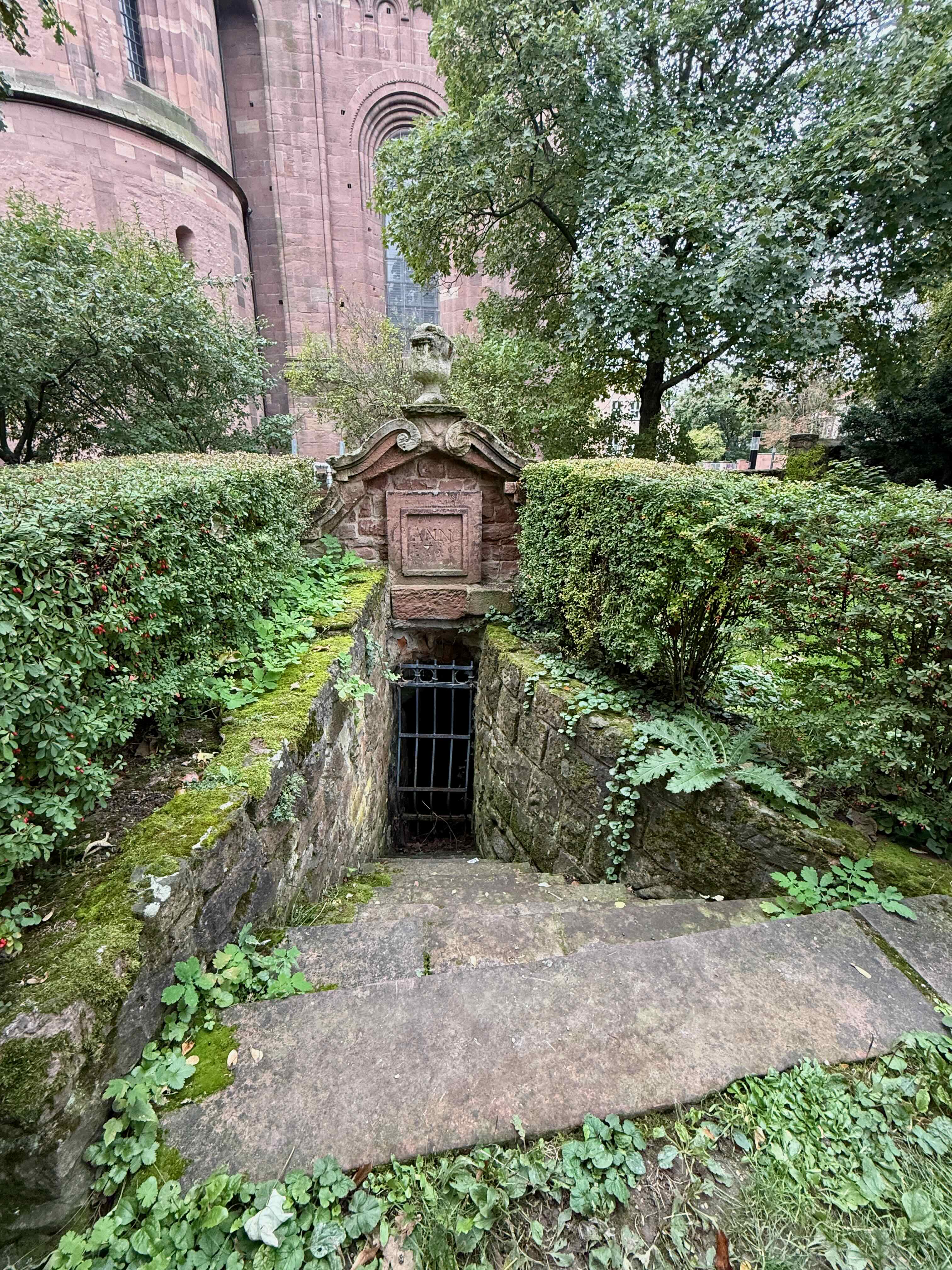
Turns out this garden marks the location where Martin Luther refused to recant his beliefs at the Diet of Worms in 1521. This was the beginning of the Protestant Church and its split from the Catholic Church. These large bronze shoes in Worms’ Heylshof Park shoes are part of a 2017 memorial sculpture, which allows visitors to symbolically “step into Luther’s shoes” at the spot where he stood and defended his doctrines.
A ‘Diet’ was an assembly or meeting of authorities to make decisions on important matters. The Diet of Worms of 1521 was convened to determine how political and religious authorities should respond to Martin Luther’s teachings. Because the Diet was held in Worms, it is know as the Diet of Worms which still makes me smile because of course I think of eating worms.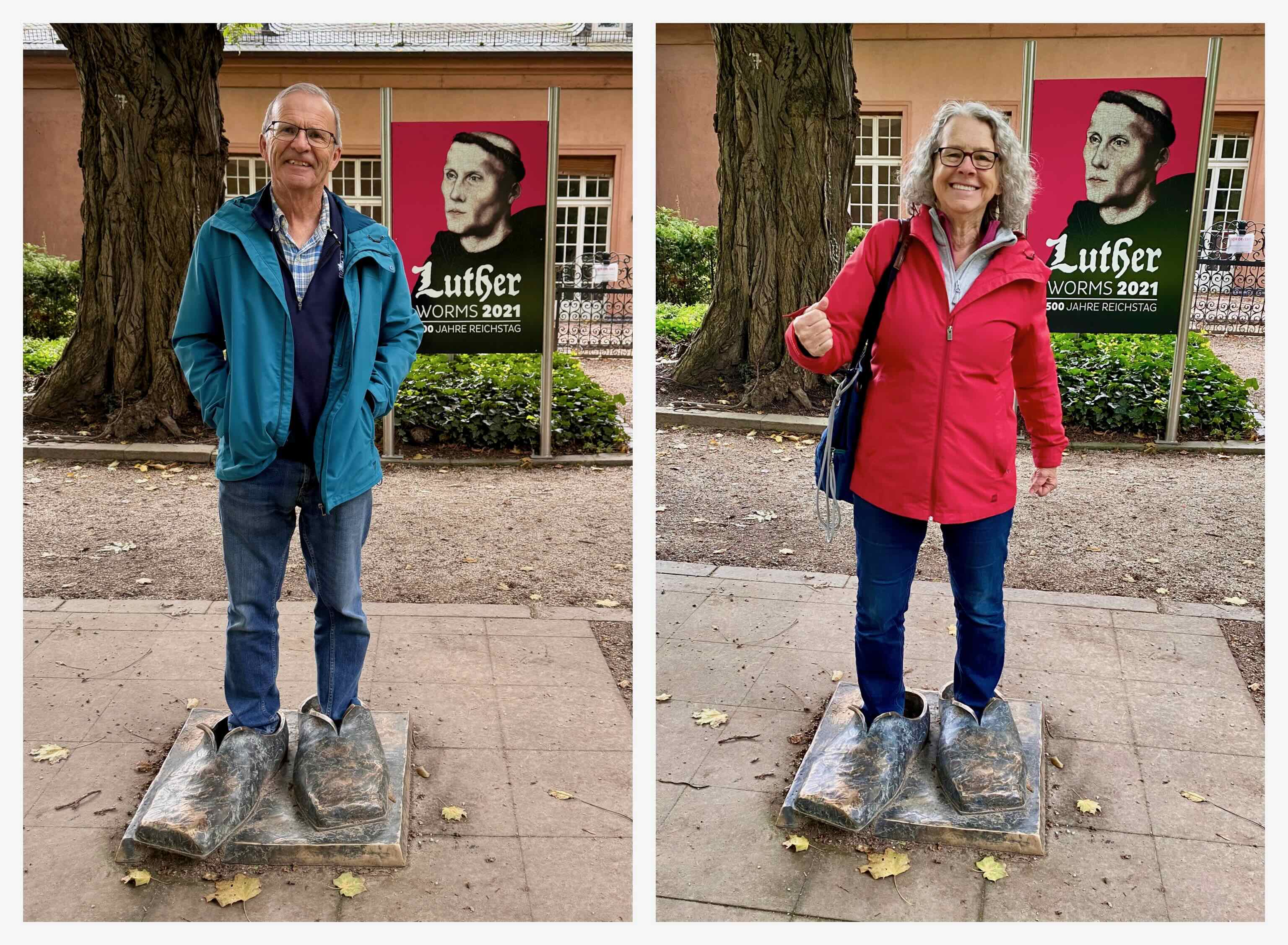
We leave the garden and go back to the church, passing a kindergarten with this colourful mosaic mural.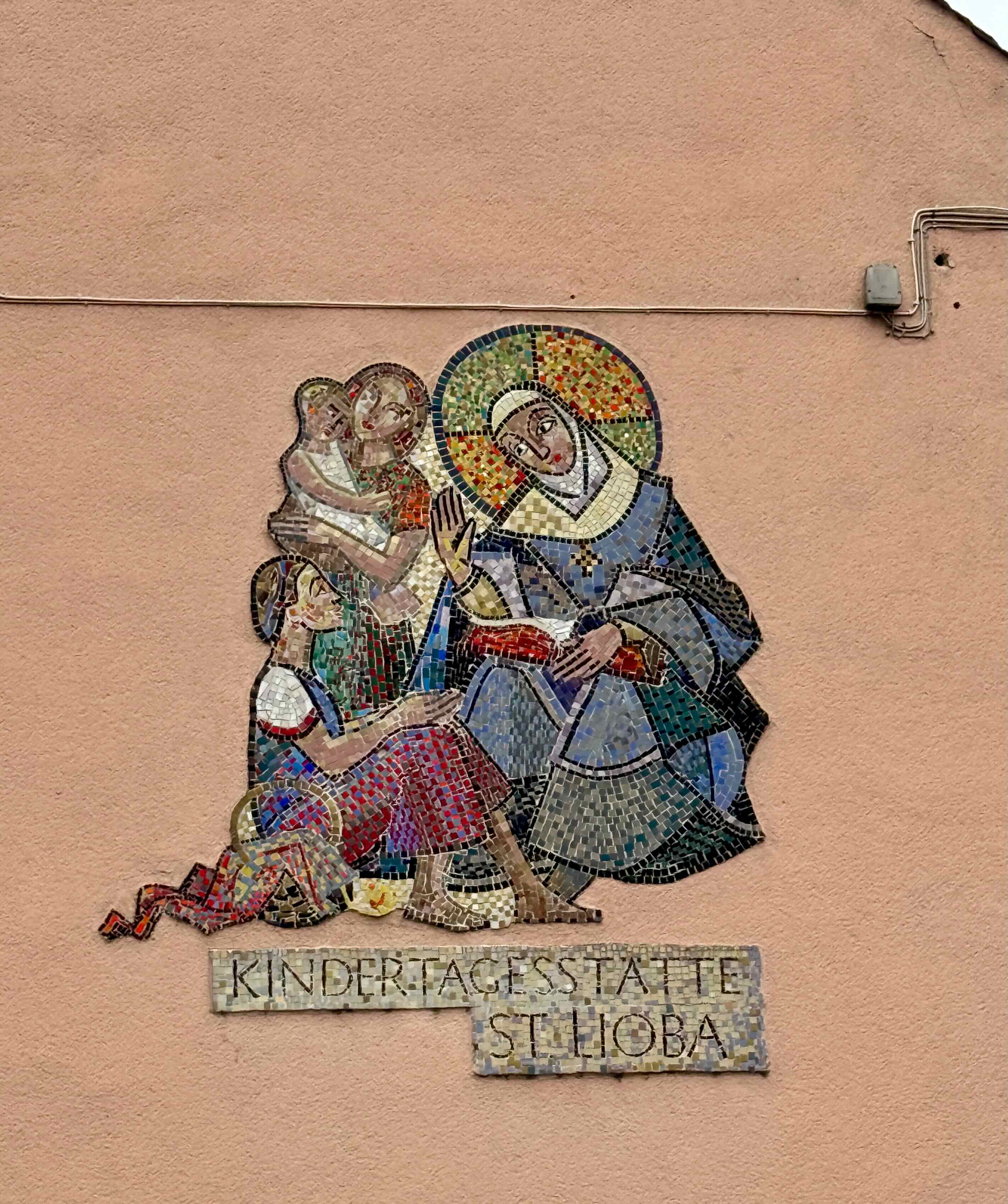
St Peters Cathedral is another cathedral that escaped destruction during the war. Curious, I did a bit of of research and learned that the high belltowers and steeples of cathedrals were used by the Allies as navigational landmarks and that sometimes military planners made conscious efforts to protect major cultural and religious sites. So perhaps not divine intervention after all?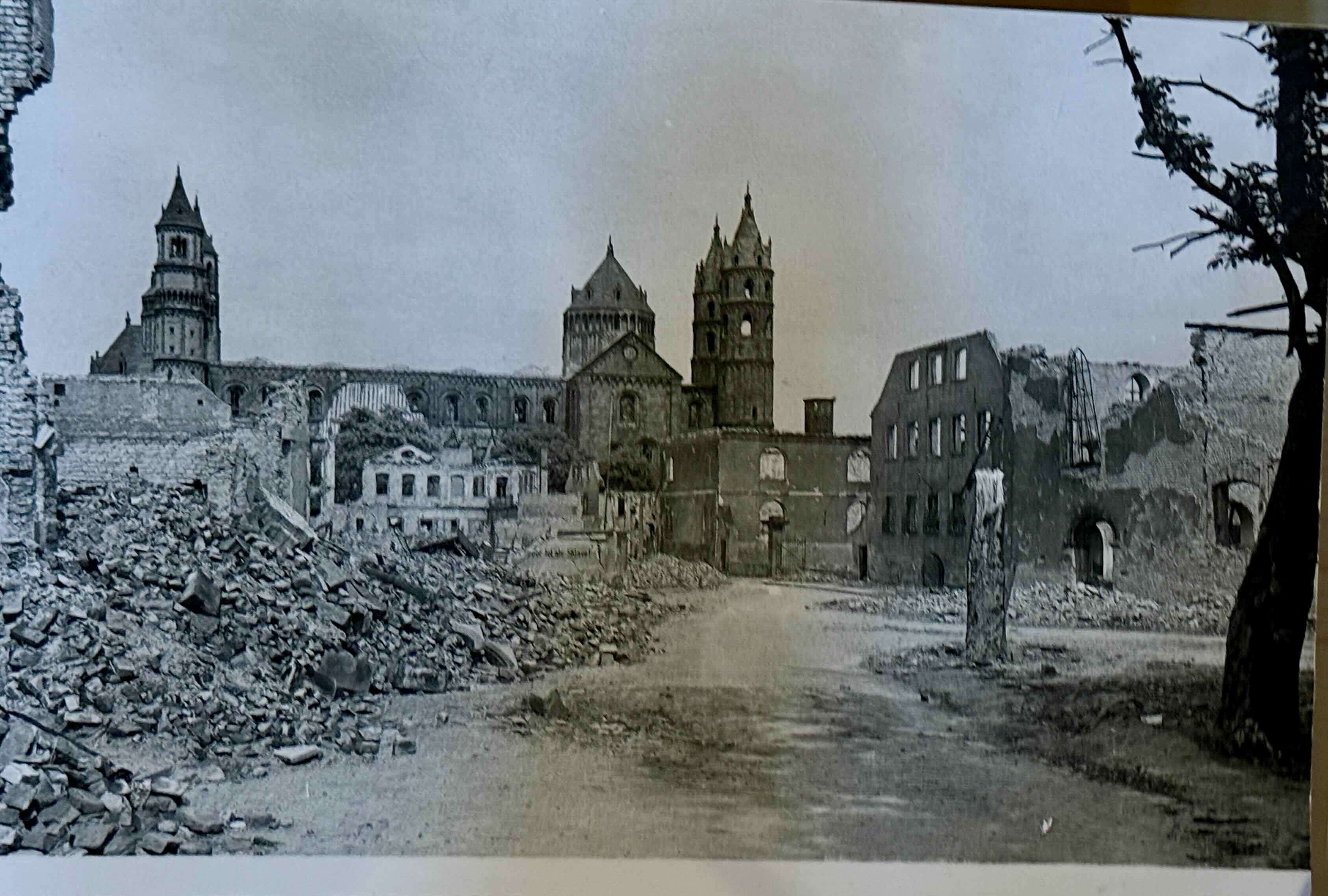
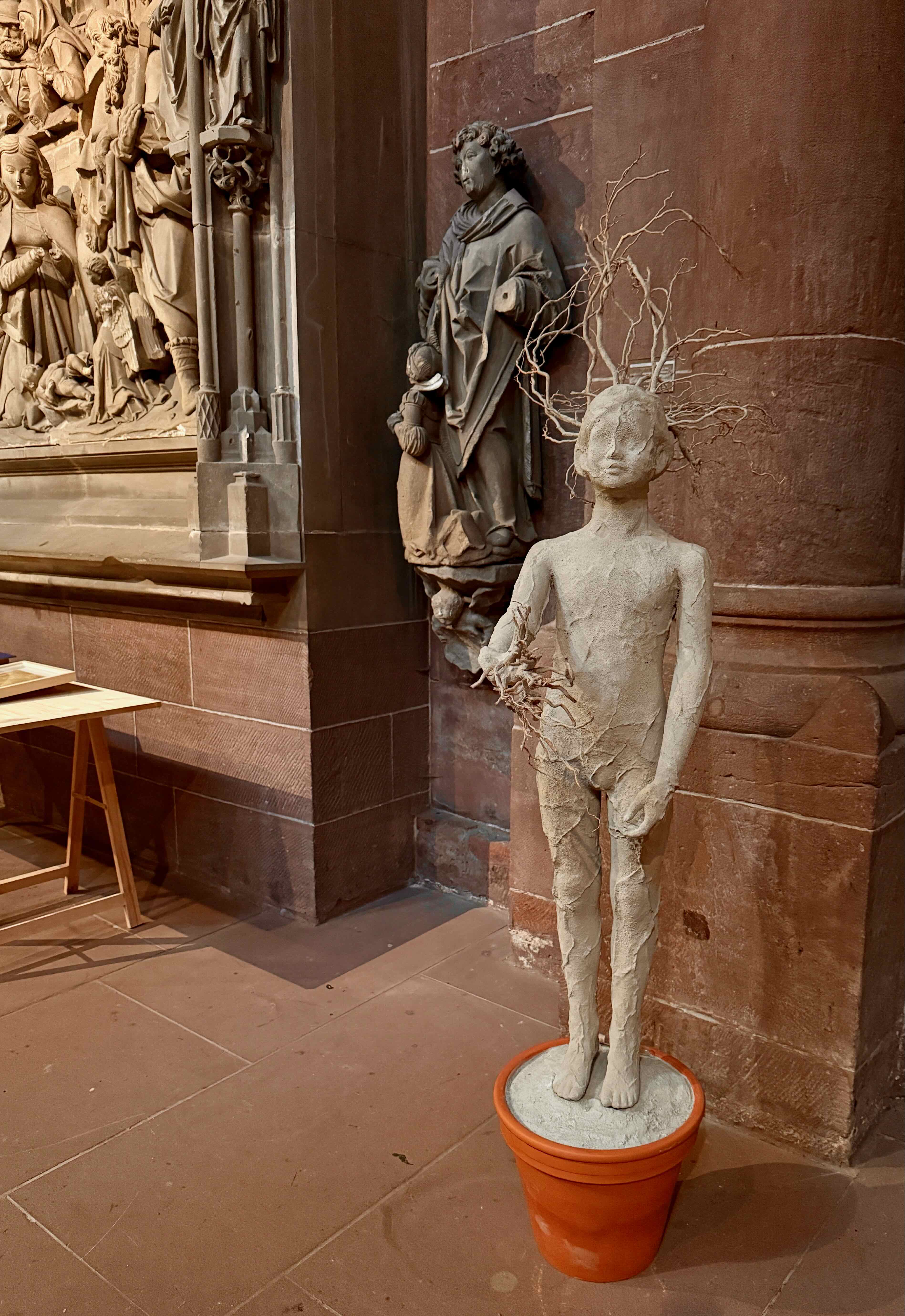
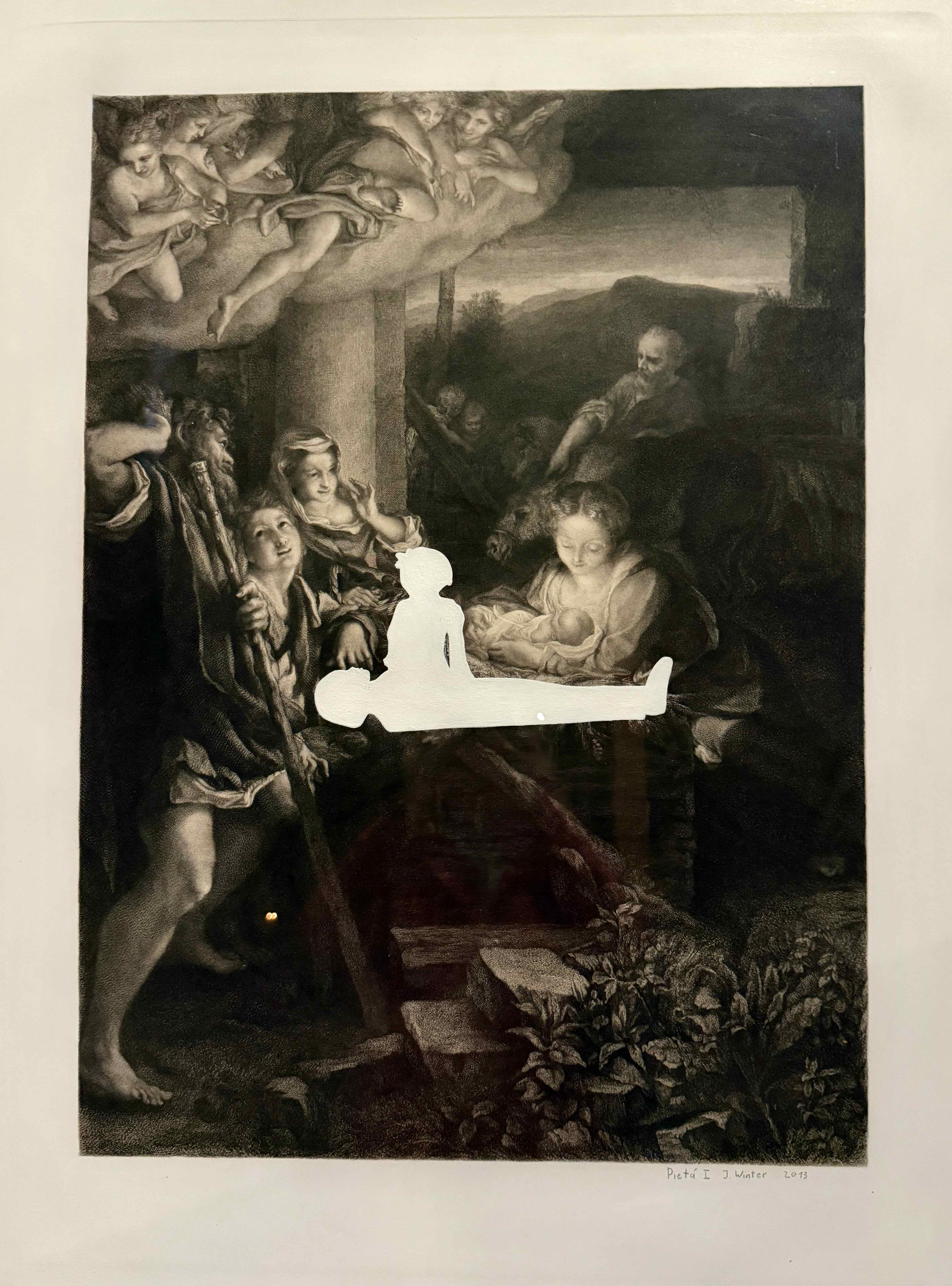
We do finally find small side door that allows us entrance to the church. There is an art display in the cathedral by a group called Atelierblau. There are some really interesting pieces. Unfortunately I couldn’t find the names of the artists or the works they created. Here are a few of them.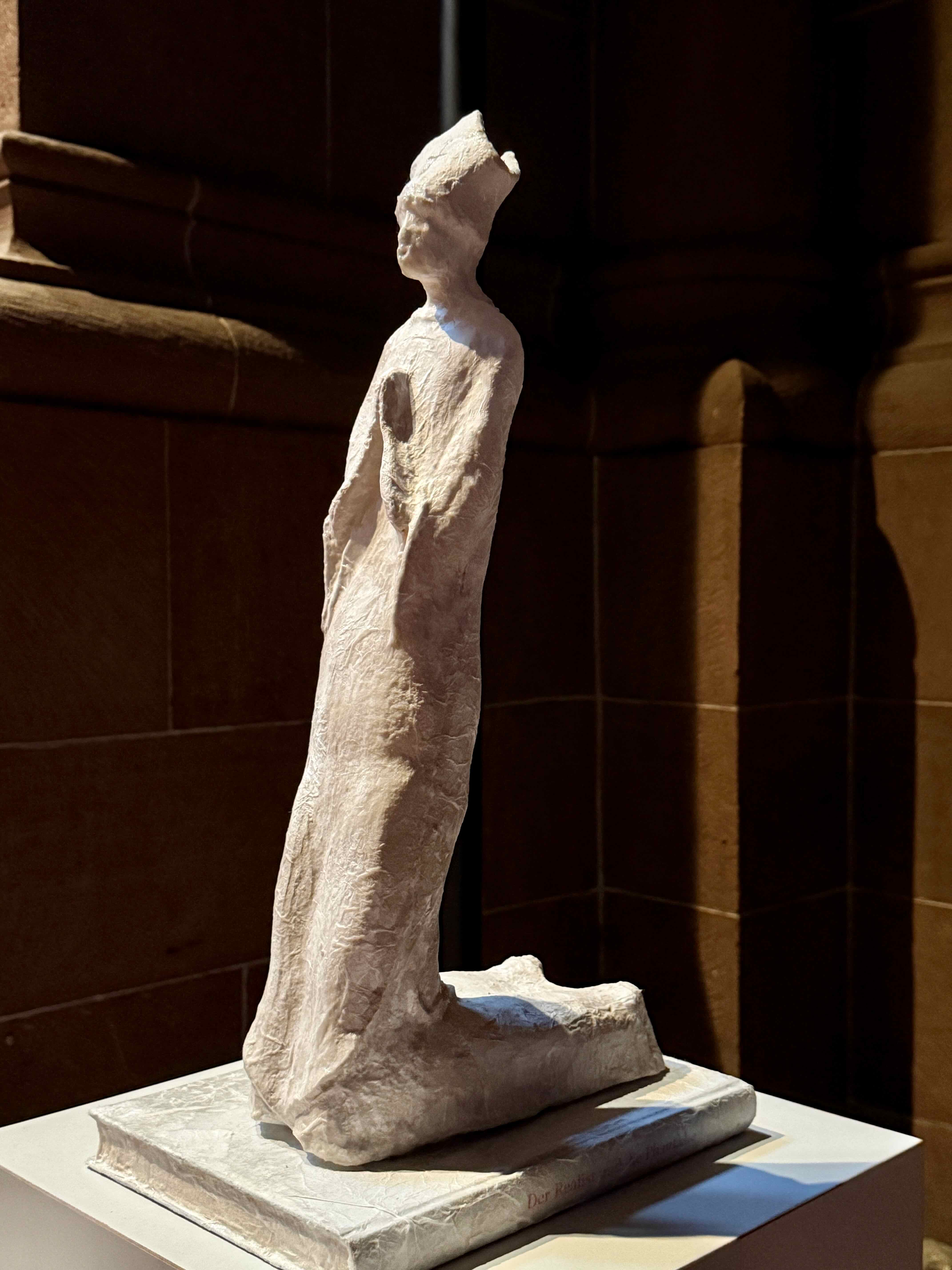
 The sign on the trunk reads “A thousand roses for a thousand lives”.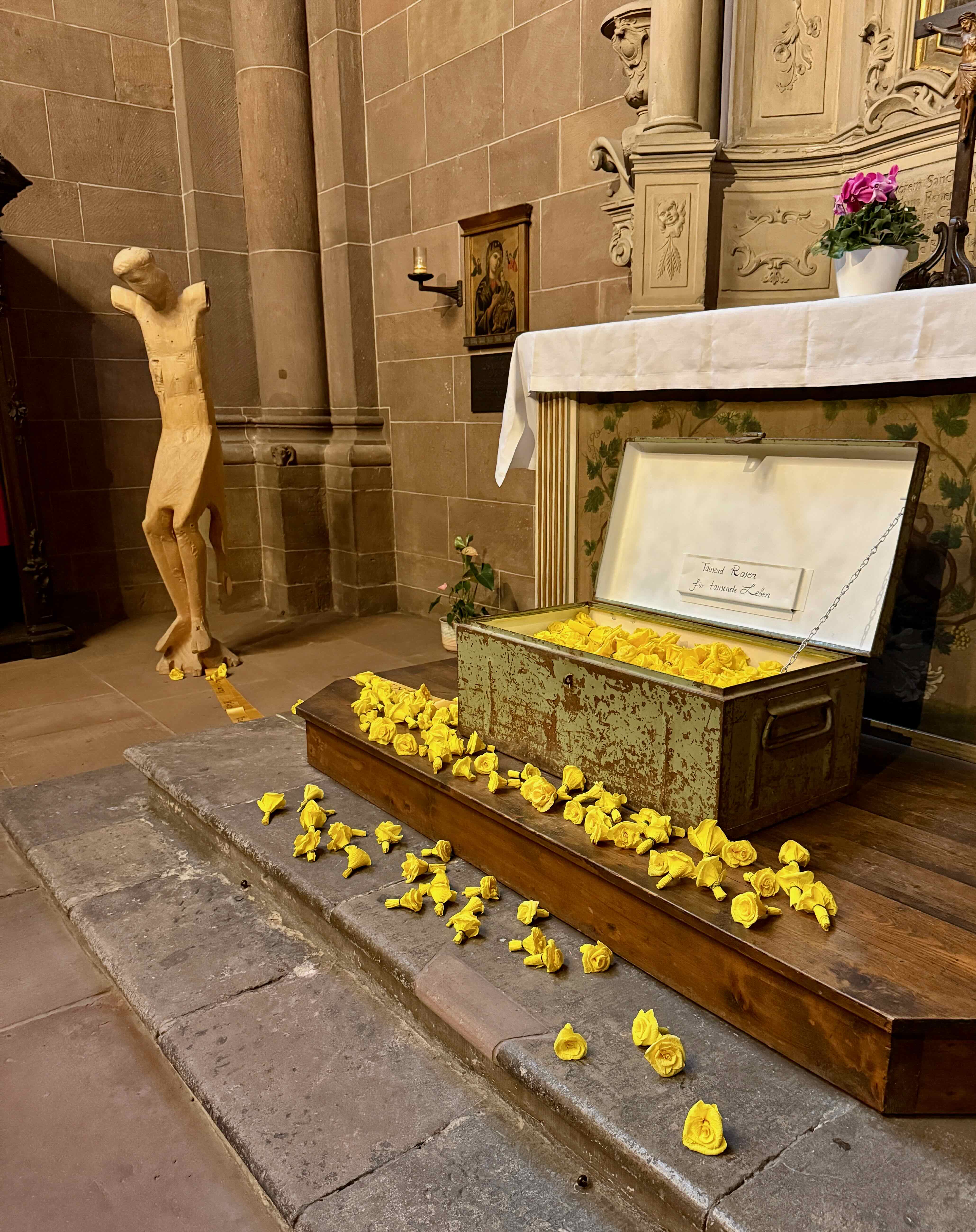
There are several large sculptural pieces that are from the church cloister. I think they were placed inside the church as a method of keeping them safe from damage.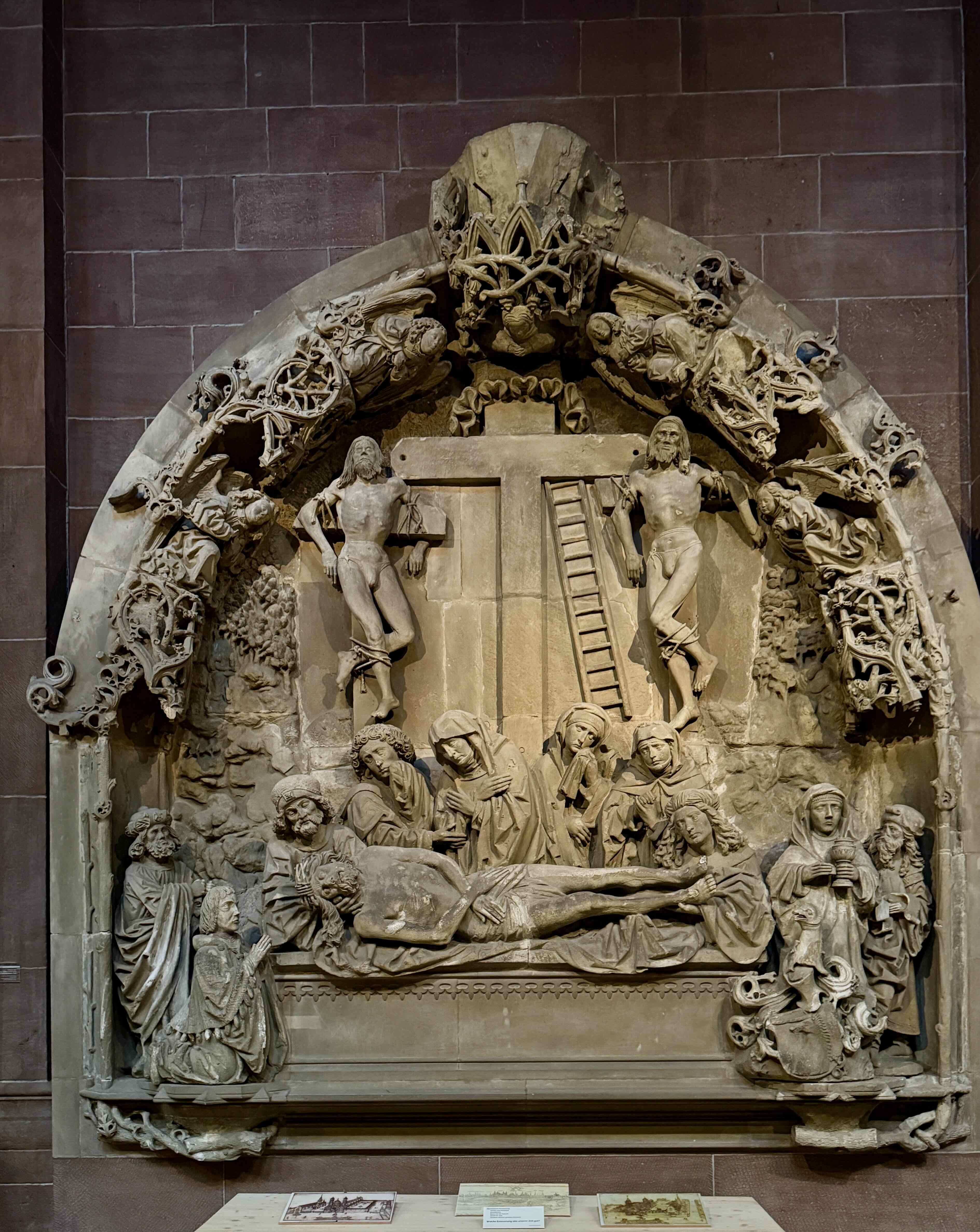
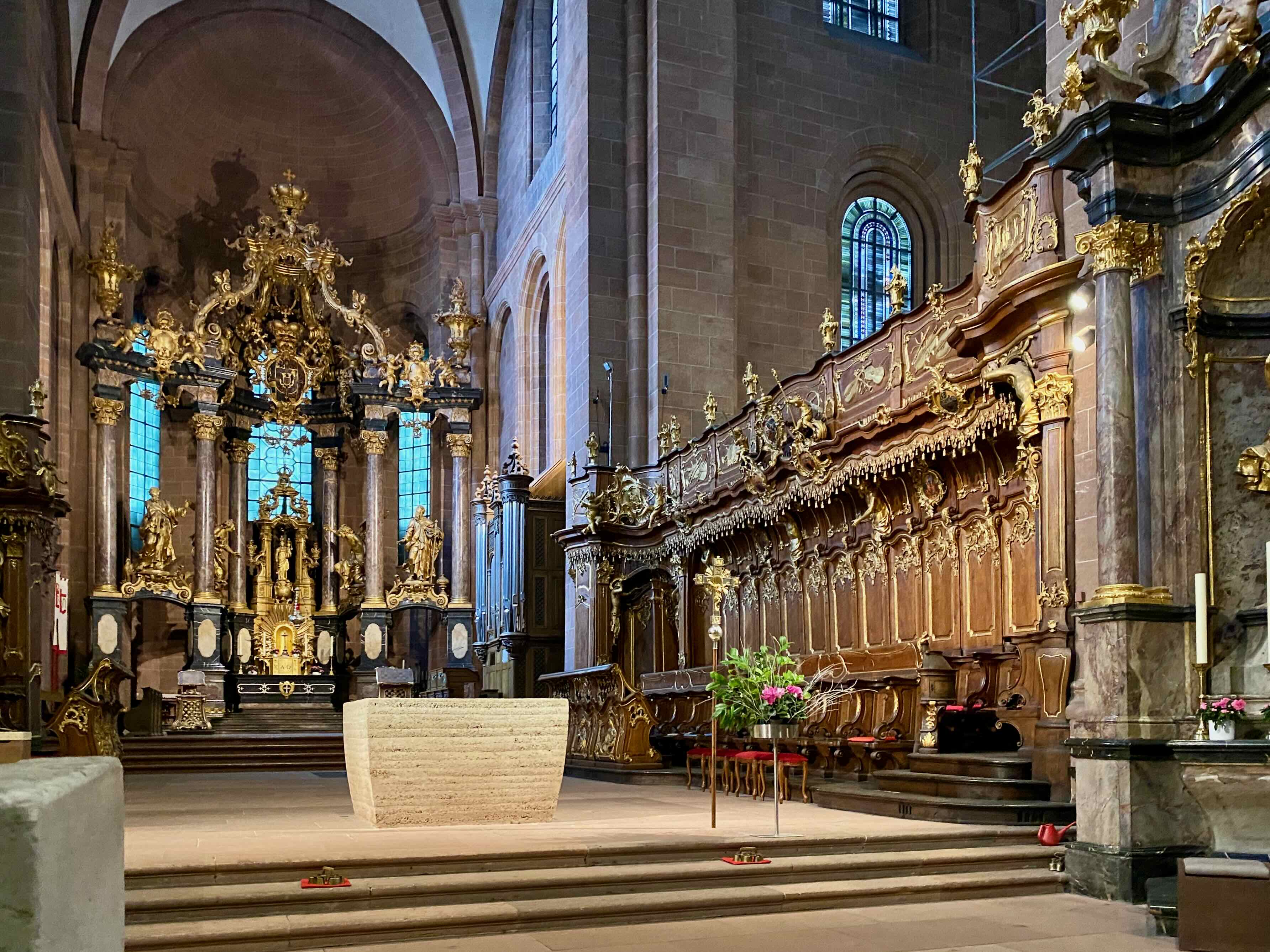
Built with red sandstone between the years 1130 and 1181, the church has a relatively simple interior…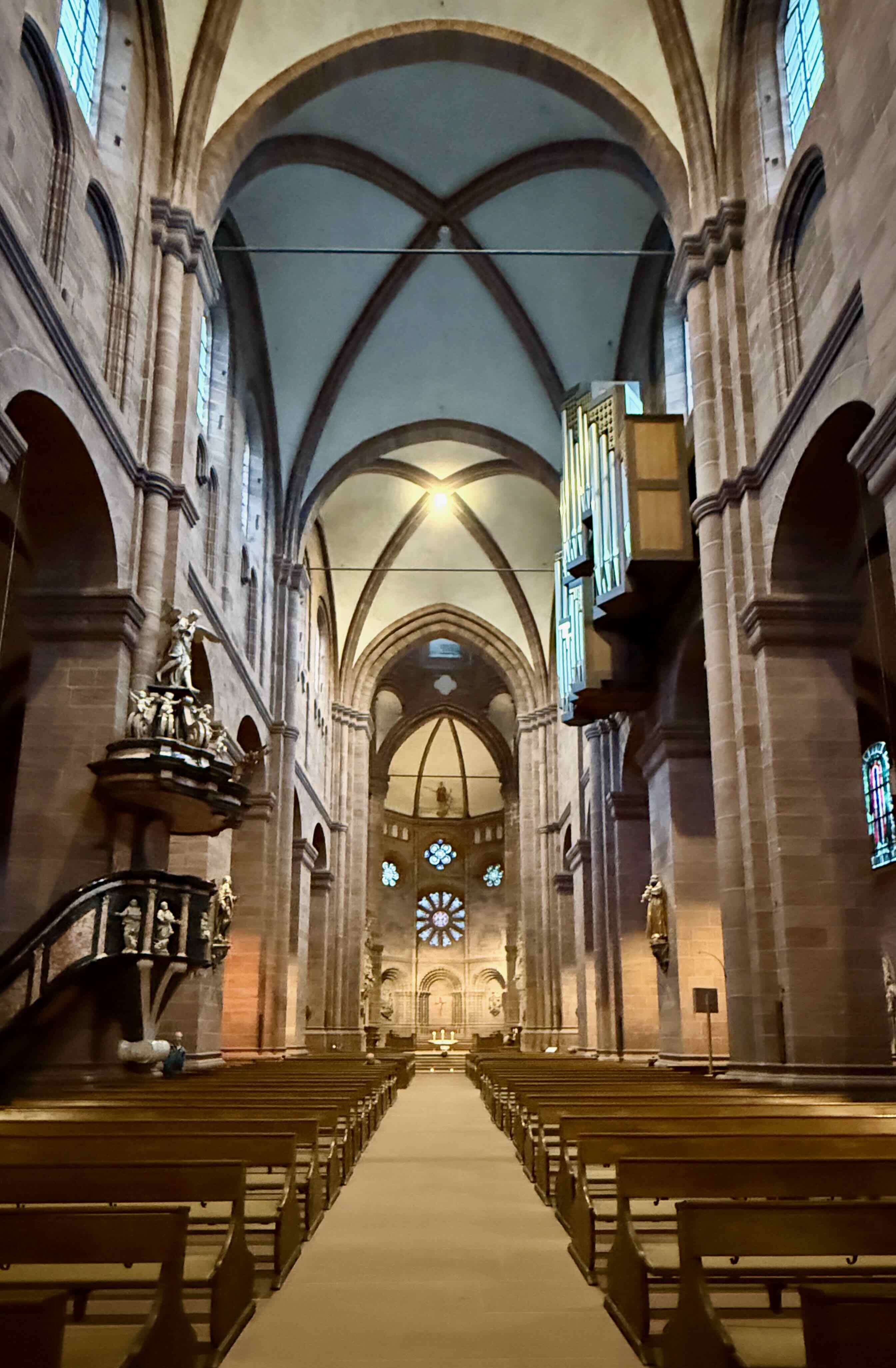 …except for the choir and altar.
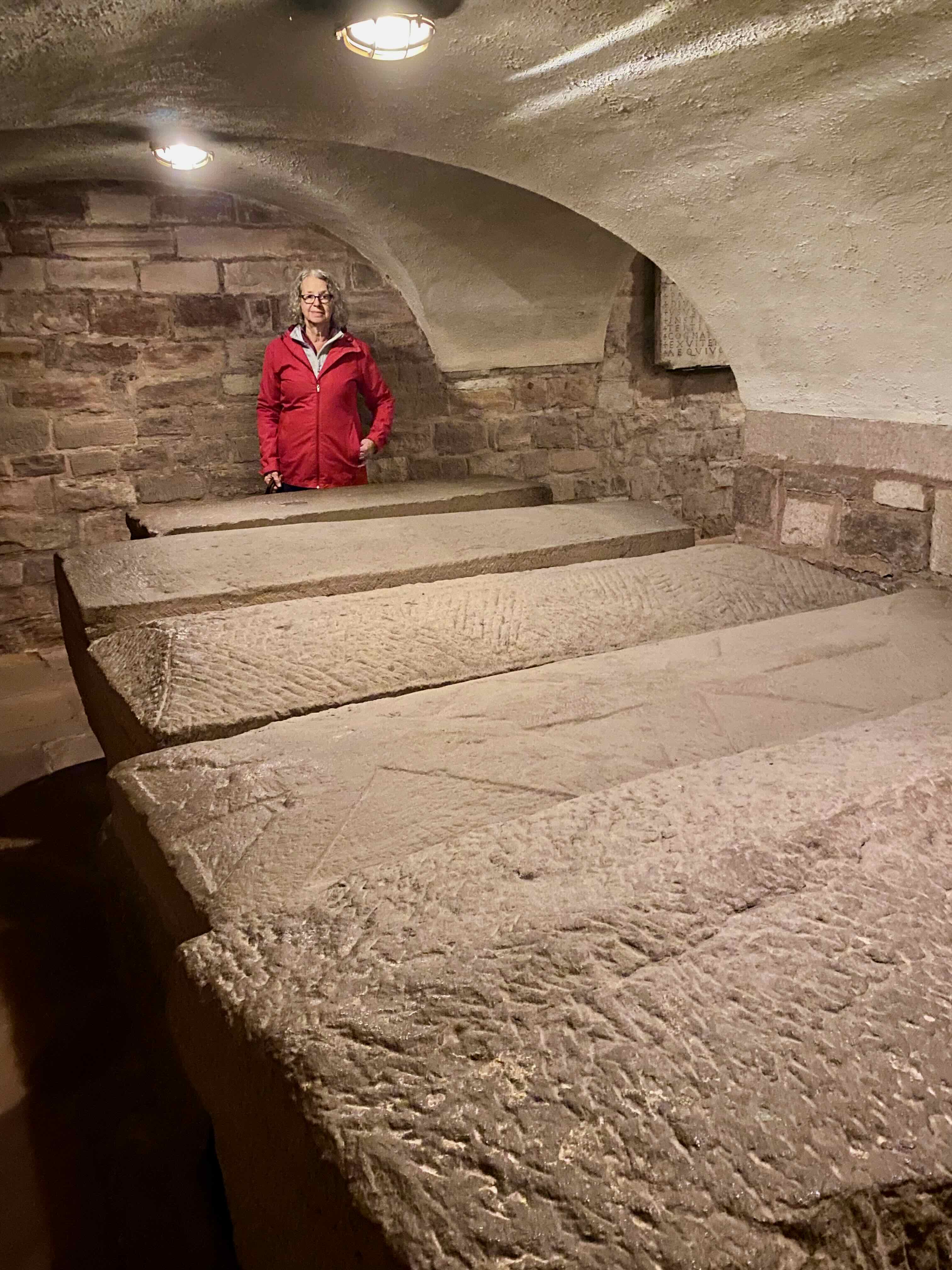
 Bob noticed a side entrance to the crypt which contains the tombs of early rulers from 990 to 1040 AD.
 Outside I see what appears to be ancient graffiti.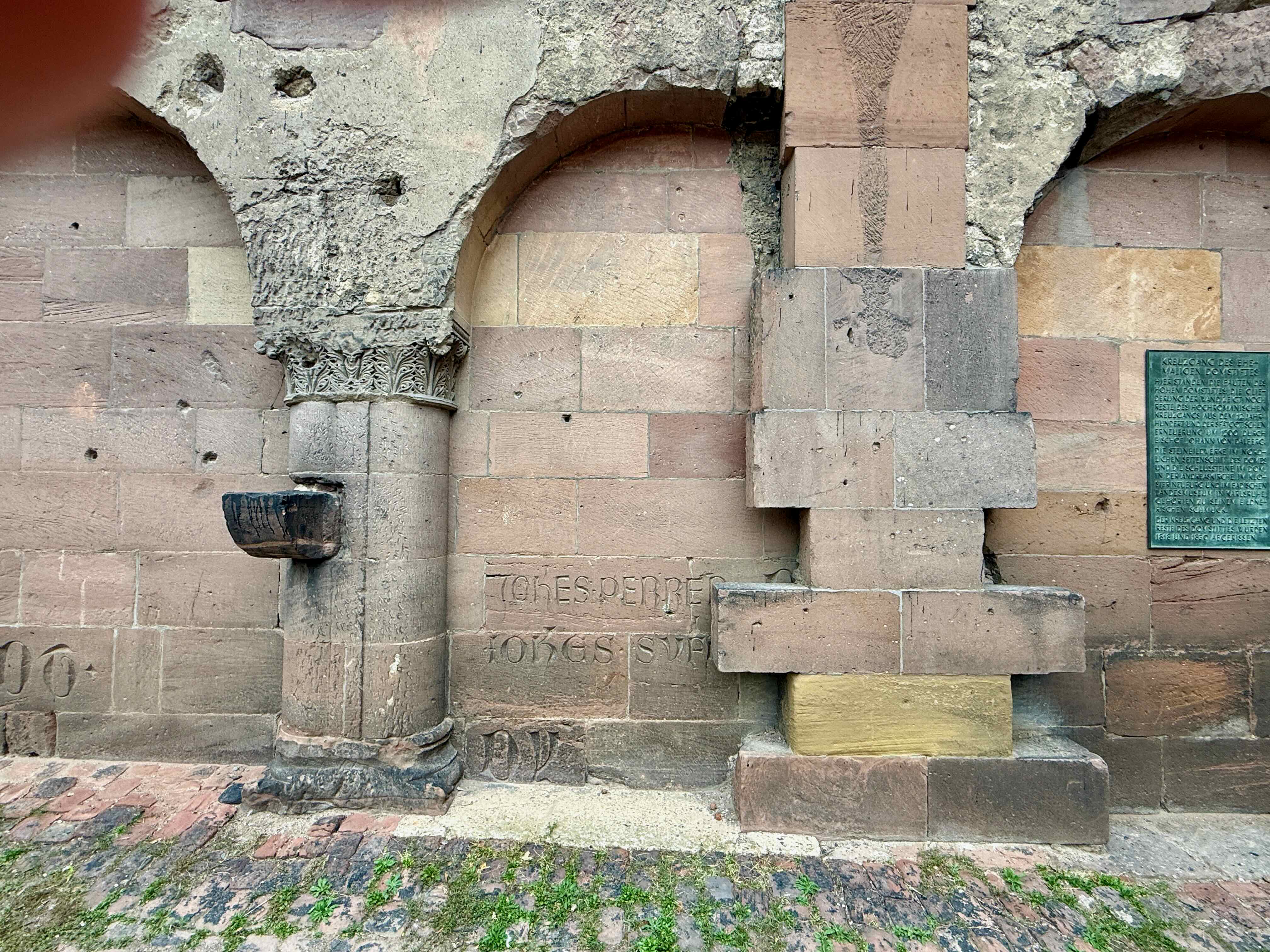
This fountain is at the end of part of the old town wall.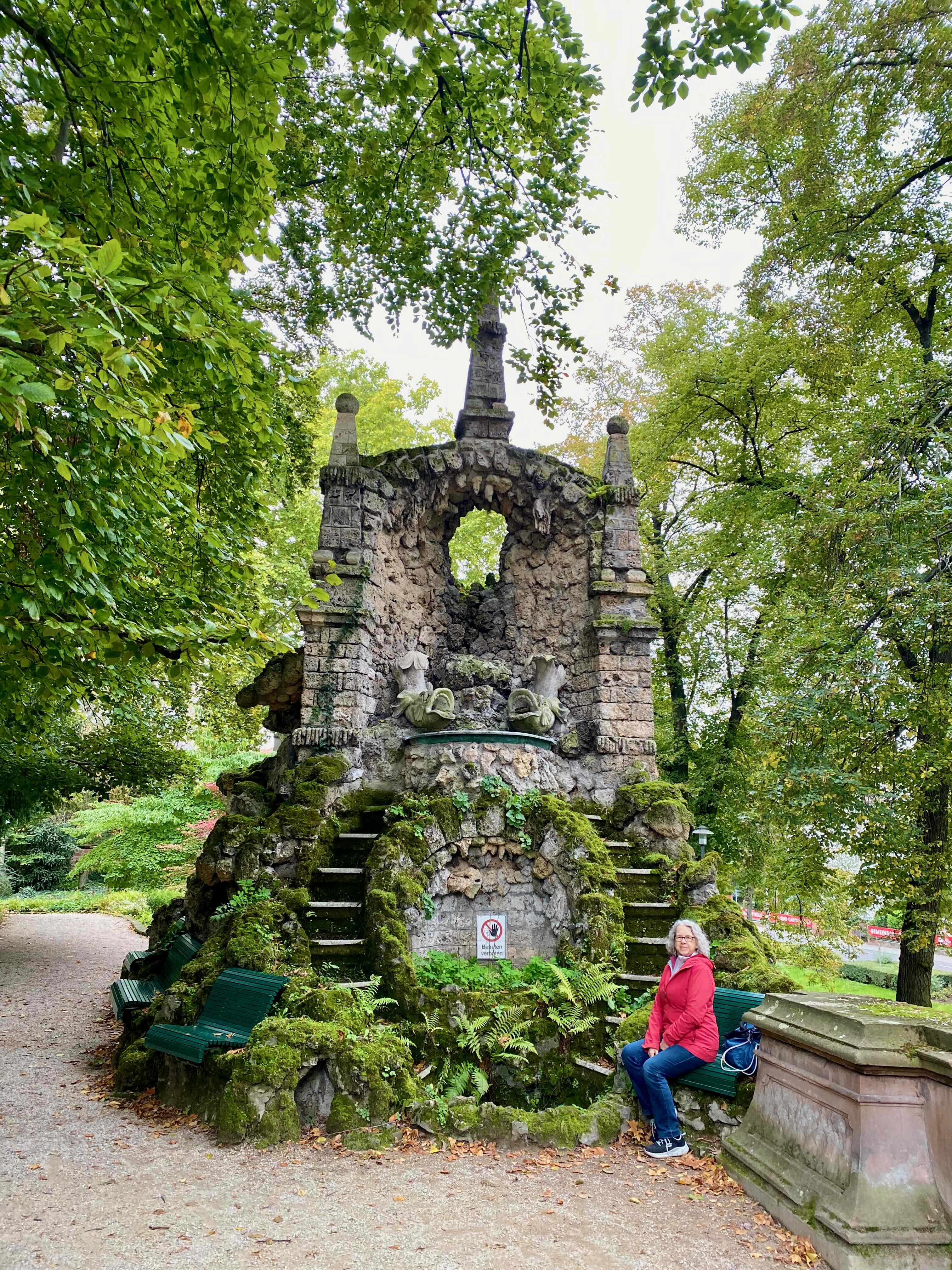
More graffiti, only on a tree this time.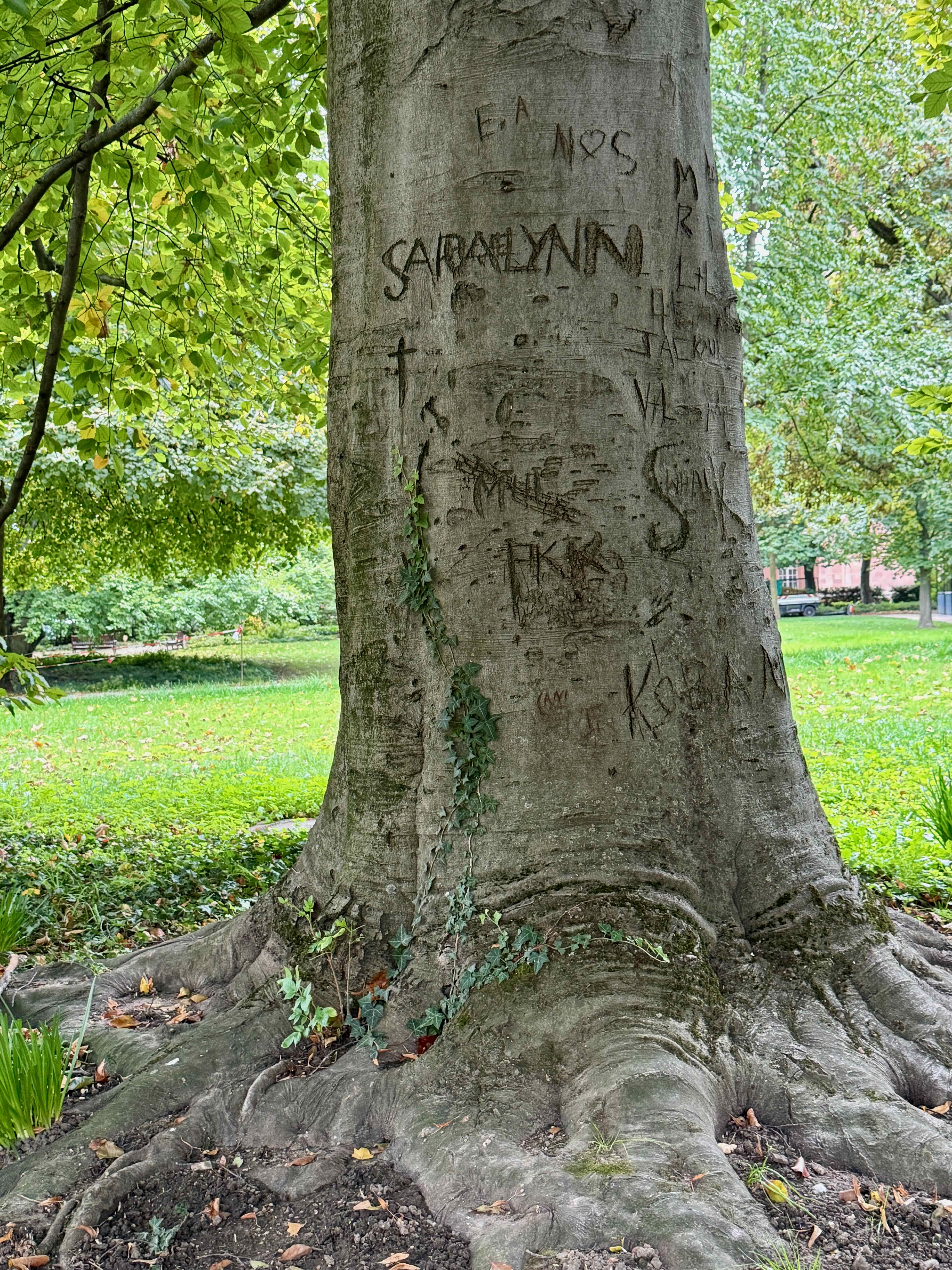
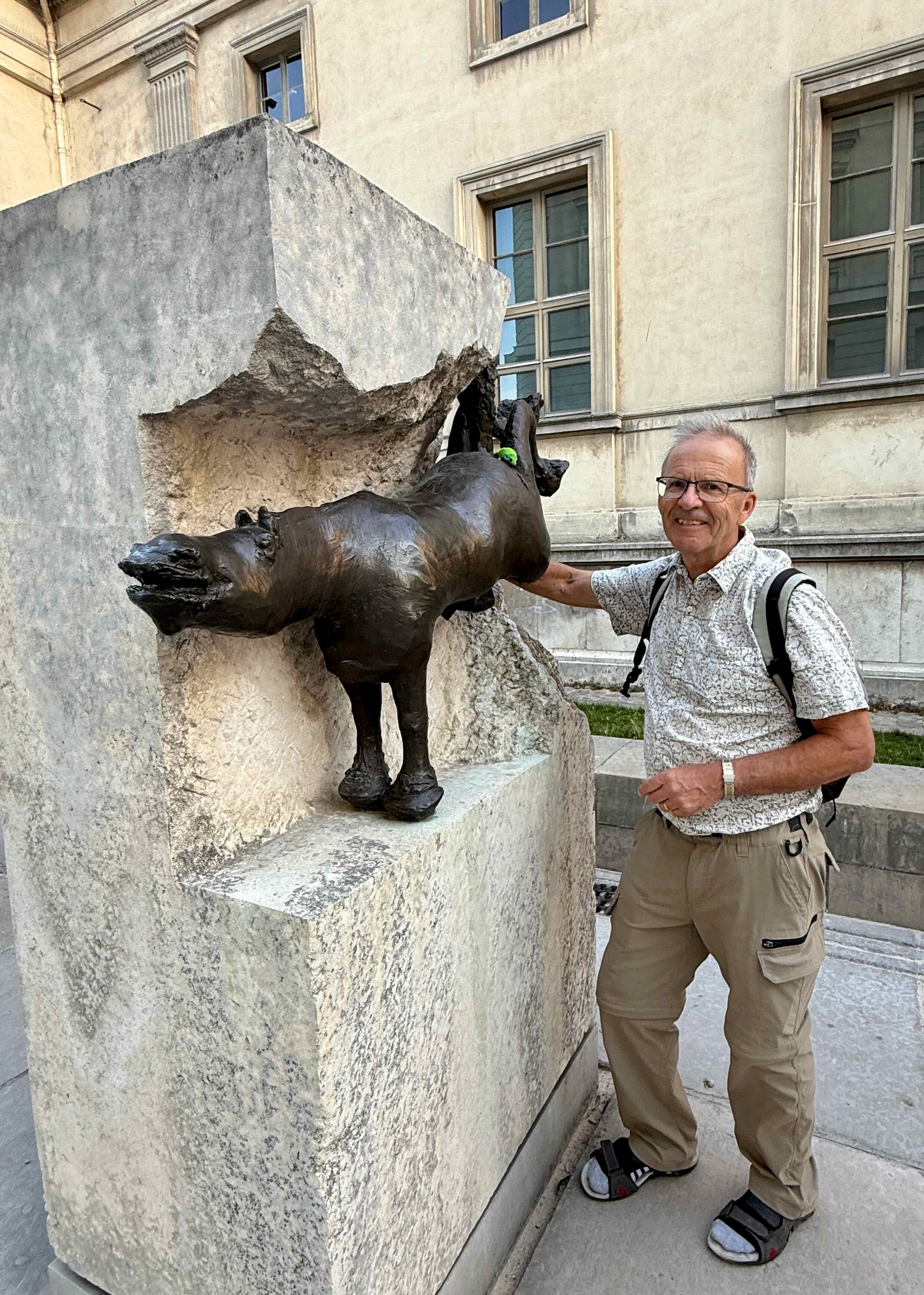
This little bird sculpture with its huge beak, ragged wings and stubby body caught our eye…we both really liked it.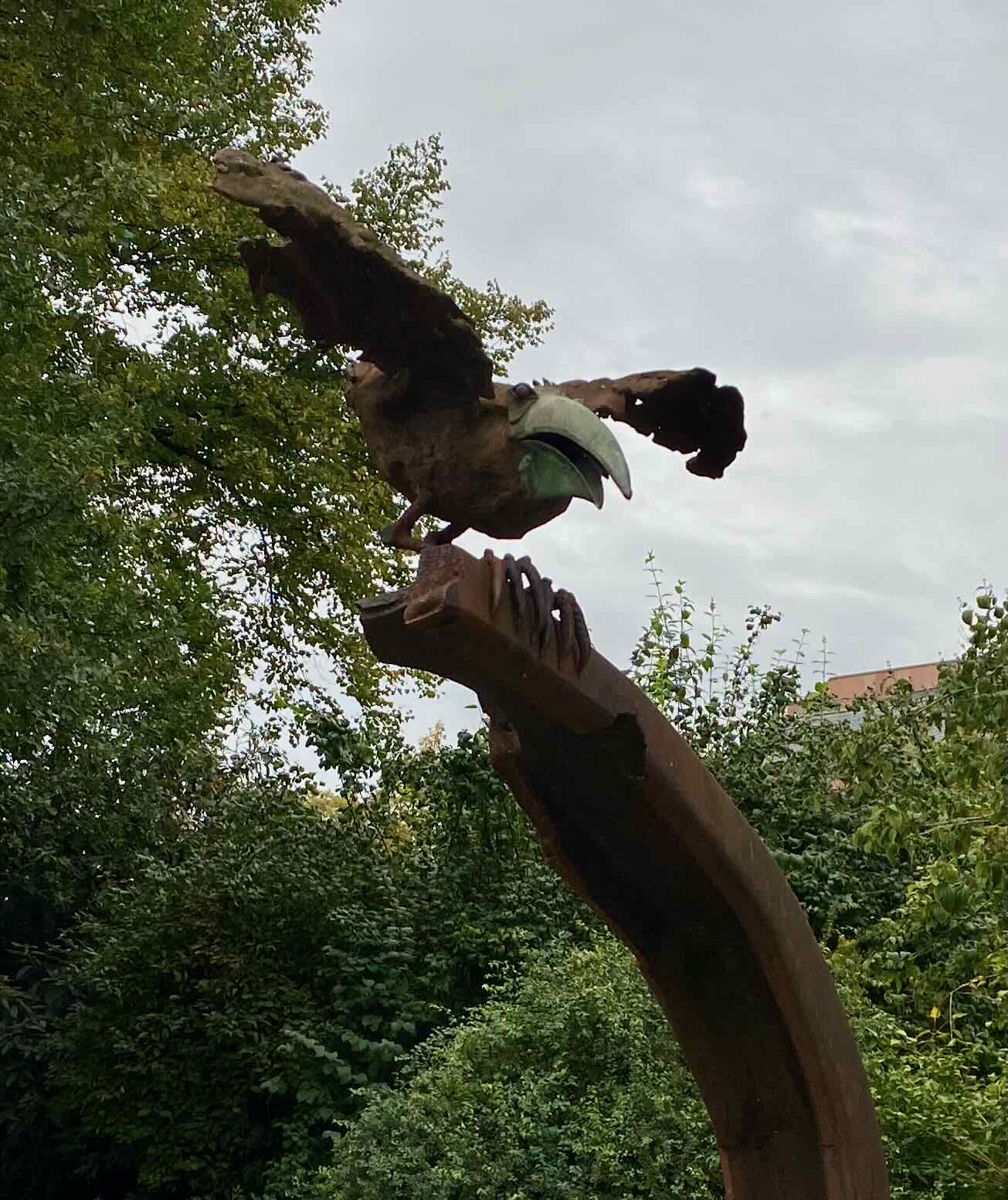
The Luther Monument is a group of statues. Martin Luther stands surrounded by bronze statues of the individuals that supported him. Plaques of the towns that supported Luther and the Protestant Reformation are placed on the walls of the monument.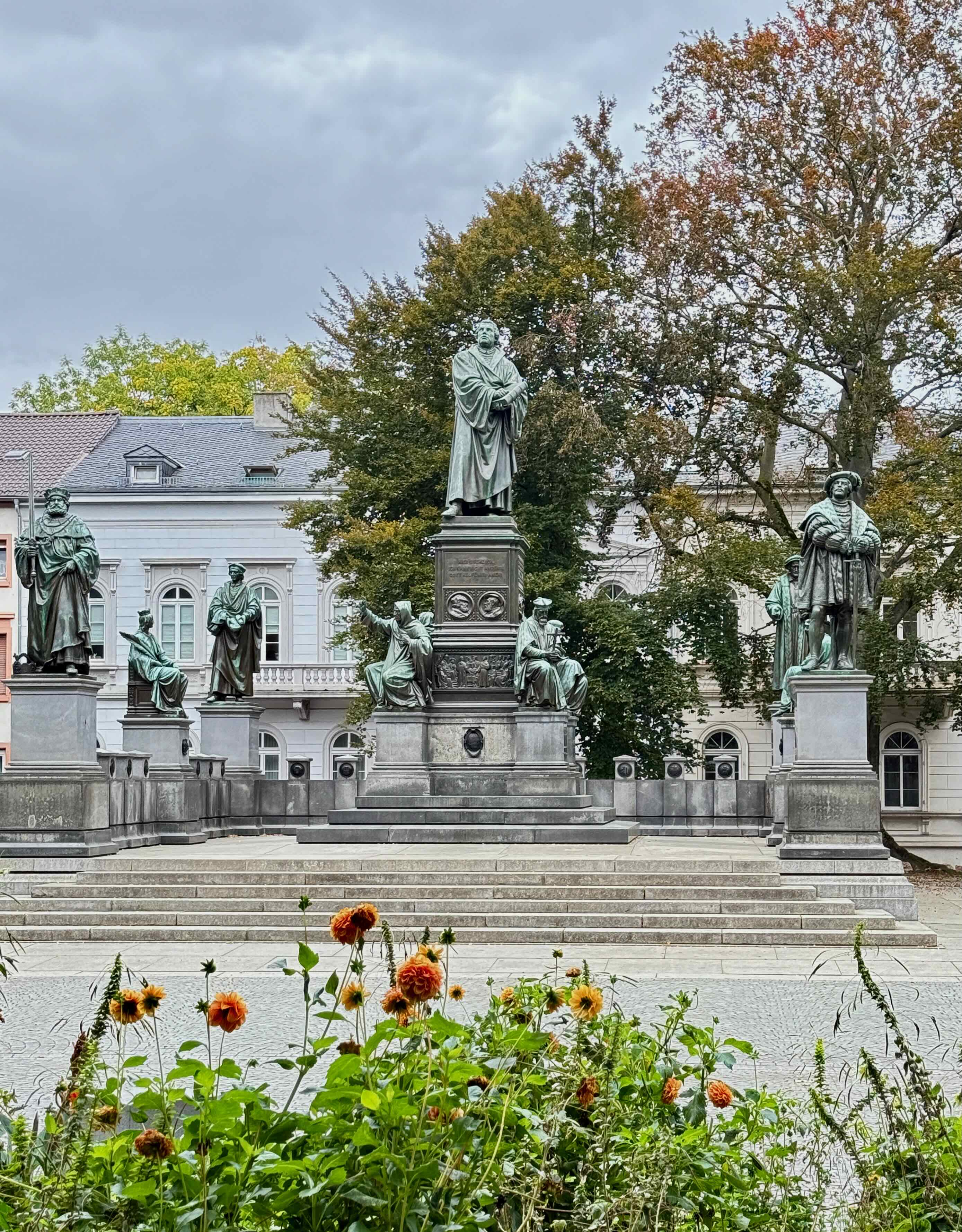
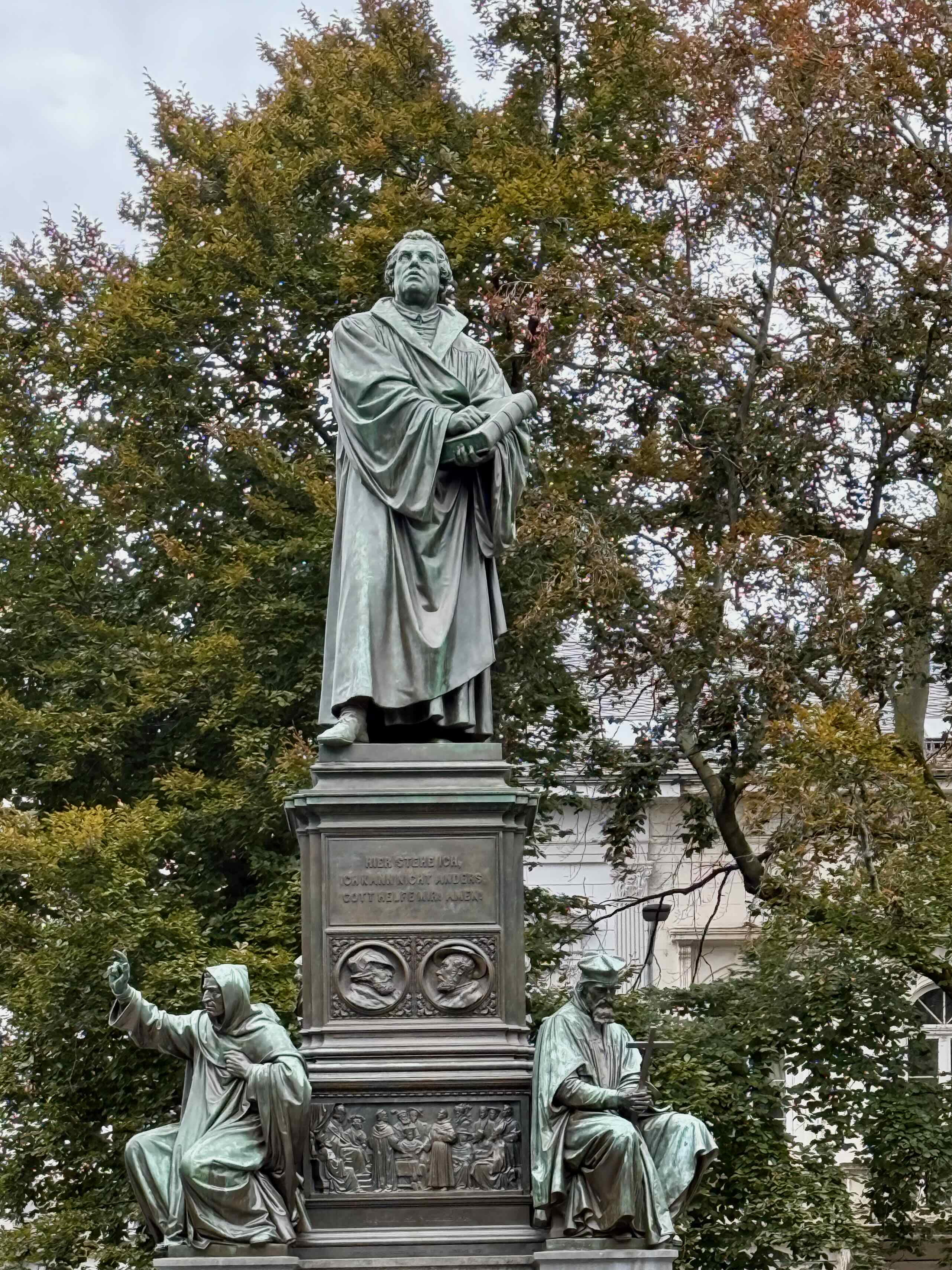
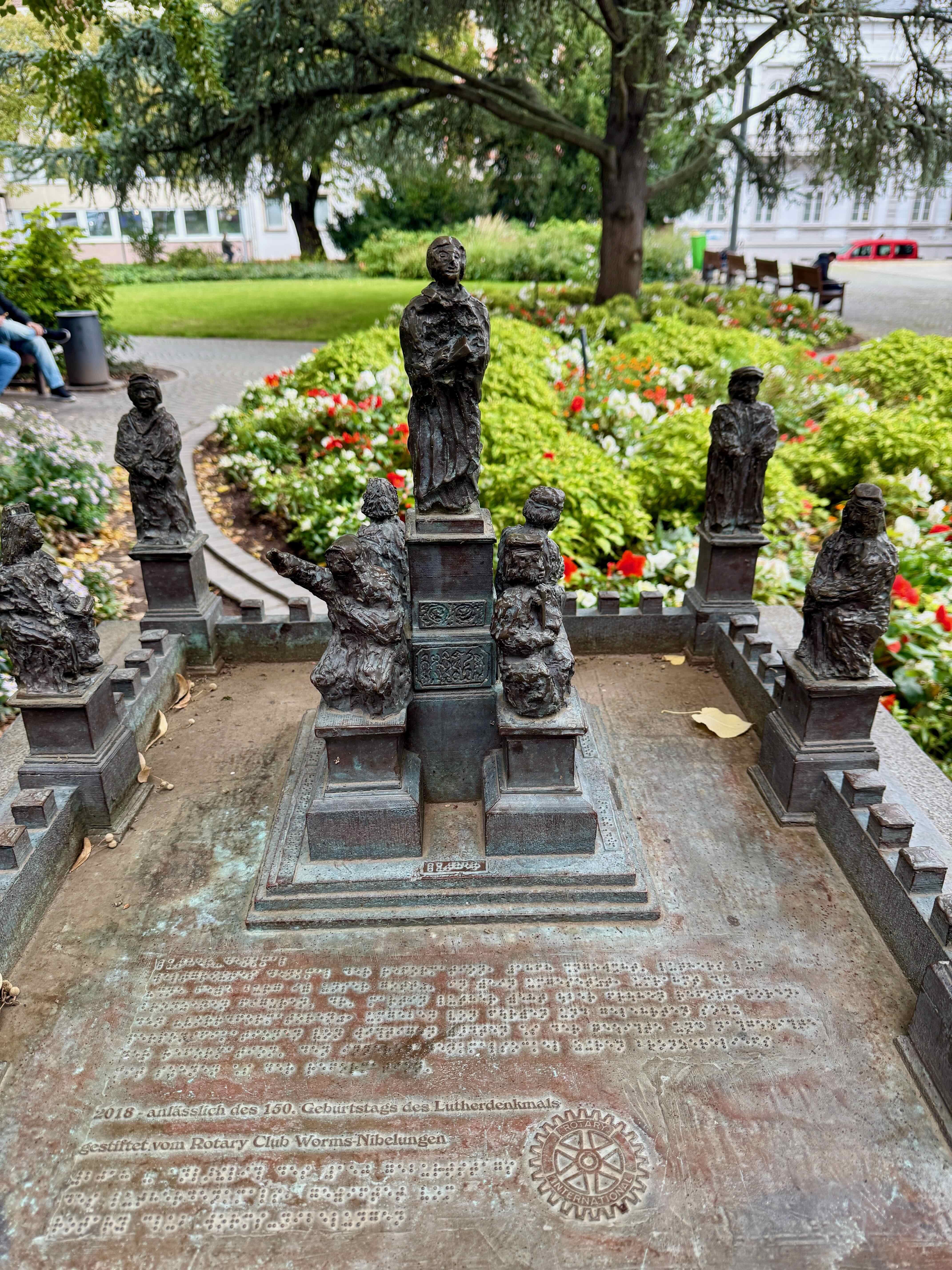
This monument is in a lovely park near the Cathedral.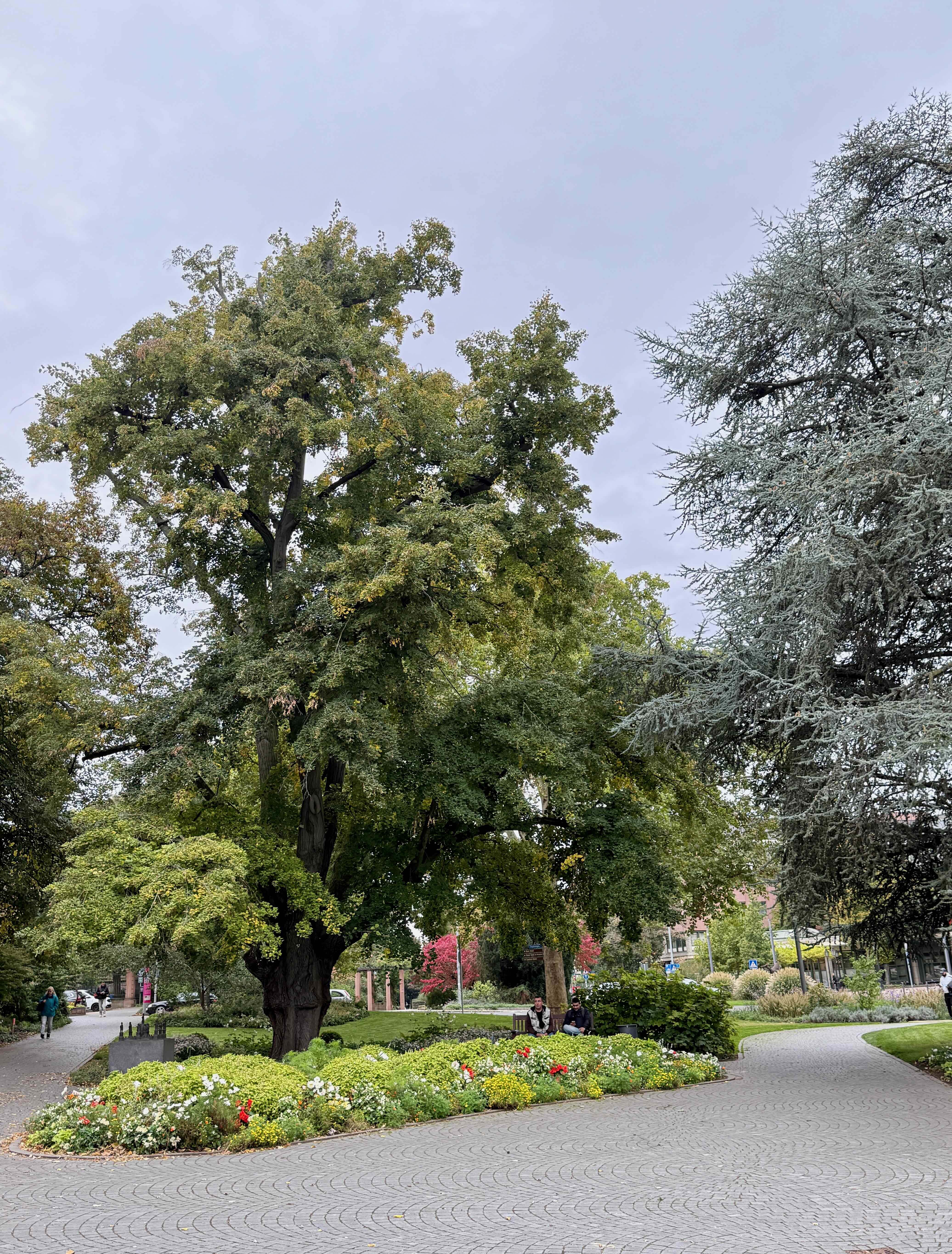 There is a model of the statue with information in Braille, which was unique.
 Back on the road I finally manage to get a photo of the Ausfahrt sign…which simply means Exit. I remember that we found this quite hilarious on our first trip to Germany with our daughter many years ago.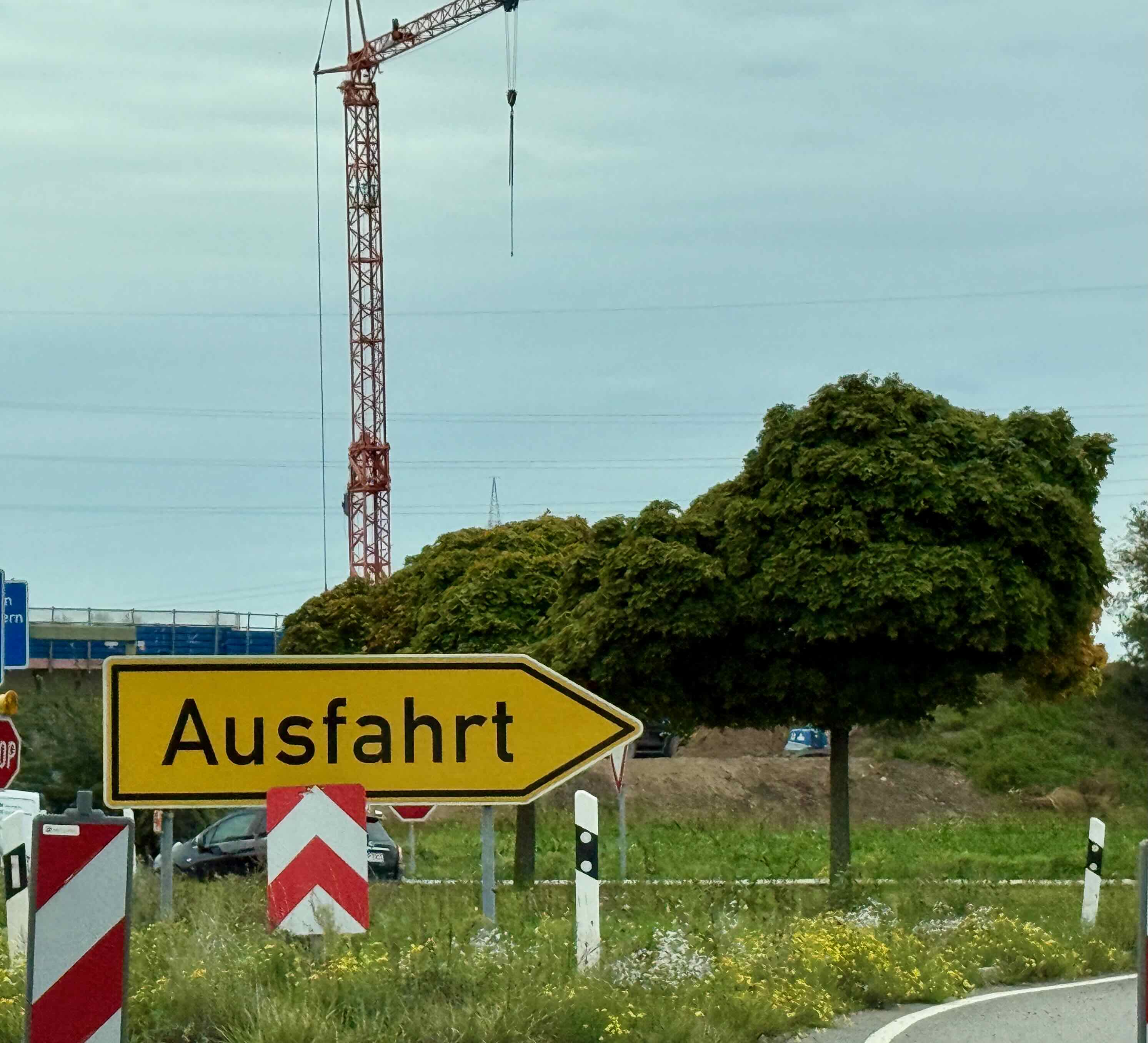
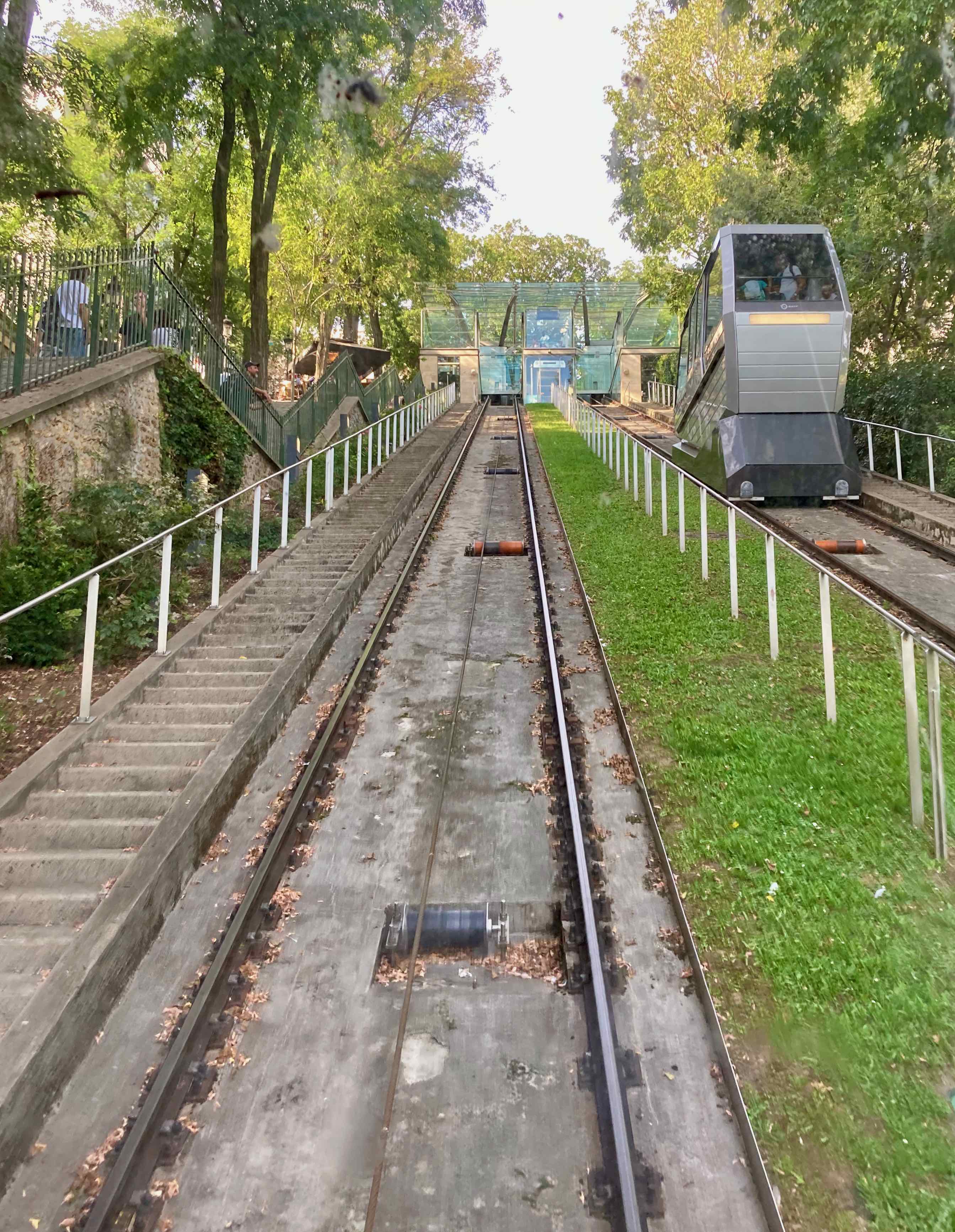
Next stop is Heidelberg where we are going to visit Heidelberg Castle that Bob says is like Versailles. We have a hard time finding the entrance to the funicular, even using Google Maps! Finally I notice a small picture of a train on the wall of what looks like the entrance to a mall…we only walked past it two times! The part of the journey we take is all underground.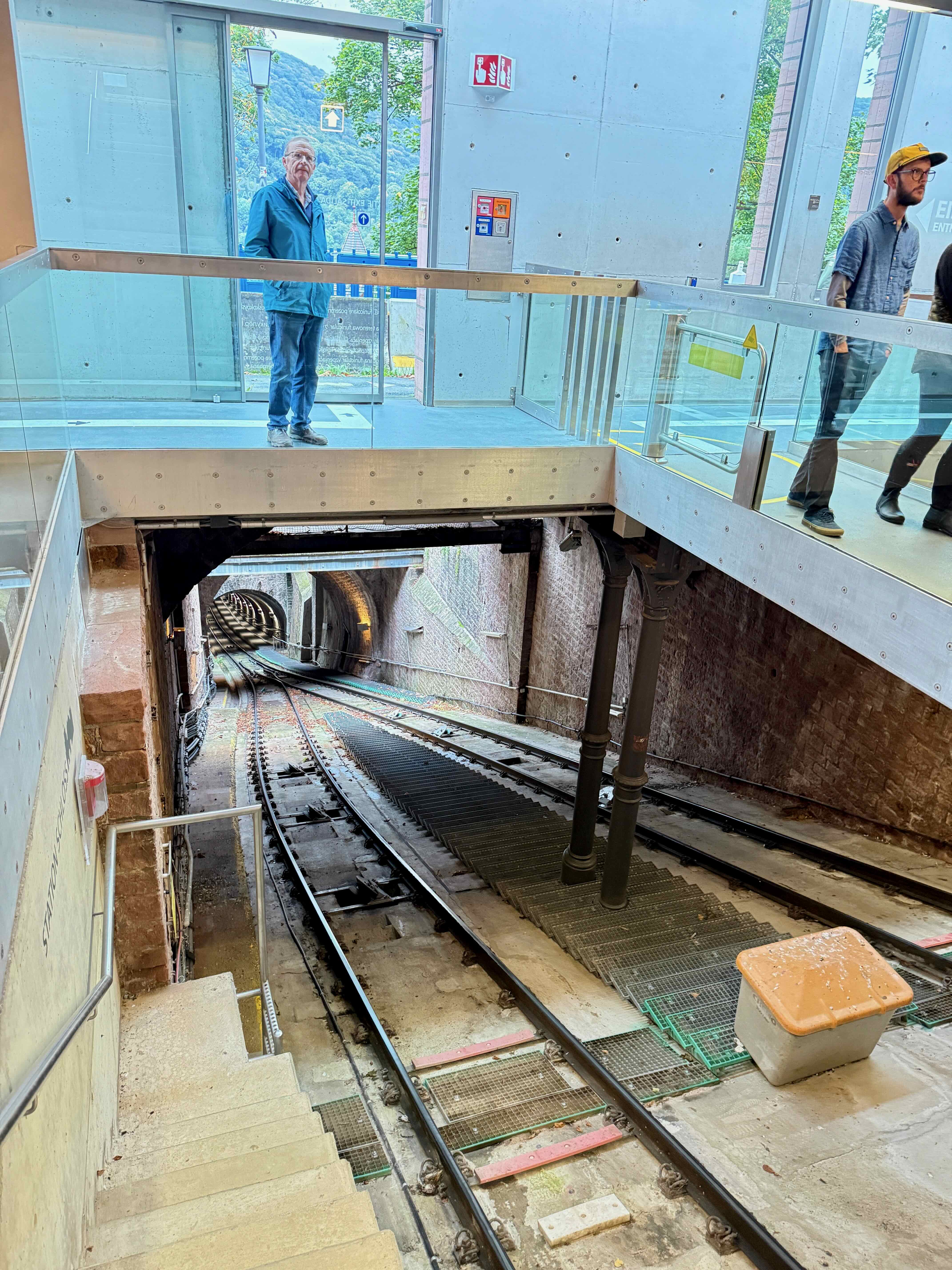
We walk to the castle but all we see is ruins…turns out Bob mixed up his castles! It is fine though as this looks interesting anyways. There is an in depth tour through the ruins in an hour and a half but we decide to just wander and see what we can. This gate was built in one night by King Frederick V for his wife as a birthday present.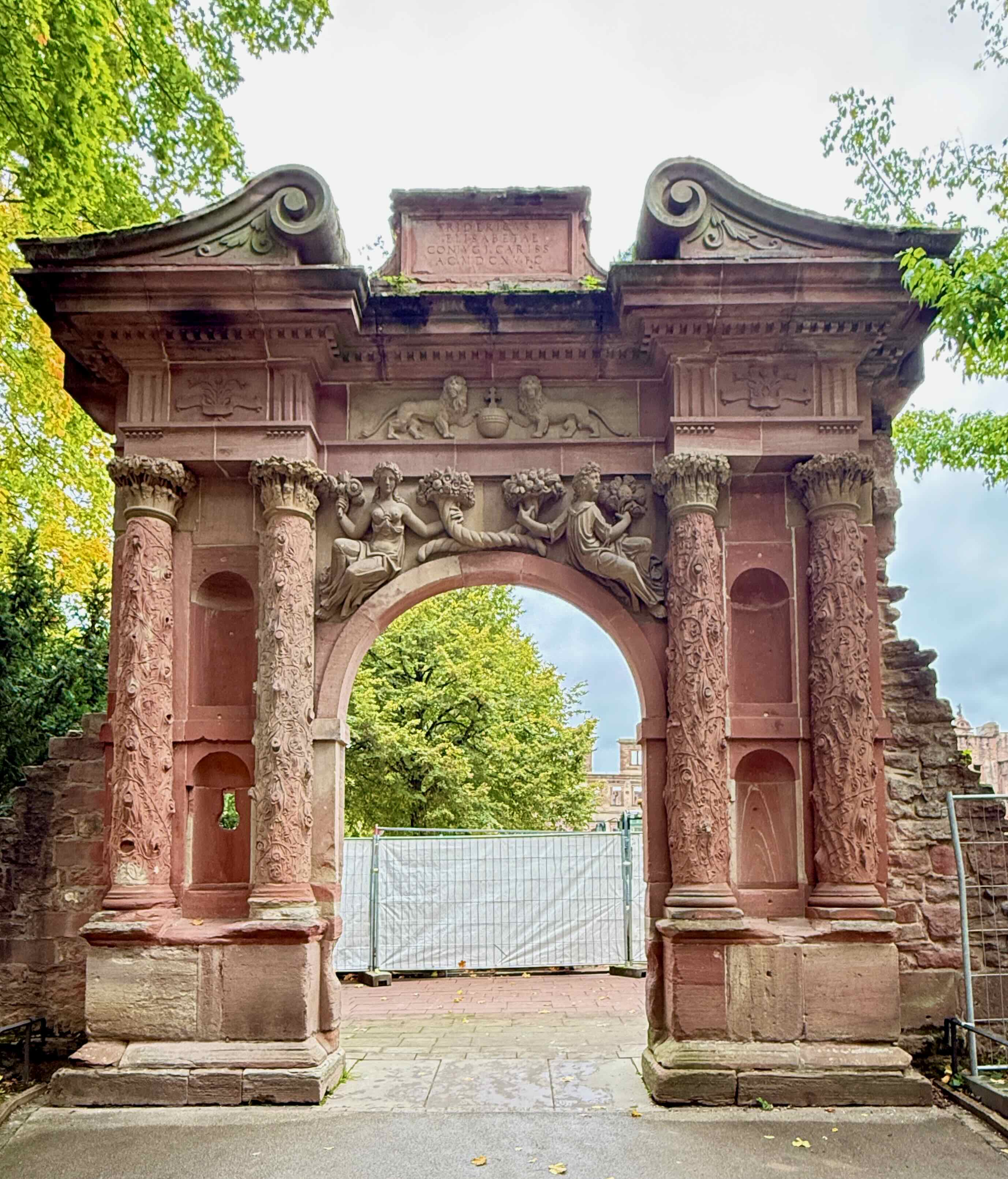
Our funicular ticket gives us access to the courtyard, the German Pharmacy Museum, and the Big Wine Barrel. We walk through the gate to the courtyard…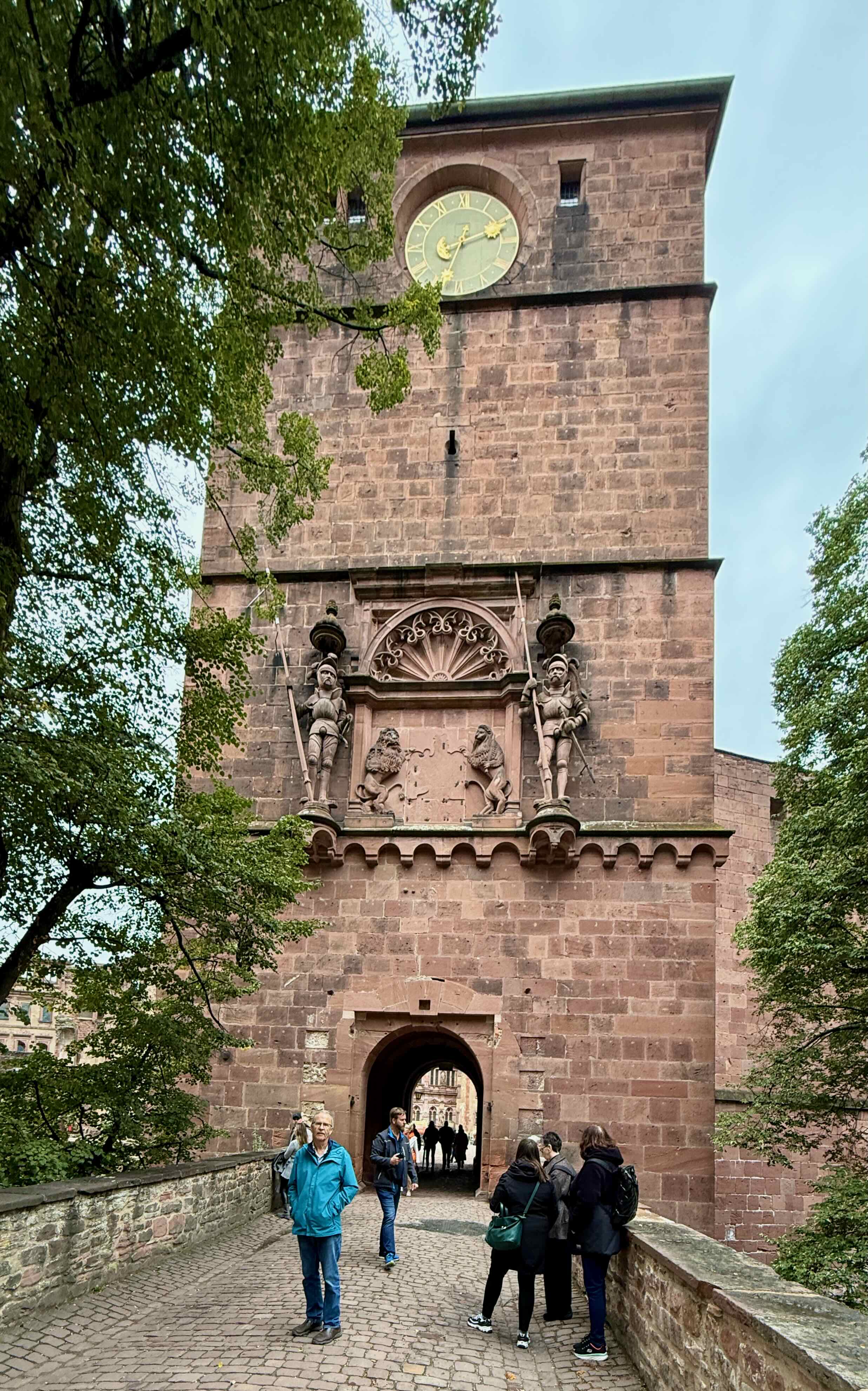
…and we are greeted with views of the ruins of what must have been a very impressive castle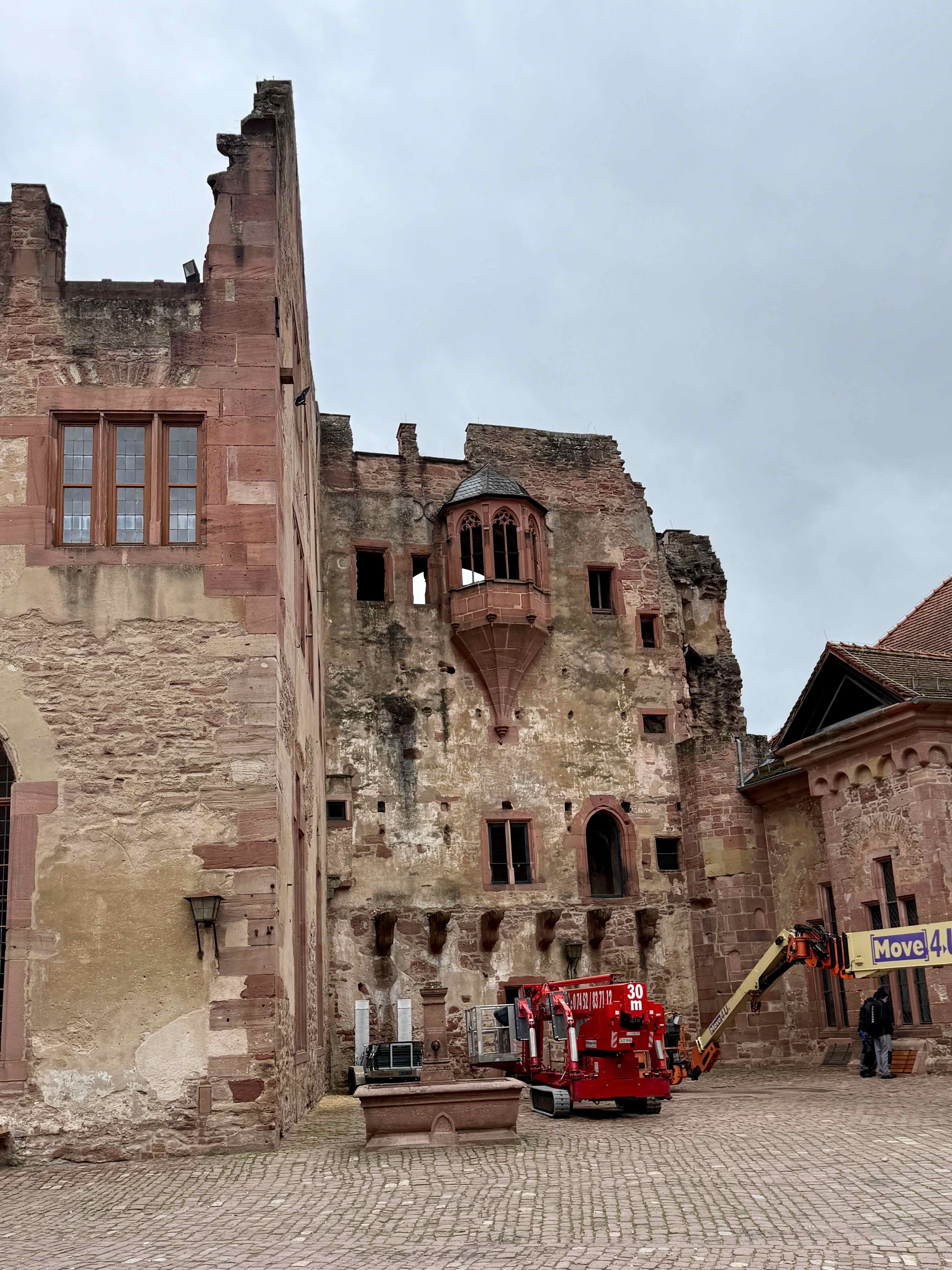
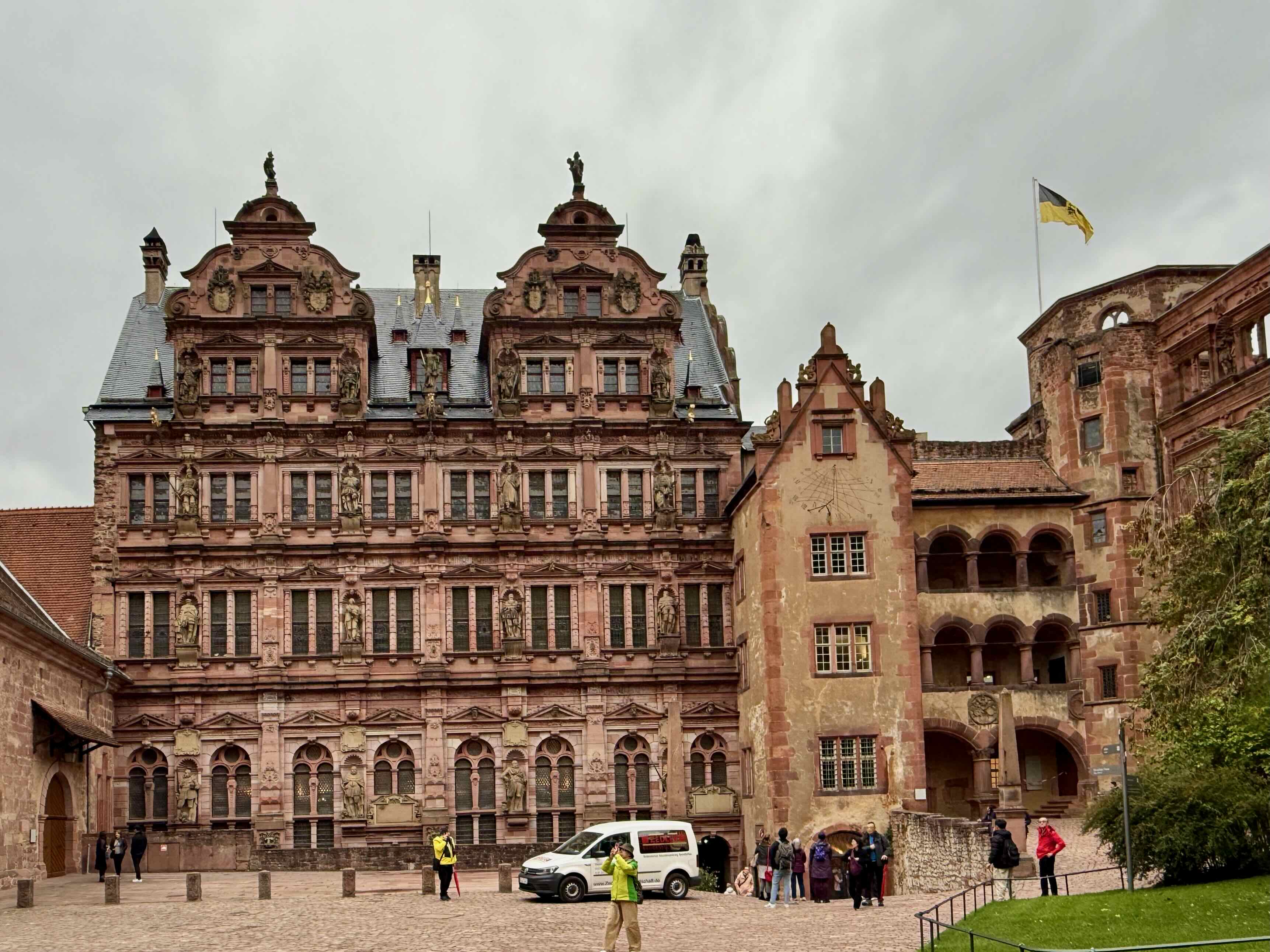
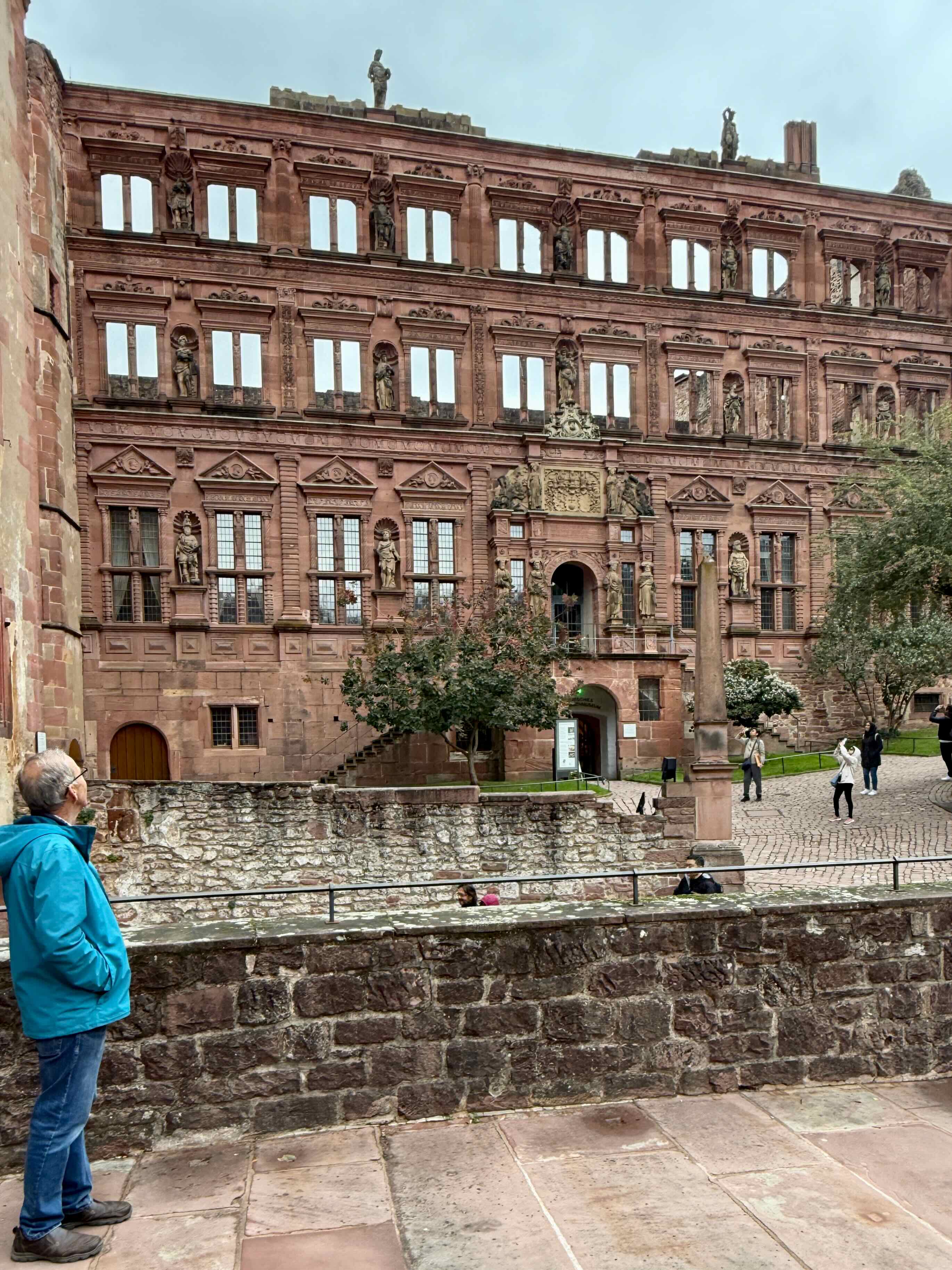
Walking through the doorway in the above photo we arrive on a huge balcony overlooking the Rhine River with views of Heidelberg below.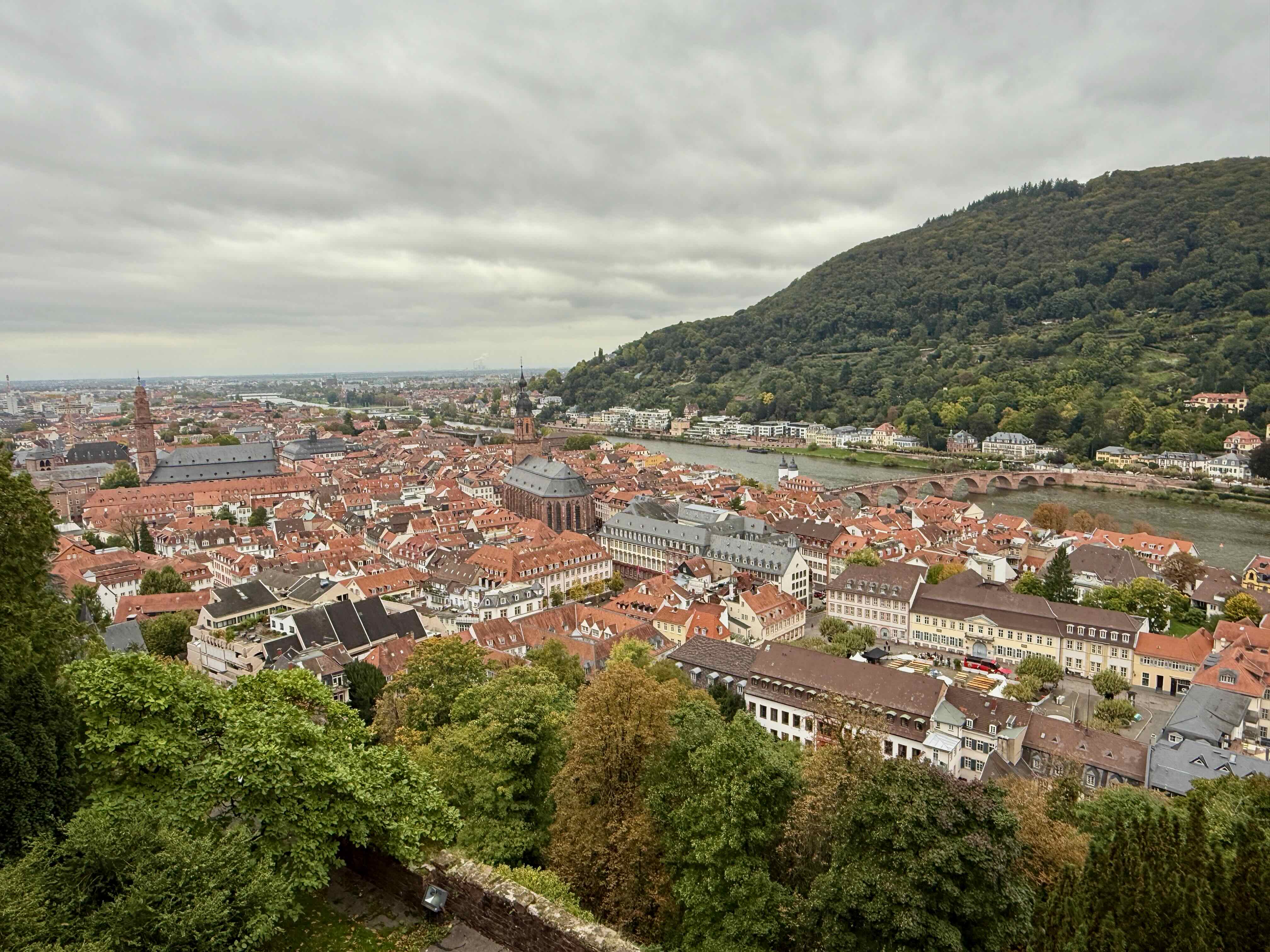 A view of the ruins as seen from the balcony.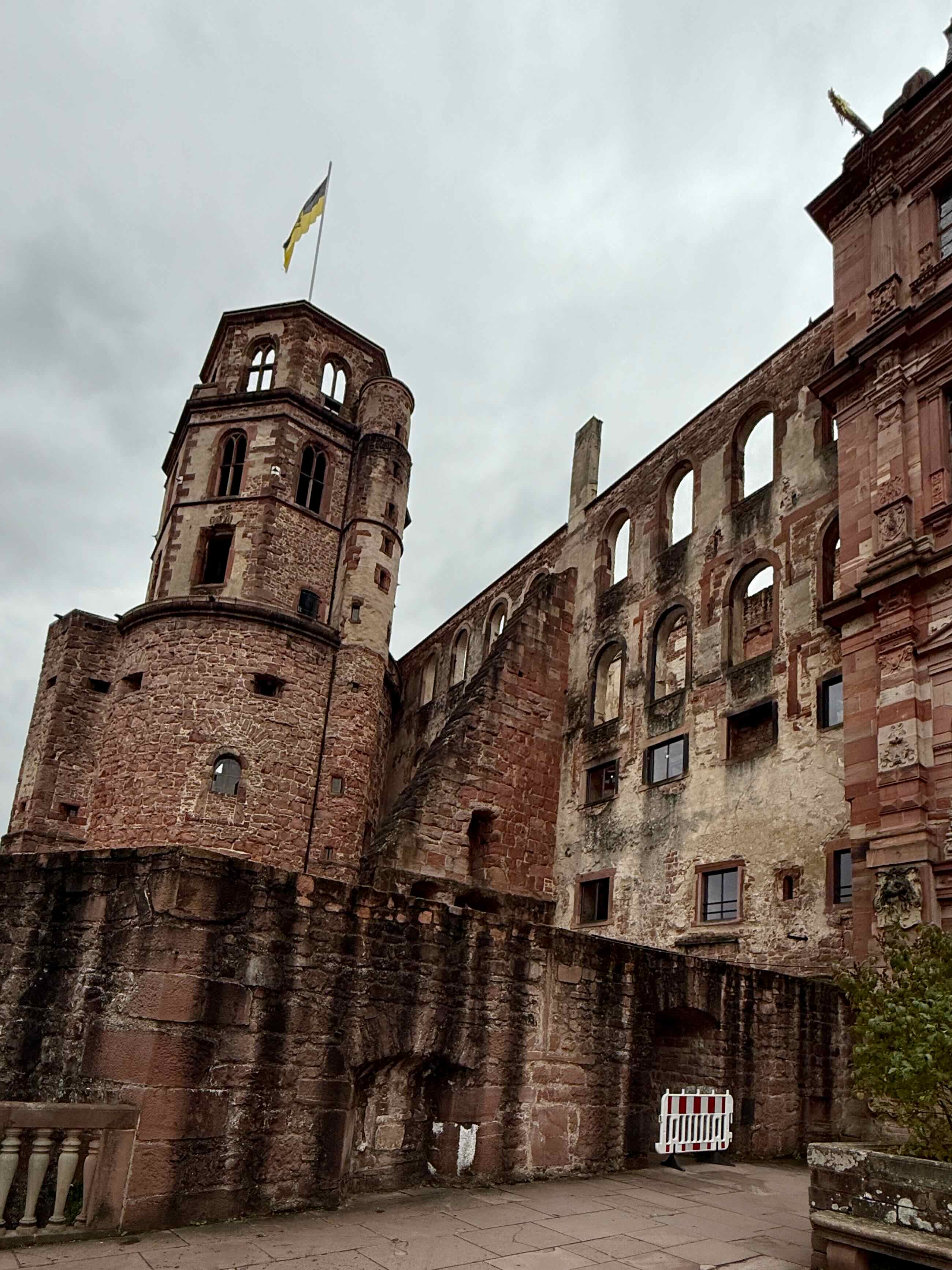
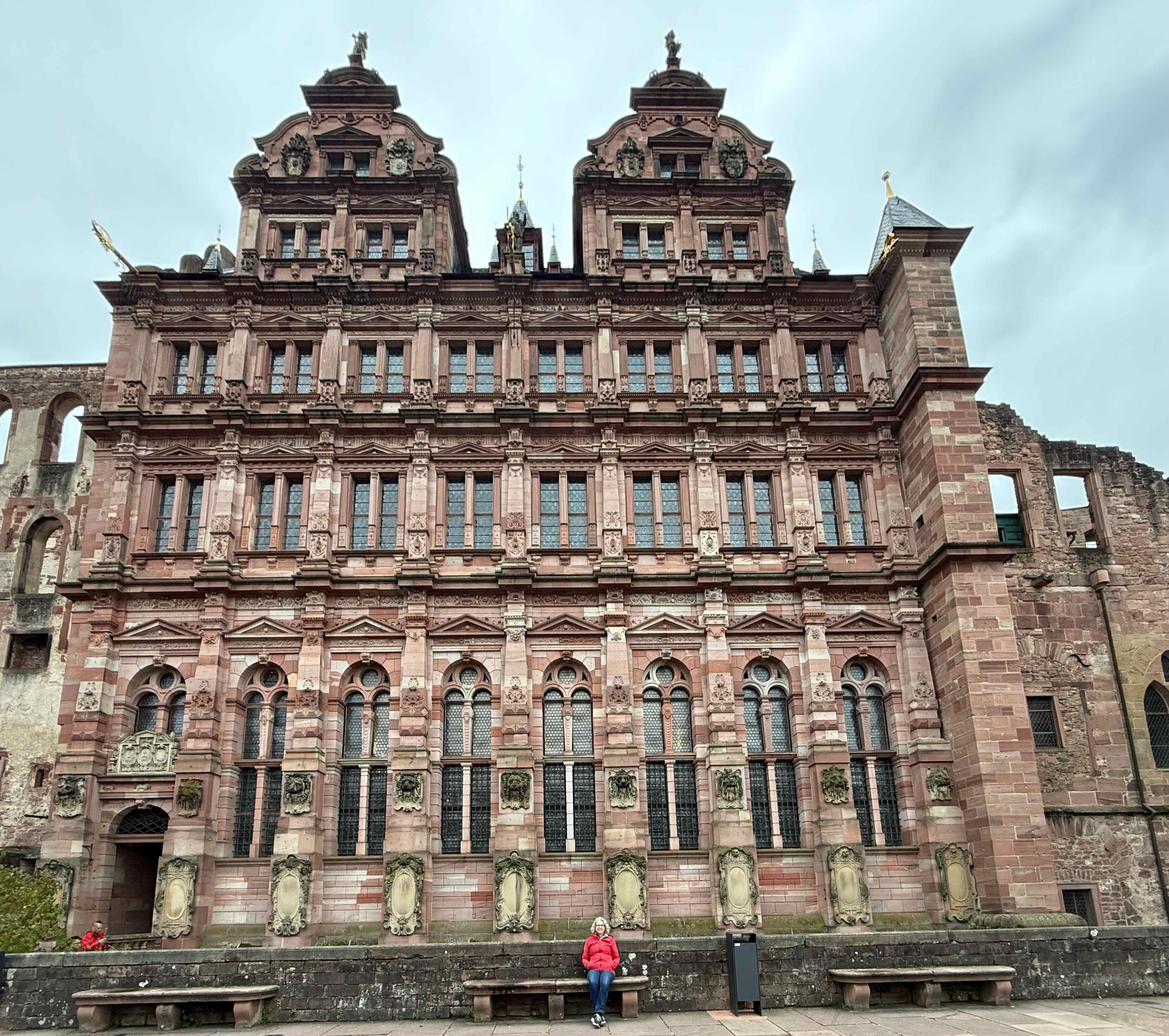
It is cold out so we go inside to see the Big Wine Barrel. It is pretty impressive and I take this photo and then walk around the corner while Bob is inspecting the barrel. I come back and tell him “You need to come and see the BIG Wine Barrel!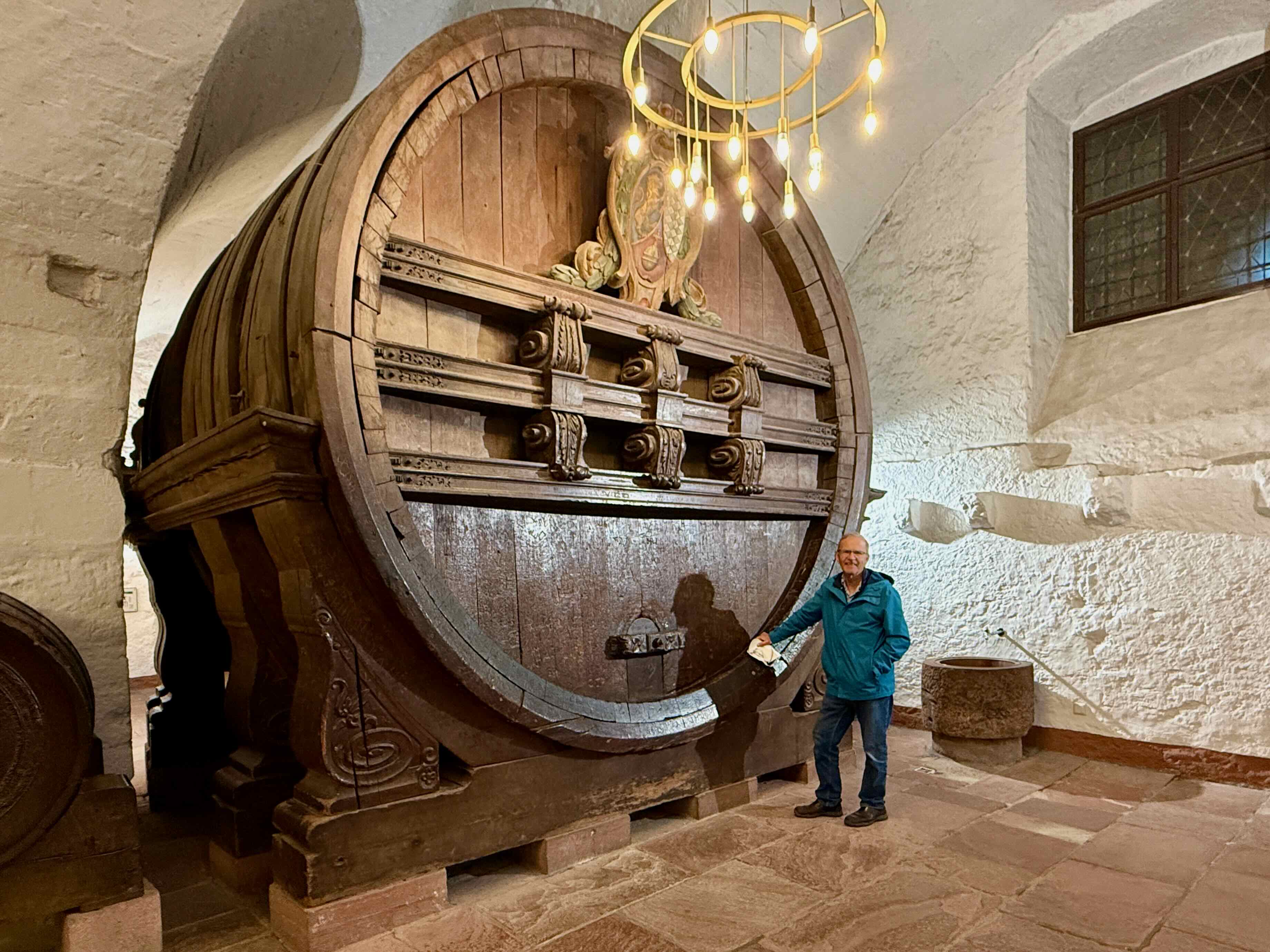
Here it is!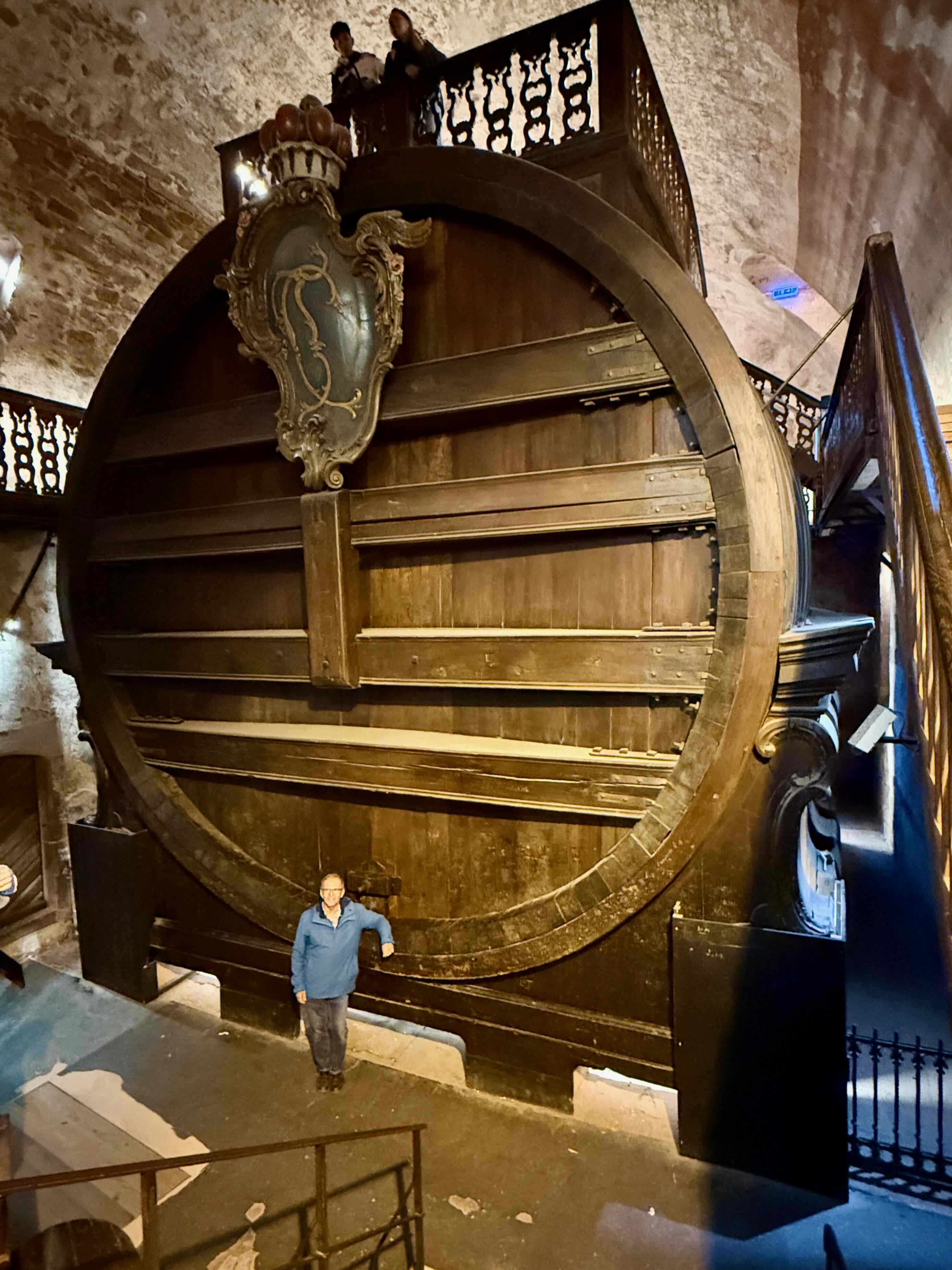
This wine barrel held 220,000 liters of wine. The stairs I am standing on lead to a platform above the barrel that was likely used as a dance floor! 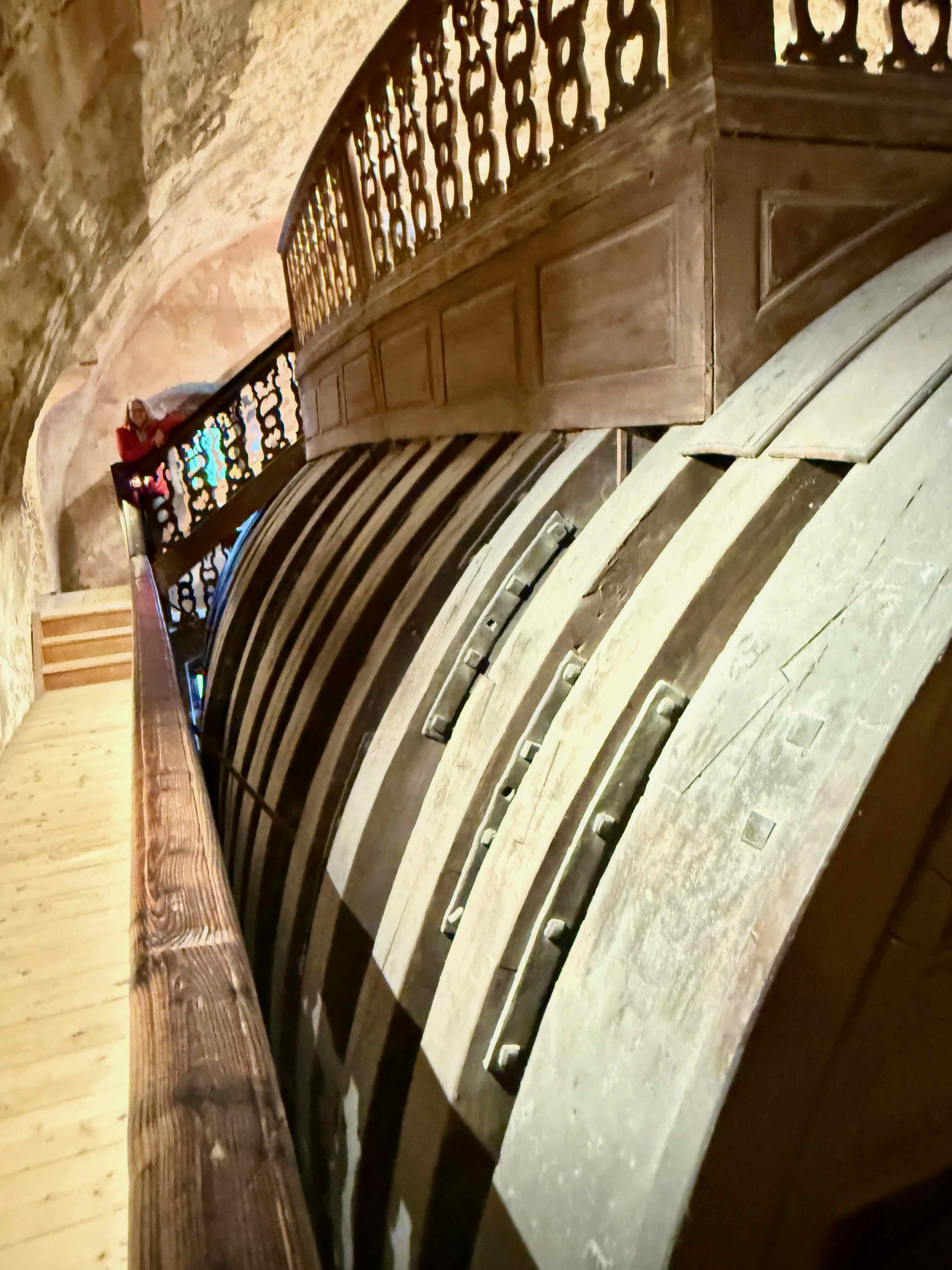
Last stop is the German Apothecary Museum. It is warm inside, which I really appreciate. Aspirin was a commercially sold product in 1889. 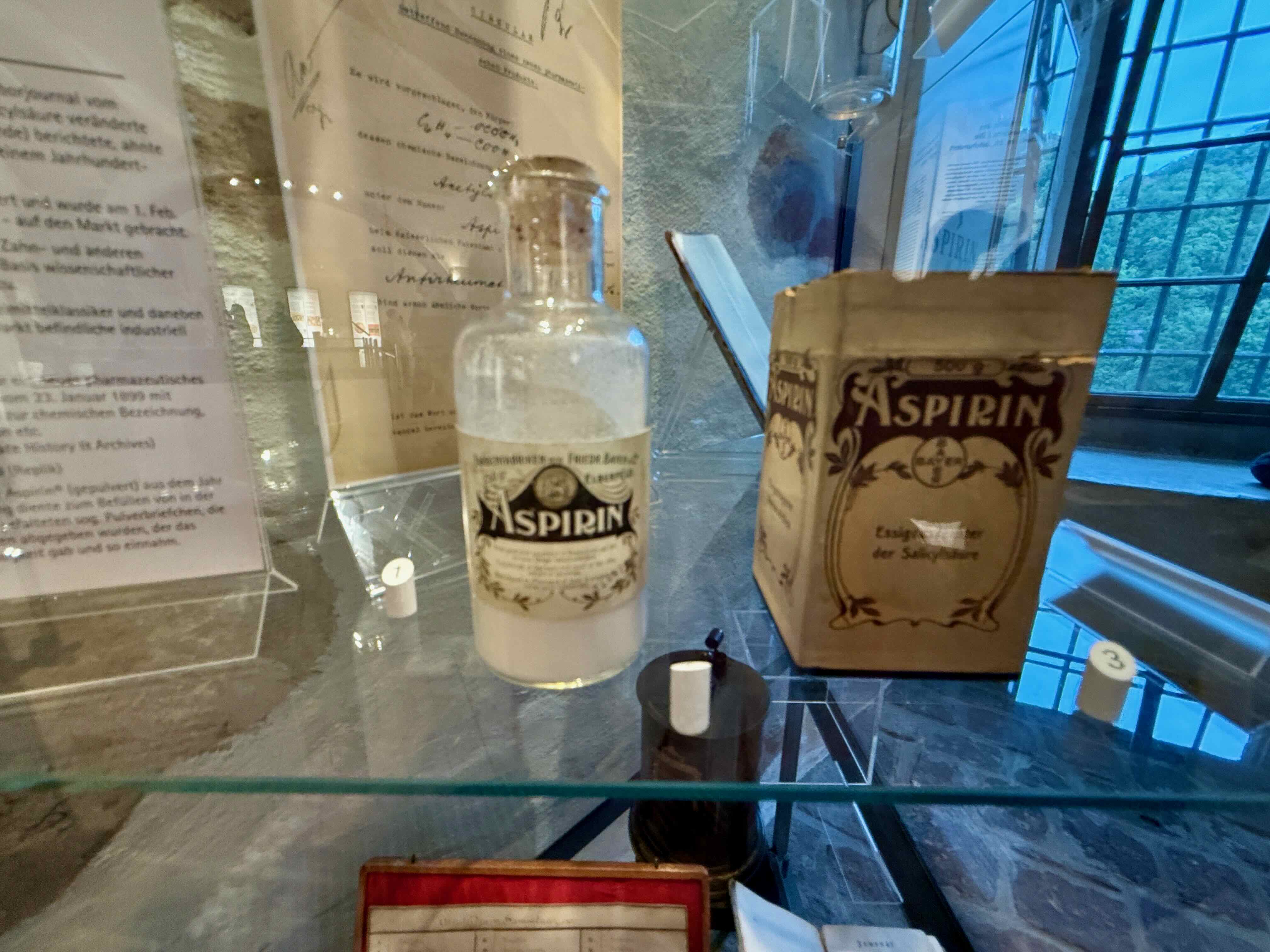
This chest of homeopathic medicines from 1890 contains 312 vials of homeopathic remedies.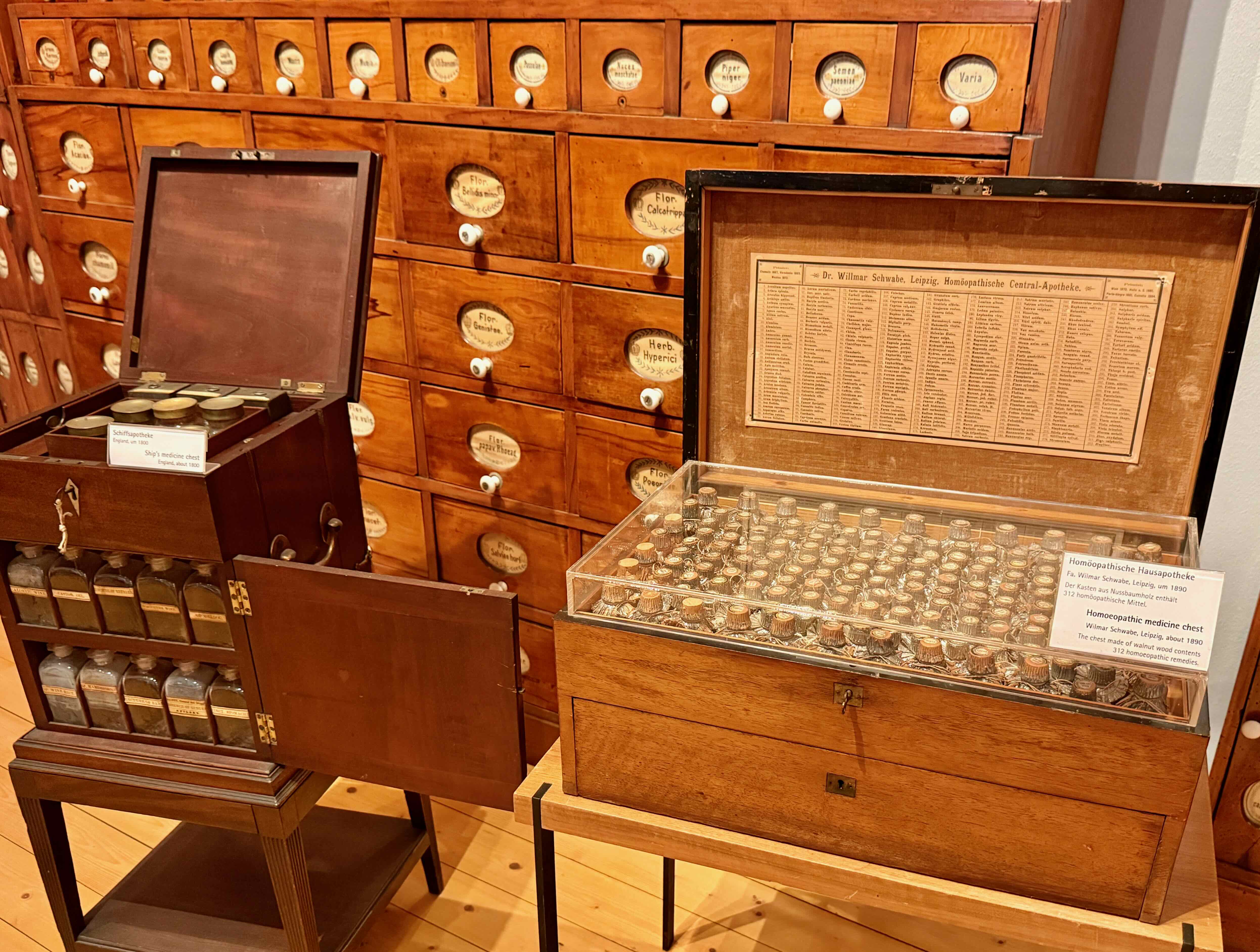
What is it about chests with lots of little drawers that I find so appealing?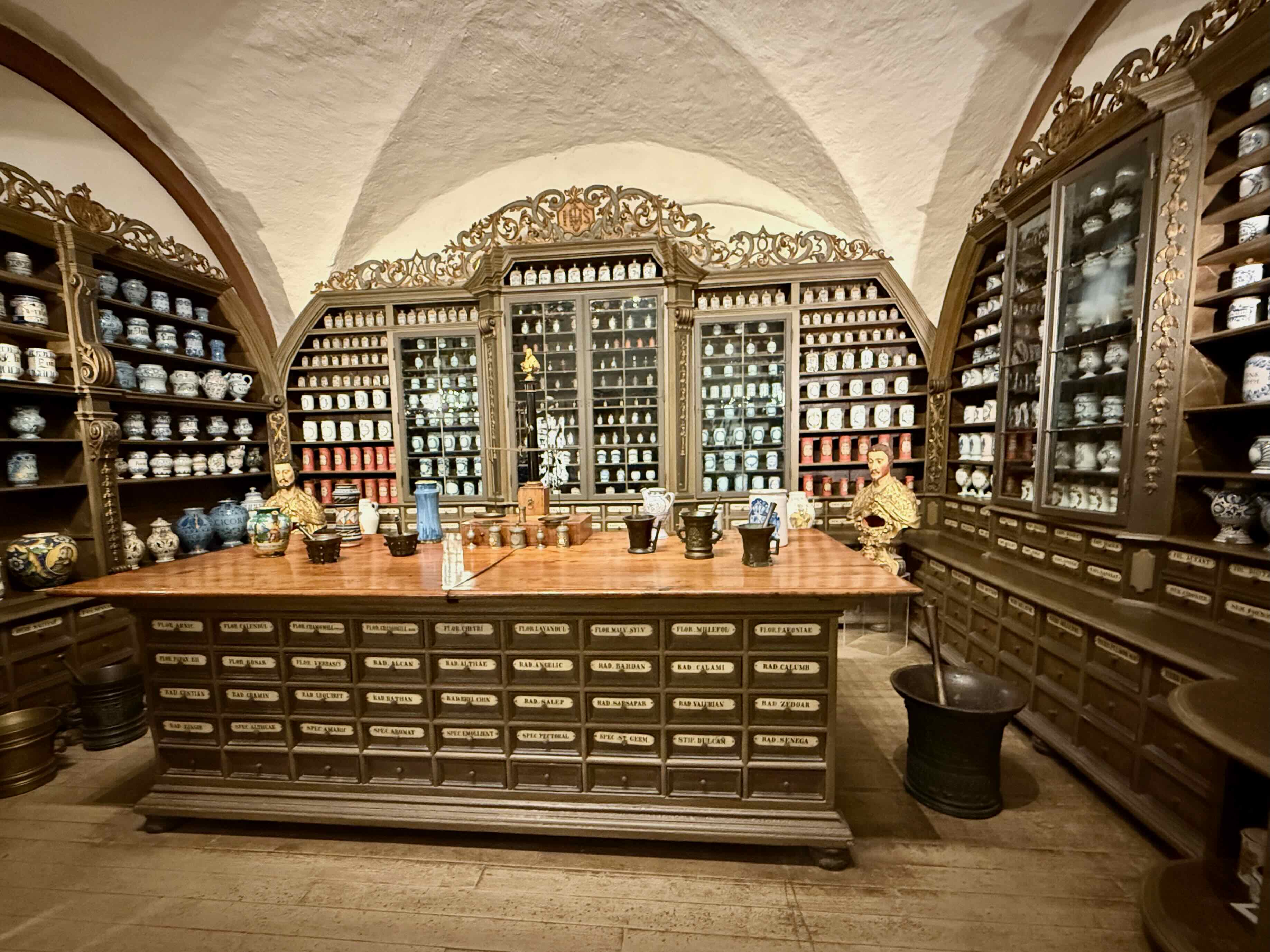
Of course, ground unicorn horns were in big demand as a cure for ailments such as fever, plaque, poisoning convulsions and epilepsy! Unicorn horns were just long tusks from narwhals or other animals but they were an expensive medication reserved for royalty and the very rich. 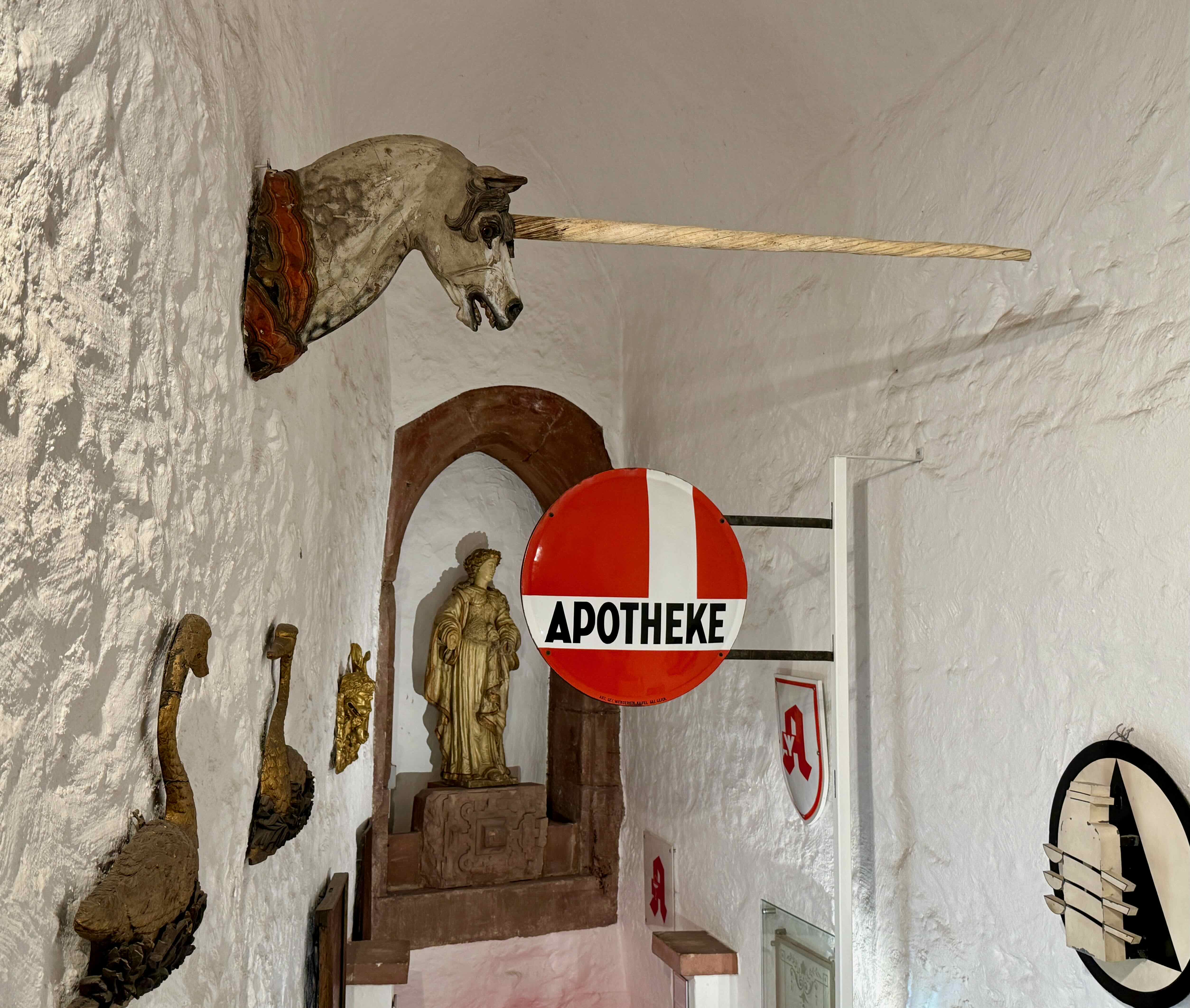
An early distillery…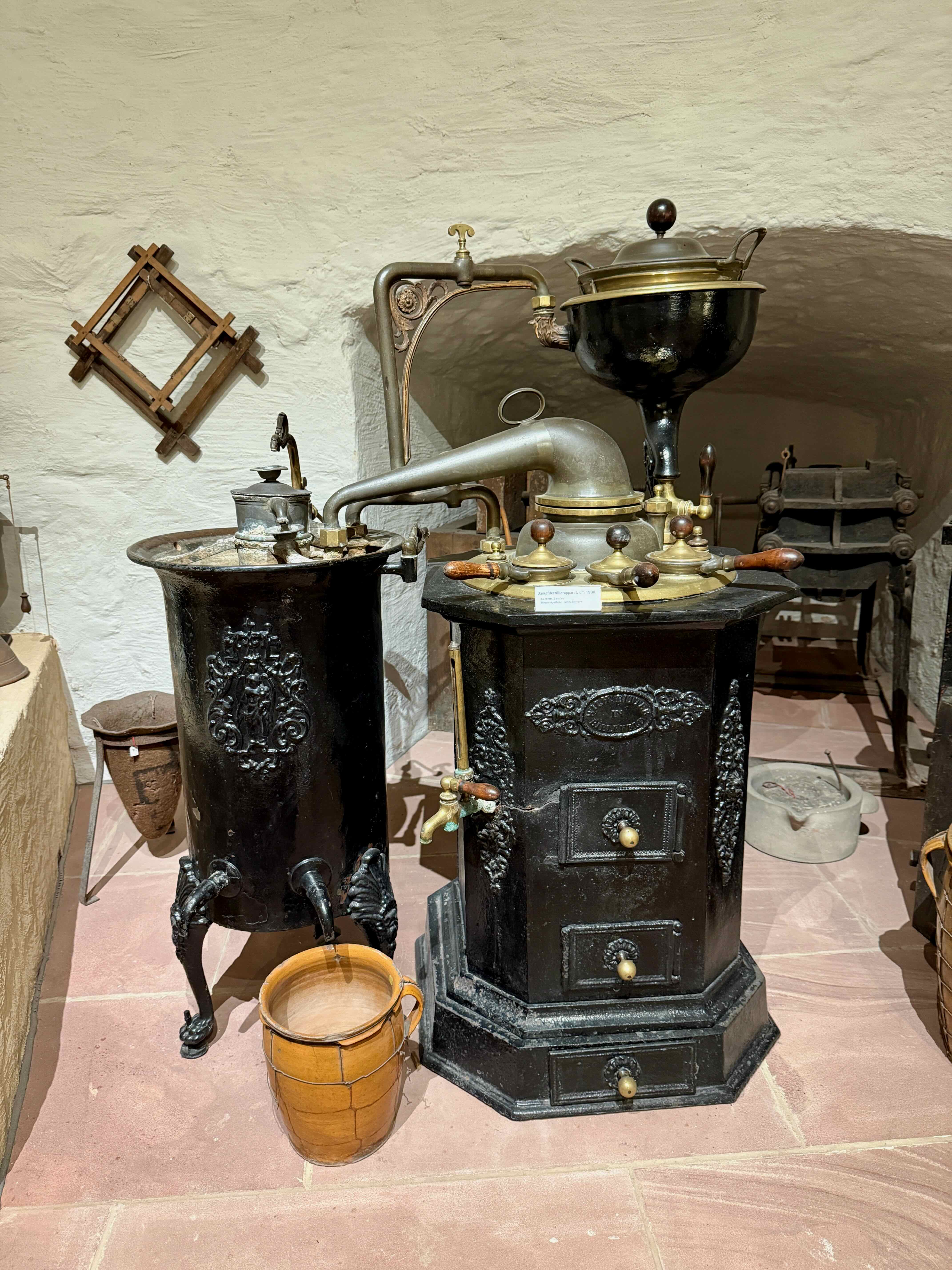
…bunsen burners and a telescope from 1780.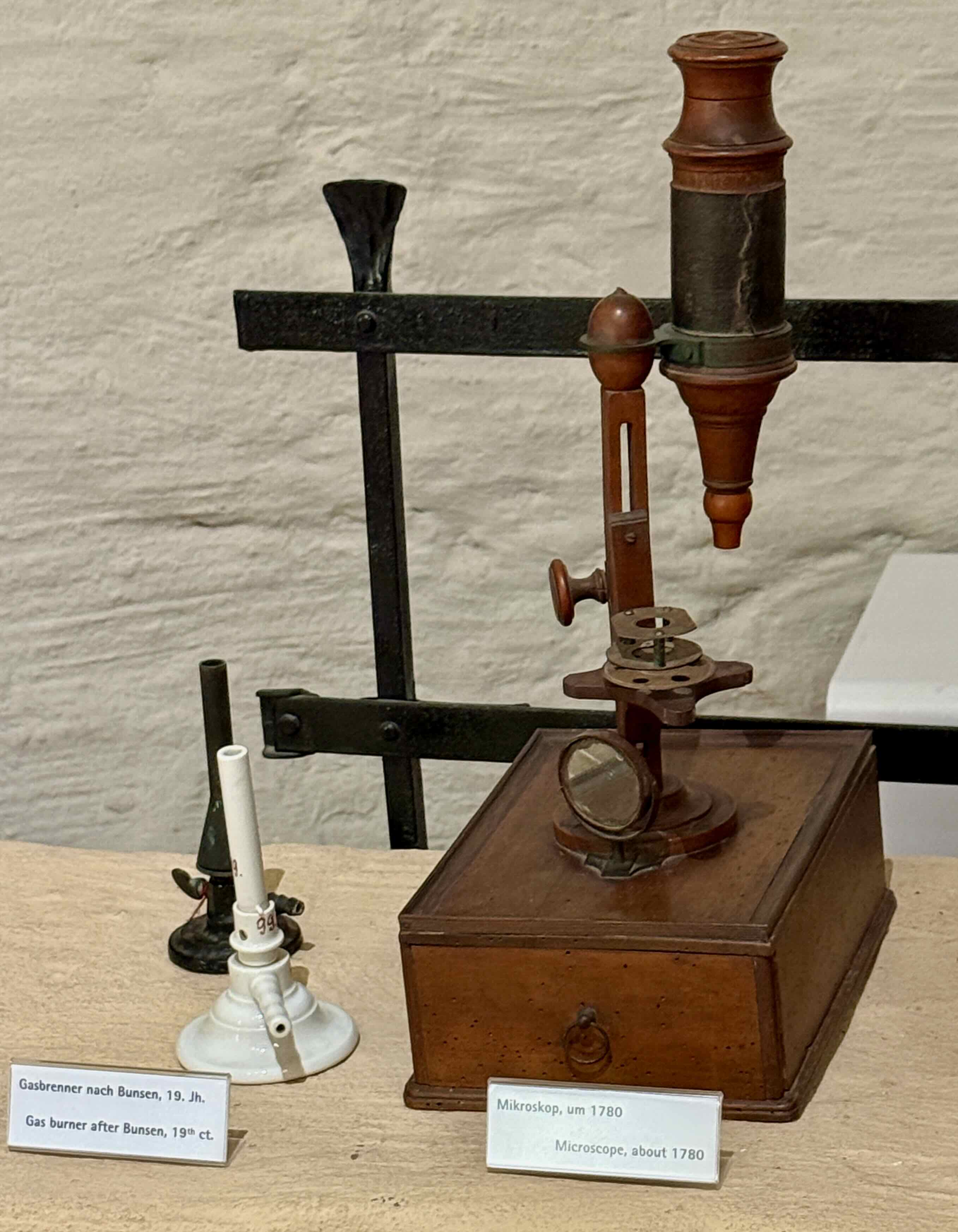 We had such a hard time finding the entrance to the funicular and wondered where this castle was located…well, on our way back to the parkade I Iooked up…and there it was! We both laughed, but then we couldn’t find the entrance to the parkade! We looked everywhere and finally walked down the out ramp, and there was the door to the exit. We checked it out and the stairs outside were right beside the ramp we just walked down…no sign or markers though!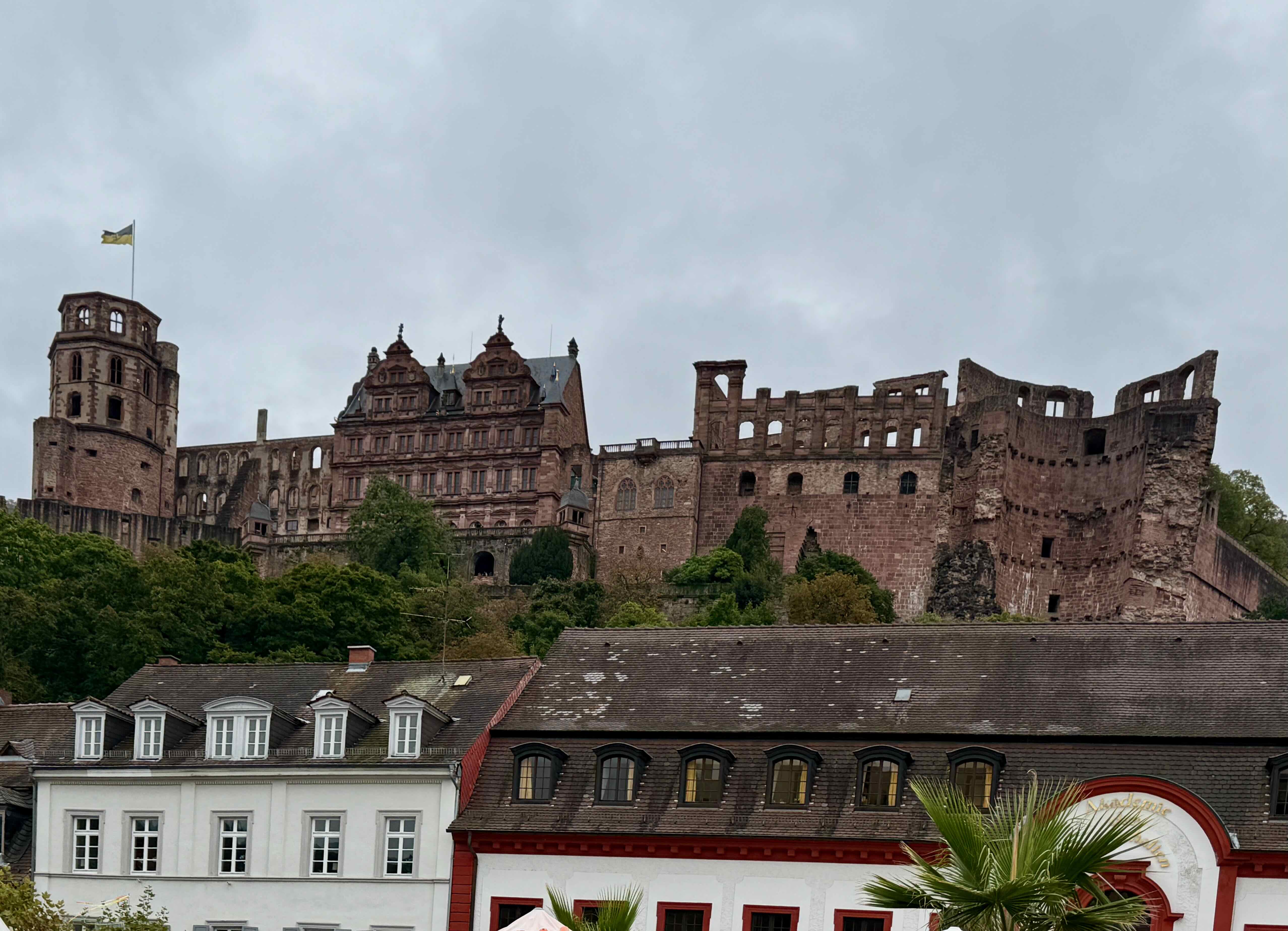
Back on the road to stuttgart…and it is raining again.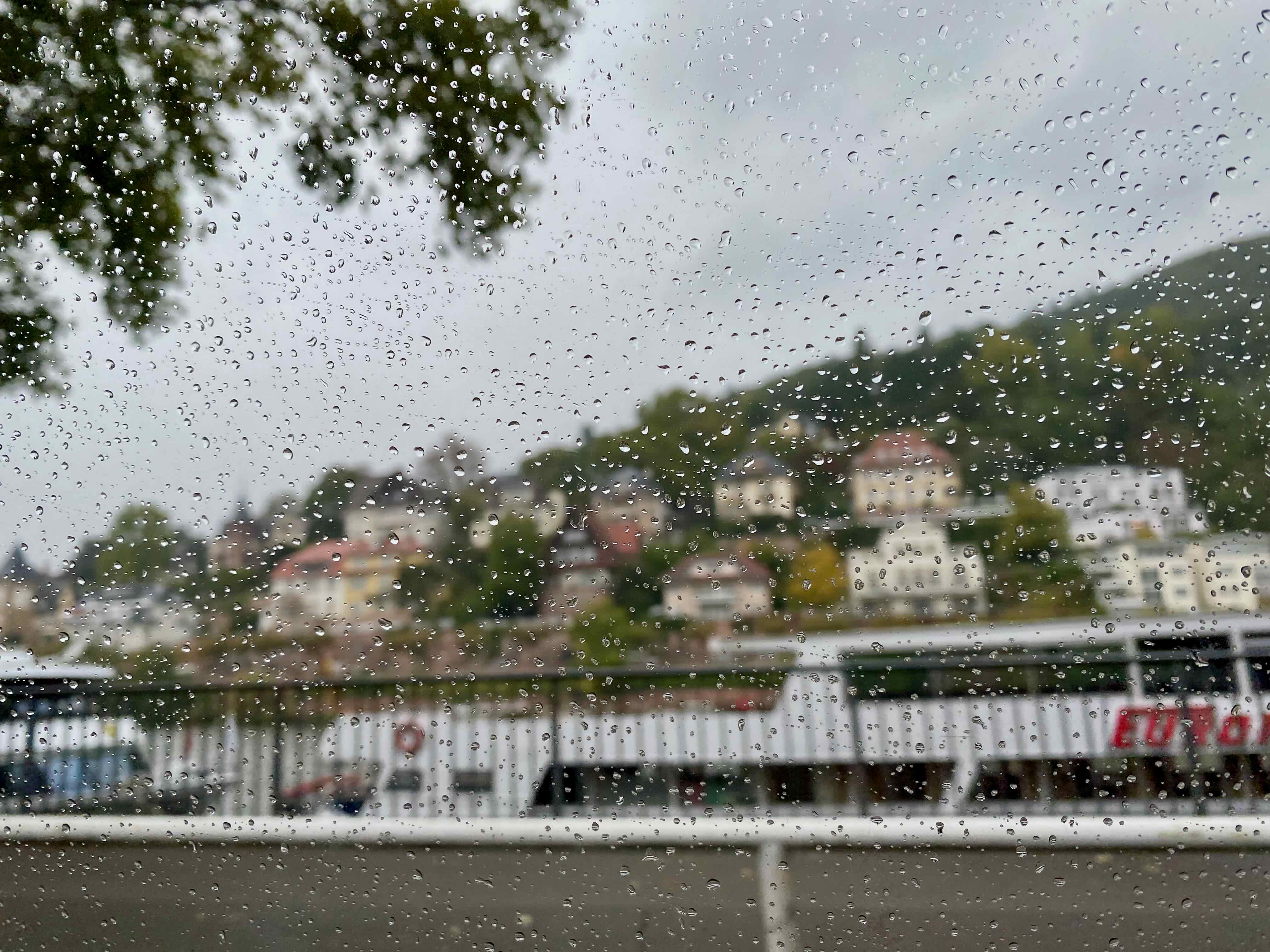
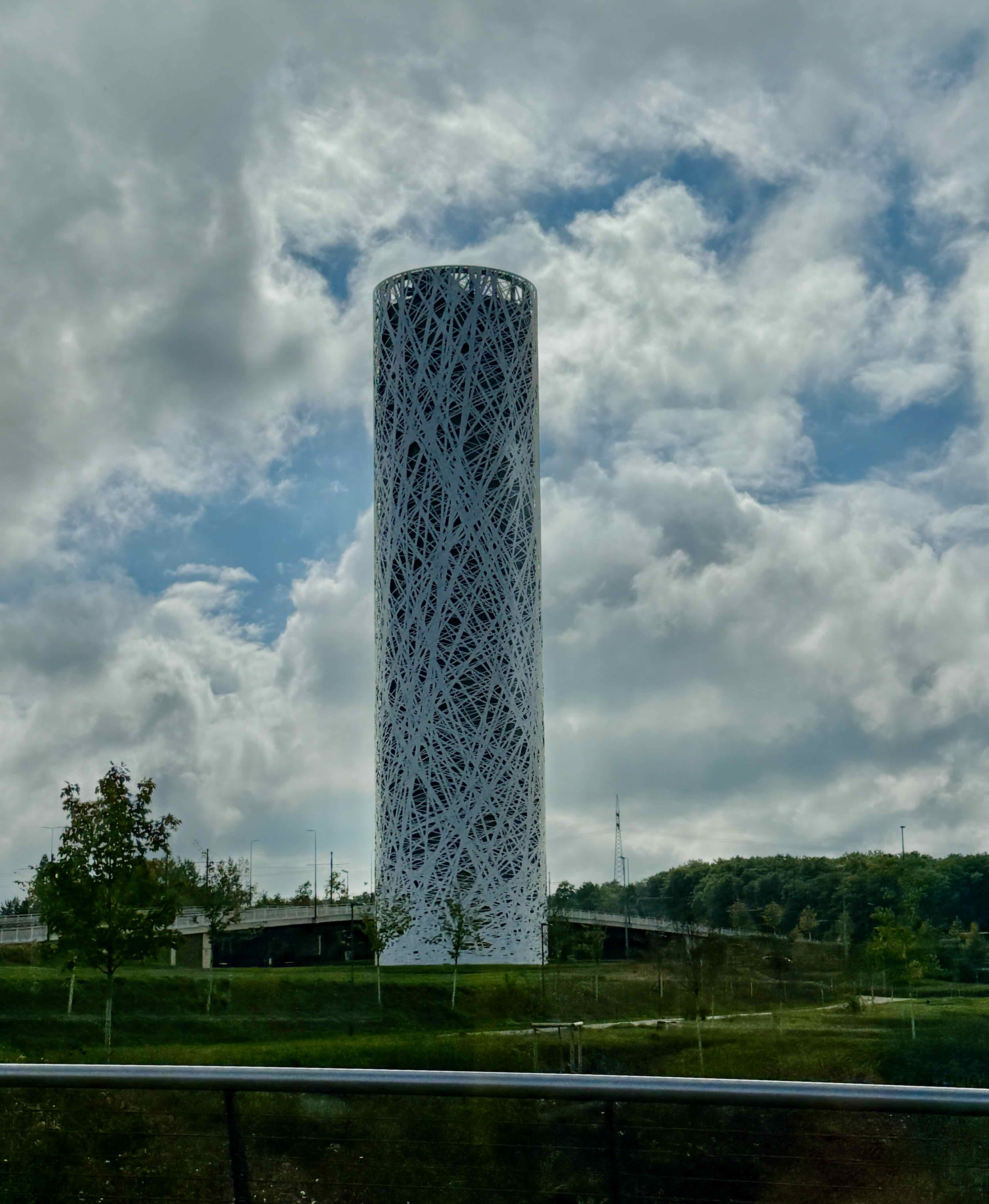
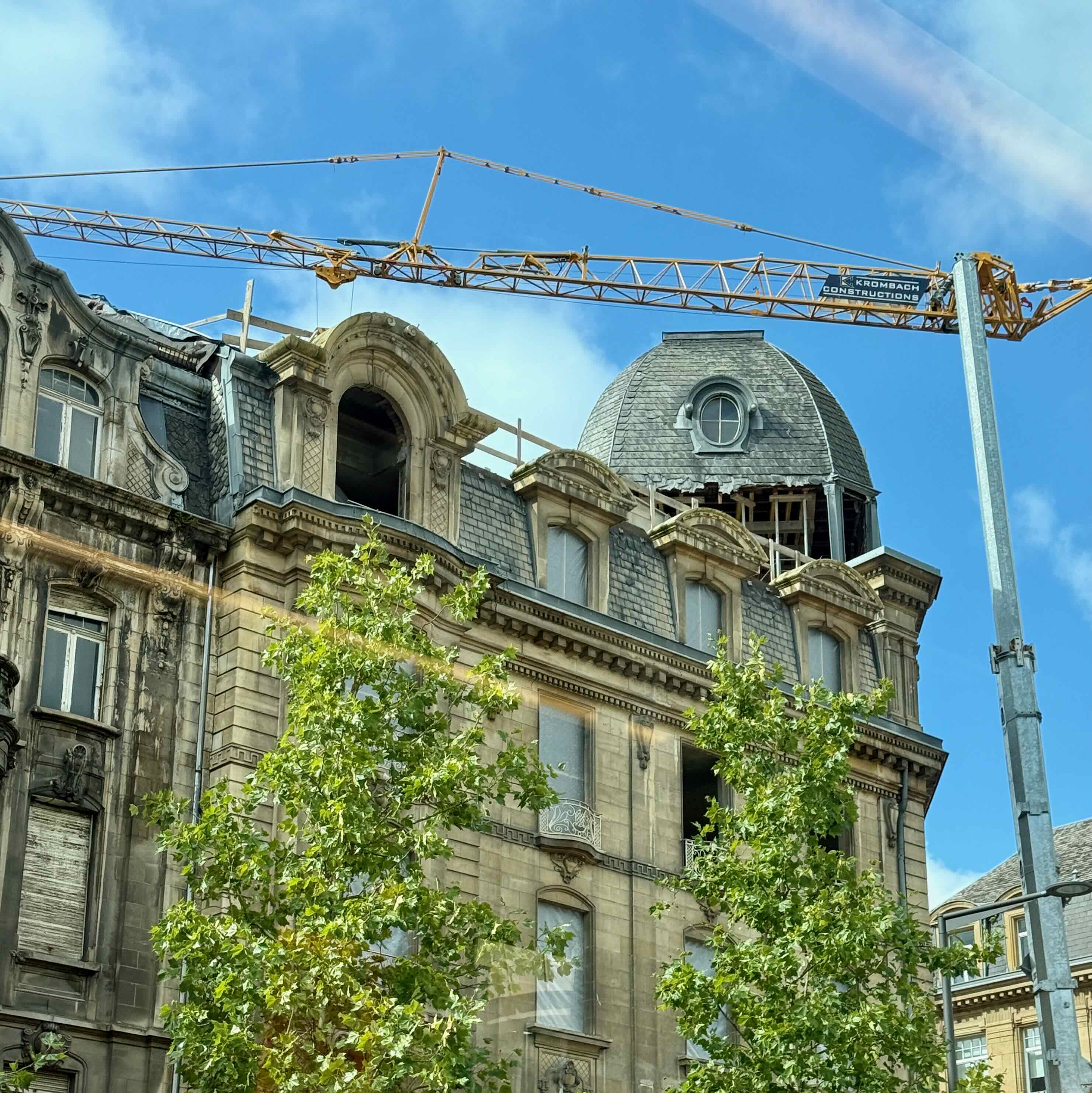
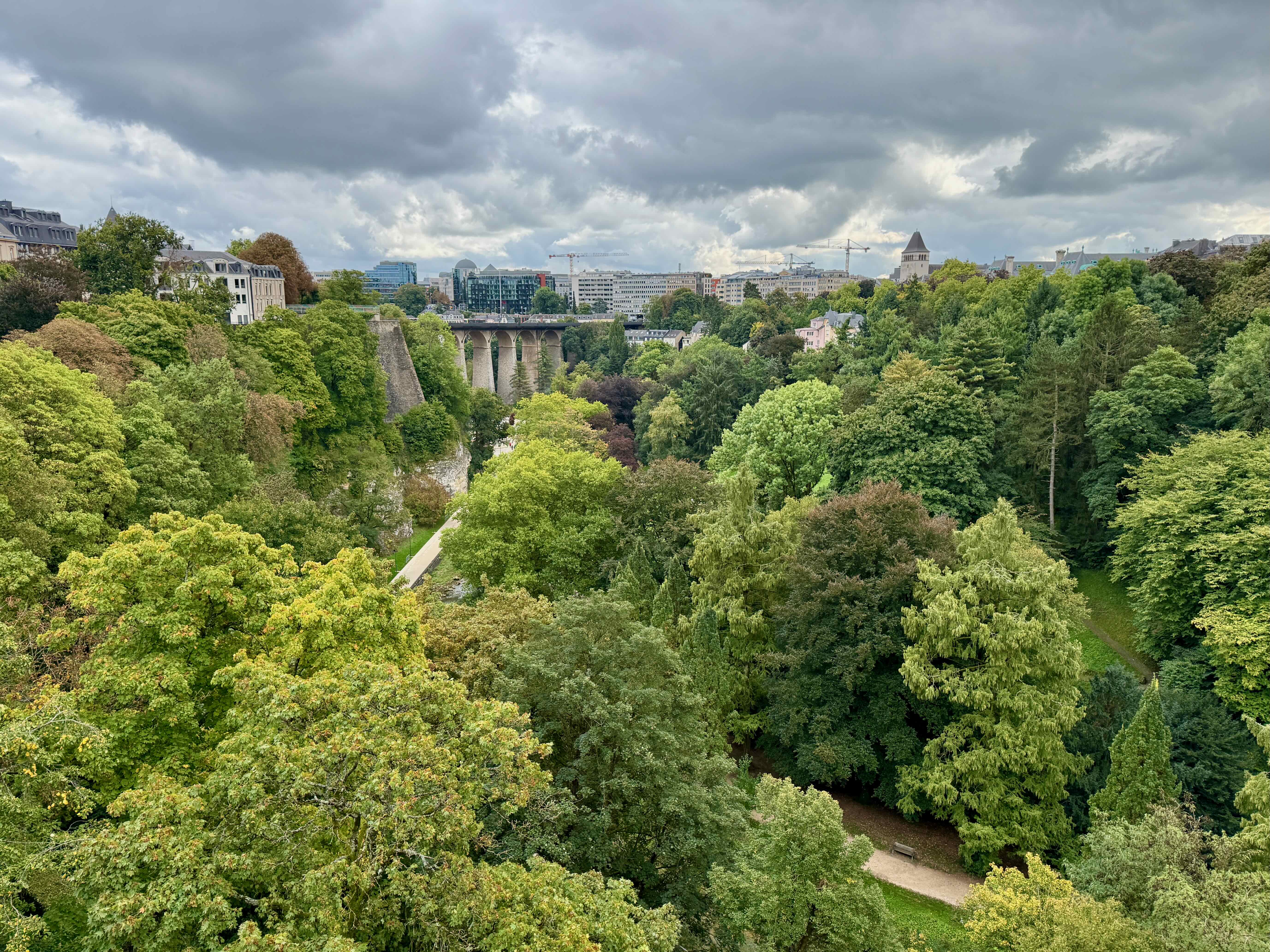
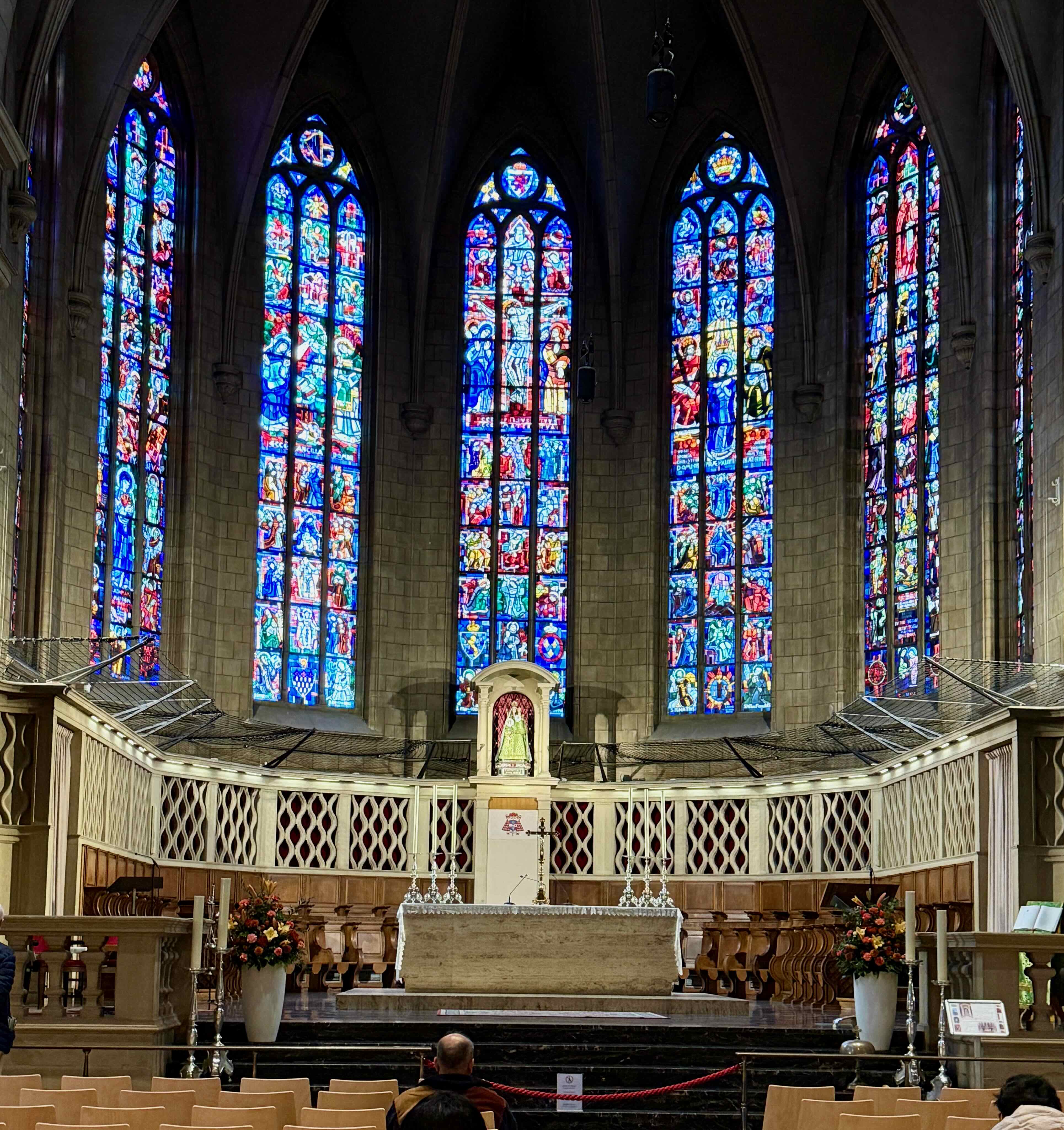
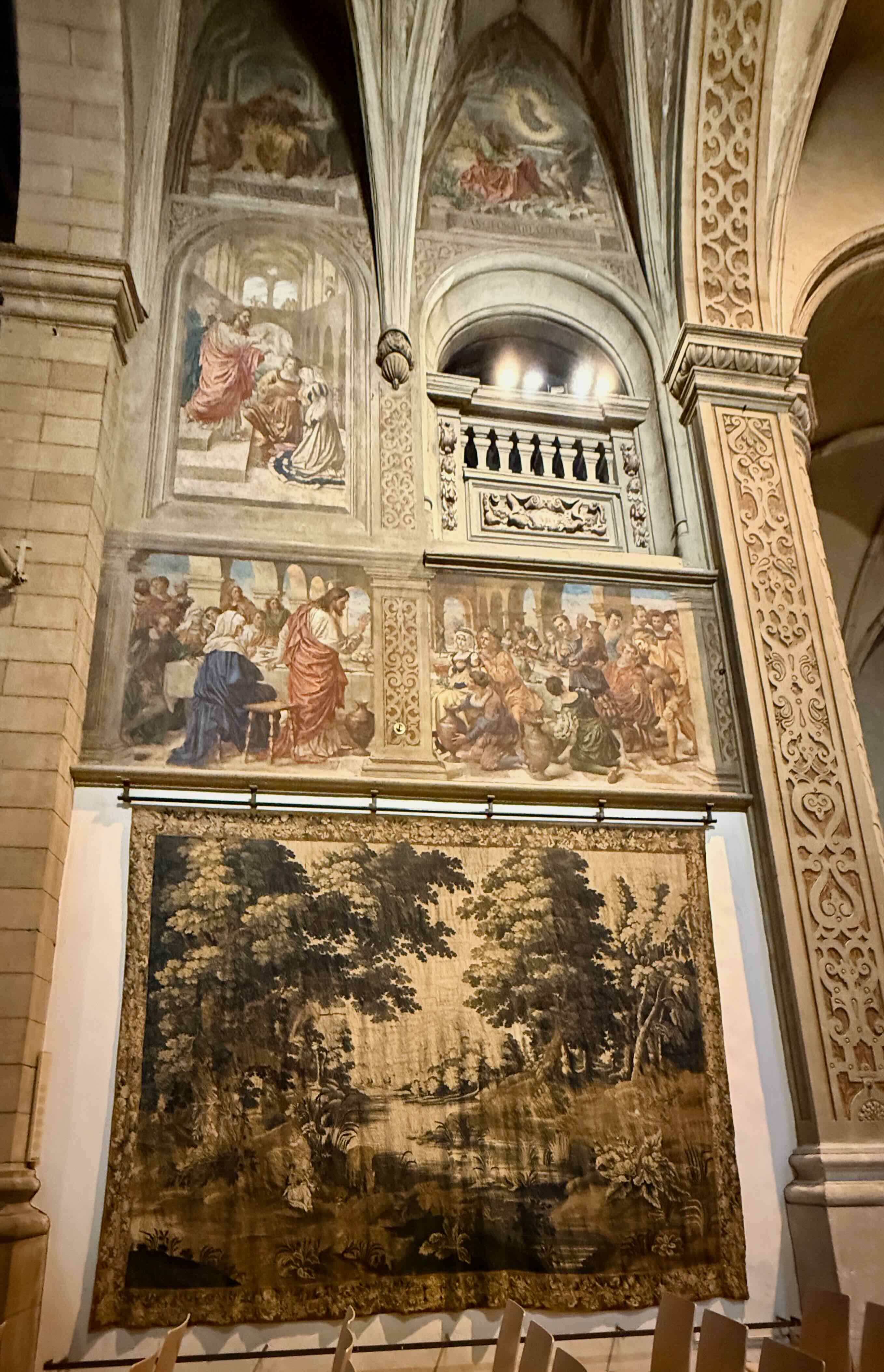
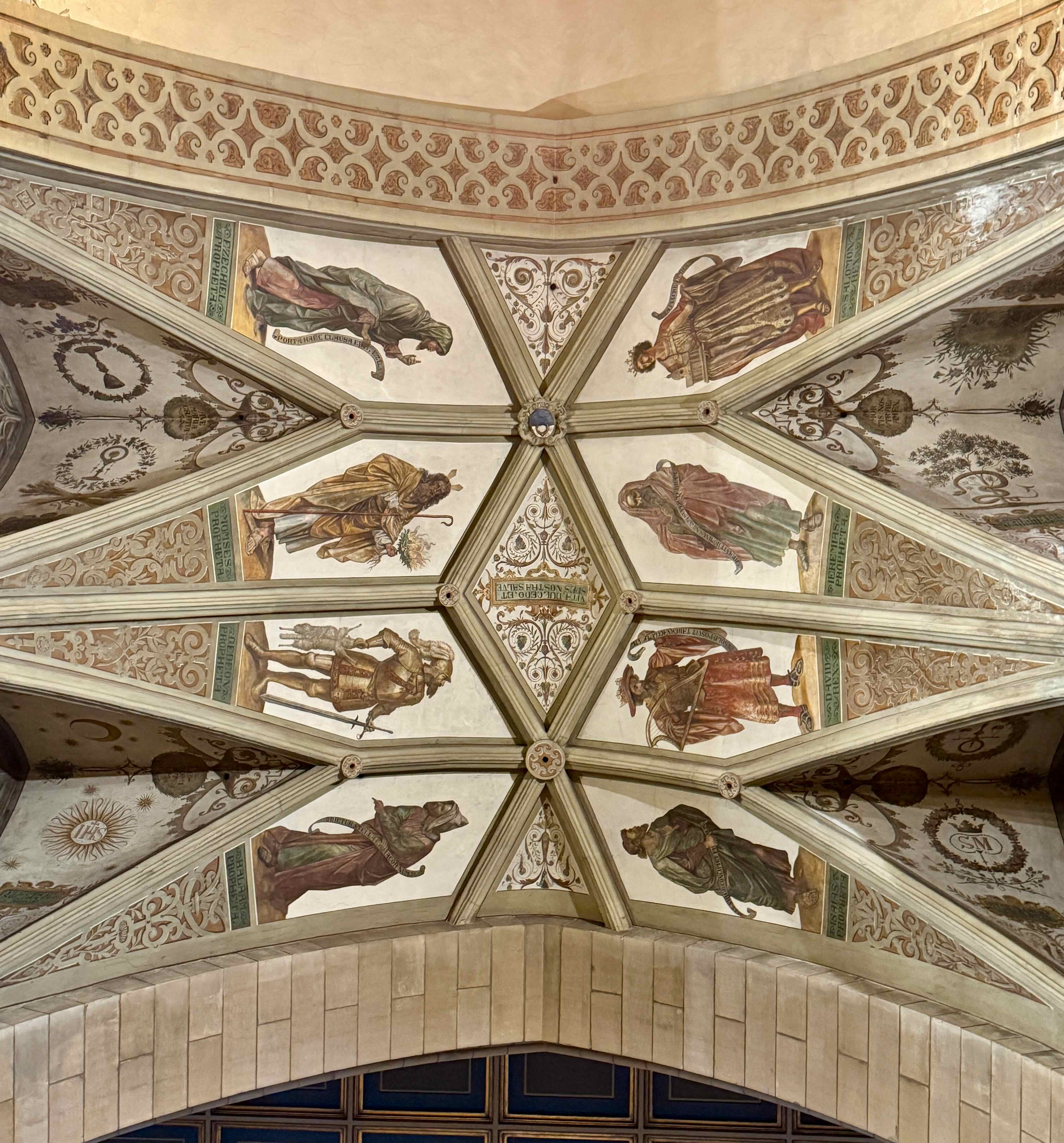
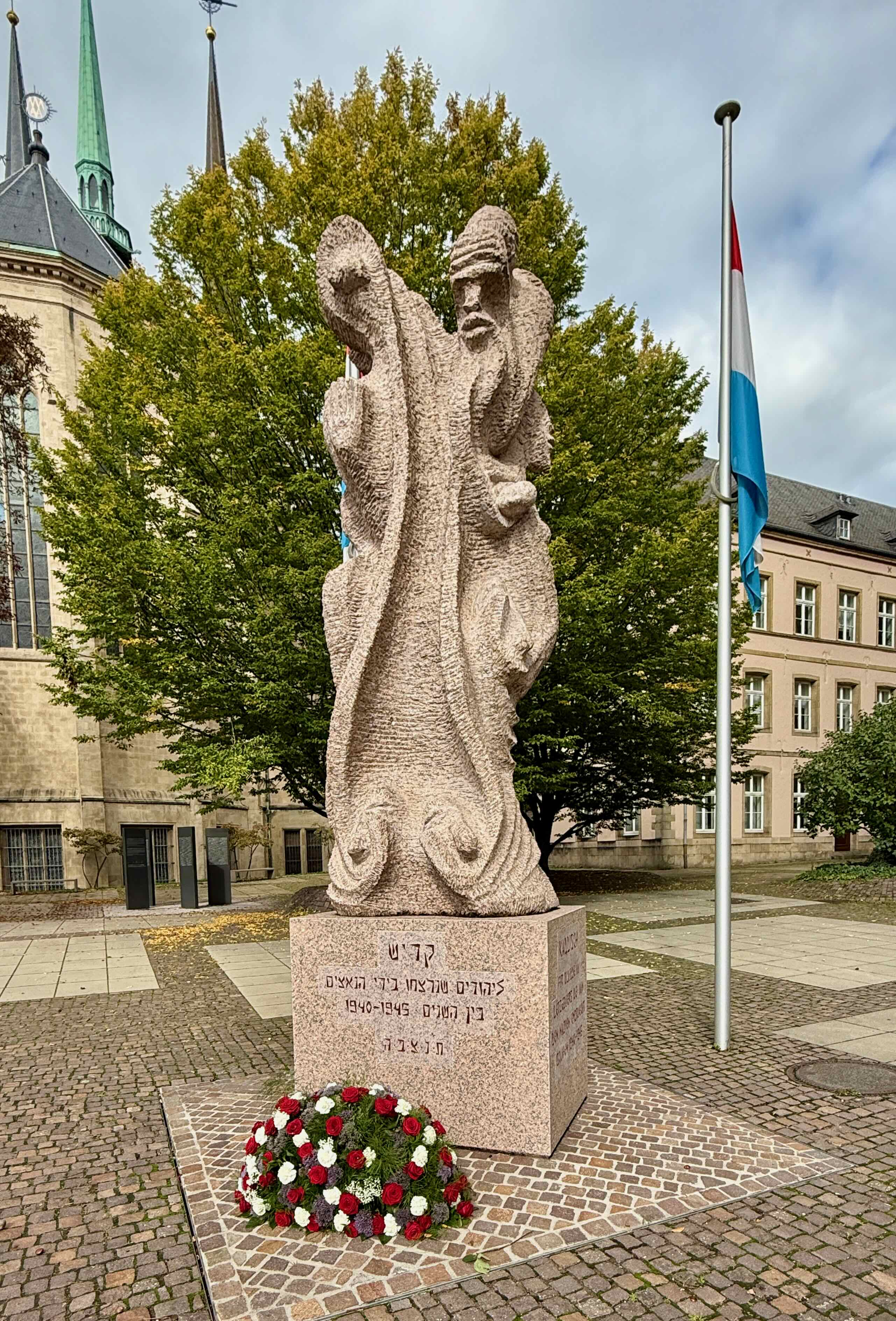
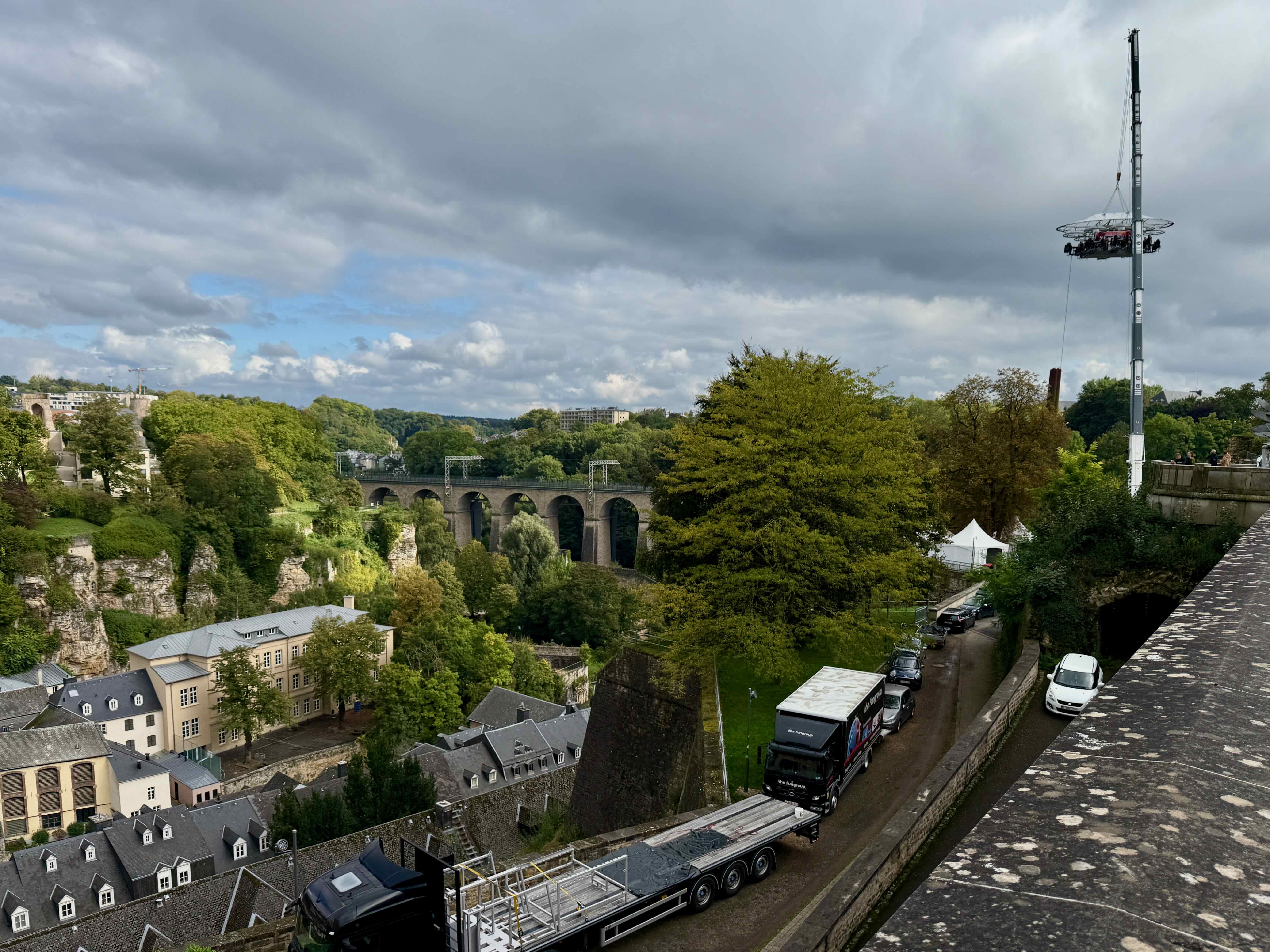
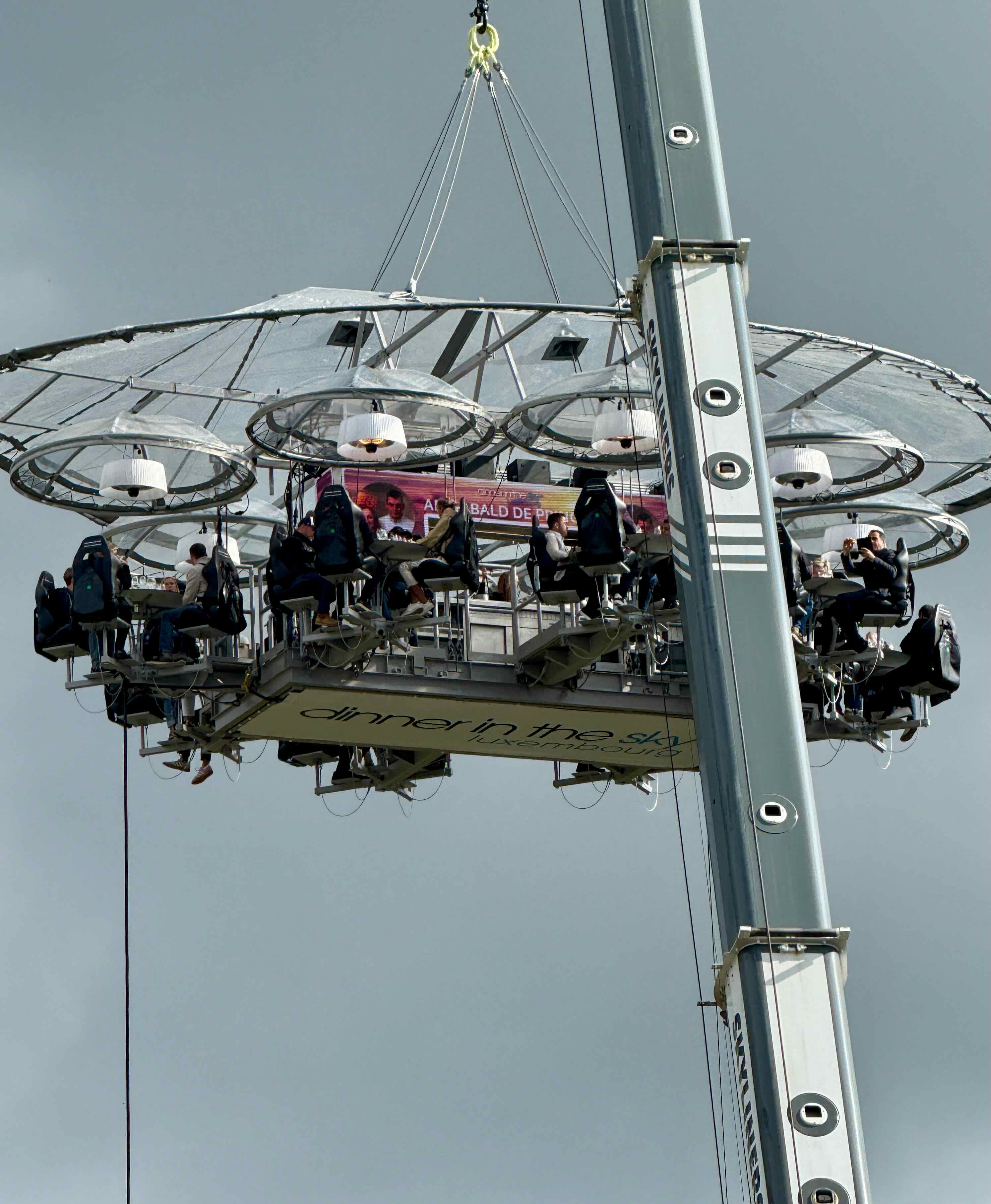
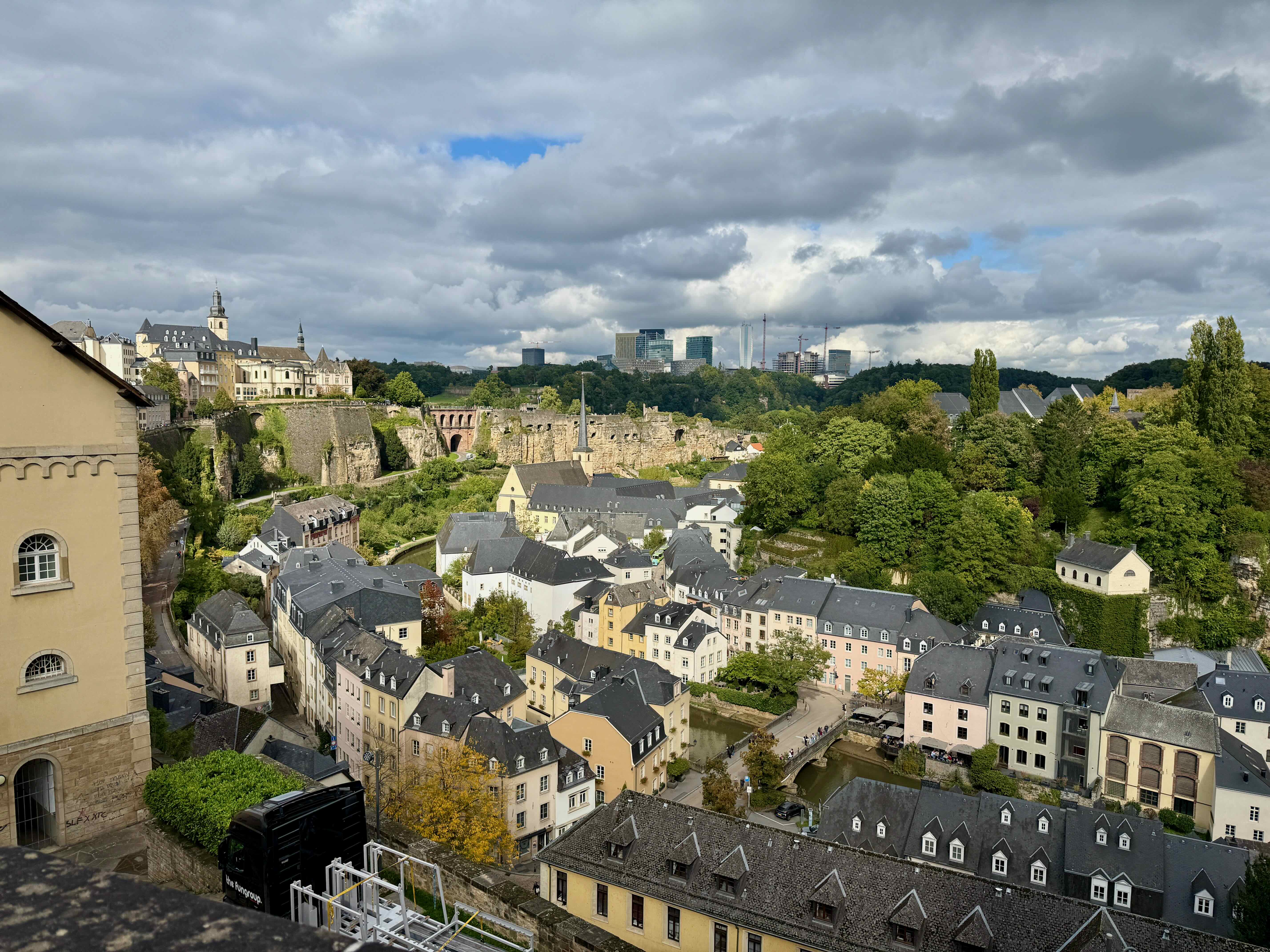
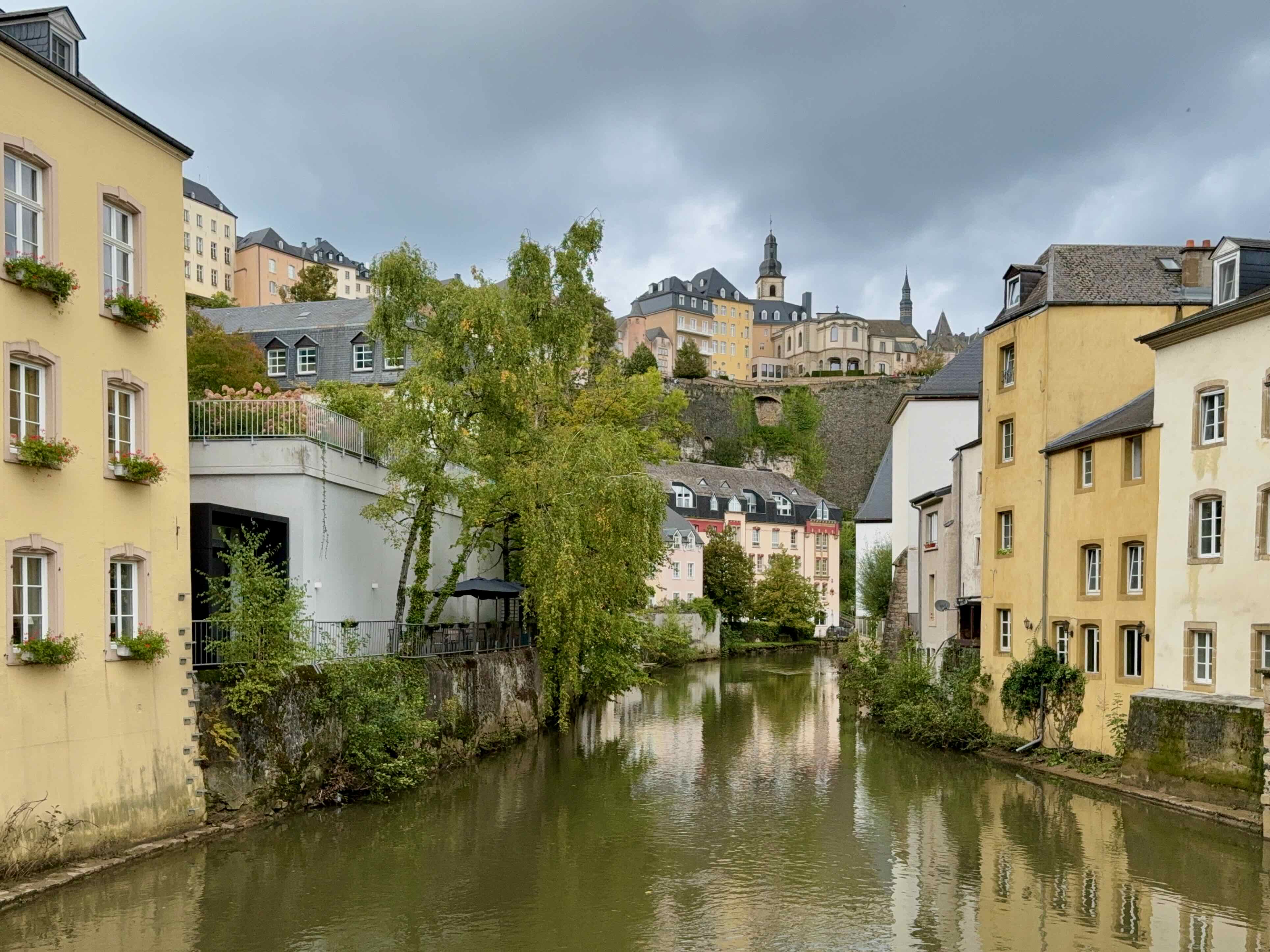
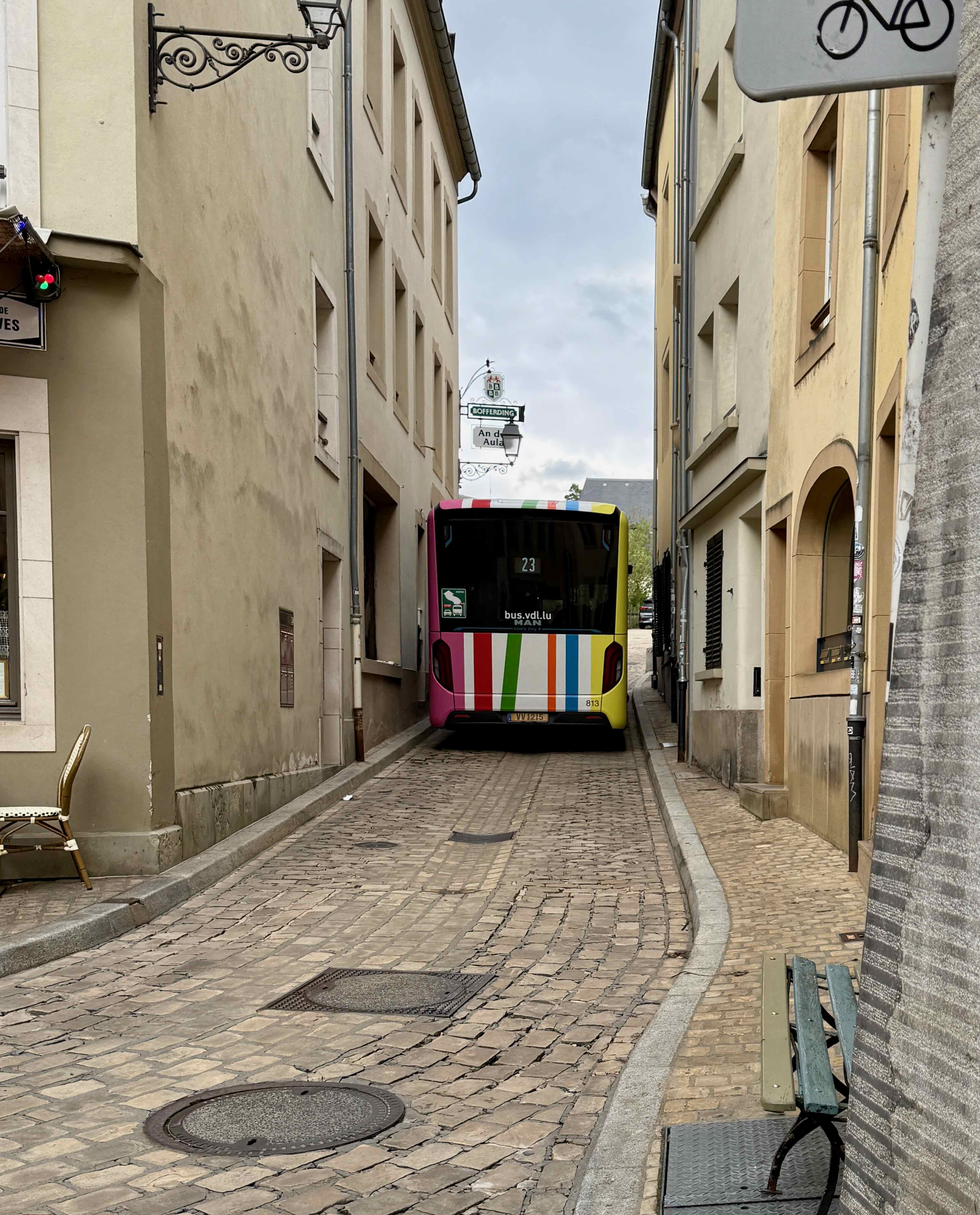
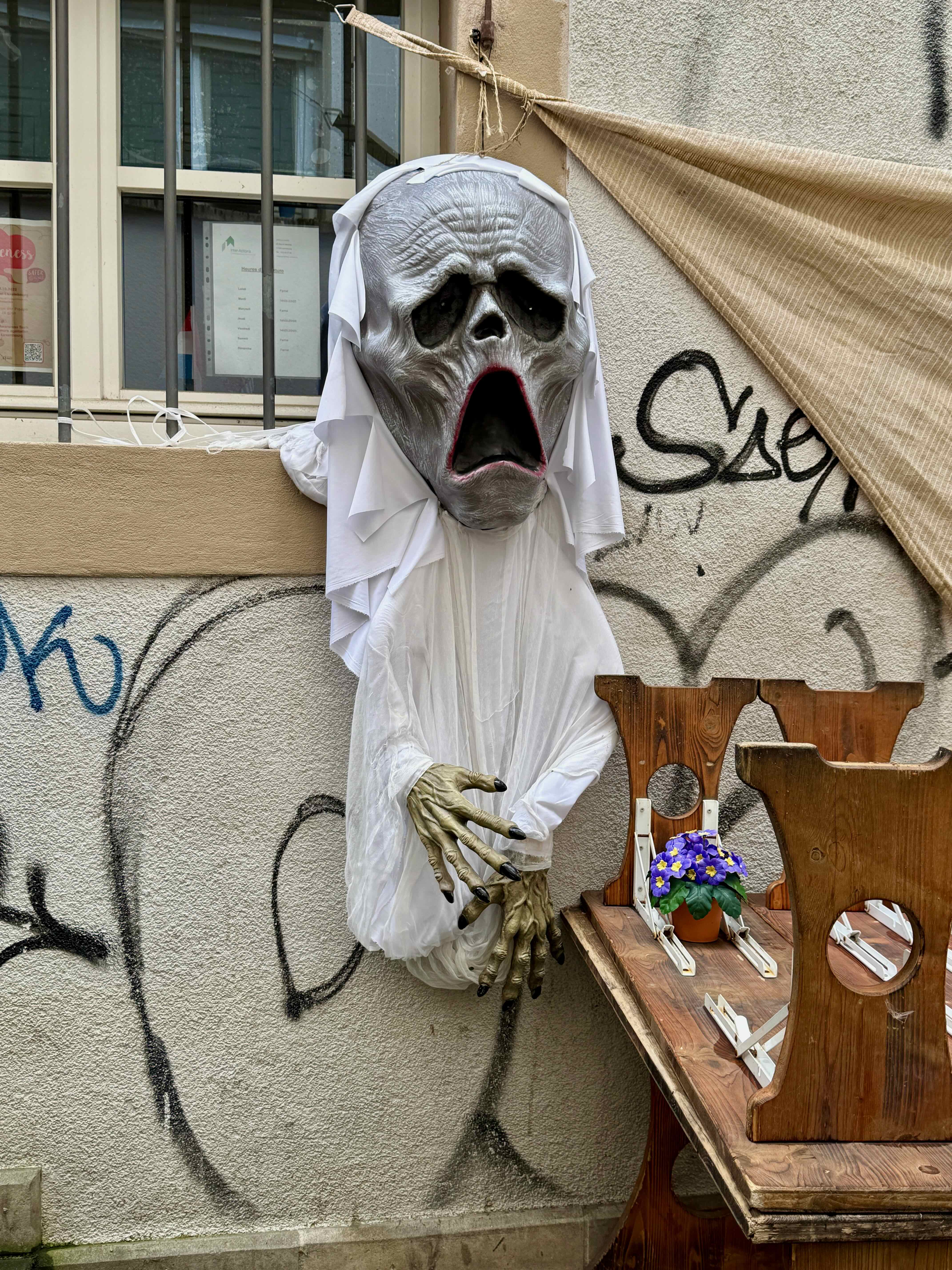
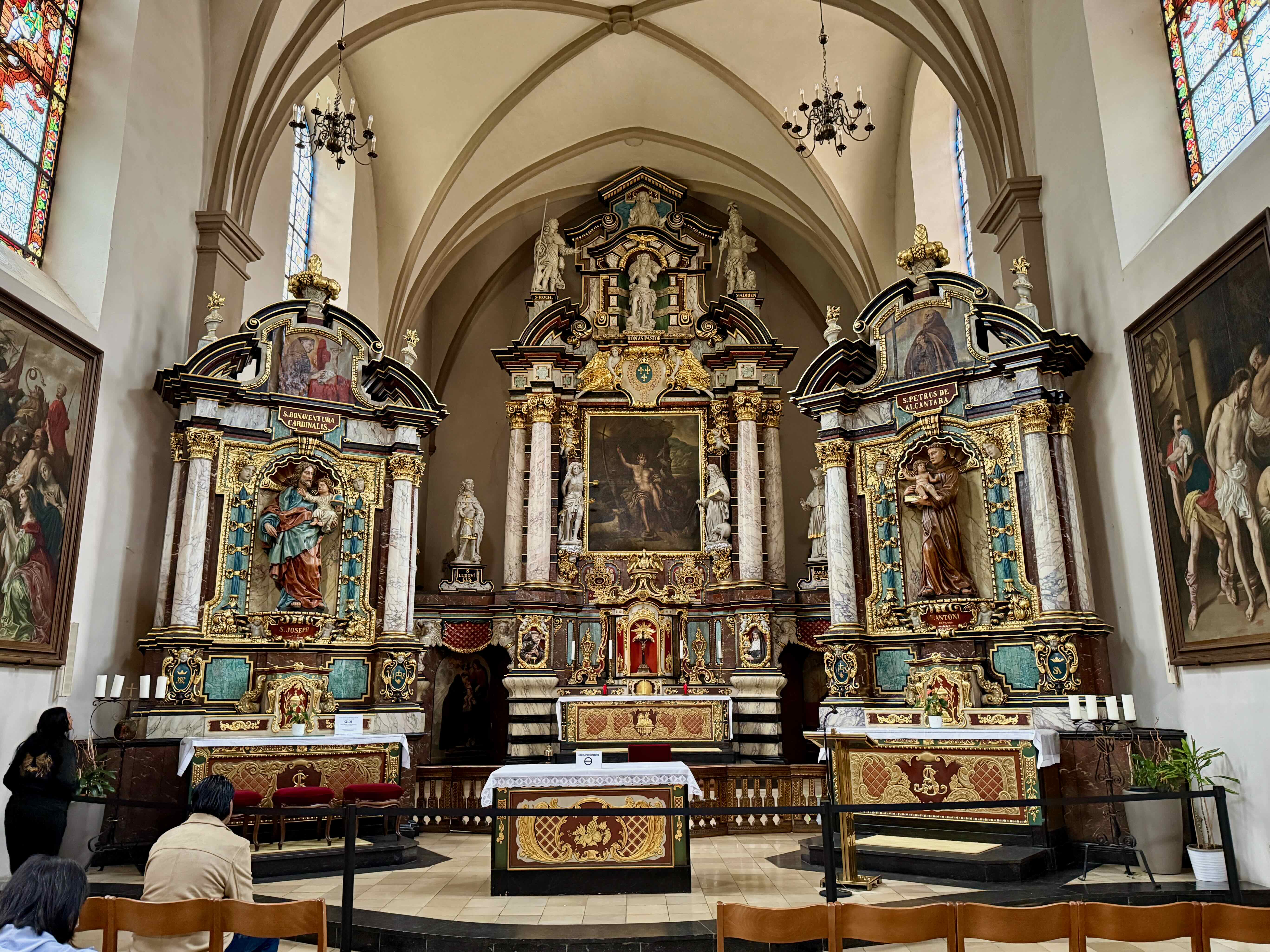
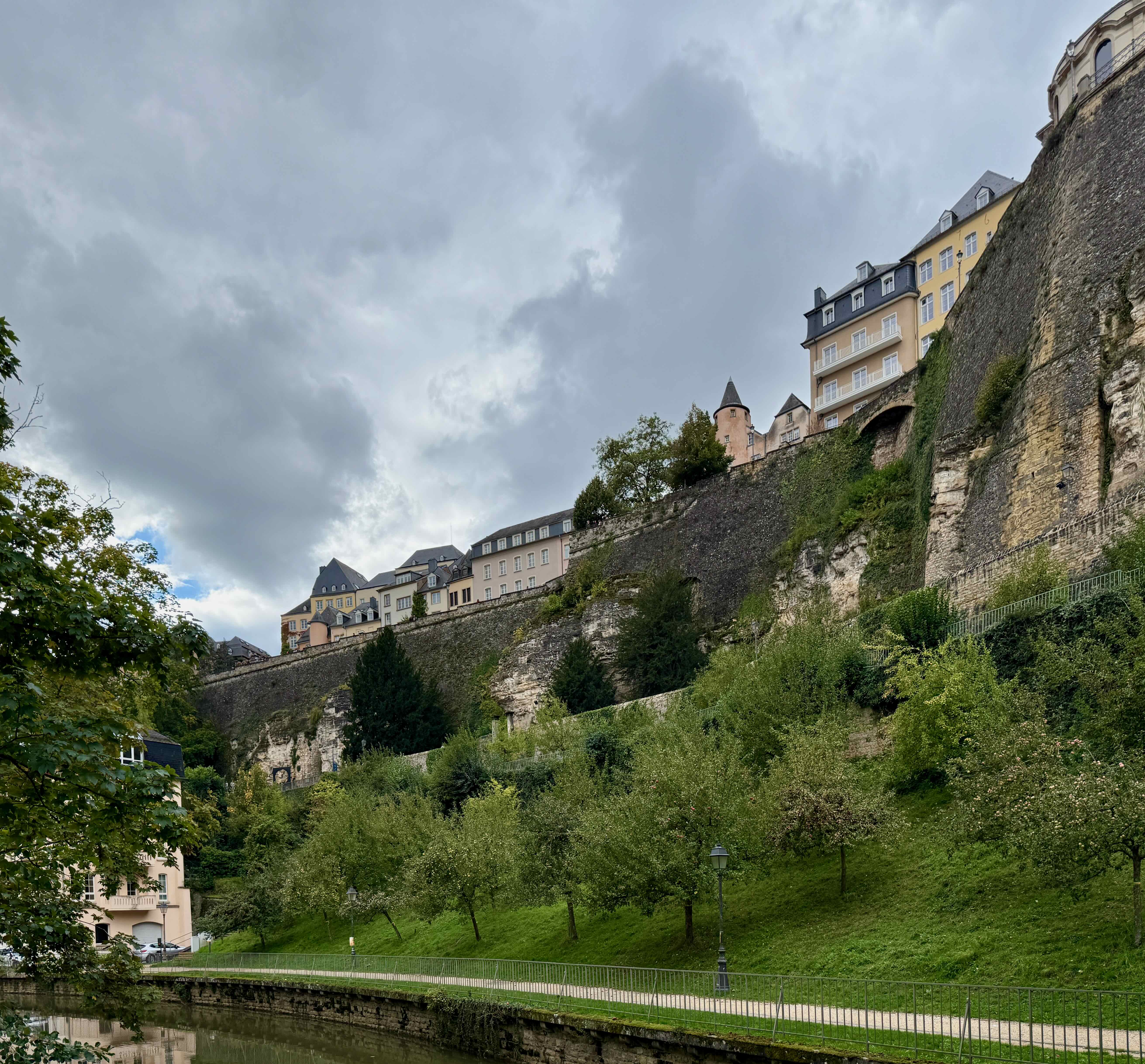

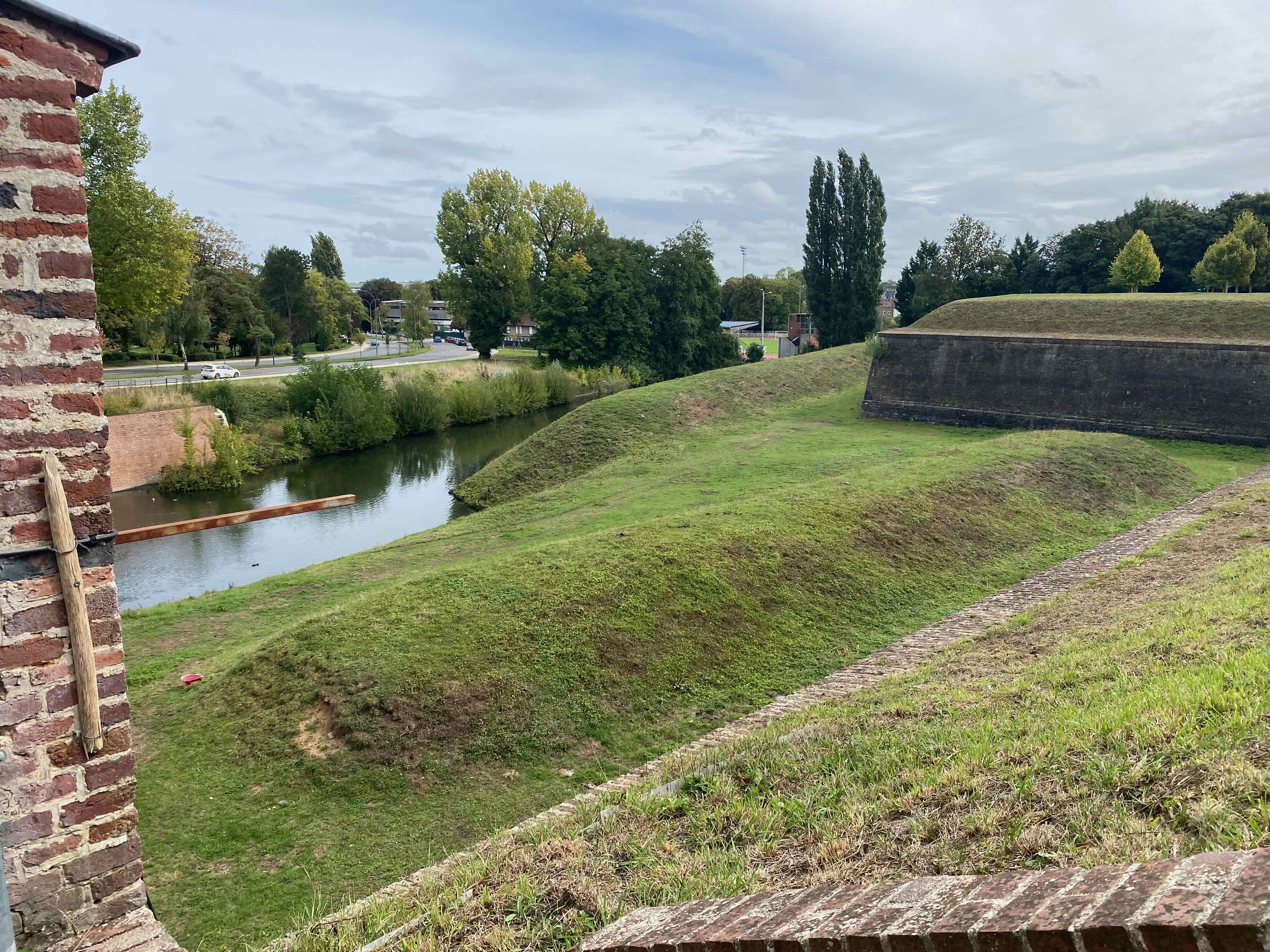
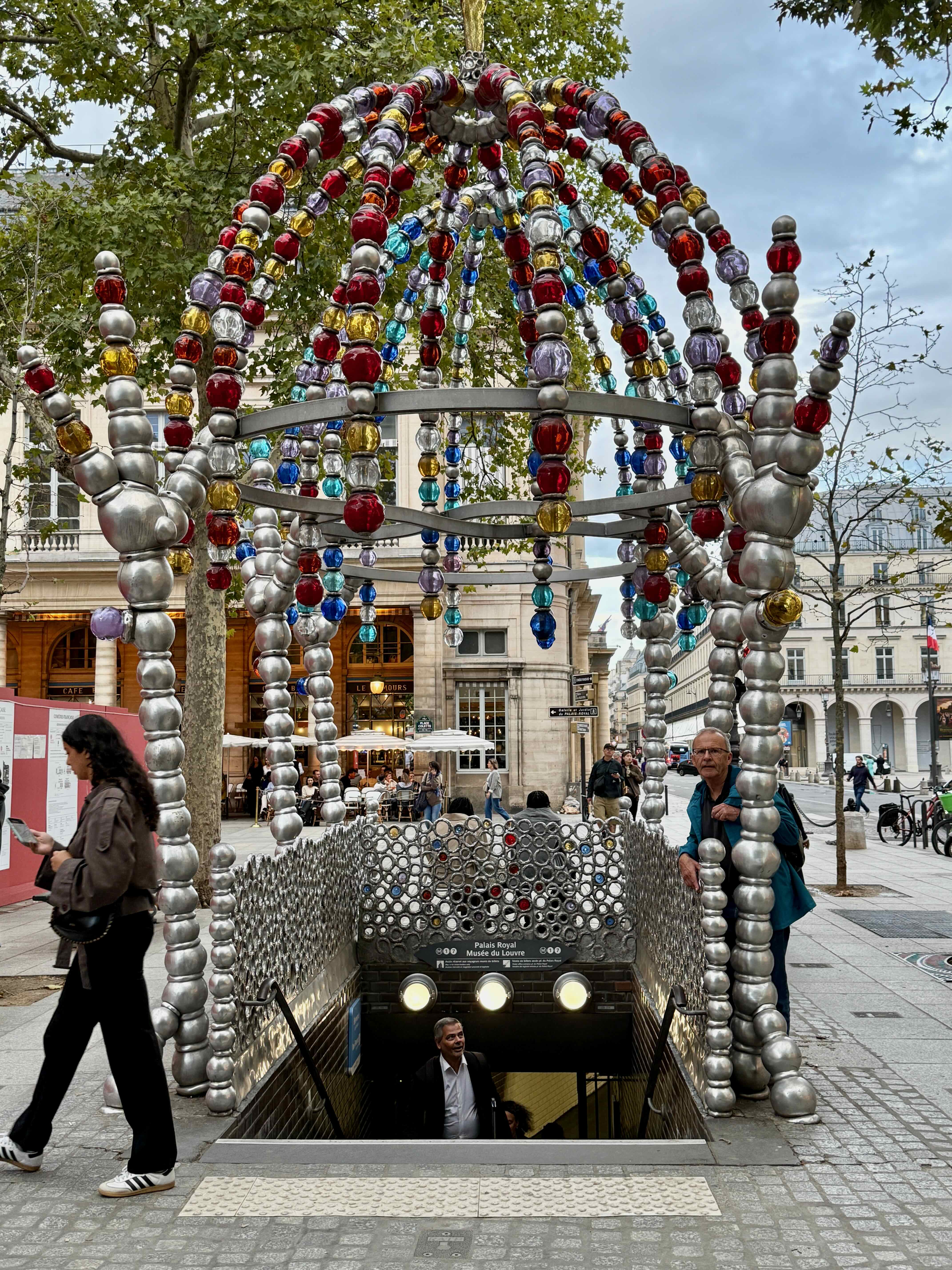
 On our walk to the bus we stop for another look down into one of the garden areas below the walls.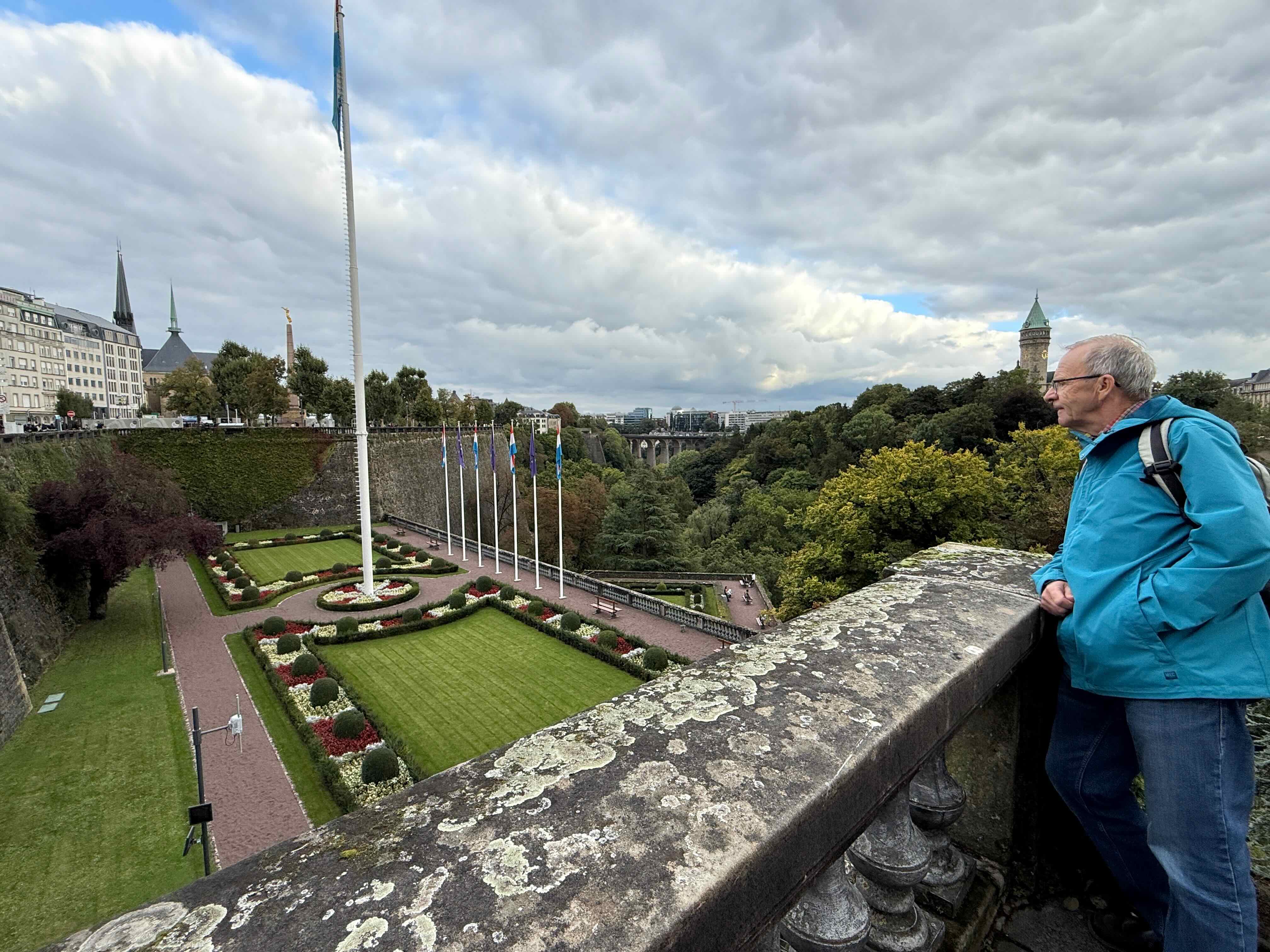




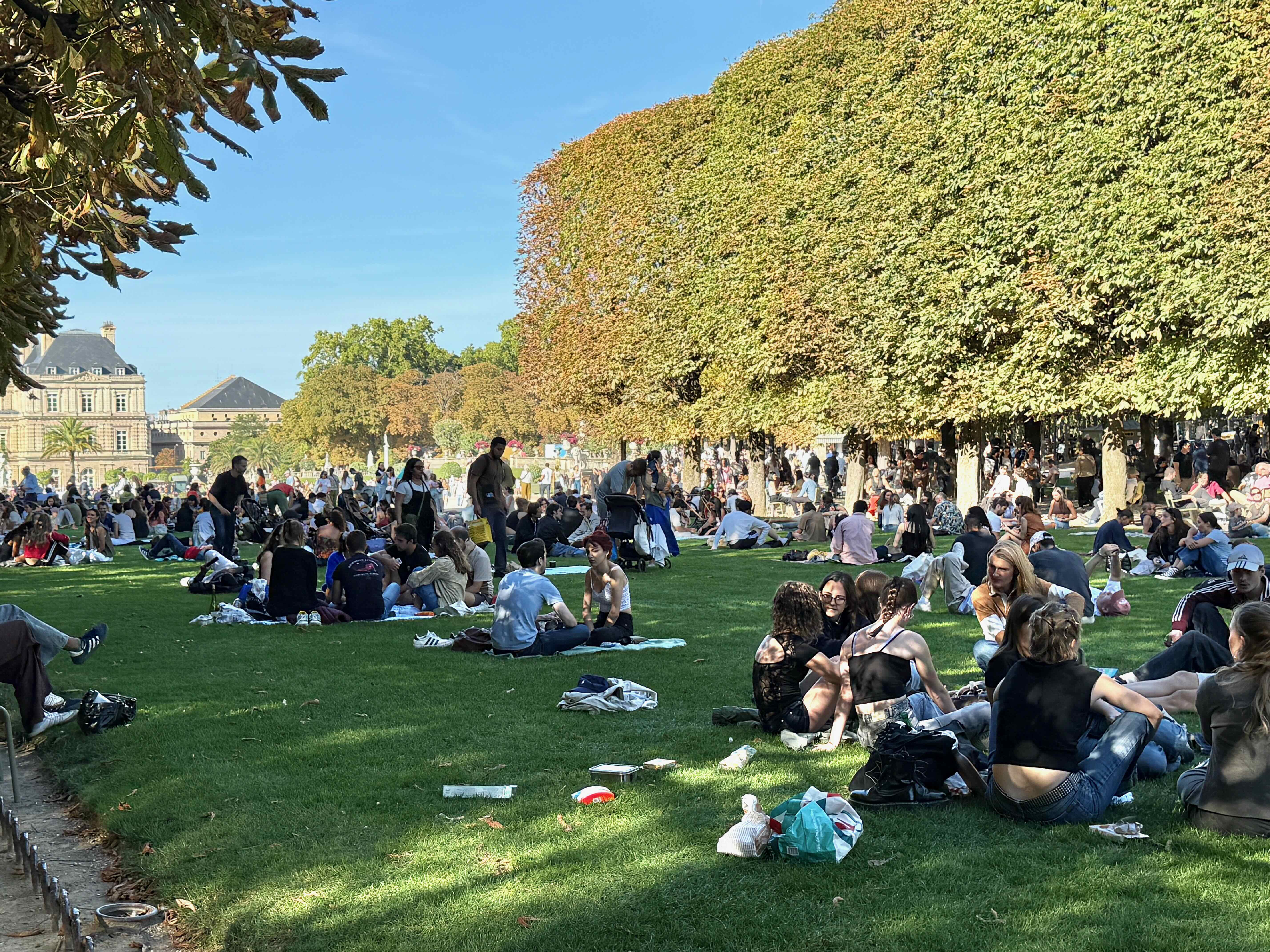 The Medici Fountain is a monumental fountain in the Jardin de Luxembourg that was built in 1630.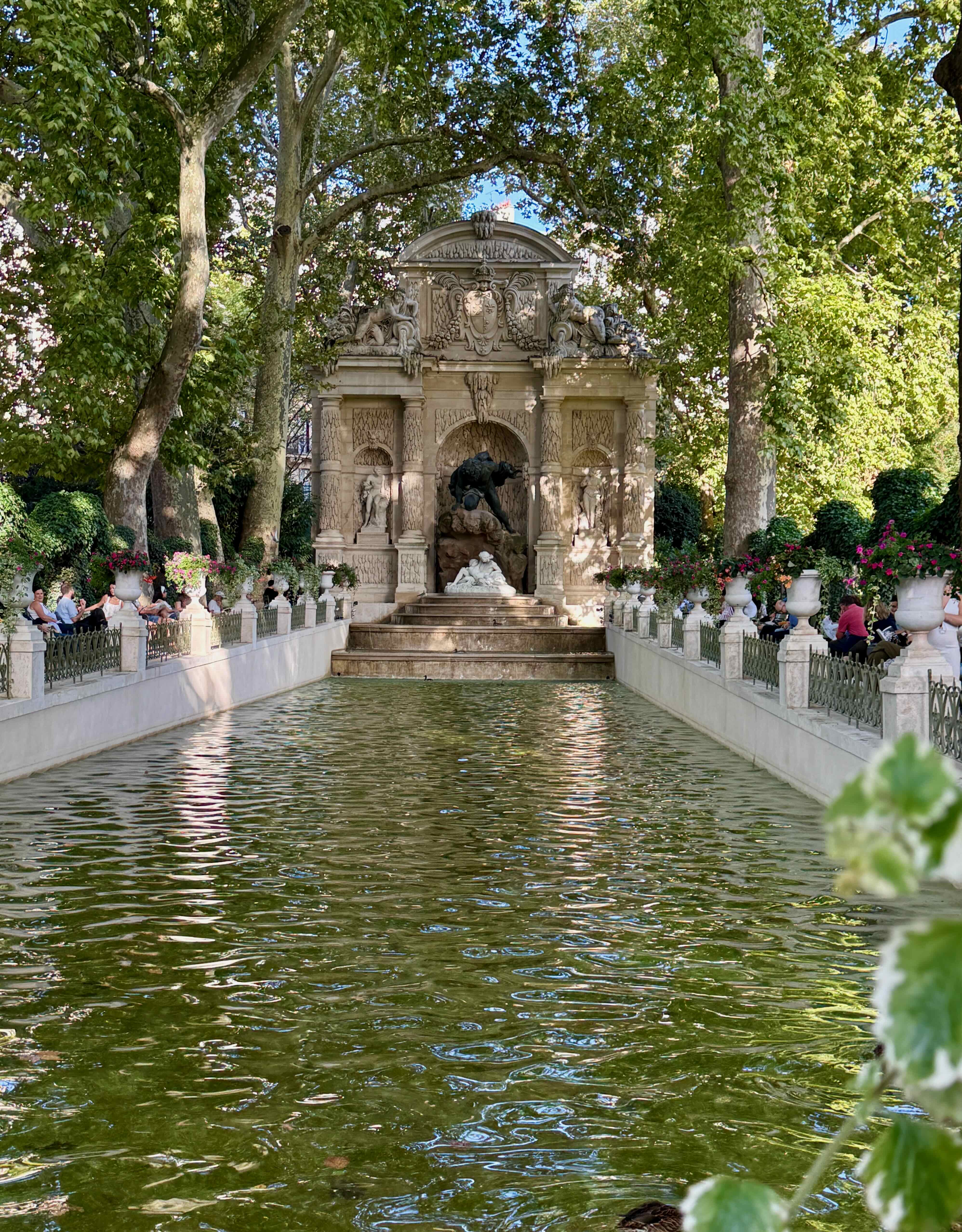
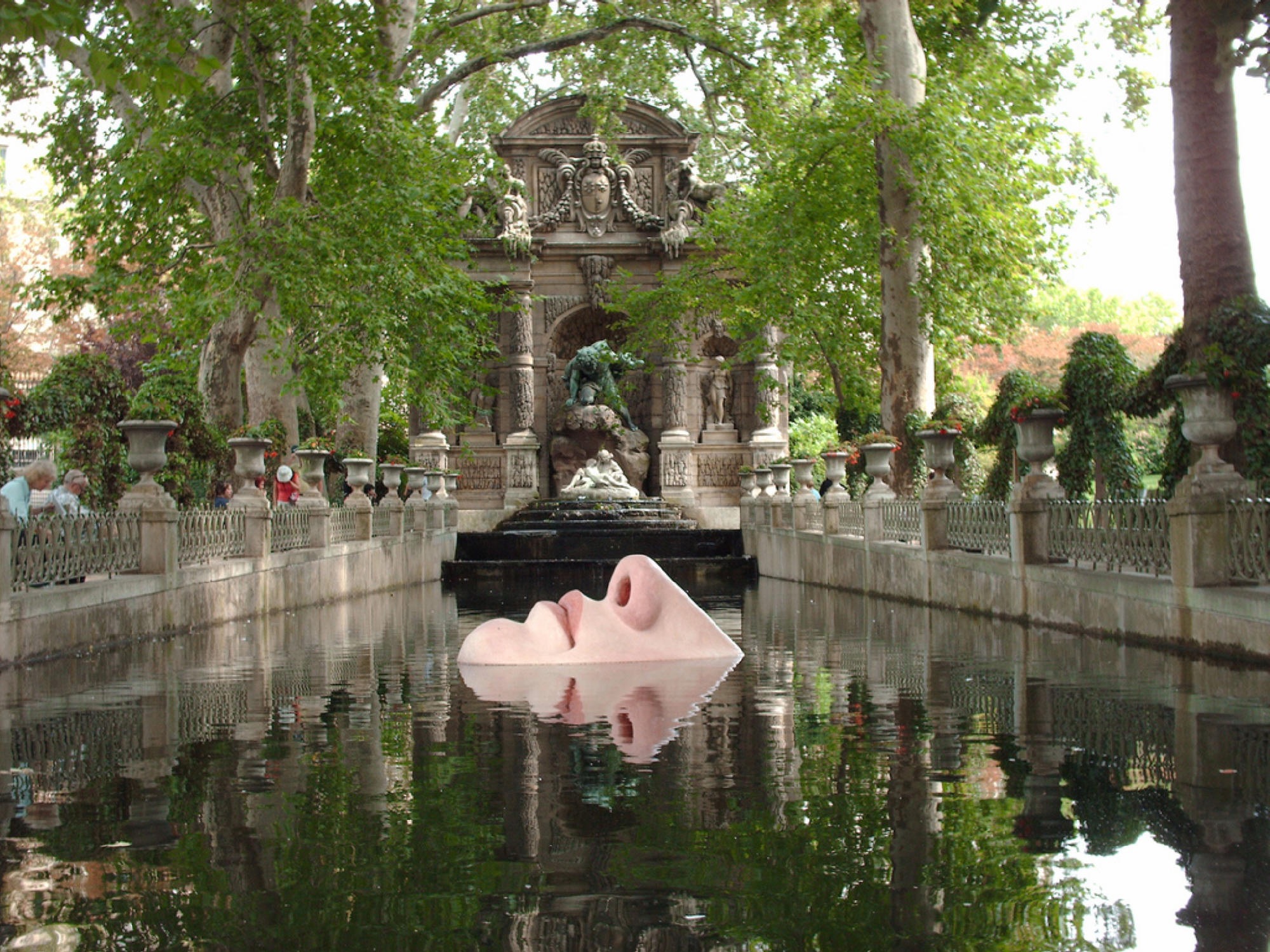
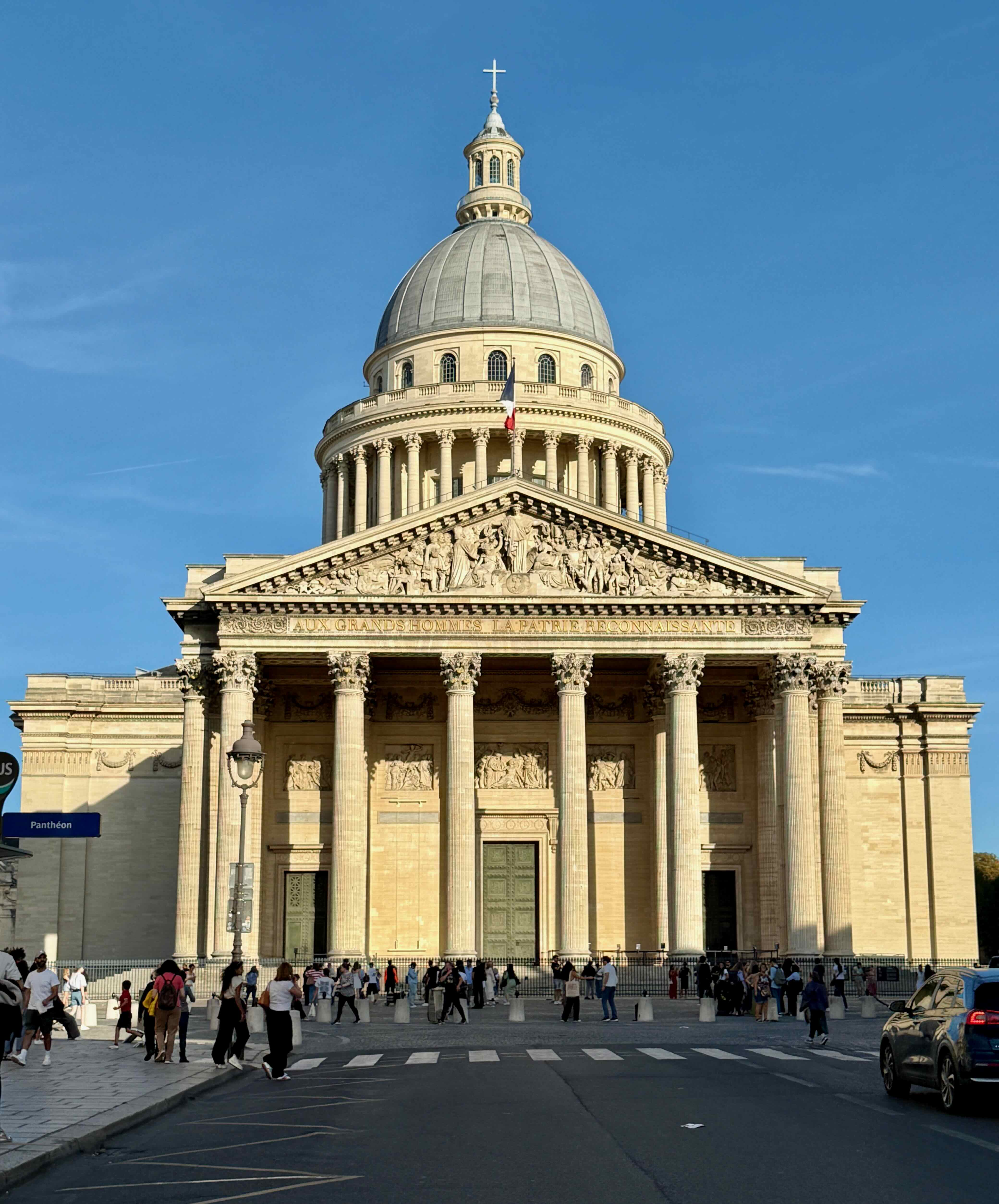 I do not miss eating out in Paris. Sitting check by jowl beside smokers is not my idea of fun. I much prefer the meals we prepare at home in our bnb’s.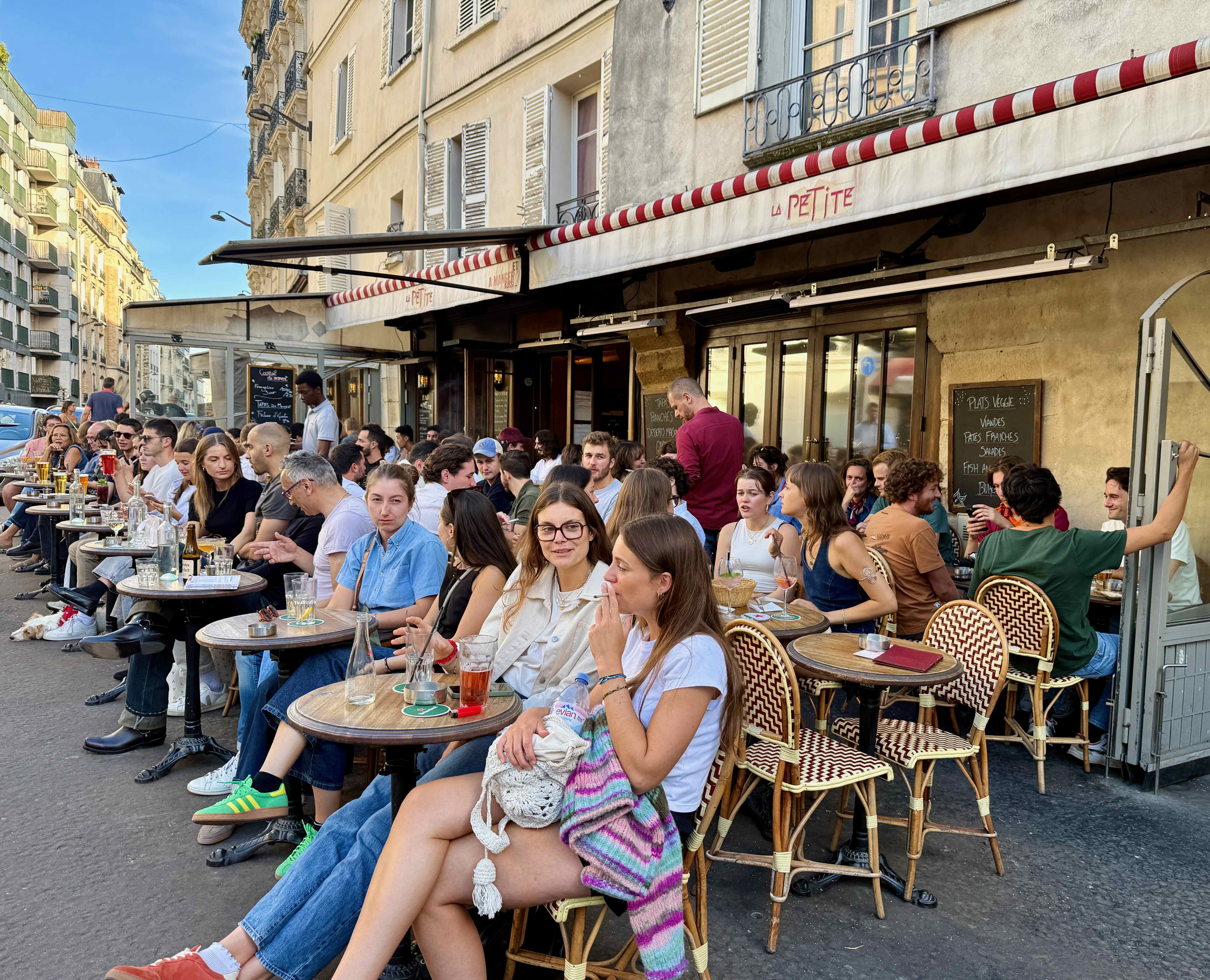
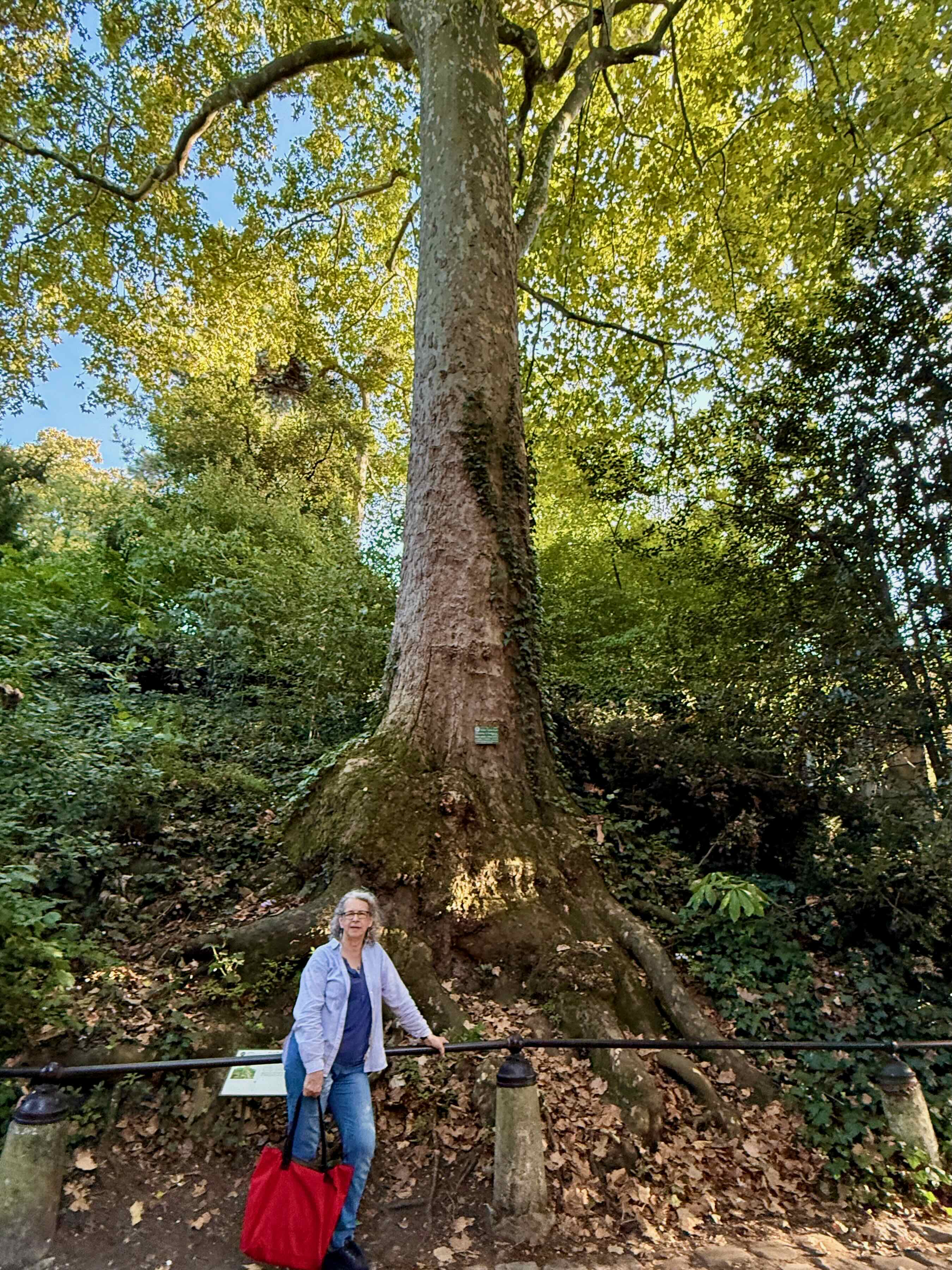
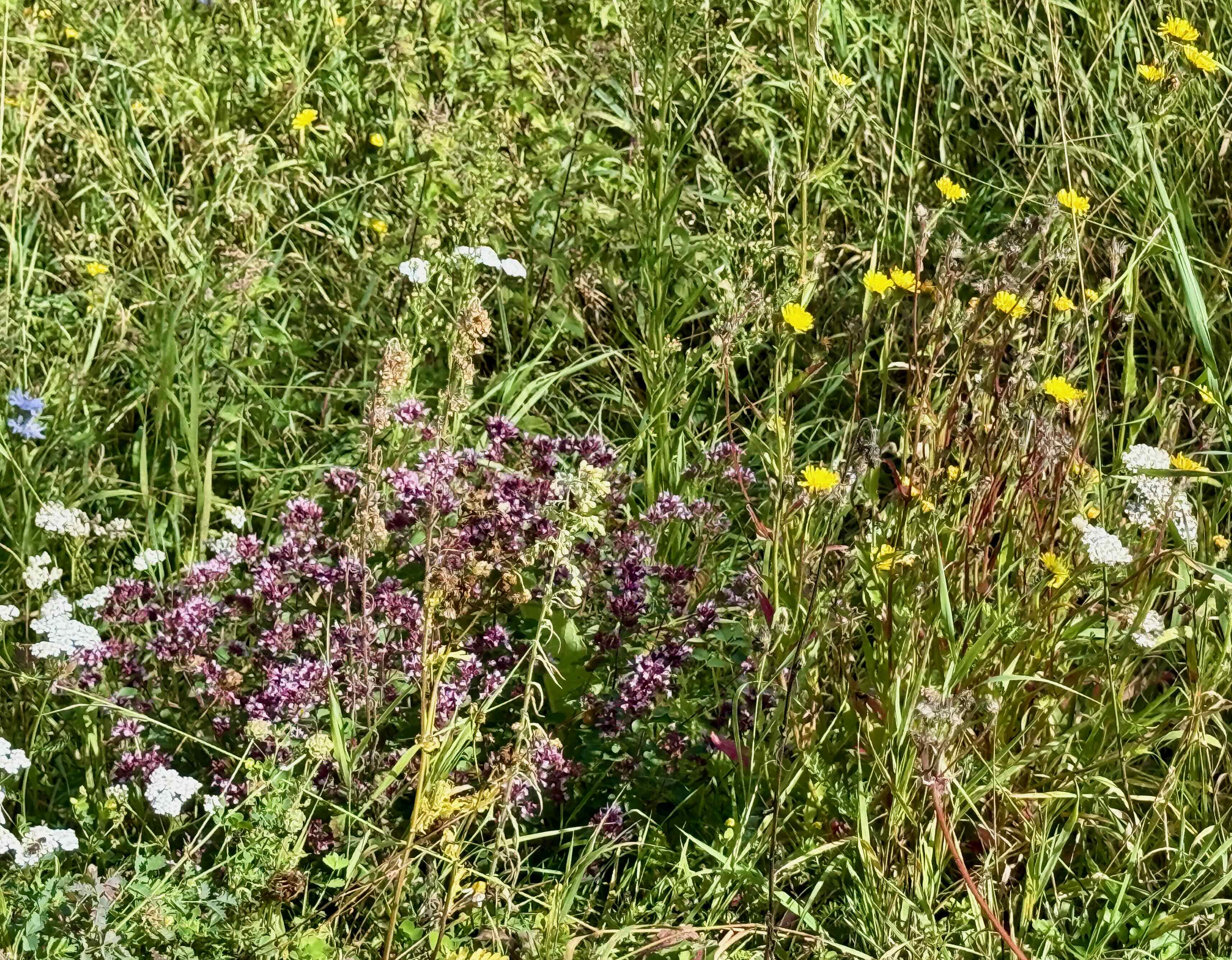
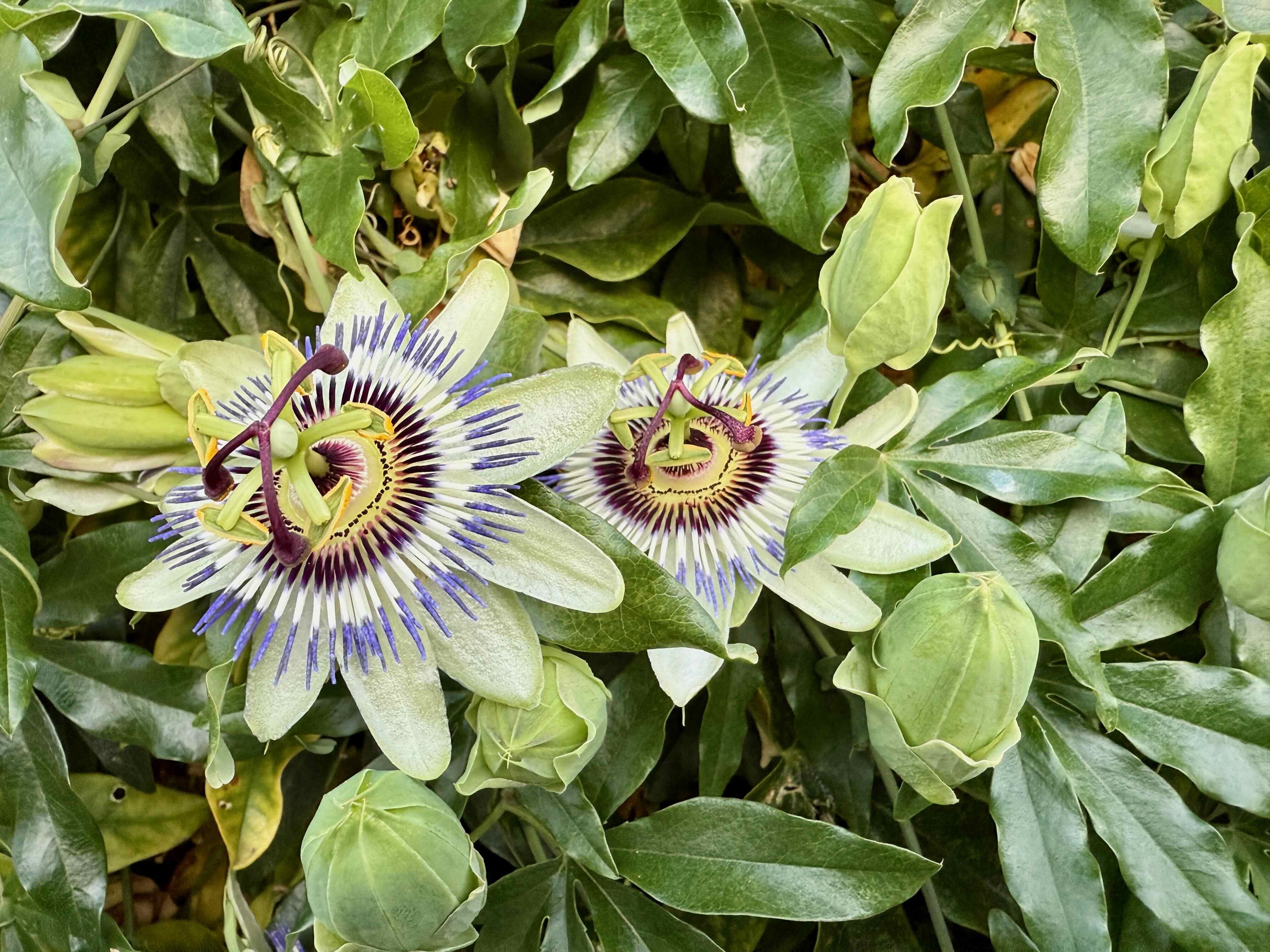
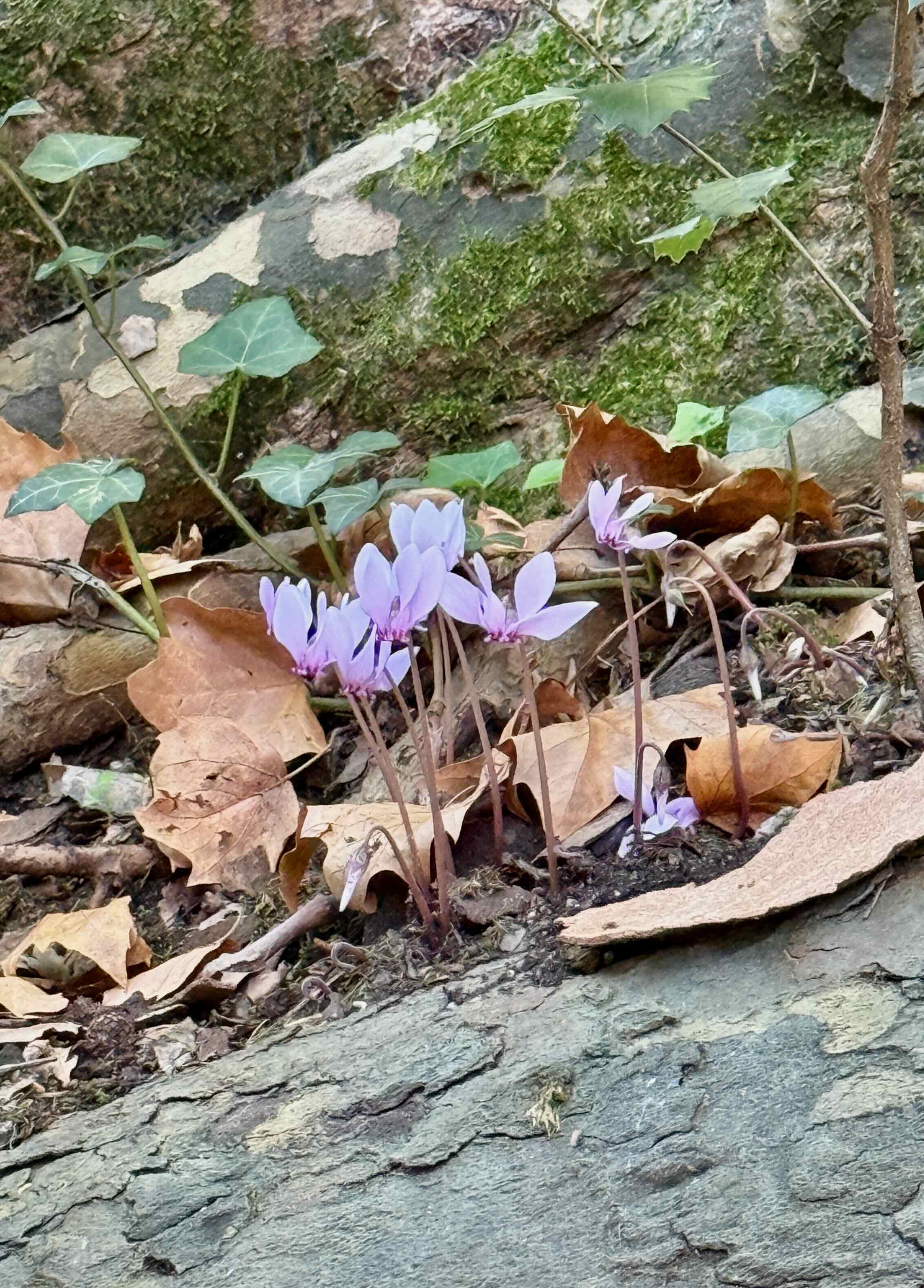 Sue loved this interesting flower and wanted a closer look.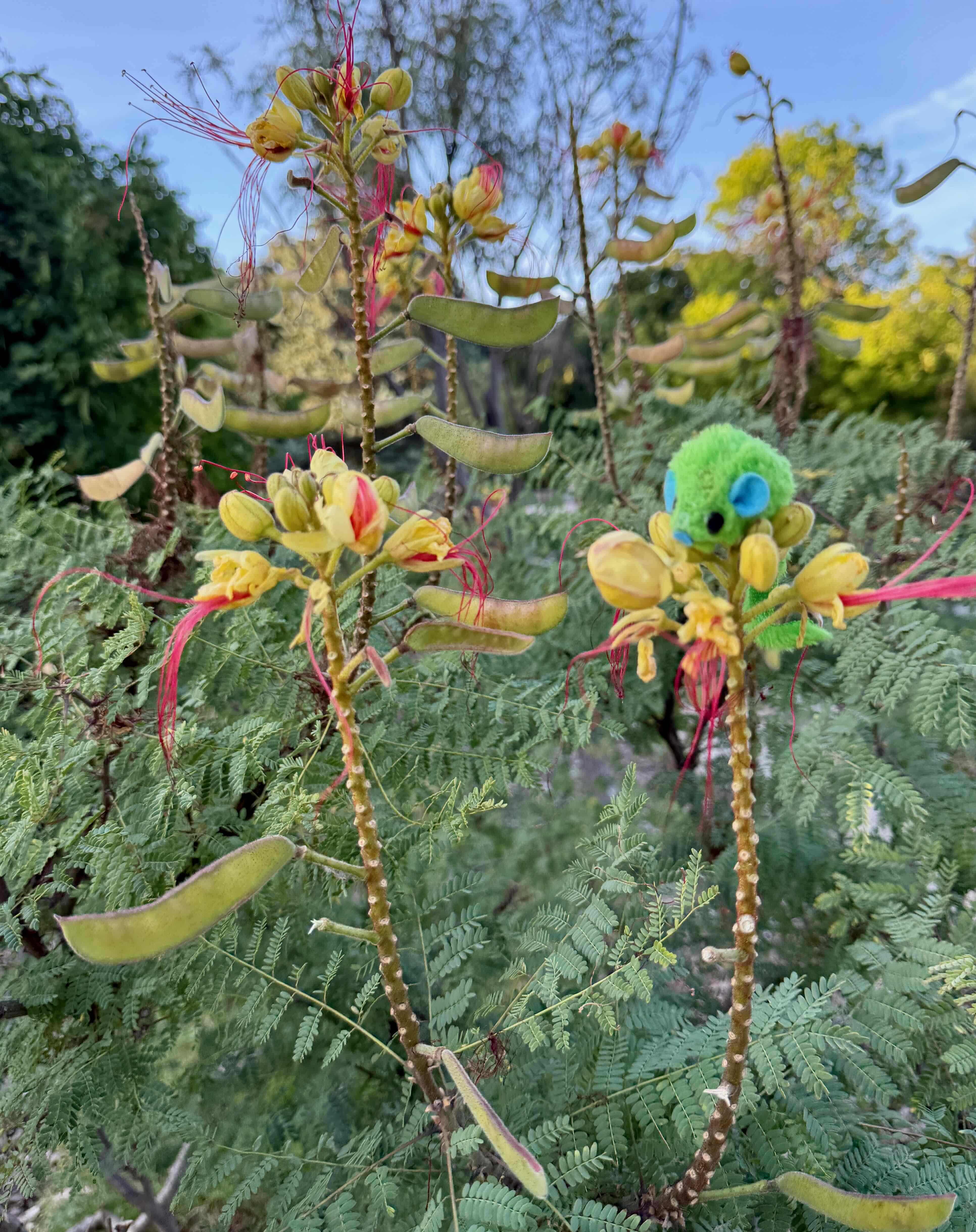
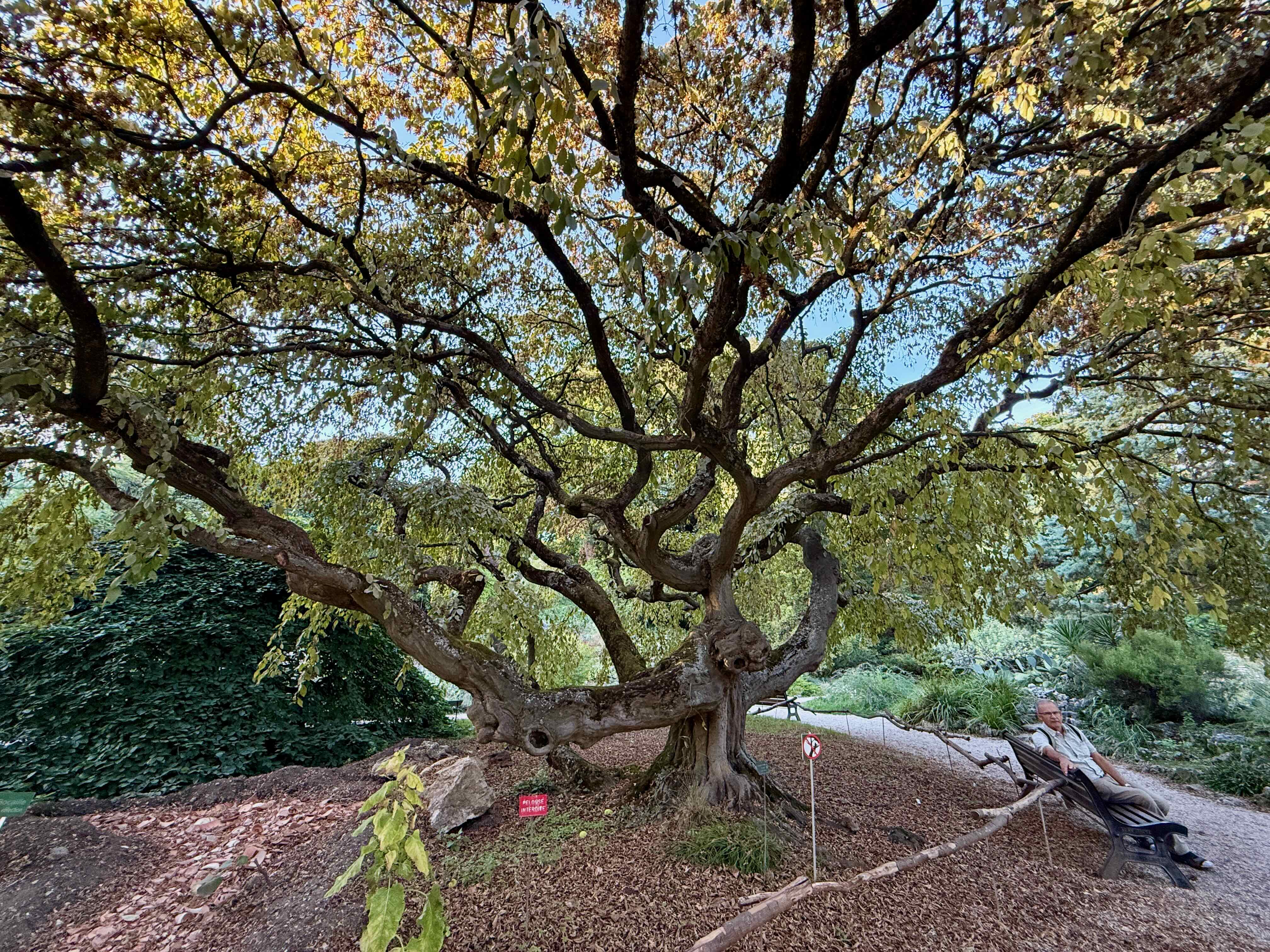

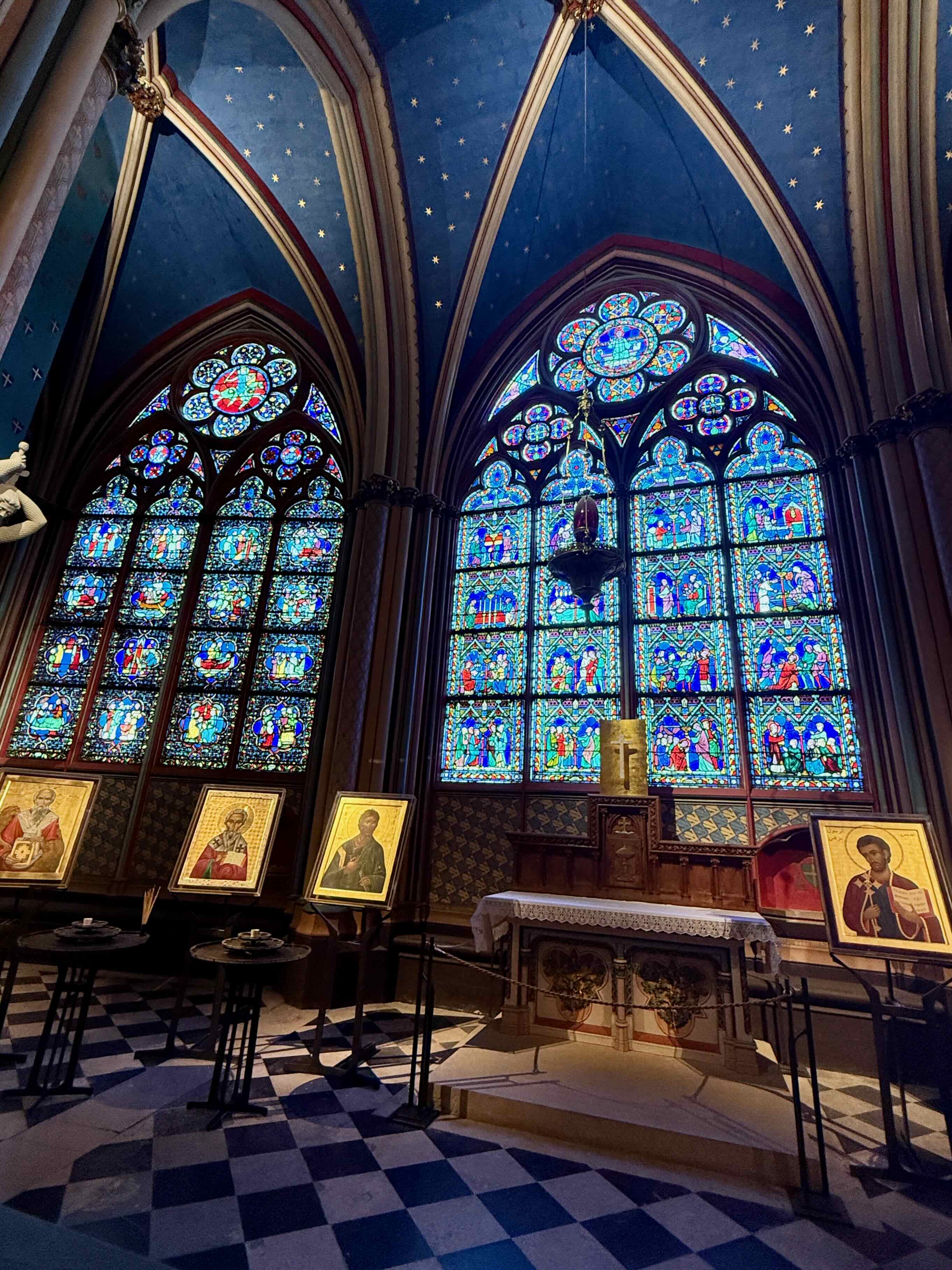
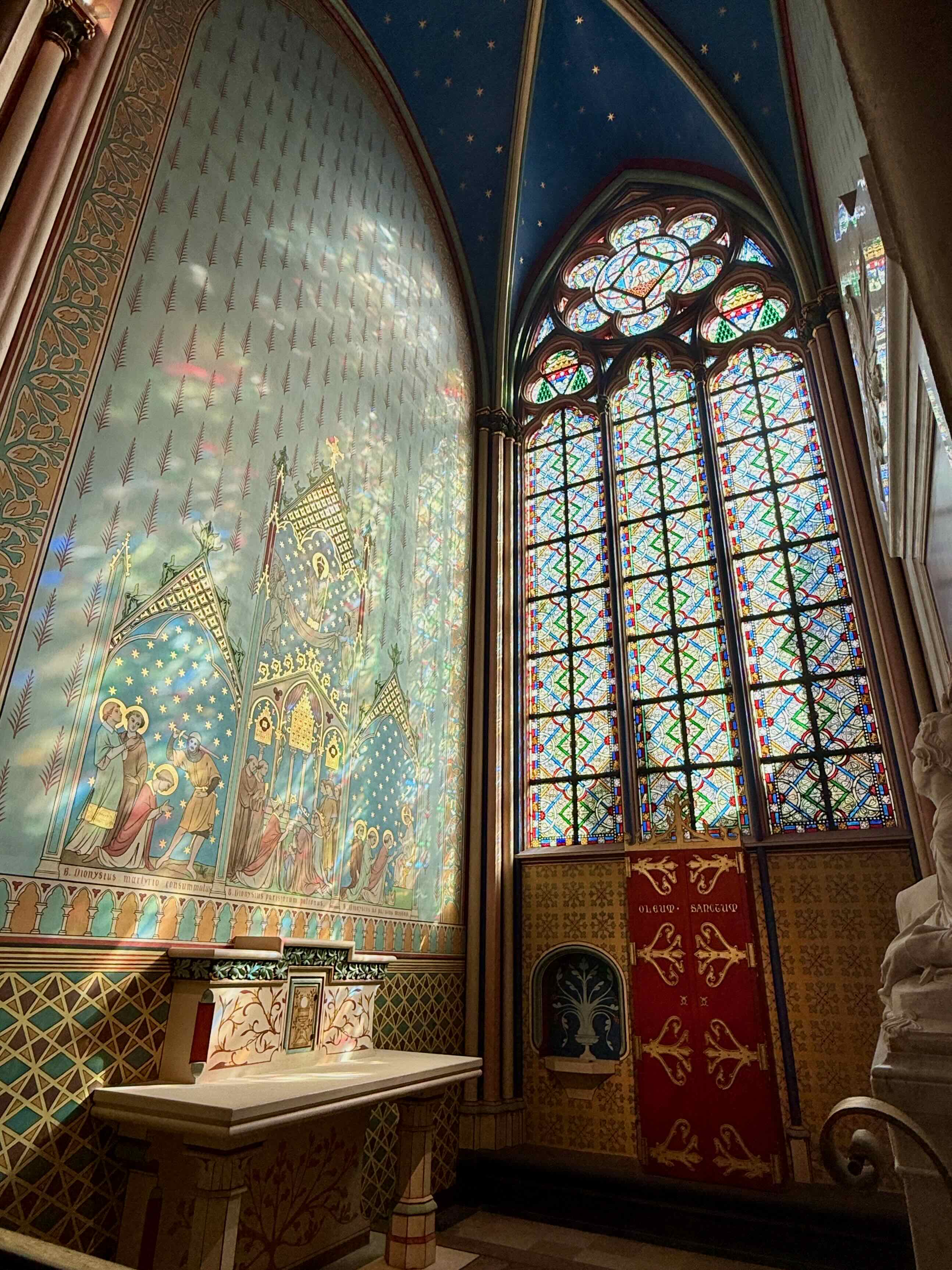
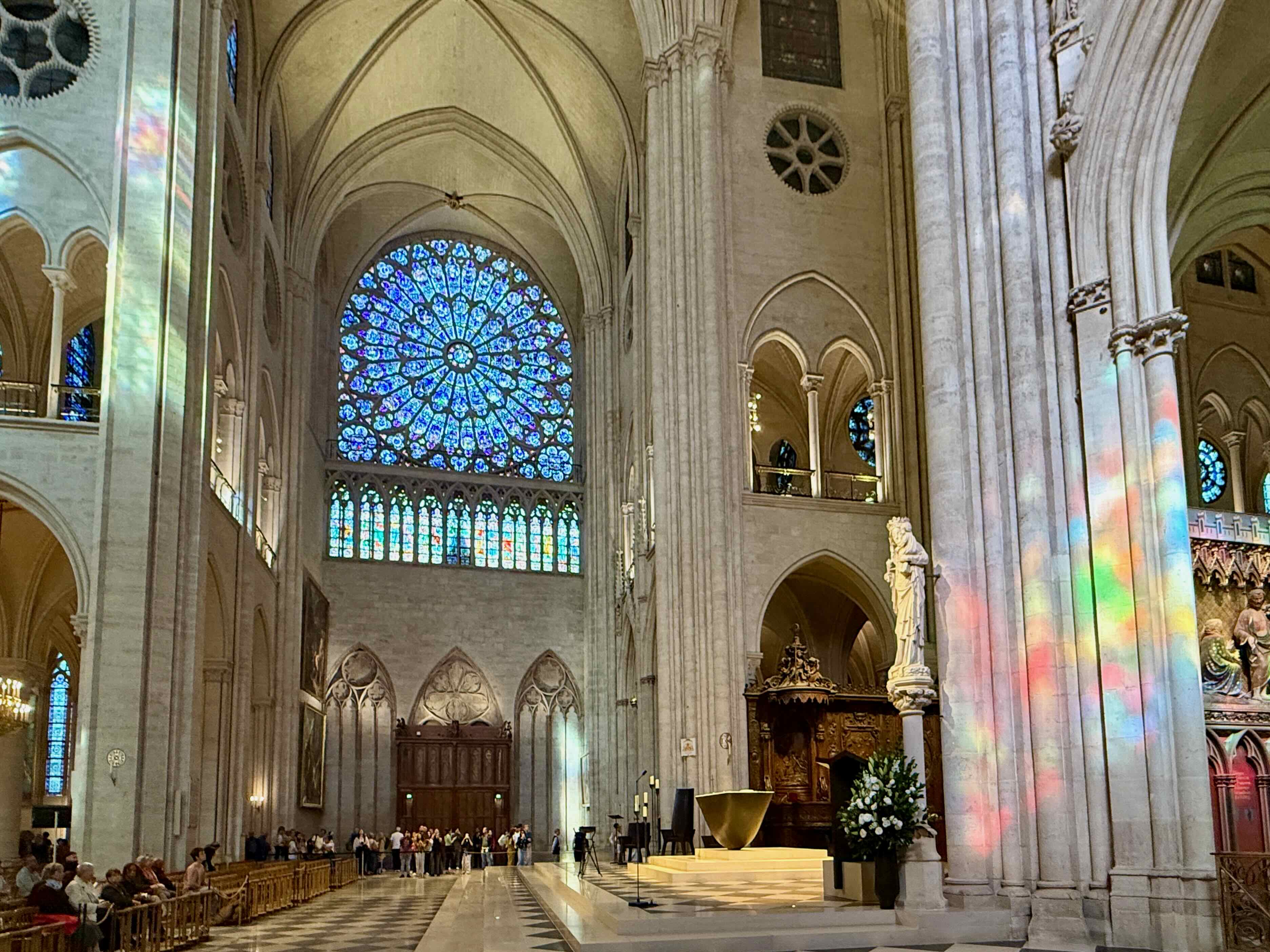
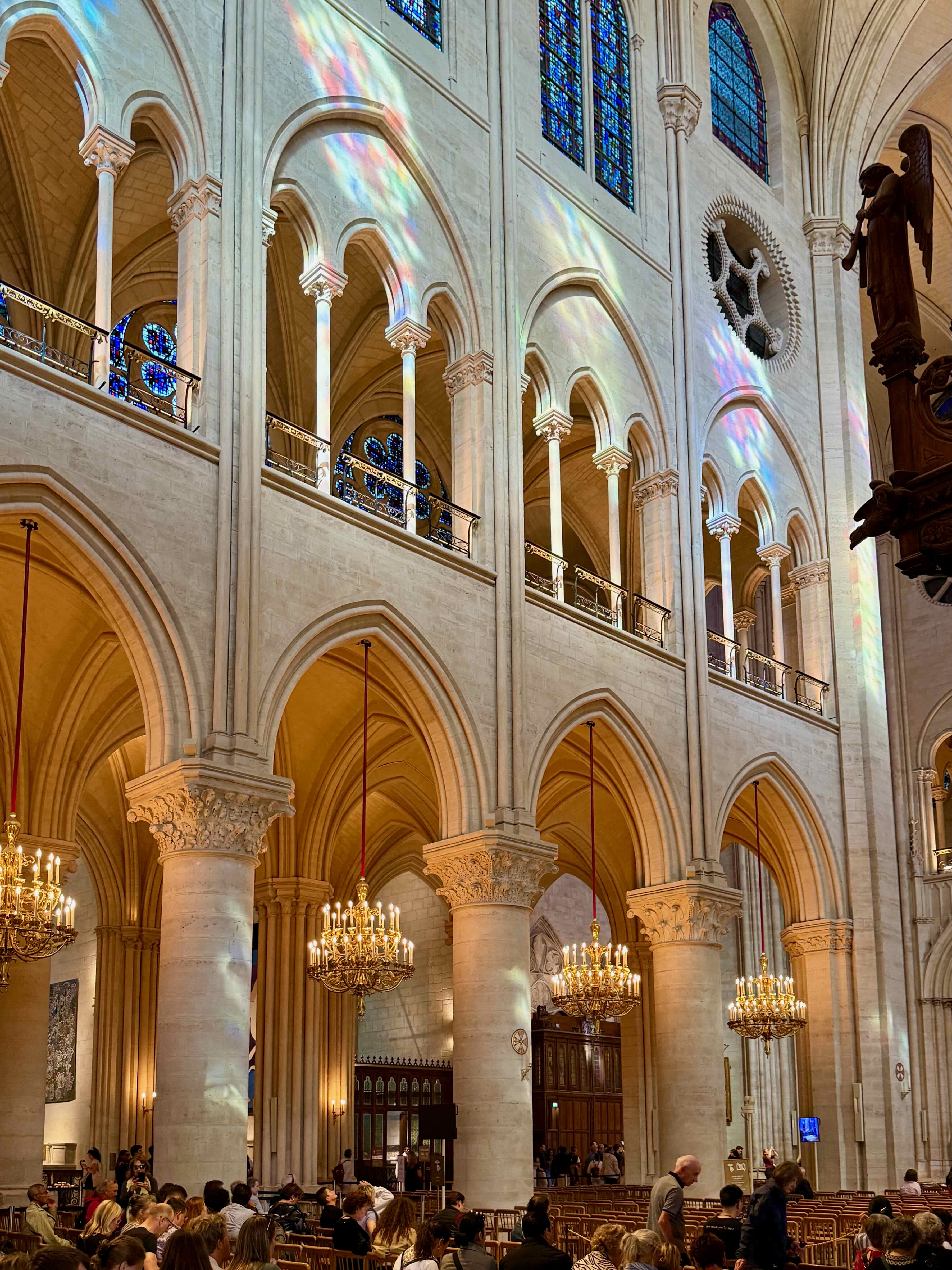
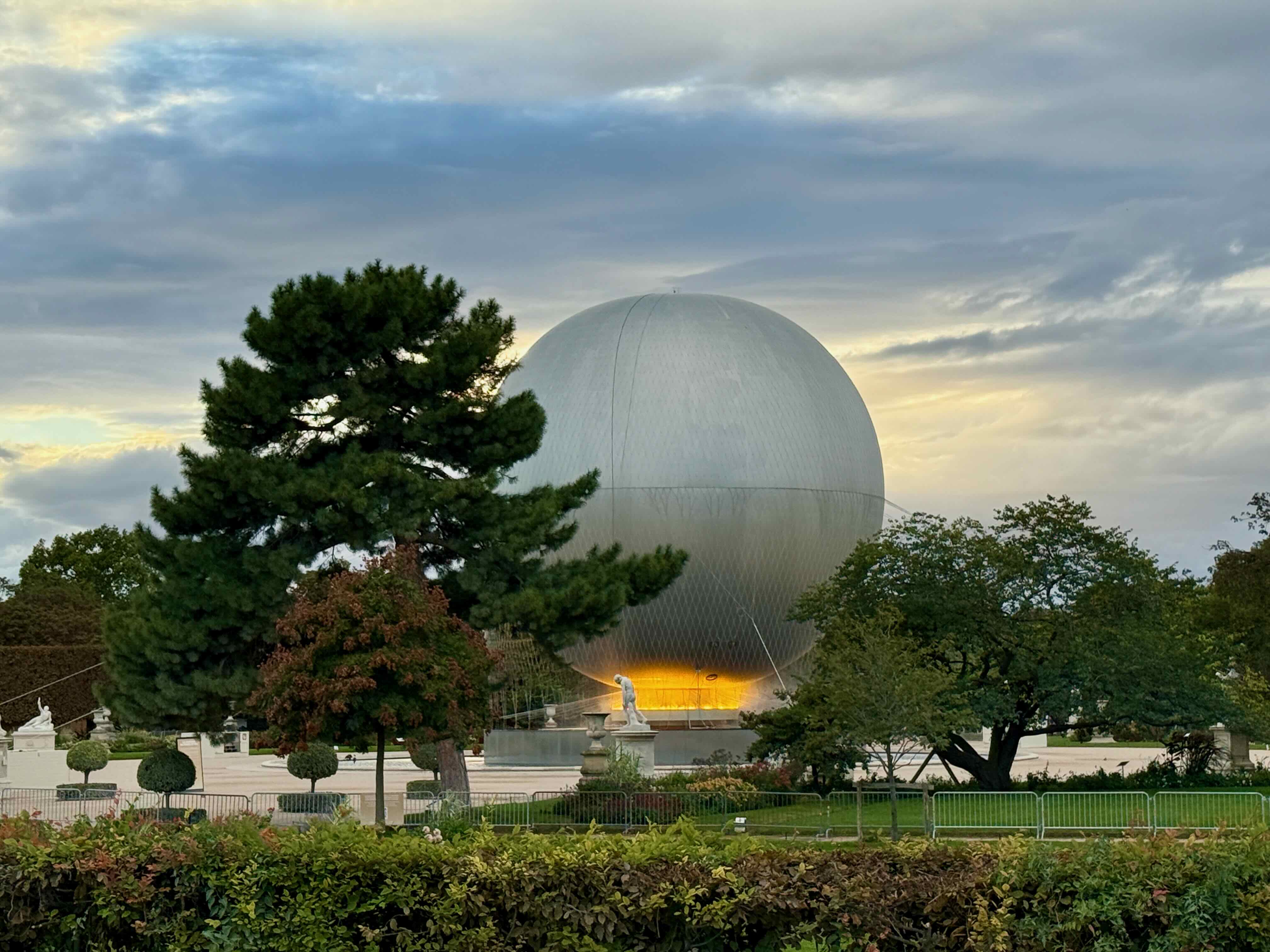
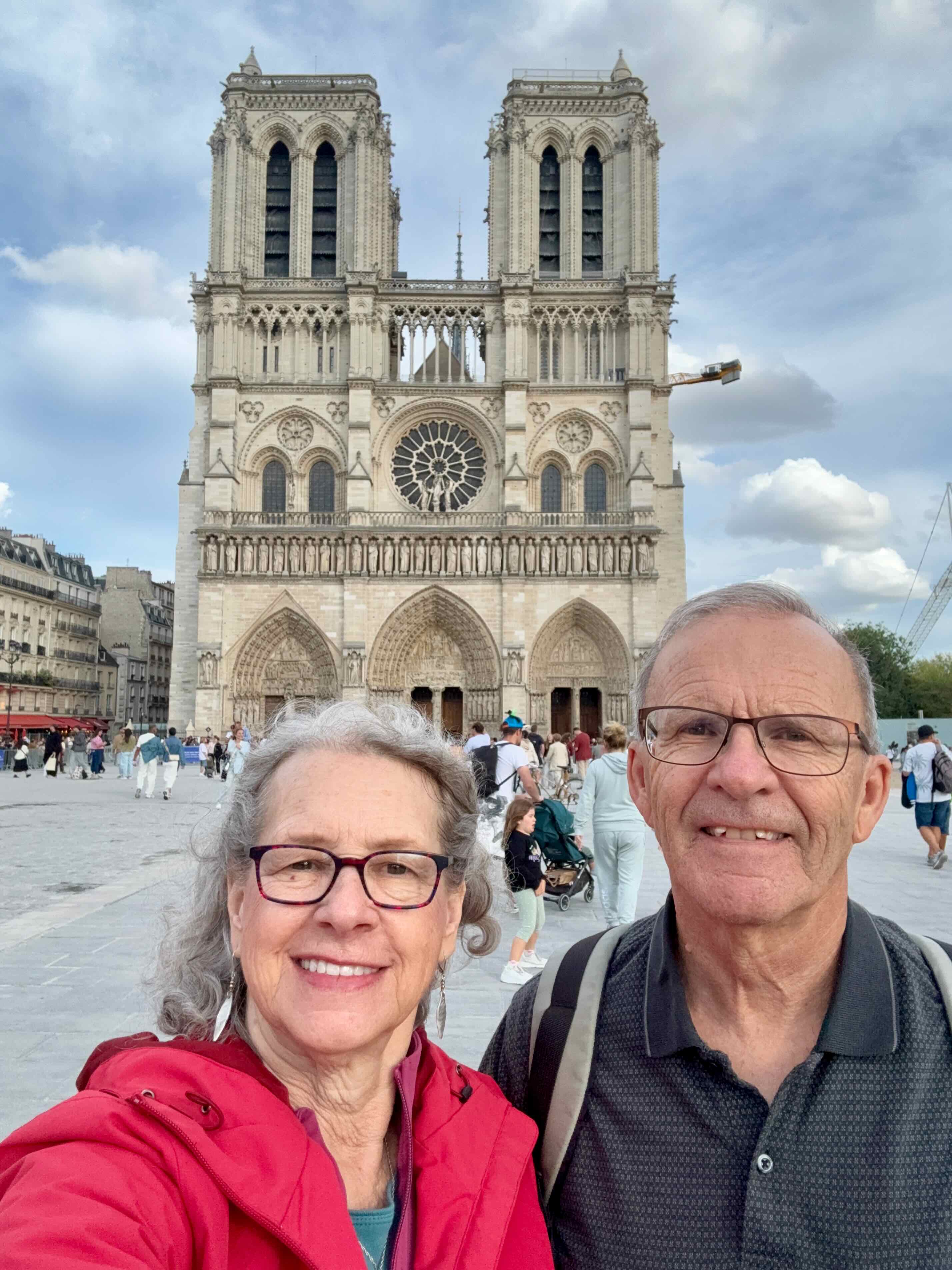 We walk towards the Louvre and find a place for tea and a snack. We stroll along the Seine and find a place to sit, but it was very busy, lots of cyclists, joggers and people going by so we walk to the Tuileries Garden just west of the Louvre. The name comes from the tile kilns which occupied the site before the palace.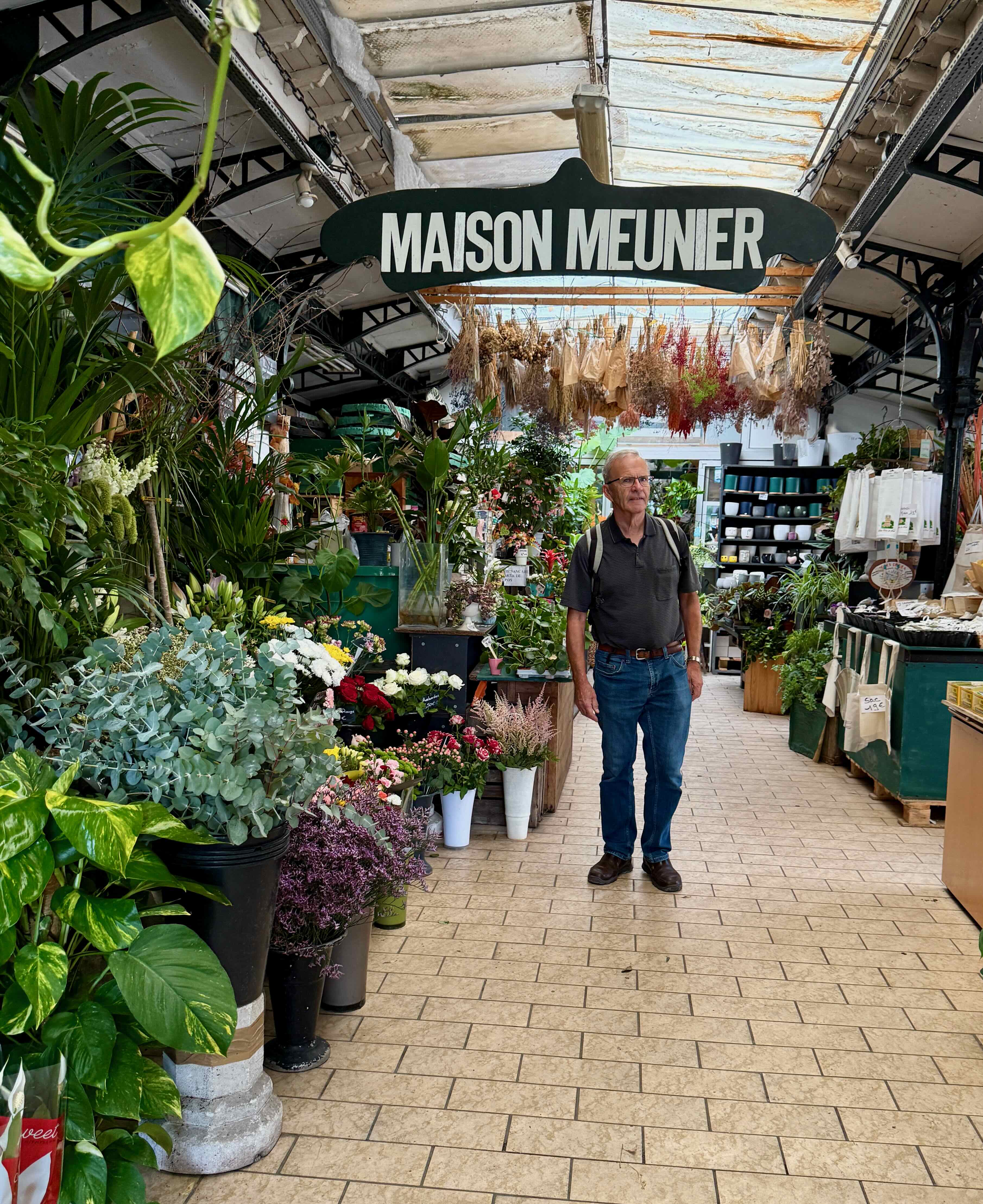
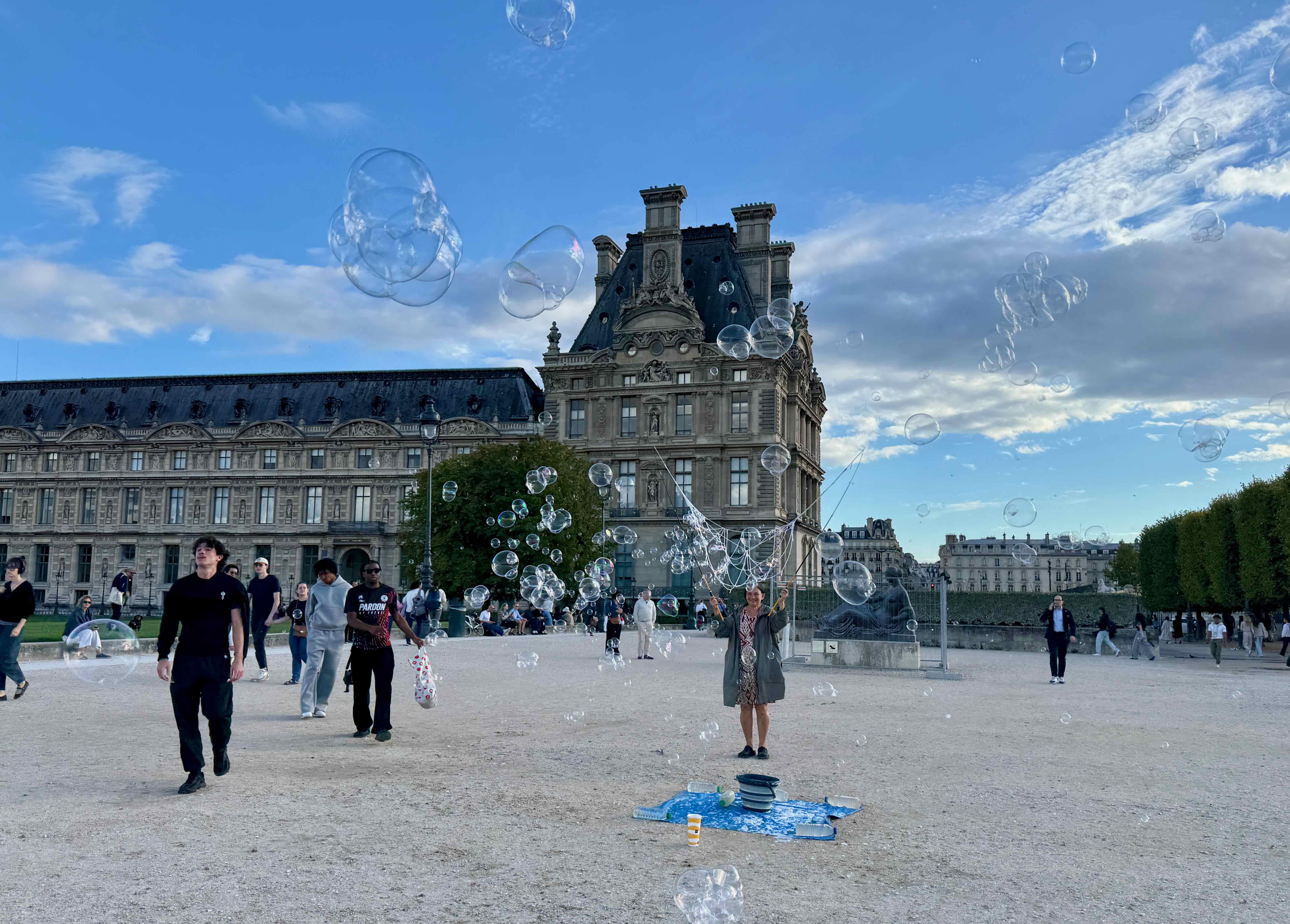
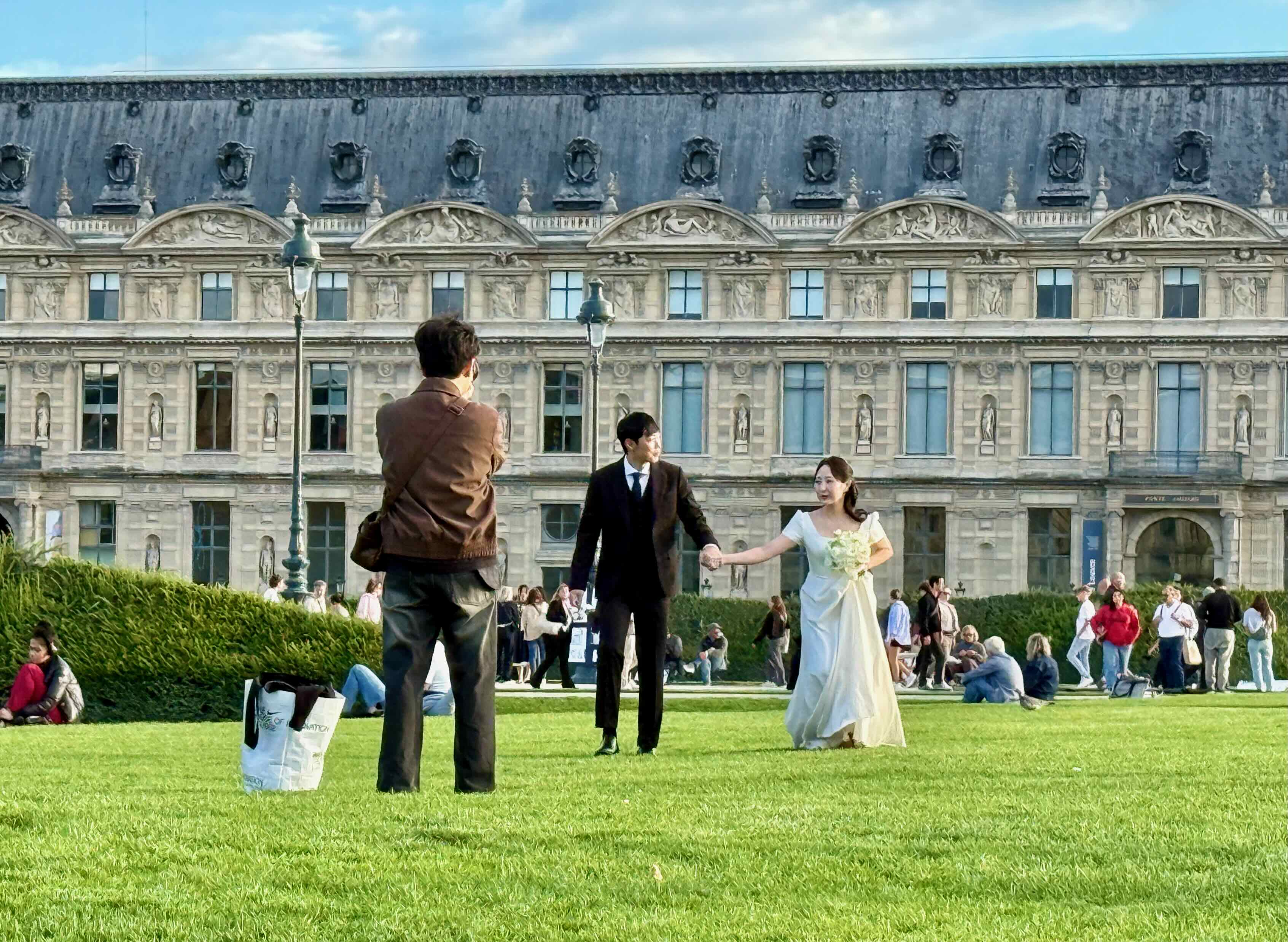
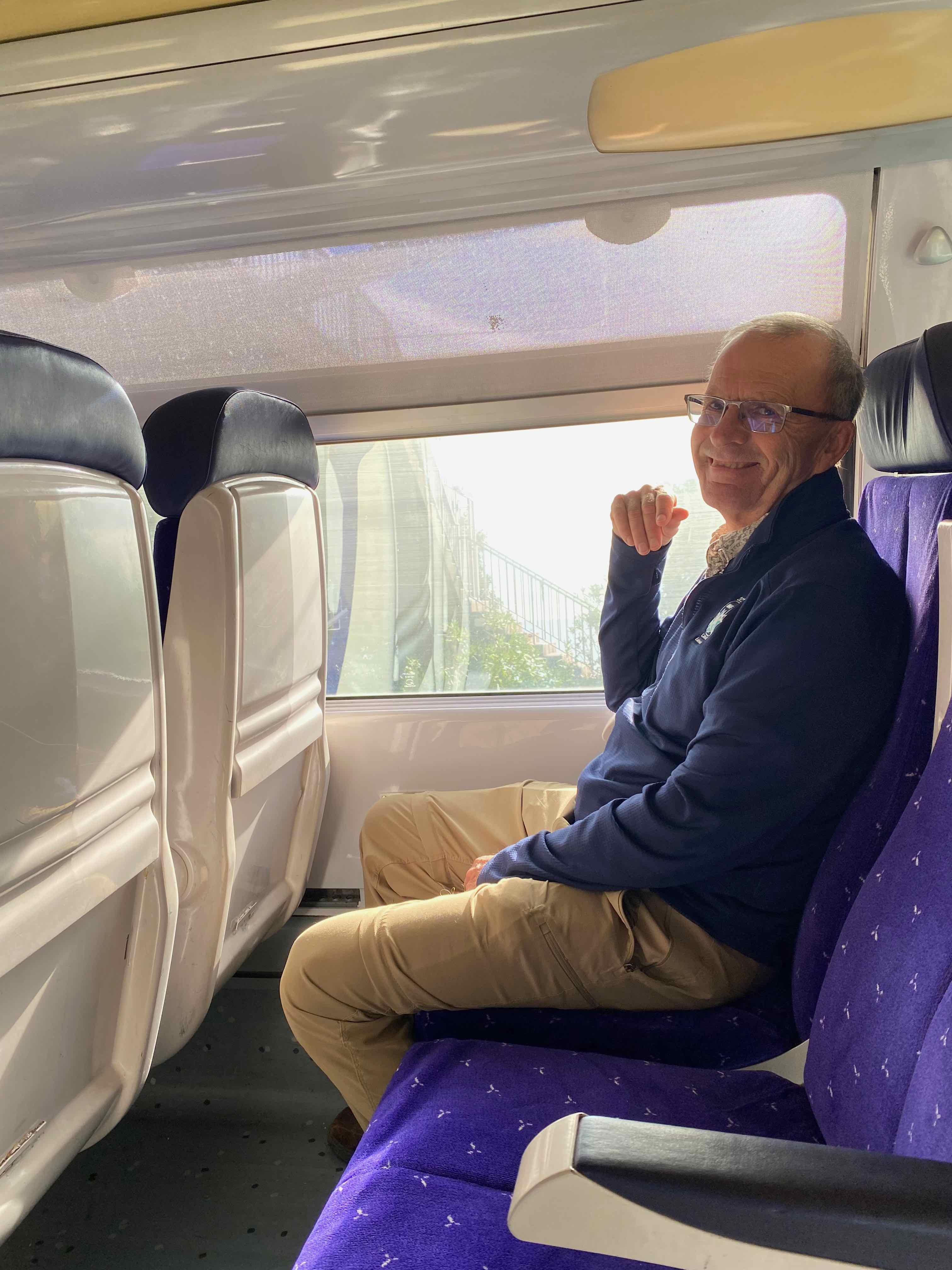
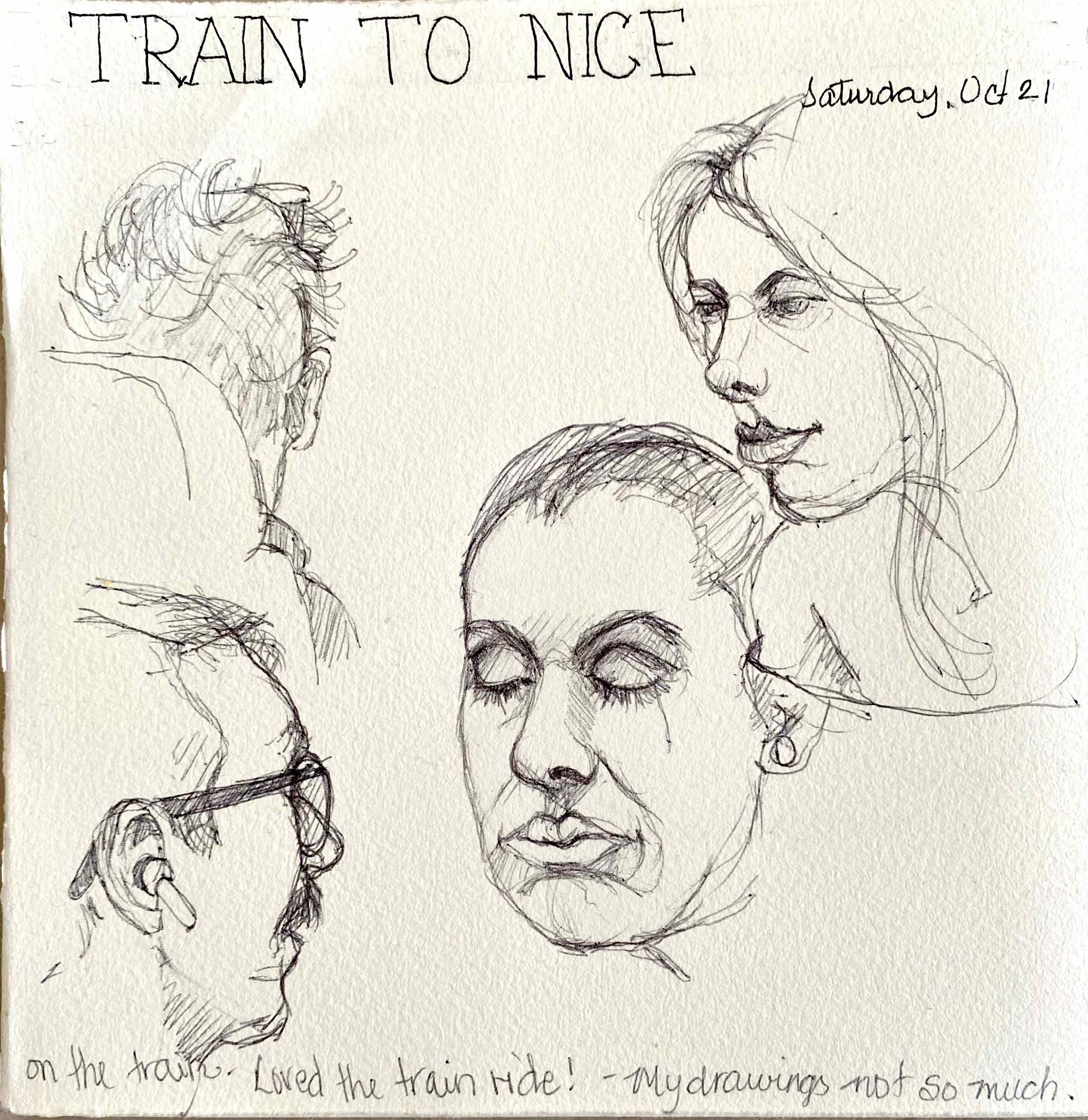 The Nice train station is really big, clean and airy.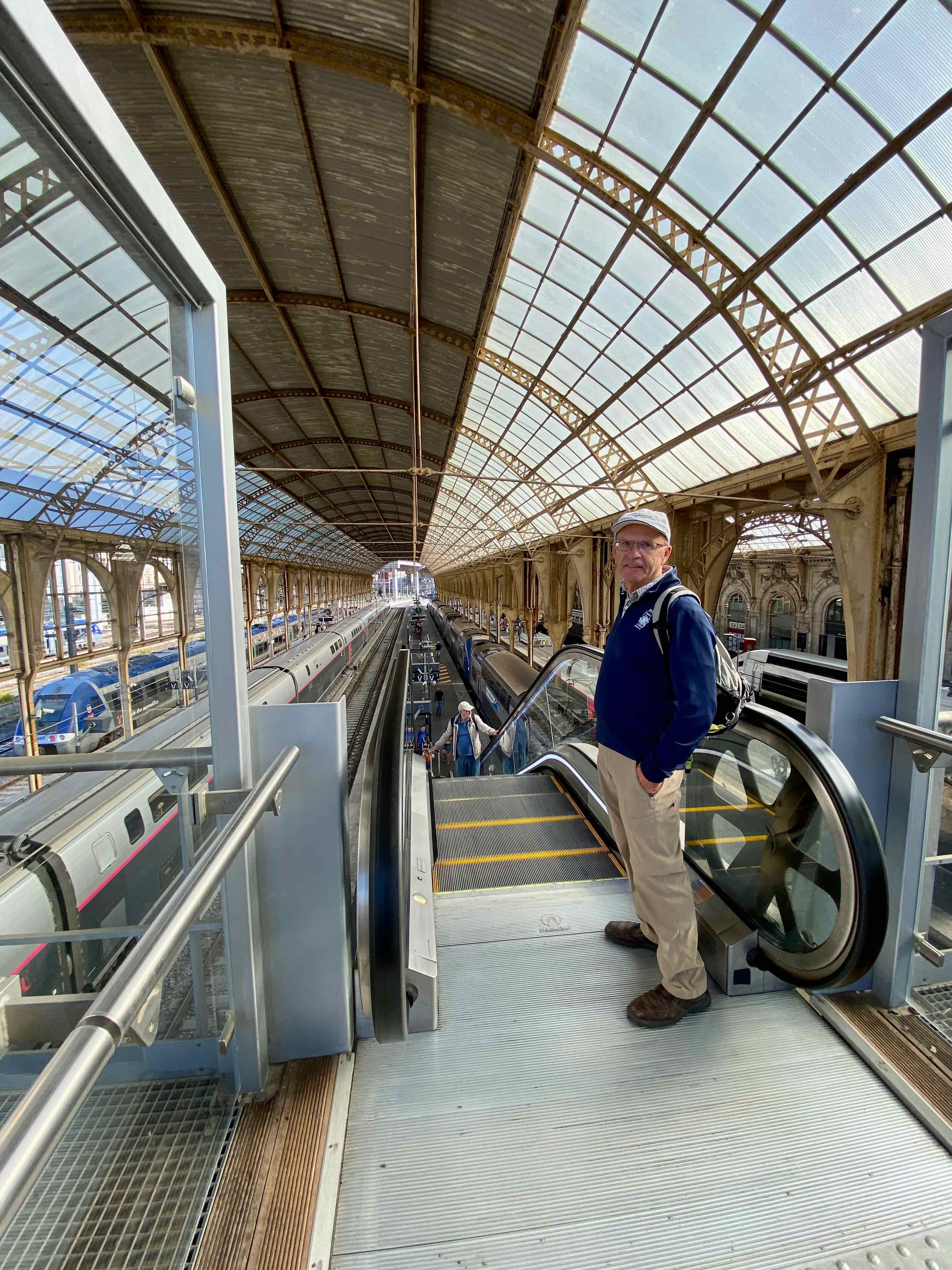
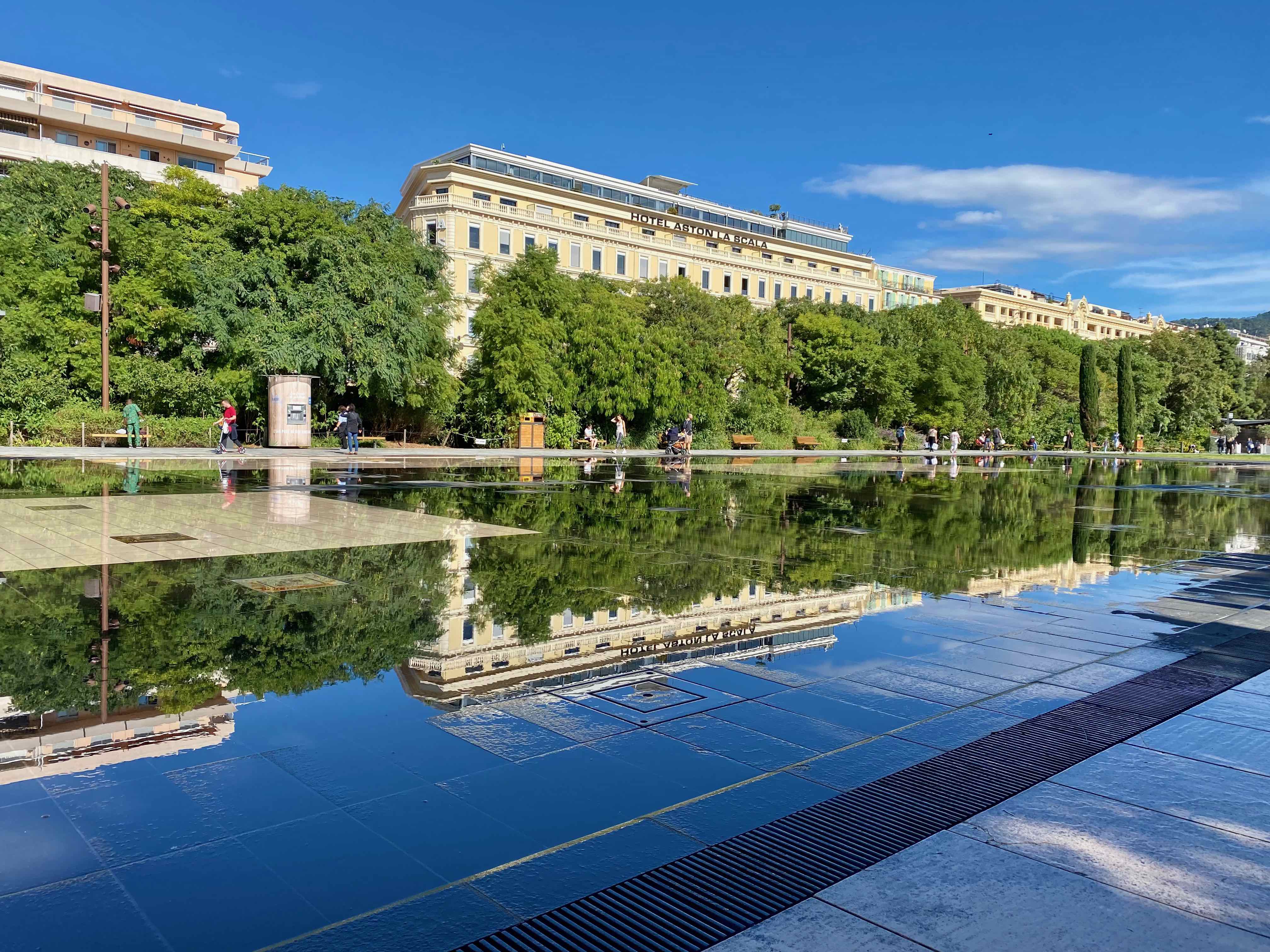
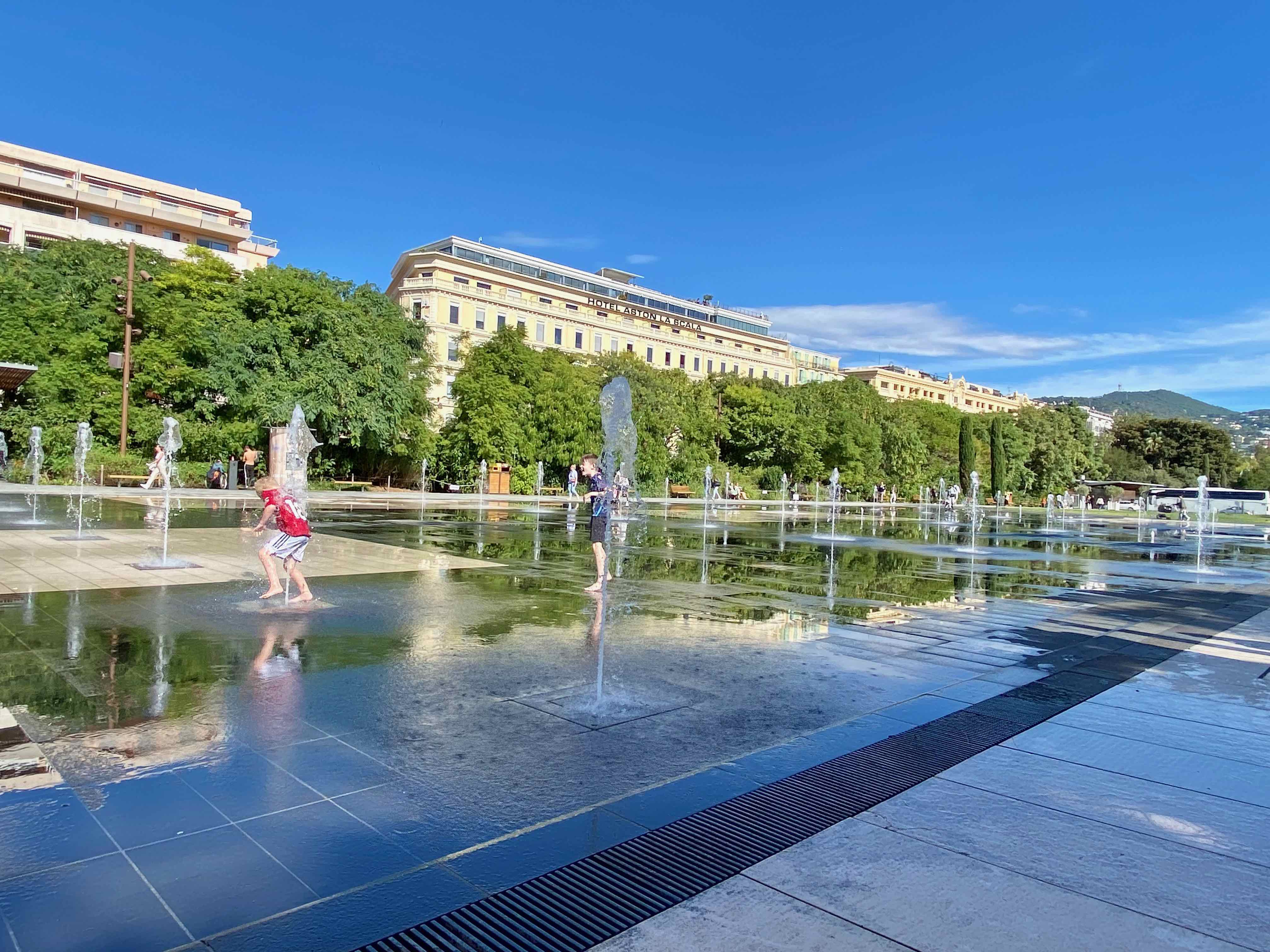
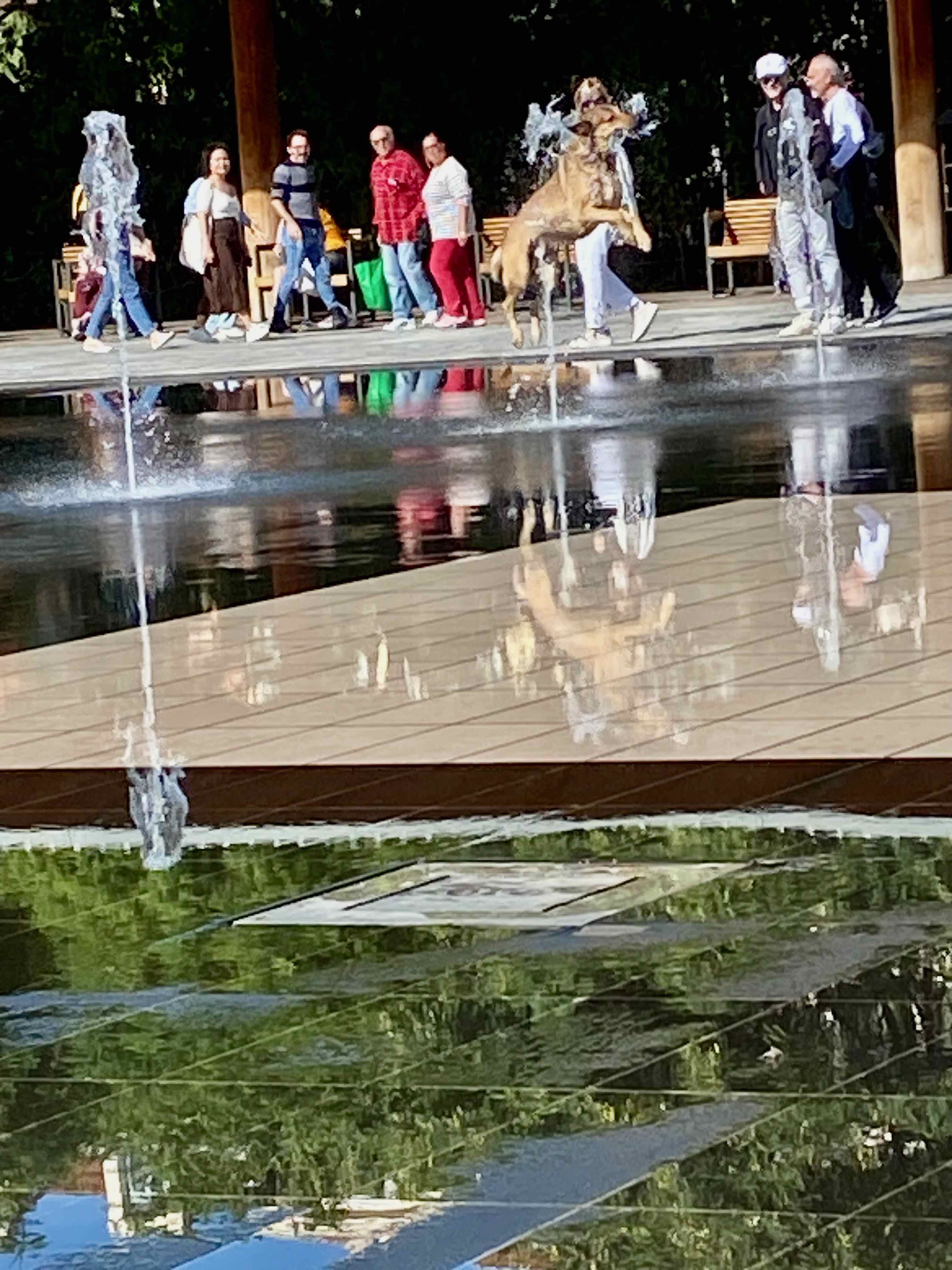
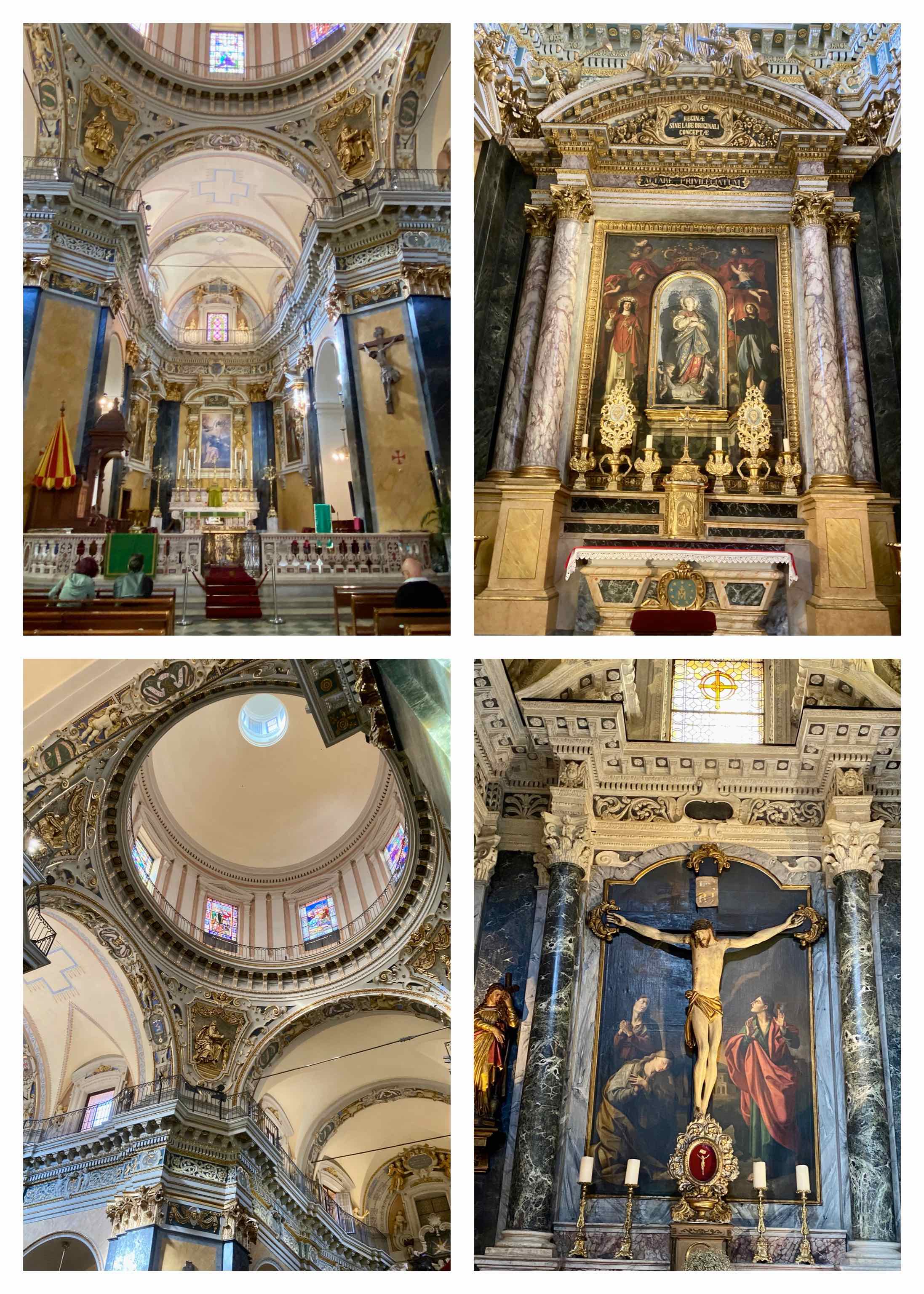
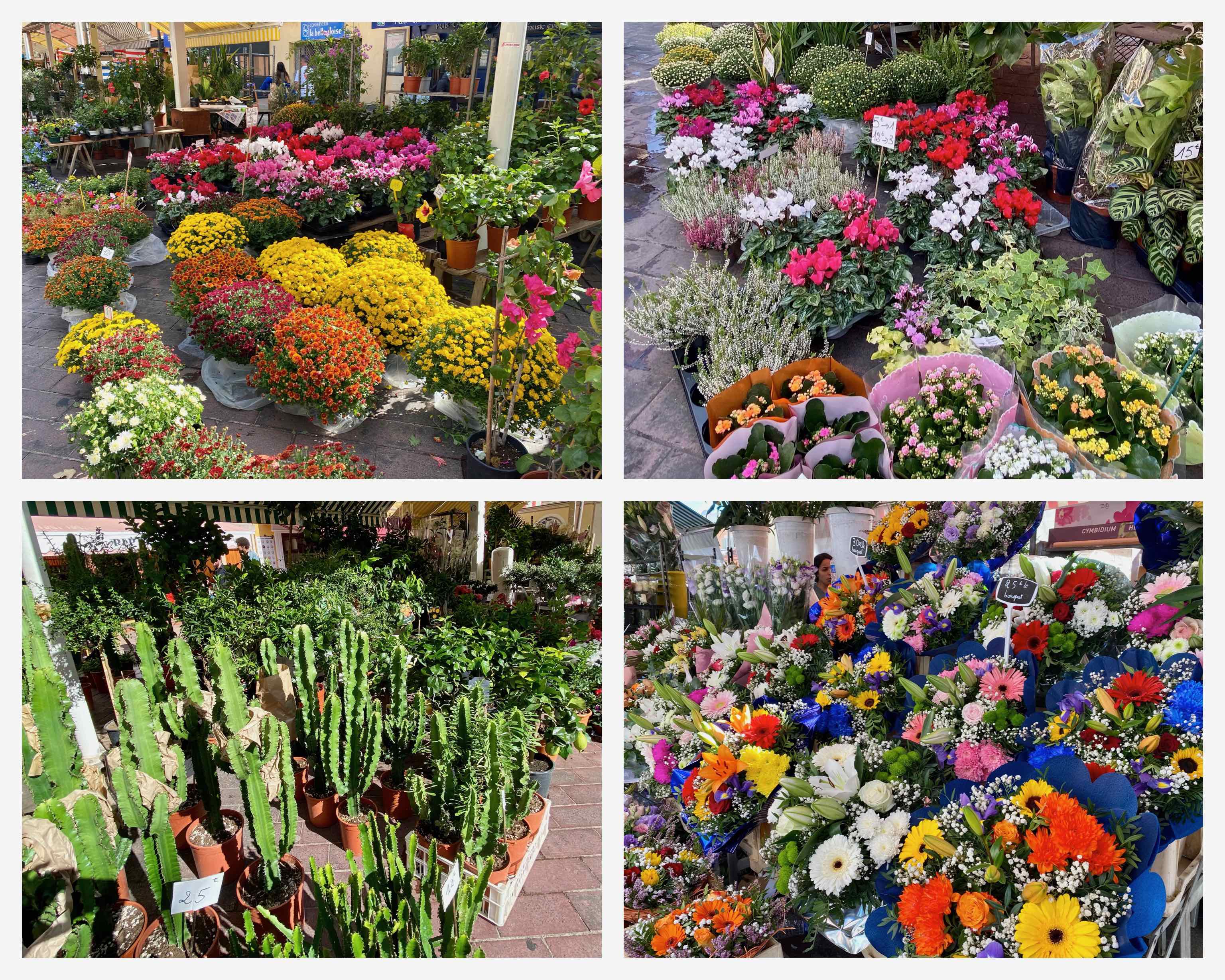
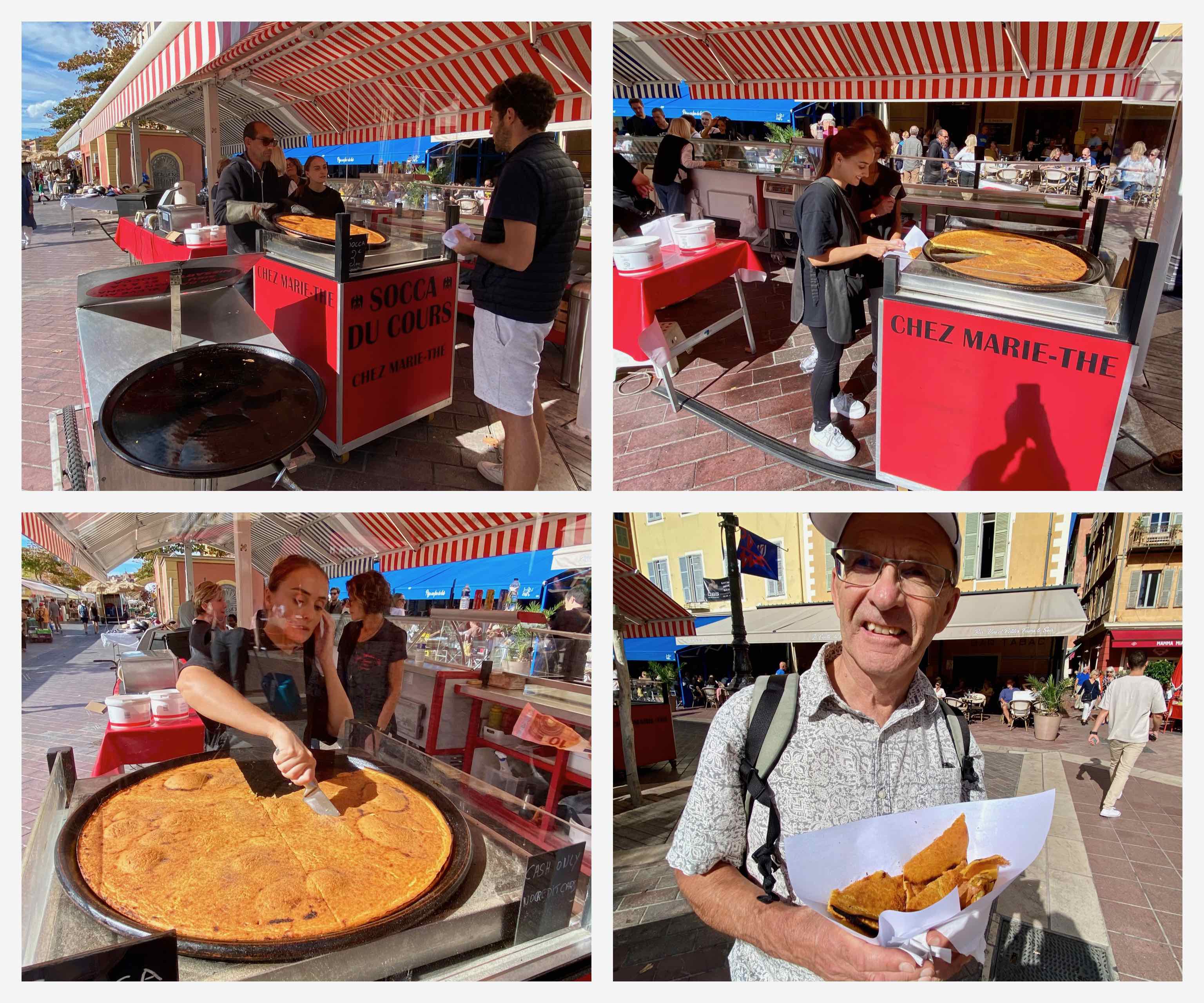
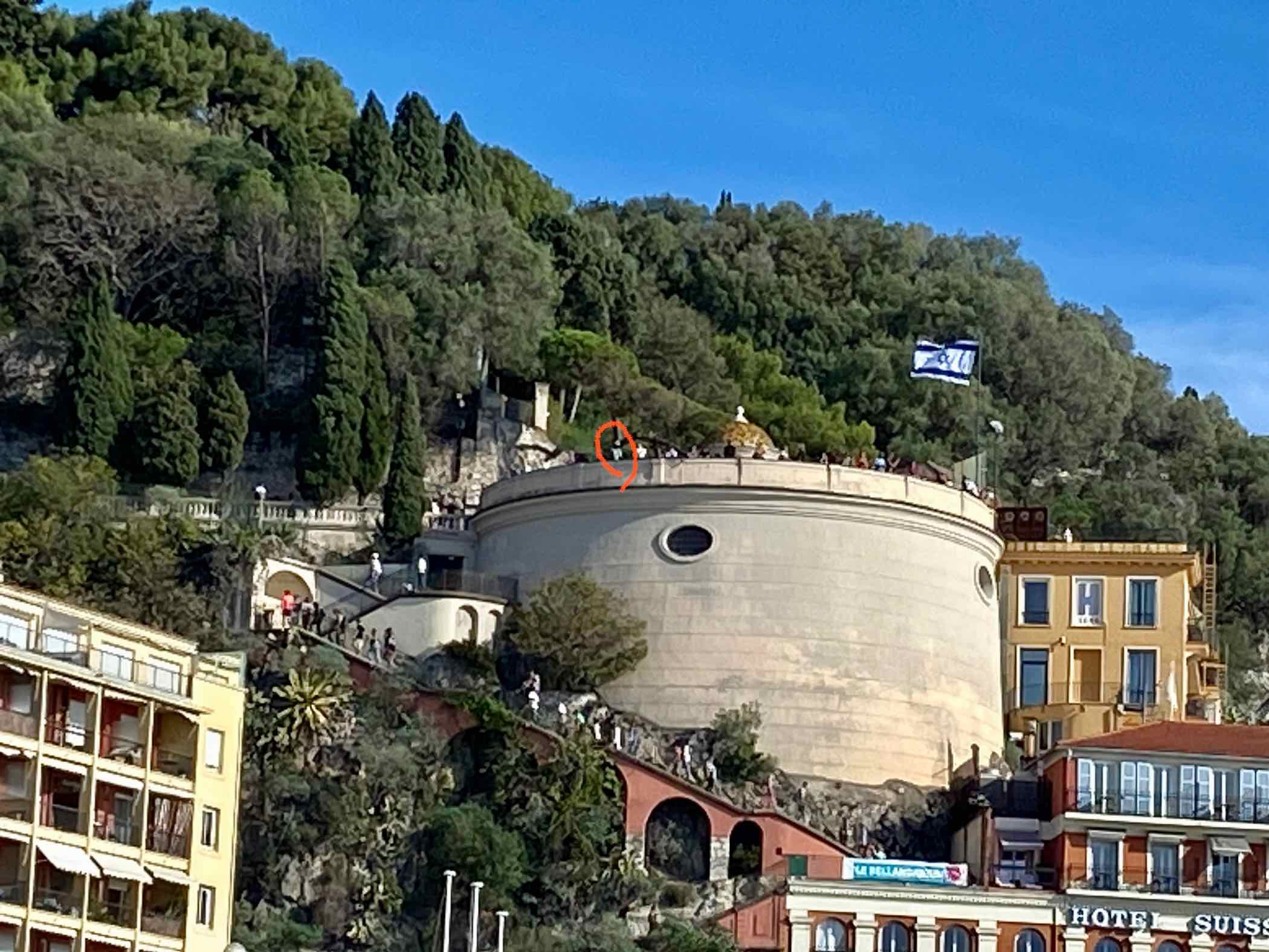
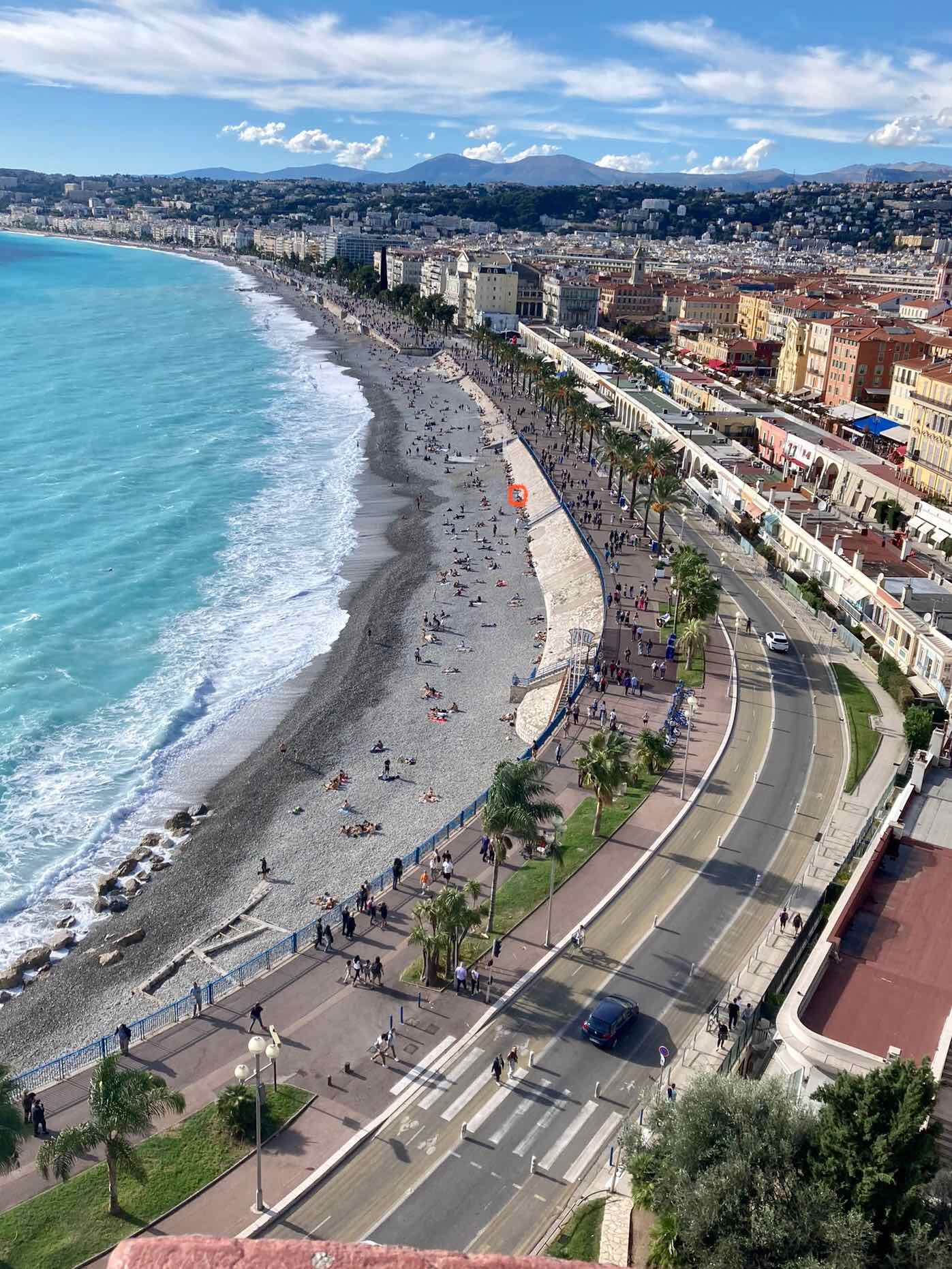
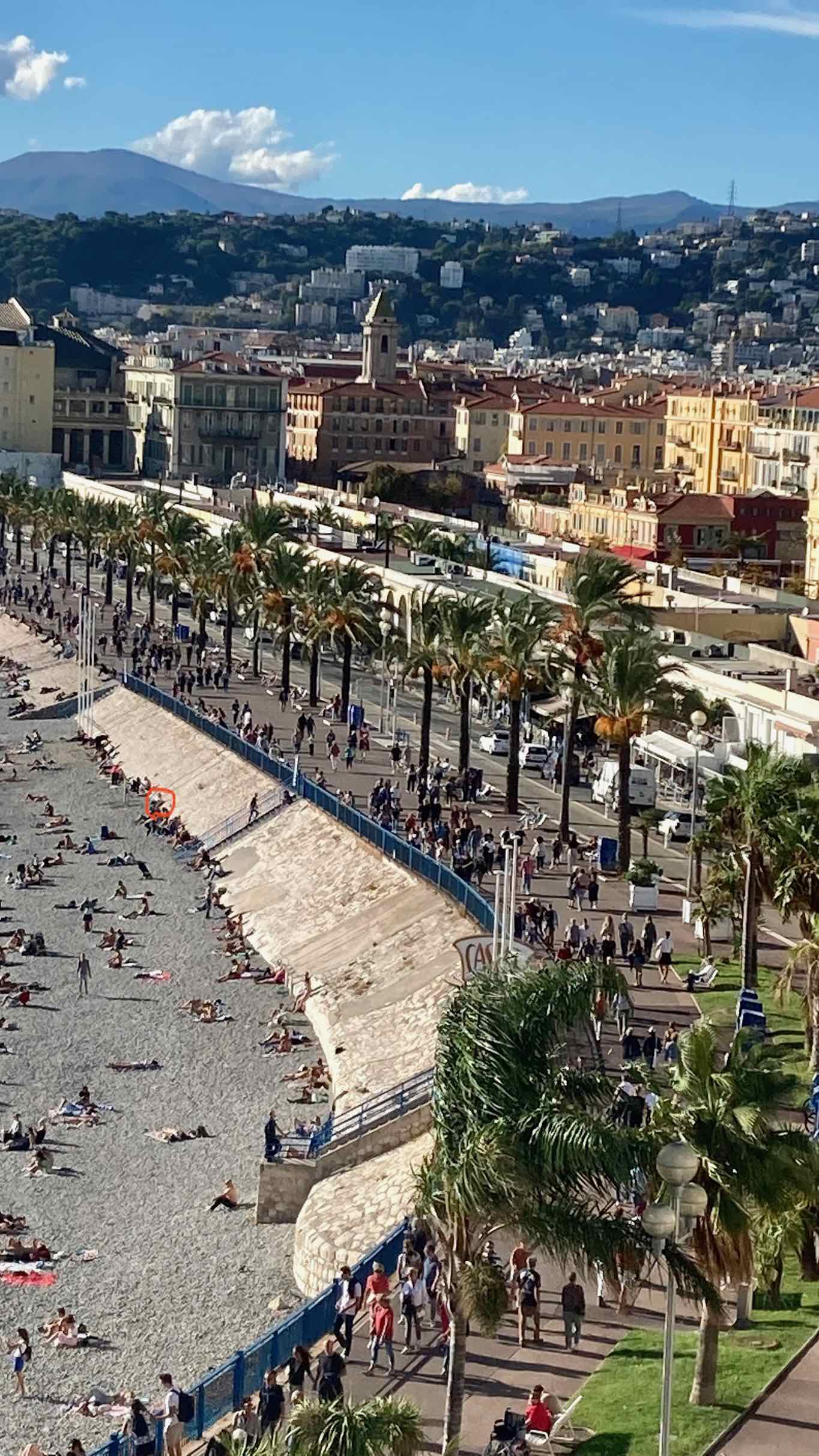
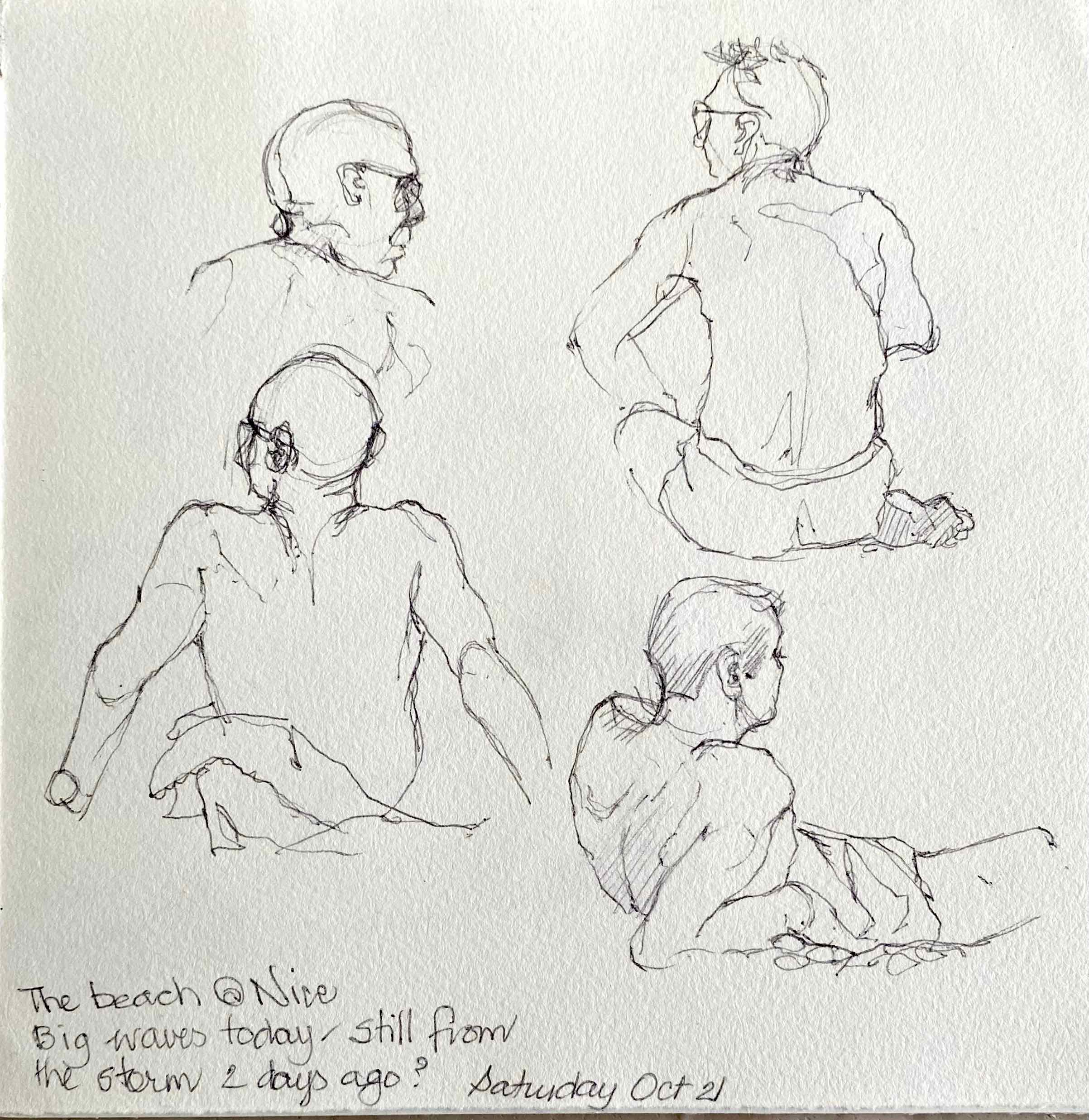
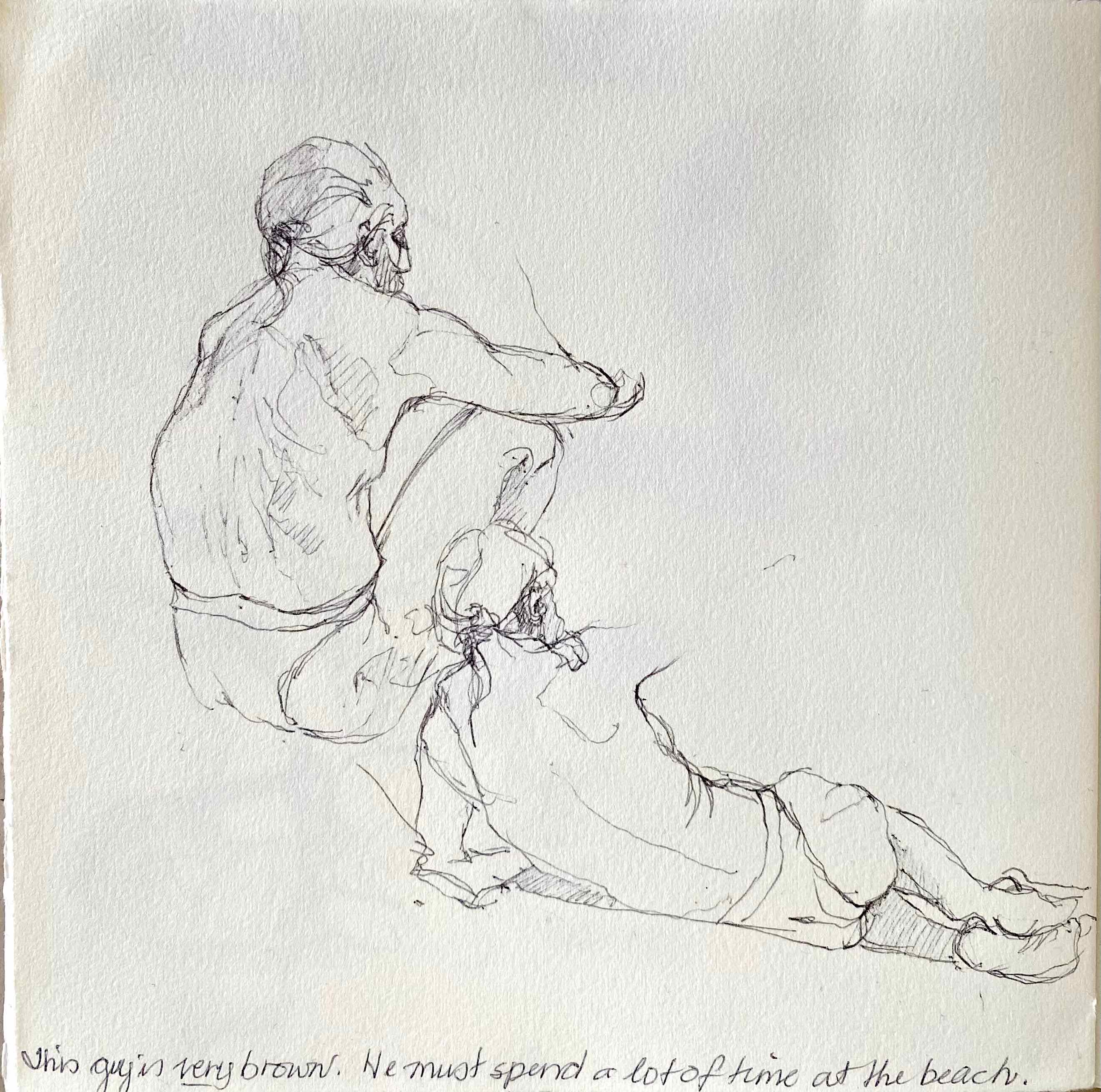
 Here is a clue.
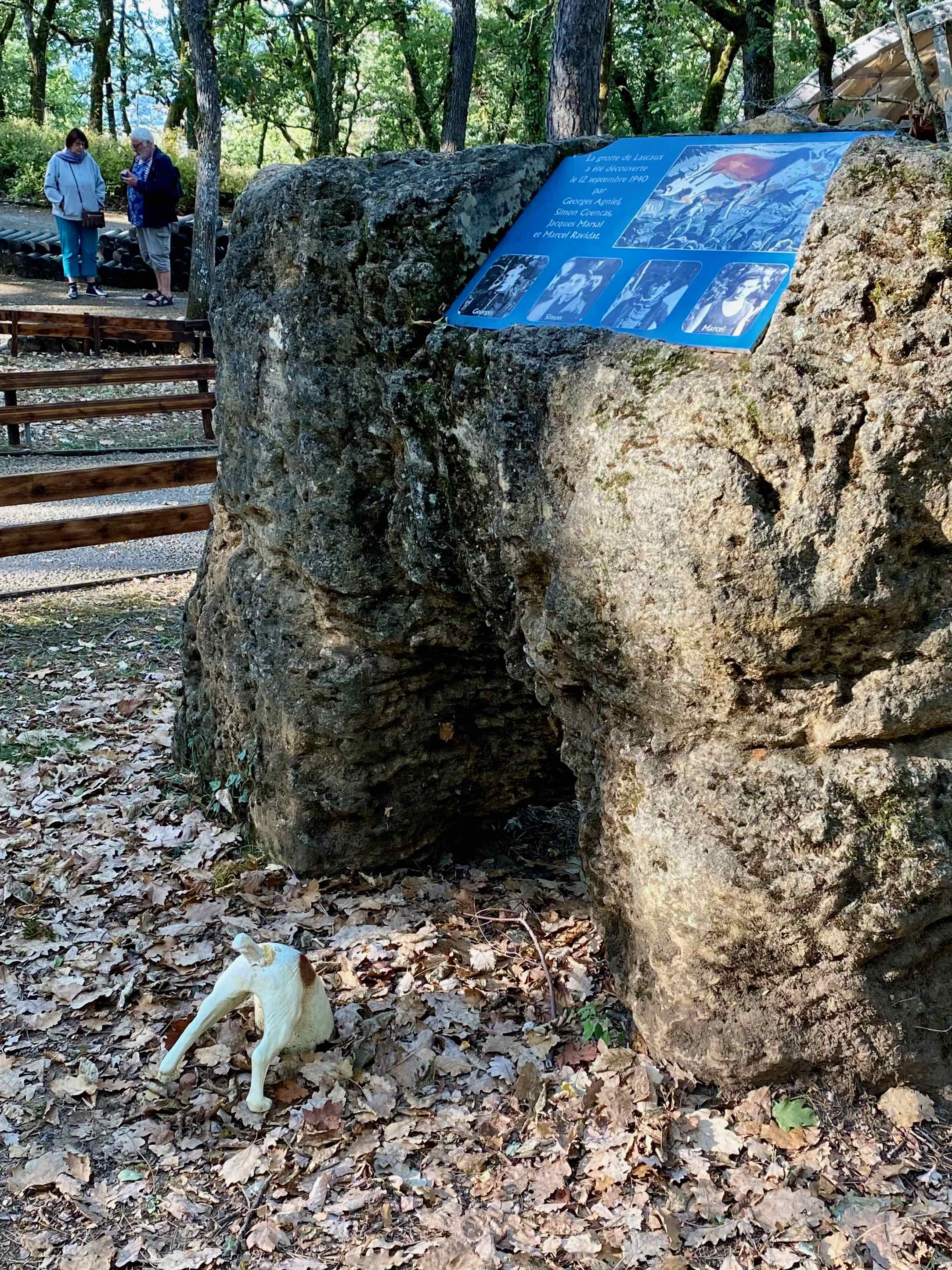
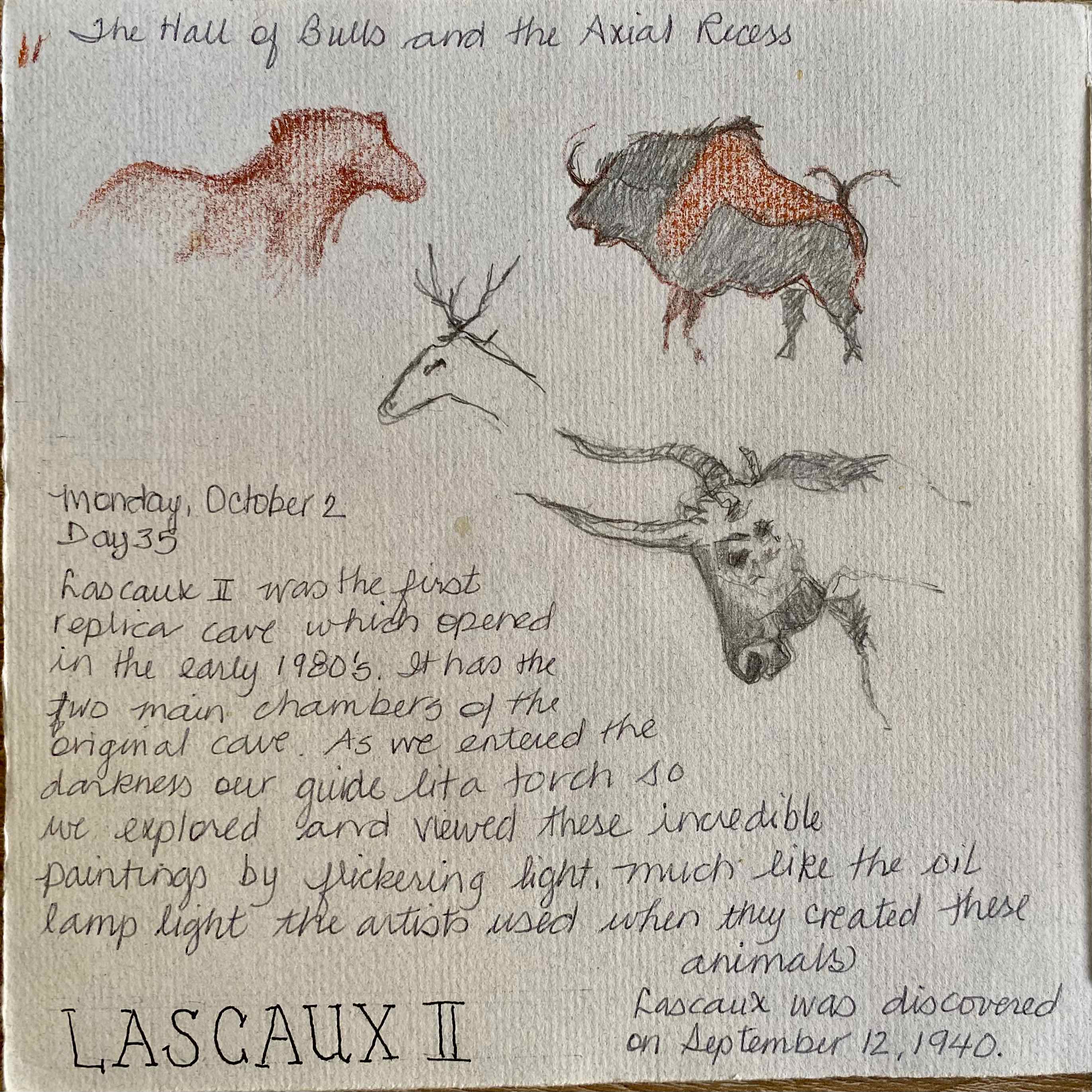
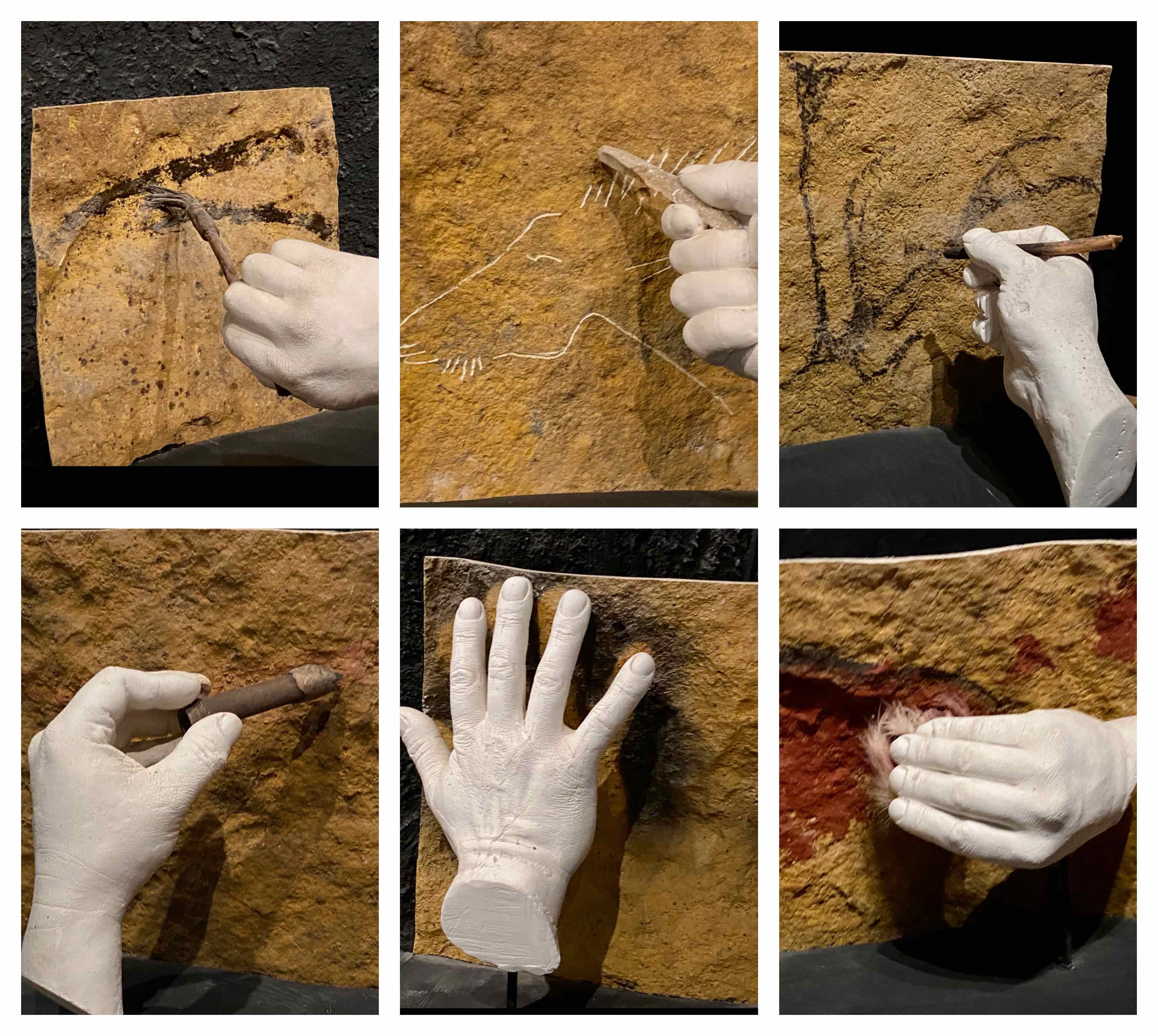
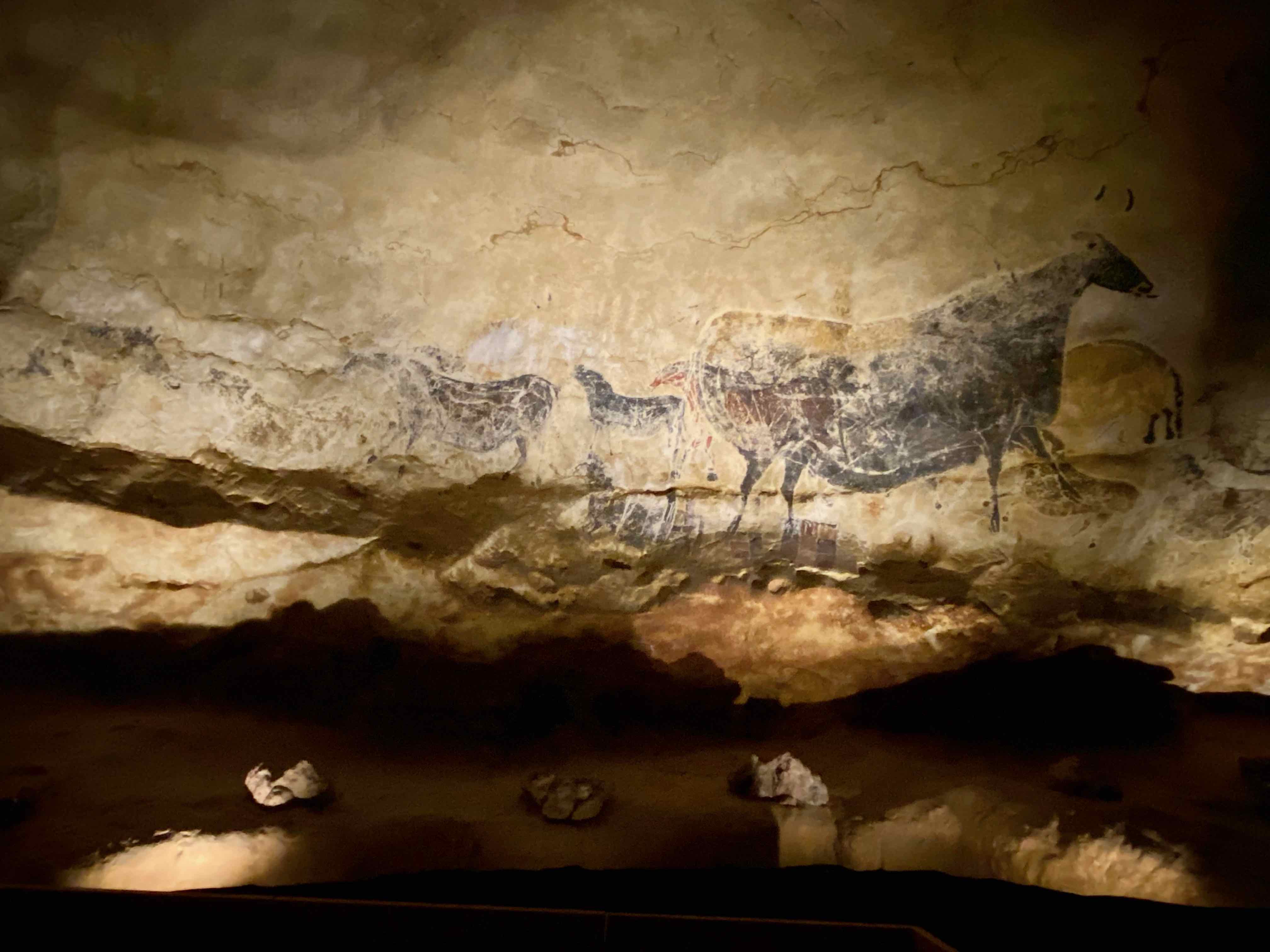
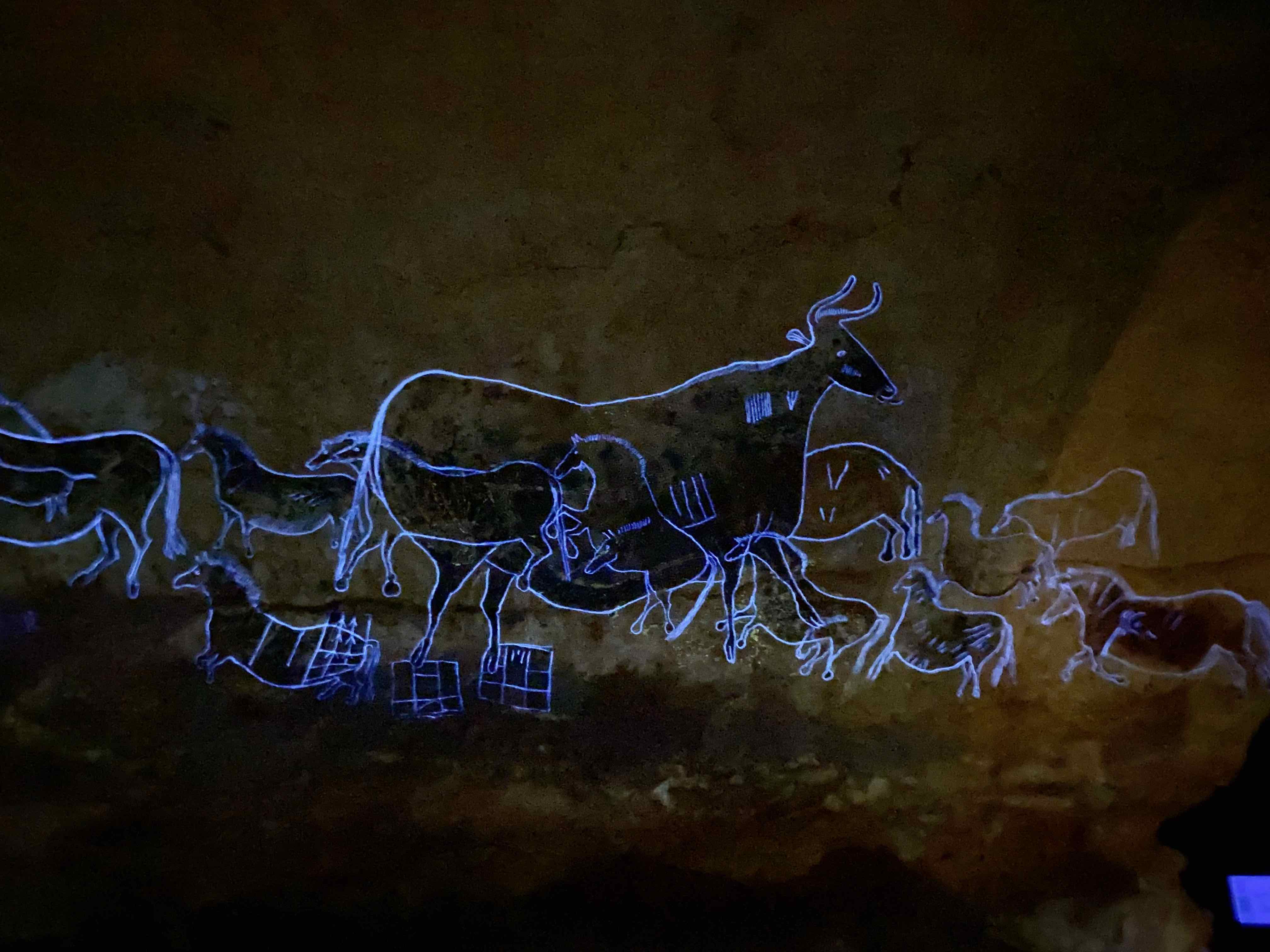
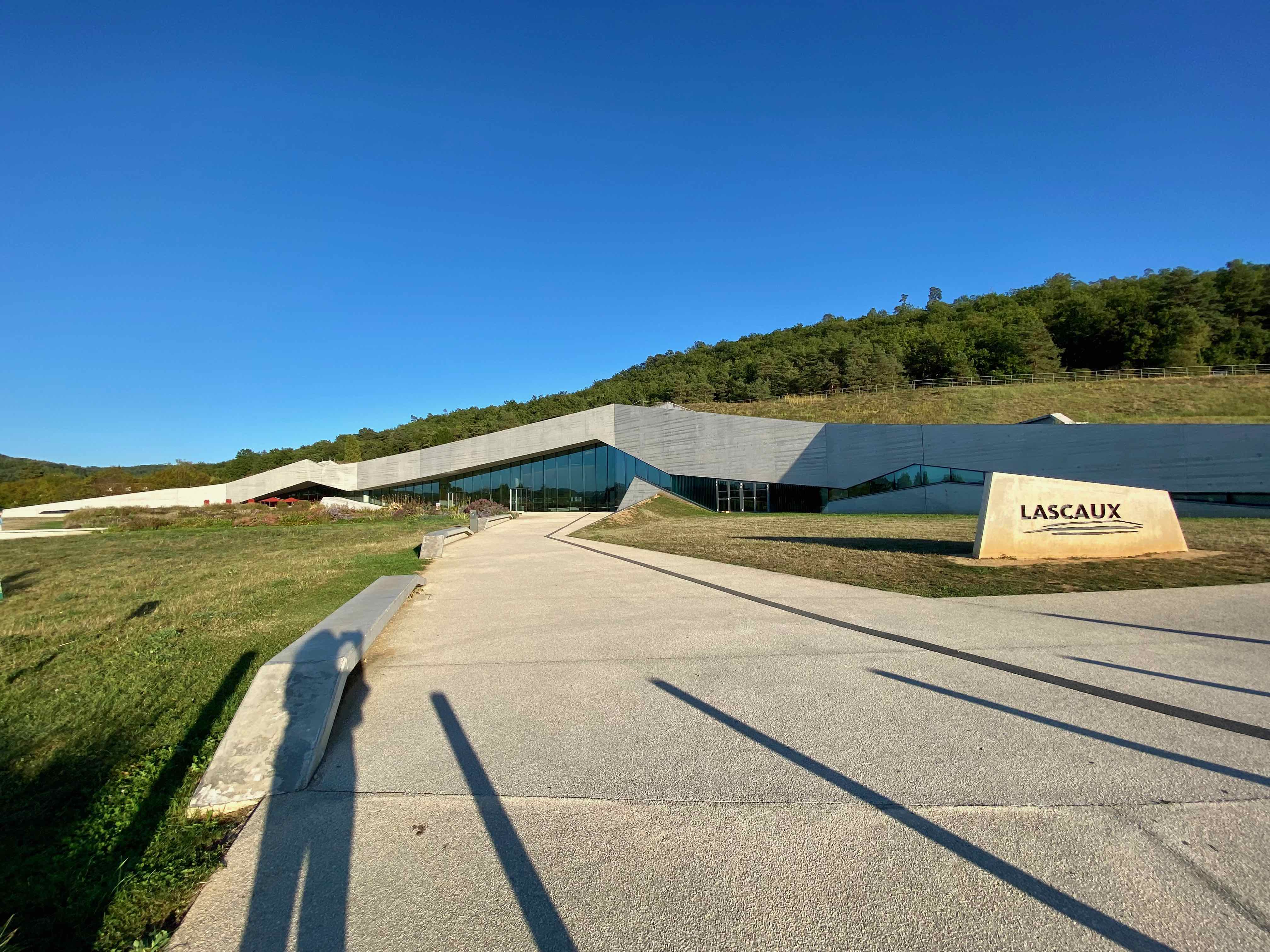
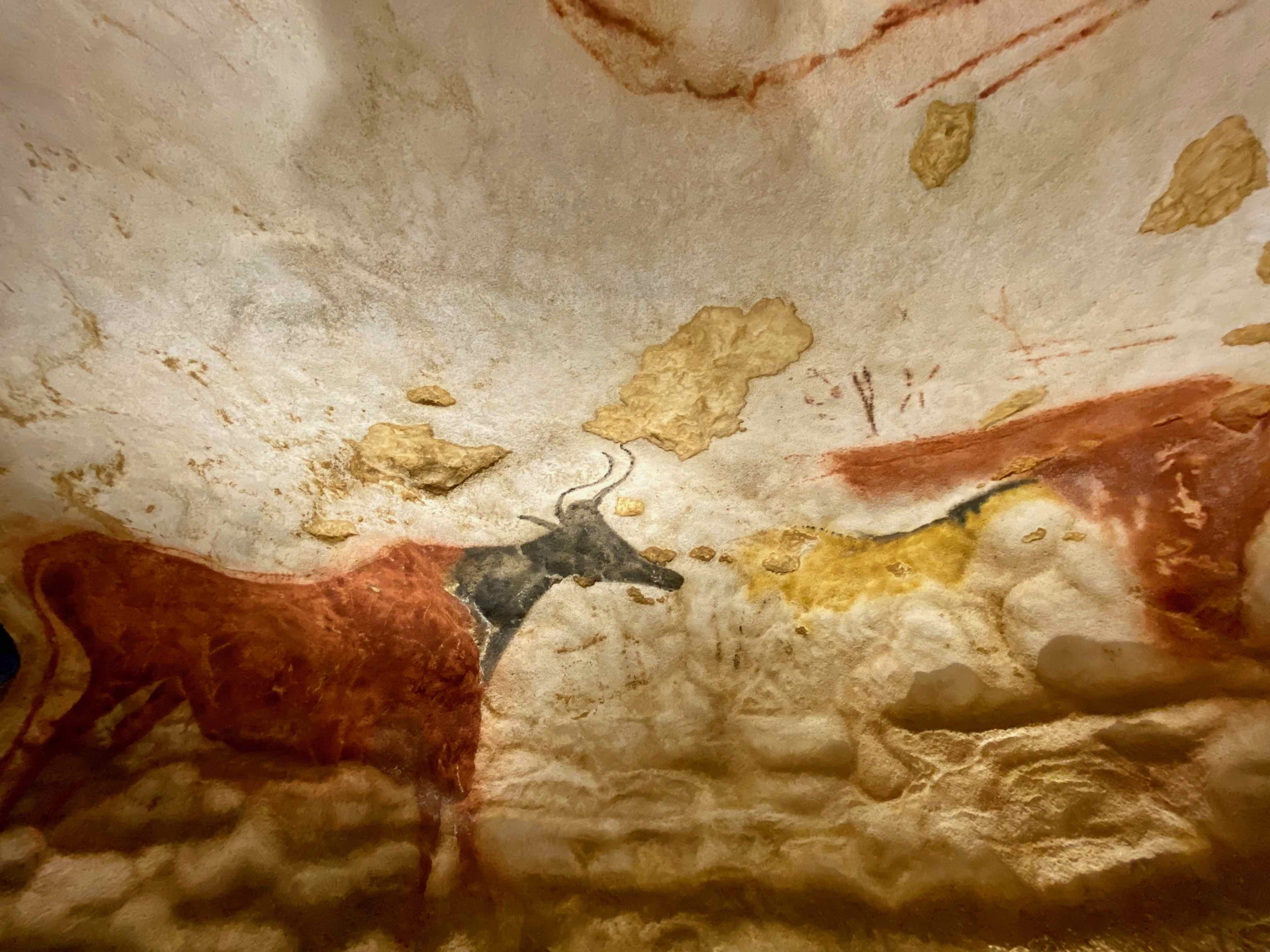
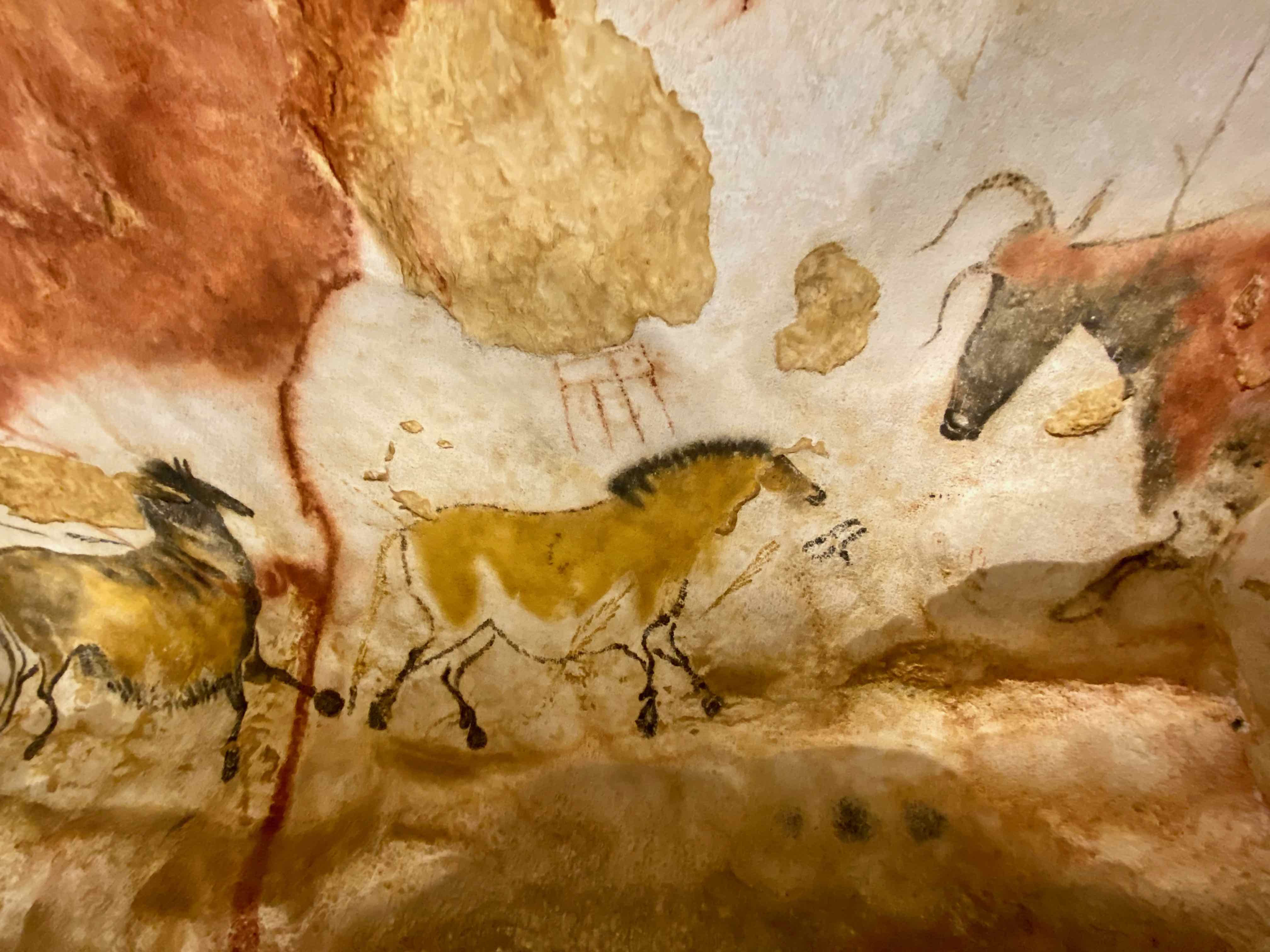
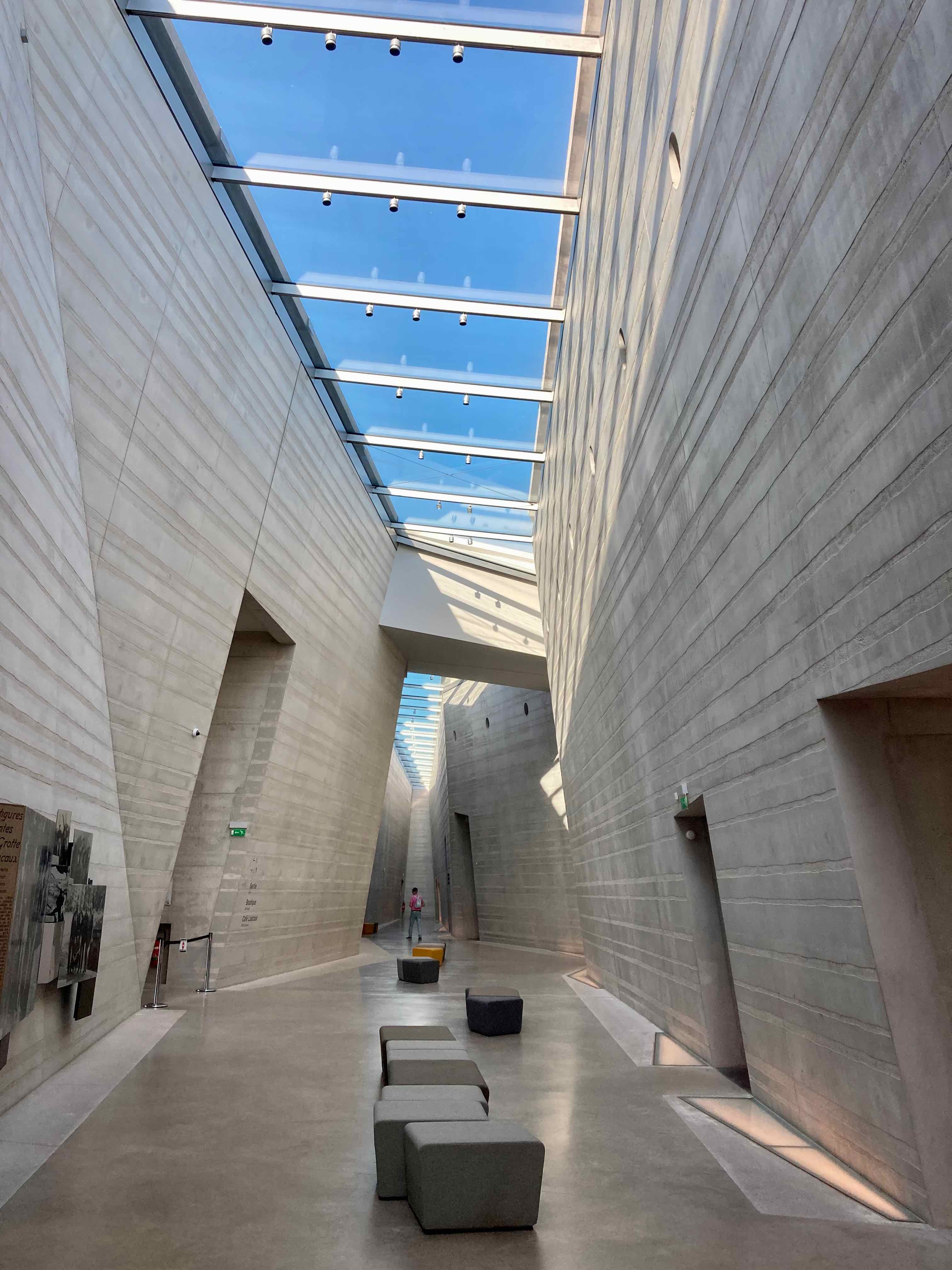
 In 2016, a new replica, Lascaux IV, was opened to replace Lascaux II. It is adjacent to the original cave and offers an even more authentic experience than Lascaux II, with changes in air pressure, along with a series of atmospheric cave scents and sounds.
  Once again no photos allowed however there is an interpretive area that has more replica displays and we can take photos there.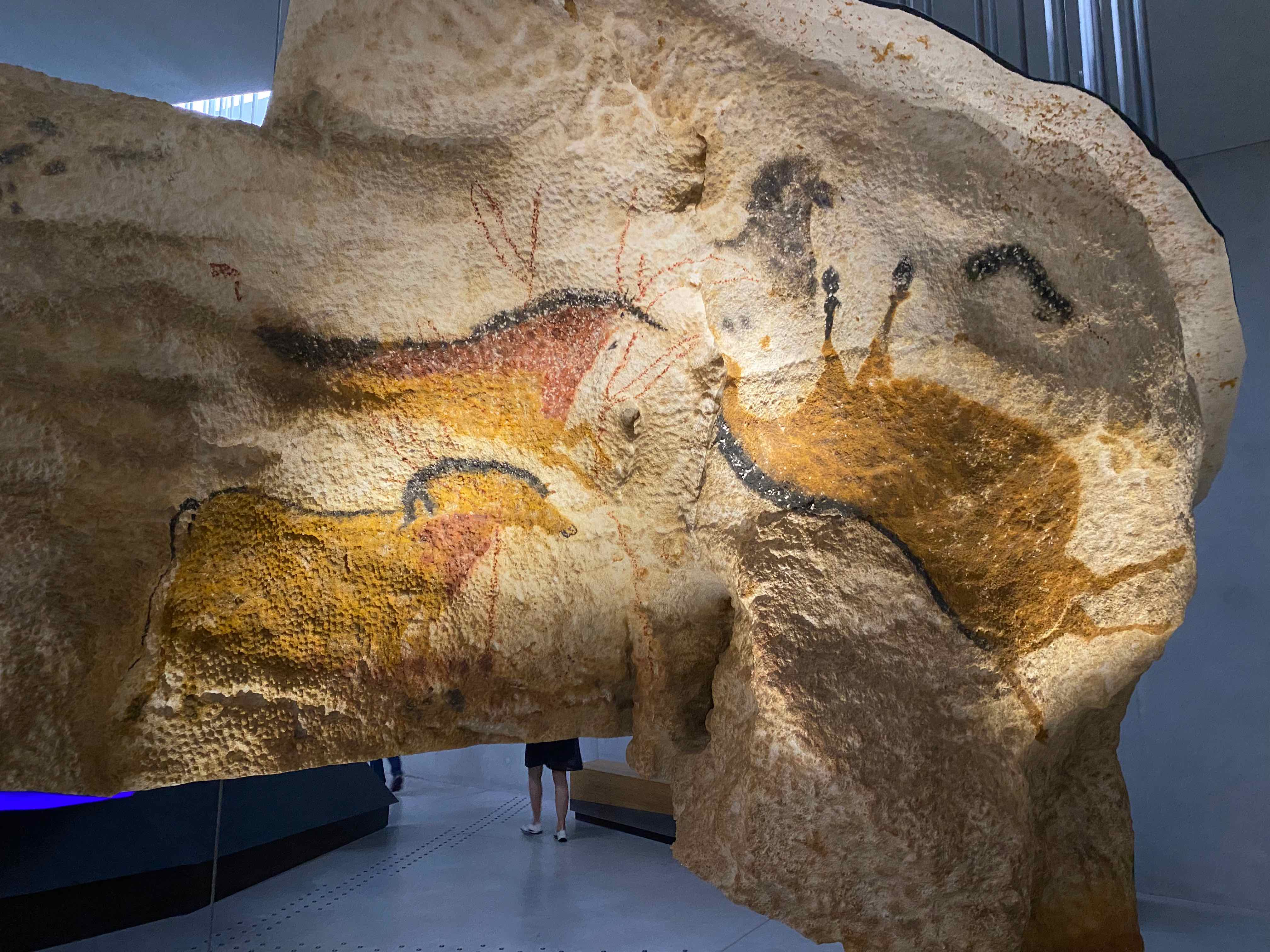
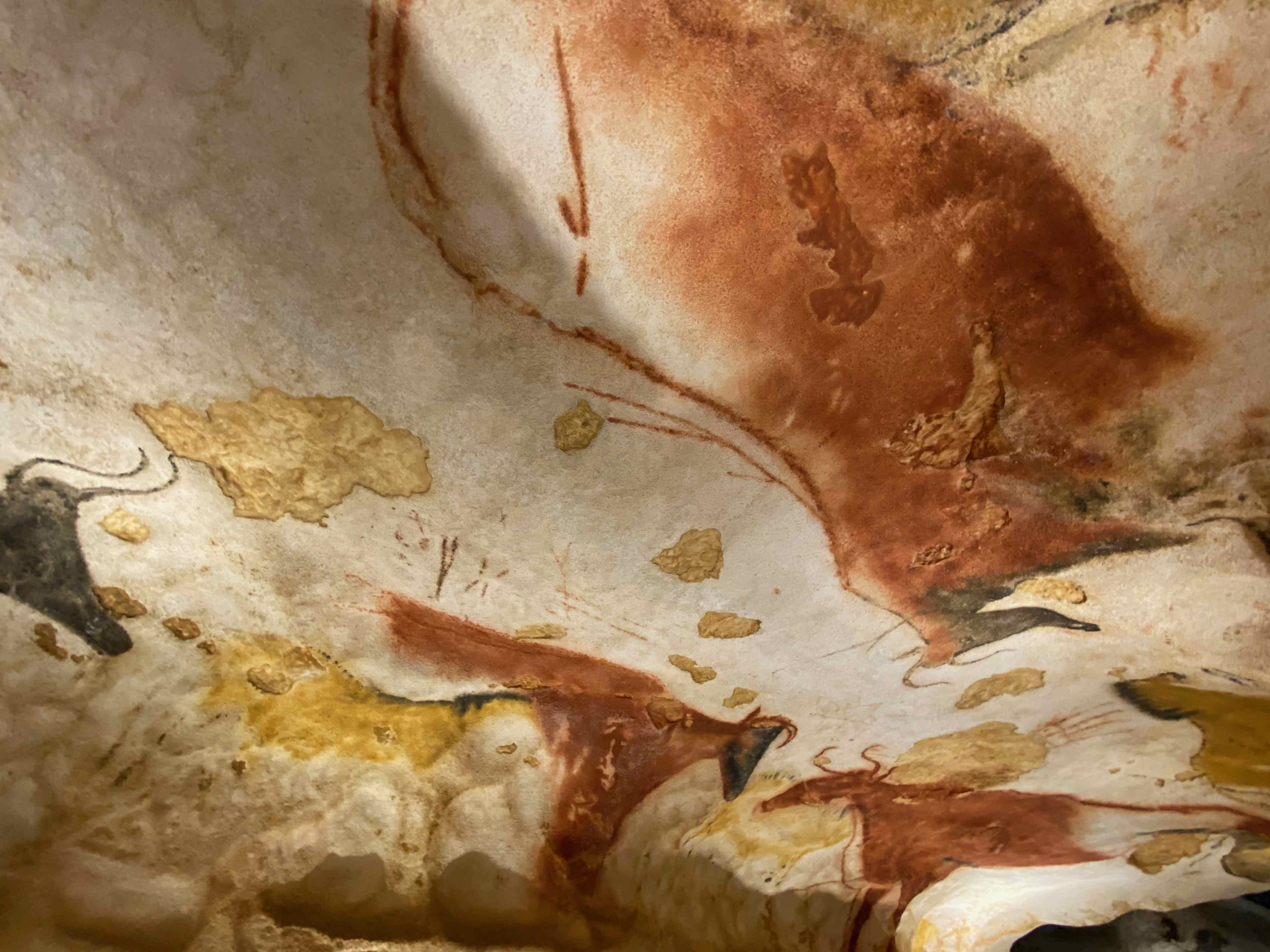
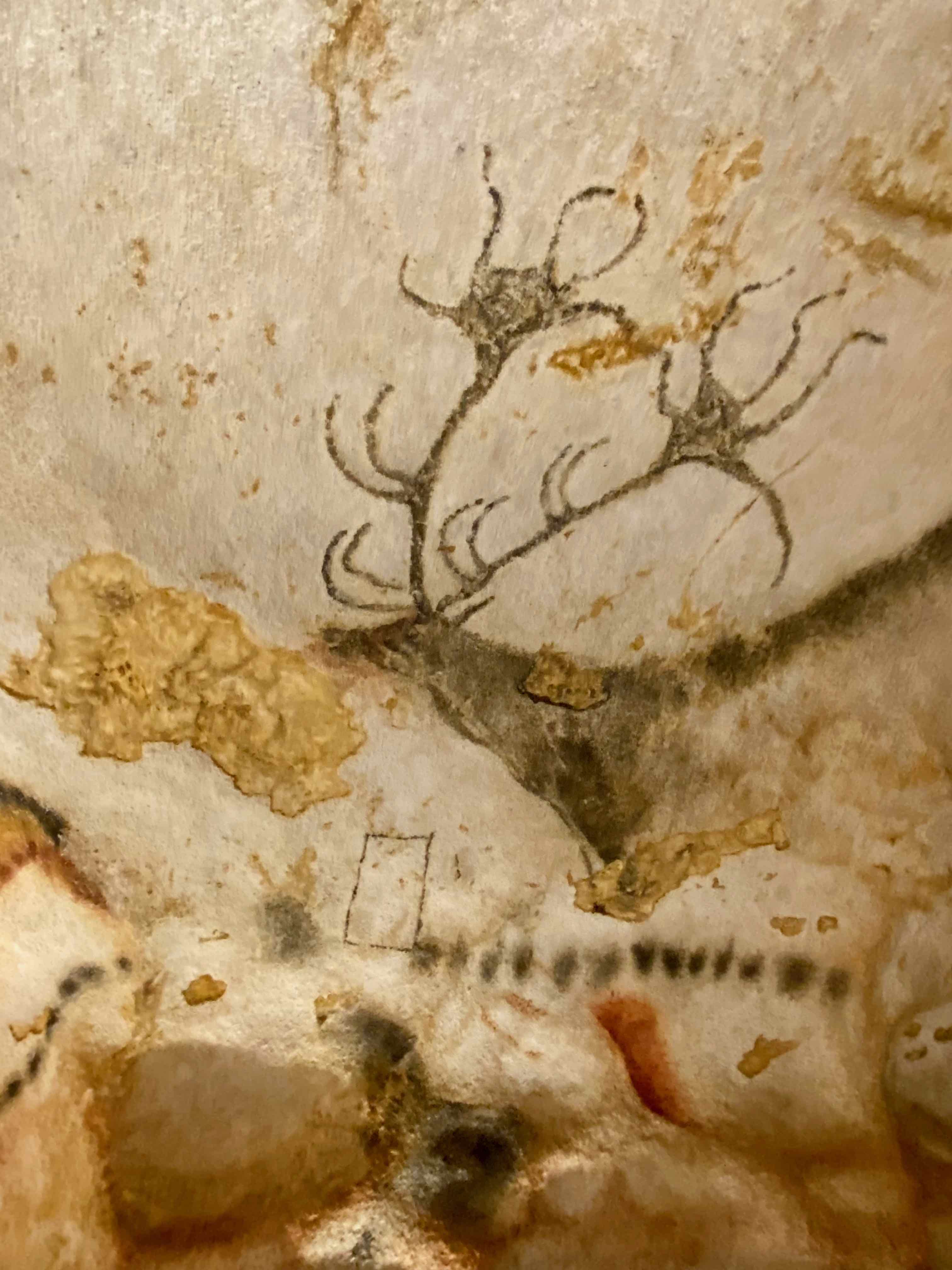
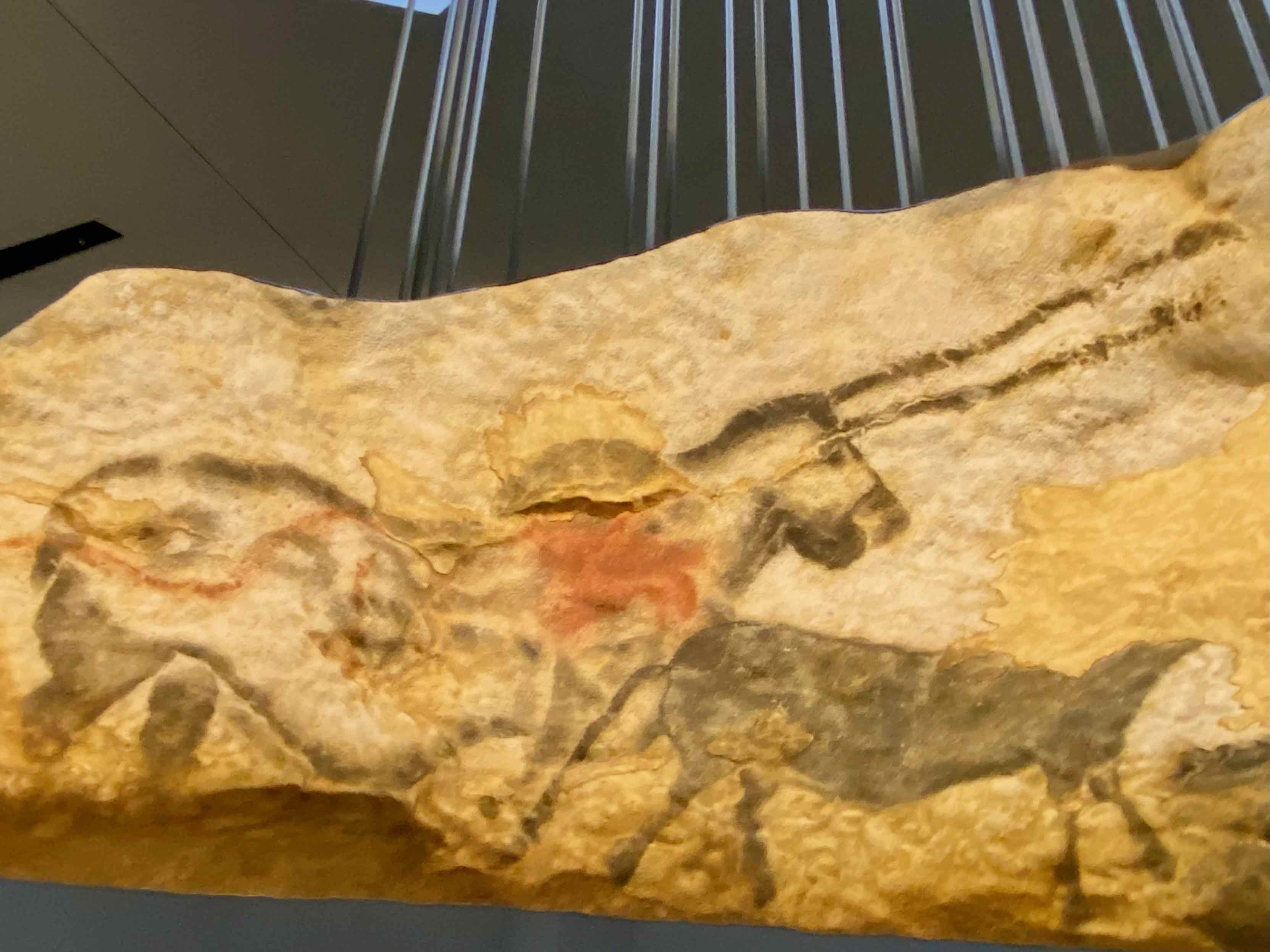
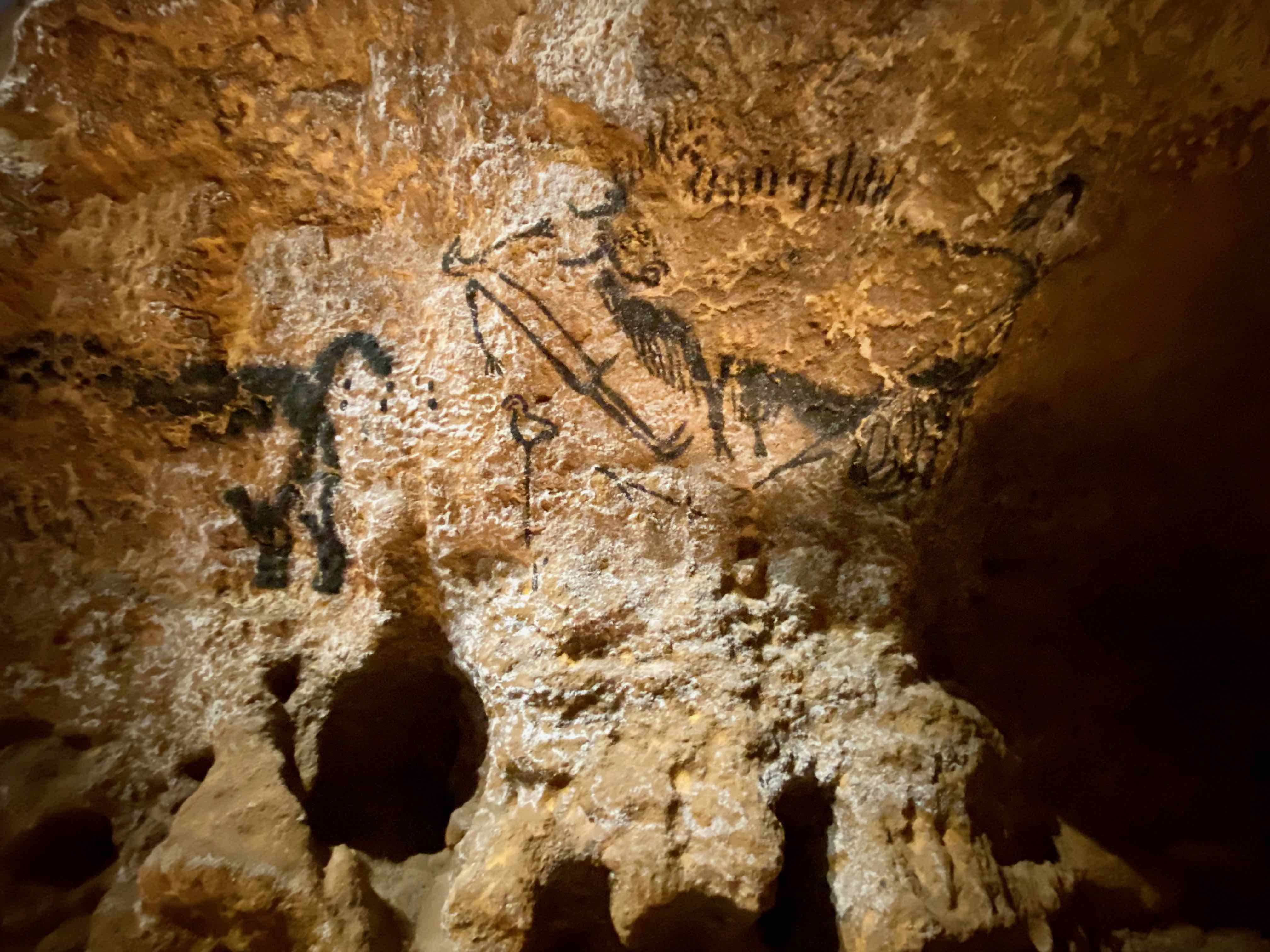
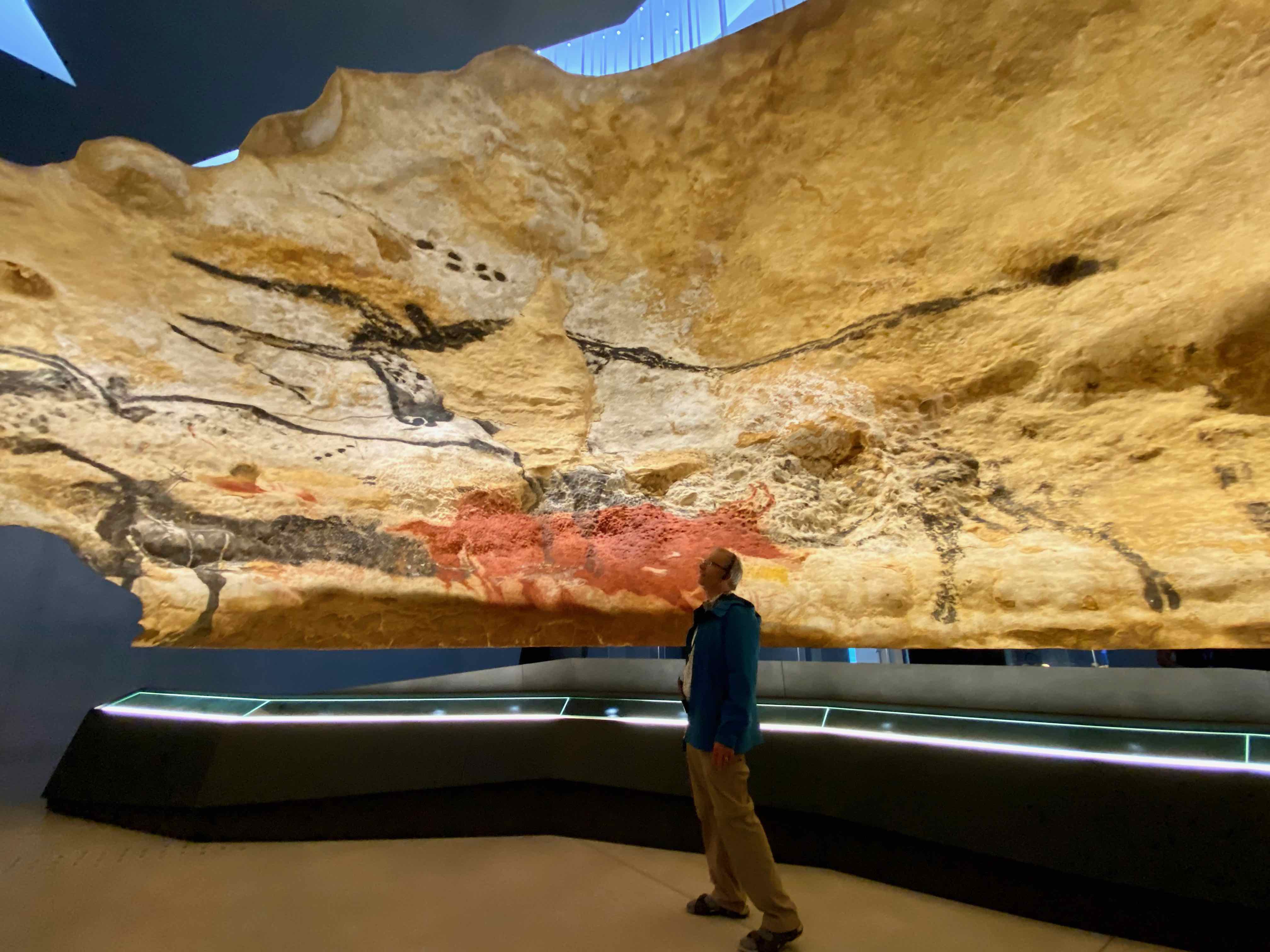
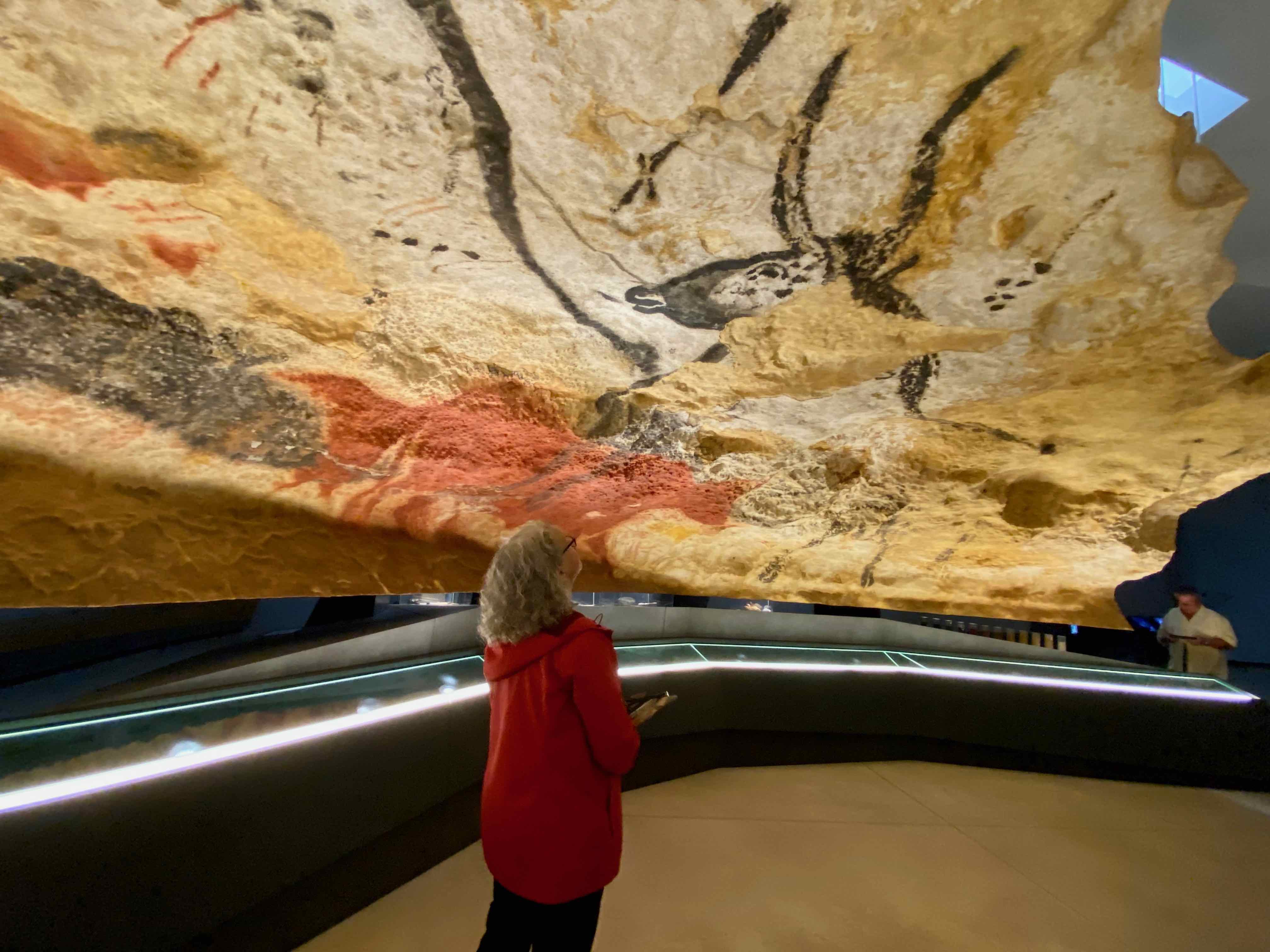
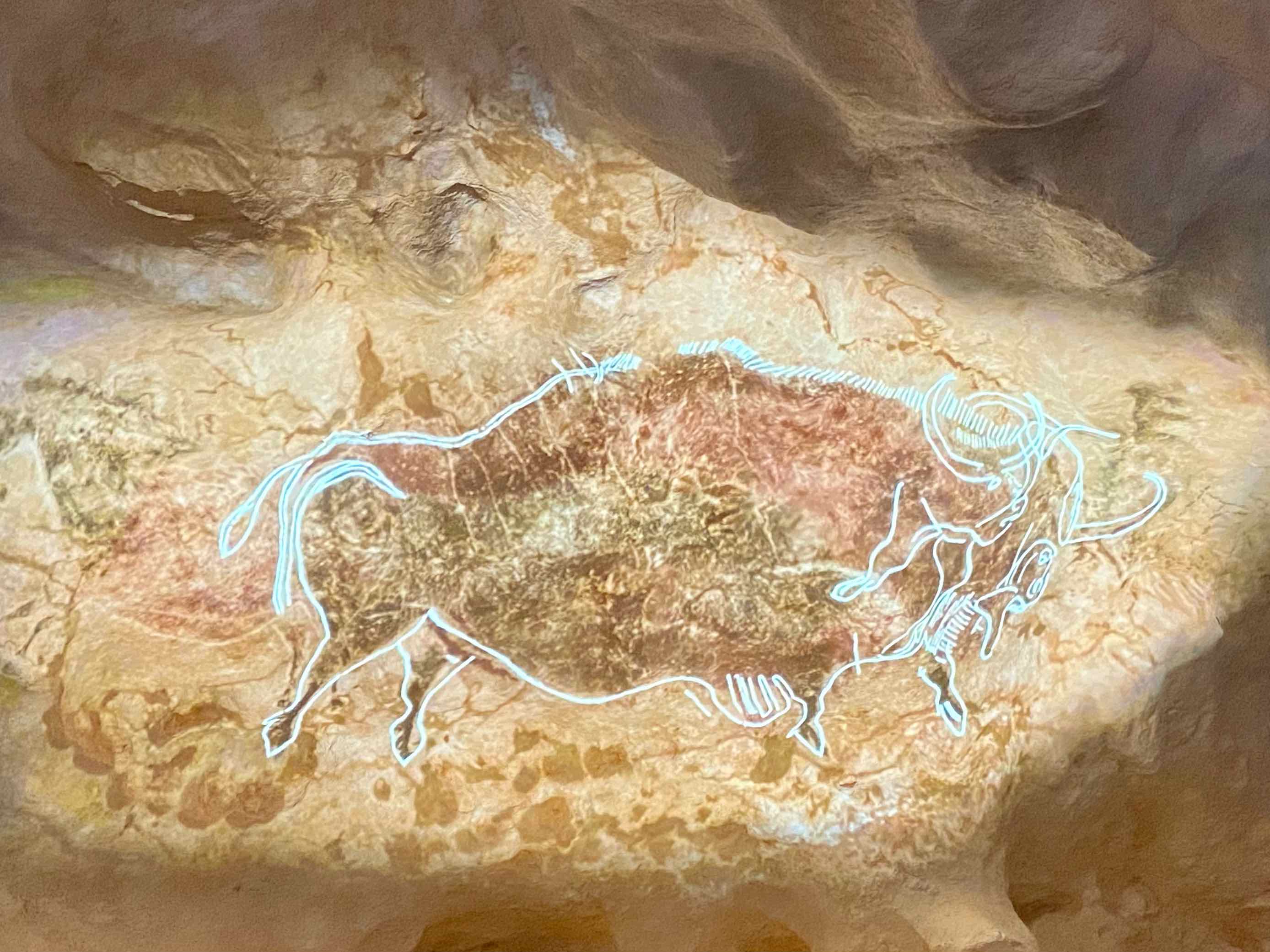
 The last room we entered had huge animations which travels across three walls and sometimes over the floor and ceiling as well. I particularly liked this one which shows mammoths from the Rouffignac Cave, which we hope to visit later this week.
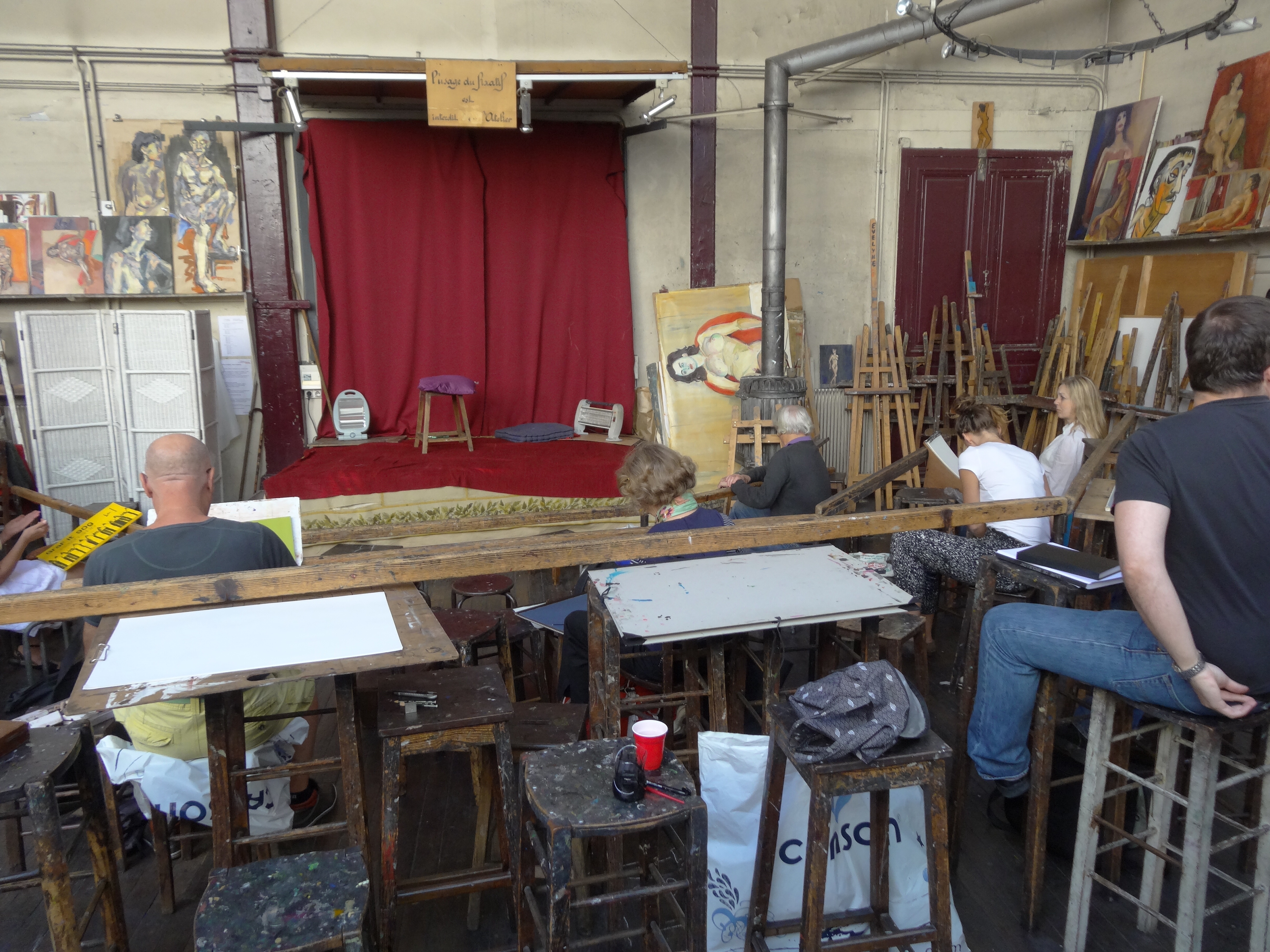
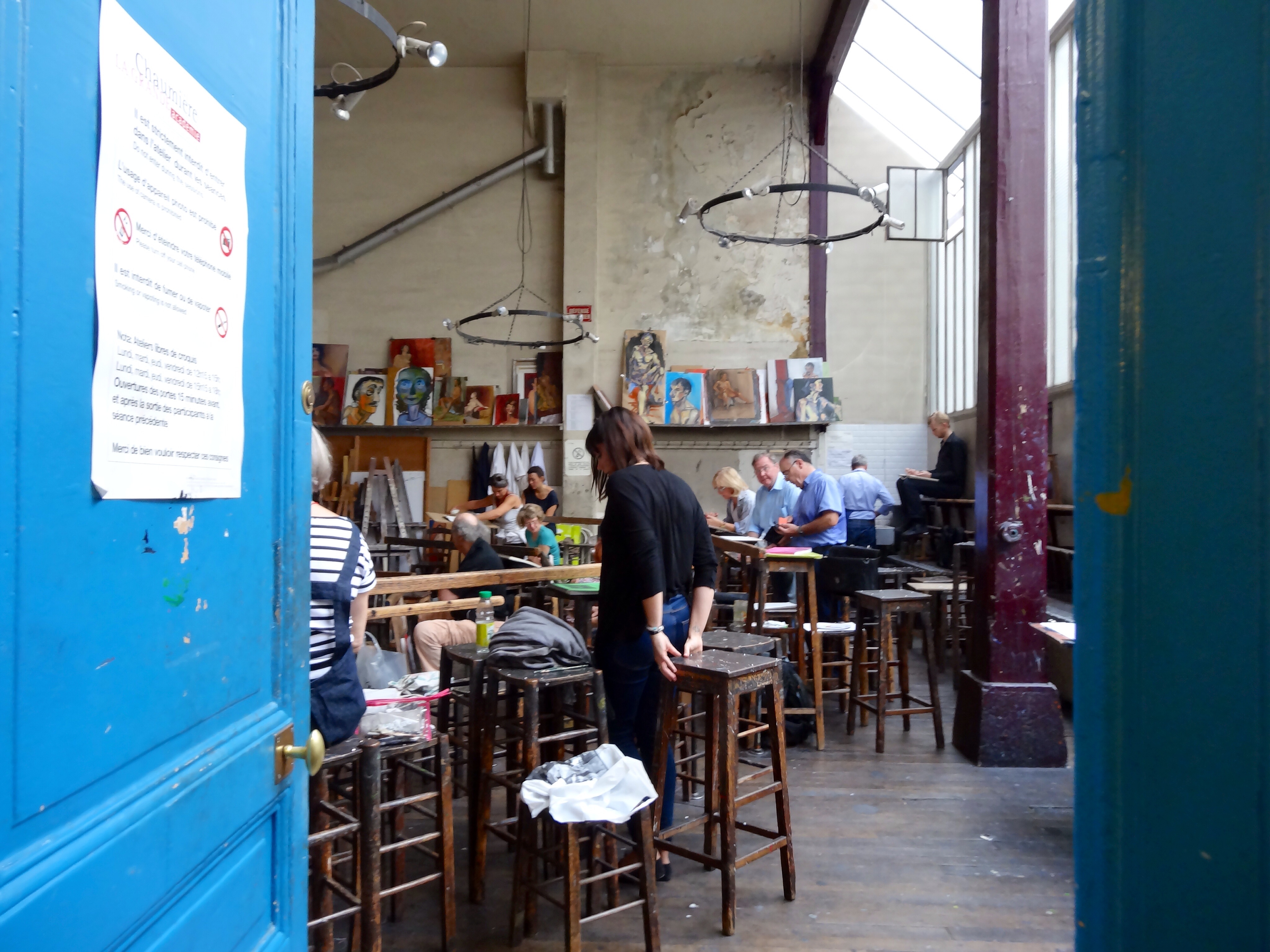
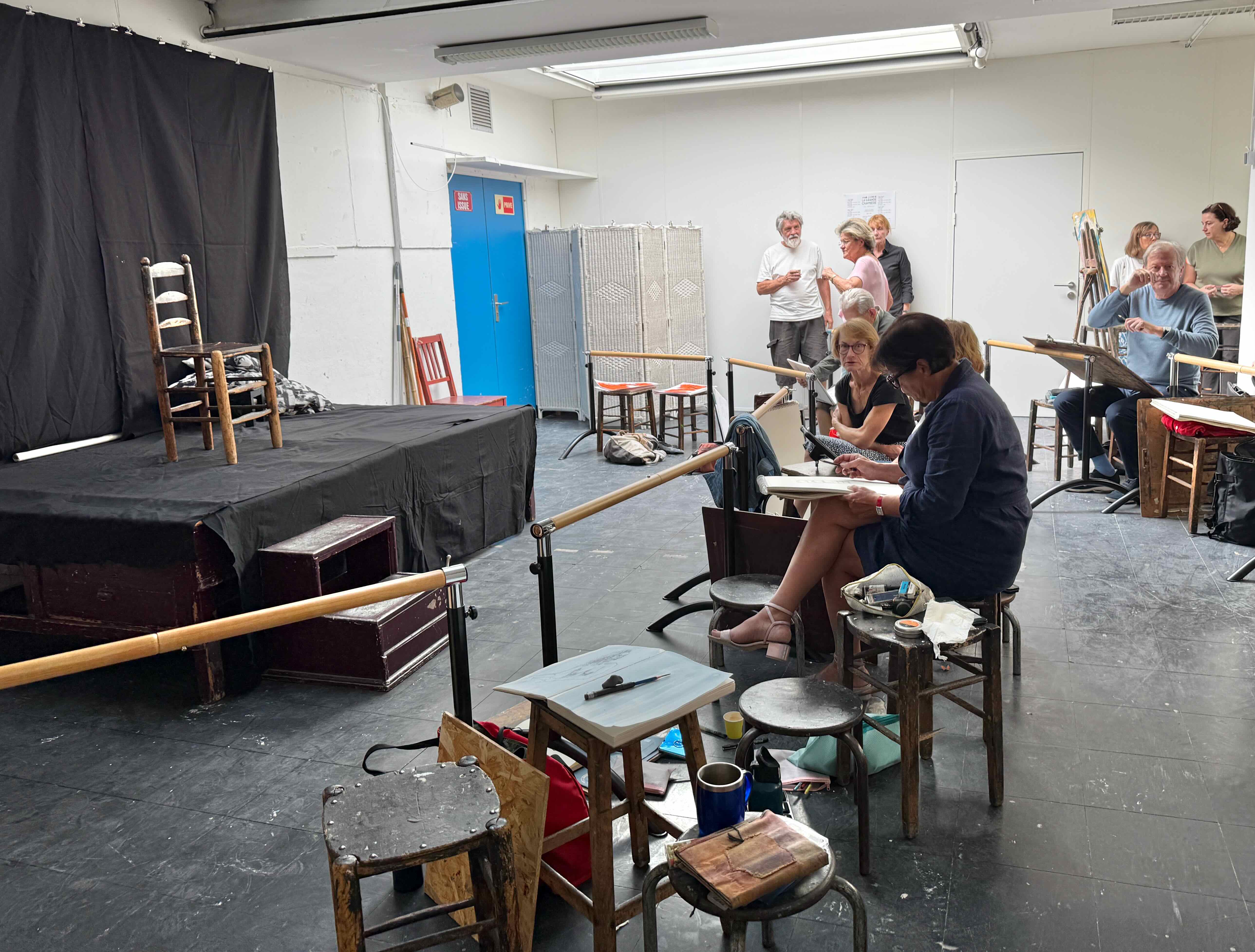
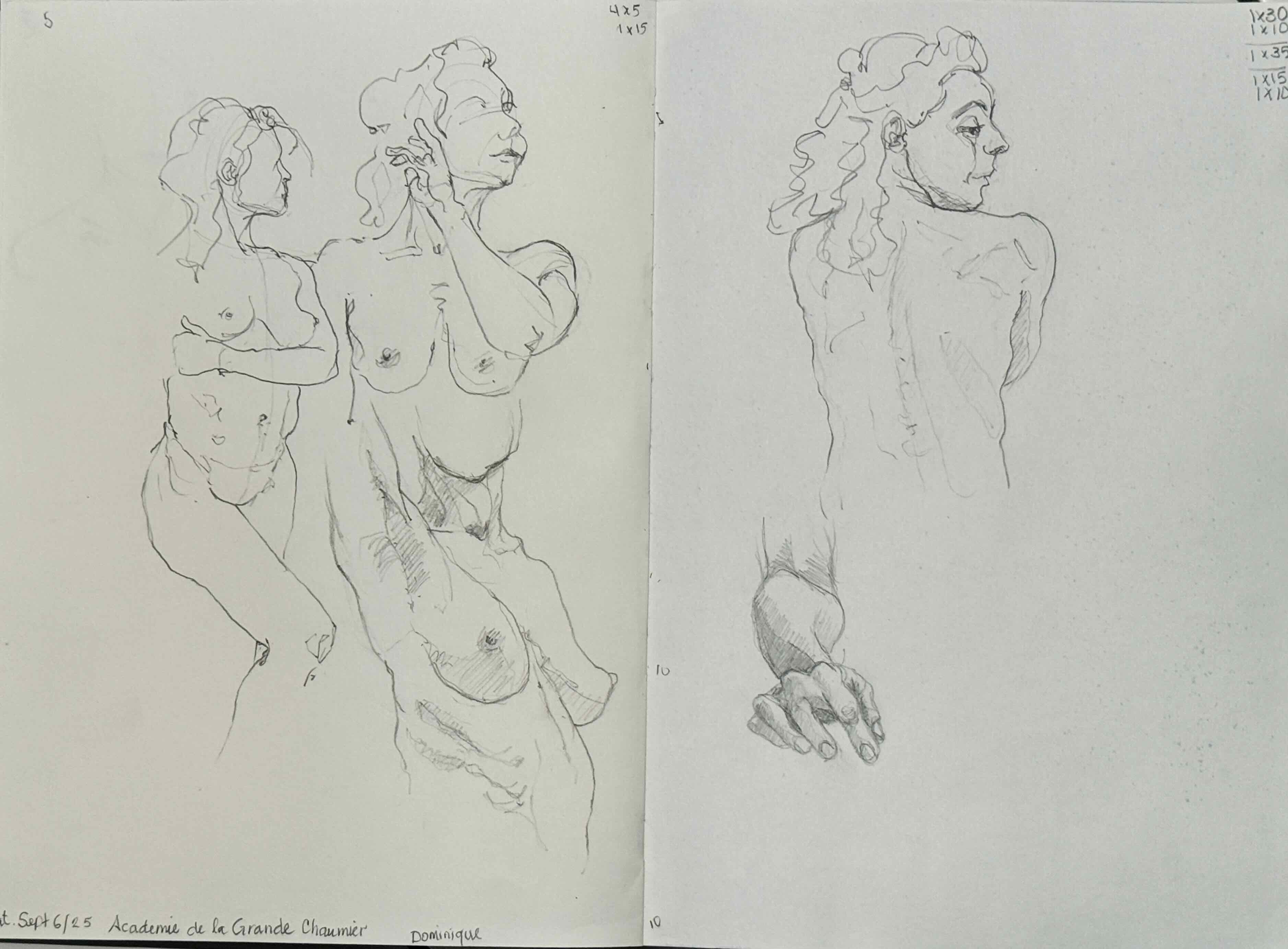
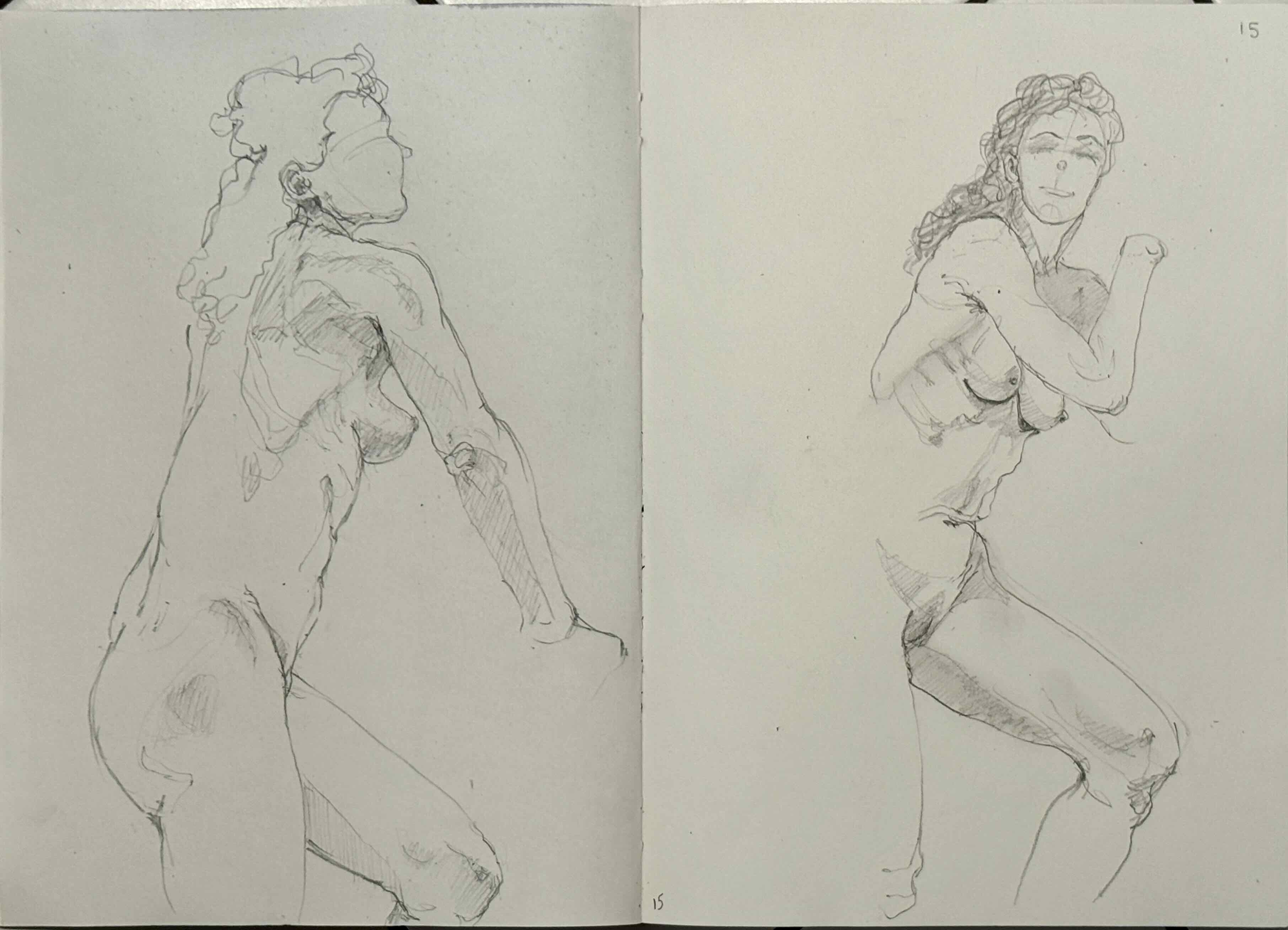
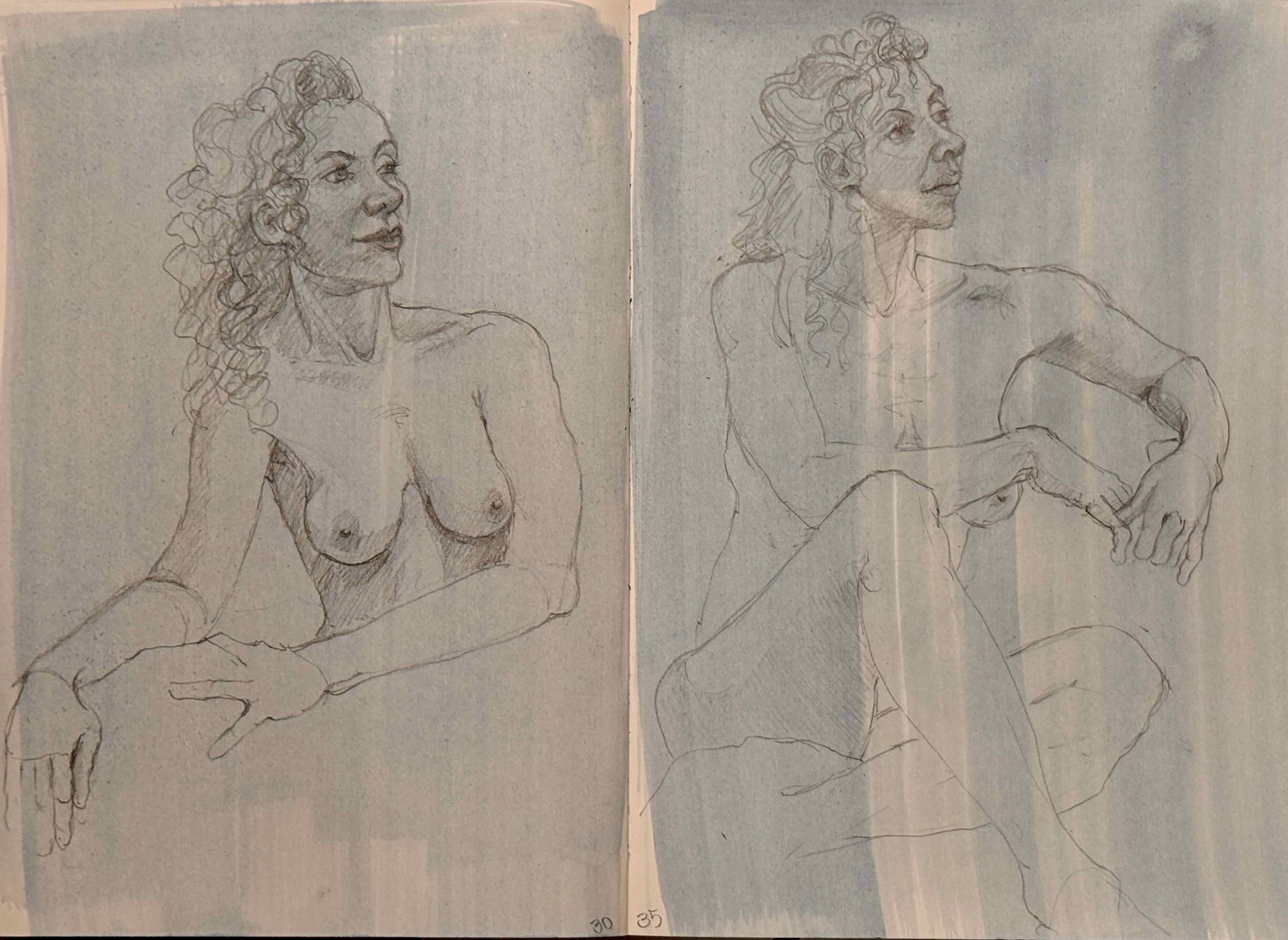
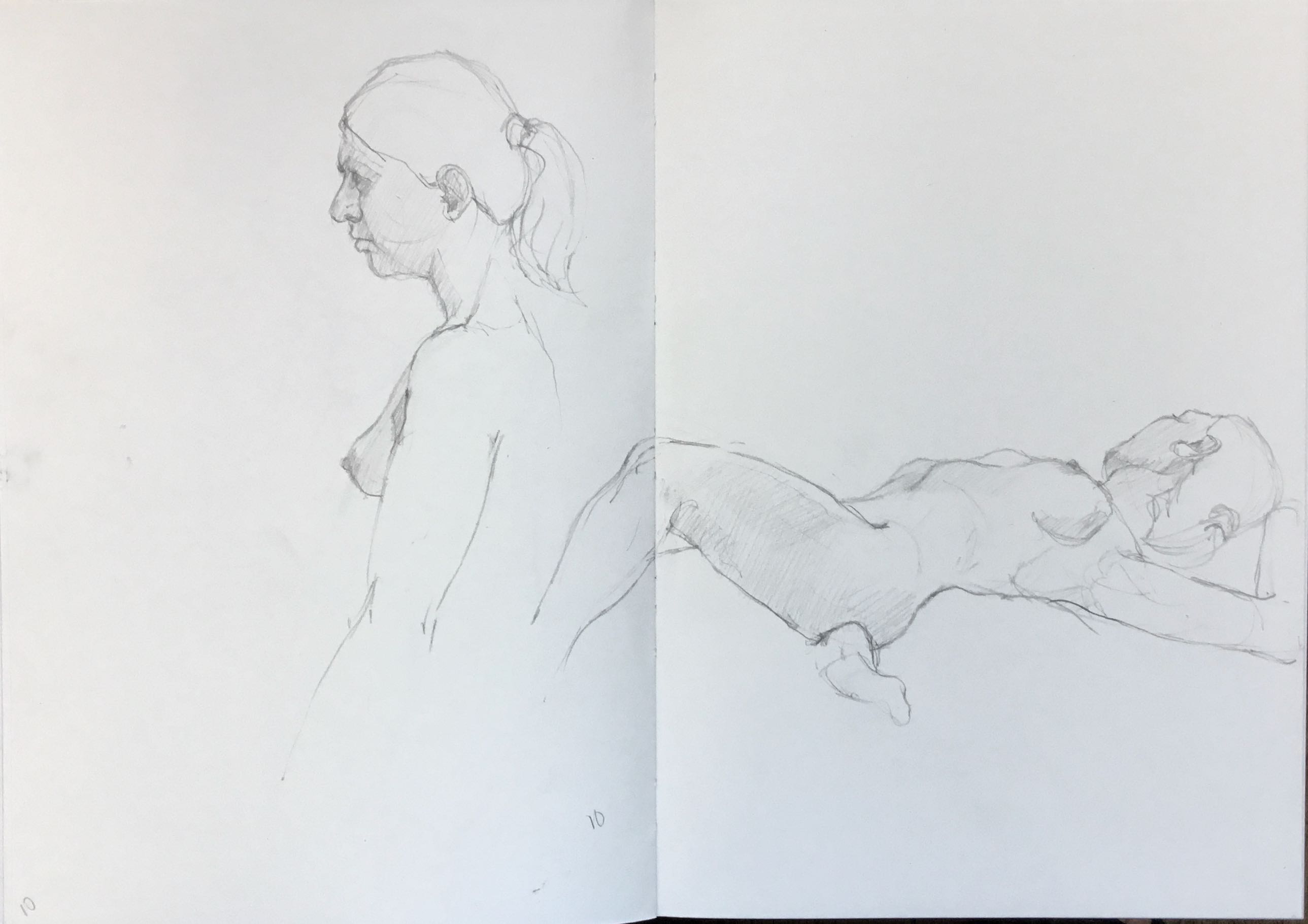
 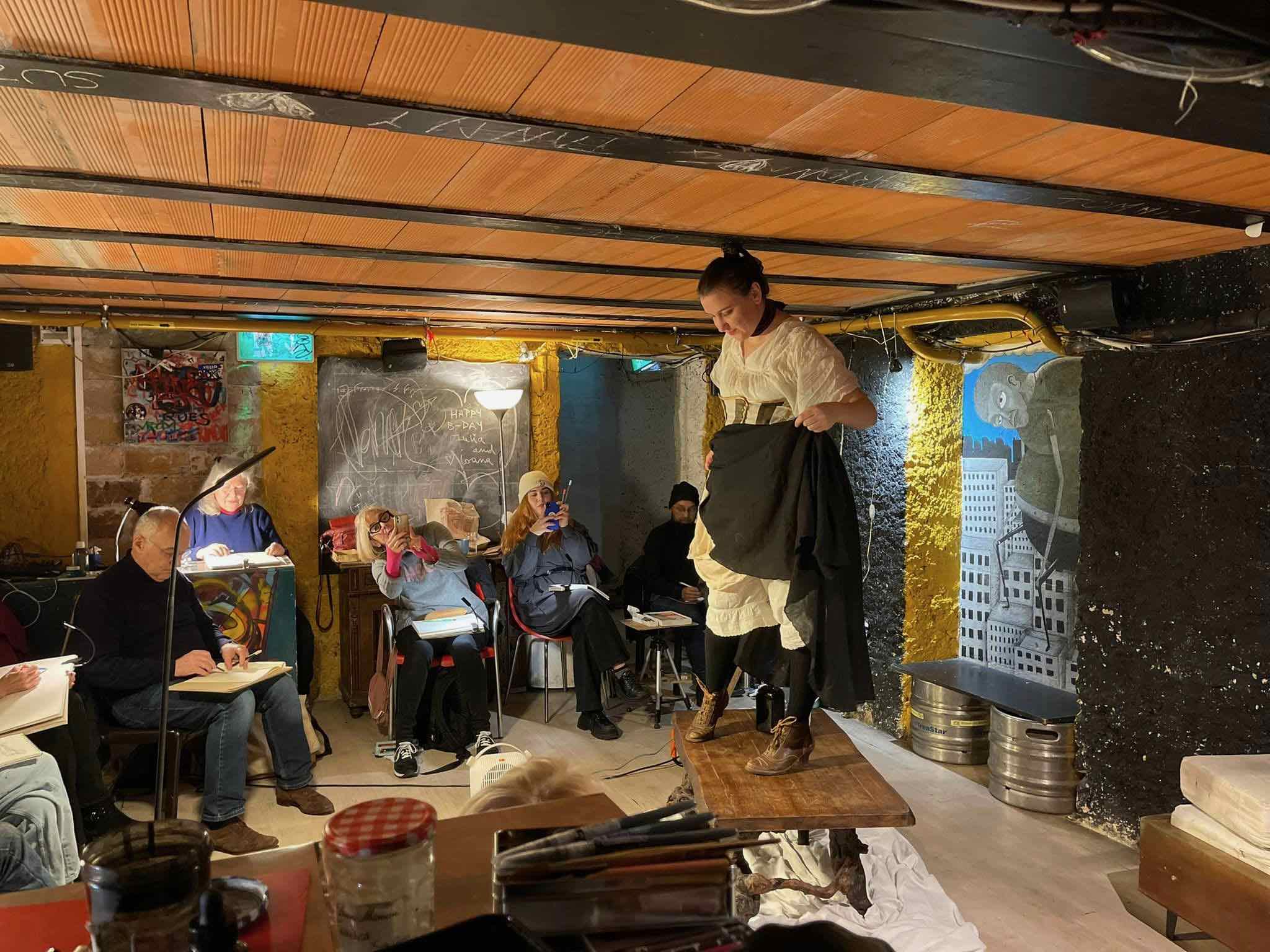 My drawing goes better today and we share our work upstairs in the bar afterwards. I met some lovely people from Australia, Korea, Montreal, England and Italy. The times for each pose are written on the pages.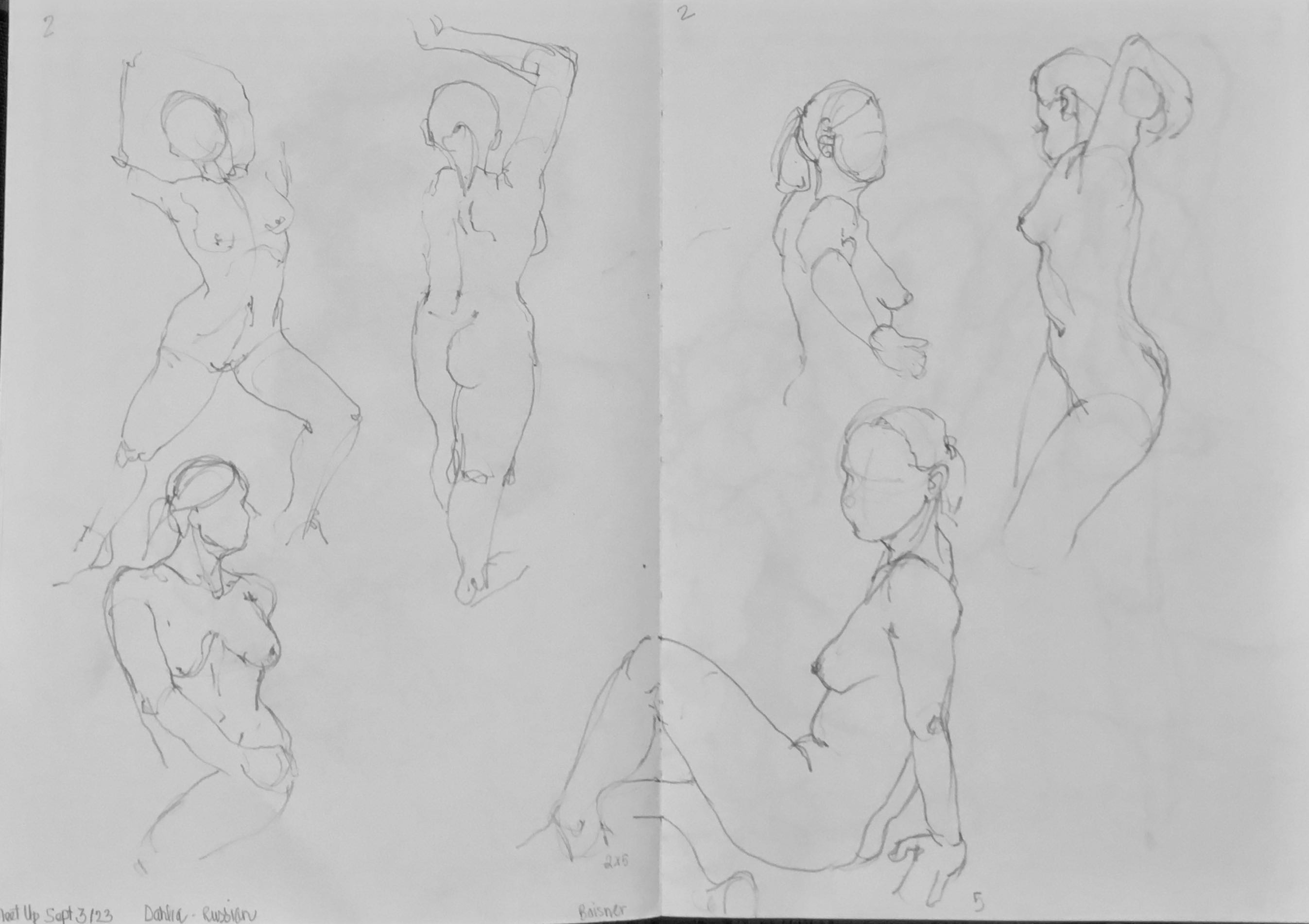
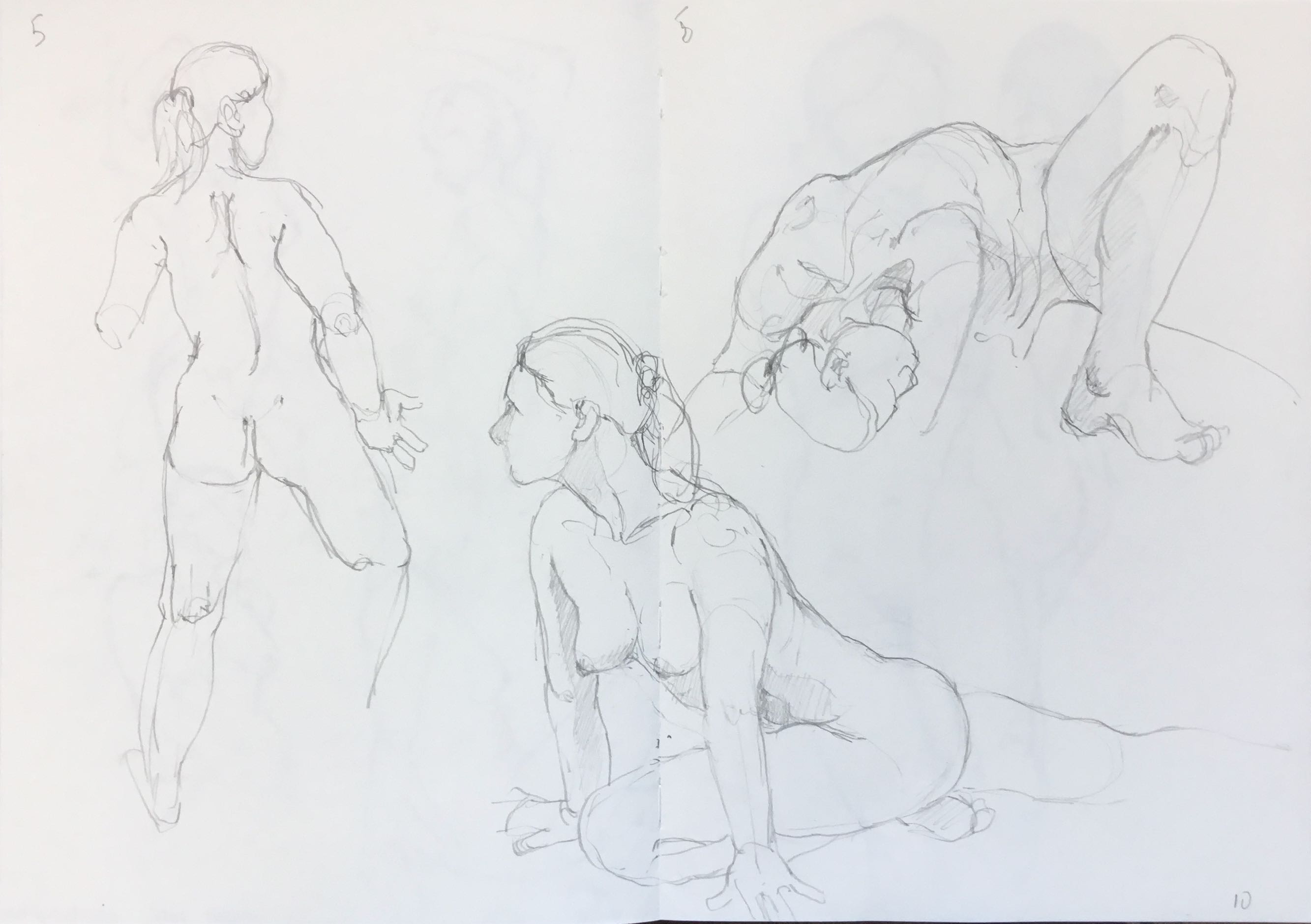
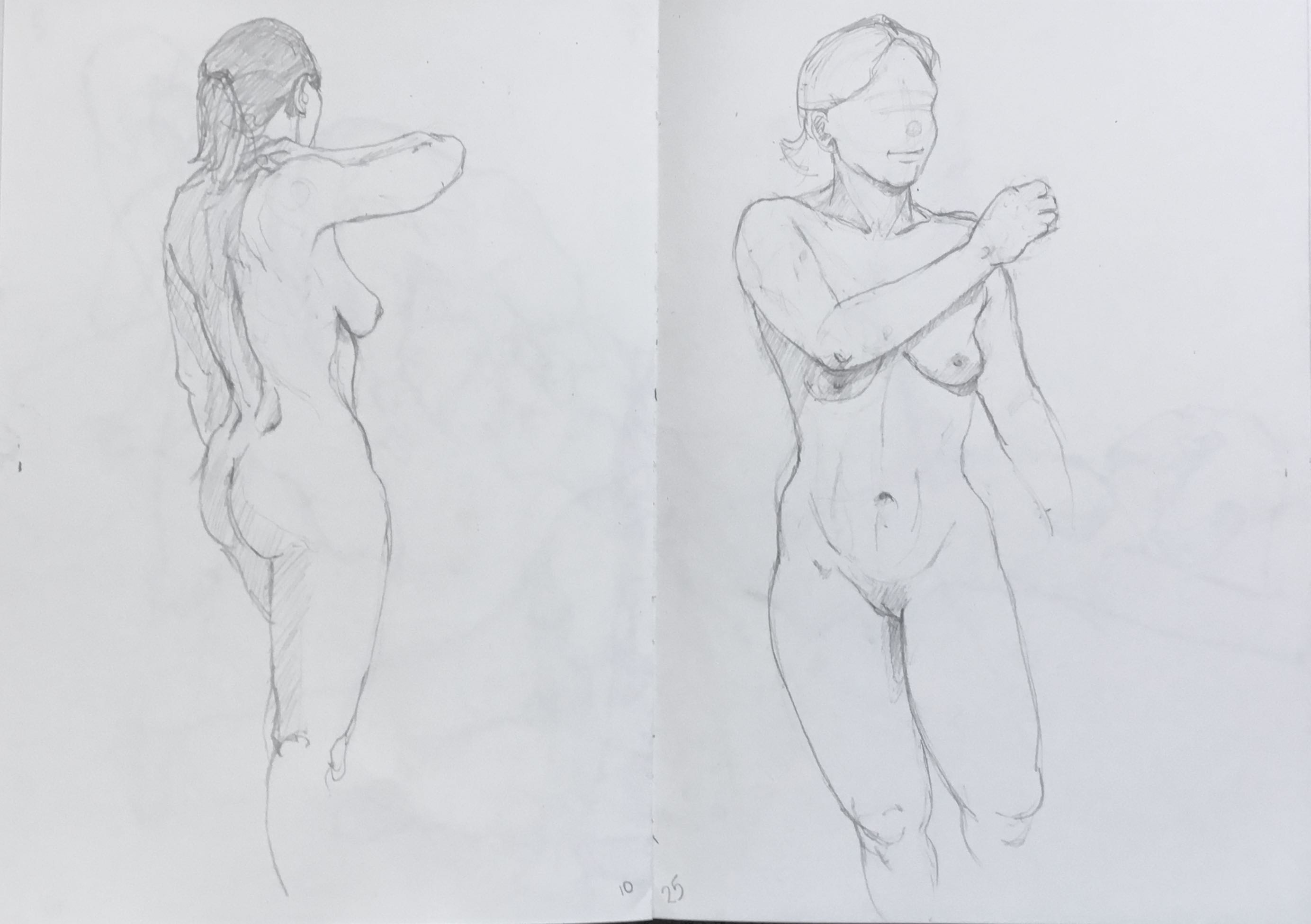
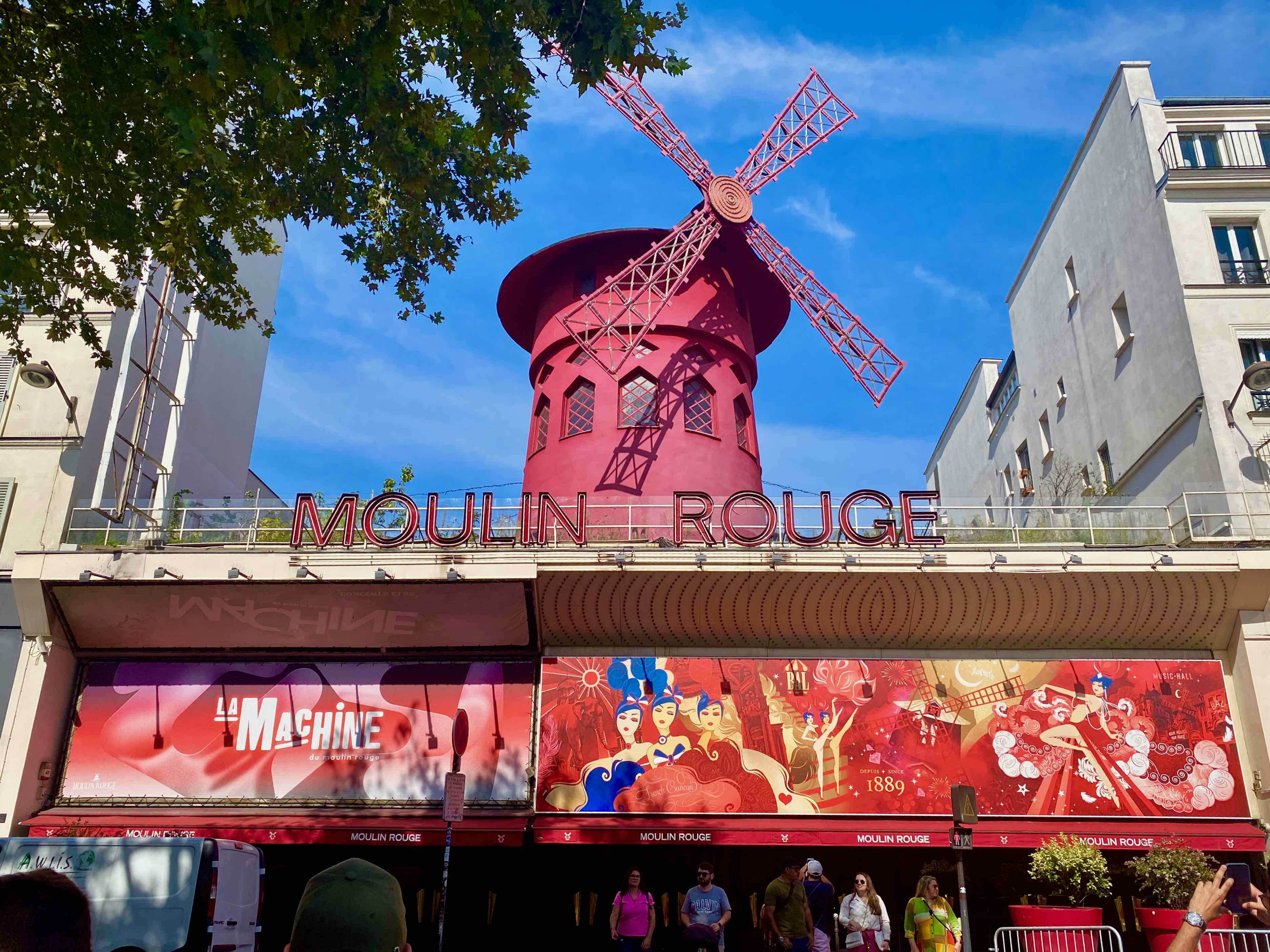
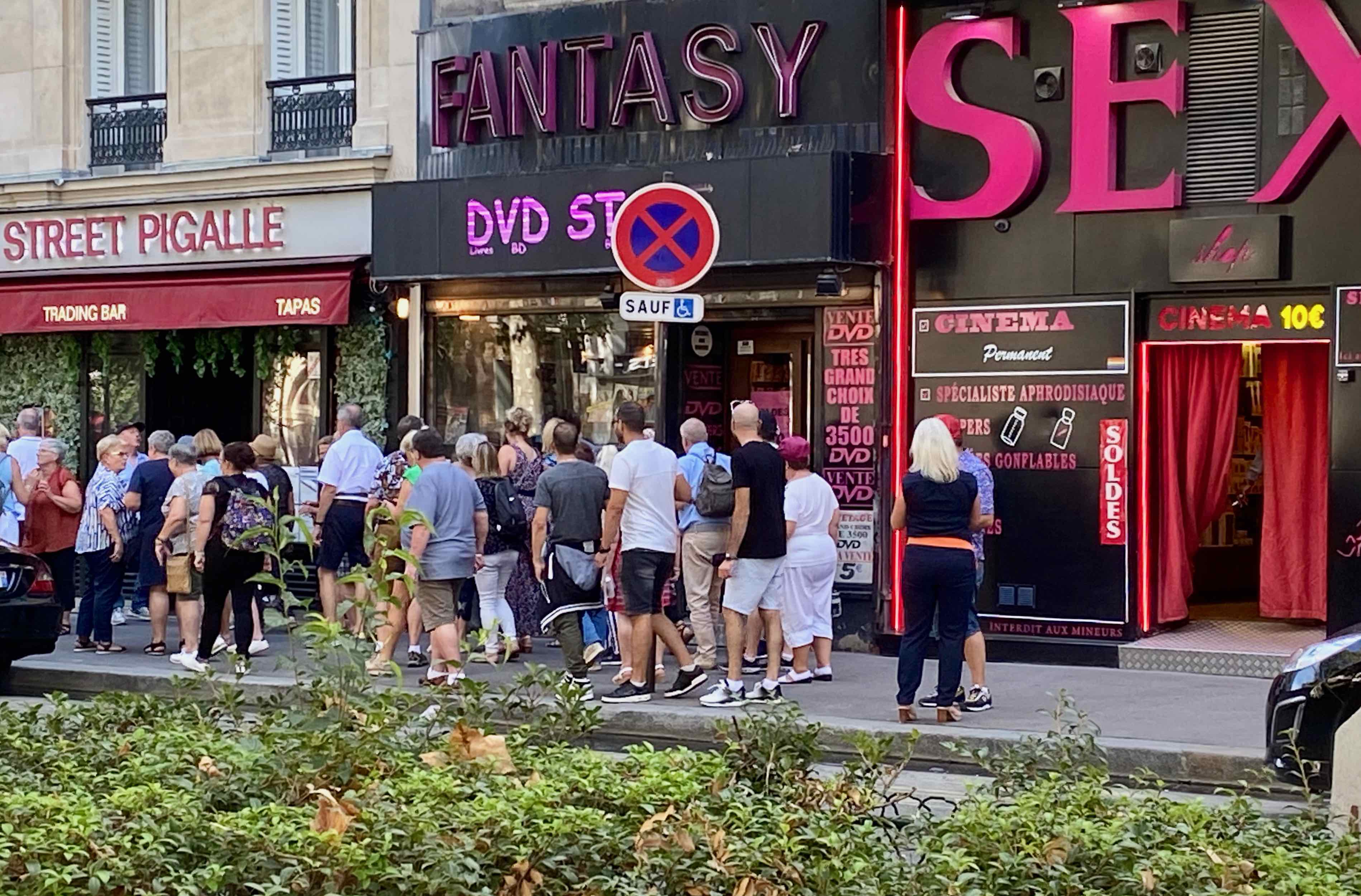
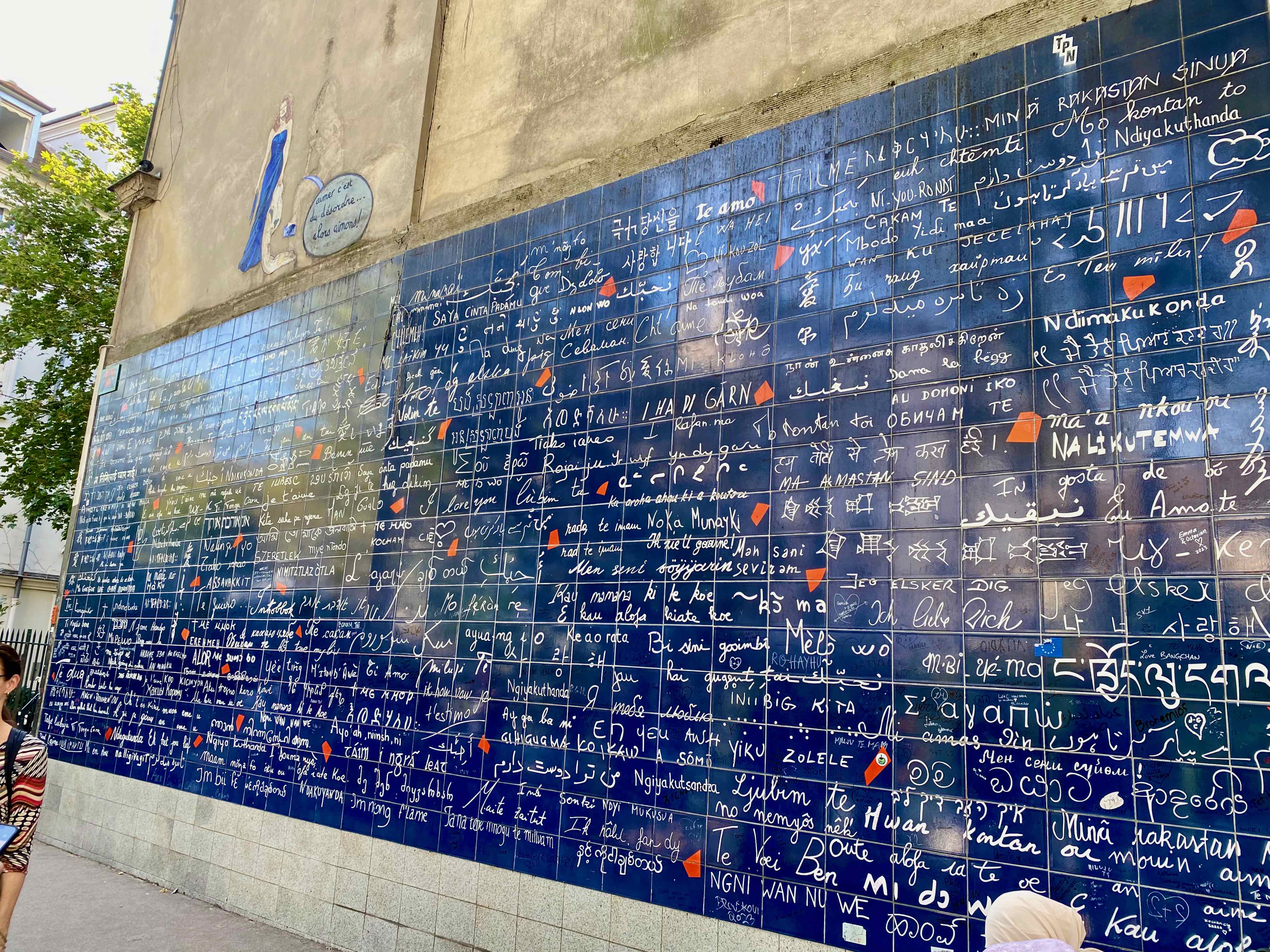
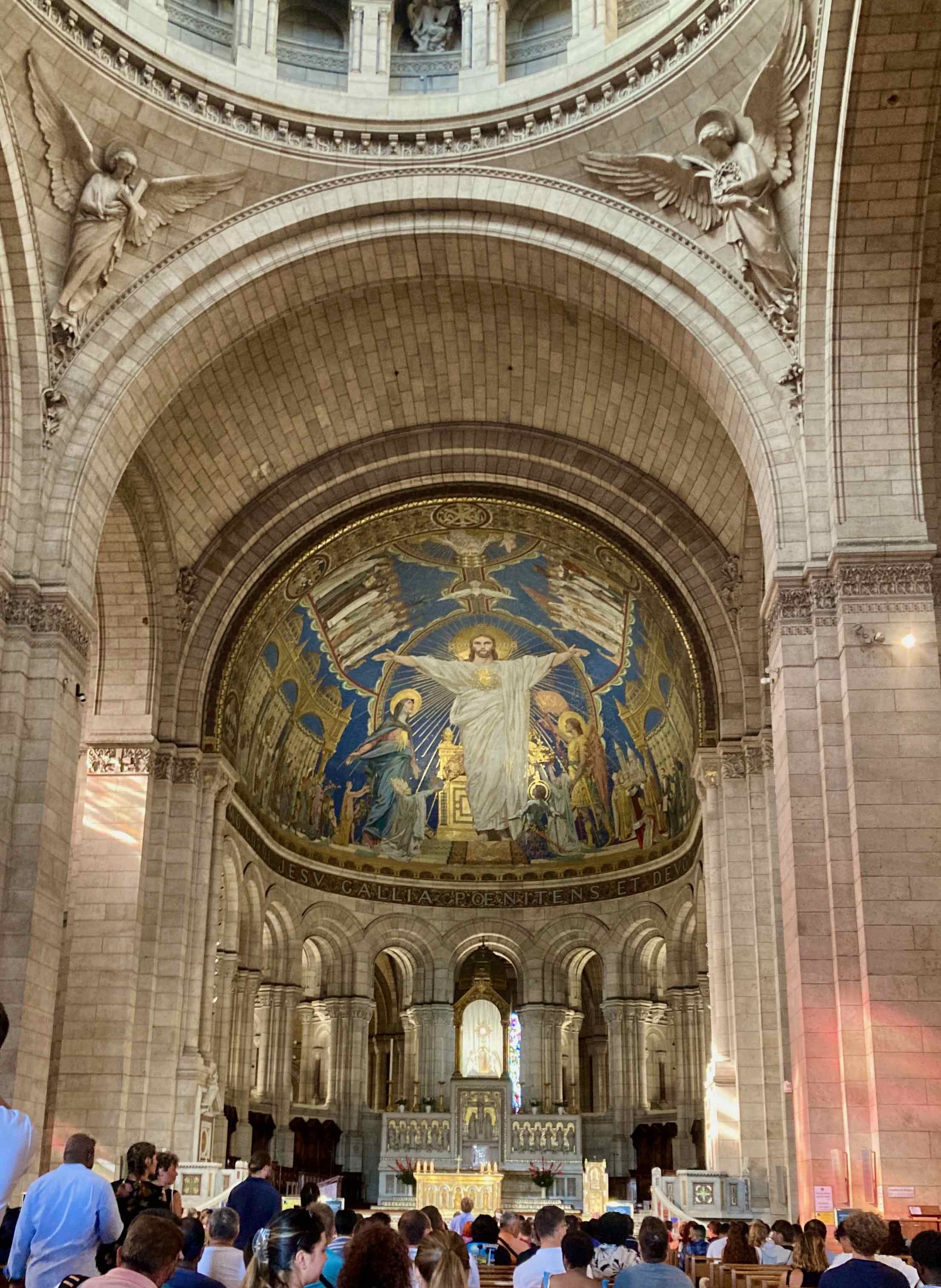
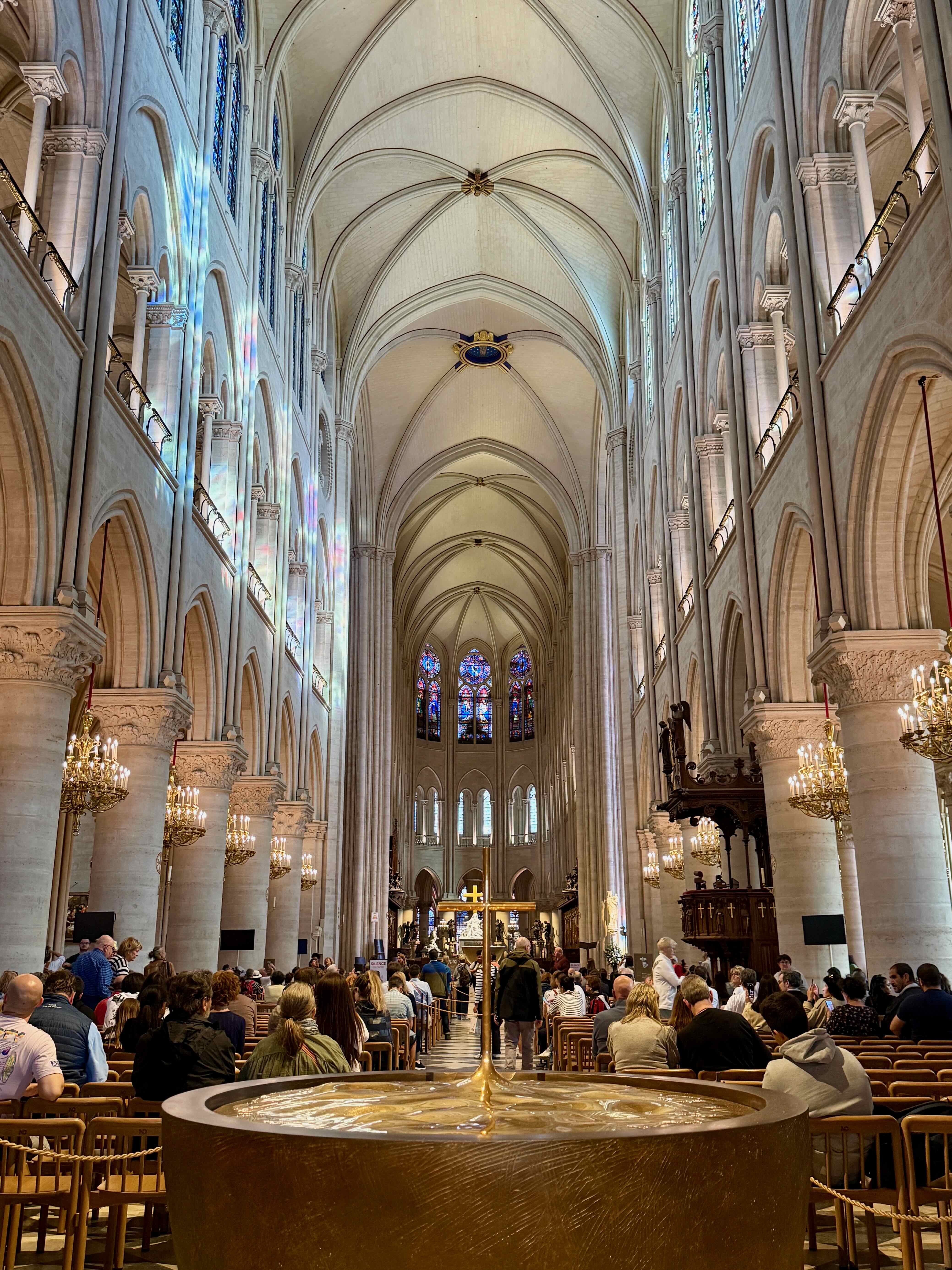
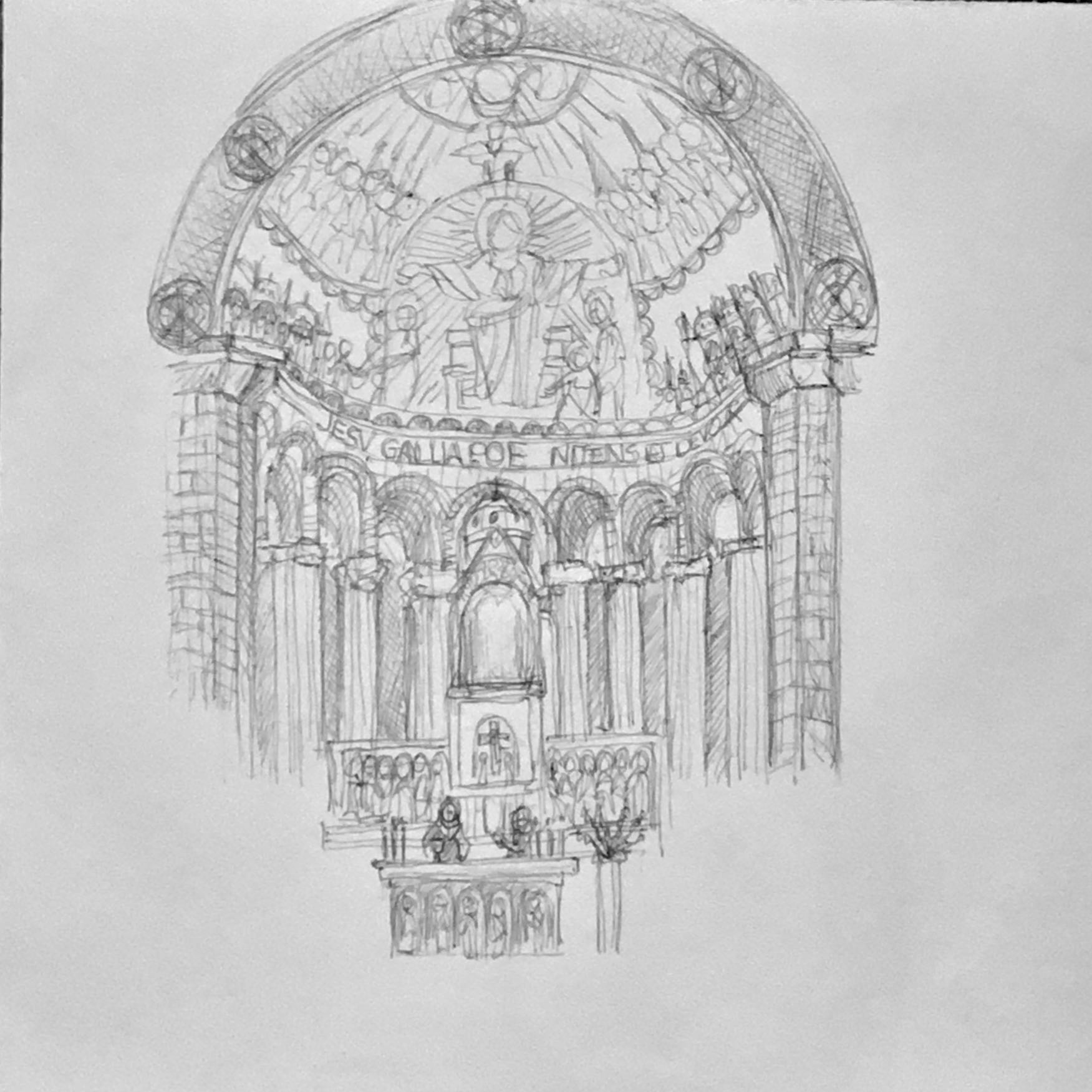 The organ is right above our heads. I think I am sitting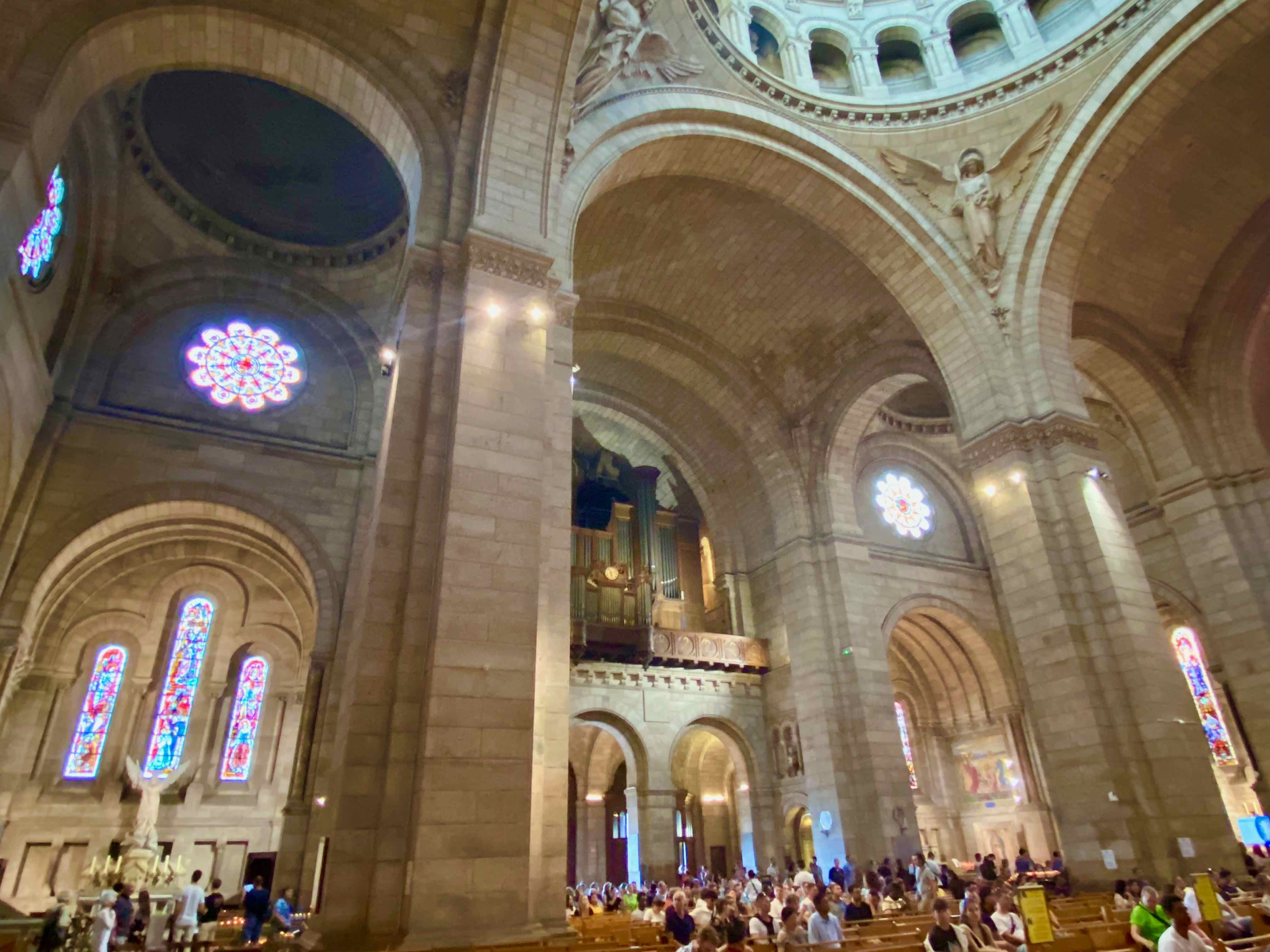
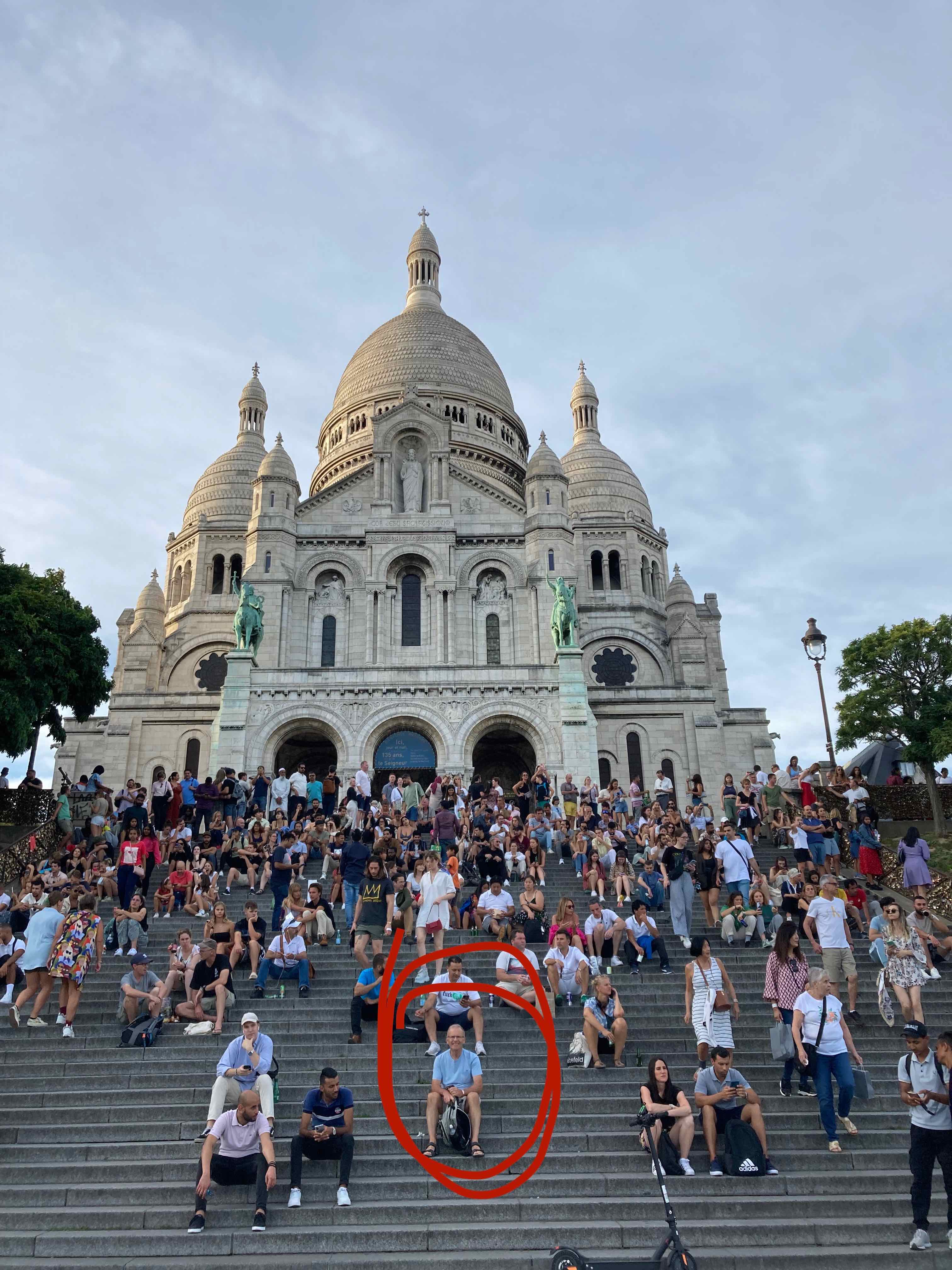
 Where is Waldo? No…where is Bob? Here he is in the first photo.
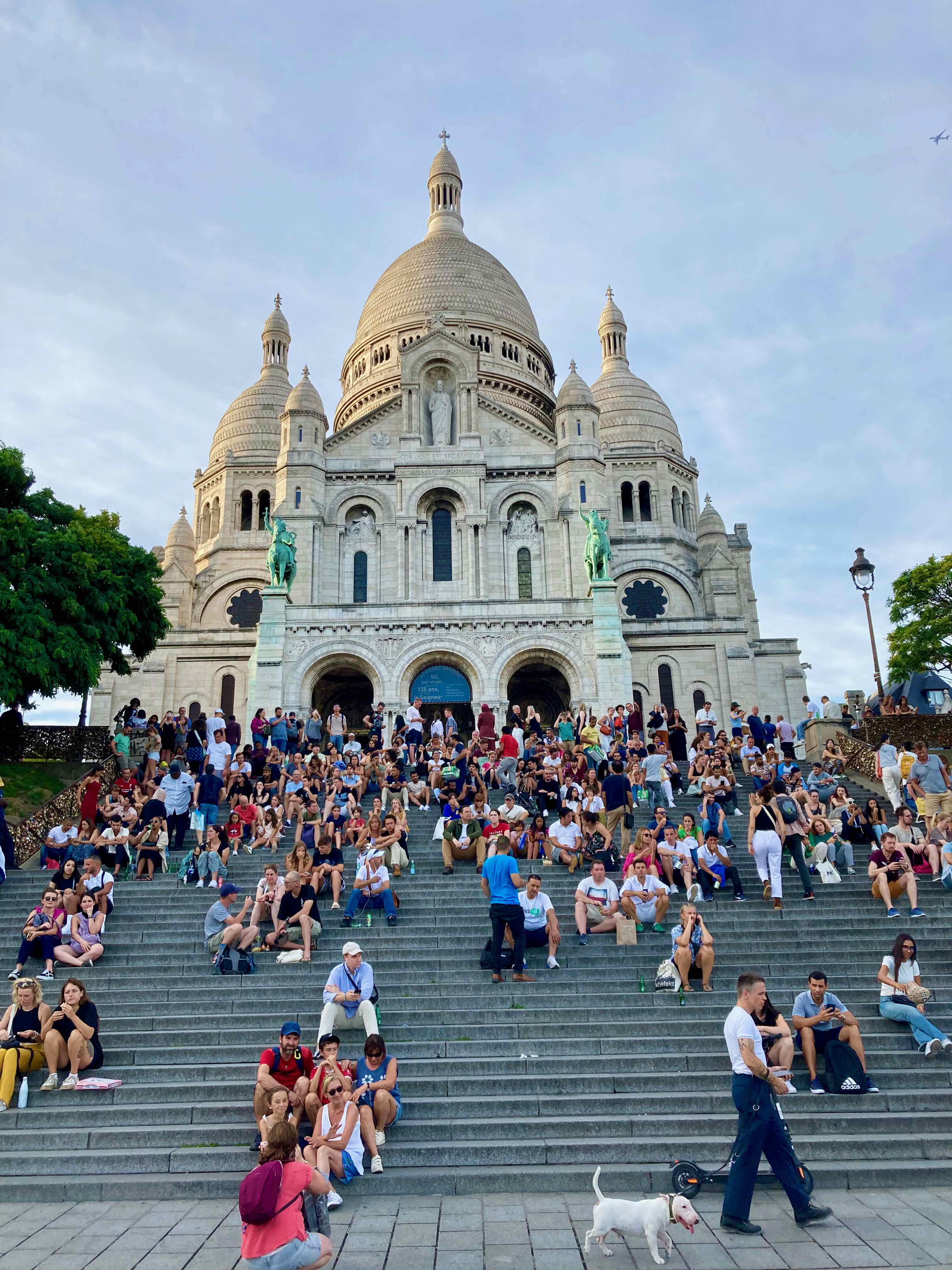
 Can you find him in the photo below? There are always so many tourists sitting on the steps to enjoy the view.
 There are still hordes of tourists in Paris. Us included!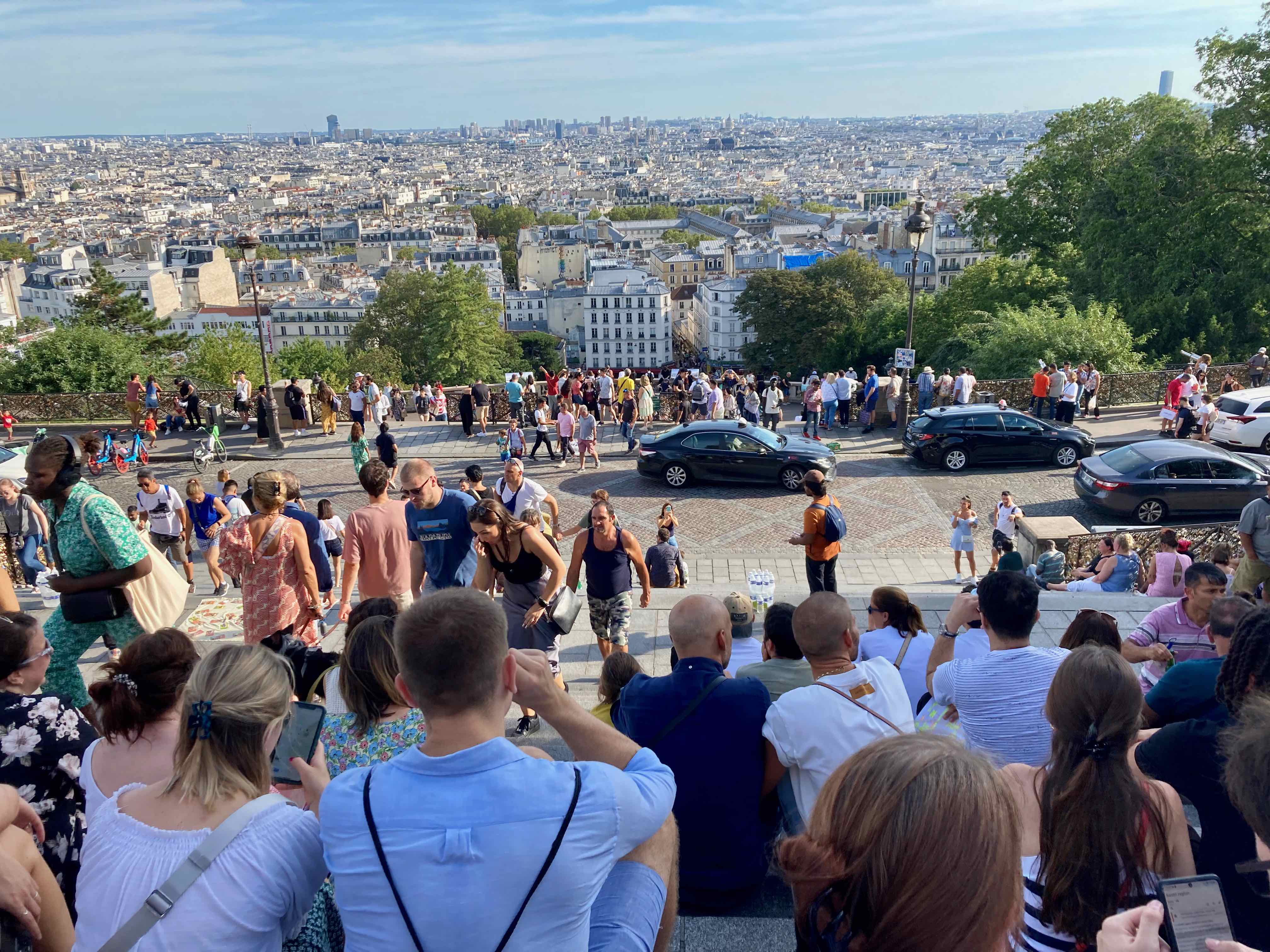
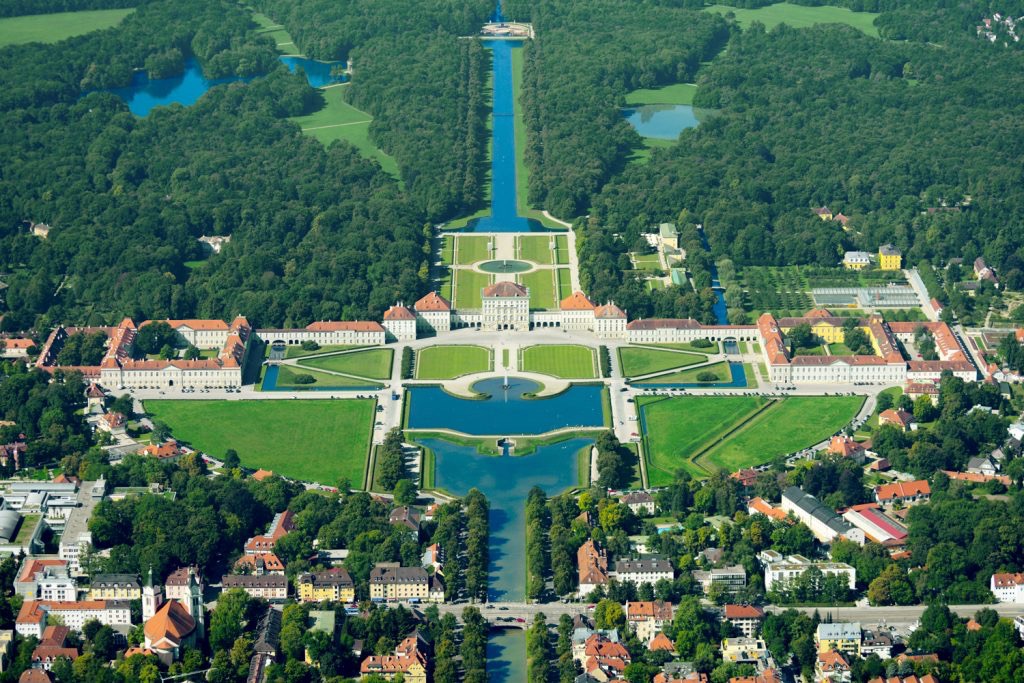 This central four-storey building was the beginning of the palace and was built in 1644. Over the years numerous additions were built until it reached its present configuration in 1776.
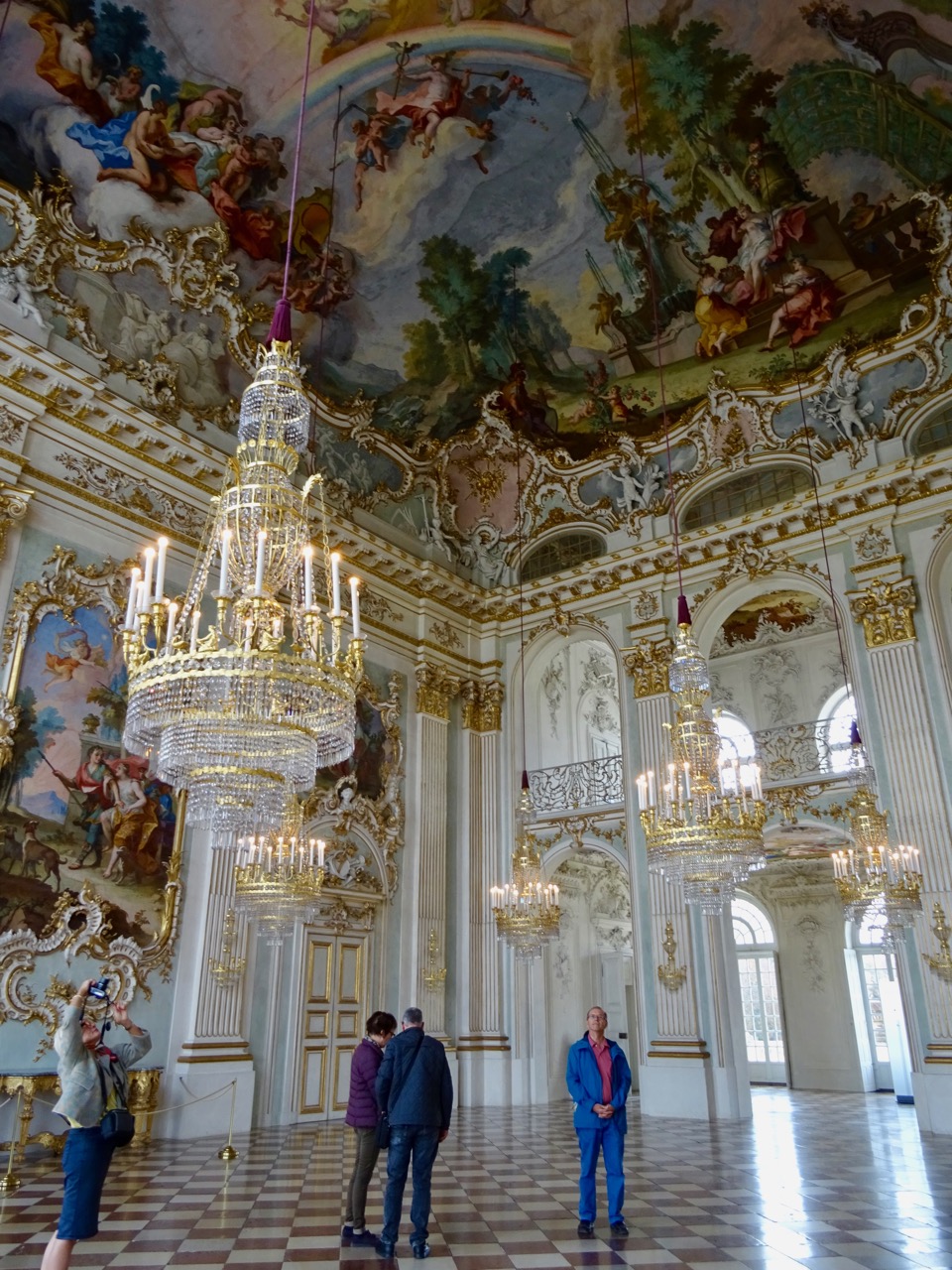
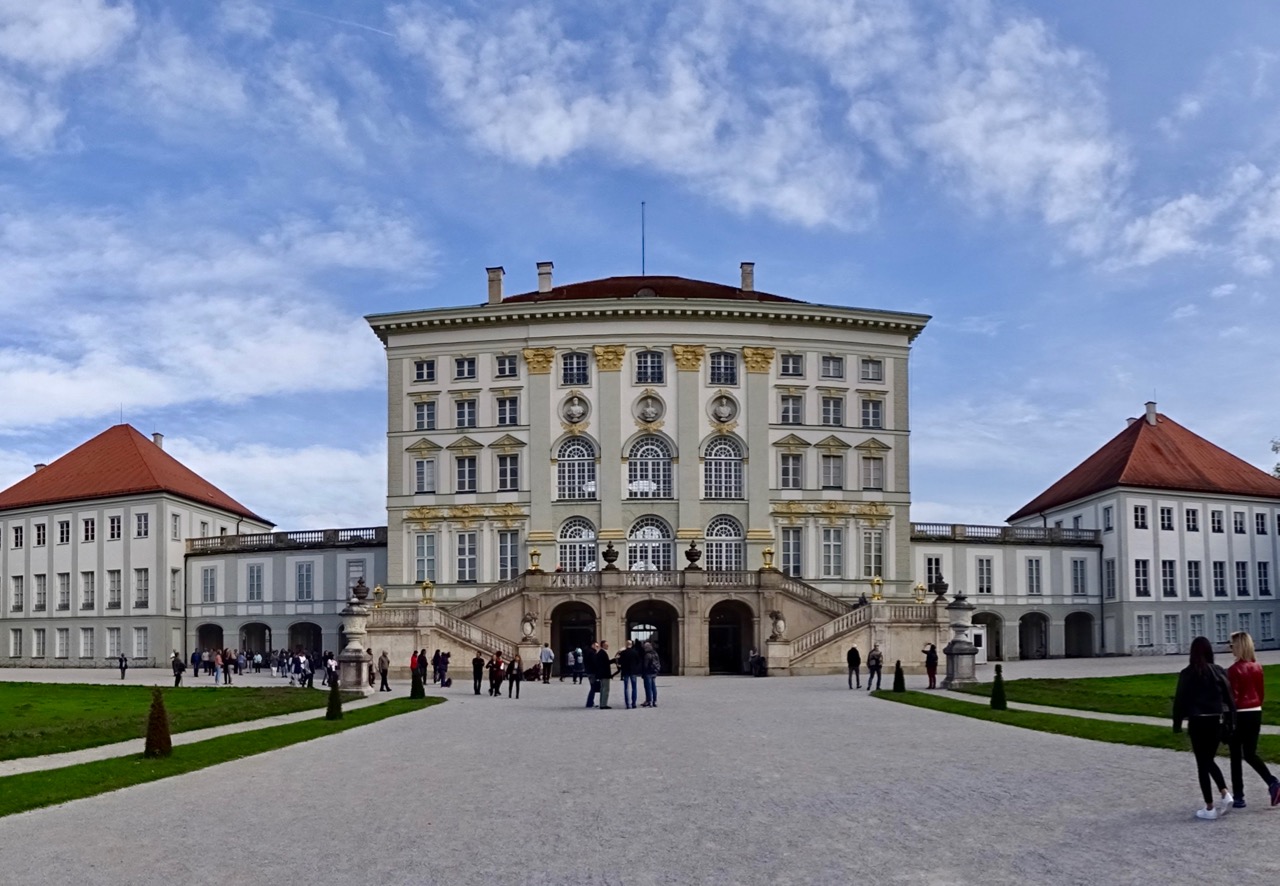 The Nymphenburg Palace was originally a summer residence for the Bavarian rulers. This is the Great Hall. Musicians would entertain guests from the gallery.
 One of the many rooms with original furnishings.
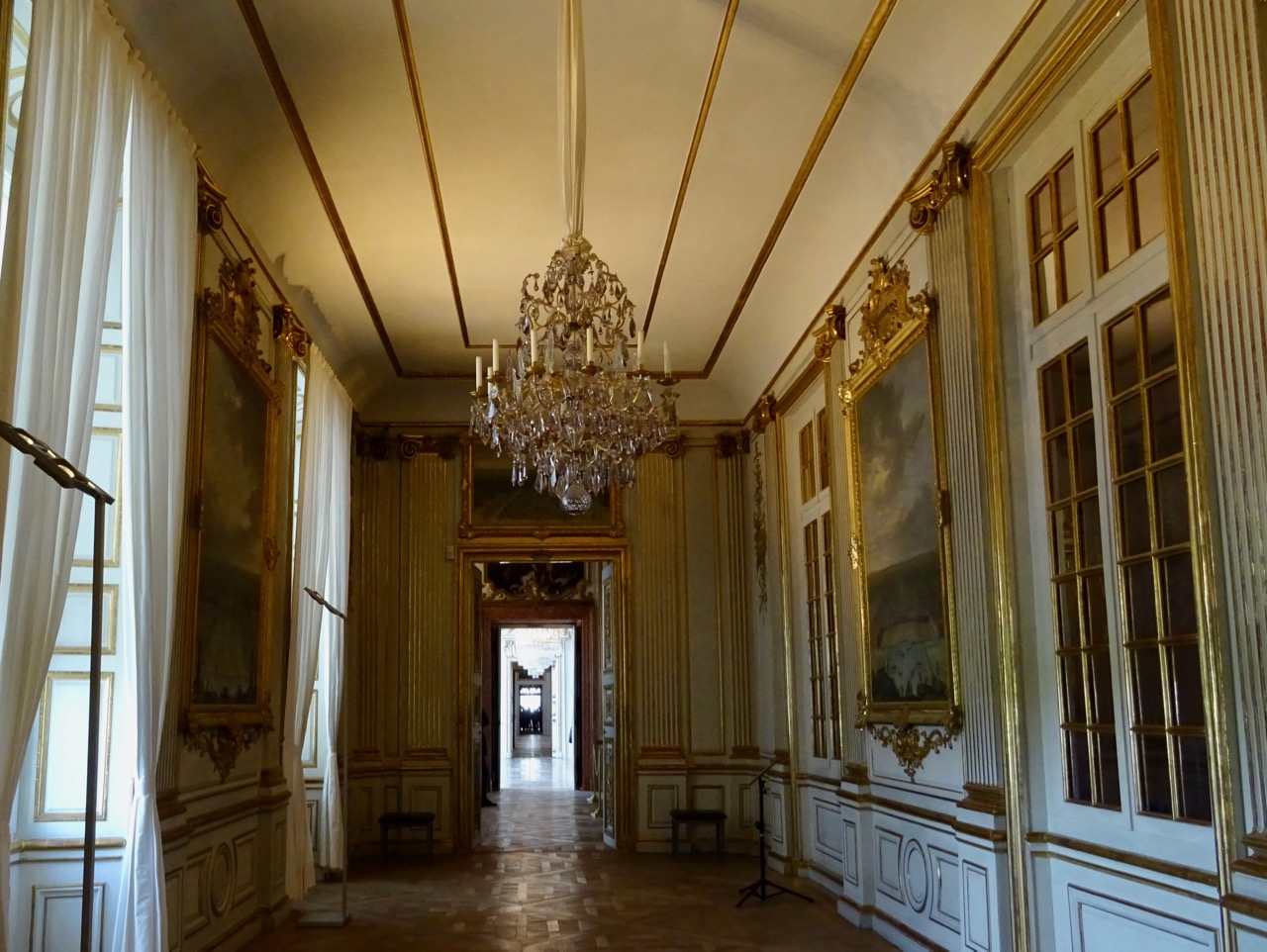
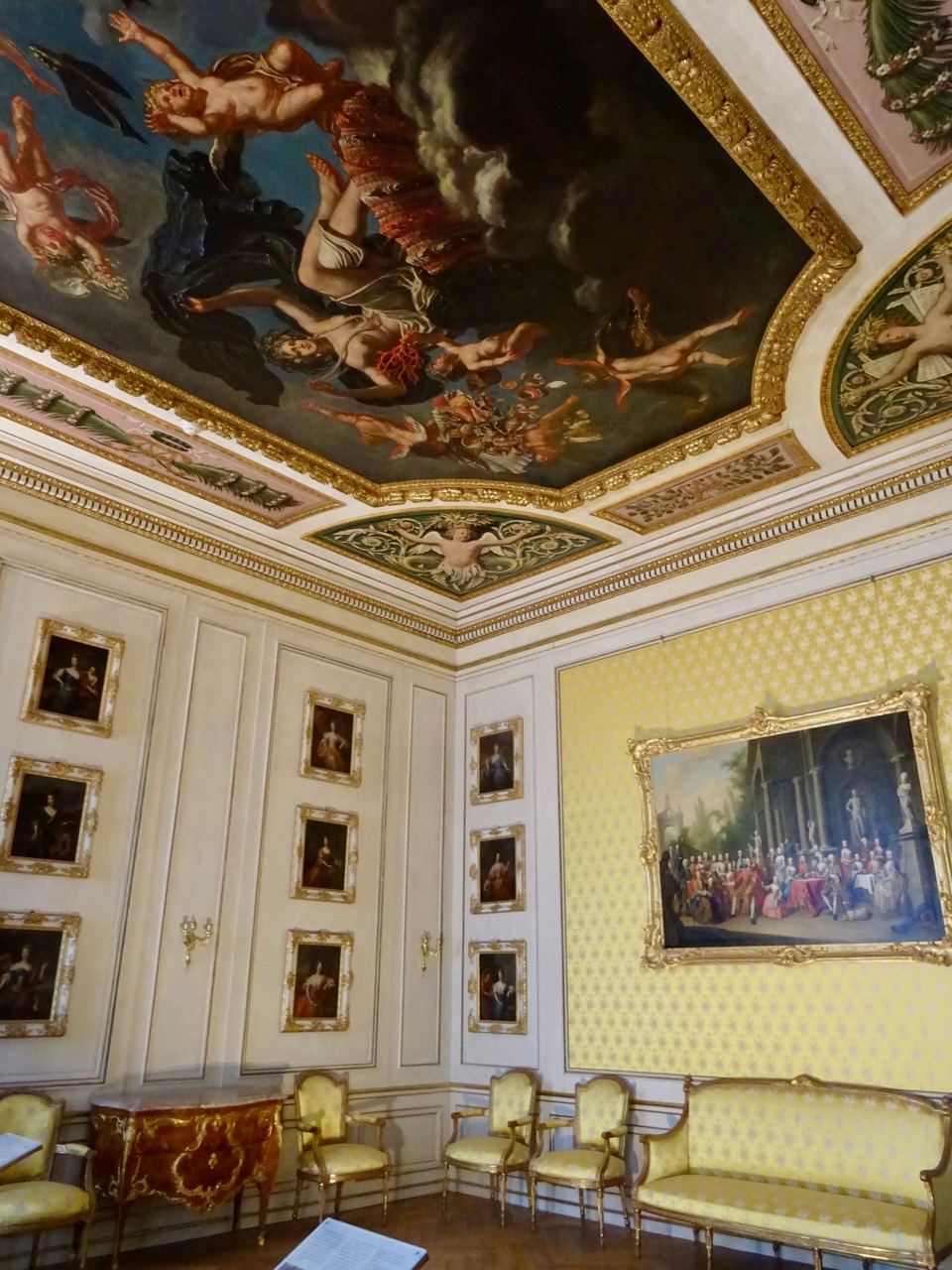 Many of the rooms are not that big and seem to serve as connecting passages to other larger rooms.
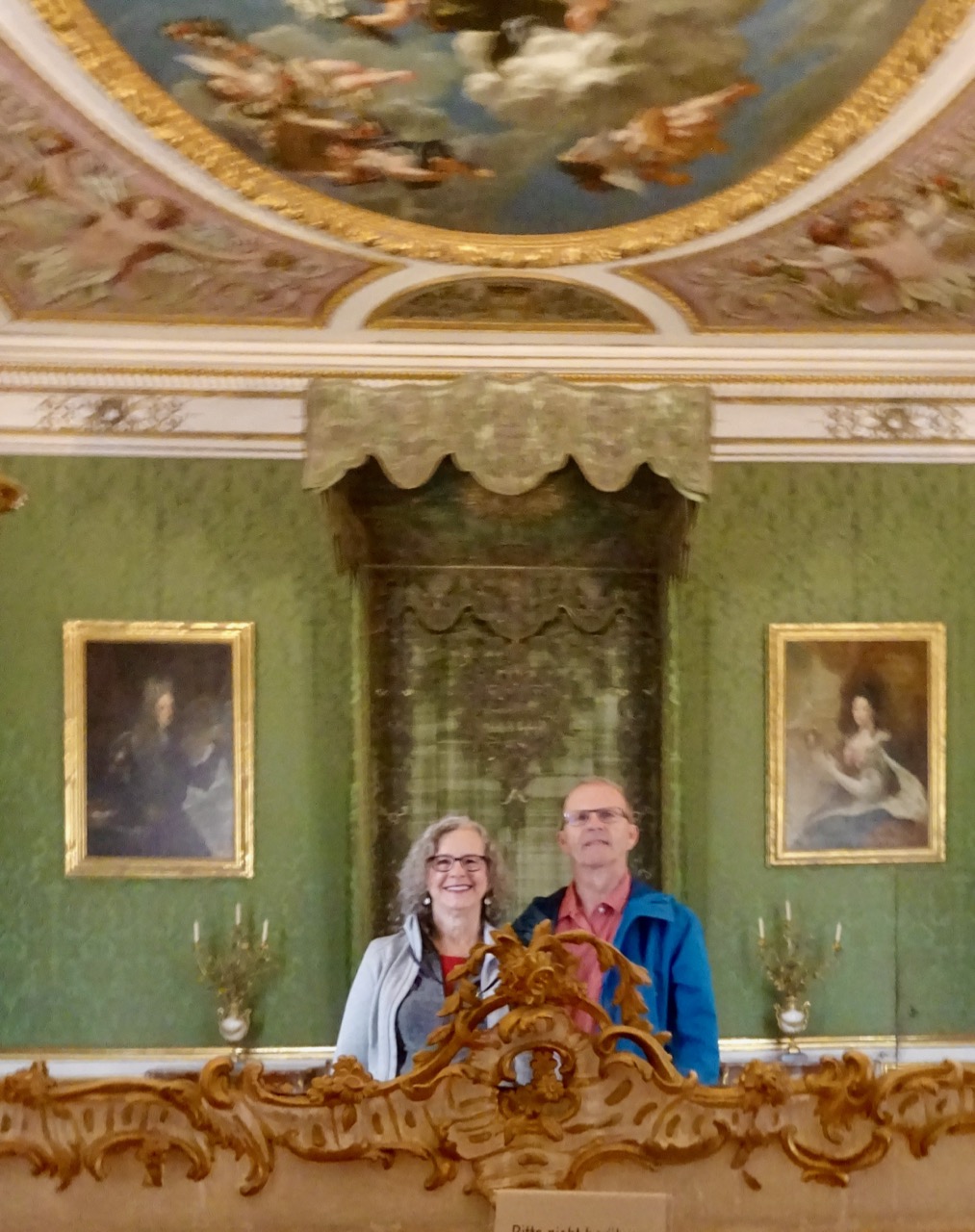
 The south apartment bedroom of the Electress, who was the consort of the king.
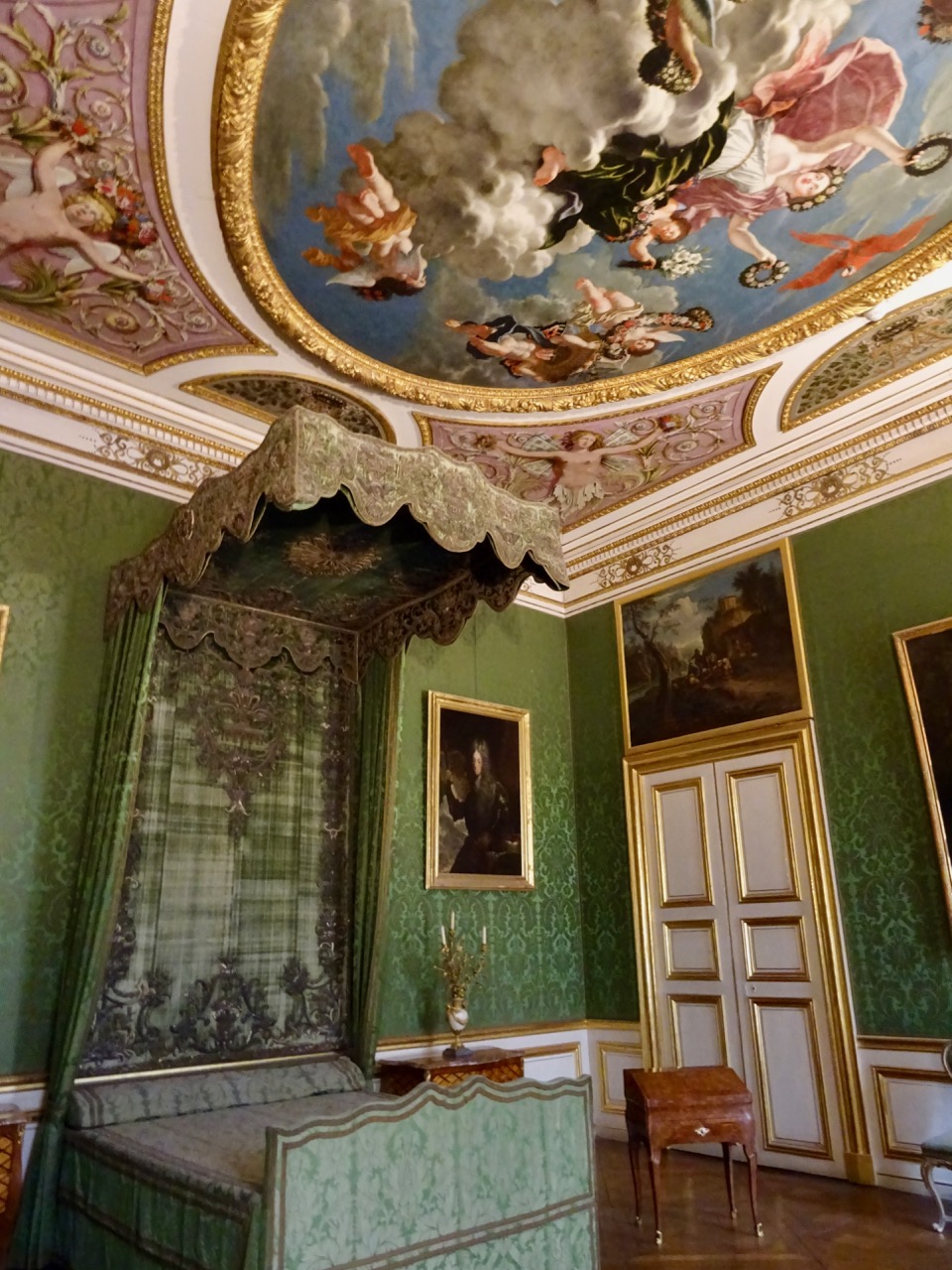 Our reflection in the bedroom mirror.
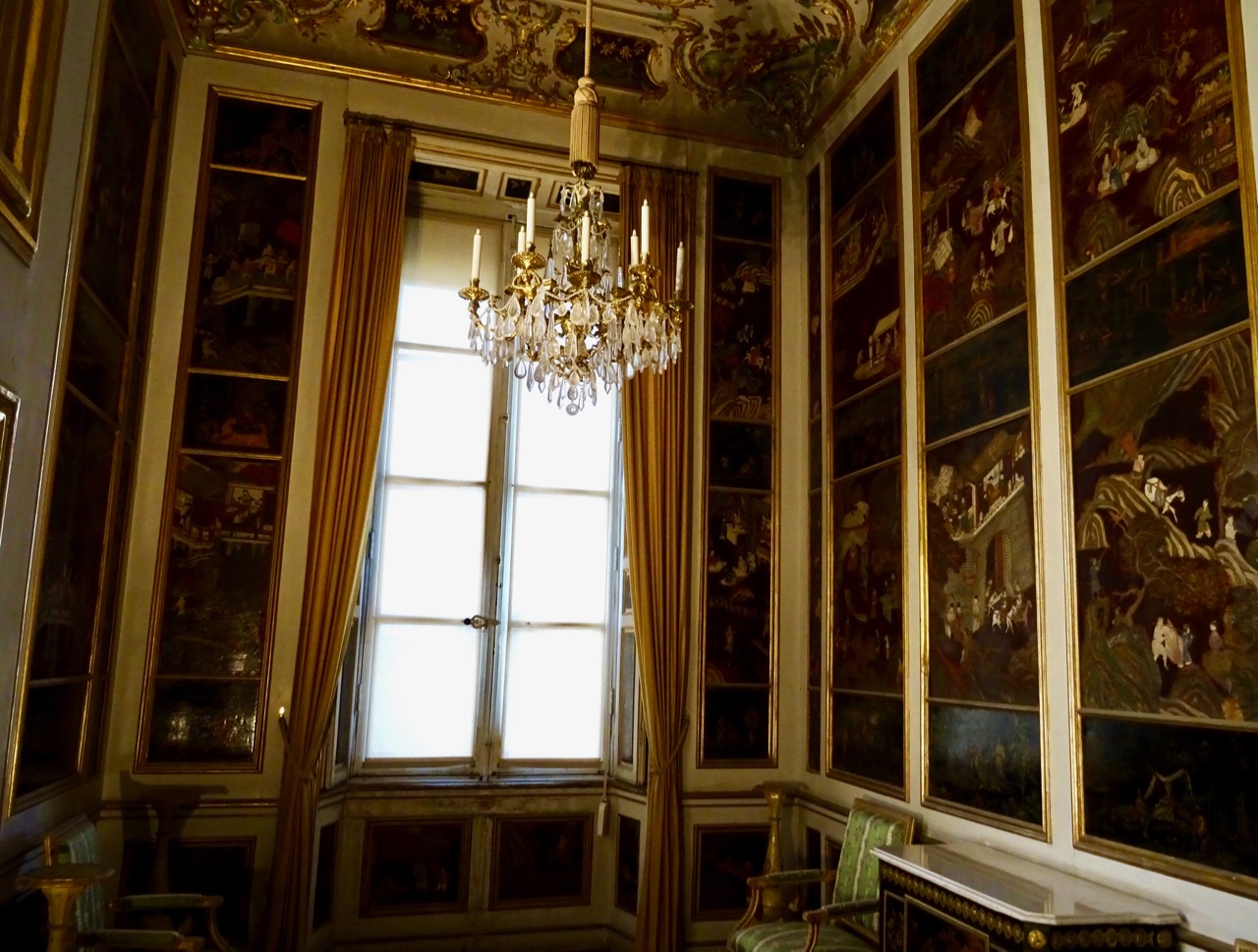
 Every palace has to have a Chinese inspired room.
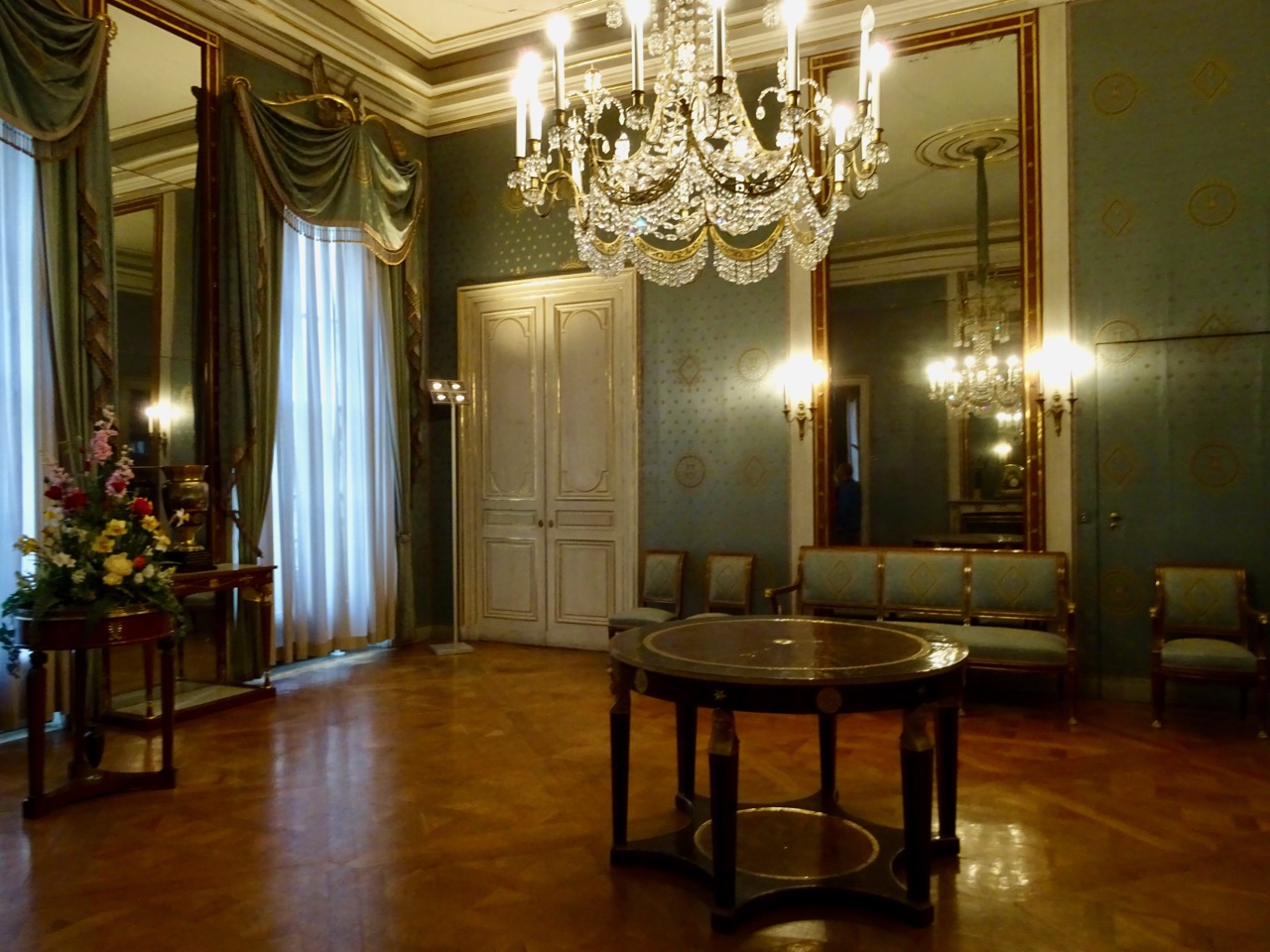
 The audience room of Queen Caroline…
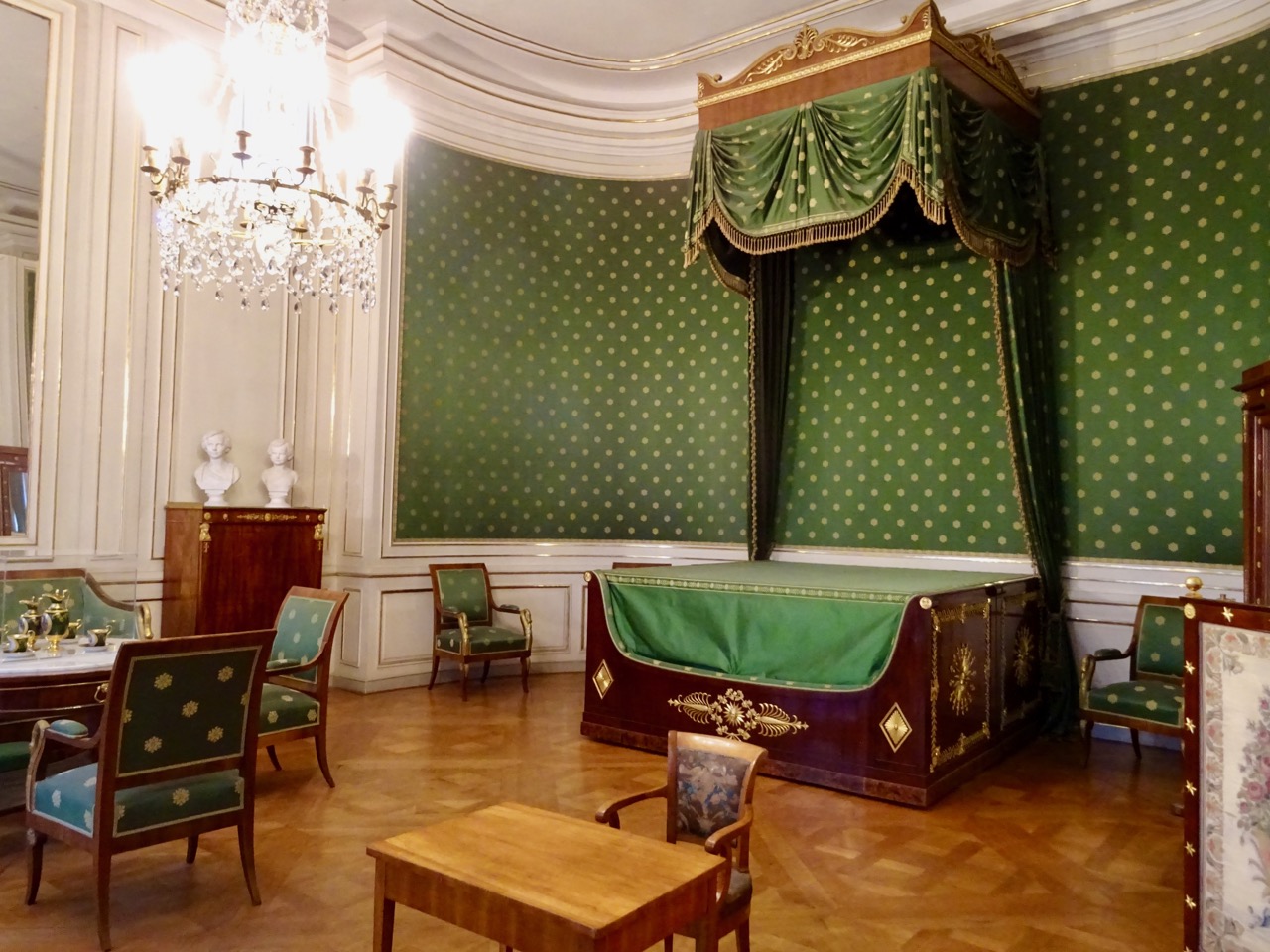
 and her bedroom have their original furnishings. This room is where King Ludwig II was born in 1845. The bed is hidden by a cover on a high frame which was spread over the bed during the daytime.
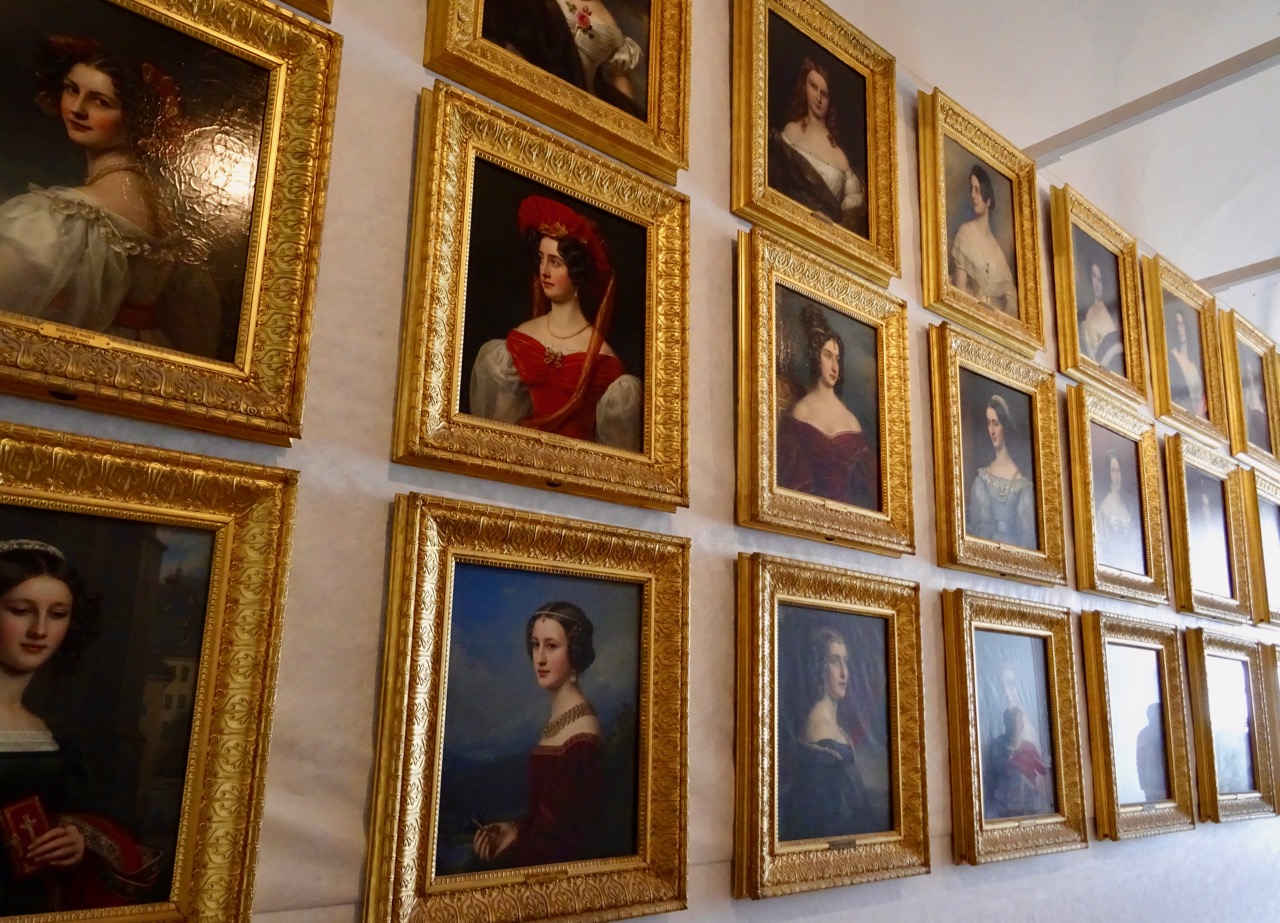
 The official Hall of Beauties is under restoration but the paintings are on display in a corridor. From 1826 to 1850 King Ludwig I had a series of 36 portraits painted of what he considered to be the most beautiful women. Beauty was considered to be an outward sign of moral perfection!
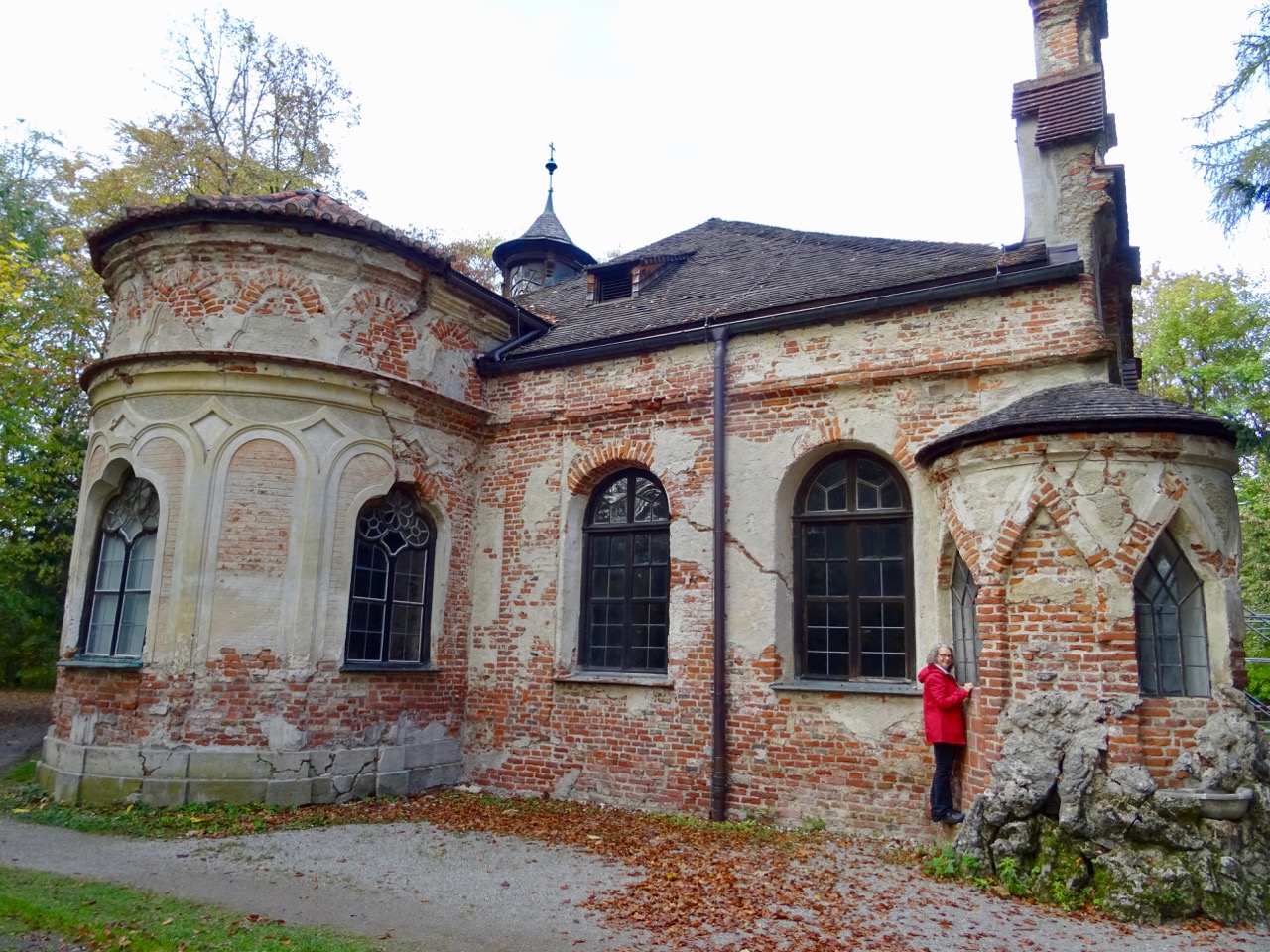
 We finish our tour of the palace rooms, and go explore the grounds. Unfortunately we realize that the park pavilions closed for the season a week ago. I do manage a peek inside the Magdalene Hermitage, which was a pavilion used for contemplation.
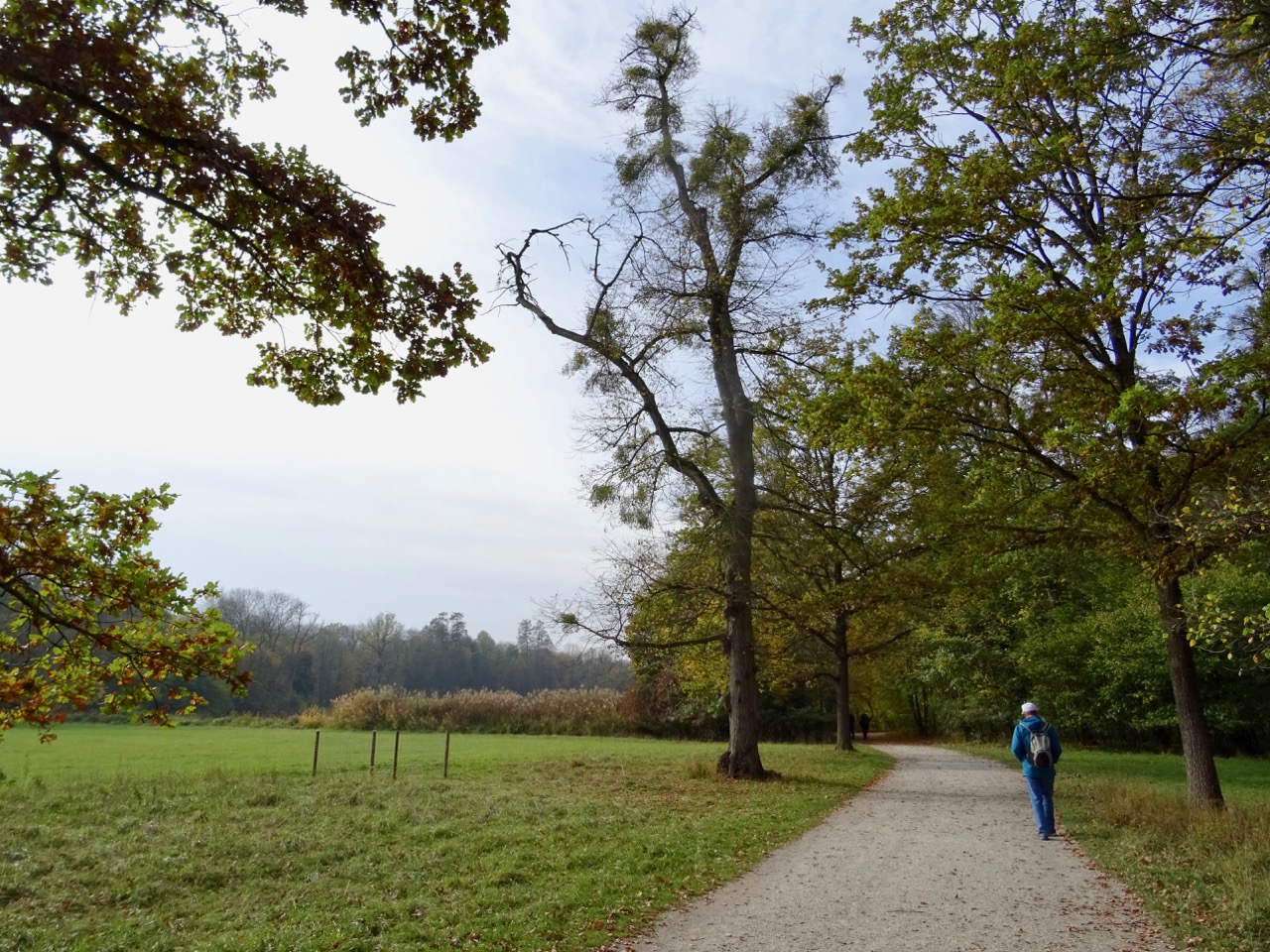
 Much of the grounds are in the style of an English park, with paths…
 and little bridges over water features.
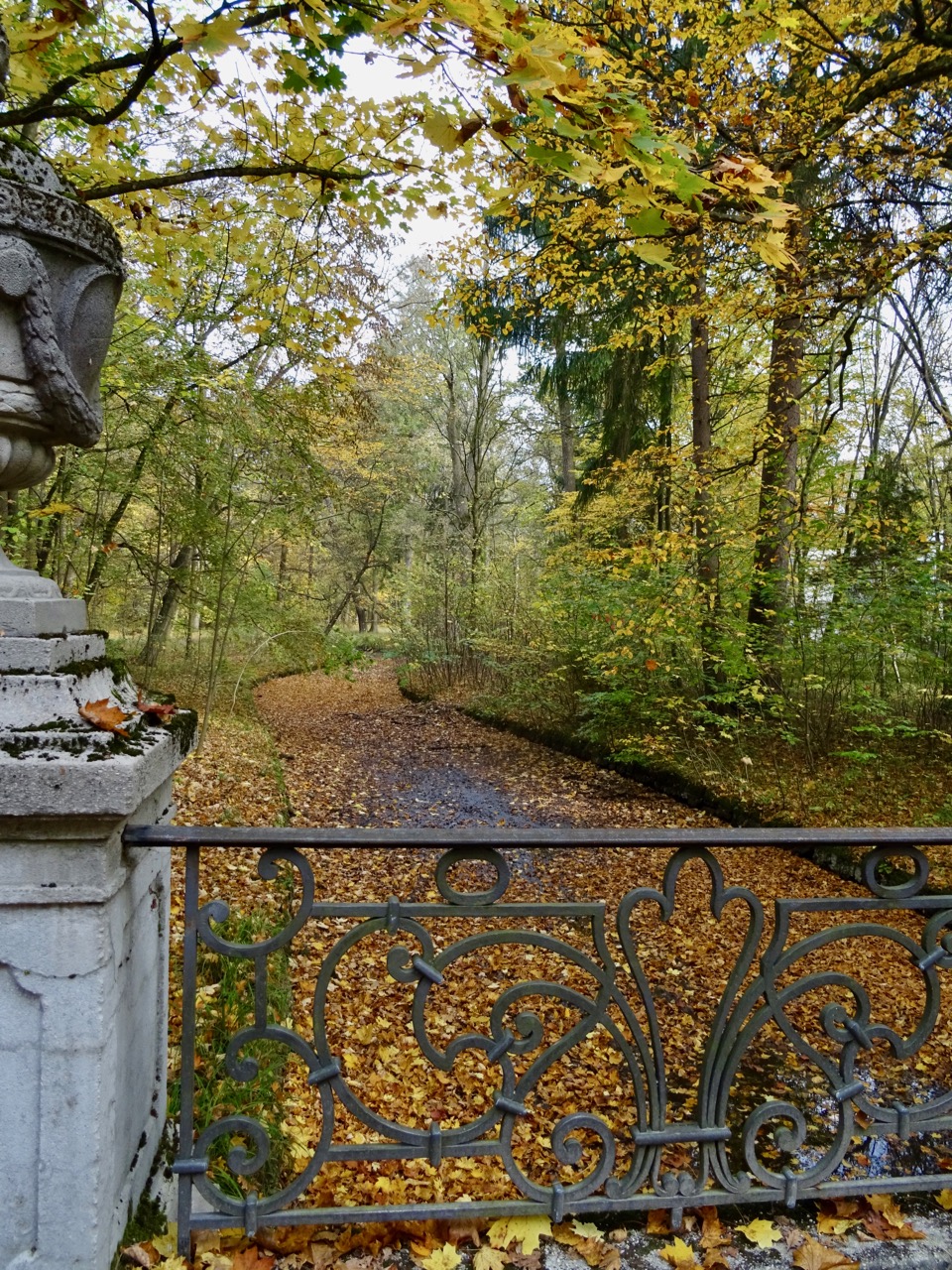
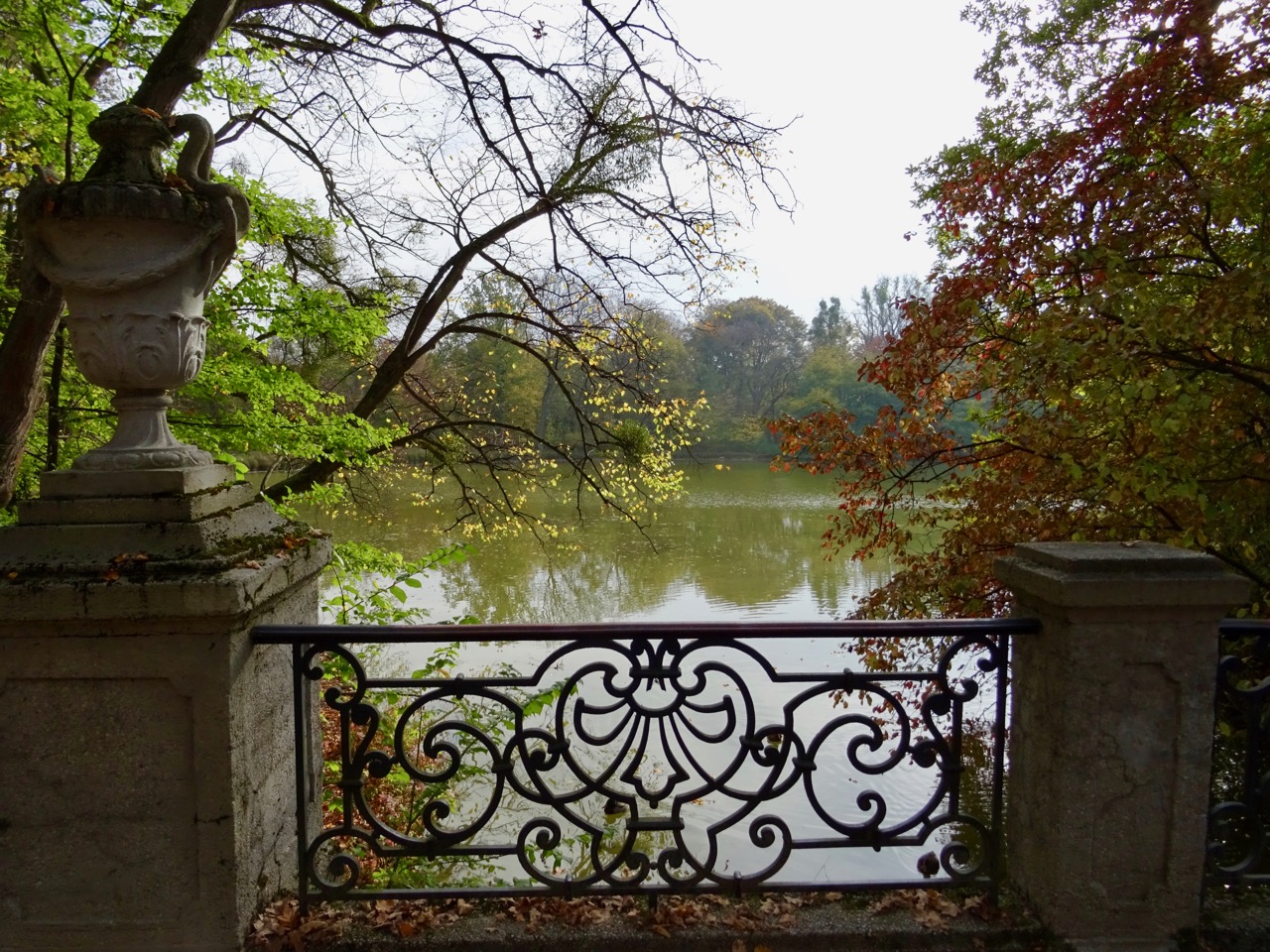 This creek was so covered with fallen leaves that the water was barely visible.
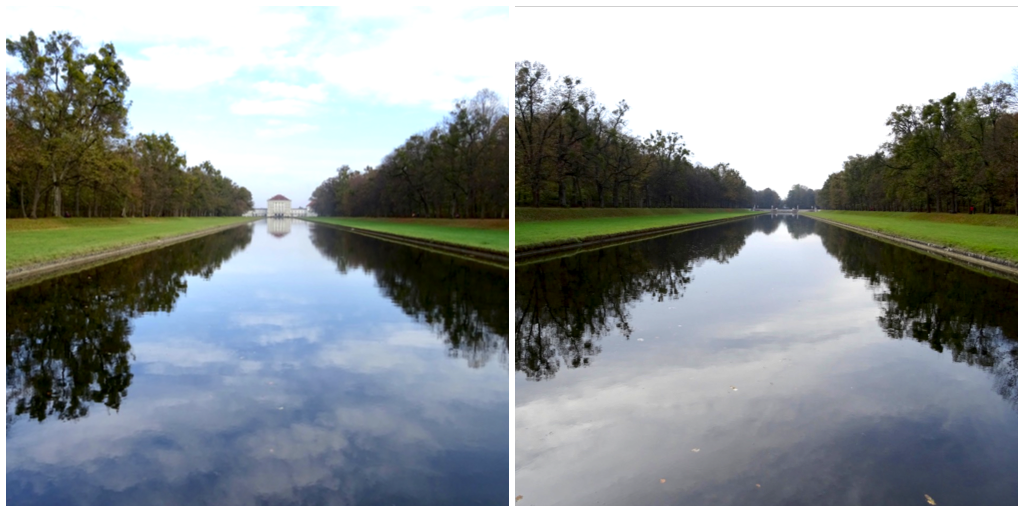
 This shows just how long the canal water feature is…looking towards and away from the palace on a bridge that crosses the canal. At one time gondolas sailedd these waters. Neat reflections too.
 Walking back towards the palace along a tree lined path.
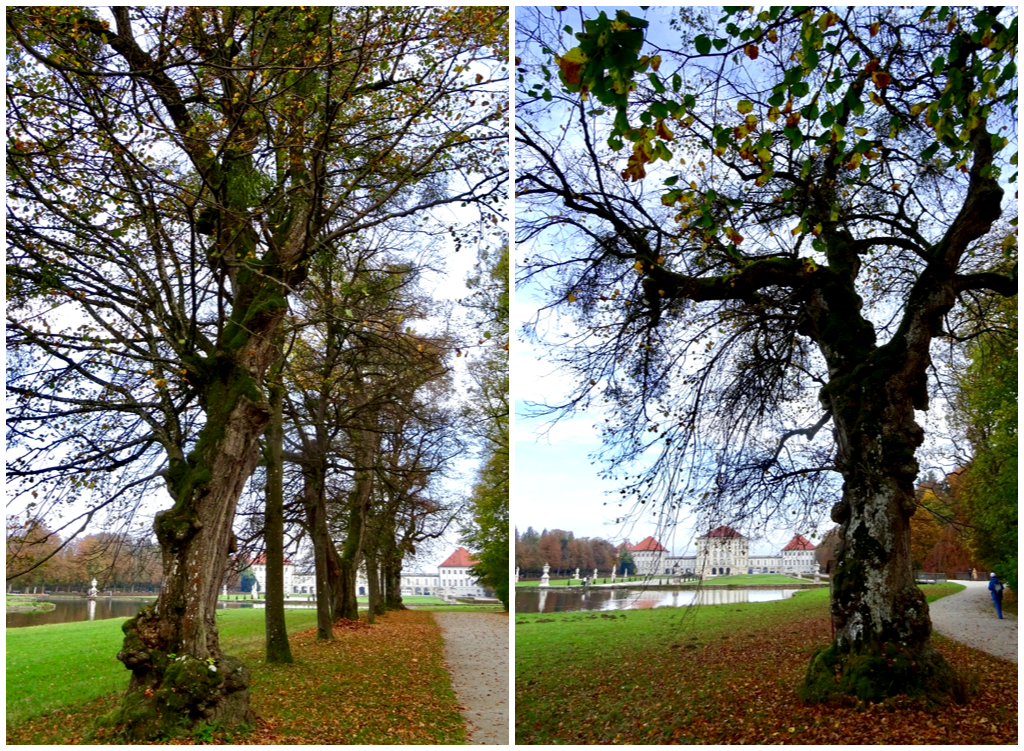 I liked the reflection of the palace in the water.
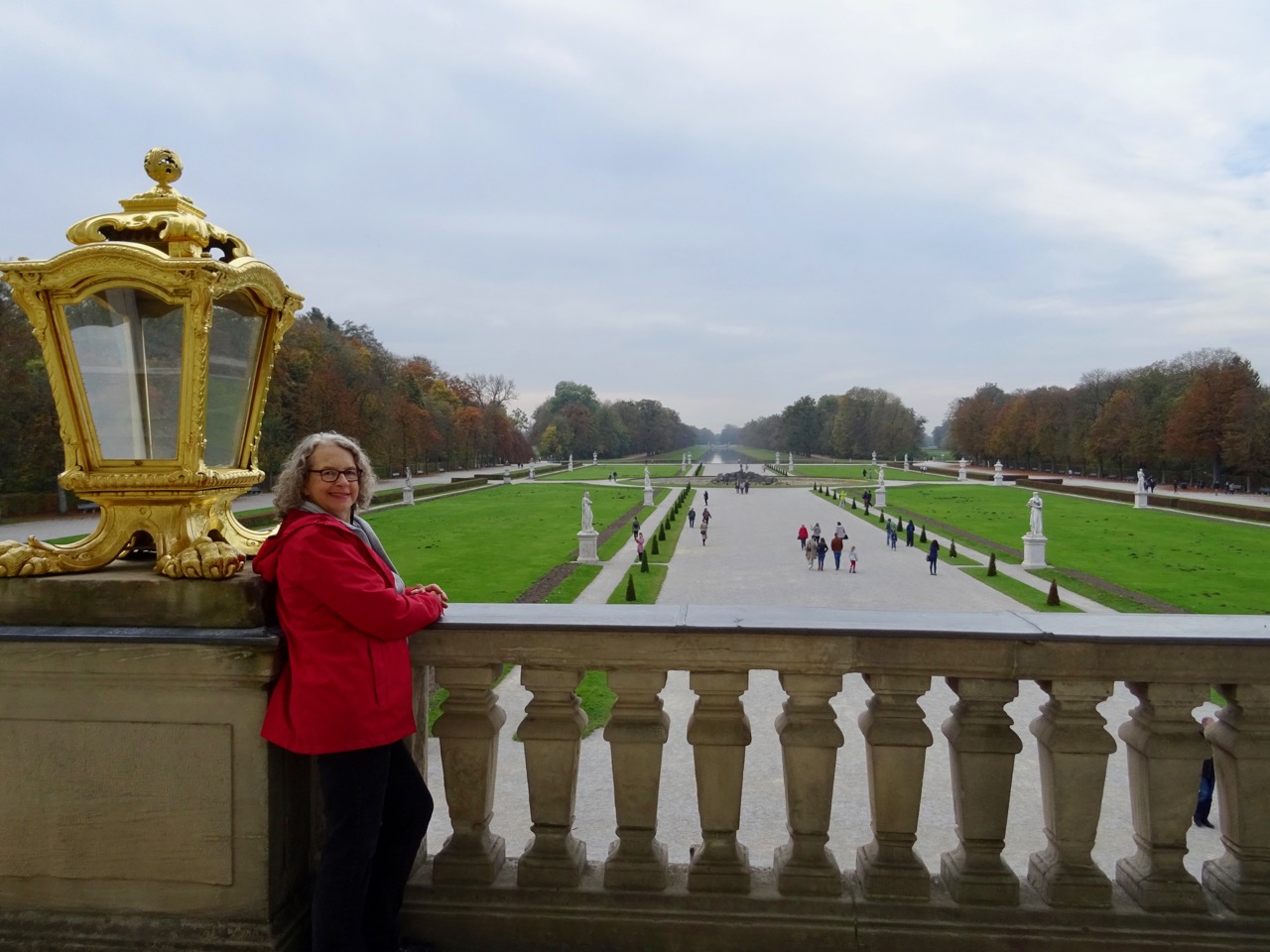
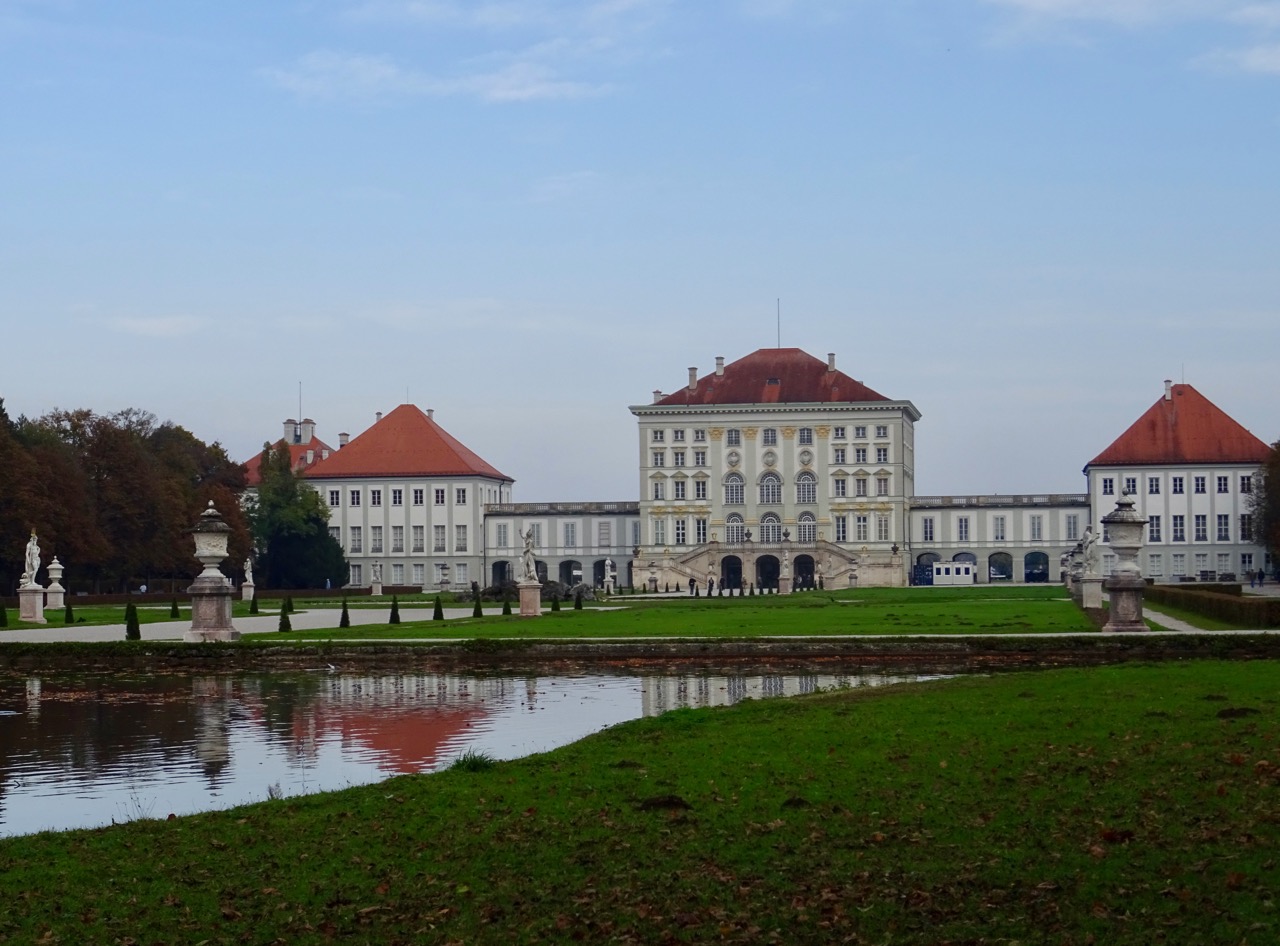 Looking out towards the garden from the Palace steps.
 It is almost closing time, but we manage a quick peek inside the Carriage museum, which is one of the most important museums of court carriages, travel and equestrian culture in the world. The Coronation coach of Emperor Karl VII is here…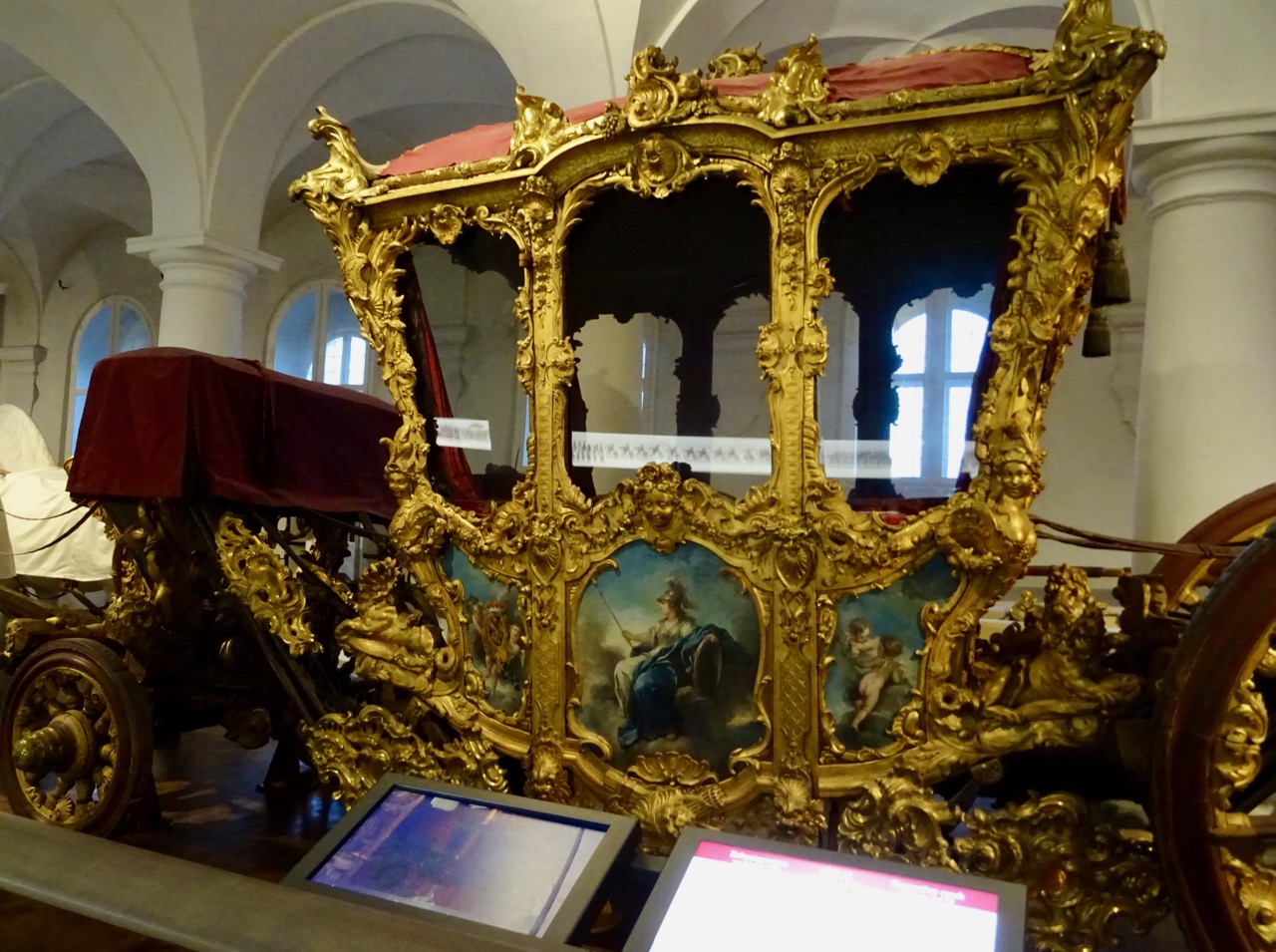
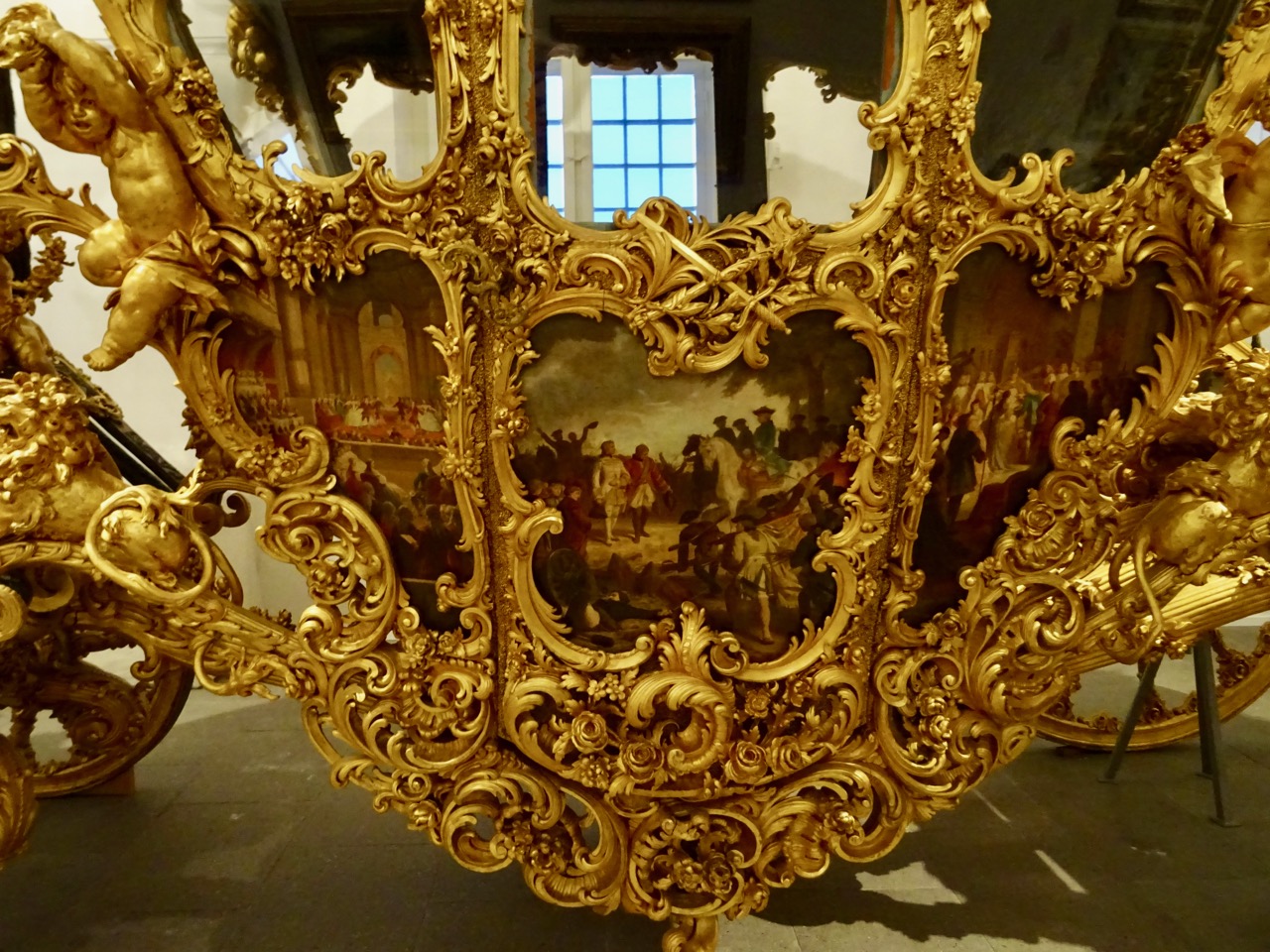 We can only begin to imagine how much these coaches cost!
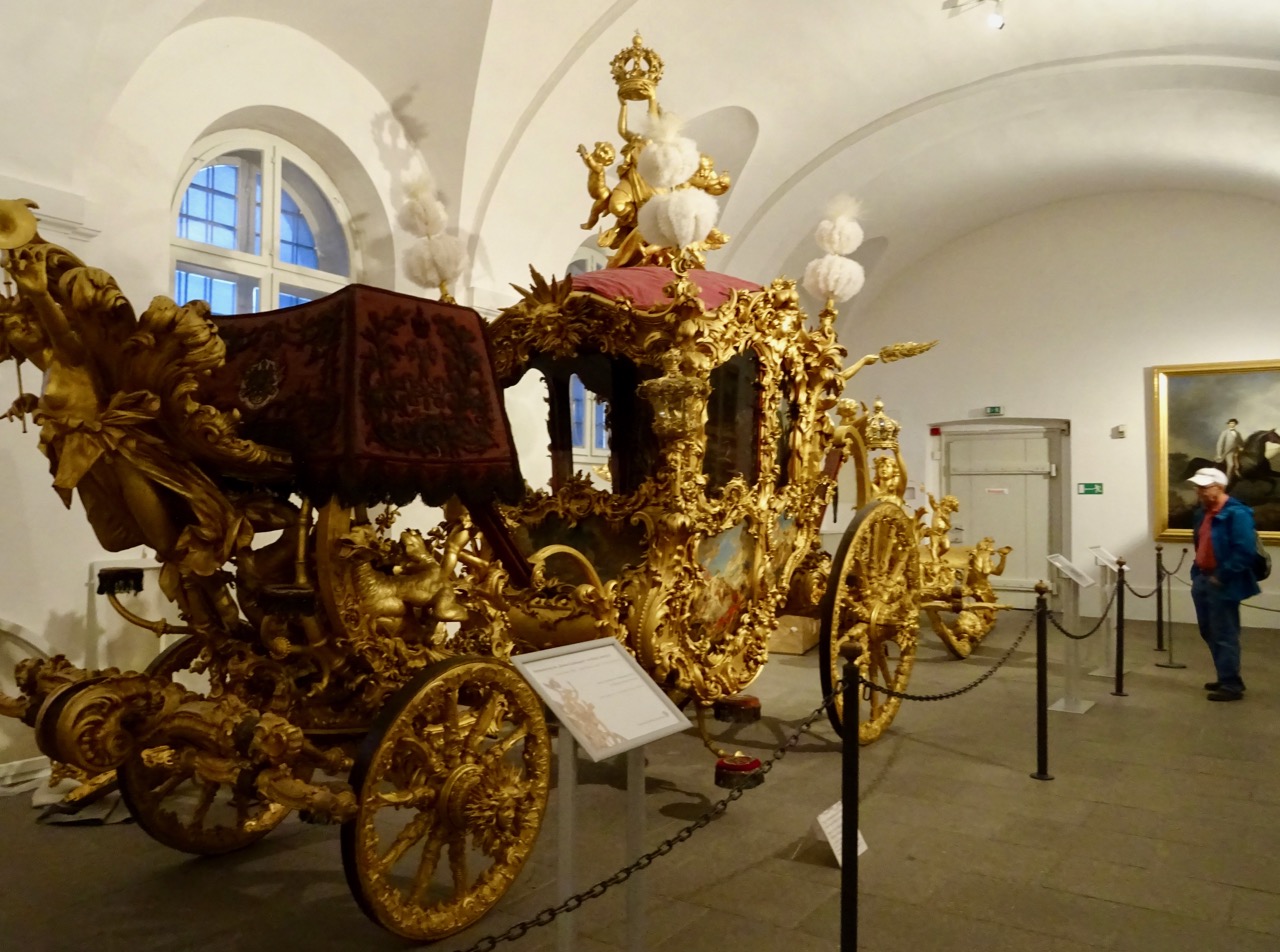 Besides dozens of coaches there are numerous sleighs on display.
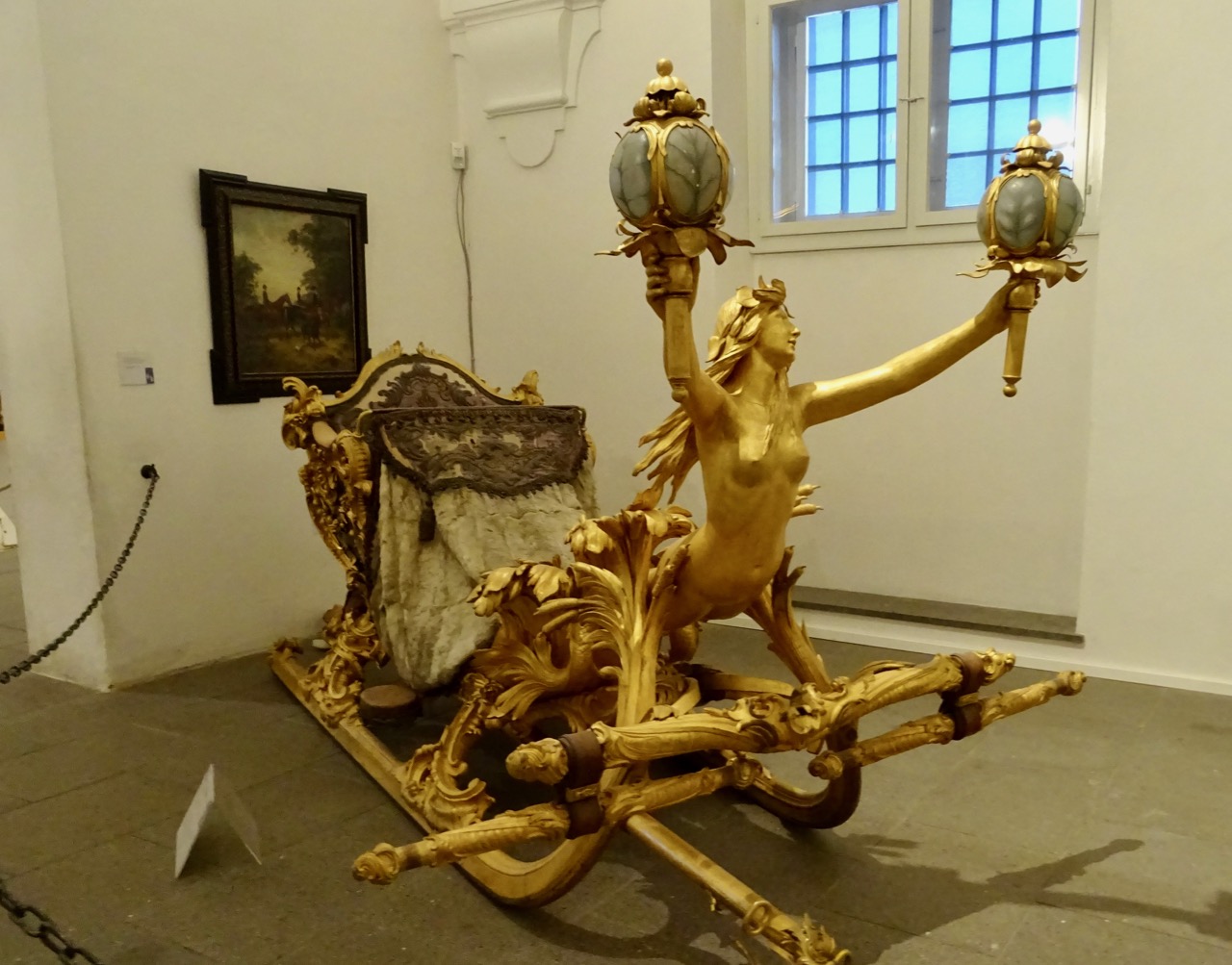 Parades and competitive games with these carousel sleighs were a popular winter amusement at court. Women would sit in front of a male driver and try to hit rings or paper maché figures with a lance or sword. Notice the rear view of the sleigh in the mirror.
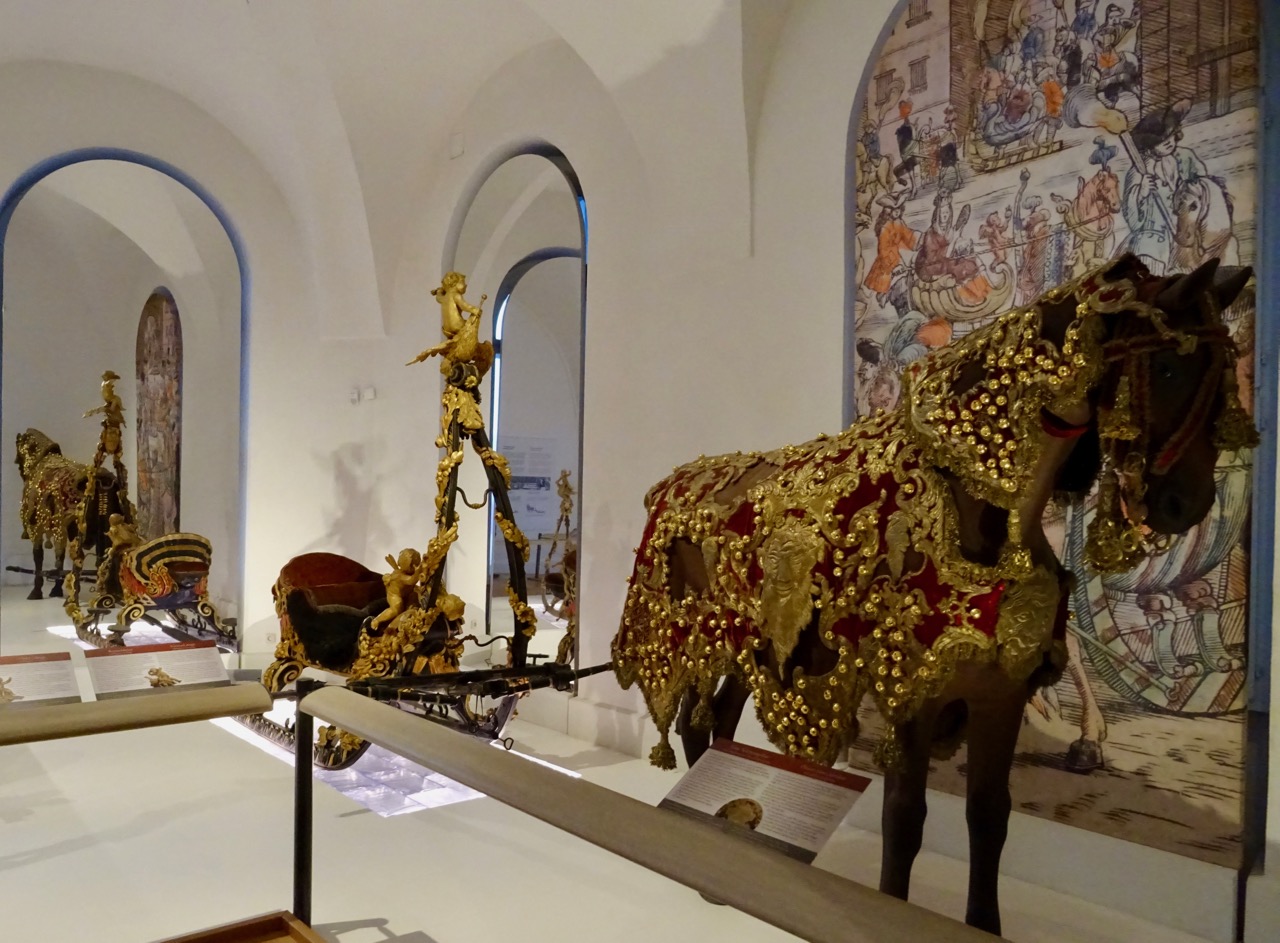 Just a few of the many coaches on display in one of the halls.
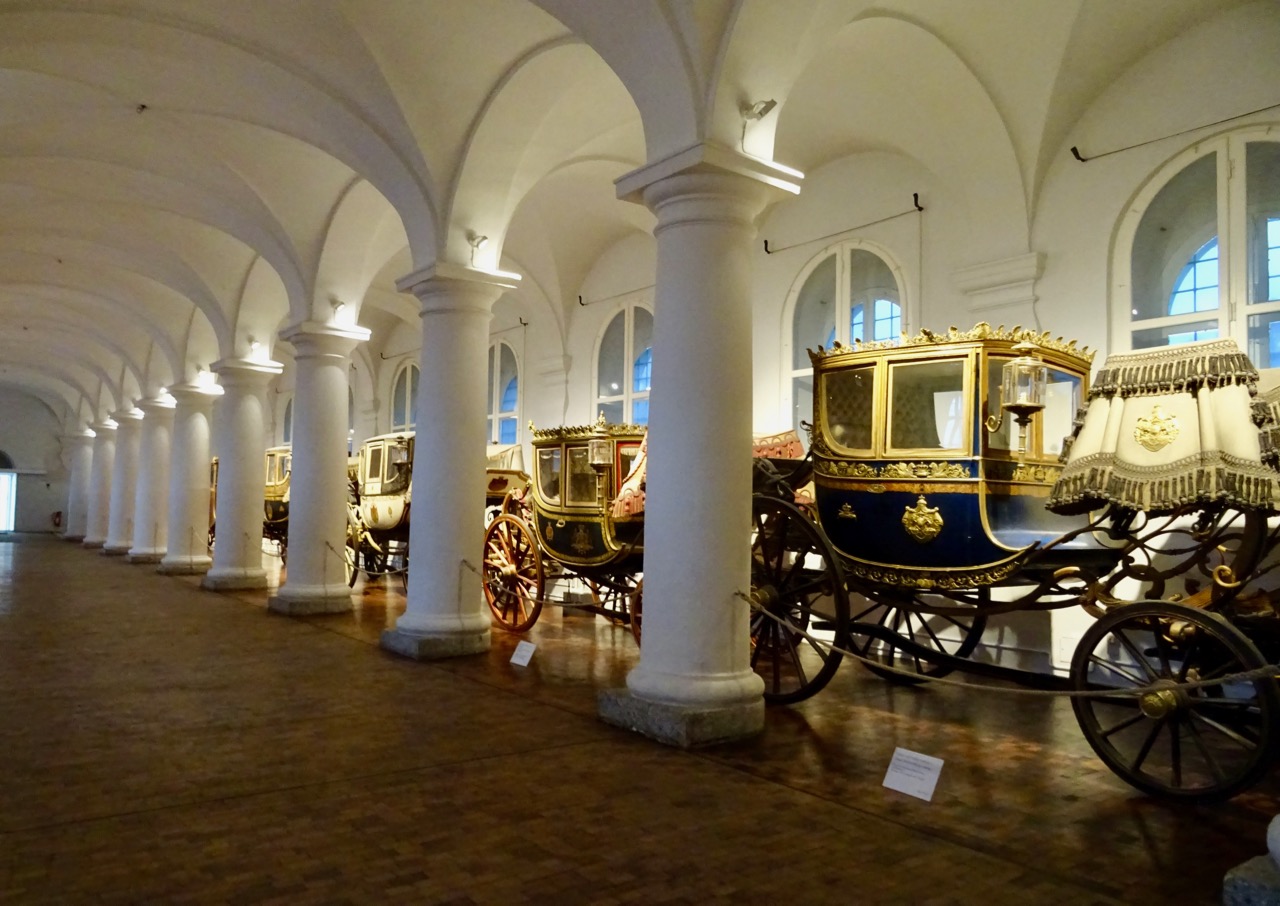 One last selfie before we leave.
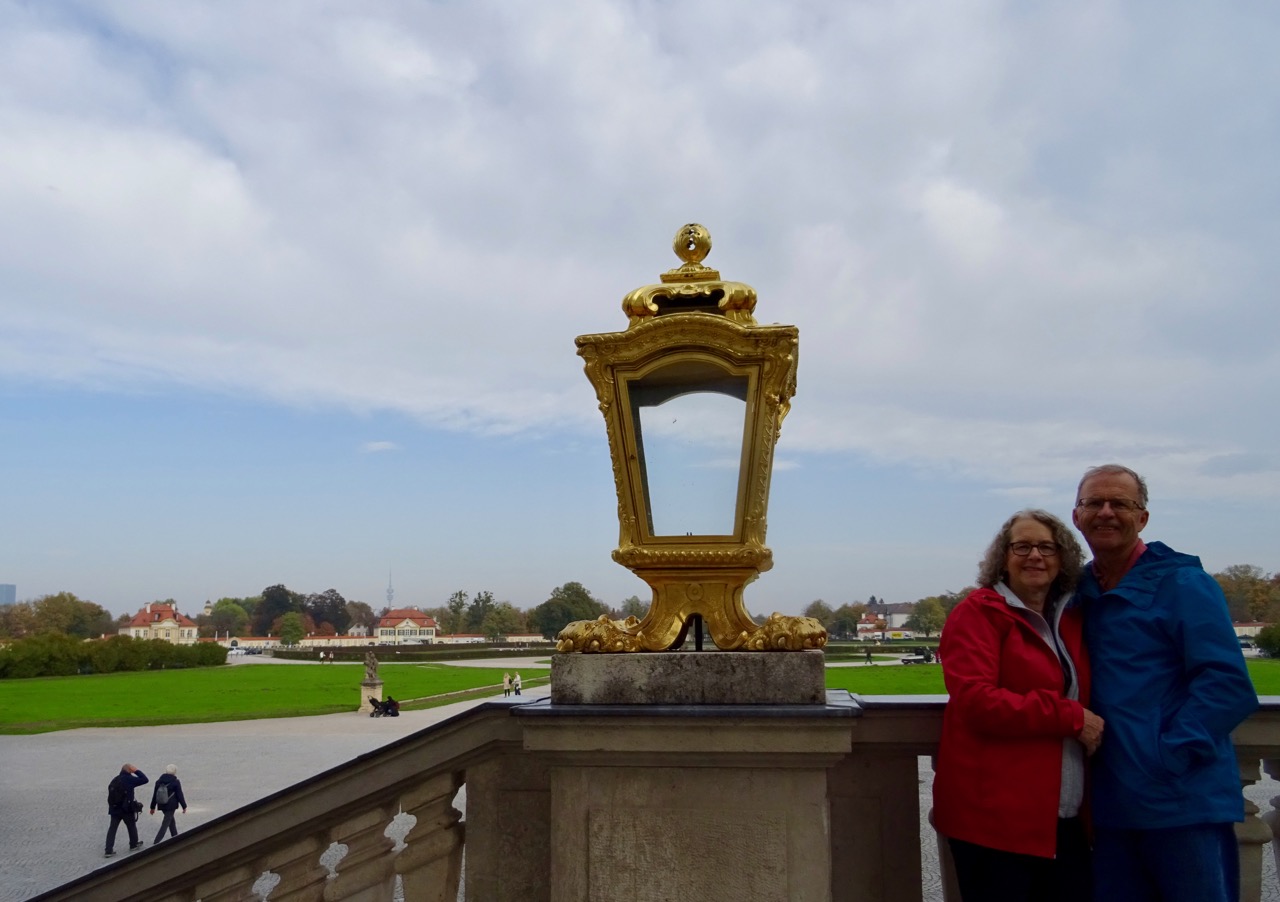 and one last look back towards the front of the Palace…
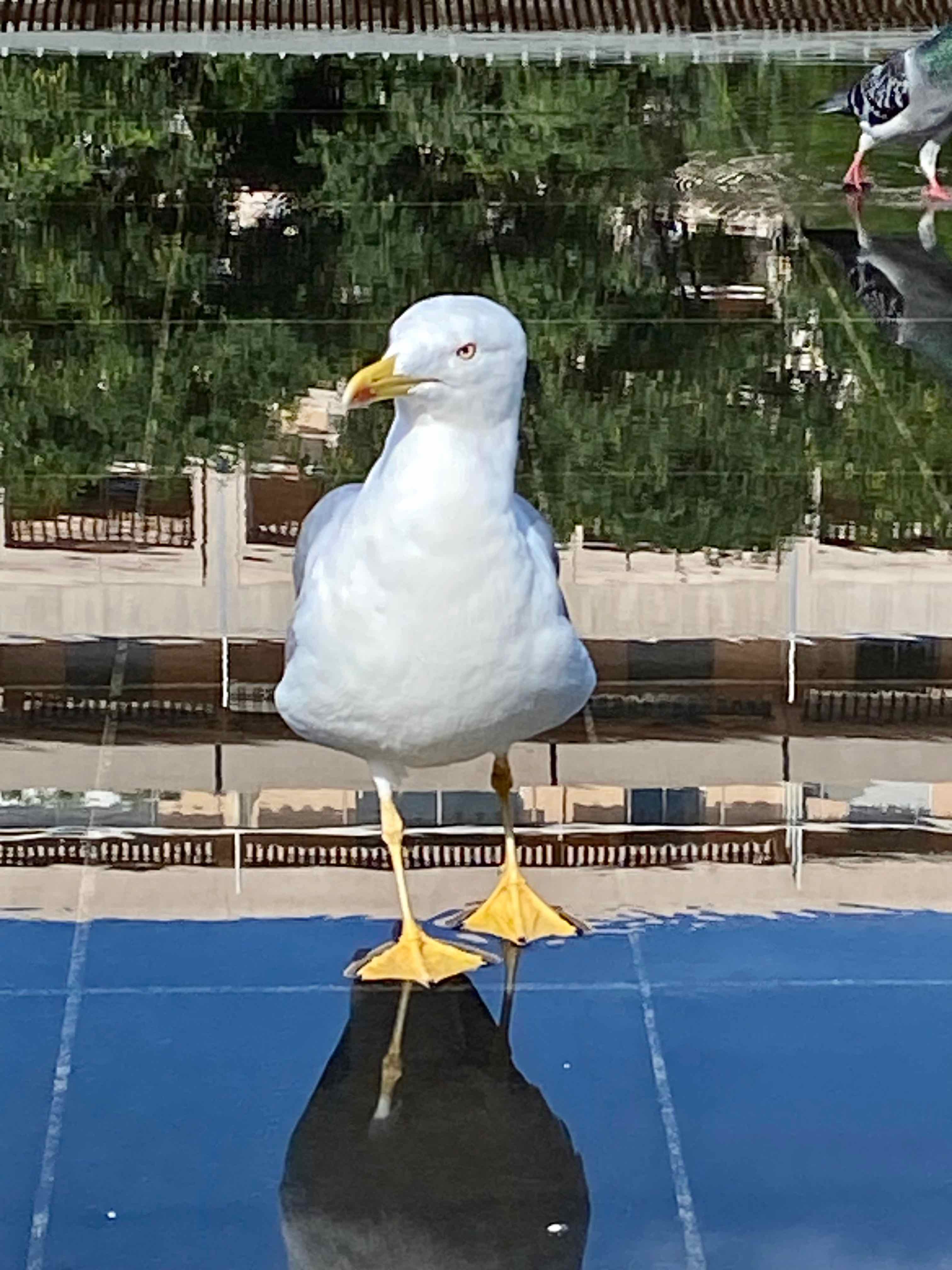
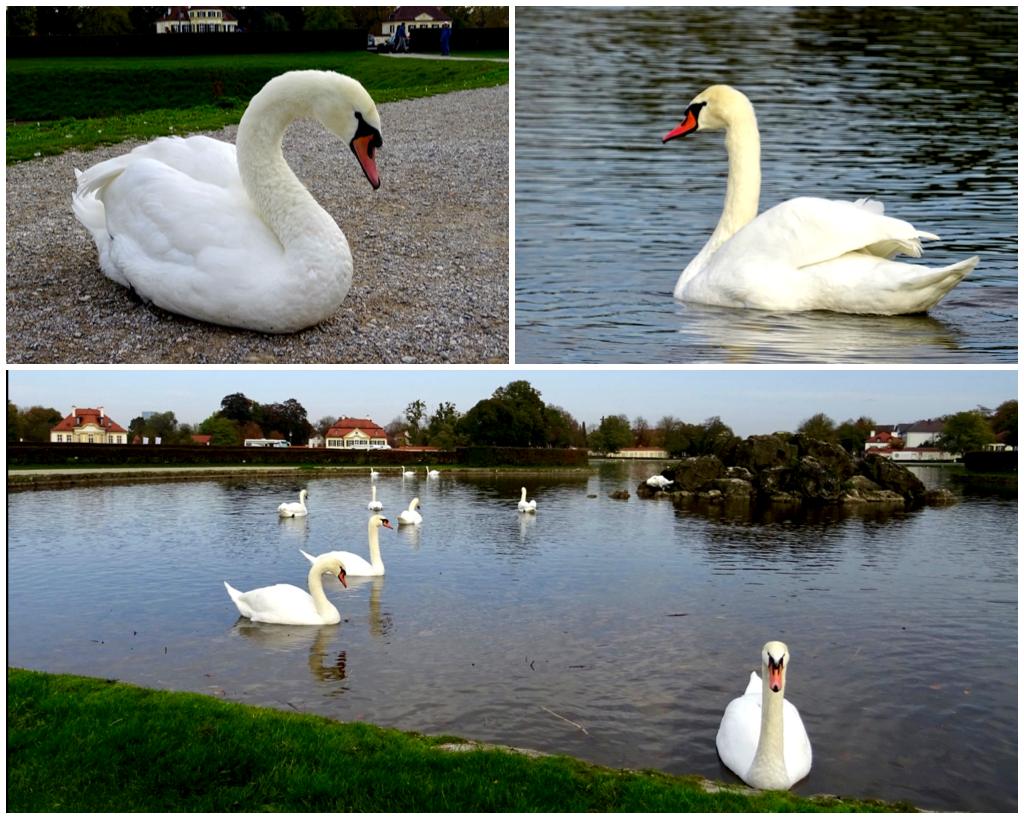
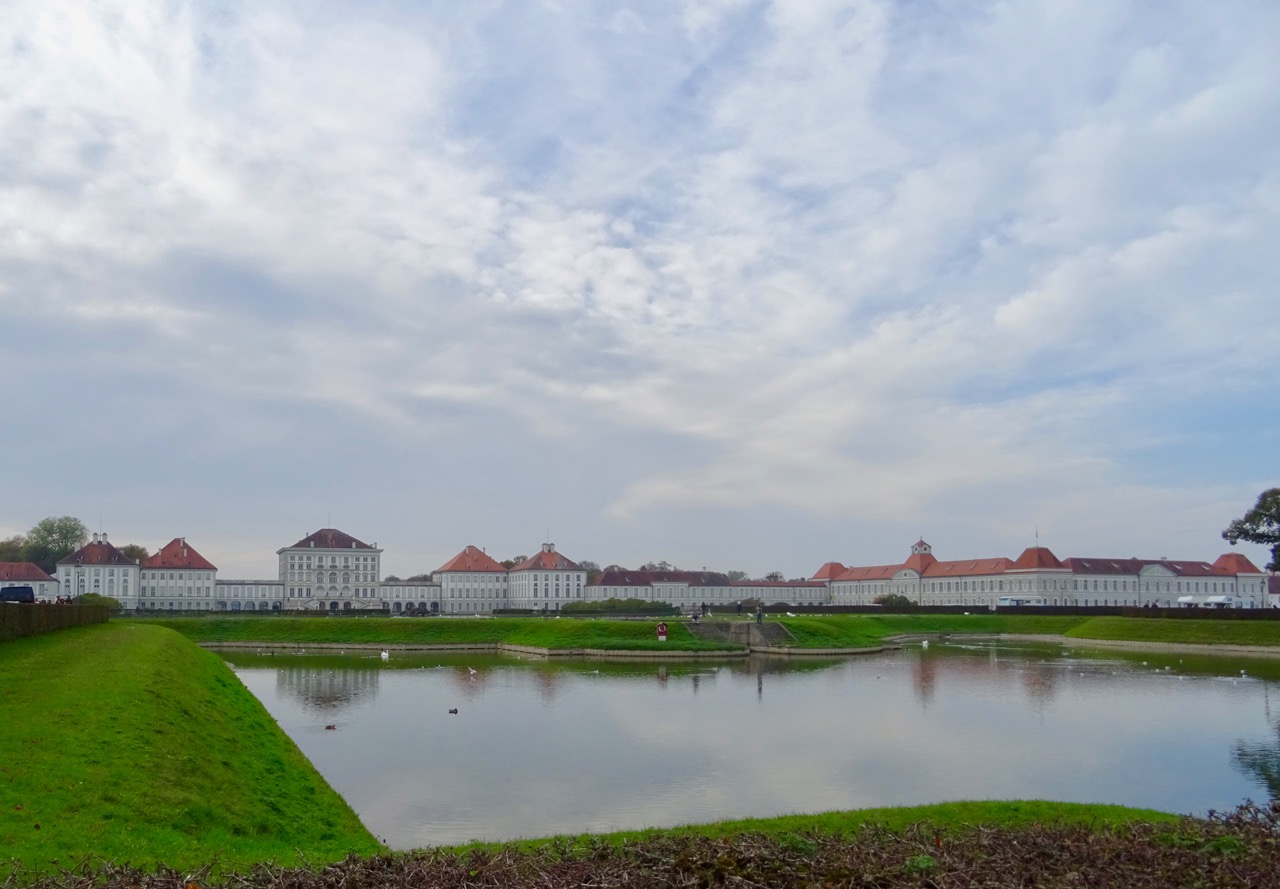 with a photo stop at the swans.
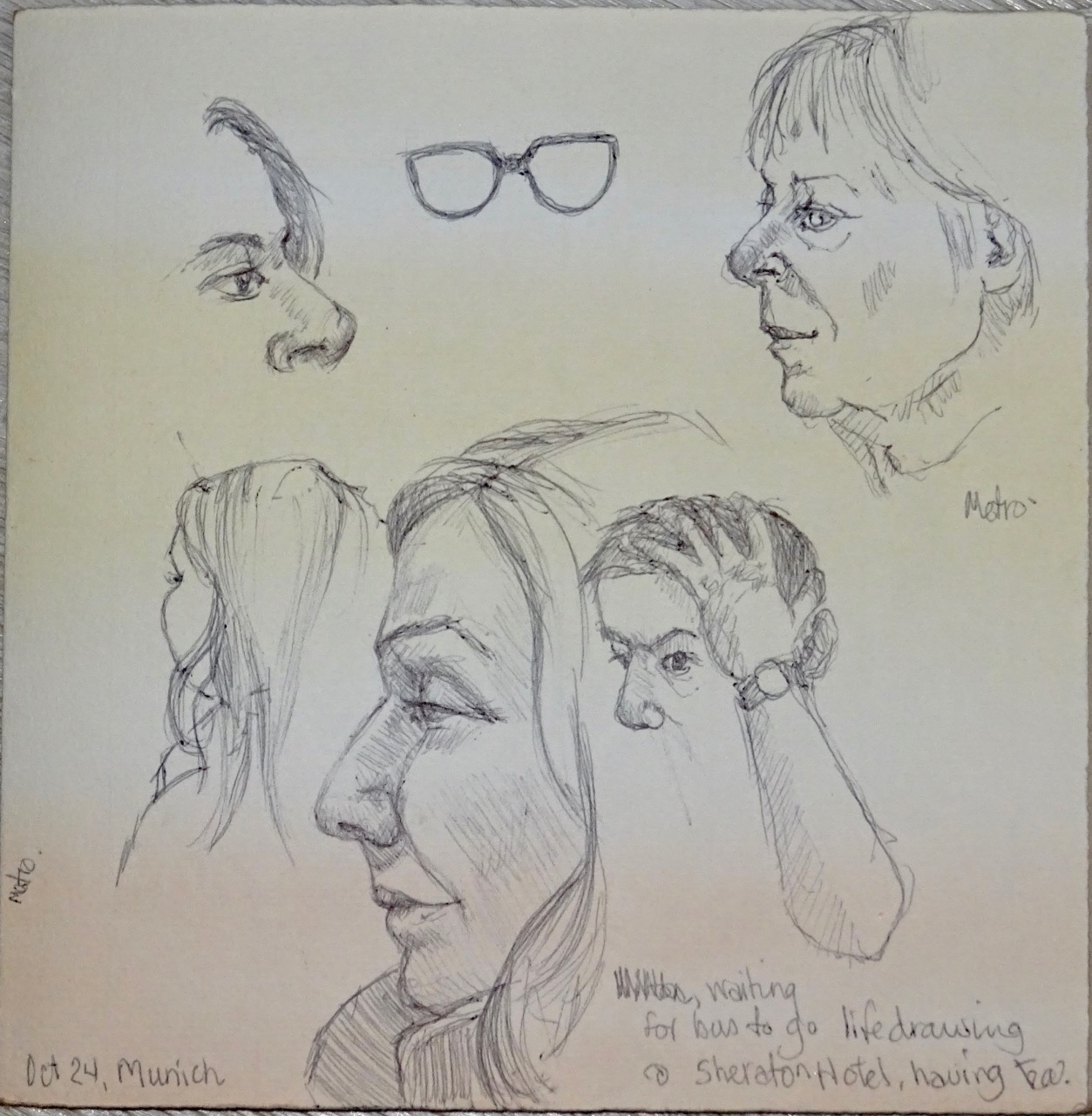
 I have life drawing tonight, so we head toward the metro and after checking out my route, Bob heads for home and I head towards my drawing session. I have a bit of time so I sit at the Sheraton Hotel having a cup of tea and doing a bit of sketching.
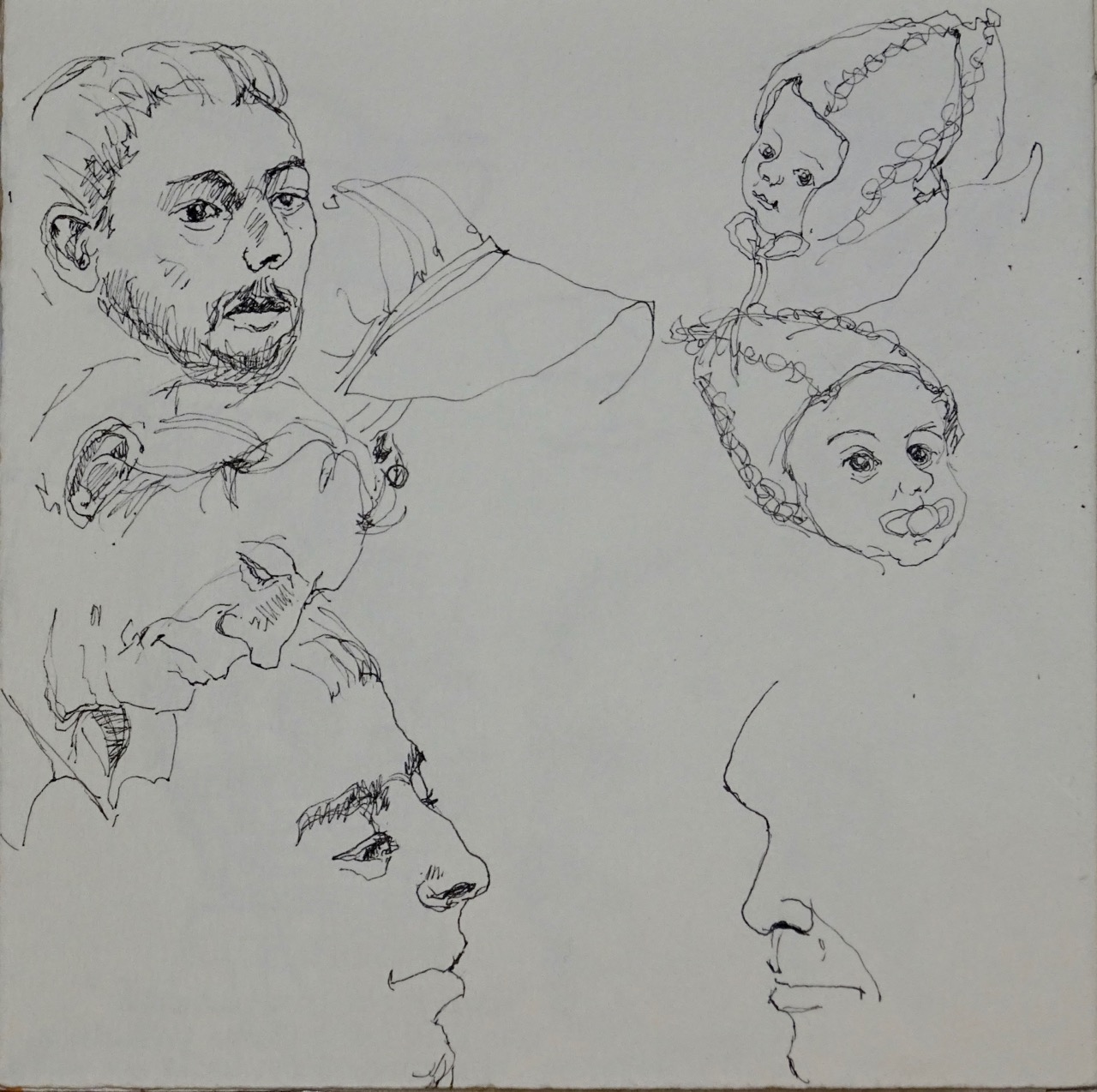 These were a bit better.
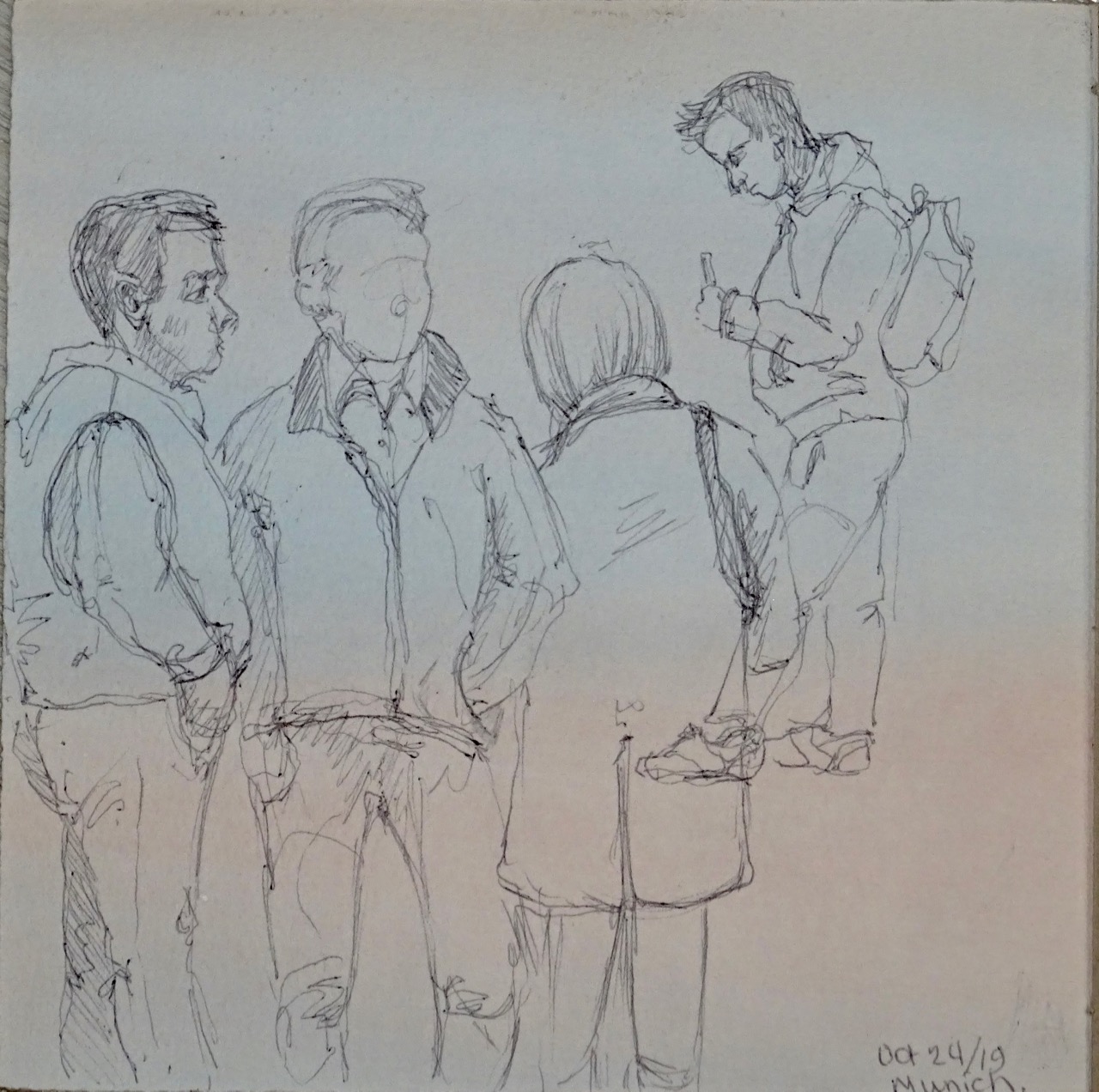 Sketches from the Sheraton Hotel.
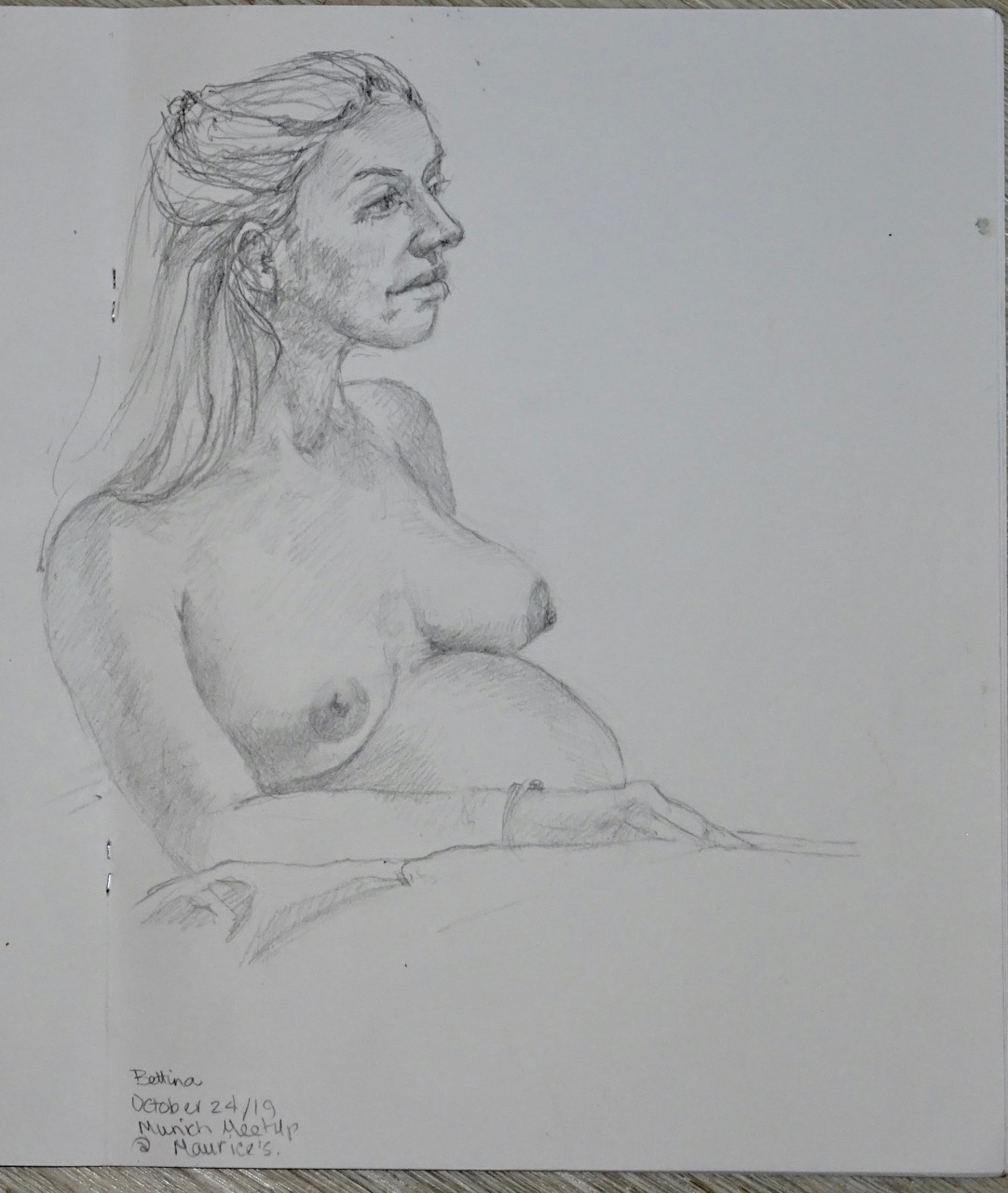
 My first drawing at the Meetup session. Still having some issues with proportions and the head placement in relation to the body.
 I started again after our break and did this portrait which was better. Bettina, our model, really liked it and said that it looked like her.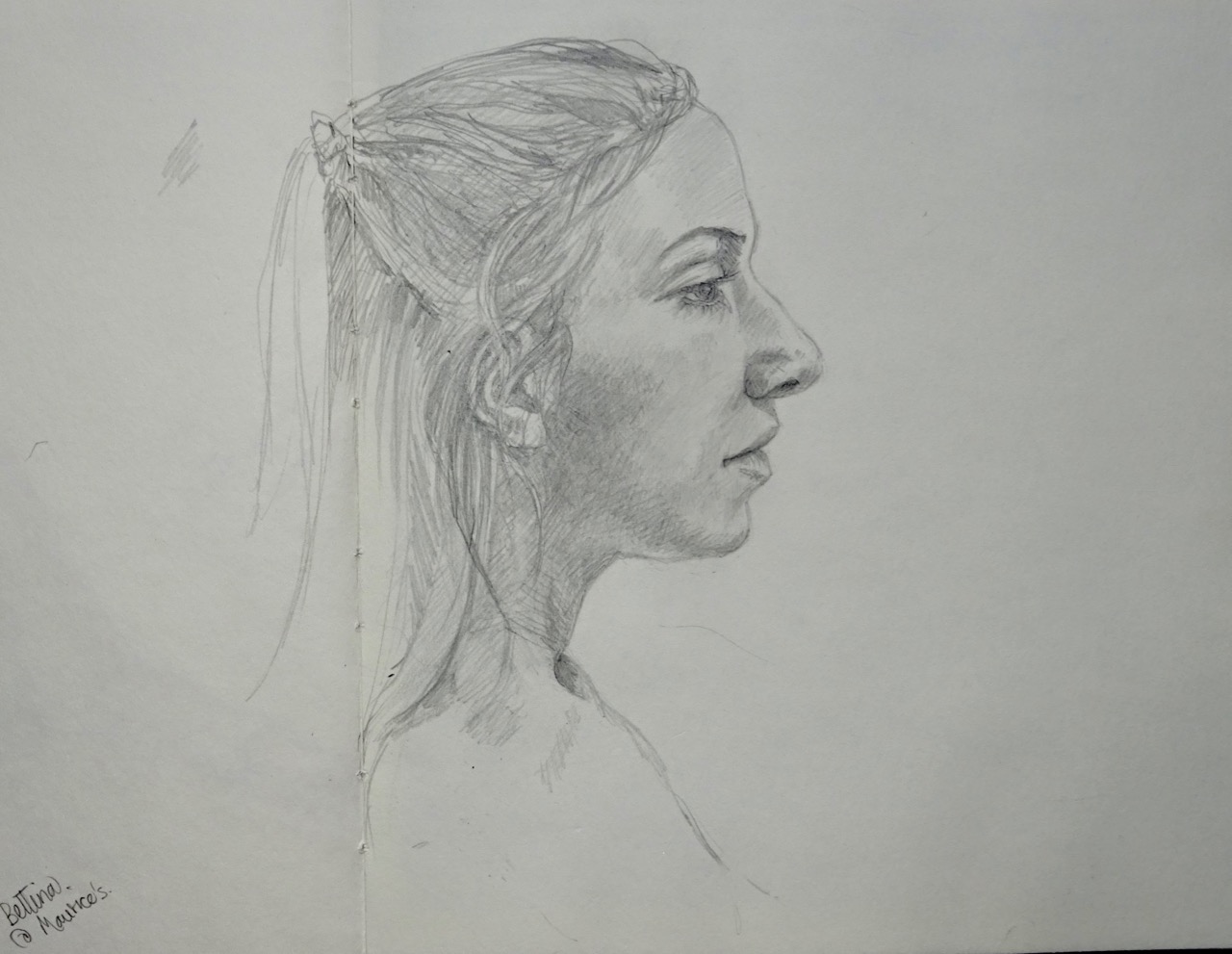
 trudymason.com