Day 82, Friday, November 15, 2019
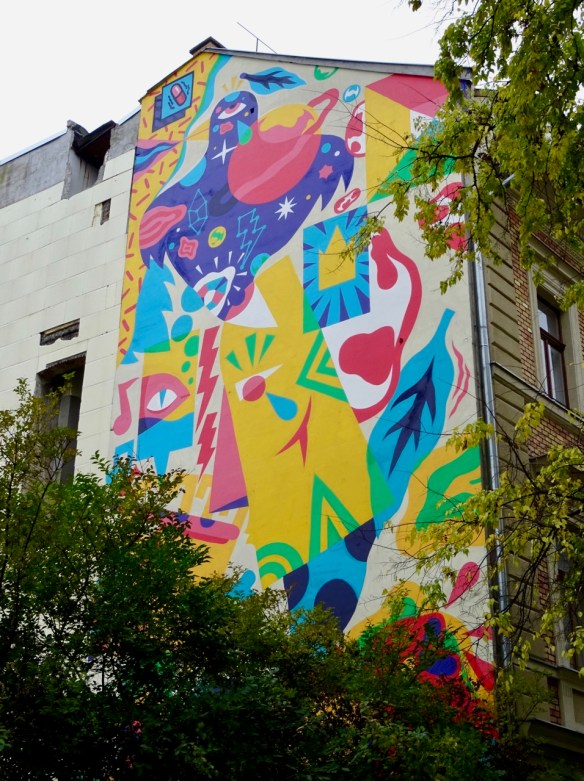
We walk through the Old Jewish Quarter this morning. These murals are on buildings within a block of our apartment.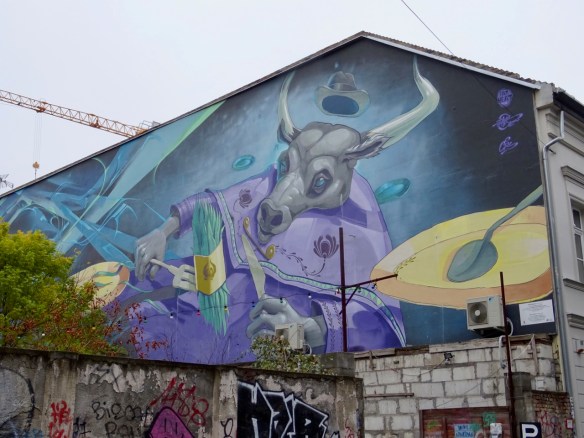 Many of the buildings in this neighbourhood are old and in need of repair but the murals do brighten up the neighbourhood.
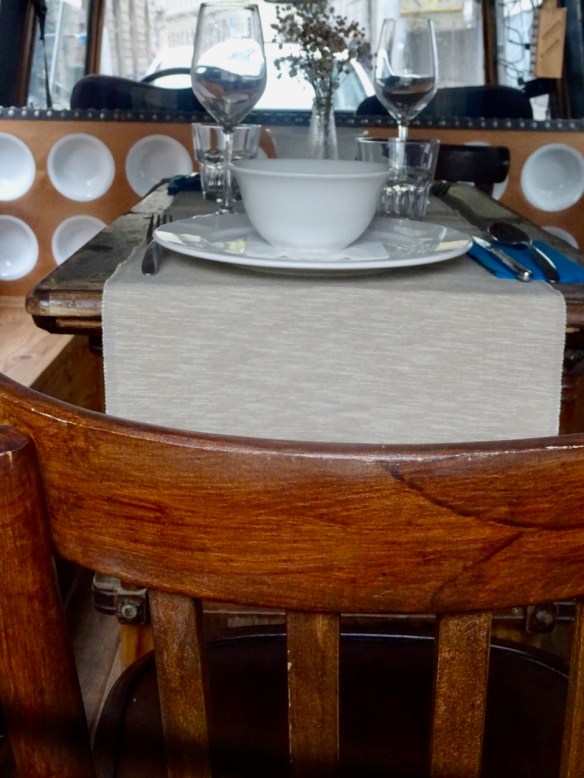
 Bob tells me to look inside this little blue van…
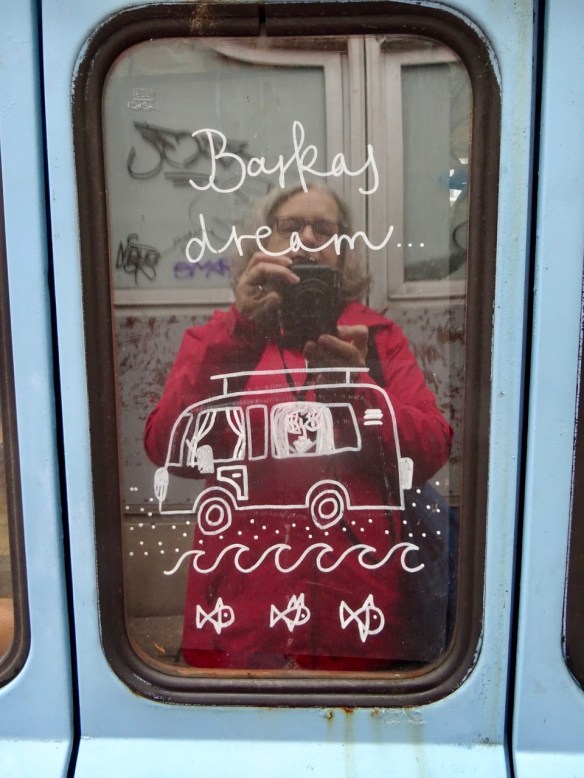 It is set up as a little dining room! It is kind of cute, except I look in the front seat and it is dirty and cluttered with junk. Not very appetizing,
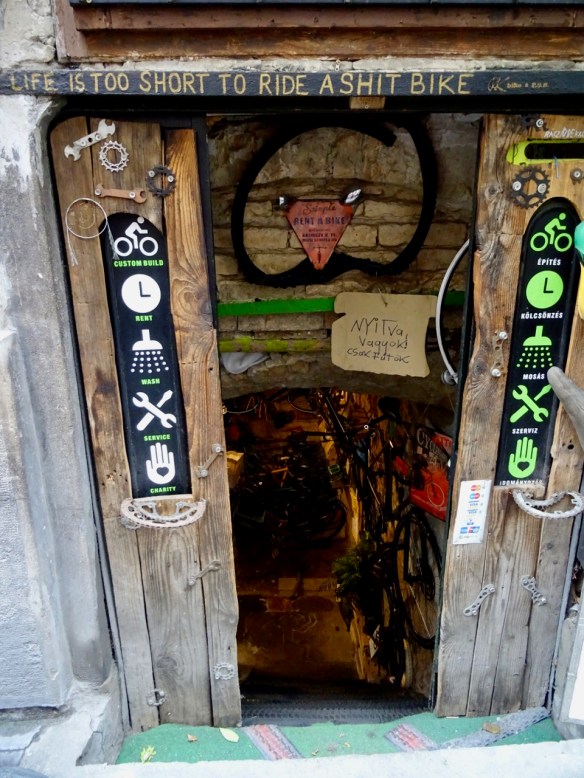
  There are many shops and workshops tucked into the buildings on narrow streets, sometimes even in the basements, like this bike shop. I think my bike riding daughter will appreciate the sentiment of the sign above this door.
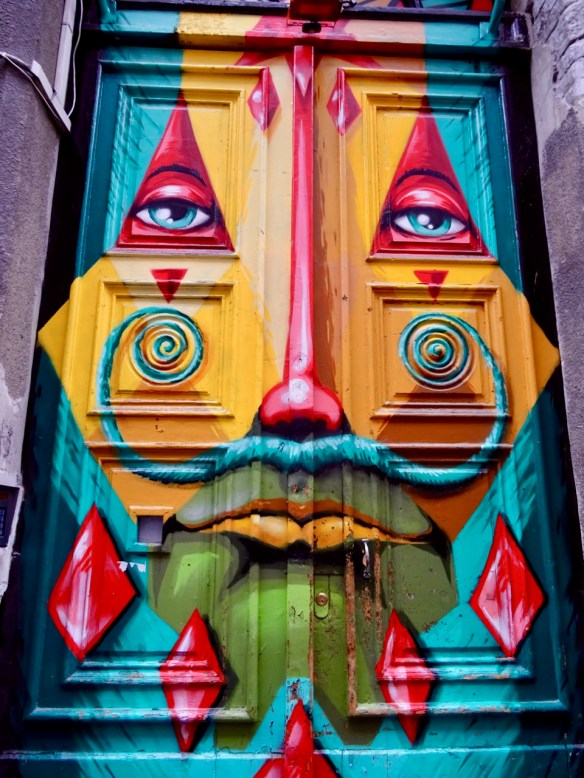
 This is probably one of the most colourful doors I have ever seen.
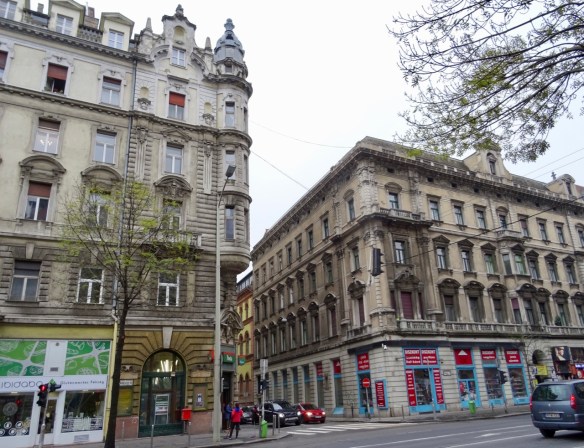
 The buildings here have very interesting architectural details.
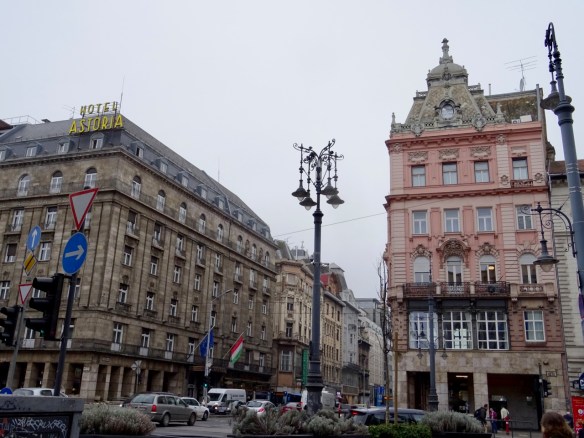
 Seems every city we have ever been in has an Astoria Hotel!
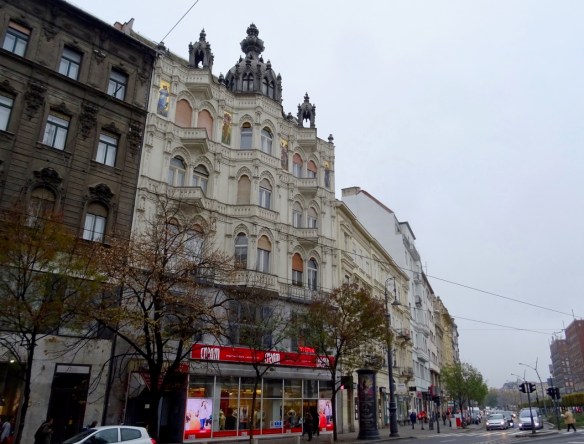
 Loved the room at the top of this white building. Imagine living there.
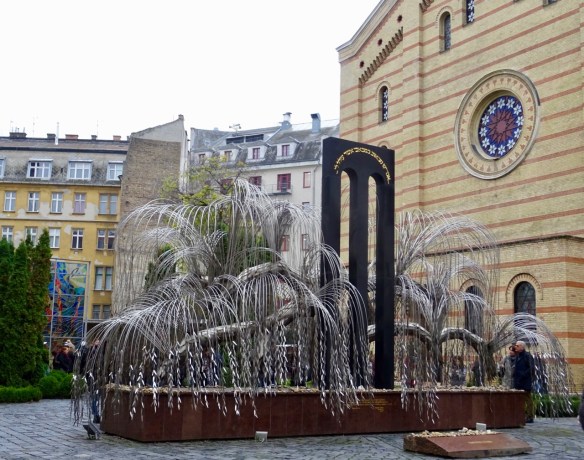
 The Holocaust Tree of Life Memorial was funded by the late American actor Tony Curtis in memory of his Hungarian-born father. The names of 30,000 Holocaust victims are engraved on the leaves of the metal tree. The tree resembles an upside down menorah and is located on top of the mass graves of thousands of murdered Jews.
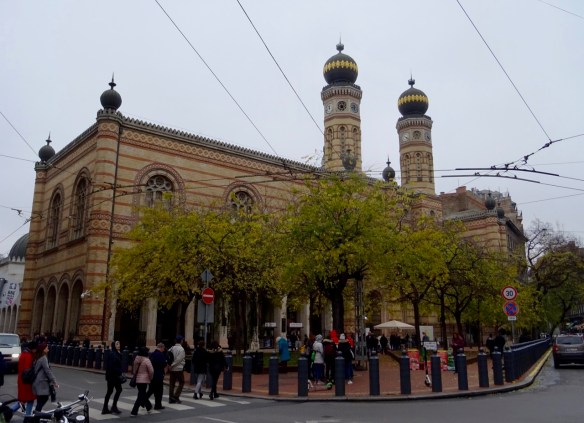
 The tree is located behind The Dohány Street Synagogue which is also known as the Great Synagogue. It seats 3,000 people and is the largest synagogue in Europe and the third largest in the world. We didn’t have time to go inside because we want to go to a thermal bath today.
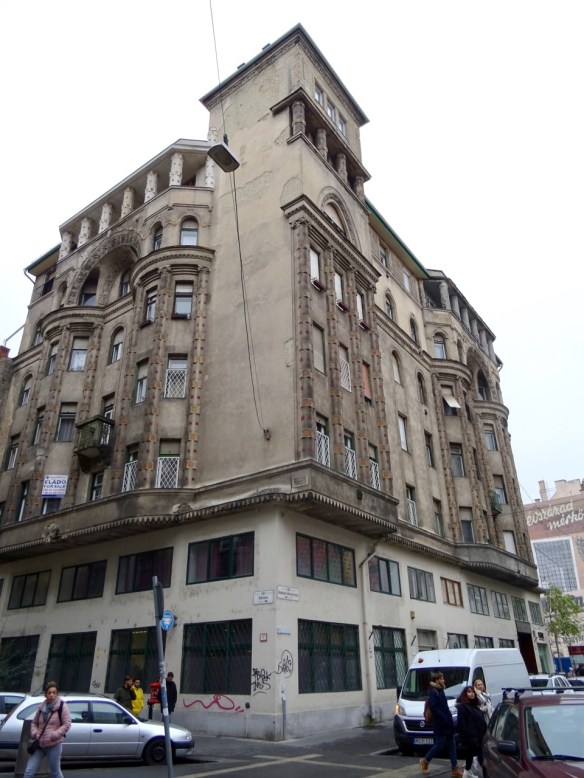
 One more interesting building on our way back to our apartment. The top doesn’t seem to belong to the bottom.
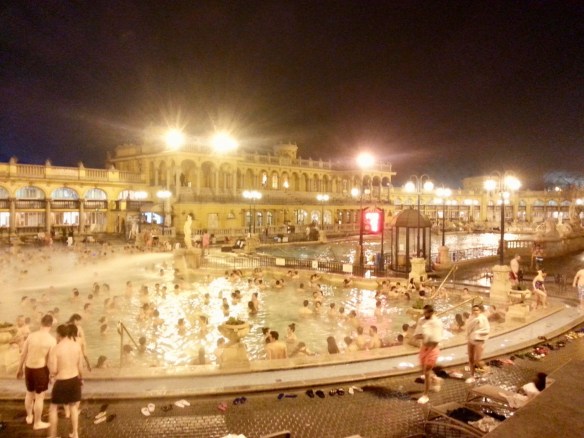
 The Széchenyi Spa Bath in Budapest is the largest one in Europe, with 15 indoor and 3 large outdoor pools. Its water is supplied by two thermal springs. Here is the floorpan of this huge complex.
We start out in this pool with a fun whirlpool-like circular ‘river’ that pushes you around it very quickly. 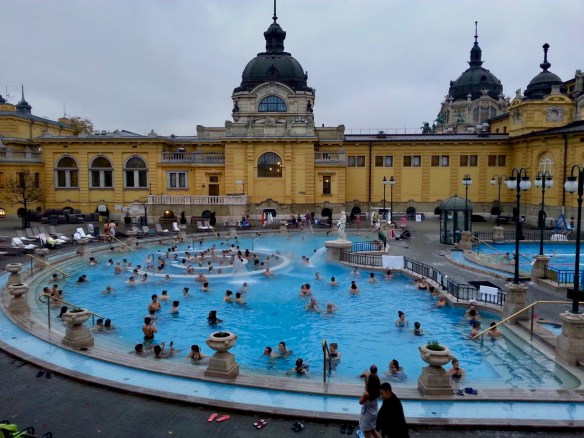 This pools for lane swimming, not for us today.
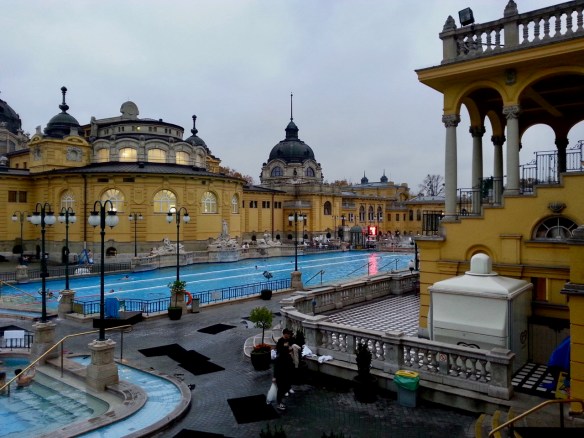 We like this pool as it is warmer than the first one.
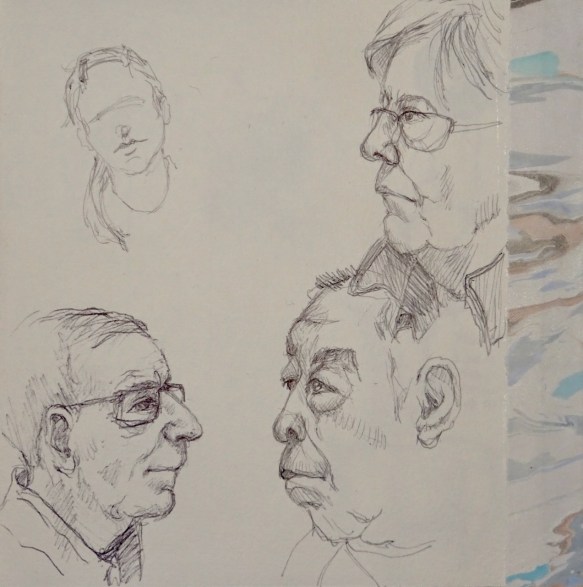
  Inside there are fifteen more pools. This is one of the warmer ones and the only one that has comfy lounge chairs, so we stay here for a while. I sit beside Bob, in the corner and do some drawings of the bathers. Budapest didn’t have any life drawing classes, or at least none that I could find, so this will do instead.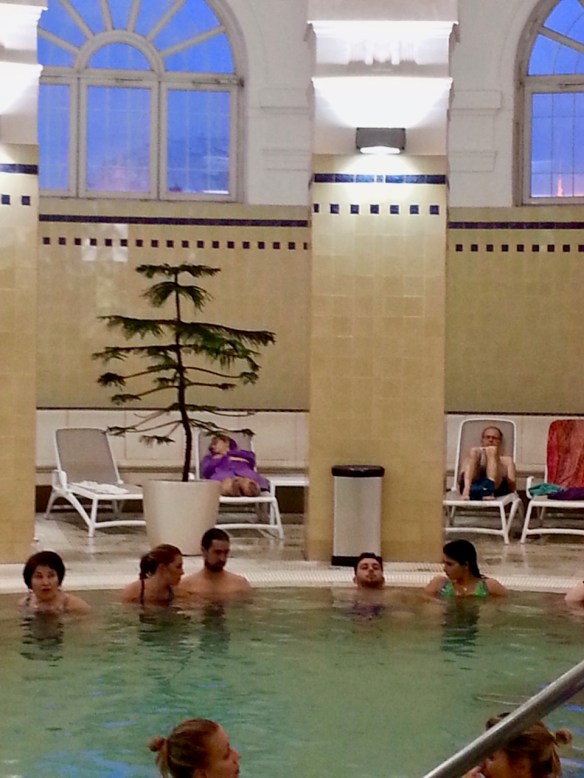
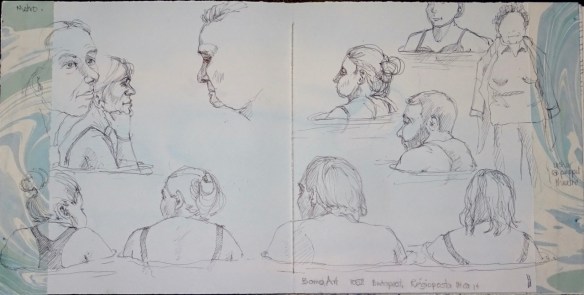
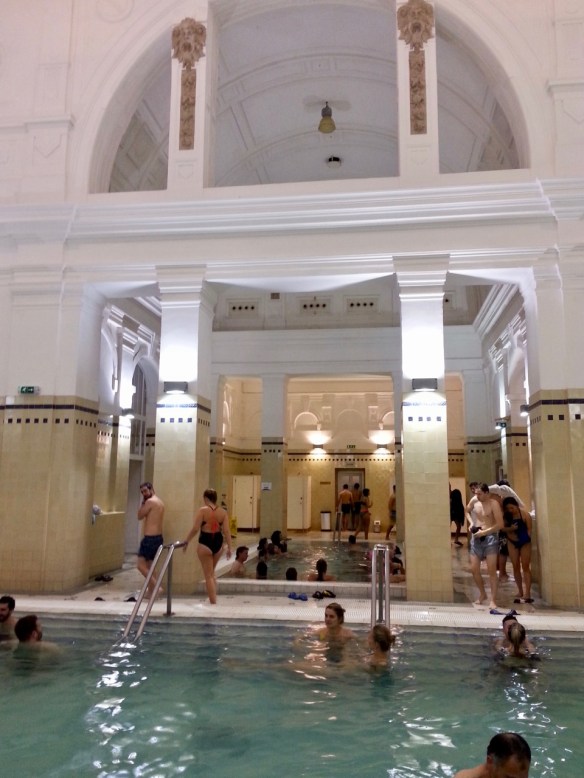
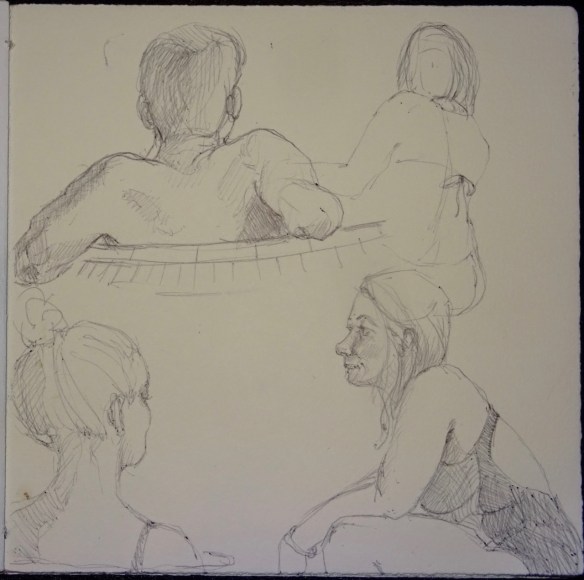 The building is magnificent but it is starting to show its age here and there. I think it might need a renovation before too long. This is a great place for people watching, and we do come in all shapes and sizes!
 By the time we go back outside it is dark, and the steam is rising from the pools. We were thinking of taking a boat ride on the Danube tonight but we decide to stay and enjoy more time here.
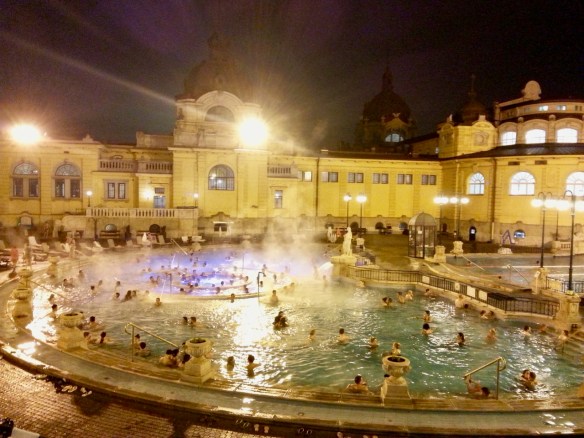 There are more people now than when we first arrived, and most of them are much younger than us. We see a few other grey-haired ‘oldies’ but we are few and far between. We spent more than five hours enjoying the baths, and we both feel nice and relaxed.
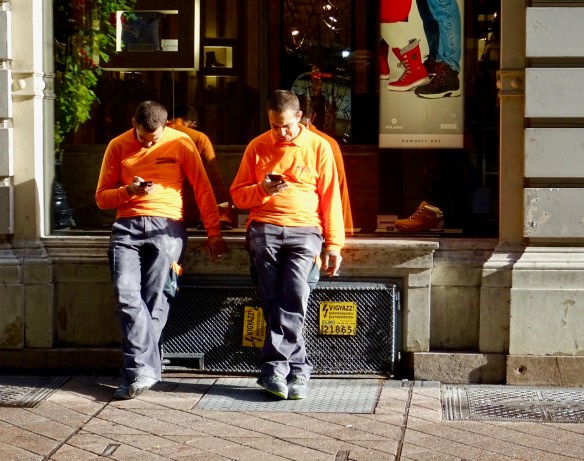
 I laugh watching these two guys. They are dressed the same, stand the same and both are smoking and looking at their cellphones. They even both take a drag on their cigarettes at the same time!
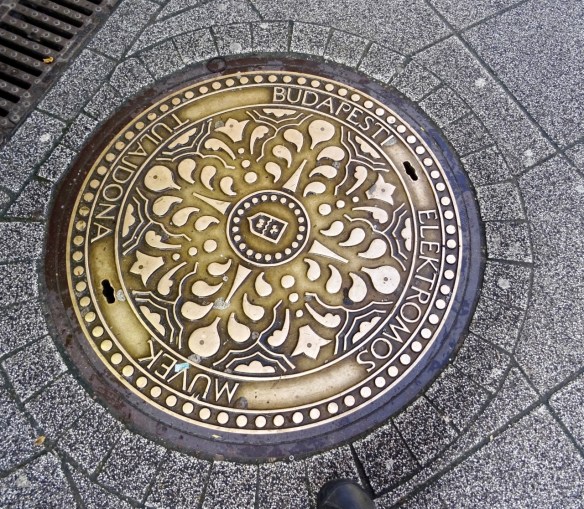
 Budapest has very pretty manhole covers.
 Bob tells me we are going to the top of that hill across the Danube River on the Buda side of the city. I am quite happy to hear there is a bus that will take us most of the way.
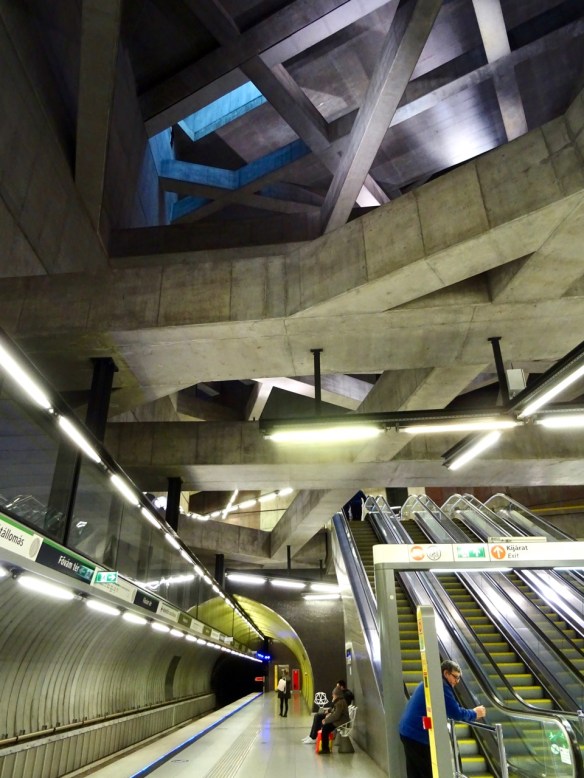
 The metro stations in Budapest are very deep underground. They were built so that they could be used as bomb shelters. I wonder what would happen if a bomb fell above a station full of people. How would they get out…would they be trapped by all the rubble? Then I decide that they could walk down the tracks and maybe get out at another spot. Bob says I think too much!
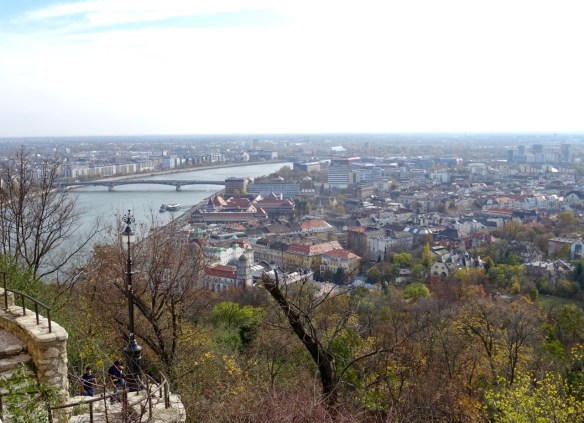
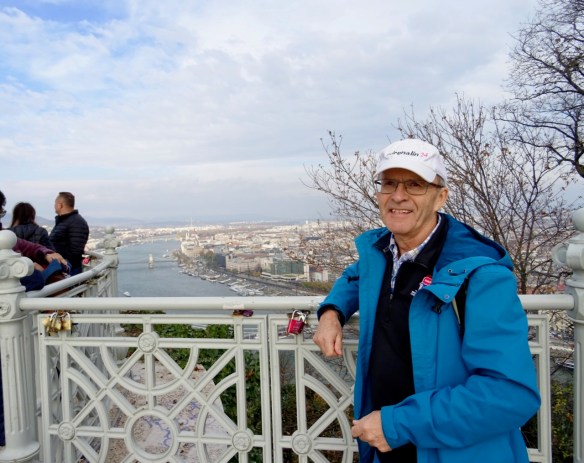
 We are on top of Gelléert Hill and it was only a short climb from the bus stop. There are great views of Budapest looking to the East…
 and the West.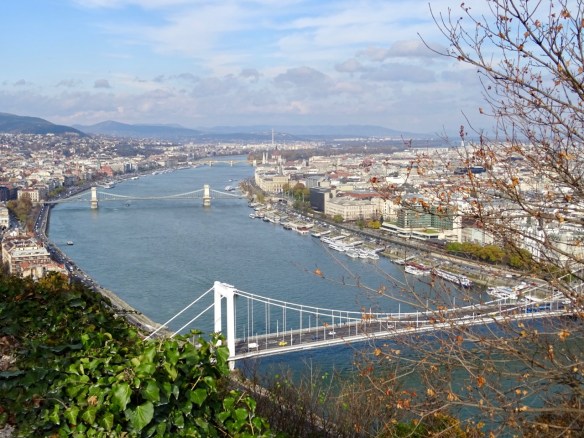
 Bob called me over to watch an older man operating a shell game near here. He had a cardboard box and three shells, and people bet on which shell a pea was under after they were shuffled. We were astounded that he was able to convince people to bet 400 or 500 euros.
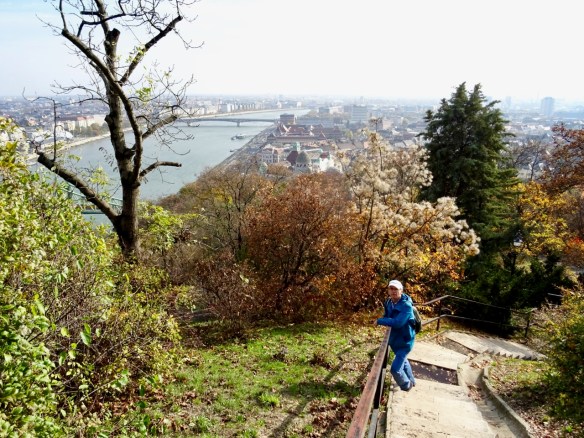
  It is getting windy so we start down the hill. We are walking down…
 through a park with lots of trees…
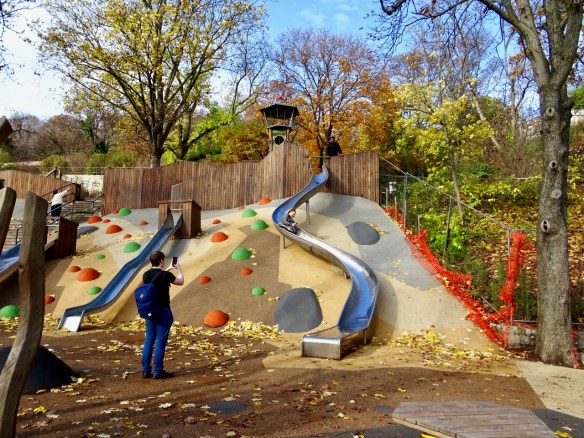
 and a couple playgrounds. This one takes advantage of the hillside. We tried this slide too.
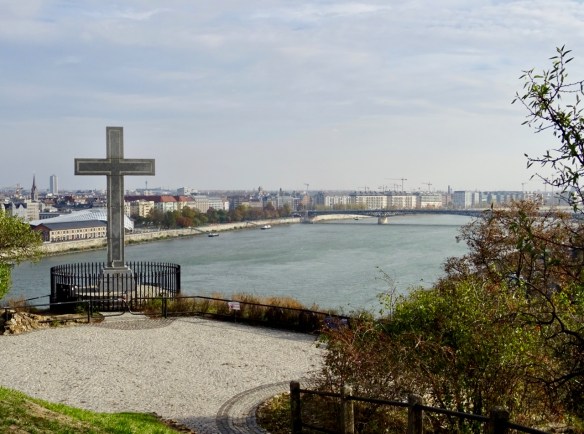
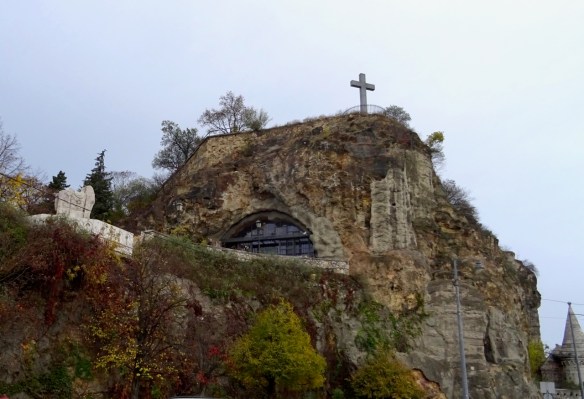
 This cross is about halfway down the hillside and marks the location of the Cave Church directly below it.
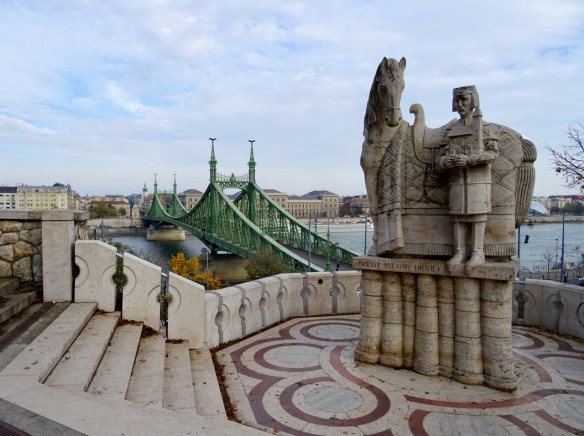
 This statue of St. Stephen is near the entrance to the Cave Church.
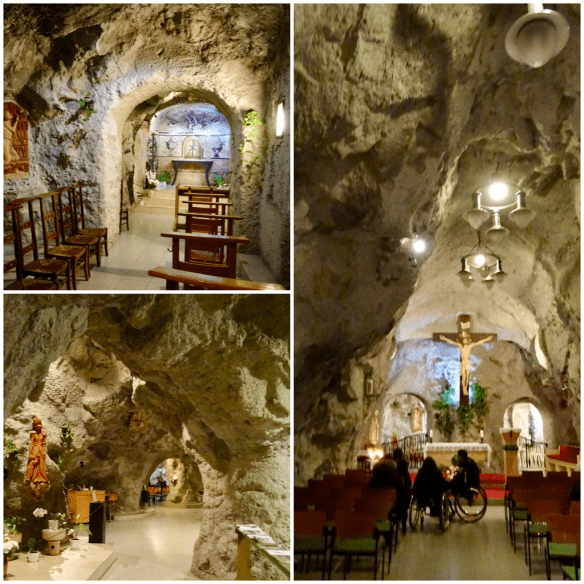
 For more information and photos about this curious church check
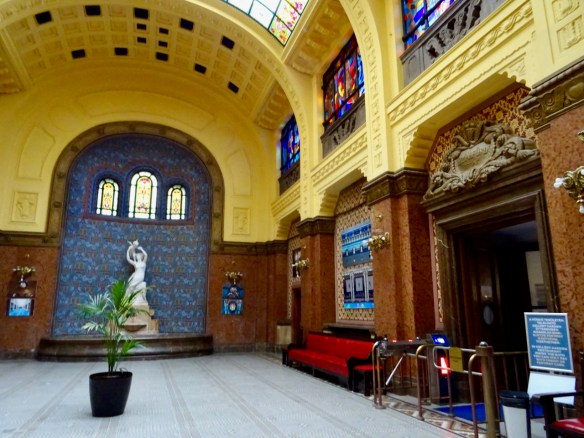
 A bit further down the hill we peek inside the Gellért Hotel…
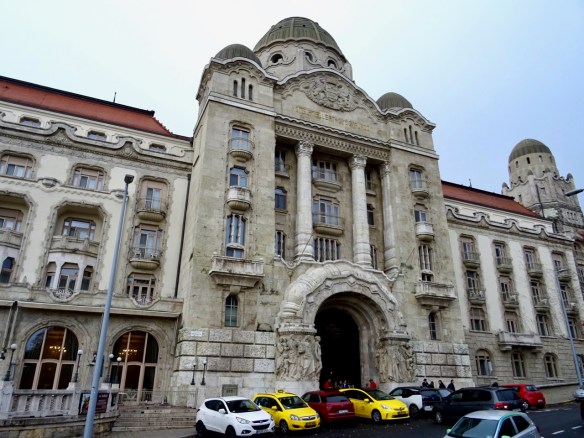 which houses one of Budapest’s thermal bath houses. It looks very fancy.
 Here is a view of the cave entrance from the street below…
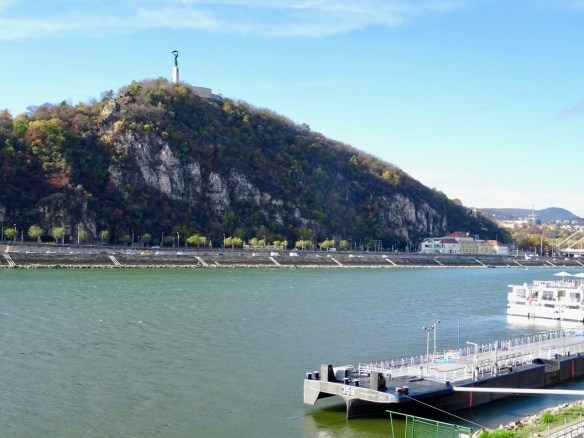
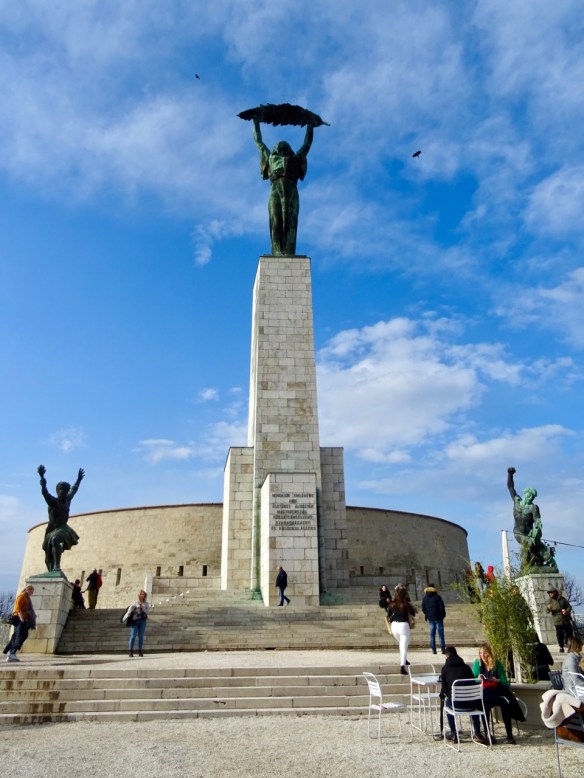
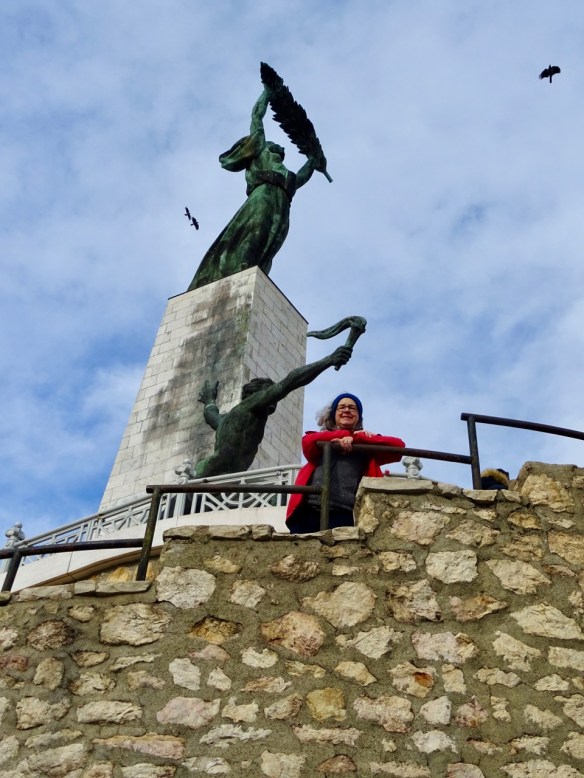
  and the Liberty Statue at the top of the hill.
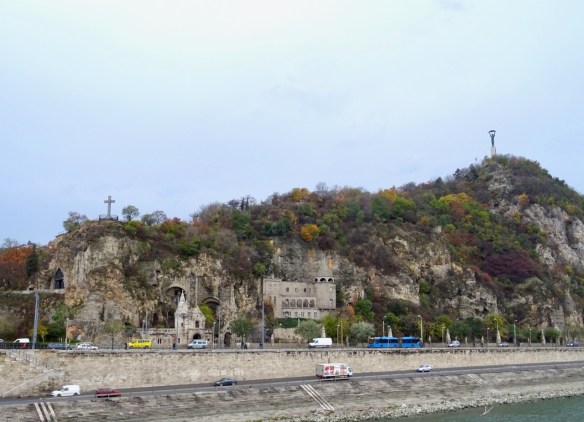 We walked back across the bridge to the Pest side of the river…
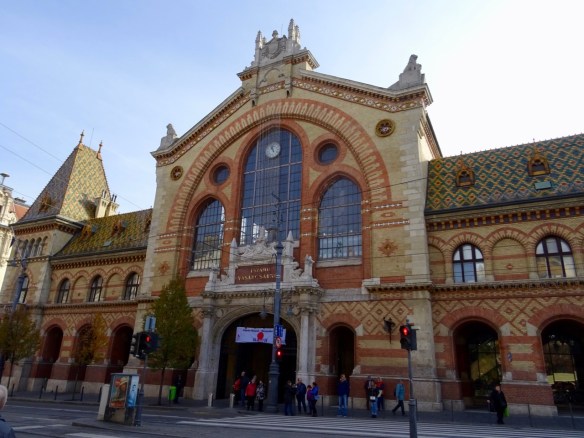
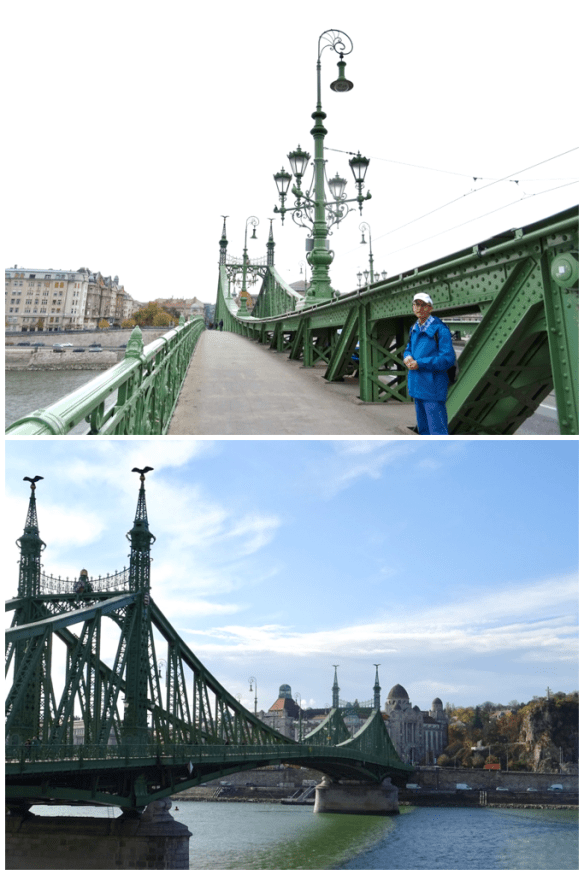 and visit the Indoor market.
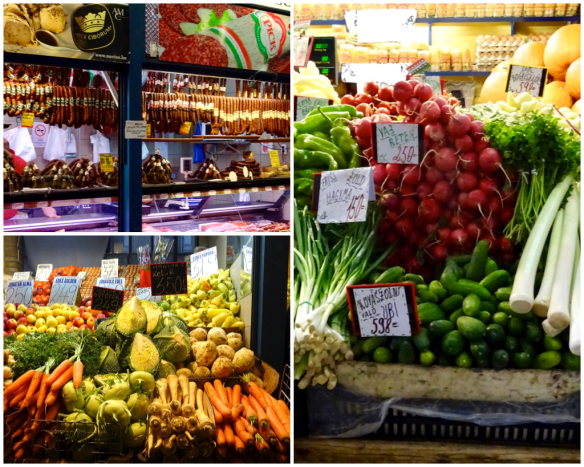
  I thought these kohlrabi were huge but the radishes were enormous, about the size of an egg! I’ve never seen radishes that big! We have supper here but unfortunately the food wasn’t really all that great.
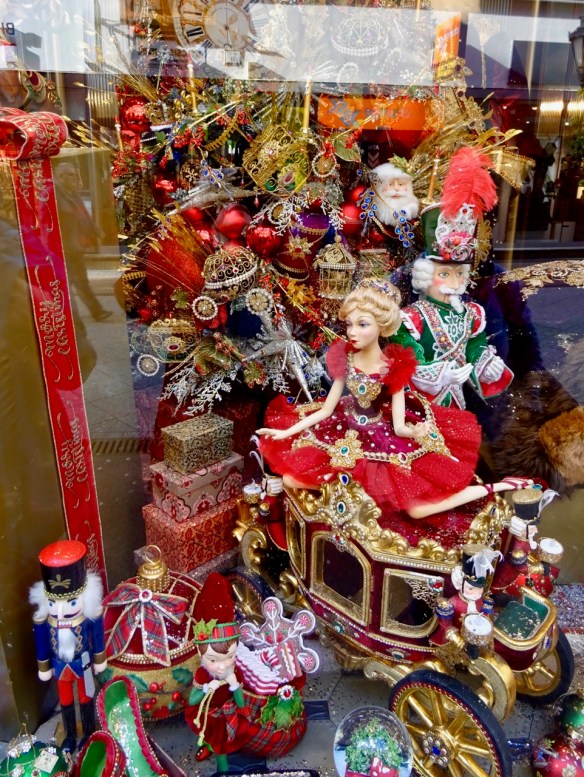
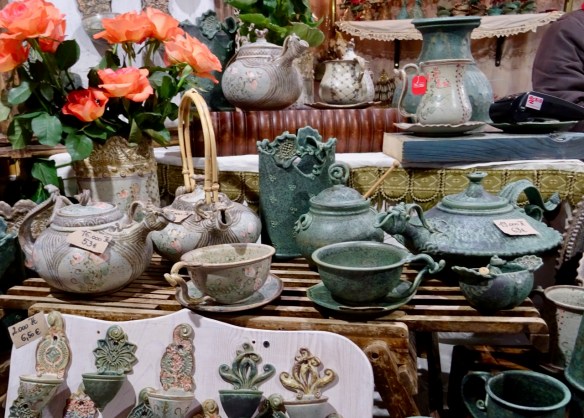
  On our walk back home we pass through the Christmas Market and I notice these teapots. I would have loved to have bought one but worried about getting it home in one piece.
 These necklaces are made with seed beads! Imagine how long it would take to make each one.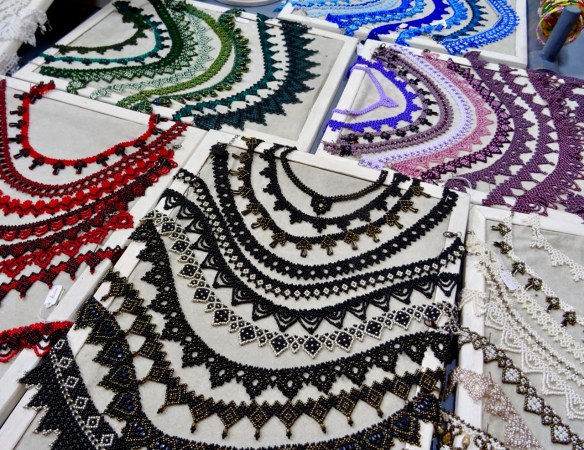
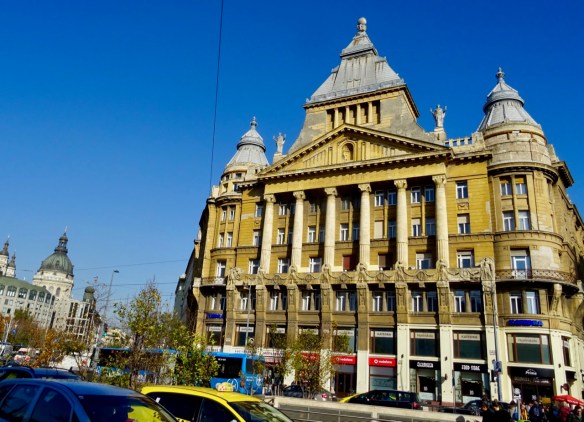
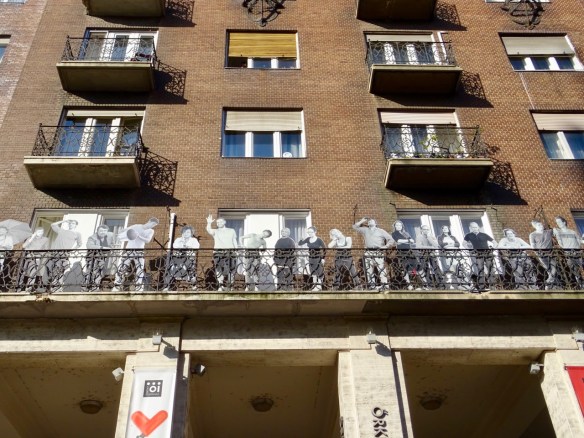 We are staying in the Old Jewish Quarter and the roads are very narrow and crowded. As we leave this area, the roads widen and there are many pedestrian-only roads and big plazas. This large ornate building is the first large building I see on the main Street near our apartment.
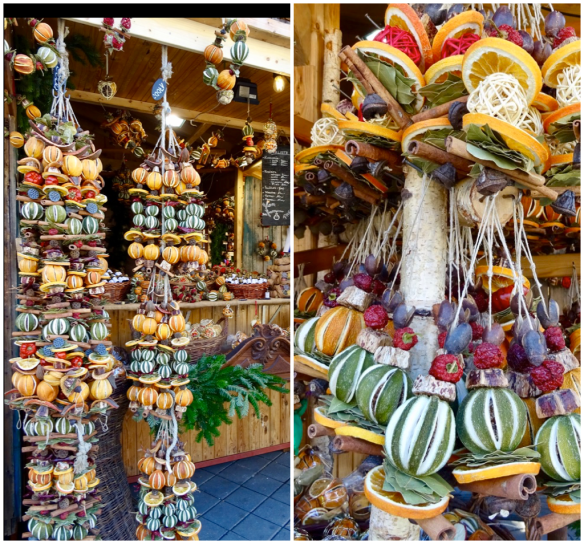
 We walk towards the nearby Christmas Markets. There are lots of small wooden ‘cabins’ filled with beautiful crafts. I loved these dried fruit ornaments, but I am sure that I wouldn’t be allowed to bring these through Canadian Customs. Too bad, they are lovely and smell wonderful.
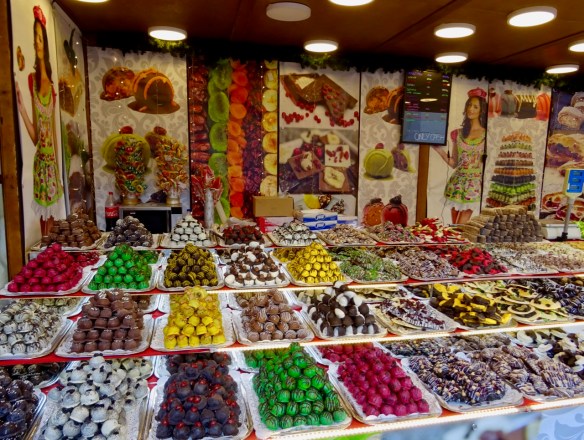
 There are several stands with all sorts of candies…
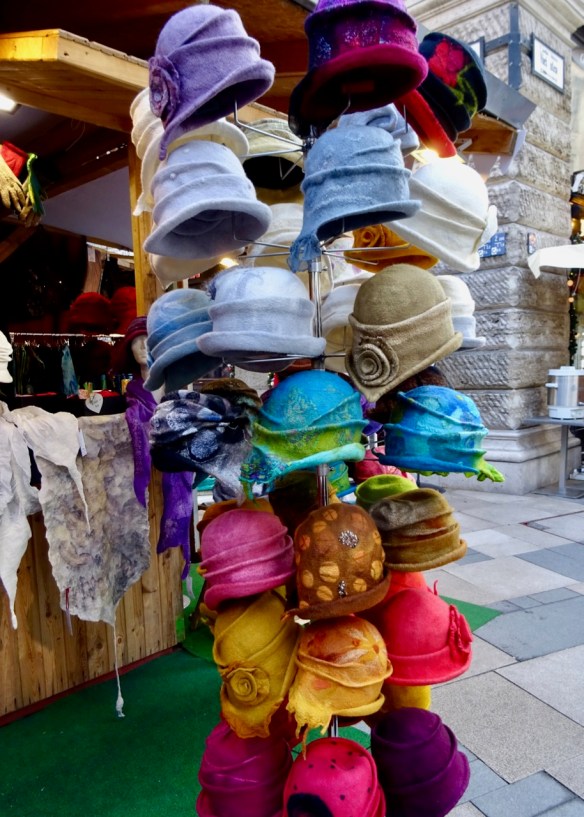
 beautiful felted hats, that are priced starting at $150.00 CAD.
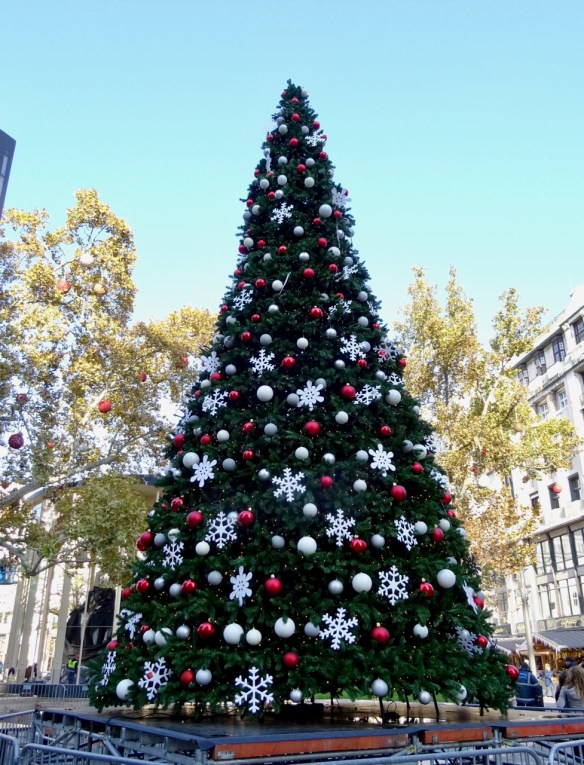
 This our first Christmas tree of the year.
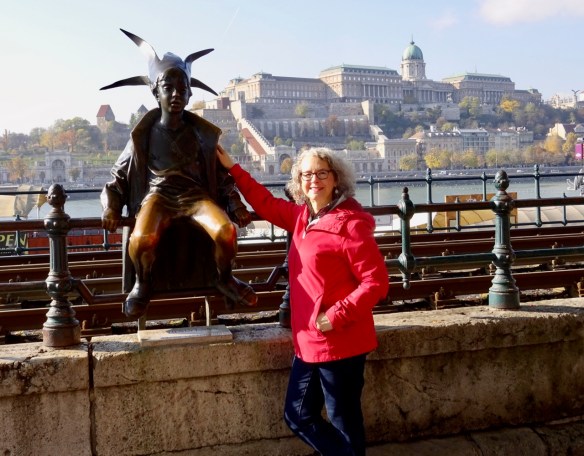
 This ‘Little Princess’ is the first of many statues we see on the streets of Budapest.
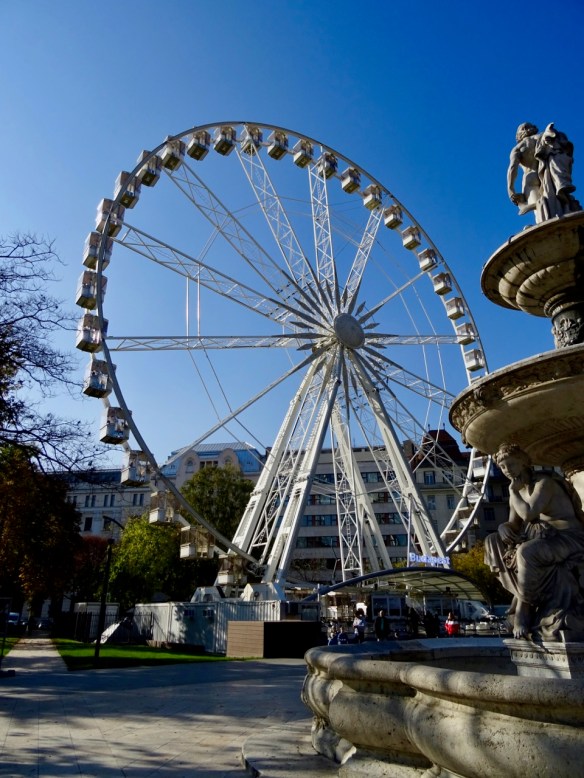
 Another ferris wheel, but we decide to pass on riding this one.
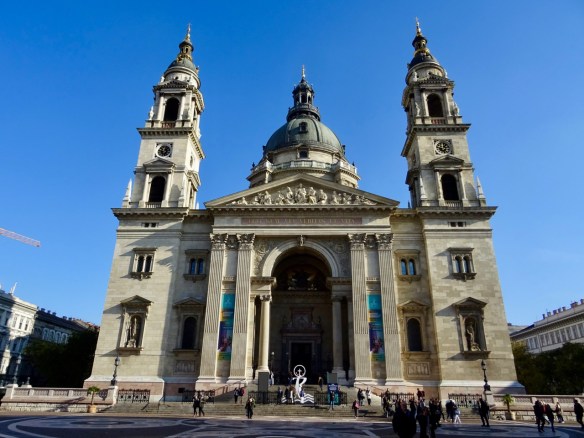
  St. Stephen’s Basilica is in the centre of Budapest.
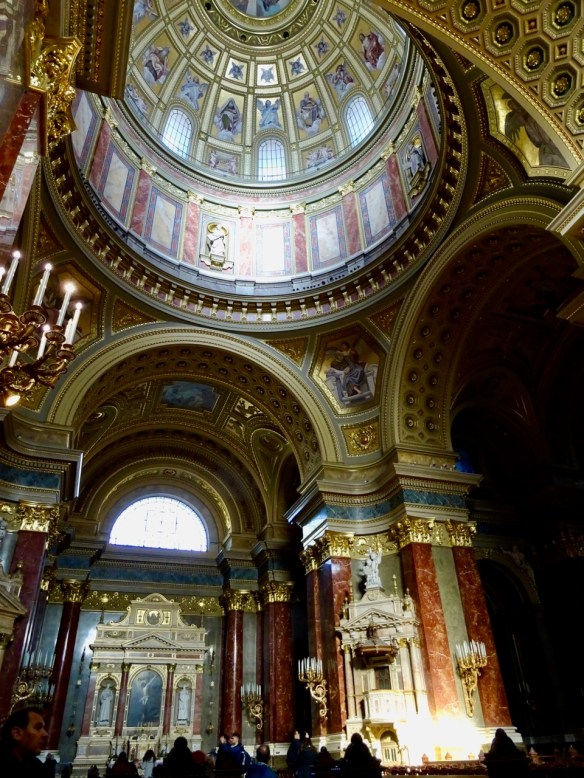
 The inside off the church has lots of gilded ornamentation and a beautiful dome.
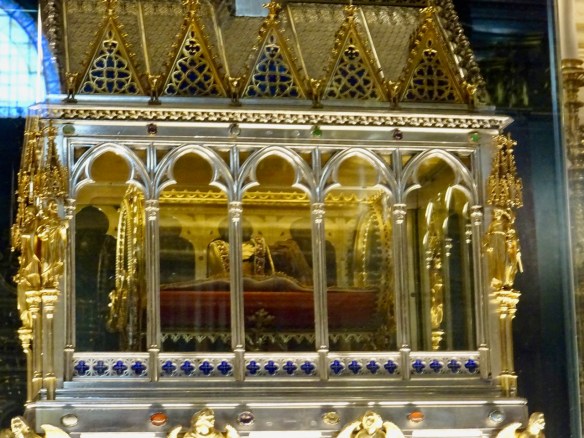
 The main attraction in this church is the thousand year old mummified right hand of King Stephen. If you want to see this relic, deposit a coin and a light comes on to view the hand.
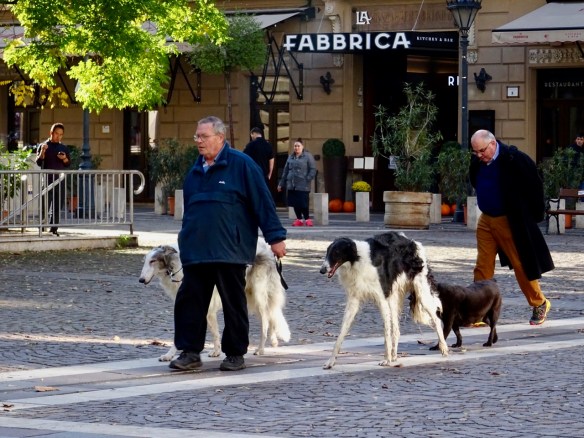
 These two borzoi dogs looked like they needed a bath and brushing. There are lots of dogs here and they live their lives on pavement. I kind of feel sorry for them.
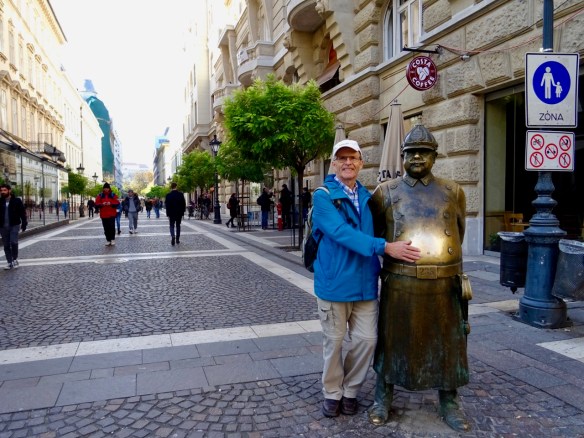
 The Fat Policeman Statue represents how hearty the Hungarian foods are, and rubbing his tummy is supposed to bring good luck. There are many ‘good luck’ statues on the streets of Budapest.
 The Hungarian government erected the ‘Memorial for Victims of the German Occupation’ statue in the middle of the night in July 2014.
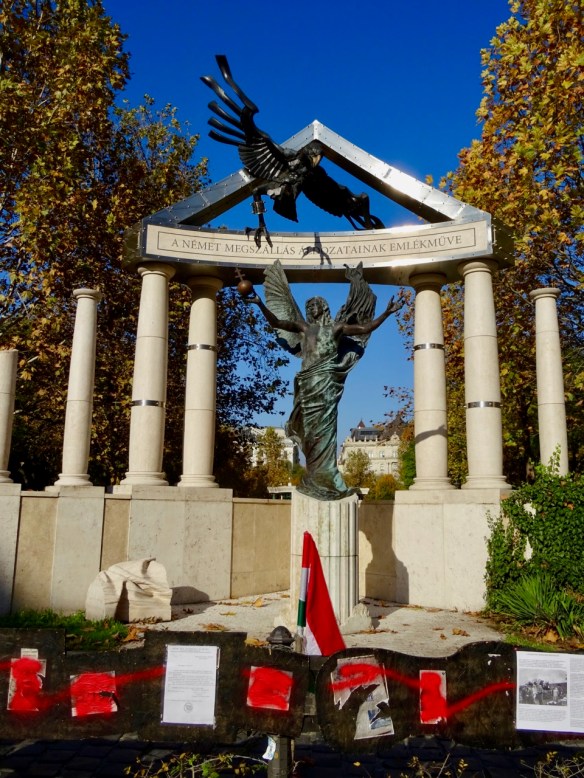 Some seed pods from one of the trees near this statue are interesting.
 There is a statue of Ronald Reagan in this plaza as well because of his efforts to end the Cold War.
 There are so many ornate buildings here…
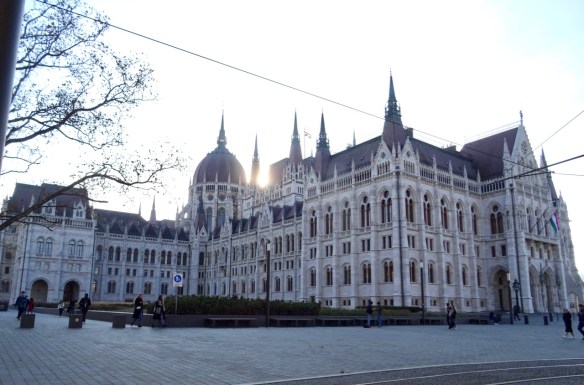
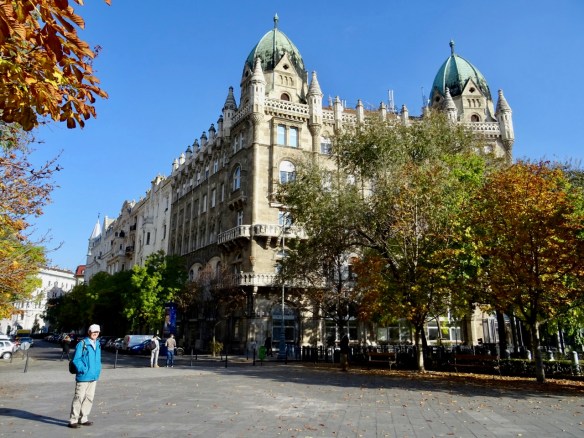 like the Parliament Building! It is so big I can’t get it all into one photo.
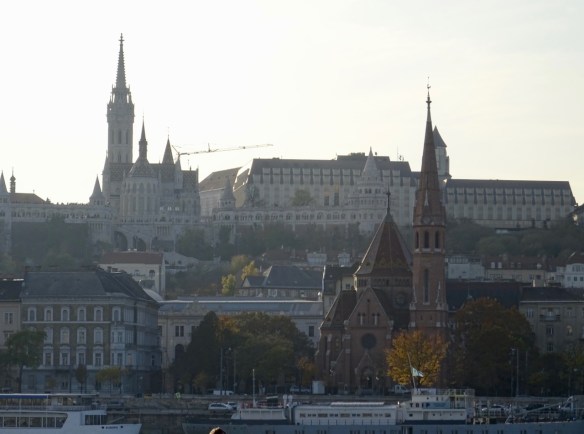
 Across the river we can see the Buda Castle.
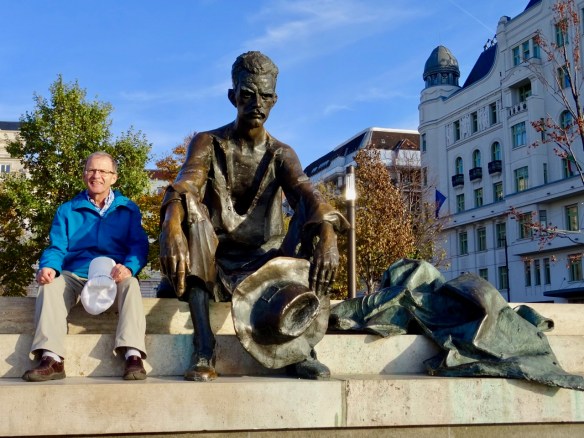
 Bob takes a moment to sit with the Hungarian poet Attila József…
 and then we walk onto the Chain Bridge with its guardian lions for a view of Budapest from the river.
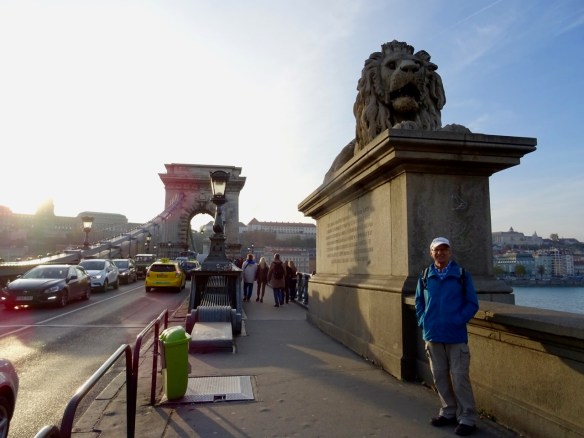 This is the Pest side of the river, the side our apartment was on…
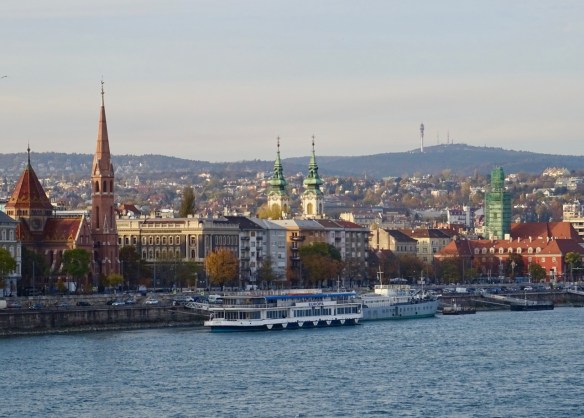
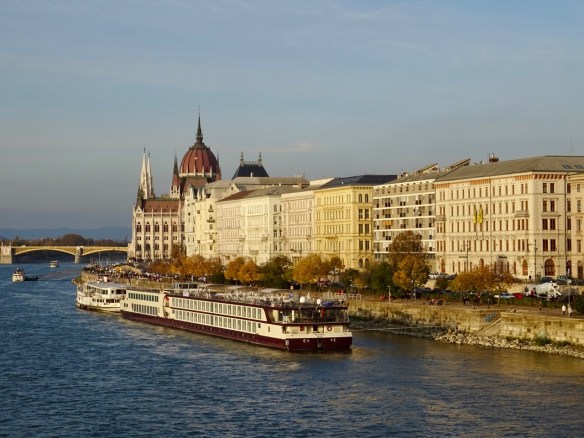 and this is the Buda side. These two cities were united in November 1873, and the name ‘Budapest’ was given to the new capital.
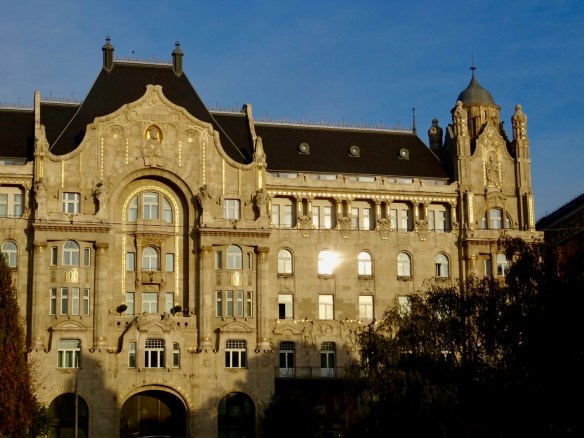
 I don’t know what this building is but it had delicate golden trim that sparkled in the late afternoon sun.
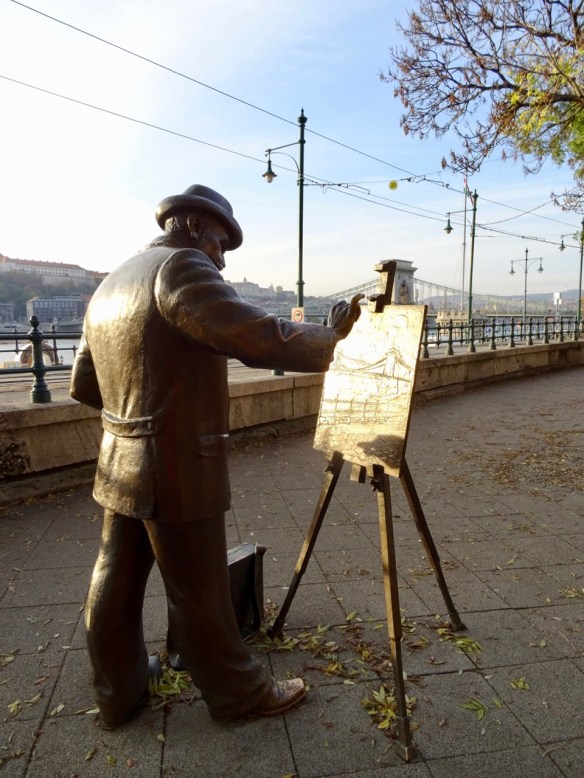
 We find a statue of Roskovics Ignác, a famous Hungarian painter, on our walk along the Danube River.
 Walking through the Christmas Market on our way home I notice this jar of pickled onions! They made me laugh!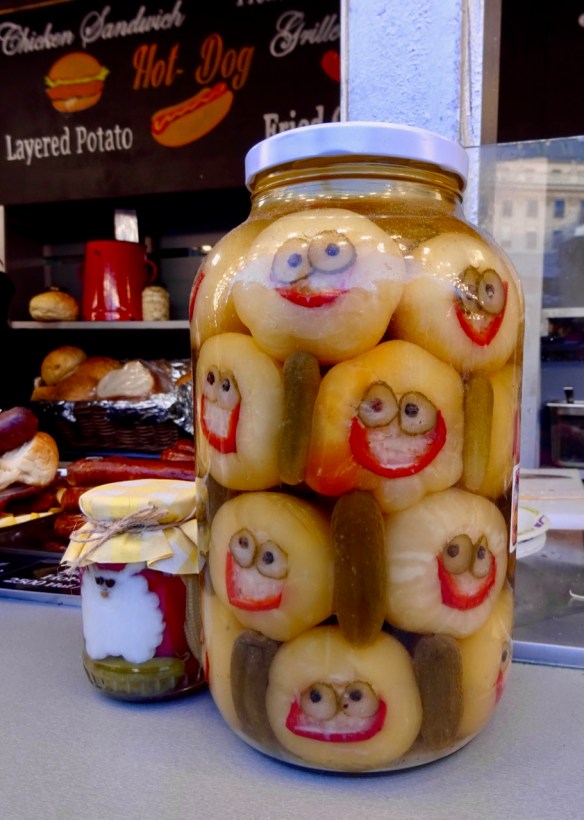
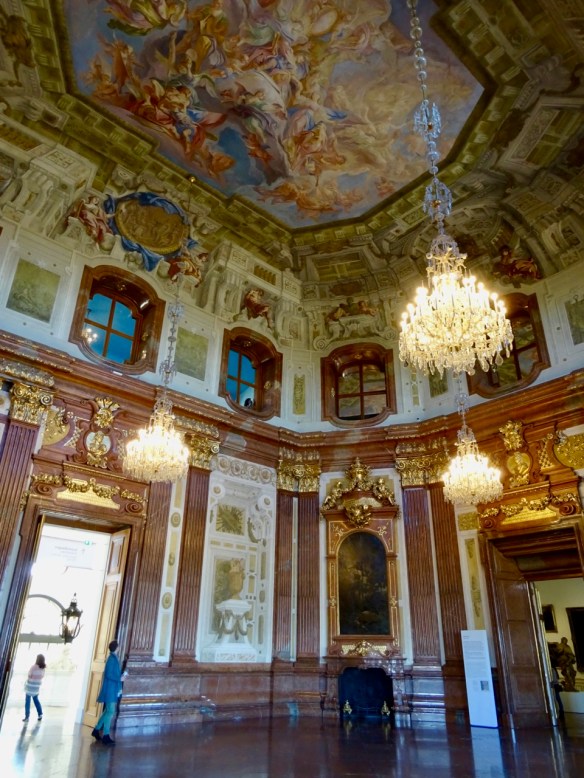
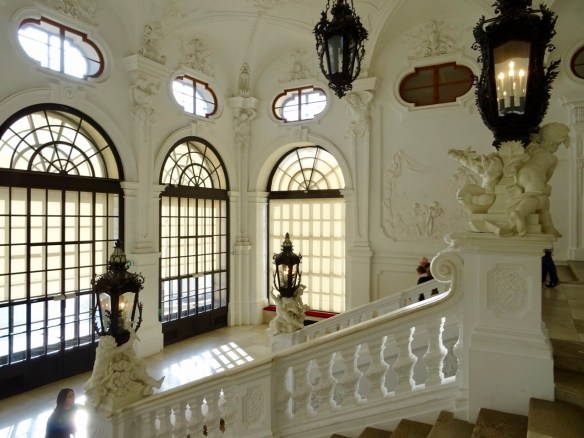 and the beautiful Marble Hall.
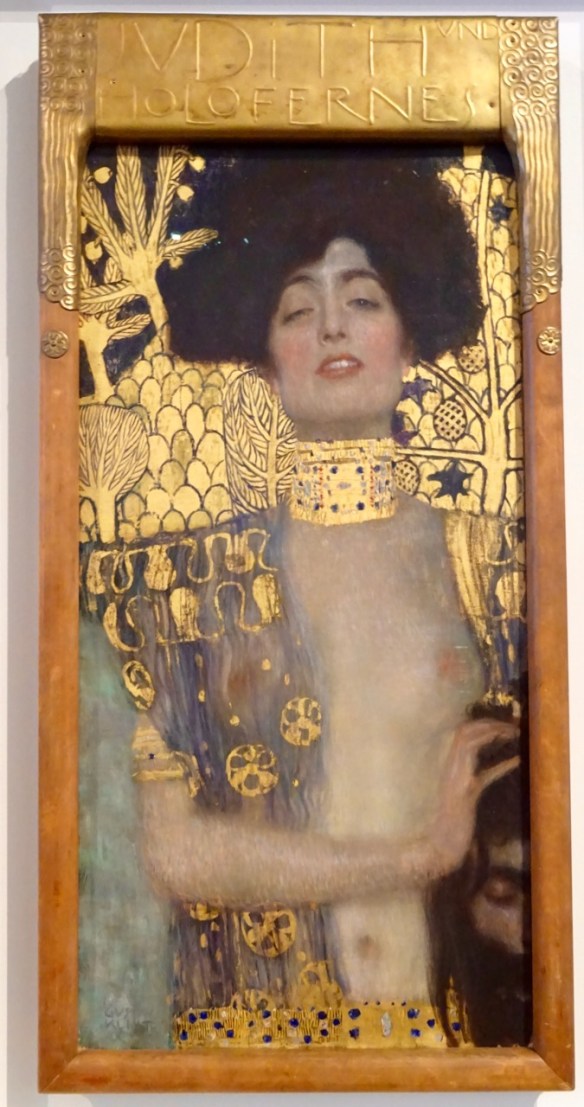
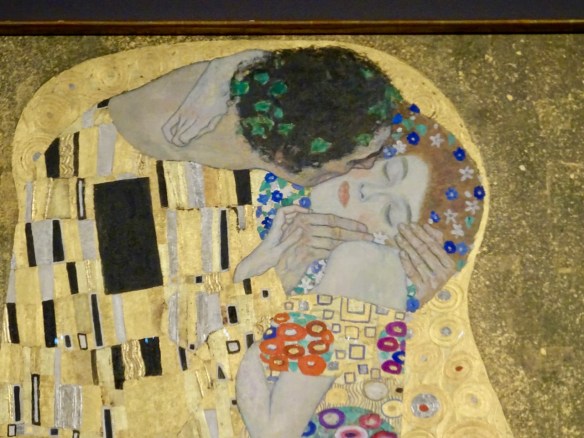
 I particularly wanted to see Gustav Klimt’s The Kiss, but was pleased to find his Judith painting here as well.
 The Kiss is one of Klimt’s most well known paintings. It is a large painting, 183 x183 cm.
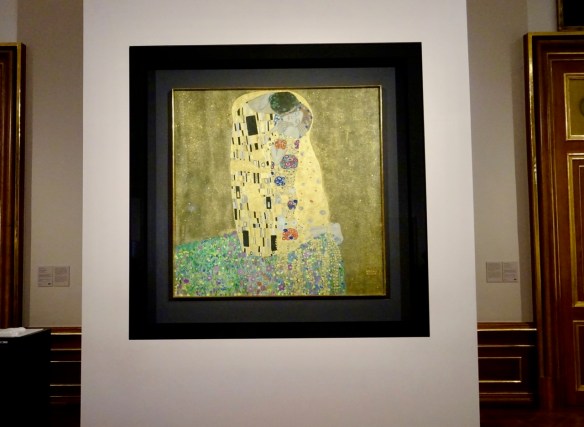 It is nice to be able to see the painting details up close.
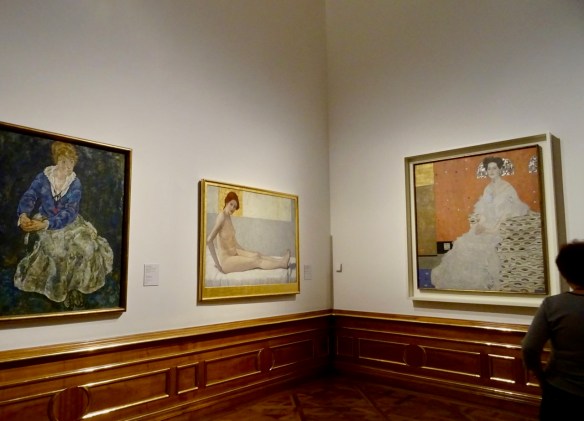
 I am also surprised by how many Egon Schiele paintings are on display. It is quite special to be able to see the original paintings of some of my favourite works by these two painters. I didn’t realize that these paintings were so large. Looking at reproductions in books can be deceiving. The Embrace and….
 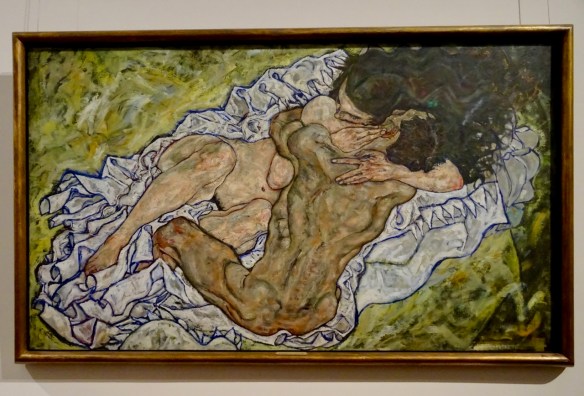 the Family are both much bigger than I imagined…
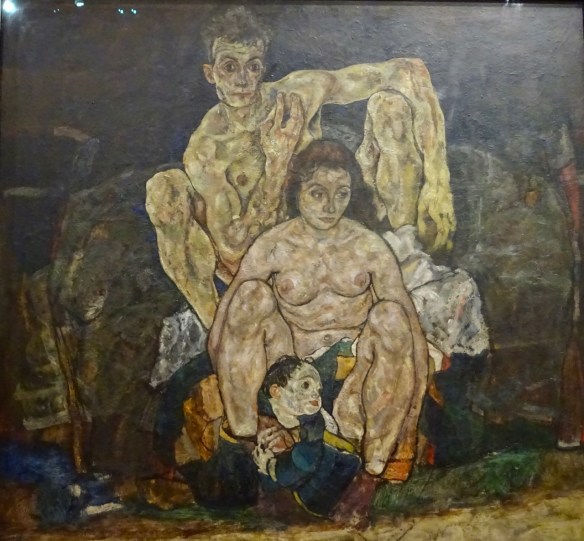 as are these paintings.
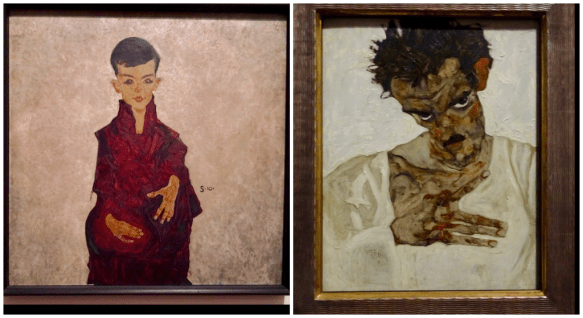
 Schiele’s Self Portrait is the smallest painting, about 41 x 33 cm.
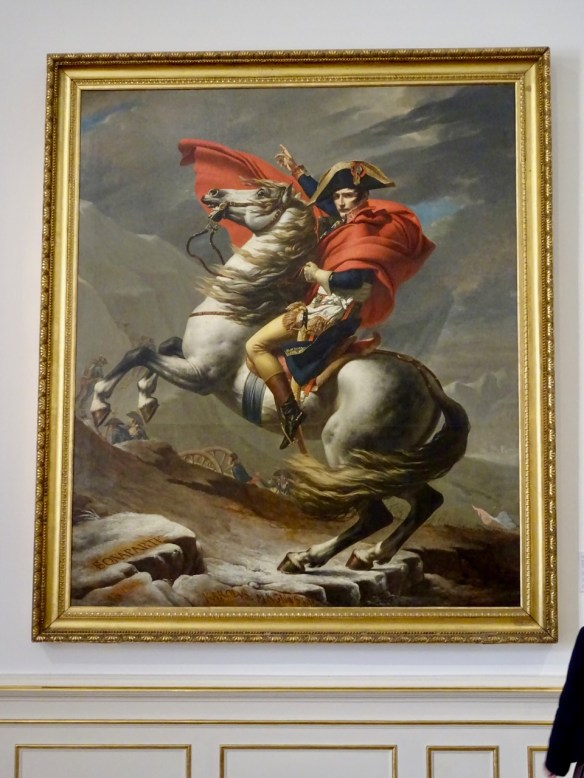
 I didn’t know Jacques-Louis David’s painting of Napoleon was here either. I am so glad I was able to visit this museum. This painting is enormous, 272 × 232 cm!
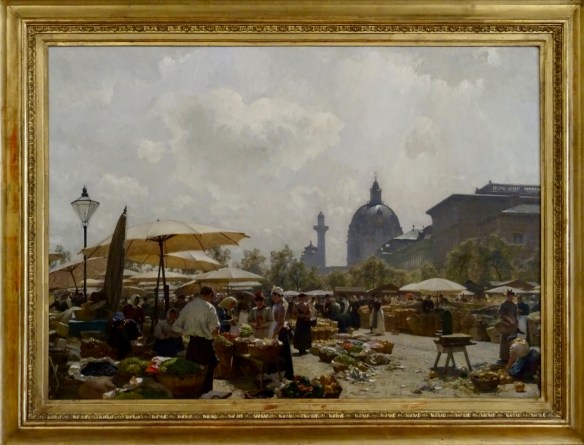
 This painting shows the Vienna Naschmarkt in 1894. It has changed a bit over the years!
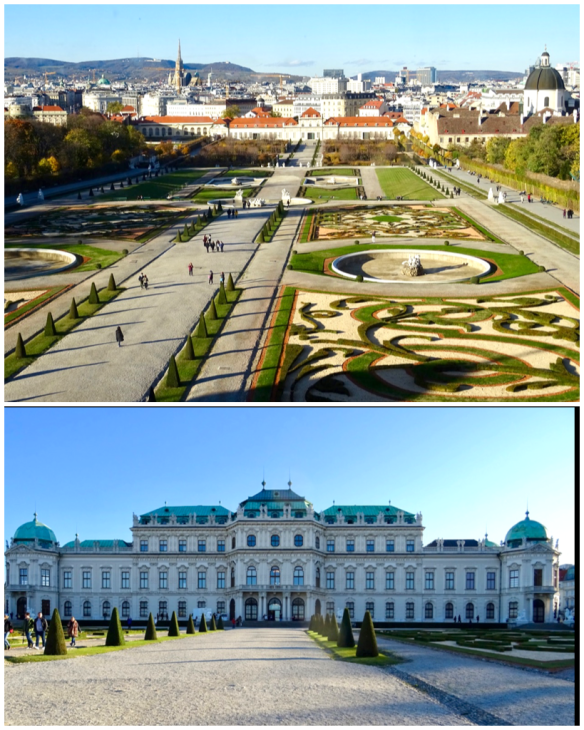
 We meet up in the gardens outside the Belvedere and then walk towards St. Charles Church.
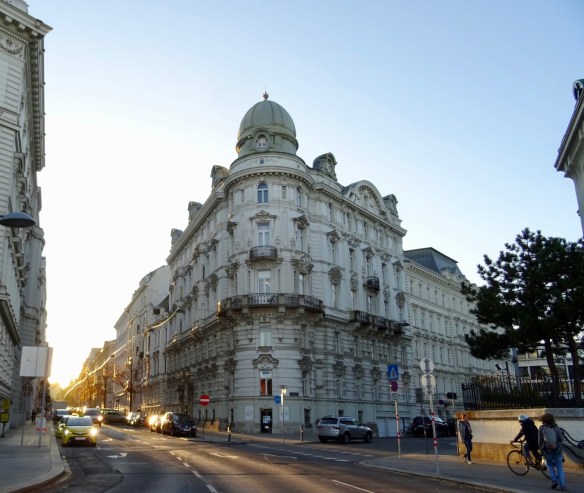
  There are so many interesting buildings along the way.
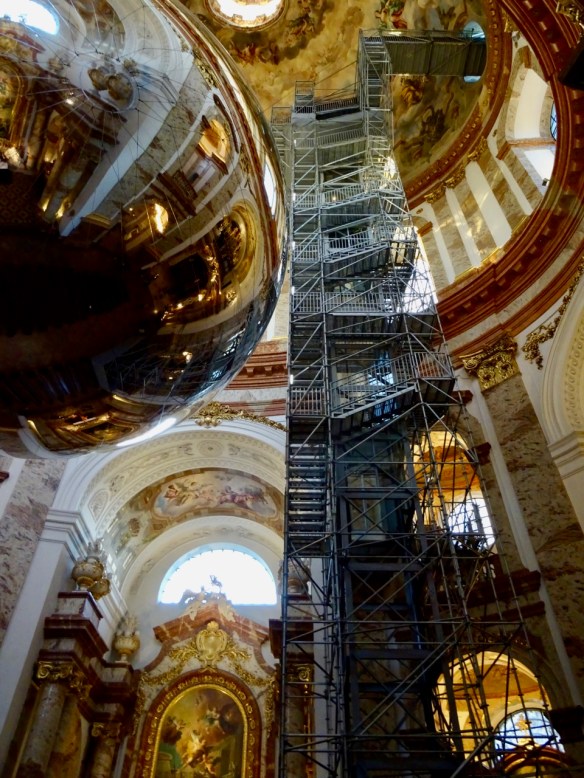
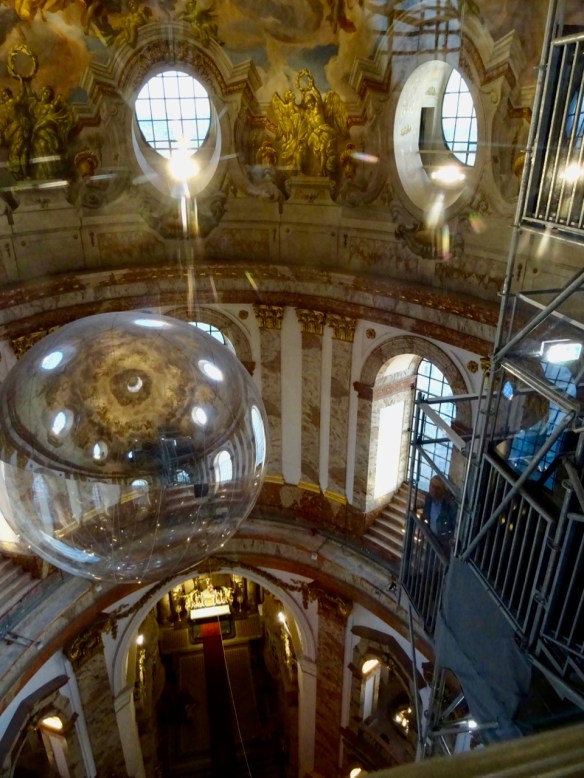
 We had a huge surprise when we entered St. Charles Church. Two enormous floating mirrored balls that reflected the church…
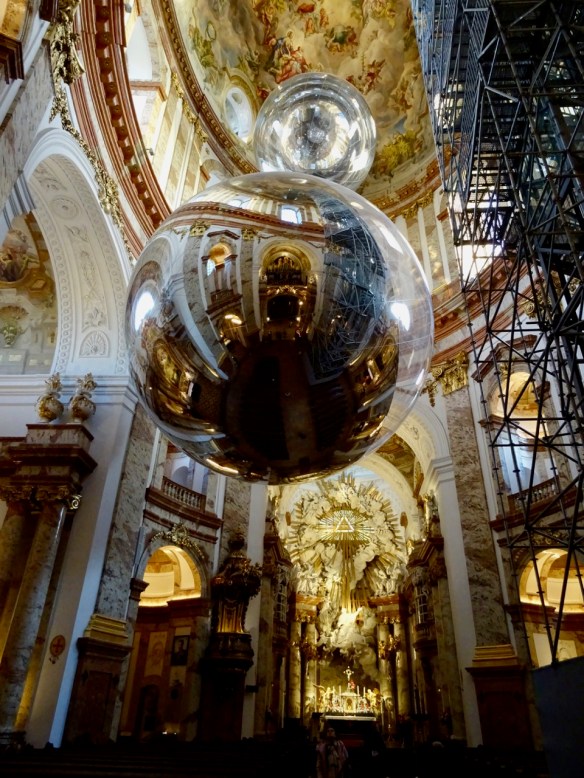 and us. We are almost in the centre of the reflection but we are very tiny. “Aerocene” is a contemporary art installation by Tomas Saraceno, an Argentinian artist who lives and works in Berlin. The floating reflective balls are 10 and 7 metres in diameter.
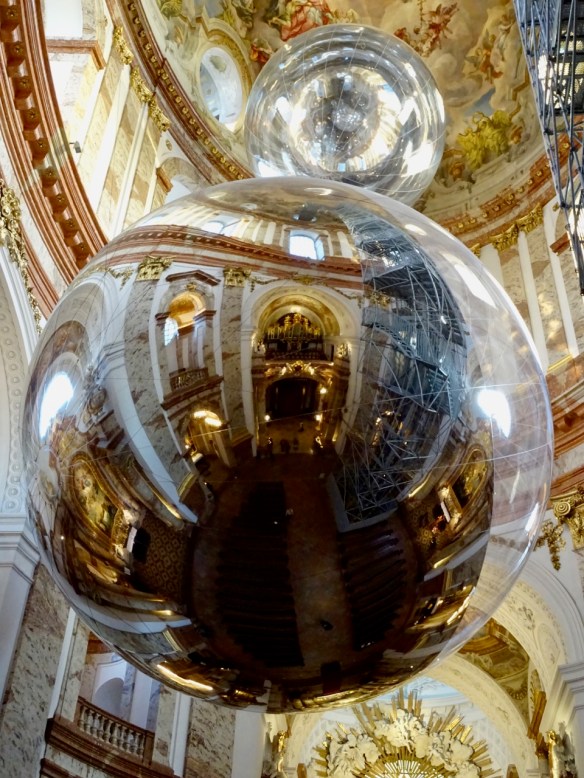 Then we notice the scaffolding that goes high up into the dome, and that is where we are going to go! We thought the elevator ride we got a ticket for would be inside a bell tower. Nope! We ride to the top of this scaffolding and then climb a bit further, onto that platform you see leading into one of the round windows in the dome!
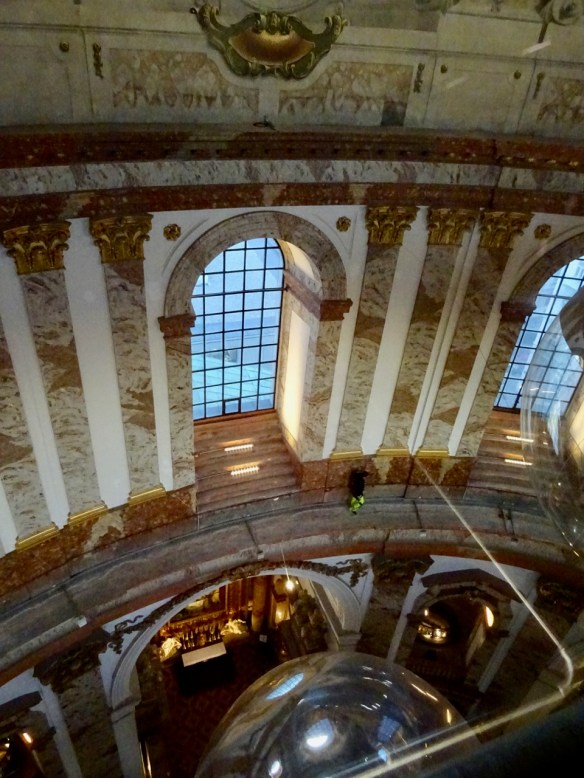
 Looking down from the top of this ‘elevator’ we notice a workman adjusting lights high up in the dome, yet still far below us!
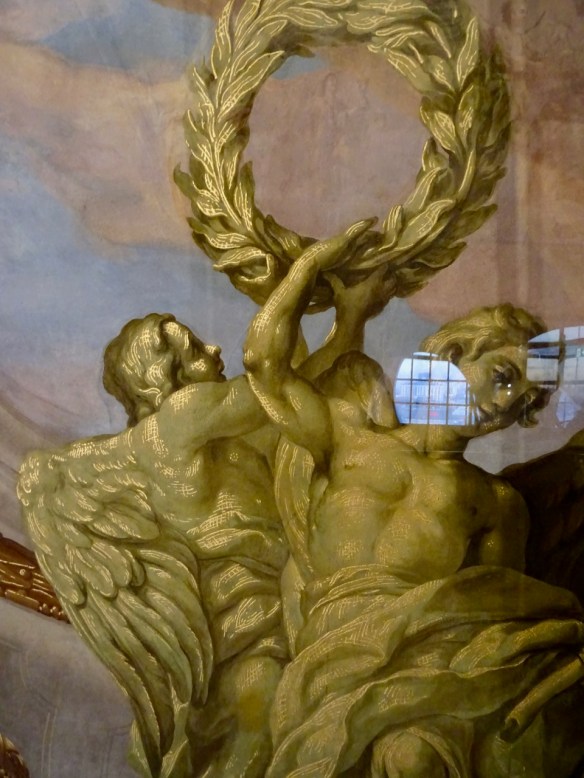
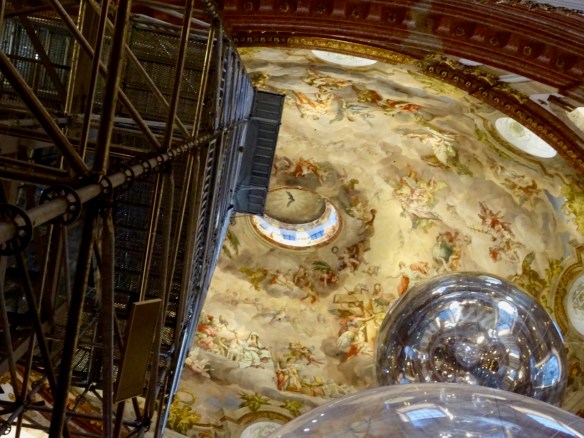
 We have a great view of the dome paintings. It is interesting the way the gold highlights look up this close…
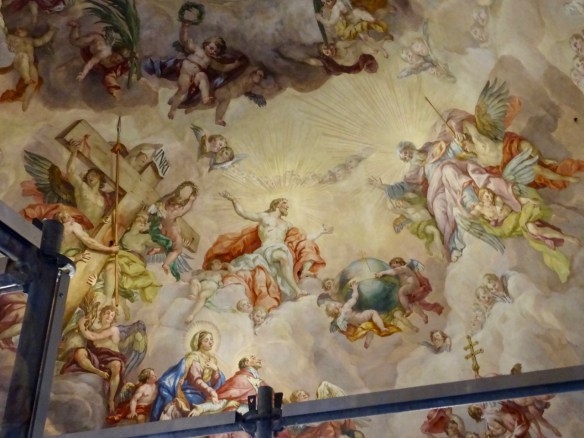
 and we have a great view of the other dome paintings. We are crazy high up!
 Bob walks back down to this viewing platform so I can get a photo. Notice how he is suspended…nothing below him!
 This photo shows the platform that Bob was standing on in the last photo.
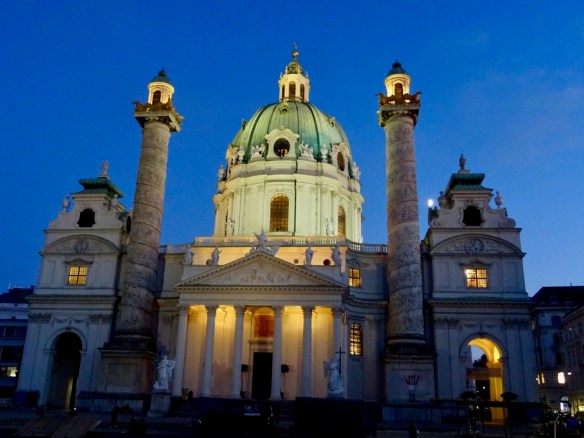
 We spent quite a lot of time way up there in the dome, and it is getting dark when we get outside. If you look closely you can see some people standing in the round window on the dome. That is the window we were standing in! What an amazing experience. There was restoration work carried out in the dome and the elevator is being kept for a while. The fee to ride up into the dome is a way to make more money for further restorations.
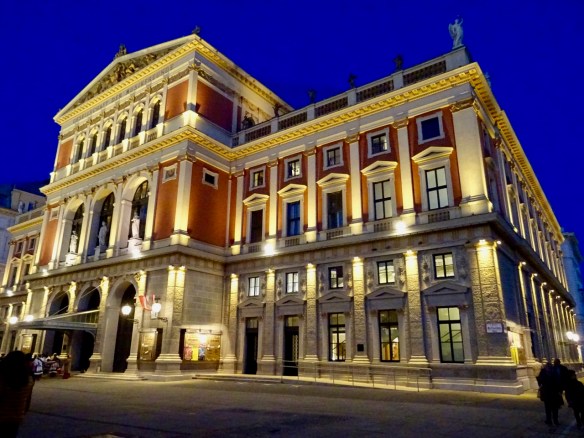
 Walking back towards the metro we pass the Opera House…
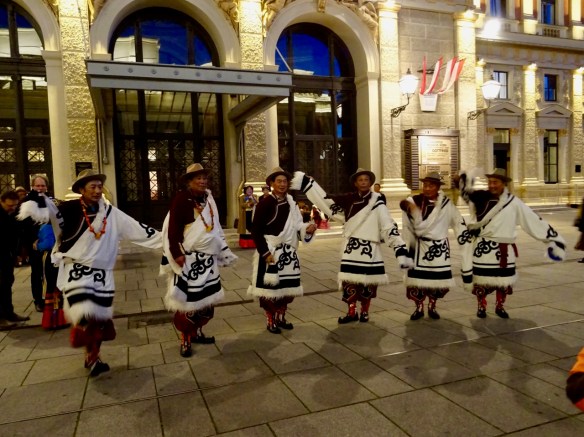
 and take photos of these performers from Tibet. They have a performance later tonight and were taking publicity photos outside the Opera House.
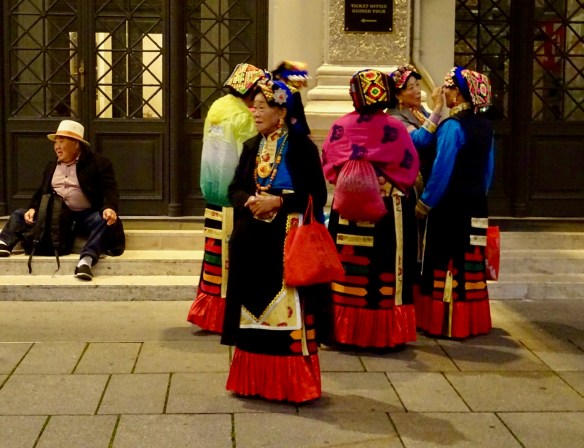
 While the men posed, some of the women were busy applying their makeup.
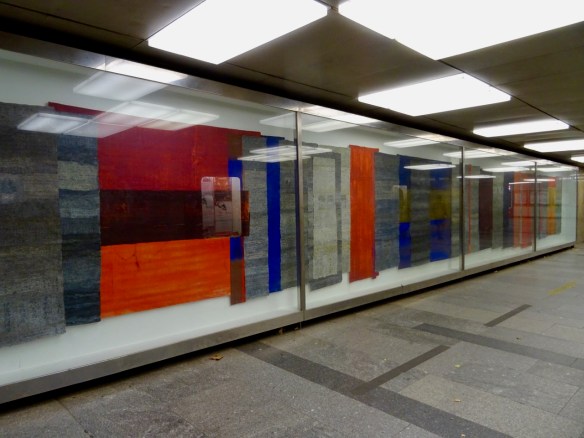
  This is a a huge paper art installation we pass in a walkway near the metro.
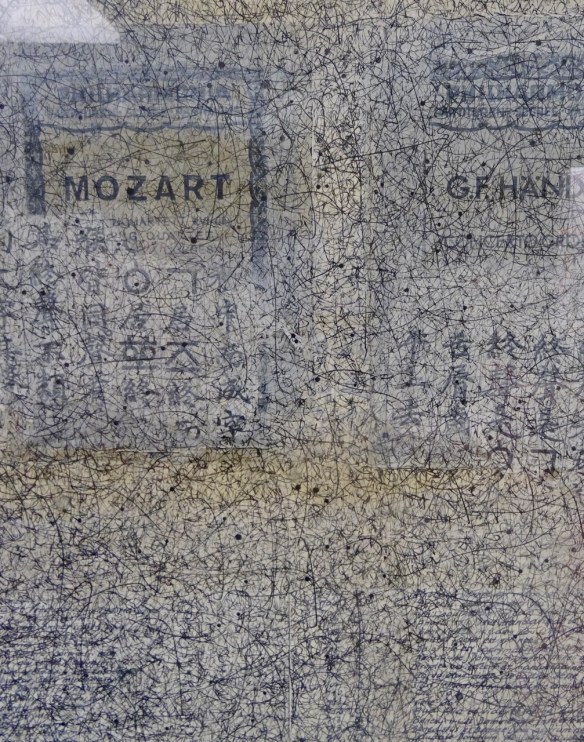
 A close-up shows lots and lots of writing, musical notations and random marks.
 We get home, have dinner, then I head off to a drop-in drawing session with a Meetup group at a pub called Monami.
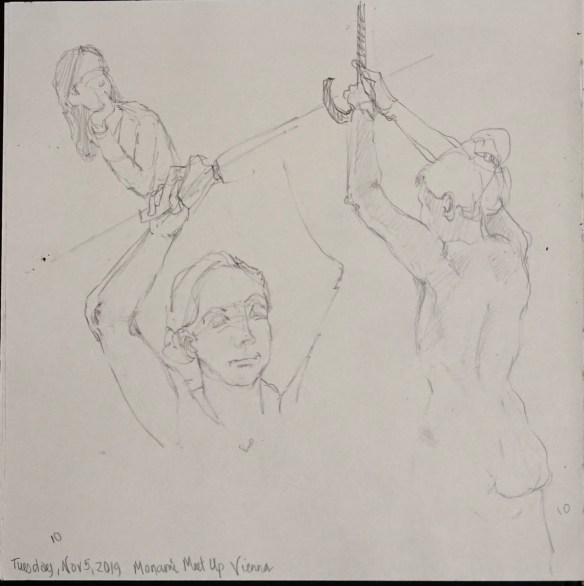 I had coloured some of the pages in my sketchbook at home before the session. Interesting to draw on but they don’t photograph very well.
 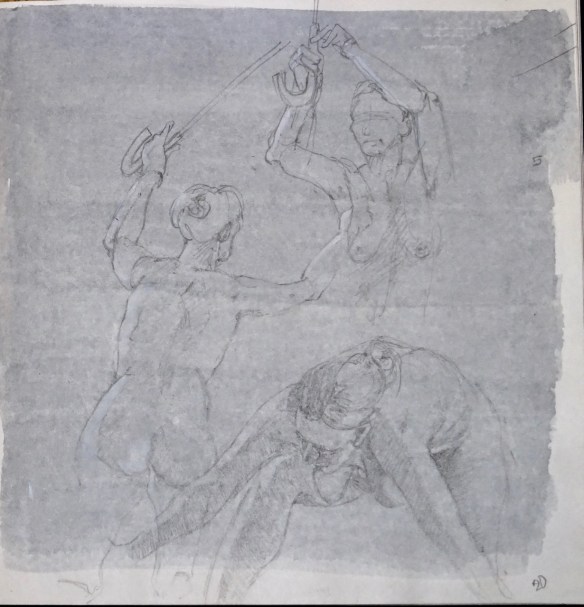 We were pretty much rubbing elbows as we drew and my views weren’t always great but it was lots of fun.
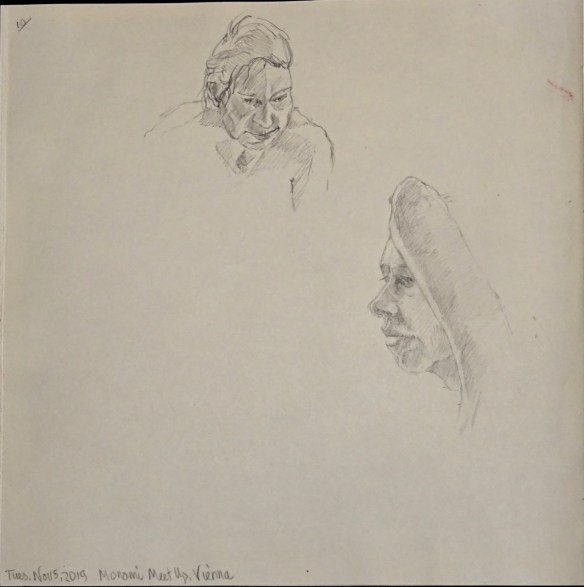 I finished the session with a 20 minute leg study. I felt quite comfortable going out in the evening by myself. The metro is easy to navigate and there were lots of people about.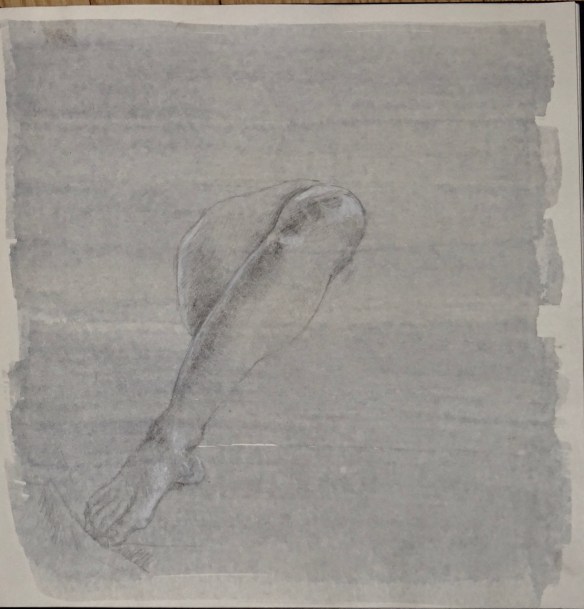
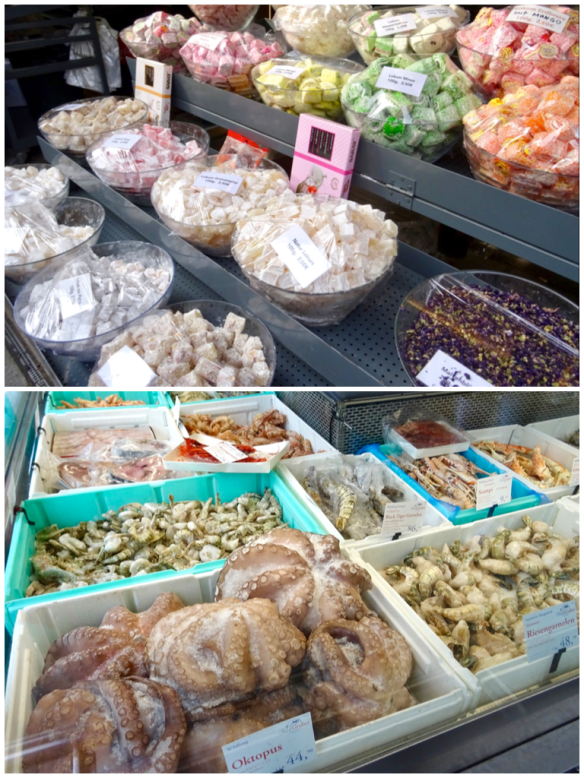
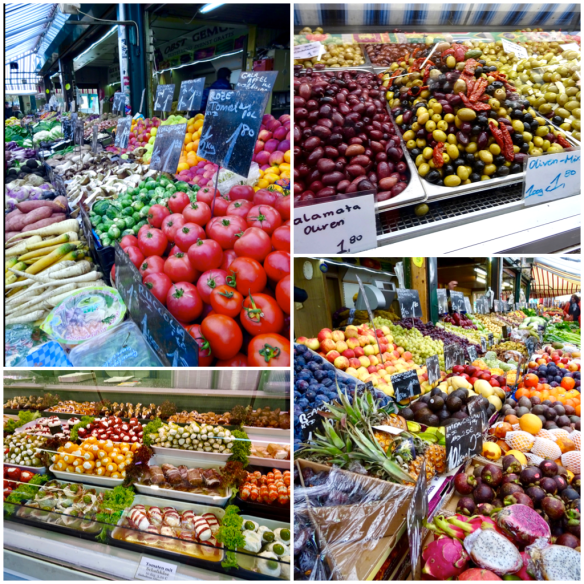 as well as all sorts of candies, dried fruits and some rather exotic looking products in the fish market section.
 Near the Naschmarkt we find this interesting tribute to the Orson Wells movie, The Third Man. It is possible to tour the sewers, right under our feet, where part of the movie was filmed, but we pass on that today.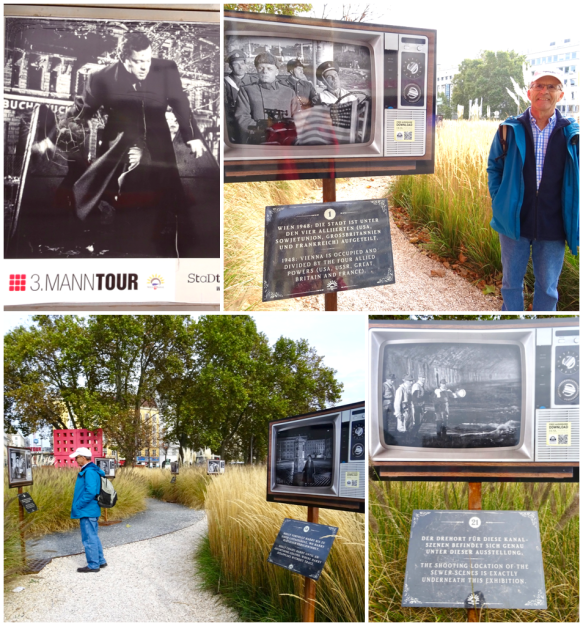
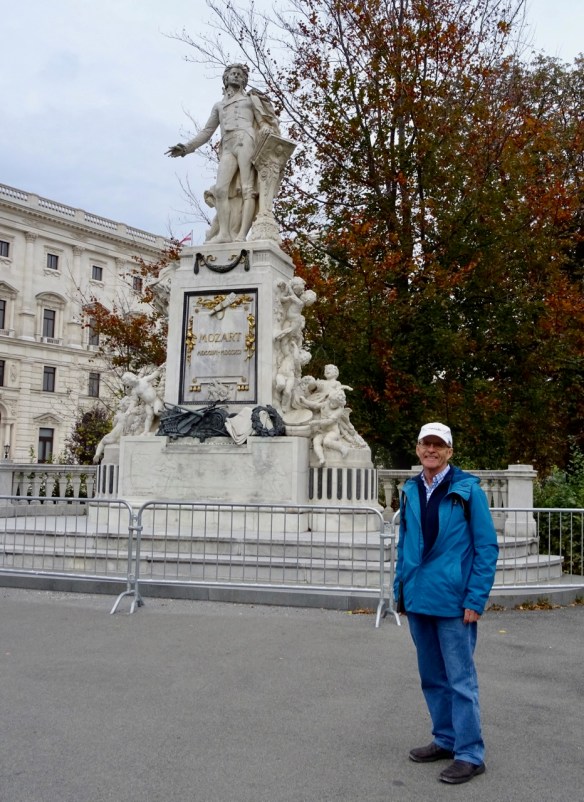
 There is a statue of Mozart, right beside a Hop On Hop Off bus station. We sit and have our picnic lunch and watch tourists jump off the bus, snap a photo from quite a distance, and then jump back on the bus to get to the next destination. This sure isn’t the way we do it! We sight-see very slowly and leisurely, stopping often to look at the sights, people watch and just enjoy where we are and what we are seeing. We are very slow tourists!
 This equestrian statue of Emperor Joseph II, erected in 1795 is the oldest equestrian statue in Vienna.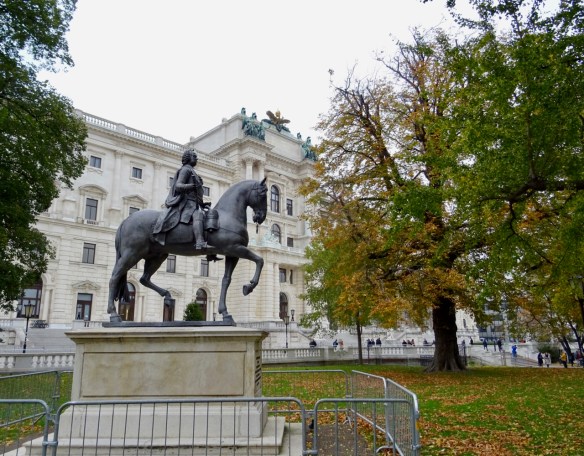
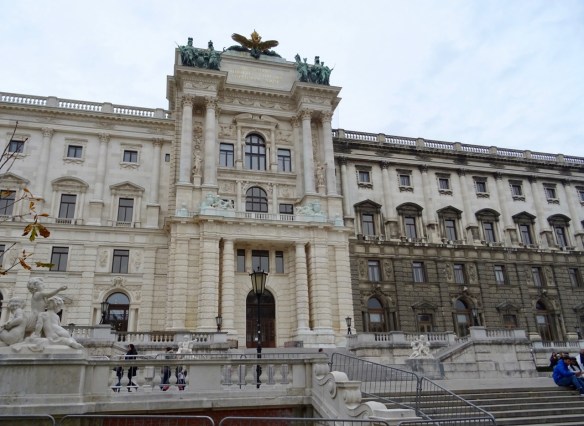 We make our way to the Albertina Museum, which we will visit another day. There is a Durer Exhibit I am looking forward to seeing. This is a street view from a corner of the Albertina.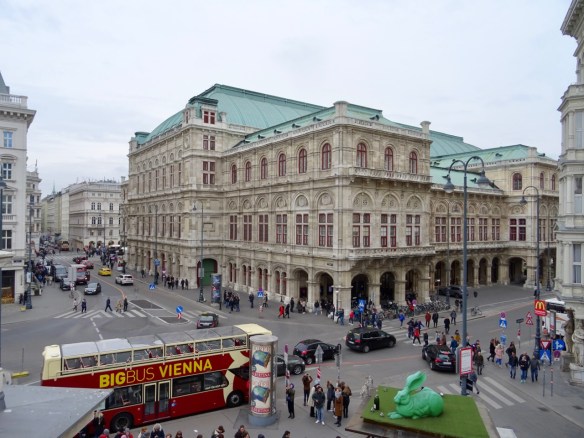
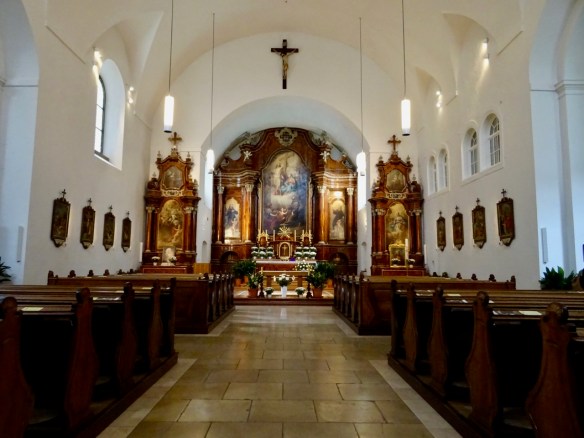
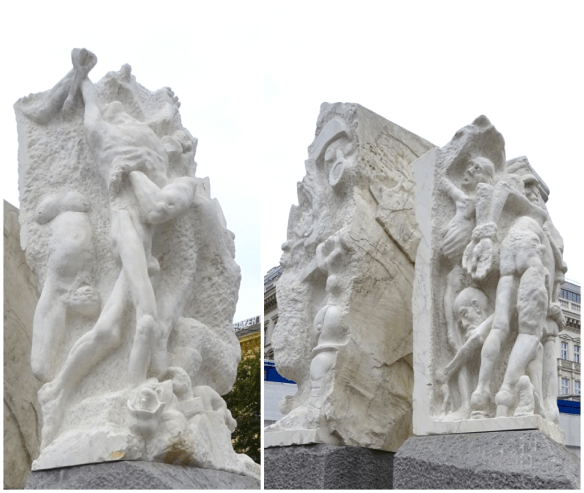 Of course there are several churches on our walk, and we visit all of them!
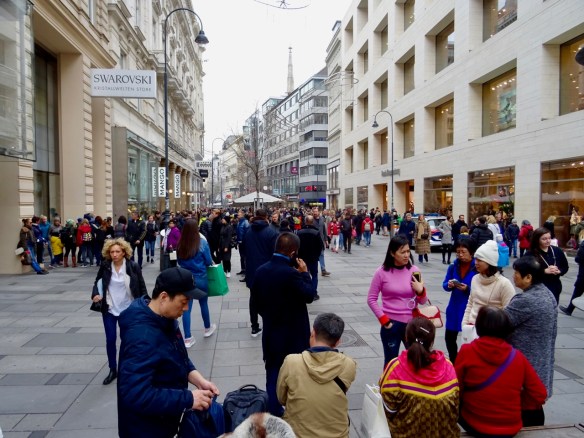
 This broad pedestrian Kärntner Strasse is packed with people and lined with shops and places to eat. This road dates to 97AD when it was a Roman road that went from Vienna to the border of Italy and Slovenia, and eventually all the way to St. Petersberg, Russia!
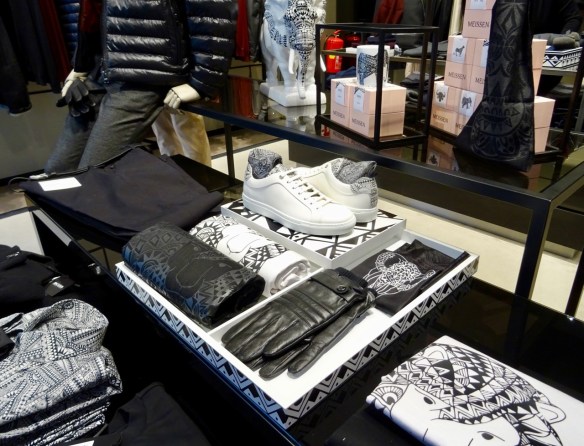
 I thought that the Zen-Doodle like designs on the clothing in this shop were interesting.
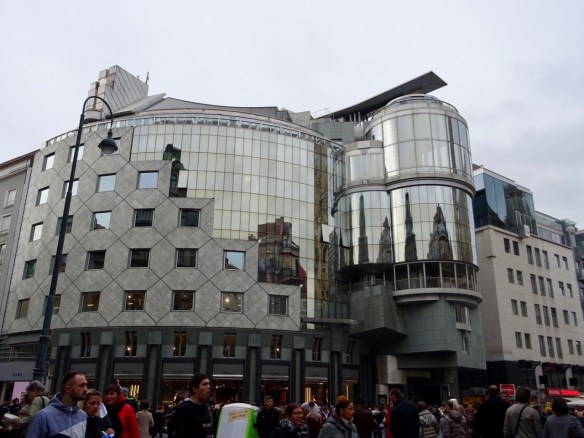
  The modern Haas House offers interesting reflections of St. Stephen’s church.
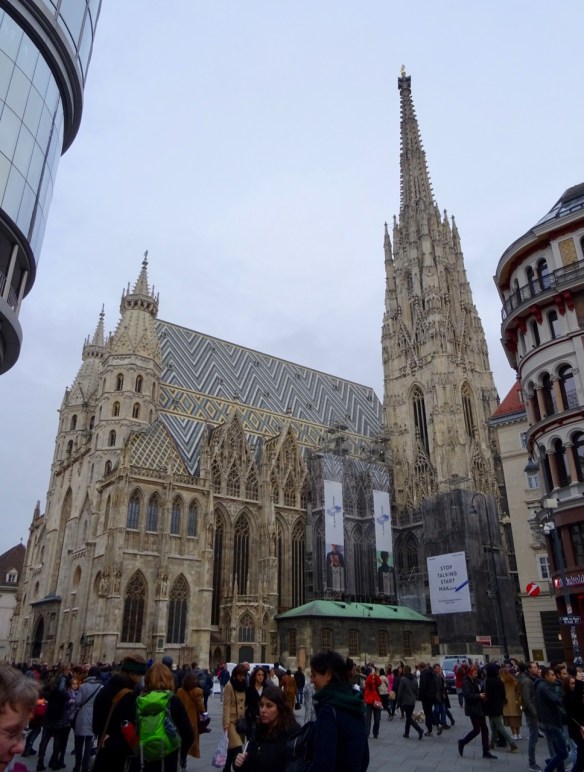
 The St. Stephen’s Cathedral is huge, and ornately decorated, outside…
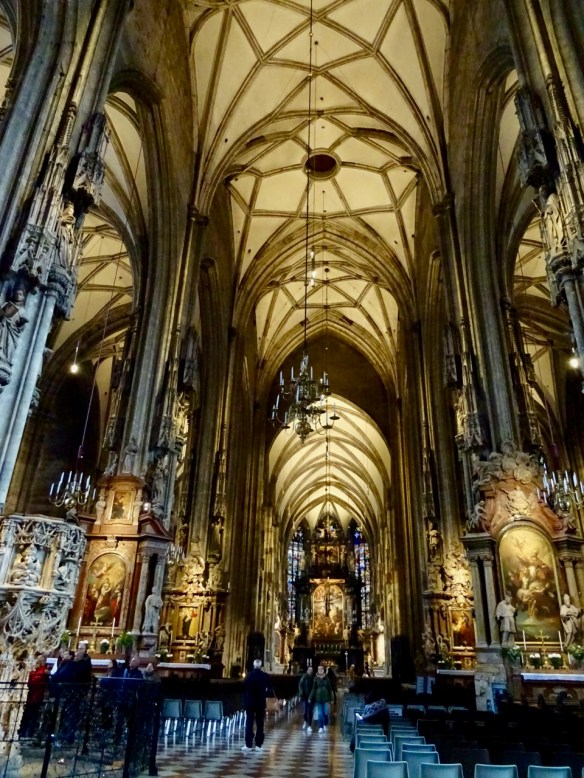
  and inside.
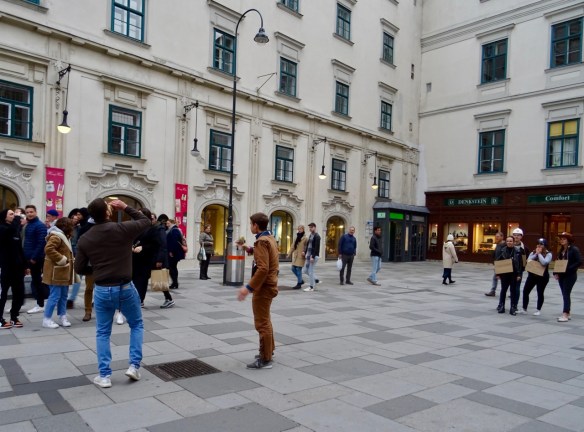
 Just behind the cathedral we see a group of people taking part in a drinking game. The guy in the blue jeans drank his big can of beer twice as quickly as the guy dressed in brown!
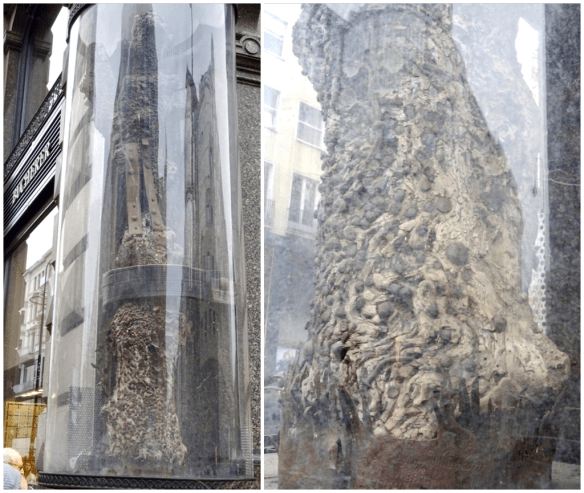
 The Stock im Eisen is part of a tree that has hundreds of iron nails pounded into it and dates from 1440. No one is sure why the nails were pounded in but it is thought that is was for good luck. It is located on the corner of a building and is protected behind plexiglass.
 The Holy Trinity Column, located on a street in the inner city of Vienna, was erected after the Great Plague epidemic in 1679. It is one of the most well-known sculptural pieces of art in the city.
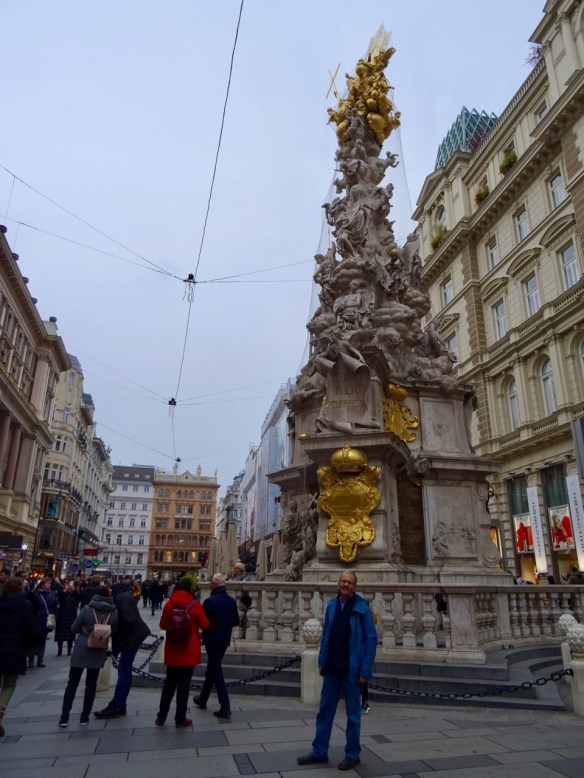 S
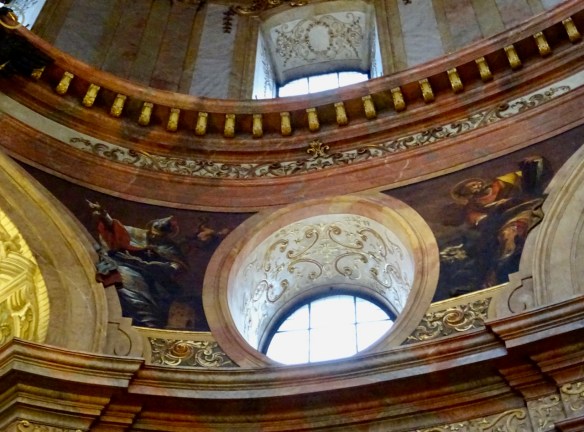
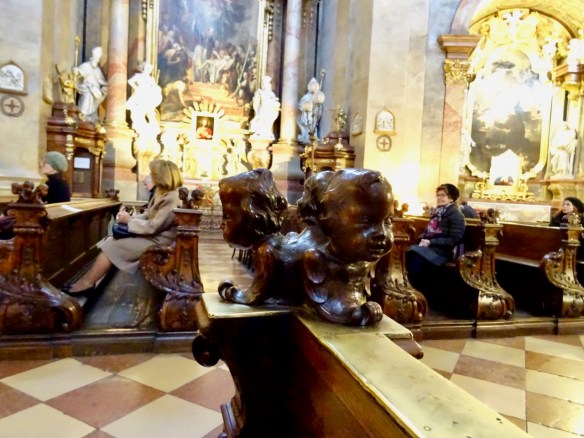
S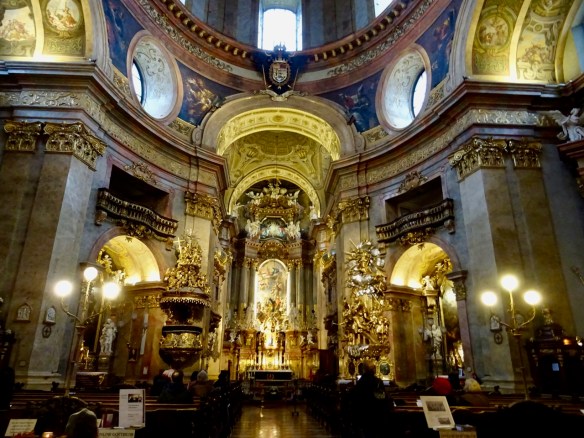 I thought it interesting the way the paintings on the dome extended over the sculptural trim around the round windows.
 The end of each pew is beautifully carved with different finials of three children’s heads. We sat for quite a while listening to the choir practicing.
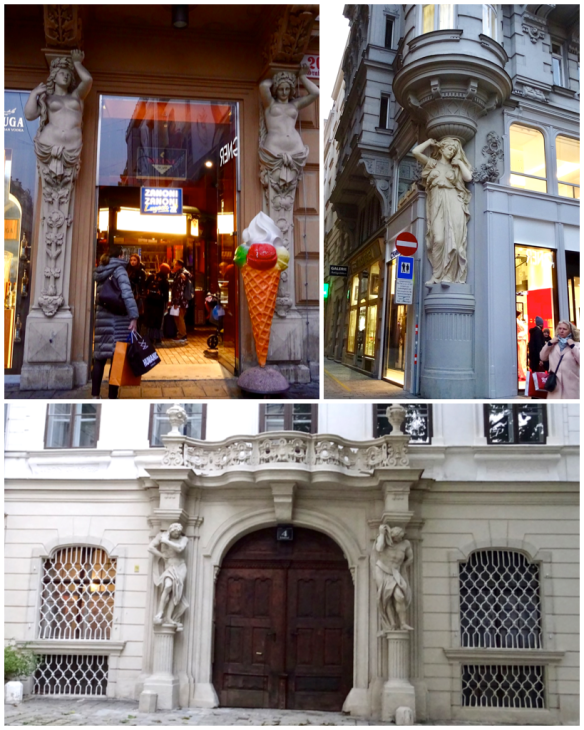
  Back outside, there are interesting details everywhere I look, like these sculptures holding up balconies.
 I loved this building. It looks like a castle. I wouldn’t mind living here!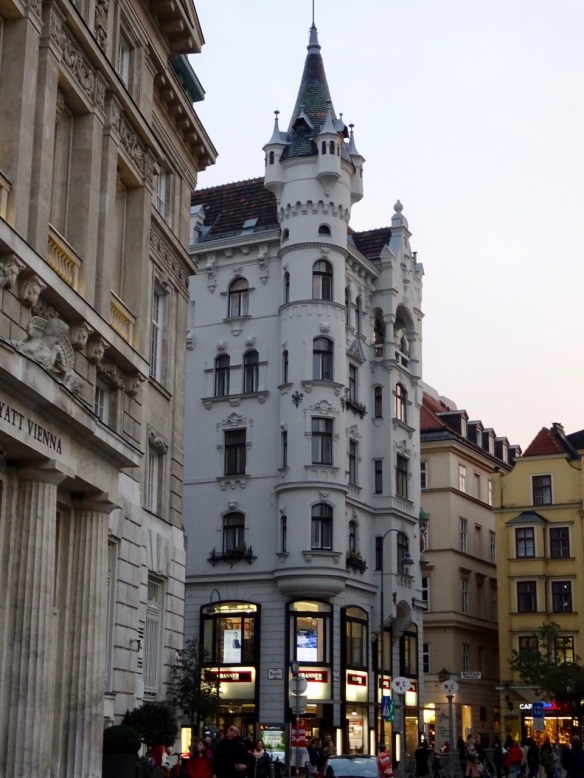
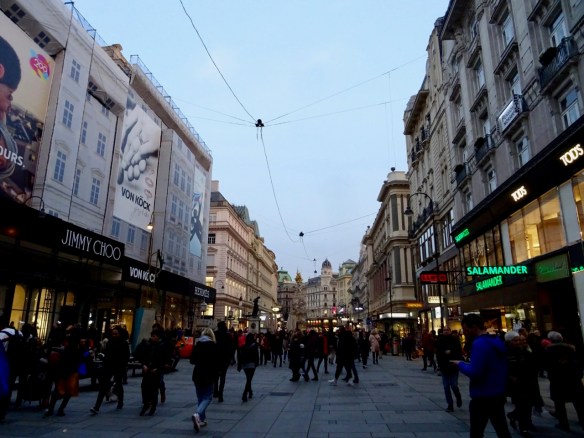 where the customers are served champagne as they shop! Sigh…an experience I am sure I will never have!
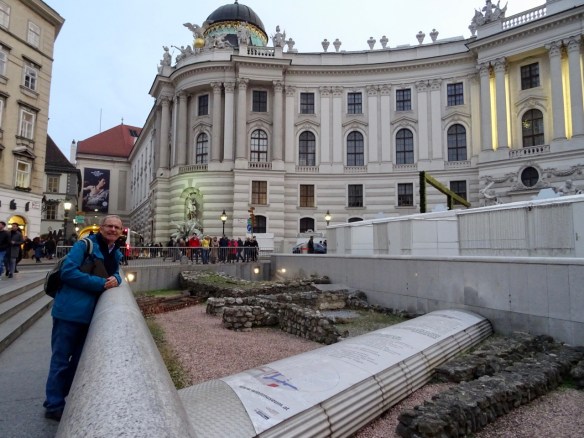
 There are Roman ruins…
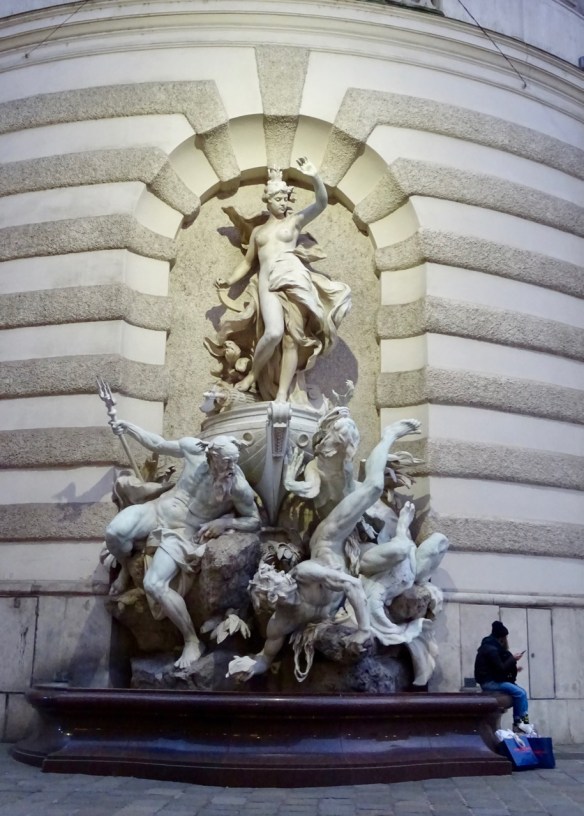
  and beautiful statues on the corners of buildings.
  This is the building that houses the Austrian National Library, the Österreichische Nationalbibliothek, as well as the Spanish Riding School with the world famous Lipizzaner stallions. We will visit both of these on another day,
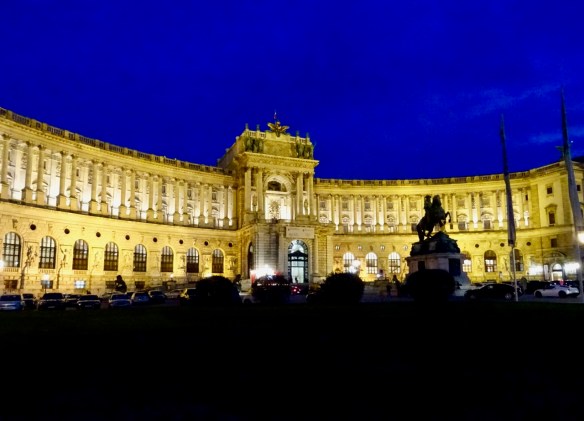
 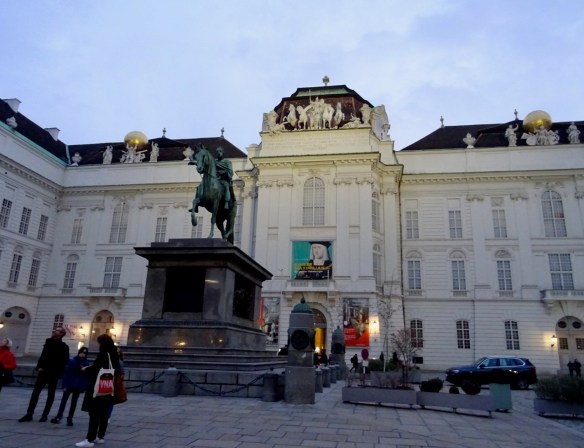 It gets dark earlier now, at about 5;30. The buildings look pretty all lit up. This is the other side of the Neue Burg Wing of the Hofburg Palace. We saw the backside earlier in the day.
 Time to head home. This subway station has colourful murals. Our apartment is very well located on the U6 subway line, so it takes less than a half hour to get home. Somehow even our ‘easy’ days end up being quite long. We left before noon and it will be after 7:00 by the time we get home.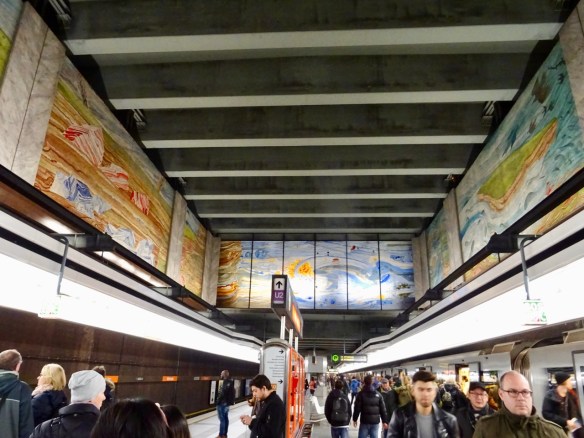
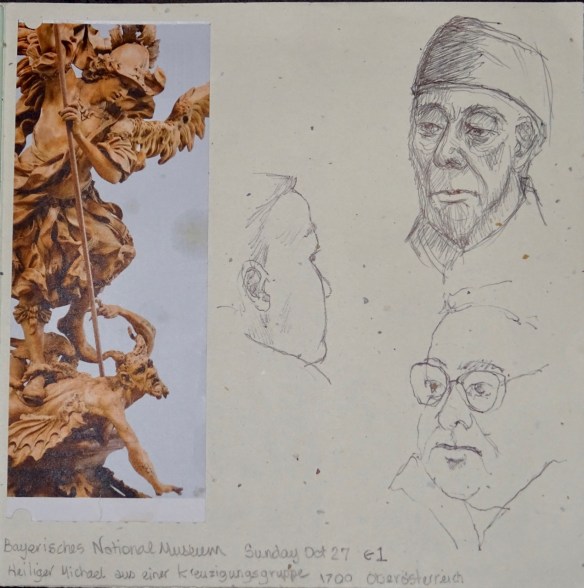 I liked this one of the young man with the bandaged nose.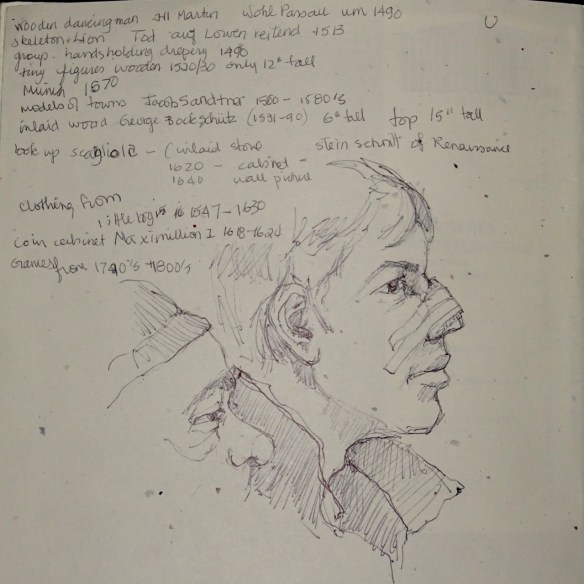
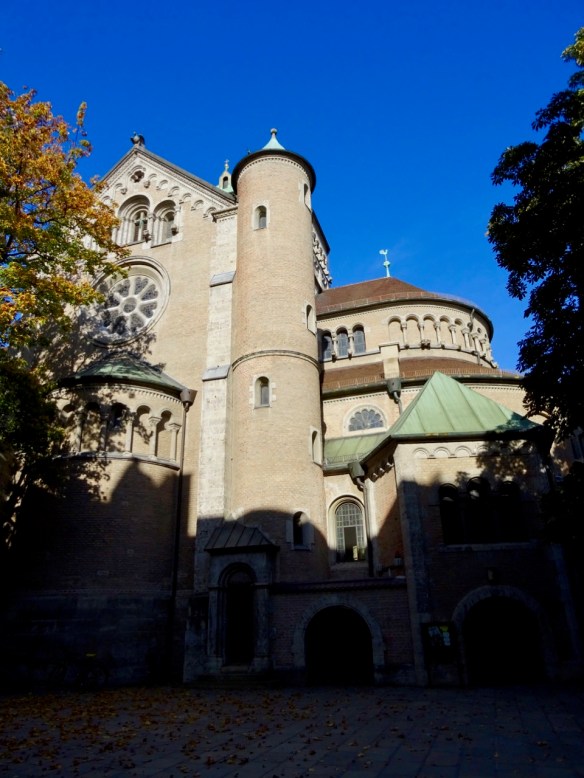
 Our drive to Vienna was long and uneventful. We stayed on the freeway and it still took us about 5 1/2 hours. We had to wait about an hour for our Airbnb host to meet us, but we found a parking space just outside the apartment and our car was warm, so it wasn’t too bad. It took forever to figure out how to pay for street parking but we finally sorted it out. We take our rental car back tomorrow so we just need parking for one night.
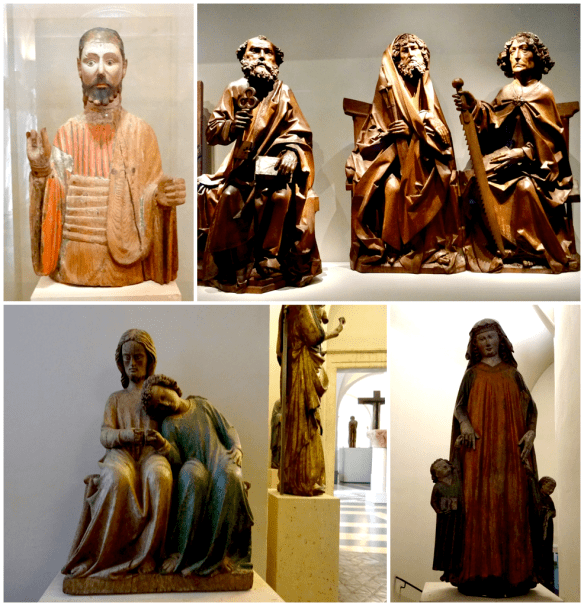
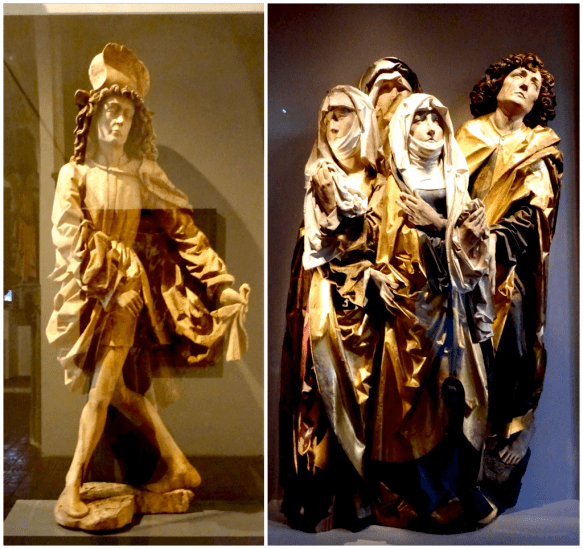
 It is only one euro admission to the Bavarian National Museum on Sundays. The first rooms we enter have incredibly beautiful wooden sculptures, many of which still have their original painted colouring. The sculpture of Christ is from 1200, the Apostles are from 1505, and the woman with children is from1300. All the pieces are in amazing condition…it is hard to believe that they can be this old.
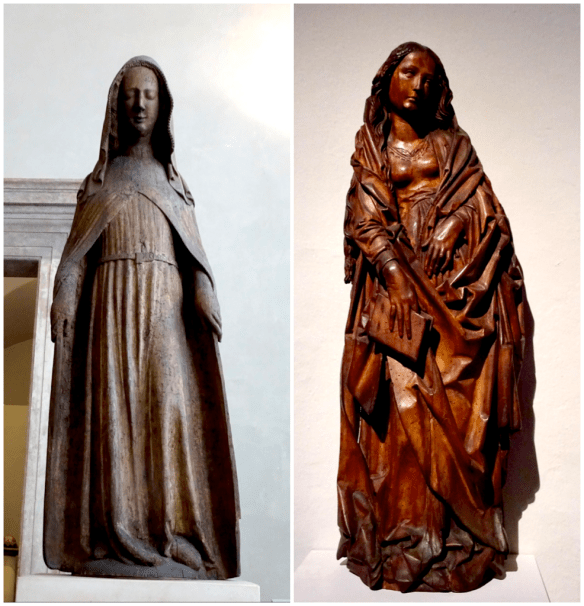
 These were two of my favourite pieces. The Mary on the left is from1300 and is larger than life size, while the second Virgin Mary is from 1500. Notice how her finger marks her place in the book she was reading when she is surprised by the angel. She is much smaller, probably about 30 ” tall. They were both exquisite.
 This dancing fellow from 1490, is exceptionally animated for such an early carving. The detail of the hands and drapery in the group of figures was so beautifully done. I have a heck of a time drawing drapery, and I can’t imagine how anyone can carve it so well.
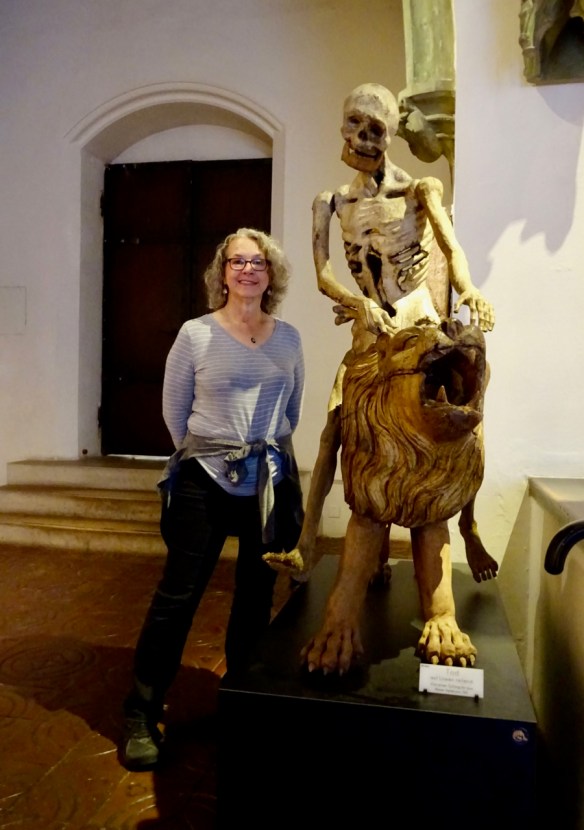
 We don’t know what this skeleton astride the lion is about but it was interesting. Unfortunately most of the signage is only in German,
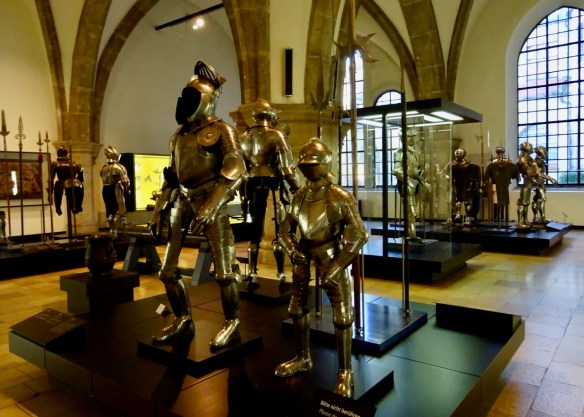
  There is a room full of armour…
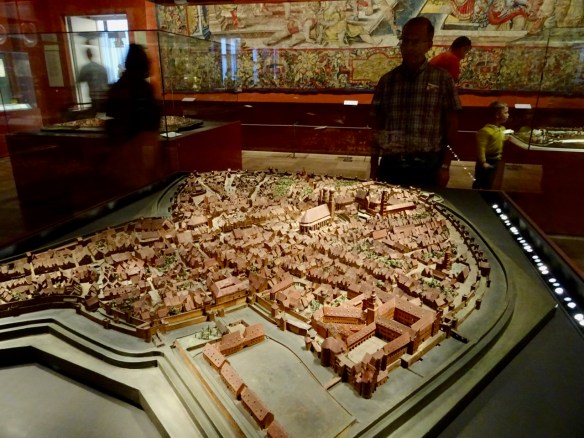
 and another room with models of many towns. This is Munich in 1580 and we are able to recognize some of the buildings that are still present in modern day Munich!
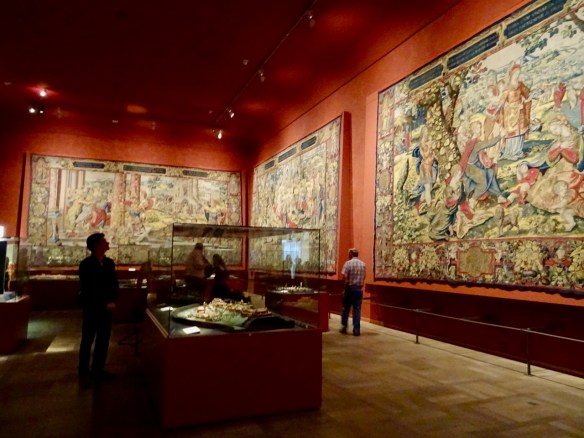
 There are enormous detailed tapestries on the wall. We are amazed at the excellent condition of these tapestries.
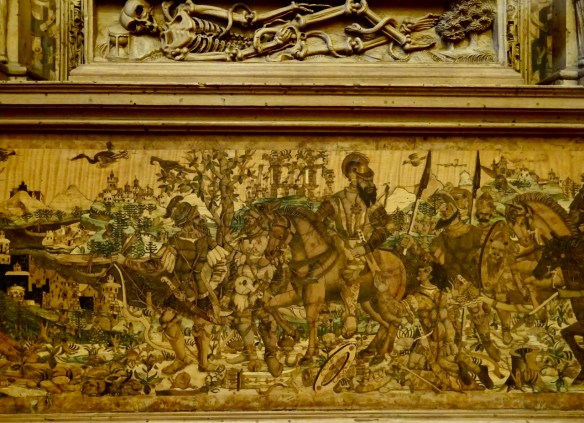
 This small panel from the mid 1500’s is only about 6″ tall and is made with intricately inlaid wood. It is incredibly detailed.
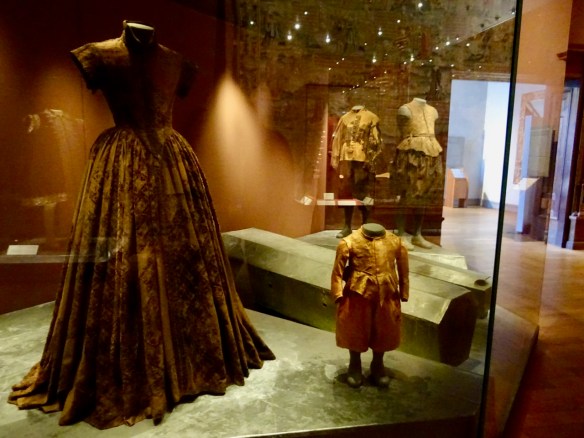
 The child’s outfit is from 1547 and the dress from 1630. I wonder how these have survived all these years. Their tiny hand sewn stitches are visible and there is some wear and tear but they are really very well preserved.
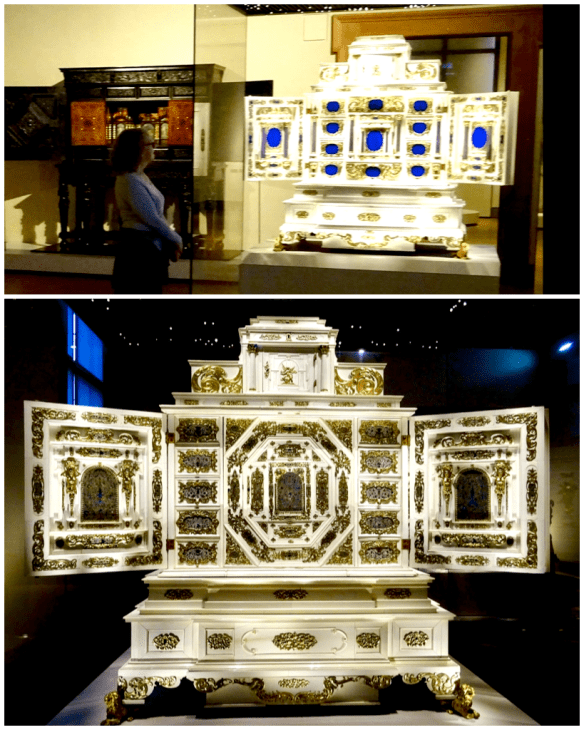
 The next room is filled with amazing cabinets. I love boxes and cabinets with lots of drawers, and I have never seen anything like these. The coin cabinet of Maximillian I was made for his collection of gold coins. Each of the rows is a shallow drawer with fitted spaces for the coins. It is made of ivory, lapis lazuli, silver and enamel, so of course it must have its own storage case! The case on the right hinges open in the middle so the cabinet can be inserted for safe keeping.
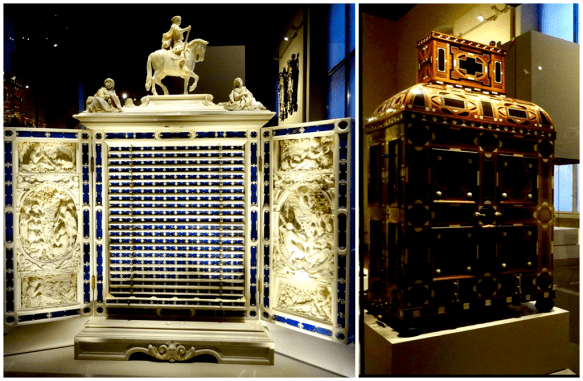 This cabinet was built for the Electress Maria Ana. The ivory cabinet is gorgeous with lapis lazuli panels, but then I walk around to the other side and it is even more beautiful, with silver and enamelling. This cabinet has 176 drawers and secret compartments for storing precious objects! Wow!
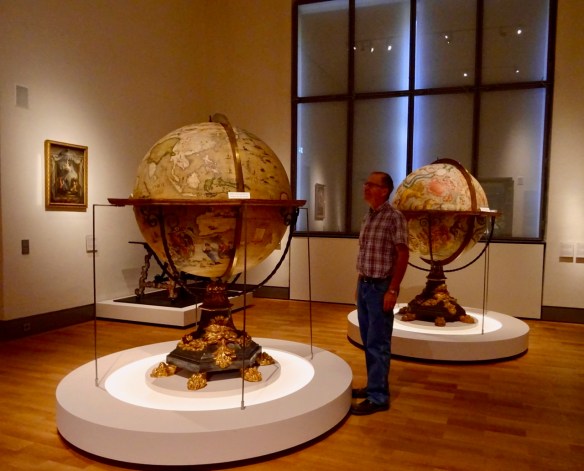
 These huge globes were interesting..
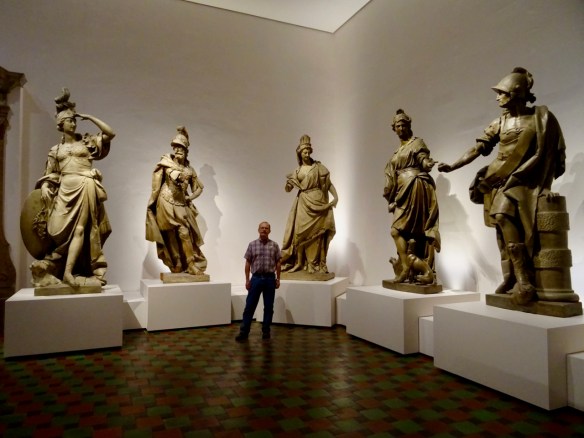
 and then we walked into the next room with these monumental wooden figures!
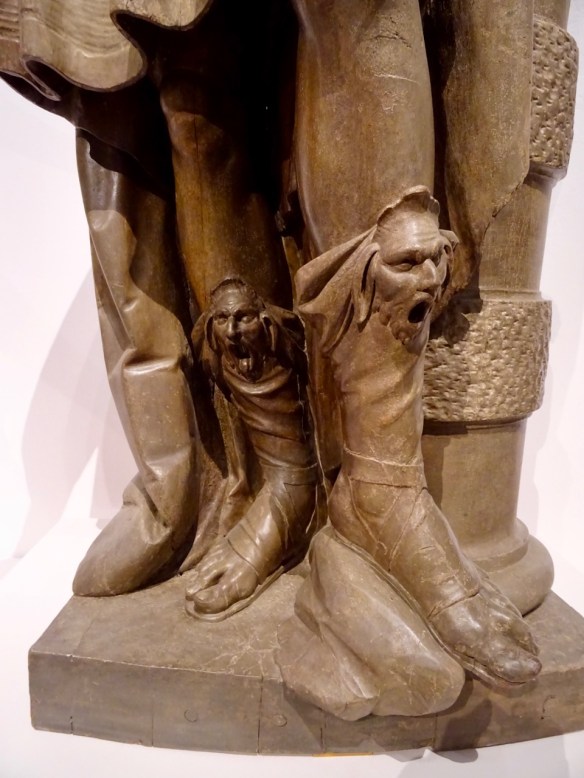
 Don’t you love the faces on these sandals?
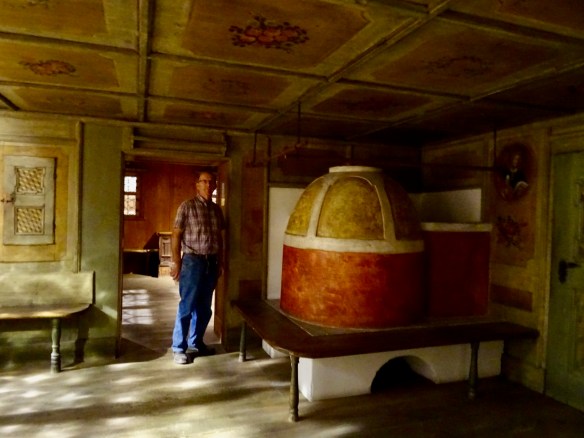
 Downstairs there are several rooms that appear to be taverns. We aren’t sure, because all the signage here is German. I think the domed object in the corner is a stove to heat the room.
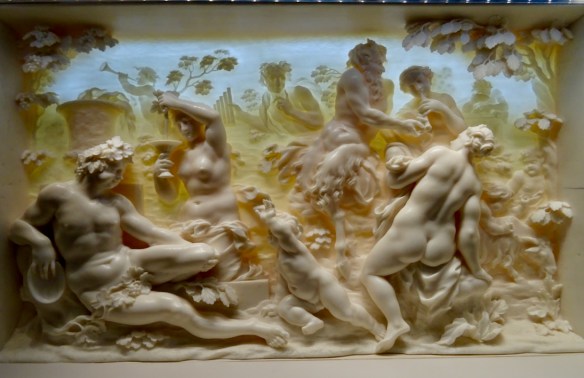
 Back upstairs, there is gallery of about 1,000 ivory objects and I wonder how many elephants died so these could be created? This ivory carving was one of fifty or so. The background sky is so thin that the light shines through it.
 The Rape of Proserpina on the left is carved in ivory, and the porcelain centrepiece on the right depicts Neptune being drawn by seahorse and tritons. They were both completed in the mid 1700’s.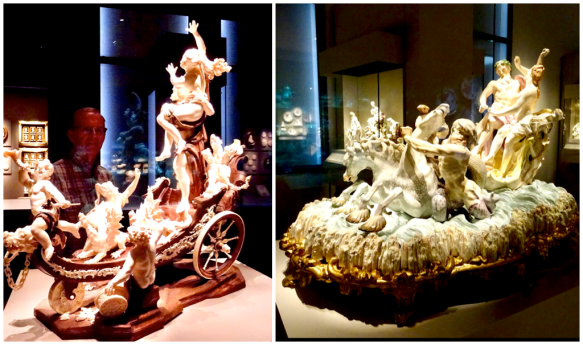
 I thought this tapestry was particularly colourful and beautiful. Notice the details in the close up of the pelican.
 Some of the musical instruments on display are rather strange. Bob is wondering how to play the double layer of 19 strings on this one…
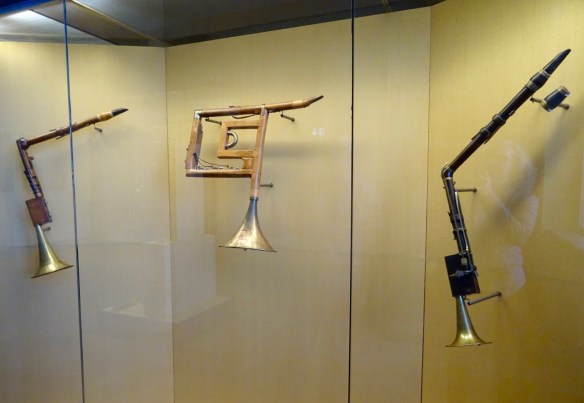
  and check out the crazy wind instruments.
 There is a wonderful display of clothing from the mid 18th century. Even the pet monkey had stylish togs.
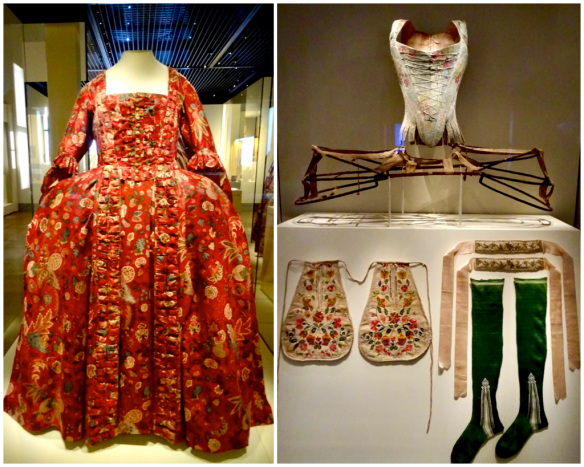
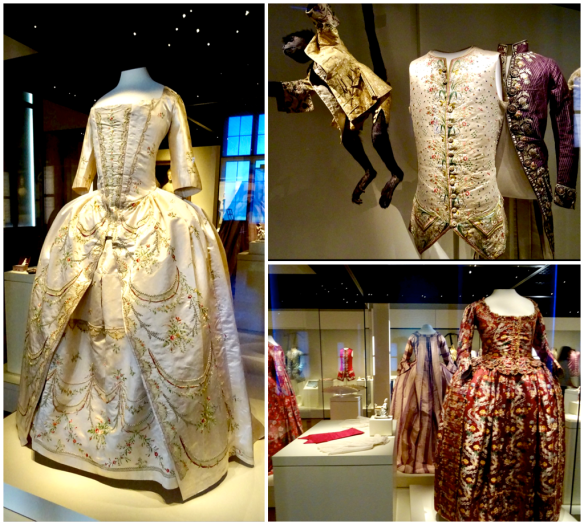 But take a look at the undergarments women wore!
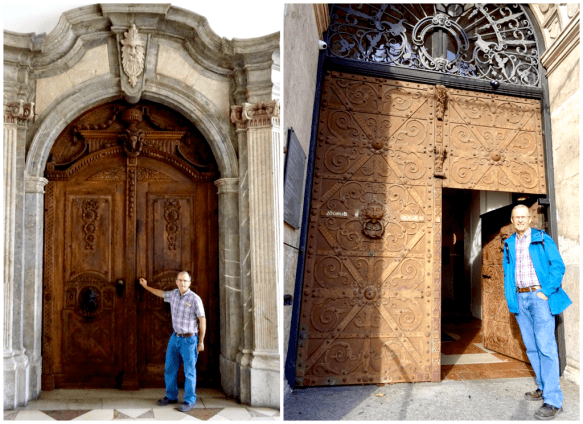
  I love doors and this museum has many. The front door opens automatically when we approach. Seems weird for such an ancient door.
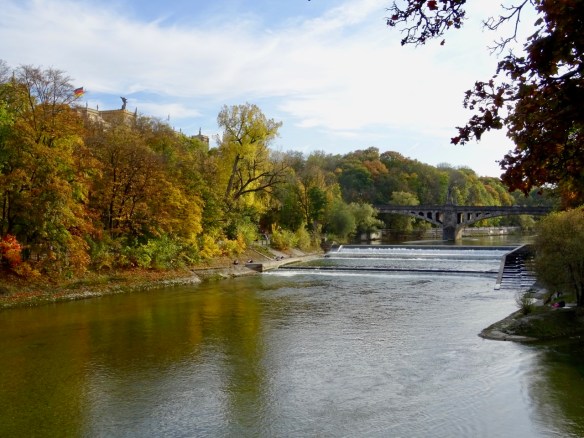
 We walk along the river on our way to Maximillianstrasse, where all the fancy expensive shops are located.
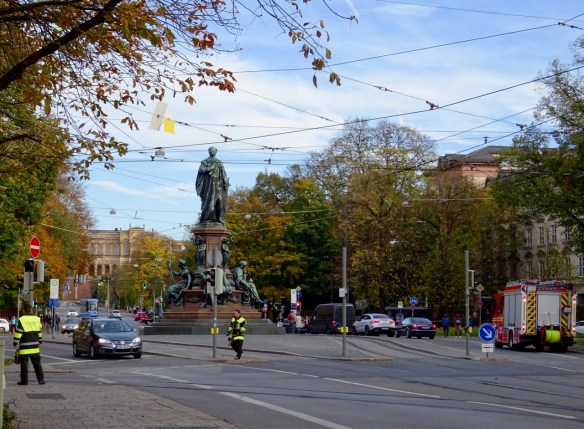
 On the way, a firetruck pulls up and the firemen check behind bushes and in garbage cans, then drive away. We wonder what they are looking for.
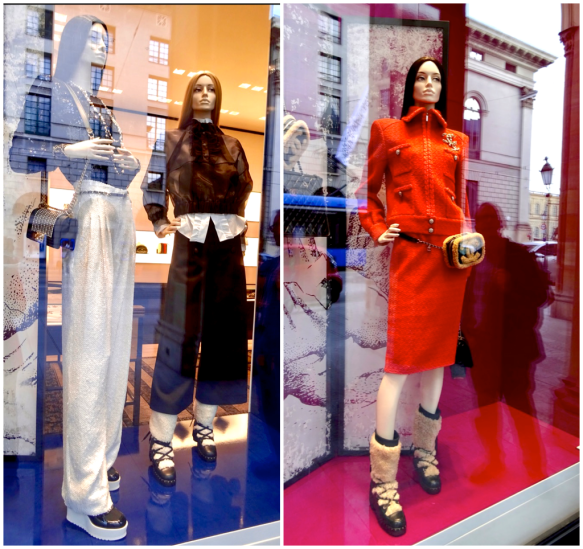
 We window shop where the wealthy people shop! The two outfits on the left are only 42,400.00 euros! The red outfit is only 26,300 euros! At today’s exchange rate that is over $100,
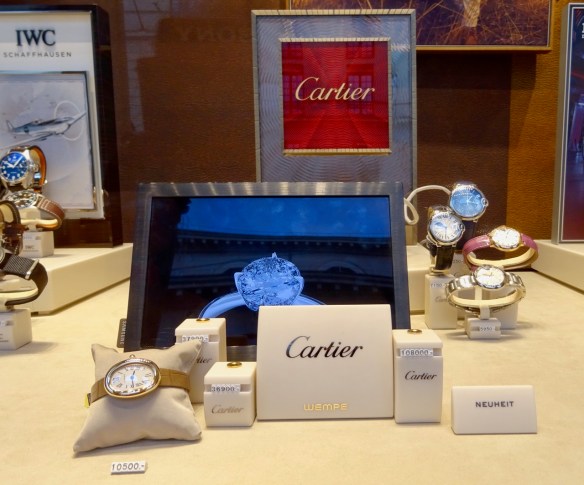
 The stores are closed so they only leave the ‘cheaper’ watches in the windows. Notice the empty stands for the more expensive ones.
 We pass more very loud, very energetic Chilean protesters on our way home.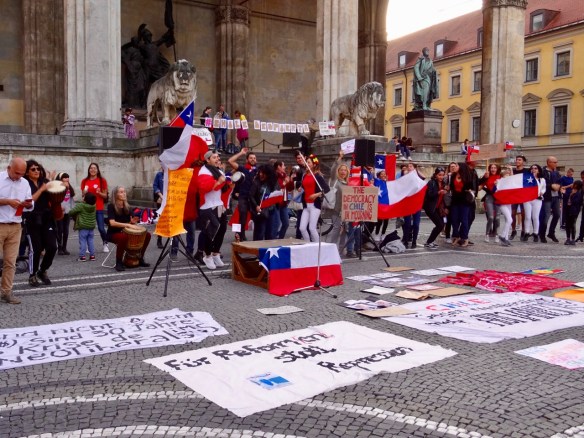
 This central four-storey building was the beginning of the palace and was built in 1644. Over the years numerous additions were built until it reached its present configuration in 1776.
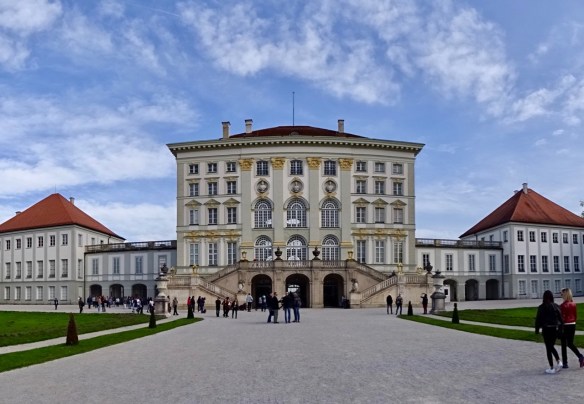 The Nymphenburg Palace was originally a summer residence for the Bavarian rulers. This is the Great Hall. Musicians would entertain guests from the gallery.
 One of the many rooms with original furnishings.
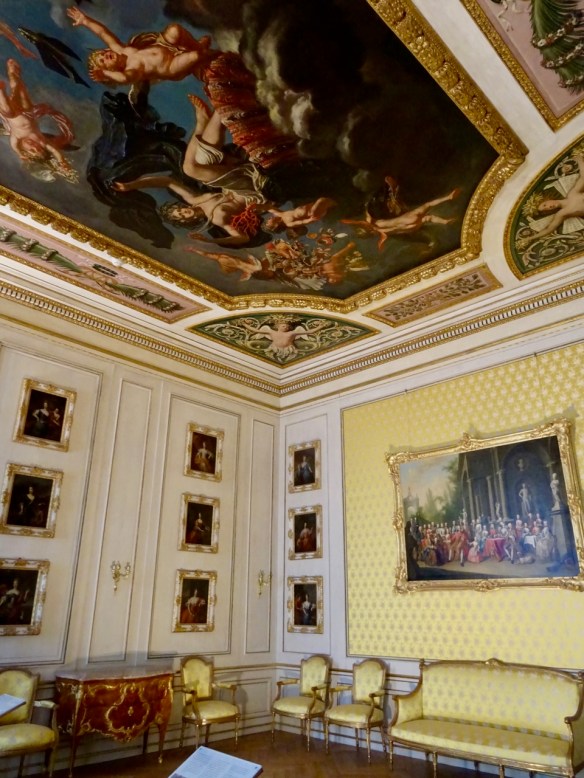 Many of the rooms are not that big and seem to serve as connecting passages to other larger rooms.
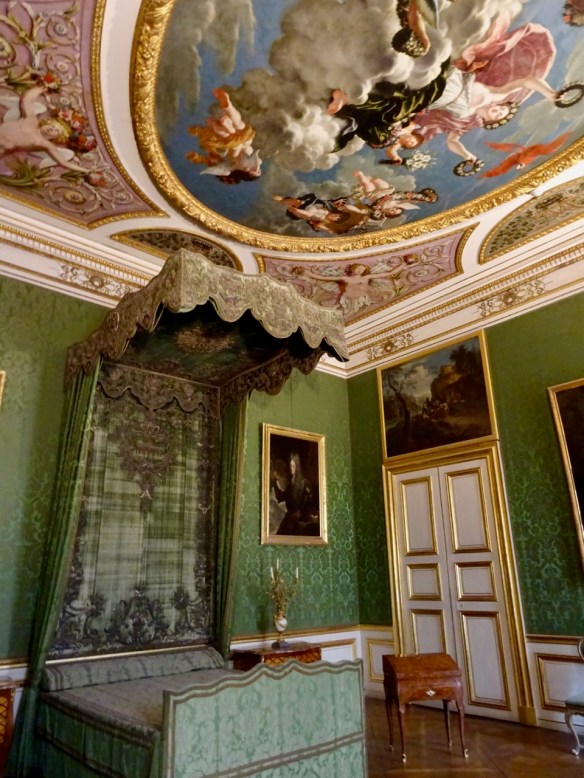
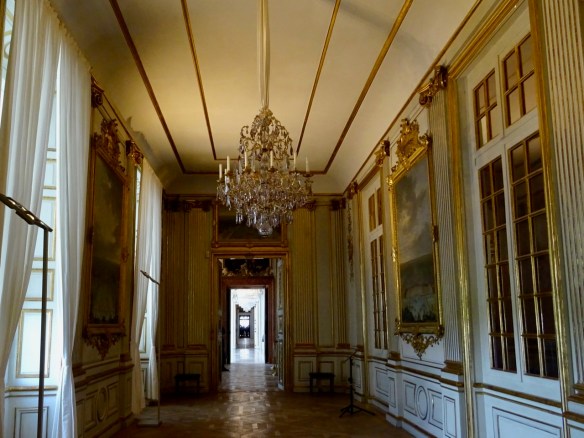 The south apartment bedroom of the Electress, who was the consort of the king.
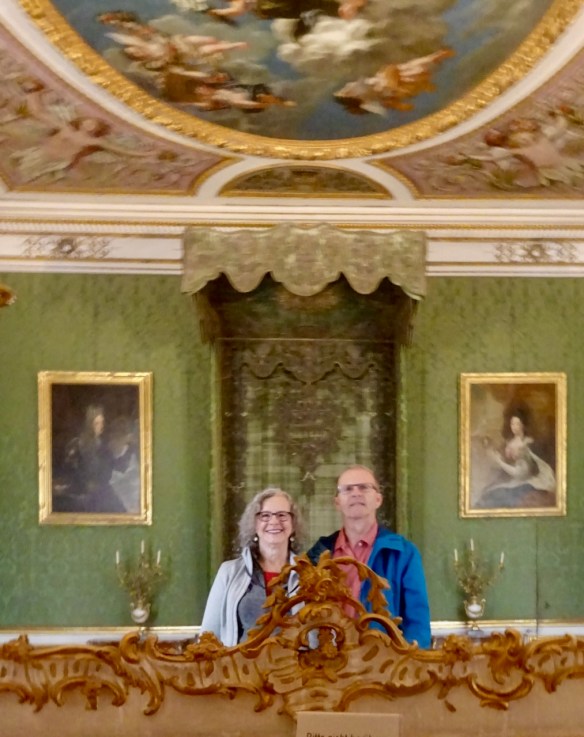
 Our reflection in the bedroom mirror.
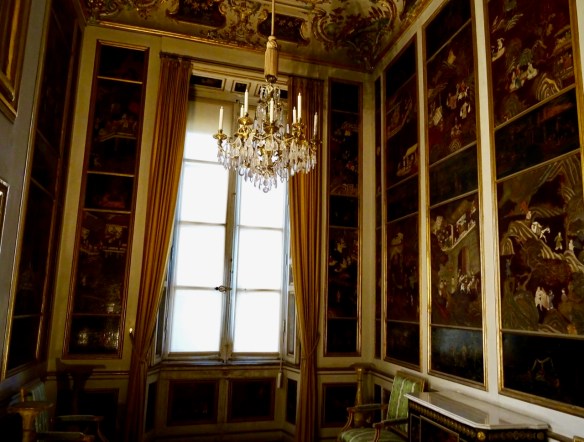
 Every palace has to have a Chinese inspired room.
 The audience room of Queen Caroline…
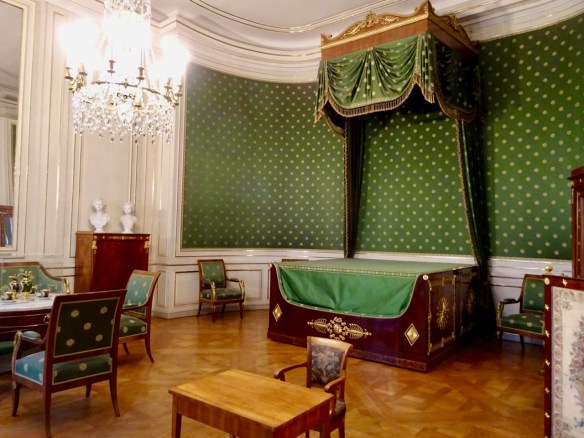
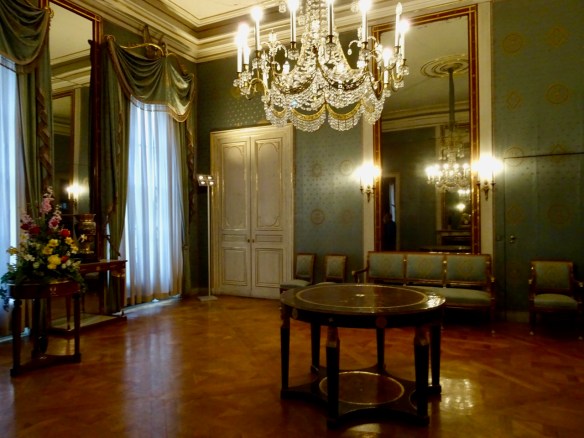 and her bedroom have their original furnishings. This room is where King Ludwig II was born in 1845. The bed is hidden by a cover on a high frame which was spread over the bed during the daytime.
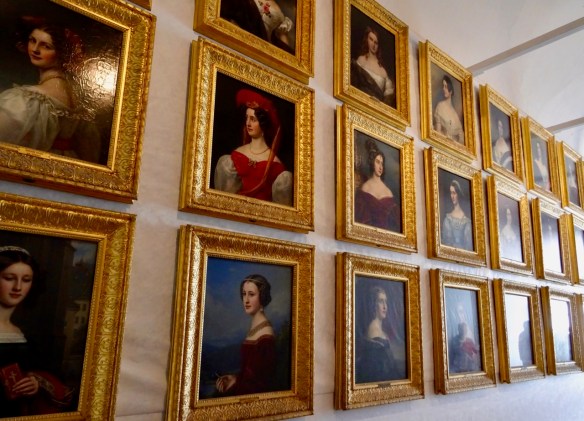
 The official Hall of Beauties is under restoration but the paintings are on display in a corridor. From 1826 to 1850 King Ludwig I had a series of 36 portraits painted of what he considered to be the most beautiful women. Beauty was considered to be an outward sign of moral perfection!
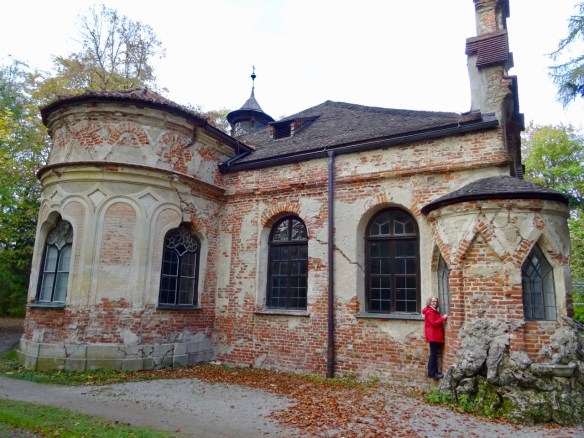
 We finish our tour of the palace rooms, and go explore the grounds. Unfortunately we realize that the park pavilions closed for the season a week ago. I do manage a peek inside the Magdalene Hermitage, which was a pavilion used for contemplation.
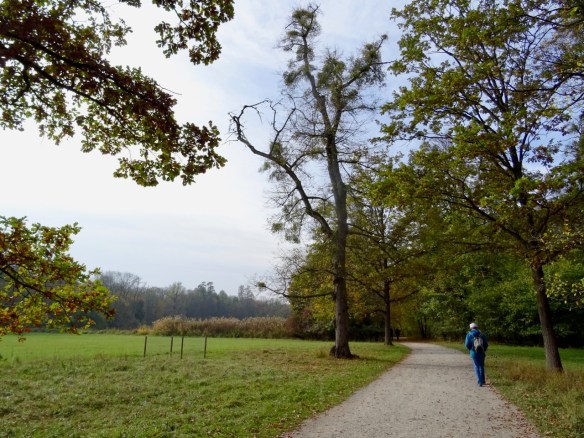
 Much of the grounds are in the style of an English park, with paths…
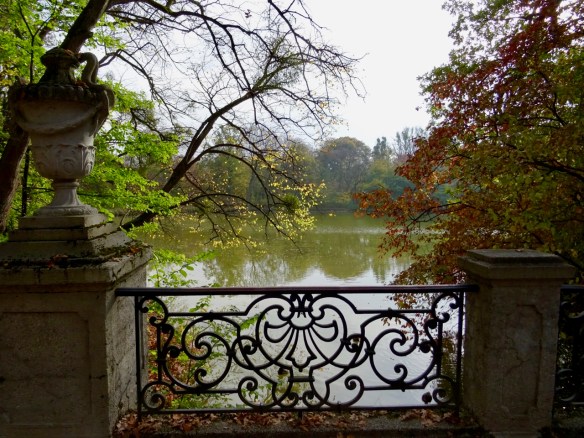
 and little bridges over water features.
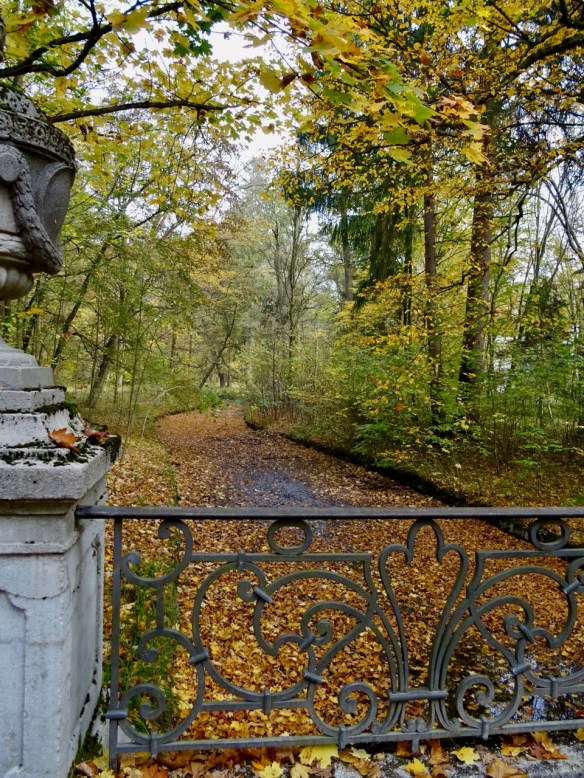
 This creek was so covered with fallen leaves that the water was barely visible.
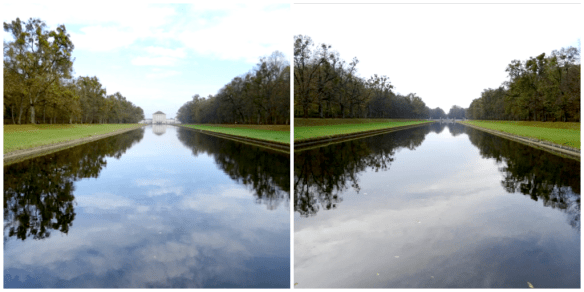
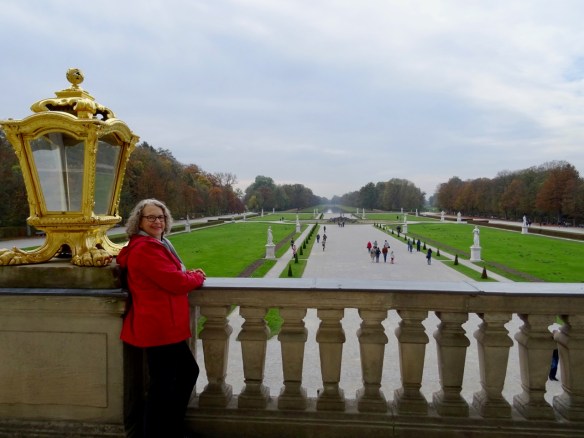
 This shows just how long the canal water feature is…looking towards and away from the palace on a bridge that crosses the canal. At one time gondolas sailedd these waters. Neat reflections too.
 Walking back towards the palace along a tree lined path.
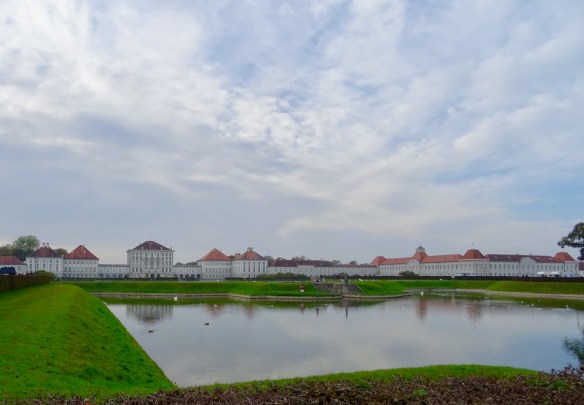
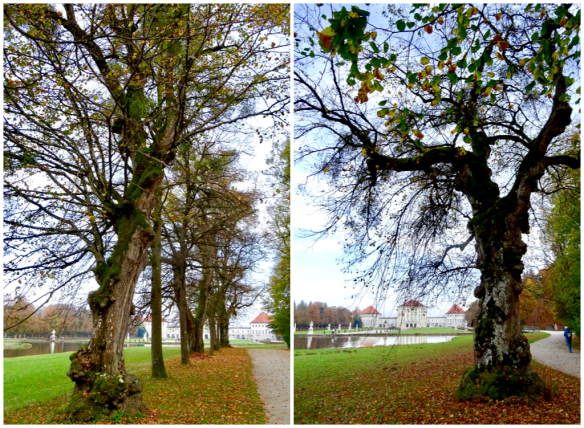 I liked the reflection of the palace in the water.
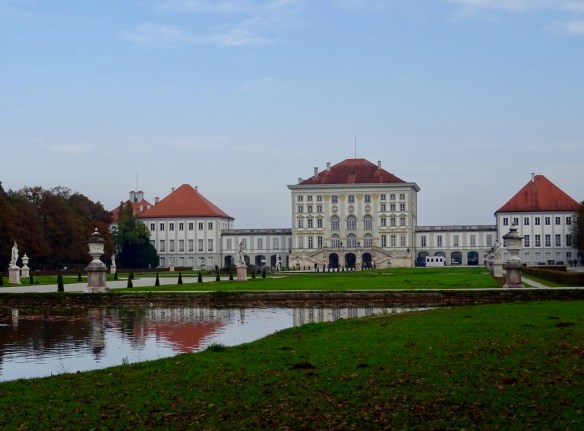 Looking out towards the garden from the Palace steps.
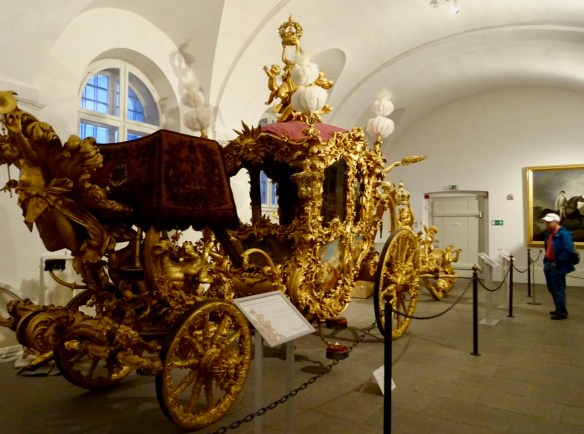
 It is almost closing time, but we manage a quick peek inside the Carriage museum, which is one of the most important museums of court carriages, travel and equestrian culture in the world. The Coronation coach of Emperor Karl VII is here…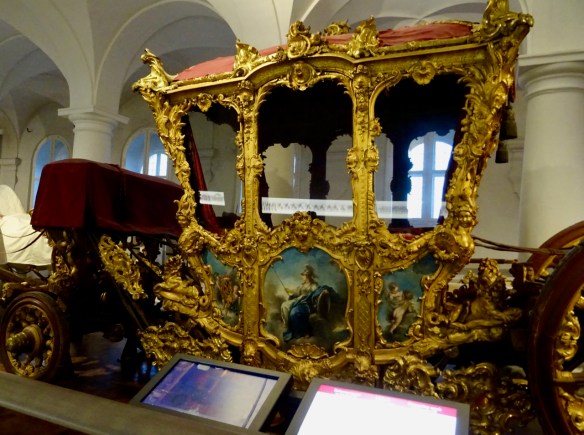
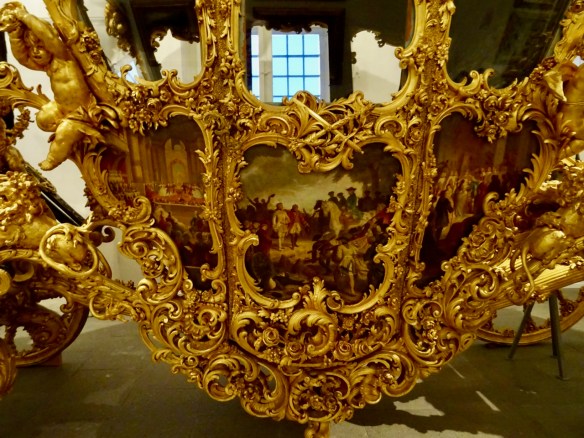 We can only begin to imagine how much these coaches cost!
 Besides dozens of coaches there are numerous sleighs on display.
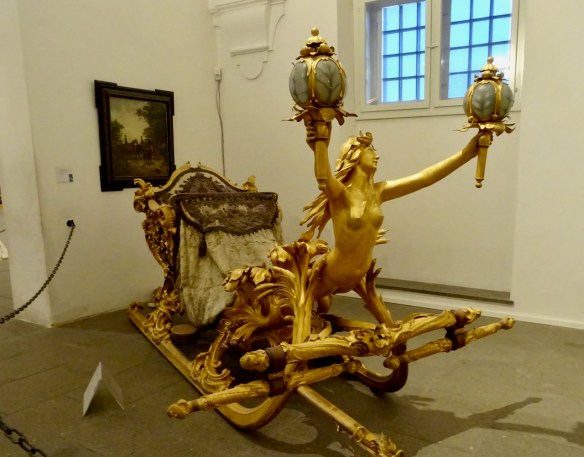 Parades and competitive games with these carousel sleighs were a popular winter amusement at court. Women would sit in front of a male driver and try to hit rings or paper maché figures with a lance or sword. Notice the rear view of the sleigh in the mirror.
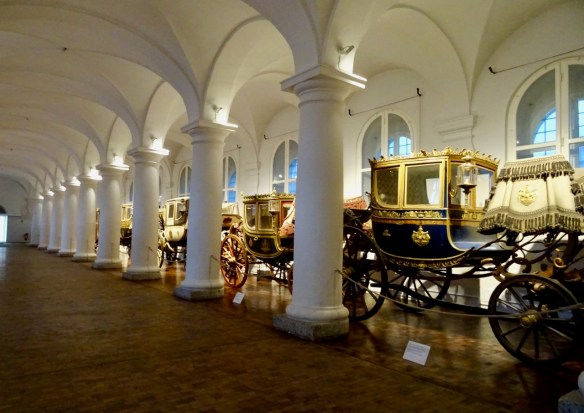
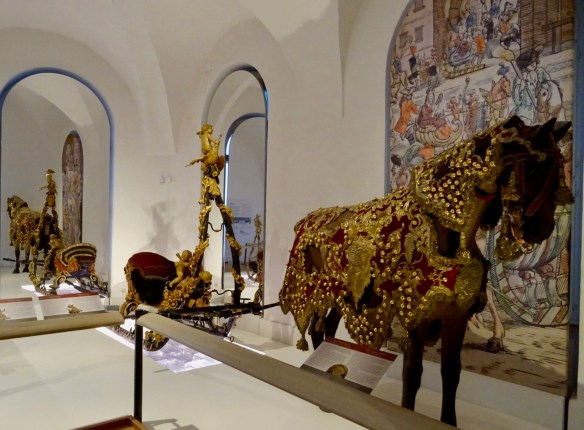 Just a few of the many coaches on display in one of the halls.
 One last selfie before we leave.
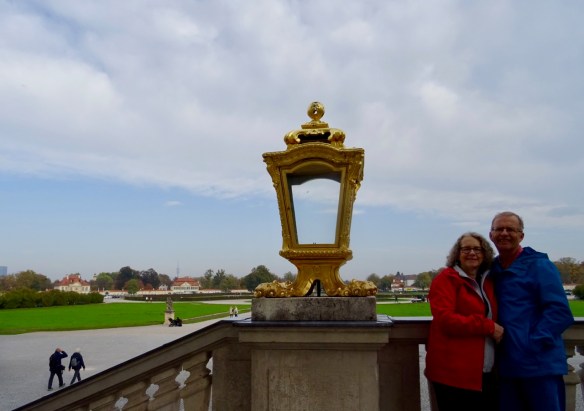 and one last look back towards the front of the Palace…
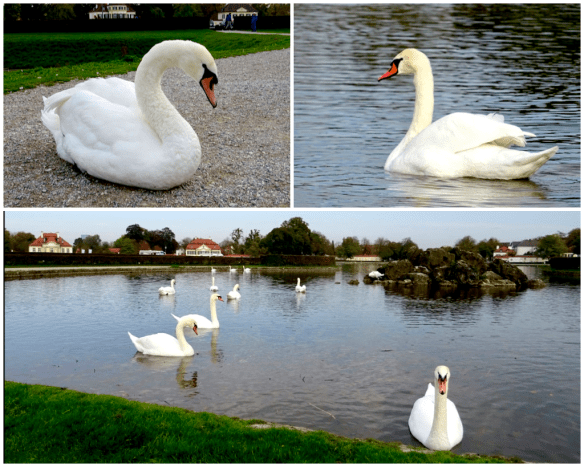
 with a photo stop at the swans.
 I have life drawing tonight, so we head toward the metro and after checking out my route, Bob heads for home and I head towards my drawing session. I have a bit of time so I sit at the Sheraton Hotel having a cup of tea and doing a bit of sketching.
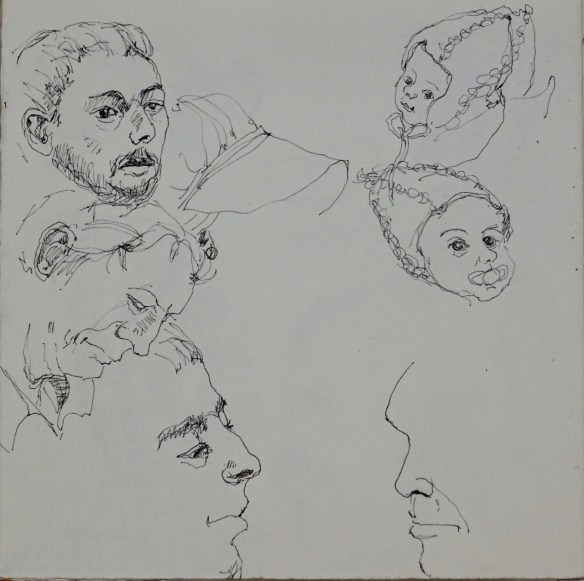 These were a bit better.
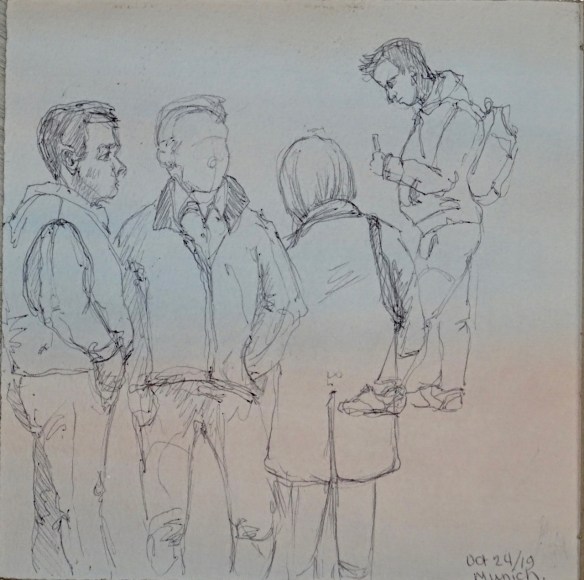 Sketches from the Sheraton Hotel.
 My first drawing at the Meetup session. Still having some issues with proportions and the head placement in relation to the body.
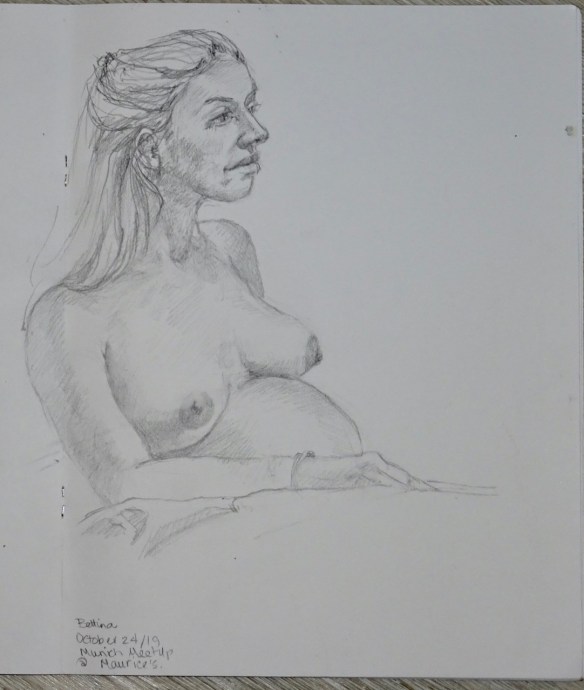 I started again after our break and did this portrait which was better. Bettina, our model, really liked it and said that it looked like her.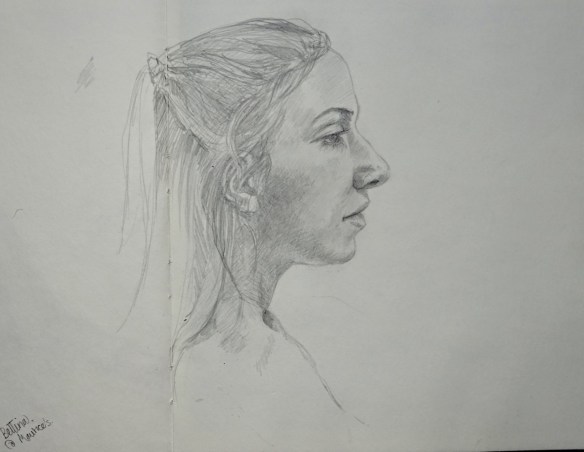
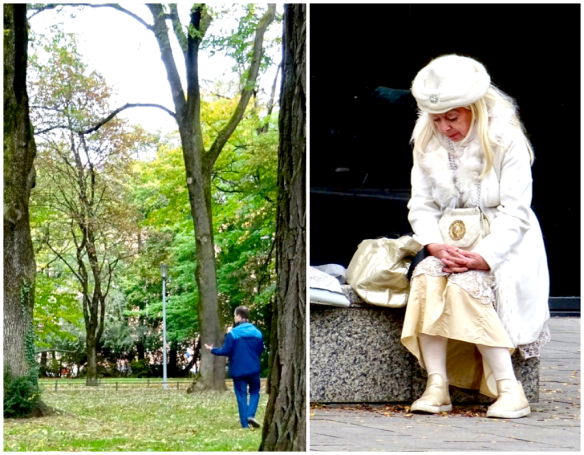
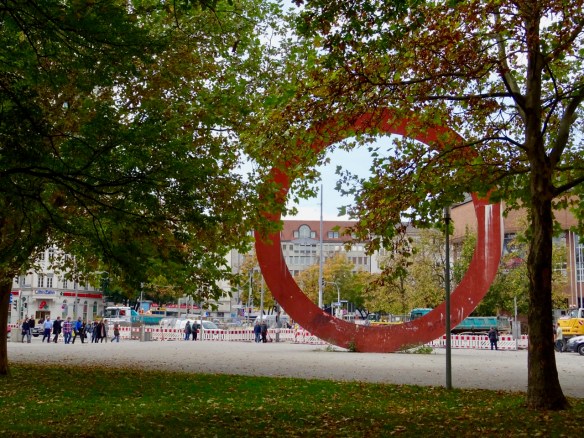 The Ring is right next to the entrance to the Old Botanical Garden where we have our lunch. We see lots of interesting people on our travels. The man below was ‘communing’ with a tree…he walked circles around it, with his hands out, making gestures towards the tree. Some police driving through the park stopped to talk to him but they let him be, guess they figured he was harmless. Nearby I spotted this lady dressed all in white. She looks like she belongs to a different place and time.
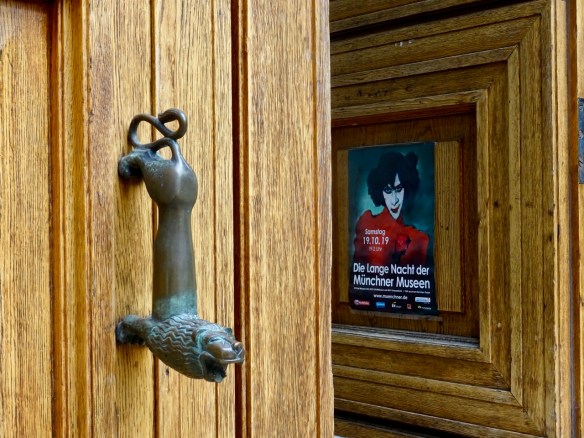
 There was a small gallery in the Botanical Gardens but they were changing exhibitions and not open. I liked both the door handle and the interesting poster, which reads, The Long Night of Munich Museums.
 First stop on our tour, why don’t you come along with us? The
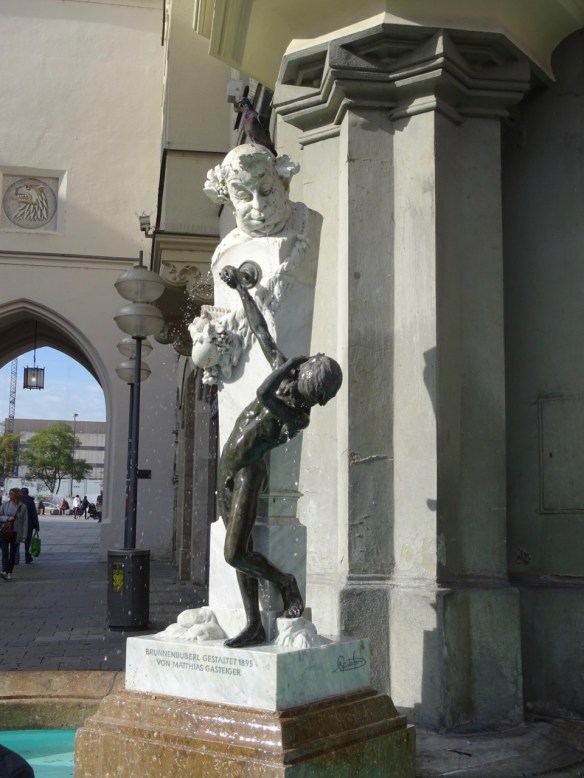 Citizen’s Hall Church was heavily damaged during WWII but it has been rebuilt and looks exactly like it did in the 1700’s. The basement contains the tomb of Rupert Mayer, a famous Jesuit priest who stood up to the Nazis occupation and died in a concentration camp..
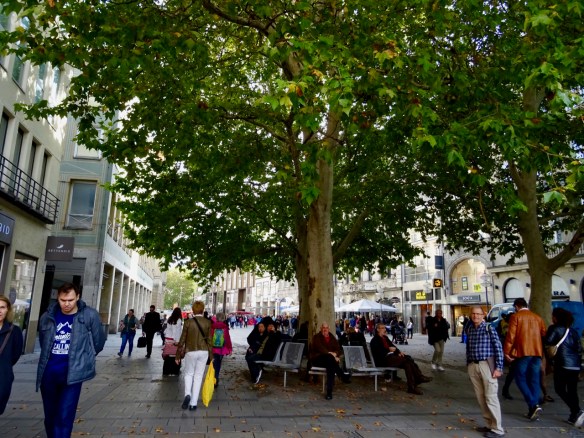
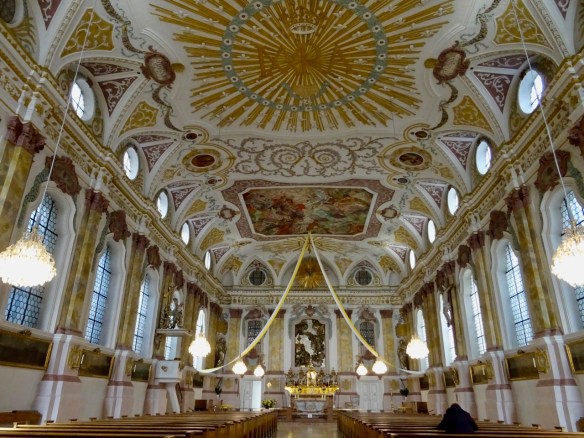 Our walk continues down a broad pedestrian street with large trees.
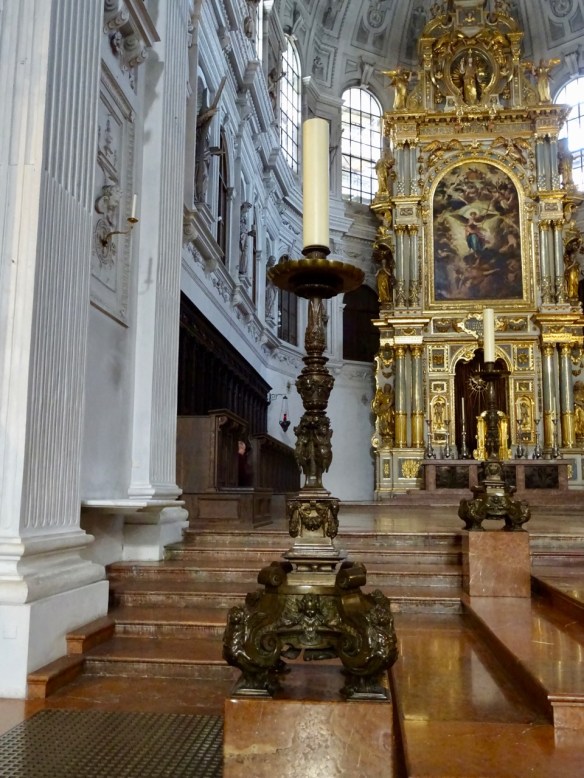
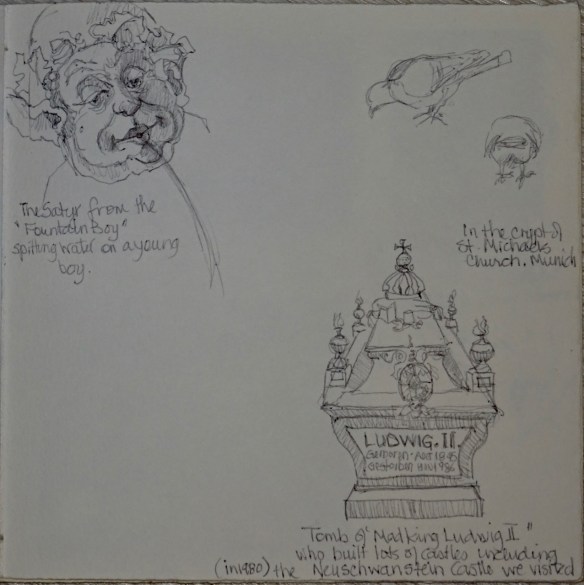
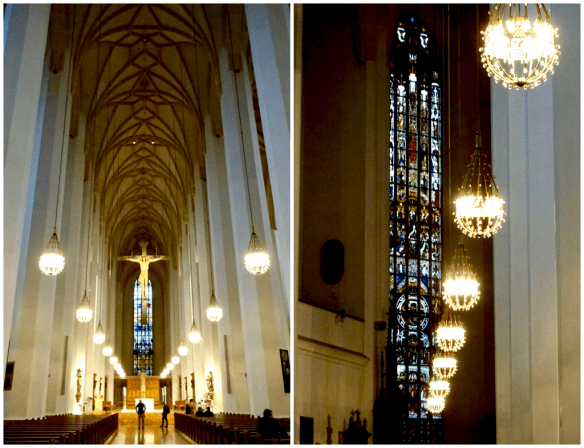
 St Michael’s Church. I liked the huge elaborate candle holders. The church contains The Royal Crypt which holds 40 tombs. The most famous of these is the tomb of “Mad” King Ludwig II. Ludwig was a big spender and built many lavish castles and palaces. We visited the Neuschwanstein Castle on our first trip to Europe almost 40 years ago. It is the castle that inspired Walt Disney’s Snow White castle.
 No photos are allowed in the crypt so I did a quick sketch of King Ludwig’s tomb. No one ever seems to mind if I draw.
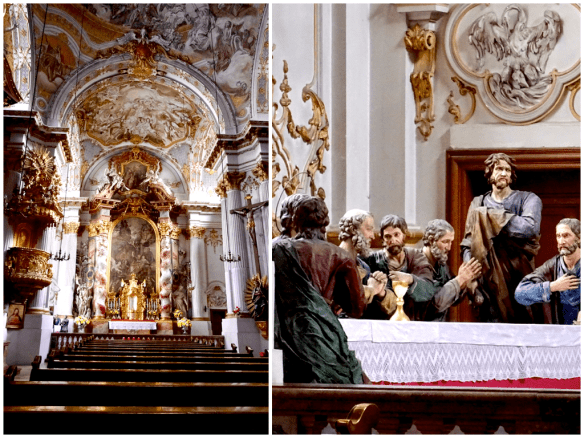
 There are a few churches on this tour! Each of them has its own distinctive feature. Saint Anna’s Church has had a chapel on this site since 1440. I thought I saw people inside, behind the locked gates, but when I zoomed in with my camera, I realized it was a life size sculpture of the Last Supper.
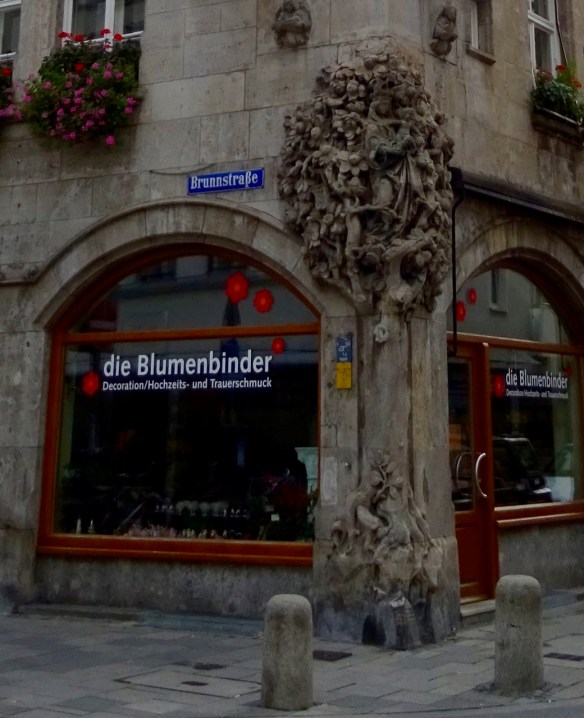
 We pass this tree sculpture on the corner of a building on our way to The Asamhof Passage.
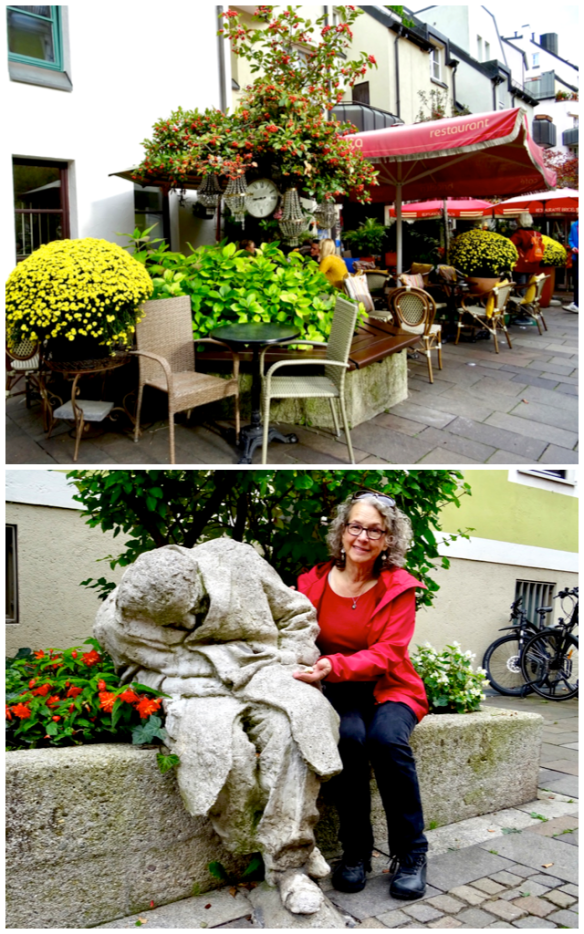
 Asamhof Passage is a little pedestrian street lined with restaurants, lots of flowers, and this poor fellow who needed my change more than I did!
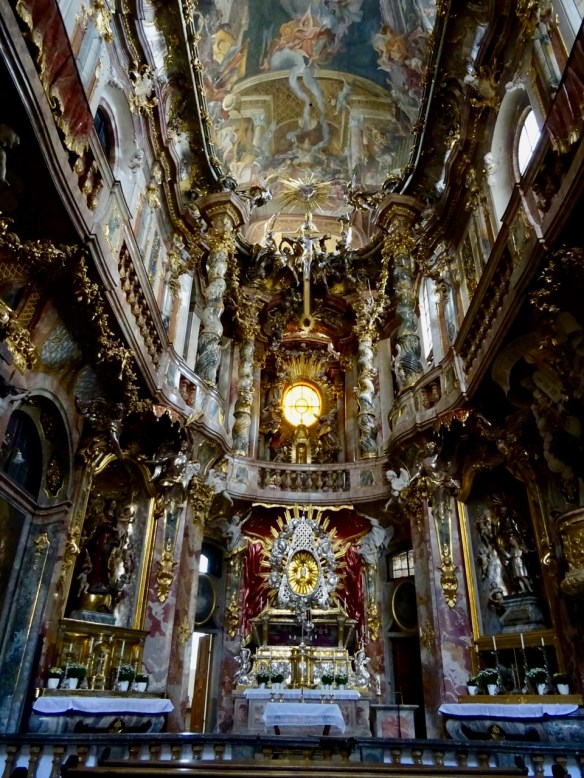
 Asamkirche was built by the Asam brothers as a showpiece for their church building skills. It is only 30 feet wide but it is so packed with over-the-top-Rococo decoration that we don’t know where to look! The entire focus of the interior leads the eye to a bright golden window meant to feel like the eye of God staring down at us.
 This is the exterior of the church and the brother’s house next door, which had bedroom windows looking onto the high altar in the church.
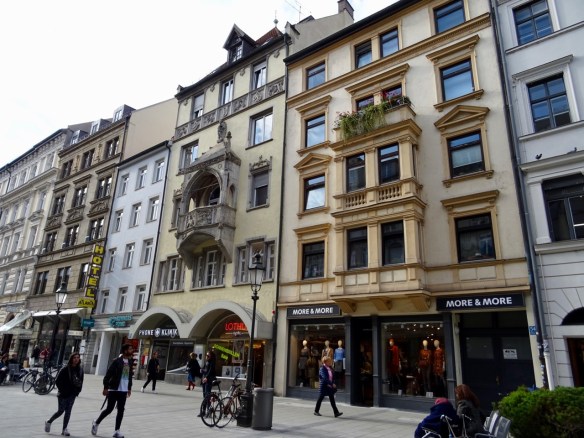
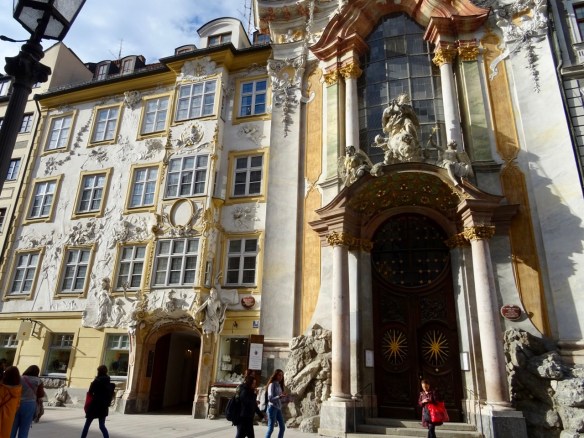 There are lots of modern shops below the traditional apartments.
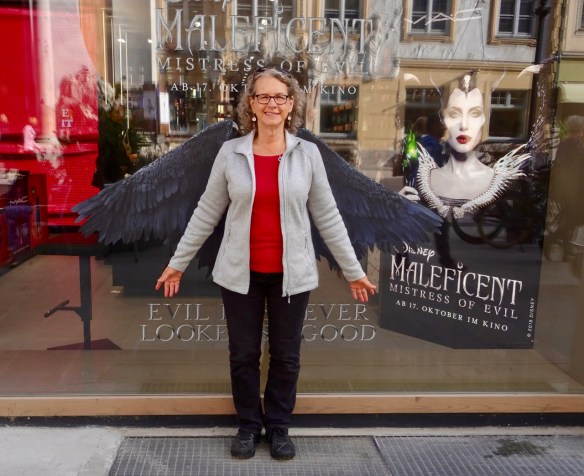
 I think I look OK with wings!
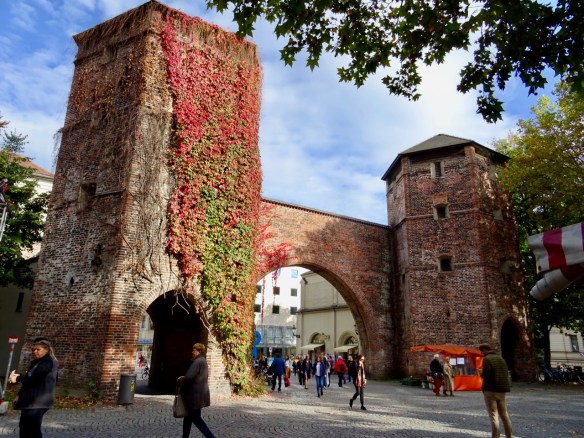
 The town gate, built in 1318 has two towers and is the oldest of the three city gates still standing in Munich.
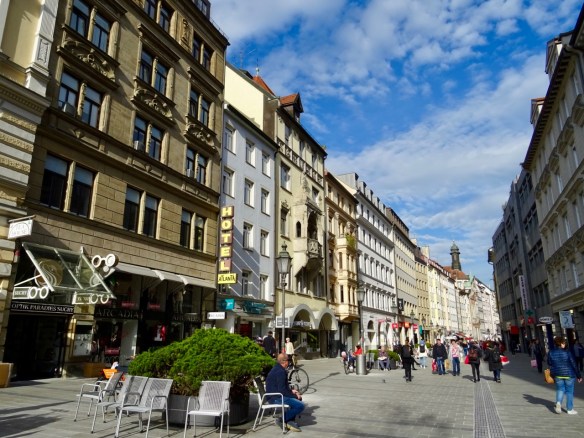
 A view down the street from the town gate.
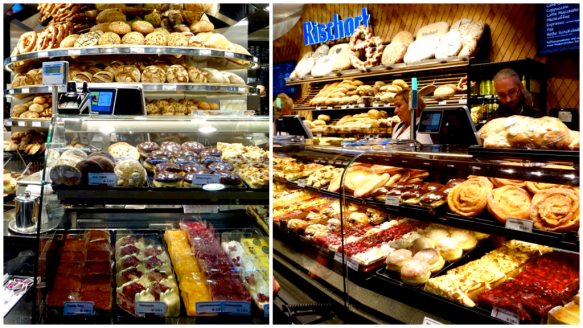
 Walking back towards Marienplatz we walk through the Victuals Market (Viktualiemarkt). This is a tough place to be when you can’t eat gluten, dairy or eggs!
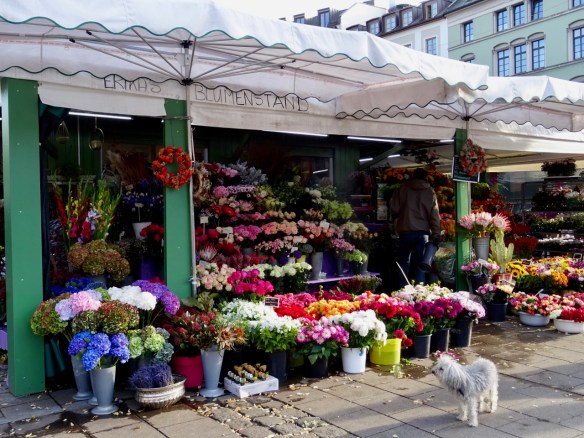
 There are lots of flower stalls. I particularly liked the little dog that seemed to belong to this one.
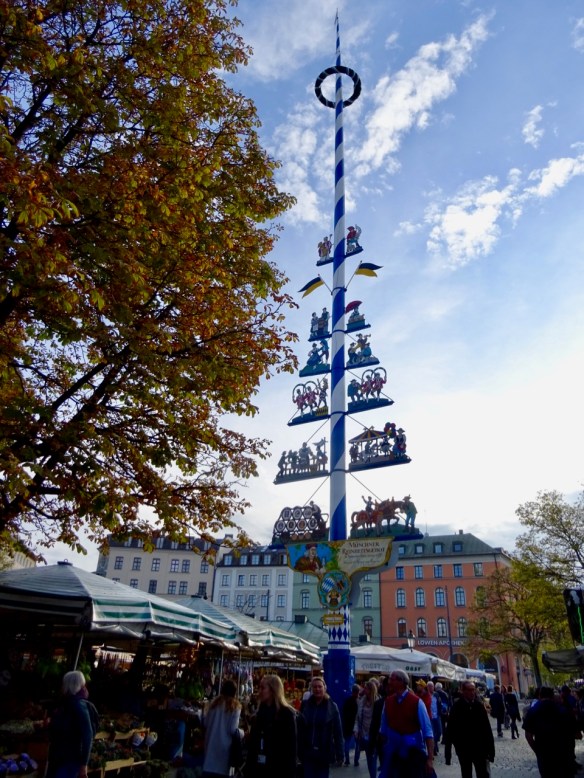
 This is the tallest May Pole we have ever seen!
 We can see the Glockenspiel Tower down a side street between two buildings.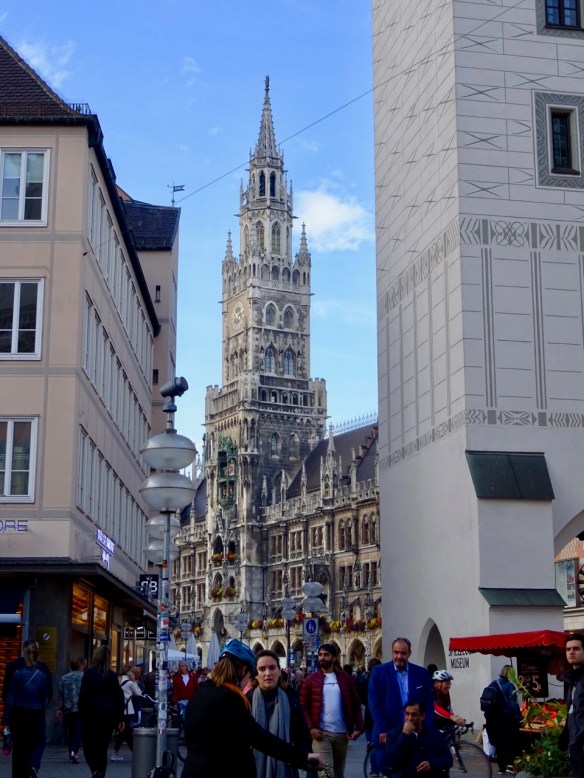
 The New Town Hall’s main attraction is the Glockenspiel. This chiming clock was added to the tower in 1907. At 11am, midday, and 5pm the Munich Glockenspiel recounts a royal wedding, a jousting tournament and a traditional dance with 32 life-sized animated figures in its 260 foot tower.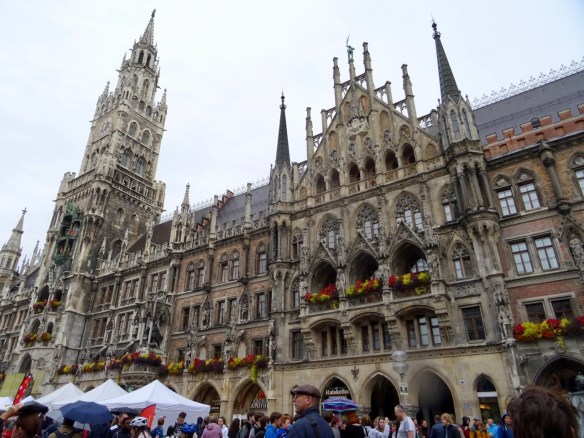
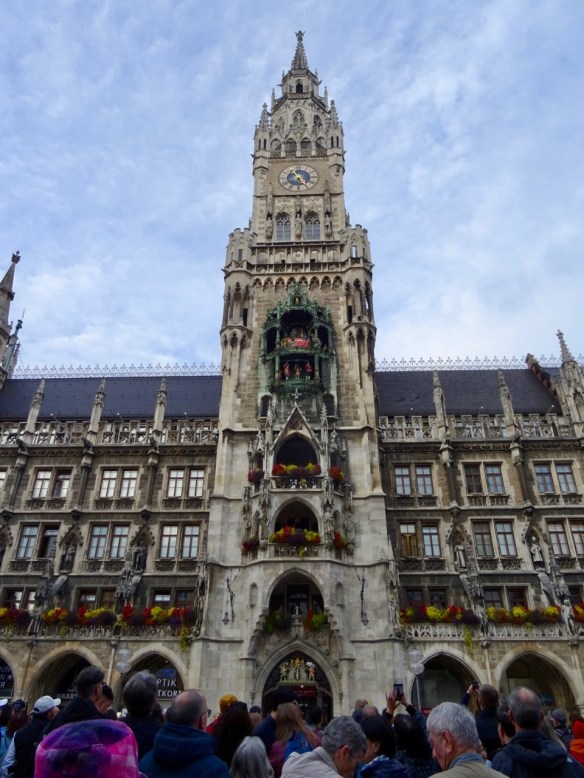 The show lasts about ten minutes, followed by the ringing of church bells.
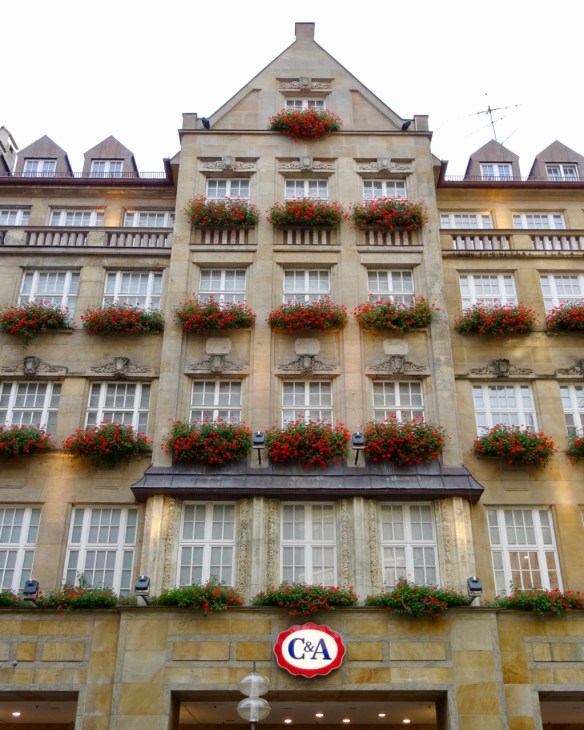
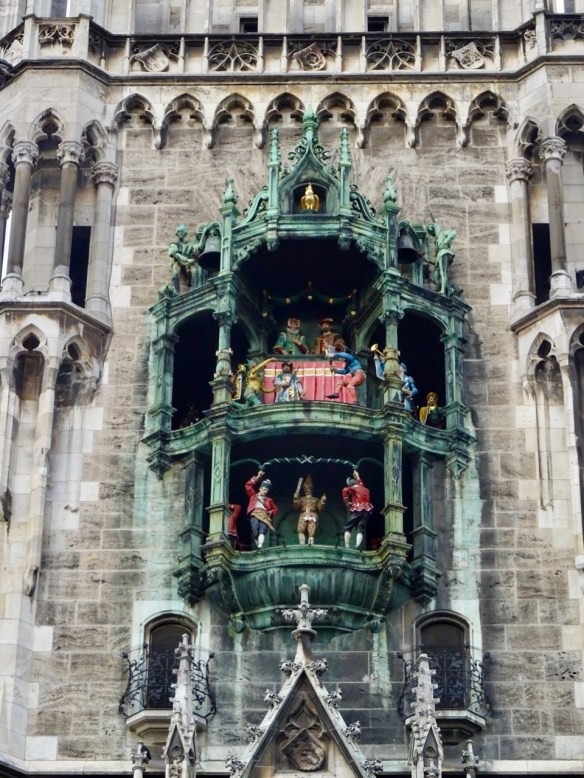 Bob remembered the Beck Department store from our first visit to Munich almost 40 years ago! He said it was right next to the Glockenspiel and sure enough it was!
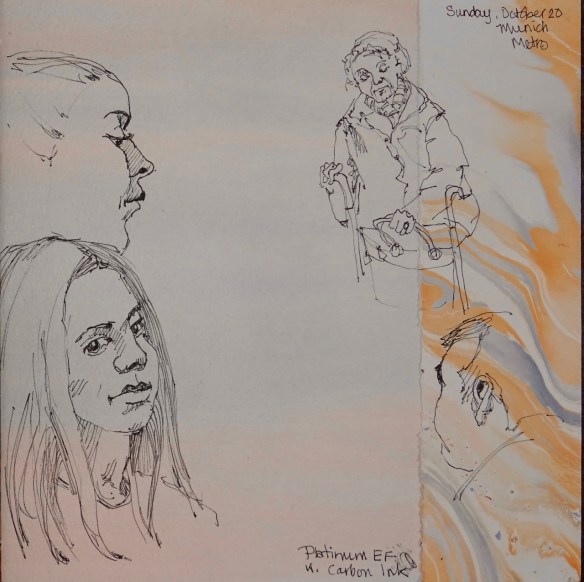
 Metro drawings from today. People kept getting off the metro before I was finished!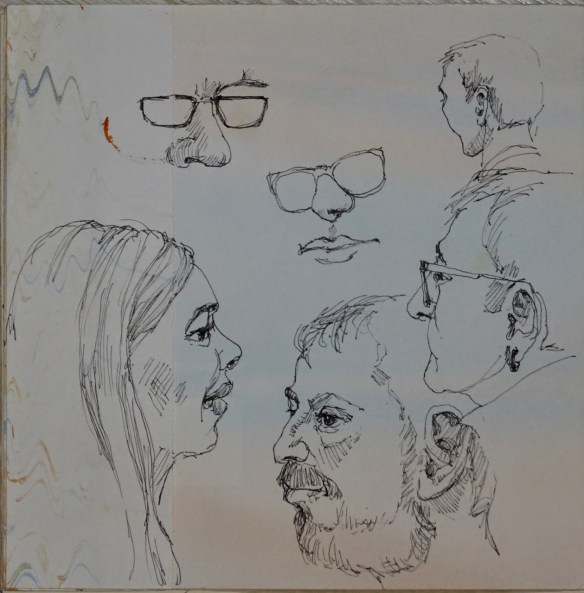
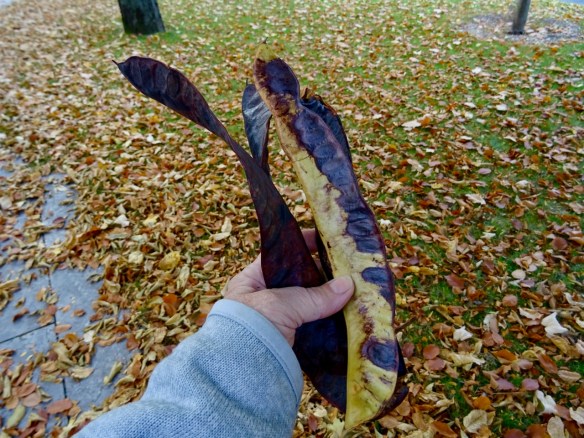
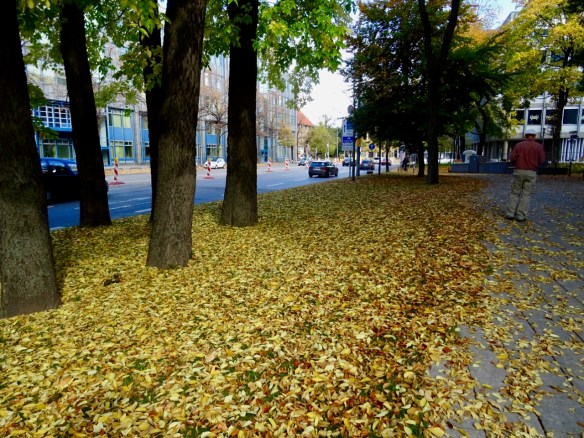 No idea what kind of tree has these huge seed pods. Maybe someone can tell me?
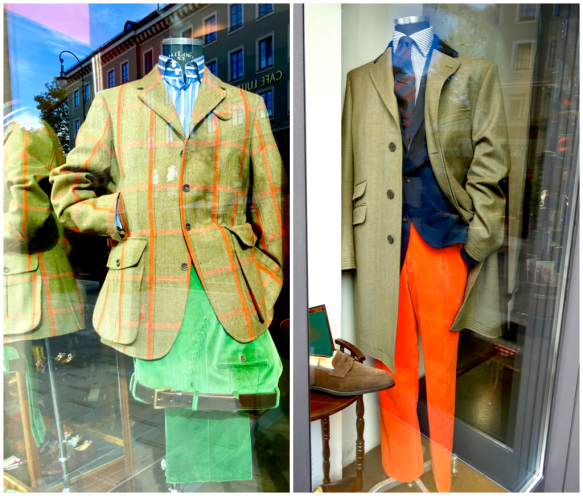
 We go past a street of shops with rather expensive merchandise, but I really wonder about these colour combinations!
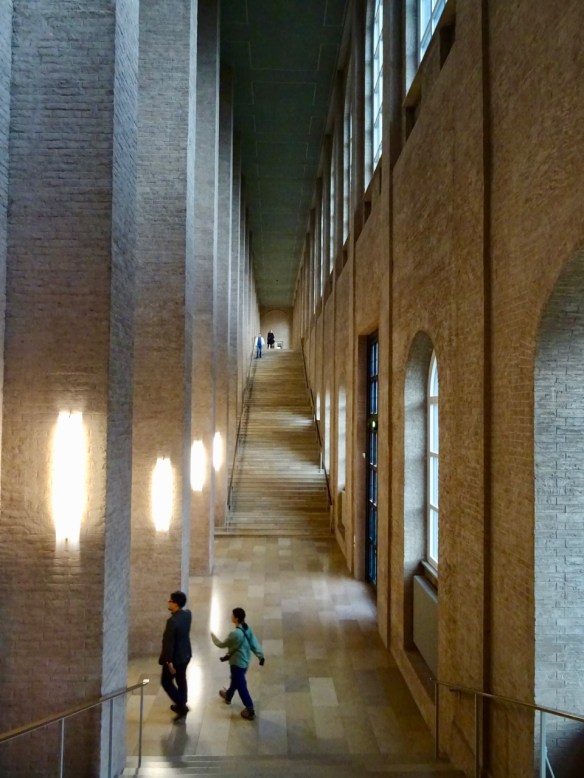
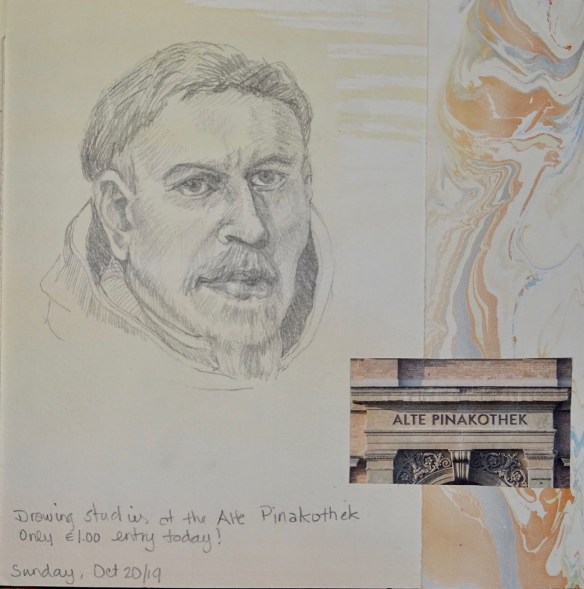
 The Alte Museum admission is only 1euro on Sundays! What a bargain. This is one half of the double staircase that leads to the exhibition rooms.
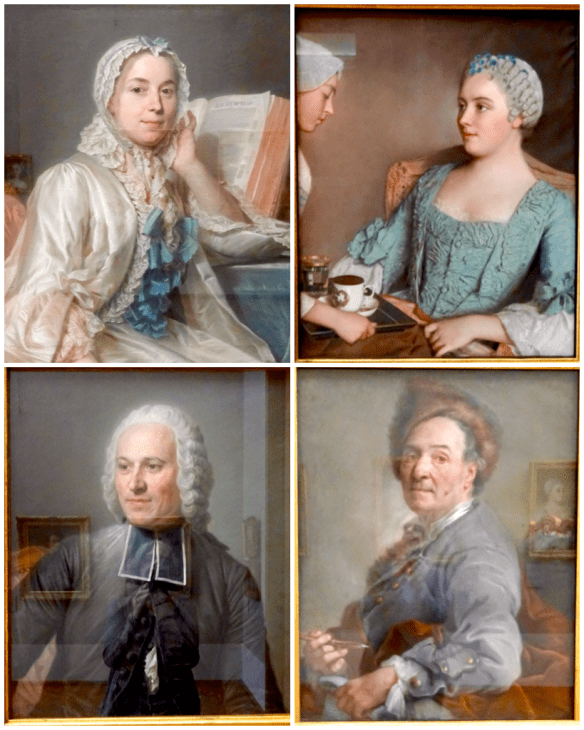
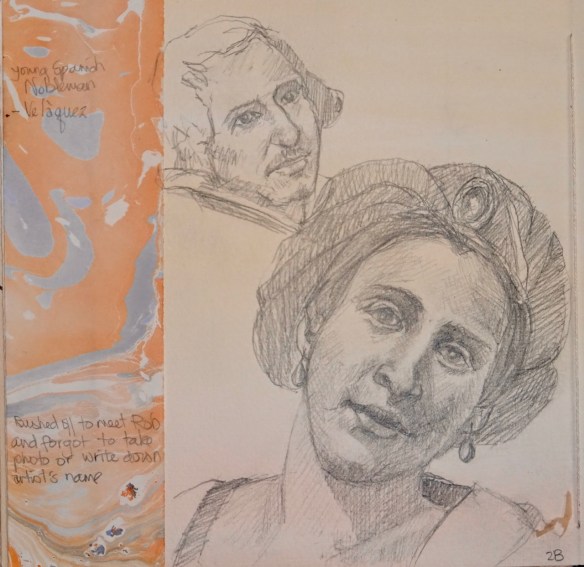
  We walk through the first door and I see these beautiful pastel paintings by Maurice Quentin La Tour, Jean-Étienne, Joseph Vivien and Rosalba Carriera! I need to find some books about these artists and study their paintings. Unfortunately there were lots of reflections in the glass covering these works. You can even see me in two of them!
 One of the 46 rooms we visited today had lots of paintings of Venice, completed in the early 1700’s. I marvelled that Venice looked just the same then as it did when we visited a couple years ago. The only difference was the number of small boats in the canals and the clothing of the people in the paintings! There were another 13 rooms that were closed due to the installation of new exhibits.
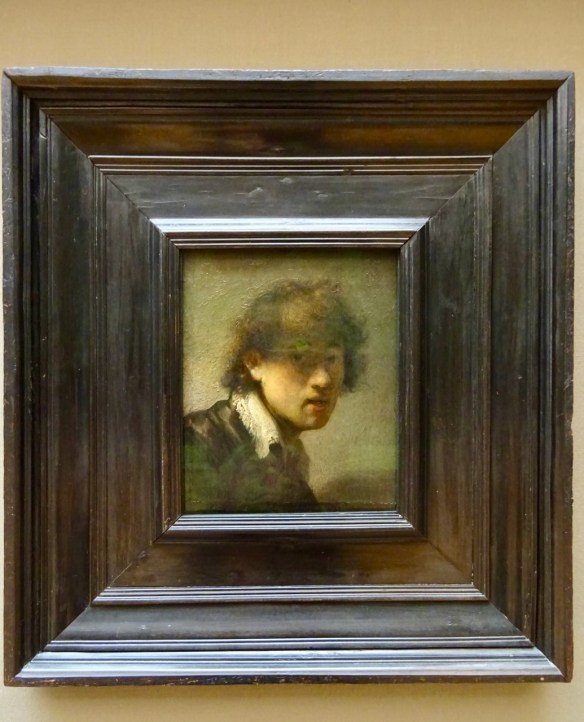
 This room was full of paintings by Rembrandt and Franz Hals…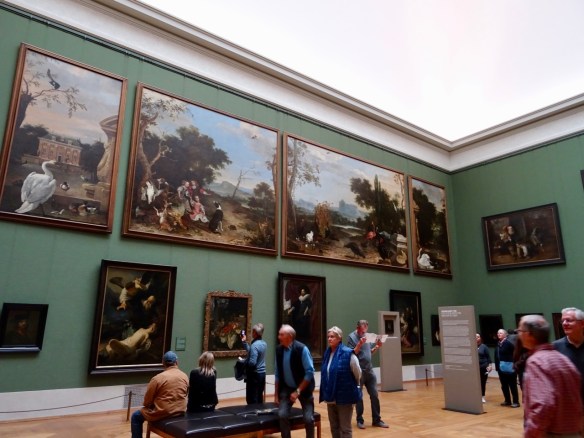
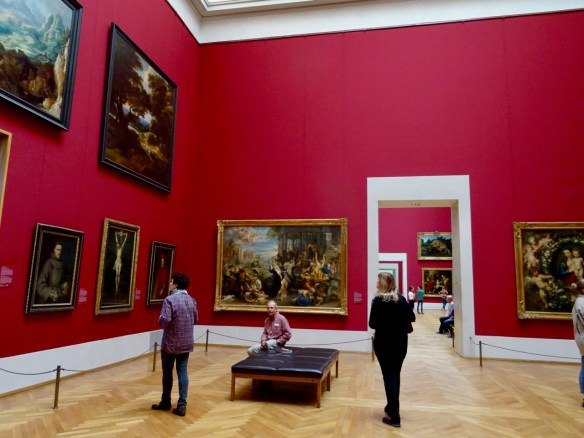
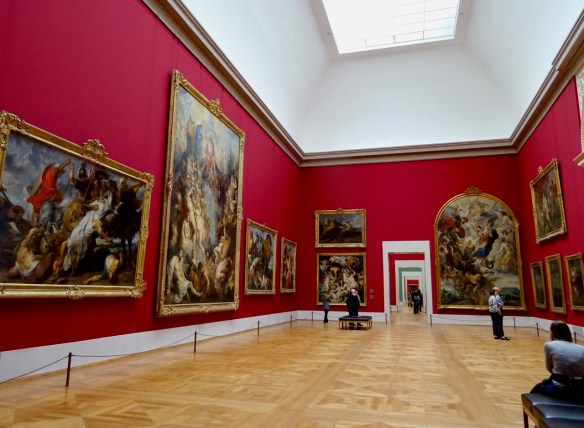
 I lost count of the number of rooms filled with work by Peter Paul Rubens…
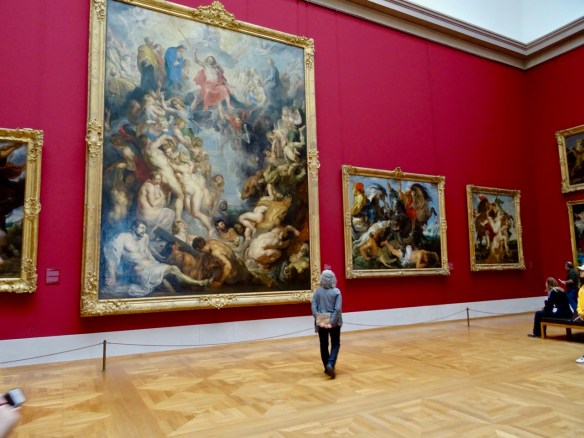
  which Included a room with the huge painting of The Great Last Judgement.
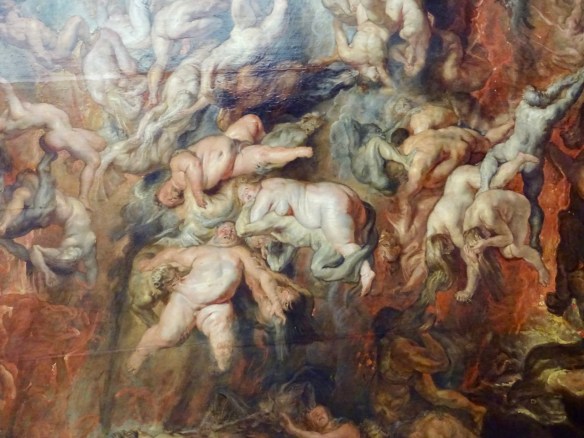
 and another with The Fall of the Damned, which is also very large. Rubens was a very productive artist!
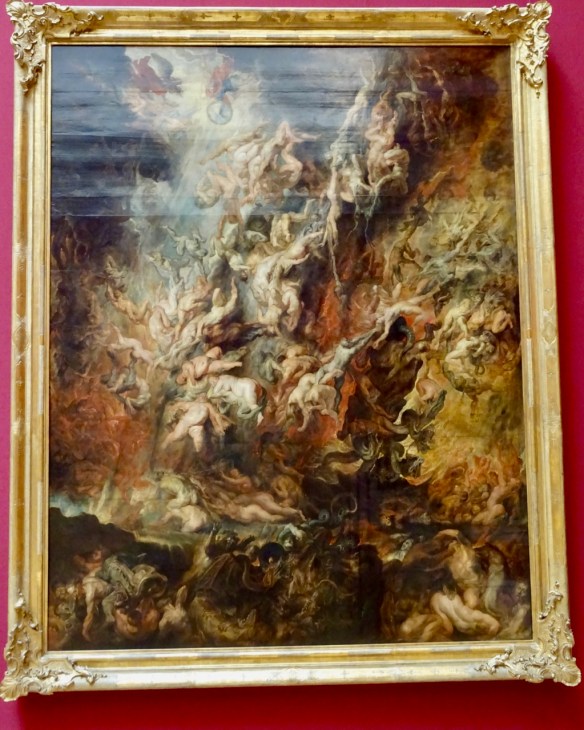 Here is a close up of some of the damned souls.
 Looking through the doorway, you can see the many more rooms we have yet to explore. There are ten large galleries in a row along the length of the museum, with many smaller galleries off of these.
  I liked how I could stand in front of the study for this Rubens painting and then look into the adjoining gallery and see the finished painting. There was a gallery full of studies, which I particularly liked. It is possible to see the way Rubens thought about and worked out his compositions.
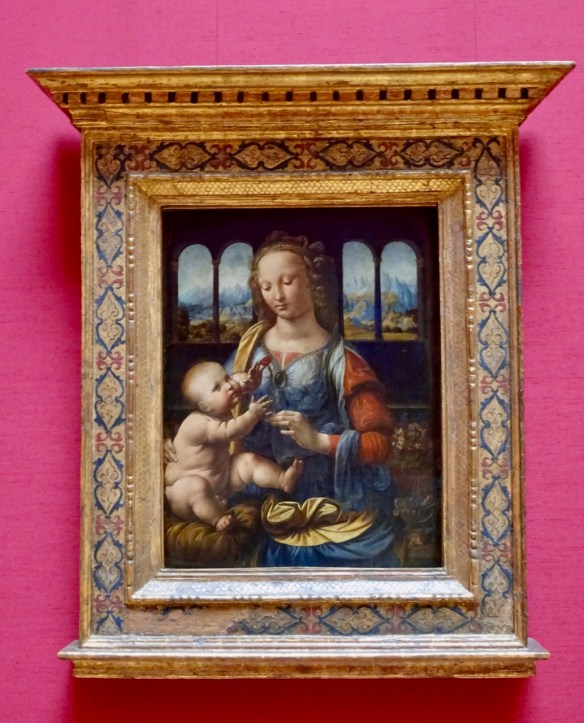
 This is a painting done by Leonardo da Vinci when he was only 23. I don’t remember seeing it before (in books).
 And then there is Hieronymus Bosch with his very strange creatures, in this fragment of the Last Judgement. His works always has lots of details to examine closely.
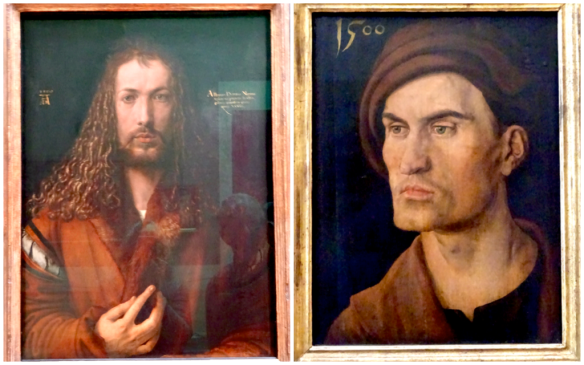
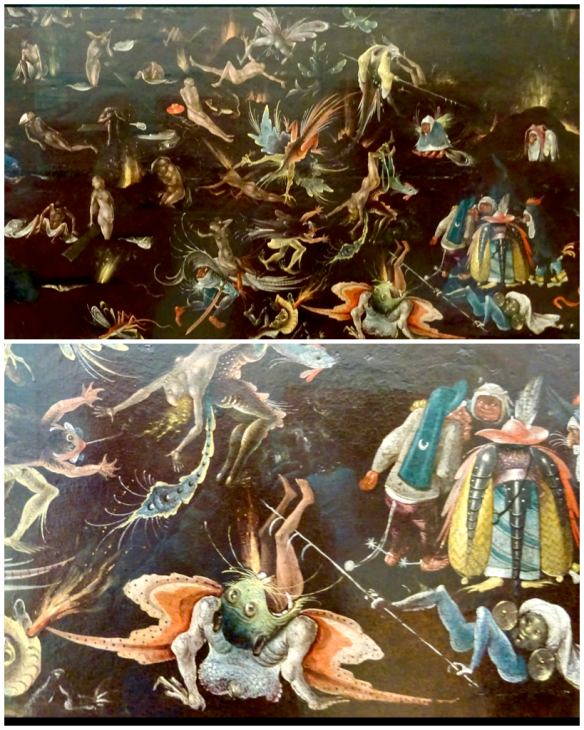 We saw paintings by so many other artists I am familiar with: Holbein, Raffael, Botticelli, Titian, Van Dyk, and Velázquez, as well as many new artists that I liked as well.
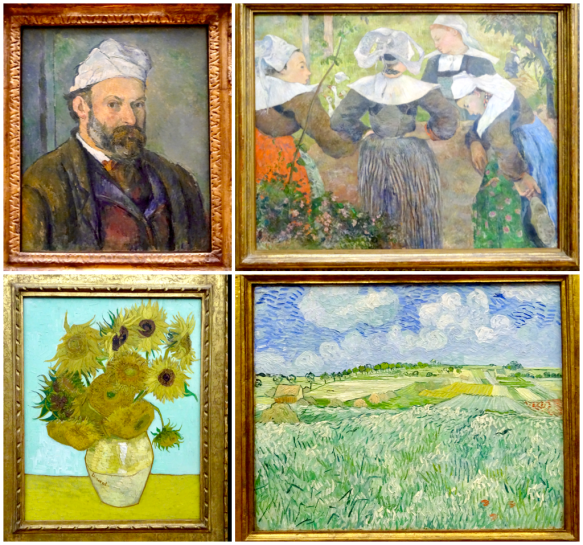
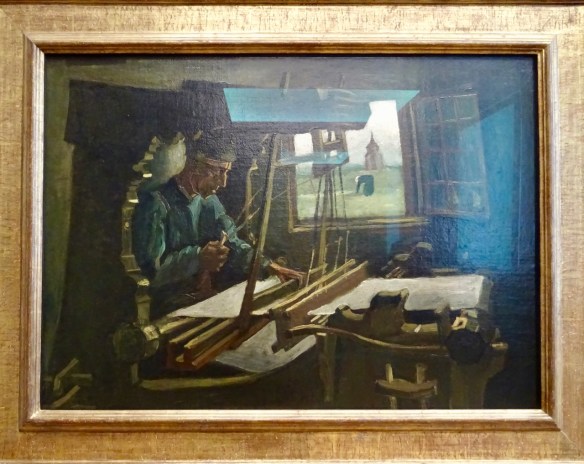 and works by Cézanne, Gauguin, and several more Van Gogh’s.
 A large painting by Ferdinand Hodler, TheTired of Life, really drew my attention. I will have to research this artist.
 There was a Klimt. I am looking forward to visiting the Klimt Museum when we return to Vienna.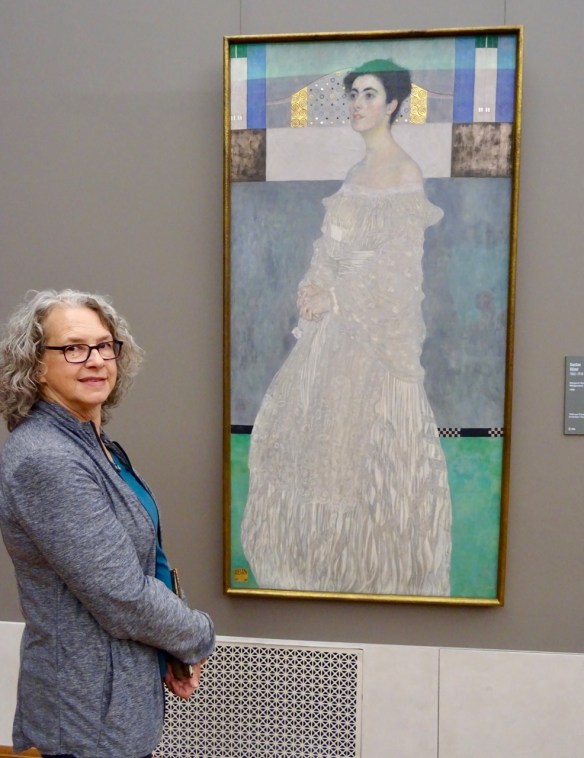
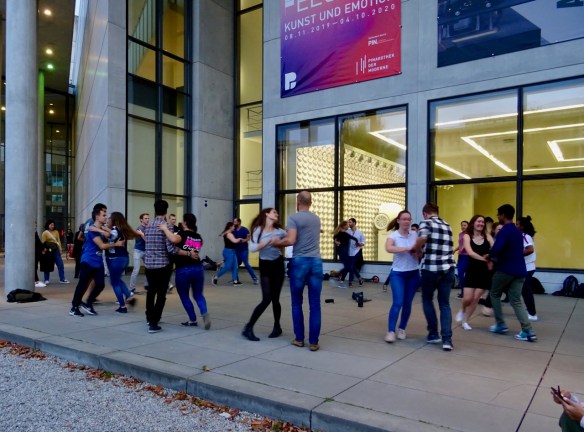 Here are my metro drawing from today…
 and yesterdays drawings in the gardens we visited, which I forgot to post.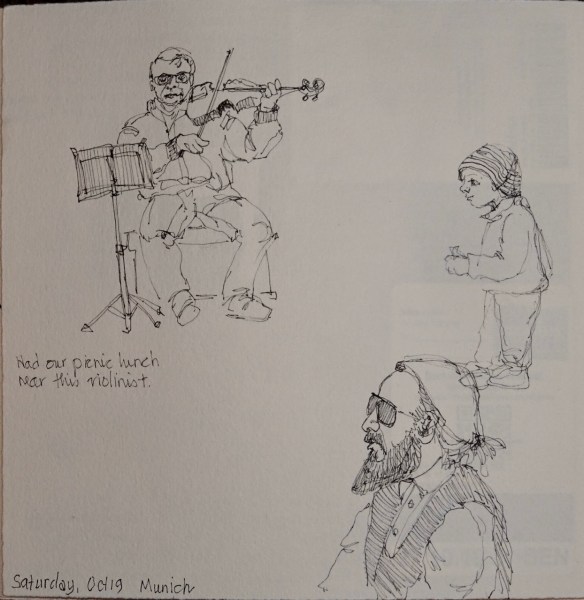
 trudymason.com