Thursday, October 1
The caves are not all that easy to find. There are not a lot of signs for some of these main tourist attractions on the roads in the towns or villages once you are off the highways. We actually made a ‘wrong’ turn that got us close, and then we asked directions from three local women who were sitting on an old stone bench on the side of the road, cracking and eating walnuts, while they visited. It is an uphill winding road to the caves and we arrive in time for the last tour of the day at 1:40. That is another thing that is taking some getting used to, the hours that attractions and businesses are open. More on that later.
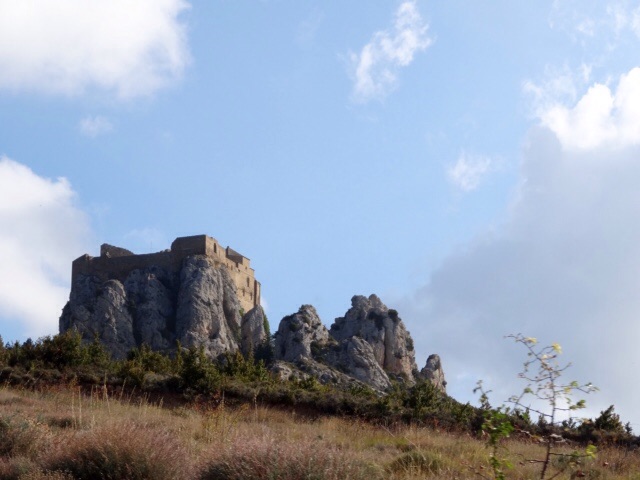
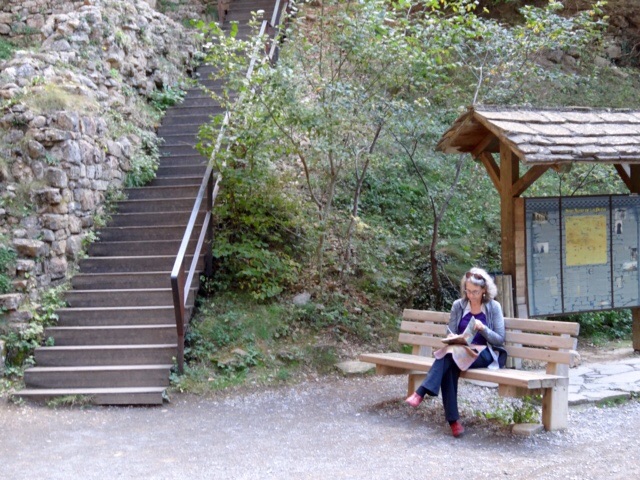
We are not allowed any pictures inside the cave and there are only four of us on the tour, so no chance to ‘sneak’ a picture or two…however we are allowed to take a picture before we enter the cave from the waiting area.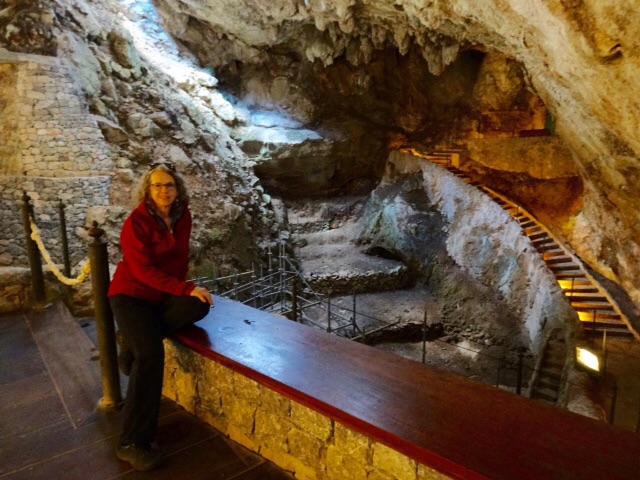
The first cave we enter is El Castillo, or Castle Cave, named after the mountain where it is located. The cave is incredible in its own right. The following cave pictures are taken from information in the interpretive centre.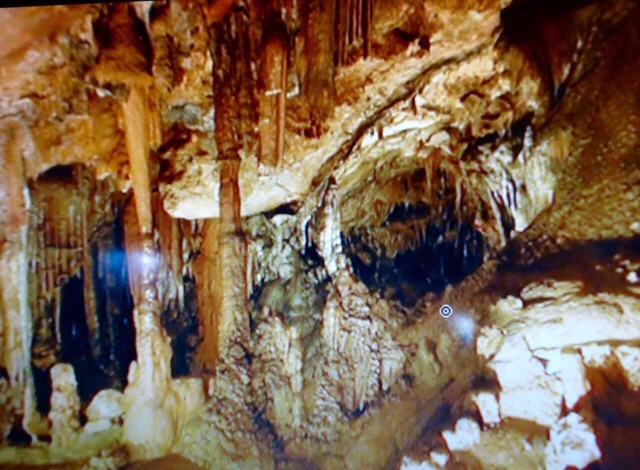 Then there are the cave drawings! The oldest, the negative handprints are 35,000 years old! There are also many drawings of bison, horses, reindeer and abstract symbols, including lots of round red shapes whose meaning is unknown.
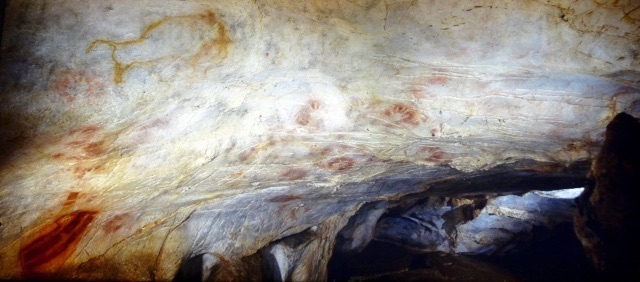 Having a guide is essential, we never would have seen most of the drawings without her. Our guide only spoke a little English, but it was enough to explain a bit of what we were seeing and answer basic questions. We decide we need to wait until after lunch and see the Las Monedas Cave which is also open, so we have our picnic lunch in a nearby farmer’s field. We keep looking for bulls as we hear branches cracking but discover it is only the chestnuts falling from the trees.
 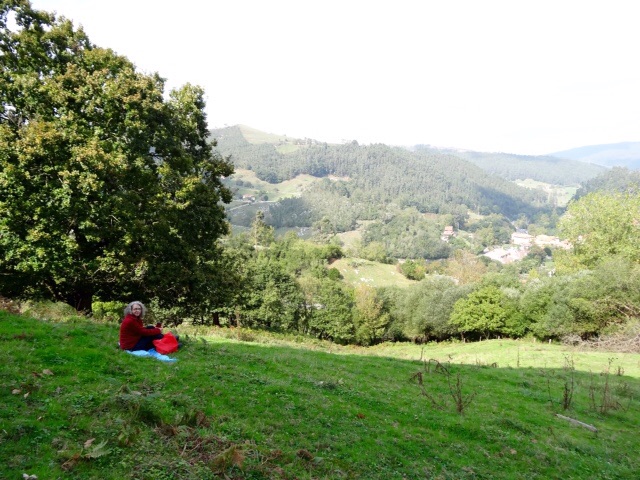 Las Monedas has even more spectacular rock formations than El Castillo. The stalactites and stalagmites are incredible, and form a multitude of differently shaped spires, pillars and other shapes. There is so much to see that my head is swivelling in all directions, which can be rather dangerous on uneven, slippery wet footing!
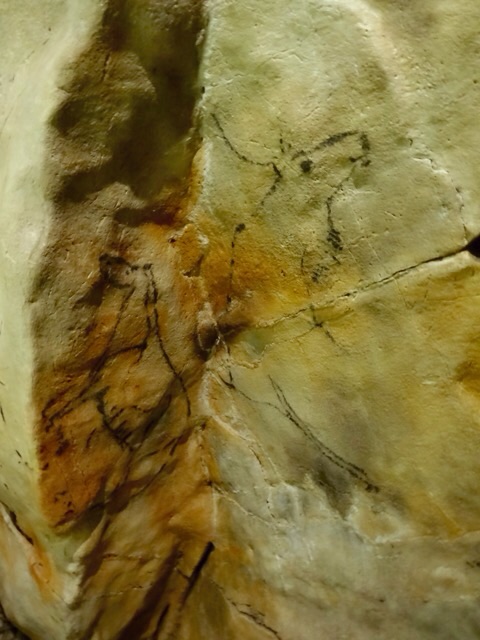 Our guide for this cave, Rebecca is amazing. Her English is very good and she has an extensive knowledge of the cave but also of archeology and history as well. We are the only people on this tour and our scheduled 45 minute visit extends to an hour and a quarter. We are so glad we changed our plans and decided to see this cave as well. There are only a few charcoal drawings in this cave, near the entrance. I did some sketching in the caves, difficult without much light and not a lot of time, but it was an awesome feeling to think I was standing making art in the same spot as a prehistoric artist stood some 35,000 years ago!
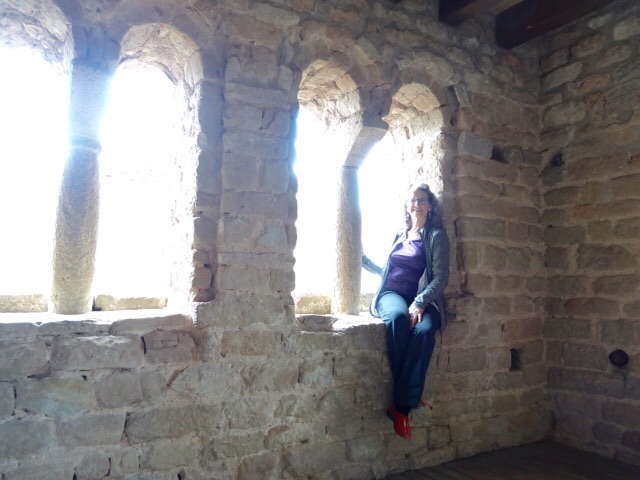
We do a little exploring of our own after our tour.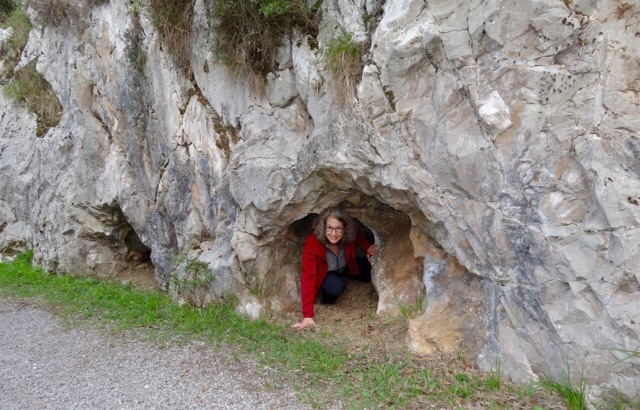
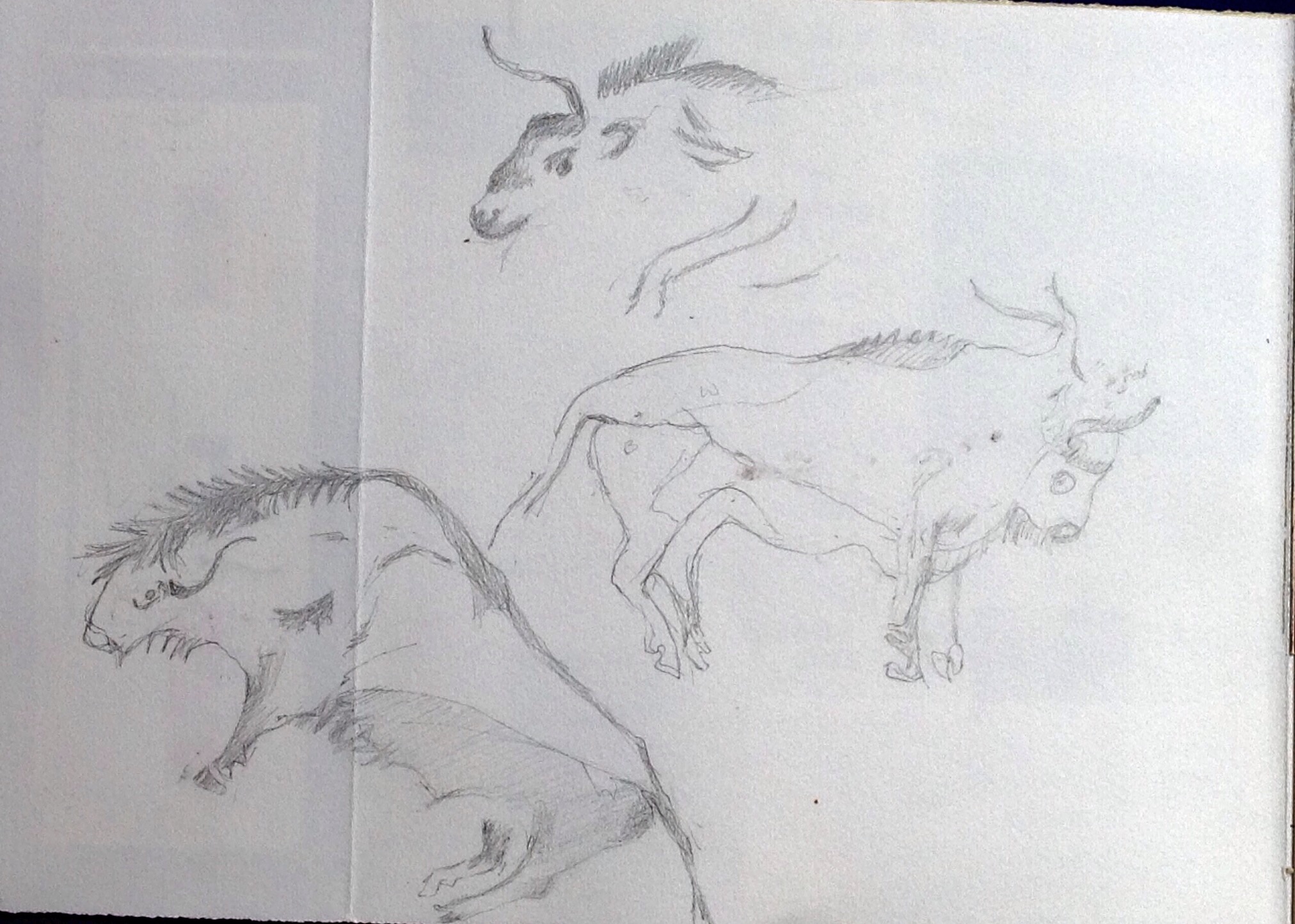
Next stop the famous Altamira Caves. These caves are no longer open to the public due to the damage caused by thousands of daily visitors in the 70’s, but there is an accurate reproduction called the NeoCave that we can visit and a museum. I sit on the floor looking up and I try to draw, it is pretty hard on my neck. Here is a photo of my efforts.
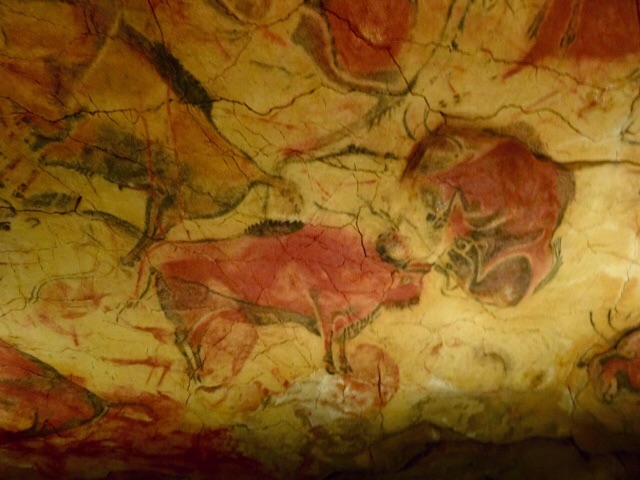
 These are two pictures I took of the NeoCave. We are amazed at the size, brightness and number of drawings. The NeoCave is better than not seeing them at all, but I can only imagine what it must feel like to have been able to see the actual drawings in their original setting.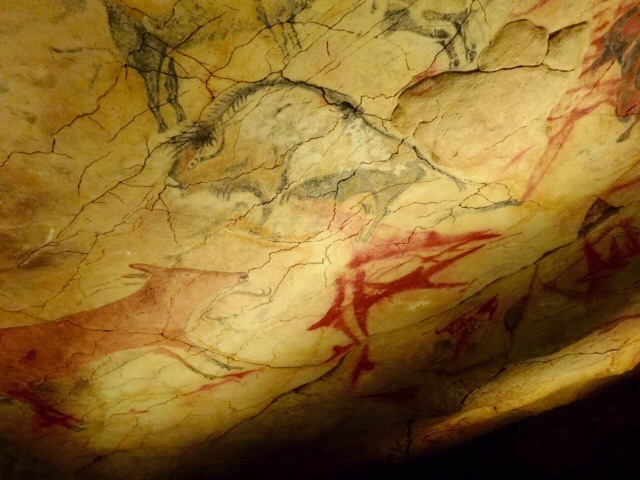
 Hand drawings from the museum display.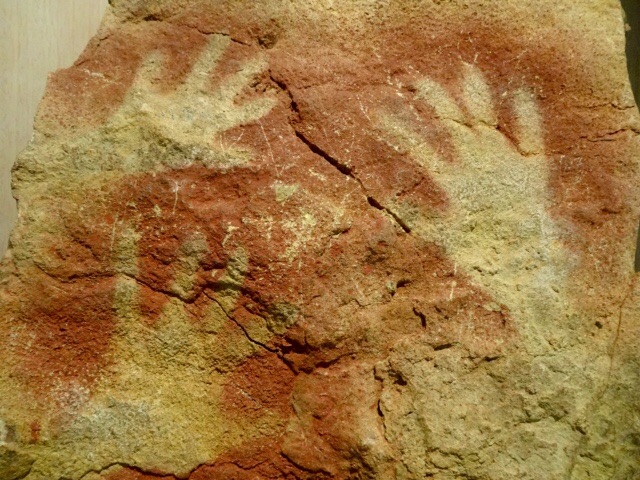
We are the last people out of the museum at 8:00 and we need to drive home in the dark. This proves to be a bit of a challenge as we hit road construction, some detours and then we miss a few of the turns so made our own detours! Thank heavens for the iPad and its maps with GPS. I think we would have been driving around all night without it!




 trudymason.com