Day 38, Thursday, October 5, 2023
Today we are visiting the Gouffre de Padirac which is about 1 1/4 hours east of Sarlat. This cave was opened to visitors in 1899 and now receives 800,000 visitors a year. A gouffre is sinkhole or pothole. Well, this is one heck of a pothole! 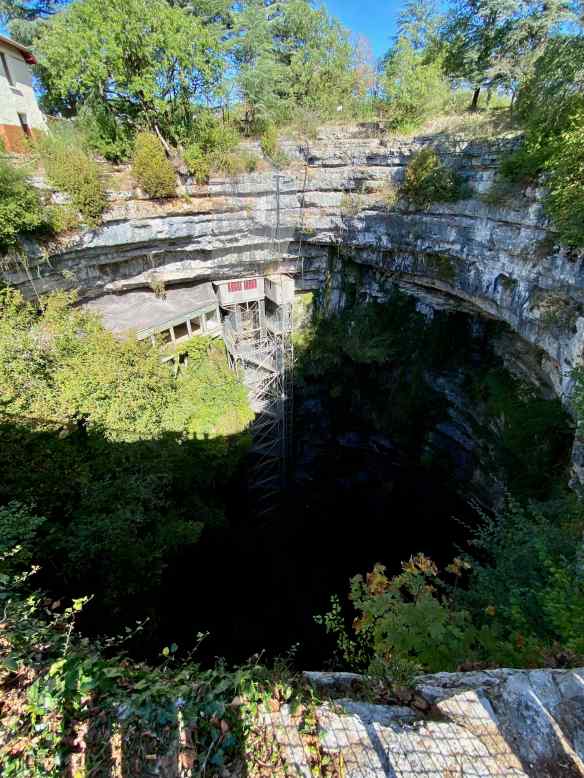
We climb down several flights of stairs cut into the rock and exit this first staircase to start descending the metal exposed stairs on the side of the gouffre. We are going way down there.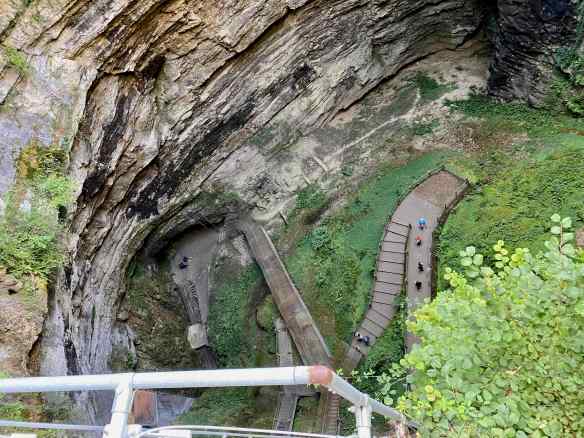
When we reach the bottom…we look up…way up…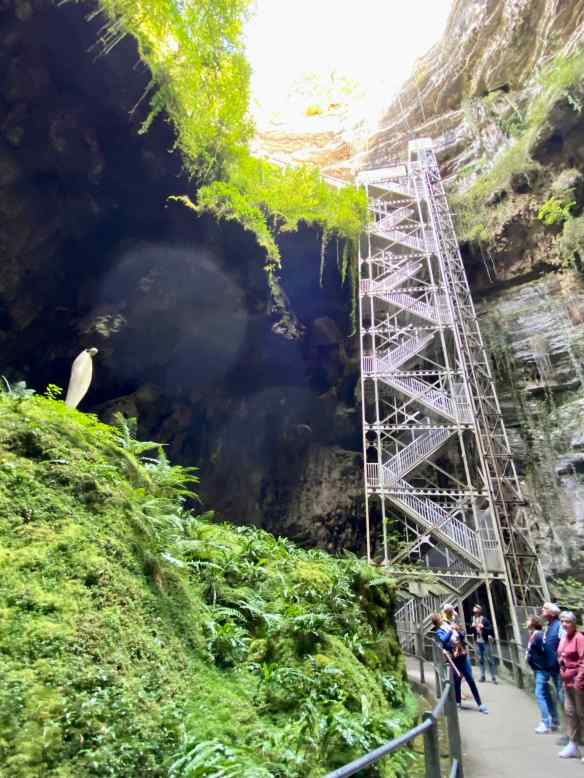
and then down…and surprise…more stairs.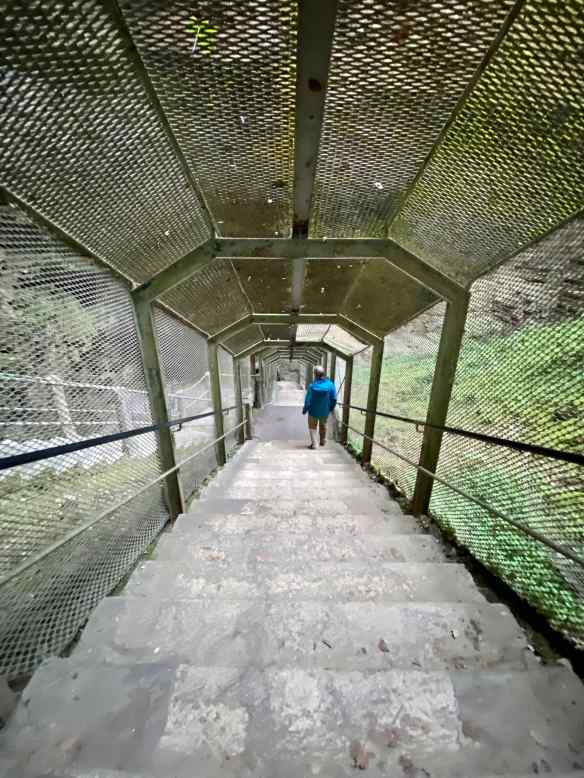 Once we are inside the cave there are even more stairs…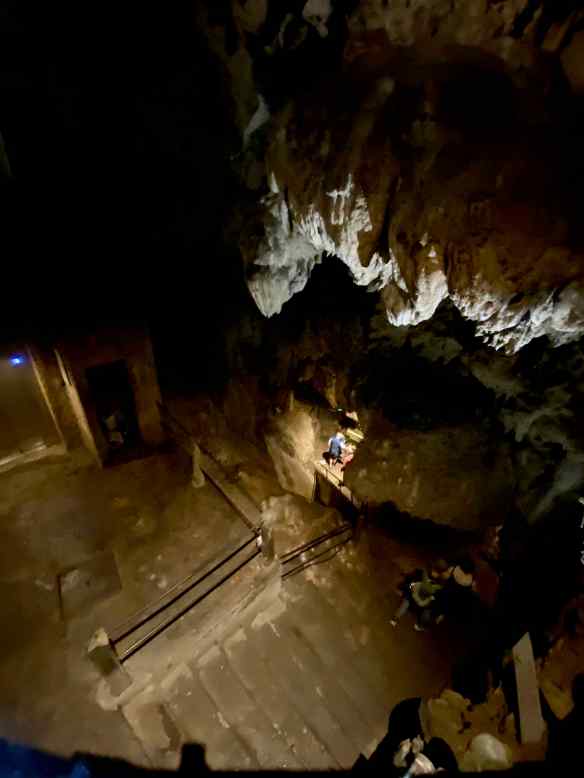
We finally reach the floor level of the cave, after descending 543 stairs! But wow! It was so worth it and non flash photos are allowed everywhere except during the boat rides, so I am happy. Yes…there are lakes and two boat rides 103 meters below the surface!
I took this photo after we disembarked from our boat ride. The lake that we rode on is called Lac de la Pluie, because it is always raining. We had light rain falling on us on that part of the boat ride. Can you imagine continuous rain? and at 103 meters underground!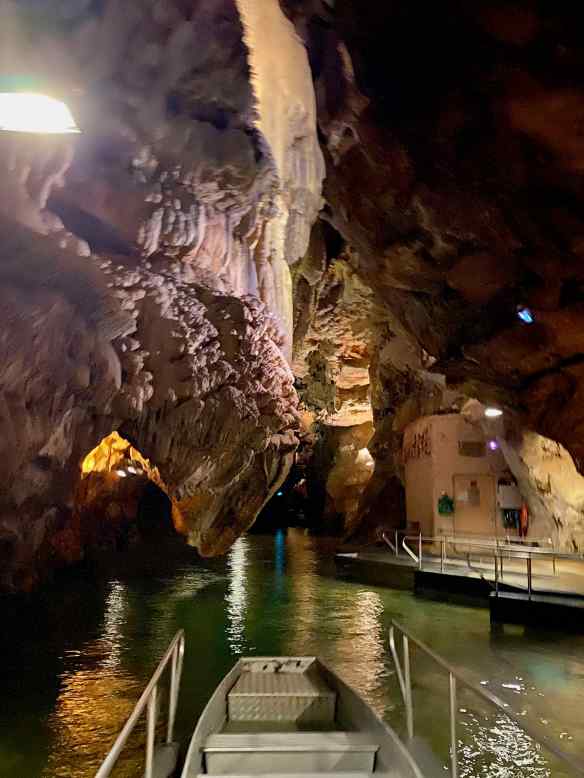
Our walk continues past amazing rock formations …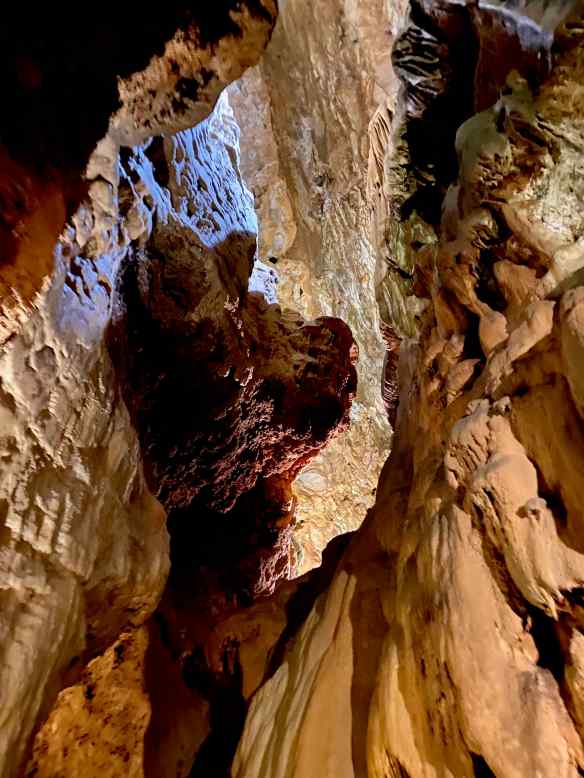
that are enormous…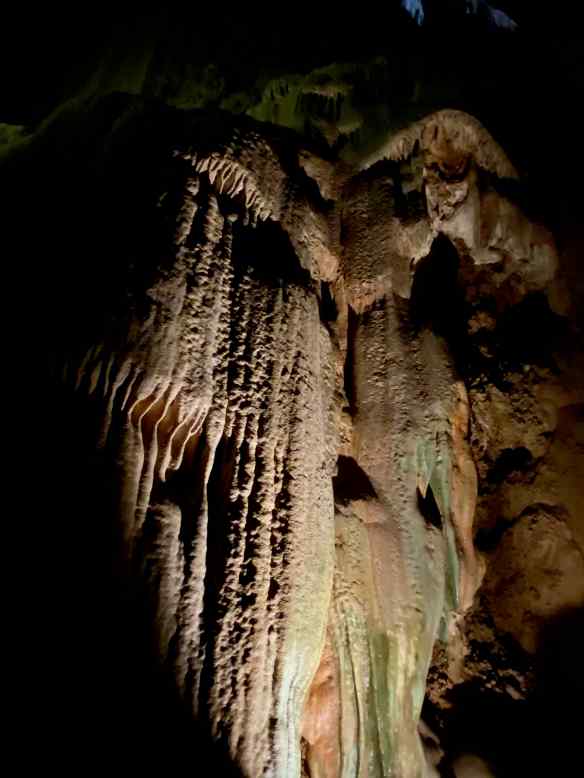
with incredible shapes and colours…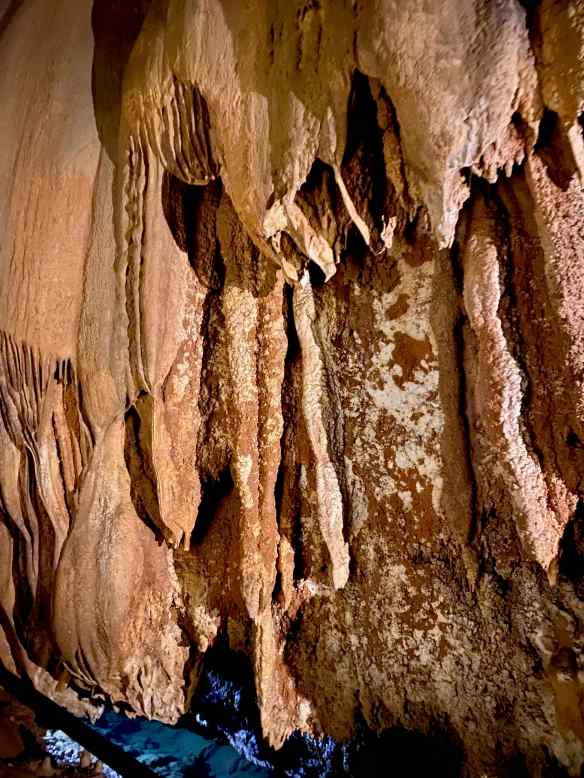
only to arrive at the beautiful Lac des Gours with crystal clear reflections.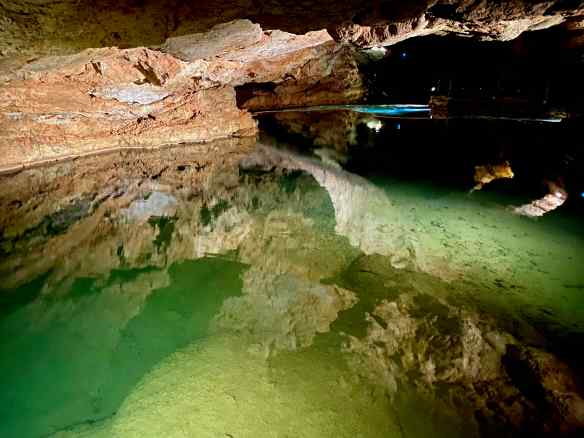
At the far end of this lake we can see the river below with an old boat. I don’t think the public is allowed in that part of the cave.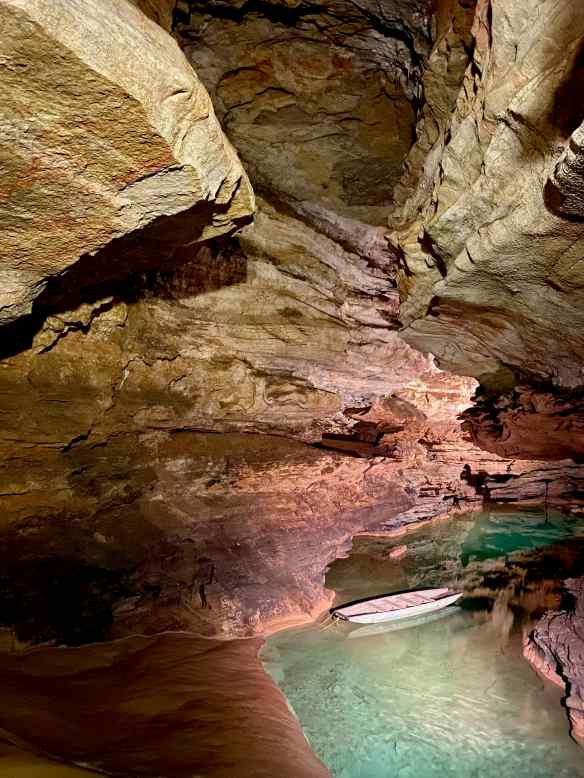
At this point we are given the option of returning the way we came or we can continue to another part of the cave that requires climbing more steps…lots more steps! Of course we choose to continue further into the cave!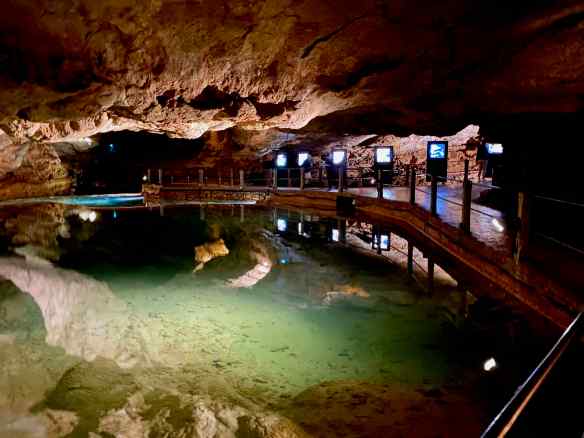 The displays here shows some pictures of cave exploration…not for me..it looks cold, wet and exhausting and rather frightening as well. In all, 42 kilometres of galleries have been mapped by speleologists but there are still more areas that have not yet been explored.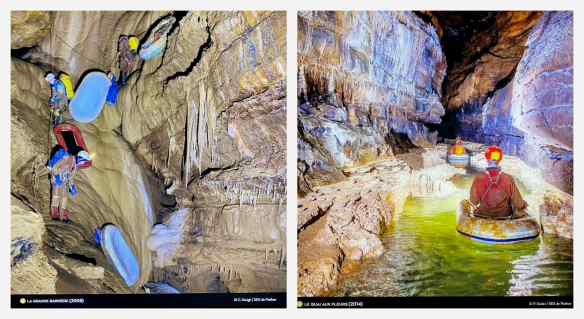
There is a warning that there are lots of stairs, and wet, slippery sections…that isn’t going to stop us. So up we go…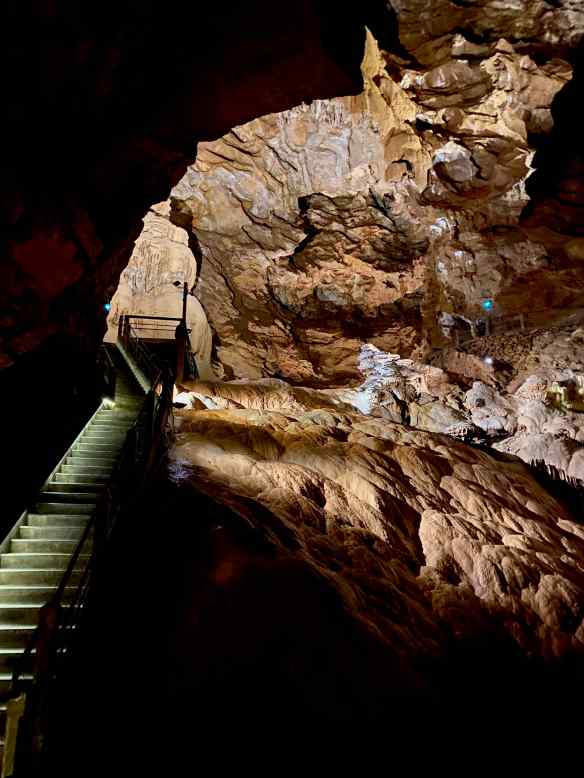 And there is another lake, twenty metres above the river! Mind boggling! Lake Superior (Upper Lake), is crystal clear and an incredible aqua colour. The round tan shaped formations on the right hand of the photo form a dam that holds the water in this lake.
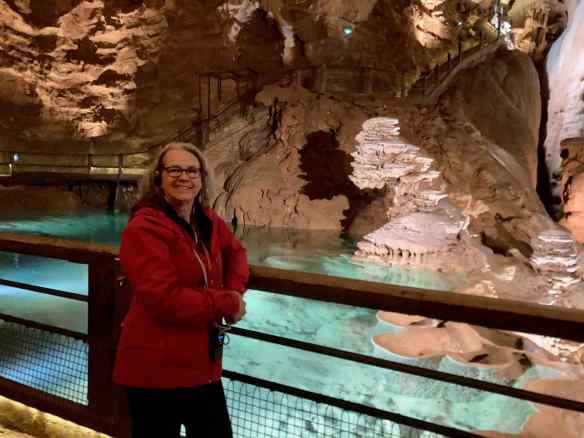 “A remarkable stalagmite lies above the lake. It is nicknamed the Pile d’Assiettes (Pile of Plates) because of its surprising resemblance to stacked-up china. It is a typical high-roof stalagmite formed when such a structure exceeds several tens of metres in height. Drops of water fall to the ground at great speed and explode, depositing limestone in circles and giving rise to very flattened formations.” ~ https://www.gouffre-de-padirac.com/en/salle-du-grand-dome We are standing beneath the Grand Dome, which rises 94 meters above us.
This diagram shows how high above the river Lake Superior is, and the incredible dome that rises above it.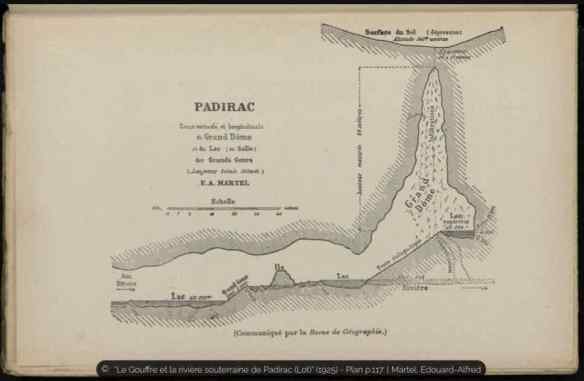
There are still more steps, many more steps…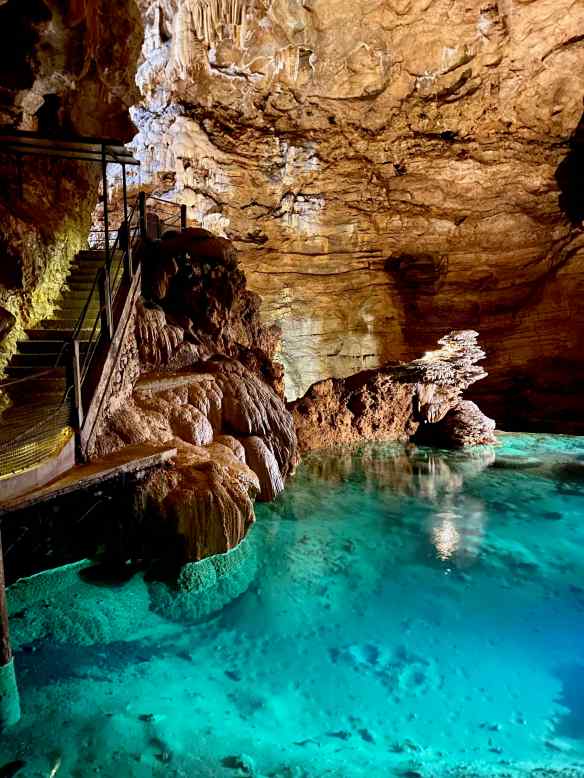
and many more amazing formations…
that are enormous. Bob is in the bottom of this photo to give an idea of their size.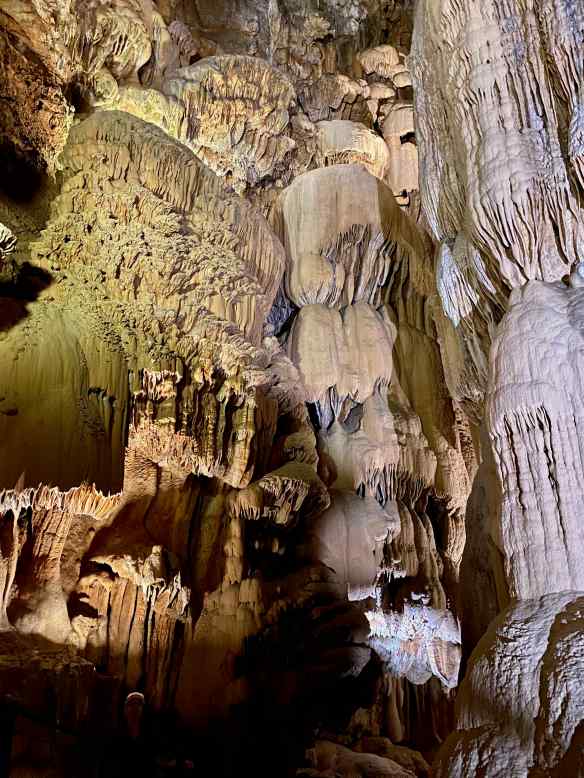 I am quite relieved that we do not have to climb these steps!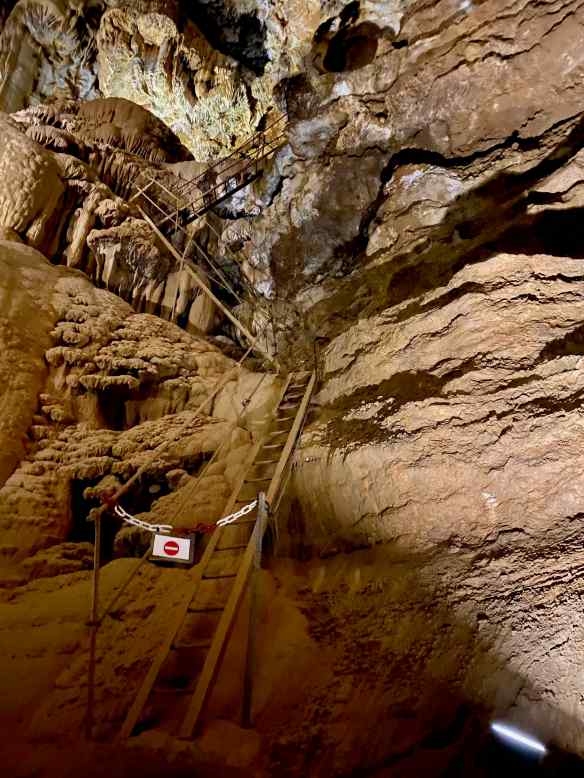
This is a magical underground world!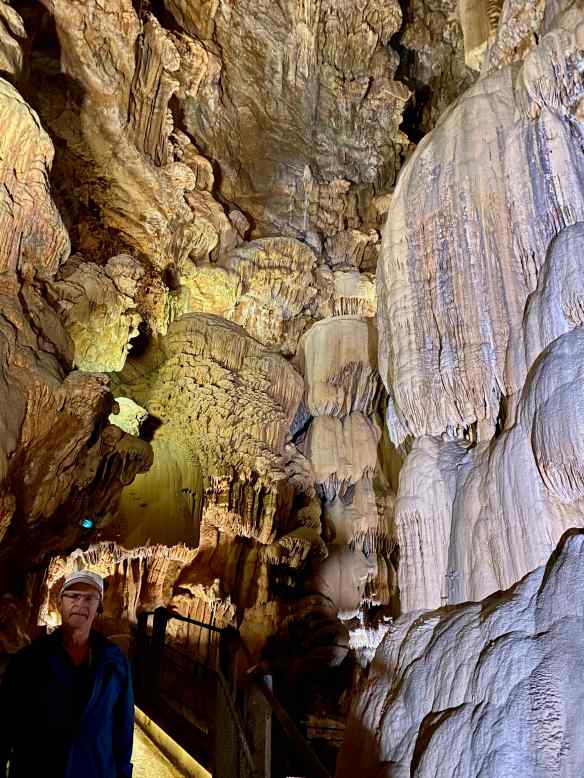
More formations, just because they are so wondrous…
and I am amazed by their colours. It is difficult not to include all even more photos.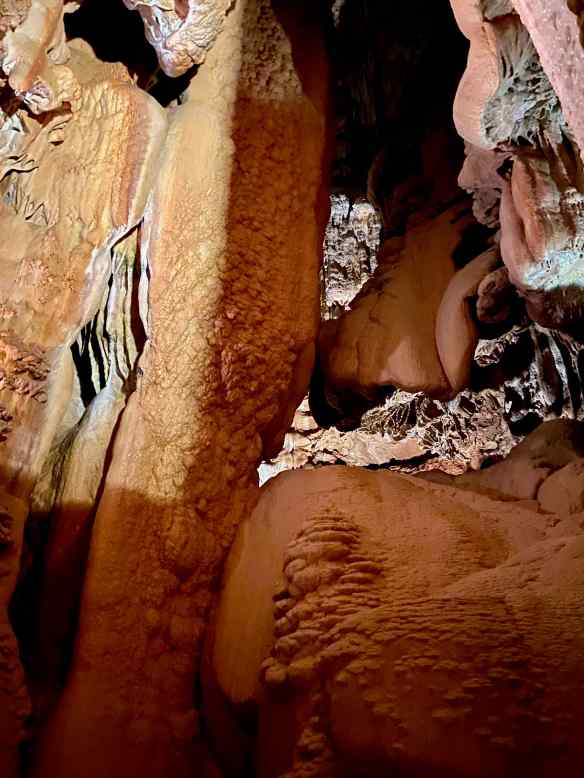
We need to descend way down there!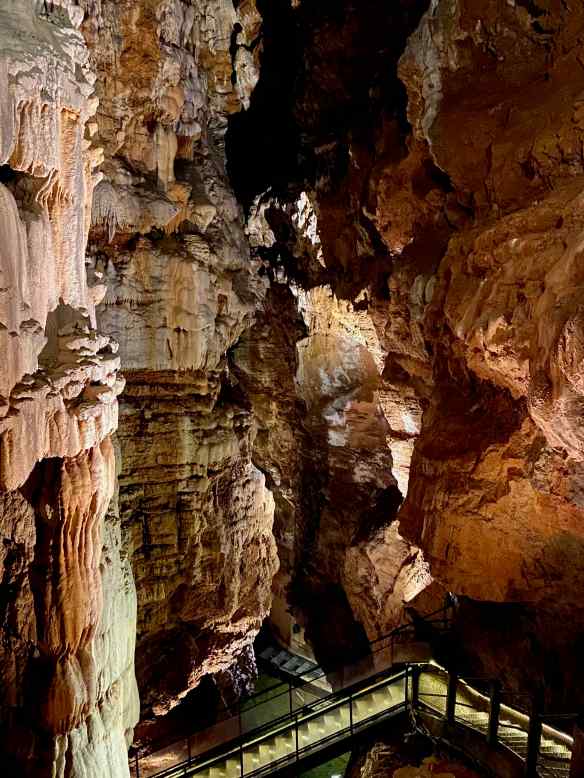
We continue to walk by so many rock formations…I have run out of words to describe how amazing they are. Édouar-Alfred Martel, the discoverer of this cave said that these are “Marvellous areas that can only be lived in by fairies.” 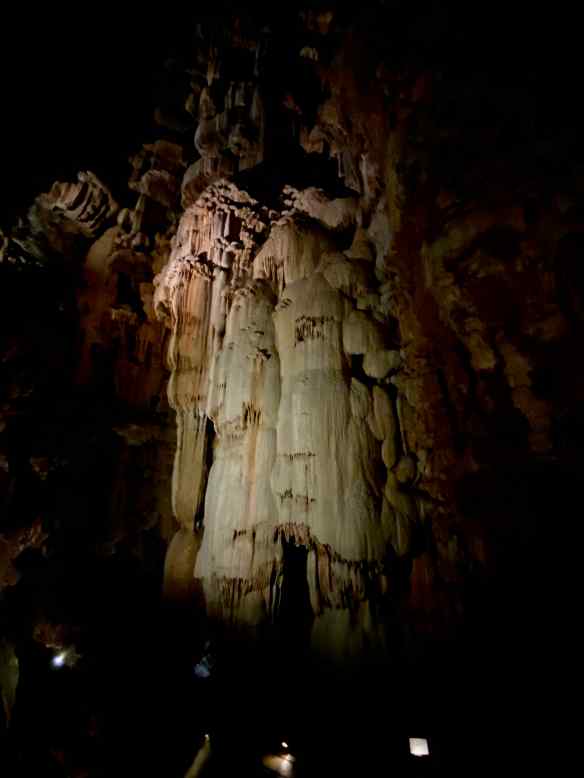
We need to go way down to where that light is.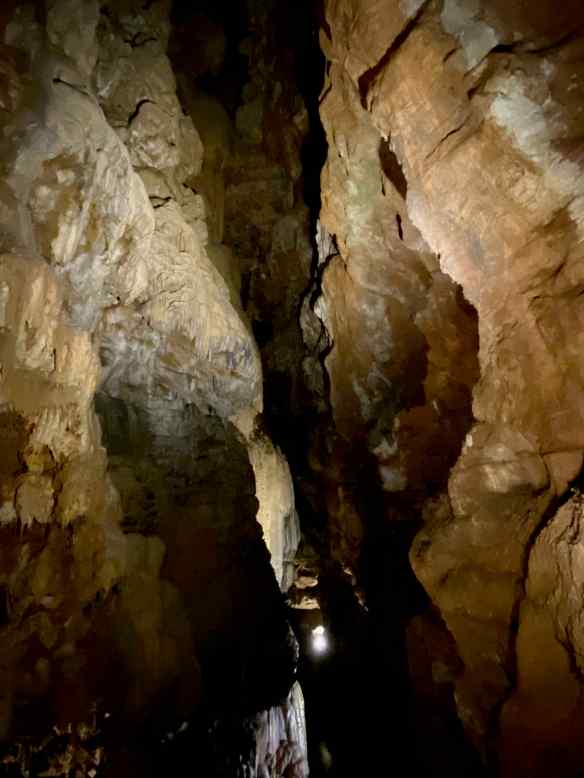
Finally we can see the dock for our return boat ride.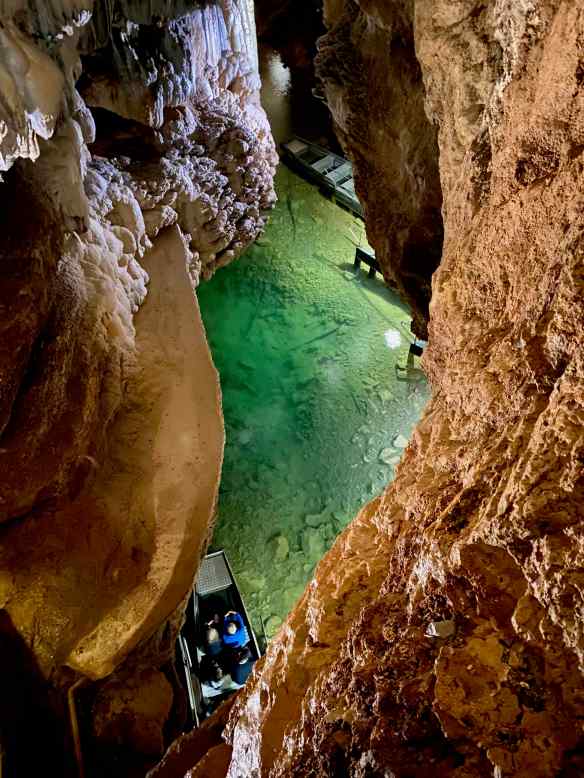
But first we still pass by even more formations. The roof on the bottom right protects us from water drops as we walk past this one.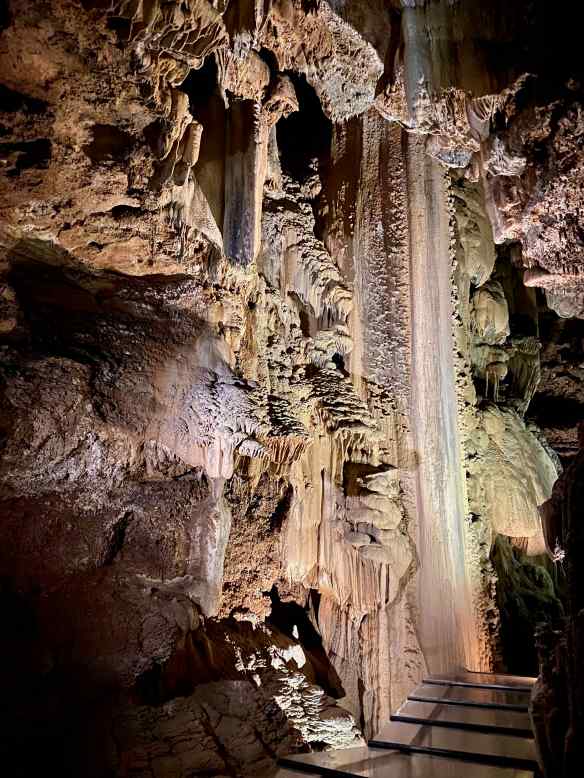
All too soon we are back at the boats. Honestly, I would have been happy to just turn around and trace our steps a second time…but there are no washrooms down here! This boat just arriving is the one we take on our return journey.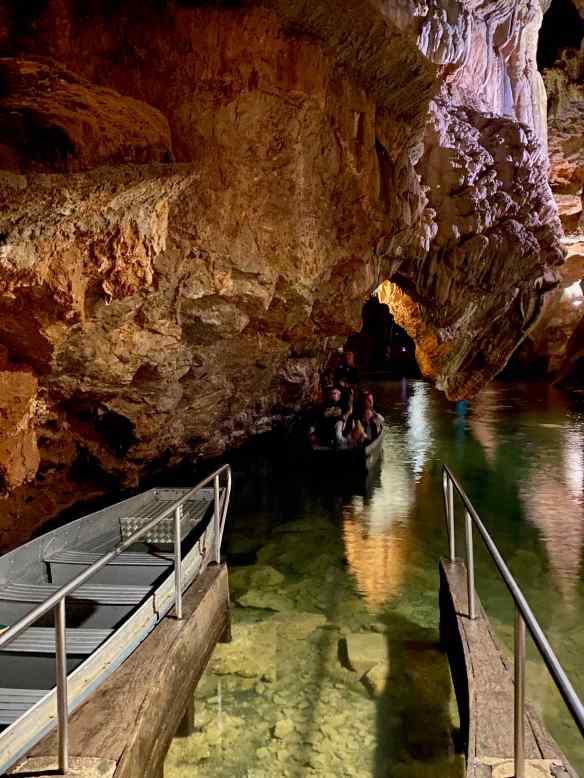
We sit right at the front, so we will have a great view of the Grande Pendeloque (Great Chandelier) which is a 60-m-long series of calcite formations that seems to hang in the air above our heads, but no photos are allowed on the boat trip.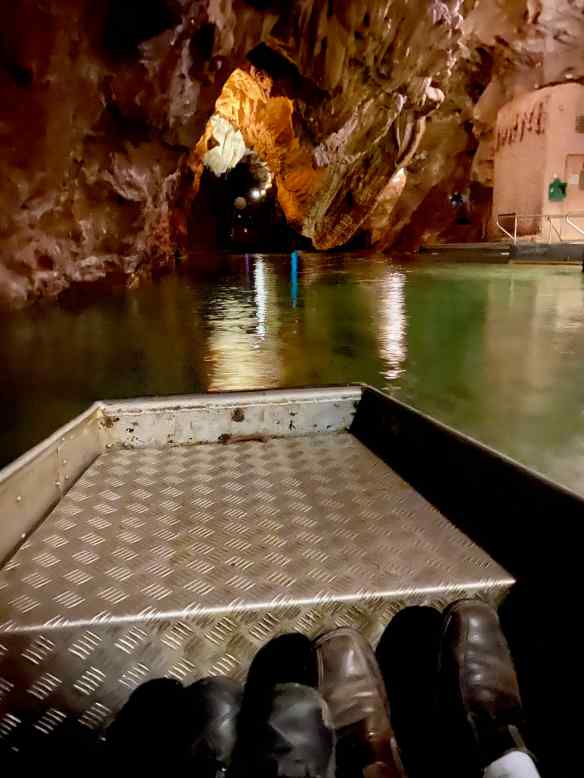
We reluctantly make our way back to the exit.  One last photo in the cave.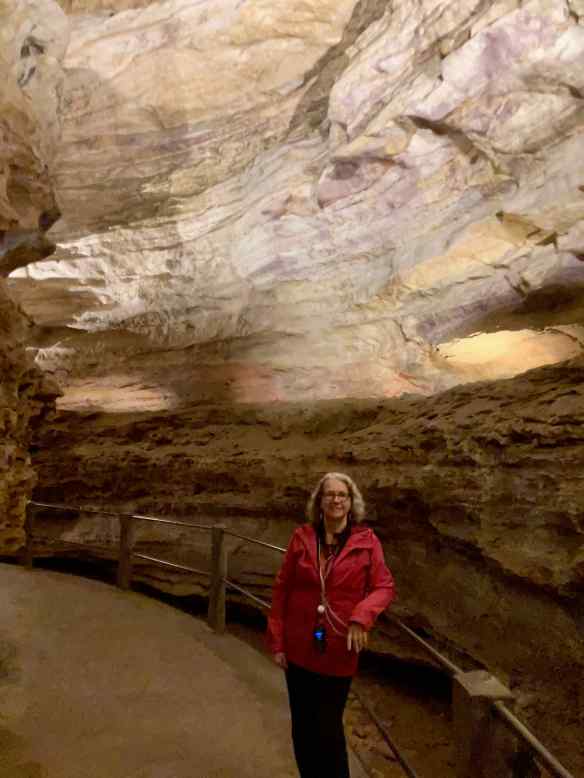
We decide to take the elevators back up to the surface from here. We are going to visit Rocamadour this afternoon and it also has lots of steps.
It is less than a half hour drive to Rocamadour, which is a famous pilgrimage site and a UNESCO World Heritage site. It takes a while to figure out where to park but we finally find spot near the top rather than the bottom of this cliffside village. This it our view while having lunch.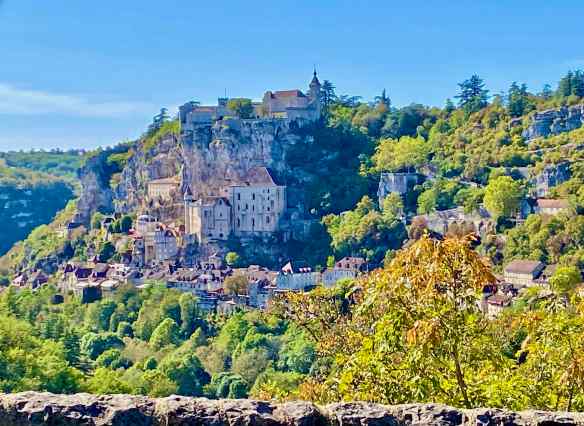
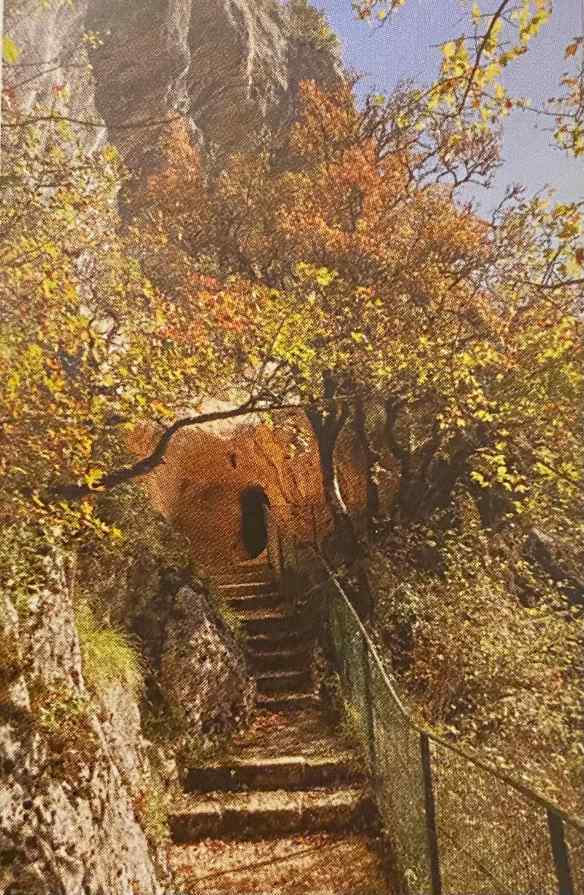
We are disappointed to discover that the ramparts are closed for restoration. We were looking forward to the views from the ramparts, so we start on our way down towards the church and chapels. Part way down the winding path, this cave marks the end of the Stations Of The Cross. Turns out we are starting at the end instead of the beginning. 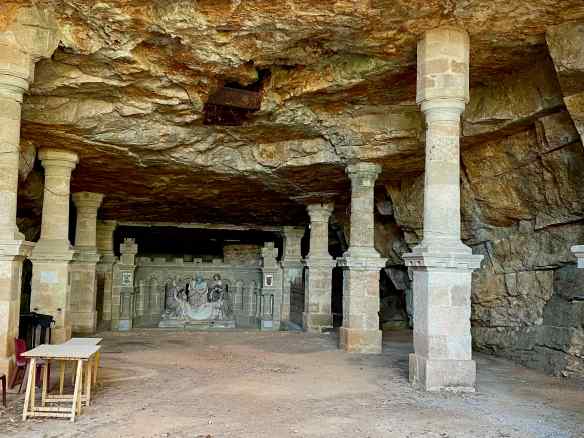
One of the fourteen Station of the Cross.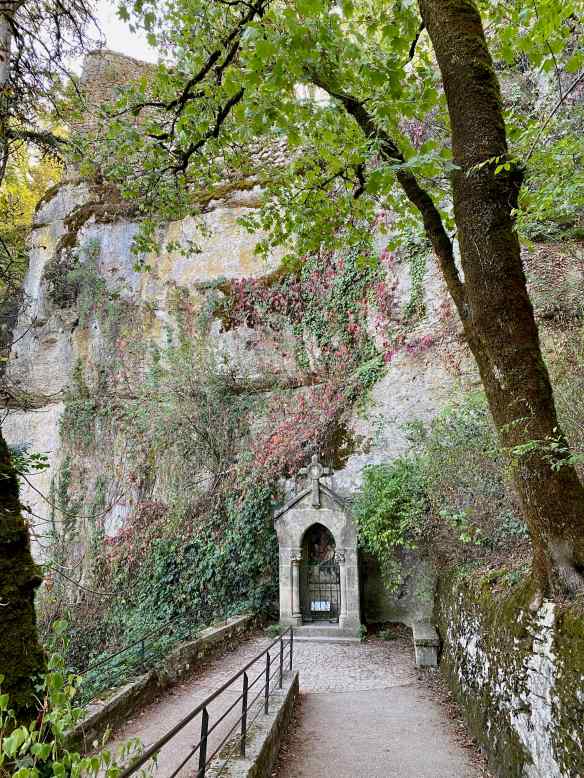
I did mention that it was a winding path, and fairly steep.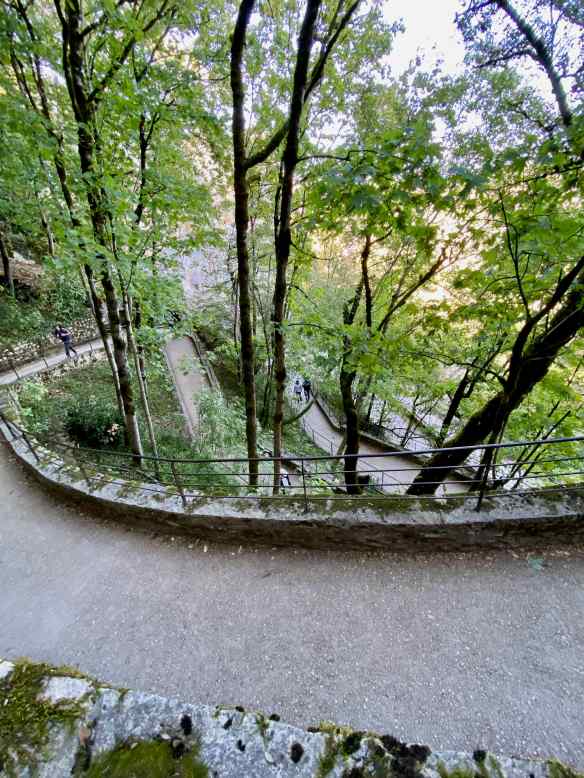
Looking up towards the ramparts, with the afternoon sun looking low in the sky because of the steep angle.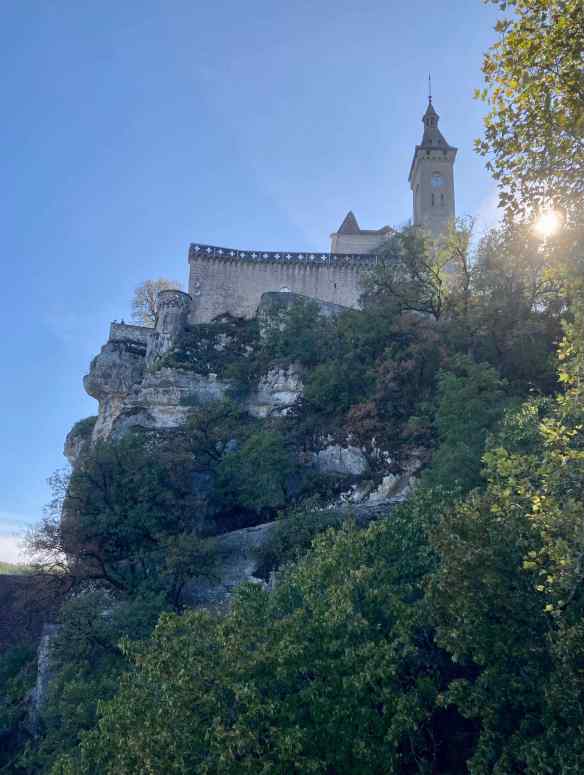
The trees and hillsides are covered with ivy. The grounds are not terribly well kept here.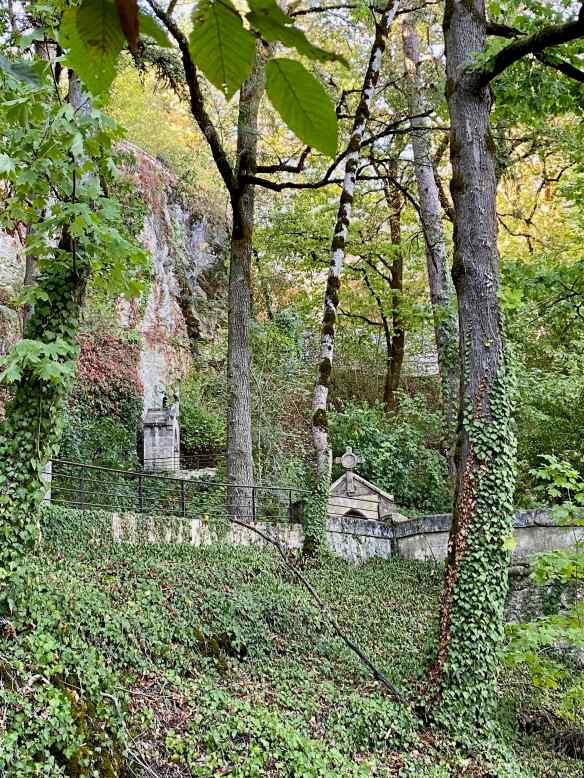
Finally we enter the Sanctuary… 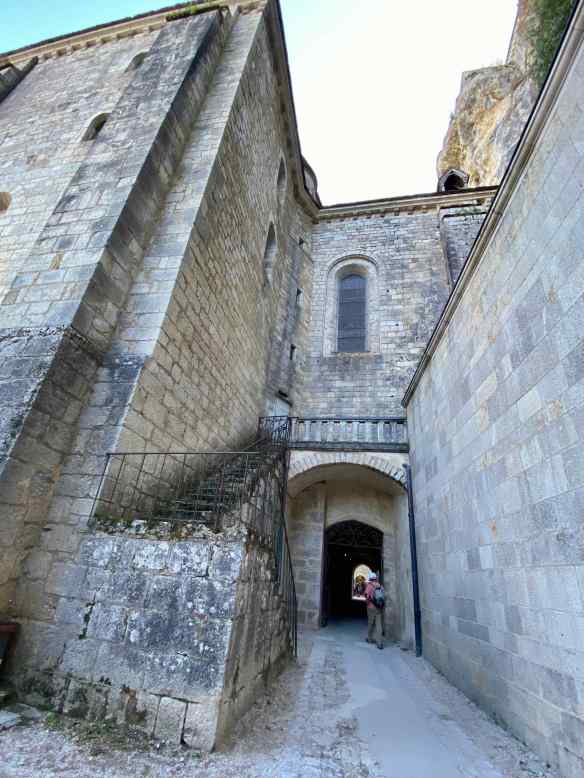
and walk past many plaques engraved with thanks for prayers answered.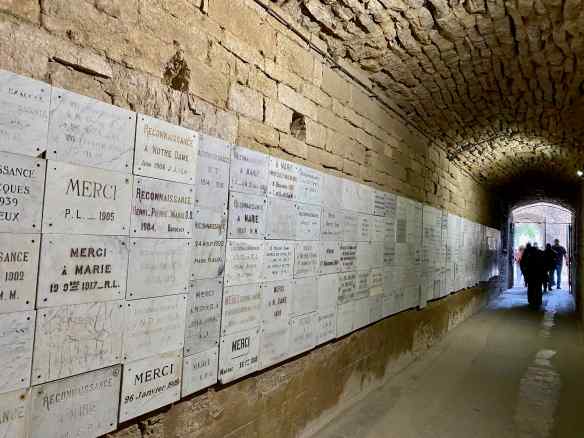
Some of the churches and chapels are built right into the stone cliffs, which are visible in the back of the 850 year old Basilica of St. Saviour.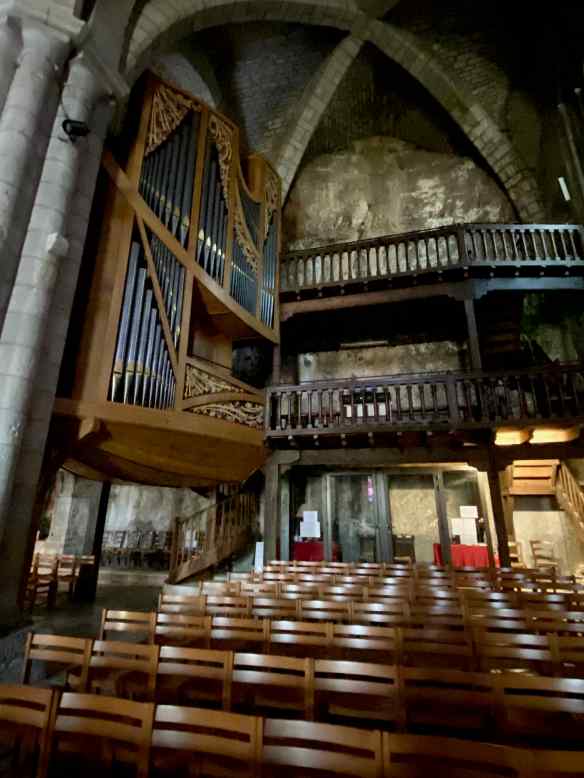
The Black Virgin in the Notre Dame Chapel. A group has arrived for a private mass so we don’t stay long. This is the second Black Virgin we have seen on our travels.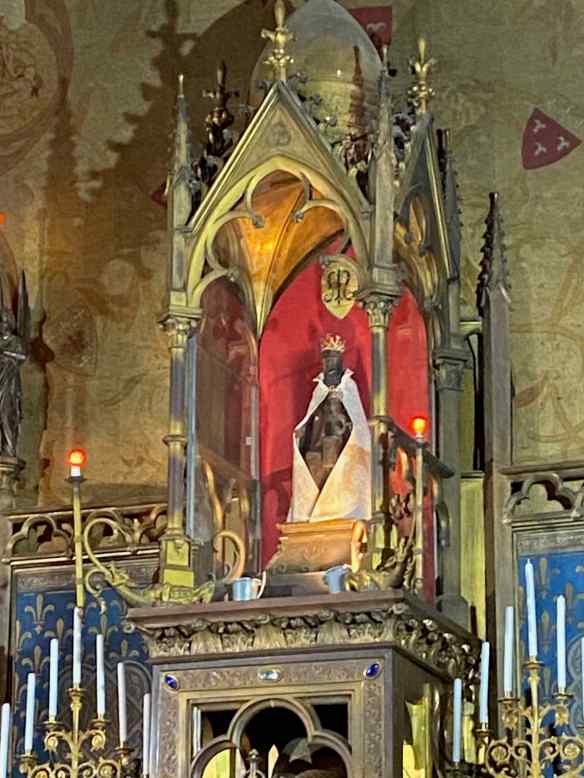
In this spot, in 1166 the perfectly preserved body of an early Christian hermit who died in 418 AD was discovered… St. Amadour.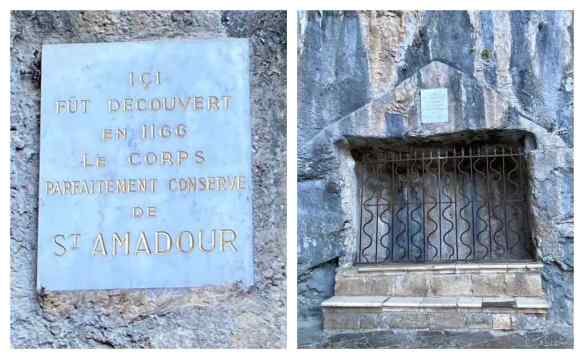
However, there is also a small chapel and a patron saint for Rugby! We were not expecting that.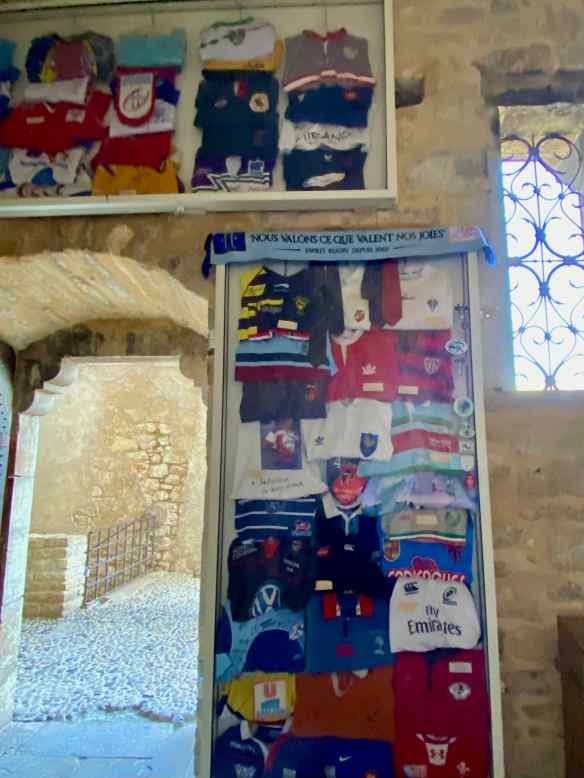
A view of the valley from the sanctuary.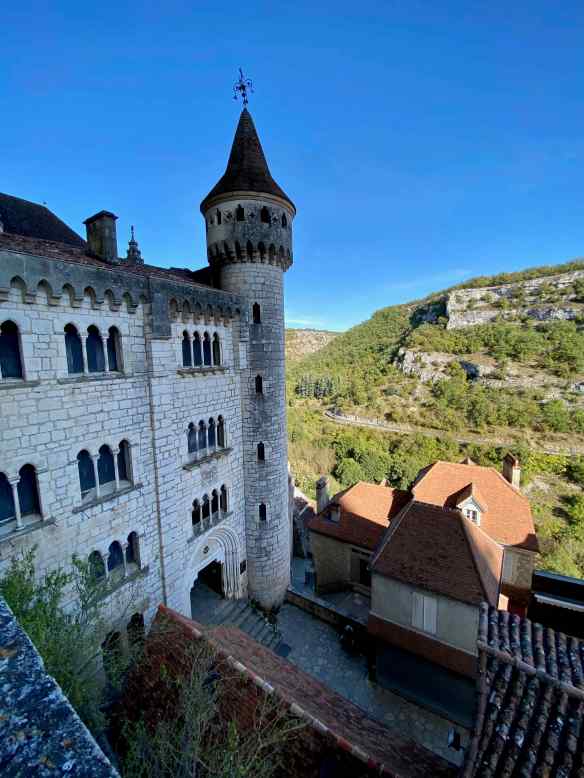
We start walking back up the hill to our carpark. We decided not to go all the way down to the Medieval village at the bottom of Rocamadour. It now consists of lots of shops selling tourist souvenirs and restaurants. It has been a long day and we are ready to go home.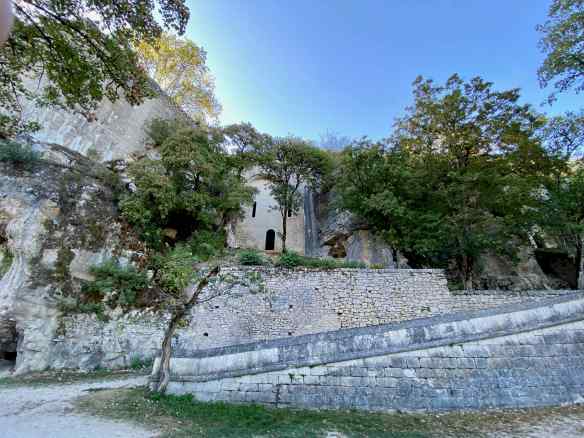
I loved this little red leaf stuck on the side of this rock.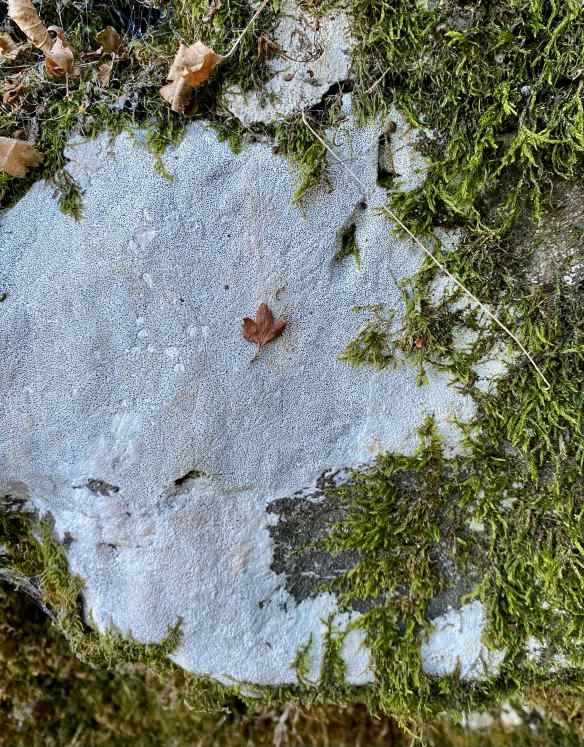
There is a little church in the hamlet of L’Hospitalet on our way to the carpark but it isn’t open so we head home. We were both a bit underwhelmed by Rocamadour….it didn’t have the presence that we were expecting…although we are not really sure how to explain why.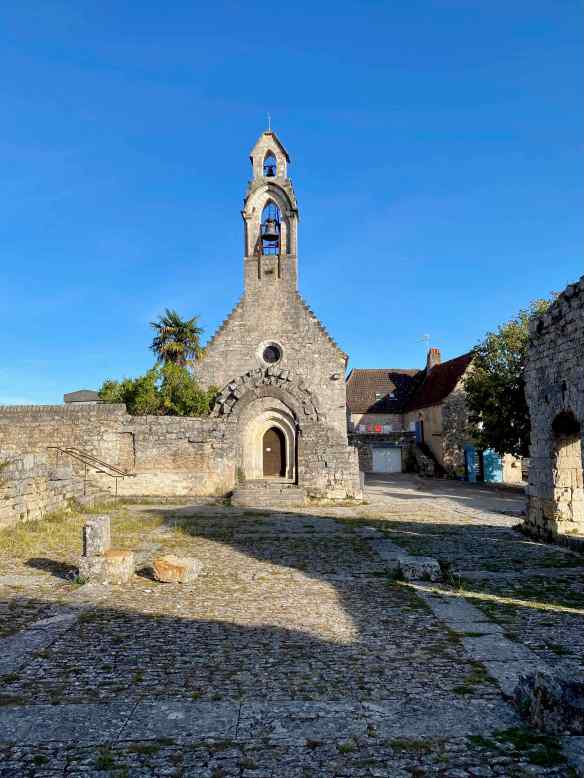
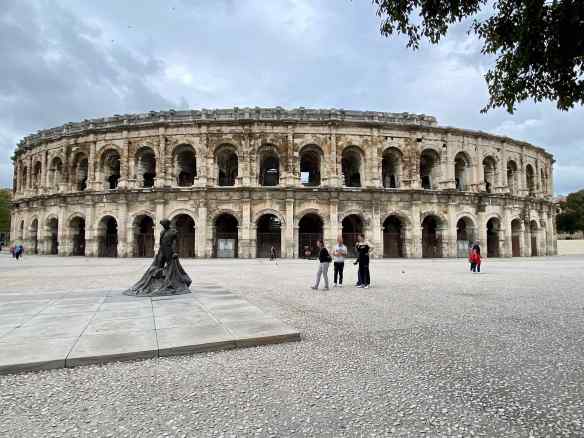
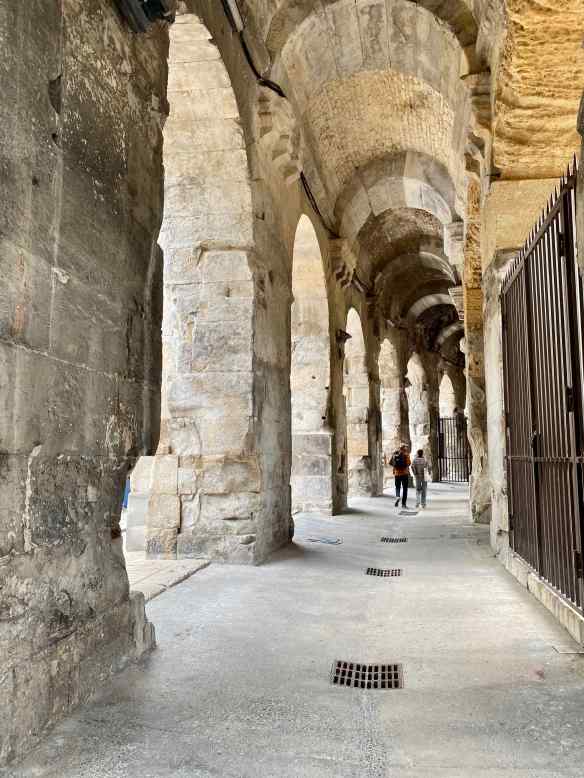
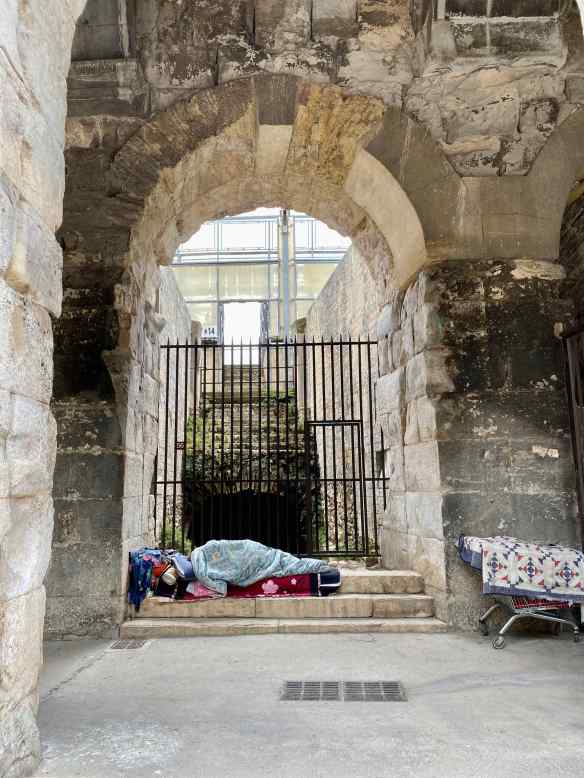 The Maison Carrée is a very well preserved white limestone Roman temple that is about 2,000 years old.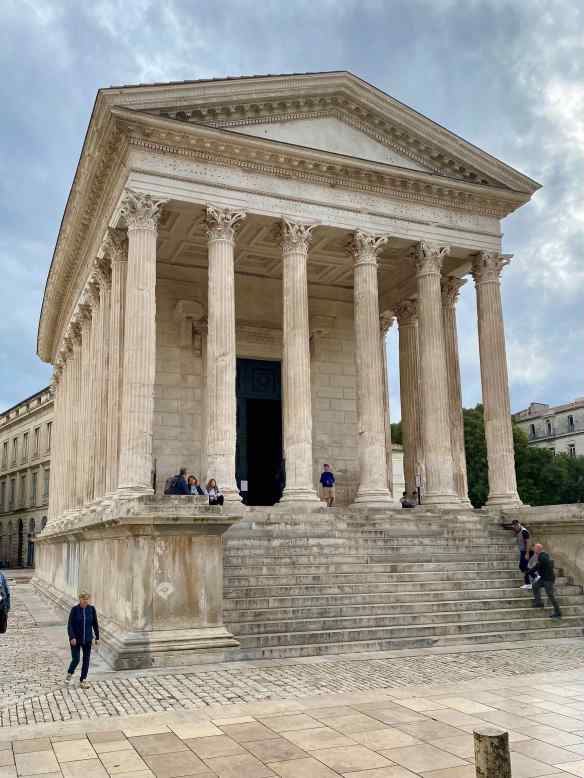
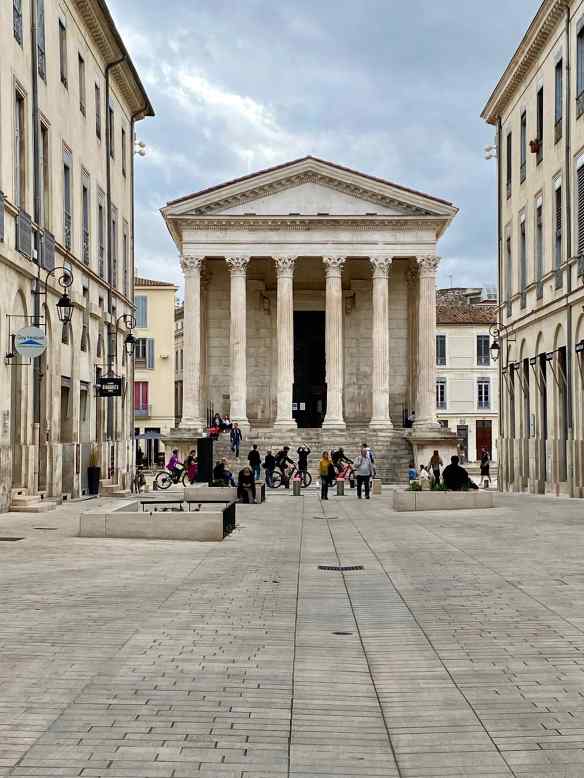
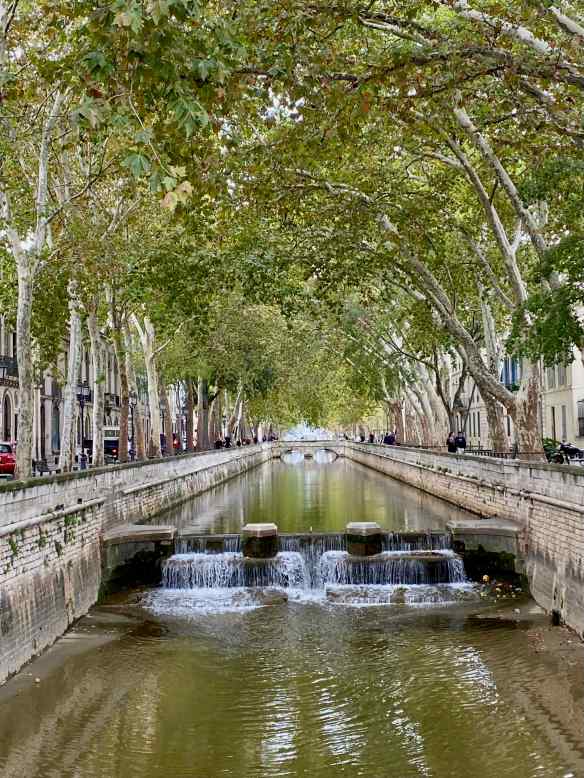
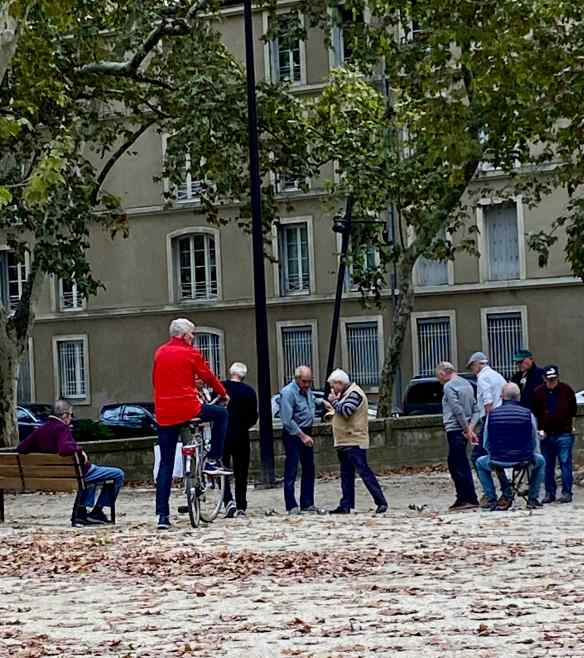
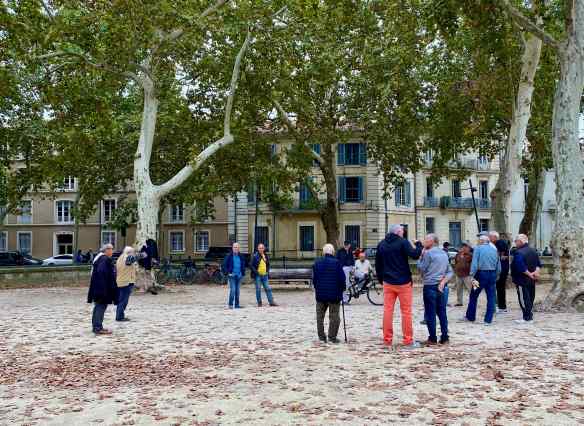
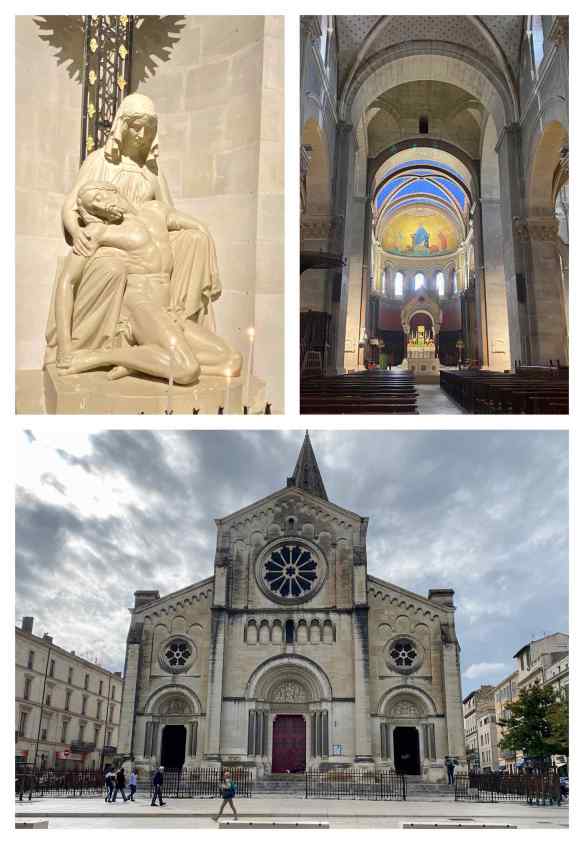
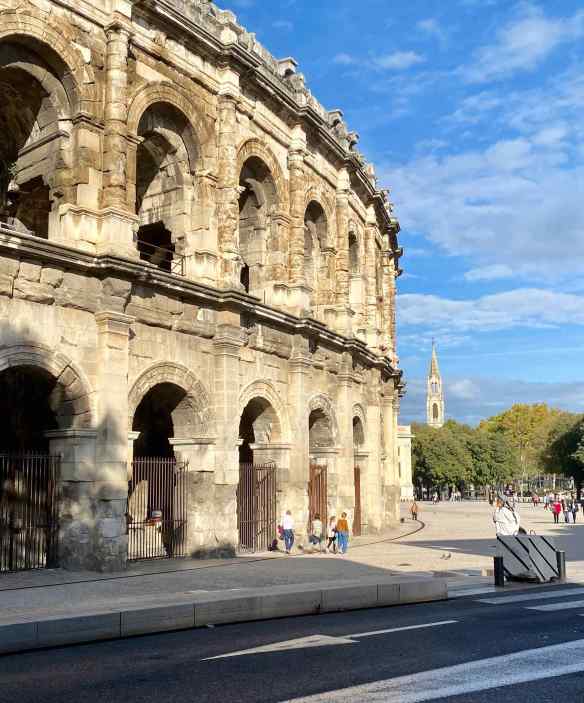
 I wanted a photo of this pretty bush covered with orange berries, and Bob hams it up by giving himself an orange moustache.

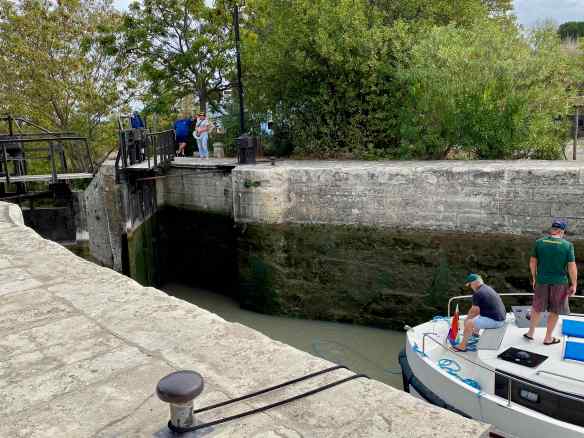
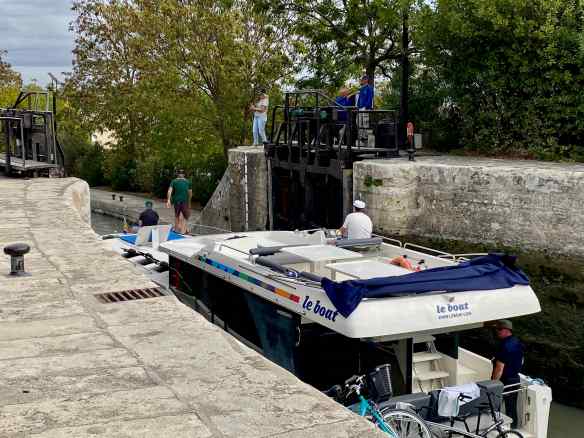
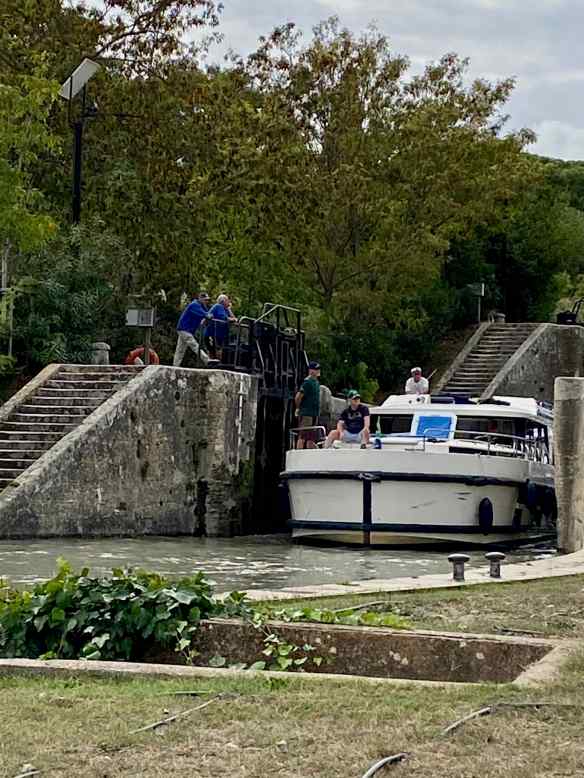
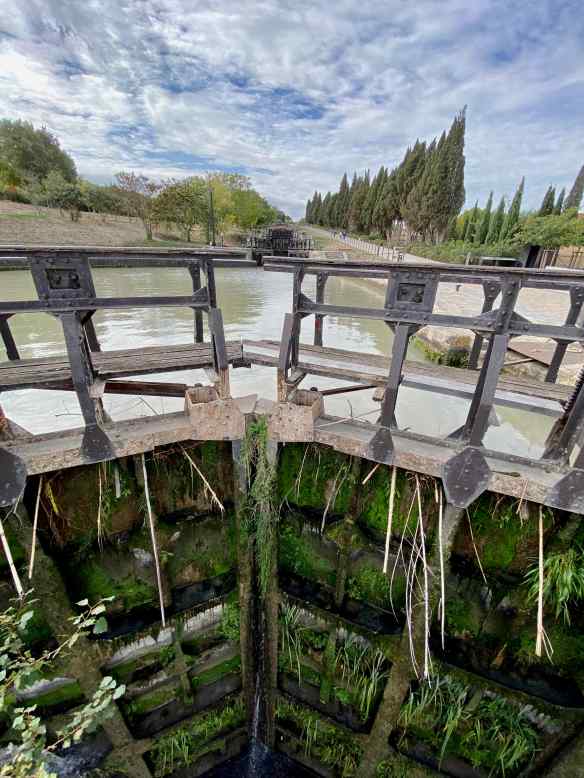

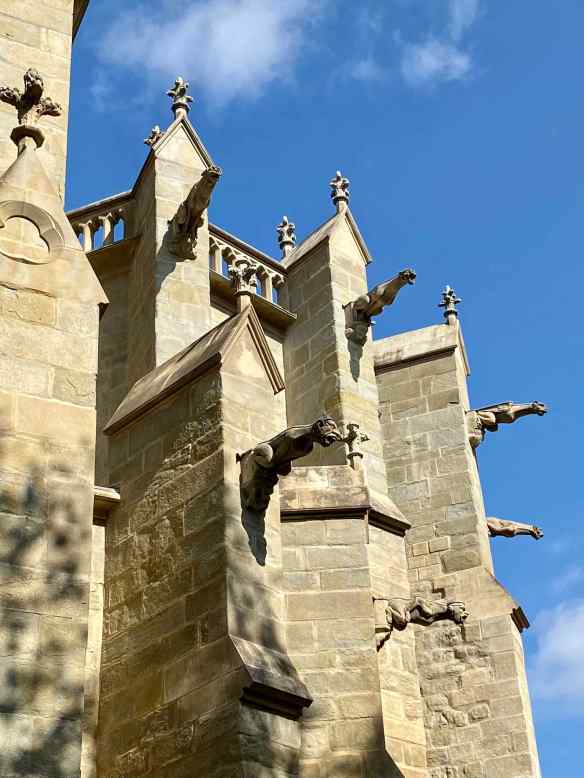
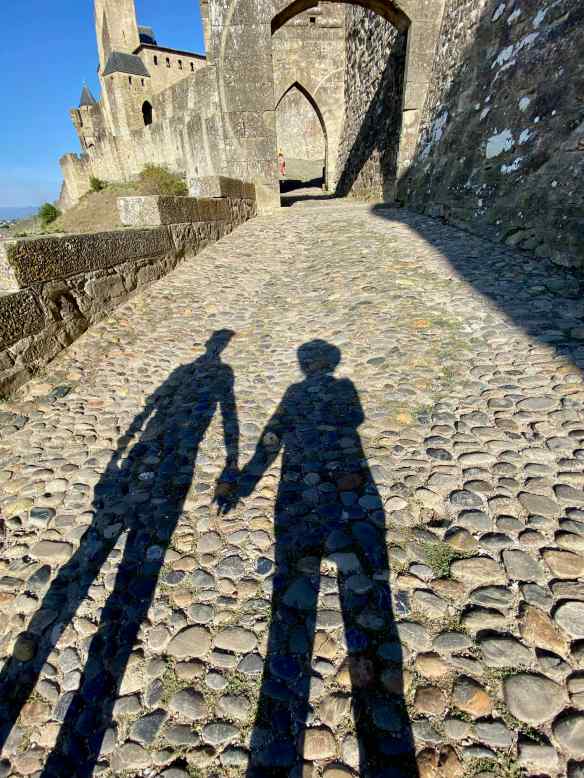
 This is one of the entrance gates to the old city of Carcassone.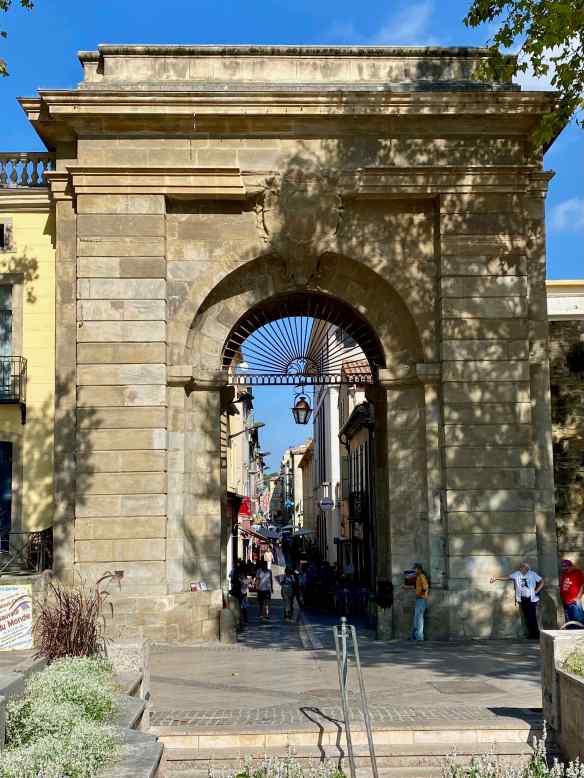
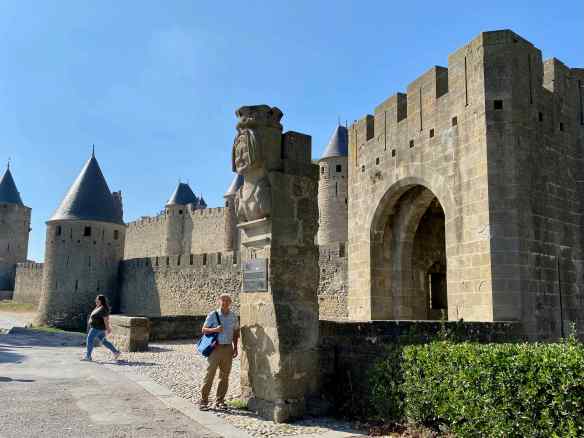
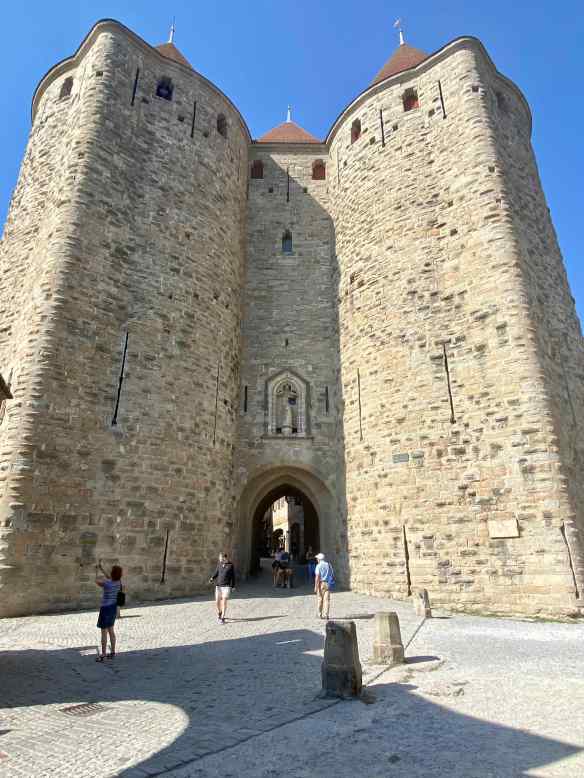
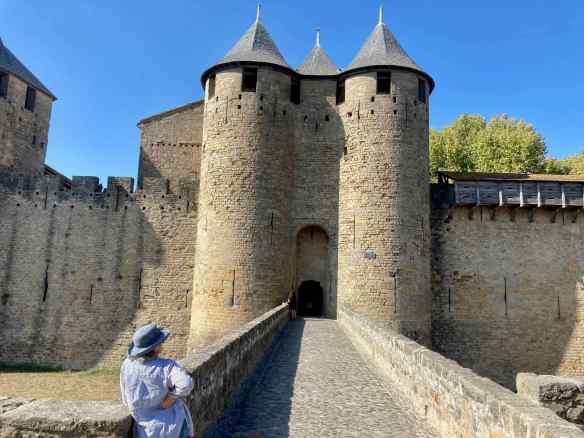
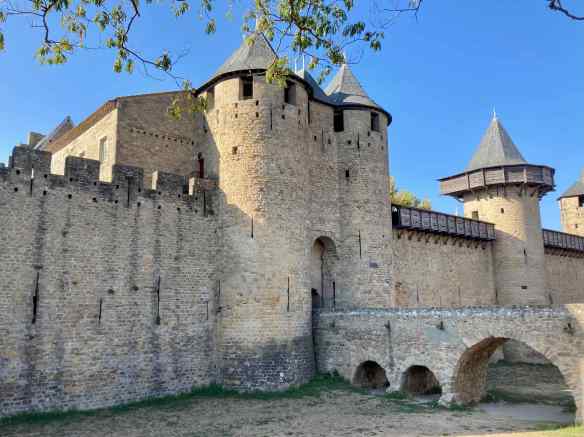
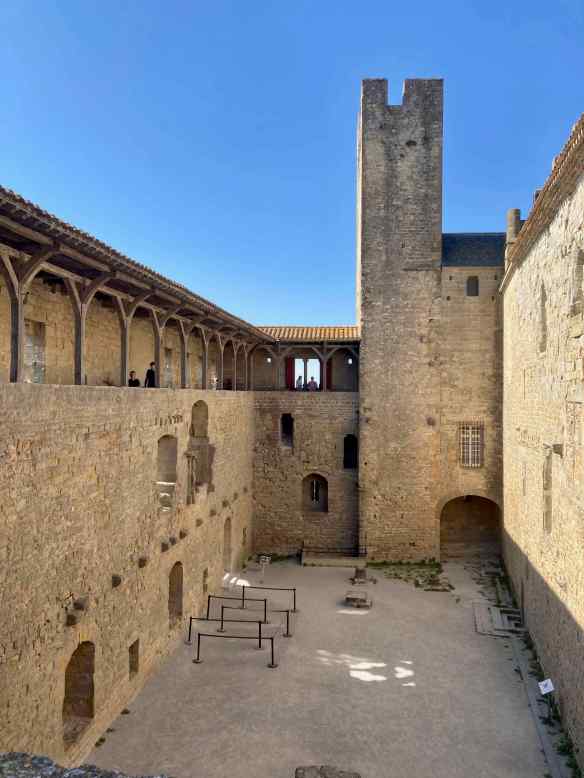
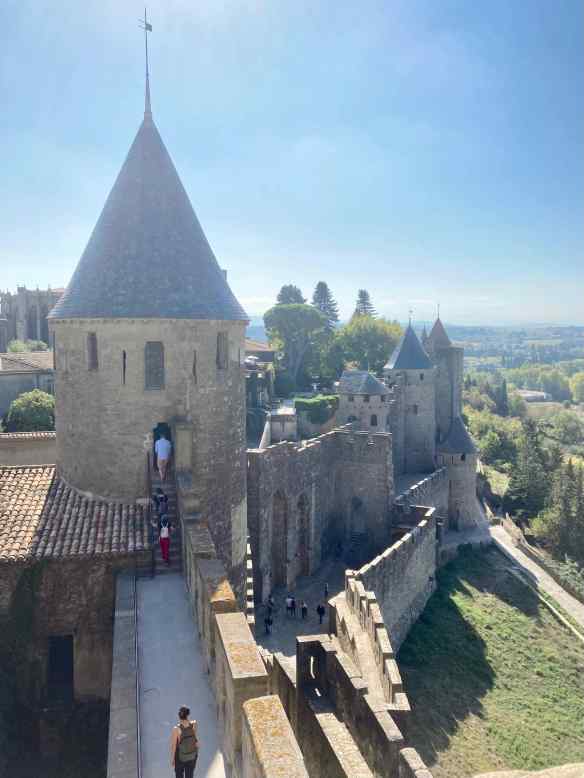
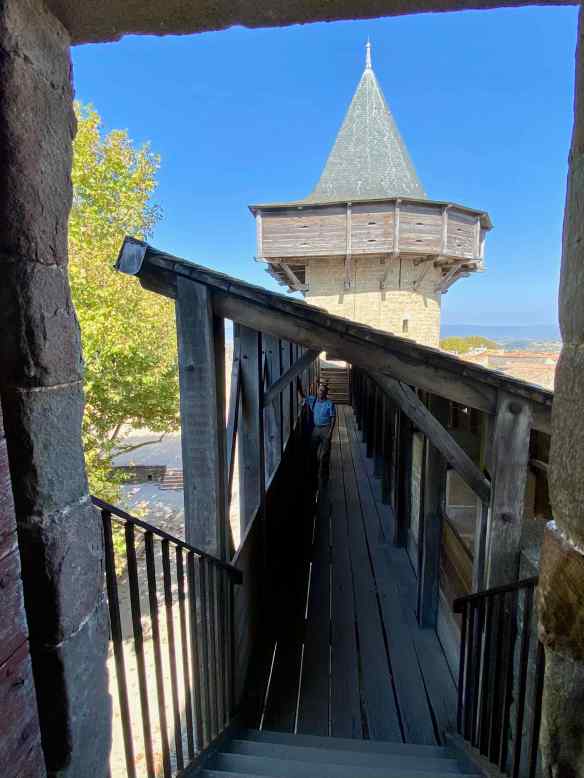
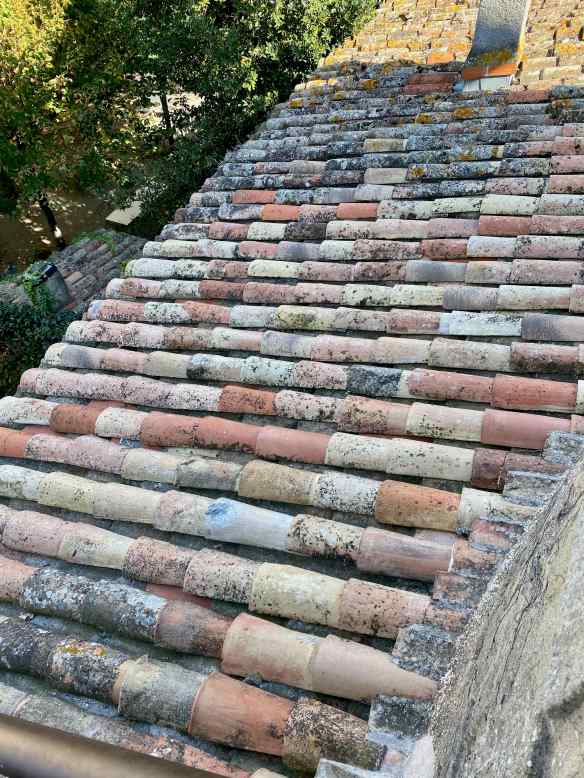
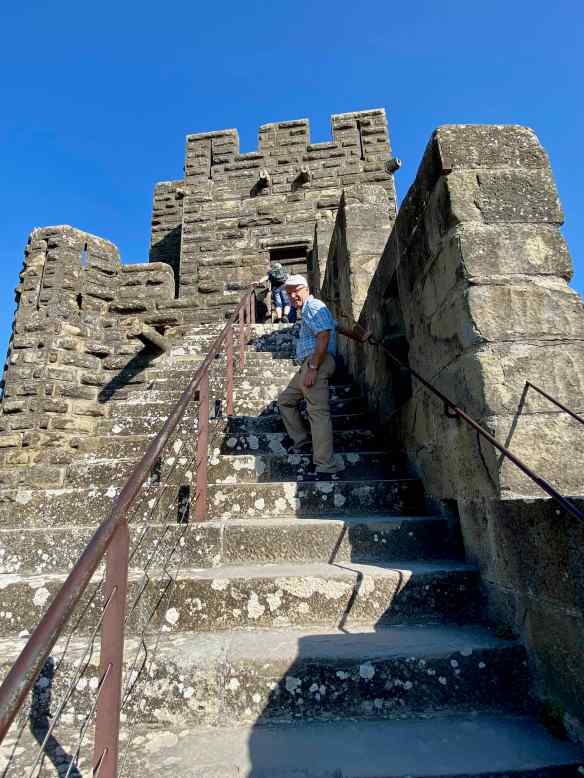
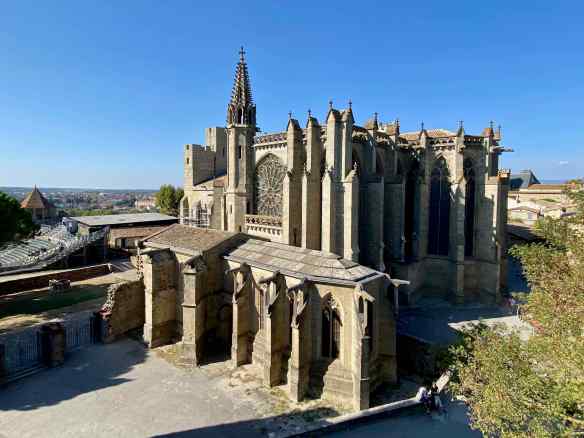
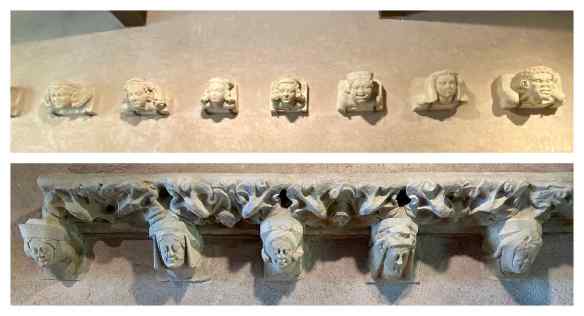 This is mostly an opportunity to see the fortifications that make this citadel so unique.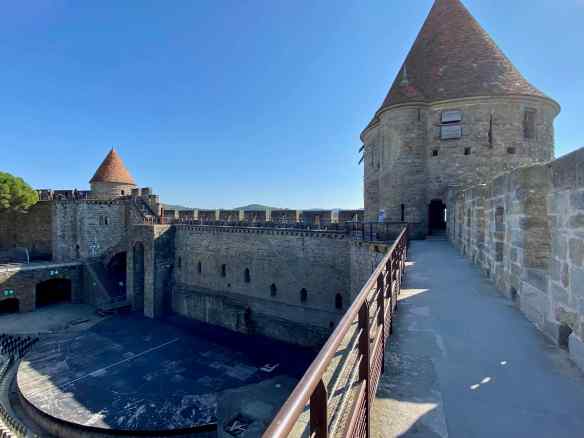
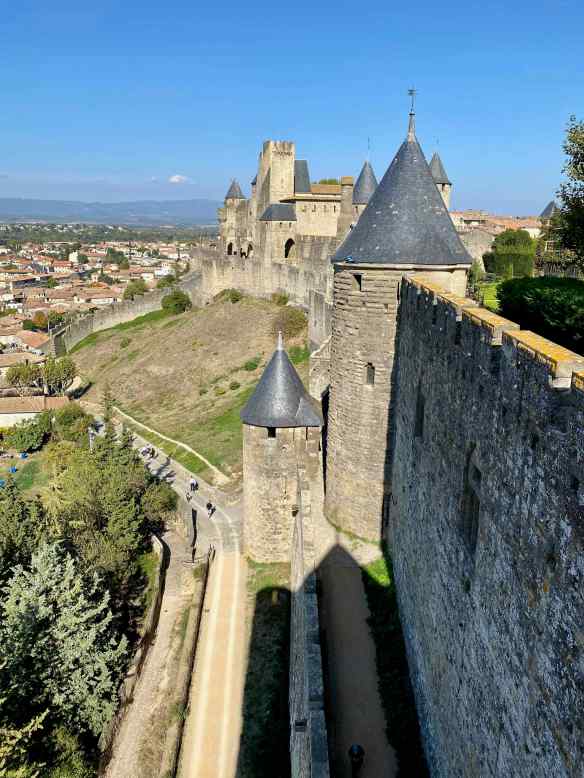 Carcassonne is now considered to be the largest and best conserved medieval fortress in Europe. It is impressive with its set of double walls and ramparts. Both sets of walls and the area between them can be seen in this photo.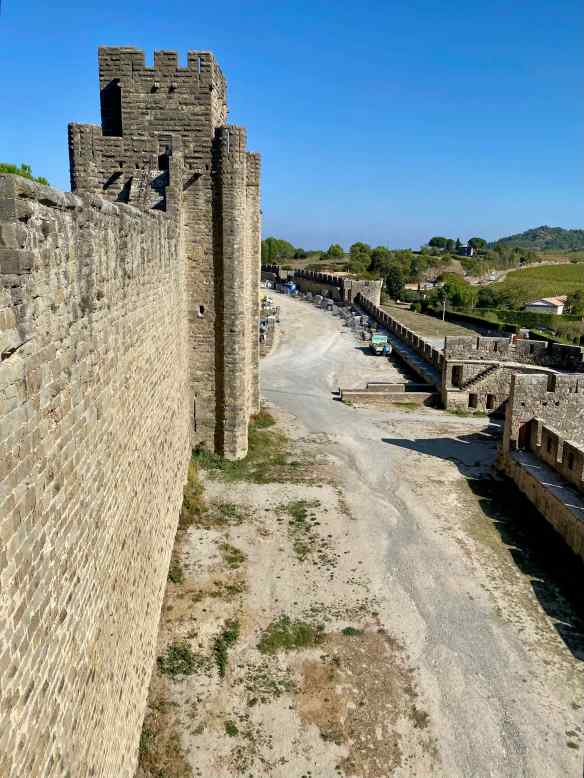


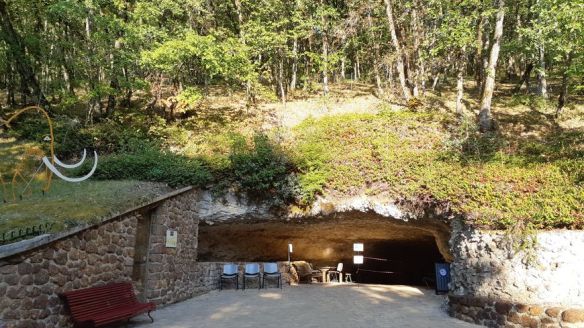
 There are more than 200 painted and engraved figures in Fonte de Gaume organized into compositions in the four main sections of this 120 meter long cave. We visited all but the narrowest section in the Diverticule teminal and the short cave on the right of the entrance.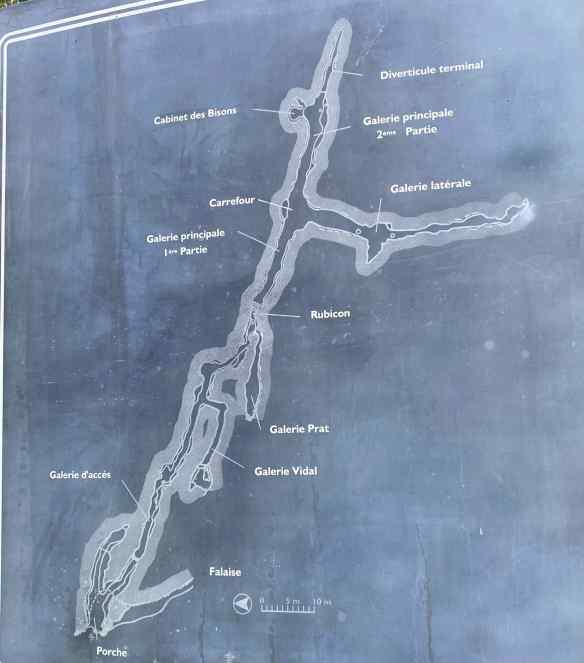
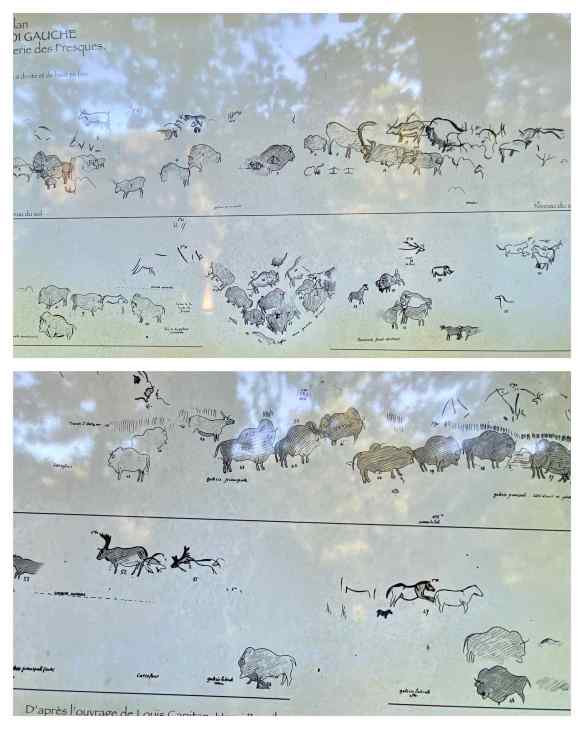
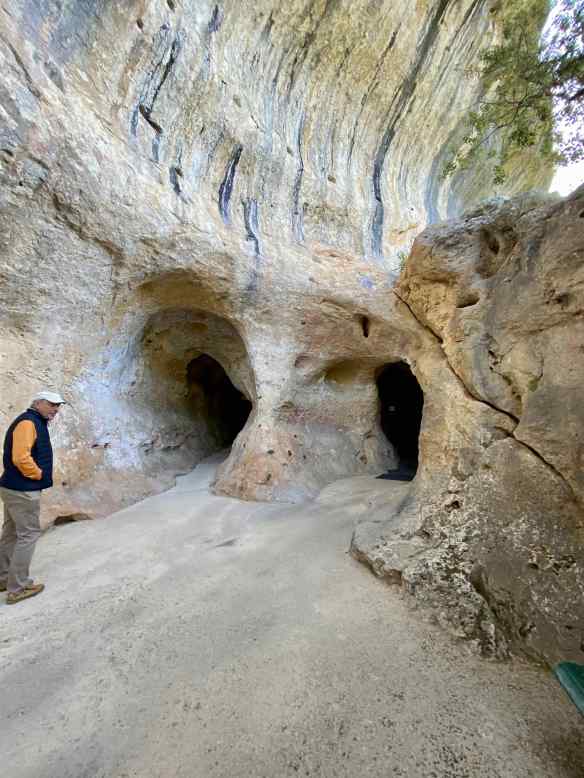
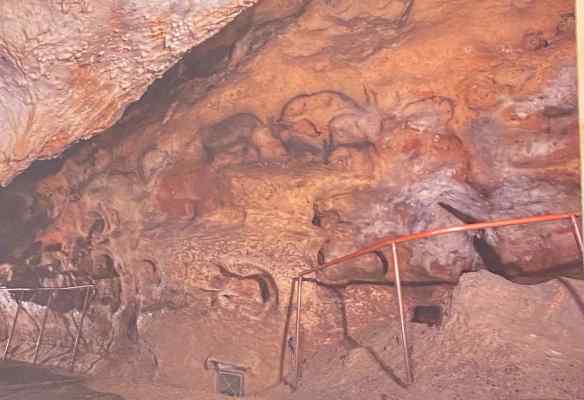
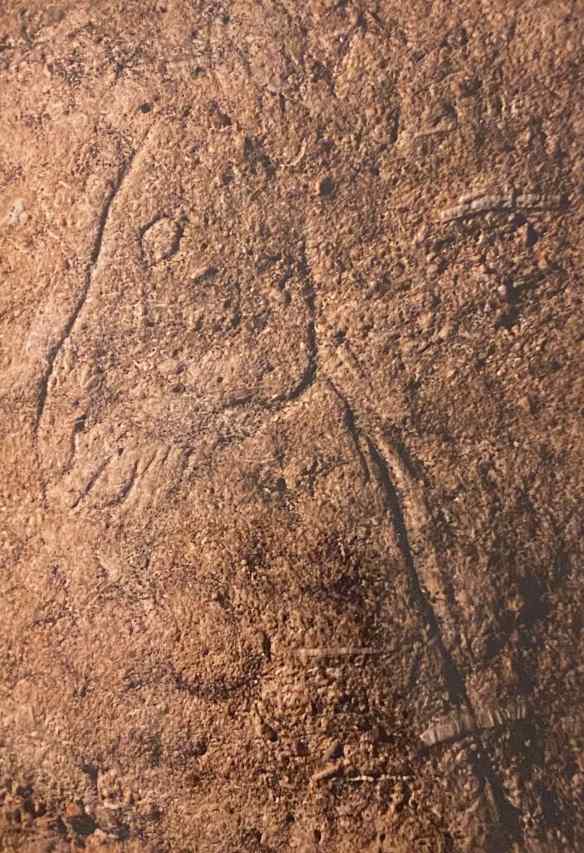
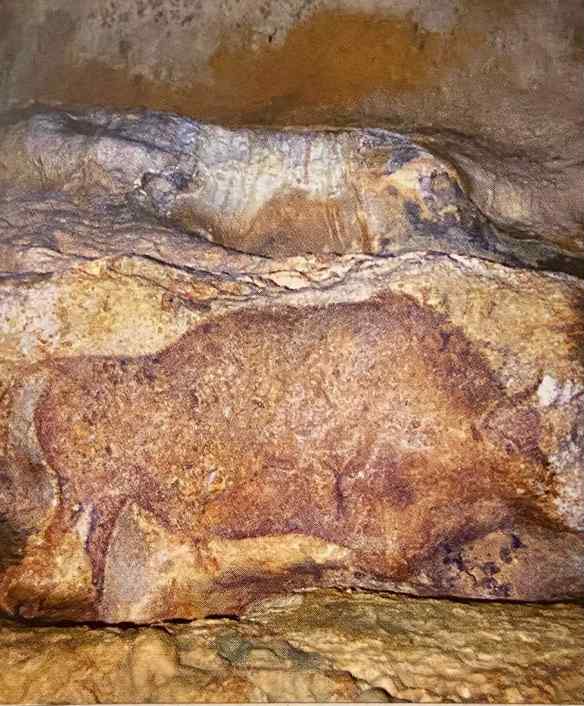
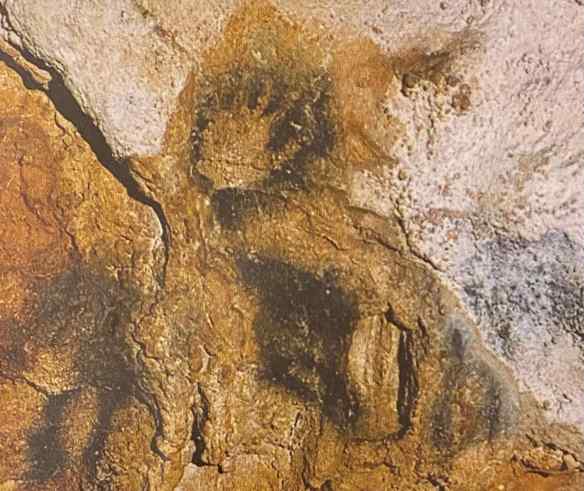
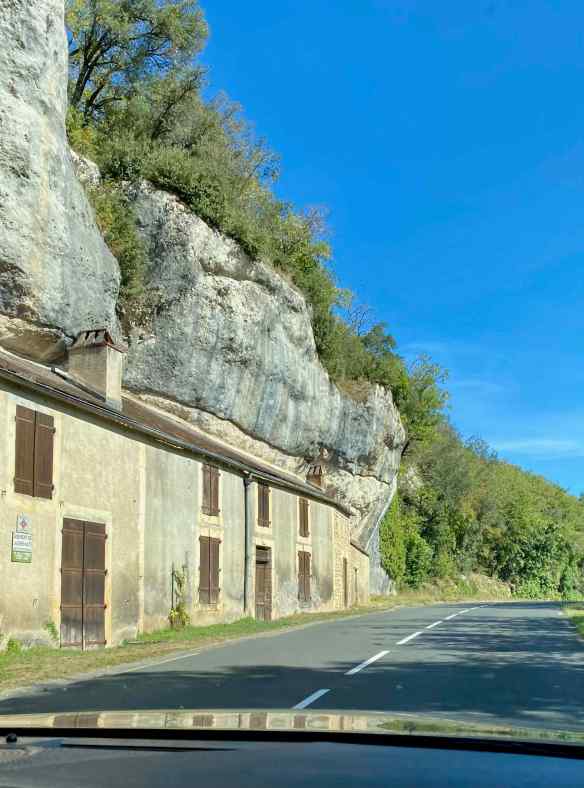

 The first artworks we see are engravings…some of them were made by the artist using his fingers to mark the soft stone. Rouffignac is famous for its Mammoths. 158 mammoths that have been found on the walls of this cave, this is 30% of all mammoth representations in prehistoric cave art. Yet, curiously, there have been few mammoth bones found in this area. We also see cave bear claw marks all over the walls. The parallel vertical lines below this mammoth are from a cave bear scratching his claws on the cave walls.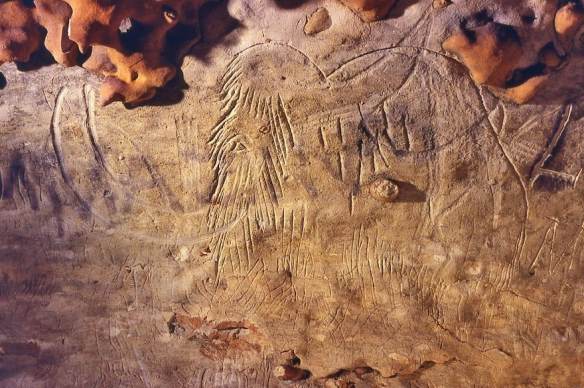
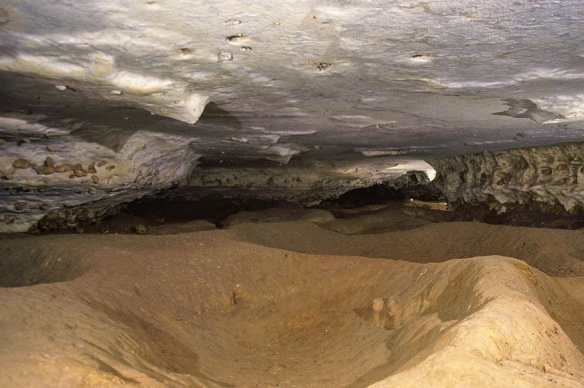
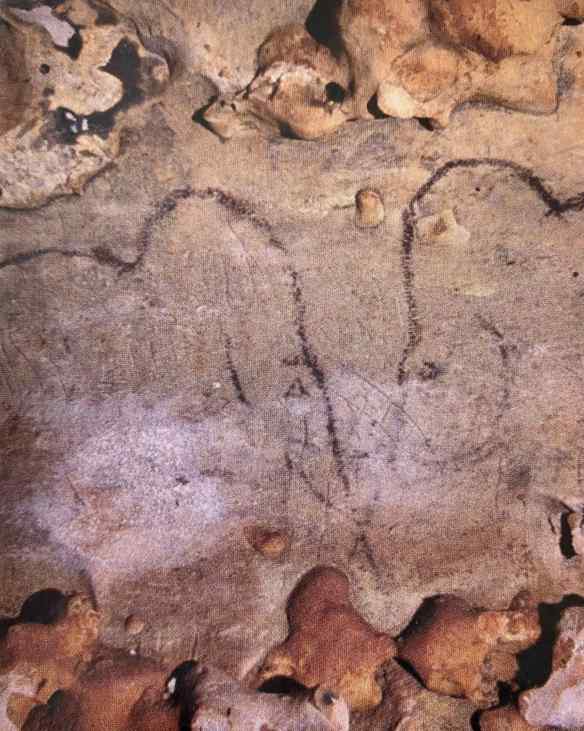
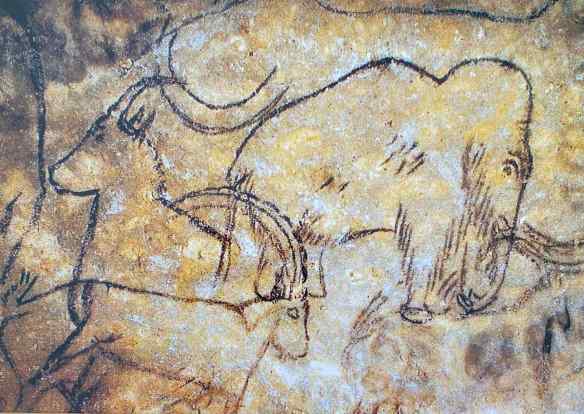 I was surprised to see that almost everyone in the group turned towards our guide when he started talking and they stopped looking at the drawings! Really? Couldn’t they have listened but keep looking a the artwork above our heads? It seemed such a waste to be standing here and ignoring these ancient drawings. One very interesting drawing of a mammoth showed its anal flap. Sorry, no photo of that one. Yes, this is a flap that covers the mammoth’s anus to keep it warm. Only someone who had very close contact with a mammoth would know about this detail. This fact was used to help authenticate these drawings, as they were thought to be modern fakes when they were first discovered..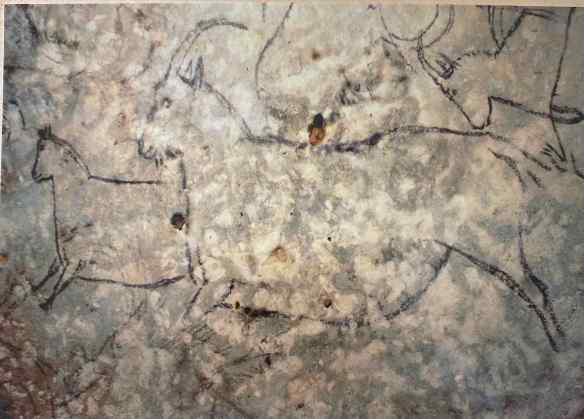
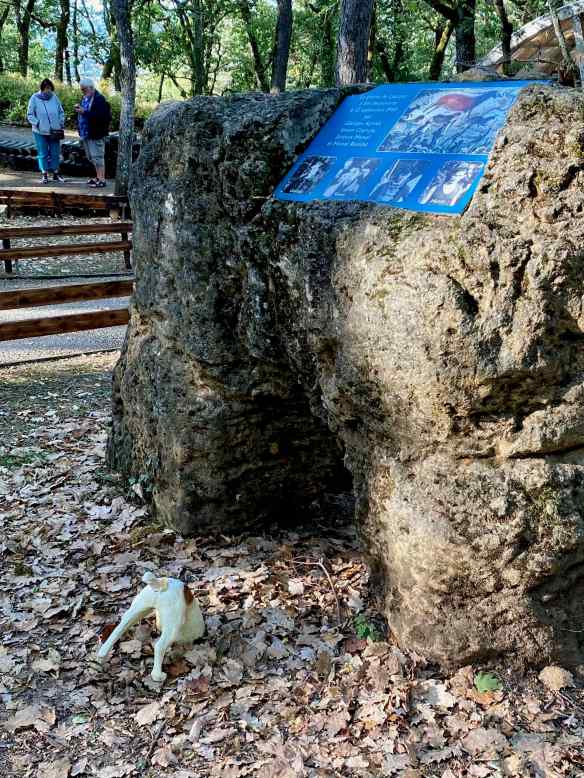

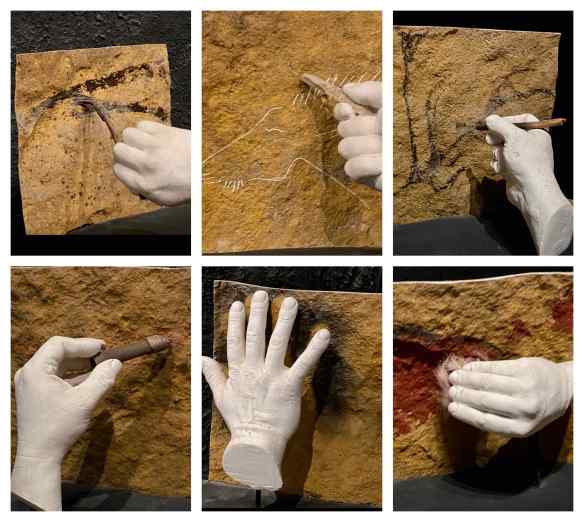
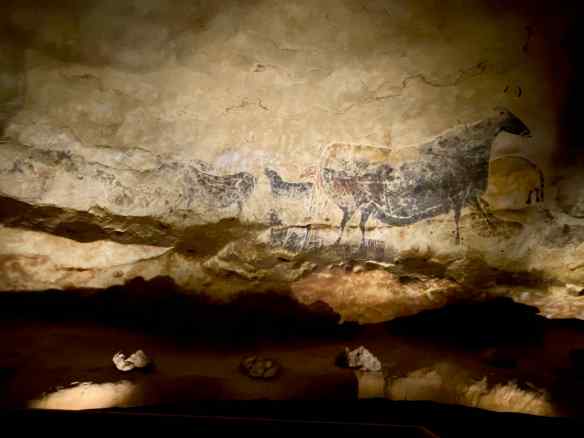
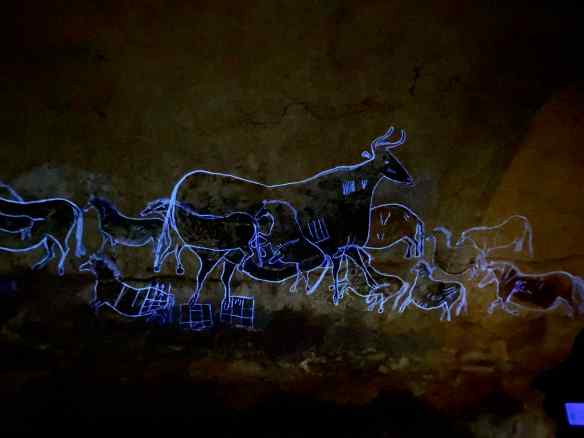
 In 2016, a new replica, Lascaux IV, was opened to replace Lascaux II. It is adjacent to the original cave and offers an even more authentic experience than Lascaux II, with changes in air pressure, along with a series of atmospheric cave scents and sounds.
 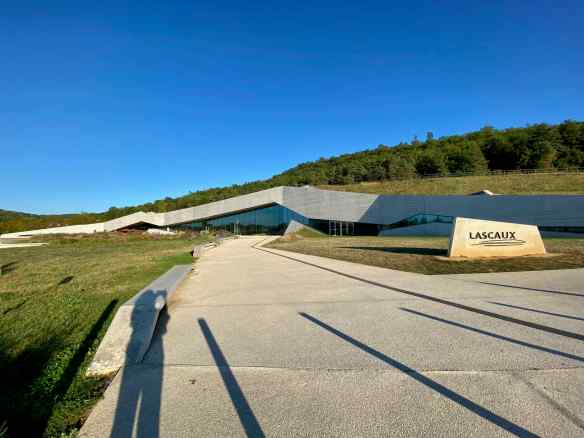 Once again no photos allowed however there is an interpretive area that has more replica displays and we can take photos there.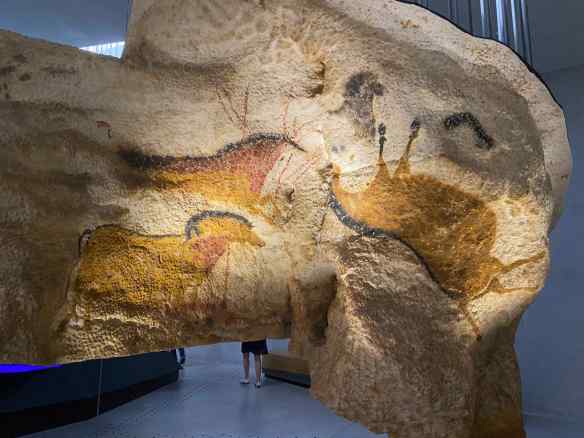
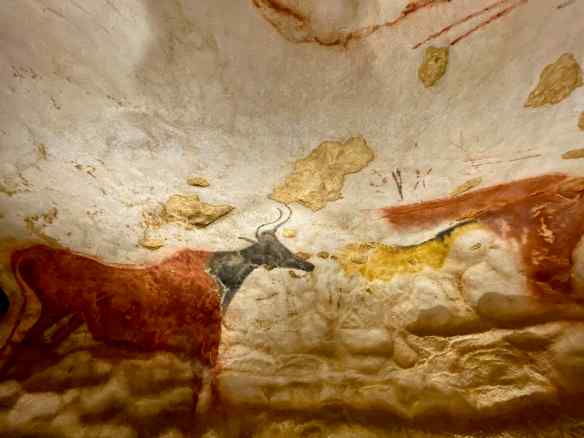
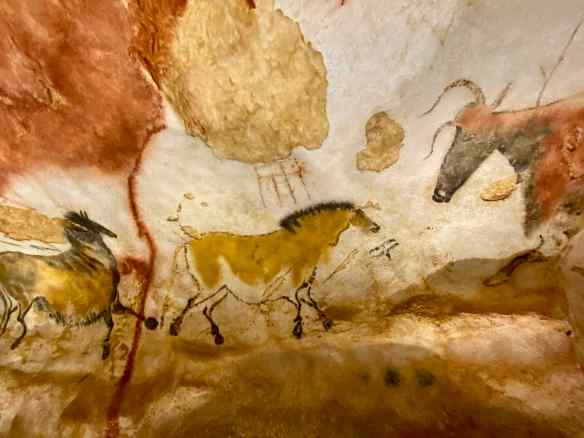
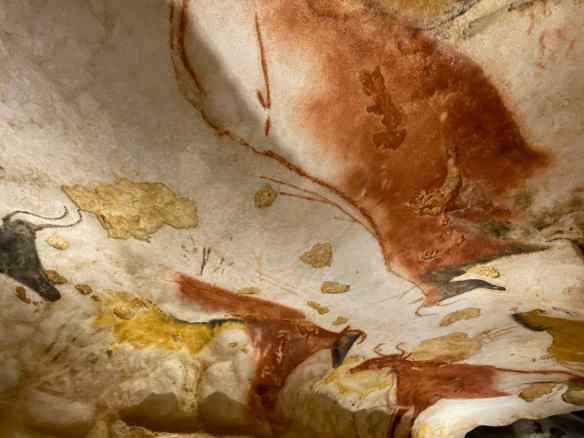
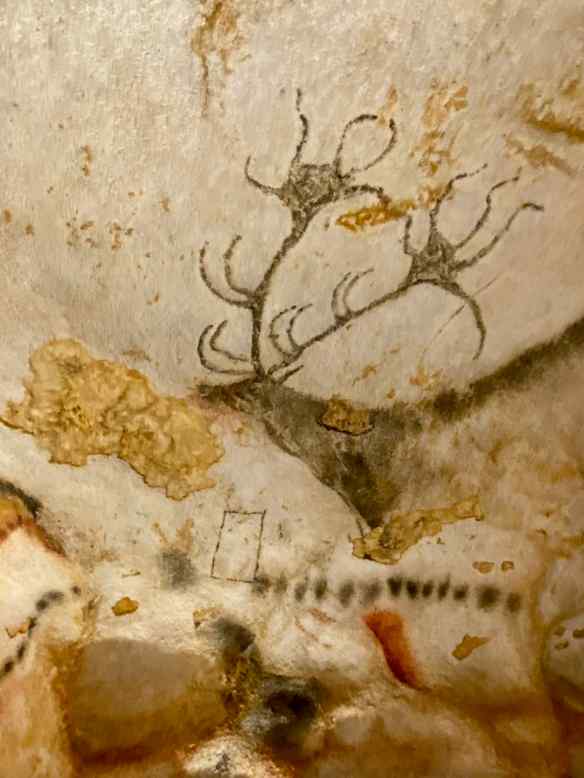
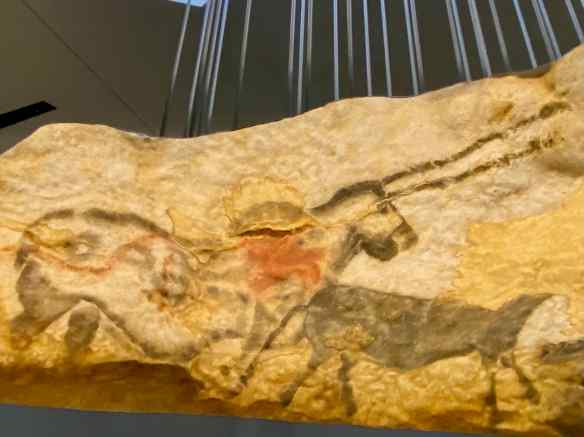
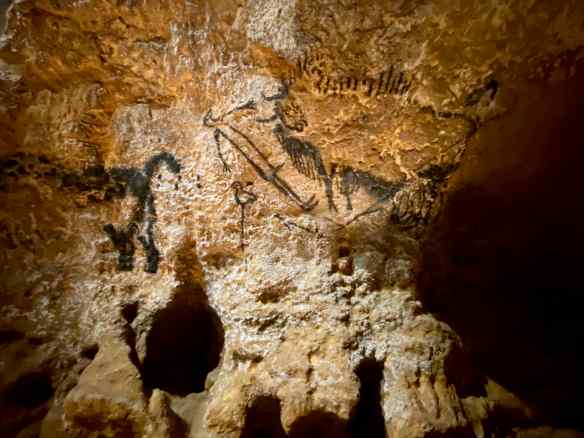
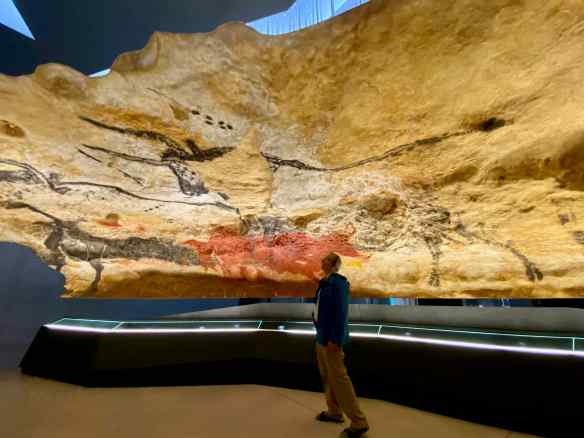
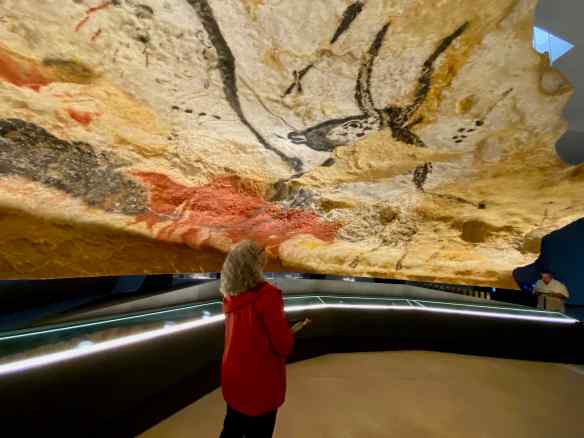
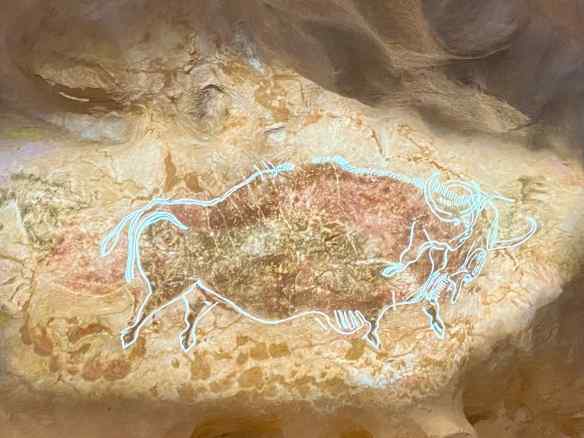
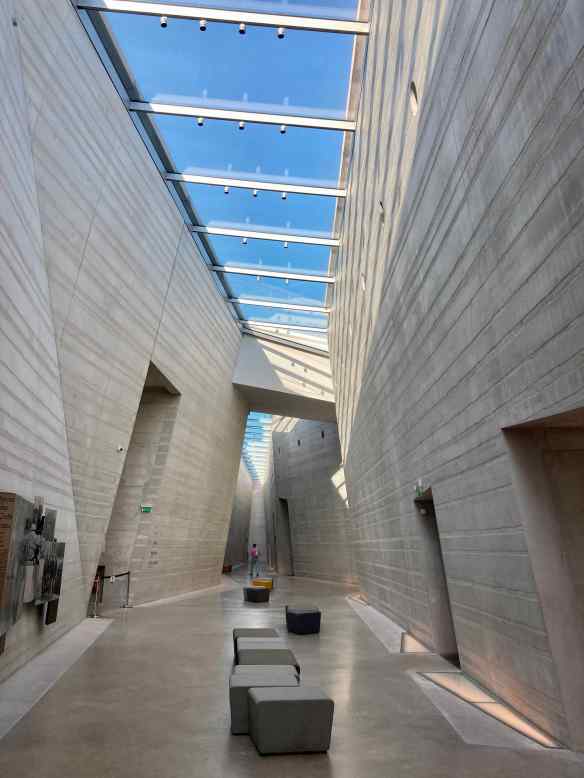 The last room we entered had huge animations which travels across three walls and sometimes over the floor and ceiling as well. I particularly liked this one which shows mammoths from the Rouffignac Cave, which we hope to visit later this week.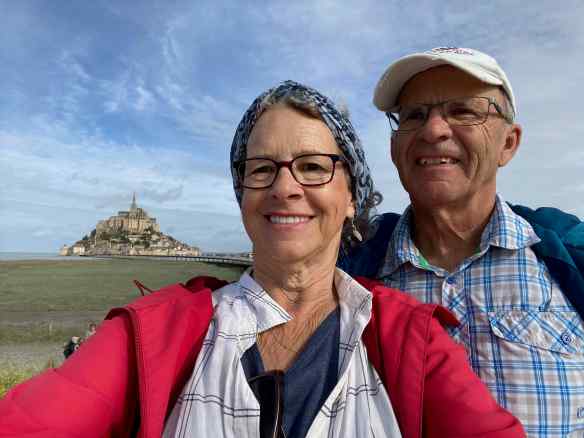
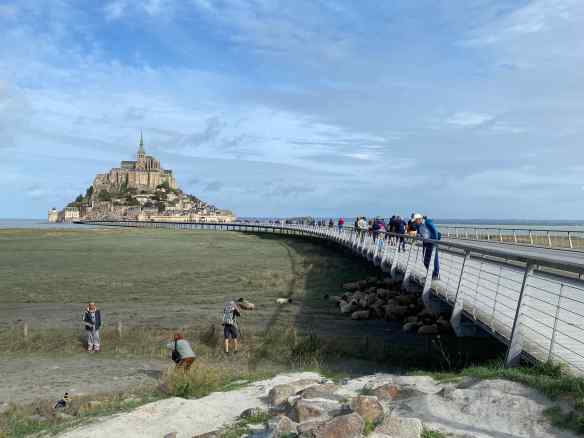
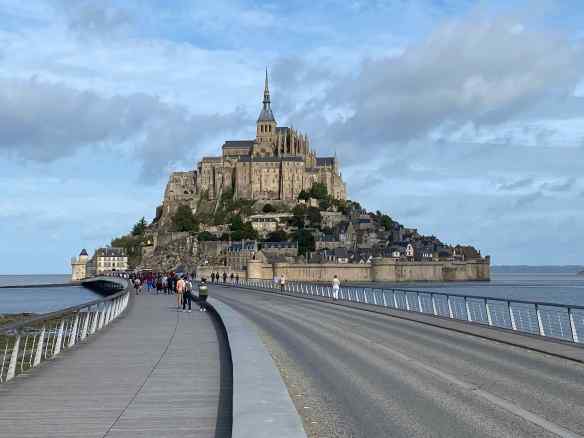
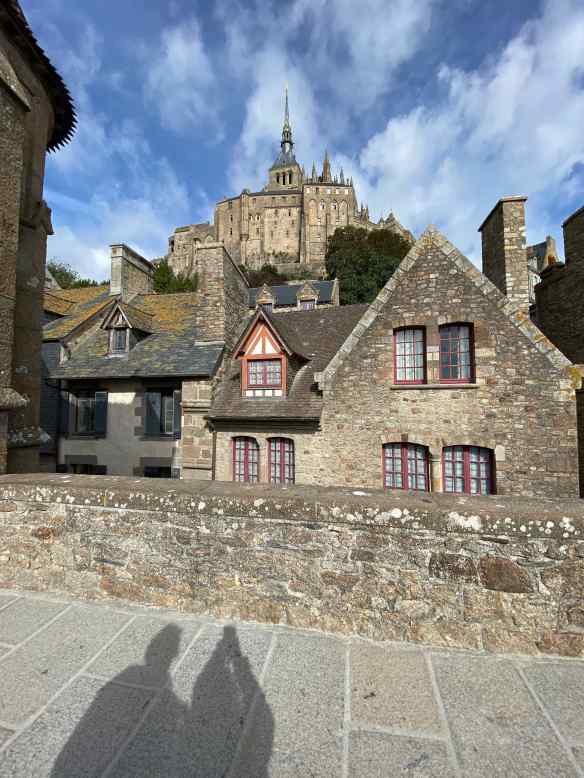

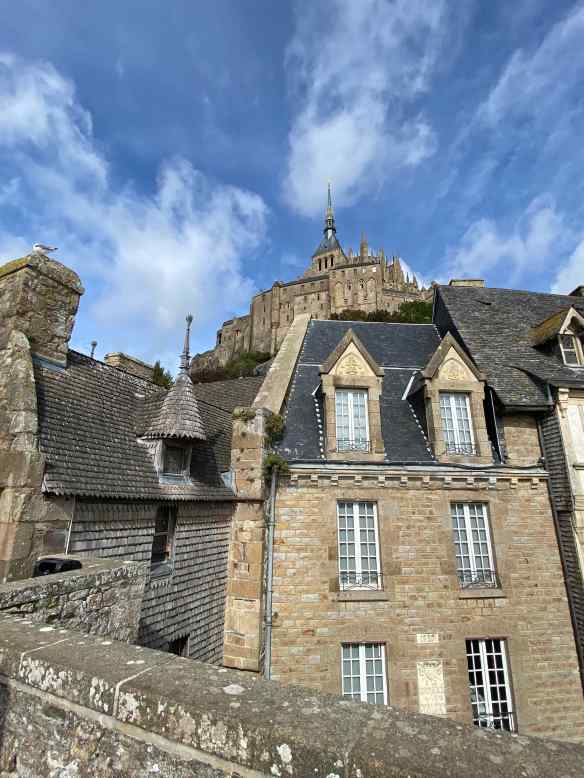
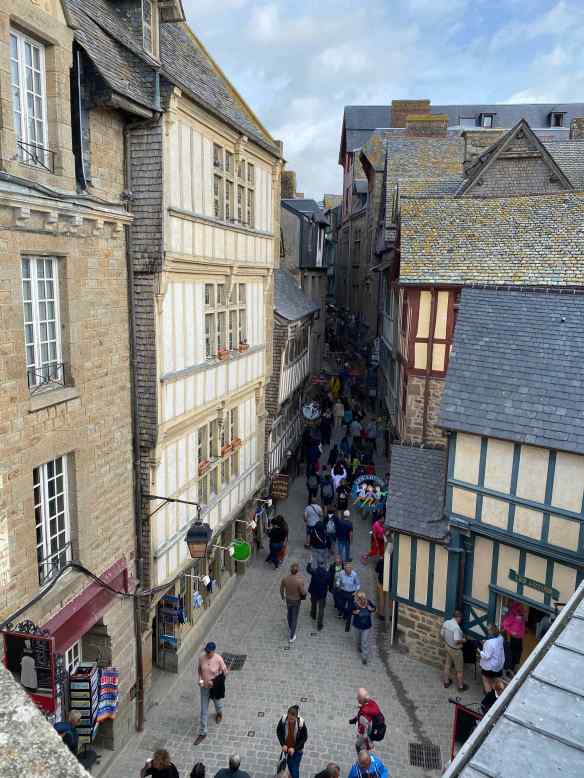
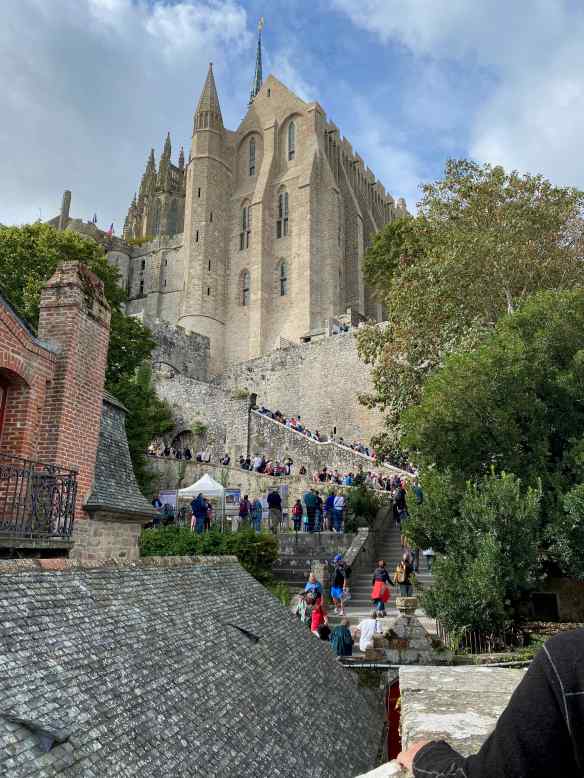
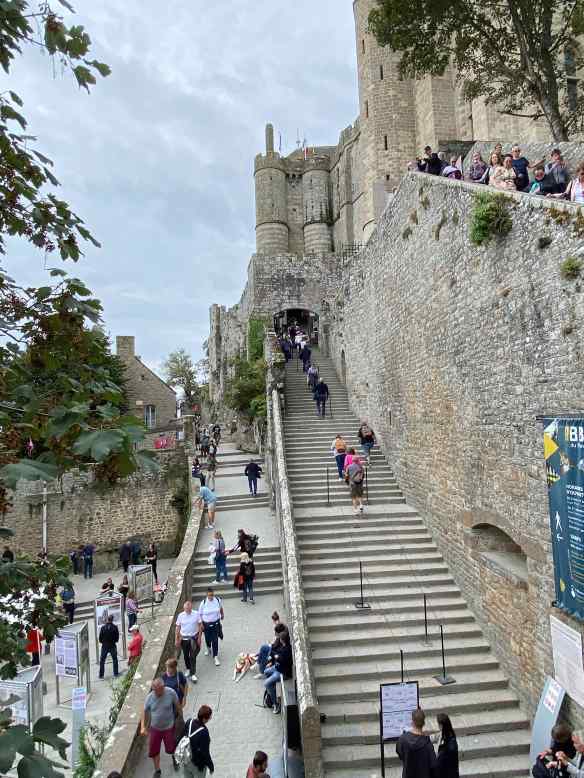
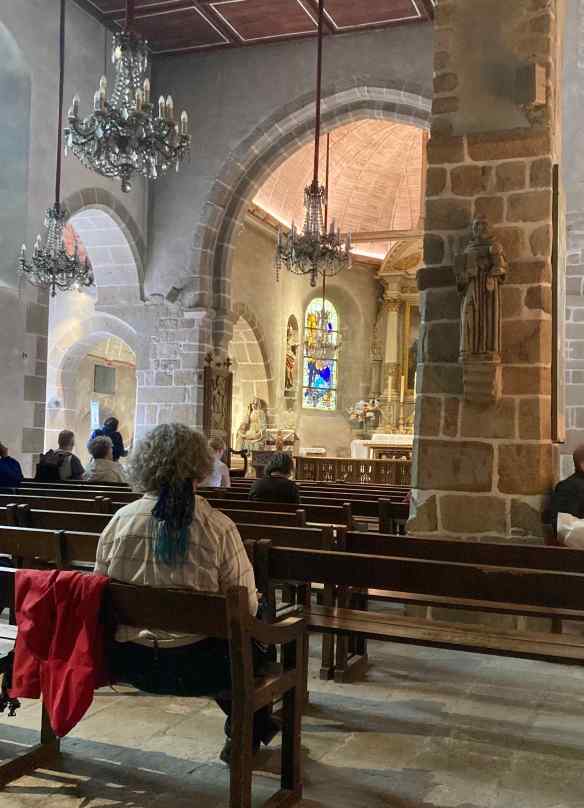
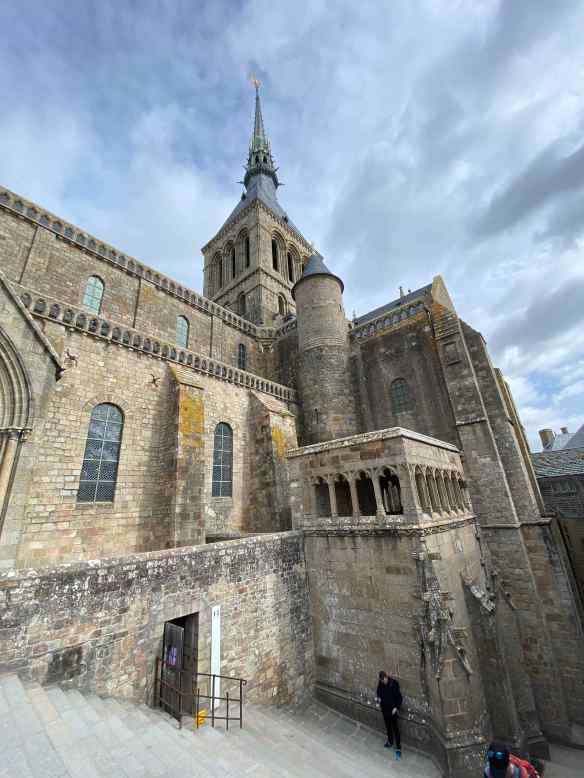
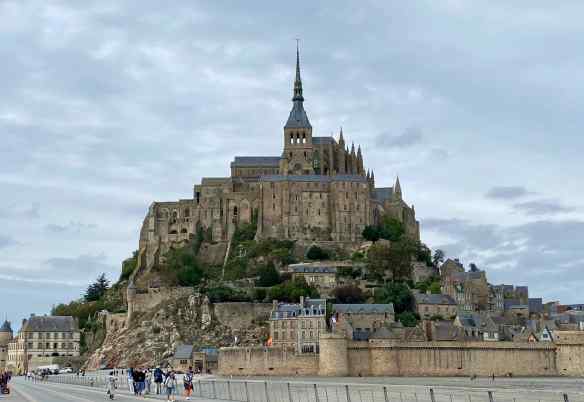
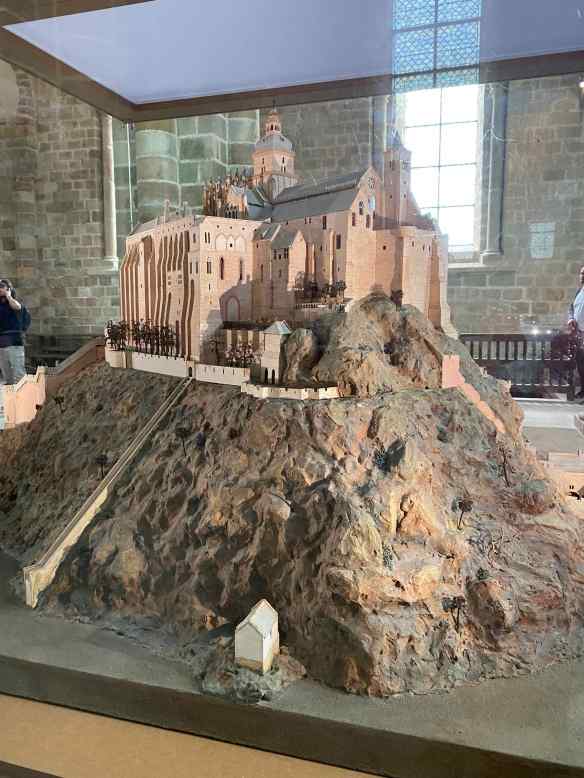 There are usually 5 monks and 7 nuns who live at the abbey and there are only 25-30 people who actually live on Mont Saint Michel. We sat and listened to part of the mass, from the side of the church. The singing was really lovely and I found it interesting that the nuns and the priest sat on the floor of the church during the service.
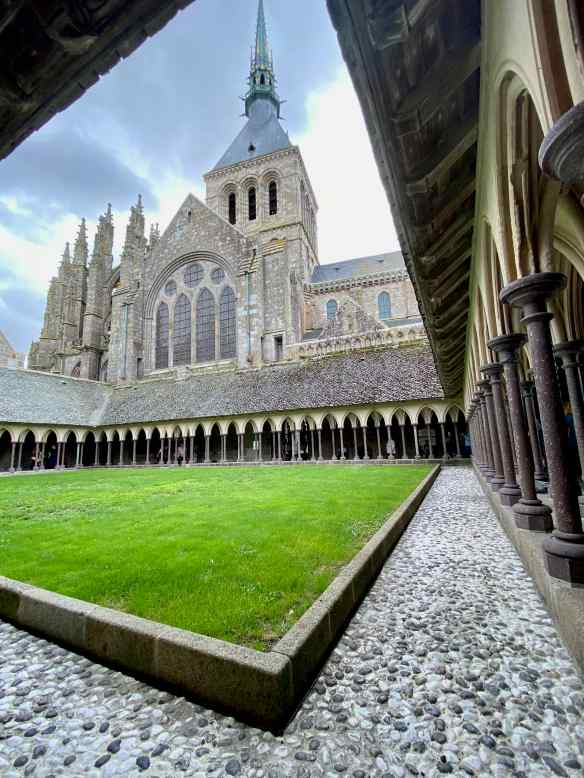
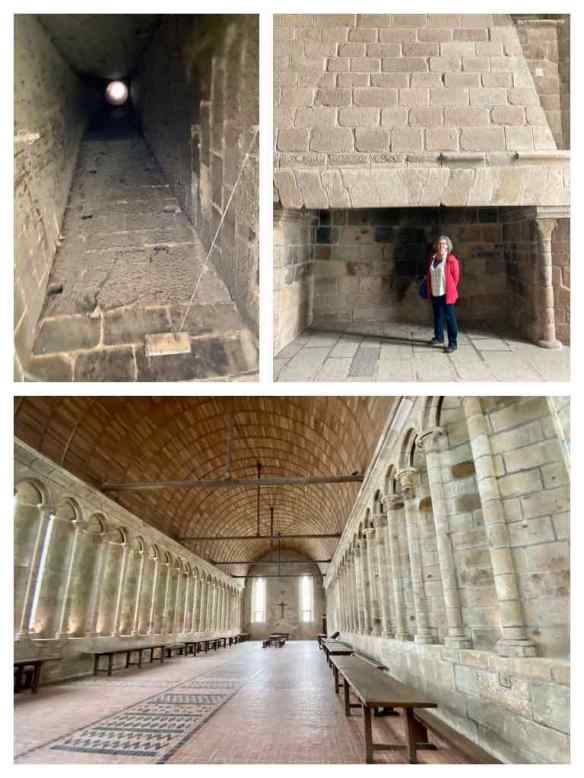
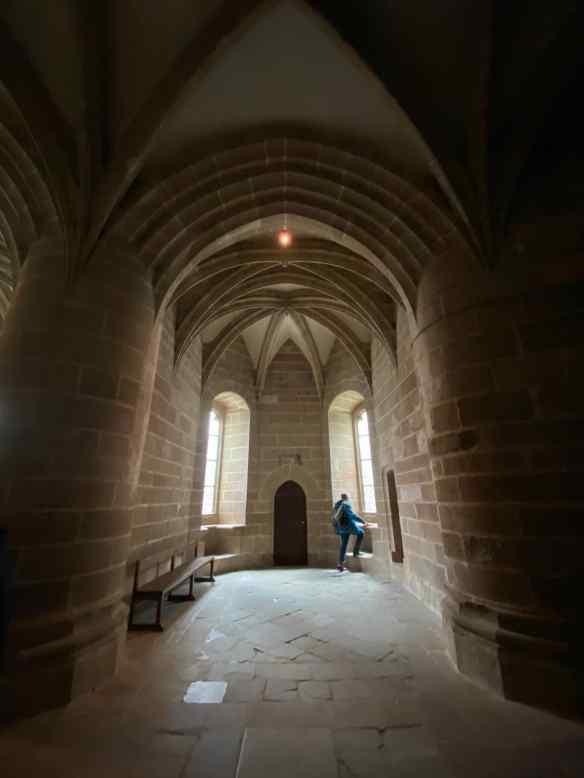
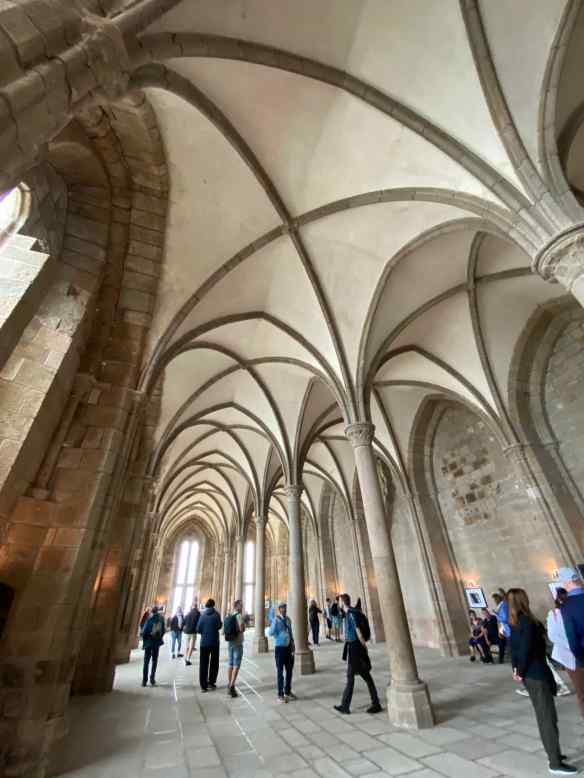 There are so many interesting doors in this abbey.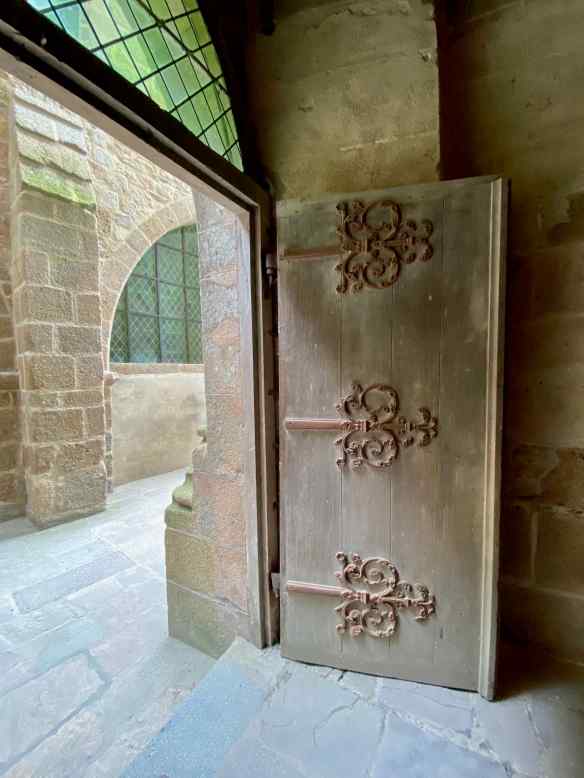
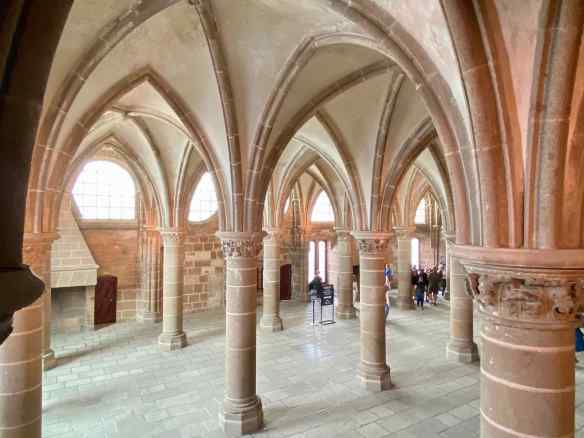
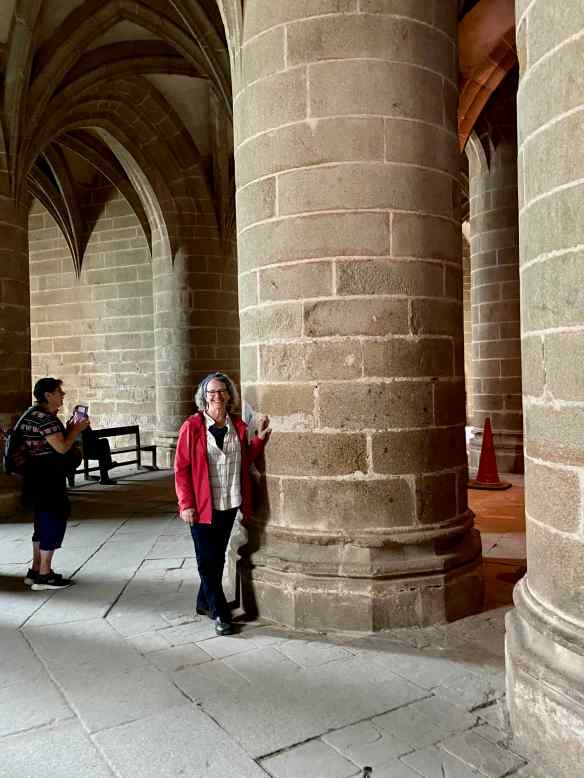 There are so many smaller rooms and interesting spaces to be explored. This one is off the side of the crypt.
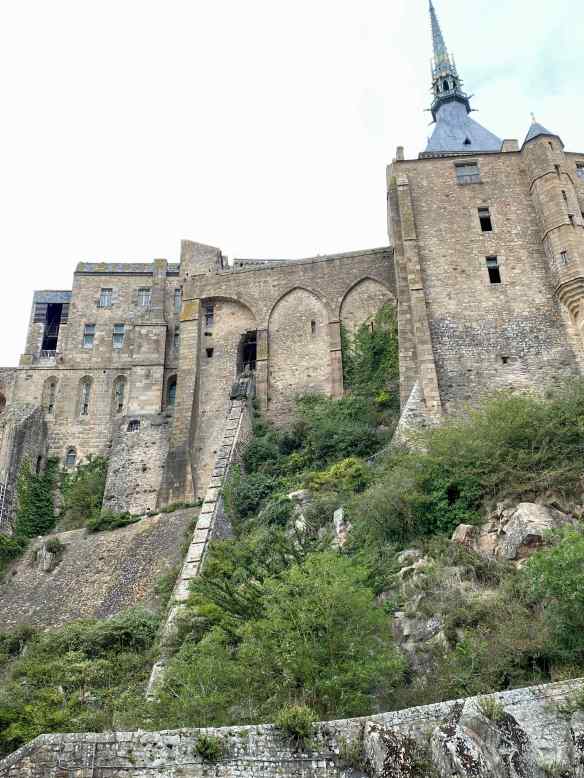
 When the Abbey was used solely as a prison in the 1800’s, this huge wheel was was used to haul supplies up to the abbey. Prisoners walking inside the wheel were able to raise and lower a cart along a stone ladder inclined along the rock wall.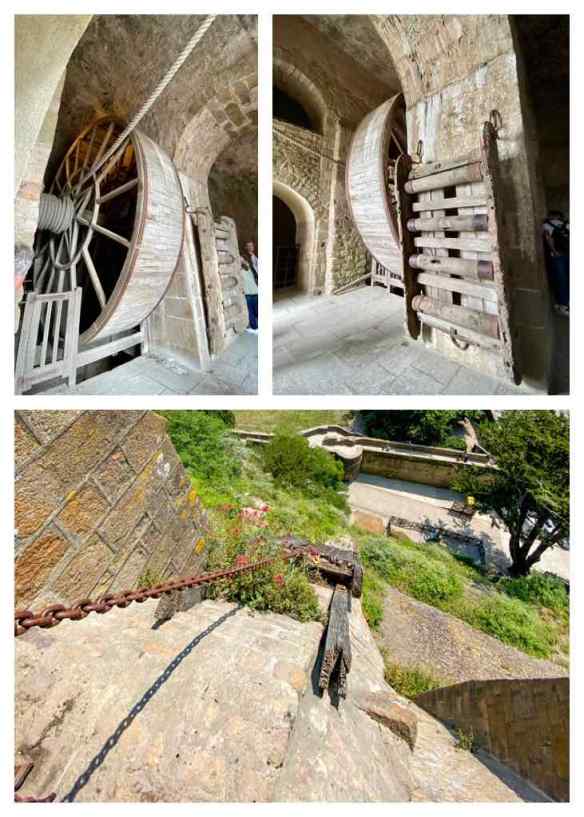
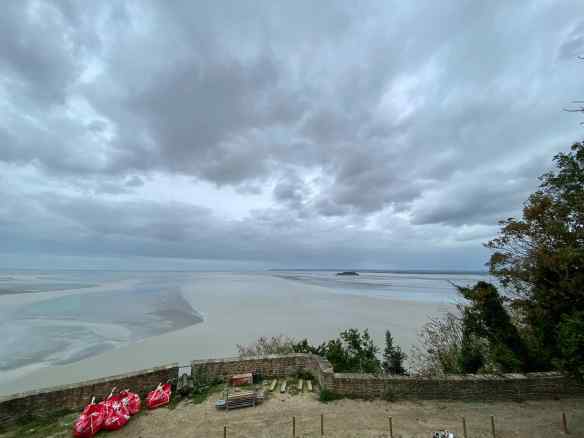 We hear shrieks and peals of laughter and realize that is is coming from the people out walking on the sands now that the tide is out. Some of them are thigh deep in the water! There are a lot of people out there, some of them way off in the distance. Thanks, but I am happy to pass walking in mud and cold water.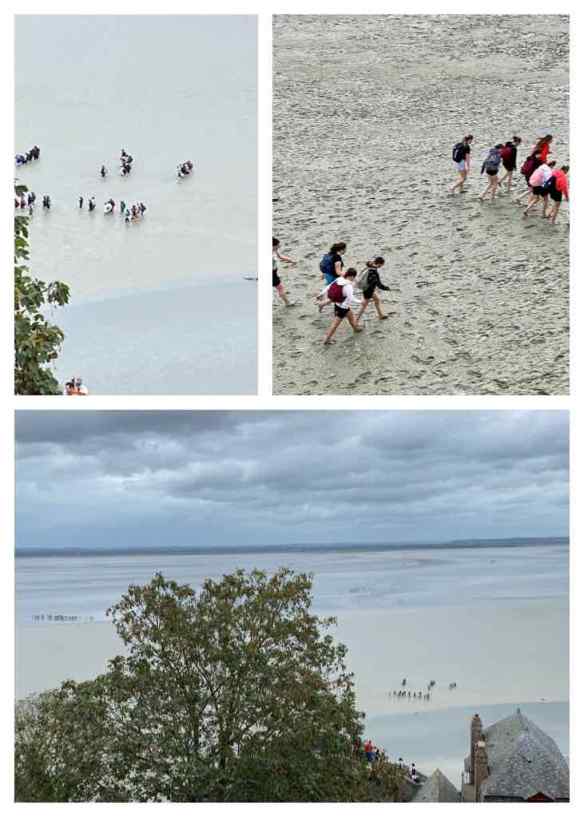
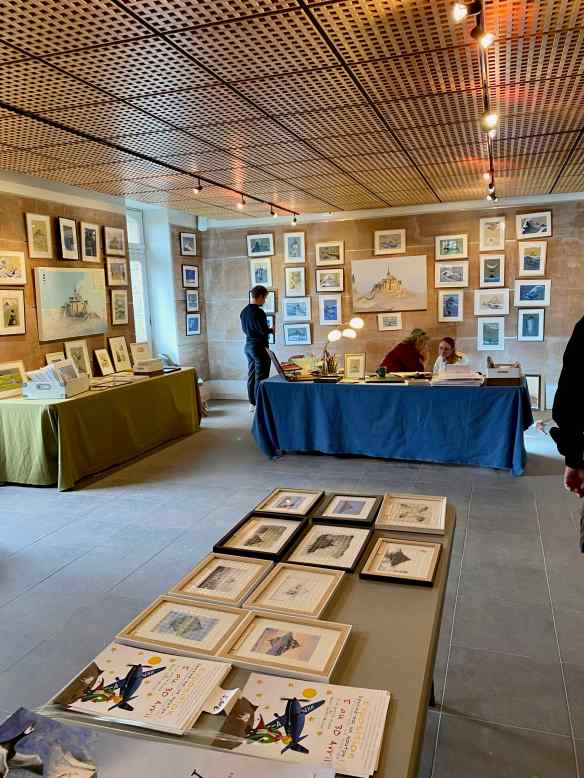
 Bob took interesting photos of the inside and outside view of these two stained glass windows.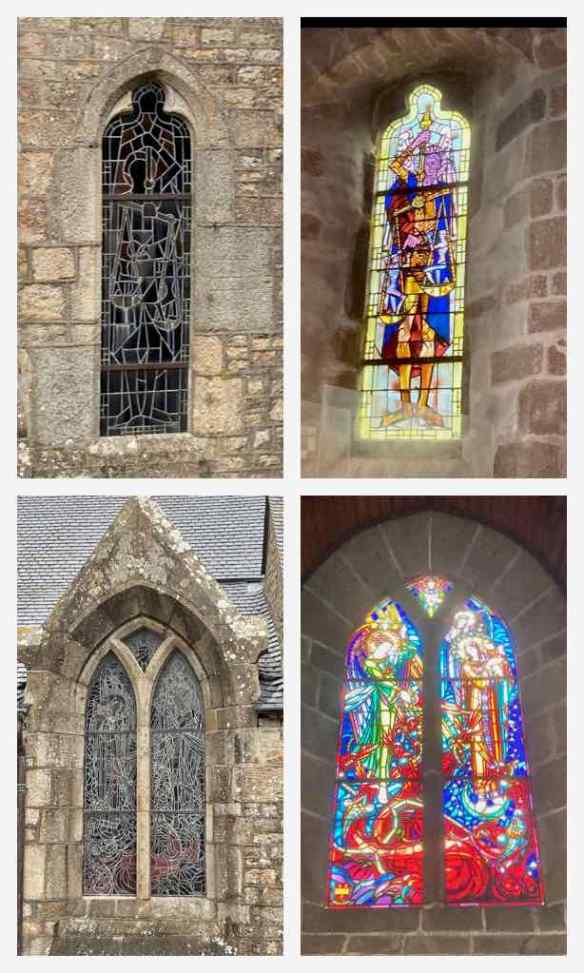

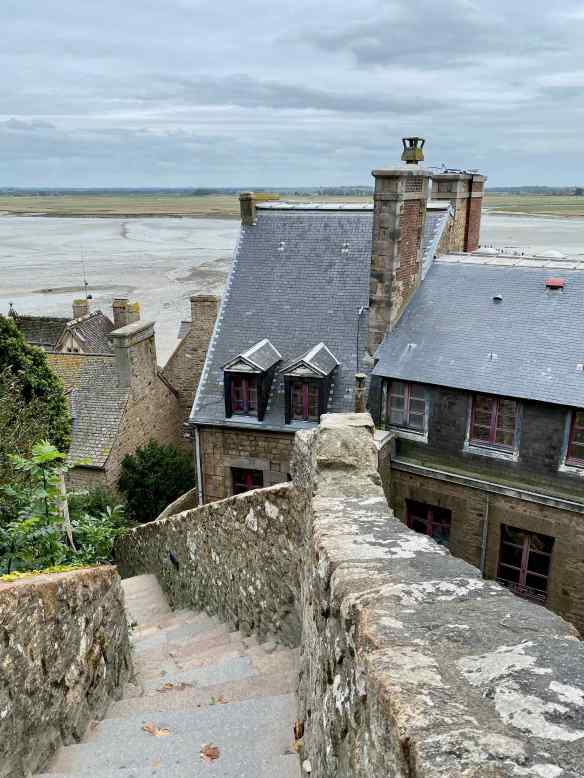 …interesting details…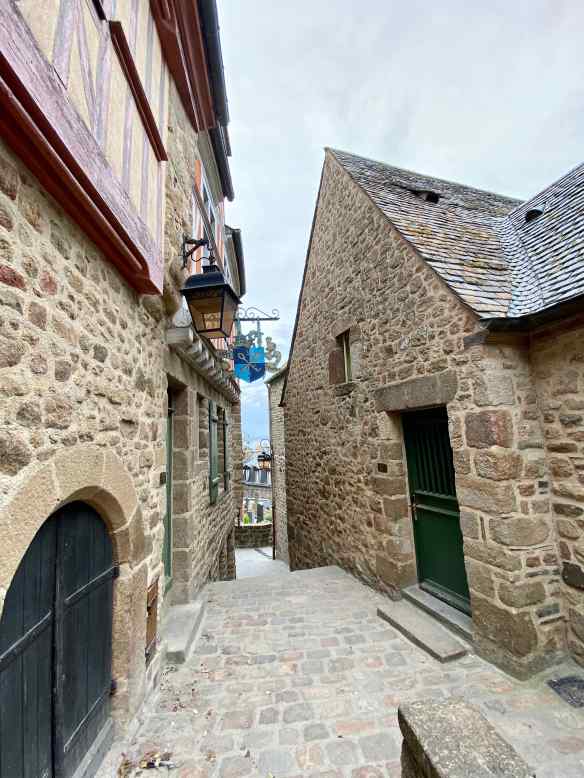
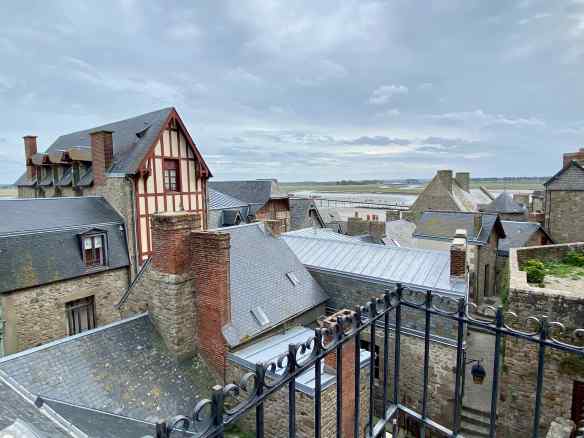
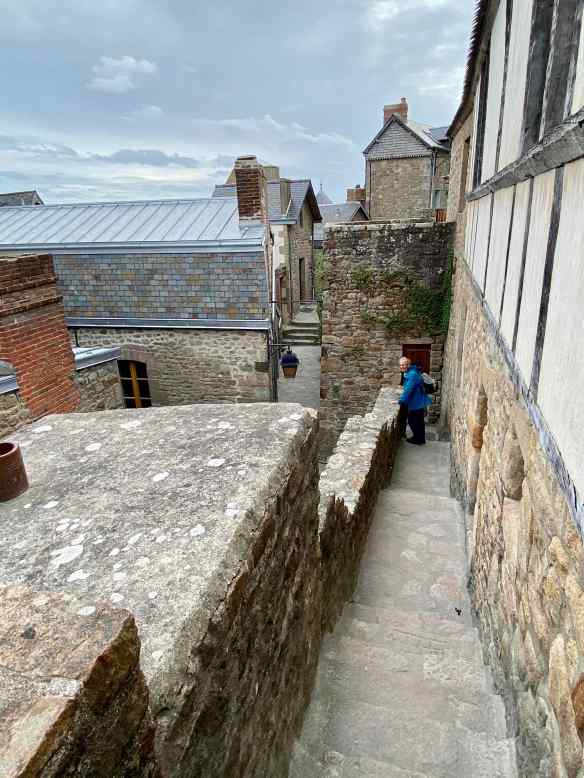
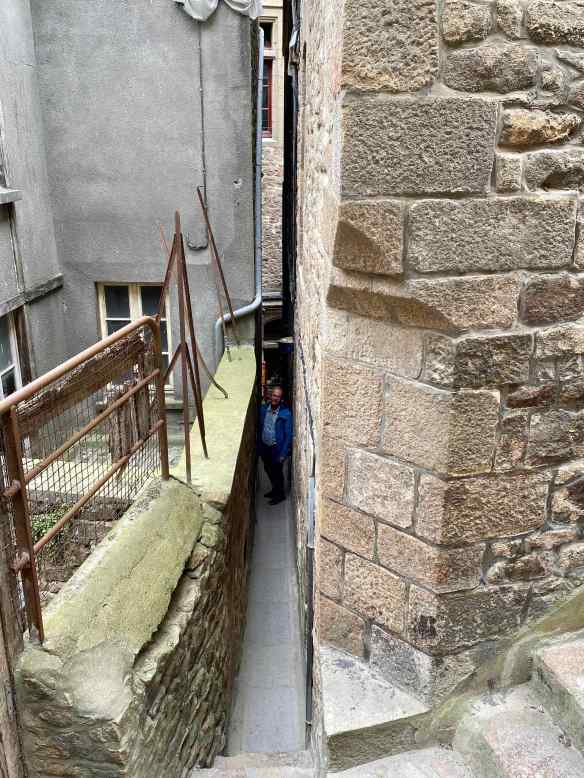
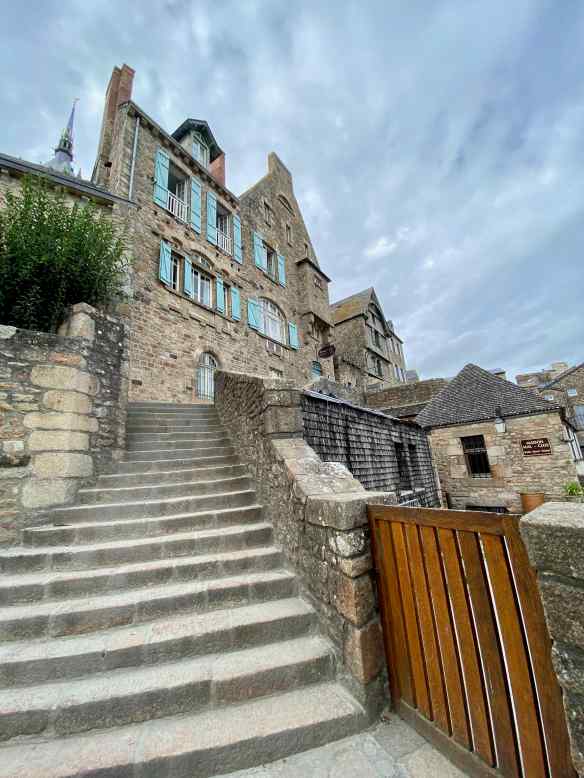
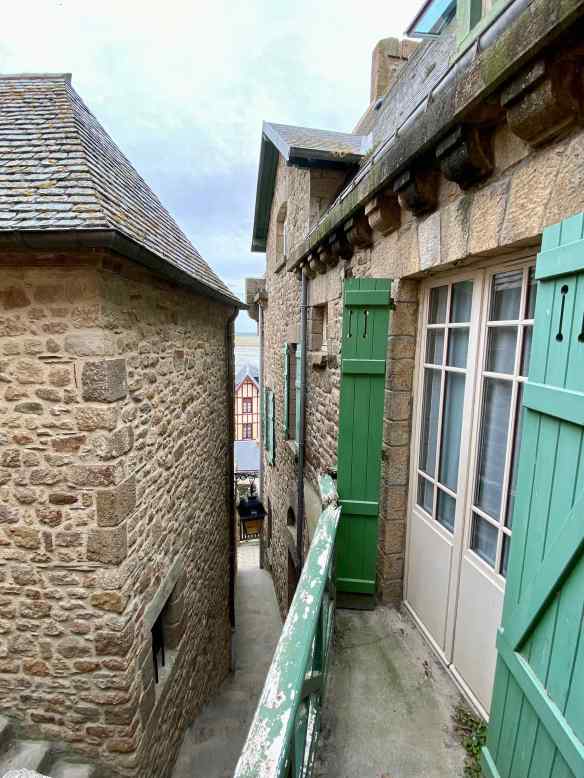 …crooked roof lines…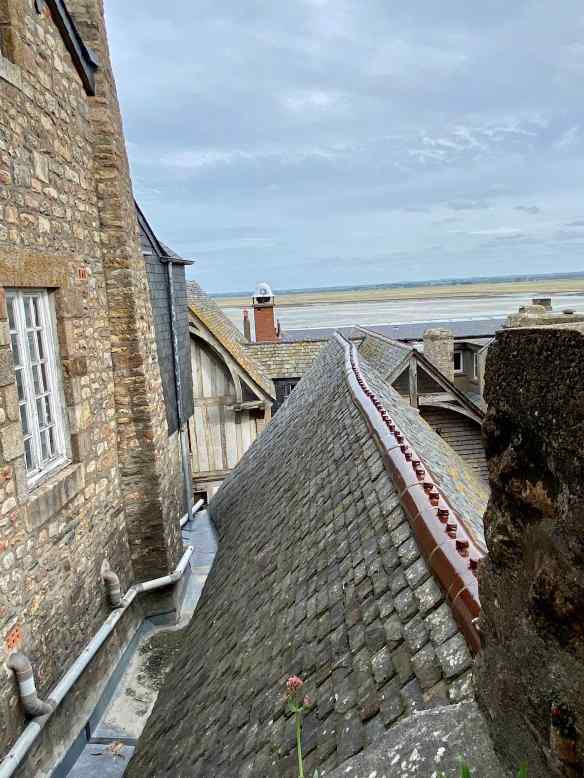
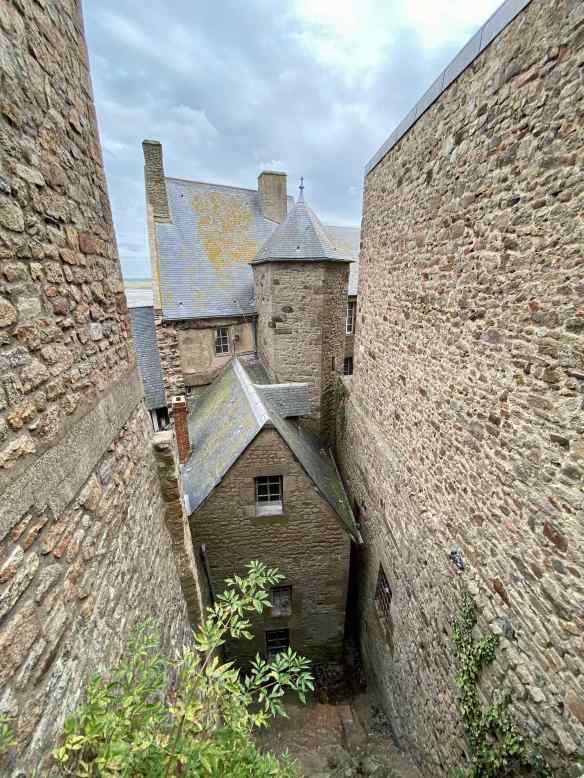
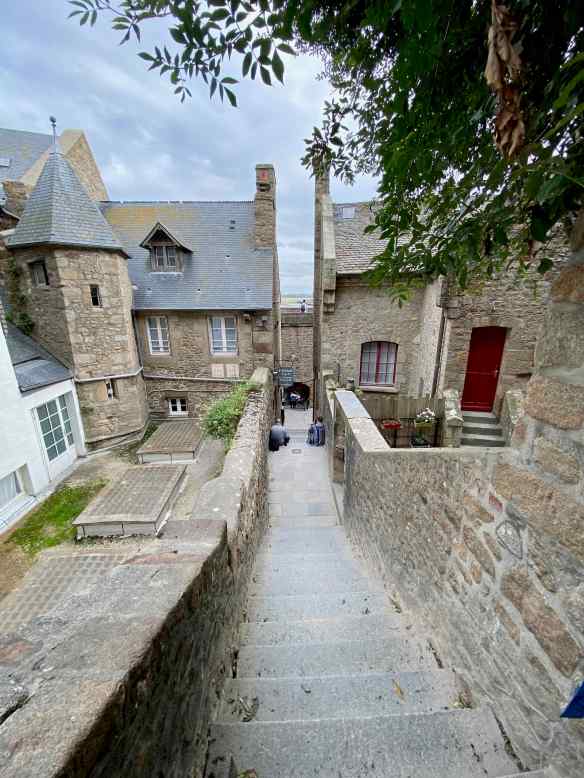
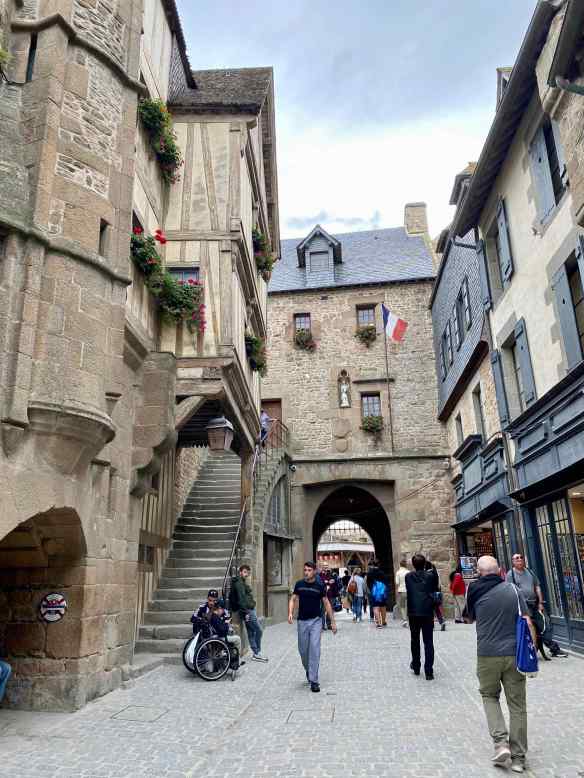
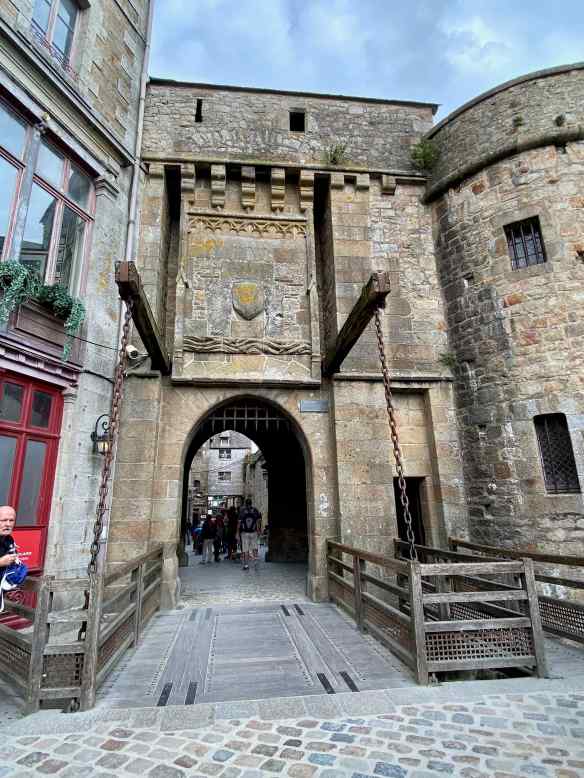
 Finally after asking several people for directions a delivery man tells me that we need to go upstairs and cross the street. Voila! Success. They do have our reservation but we have to wait 45 minutes for them to clean the car. Once in the car we discover that our Peugeot does not have plug ins for USB’s, only some other strange looking plug. Luckily a Hertz employee was walking by and I asked him for help. Another 15 minute wait and he brings us a device that plugs in to the cigarette lighter that has two USB ports. We are finally on our way, heading to Chartres to visit the cathedral. We do amazingly well getting out of Paris and to Chartres, My navigation skills are still pretty good and Bob did a great job driving.
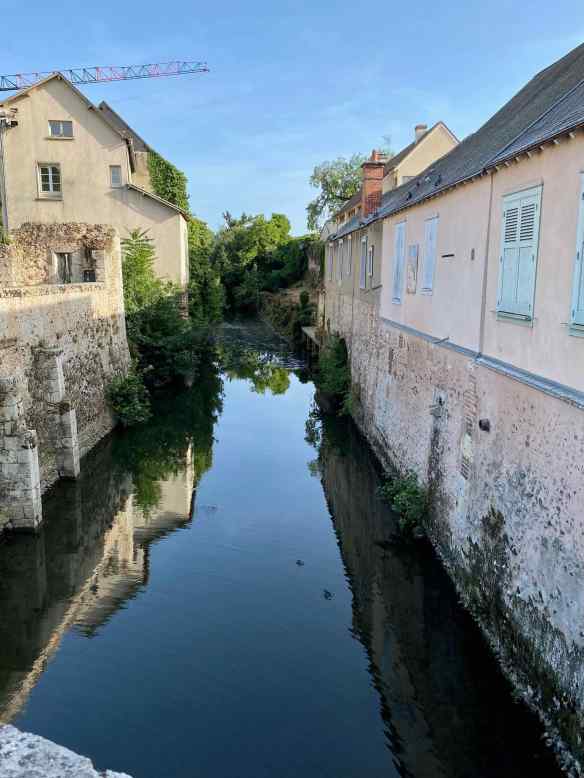
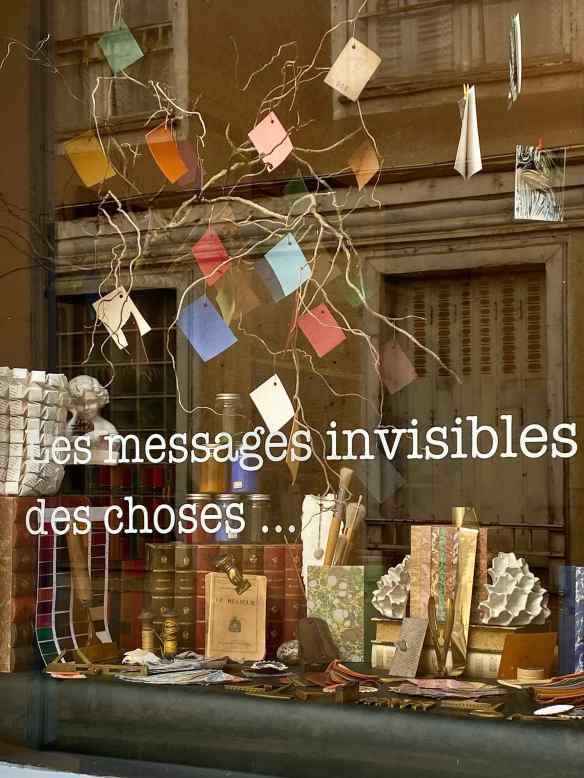
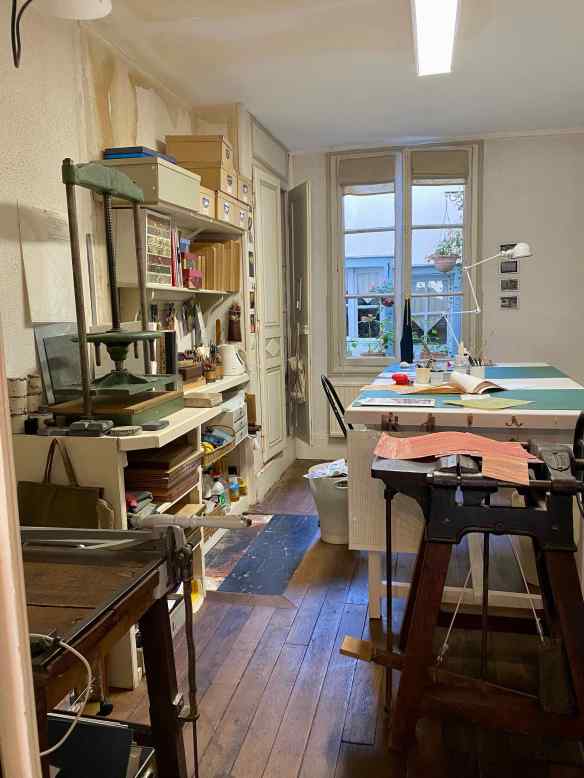
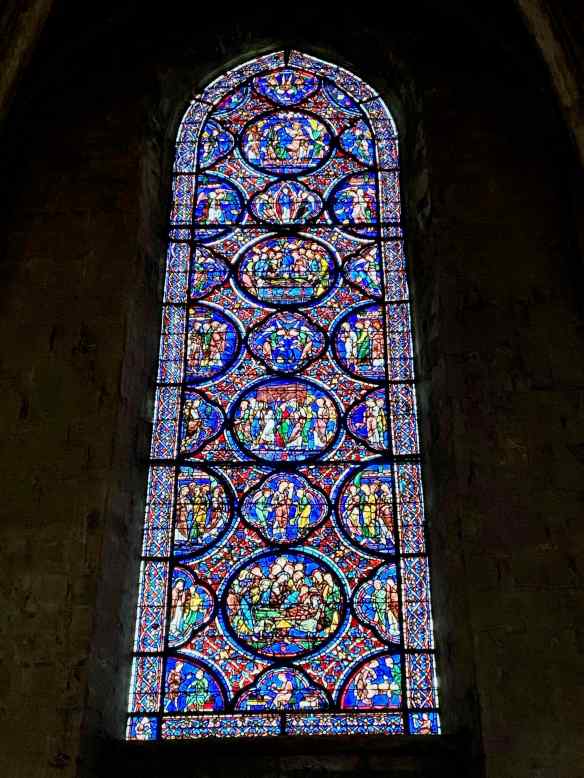
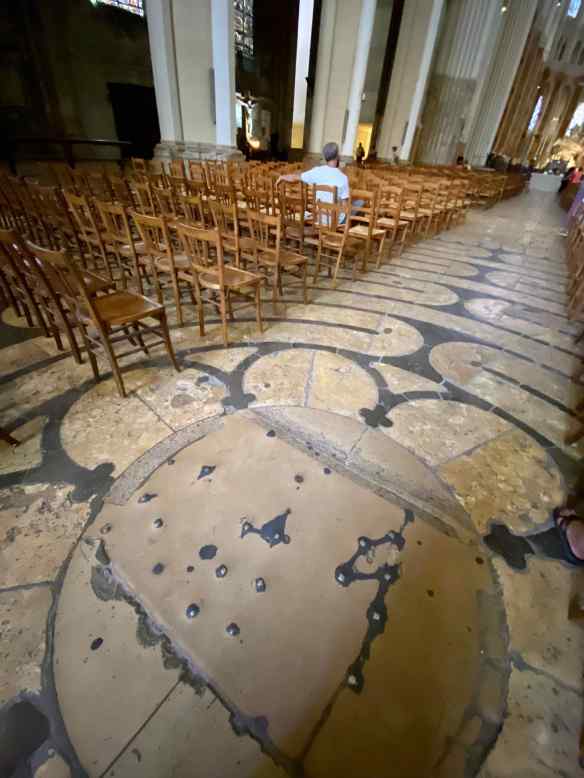
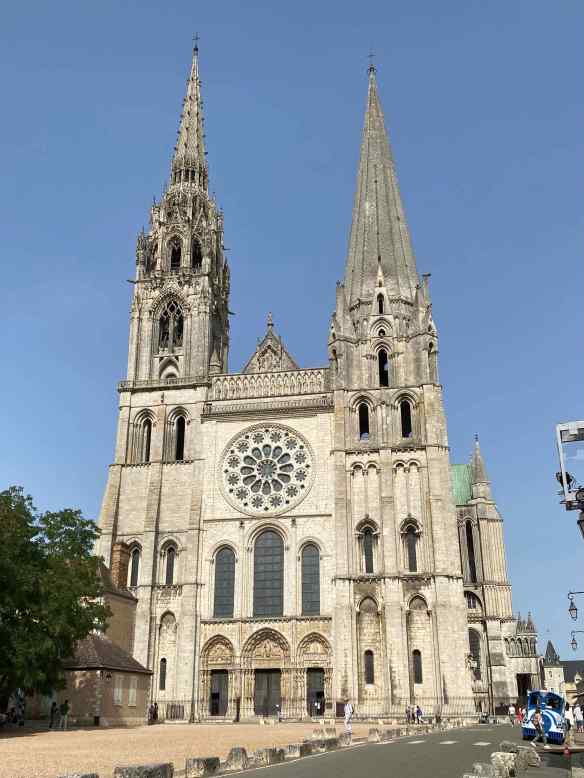 The view towards the altar. We took several photos of the stained glass but it kept looking very washed out…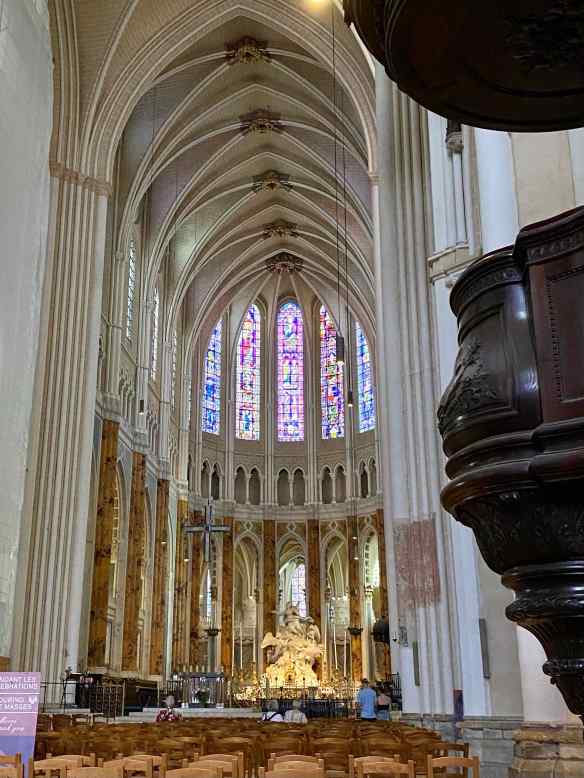
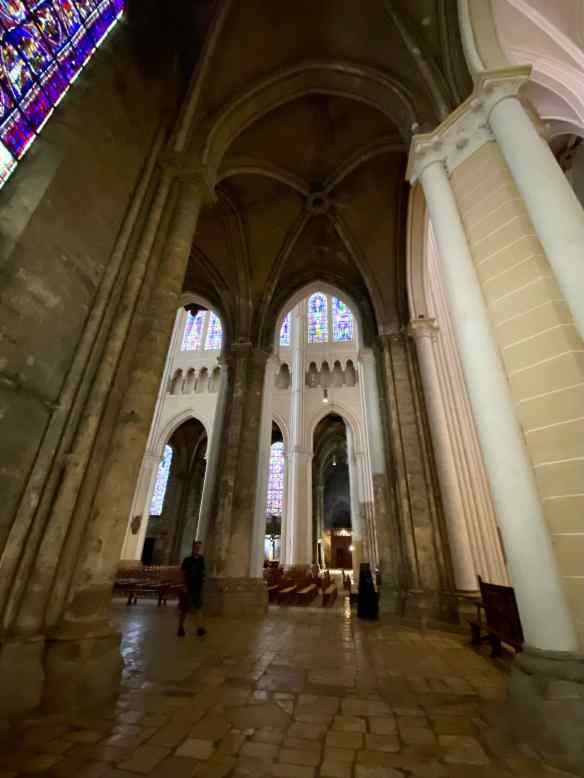 The wall of the sanctuary is absolutely amazing. The detail of the carving is incredible. The screen has forty niches along the ambulatory filled with statues telling the life of Christ. I particularly love the donkey.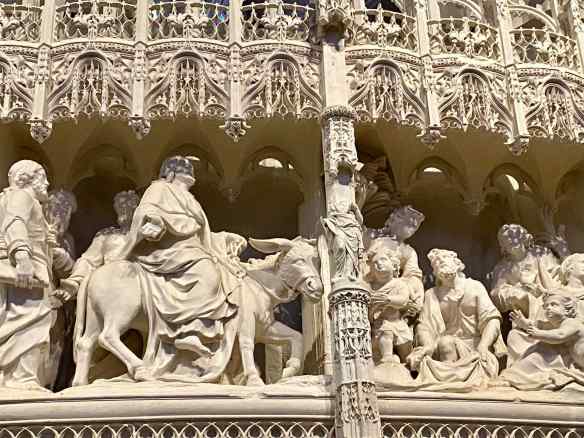
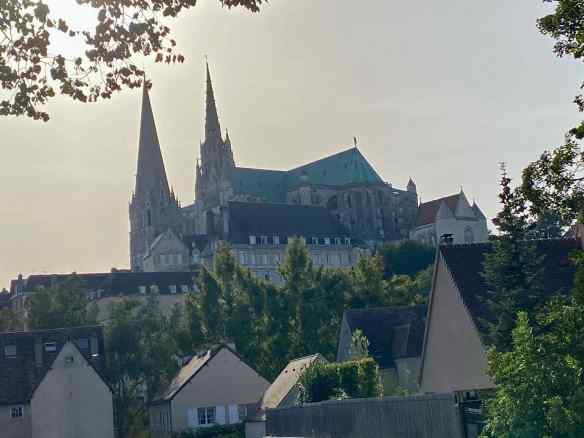
 One more view of this enormous cathedral, before we head back to Paris.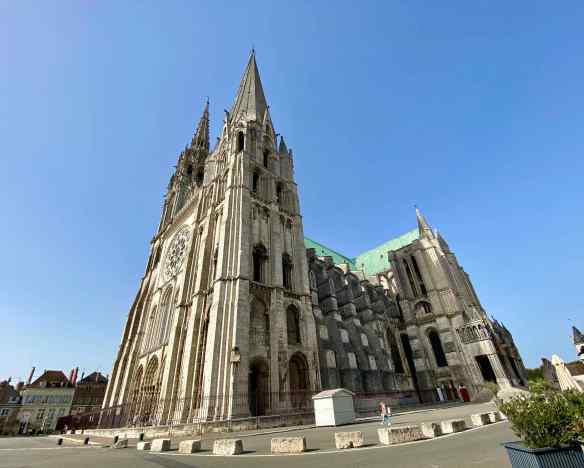
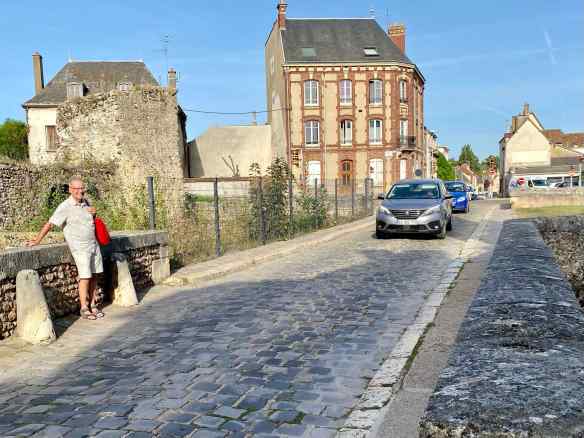
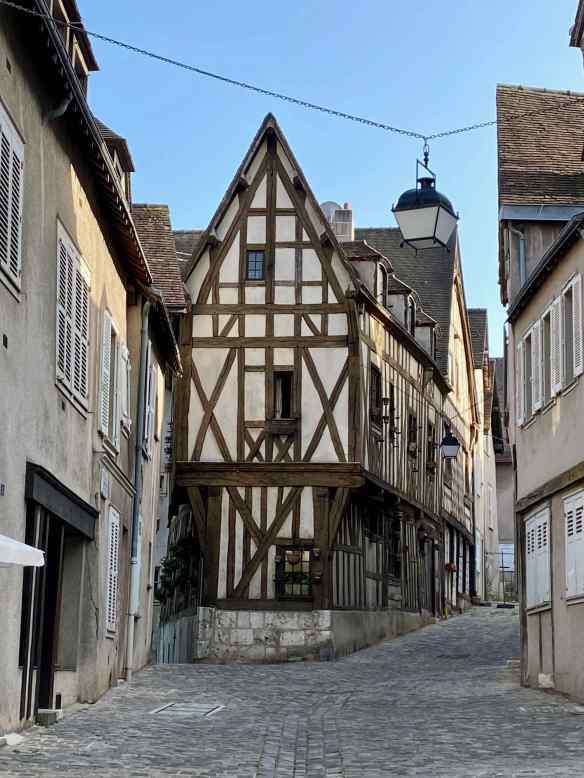 And although some of them are in really bad shape, I have no doubt that they will be repaired rather than demolished.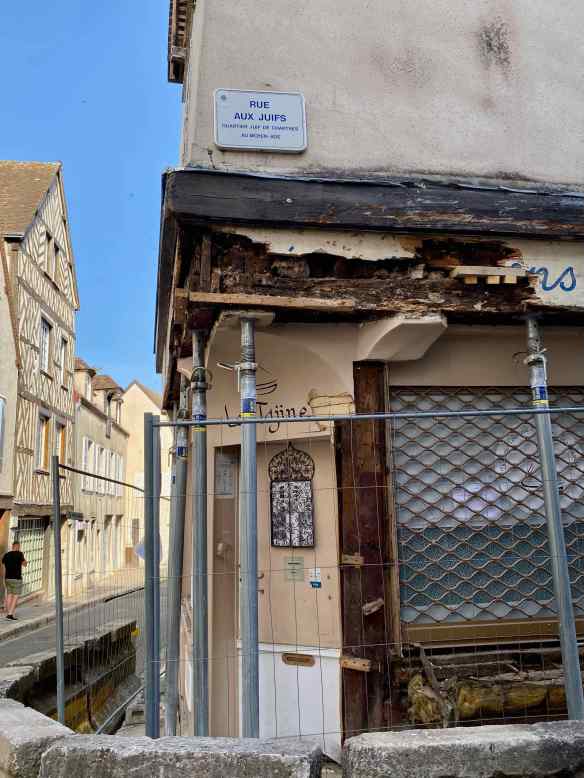
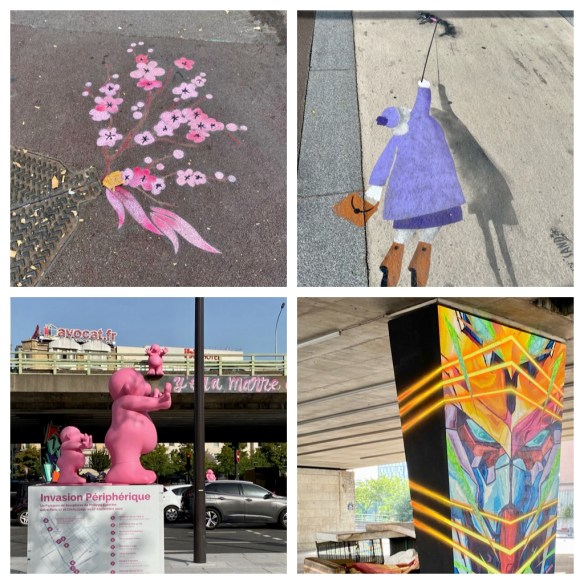
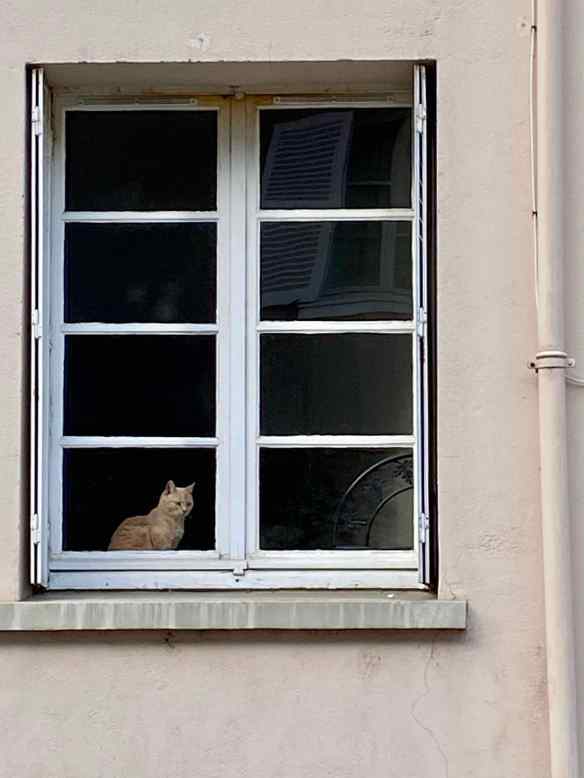 As we leave I notice another example of street art. I saw another walking back to the car and I thought it looked like a Banksy, and this one could be too? Turns out there is an exhibit of Banksy’s work here in Chartres. We missed that too.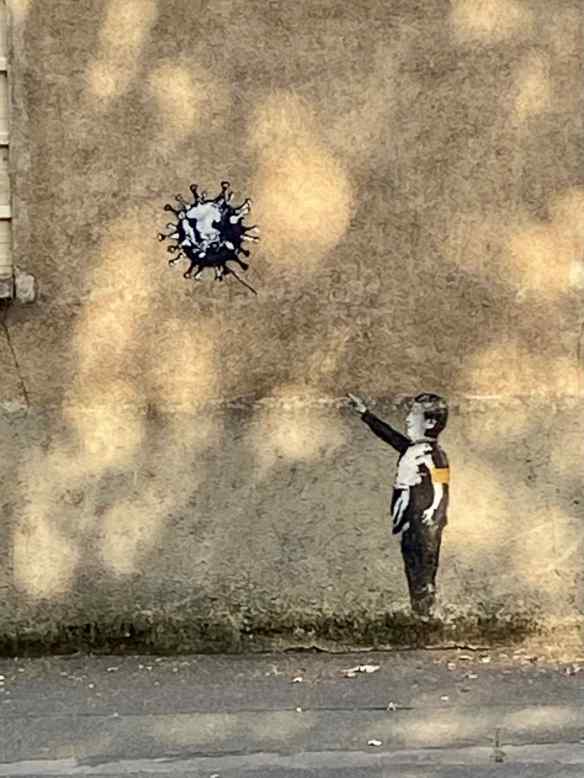
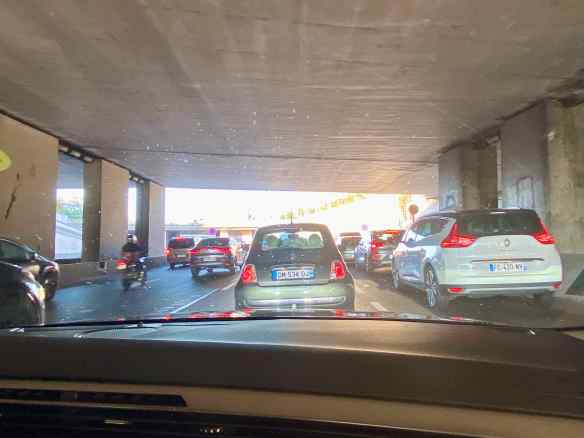 It is busy when it takes 11 minutes to go just over 2 1/2 kilometres! We are both happy to get home and glad our first day with the car went so well.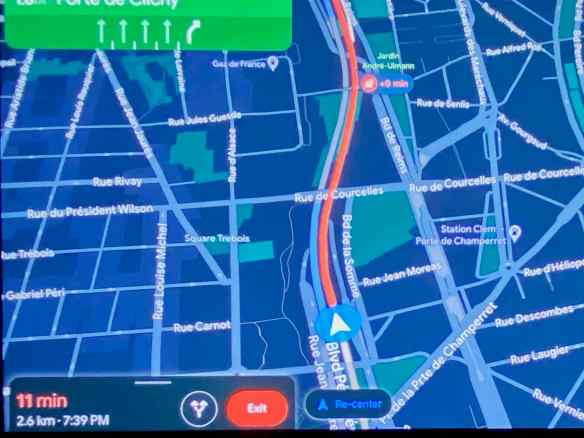
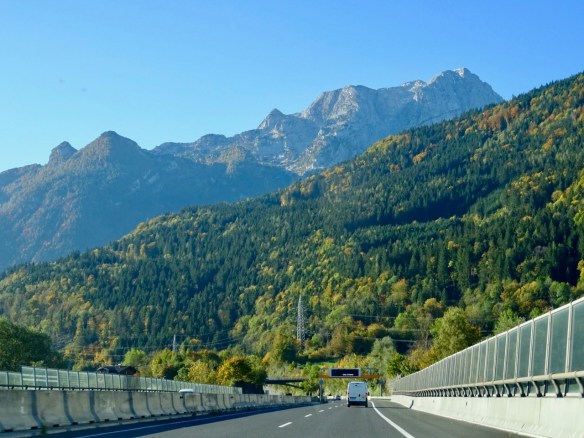 We pass many little farms and villages on the way.
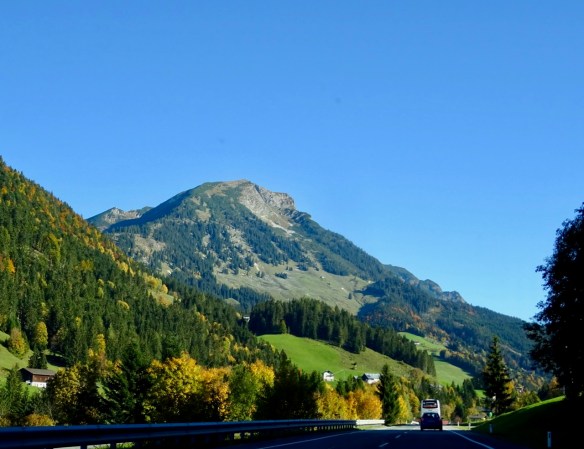 The Dachstein Krigppenstein area has t
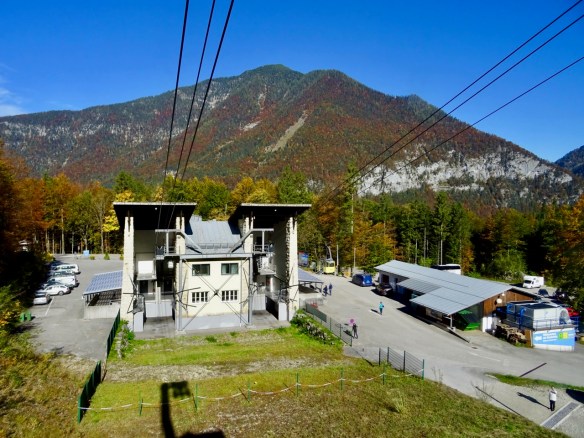 There is the base, way down there, and we aren’t even at the top of the first cable car.
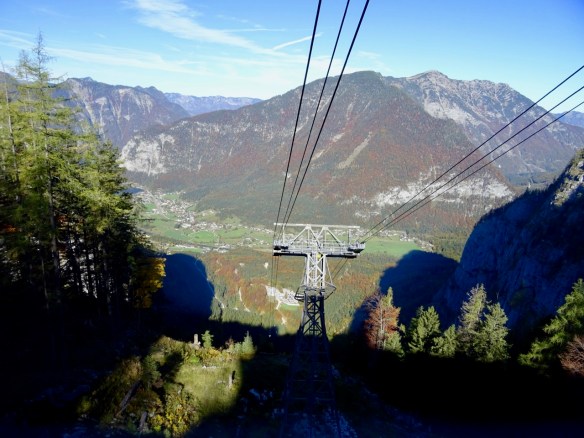 The second cable car takes us higher…
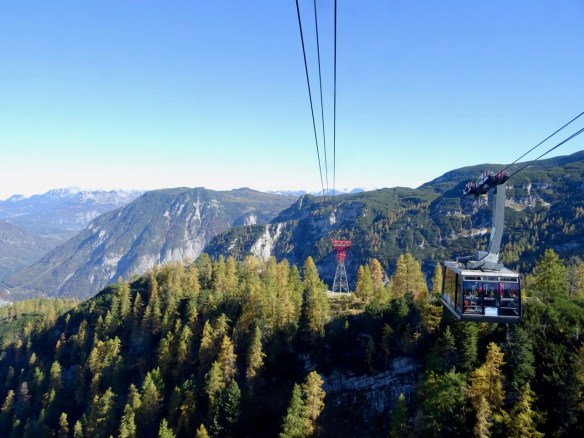 and even higher.
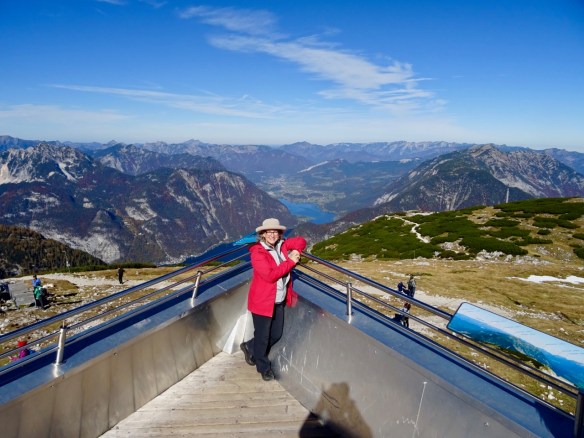
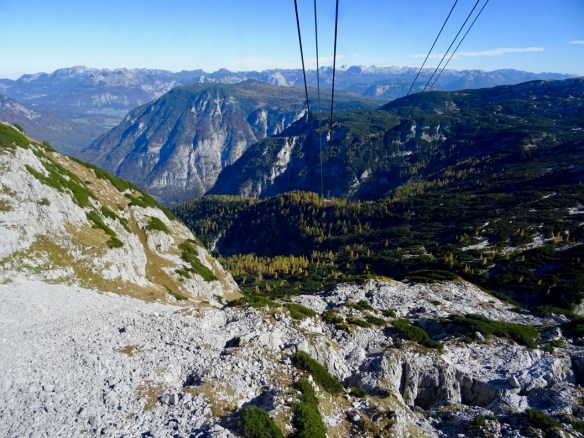 We walk from the second cable car to a viewpoint high above the valley lake below.
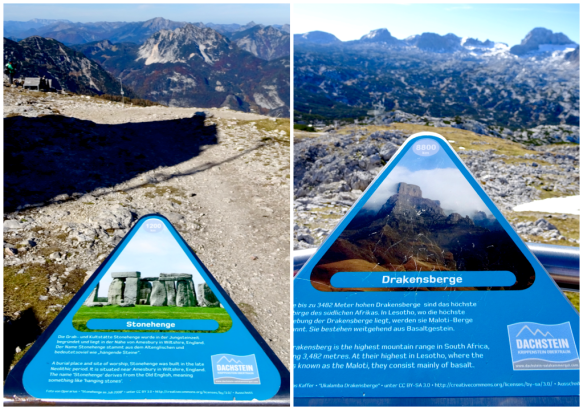
  There are several arrows showing the distances to places around the world. We have visited Stonehenge (1200 km away) and the Drakenberg Mountains in South Africa (8,800 kms away). We are surprised that Stonehenge is that close. Here is
  We have tea and rest on these curvy benches to enjoy the fantastic views and sunshine.
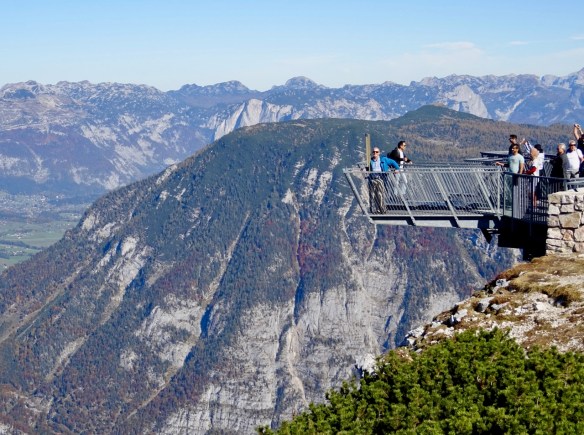
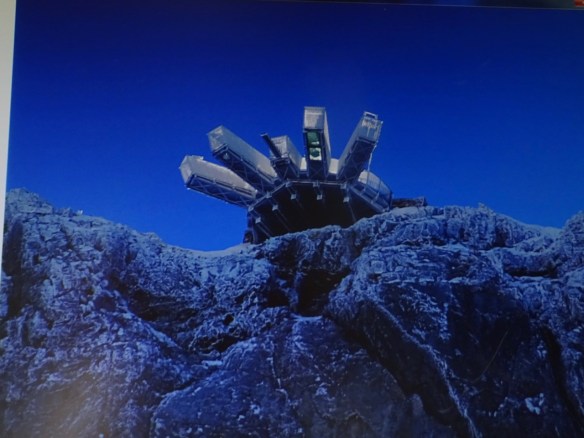
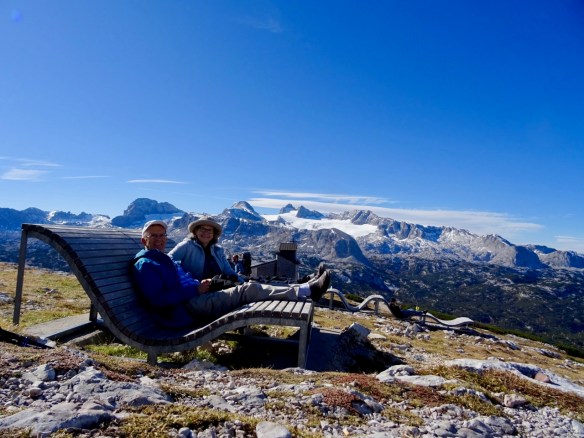 This is called the Five Fingers. Five viewing platforms at the very top of the mountain! Bob goes ahead so I can get this photo. This area is a UNESCO World Heritage Site.
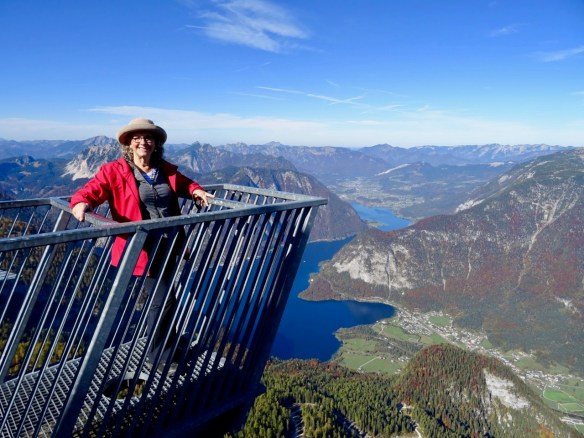
 Then I head out on one of the platforms. It isn’t too bad…as long as I don’t look down!
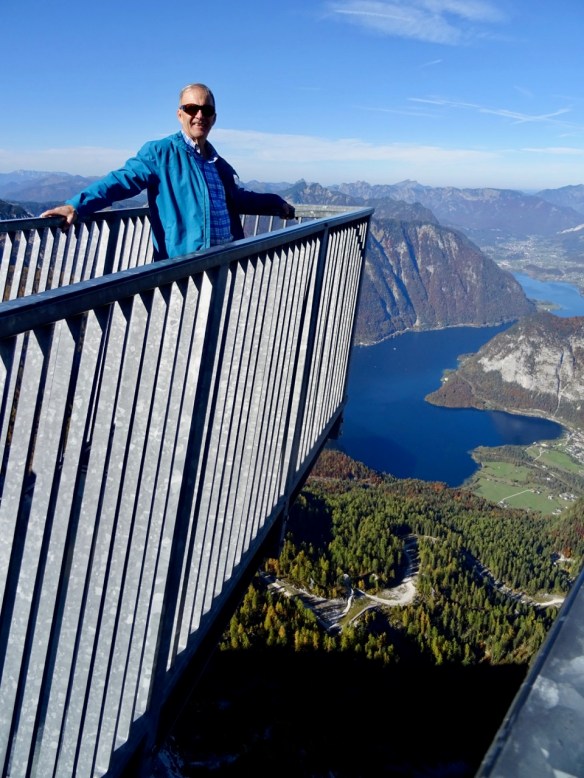
 Bob has another turn on one of the fingers.
 A nice young man takes a photo of the two of us. You could stand behind the picture frame but to do so your heels hang over the edge!
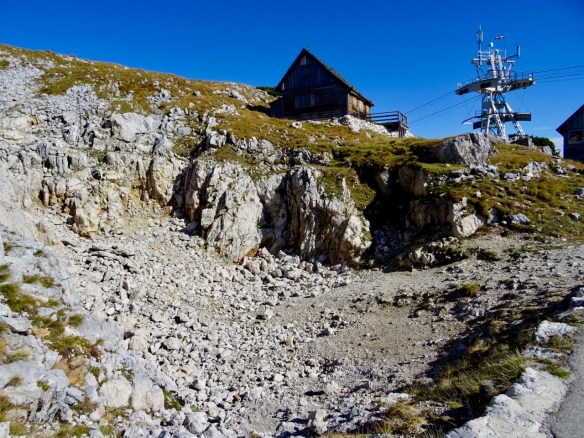
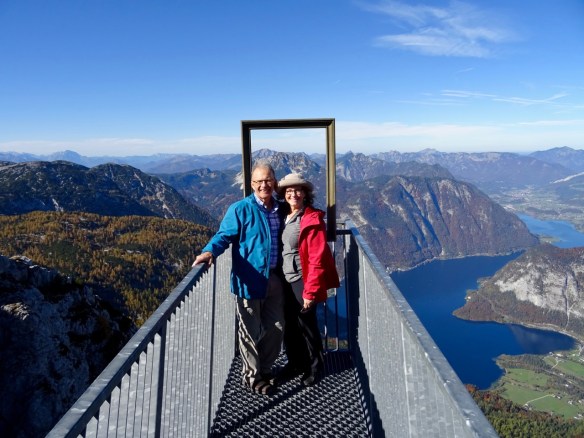 There are sinkholes all over the mountain top. These are formed by the collapse of underground caves. There must be a lot of caves in this area because there are lots and lots of sinkholes.
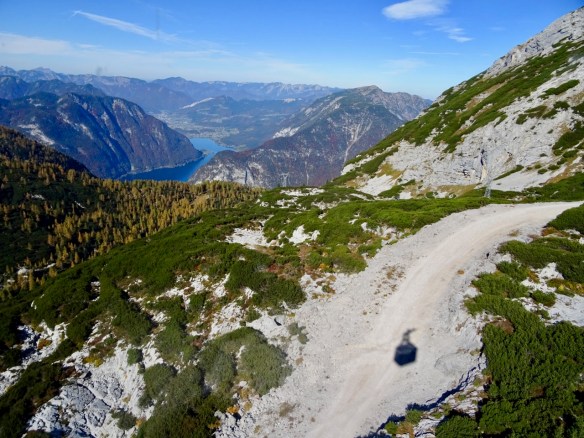
 As we take the third cable car down into a valley, our shadow follows us.
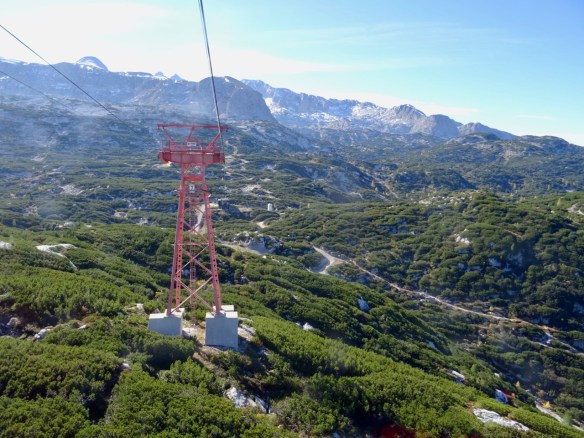
 We are headed way down to the building you can just see on the right side of the tower, about 2/3 of the way up. The wind has picked up so we decided to eat our lunch down here where it isn’t quite so windy.
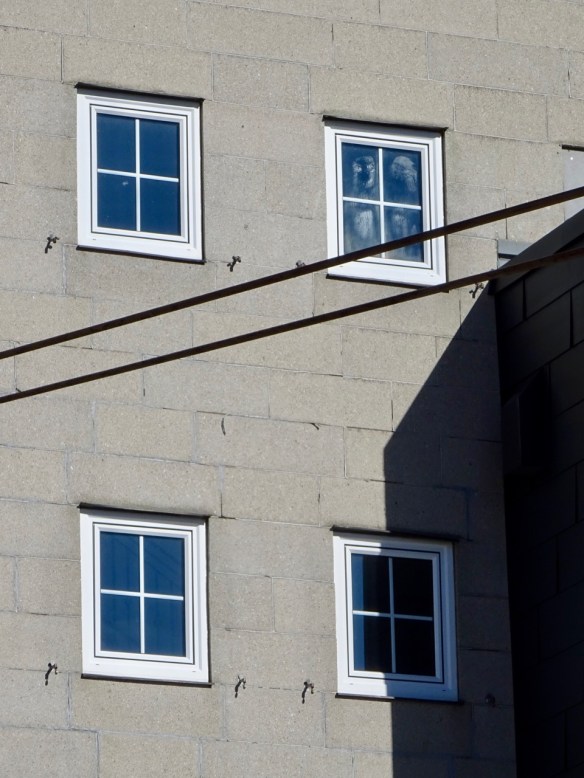
 Back at the top of the mountain I notice what looks like ghostly faces peering down at us from the cable car building! So, are they ghosts?
 Here is a photo of the five fingers taken from a photo in the cable car building. I realize that I forgot to look down when I was up there… I can’t believe I forgot to do that!
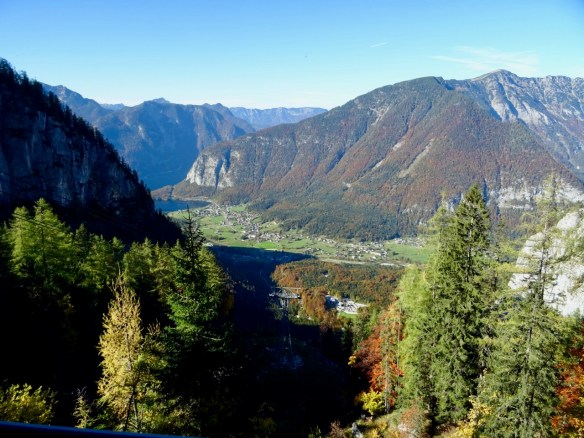
 On the way down from the mountain top we can see far up the valley.
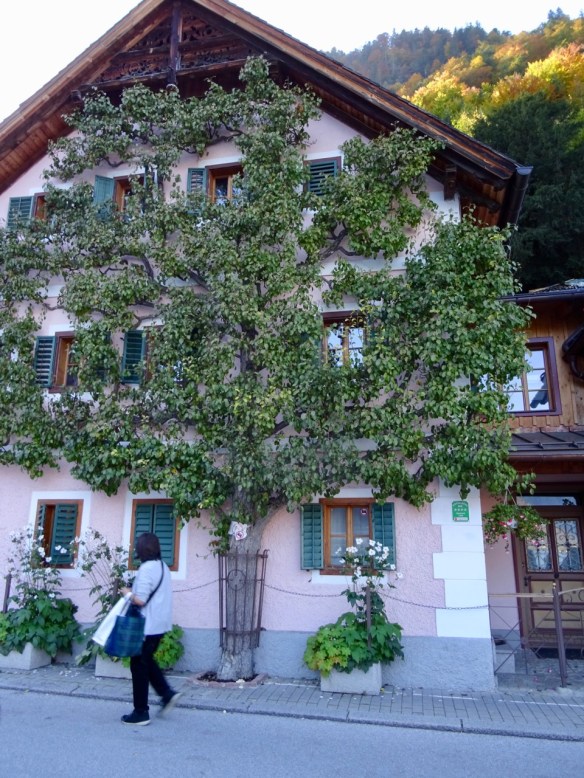
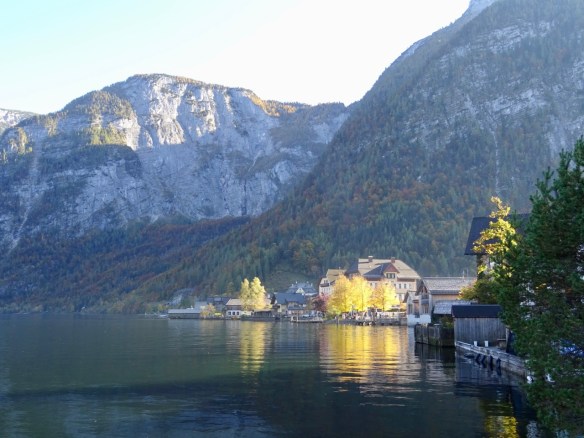
  We drive to Hallstätt, a town which exists because of the nearby salt mInes. The town is squeezed between the mountain and the lake. There is only room for espaliered trees, which are grown against the sides of houses.
 The setting sun lights up the yellow trees on the side of the lake.
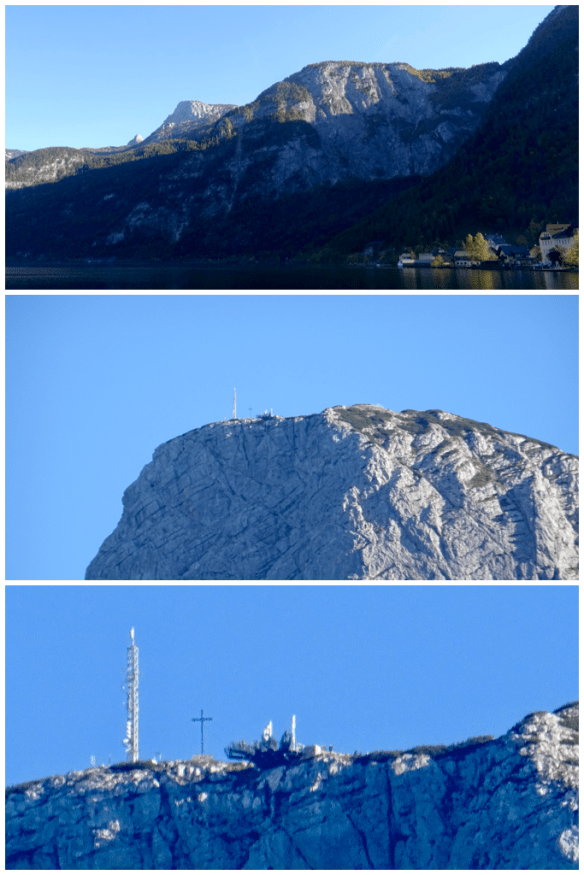
  Notice the middle mountain in the distance. Then take a look at the top of that mountain…and the close up of the top of the mountain. That is where we stood on the five fingers! Maybe it is a good thing I forgot to look down!
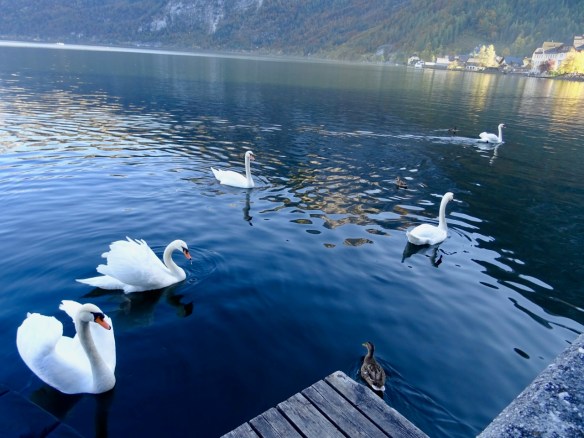
 There are swans on the lake who are happy to share some of my dried fruit and nuts. I give most of it to a young boy so he can feed them and I take photos. I would have liked to sit and draw these beautiful birds but the sun is setting…and we are still far from home.
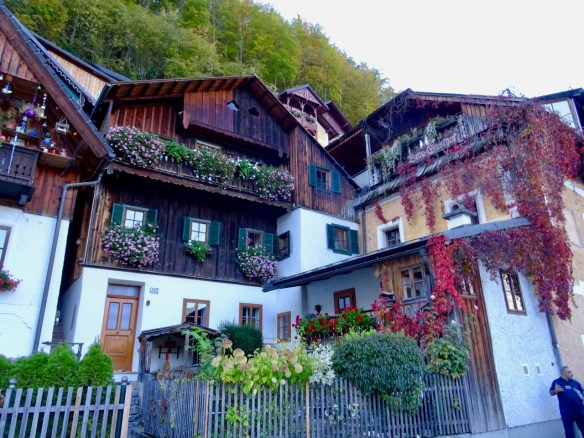
 The houses are piled one on top of the other, as there is not much land available between the lake and the mountain. The flowers in the window boxes grow so big and lush. I think it must be that the growing season here is so much longer than ours at home.
 I see this mask in a window and wonder out loud what it is. A lady walking by stops to tell us it is a Krampus.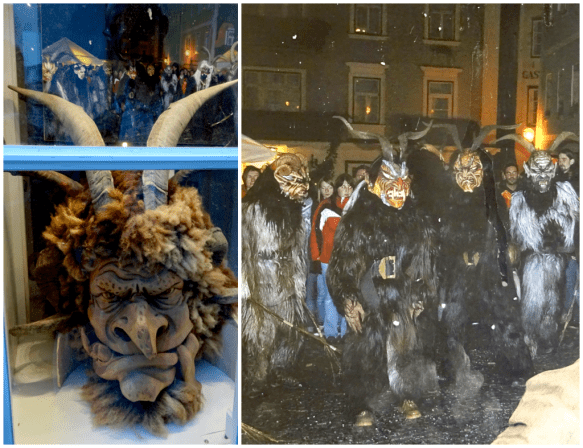
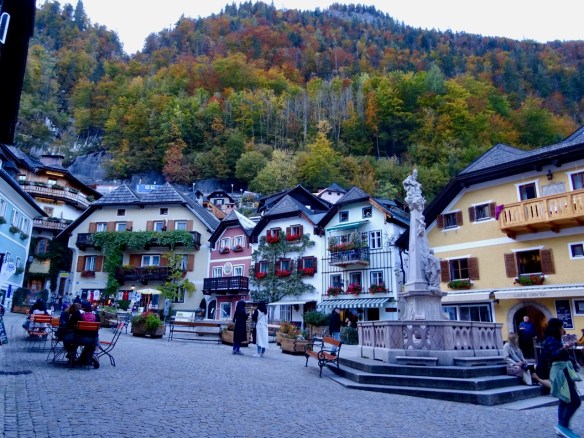 and one last view of the lake…
 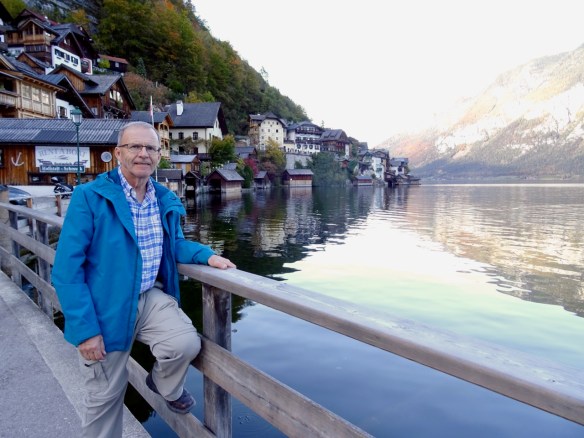 before we walk back to our car, parked way on the edge of the town, and head home.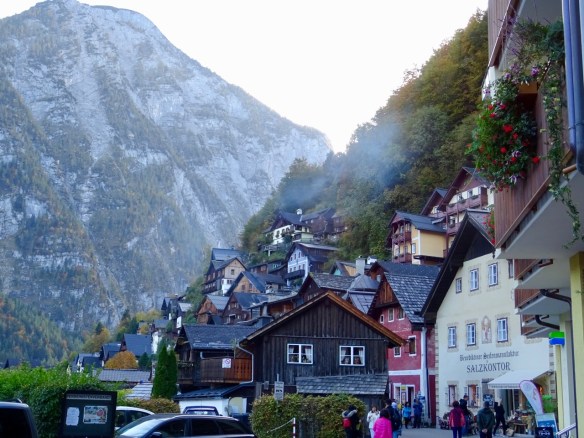
 trudymason.com