Day 47, Saturday, October 14, 2023.
Bob has been doing a fantastic job as tour director. He has found two little villages nearby that look interesting, Caunes-Minervois, which is known as the Red Marble Village, and Brousses, which has a working paper mill. First stop is the Red Marble Village. We find parking along a dry river bed and and a walkway with lots of red marble sculptures.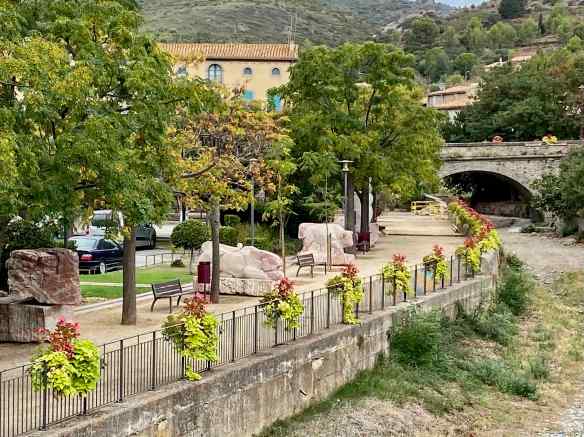
The sculptures are quite large…however this poor fellow has lost his horns.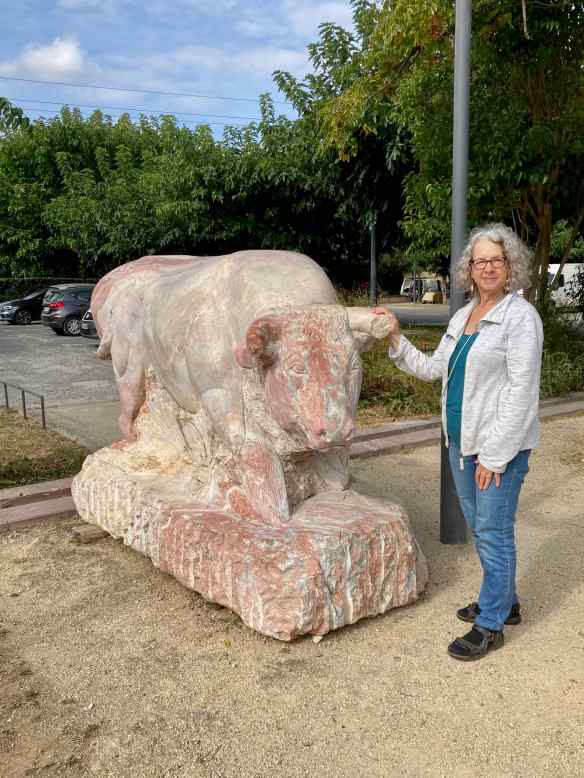
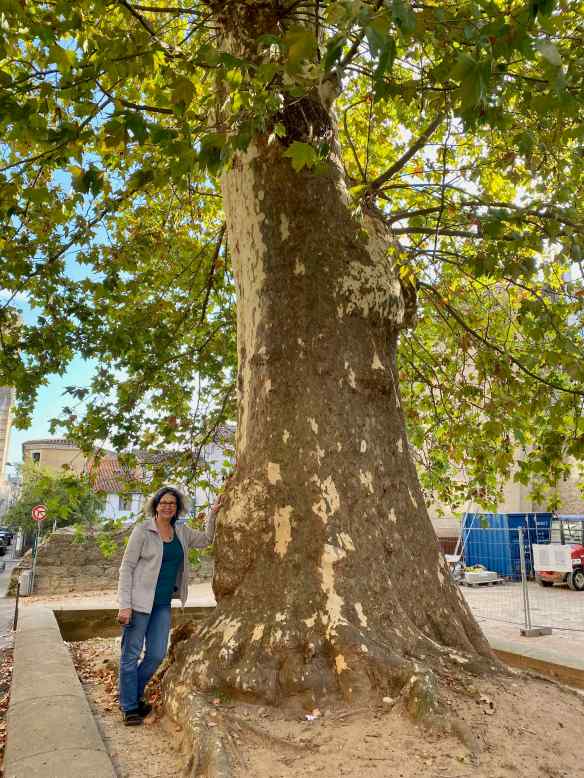
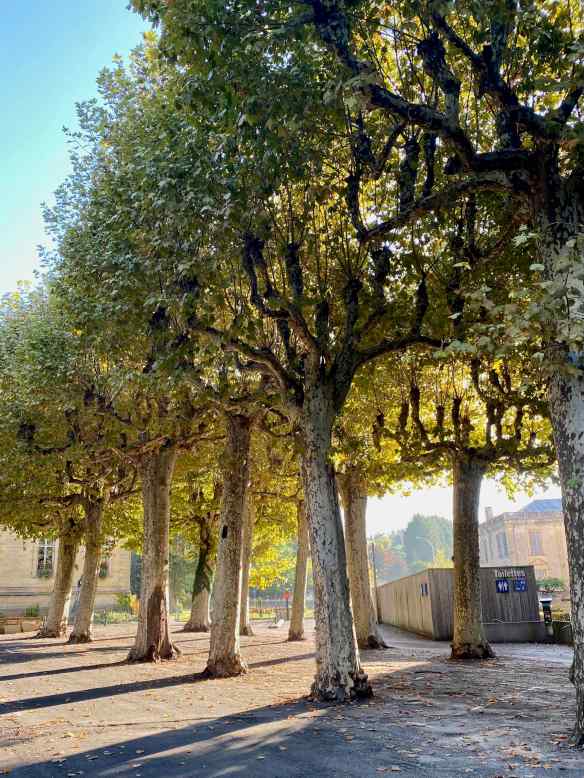
We walk into the town and turn the corner to find this lovely little park with an old fountain and the biggest Sycamore trees…or at least that is what I thought they were. The sign says that they are 200 year old Plane trees. I do a bit of Googling and it seems that a Sycamore is a type of Plane tree or maybe a Plane tree is a type of Sycamore? It isn’t clear but I am not going to spend any more time trying to figure it out. Guess I need to start calling these trees Plane trees.
This is quite a pretty little village, with flowering Morning Glory vines, 
and lots of narrow streets. 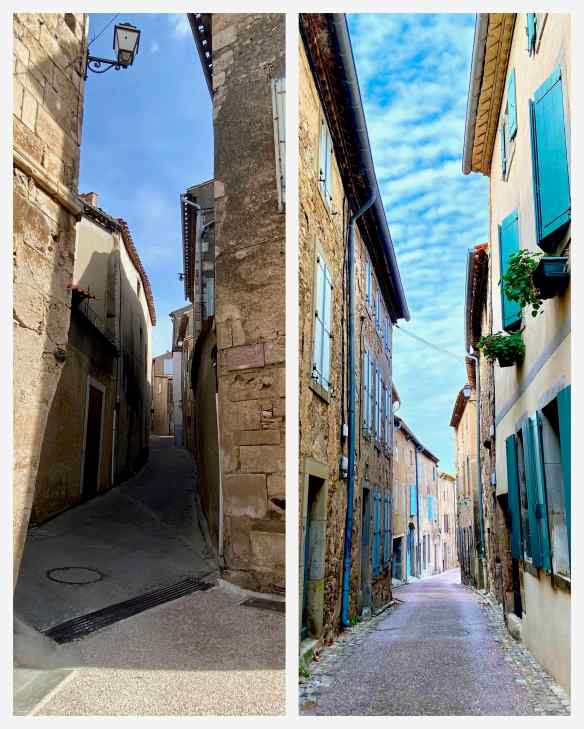
We had stopped at the tourist information and the walking map we picked up led us past this magnificent marble horse head. Of course I needed my photo with this one.
One interesting thing we saw was a couple being shown a very old, run down looking house by a real estate person (the man walking towards the doorway). Seems like they were seriously thinking of purchasing…it didn’t look very appealing to me, but?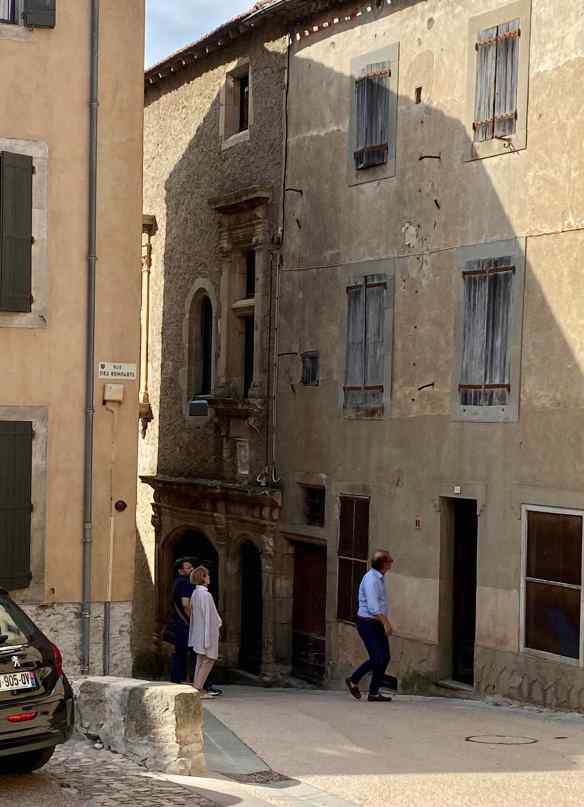
Our walking tour soon leads us back to the square with the ‘Plane’ trees. 
We follow the tourist map to this hilltop view of the valley and the village and do our best to find the trail to the red marble quarry, but have no luck. It certainly isn’t well marked, and the trail just seems to die out. We can see the backside of the quarry which is a huge long pile of stone rubble along the road, but we don’t see any way to go further. 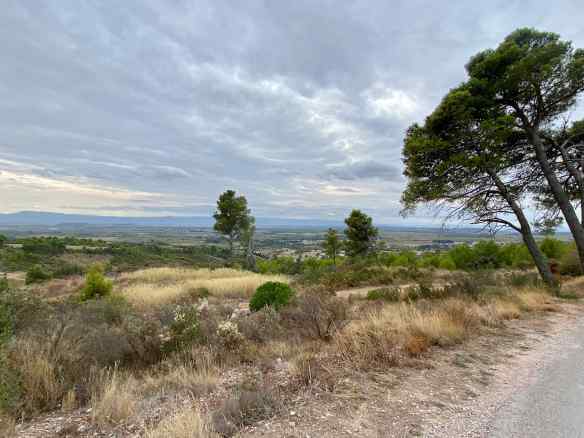
We go back to the car where we have our lunch and then on the way back to town stop at a little “marble garden” to see several more marble sculptures.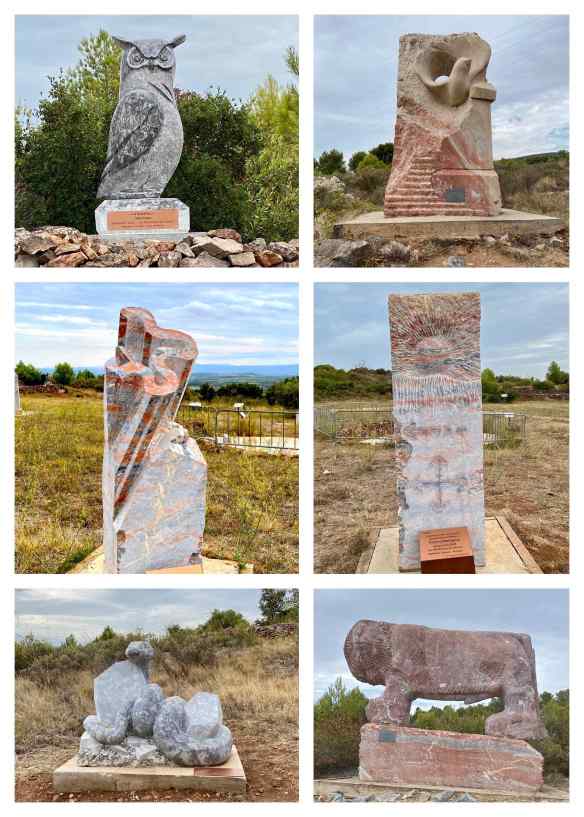
On our drive to the paper mill we pass the ruins of three castles. There is a walking trail but it looks a bit more strenuous than we thought so we decided to keep driving to the paper mill in Brousses.
It is a lovely drive through vineyard after vineyard…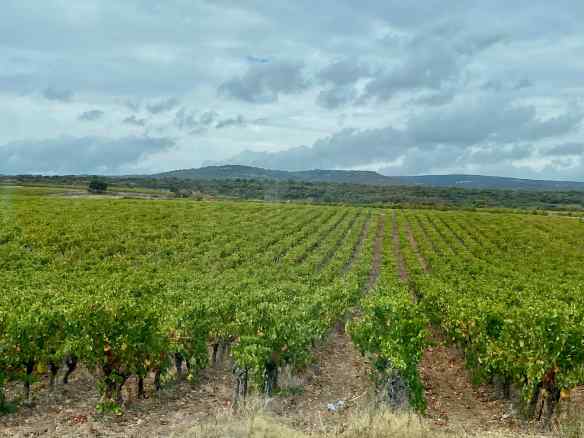
with hills off in the distance. I can’t help but think that owning a vineyard must be an awful lot of work and not nearly as idyllic and romantic as it is often portrayed in movies and novels.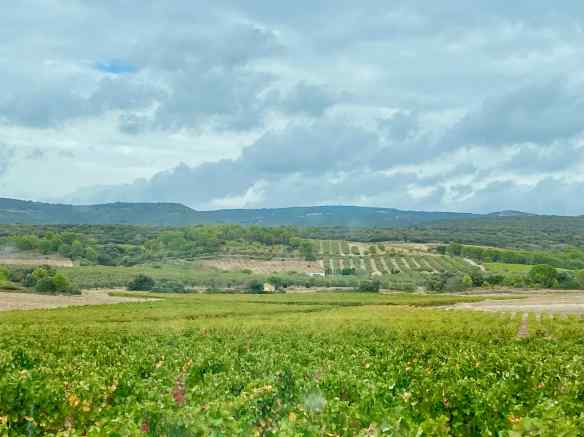
We stop to try to find out what this strange machine might be. There are several buildings at its base, but no sign or explanation. Both wheels are turning slowly…maybe someone knows what this is?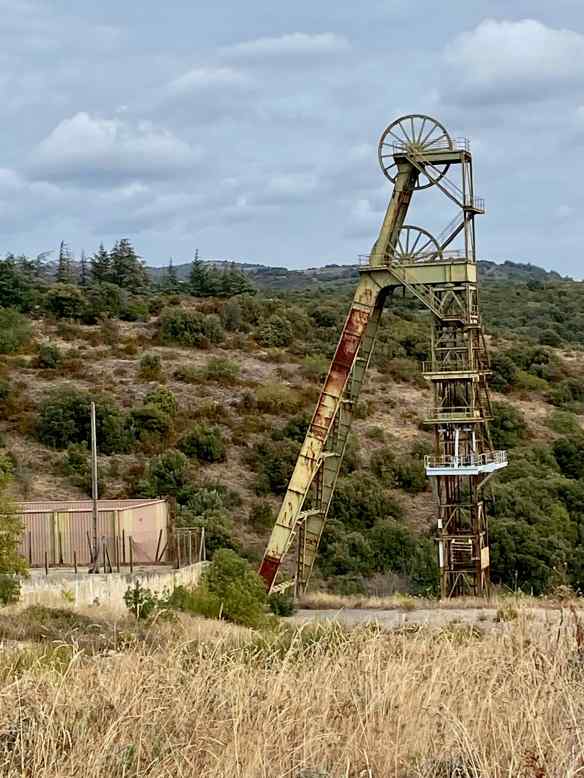
The machine above was located right next to a huge solar panel farm and the ground is littered with these tiny white snail shells, but no sign of any live snails.
It took us a while to find the paper mill. We had the wrong spot pinned on Google maps but we eventually sorted it out. The Moulin à Papier, or Paper Mill in Broussess wasn’t what I was expecting. It used to produce paper commercially but now the granddaughter runs the mill which has been in the family for seven generations. They now make paper by hand using pretty much the same process that I use back home with our Paper Arts Guild. After a sheet of paper is made it needs to be couched (pronounced “cooched”) or transfered to another surface. Here they have been couched onto synthetic interfacing, then pressed and hung to dry in the rafters. Every year, artist Catherine Cappeau makes a collection of paper dresses, which you can see on display in the paper mill. 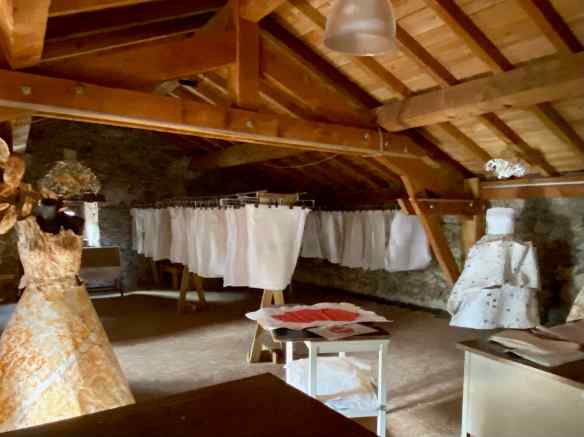
This huge old Hollander is no longer in use today It is probably five times a large as the one we use in our guild. This machine is used to beat the fibres to make the paper pulp.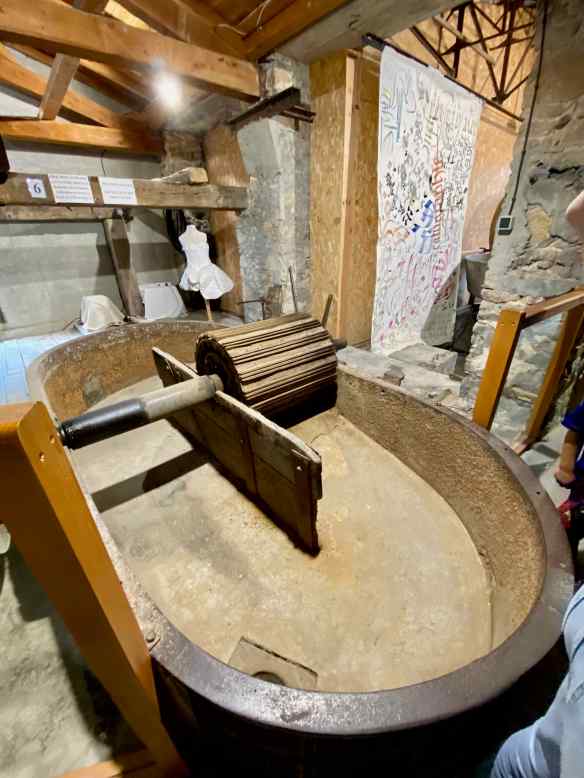
The Hollander in use today can be seen behind the hanging sheets. This is the area of the mill that is used for paper making. There are only two papermakers who work here today. They use a lot of recycled cotton cloth, mostly blue jeans and bed sheets. The only coloured paper they make comes from the colour of the cotton cloth that is used to make the pulp. The material is cut into small pieces and then processed in the Hollander. Interestingly, they also use horse and elephant dug to make paper as well.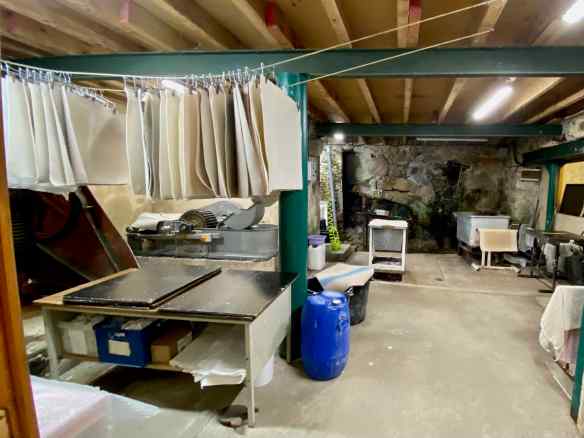
Now this is a press!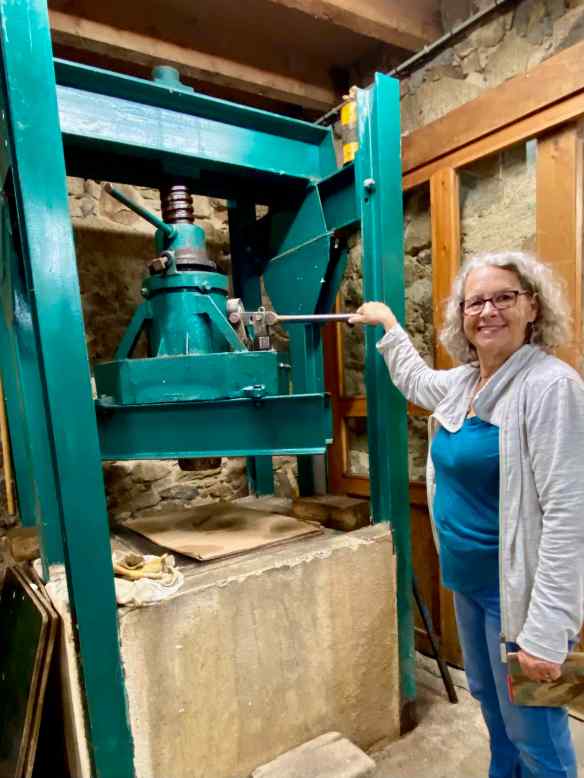
There is little store here, where paper, handmade books, cards and other paper related items are sold. I think that most of the mill’s income likely comes from the tours they offer several times a day, every day except Christmas and New Years! They are set up for school tours as well. It was interesting, and there was a lot of equipment that was in use 100 years ago when this mill was in full operation. However I didn’t really learn anything new, other than our Guild members back home makes really good quality handmade paper and we don’t charge nearly enough when we offer items for sale!
Today it is the last paper mill in operation in this area. There were six paper mills here in 1845. This millstone grinder, with its 3 tonne stones used to grind 300 kms of recycled paper fibres a day in 1954!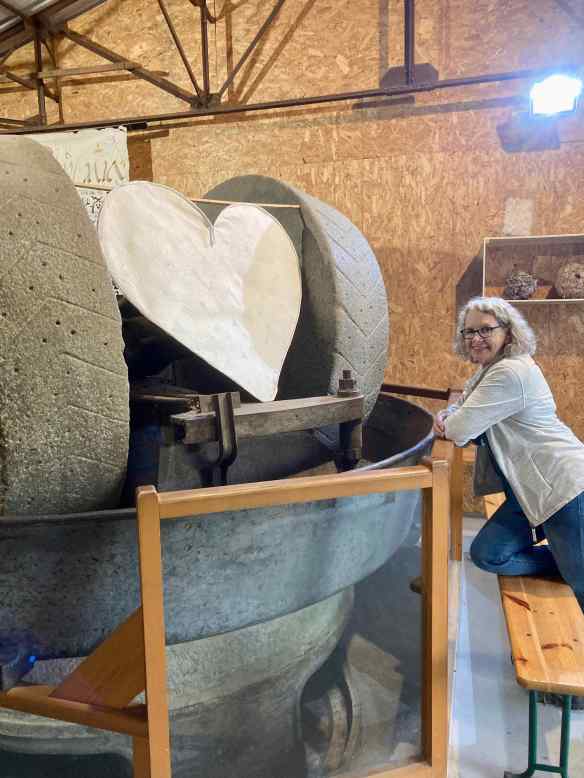
There is a bridge over the Dure River and a little picnic area.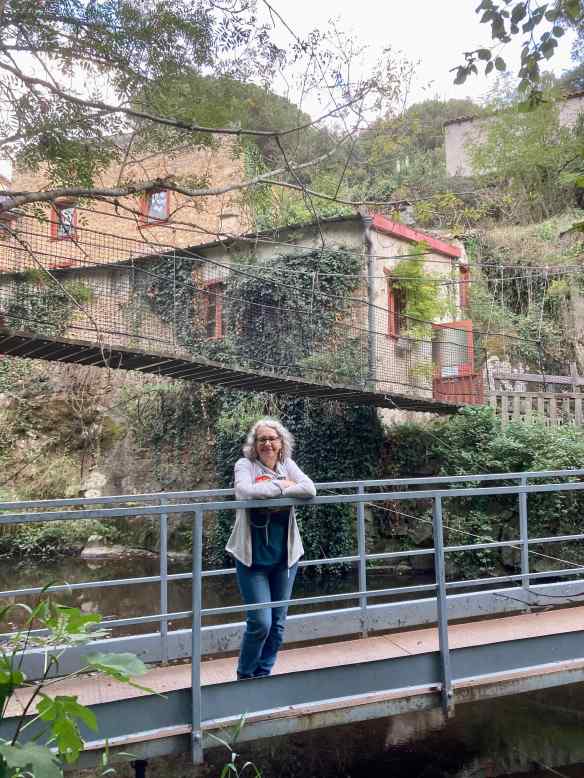
It is really pretty location.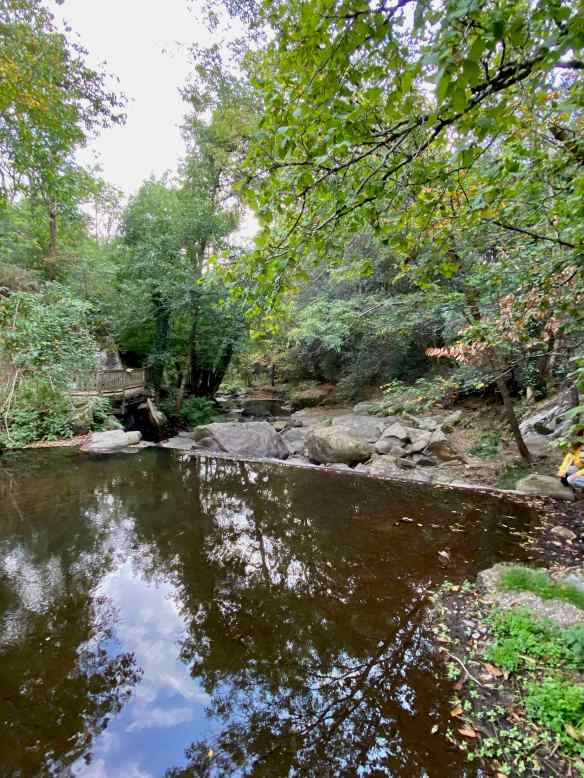
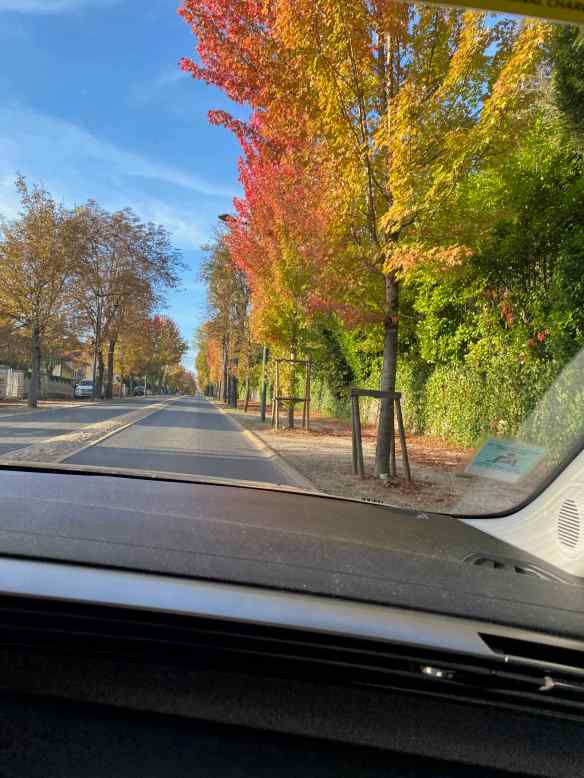
There are some interesting clouds with shafts of sunlight on the drive home.
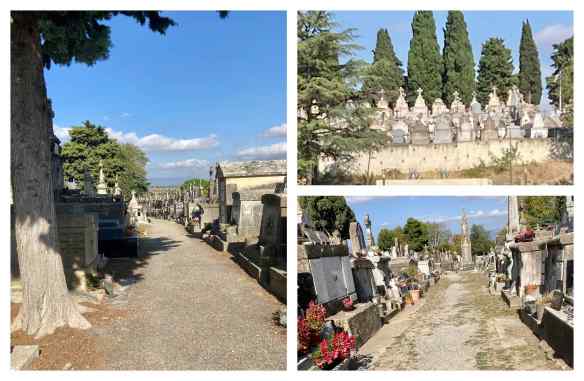
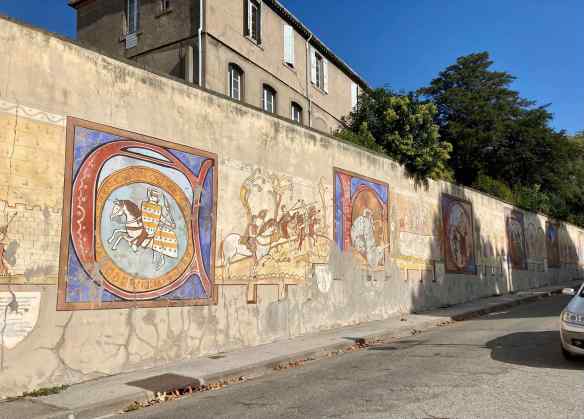

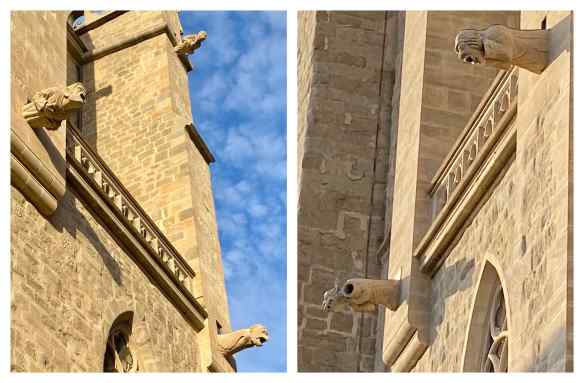
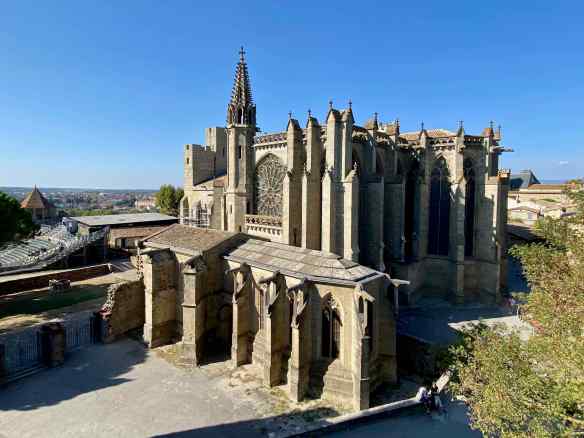
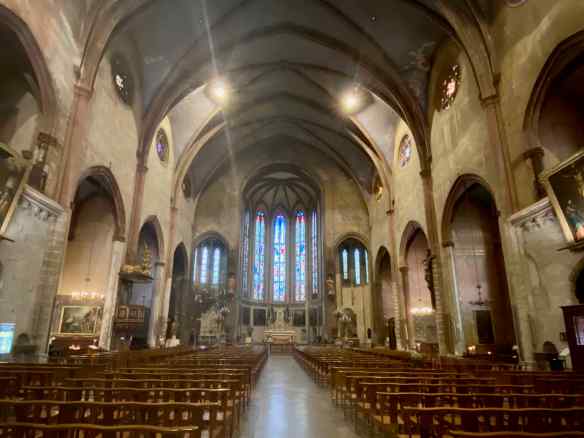 discover that we can climb the bell tower for just 2.5 euros! I’m not wanting to do it today but I hope we can get back another day. We have climbed a lot of bell towers on our other trips, but so far not a one this time.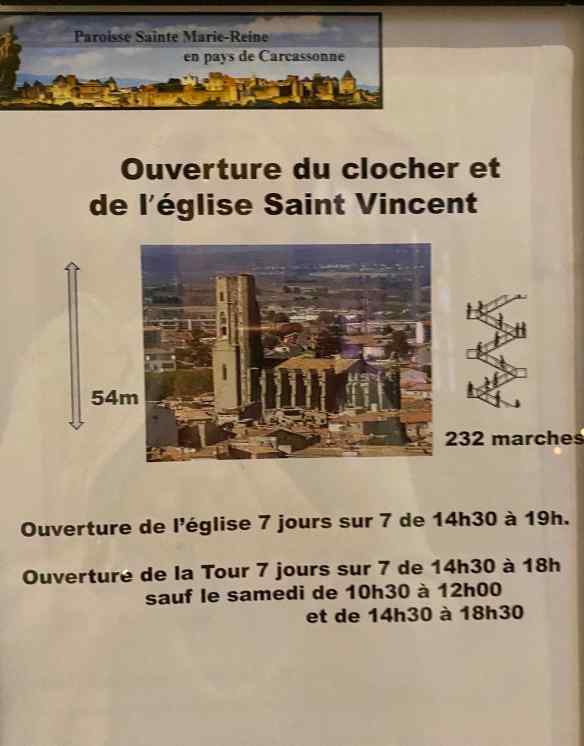
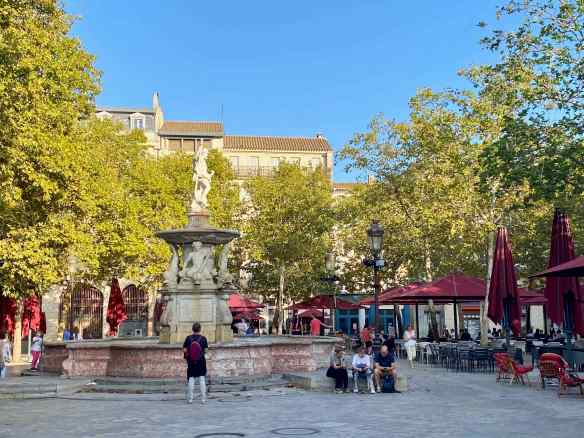
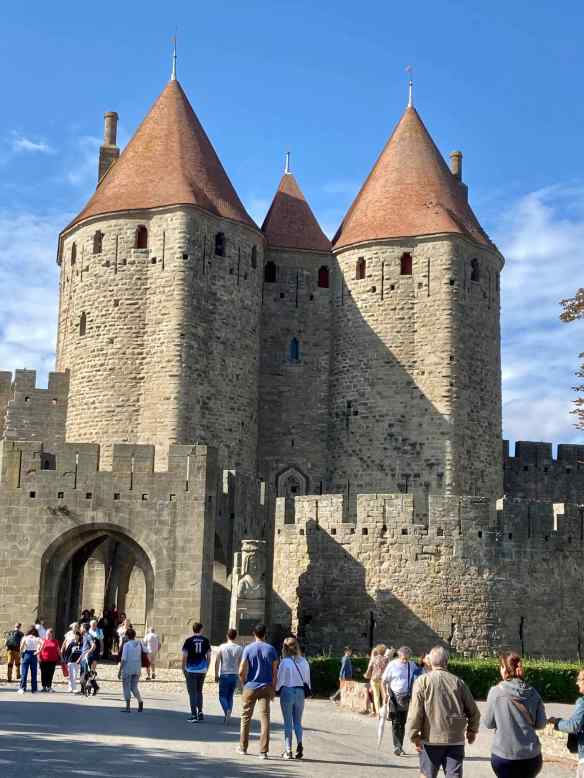
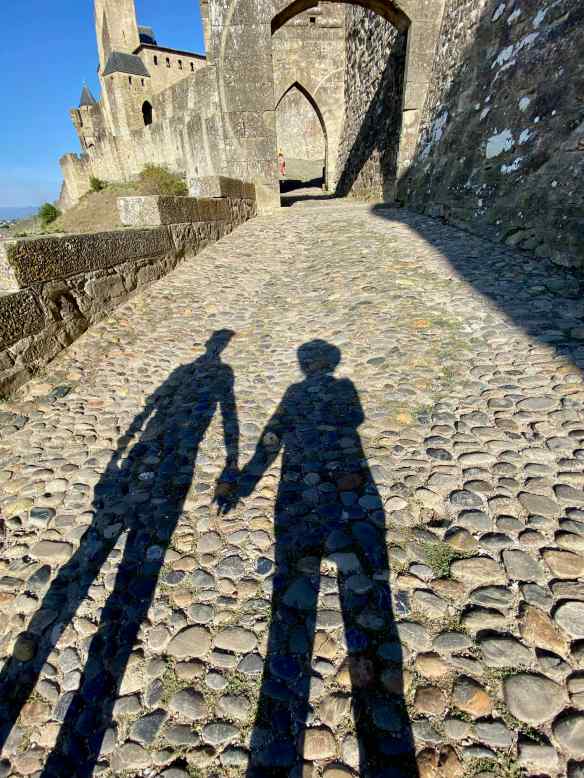
 This is one of the entrance gates to the old city of Carcassone.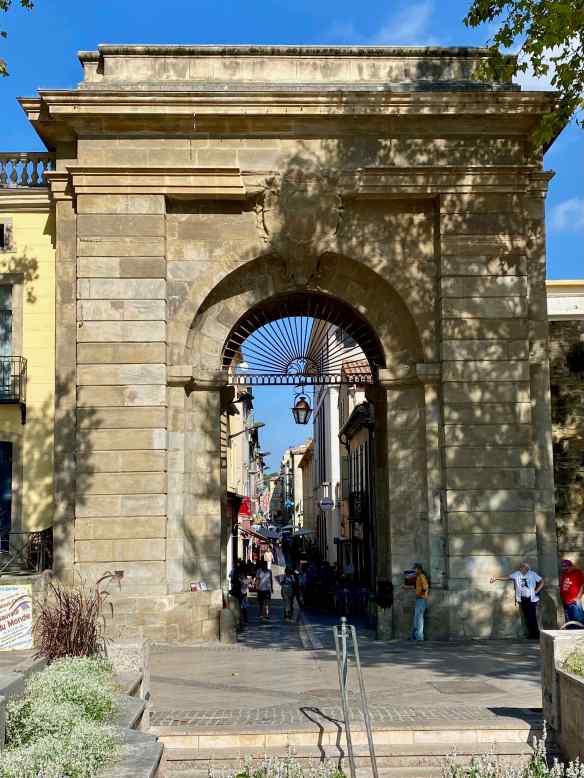
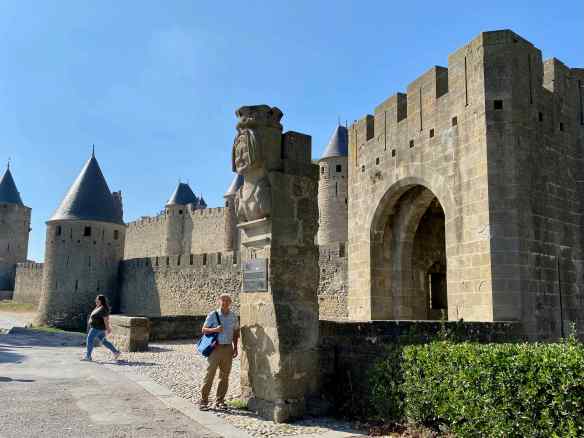
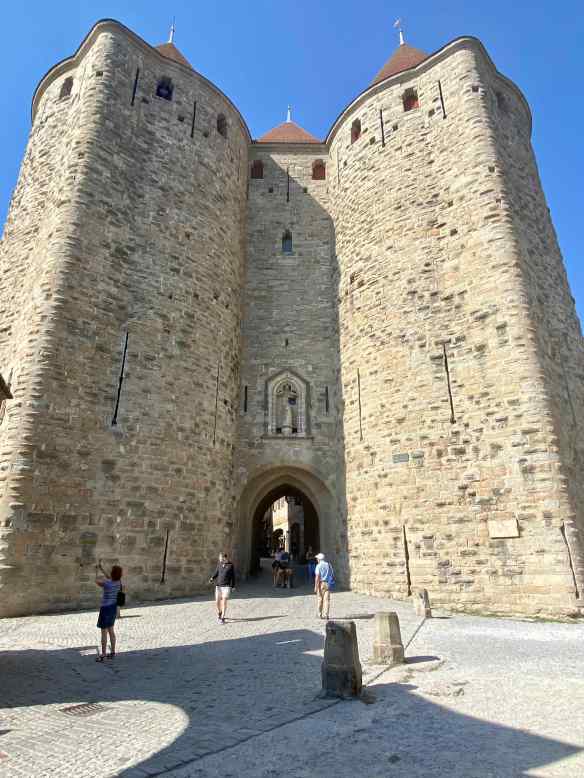
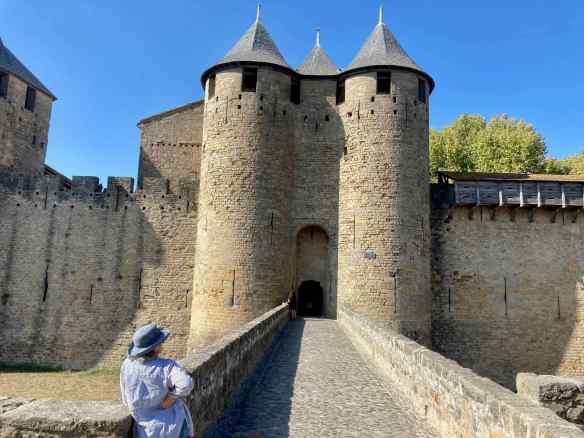
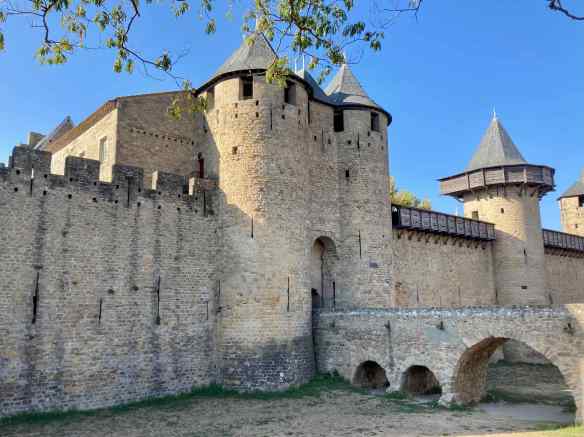
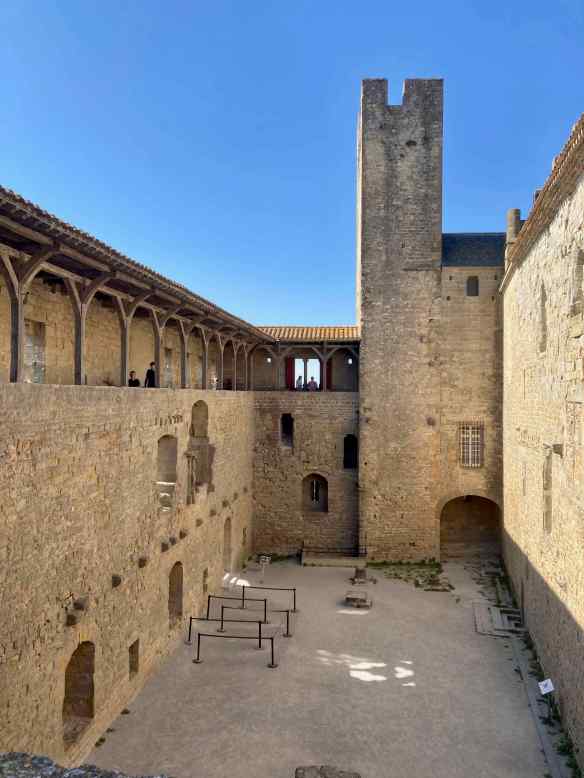
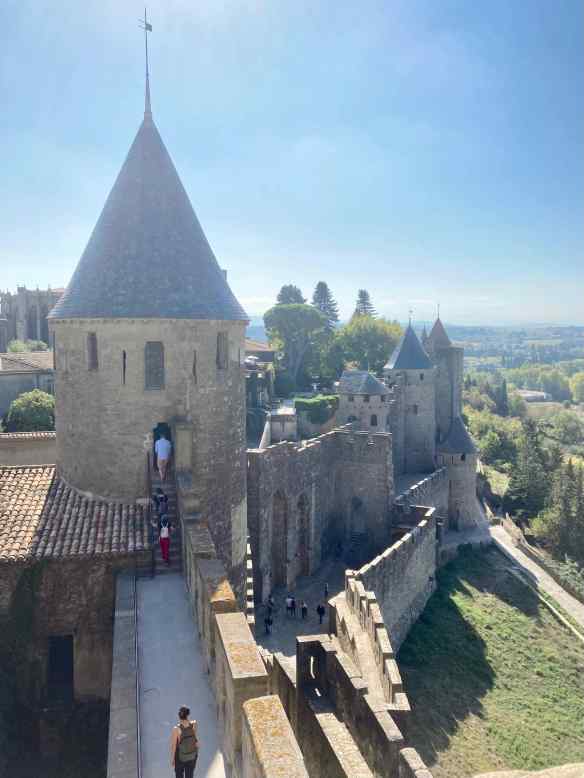
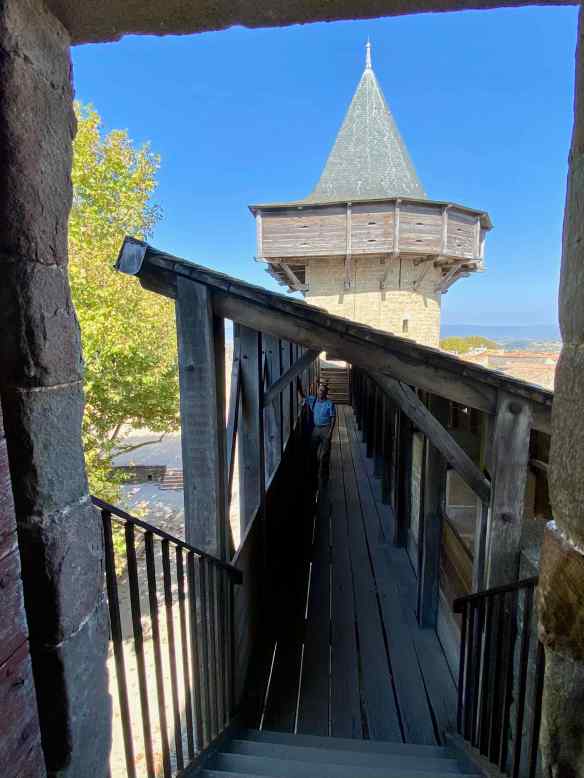
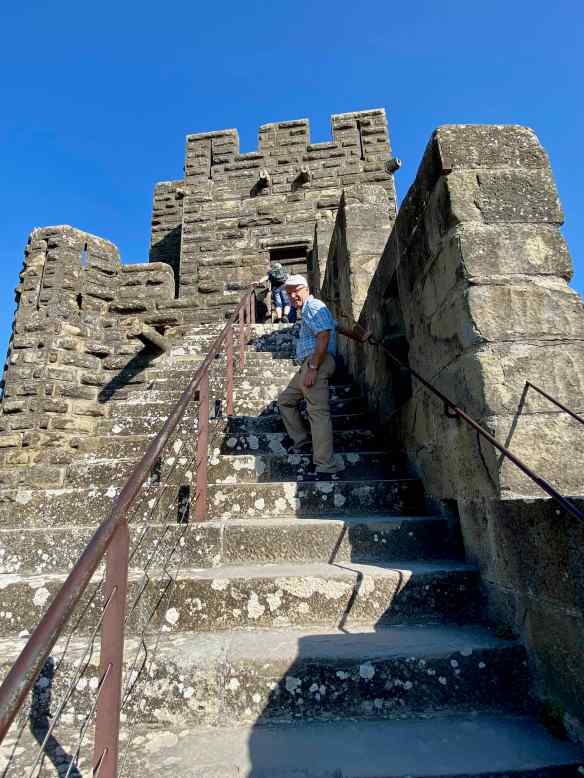
 This is mostly an opportunity to see the fortifications that make this citadel so unique.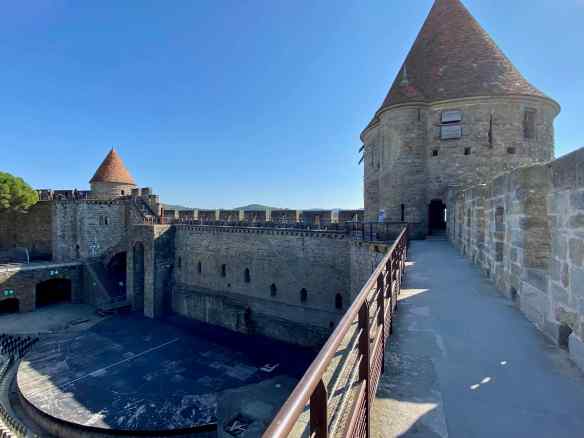
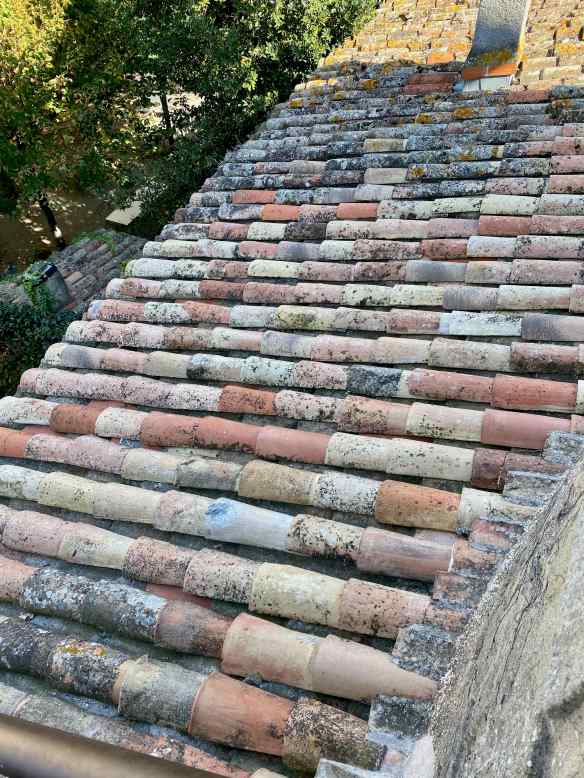
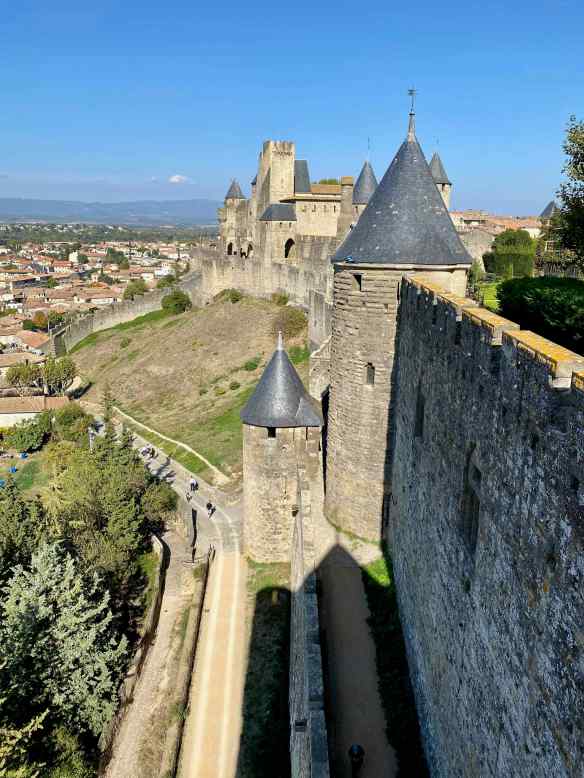 Carcassonne is now considered to be the largest and best conserved medieval fortress in Europe. It is impressive with its set of double walls and ramparts. Both sets of walls and the area between them can be seen in this photo.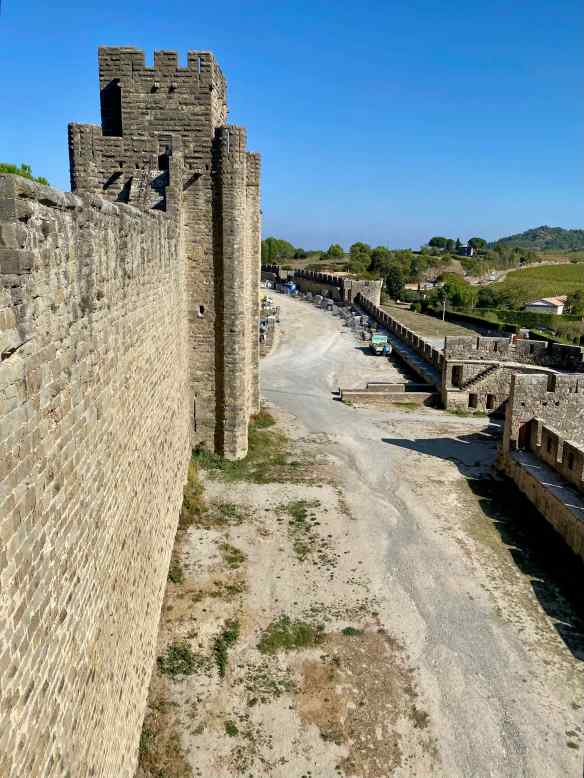


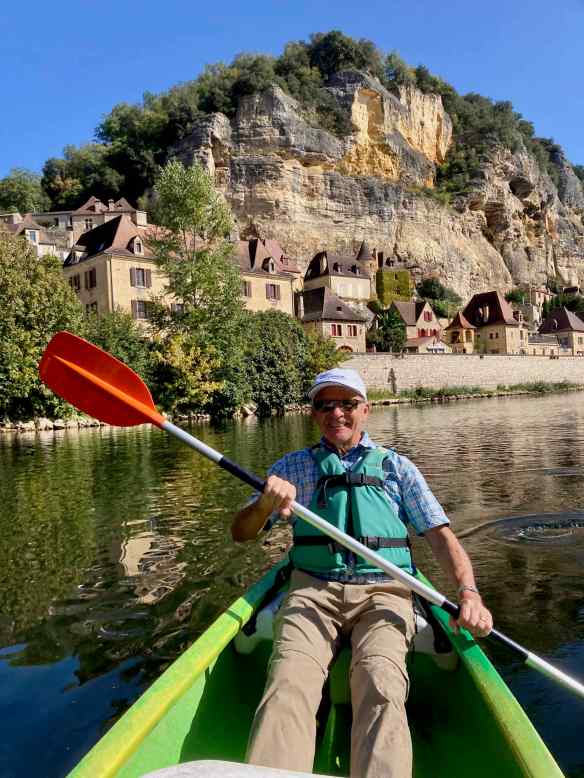
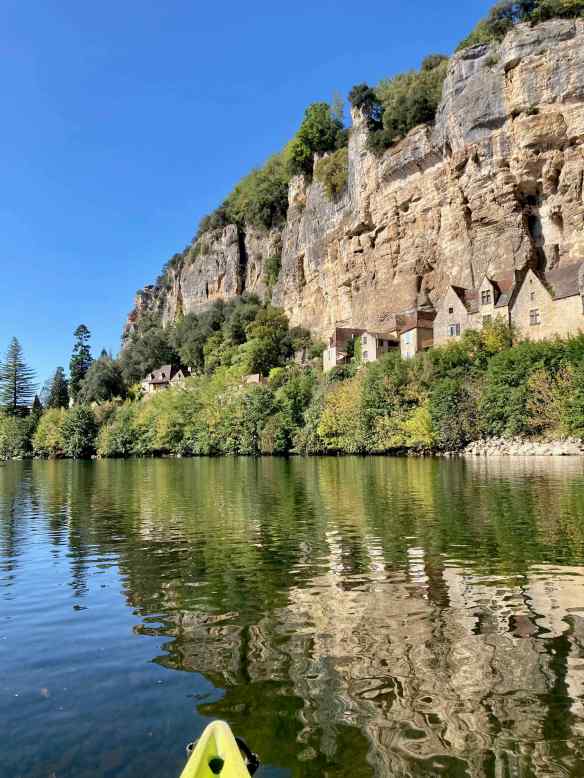
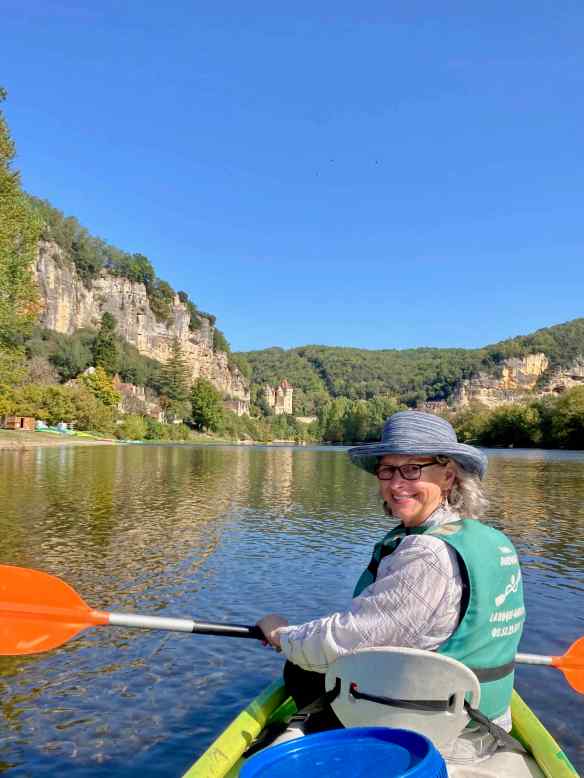
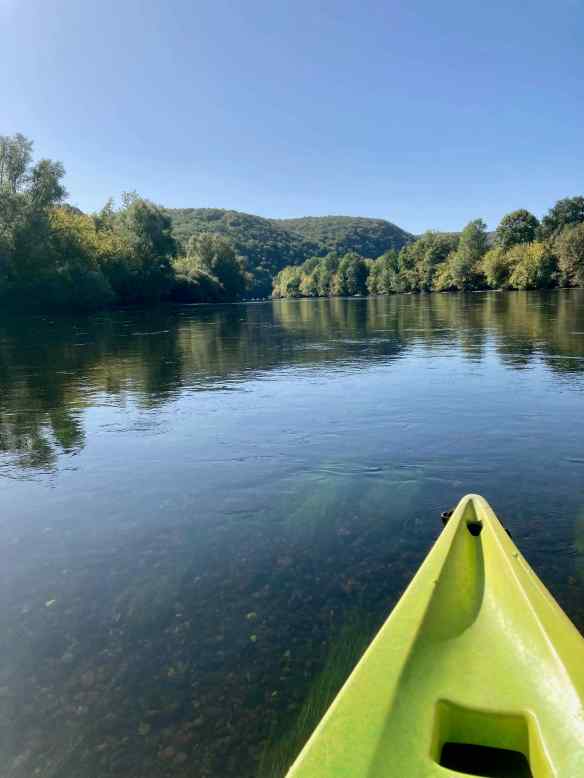
 There is the prettiest green seaweed and I see fish, Lots of fish, little ones and then some really big fish with whiskers…catfish?
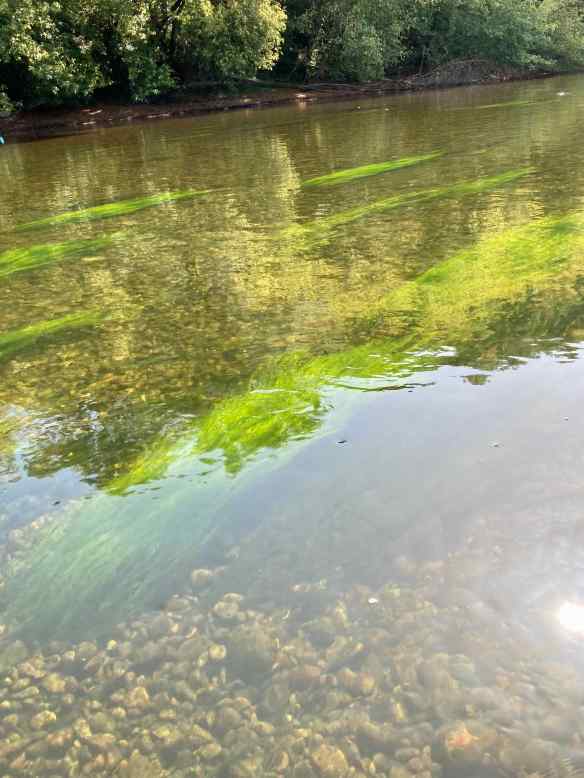 They particularly like hiding in the seaweed. I keep showing them to Bob but he doesn’t see them. I think he thought I was making up all these fish I was seeing until he took off his polarized sunglasses and then he can see the fish too. He even gets to see one of the really big ones.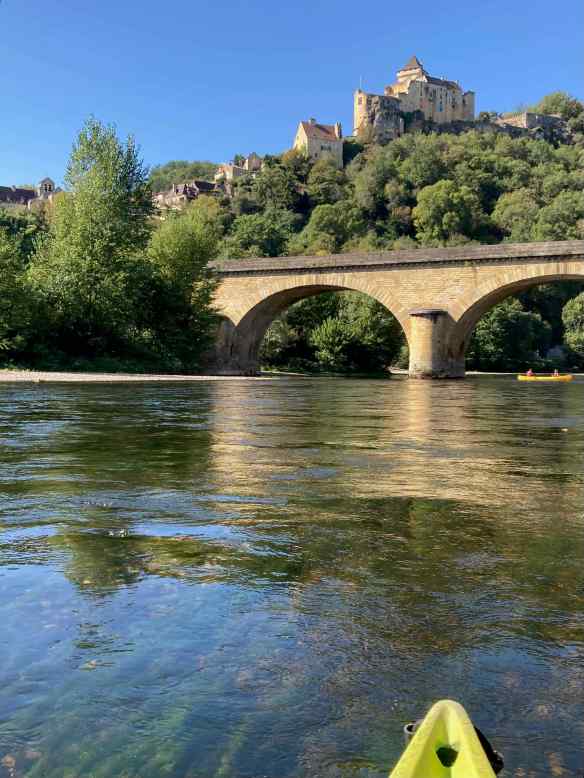
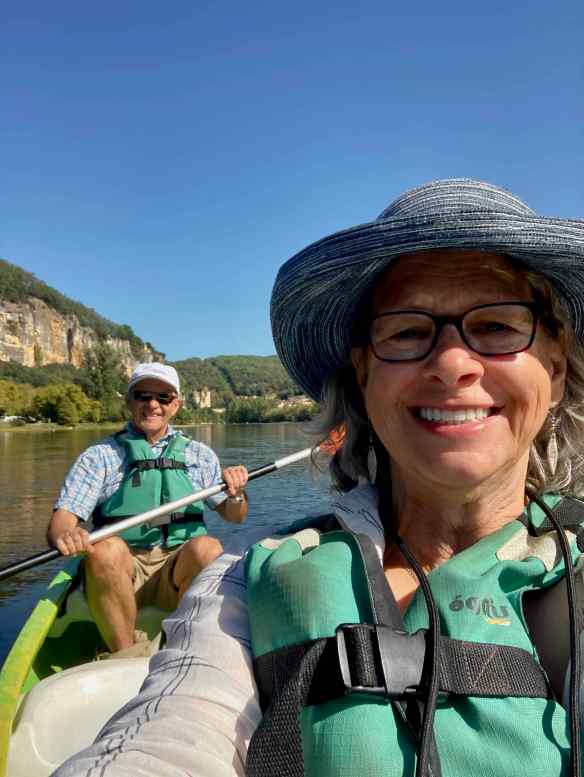


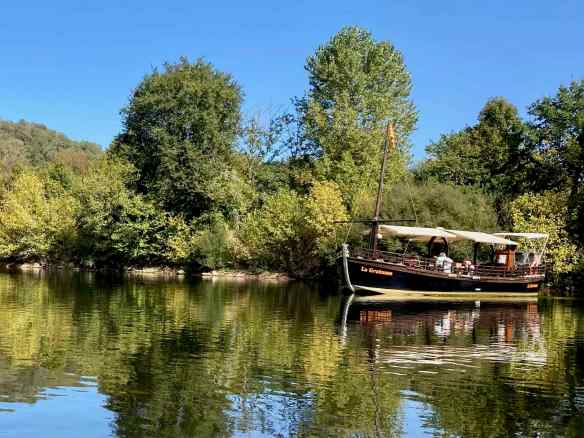
 But first we pass two of these strange half built bridges. It doesn’t look like they plan on completing either of them although the bridge with a road bed is on both sides of the river and just has one section missing. We wonder why.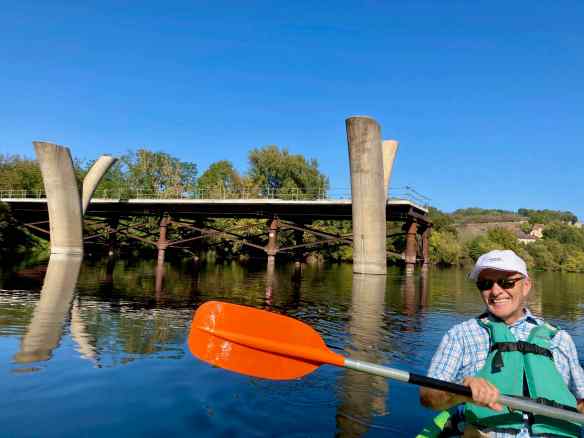
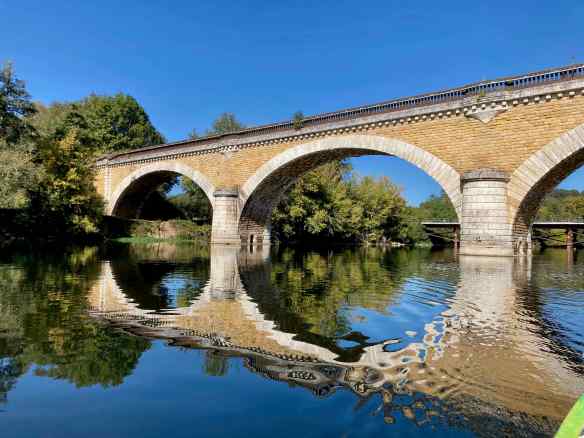
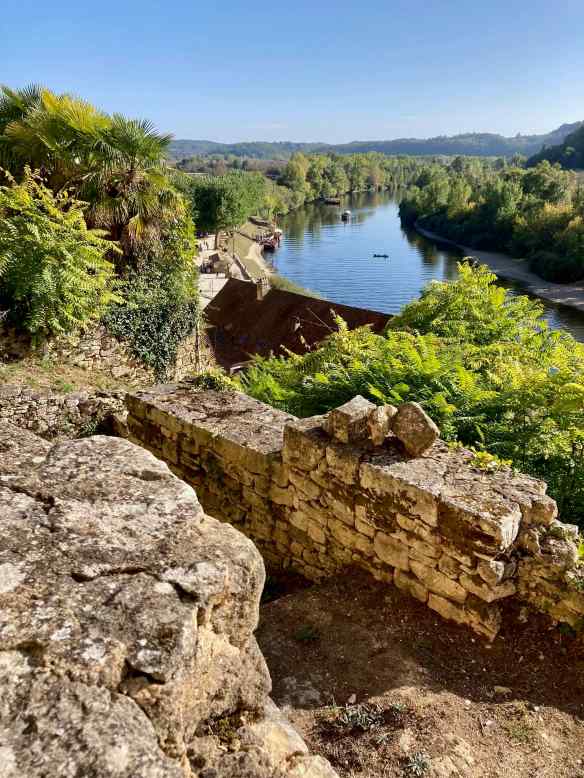
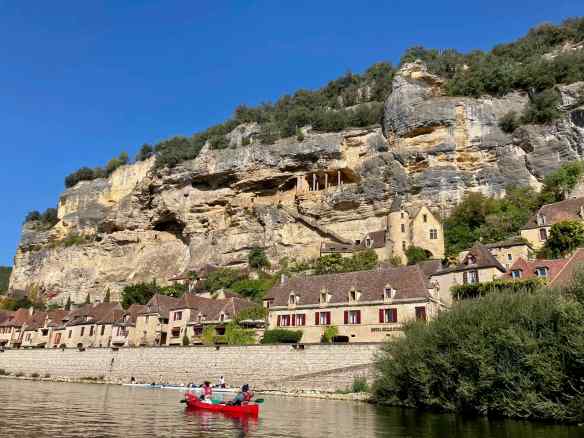 Another view from the streets on Bob’s walk, and of the ‘pirate’ tourist ships.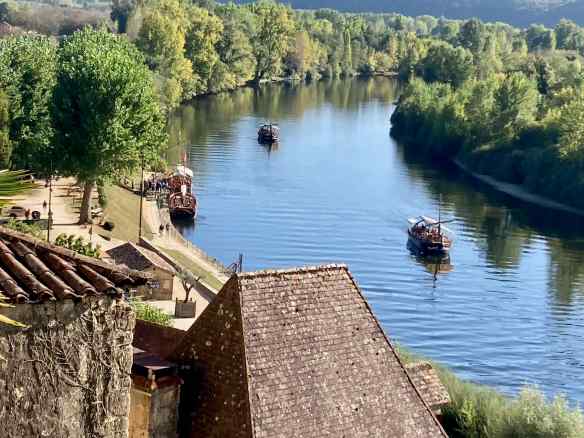
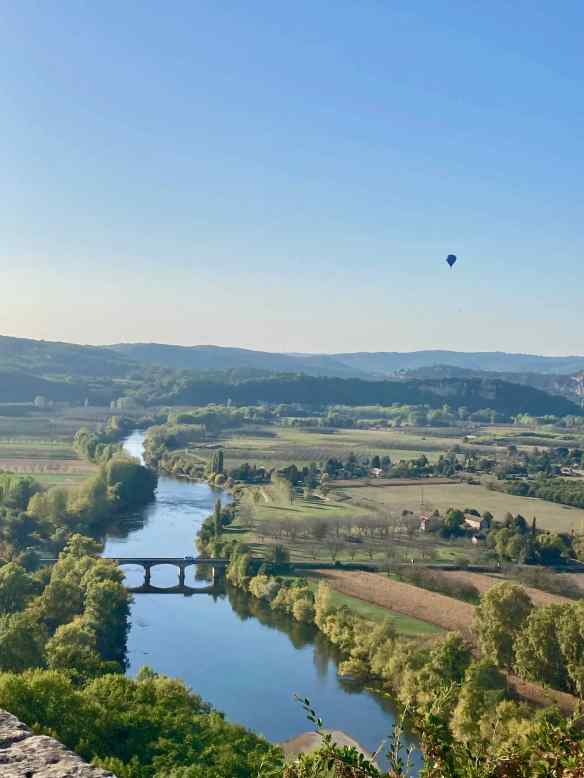 We bought some refreshing sorbet and just enjoyed the view before heading home to Sarlat to pack. Tomorrow we are on our way to Carcassonne.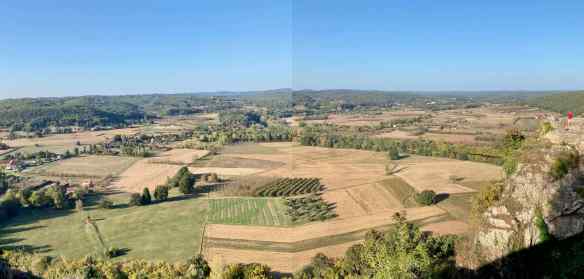
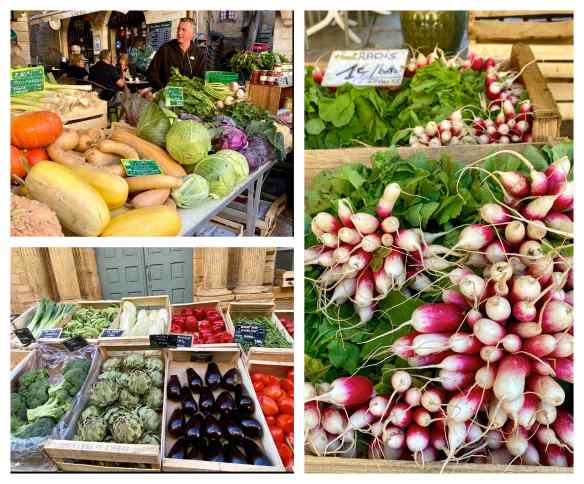
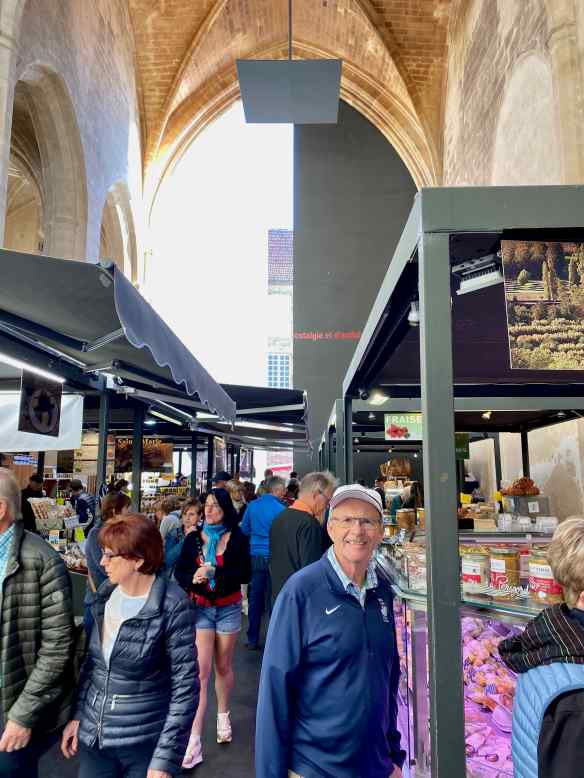
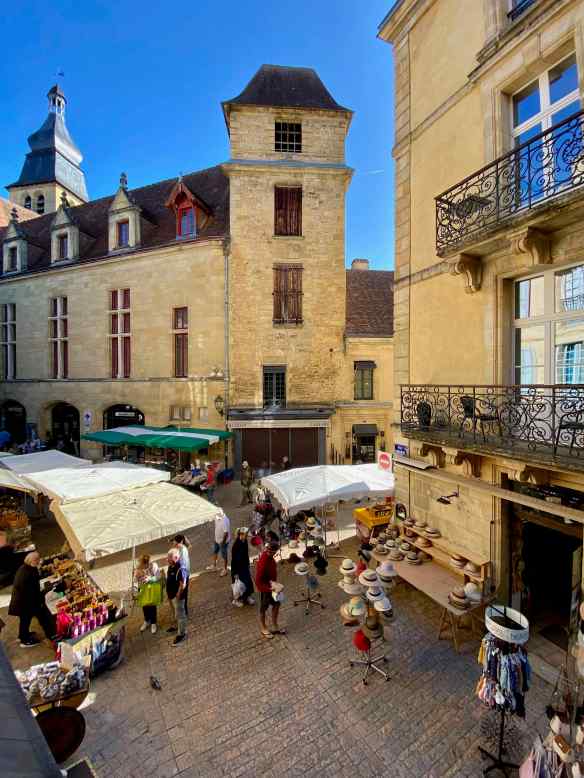 After breakfast we go check out the market. The streets are crammed with vendors…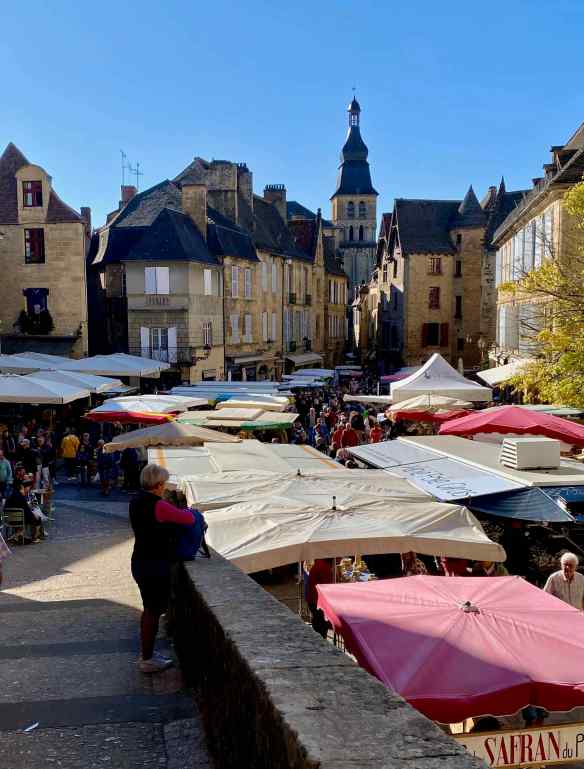
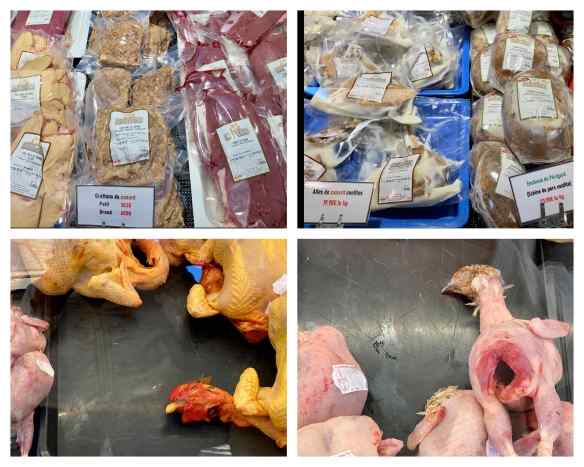
 However there are many more vendors selling a variety of meats and foie gras. I’m afraid we weren’t tempted by these stalls.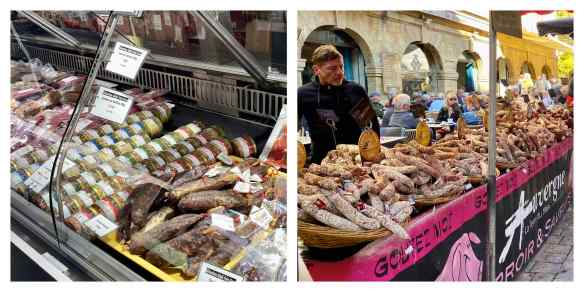
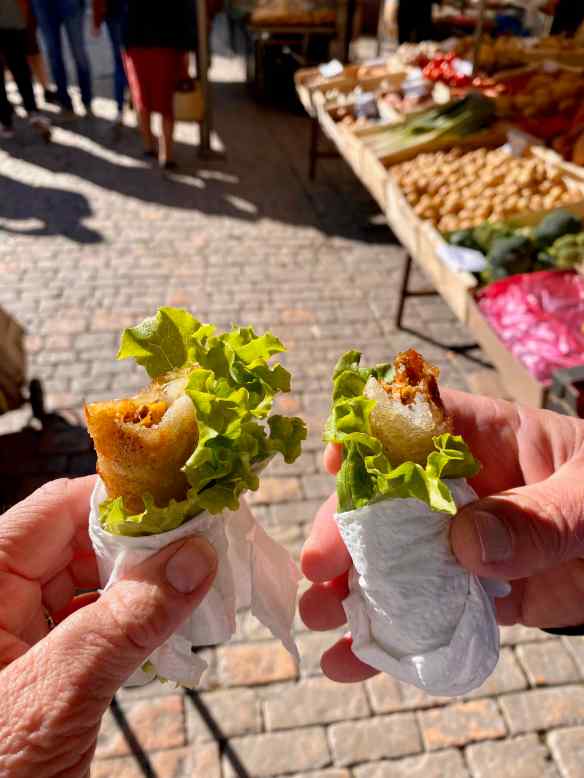
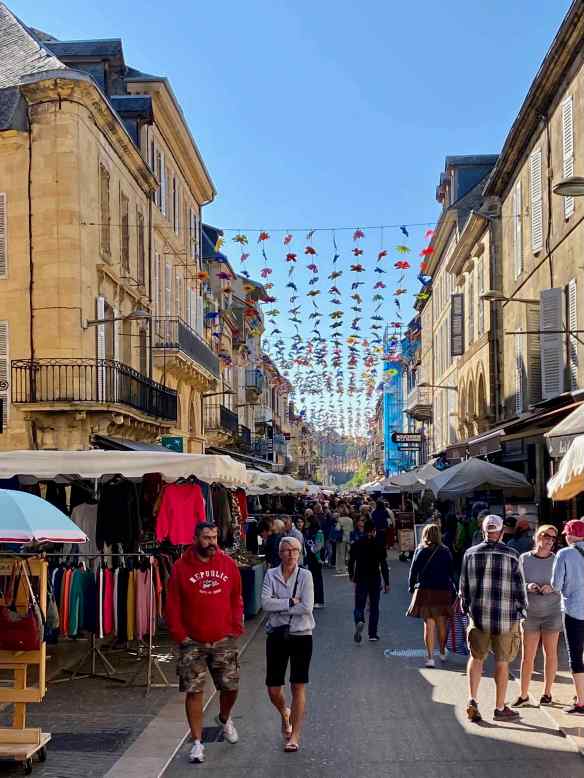
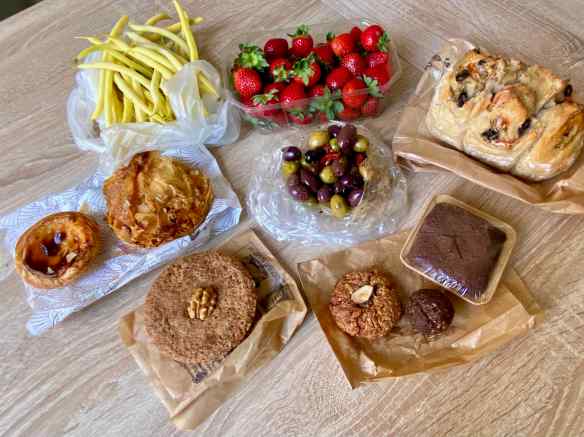
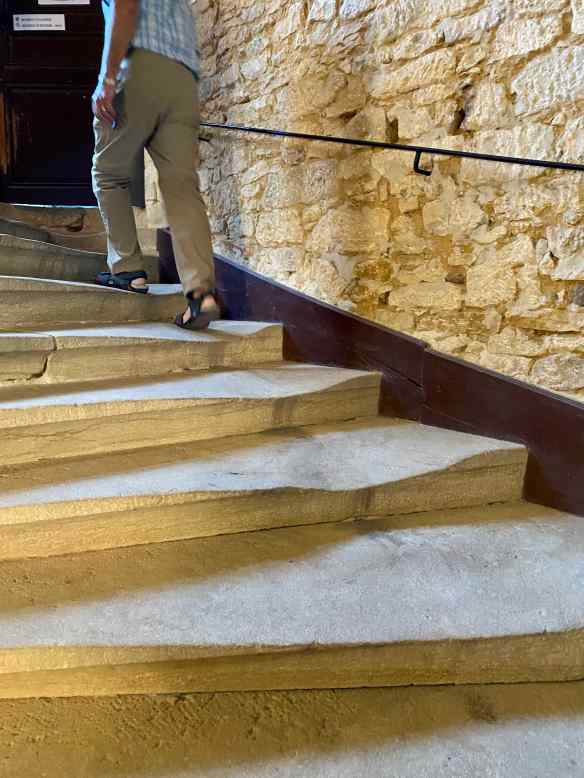
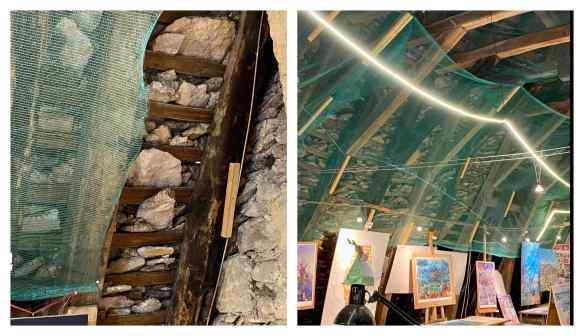
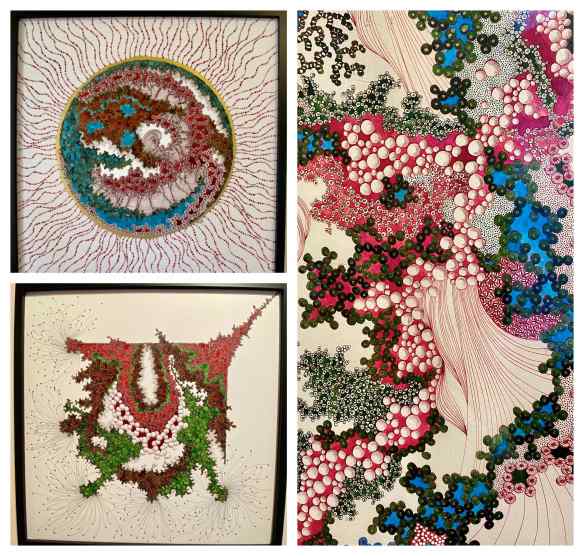
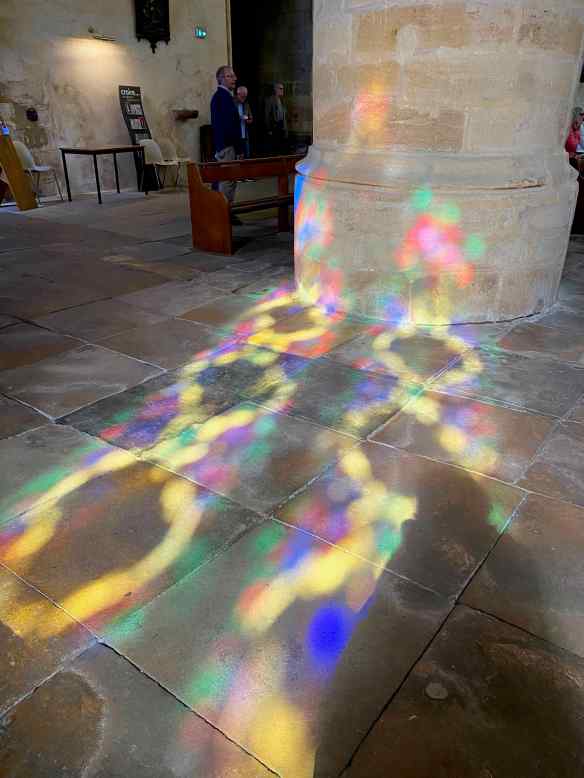 We visit the Hotel de Maleville which has an artist’s studio on the top floor attic.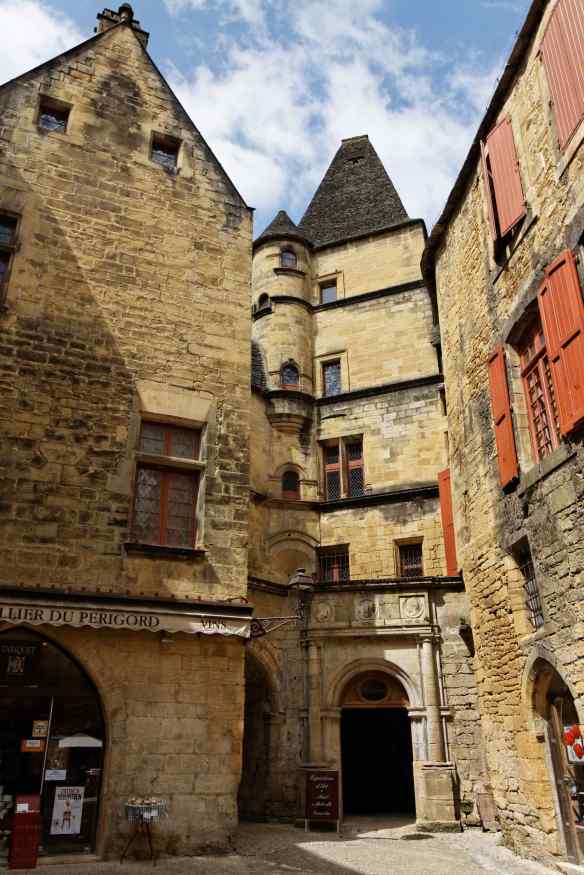
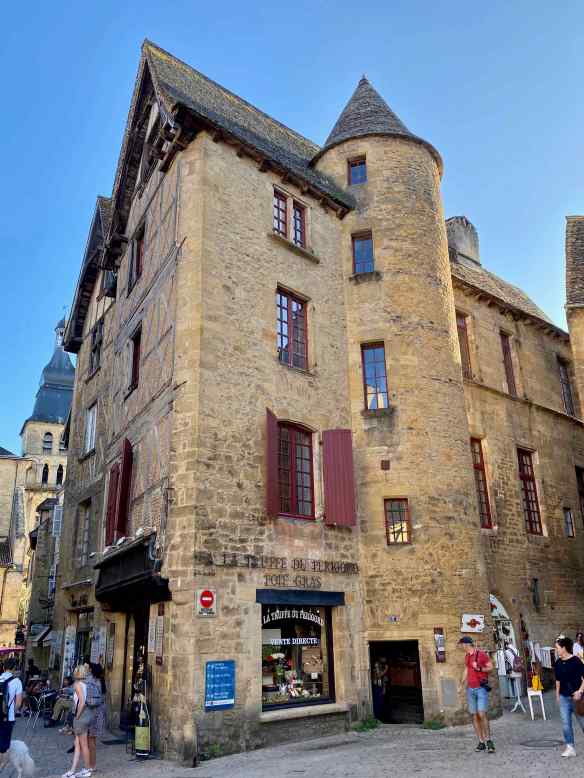
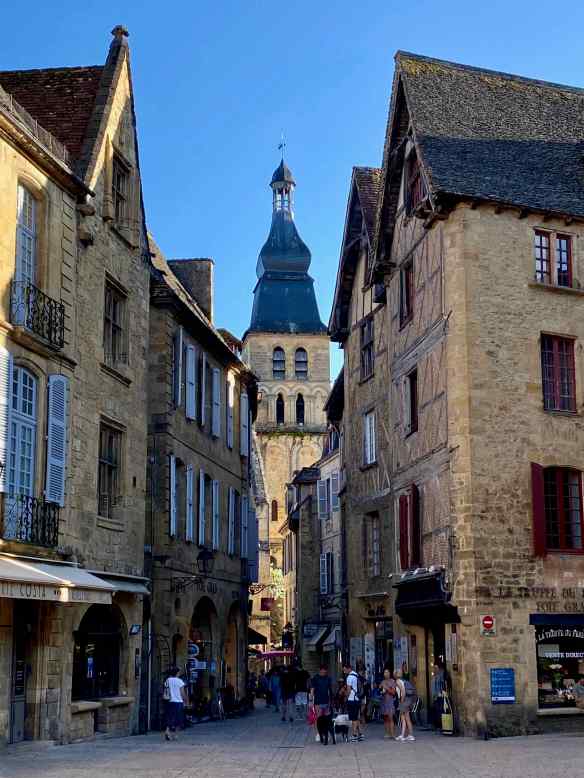
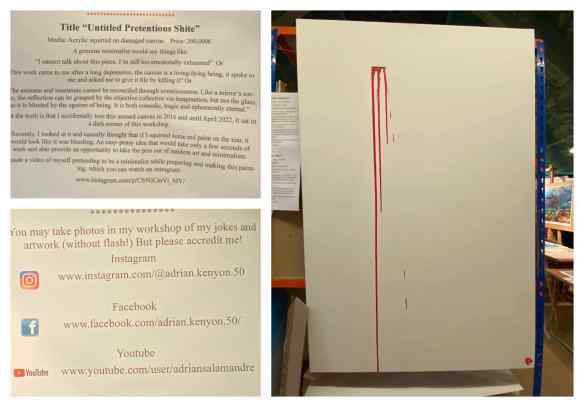 Here is another beautiful old building, the house of Etienne de La Boétie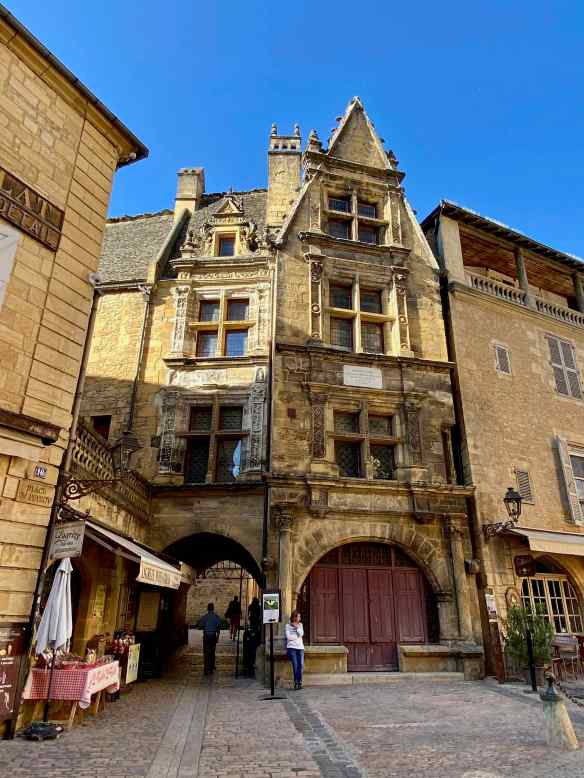
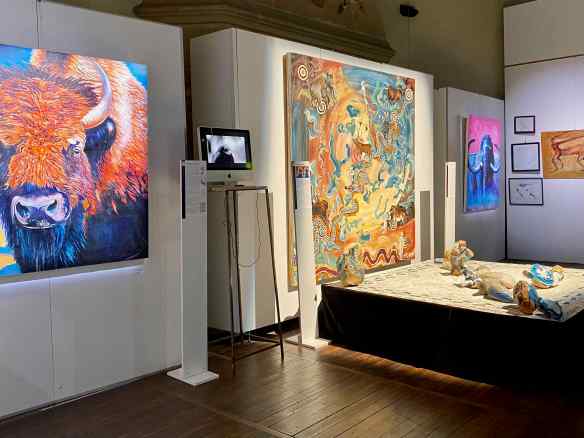
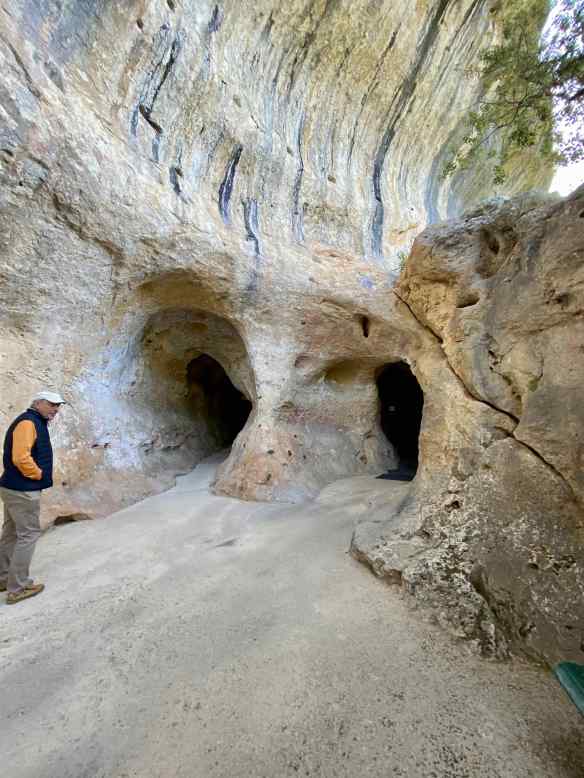
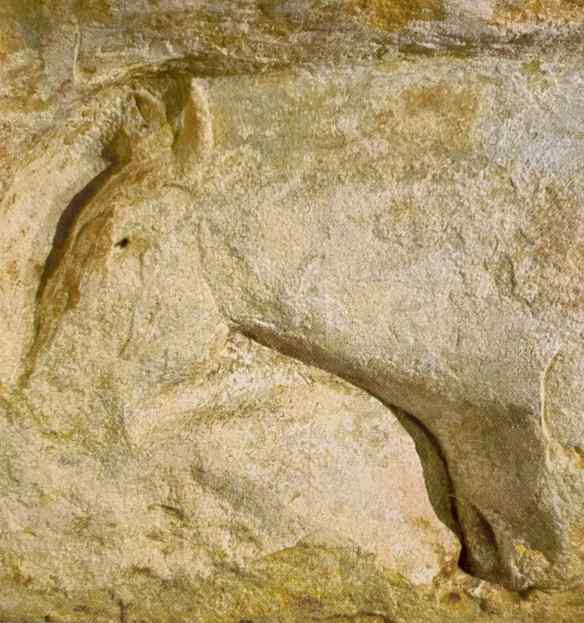
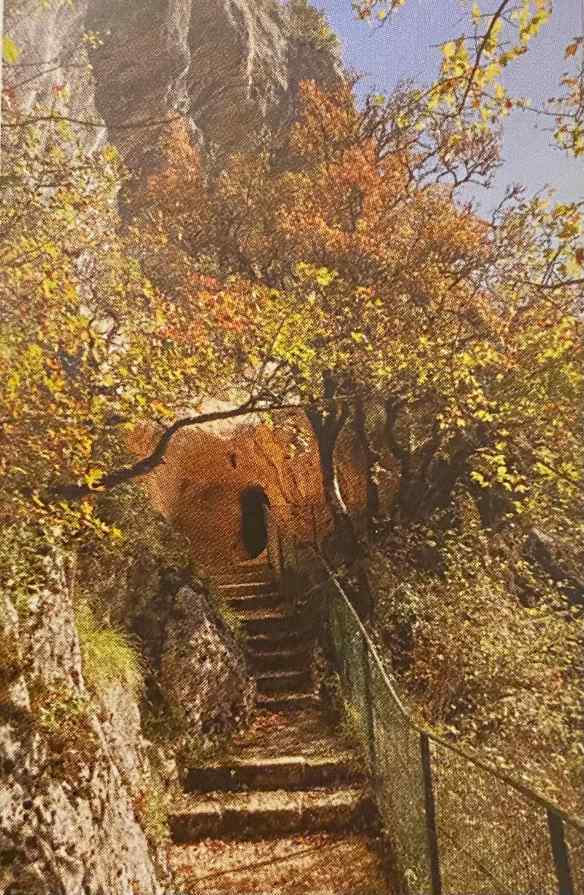 There are more than 200 painted and engraved figures in Fonte de Gaume organized into compositions in the four main sections of this 120 meter long cave. We visited all but the narrowest section in the Diverticule teminal and the short cave on the right of the entrance.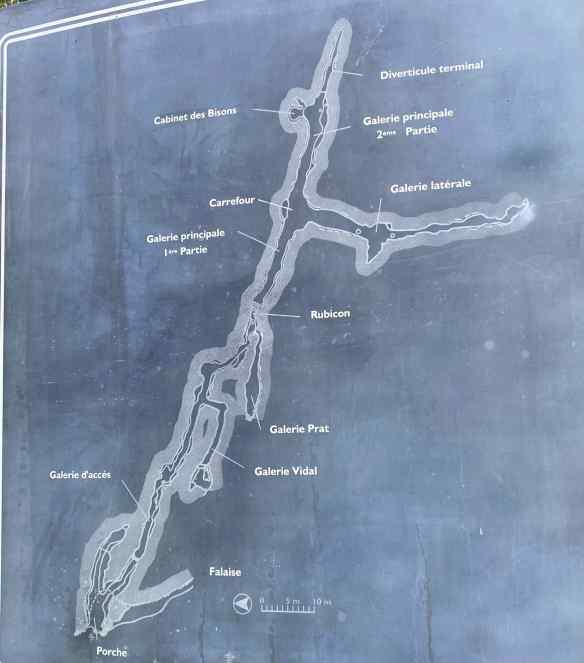
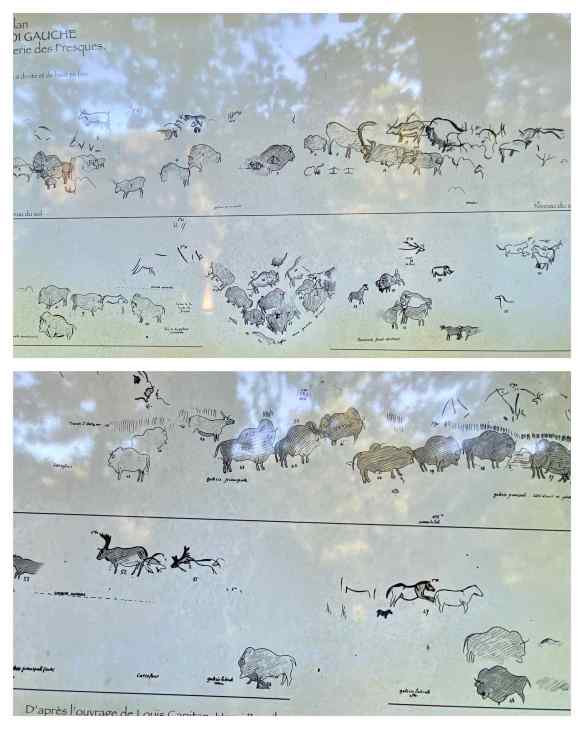
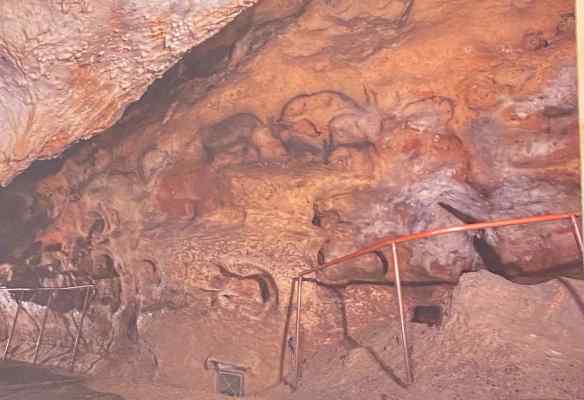
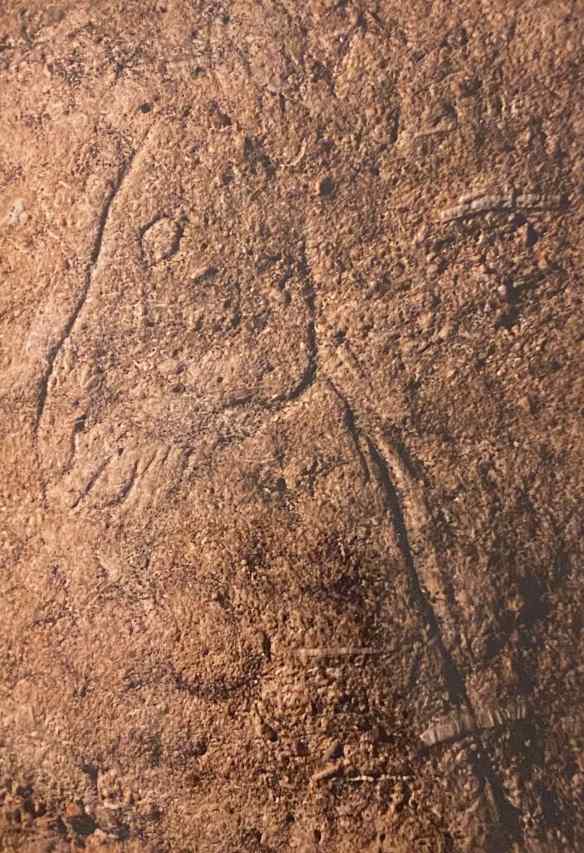
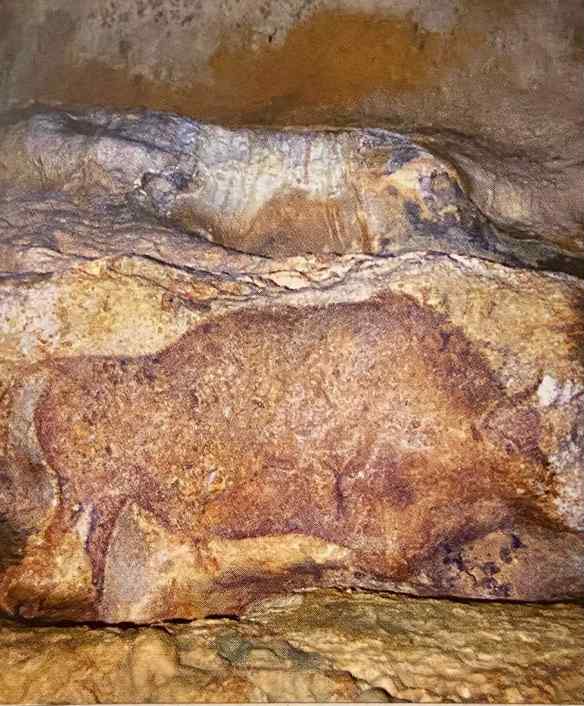
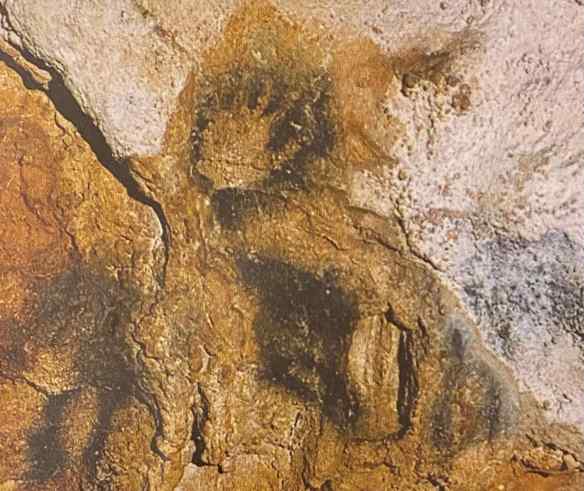

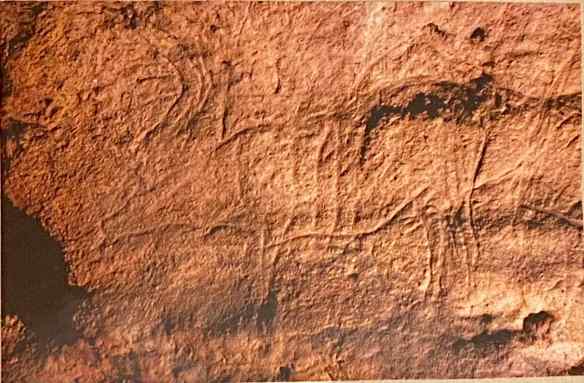
 The first artworks we see are engravings…some of them were made by the artist using his fingers to mark the soft stone. Rouffignac is famous for its Mammoths. 158 mammoths that have been found on the walls of this cave, this is 30% of all mammoth representations in prehistoric cave art. Yet, curiously, there have been few mammoth bones found in this area. We also see cave bear claw marks all over the walls. The parallel vertical lines below this mammoth are from a cave bear scratching his claws on the cave walls.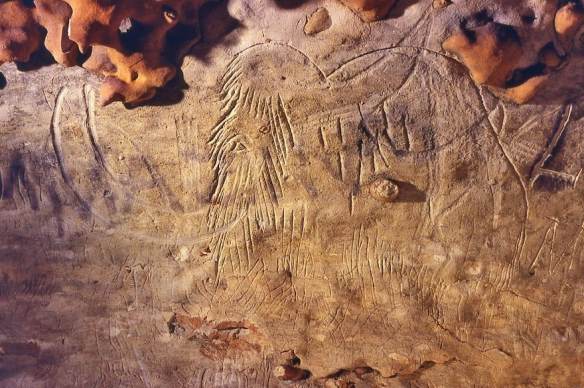
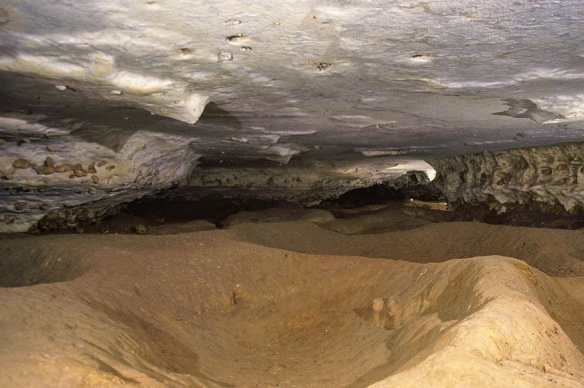
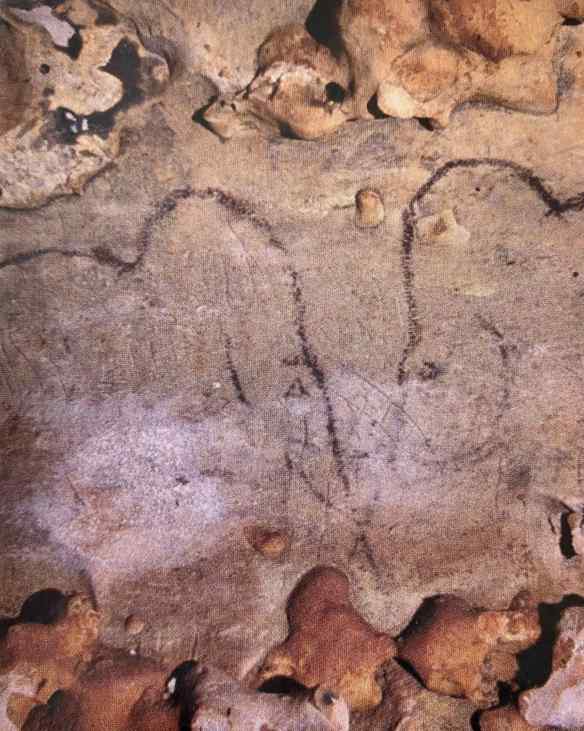
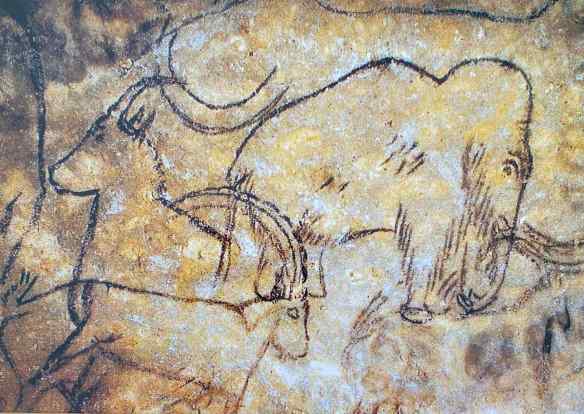 I was surprised to see that almost everyone in the group turned towards our guide when he started talking and they stopped looking at the drawings! Really? Couldn’t they have listened but keep looking a the artwork above our heads? It seemed such a waste to be standing here and ignoring these ancient drawings. One very interesting drawing of a mammoth showed its anal flap. Sorry, no photo of that one. Yes, this is a flap that covers the mammoth’s anus to keep it warm. Only someone who had very close contact with a mammoth would know about this detail. This fact was used to help authenticate these drawings, as they were thought to be modern fakes when they were first discovered..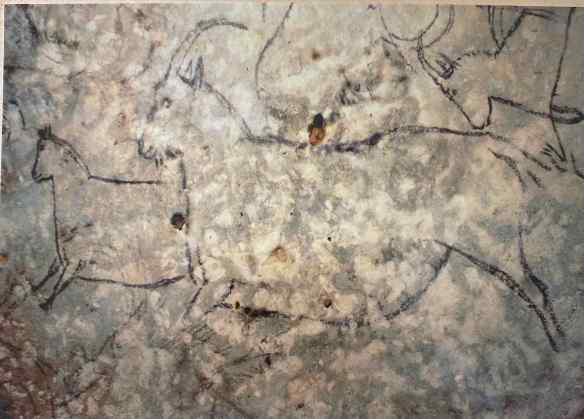
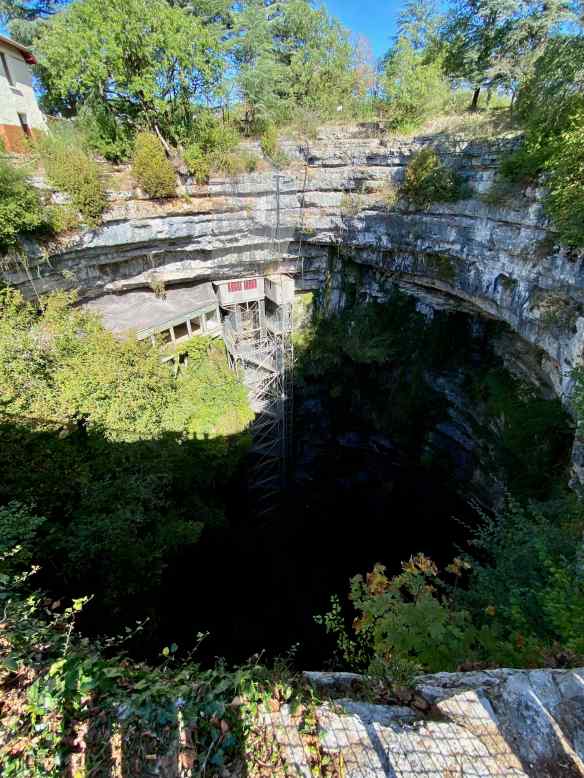
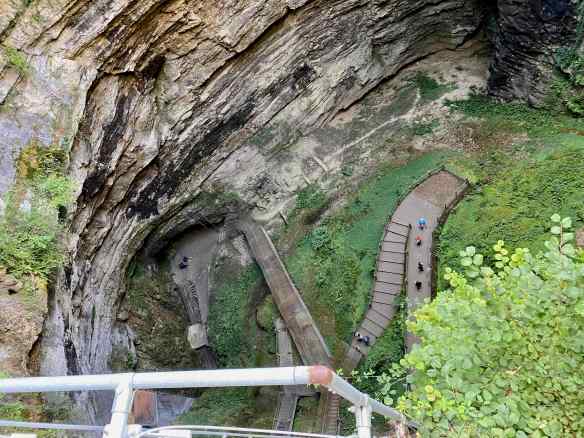
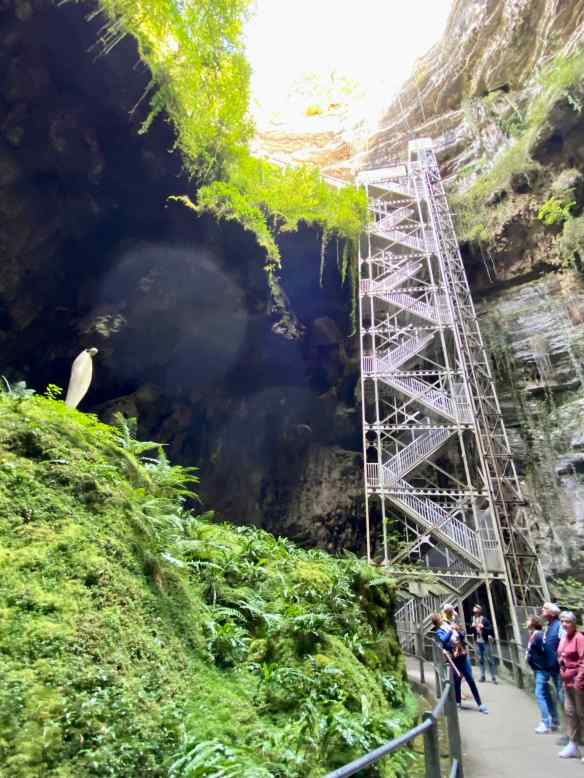
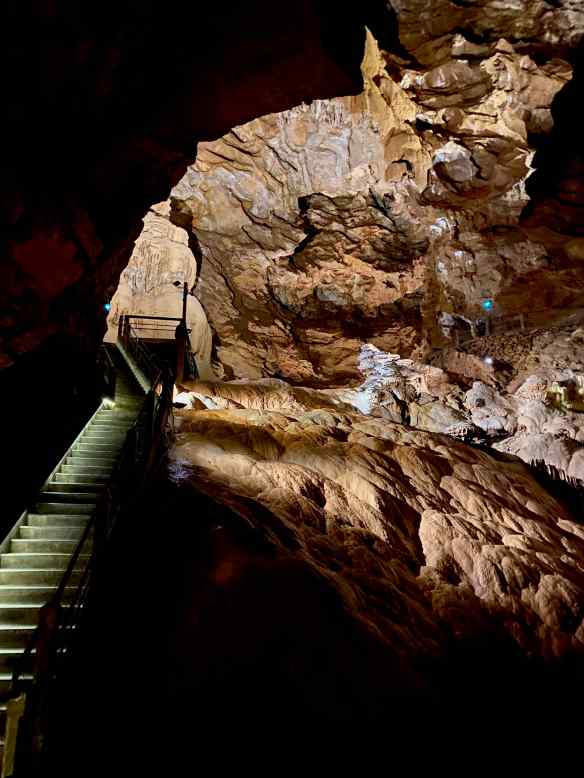
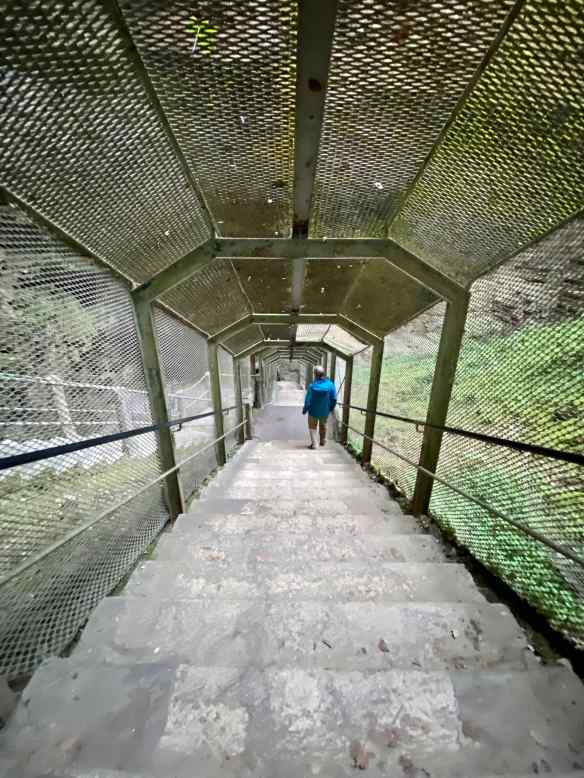 Once we are inside the cave there are even more stairs…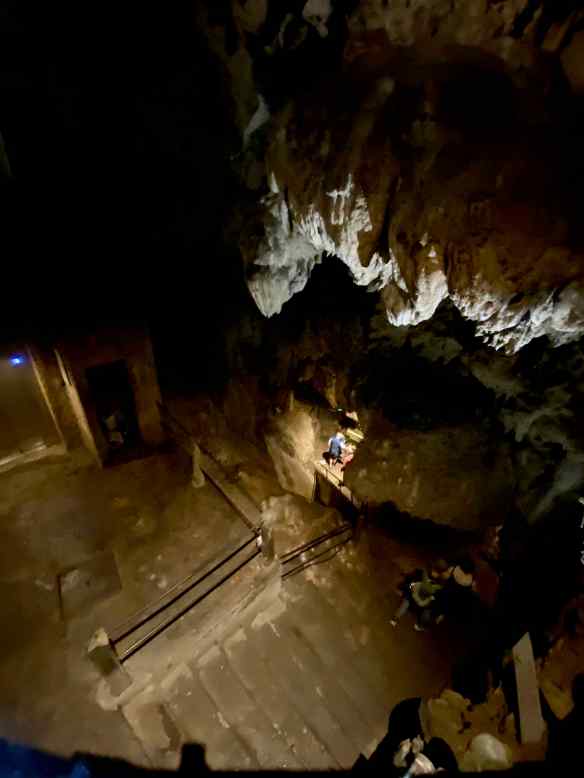

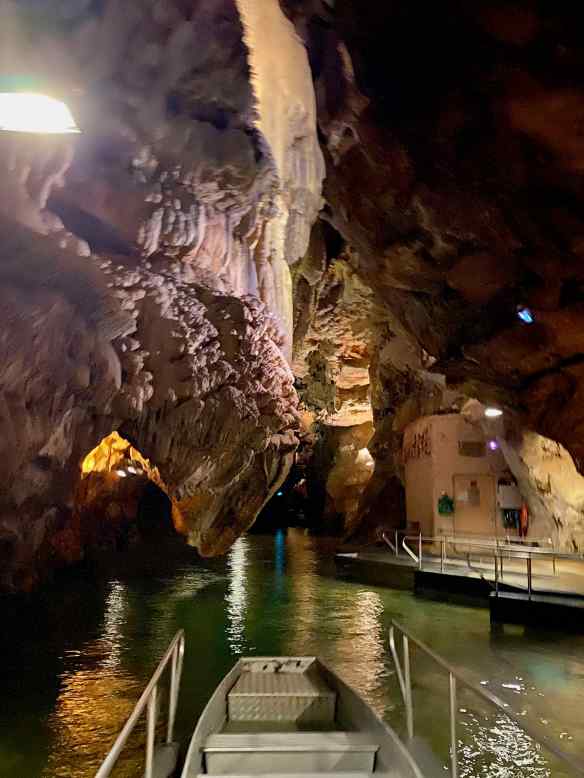
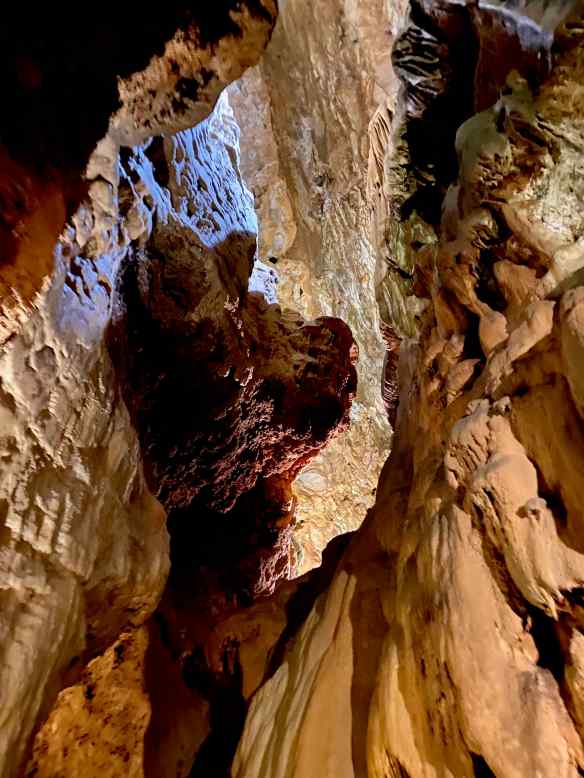
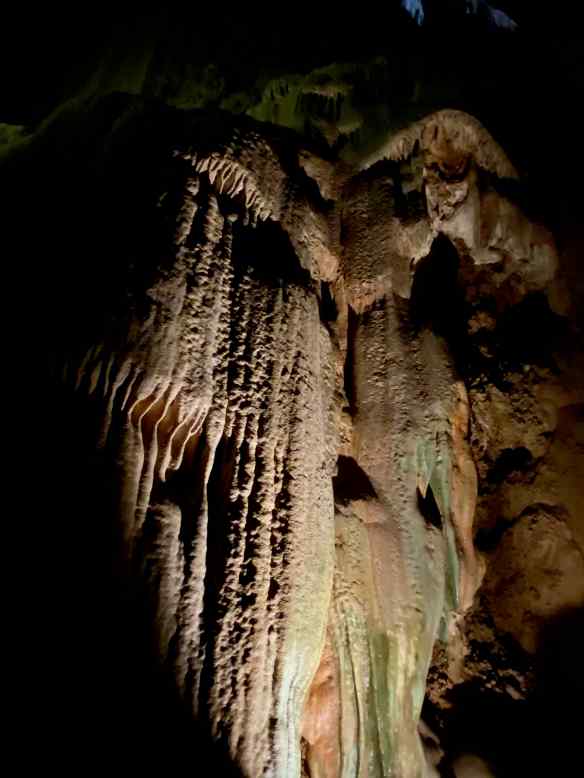
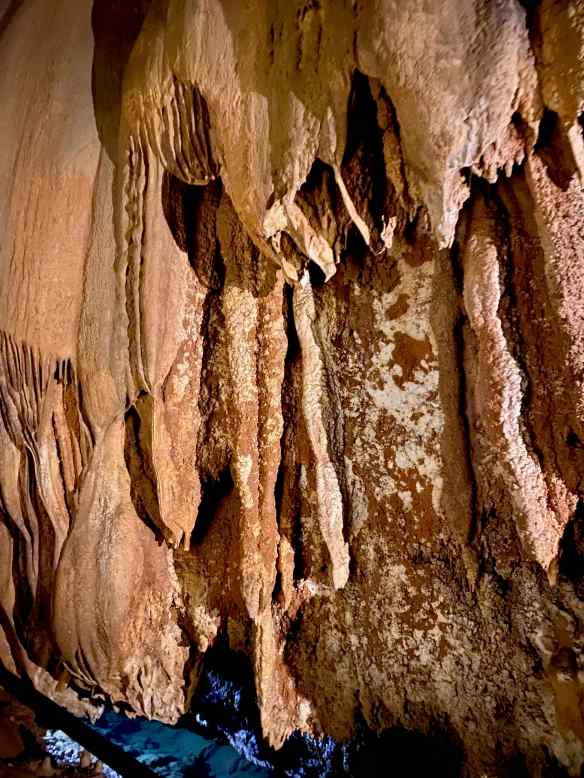
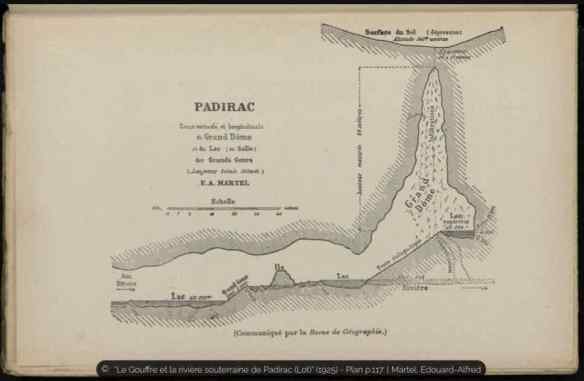
 The displays here shows some pictures of cave exploration…not for me..it looks cold, wet and exhausting and rather frightening as well. In all, 42 kilometres of galleries have been mapped by speleologists but there are still more areas that have not yet been explored.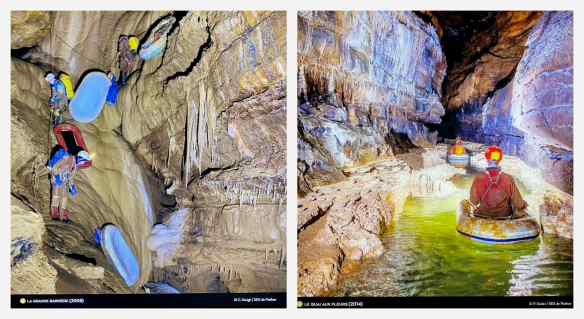
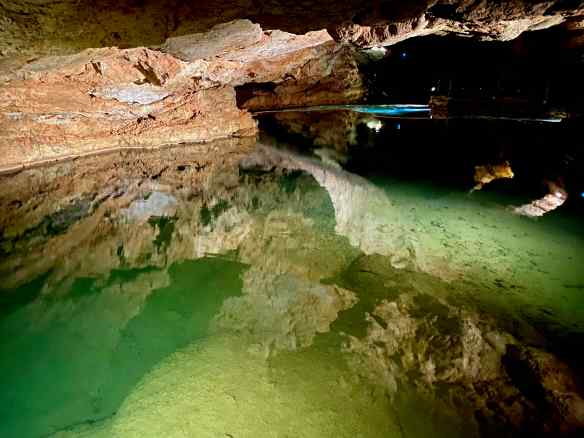
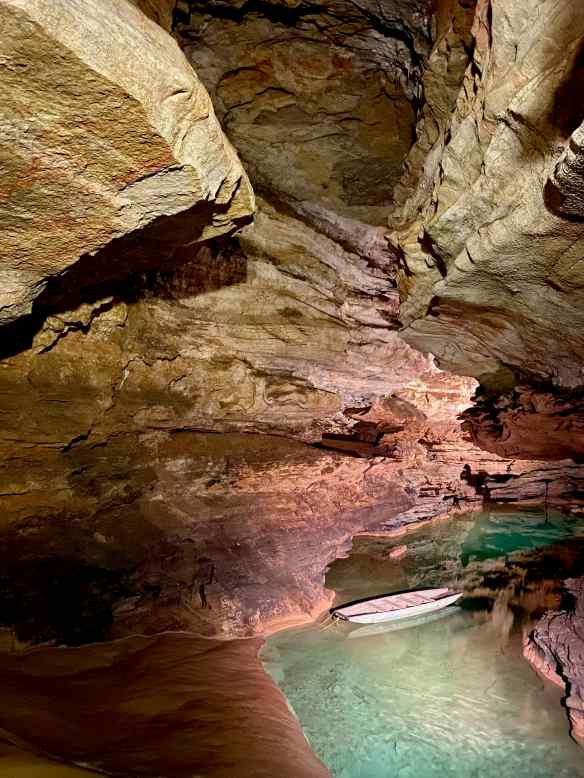
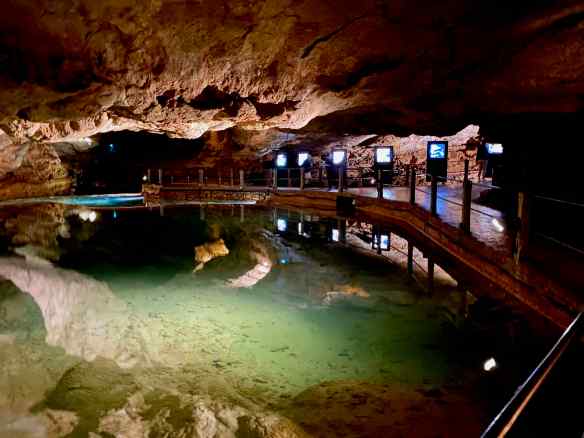
 And there is another lake, twenty metres above the river! Mind boggling! Lake Superior (Upper Lake), is crystal clear and an incredible aqua colour. The round tan shaped formations on the right hand of the photo form a dam that holds the water in this lake.
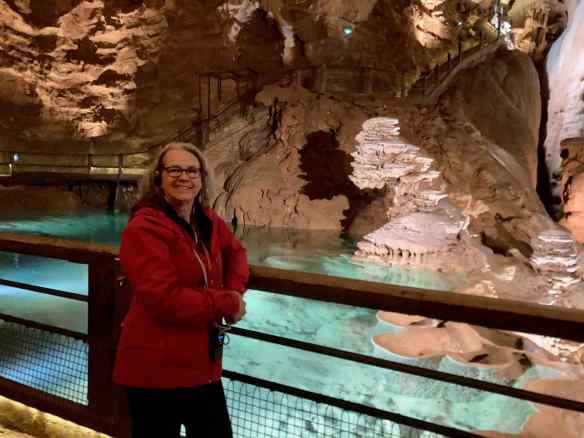 “A remarkable stalagmite lies above the lake. It is nicknamed the Pile d’Assiettes (Pile of Plates) because of its surprising resemblance to stacked-up china. It is a typical high-roof stalagmite formed when such a structure exceeds several tens of metres in height. Drops of water fall to the ground at great speed and explode, depositing limestone in circles and giving rise to very flattened formations.” ~
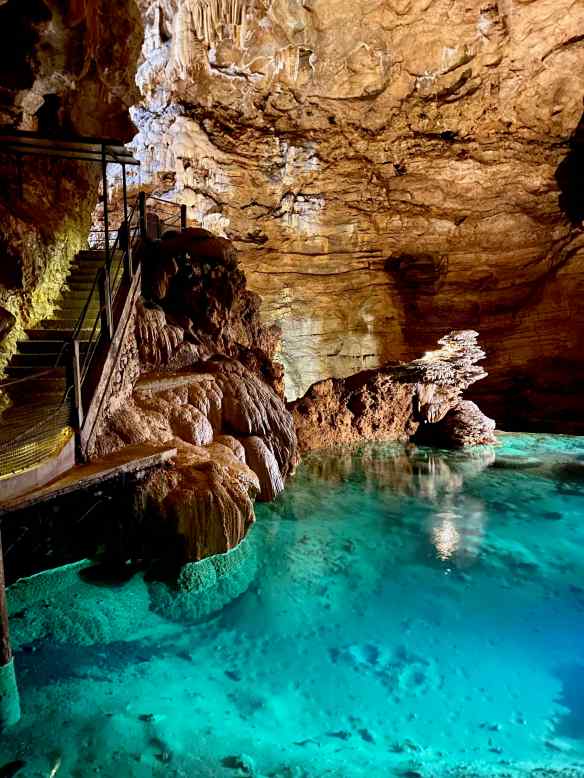

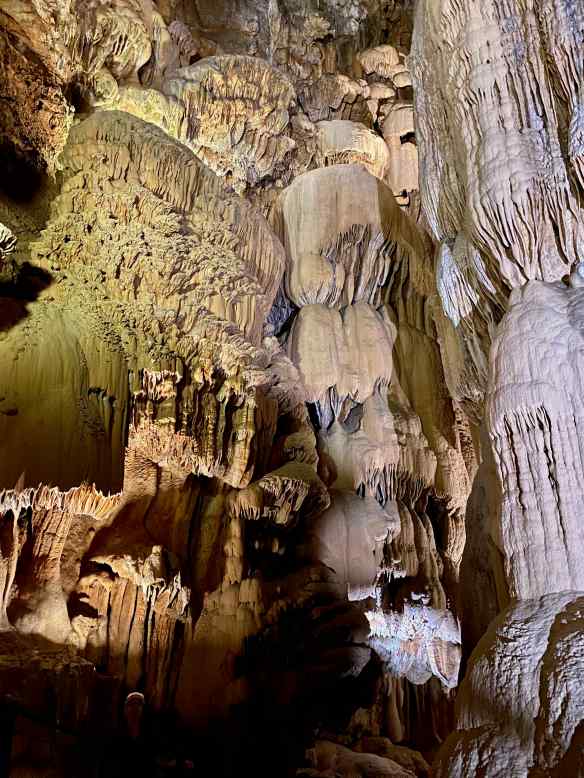 I am quite relieved that we do not have to climb these steps!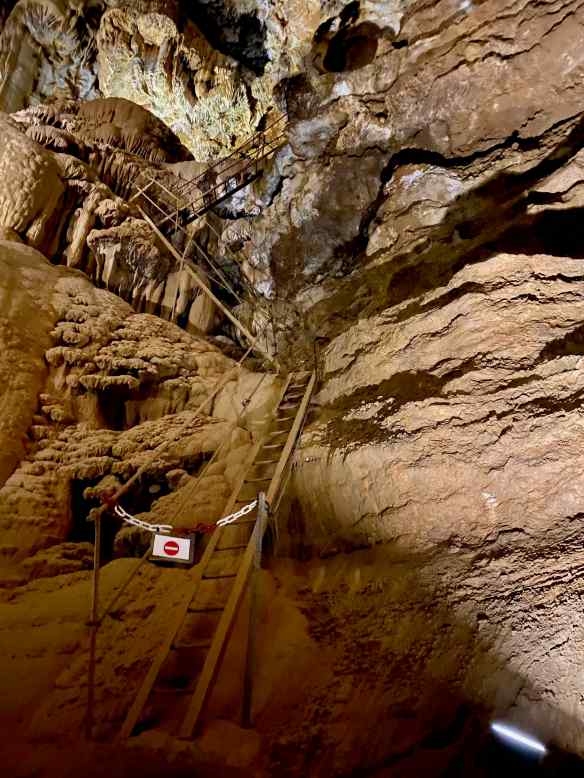
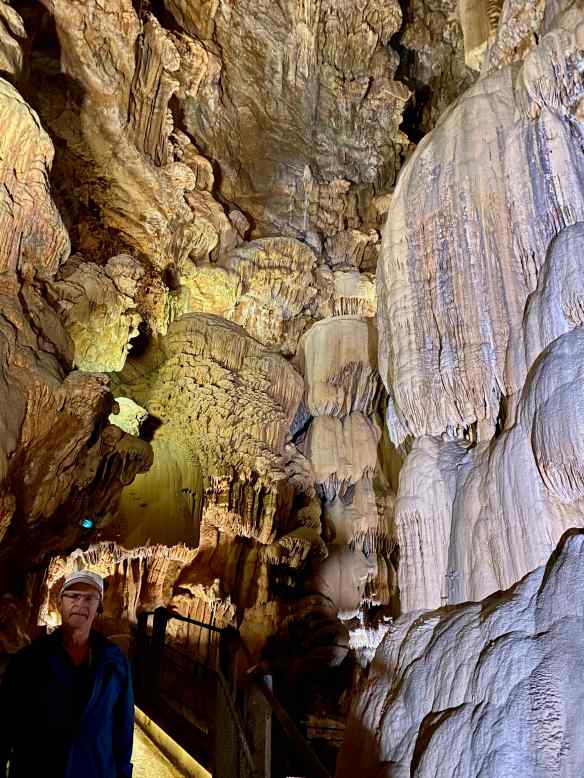

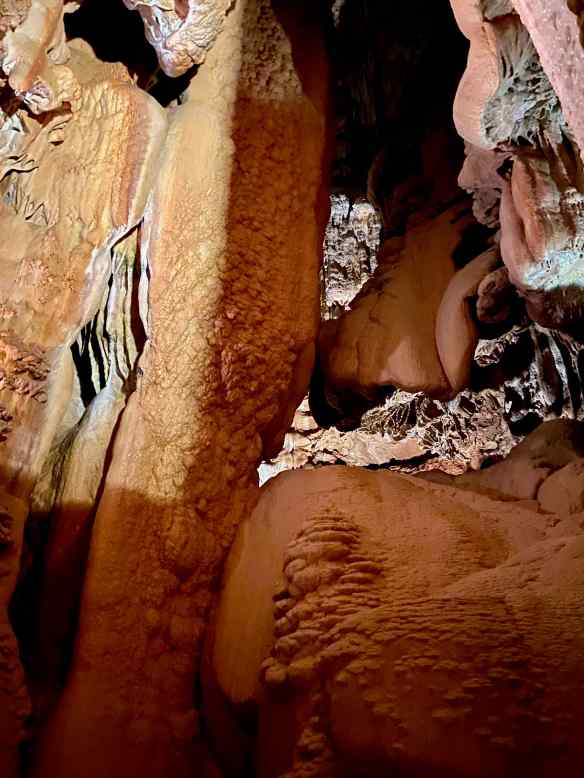
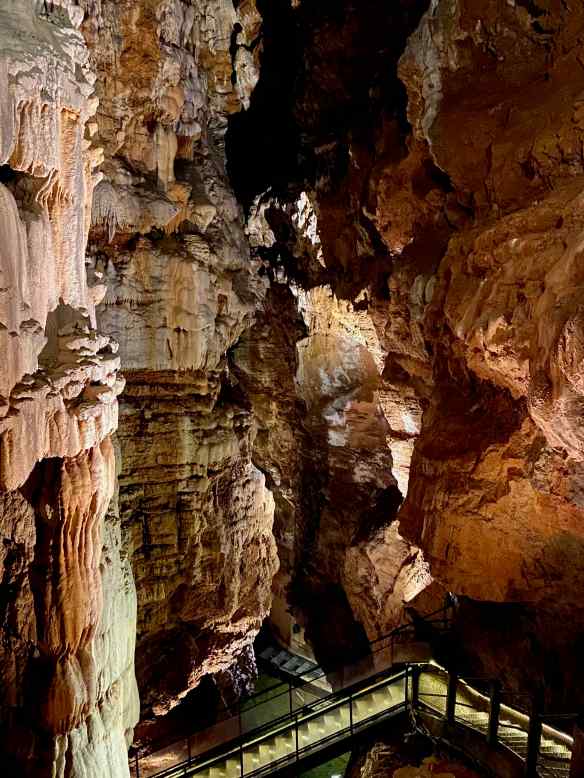
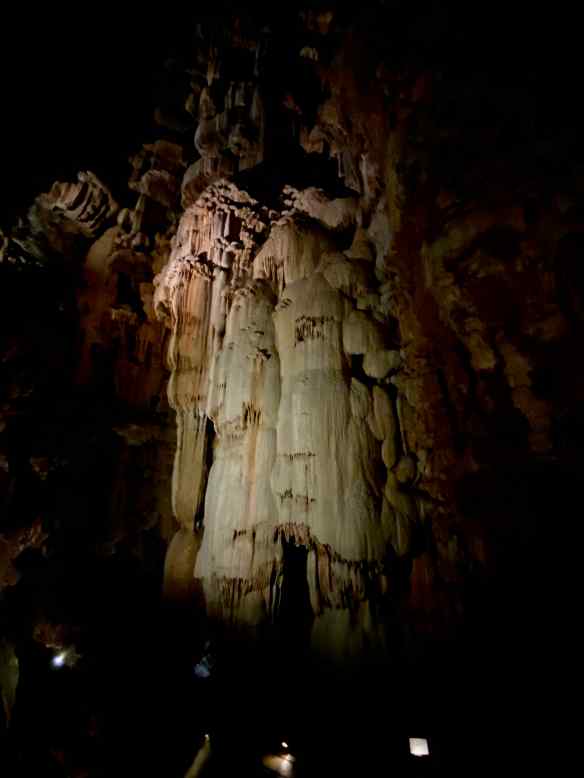
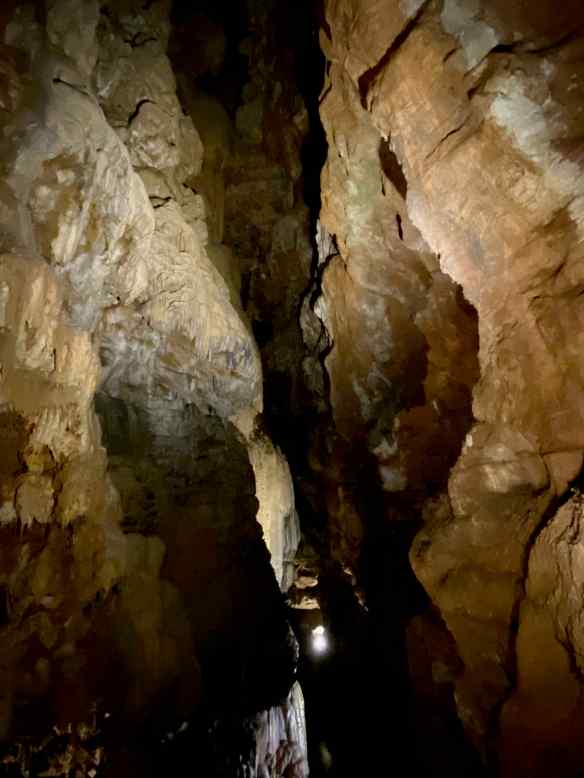
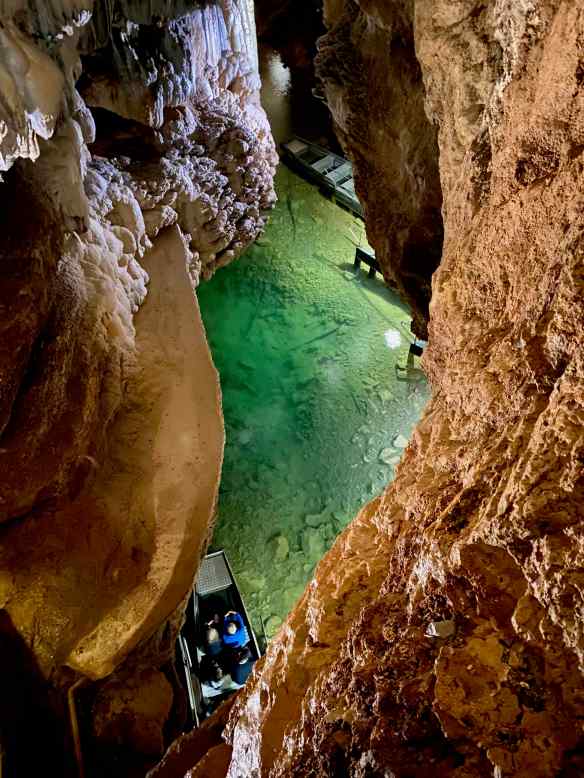
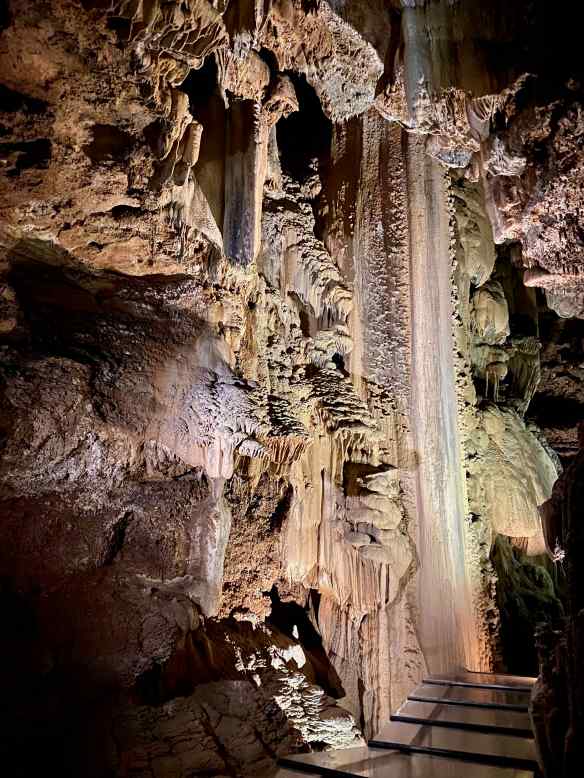
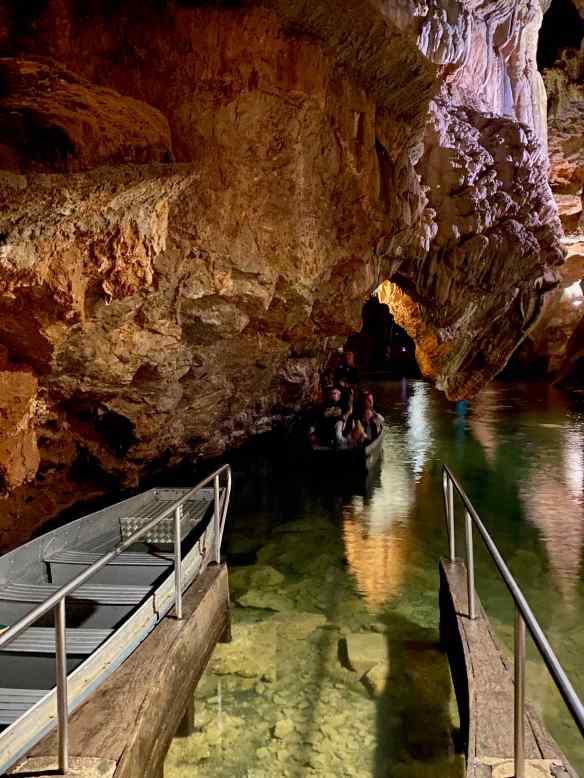
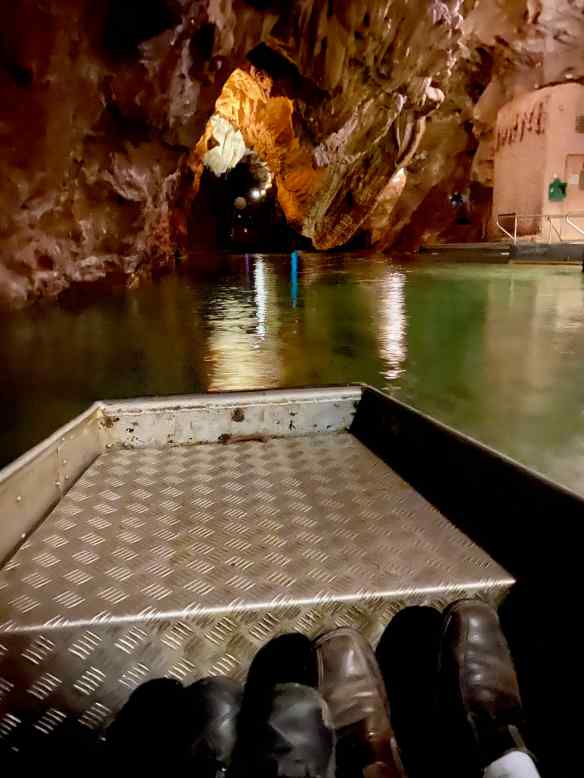
 One last photo in the cave.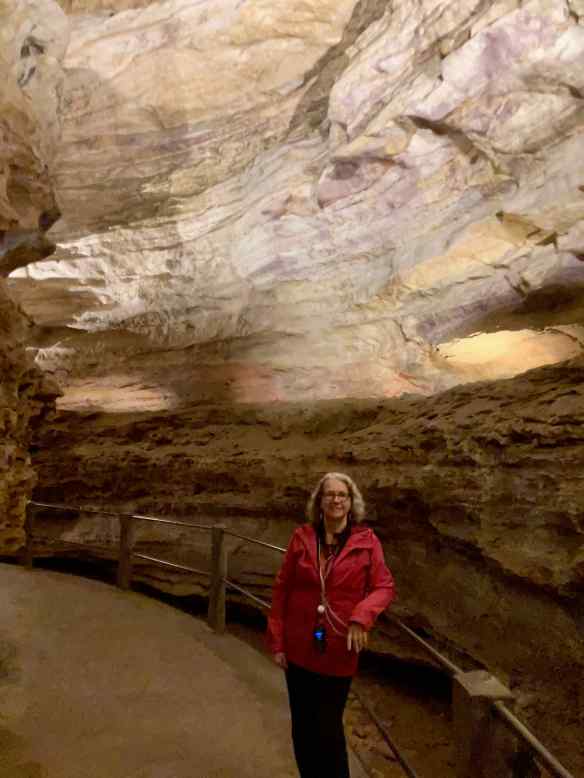

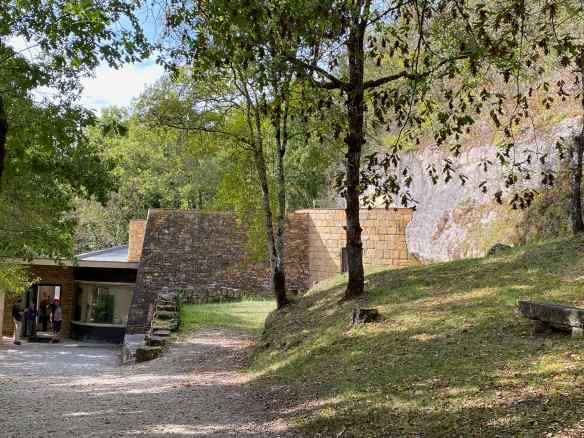
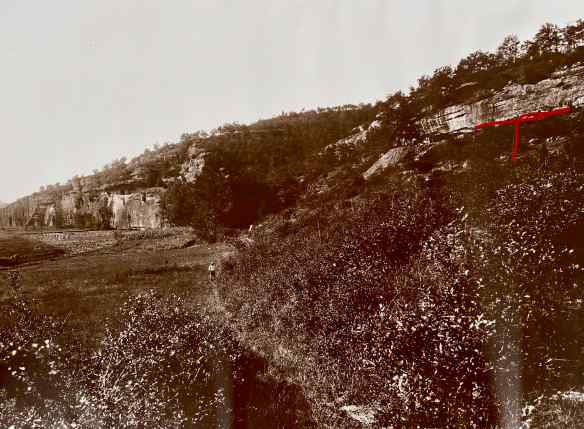
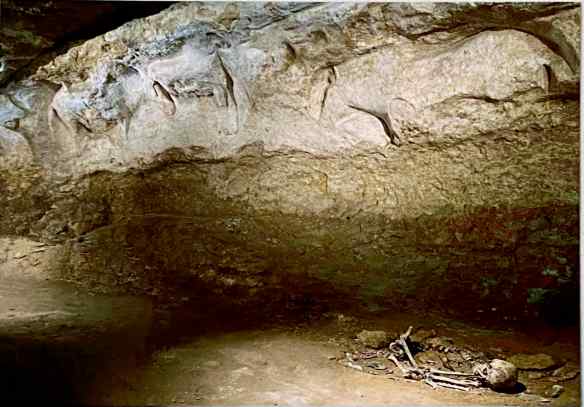
 A scientist reconstructed the features of the skull that was found here. I think she is quite beautiful and yes, much like a modern woman. The jewellery is from an area near here but ti was not found with this skeleton. Magdelenian man, or Cro-Magnon man is regarded as the closest ancestor to today’s humans.
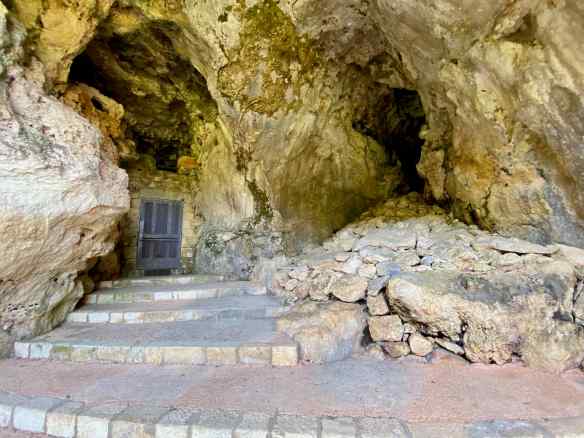
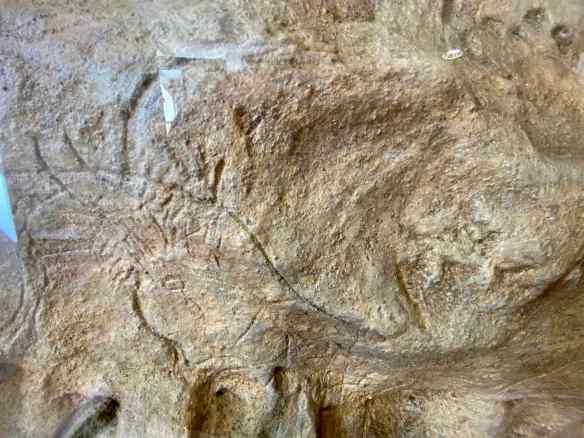
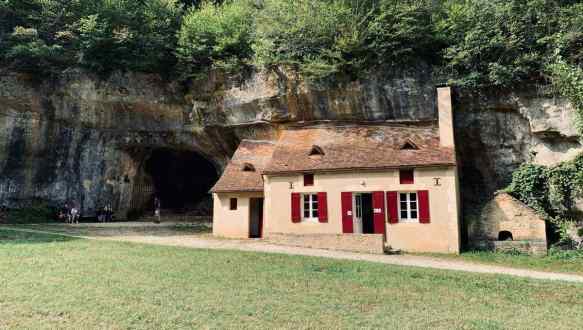 Inside the entrance building there are some drawings of the etchings in this cave. There are more than 800 rock engravings dating back to the era of Magdalenians, including 300 mammals, 52 stylized human figures, abstract signs and half a dozen sexual symbols.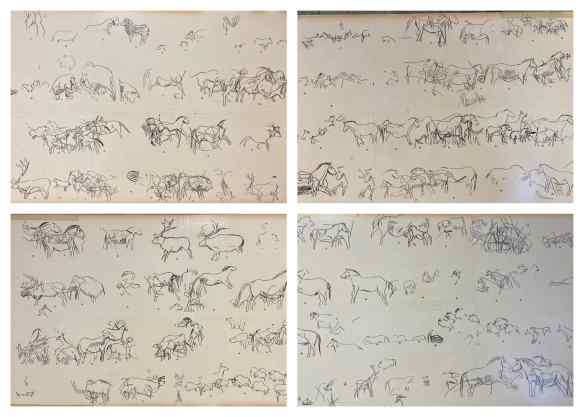

 trudymason.com