Sarlat le Canéda, France

Day 36, Tuesday, October 3, 2023

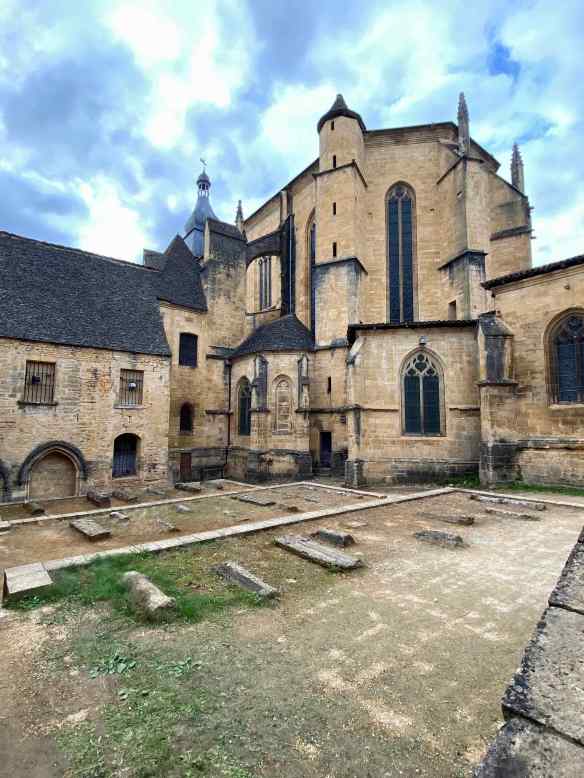
Bob is out early exploring the streets of Sarlat and he comes home to tell me how interesting this medieval town is. We both go out in the afternoon for a walk. Sarlat Cathedral, just around the corner from our apartment is a Roman Catholic church.  It is a national monument and was established in 1317!  We hear its bells chiming several times a day. It is a nice wake up call at 7:05 am when the bells chime for several minutes.  The ringing of the bells at 7:05 am and 7:05 pm each day is called “Angelus,” and that it is an ancient pattern of bell-ringing that is a call to prayer for Catholics to pray a particular prayer.  This is the back of the church, with several ancient sarcophagi, which I discovered is the plural form of sarcophagus.
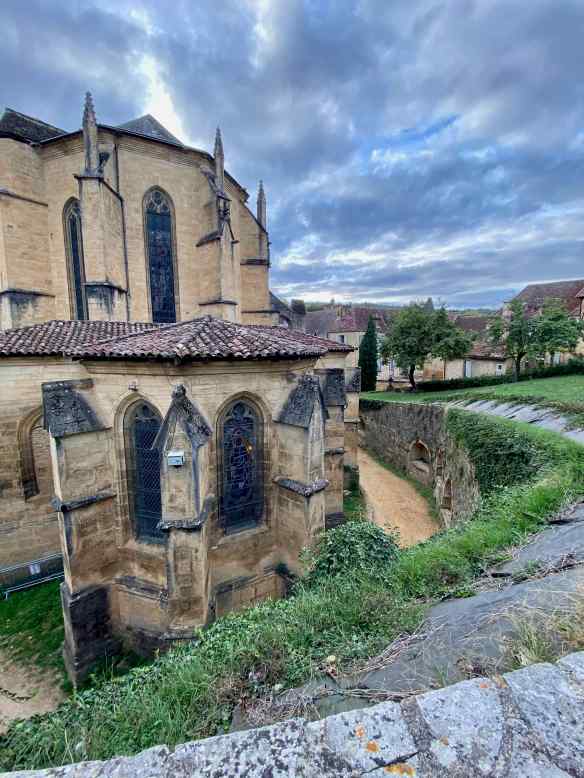
We climb the steps behind the church and I notice a light shining through the stained glass window, although the church is closed at the moment.
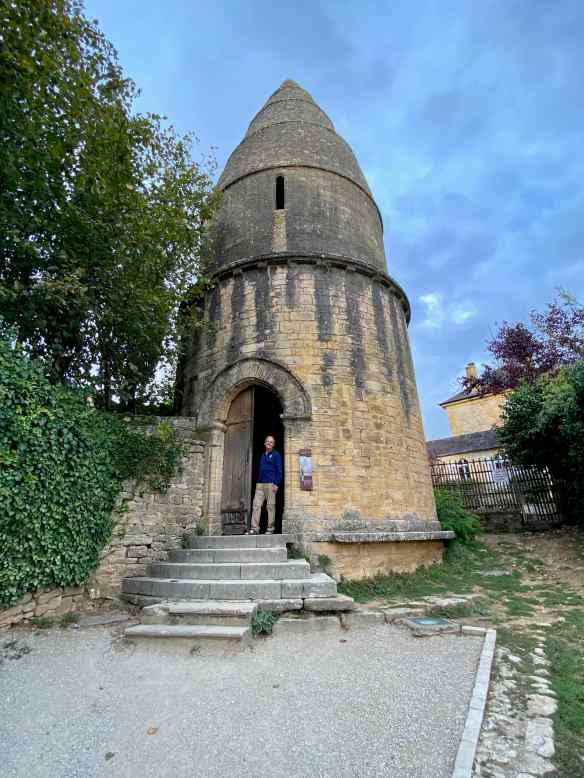
At the top of the steps behind the church we find this Lanterne des Mortes, which means Lantern of the Dead. Lanternes des Mortes are small stone towers. “Pierced with small openings at the top, a light was exhibited at night to indicate the position of a cemetery, hospital, or leper colony. These lanterns were originally constructed to warn passers-by of the danger of infection, as well as to illuminate cemeteries where it was feared that repenting souls, ghosts, and criminals could hide. Later, they were also erected at the intersections of important routes and roads.”  ~Wikipedia

Bob checks it out but there are no repenting souls, ghosts or criminals about.
We continue to explore the old narrow streets.
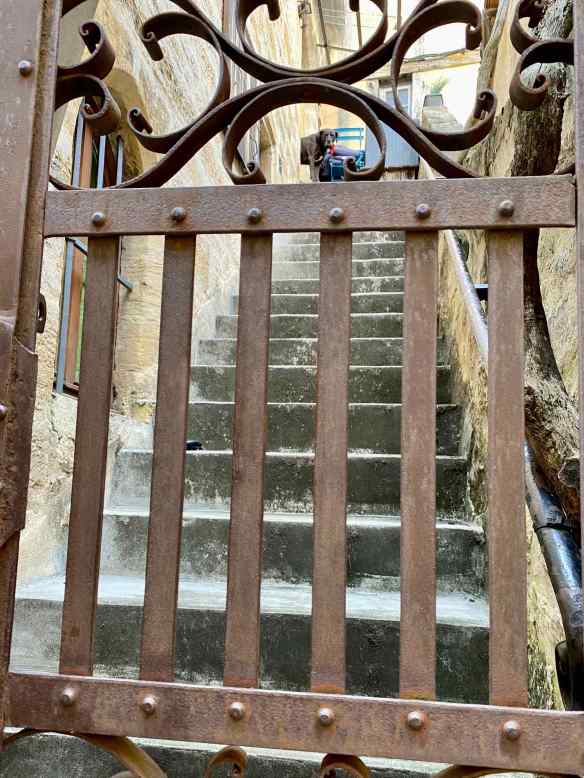
This very large dog just quietly watched us peek through the gate, even when I called to him he didn’t move a muscle.
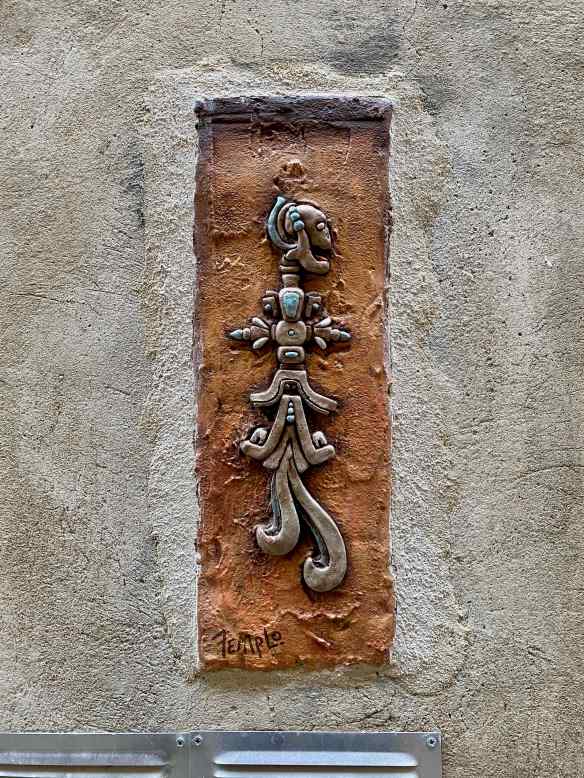
Someone cemented a little piece of art onto the wall on one of the side streets. It makes me smile.
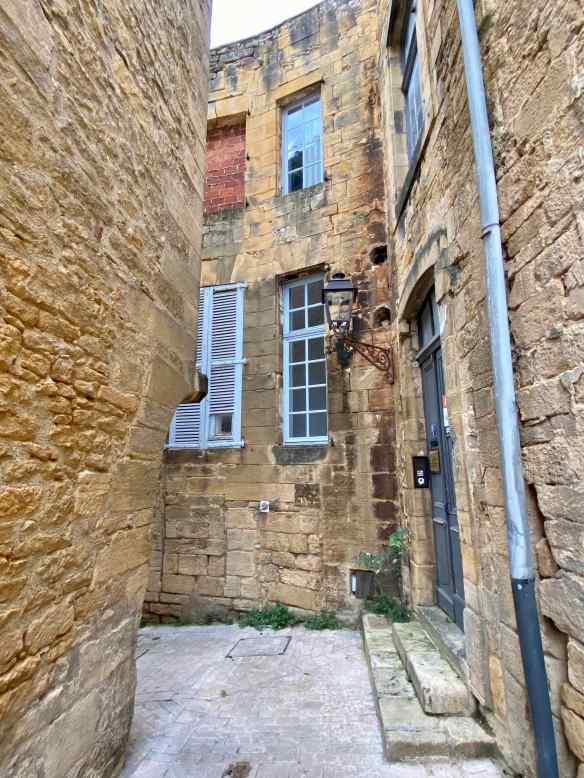
Everywhere we look the old buildings are crammed together, often one on top of another up the hillsides.  This one looks a bit castle like.
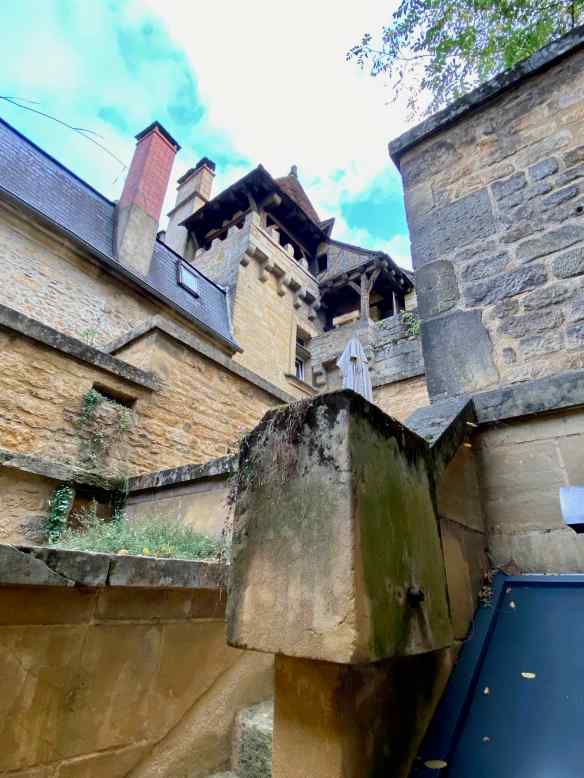
This charming little stained glass room is on the roof of the Présidial, which was built in the17th century.  At the time it was a sort of Court House where a Royal Officer would hear complaints and make rulings.  
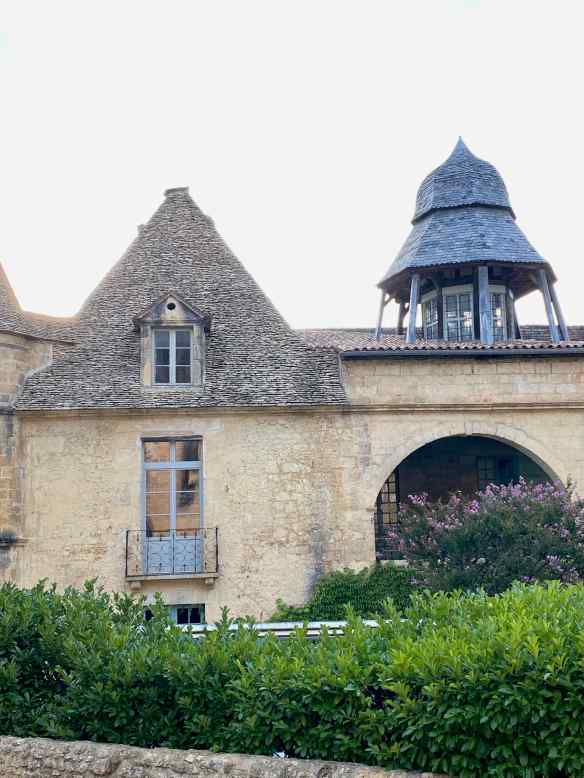
I have mentioned that I love peeking in windows and courtyards whenever it is possible.  I don’t think this is being renovated, it just sits empty.  
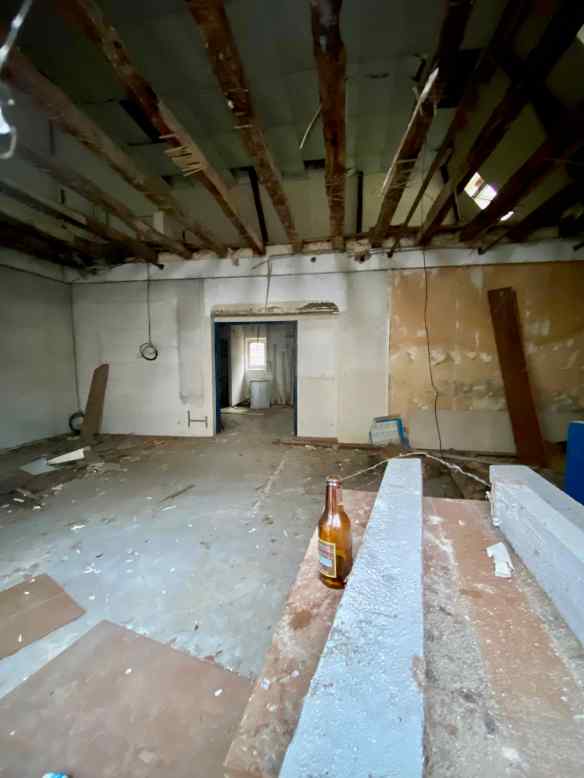
A block or so away a renovation is definitely taking place. there even was a box with old dishes sitting on the sidewalk, free for the taking.
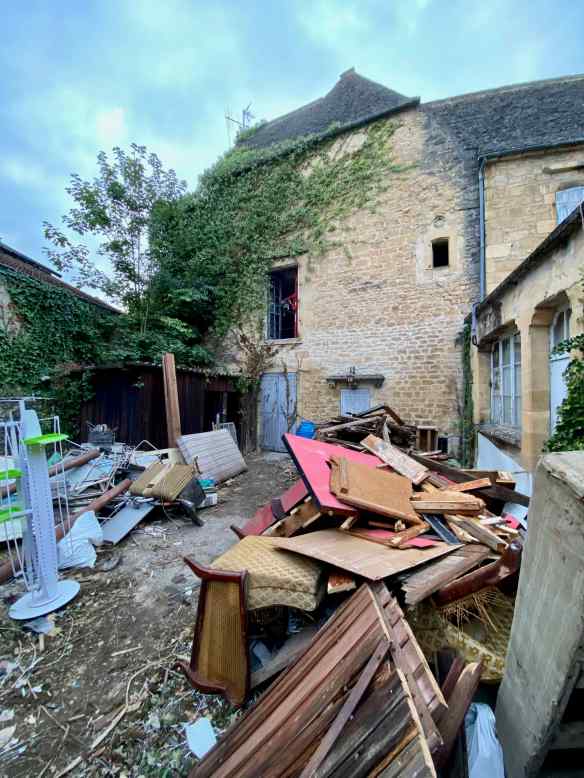
There are so many old houses boarded up and for sale.  I think we could probably buy one quite reasonably, but the renovations would be terribly expensive. If they are historic buildings, which they probably are, there are many restrictions on what renovations are able to be done and how they are done.  Guess we will pass on owning a little piece of Sarlat.
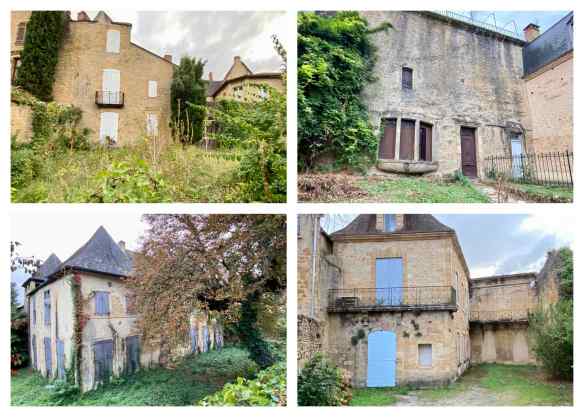
Most of the yards in this area are very overgrown and unkept.  Tidy gardens are not the norm here.
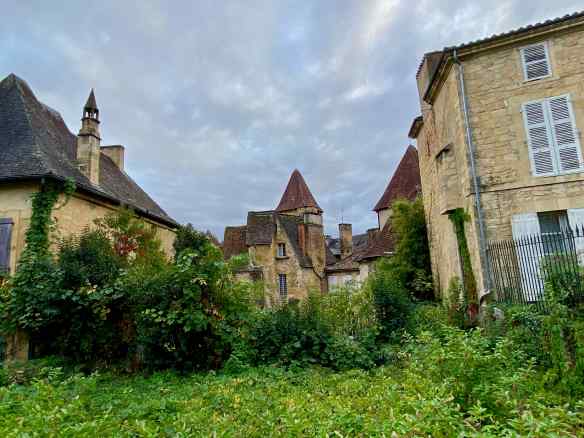
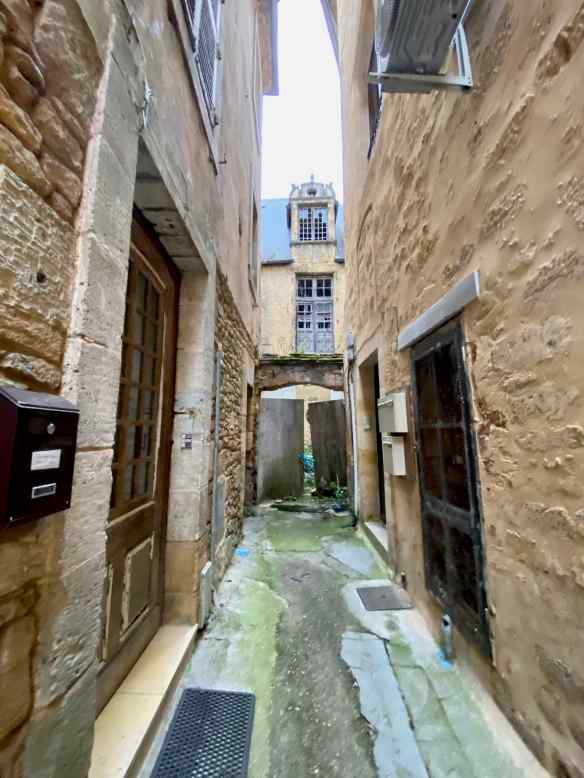
This narrow street ends in an abandoned overgrown yard and building with a lot of ‘stuff’ lying about.  Kind of creepy but just before the broken gate leading to this are doorways to apartments with new mailboxes and doors.  I wouldn’t want to be walking home at night here.
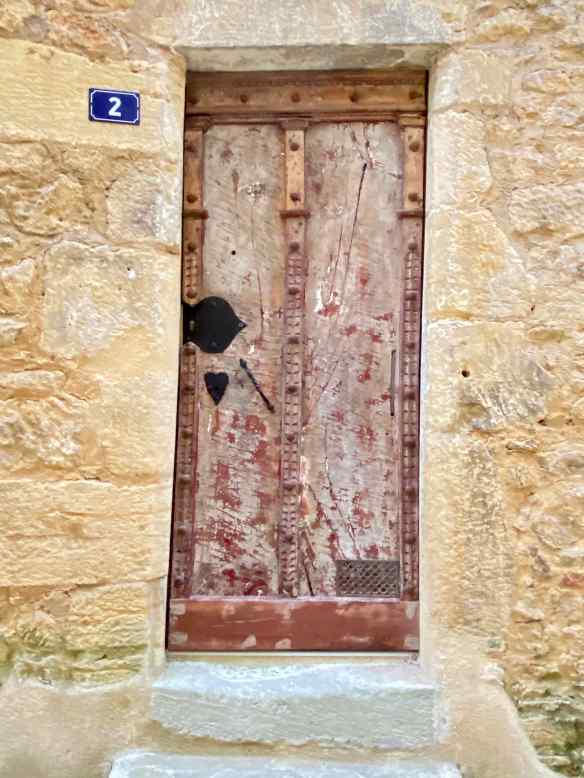
I don’t know what it is about French doors, but so many of them are very very old, and have peeling paint like this one.  But notice, it has nice new hardware…just not a new paint job.  There seems to be some sort of pride in having a very ancient looking door.
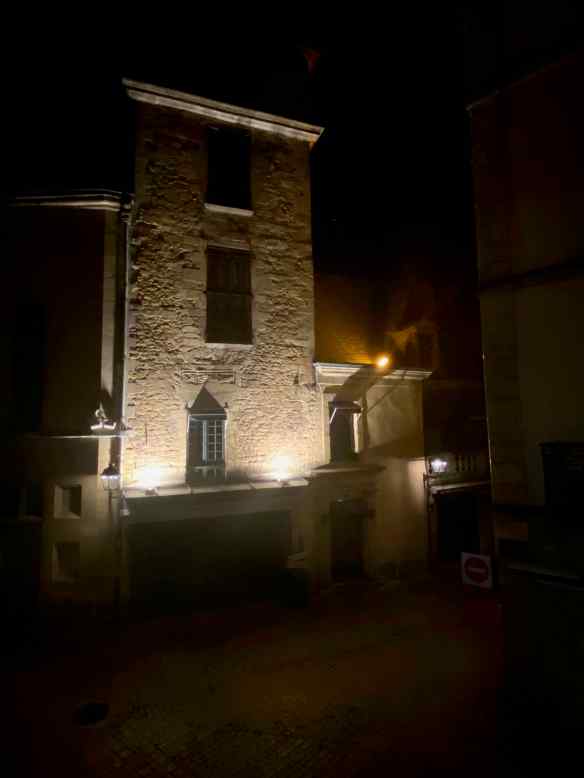
I forgot to take a daytime photo from our apartment window but this is the view when it is dark.
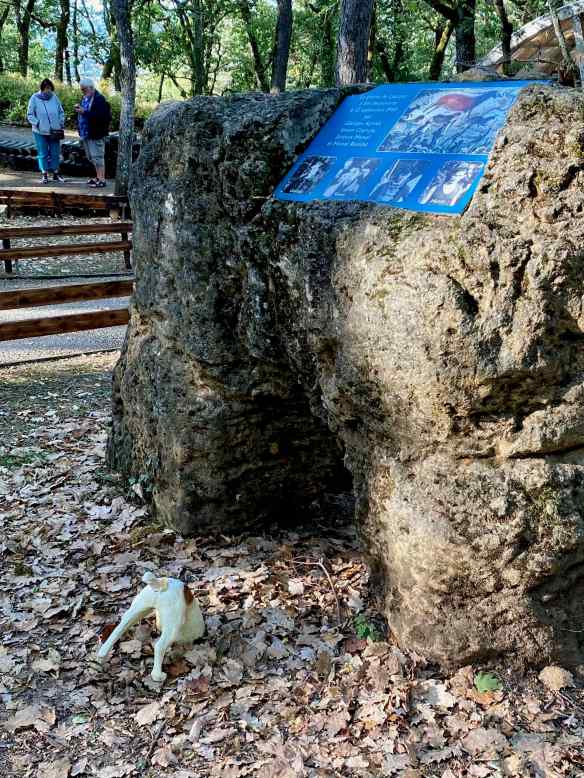
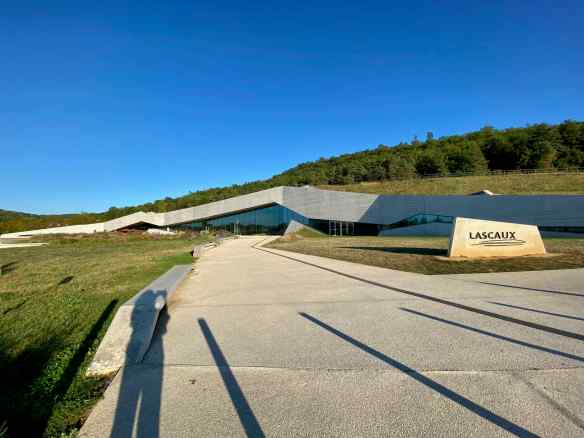
Lascaux II, Parc de Thot and Lascaux IV, France.

Day 35, Monday, October 2, 2023

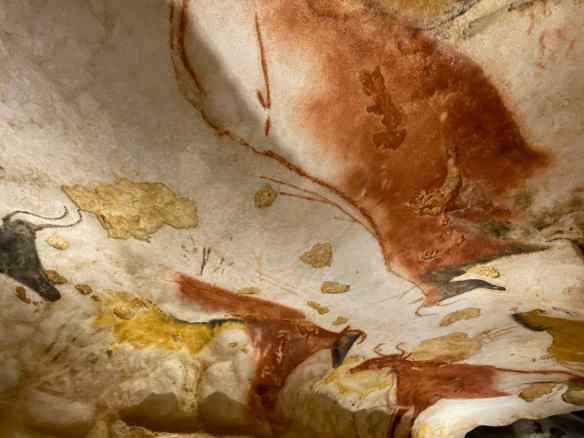
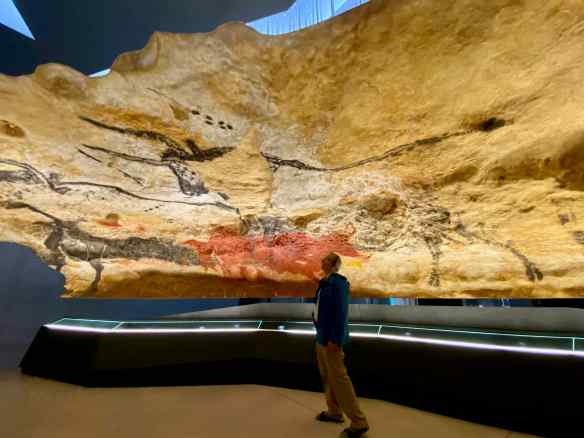
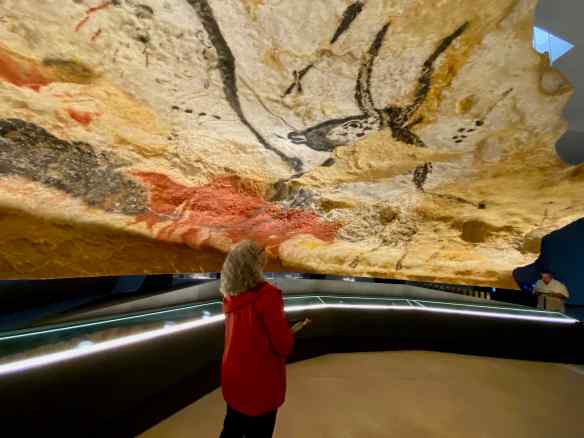
The Lascaux Cave contains one of the most outstanding displays of 20,000 year old prehistoric art in the world and it is a UNESCO World Heritage site.  We were very lucky to get tickets to visit Lascaux II.  We had completely forgotten about needing to book ahead but thankfully it is not high season and we were able to get tickets for an English tour of the cave.  The Lascaux Cave was discovered on September 12 1940 by 18 year old Marcel Ravidat when his dog Robot investigated a hole left by an uprooted tree that had fallen over in a storm.

Of course we are visiting a replica cave. It was the first replica cave in the world when it opened in 1983 near the site of the original cave…however there are still no photos allowed.  The original cave was closed in April, 1963. The continuous flow of visitors (1500/day) and the carbon dioxide and human breath began to degrade the prehistoric paintings in the decorated cave.   Lascaux II is an exact replica of the two main chambers of the cave. This short video has a segment with a walk through the cave by torch light. This is what we experienced at Lascaux II.   We were standing in a dark cave, with only a flickering torch to illuminate these 20,000 year old cave paintings.  It was an amazing experience.    https://www.youtube.com/watch?v=VWUUiFxbEE4&t=87s

I manage to do a couple quick drawings while in the cave, but the lighting is poor and I decide to enjoy the experience and forget about trying to draw.

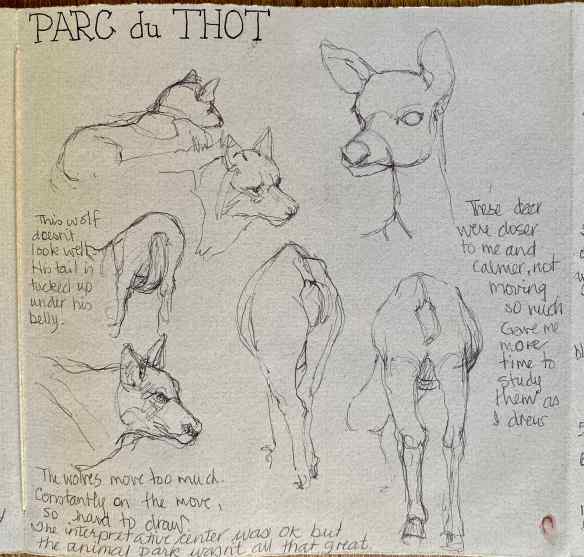
We visit Parc de Thot which is a small zoo with animals that are similar to those drawn in the caves…bisons, wolves, deer, and bulls.  There was an interesting short film and some displays in their building. It was a nice place to have our lunch but that was about it.

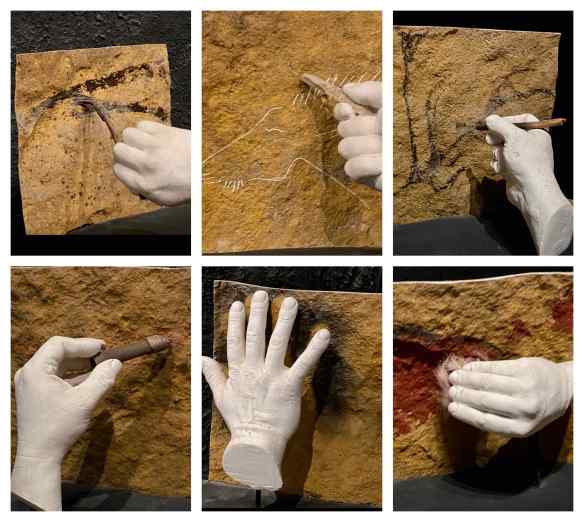
This display shows the different techniques that were used to make the cave paintings and engravings.  I was surprised to learn that paint brushes, pencils (pieces of pigment attached to sticks}, stencils and a primitive sort of airbrush were all used 20,000 years ago!  The artist would blow pigment from his, or perhaps her mouth onto the walls of the cave, sometimes even using a hollow bone for more accuracy.

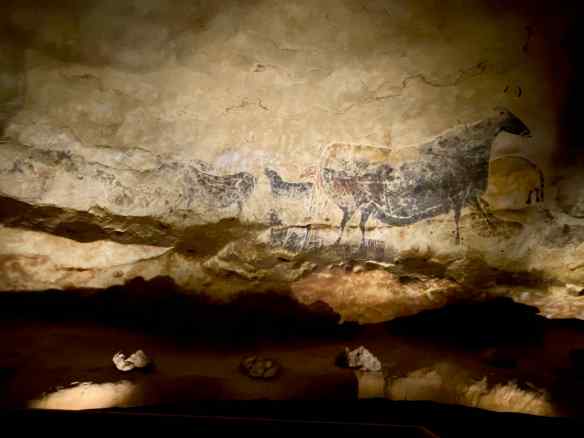
This display shows one of the cave paintings…

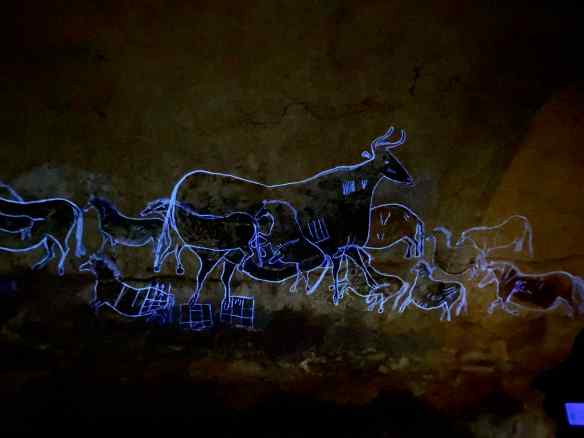
and then uses black light to show all the engraved lines that are difficult to see.

After we ate our lunch I did a bit of drawing and Bob did a bit of reading before we left for Lascaux IV.In 2016, a new replica, Lascaux IV, was opened to replace Lascaux II. It is adjacent to the original cave and offers an even more authentic experience than Lascaux II, with changes in air pressure, along with a series of atmospheric cave scents and sounds. Once again no photos allowed however there is an interpretive area that has more replica displays and we can take photos there.
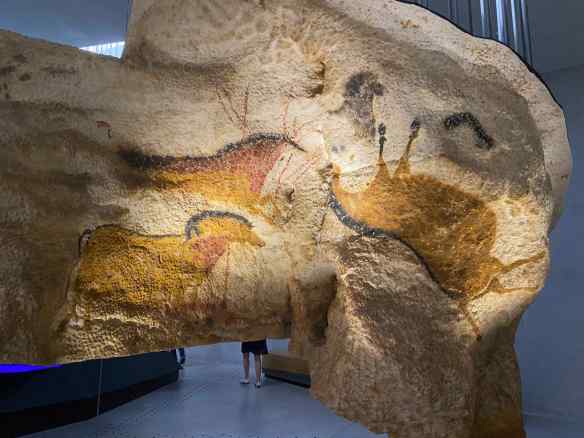
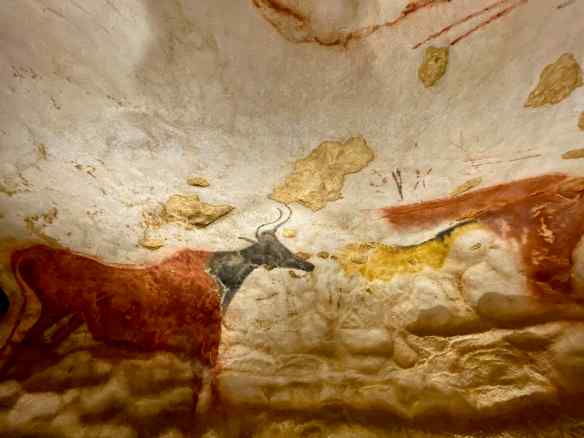
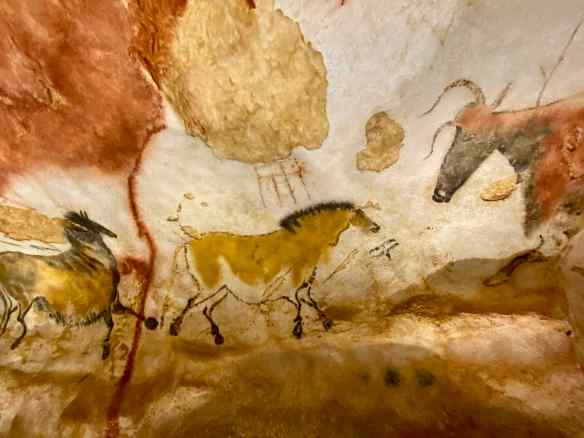
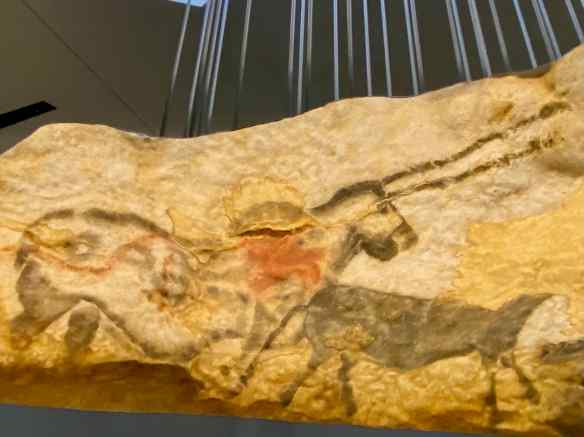
These displays are just as well done as the paintings in the cave..

It is nice to have a bit more time to really examine some of the the paintings up close and in better light.

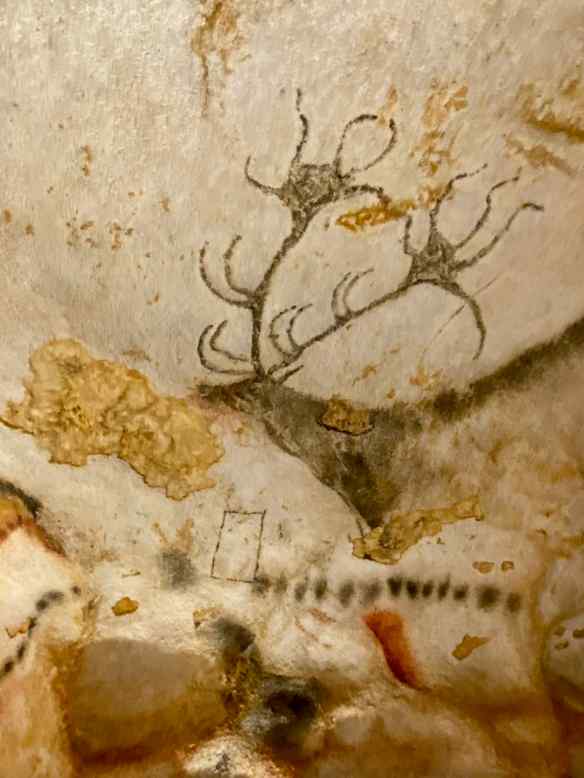
They are spectacular, and photos do not come anywhere near ot capturing this incredible art that was created 20,000 years ago by Cro-Magnons, who were the first early modern humans.

This stag is particularly beautiful with its magnificent set of antlers.

This is one of the first figures we see when we enter the cave.  It is called ‘The Unicorn’ even though it has two horns.  It is an animal drawn from the imagination of the artist and did not actually exist.

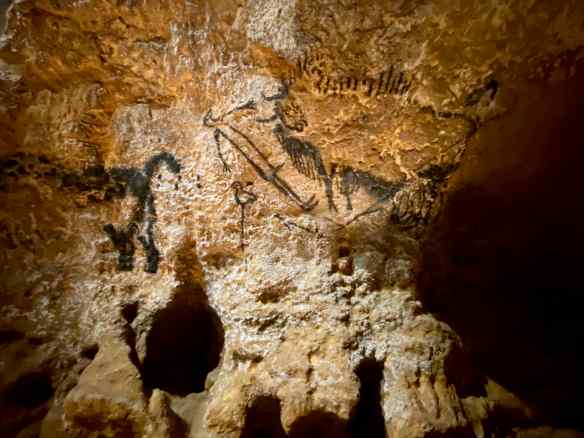
There is a deep shaft that has the only depiction of a human, although it does have the head of a bird.  This is also in the interpretive area as it would be impossible to climb down the shaft in the replica cave.  Here we can walk in at the bottom and look upwards to see the paintings.

This gives some idea of the size of these paintings.  This is one of the largest animals in the Lascaux caves.

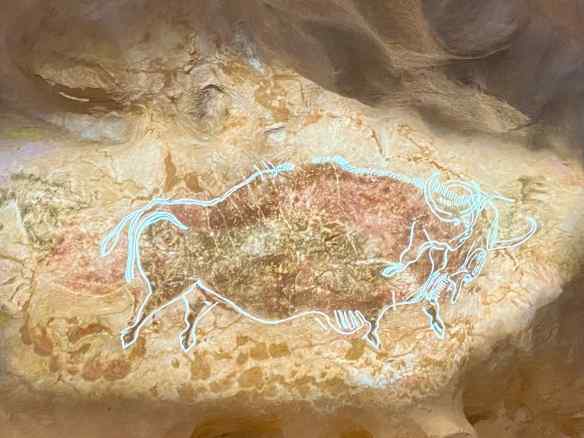
I like this bull.  It is the one I drew in Lascaux II.

This display showed the engraved lines of this bull.  Giving the bull two heads was used to portray movement.

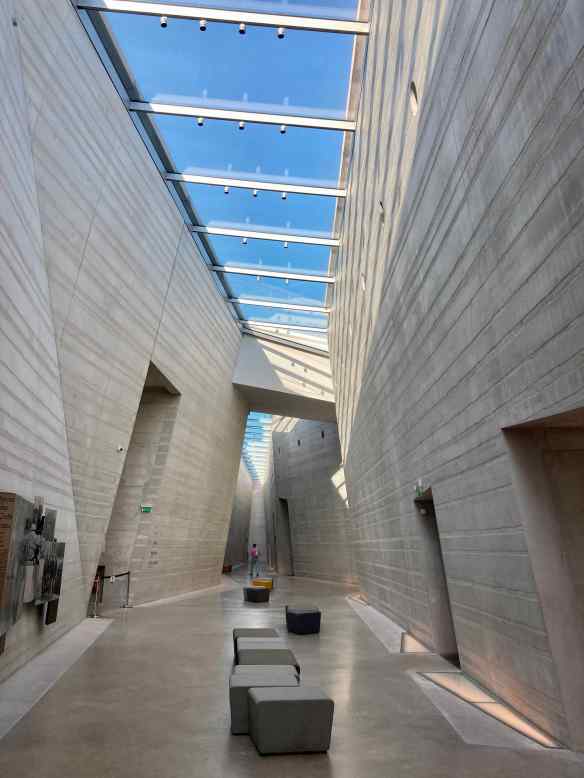
Leaving the interpretive area we walk down this long corridor which has several theatres with more information on Lascaux and the history of the discovery of the caves.  There are over 150 prehistoric sites in this area.The last room we entered had huge animations which travels across three walls and sometimes over the floor and ceiling as well.  I particularly liked this one which shows mammoths from the Rouffignac Cave, which we hope to visit later this week. https://www.youtube.com/watch?v=G2yv2ydzsJ0

We are the last people to leave and they lock the doors behind us after we walk out.  It was a great day.


Sarlat le Canéda, France

Day 34, Sunday, October 1, 2023

Our first day in Sarlat, Bob goes for a walk to check out the neighbourhood and I am quite content to watch the world go by from our window.  There is a knock at our door and when I answer it there is a box of local goodies from our Airbnb hosts.

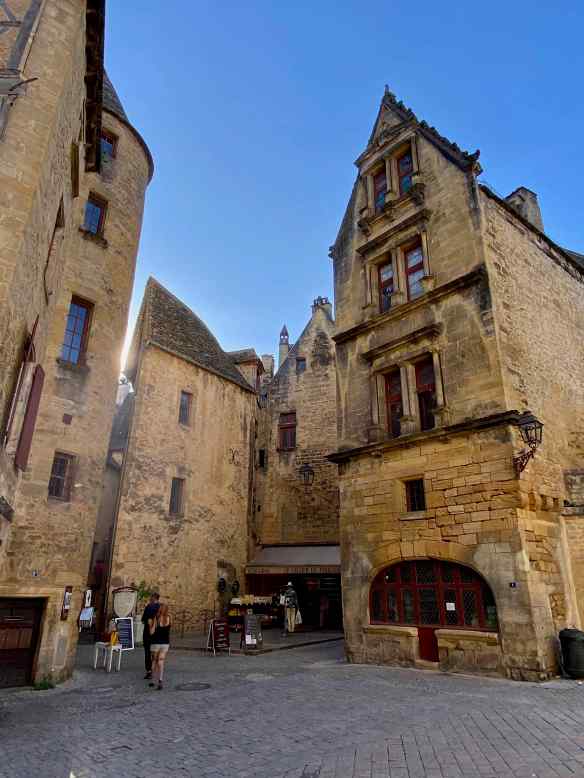
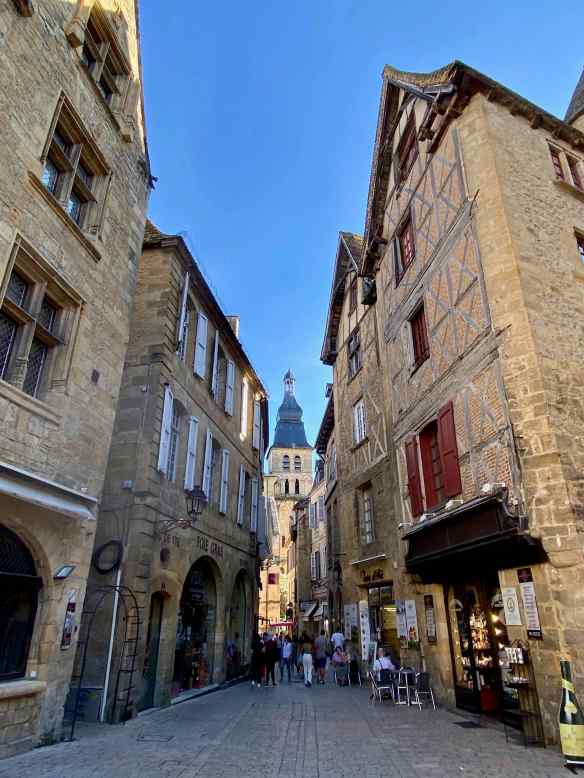
In the late afternoon we go for a little walk through the narrow cobblestoned streets.

This is a Medieval town and most of the buildings date from the the 15th century and even some from the 13th century!

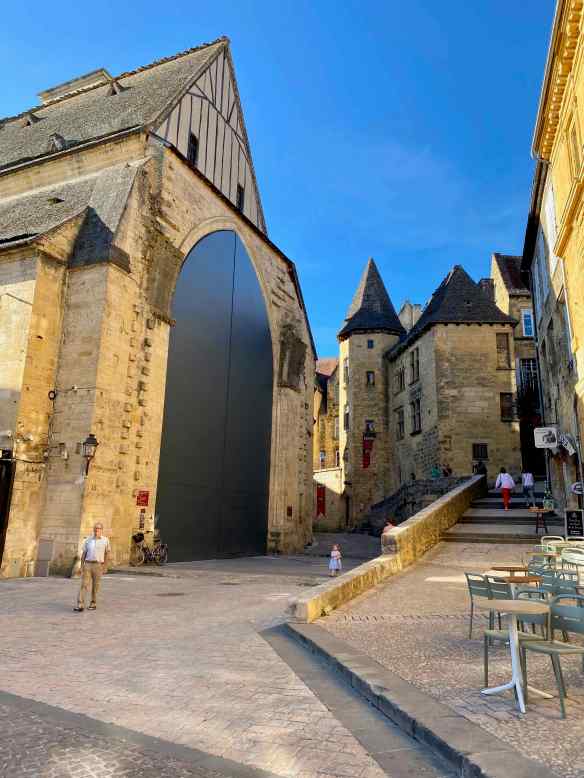
This old church is now an indoor market.  We will have to return when it is open.

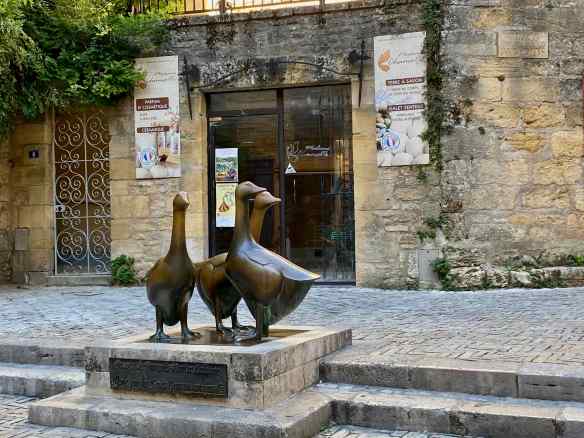
This statue of three geese is a reminder of the importance of the local fois gras industry.

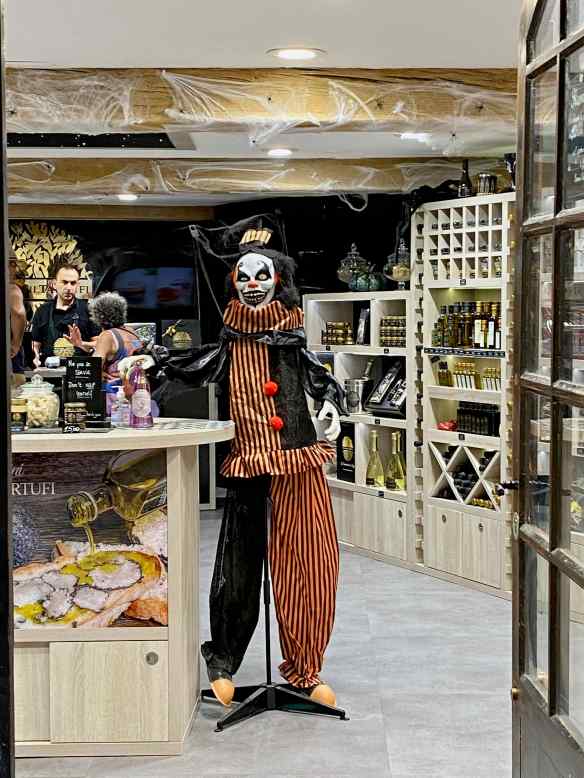
Some of the shops are already starting to decorate for Halloween.  This clown is particularly creepy.

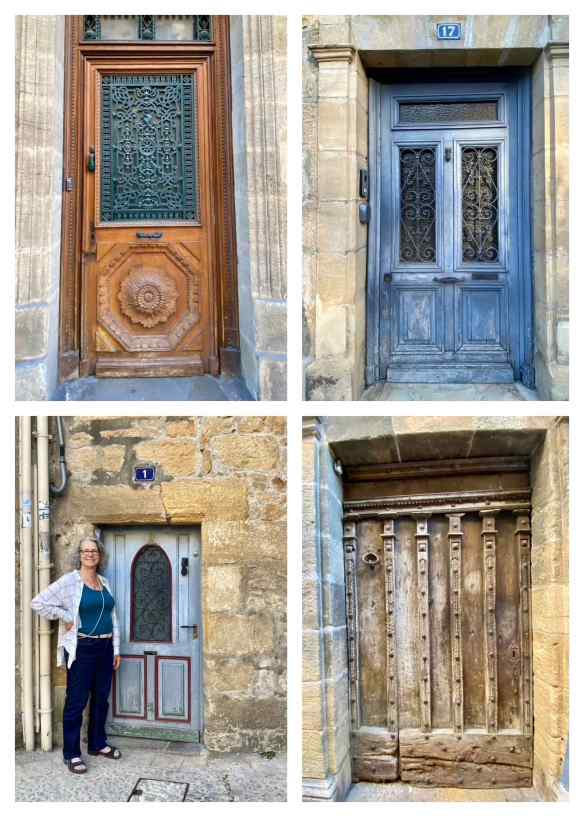
There are always interesting doors in French cities and towns.

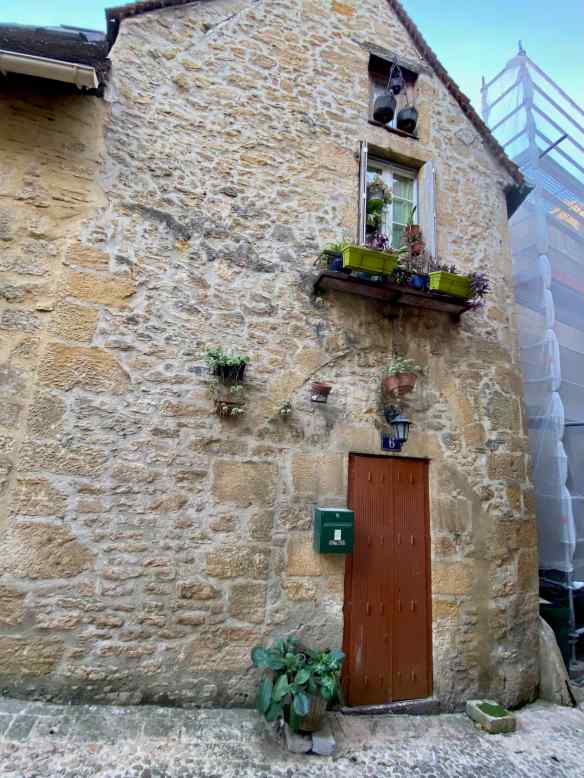
What to do when you want a garden but don’t have a yard.

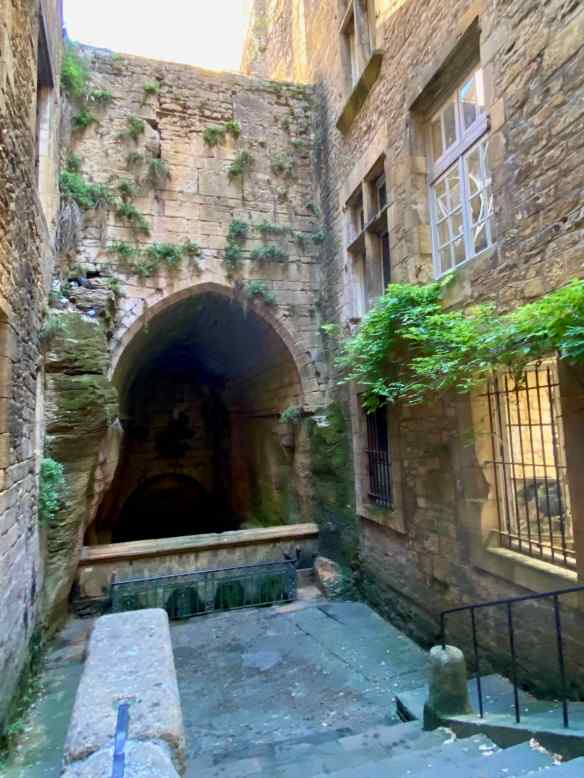
The Fontaine Sainte-Marie is nestled in a natural grotto not too far from our apartment.. This 12th century fountain was used until the 18th century when the water became polluted from nearby streets and stables.  

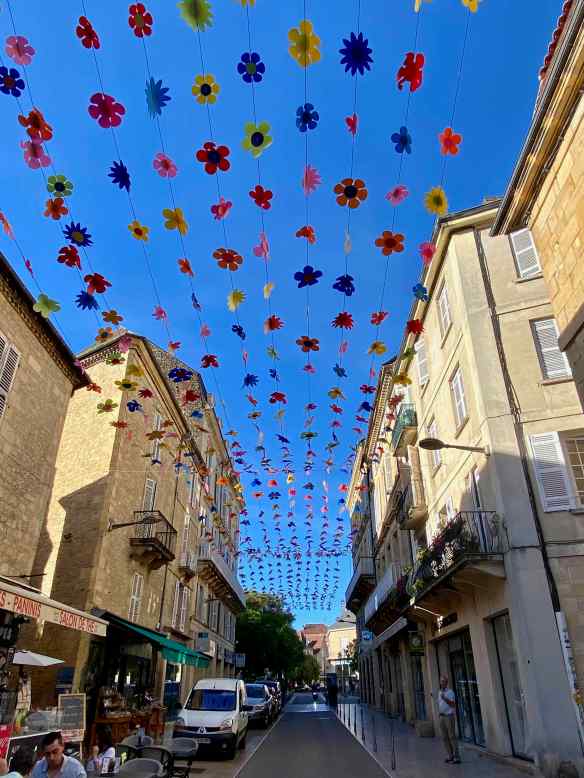
We walk back home under a street festooned with flowers.  This is going to be an interesting place to stay.

Montrésor and Sarlat le Canéda, France

Day 33, Saturday , September 30, 2023

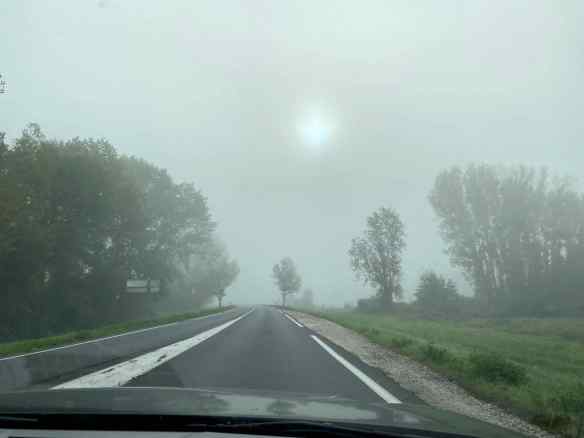
We leave for Sarlat la Canéda in a heavy fog.  It is quite beautiful , but not the easiest driving.

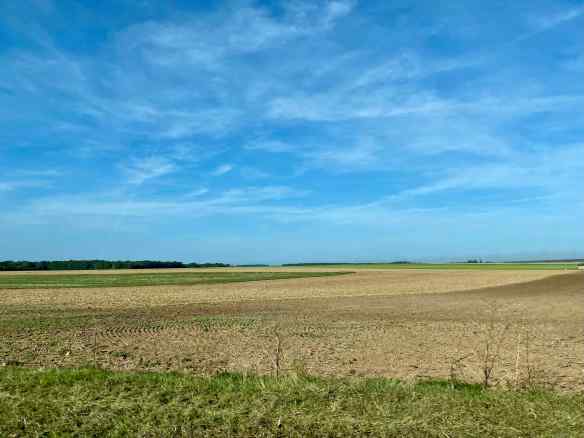
Before too long the sun is shining and we are driving through farmland that looks a lot like Alberta. 

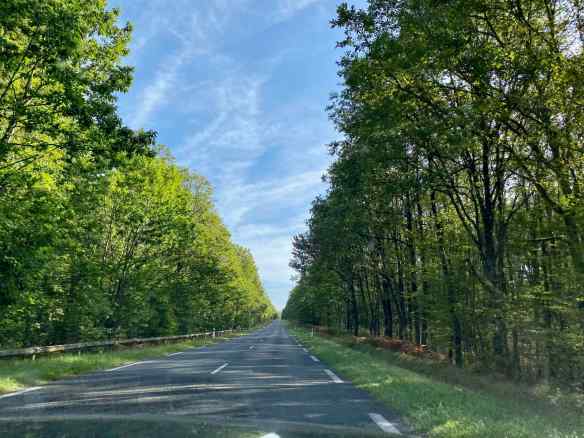
Then we drive through a beautiful forested area.

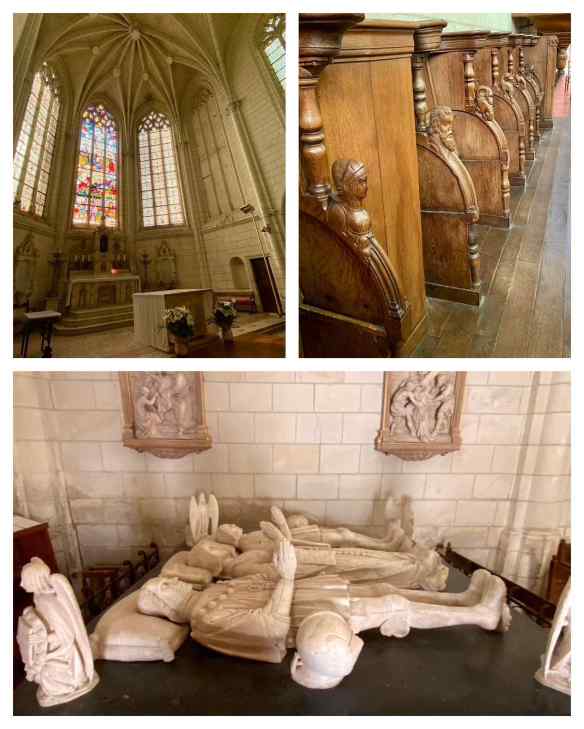
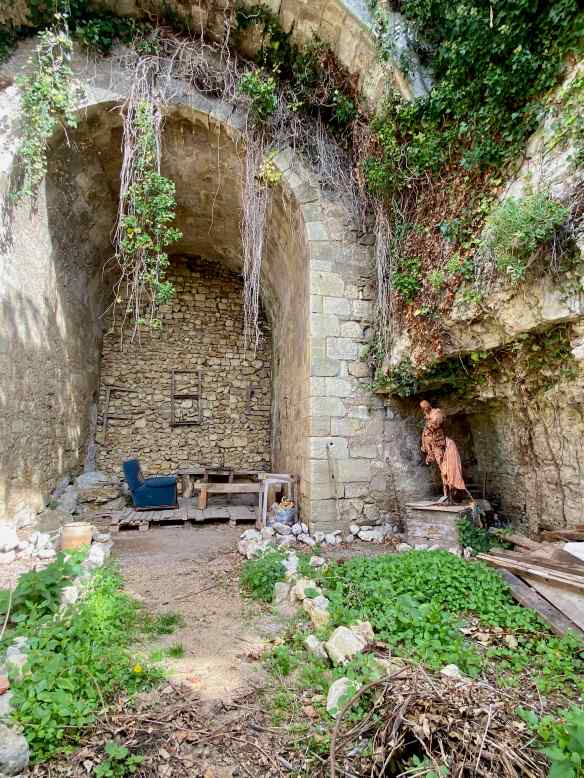
We stop for a visit and lunch in Montrésor which is listed as one of France’s 140 most beautiful towns.  The church is small but interesting.  The church was built to house this white alabaster tomb for three family members.  The stained glass windows and the carved wooden stalls all date from the 16th century when the church was built.

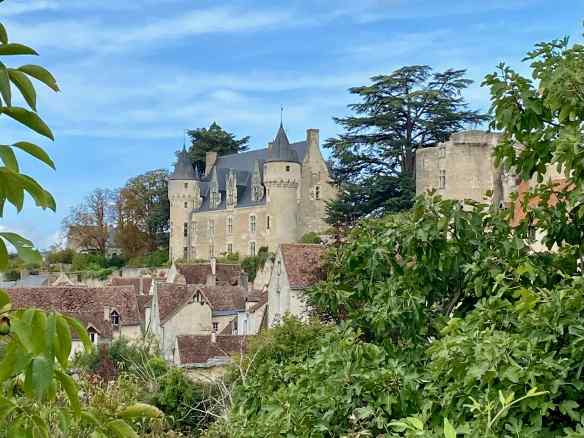
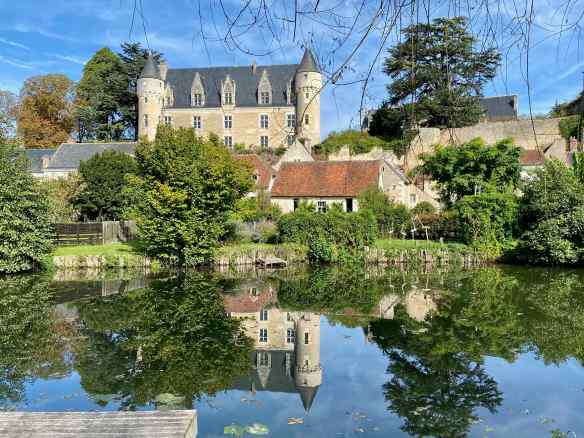
We walk along the river which has interesting information plaques and great views of the Château de Montrésor and the village.

Loved the reflections in the river.

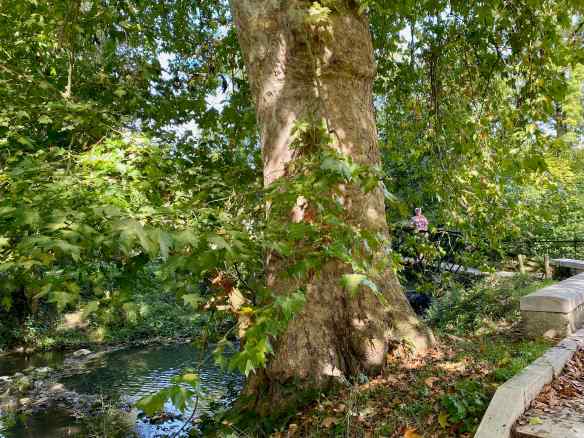
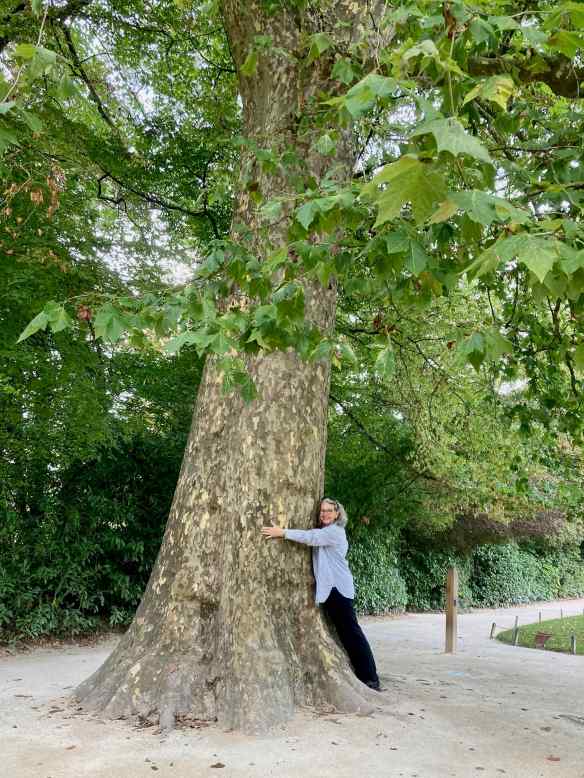
There are some very large, very old trees along the way.  Bob is standing on the bridge just behind the tree.

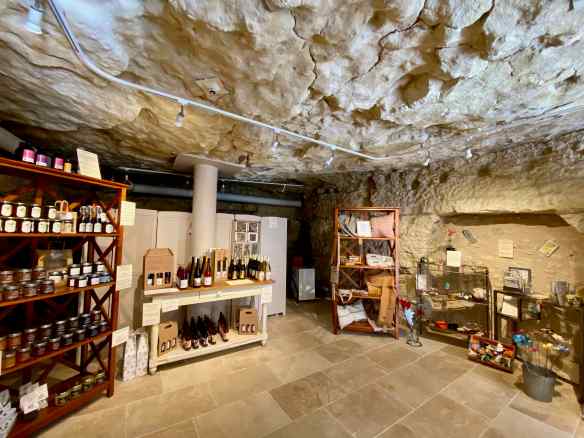
Many of the houses are built right into the stone cliffs.  This little shop is an example, the ceiling and back wall are all natural stone.

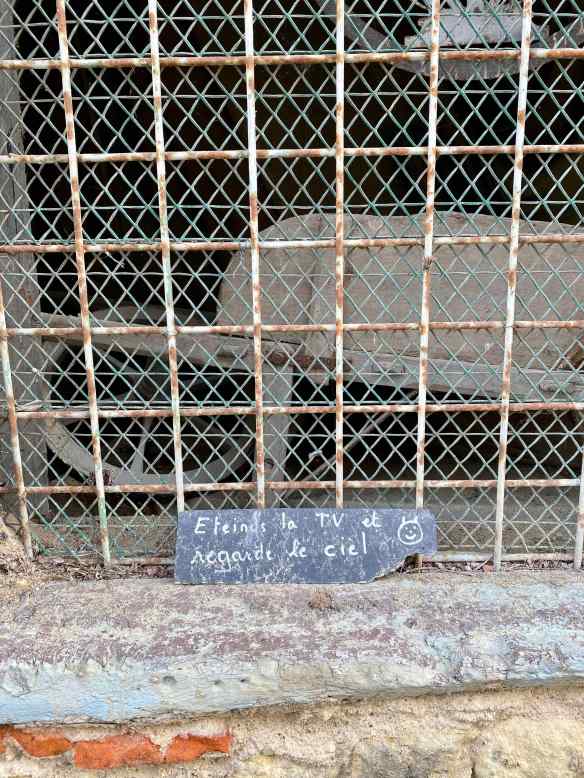
I loved this sign in the window. It says “Turn off the TV and look at the sky.”

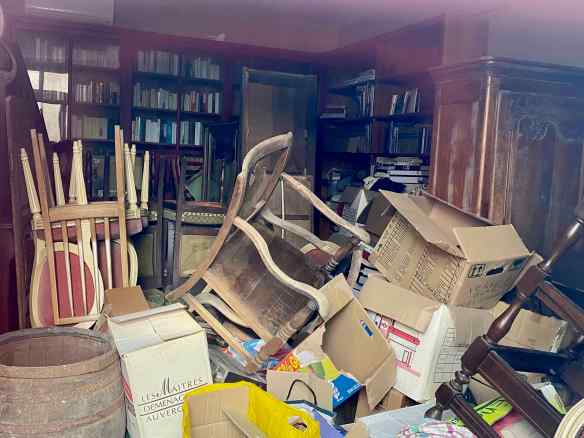
I also love peeking in windows and open gates whenever I have the chance.  You never know what you might see.  I wonder what happened to the owner of this little bookstore?

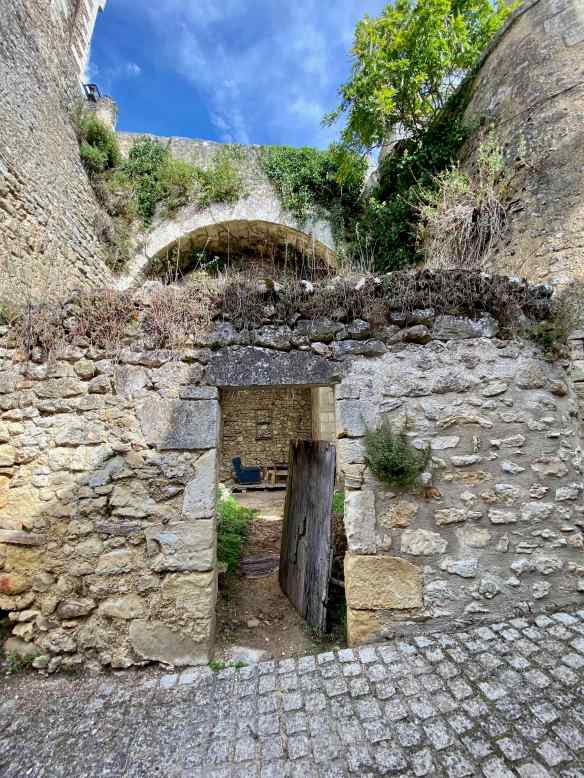
This gate looked interesting…

and it hid this tiny garden complete wth a chair, a bottle of wine and a very interesting statue.

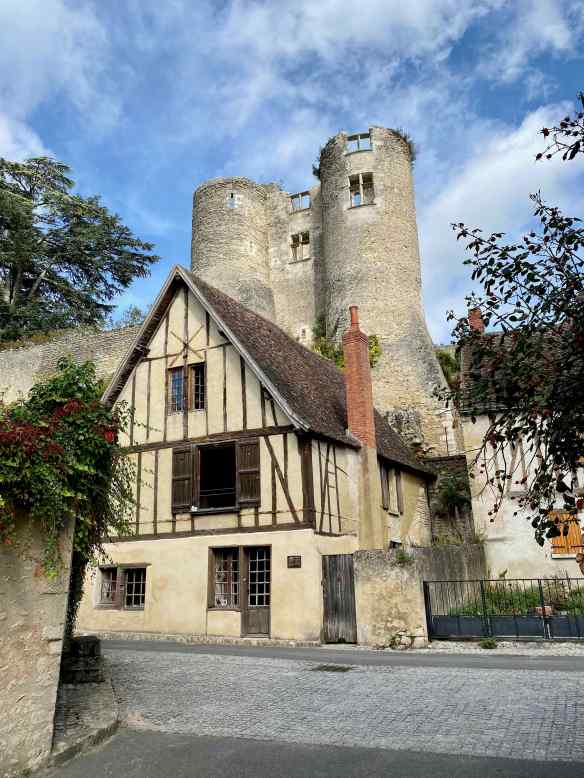
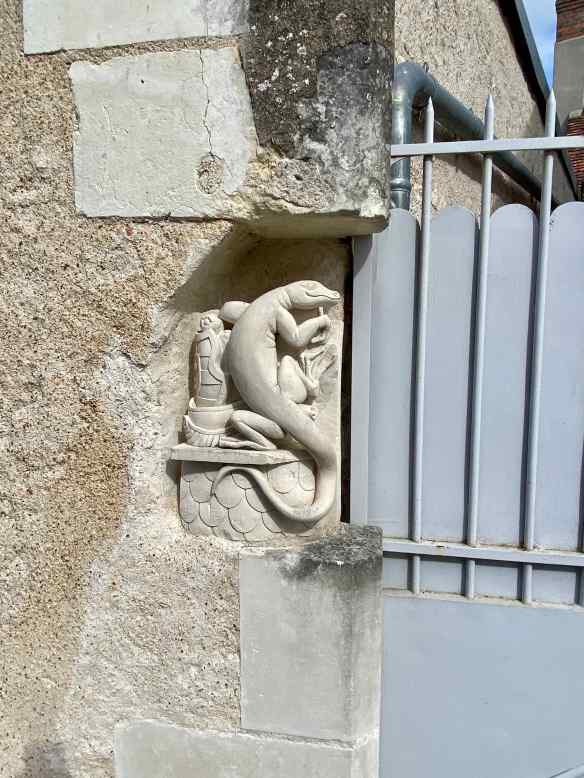
The half-timbered houses date back to the 15th century!  In the background are the towers of the Medieval Keep of the Château de Montrésor.I loved this carved lizard, which is the symbol of Montrésor.
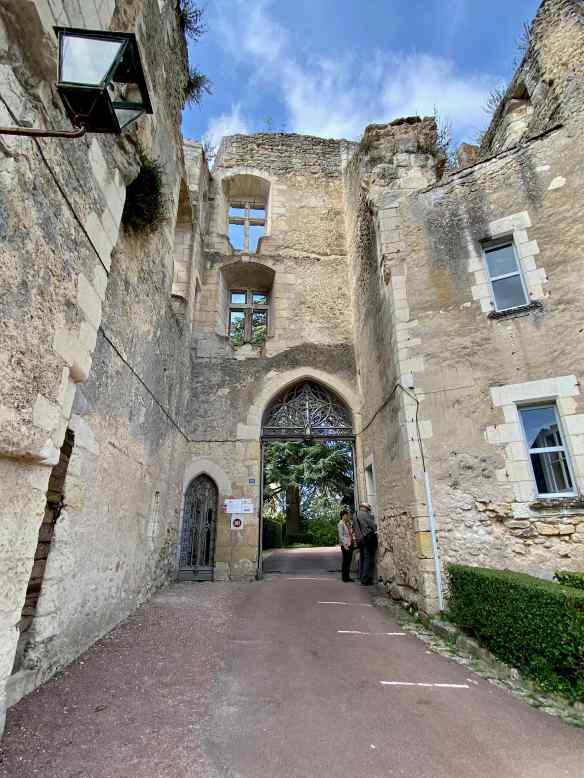
The Château de Montrésor is a medieval castle with a Renaissance mansion built in the grounds.  We decided not to tour the château and soon we are back on the road to Sarlat.

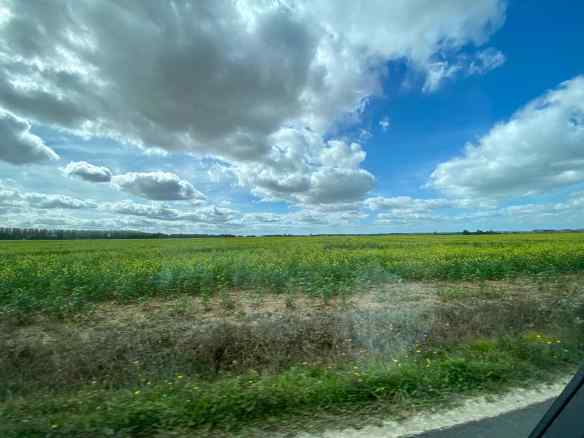
The canola fields are just starting to turn yellow here, much later than back home.

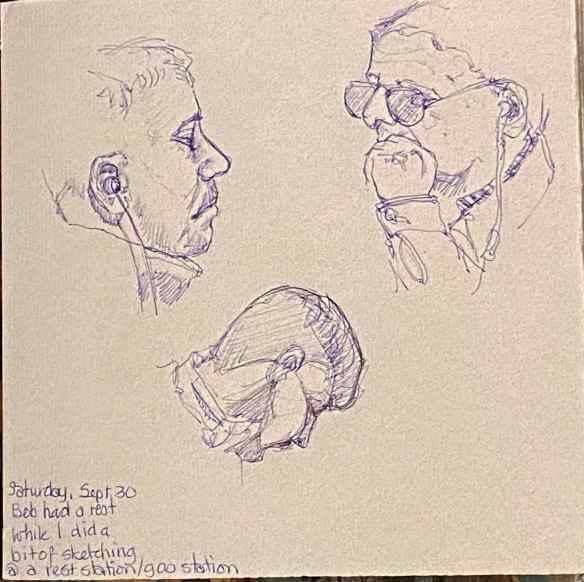
I have a chance to sneak a few sketches of people waiting for a bus at the gas station when we stop to fill up.  There hasn’t been much opportunity for this so far this trip.I notice that the leaves are staring to turn colour…winter is coming!
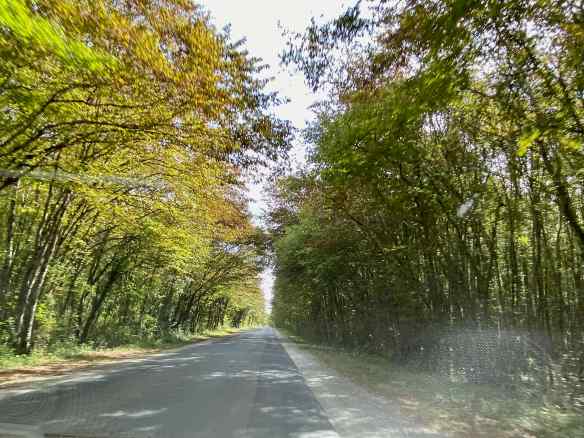
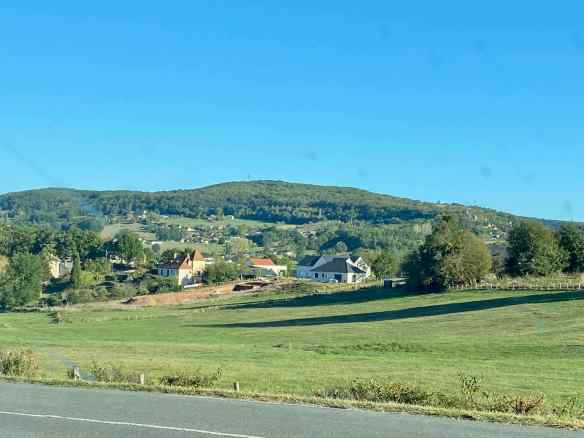
The hillsides are dotted with charming little villages.

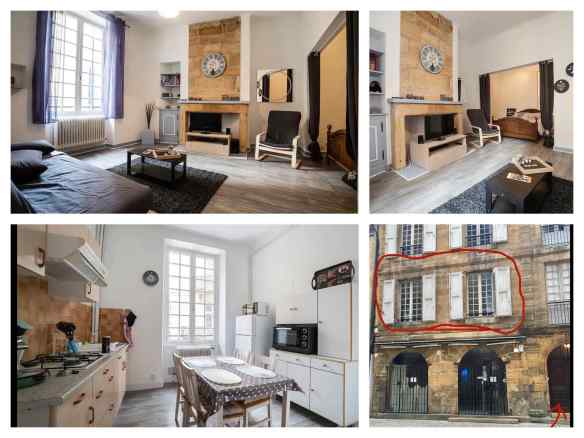
Our bnb in Sarlat is right in the heart of the old town.  On the Airbnb website it says “Come and discover the entertainment, restaurants, shops, the famous market of the city with its local products, surrounded by the walls and history of the city of Sarlat. All at your feet.”  It should be interesting, we have never stayed right in the heart of an old city before. The circled windows belong to our apartment.


Château de Chenonceau, France

Day 32, Friday, September 29, 2023

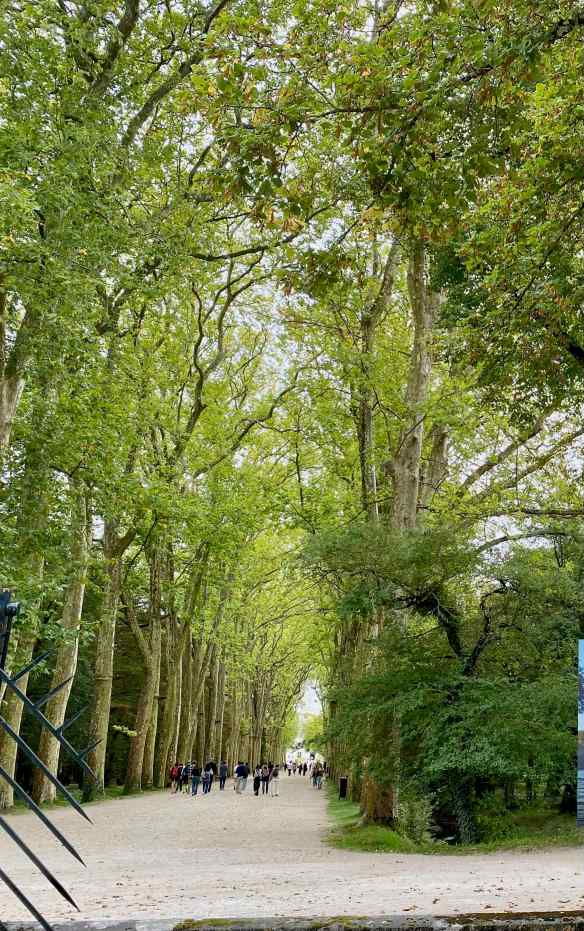
The Château de Chenonceau is approached by walking down a very long tree lined road called the Great Driveway…. that continues through the beginnings of gardens.
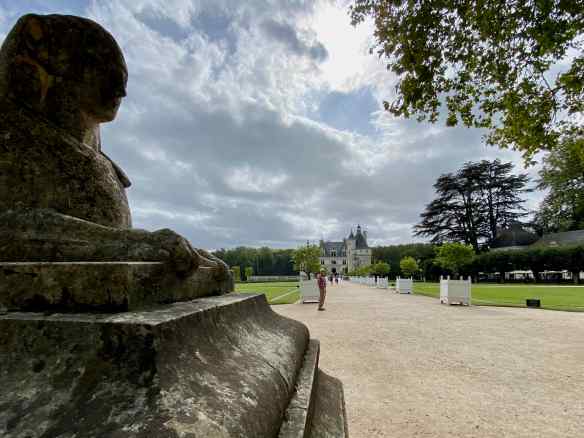
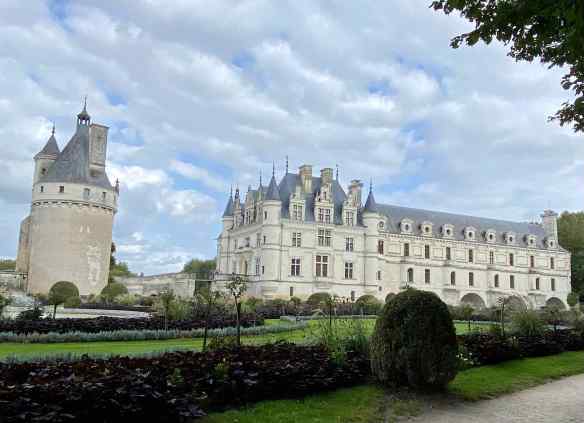
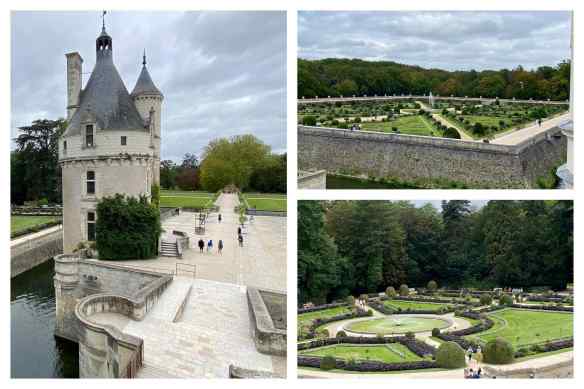
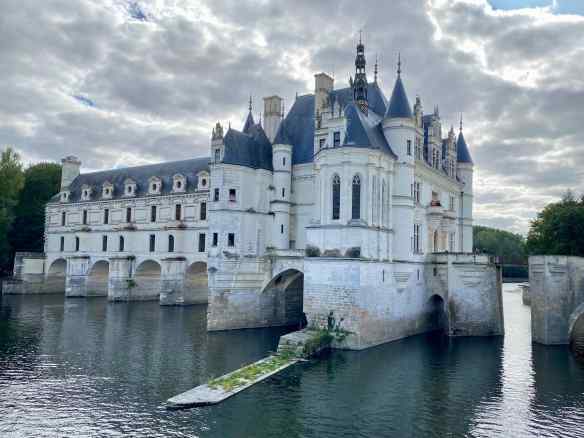
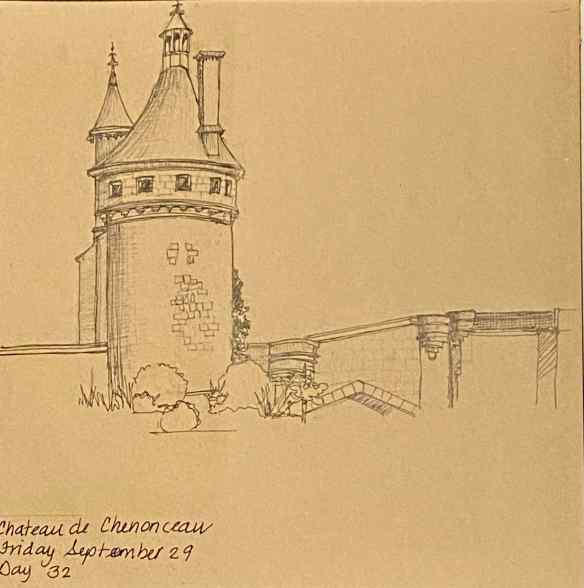
We finally arrive at the magnificent Chenonceau Château.  This tower on the left is part of the keep from the original fortified castle.  The rest of the castle was demolished in the 16th century to build Chenonceau.

We enter the Guard’s room beside the main gate and I notice that there is still part of the original pattern on the floor along the walls and under furniture. There is no trace of the pattern on the rest of the floor.

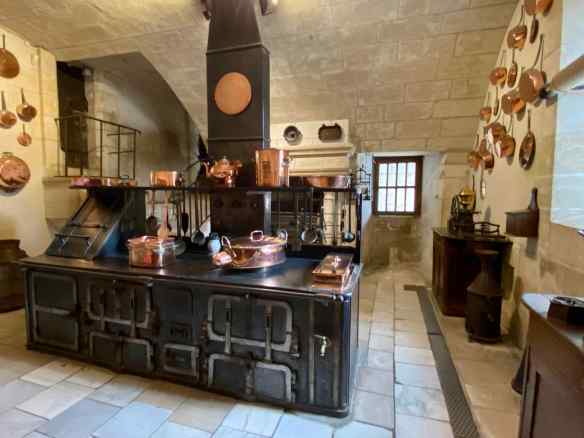
Next stop is the kitchen.  This is the first chateau we have seen that has a kitchen that looks capable of making meals for hundreds of guests.  This is the biggest wood fired stove I have ever seen.

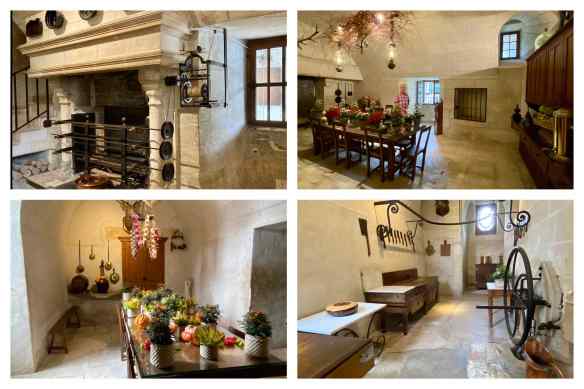
Here are the other rooms that make up the complete kitchen area.  A huge fireplace with automatic rotating spits for cooking meat behind the wood stove, the dining room for Chateau employees, the larder and the butchery are all magnificent. There is also one more room with an enormous bread oven.

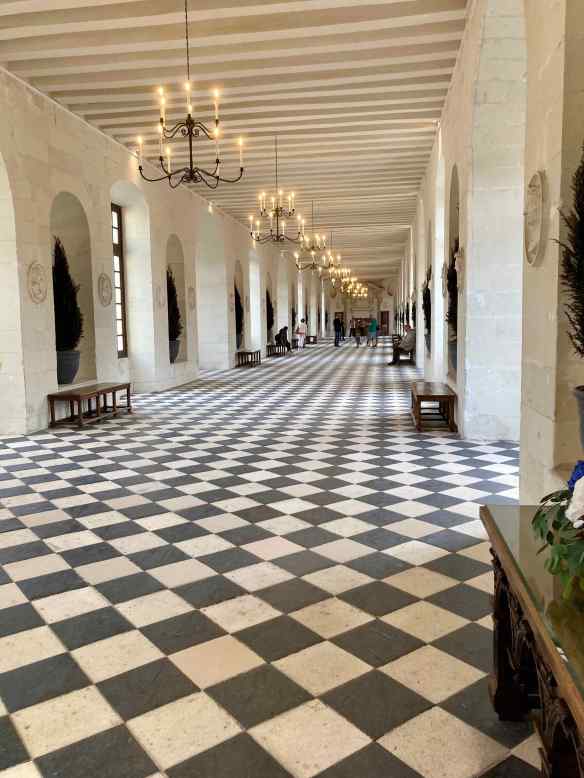
The Gallery was built on top of the chateau’s bridge by Catherine de Medici.  This was used as a ballroom and for other festivities.  It is 60 meters long but only 6 meters wide.  I noticed that the white floor tiles must have been made of a softer stone than the black as they are considerably more worn.  Like the coloured tiles in the Guard’s room, the tiles near the walls are not worn and remain the same height.

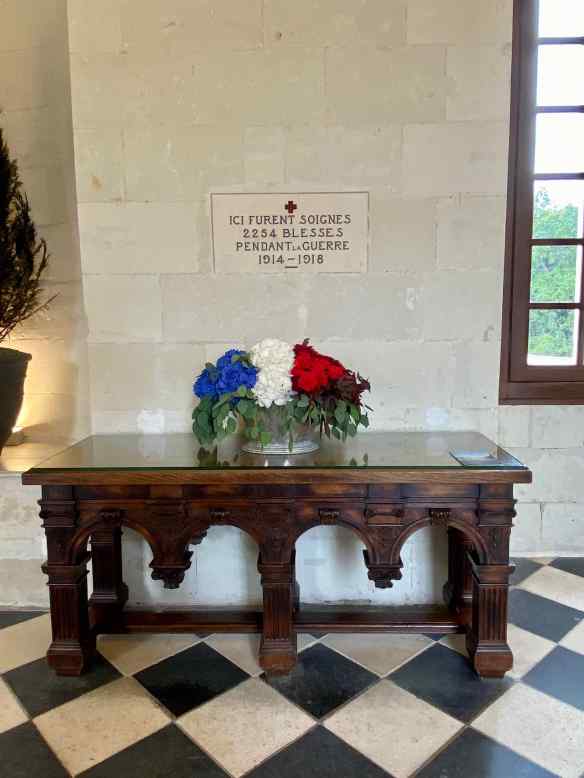
During the First World War, 2,254 injured were treated here.   The chateau was turned into a hospital and the gallery was filled with beds.
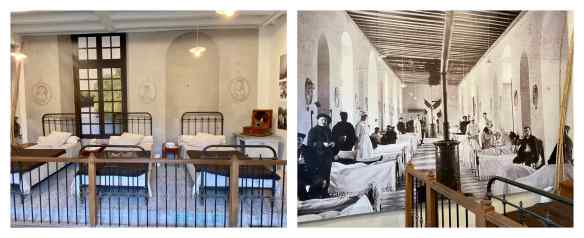
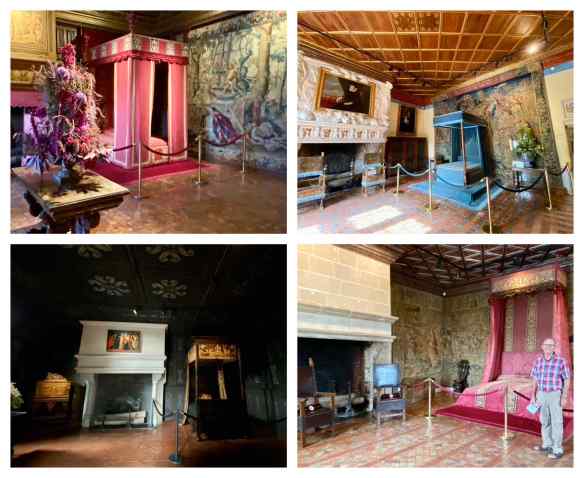
Cesar of Vendôme’s bedroom (the owner of Chanonceau in1624), Diane de Poitiers room,  (King Henri II’s favourite mistress), the bedroom of the wife of King Henry III (who stayed in mourning after his assassination in 1589), and the Five Queen’s Bedroom, in memory of Catherine de’Medici’s two daughters and her three daughters in law.

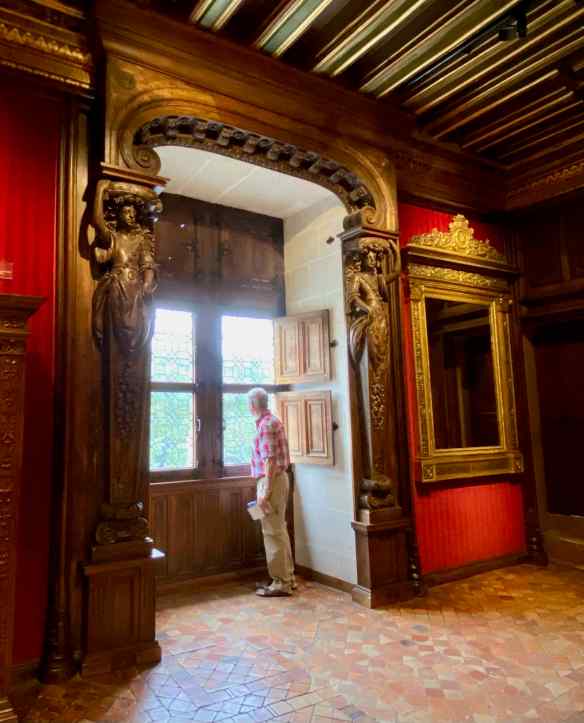
Bob didn’t even notice the caryatids framing this window opening.

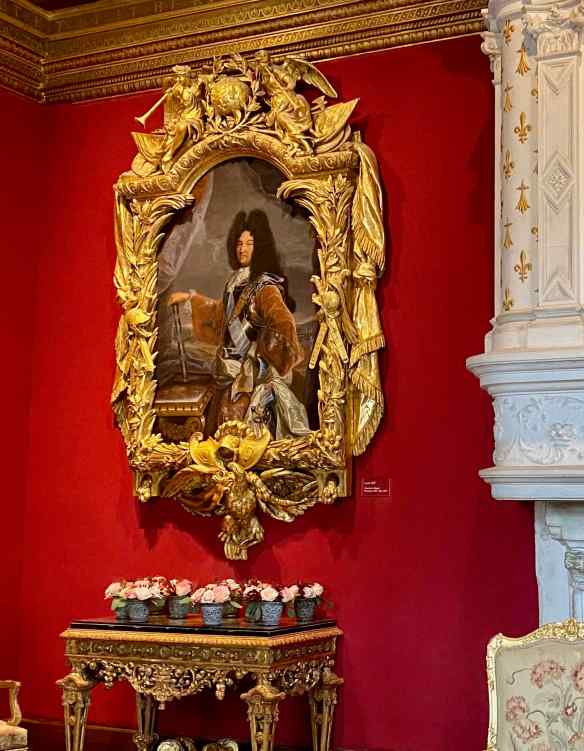
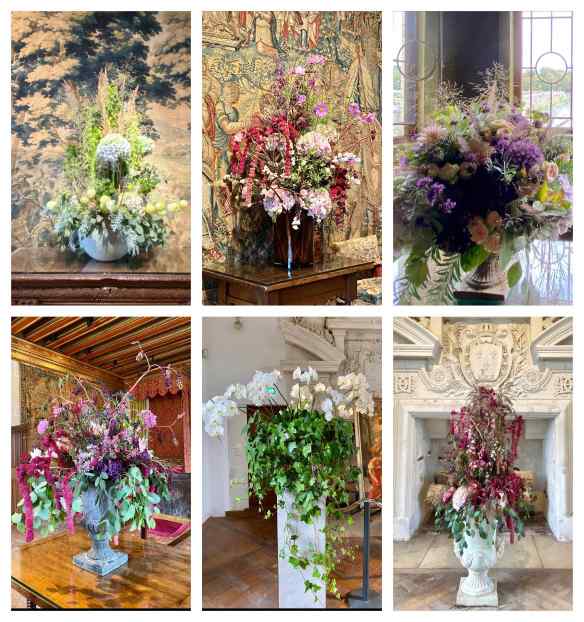
This incredibly ornate frame is found in Louis XIV’s drawing room.  Notice the collection of rose bouquets below the painting.  Château Chenonceau is filled with the most incredible floral displays.

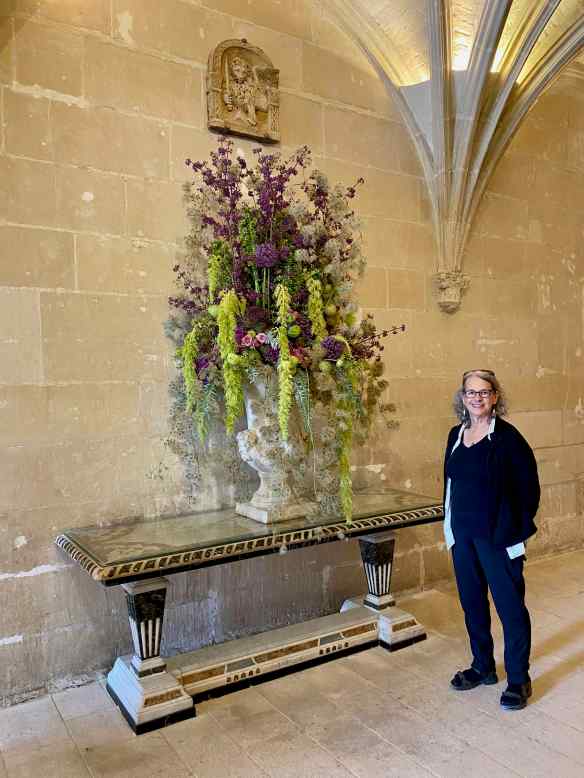
These are only a few of the enormous floral displays we saw.

I did mention that they are enormous!Jean-François Boucher is the head florist at the Chateau. He creates 200 bouquets a week every week of the year for display in the chateau.  This link has an interesting article and video about all this. https://thegoodlifefrance.com/the-chateau-de-chenonceau-the-castle-of-flowers-in-the-loire-valley/

I have never seen so many orchids.  The first photo shows one of two identical arrangements and the second is outside the door to the public washrooms.

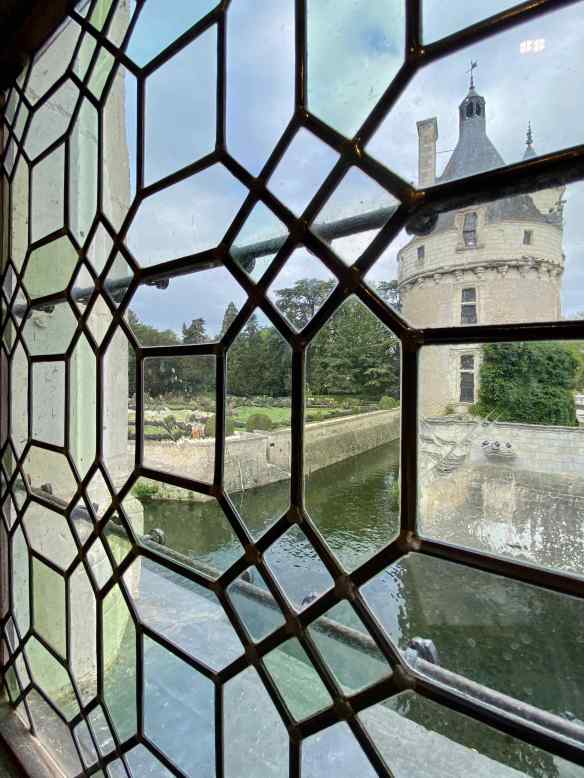
A view through the leaded glass windows towards the Keep and the moat.

There is a little balcony that offers views of the Keep, and the two flower gardens. The top one is Diane’s Garden (remember the mistress?) and the bottom is Catherine’s garden (the wife of King Henry II.)

One more bedroom, that of Catherine de’ Medici, reminds us that it is always wise to look up when visiting Chateaus and castles.

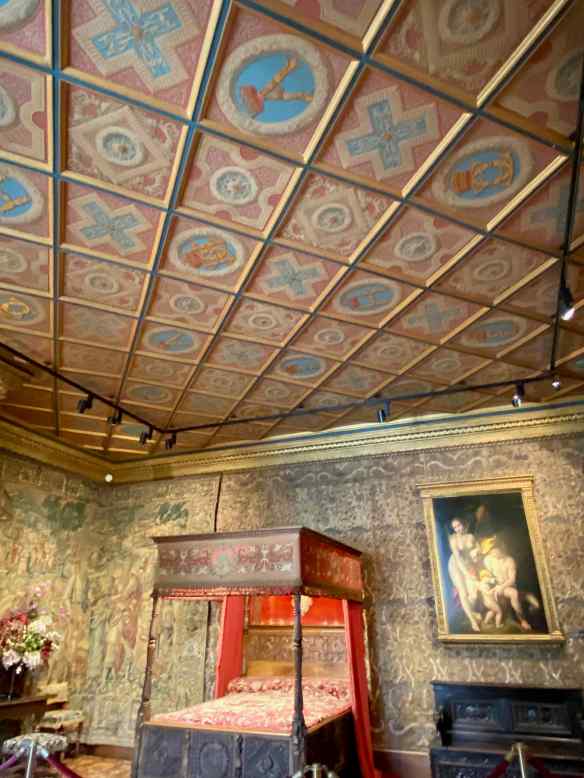
The ceilings are painted and gilded with numerous initials and coats of arms of Catherine and Henri.

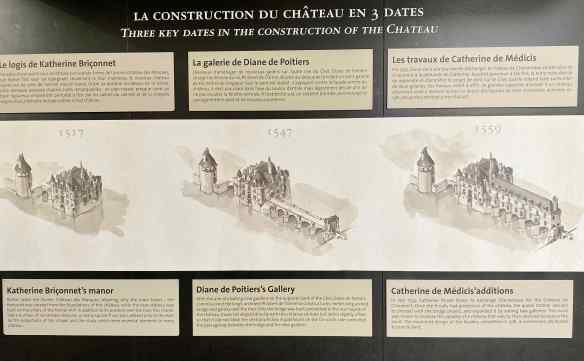
I find it fascinating how these chateaus evolve over the years.

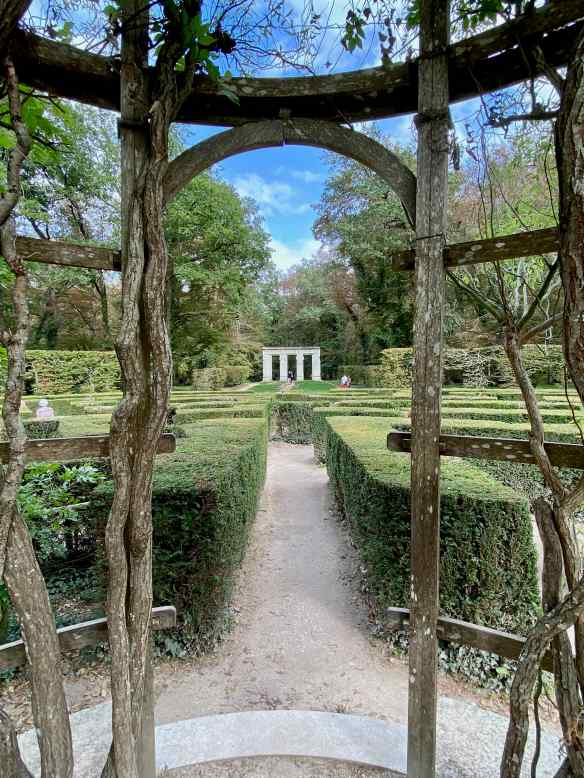
We finish our visit of the chateau and find a lovely spot for our picnic lunch before heading back to walk through the grounds of the chateau.  We find our way to the center of the maze with a view of caryatids that once decorated the front of the chateau.

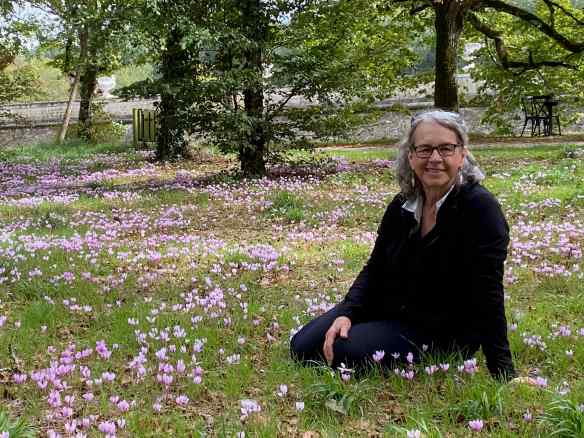
The cyclamens are in full bloom everywhere under the trees.  

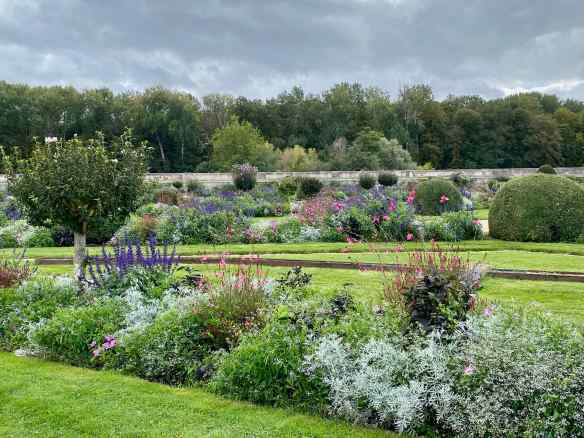
We walk through Diane’s garden which is pretty but rather monotonous.  All the flower beds are the same, once you see one of them there isn’t much incentive to walk around to see the others.

We walk towards the chateau, which is truly magnificent…

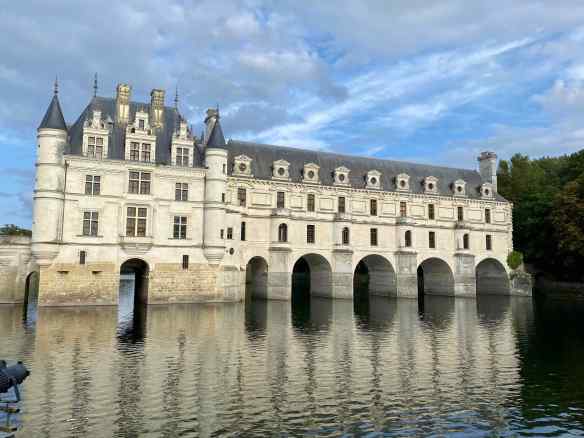
and as we pass to the back side, the sun comes out to beautifully illuminate the chateau. During the Second World War, the River Cher was the demarcation line, so the entrance to the chateau was in the occupied zone but the Gallery’s south door gave access to the left bank and made it possible for the Resistance to pass many people into the free zone.

We find a comfortable bench and I do a drawing of the Keep while Bob catches up on a bit of reading.

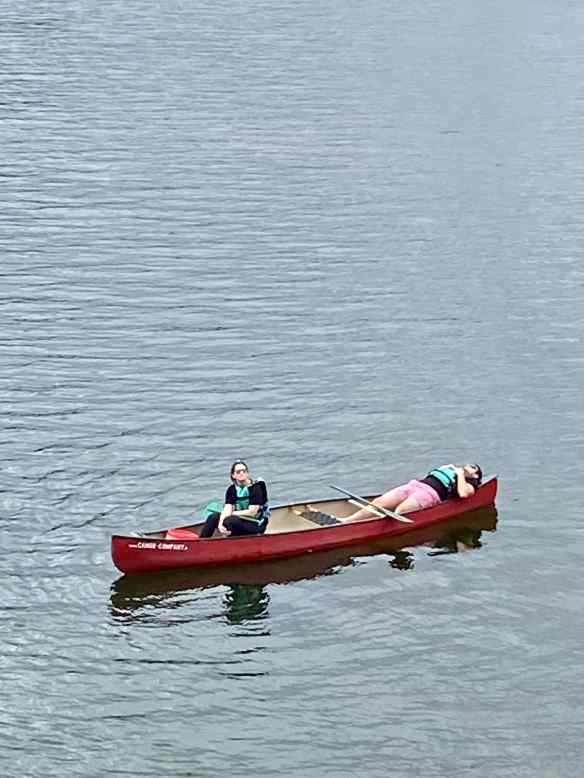
I thought it might be fun to rent a canoe and paddle about on the Cher River, but maybe it is harder than it looks?

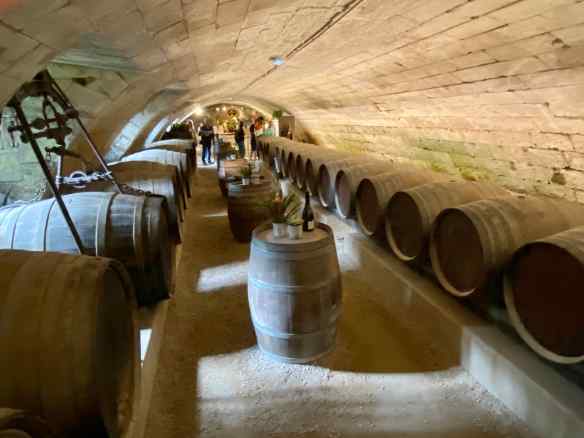
The historic 16th century wine cellar is still in use today.

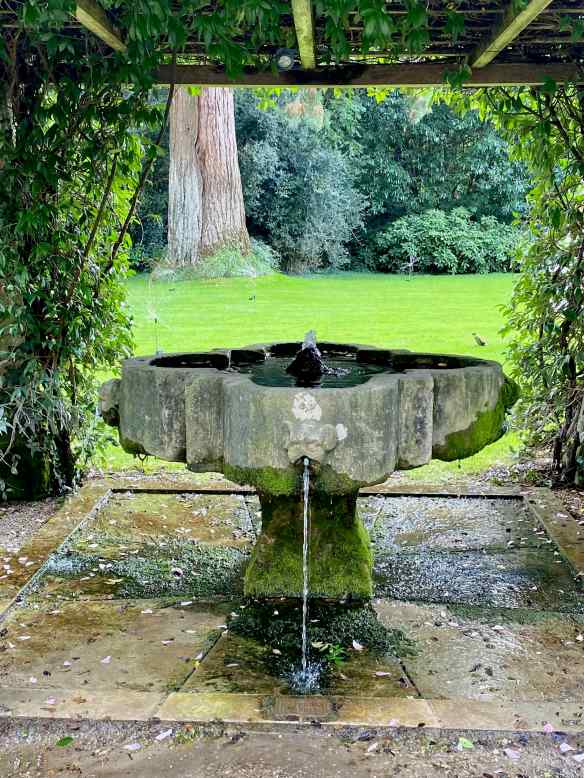
There is much to see, including this interesting fountain…

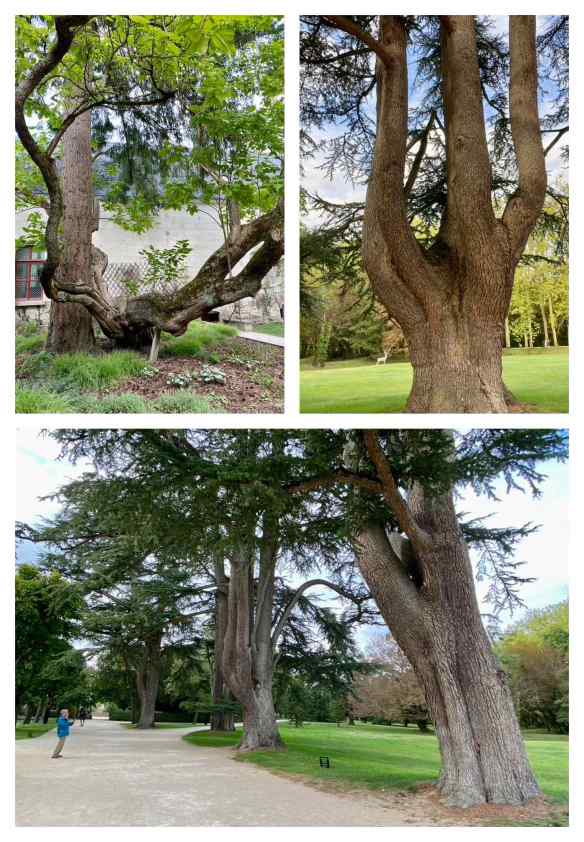
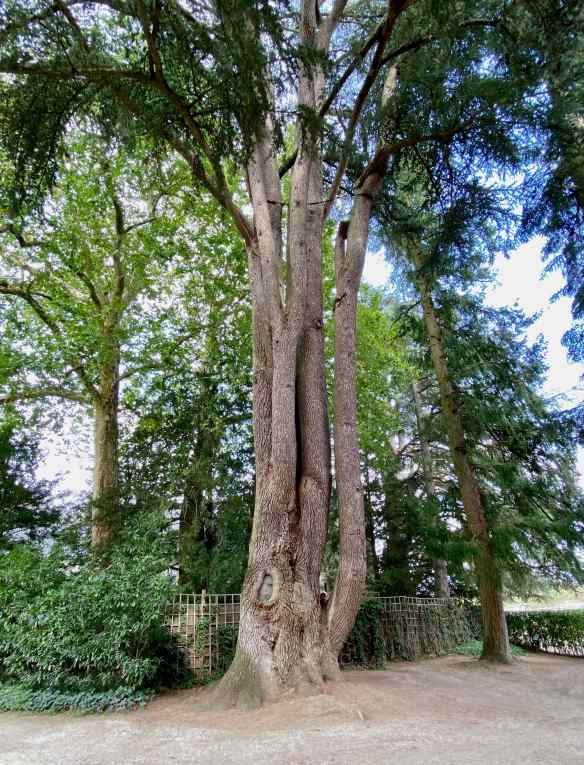
and so many incredibly huge trees.  The deer is a statue.

You can just make out Bob’s head peeking out between the trunks of this tree.

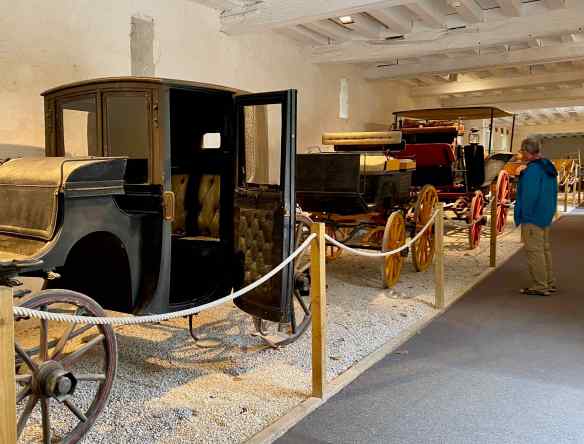
There is a Carriage Gallery in one of the stables with both noble and rural horse drawn vehicles.

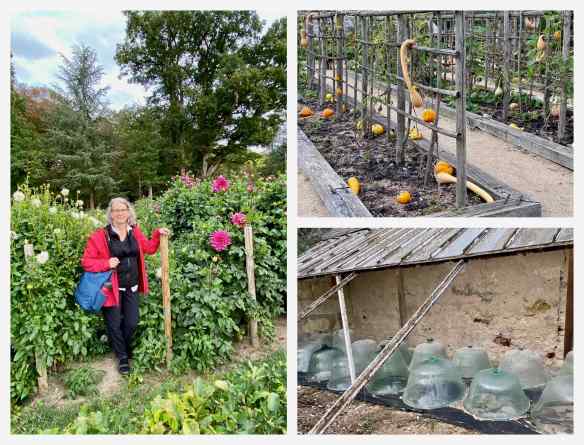
And then there are the gardens which are used to grow the many flowers and plants for those enormous bouquets in the chateau, along with some vegetables.  These are strange looking squash with such long necks.  I love the hand blown cloches that are stored under  the eaves of a shed.  I’d love to have these for our garden back home, instead of our plastic ones.

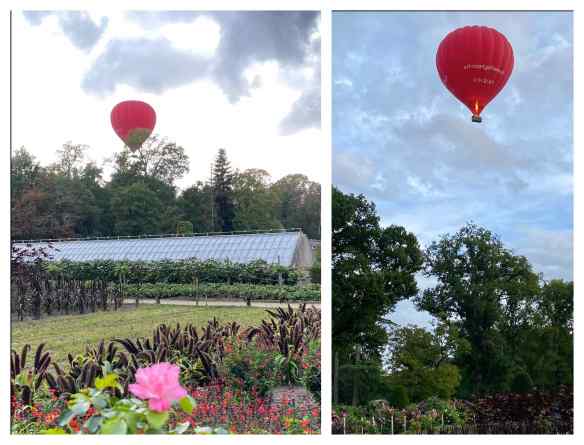
As we are leaving the gardens we see hot air balloons taking flight from behind a line of trees.

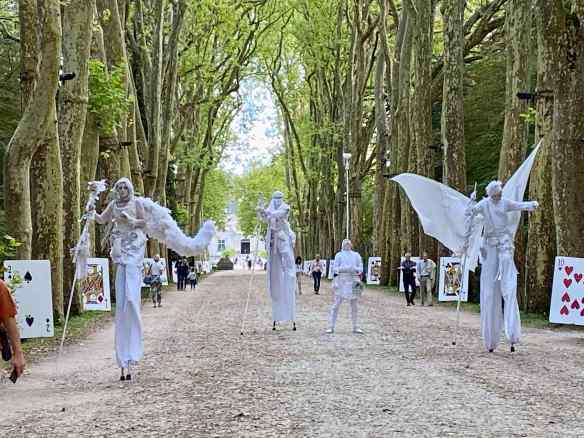
As we leave, walking back along the Great Driveway we encounter these strange, rather spooky beings. For some reason they make me think of the Game of Thrones Whitewalkers…but they are only entertainers for a fundraising event for sick children that is taking place in the evening.


The Cadre Noir of Saumur, France

Day 31,  Thursday, September 28, 2023

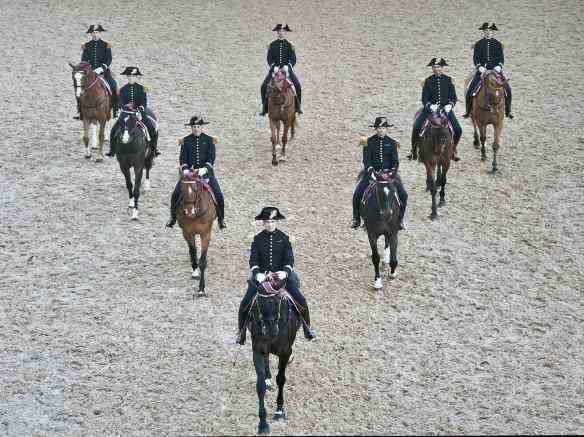
The Cadre Noir of Saumur , a renowned French riding academy, offers very few shows and Martinales throughout the year.   We extended our stay in Tours by a couple days so that we could see this show on the only day that it is takes place in September.

“The Martinales of the Cadre Noir are an opportunity to watch the riding masters of the Cadre Noir at work.  There are 40 riding masters, and only three are women.  Commentary is provided to give the audience an appreciation of the work involved in training the horses in jumping, long reins, the airs above the ground, and classical riding. Unfortunately it is only in French, but it really doesn’t matter… watching the horses and their riders is enough.  More information and some of the history of the Cadre Noir is available at this link. https://www.ifce.fr/en/cadre-noir/the-cadre-noir/ if you are interested,

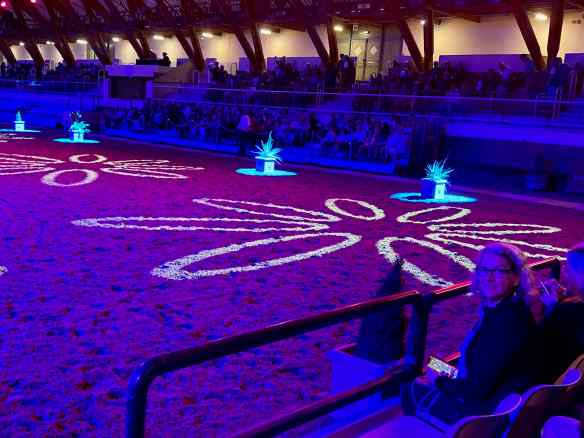
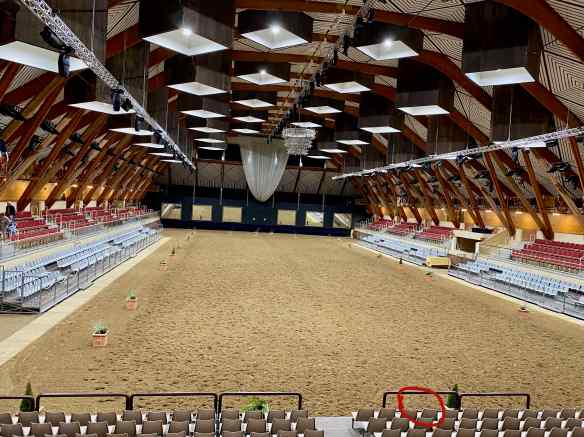
When we arrive we are surprised to see how many people are here for the Martinales…13 tour buses and the parking lot is full of cars!  I think it will be hard to find seats… but I forgot that there was assigned seating and we have fantastic seats. We are front and centre in the arena!  The horses pass by just a couple of feet in front of us.

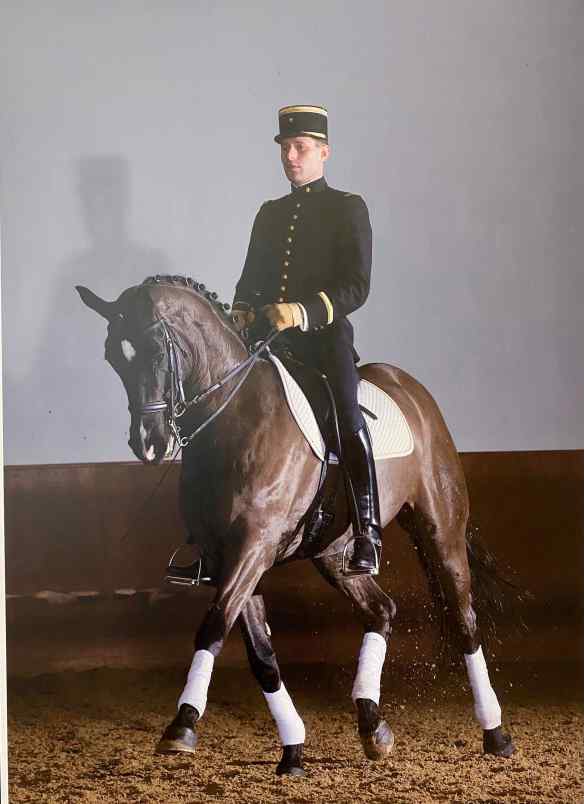
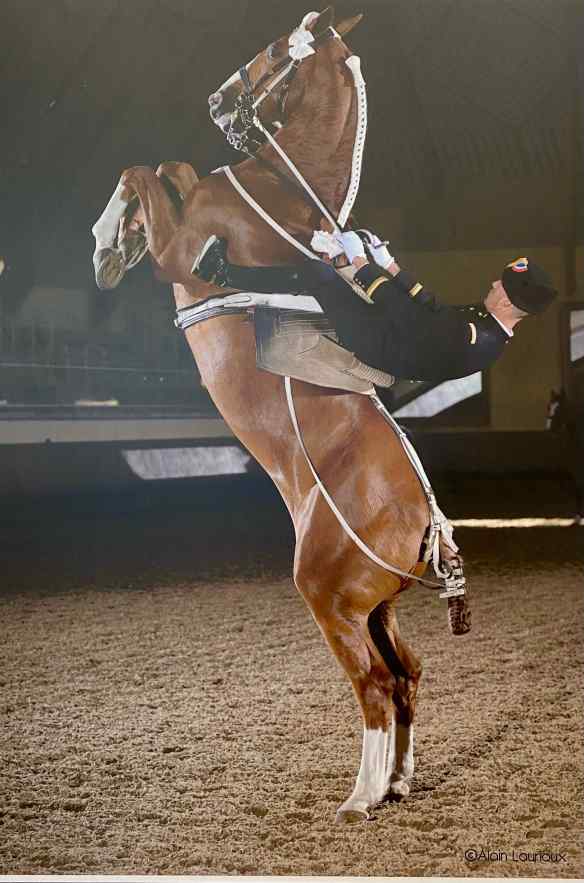
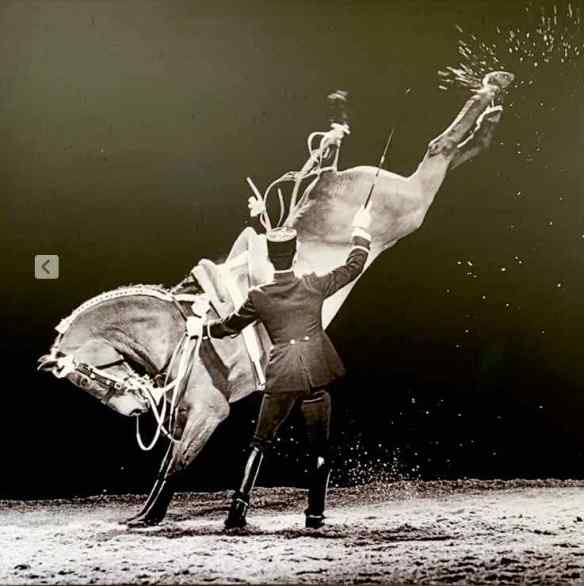
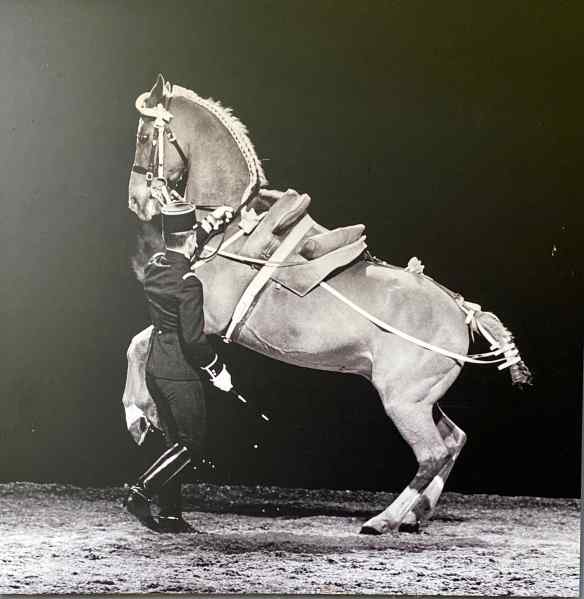
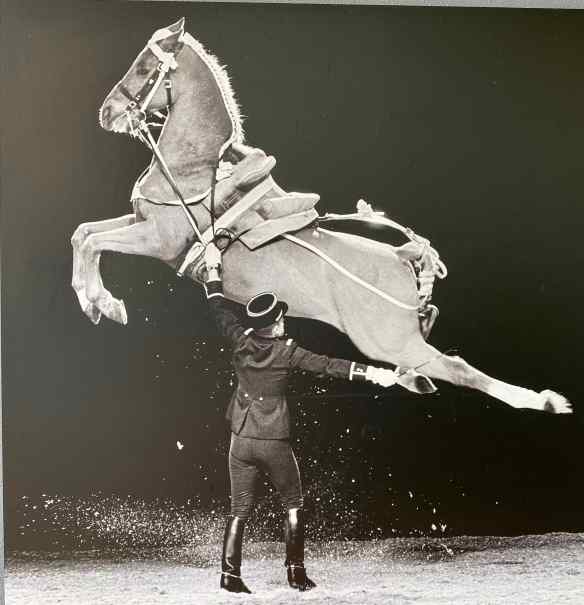
There are no photos allowed during the show but there are photos outside of the arena so I take photos of the photos.  We see all of the following during the hour long Martinale show.

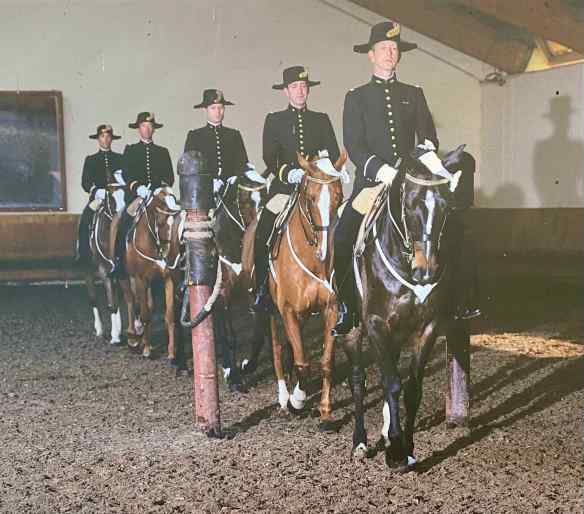
Classical riding…

the Courbette…

the Croupade…and the Cabriole…Precision riding

The whole show was wonderful.  At the end of each segment of the show the horses would turn to the audience and their riders salute…they happened right in front of us.  It felt like we were being personally saluted, they were so close to us.

One more photo at the end of the performance.  The staircase is in the centre of the seats and these were our seats!

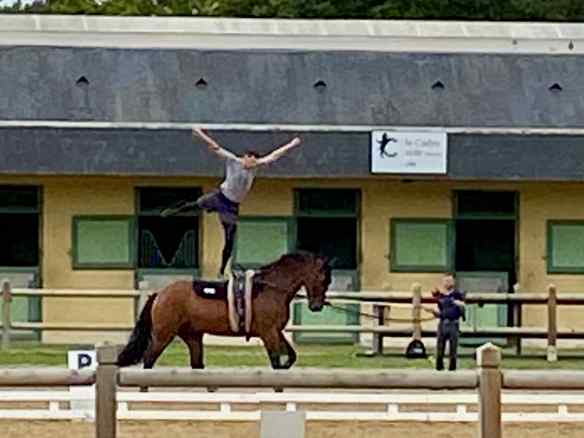
After our lunch we see this fellow practicing outside in one of the 18 outdoor arenas.  I missed the shot of him practicing a handstand on his cantering horse.

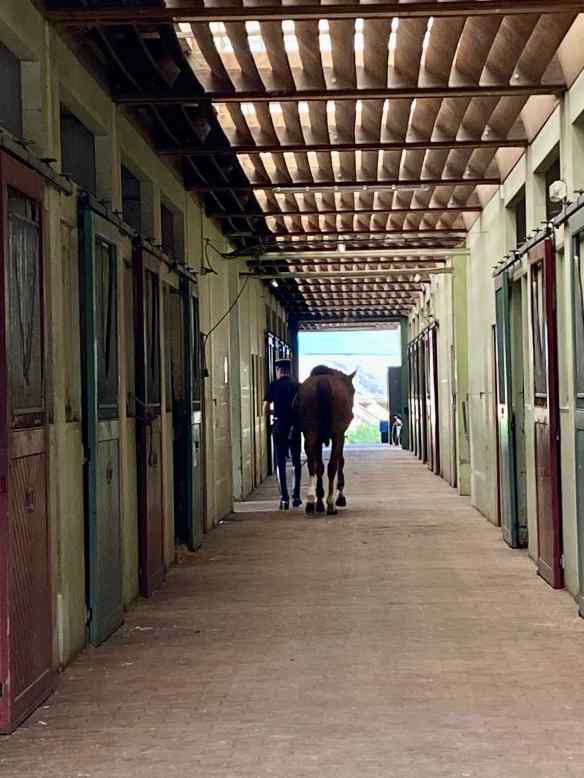
We also have a tour of the stables which house 500 horses!  

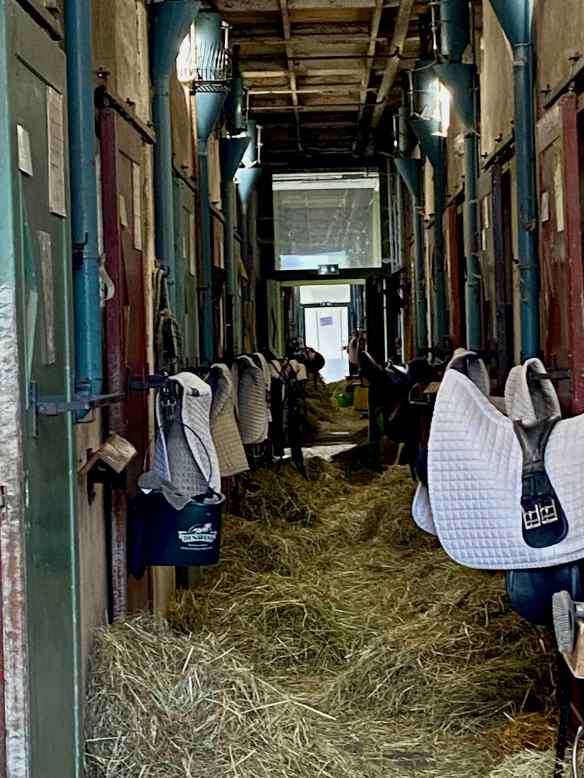
Behind the stalls it is busier.  The horses are fed with an automatic feeding and watering system and the waste is disposed of using a conveyor belt which runs underground at the back of each stall.  The tack for each horse is also kept behind its stall.  

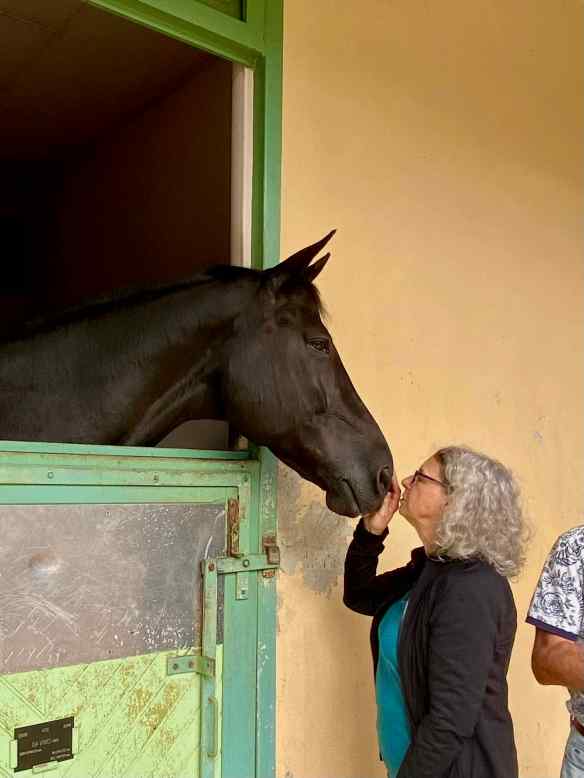
There was opportunity to pet the horses. I made friends with this beauty.

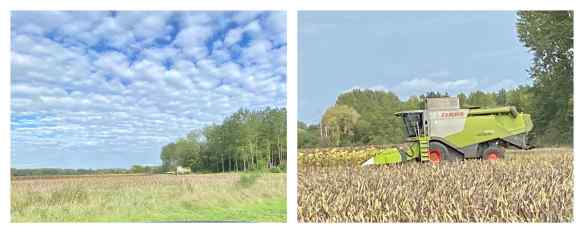
A different route home took us past farmers harvesting sunflowers…

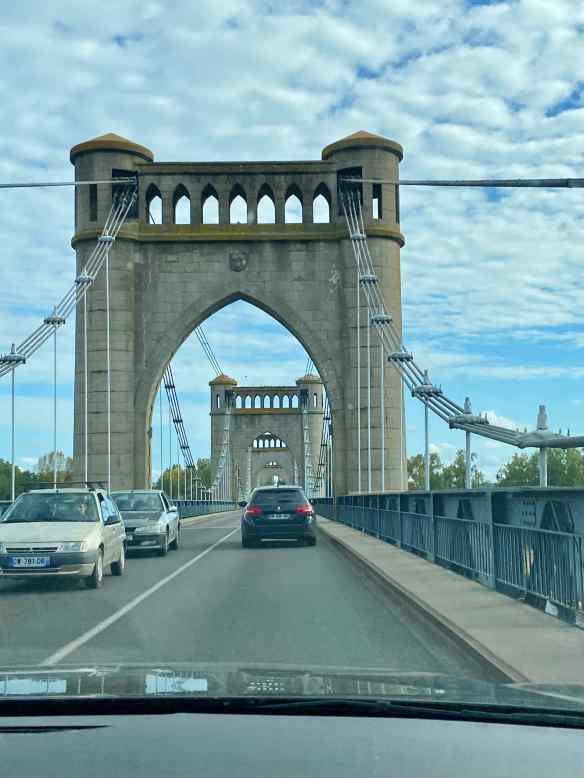
and we crossed the river on this very old looking bridge.

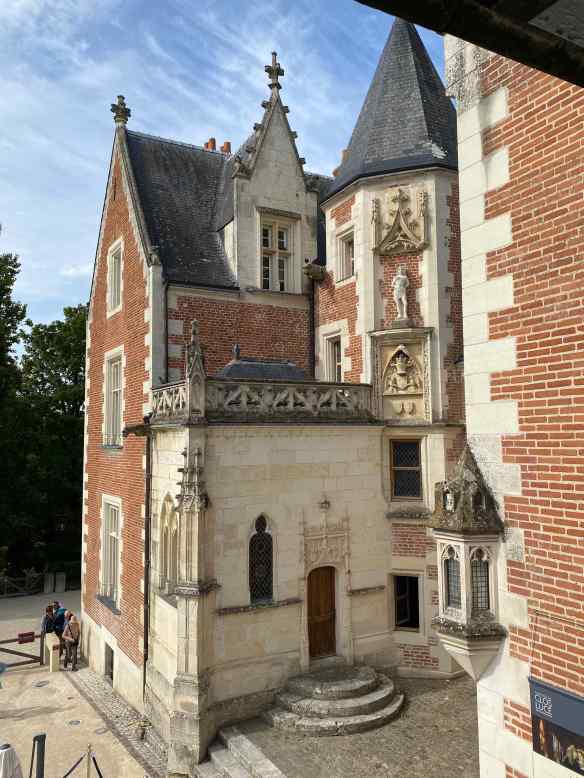
Château du Close Lucé, France: the home of Leonardo da Vinci

Day 29, Tuesday, September 26, 2023

In 1516 King Francis I invited Leonardo da Vinci to come live and work in Close Lucé. When Leonardo was 64, he crossed the Alps on a mule with some of his pupils and three of his major paintings, the Mona Lisa, the Virgin and the Child, and St. John the Baptist as well as his notes, sketches, and manuscripts.

Leonardo spent the last three years of his life working here.This is Leonardo’s bedroom. I am standing in the room where Leonardo da Vinci slept!
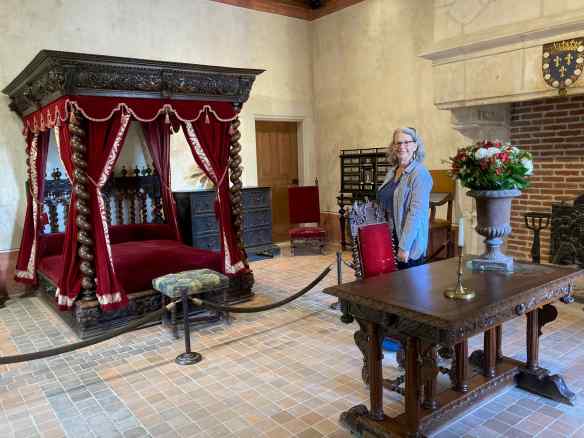
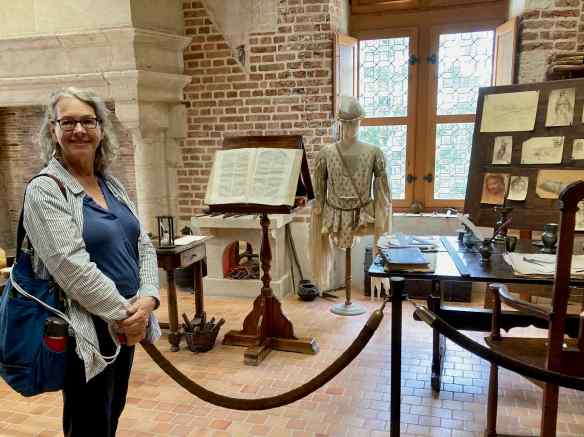
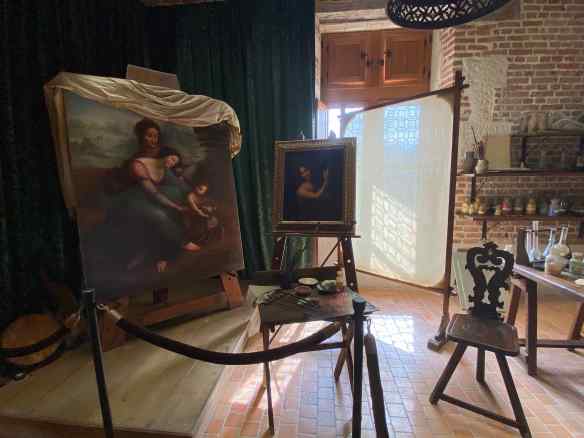
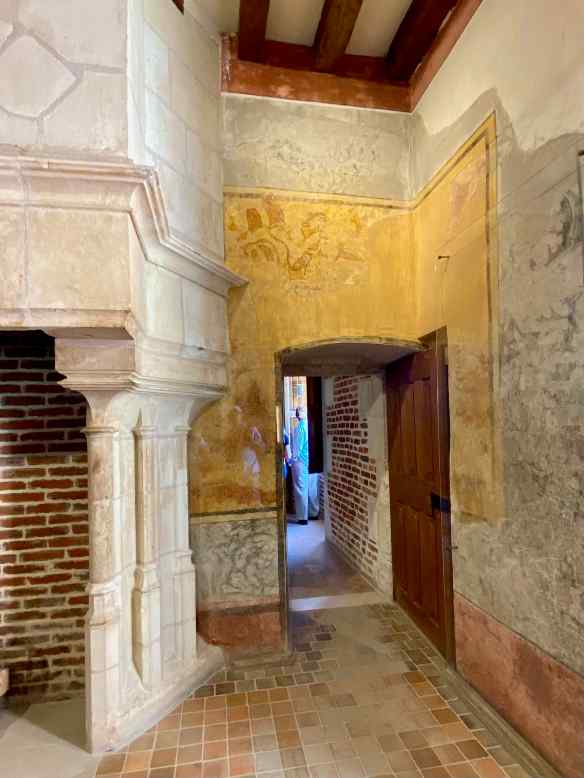
At one time the walls were decorated, but little of it remains.The adjoining room is his studio, where he painted…
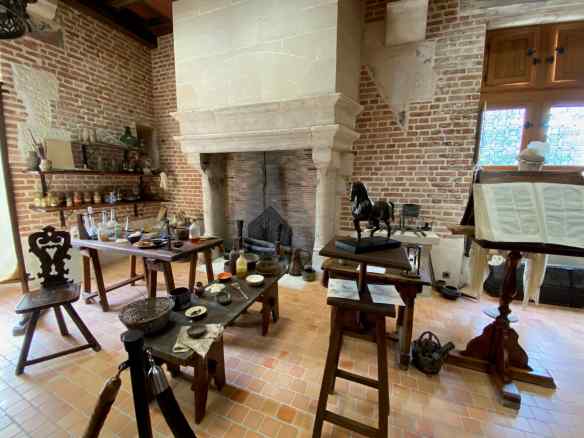
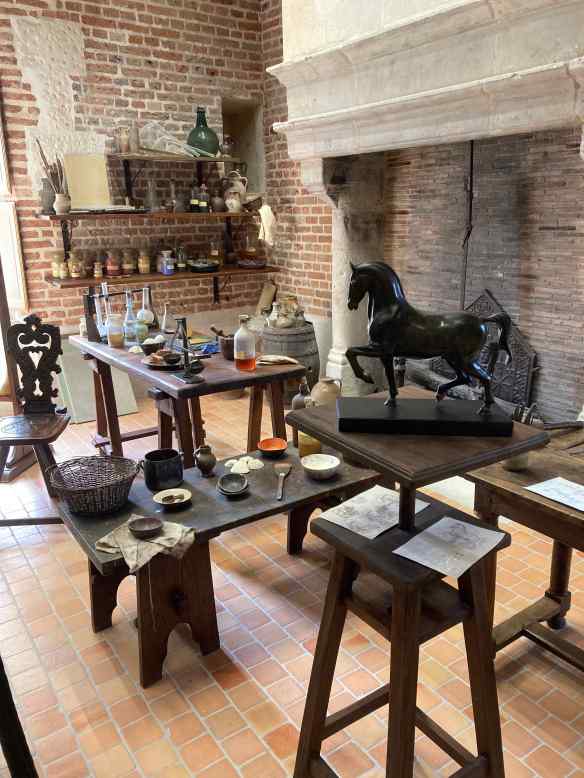
…sculpted…

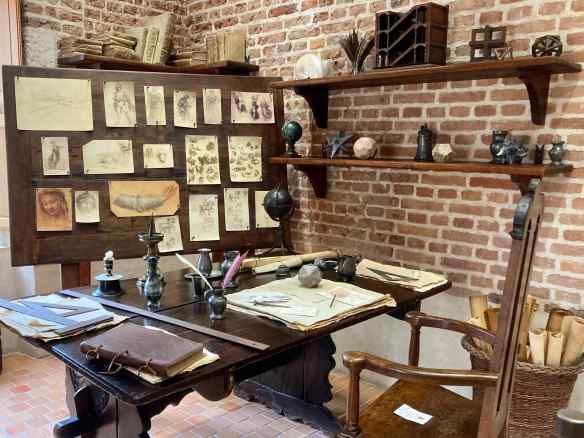
and worked on his drawings and manuscripts.  

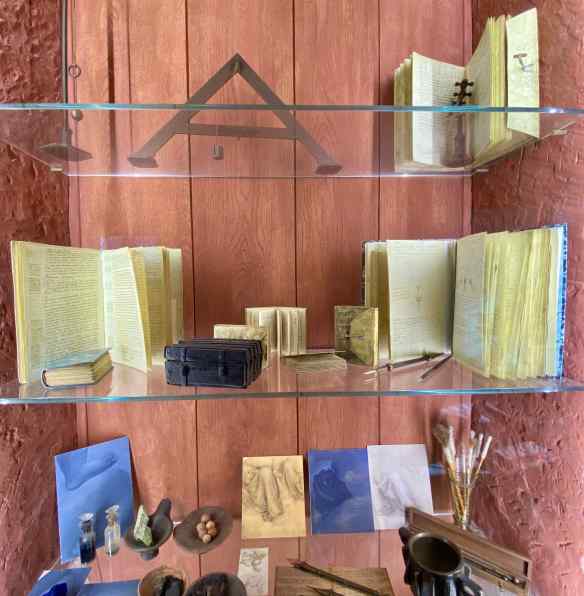
It is quite the experience to be in the same place as this amazing man lived and worked.  His studio is furnished in the manner of a 16th Century artist’s workshop, with reproductions of his drawings…

paintings…

and replicas of his books and the little notebooks that he carried in his pocket.

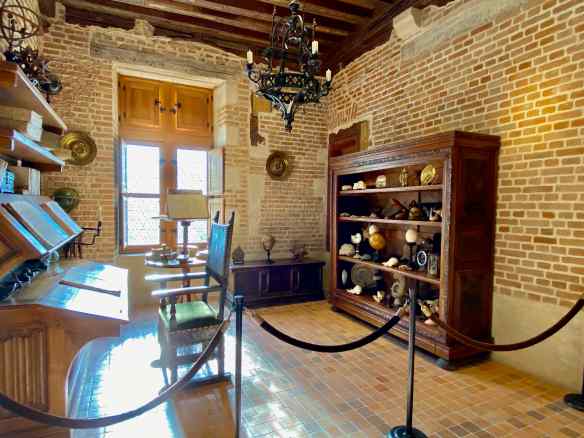
His study contains ancient texts and a cabinet of curiosities.  Leonard had a library of 200 books which was very unusual for an individual in 1516.

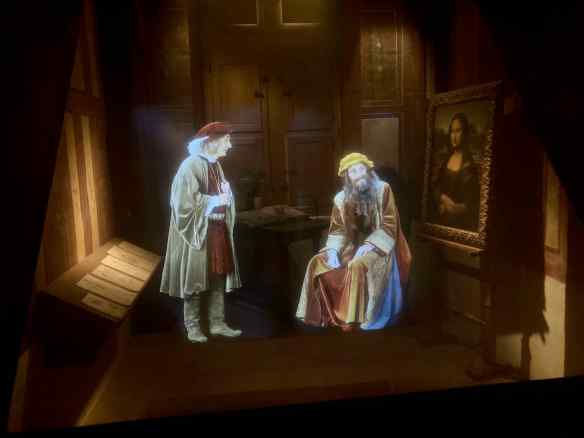
An audio visual production in the next room recreates a historical meeting between the Cardinal of Aragon and Leonardo, who shows the Cardinal his paintings.  .https://youtu.be/Ih_uiJSrths

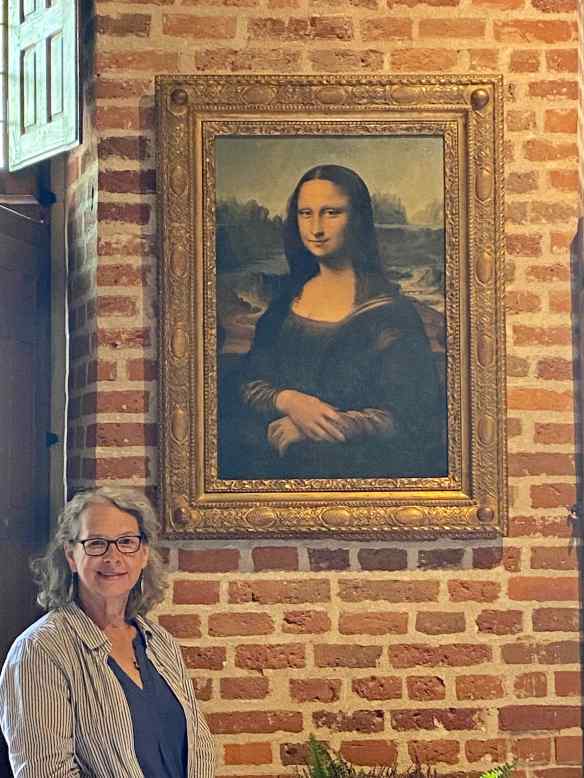
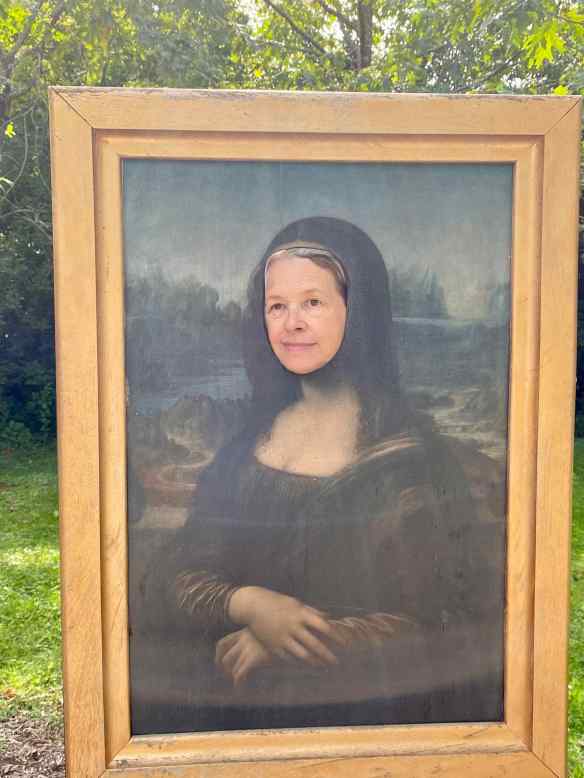
The dining room has a reproduction of the Mona Lisa.  We saw the original in Paris and now we are in Leonardo’s home and studio where it resided until his death in May, 1519.

I didn’t know that Leonardo was a vegetarian. He believed that “sobriety, healthy meals and a proper sleep will keep you in good health.”Downstairs there is a display of 40 of his inventions, recreated from his drawings by IBM.  He was truly a genius. Among his many inventions are life preservers, ballbearings, cam shafts that are used in modern engines, and this screw wrench that is still in use today in plumbing.
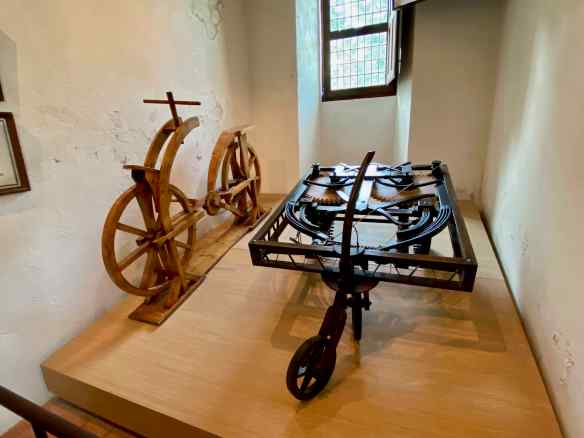
He also had ideas for bicycles and cars centuries before they were actually invented.

After our visit of the chateau we find a spot for our lunch near this life size model of his idea for a helicopter.  The school kids loved it and were fun to watch.

We sat under this enormous tree which I like to think was growing when Leonard walked these gardens.  The literature says that there are centuries old pines, cypresses and yews growing here so it is entirely plausible.

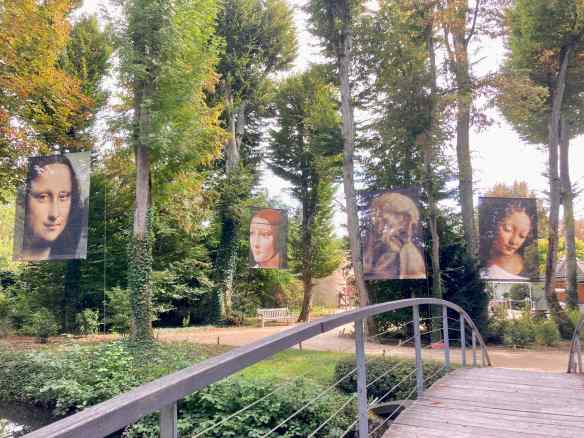
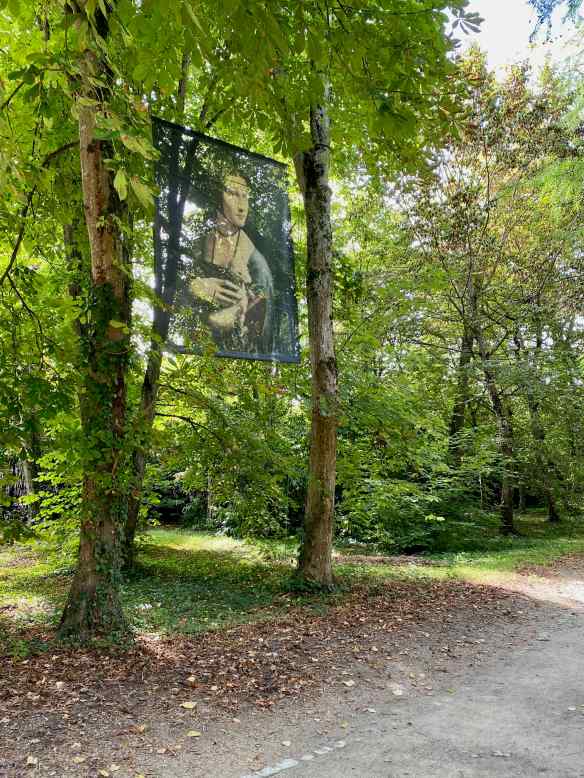
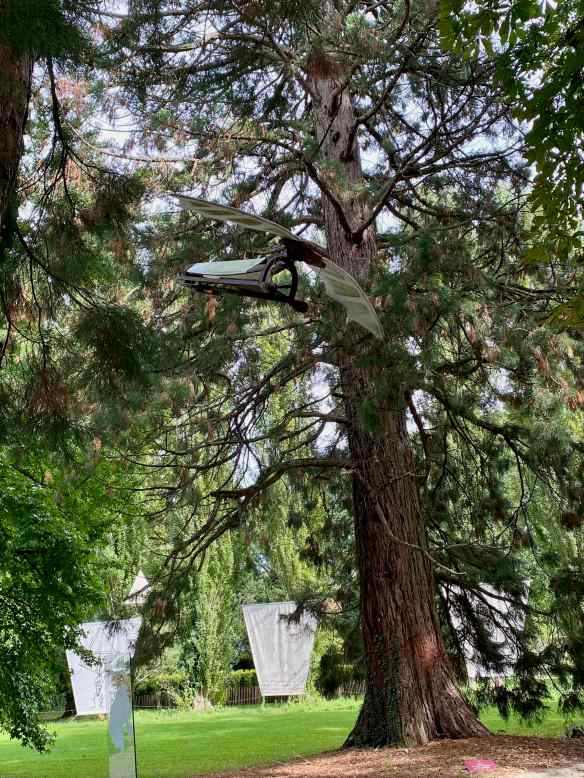
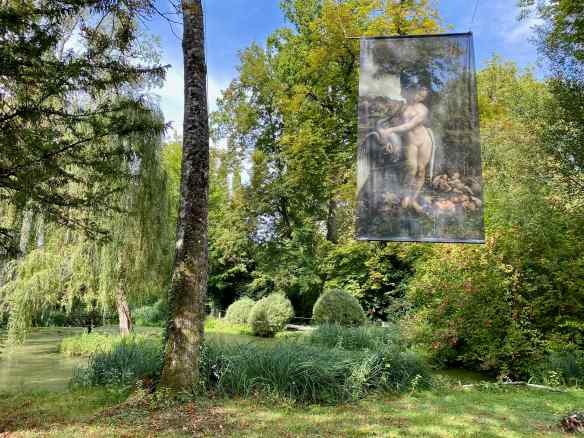
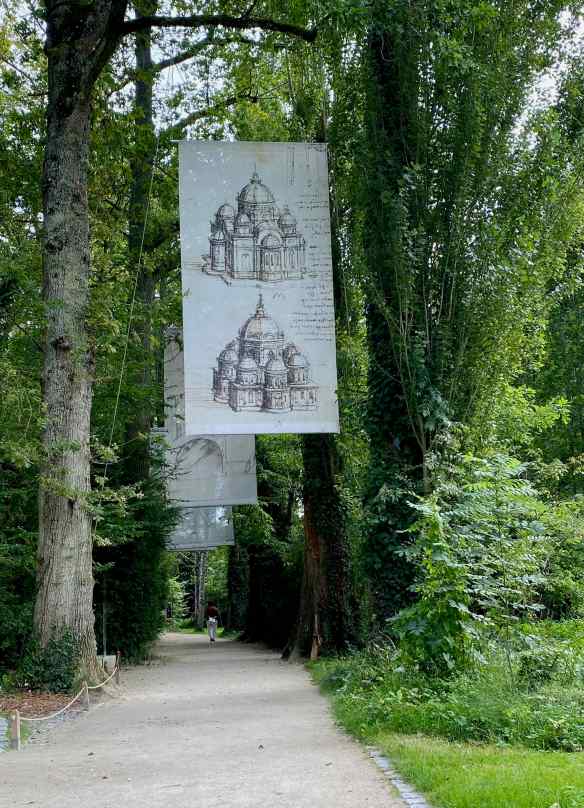
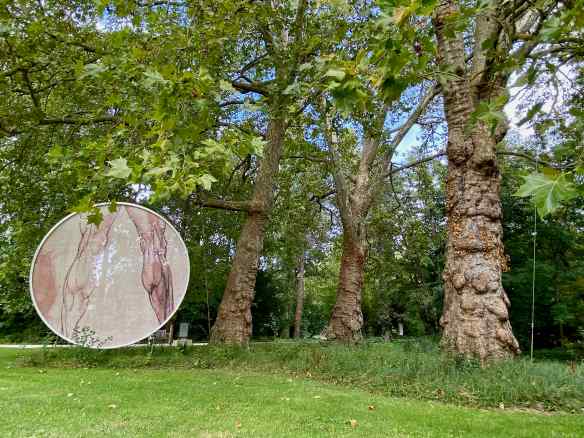
There are  forty 3 and 4 meter tall translucent canvases hung throughout the garden.  We love these…

and the many life size models of his inventions.

We saw the original of this painting during a previous trip.  It looks fantastic high in the trees…

along with this model of a flying machine.

Everywhere we look there are beautiful installations showcasing Leonardo’s work, and enhancing the beauty of the gardens.

I’m not so sure that this was enhancing anything!

One of the paths showcases many of Leonardo’s most well known drawings. They are very impressive…

as were these.

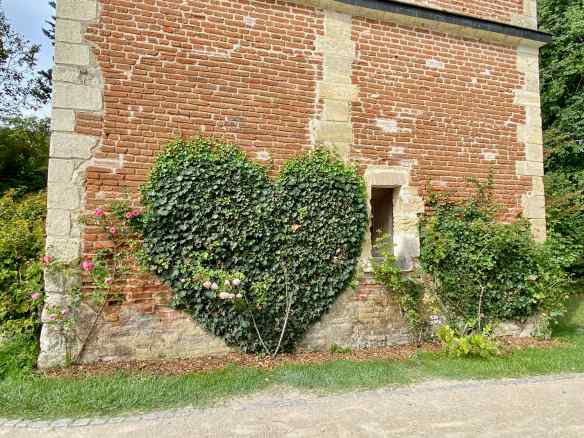
I loved this heart growing on the wall of the pigeon house.

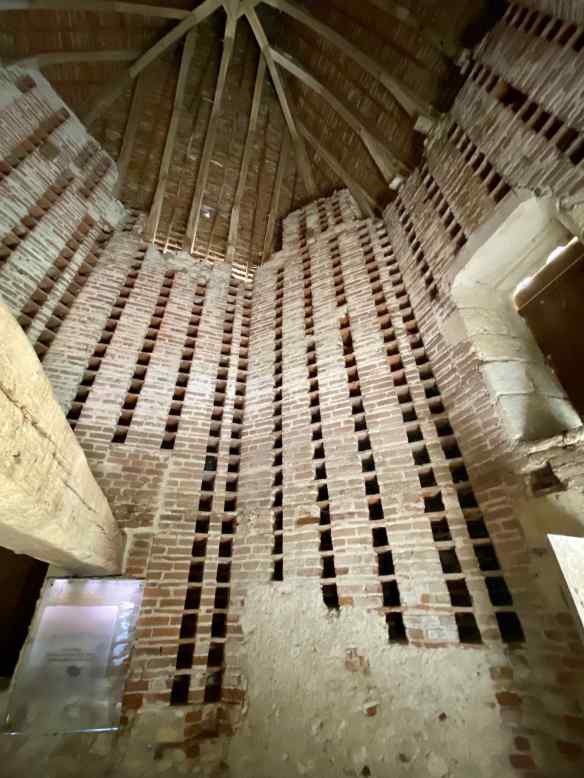
This five hundred year old pigeonnier (pigeon house) was built not long before Leonardo arrived.  It held 1,000 pigeons!  Pigeonniers were status symbols, proof of wealth, authority and power. The keeping of pigeons was a right restricted to royalty, the clergy and the nobility.  Peasants were prohibited by law from killing pigeons which attacked their crops. Pigeons were kept for their meat, their eggs and their guano, which was used to fertilize the fields.

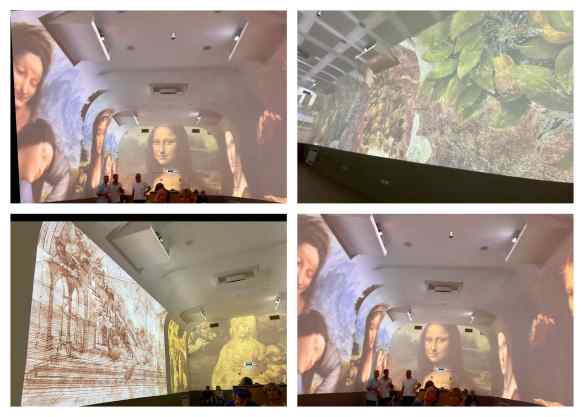
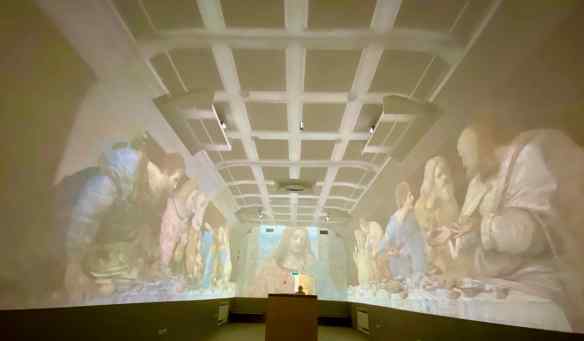
There is a new exhibit, The Leonardo da Vinci Painter and Architect Gallery.  17 of his masterpieces and 200 of his drawings are projected in a giant fresco on the walls and ceiling of the gallery.  It is incredible.  I sit through the 15 minute show twice. We are so fortunate to have seen most of these paintings in museums during our travels.  The one we missed is the Last Supper.  We didn’t realize that we needed to book way in advance so we were out of luck.  We do see the Last Supper here, projected with larger than life details and preparatory sketches.  It isn’t the real thing but it was pretty wonderful anyways. https://www.youtube.com/watch?v=we38niQIB4U
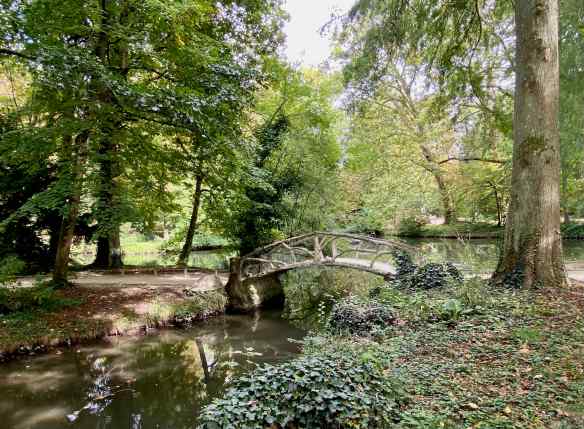
The gardens are beautiful, and have amazing views everywhere we look.

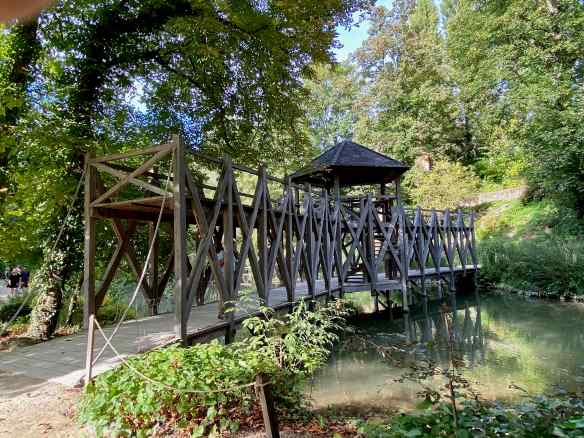
There are lots of bridges that were designed by Leonardo, including this double decker one.

The garden has been planted with many of the same plants that were growing when Leonardo lived here.  He drew the trees and plants in his garden. There are plaques showing his drawings along side of the same plants growing today.

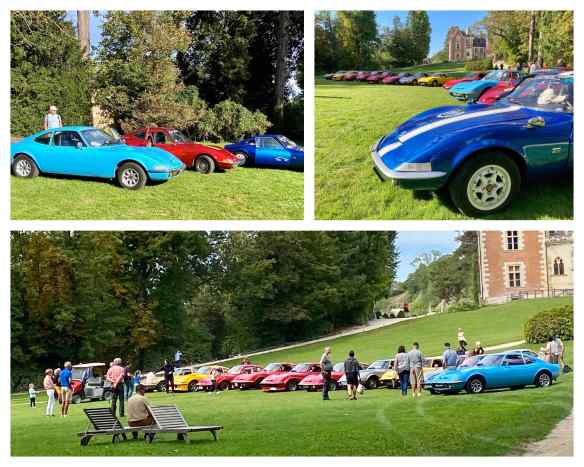
As we leave the gardens we check out the cars that drove in while we were having lunch.  They are all Opels, which I had never heard of but Bob recognized them right away.

I need to walk through the house one more time before we leave.  Leonardo was known to sit here beside this fireplace to keep warm.  This whole visit was quite remarkable.  I was overcome with emotion several times, walking in Leonardo’s home, studio and garden, and standing in the room where he died. It was an amazing day.

Quiet Day

Day 30,  Wednesday, September 27, 2023

AlthoughI really enjoyed yesterday I completely ran out of energy on the drive home, and needed a two hour sleep once we were back in Tours.  Then to bed early and I didn’t wake up until almost noon today, still feeling really tired so just took it easy all day.  No pictures, nothing interesting to write about.

Chambord Chateau, France

Day 28,  Monday, September 25, 2023

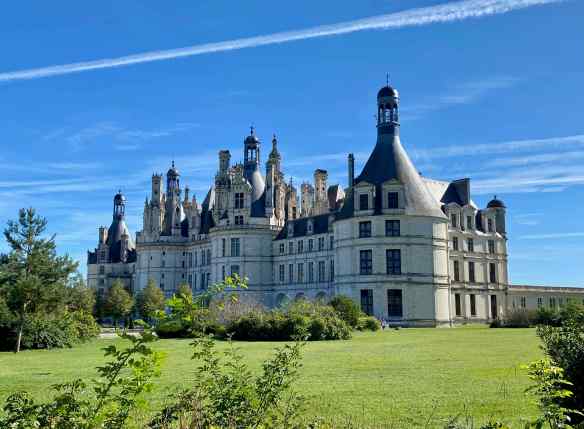
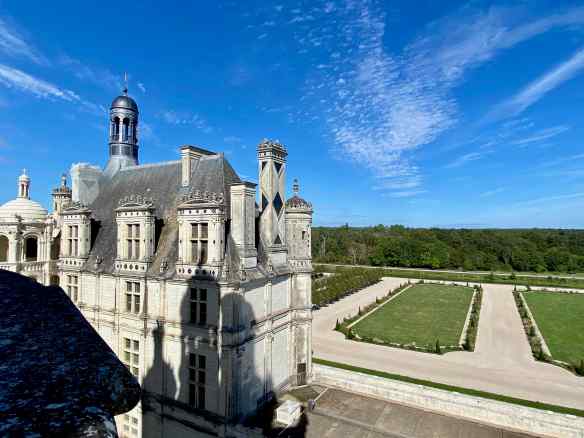
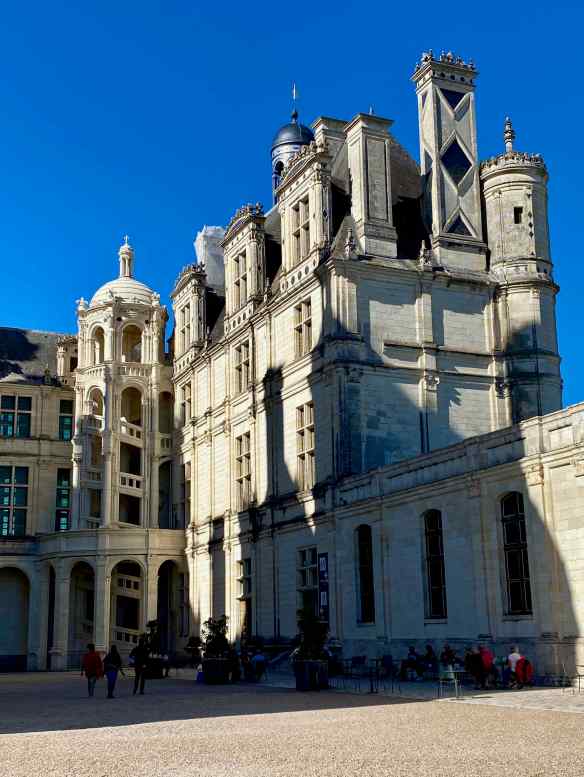
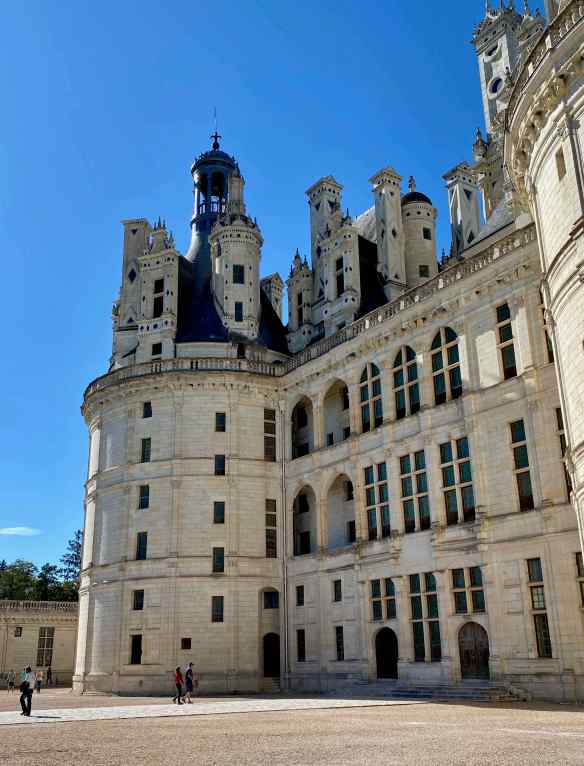
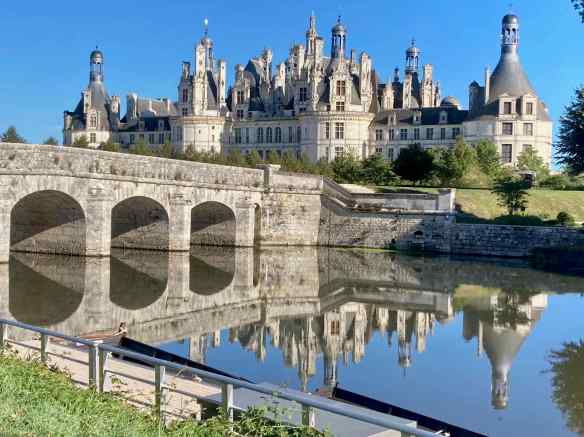
Our first view of Chambord Chateau, which dates to 1539 and King Francois I.   It is the largest chateau in the Loire Valley with 440 rooms!

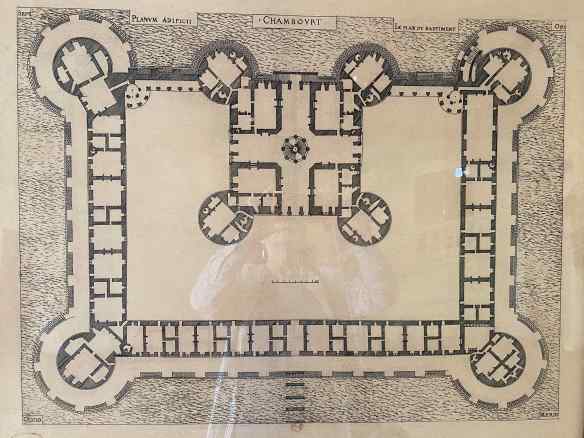
The plan of the chateau is symmetrical, four towers in the corners of the keep, and at its centre a grand staircase.  The rooms that frame the staircase form a Greek cross.  It looks simple on the plan but it was a bit confusing to actually make our way around the chateau.

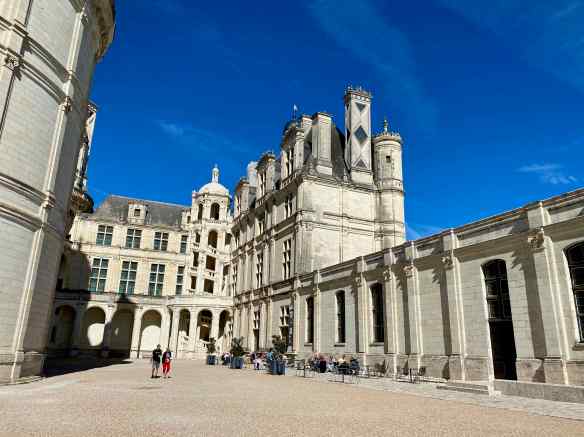
This view shows part of the wall around the keep.

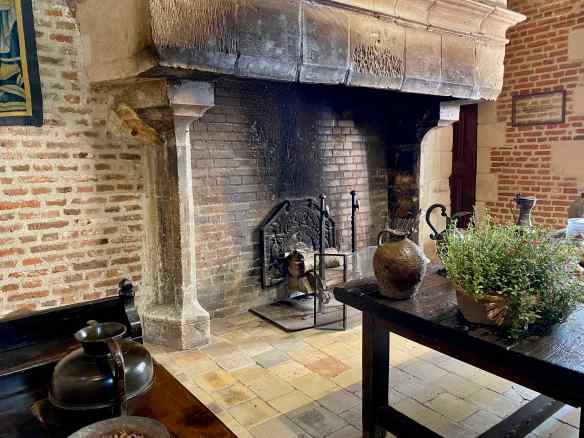
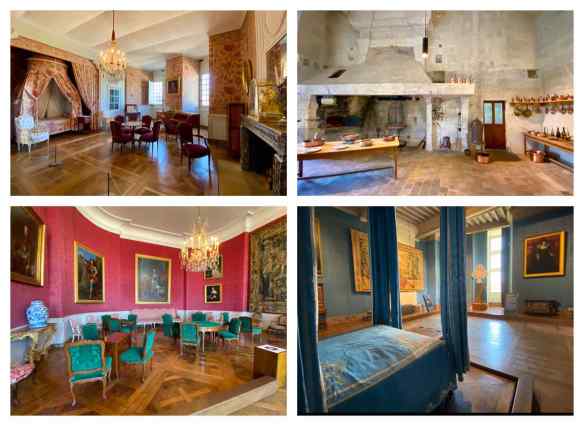
There are several furnished rooms, The governor’s bed chamber, the main kitchen, the games room and the Queen’s bed chamber.

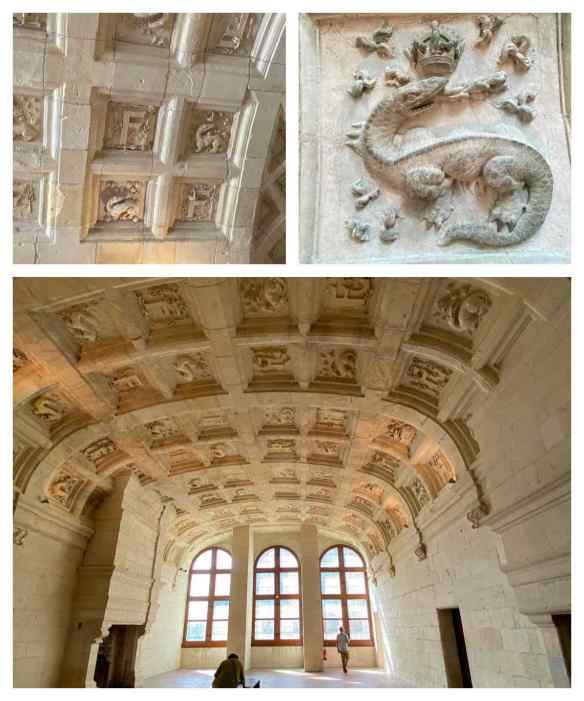
The ceilings of the main floor are decorated with the letter F and salamanders which were the emblems of Francois I.  The salamanders at first appear to be identical but they are all slightly different from one another.

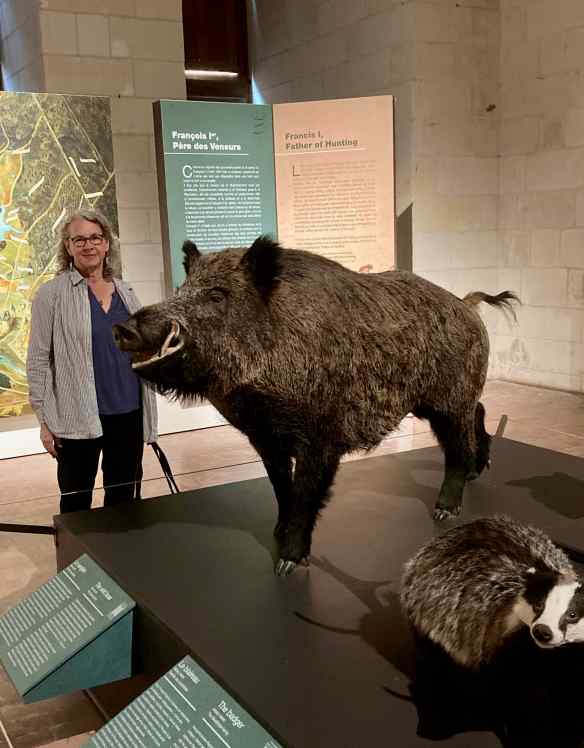
This huge boar is in one of the rooms with information about the hunts that took place here.  Chambord was primarily a hunting lodge.  It was only occupied for short visits of 4 or 5 days at time, except for a couple of periods when it was a residence for 7 or 8 years.  It was abandoned for most of its 500 year history.

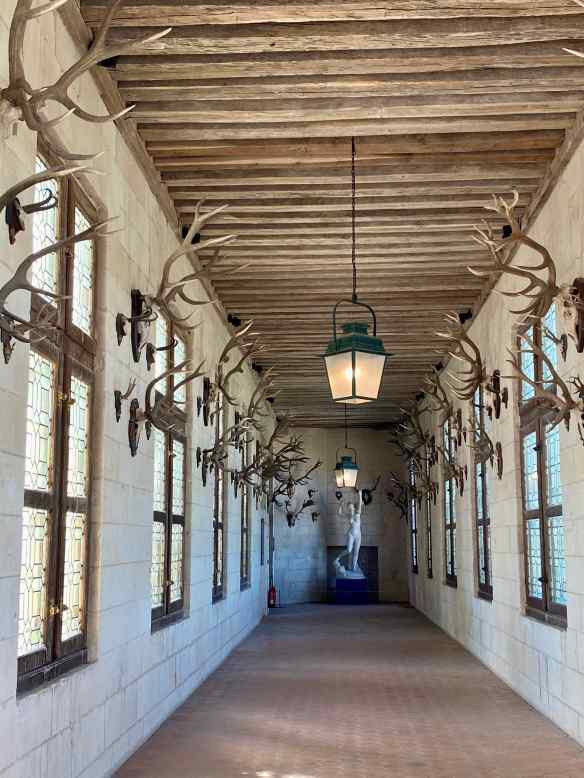
Just a few of the many Hunting trophies on display.  Not my thing but….We climb the double helix staircase inspired by Leonardo da Vinci’s design.  People climb up and down the two staircases and can see each other through the interior windows but never actually meet on the stairs.  Here we are looking across the staircase at each other as we simultaneously climb to the terraces.
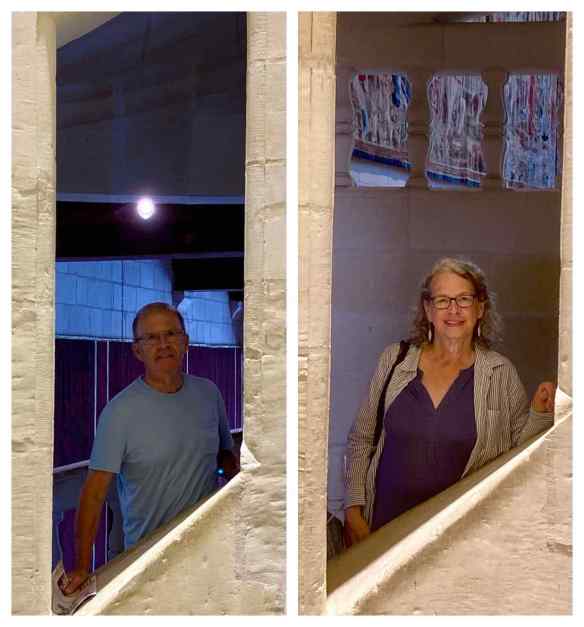
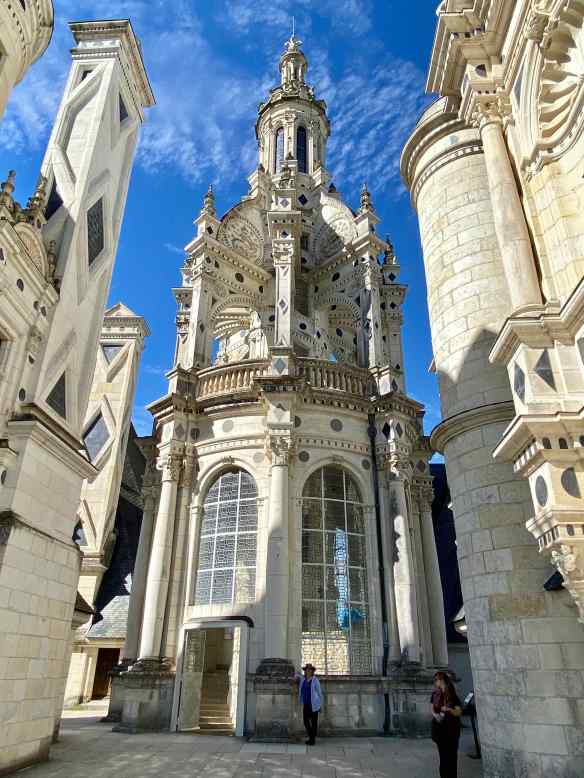
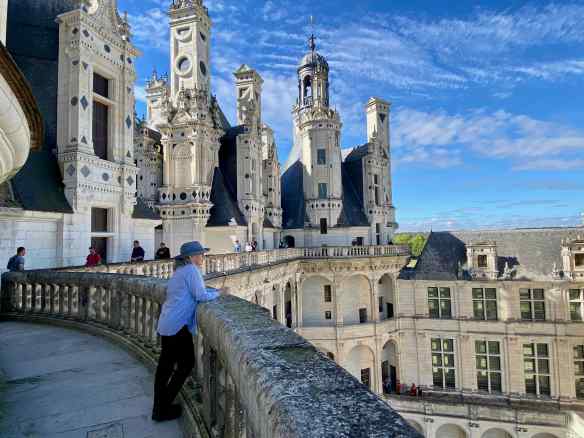
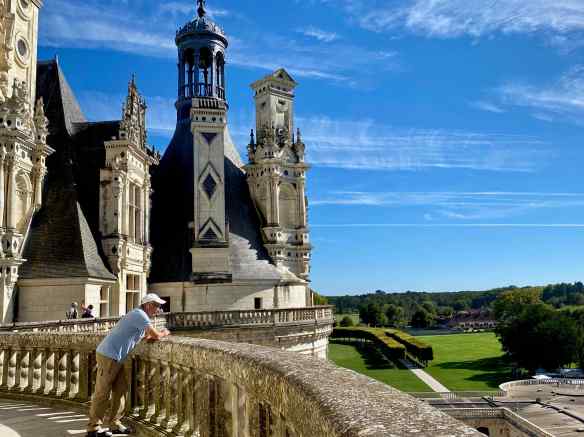
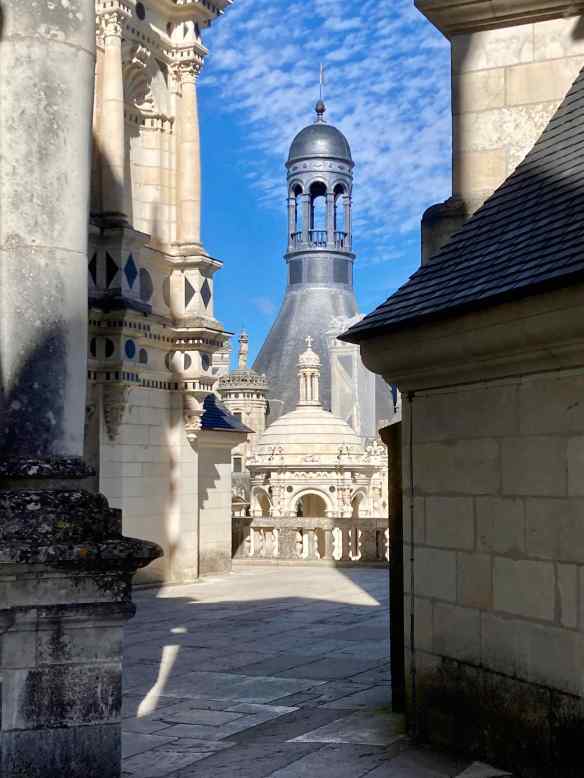
The magnificent Lantern Tower tops the central staircase.

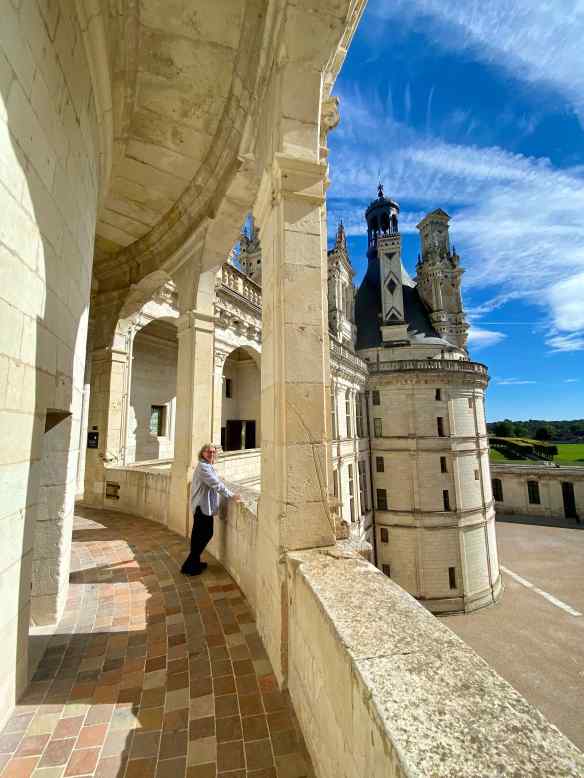
We make our way around the terraces… …with views of the gardens…
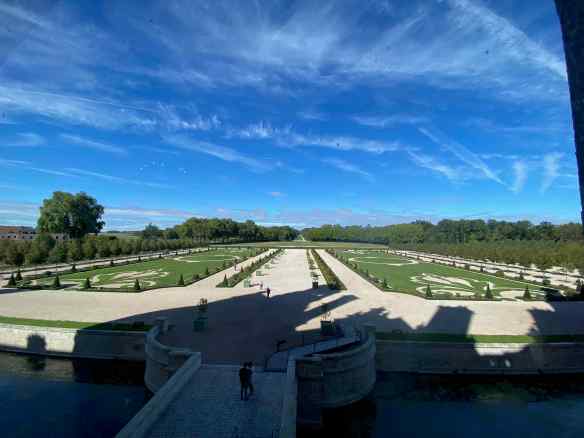
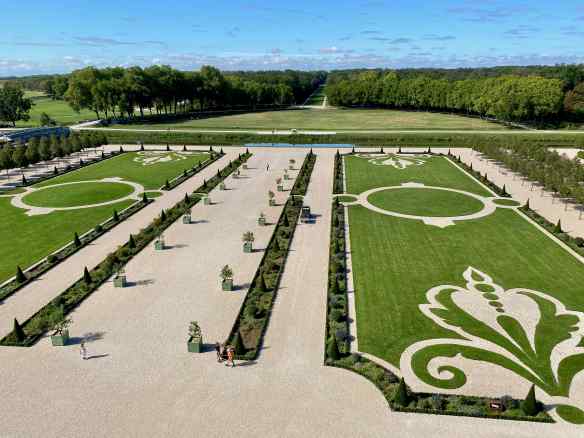
…including the French Gardens which have been restored in 2016-2017 to reproduce the exact layout of the lost 18th century gardens.

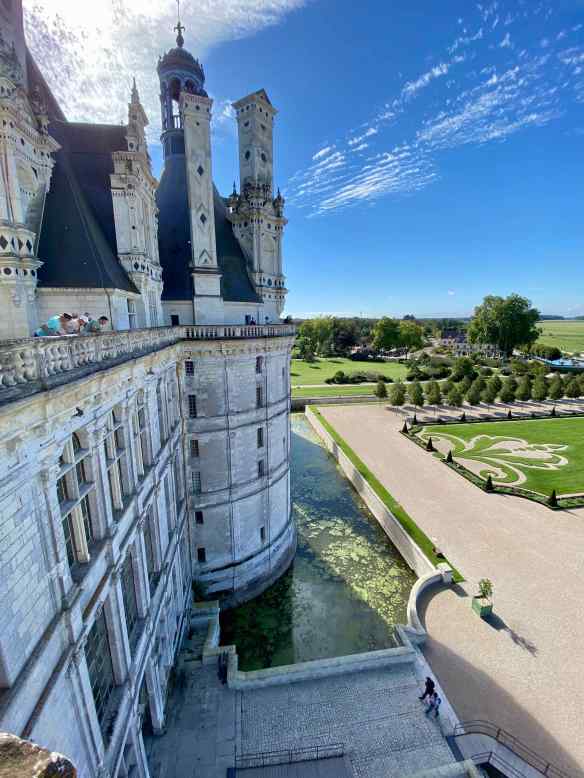
This chateau has a moat but only on the north side.

The view on the south side of the chateau is entirely different.

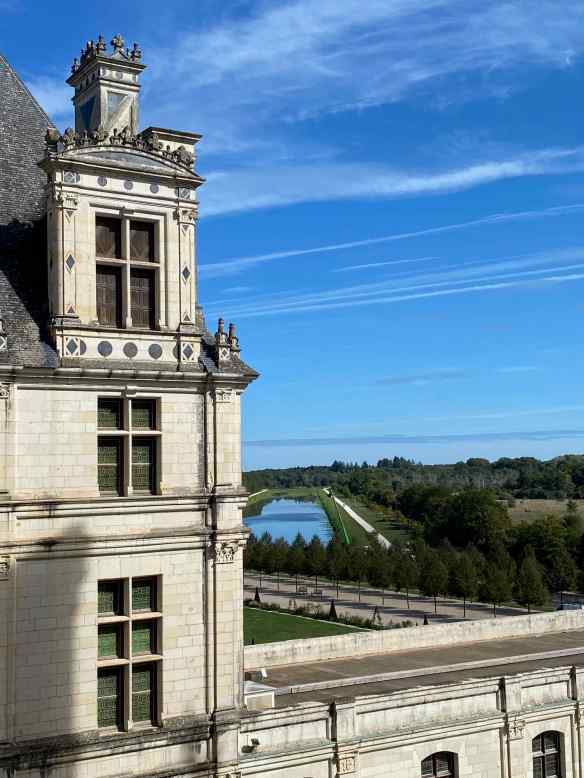
Gardens stretch for as far as the eye can see, beyond the Chateaus exterior wall.   They remind us of the gardens at Versailles, lots of grass, walkways and trees.  The chateau is surrounded by 5,440 hectares and is enclosed by a 32 kilometre long stone wall!

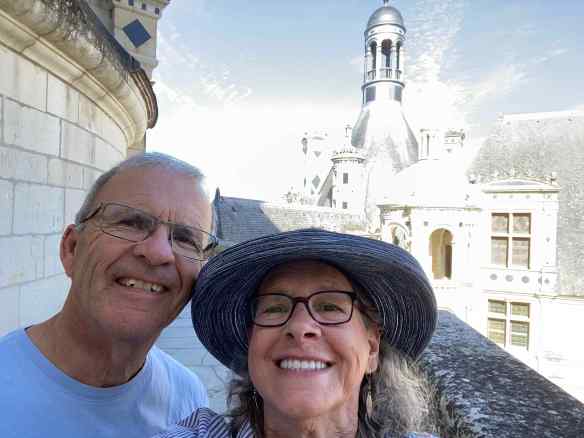
We take another selfie, but it is hard ot get much of the background in…my arms must be too short!

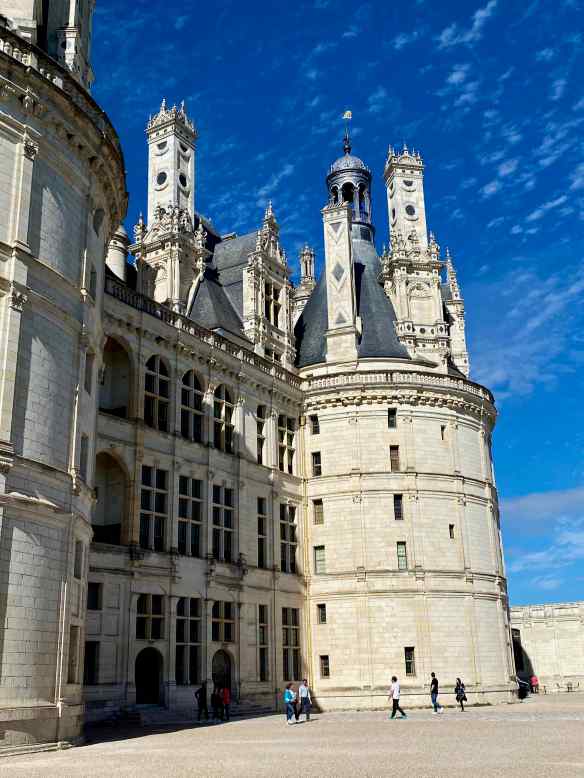
There is so much to see up here on the terraces.  The roofs, towers and spires in each corner of the keep are replicated in all the other corners, so there are four of these dark towers.  Four of everything!

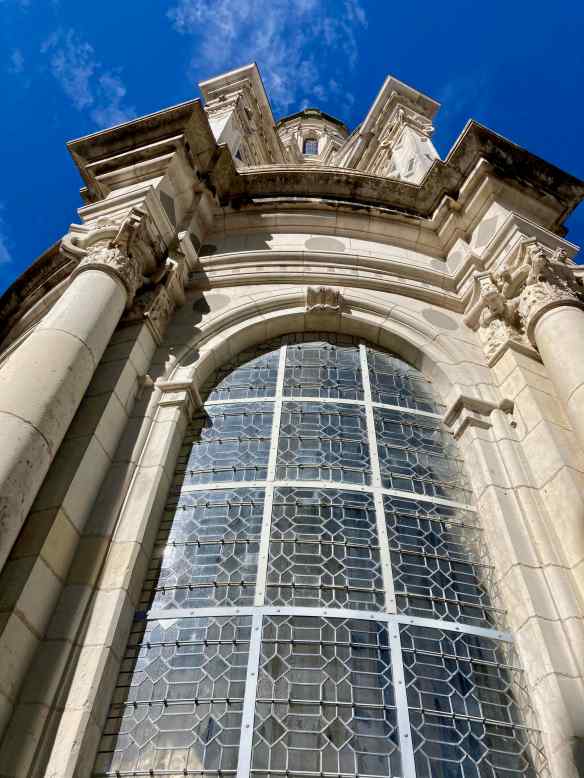
Looking up from the base of the Lantern Tower with huge leaded glass window…

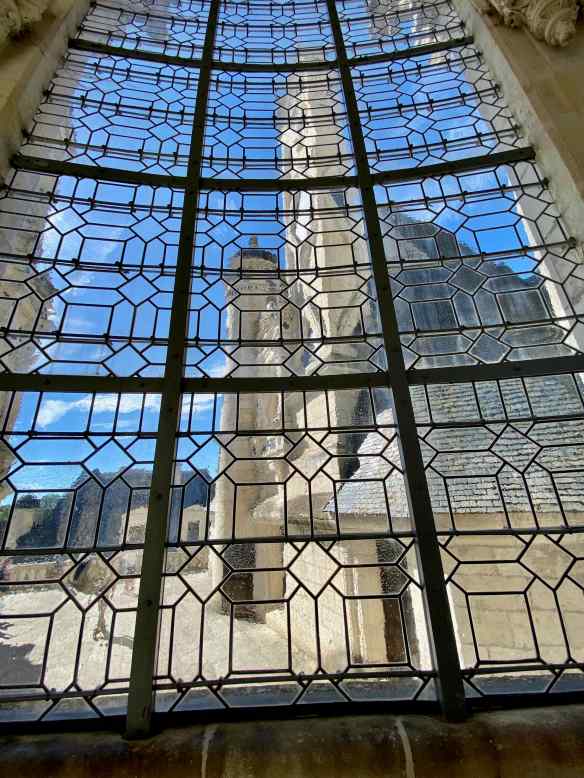
…and looking out through that same window onto the terrace.

The gardens have man made lakes…
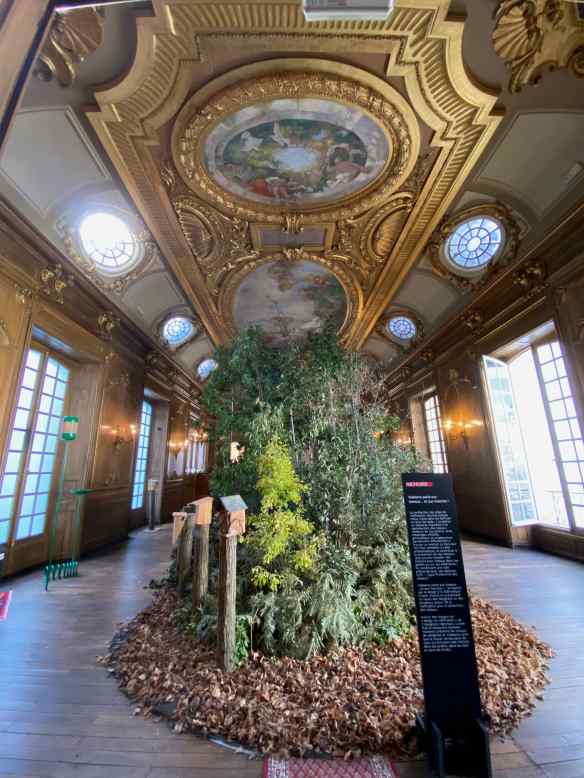
…and paths and walkways. Golf carts are available for rent to explore the gardens…they are so big that it would take forever to walk the paths…and more energy than I have!

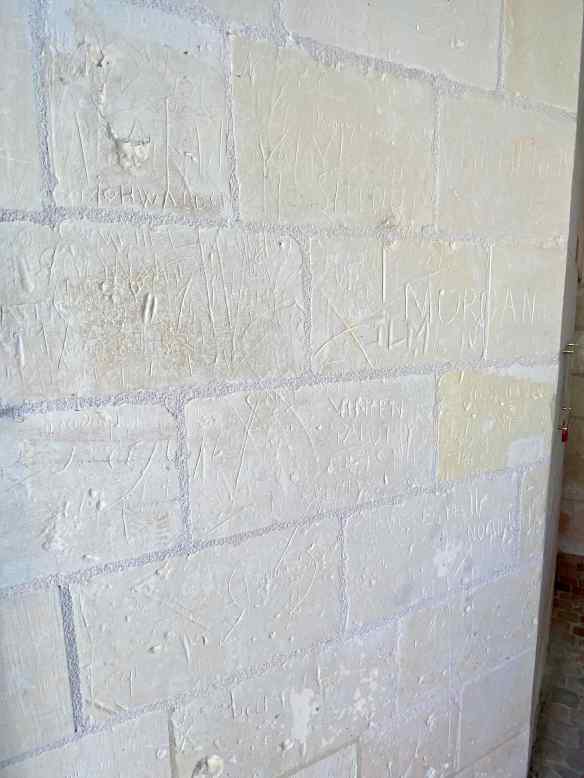
Sadly people over the years have felt the need to scratch their names into the stone walls.

Looking down into the courtyard…

Making our way down to the ground floor there is another walkway with a view on the second floor (which would be the third floor back home). Here the first floor is the ground floor.

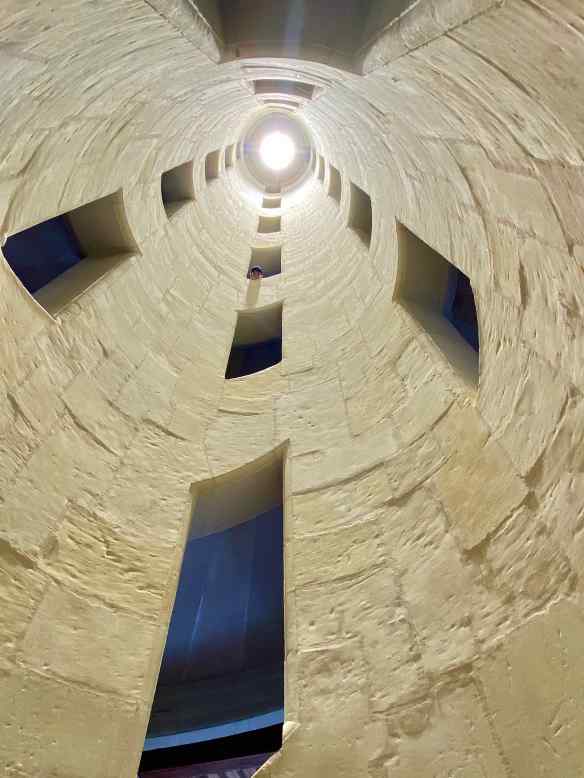
I stepped into the centre of the double spiral staircase to look upwards and spot a little face looking down.  I take my picture and wave, and this young boy smiles and waves back.  These openings are the ones that allow people to view each other as they climb the two intertwined staircases.

Back on the ground I just need to take a few more photos…including this one of the beautiful external staircase leading to the King’s quarters…

…of the ornate rooftops…

..over the massive corner towers.  

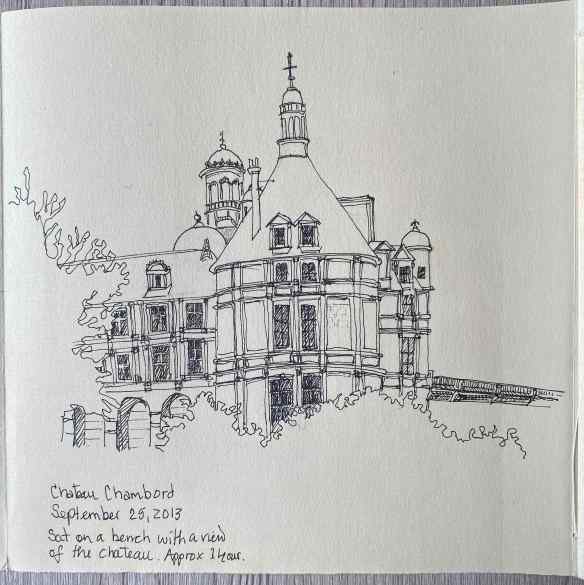
We find a nice shady bench to have a picnic lunch and then I sketch for about an hour.  I find buildings much harder to draw than people. Proportions are difficult, and I keep drawing the bits and pieces too large.  Much more practice is needed, although I have to admit drawing buildings does not interest me as much as drawing  people.  This is my second attempt, the first was a bit of disaster.  I was much happier with this one.

While I was drawing Bob went wandering and took this fantastic photo of the chateau.


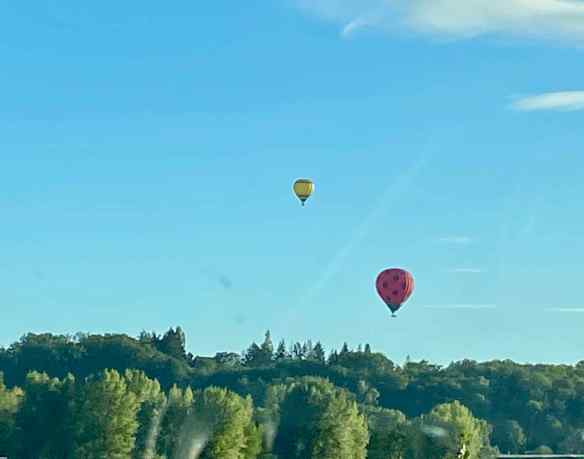
On the drive home we see ten colourful hot air balloons.  We went on a hot air balloon ride for our tenth anniversary, it was quite the experience.  The ones offered here vary from $300 to $400 CAD a person.

Loire Valley Marathon and “Compagnonnage” Museum, Tours, France

Day 27, Sunday September 24, 2023

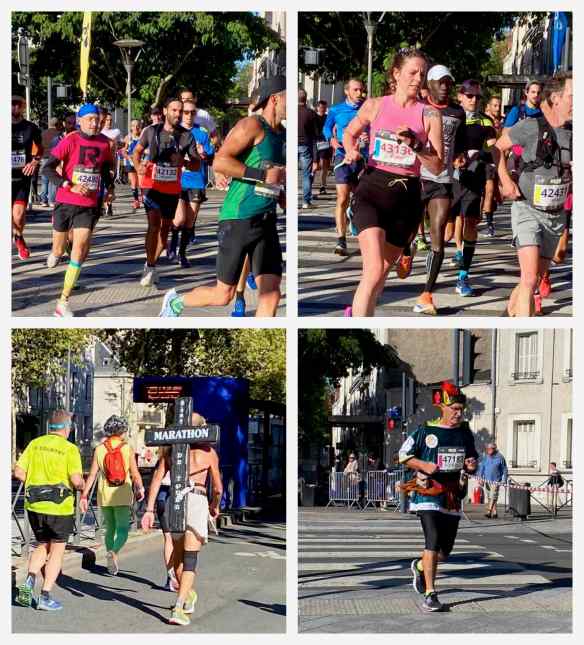
Bob was up early to see the start of the Loire Valley Marathon.  There are thousands of participants.  And they are off…

…except for these two, who are 5 1/2  and 9 1/2 minutes late for the start of the race. it took 2 minutes and 45 seconds for the main group to clear the starting gate.  That is a lot of participants!

We watched the runners as they pass near our apartment.  There are serious runners, and some not so serious runners.

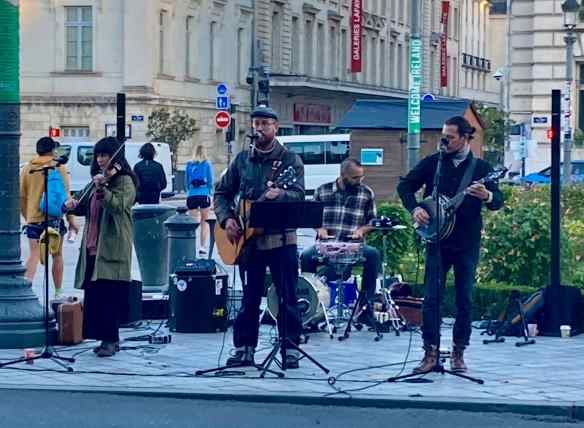
There were bands playing along the route.  This Irish band was playing “Whisky in the Jar”.

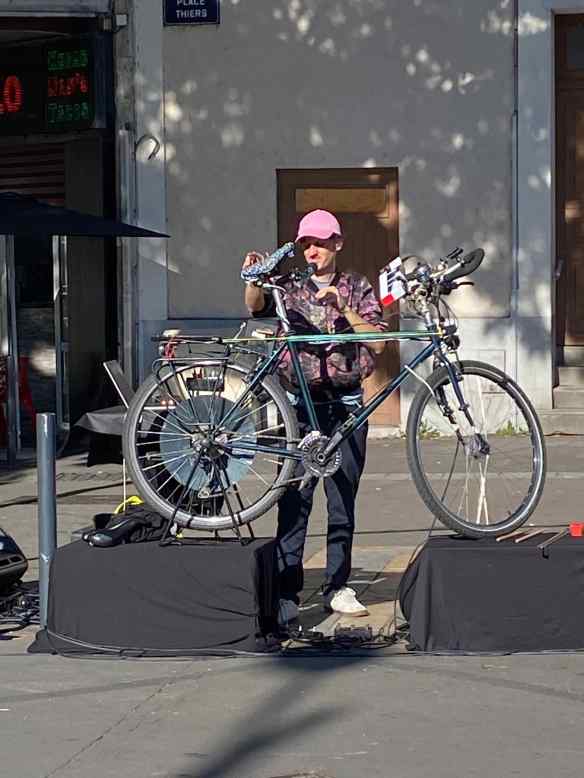
A whole lot of noise was made by this one man band who created his music on a bike, equipped with a keyboard, guitar strings and several other musical devices.

After lunch we go for a walk to the Loire River.

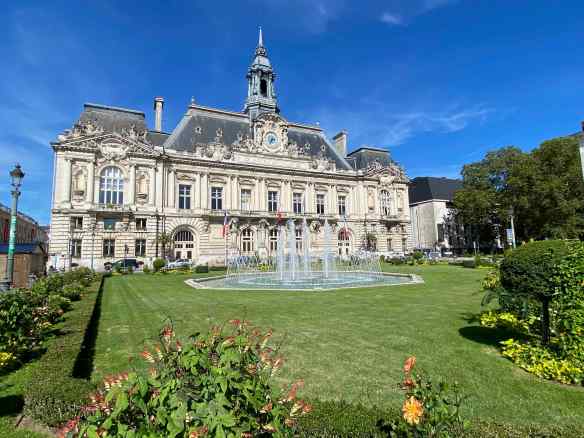
The City Hall…

…has interesting sculptures holding up the balcony. They look like they find it hard work.

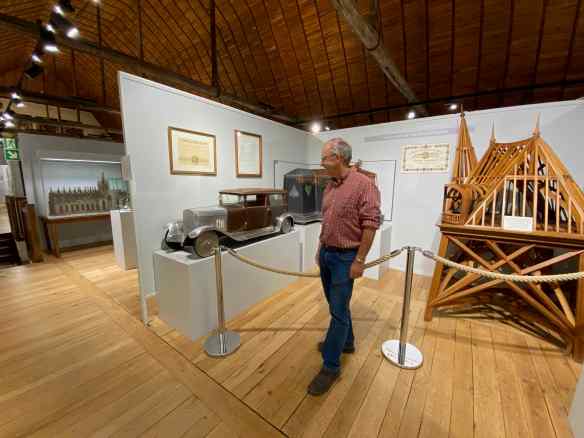
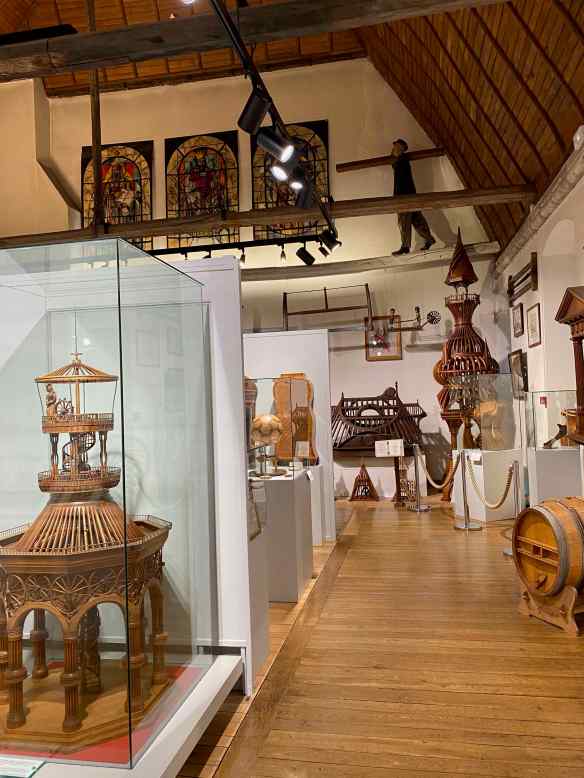
We visit the Compagnonnage Museum, the Museum of the Trade Guilds.  Bob likes this model of a 1926 Hispano and..

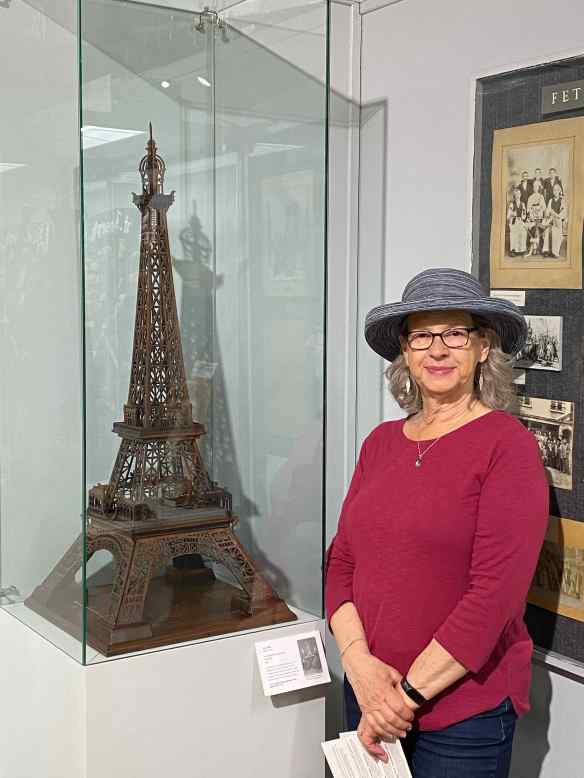
…thinks I should have my picture taken with the Eiffel Tower.

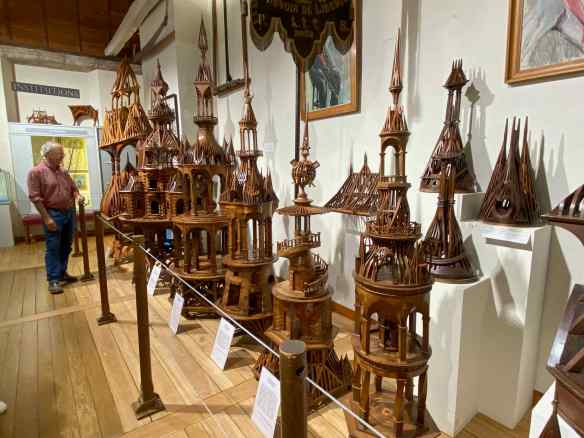
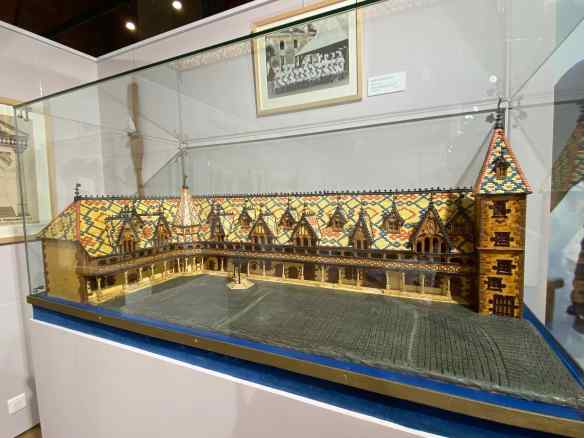
There are a lot of interesting models which portray the skills of the various trades.

These wooden models were particularly impressive.

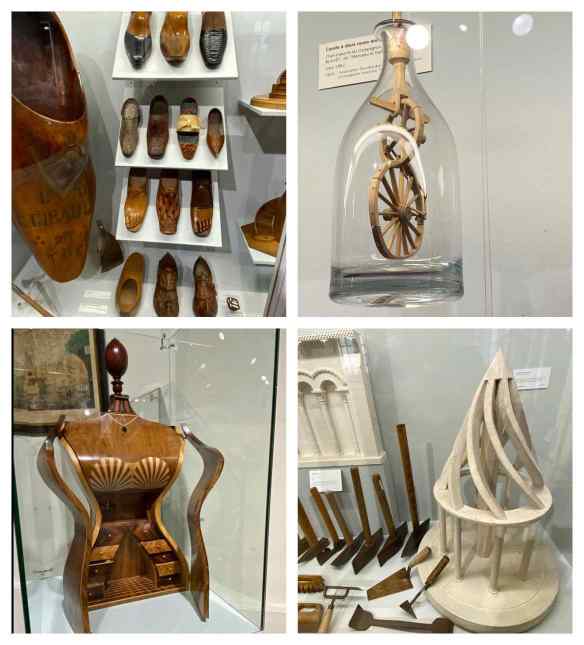
There are wooden shoes that look almost like leather ones, an interesting wooden model in a bottle, a curiosity chest shaped like a women’s torso, and a selection of stone carving tools.

This model is made from pasta noodles!

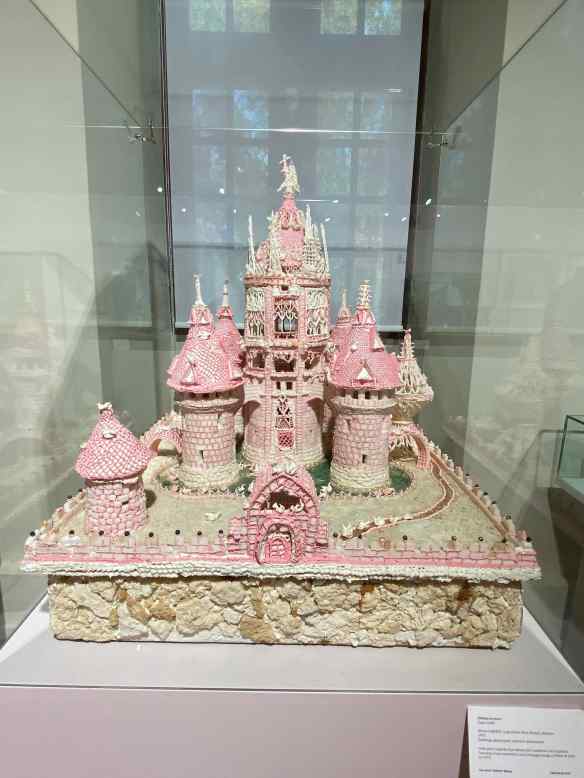
And the sugar sculptures range from this fairy tale castle…

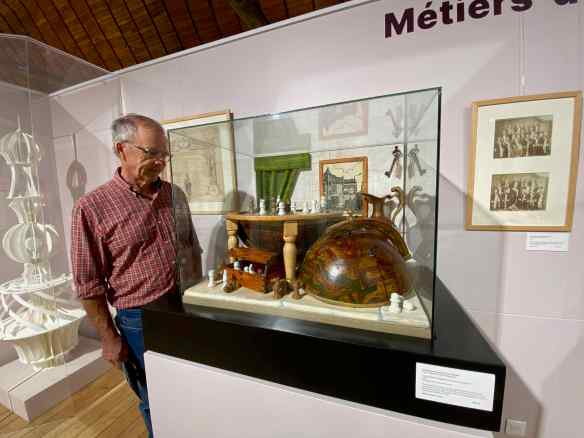
…to this highly realistic chess set and globe.

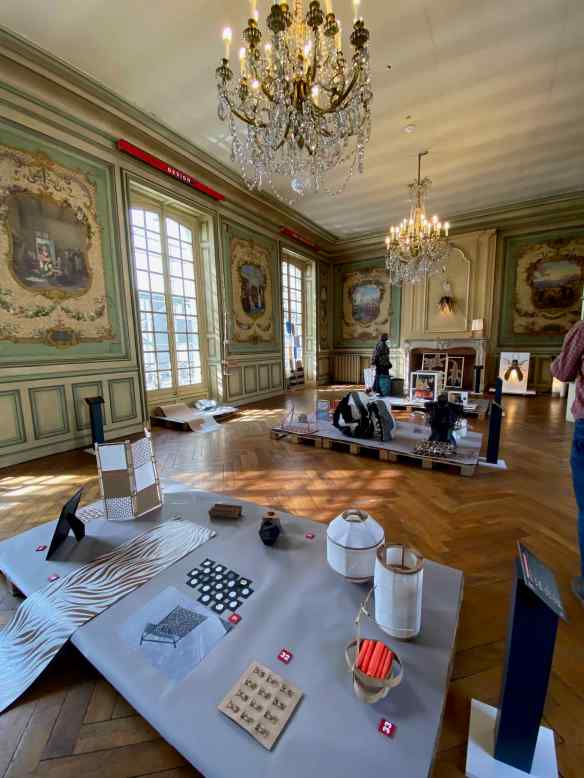
On the way home we pass an exhibition for the France Design Week.  It is in an empty building that is as interesting as the exhibition.

The next room has trees and birdsong!

I liked these woven birdhouses. 

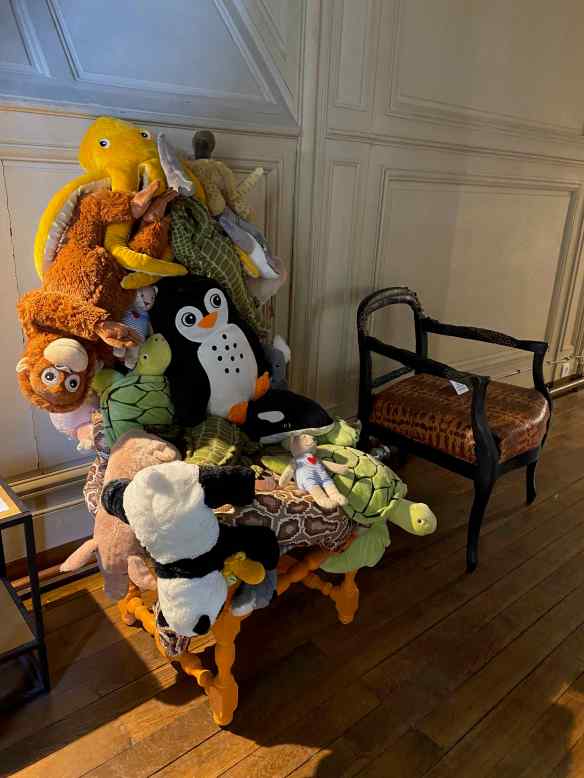
How is this for an idea with what to do with all those extra stuffies? A stuffy chair!

Villandry Chateau, Loire Valley, France

Day 26, Saturday, September 23, 2023

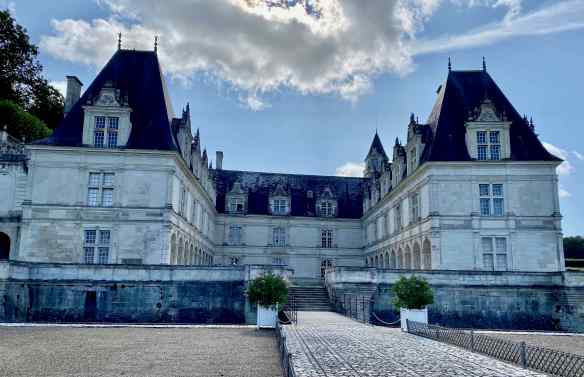
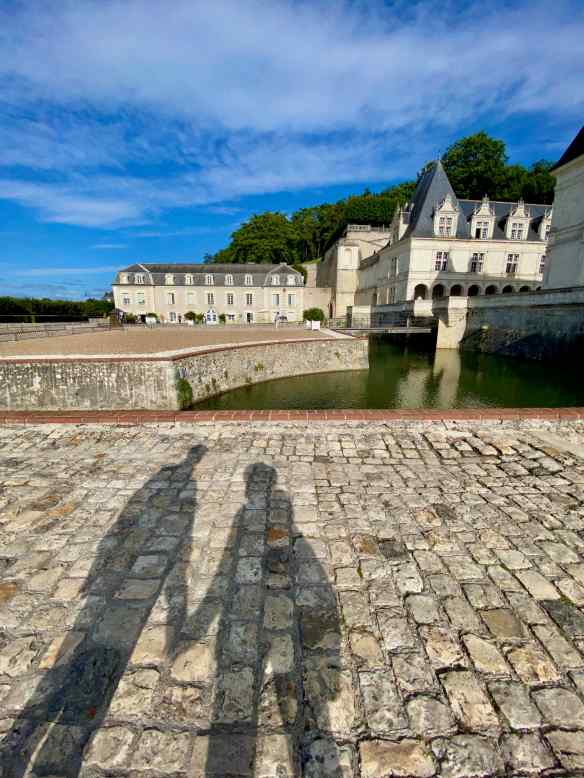
The Loire Valley is famous for the many chateaus that dot the countryside.  Many of these date from the 15th to 17th centuries when French Kings and noblemen competed to build ever more elaborate and luxurious chateaux.  Today we visit Villandry Chateau, which was built between 1532 and 1536, where a 12th century fortress once stood, of which only the keep remains.

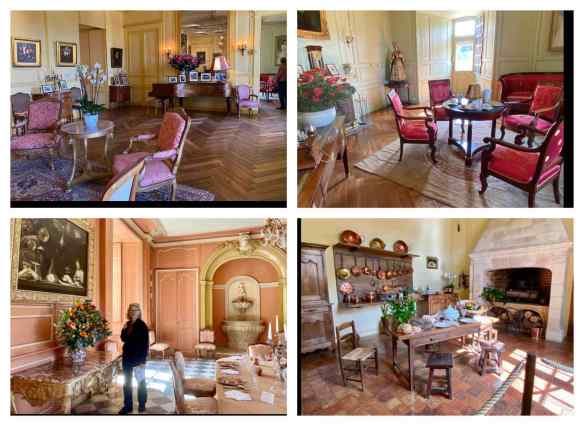
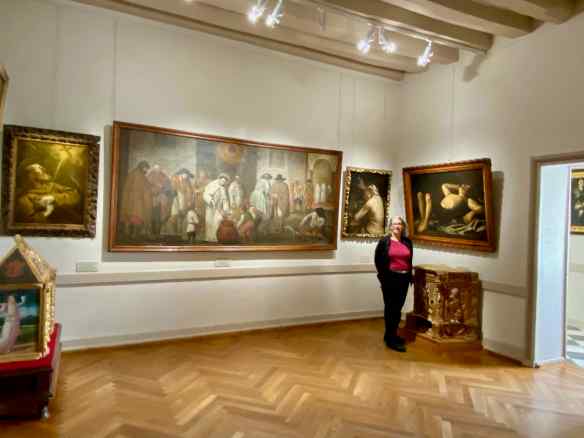
There are 17 rooms open for visit.  They are all furnished and contain paintings from the collection of the present owner’s great great grandparents Joachim Caravallo and his wife, Ann Coleman. They became owners of the Chateau in 1906.  Ann Coleman had family money and she spent most of it renovating and restoring the Villandry Chateau which was bought mainly as a place to show their extensive collection of paintings. Here are the drawing room, the study, the dining room and the kitchen.

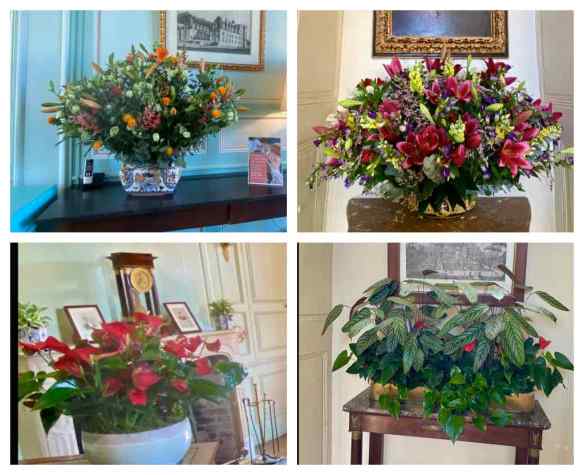
Every room and some of the hallways have beautiful fresh flower arrangements,  There are big pots of orchids everywhere too.  It must be full time job just taking care of the potted plants and the numerous arrangements of cut flowers.

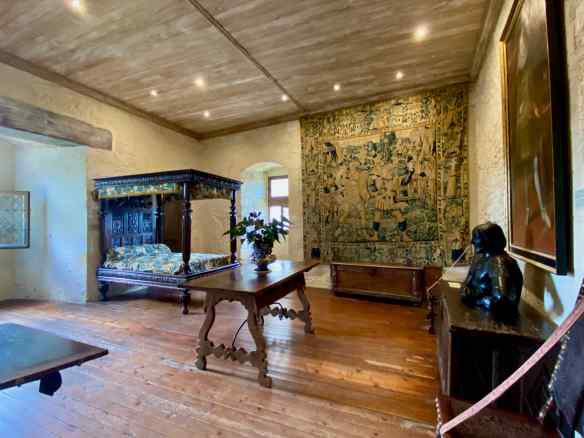
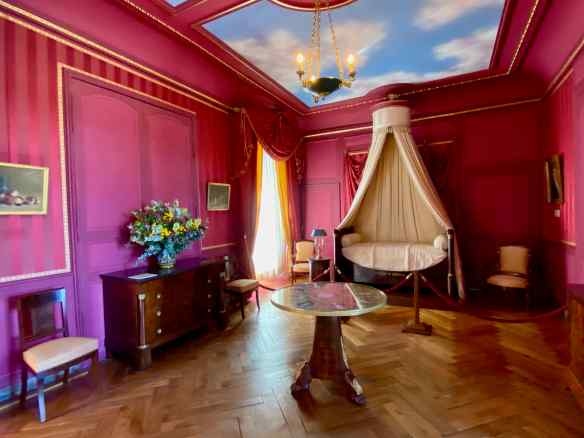
This is Prince Jérôme’s bedroom, who was the younger brother of Napoleon I. He was the owner of Villandry for a few years.
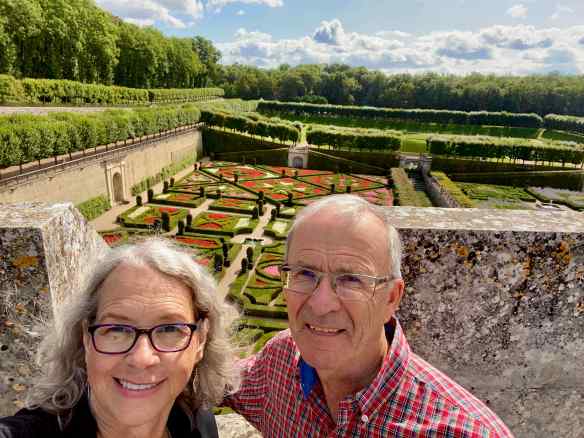
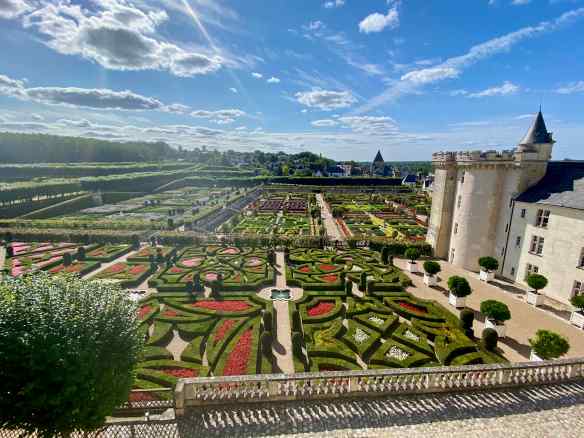
Villandry is most famous for its gardens. They are unbelievable! This view from Prince Jérôme’s bedroom window is of the Love Garden.  Each of four box beds symbolize the four states of love: Tender Love, Passionate Love, Flighty Love and Tragic Love. The pink hearts are in the Tender Love bed.
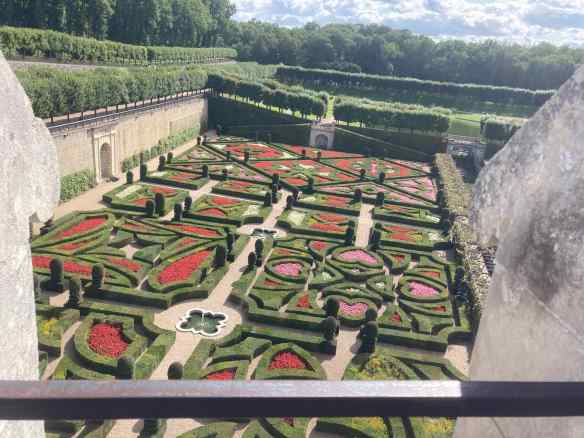
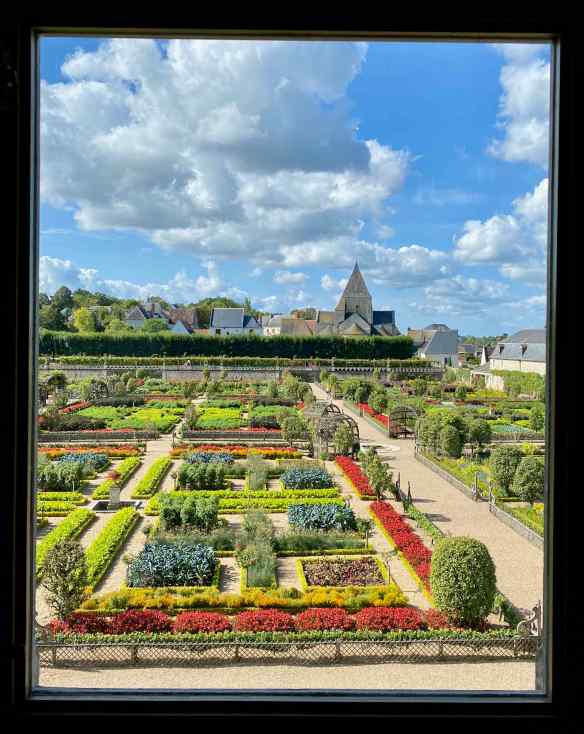
The tower bedroom has an amazing view of the Ornamental Gardens.

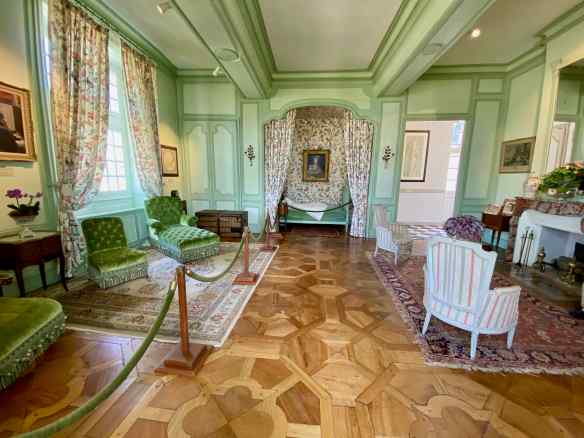
The Moat bedroom belonged to Ann Coleman, whose inherited fortune was used to restore Villandry.

Part of the chateau devoted to the Art Gallery…

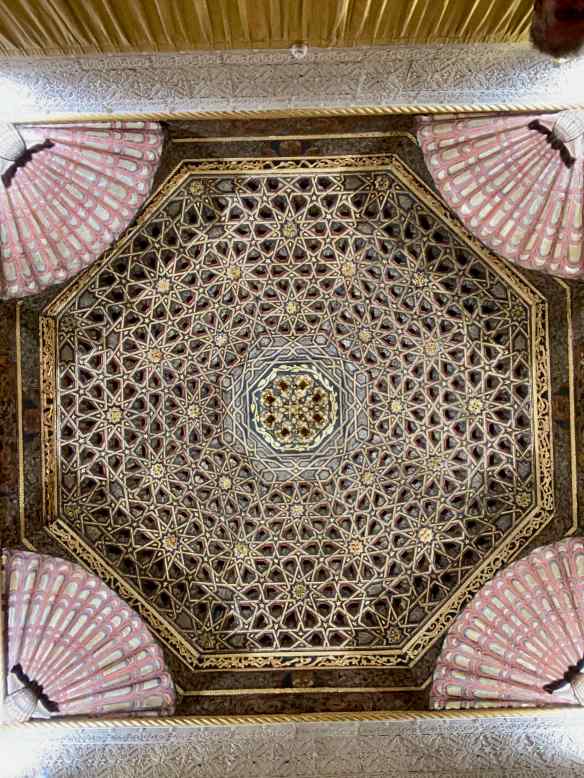
…includes this intricate ceiling which was one of four from a 15th century palace in Madrid.  The other three are in museums in Madrid, London and San Fransisco.  We saw the ceiling in Madrid during our trip to Spain several years ago.  It is made of 3,600 pieces of polychrome wood that took a year’s work to assemble.  How interesting that we see the second ceiling here.

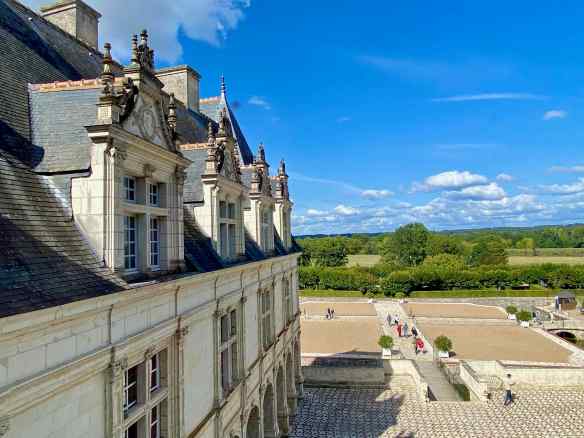
The dormer windows are all richly decorated.

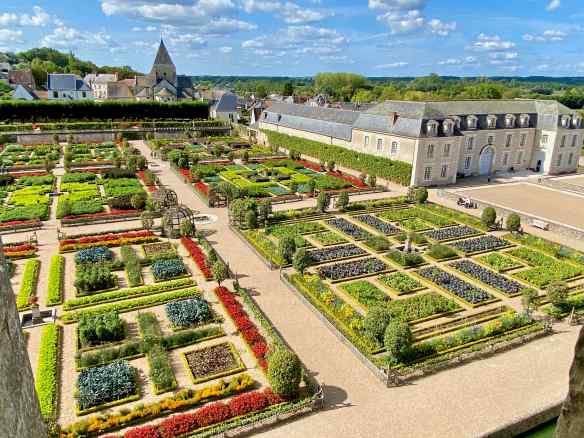
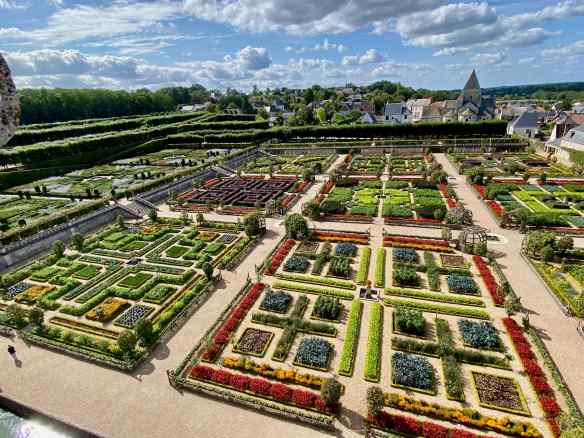
We walk up to the Keep, which is part of the original fortress and get our first panoramic views of the gardens!  What can I say?

They are unbelievable!  There are ten full time gardeners to take care of all this, which doesn’t seem to be near enough to maintain these ornate gardens.  Later we read that they do hire more seasonal workers.  

A selfie in front of the Garden of Love!

These crazy spiral stairs up to the Keep were not level, they all sloped towards the centre…it made climbing them more difficult.

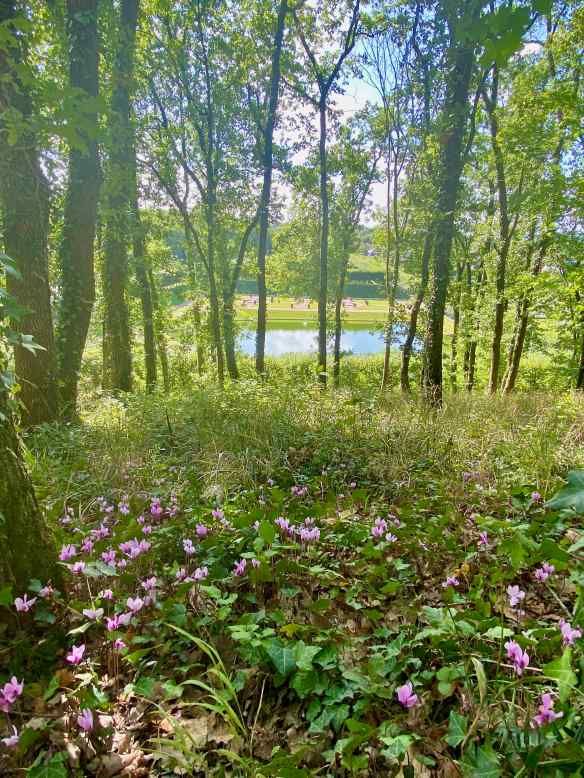
This is the King Francis I bedroom, which is much like it must have been when he visited Villandry on January 17, 1543.We leave the chateau and climb high above the gardens for a great view.Then we walk through part of the forest.  Villandry has a tall stone wall surrounding its 15 acres of forest and gardens. The forest floor is covered with pink and white cyclamens.
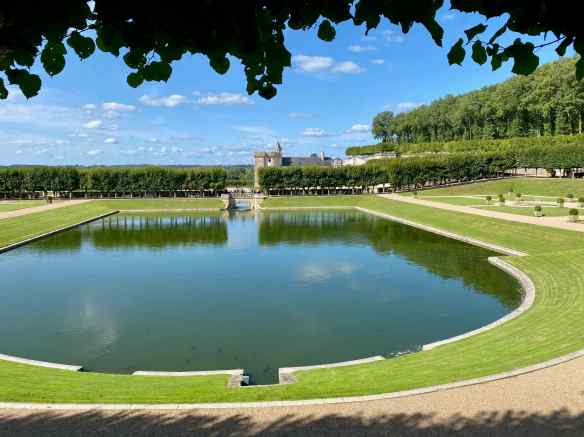
The Water Garden is surrounded by lime trees.  There are 1,015 lime trees in the garden that require three months of winter pruning. This is carried out by a team of four gardeners.
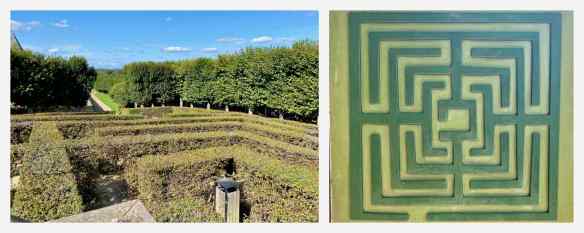
Just past the Sun Garden, oops, no photos, we walk to the centre of a maze, which symbolizes Man’s earthly journey.  It is easy to get to the centre because there are no dead ends.  It is more like a labryinth than a maze.

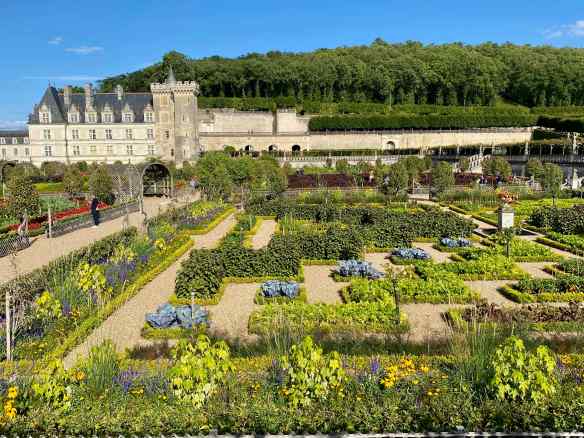
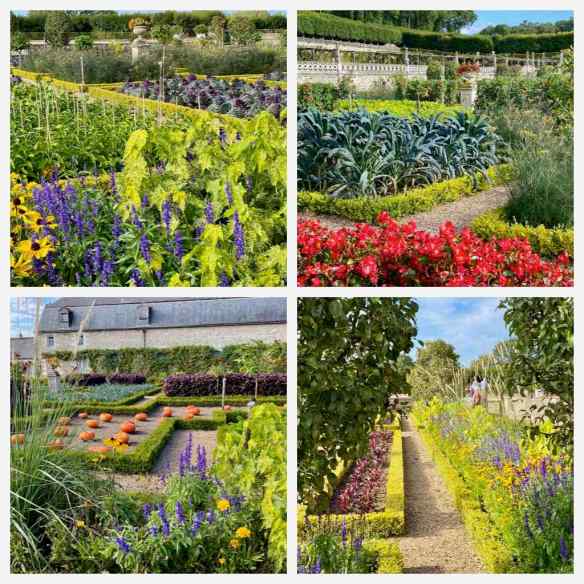
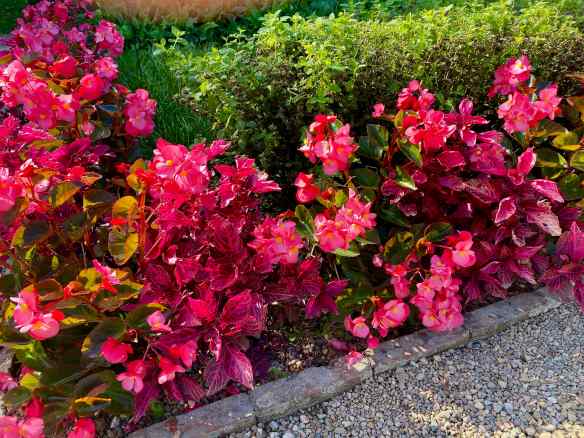
A clever combination of coleus and begonias. These gardens contain 85,000 vegetable plants and 125,000 flower plants!  115,000 of these are planted every year.  The rest are perennials.
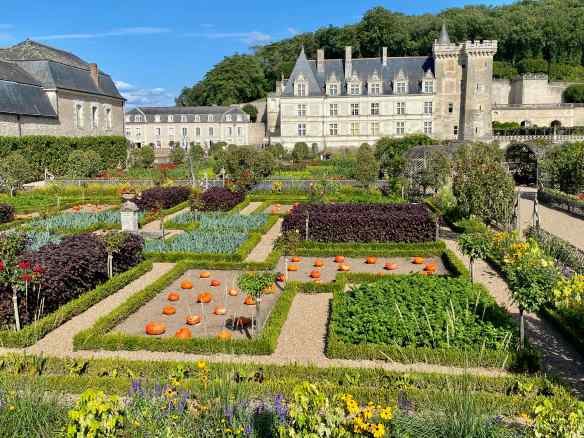
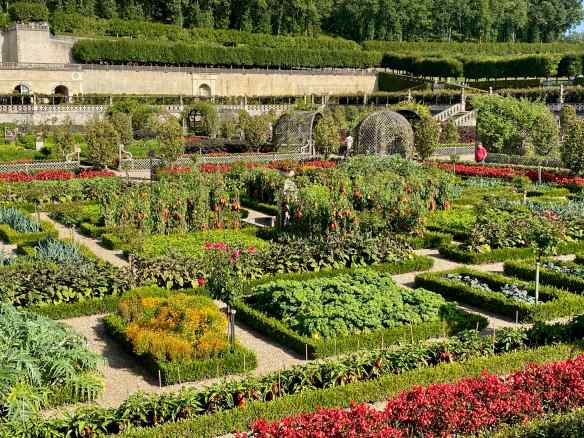
There are two planting schemes, one in the Spring from March to June and another in the summer from June to October.

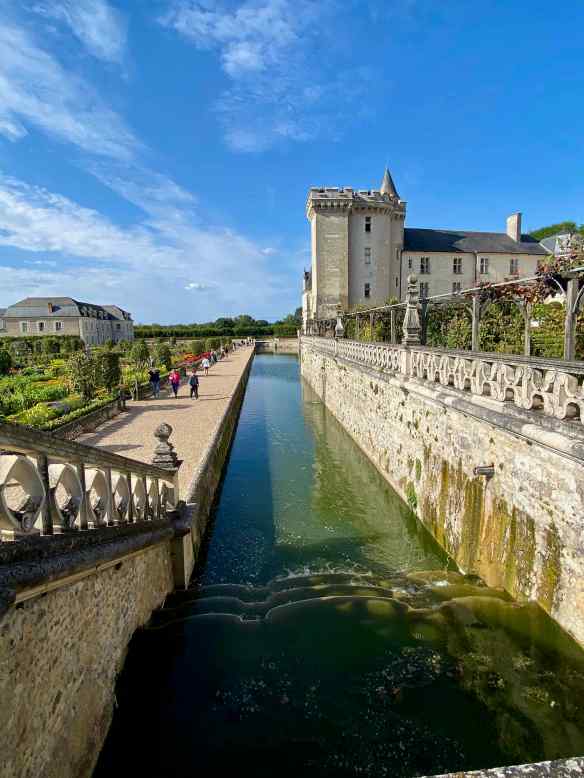
A view showing the Keep (the square tower) where we climbed the sloping stairs to reach the top, and the forest we walked through high above the gardens.

A few close ups of the many flower and vegetable beds.  

The blueish green spiky plants are leeks and those are tall tomato plants behind.  When the produce is harvested it is put in a special area where it is offered for free to visitors and villagers.

I think this is one of the few castles or chateaux that we have seen with a working moat.  

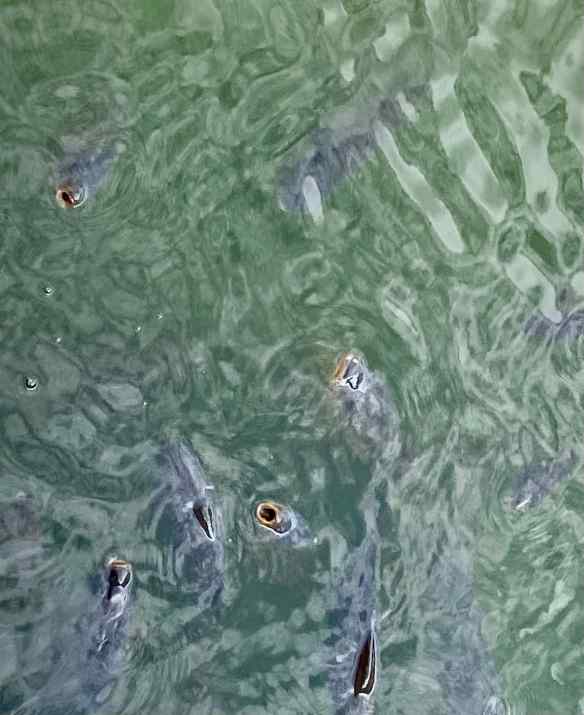
This one contains some very hungry fish!

Time to head home, we spent about 6 hours visiting this chateau. There are about 100  castles and Chateaus open to the public in the Loire Valley…I guess we will have to pick and choose just a few more to visit in the next few days.