Valencia

Friday, November 27, 2015

Our apartment in Valencia is a short metro ride from the old part of town.  We bought four tickets to get us into town and home again.  However when it came time to go home our tickets weren’t working. Turns out we purchased four tickets that had to be used all at the same time so the other two were no longer valid.  It cost us over € 9 for two one way tickets because we had also chosen too many zones.  We bought two tickets to get home for only €3, however we later discovered that we could purchase ten tickets for €7.20, only €.72 a ride!

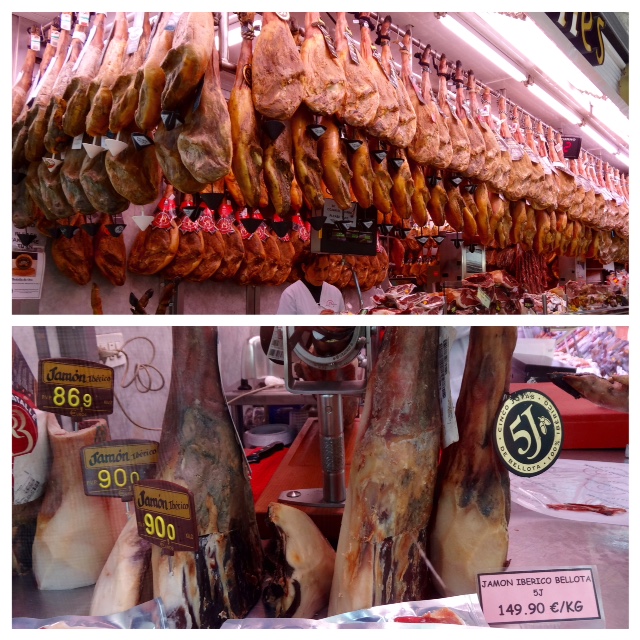
First stop today is the Mercado Central, a market held in a huge iron, glass, and tile Art Nouveau building. The meat and fish aisles are always interesting, so different from our stores back home.Image-1

Hams are a big seller in Spain and I still find it strange to see them hanging in shops.  No refrigeration seems to be needed, and take a look at the prices, up to €149 a kilogram!Image-1
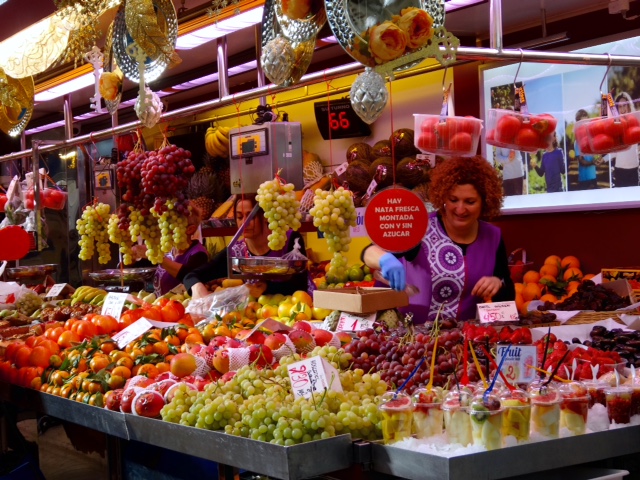
We bought some fruit for a snack and then headed towards the Valencia Cathedral.  Yes, another cathedral!FullSizeRender
Some refreshments and a rest in this lovely plaza and we are ready to check out the cathedral. FullSizeRender_2
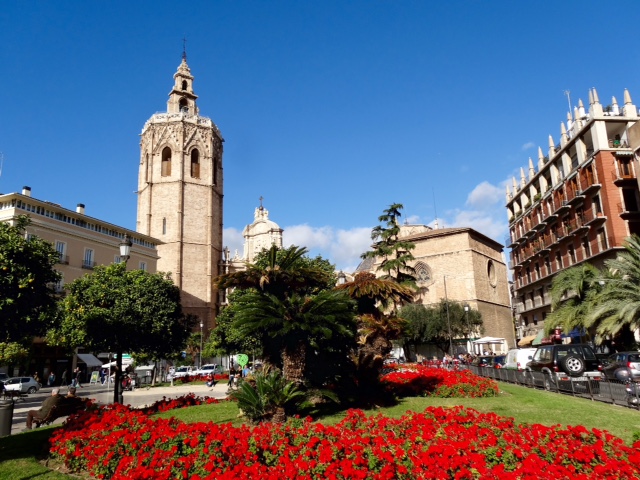
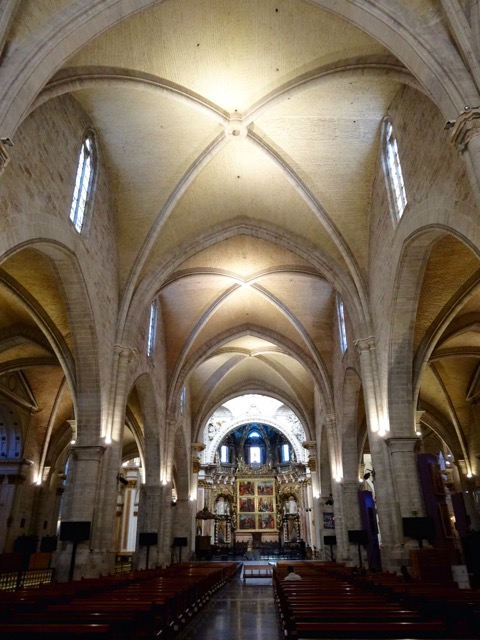
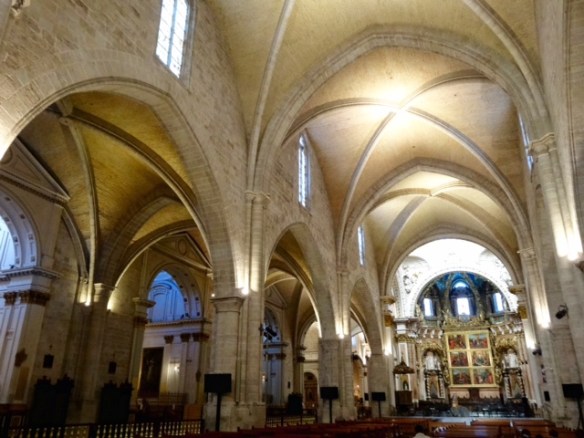
After skirting past the gypsy women begging on the streets and the church steps we enter yet another magnificent cathedral. Originally built in 1262, it has been added to throughout the centuries and it now has three entrances. The one we chose gave us this view of the cathedral as we walked through the doors.FullSizeRender
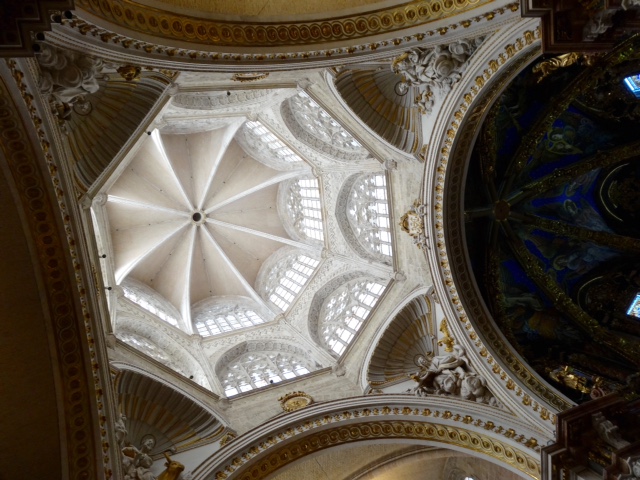
The day light just before the altar comes from this beautiful octagonal dome.FullSizeRender_3
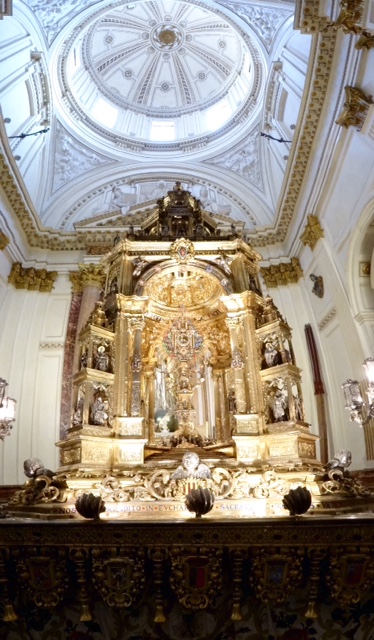
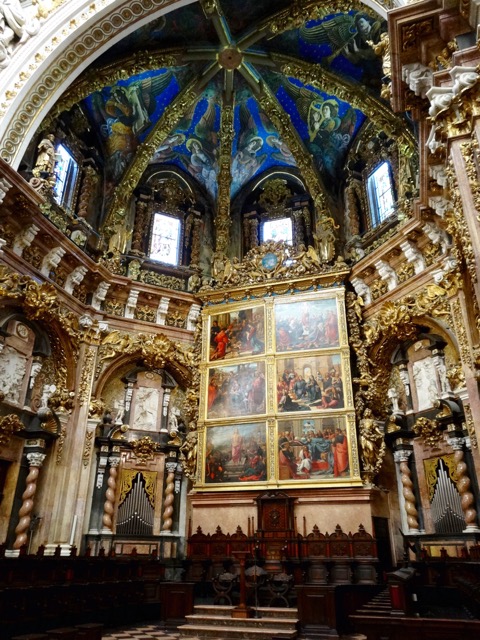
There is another gorgeous dome over the Chapel of St. Joseph, which is one of twenty eight smaller chapels located in this cathedral. Most of them are incredibly ornate with lots of gold and jewels and carvings. Although these magnificent cathedrals are truly awe inspiring, we wonder about all the money that has been spent building them and we are also quite aware of the church’s role through out history.  So many horrors have been perpetrated in the name of religion. It is a strange sort of paradox.FullSizeRenderThe high altarpiece and the frescoes are amazing.  We sit for quite some time just in contemplation.  This is Bob’s favourite altar of all that we have seen so far. The frescoes of musical angels on the dome above the altar were only discovered in 2004 during some restoration work.  They had been covered by a wooden ceiling and no one knew they were even there.   Click here if you want to read more.
FullSizeRender_2

Here is another view of the main aisle and one of the side aisles with the smaller chapels.FullSizeRender
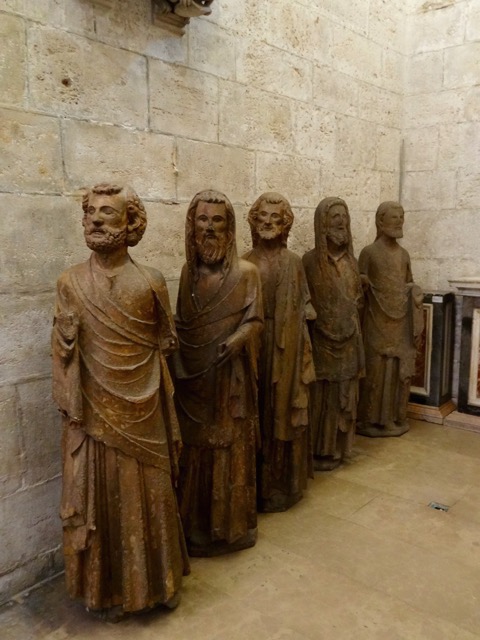
These life size statues of the Apostles are from one of the entrances to the cathedral.  They have been replaced by copies and the originals are now kept inside the cathedral museum for safe keeping, but it was closed for renovations so they were displayed in an alcove.FullSizeRender_5An intricately carved altarpiece, built in the 16th Century holds the Holy Chalice, which is said to be the chalice Christ drank from at the Last Supper.FullSizeRender_3
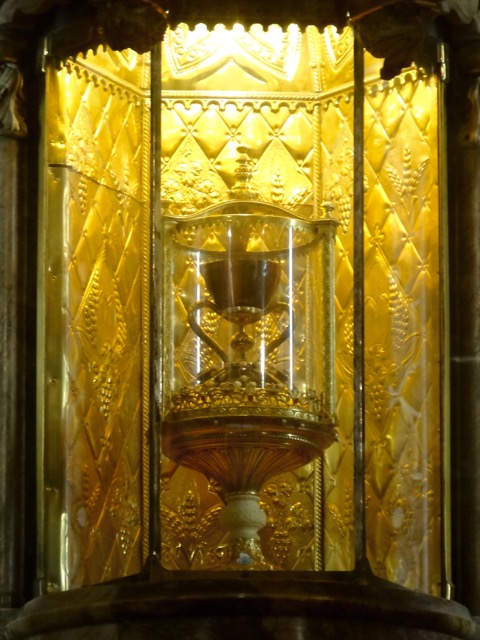
And here is the Holy Chalice, aka the Holy Grail.  There is more information about the history of the cup here.  We were told that there is more scientific investigation currently taking place to prove that this is indeed the cup that Christ used at the Last Supper.FullSizeRender_4

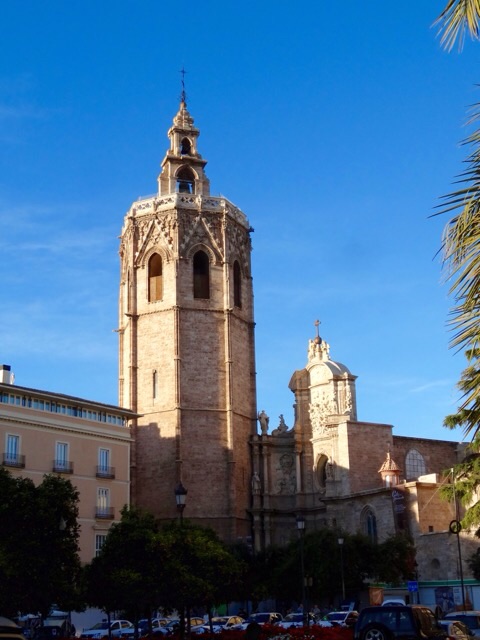
We climb 207 steps to get to the top of the Torre Del Micalet. Construction of this bell tower started in 1381 and it is one of the most important landmarks in Valencia.image
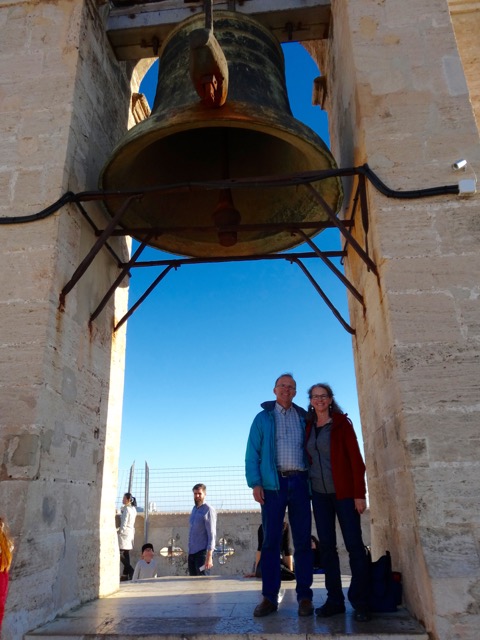
Here is El Micalet, cast in 1539, and weighing 11,000 kilograms.  Shortly after this photo the bell chimed the hour.  It was very loud!  All cathedral bells have names, and this cathedral has 14 bells ranging in size from 11,000 kg to 260 kg.FullSizeRender
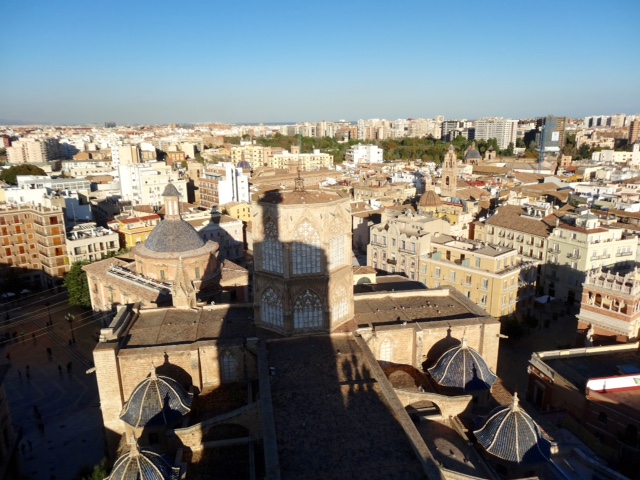
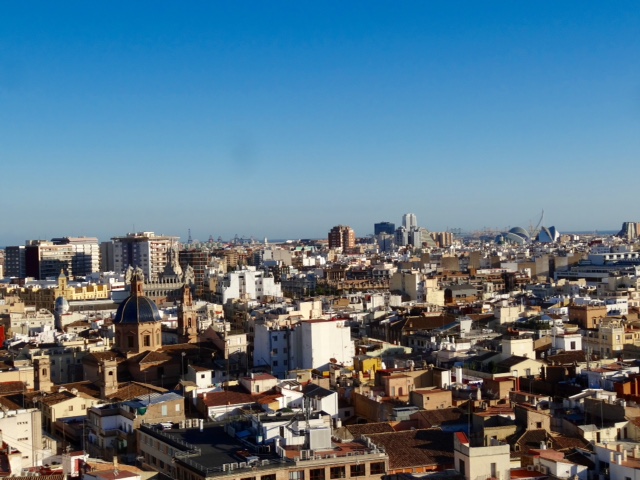
We spend quite some time up here, admiring the view, and enjoying the sunshine. The octagonal tower on the roof in the center of the picture is the outside of the white dome above the altar and the dark domes are above the side chapels.FullSizeRender_5The two curved buildings just visible on the skyline on the far right hand side of the picture are part of the City of Arts and Sciences Complex. We are going there tomorrow.FullSizeRender_2
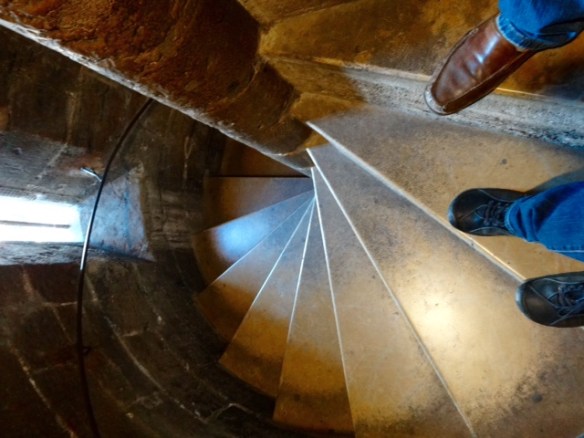
Now we need to descend the 207 spiral stairs that we climbed to get to the top of the tower. We have certainly done our share of stair climbing this trip.FullSizeRender_3
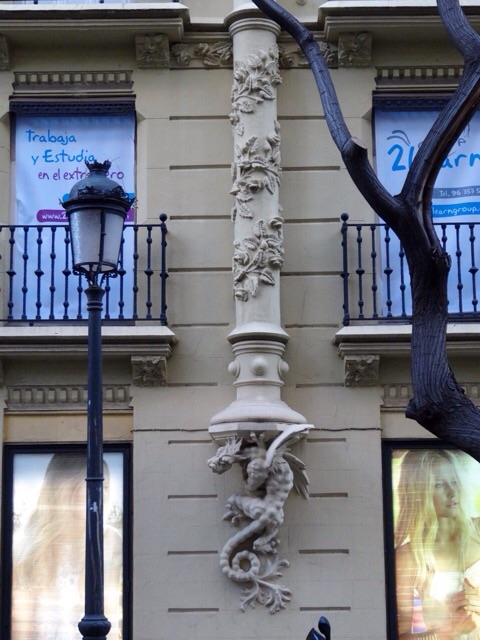
Valencia has a ‘dragon house’ so of course we have to find it.  I’m not sure what I was expecting but I was a bit disappointed to only find one small dragon sculpture over the doorway and two pillars with a little dragon on the bottom of each of them. In case you didn’t know, I love dragons.image
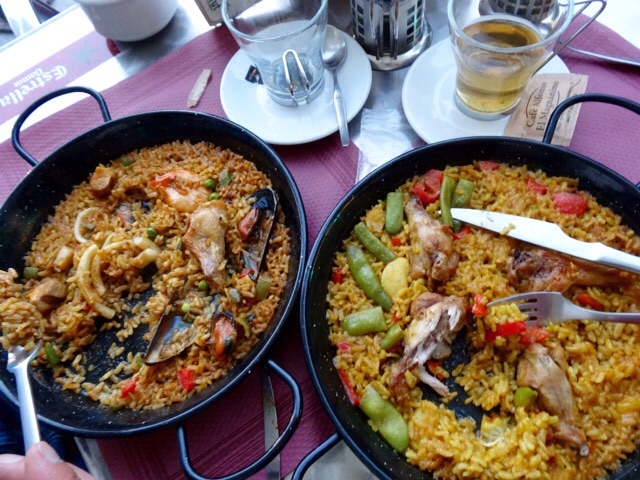
Bob finally gets to try the seafood paella he wasn’t able to have on his birthday.  image
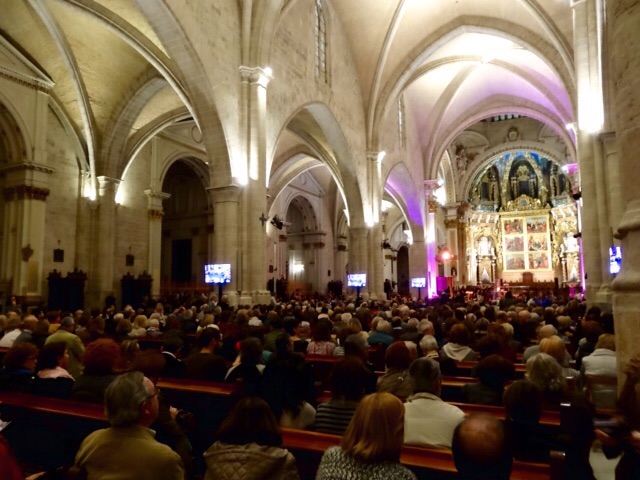
We make our way back to the Cathedral for a concert. Bob thought we would be way too early but when we arrived about forty five minutes before the concert it was already packed. We managed to find seats in the side aisle near the altar, which was actually behind the stage, but there were TV screens so we got to see most of it.  We both enjoyed the performance even though we weren’t exactly sure what it was all about. A young boy sang several songs and it seemed to have something to do with Christmas.image
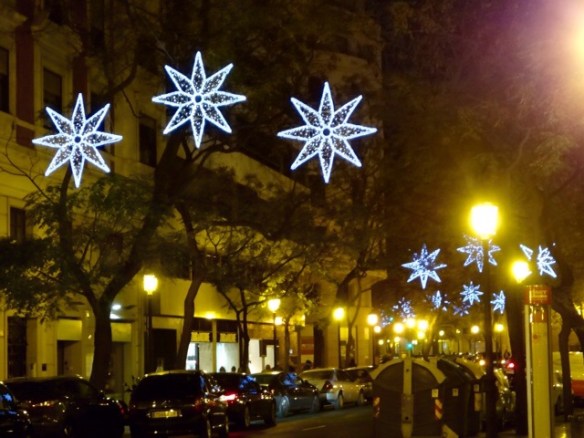
The Christmas lights were on after the concert.  It still seems strange to see Christmas decorations without any snow.image
Granada Cathedral and Alcaiceria Market

We are back home and although we had a good flight home it was still 24 hours from the time we got up until we arrived home. It is going to take a while to get back on Alberta time. I have fallen behind on my blogging but I am going to continue posting until I have it completed. Thank you for following along with us so far and I hope you will enjoy the rest of our trip.

Saturday, November 21

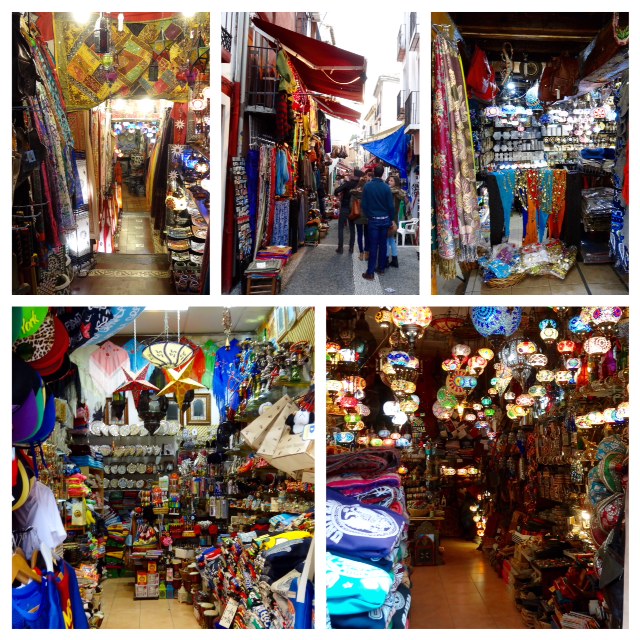
We spend another day in Granada, as we want to visit the Cathedral and the Alcaiceria, which is a reconstruction of the Moorish Market that burned down in 1843. This market is a maze of narrow streets and colourful shops that are absolutely crammed full of merchandise. We purchase a few souvenirs and Bob has a few laughs at my rather pathetic attempts at bargaining.

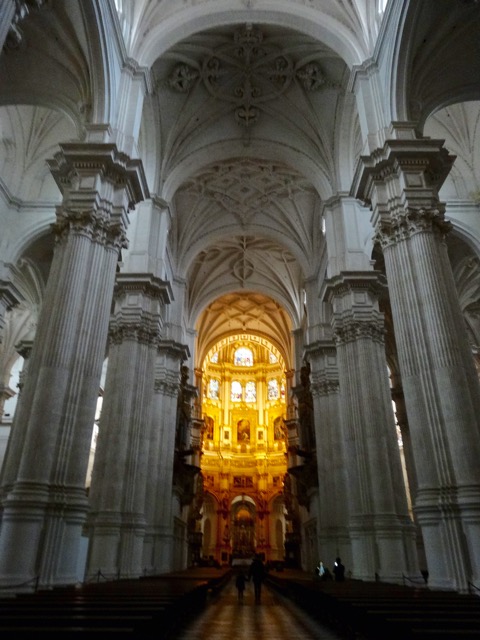
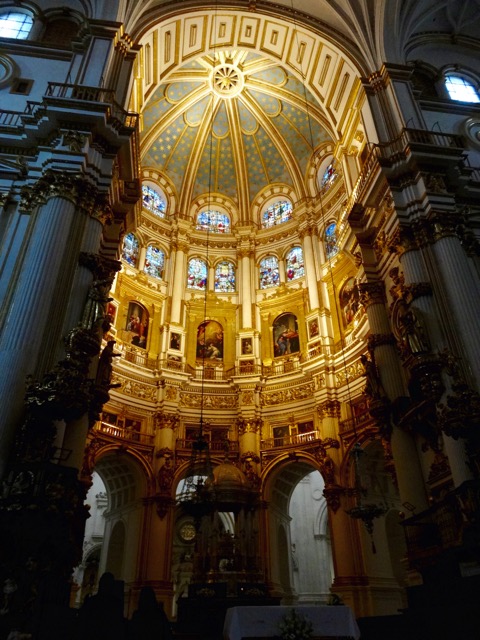
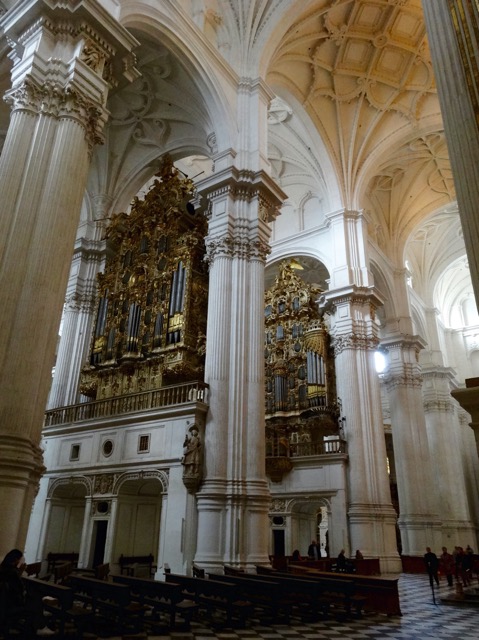
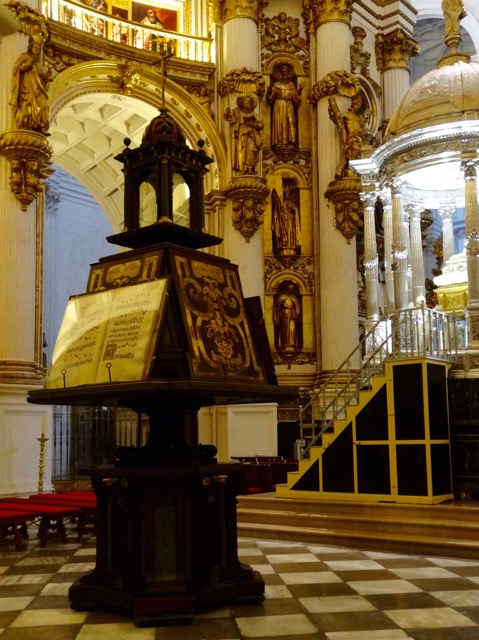
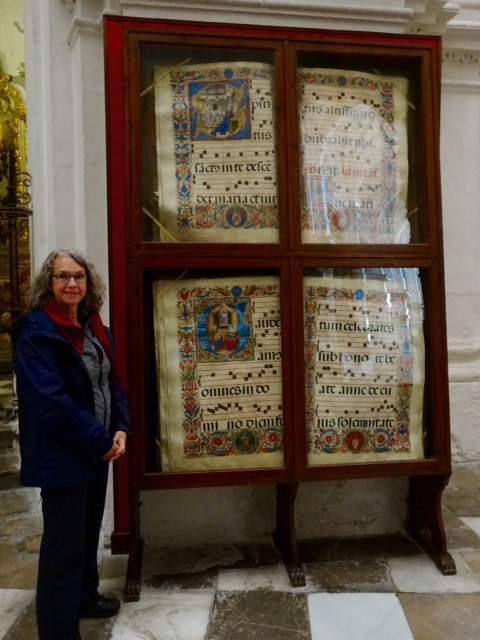
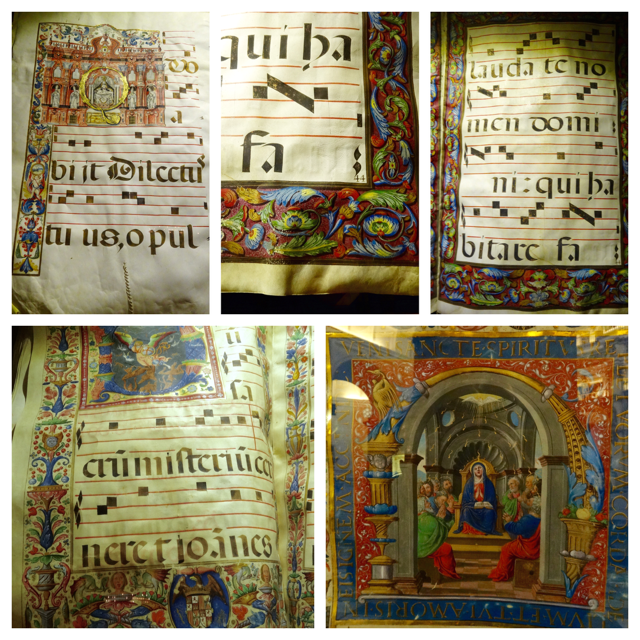
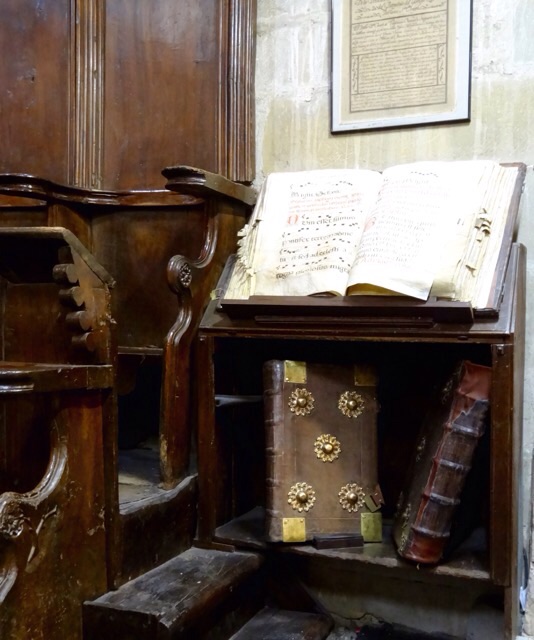
IMG_2488The Cathedral is right beside the market so that is our next stop.  Upon entering the front door this is the what we see.FullSizeRender  Here is a closer view of the magnificent dome over the altar.  FullSizeRender_3This cathedral has a very ornate very large organ. FullSizeRender_4I spotted this stand with several huge medieval books but it was in a roped off area so I couldn’t get any closer to get a good look.FullSizeRenderA bit further on down one of the side aisles I was thrilled to find a display of these ancient books. They were behind glass but I was able to get a much better look at them.FullSizeRender_4The lighting wasn’t the best, but there were several cabinets with books inside. While I was absorbed in studying the calligraphy and painted images, the lights in the cabinets shut off and it was too dark to see them anymore.  I had no idea why the lights shut off and although we returned a couple of times to check if the lights had been turned back on I was out of luck. I am glad that I at least had the opportunity to see what I had.
IMG_2490

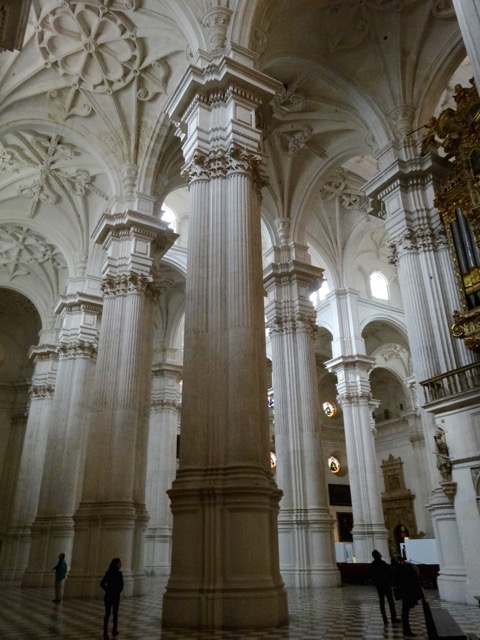
We have seen similar skull and crossbones in almost every cathedral we have visited. They are on tombstones embedded in the cathedral floors.FullSizeRender_2The pillars and ceiling are quite ornate and the space they enclose is immense.  Notice how small the people are.
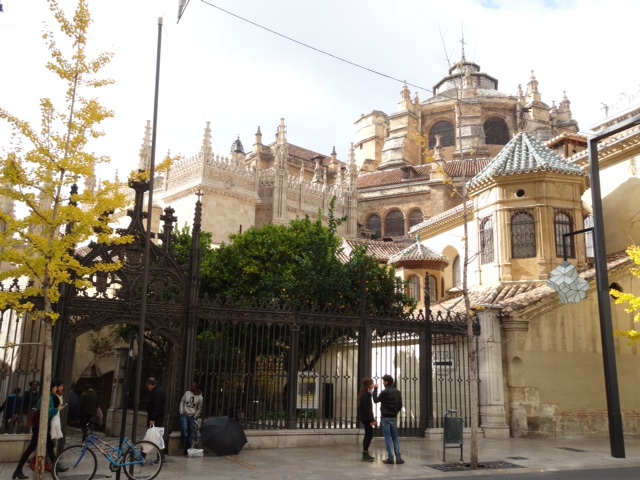
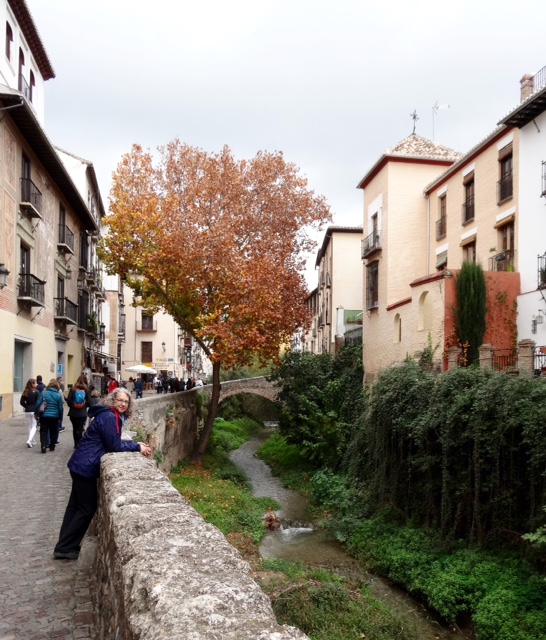
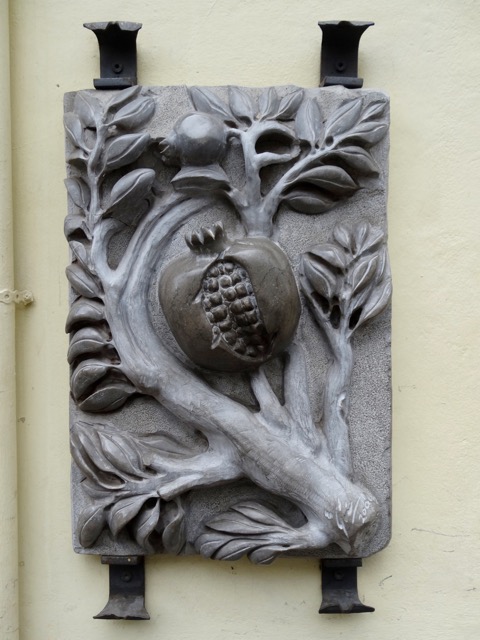
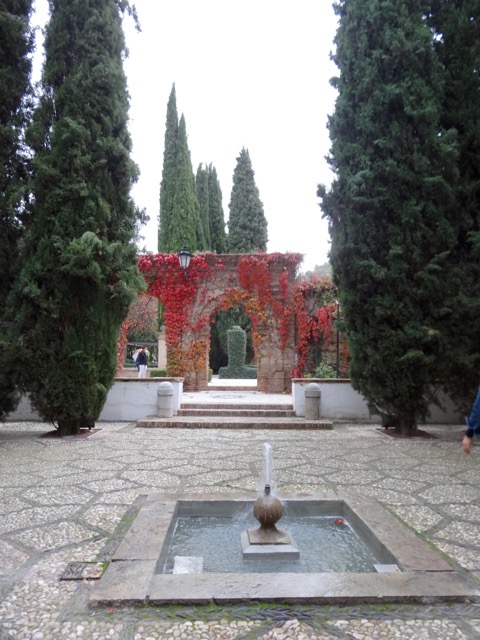
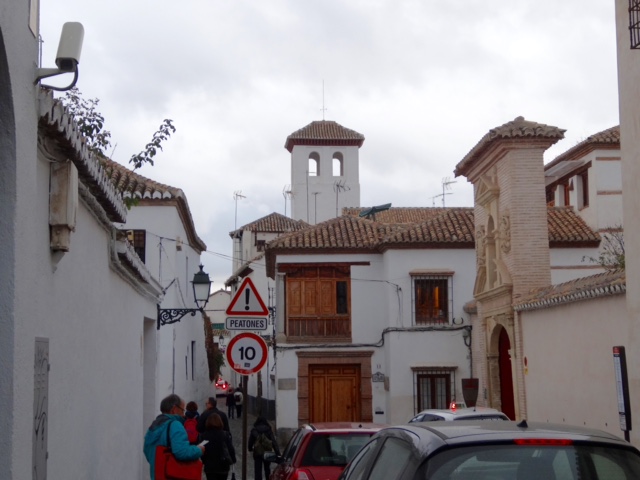
FullSizeRender_3This is a view of the back side of the Cathedral, seems I didn’t take one of the front. If you want to know a bit more about the Cathedral check out this link.  http://www.thousandwonders.net/Granada+Cathedral  It also has some nice pictures.DSC01159There is a suggested walk through the Albaicin, on the hillside opposite the Alhambra so we head out to explore it.  The beginning of the walk was quite nice.FullSizeRender_3I quite liked this ‘Granada’, or pomegranate, on the front of one of the buildings we passed on our walk.FullSizeRender_2We do find this lovely little garden and one other garden attached to a little museum along the way.  In the museum garden there are several orange trees loaded with ripe oranges, and we ‘borrow’ one to eat later.FullSizeRender

We spent a fair amount of time checking our map and trying to figure out which way to go. The route was not well-marked and we had to backtrack more than once. It was a long walk up lots of steep roads and really for what we saw we weren’t sure it was worth the effort and time, but at least we got some exercise.FullSizeRender_2

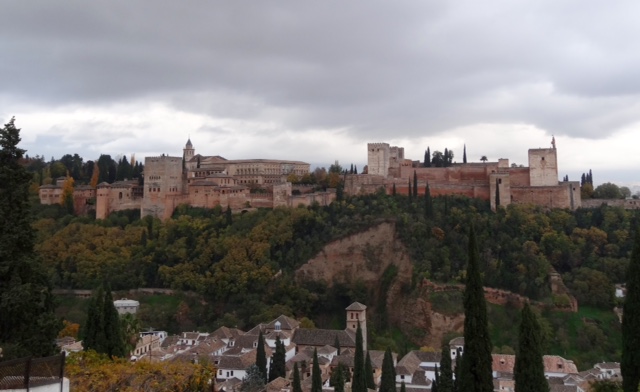
This is a view of the Alhambra from a viewpoint on a terrace by some restaurants near the end of our walk.FullSizeRender_4

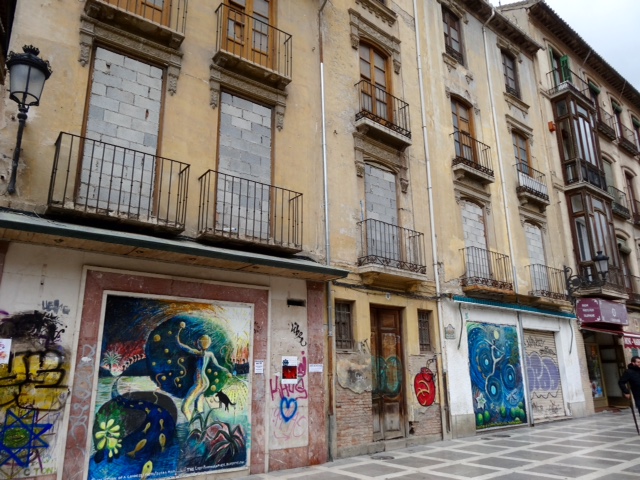
On the way back to the bus we pass this building with its ‘street art’ and bricked up windows.  We saw so many apartments and buildings like this, empty and/or abandoned, right beside occupied buildings and shops. I sure wouldn’t want to be living in an apartment next to an abandoned empty building.  FullSizeRender

Mijas and Granada

Tuesday, November 17

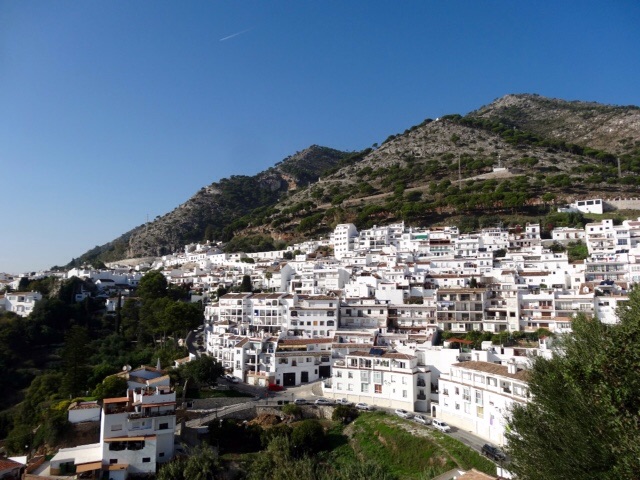
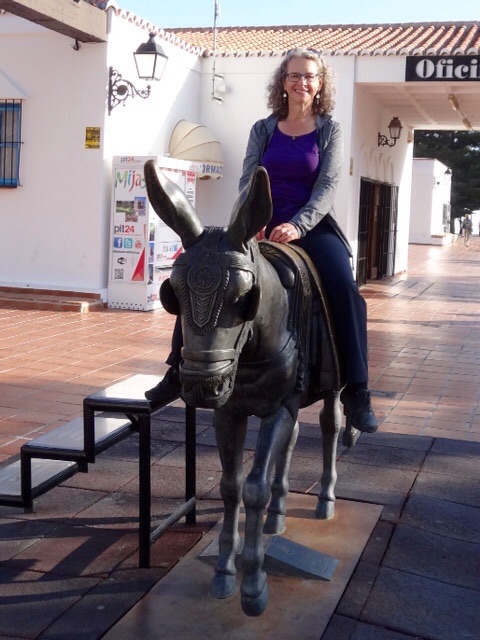
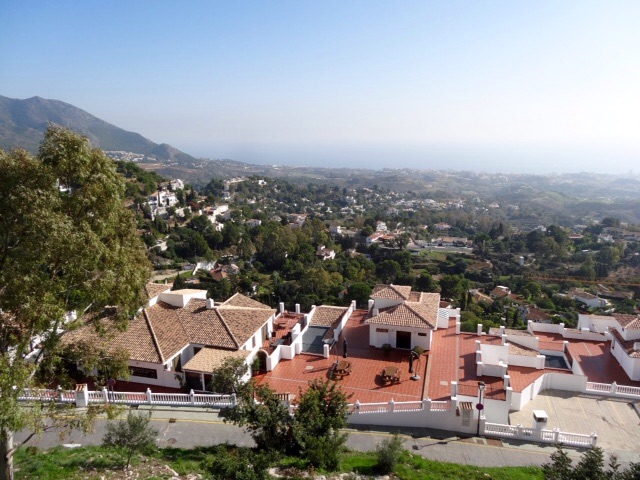
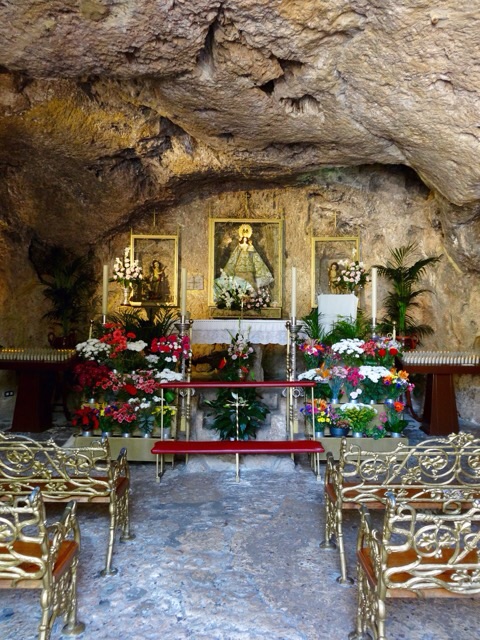
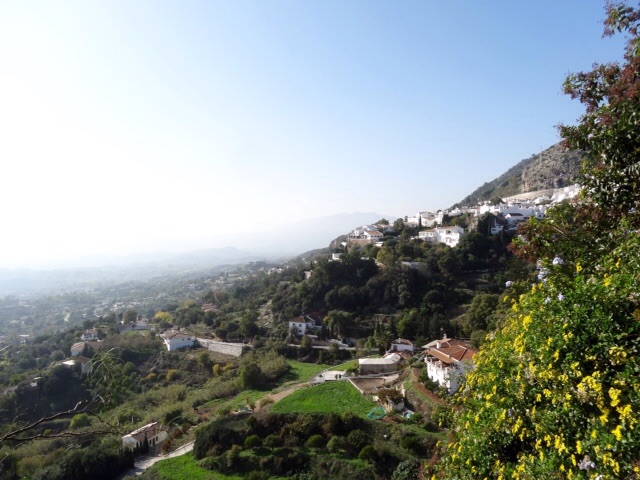
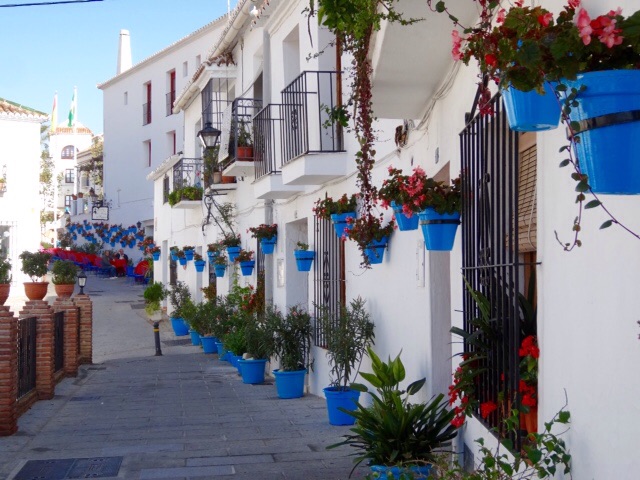
We leave for Granada today which is a good thing as our balcony is positively swarming with workmen this morning. Too bad all this painting is going on as it made it difficult to fully enjoy our apartment, which was really quite nice otherwise. We met some people in Seville who told us about a pretty white village named Mijas so we stop for a visit on our way to Granada.imageOne of the first things we see as we set out to explore Mijas are a lot of donkeys tied up along the main street. These are the donkey taxis that were first started in the 1960s by a local resident who used the donkeys to transport goods.  Early tourists wanted to take pictures with the donkeys and asked to have rides and the tips they offered were more than his day’s wages…and so began the donkey taxis.  I thought that they didn’t look very well cared for and that they were not very healthy and wasn’t interested in making them give me a ride.image image  So, here is the donkey ride I chose.imageWe found a lovely stone bench overlooking the valley and had our picnic lunch here.  imageThere is a very old tiny church which we visit and we want to buy a few things at their little shop but the store didn’t have change for 20€ so we said we would come back later, but when we return they are closed, so we are out of  luck.

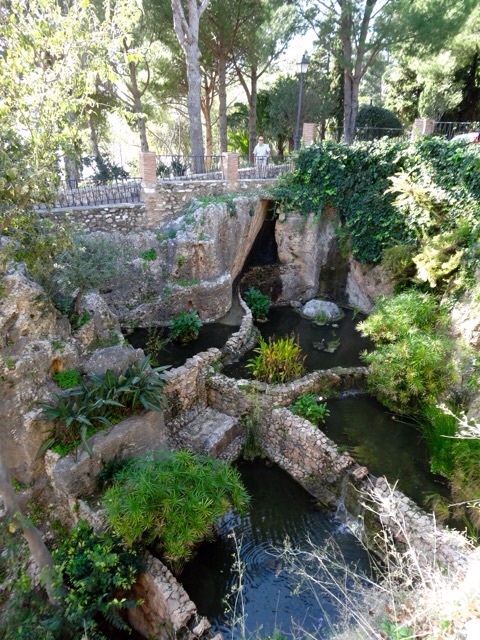
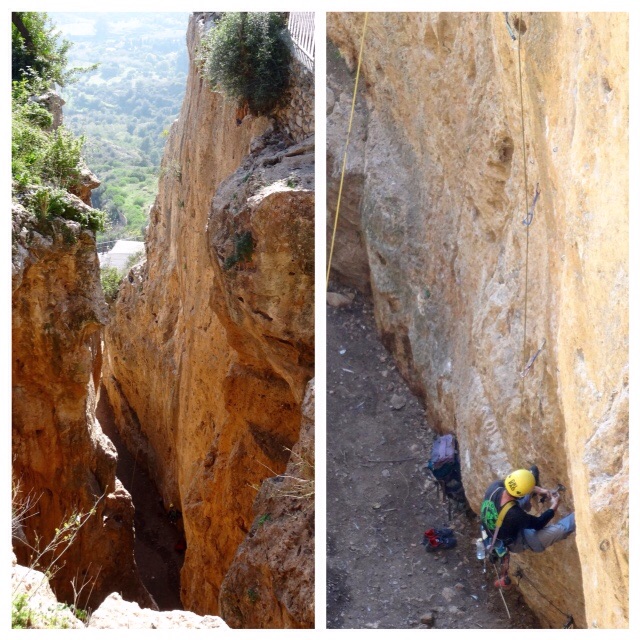
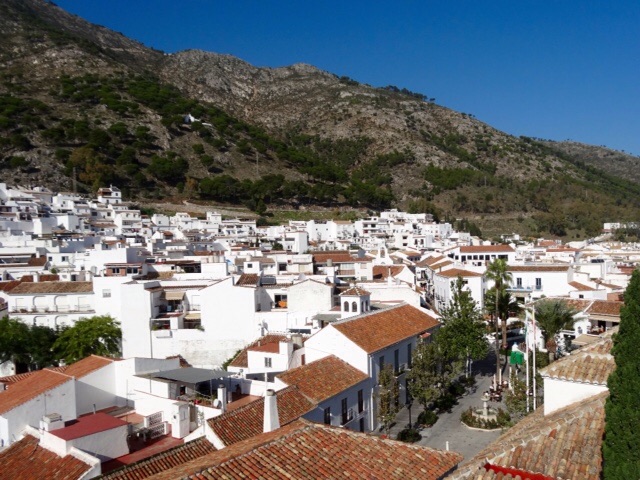
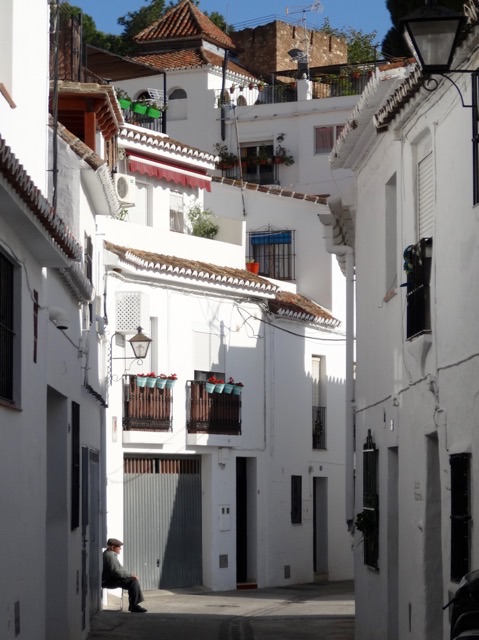
mijas-villas.com has this description of the church:”Hidden away in a corner of the village, overlooking the wonderful valley leading to the coast, is the hermitage of the ‘Virgen de la Peña’. Built into a rocky outcrop by Mercedarian monks in 1520. Inside is the image of the ‘Virgen de la Peña’, the patron Saint of the village. According to the legend, she appeared on this spot on the 2nd of June 1586 to two young shepherds that had been led there by a pigeon. Subsequently an image of the Virgin was found concealed in a recess in the tower where it had been hidden for 500 years. In 1656 work started on the sanctuary cave, which is nowadays always decorated with flowers and pictures as offerings.”imageWe then walked around the edge of the town along some of the old original stone walls which offered more great views of the valley below.imageWe enjoyed the gardens along the way which were very well maintained and had more flowering plants than we have seen elsewhere as well as many water features.  It was very pleasant and relaxing.imageWe stopped to watch these rock climbers but they take a long time getting ready to climb so we have to move on. imageWe climbed a little tower on our walk through the town and it gave a nice opportunity to see the roof tops and how tightly packed together the houses are.imageI often see older people sitting on doorsteps or walking along the streets and wish I could take their pictures but I don’t want to be rude or intrusive.  I was able to take this fellow’s photo after we walked by. image

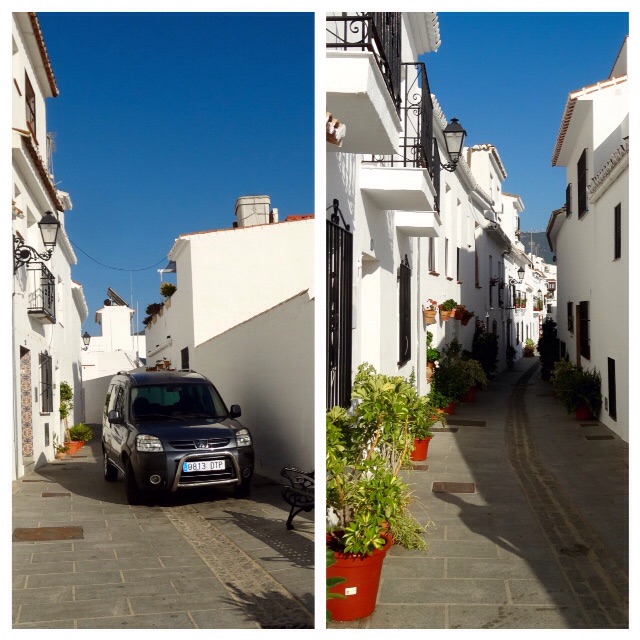
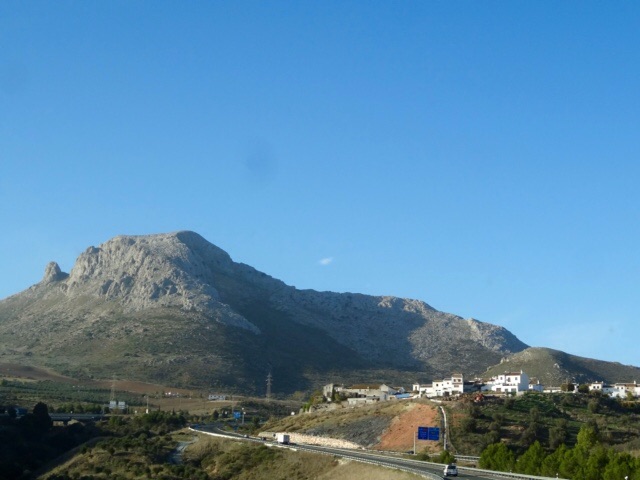
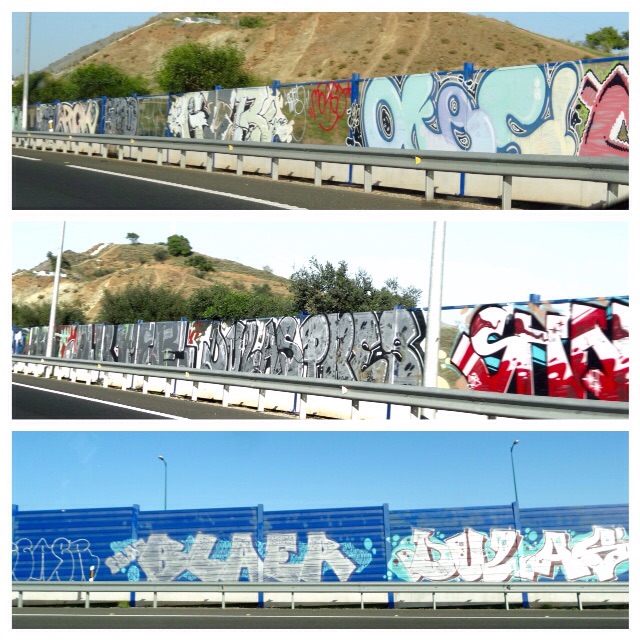
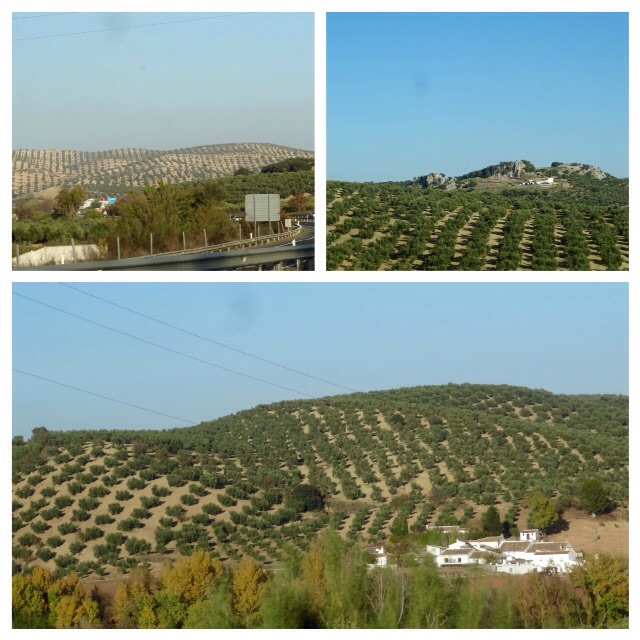
What is not to love about a street as pretty as this?imageCars manage to drive along the narrowest streets and we find them parked in some of the strangest places.  This car had travelled up the street in the second picture.  You may be able to see that the street became much narrower further on. We have no idea how it managed to navigate past the flower pots on this very narrow road or how it is going to turn around to get out of there.  We climbed steps to get to this road!imageAll to soon it is time for us to hit the road.  We need to be in Granada by 6:00 to meet our host for our next apartment.  The scenery changes soon after we leave Mijas, it is drier and we start to see olive trees.imageWe have seen graffiti everywhere we have been in Spain and Portugal.  These tags are all along the highway walls.imageSoon we are driving through mile after mile of olive groves.  We can’t believe how many fields of olive trees there are, stretching as far as the eye can see in all directions. I snap these photos as we drive by so they aren’t wonderful but they do give at leat some idea of all the trees we see on the way to Granada.image

I want to thank everyone who has taken the time to write a comment or ‘like’ a post on this blog. WordPress just sent me a notice that my blog has more than 100 likes and that “my stats are booming and I am getting lots of traffic”  I’m not sure exactly how important that is but I think when people like a post or comment it makes it easier for others to find the blog on search engines.  I am still relatively new to blogging and need to do a bit more research into all this.

I started the blog so friends and family could follow my travels and as a place to show some of my art and I have been rather astounded to find that my blog has had 7,223 views by people in 50 countries since I started it for my trip to Paris in 2014.  So, if you do enjoy a post please feel free to offer a comment or press that like button.  I am behind on responding to comments but I do read them all and I am always thrilled that someone takes the time to comment on what they have read.

Seville Cathedral and La Giralda

Friday November 6

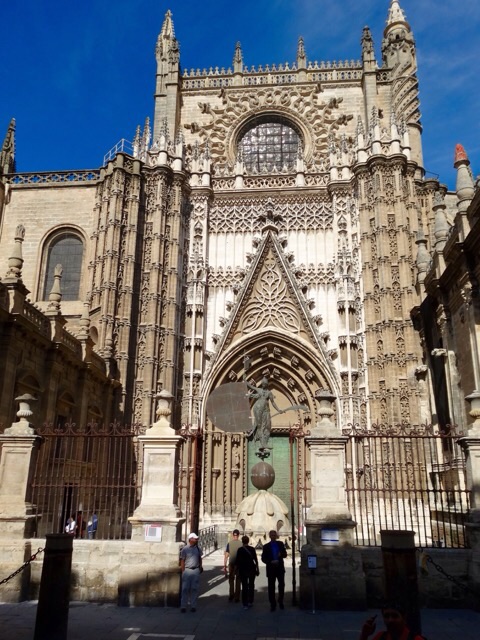
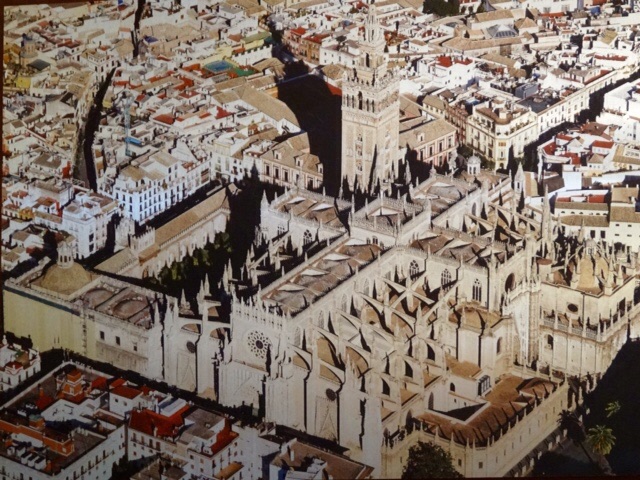
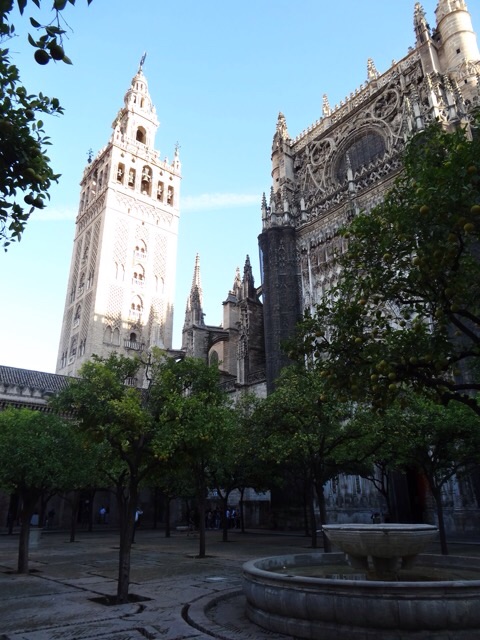
The Seville Cathedral is the largest Gothic Cathedral in the world, the third largest Church in the world and has the largest, richest alter in the world! The sculpture in the courtyard is the bronze weathervane (giraldillo) portraying Faith that used to be on top of the tower, and from which the tower gets its name.  A replica replaces it on top of the tower.imageJust inside the door is an arial picture of the Cathedral which gives an idea of its immense size, and we are going to visit all of it!
image

This link has some great pictures and easy to read information on the Cathedral.  Take a look, I think it is quite interesting (and it saves me lots of writing!)    http://www.sacred-destinations.com/spain/seville-cathedral

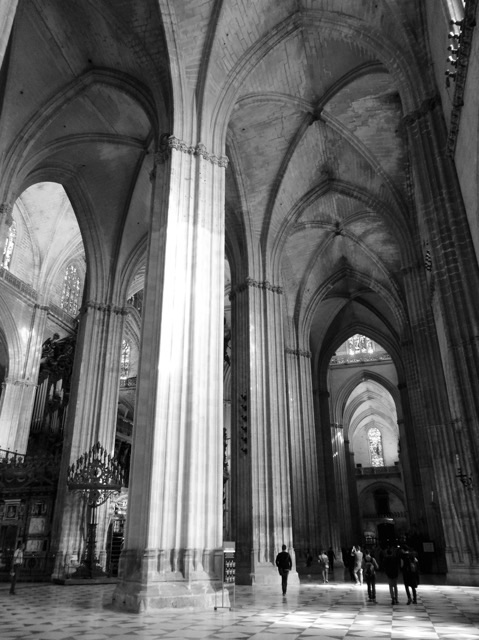
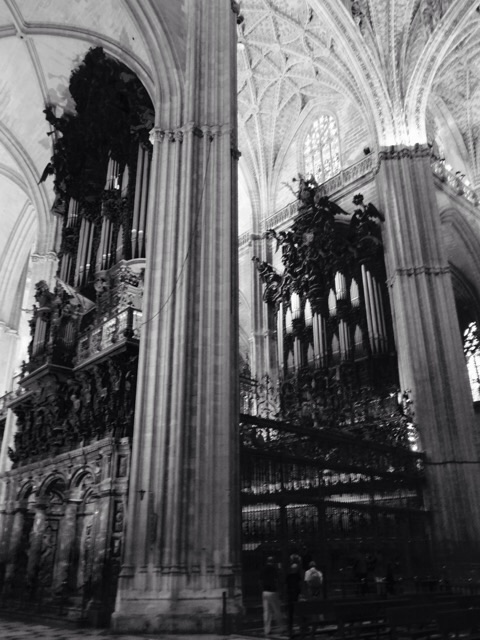
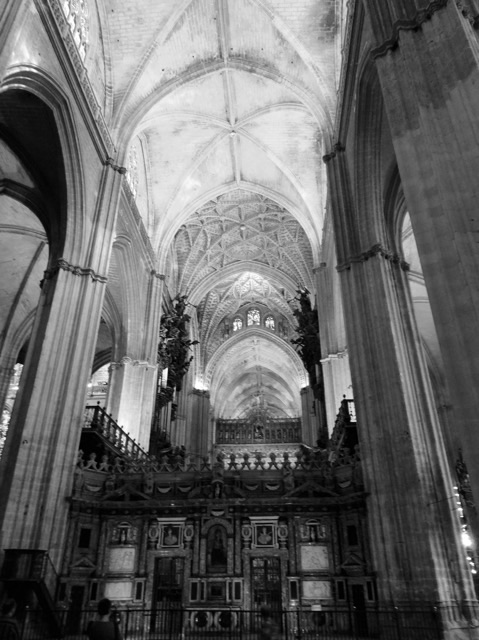
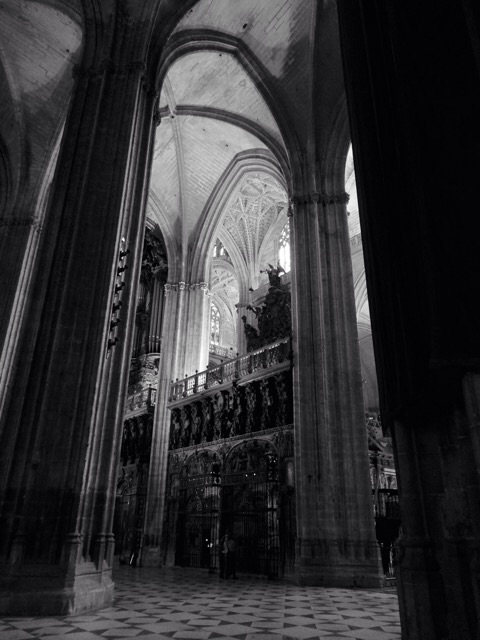
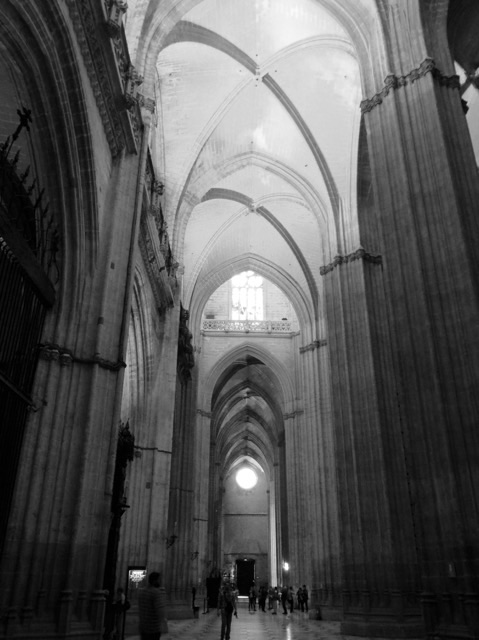
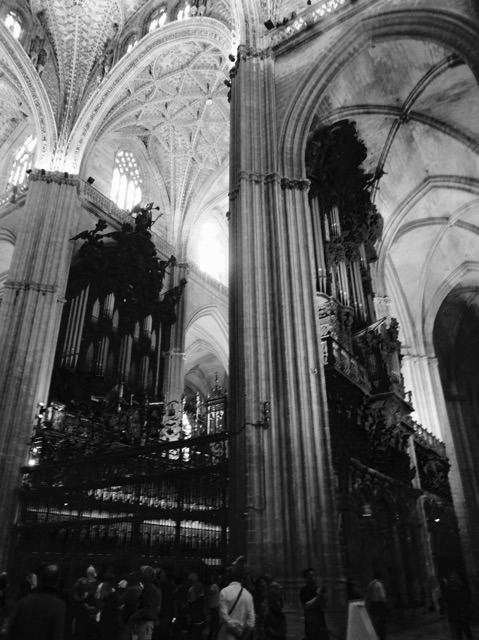
We enter the Cathedral and simply stand in awe.  It is hard to describe the feeling we have being in such a place.  The light is wonderful as there are three rows of stained glass windows, and the sun streams in casting jewels of colour over the immense stone columns. Interestingly I think that black and white photos capture the feeling of being in the Cathedral better than coloured photos.

image image image image

The organ here is enormous, perhaps the biggest we have seen and there are two parts to it, across from each other in the choir. These two pictures show the organ from the left and the right, this set up means that the pipes are visible on the front and back of each part of the organ.

image

image

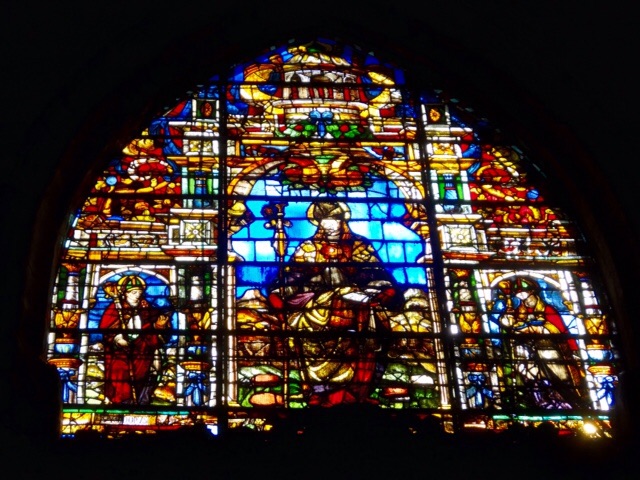
Here is one of the many beautiful stained glass windows.  I believe this one was from 1479.

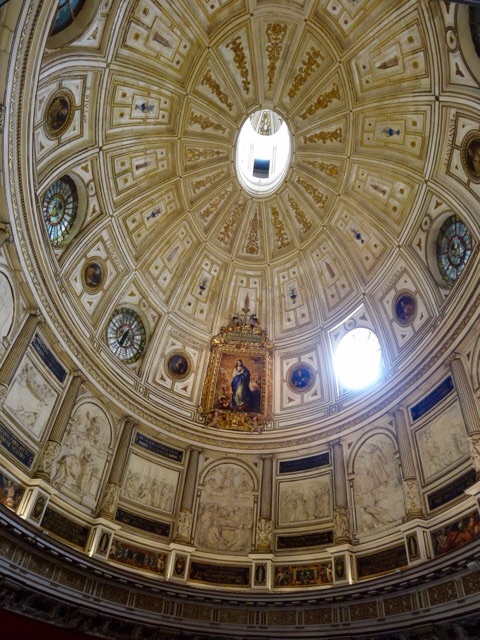
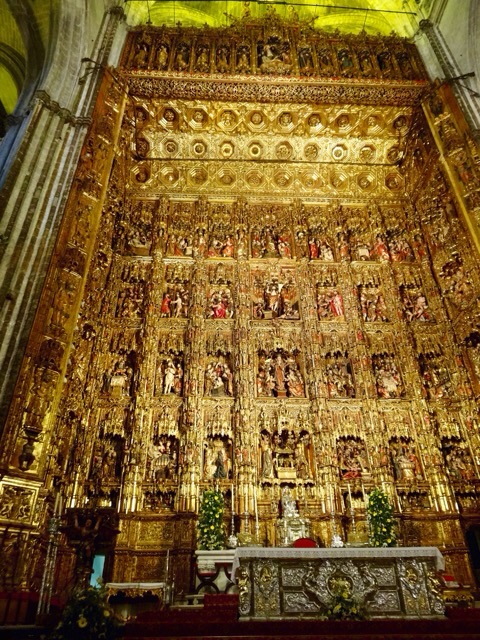
imageThe Chapter House dome is elliptical and was built in the 1500’s.  It is perhaps the first elliptical dome ever built and I thought it was particularly beautiful.imageI read that the cathedral has 80 chapels, in which 500 masses were said daily in 1896. The altar is quite unbelievable.  It is carved in wood, covered in gold, and is 20 meters tall with 45 carved, polychromed biblical scenes.

image

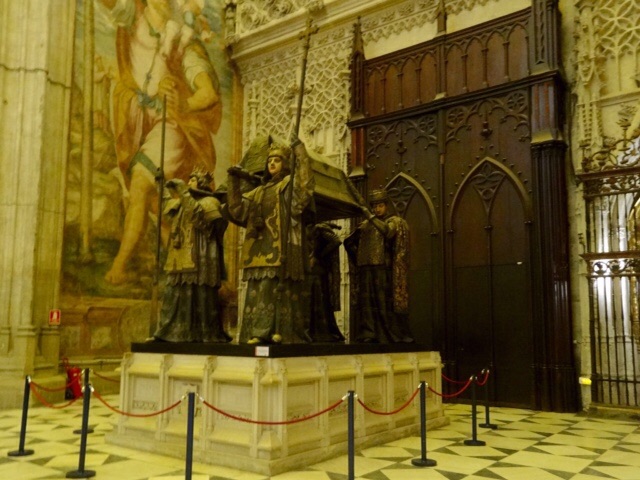
Christopher Columbus has a tomb here although other places also claim to have his remains. DNA testing is being carried out to determine if it is indeed Christopher Columbus who is interred here.

image

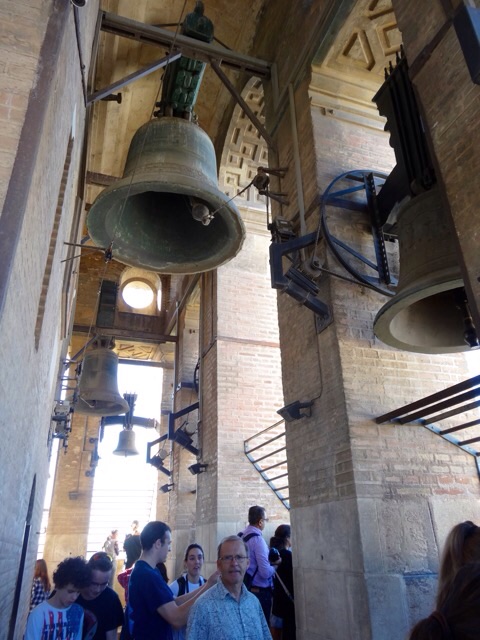
Next we climb La Giralda, the belltower, which has 35 ramps which are wide enough so that two guards on horseback were able to climb to the top of the tower.  This link has more info on the Tower if you are interested

http://www.sacred-destinations.com/spain/seville-giralda

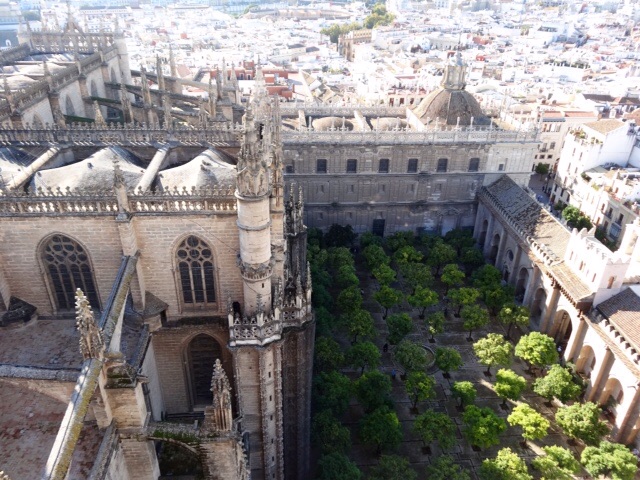
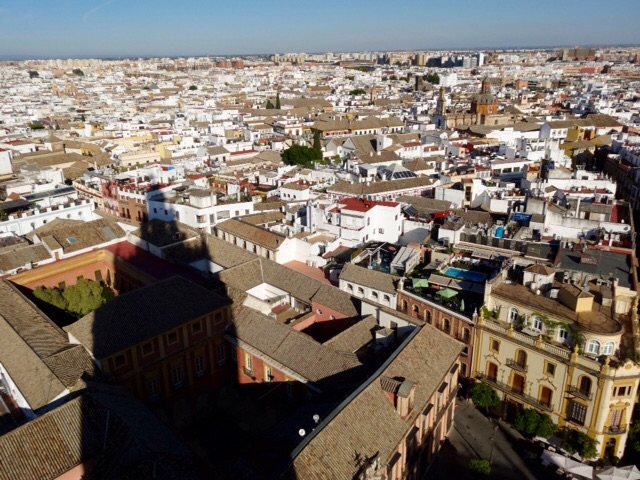
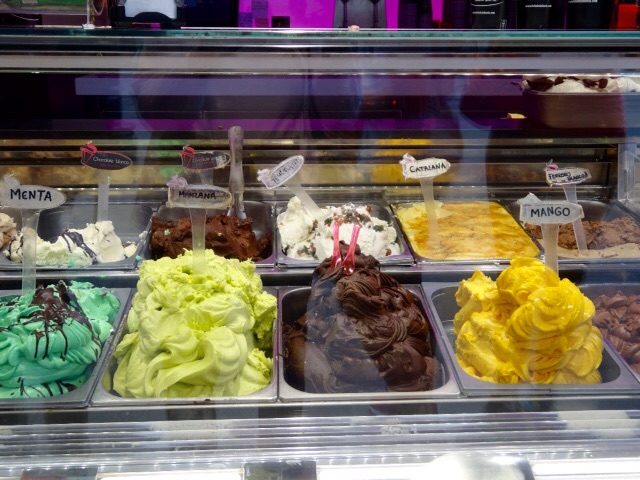
The views from the belltower make the climb very worthwhile. I have decided I like Belltowers very much.image image imageAfter our visit we make our way back to the tram to take us home.  The ice cream is displayed very attractively, we decide we will have to try some tomorrow.  I found a place that has sorbet, all natural ingredients, and no milk!imageOne last view of the tower.  The top level with the bells is where we stood.image


Lisbon

Wednesday, October 22

Lisbon is the capital of Portugal, with a population of three million people. It is one of the oldest cities in Western Europe, predating Paris, London and Rome by centuries.  I didn’t know any of that before our visit.  Although we spend the better part of the day in Lisbon, we barely scratched the surface of the area we visited.

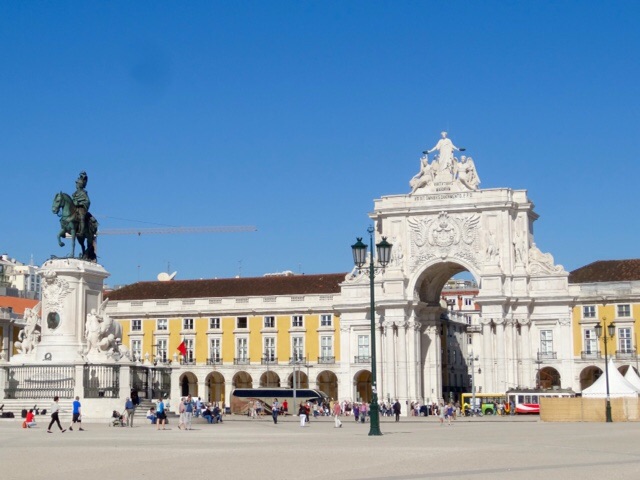
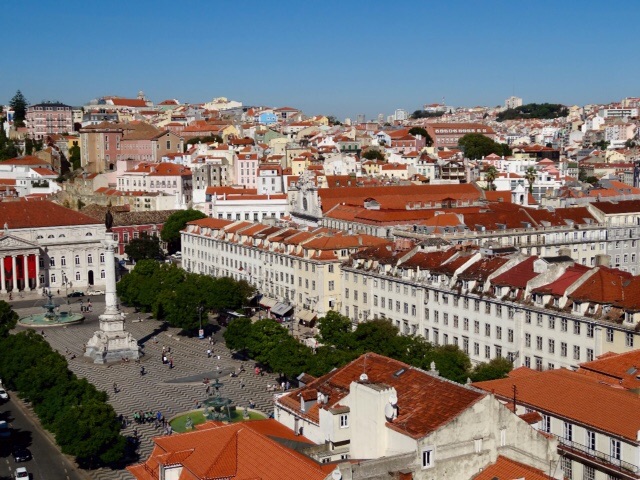
A twenty minute train ride into Lisbon places leaves us a short walk from the plaza in front of the Arco da Rua Augusta. This arch symbolizes Lisbon reborn from the ashes of the devastating 1775 earthquake.image

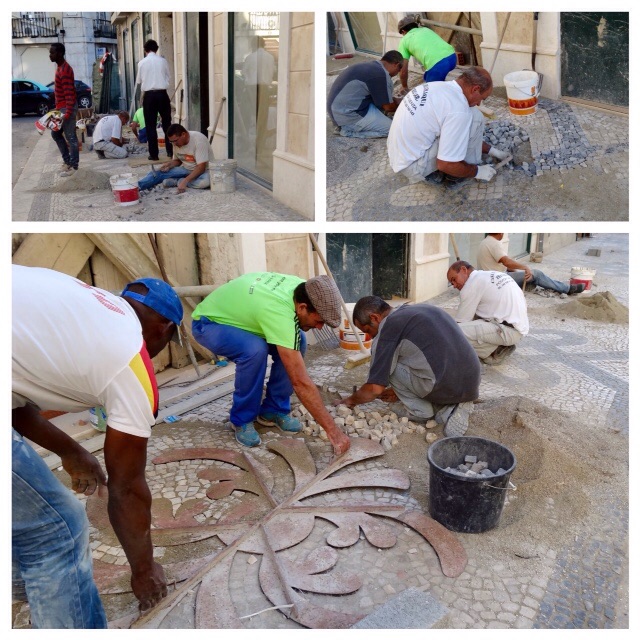
Lisbon is known for its cobblestone paving with black and white patterns.  The origins of these cobblestone pavements date back to that 1755 earthquake. During Lisbon’s reconstruction, the earthquake’s debris was used to make these cobblestone streets and sidewalks. They are beautiful legacy from a terrible event.image

We were lucky enough to see some men working on a sidewalk. They were able to chip a stone in their hand to exactly the right size and shape that was needed. The man in the first photo was whistling happily as he worked, although i think it must be very hard on the body.image

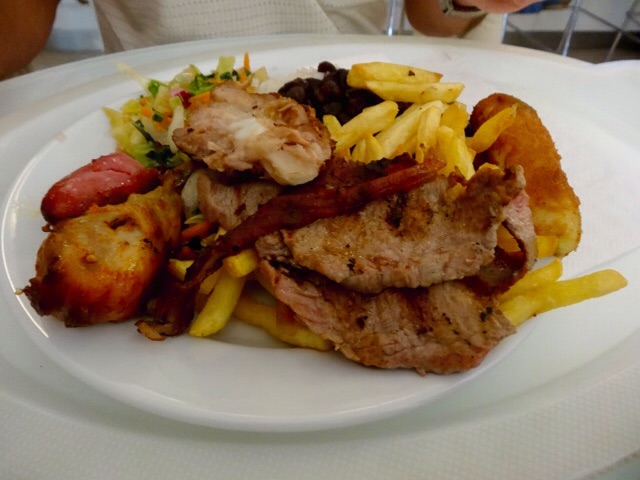
The first thing on our agenda was to get a Sim card for our iPad. The Information lady said we could find a shop a few blocks up the hill, right behind the new elevator building. We never did find that, but we found a big mall and got a SIM card there. By this time we needed lunch, so we check out the mall’s food court. Bob got a huge plate with five kinds of meat, fried beans, rice, french fries, salad and a deep fried banana all for 4.65€, about $6.70 Canadian, and I eat my packed lunch. It is just too difficult finding food that I can eat, especially when I understand so little Portuguese or Spanish.  It is easier and less stressful to pack my own meals.image

Next on the agenda was finding an art store to see if they could help me locate some life drawing venues.  No luck there, but I did buy a few new drawing pencils. They sent me to the nearby Fine Art College, and after waiting some time, a lady there informed me that they did not have any drawing sessions for non students.  If I had wanted to rent a studio to do printmaking it would have been fine, but nothing for drawing and they did not know of any life drawing places in the city.  Remember this is a city of three million people!  I couldn’t find anything on the intenet either, so I decided to quit trying.

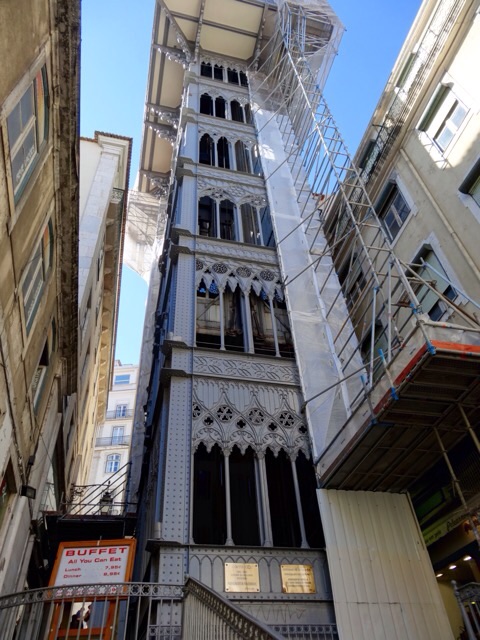
We did walk by the Santa Justa Lift, also called Carmo Lift, which is an elevator in the historical city of Lisbon, that connects the lower streets of the Baixa neighbourhood with the higher neighbourhood beside it.
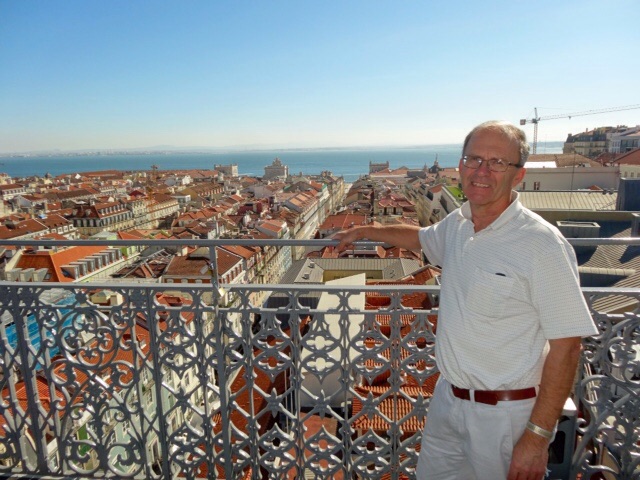
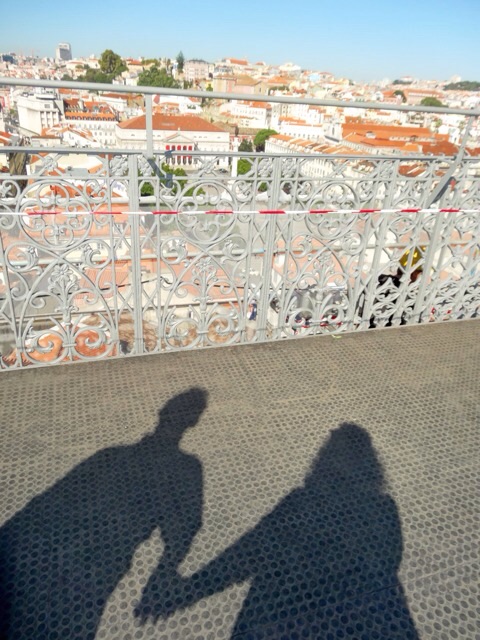
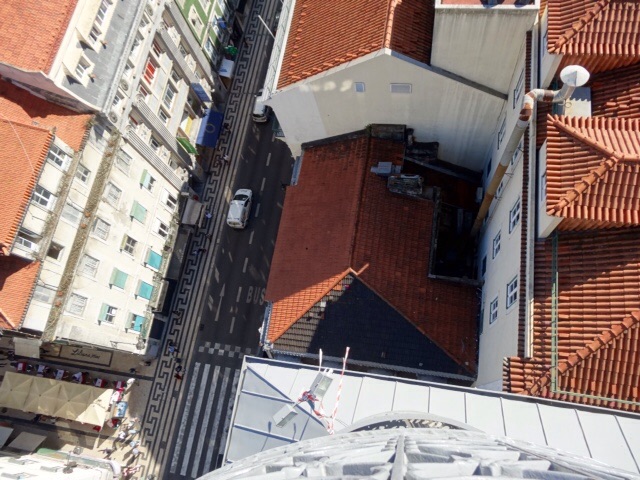
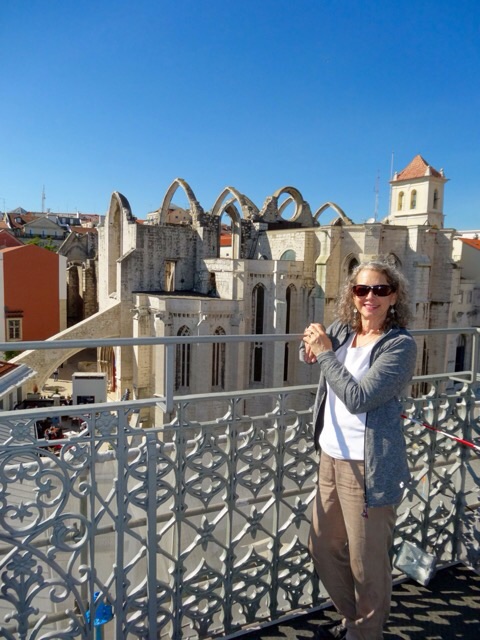
imageIt is 45 meters high, and after a short wait we ride to the top for great panoramic views of the city. The panoramic views from the platform at the top of the elevator were spectacular.image  imageimageThis one is for Pat, looking down from the the top platform, only 150 feet or so…imagebut the crazy thing is that Lisbon is so incredibly hilly that on the other side of the viewing platform we are almost at ground level! If you look closely you can see people sitting on the patio just below where we are standing.image

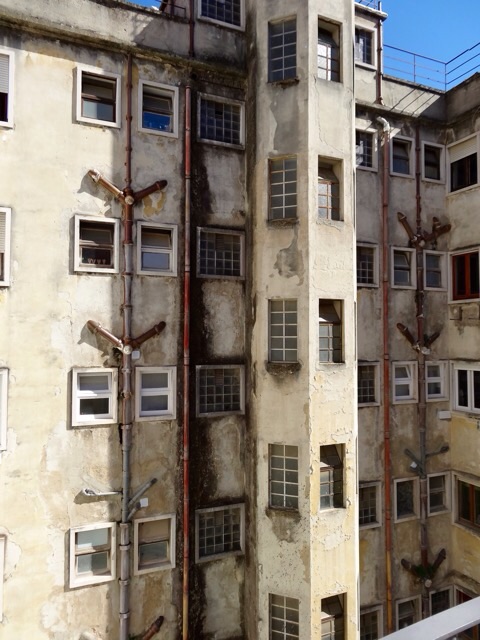
I thought this was interesting.  If you need to add toilets just run the pipes on the outside of the building.  This sure wouldn’t work back home when it reaches -30°C!image

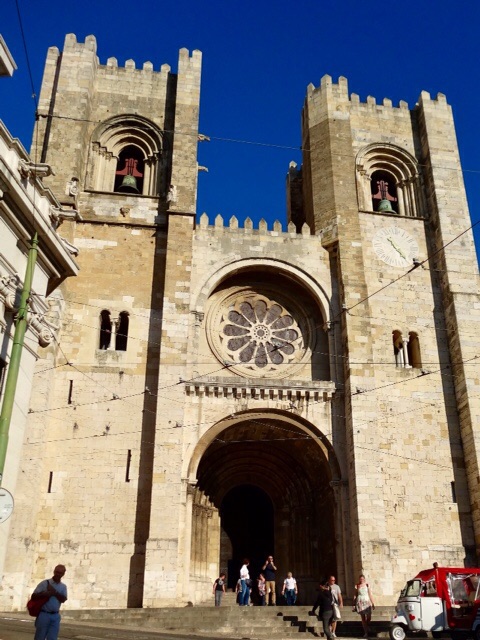
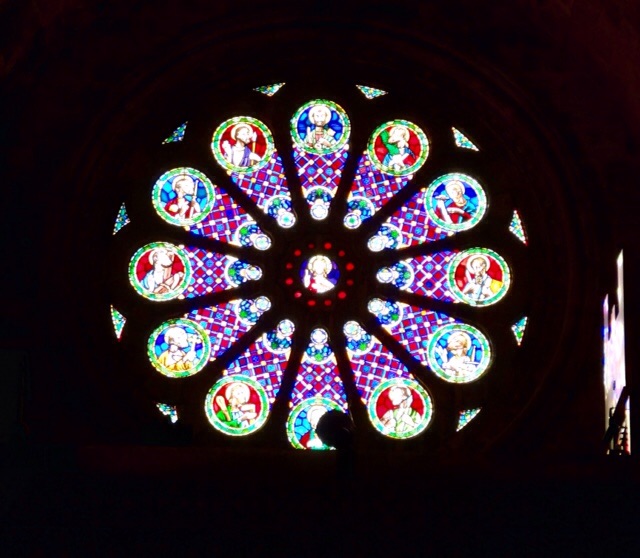
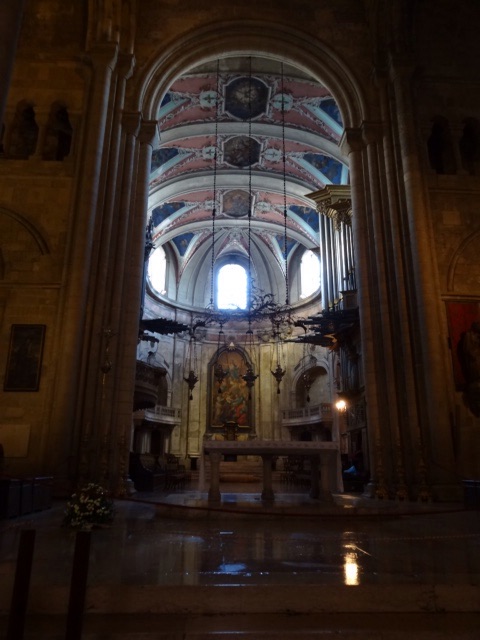
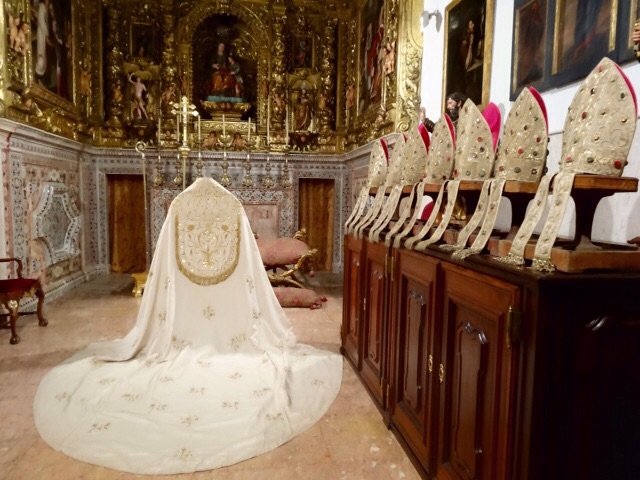
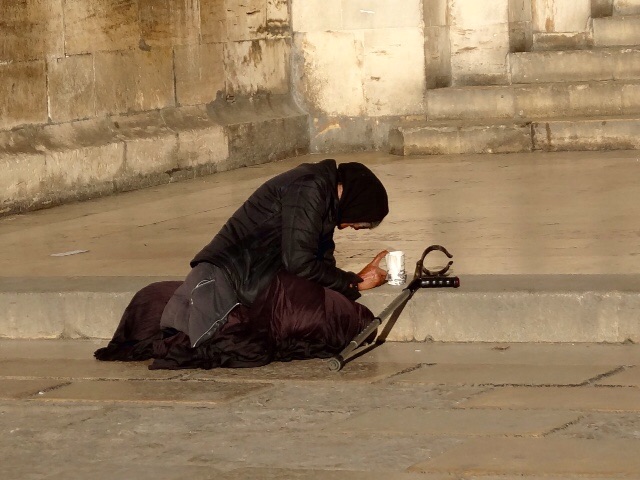
We take a quick free tour through a military museum about the Revolution in 1974 that put an end to the dictatorship that ruled Portugal for 48 years, then walked back down towards the old Jewish part of the town.  We visit the Sé Cathedral, which is the oldest Cathedral in Lisbon, its construction began in 1147, and it has survived many earthquakes.image image imageThese vestments are from the 18th Century. I thought they were particularly beautiful.imageI have such a difficult time with people begging.  Some of them appear to be in such desperate condition that it is hard not to give them some money, yet we are told not to do this as it only encourages more begging… This woman on the steps of the Cathedral wasn’t having much luck when we went into the church but when we came out she had changed into this posture and more people were stopping to put money in her container. Is it easier to give to someone who doesn’t make eye contact with you?image

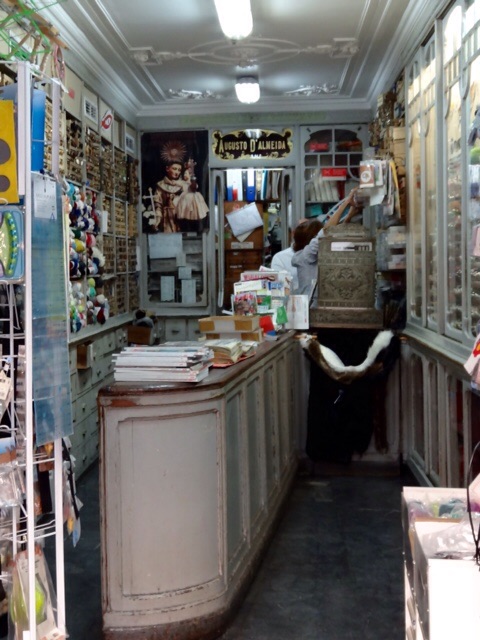
In the old Jewish part of town we walk down a street of tiny stores that sell buttons, and a bit of ribbon.  I wonder how so many stores selling only buttons can survive?image

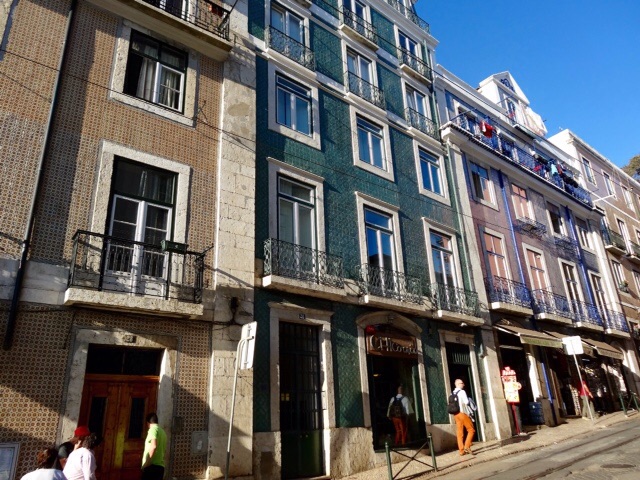
Many of the houses here are completely tiled.  We decide not to walk any further as it is very hilly and we are should think about catching the train home.image

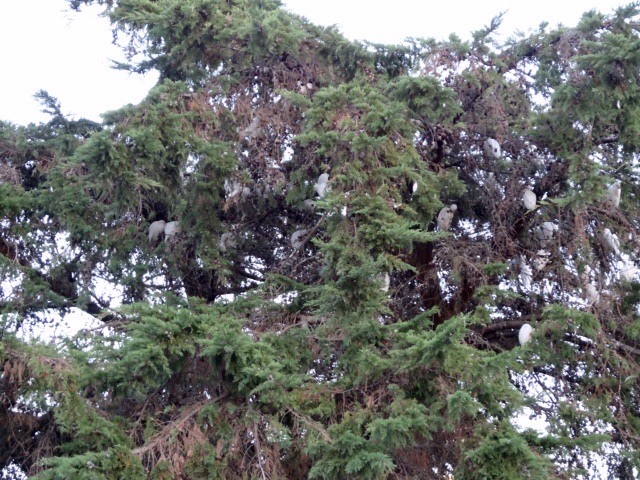
Walking home from the train I stop to take this picture and a lady on a motorcycle stops to tell me that she keeps forgetting to bring her camera to take a picture of these white birds, first in Portuguese and then in quite good English.  Bob counted almost thirty birds in this tree.image


Iugula! Verbera! Missus!

Monday, October 19

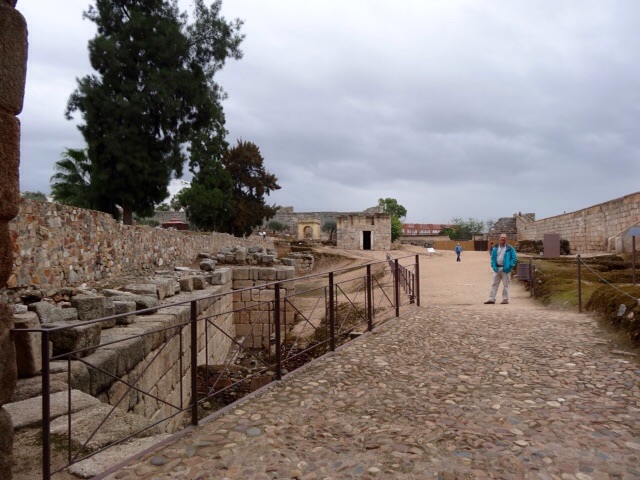
We are still in Merda and we are going to visit ten Roman Ruins today if we follow Bob’s schedule!

Today’s title is from one of the plaques from the Amphitheatre yesterday.  Bob wanted me to use it for the title yesterday but I forgot so here it is today. It is what the crowds would shout at the Amphitheatre when the gladiators were fighting.  Kill him!  Beat him!  Pardon him! These were not easy times…

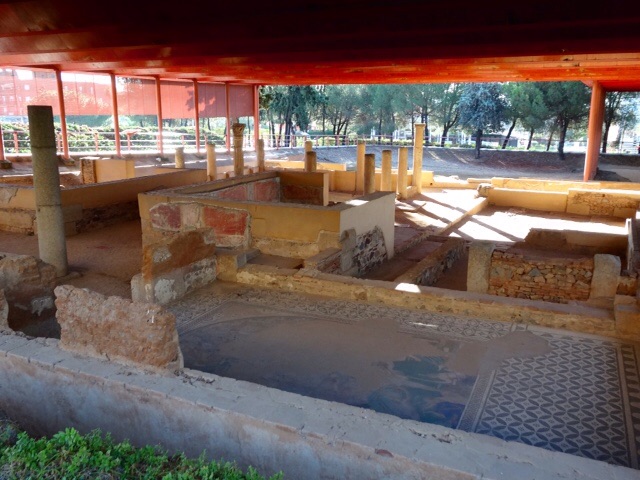
#1 The Mithreó House, a rather grand Roman residence that has mosaics, wall paintings, three patios, garden rooms, family rooms, commercial and industrial rooms and hot baths.  It is located outside under a protective roof.image

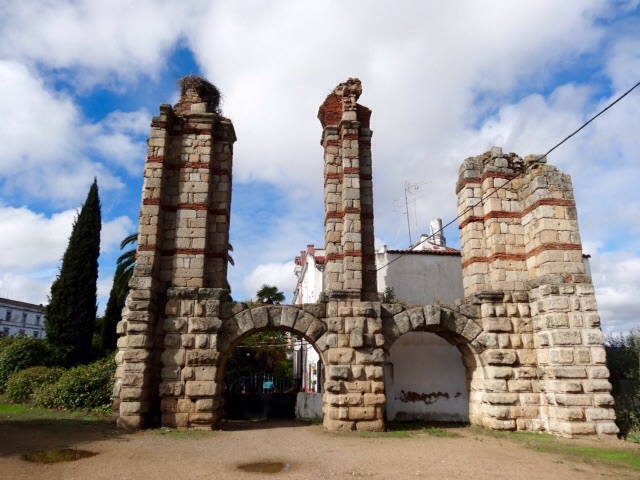
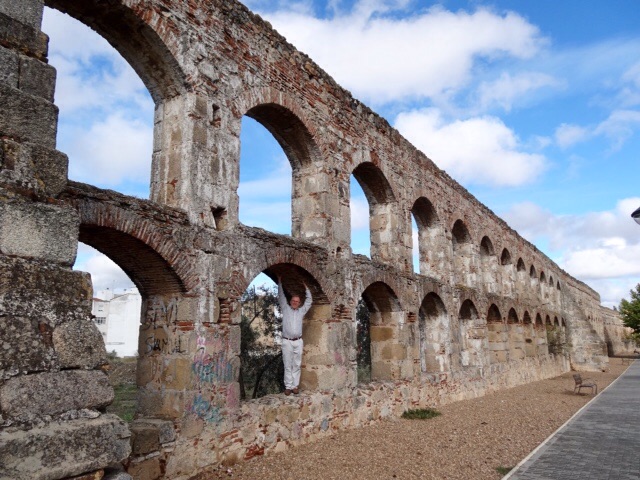
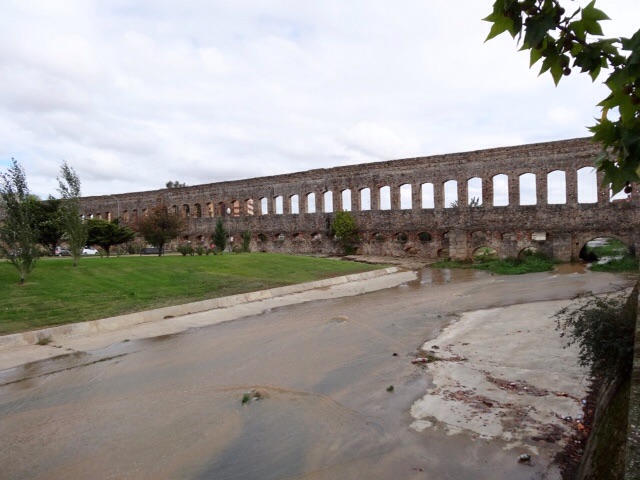
#2 The Aquaduct of San Lázaro image#3 The Aquaduct of Los Milagros ( I think). There is some confusion over the name of this one.  Bob thinks he can hold it all up!imageimage

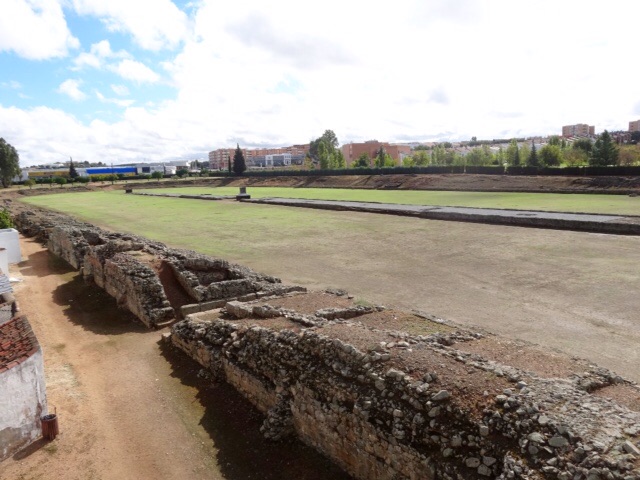
#4 The Circus, or Racecourse, which was a kilometer around the track, and they ran around this seven times during the course of a race!  We walked the track and out through the gates that the charioteers would have entered.  The Circus held 30,000 spectators who would often spend the entire day from morning to dusk watching the races.

image

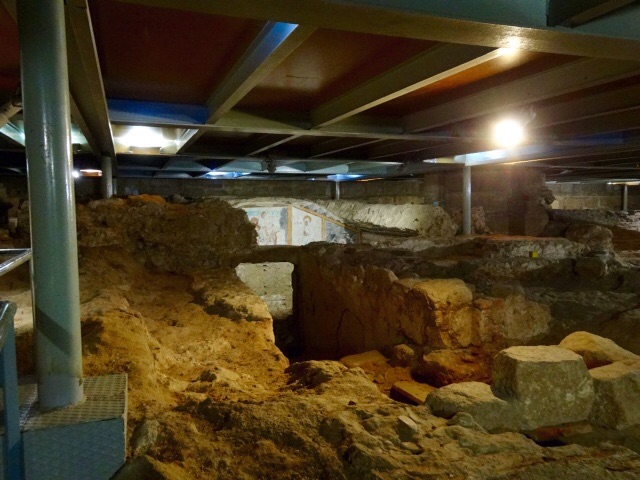
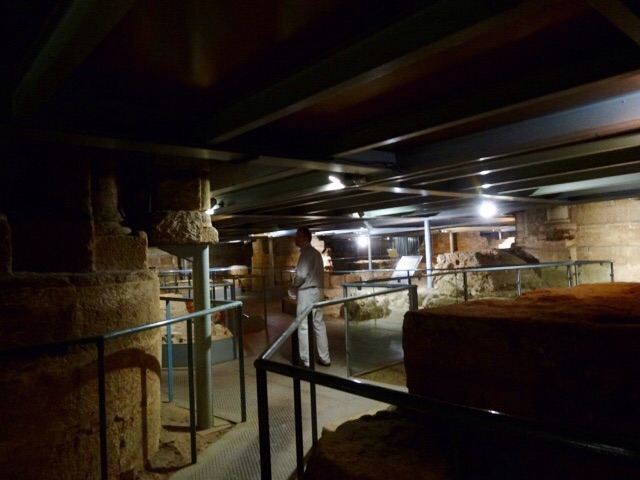
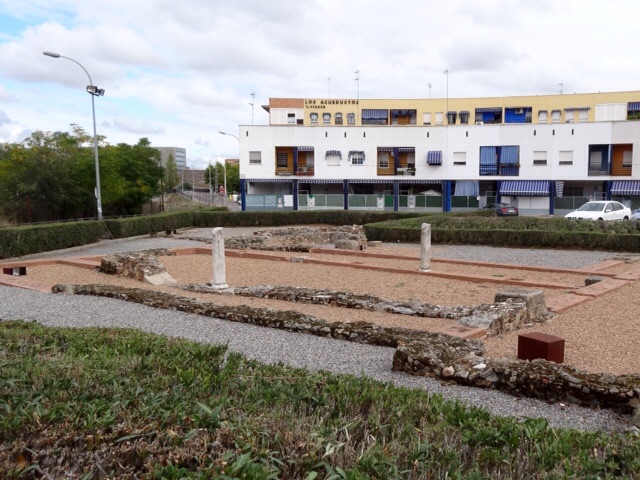
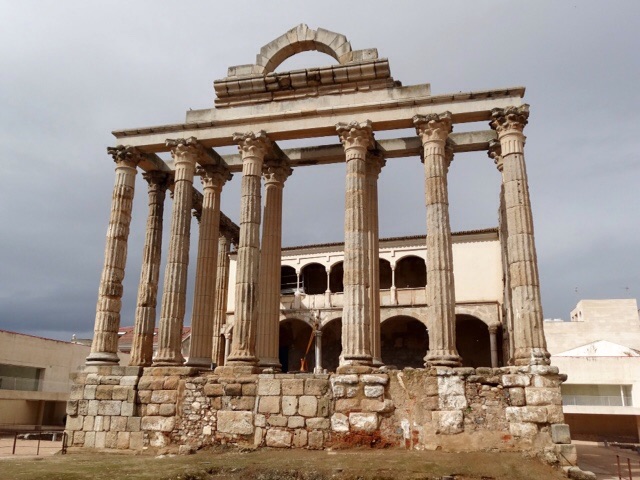
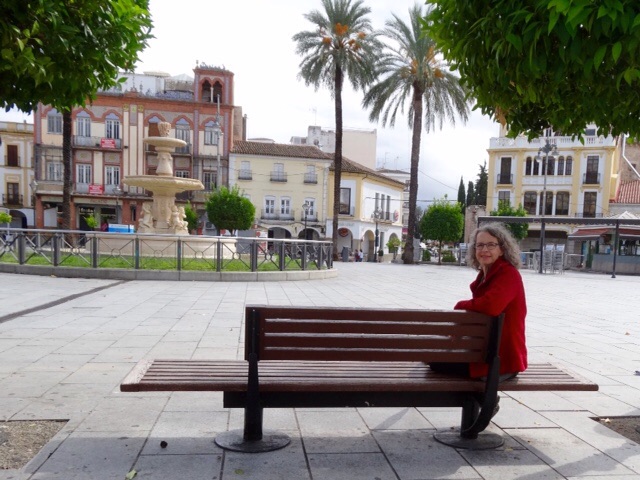
#5 Excavations at Santa Eulalia Church.  These excavations are beneath the church and have the remains of four different times: Roman Houses, 3rd century, a Christian necropolis, 4th century, which contains a mausoleum for Saint Eulalia, a martyred child saint, a basilica dedicated to Saint Eulalia, 5th to 9th centuries, and the present day church from 1230 until now.  imageimage#6 As we are walking we come across the ruins of a Roman hospital and pilgrim’s hostel, built on the remains of the site of an earlier necropolis.  There are ruins everywhere in this city!image#7 Next stop is the Temple of Diana, which was built in 1 BC, and later had a palace built inside of it, which can be seen at the back of the temple.image #8 Plaza de Espana is next, and time for a much deserved rest and some tea and cookies.image
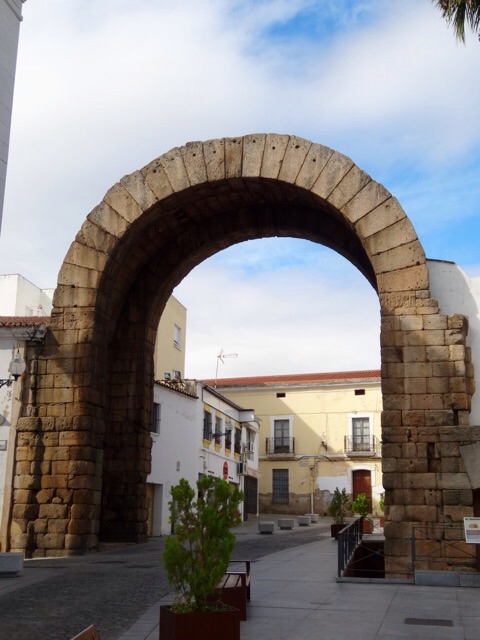
#9 Trajano’s Arch which is 15 meters high and was once covered in marble. Part of it is now lower than the road that runs through it. The right hand pillar has an area around the column that goes down to the original base of the arch.
image
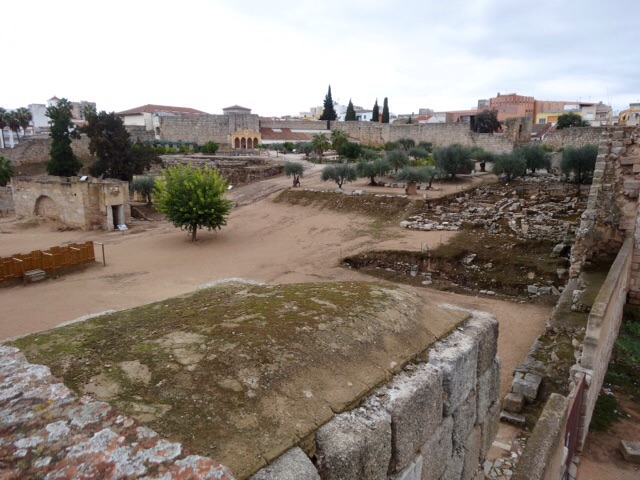
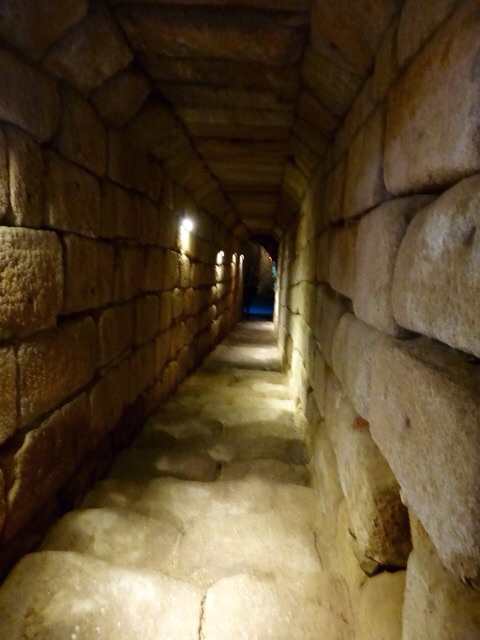
#10 The Citadel and Conventual, which is a Moorish fortress in 835 and later a convent in 1229.imageimageIt has a really neat underground cistern that we walk down this tunnel to visit, complete with goldfish.image

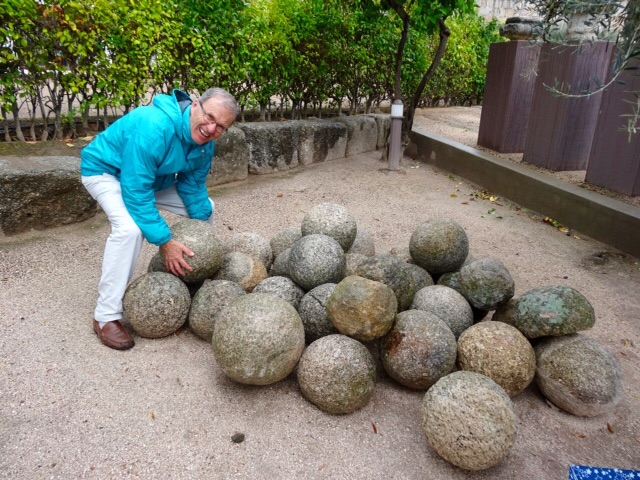
Bob is sure he can pick up one of these cannonballs.  What do you think?
image
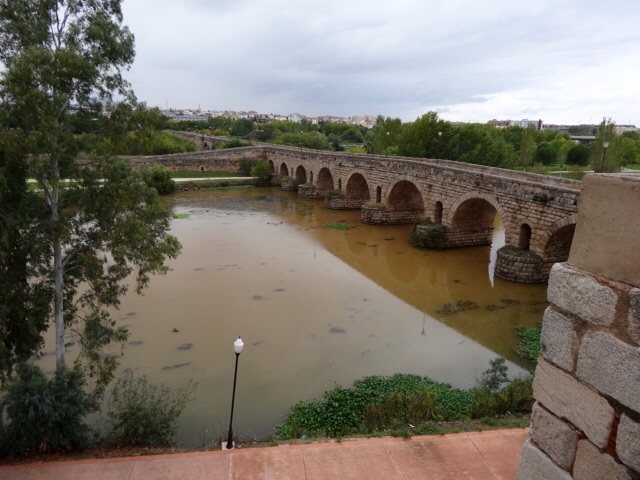
#11 The Roman bridge over the Guadiana River which was built 2,000 years ago was still in use in the 19th century and became a pedestrian only bridge in 1993.image

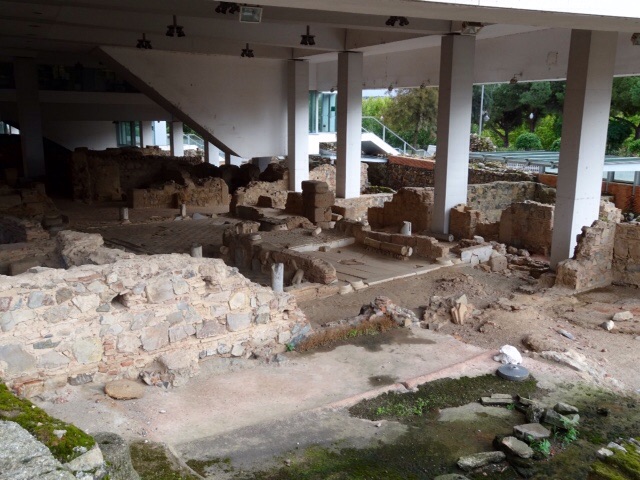
#12 The Morería Archaelogical Area is 12,000 square meters of ruins that had several modern building constructed over them in1980 in a way that allows visitors to still walk around the ruins.  It is quite something to see. Look closely, one of the pictures has me somewhere in it.image image

Whew!!  I can’t believe we managed to see all this, and it didn’t even rain on us.  Somehow we saw twelve different places, not the original ten Bob had planned for us!  It was a busy day but a very interesting one.

Toledo to Merida

Saturday, October 17

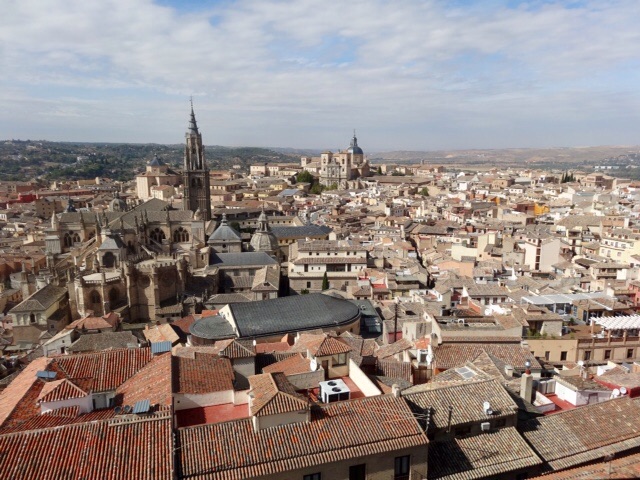
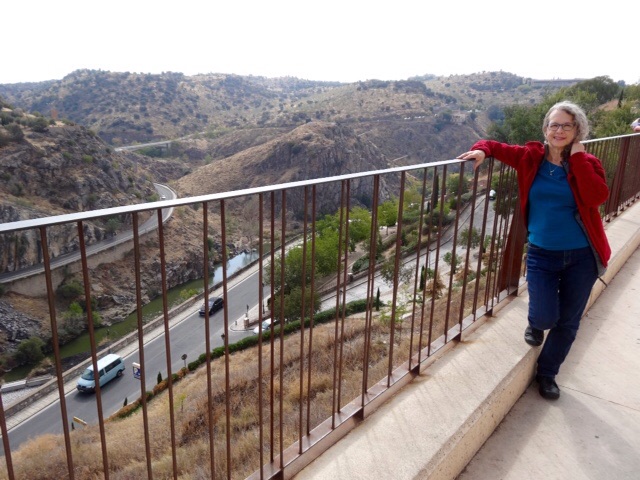
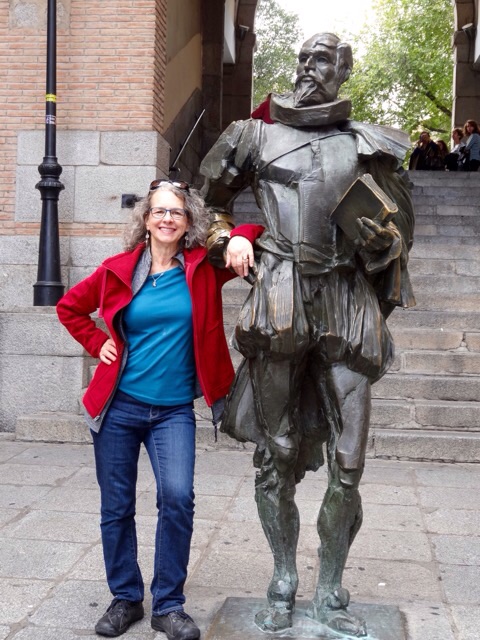
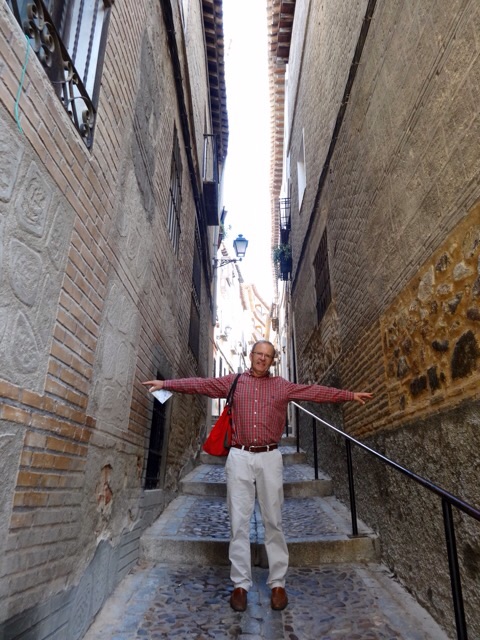
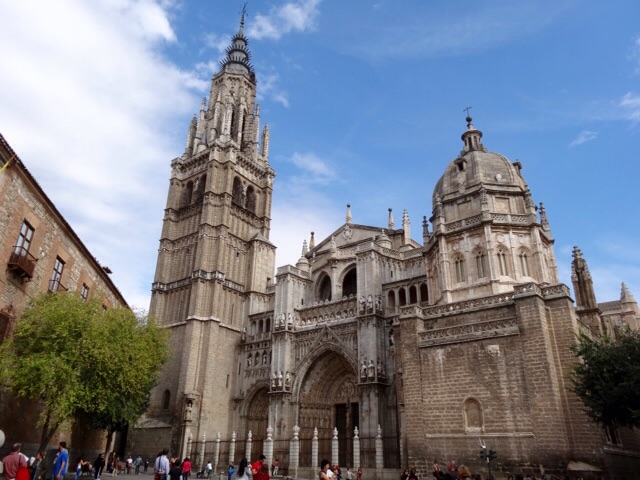
We are on our way to Toledo this morning, and then on to Merida where we have our next apartment.  Yesterday we stayed home for a bit of rest and to pack and get ready for today.  This view is from the cafeteria on the top floor of the public library in Toledo.imageWe literally travelled in circles looking for a library of ancient manuscripts and books. The Information center sent us to the library, but it was the public library and they told us that what we wanted was likely closed but that we could go see, so we went there, but where they sent us wasn’t the right place.  A second information lady gave us different information. We found out it was in the Alcázar museum, so we went there, only they told us we needed to go back to the library and that the collection was a special room there.  The same library that sent us elsewhere!  Only problem was that it closed at 2:00 and it is now ten to two!  We give up, deciding that we just weren’t meant to see these manuscripts.  Too bad, I would really have enjoyed the chance to at least have a look at them. One of the stops on our way to find the elusive manuscripts overlooks a winding road and the hills on the edge of town.imageWe did find this statue of Cervantes, the author of Don Quixote’s La Mancha.imageThe streets are very narrow and Toledo is a very hilly town.  We seem to be either climbing up or down steps and streets. Once again, we are out and about when a lot of the shops and businesses are closed. This 2:00 to 5:00 lunch hour just doesn’t work for us.  We are usually home by 8:00, and it seems everyone else is just starting to think about their evening’s meal and entertainment.imageWe take a tea break and have this great view of the Toledo Cathedral, but neither of us really feel like going inside, instead we sit in the sun and watch the people in the square.  Great people watching!image

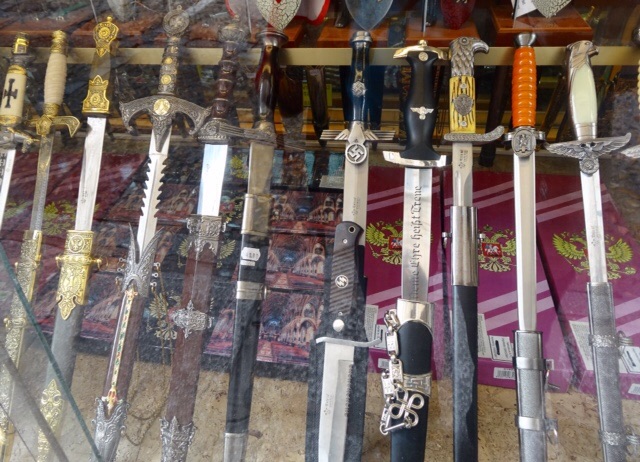
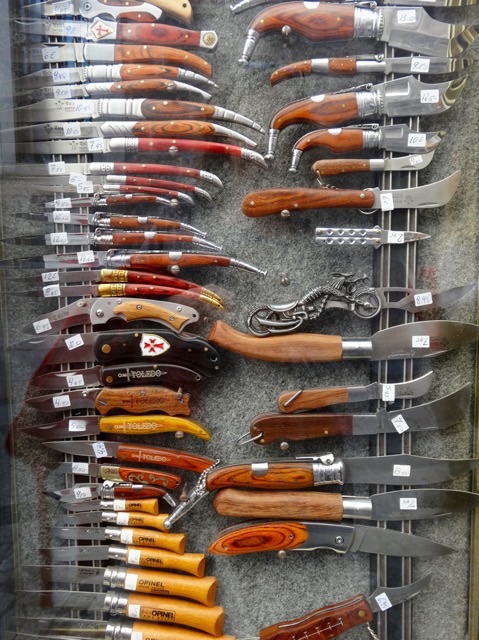
There are lots of knives and swords for sale here, apparently they are made locally. I have a friend who makes beautiful knives and thought he might like seeing these.image imageThere is lots more to see in Toledo but we are tired and need to get on the road to Merida to meet our next host at 8:00.  We drive in pouring rain for the last couple of hours and it continues to come down in buckets when we arrive in Merida, but we meet Ana, our host, and we love our new apartment.image

We have been very pleased with all of our Airbnb apartments so far.  Let’s hope our luck lasts.  I love seeing all the apartments and it is so nice having a kitchen.  We are making most of our meals as that works so much better with my dietary restrictions.imageimage

Santillana Del Mar, Burgos Cathedral and Segovia

I am going to try to catch up on my blog a bit, but it will be a long post because I have such a hard time only picking a few pictures.

Saturday, Oct. 3

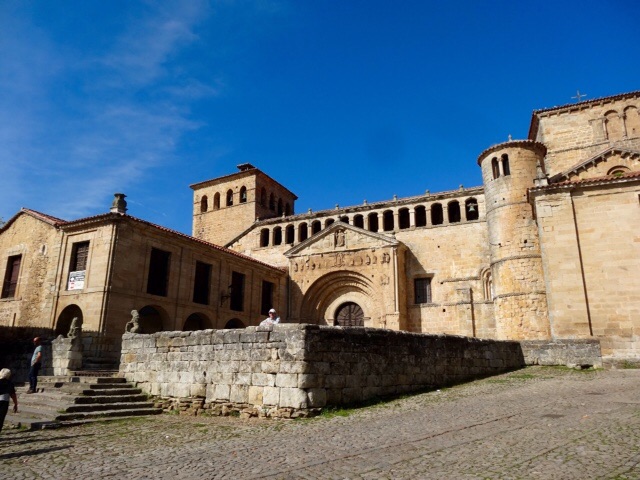
We visited the village of Santillana Del Mar, which is said to be one of the prettiest villages in Spain.  The town grew around a monastery, La Colegiata, which we visit, after a walk through the streets and some more tapas at one of the local bars. Bob also tried a glass of local cider which the bartender poured, holding the bottle about three feet above the glass.  Very impressive!

La Colegiatas
Several beautiful big old books, but I am only able to view these from a distance…
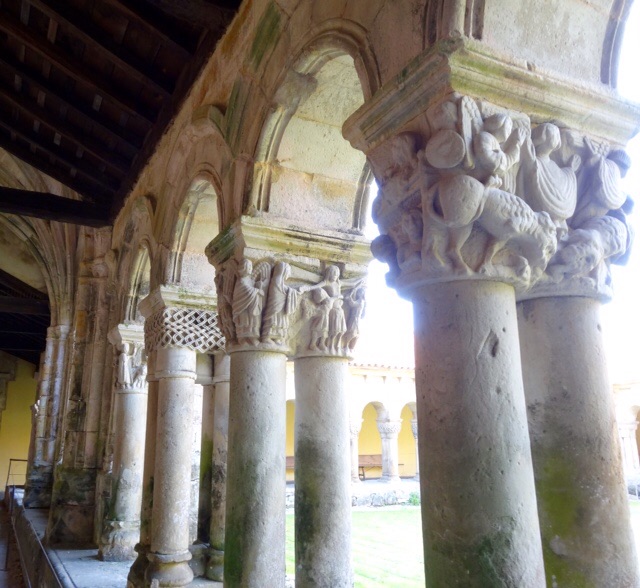
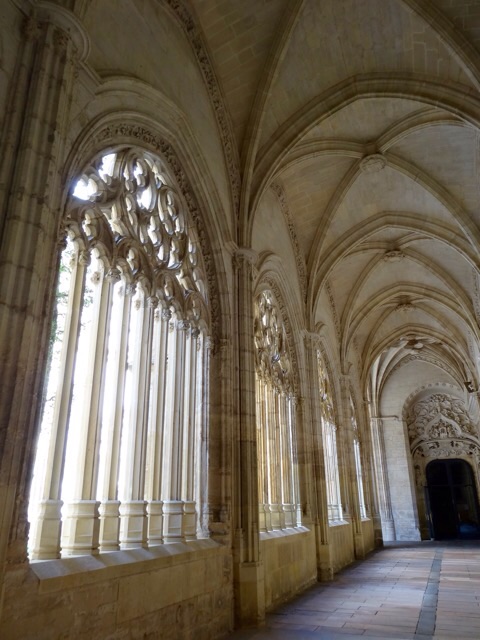
image  This church has beautiful capitals in its cloister that are amazingly well preserved.imageSunday is a quiet day, figuring out the next part of our trip, packing and tidying our apartment.

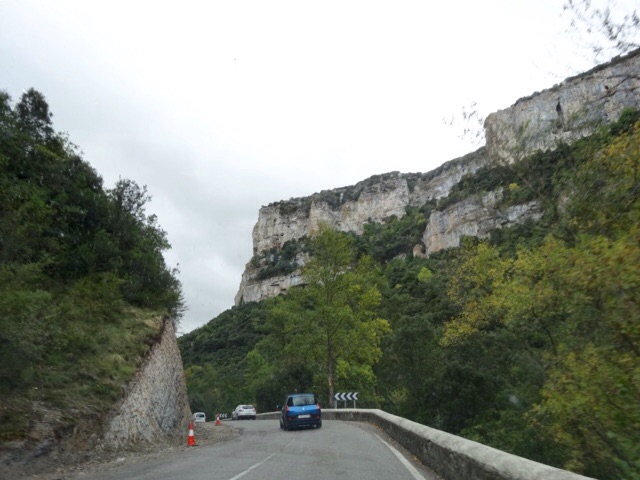
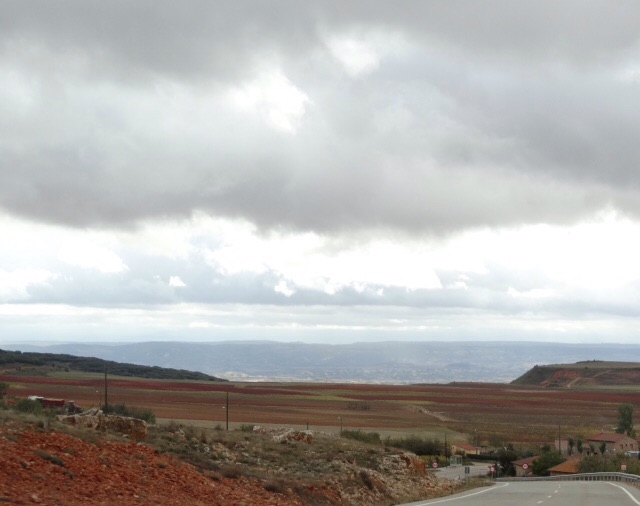
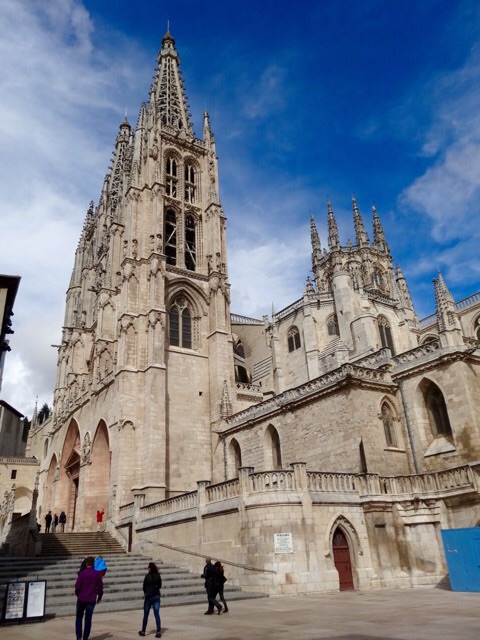
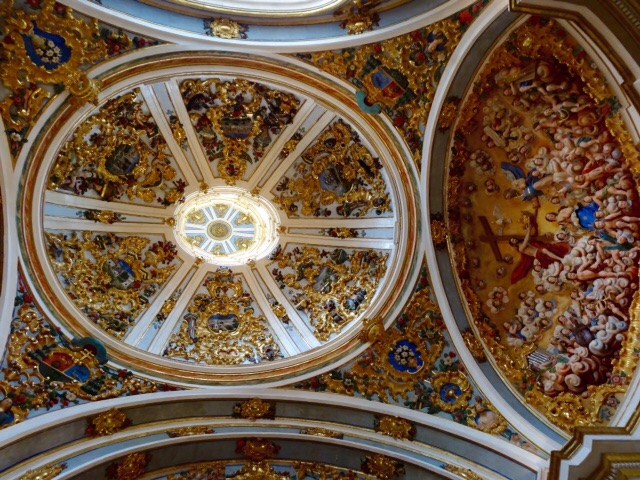
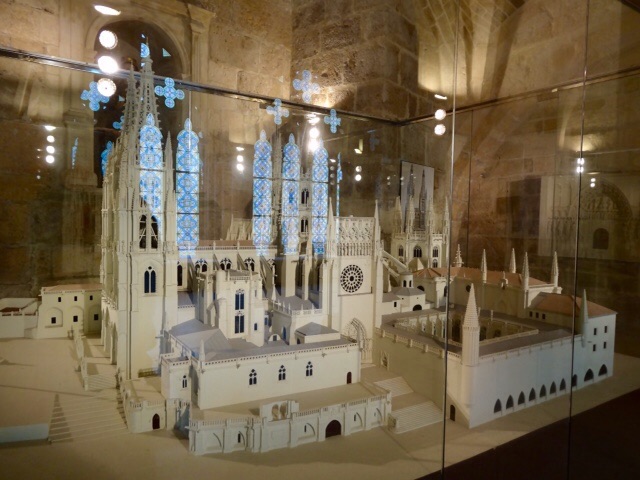
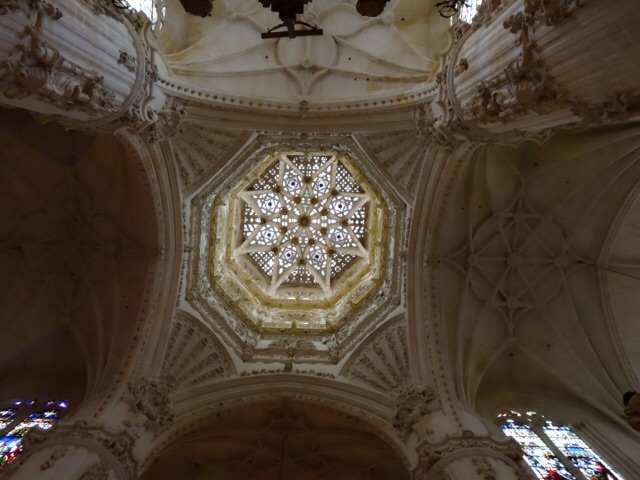
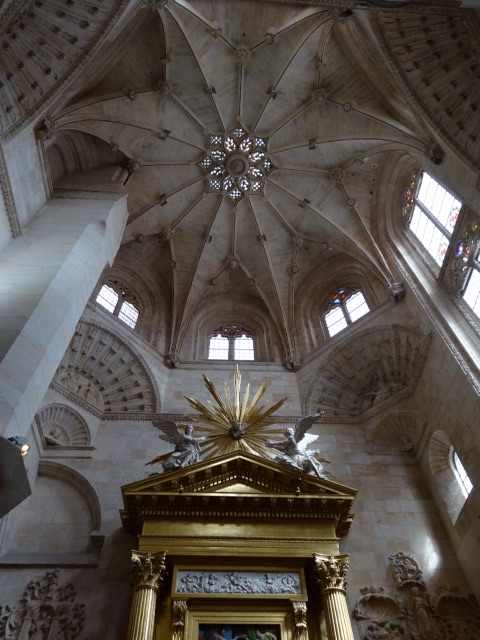
Monday, October 5th we are on the road early and head south to Burgos.  The drive takes us through some very interesting, constantly changing countryside. It is very windy and cloudy but no rain to speak of.image image imageWe find parking easily in Burgos, which is a surprise, and head off to the Cathedral.  7€ each to visit and that includes an audioguide, which is very helpful.  It is one of the biggest Cathedrals we have visited yet, and incredibly ornate, with lots of paintings, sculptures, vestments and furniture.  There is way too much to absorb, every where we looked there was something else that was absolutely incredible. image  This is without doubt the most ornate ceiling in the cathedral!imageOn the lower level there is a scale model of the cathedral with reflections on the case from the stained glass windows of the cloister.image  The windows into the cloister.imageWe must always remember to look up when in cathedrals.      image image

We arrive at our next Airbnb after a long day of driving and settle in for the next four days in a very comfortable apartment about 45 minutes outside Madrid.

Tuesday, October 6

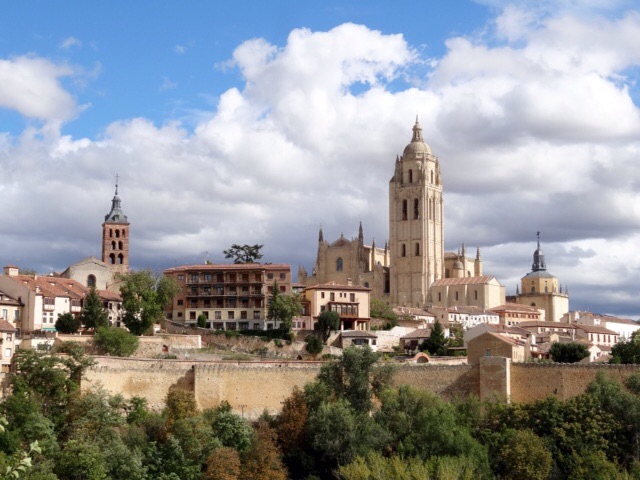
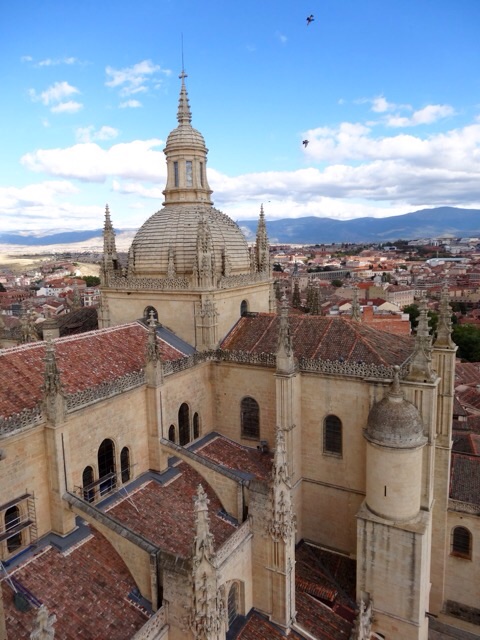
Segovia is our destination today.  It is about an hour from our apartment, but the drive goes quickly as the scenery is constantly changing. We want to see Segovia’s cathedral, which is the last great Gothic cathedral to be built, dating from 1525.  Take note of the cathedral tower, because we climb it!

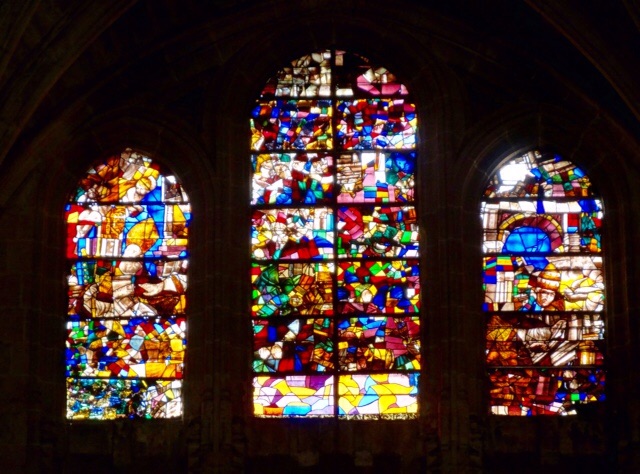
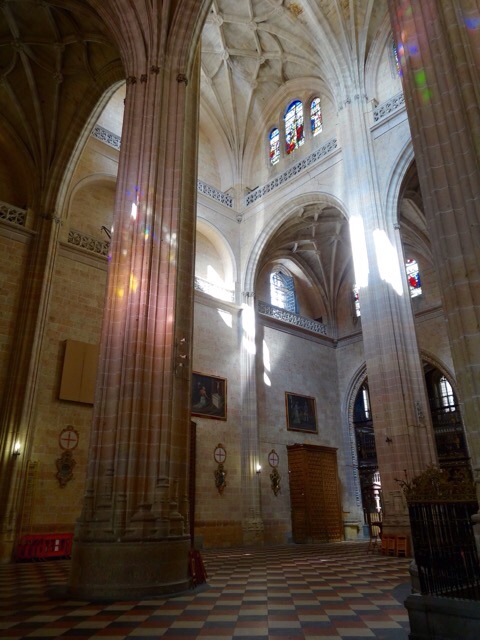
image  This cathedral has beautiful stained glass windows…image  which cast their colours onto the interior when the sun was shining.image

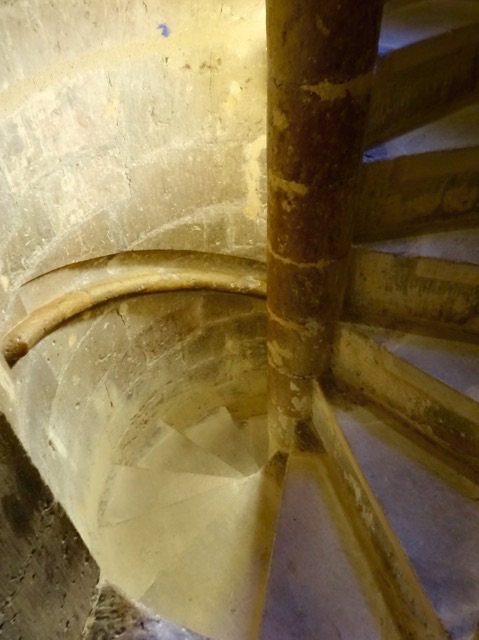
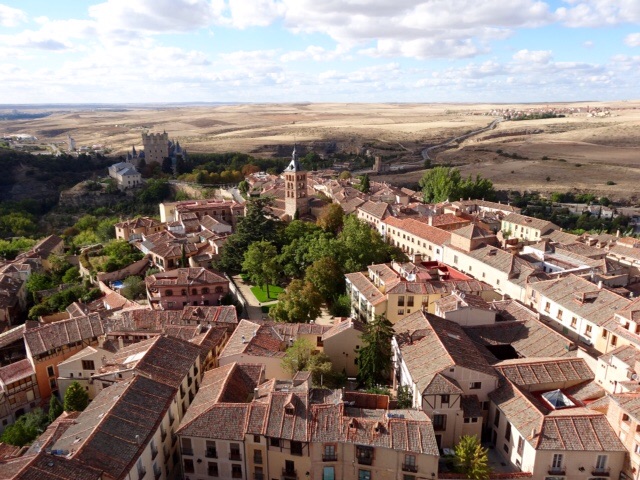
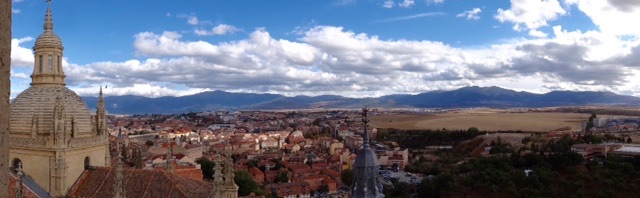
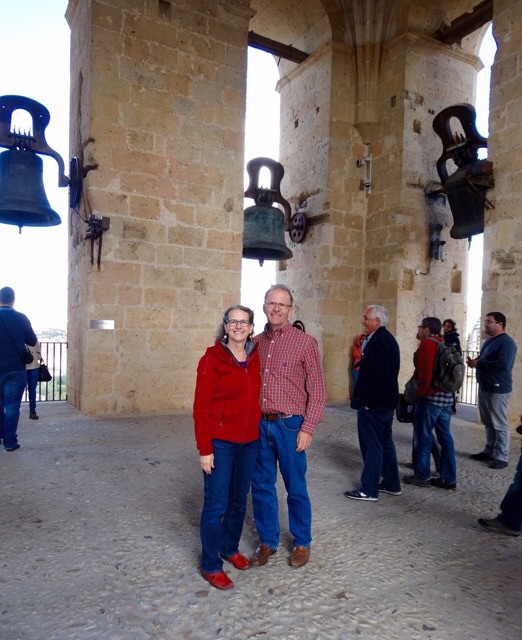
We climb the 185 steps, which are 25 cm high on a 70cm wide staircase to reach the bells in the tower.image  The views are amazing.image imageimage image

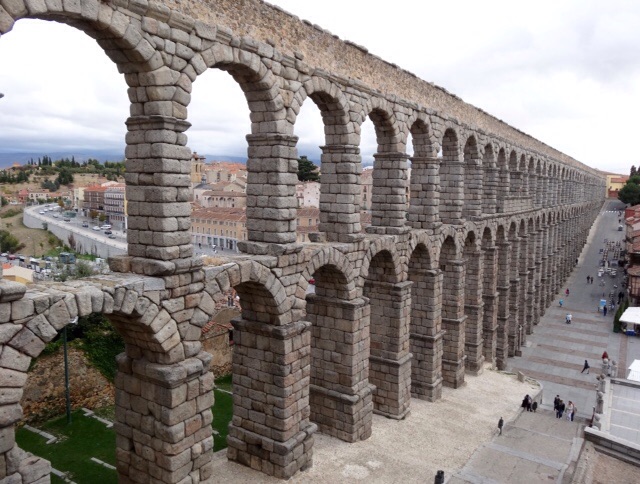
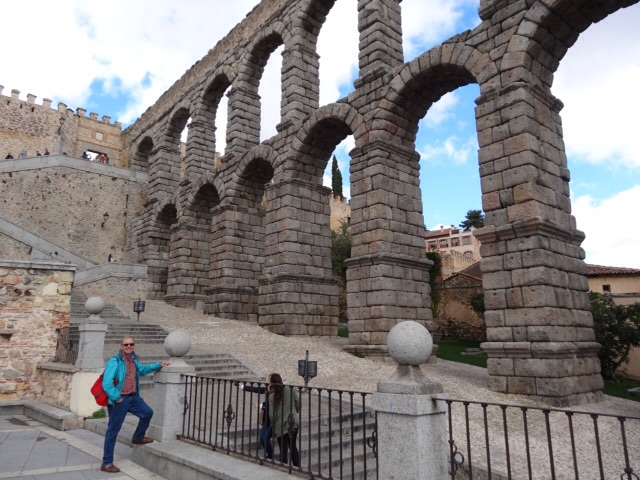
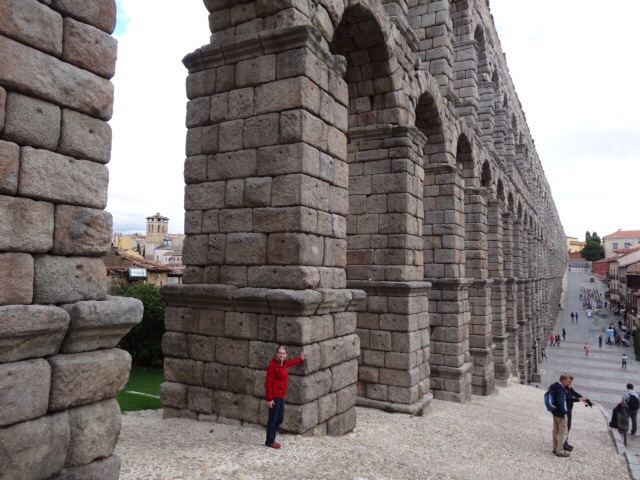
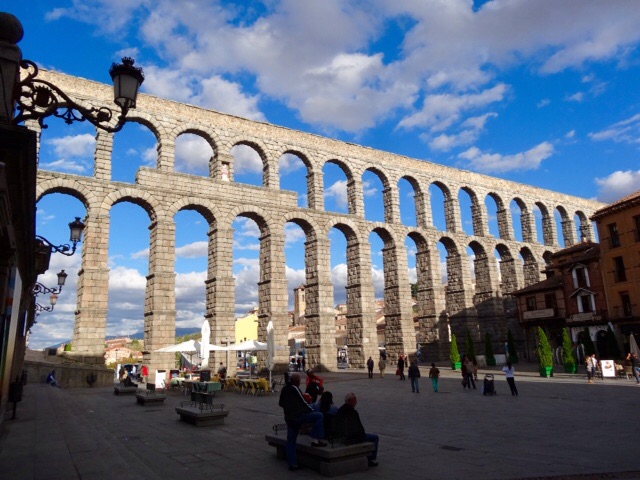
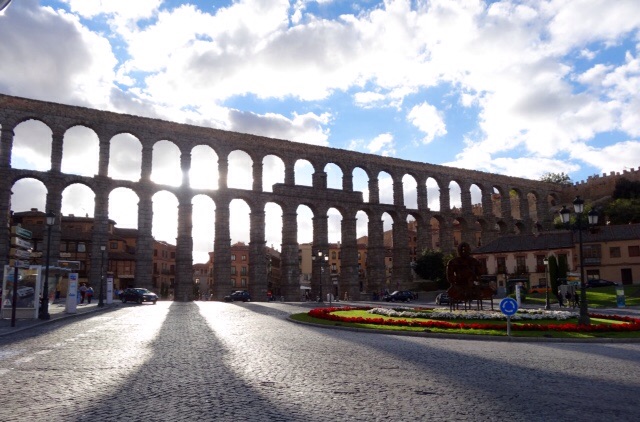
After the climb up there is the climb down.  I have to admit my legs were feeling a bit tired by the time we reached the bottom.  The other main attraction is Segovia is the Aquaduct that was built in the first century AD by the Romans and was still in use until the late 19th Century.  It is stunning, and we spend a fair bit of time admiring this amazing feat of engineering. It was made without mortar, just rocks piled on top of each other over 2000 years ago!  It is hard to describe just how incredible the Aquaduct is, so I’ll let the pictures speak for themselves.

imageimage image

image

The sun is setting as we head off for home.image

Castillo de Loarre and San Juan de la Pena

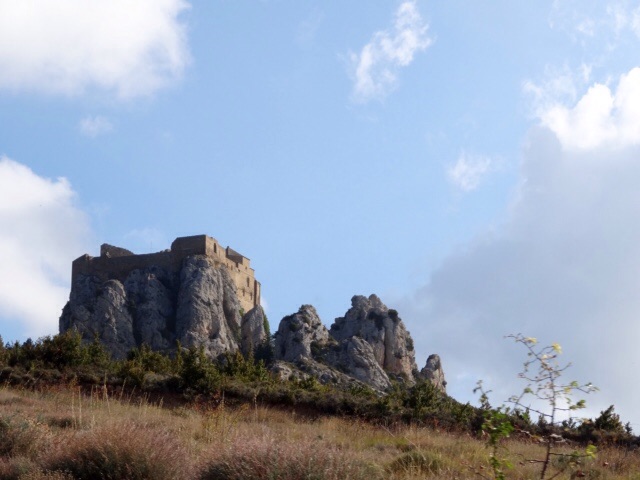
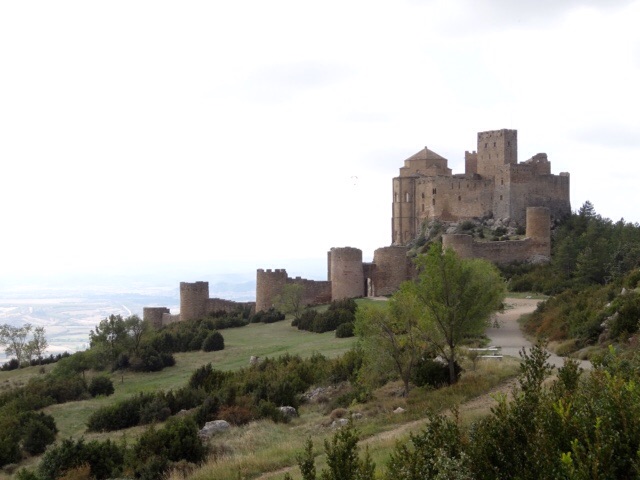
On Tuesday we visited Castillo de Loarre, a beautifully preserved Romanesque church and fortress that was started in 1071, over 900 years ago!  A film called Kingdom to Heaven was filmed there, I think in 2005. This is our first view of the castle.

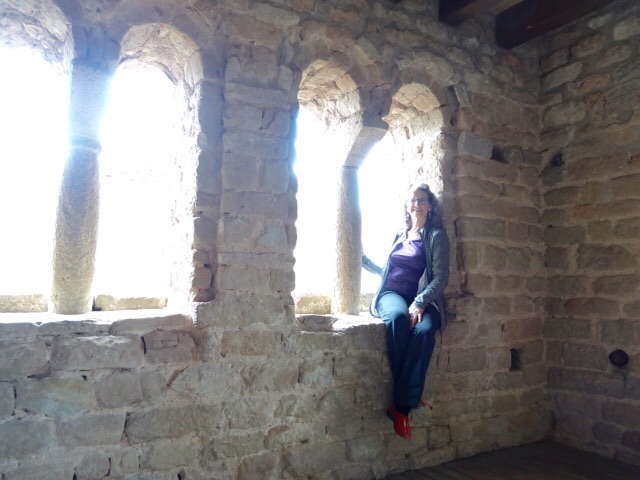
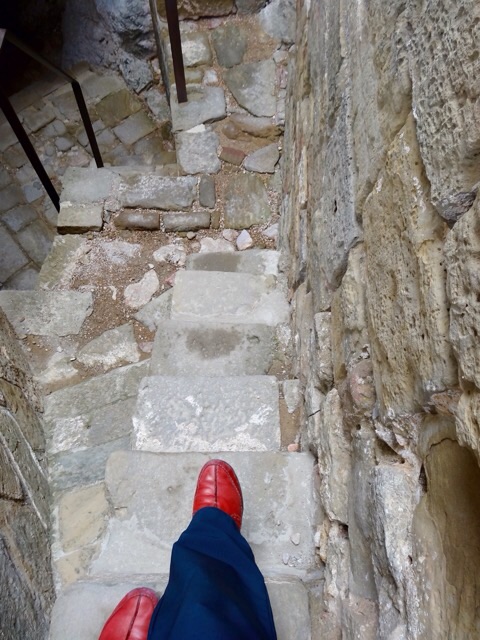
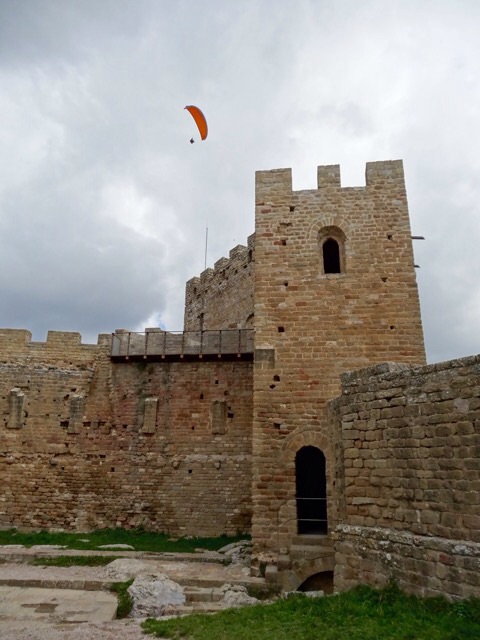
image These are the ornate windows in the Queen’s tower.image  We had to watch our footing in this Medieval castle.imageWe were surprised by this para glider overhead, then we saw many more of them as there was a jumping off spot on the mountain just behind castle.image

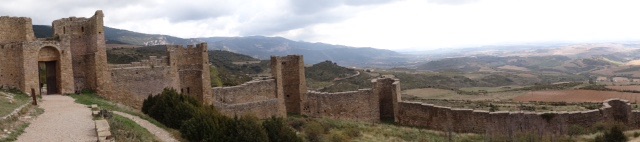
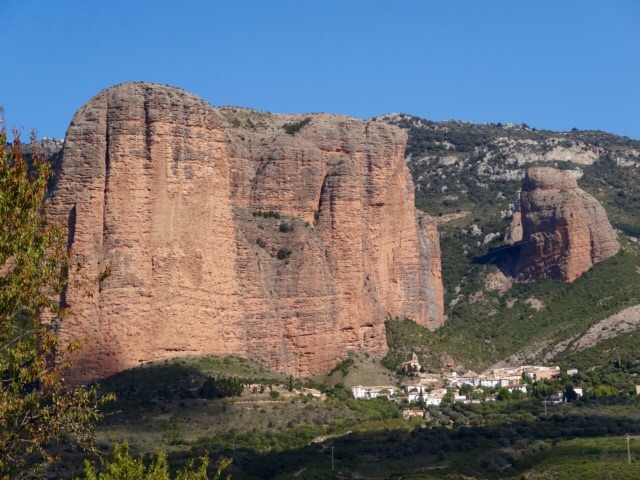
There was an amazing panoramic view of the valley below us…image and this was our view while we had a picnic lunch!imageAfter lunch we headed to the San Juan de la Pena Monastery.  On the way we pass Aguero, a little village nestled at the base of dramatic eroded stone cliffs.  We would have loved to stop and explore, but there just isn’t time. I thought three months would be so much time but there is so much to see everywhere that we have to pick and choose.

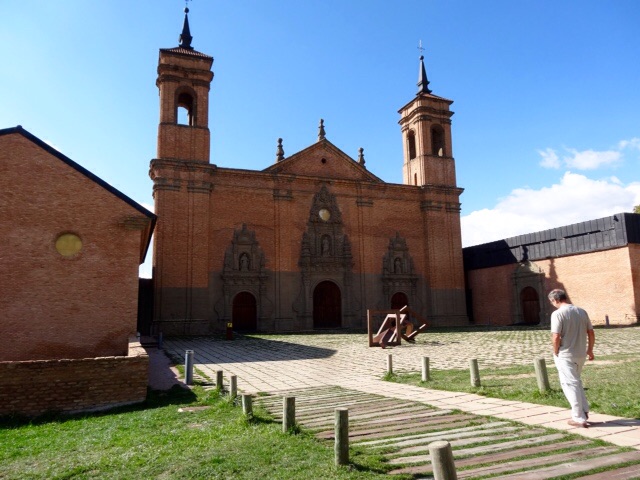
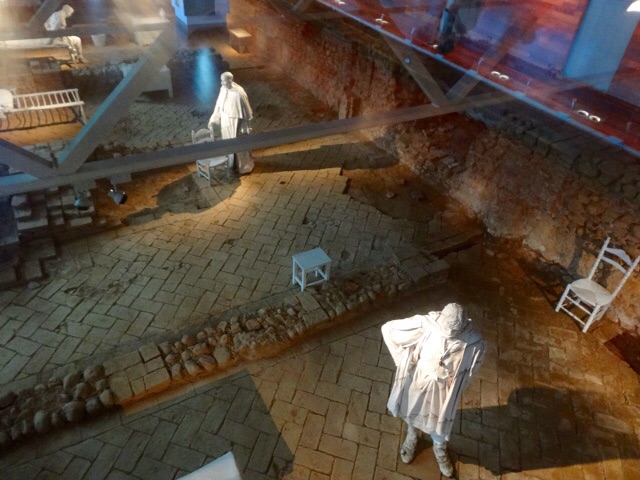
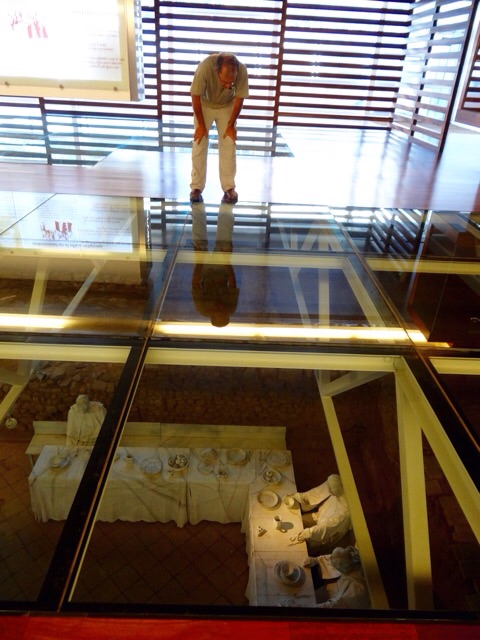
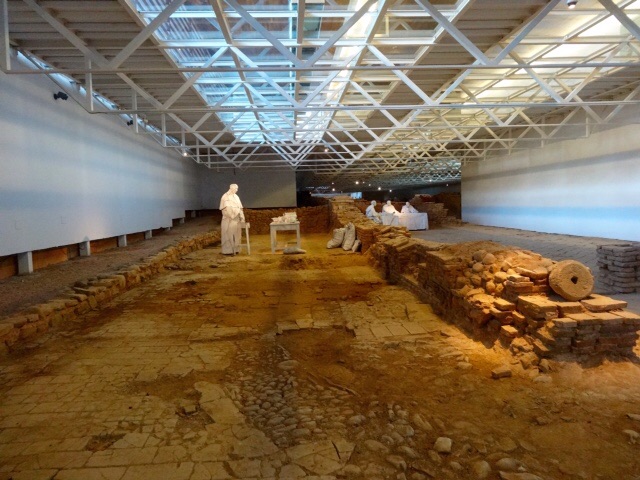
imageThe new monastery has an interpretive center built over the old ruins.  It is the modern building  to the right in the photo below. It is a huge long building with a glass floor to view the excavated ruins below.  I find it rather unnerving walking on a clear glass floor!imageimage image
Then we go below and walk through part of the excavations.  There is also another enormous building with more ruins and figures to walk through.image
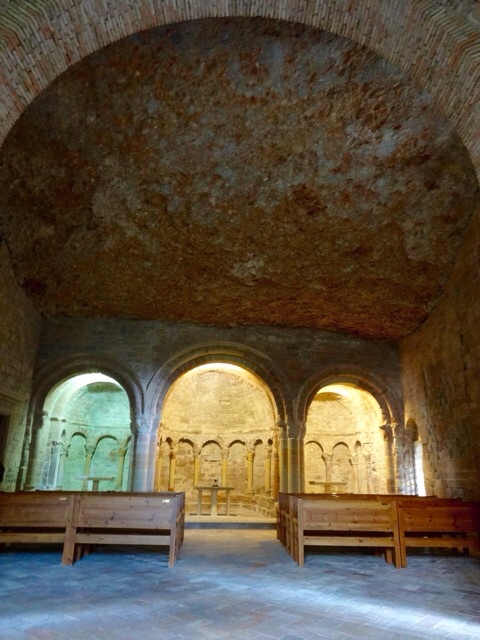
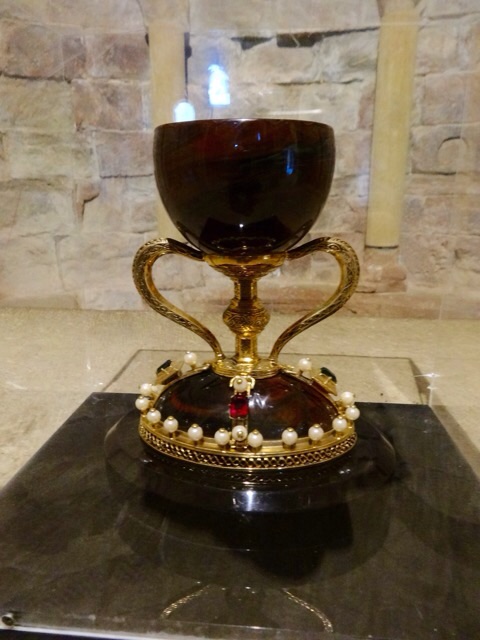
We catch a bus to the old Monastery which is sheltered under a bulging rock.  It was founded  in 920 and the Holy Grail is said to have been kept here to protect it from the Muslim invaders.  There is a replica in the chapel.image image image
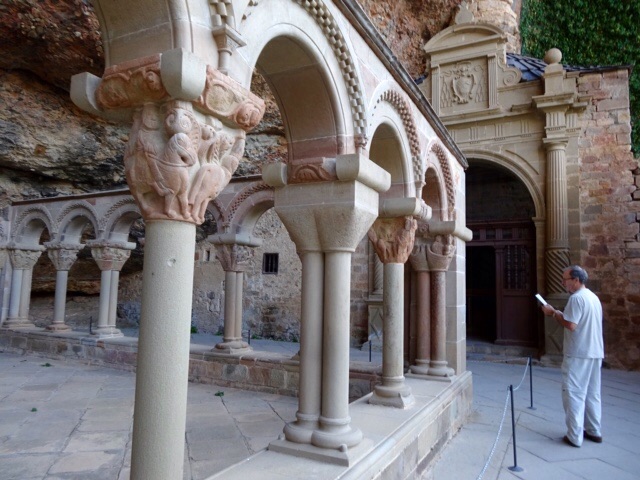
The cloister has beautifully carved capitals with scenes from the Bible.imageWe have a bit of time before the bus comes back to pick us up (there is no where to park near the Monastery) so I start a sketch.

image

On the way home we drive through several long tunnels that cut right through the mountains. This one was over a kilometer long!  image

Alquézar

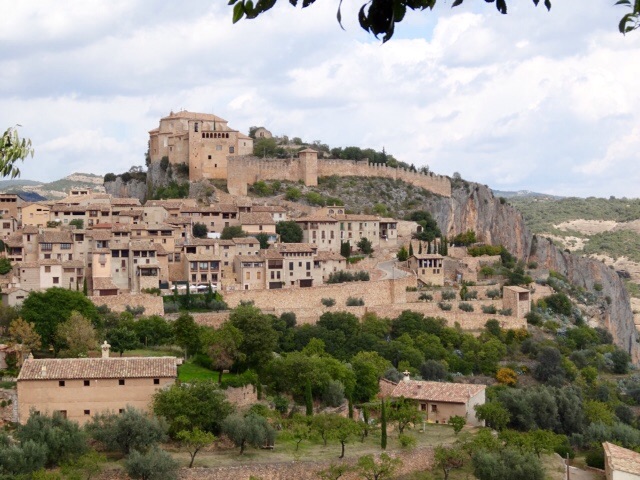
We drove to Alquézar on Sunday.  I am still in catch up mode on my blog, trying to work out the best combination of blogging and keeping a journal.  I really want to do both but it does take a bit of time, so I may have to change my approach, we will see.  This is our first view of Alquézar, a  Moorish village, with its 16th Century Collegiate Church.  We are quite impressed.

image

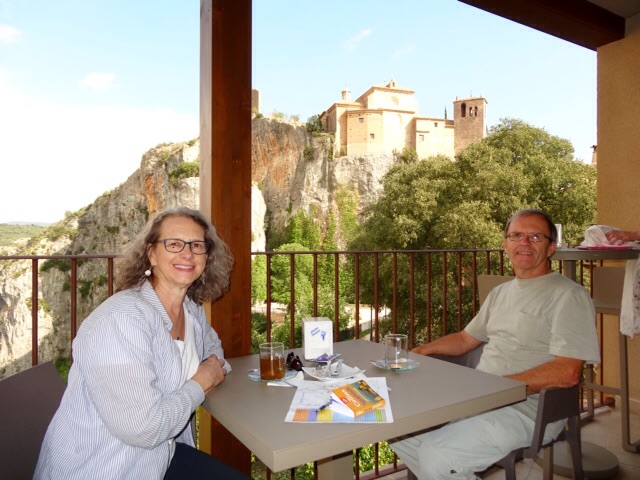
We walk up towards the church, which is quite an uphill walk,  but the entrance is closed off, so we can’t go inside.  We continue our walk along the narrow winding streets and find a little cafe where we stop for tea and a bite to eat.

image

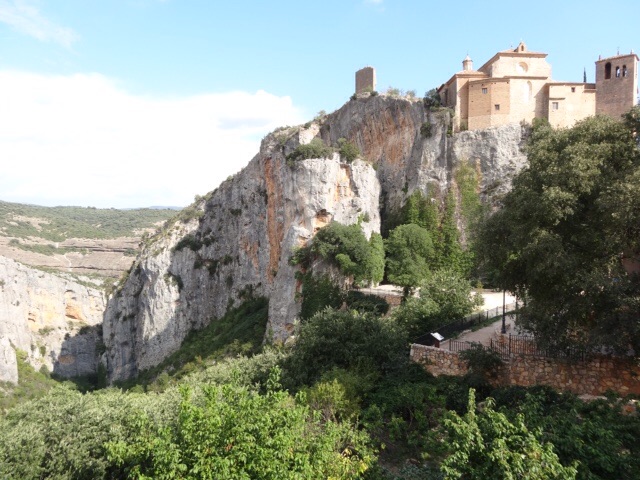
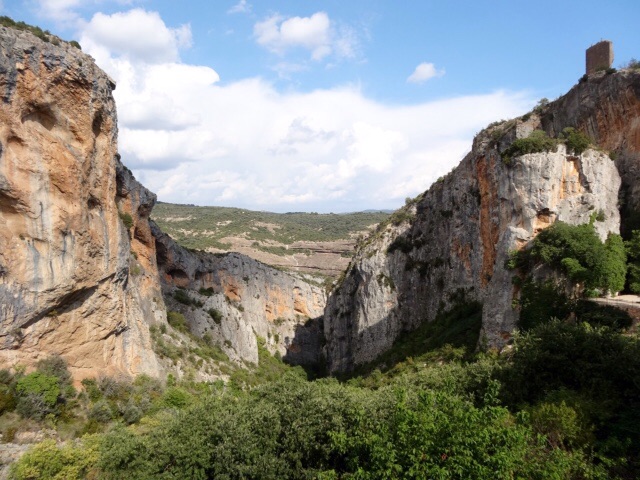
The view from here is pretty incredible.  The church is on the right and there are massive cliffs on the left.image

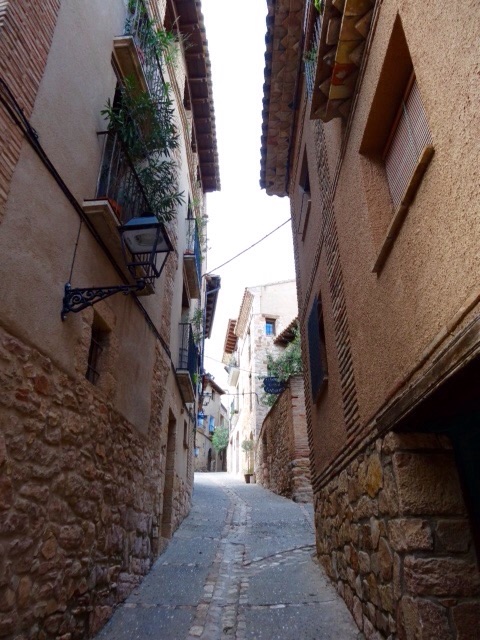
imageThe streets are narrow and often go under buildings.  Notice the feet over the road!image

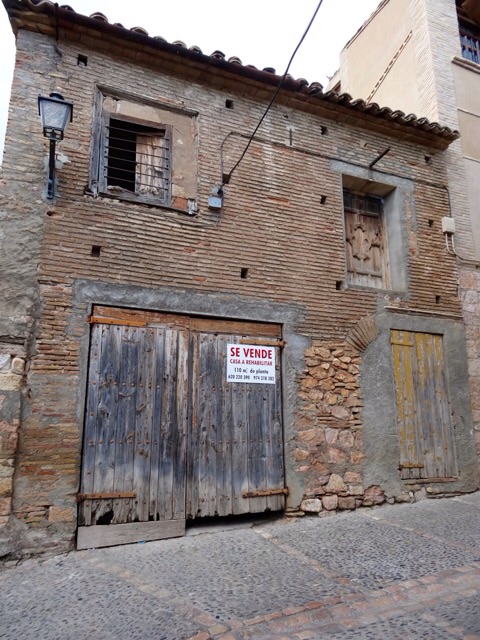
image We see this fixer upper for sale.  I wonder how much it would cost to buy?  and then how much it would cost to fix up?  Quite a lot I think.  We enjoyed our afternoon here but it is soon time to head to Huesca to find a place to stay tonight.  Bob is doing a good job finding hotels but we are both looking forward to getting an apartment again and staying put for a few days.

image