We Are In Paris

Day 2, Monday, September 1, 2025

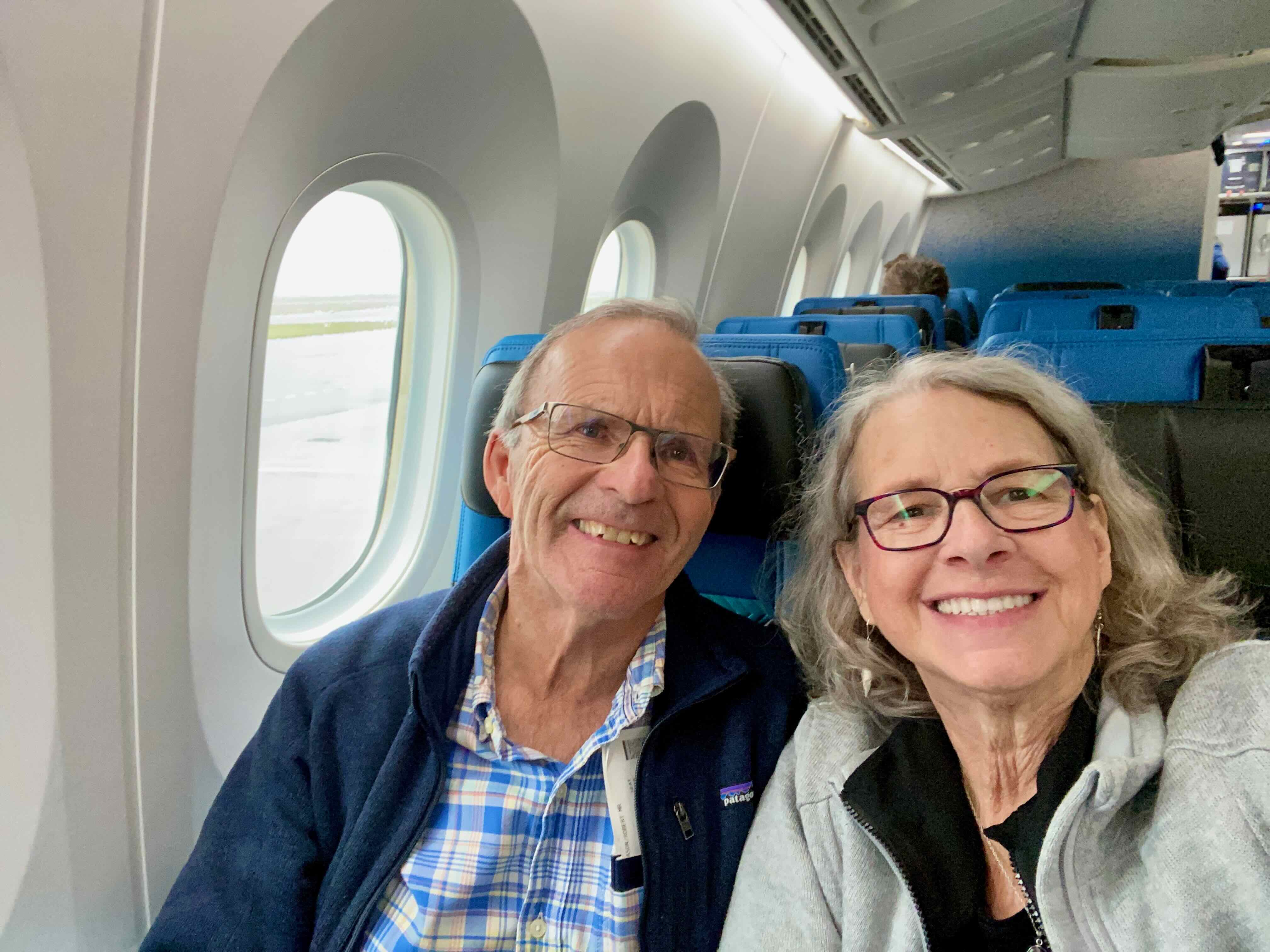
Our flight had several turbulent episodes but nothing too scary. We were flying on the Dreamliner…a huge plane. I can’t sleep on a plane so I was very grateful to be able to watch movies all night long.
We walk down steps onto the runway, board a bus and drive to our terminal. During this bus trip I lost my balance and started to slowly fall backwards! Bob and another gentleman caught me before I hit the floor so all was well and everyone had a good laugh.

We pass through customs in Paris and our suitcases are waiting for us on the carousel. It is always a relief to see they have arrived. We added a roaming package on our home cell and it started working as soon as we landed. So much easier than trying to find somewhere to buy a SIM card at the airport, especially as the only SIM card store we saw was closed.

We caught the RER train into Paris, and then an Uber for the last part of the trip to our Airbnb. I chatted in French with the driver and we had a nice conversation.

Our cell worked really well until we got outside our Airbnb and then it didn’t work at all and we couldn’t message our hosts to let them know we were here! We stood outside for about five minutes after knocking repeatedly on the door. Then a little four year-old boy looked at us from the upstairs window and smiled, and I asked in French if his mommy was home and he shook his head no, then I asked if his daddy was home and he shook his head yes, so I asked him to get his daddy and tell him that we were here.

That worked and we were able to get inside. We had a nap, went for a few groceries, made a simple supper and then bed.

We Are Home!

Day 91  Monday, November 27, 2023

We are awake at  6:30 to begin our journey home.  An uber ride takes us to the Denfert- Rochereau train station where we catch a train to the Charles de Gaulle Airport.  The morning commute is a busy time…our first Uber ride cancelled after we waited almost ten minutes, so we ordered a second uber.  Luckily we didn’t have to wait too long for it to arrive.

I was able to carry on a conversation with our driver who is from Tunisia.   I have been learning and practicing French online with Duolingo and it has certainly helped with my vocabulary and grammar.  Being able to converse in French, even imperfect French has been really useful on this trip, and I have really enjoyed it.

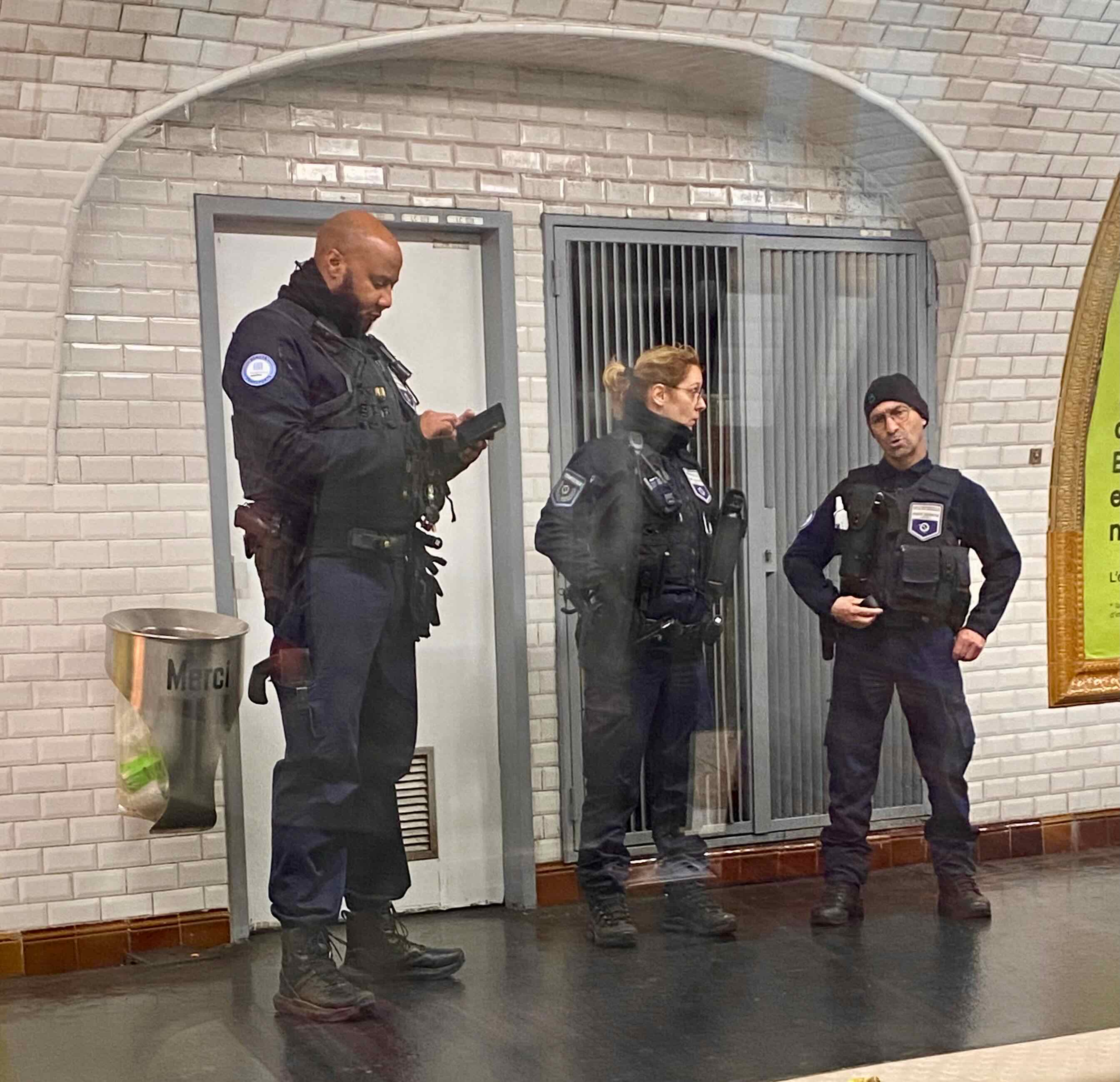
There has been a bigger police presence the last week or so, in the metro and on the streets.  Makes me wonder what they know that we don’t.  Police officers in Paris come in all sizes.

It is an interesting morning. In addition to the heightened security, we see three people in need of medical attention this morning, while waiting for our train to the airport. A young man who collapsed on the ground, a woman sitting surrounded by people trying to help her and an older man who was being helped to a seat after he fell.  I wonder if there is something in the air this morning?

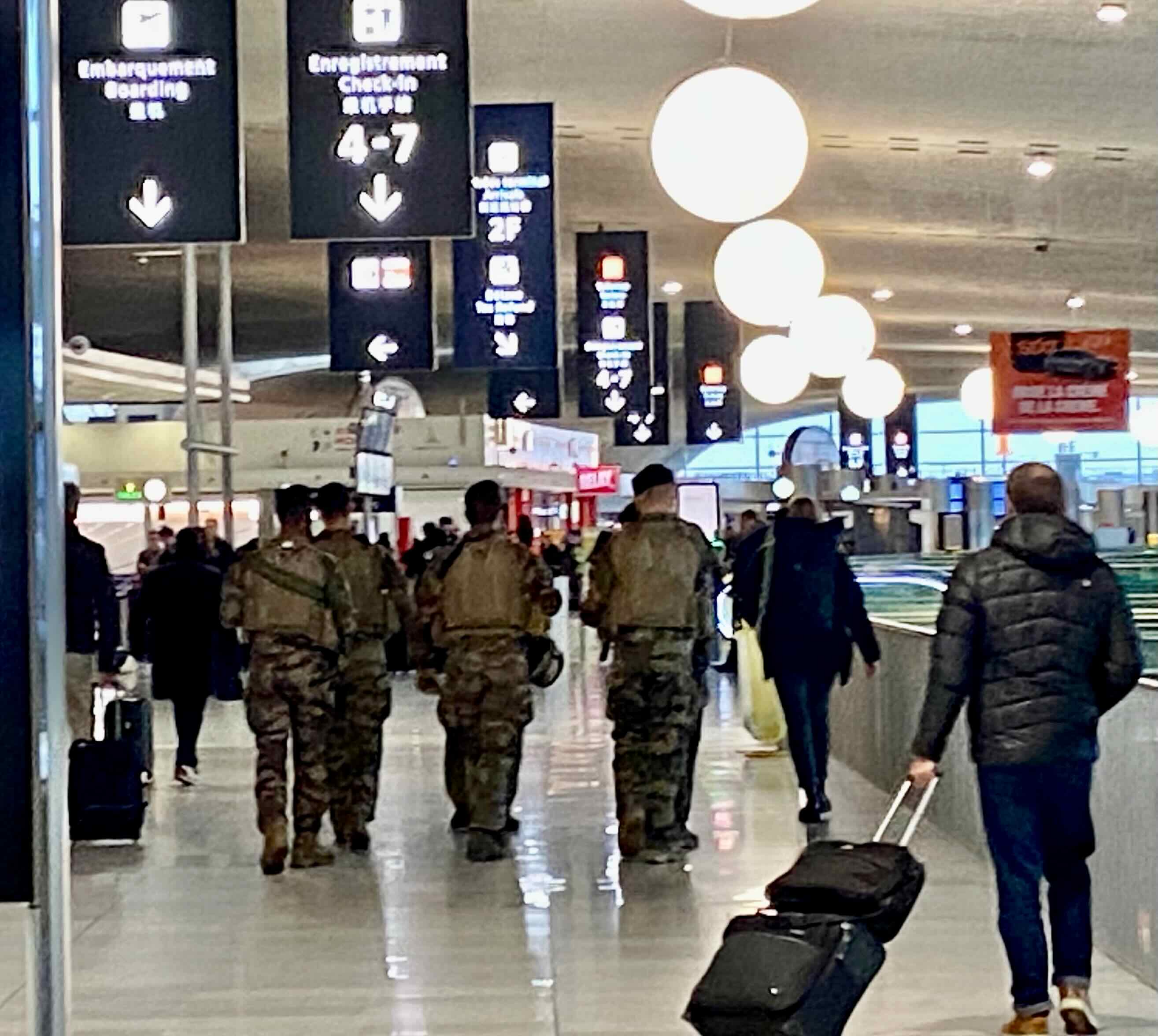
We arrive at the airport after a very crowded train ride.  A young lady standing near us, almost faints, and we offer her what help we can.  At the airport there are groups of soldiers patrolling, armed with machine guns!  Maybe it is a good thing that we are going home?

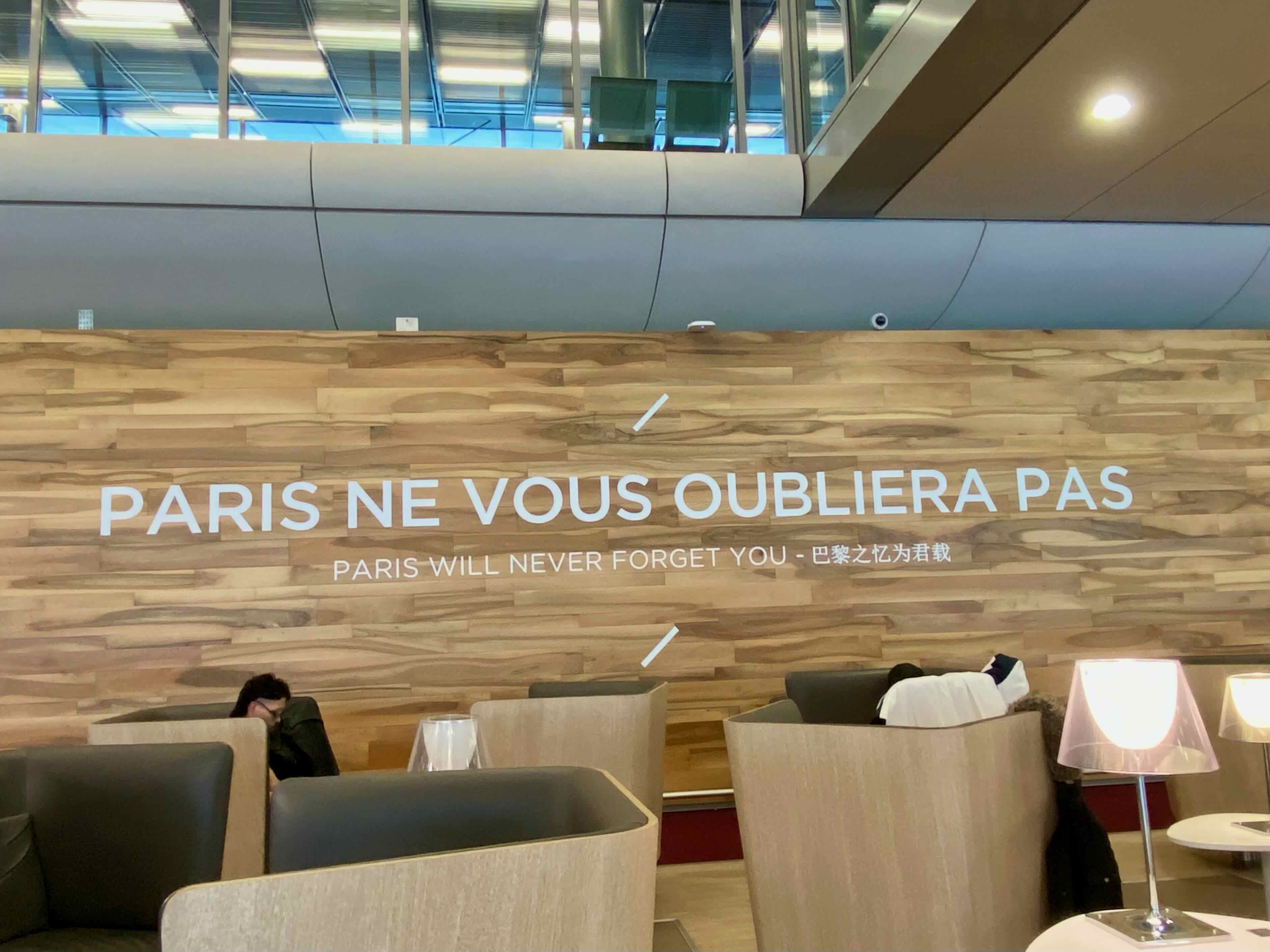
This sign speaks to me…I’ll never forget Paris either.

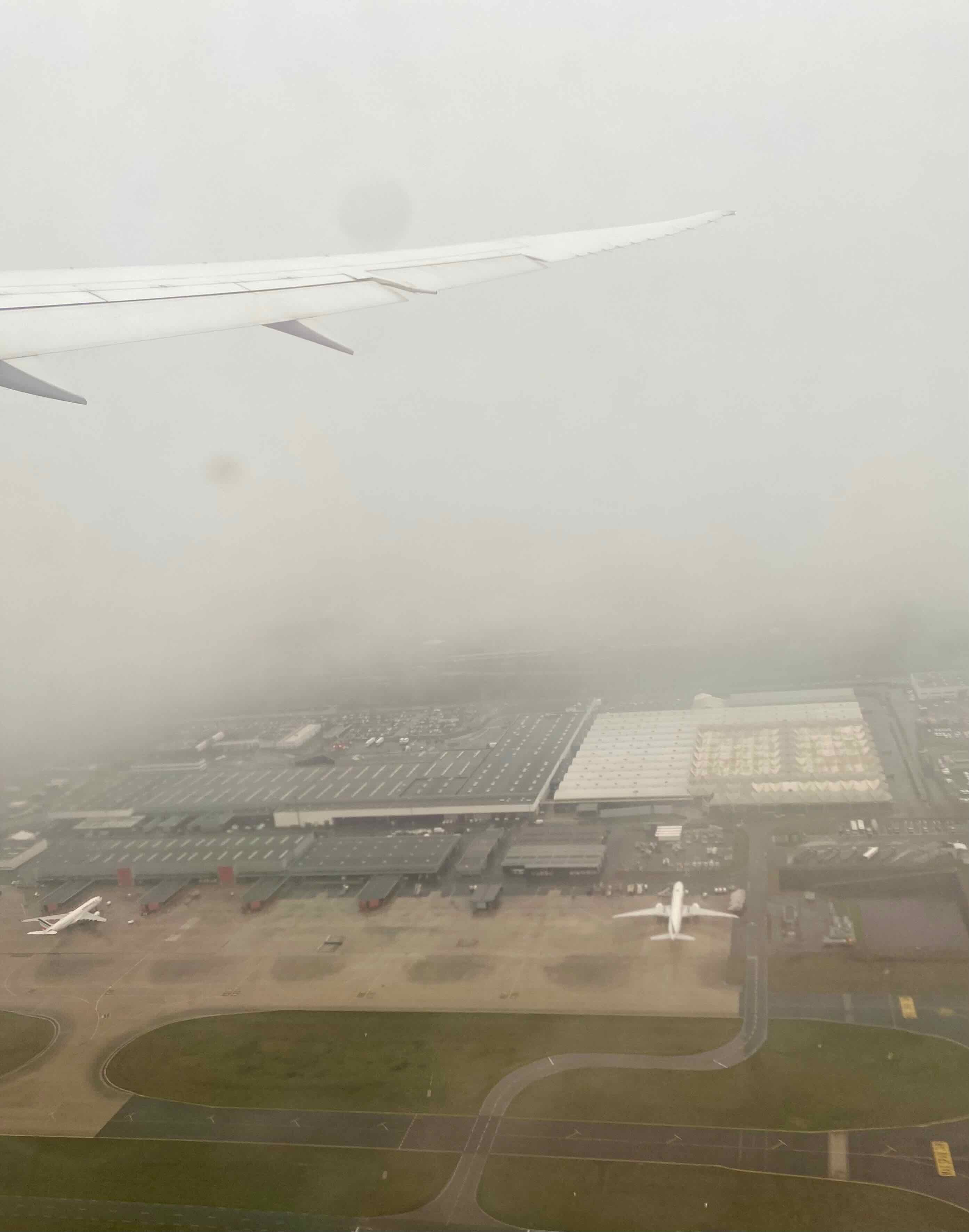
It is a wet rainy day.

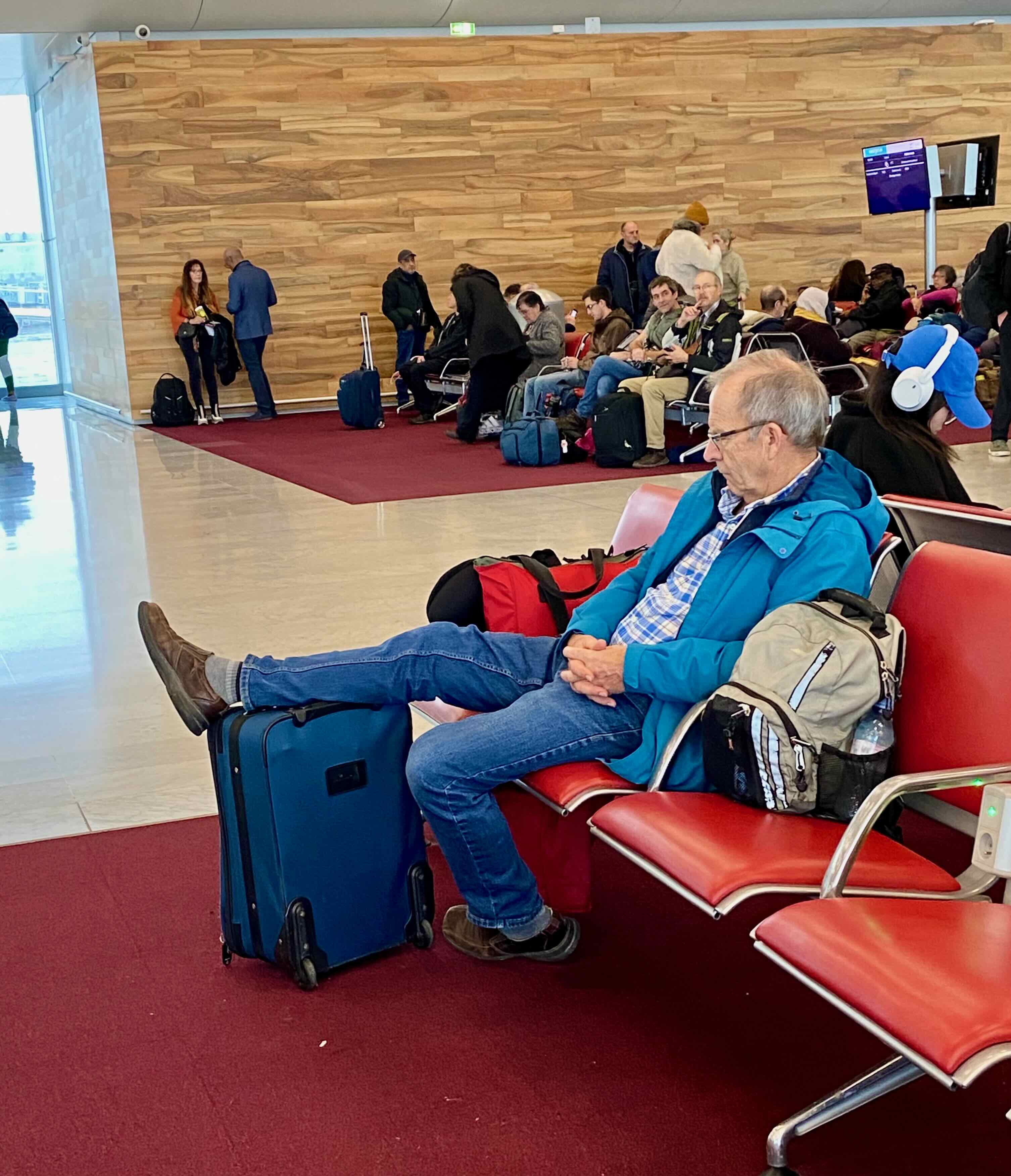
I do enyy Bob his ability to fall asleep almost anywhere.  After a bit of a wait at the airport…

We are on the plane and starting the journey home.

Good bye France. Good bye Paris.  À bientôt.

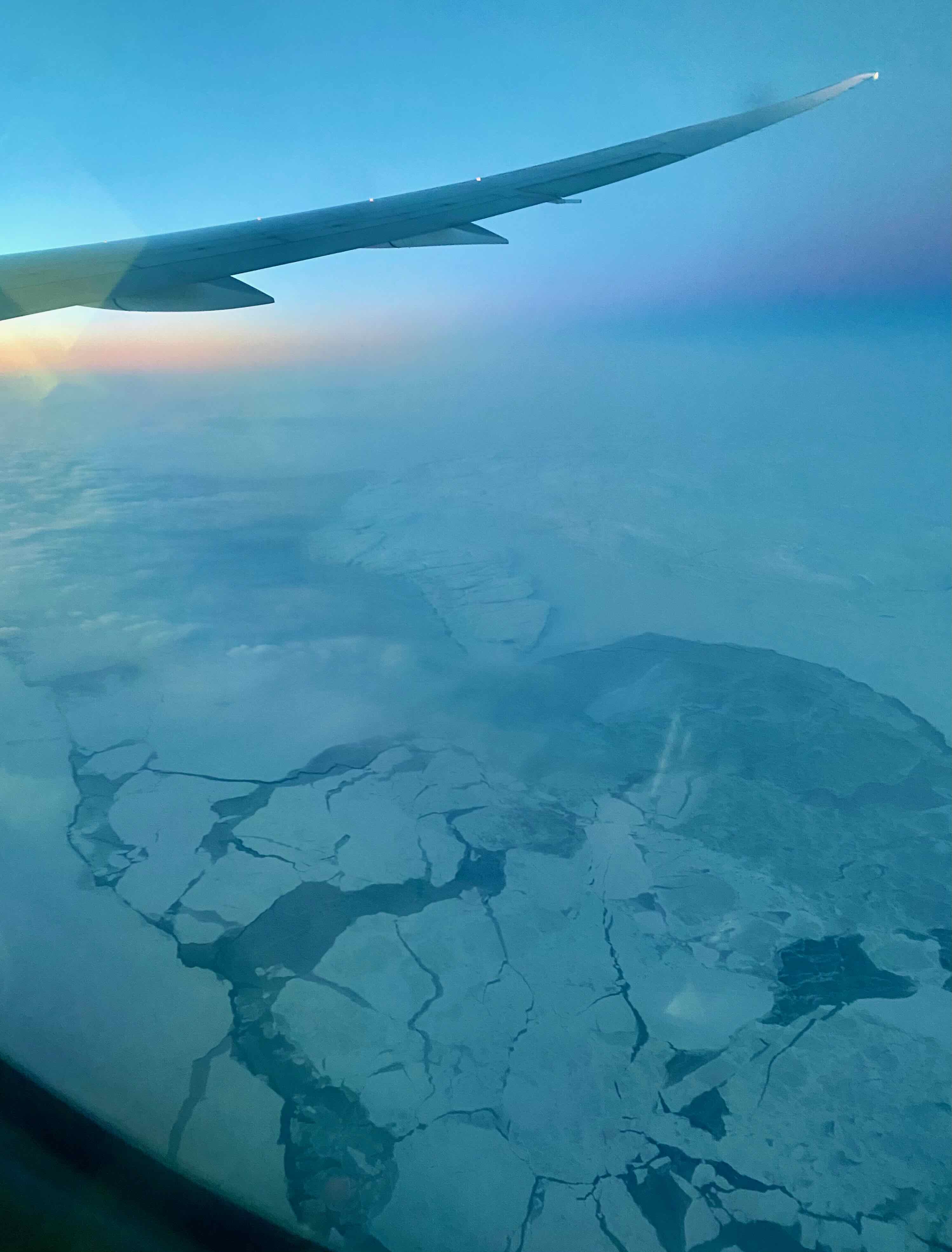
I love looking out the window on a plane…

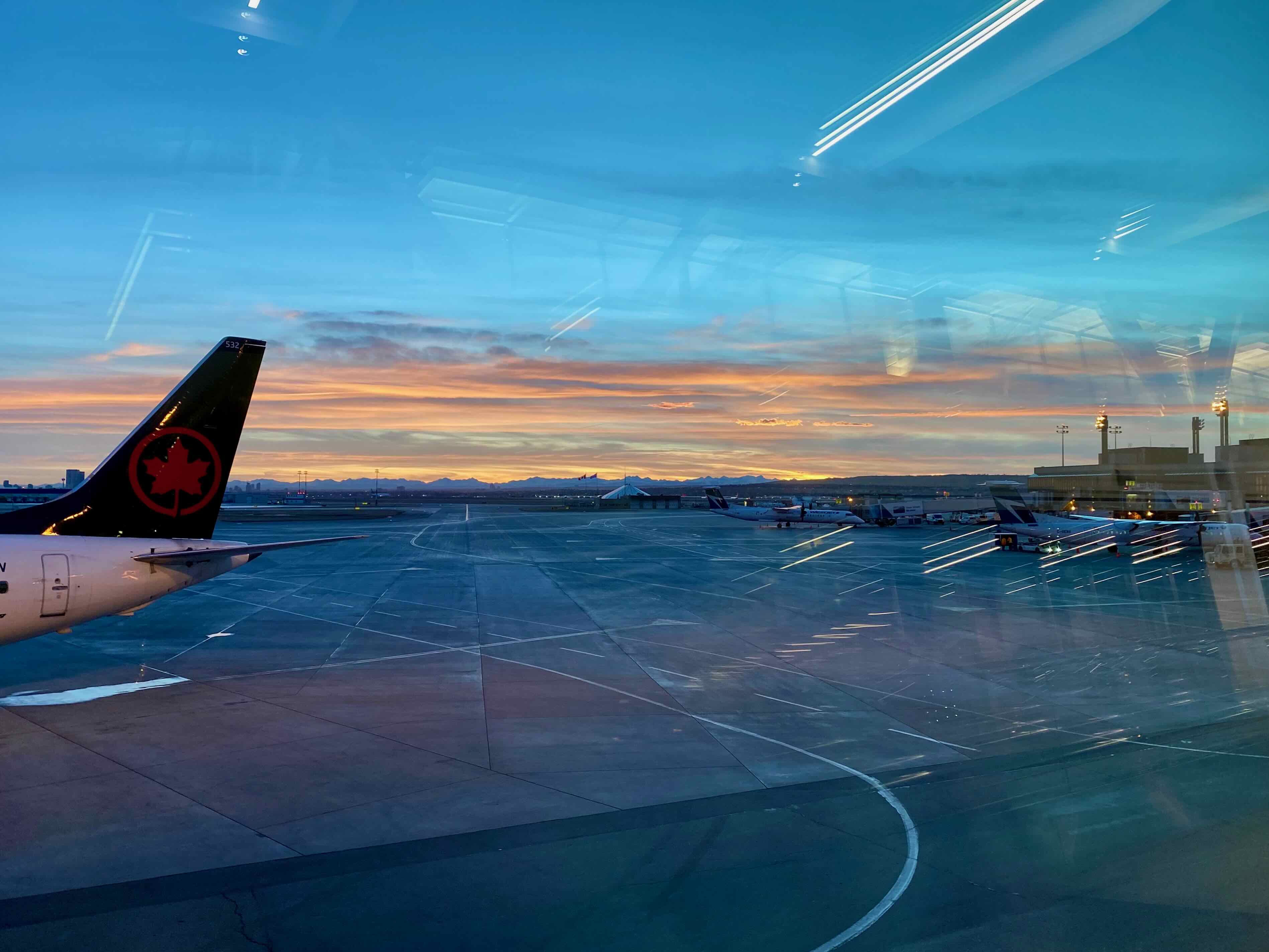
it is so strange seeing the world from this viewpoint. We land in Edmonton just as the sun is setting. It is good to be home, but I can’t wait to return to Paris…one day soon I hope.

Thank you so much for following along on our trip to France and a special thank you to everyone who took the time to write a comment or two.  I can’t believe it took me over a year to finally finish these posts, but better late than never!
Till next time…

Caunes-Minervois, and Brousses, France

Day 47, Saturday, October 14, 2023.

Bob has been doing a fantastic job as tour director.  He has found two little villages nearby that look interesting, Caunes-Minervois, which is known as the Red Marble Village, and Brousses, which has a working paper mill.  First stop is the Red Marble Village.  We find parking along a dry river bed and and a walkway with lots of red marble sculptures.

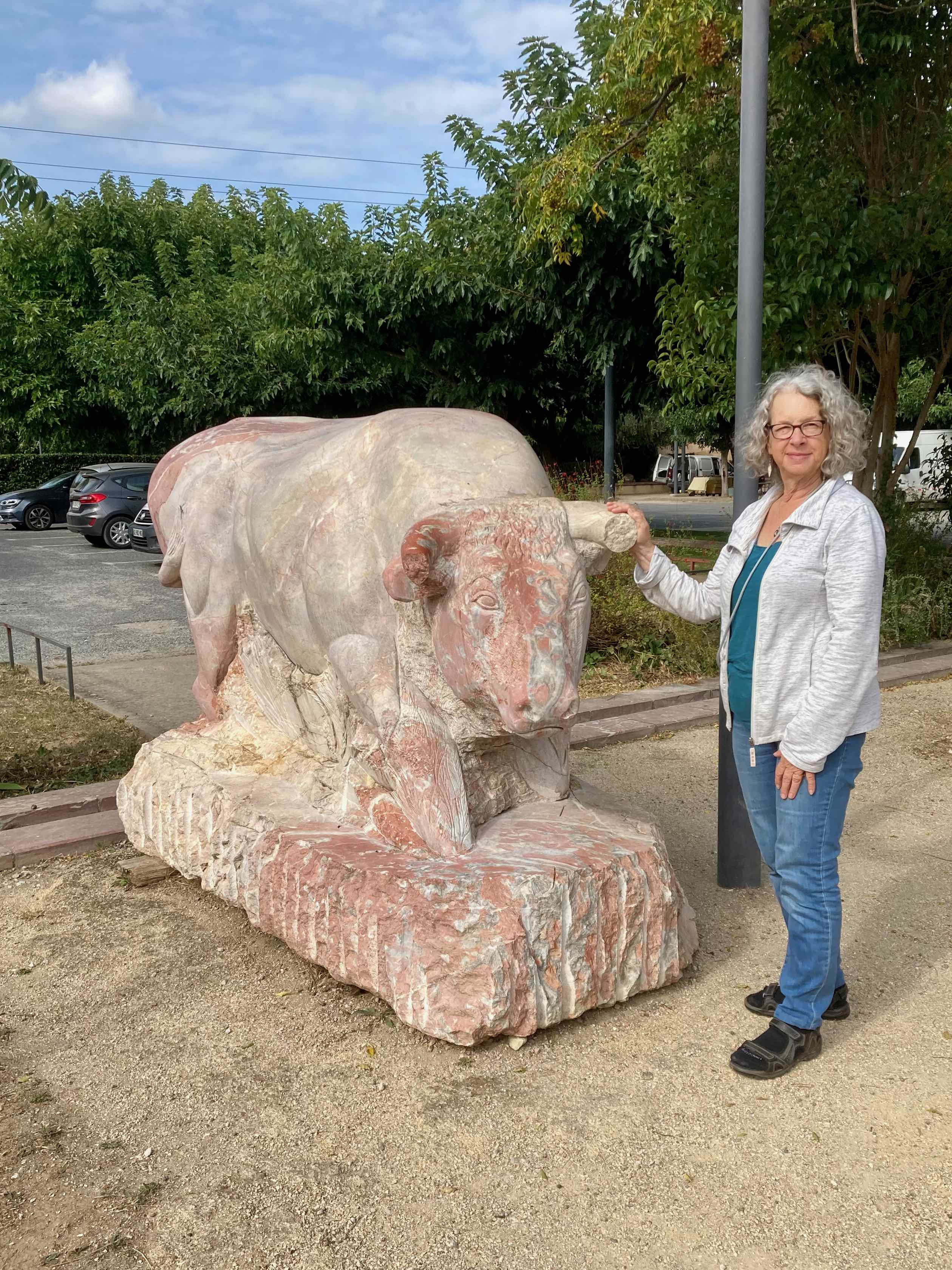
The sculptures are quite large…however this poor fellow has lost his horns.
We walk into the town and turn the corner to find this lovely little park with an old fountain and the biggest Sycamore trees…or at least that is what I thought they were. The sign says that they are 200 year old Plane trees.   I do a bit of Googling and it seems that a Sycamore is a type of Plane tree or maybe a Plane tree is a type of Sycamore?   It isn’t clear but I am not going to spend any more time trying to figure it out.  Guess I need to start calling these trees Plane trees.
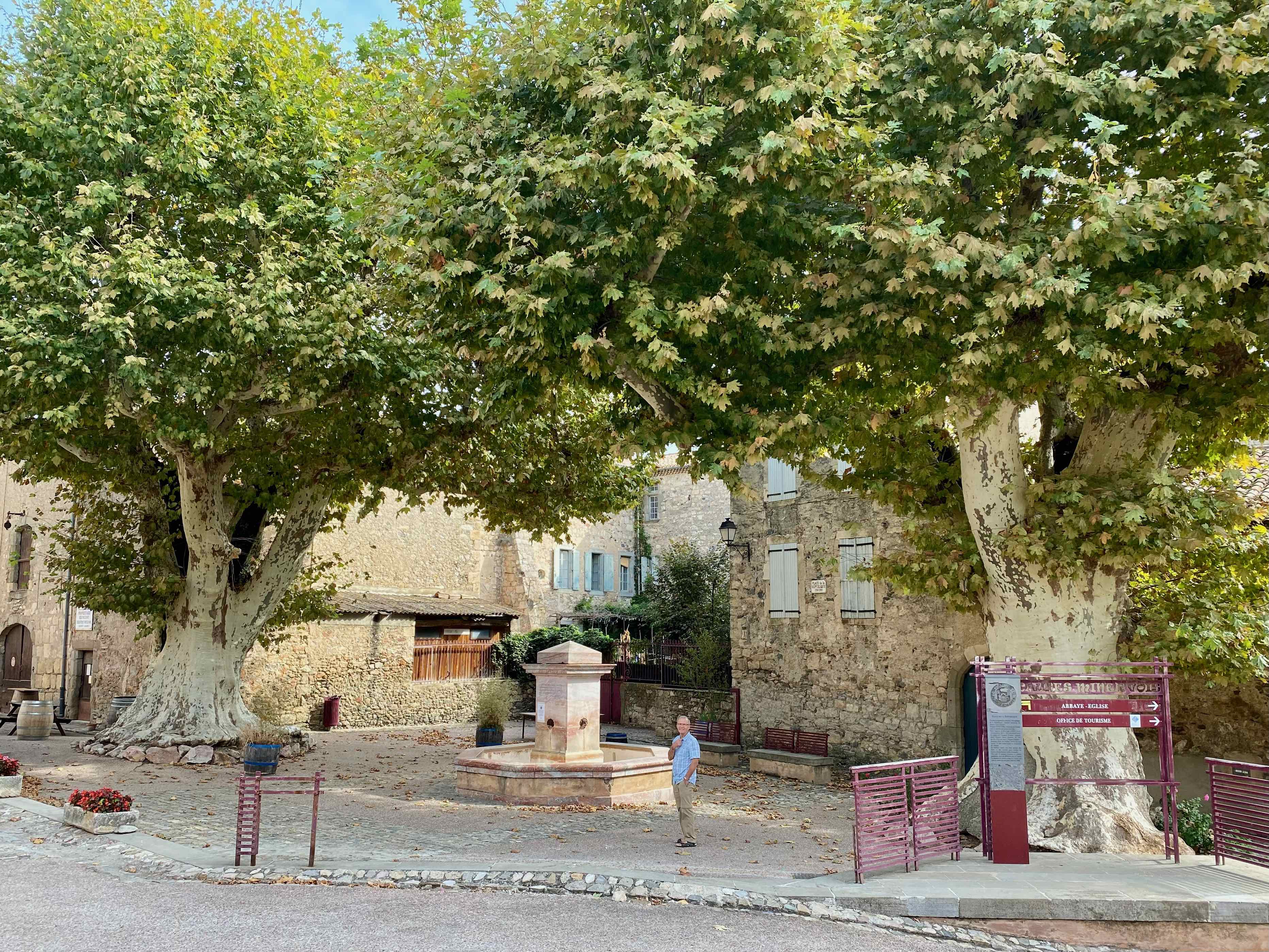
This is quite a pretty little village, with flowering Morning Glory vines, 
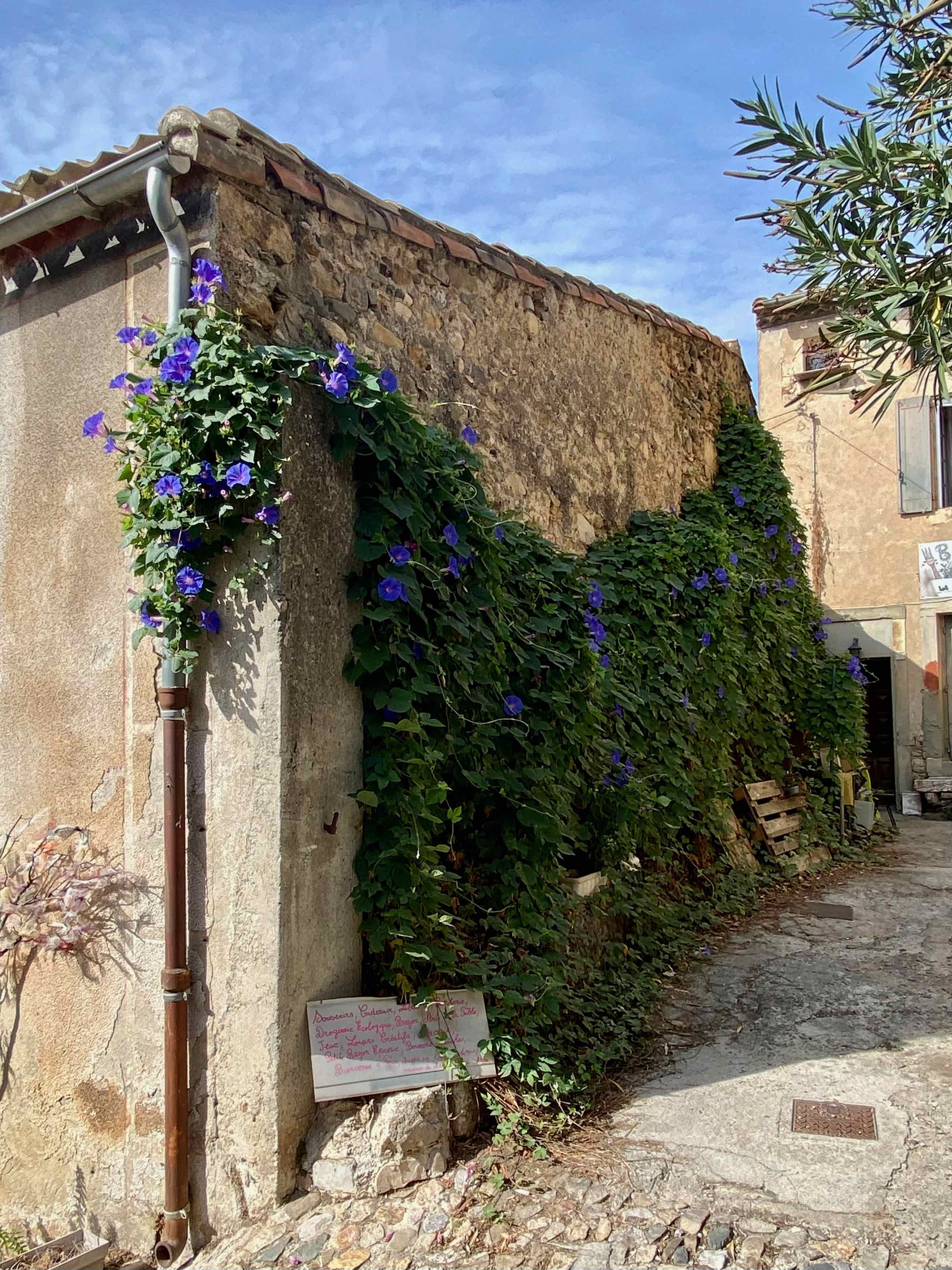
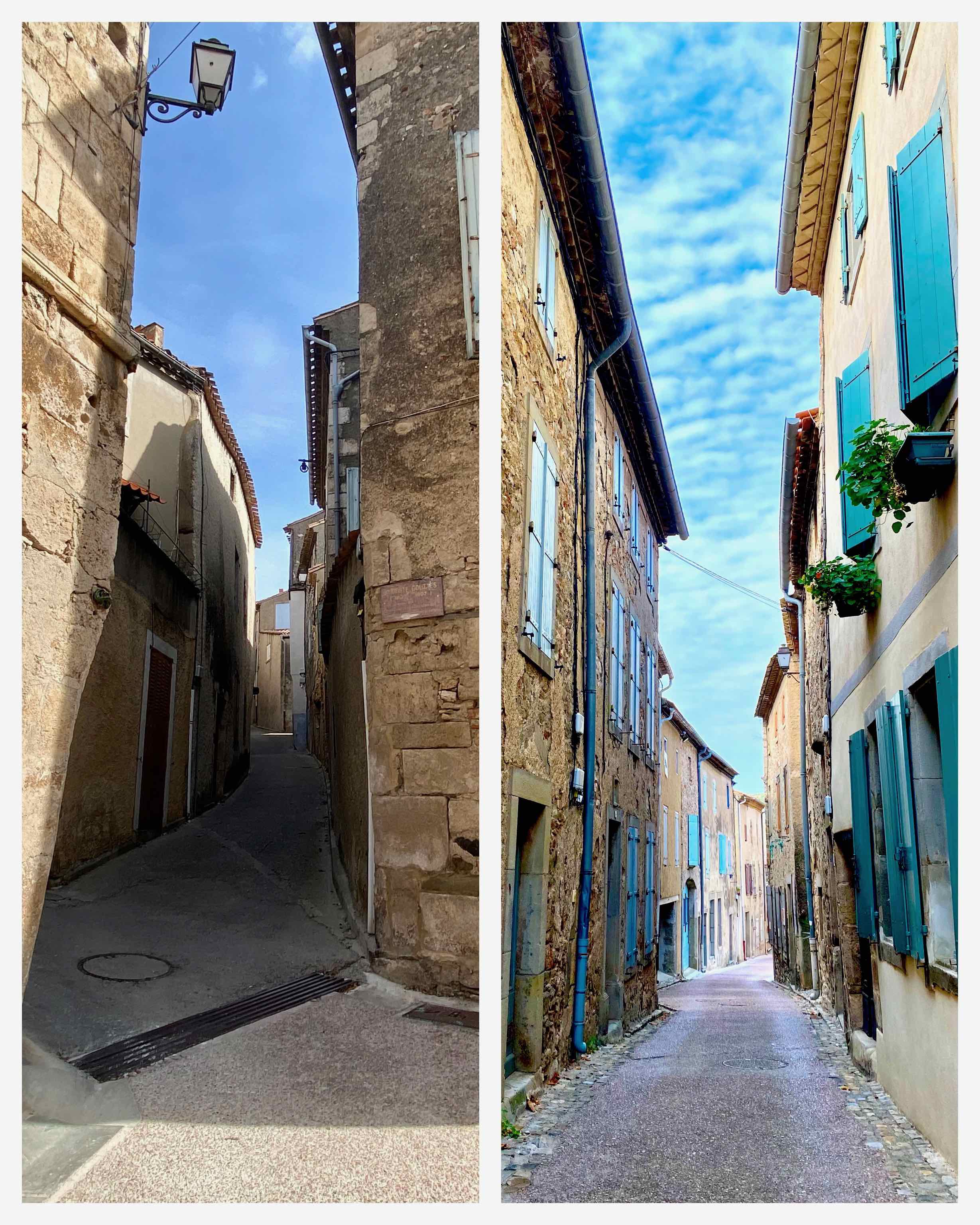
and lots of narrow streets. 
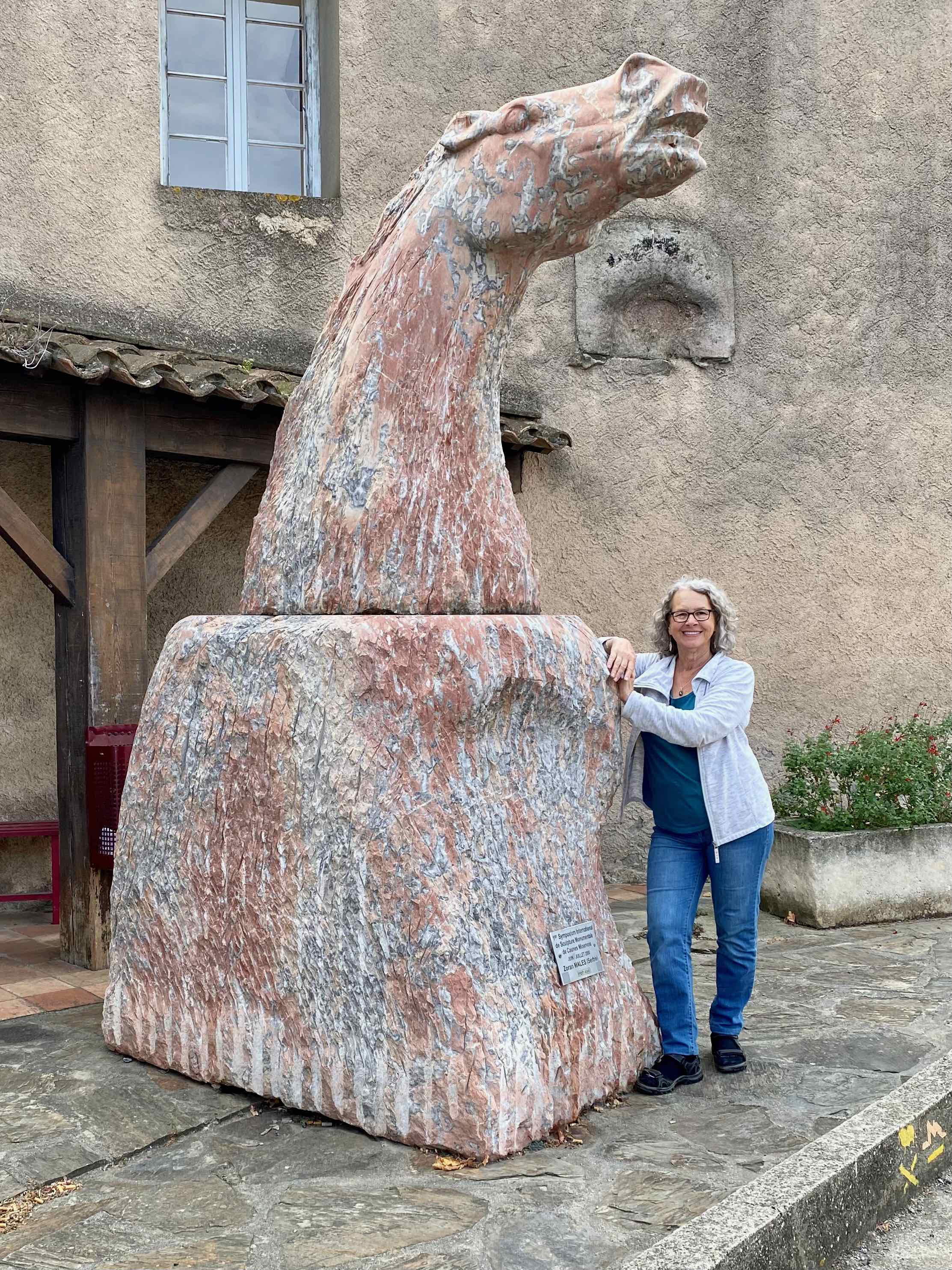
We had stopped at the tourist information and the walking map we picked up led us past this magnificent marble horse head.  Of course I needed my photo with this one.
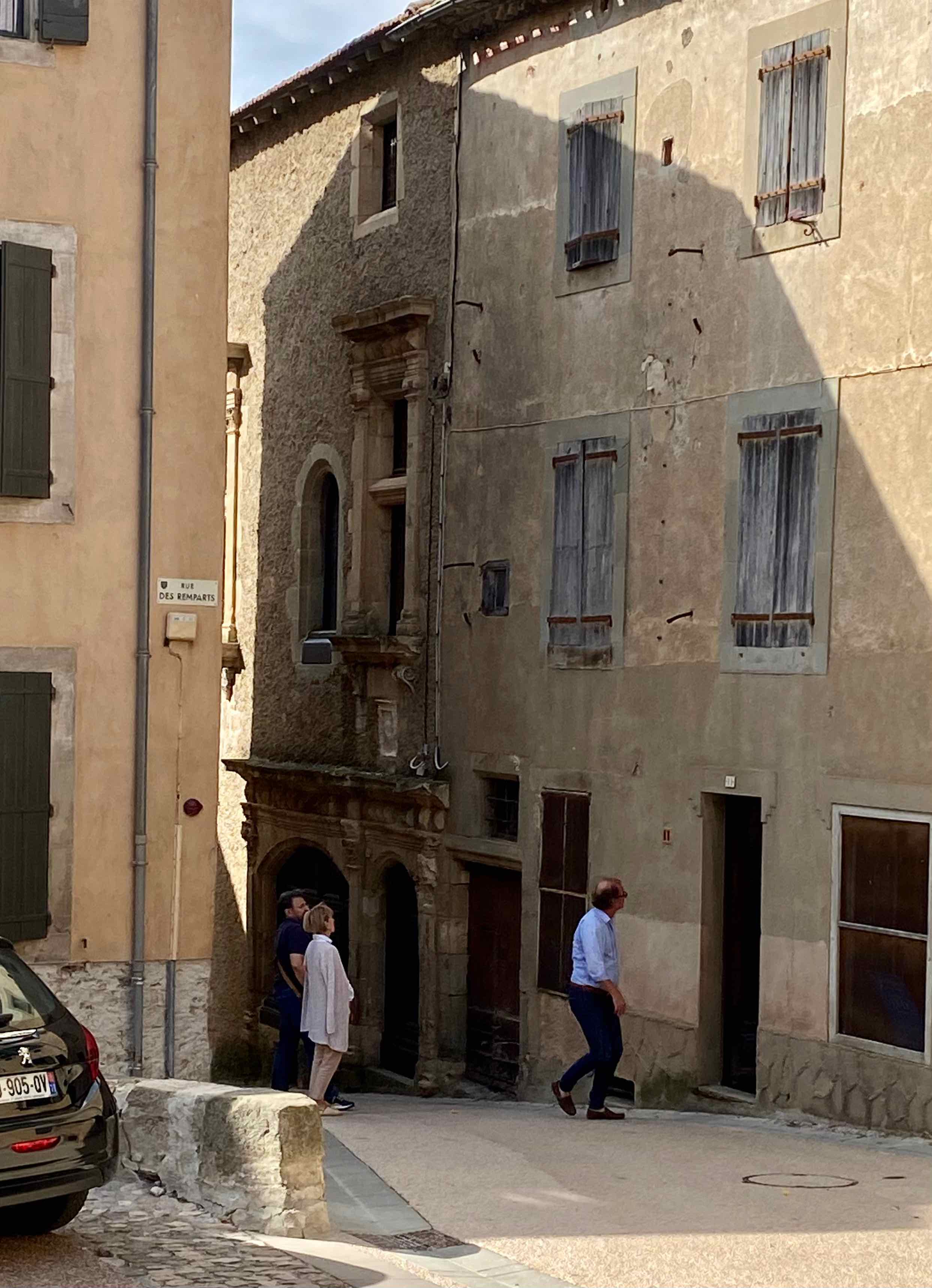
One interesting thing we saw was a couple being shown a very old, run down looking house by a real estate person (the man walking towards the doorway). Seems like they were seriously thinking of purchasing…it didn’t look very appealing to me, but?
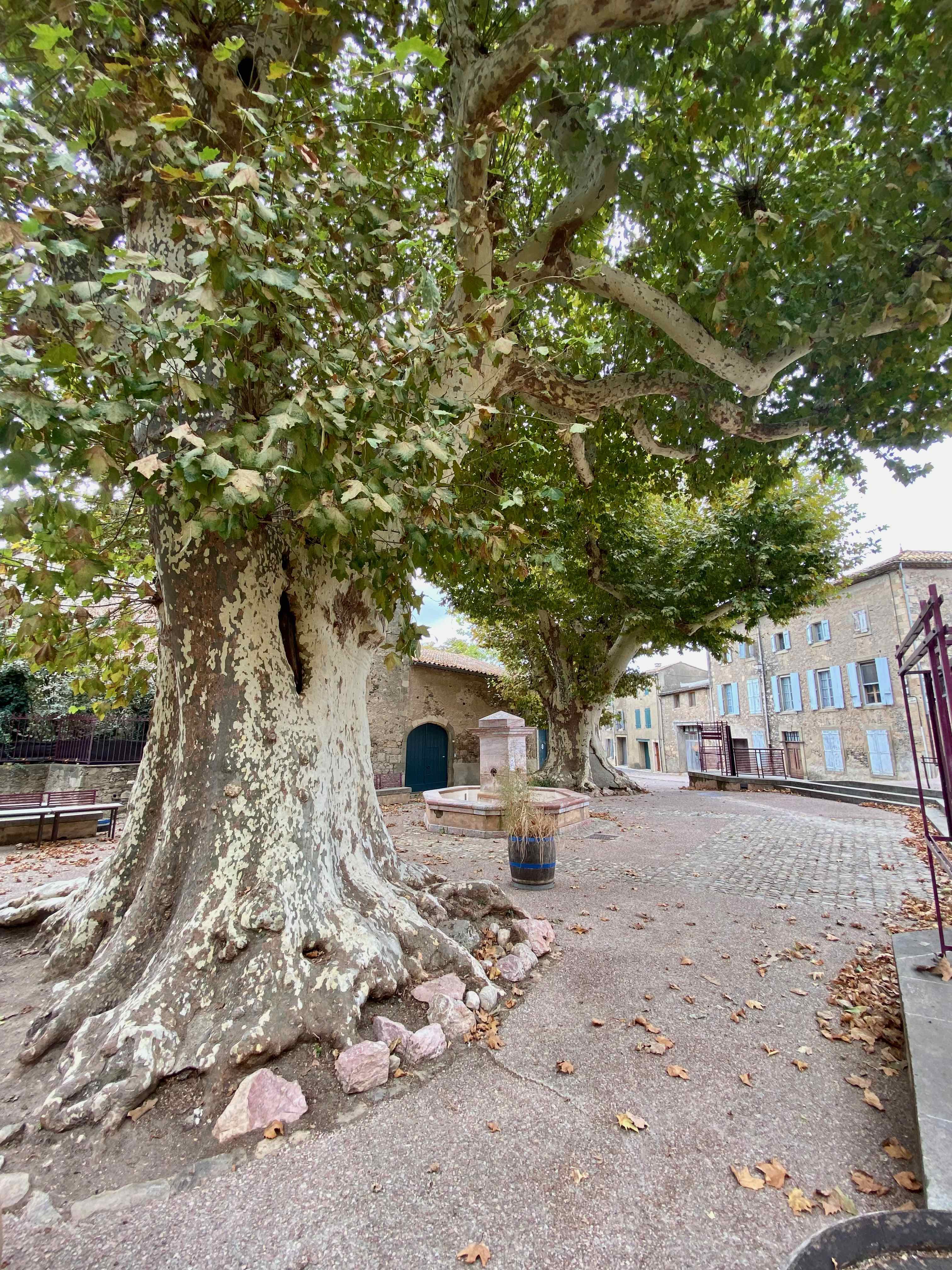
Our walking tour soon leads us back to the square with the ‘Plane’ trees. 
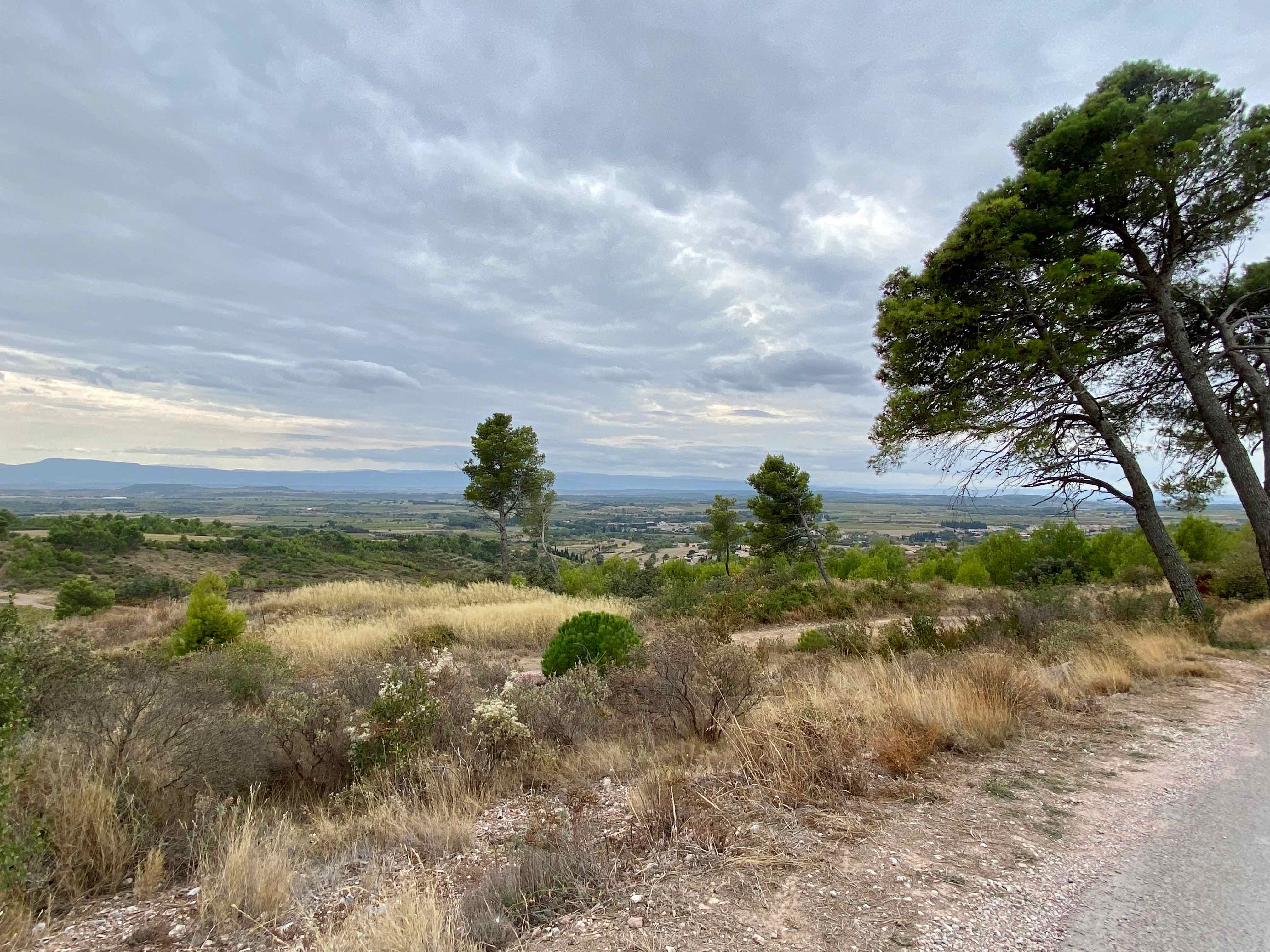
We follow the tourist map to this hilltop view of the valley and the village and do our best to find the trail to the red marble quarry, but have no luck.  It certainly isn’t well marked, and the trail just seems to die out. We can see the backside of the quarry which is a huge long pile of stone rubble along the road, but we don’t see any way to go further. 
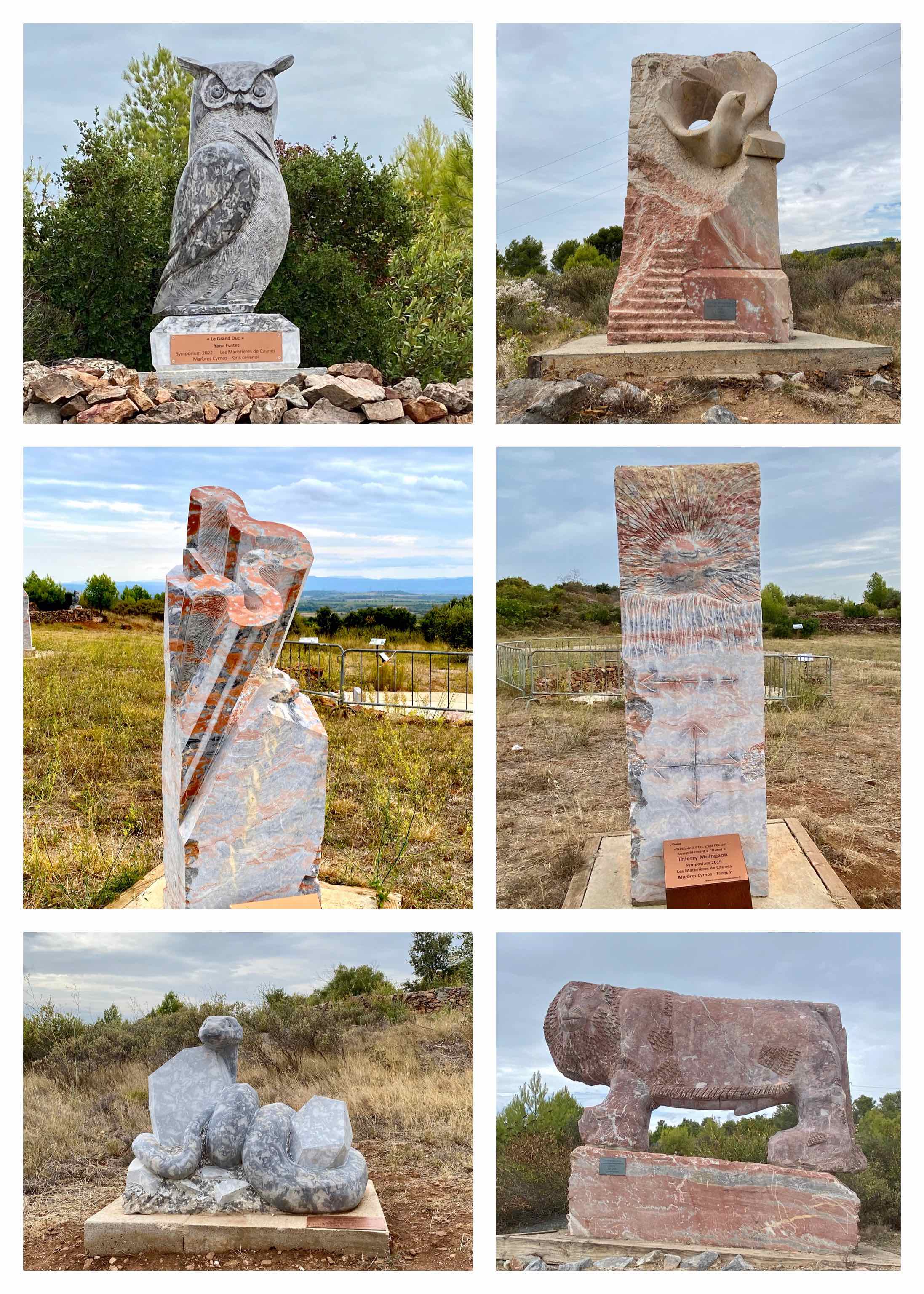
We go back to the car where we have our lunch and then on the way back to town stop at a little “marble garden” to see several more marble sculptures.
On our drive to the paper mill we pass the ruins of three castles.  There is a walking trail  but it looks a bit more strenuous than we thought so we decided to keep driving to the paper mill in Brousses.
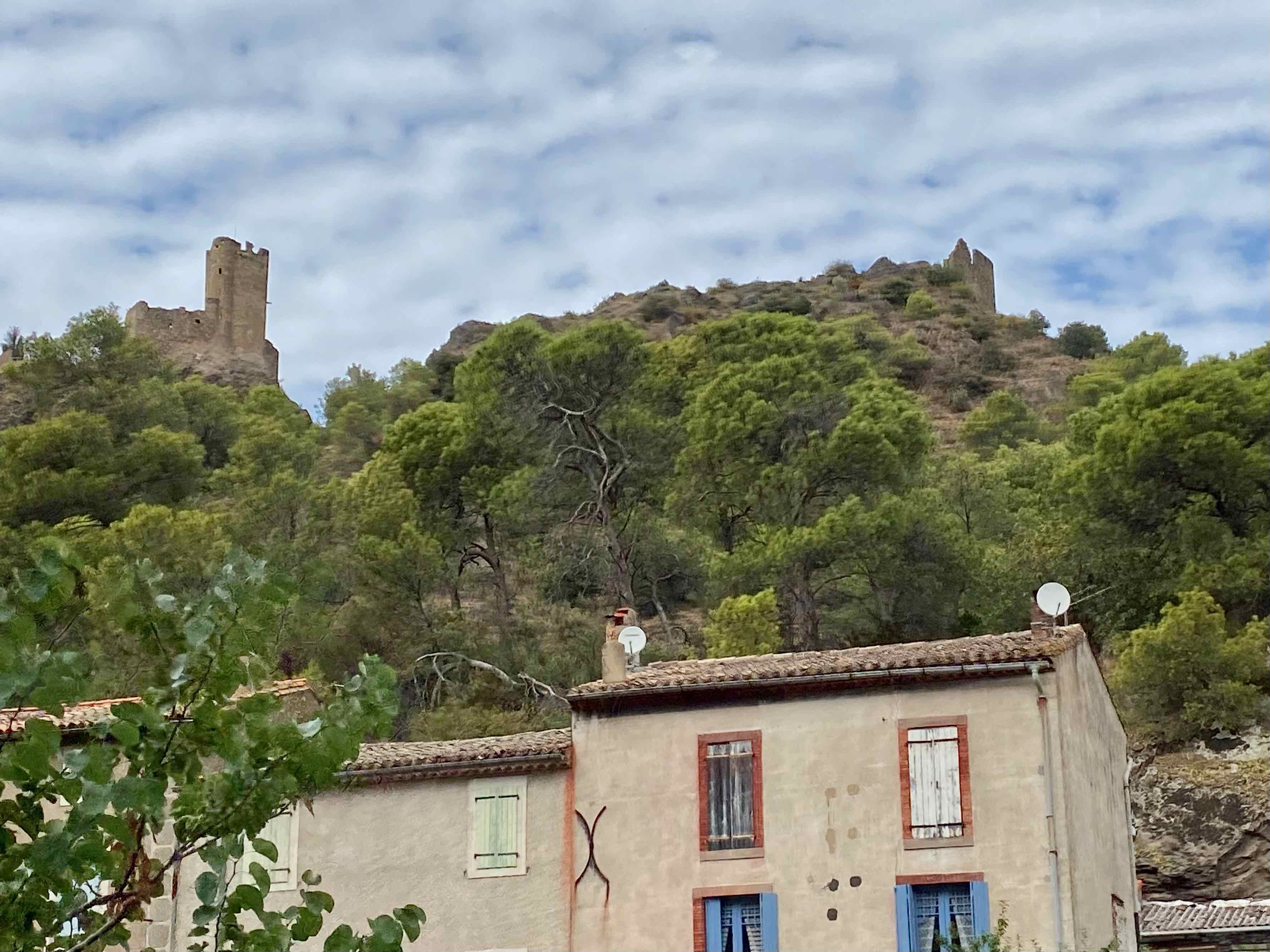
It is a lovely drive through vineyard after vineyard…
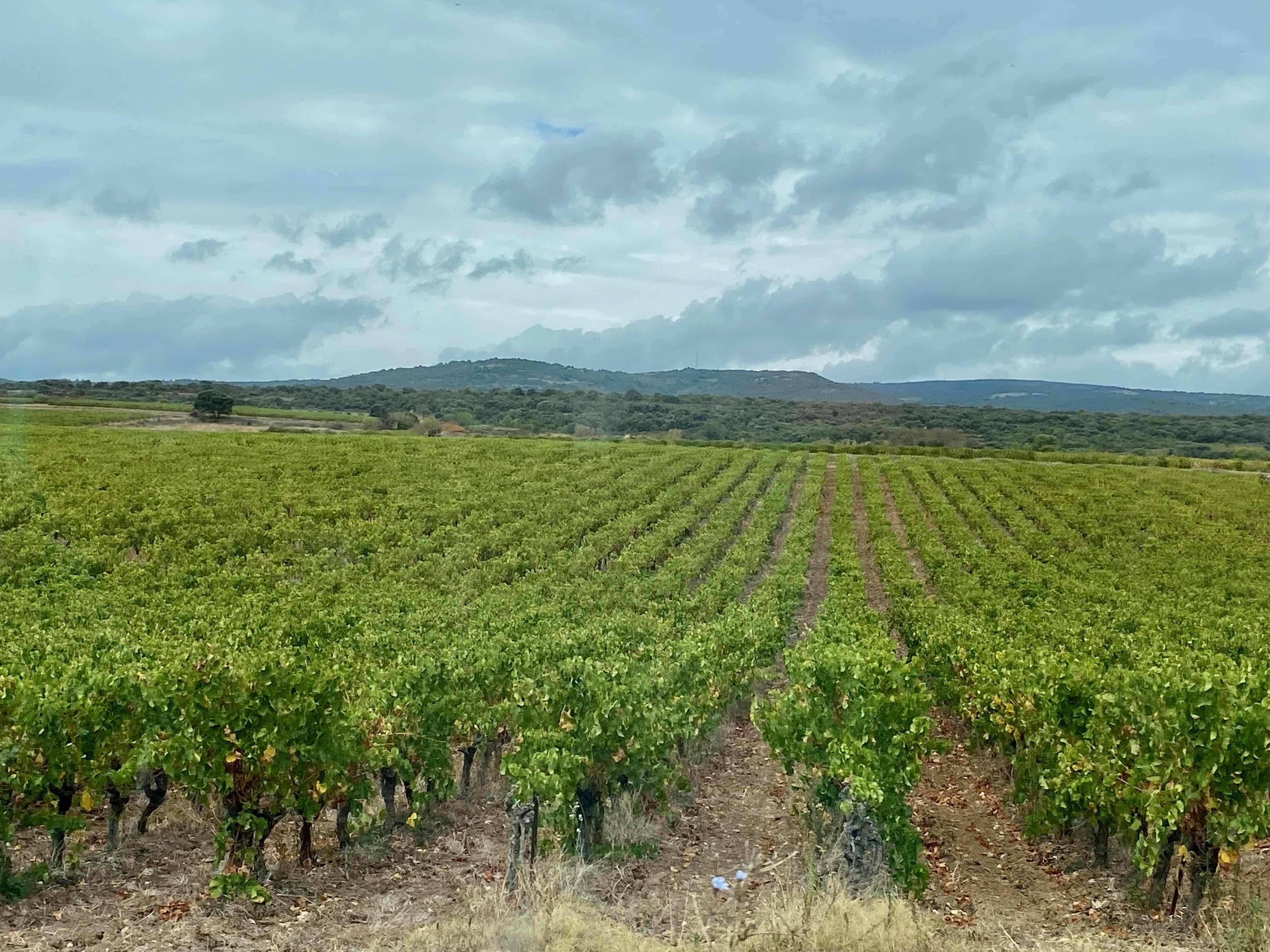
with hills off in the distance.  I can’t help but think that owning a vineyard must be an awful lot of work and not nearly as idyllic and romantic as it is often portrayed in movies and novels.
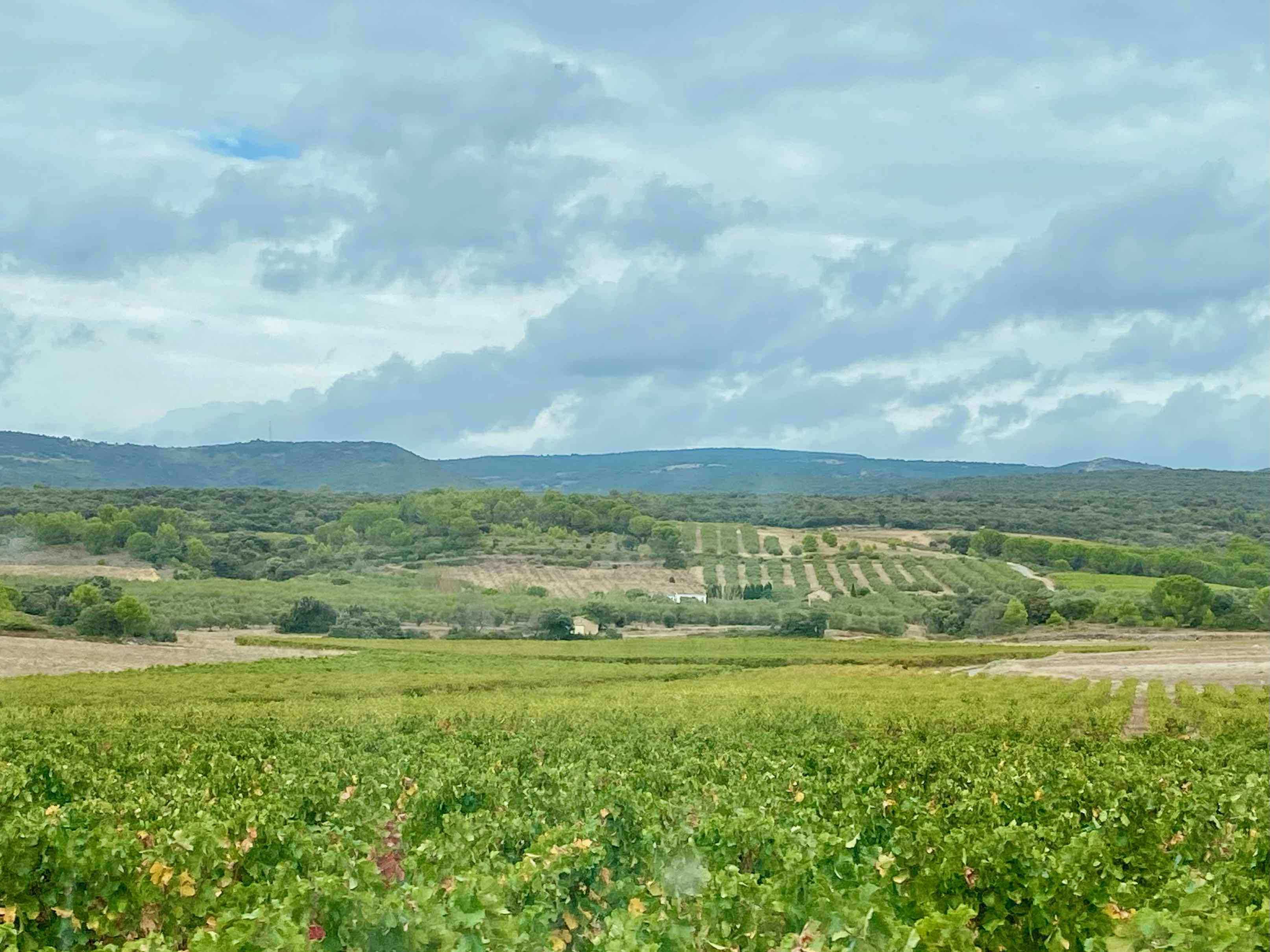
We stop to try to find out what this strange machine might be.  There are several  buildings at its base, but no sign or explanation.  Both wheels are turning slowly…maybe someone knows what this is?
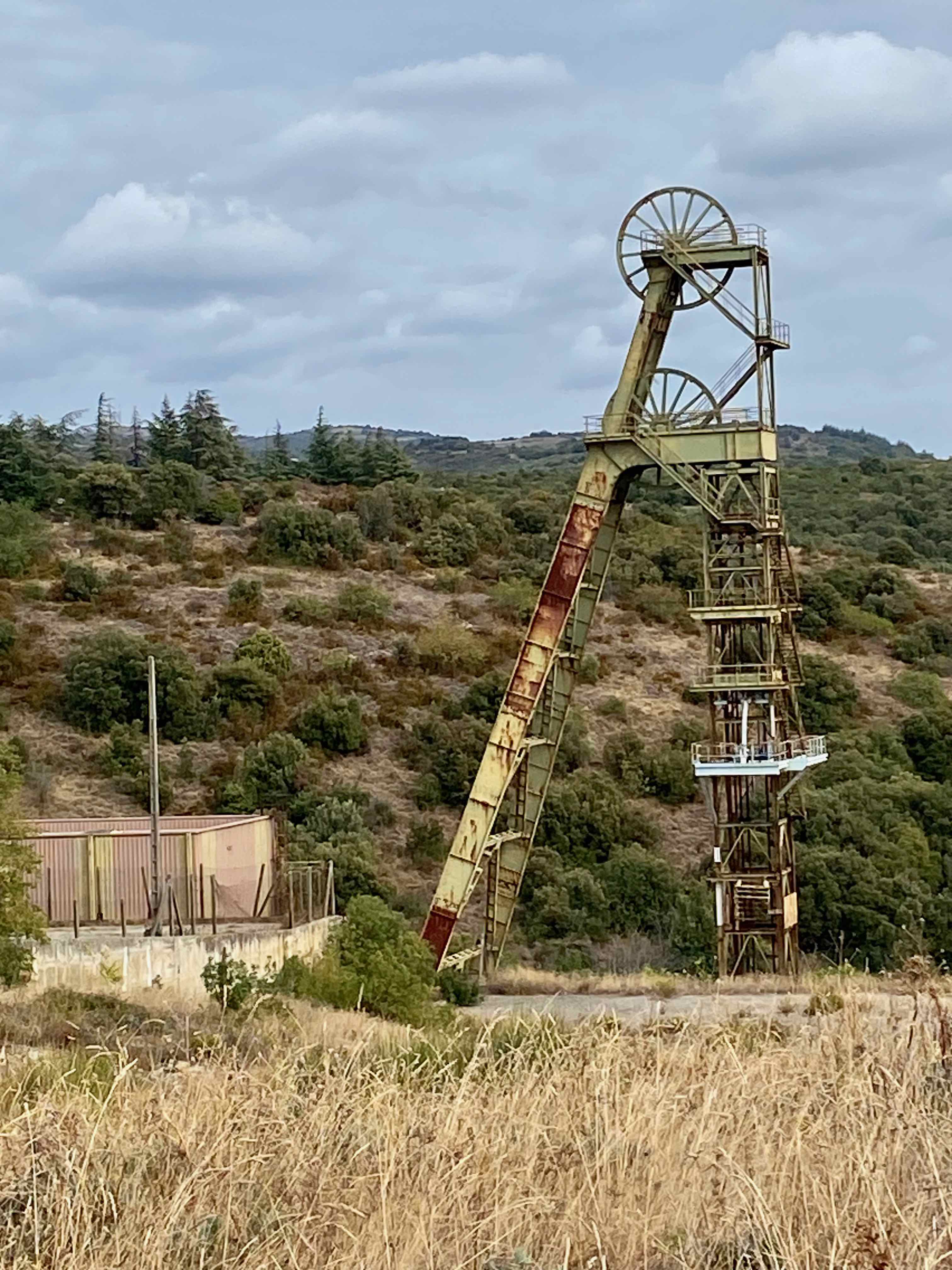
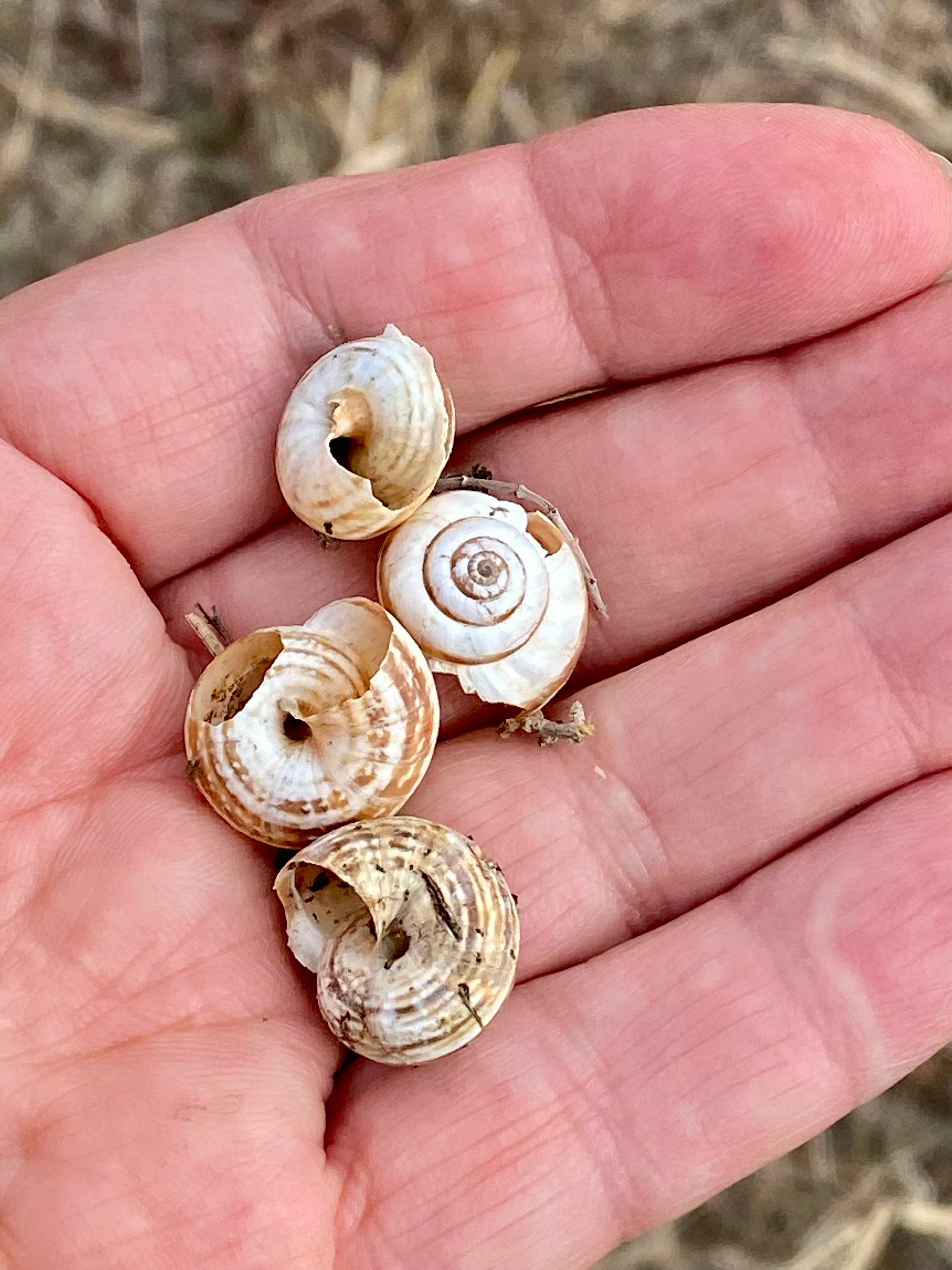
The machine above was located right next to a huge solar panel farm and the ground is littered with these tiny white snail shells, but no sign of any live snails.
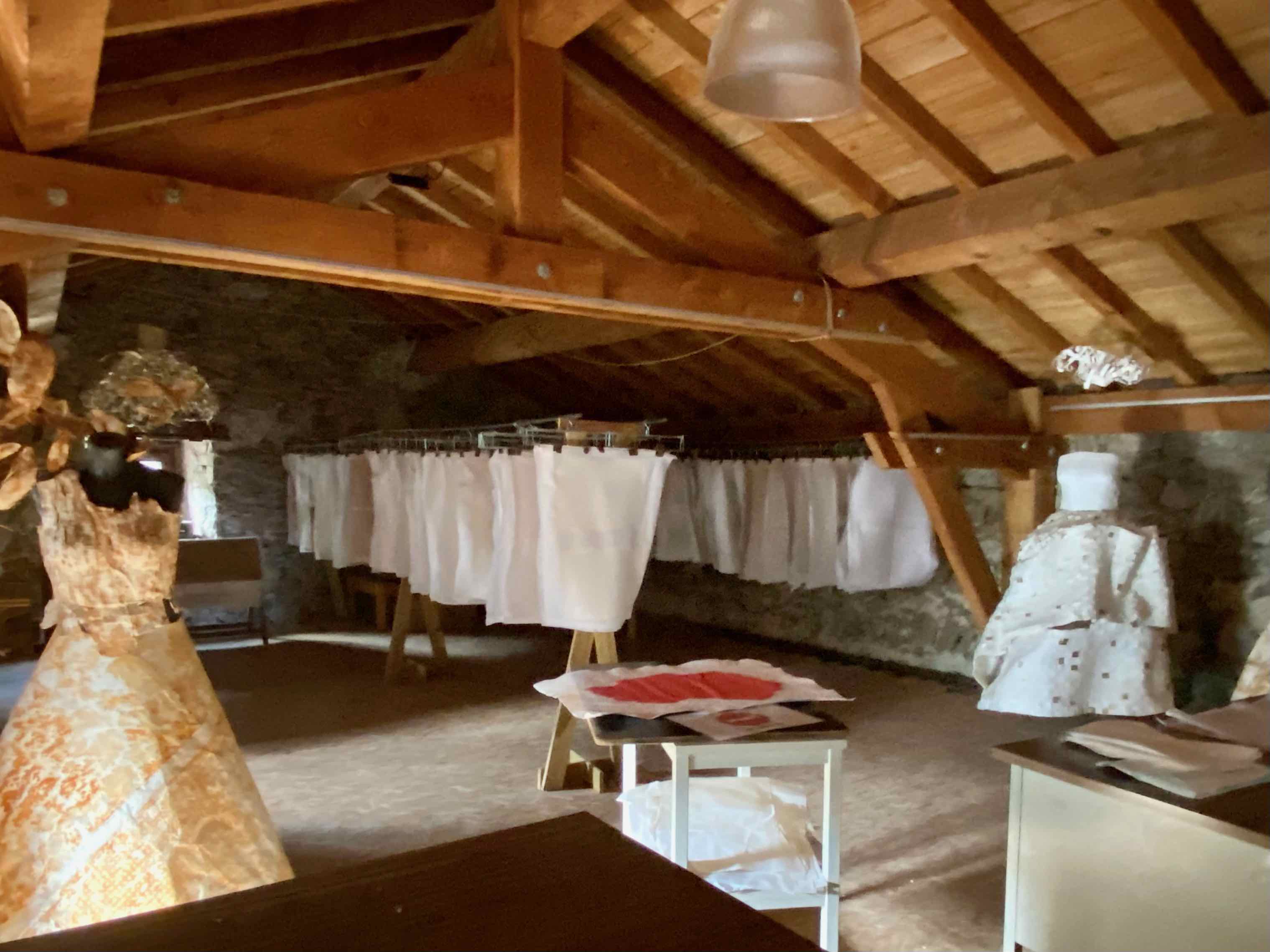
It took us a while to find the paper mill.  We had the wrong spot pinned on Google maps but we eventually sorted it out.  The Moulin à Papier, or Paper Mill in Broussess wasn’t what I was expecting.  It used to produce paper commercially but now the granddaughter runs the mill which has been in the family for seven generations.  They now make paper by hand using pretty much the same process that I use back home with our Paper Arts Guild.  After a sheet of paper is made it needs to be couched  (pronounced “cooched”)  or transfered to another surface. Here they have been couched onto synthetic interfacing, then pressed and hung to dry in the rafters. Every year, artist Catherine Cappeau makes a collection of paper dresses, which you can see on display in the paper mill.
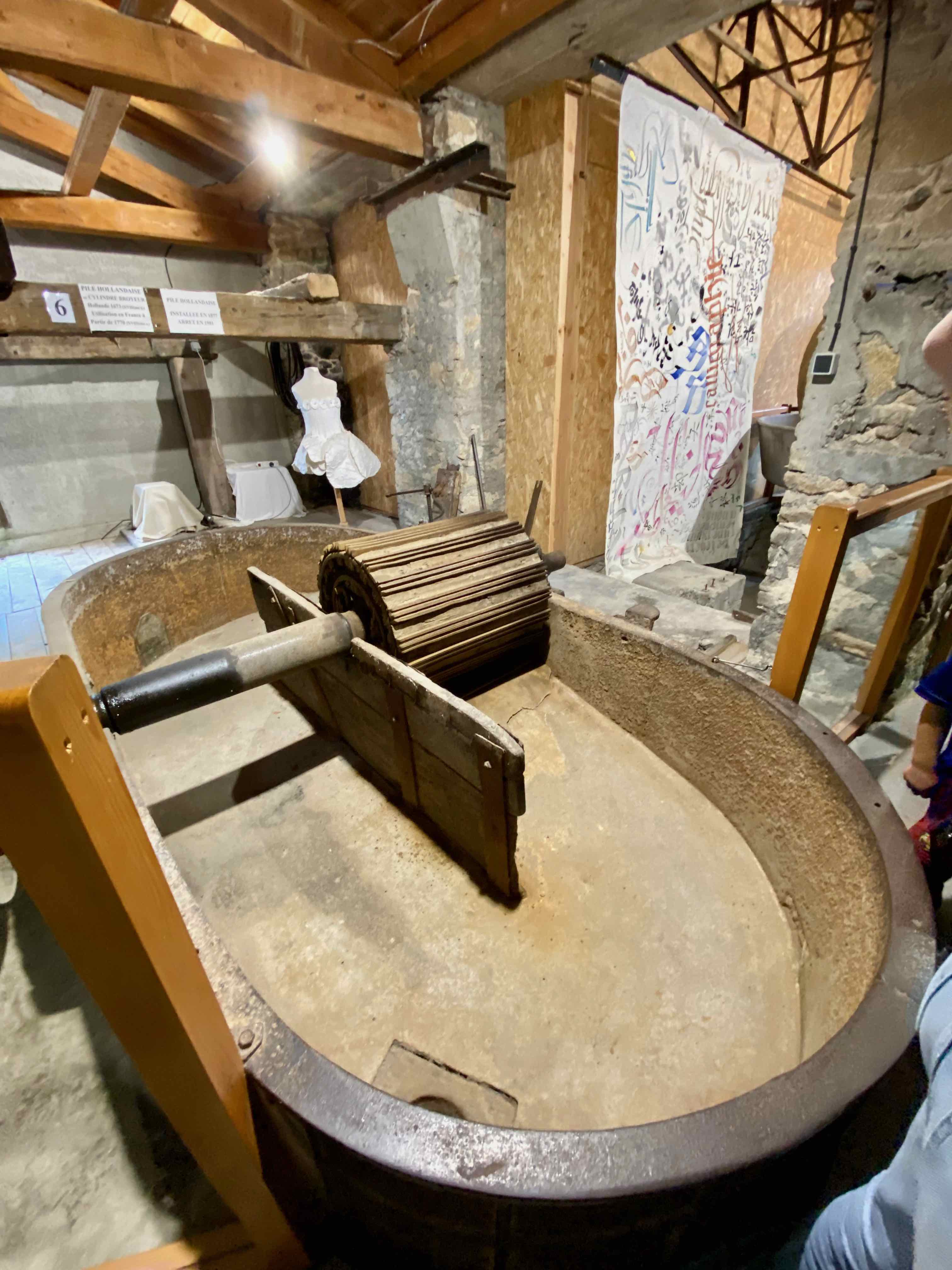
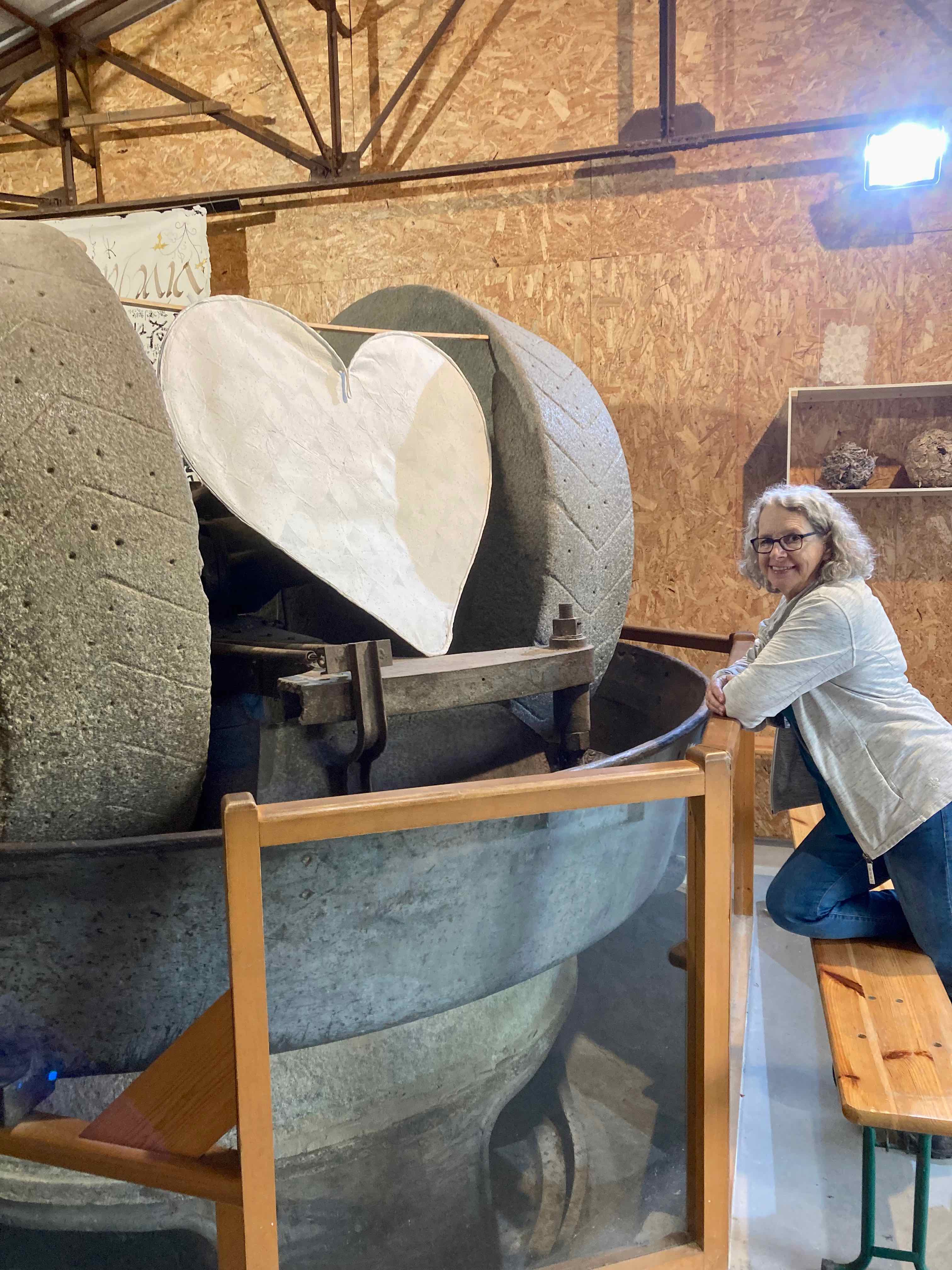
This huge old Hollander is no longer in use today  It is probably five times a large as the one we use in our guild.  This machine is used to beat the fibres to make the paper pulp.
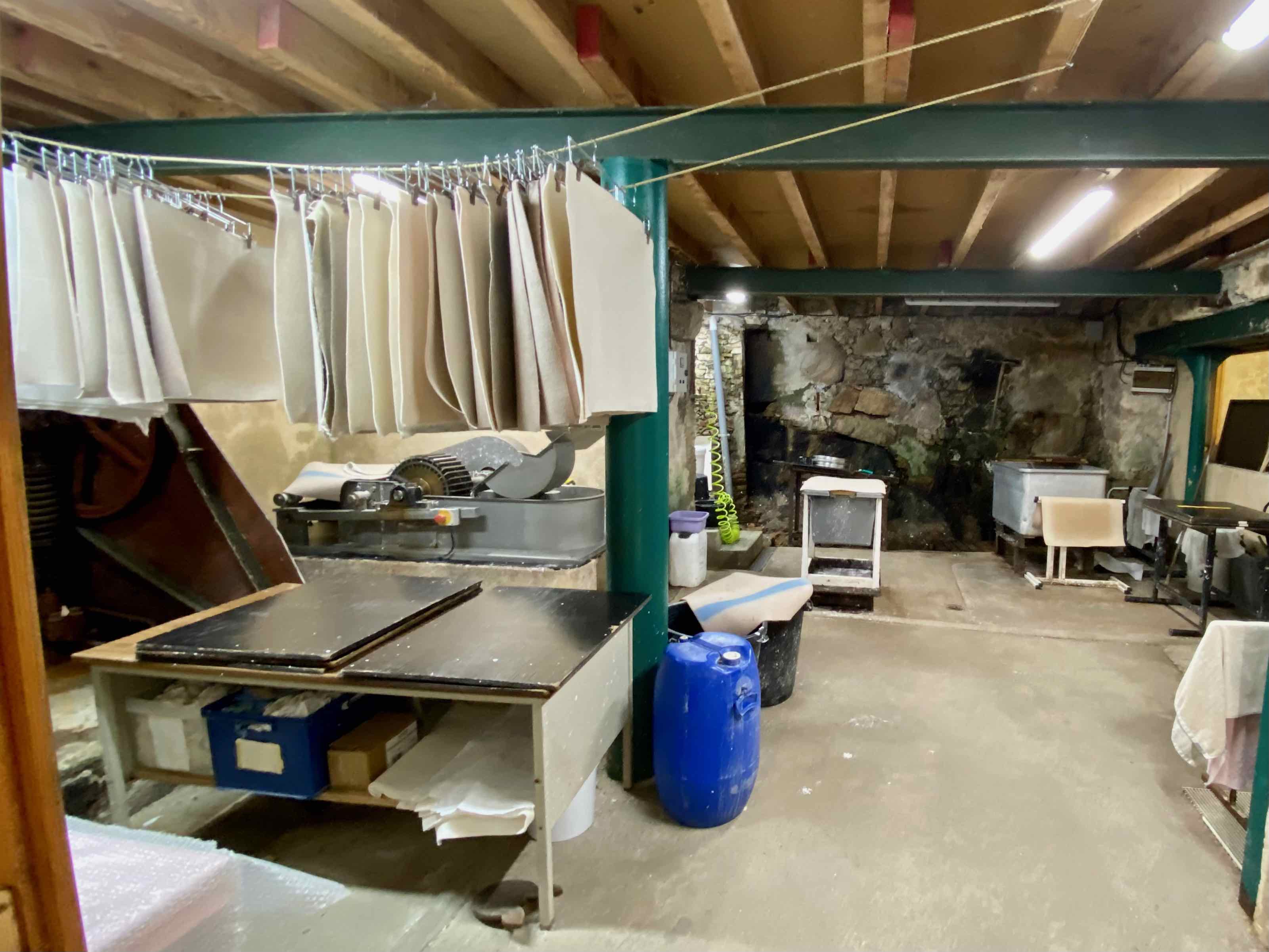
The Hollander in use today can be seen behind the hanging sheets.  This is the area of the mill that is used for paper making.  There are only two papermakers who work here today.  They use a lot of recycled cotton cloth, mostly blue jeans and bed sheets. The only coloured paper they make comes from the colour of the cotton cloth that is used to make the pulp.  The material is cut into small pieces and then processed in the Hollander.  Interestingly, they also use horse and elephant dug to make paper as well.
Now this is a press!
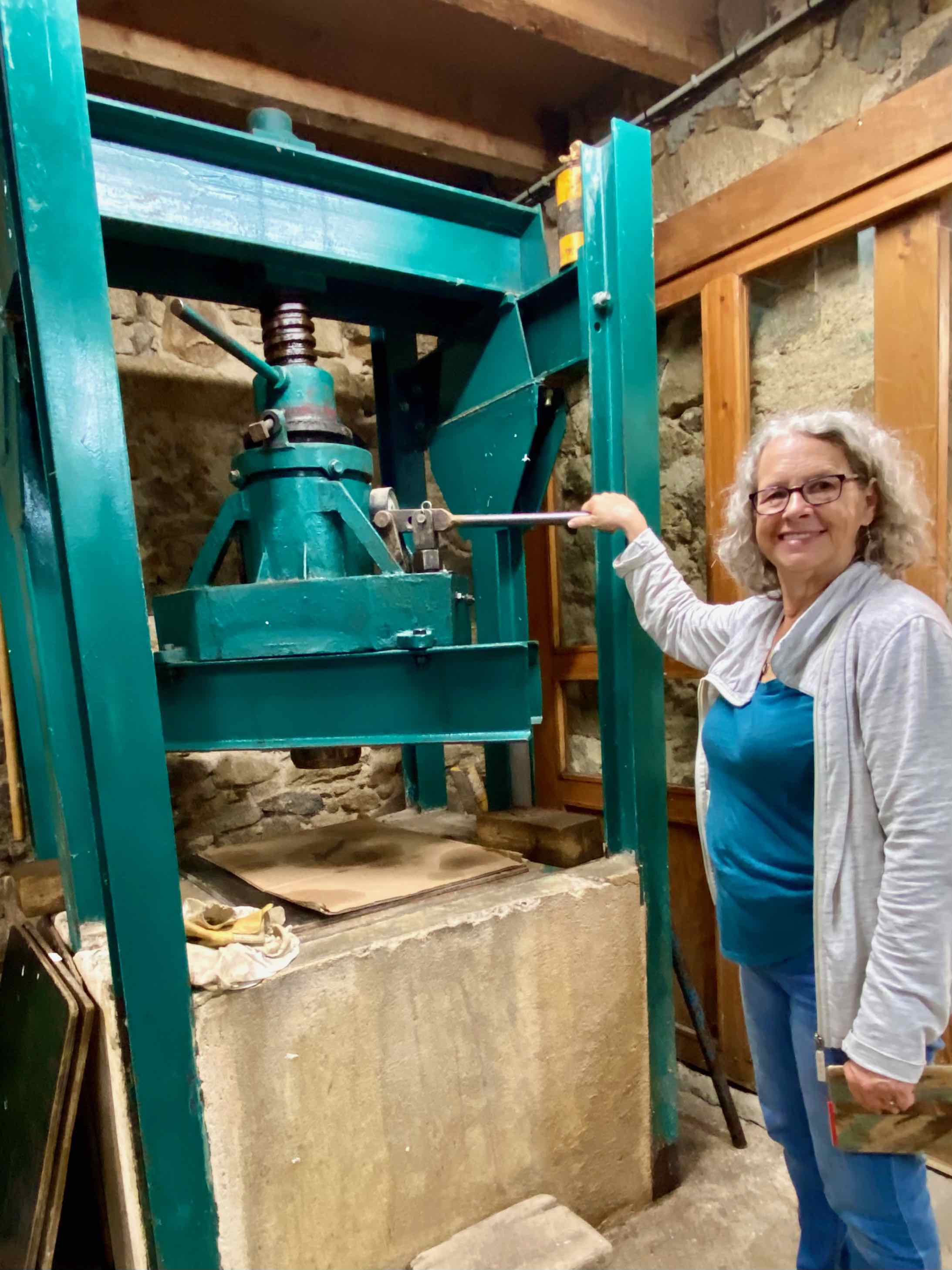
There is little store here, where paper, handmade books, cards and other paper related items are sold.  I think that most of the mill’s income likely comes from the tours they offer several times a day, every day except Christmas and New Years!  They are set up for school tours as well.  It was interesting, and there was a lot of equipment that was in use 100 years ago when this mill was in full operation.  However I didn’t really learn anything new, other than our Guild members back home makes really good quality handmade paper and we don’t charge nearly enough when we offer items for sale!

Today it is the last paper mill in operation in this area.  There were six paper mills here in 1845.  This millstone grinder, with its 3 tonne stones used to grind 300 kms of recycled paper fibres a day in 1954!
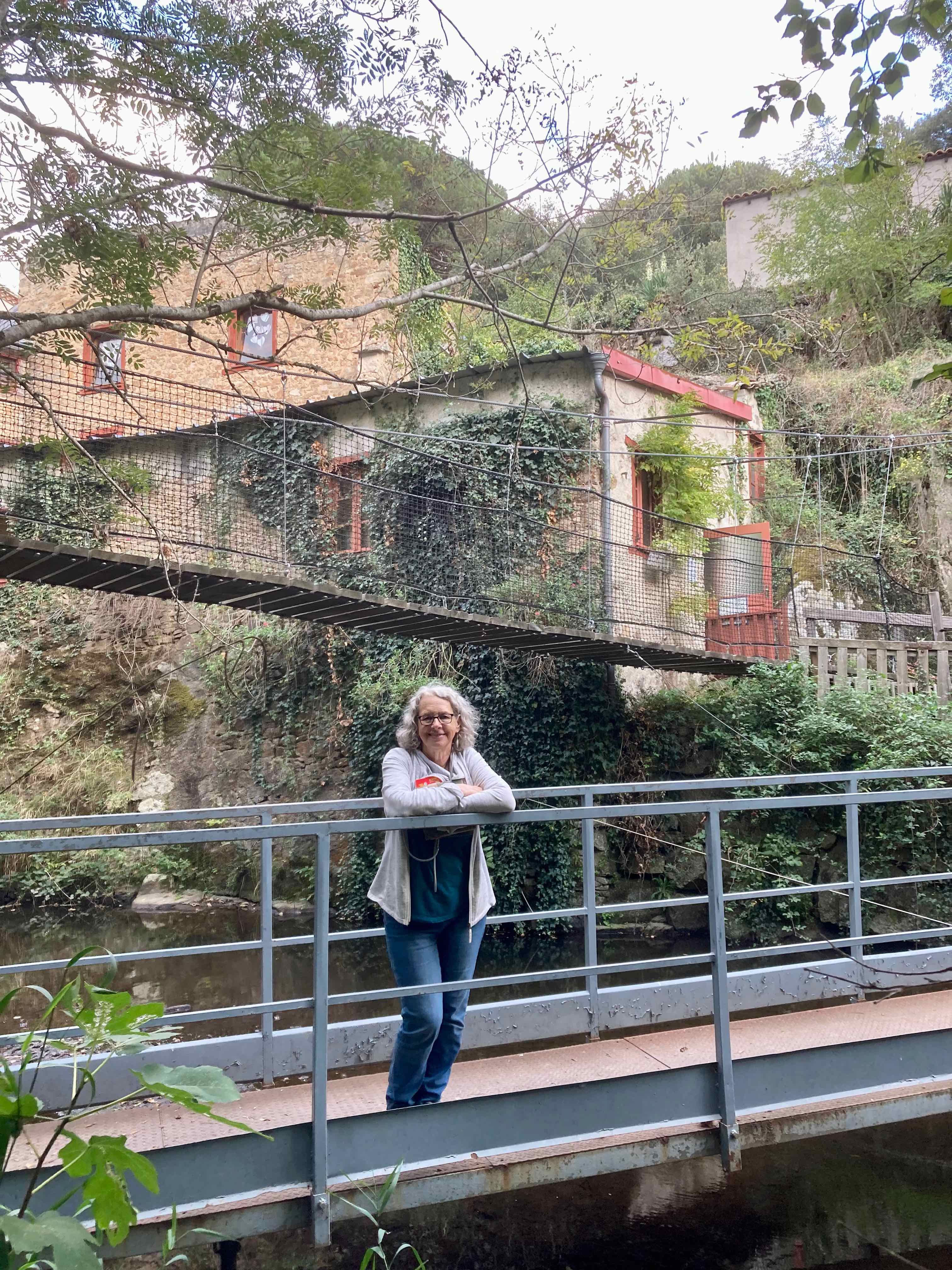
There is a bridge over the Dure River and a little picnic area.
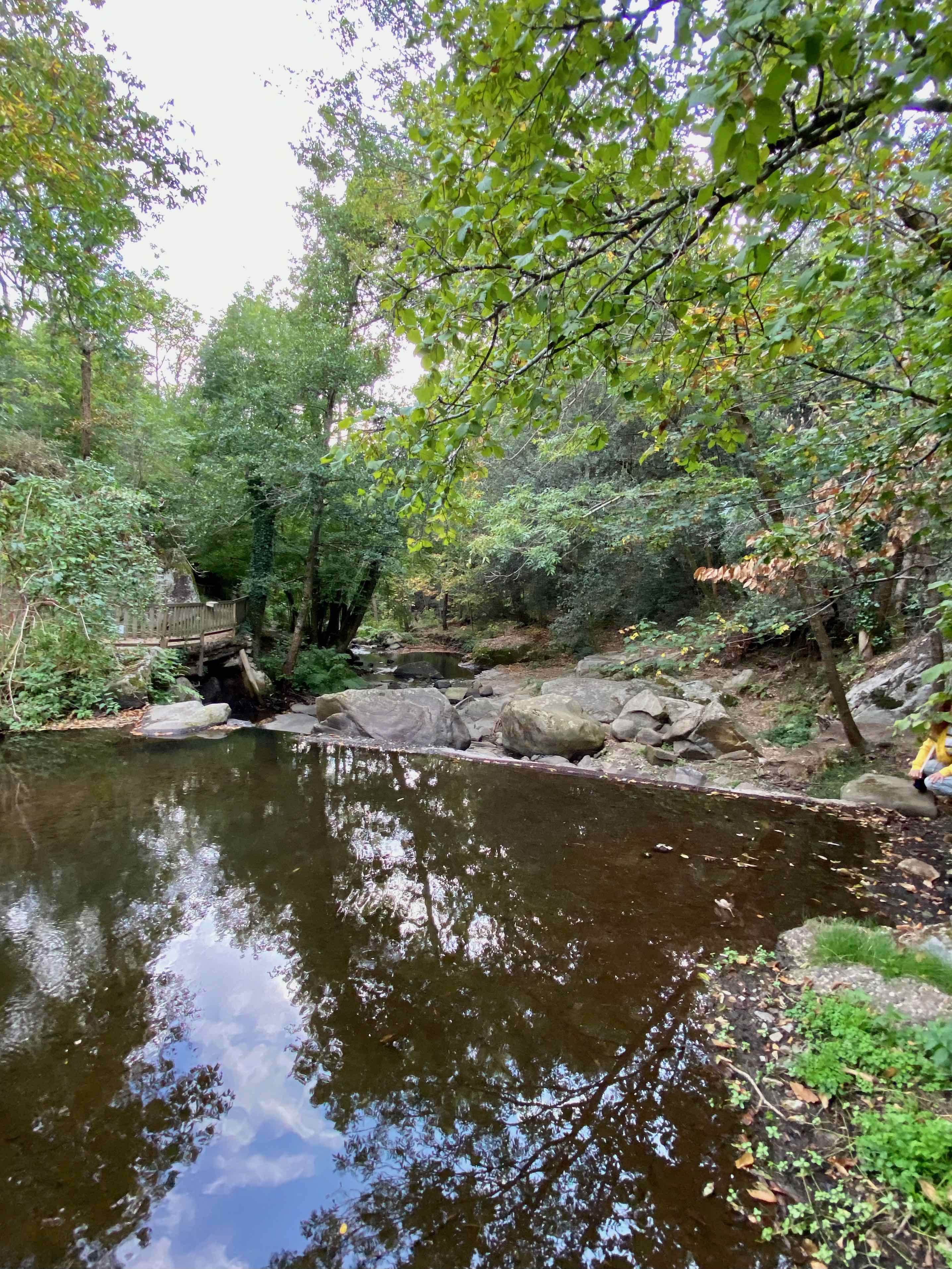
It is really pretty location.
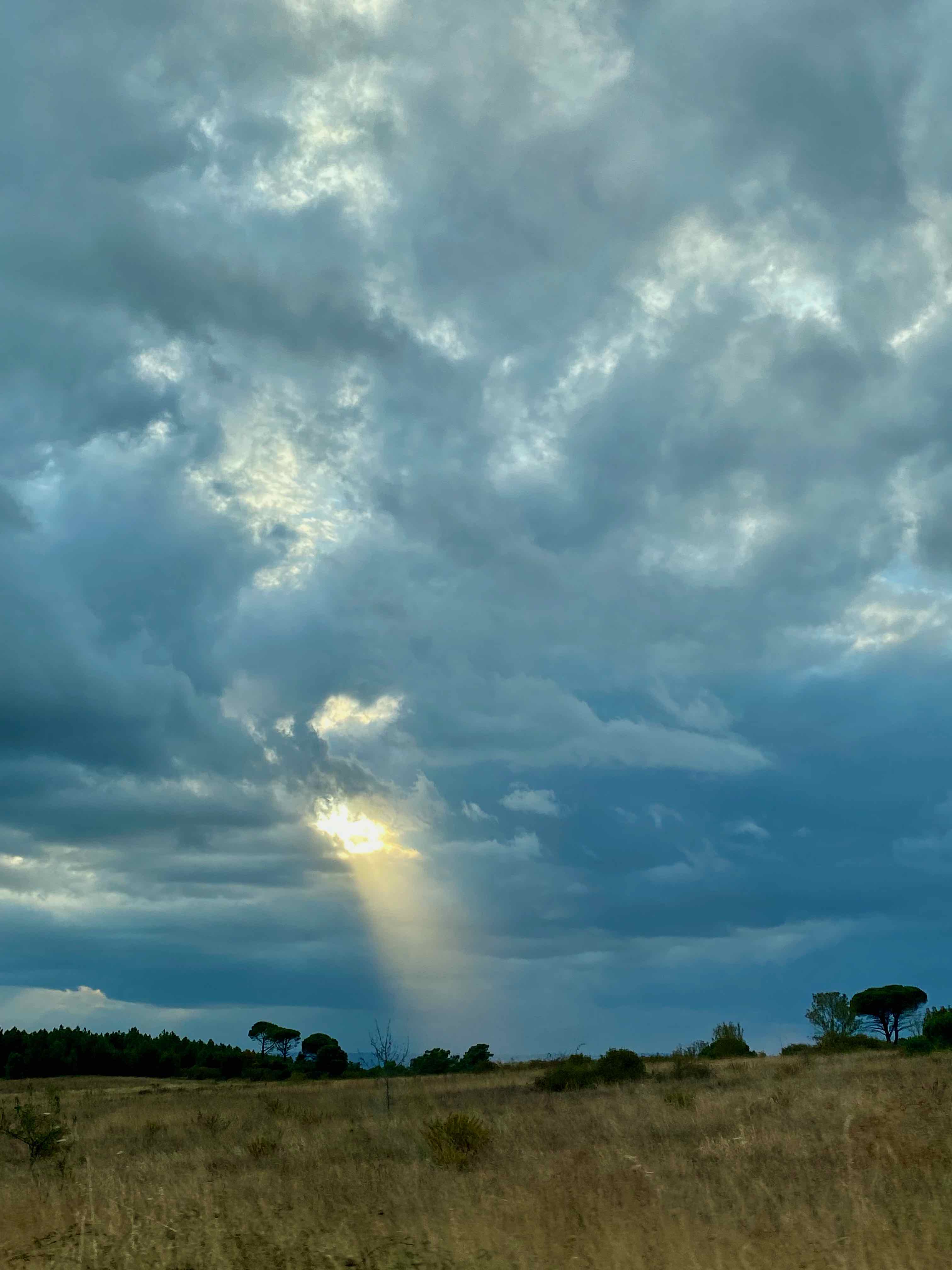
There are some interesting clouds with shafts of sunlight on the drive home.
L’Abri Cap Blanc and the Grotte des Combarelles, France

Day 37, Wednesday, October 4, 2023

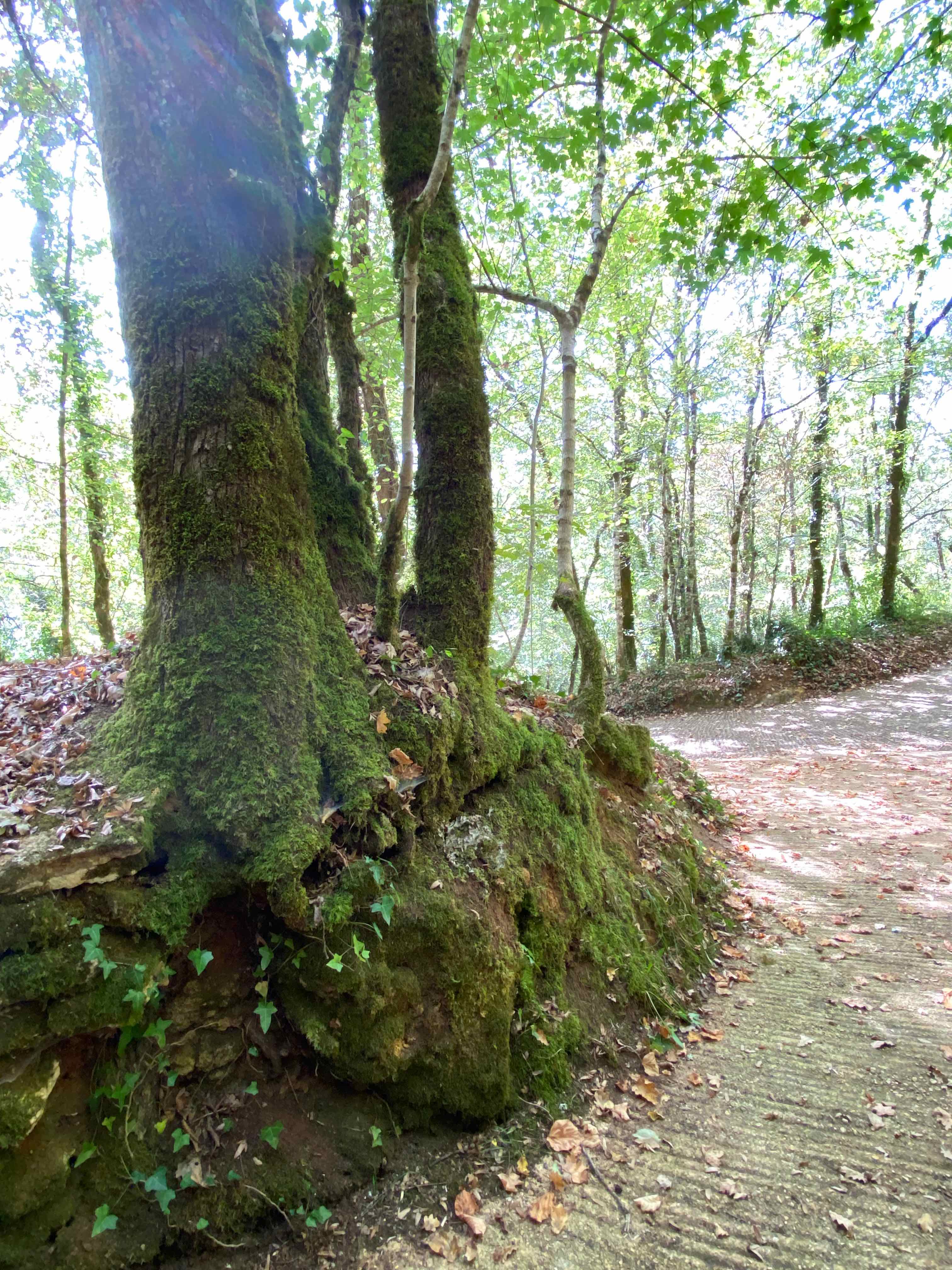
We visit two prehistoric sites today. This morning we tour the Cap Blanc rock shelter.  It is a masterpiece of prehistoric sculpture from the Cro-Magnon/Magdalenian Era.  The path to the site is pretty with lots of moss covered trees.

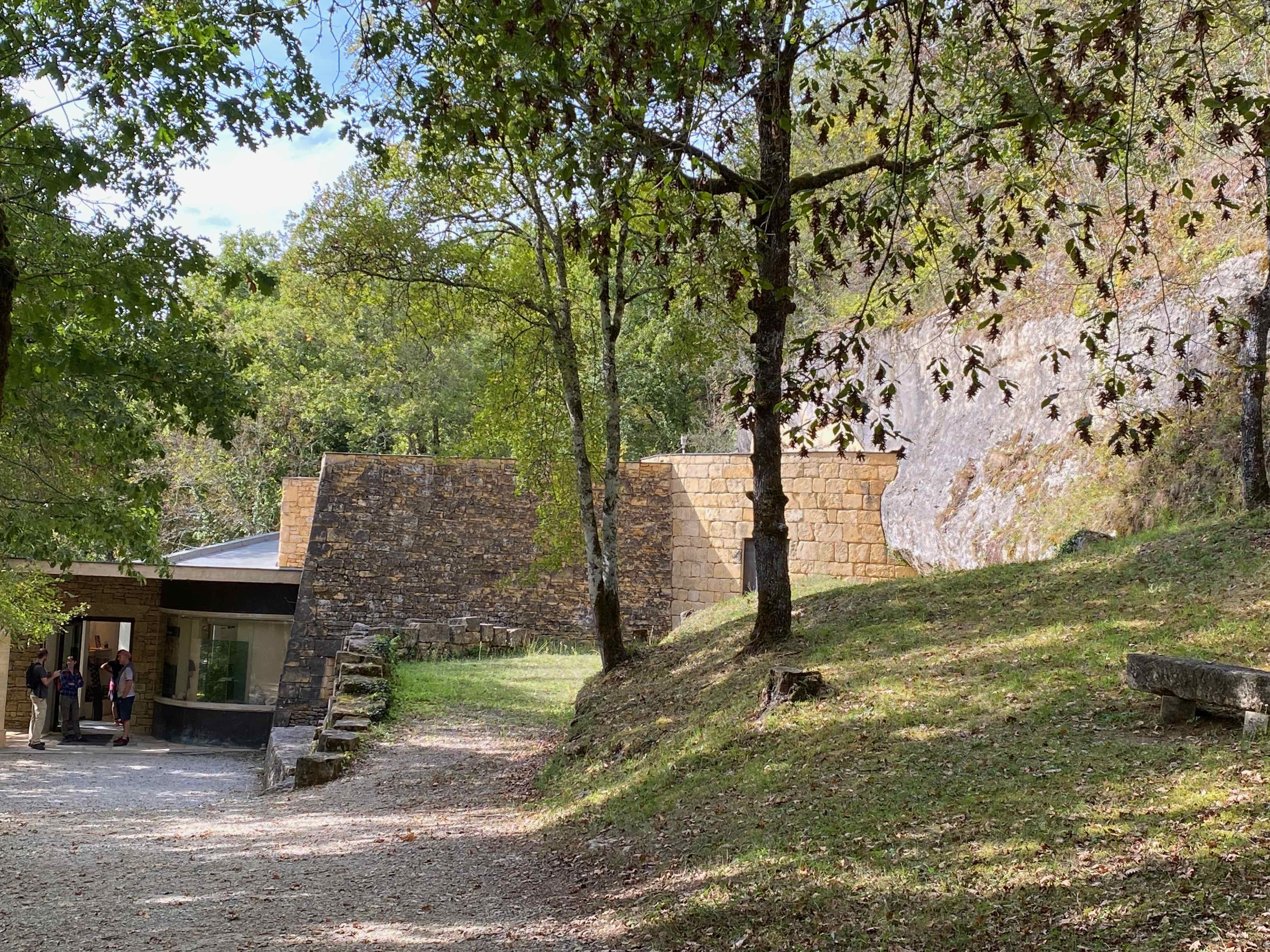
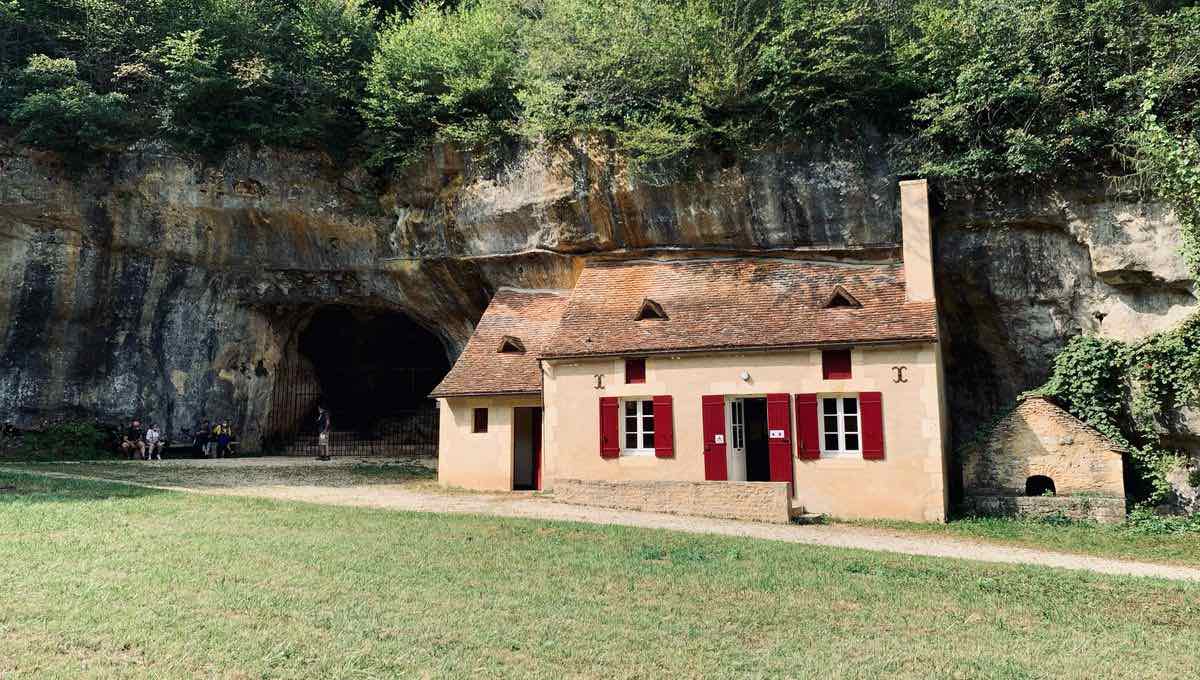
This is the building that was built to shelter the site.  It goes right up to the cliff face so that the sculptures are protected inside.

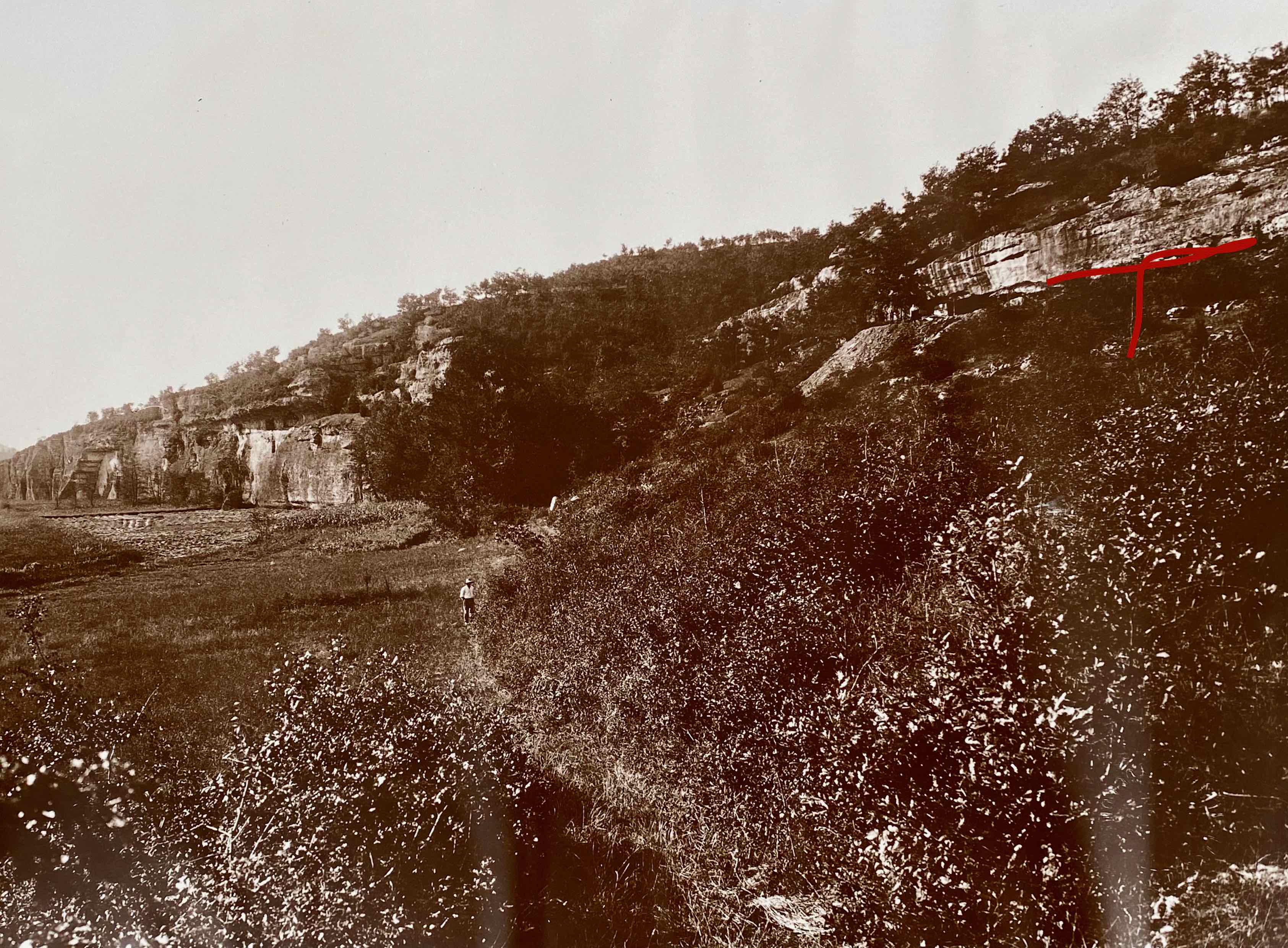
Today it is the only frieze of prehistoric sculptures in the world to be shown to the public.  And we are able to visit!  The red line is about where the frieze and the museum building is located.

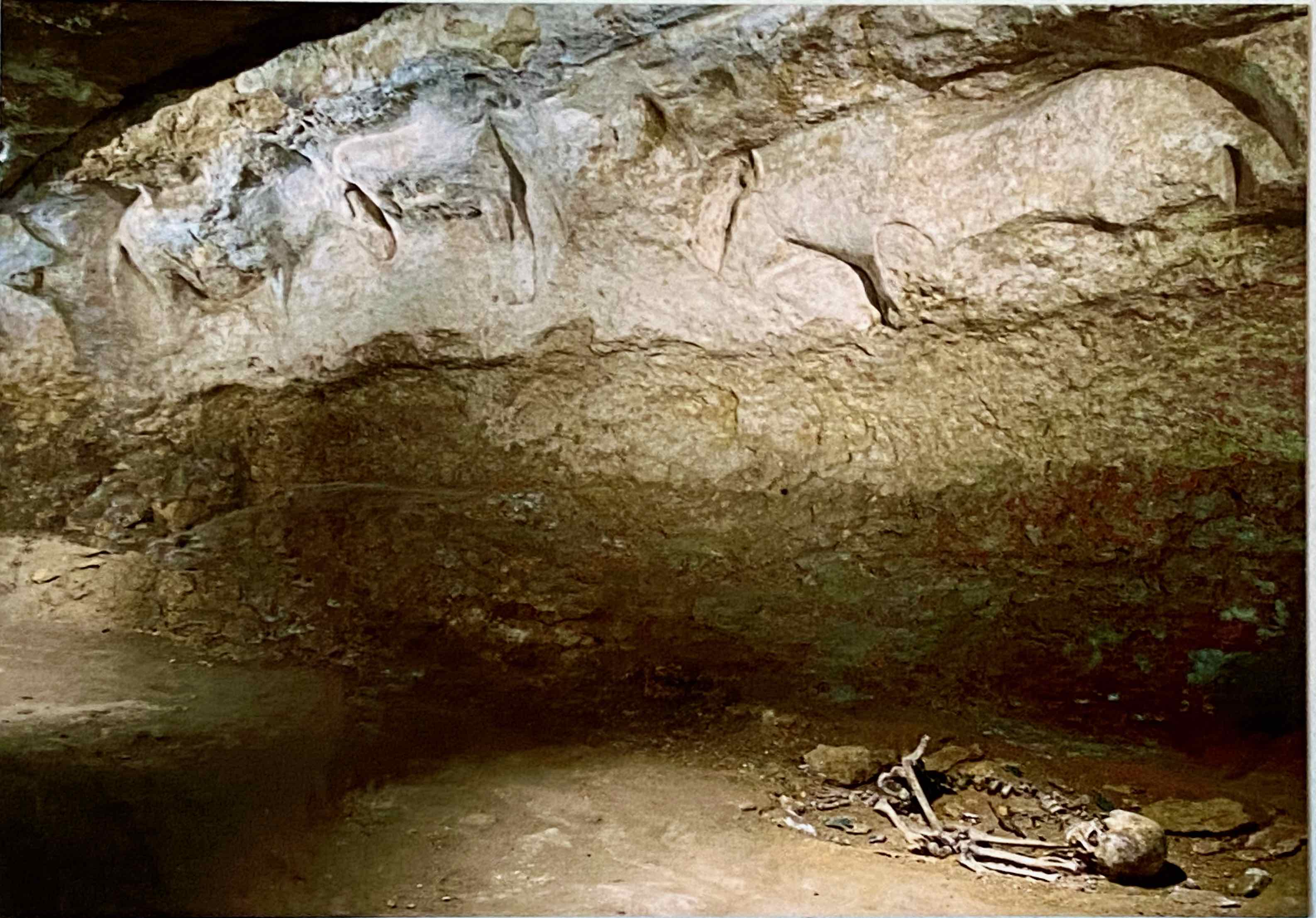
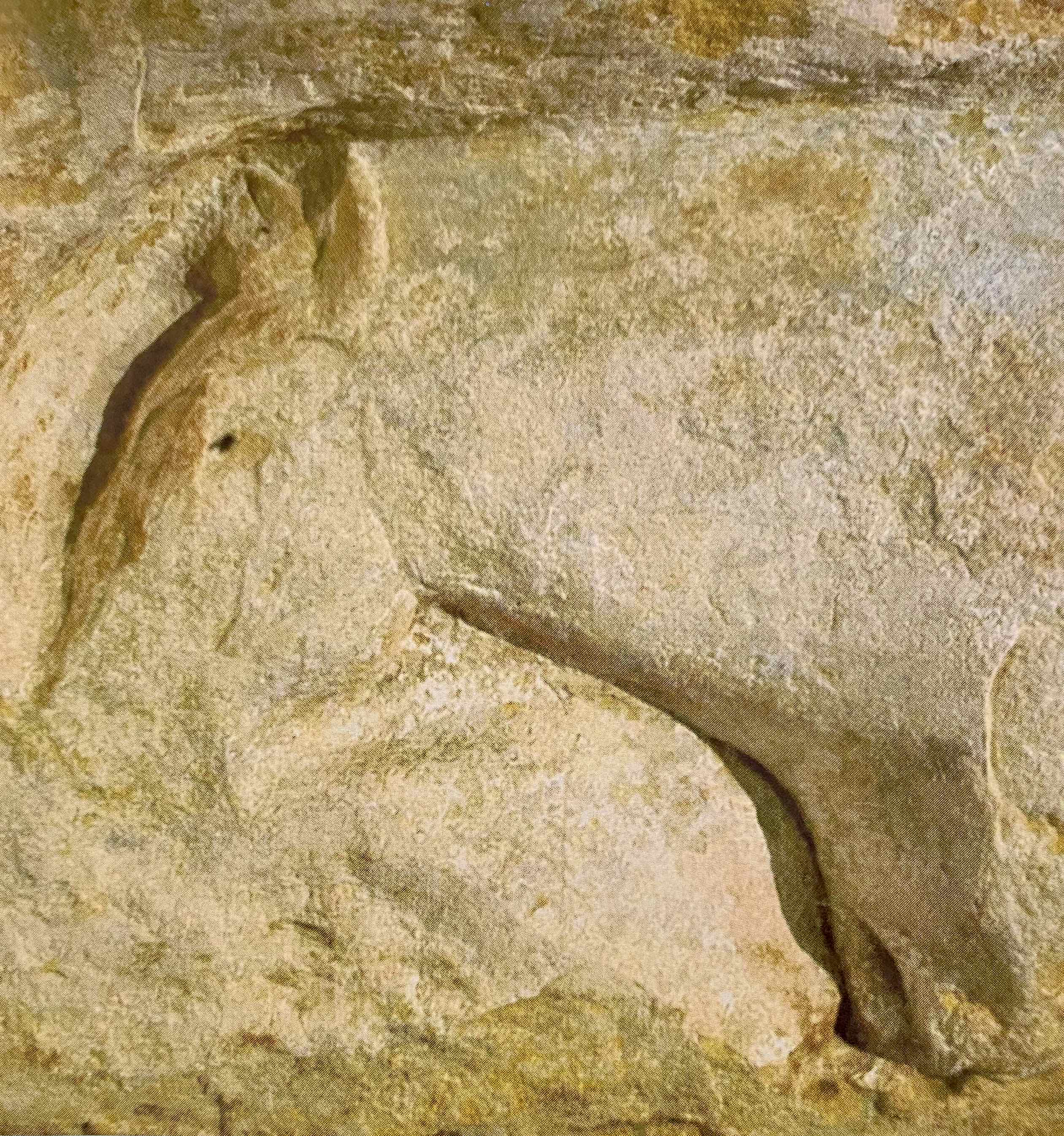
Of course, no photos are allowed. I buy a postcard so that I have a photo of the frieze, although it does not do it justice at all.  There is absolutely no substitute for standing in front of this  prehistoric sculpture which brings together horses, bison and deer.

The skeleton on the ground is a replica of the one that was found when the owner of the site dug down to build a wall to protect the site in the early 1900’s.  It is a female, approximately 5’1″ tall and between 30 and 35 years of age.  The owner of the site sold the original skeleton to a museum in Chicago where it still resides.  It was first thought to be a young girl and the Chicago Museum called this skeleton Magdalenian Girl.  Only later were scientists able to determine more accurate information about this skeleton, which has been carbon dated and is 30,000 years old.  The frieze was made over 15,000 years ago, another 15,000 years after this woman was buried here.  She was found in a fetal position with three large flat stones carefully placed over her body.  A spear head was found with the body but there is no way to know if that was the cause of her death or not.  The farmer who found this did not know anything about how to preserve information at an archeological site.

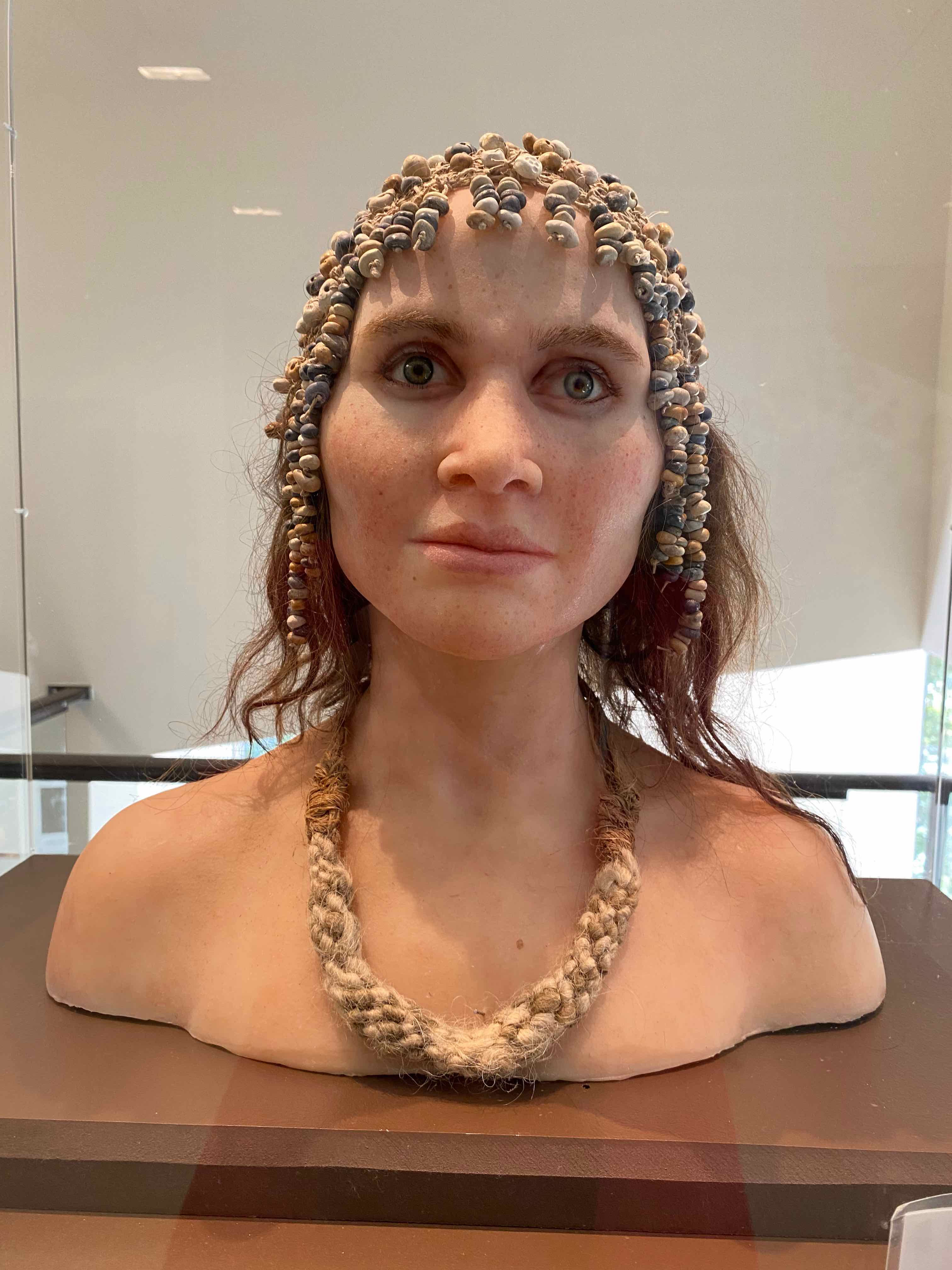
Here is a close up of one of the horses heads. I am amazed at how naturalistic they are, and the details that remain are amazing.  Unfortunately the bottom half of the frieze was carved in a softer limestone and has eroded so the legs of most of the animals are no longer visible. When the original site was discovered in 1909 part of the overhang had fallen down and dirt had built up so that most of the sculptures were covered. There was quite a lot of damage done to part of the frieze when it was being uncovered.  Pick axes were used to move the rock and dirt that had fallen down over the years and parts of the frieze were actually broken off by the very people who were trying to uncover it.  There were also notes made about the frieze being painted red, but the people who uncovered it decided to wash all the dirt off of the frieze and in doing so they washed off the red colouring!  Hard to believe, but archeology did not become systematic and disciplined in its approach to excavation until after the 1920’s.A scientist reconstructed the features of the skull that was found here.  I think she is quite beautiful and yes, much like a modern woman.  The jewellery is from an area near here but ti was not found with this skeleton.  Magdelenian man, or Cro-Magnon man is regarded as the closest ancestor to today’s humans.  
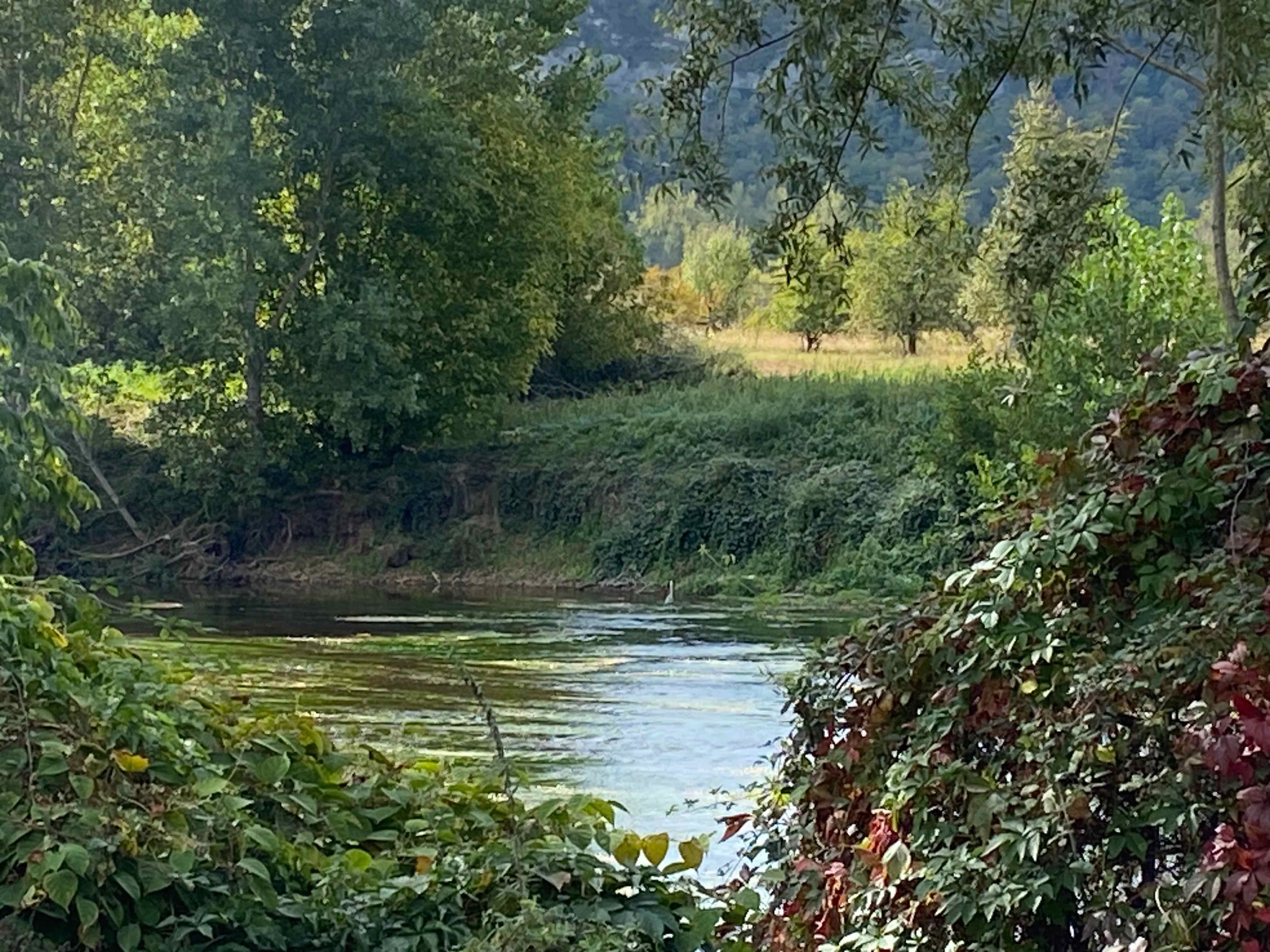
We have lunch in a little nearby village with a pretty little river and watch a heron try to catch its lunch.  You can just make it out near the centre of the far river bank.

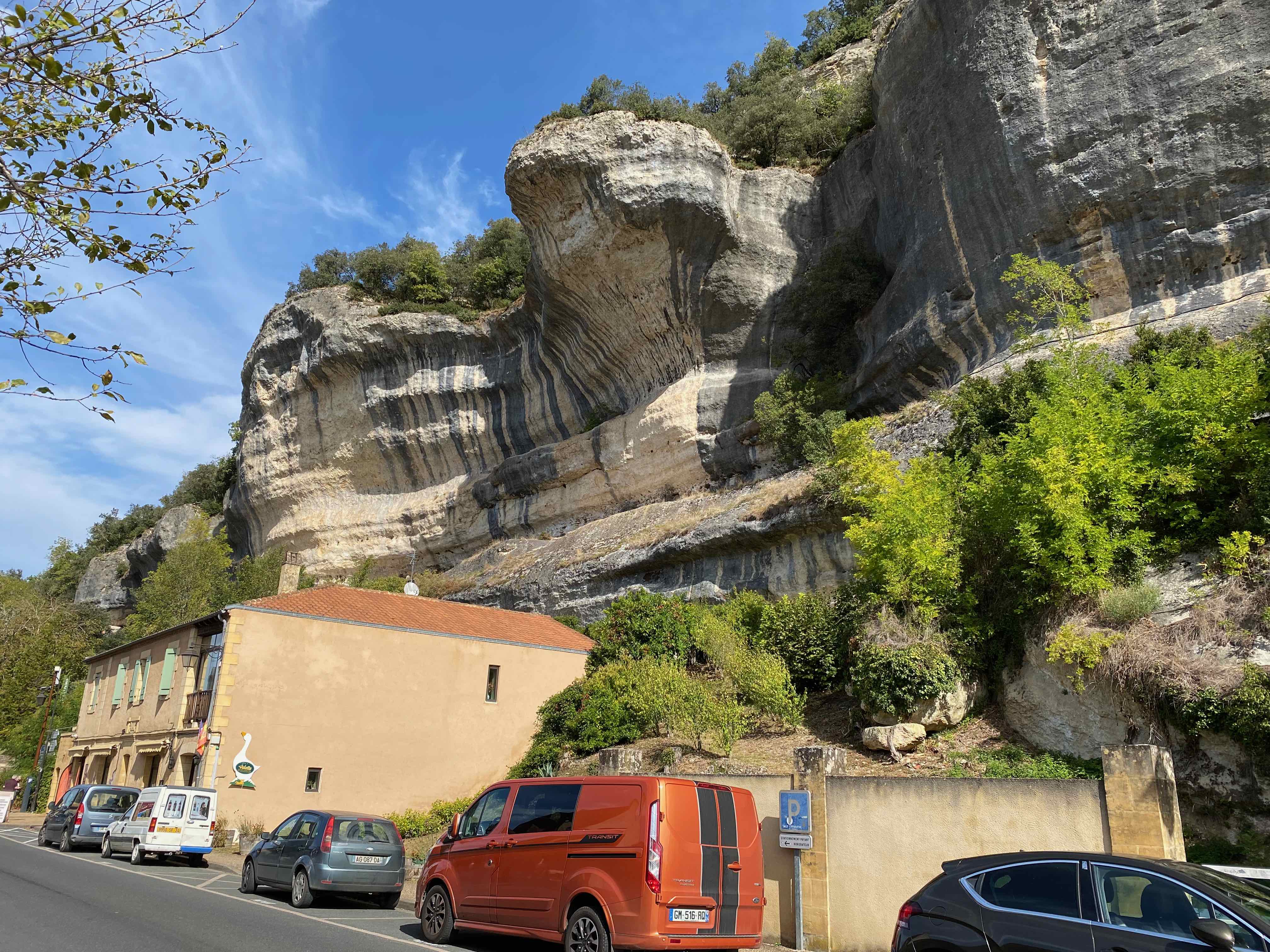
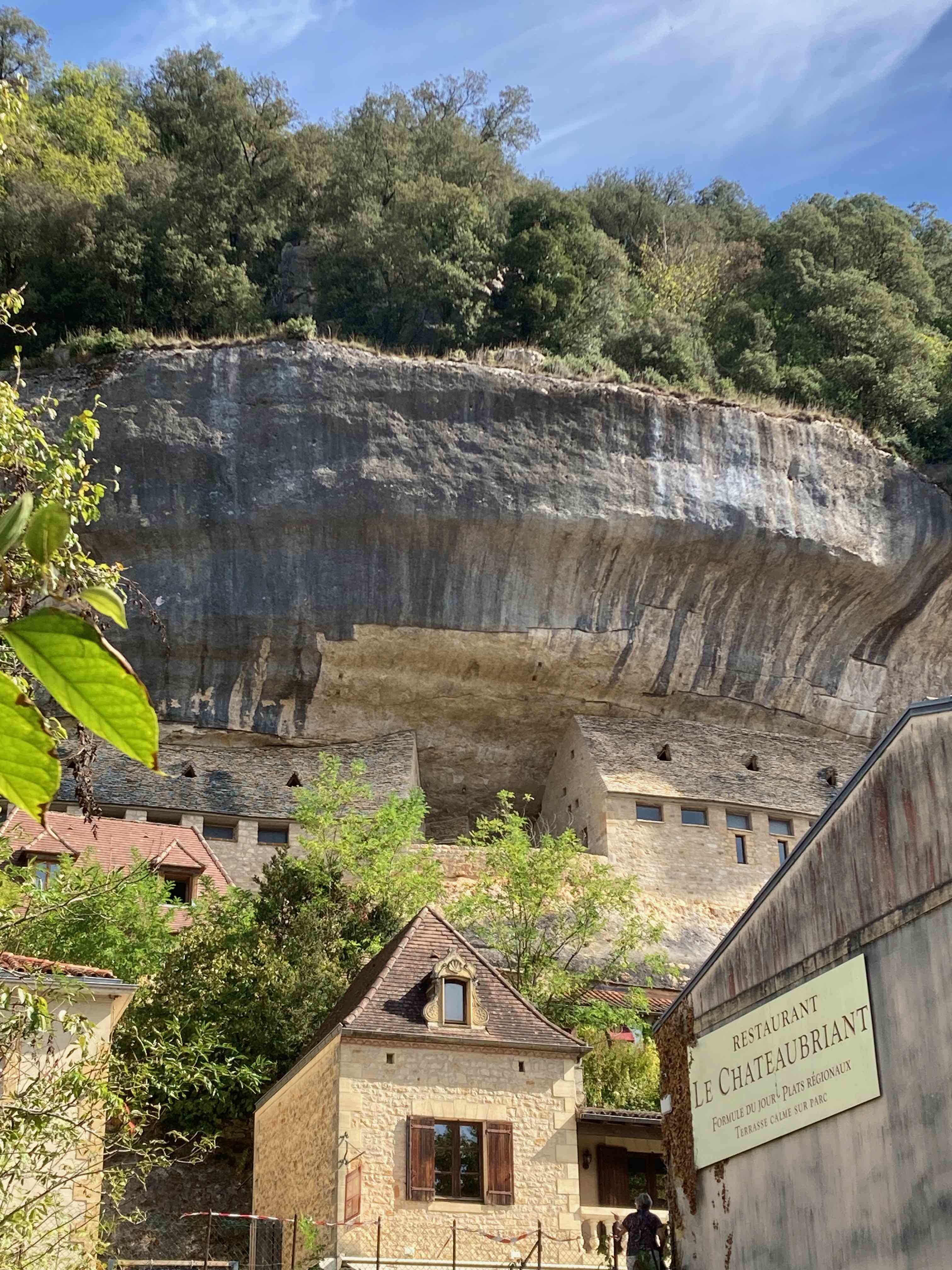
Huge limestone cliffs tower over the village…

and there are houses and buildings still in use today that are built right into the cliffs.

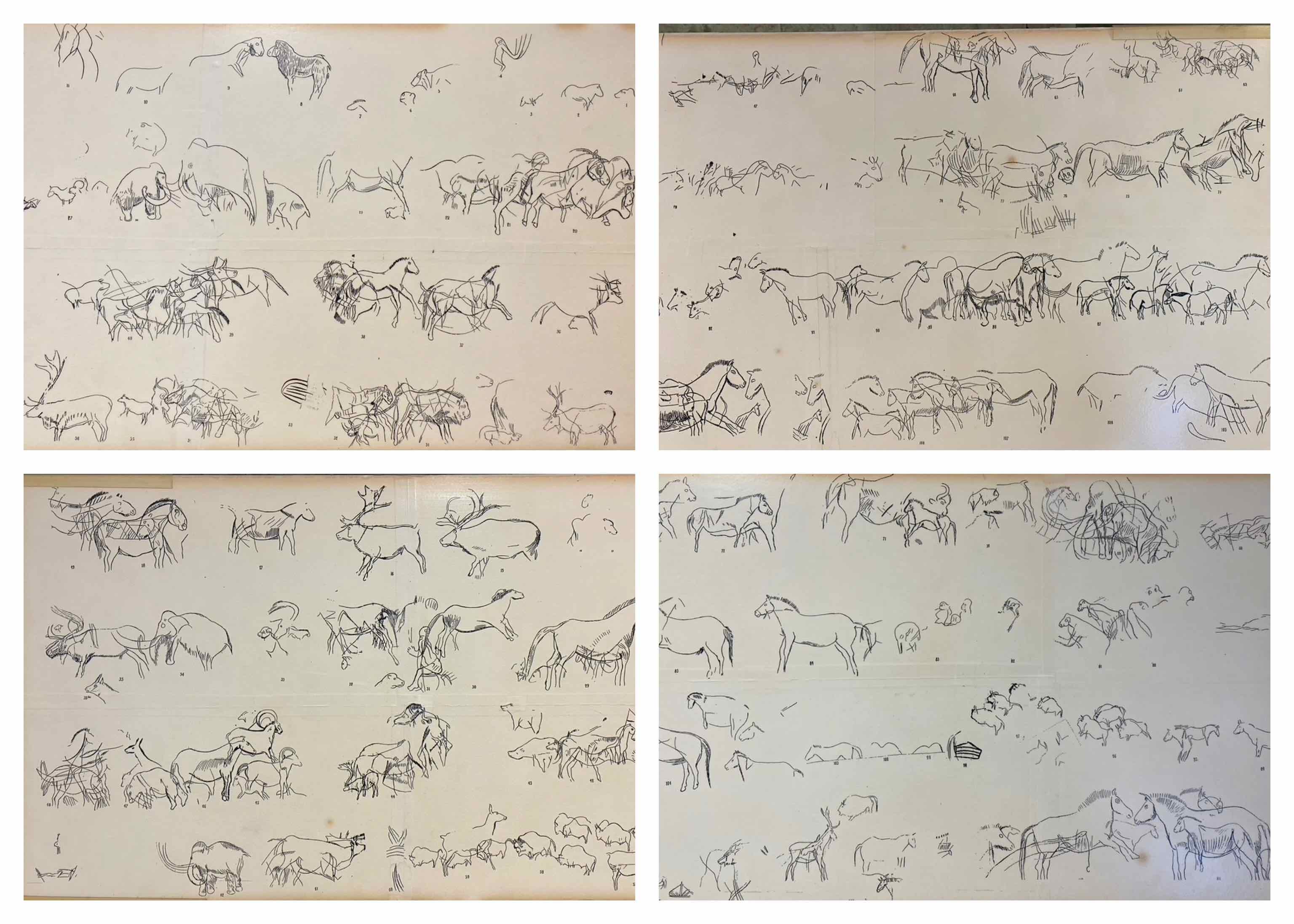
After lunch is a short drive to the Grotte des Combrelles.  Grotte is cave in French. Inside the entrance building there are some drawings of the etchings in this cave. There are more than 800 rock engravings dating back to the era of Magdalenians, including 300 mammals, 52 stylized human figures, abstract signs and half a dozen sexual symbols.
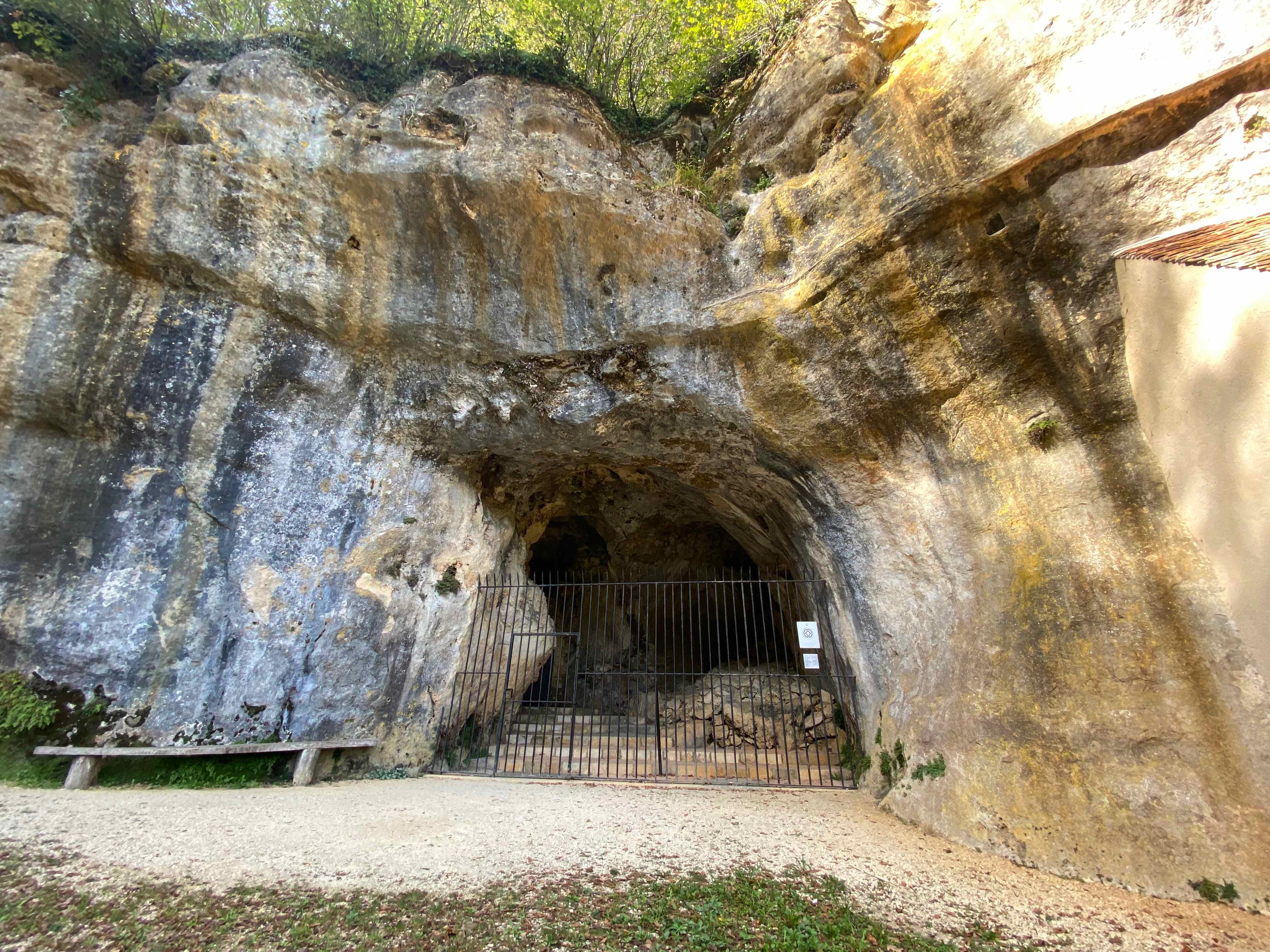
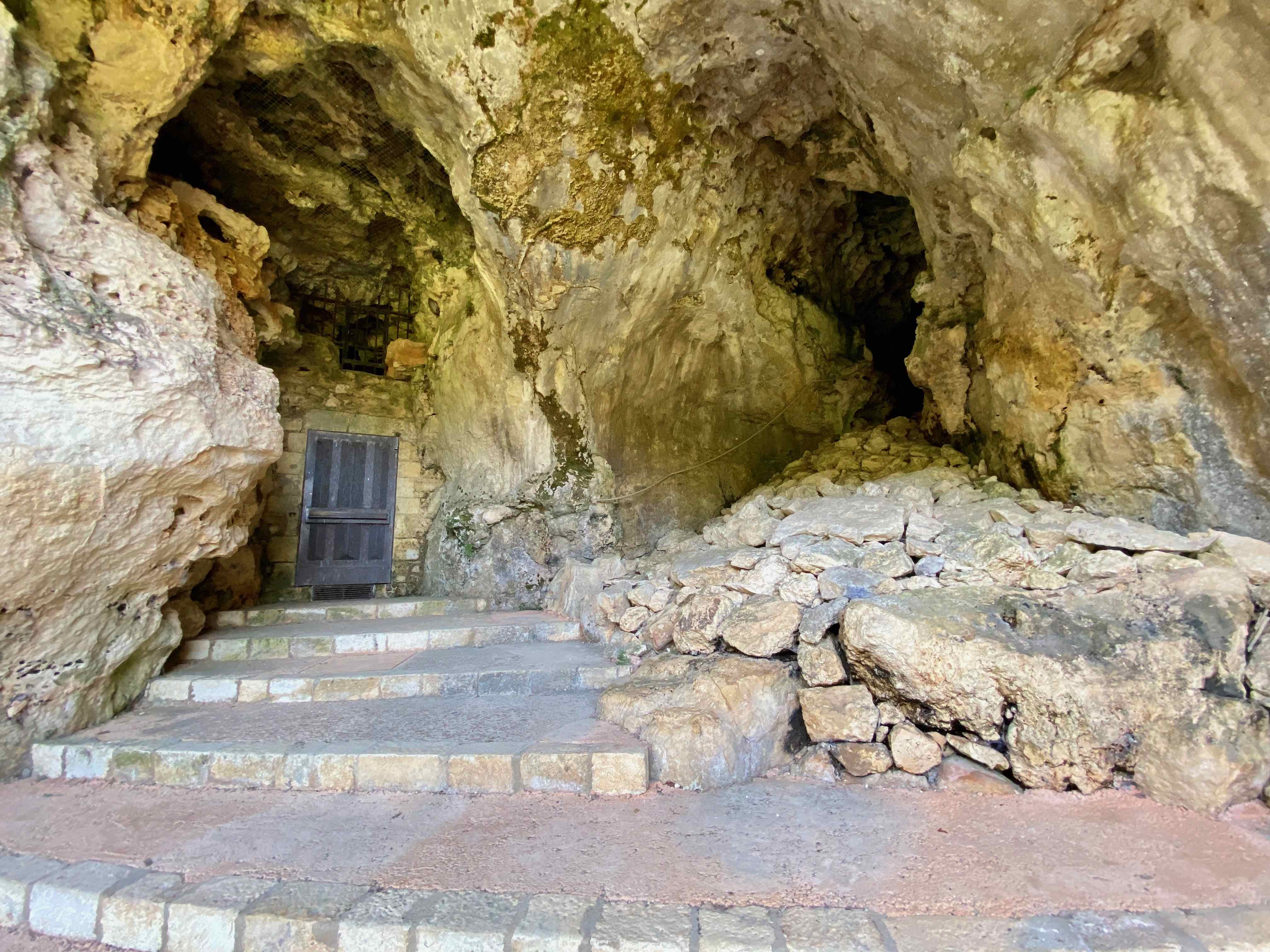
The entrance to the cave used to be used by a farmer to keep his animals before the entrance to the rest of the cave was discovered.

There are two entrances to the cave but only the one with the gate is accessible by the public.  

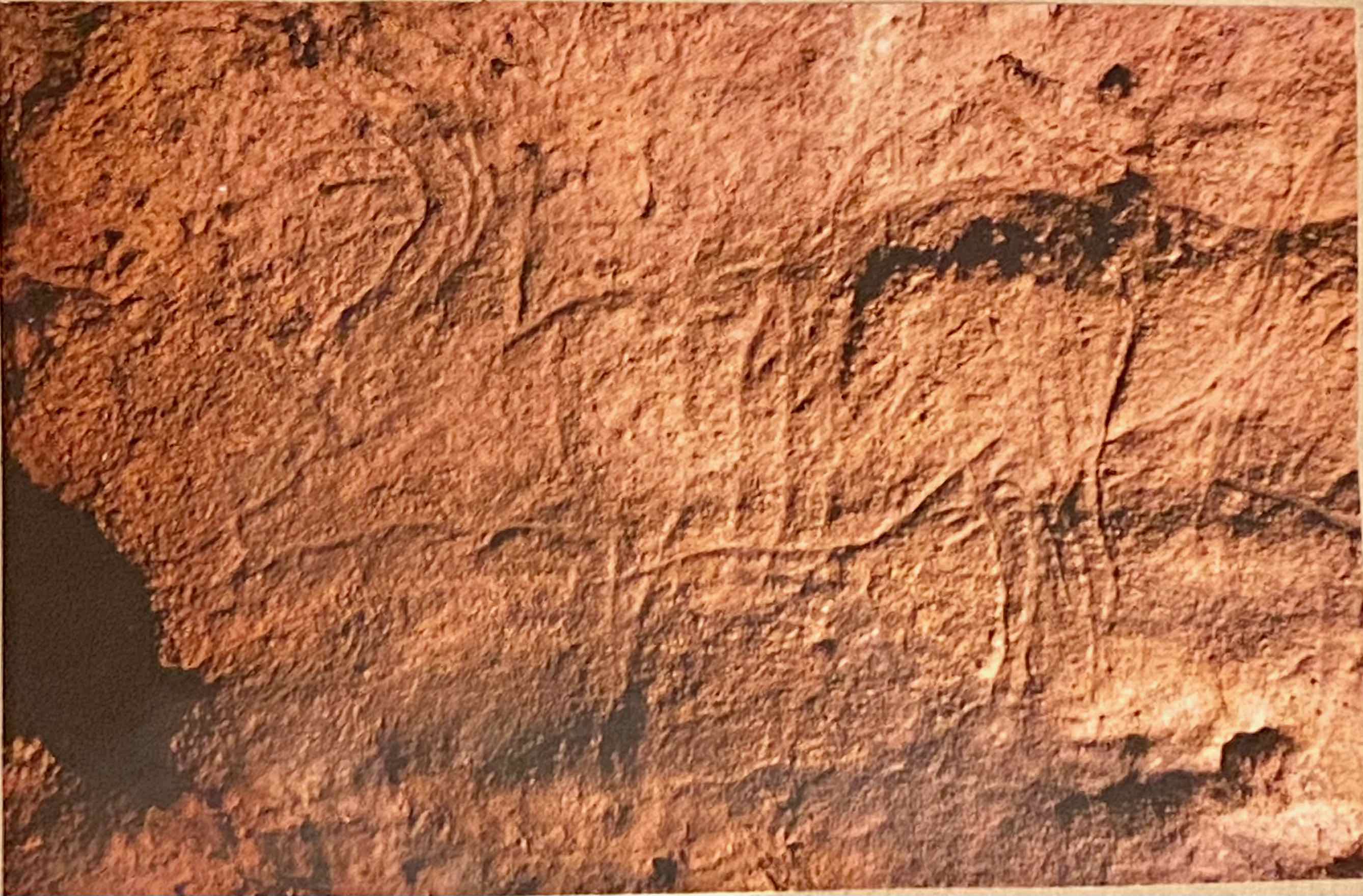
It is a long, narrow winding cave, 235 meters in length with no side channels.  A maximum  of seven people at a time are allowed in the cave because there just isn’t room for more than that to see the engravings in each location.  As it is we have to snuggle up so that we can all see the engravings pointed out by our guide.  This photo of a bison was in the office. The engravings are not always easy to see.

One of the best known engravings is the Drinking Reindeer.  There are some abstract signs and several human representations.  The humans are incomplete, they do not have heads, females are often represented by torsos or engravings of vulvas. Animals featured in the cave are horses, bison, aurochs, cattle, bears, reindeer, mammoths, ibex, antelopes, cave lions, rhinos and even the odd fox and fish. We only have time on our hour long tour to see the most prominent engravings, and part of the cave is not open to the public, but it is an amazing experience to stand just inches away from these engravings.  It gives me goosebumps to think that I am standing in the same spot as the artist who made these engravings thousands of years ago.

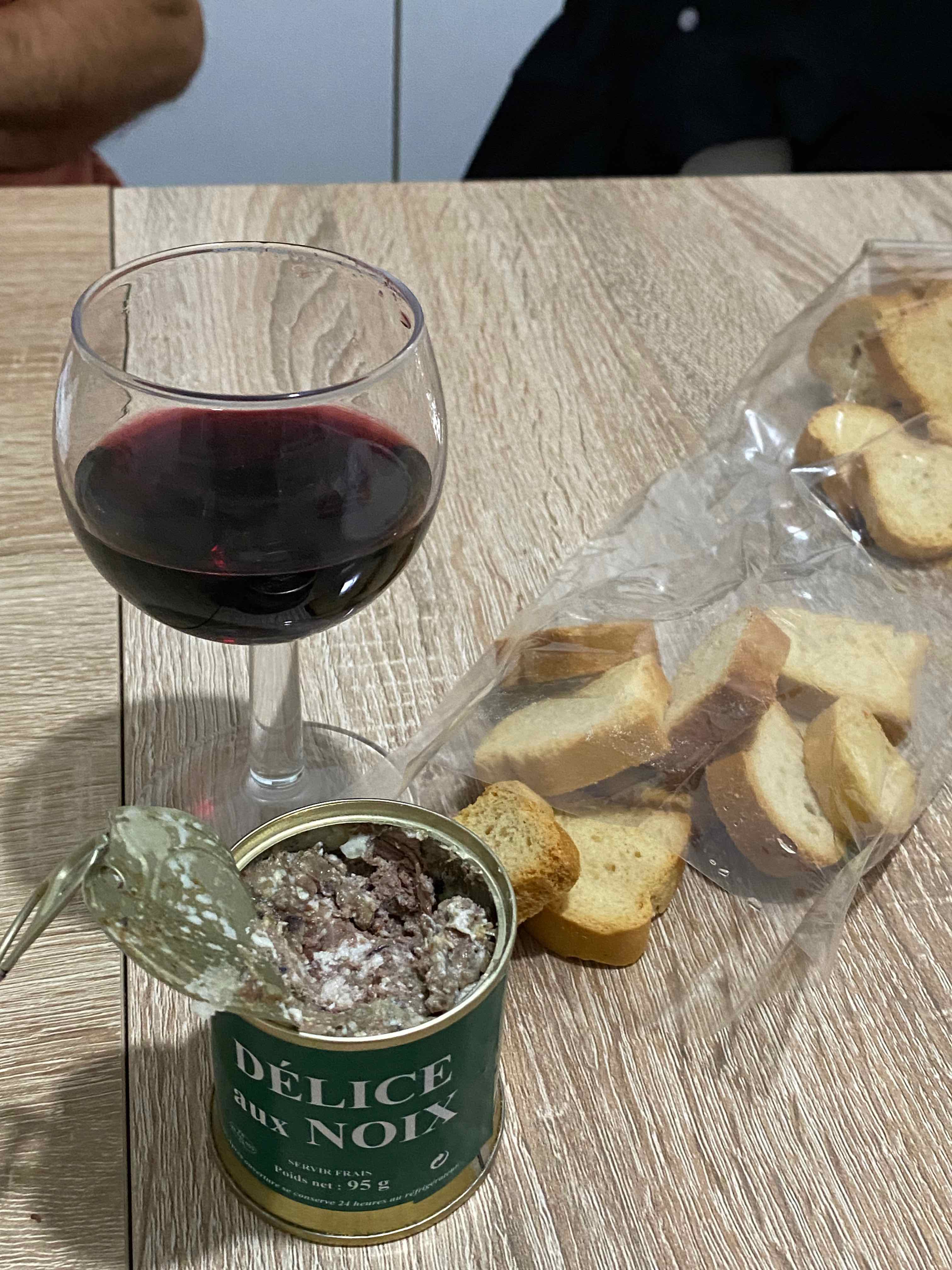
Back at our apartment Bob decides to taste the ingredients from our gift package.  Unfortunately, the foie gras with walnuts just isn’t very appealing.  It kind of looks like cat food and neither of us like it at all.

Montrésor and Sarlat le Canéda, France

Day 33, Saturday , September 30, 2023

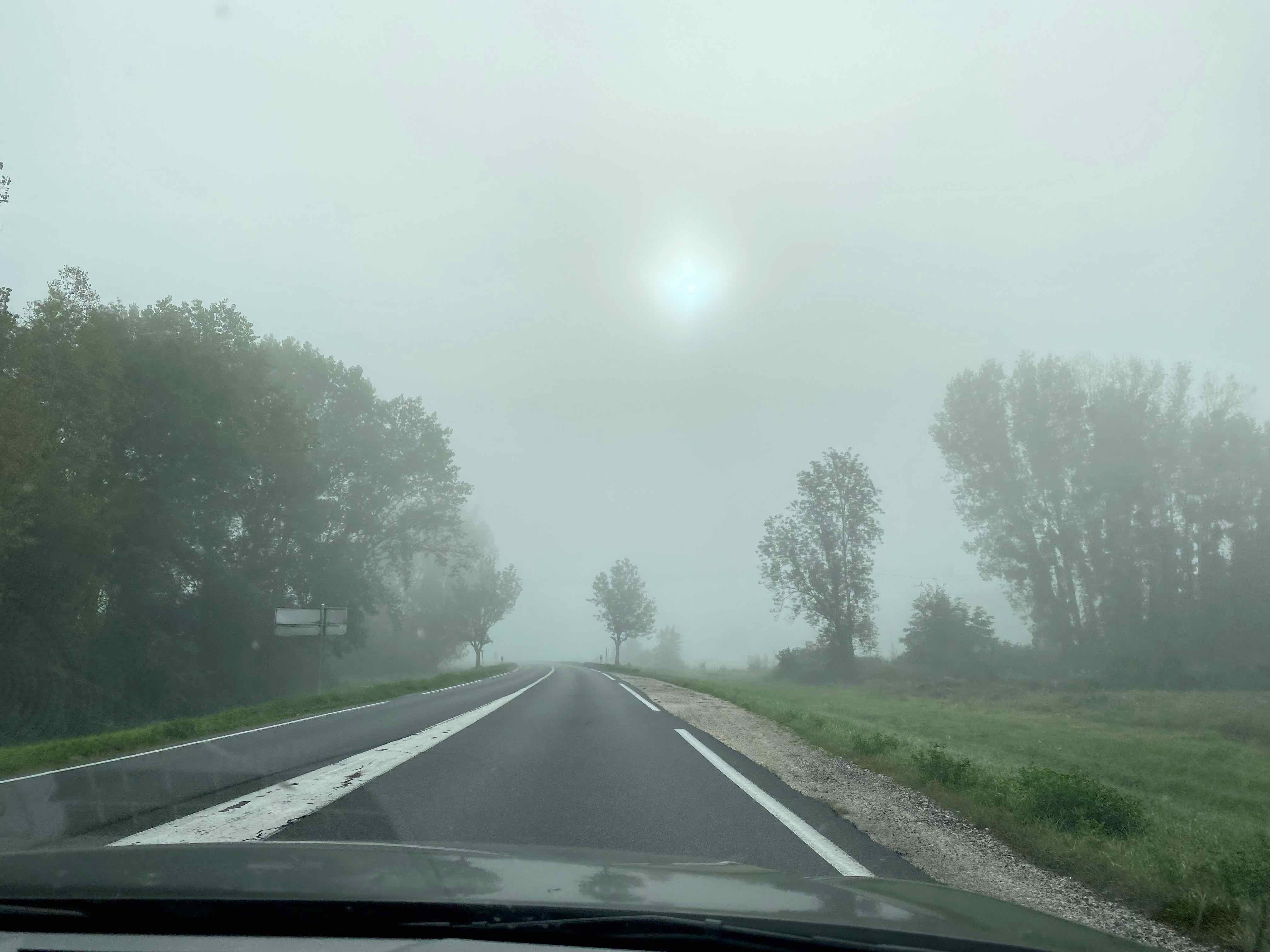
We leave for Sarlat la Canéda in a heavy fog.  It is quite beautiful , but not the easiest driving.

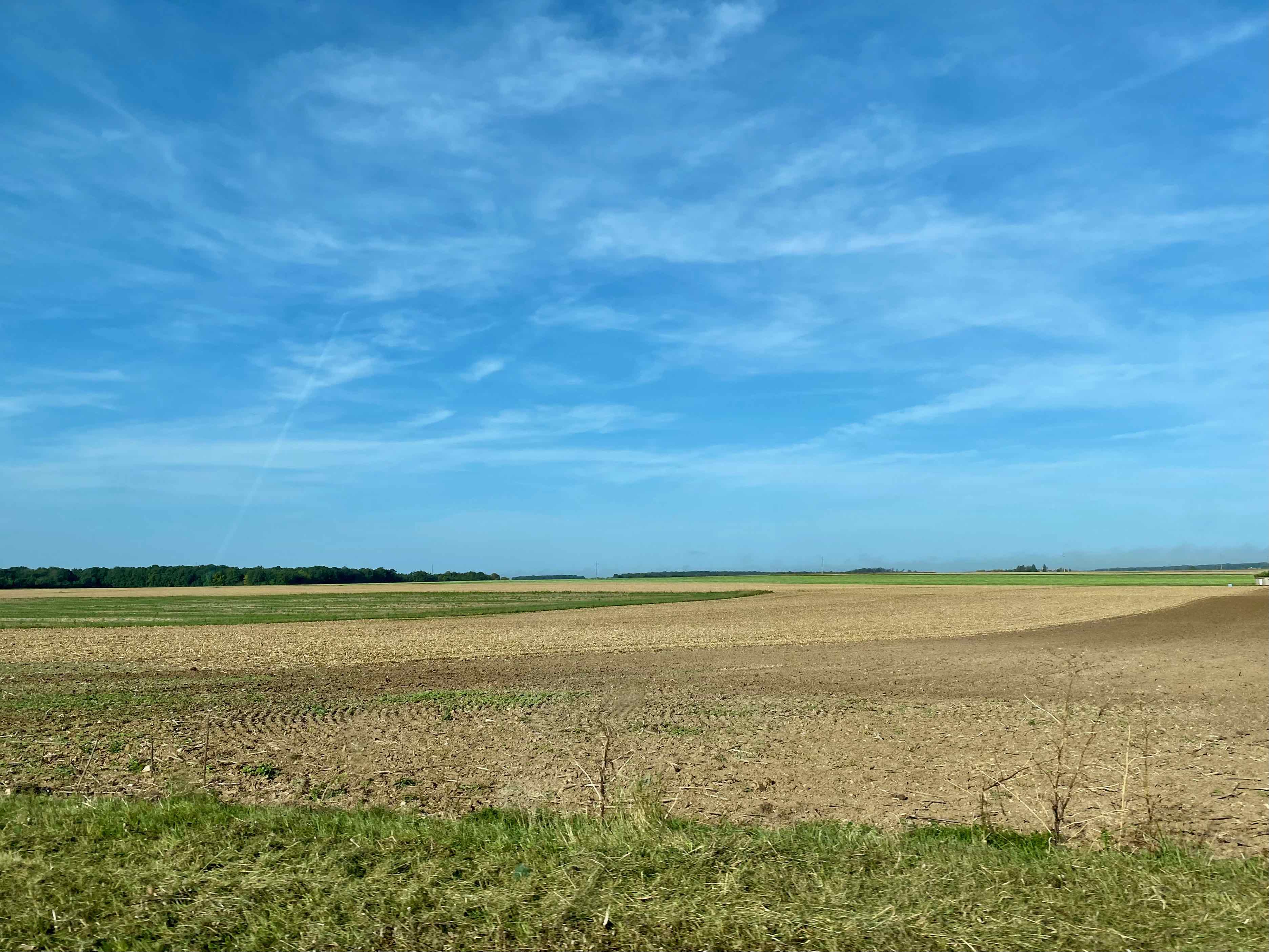
Before too long the sun is shining and we are driving through farmland that looks a lot like Alberta. 

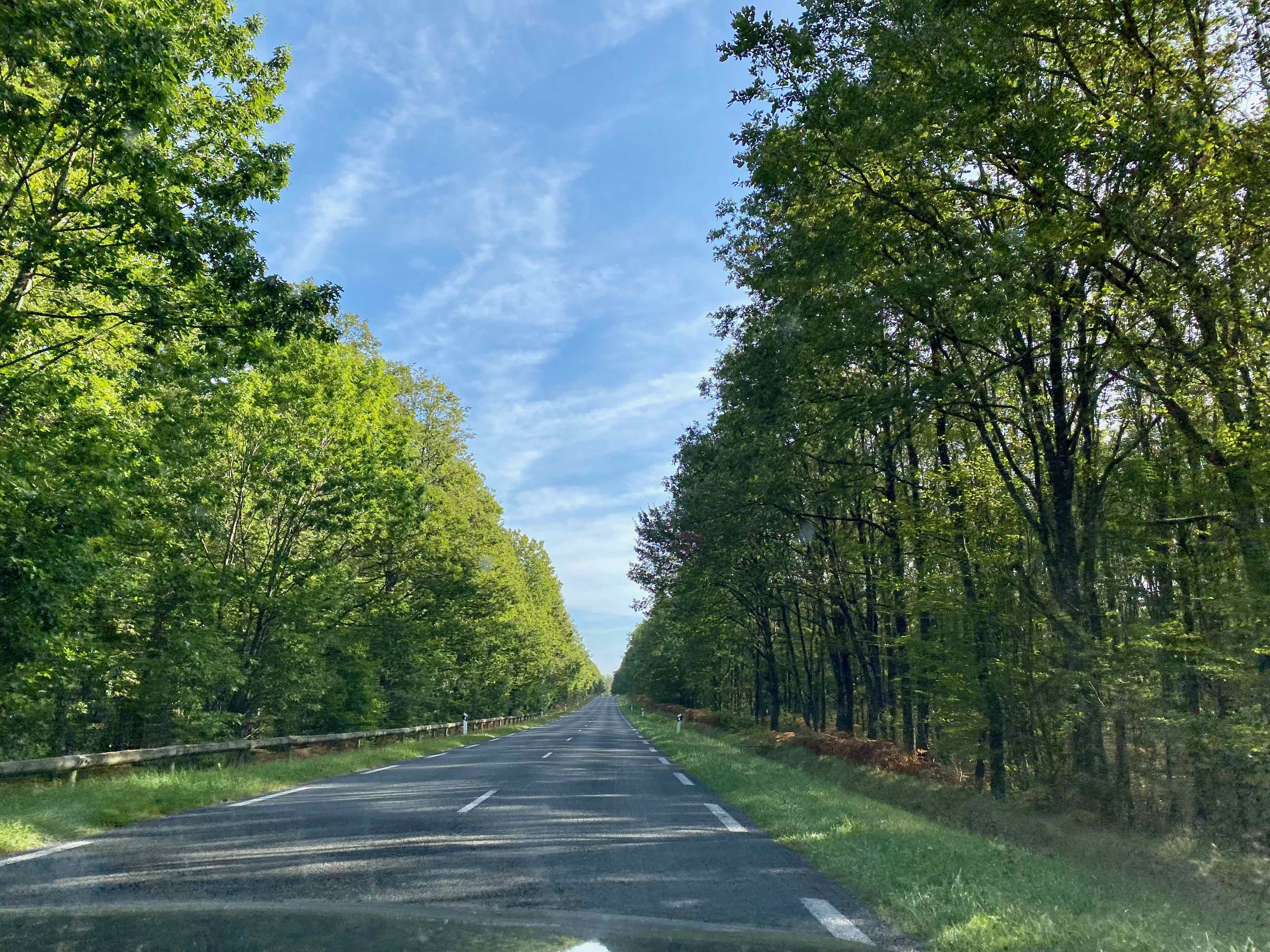
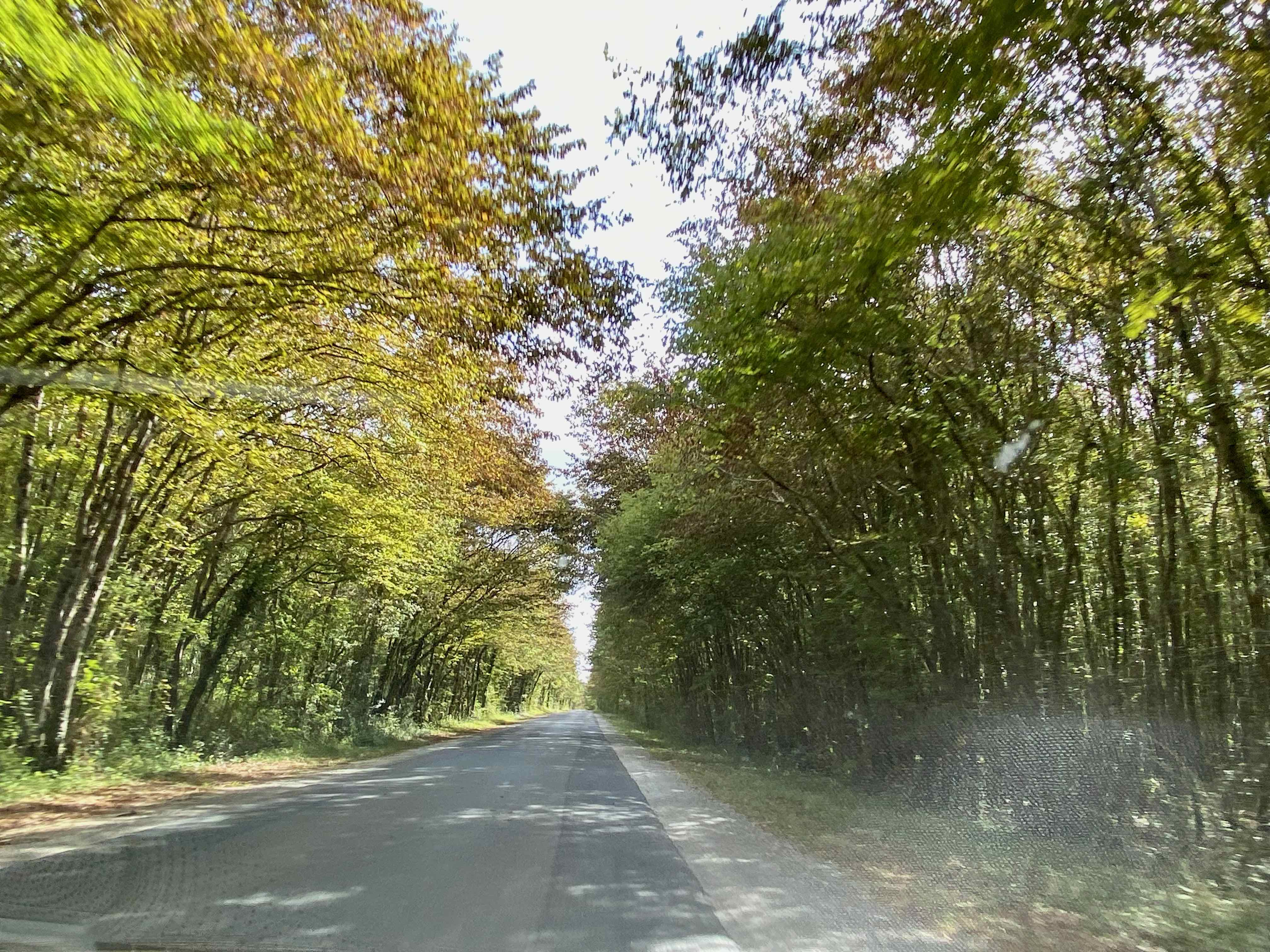
Then we drive through a beautiful forested area.

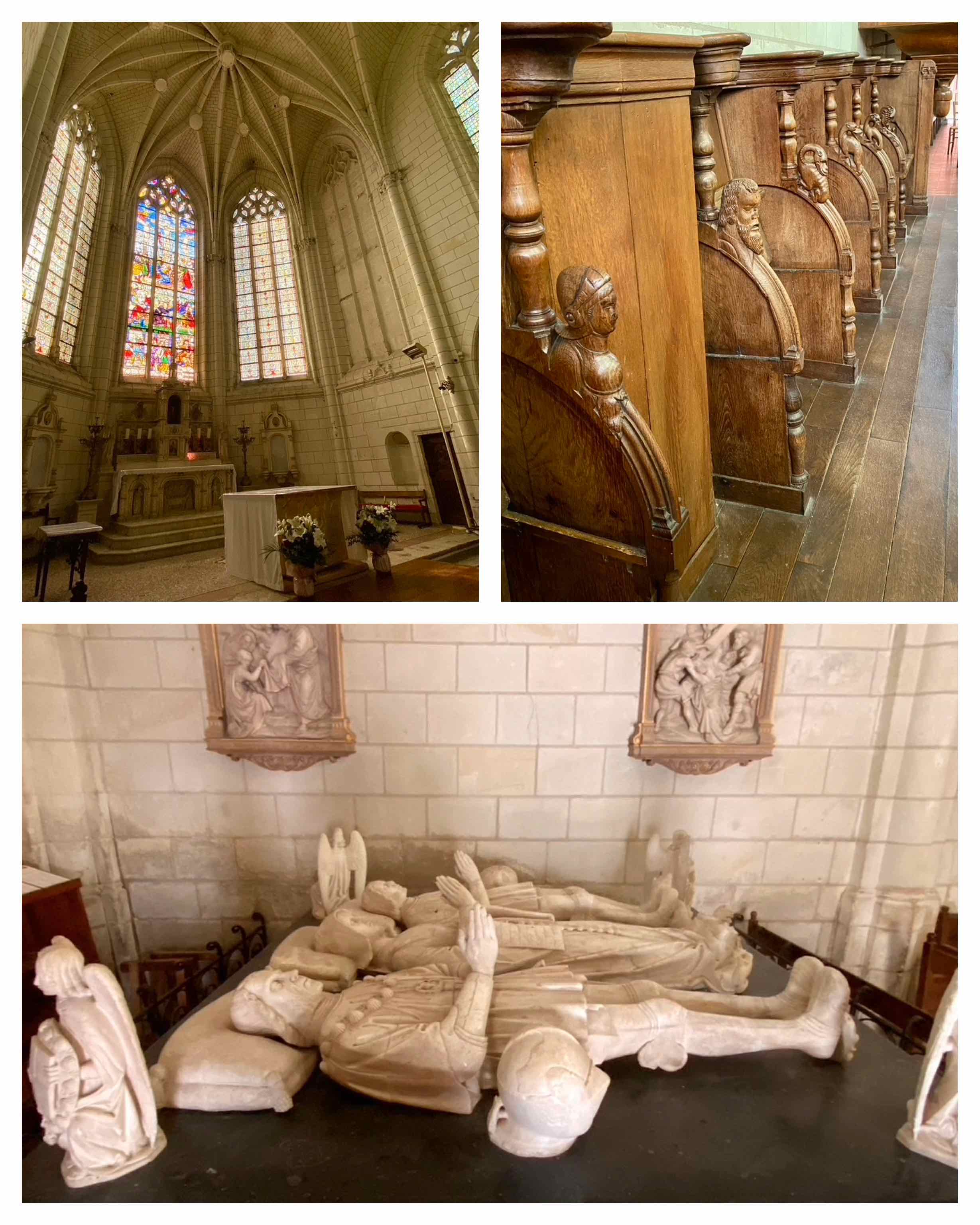
We stop for a visit and lunch in Montrésor which is listed as one of France’s 140 most beautiful towns.  The church is small but interesting.  The church was built to house this white alabaster tomb for three family members.  The stained glass windows and the carved wooden stalls all date from the 16th century when the church was built.

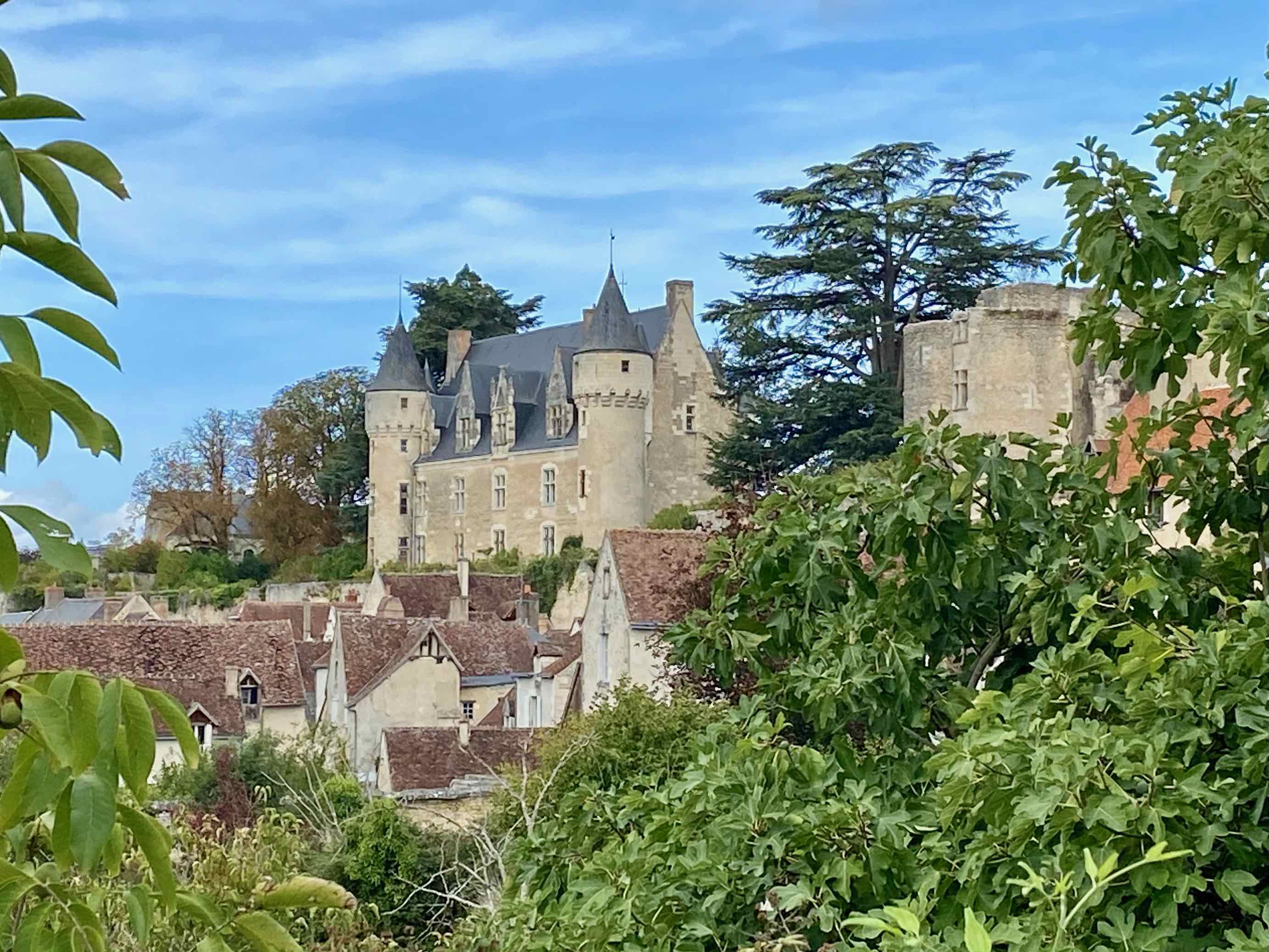
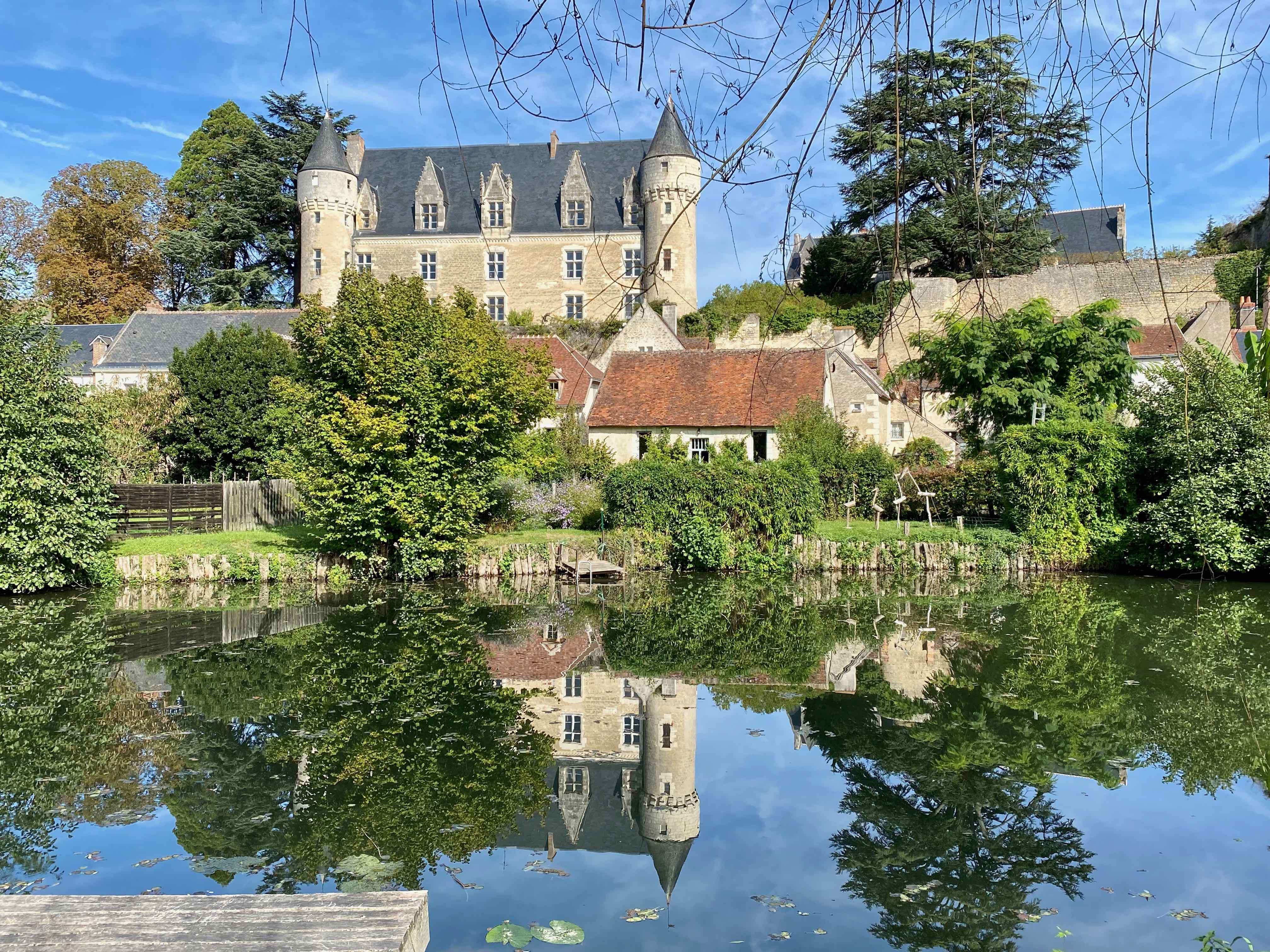
We walk along the river which has interesting information plaques and great views of the Château de Montrésor and the village.

Loved the reflections in the river.

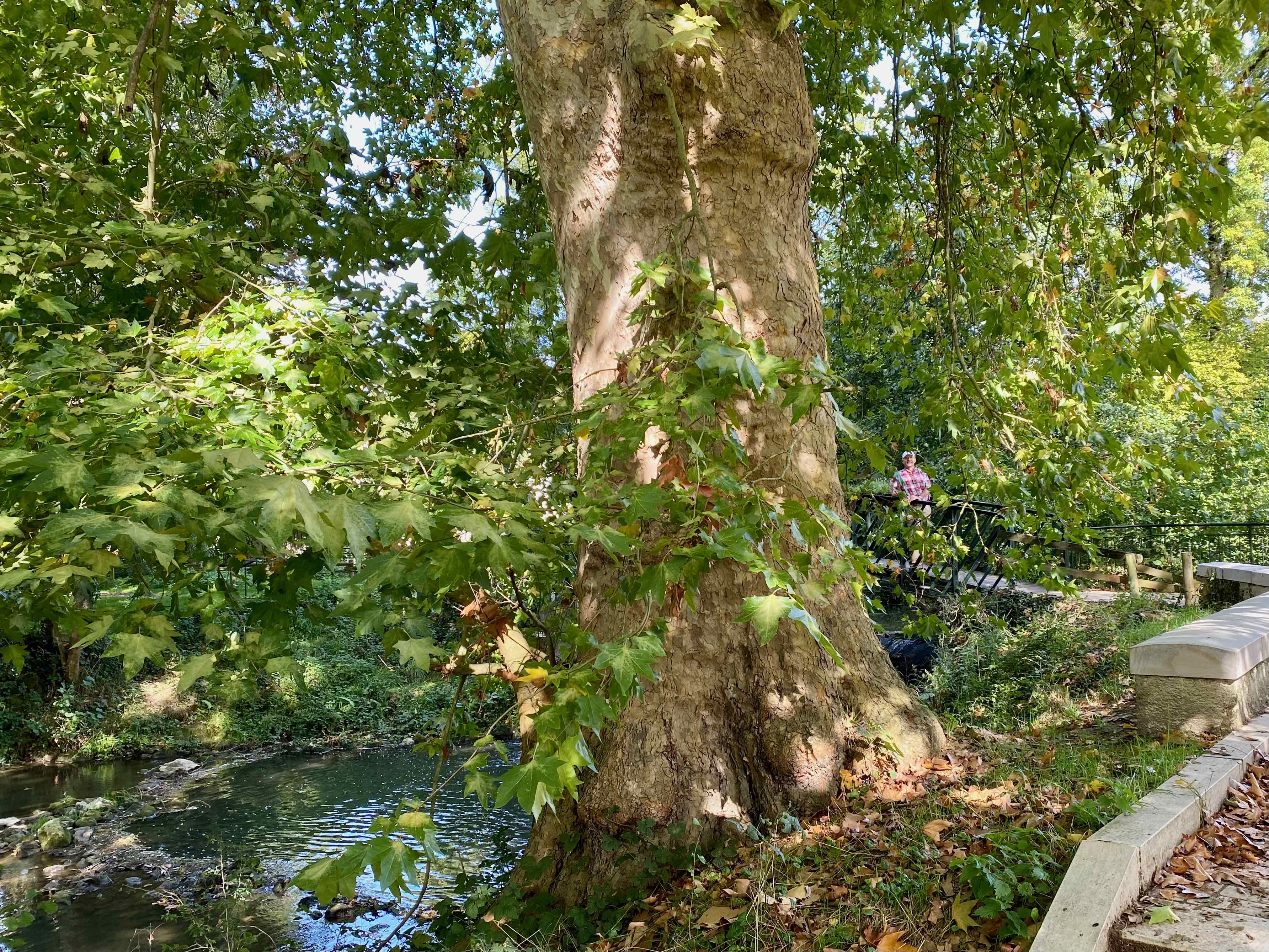
There are some very large, very old trees along the way.  Bob is standing on the bridge just behind the tree.

Many of the houses are built right into the stone cliffs.  This little shop is an example, the ceiling and back wall are all natural stone.

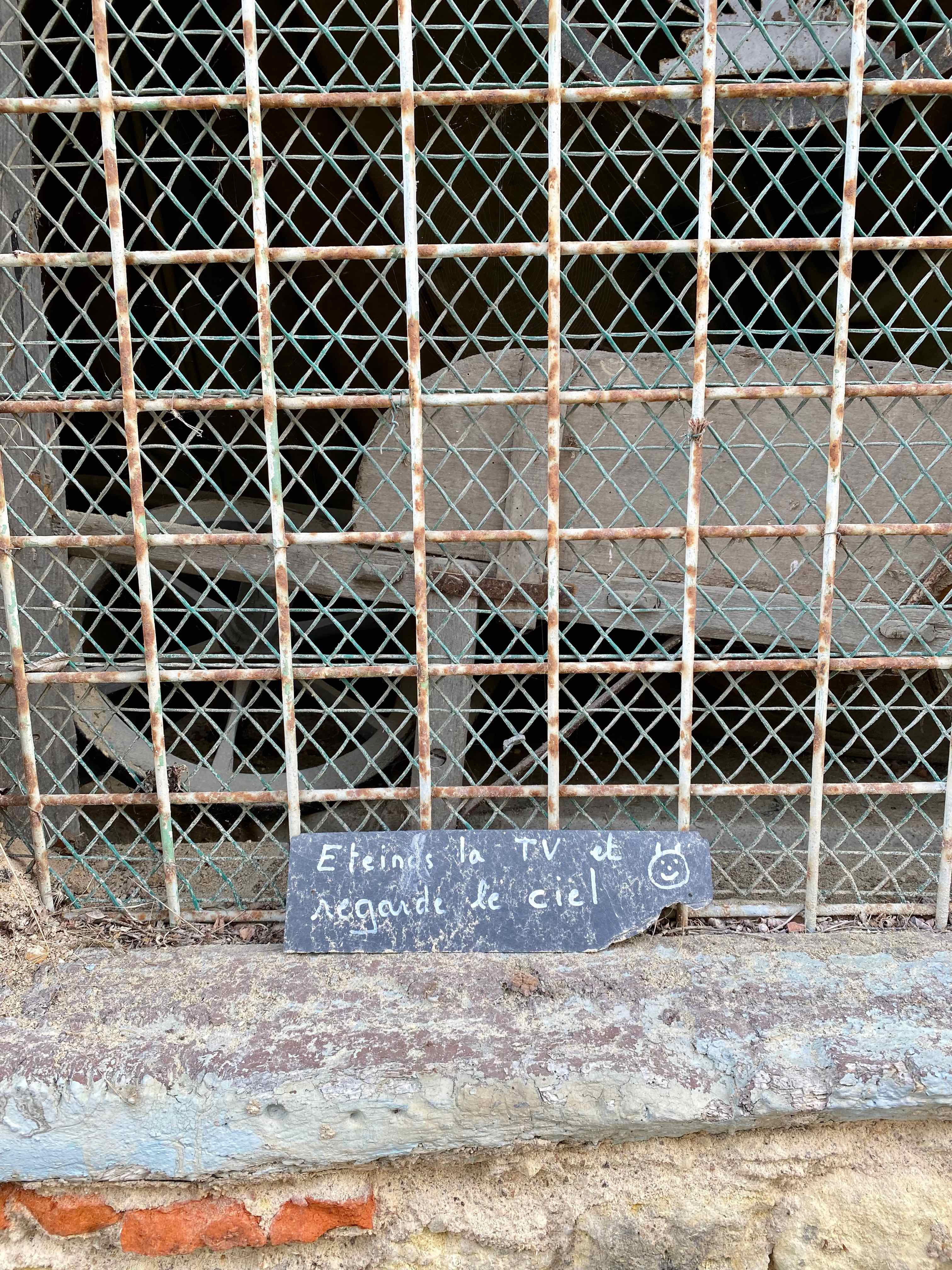
I loved this sign in the window. It says “Turn off the TV and look at the sky.”

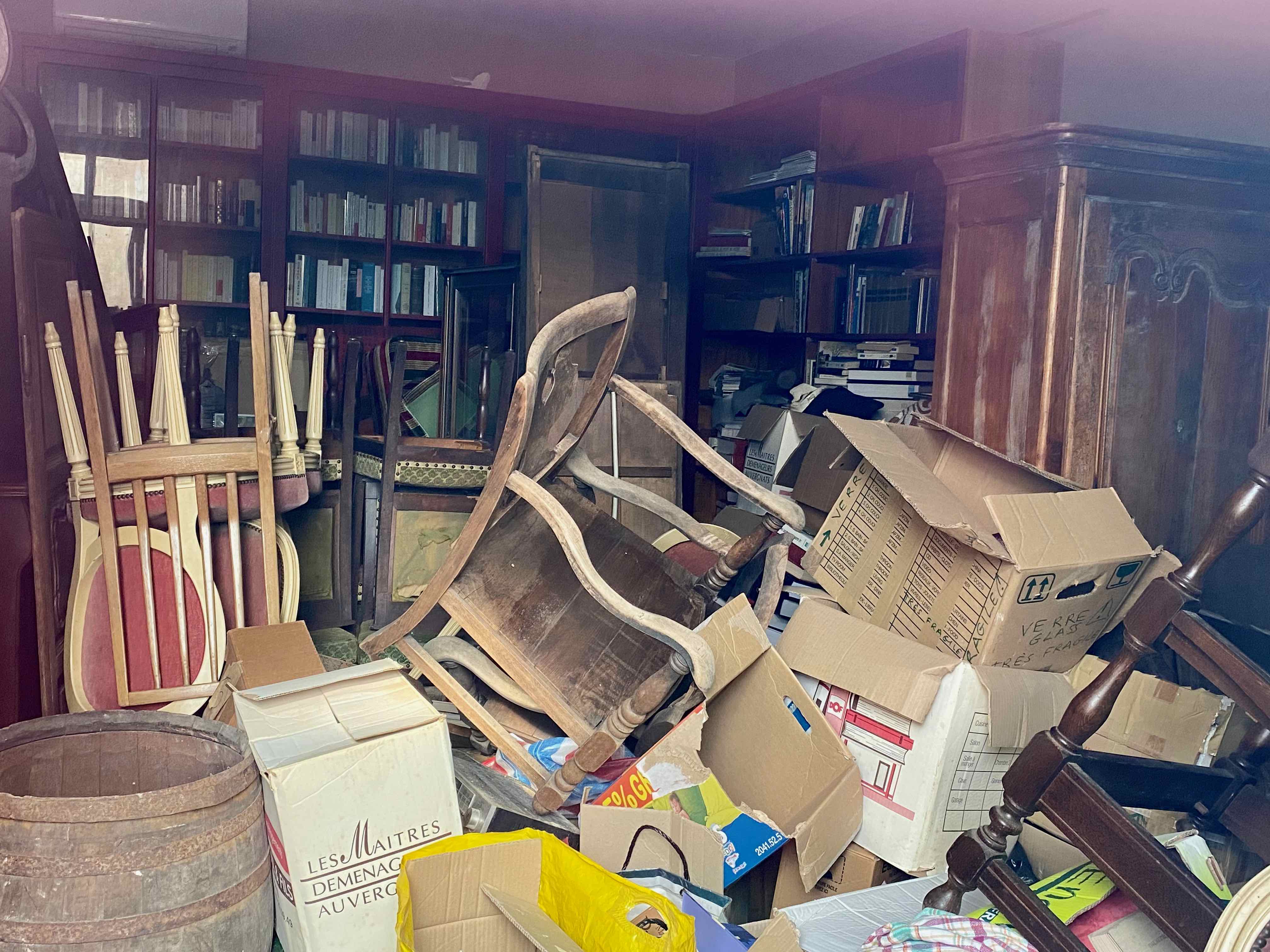
I also love peeking in windows and open gates whenever I have the chance.  You never know what you might see.  I wonder what happened to the owner of this little bookstore?

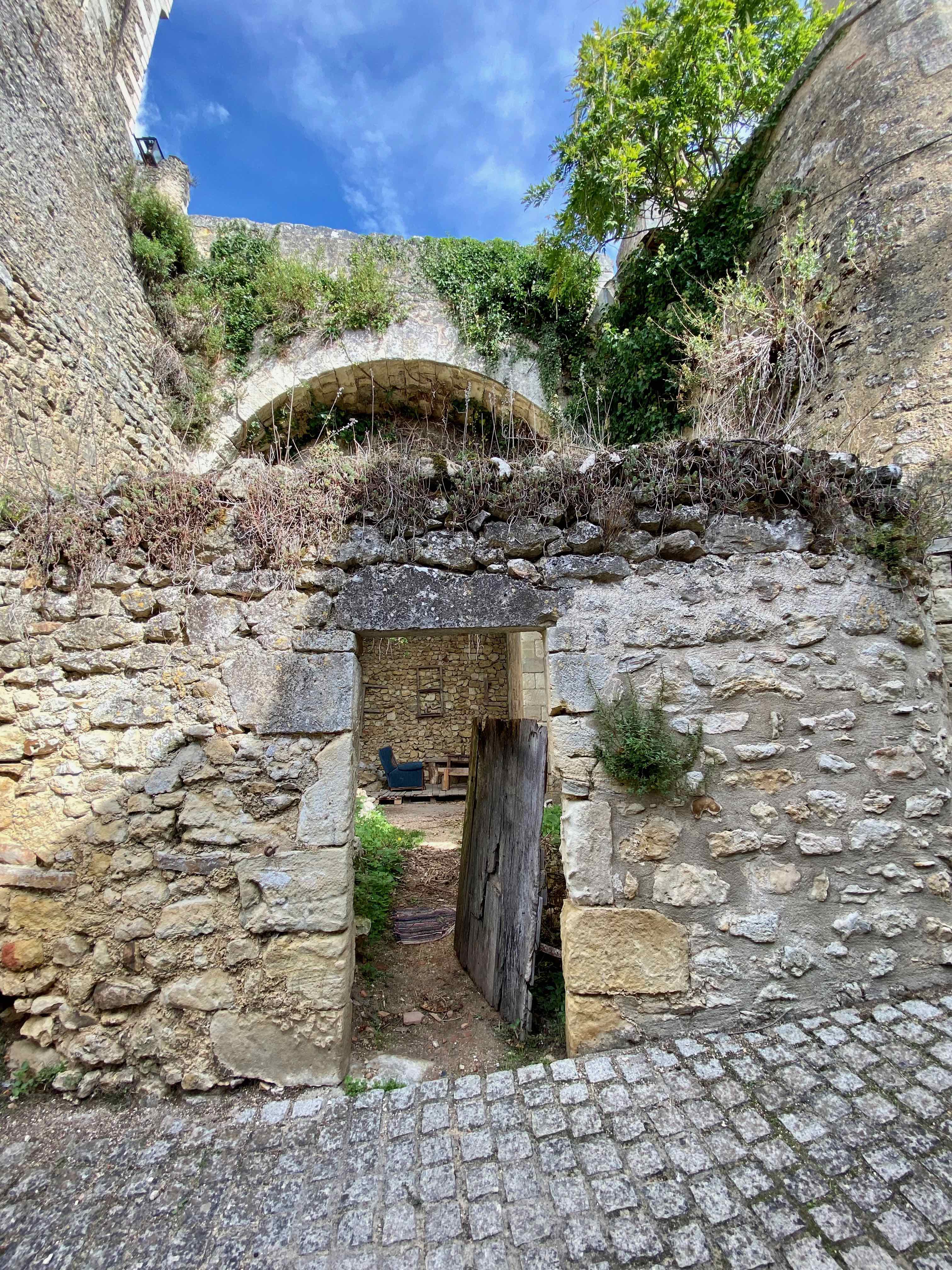
This gate looked interesting…

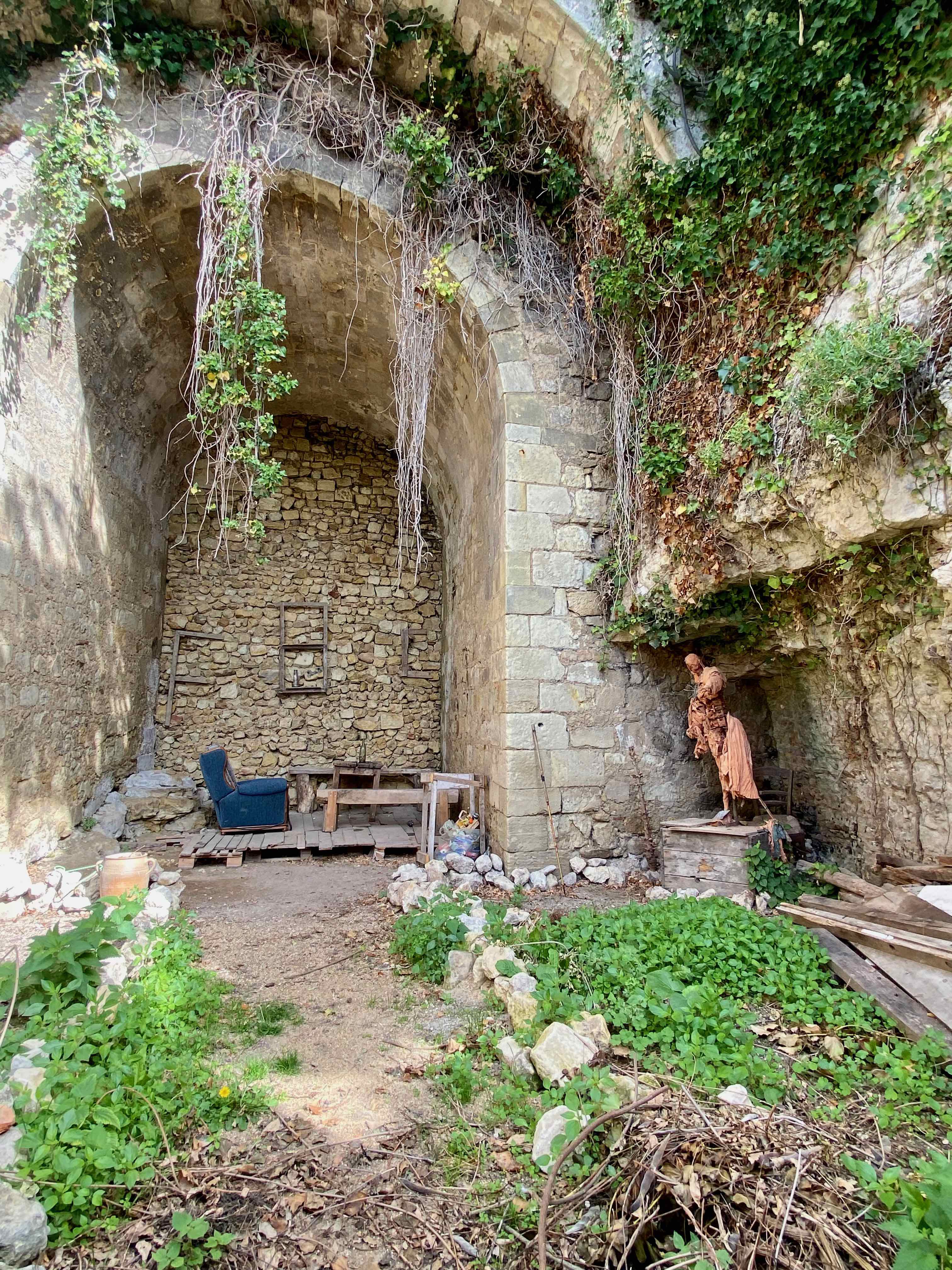
and it hid this tiny garden complete wth a chair, a bottle of wine and a very interesting statue.

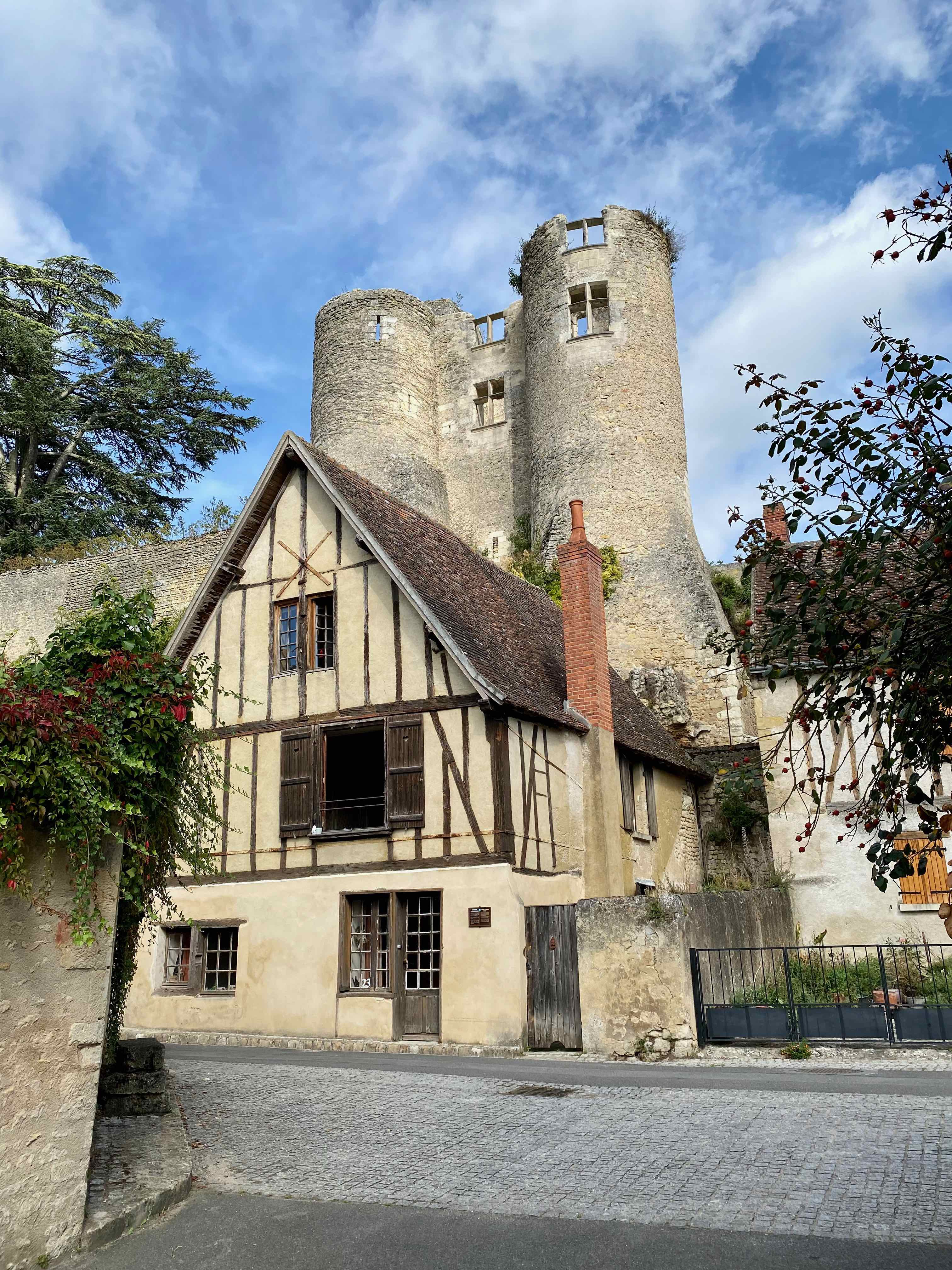
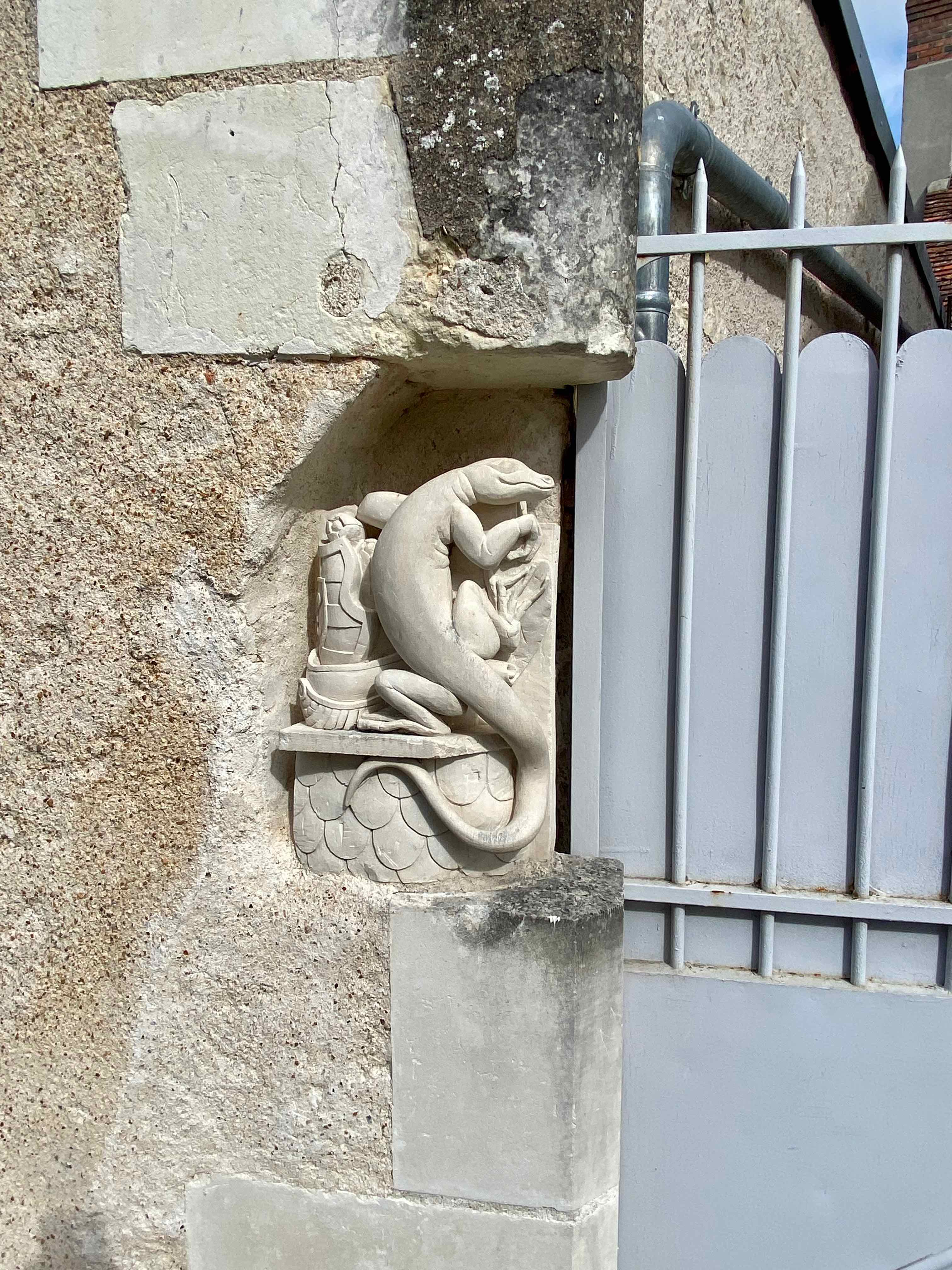
The half-timbered houses date back to the 15th century!  In the background are the towers of the Medieval Keep of the Château de Montrésor.I loved this carved lizard, which is the symbol of Montrésor.
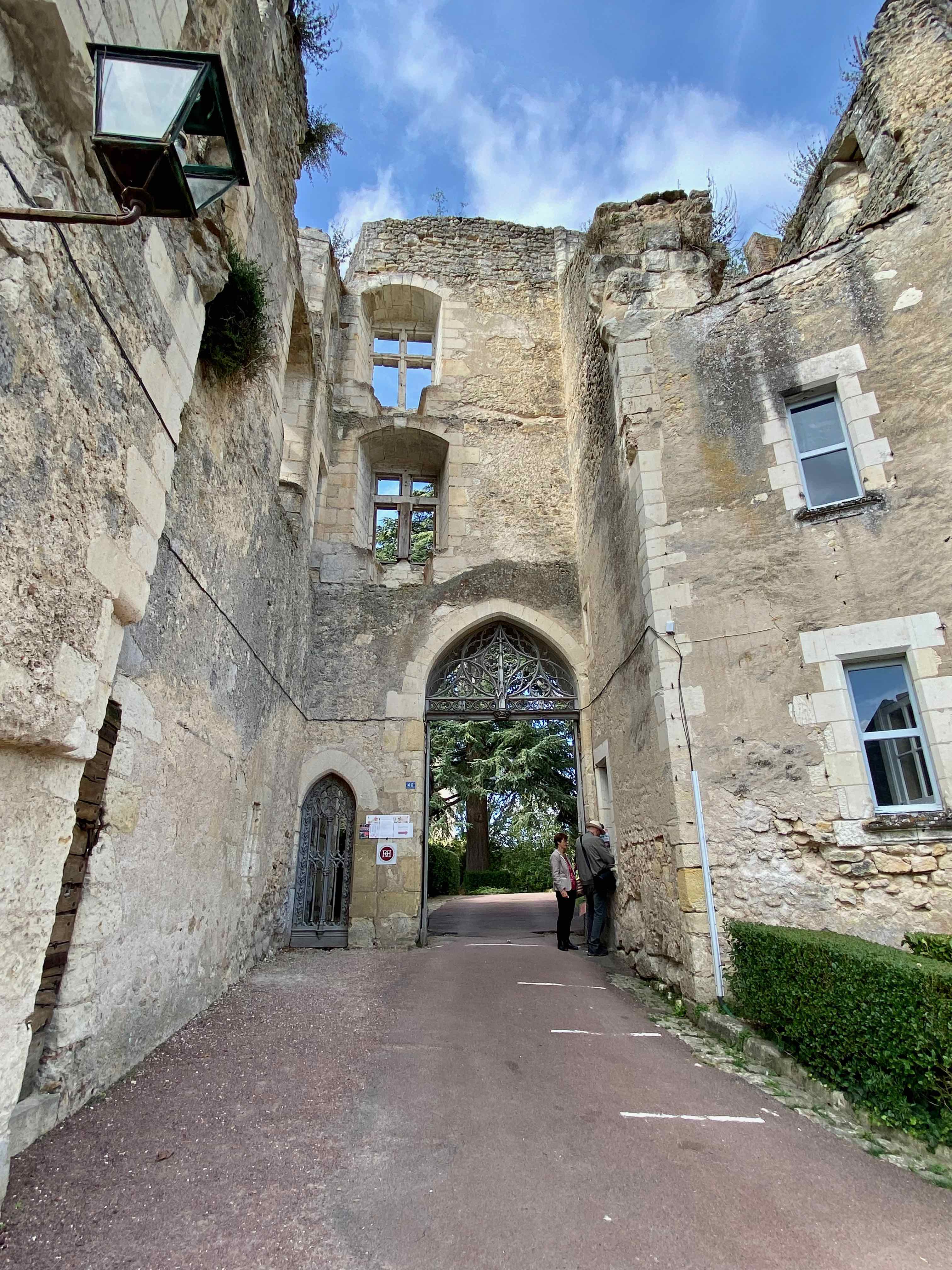
The Château de Montrésor is a medieval castle with a Renaissance mansion built in the grounds.  We decided not to tour the château and soon we are back on the road to Sarlat.

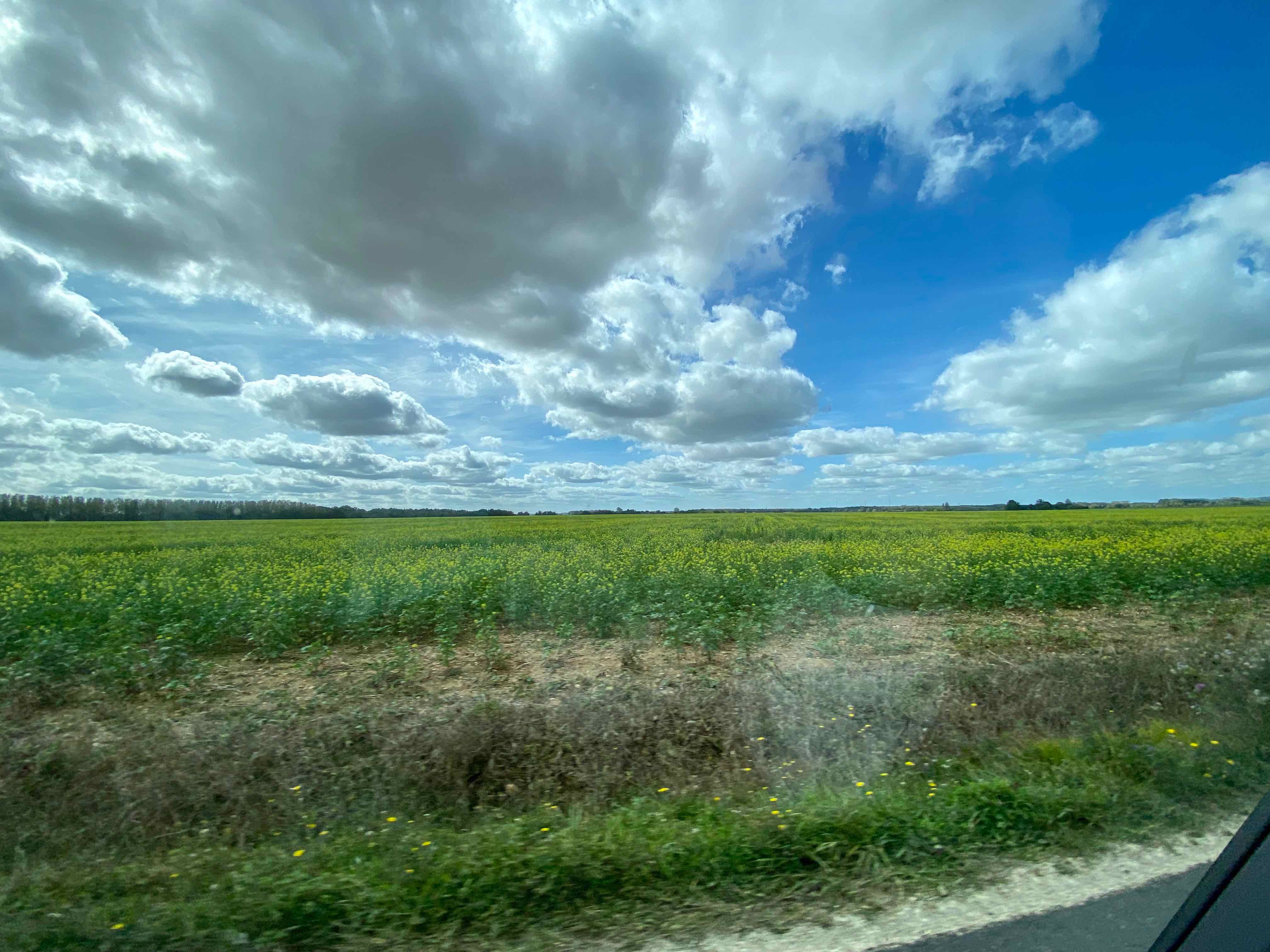
The canola fields are just starting to turn yellow here, much later than back home.

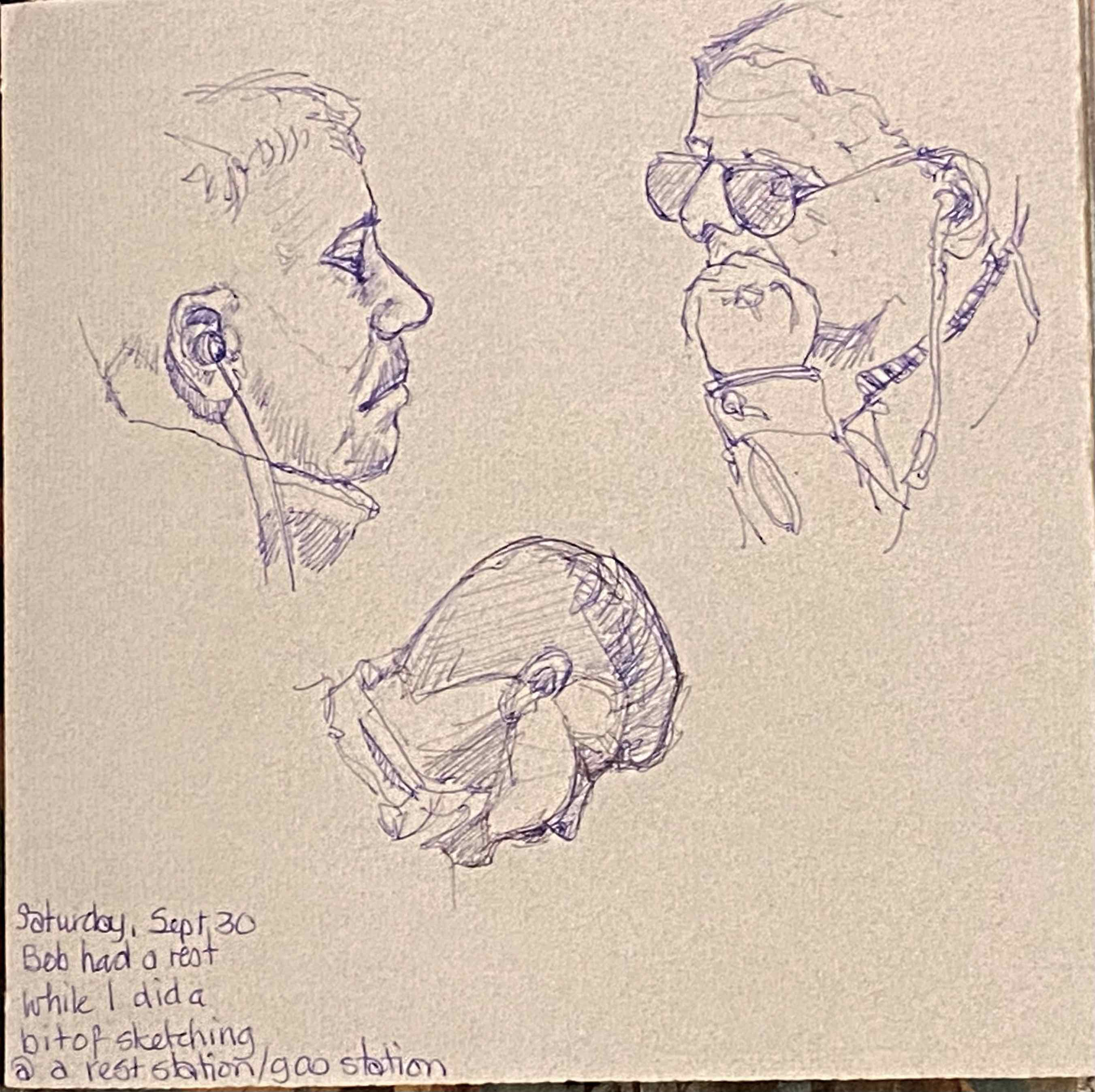
I have a chance to sneak a few sketches of people waiting for a bus at the gas station when we stop to fill up.  There hasn’t been much opportunity for this so far this trip.I notice that the leaves are staring to turn colour…winter is coming!
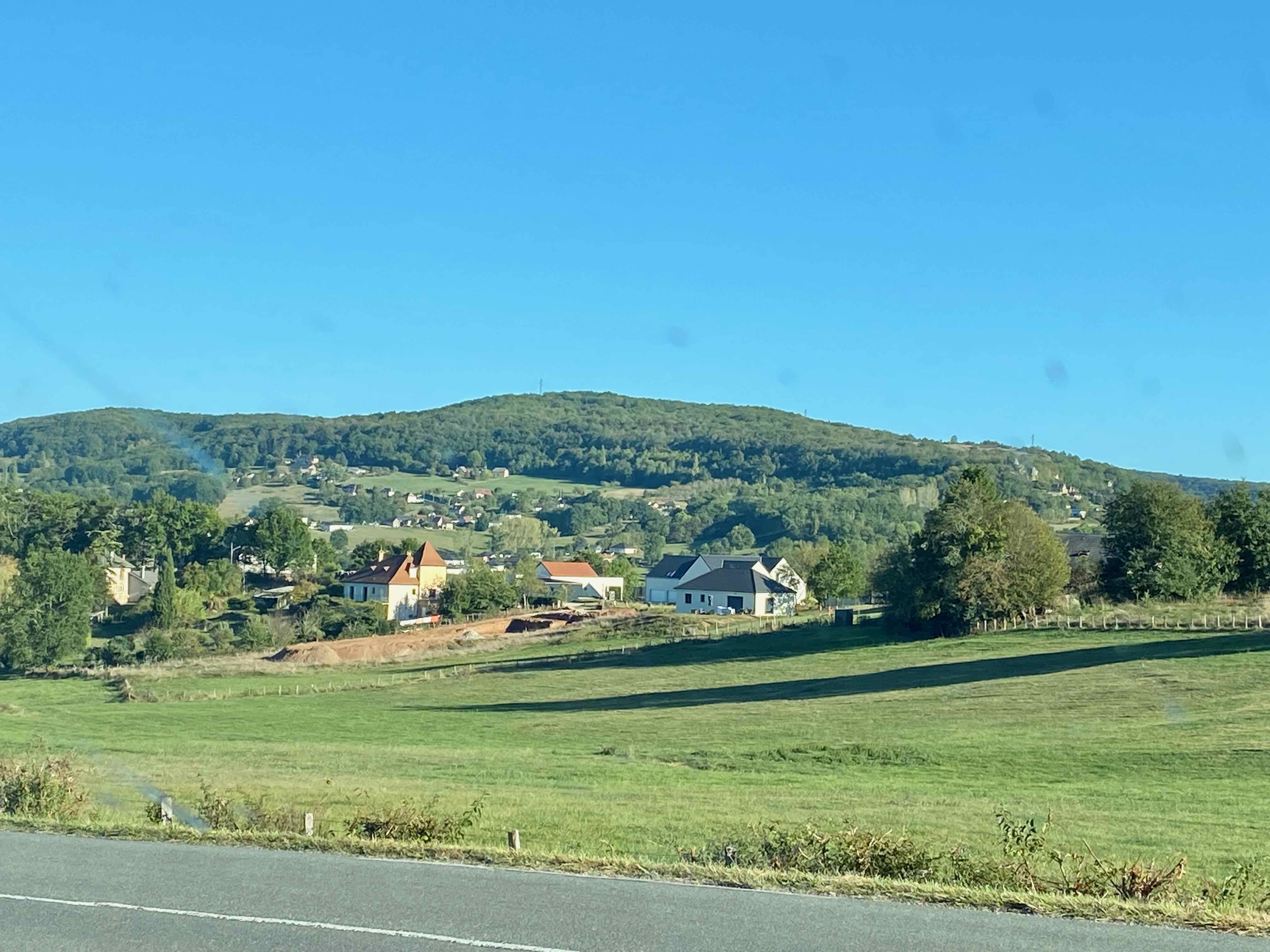
The hillsides are dotted with charming little villages.

Our bnb in Sarlat is right in the heart of the old town.  On the Airbnb website it says “Come and discover the entertainment, restaurants, shops, the famous market of the city with its local products, surrounded by the walls and history of the city of Sarlat. All at your feet.”  It should be interesting, we have never stayed right in the heart of an old city before. The circled windows belong to our apartment.