Day 13. Friday, September 12, 2025
It is an hour drive to Amiens from Arras where we will visit Jules Verne’s house, the largest cathedral in France, and take a unique boat ride.
We luck out and find a parking space right beside the Jules Verne museum. Parking downtown in French cities is very difficult, there are more cars than spaces available. We have our picnic lunch in a little park right by the museum but these chestnuts were falling and landing with a crash around us…the spikes on the green fruit are very sharp and we decide to move to a safer bench.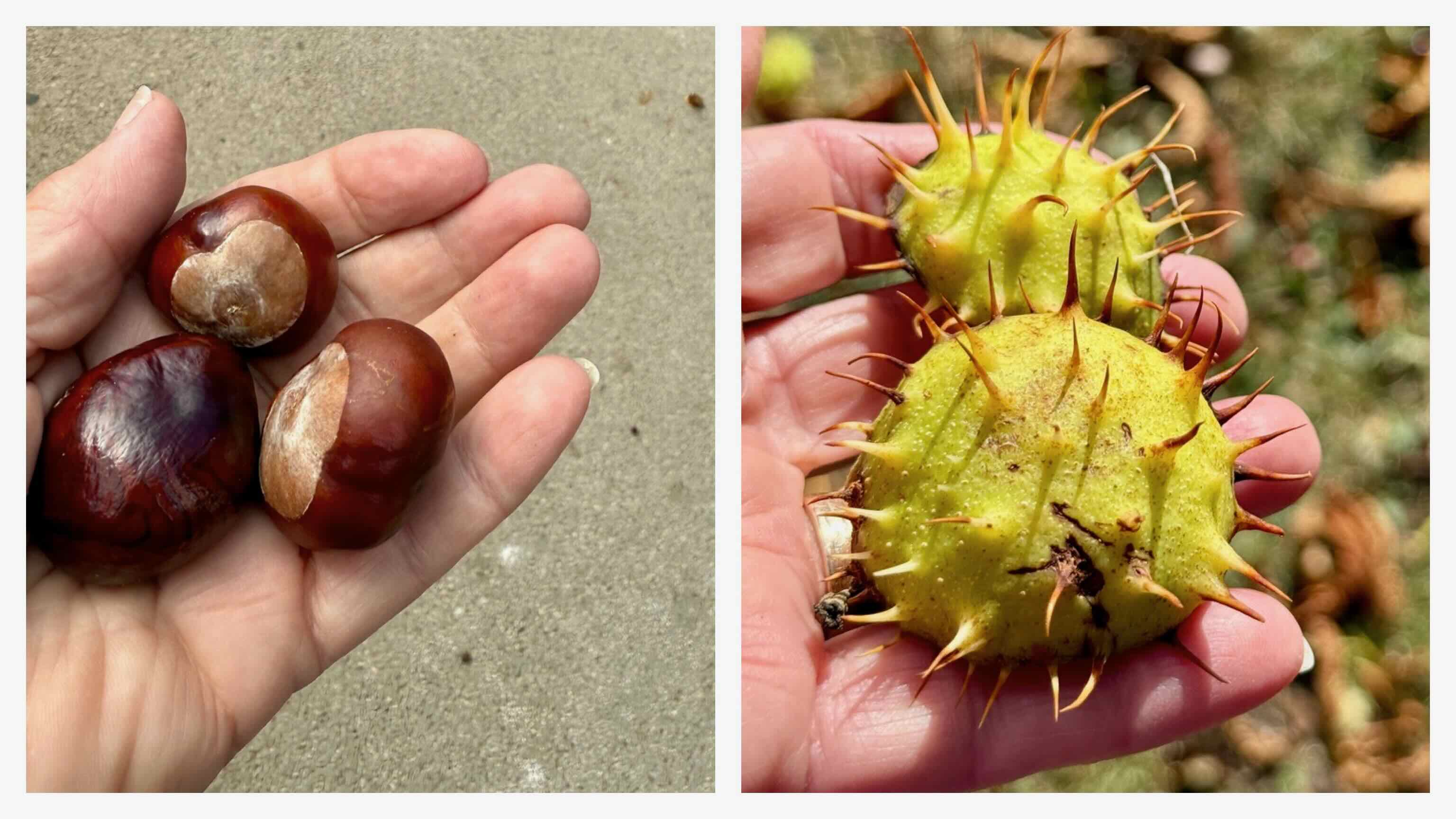
Jules Verne (1828-1905) was a French novelist, poet and playwright. Jules Verne is the second most translated author in the world, ranking below Agatha Christie and above William Shakespeare. His novel Around the World in 80 Days is printed in 18 languages.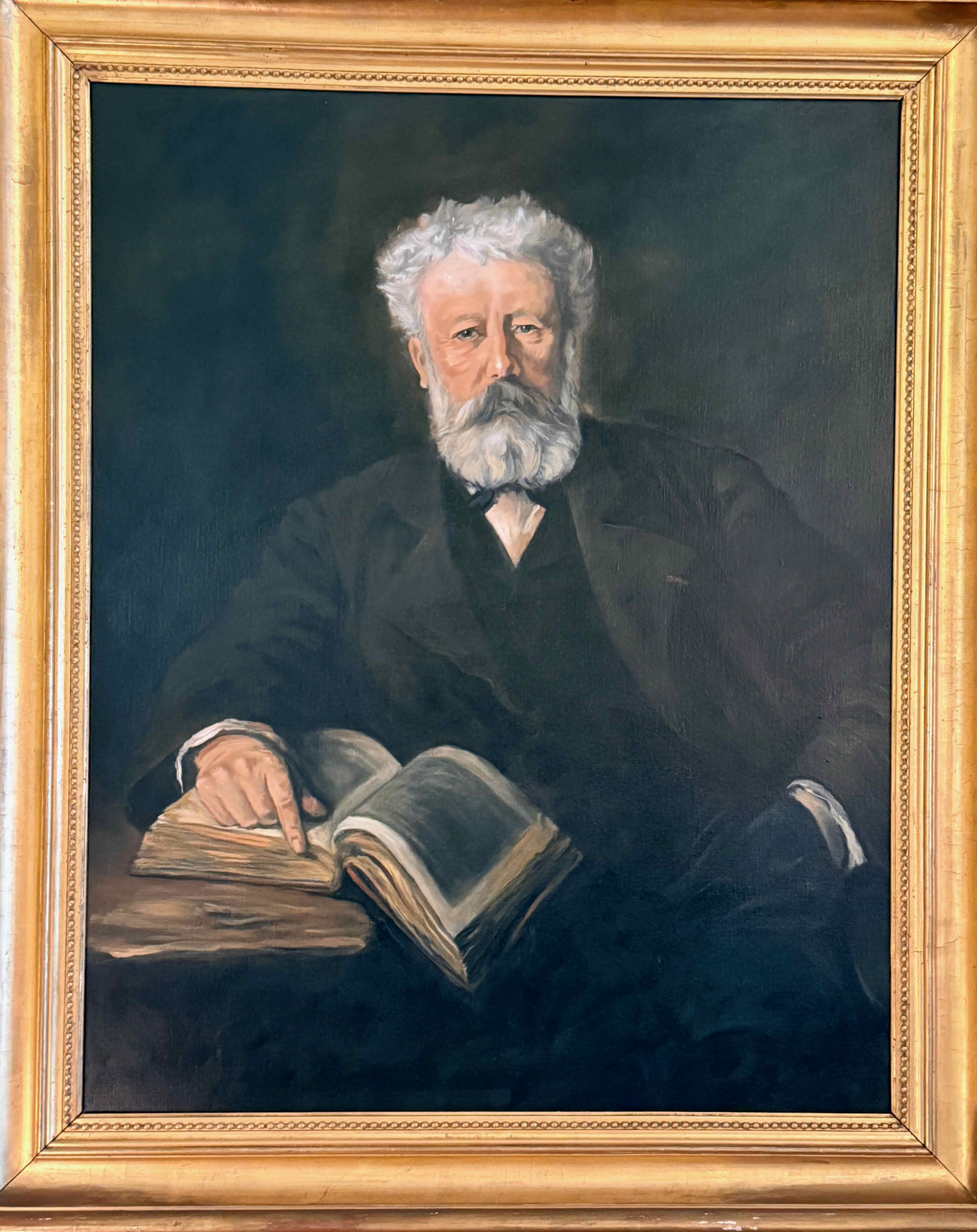
The winter garden was the original entrance to the Jules Verne house. Tropical garden plants were moved indoors here to spend the winter.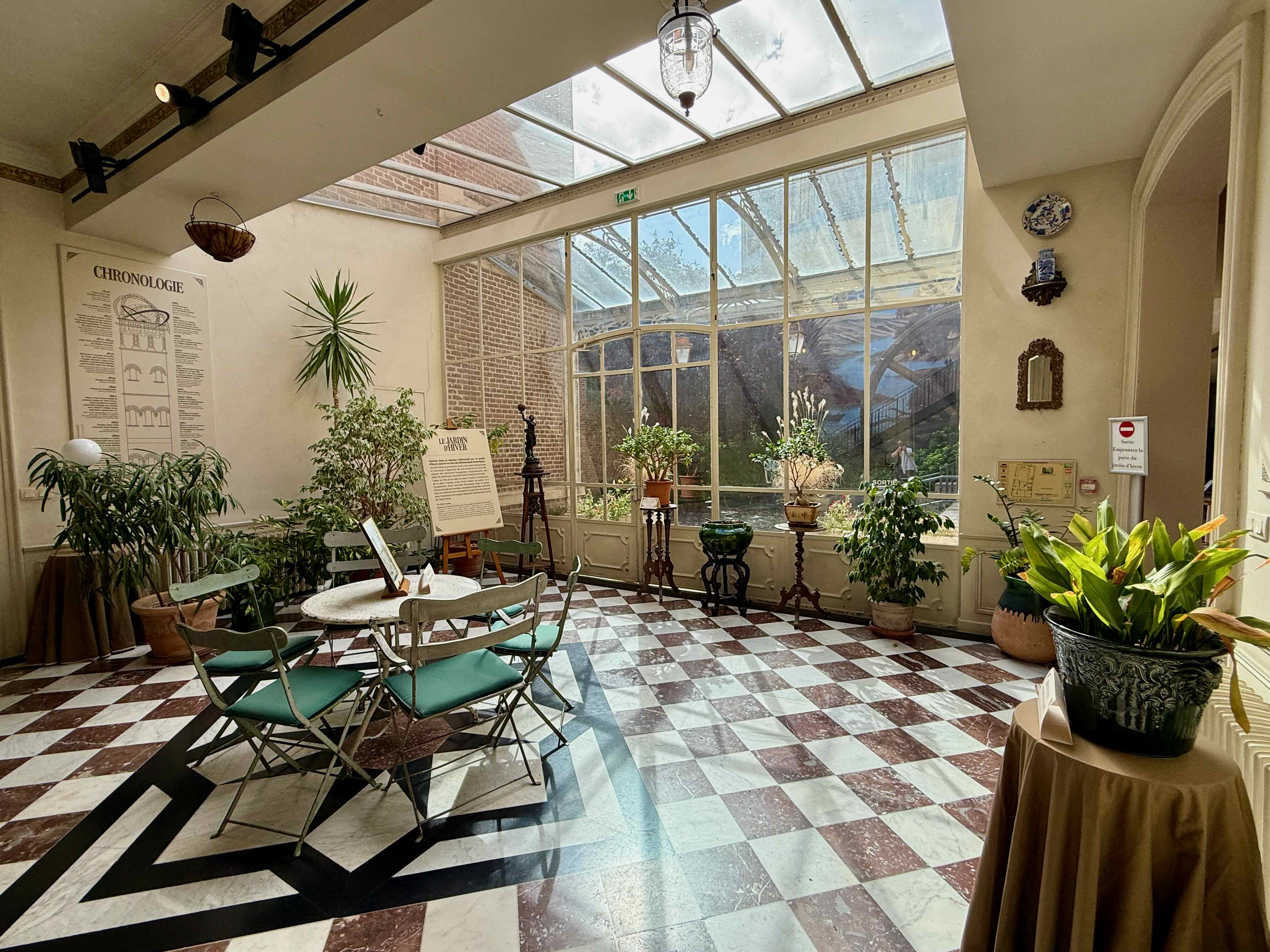
The dining room and salon on the main floor.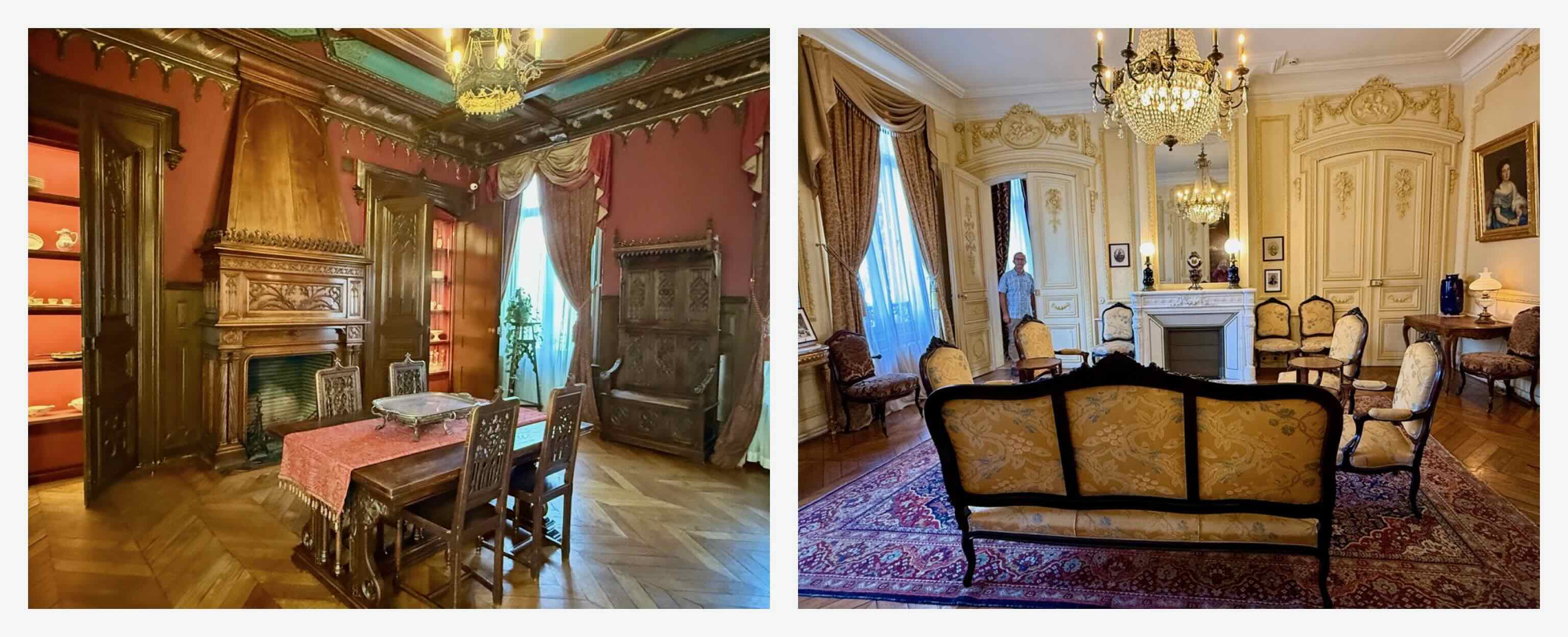
One of the second floor rooms was a reconstruction of his first boat. Jules Verne loved to sail and his first boat was a 9 metre long. His second boat was 20 meters in length and the third was 30 meters! 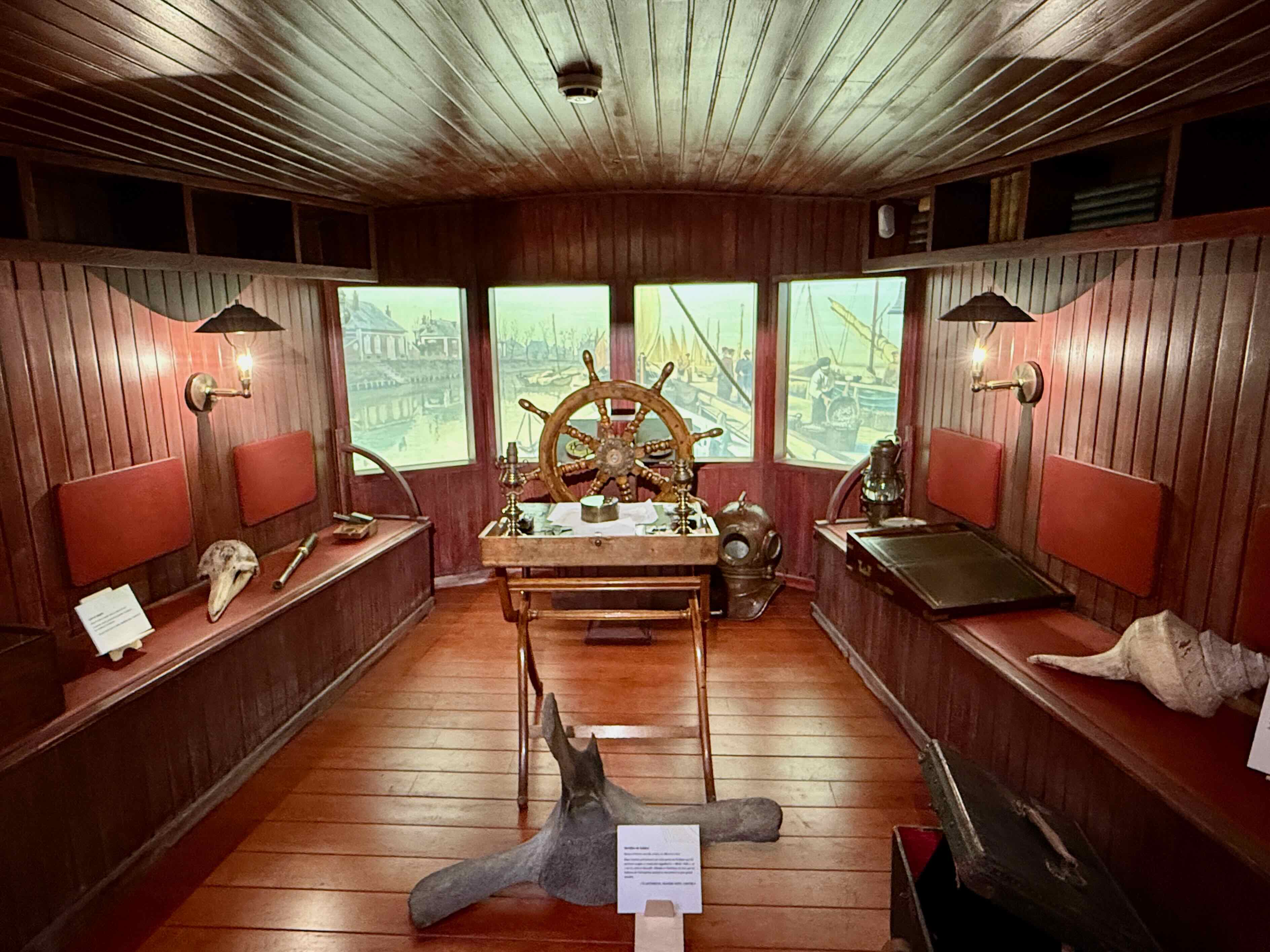
This second floor room was a library. The second photos shows the original library with over 12,000 books. When he read these books Jules Verne wrote notes on index cards to use as reference information for his novels.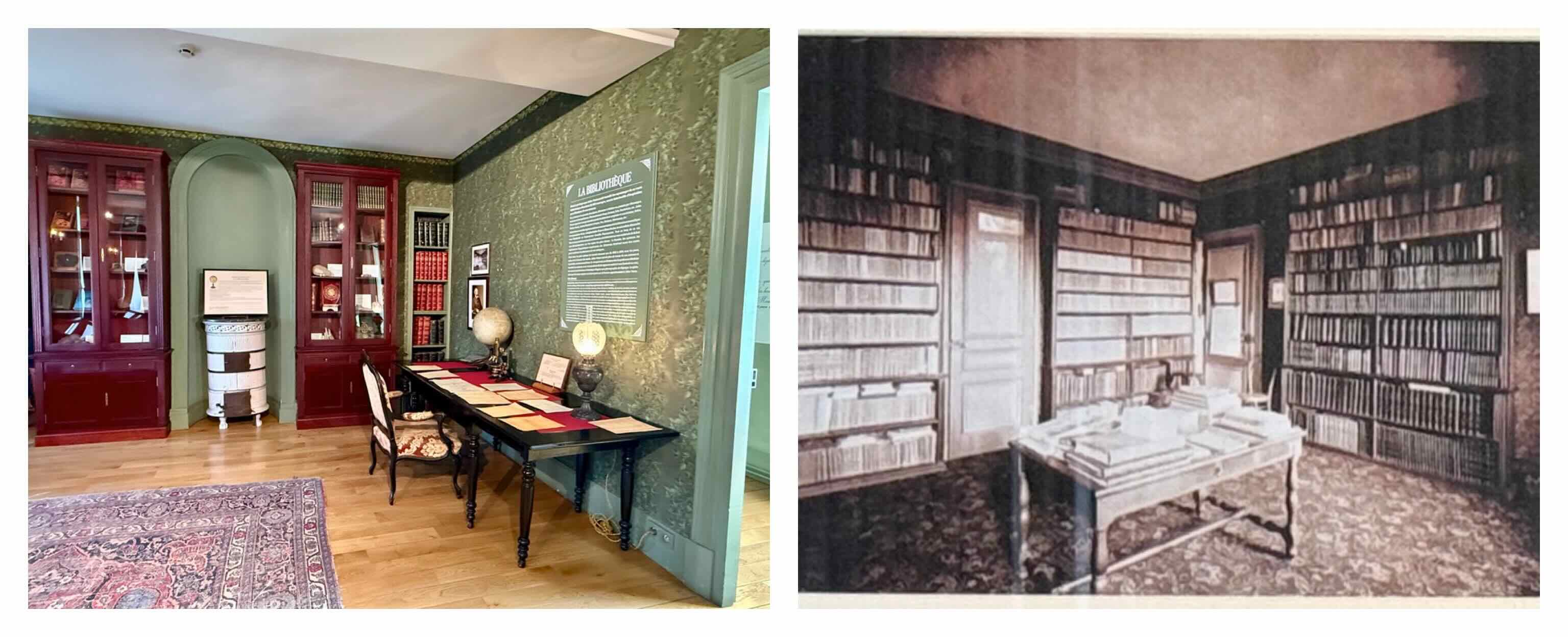
From 1882 to 1900 Jules Verne wrote every day from 5:00 am until 11:00 am in this little room.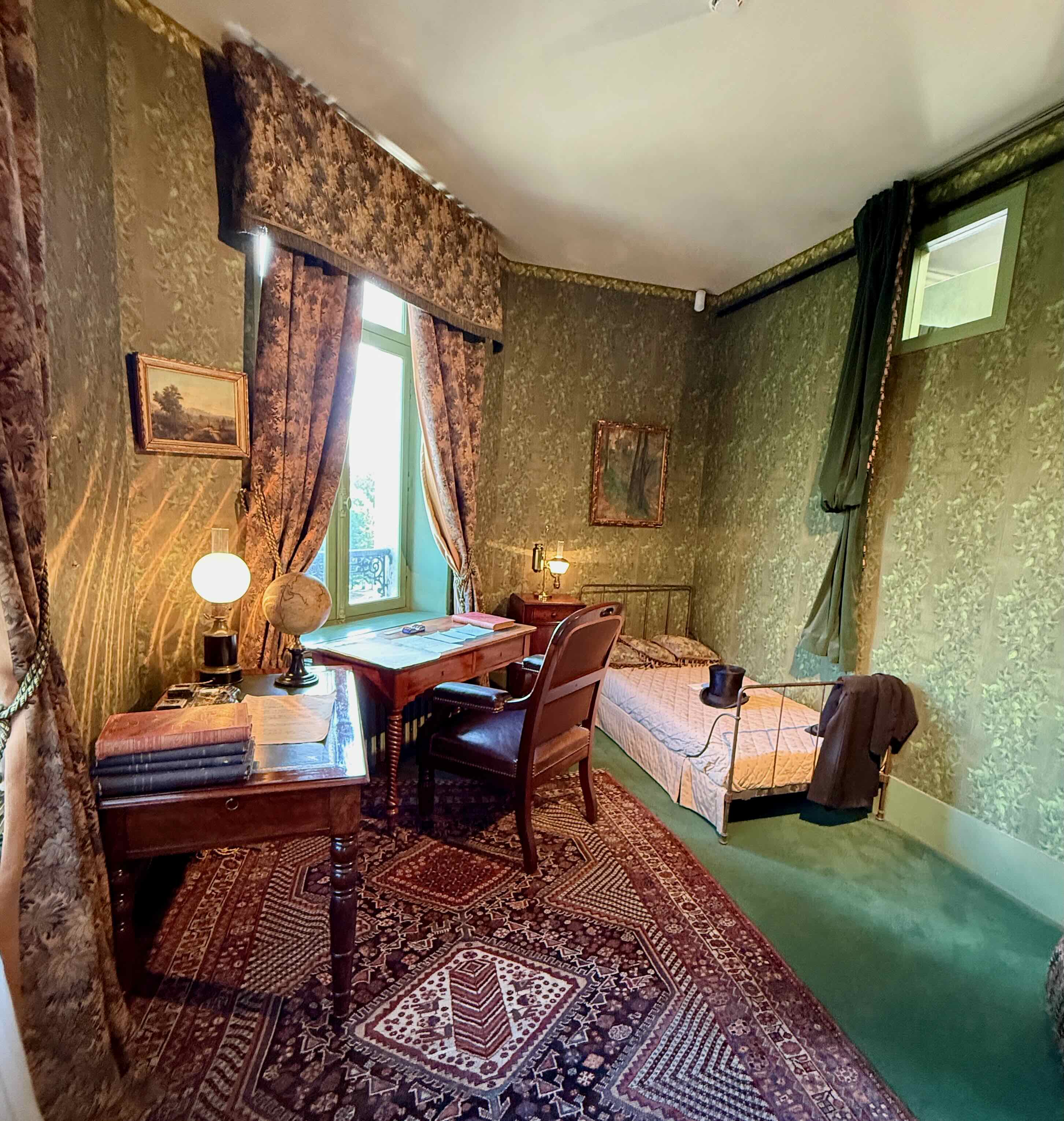
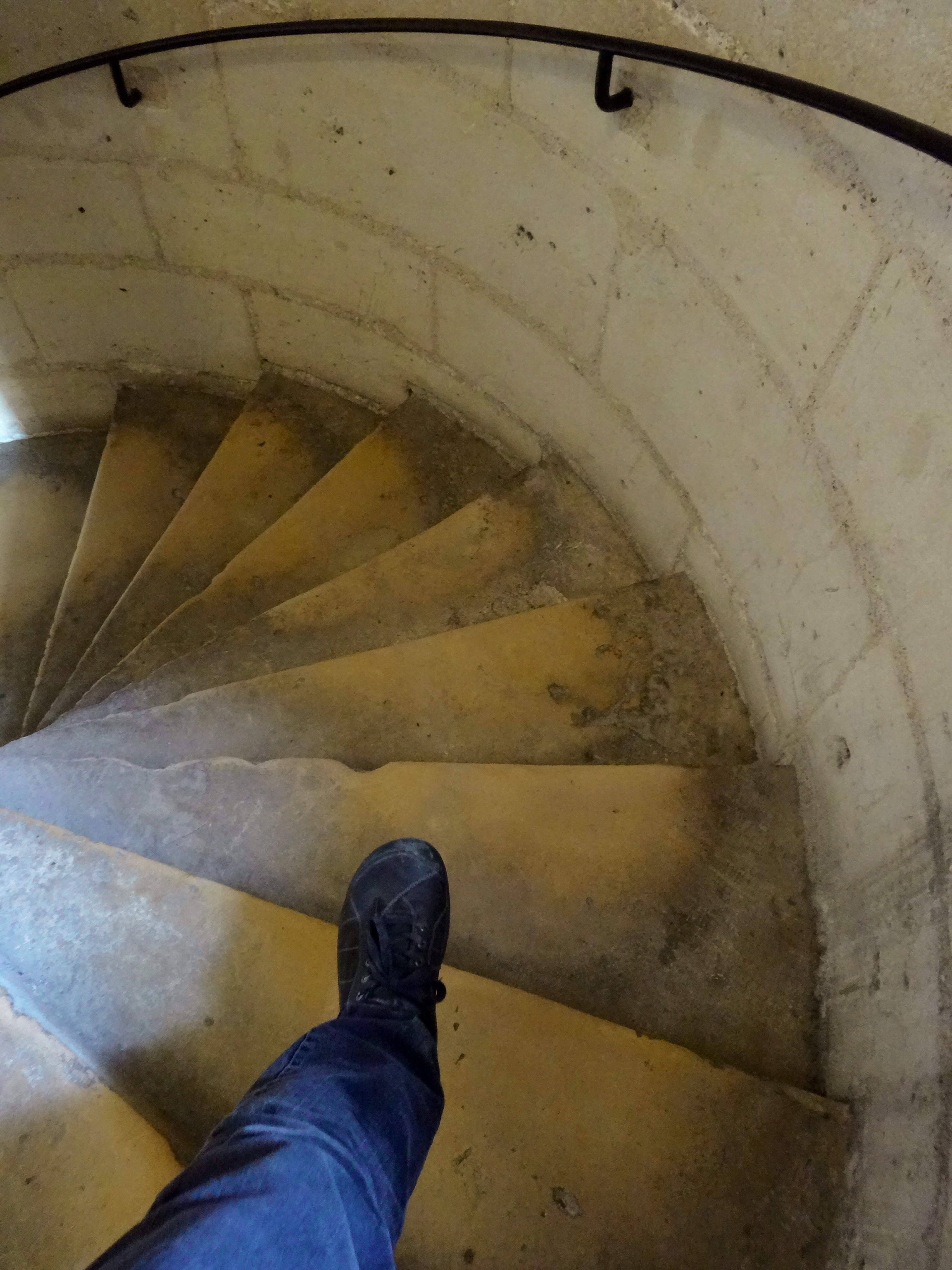
Climbing the tower which was added to the house by Jules Verne. It allows access to all three floors of the house.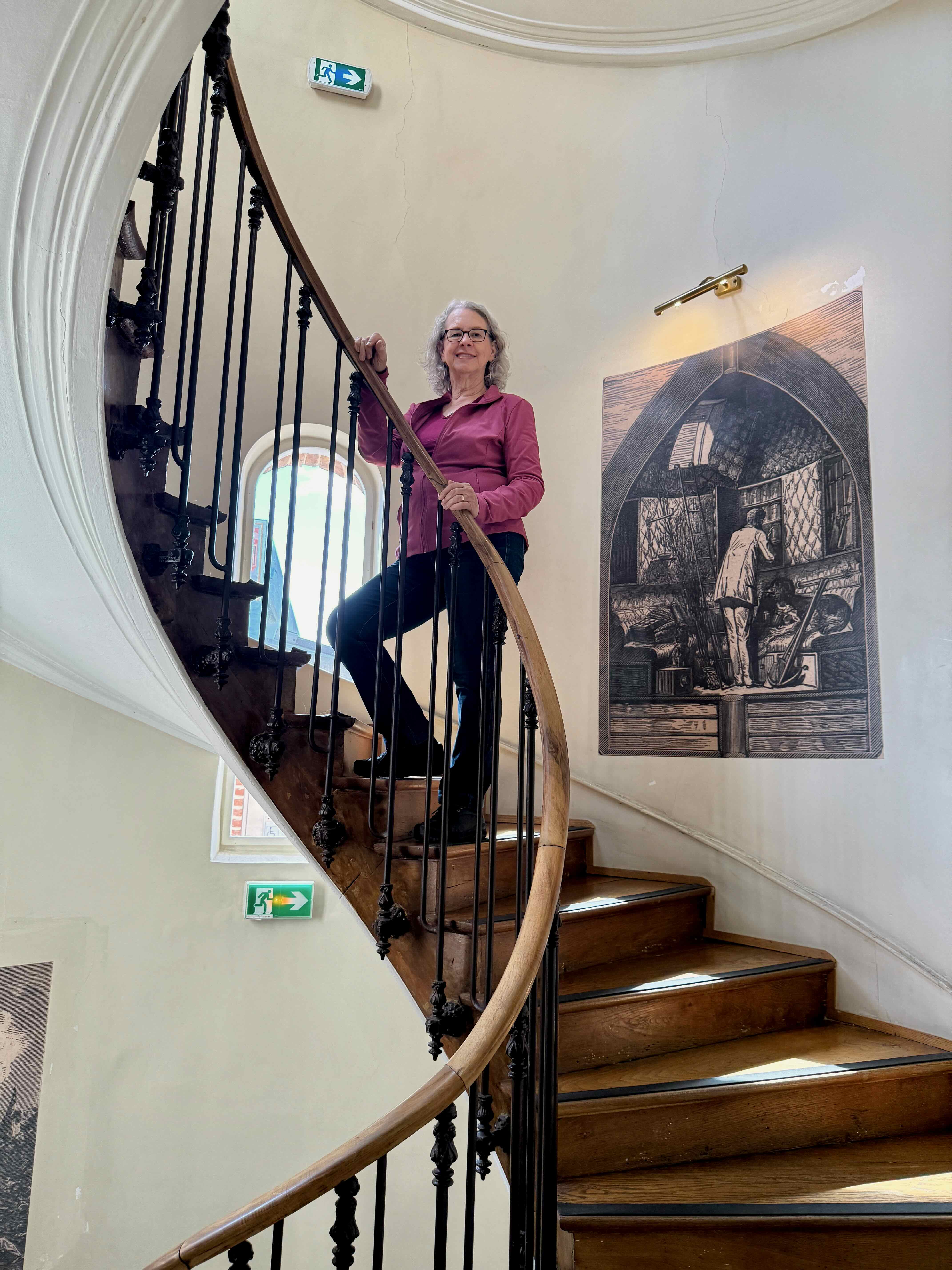
The third floor attic has a collection of original movie posters…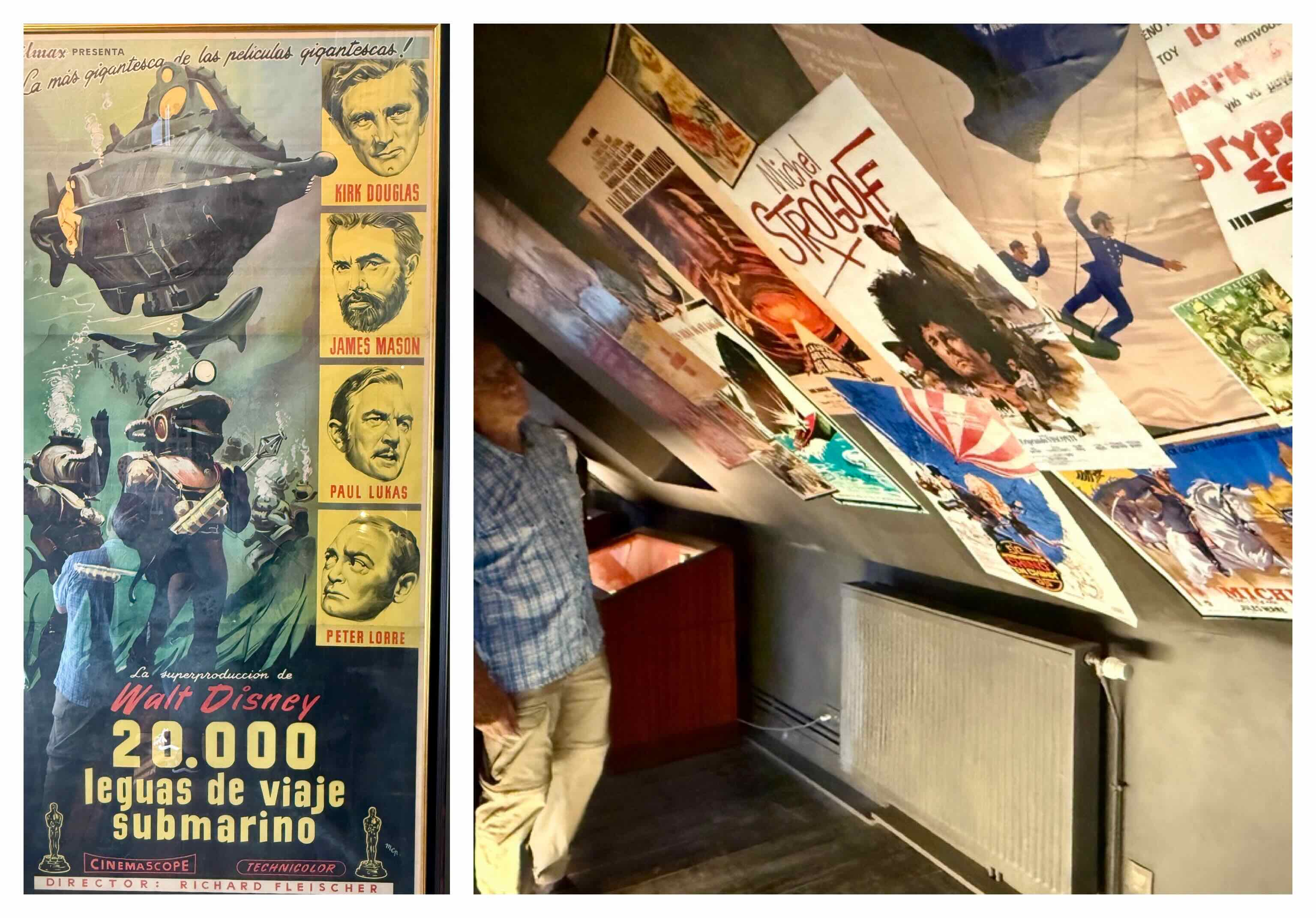
…and other memorabilia. I look like I am one of the exhibits!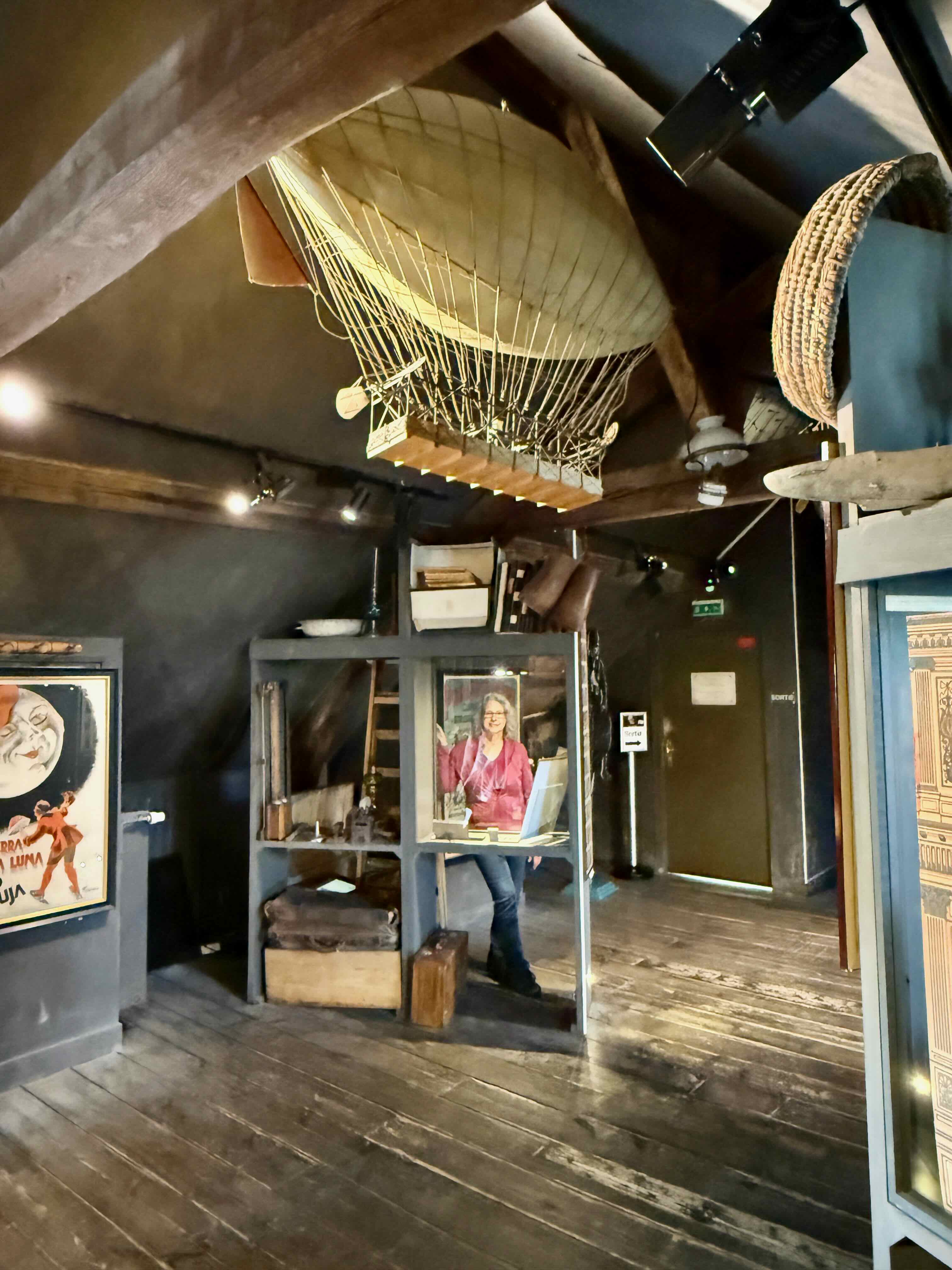
Bob and a fictional flying machine from one of Verne’s novels. 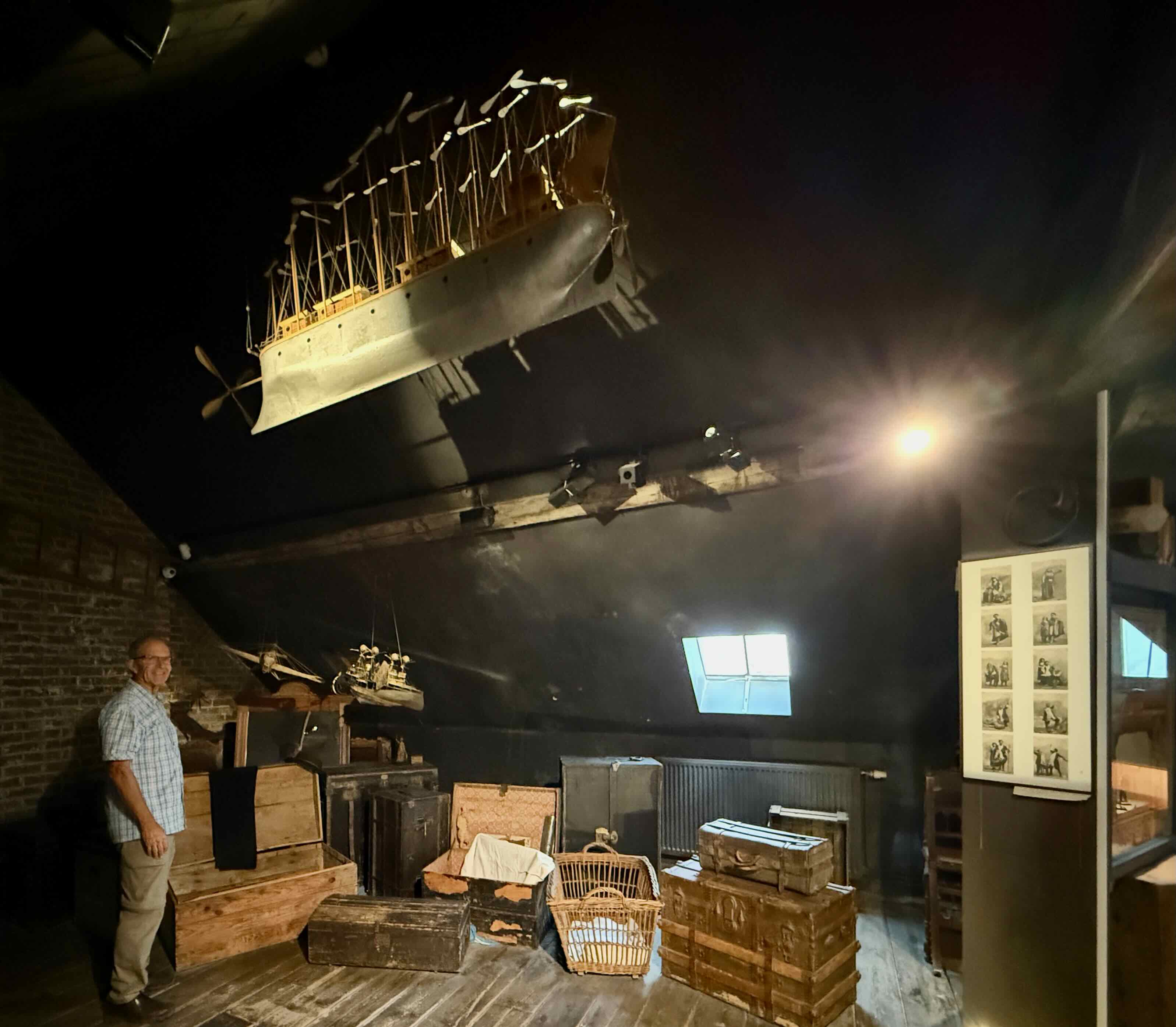 A view from the front of the house showing the winter garden.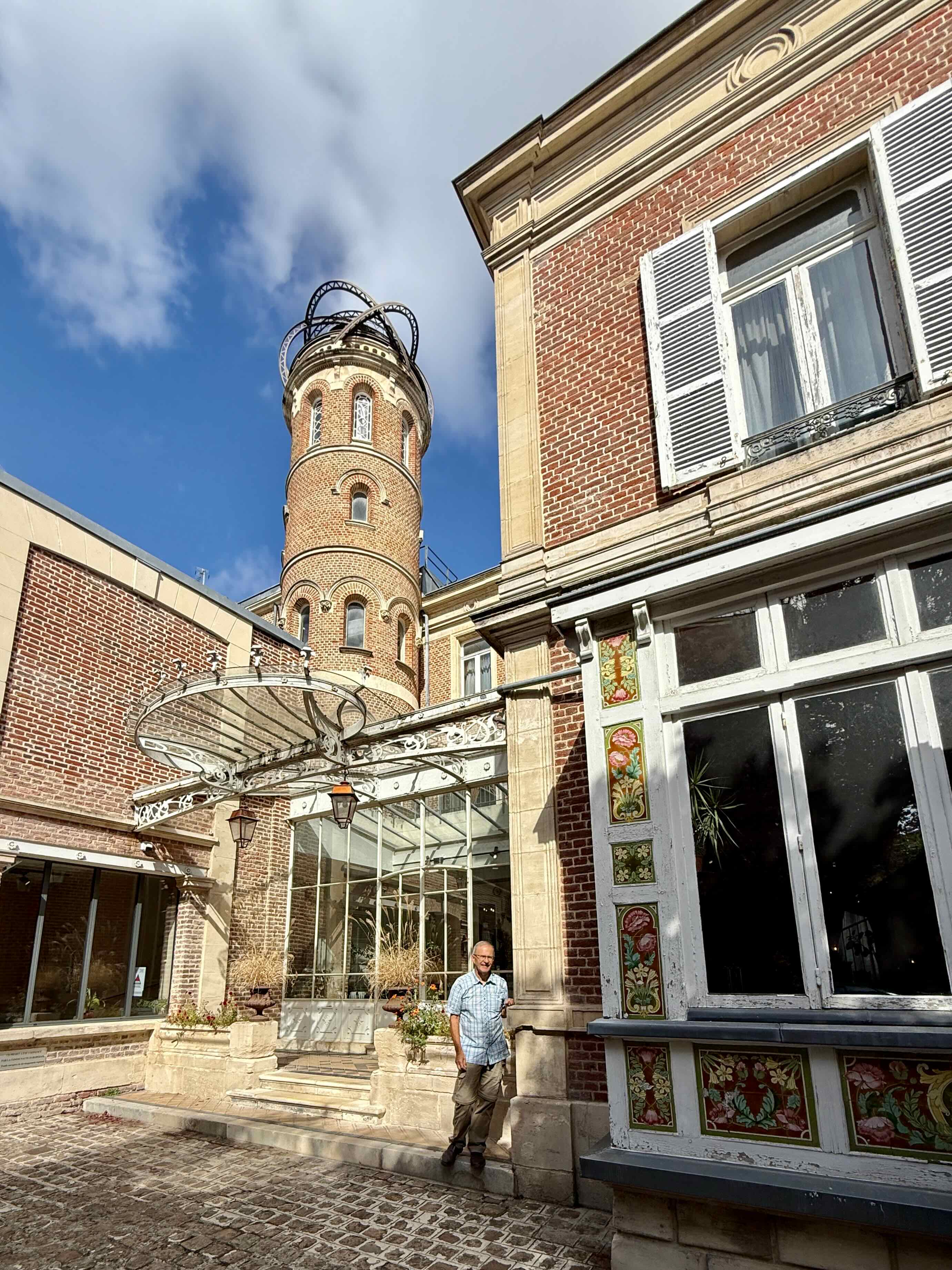
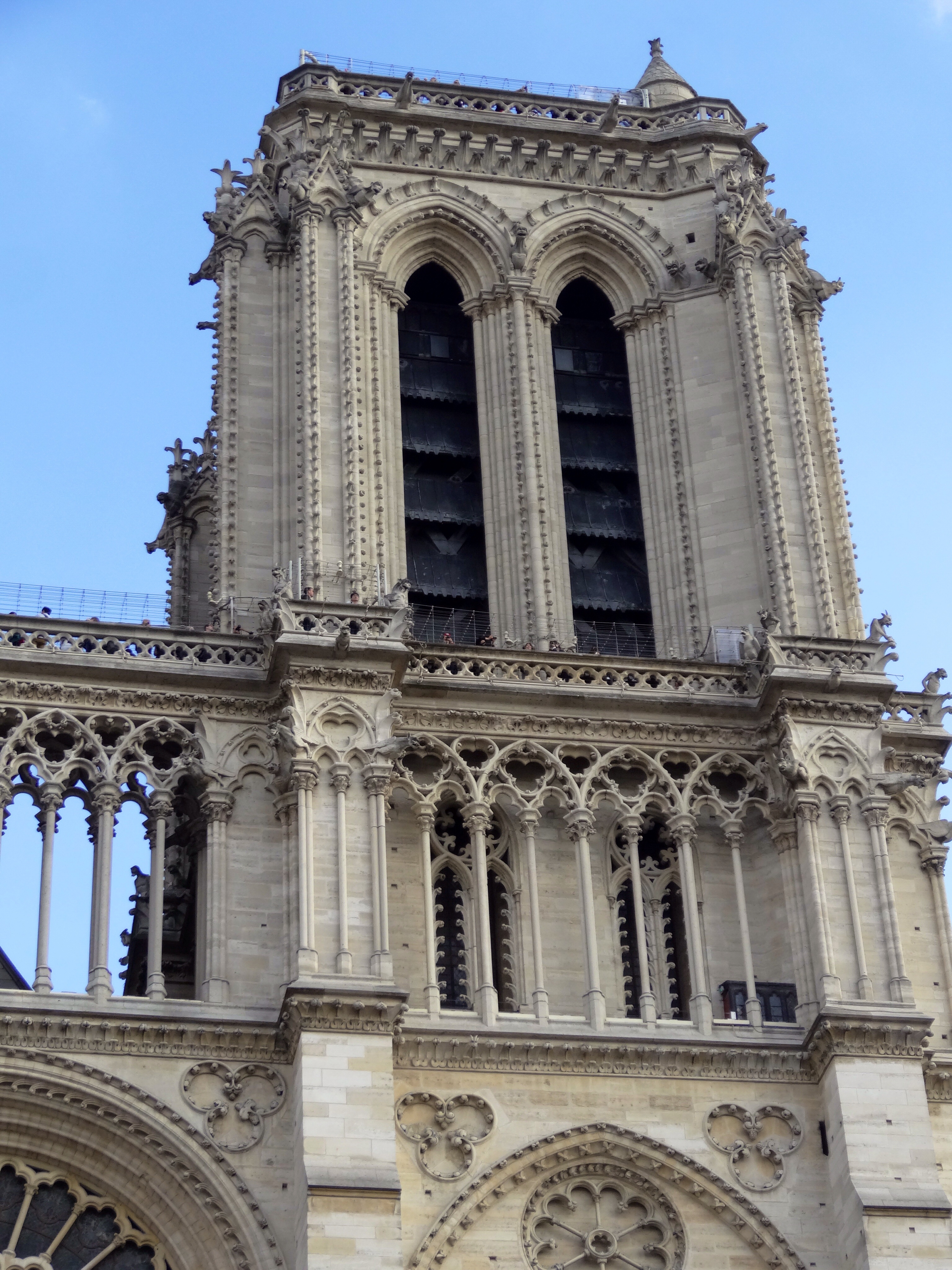
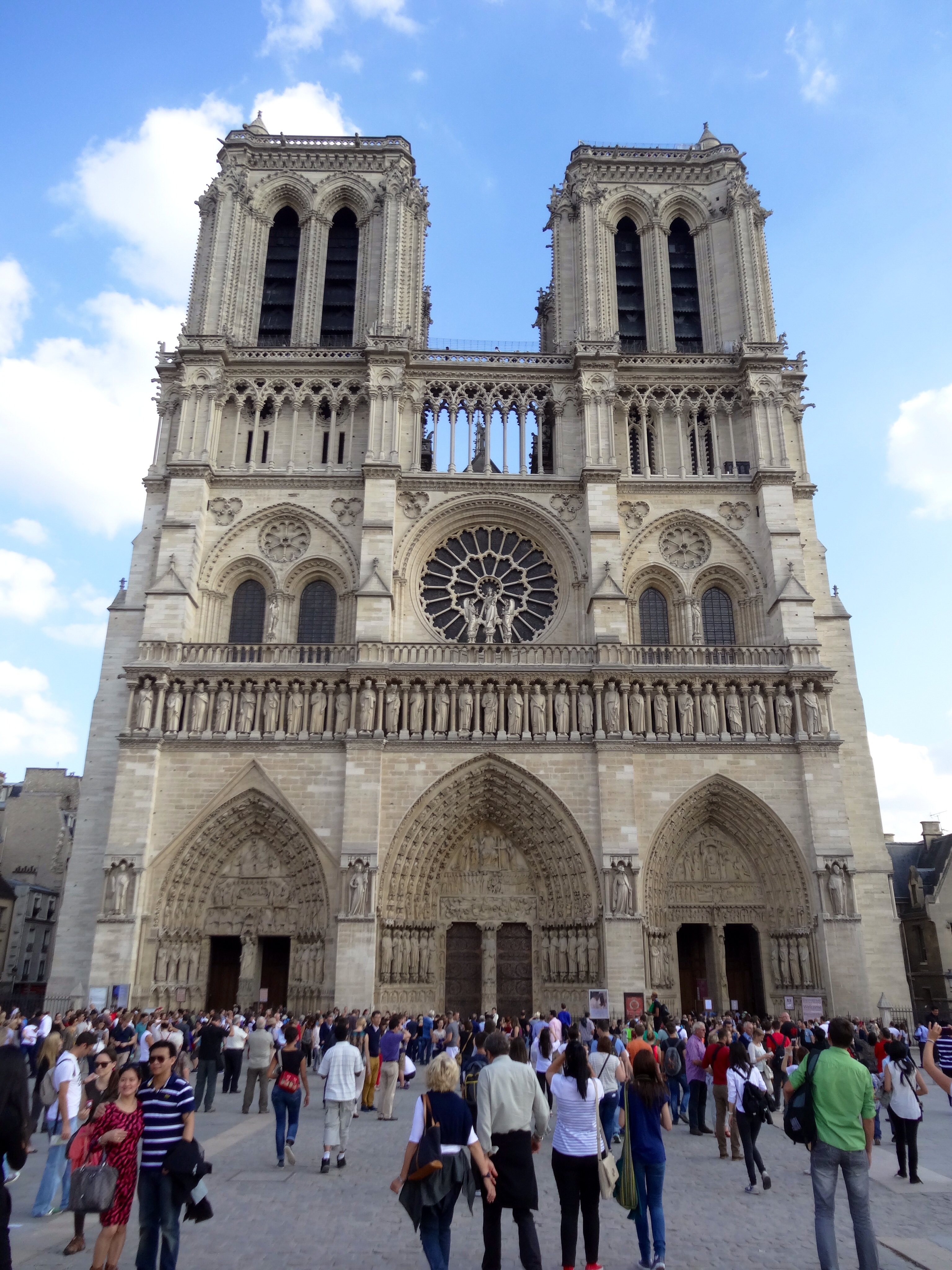
it is a short walk to the Amiens cathedral. Notre-Dame d’Amiens is the largest medieval cathedral in the world. It was built in 1269 and is twice the size of Notre Dame in Paris.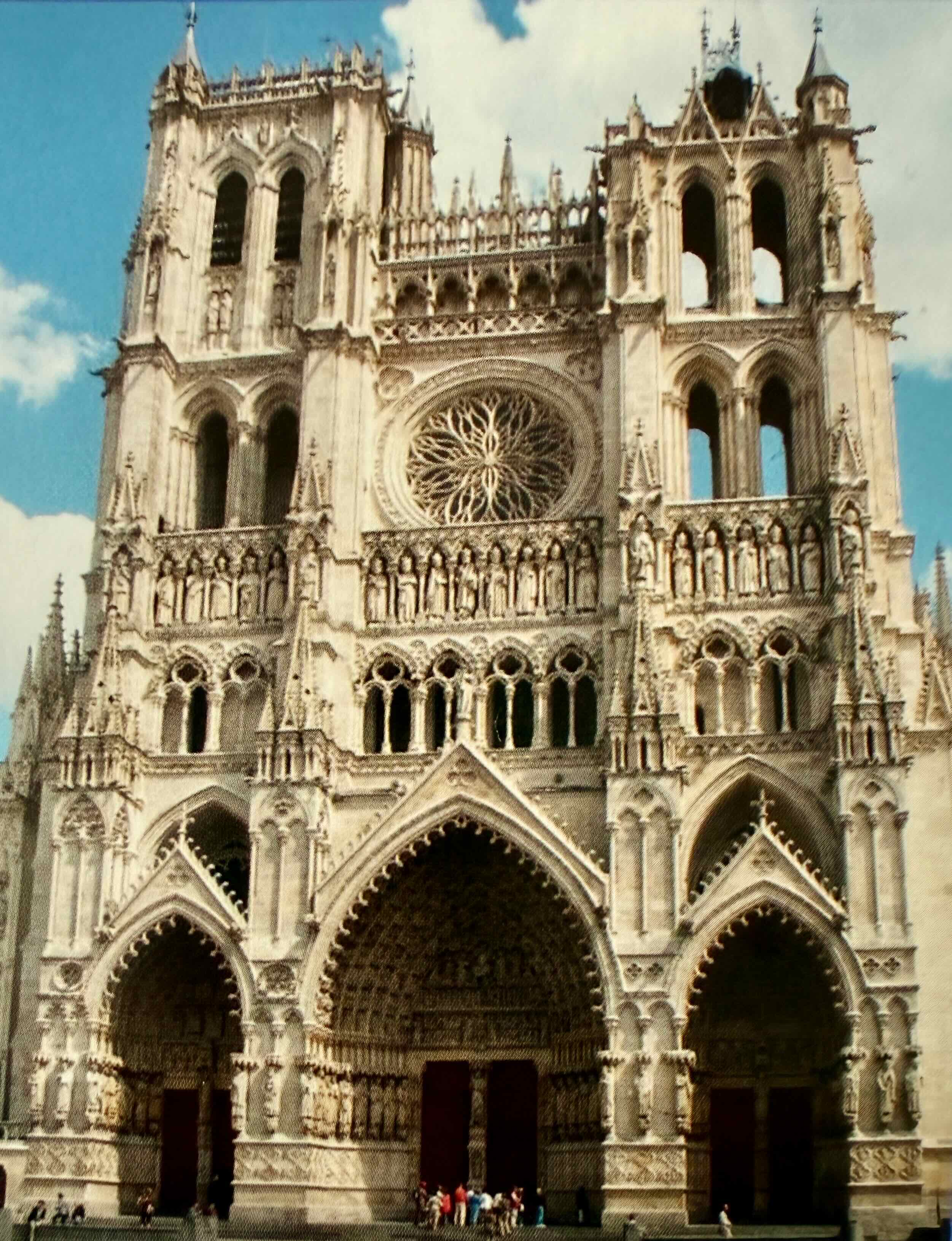
The sculpted decorations in the portals have survived in a remarkable state of preservation…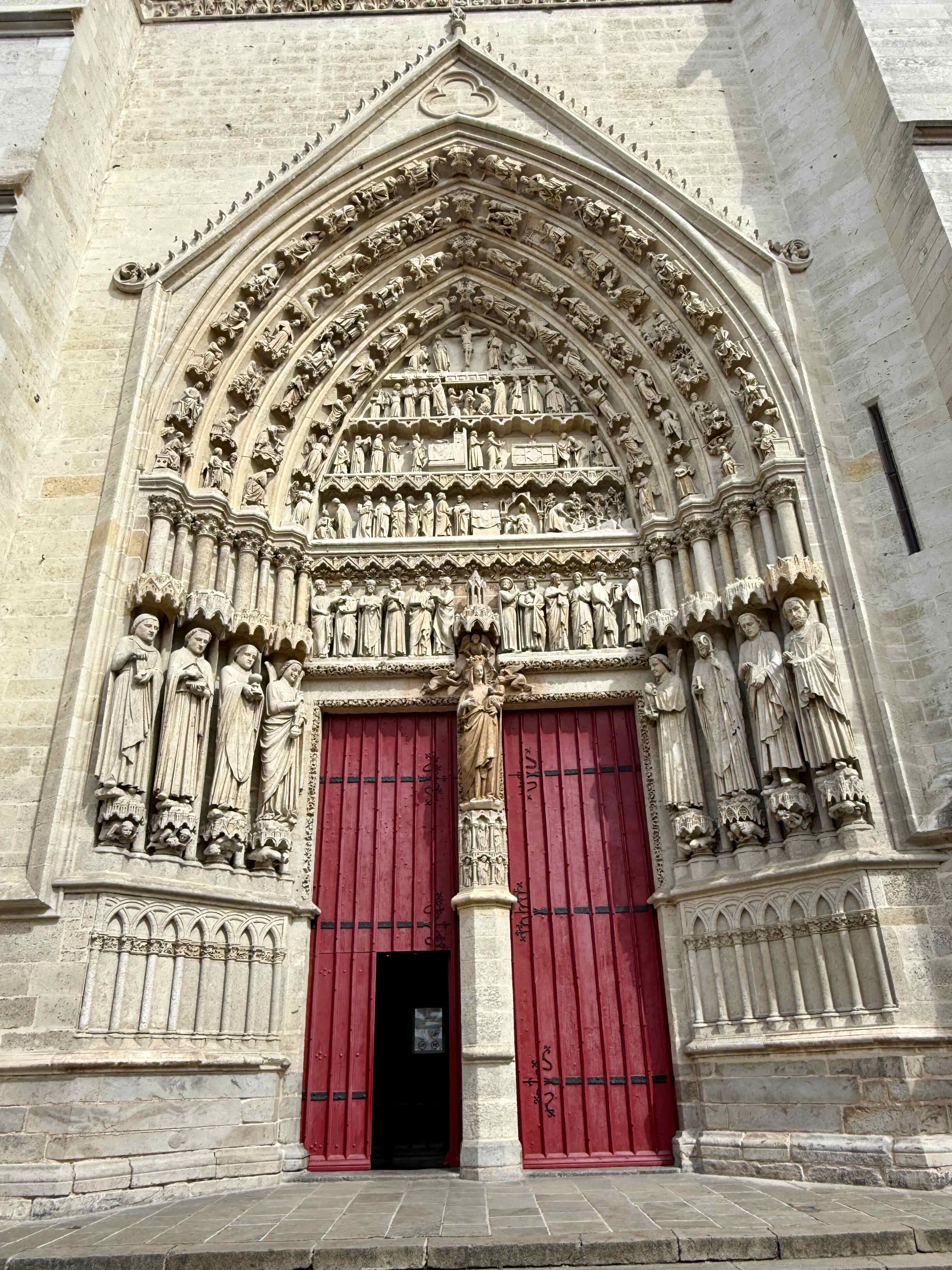
…and the 16th century wood carvings of the choir stalls are unique in the world. 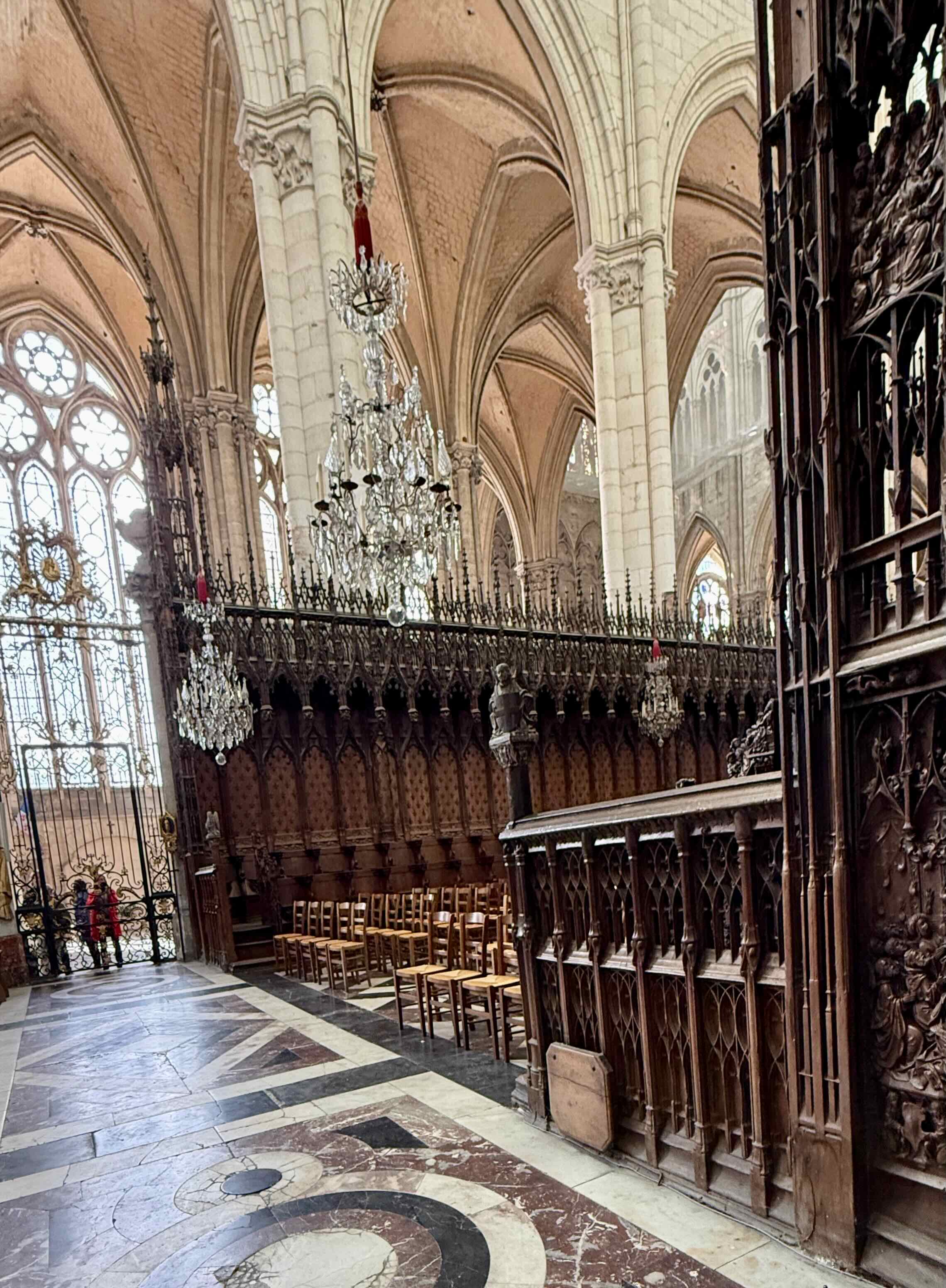
Sandbags were used to protect the exterior and interior of the church during WWI. The stained glass windows were removed and stored elsewhere. Unfortunately there was a fire and some of the windows were destroyed. A bomb did fall directly on the church but it did not detonate. Whether by faulty fuse, divine intervention or sheer luck, the cathedral stood unharmed. Info and photo~ church heritage.eu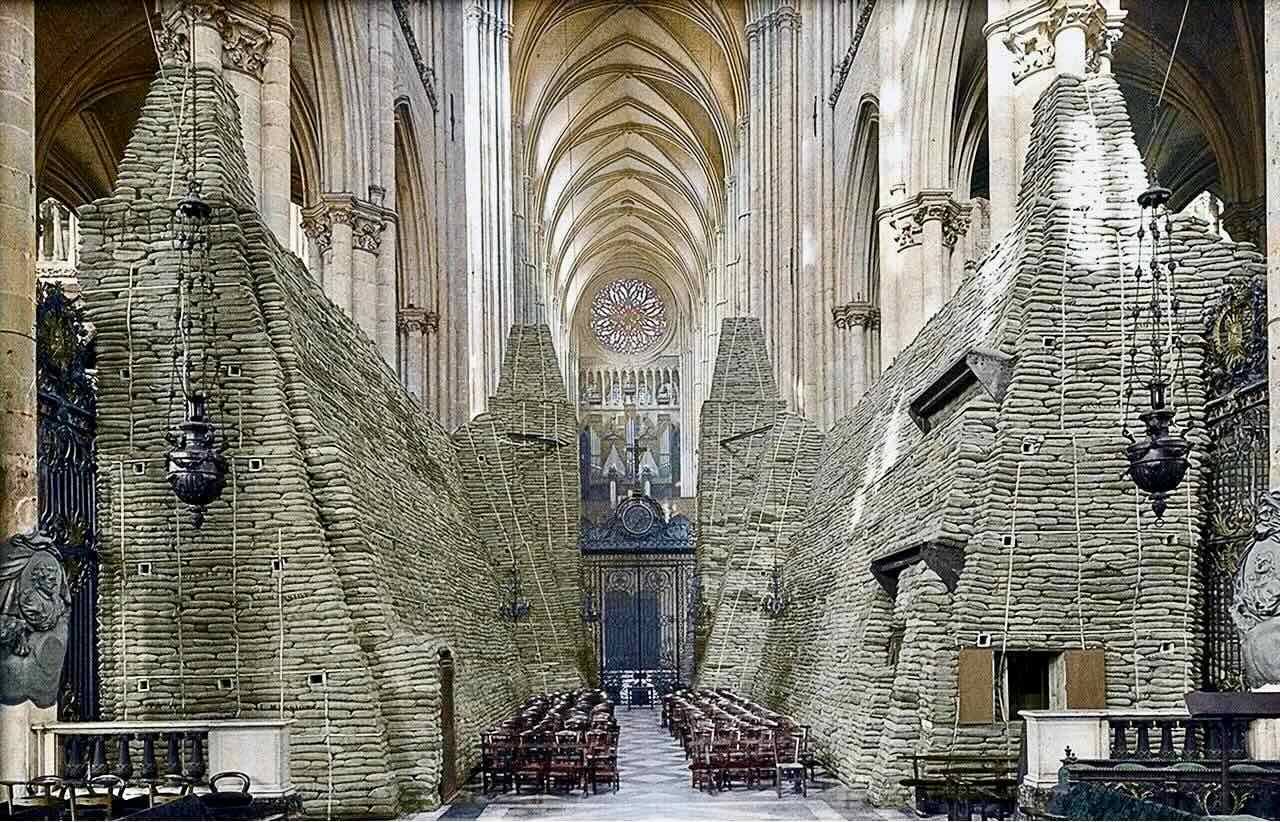
This is a massive cathedral…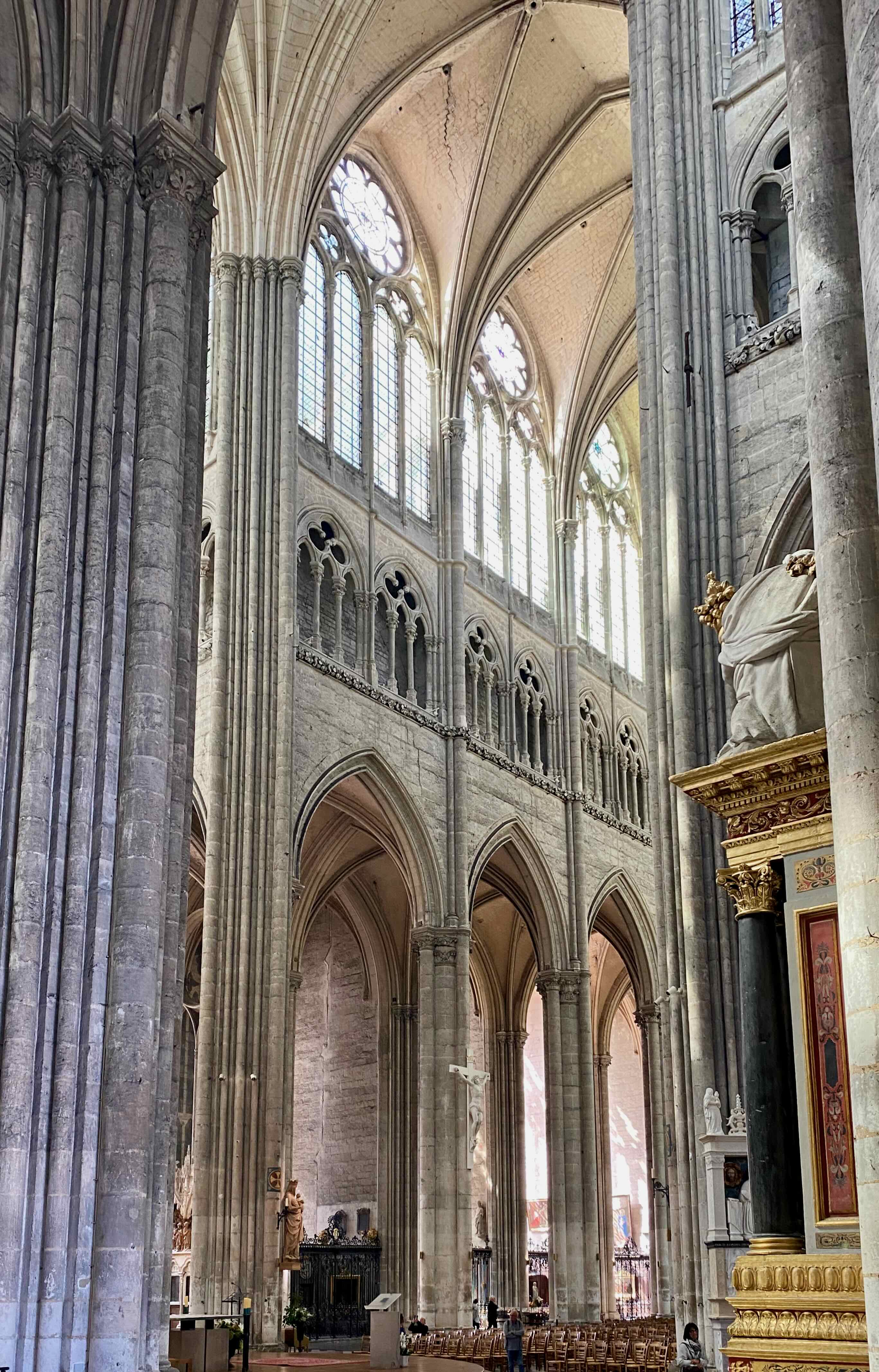
…with stunning stained glass windows.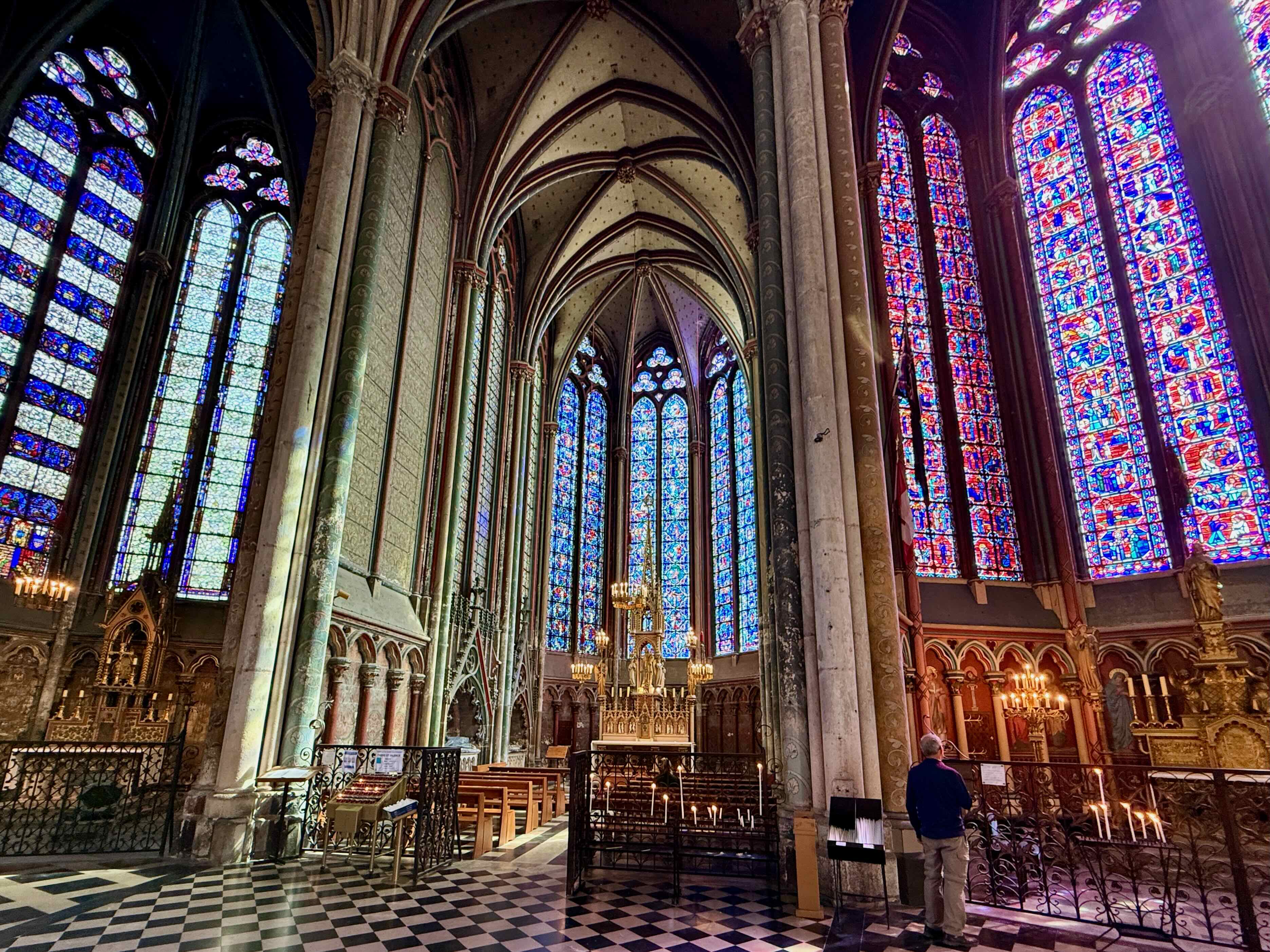
Do you see the people? They give a sense of scale.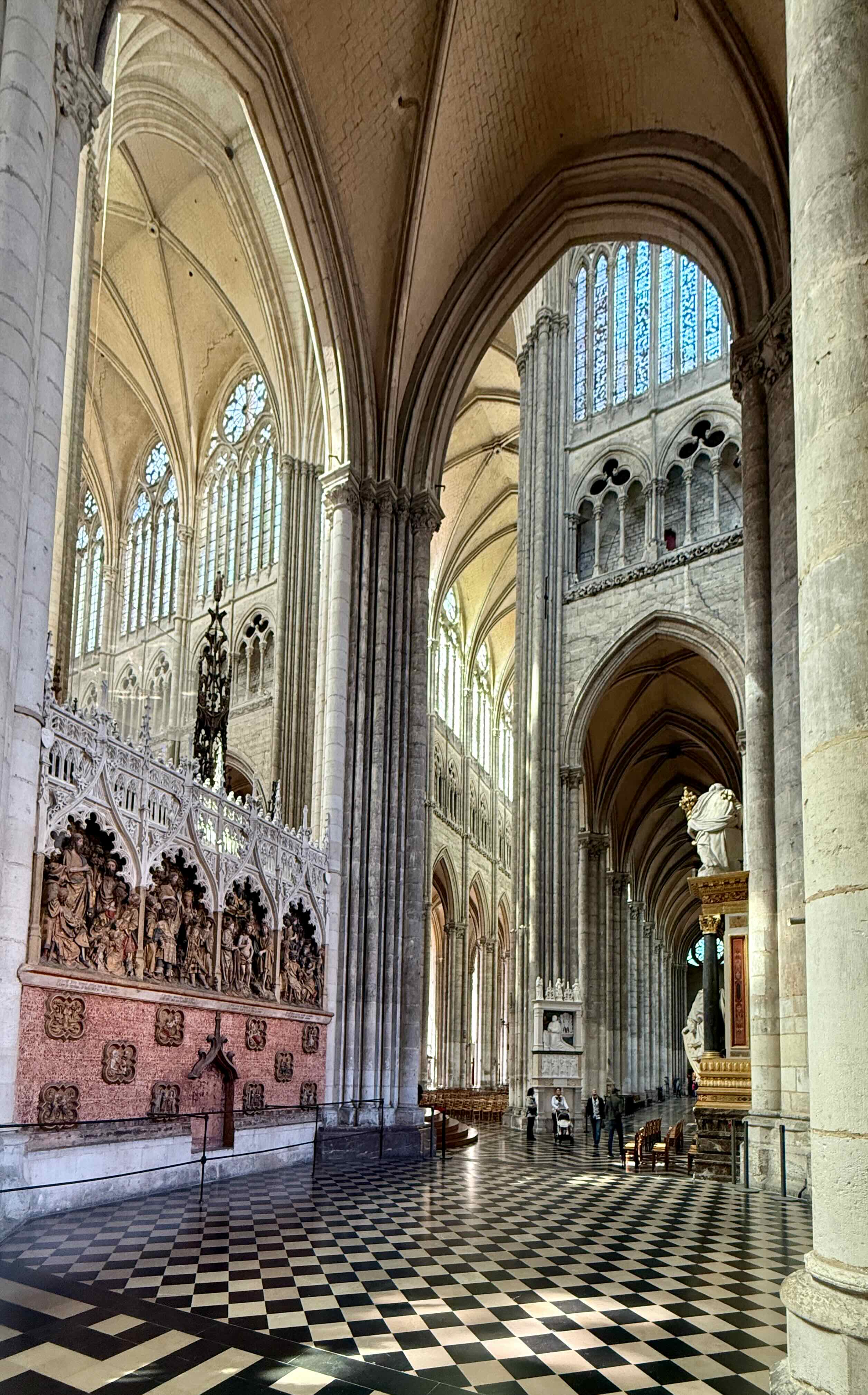
Looking towards the richly decorated altar…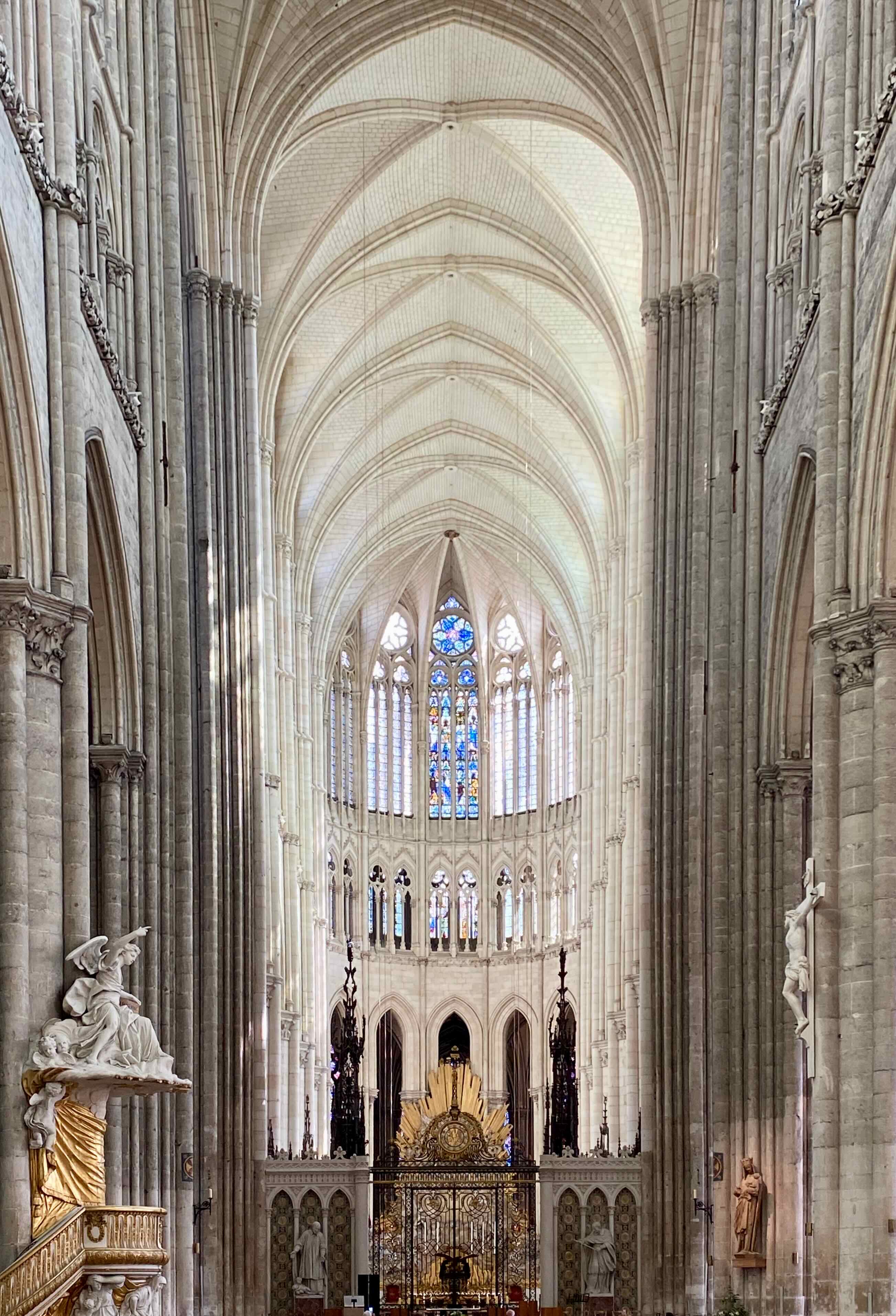
and in the opposite direction, the organ that was built in 1549…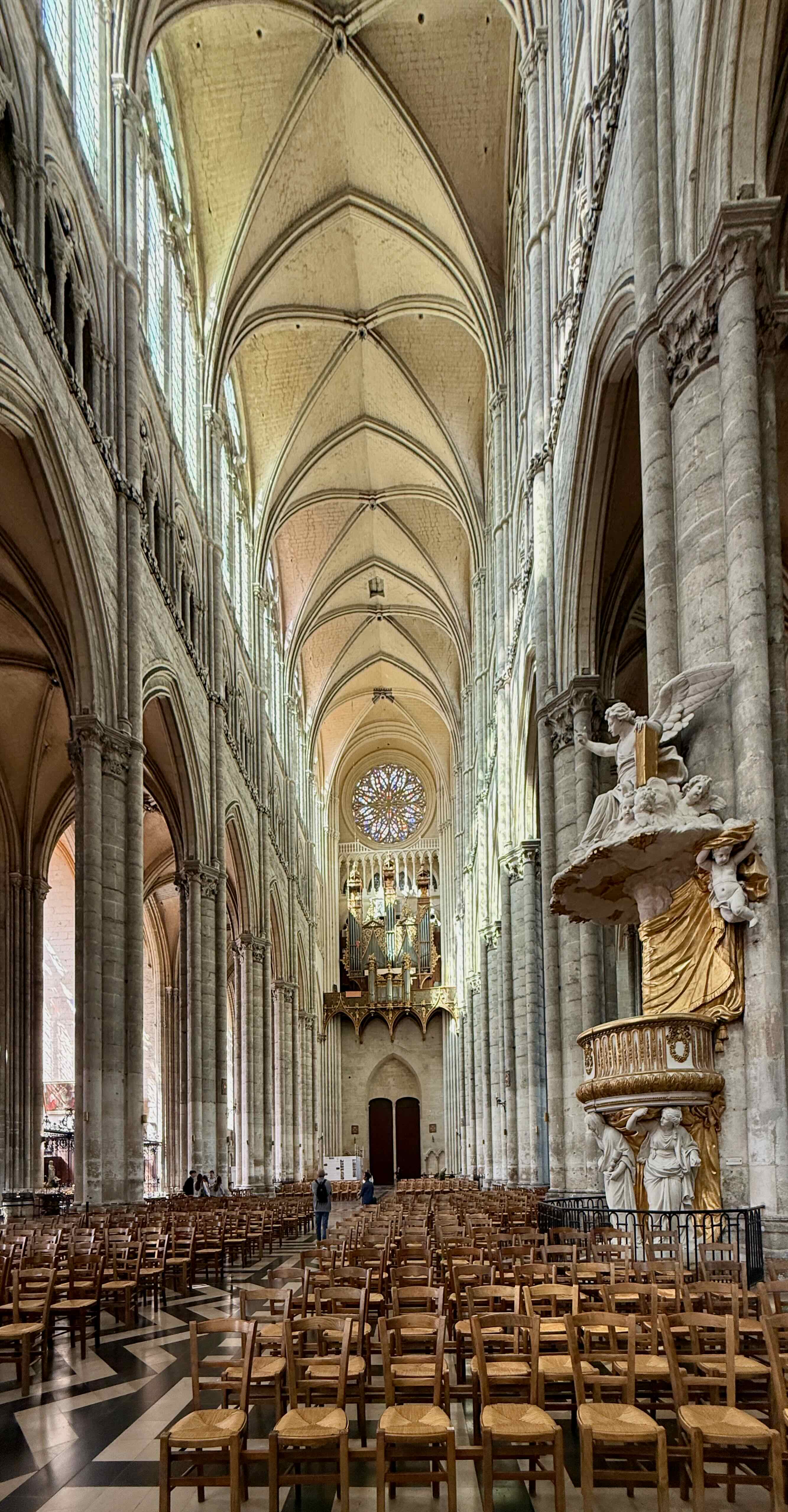
which has just been cleaned and restored.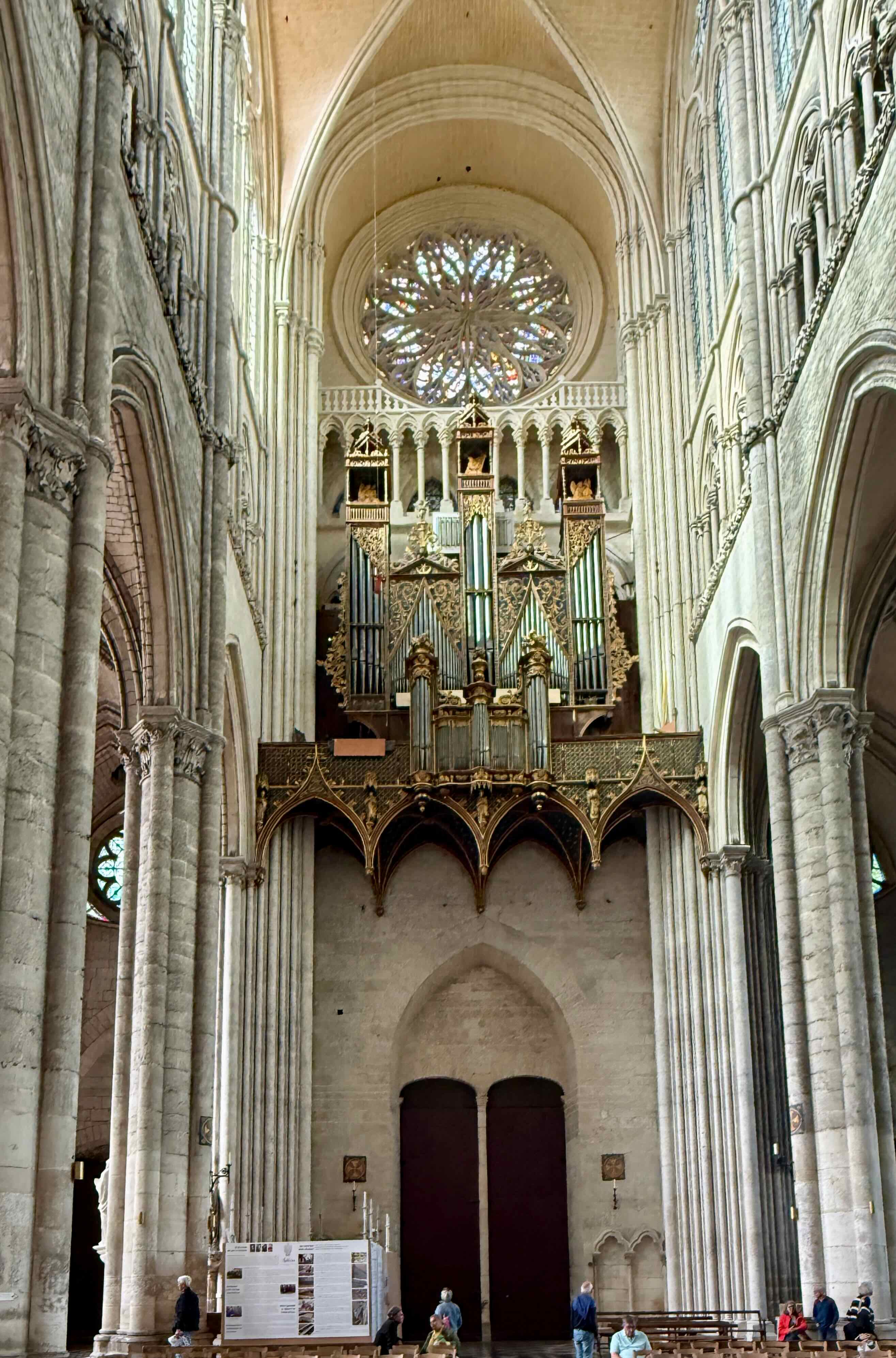
Love this statue of Joan of Arc.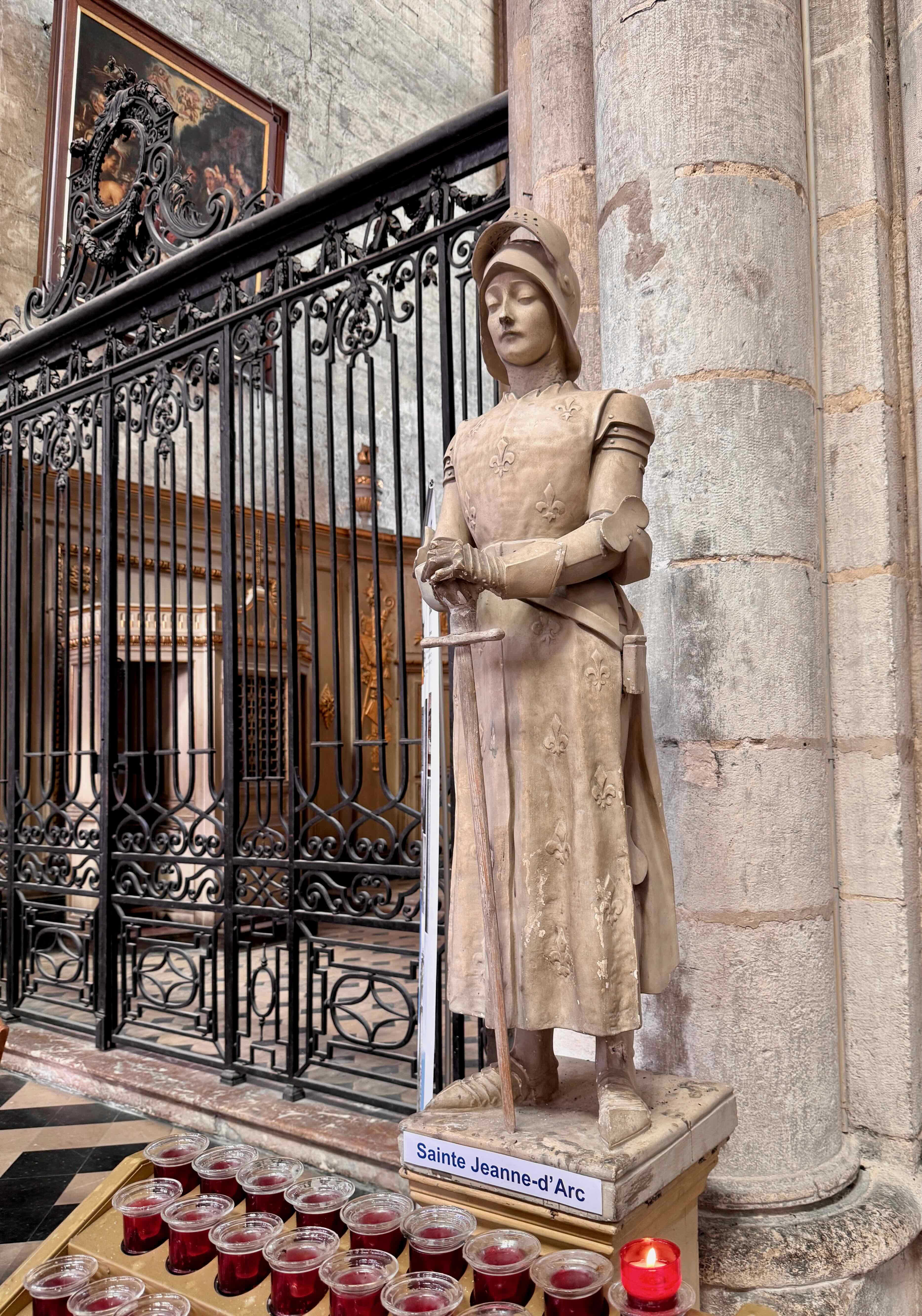
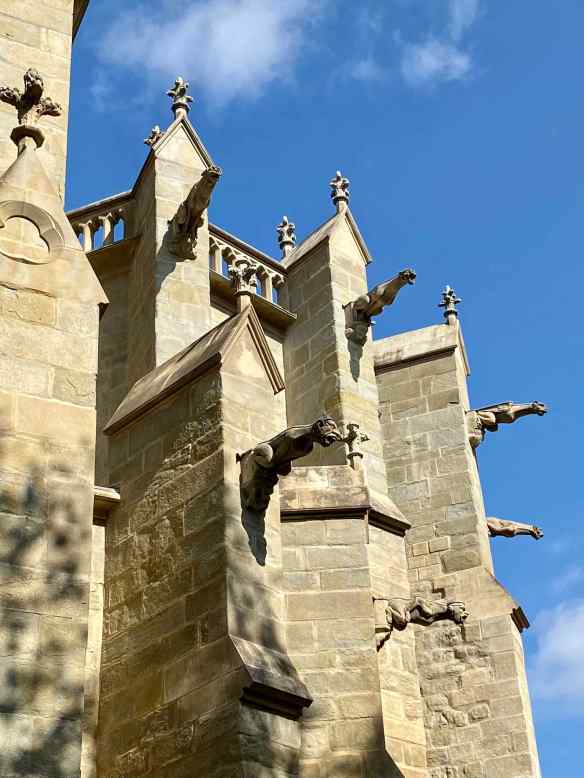
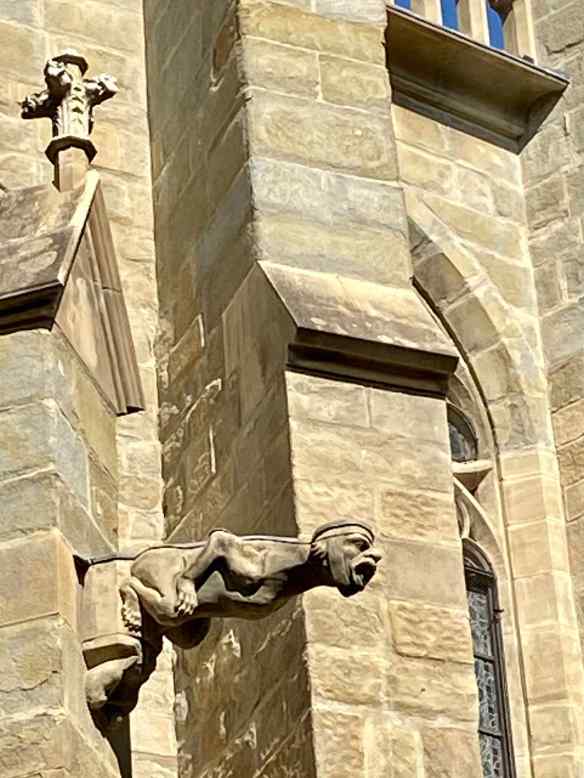
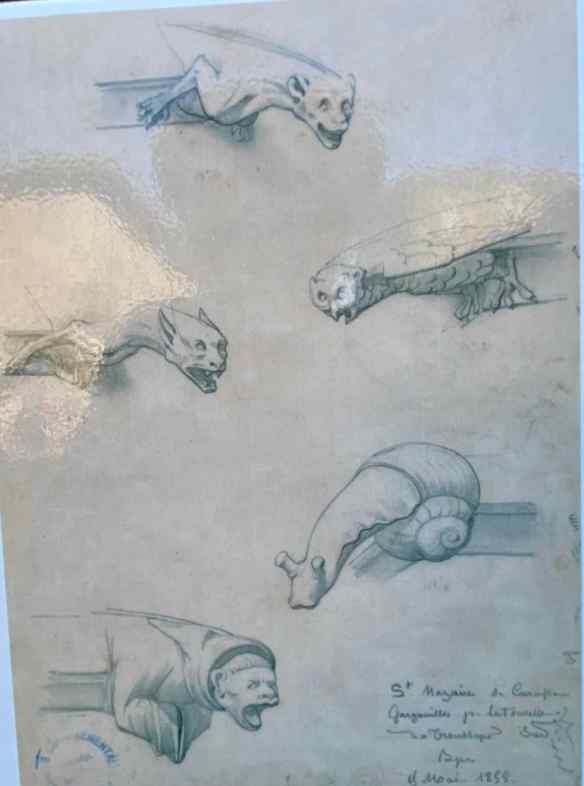
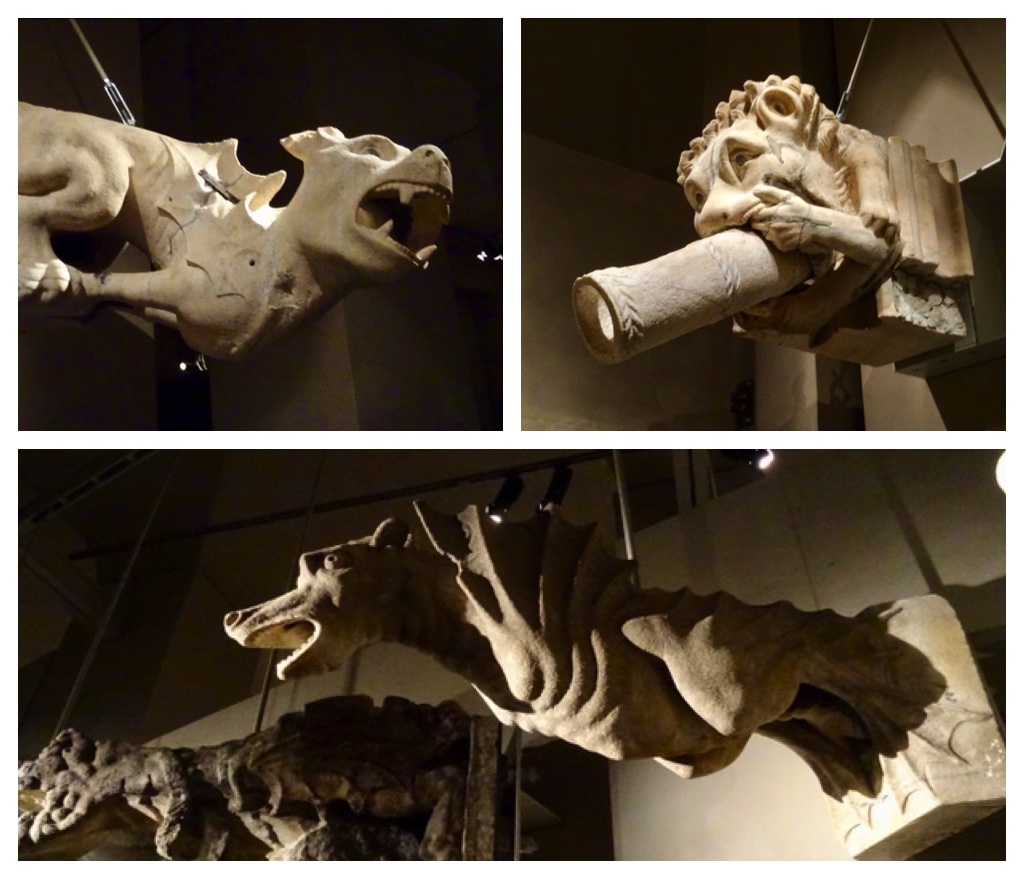
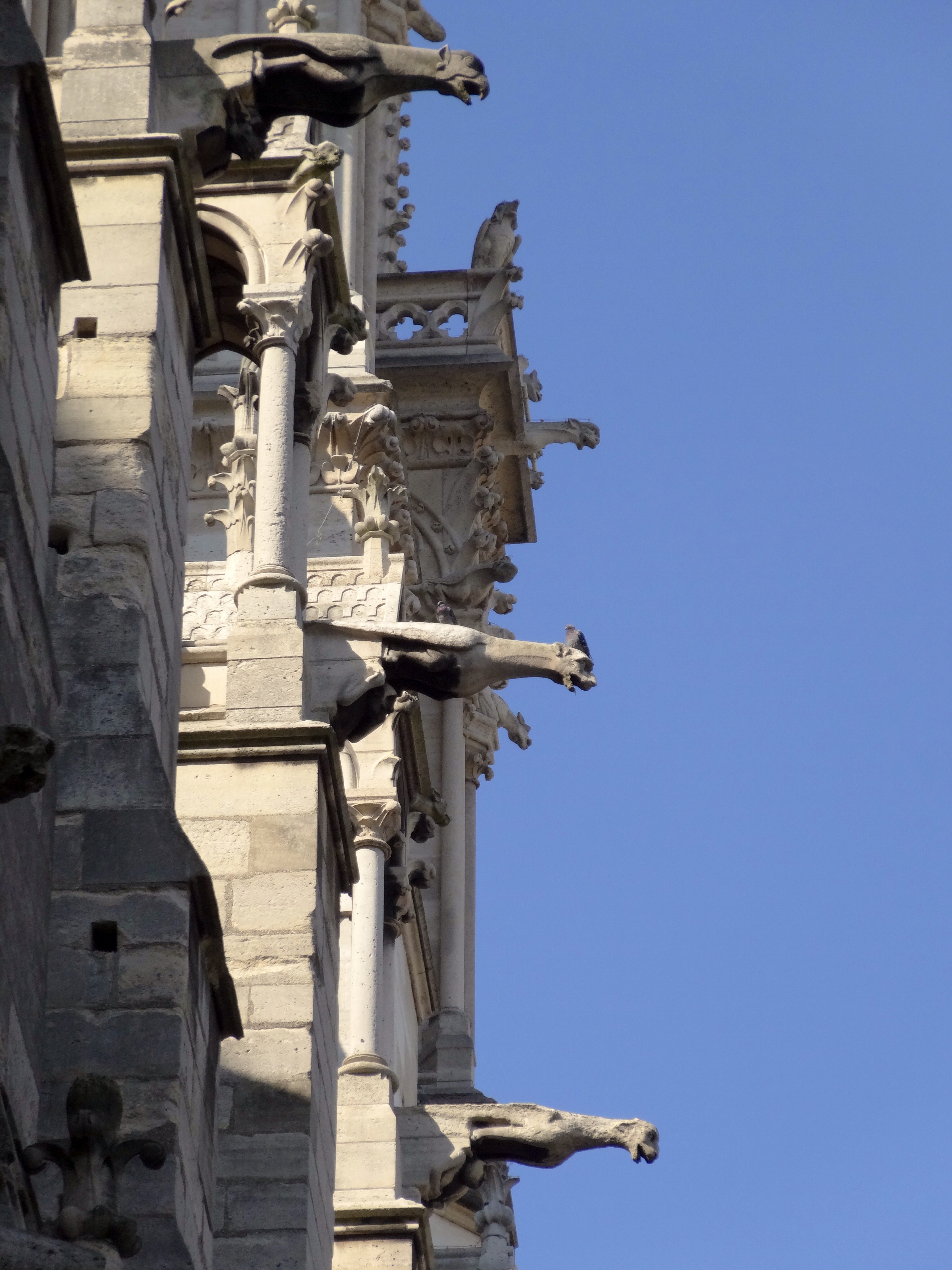
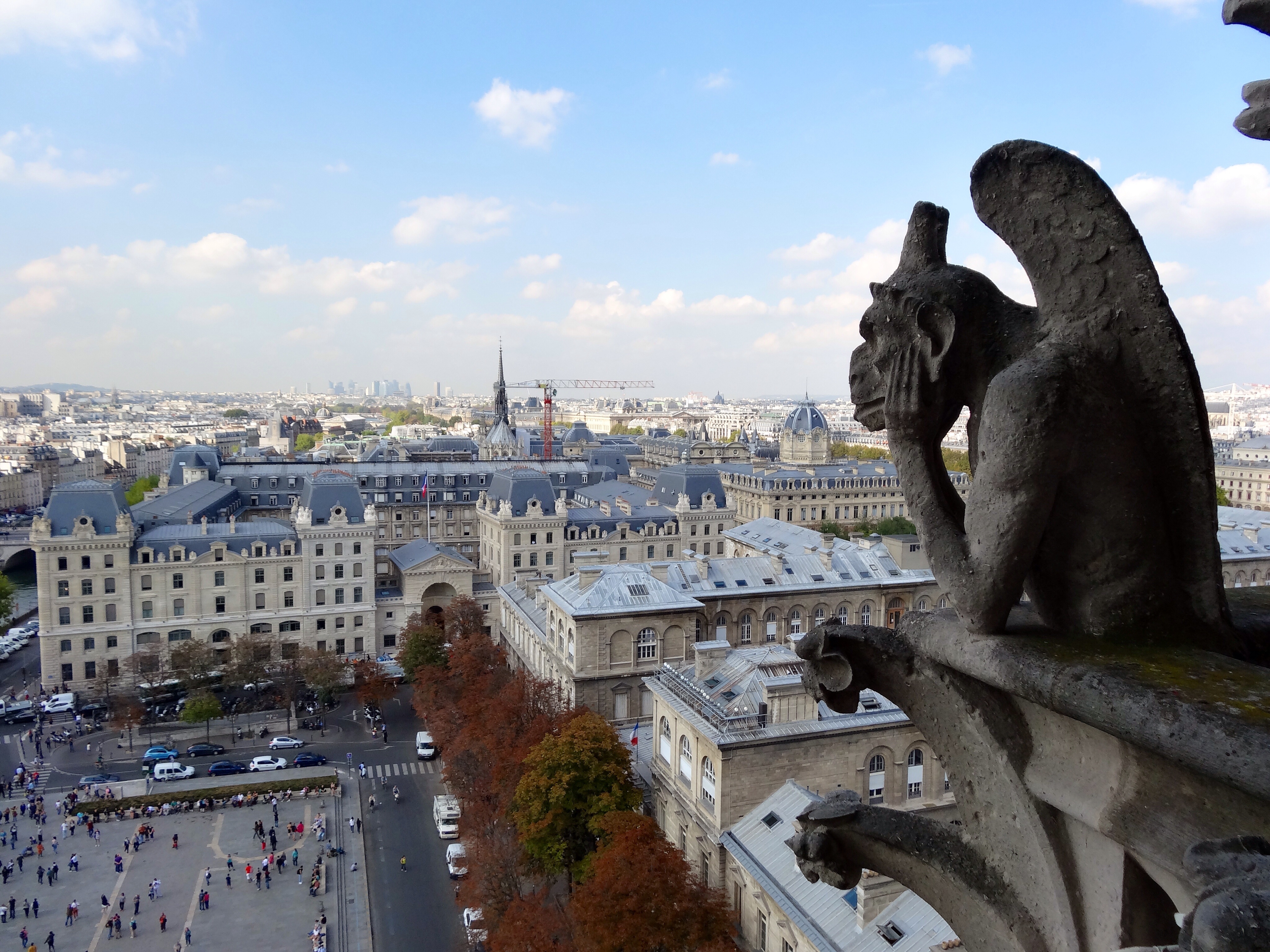
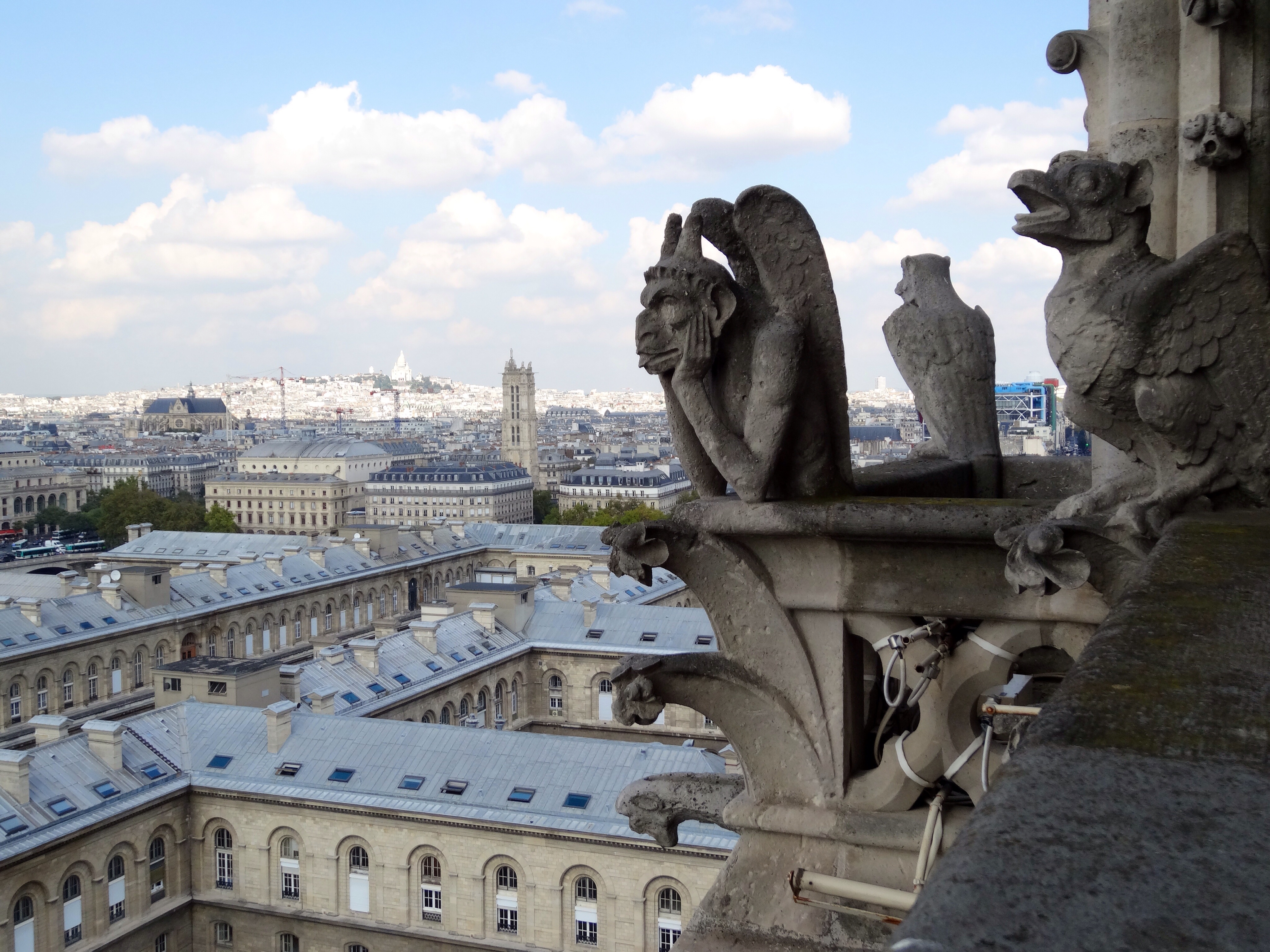
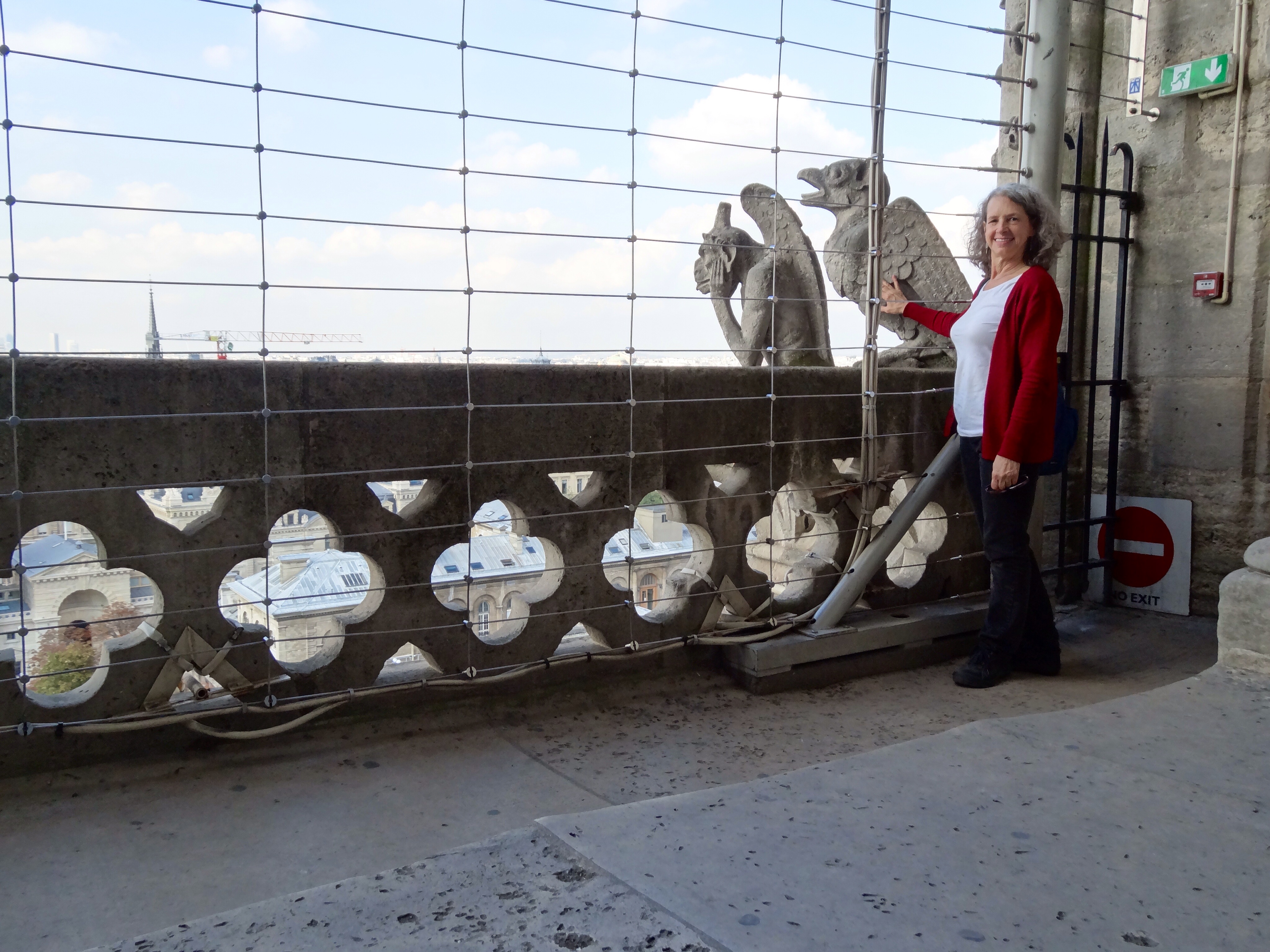
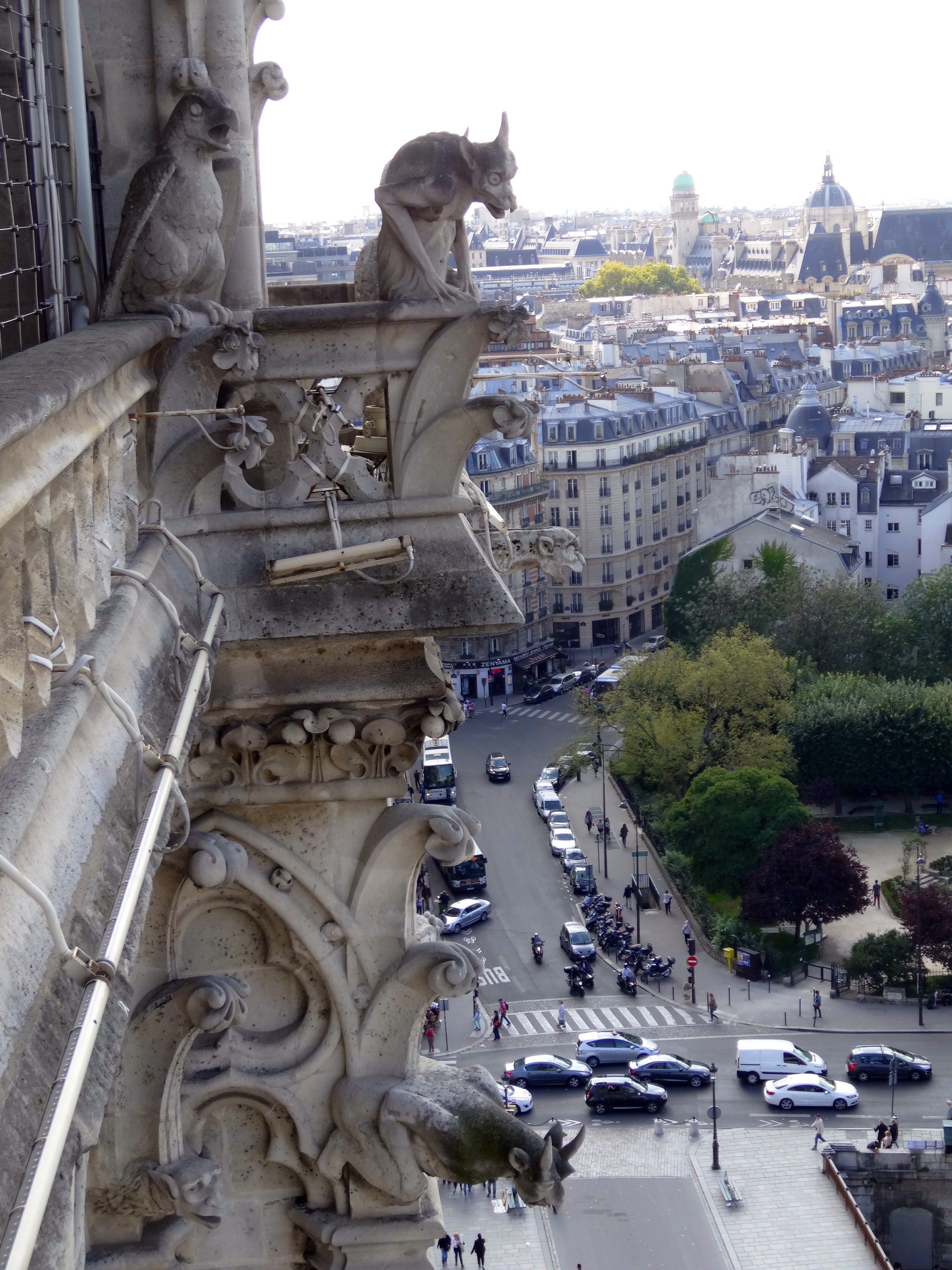
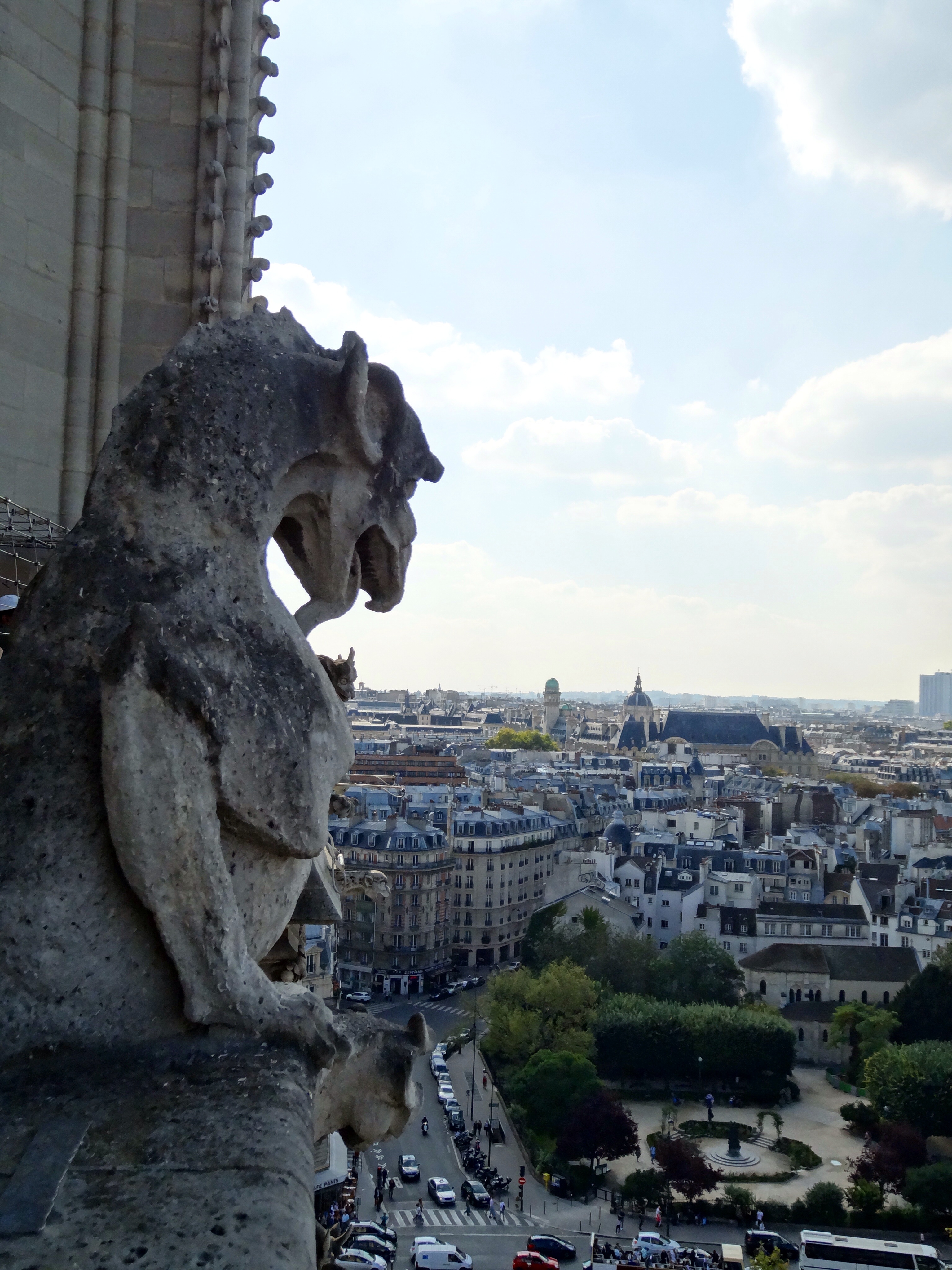
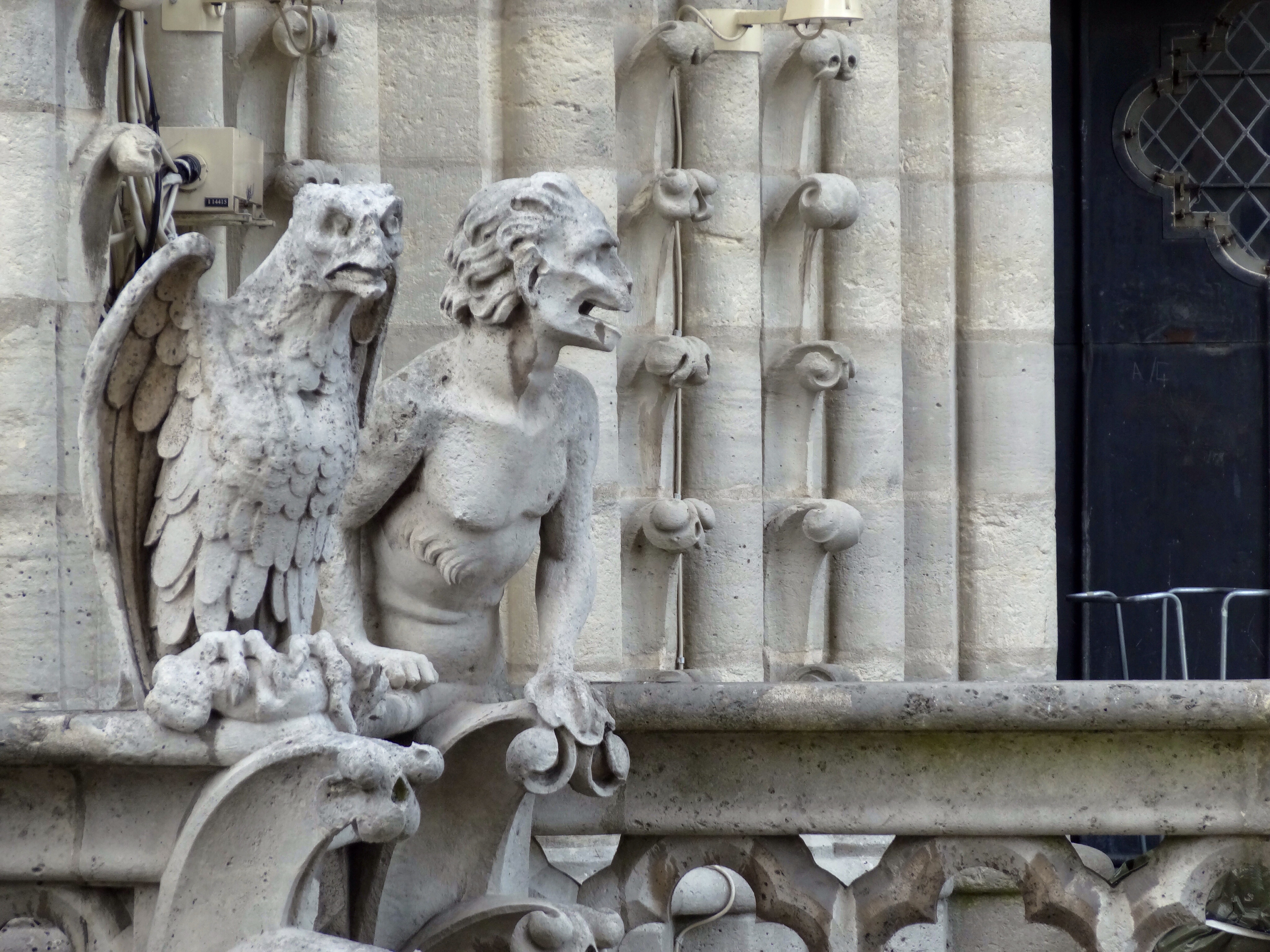
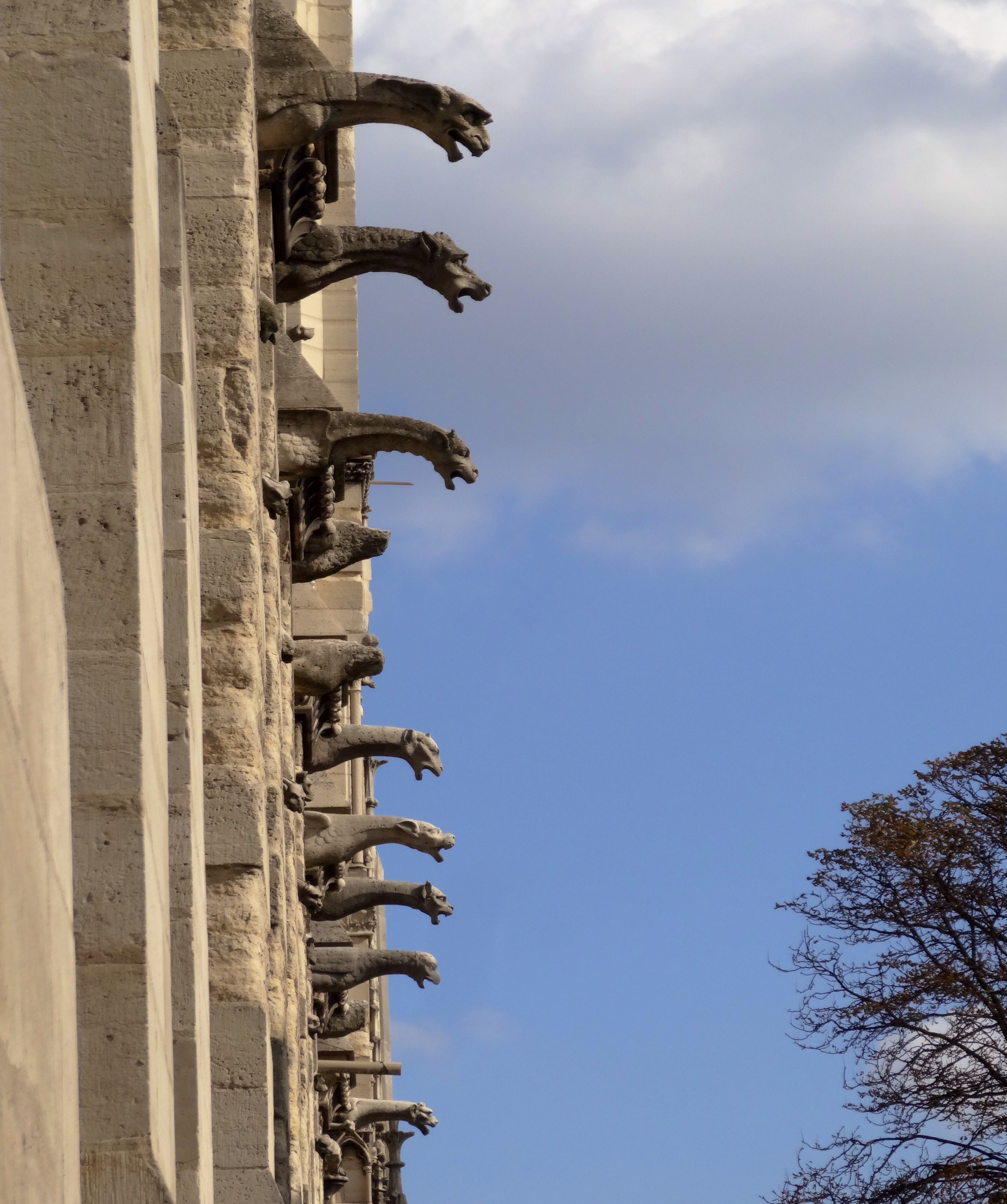
There is also a labyrinth from 1288.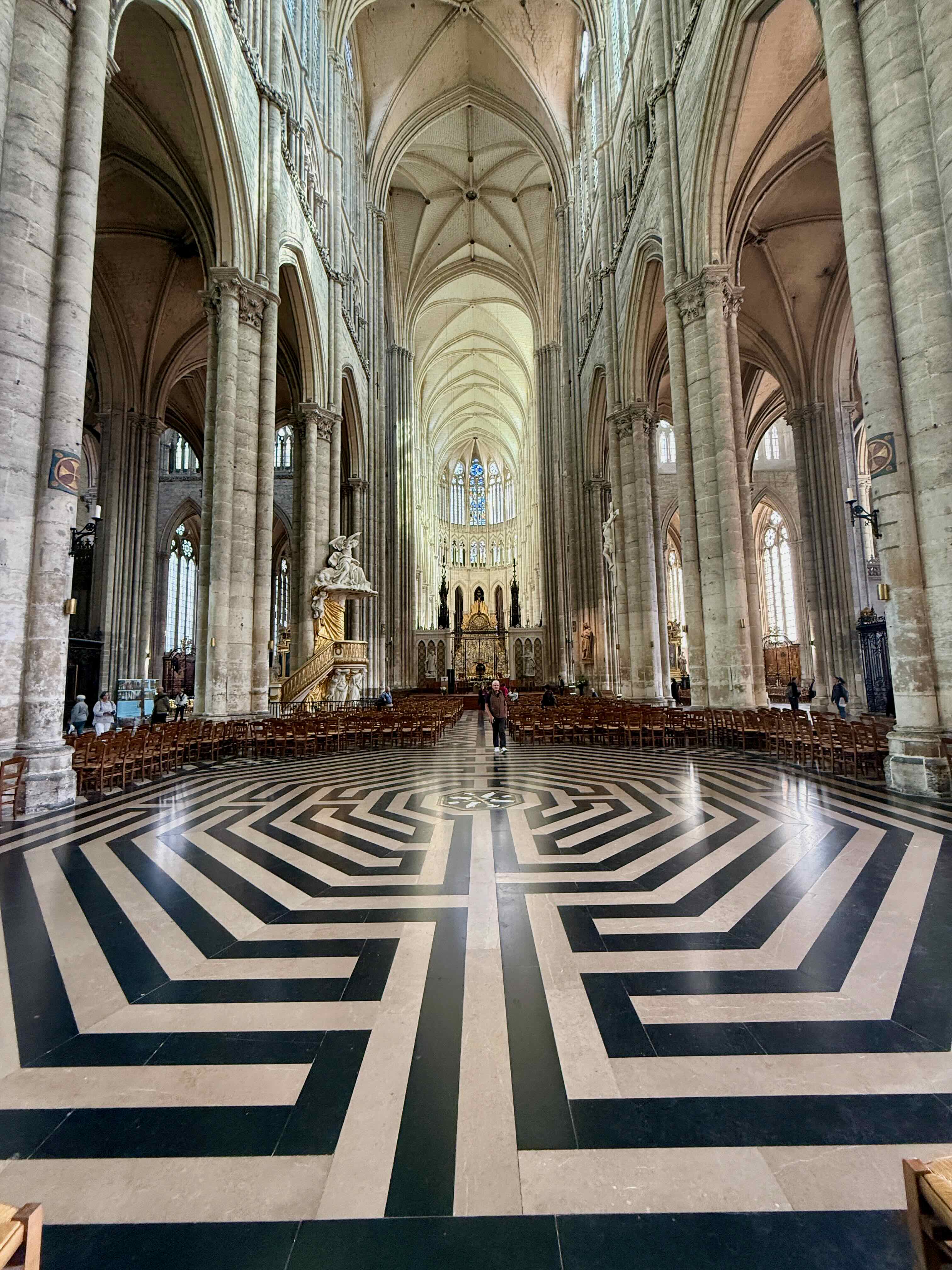 When we leave the cathedral, I look up and there are the gargoyles! I am very fond of gargoyles.
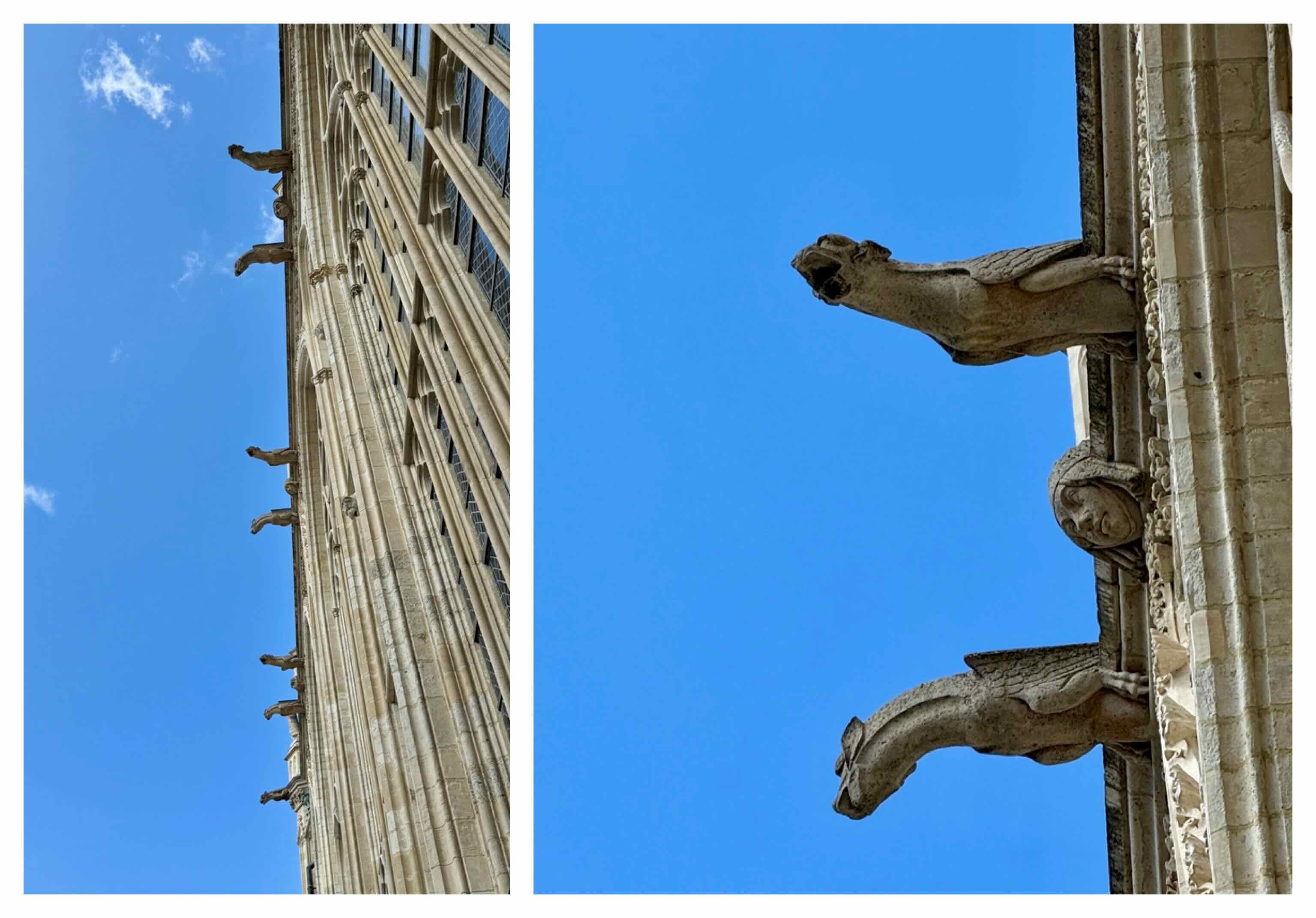 We have time to walk back to the car for tea and cookies and a little down time before we get ready for our boat ride at the Hortillonages.
Shaped by generations of market gardeners known as ‘hortillons’, this site is the only one of its kind in France. The Hortillonnages are made up of a multitude of small cultivated islets surrounded by water, accessible only by boat on a network of waterways
We spend a relaxing 45 minutes travelling these waterways. We see market gardens, private gardens, cottages and some islands that look very wild and unkept.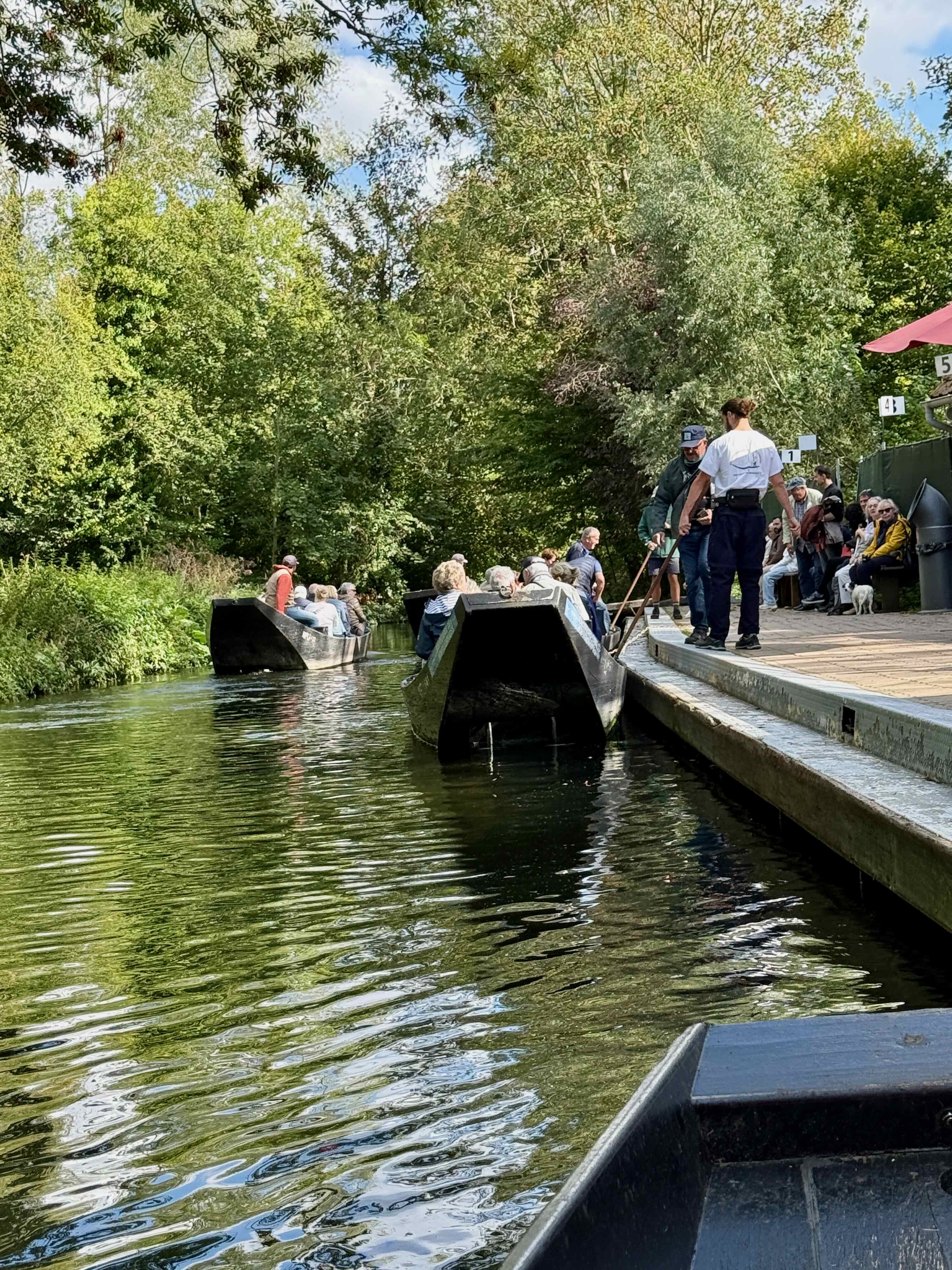
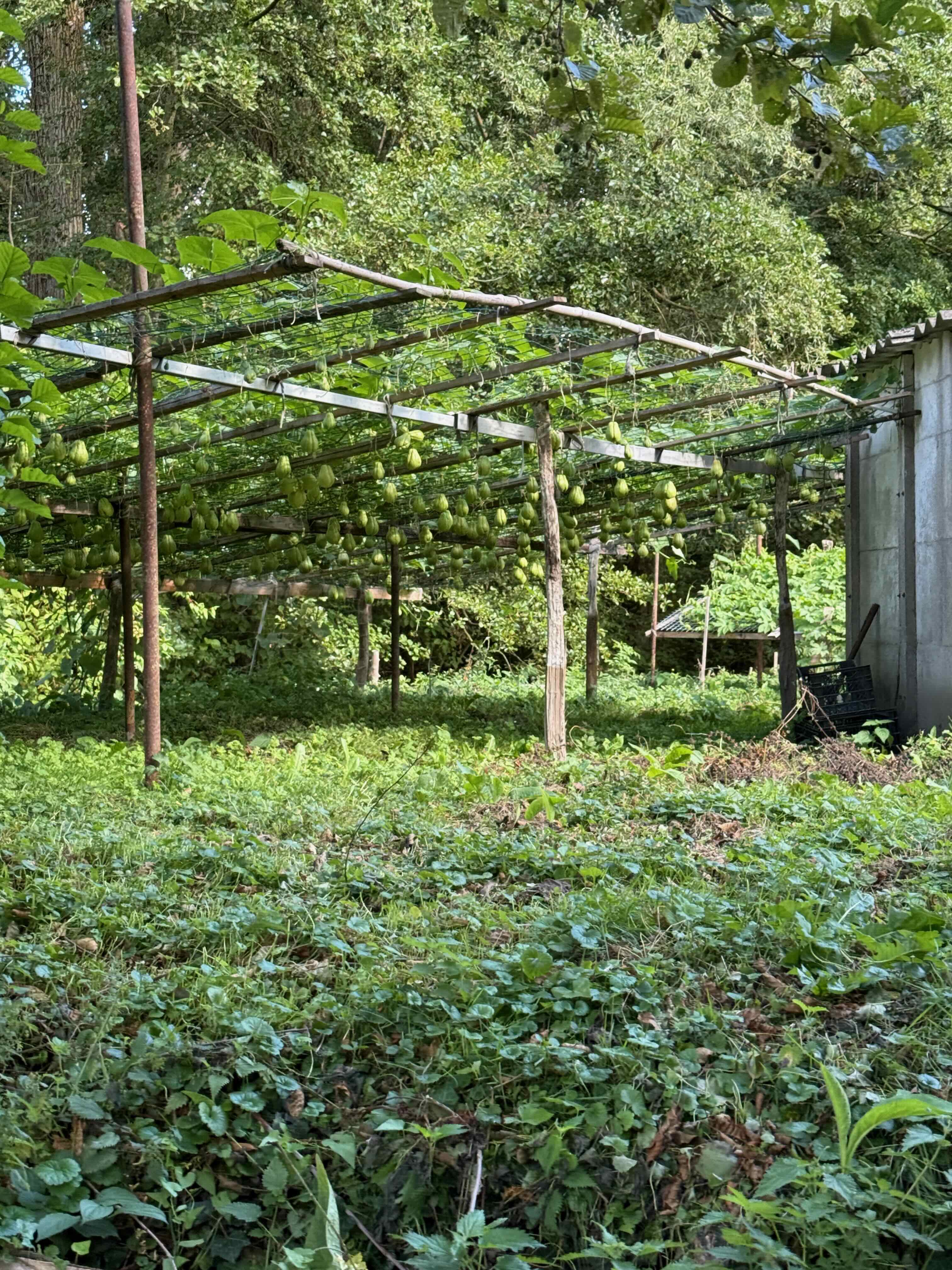
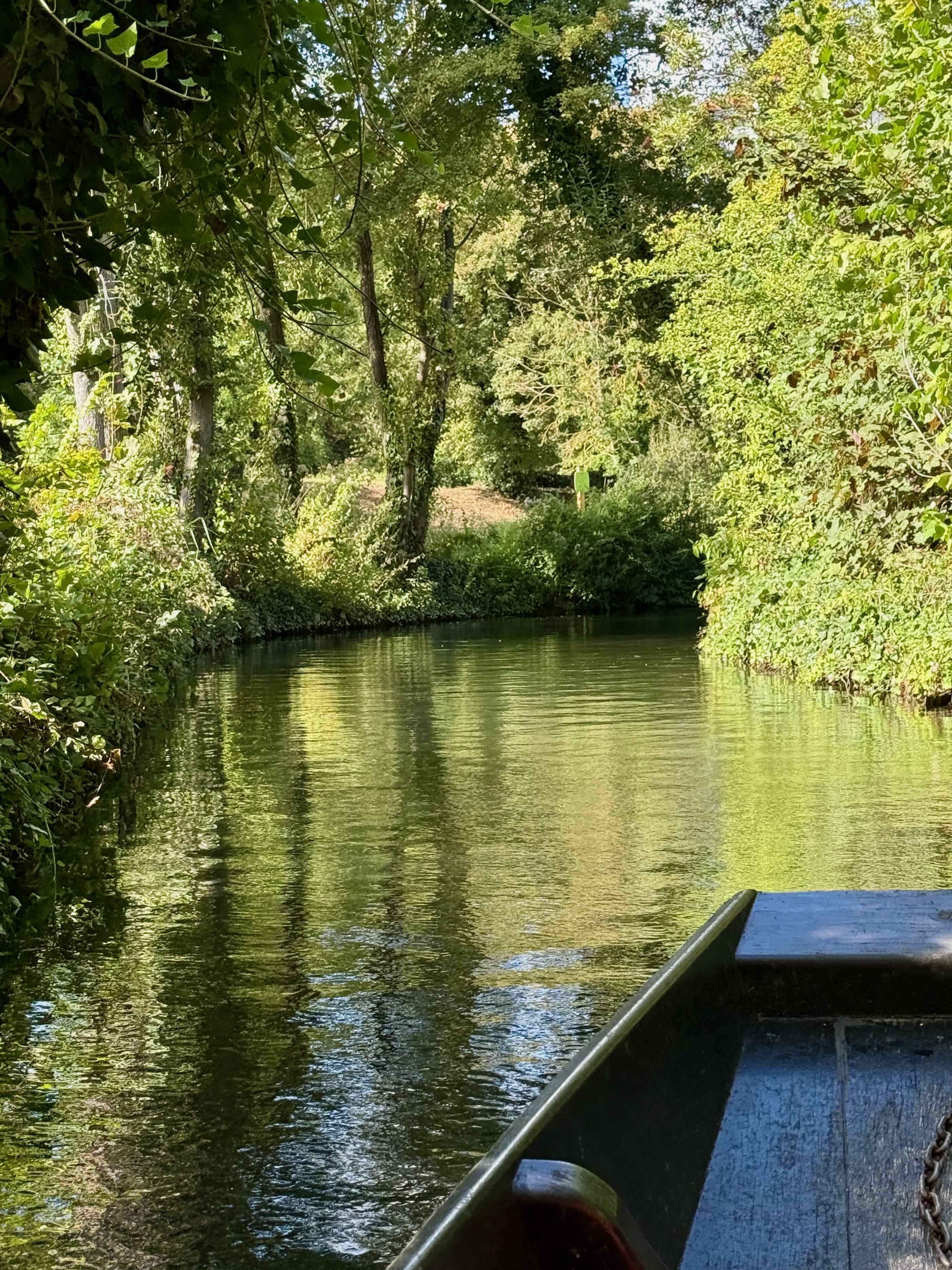
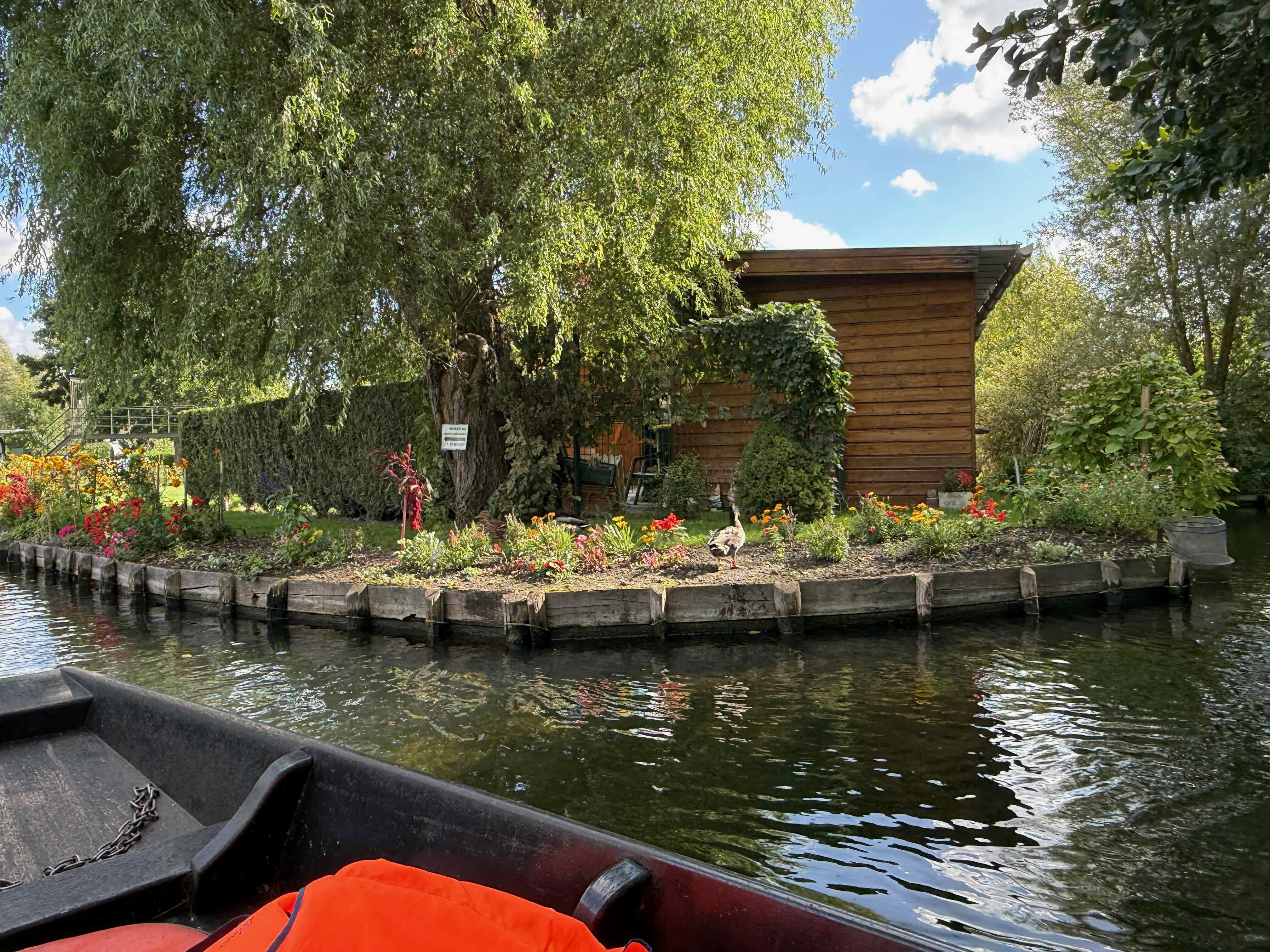
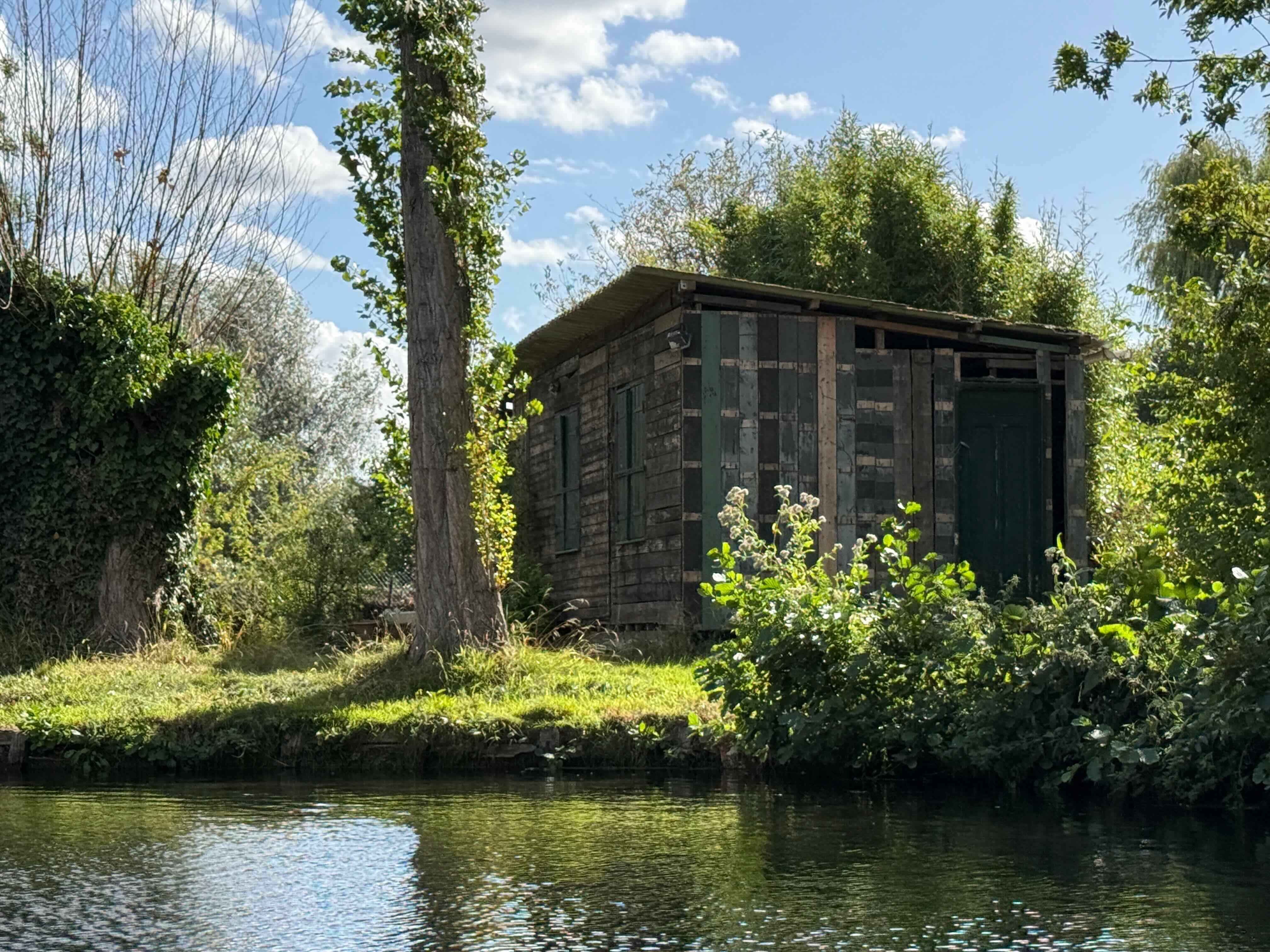
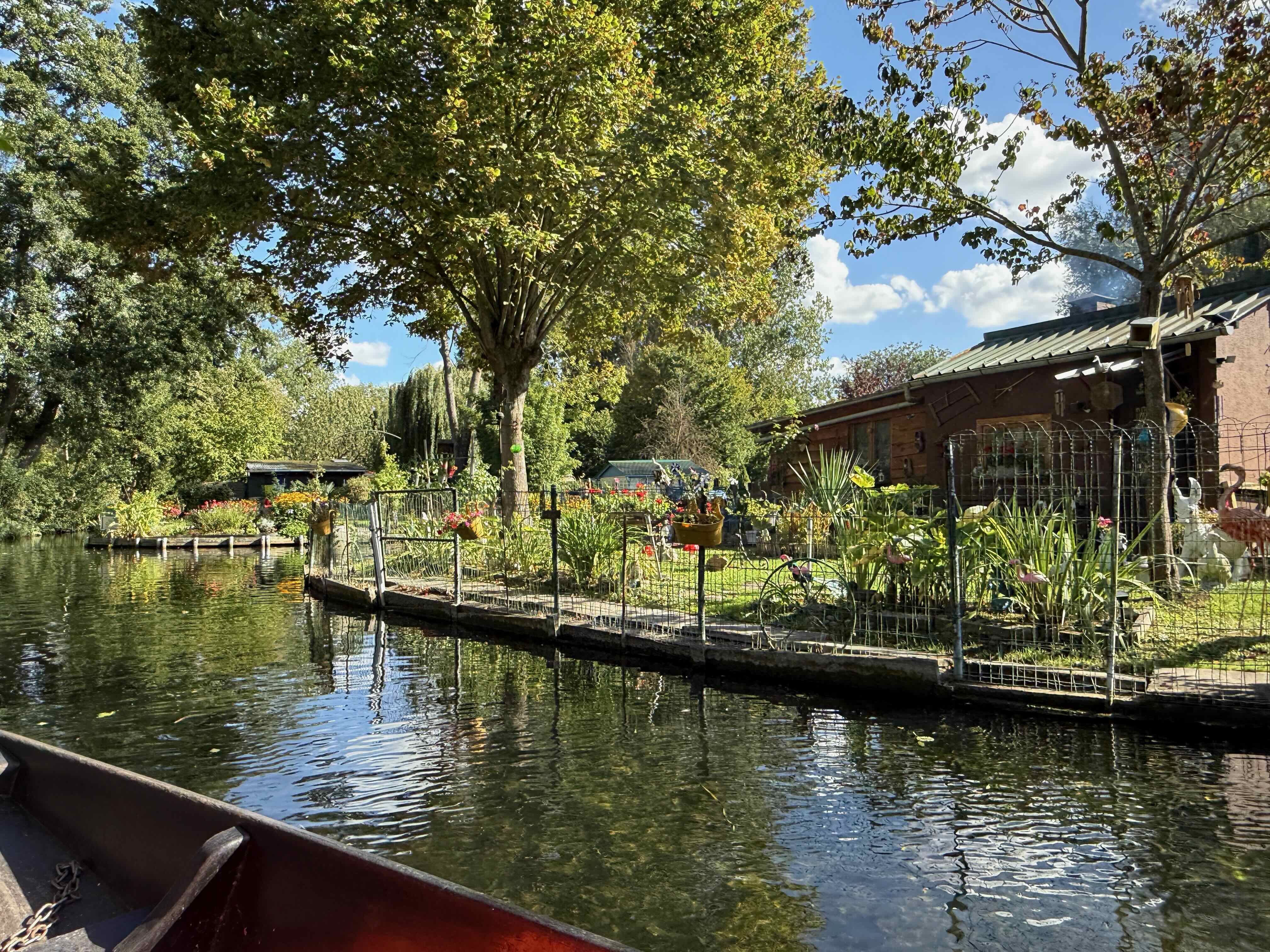
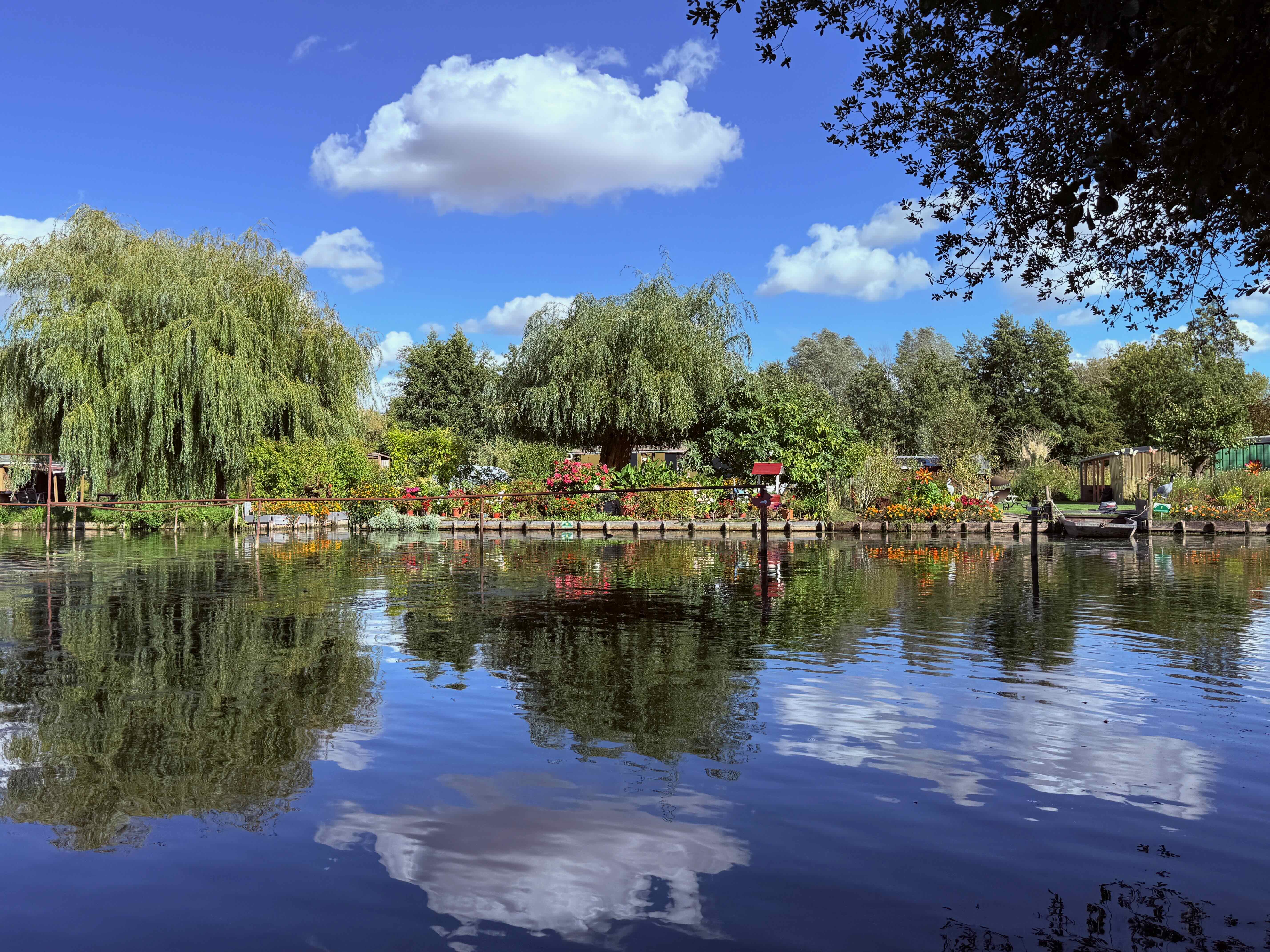
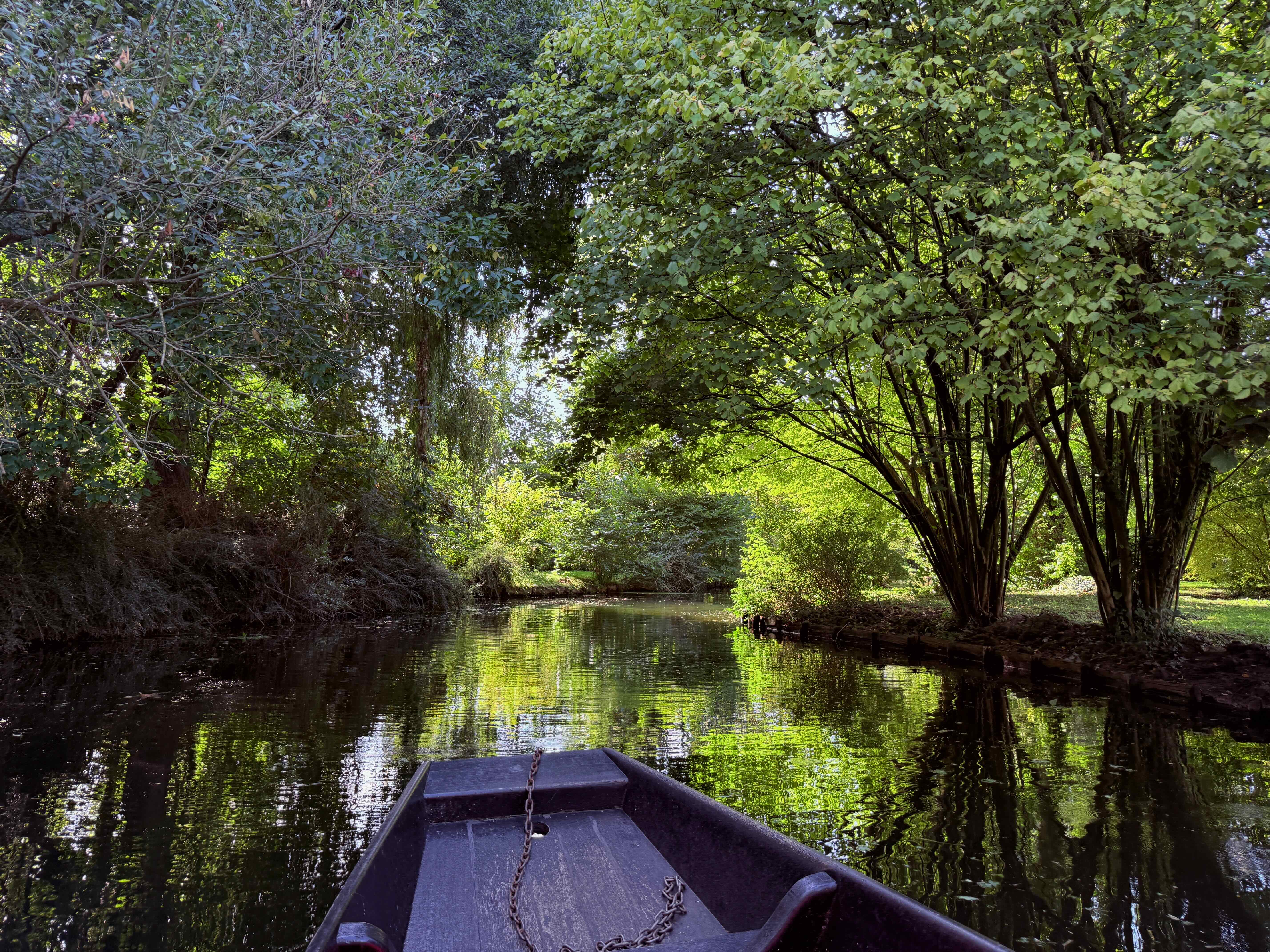
The Hortillonnages have been here since ancient times. They are located on the naturally marshy terrain of the old bed of the River Somme. The site’s name has its origins in the Latin ‘hortus’ meaning garden. Nowadays, the ownership of this 300-hectare site is shared by over 1000 individuals who use it for market gardening or leisure activities such as gardening, fishing, and observing nature.
Walking back to our car we pass yet another war memorial, a reminder of the war and those who fought and died for France. 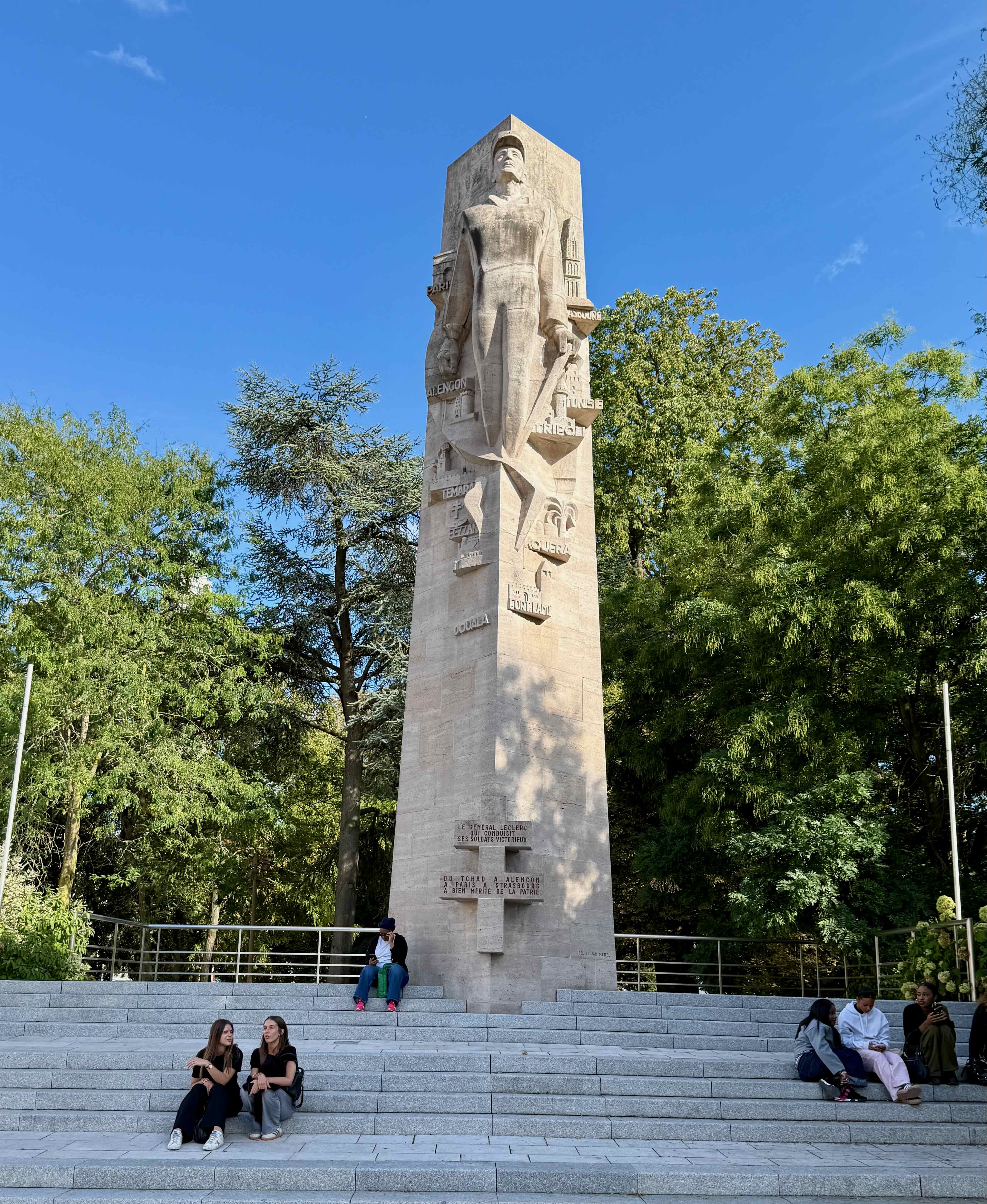
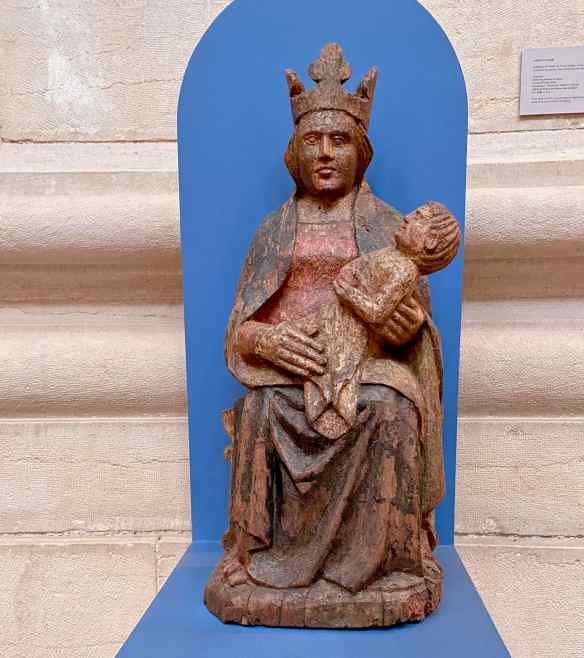
 A 15th Century painting of the Seven Sorrows of the Virgin Mary, the swords are symbols of the sorrow she endured while witnessing her son’s crucifixion.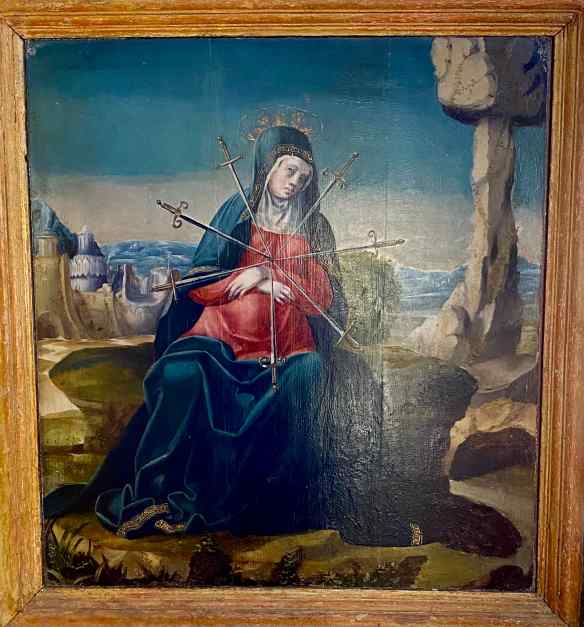
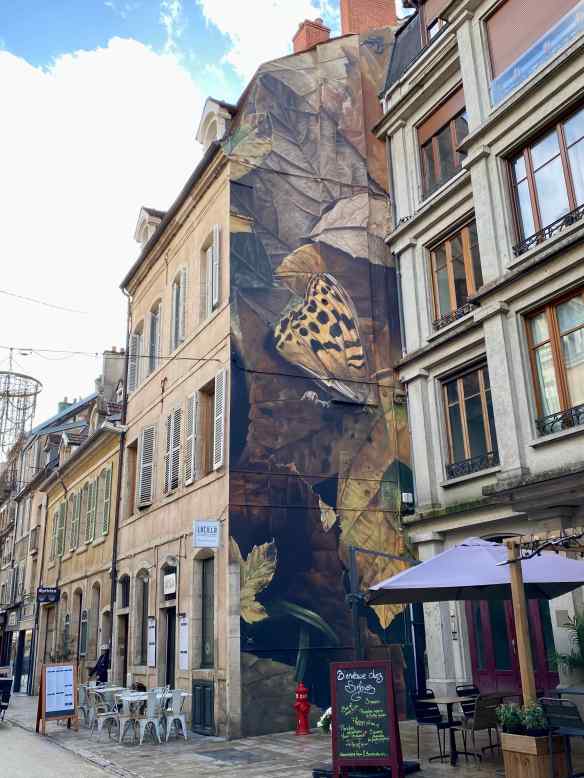
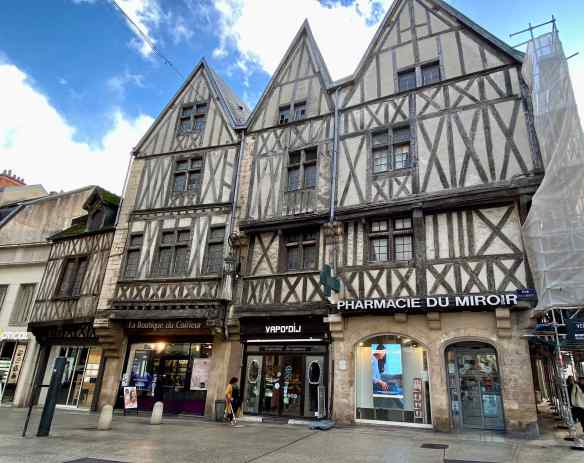
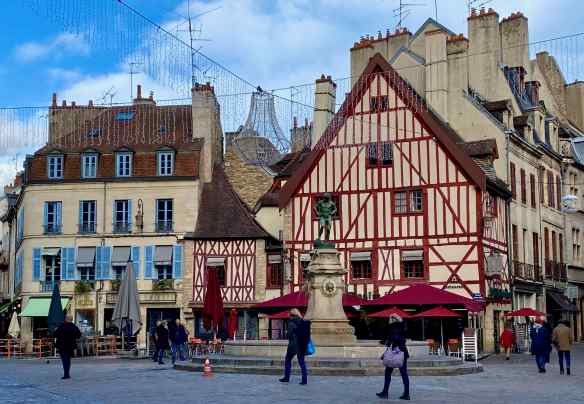 The Notre Dame church of Dijon is just around the corner from our apartment. The interior has beautiful stained glass…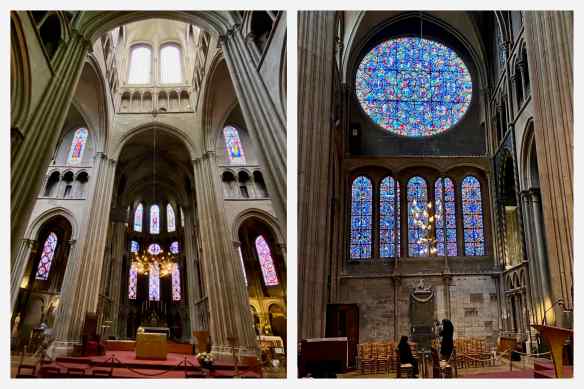
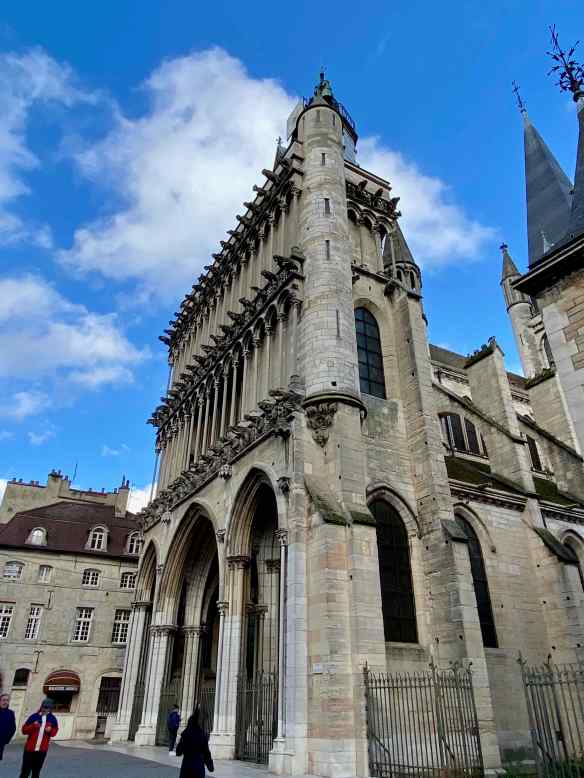
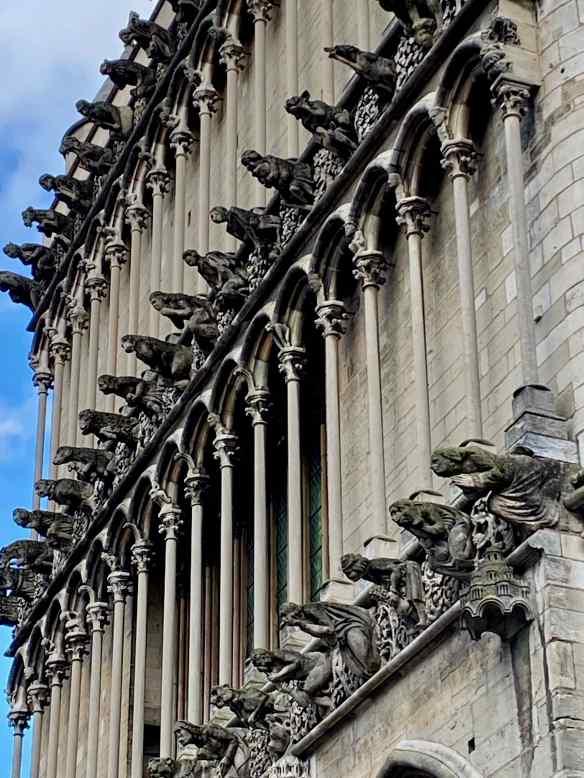
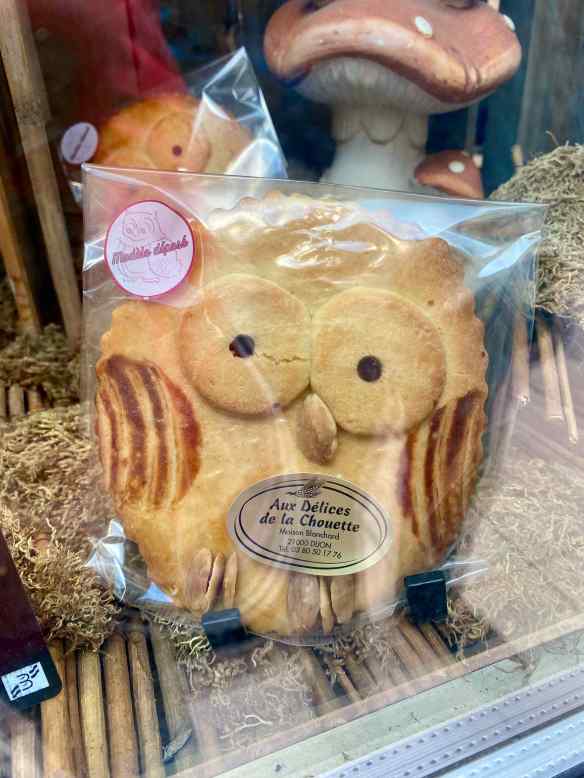 I go home to rest and Bob goes out to explore a bit more. Dijon is a very pretty city, very walkable and our apartment is only a block away from the old town. I hope I feel well enough to be able to see more of it.
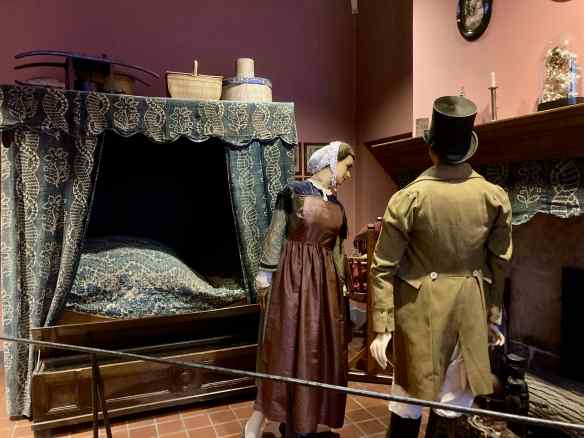
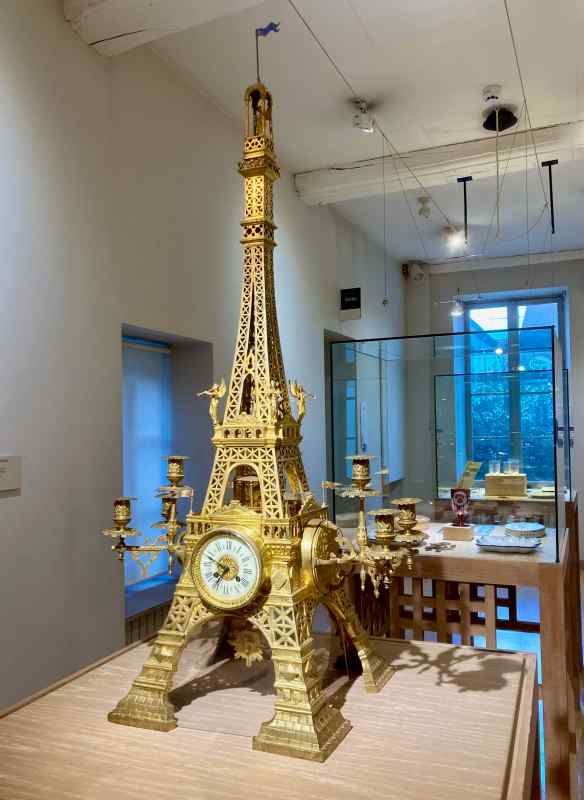
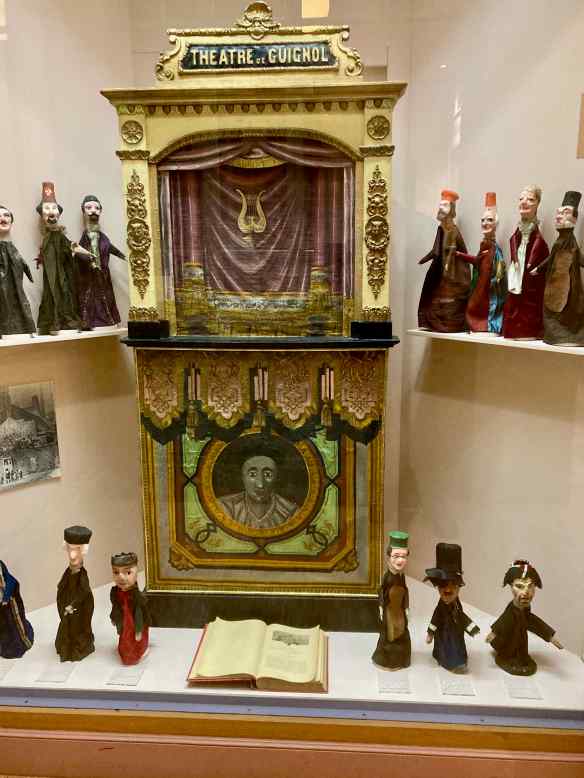
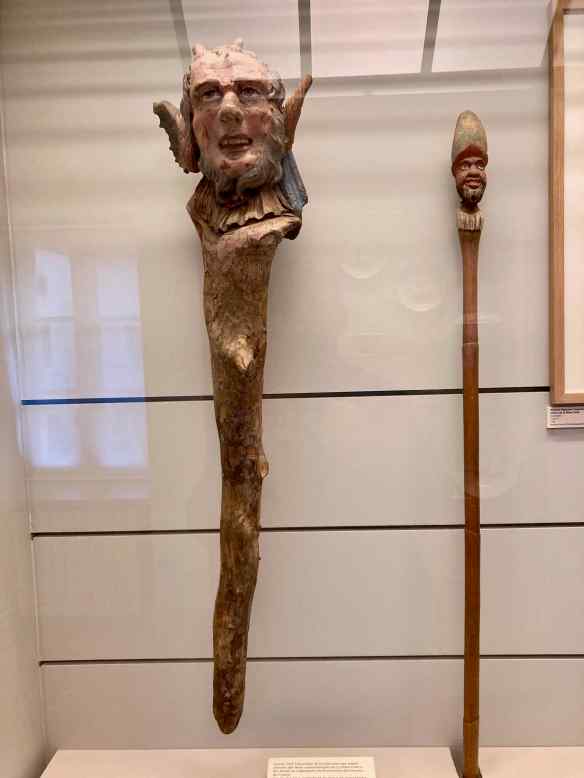

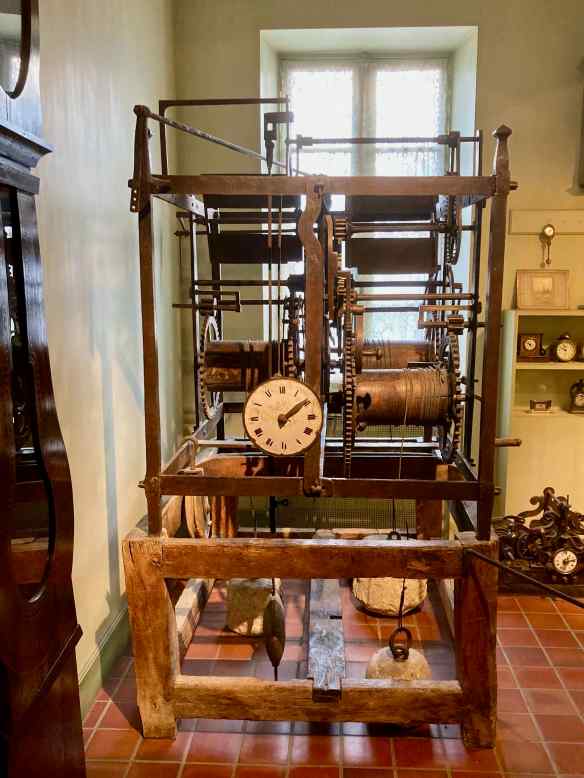
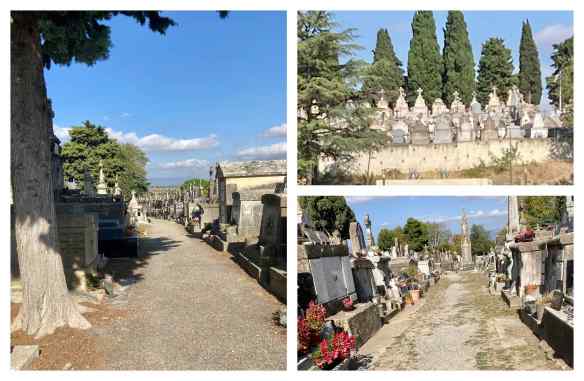
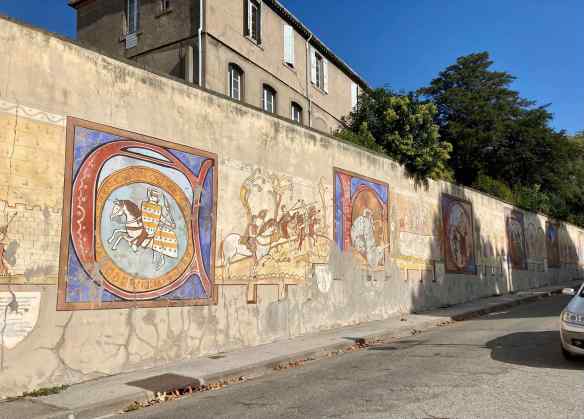

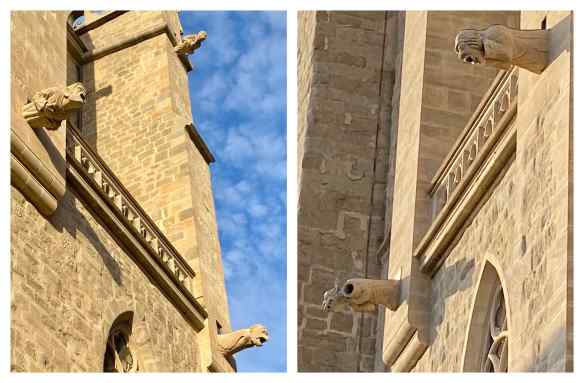
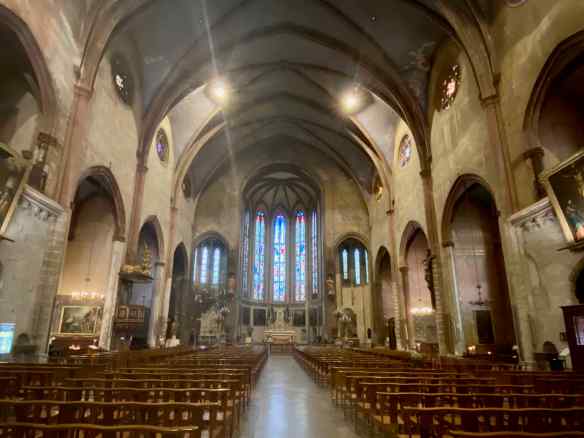 discover that we can climb the bell tower for just 2.5 euros! I’m not wanting to do it today but I hope we can get back another day. We have climbed a lot of bell towers on our other trips, but so far not a one this time.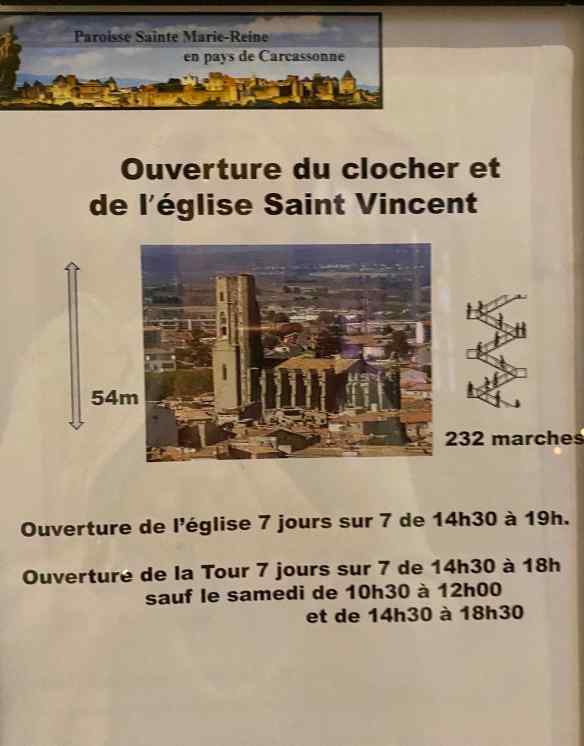
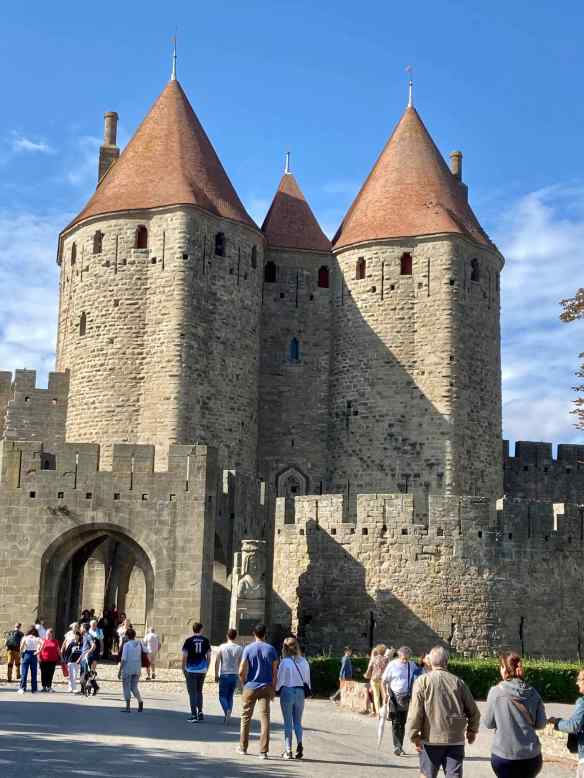
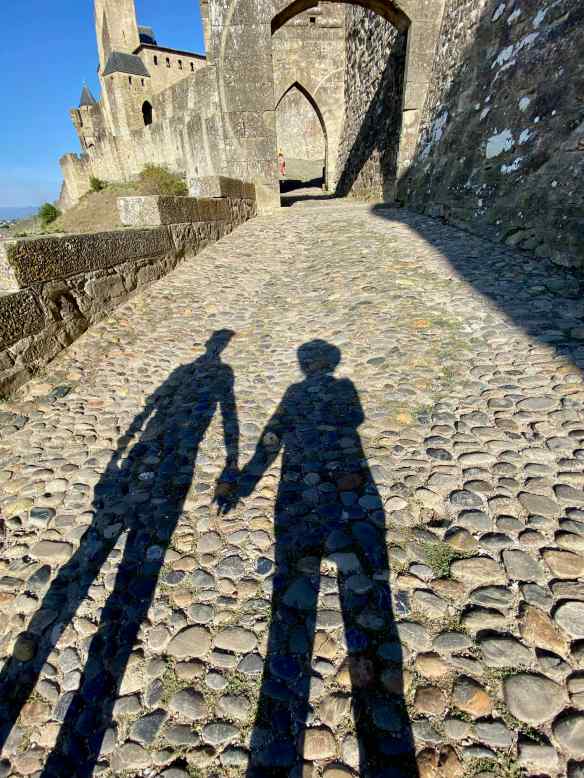
 This is one of the entrance gates to the old city of Carcassone.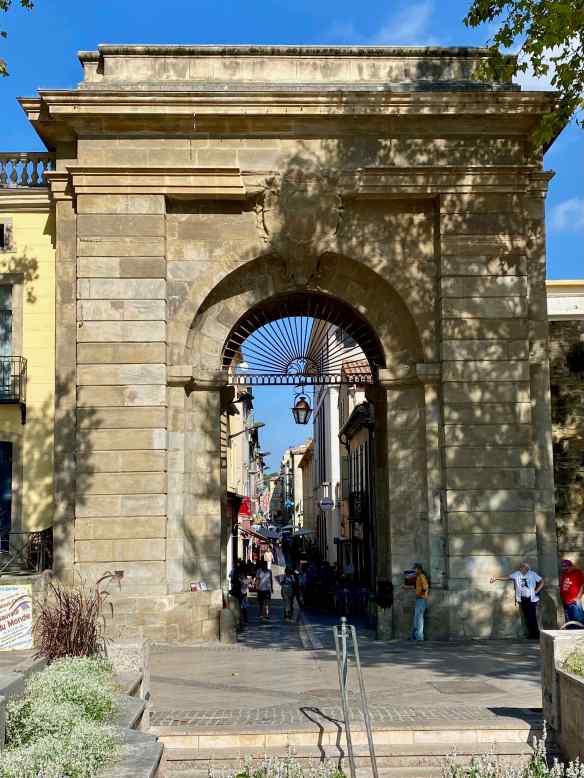
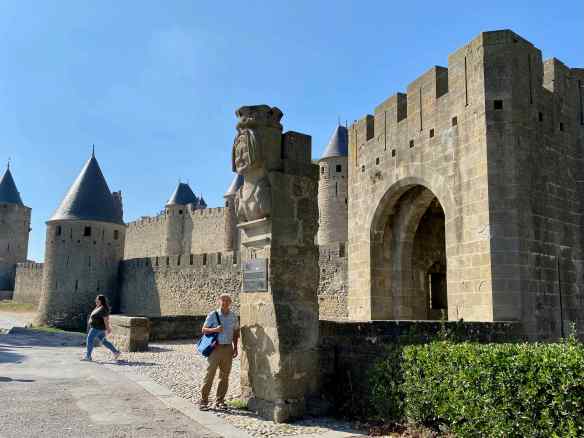
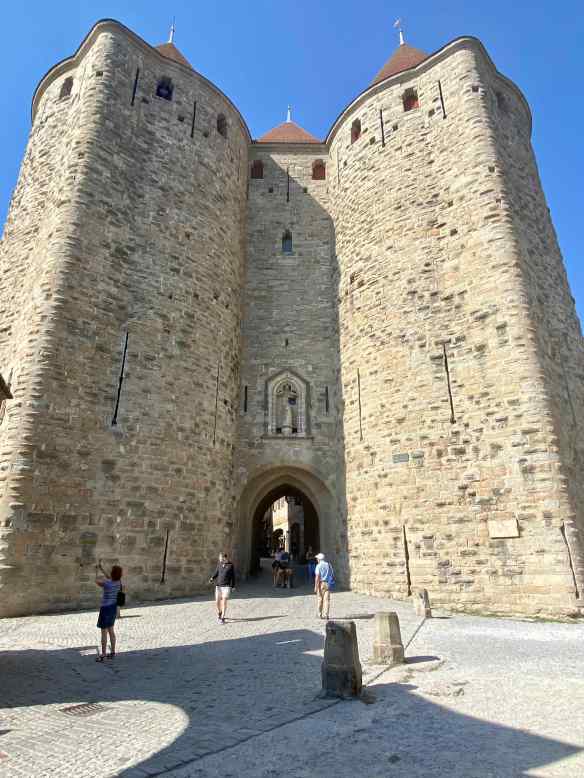
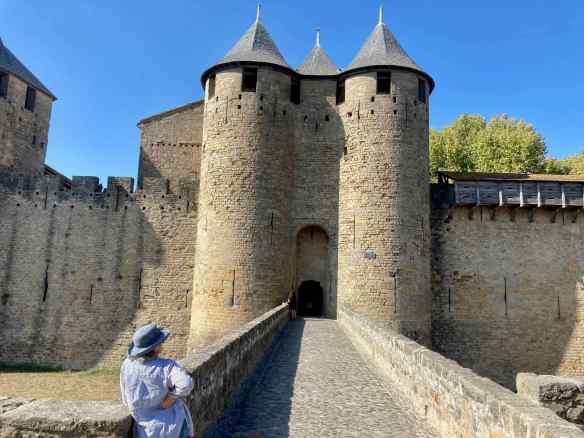
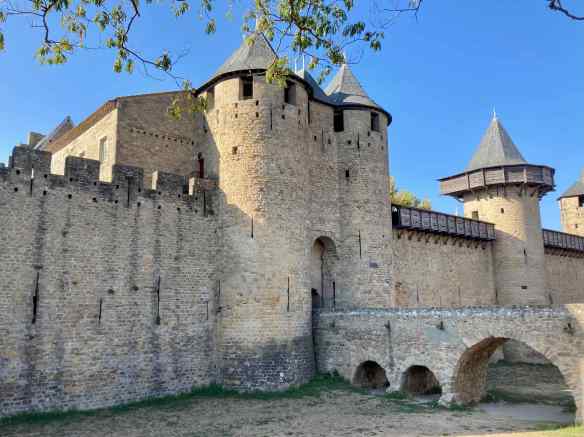
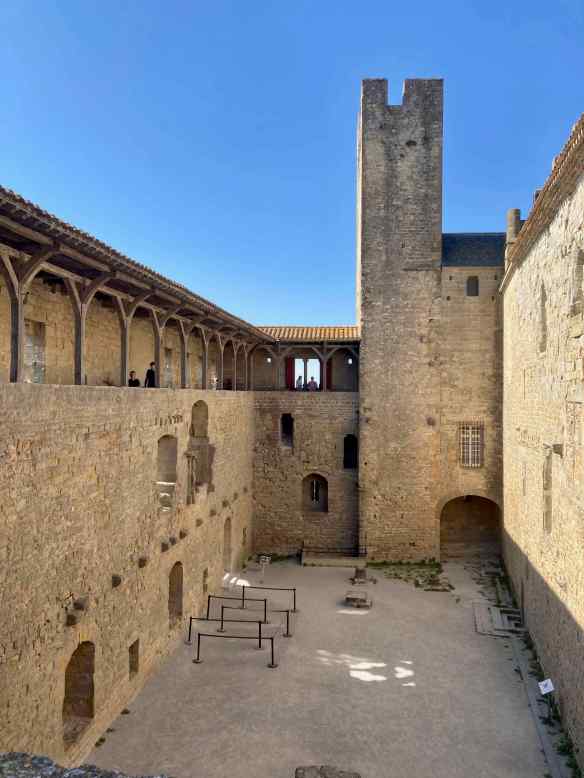
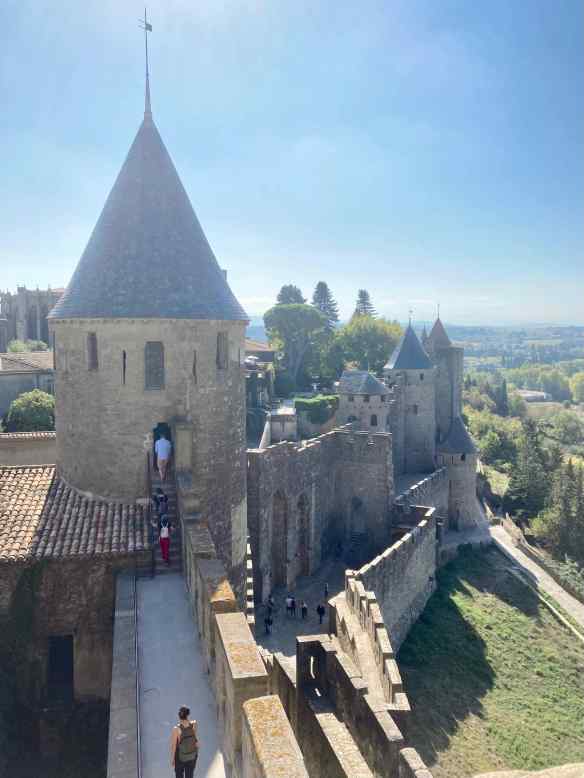
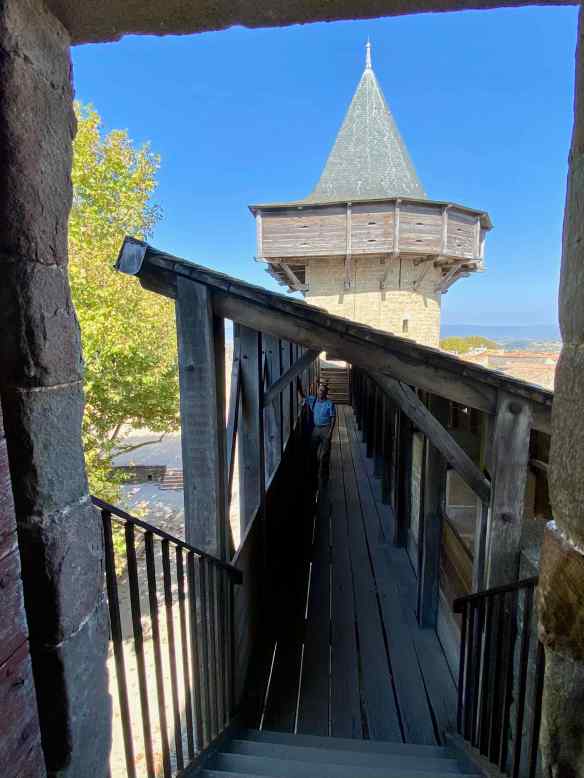
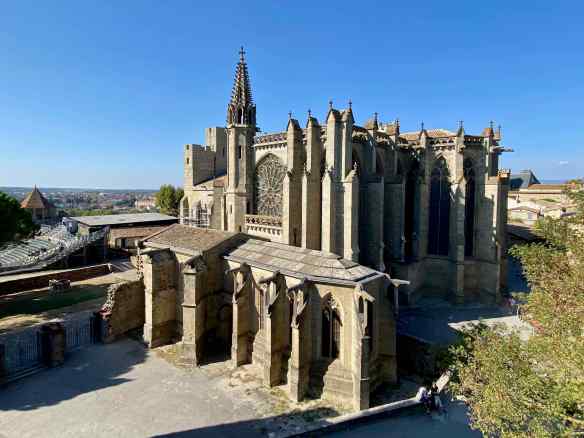
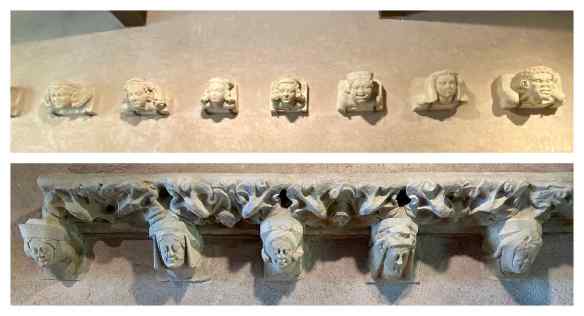 This is mostly an opportunity to see the fortifications that make this citadel so unique.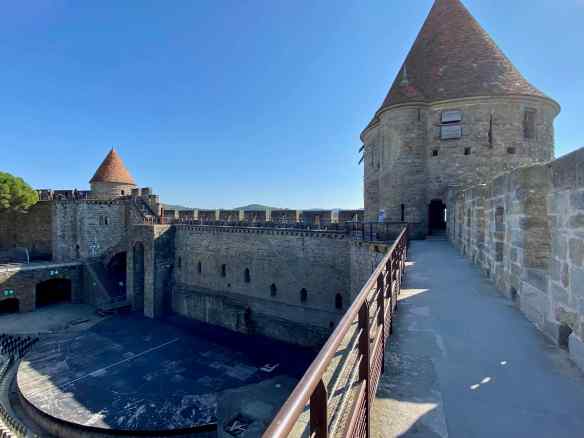
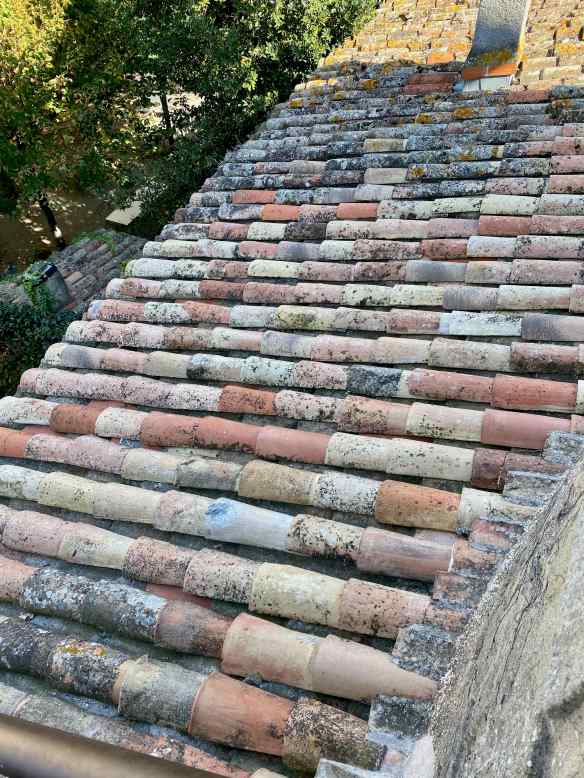
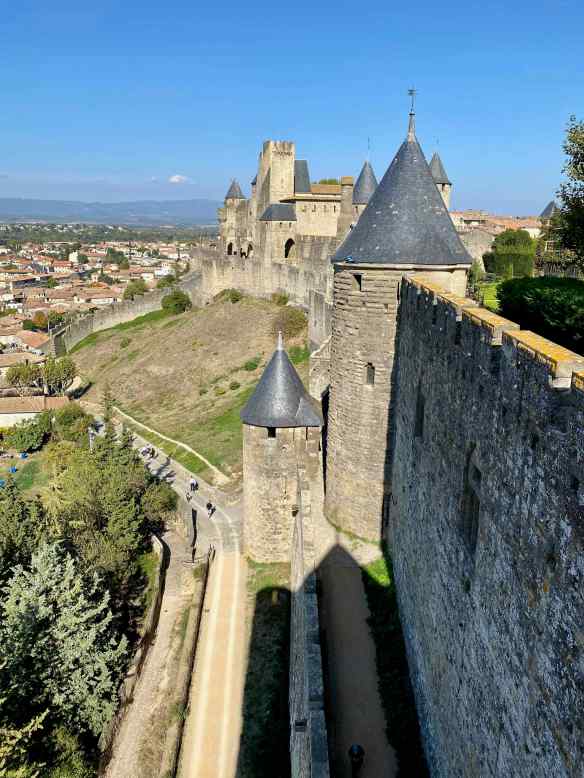 Carcassonne is now considered to be the largest and best conserved medieval fortress in Europe. It is impressive with its set of double walls and ramparts. Both sets of walls and the area between them can be seen in this photo.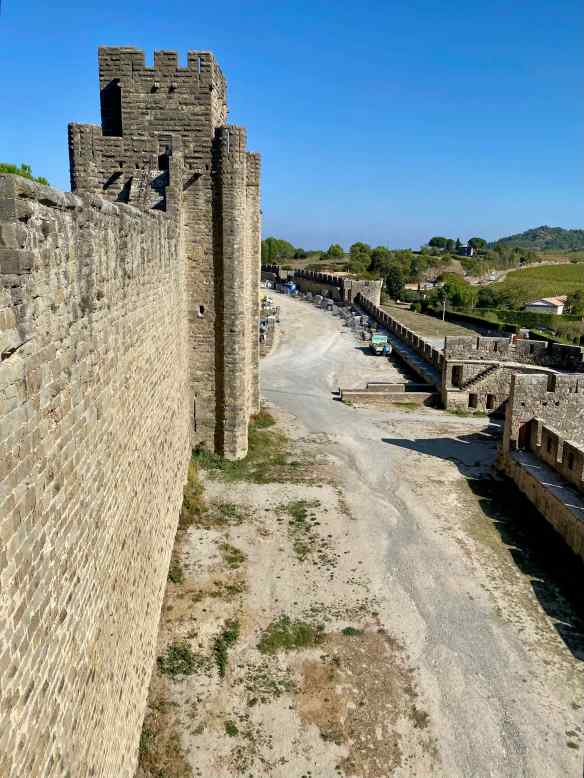
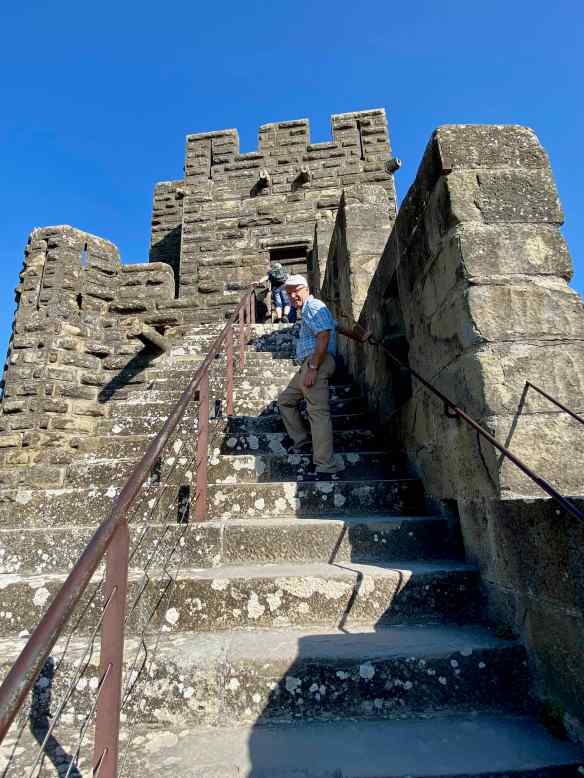

 We had a good laugh. Bob thought that the two guards in the guard-boxes were wax mannequins. They were so motionless!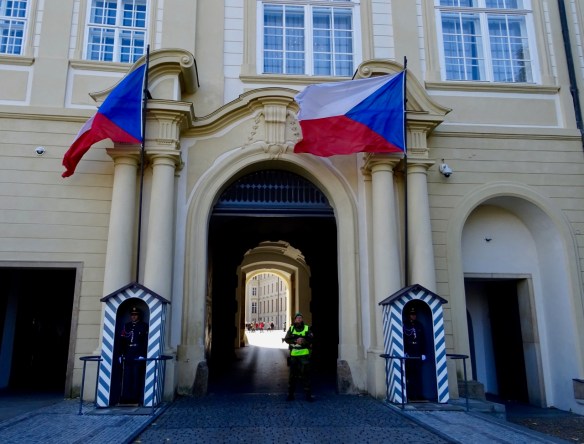
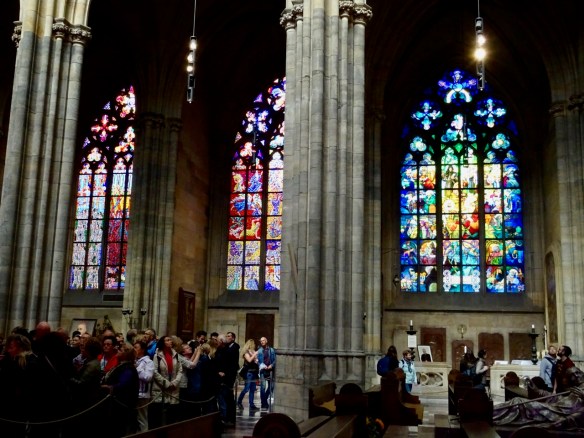
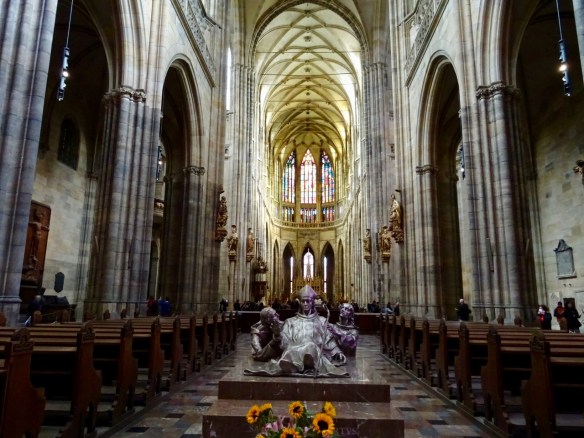
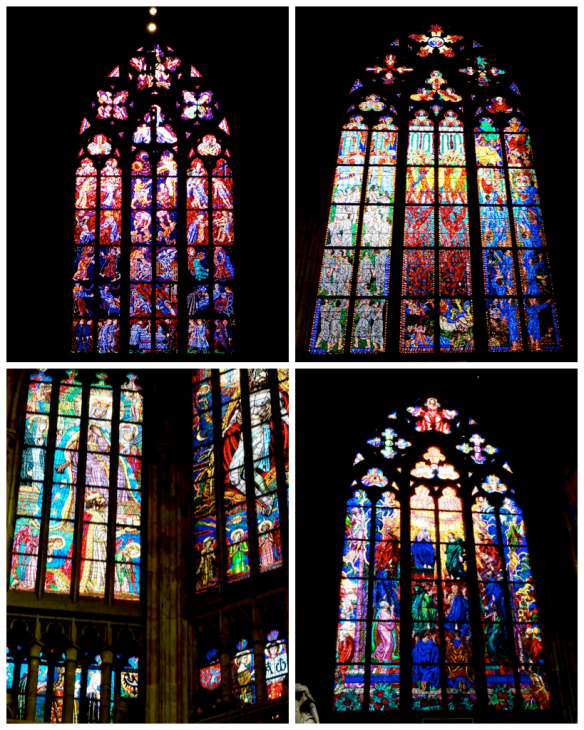
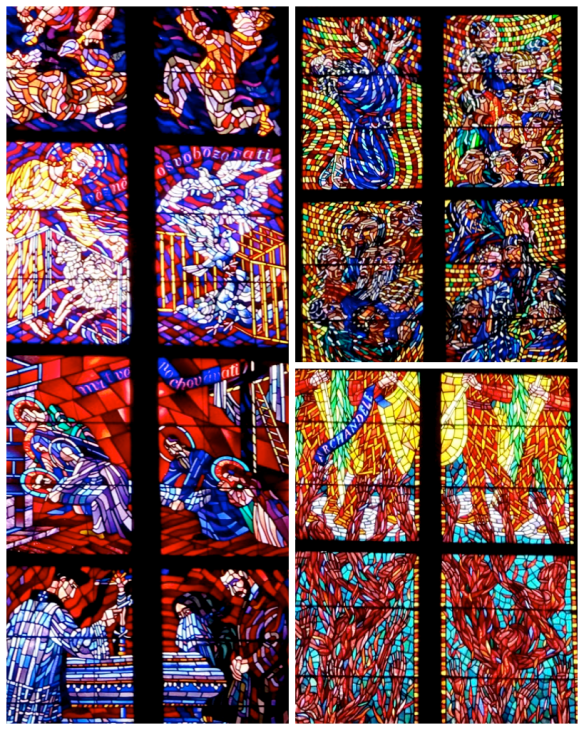 Perhaps my favourite is the window designed by Alphonse Mucha. You may remember we saw his design drawing for this window at the Mucha Museum yesterday.
 The beautiful rose window on the entrance wall of the cathedral was completed in 1925 and took two years to complete. The inscriptions on the stained glass tell the story of Creation as told in the Bible.
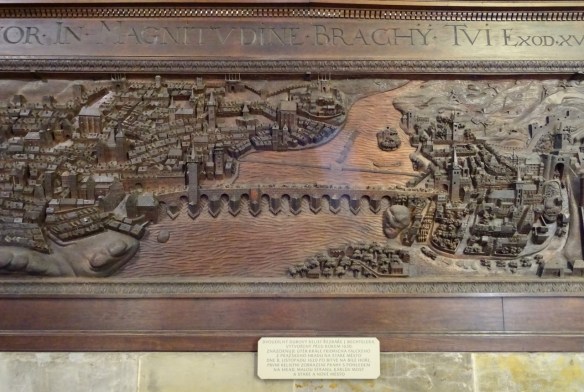
  This wooden panel from 1630 shows the St. Charles Bridge, built in 1403, that we visited on Saturday. The city doesn’t really look all that different, does it?
 St. Vitus is portrayed with a rooster by his side, because he was boiled to death in a pot with a rooster! These saints all seem to have had horrible tortuous deaths. St. Vitus never actually even visited this cathedral, but a relic, or pieces of his body, was brought here and the Cathedral was built to honour him.
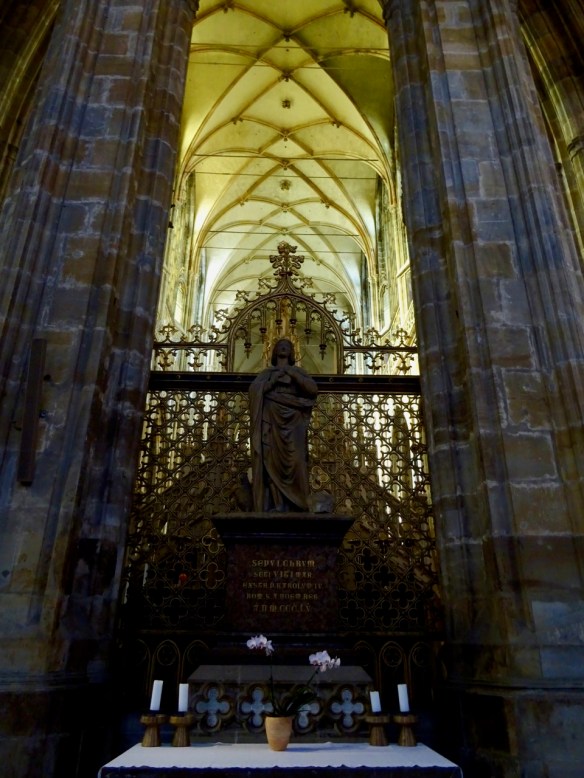 St John of Nepomuk’s tomb is an elaborate baroque silver tomb with angels supporting a draped canopy. It is said to contain two tonnes of silver. St. John is the patron saint of the Czechs. There are so many people visiting this cathedral that I had to take this photo looking back towards the tomb to get a decent shot.
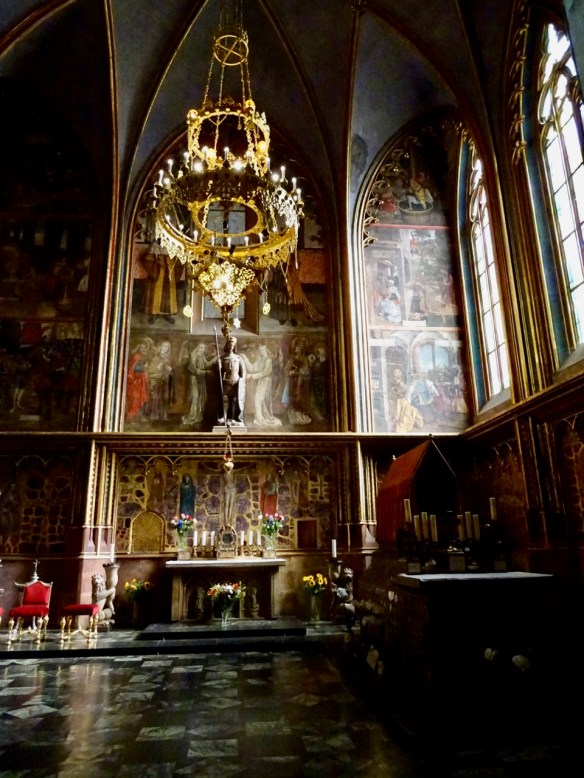
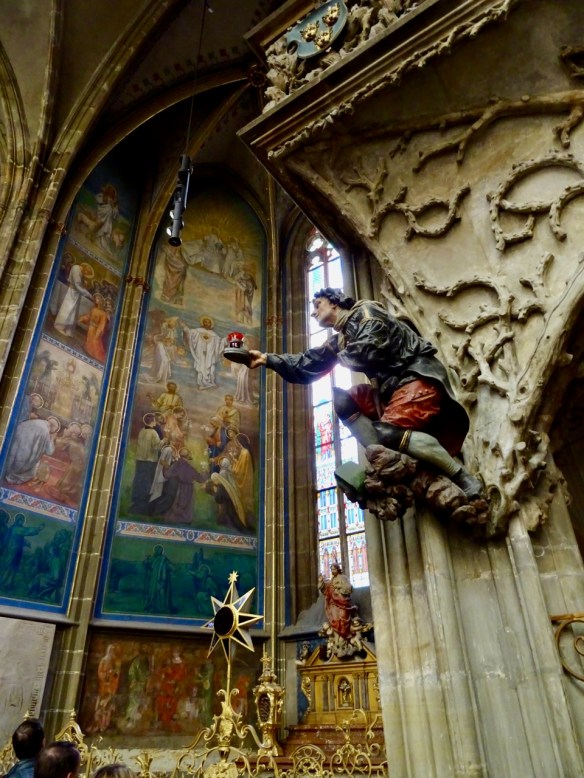 This is the chapel dedicated to St. Wenceslas, the king and patron saint of all the Czech lands. The lower part of the walls are decorated with more than 1300 gems and the joints between them are covered with gold. The walls are covered in frescoes and the relics of St. Wenceslas are kept in the red draped case.
  As we are leaving, the sun comes out for a bit and shines through the stained glass windows casting coloured light into the cathedral. Note the lady posing behind Bob. We seem to see her everywhere we go today and she is always posing ‘just so’ for a photo. I’m not sure her and her husband are even looking at the cathedral as anything but a backdrop for her photographs.
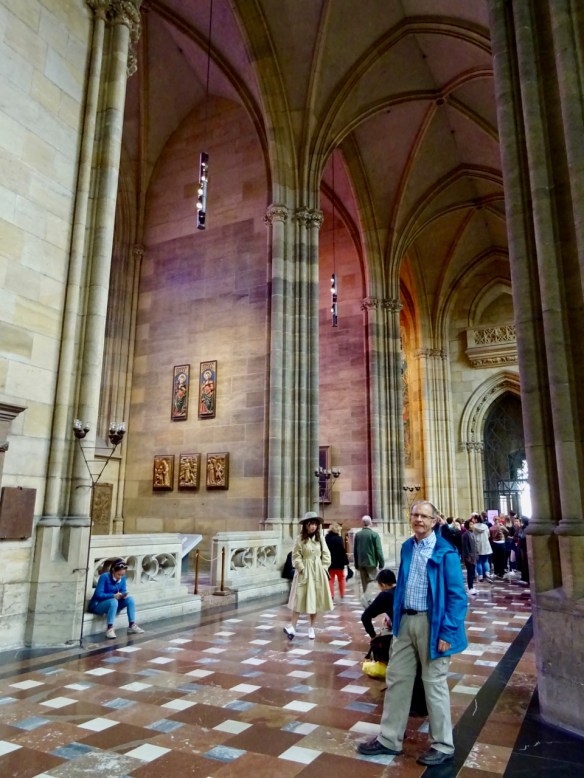 As beautiful as this cathedral is, I still love some of the simpler details that are easy to overlook with all the grandeur surrounding us.
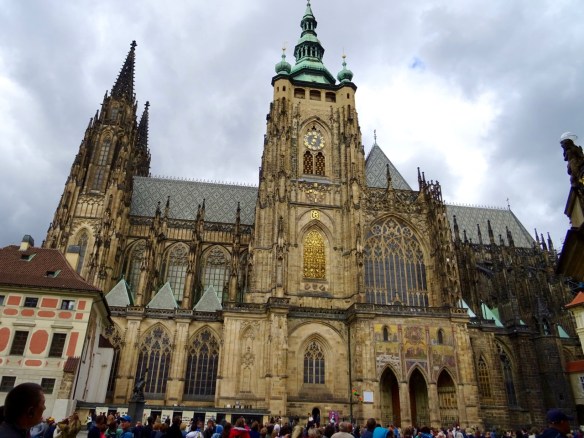
 A view of the Cathedral. This front entrance isn’t used by tourists, we entered on the end of the cathedral behind the building with orange panels.
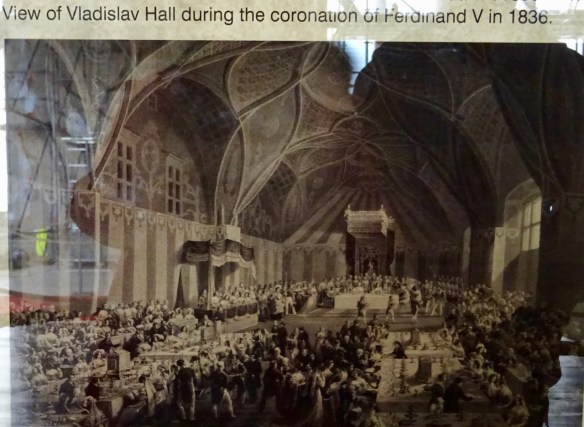
 since the 16th century, the Vladislav Hall in the Old Royal Place, was used for coronation festivities and banquets, knights’ tournaments and markets for luxurious goods. The Vladislav Hall still is used for state functions. It is an enormous room.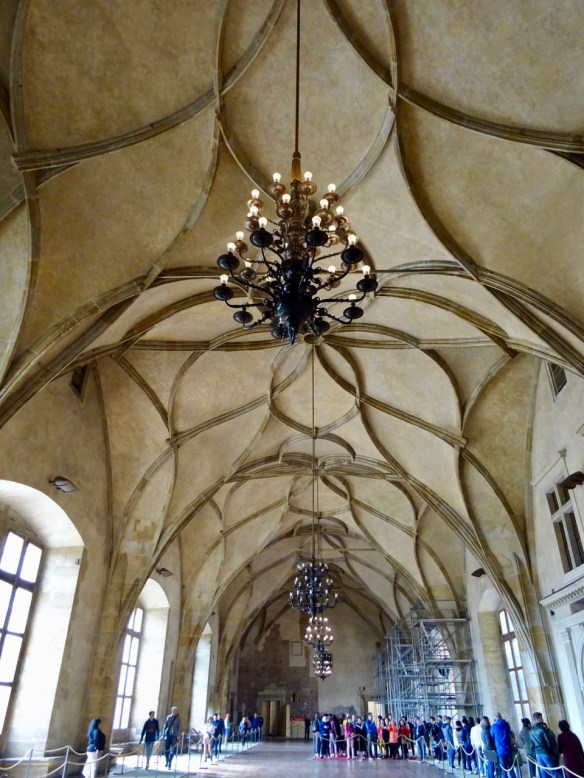
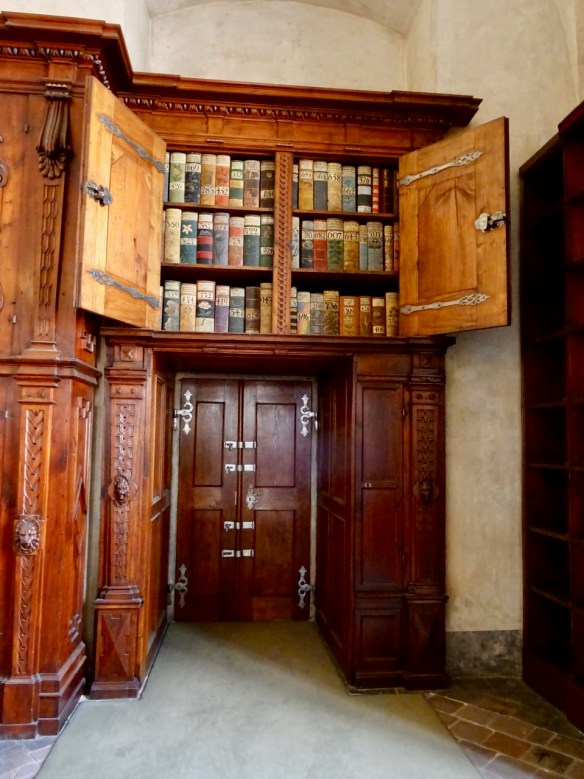
 The Old Palace contained the Land Rolls, where all matters regarding property rights and criminal law were recorded.
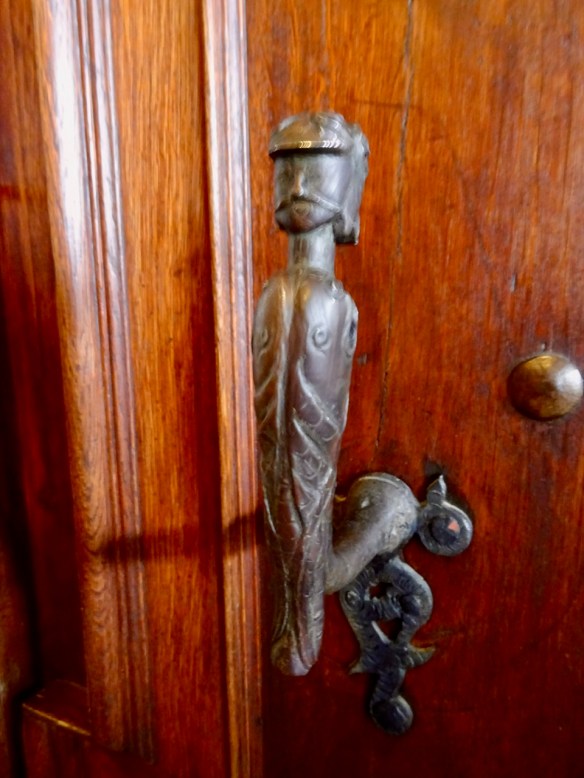
  An interesting door handle.
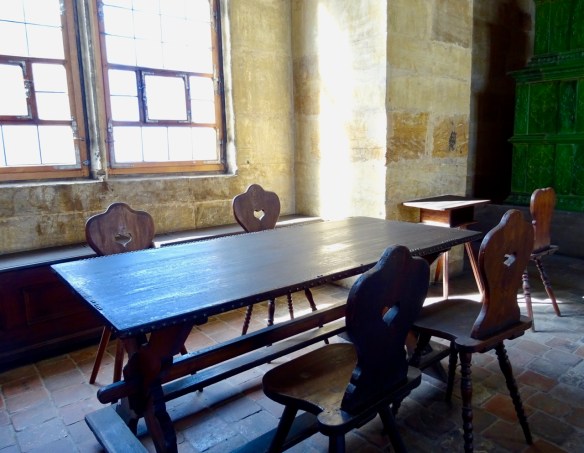
 One room had chairs which are almost the same as the ones my Swiss grandfather used to make, only he put more carving and decoration on his.
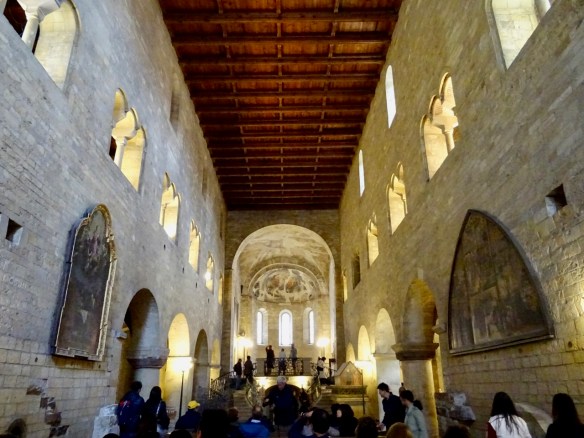
 The present day appearance of St. George’s Basilica dates to the reconstruction after a devastating fire in 1142. Now it is used for short-term art exhibitions.
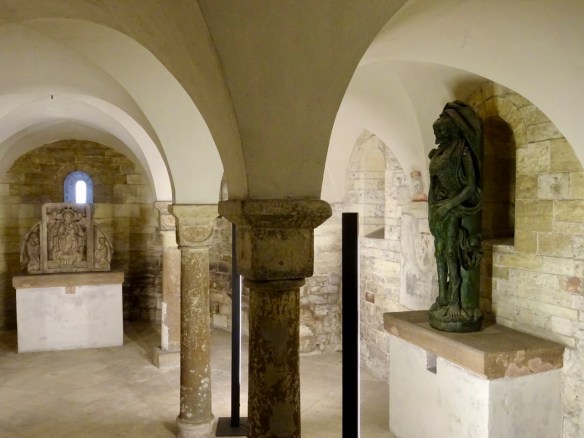
 We visit St. Georges 12th century crypt and see this rather bizarre sculpture. I did some research and discovered that it is “a Late Gothic Statue of Brigita, representing a dead and decaying girl´s body. It is a symbol of impermanence. A legend says that it was made by a sculptor, who killed his girlfriend and wanted to create her statue before he was executed. However, he was only able to make it as a dead body, because of his despair.” ~.www.prague.cz
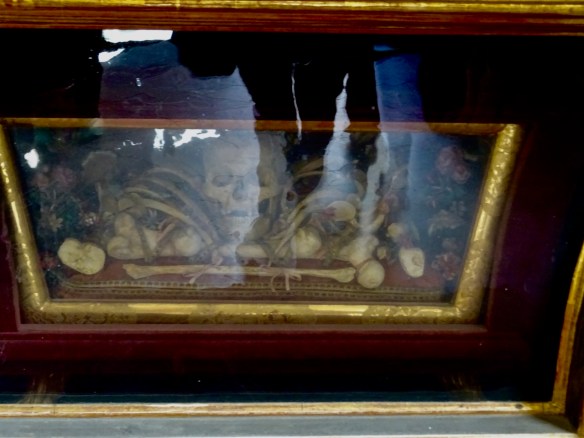
  On the way out we see this collection of relics, but have no idea who they are. These relics seem a bit bizarre. Not only was the poor person usually tortured and killed but then their bones were carted off, often to several different locations and put on display. Hmmm.
 This is the Golden Lane. This lane of tiny houses was built against the northern wall of the castle. These tiny houses were occupied until World War II and have been preserved so that the character of this lane has not changed. From 1916 to 1917 house No. 22 was inhabited by the writer Franz Kafka.
 The name of the Lane is derived from goldsmiths who used to live there. I struck up a conversation with a gentleman who told me that he and his father were both goldsmiths and that the tools have not changed at all. He also said his father died young and that he quit because some of the processes involved are very toxic.
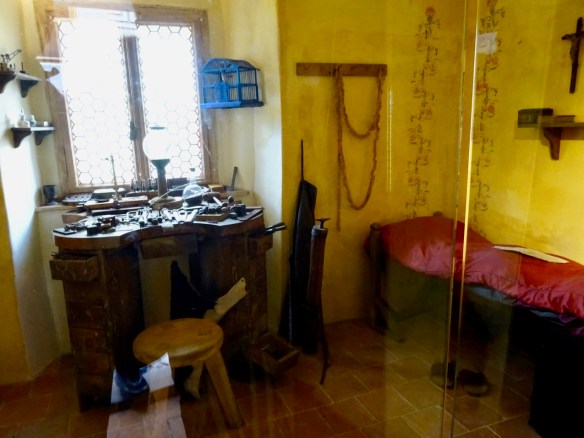 The houses are tiny and have tiny doors.
 This was a fortune teller’s house whose predictions about the early fall of the Third Reich resulted in her being arrested and tortured to death by the Gestapo.
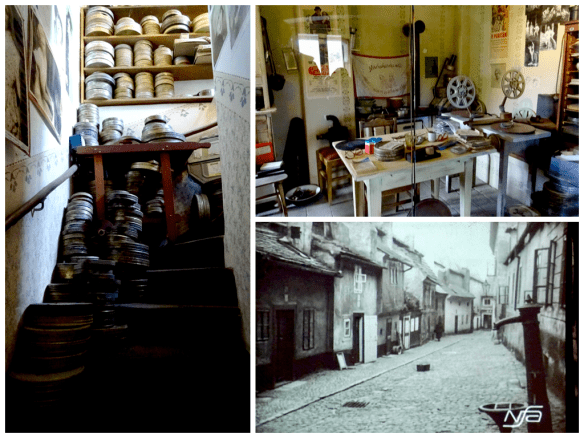
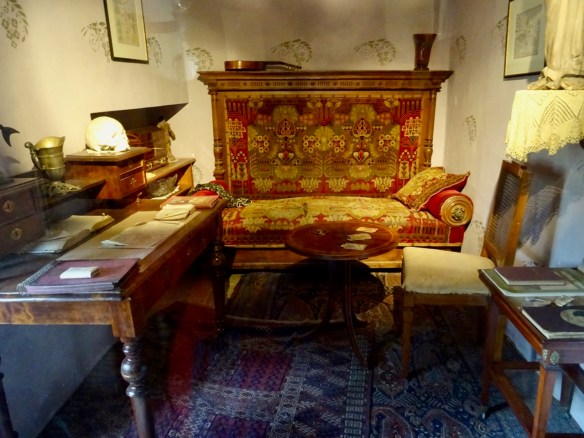 An amateur historian who saved many copies of old films that were intended for disposal during the Second World War lived here. We watch one film that showed scenes of Prague and this Golden Lane. It looks much like it does today.
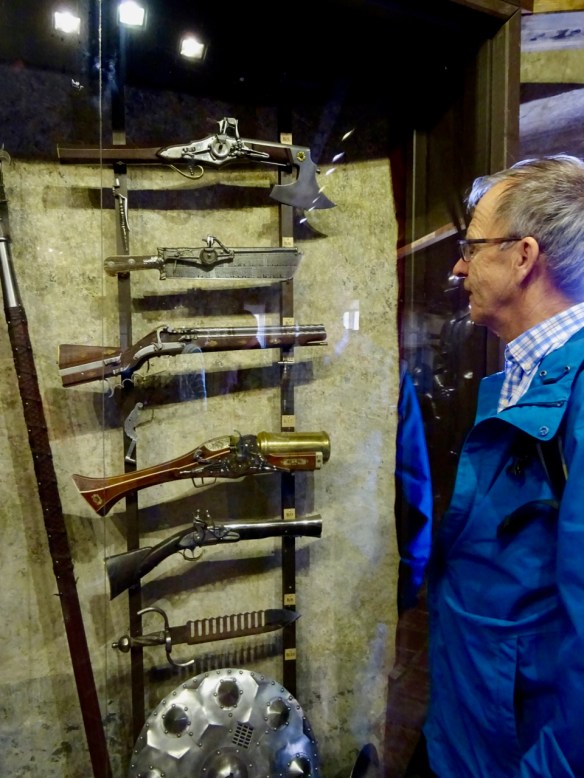
 We almost missed seeing a huge display of old armaments and armour. It was quite interesting. Some the swords have pistols built into them, or axes attached!
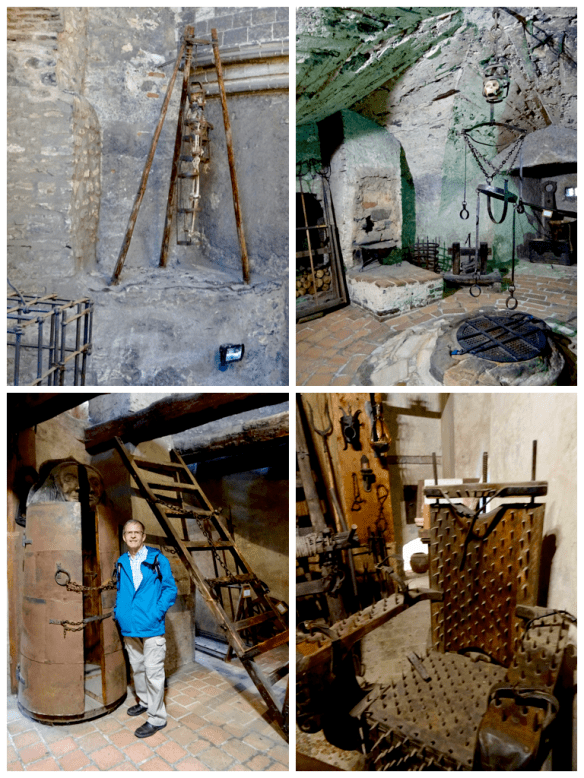
 And then there is the torture chamber. These places give me the creeps. It is just so hard ot think of people subjecting each other to such pain and terror. Bob is standing beside an Iron Maiden, which has spikes inside just long enough to pierce the body and make sure that the person inside dies a slow painful death. There are two spikes placed so that they will pierce the eyes of whoever is placed inside, and take a look at that chair! It is enough to give me nightmares.
 After the torture chamber we see some great views of Prague…
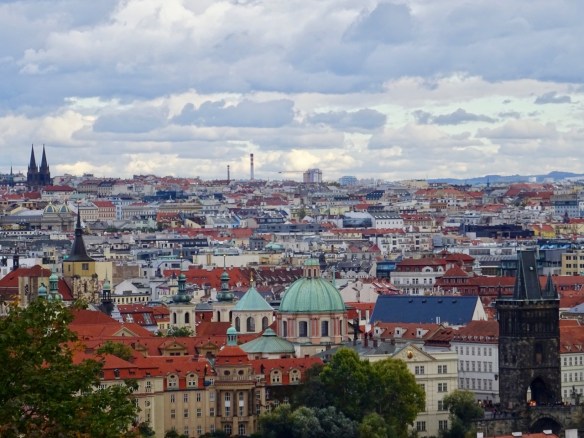 can you spot our TV Tower? It is hard to miss.
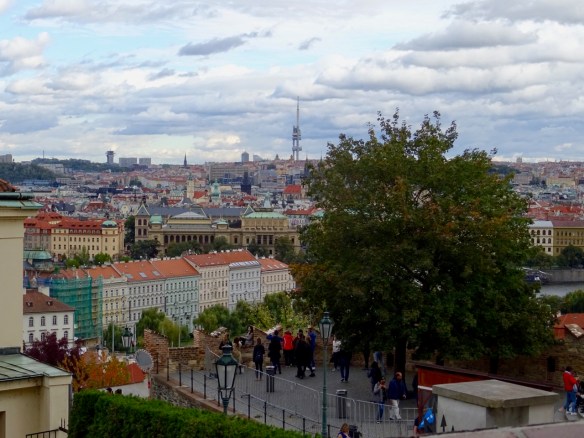 As we leave the castle the changing of the guards marches past. A couple of the guards have their hats blown off by the wind but they just keep marching, although they did smile! It was crazy windy today and a bit cold so it was a good day to be inside.
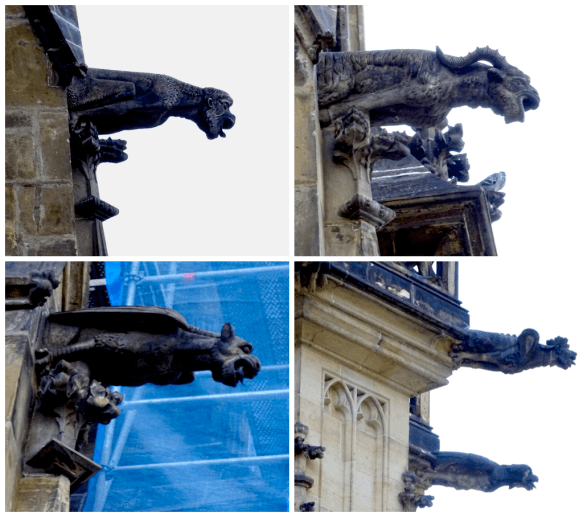
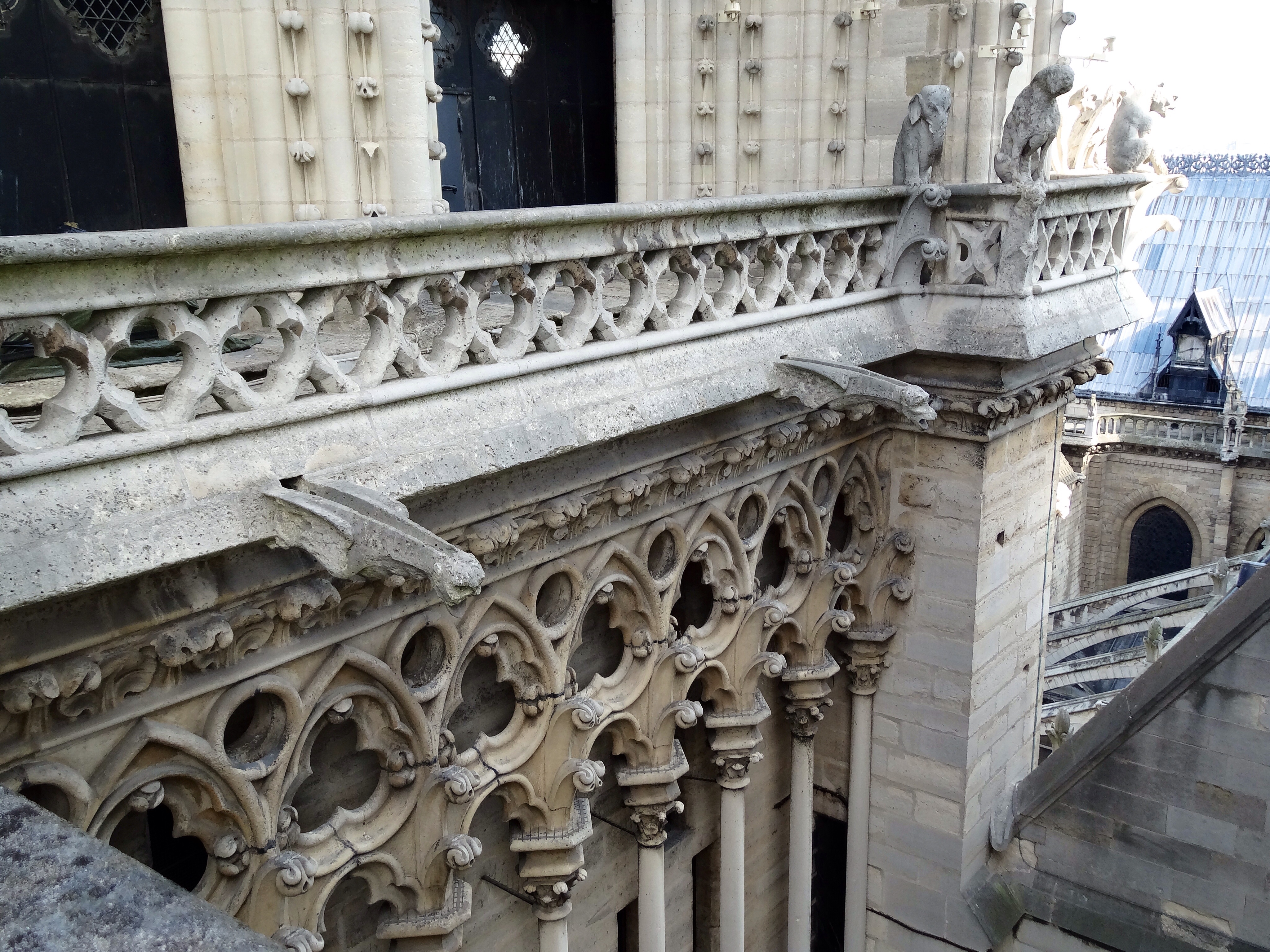
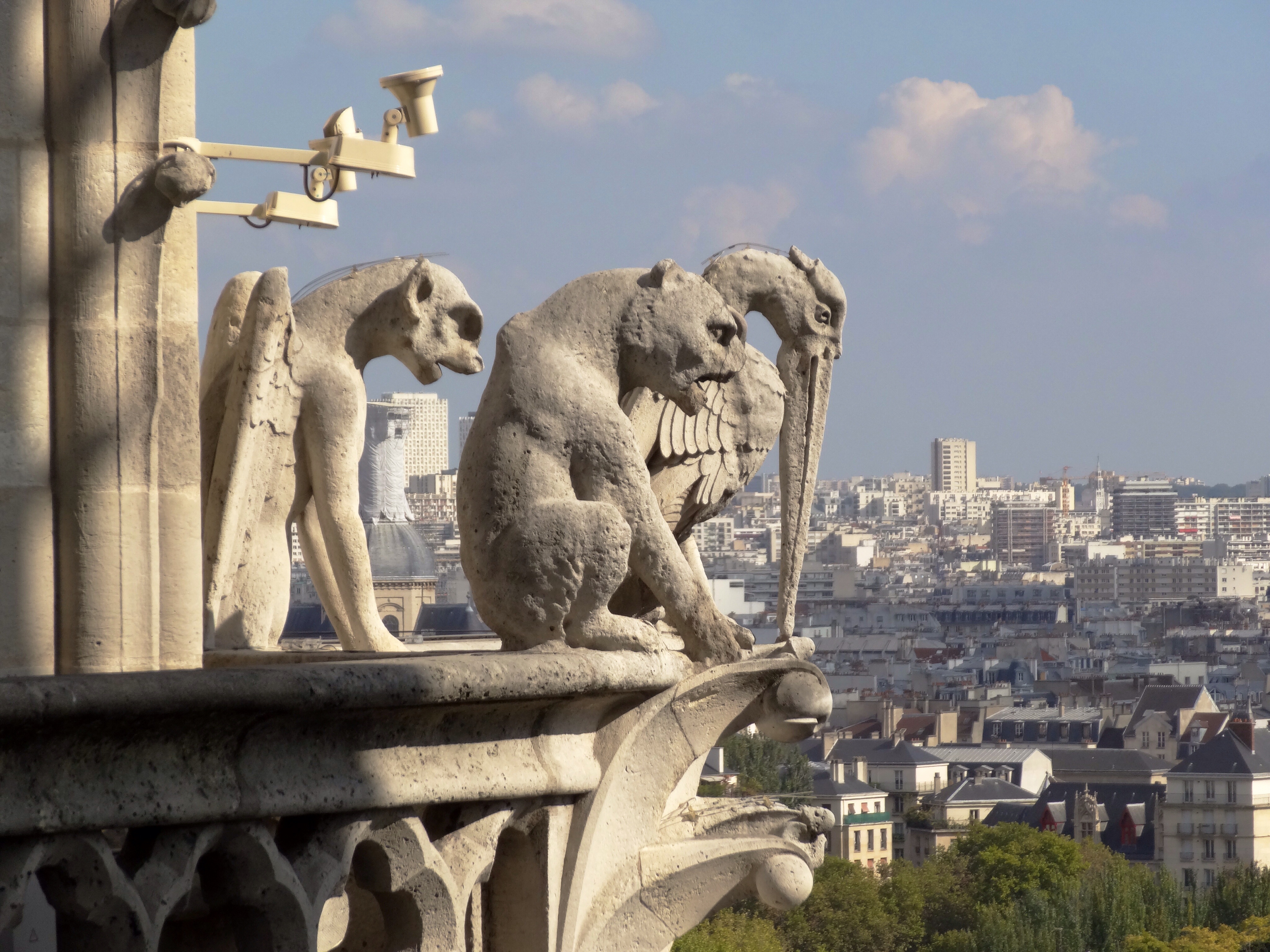
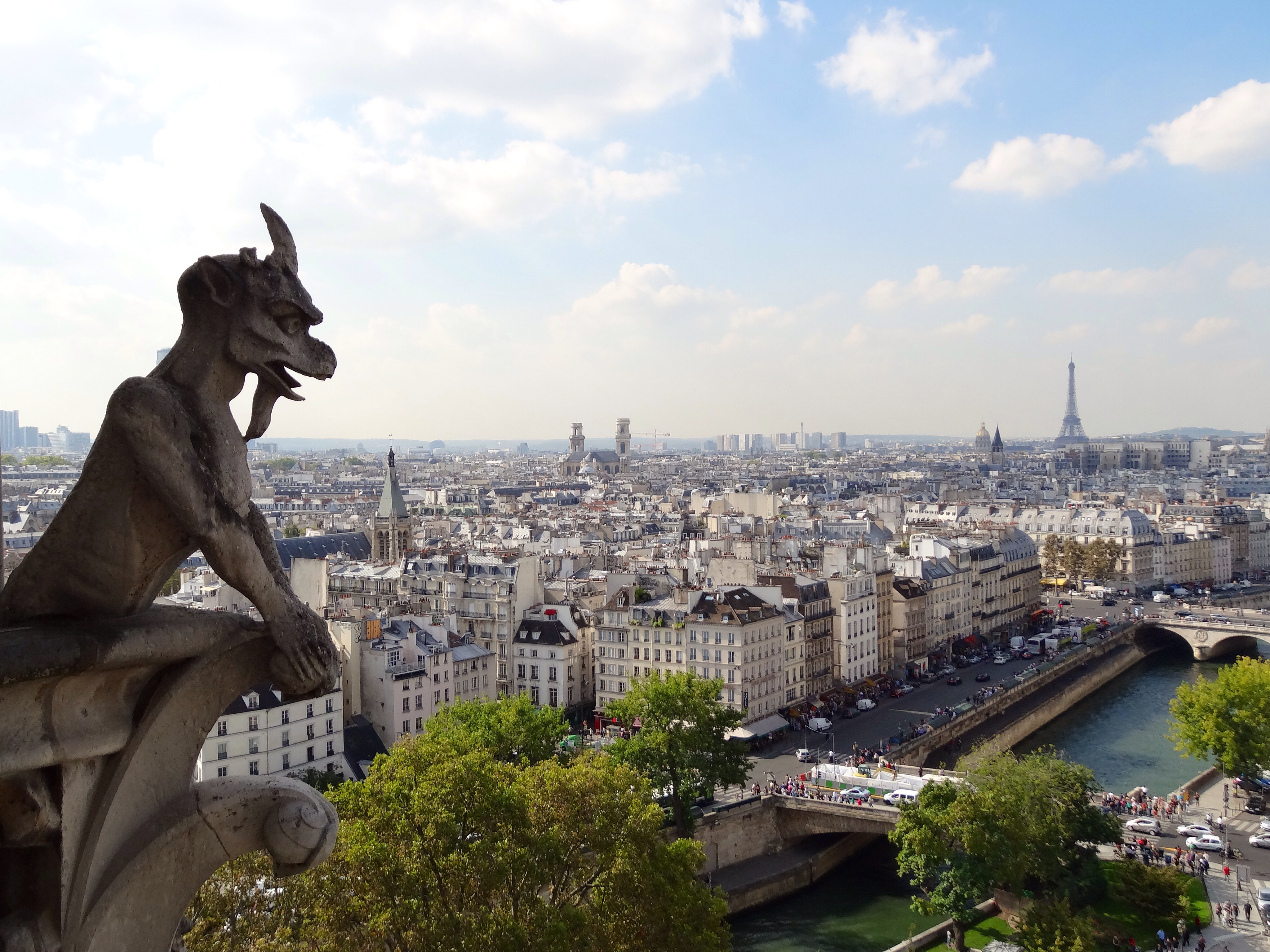
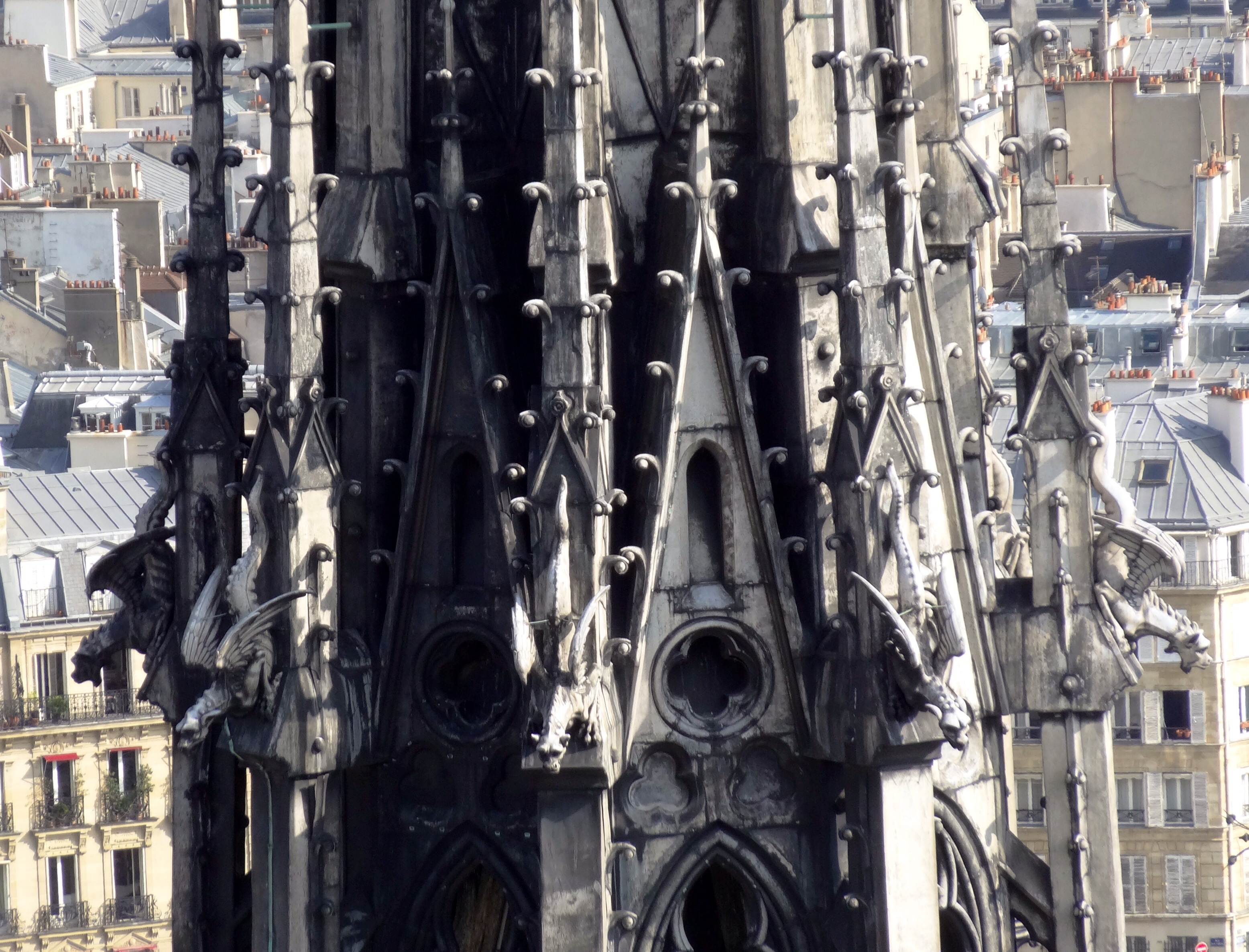
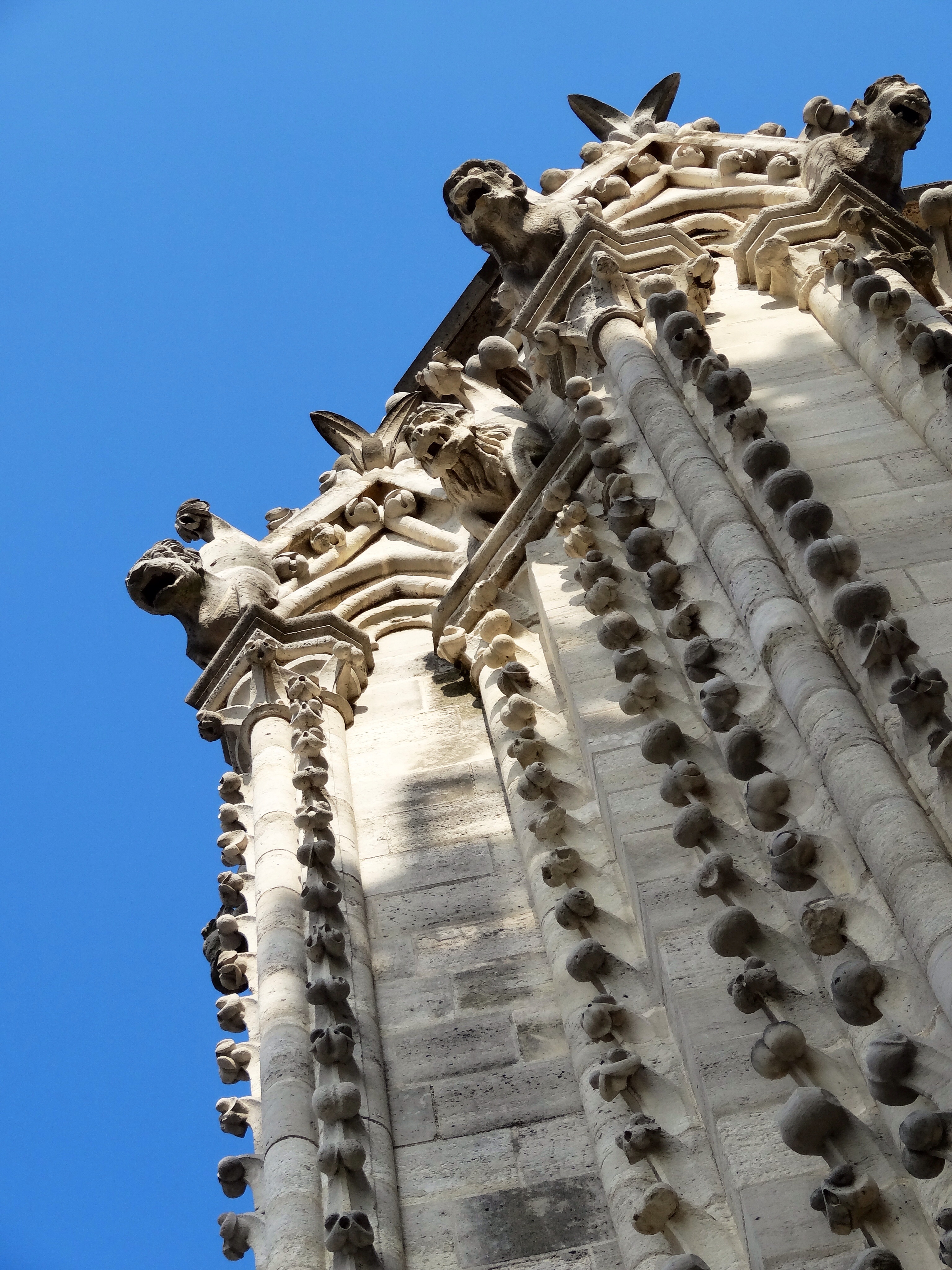
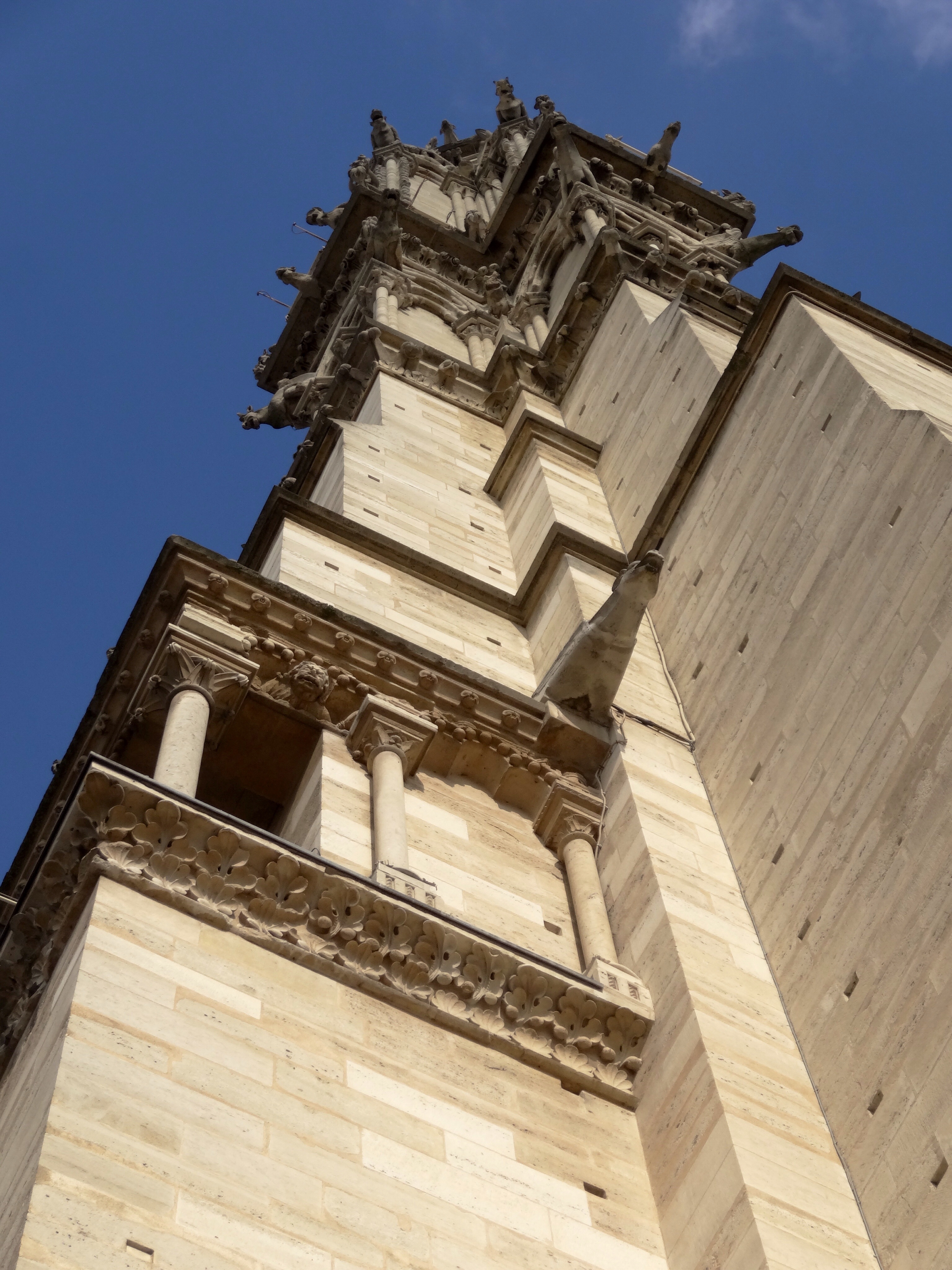
 Walking past the Cathedral towards the exit I thought to look up, and yes, there were gargoyles! I love gargoyles, in case you didn’t know.
 This shrub was near the exit. I have no idea what it is and wonder if anyone else might know?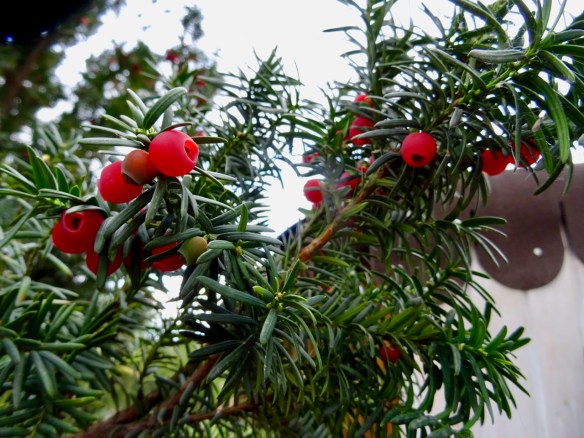






 trudymason.com
