Day 39, Friday, October 6, 2023
This morning we are on our way to Le Grotte de Font de Gaume. Autumn is arriving here. These trees are the most colourful we have seen so far. 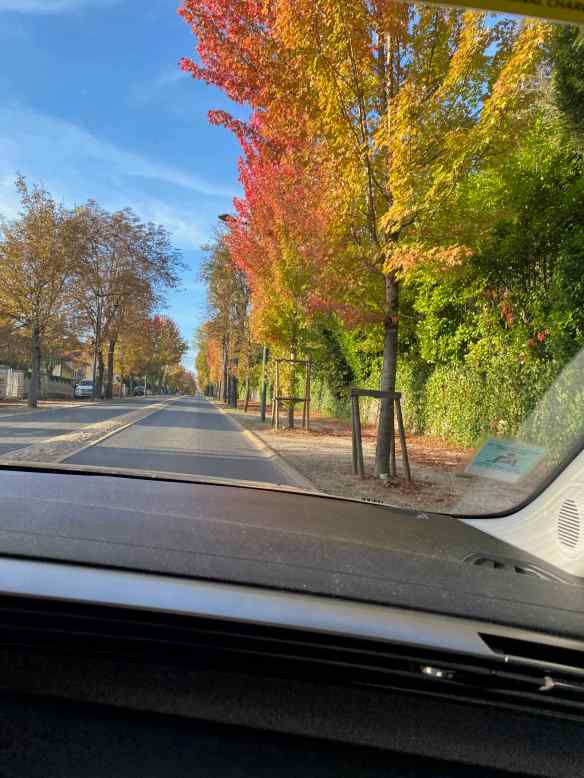
Fonte de Gaume is the only prehistoric site with polychrome cave paintings that is still open to the public in France. It became a UNESCO World Heritage site in 1979. I forgot to take photo on the way up to the cave…I think I was excited about the upcoming tour. This photo is from one of the tourist information brochures.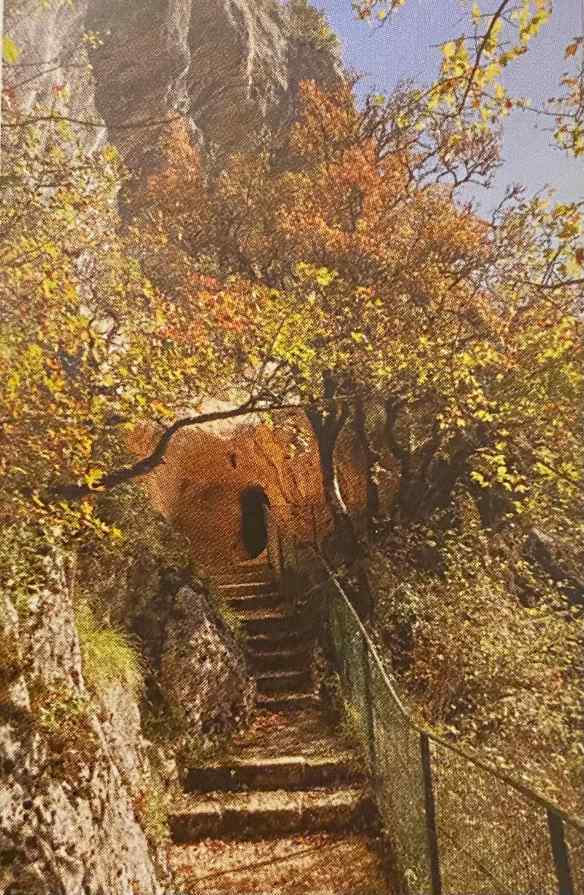 There are more than 200 painted and engraved figures in Fonte de Gaume organized into compositions in the four main sections of this 120 meter long cave. We visited all but the narrowest section in the Diverticule teminal and the short cave on the right of the entrance.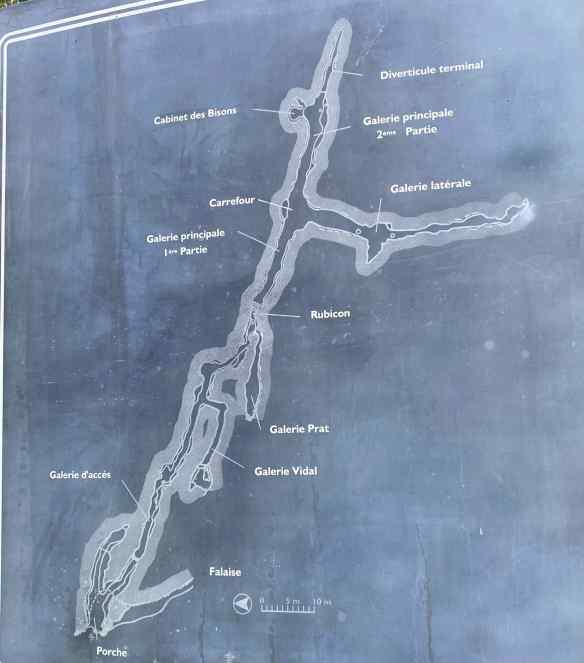
These drawings outside the cave give a hint of what we will be seeing inside.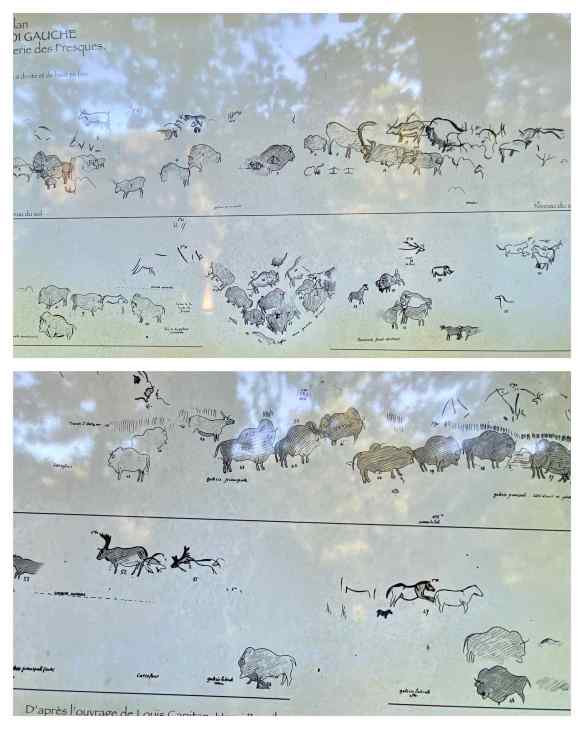
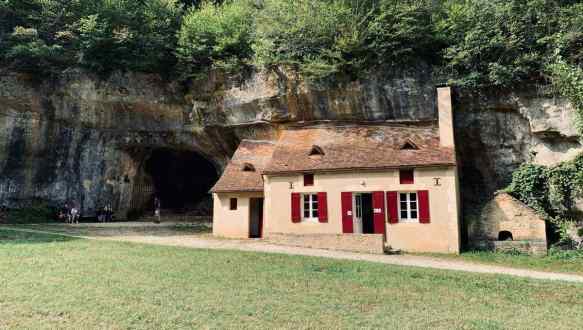
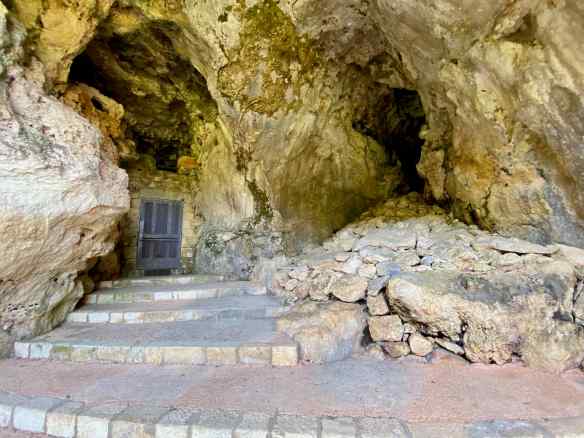
The entrance to the cave is the cave on the right, we do not go into the other one. Our guide was wonderful, he conducted the tour in English with a lovely French accent and he was very passionate and knowledgeable about prehistoric art and this cave in particular.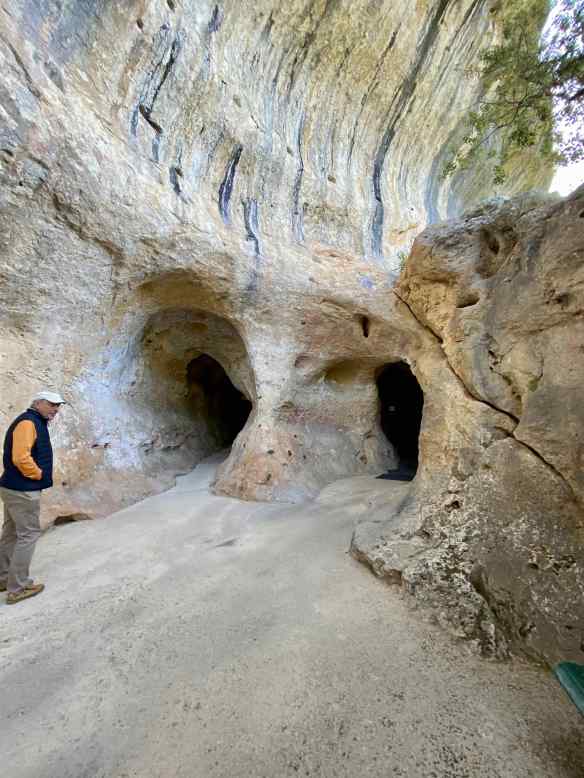
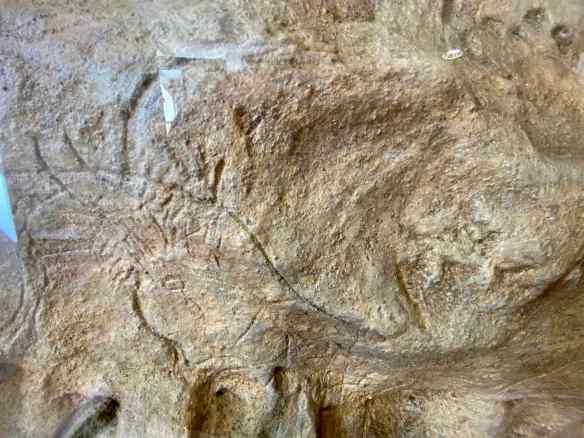
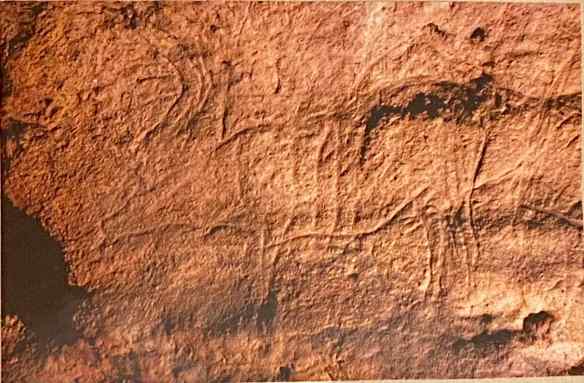
The paintings date from around 17,000 BC, during the Magdalenian period. Many of the cave’s paintings have been discovered in recent decades. The cave’s most famous painting, a frieze of five bison, was discovered accidentally in 1966 while scientists were cleaning the cave! No photos in the caves…so these pictures are from postcards and brochures. Believe me, they in no way convey the beauty and grandeur of what we saw.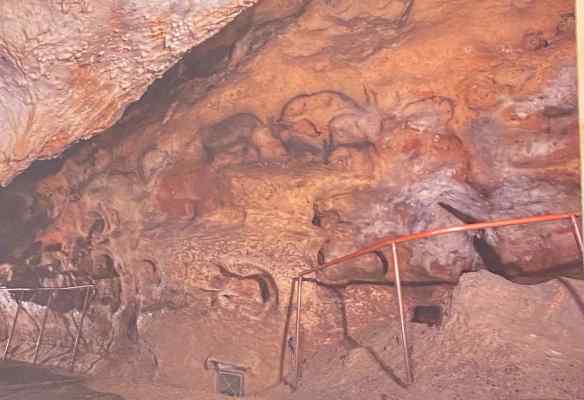
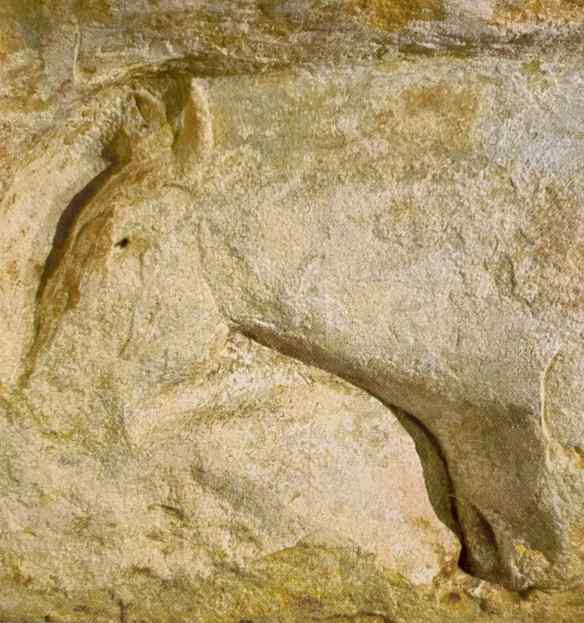
A very realistic engraving of a horse’s head.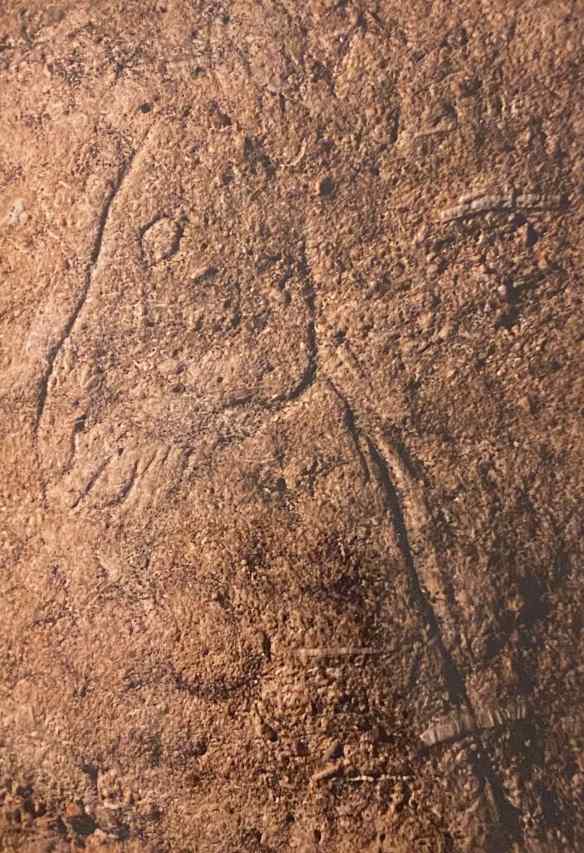
There are many bison in the cave. Our guide points our details and gives information about the paintings and engravings. We are able to stand so close to these amazing paintings. I am often standing in the same spot that the prehistoric artist who made this artwork stood. Can you imagine? It still gives me goosebumps just thinking about it.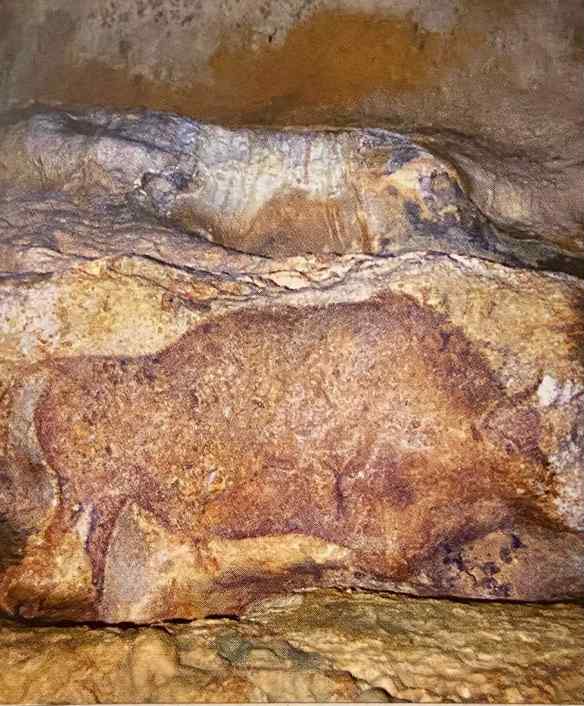
Our guide saved the best for last. He had each of us squat down so we could look up into a small hollow in the wall of the cave…and there was the left handprint of the artist. A man or woman had signed their work, before there was even the concept of a signature…and there it was, just inches away. It was an incredible, emotional moment. 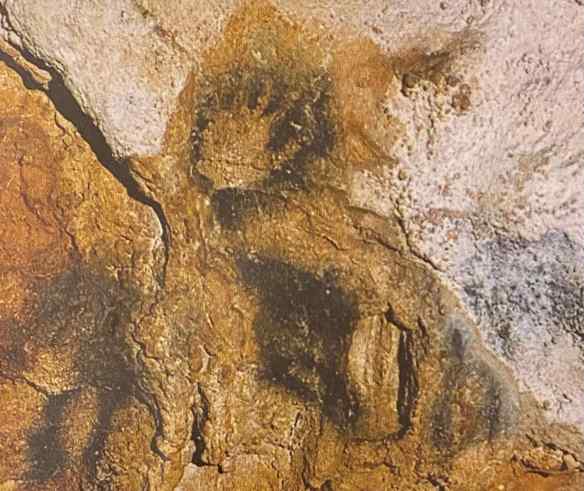
If you would like to see a video of the inside of the Grotte de la Font de Gaume click on the link below. If you then copy and paste this link into Google chrome you can translate the video into English. It takes a bit to figure out how to navigate and see the different paintings but it gives a good view of the inside of this cave. It is very narrow in places, and we have to almost turn sideways to get through parts of the cave without touching the walls. http://font-de-gaume.monuments-nationaux.fr/
This second link shows the part of the video where you can get a better look a the paintings. http://font-de-gaume.monuments-nationaux.fr/fr/entree/carrefour/suite/les-bisons-polychromes/
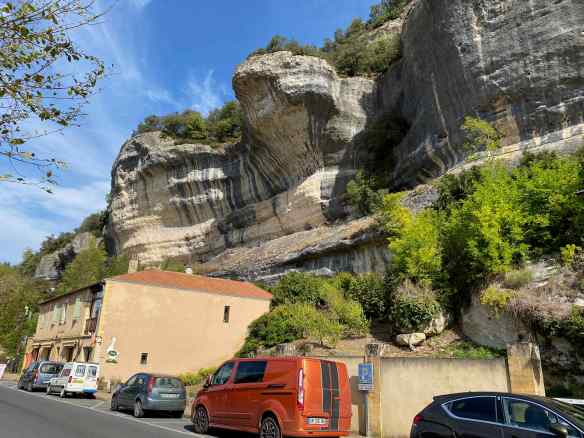
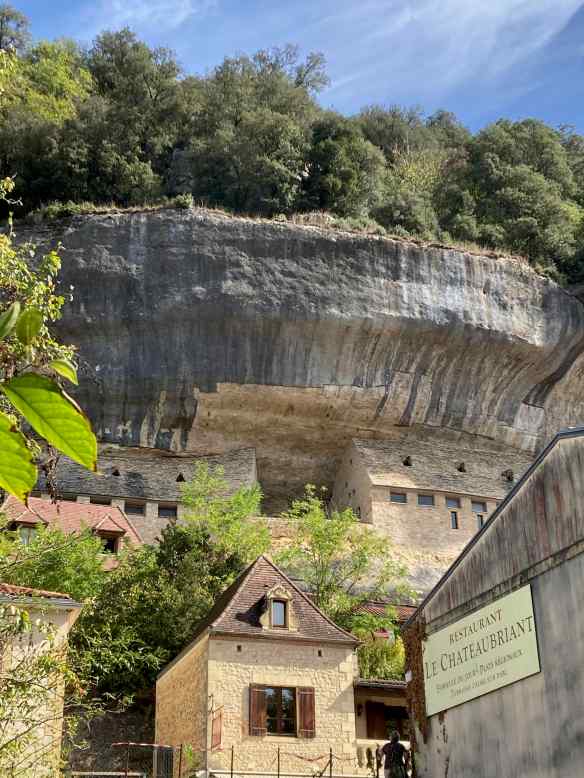
On the way to our last cave, La Grotte de Rouffignac, we pass several buildings that are built right in to the cliffs, and very close to the road. Some look empty but many are still in use.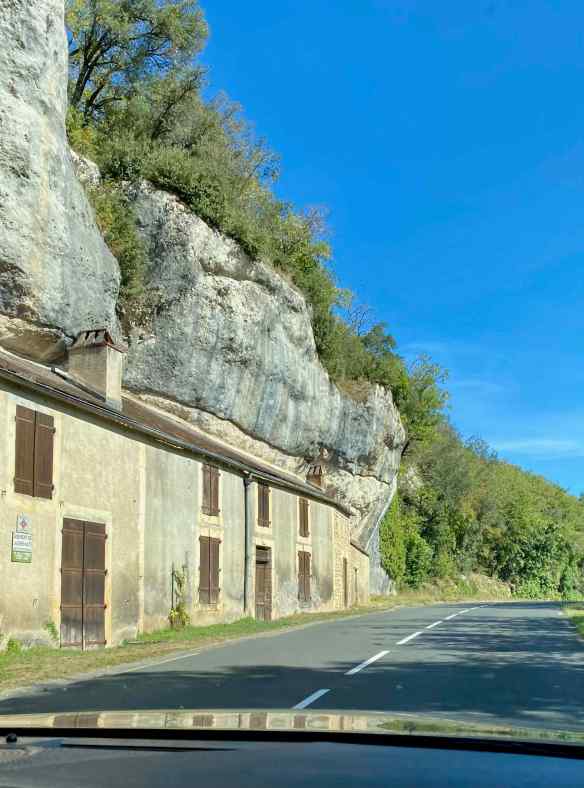
The roads also have a lot of overhanging rocks.
We get to the Rouffignac Cave early. There are no online tickets, just first come first served. We find a pretty little picnic area beside the cave and have our lunch before walking up to the cave to wait for the 2:00 opening. I found prescription glasses in a case near where we had our lunch. Turns out they belong to one of the guides that works with school groups. She lost them a few days before so she was very happy to get her glasses back. My good deed for the day! But somehow I forgot to take photos where I could. The first photos here are courtesy of Perigord.com.
This is the entrance to the cave where we line up…we are first in line at this UNESCO World Heritage Site.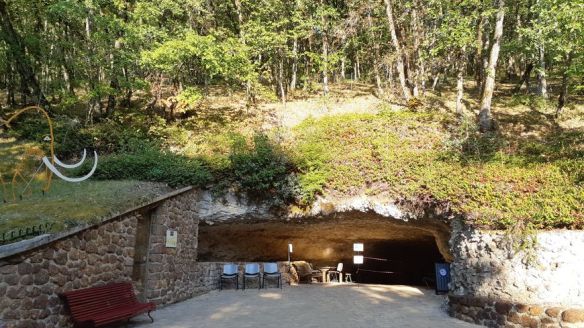
This cave is enormous, with almost 8 kms of caverns and tunnels on three levels. We ride an electric train as our tour goes a kilometre into the caves. It is also very cold, it seems colder than the 13 degree temperature of the caves we have already visited. Perhaps because we are just sitting still?  The first artworks we see are engravings…some of them were made by the artist using his fingers to mark the soft stone. Rouffignac is famous for its Mammoths. 158 mammoths that have been found on the walls of this cave, this is 30% of all mammoth representations in prehistoric cave art. Yet, curiously, there have been few mammoth bones found in this area. We also see cave bear claw marks all over the walls. The parallel vertical lines below this mammoth are from a cave bear scratching his claws on the cave walls.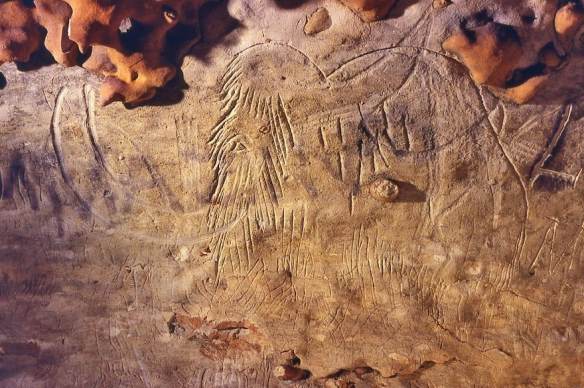
There were a lot of cave bears in this cave. We pass through numerous hollow round areas. These beds were made by cave bears to hibernate in the cave during the cold winters. Cave bears were extinct long before the artwork on these walls was made…good thing!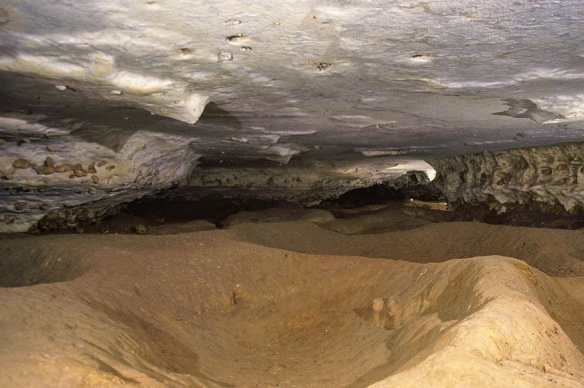
These photos of the cave’s black line drawings are from postcards.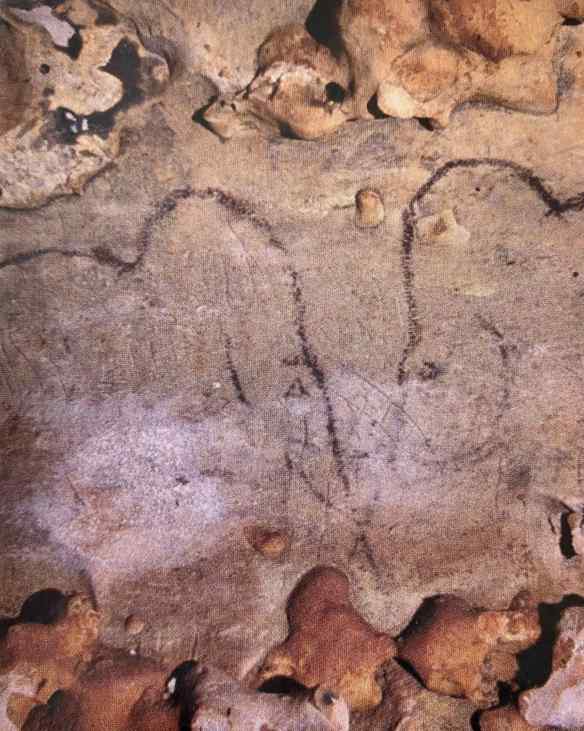
We disembark from the train at the Grand Plafond, or the Large Ceiling (I think it sounds better in French). The ceiling is covered with drawings of mammoths, bison, horses, woolly rhinoceros, and ibex. The artist had to lie on his back to create this incredible collection of drawings as there was not enough room to stand. The floor has since been lowered so that visitors can access this area. I am amazed at how fresh and vivid the drawings are. I don’t really know how to explain the impact these drawings had. They were so realistic, they looked as though they could have been drawn recently instead of 15,000 years ago at the end of the last ice age by Magdalenian hunter-gatherers. 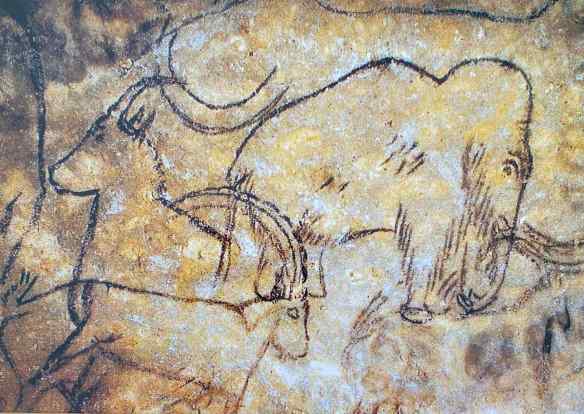 I was surprised to see that almost everyone in the group turned towards our guide when he started talking and they stopped looking at the drawings! Really? Couldn’t they have listened but keep looking a the artwork above our heads? It seemed such a waste to be standing here and ignoring these ancient drawings. One very interesting drawing of a mammoth showed its anal flap. Sorry, no photo of that one. Yes, this is a flap that covers the mammoth’s anus to keep it warm. Only someone who had very close contact with a mammoth would know about this detail. This fact was used to help authenticate these drawings, as they were thought to be modern fakes when they were first discovered..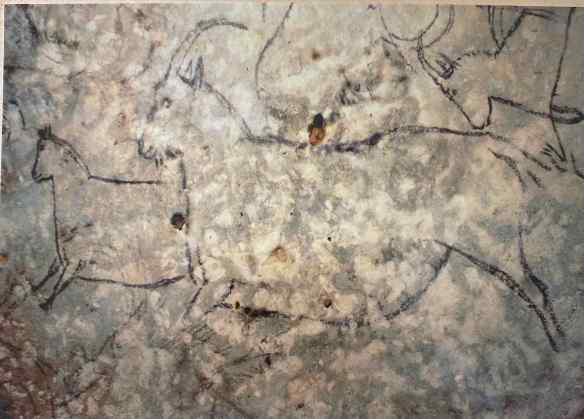
This is the last cave we will be visiting here. We loved all of them!
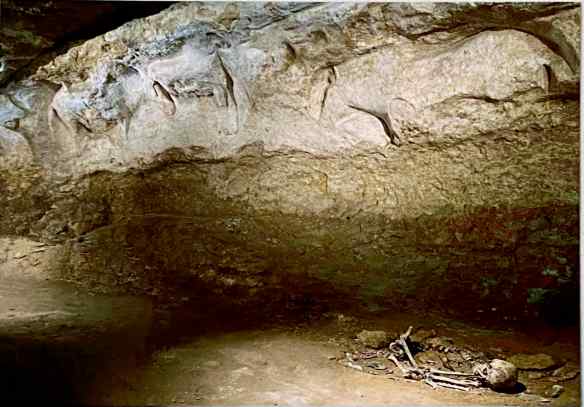
 A scientist reconstructed the features of the skull that was found here. I think she is quite beautiful and yes, much like a modern woman. The jewellery is from an area near here but ti was not found with this skeleton. Magdelenian man, or Cro-Magnon man is regarded as the closest ancestor to today’s humans.
 Inside the entrance building there are some drawings of the etchings in this cave. There are more than 800 rock engravings dating back to the era of Magdalenians, including 300 mammals, 52 stylized human figures, abstract signs and half a dozen sexual symbols.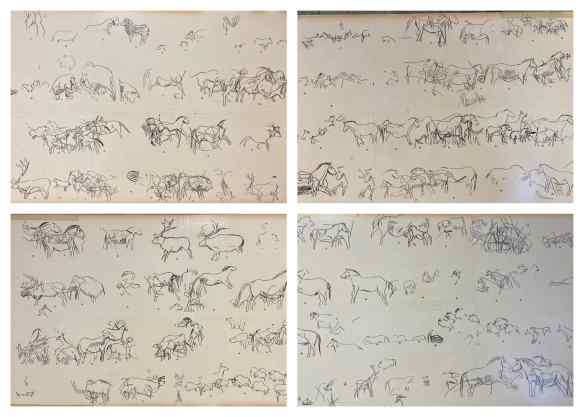

 trudymason.com