Bruges, Belgium

Day 21     Saturday, September 20, 2025

We drive an hour and a half to visit Bruges.  First stop is the market which was supposed to be open for another hour but most vendors are packing up because of the cold and rain.
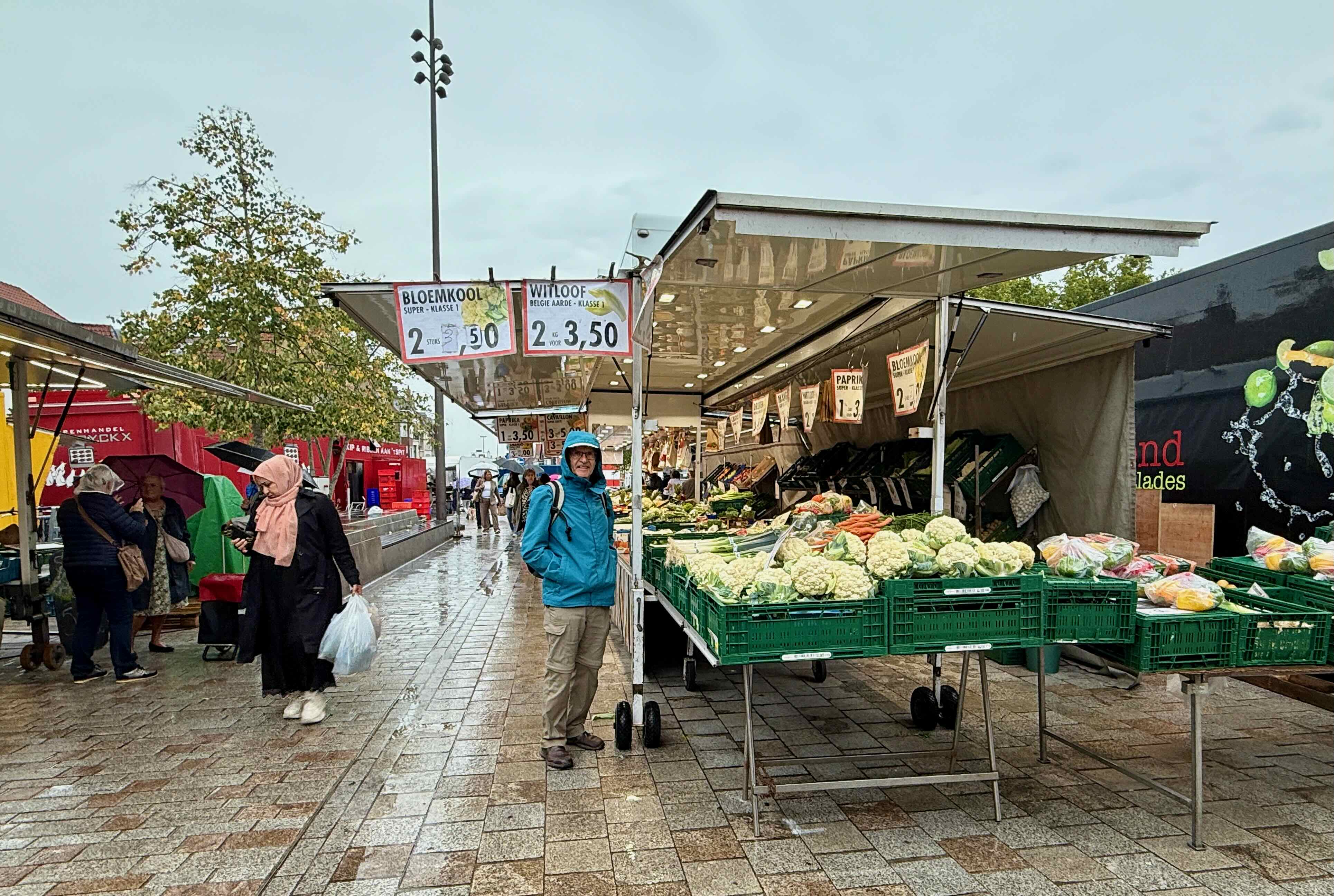
We see this huge contraption which I am sure is a spider, but it is not moving. I just looked up Bruges Giant spider and found this little video on Instagram…I was right, it is a spider! https://www.instagram.com/reel/DO3Y573jK1r/ 

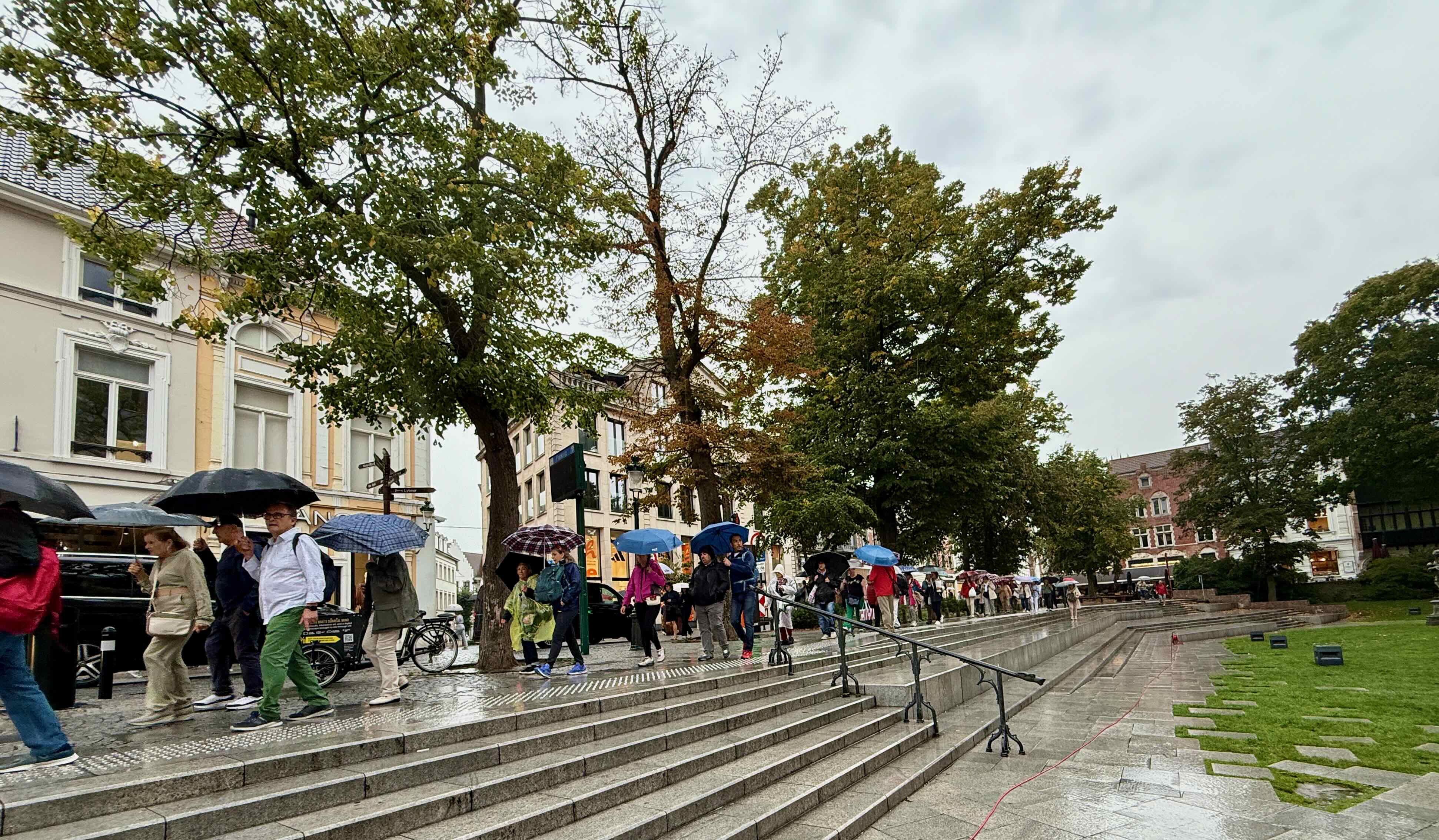
It is miserable out, lots of umbrellas, lots of rain and it is cold.
We take refuge in this cathedral along with a lot of other people.  It isn’t very warm but it is at least dry. I sit and write in my journal and Bob checks out the cathedral.  I am content to just sit and rest for a bit.
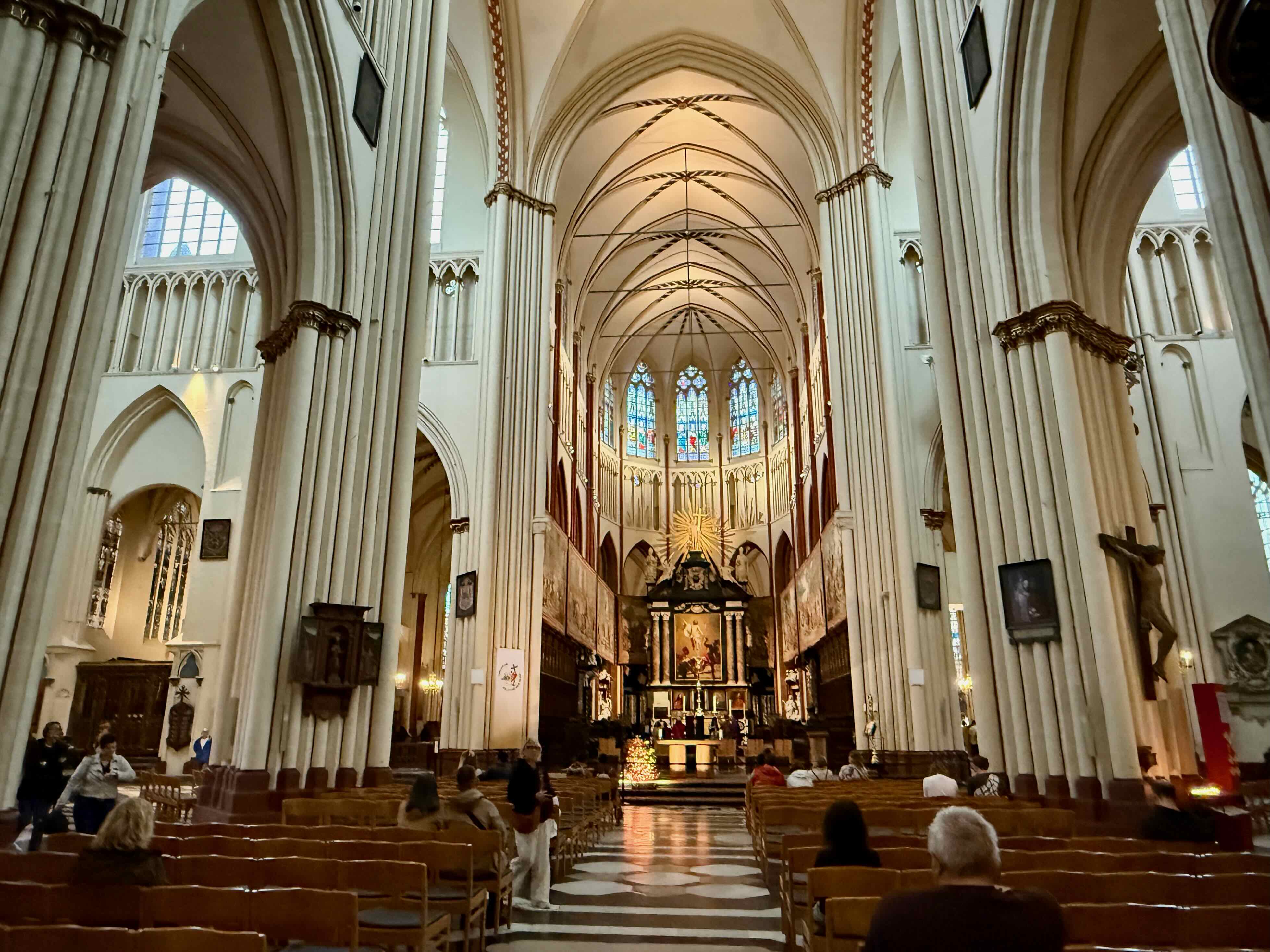
There are large beautiful tapestries on both sides of the altar.
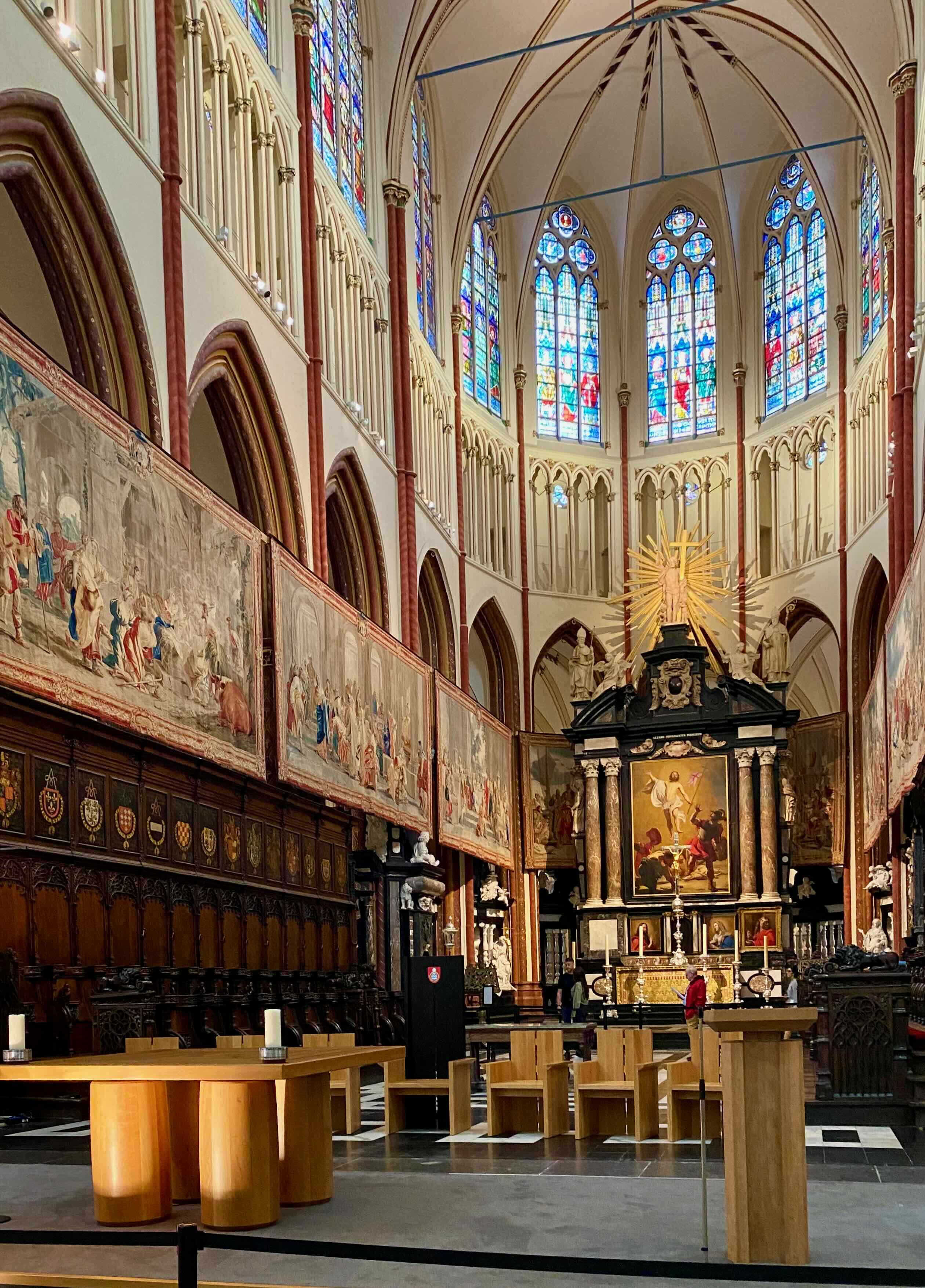
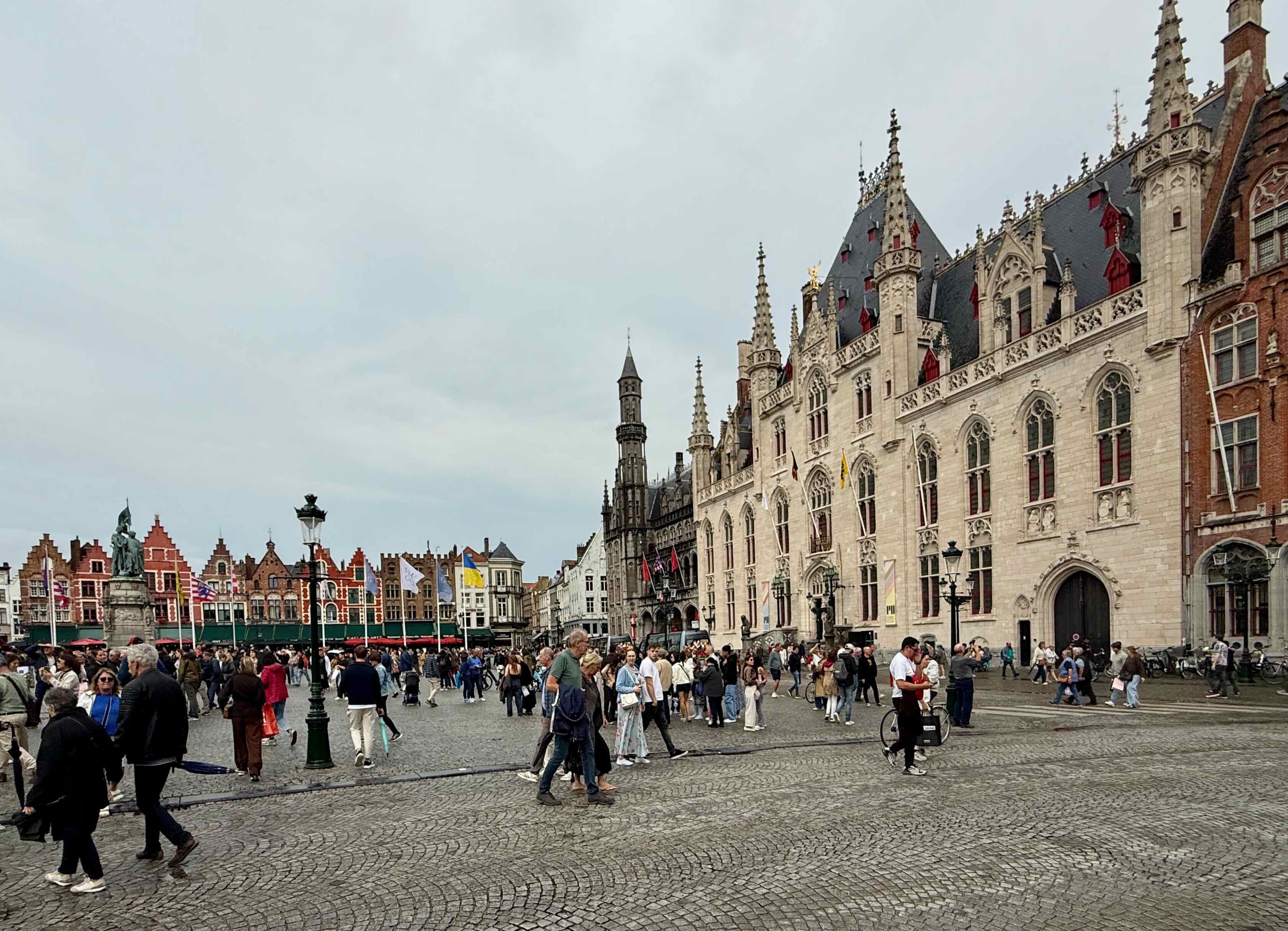
There is an announcement in several languages that the church is closing and will reopen in a couple hours after lunch.  So we walk to the huge central square, lined with beautiful old buildings.  It had stopped raining. The entire old city of Bruges is a UNESCO World Heritage Site.  The city was not damaged in either of the two World Wars so much of its Medieval heritage remained intact.
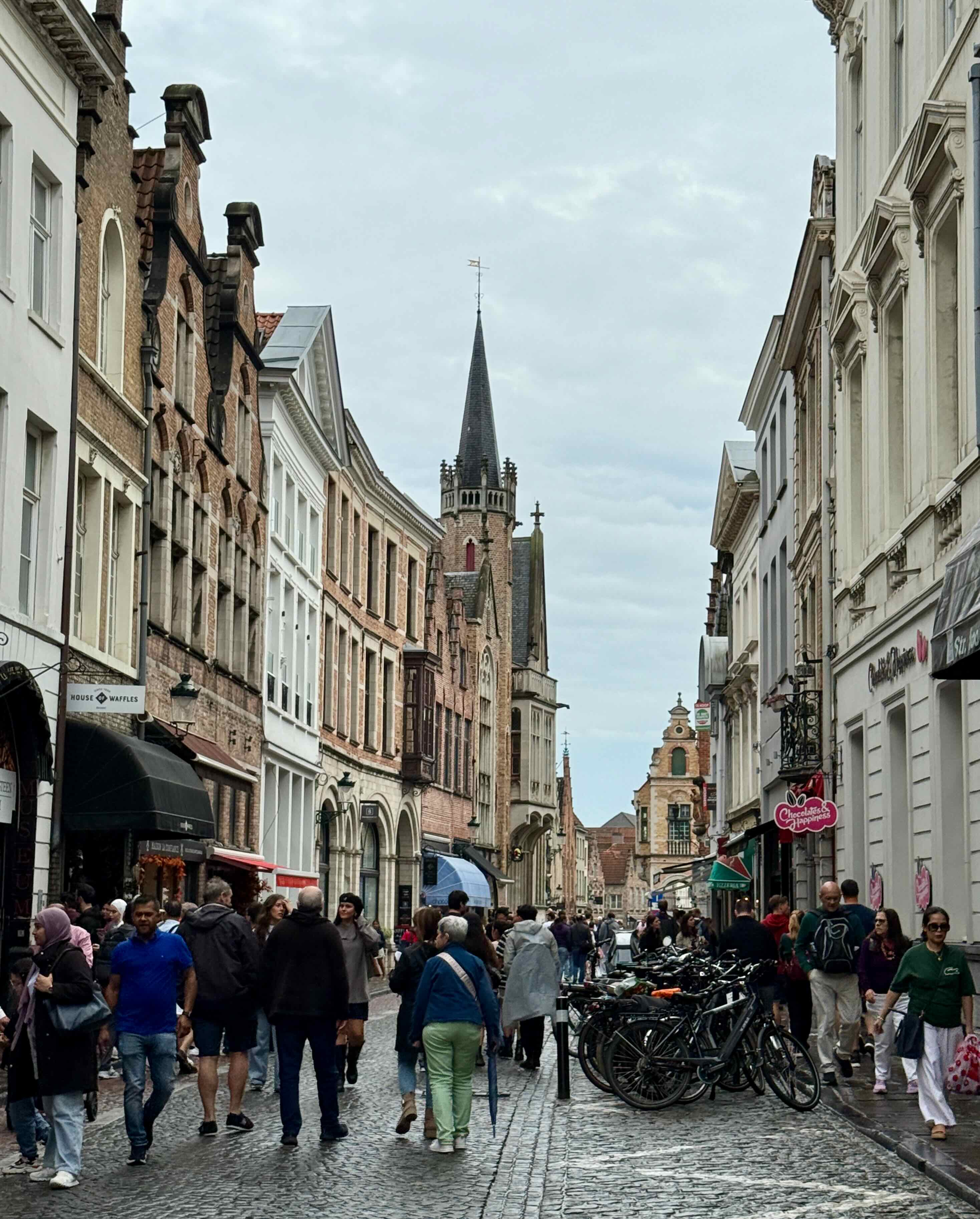
The streets are packed with tourists and it starts to rain again so we find a MacDonalds and hide out there for an hour and have our lunch.  It is dry and warm and no one cares how long we sit here.
The rain stops and we decide to get tickets for a canal boat ride.  There is a line but it moves fairly quickly and we watch the boats coming and going while we wait in line.
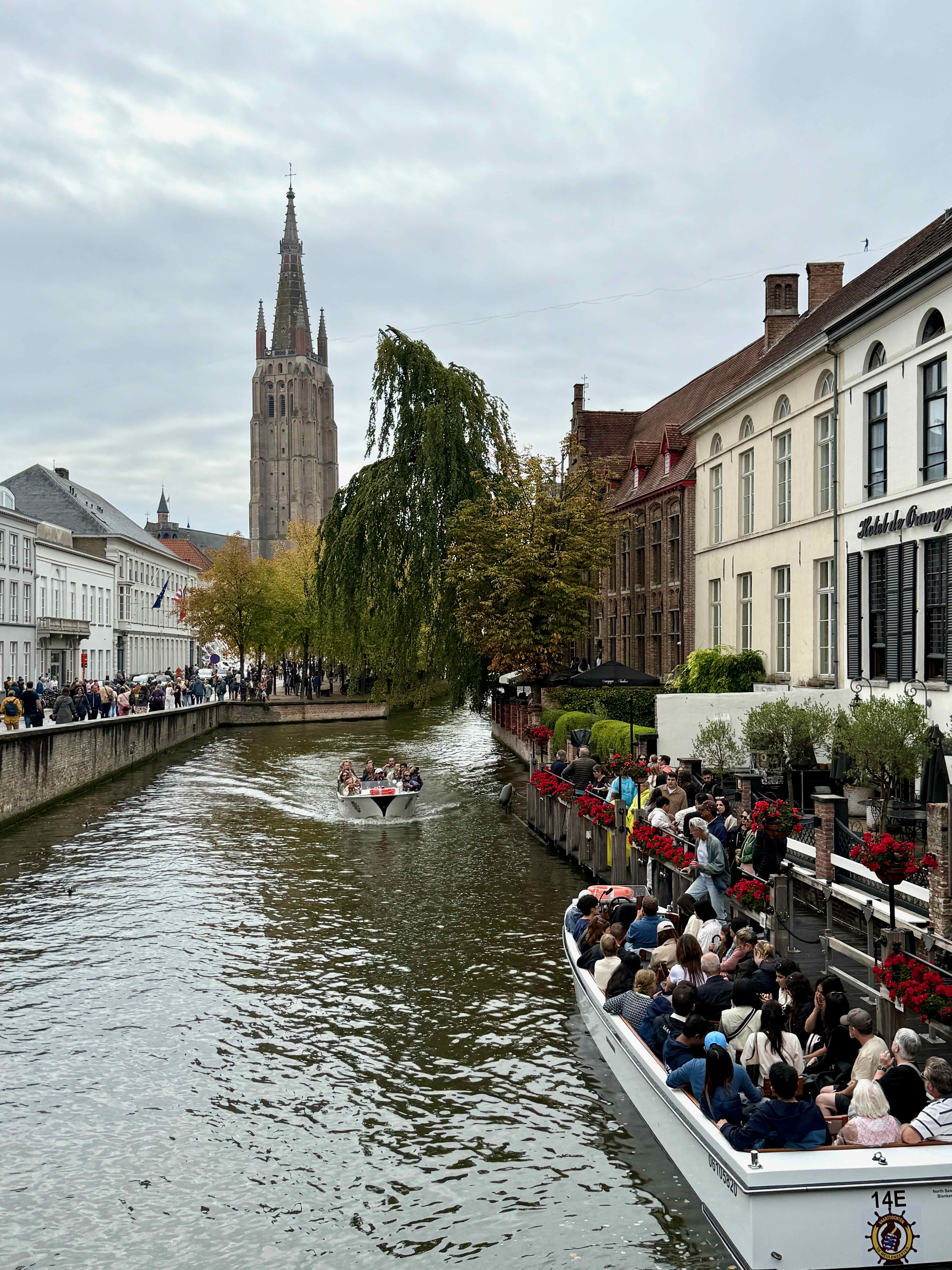
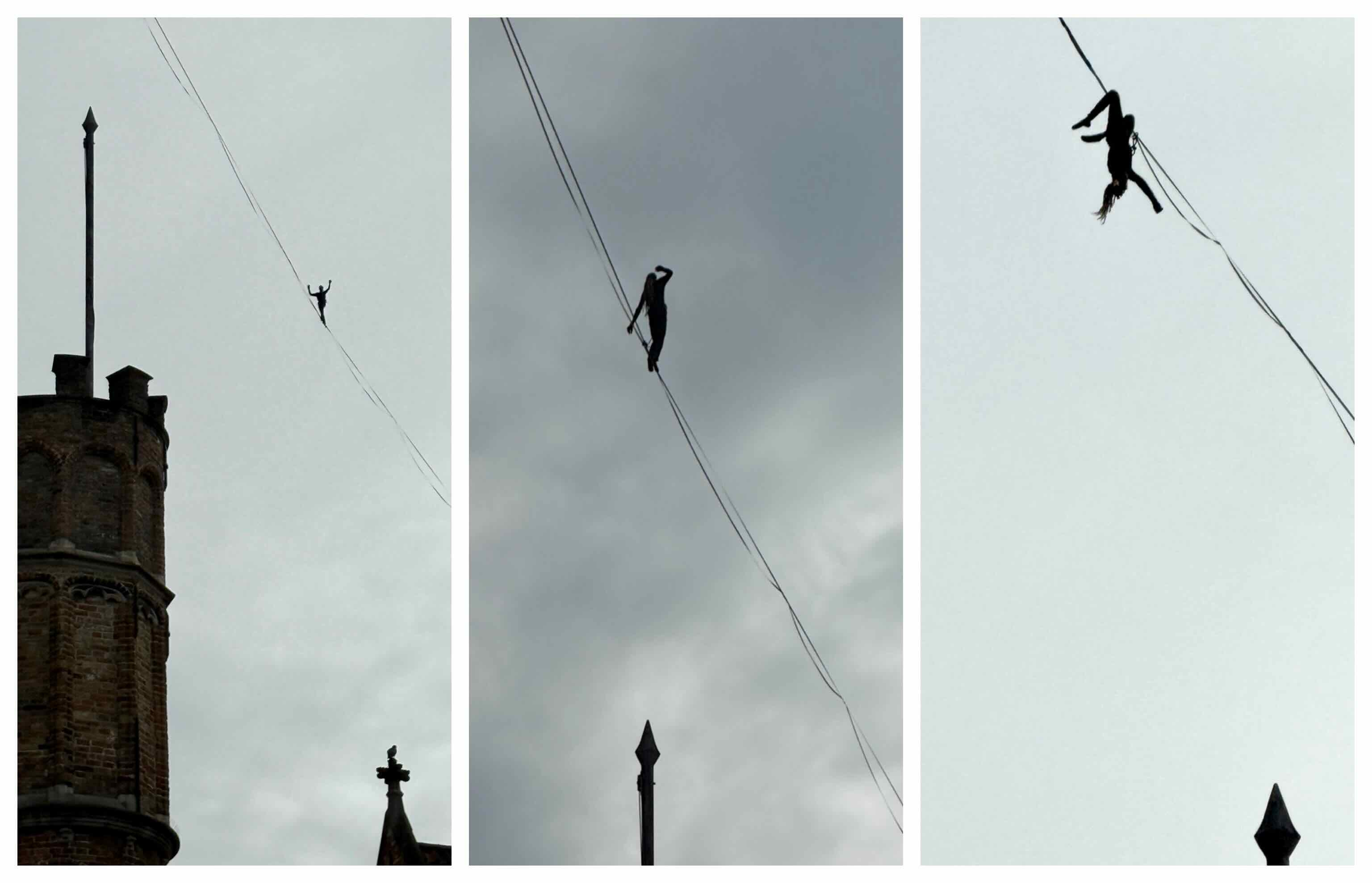
While we are waiting  I notice that there is a tight rope walker high in the sky!  If you look carefully at the previous photo you can see her in the top right corner just above the rooftops.  Yes, it is a woman, when she hangs upside down we see a ponytail. A rope almost 400m long was stretched at a height of 70m between the Belfry and the Church of Our Lady.
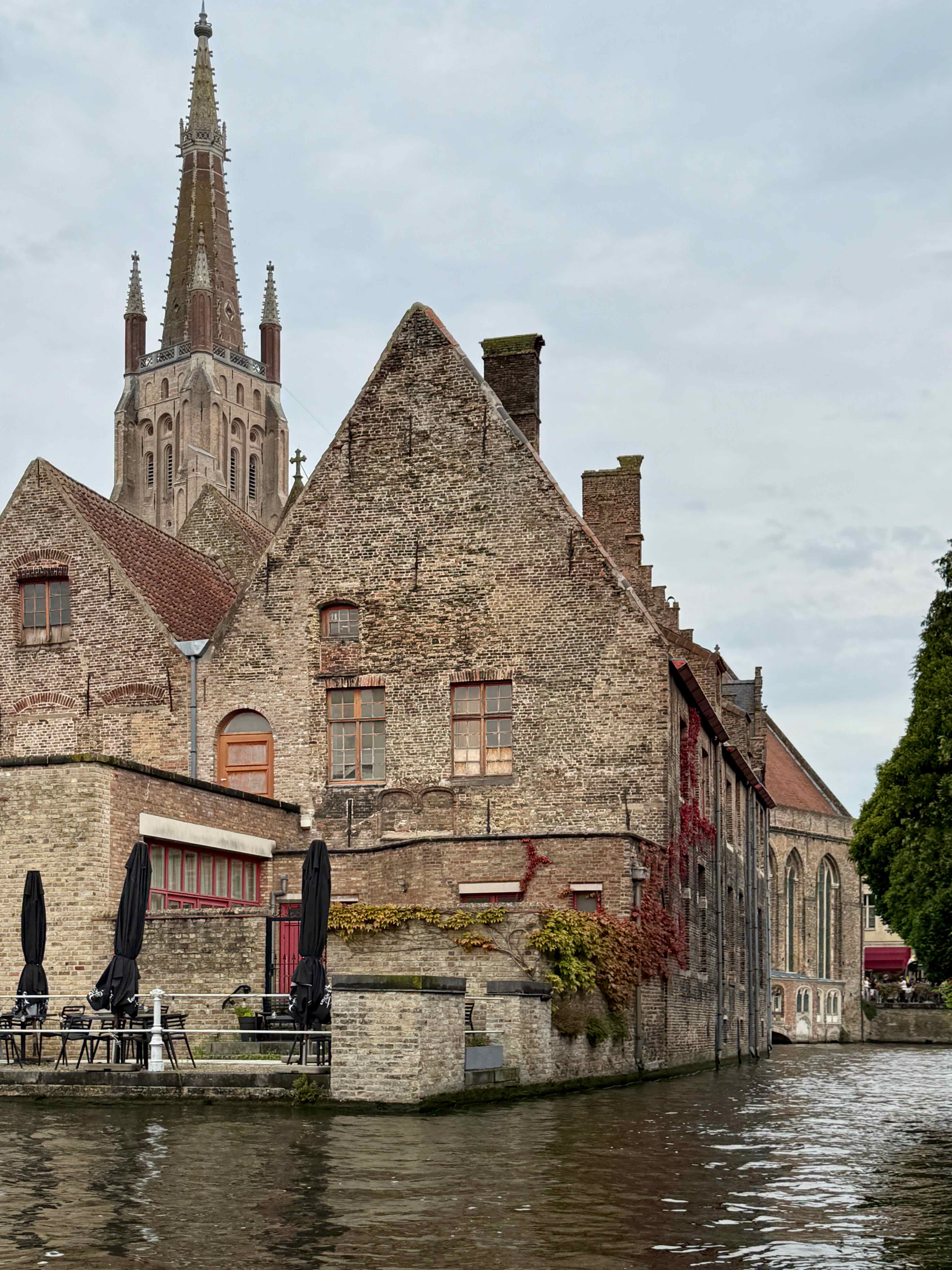
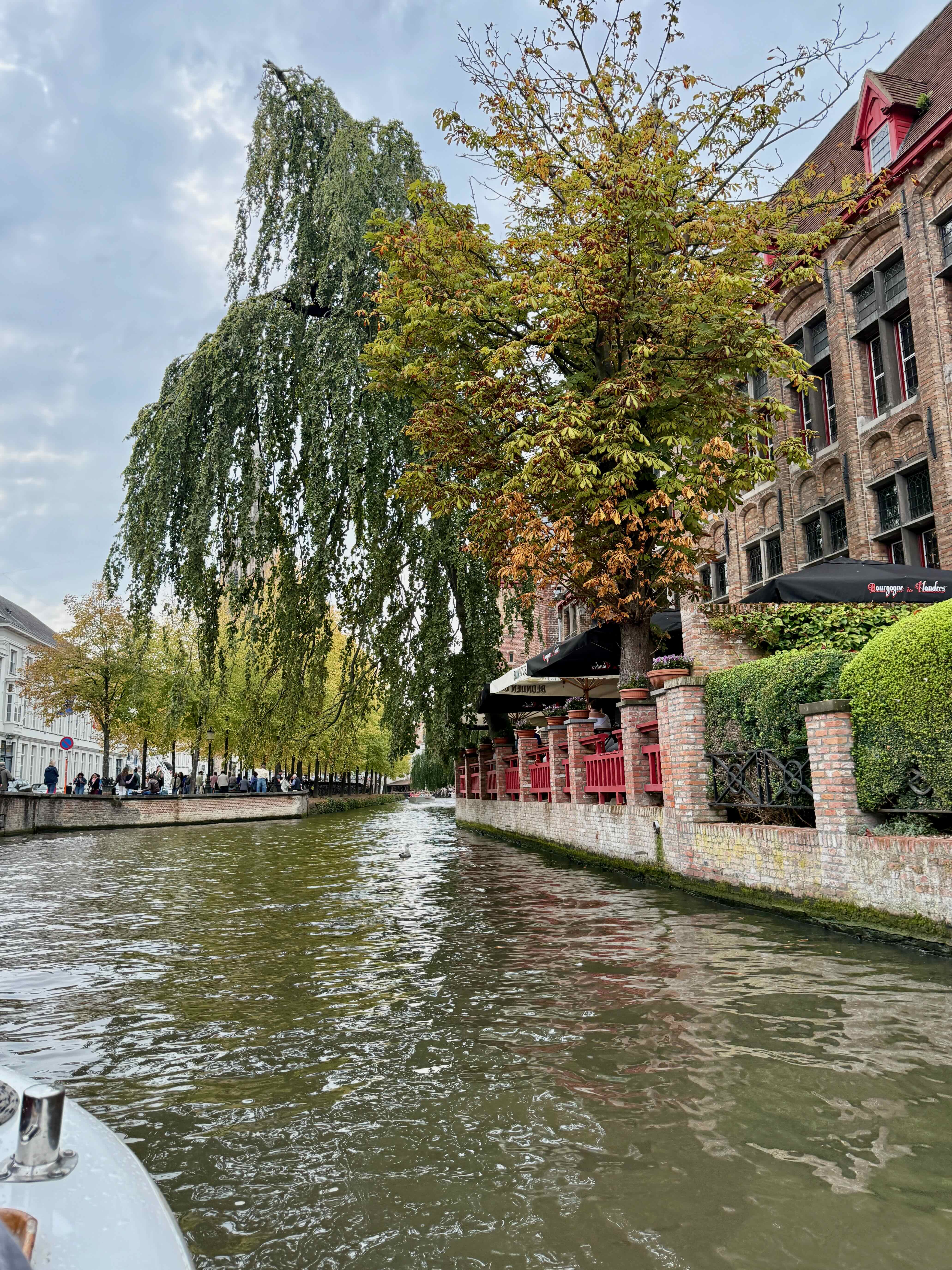
Soon we are travelling on the canals which give us a great view of many of the buildings in Bruges.
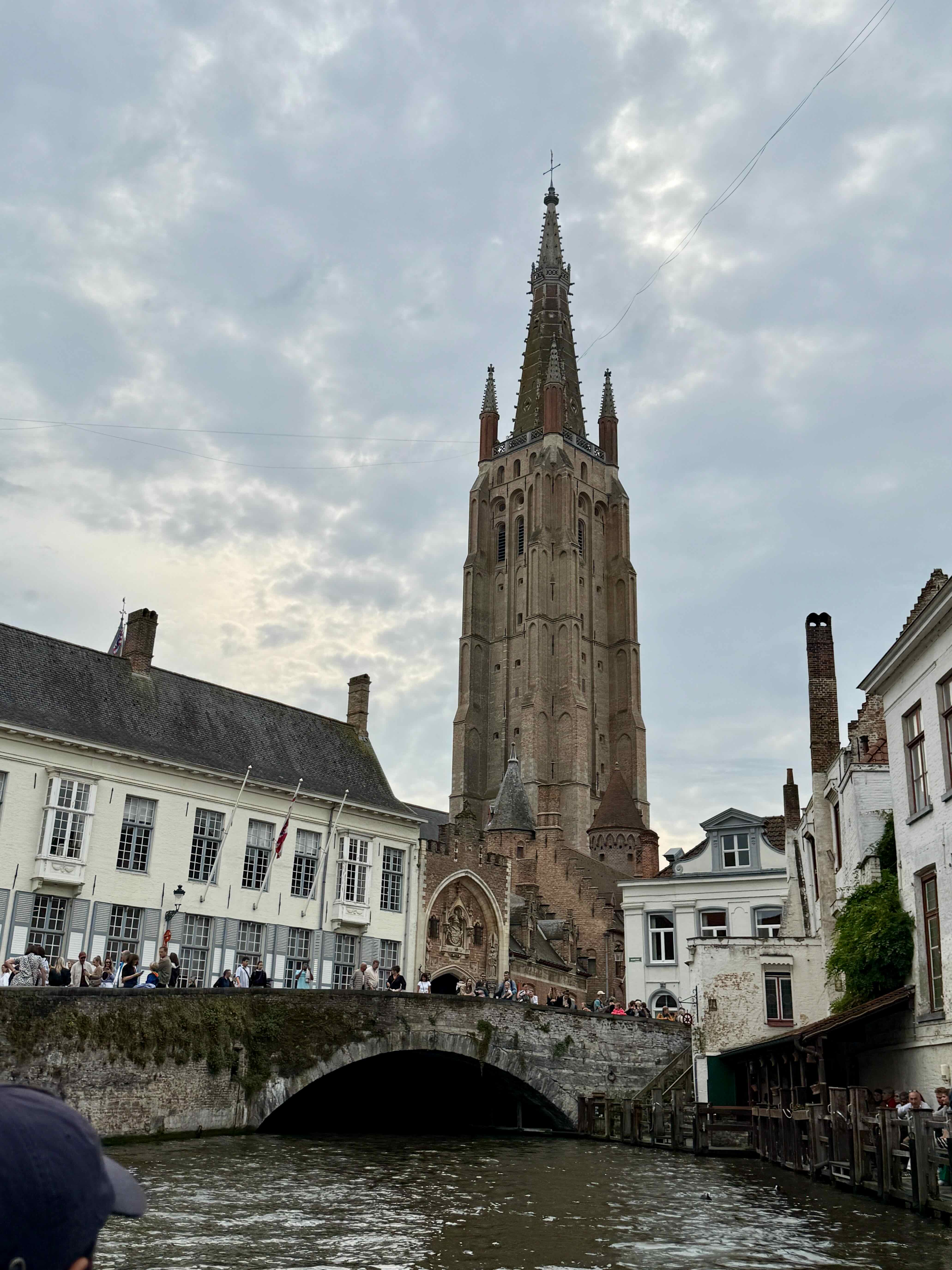
You can see the high wire attached to the cathedral tower.
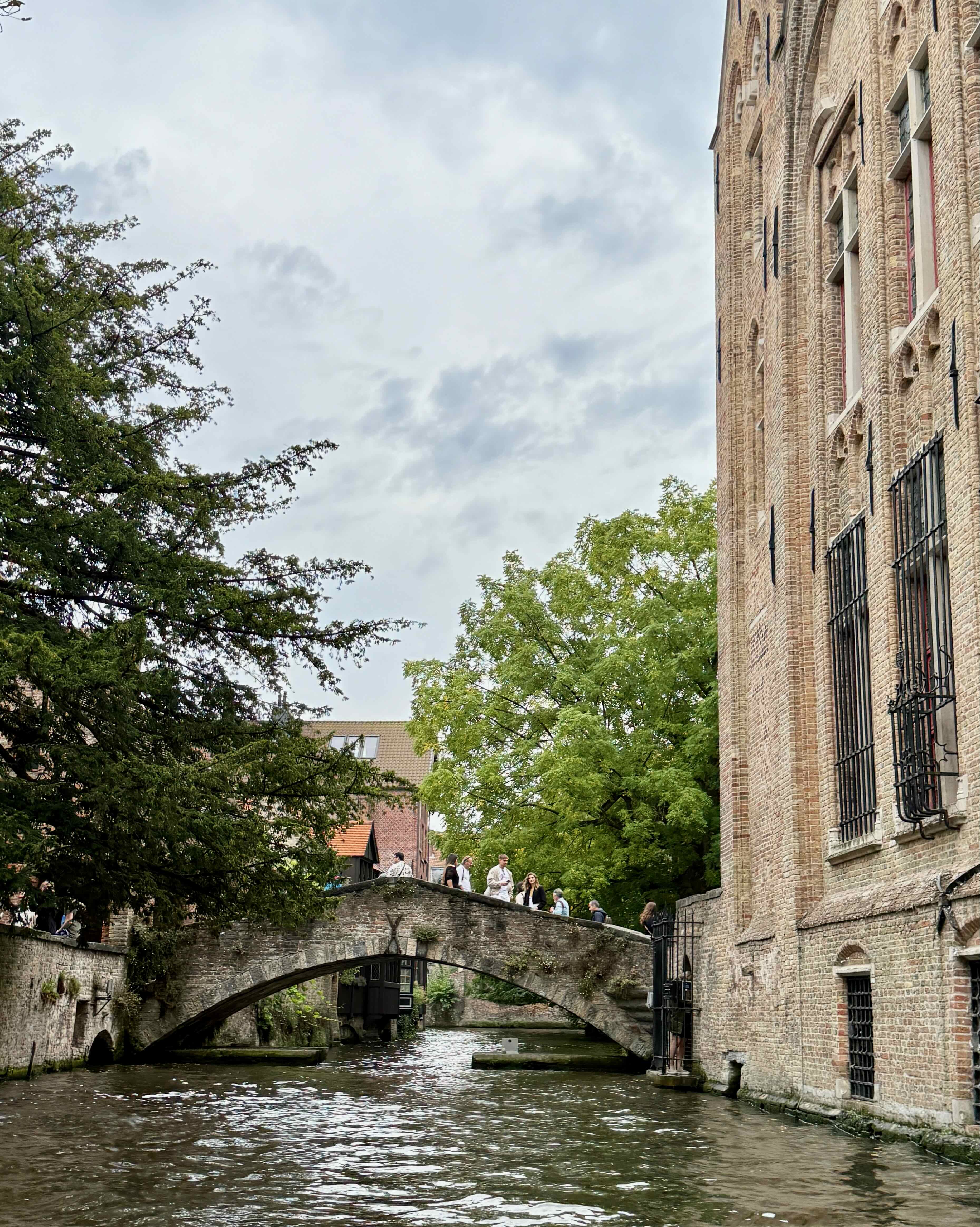
We pass under many bridges, some of them so low we need to duck our heads.
The geese on the canals are owned by the city of Bruges and the penalty for killing one is five years in jail!
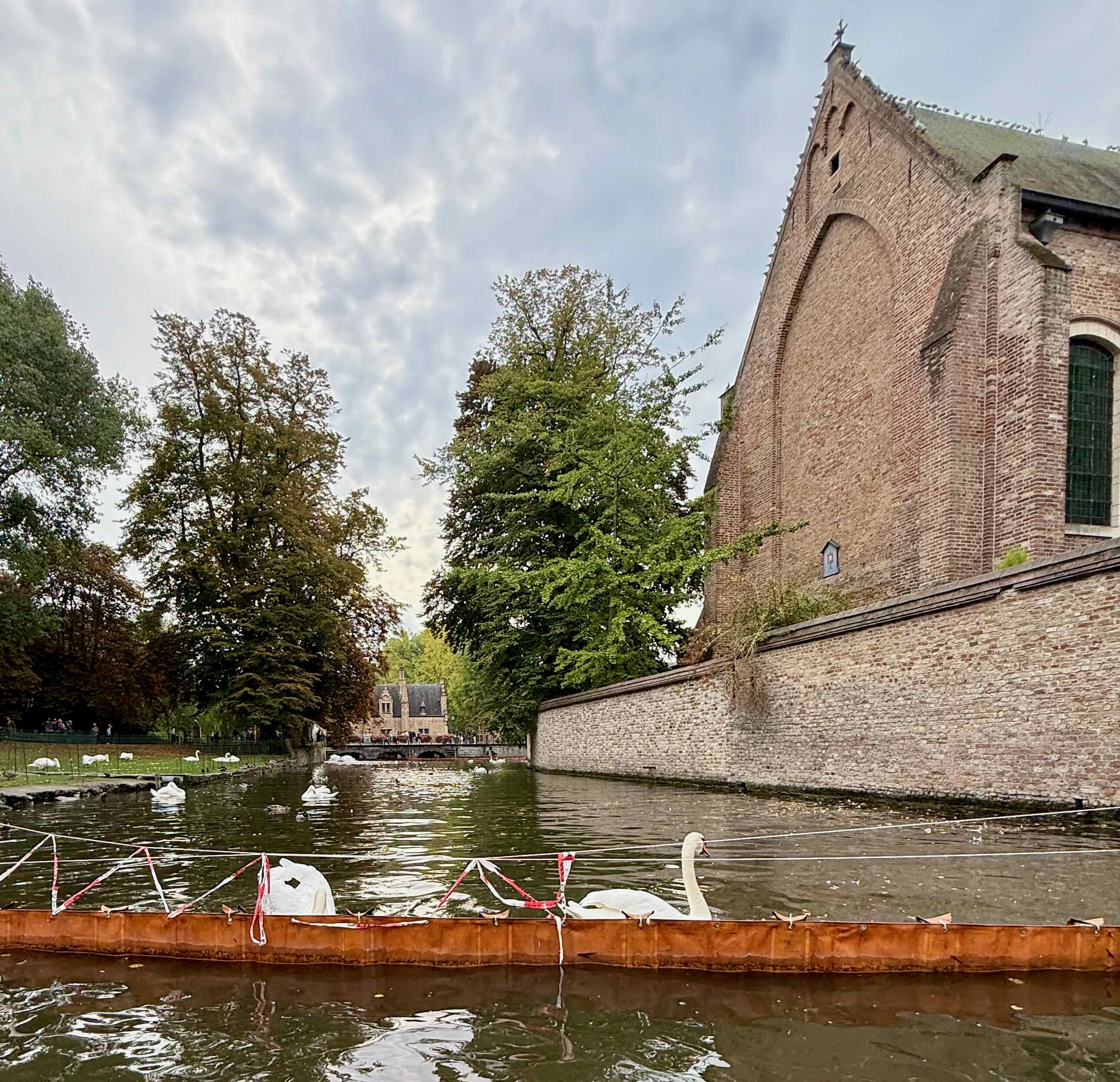
The city of Bruges is famous for its well-preserved medieval architecture, including many buildings featuring stepped gables.  Houses with lots of steps on the gables showed that the owner was rich.         
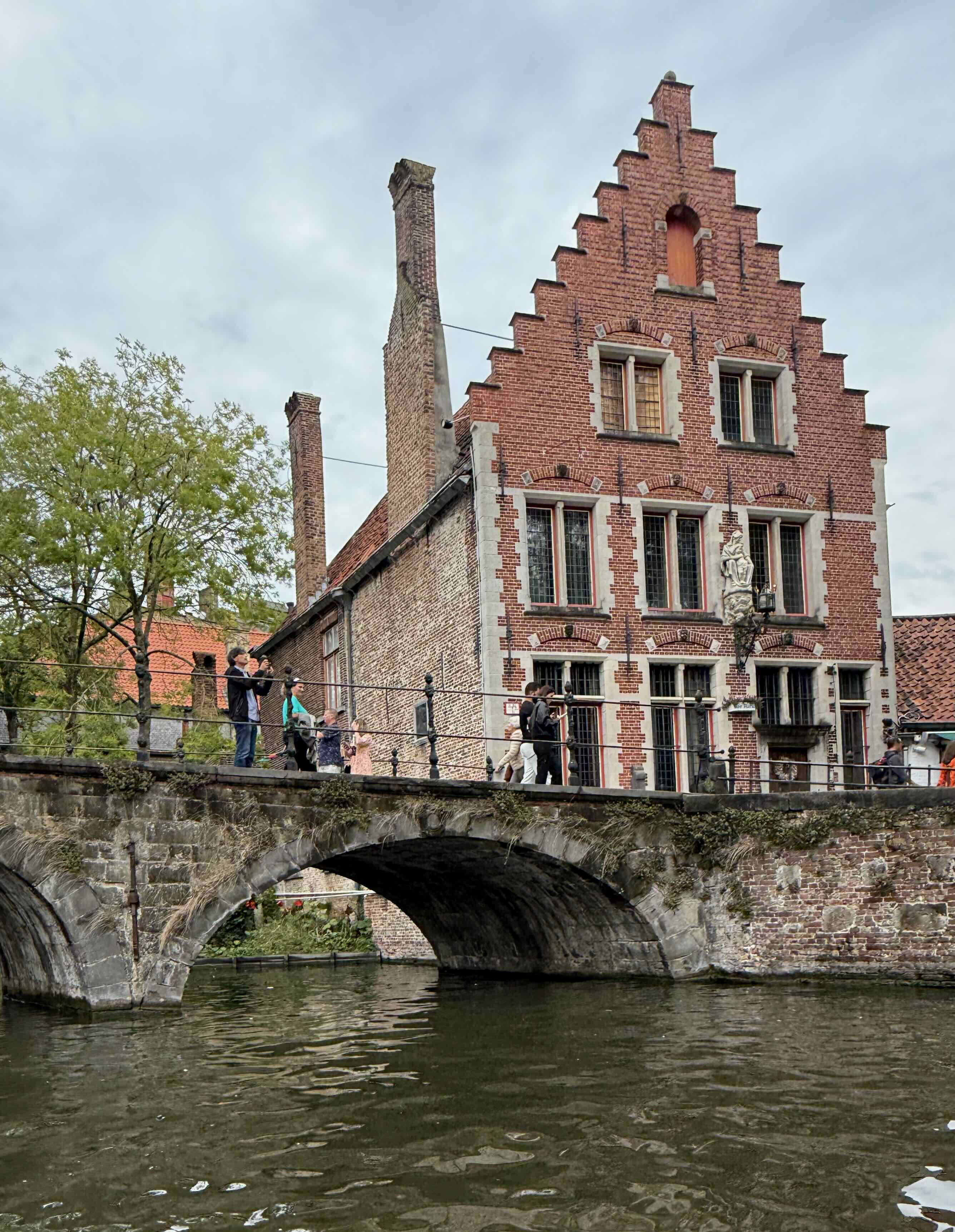
I wonder if the houses on the canal are damp, with the water lapping at their foundations.
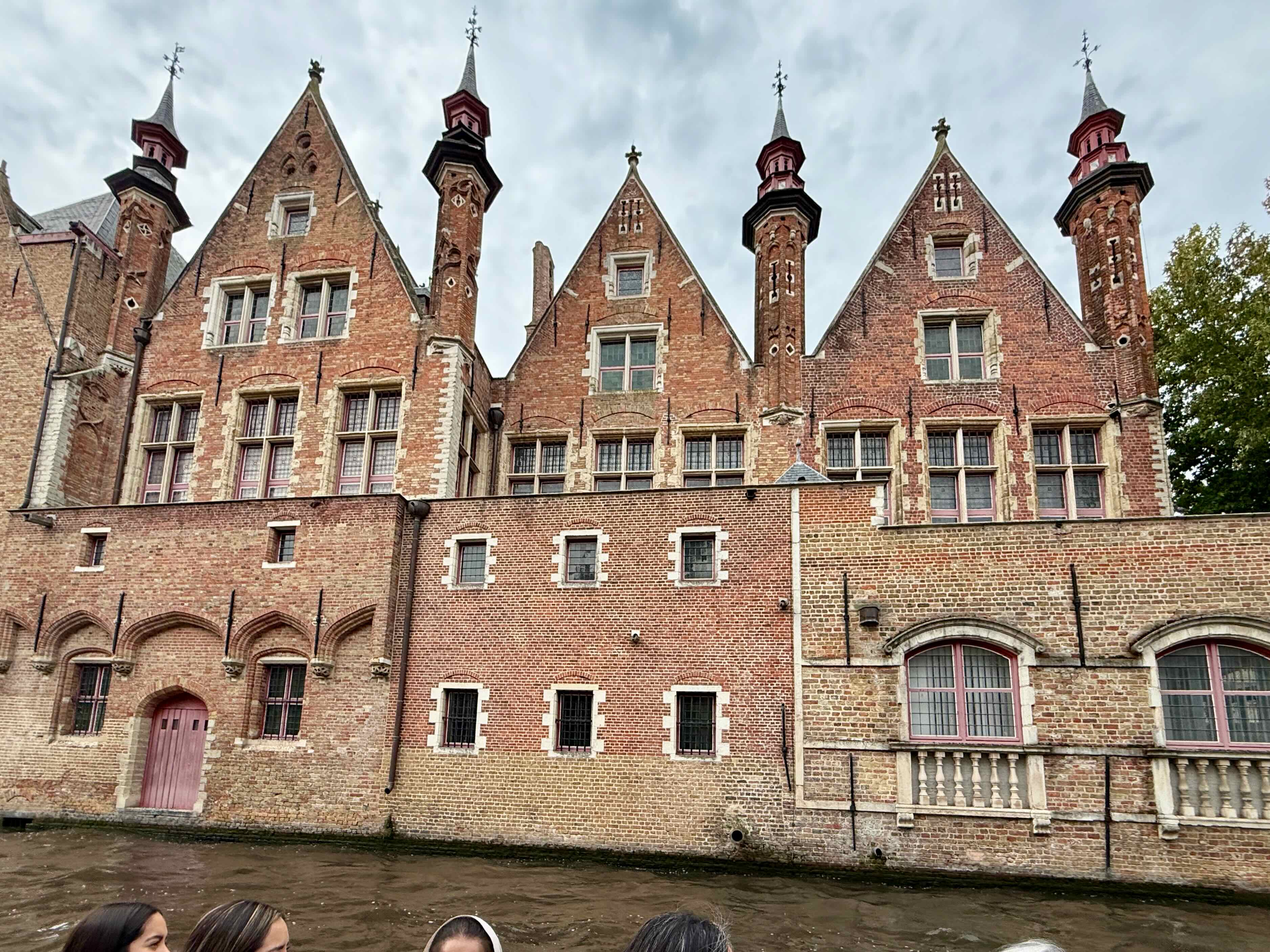
This is the oldest bridge in Bruges and our driver/guide tells us that if you kiss under this bridge you will have everlasting love.  We kiss.
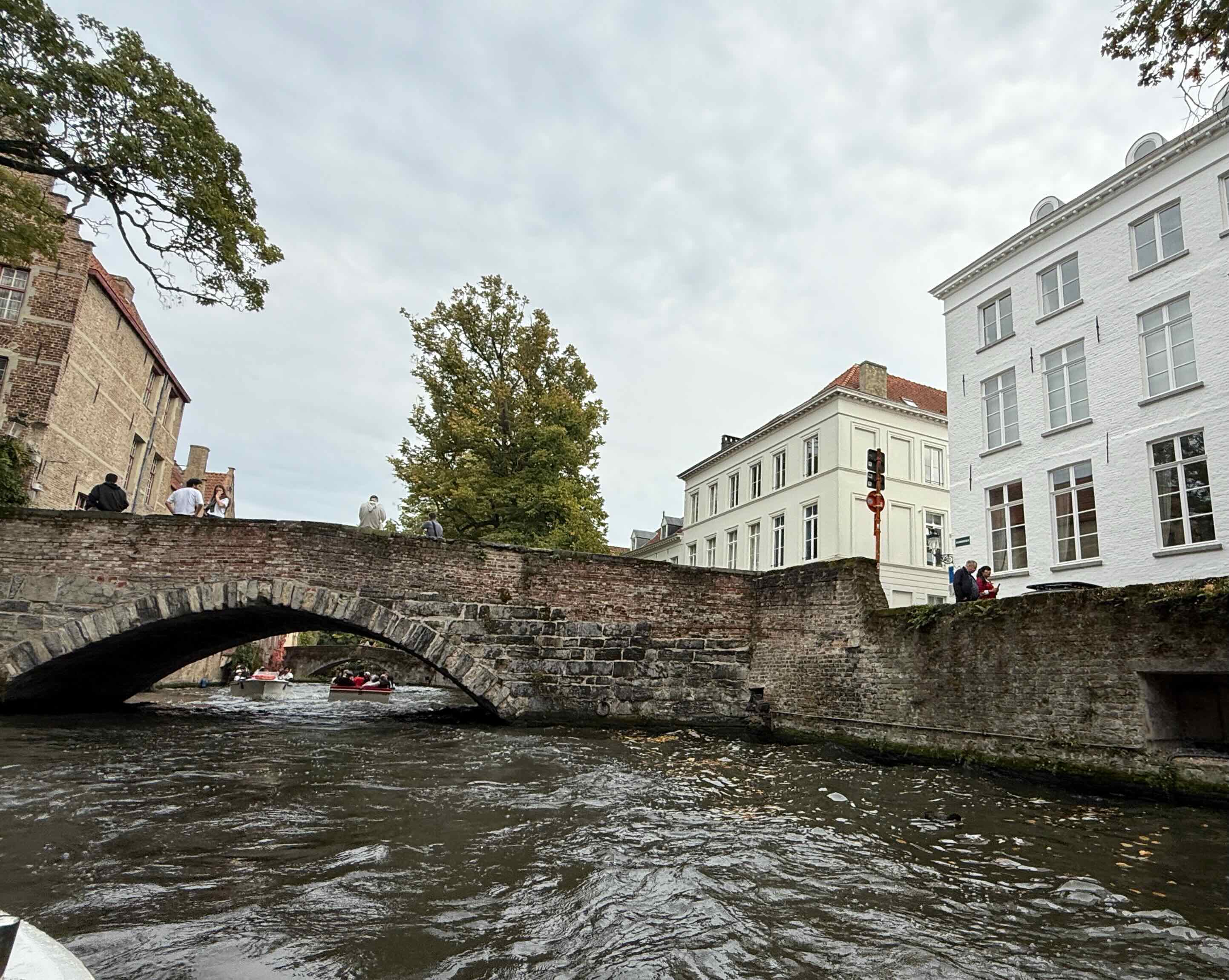
There are a variety of interesting buildings along the canals…
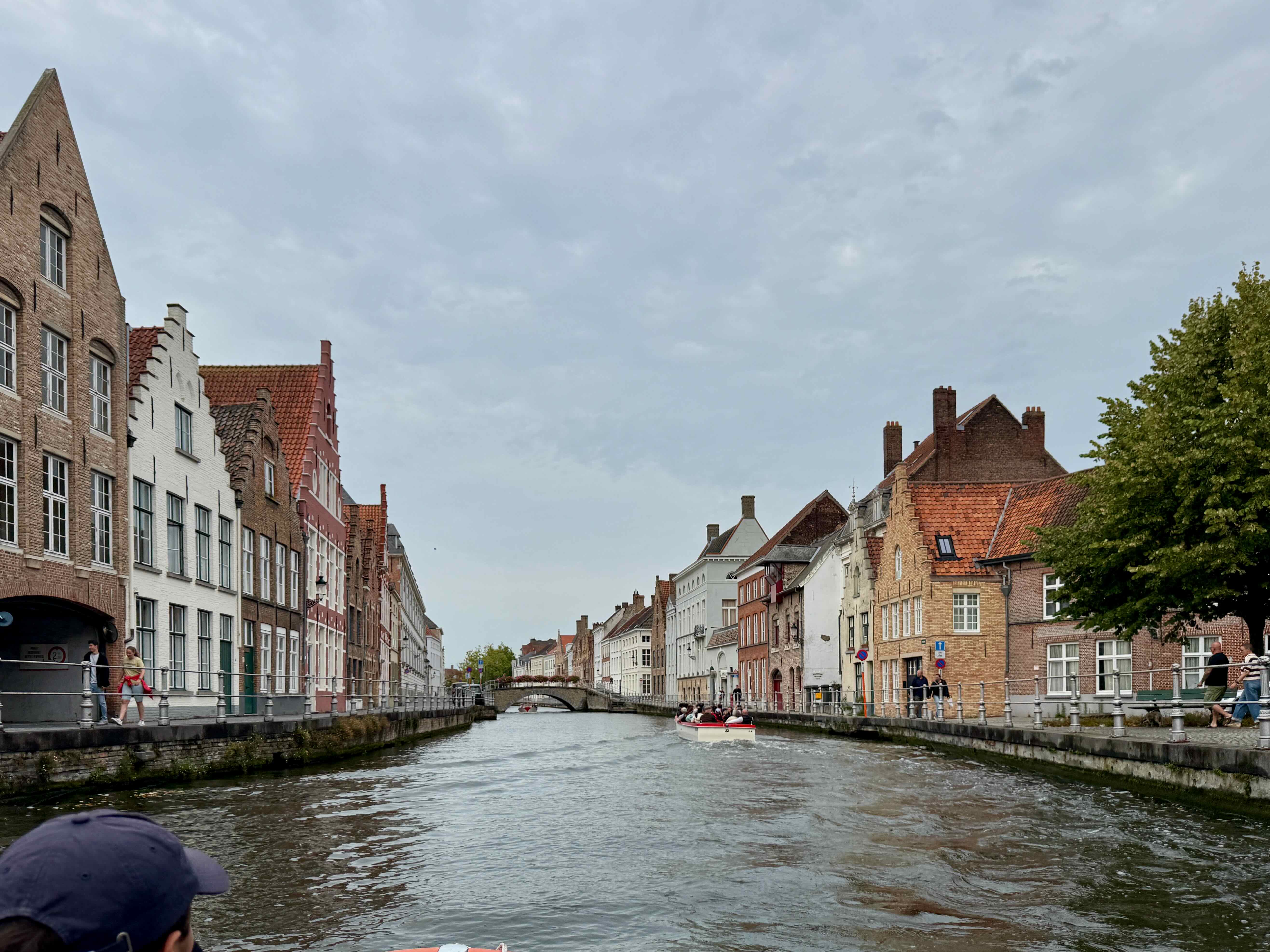
..and some great views.
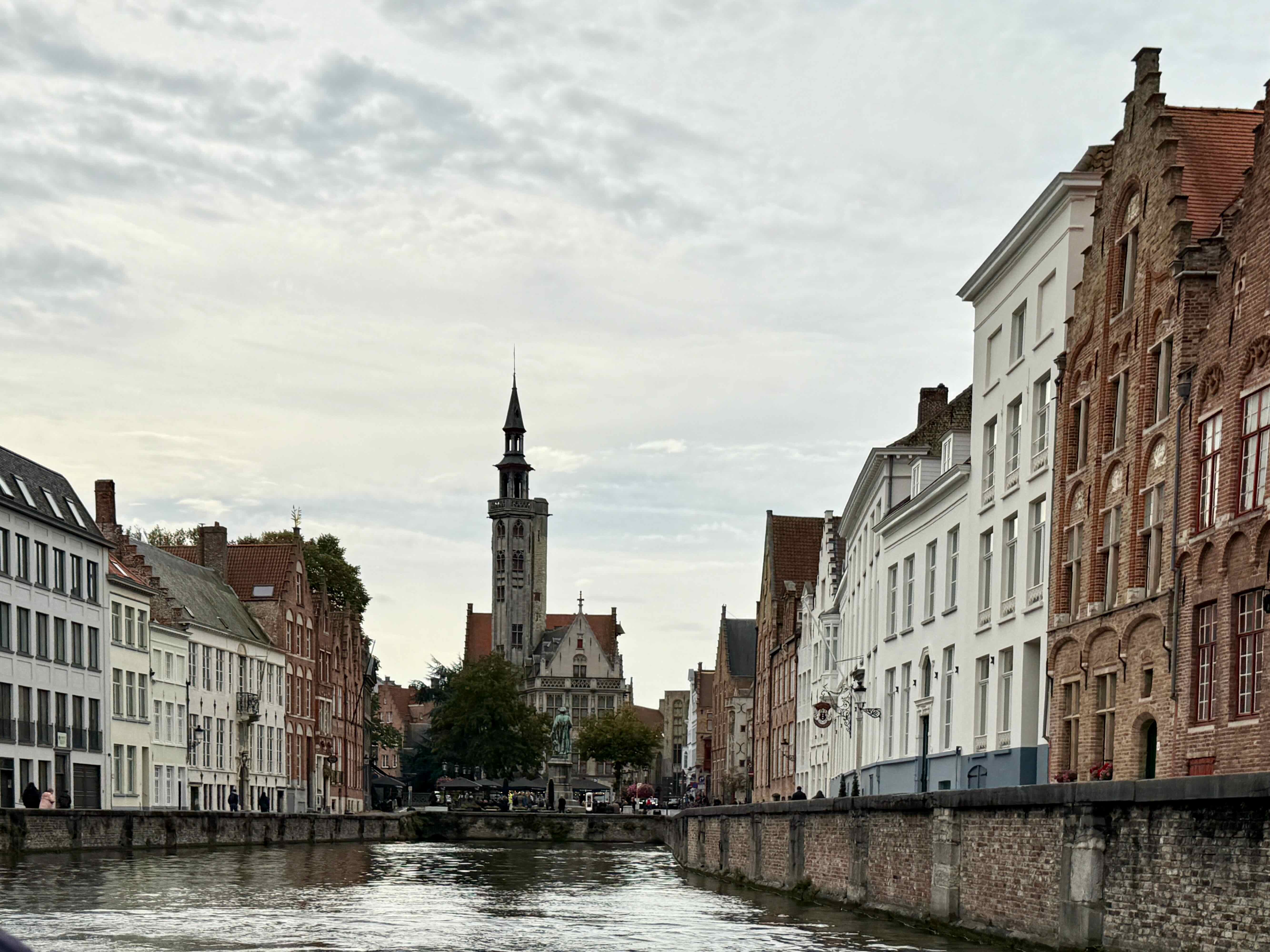
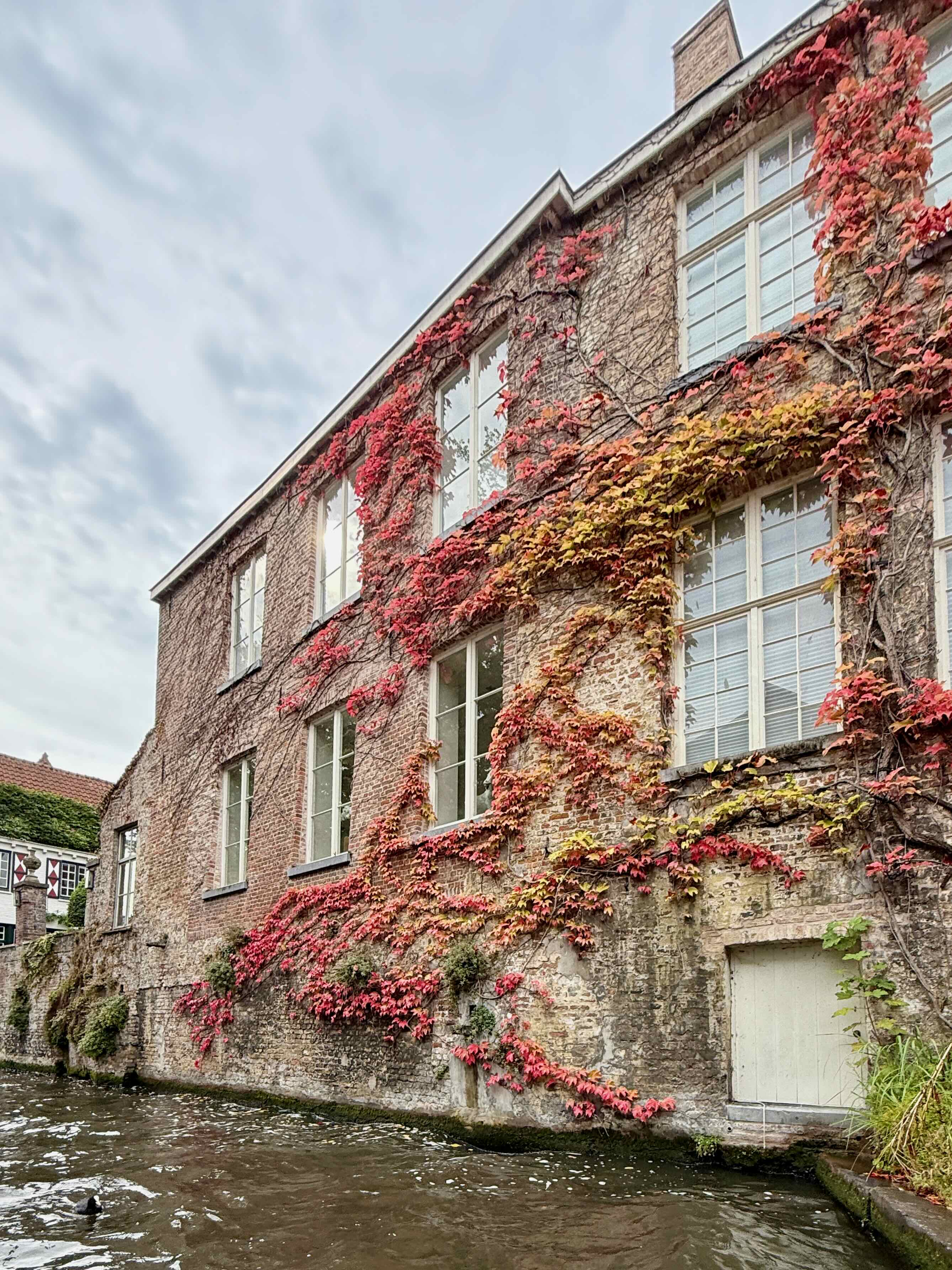
There are also signs that Autumn is here.
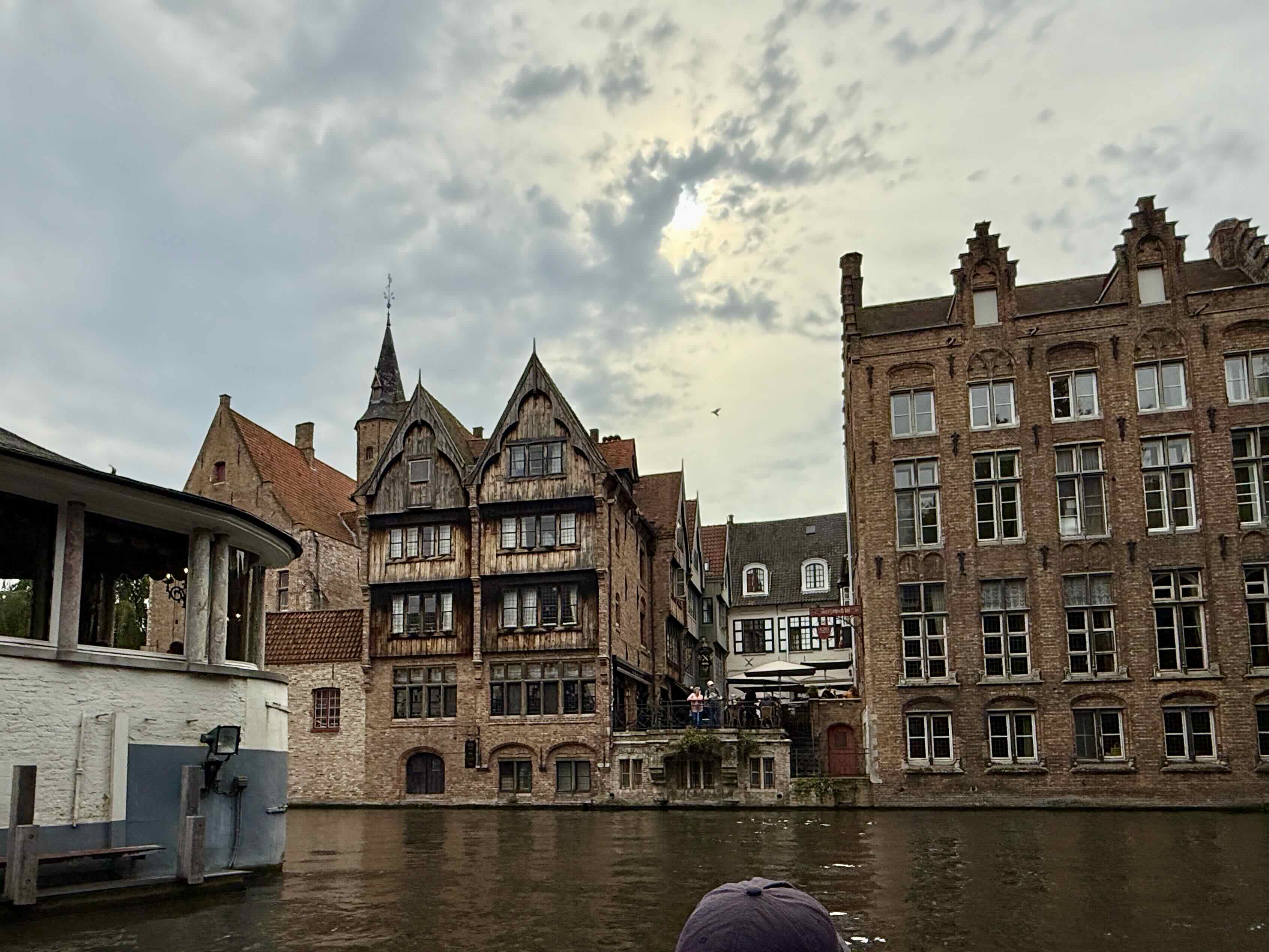
This medieval building was built using wood, which was a fire hazard.  Most buildings in Bruges were built in a style known as Brick Gothic. 
After our boat ride we wander the streets and see this.  Lots of people are entering the building so Bob says we should follow them.  
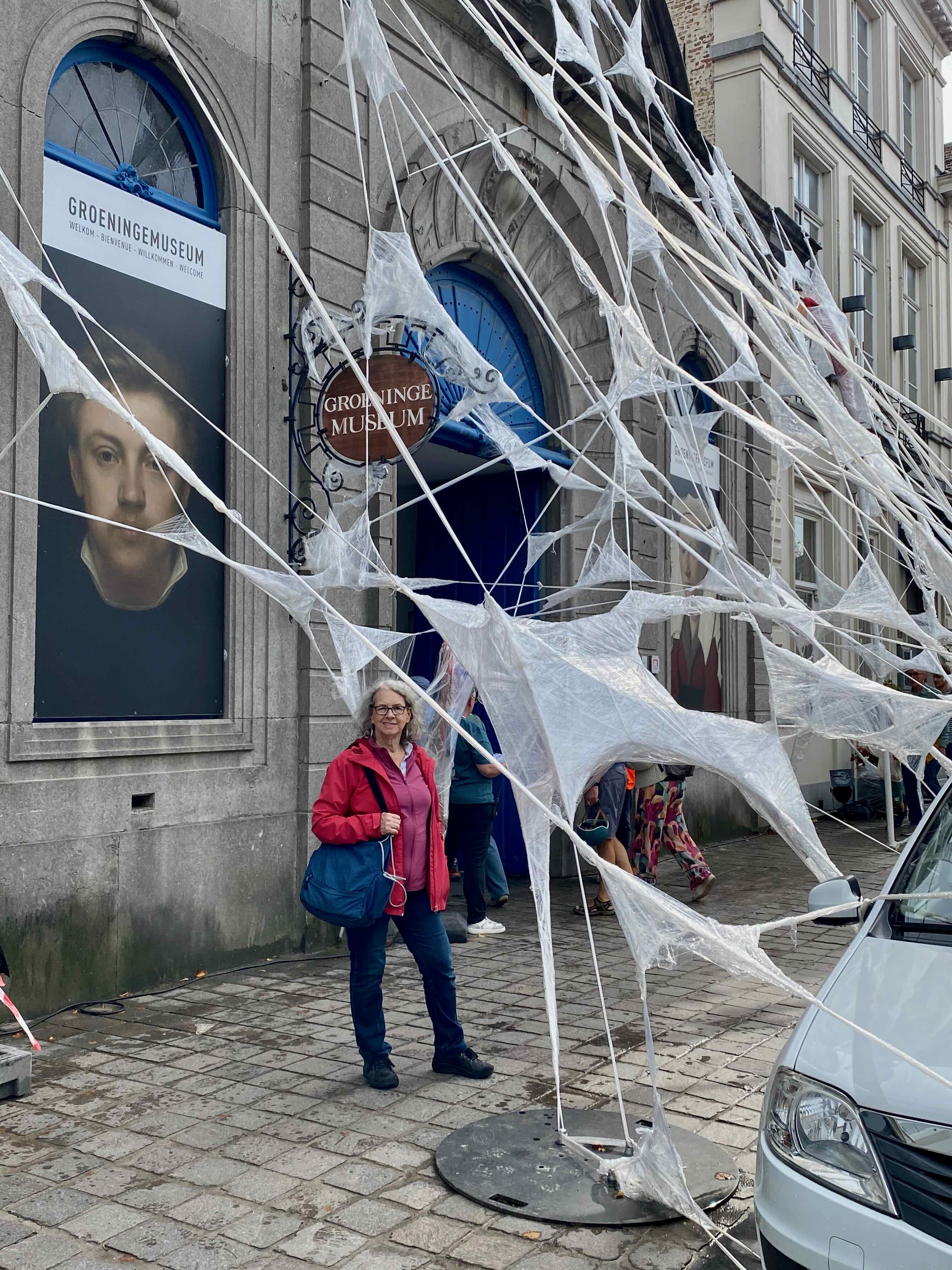
It is an open house for the  new Brusk Art Gallery which will open in 2026.  We enter a room with shipping plastic wrap.  We aren’t sure what it is supposed to be…
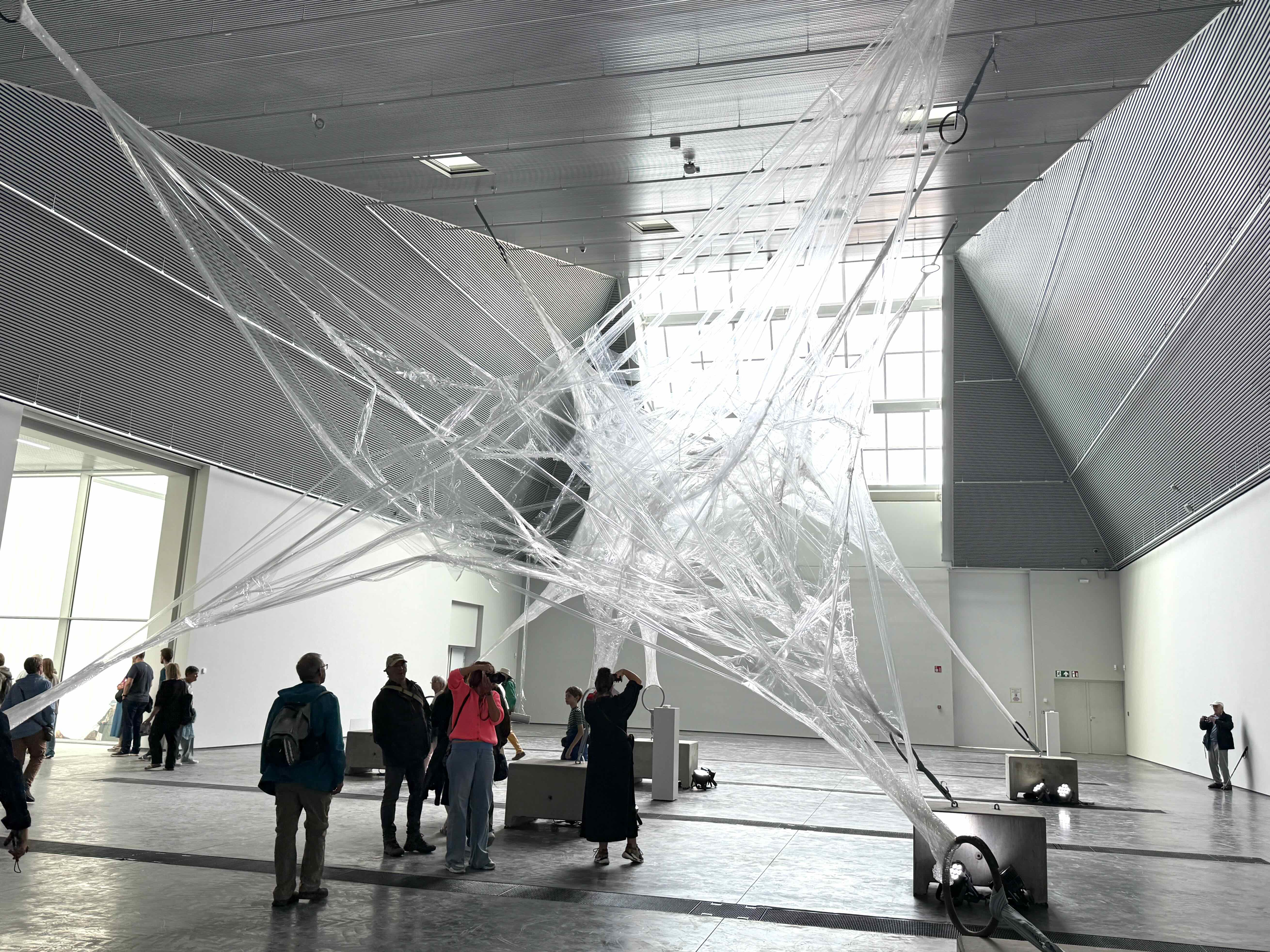
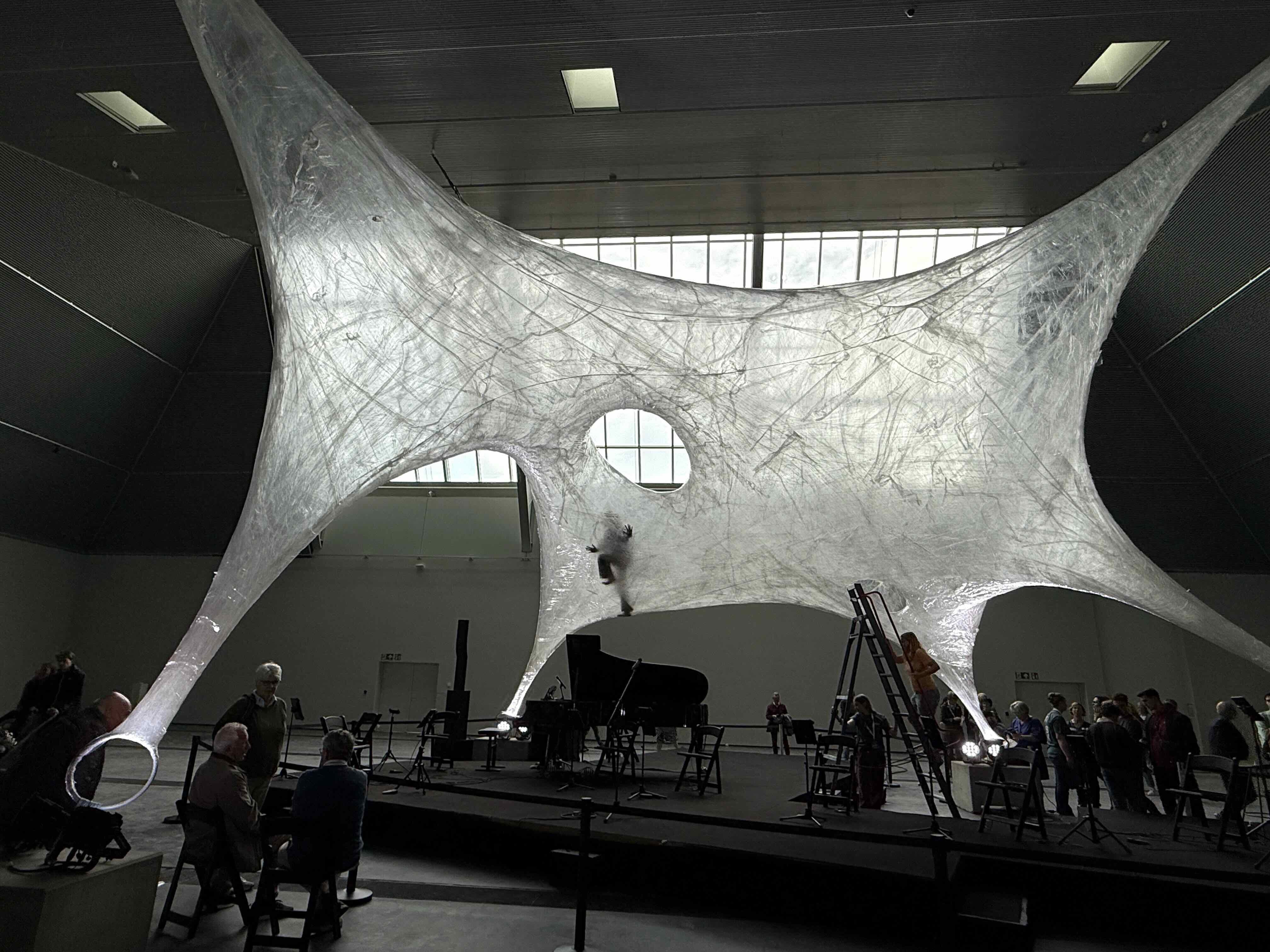
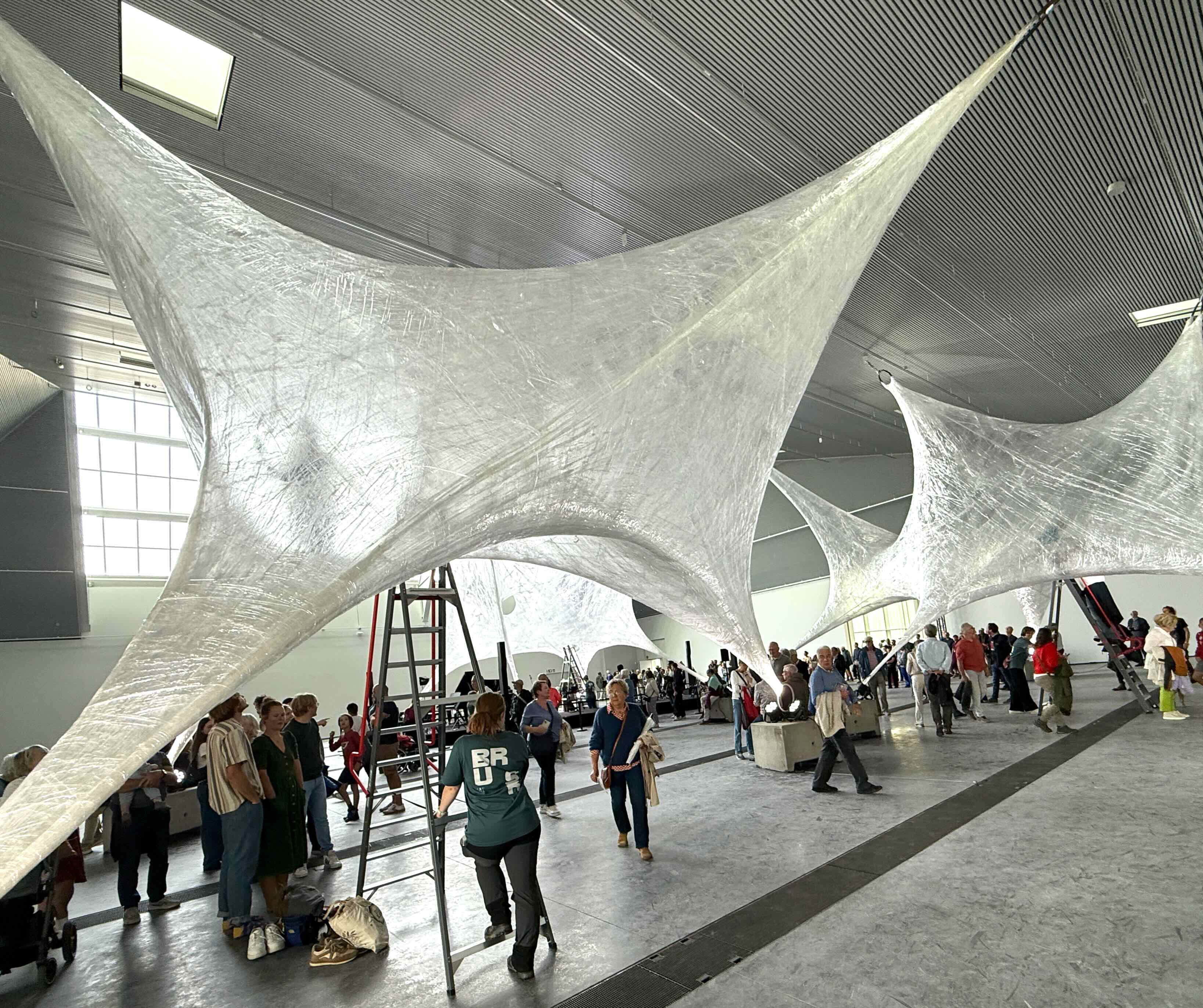
…until we enter the next room and there is a  large tape art installation in the form of a web structure, and there are people climbing inside of them!  All of a sudden the giant spider we saw earlier makes sense.
I want to climb inside…my turn next!
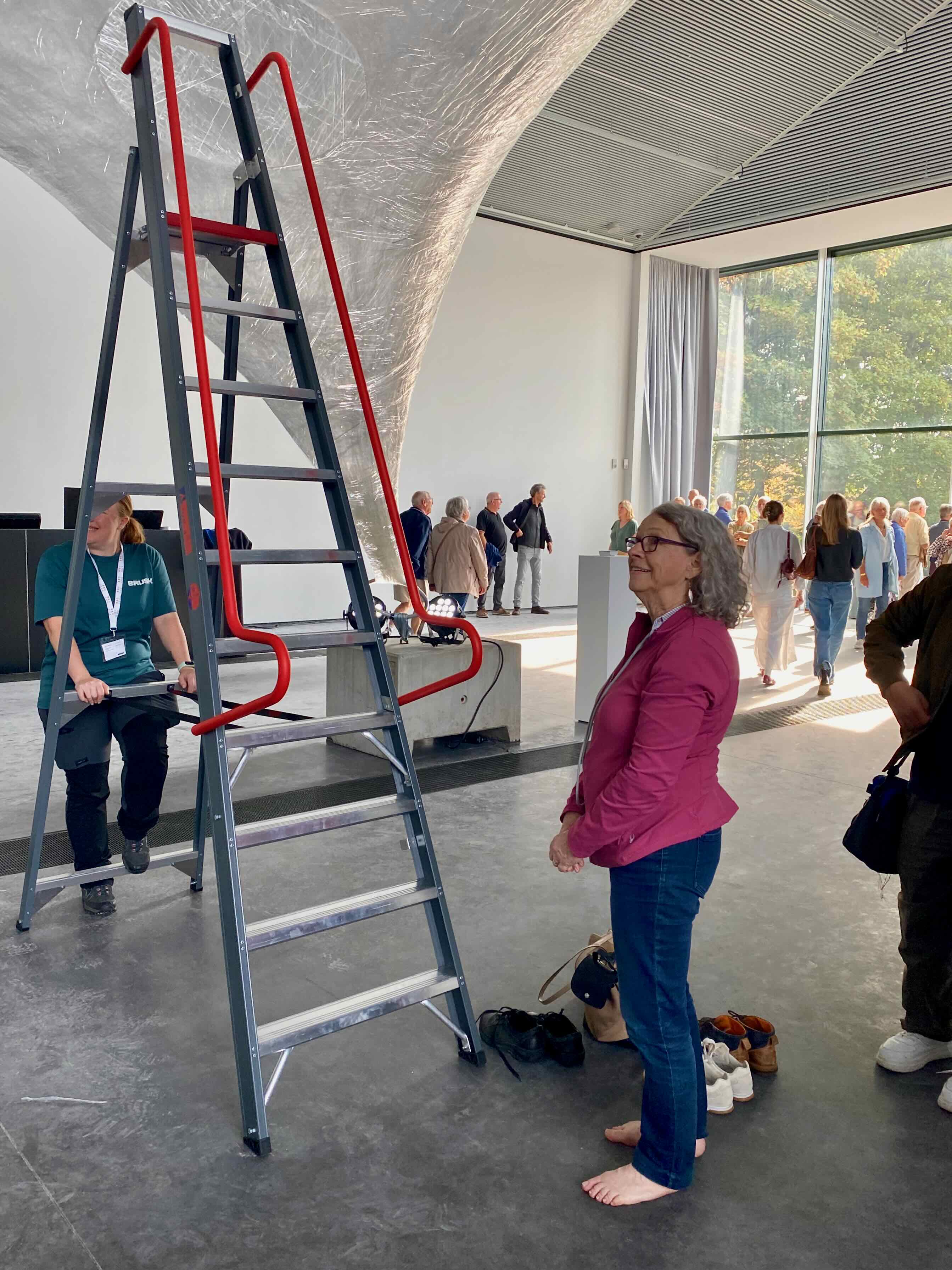
It was interesting trying to walk around, but not really all that difficult.
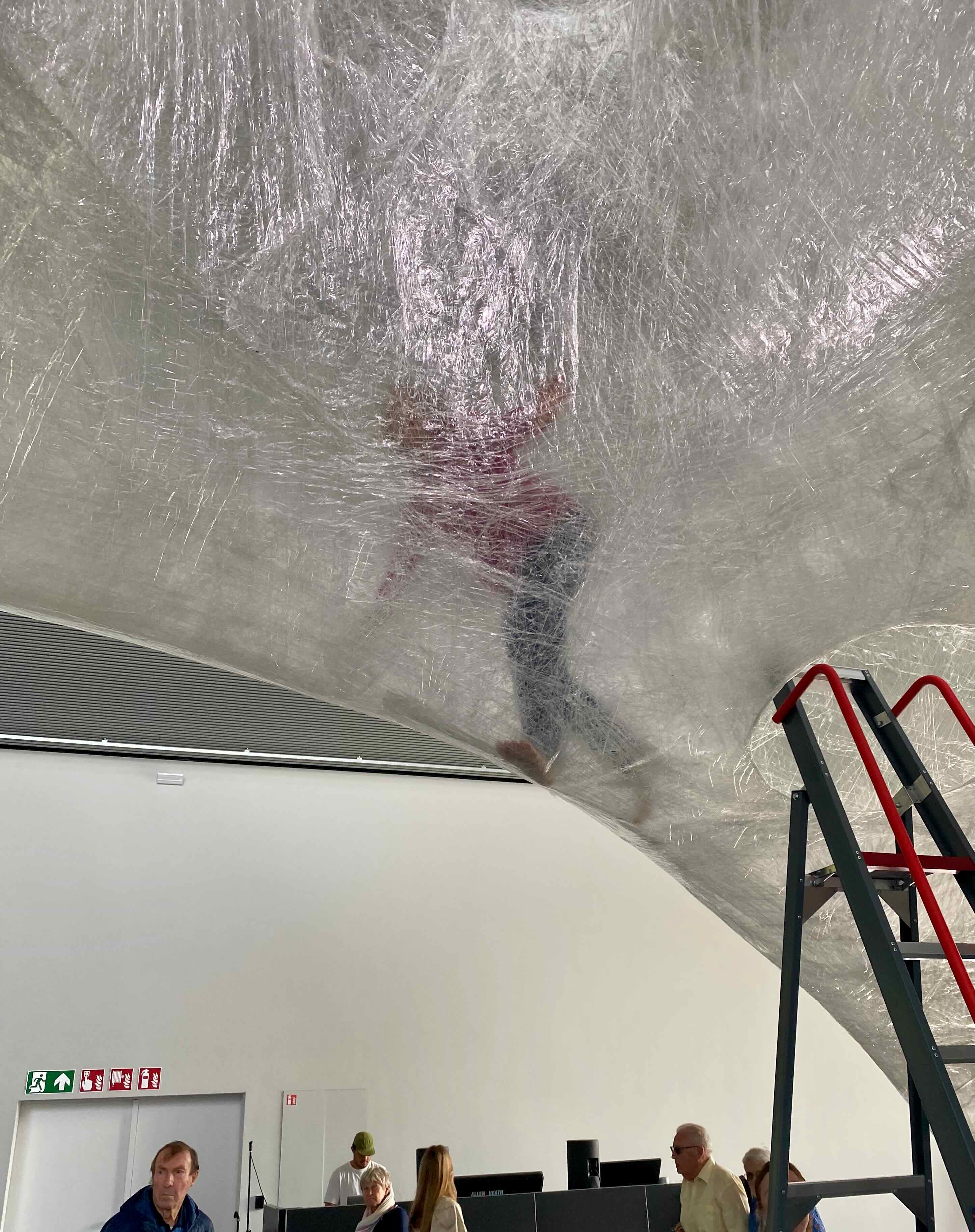
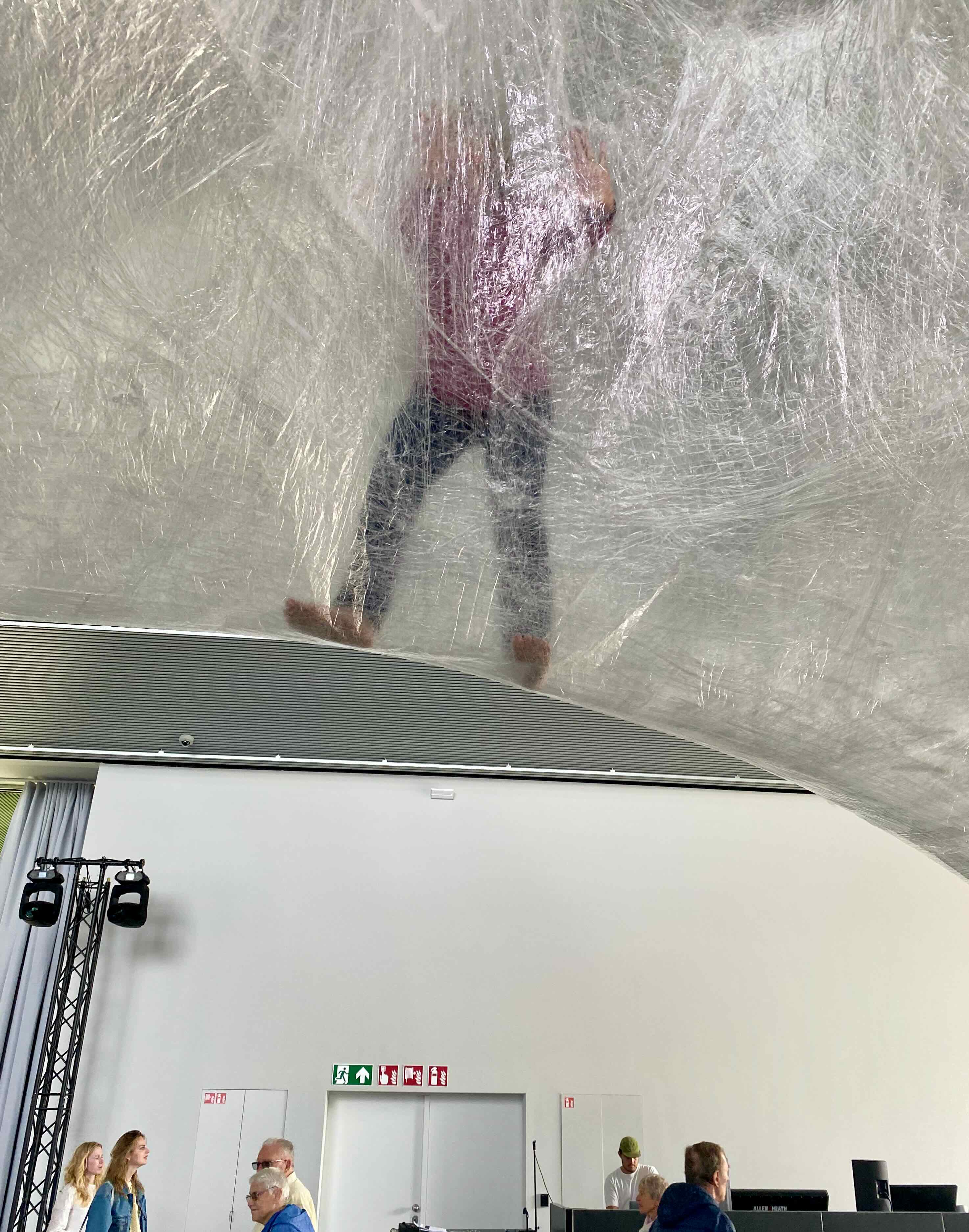
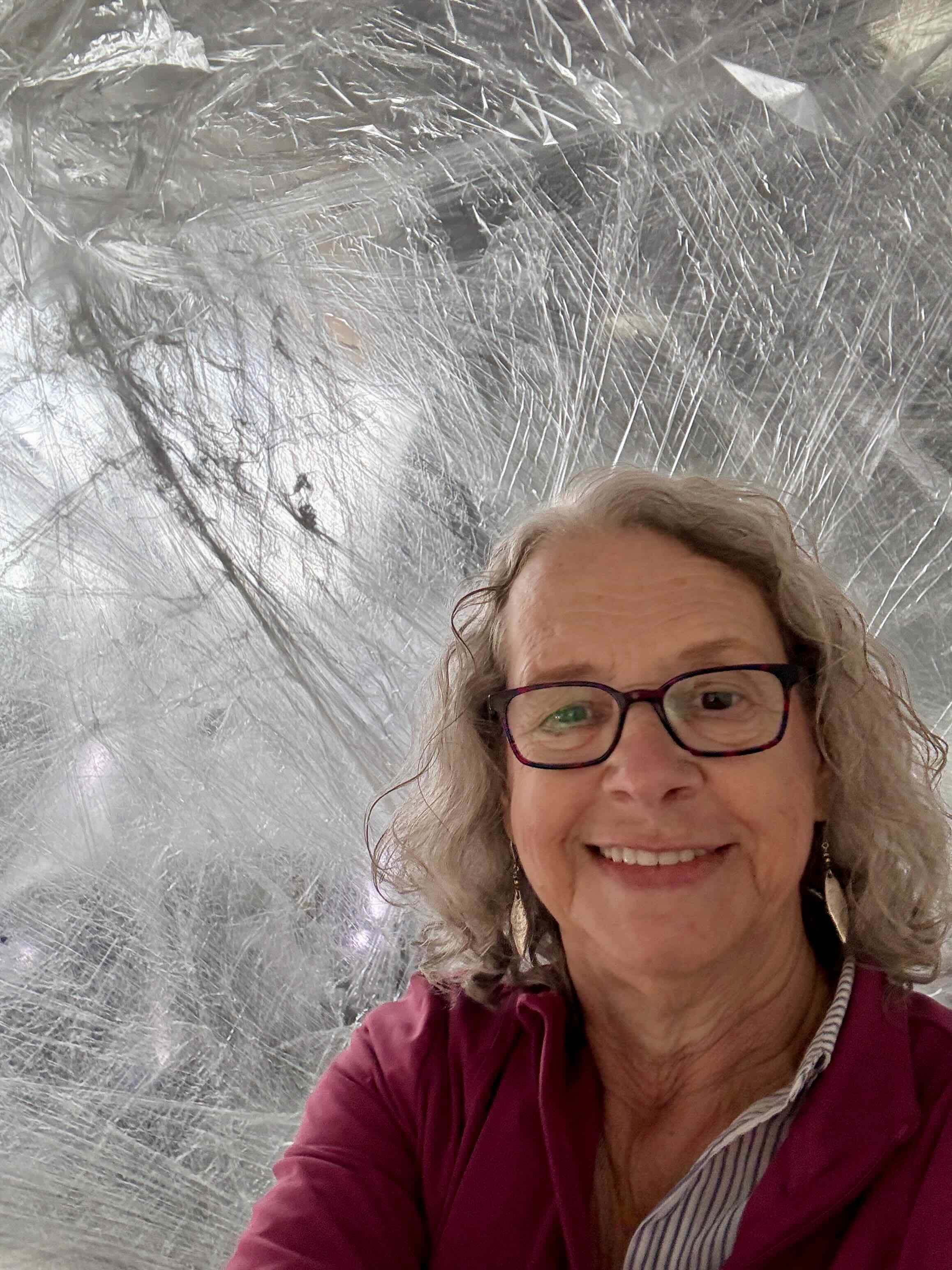
This was so much fun!  Here I am inside this giant web-like structure.
There is the hole I climbed through to get inside.All too soon it is time to climb down. This was such fun.
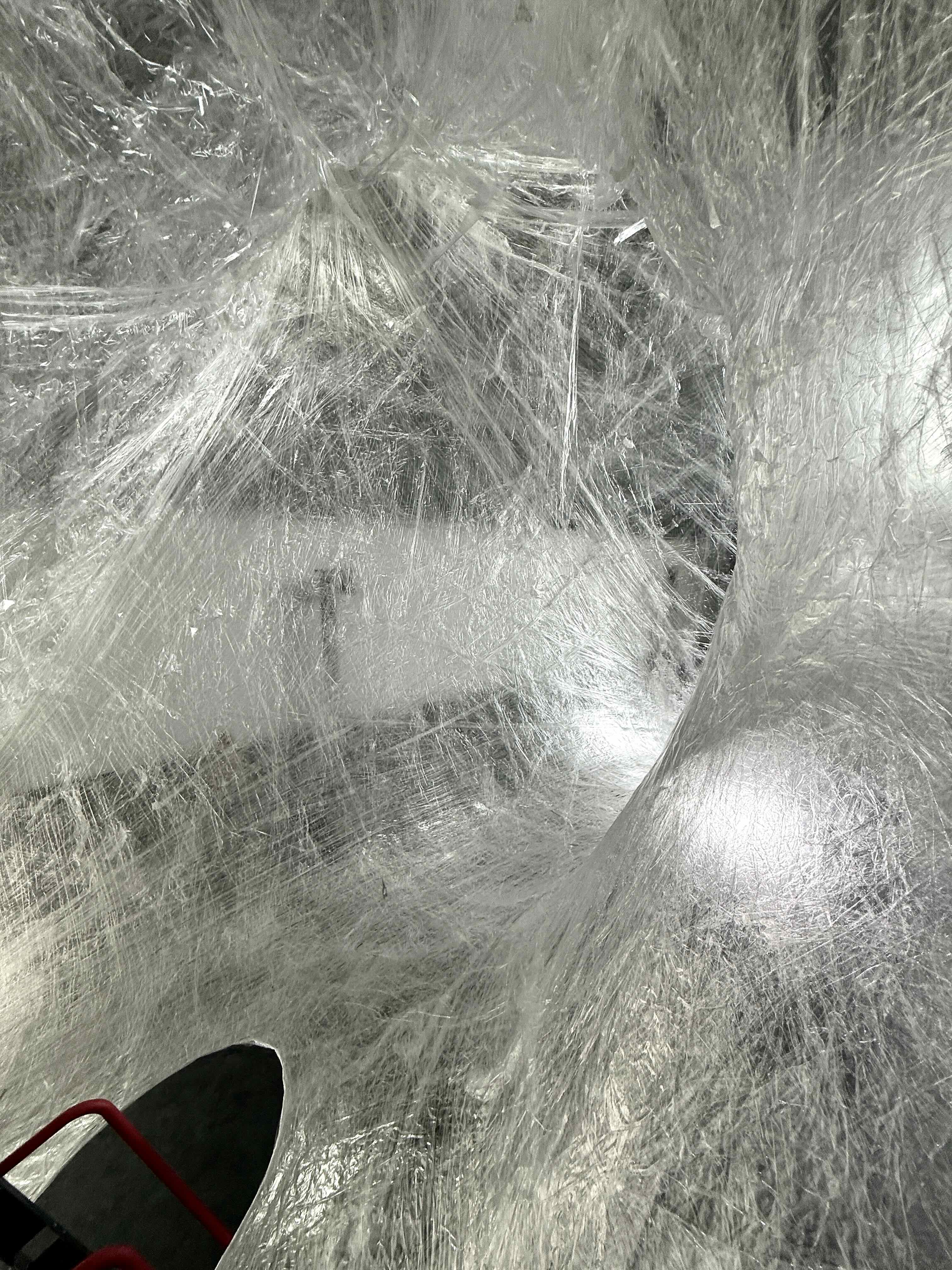
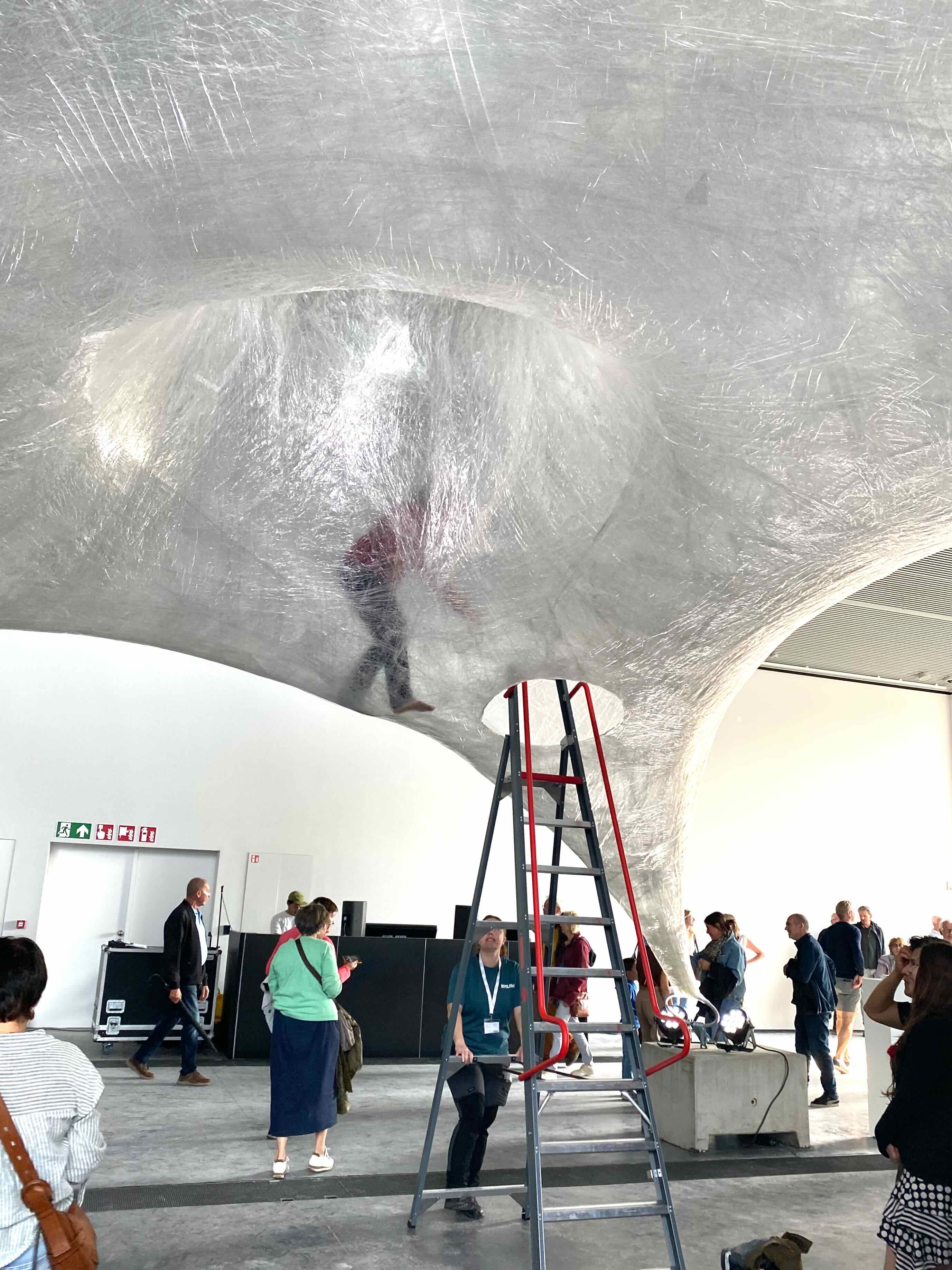
There were several of these ‘webs’ in this huge room. What a clever idea.
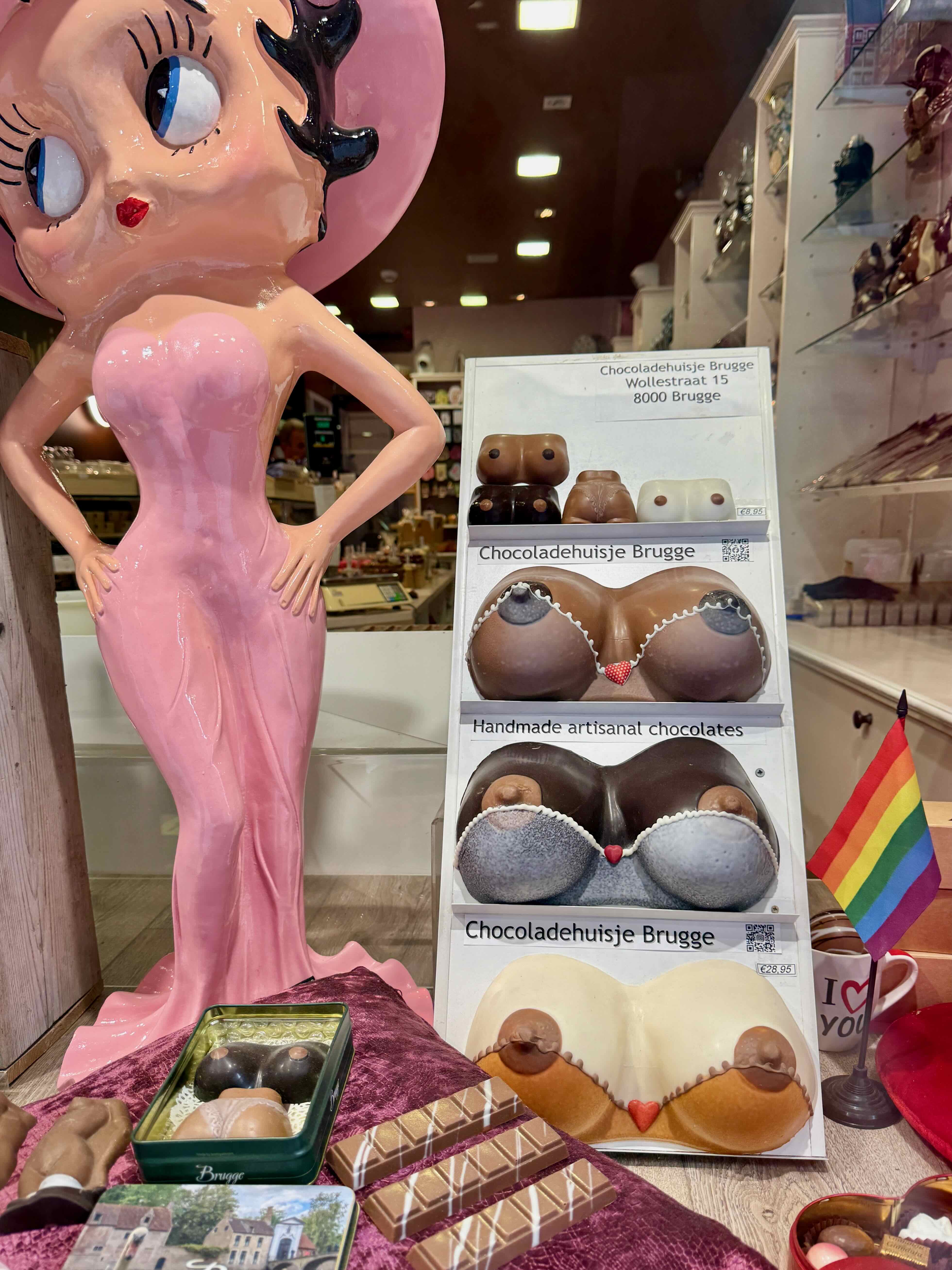
Belgium is famous for its chocolate, which comes in all shapes and sizes!
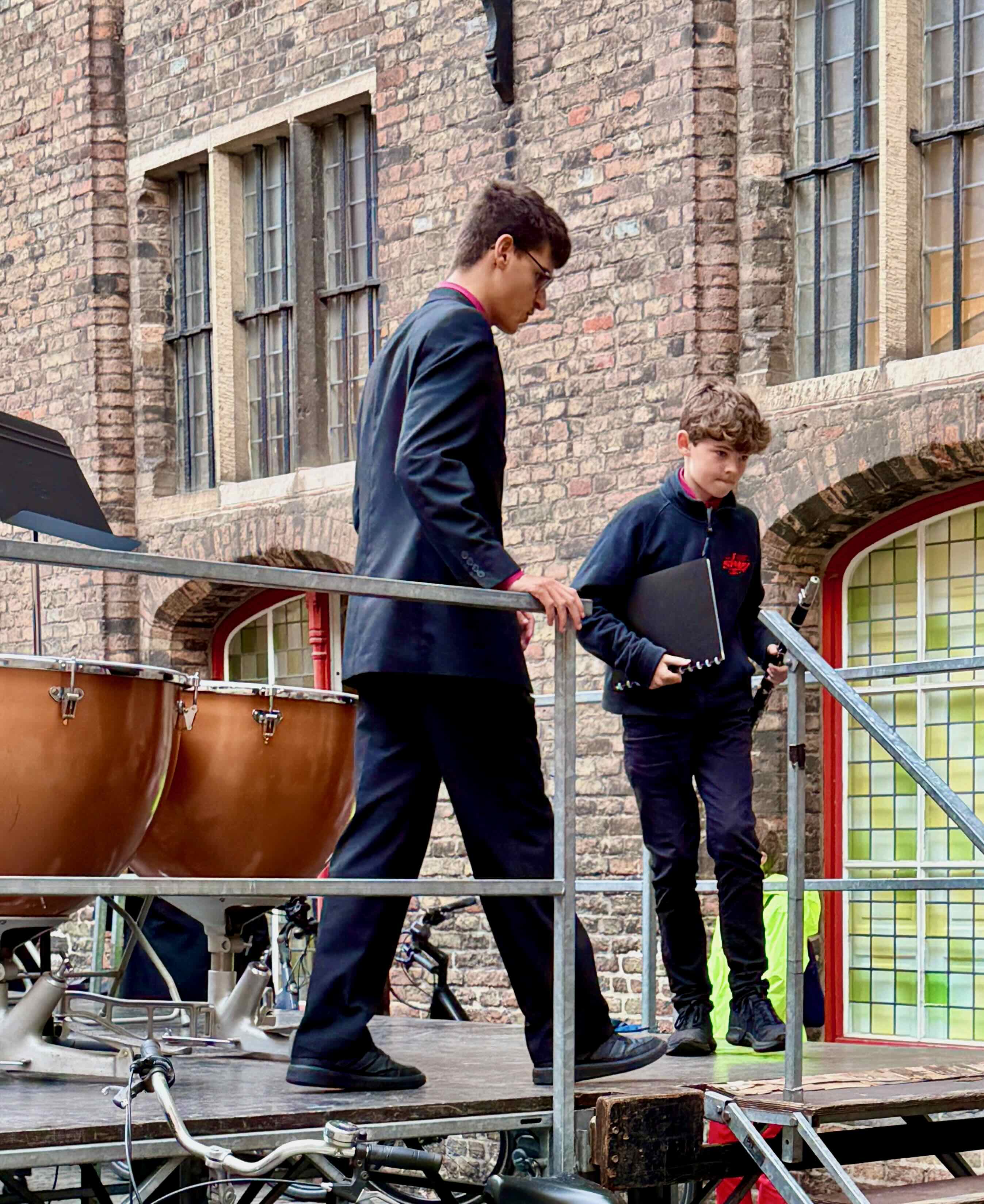
There is a Carillon performance at 4:00.  We find a spot to sit just as it starts and listen to a variety of music for the next hour. The carillon is a piano like instrument that plays 47 bells.
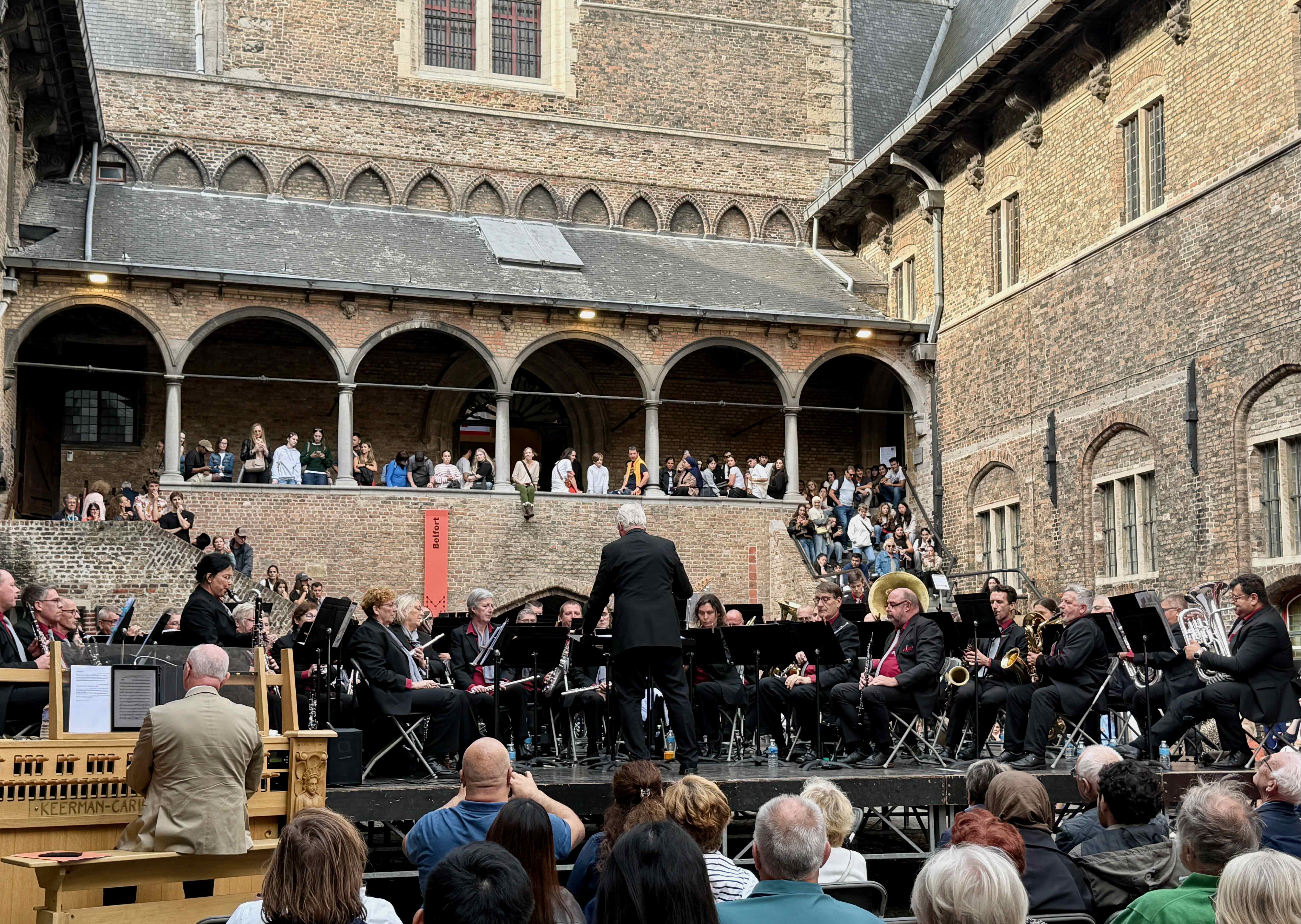
One of the musicians was very young.
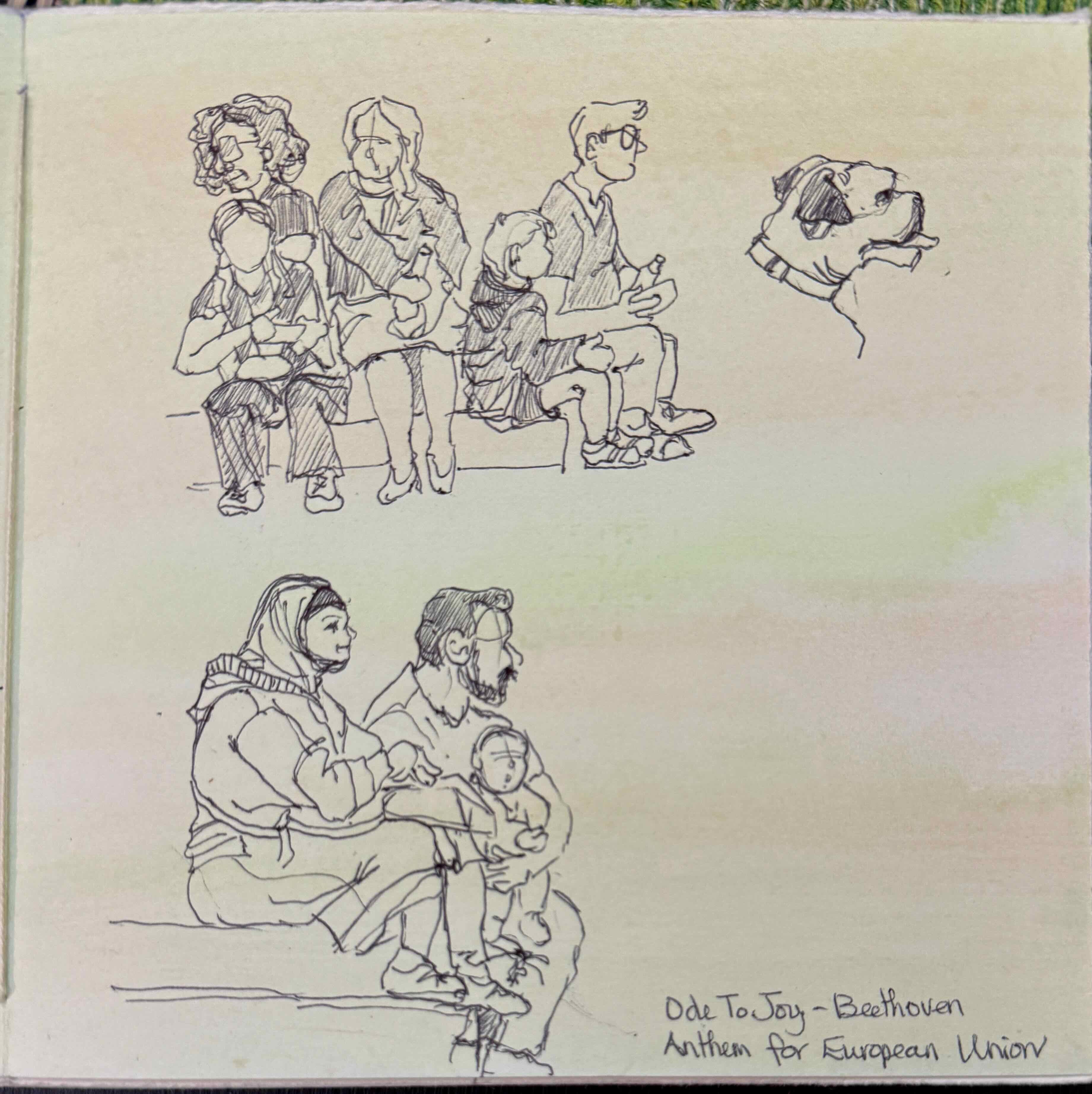
I do a bit of pen sketching while I listened to the music.  The last song played was Beethoven’s Ode To Joy and most of the audience stood up. The lady beside me told me that it is the anthem for the European Union, which has its headquarters in Brussels.  
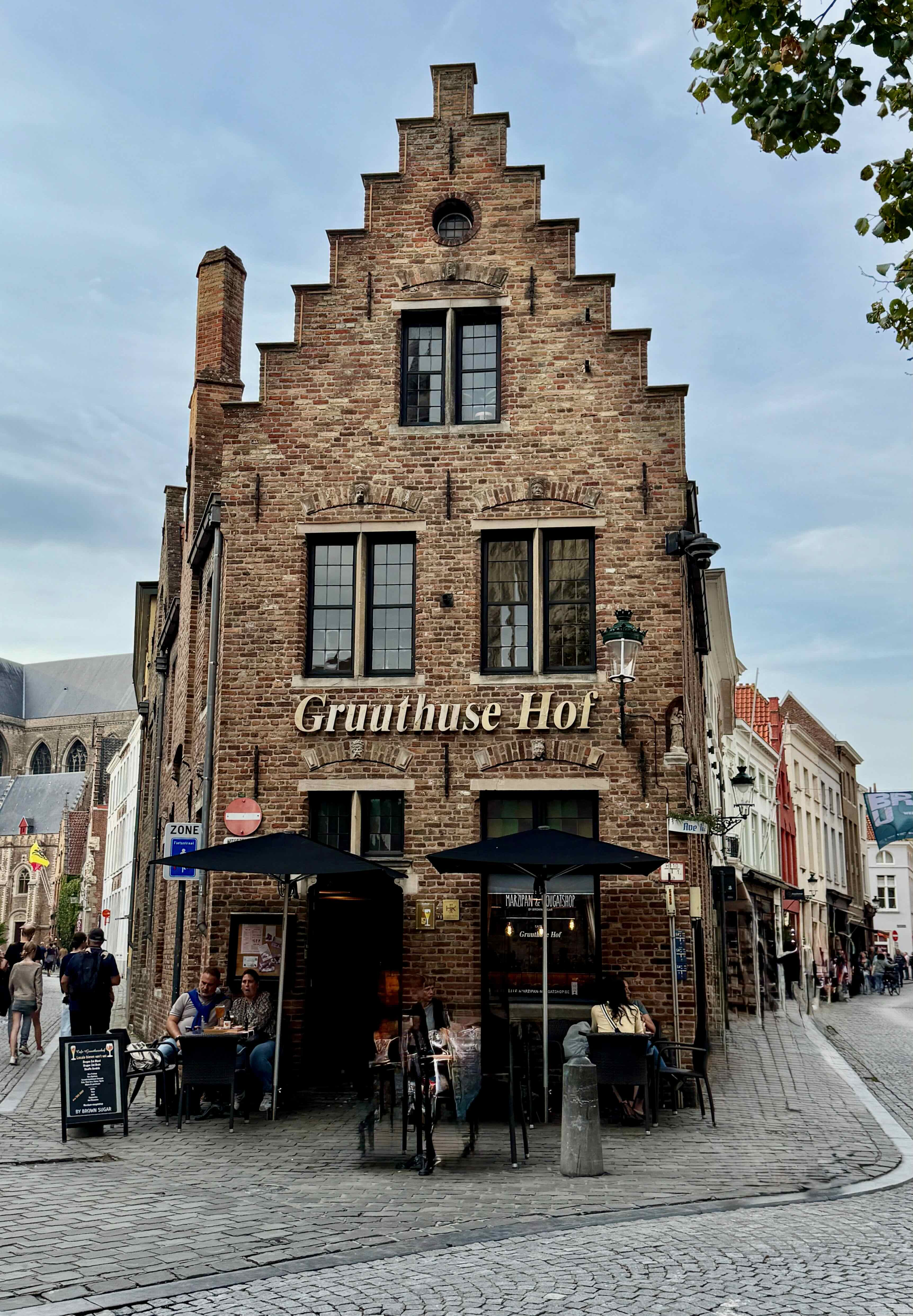
This is an interesting building, skinny at the front and then widening out as along the streets on either side. 
We wanted to visit the Church of Our Lady which houses The Madonna and Child by Michelangelo. This world-famous white marble statue is the only work by Michelangelo that left Italy during his lifetime. But the church closed at 5:00 so we are out of luck.
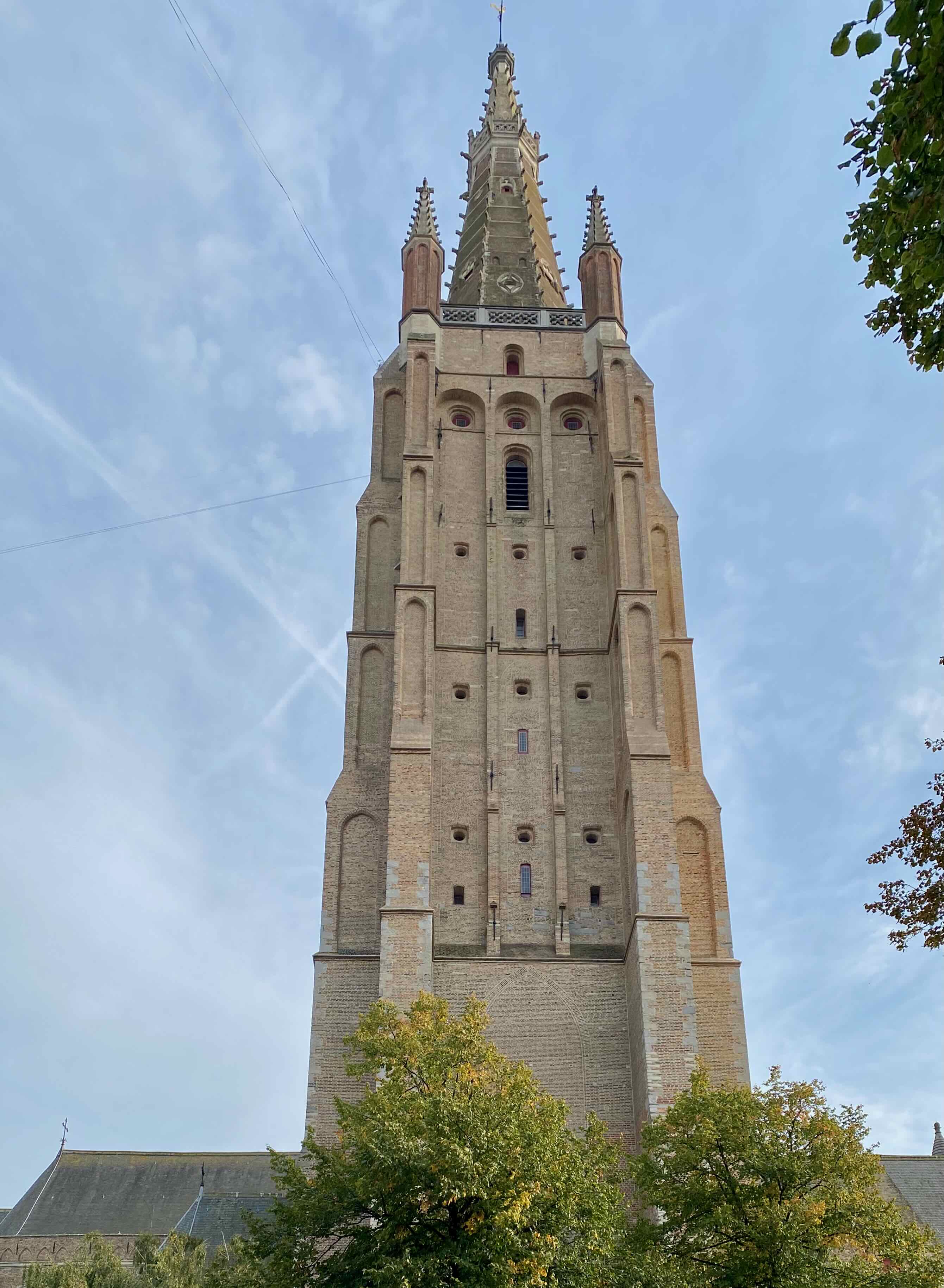
We have to settle for viewing this poster.

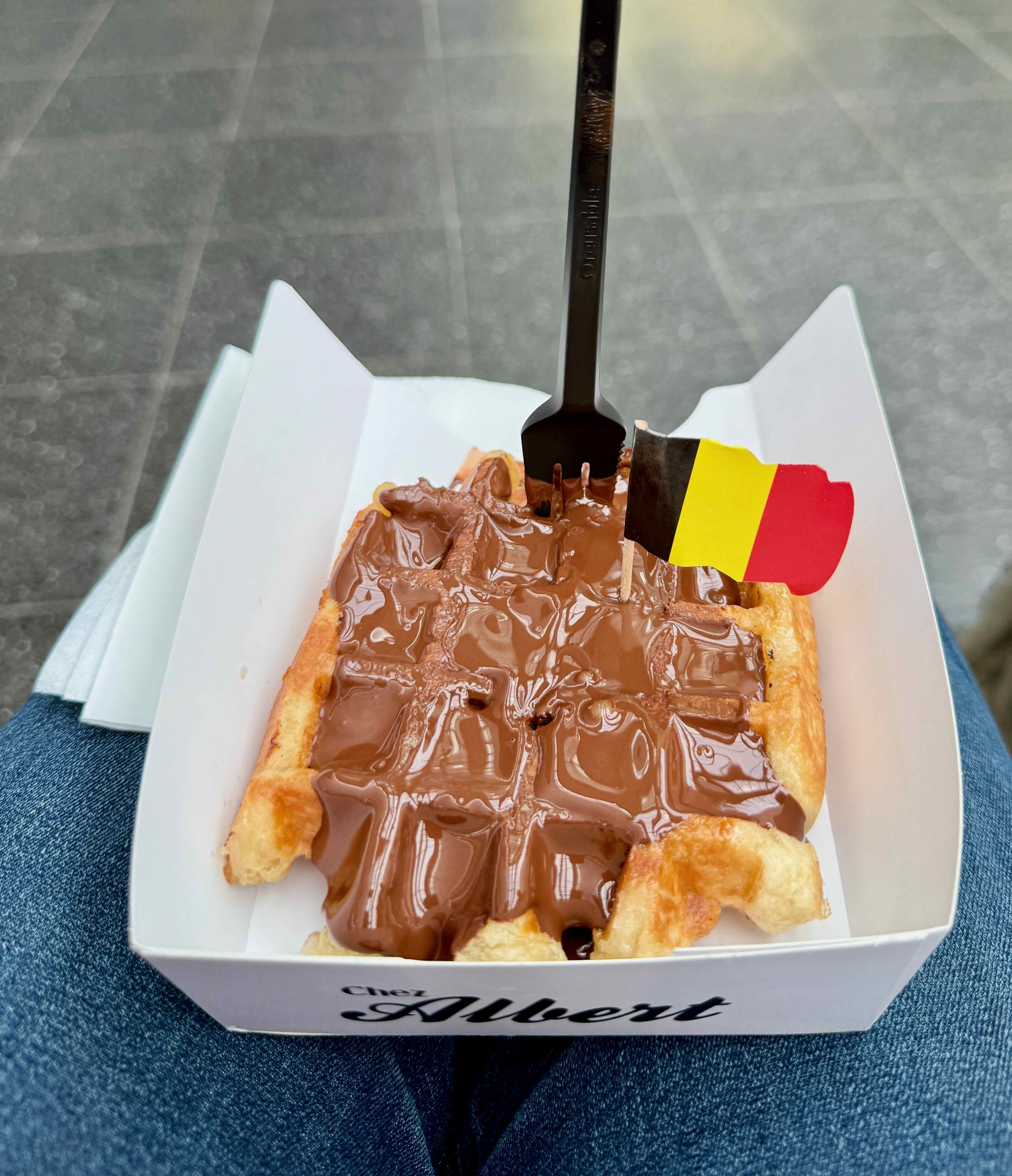
We order a waffle with dark chocolate to share before the long drive back to our bnb. It  had a bit too much chocolate for us, but was still delicious.
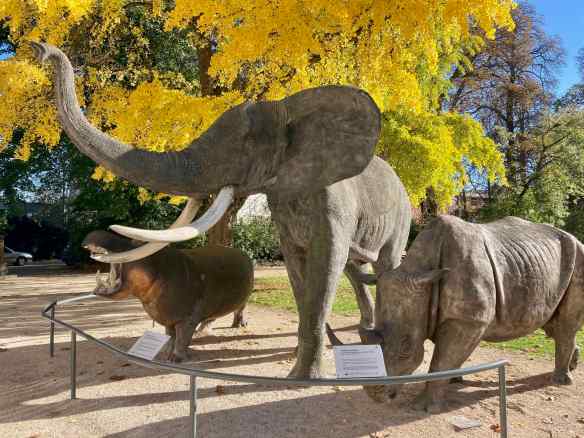
Dijon Natural Sciences Museum, Archeological Museum…and Covid Test

Day 72, Wednesday, November 8, 2023

I am not feeling well at all today so I stay home and Bob goes to the pharmacy as I need some Otrivin nasal spray so that I can breathe.  He finds out that I need  a prescription for that in France.  Who knew?  He brings me two other sprays to try, but they don’t do any good at all

I also asked Bob to pick up a Covid Test for me.   I am pretty sure that I only have a cold, so I was surprised to find out that I tested positive, and I have COVID!

Bob goes out exploring, so he is writing the rest of today’s blog…

Our attic apartment is located just 2 short blocks from the old town centre.  The historic centre is a UNESCO World Heritage site with wide pedestrian boulevards and historic buildings.  The farmer’s market is just around the corner.

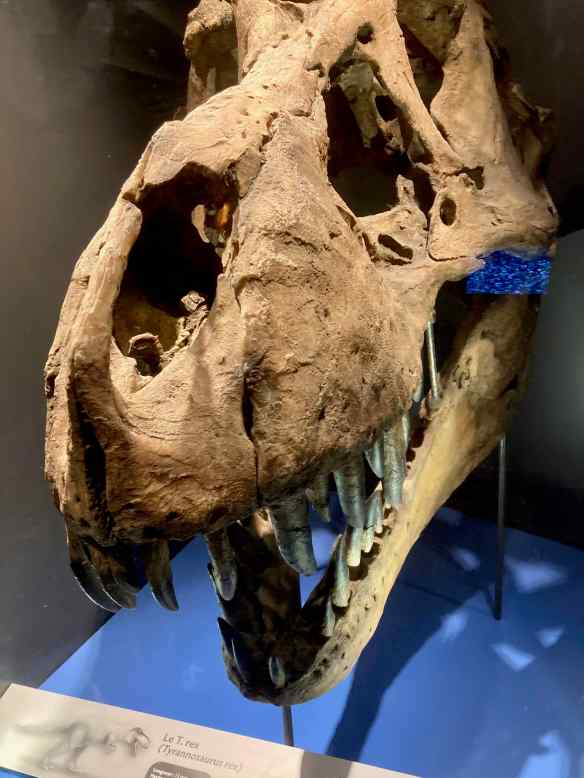
I went to the the Natural Sciences Museum in the morning.

I’ve never been so close to a T-Rex before.

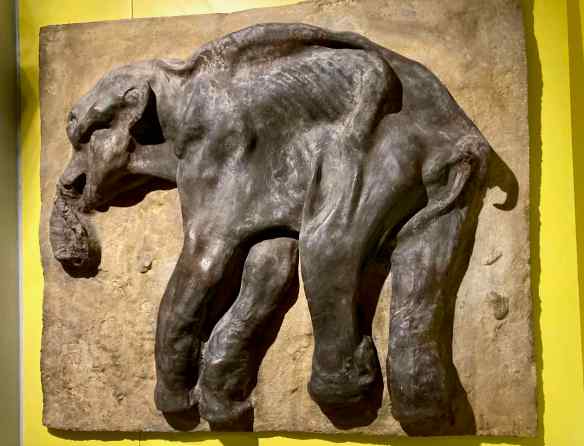
This is a copy of a 10-12 month old Mammoth named Dima that wa found in Siberia in 1977.  It is about 4 feet tall.

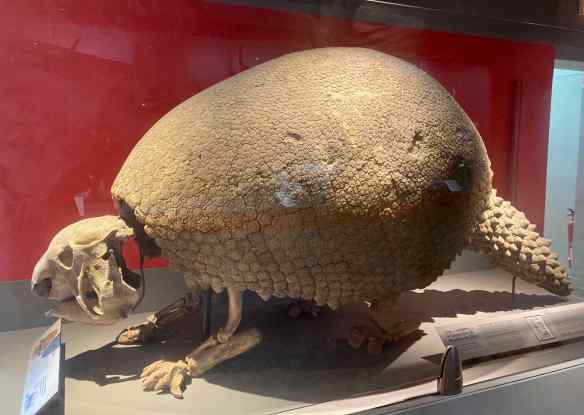
A Clyptodon, a 1.8 million year old armadillo, that weighed about 1 ton and lived in South America.

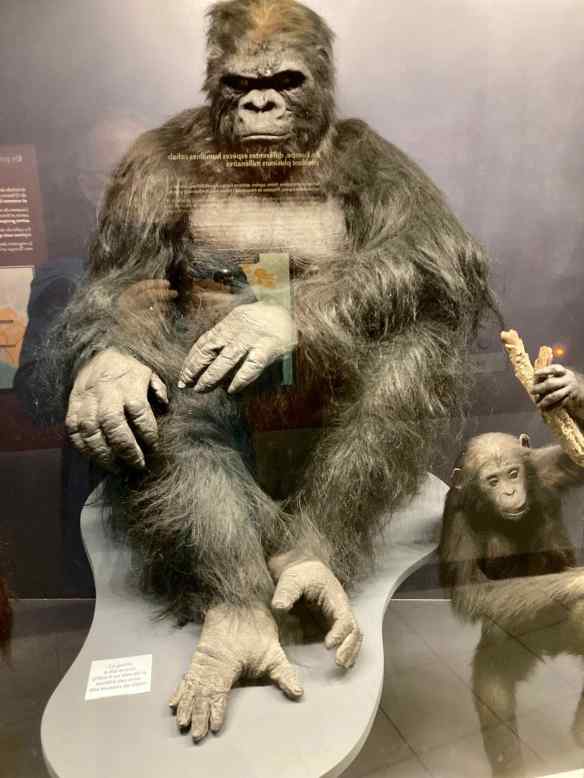
I never knew that gorillas had feet that looked more like hands.

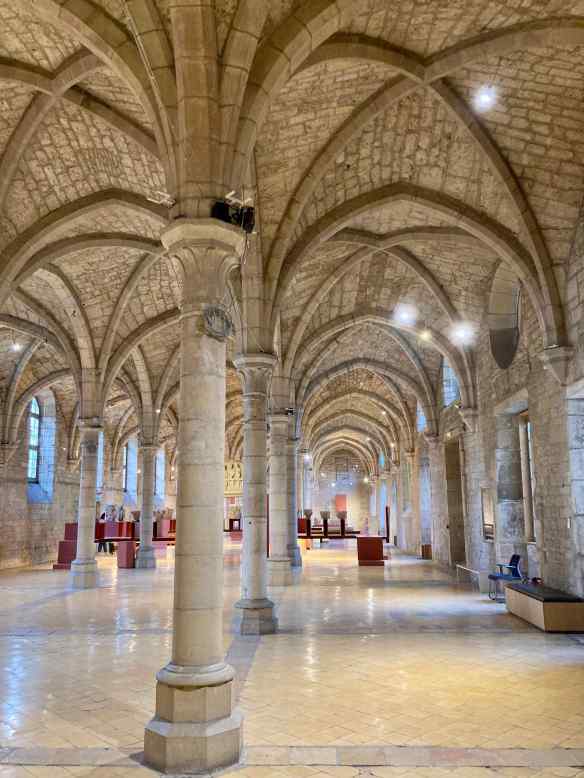
In the afternoon I visited the Dijon Archeological Museum.  It is located in the old Abbey St. Benign and contains collections from pre-Roman, Roman and the Middle Ages.

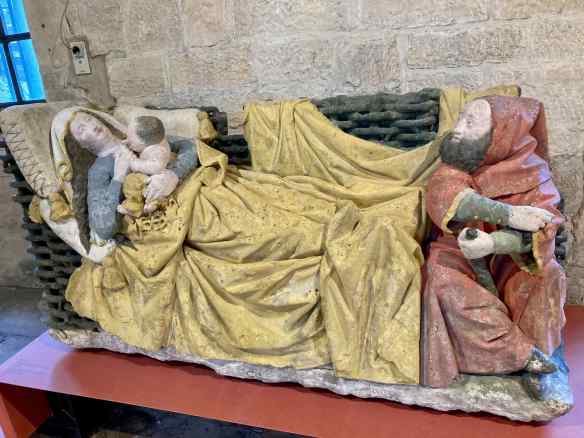
This 15th Century Nativity scene has to be the saddest couple to have a new baby.  Mom looks terrified.

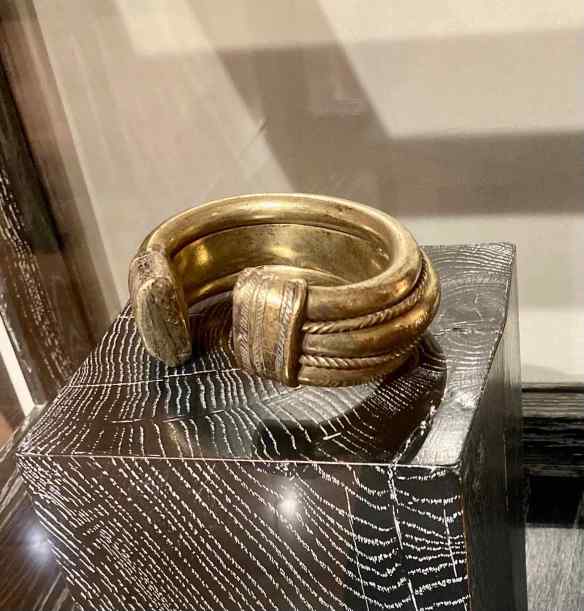
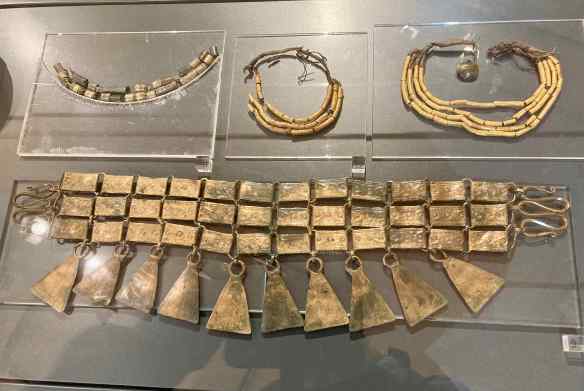
A copy of a 1.3 kg gold bracelet assembled in 8 pieces that is from the Final Bronze Age (1300-800 BC).

An articulated copper belt from 1000-800 BC.

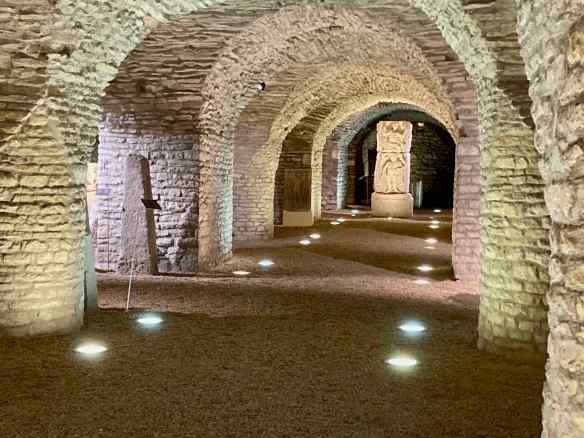
The Scriptorium is in the basement, with no natural lighting.  The Scriptorium is where writing, copying and illuminating manuscripts was done. Can you imagine writing all day by flickering candle or lamp light?

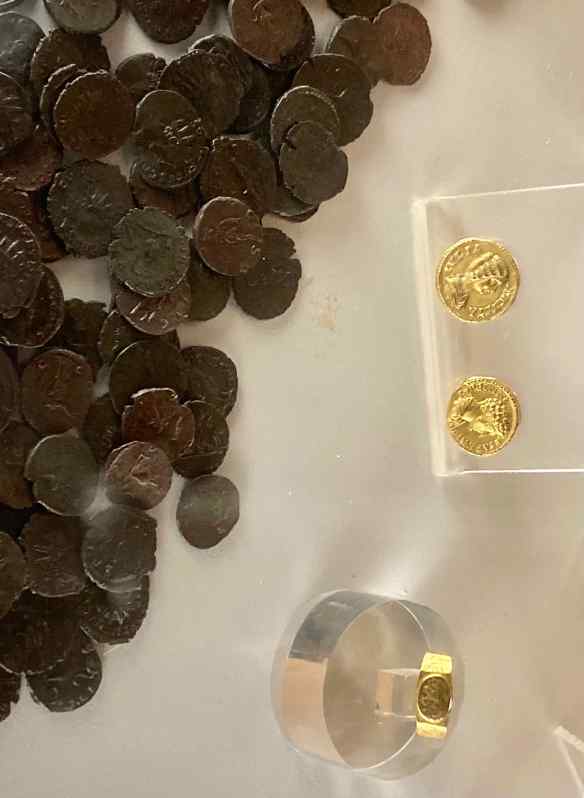
I wonder how much these Roman gold coins are worth?  I’m quite sure the gold coins are replicas.


Chauvet II, Caverne du Pont d’Arc, France

Day 61,  Saturday, October 28, 2023

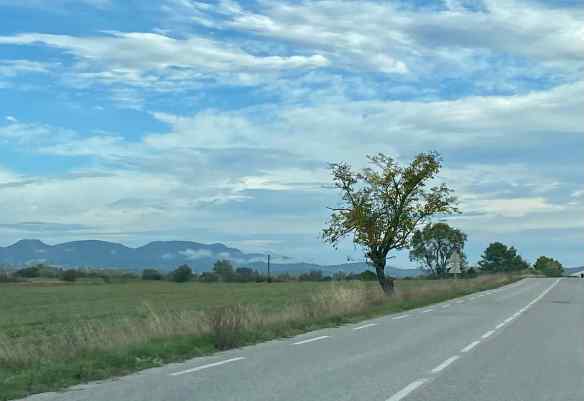
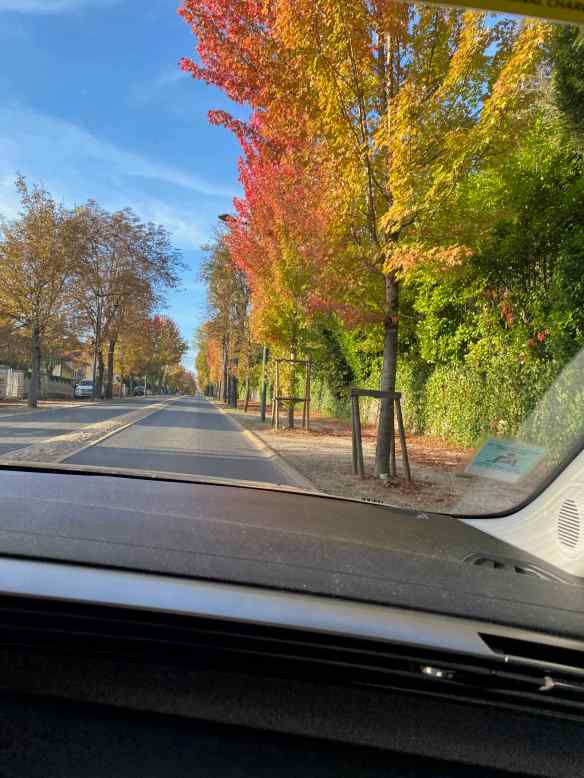
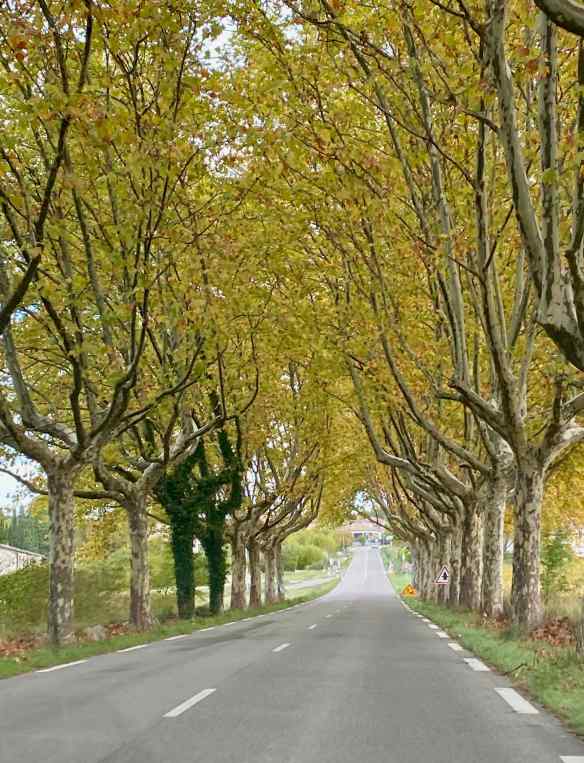
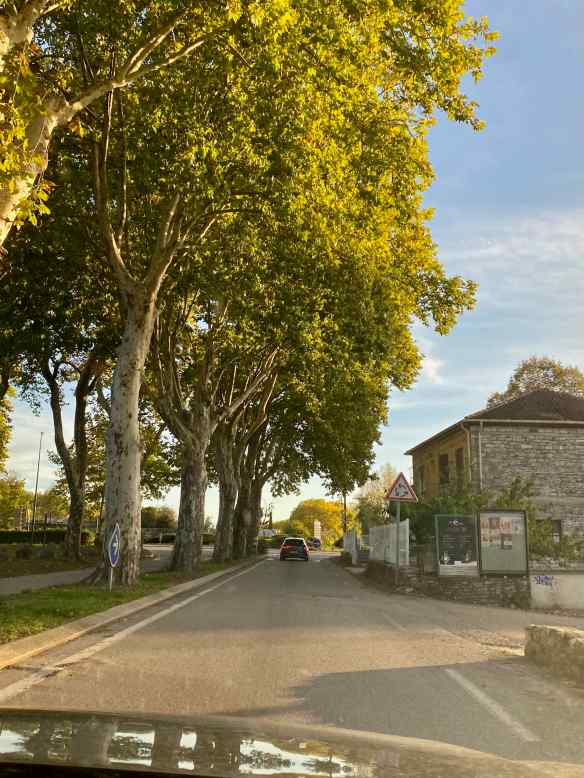
Today we are going to visit another UNESCO World Heritage Site to see the oldest prehistoric cave paintings known to date in the world!  The cave is an hour and a half drive from Nîmes, so we leave early.  The drive to the caves is interesting as the countryside is constantly changing.The Sycamore/ Plane trees are starting to show their fall colours.
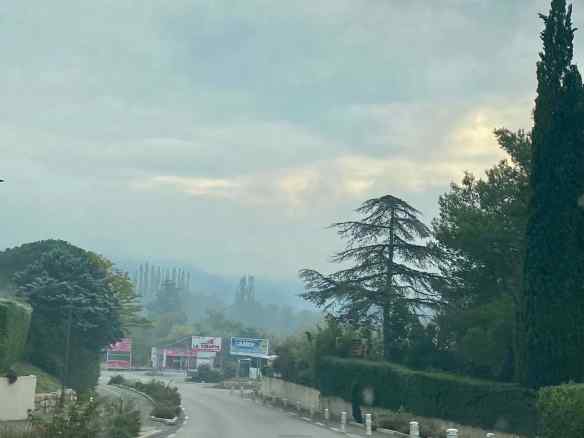
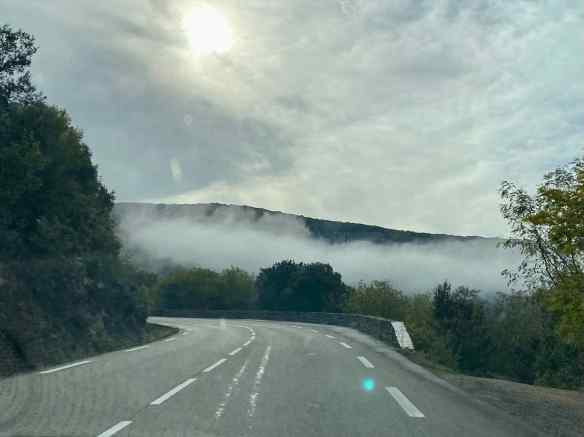
As we drove into the hills it got foggy…

and we were soon below the clouds.

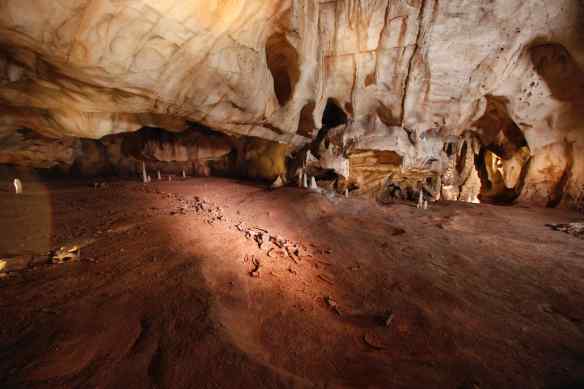
The Chauvet cave, or Caverne du Pont d’Arc contains exceptionally high-quality paintings dating back 36,000 years.  It was discovered in 1994 and has never been open to the public. Only a very small number of scientists are allowed to visit each year to study the Chauvet cave.  The lessons learned at the Lascaux caves helped prevent any damage being done to the amazing art discovered in the Chauvet Cave.

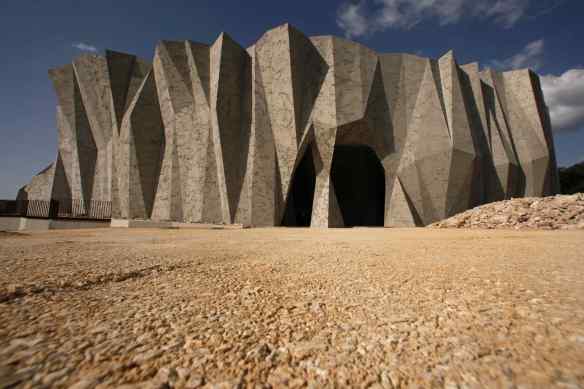
Construction on the replica cave began in October 2012 and it was opened to the public in 2015. Chauvet II is located 9.5 km from the original cave.

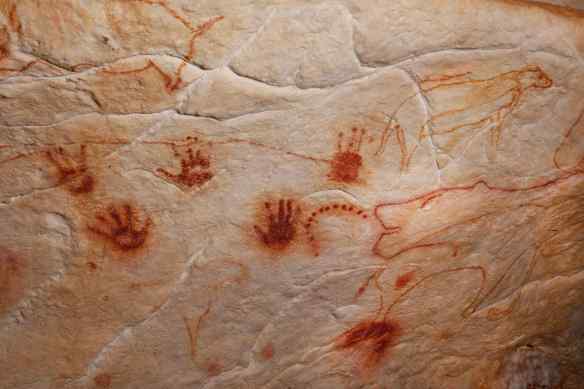
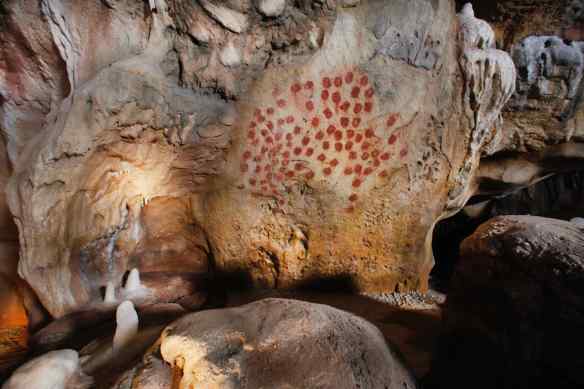
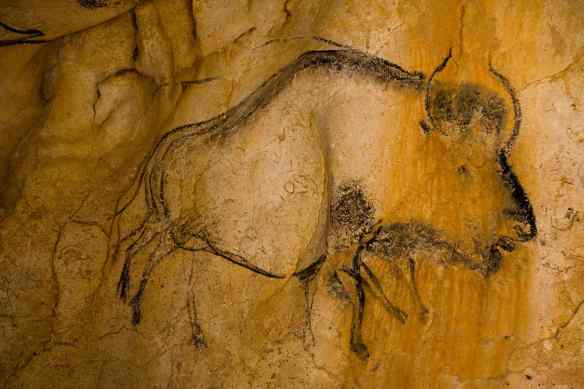
All the photos of the building and the inside of Chauvert II, Caverne du Pont d’Arc are by Patrick Aventurier and can be found on the Chauvet II website. https://en.grottechauvet2ardeche.com/history/

An arial view of Chauvet II.

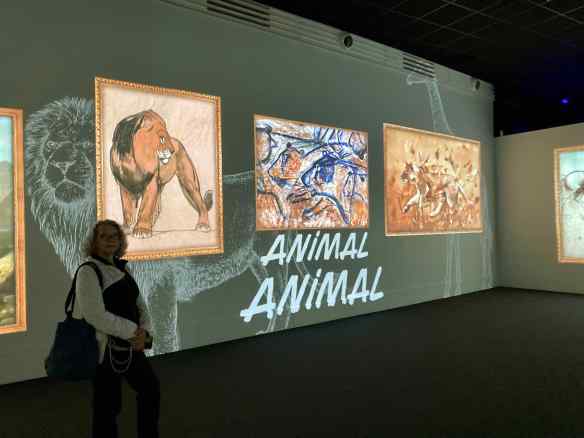
The building that holds the replica cave.  It has a viewing platform on the top of the building.This is the view from the top of the building.We have time to watch an immersive sound and light experience called ANIMAL before our cave tour begins.

Here are two videos I took during the show.  I don’t know how to edit videos, but they are not long, one is just over 2 1/2 minutes and the other is 3 minutes long.  It really was a spectacular show.

https://youtu.be/n9nf7gZ3V1M.     

https://youtu.be/tsU3uZaAuPI

Before we enter the cave our guide asks us not to ask questions about the construction of the replica cave until after our tour, to help us feel as though we are in the real cave.

The Chauvet caves contain a masterpiece…the oldest known artwork in the world.  They are over 36,000 years old…that is 18,000 years older than the Lascaux Cave we visited earlier.  These handprints tell us that the right hand of the artist had a crooked little finger, perhaps it was broken at one time and didn’t heal properly?

These red dots are palm prints.  If you look closely you will see that there are a few prints that show the fingers and the little finger of the right hand is crooked.  These palm prints were done by the same artist as the previous handprints!

One of the first charcoal drawings that we see.  Because charcoal was used the paintings were able to be carbon dated to determine their age.

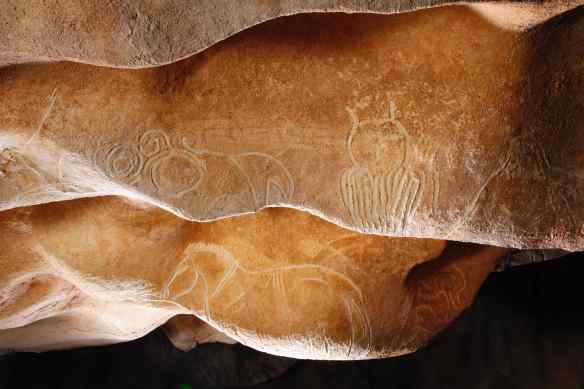
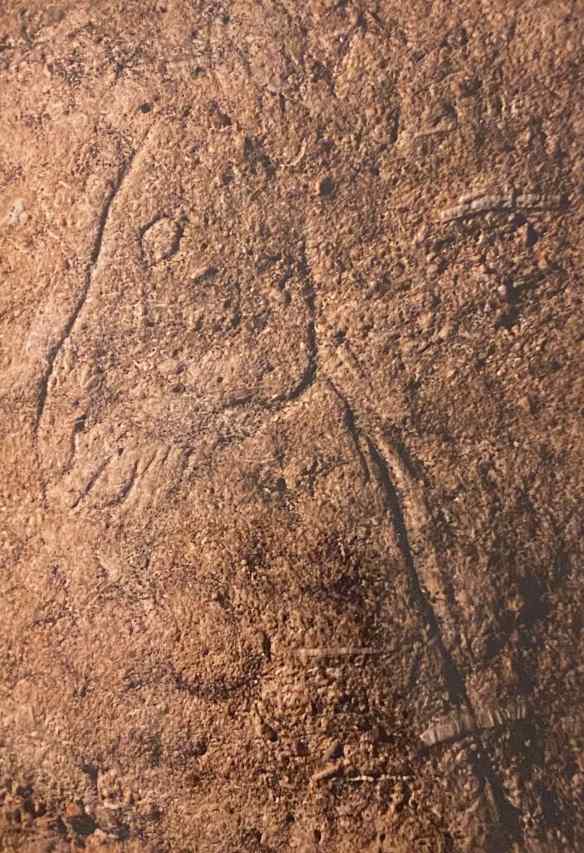
Some of the engravings were made by pressing into the soft mud walls of the cave with the artist’s fingers.There are very few owl depictions in prehistoric cave art.  We get to see one here.
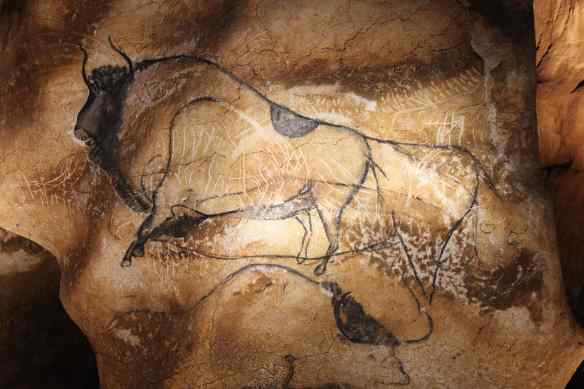
As we walk further into the cave there are more animals on the walls.

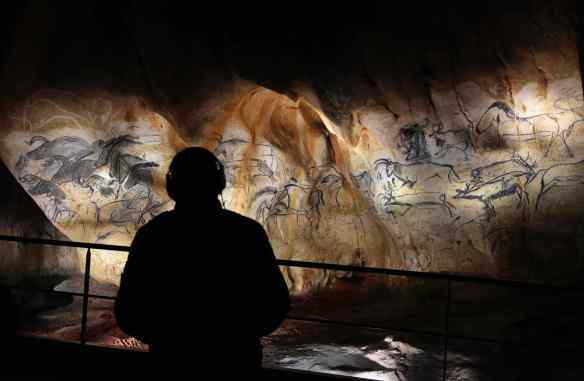
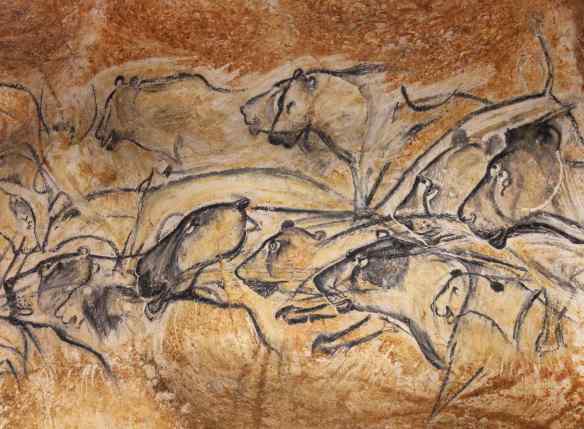
The next four photographs are all part of a panel showing the largest collection of animals in the cave and it was located in the very deepest part of the cave.

We are in front of the Lion Panel: a12 metre-long fresco of a lion hunt that takes my breath away! We stand in awe, as the flickering lights reveal these drawings.

The lighting mimics flickering firelight and the animals almost appear to move.

Of course the lighting is set on a timer and all too soon it is finished.  I tell our guide that our time here is too short and I don’t want to leave… she asks if we would like a  bonus viewing and when I say yes, she turns the lights on again.   We all got an extra 20 minutes in front of these magnificent paintings!

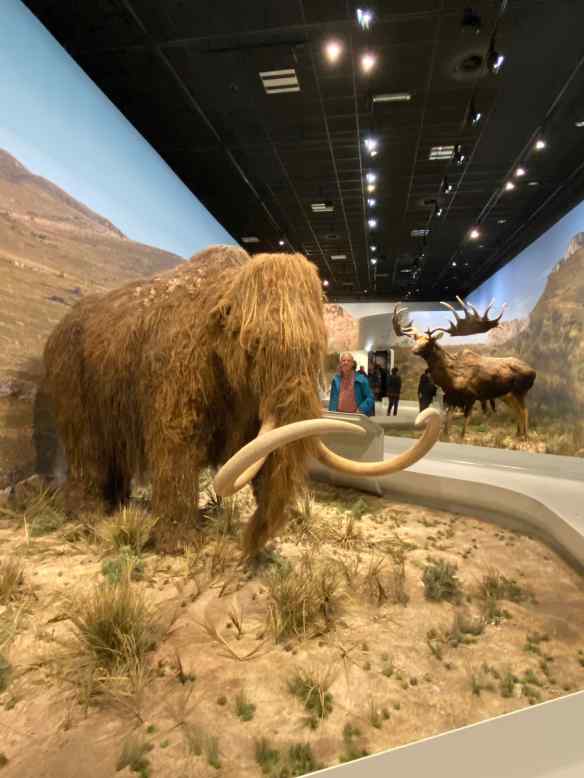
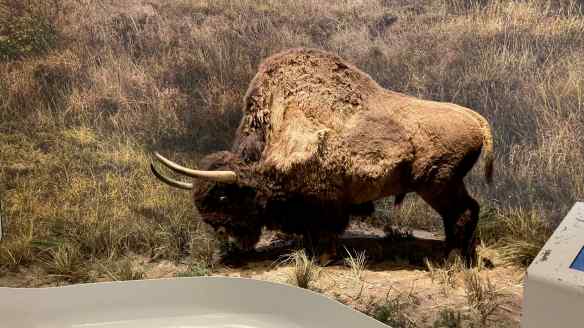
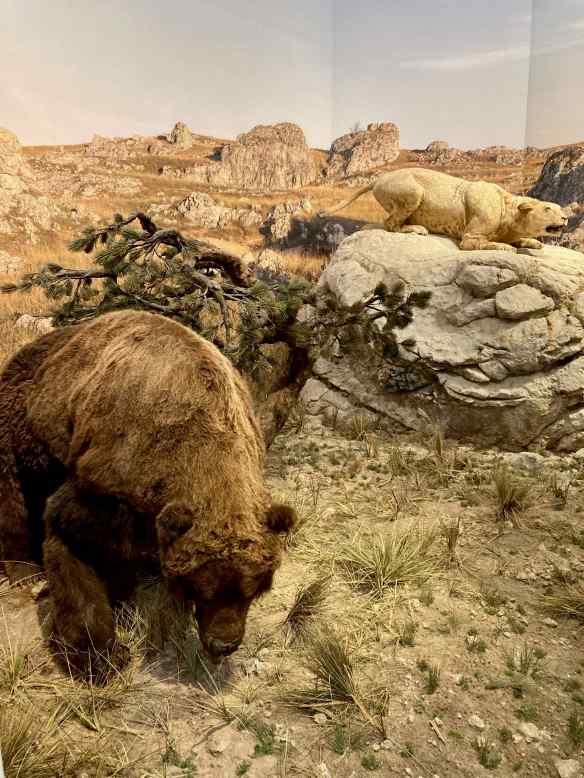
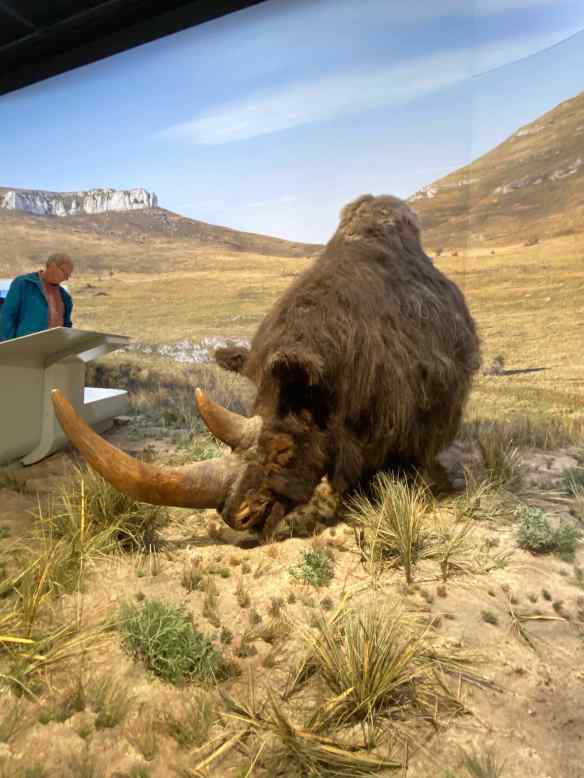
The Aurignacian Gallery is a complementary area to discover on our own after the cave visit.  There are life size replicas of prehistoric animals.  Wooly mammoths, Megaloceros , the huge deer in the background, …

Aurochs…

Cave Bears and Cave Lions…and Bob’s favourite, the Wooly Rhinoceros.

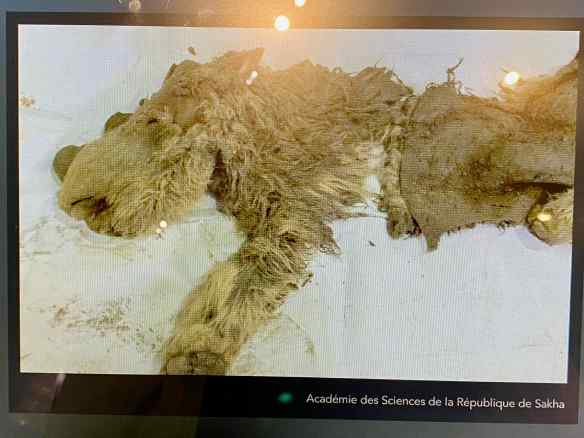
There are interesting interactive panels, including this photo of a baby wooly rhinoceros that was found in a mine in Russia in 2007…

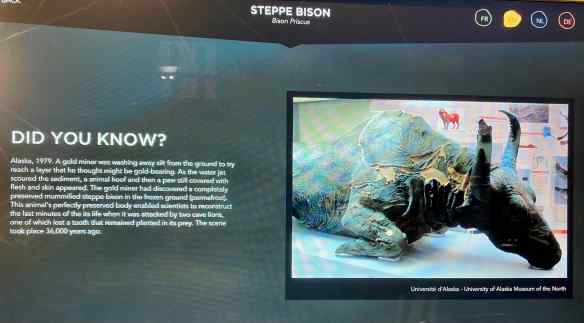
and one of this steppe bison found in Alaska in 1979.

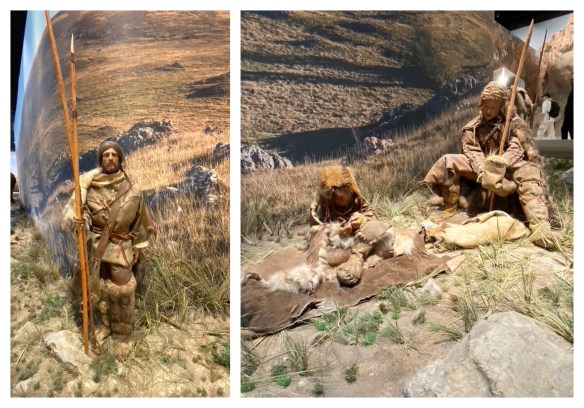
Something I didn’t know before this trip and all the caves we have visited is how like us Prehistoric Cro Magnons were.  They were hunter gatherers and were anatomically very similar to modern man “but more robust, having larger brains, broader faces, more prominent brow ridges, and bigger teeth. They were well renowned for creating a diverse array of artistic works, including cave paintings, Venus figurines, perforated batons, animal figurines, and geometric patterns. They also wore decorative beads, and plant-fibre clothes dyed with various plant-based dyes. For music, they produced bone flutes and whistles, and possibly also bullroarers, rasps, drums, idiophones and other instruments. They buried their dead, though possibly only people who had achieved or were born into high status.”  ~Wikipedia

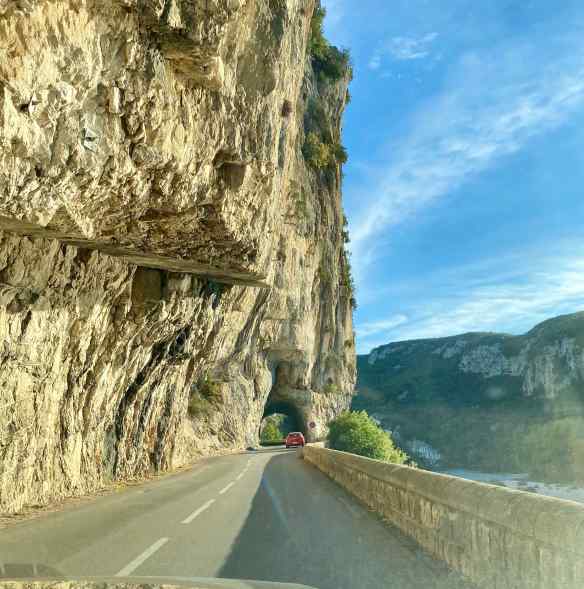
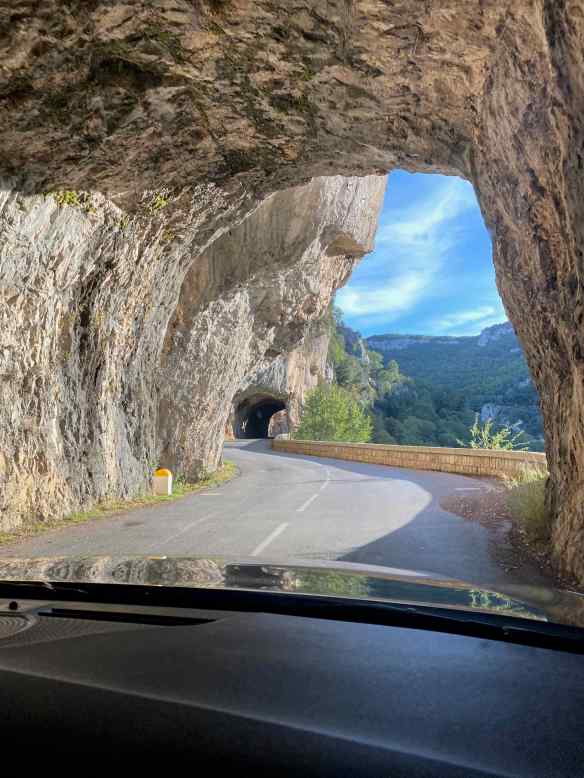
After our visit at Chauvet II we drive to the location of the original cave along this narrow road with lots of tunnels.

It was quite the experience.

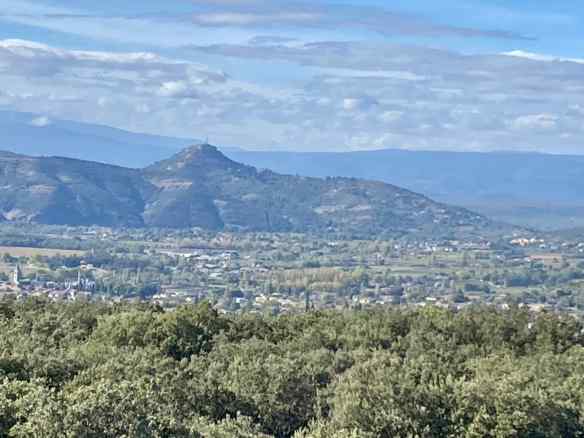
We park and this is our view.

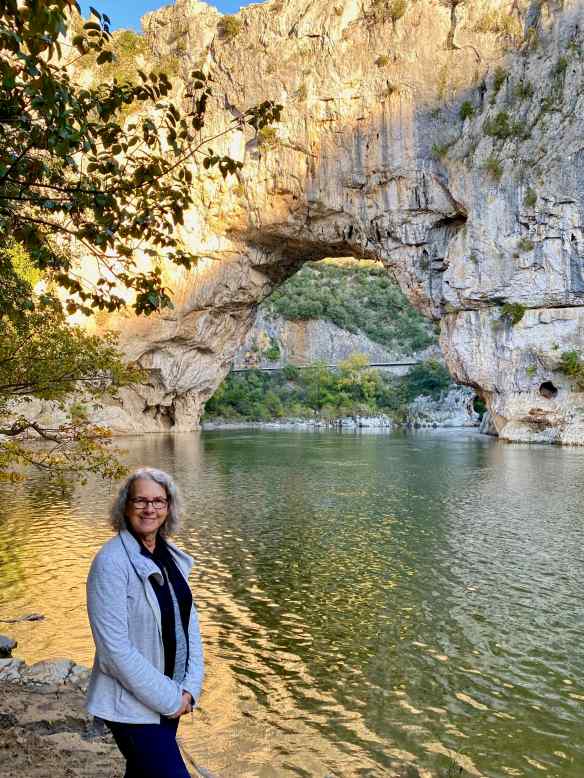
The cave was located near the  Pont d’Arc, a natural stone bridge.  We would have liked to walk up to the location of the original cave, but it is getting late and we still have an hour and a half drive before us.  Too bad but we don’t want to be driving home in the dark.

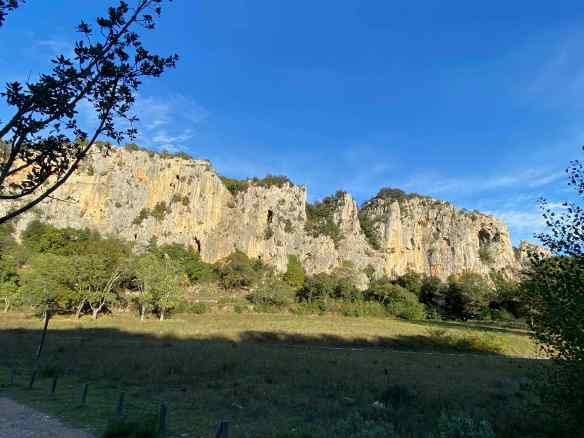
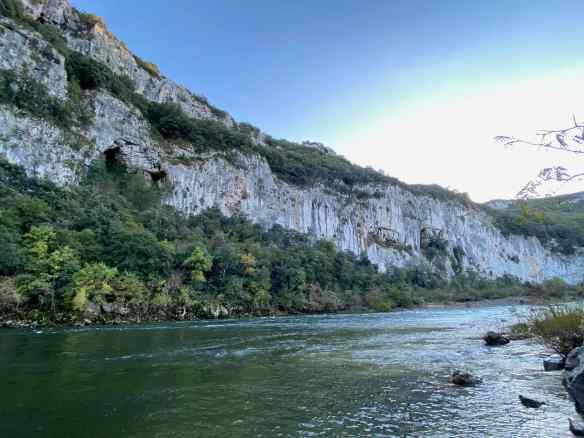
The cliffs here are full of what appear to be cave openings, and there is a sandy beach alongside the river that is a popular spot for families.

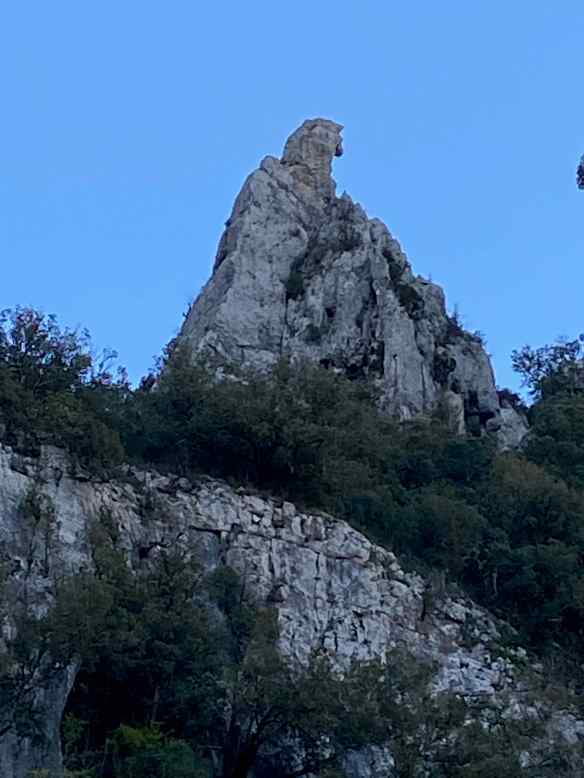
Bob spots this rock formation in the distance that looks like a horse’s head.  He is good at finding rock formations that look like people or animals.More tree lined roads on the way home…the leaves look golden in the setting sun.
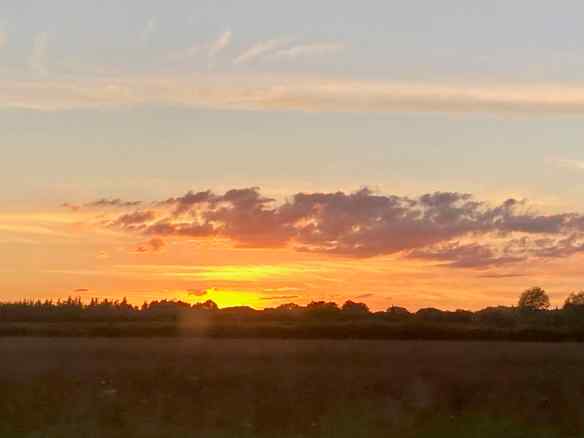
All too soon the sun sets…and we are driving in the dark, but only for the last half hour or so which isn’t too bad.

Medieval Cité in Carcassonne, France

Day 45, Thursday, October 12, 2023.

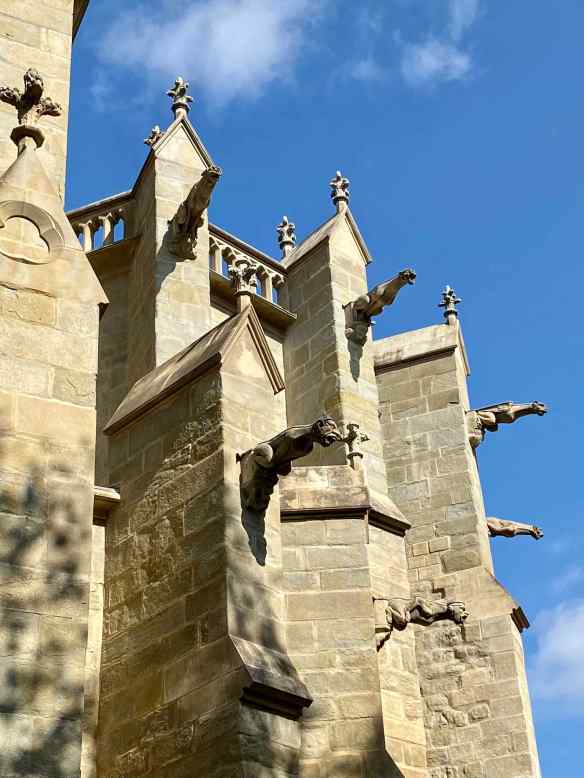
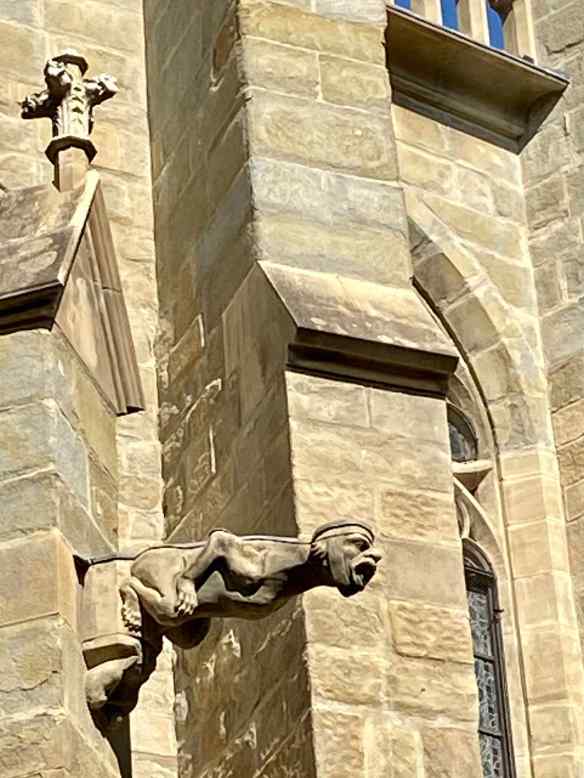
I’m feeling bit better this morning so we go visit the medieval citadel called la Cité.  It is a half hour walk and we pass a church on the way that has incredible gargoyles.  I love gargoyles.

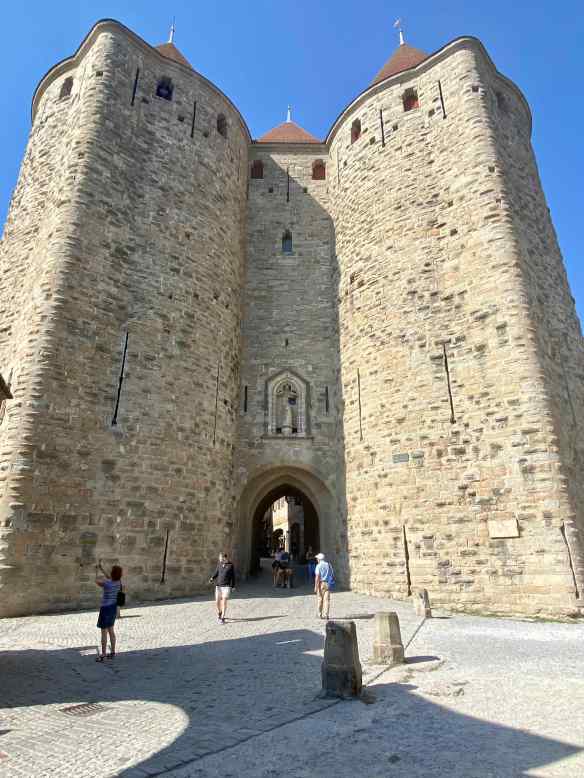
I thought this one was particularly interesting. This is one of the entrance gates to the old city of Carcassone.
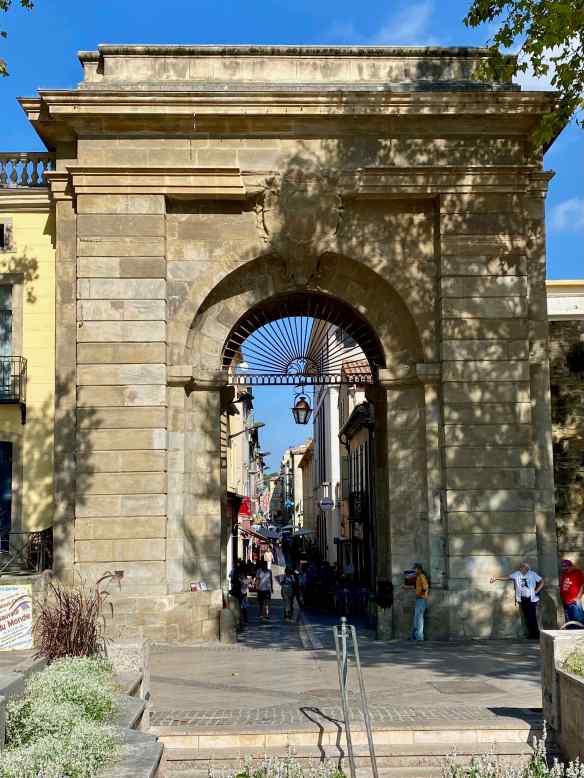
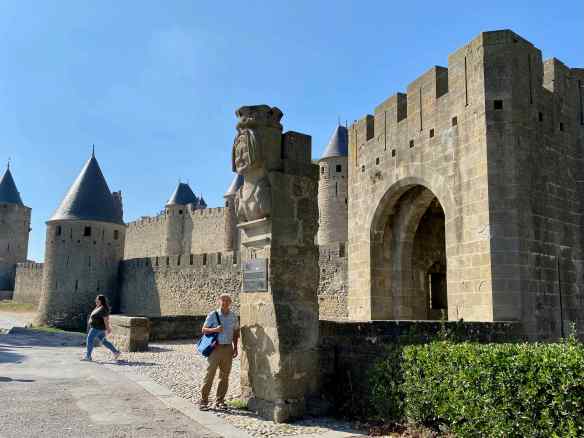
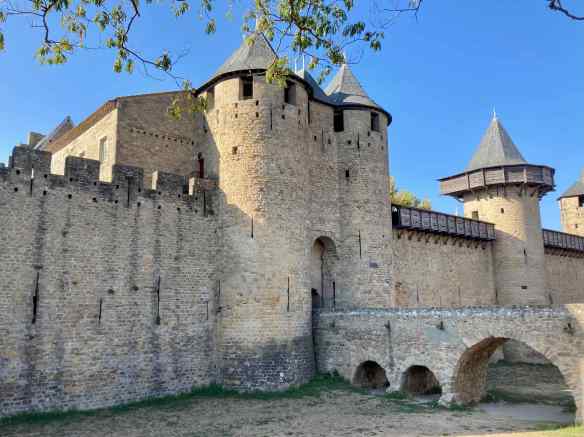
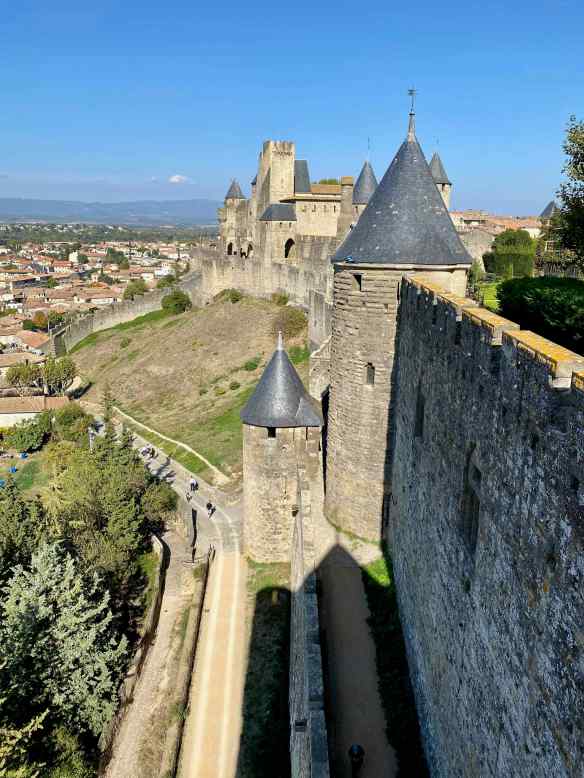
The medieval city, a UNESCO World Heritage site, has 52 towers and 2 ramparts.  Bob is standing beside a sculpture of Dame Carcas who ruled the city when it was attacked by Charlemagne in the 8th Century.   After being under siege for five years, there was only a sack of grain and one pig left to eat.  Dame Carcas fed the sack of wheat to the pig and threw it over the ramparts at the enemy, who thought that they must have a lot of food left if they could throw it over the walls, so they called off the siege and left. Dame Carcas had the bells of the city rung in victory, “Carcas… sonne” means  “Carcas is ringing”.

This is the massive entrance past the outer ramparts into the Cité.  This citadel has two sets of walls and two ramparts for protection.

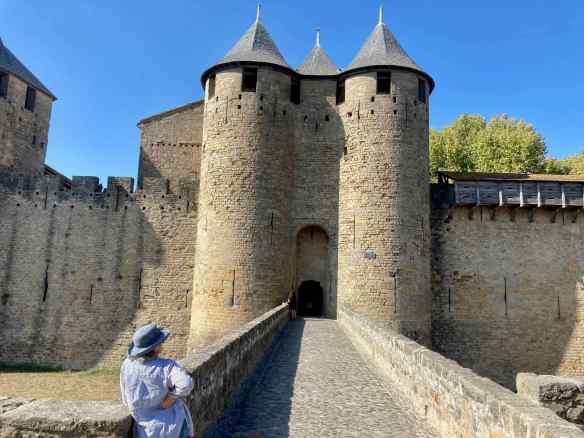
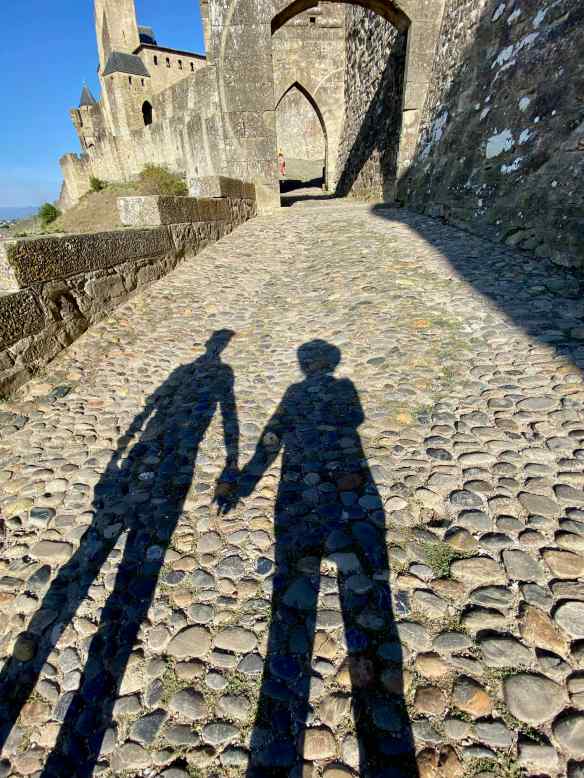
and I am standing at the entrance to the residence of the ruling family built inside the fortress in 1130.

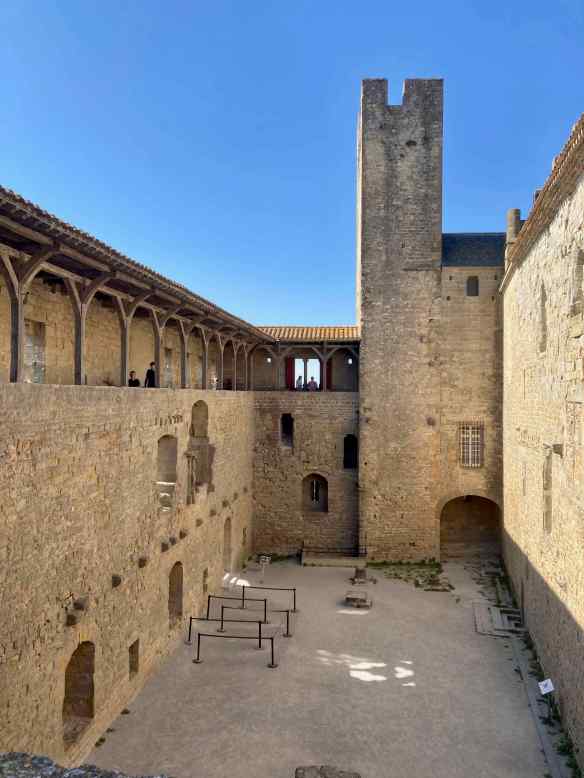
Here is another view of what is really a fortress within a fortress.

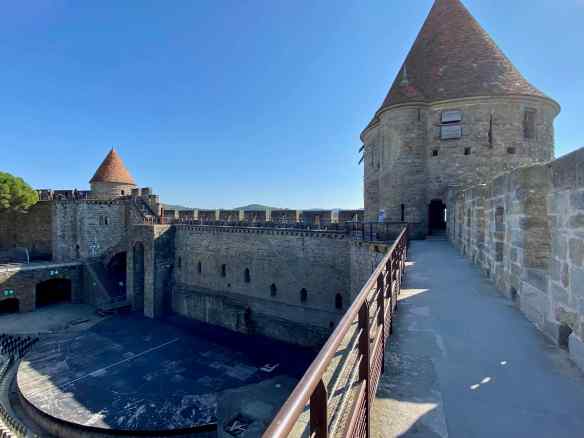
Our visit starts with a walk along part of the ramparts overlooking an interior courtyard…

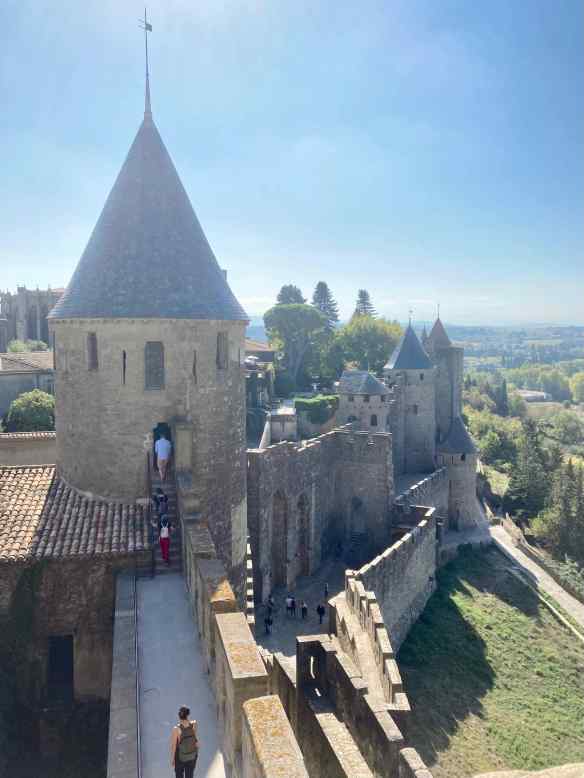
and continues through some of the buildings and towers.

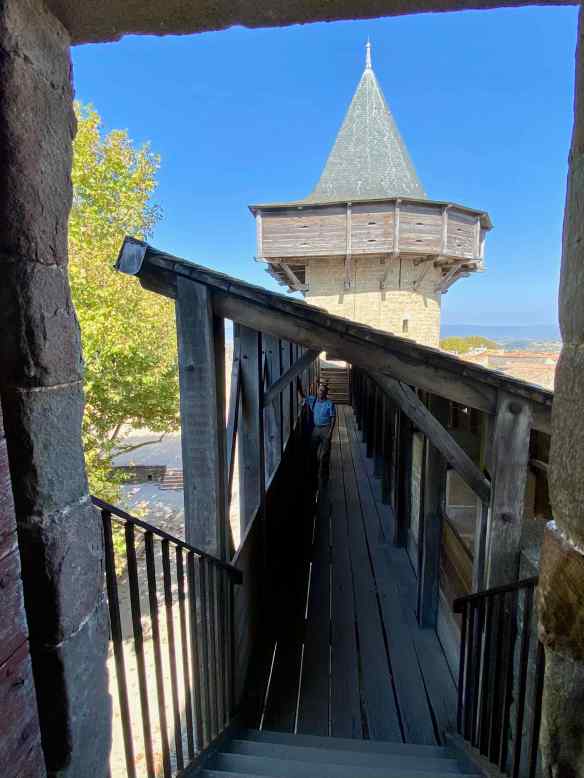
These wooden additions to the ramparts allowed soldiers to attack the enemy from above.  There are holes in the floor to allow attack from above on anyone trying to enter the fortress.

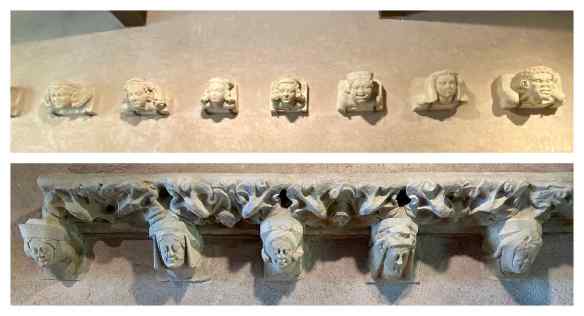
I was expecting to see furnished rooms, similar to our visits to the chateaus of the Loire Valley but any rooms we walk through are unfurnished.  A couple room have sculptures that were removed from Saint-Nazaire Church during the restoration of this walled city in 1846 and placed here for preservation.  I particularly liked these carved heads that were part of the exterior cornice.  They are all smiling cheerfully.This is mostly an opportunity to see the fortifications that make this citadel so unique.
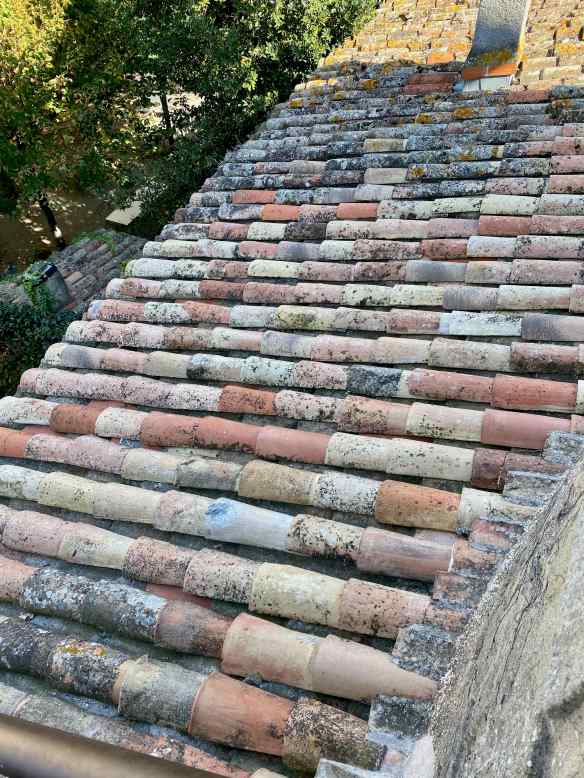
I love all the colours on this old tiled roof.

From the ramparts we can see the path we will be taking when we leave the citadel, however we found a set of stairs near the beginning of this long ramp that is a much shorter route.Carcassonne  is now considered to be the largest and best conserved medieval fortress in Europe.  It is impressive with its set of double walls and ramparts.  Both sets of walls and the area between them can be seen in this photo.
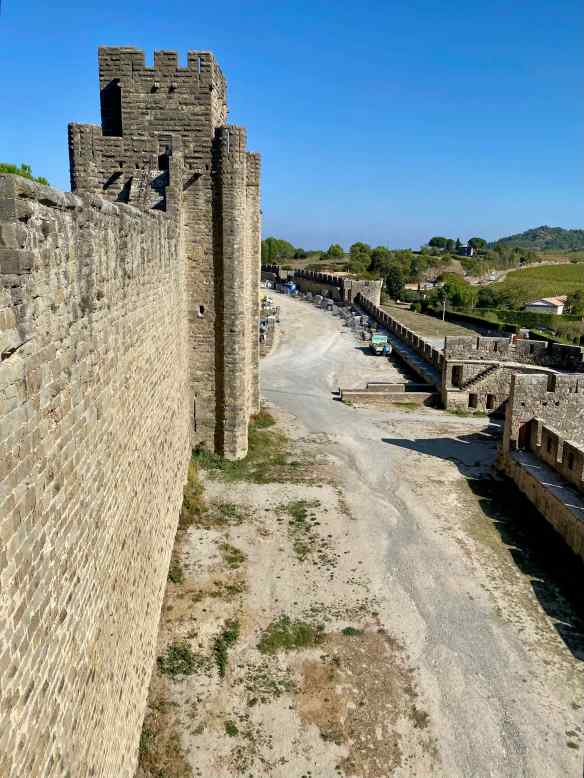
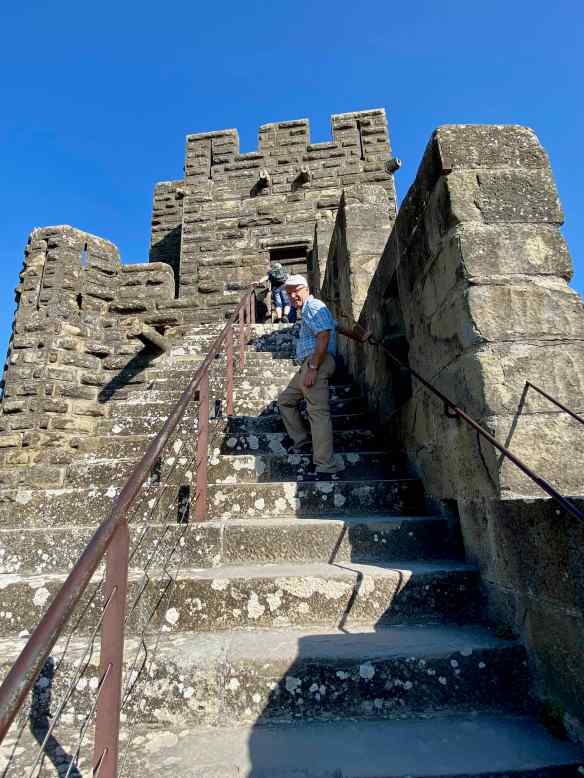
This one tower looked out of place, it was built with different stone blocks and had a different look that the rest.  

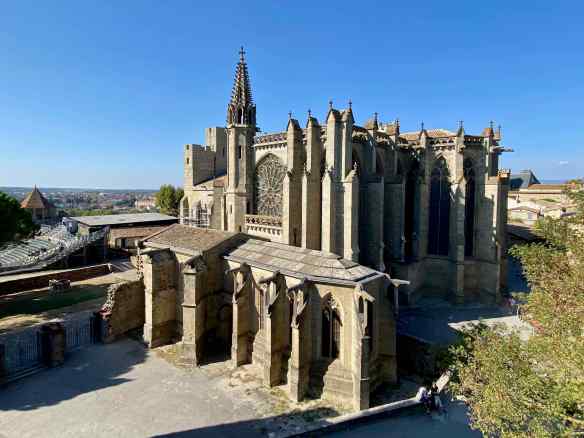
The Saint-Nazaire Basilica has an outdoor theatre that was built where the cloister once stood.  It is just visible behind the church and has 5,000 seats and is in use for productions every summer.

We sit for a while inside the church listening to beautiful cello music.  I think the musician just liked the acoustics…he played several songs and then just got up and left.

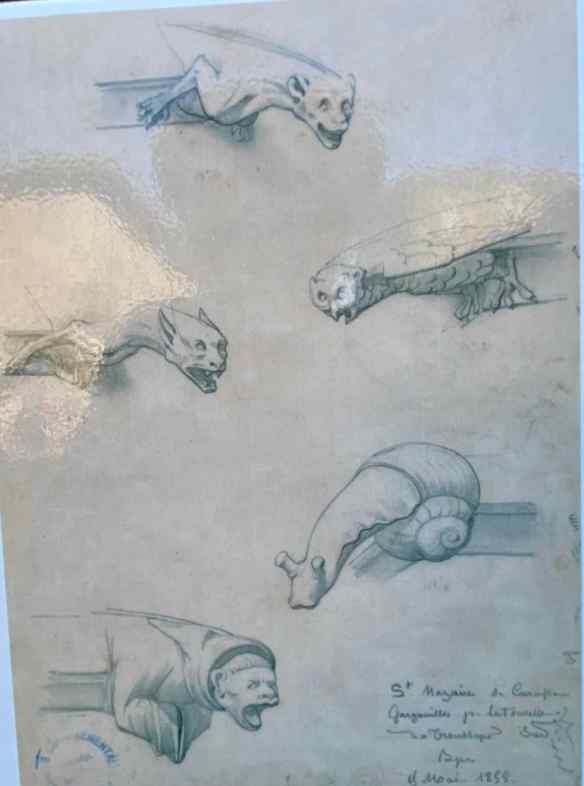
On a plaque outside the church is a reproduction of drawings of some of the church’s gargoyles drawn in 1858.  I guess I am not the only one who likes gargoyles!

On our way home.


La Grotte de Font de Gaume, and La Grotte de Rouffignac, France

Day 39, Friday, October 6, 2023

This morning we are on our way to Le Grotte de Font de Gaume.  Autumn is arriving here. These trees are the most colourful we have seen so far.

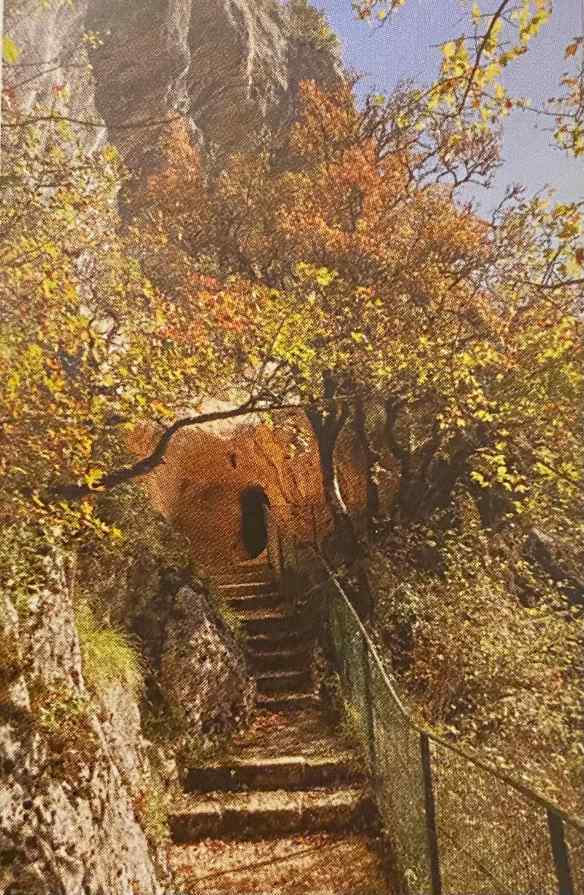
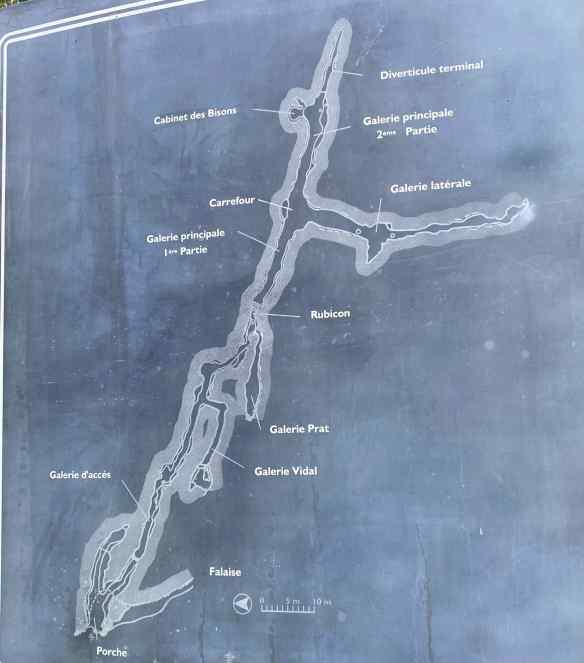
Fonte de Gaume is the only prehistoric site  with polychrome cave paintings that is still open to the public in France.  It became a UNESCO World Heritage site in 1979.  I forgot to take photo on the way up to the cave…I think I was excited about the upcoming tour.  This photo is from one of the tourist information brochures. There are more than 200 painted and engraved figures in Fonte de Gaume organized into compositions in the four main sections of this 120 meter long cave.  We visited all but the narrowest section in the Diverticule teminal and the short cave on the right of the entrance.
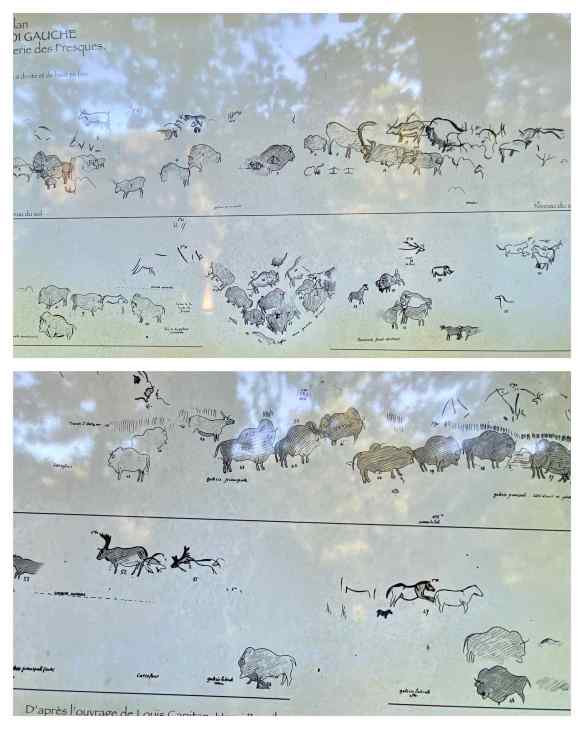
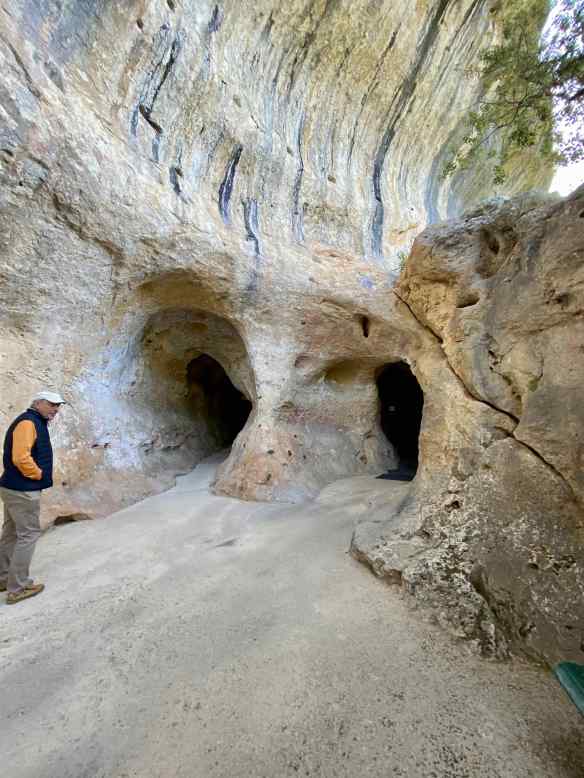
These drawings outside the cave give a hint of what we will be seeing inside.

The entrance to the cave is the cave on the right, we do not go into the other one.  Our guide was wonderful, he conducted the tour in English with a lovely French accent and he was very passionate and knowledgeable about prehistoric art and this cave in particular.

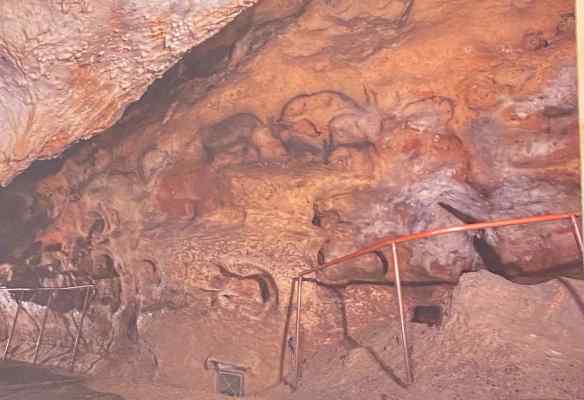
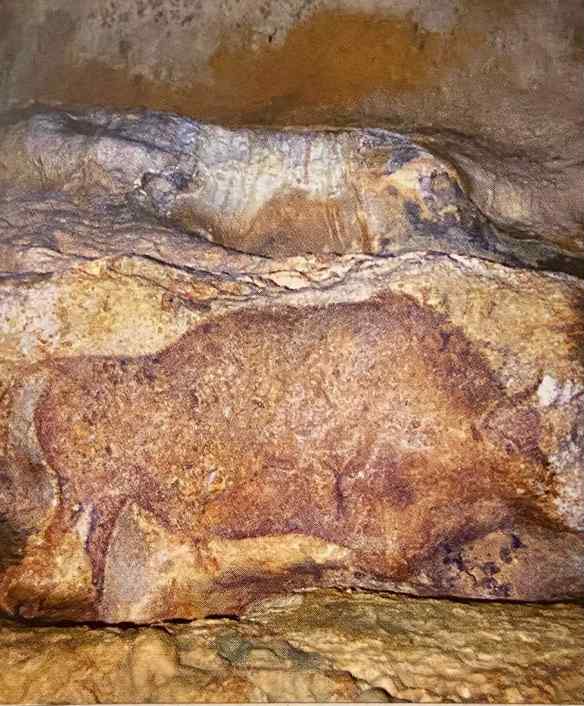
The paintings date from around 17,000 BC, during the Magdalenian period.  Many of the cave’s paintings have been discovered in recent decades. The cave’s most famous painting, a frieze of five bison, was discovered accidentally in 1966 while scientists were cleaning the cave!  No photos in the caves…so these pictures are from postcards and brochures.  Believe me, they in no way convey the beauty and grandeur of what we saw.

A very realistic engraving of a horse’s head.

There are many bison in the cave.  Our guide points our details and gives information about the paintings and engravings.  We are able to stand so close to these amazing paintings.  I am often standing in the same spot that the prehistoric artist who made this artwork stood.  Can you imagine?  It still gives me goosebumps just thinking about it.

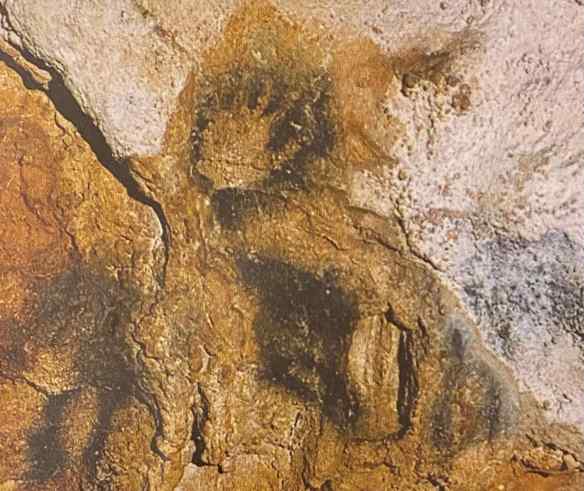
Our guide saved the best for last.  He had each of us squat down so we could look up into a small hollow in the wall of the cave…and there was the left handprint of the artist.   A man or woman had signed their work, before there was even the concept of a signature…and there it was, just inches away. It was an incredible, emotional moment.  

If you would like to see a video of the inside of the Grotte de la Font de Gaume click on the link below.  If you then copy and paste this link into Google chrome you can translate the video into English.  It  takes a bit to figure out how to navigate and see the different paintings but it gives a good view of the inside of this cave.  It is very narrow in places, and we have to almost turn sideways to get through parts of the cave without touching the walls. http://font-de-gaume.monuments-nationaux.fr/

This second link shows the part of the video where you can get a better look a the paintings.  http://font-de-gaume.monuments-nationaux.fr/fr/entree/carrefour/suite/les-bisons-polychromes/

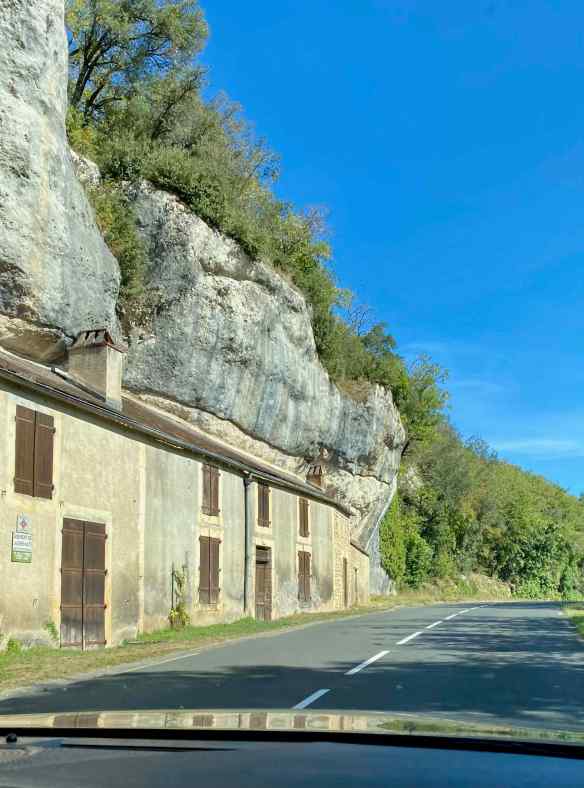
On the way to our last cave, La Grotte de Rouffignac, we pass several buildings that are built right in to the cliffs, and very close to the road.  Some look empty but many are still in use.

The roads also have a lot of overhanging rocks.

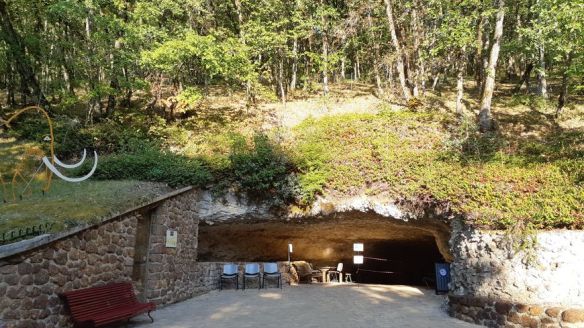
We get to the Rouffignac Cave early.  There are no online tickets, just first come first served. We find a pretty little picnic area beside the cave and have our lunch before walking up to the cave to wait for the 2:00 opening.  I found prescription glasses in a case near where we had our lunch.  Turns out they belong to one of the guides that works with school groups.  She lost them a few days before so she was very happy to get her glasses back.  My good deed for the day!  But somehow I forgot to take photos where I could.  The first photos here are courtesy of Perigord.com.

This is the entrance to the cave where we line up…we are first in line at this UNESCO World Heritage Site.

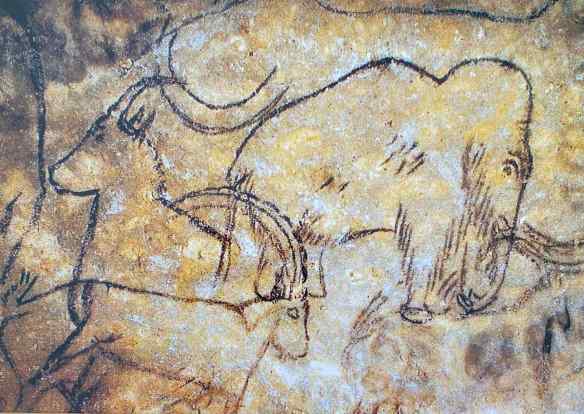
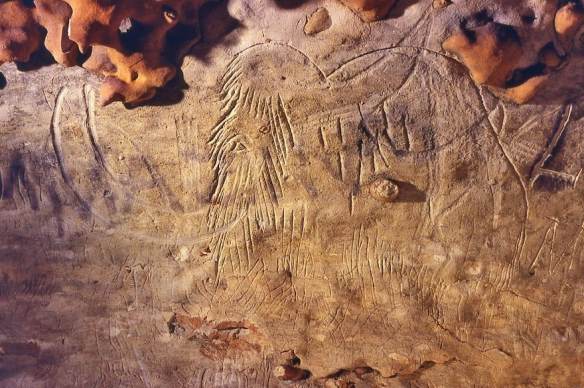
This cave is enormous, with almost 8 kms of caverns and tunnels on three levels.  We ride an electric train as our tour goes a kilometre into the caves.  It is also very cold, it seems colder than the 13 degree temperature of the caves we have already visited.  Perhaps because we are just sitting still? The first artworks we see are engravings…some of them were made by the artist using his fingers to mark the soft stone.  Rouffignac is famous for its Mammoths.  158 mammoths that have been found on the walls of this cave, this is 30% of all mammoth representations in prehistoric cave art.  Yet, curiously, there have been few mammoth bones found in this area. We also see cave bear claw marks all over the walls.  The parallel vertical lines below this mammoth are from a cave bear scratching his claws on the cave walls.
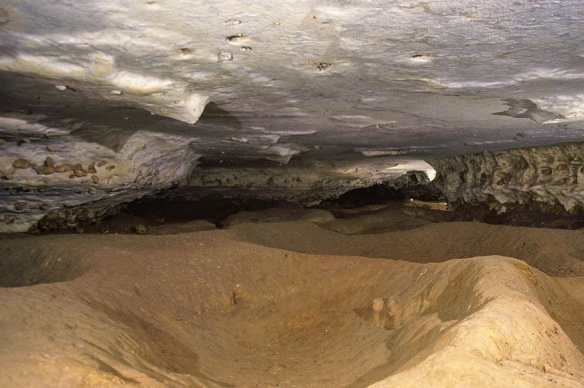
There were a lot of cave bears in this cave.  We pass through numerous hollow round areas.  These beds were made by cave bears to hibernate in the cave during the cold winters.  Cave bears were extinct long before the artwork on these walls was made…good thing!

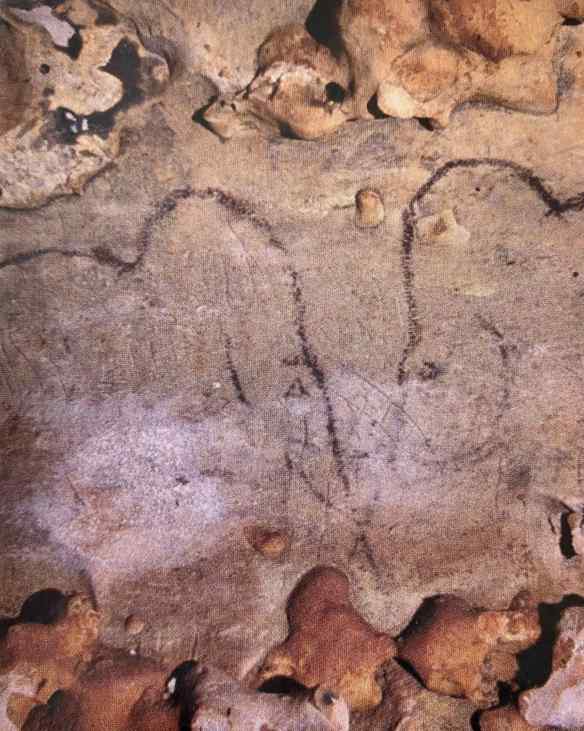
These photos of the cave’s black line drawings are from postcards.

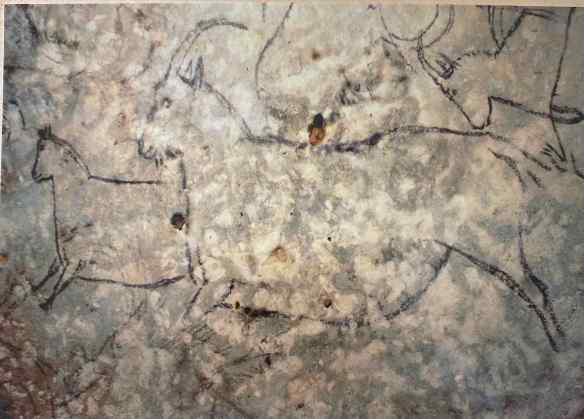
We disembark from the train at the Grand Plafond, or the Large Ceiling (I think it sounds better in French). The ceiling is covered with drawings of mammoths, bison, horses, woolly rhinoceros, and ibex.   The artist had to lie on his back to create this incredible collection of drawings as there was not enough room to stand.  The floor has since been lowered so that visitors can access this area.  I am amazed at how fresh and vivid the drawings are.  I don’t really know how to explain the impact these drawings had.  They were so realistic, they looked as though they could have been drawn recently instead of 15,000 years ago at the end of the last ice age by Magdalenian hunter-gatherers.   I was surprised to see that almost everyone in the group turned towards our guide when he started talking and they stopped looking at the drawings!  Really?  Couldn’t they have listened but keep looking a the artwork above our heads? It seemed such a waste to be standing here and ignoring these ancient drawings.  One very interesting drawing of a mammoth showed its anal flap. Sorry, no photo of that one. Yes, this is a flap that covers the mammoth’s anus to keep it warm.  Only someone who had very close contact with a mammoth would know about this detail.  This fact was used to help authenticate these drawings, as they were thought to be modern fakes when they were first discovered..
This is the last cave we will be visiting here.  We loved all of them!

Gouffre de Padirac and Rocamadour, France

Day 38, Thursday, October 5, 2023

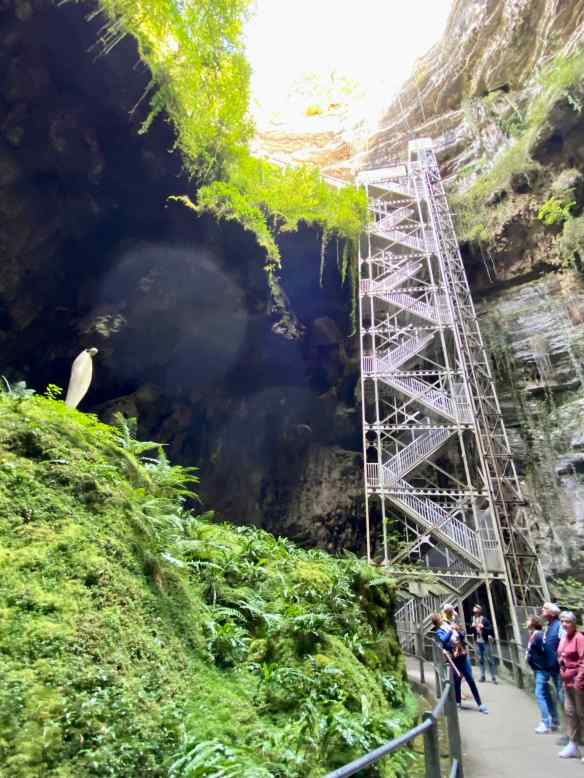
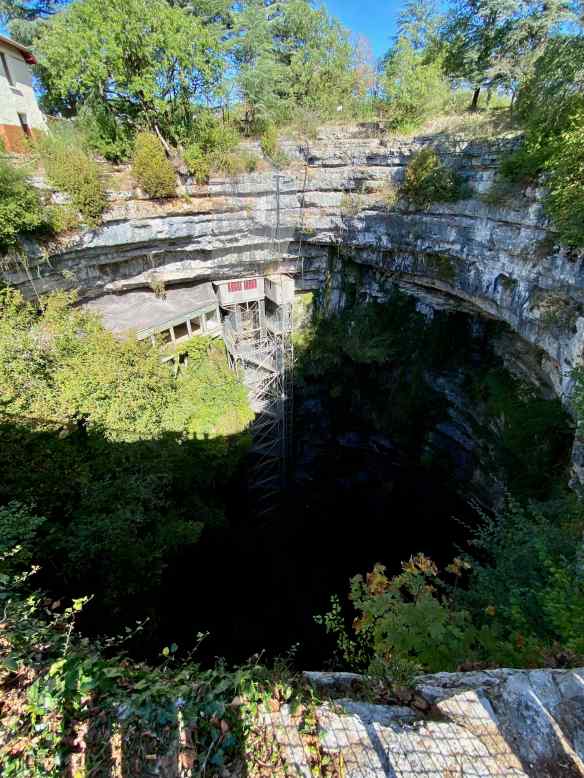
Today we are visiting the Gouffre de Padirac which is about 1 1/4 hours east of Sarlat. This cave was opened to visitors in 1899 and now receives 800,000 visitors a year.  A gouffre is sinkhole or pothole.  Well, this is one heck of a pothole!  

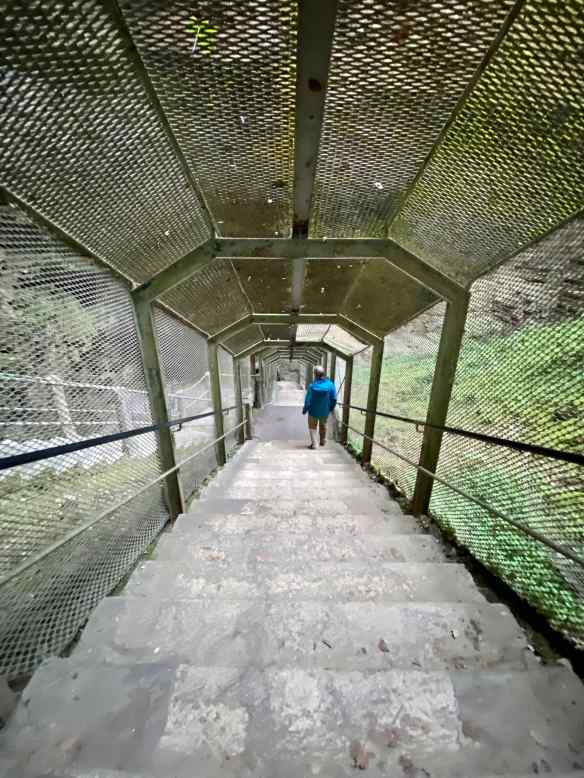
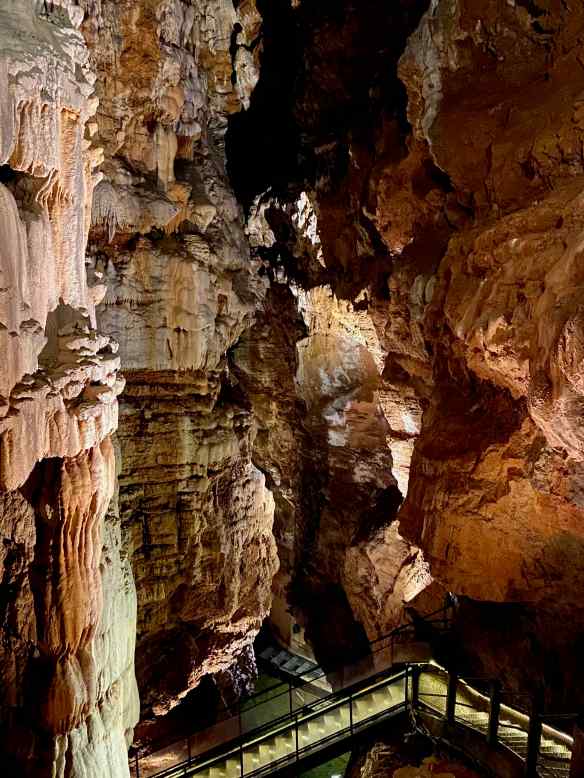
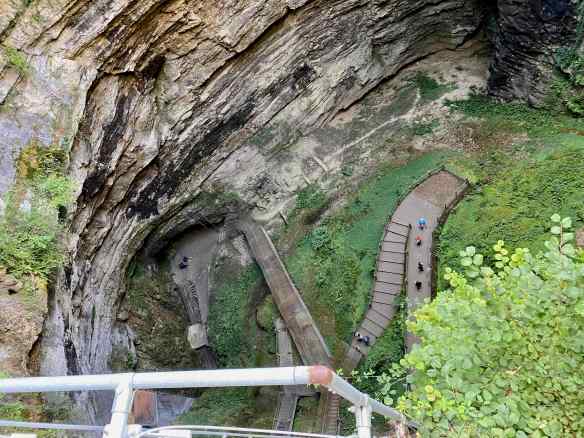
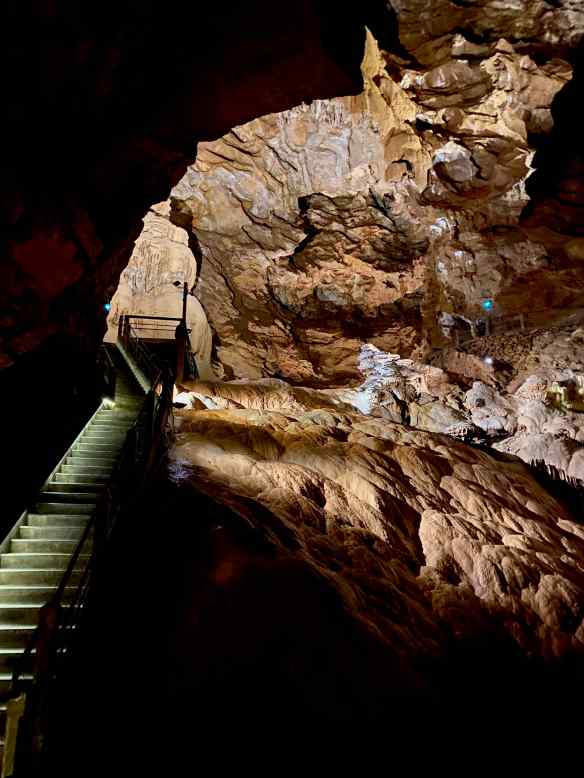
We climb down several flights of stairs cut into the rock and exit this first staircase to start descending the metal exposed stairs on the side of the gouffre.  We are going way down there.

When we reach the bottom…we look up…way up…

and then down…and surprise…more stairs. Once we are inside the cave there are even more stairs…
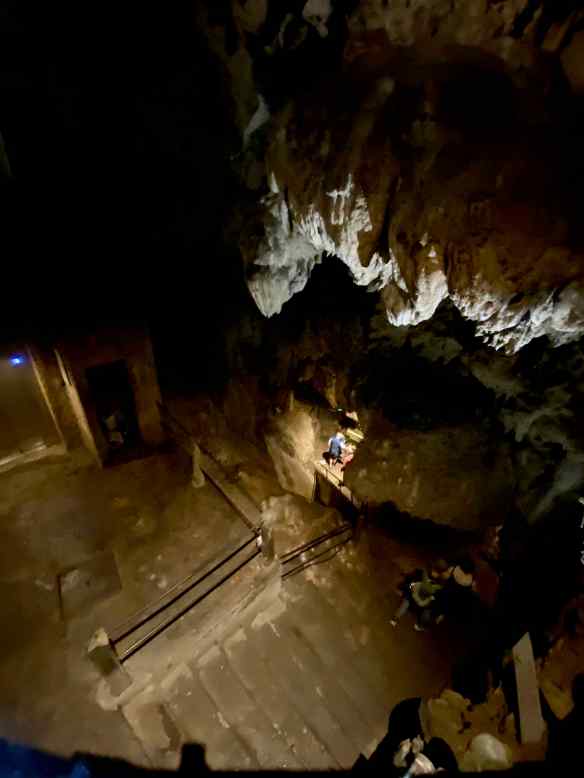
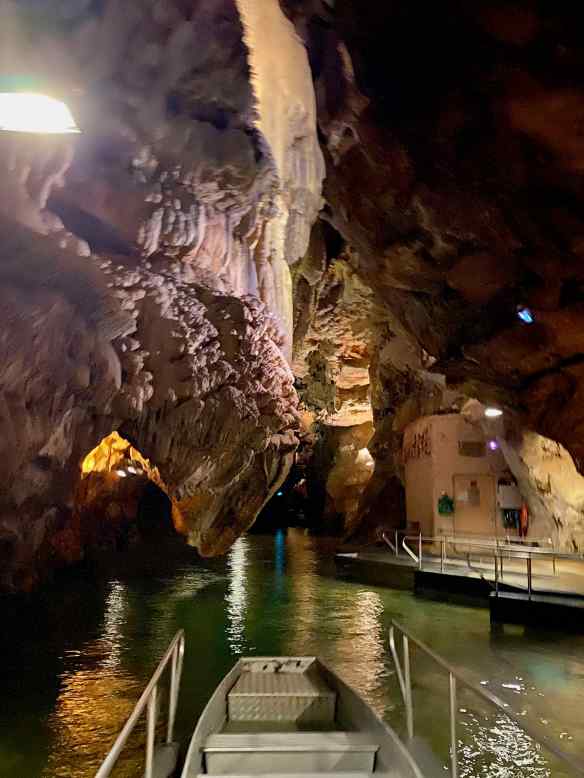
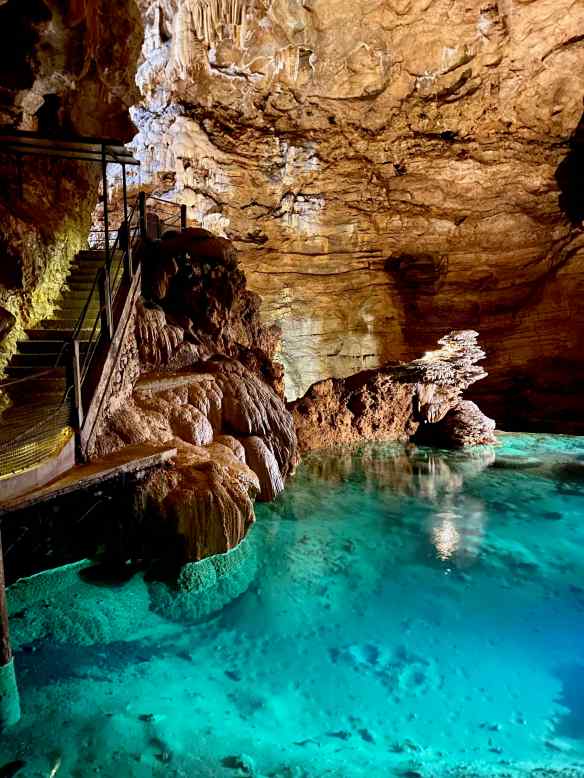
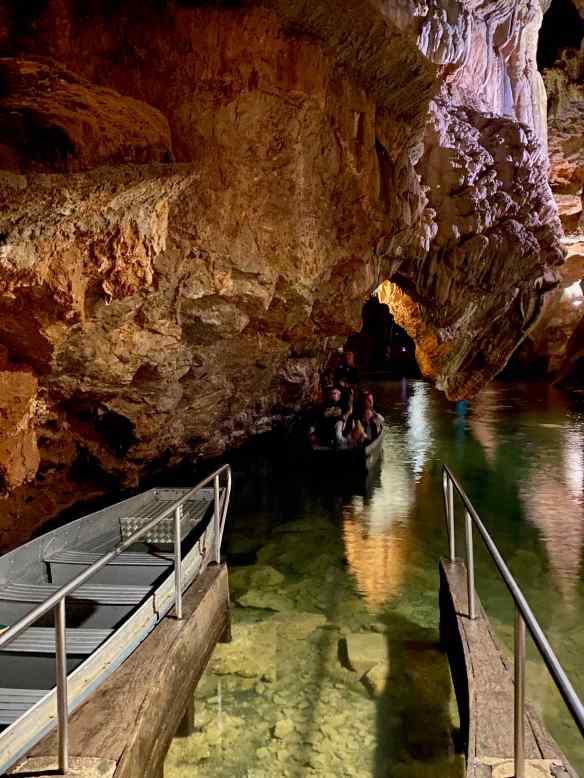
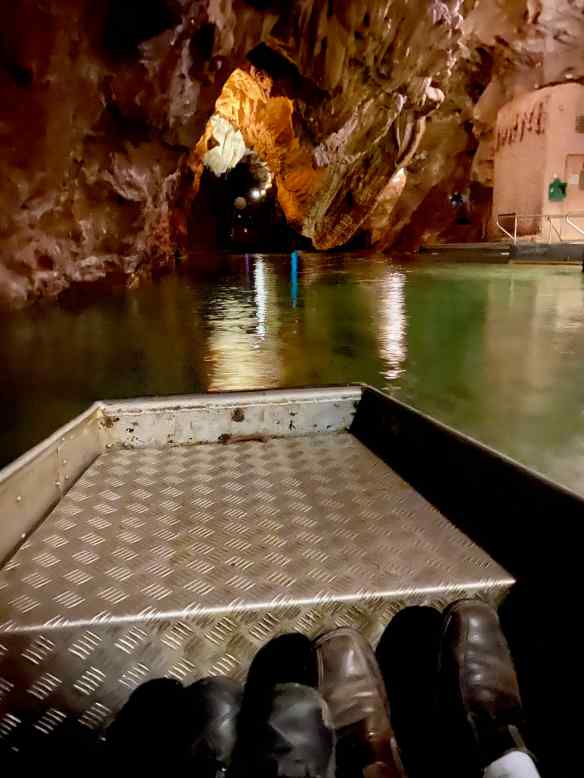
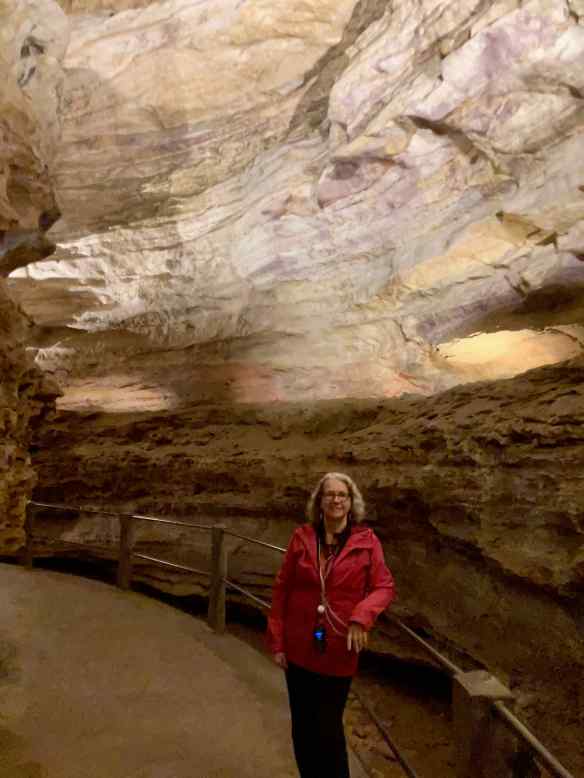
We finally reach the floor level of the cave, after descending 543 stairs!  But wow!  It was so worth it and non flash photos are allowed everywhere except during the boat rides, so I am happy.  Yes…there are lakes and two boat rides 103 meters below the surface!

I took this photo after we disembarked from our boat ride.  The lake that we rode on is called Lac de la Pluie, because it is always raining. We had light rain falling on us on that part of the boat ride.  Can you imagine continuous rain? and at 103 meters underground!

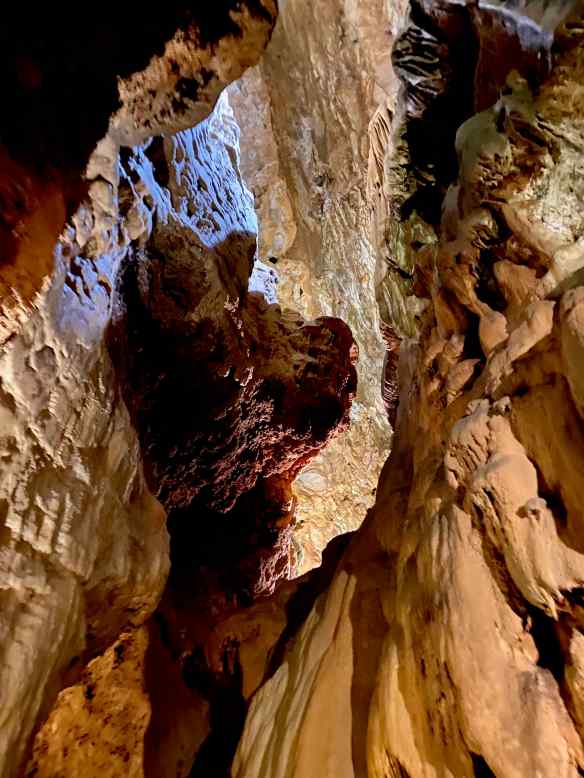
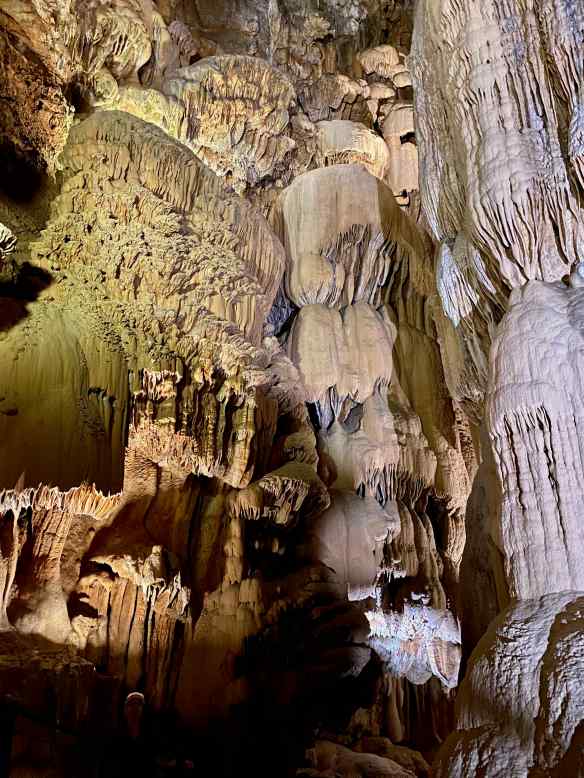
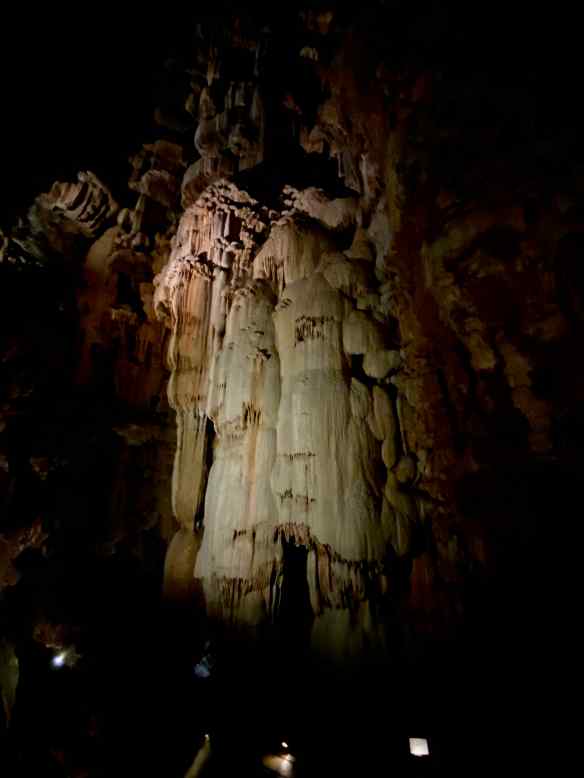
Our walk continues past amazing rock formations …

that are enormous…

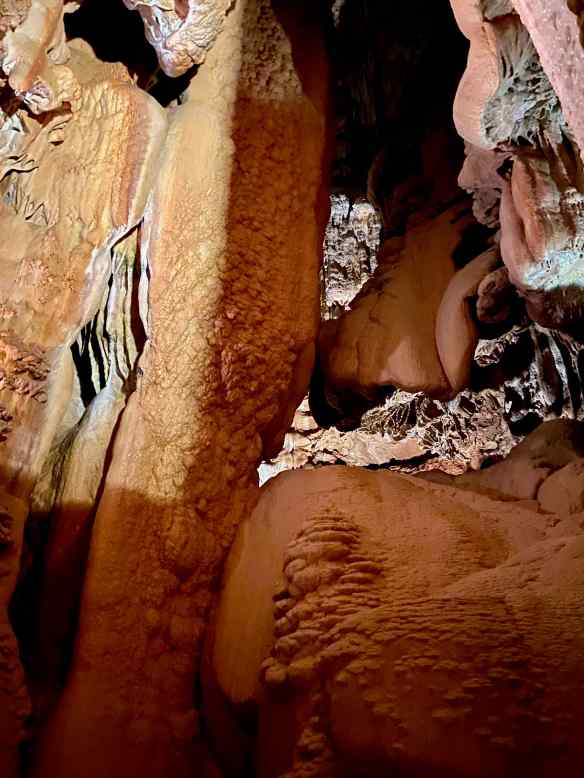
with incredible shapes and colours…

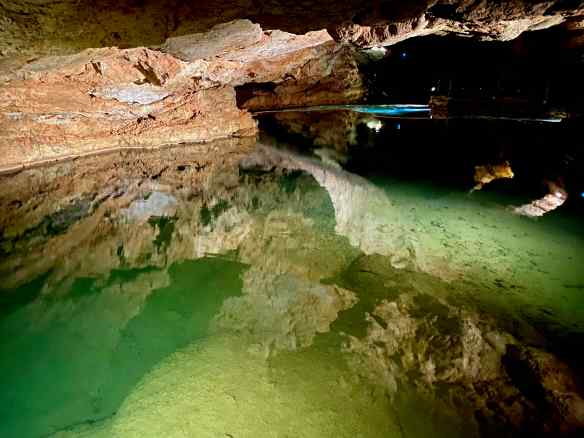
only to arrive at the beautiful Lac des Gours with crystal clear reflections.

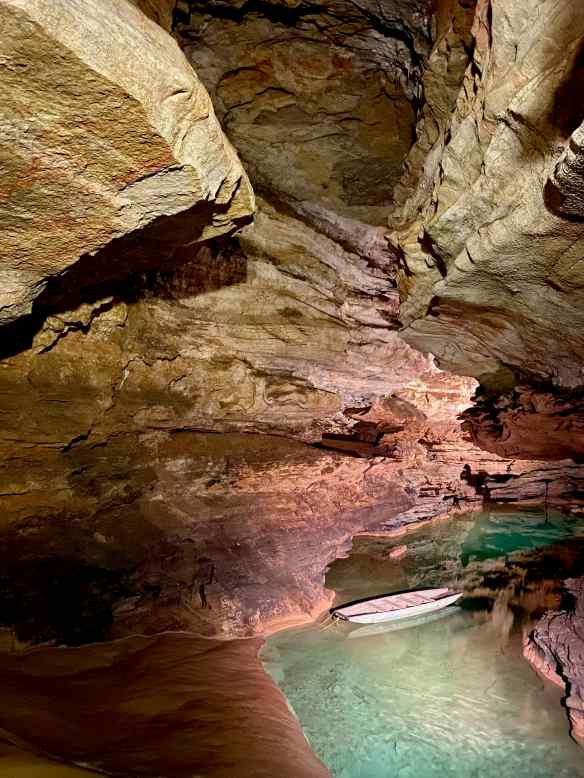
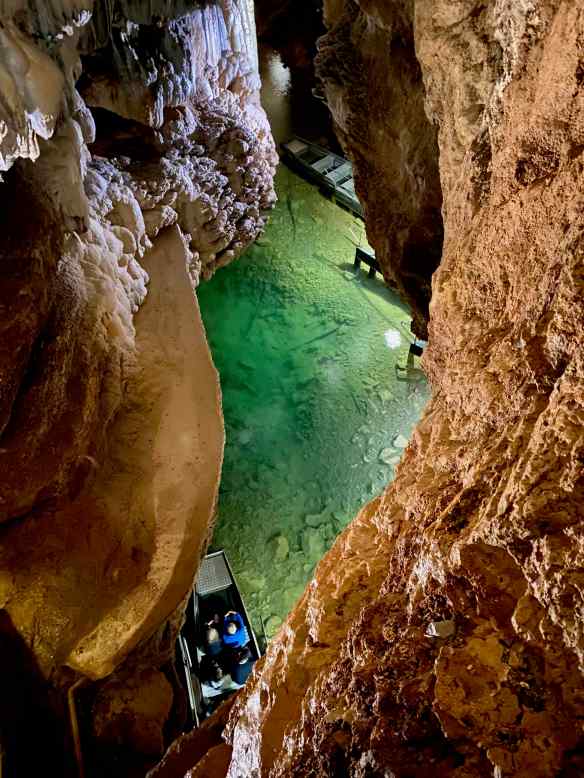
At the far end of this lake we can see the river below with an old boat.  I don’t think the public is allowed in that part of the cave.

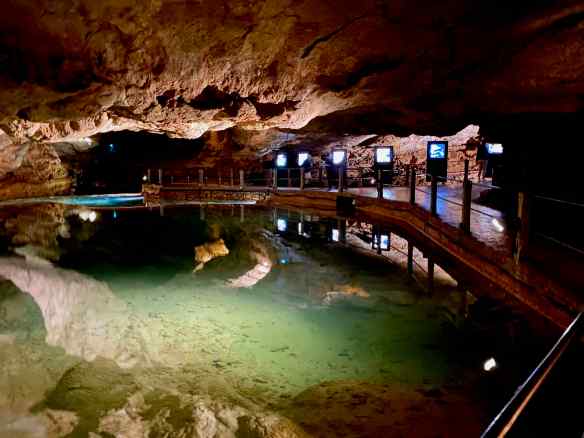
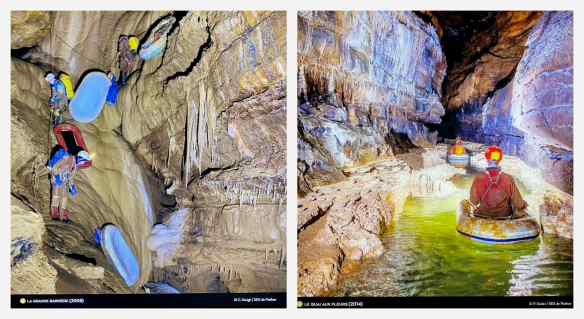
At this point we are given the option of returning the way we came or we can continue to another part of the cave that requires climbing more steps…lots more steps!  Of course we choose to continue further into the cave!The displays here shows some pictures of cave exploration…not for me..it looks cold, wet and exhausting and rather frightening as well. In all, 42 kilometres of galleries have been mapped by speleologists but there are still more areas that have not yet been explored.
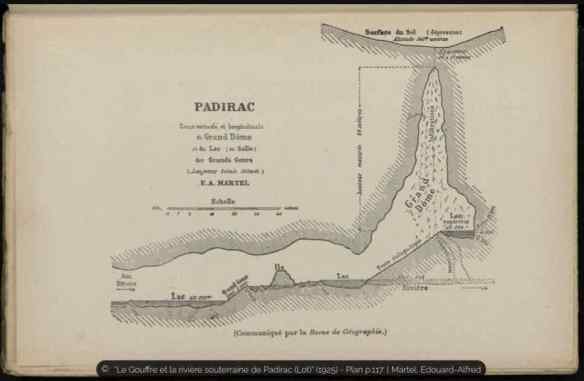
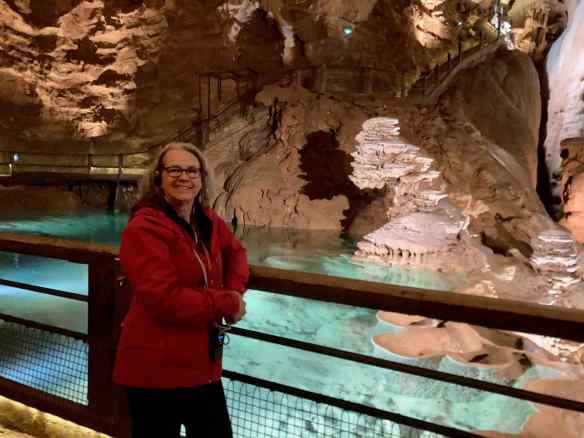
There is a warning that there are lots of stairs, and wet, slippery sections…that isn’t going to stop us.  So up we go… And there is another lake, twenty metres above the river!  Mind boggling!  Lake Superior (Upper Lake), is crystal clear and an incredible aqua colour.  The round tan shaped formations on the right hand of the photo form a dam that holds the water in this lake.“A remarkable stalagmite lies above the lake. It is nicknamed the Pile d’Assiettes (Pile of Plates) because of its surprising resemblance to stacked-up china. It is a typical high-roof stalagmite formed when such a structure exceeds several tens of metres in height. Drops of water fall to the ground at great speed and explode, depositing limestone in circles and giving rise to very flattened formations.”  ~ https://www.gouffre-de-padirac.com/en/salle-du-grand-dome   We are standing beneath the Grand Dome, which rises 94 meters above us.
This diagram shows how high above the river Lake Superior is, and the incredible dome that rises above it.

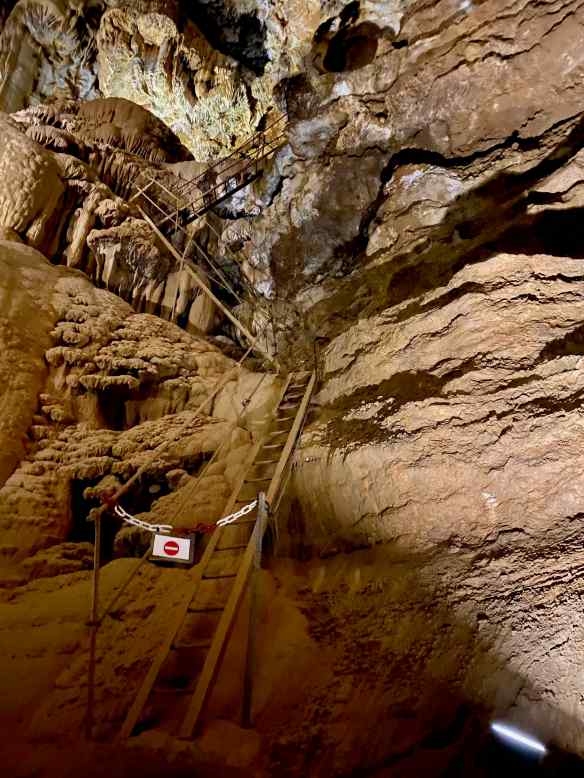
There are still more steps, many more steps…

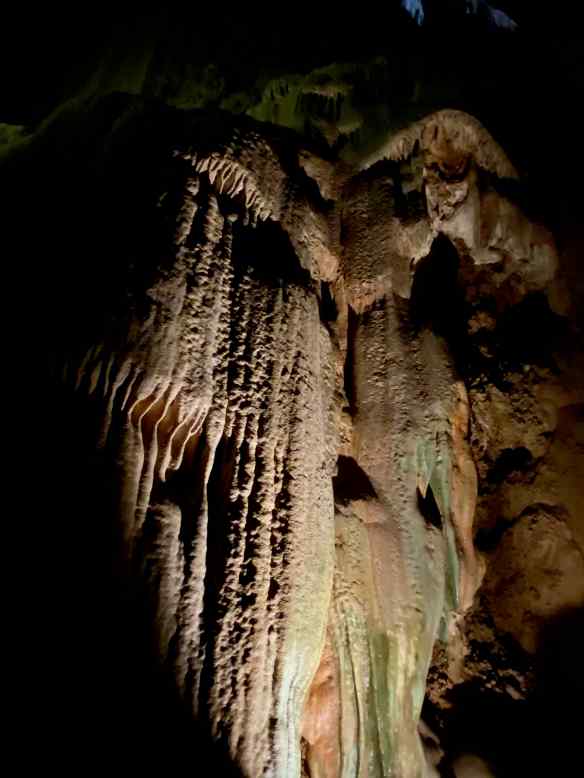
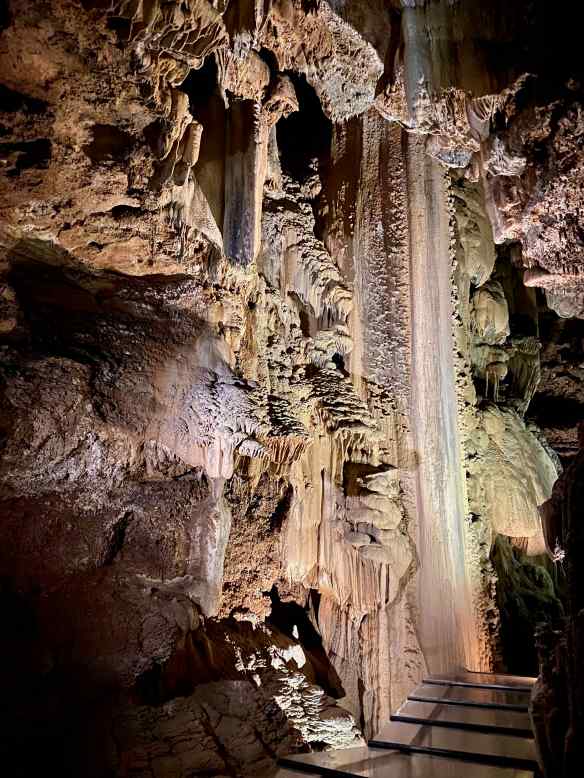
and many more amazing formations…

that are enormous. Bob is in the bottom of this photo to give an idea of their size. I am quite relieved that we do not have to climb these steps!
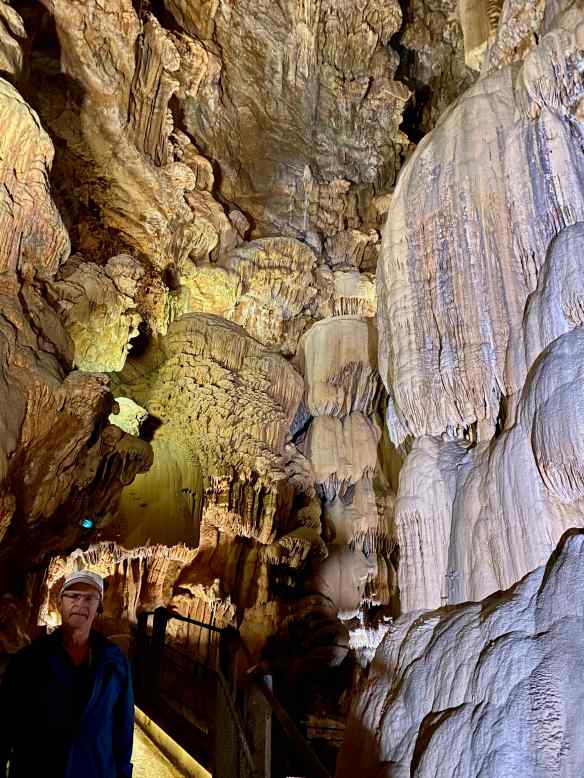
This is a magical underground world!

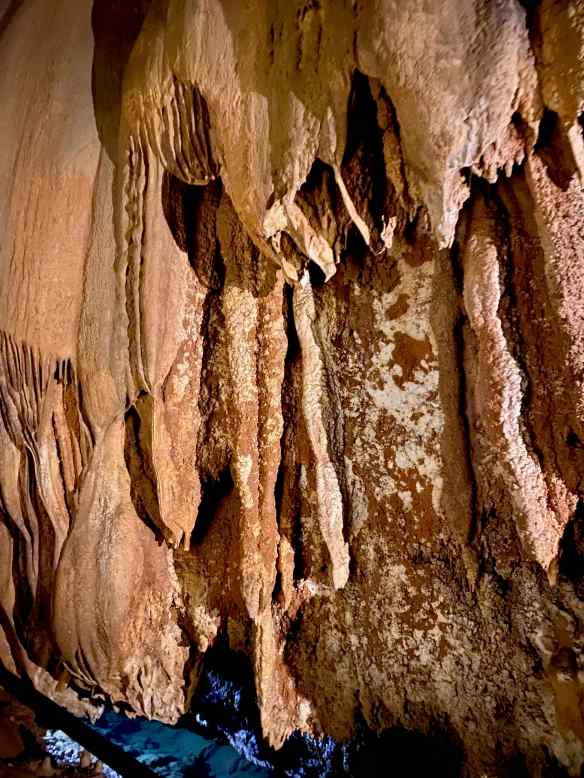
More formations, just because they are so wondrous…

and I am amazed by their colours. It is difficult not to include all even more photos.

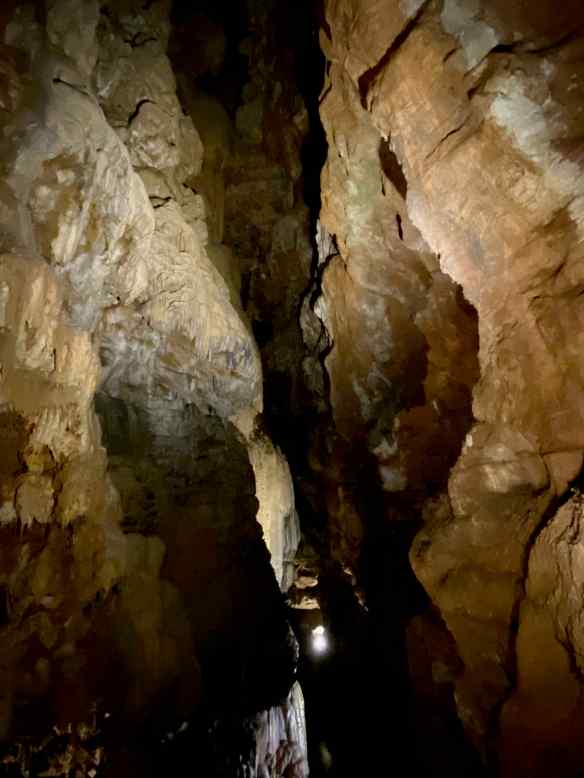
We need to descend way down there!

We continue to walk by so many rock formations…I have run out of words to describe how amazing they are.  Édouar-Alfred Martel, the discoverer of this cave said that these are “Marvellous areas that can only be lived in by fairies.”     

We need to go way down to where that light is.

Finally we can see the dock for our return boat ride.

But first we still pass by even more formations.  The roof on the bottom right protects us from water drops as we walk past this one.

All too soon we are back at the boats.  Honestly, I would have been happy to just turn around and trace our steps a second time…but there are no washrooms down here!  This boat just arriving is the one we take on our return journey.

We sit right at the front, so we will have a great view of the Grande Pendeloque (Great Chandelier) which is a 60-m-long series of calcite formations that seems to hang in the air above our heads, but no photos are allowed on the boat trip.

We reluctantly make our way back to the exit.  One last photo in the cave.
We decide to take the elevators back up to the surface from here.  We are going to visit Rocamadour this afternoon and it also has lots of steps.

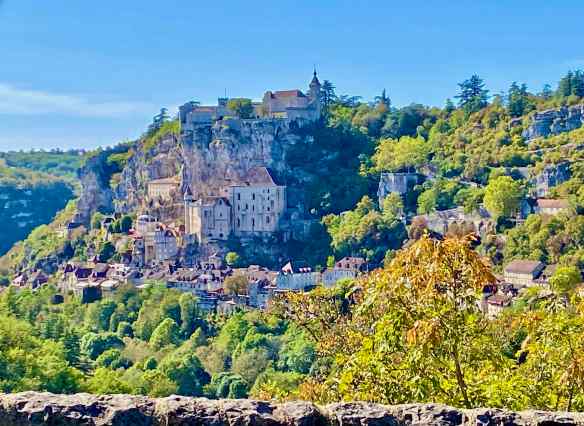
It is less than a half hour drive to Rocamadour, which is a famous pilgrimage site and a  UNESCO World Heritage site.  It takes a while to figure out where to park but we finally find spot near the top rather than the bottom of this cliffside village. This it our view while having lunch.

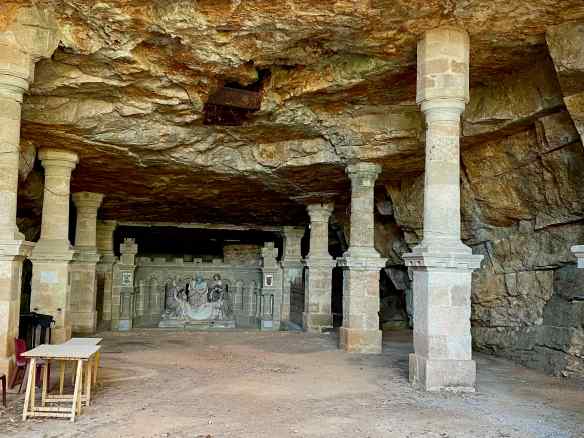
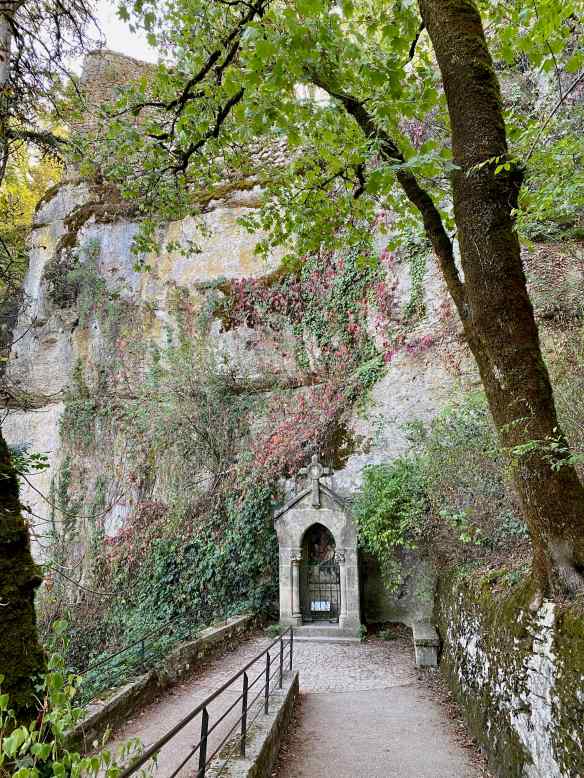
We are disappointed to discover that the ramparts are closed for restoration.  We were looking forward to the views from the ramparts,  so we start on our way down towards the church and chapels.  Part way down the winding path, this cave marks the end of the Stations Of The Cross.  Turns out we are starting at the end instead of the beginning.  

One of the fourteen Station of the Cross.

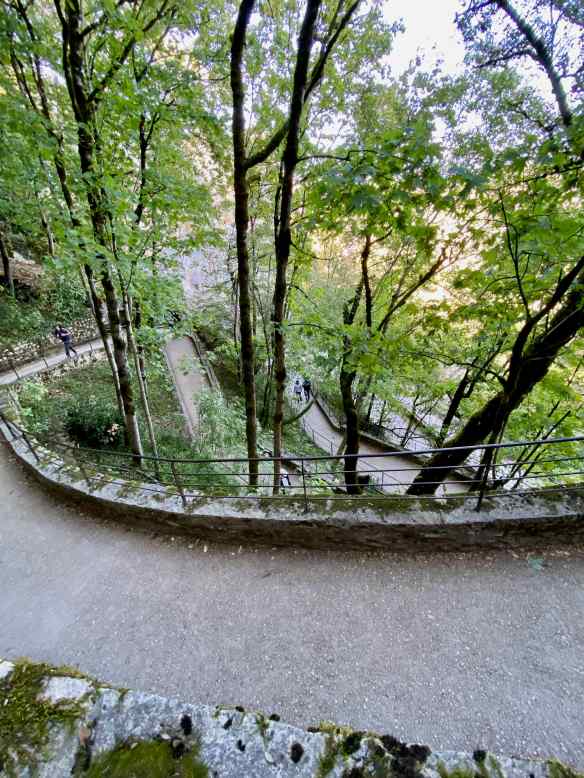
I did mention that it was a winding path, and fairly steep.

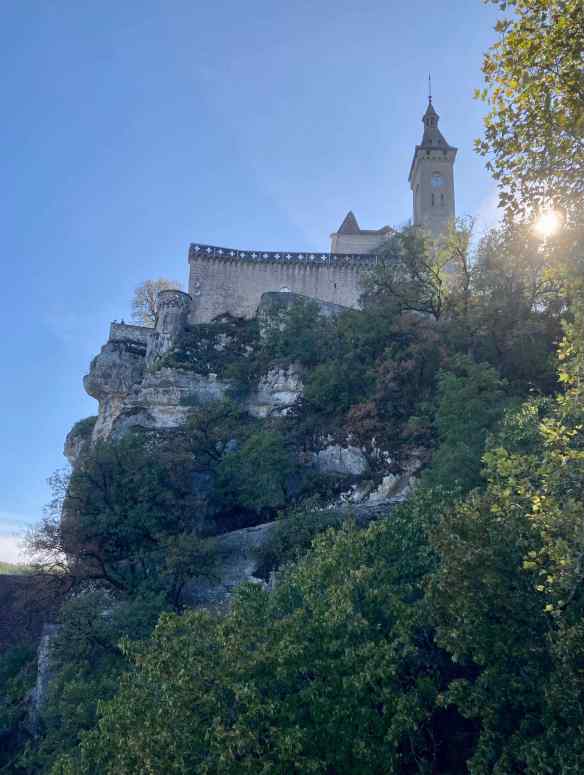
Looking up towards the ramparts, with the afternoon sun looking low in the sky because of the steep angle.

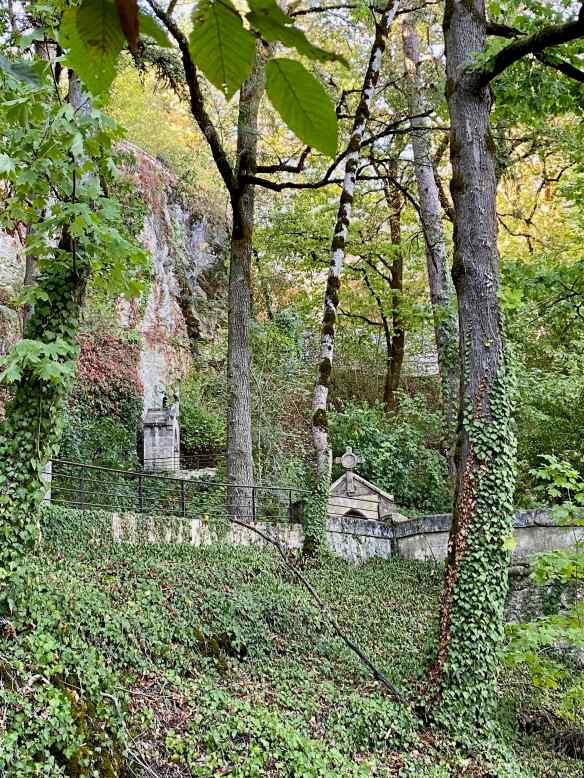
The trees and hillsides are covered with ivy.  The grounds are not terribly well kept here.

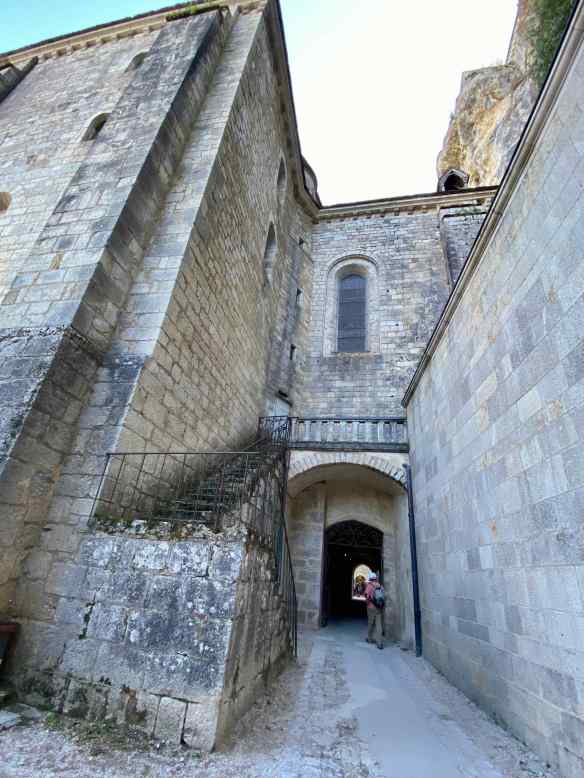
Finally we enter the Sanctuary… 

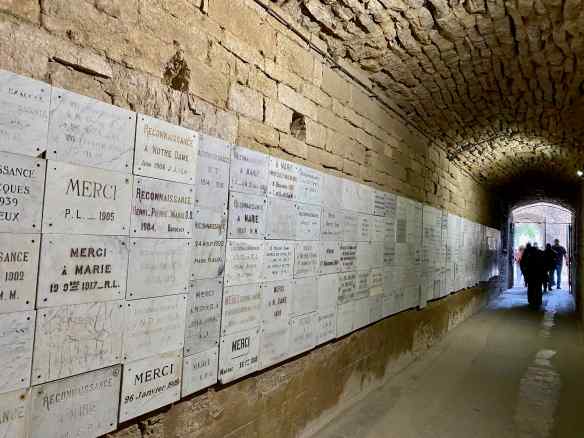
and walk past many plaques engraved with thanks for prayers answered.

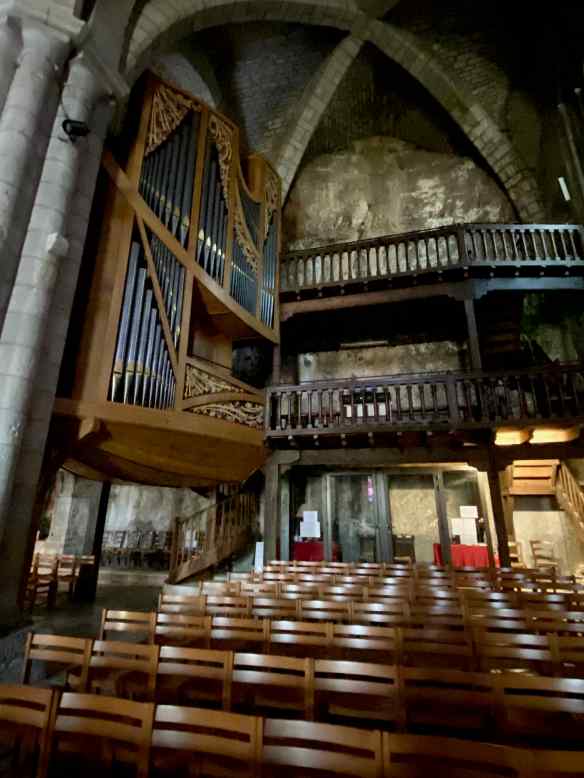
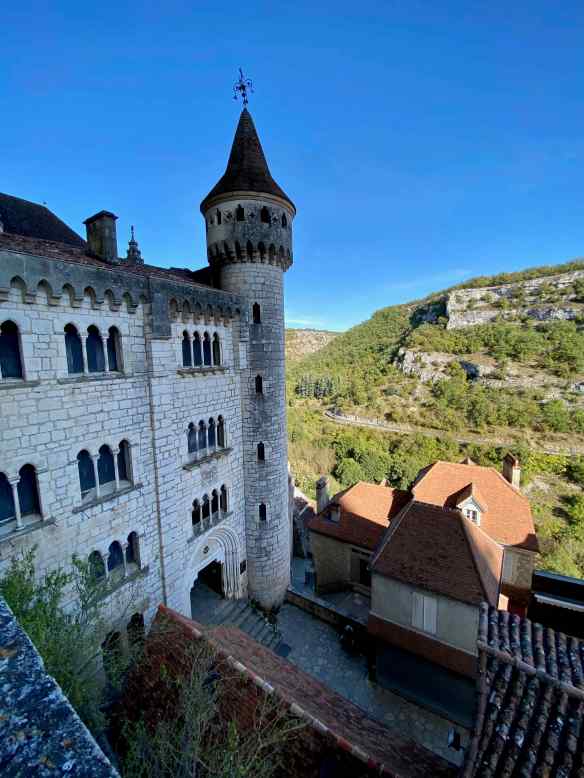
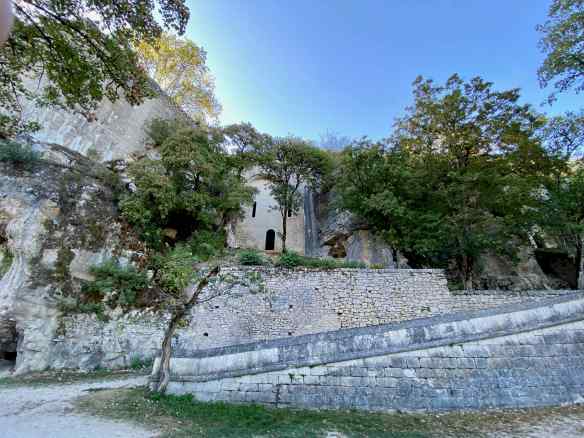
Some of the churches and chapels are built right into the stone cliffs, which are visible in the back of the 850 year old Basilica of St. Saviour.

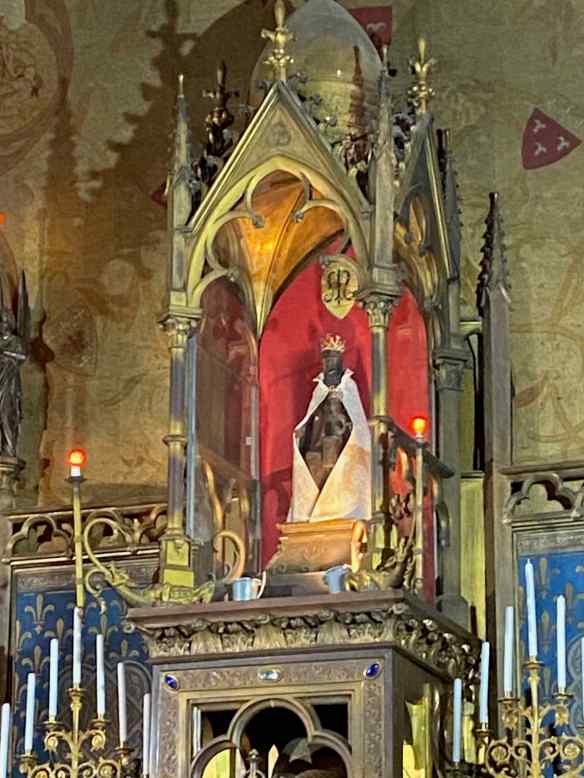
The Black Virgin in the Notre Dame Chapel.  A group has arrived for a private mass so we don’t stay long.  This is the second Black Virgin we have seen on our travels.

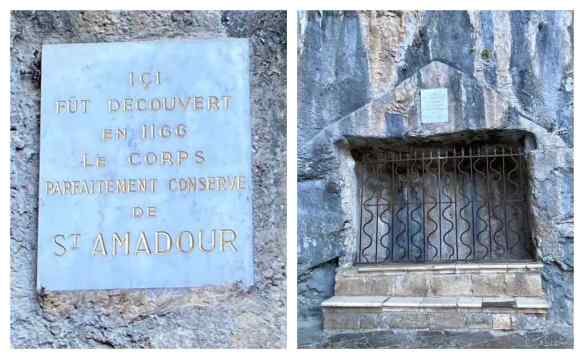
In this spot, in 1166 the perfectly preserved body of an early Christian hermit who died in 418 AD was discovered… St. Amadour.

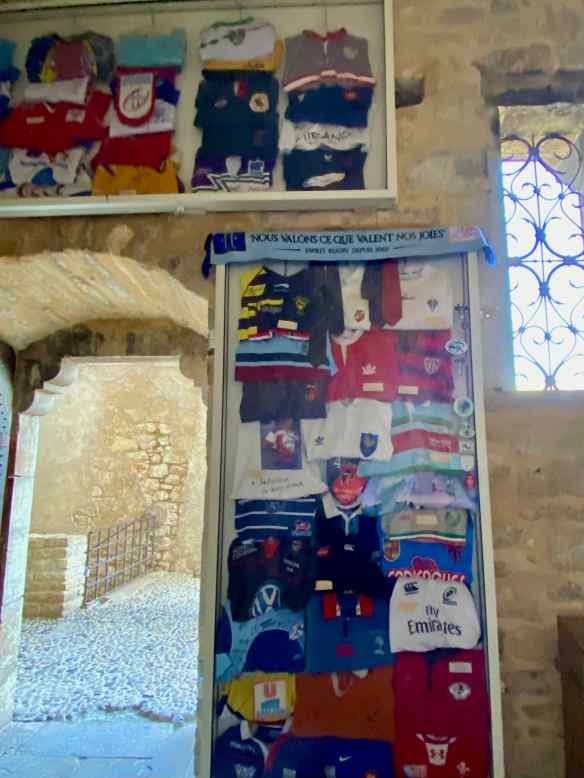
However, there is also a small chapel and a patron saint for Rugby!  We were not expecting that.

A view of the valley from the sanctuary.

We start walking back up the hill to our carpark.  We decided not to go all the way down to the Medieval village at the bottom of Rocamadour.  It now consists of lots of shops selling tourist souvenirs and restaurants.  It has been a long day and we are ready to go home.

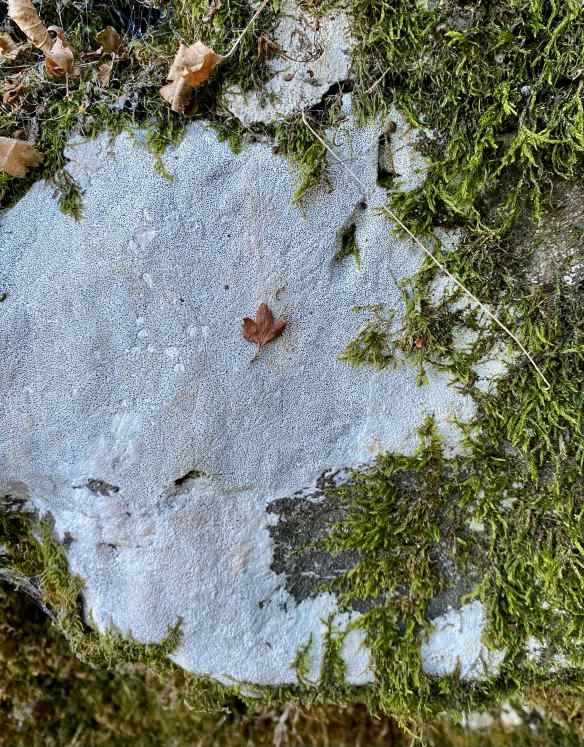
I loved this little red leaf stuck on the side of this rock.

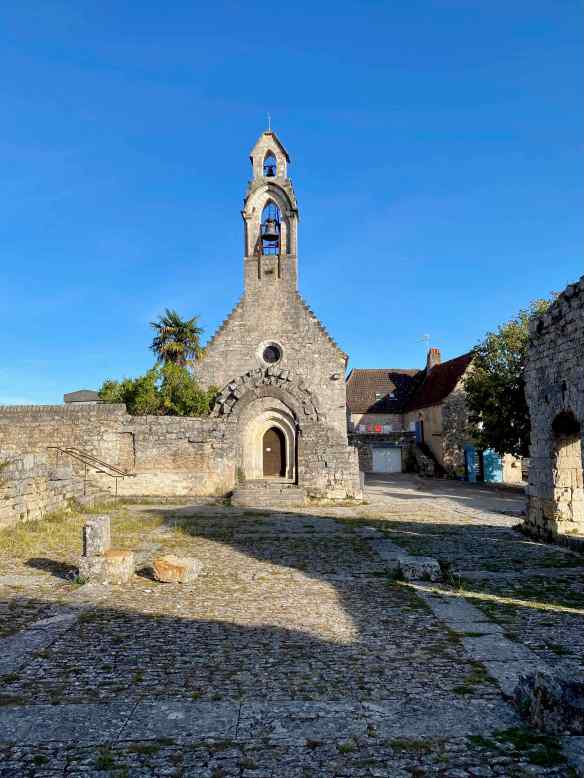
There is a little church in the hamlet of L’Hospitalet on our way to the carpark but it isn’t open so we head home.  We were both a bit underwhelmed by Rocamadour….it didn’t have the presence that we were expecting…although we are not really sure how to explain why.

Lascaux II, Parc de Thot and Lascaux IV, France.

Day 35, Monday, October 2, 2023

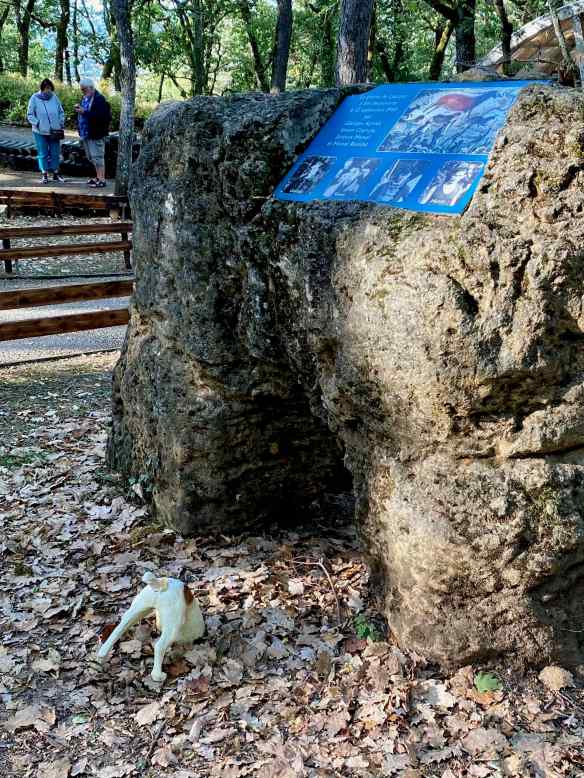
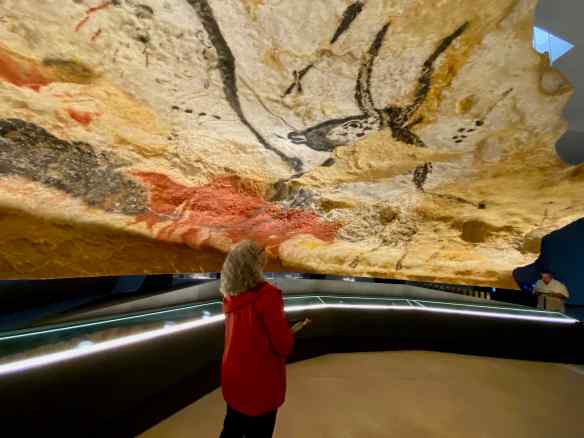
The Lascaux Cave contains one of the most outstanding displays of 20,000 year old prehistoric art in the world and it is a UNESCO World Heritage site.  We were very lucky to get tickets to visit Lascaux II.  We had completely forgotten about needing to book ahead but thankfully it is not high season and we were able to get tickets for an English tour of the cave.  The Lascaux Cave was discovered on September 12 1940 by 18 year old Marcel Ravidat when his dog Robot investigated a hole left by an uprooted tree that had fallen over in a storm.

Of course we are visiting a replica cave. It was the first replica cave in the world when it opened in 1983 near the site of the original cave…however there are still no photos allowed.  The original cave was closed in April, 1963. The continuous flow of visitors (1500/day) and the carbon dioxide and human breath began to degrade the prehistoric paintings in the decorated cave.   Lascaux II is an exact replica of the two main chambers of the cave. This short video has a segment with a walk through the cave by torch light. This is what we experienced at Lascaux II.   We were standing in a dark cave, with only a flickering torch to illuminate these 20,000 year old cave paintings.  It was an amazing experience.    https://www.youtube.com/watch?v=VWUUiFxbEE4&t=87s

I manage to do a couple quick drawings while in the cave, but the lighting is poor and I decide to enjoy the experience and forget about trying to draw.

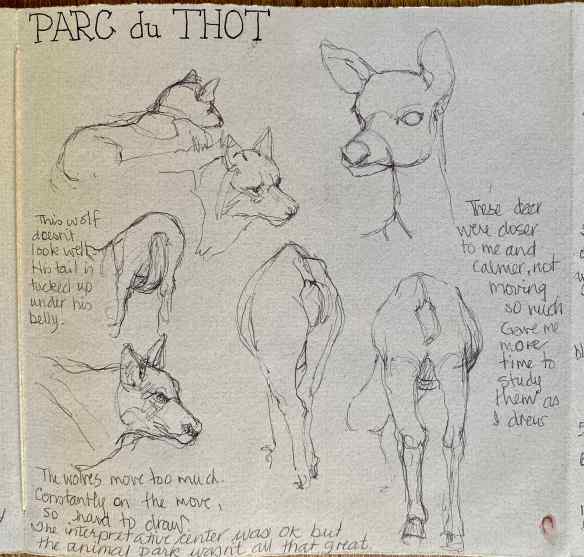
We visit Parc de Thot which is a small zoo with animals that are similar to those drawn in the caves…bisons, wolves, deer, and bulls.  There was an interesting short film and some displays in their building. It was a nice place to have our lunch but that was about it.

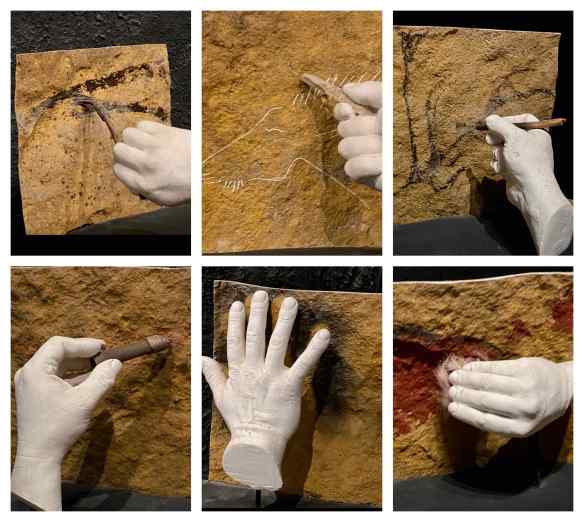
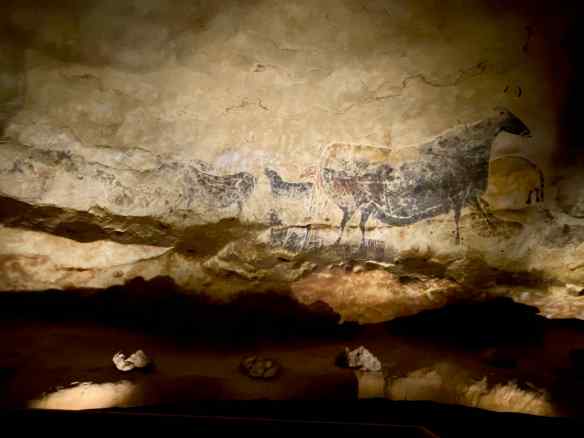
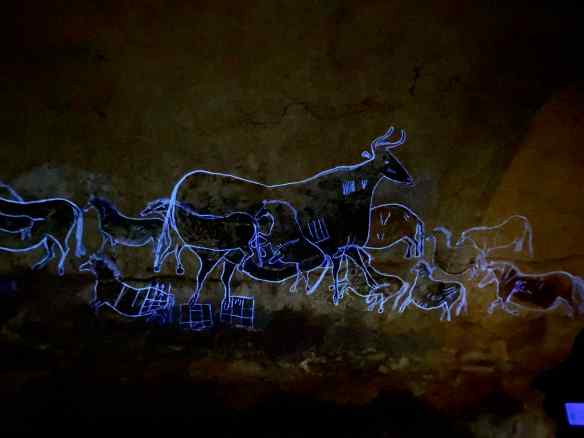
This display shows the different techniques that were used to make the cave paintings and engravings.  I was surprised to learn that paint brushes, pencils (pieces of pigment attached to sticks}, stencils and a primitive sort of airbrush were all used 20,000 years ago!  The artist would blow pigment from his, or perhaps her mouth onto the walls of the cave, sometimes even using a hollow bone for more accuracy.

This display shows one of the cave paintings…

and then uses black light to show all the engraved lines that are difficult to see.

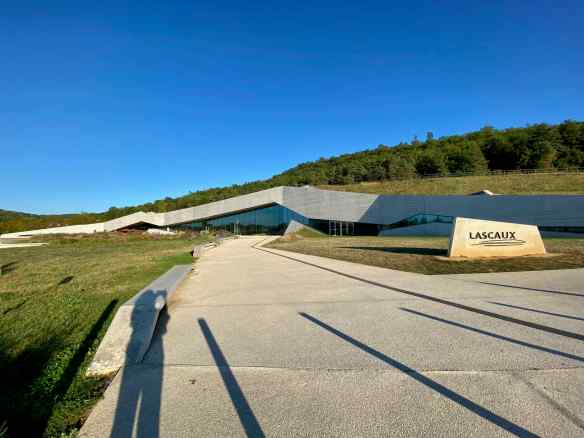
After we ate our lunch I did a bit of drawing and Bob did a bit of reading before we left for Lascaux IV.In 2016, a new replica, Lascaux IV, was opened to replace Lascaux II. It is adjacent to the original cave and offers an even more authentic experience than Lascaux II, with changes in air pressure, along with a series of atmospheric cave scents and sounds. Once again no photos allowed however there is an interpretive area that has more replica displays and we can take photos there.
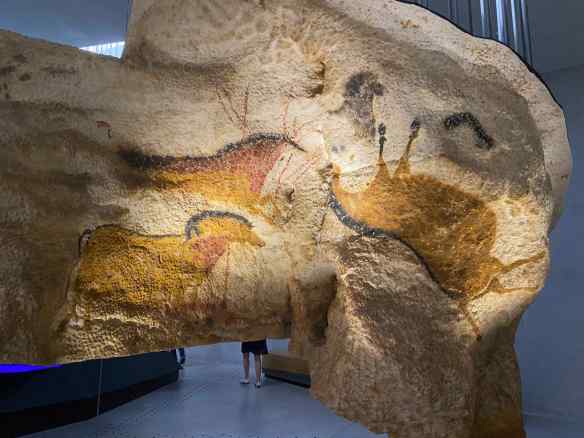
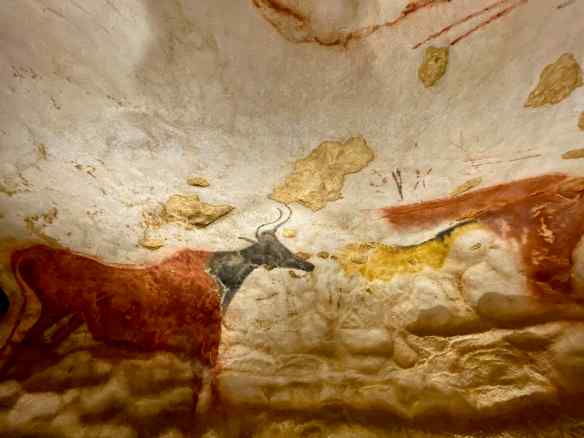
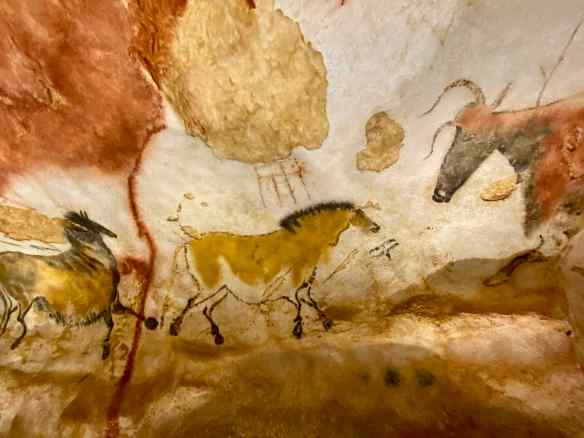
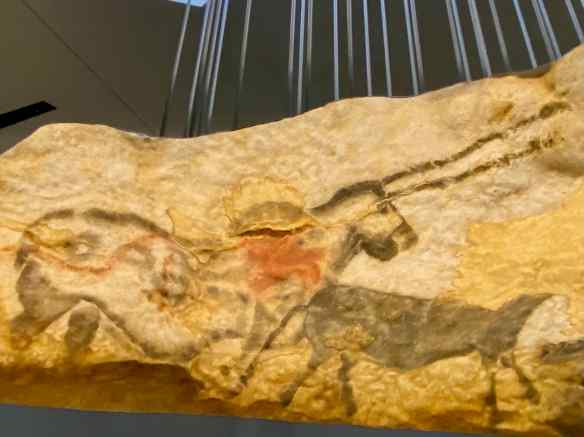
These displays are just as well done as the paintings in the cave..

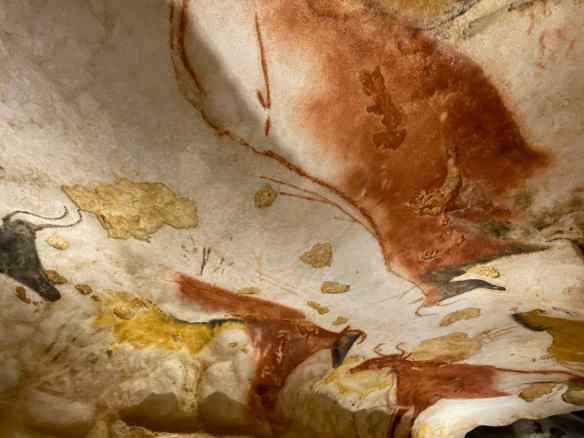
It is nice to have a bit more time to really examine some of the the paintings up close and in better light.

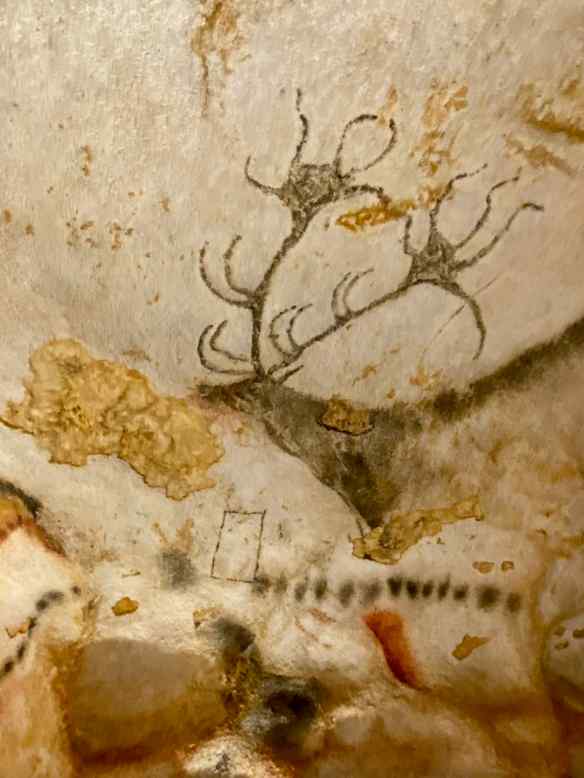
They are spectacular, and photos do not come anywhere near ot capturing this incredible art that was created 20,000 years ago by Cro-Magnons, who were the first early modern humans.

This stag is particularly beautiful with its magnificent set of antlers.

This is one of the first figures we see when we enter the cave.  It is called ‘The Unicorn’ even though it has two horns.  It is an animal drawn from the imagination of the artist and did not actually exist.

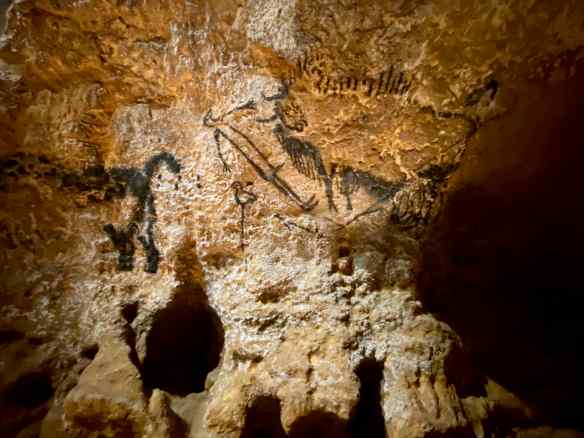
There is a deep shaft that has the only depiction of a human, although it does have the head of a bird.  This is also in the interpretive area as it would be impossible to climb down the shaft in the replica cave.  Here we can walk in at the bottom and look upwards to see the paintings.

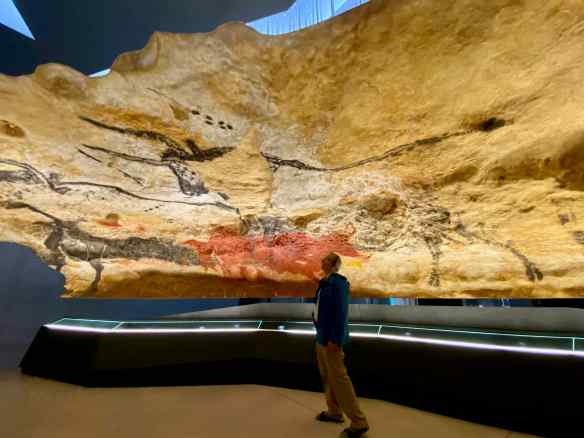
This gives some idea of the size of these paintings.  This is one of the largest animals in the Lascaux caves.

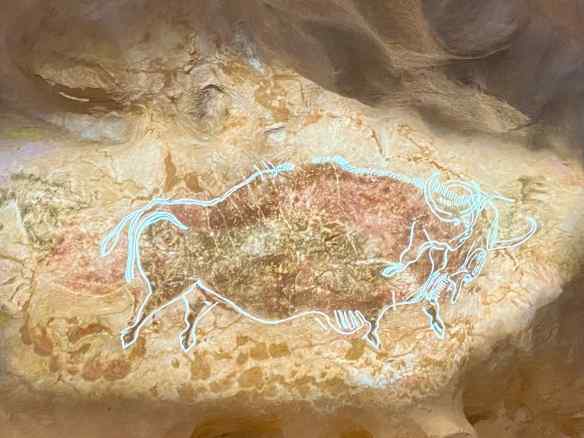
I like this bull.  It is the one I drew in Lascaux II.

This display showed the engraved lines of this bull.  Giving the bull two heads was used to portray movement.

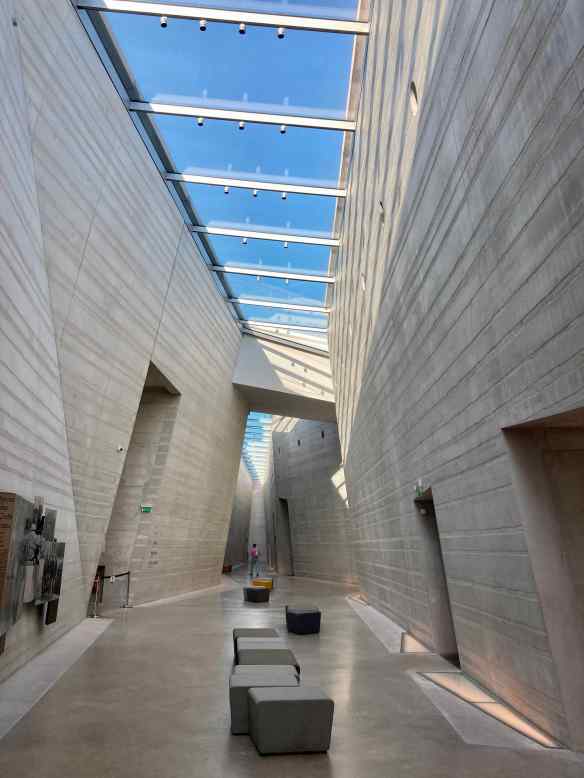
Leaving the interpretive area we walk down this long corridor which has several theatres with more information on Lascaux and the history of the discovery of the caves.  There are over 150 prehistoric sites in this area.The last room we entered had huge animations which travels across three walls and sometimes over the floor and ceiling as well.  I particularly liked this one which shows mammoths from the Rouffignac Cave, which we hope to visit later this week. https://www.youtube.com/watch?v=G2yv2ydzsJ0
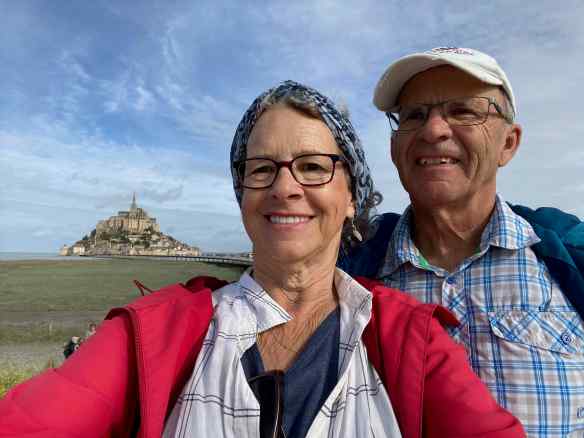
We are the last people to leave and they lock the doors behind us after we walk out.  It was a great day.


Mont St. Michel, France

Day 22,  Tuesday, September 19, 2023

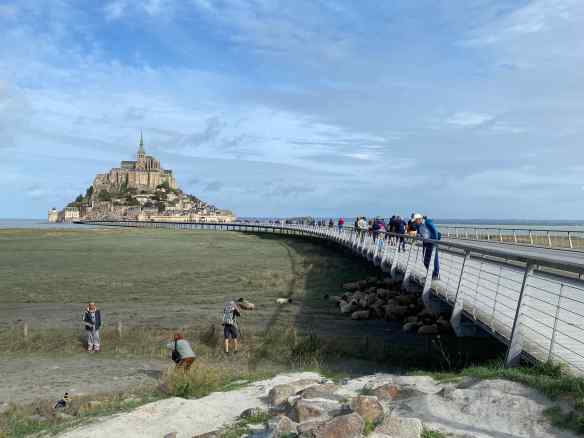
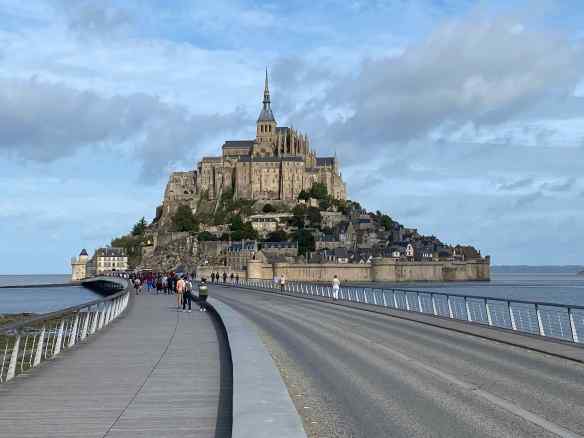
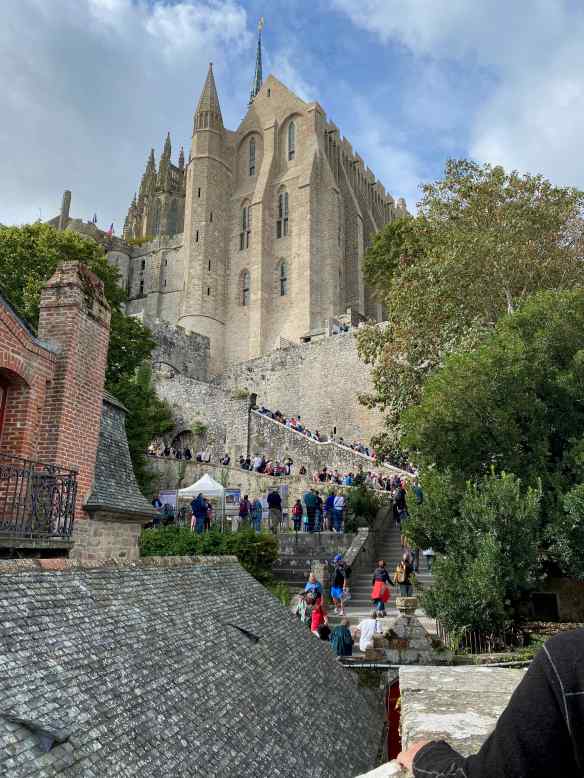
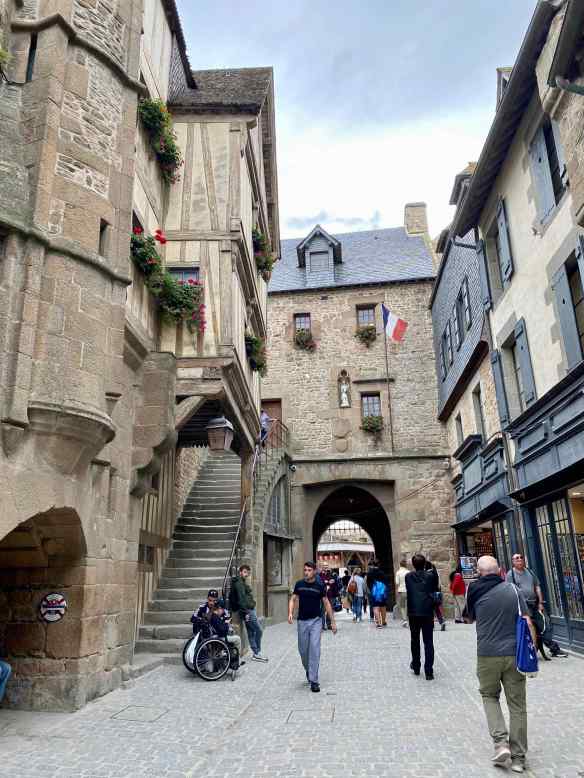
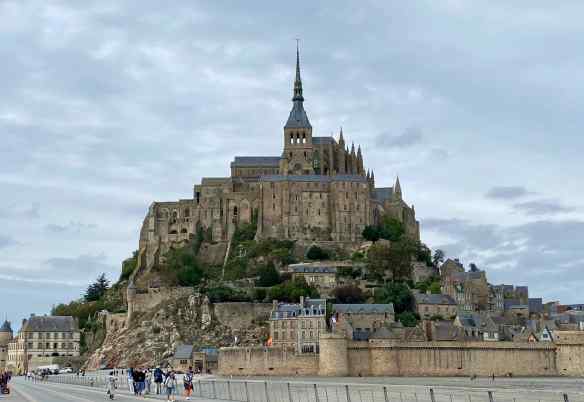
Here we are walking out to Mont St. Michel.  It is a three kilometre walk from the car park to this UNESCO World heritage site.  Be warned, this is a photo heavy post.

The sheep under the bridge attract a lot of attention.  I wish I had time to sit and draw them, but Mont St. Michel beckons…

Almost there!

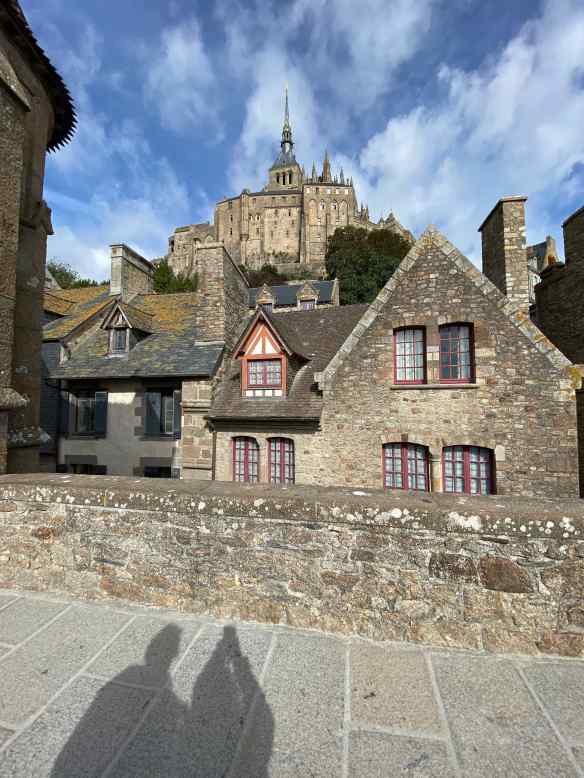
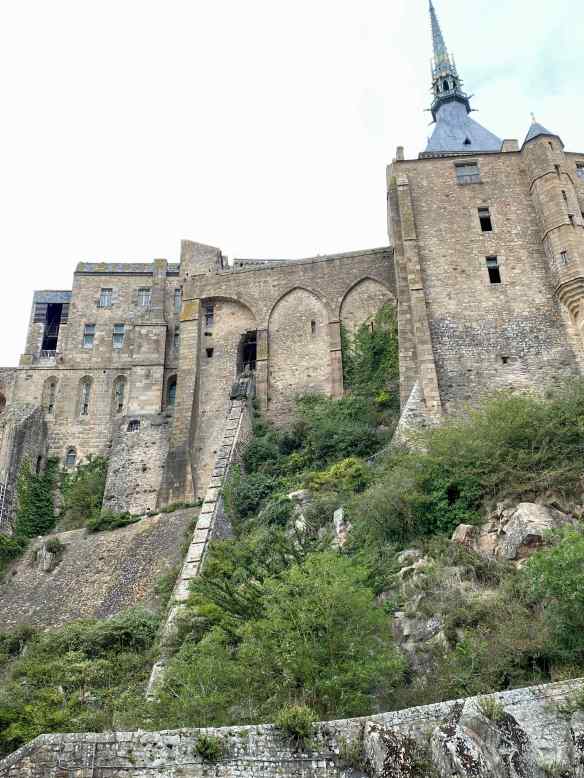
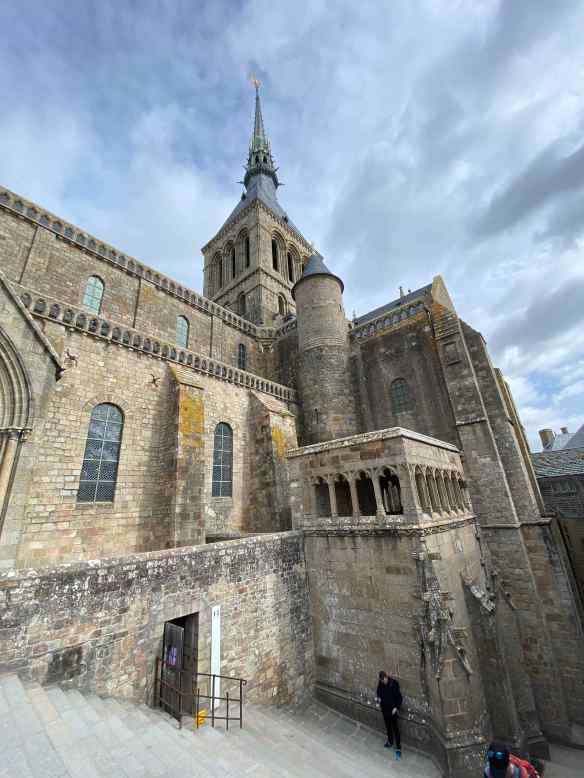
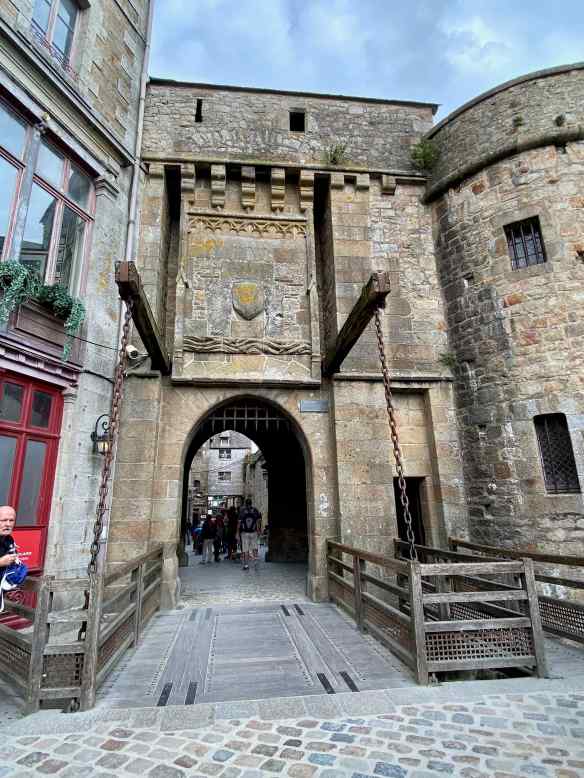
We climb the ramparts right after the entrance gates while the sun is shining.  There is a chance of rain this afternoon. The Abbey church dominates the skyline.

The streets below are crowded and more people are arriving by the minute.  The group with the white hats are pilgrims from Southern France.  I spoke to one of the ladies later in the day who sat by us while we were having lunch.

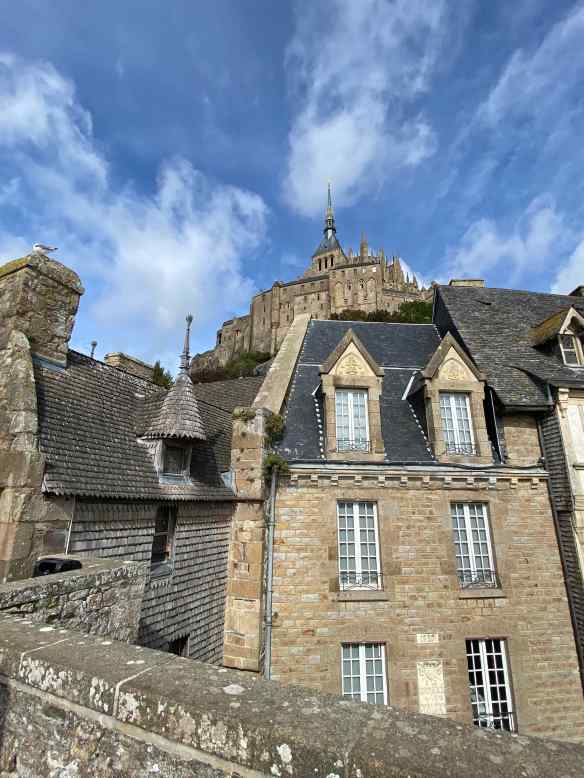
I love the little conical roof over the dormer window.

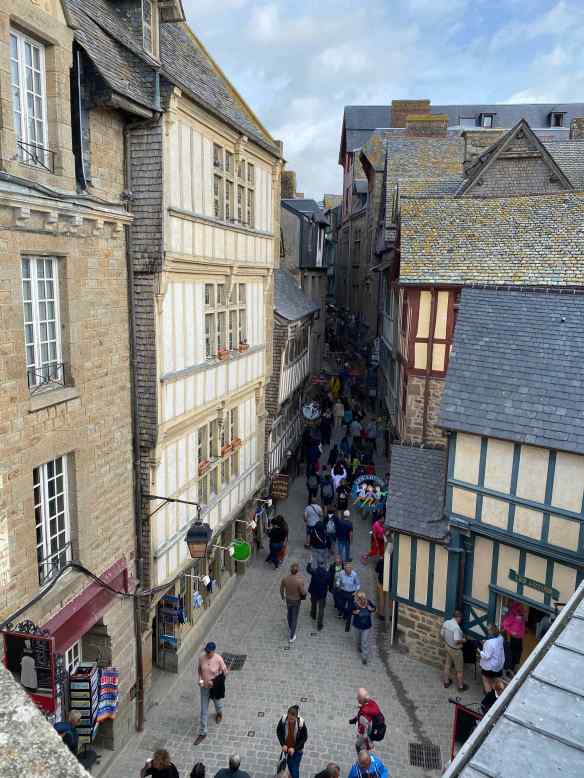
The streets are narrow and they fill up quickly.  We are told that in high season you can barely walk through the streets as there are so many people.

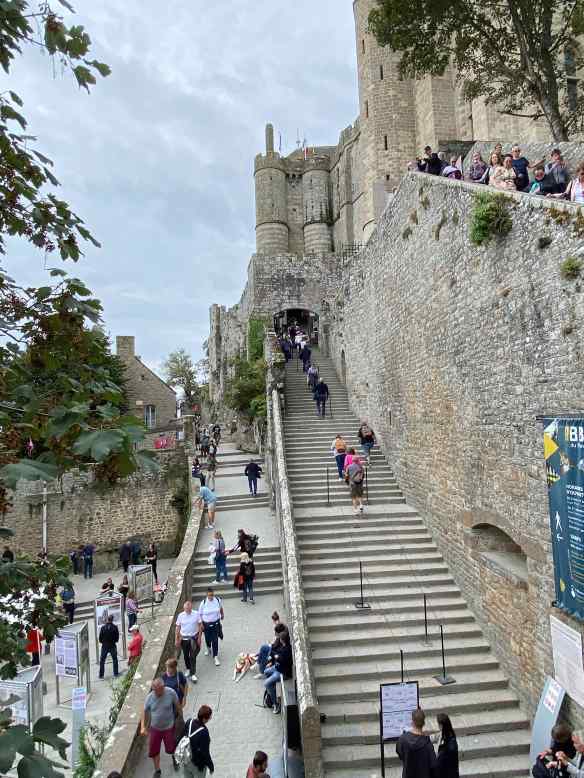
Soon we are among the hordes of people climbing the tall narrow 319 steps to the Abbey.

We bought our tickets online so we get to walk right past a long line of people waiting to buy tickets.

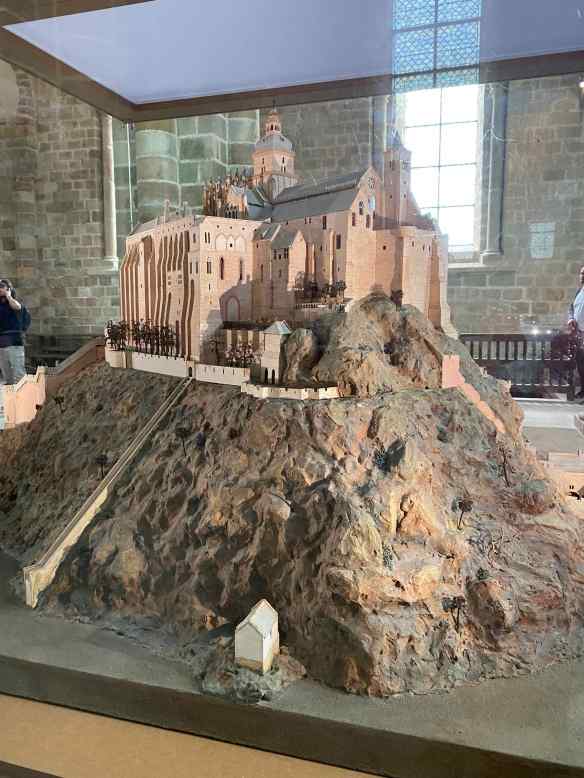
This model of the abbey shows the back side which is only visible if you walk on the sands  at low tide or travel by boat.There are usually 5 monks and 7 nuns who live at the abbey and there are only 25-30 people who actually live on Mont Saint Michel. We sat and listened to part of the mass, from the side of the church.  The singing was really lovely and I found it interesting that the nuns and the priest sat on the floor of the church during the service.
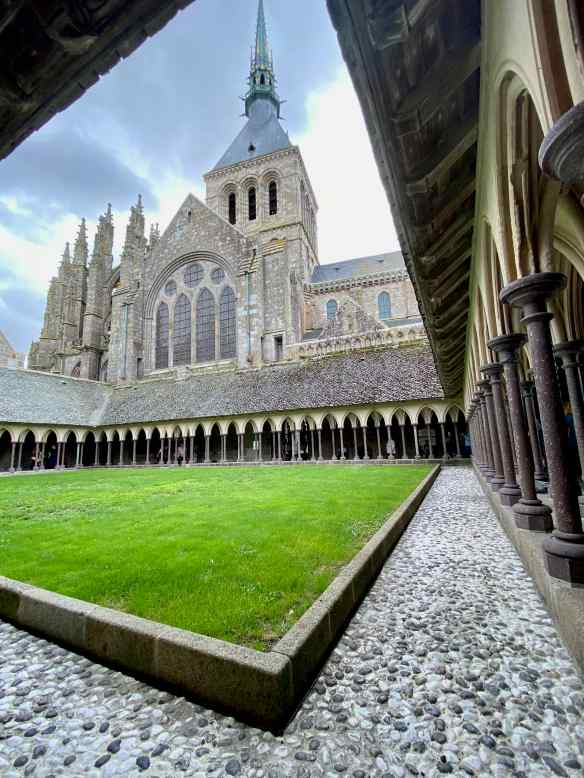
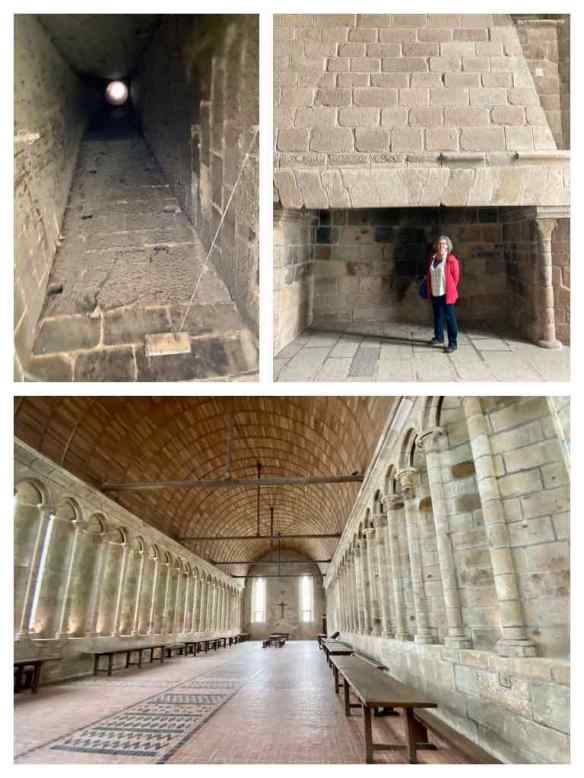
Next we walk through the cloister with its many narrow columns and a view of the church tower.

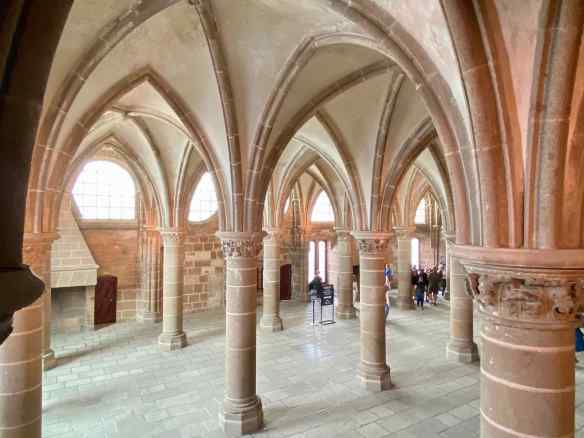
The Host’s room has two enormous fireplaces. Here I am standing in one and the little round circle is looking up the chimney towards the sky.  This is where food was prepared and where the Abbot received important visitors.  The bottom photo is the Refectory where the monks ate their meals.

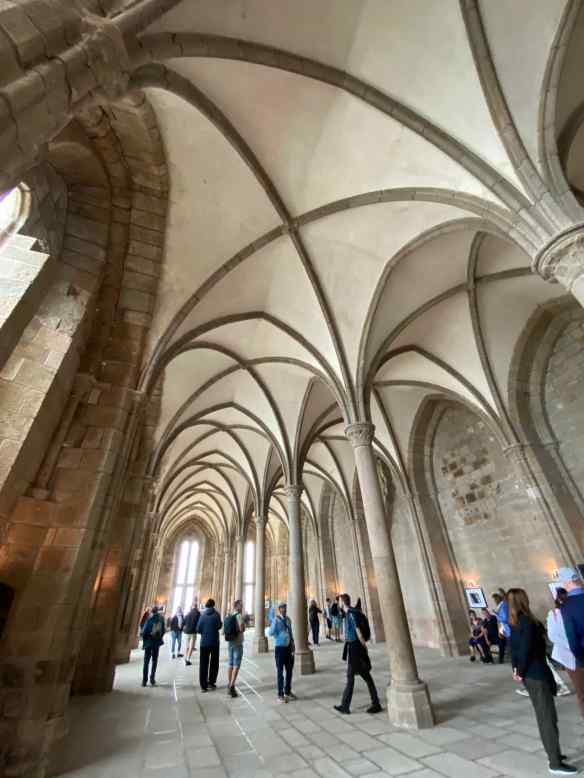
Another view of the Host’s room with its beautiful arched ceiling.
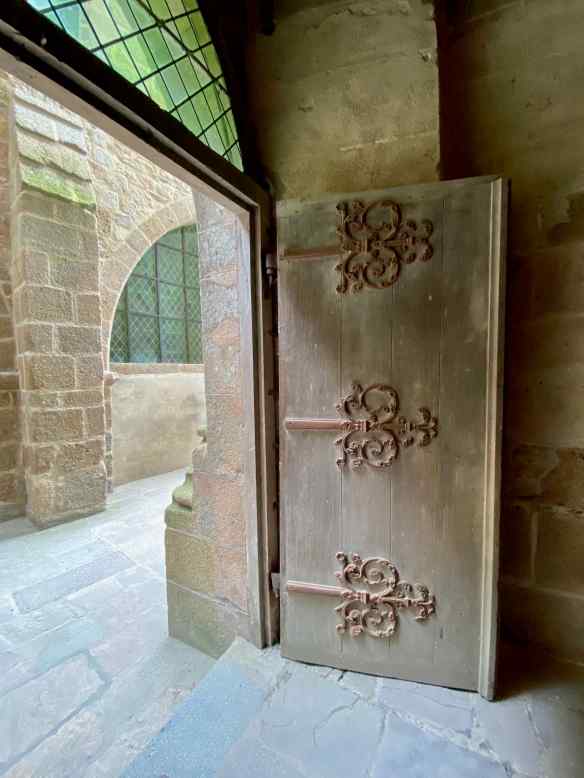
There are so many interesting doors in this abbey.
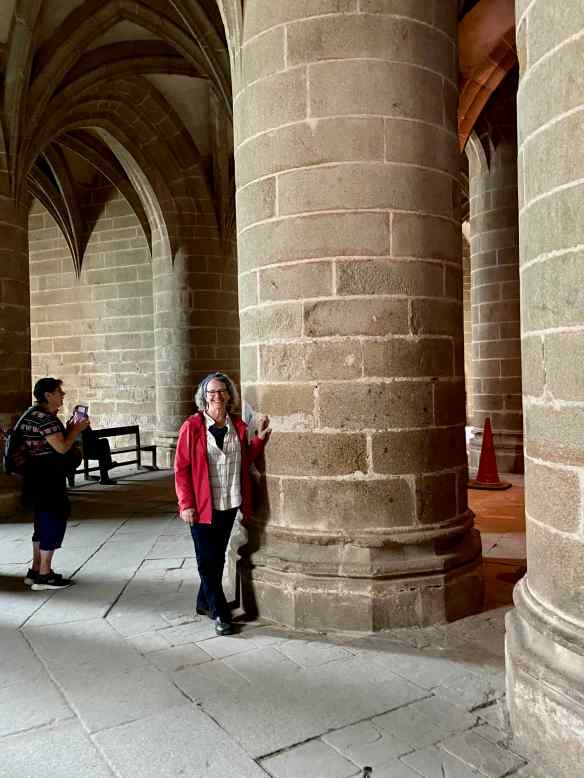
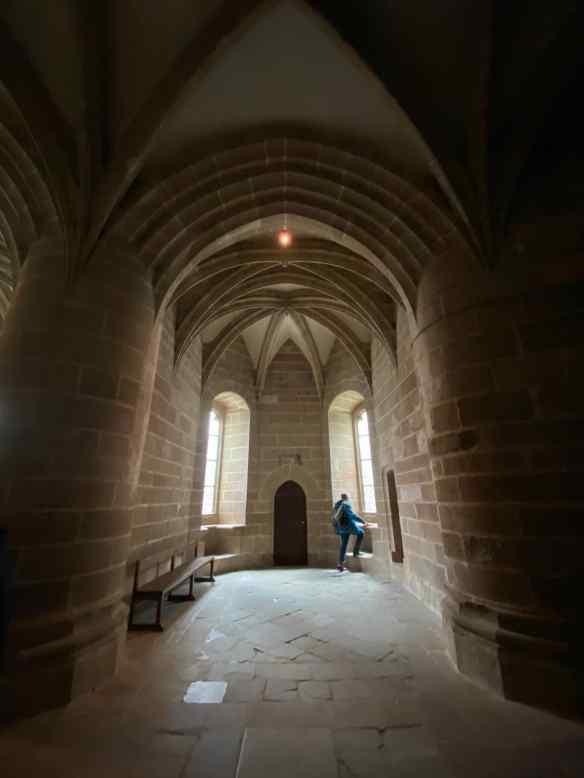
The Crypt des Gros Pillars (Big Pillars’ Crypt) with its ten huge pillars was built to support the choir in the abbey above.There are so many smaller rooms and interesting spaces to be explored.  This one is off the side of the crypt.When the Abbey was used solely as a prison in the 1800’s, this huge wheel was was used to haul supplies up to the abbey.  Prisoners walking inside the wheel were able to raise and lower a cart along a stone ladder inclined along the rock wall.  
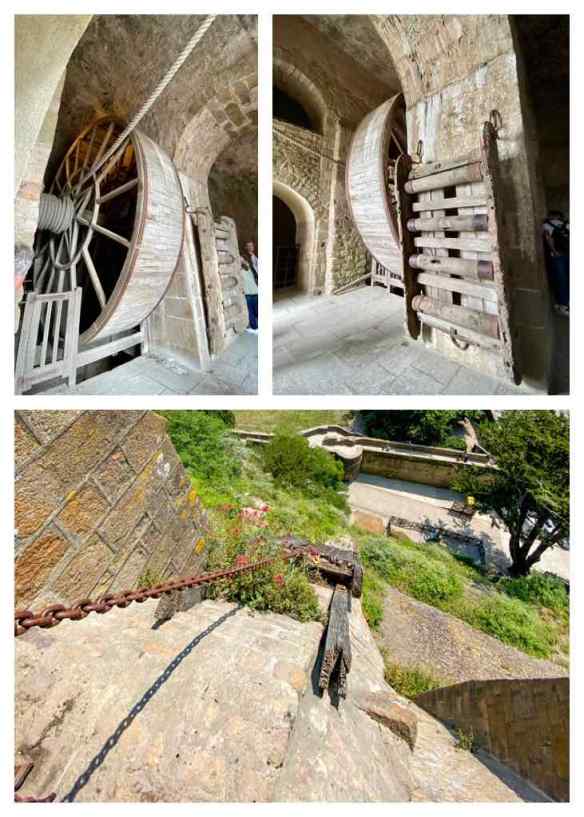
Here you can see where the cart was hauled up the side of the abbey.

The Salle des Chevliers or Knight’s room was most likely used by the monks as a place of meditation and for copying and illustrating manuscripts.  

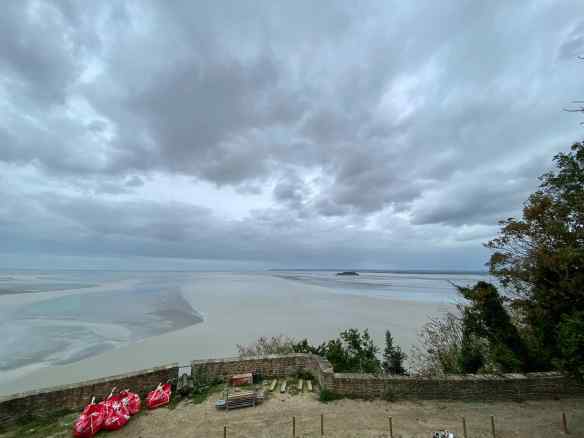
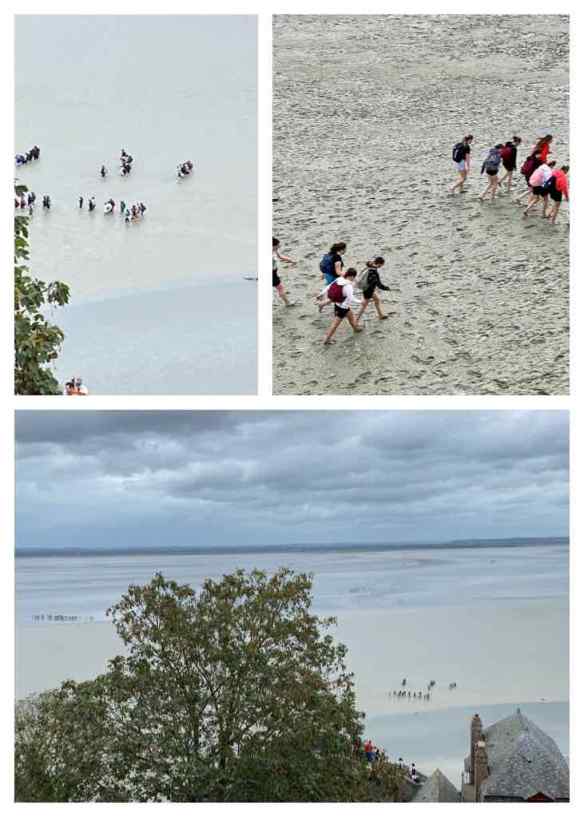
When we walk out into the gardens we see that the ocean is now at low tide and the sand bars are visible all around Mont St. Michel.We hear shrieks and peals of laughter and realize that is is coming from the people out walking on the sands now that the tide is out.  Some of them are thigh deep in the water!  There are a lot of people out there, some of them way off in the distance.  Thanks, but I am happy to pass walking in mud and cold water.
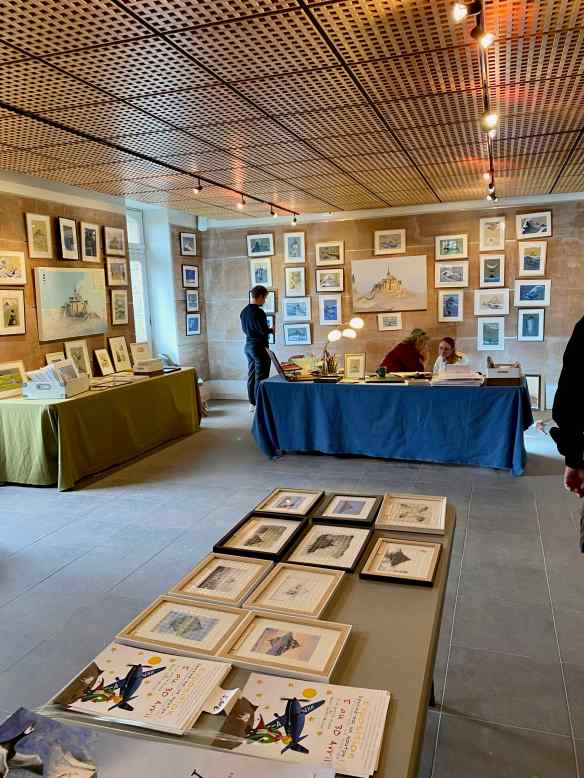
We stop at this little art gallery and I have chat with the artist.  She has a variety of different styles and media, and I found her work very appealing.

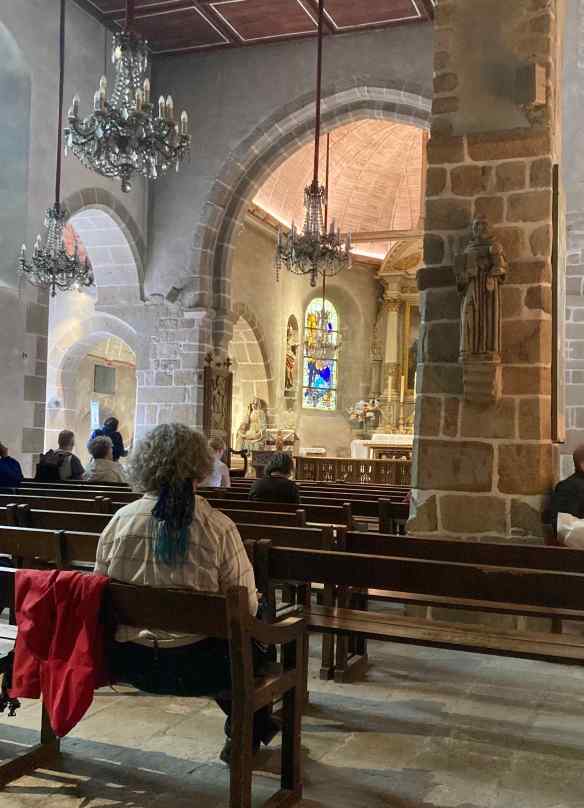
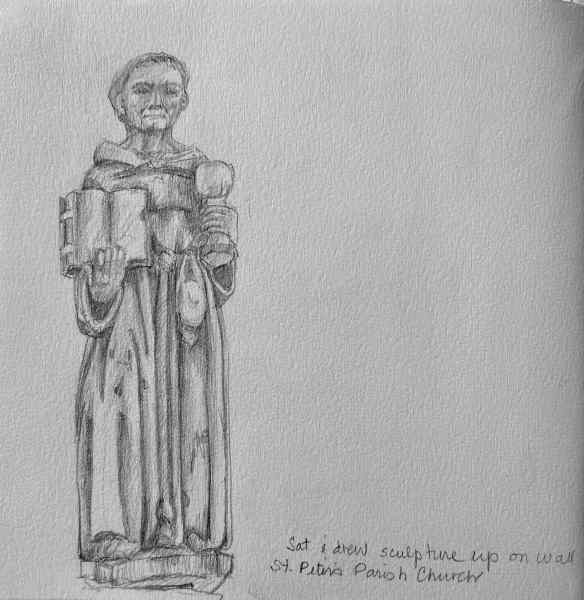
It starts to rain so we duck into the Parish Church of St. Peter for a well needed sit down.  I draw the statue on the wall while Bob rests and then goes for a little walk about so that I have time finish my drawing.

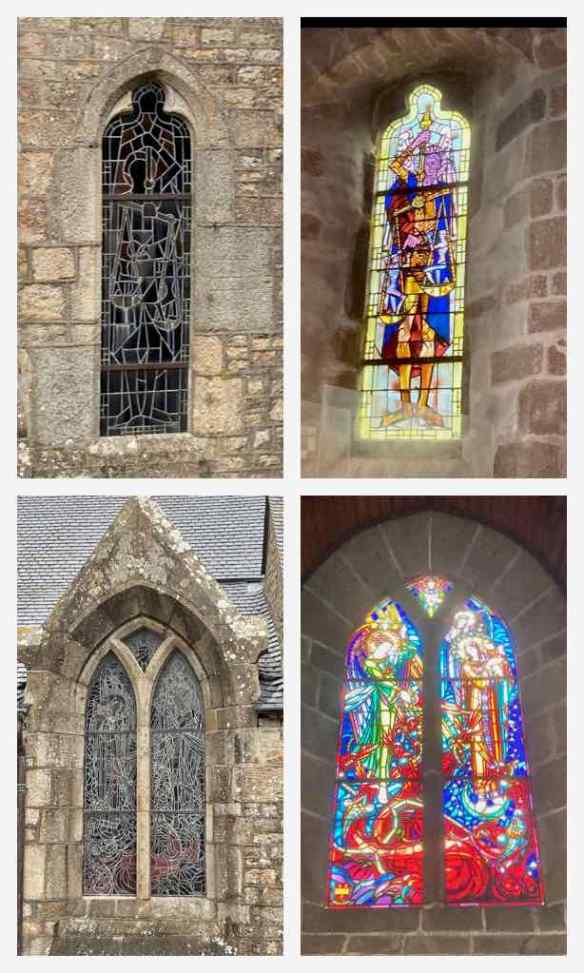
I forgot to see if there was plaque saying who the sculpture was.Bob took interesting photos of the inside and outside view of these two stained glass windows.
People are still coming and going…lots of people!

This photo of the bell tower just barely shows the golden statue of St. Michael threatening a dragon, who represents evil, with his sword.  St. Michael is perched 156 metres high, is 4.5 metres tall and weighs 520 kg. The statue is made of gilded copper and serves as a lightning rod.

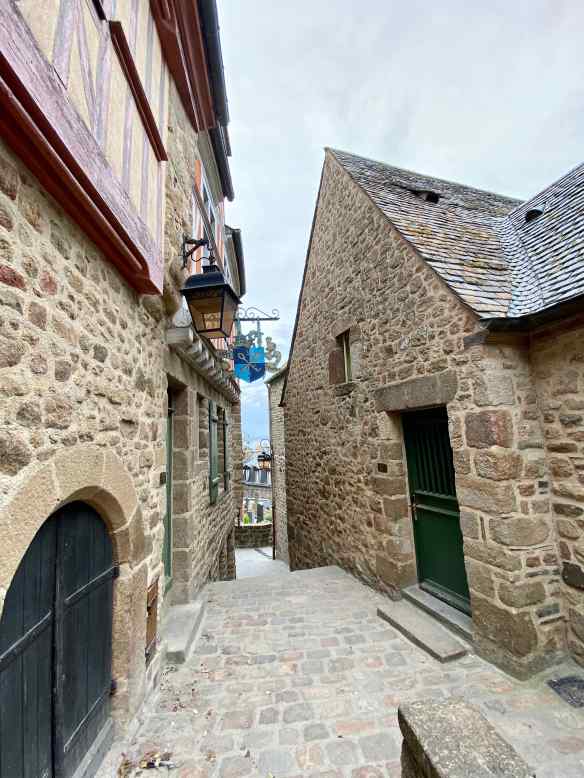
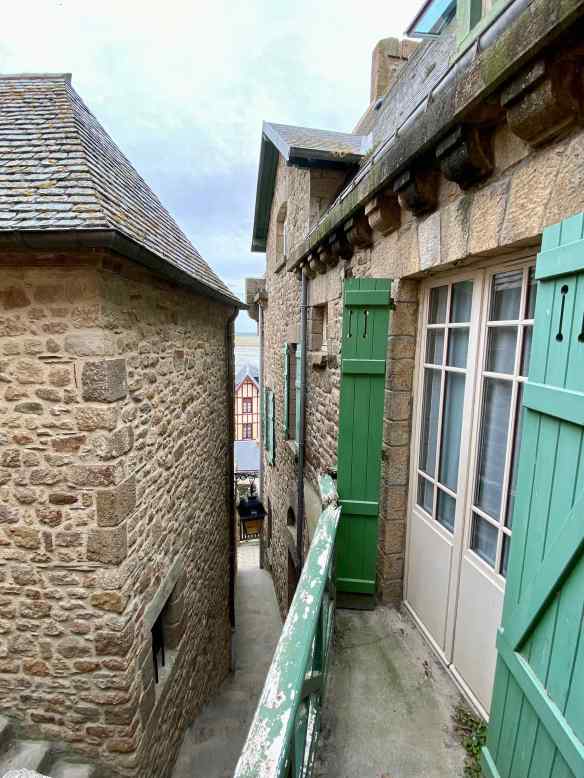
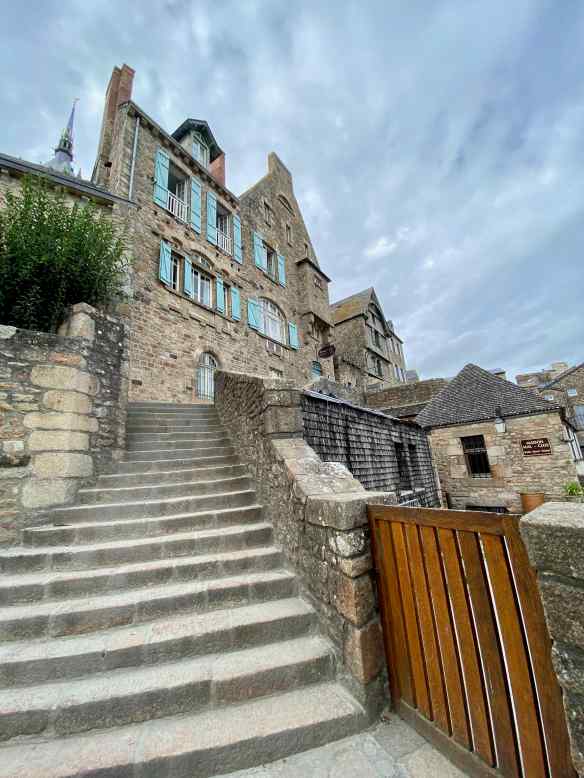
We wander the back streets which most people seem to ignore. There are lots of steps…. …interesting details…

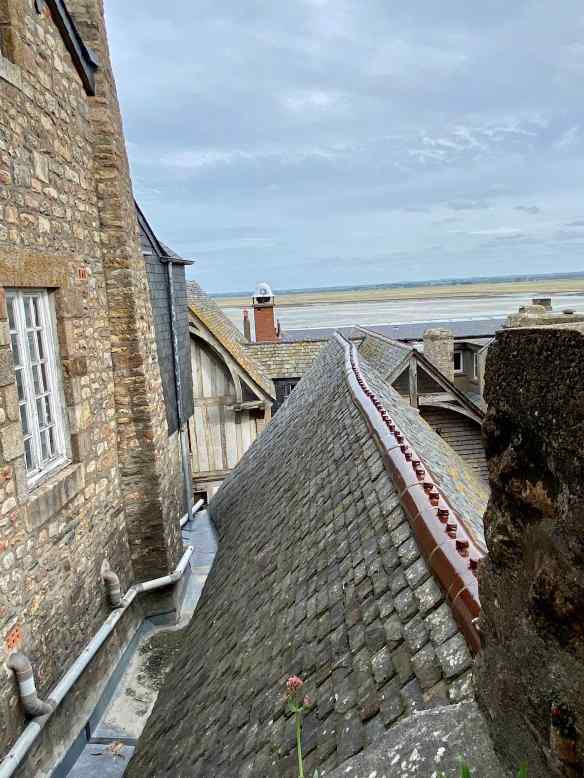
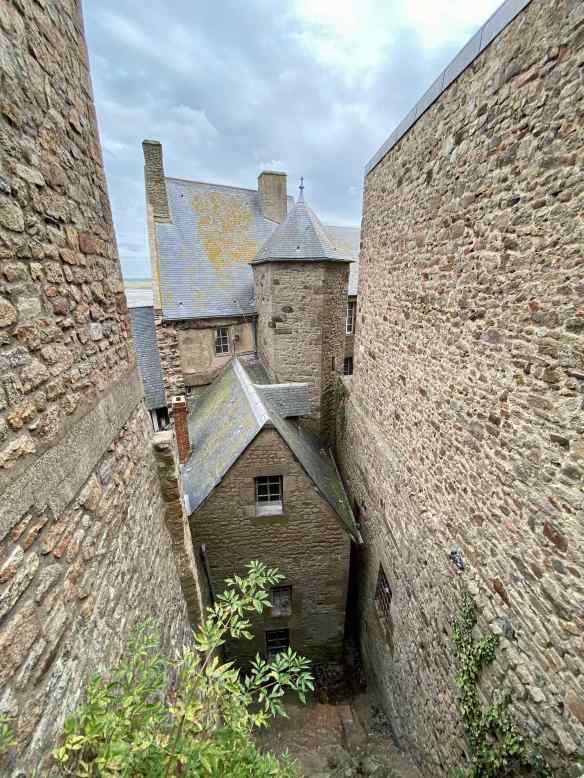
…narrow streets… …crooked roof lines…

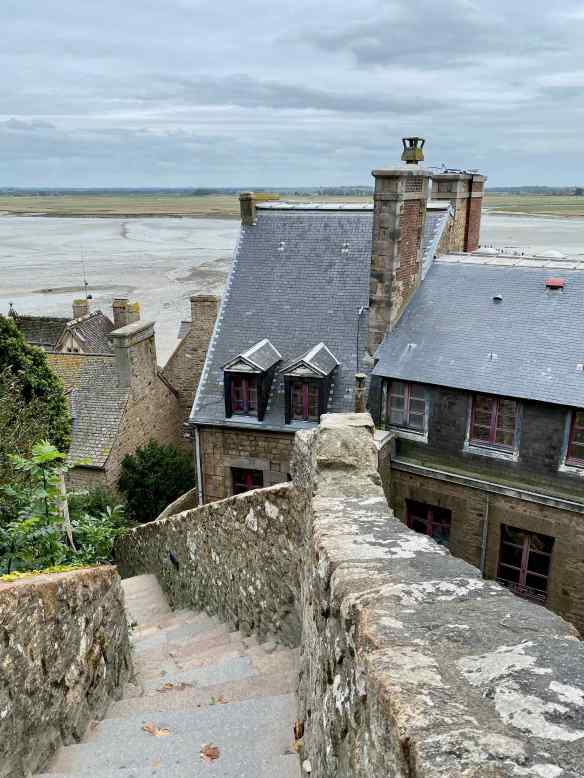
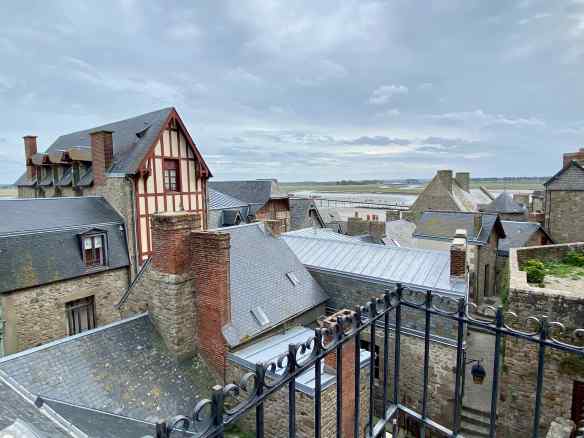
…fantastic rooftop views…

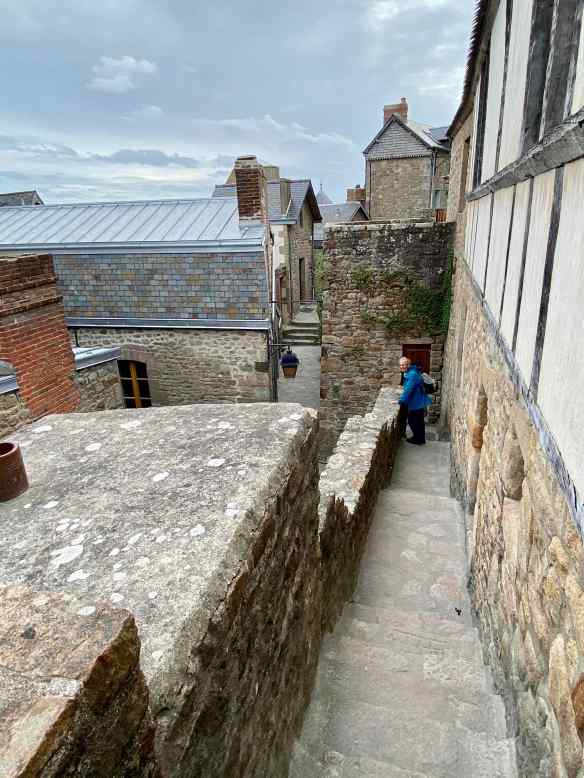
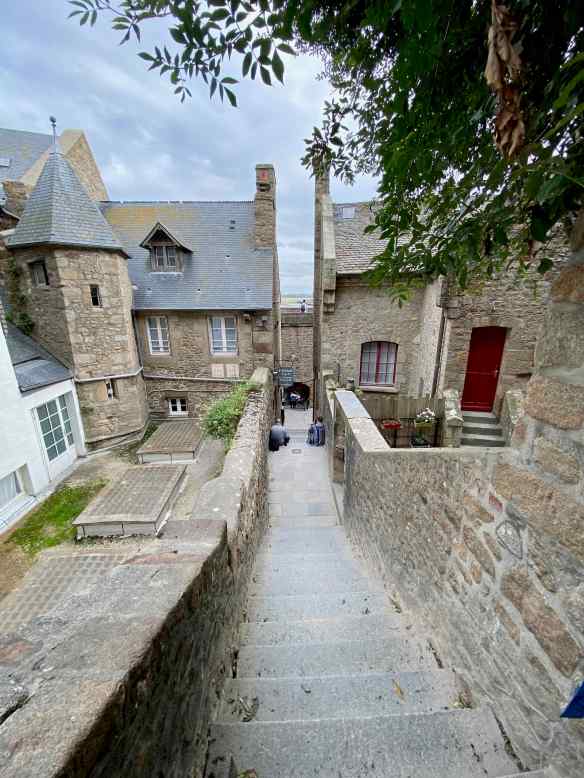
…more steps and stone walls…

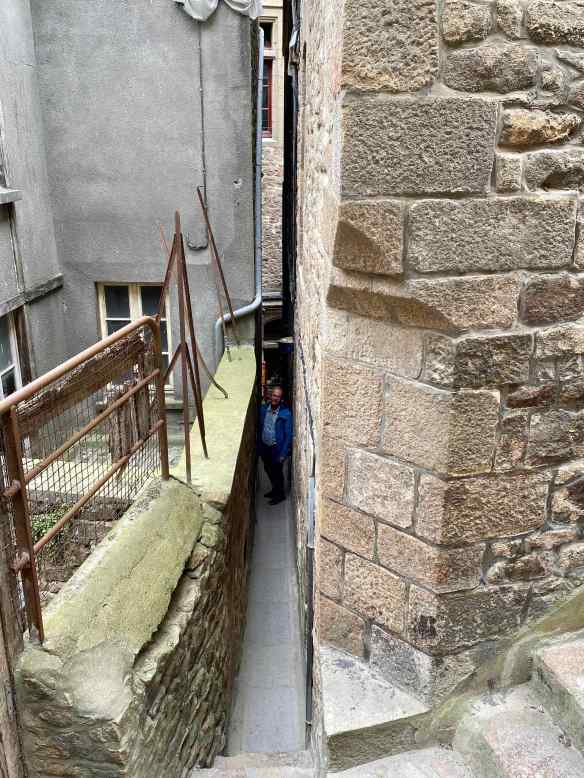
…the narrowest street ever…This is Cuckold’s Alley!

I think I may have mentioned steps…

and buildings tucked into the strangest places…

…and more steps with a tiny view of the ocean…

…which leads us back to the Main Street.

Time to cross the drawbridge and leave Mont St. Michel.

We say goodbye to Mont St. Michel after 7 hours of exploring this fabulous island.  

Day 21,  Monday, September 18, 2023

Yesterday was a stay at home day. No photos, just relaxing and catching up on my blog and planning the next part of our trip.

St. Charles Bridge, Prague

Day 34, Saturday, September 28, 2019

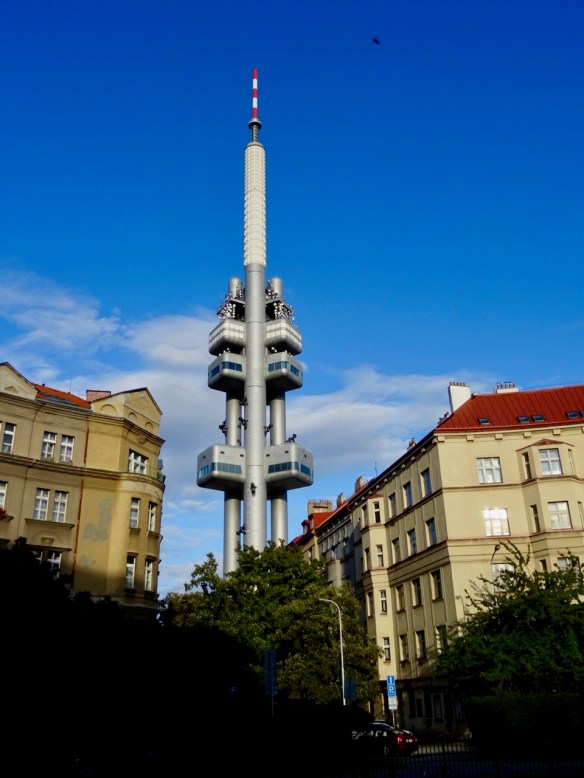
The Prague TV tower against a beautiful blue sky.  It is 18 above today, and the sun is shining.
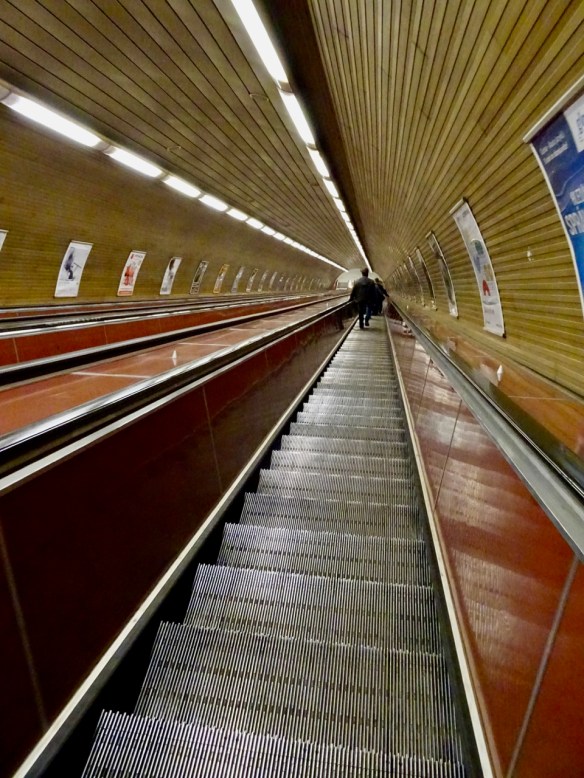
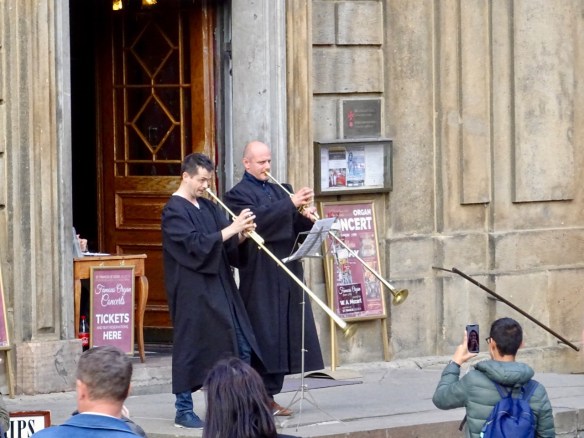
This is another of those very long, very fast moving escalators.  We wonder why the metro is so far underground?  A little research reveals that “In the event of an attack on the city, they should close to turn the designated stations into hermetically sealed bunkers. The doors can allegedly withstand a nuclear blast on the surface as well as a “torrential” wave of water. Up to 300,000 people can allegedly take refuge in the system for three days.”  Who knew? Although I can’t imagine being underground with another 299,999 people!  These fellows gave a little preview of an evening performance in one of the many churches in Prague.
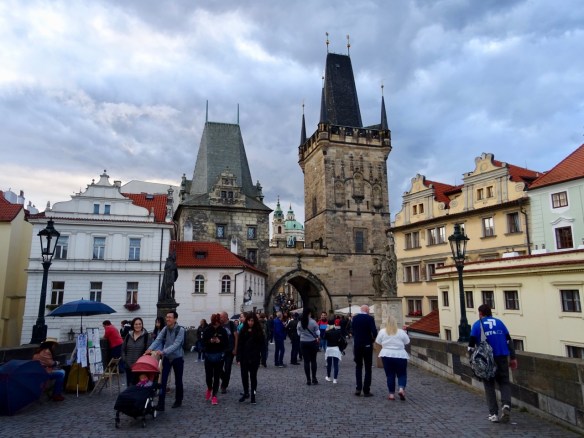
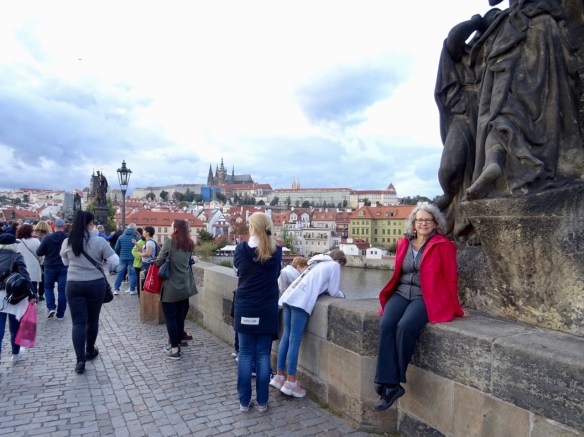
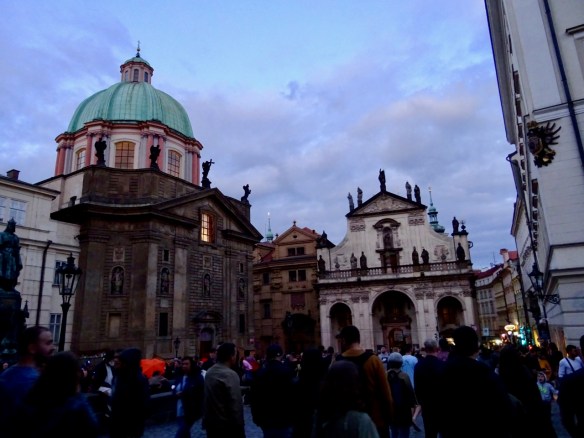
St. Charles Bridge is probably on every Prague visitor’s must-see list. It is a UNESCO World Heritage site that is also home to many Czech artists, musicians and souvenir vendors whose stands line both sides of the bridge. This Medieval bridge, completed in 1402 is now a very crowded pedestrian zone. 
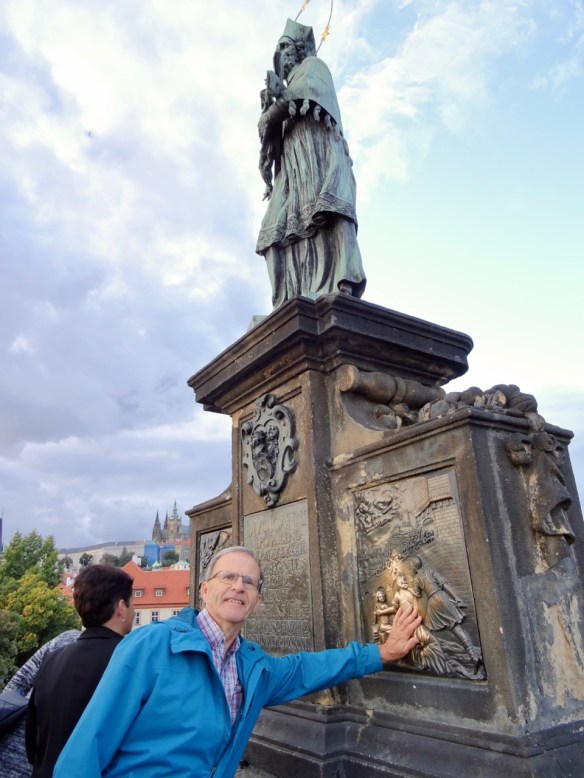
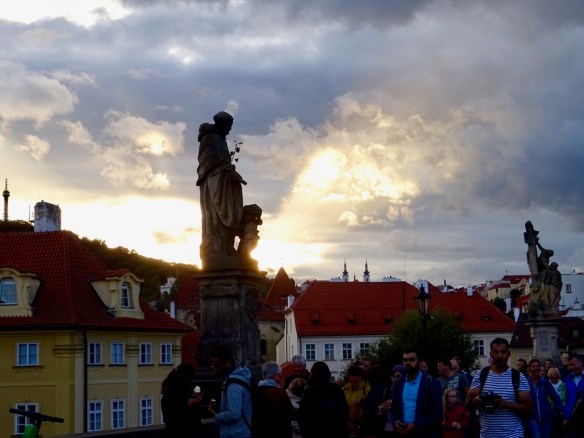
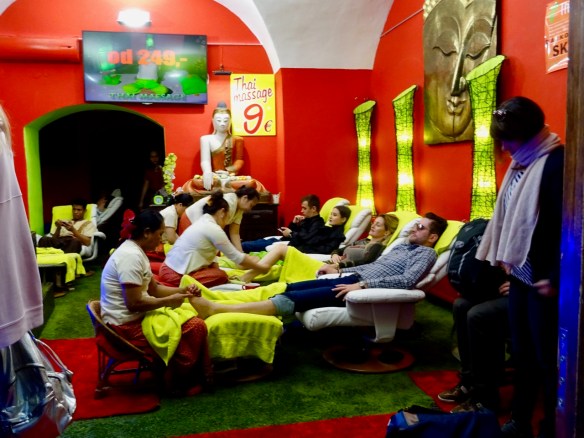
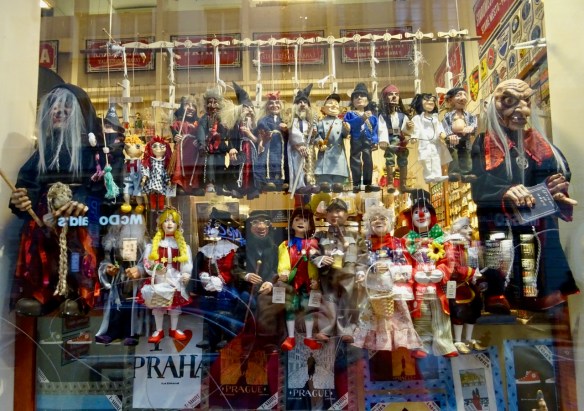
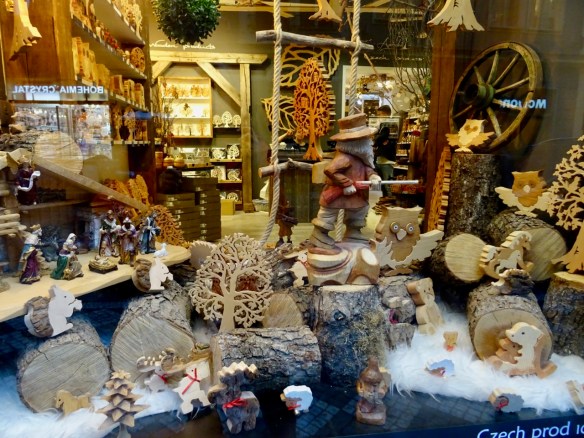
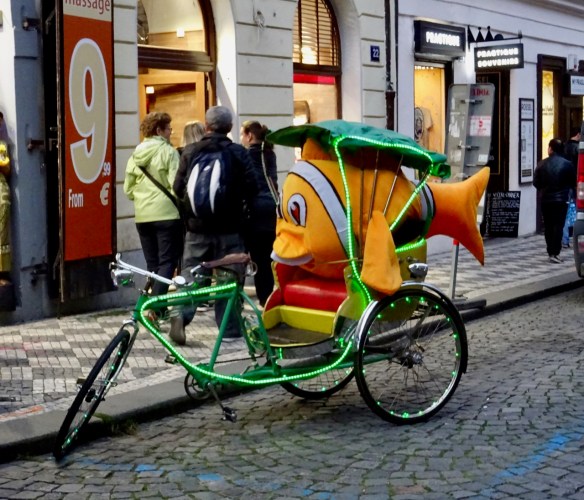
Here is a close up of the entrance to the bridge in the photo above.  Just a few people!  Very crowded but such great people watching, which is one of my favourite pass-times.  The bridge offers a great view of the Prague Castle on the hill.   As well as views of some of the other bridges along the Vltava River.  Touching this statue is said to bring good luck and ensure a return visit to Prague.  There are 30 statues on this 516 metres long and almost 10 metres wide Gothic bridge. The sun was setting as we leave the bridge. On the way home we peek into a Thai massage studio.  I wanted to give this a try but we somehow ran out of time. Prague is famous for its marionettes.  Most of the ones we see are obviously made for tourists and not that great but I find this window display of really beautiful marionettes.  They had really ‘beautiful’ price tags too! There are lots of shops selling wooden products. We see Nemo every time we walk along Wenceslas Square.
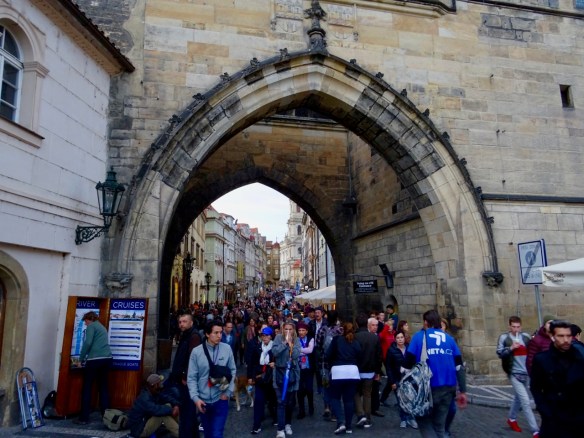
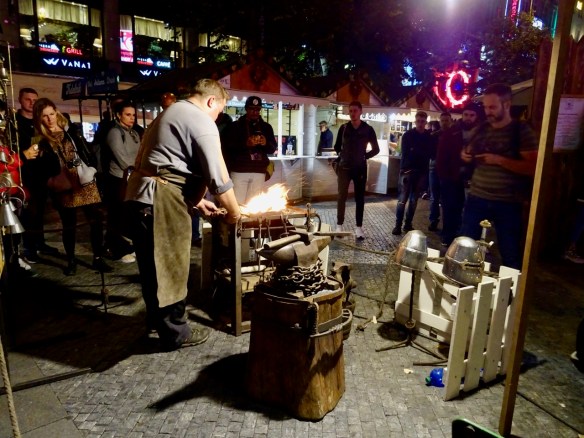
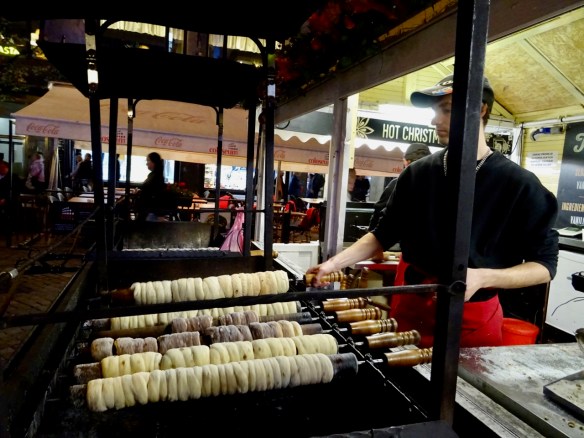
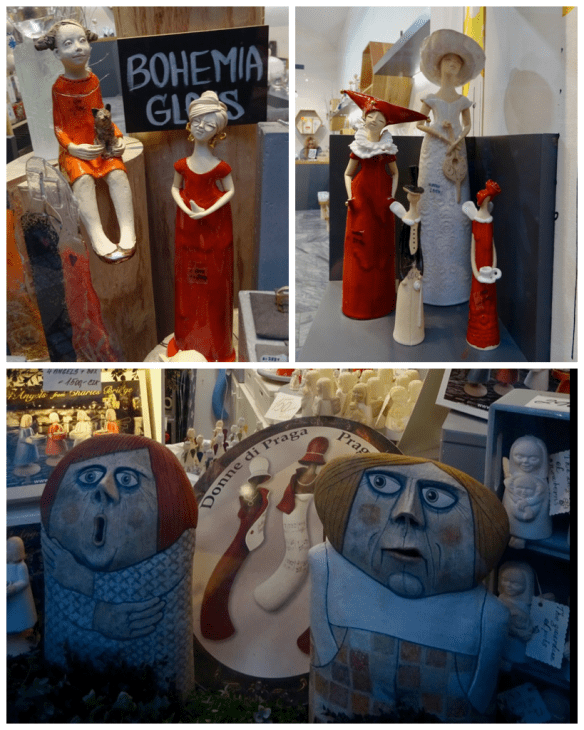
The streets are jam-packed with people tonight.  It is St. Wenceslas Day today which is also called Statehood Day and is a holiday. Interesting to see a blacksmith working in the square. These pastries are sold everywhere in Prague. They are call Trdelník (which means a hollowed out log)  and they are made by wrapping  layers and layers of dough on a cylindrical spit. It is then baked on an open fire and dusted with cinnamon sugar and crushed nuts. They look yummy just like that but many shops fill them with ice cream and all sorts of fancy toppings.  Unfortunately they are not gluten free…so none for me. These little sculptures in the store window appealed, but they are too big and heavy to buy so I settle for a picture.
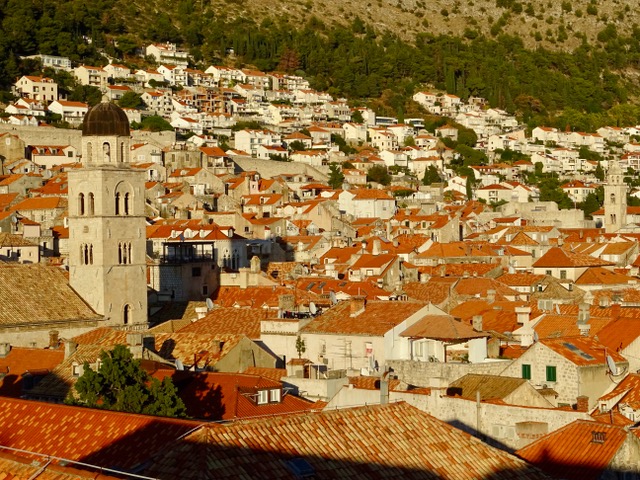
Walking Dubrovnik’s Walls

Day 35, Monday October 9, 2017

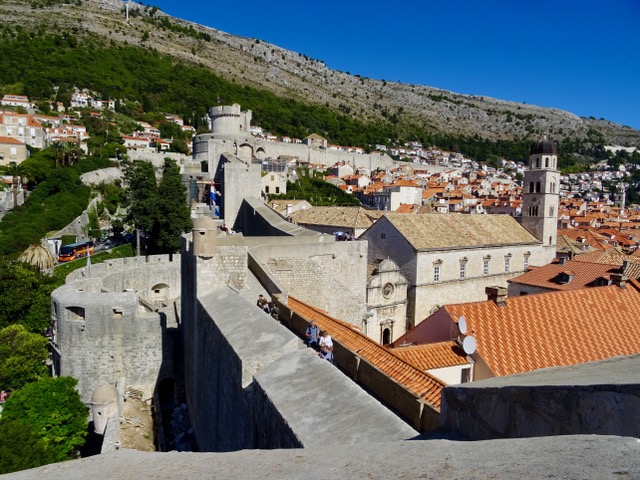
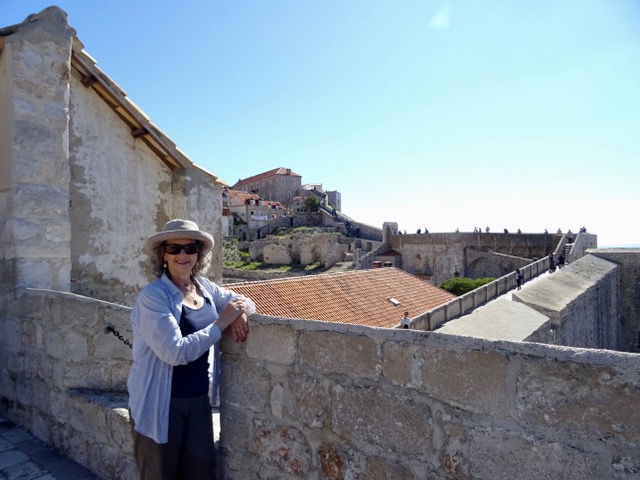
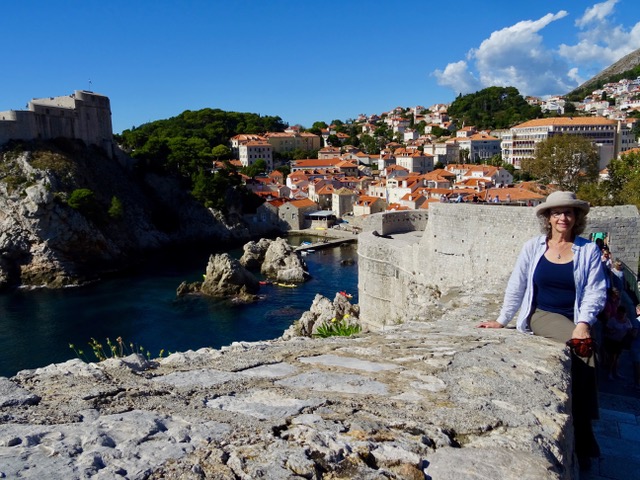
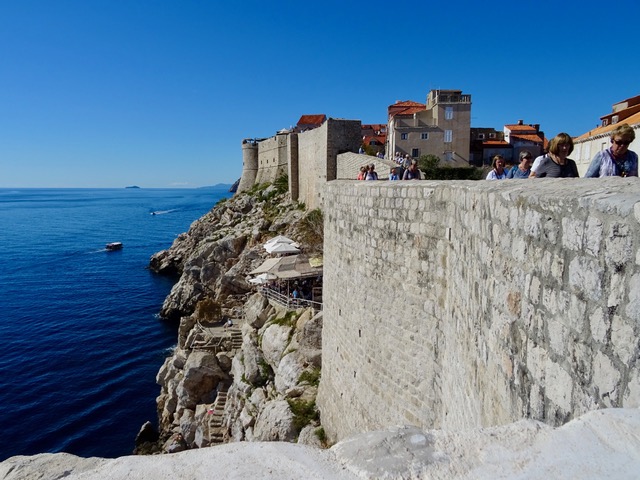
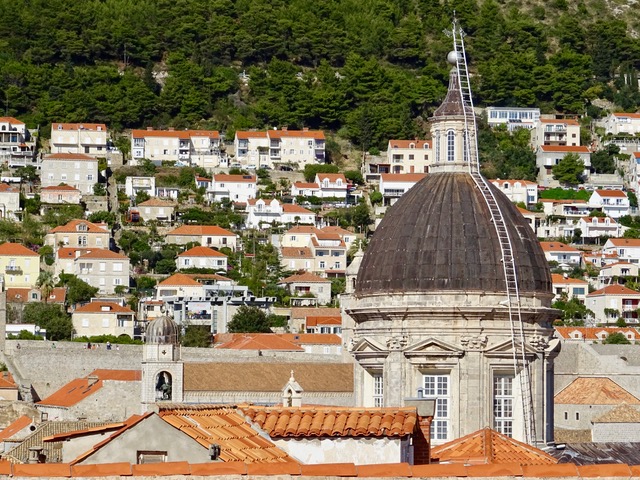
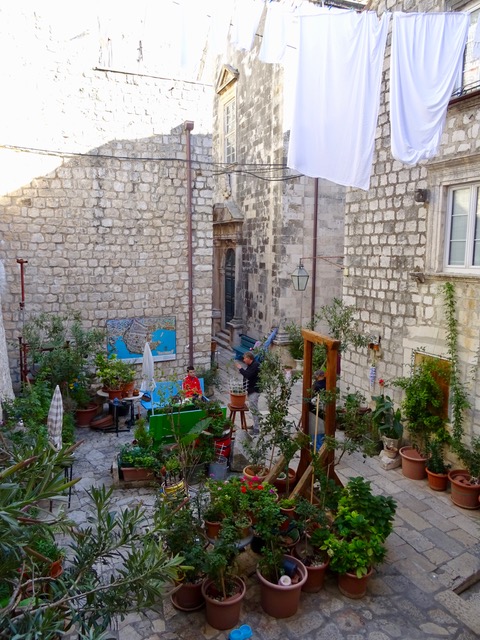
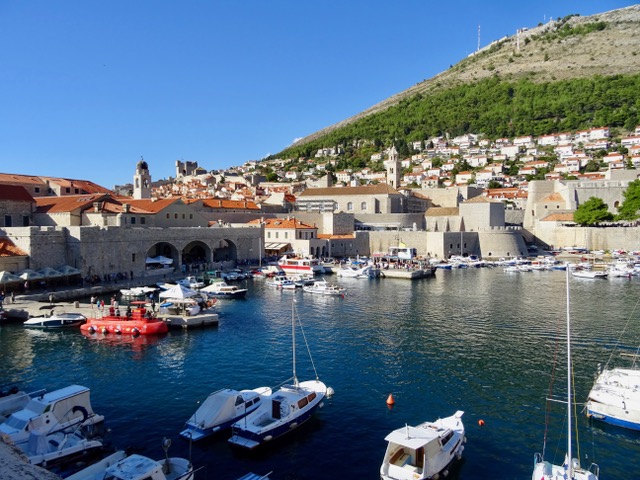
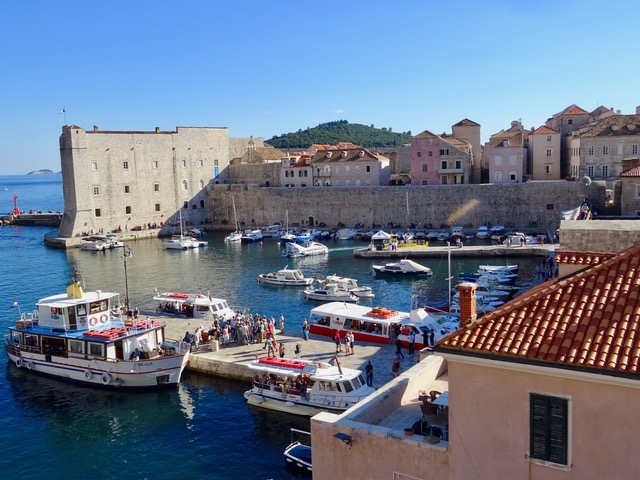
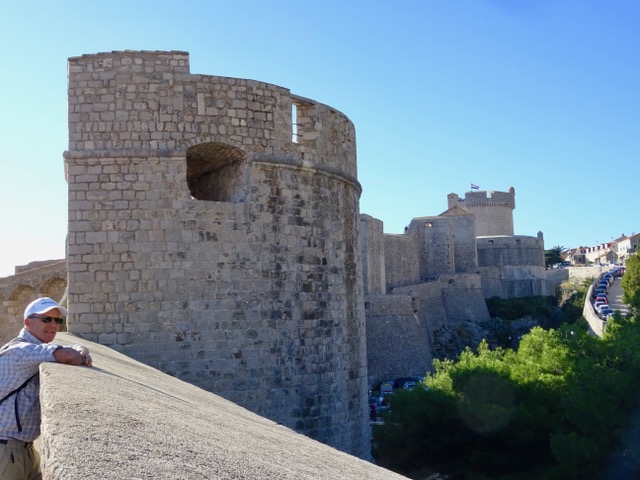
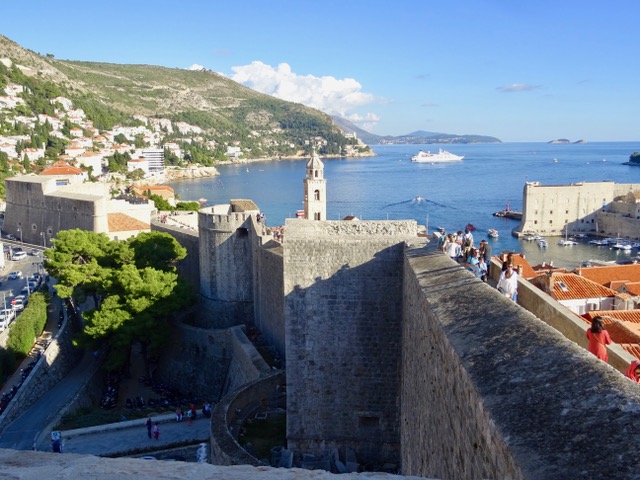
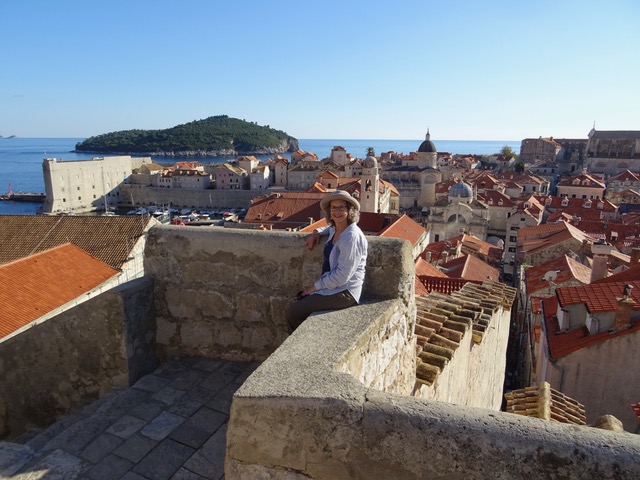
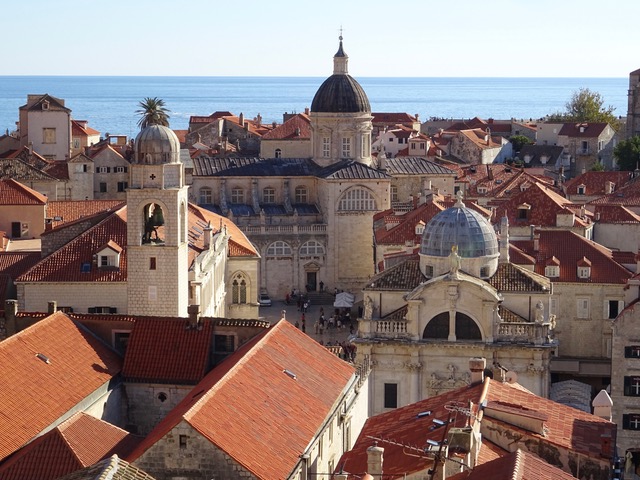
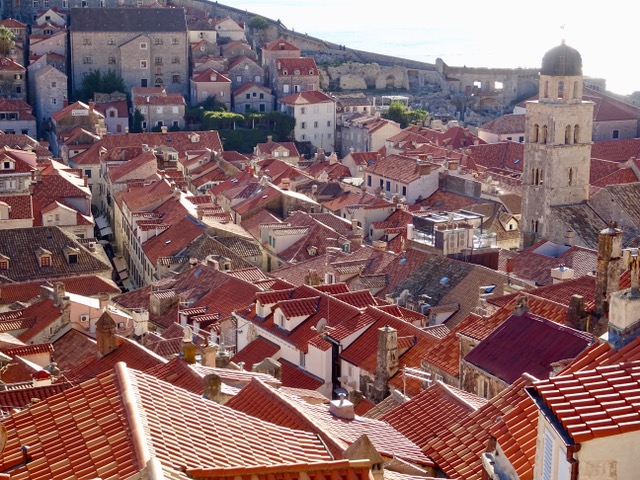
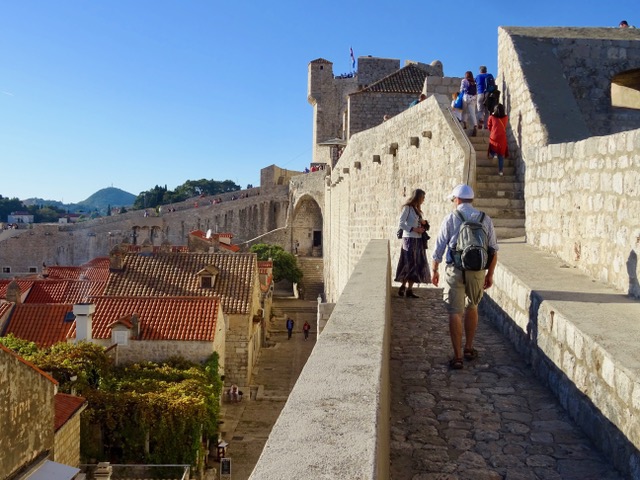
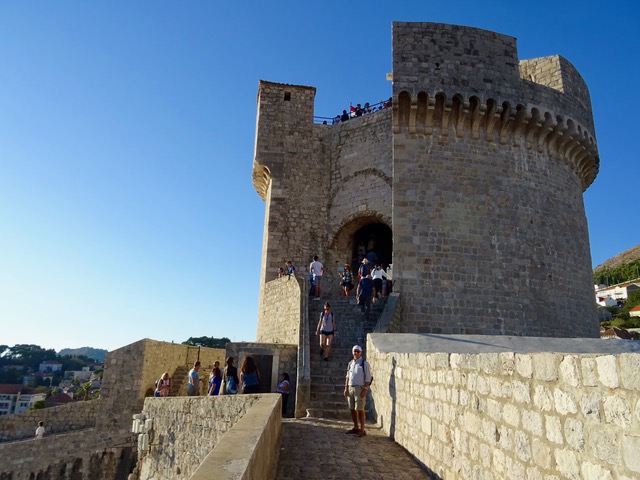
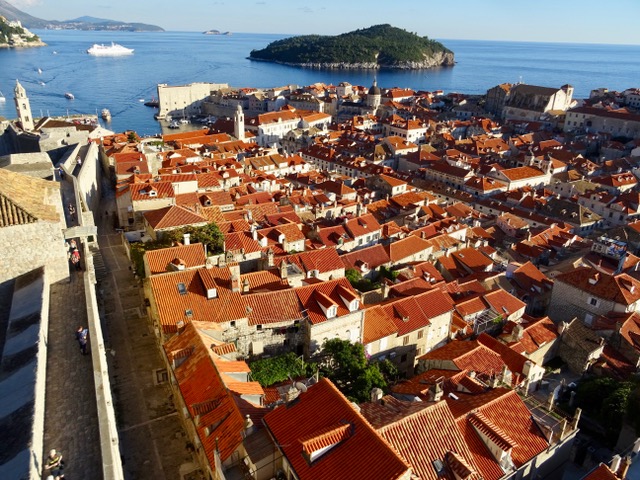
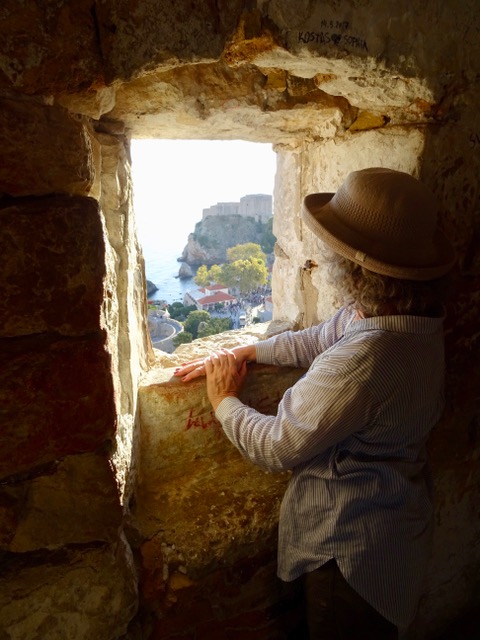
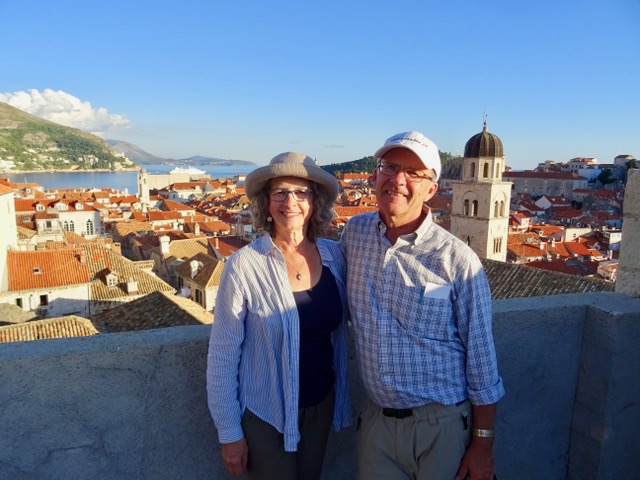
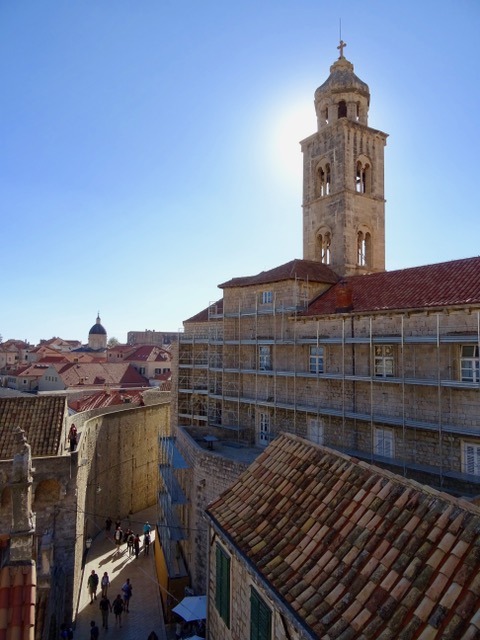
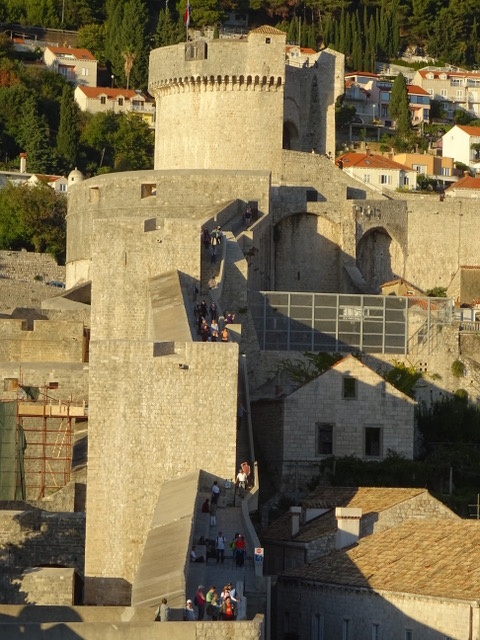
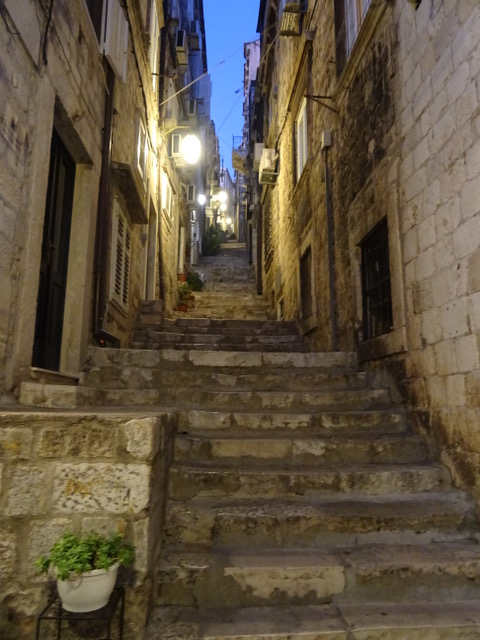
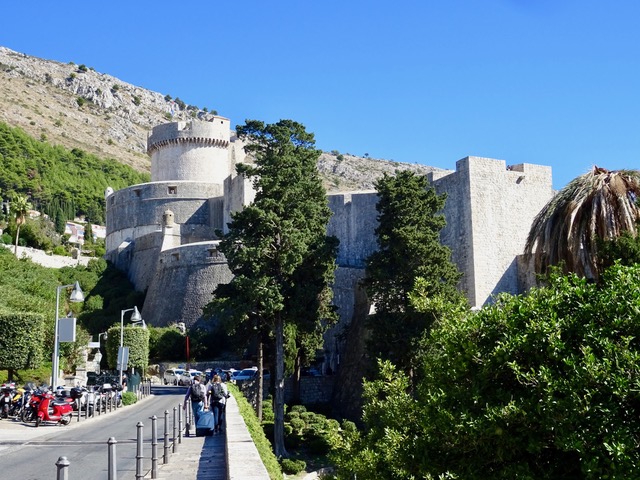
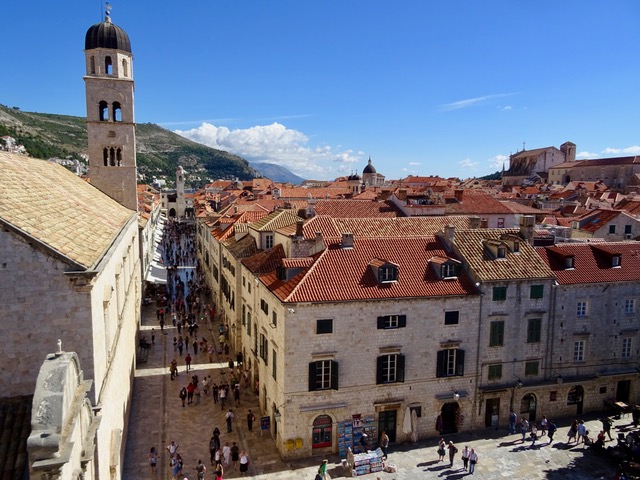
We walked the walls around Dubrovnik today and I took 360 photos! Don’t worry, I am not posting them all but it sure was hard to choose only a few.  Dubrovnik, a UNESCO World Heritage Site, is an ancient city surrounded by medieval walls that are almost two kilometres long. Our first view of the walls is impressive.This is the Stradum, the main street of Old Dubrovnik.Soon we are up on the walls ready to start our walk. the guide books say that most people spend one to one and a half hours here, but we spend four hours walking the walls and enjoying the views.The walls are up to 125 m high and 6 m thick!This is one ladder I won’t be climbing!The walls enclosed and protected the buildings of the stari grad, or old town.Dubrovnik is not just a tourist attraction, it is home to many and we see potted gardens and laundry drying all around town.The harbour is full of boats of every type.Looking out towards the new part of town…and back towards the harbour.I just love all the domes and towers…
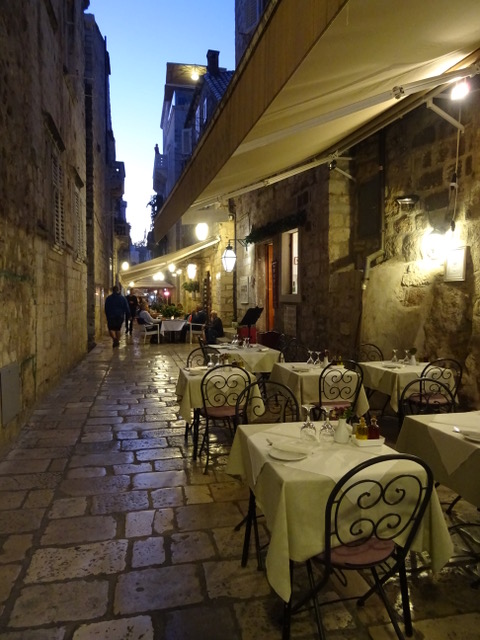
and the narrow streets with all the steps…and the chimneys…and all the tile roofs. I guess I just love all of it!I googled and discovered that walking the walls involves climbing 1080 steps… but the views are worth every single one.A woman told me that this was a cute picture and offered to take it for me.This tower was featured in the Game of Thrones. There are a lot of sites from the show in Dubrovnik and we intend to find some of them this week.As the sun began to set, the colours changed.I retraced some of our steps at the beginning of the walk to take a few more pictures in the golden afternoon sun and Bob waited for me.  Can you spot him?As the sun set the lights came on and the narrow side street looked even more interesting.Every space is used  and many of the streets are lined with tables waiting for dinner customers, but we head home.  We have been walking for eight hours and we are both tired.