Exploring Near Lagos, Portugal

First thing on the agenda this morning is a trip to Lagos to visit an Osteopath.  When we arrived there, we realized that we had left our red bag sitting on the road in front of the car back at our apartment.  We sent an email to our AIrbnb host who kindly called the cleaning lady at the apartment and located the bag for us. I was very happy, most of the stuff in the bag could have been replaced, but not my travel journal.

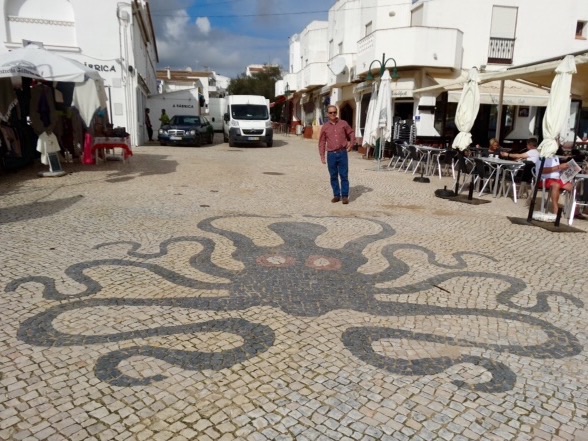
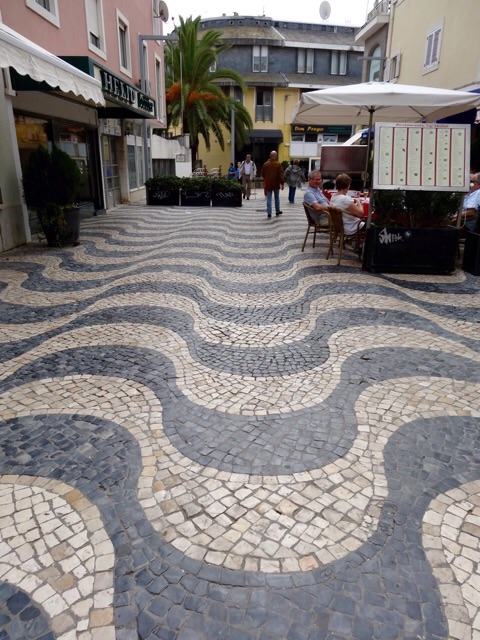
Bob waited for me near the beach which had streets with more great cobblestone designs. We both really liked this one.

image

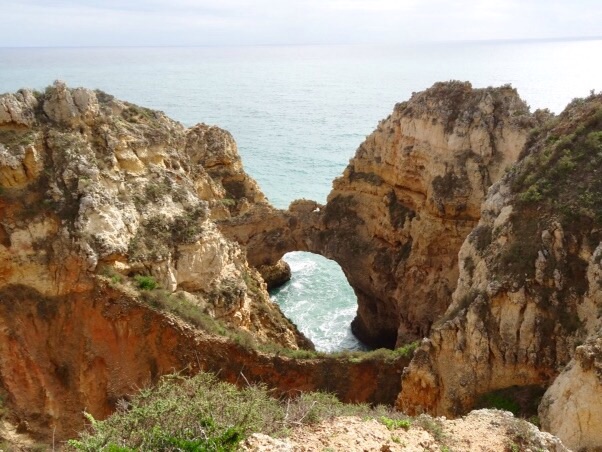
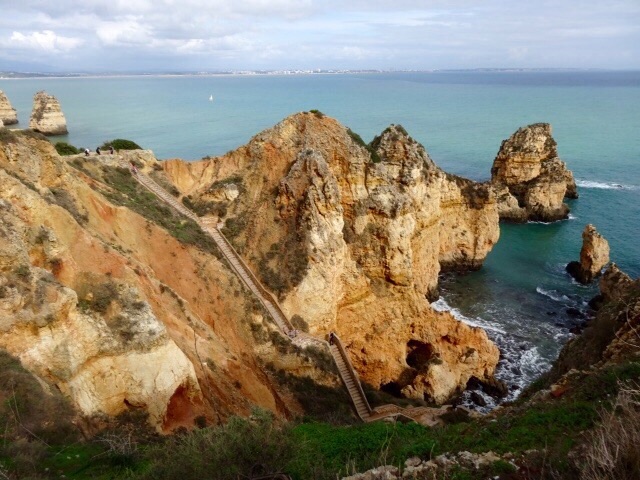
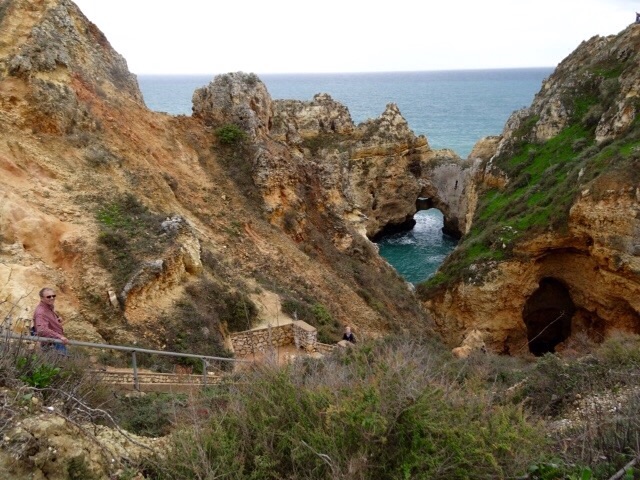
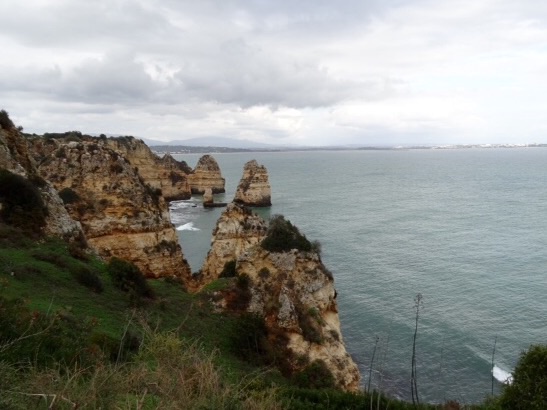
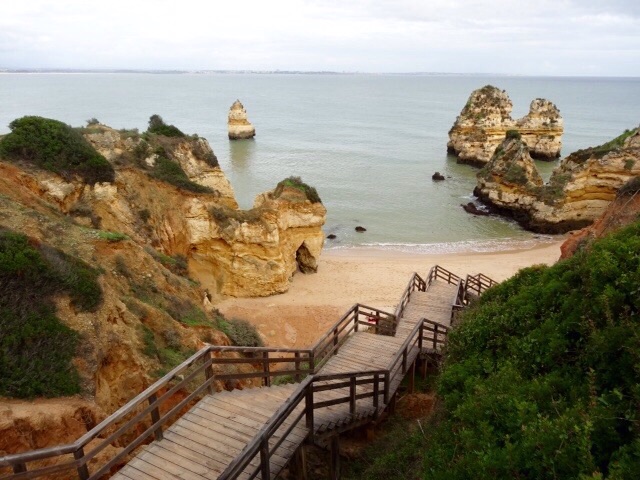
Next stop is Farol da Ponta da Piedade. This is an area near Lagos that has a lighthouse, which didn’t seem all that special, but it is situated in a pretty spectacular area. image imageWe decide we need to climb down this staircase to see what is down there. There are 191 steps down and of course, 191 steps back up!

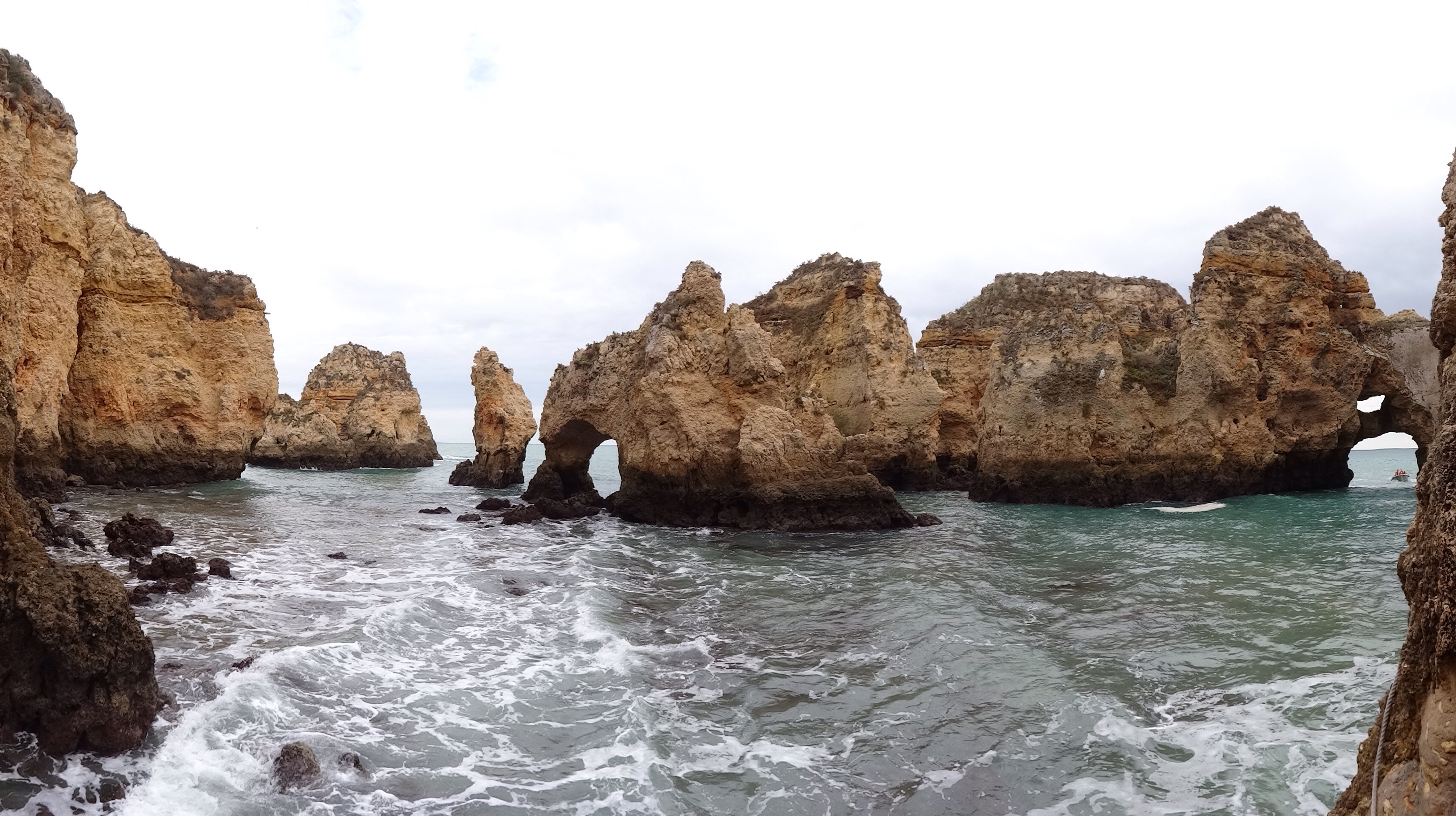
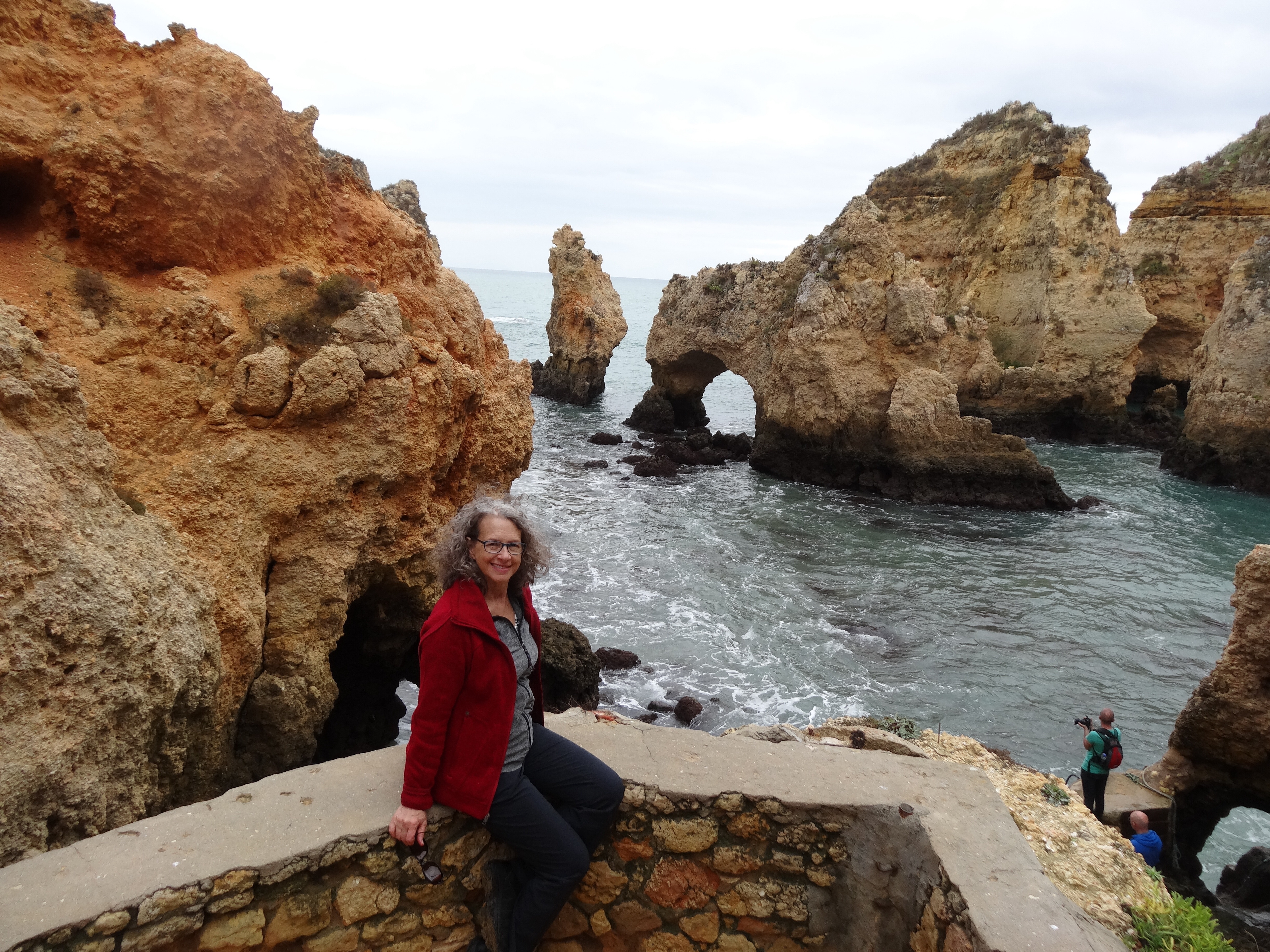
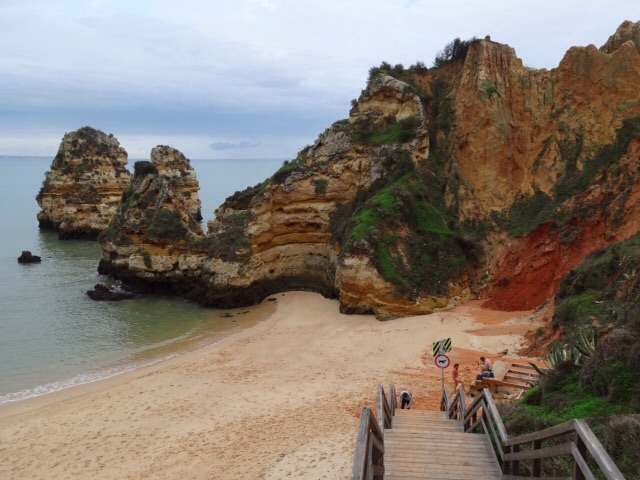
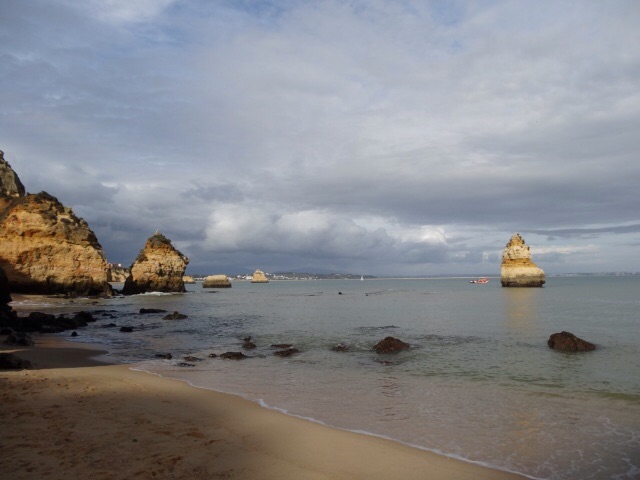
image Here is what we found.image imageA short drive along the road takes us to Camilo Beach, with a view of Portimáo in the distance.image

Of course, to get to the beach there are more steps, another 225!image

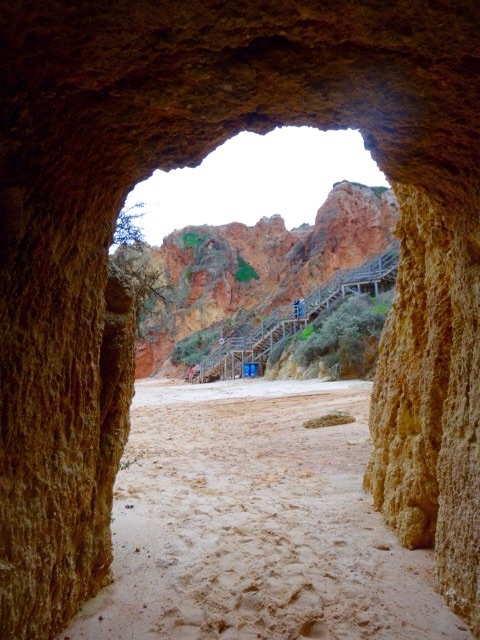
This beach has brightly coloured rock cliffs on all sides, and the really red sand you can see in this picture at the base of the stairs was very slippery and stuck to my shoes like glue!  I have no idea why, other than it was washed down from the cliffs and was different than the rest of the sand on the beach.  I wonder if it is some sort of clay.imageBob notices a tunnel that goes right through the base of one of the cliffs so we walk through it and discover another beach area.image

We sit for a while enjoying the view, then we head back through the tunnel, up the 225 stairs, and we are on our way back to Portimáo, which is only about a half hour drive from here.image

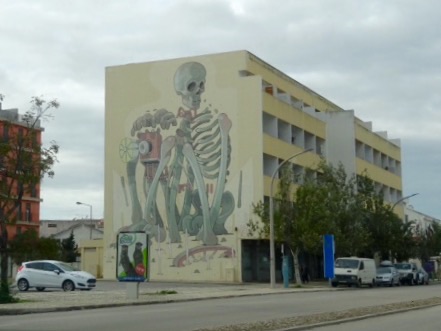
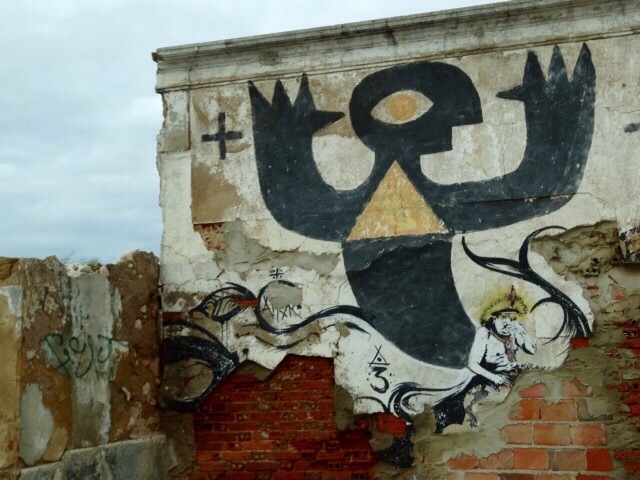
On the way home I manage to snap a couple photos of some street art.  I’ve seen some really interesting stuff, but most of the time we have pased it before I can get a photo.  Traffic was a bit backed up so I managed to get these two pictures.image image

We leave for Seville, Spain in the morning, so we tidy up the apartment and pack most of our stuff tonight.  We are hoping for an earlier start tomorrow.

Lisbon to the Algarves in Southern Portugal

Monday, October 26

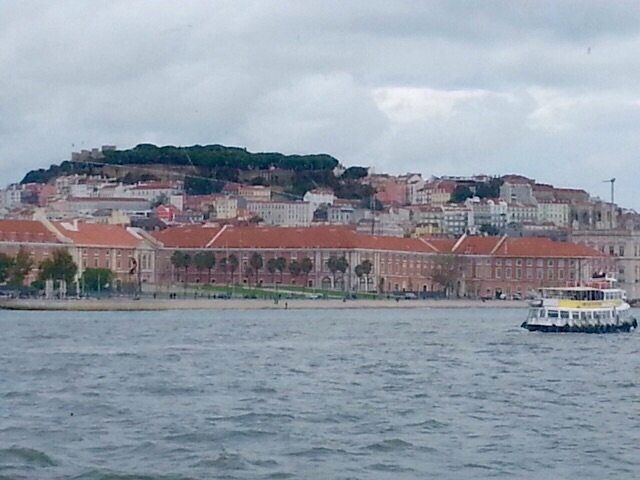
Finding an osteopath when we are on holidays is always a bit of a challenge.  I locate one not far from us and go for a treatment this morning.  Afterwards I have a quiet time at our apartment and Bob goes into Lisbon. He went for a ferry ride to the other side of the river in Lisbon and back again on a boat like the one in the picture.imageThen he takes the famous, crowded #28 tram ride to the Castle San Jorge which is high on a hill over the old city.

image

On the way home he stops for some groceries and then manges to get on an express train which tales him right past his stop.  After missing the next two trains, due to some confusion over which one he should be taking, he finally arrives home wet, cold, and an hour late.

Tuesday October 27

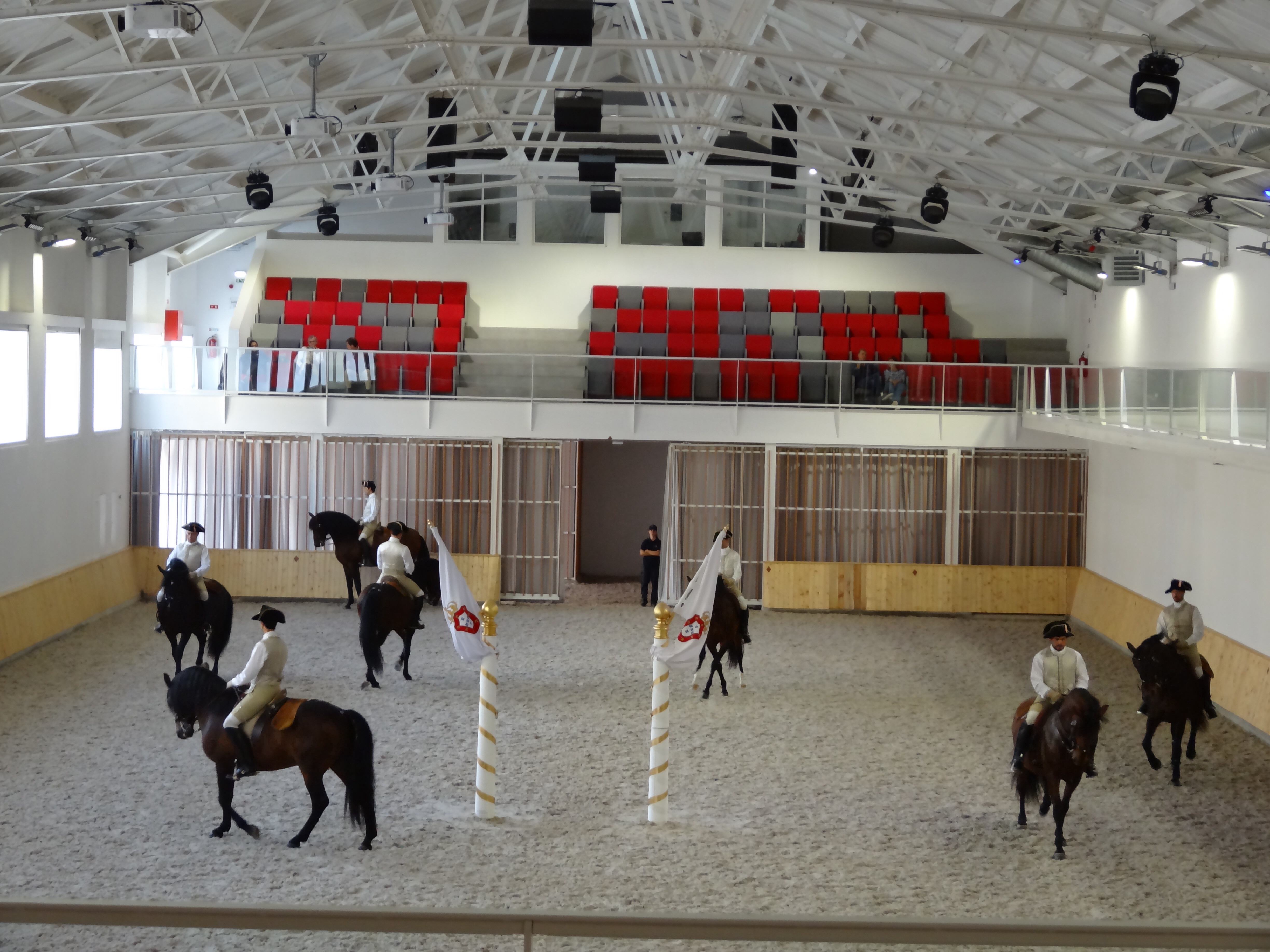
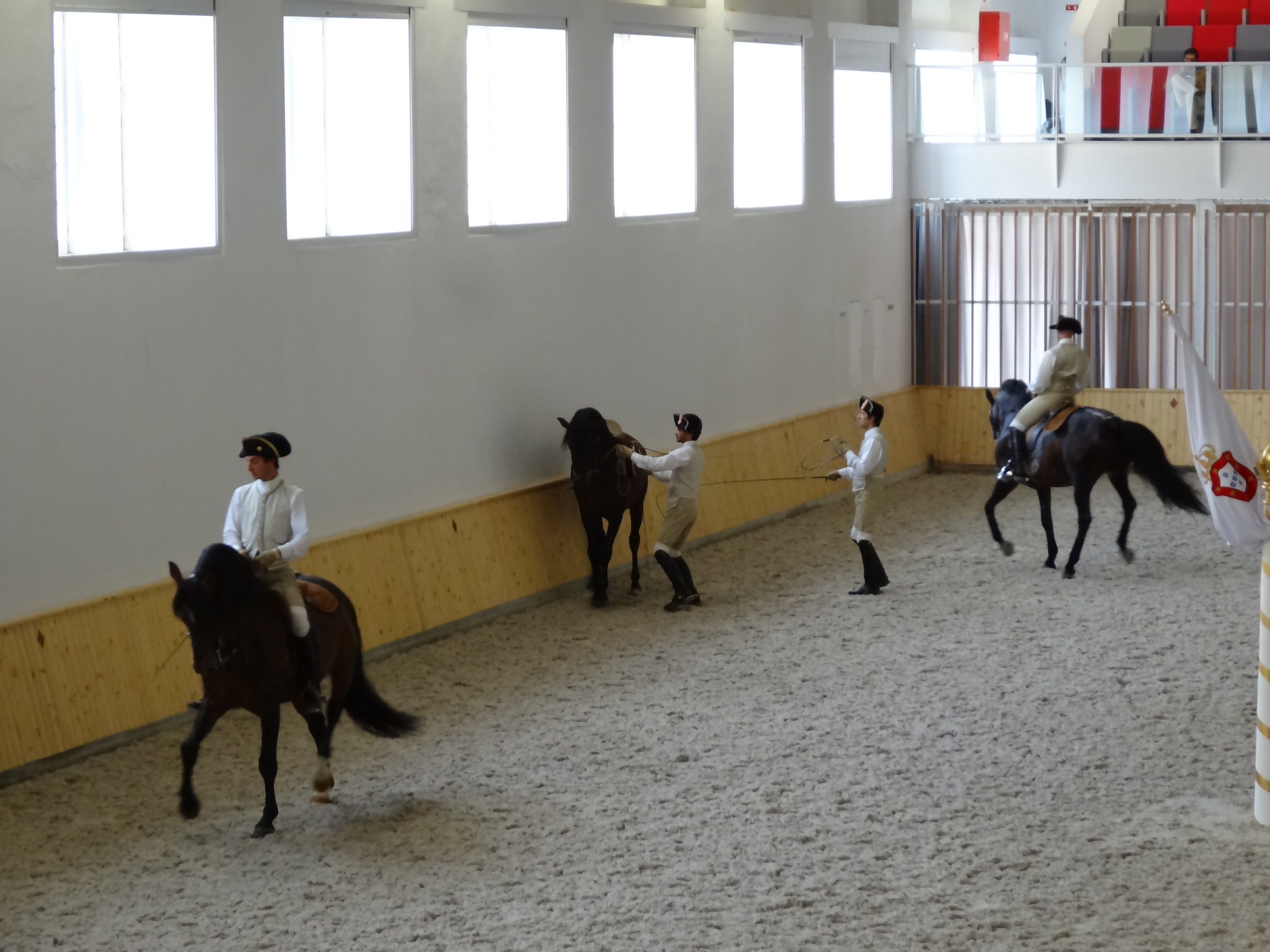
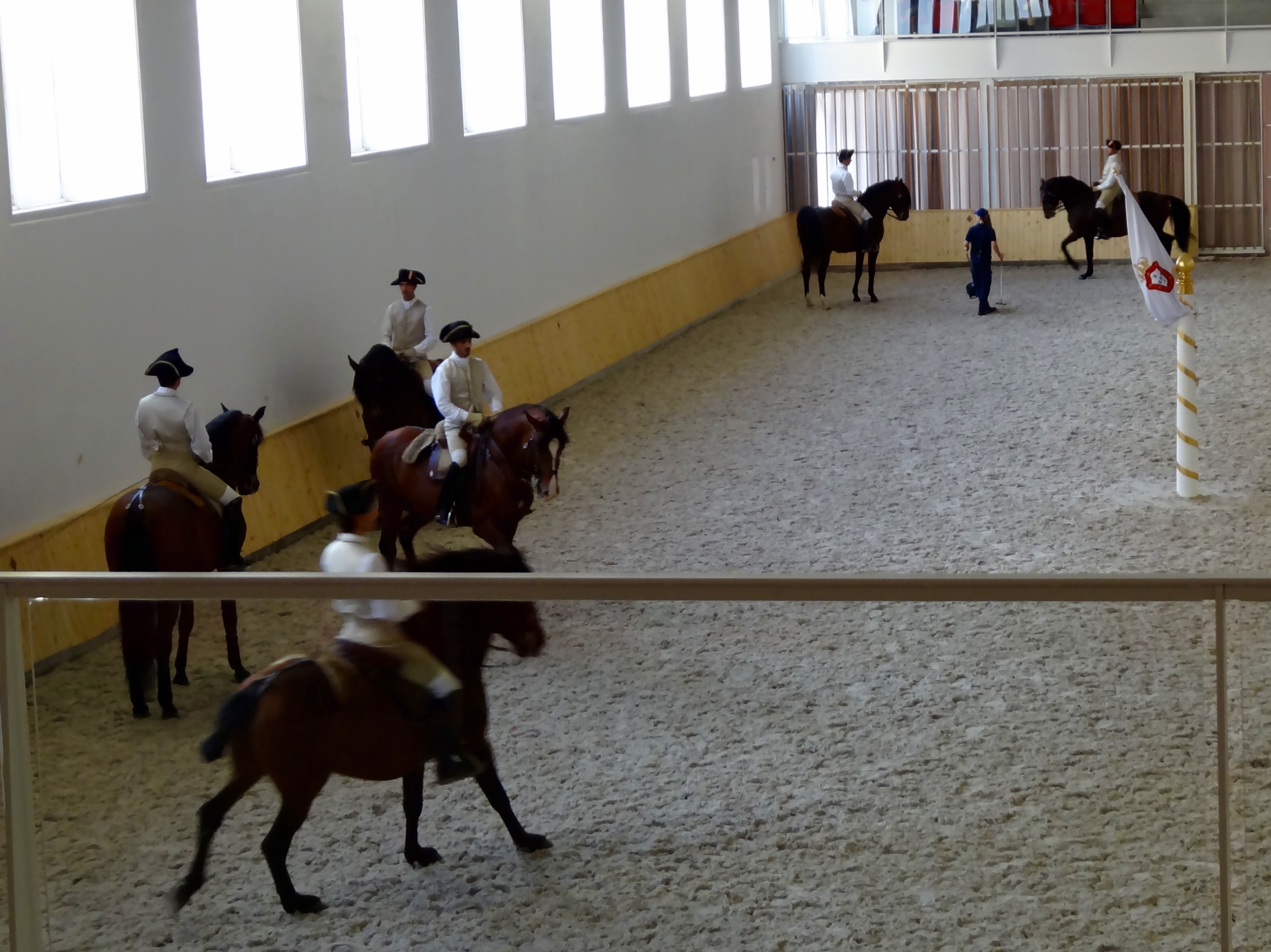
We set the alarm and get up early because I want to go watch the the training session at the Portuguese School of Equestrian Art. These Lusitano horses have been used for equestrian art and bullfighting for centuries but were at risk of dying out.  The stud farm was revitalized in 1942 to revive the breeding and training of these beautiful horses.  We watched the training session for about an hour and a half. I was entranced and wished that we could have seen one of their performances, but the timing for that didn’t work out.

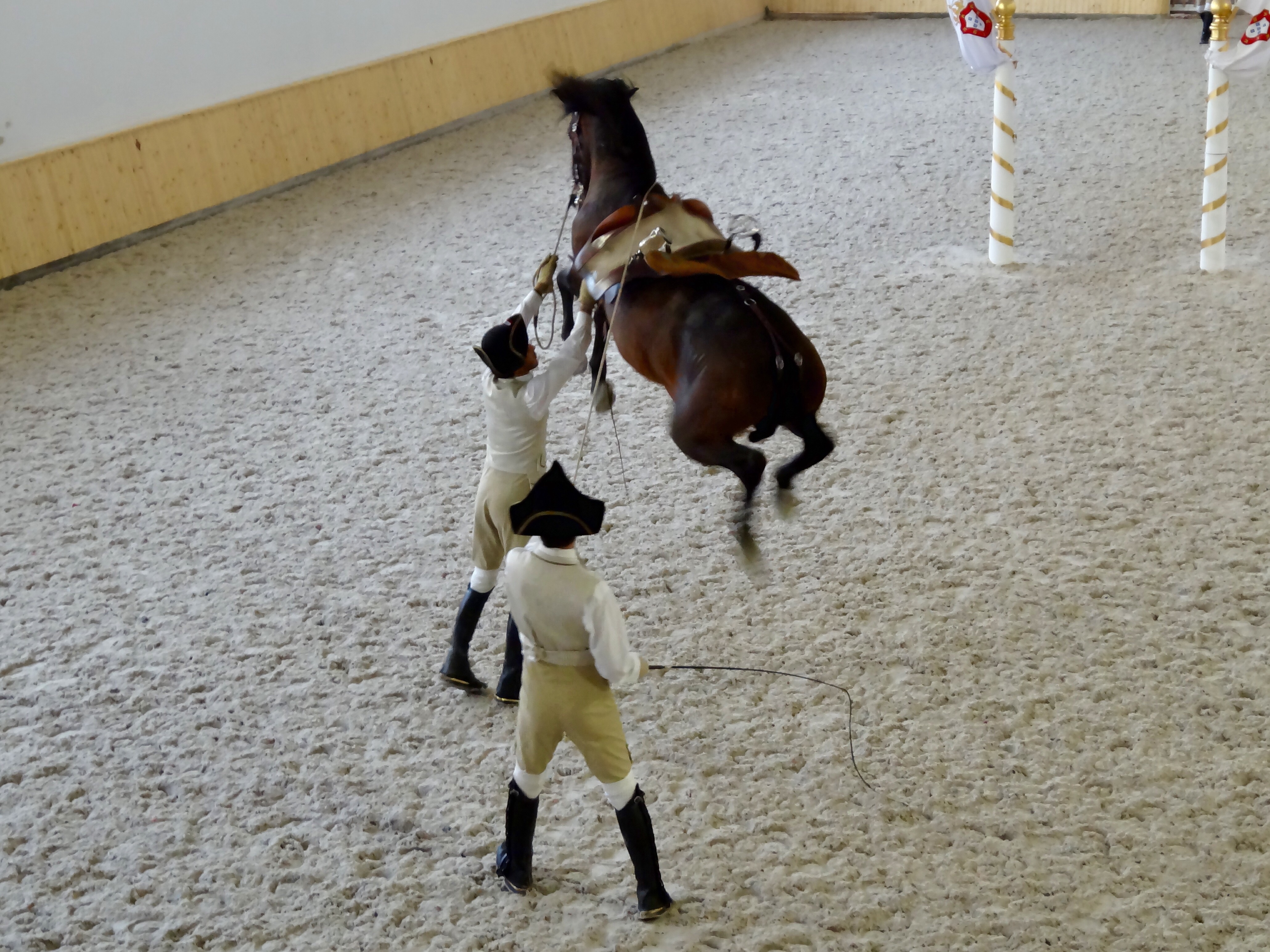
imageThere are up to nine horses in the ring at a time, and the riders change horses over the hour and a half.imageimageThey were teaching this horse to do the Capriole, where the horse rises into the air and forcefully stretches out his back legs.  It was very impressive.image

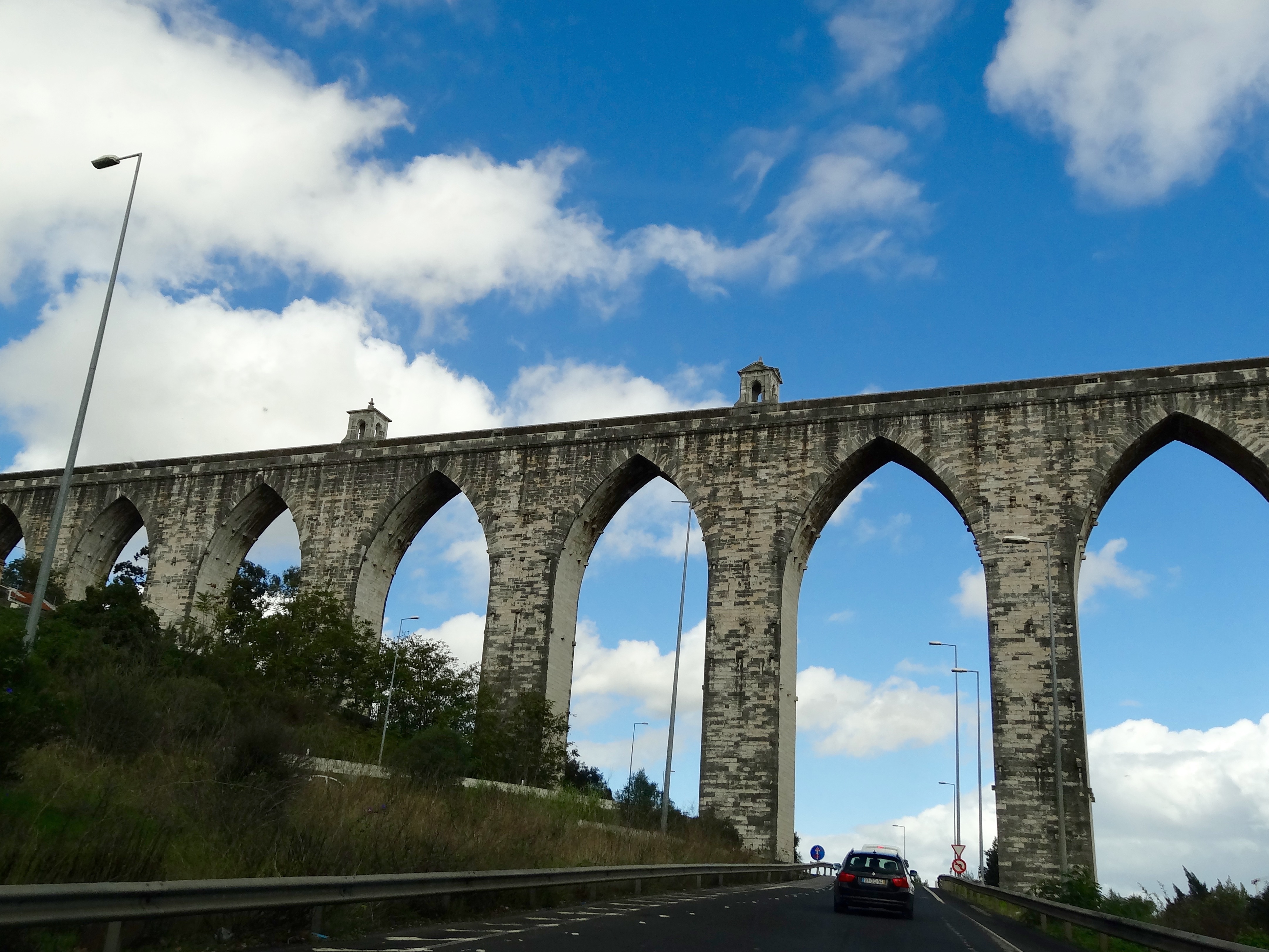
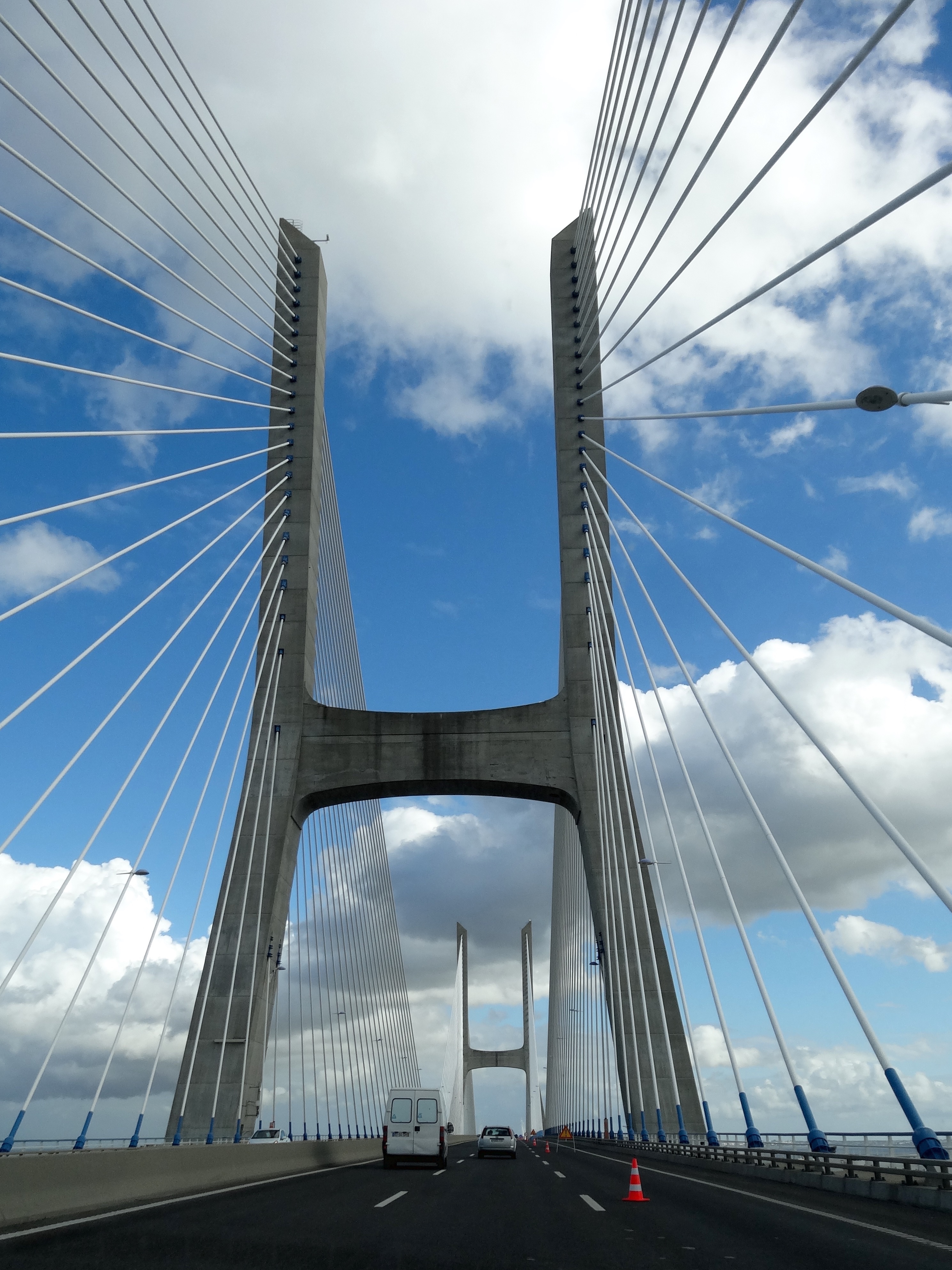
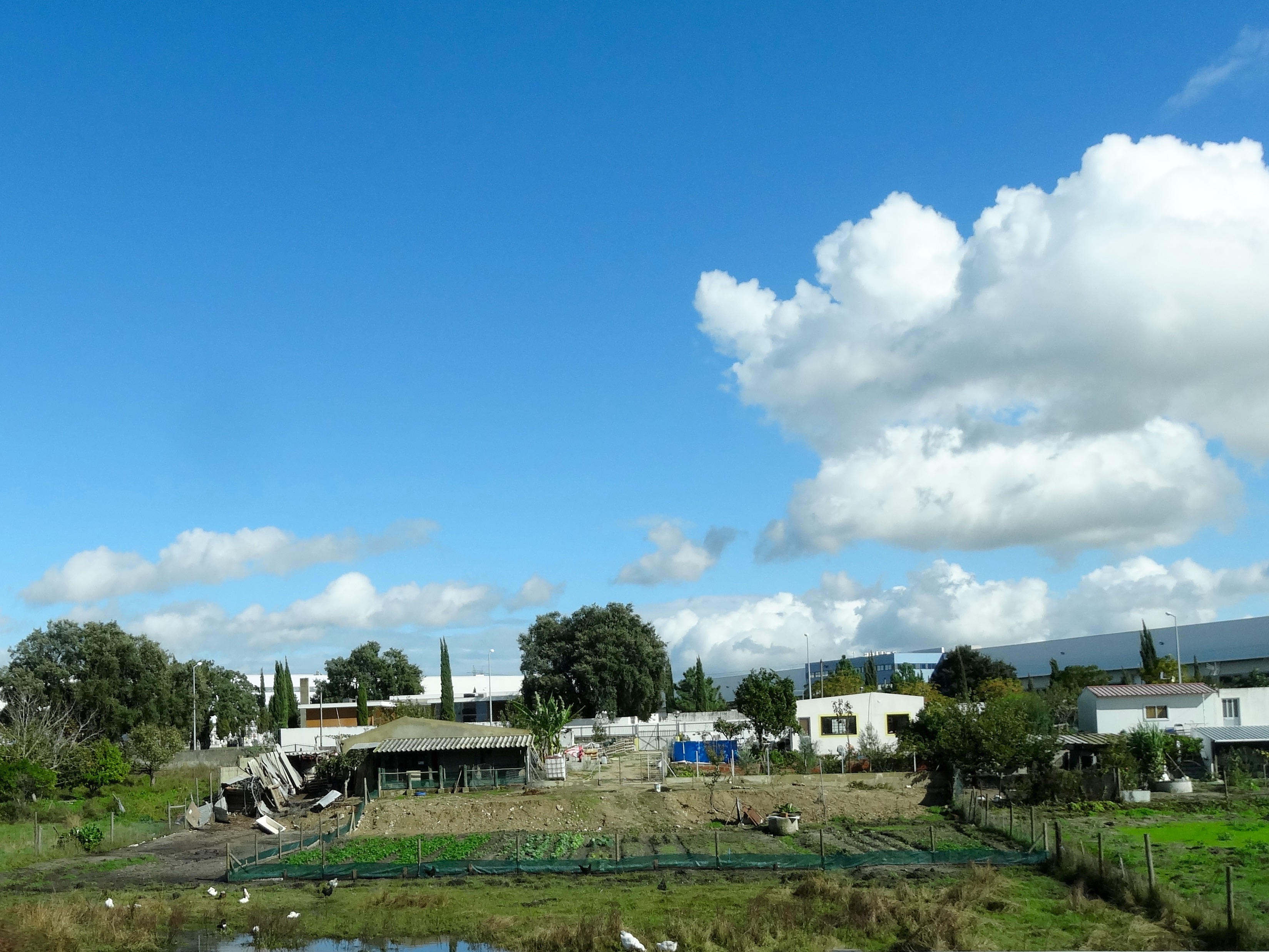
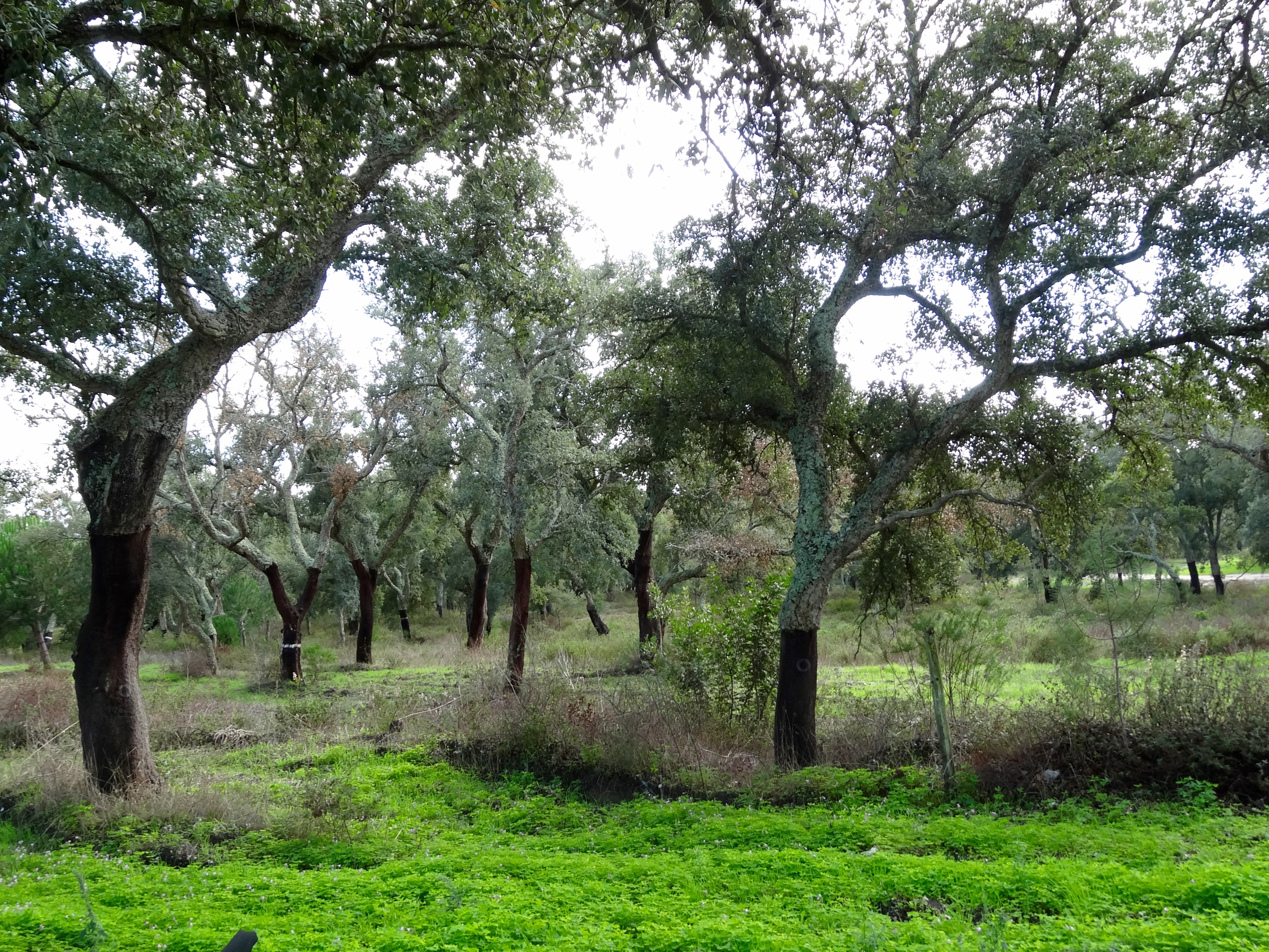
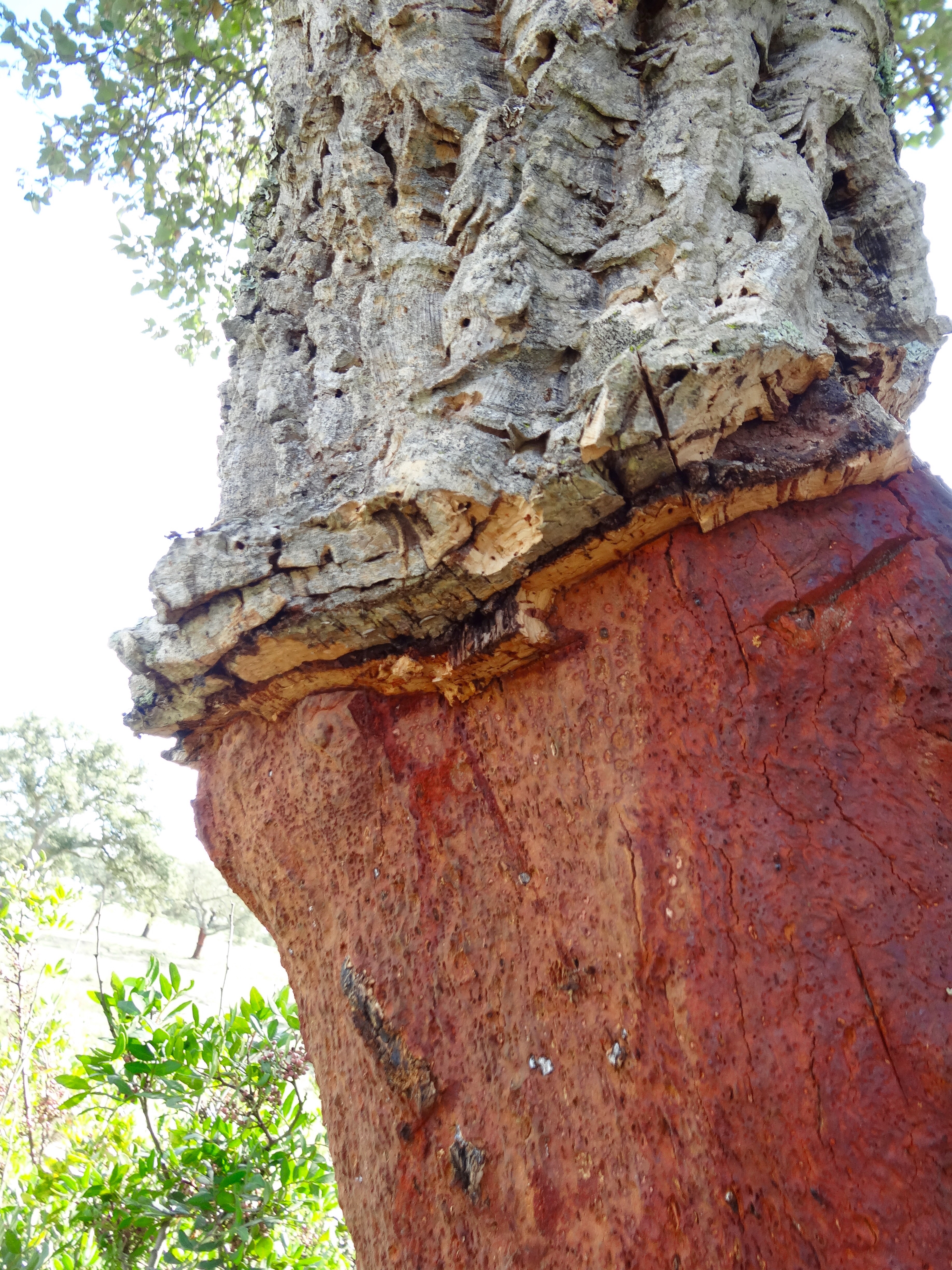
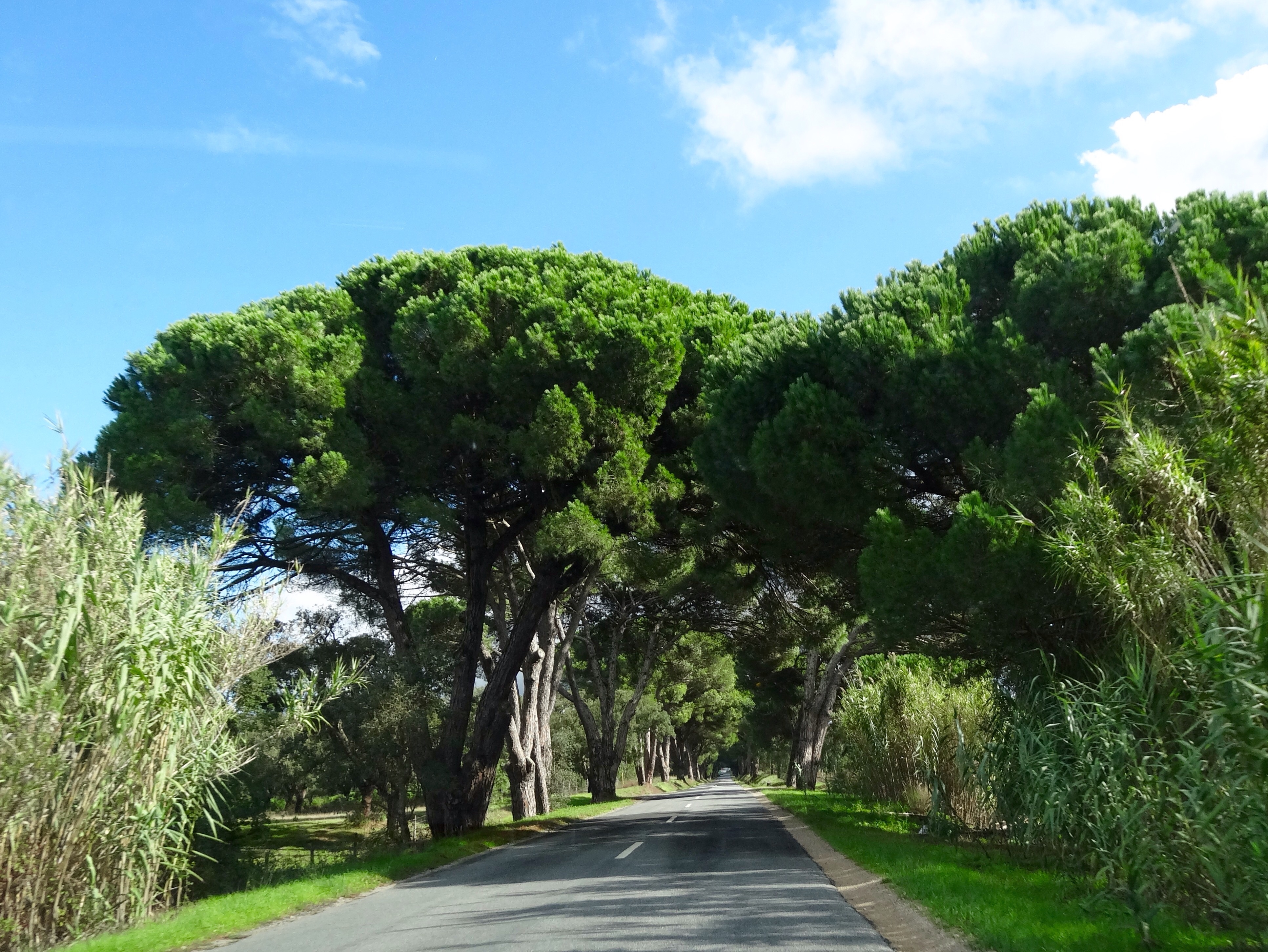
Now we are on our way to the Algarves where we have our next apartment in a town called Portimâo. We drive under this old looking bridge but have no information about it. imageThen we drive over the 13 kilometer long Vasco de Gama bridge as we leave Lisbon. It is probably one of the longest bridge we have travelled on.imageOne of my ‘driving ‘pictures of a garden right beside the main road just after we get off the bridge.  One of the interesting things about both Spain and Portugal is the mixed use of land.  It is common to see houses right next to apartments, industrial or commercial areas, and derelict buildings next to very well kept ones.  I find it rather fascinating, but I don’t think I would like to live somewhere with this sort of planning, or maybe it is no planning?imageWe are soon driving on roads that travel through farms of cork trees.  These trees have their cork harvested once they are 25 years old.  The cork is stripped from the trunks every nine years and the trees can live up to 300 years!  Over half of the world’s cork production comes from Portugal and Spain.image

Here’s a close up of the cork and the stripped trunk. Quite fascinating.imageThe roads here are very pretty and we enjoy the drive, stopping near here for our lunch.image

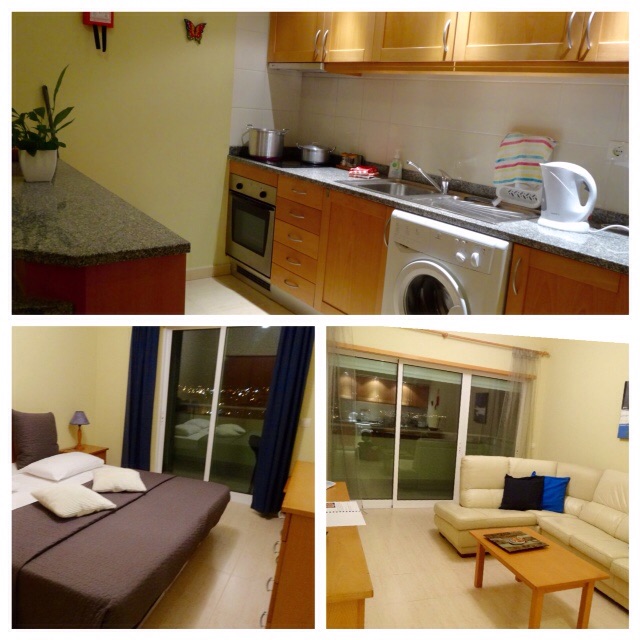
We meet our host, and his two children, at our Portimâo Airbnb apartment at 6:00.  It doesn’t take us long to decide to extend our stay here from four nights to a full week. It is a lovely apartment on the 11th floor of a new apartment building and the price is certainly right, only $35 Canadian a night!

image


Cascais and the Casino

Friday October 23

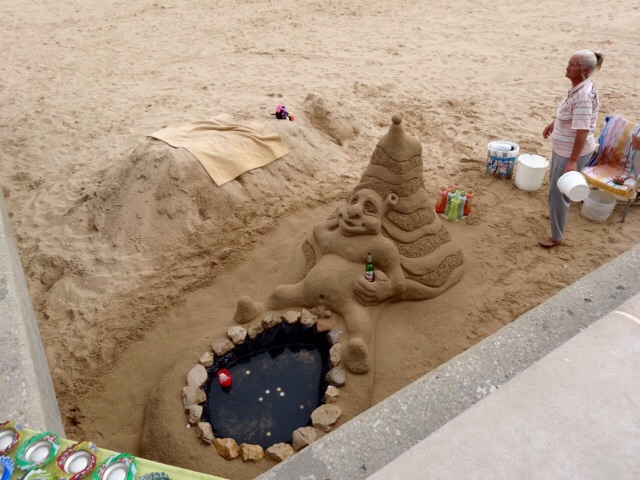
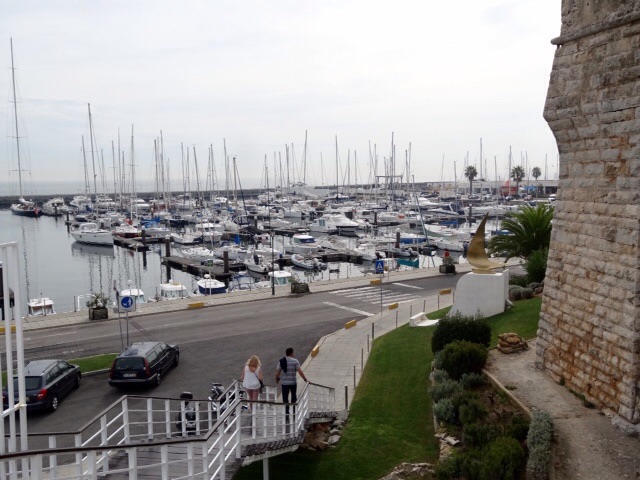
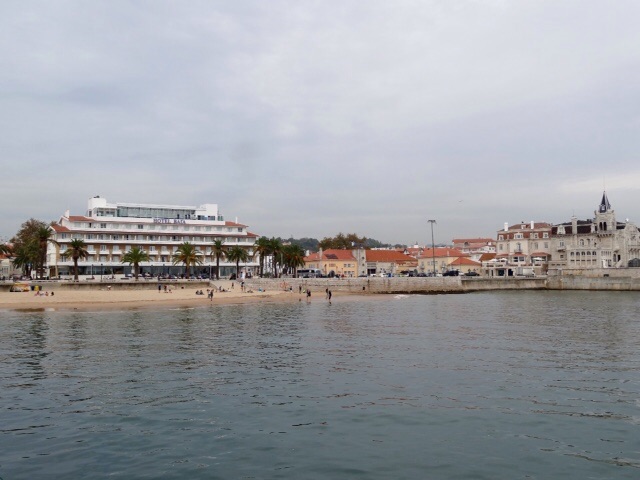
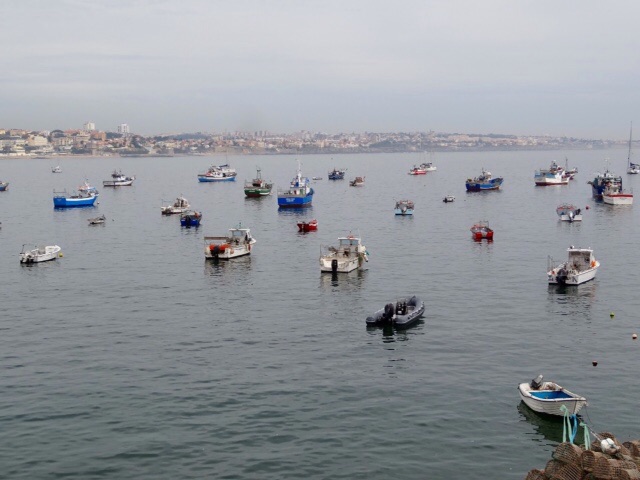
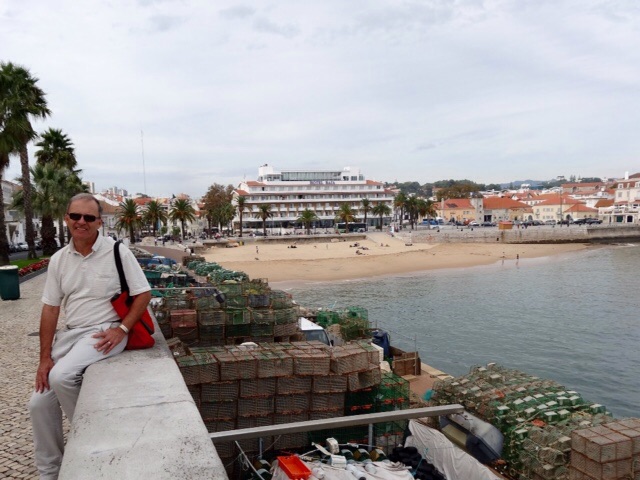
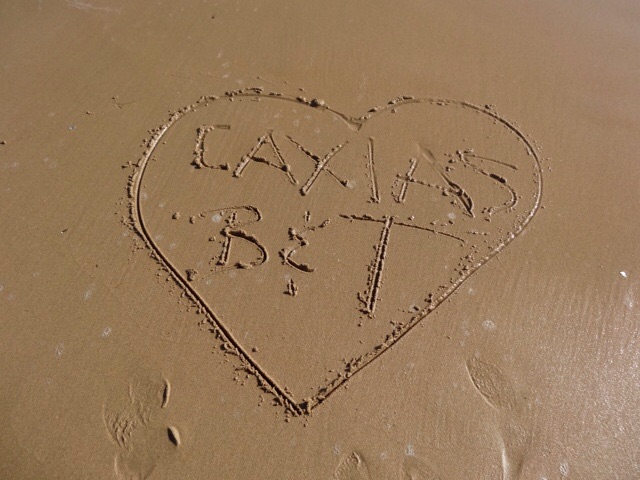
We drove to Cascais today, a town about a half hour west of where we are staying near Lisbon. We walked along the pedestrian streets and visited a few shops, but no purchases.  Everything I like is either too expensive or too big or fragile to get home.  The cobblestone street was a bit disorienting as it created a bit of an optical illusion.imageThere were some people on the beach making sand sculptures to earn a bit of money.imageWe walked down along the docks past the fishing boat area and then through the Cascais Marina, which were both in the shadow of ancient fortress walls.
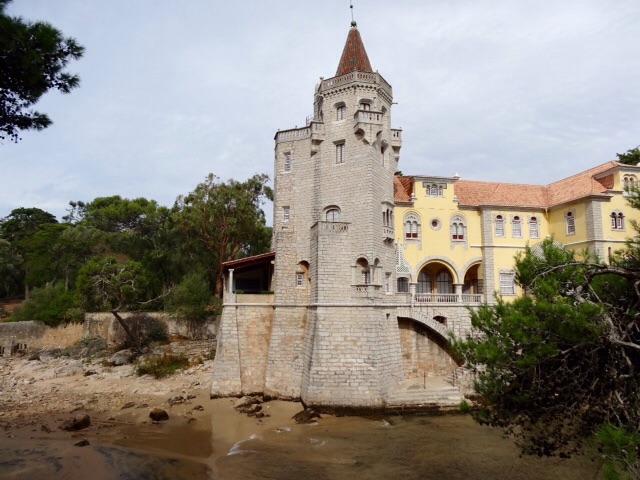
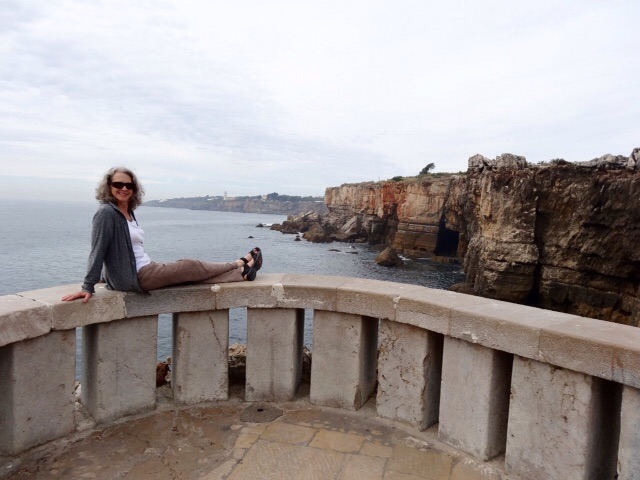
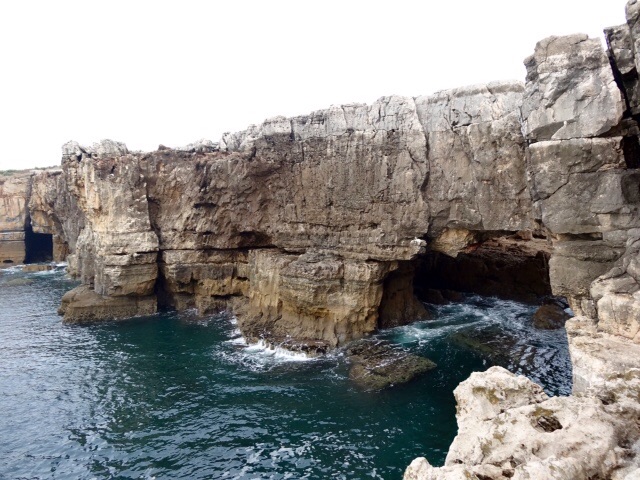
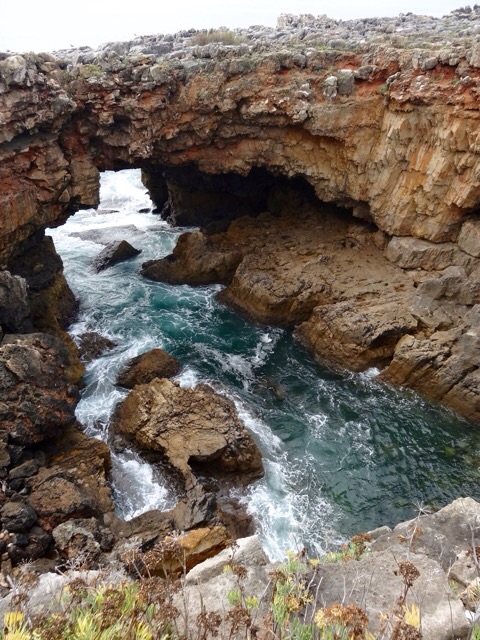
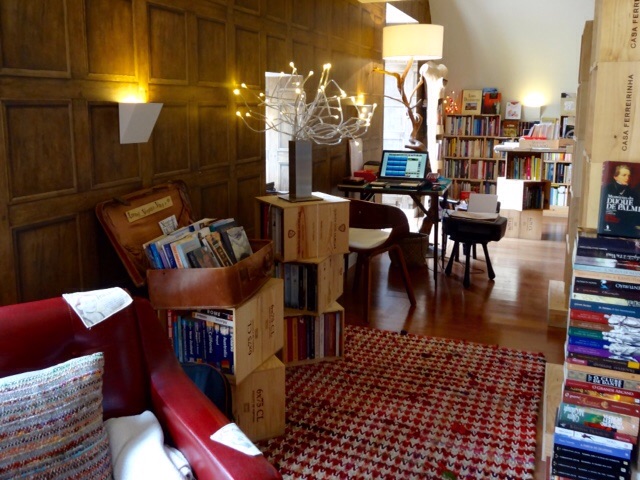
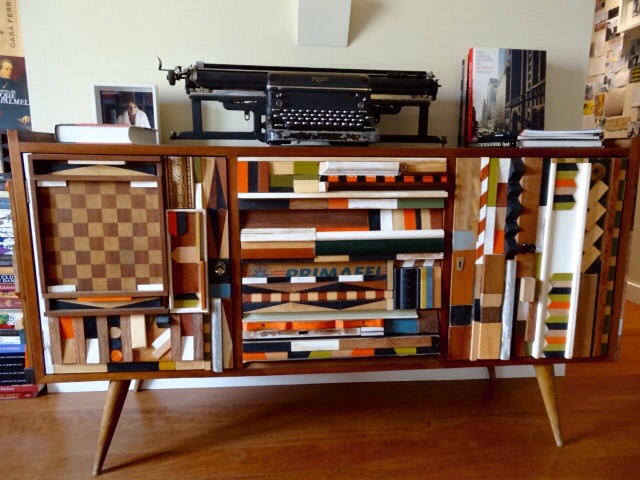
image  The view from the Marina back towards town.imageWe passed this interesting house, or maybe a small castle? on our walk towards the Boca de Inferno.imageBoca de Inferno, or Hell’s Mouth, is an interesting cliff formation about a forty minute walk from Cascais.The pounding of the Atlantic Ocean on the cliffs chiseled out a small cave, which then collapsed. There is a walkway so it is visible from both sides.image image imageBob wanted me to take this picture, he said it reminded him of a jigsaw puzzle.imageThe fortress walls I mentioned earlier now house a hotel and a bunch of artist studios, which unfortunately were all closed, but this quaint little bookstore was open.imageIt was full of interesting things, including this unique piece of furniture, made of all sorts of recycled bits of wood.  My nephew in Portland has started woodworking and has buit some beautiful pieces. I thought he might like to see this.image

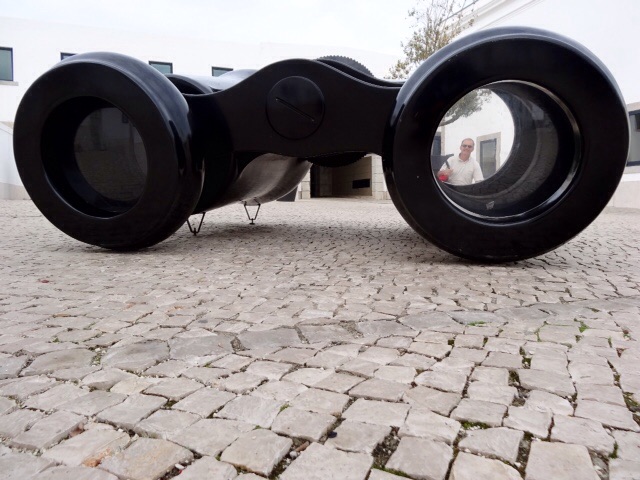
The courtyard also had a few different sculptures, including these giant binoculars.

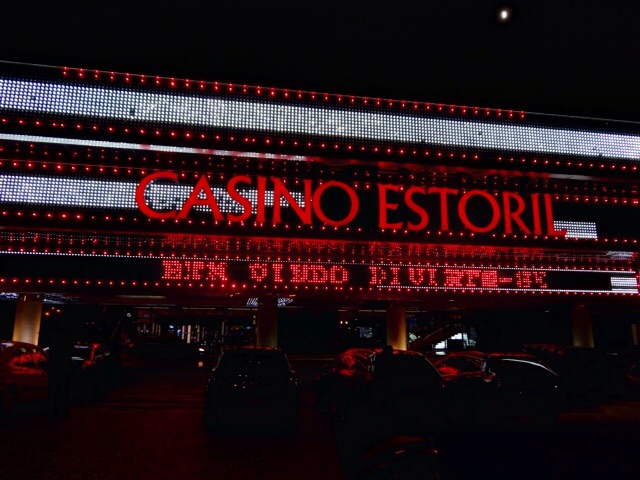
imageWe walk back above the dock with all the fishing paraphernalia that we walked by earlier.imageWe found a nice bit of beach and spent an hour or so just relaxing, watching the waves and the people.imageOn the way home we stop at a Casino in Estoril.  It is supposed to be the biggest Casino in Europe, but we are only able to find half a floor of slot machines on the main floor, and the gaming tables are closed.  Our casinos at home seem bigger than this one…We spent a couple of hours, won some and lost some and in the end it cost us 10€. 
image

Caxias, Portugal

Tuesday, October 21

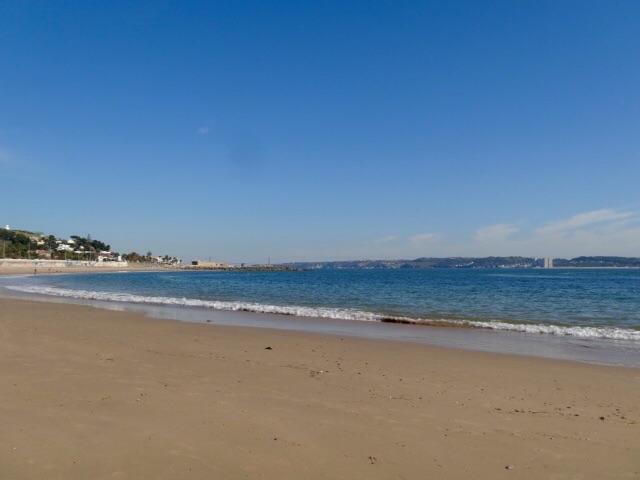
Caxias is a community about a fifteen minute train ride on the coast west of Lisbon.  It is our home base for the next week. Bob went exploring the neighbourhood this morning while I had some quiet time after our travel day yesterday.  Later in the afternoon we went for a walk along the ocean, which is just a couple blocks from our apartment. image

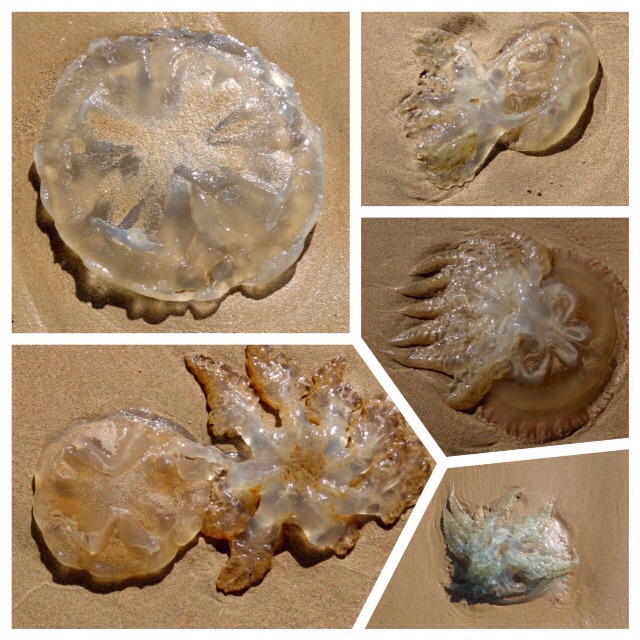
I was looking for treasures and I found a few intersting shells, but the most interesting thing was all the jelly fish on the beach.  They were huge, between 12″ to 18″ across and there were a lot of them washed ashore by the waves.  No way I was going into the water here, even if it had been warmer.image

There were several large military looking vessels as well as quite a few other boats. I enjoy being by the ocean but I have to admit I am quite happy being on the beach watching the water.  I really don’t have much of an urge to actually go into the water, or even on the water.  Boating is OK but it is certainly not one of my favourite things.image

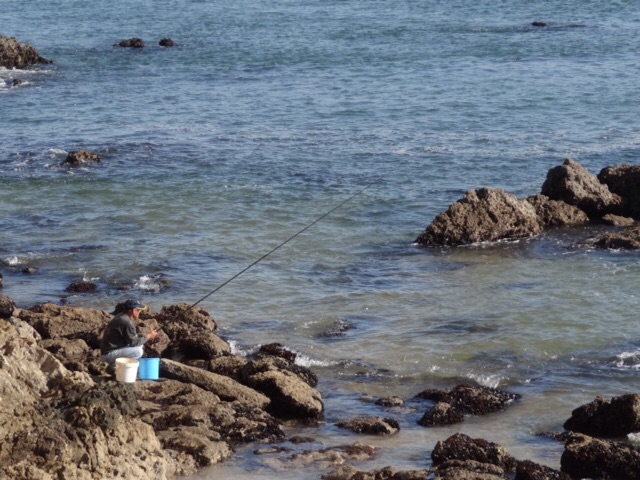
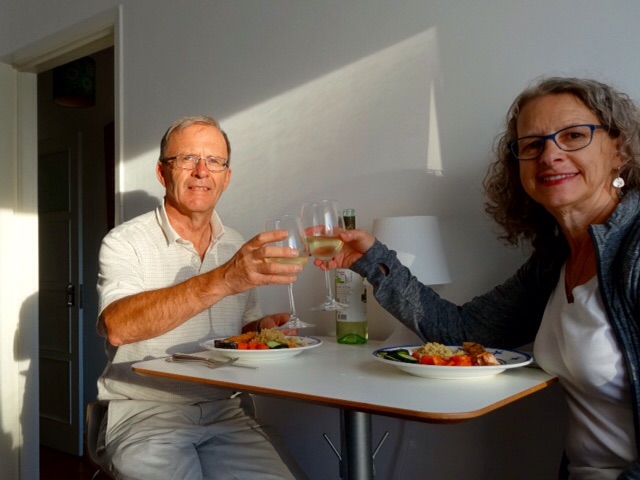
We spend quite a bit of time watching this fellow get ready to fish.  He was putting sand in his white bucket and then mashing it around with a big metal tool.  We were trying to figure out what you doing, and then when he was ready to fish he threw some of this sand into the water. We think he must have been mashing up some bait with the sand and that he was using it to attract other fish. He seemed to be a very patient, methodical sort of fellow.imageWe enjoyed our time on the beach, watching the water and the other people on the beach, then we headed home for a nice supper.imageimage

Iugula! Verbera! Missus!

Monday, October 19

We are still in Merda and we are going to visit ten Roman Ruins today if we follow Bob’s schedule!

Today’s title is from one of the plaques from the Amphitheatre yesterday.  Bob wanted me to use it for the title yesterday but I forgot so here it is today. It is what the crowds would shout at the Amphitheatre when the gladiators were fighting.  Kill him!  Beat him!  Pardon him! These were not easy times…

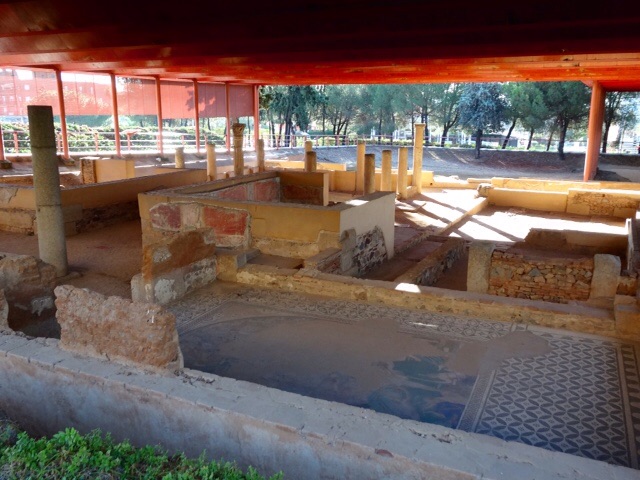
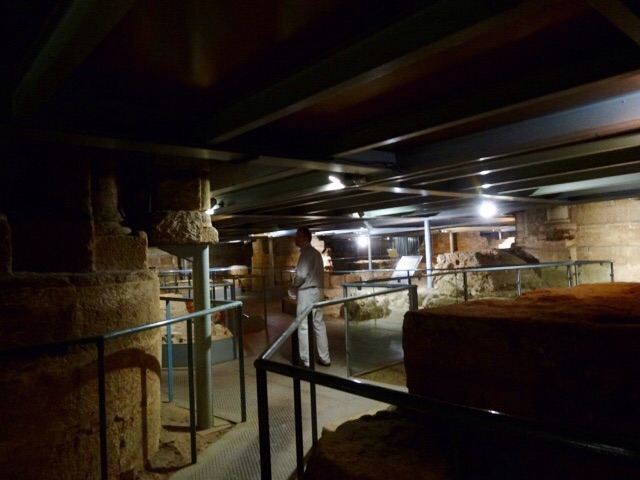
#1 The Mithreó House, a rather grand Roman residence that has mosaics, wall paintings, three patios, garden rooms, family rooms, commercial and industrial rooms and hot baths.  It is located outside under a protective roof.image

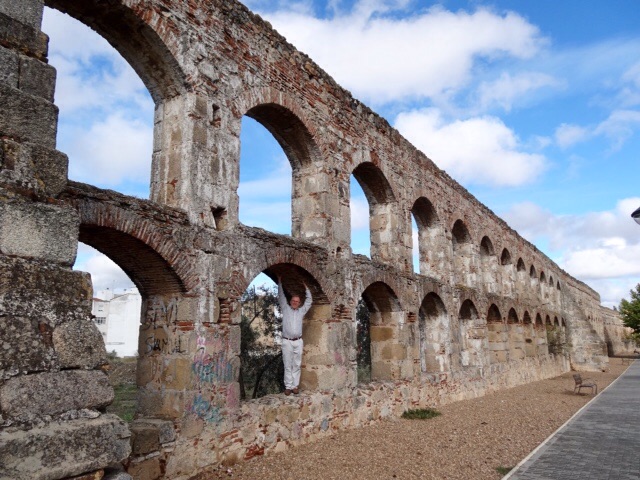
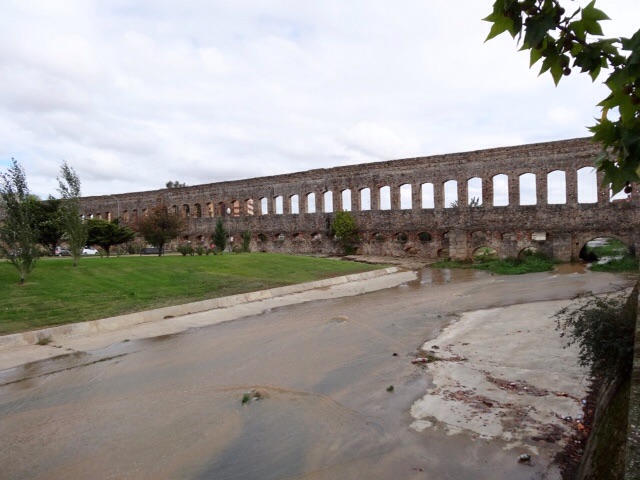
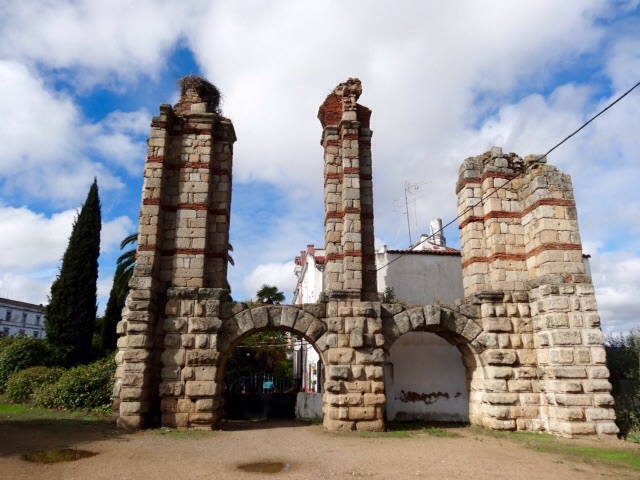
#2 The Aquaduct of San Lázaro image#3 The Aquaduct of Los Milagros ( I think). There is some confusion over the name of this one.  Bob thinks he can hold it all up!imageimage

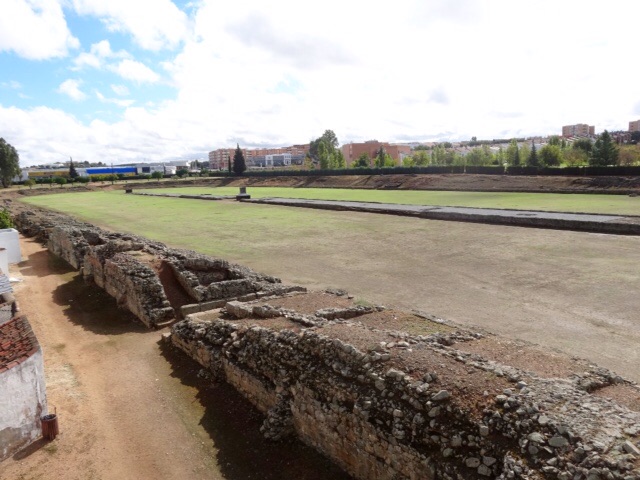
#4 The Circus, or Racecourse, which was a kilometer around the track, and they ran around this seven times during the course of a race!  We walked the track and out through the gates that the charioteers would have entered.  The Circus held 30,000 spectators who would often spend the entire day from morning to dusk watching the races.

image

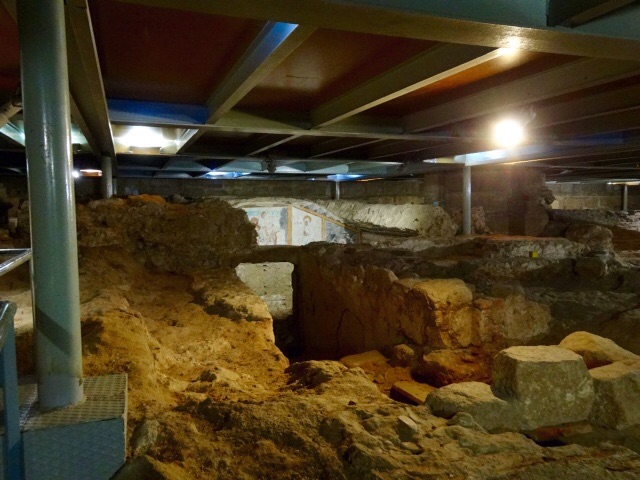
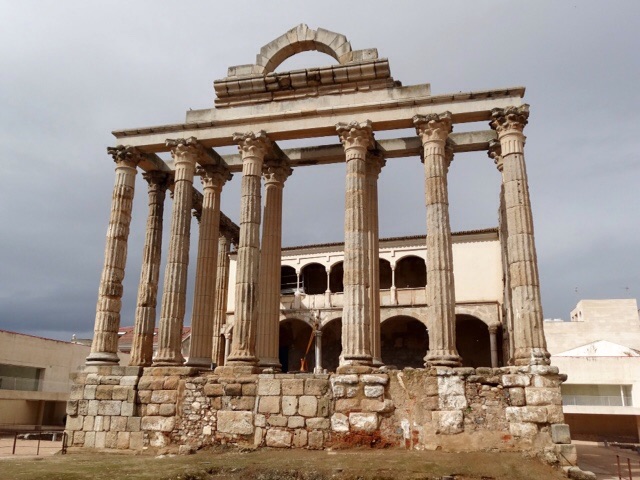
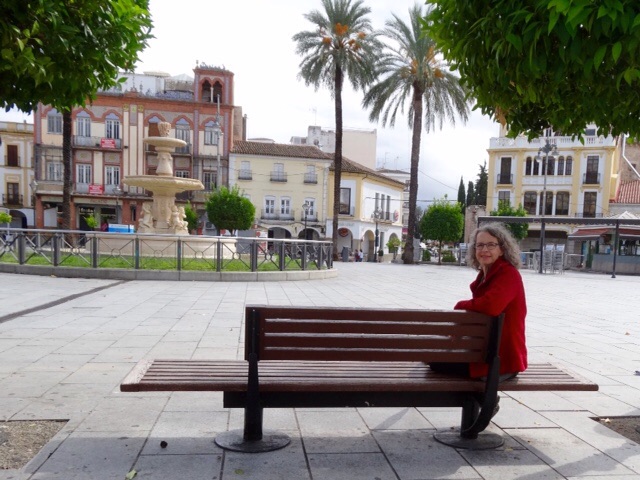
#5 Excavations at Santa Eulalia Church.  These excavations are beneath the church and have the remains of four different times: Roman Houses, 3rd century, a Christian necropolis, 4th century, which contains a mausoleum for Saint Eulalia, a martyred child saint, a basilica dedicated to Saint Eulalia, 5th to 9th centuries, and the present day church from 1230 until now.  imageimage#6 As we are walking we come across the ruins of a Roman hospital and pilgrim’s hostel, built on the remains of the site of an earlier necropolis.  There are ruins everywhere in this city!image#7 Next stop is the Temple of Diana, which was built in 1 BC, and later had a palace built inside of it, which can be seen at the back of the temple.image #8 Plaza de Espana is next, and time for a much deserved rest and some tea and cookies.image

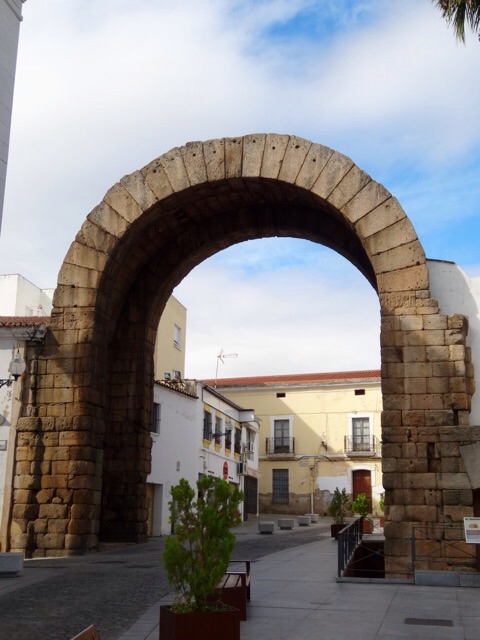
#9 Trajano’s Arch which is 15 meters high and was once covered in marble. Part of it is now lower than the road that runs through it. The right hand pillar has an area around the column that goes down to the original base of the arch.
image
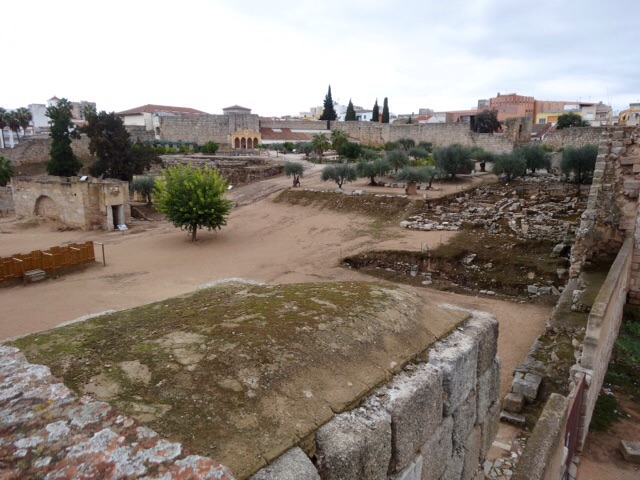
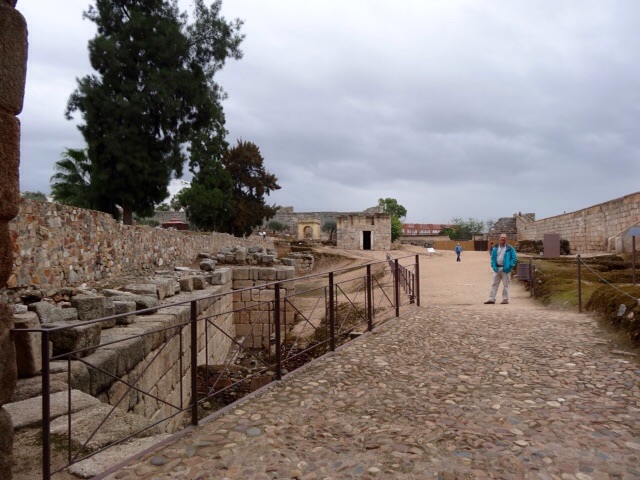
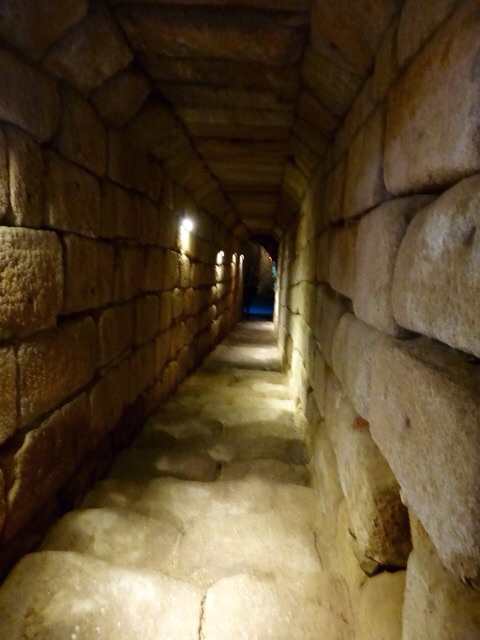
#10 The Citadel and Conventual, which is a Moorish fortress in 835 and later a convent in 1229.imageimageIt has a really neat underground cistern that we walk down this tunnel to visit, complete with goldfish.image

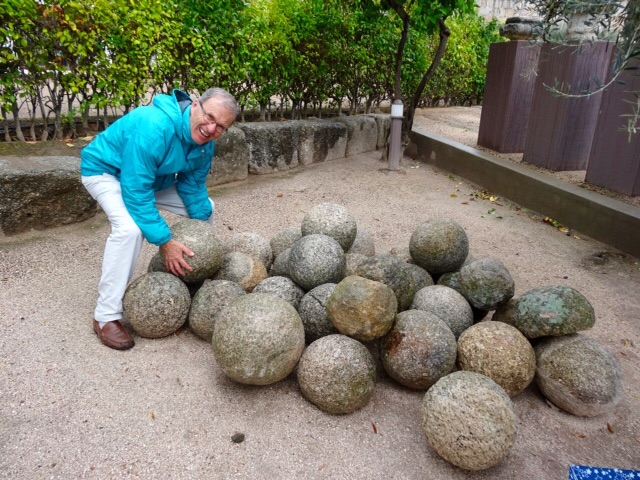
Bob is sure he can pick up one of these cannonballs.  What do you think?
image
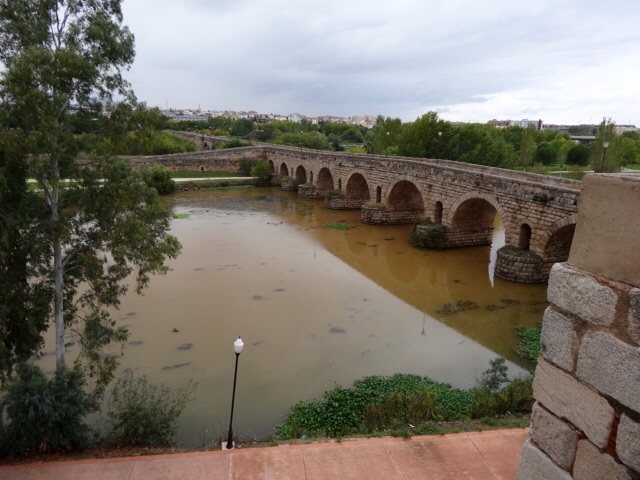
#11 The Roman bridge over the Guadiana River which was built 2,000 years ago was still in use in the 19th century and became a pedestrian only bridge in 1993.image

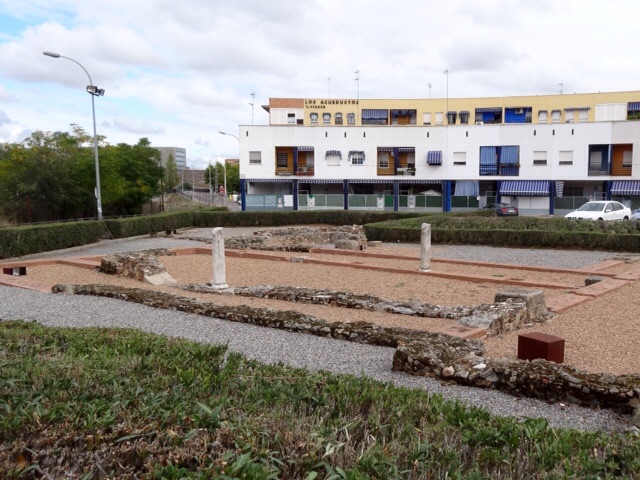
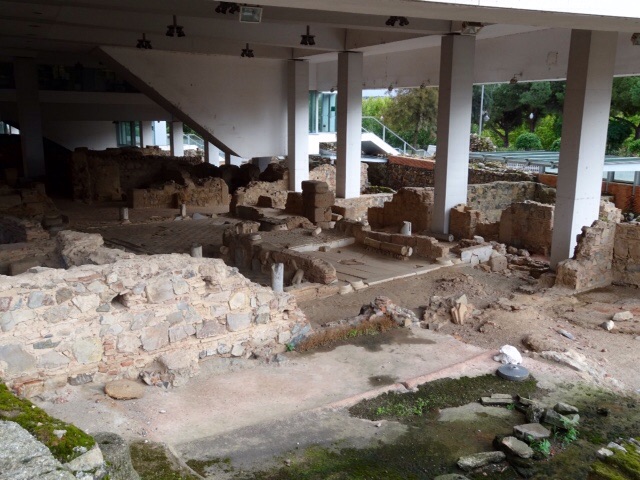
#12 The Morería Archaelogical Area is 12,000 square meters of ruins that had several modern building constructed over them in1980 in a way that allows visitors to still walk around the ruins.  It is quite something to see. Look closely, one of the pictures has me somewhere in it.image image

Whew!!  I can’t believe we managed to see all this, and it didn’t even rain on us.  Somehow we saw twelve different places, not the original ten Bob had planned for us!  It was a busy day but a very interesting one.

Toledo to Merida

Saturday, October 17

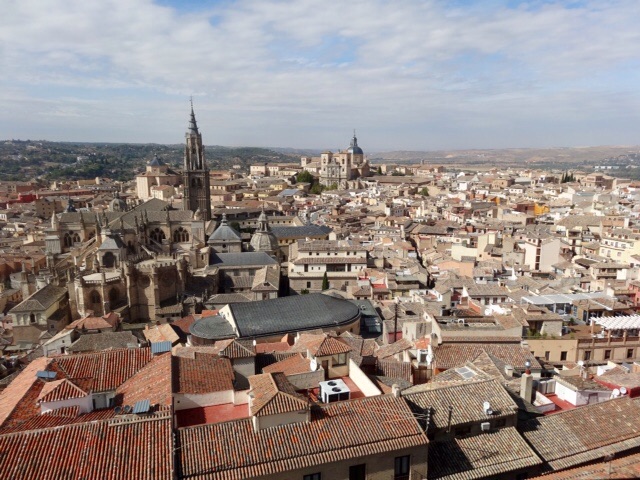
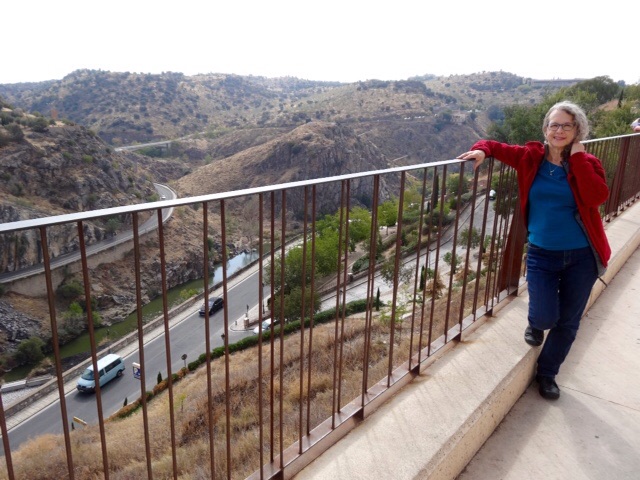
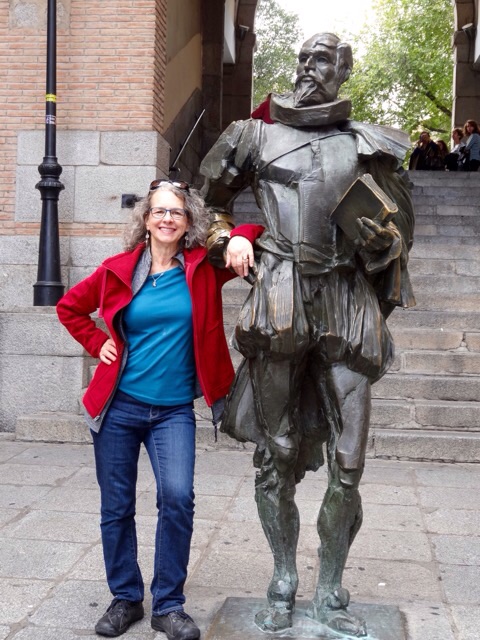
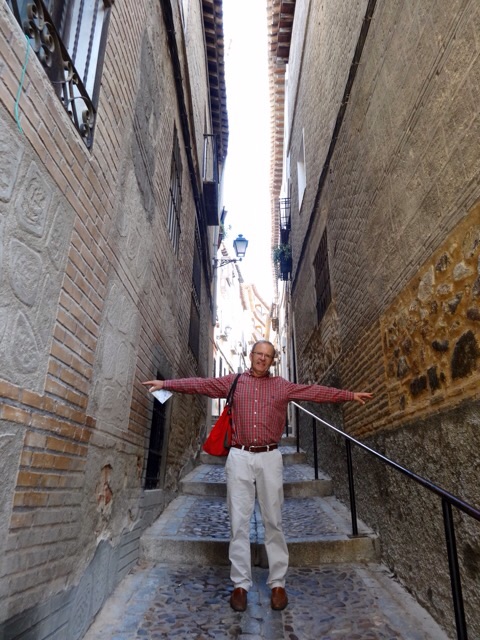
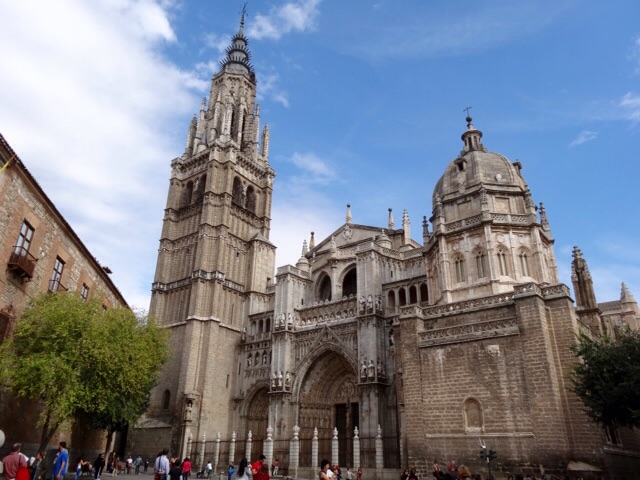
We are on our way to Toledo this morning, and then on to Merida where we have our next apartment.  Yesterday we stayed home for a bit of rest and to pack and get ready for today.  This view is from the cafeteria on the top floor of the public library in Toledo.imageWe literally travelled in circles looking for a library of ancient manuscripts and books. The Information center sent us to the library, but it was the public library and they told us that what we wanted was likely closed but that we could go see, so we went there, but where they sent us wasn’t the right place.  A second information lady gave us different information. We found out it was in the Alcázar museum, so we went there, only they told us we needed to go back to the library and that the collection was a special room there.  The same library that sent us elsewhere!  Only problem was that it closed at 2:00 and it is now ten to two!  We give up, deciding that we just weren’t meant to see these manuscripts.  Too bad, I would really have enjoyed the chance to at least have a look at them. One of the stops on our way to find the elusive manuscripts overlooks a winding road and the hills on the edge of town.imageWe did find this statue of Cervantes, the author of Don Quixote’s La Mancha.imageThe streets are very narrow and Toledo is a very hilly town.  We seem to be either climbing up or down steps and streets. Once again, we are out and about when a lot of the shops and businesses are closed. This 2:00 to 5:00 lunch hour just doesn’t work for us.  We are usually home by 8:00, and it seems everyone else is just starting to think about their evening’s meal and entertainment.imageWe take a tea break and have this great view of the Toledo Cathedral, but neither of us really feel like going inside, instead we sit in the sun and watch the people in the square.  Great people watching!image

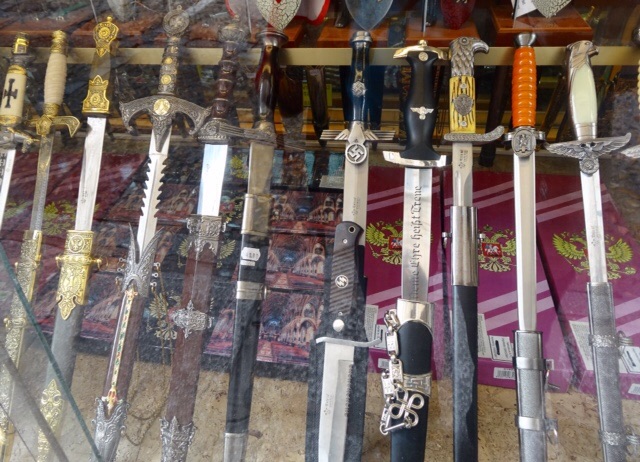
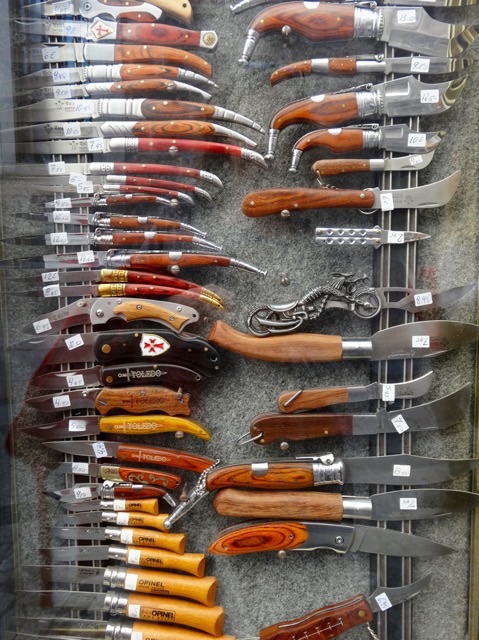
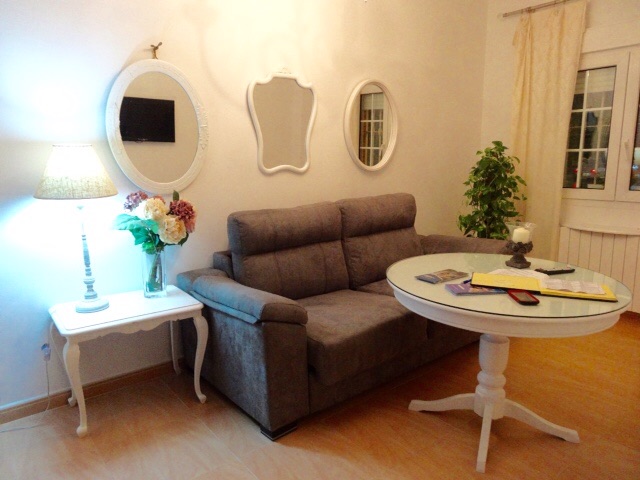
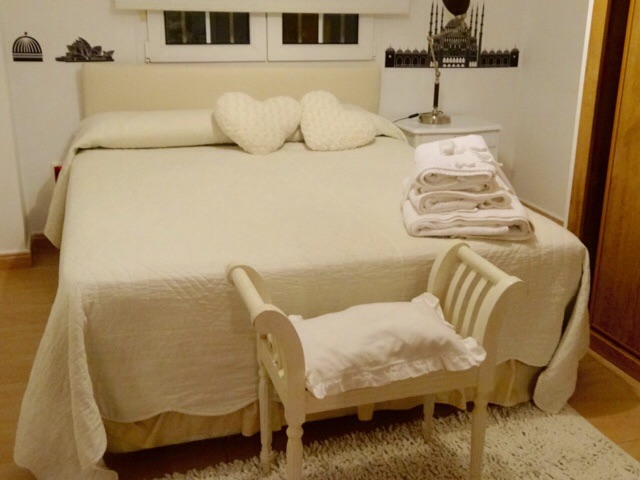
There are lots of knives and swords for sale here, apparently they are made locally. I have a friend who makes beautiful knives and thought he might like seeing these.image imageThere is lots more to see in Toledo but we are tired and need to get on the road to Merida to meet our next host at 8:00.  We drive in pouring rain for the last couple of hours and it continues to come down in buckets when we arrive in Merida, but we meet Ana, our host, and we love our new apartment.image

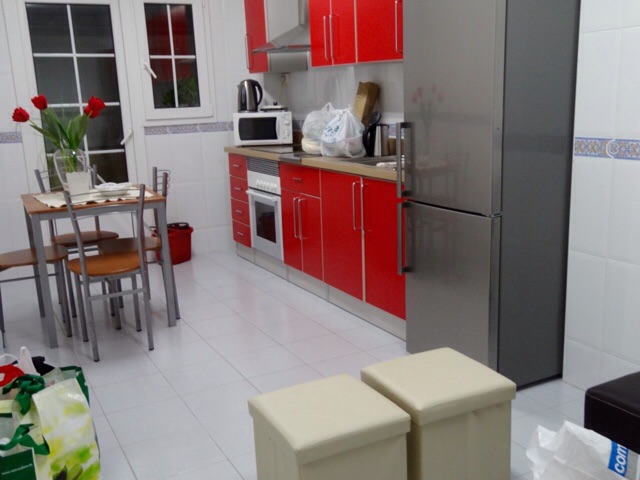
We have been very pleased with all of our Airbnb apartments so far.  Let’s hope our luck lasts.  I love seeing all the apartments and it is so nice having a kitchen.  We are making most of our meals as that works so much better with my dietary restrictions.imageimage

Spanish National Holiday, Museo Nacional Centro de Arte Reina Sofia, Guernica

Monday, October 12, Day 30 of our holiday!

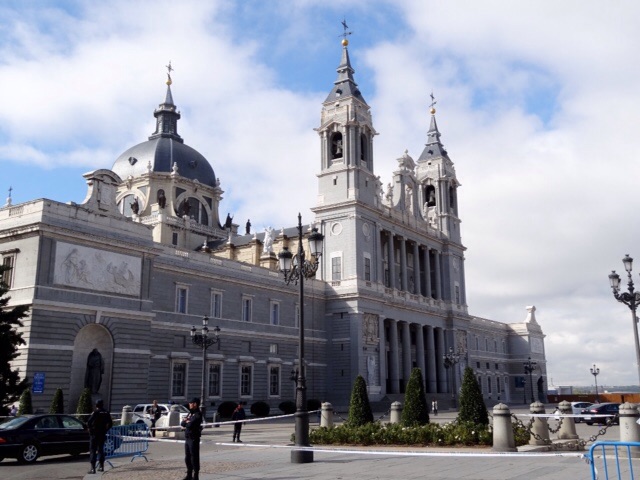
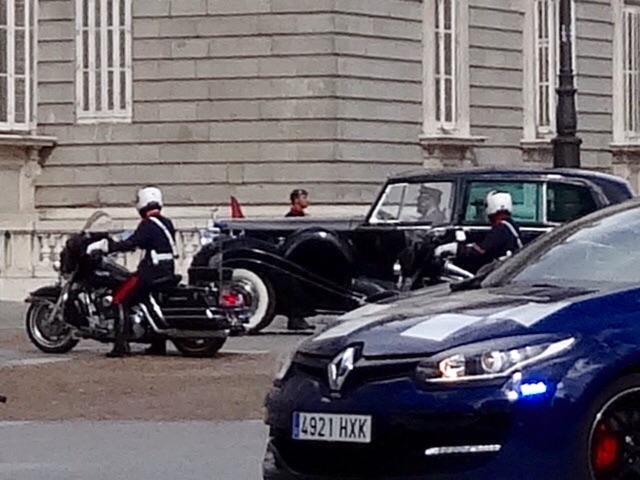
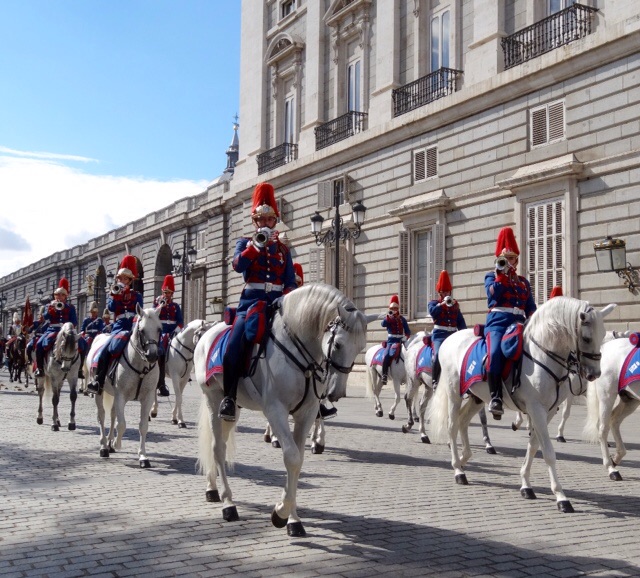
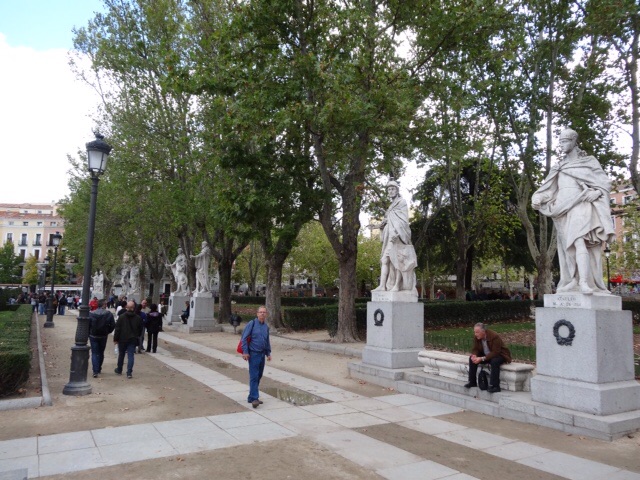
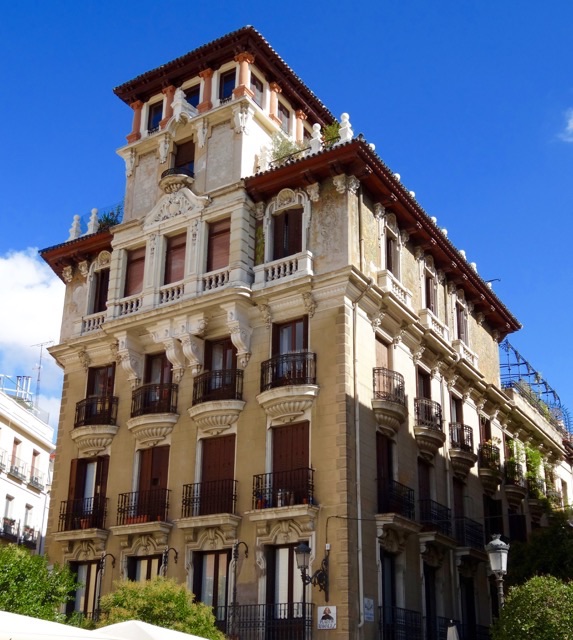
Today is Dia de la Hispanidad, Spain’s National Holiday to celebrate Columbus’s discovery of America in 1492.  There is a Military Parade this morning but it is a bit too early for us, so instead we go to the Palacio Real (Royal Palace) which is supposed to be free today.  However, when we arrive it is all cordoned off and there are lots of police and crowds of people everywhere.imageWe decide that we should wait around and see what is going to happen.  Turns out that King Felipe IV is to arrive at the palace, and after about an hour Bob thinks we should move closer to an entrance that is guarded by mounted soldiers.  Good thing we did because a couple minutes later a cavalcade of cars, and lots of police arrive and so does the King.  Only problem is we are still quite far away and the cars drive up and turn into the palace very quickly.  We both try to take a picture and I mange to get this one which shows the King’s car but not much else.  Oh well….image  We do get to see the mounted troops return from the parade and they are magnificent.imageWe find a spot to eat in the park across from the palace, accompanied by a guitar player singing in English. It was quite nice hearing something we could actually understand. I’ve only managed to learn a few Spanish words: I keep thinking of French words instead of the Spanish ones I have been trying to learn.  They just don’t seem to stick in my mind.imageWe decide to walk to the Reina Sophia museum, only we get lost, repeatedly!  Bob is using a new map app on the phone and either the app or Bob is not working well because we find ourselves walking in the wrong direction more than once.  We do walk past some interesting buildings…image

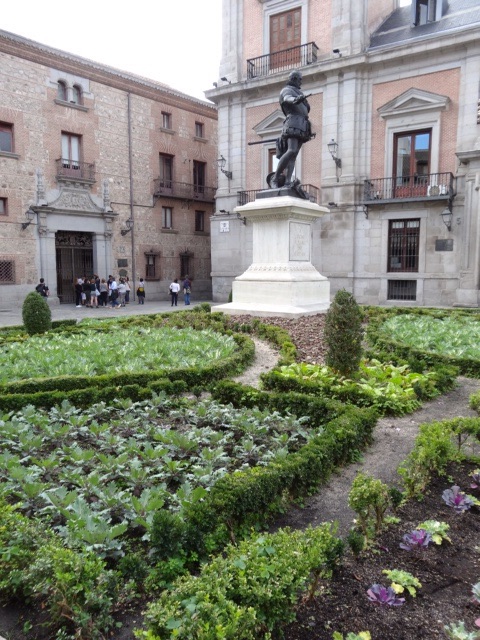
and a newly planted bed of veggies around a statue that was very pretty.image

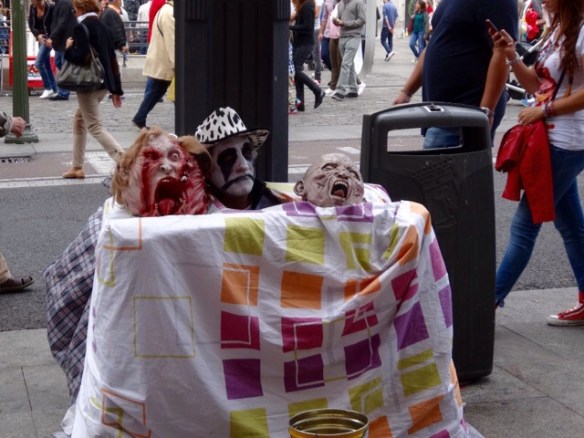
And then there are the interesting street performers trying to make a bit of money.  If people walked too close to this one, a head jumped out and scared them.

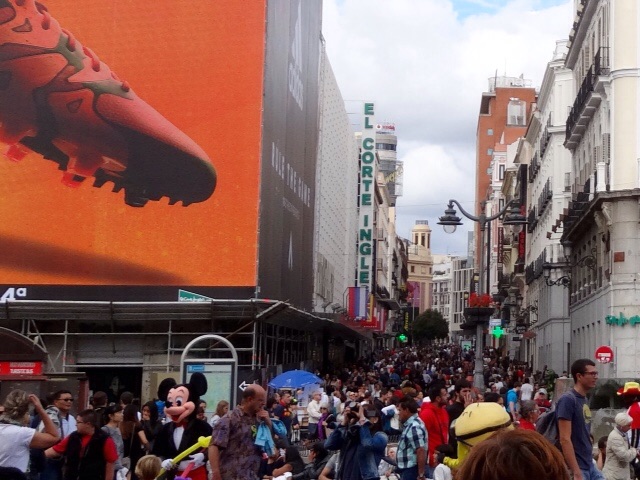
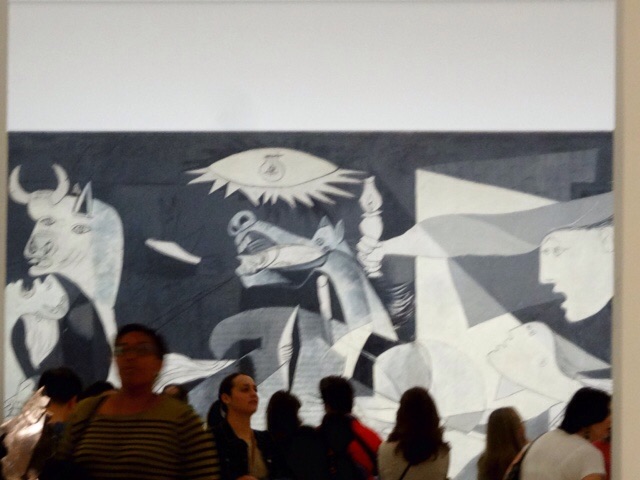
  1. imageWe end up right back where we started after walking in a big circle so we head for a Metro station near Plaza Mayor, and encounter hordes of people.imageThe subway takes us very close to the Museum, but do you think we can find it?   After some more walking in circles, as it seems to be that sort of a day, we finally spot the museum entrance tucked between two buildings.  We are here to see PIcasso’s famous painting ‘Guernica’. I sneak this photo from afar and through a doorway, just to say I was here.

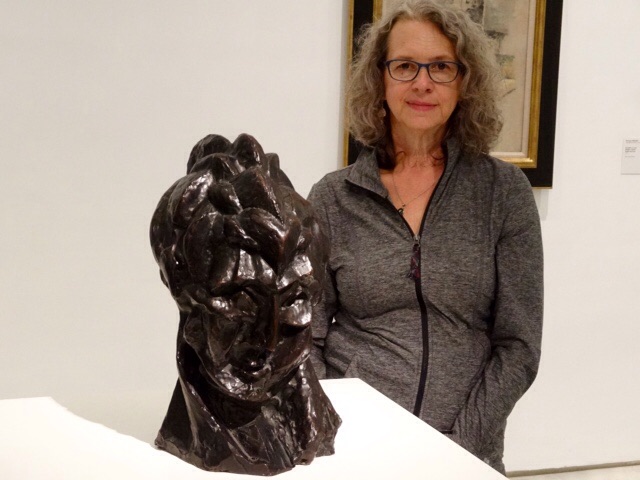
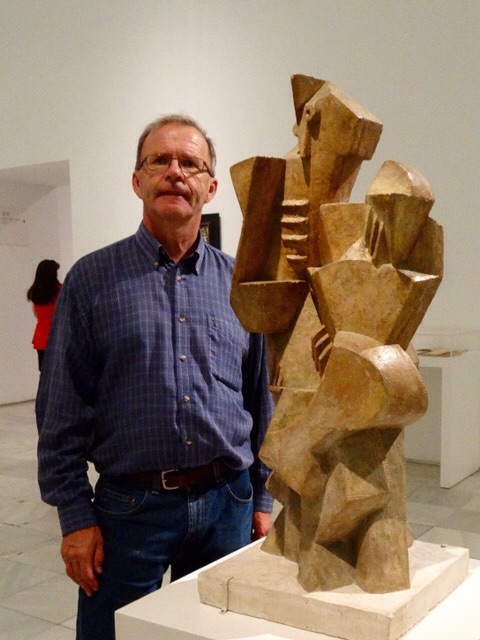
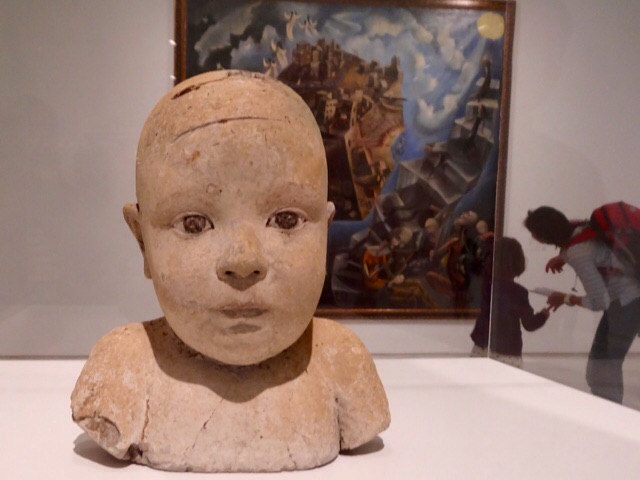
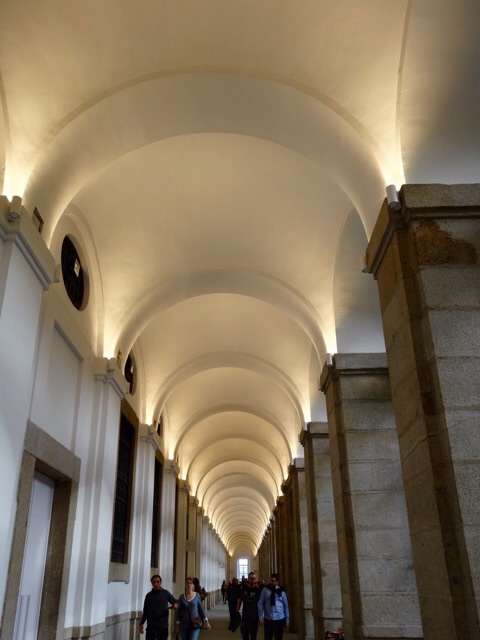
imageThe painting is very powerful.  It doesn’t reproduce well at post card or even book page size as the brushstrokes, textures, lines and subtleties of the paint and drawing just don’t show up.  I was surprised by how much I liked this painting as it never appealed to me before. Here we are posing beside a couple sculptures we liked.  A Picasso for me…imageand a Jacques Lipchitz for Bob. He liked this one even before he knew it was a sailor with a guitarimage I just loved this little head, ‘Portrait of my son Jordi’ by an artist named Joan Rebull.imageThe hallways made an optical illusion in this photograph. Depending on how you look at it it is an arched ceiling or a big white cone. Can you see it?
image

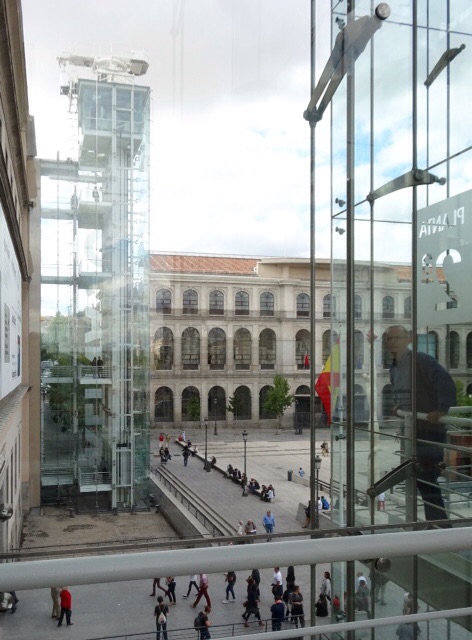
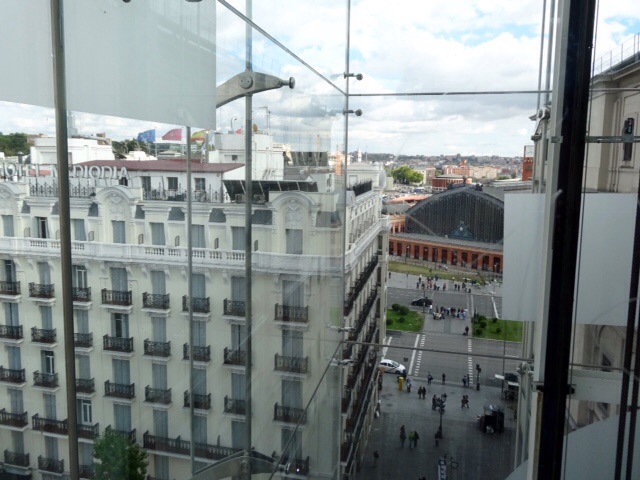
We take the glass elevators up to the fourth floor just to check oiut the views, then down and we head for home.  Can you find Bob?

imageimage

Life Drawing Class, El Rastro Market and a Bullfight!

Saturday, October 10

I finally found a life drawing class in Madrid.  It was difficult, there were no Meet Up Groups, and the schools didn’t seem to have anything, at least anything I could find.  Mind you, most of the information is in Spanish…

One minute quickies.
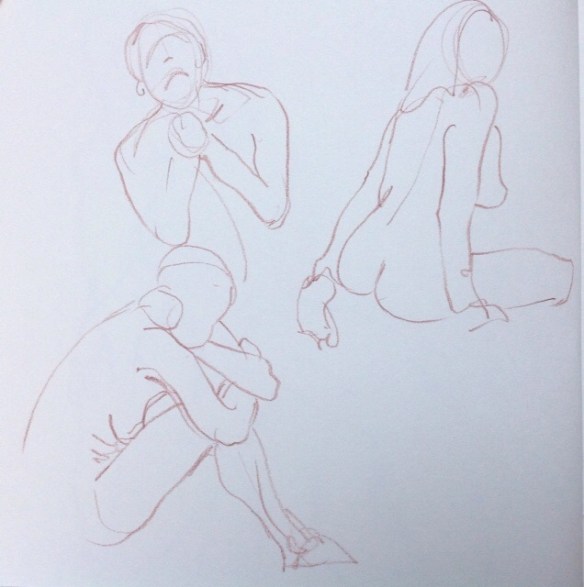
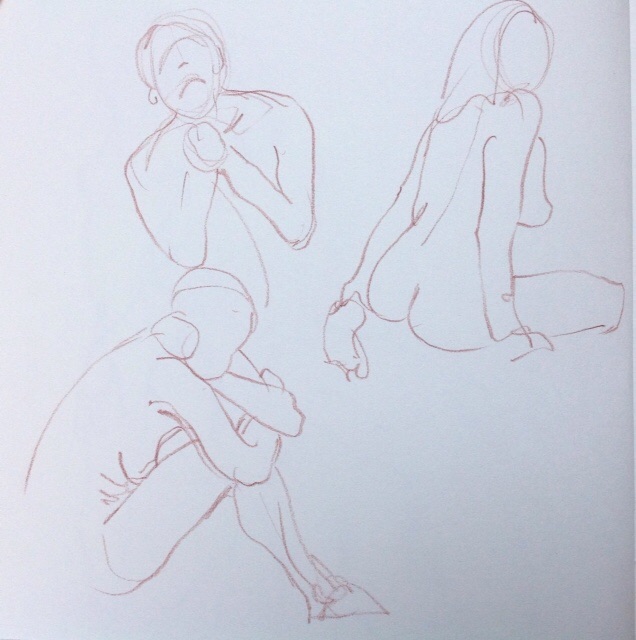
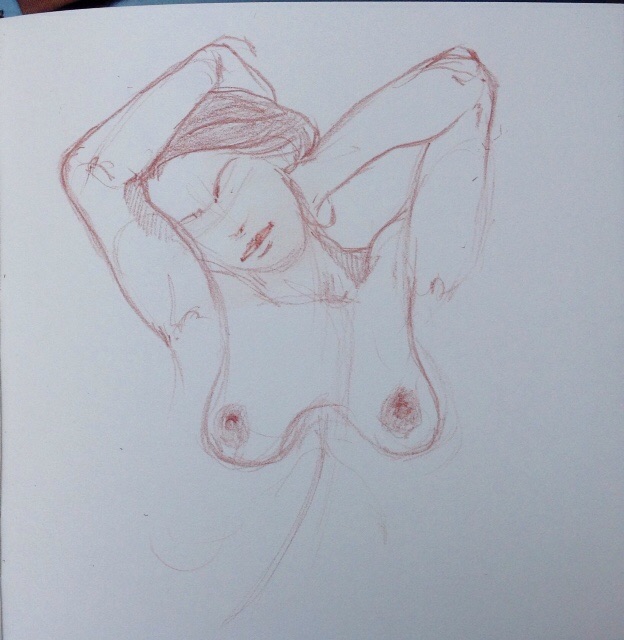
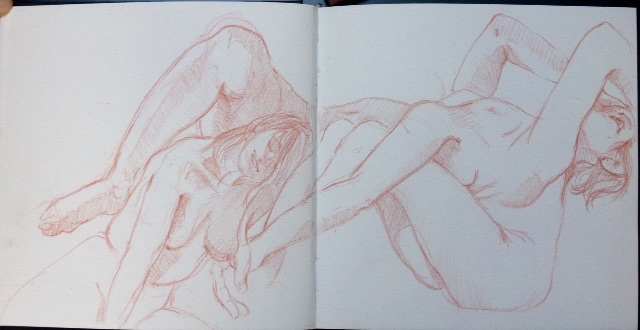
imageI went to Carmen La Greiga’s studio this morning. Carmen instructs and the class had a ‘Edvard Munch’ theme so our drawing assignments were related to that.  Most of the instruction was in Spanish although Carmen translated for me quite often.  Sometimes I wasn’t sure exactly what was wanted so then I just did my own thing.image  Combining three poses into one composition.image
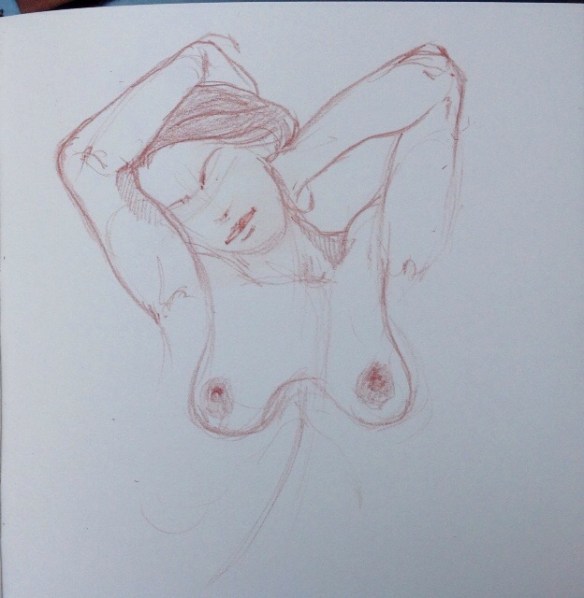
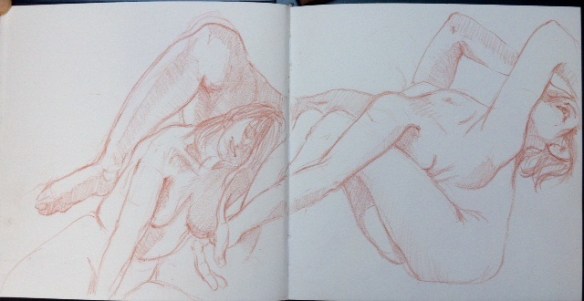
Carmen introduced me to several of the other artists and they all made me feel very welcome. There were people from all over the world who have come to live here. Madrid is much like Paris that way, it seems to attract people.  Carmen has a lovely little studio, is an enthusiastic, knowledgeable instructor and also teaches life drawing for children, which I think is wonderful.  If you are ever in Madrid and want to draw, check out http://www.tallerlagriega.com

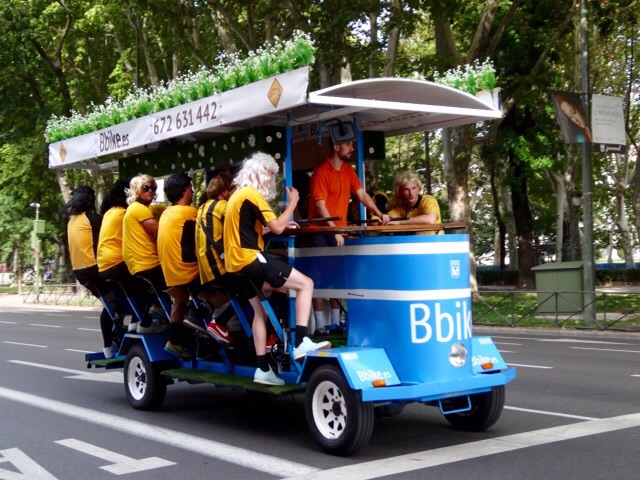
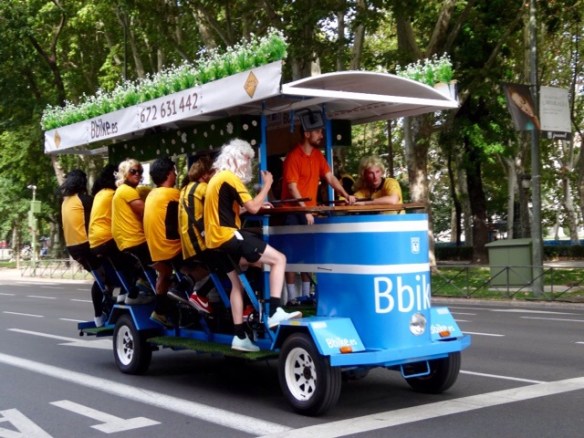
Bob went off on his own to explore the Real Madrid Soccer Stadium while I was at my class, but the admission lines were very long, so he came back to meet me after my class, which was actually much longer than I expected. Carmen does a very nice critique of each person’s work at the end of class and that took over an hour. Bob and I met up in a little park near the Prado, I ate a very late lunch and we decided we would head home early for a change.  Funny, we both saw this strange vehicle today, the riders peddle sideways but it goes forward, and then there were those blonde wigs? No idea what it was all about.image
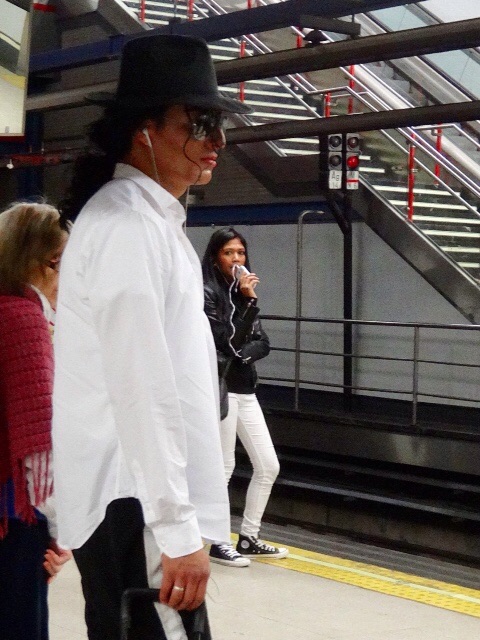
On the metro I spotted this Michael Jackson wanna-be, complete with make up and a white glove tucked into his belt.  I do love the metro, such great people watching!image
Sunday October 11

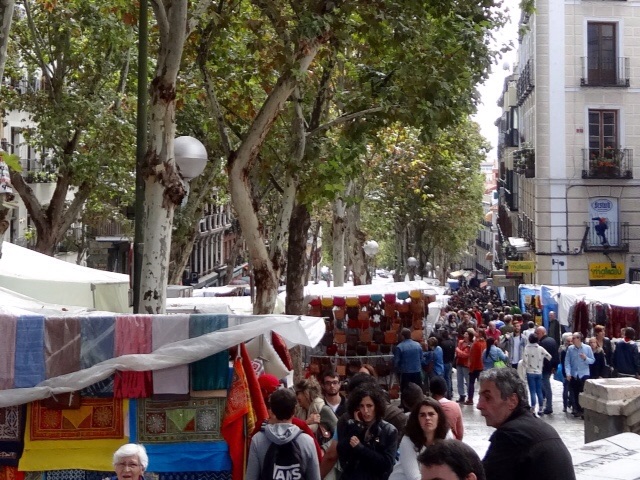
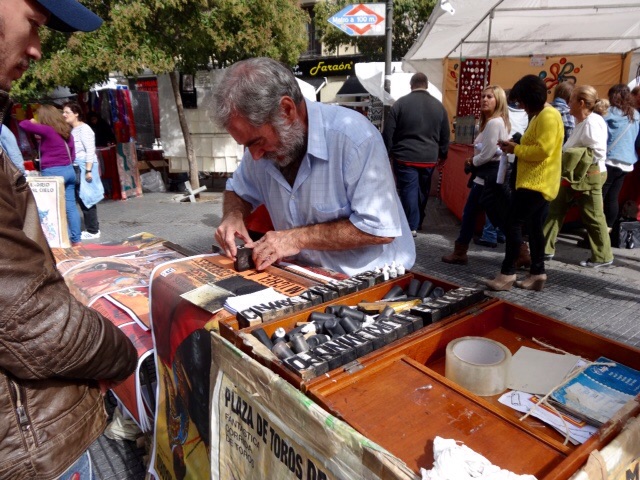
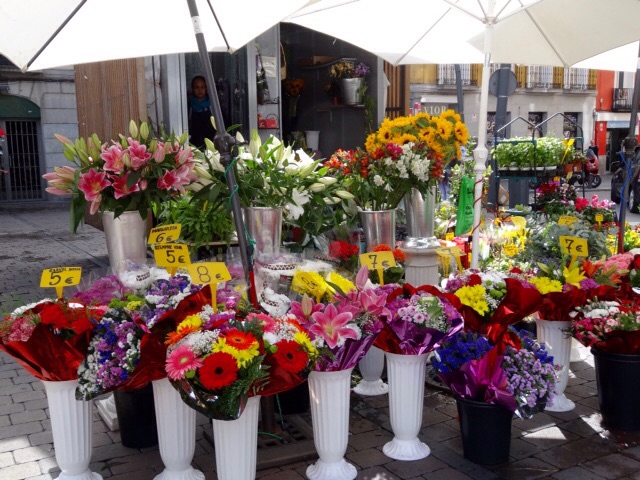
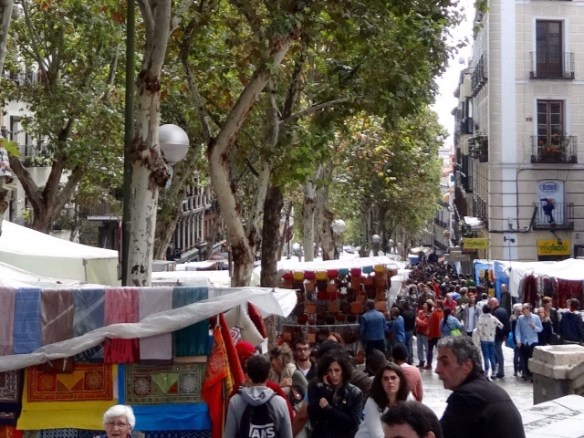
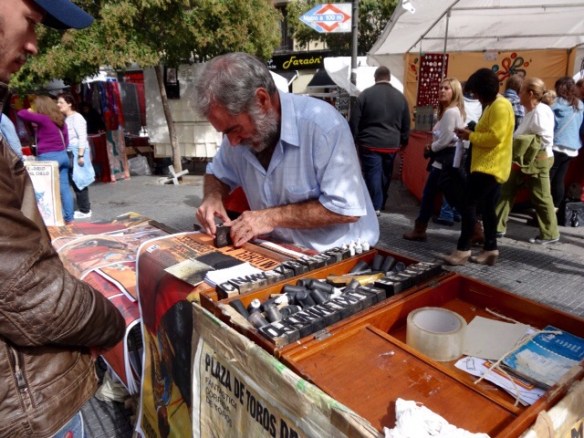
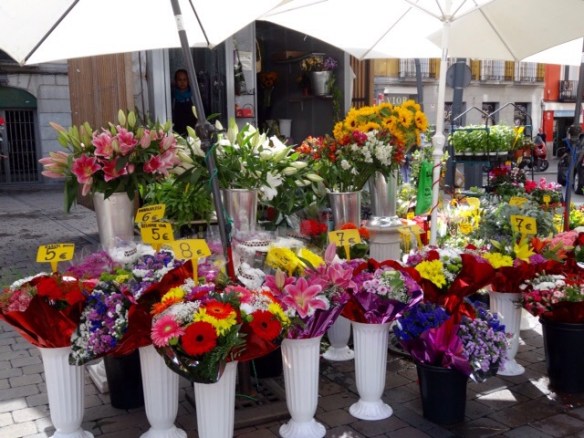
El Restro is a famous Madrid flea market whose origins date back to Medieval times.  It takes place every Sunday so that is our first stop today.  The streets are teeming with people everywhere we look.  The market stretches for blocks with booths set up on both sides and sometimes even the middle of the streets.  We wander and enjoy the sights, sounds and smells and even do a little souvenir shopping of our own.image  You can have a bull fighting poster with your name as the matador printed as you wait.imageWe had lunch near the flower vendors and then headed off to Plaza Mayor, a popular gathering spot in Madrid.image
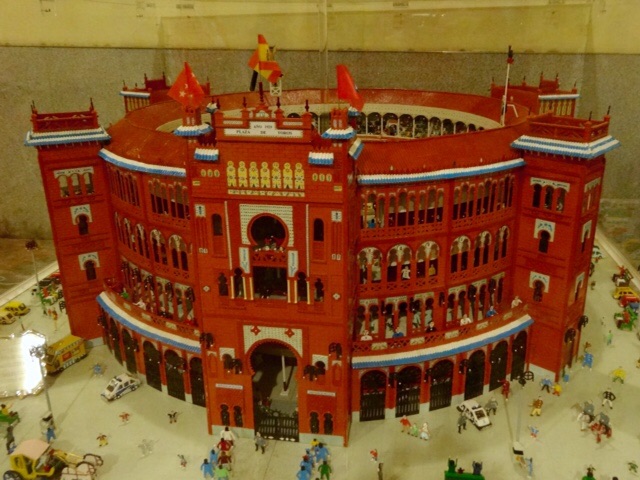
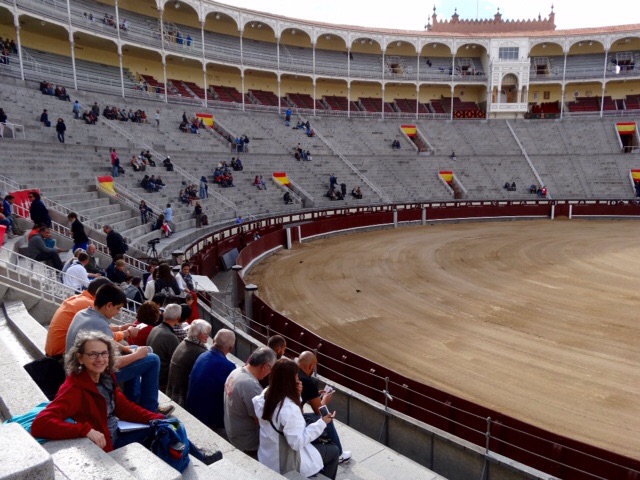
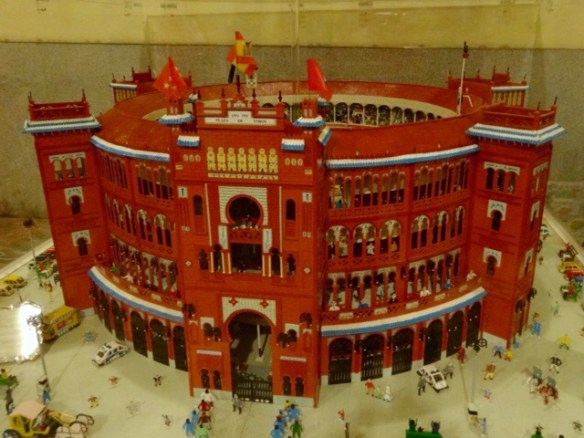
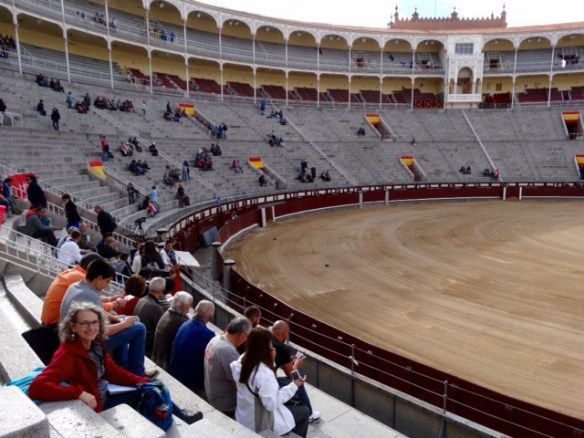
The Plaza ( which by the way is pronounced platha, there are lots of ‘th ‘sounds in Spanish, gracias is actually pronounced grathius!) is packed with people and street vendors and has interesting buildings around it, but half of them are covered with scafolding right now.  We find an information booth and we are told we need to head to the Bull Fight Arena right away if we want to get tickets.  So a quick metro ride and soon we are at Plaza de Toros and the Las Ventas Bulll Ring.  Here is a scale model of the arena.image
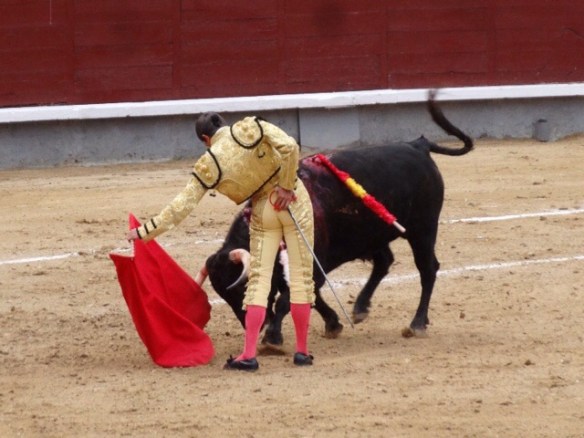
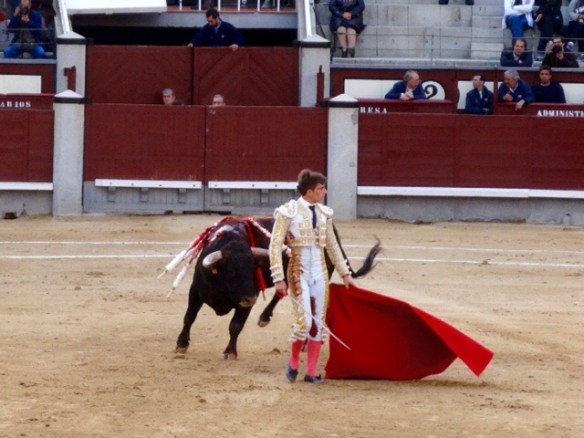
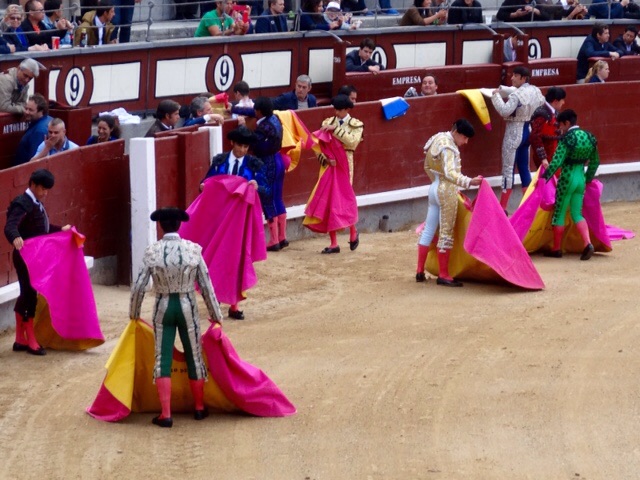
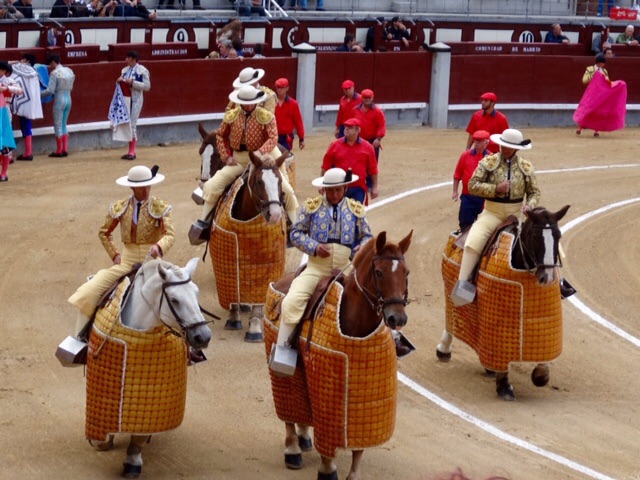
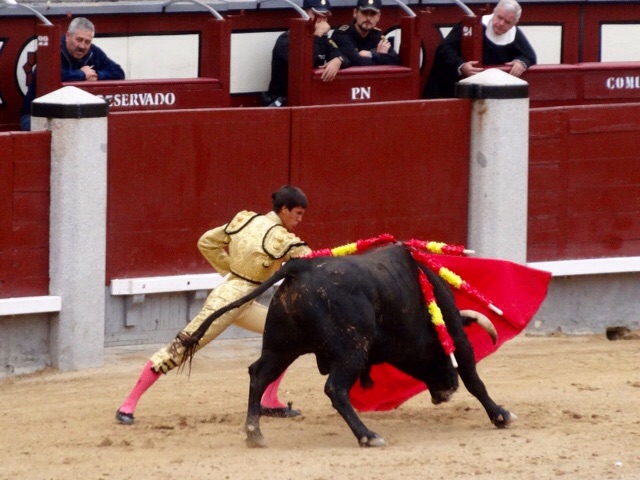
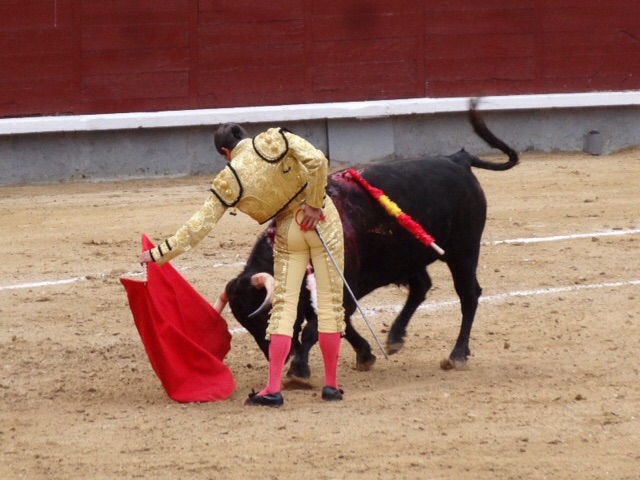
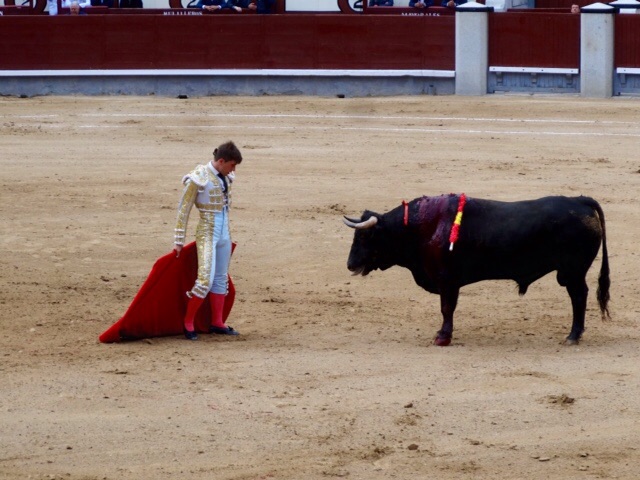
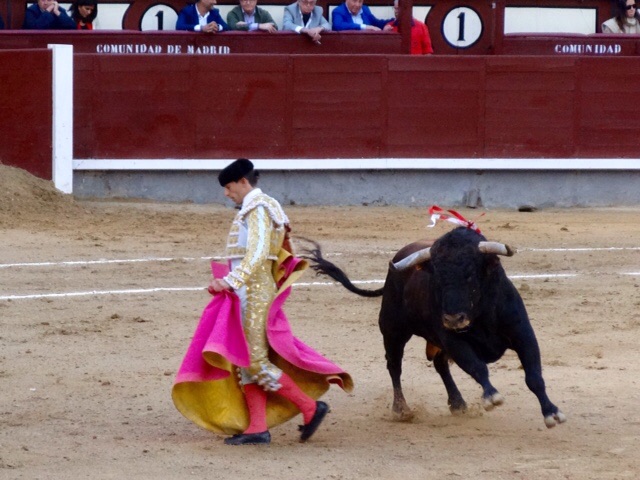
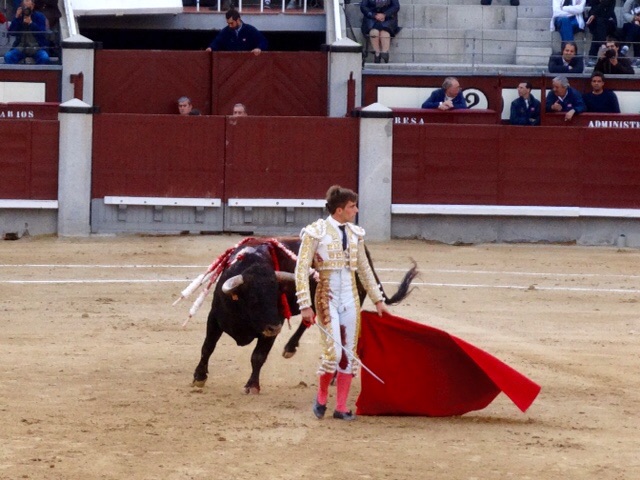
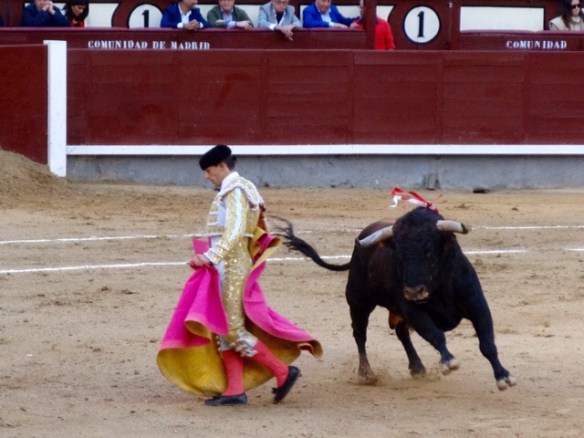
Yes, we are going to see a bullfight! I have mixed feelings about this but we have decided that it is something we should do at least once while we are in Spain. The tickets are very reasonable, only 12.60€ each gets us tickets in the fourth row. We were asked if we wanted first row tickets but I didn’t think I wanted to be quite that close to the action!imageBob looks up Los Novilleros, which is the event for today and Google Translate comes back with ‘chopped heifer’.  We hope that something was lost in the translation!  Soon enough the spectacle begins.  The banderilleros warm up, practicing their flourishes and moves with their capes. I am surprised that they are not red.  Turns out only the Novilleros or Matadores have red capes.imageThe Picadores enter the rings on their very large horses.  They are draft horses as they are large and strong enough to withstand the bulls’s charge.  We are  surprised to see that the horses are actually blindfolded during the bullfights.  There are definitely things I don’t like about all this.imageThere are three Novilleros fighting today, these are bullfighters that are still in training as I find out later, and they are fighting bulls who are not aggressive or fierce enough to become ‘toros’.  These bulls are three years old, not five and the young men fighting today are all 22 years old!image image
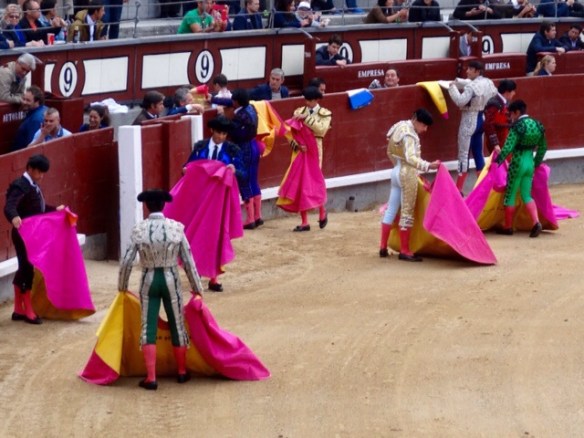
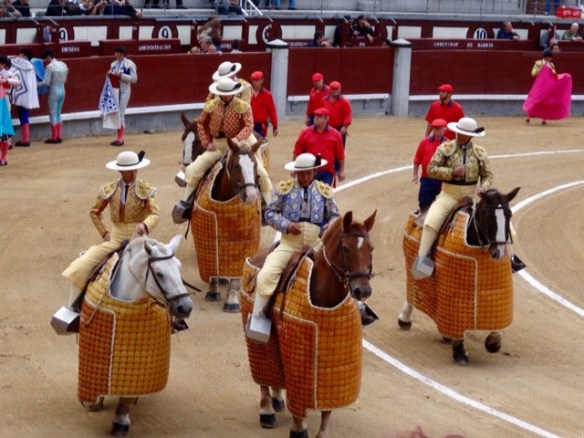
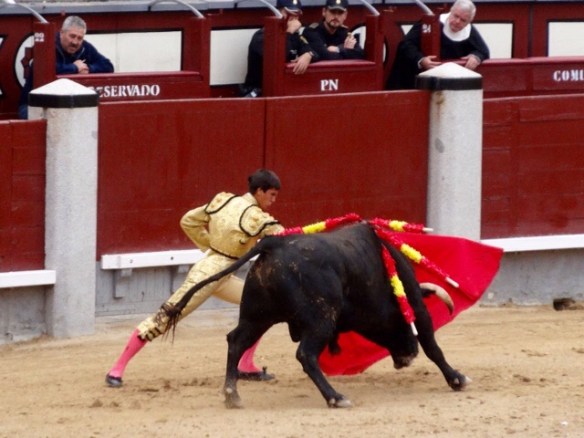
I take a lot of pictures, about three hundred! I think that helped keep me at a bit of a distance from it all.  Looking through the camera seemed to blunt the reality of what was happening in front of us.  Much of the action was in fact right in front of where we were sitting.  I am very glad we decided against the first row seats!image
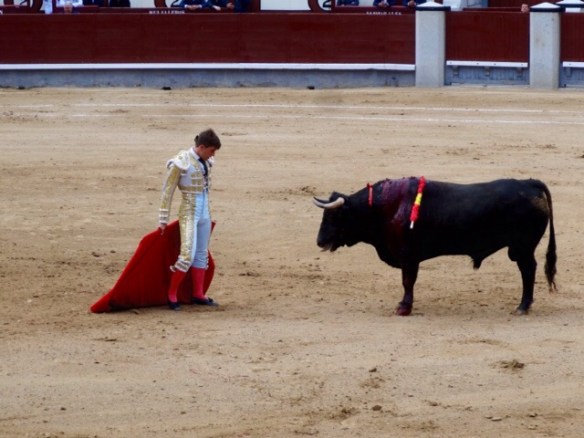
There are some tough parts. There is definitely blood, and one of the bulls sank to his knees and had to be coaxed to his feet for the final few passes and the Estocada, which is a final quick sword thrust between the bull’s shoulders and through the heart.  If done correctly it results in a quick clean death.  However, remember these are matadors in training so it wasn’t always quite so quick. In that case, there is the Descabello, which is a shorter sword that is used to sever the bull’s spinal cord, which kills the bull almost instantly.image image
It is brutal, but it doesn’t last very long and I wonder how many animals suffer for just as long, or even longer at modern slaughter houses or when they are wounded when hunted?  The bulls have a very good life up to the time they enter the bull ring, and then a half hour later it is all over, or maybe I am just trying to justify the experience?

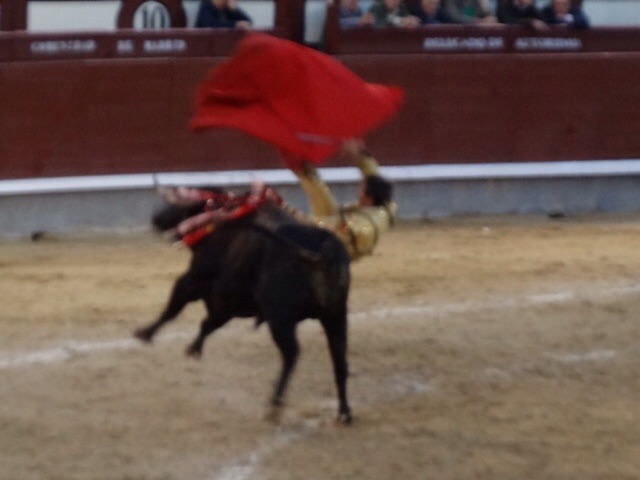
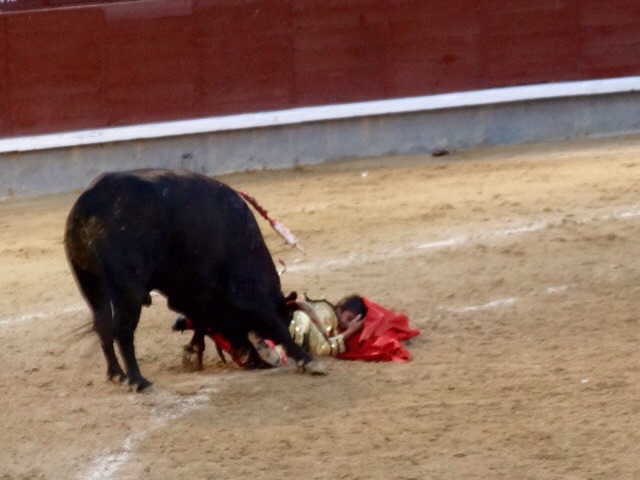
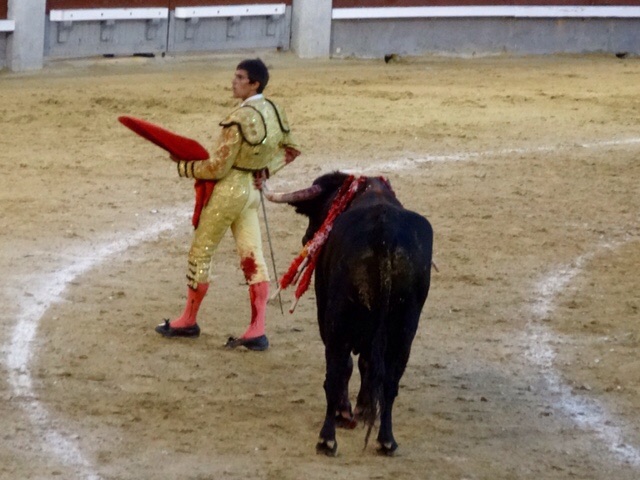
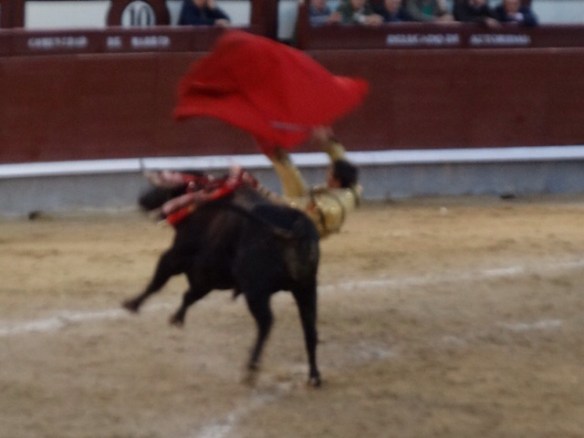
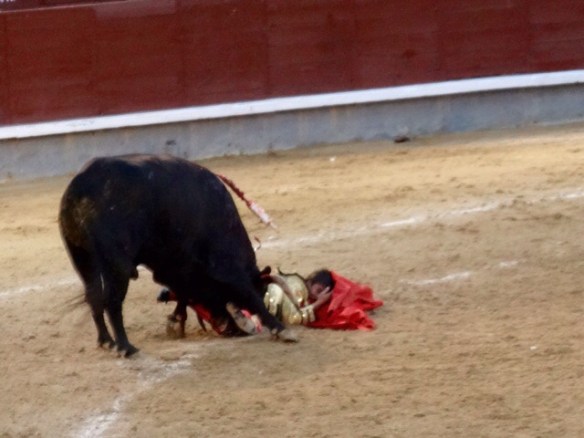
I tell Bob that something is going to happen, the air feels absolutely electric, and sure enough a minute or so later the bull tosses the matador into the air.imageHe is pinned to the ground and it takes what seems like a long time for help to arrive and distract the bull.  The pictures are  blurry but maybe that is for the best.imageAmazingly, this young man gets to his feet and continues the fight, even defiantly turning his back on the very bull that just tried to kill him!  These men are either very brave or very crazy!imageThis was the last fight of the night, the arena empties quickly and we head for home.  It was almost ten by the time we got home and have some soup before bed.  We have to find a way to avoid these late night suppers!
Madrid, Bibliotec National, and Museo Arqueológico Nacional

Thursday October 8

We have a quiet day at home, but we end up spending quite a bit of the day looking for accommodations in Madrid, but we aren’t having much luck.  Madrid seems to be quite expensive, not many places have parking and we aren’t getting answers back from some of the places we contacted.  We decide that we will stay where we are and take the bus into Madrid.  It is a 40 minute ride and Bob is looking forward to not driving for a while.
Friday , October 9

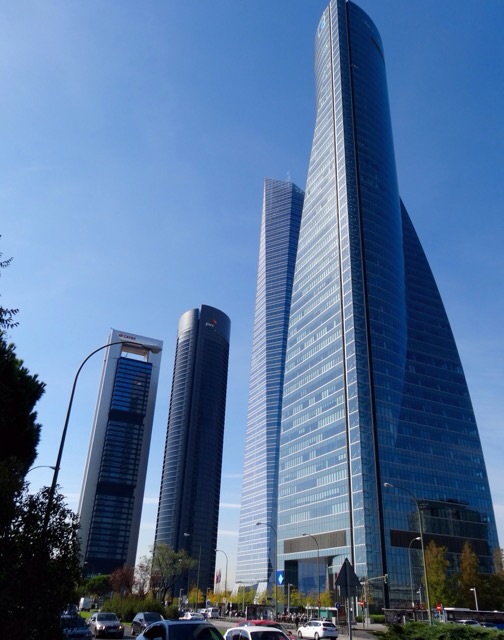
We take the bus into Madrid which works very well.  It is every comfortable, kind of like a Greyhound Bus, and it is very relaxing for both of us.  First stop in Madrid is the Canadian Embassy as we were told we could vote there for the upcoming Canadian election.  Turns out we can’t, as the ballot has to be mailed in and the package was sent to our home address.  The very tall first building is where the Canadian Embassy is located on the very secure 21 floor.  Lots of security in this tower.
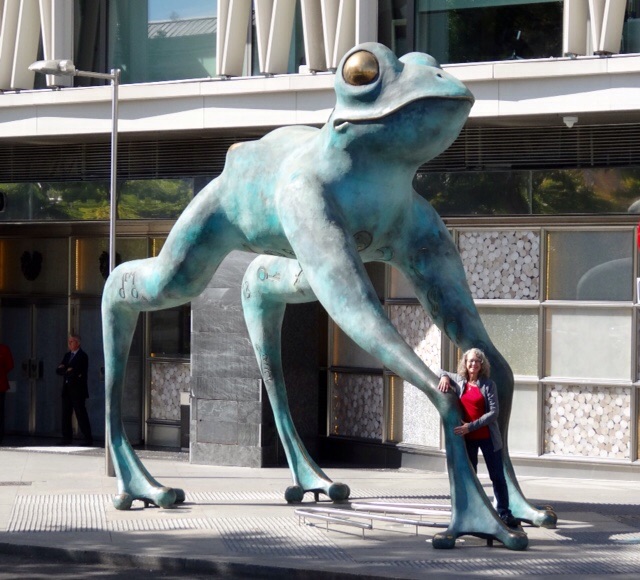
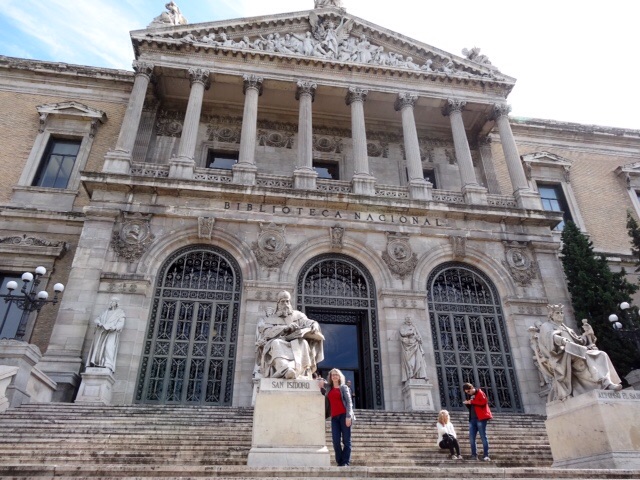
imageBack on the Metro to find the Archeological Museum.  I love the metro!  It is fast, easy and offers great people watching.  On our way to the museum we see the Bibliotheca National and I can’t bypass a library so we go check it out, but not before stopping to say hello to this cute fellow.image

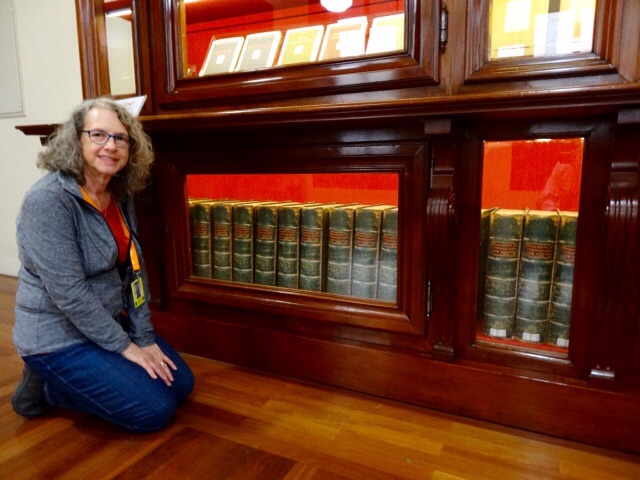
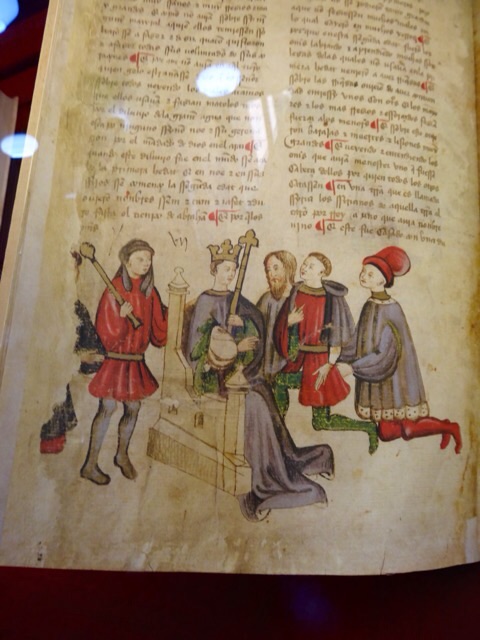
The building is very big and beautiful, but we discover it isn’t a public library, entrance is only available if you take a tour, which are all sold out for today. We are allowed to go in and check out a Rudyard Kipling exhibit in a room near the entrance after showing our passports, getting our pictures taken, putting our bags through an X ray machine, and getting a visitors pass!      imageThere was only a collection of Kipling’s books in the exhibit, not too interesting, but the room attached to it had some great old books and manuscripts…imageimage

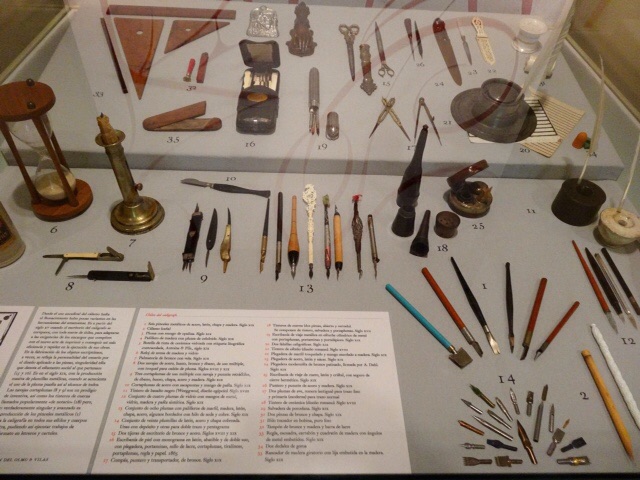
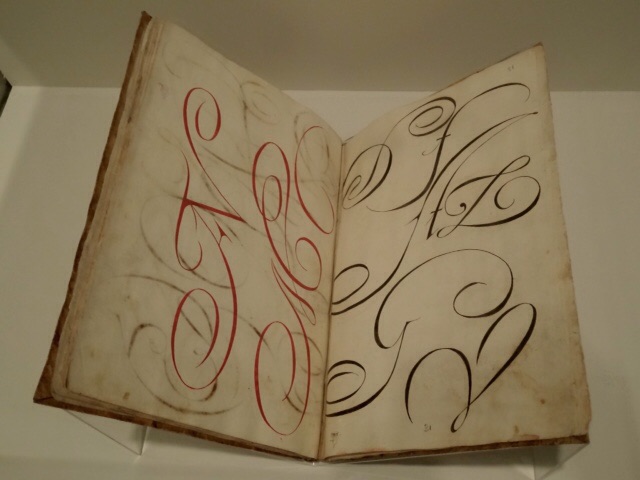
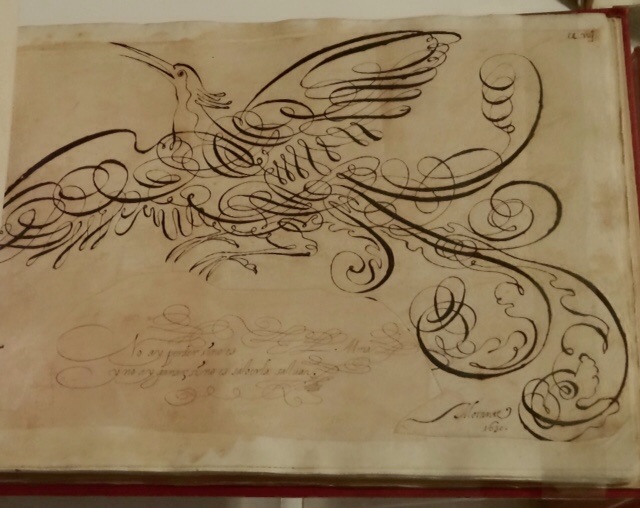
……including what I think must be a facsimile of a Leonardo Da Vinci sketchbook.  Hard to make out as all the labels are in Spanish.  The staff also tell us about an exhibit downstairs that we can visit.  Turns out it is “Caligrafía Española” el arte describir.  Of course we have to see this.  The first thing we see on entering is this wonderful collection of calligraphy equipment from the 1700’s and 1800’s. Most of these are the same tools used by calligraphers today.image  There are many books and font samplers and these two beautiful examples of flourishes.image image

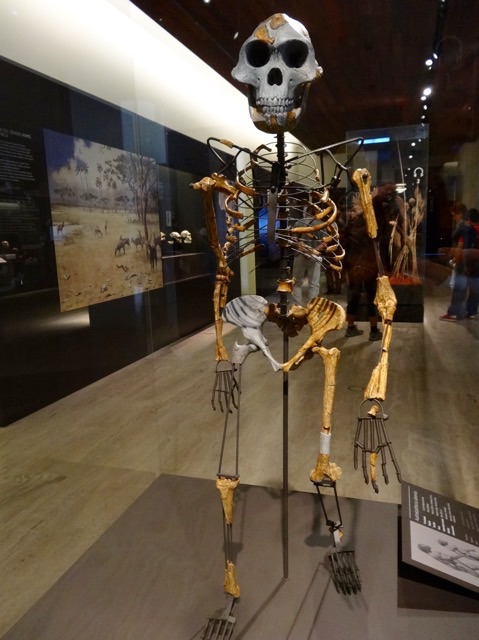
Finally we arrive at the MAN, the Museo Arqueológico National.  Turns out it is a great museum, and we get to see a facsimile of Lucy.  I remember talking about australopithicus and Lucy when I taught Social Studies many years ago.  Isn’t she beautiful?image

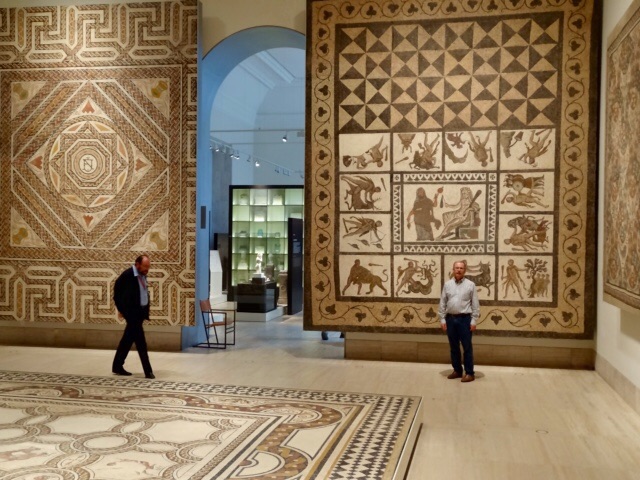
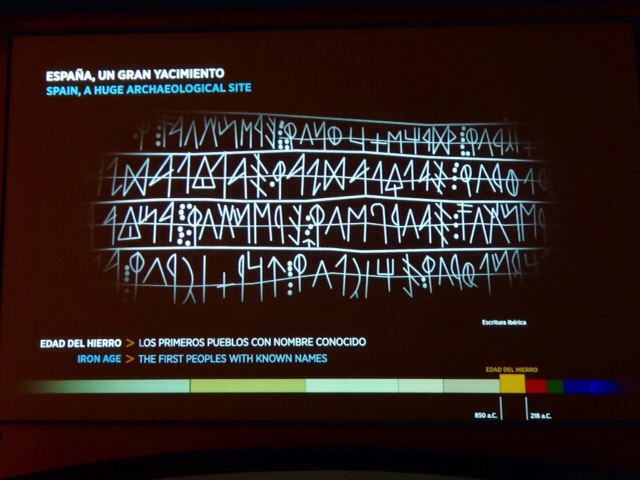
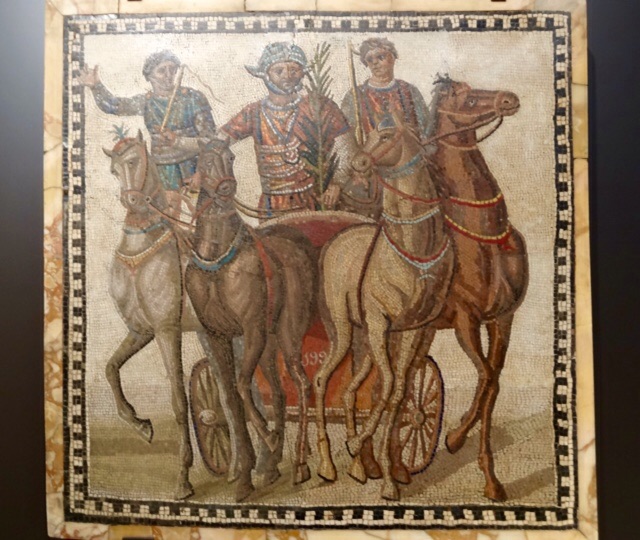
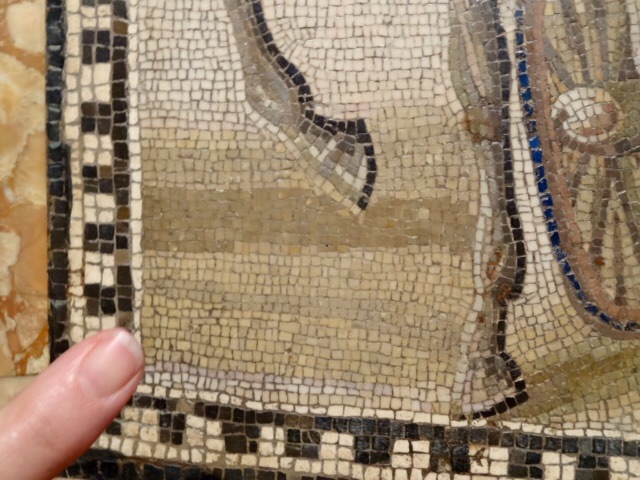
There is a display with examples of archeological sites in Spain, and it turns out they are everywhere.  This Screen grab says it best “Spain, A Huge Archeological Site.”  I think you could look almost anywhere in Spain and find an archaeological site!imageIn the museum there are some very intricate mosaics.image They are even more incredible when you see the size of the individual mosaic pieces.imageThe next exhibit has several room sized floor mosaics that are equally as stunning.image
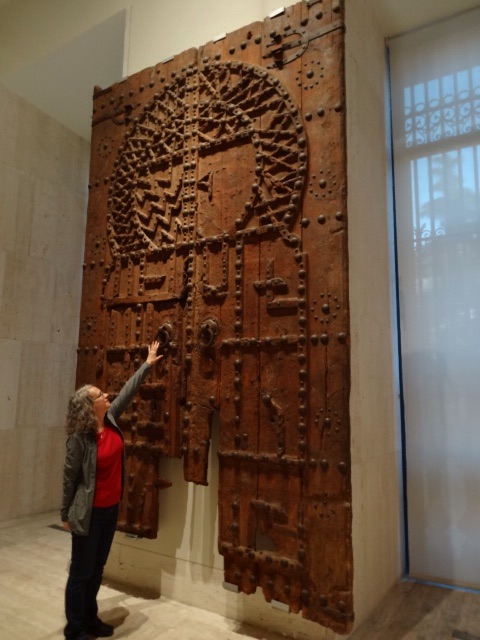
I love old doors and this one is a beauty.  It just looks as though I am touching it….image
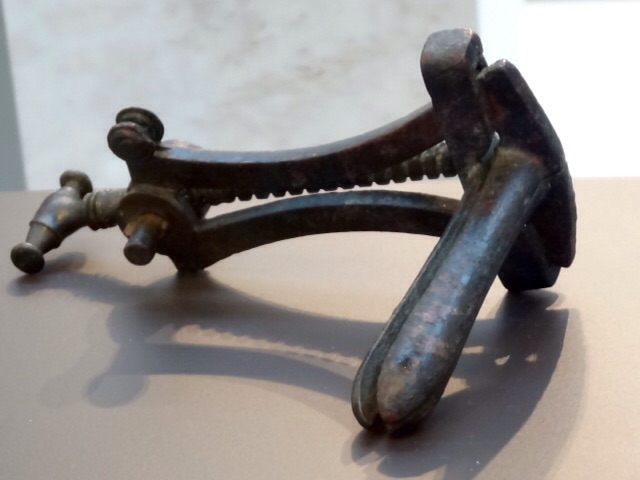
We are amazed at the technology that was in use so long ago, but the one item that probably surprised me the most was the Speculum magnum matrios, a vaginal dilator used  in gynaelogical exams, surgeries and childbirth.  The Romans developed this medical technology in the First Century AD! It is hard to imagine, and this looks very similar to the ones in use today!image

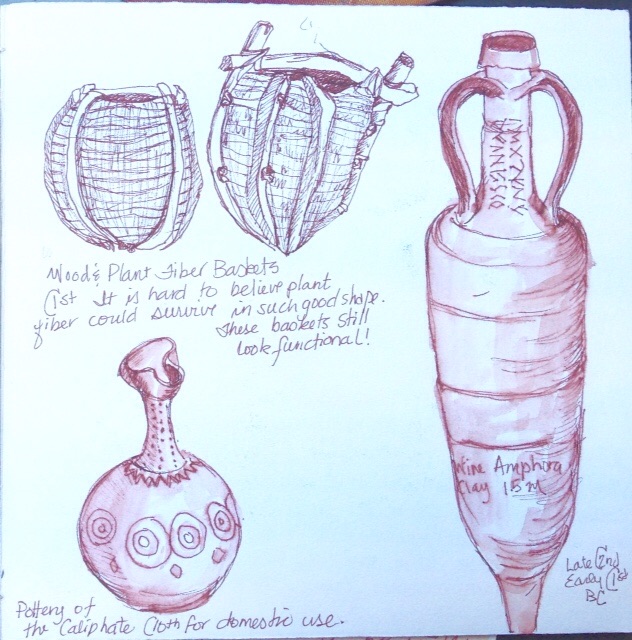
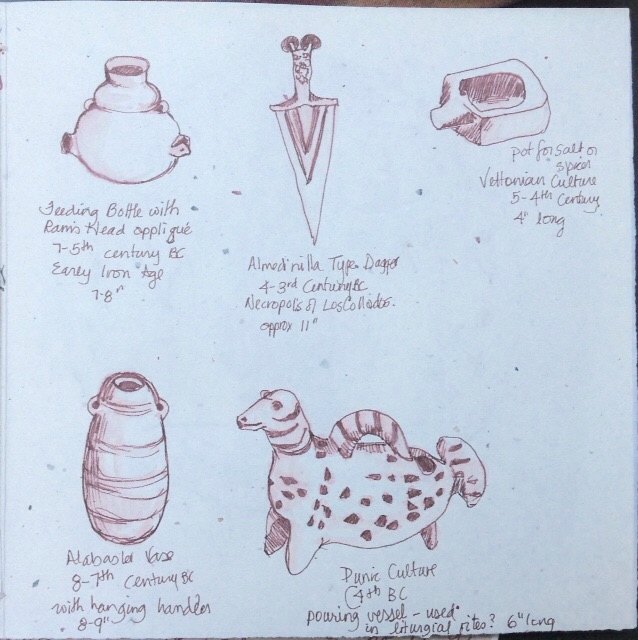
We stop for tea after two hours, and then do our best to see everything else but we ran out of energy and time and I am afraid we rather quickly strolled through the Egyptian and Greek rooms without trying to see and read about everything. There are about fourty rooms here, and they are all pcked with so much to see. We are pooped, but we enjoyed this museum a lot.  It was extremely well laid out, had lots of great videos, English signage and beautiful exhibits.  It always amazes me that so many items have survived so many centuries intact. I also did a few drawings at the museum.imageimage

Avila’s Medieval Walls

Wednesday, October 7

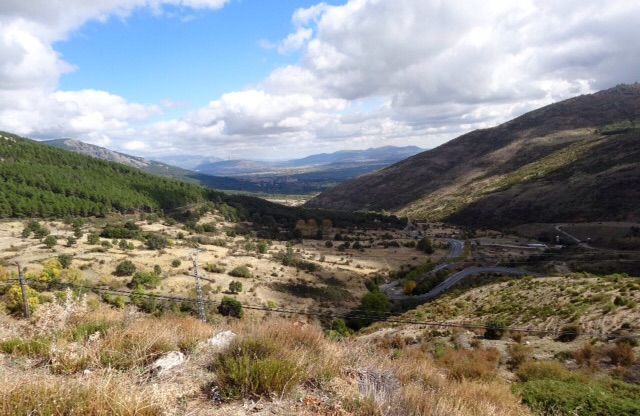
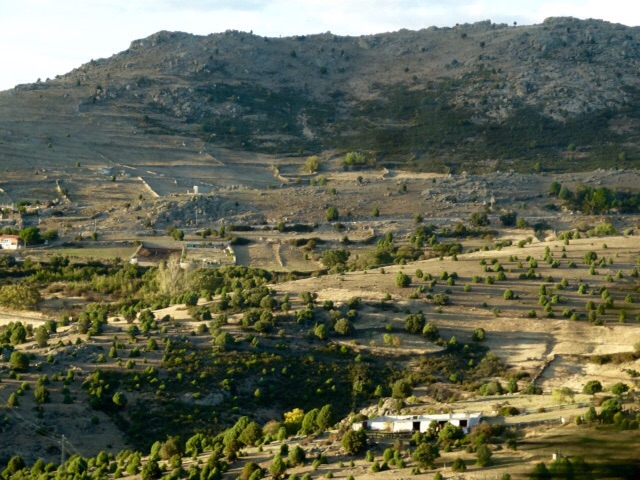
Today we visit Avila, which is the highest provincial capital in Spain, at 3,710′  or 1131 m. above sea level.  In winter the access roads are sometimes blocked with snow, but I wonder if that is because there is so much snow or if it is because they don’t have the kind of snow removal vehicles we have in Alberta?  The drive is through interesting countryside, which changes every few miles.  We seem to be always either climbing or descending winding roads. There certainly aren’t many long straight stretches of road, even the freeways meander.
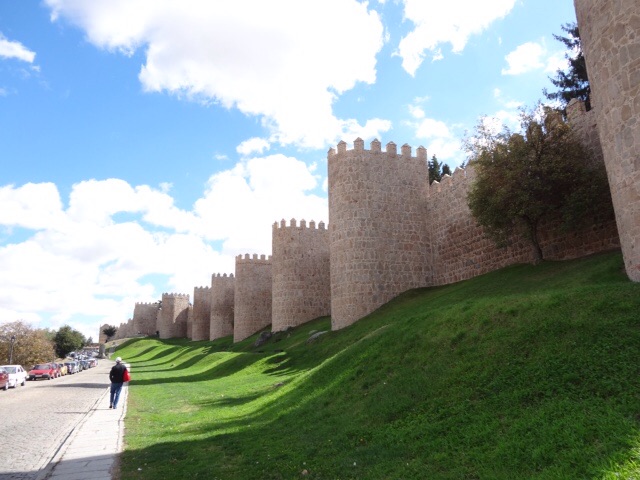
image In about an hour we arrive in Avila and get our first look at the Medieval walls that encircle the city center.  We find a parking spot on the street and we are shocked that 30 cents gives us five hours of parking!  A great improvement over Segovia yesterday when it cost us more than 9€ for less time.image

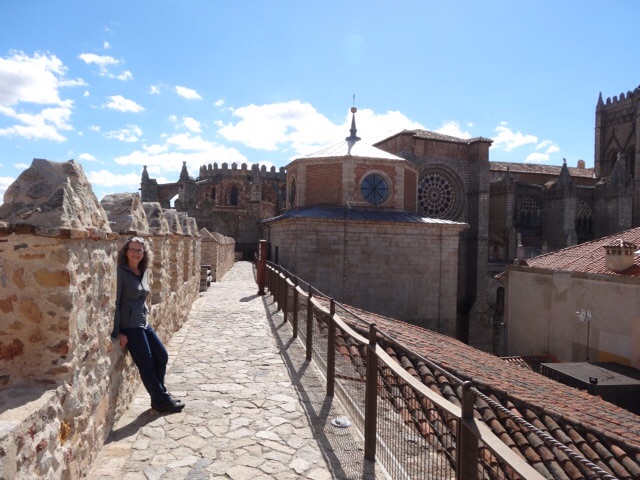
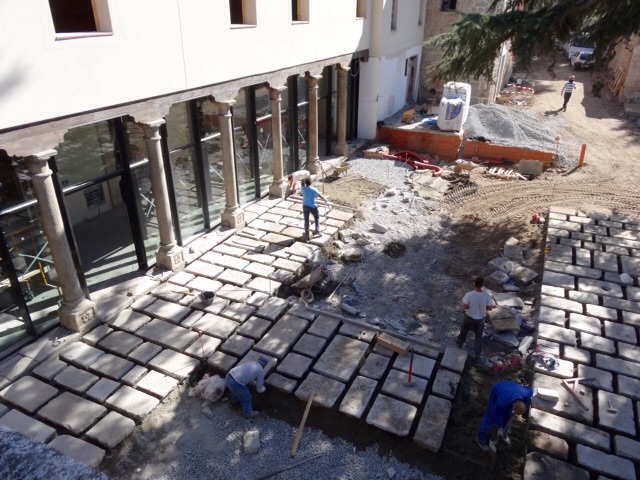
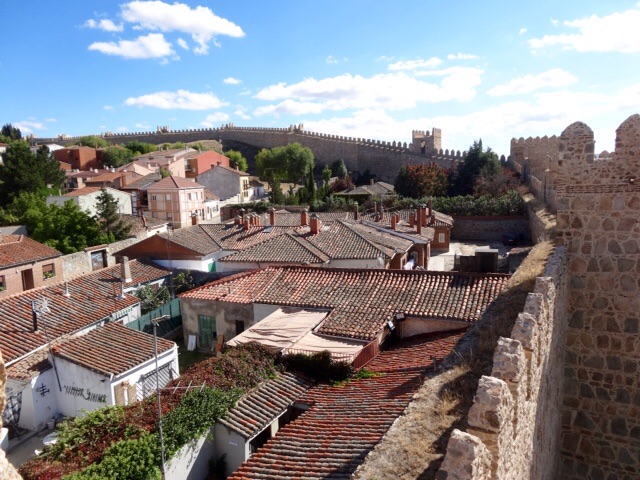
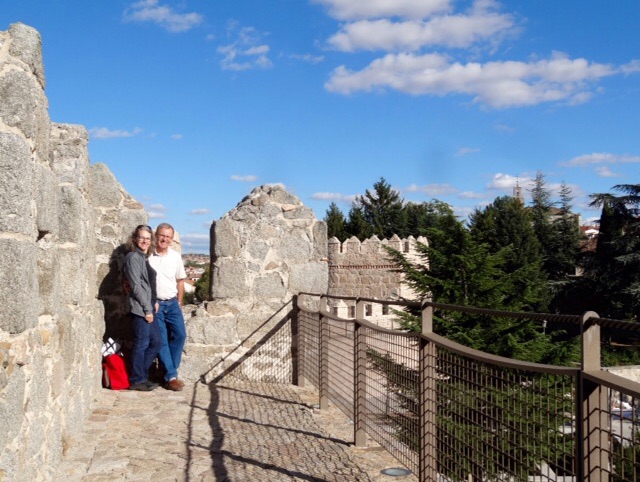
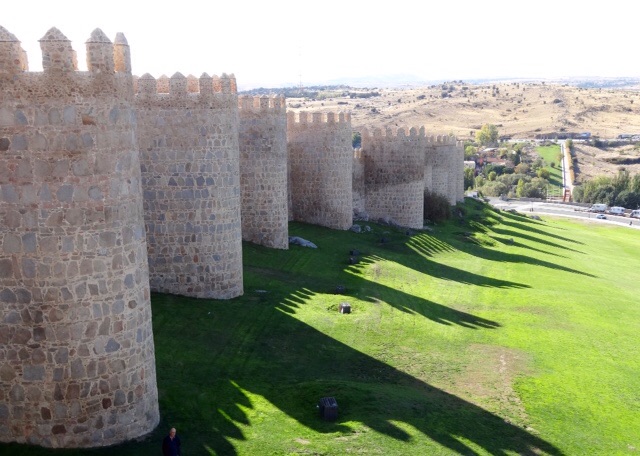
The walls are very beautiful with ochre, pink and bluish toned stones arranged in an attractive pattern.imageIt took some doing, but we finally found the entrance to climb the tower walls and we find ourselves on top of the finest preserved Medieval walls in all of Europe.  These walls were built in the 11th Century and they are punctuated with 88 cylindrical towers.  We are able to climb up into many of these towers.image  The apse of the city’s cathedral, in the background, also forms part of the walls. imageWe stop and look down into a courtyard watching workers lay huge stone blocks for a walkway or perhaps a patio.  They are very good, and get the stones in the right position and almost level on the first try.  Bob has laid a lot of bricks in our yard and he knows this is not as easy as these guys make it look.imageThese walls are almost two kilometers long and we walk as far as we can.  Part of the walls have not been restored and we are are not able to walk on them.imageHere we are near the end of the walkable part of the wall, now we have to turn around and go all the way back, but first we stop and have tea and cookies at one of the many towers.image It is incredible to think that we are walking the tops of these ancient walls, and it is easy to imagine soldiers standing in the same spots we are, defending their city from invaders over a thousand years ago.  In Canada there aren’t any buildings or structures that are anywhere near that old.  Columbus didn’t even discover North America until 1492!  The sun casts long shadows as we make our way back to our car.image

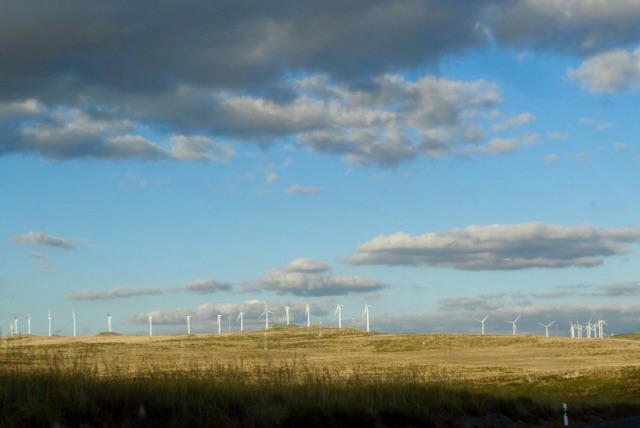
It has been quite windy since we left Northern Spain, and we have seen lots and lots of these windmills. imageThere are stone fences everywhere, even in areas that look as if they were abandoned long ago. I really love all the stone walls and fences: it makes me want to build something out of stone!image