Day 14. Saturday, September 13, 2025
We visit the Arras market which is held in the Place des Héros in front of City Hall. It is packed with tables, tents and trailers selling a wide variety of goods. I adore these baskets, but they would be a difficult to take home.
Many shoppers are carrying beautiful bouquets of flowers. Two of these pink bouquets are only €5!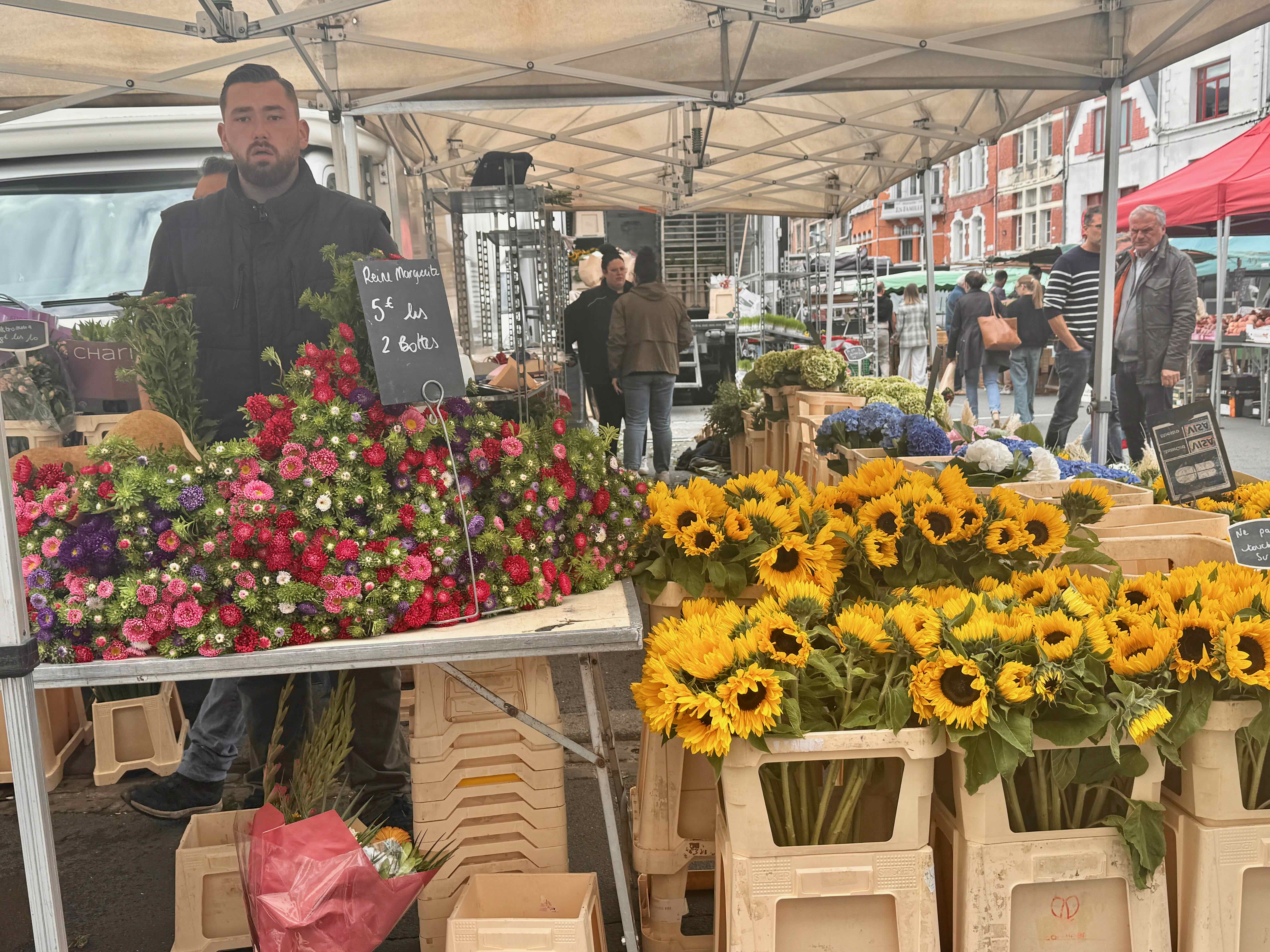
European markets often have an interesting assortment of mushrooms…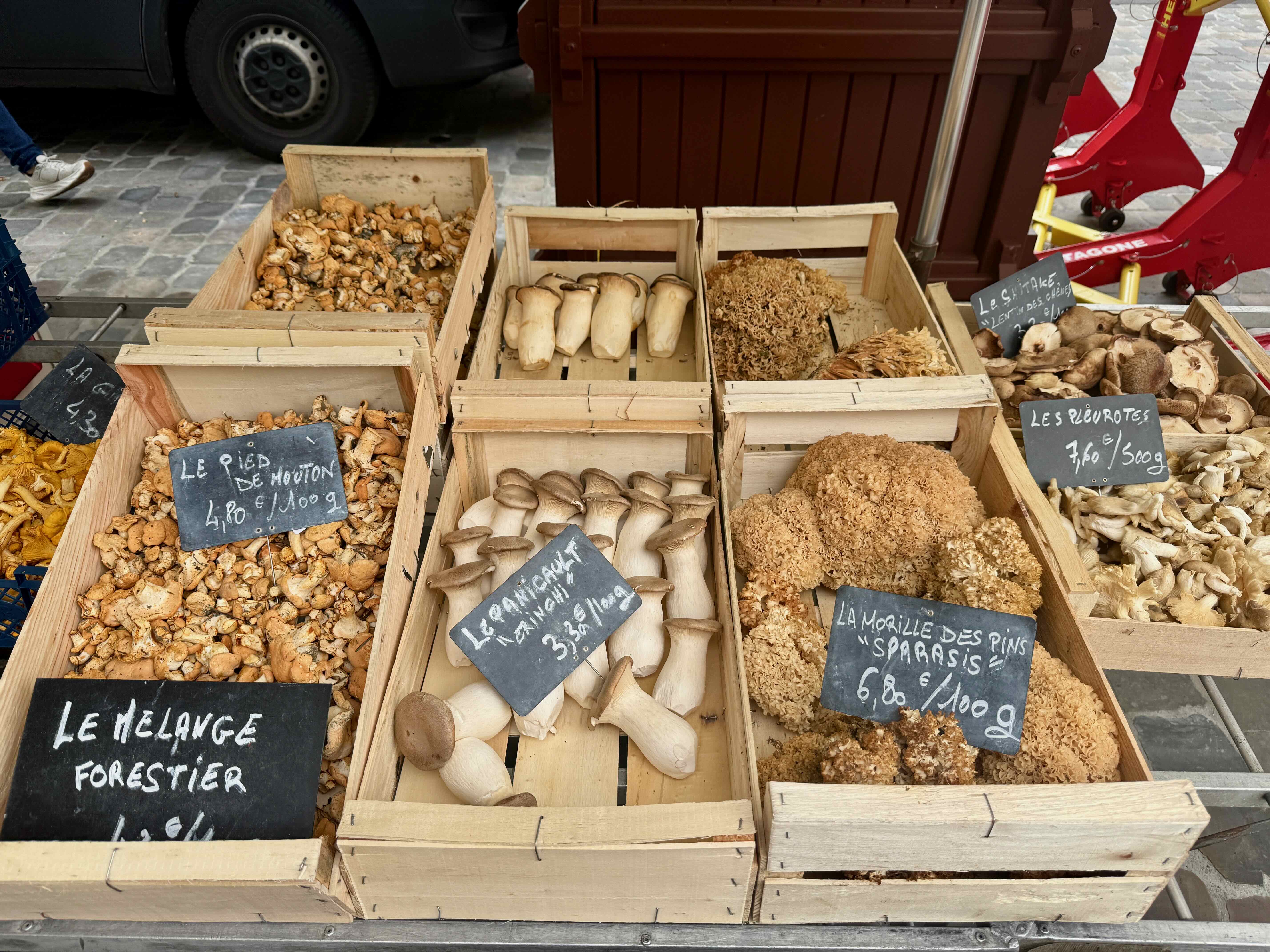
…and of course, many different cheeses.
We buy sausages, green beans, a baguette, a red pepper, bananas and two baskets of yummy Belgium strawberries. 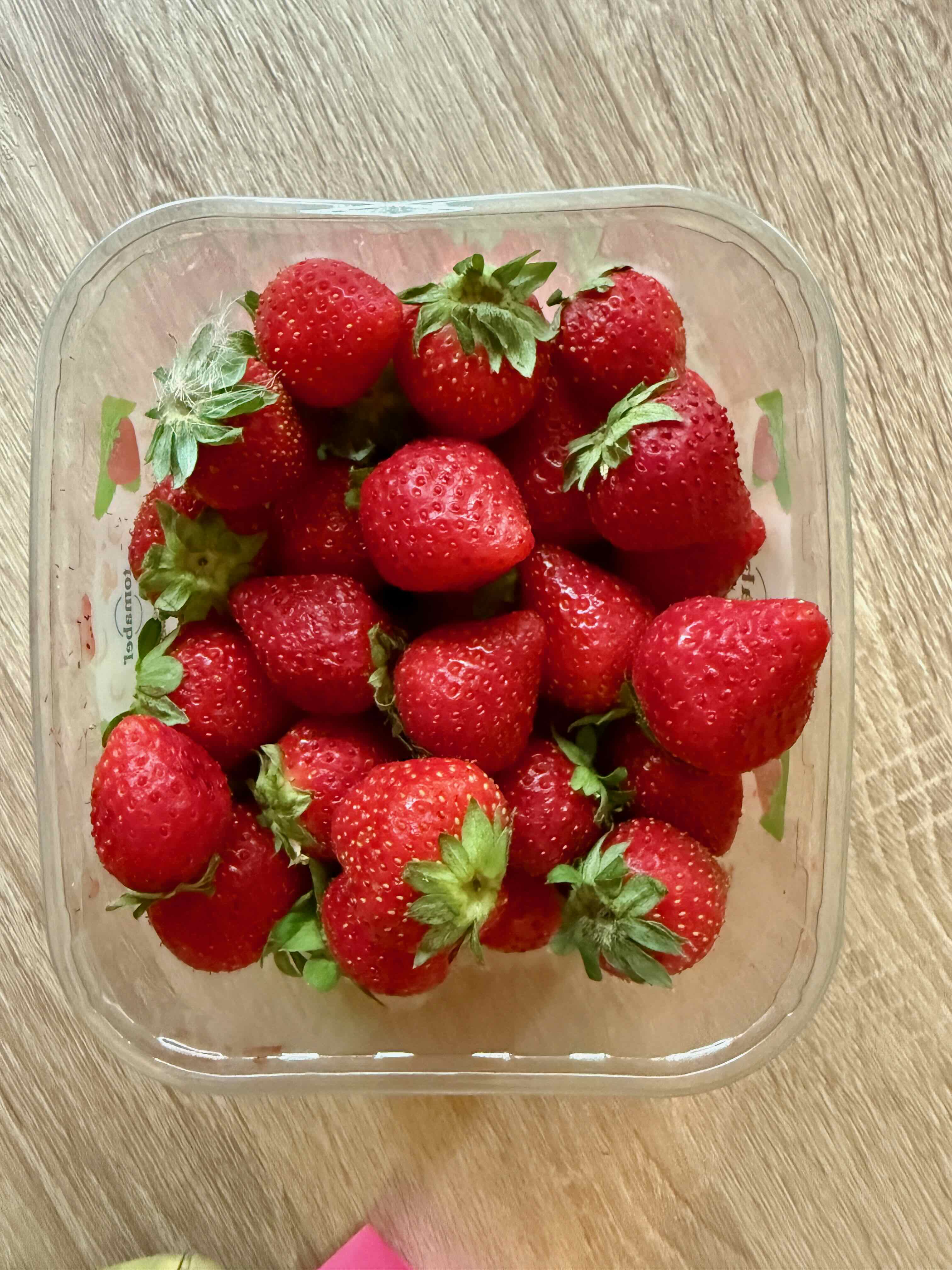
This plaque with our shadows shows the Original Belfry survived from 1463-1914, and the City Hall from 1502-1914. They were both almost completely destroyed by German bombardment in October 1914. They were rebuilt in the 1920s, using modern materials but replicating their original style. 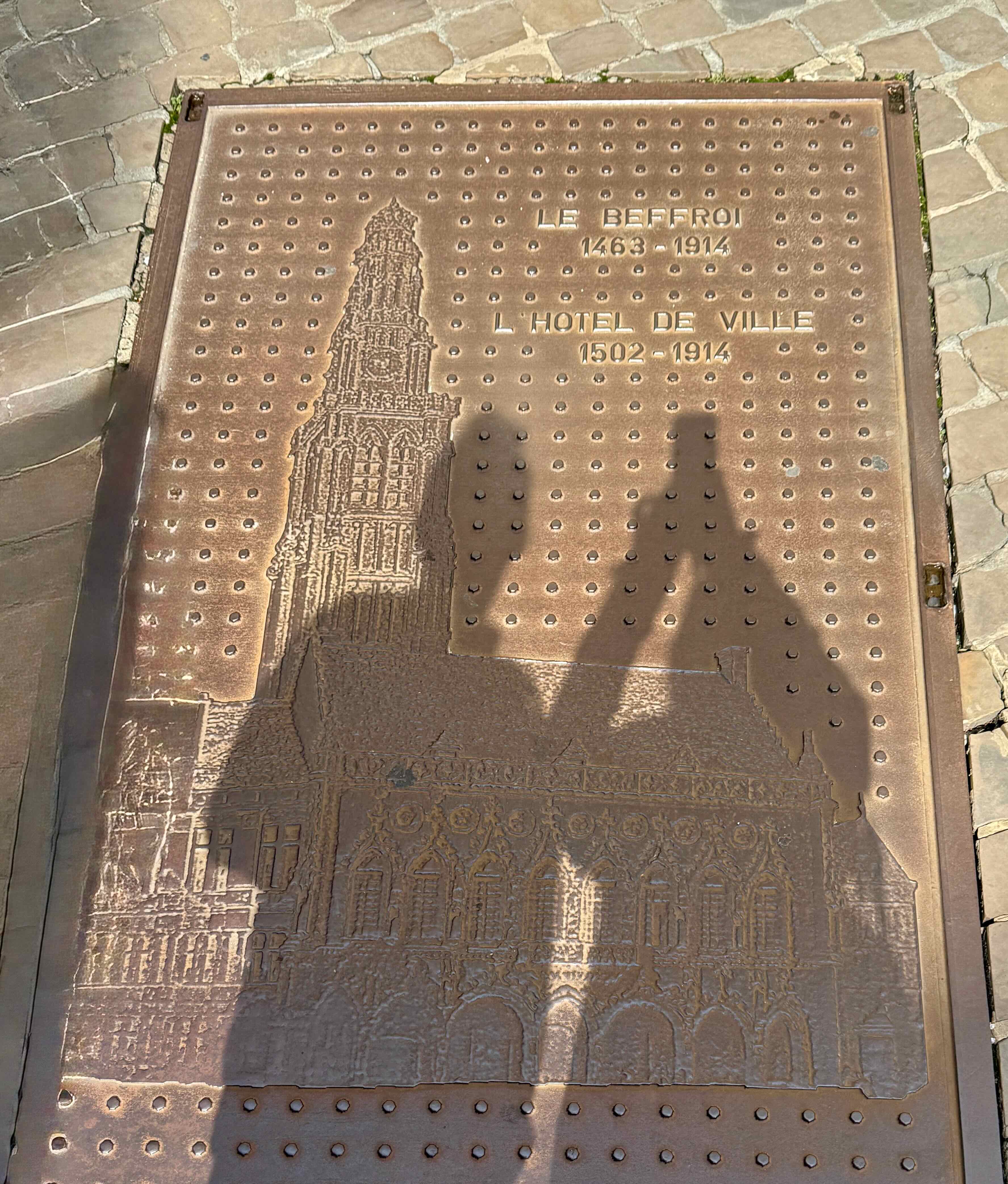
A view of the huge market in front of the Town Hall. The vendors were also located down the side streets of the square.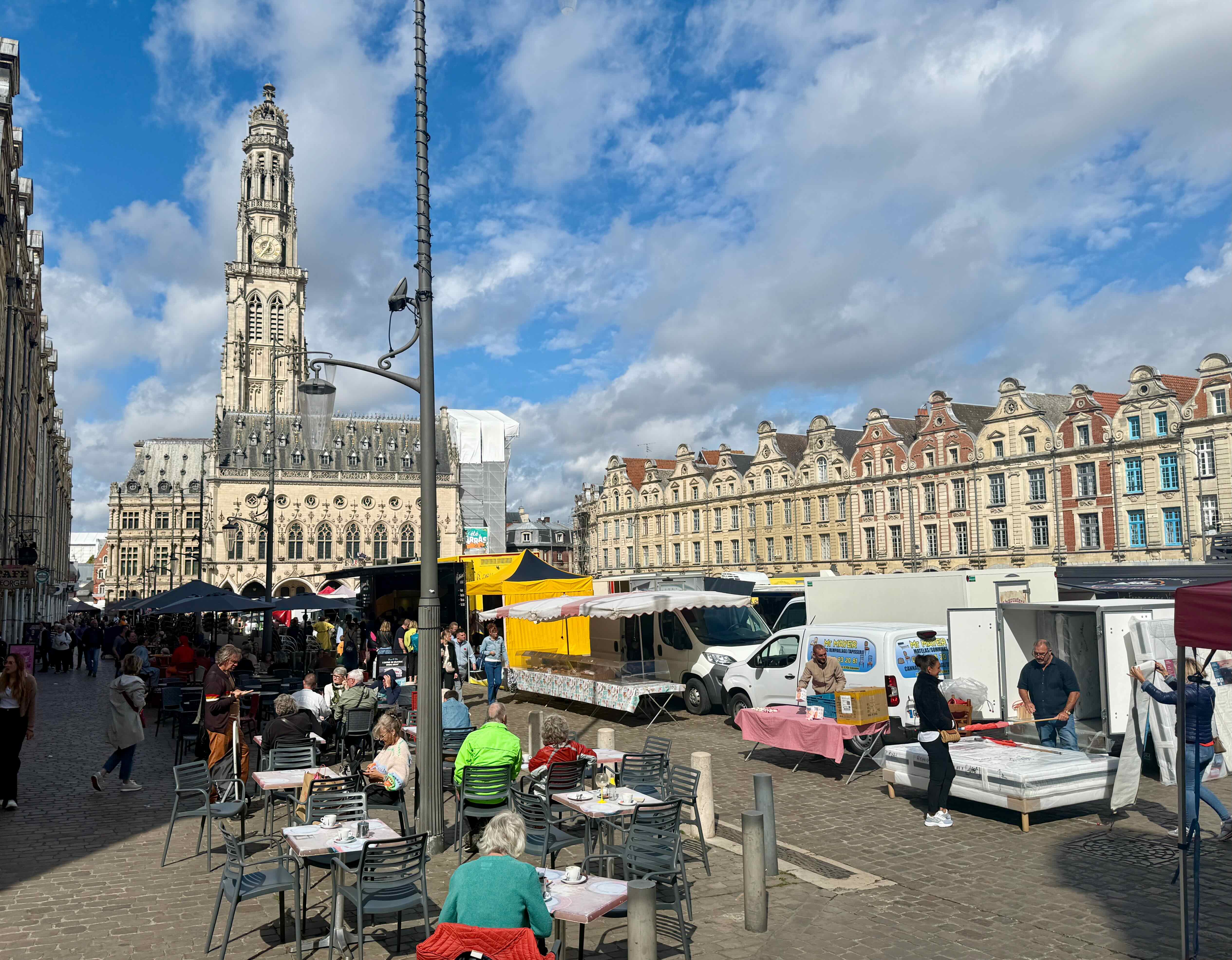
During our tour of the Boves on Wednesday our guide said that every building around the Grand’Place and the Place des Héros has underground cellars that are part of the caves that were dug under Arras. Each building has three levels of cellars, one at each of 4, 8 and 12 meters. Many restaurants and pubs are now located in these cellars. Each building’s cellars are “lined with metal” to prevent any thefts. Our guide’s English was fairly basic so we weren’t sure if she meant metal gates, or something else.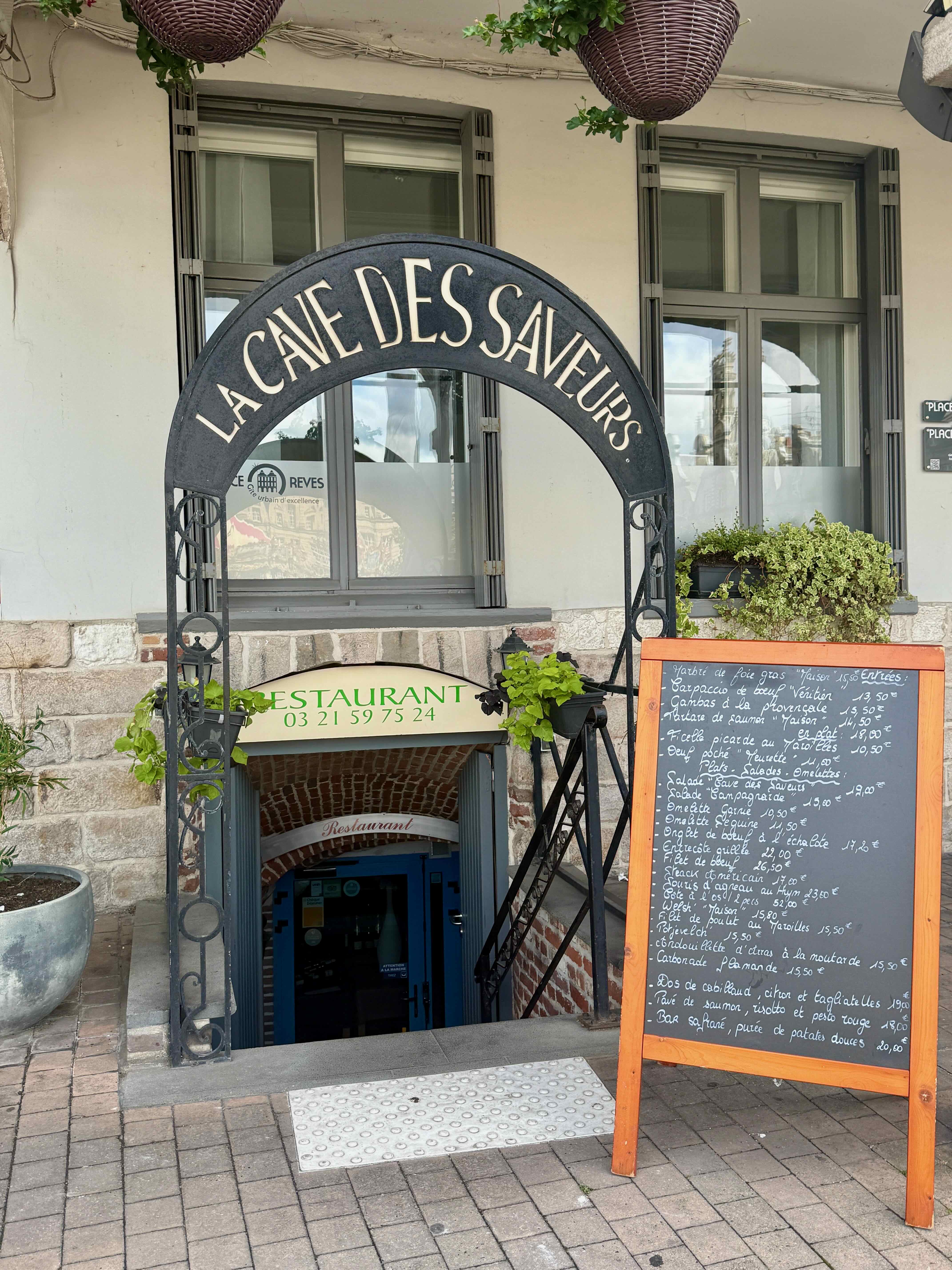
It is a short 10 minute drive to the Carrière Wellington. We don hard hats and we are soon 20 meters underground. 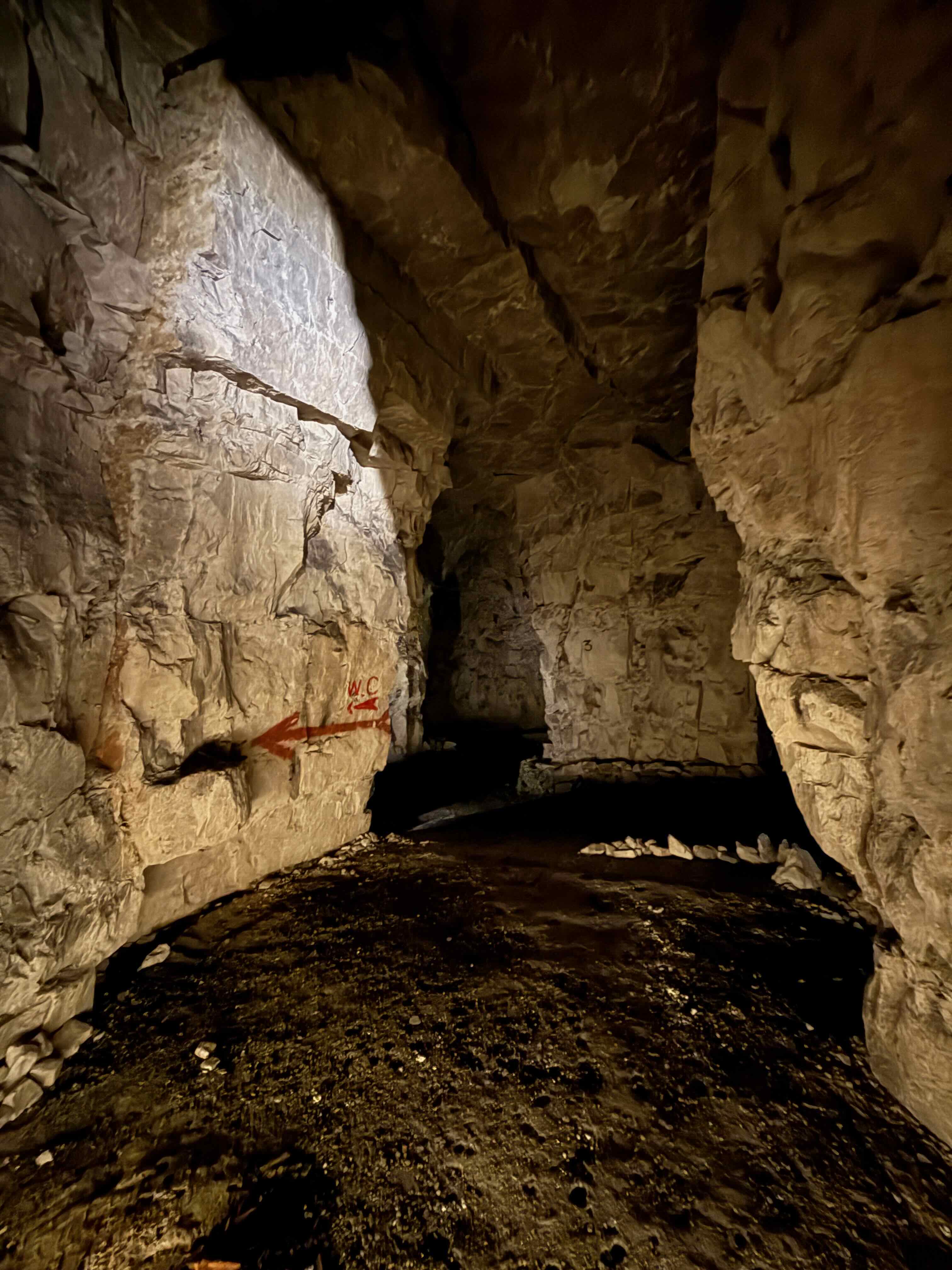
Tunnellers from New Zealand connected the town’s medieval chalk caves and tunnels to create a network of underground barracks to accommodate 24,000 soldiers in the First World War. Images and films are projected onto the cave walls throughout our tour. These are the NZ tunnellers.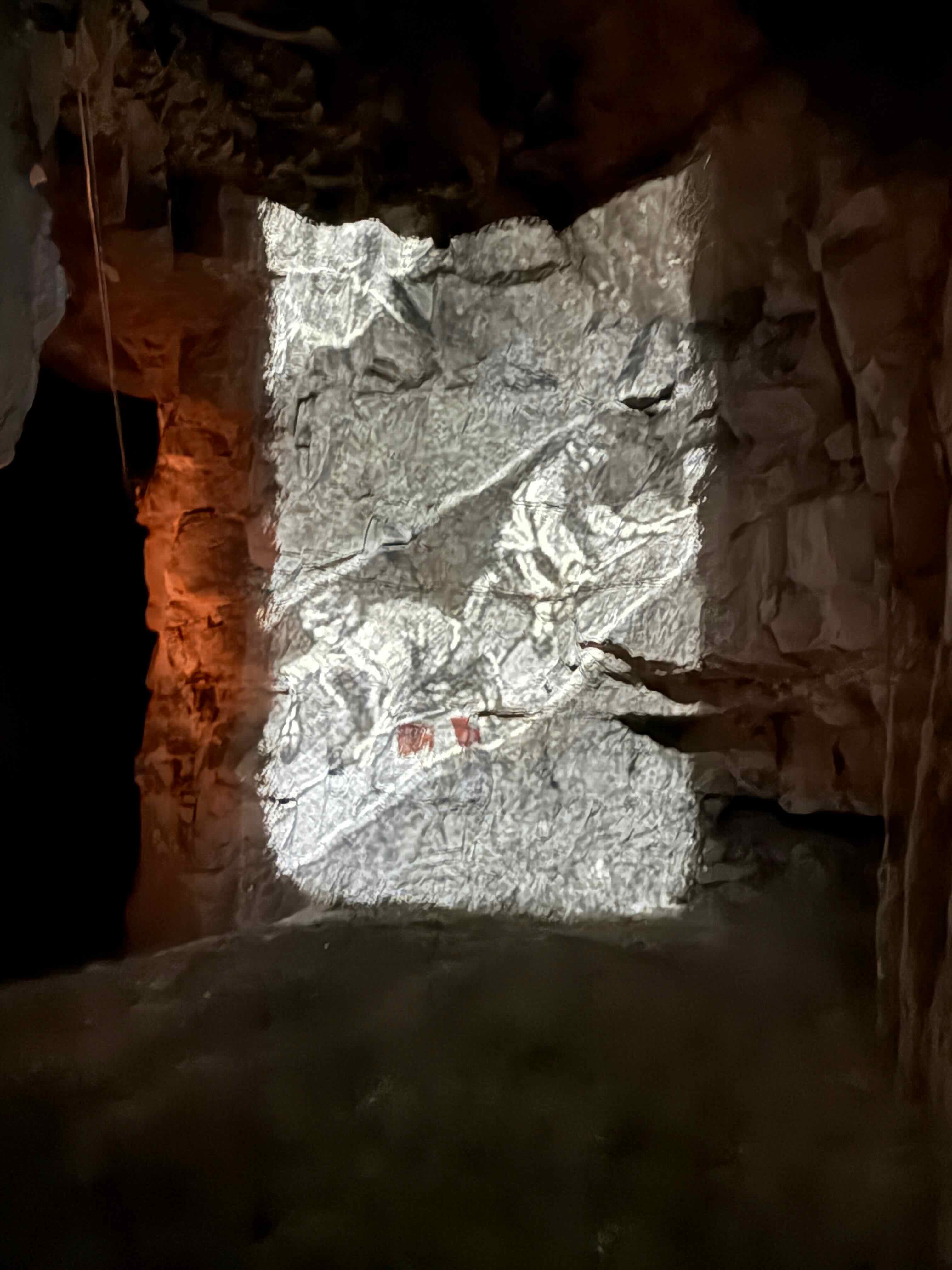
The tunnels we visit today housed 1,500 soldiers in the weeks up to the surprise attack against the Germans on April 9, 1917. Film of British troops arriving in Arras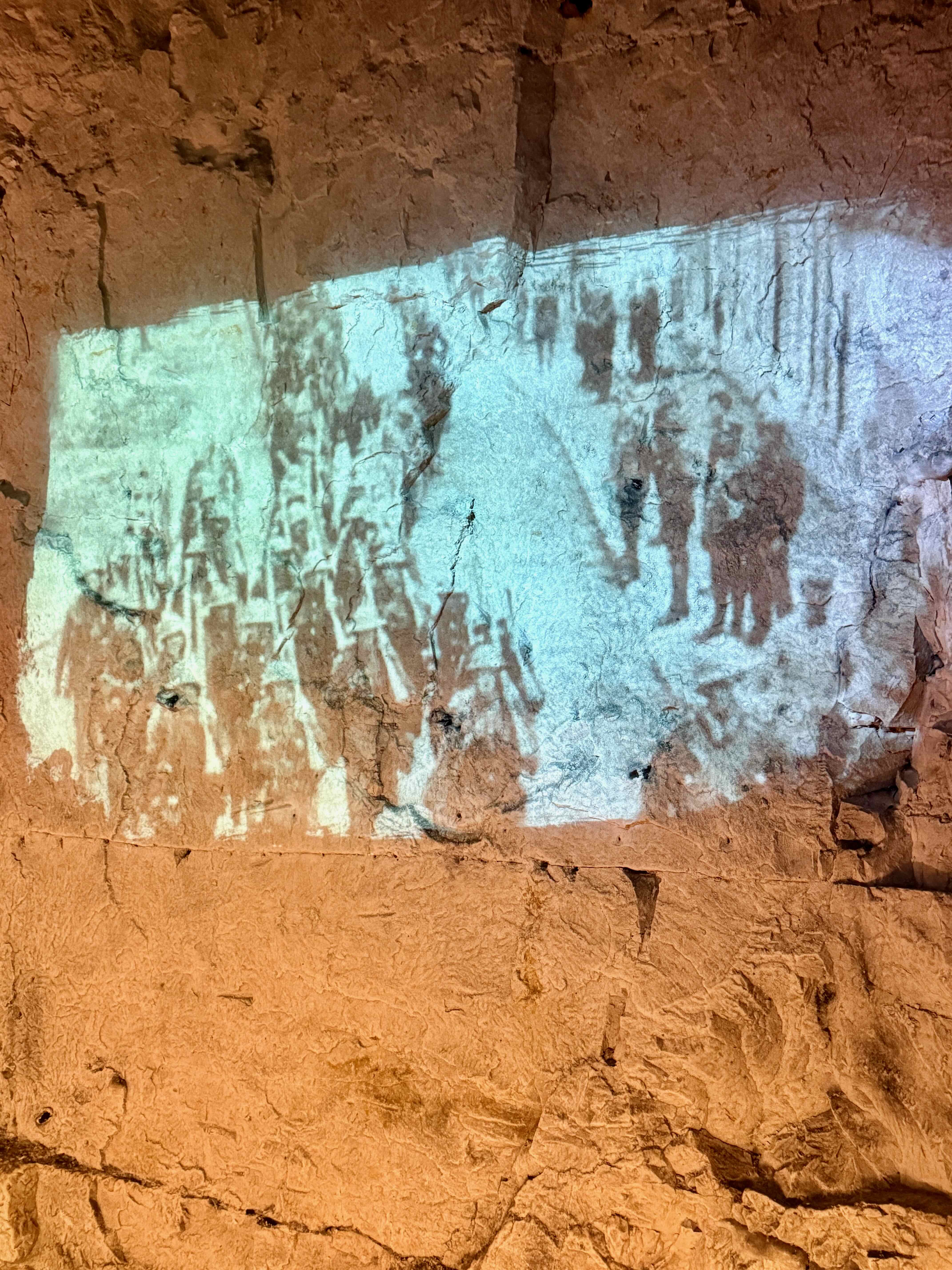
Images of individual soldiers were projected here. I wonder how many of them died in the coming battle.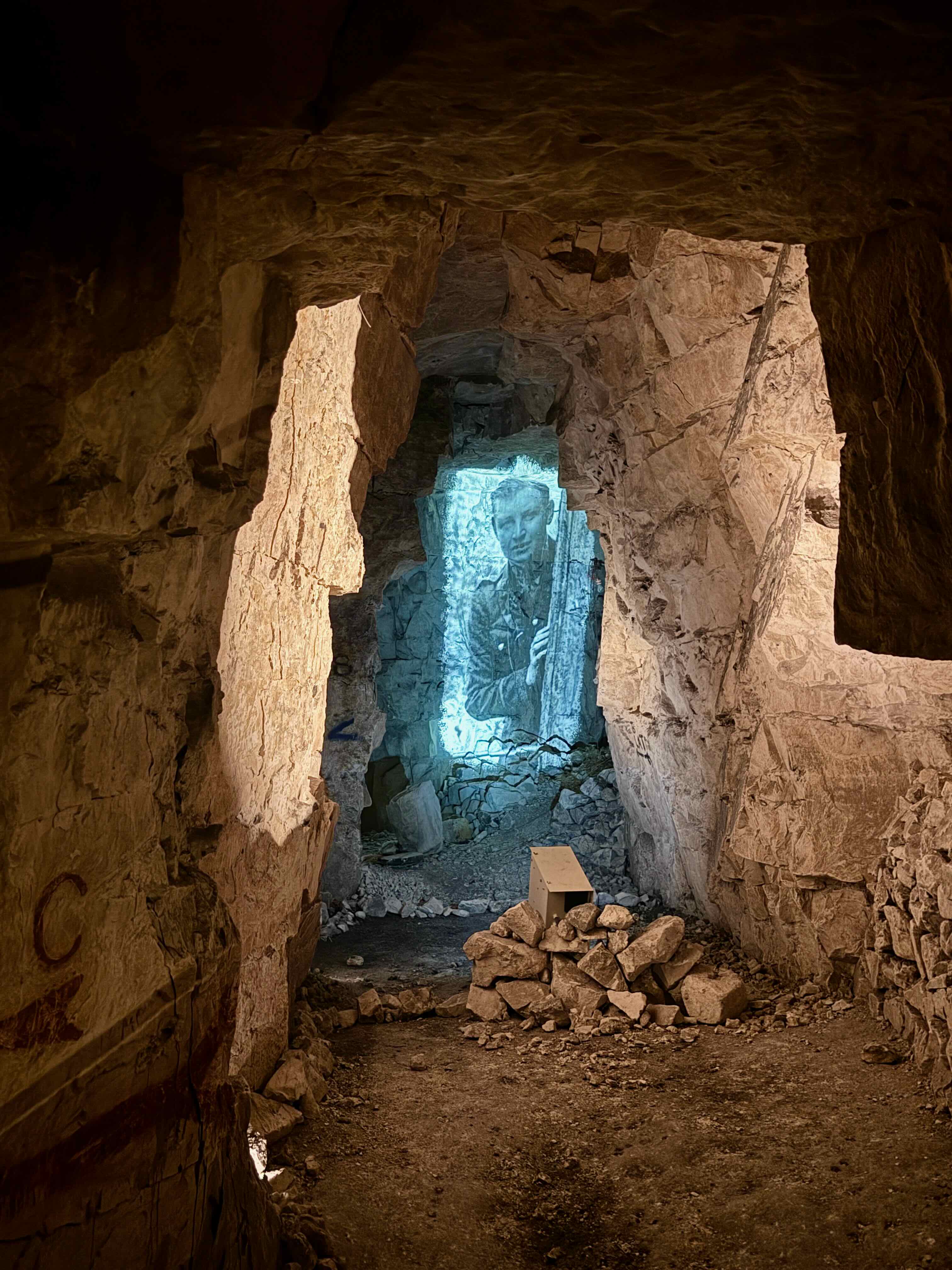 These ancient caves were used as building stone quarries for Arras in Medieval times. They are very large with high ceilings.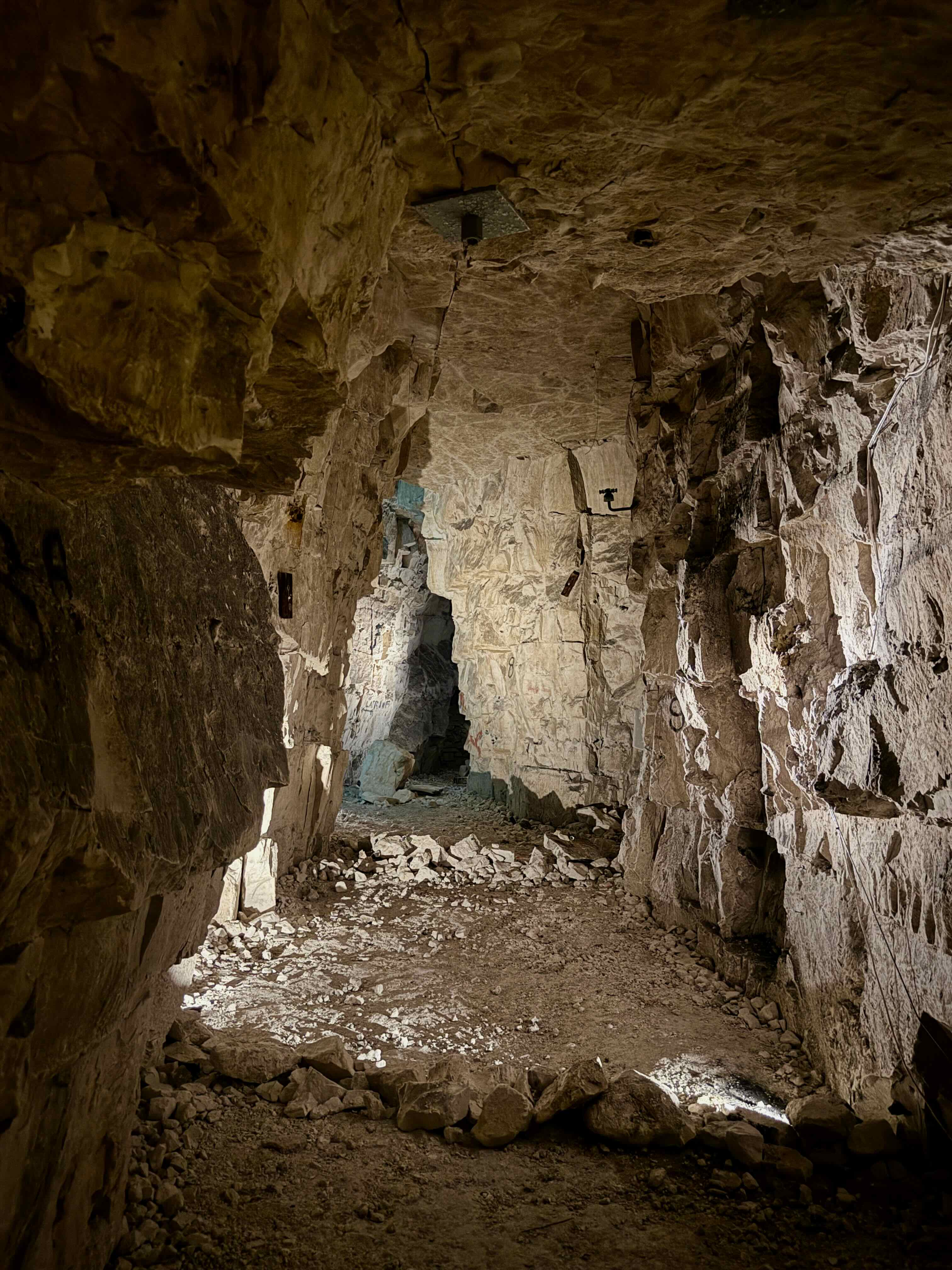
This projection showed some of the NZ tunnellers who volunteered to come to Arras. In front of the image are pick axes and shovels used to build the tunnels. No sledgehammers or explosives were used as the noise could have been heard by the Germans. The German front line was very close to the town of Arras.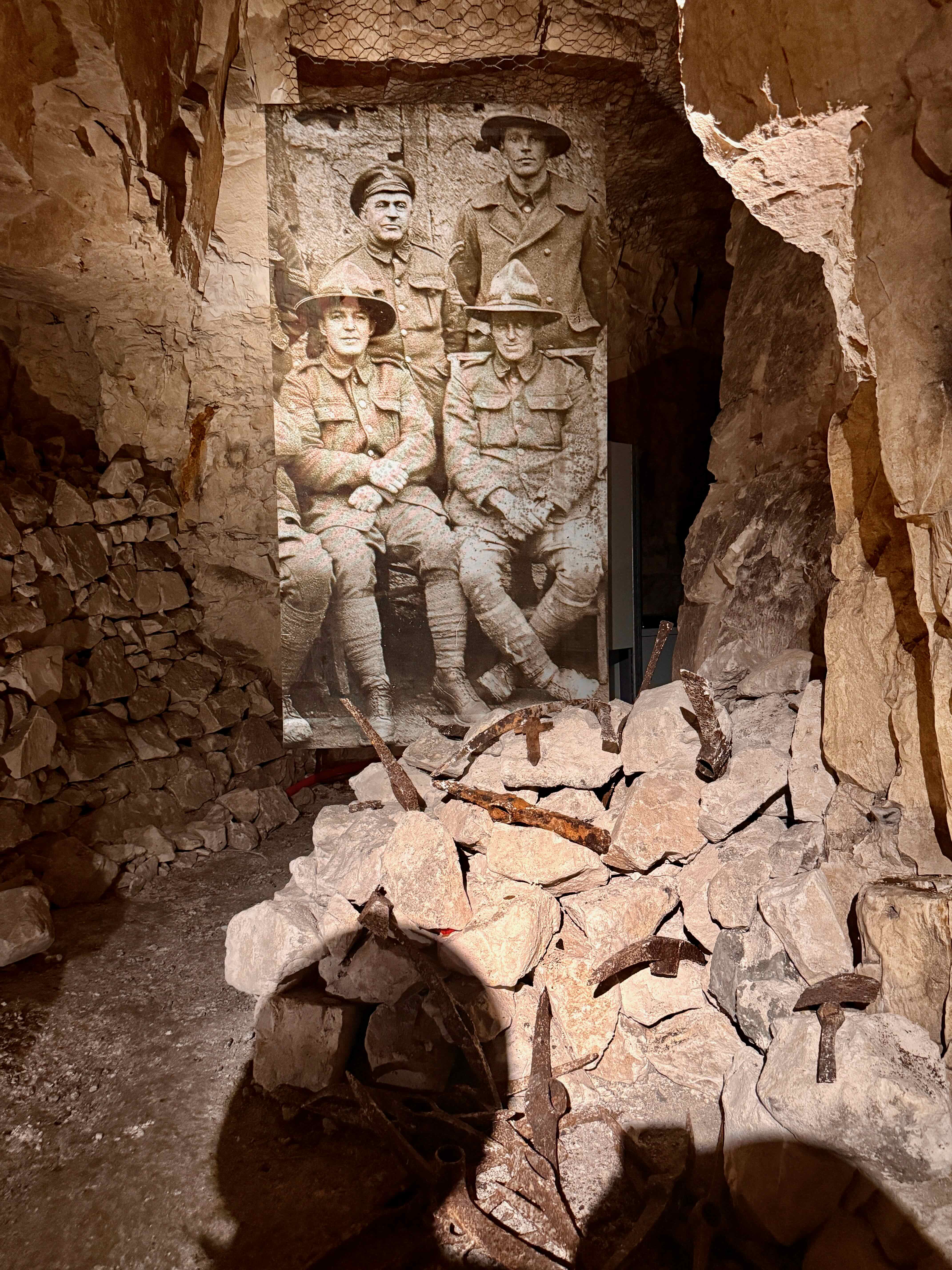
Bottles found in the caves, included everything from Perrier water bottles to beer, liquor, cream and HP sauce bottles. 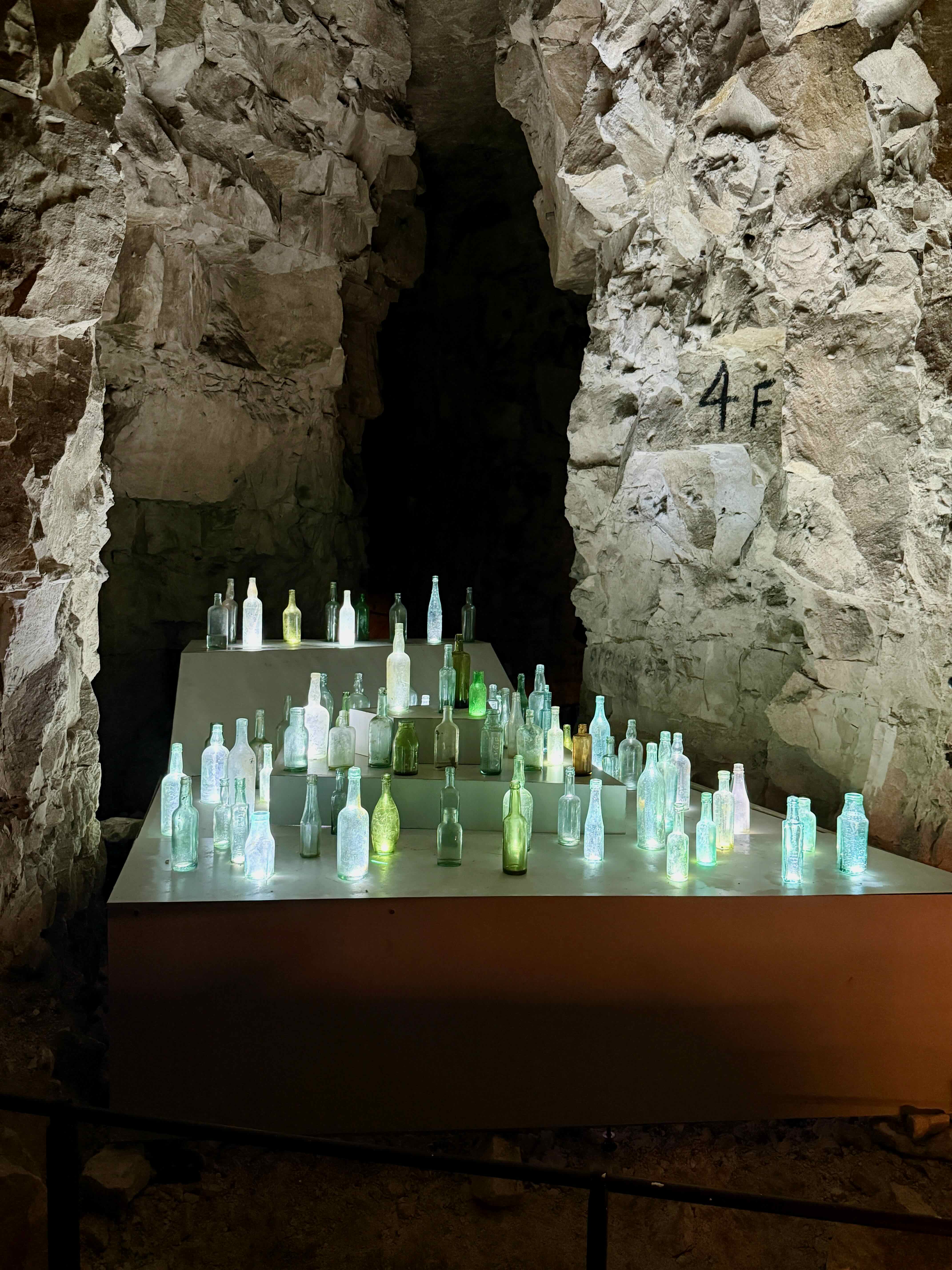
A facsimile of the bunks that were made for the soldiers. It was damp and cold and water dripped onto the men as they slept.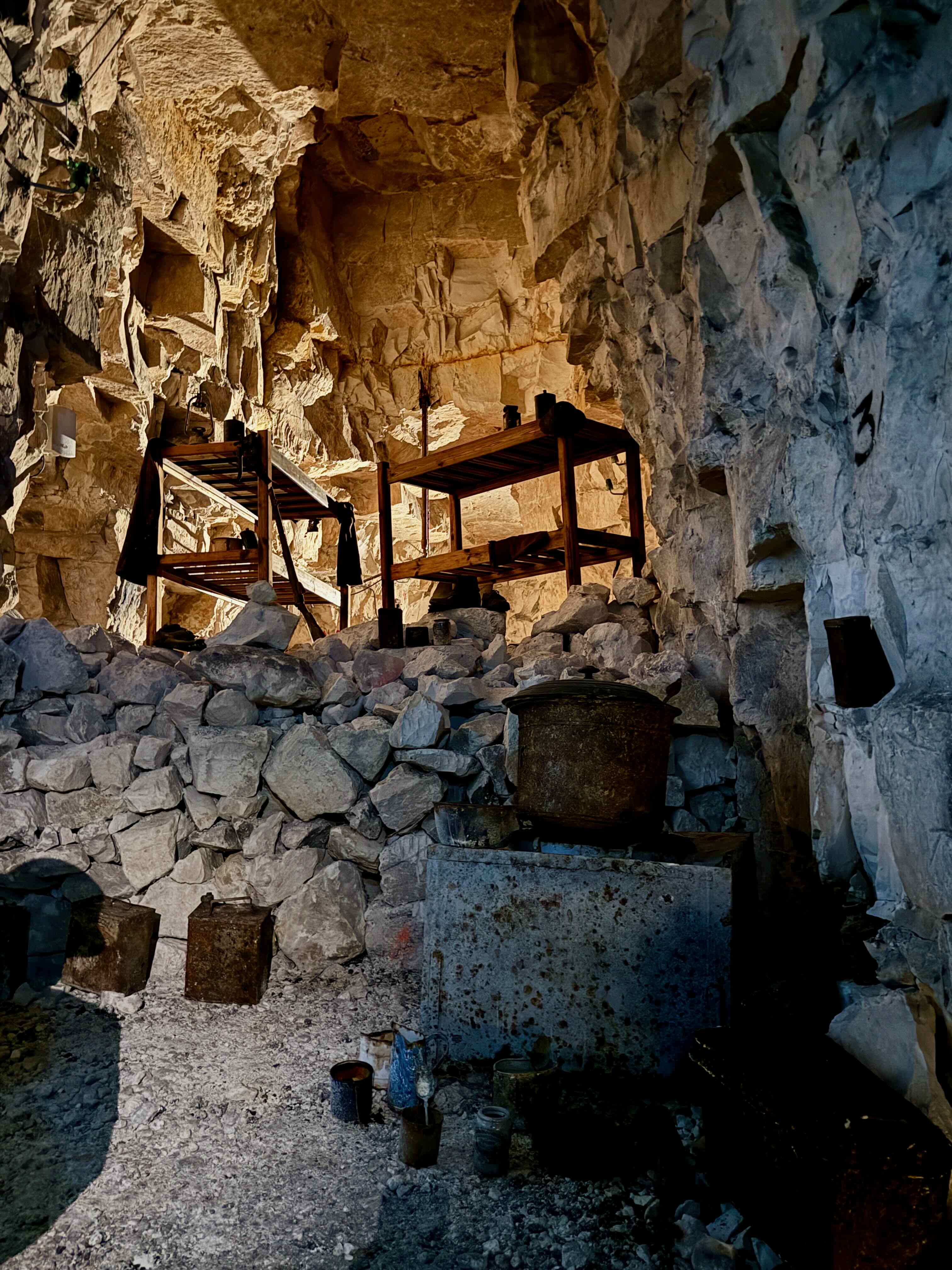
We hear a recording of a church service that plays while we view this projection of a soldier’s drawing of the service given just before the battle. 1,500 men crowded together in this part of the caves to attend the service.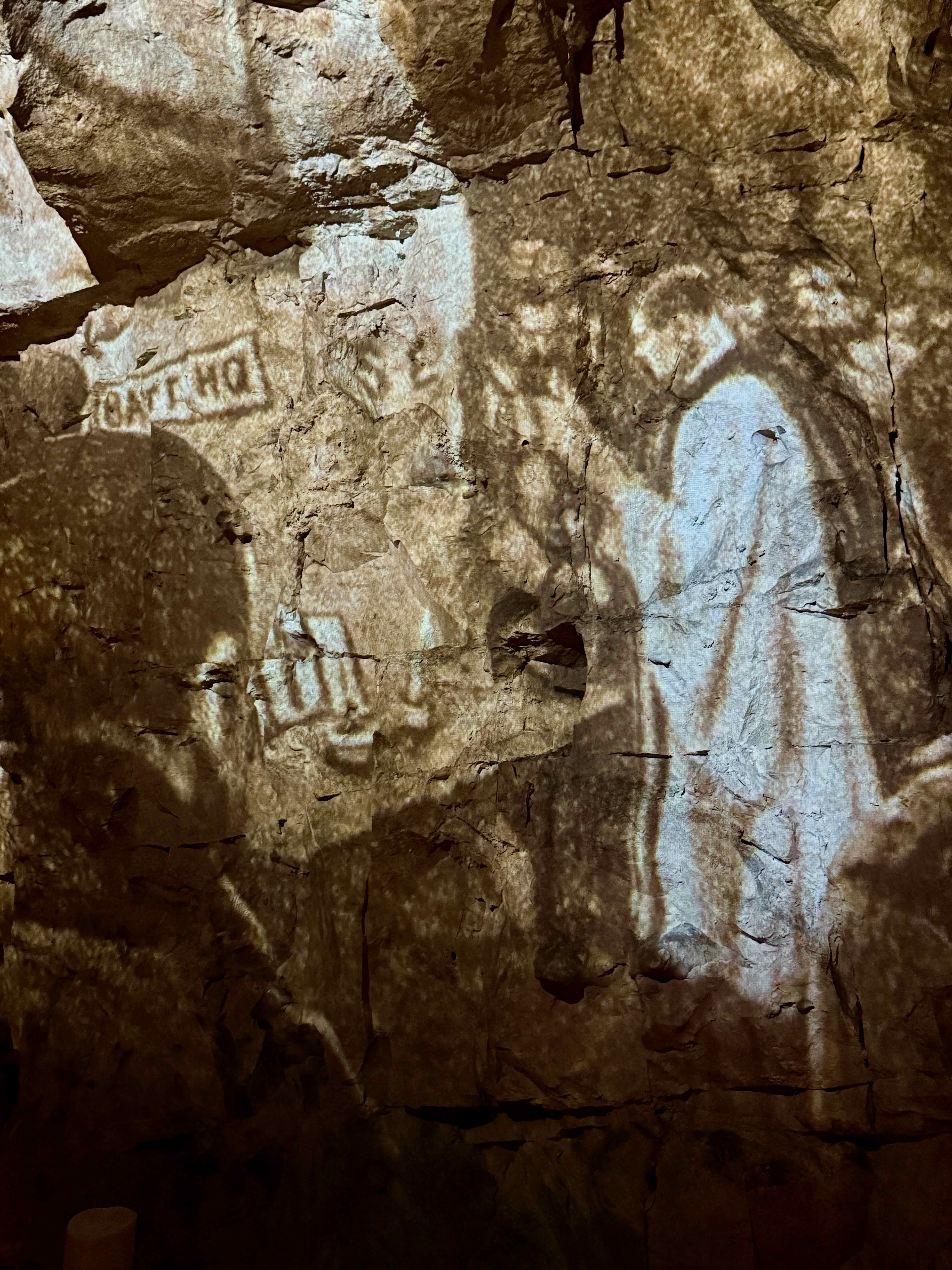
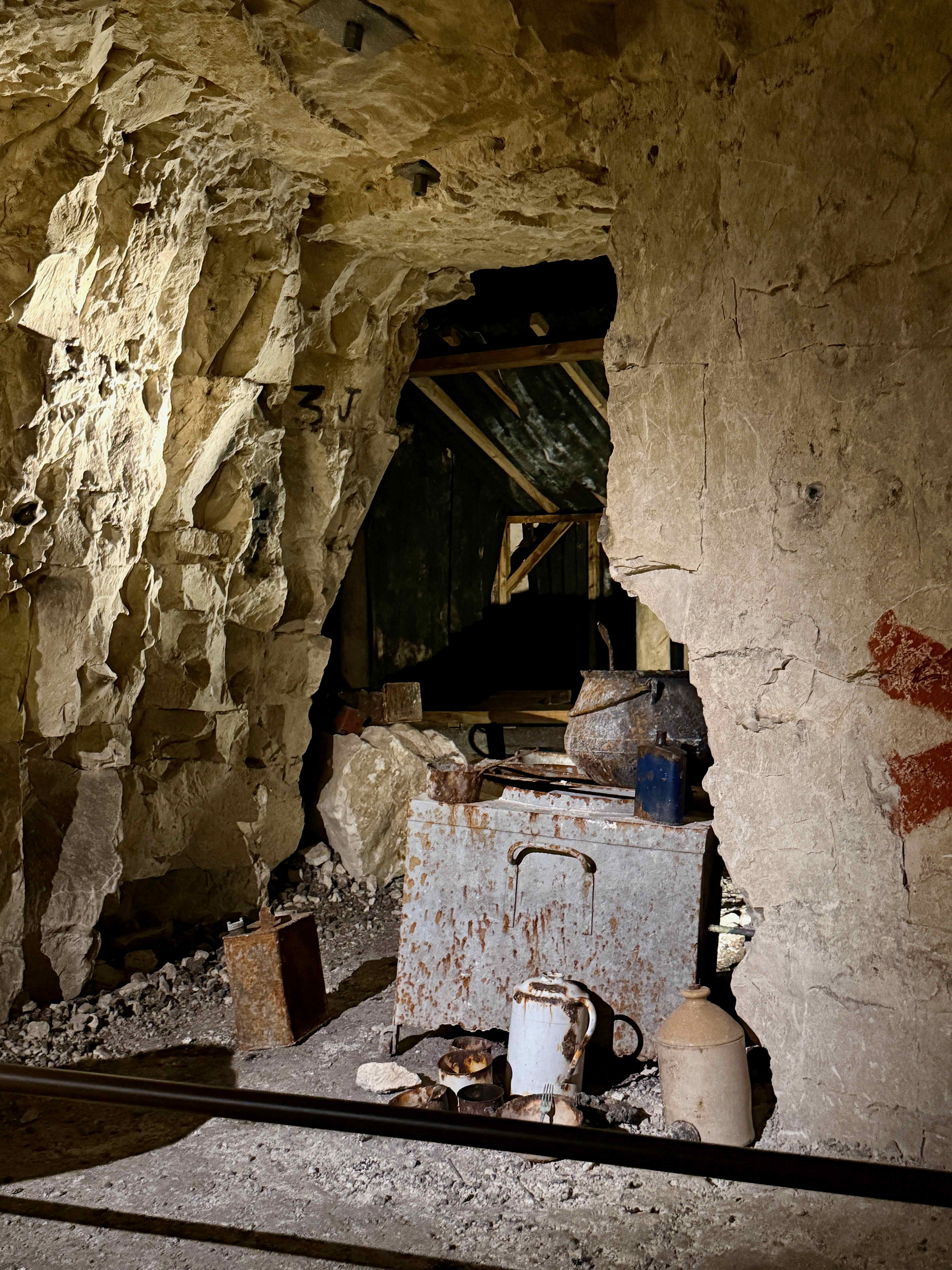
This is Command Headquarters. 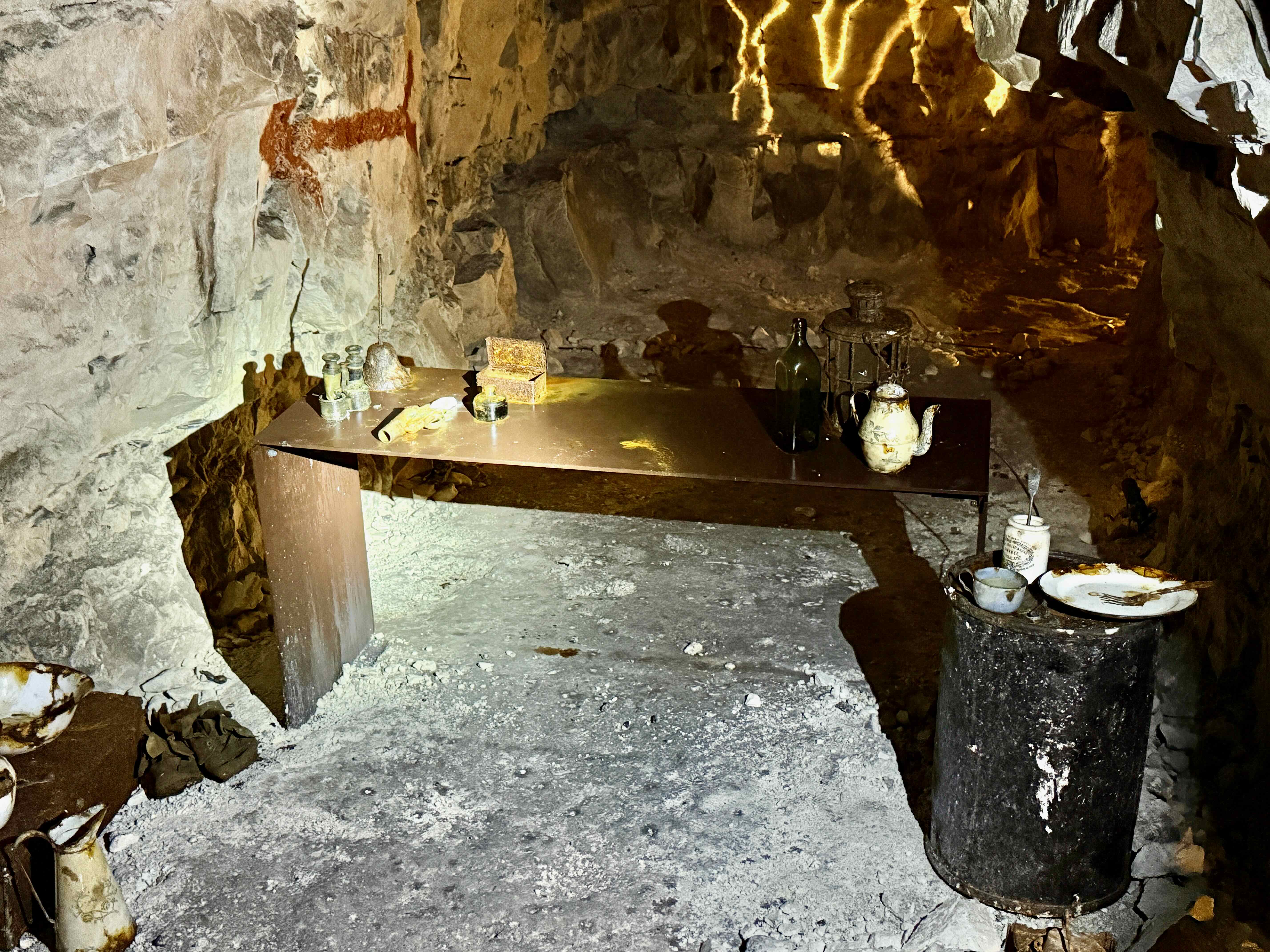
A view down a long tunnel towards an opening where the soldiers will exit onto the battlefield after an underground explosion opens the way.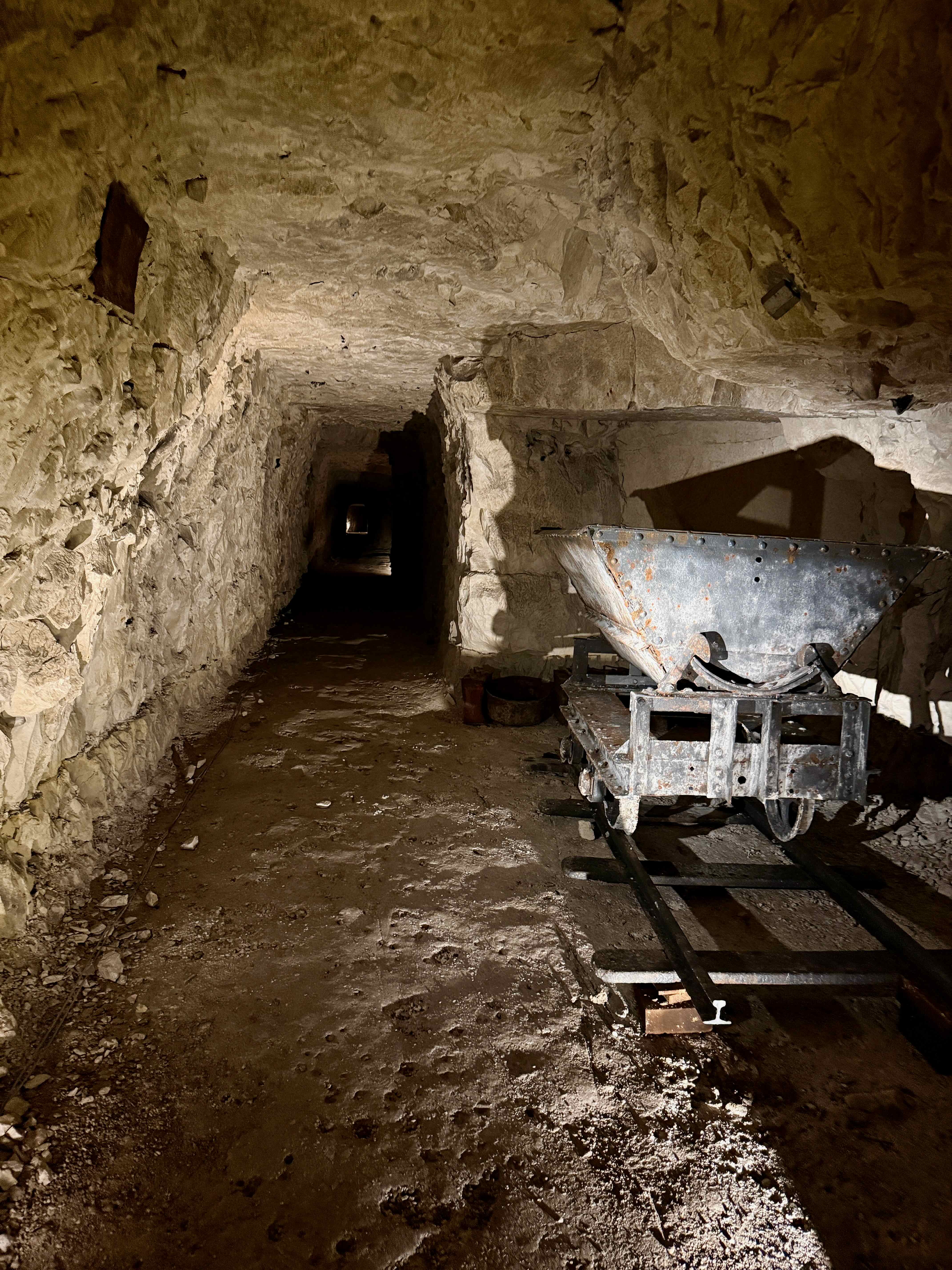
This last part of the tour was very moving. Projections of men writing their letters home before the battle. The contents of some letters are read aloud and we hear if the writer was injured or died in battle. Then we see these steps leading to an exit. There is a film with shadows of soldiers charging up the stairs to exit a doorway that flashes bright with loud explosions. We can hear the soldiers yelling and breathing hard. It is so difficult to watch…so many died to launch this surprise attack on the Germans. 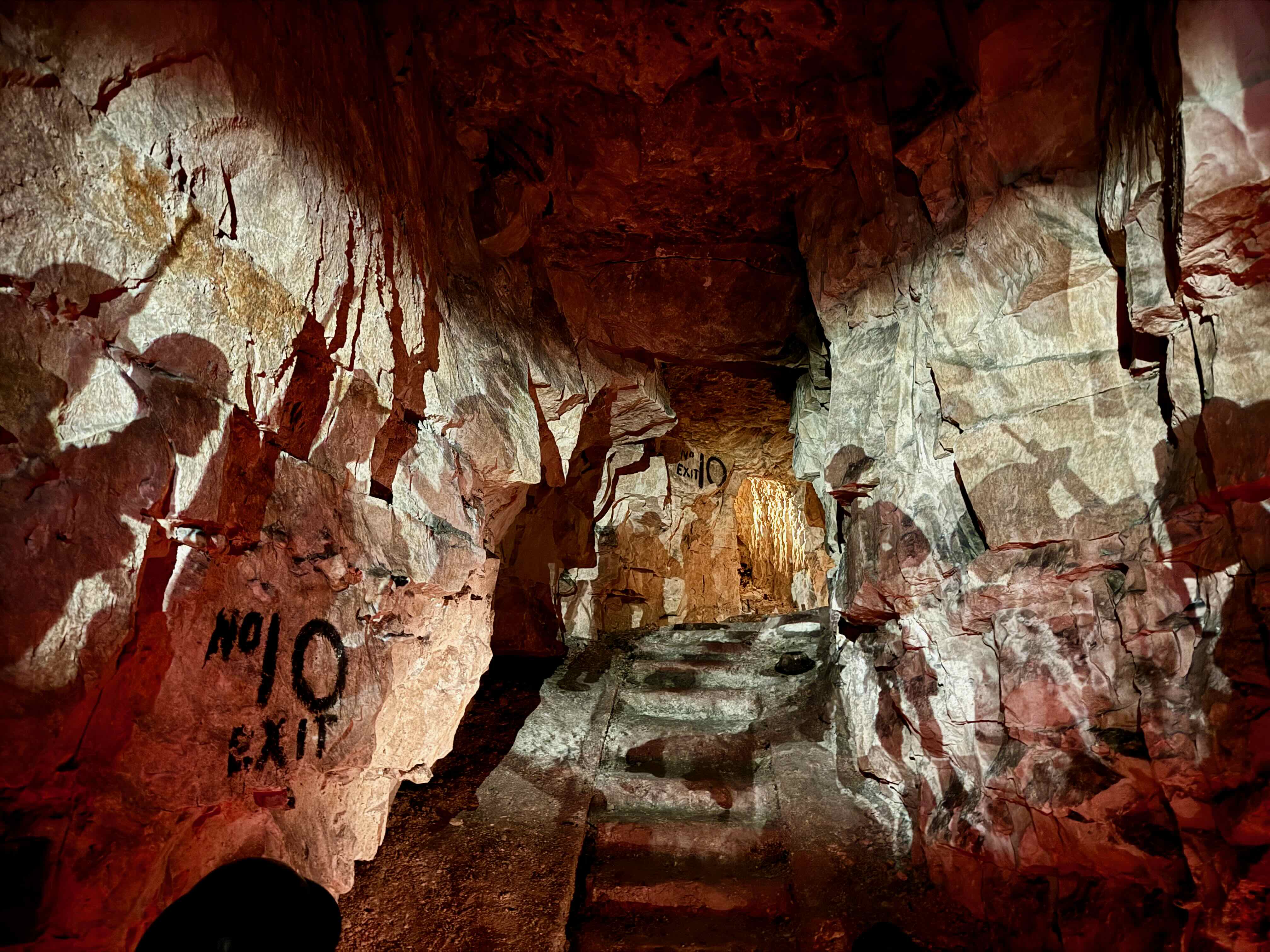 In a theatre after the tour we watch a film about what happened after this battle and I am shocked to learn that the British advance slowed in the next few days and the German defence recovered. The battle became a costly stalemate for both sides and 4,000 men a day died in the days after the surprise attack. The British had 160,000 casualties and the Germans about 125,000. Up until hearing this I thought this Arras surprise attack was at least a success. I really hate war!
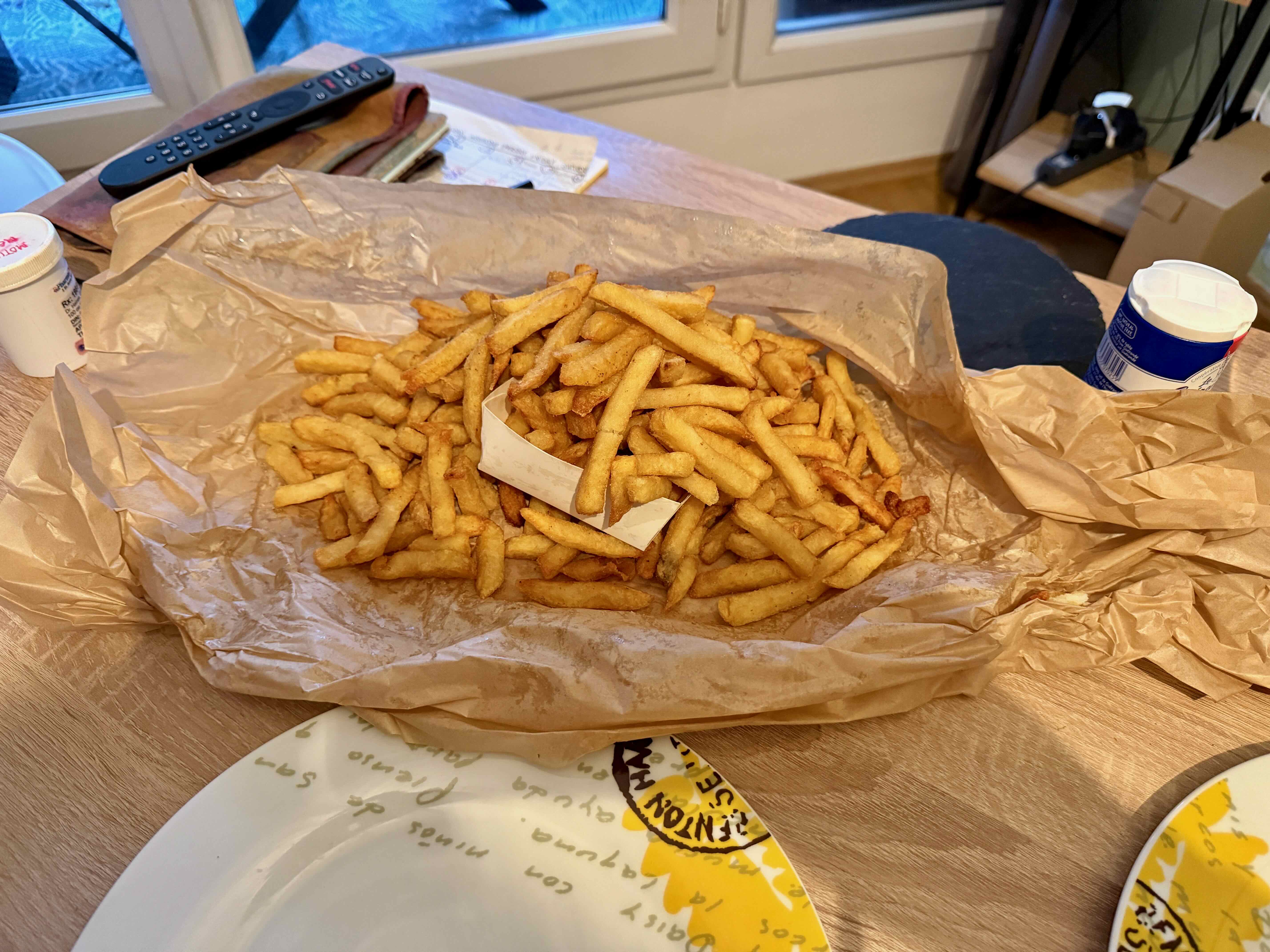
On a lighter note…for dinner tonight we have a salad and an order of Arras’s world famous frites. Yes, this is one €6.00 order of large frites. More than the two of us can eat!
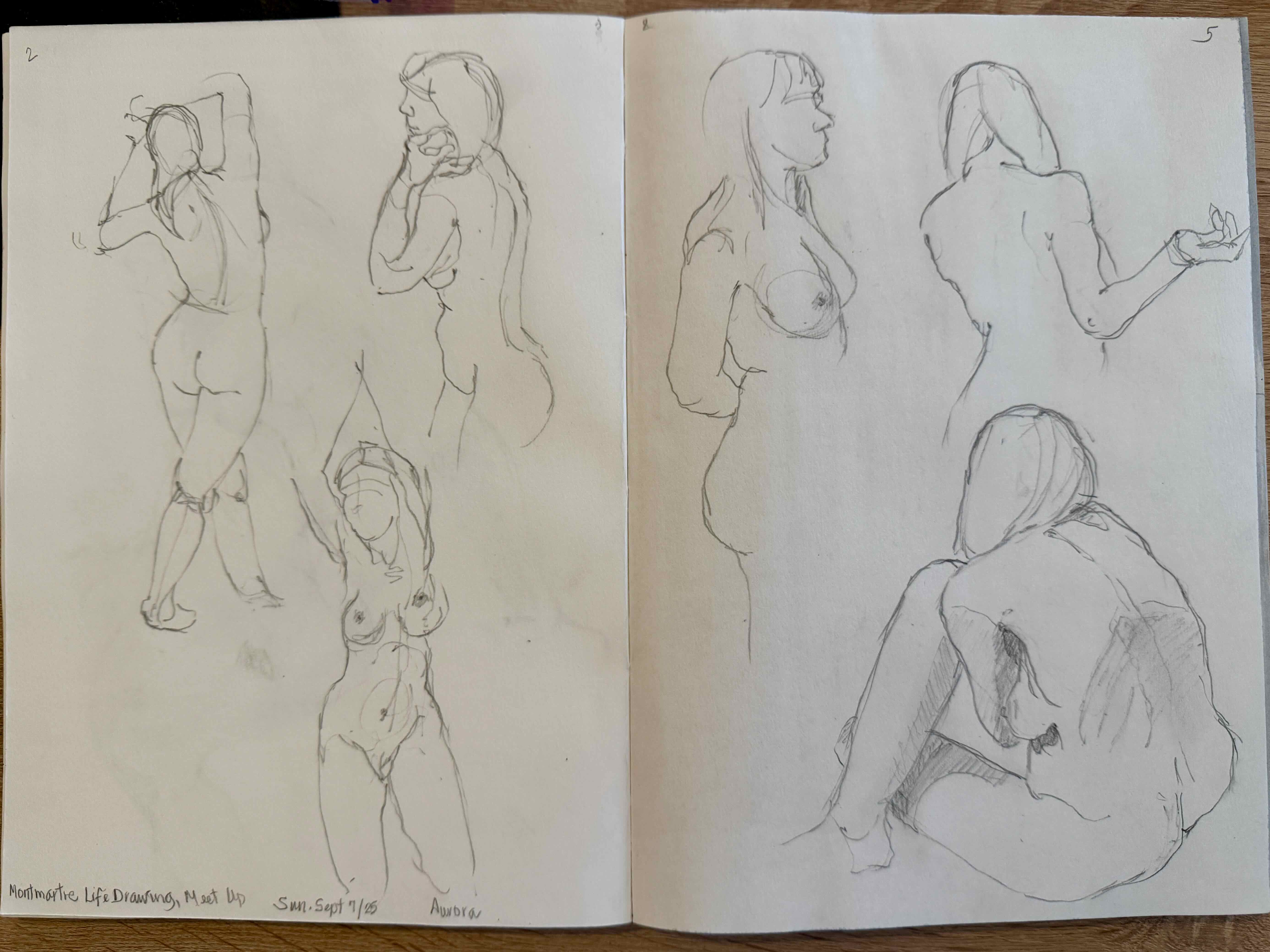

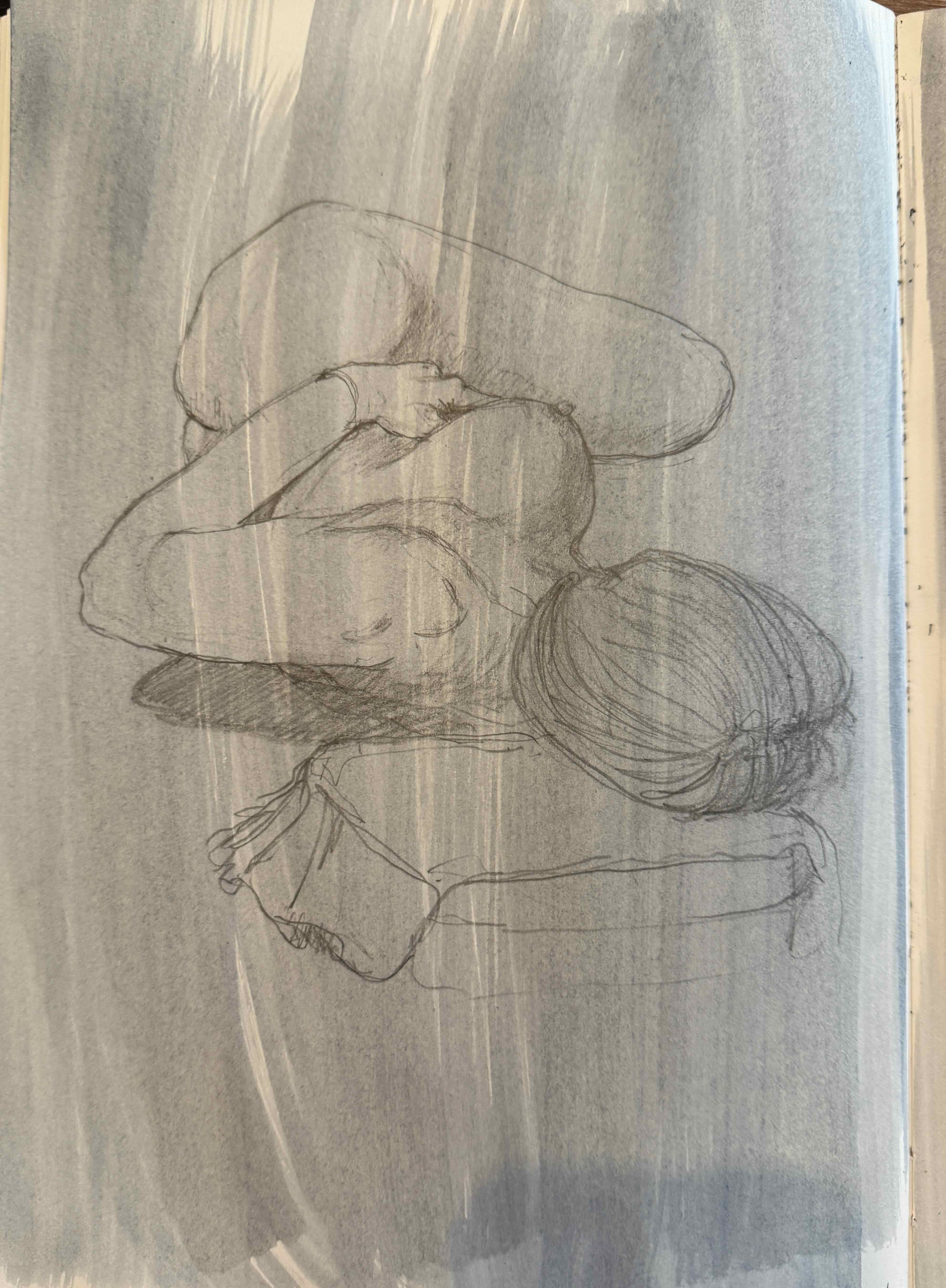

 We drive to Arras tomorrow so tonight we pack and tidy up. It was great being able to attend three life drawing sessions in three days but it was a bit tiring too. I don’t think I will find many more life drawing groups for a while.
 trudymason.com