Day 36, Monday, September 30, 2019
Prague is filled with many beautiful buildings. We pass this one on our way to the Prague Castle.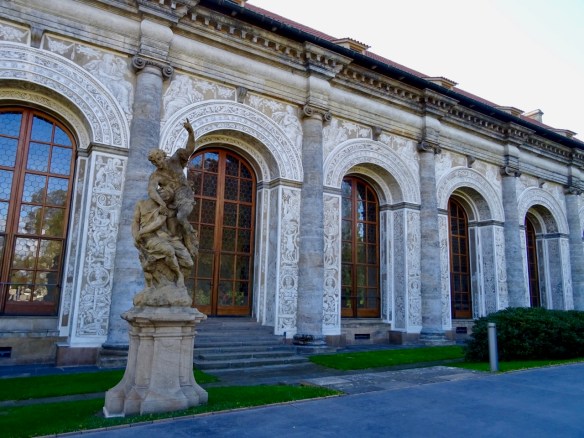 We had a good laugh. Bob thought that the two guards in the guard-boxes were wax mannequins. They were so motionless!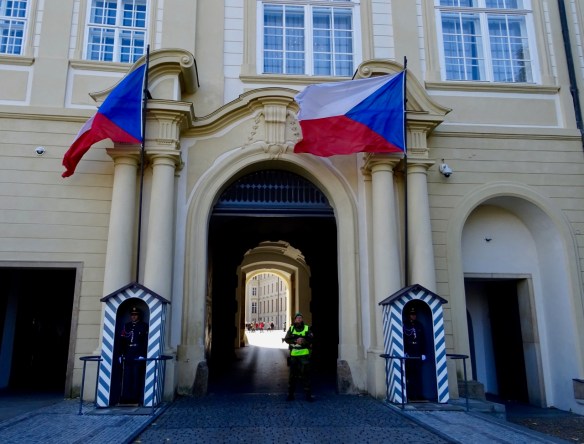
St. Vitus Cathedral is the first place we visit inside the castle grounds. Our eyes are immediately drawn to the beautiful stained glass windows, and then to the hordes of people!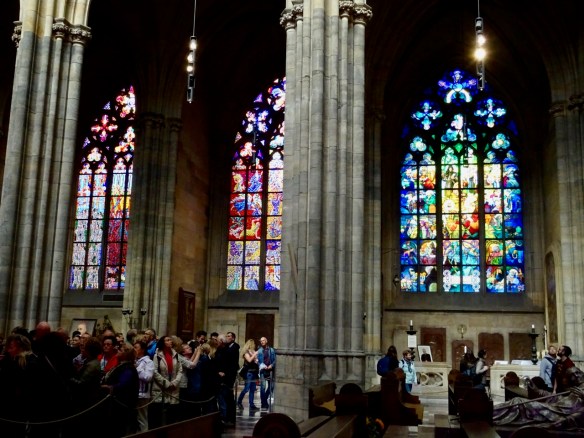
This sculpture is about a third of the way down this very large cathedral. Everyone has entrance to the cathedral with their entrance ticket to the Castle but they are only allowed into about the entrance of the nave. We bought the next level ticket so we could walk around the whole cathedral and see all the side chapels and the altar up close.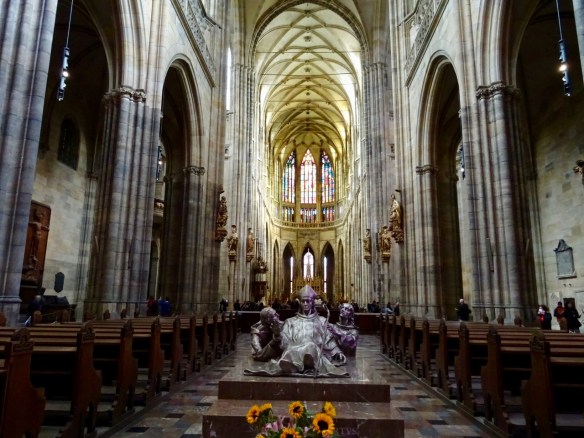
The stained glass windows, created by 20th century Czech artists, are some of the most beautiful we have seen. Each window is unique and their intense colours flood the interior of this Gothic Cathedral. 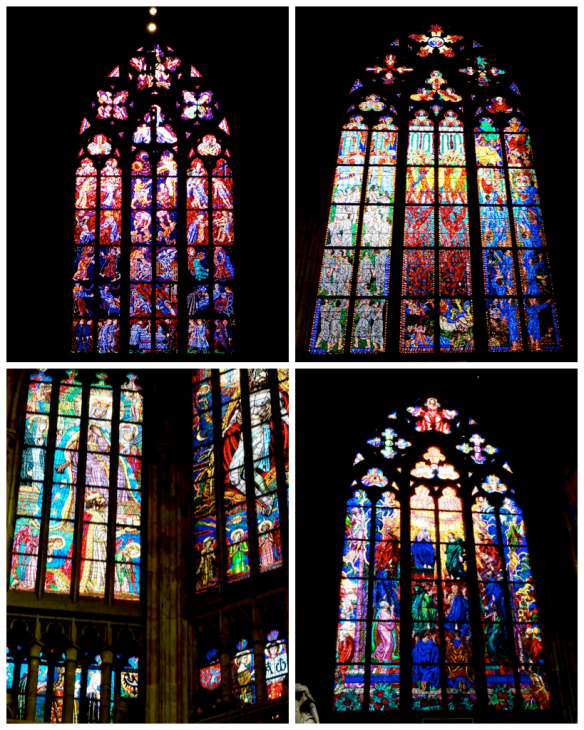
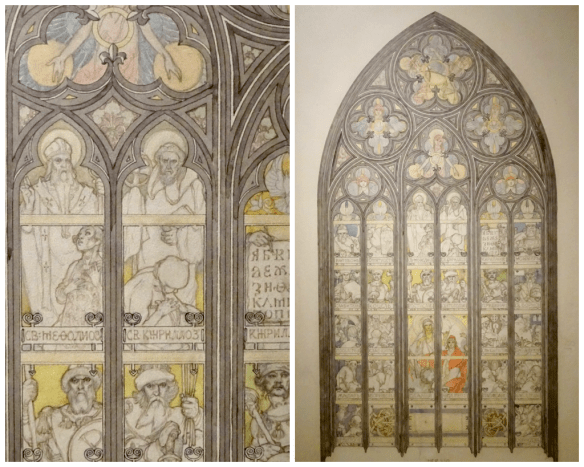
Here is a close up of some non-traditional stained glass windows.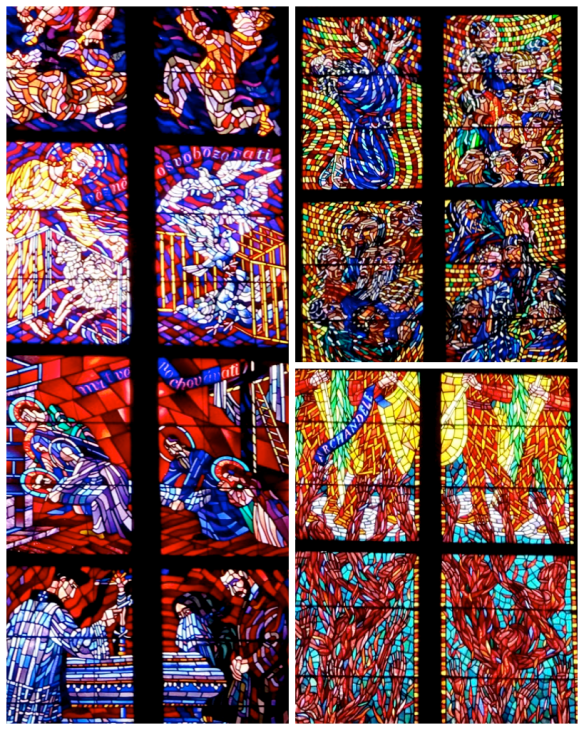 Perhaps my favourite is the window designed by Alphonse Mucha. You may remember we saw his design drawing for this window at the Mucha Museum yesterday.
 The beautiful rose window on the entrance wall of the cathedral was completed in 1925 and took two years to complete. The inscriptions on the stained glass tell the story of Creation as told in the Bible.
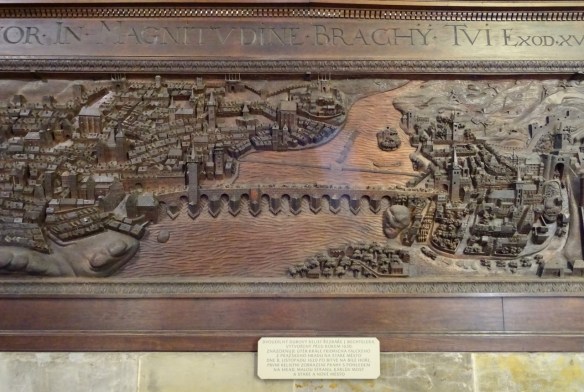
  This wooden panel from 1630 shows the St. Charles Bridge, built in 1403, that we visited on Saturday. The city doesn’t really look all that different, does it?
 St. Vitus is portrayed with a rooster by his side, because he was boiled to death in a pot with a rooster! These saints all seem to have had horrible tortuous deaths. St. Vitus never actually even visited this cathedral, but a relic, or pieces of his body, was brought here and the Cathedral was built to honour him.
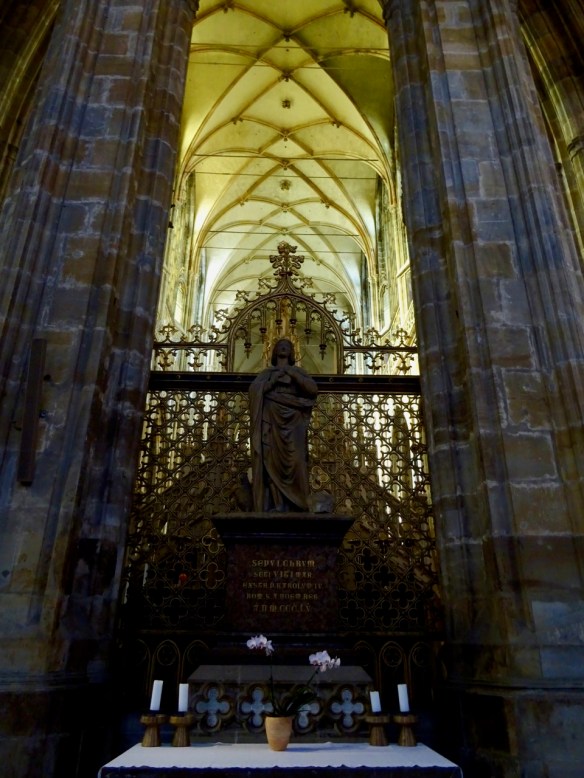 St John of Nepomuk’s tomb is an elaborate baroque silver tomb with angels supporting a draped canopy. It is said to contain two tonnes of silver. St. John is the patron saint of the Czechs. There are so many people visiting this cathedral that I had to take this photo looking back towards the tomb to get a decent shot.
This interesting fellow perched up high lighting the way is on the corner of a balcony that leads to the King’s private chambers. The King was able visit the church whenever he wants without being seen by others.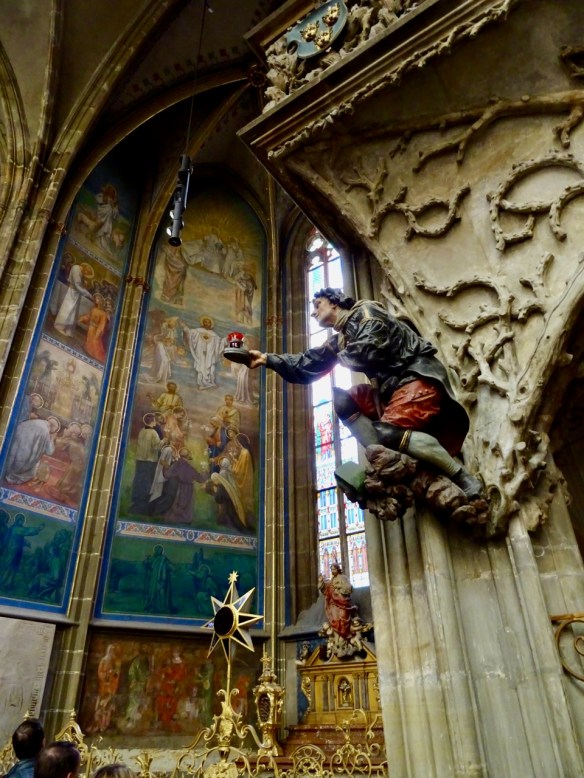 This is the chapel dedicated to St. Wenceslas, the king and patron saint of all the Czech lands. The lower part of the walls are decorated with more than 1300 gems and the joints between them are covered with gold. The walls are covered in frescoes and the relics of St. Wenceslas are kept in the red draped case.
 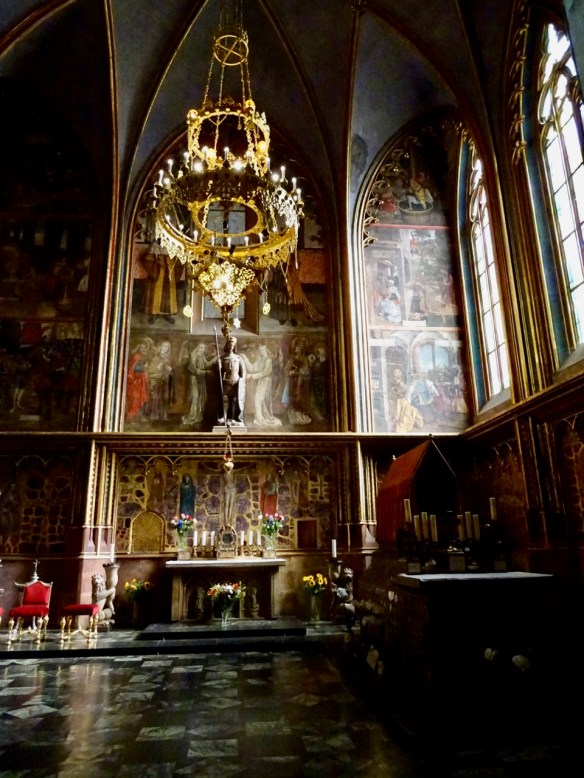 As we are leaving, the sun comes out for a bit and shines through the stained glass windows casting coloured light into the cathedral. Note the lady posing behind Bob. We seem to see her everywhere we go today and she is always posing ‘just so’ for a photo. I’m not sure her and her husband are even looking at the cathedral as anything but a backdrop for her photographs.
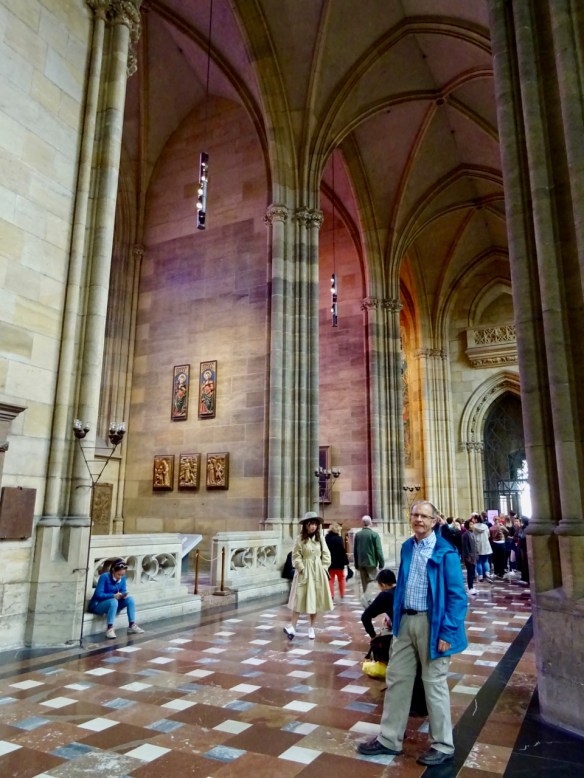 As beautiful as this cathedral is, I still love some of the simpler details that are easy to overlook with all the grandeur surrounding us.
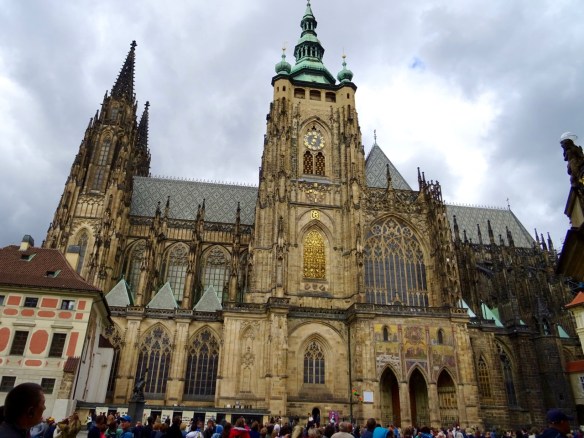
 A view of the Cathedral. This front entrance isn’t used by tourists, we entered on the end of the cathedral behind the building with orange panels.
 since the 16th century, the Vladislav Hall in the Old Royal Place, was used for coronation festivities and banquets, knights’ tournaments and markets for luxurious goods. The Vladislav Hall still is used for state functions. It is an enormous room.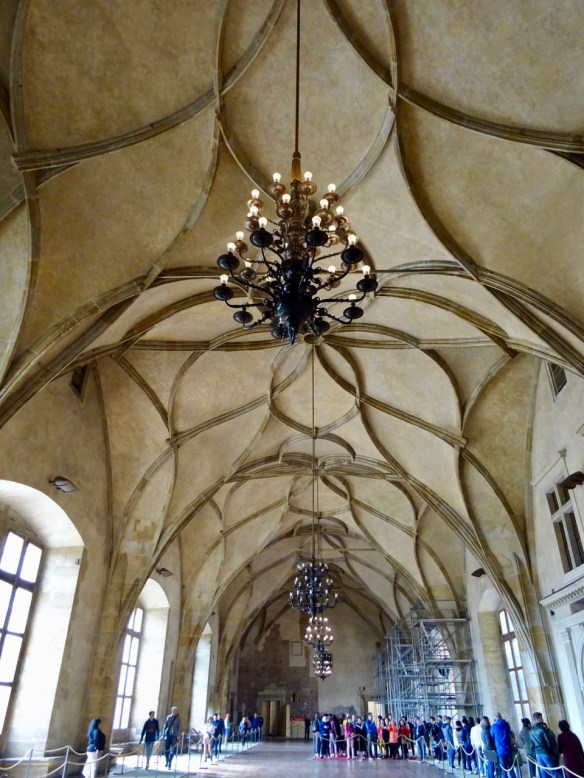
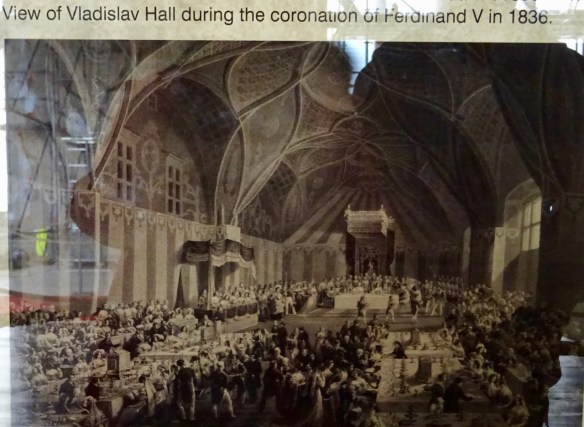 The Old Palace contained the Land Rolls, where all matters regarding property rights and criminal law were recorded.
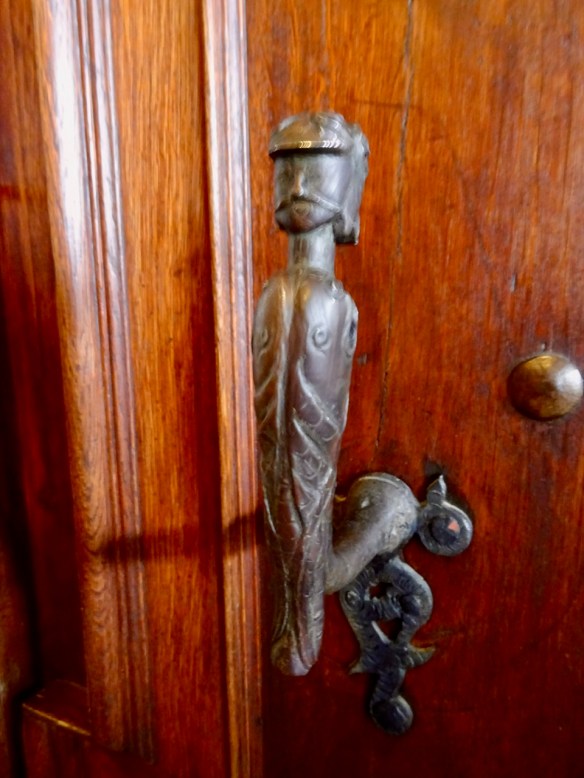
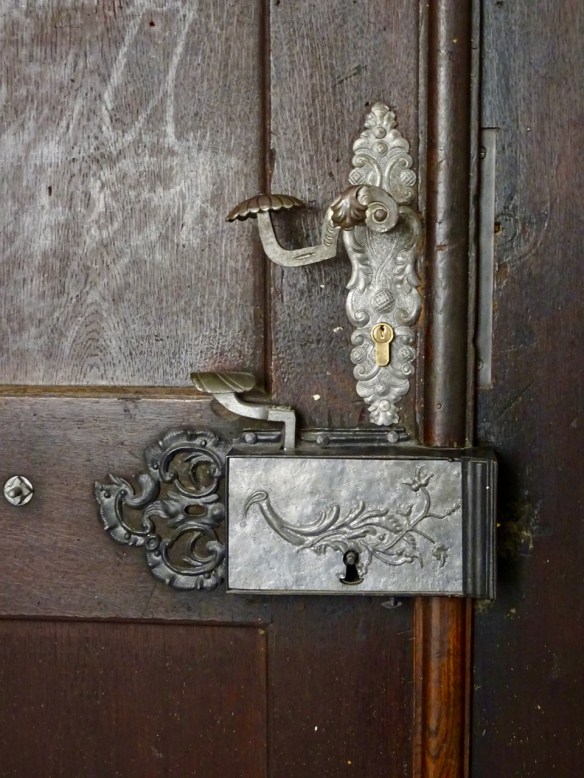
 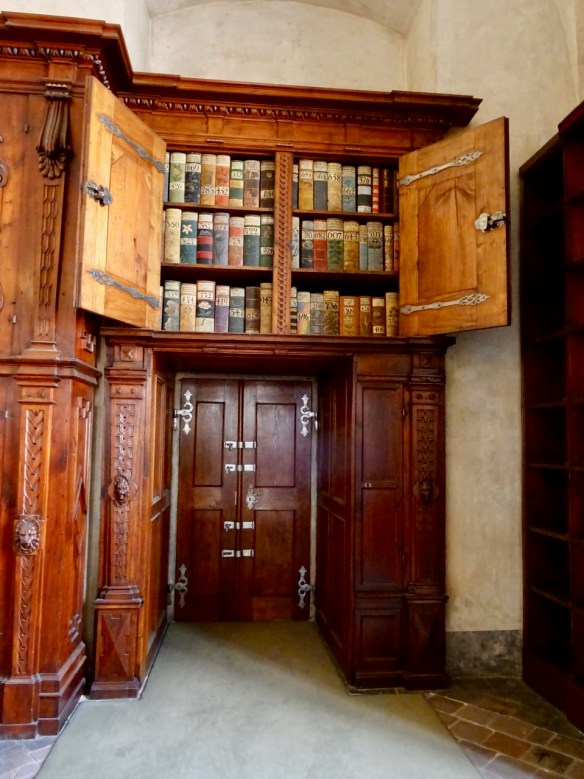 An interesting door handle.
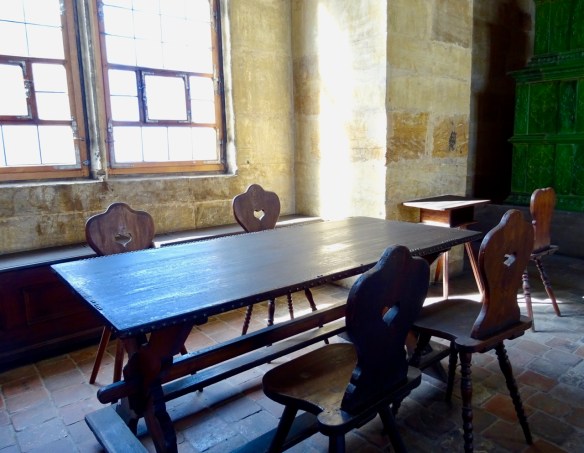
 One room had chairs which are almost the same as the ones my Swiss grandfather used to make, only he put more carving and decoration on his.
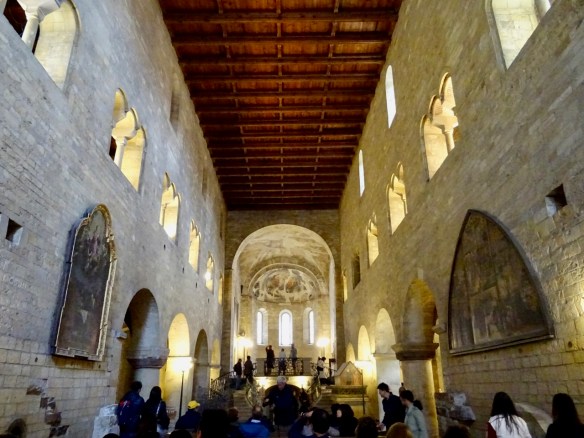
 The present day appearance of St. George’s Basilica dates to the reconstruction after a devastating fire in 1142. Now it is used for short-term art exhibitions.
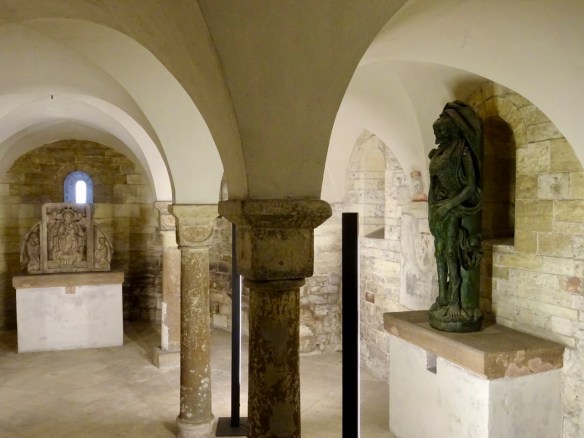
 We visit St. Georges 12th century crypt and see this rather bizarre sculpture. I did some research and discovered that it is “a Late Gothic Statue of Brigita, representing a dead and decaying girl´s body. It is a symbol of impermanence. A legend says that it was made by a sculptor, who killed his girlfriend and wanted to create her statue before he was executed. However, he was only able to make it as a dead body, because of his despair.” ~.www.prague.cz
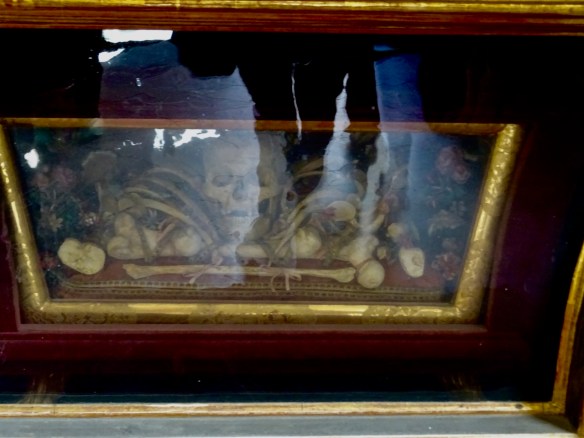
  On the way out we see this collection of relics, but have no idea who they are. These relics seem a bit bizarre. Not only was the poor person usually tortured and killed but then their bones were carted off, often to several different locations and put on display. Hmmm.
 This is the Golden Lane. This lane of tiny houses was built against the northern wall of the castle. These tiny houses were occupied until World War II and have been preserved so that the character of this lane has not changed. From 1916 to 1917 house No. 22 was inhabited by the writer Franz Kafka.
 The name of the Lane is derived from goldsmiths who used to live there. I struck up a conversation with a gentleman who told me that he and his father were both goldsmiths and that the tools have not changed at all. He also said his father died young and that he quit because some of the processes involved are very toxic.
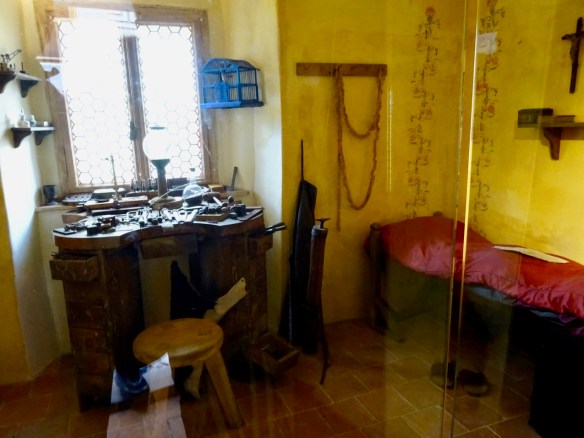 The houses are tiny and have tiny doors.
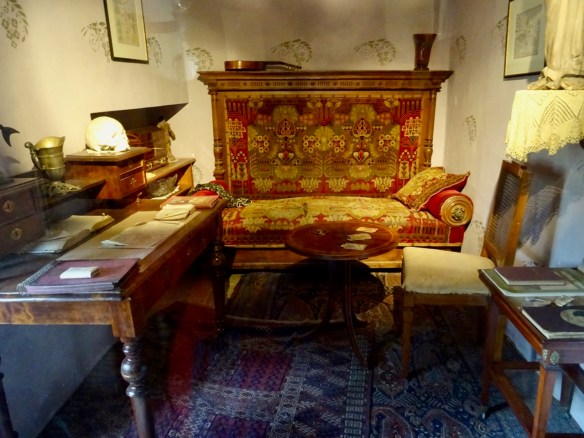
 This was a fortune teller’s house whose predictions about the early fall of the Third Reich resulted in her being arrested and tortured to death by the Gestapo.
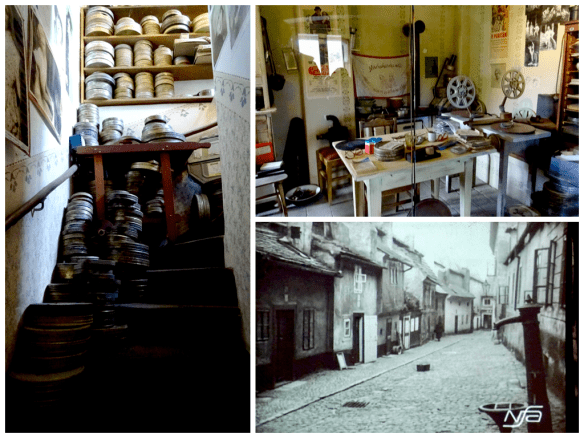
 An amateur historian who saved many copies of old films that were intended for disposal during the Second World War lived here. We watch one film that showed scenes of Prague and this Golden Lane. It looks much like it does today.
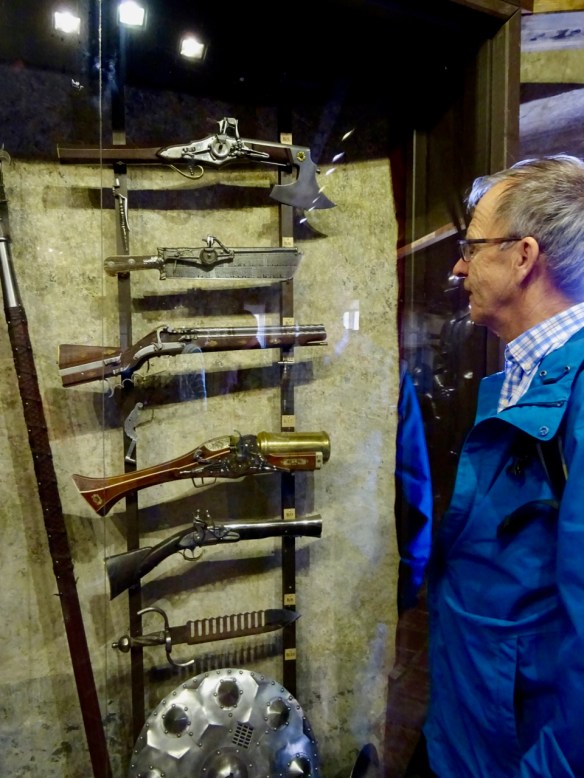
 We almost missed seeing a huge display of old armaments and armour. It was quite interesting. Some the swords have pistols built into them, or axes attached!
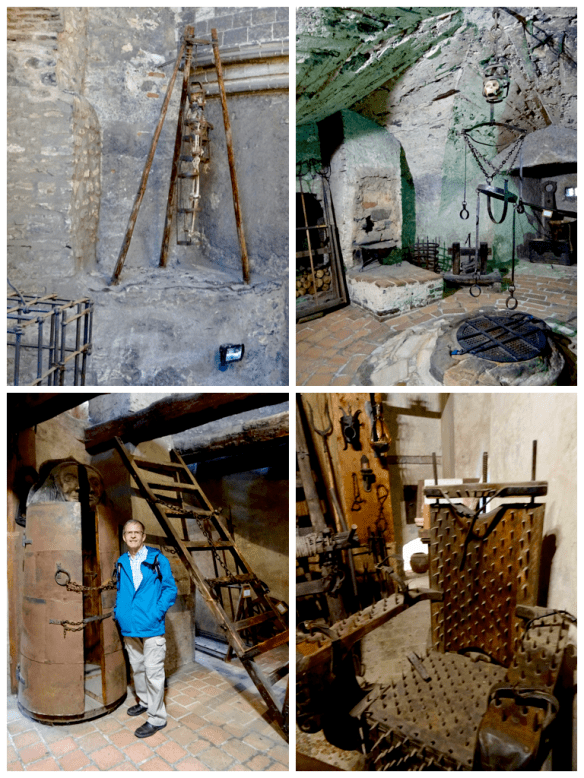
 And then there is the torture chamber. These places give me the creeps. It is just so hard ot think of people subjecting each other to such pain and terror. Bob is standing beside an Iron Maiden, which has spikes inside just long enough to pierce the body and make sure that the person inside dies a slow painful death. There are two spikes placed so that they will pierce the eyes of whoever is placed inside, and take a look at that chair! It is enough to give me nightmares.
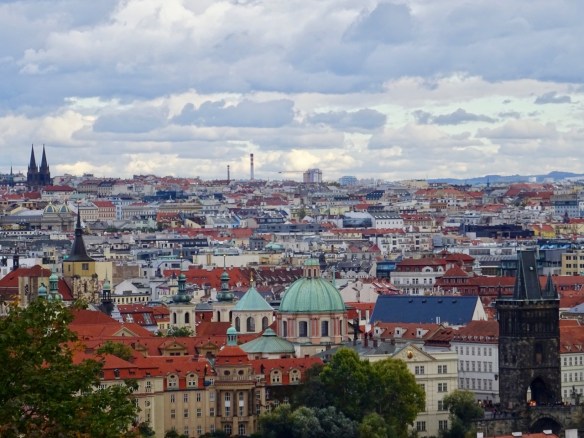
 After the torture chamber we see some great views of Prague…
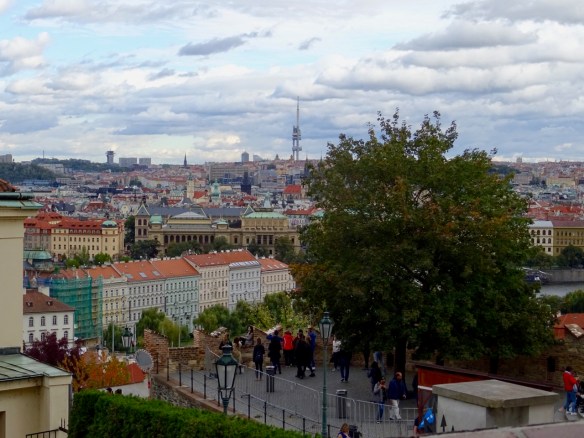
 can you spot our TV Tower? It is hard to miss.
 As we leave the castle the changing of the guards marches past. A couple of the guards have their hats blown off by the wind but they just keep marching, although they did smile! It was crazy windy today and a bit cold so it was a good day to be inside.
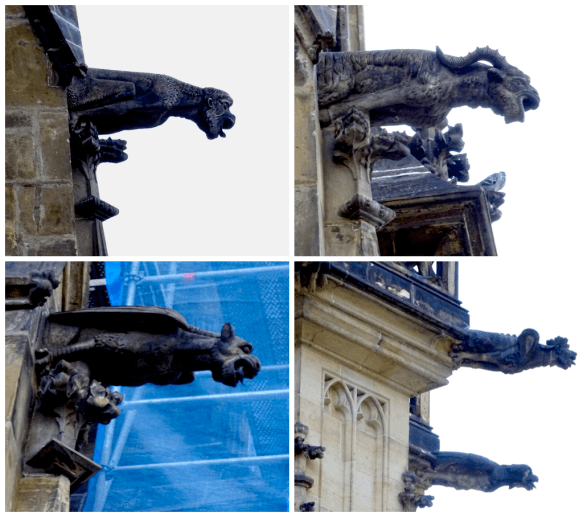
 Walking past the Cathedral towards the exit I thought to look up, and yes, there were gargoyles! I love gargoyles, in case you didn’t know.
 This shrub was near the exit. I have no idea what it is and wonder if anyone else might know?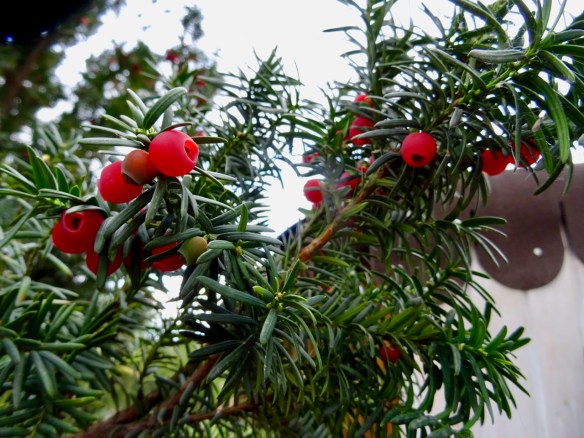
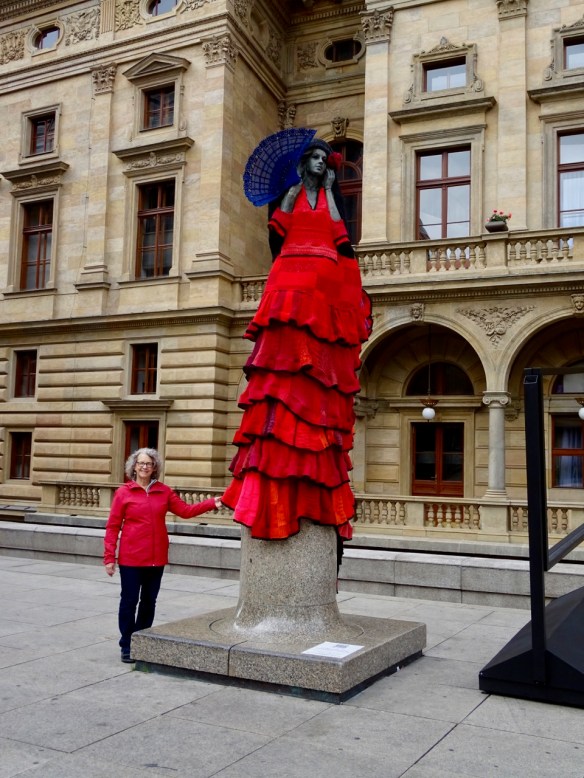
 This knitted sculpture ‘Carmen’ is the creation of Eva Blahová, an artist and scenic designer living in Prague. 33 knitters from all over the Czech Republic were involved in this project and they knit over 50 meters of red ruffles to dress an existing sculpture. It is pretty impressive.
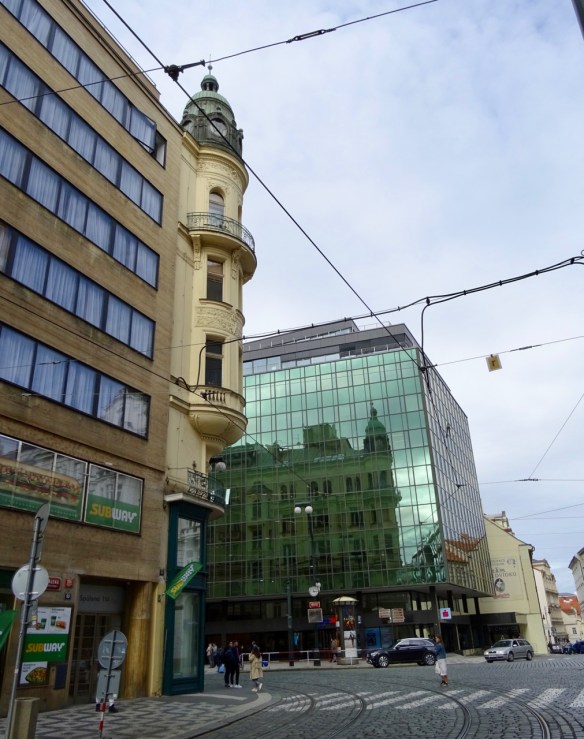
 Walking towards the “Dancing House’ we pass beautiful Art Nouveau buildings with very grand entrances.
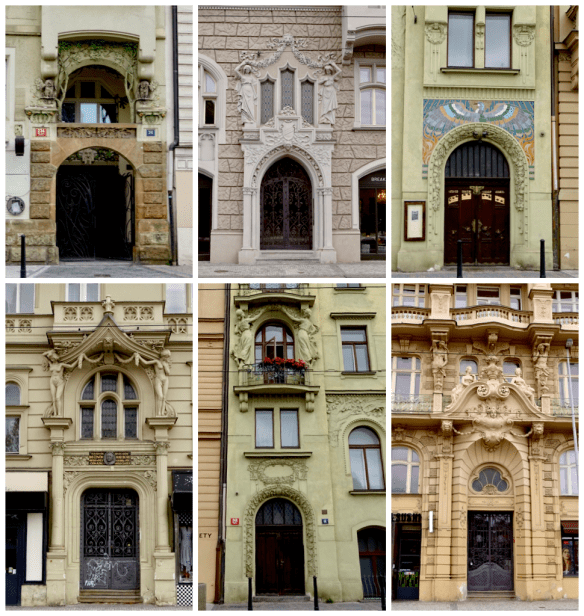 These entrances are on this block of buildings. Although Prague was bombed in World War II it did not suffer the catastrophic damages of Berlin and Dresden. There are so many beautiful buildings with lots of carved decorations here.
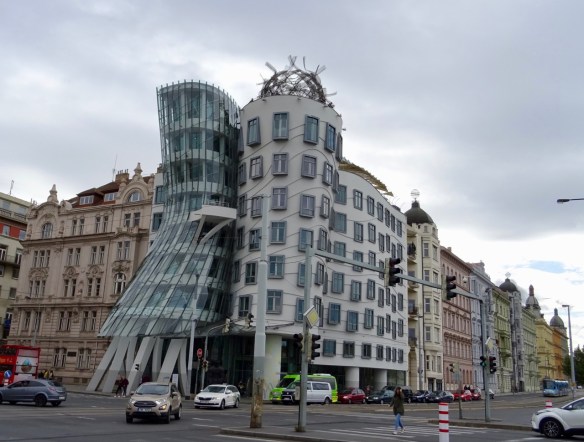
 The Dancing House, or Fred and Ginger, as it is nicknamed, was built in place of a building that was destroyed during the war. We think we know which is Fred and which is Ginger. What do you think?
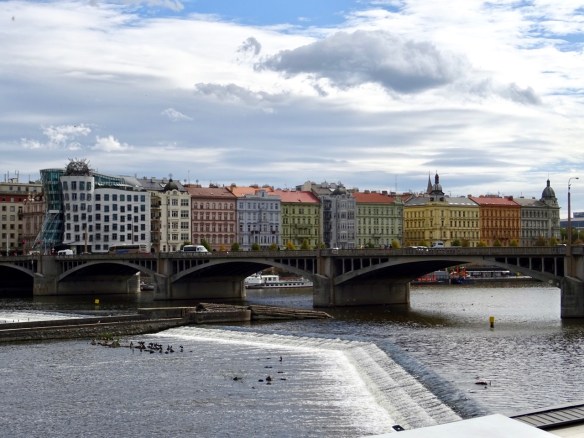
 We crossed this bridge and had our picnic lunch in a little park with this view. Prague has lots of trees and parks.
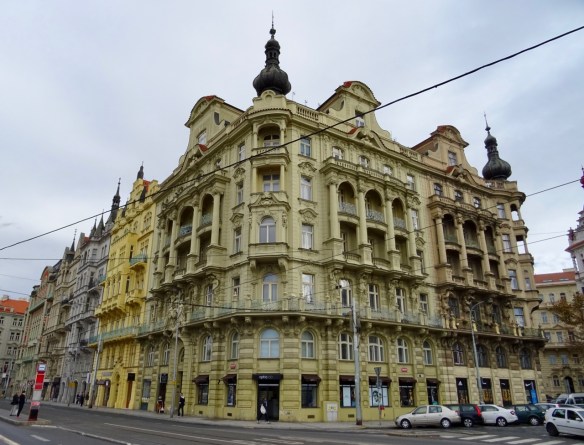
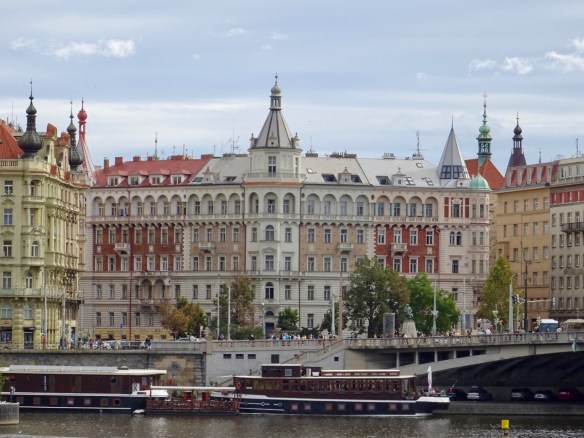
 Here ae some more pastel coloured buildings we see on our walk along the river.
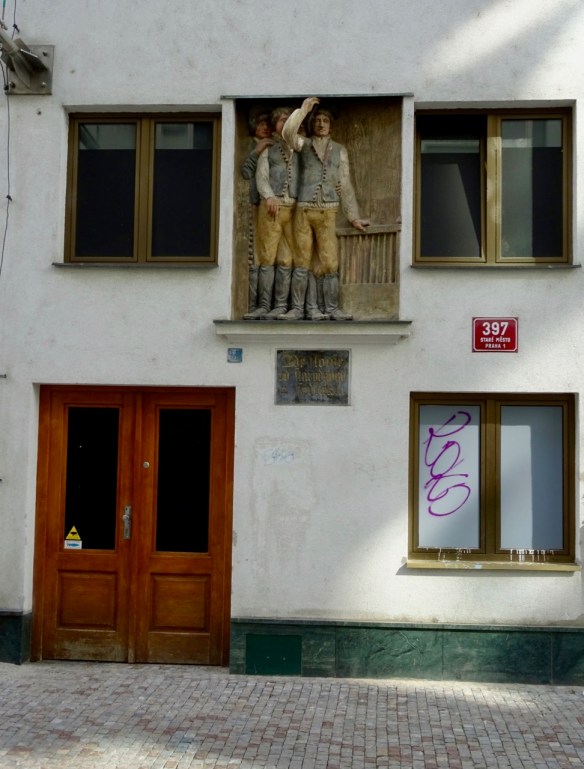
 These statues holding up a balcony are quite wonderful.
  I think Bob might have been a locksmith in another life. He is always noticing interesting locks.
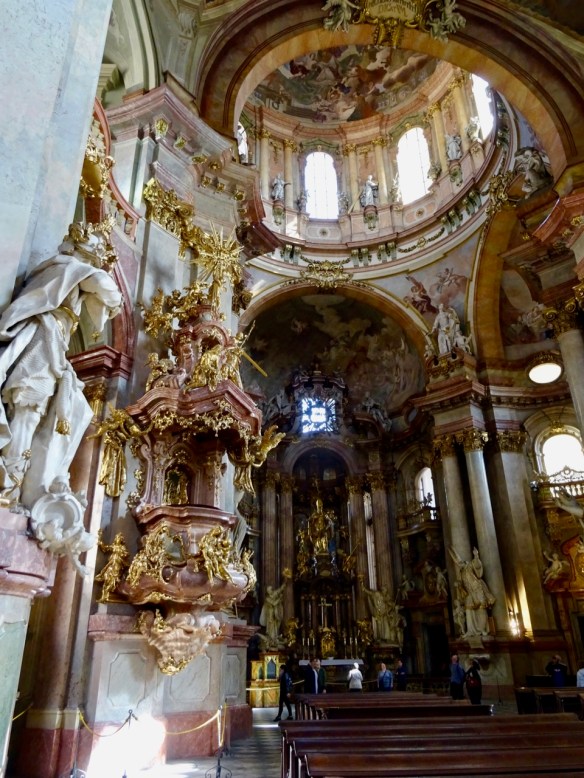
 We arrive at the most famous Baroque church in Prague, St. Nicholas Church, at Old Town Square. The dome has a diameter of 20 m, with a height of over 49 m, making it the highest interior in Prague. The church was completed in 1735, replacing a parish church dating back to 1273. There is so much history everywhere we visit. Canada is such a young country in comparison.
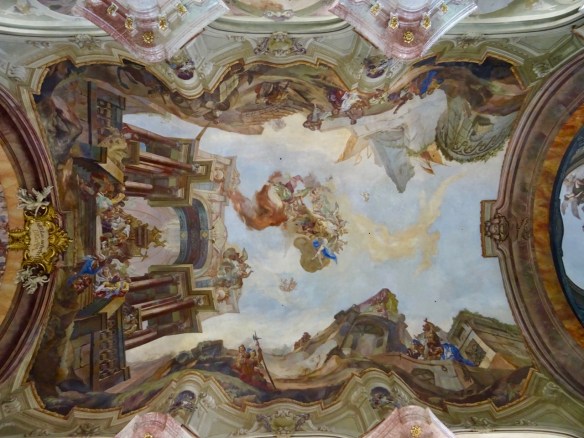
 The ceiling fresco is over 1500 square metres in size and is one of the largest in Europe.
  We climb to the second floor balcony for some great views of the church.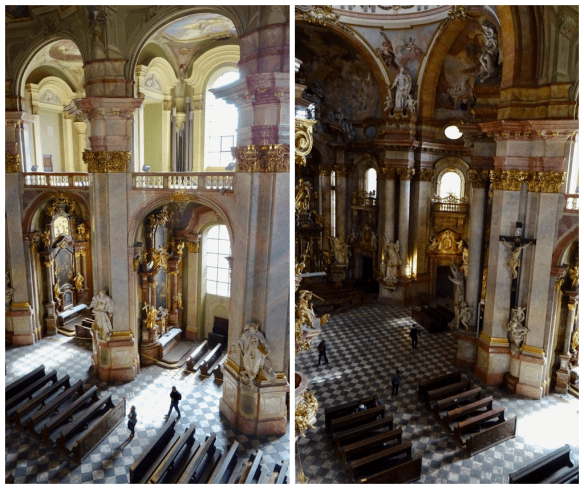
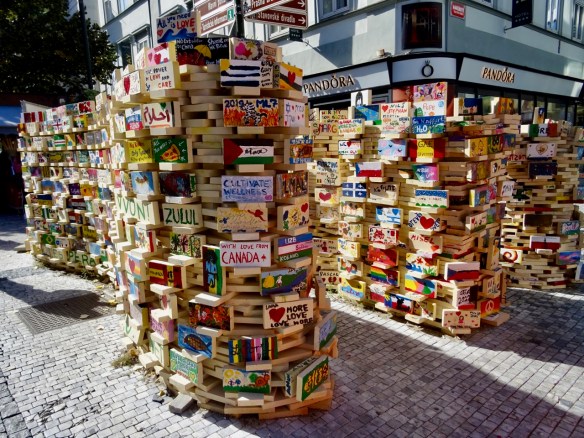
 These painted blocks are a fundraising project for disabled people. You pay for a brick and then get to paint it. We didn’t have time today but I see that someone from Canada contributed a brick.
 At the Mucha Museum I learn the Alphonse Mucha’s name is pronounced mooka, not moosha as I thought. We see many of his lithograph works that I am familiar with. The Four Flowers..
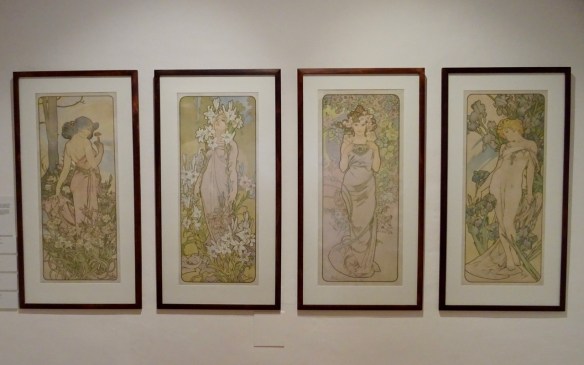 Evening Reverie…
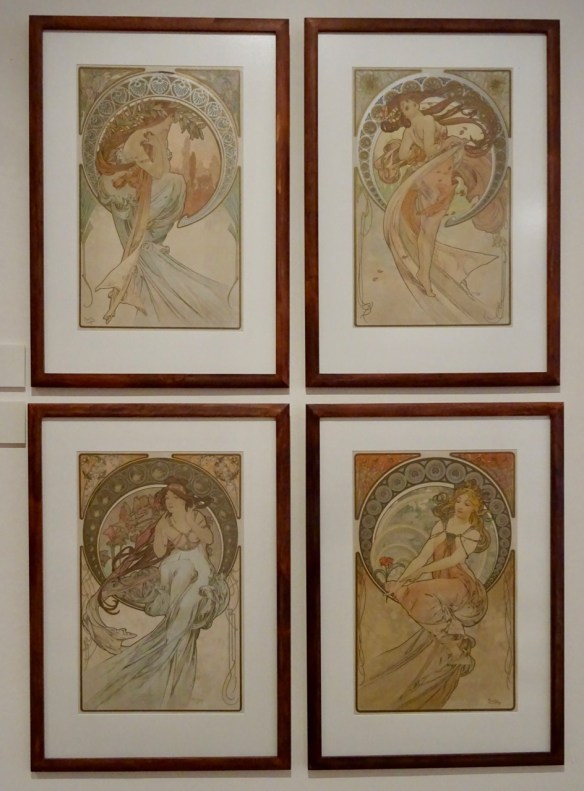
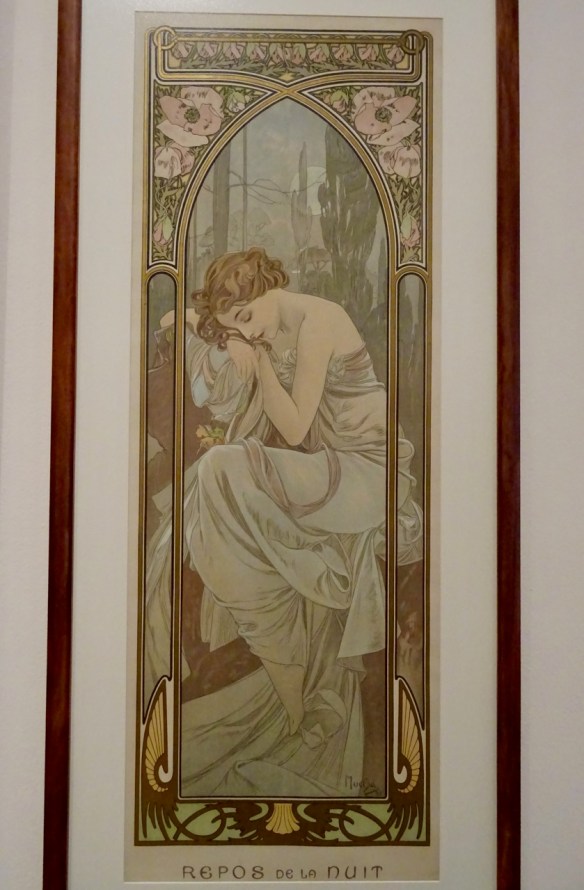 and the Four Arts, which celebrate Dance, Painting, Poetry and Music.
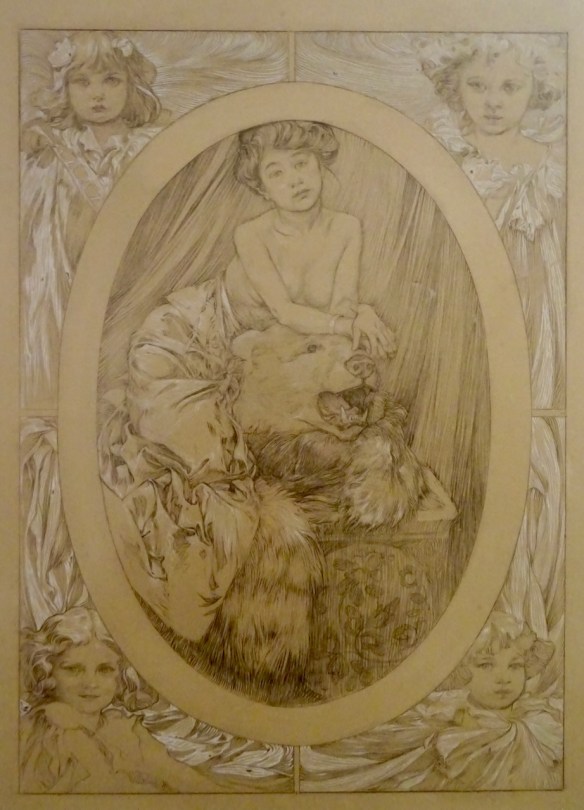
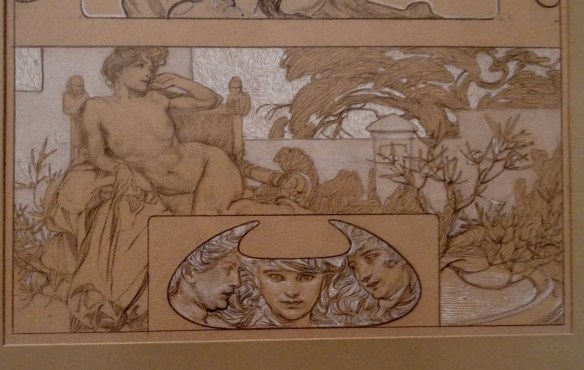
 I particularly loved being able to get close up to some of Mucha’s drawings. Woman on a Bear Skin is drawn with a pencil and a white crayon on a brown ground. It is amazing. A photo does not even begin to do it justice. It was also behind non-glare glass which does not photograph the best.
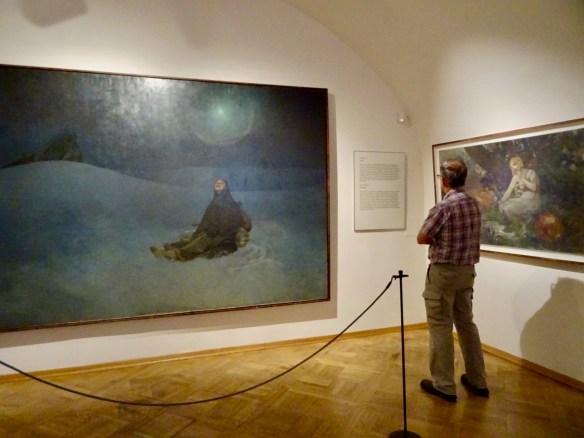
 Winter Night, or Siberia, may have been Mucha’s response to the terrible suffering of the Russian people after the Bolshevik Revolution. There was a famine that killed millions of people. It is difficult to see, but in the upper left of the painting there is a pack of wolves. The peasant woman seems to have resigned herself to her fate. I was not aware of Mucha’s large oil paintings. He completed a series of very large canvases called the Slav Epic, a series of 20 enormous canvases that show the ethnic roots of the Czech people. Unfortunately we weren’t able to visit the Czech National Gallery of Modern Art to see these paintings as it was under renovation.
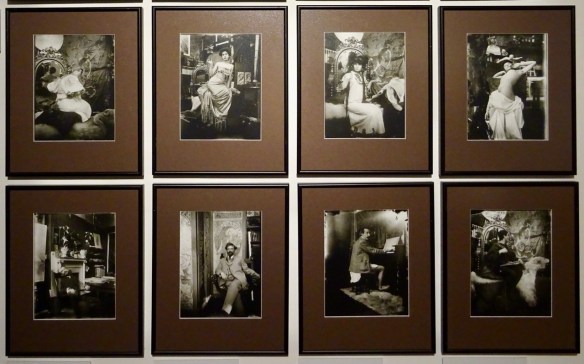
  This collection of photographs was interesting. It showed some of Mucha’s models, and the bottom two middle photos are Mucha in his studio and Gaugin playing the piano…without any trousers!
 Pages of his sketchbooks are on display. I love seeing artist’s sketchbooks. It is a way of understanding how they think about their art.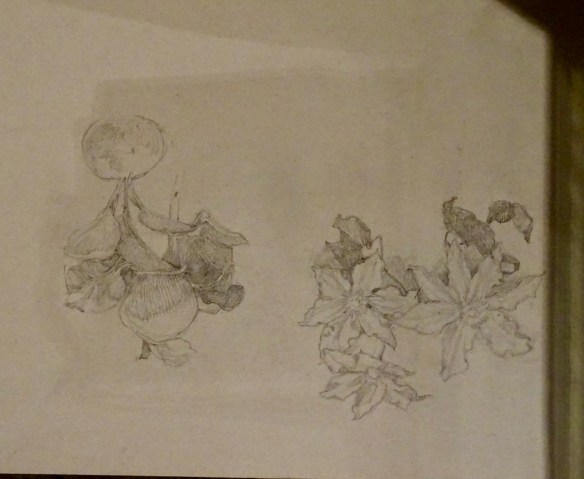
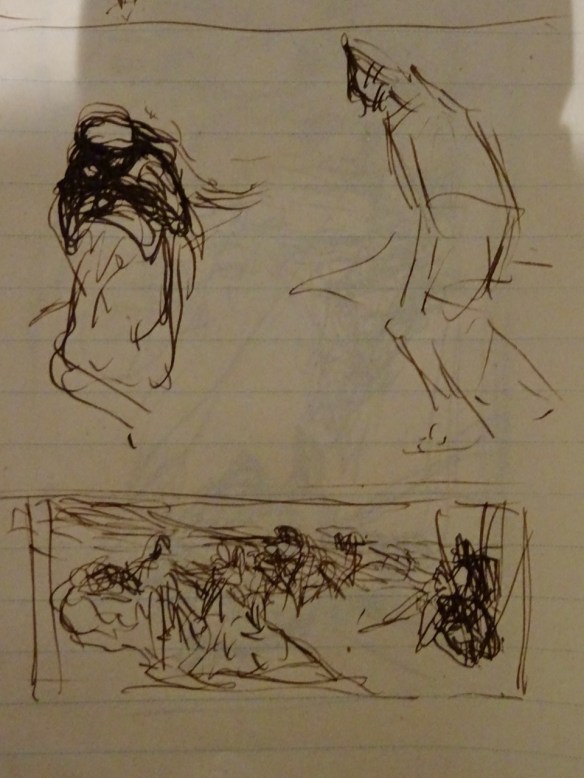
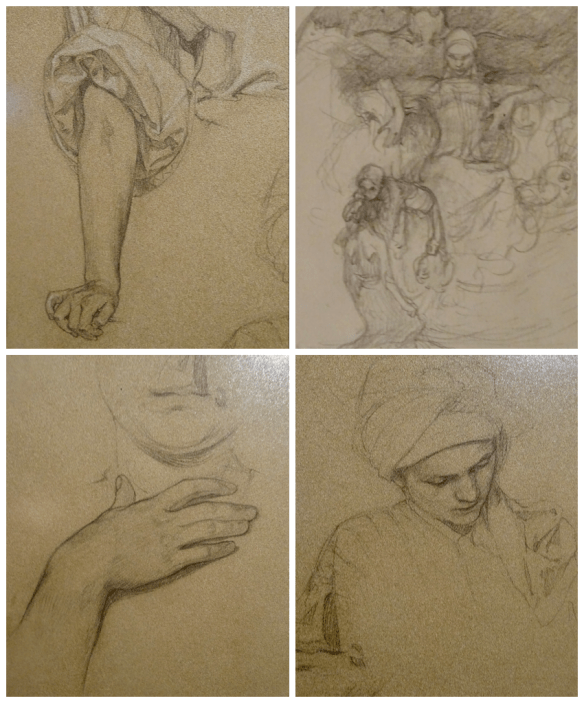 Not all the sketches are detailed drawings. There are some quick gestural studies as well.
 Another study using pencil and white crayon on brown paper. Just gorgeous!
 This is a study for the stained glass window in St. Vitus Cathedral. Mucha was skilled in many areas of artistic expression.
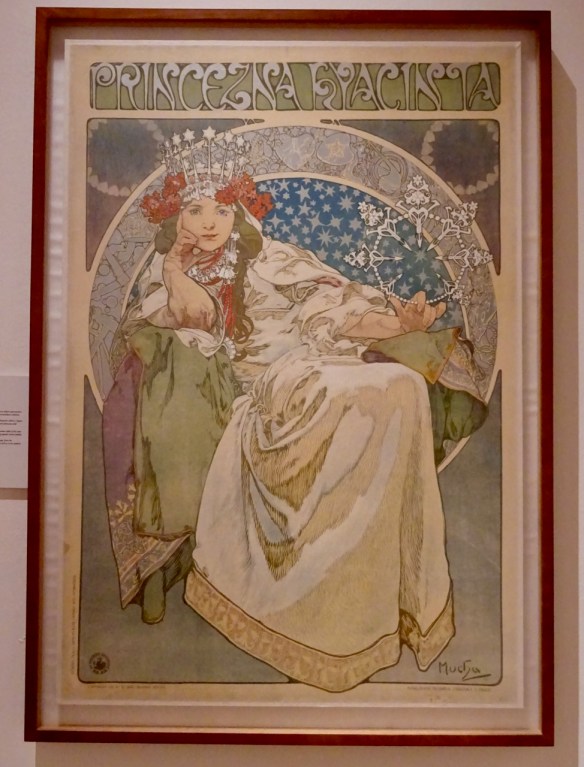
 Mucha created this famous poster for the ballet named Princess Hyacinth. I was happily snapping photos when near the end of our visit a docent told me that photos were not allowed. I was surprised as we have been able to take photos, without a flash, every where else we have been. I am very happy she didn’t see me until near the end of our visit!
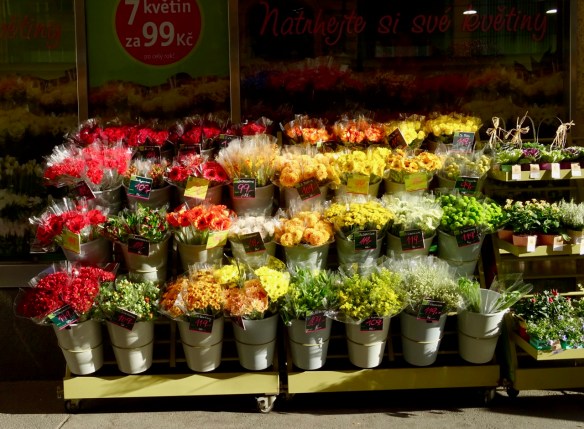
 One of many flower stands in the city. I often see both men and women carrying bouquets of flowers.
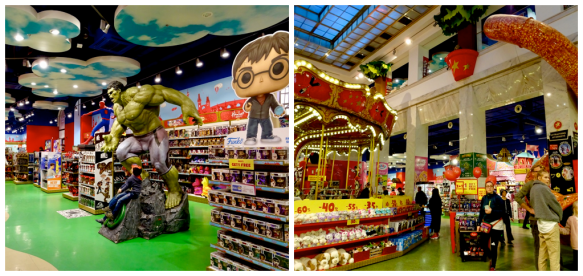
 We saw a toy store so took a peek inside. OMG! it was huge, very noisy and had a full size carousel!
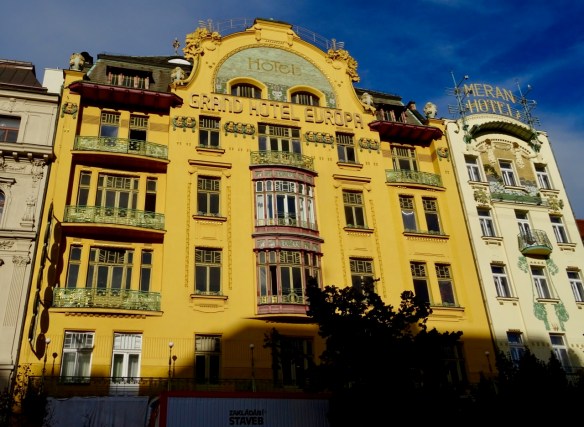
  This made us think of the Hotel Europa we stayed at in Egypt a few years ago. It certainly was not grand and it wasn’t a pleasant experience at all!
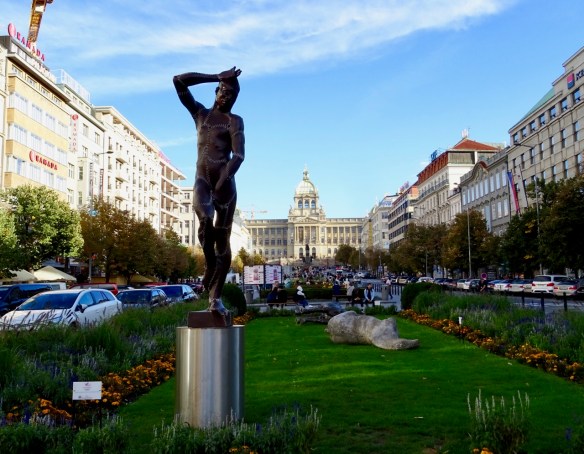
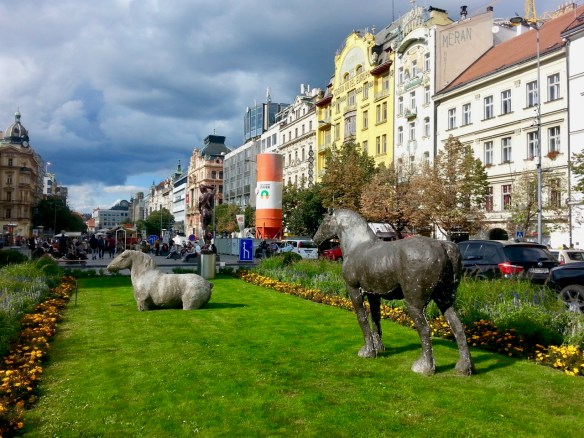
 Walking back along Wenceslas Square I notice that someone has knocked over the horse sculptures we saw earlier. I like this statue, all covered in sewn leather, with his hands sewn to his head and groin. Not sure what it is supposed to represent but it does make viewers pause and contemplate.
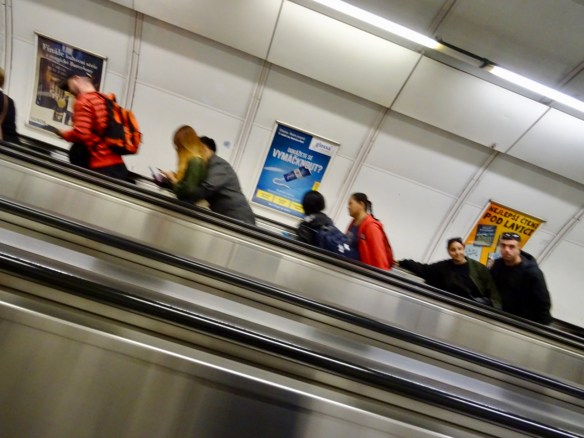
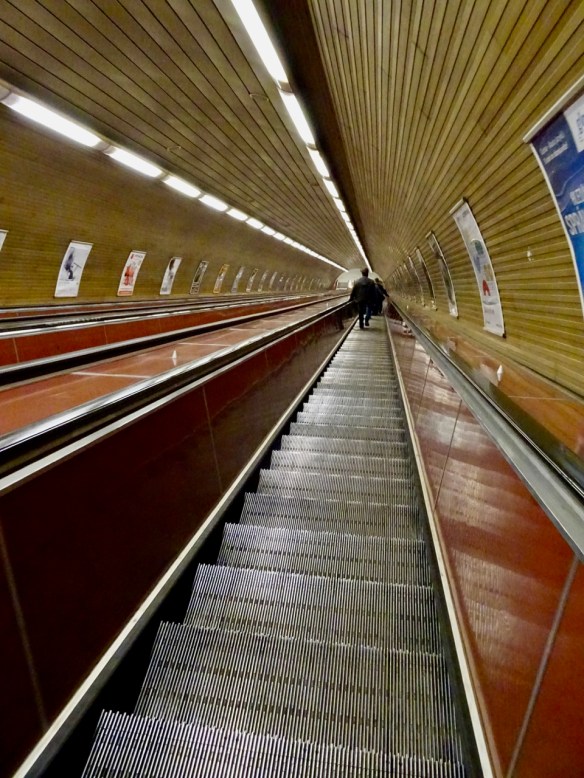
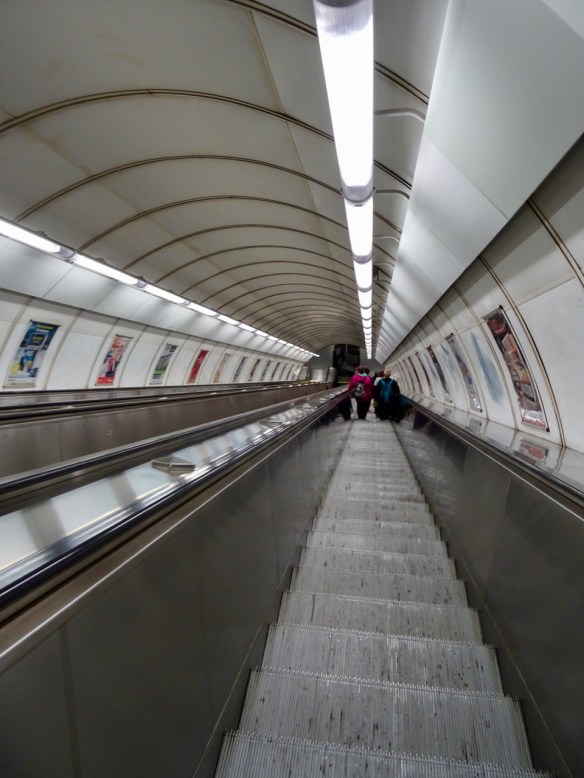
 I keep trying to get a photo that shows how strange people look on these long metro escalators. There is an optical illusion that happens and everyone appears to be either leaning forward or backwards, depending they are going up or down the escalators. Somehow it just doesn’t show that well in a photo. The camera doesn’t see things the same way as our brain does. It is very curious and I comment every time we ride these crazy, long, steep fast escalators.
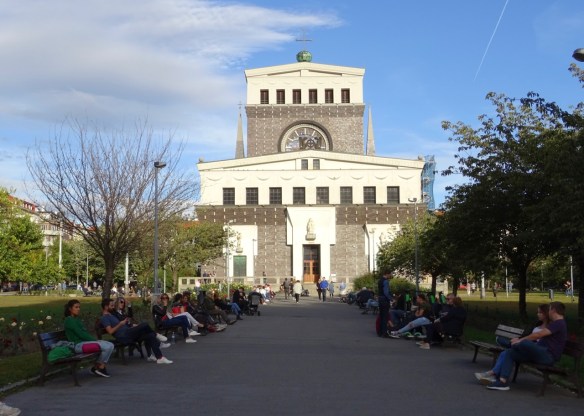
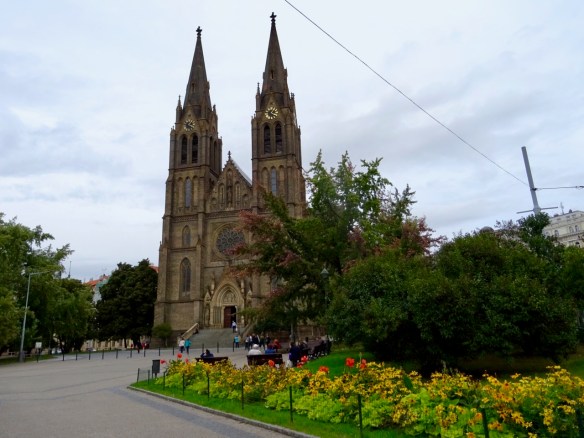
 This church is in the park right beside the metro stop near our apartment. We were curious to see inside but it is under renovation and the doors are locked. We sat and had tea in this park the day after our flight into Prague over a month ago.
 I wanted to get a photo or two showing how people drink alcohol walking down the street, in the parks, and even on the metro (although they aren’t really supposed to drink on public transit). We see that in Prague and it was especially prevalent in Berlin. People walked around with their bottle of beer everywhere. Not what we are used to seeing at home.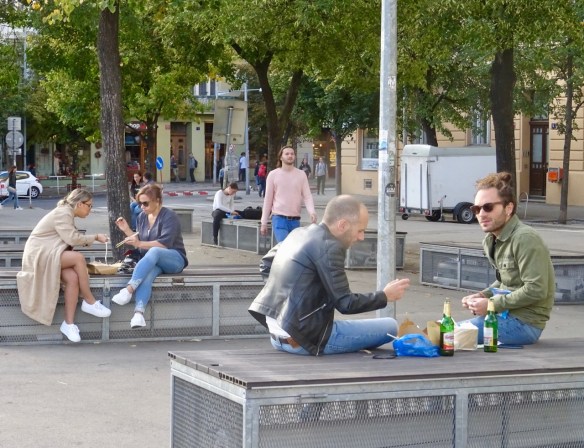
 This is another of those very long, very fast moving escalators. We wonder why the metro is so far underground? A
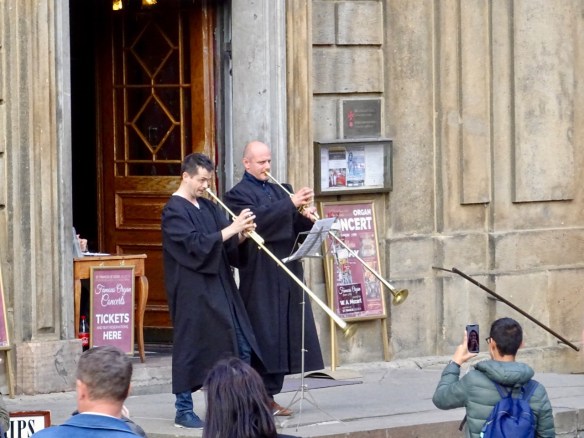
 These fellows gave a little preview of an evening performance in one of the many churches in Prague.
 St.
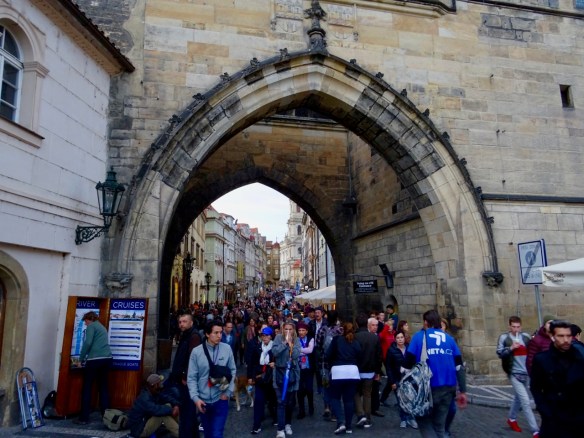
St. 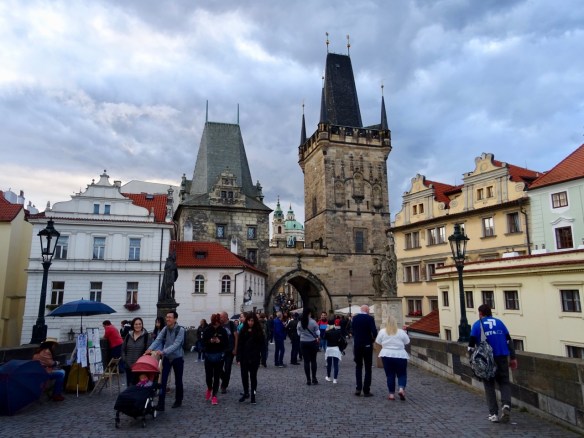 Here is a close up of the entrance to the bridge in the photo above. Just a few people! Very crowded but such great people watching, which is one of my favourite pass-times.
  The bridge offers a great view of the Prague Castle on the hill.
 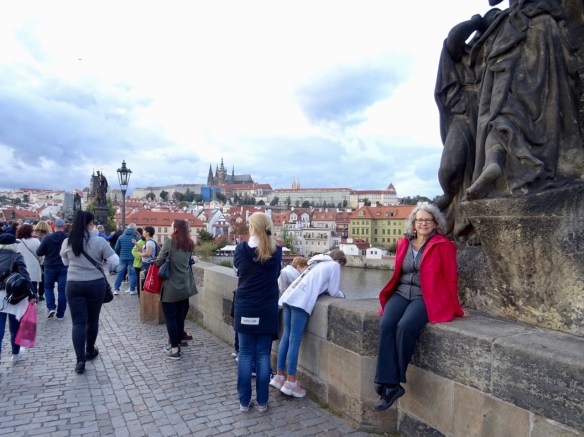 As well as views of some of the other bridges along the Vltava River.
  Touching this statue is said to bring good luck and ensure a return visit to Prague. There are 30 statues on this 516 metres long and almost 10 metres wide Gothic bridge.
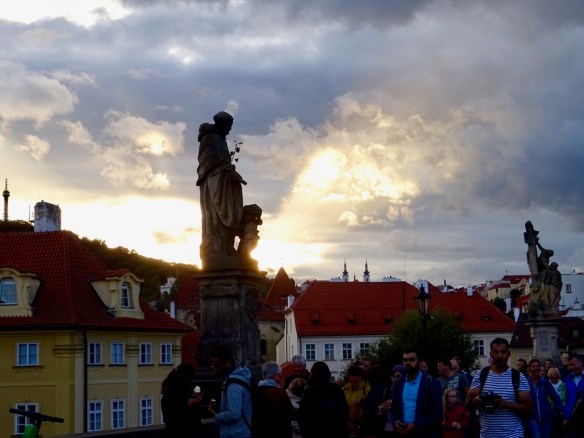
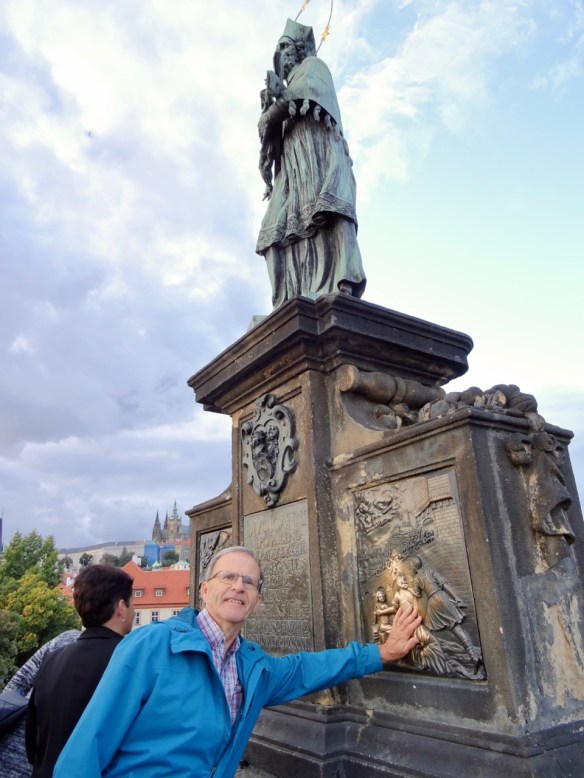 The sun was setting as we leave the bridge.
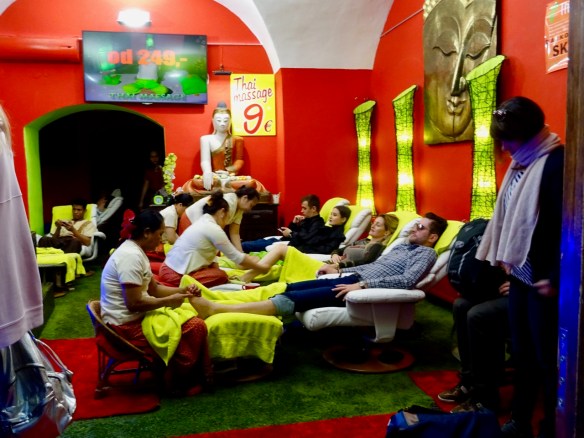
 On the way home we peek into a Thai massage studio. I wanted to give this a try but we somehow ran out of time.
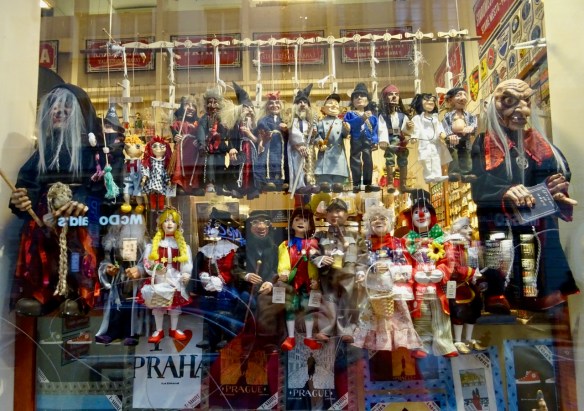
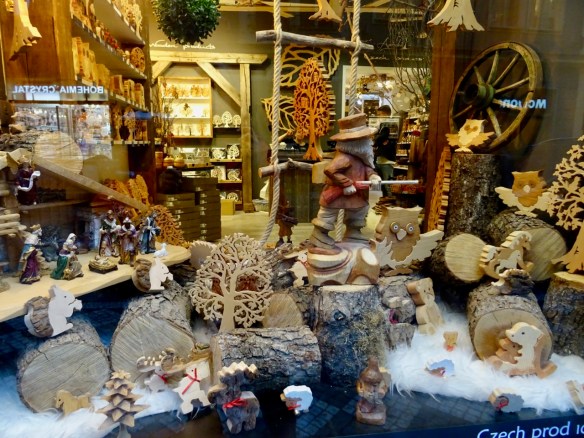
 Prague is famous for its marionettes. Most of the ones we see are obviously made for tourists and not that great but I find this window display of really beautiful marionettes. They had really ‘beautiful’ price tags too!
 There are lots of shops selling wooden products.
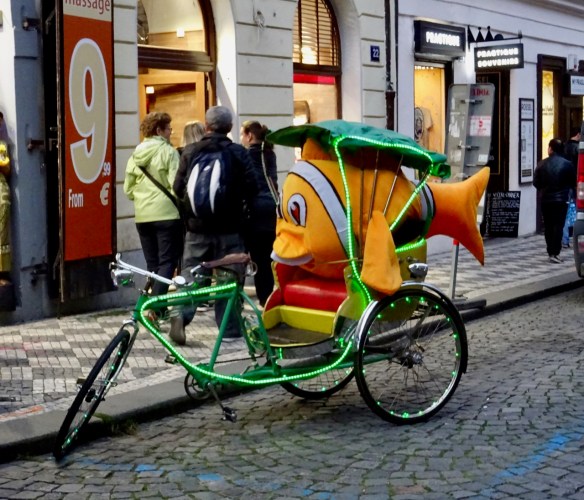
 We see Nemo every time we walk along Wenceslas Square.
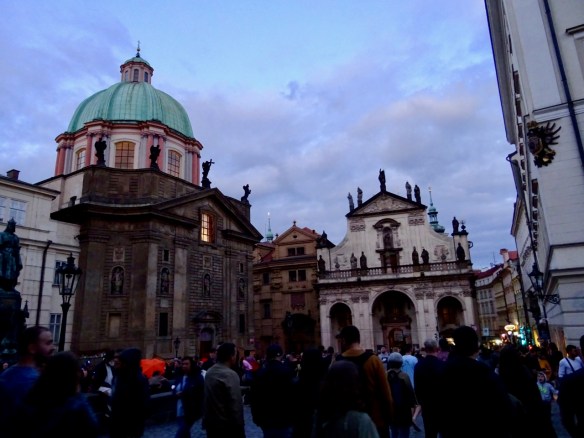
 The streets are jam-packed with people tonight. It is St. Wenceslas Day today which is also called Statehood Day and is a holiday.
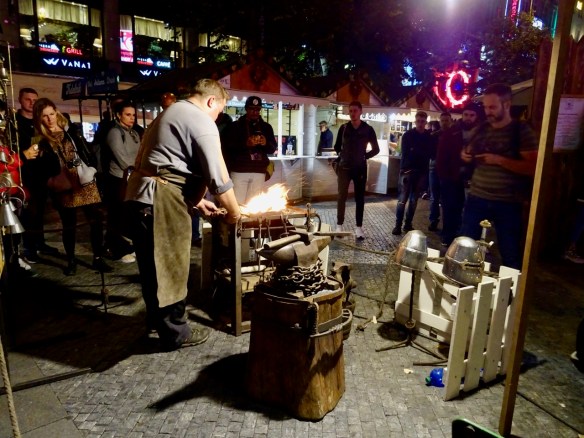
 Interesting to see a blacksmith working in the square.
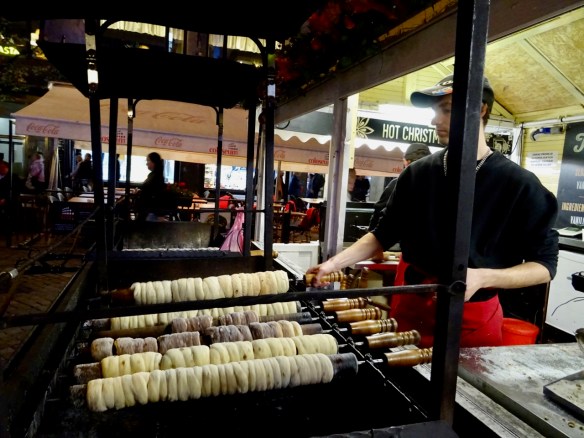
 These pastries are sold everywhere in Prague. They are call Trdelník (which means a hollowed out log) and they are made by wrapping layers and layers of dough on a cylindrical spit. It is then baked on an open fire and dusted with cinnamon sugar and crushed nuts. They look yummy just like that but many shops fill them with ice cream and all sorts of fancy toppings. Unfortunately they are not gluten free…so none for me.
 These little sculptures in the store window appealed, but they are too big and heavy to buy so I settle for a picture.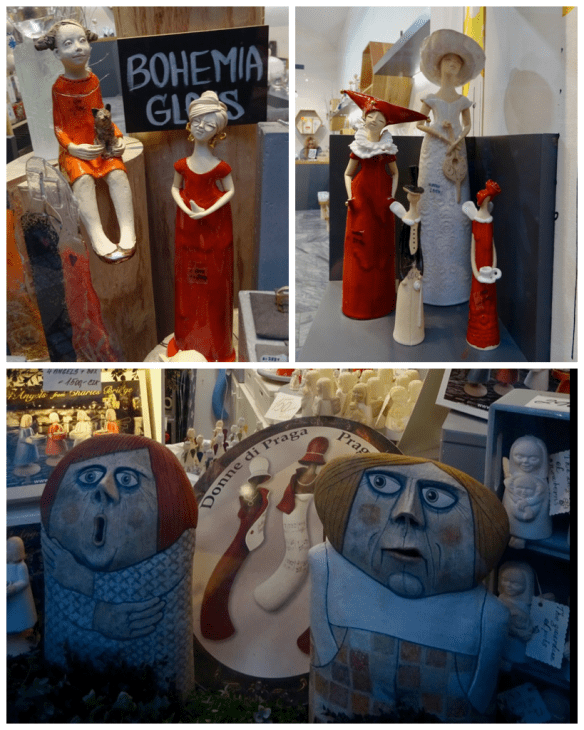

 In the evening, Bob leaves me at Wenscelas Square where I join a Prague Urban Sketcher group. There are about ten of us, and after introductions we head our separate ways to draw for 1 1/4 hours, before we meet up again. It takes me a bit to get going so I start with what I am familiar with…people.
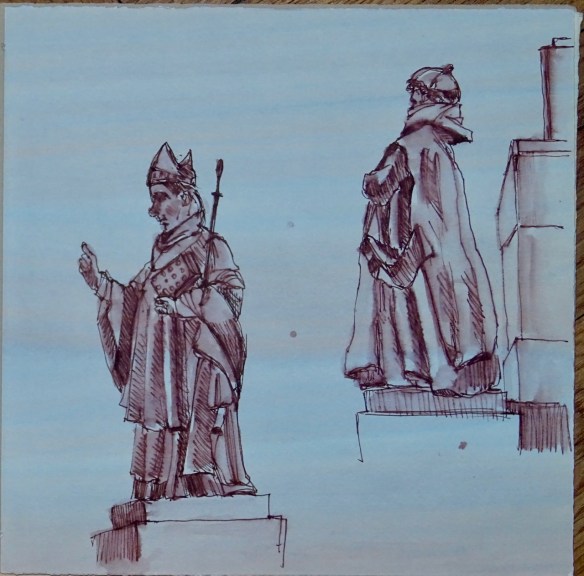
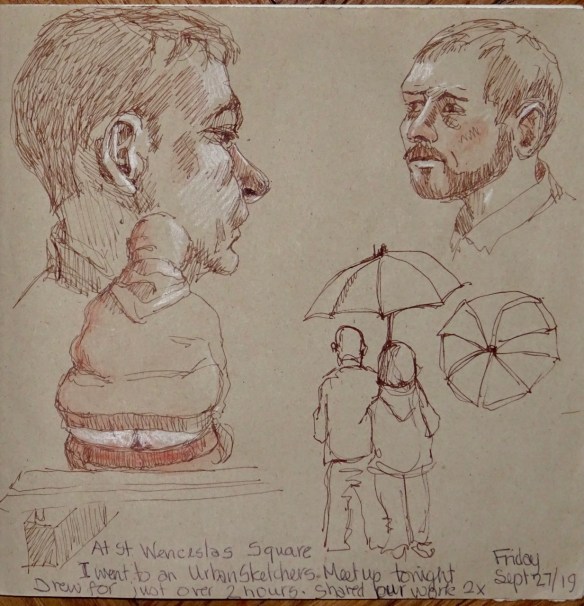 It started to rain so I found a sidewalk table with an umbrella and drew two of the sculptures on the huge St. Wenscelas Statue at the top of the square.
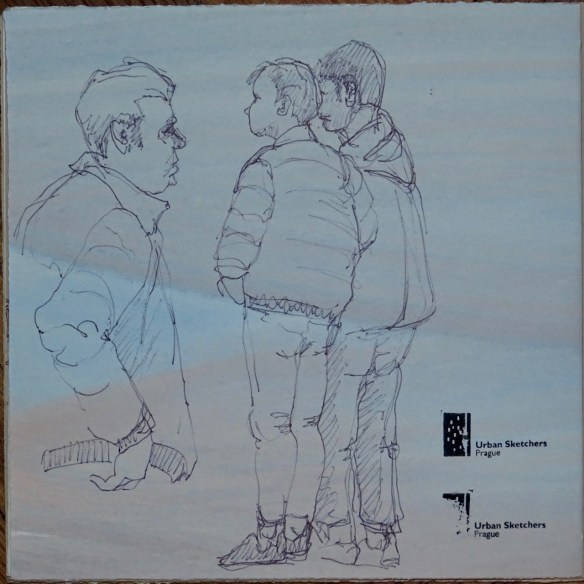
 I tried to draw a part of the National History Museum, but wasn’t too successful, the perspective was way off and the dome lop-sided. People seem easier to draw than buildings, so in the last few minutes before we gather I sketch some of the people walking by on the sidewalk. Wenscelas Square is an awesome people watching place.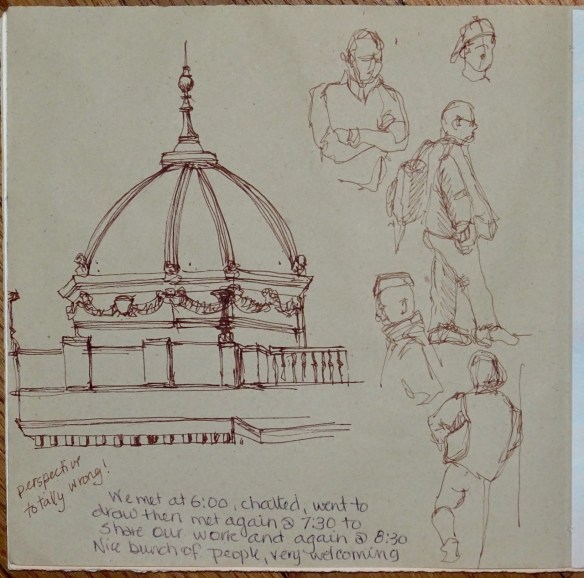
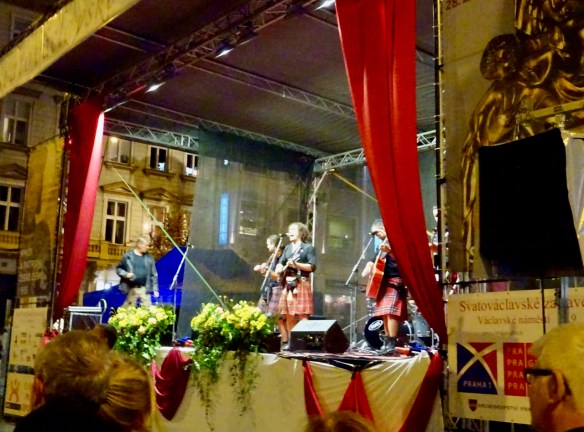
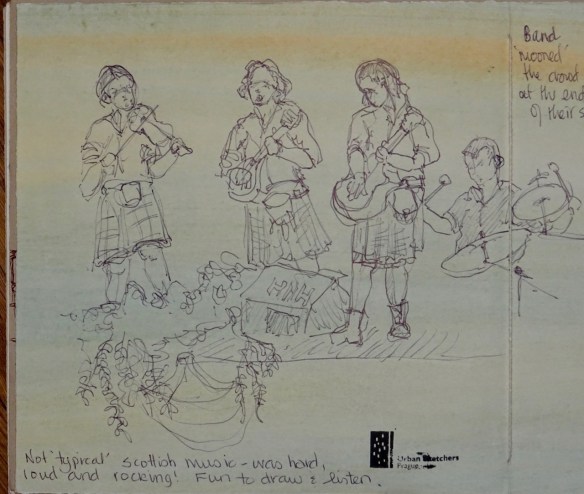 At the end of their set, the band members ‘mooned’ the audience to great applause and laughter. There was also a tall, big fellow dressed in a long curly blonde wig and a nightie with a cape! No idea what that was about…maybe a stag party?
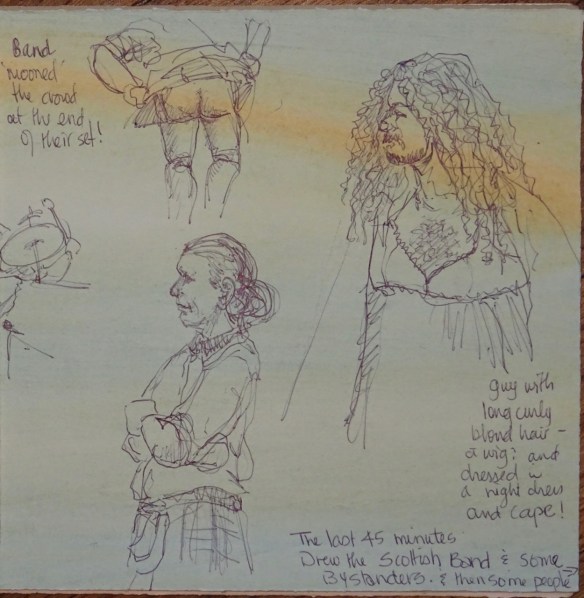 While waiting for everyone to gather back for our last ‘show and tell’ I had time to draw these three. This is only the second Urban Sketcher Meet-Up that I have attended and it was fun. The other sketchers were very welcoming and there were some fantastic drawings. I wish I would have taken a few photos of their work. I just checked and there is a
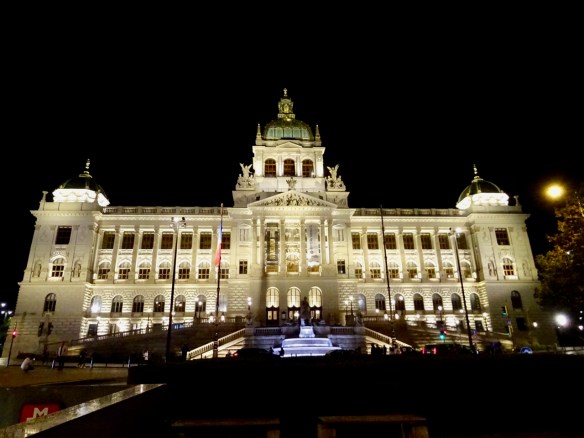
  As I was leaving, the National Museum looked beautiful lit up against the night sky.
 Here is the very, very long, steep escalator I go down to catch the metro home.
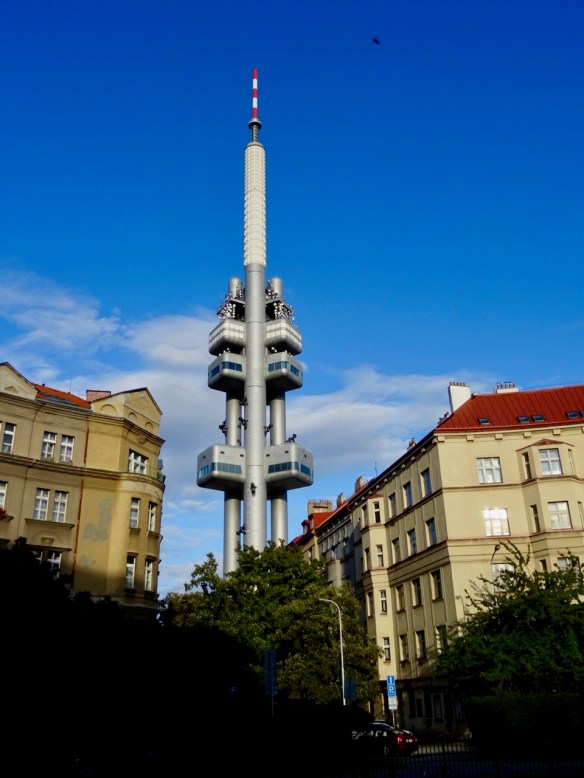
 Do you remember the TV tower from near our very first bnb when we arrived in Prague a month ago? We are in the same neighbourhood. It looks quite spectacular at night. It is only a ten minute walk from the metro to our apartment.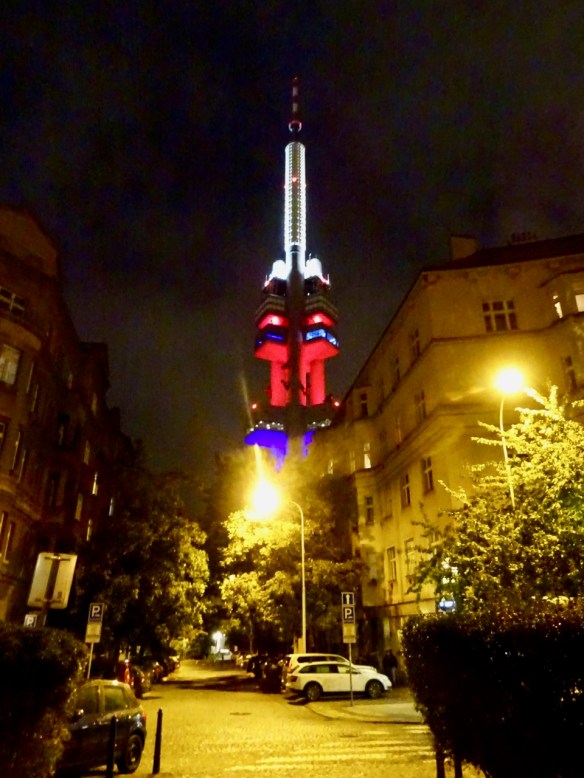
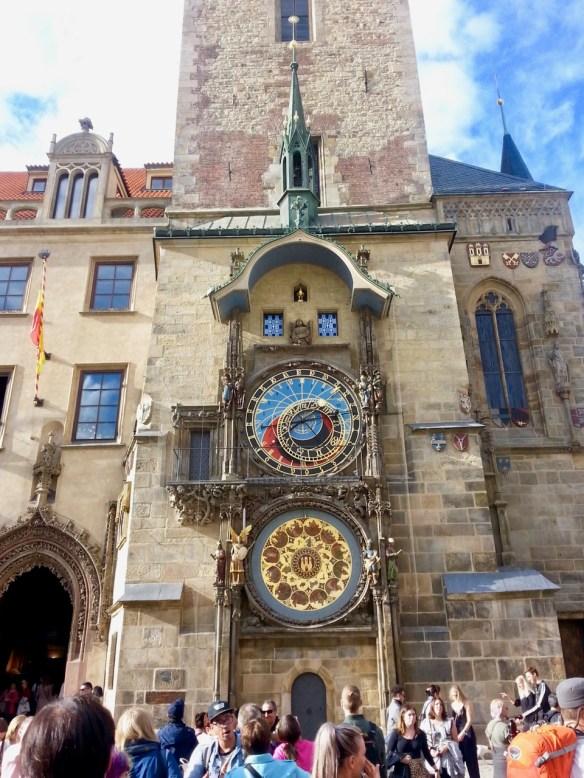
 The Prague Astronomical Clock, or Prague Orloj, is a medieval astronomical clock. The clock was first installed in 1410, making it the third-oldest astronomical clock in the world and the oldest clock still operating. Crowds gather here to watch it strike the hour.
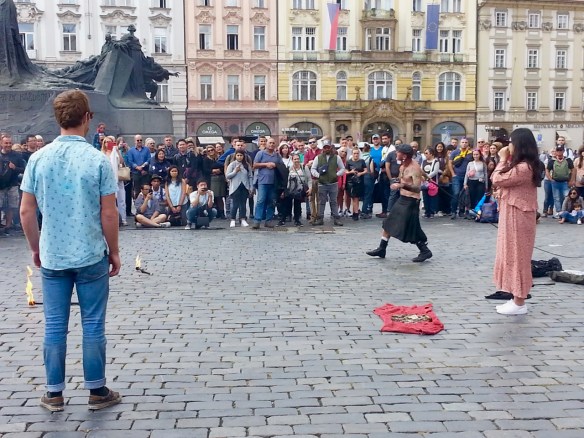
 We enjoy this street performer and the poor lady volunteer who is terrified by pretty much everything he does, including pouring lighter fluid in a circle on the ground around her! He never does light it but her reactions made the crowd laugh.
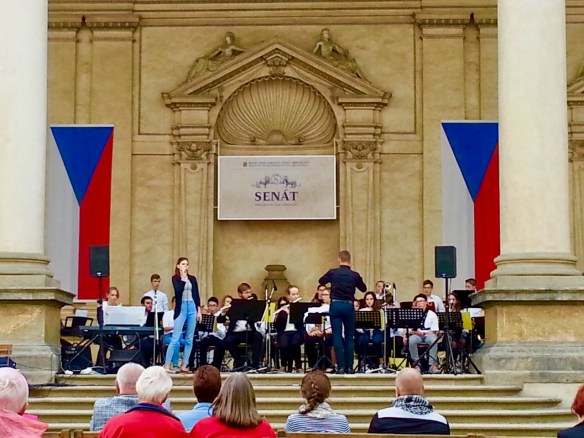
 We find the Senat, where there is a free concert. We were expecting classical music but a group of students perform and sing more modern songs, including Hey Jude, These Boots are Made For Walking, Can’t Buy Me Love and Cabaret. Some of the songs are in Czech and some are sung in English, with a heavy Czech accent! It started to rain during the performance but we had brought our umbrella so we stayed dry.
 I tried to draw but didn’t manage much.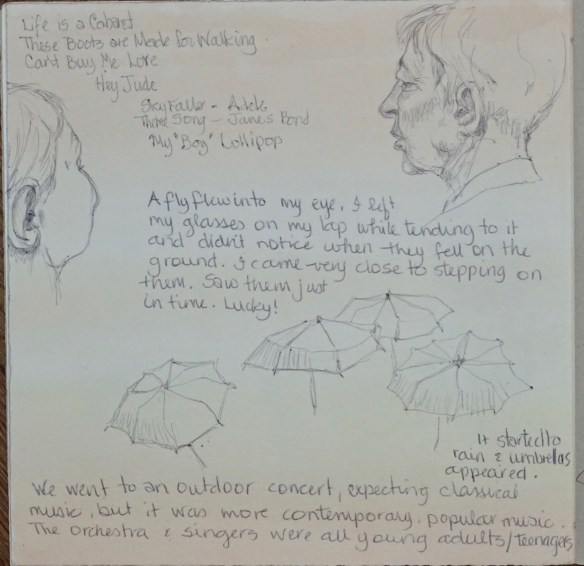
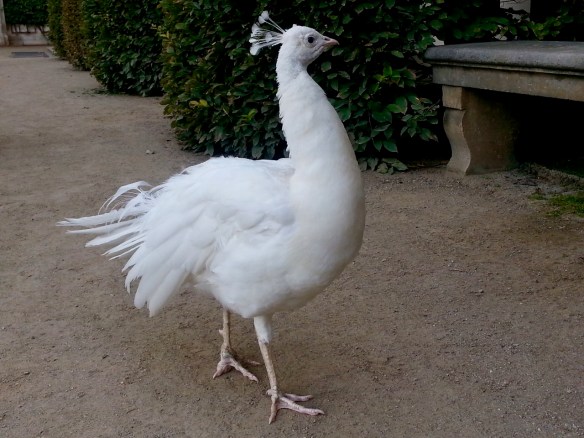
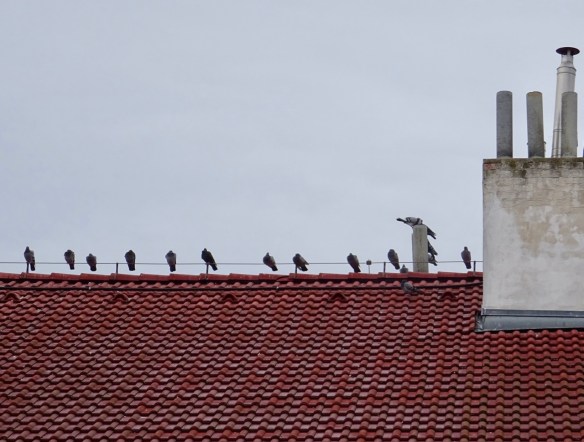
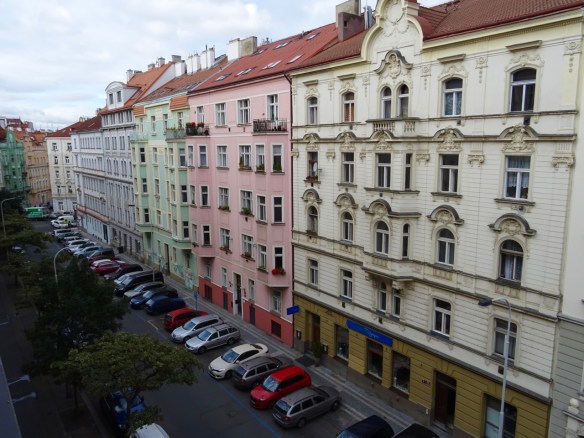 Bob notices the neighbourhood pigeons roosting on the roof across from us. We have a quiet day settling in to our new place. It feels so roomy after the tiny little apartment we had in Dresden.
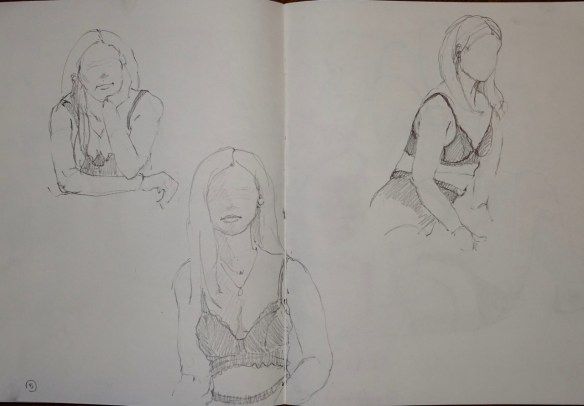
  I found a life drawing group that meets tonight from 6:30 to 9:30 and decide I should go. It is a thirty minute walk to the studio but the address opens up to an inner courtyard with lots of shops and doors. No idea where I need to go…I ask for directions and finally the fourth person shows me where the atelier is.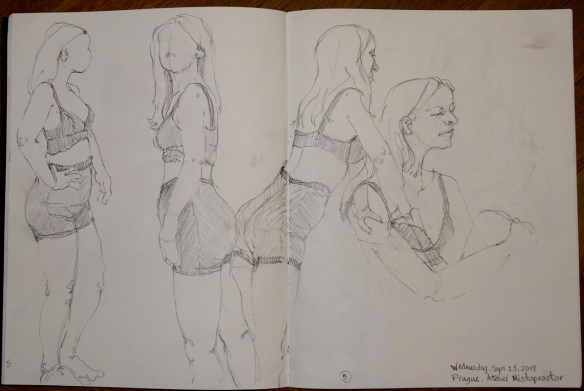
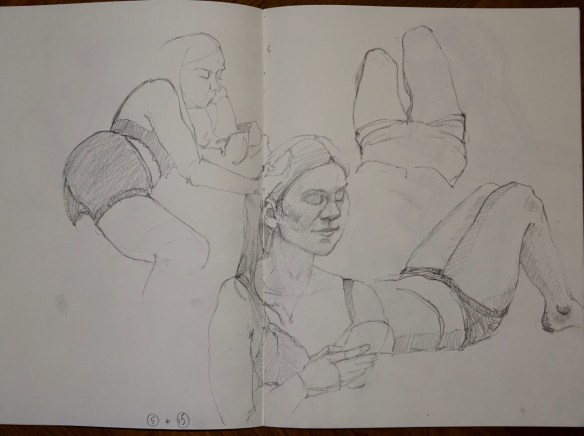
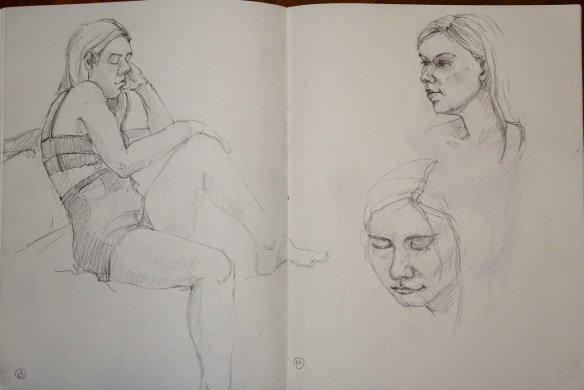
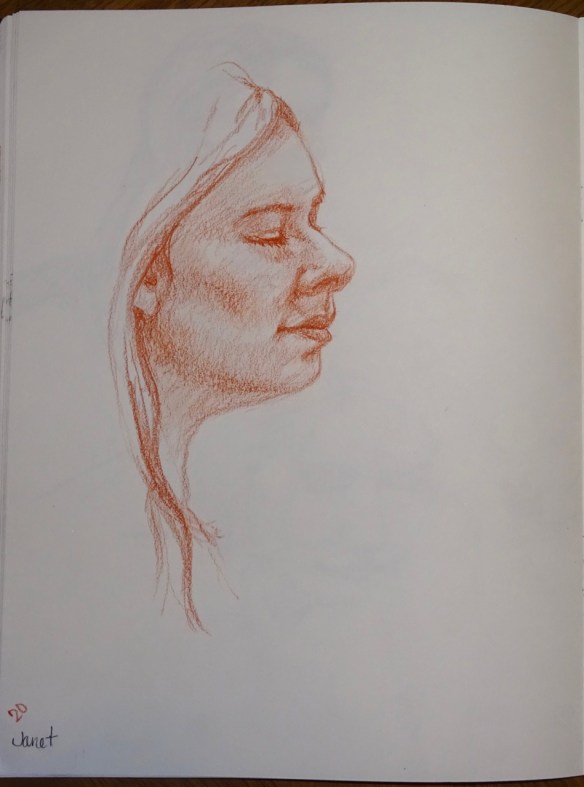
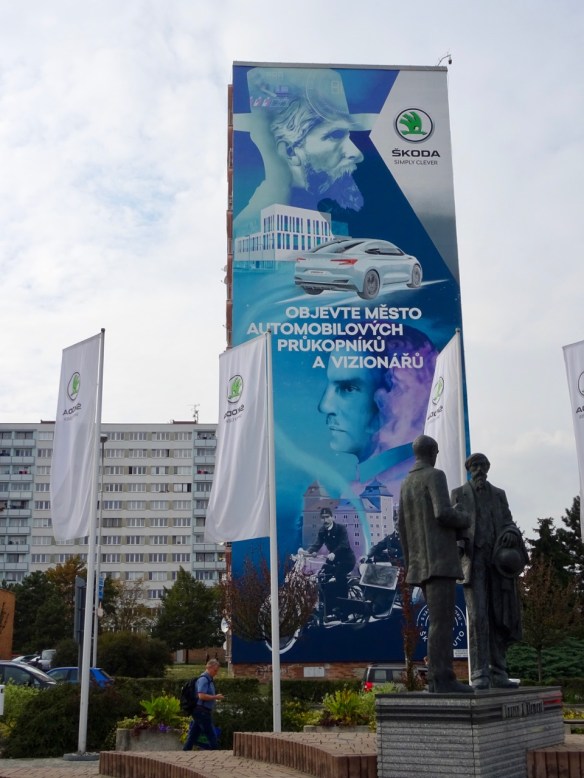 No photos are allowed inside the factory but it is OK if I sketch. It was tough to draw on the tour as we never stayed in one area very long. Our guide Gabriela gave us directions, as we drove our car from one enormous factory building to another.
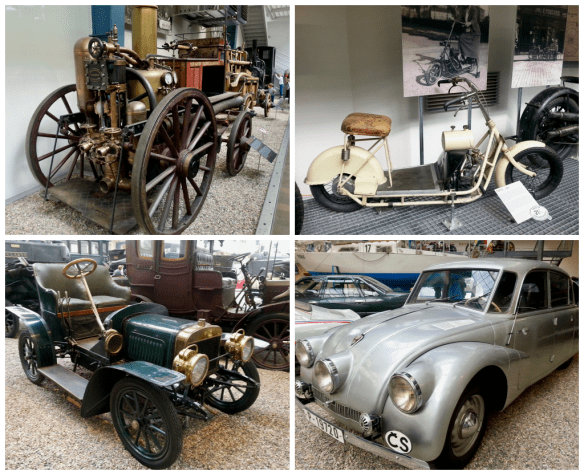
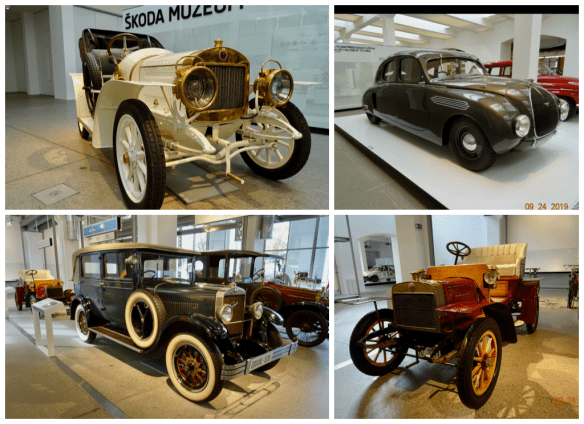
 After our two hour tour of the factory we have another hour tour of the museum where Gabriela talks about all the cars. I am not a car enthusiast but I found it all quite interesting. Here are a few of the Škoda cars from the museum.
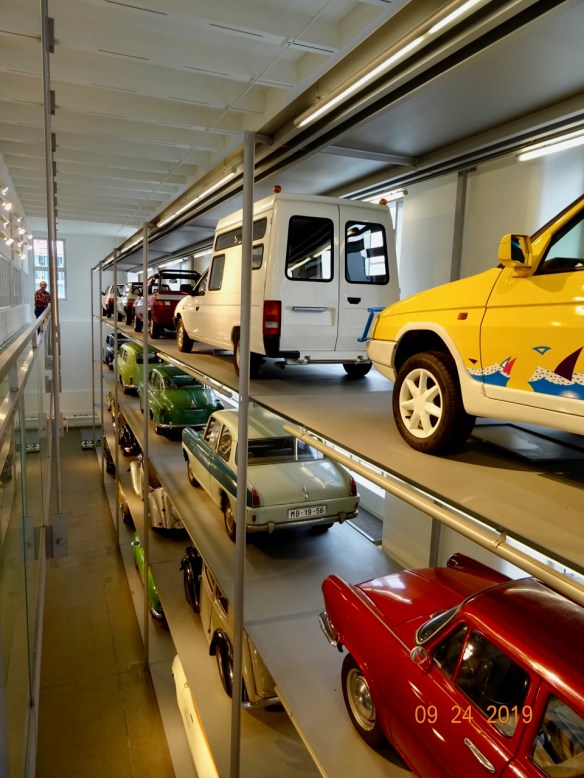
  One area has cars four levels deep. We also went into a special area with Škoda race cars, but we didn’t have the camera with us then.
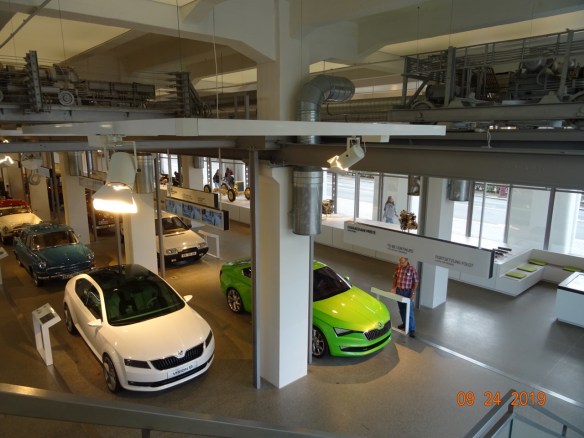
 The museum used to be an old factory building. You can still see some of the cranes and other machinery high above us.
 This was fun! We put on virtual reality goggles and earphones and got to ‘drive’ one of the vehicles through early 19th century Prague. Soon it was time to drive our rental Škoda to Prague and find our next Airbnb.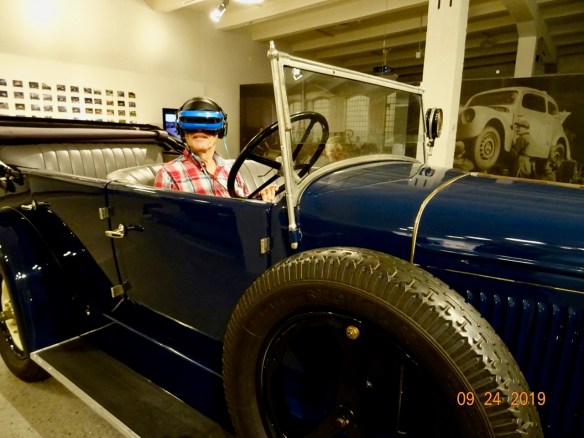
 We walk through the Zwinger Palace grounds.
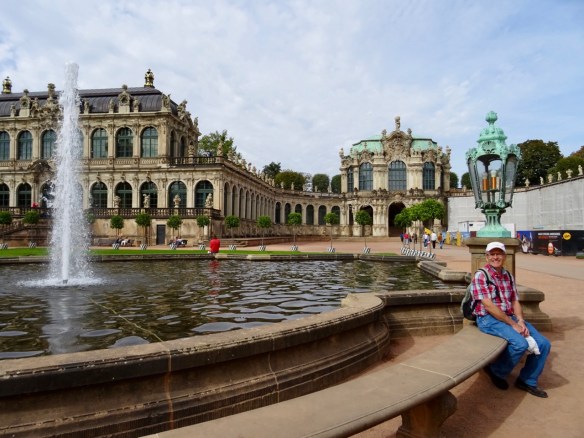 There are a lot of beautiful buildings here, which is surprising because Dresden was heavily bombed during the Second World War.
 I don’t know what these buildings are but we enjoyed walking about and looking at their exteriors.
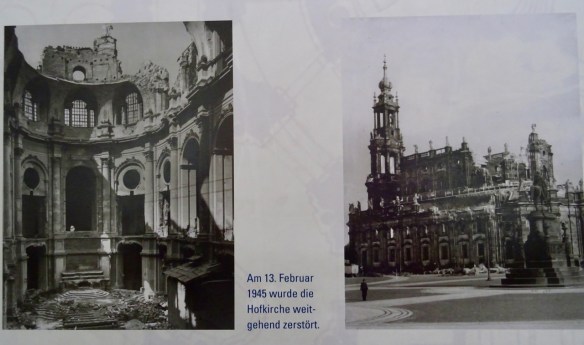
 We go inside the Dresden Cathedral, which was heavily damaged during war but was restored by 1962.
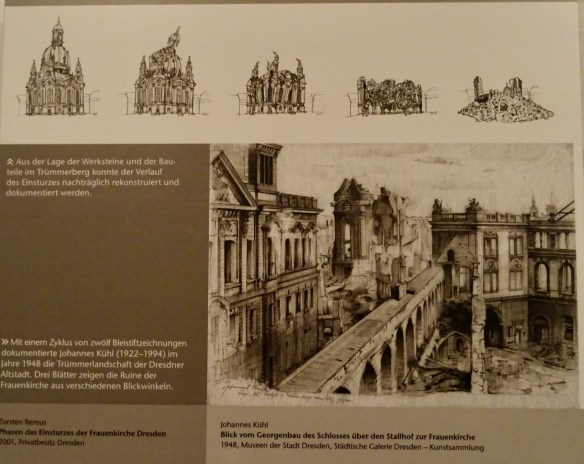
 Here are photos showing the damage caused by the bombing.
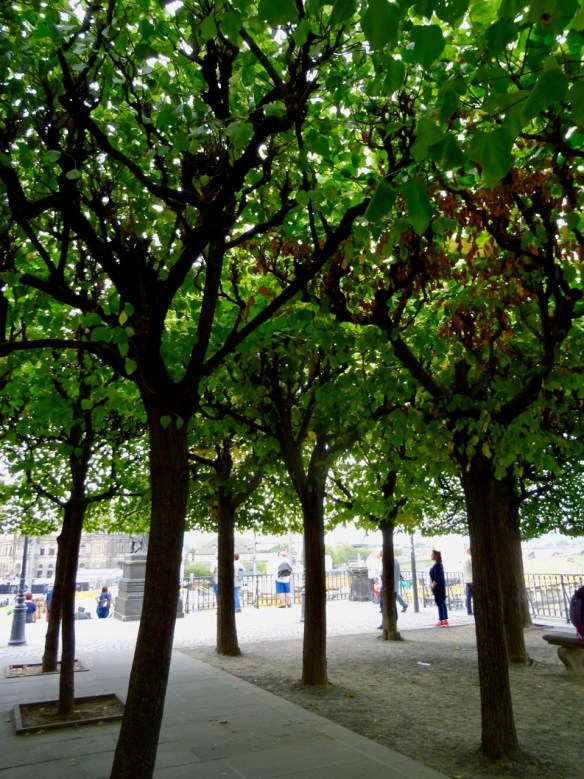
 We walk along the Elbe River, looking for a bathroom, or WC as they are called here. They are few and far between! We do find this lovely terrace where the trees form a canopy over the whole area.
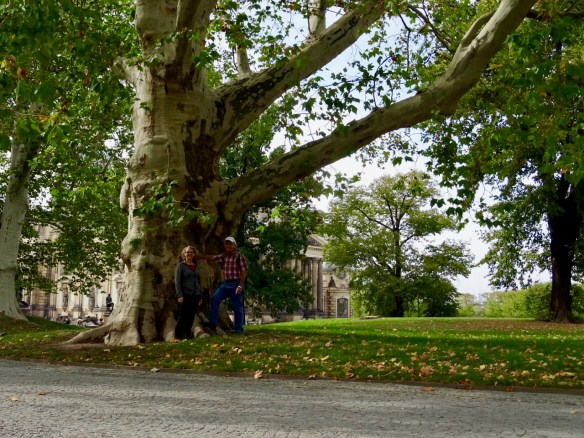
 While we were still looking for the elusive WC’s, that were marked on our map but didn’t seem to be anywhere to be found, we discover this beautiful big tree that begged us to take its photo.
 The Frauenkirche Dresden, or Church of Our Lady is a Luthern Church that was almost completely destroyed during the war. Only parts of its crypts remained intact. The interior is very beautiful with luminous pastel colours and lots of light.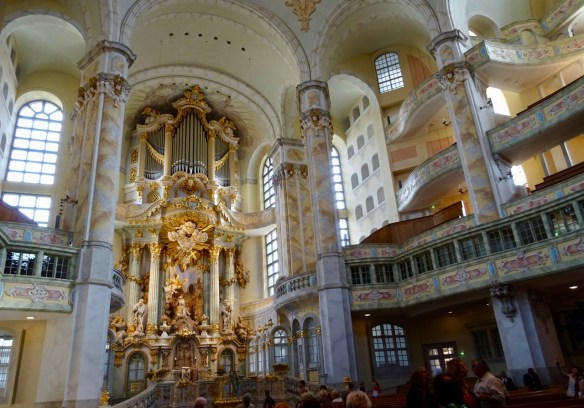
 The crypt was huge, not what we were expecting at all. There were modern sculptures displayed here. This one shows ‘Construction’ and ‘Destruction’ opposite each other.
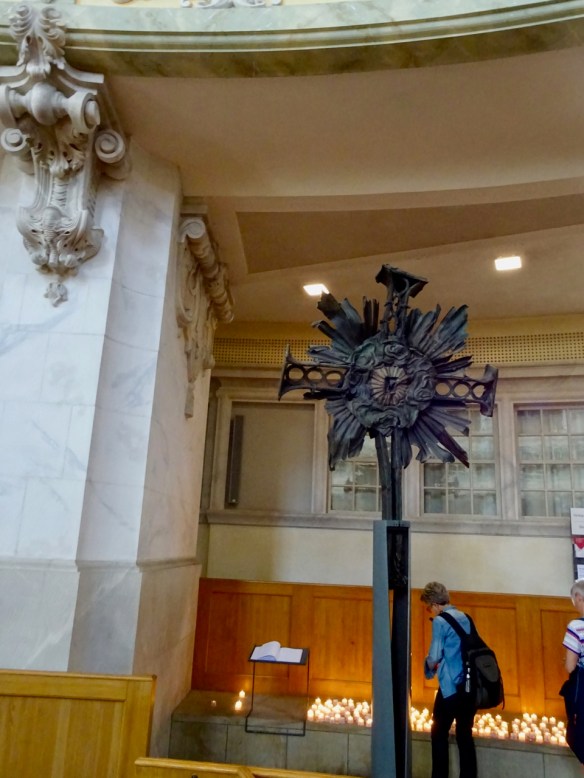
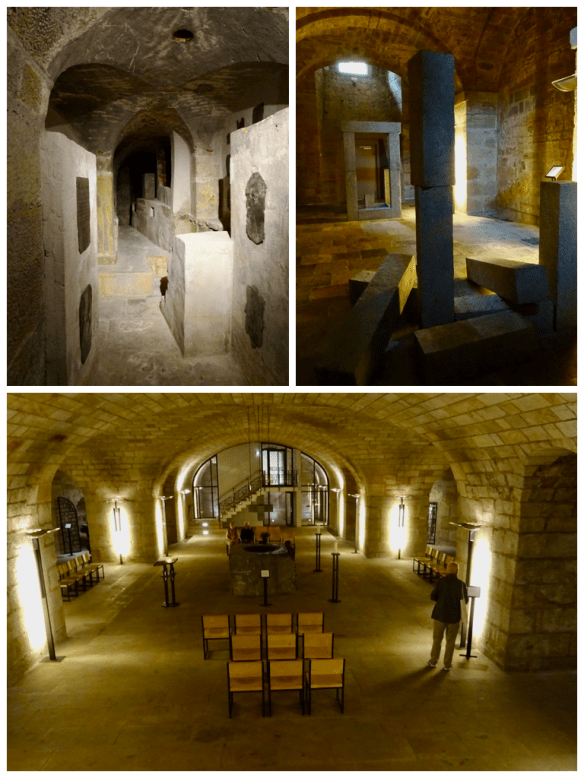 This burned and twisted cross is from the original church.
 Here is the church from our vantage point in the square outside. The dark stones are the ones that were from the original church.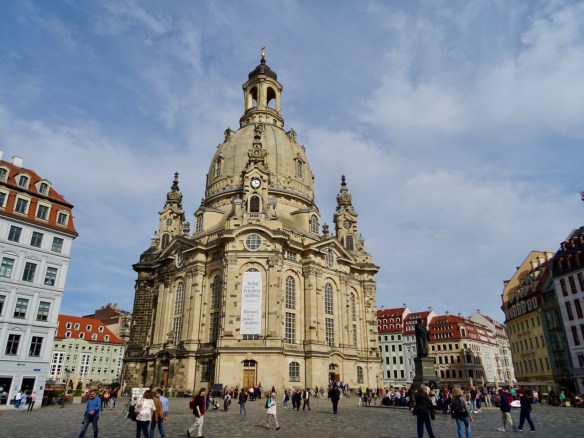
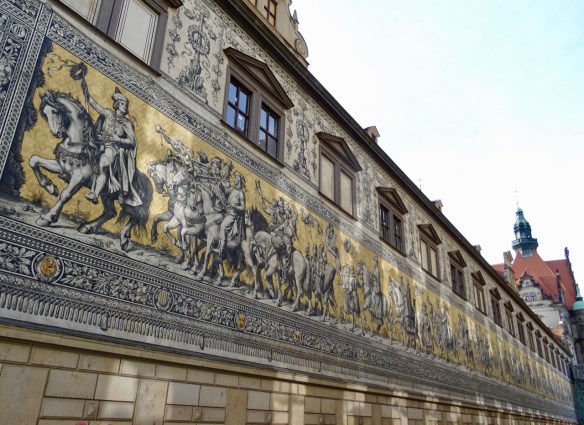
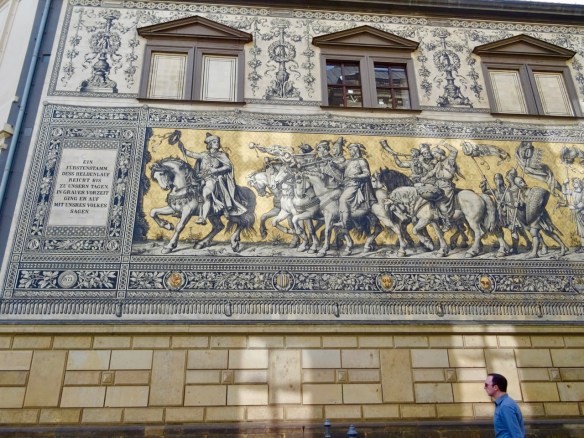 This is an impressive sight, and the detail is amazing. It is also amazing that this mural survived the bombing of Dresden with minimal damage.
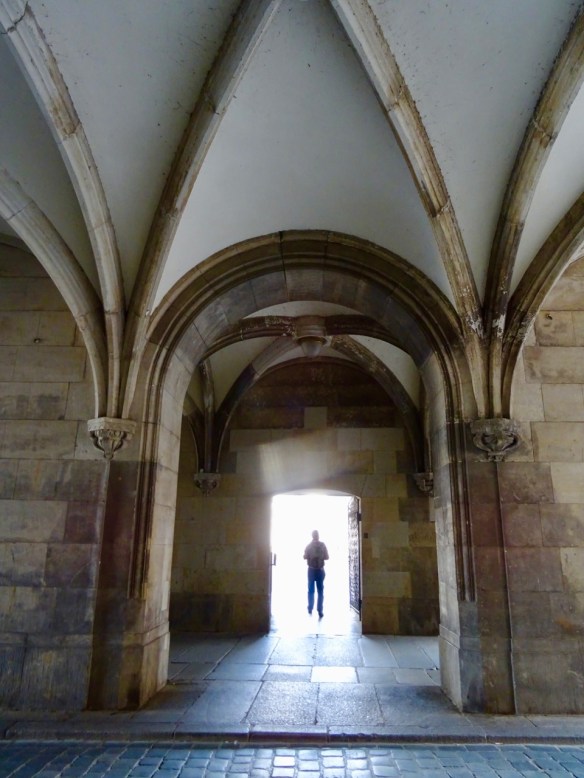
 We notice a doorway…looks like Bob is ‘walking towards the light’!
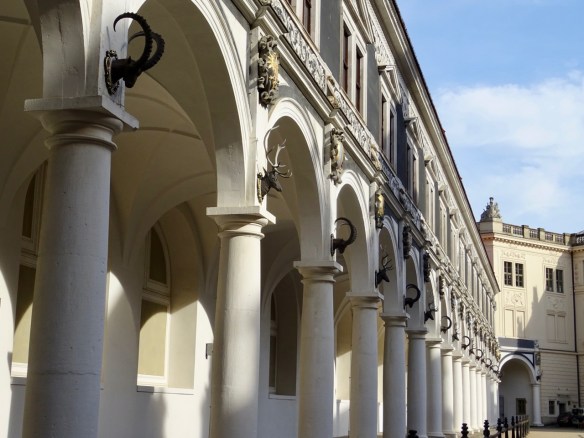
 The doorway opens on this courtyard with a different horned animal on each pillar. I think someone liked hunting?
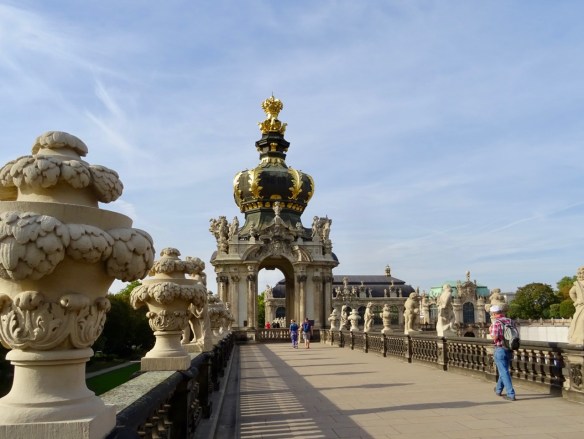
 Back to the Zwinger Palace and Bob discovers that we can walk up to the elevated walkway for some great views of the palace and its grounds.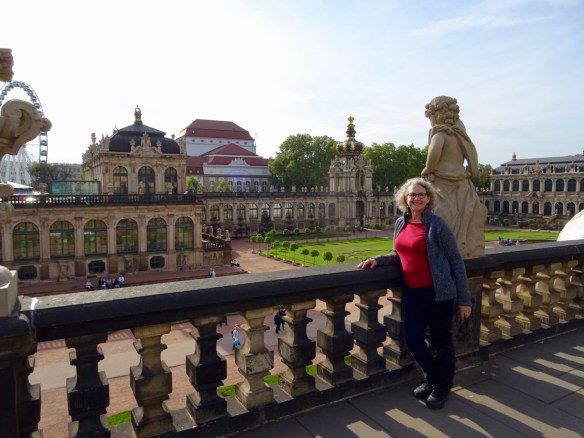
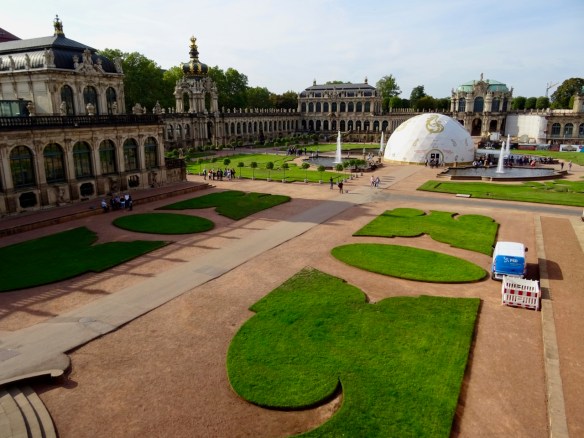 Statues line the walkway and this dome is over the entrance to the grounds.
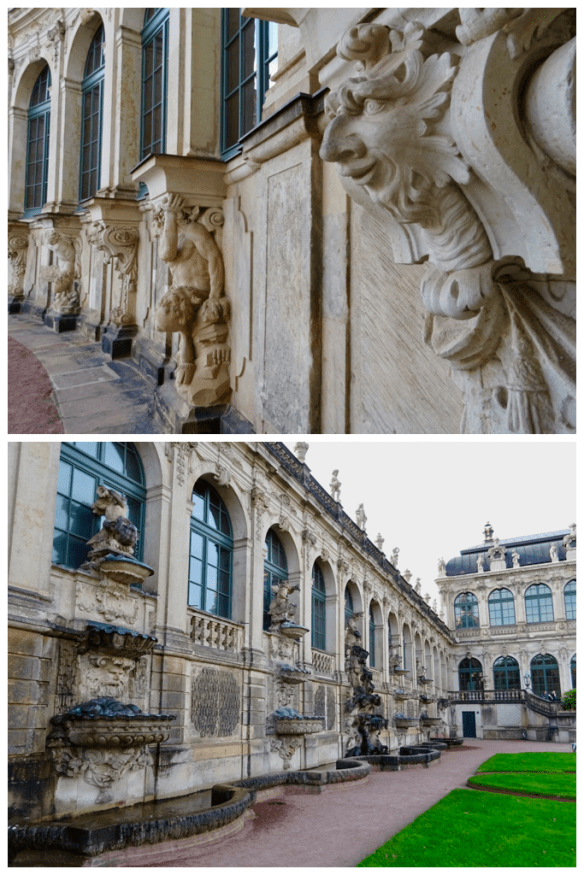
 There are some interesting sculptures on the interior walls of the palace and one of the walls has fountains all along its length.
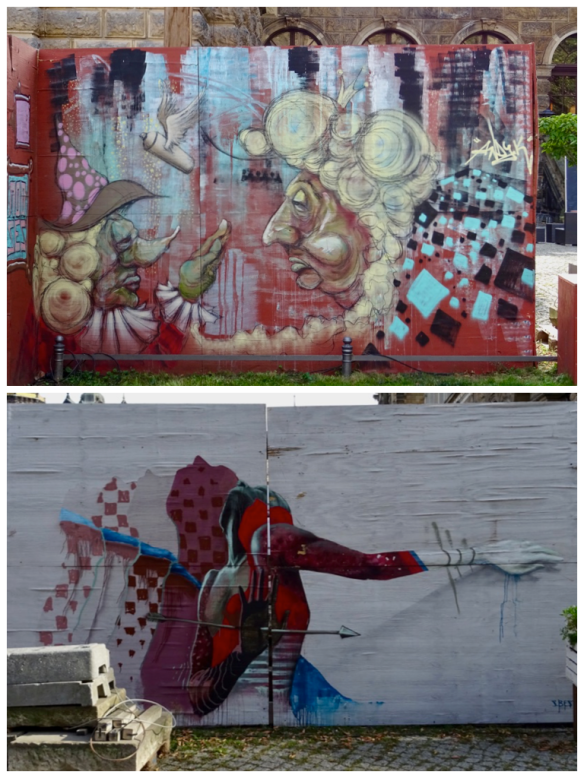
 There is some work taking place on the outside wall of the palace and I really liked the graffiti on the construction barricades.
 We end our day with a ride on the ferris wheel. It has been many years since we were last on a ferris wheel.
 Here are some views from the top of the ferris wheel. The people and cars below are very tiny!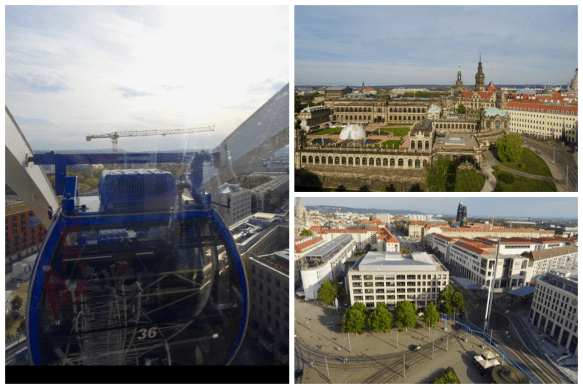
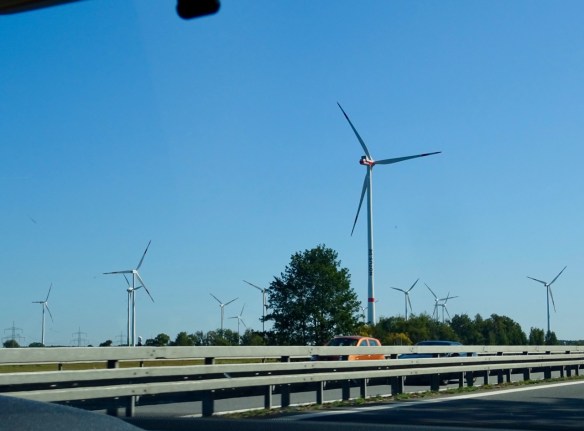
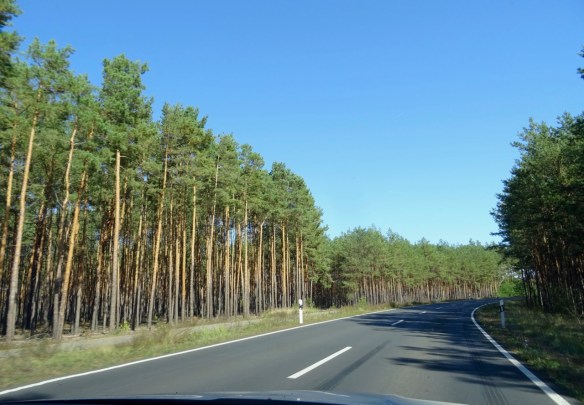 and lots of windmill farms.
 Our new apartment in Dresden is tiny!
 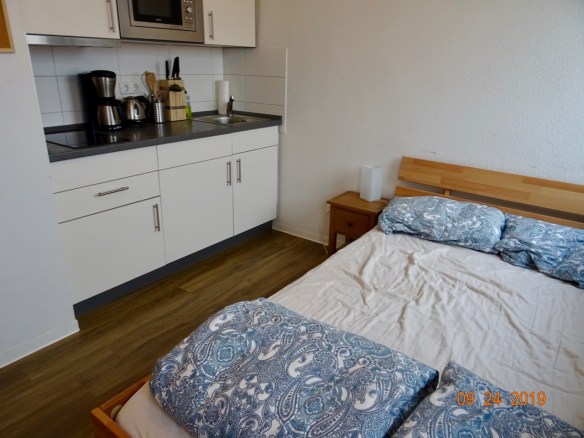 This is it, other than an equally tiny bathroom.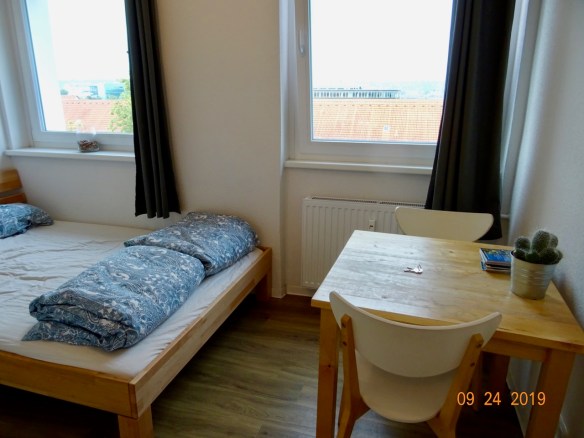
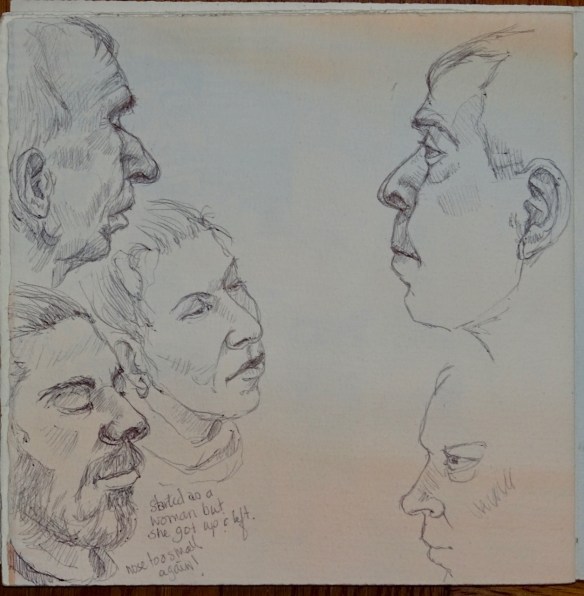
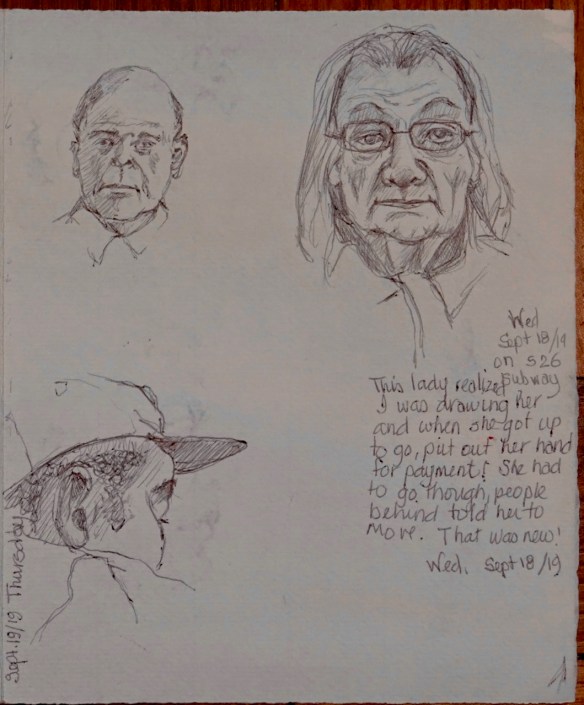
 Here are some metro sketches from Berlin that I forgot to post.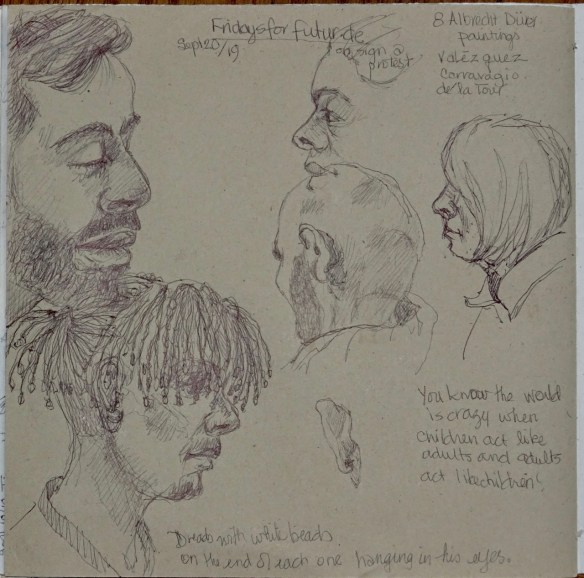
 The grounds in front of the palace. We have our picnic lunch and then visit the Bildergalerie.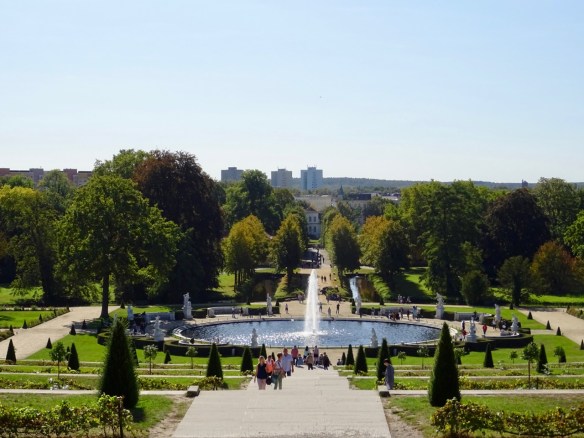
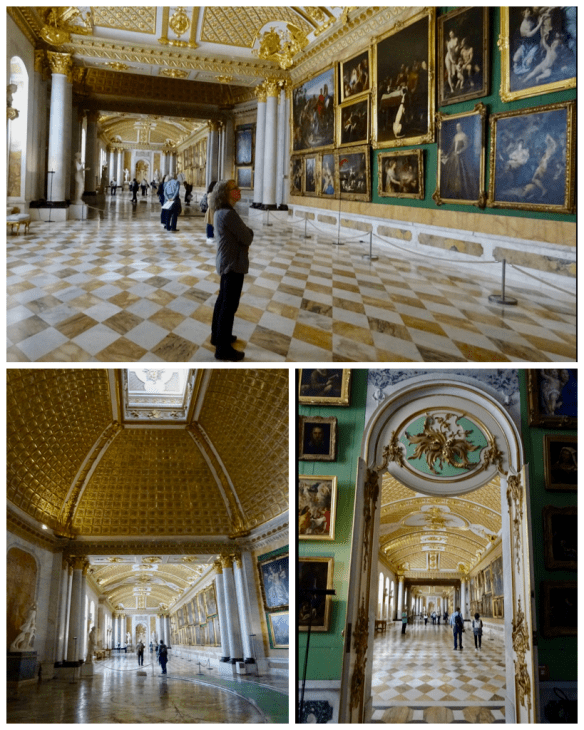
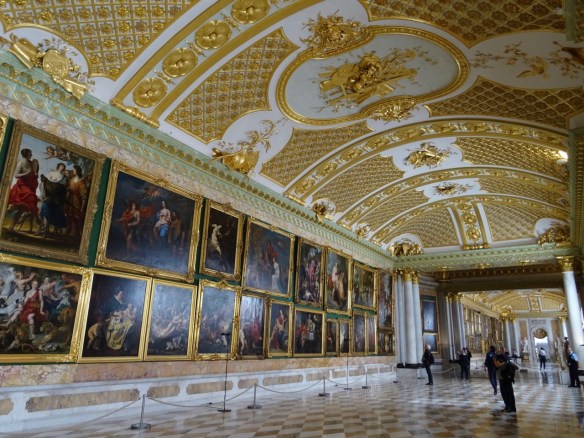 connected by a round room with a vaulted gold ceiling. At the far end there is a room for small paintings. The last photo is taken looking out from this room. There are a lot of beautiful paintings but they were a bit hard to see because of the glare from the windows on the opposite wall. I am surprised that they allow the much sunlight to enter the gallery, but it did make the space bright and very attractive.
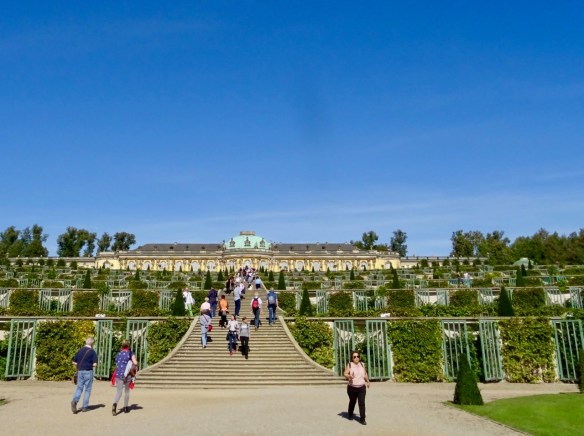
 We still had a bit of time before our palace visit so we walked down to the gardens. The layout here is reminiscent of Versailles in France, only on a smaller scale.
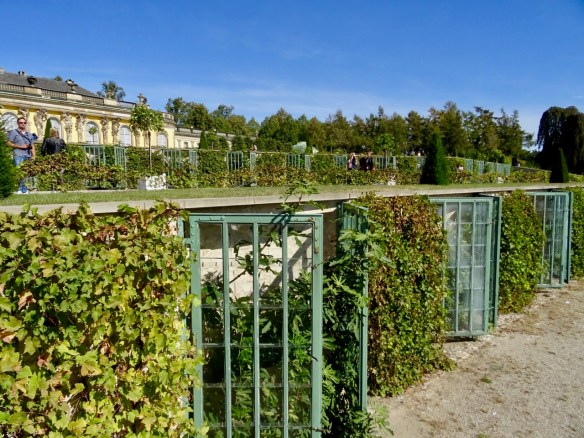
  All the terraces have these nooks with glass doors that can close when cold to protect the plants. Frederich loved to garden and grow fruit trees and grapes.
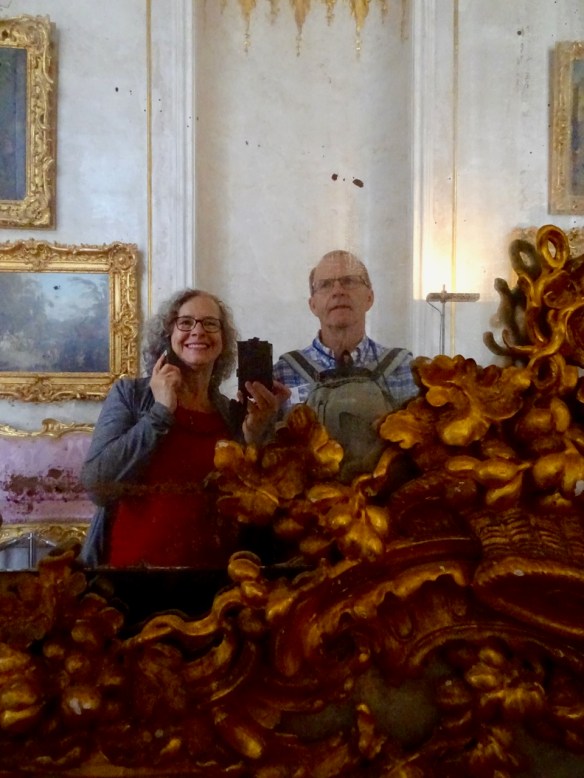
 We enter the palace and take this selfie in the first room. It contains artwork and is an entrance hallway, not very wide at all.
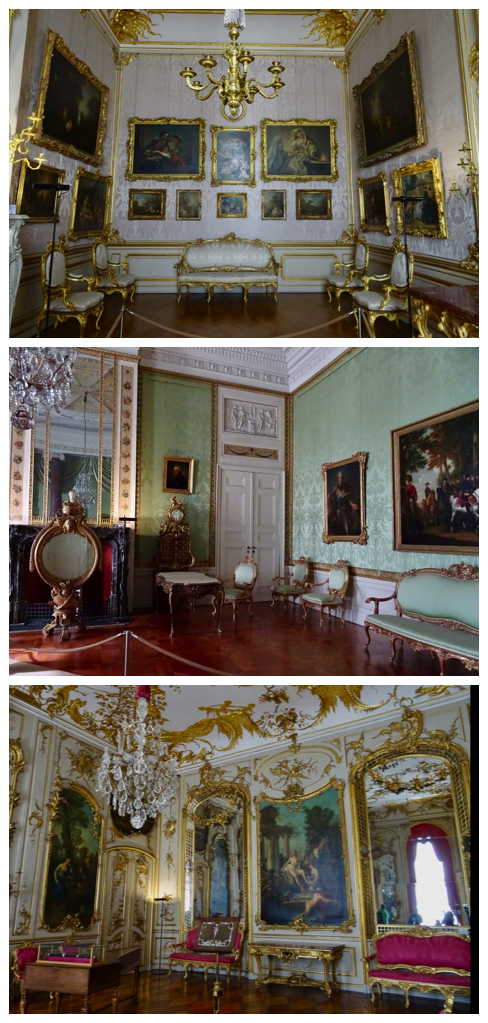
 The palace only contains twelve rooms. They are all connected by doors in a straight line that lead from one room to another. The room below is panelled in wood with inlaid botanical designs. They are very intricate.
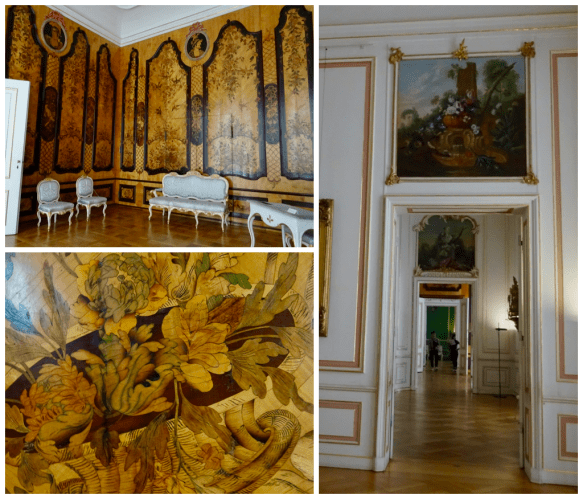 We walk through the rooms, each seeming to be a bit more elaborate than the next.
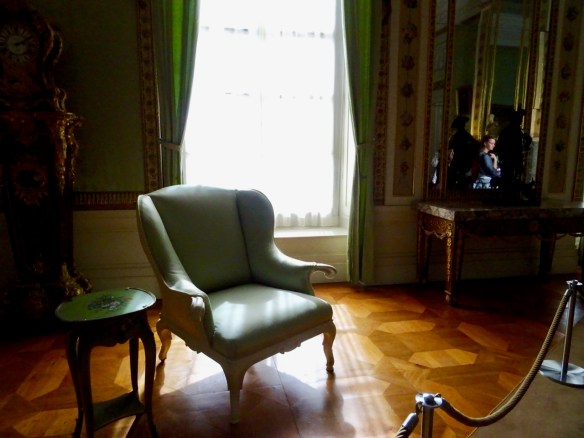
 The green room above was Frederick’s study. He suffered from asthma, gout and other ailments and he often slept in the green chair below as it was too difficult to lie in a bed. He died in this chair when he was 74.
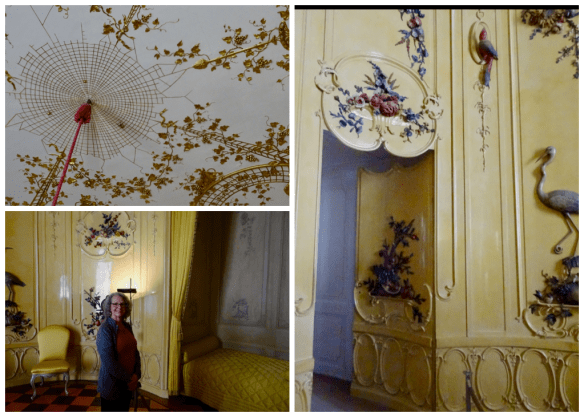
 Frederick loved nature and the palace was decorated with botanical themes. The palace was his refuge and he lived there from April to October. Sanssouci is from the French “sans soucci”, which means “without worry”. Frederick was married but lived separately from his wife. He only married because his father threatened him with imprisonment if he did not comply. His father was very strict and made his Frederick’s life miserable. He had a miserable childhood as his father thought him effeminate and tried to change him. Frederick was gay and surrounded himself with male friends and companions at Sanssouci. Women were not welcome there. The yellow room below has raised carved decorations, and a sleeping nook for the bed, as did all the bedrooms. Notice the spiders on the ceiling decoration.
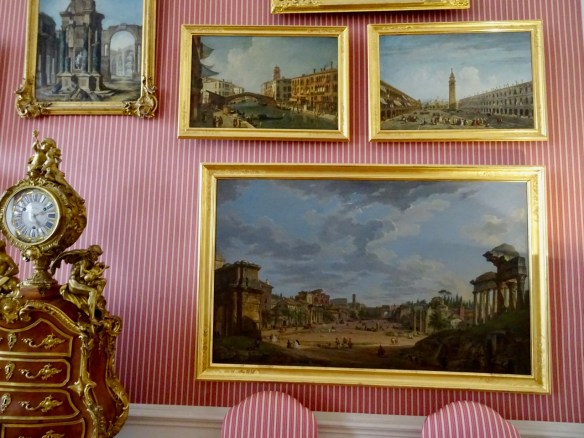
 Frederick was unable to travel to Rome and Venice but his palace had many paintings of these cities, which he greatly admired. I think how lucky we have been to visit these cities.
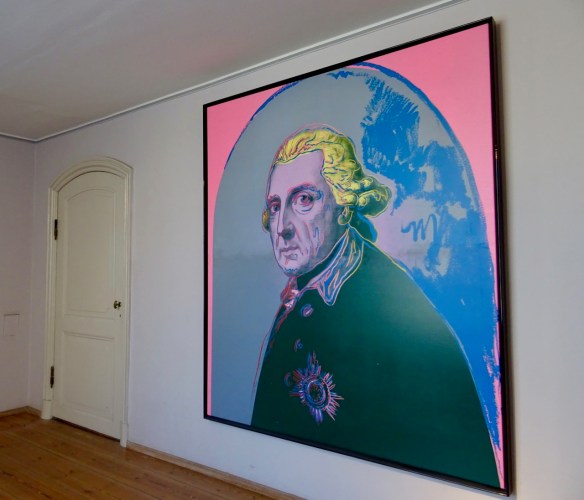
 As we exit the palace there is a huge painting of Frederick the Great by Andy Warhol. It is quite a dramatic change from the other artwork we have seen here.
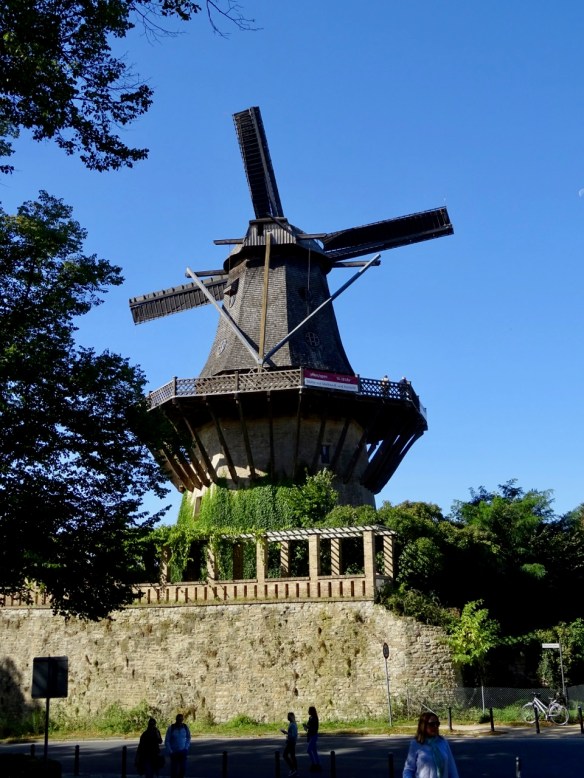
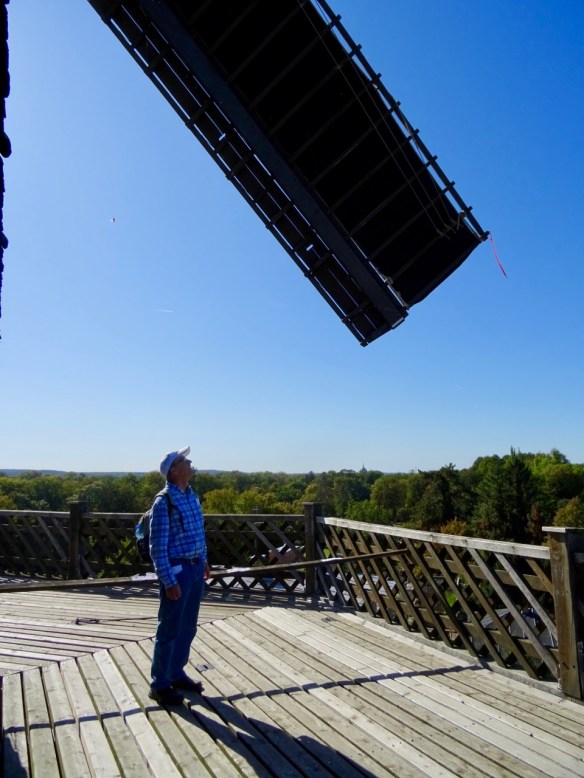
 We climb the interior of the windmill and step outside to check out the huge blades.
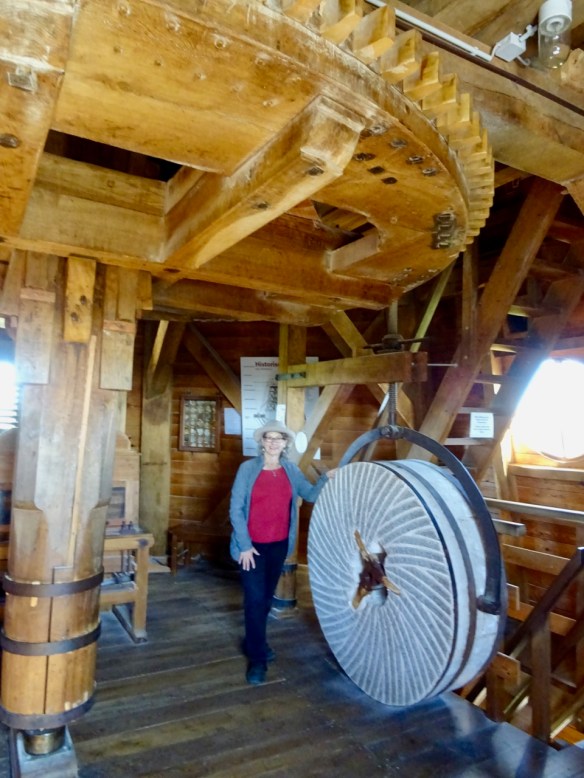
 This is still a working windmill. We are amazed at the size of the wooden wheels and cogs.
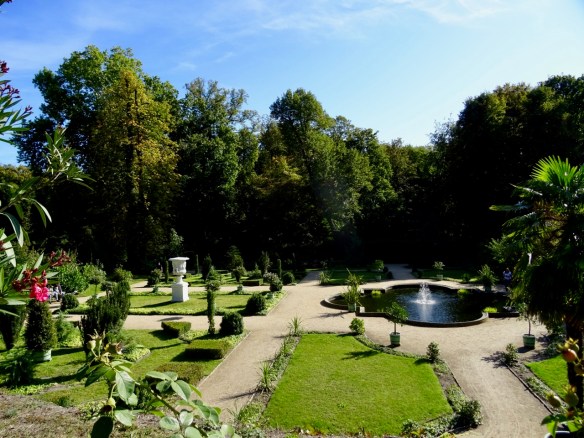
 We walk through the park with its gardens and fountains towards the Orangerie.
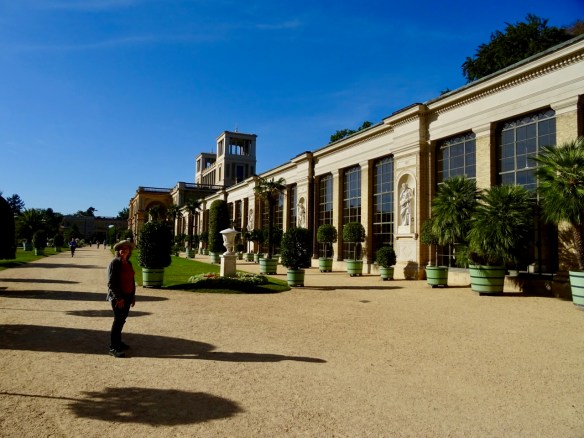
 Wow! We have never seen an orangerie this large. It is enormous! This photo shows one wing and the entrance behind me. There is another wing just as long on the other side of that entrance. This Orangerie was built by Frederich William IV in 1851-1864. It is 300 meters long.
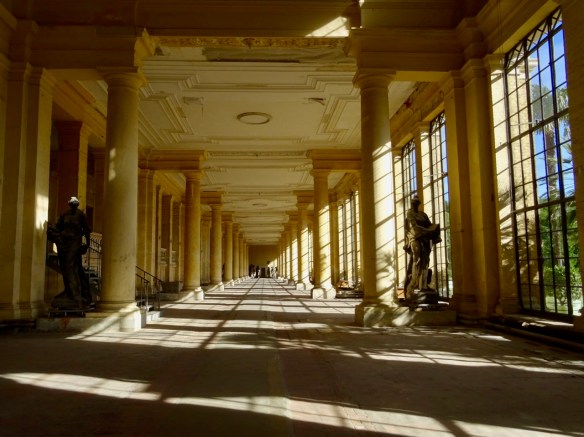
 Looking inside one of the wings of this huge orangerie. This is where all the potted plants that would not survive winter temperatures are kept. Like the potted plants in the photo above,
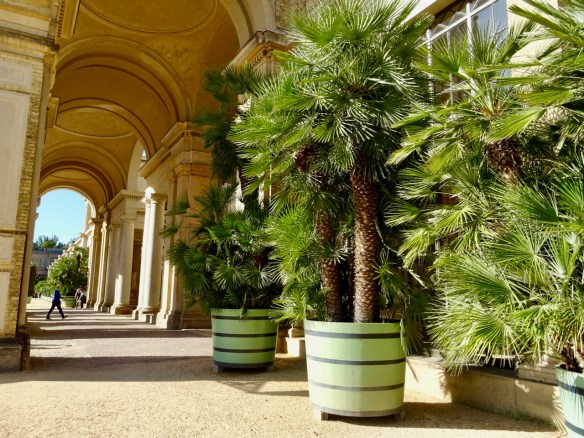
 Some of the plants are huge. These large potted palms definitely need a fork lift to be moved. No idea how they ever transplant them when needed? The pots are almost as tall as I am!
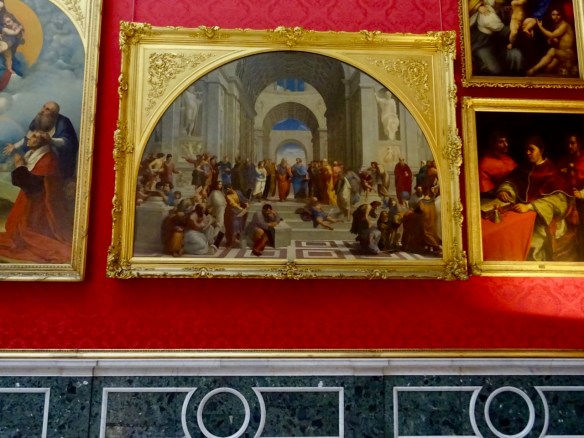
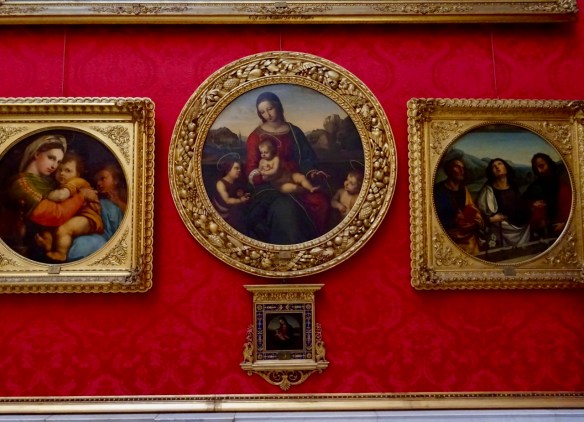
 We are surprised to find more furnished rooms and another art gallery in the Orangerie. The Raphael Hall has over 50 copies of Renaissance paintings.
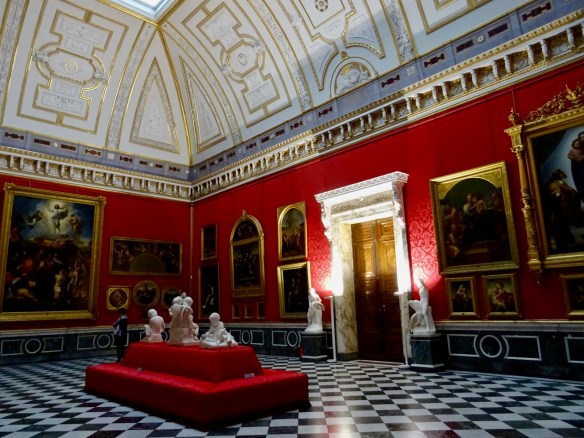 We saw the original of this painting in Italy at the Vatican.
 Do you recognize the tondo by Raphael that we saw at the Gemäldegalerie earlier this week? Interesting how copying famous artworks was such a common accepted practice. Today I think it would be called forgery.
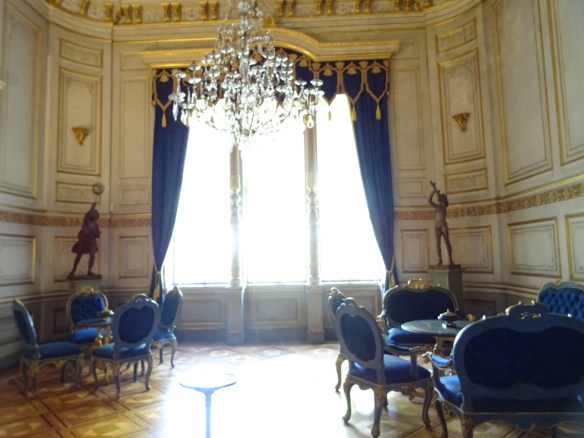
 Another room in the Orangerie Palace.
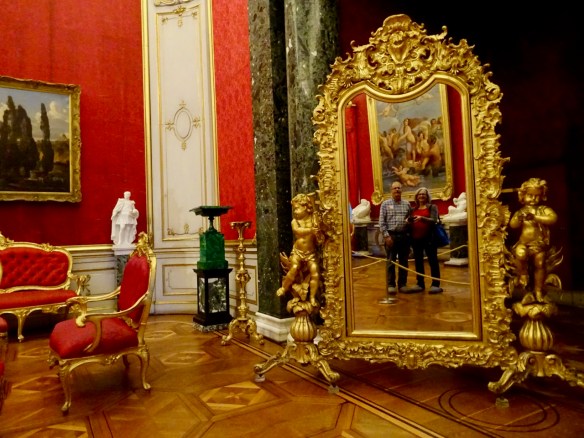
 And another selfie reflection in a very ornate mirror. Notice our big slippers!
 These are some of the stairs we climb to the top of the Orangerie.
  And more stairs…
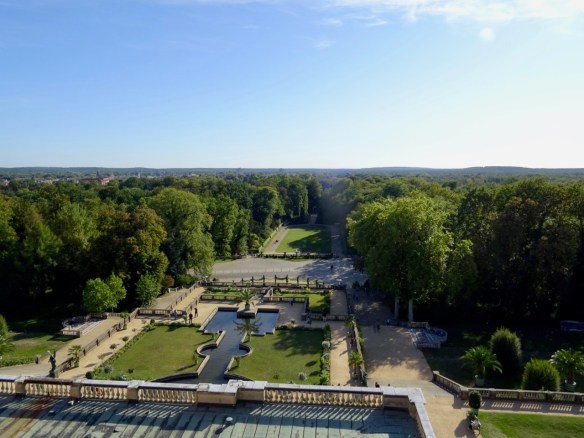
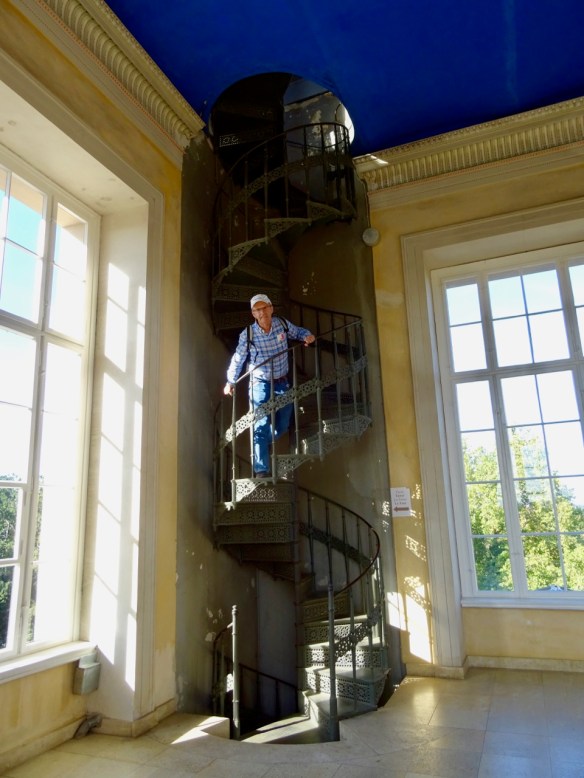 to get this view.
 There is the East wing of this enormous building.
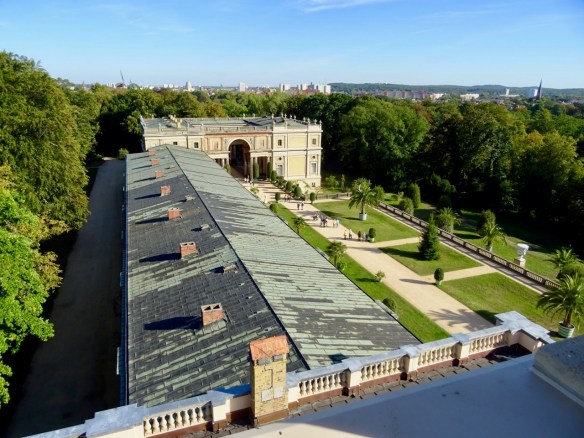 That dome way in the distance is another palace. The New Palace, built by King Frederick, is the largest and most impressive complex at Sansoucci, but it is way too far of a walk for us today and the park is closing soon.
 In front of the Orangerie.
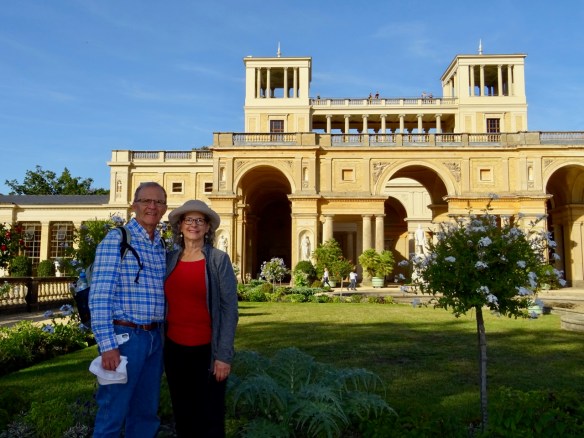 Every path here has a view at the end of it…something to entice you to walk and explore.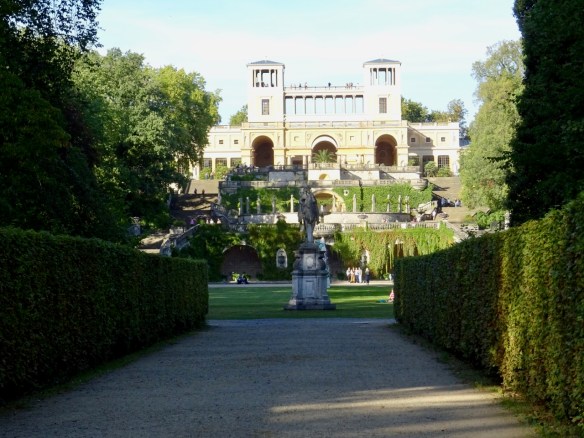
 We find the Chinese House which Frederick had built to enhance his flower and vegetable gardens and we can imagine elaborate picnics here in the summer. We make our way to the main gate just as Sanssouci is closing and catch the metro home. We had a beautiful warm day for our time here. A perfect day really.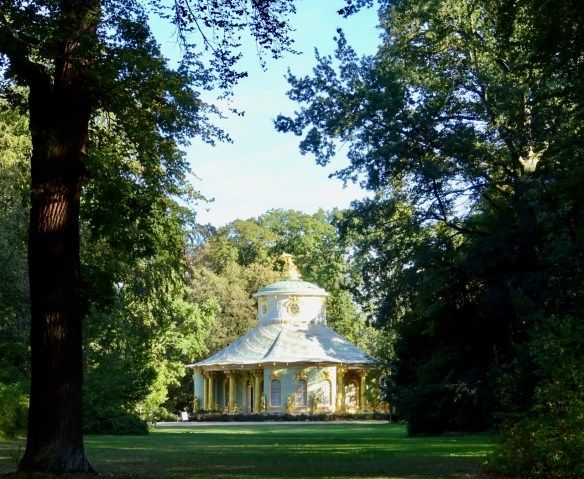
 trudymason.com