Day 27 Friday, September 26, 2025
I had most of this post written and somehow lost it! So I had to start all over again. Lesson learned, remember to save a draft often!!
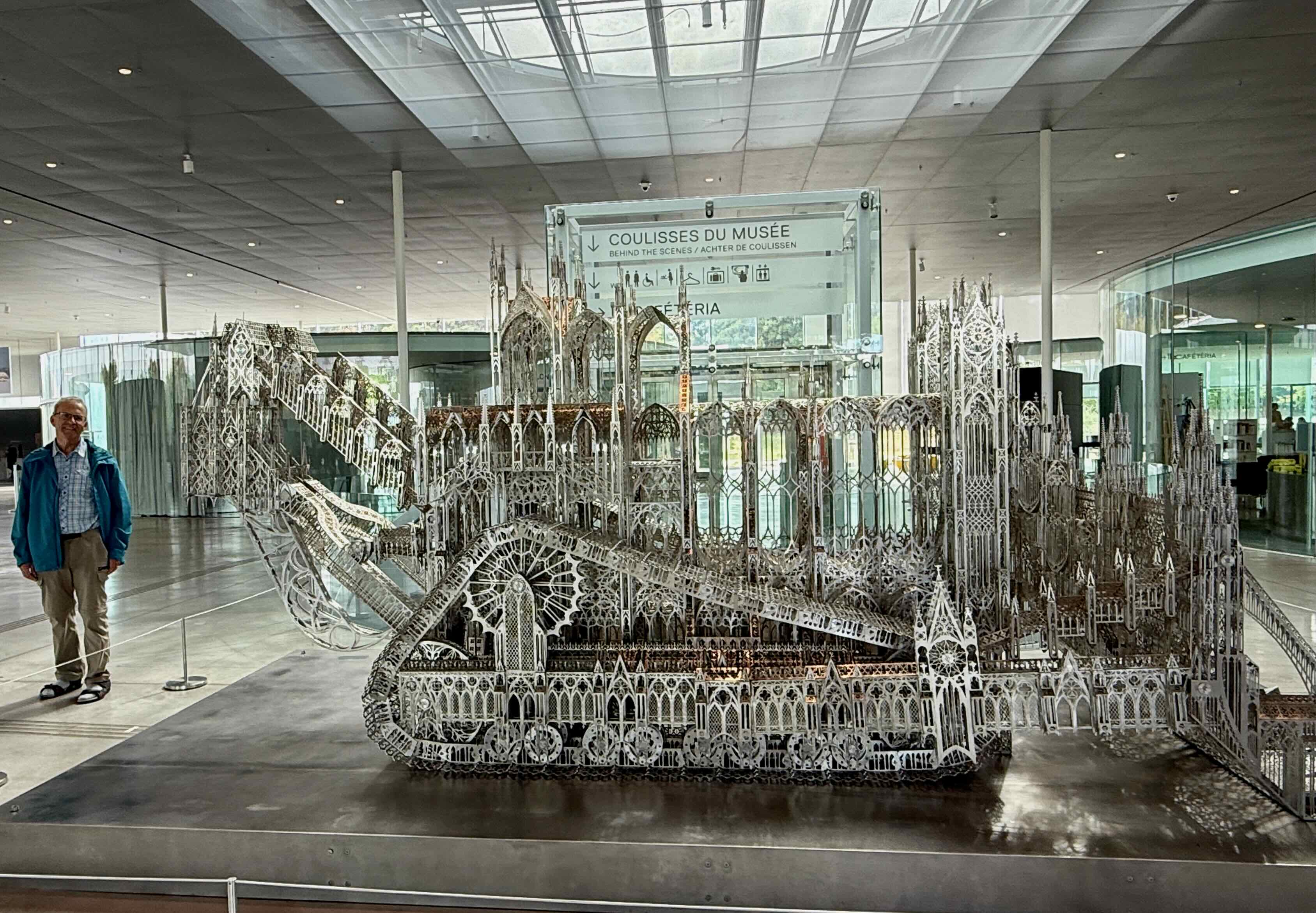
Today we drove a half hour to Metz. First stop is the Centre Pompidou-Metz, a branch of the Georges Pompidou Centre in Paris, that displays contemporary art and hosts temporary exhibitions, events, films and presentations. The dark lattice work supporting the roof is made of huge wooden beams.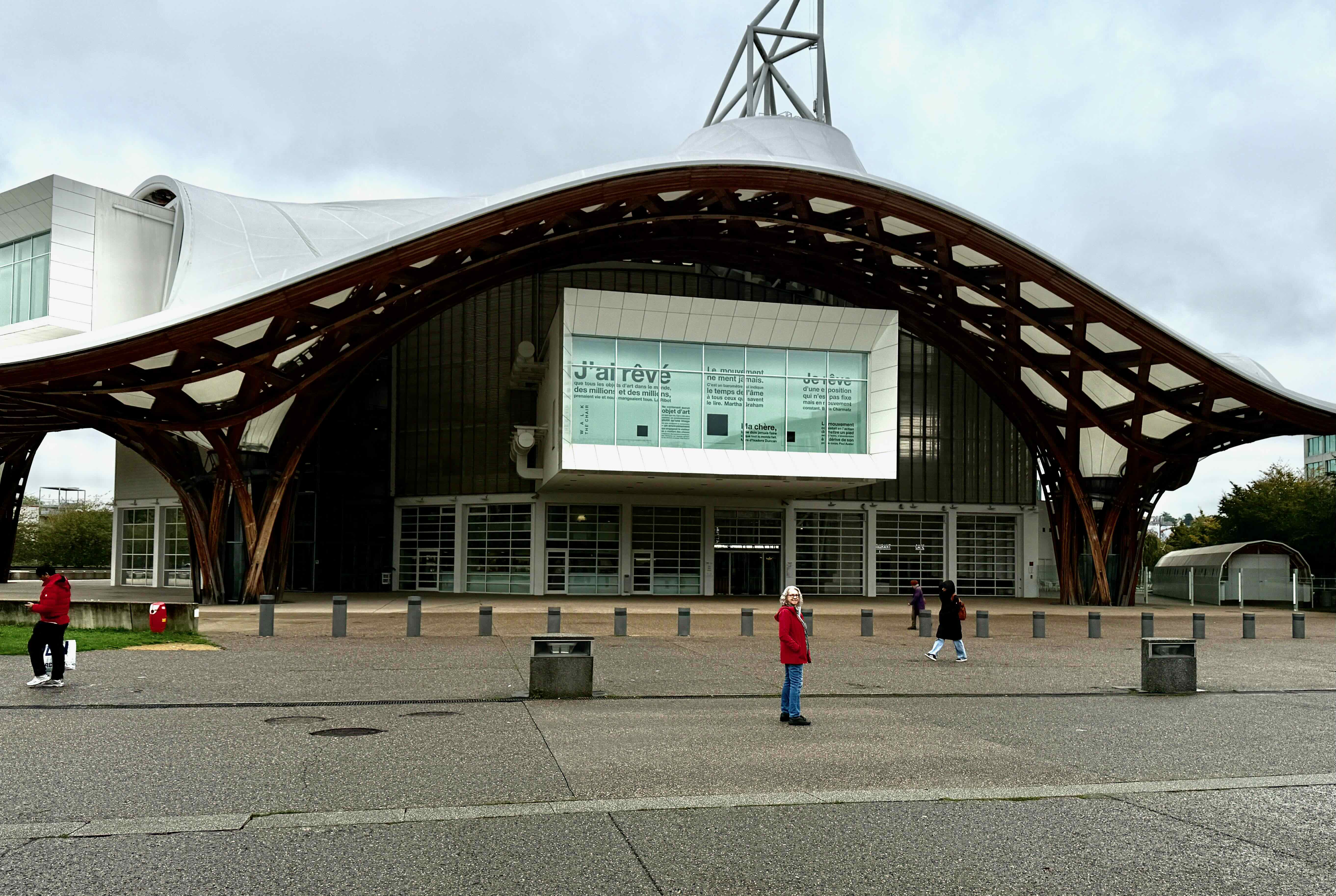
I didn’t get the artists name but can you see the two figures sleeping on one of the couches?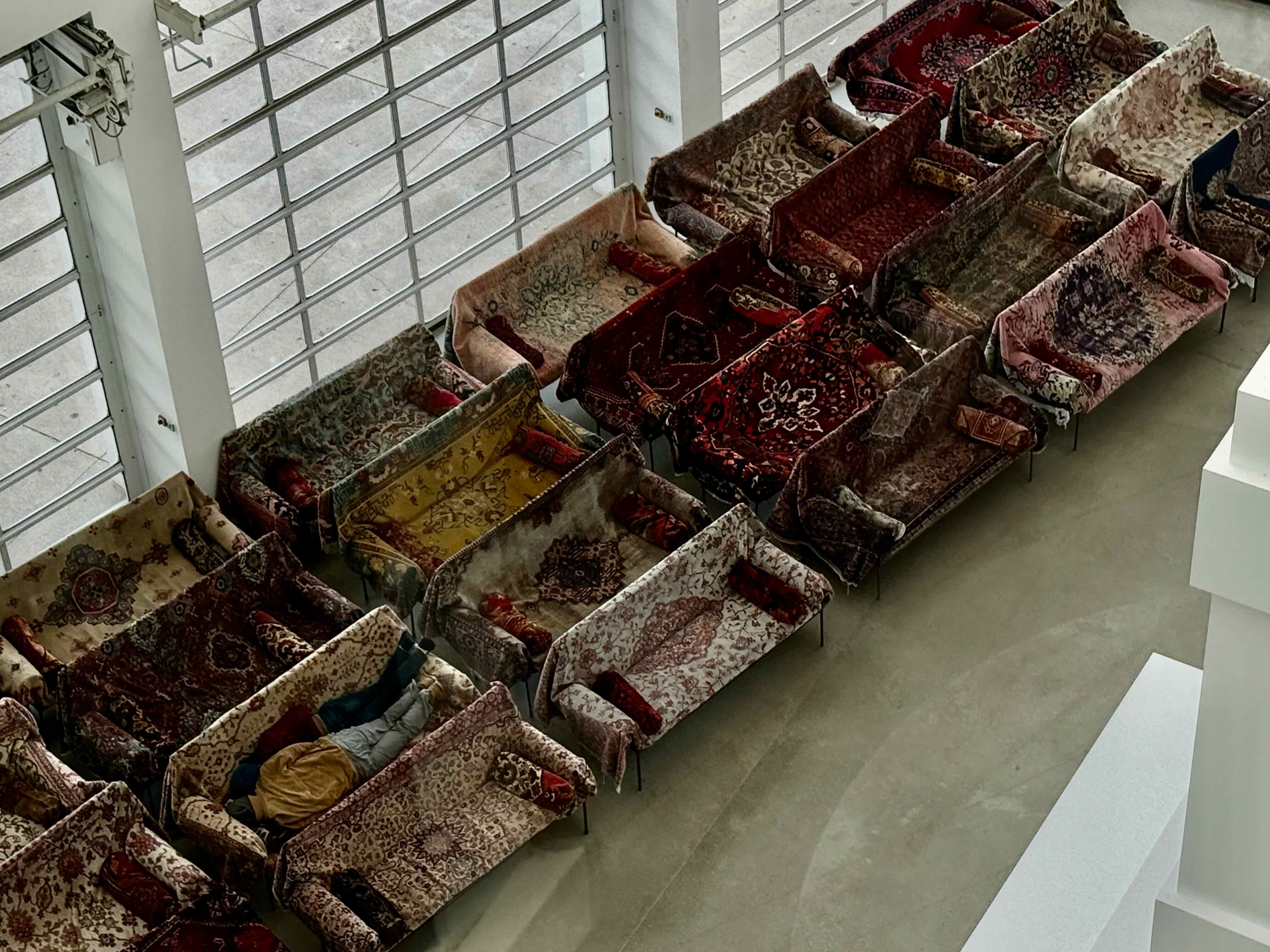
Maurizio Cattelan is a self-taught artist from Italy known for creating sculptures, and installations that are humorous, satirical and unconventional. Wanting to explore the power of images, Cattelan frequently appropriates uncomfortable imagery in his art.
This domestic cat skeleton seems frozen with fear and its gigantic scale reminds us of the dinosaur skeletons we have seen in Natural History Museums. Be warned, some of the images of Cattelan’s work are disturbing. I did not include some of the works because they were so upsetting to view.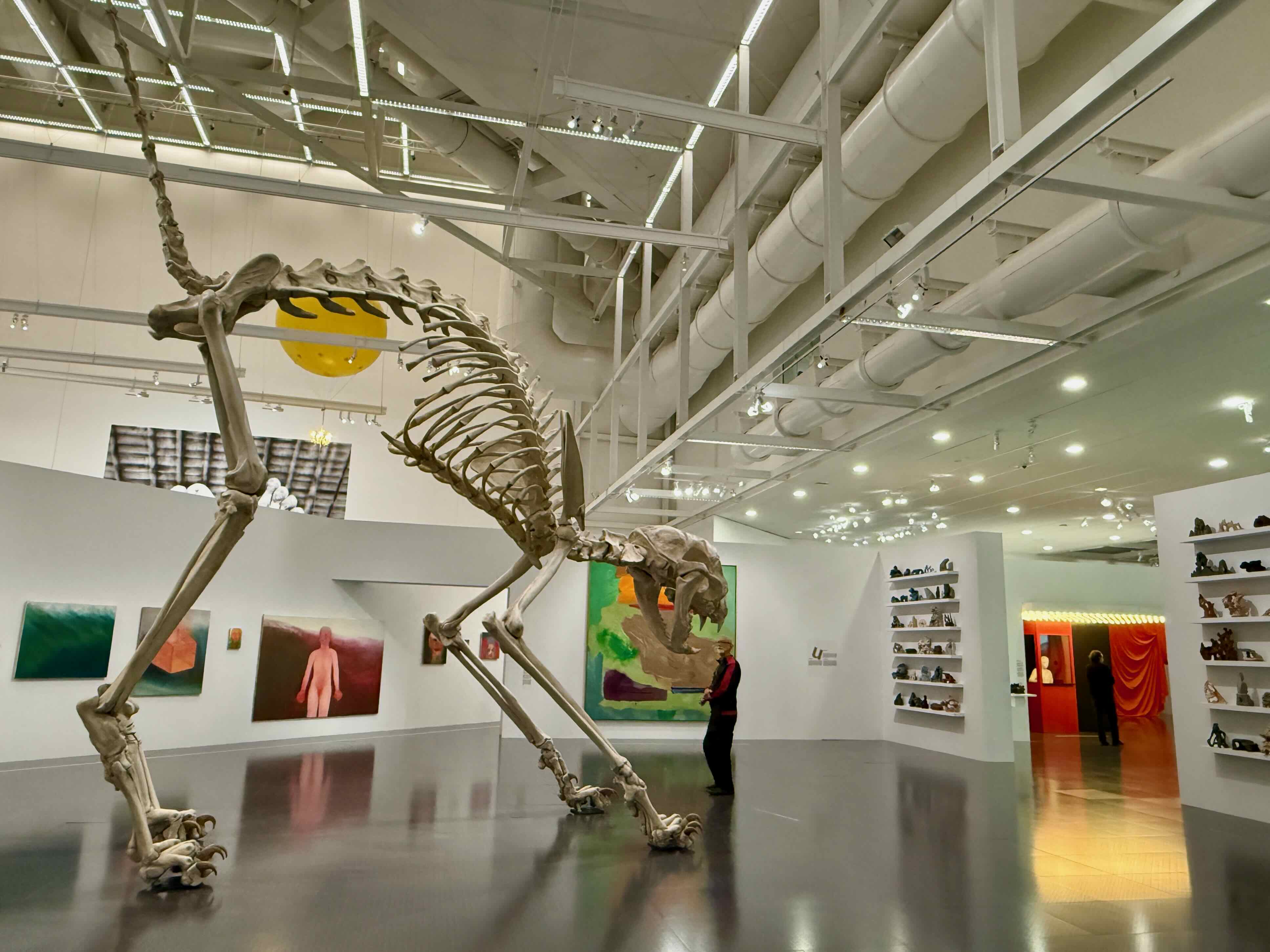
I walk around the corner, saw this and gasped. Kaput is a display of five stuffed horses with their heads in the wall to reveal the absurdity of hunting trophies. The traditional head trophy is reversed with the entire body suspended and powerless. I do not have the words to describe how I felt when I saw this installation.
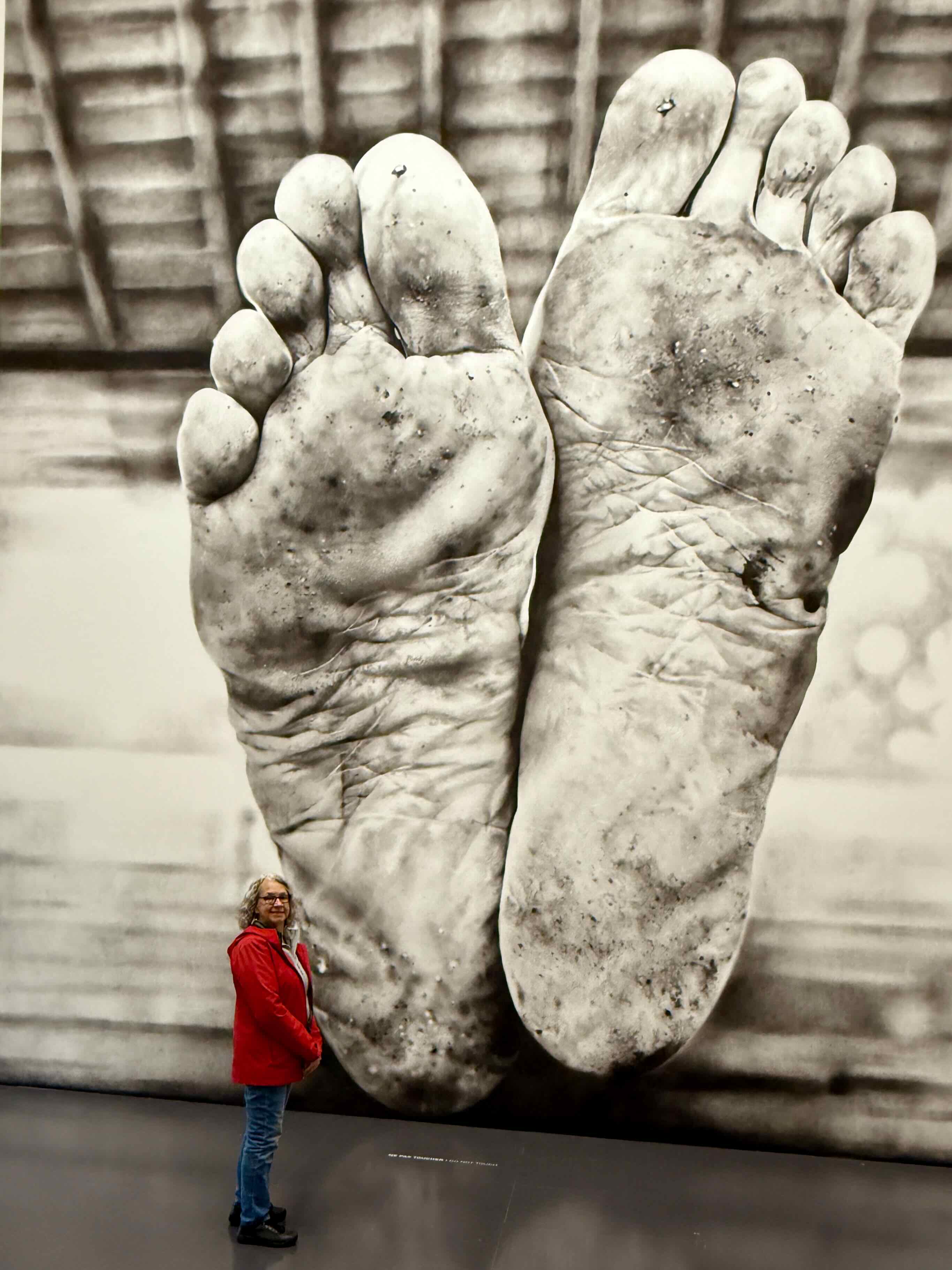
Cattelan often uses figures in his works. This person startled me, at first I thought it was a real person sleeping.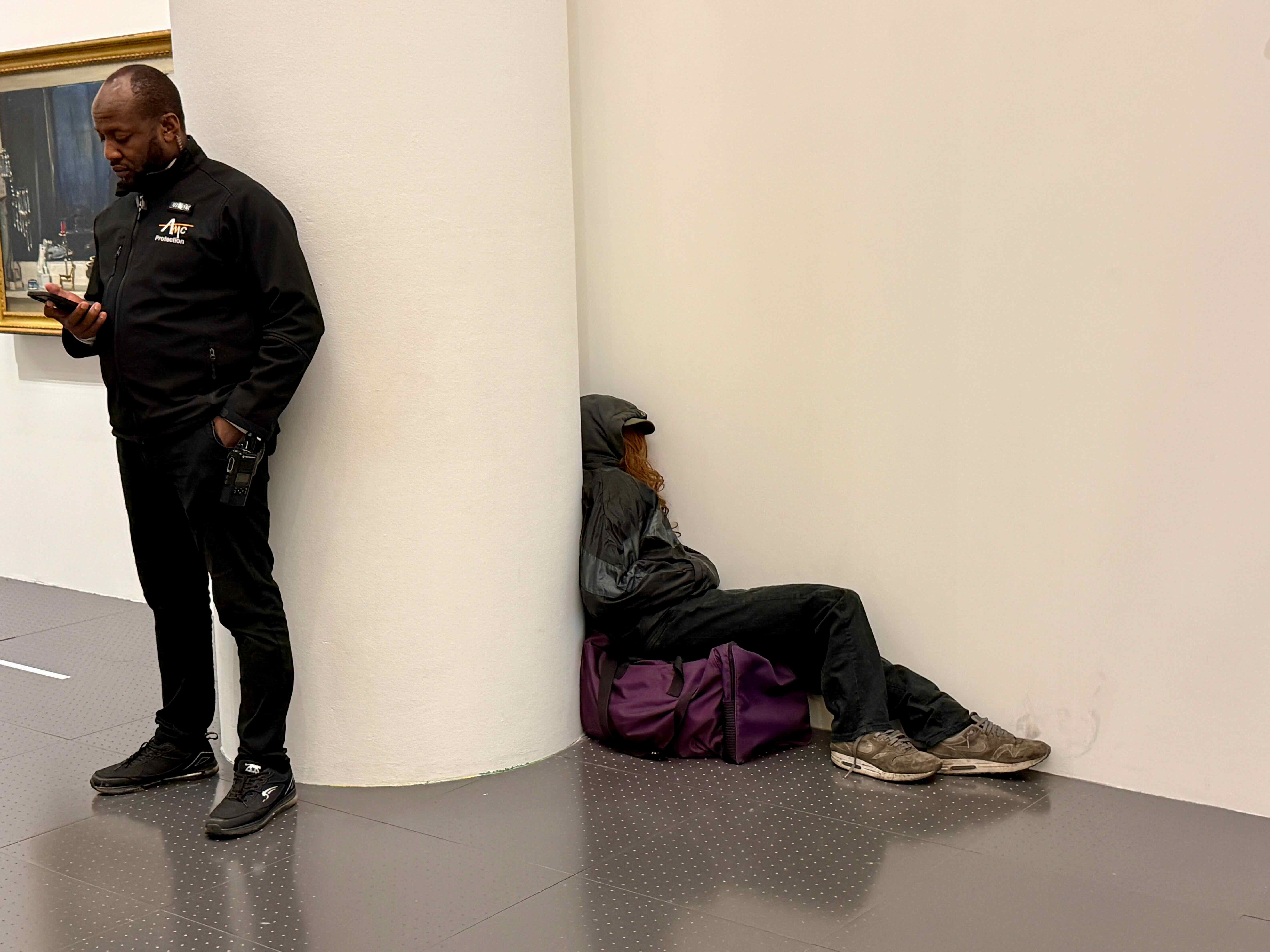 ‘Father’ These bare feet stand for the whole body, a reminder of the human body and its finiteness..they become a symbol of vulnerability.
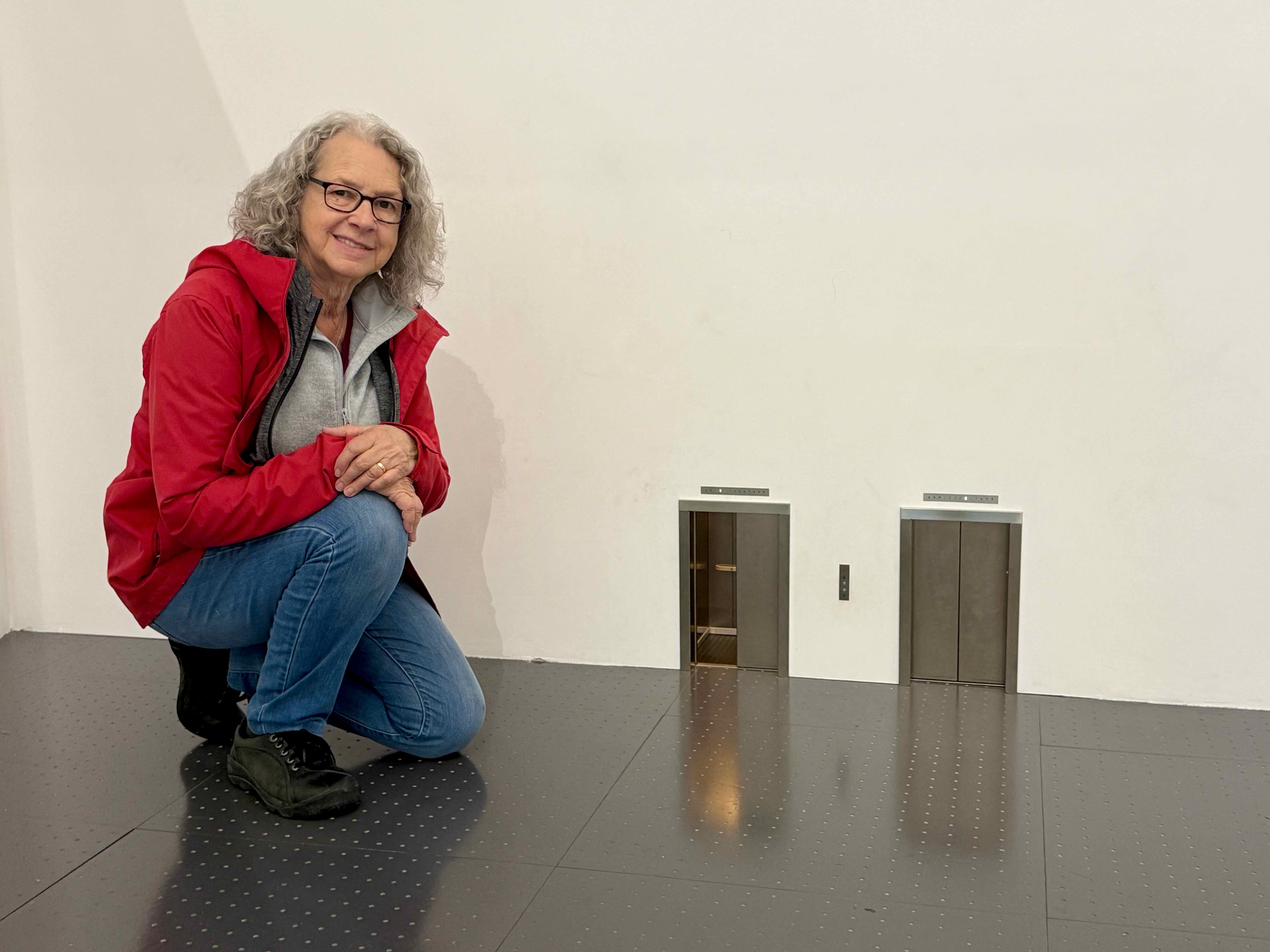
 This tiny elevator makes a sound, and opens and closes its doors, just as in real life. It is perfectly functional and totally unusable. One can imagine a tiny world coming to life somewhere behind these walls.
More stuffed animals, these two labradors and the tiny chick represent a reflection on power dynamics and the fragility of life.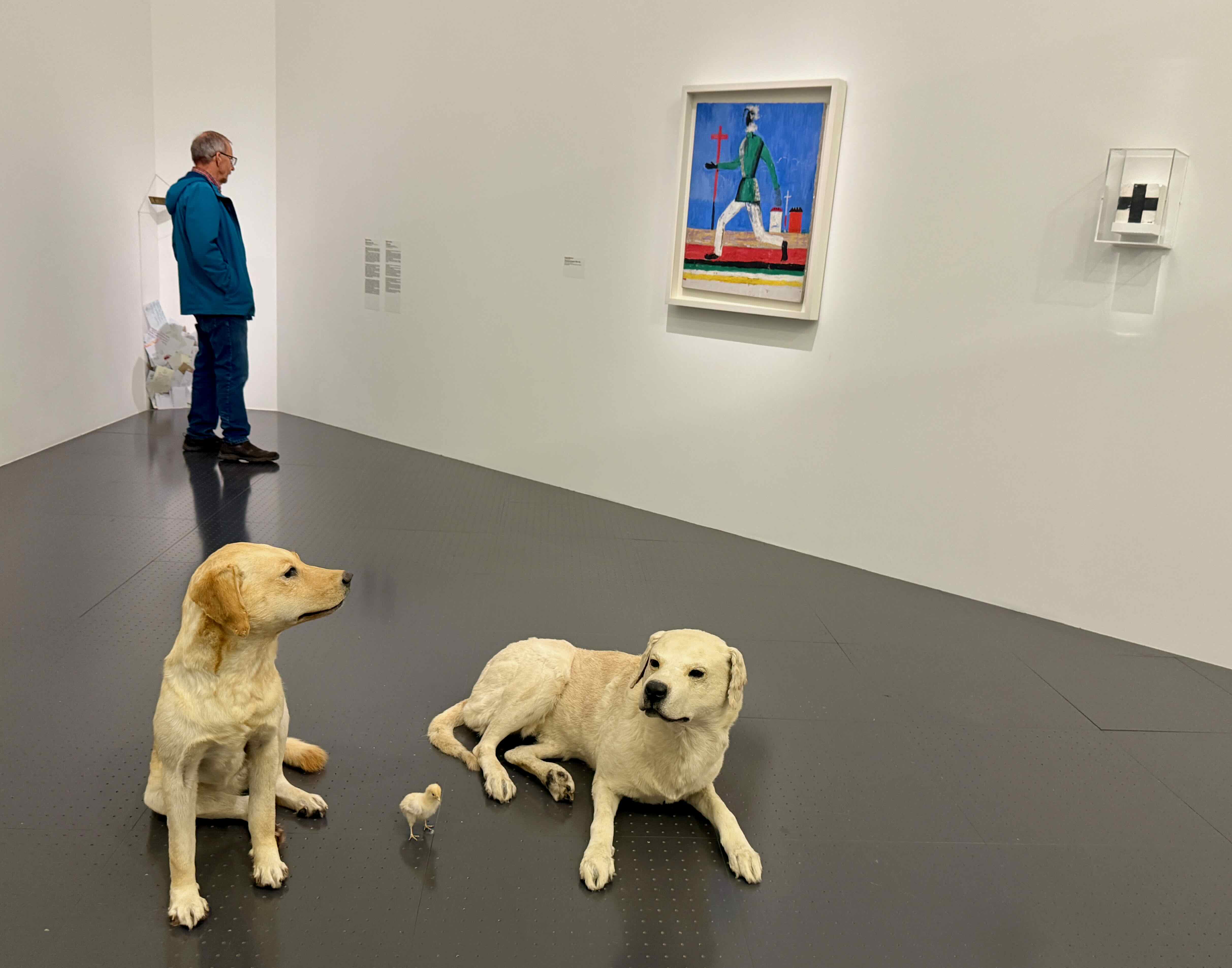
Artist Cyprien Gaillard’s five bags contain the tons of locks removed from the Pont des Arts where tourists once declared their undying love by attaching a lock to the bridge and throwing the key in to the Seine River. He displays them in construction bags, like unearthed artifacts, the rusty ruins of a bygone ritual. 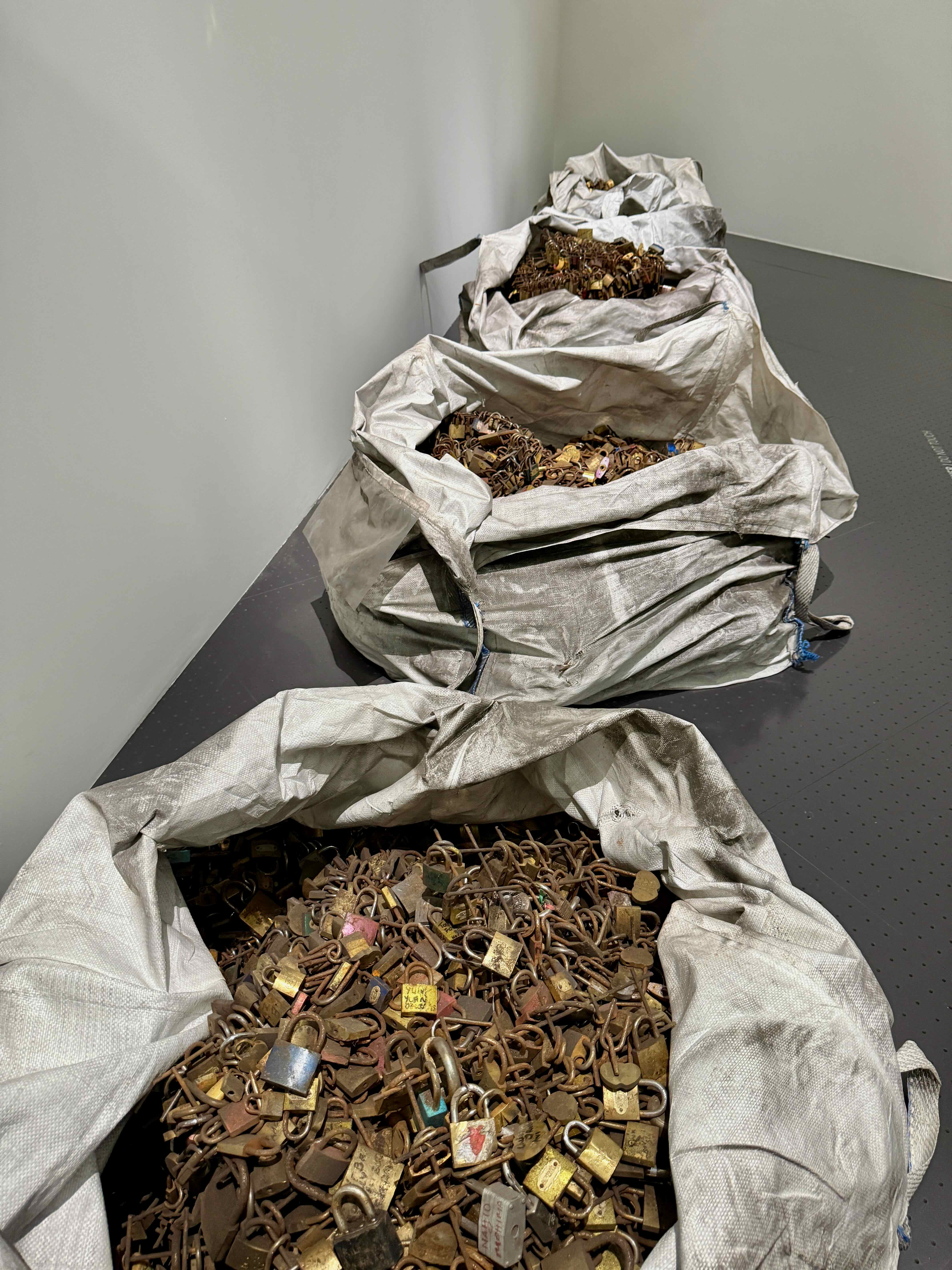
In a long white building called The Paper Tube studio there is a Marina Abramović installation called “Counting The Rice. We are invited to patiently sort grains of rice and lentils – a simple meditative gesture that calls for attention and self-awareness. Through this repetitive task everyone can experience art as a tool for concentration, introspection and transformation.”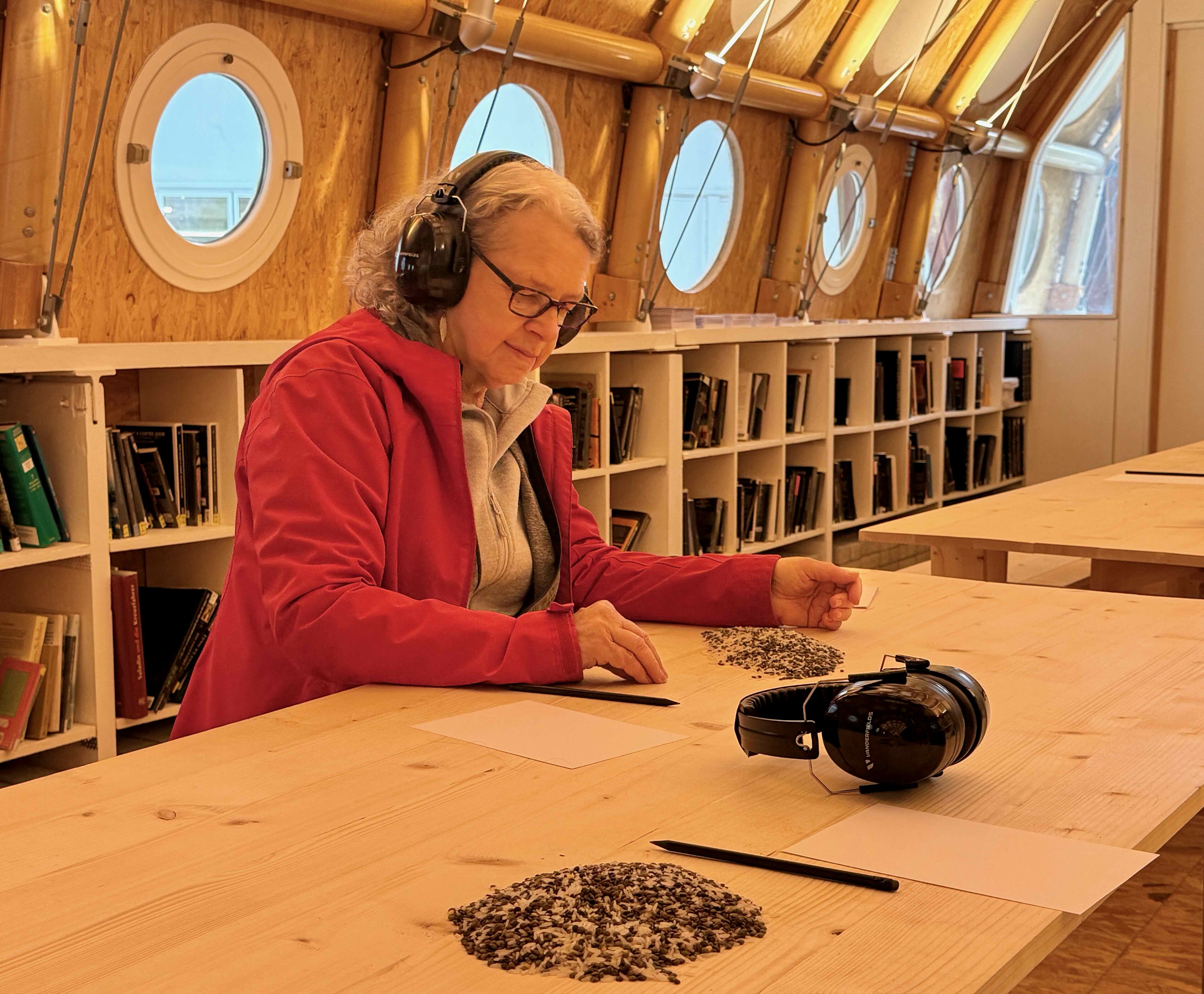
We begin counting the rice.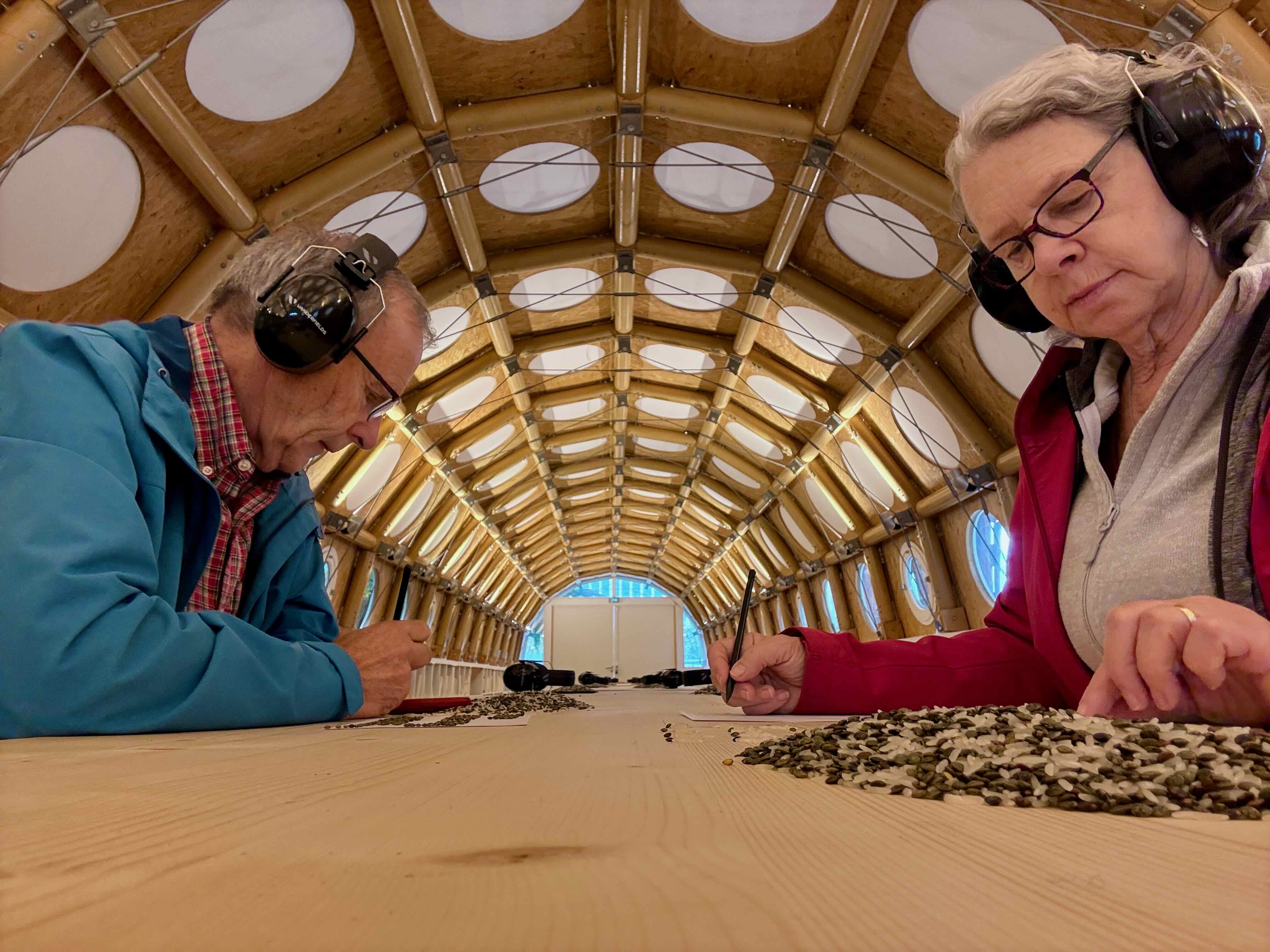
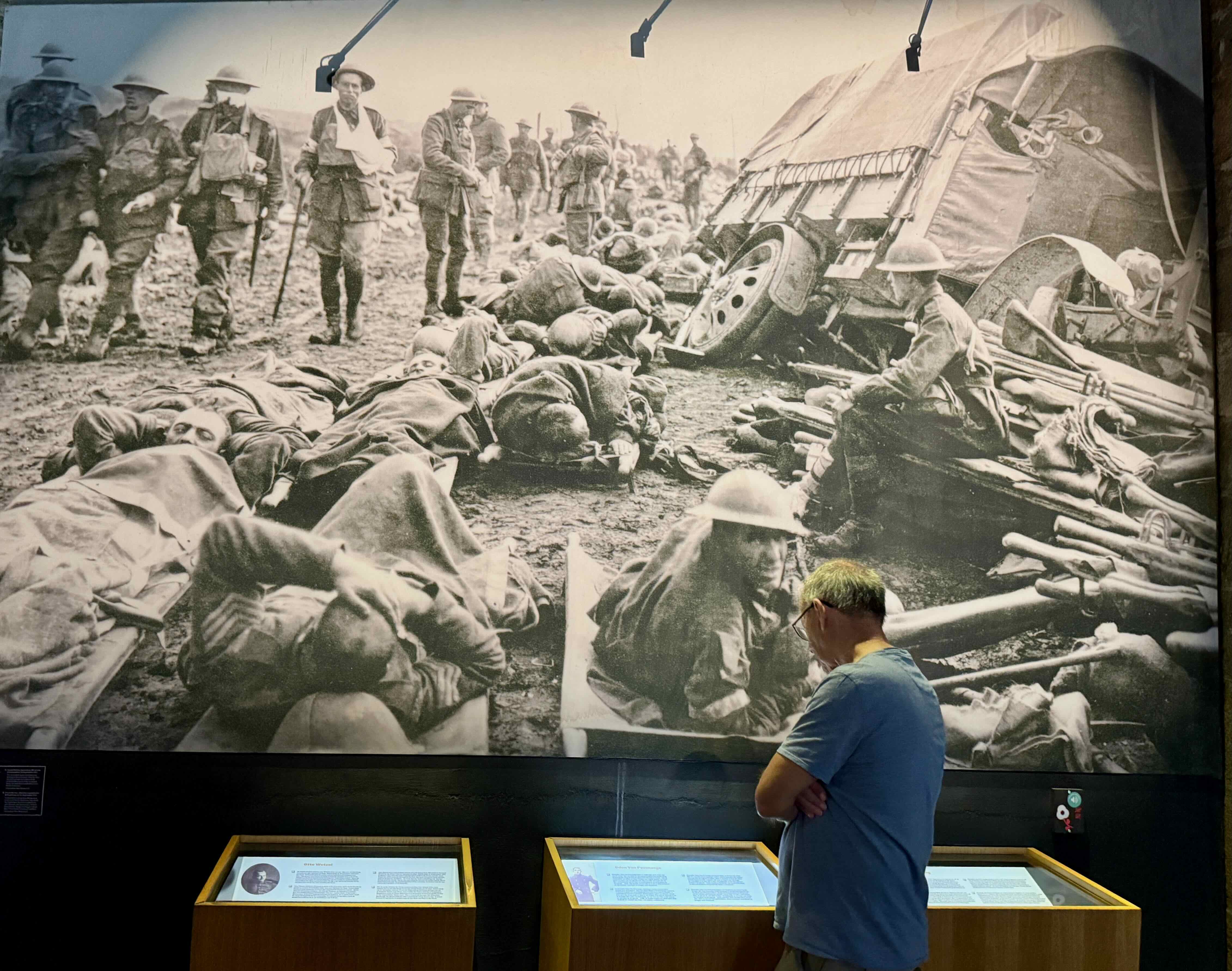
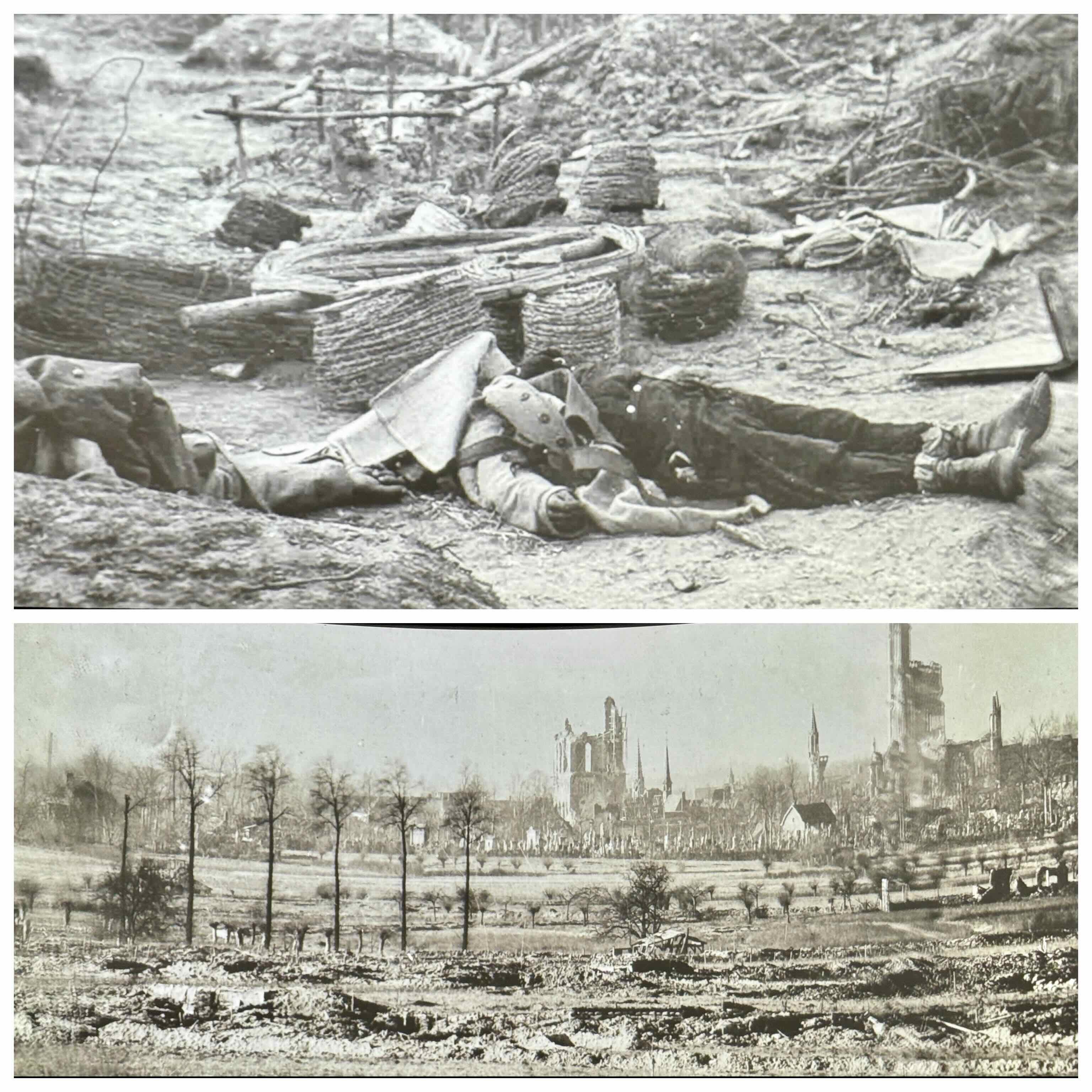
As I am counting the grains of rice and placing them in piles of 25 I have a strange experience. I start to think of all the soldiers who died in the First World War and each grain of rice began to represent the dead body of a soldier. When I found some grains of rice that were broken I thought of the soldiers who were “blown to bits” by the intense mortar shelling during the battles. There bodies were often never found. I felt the need to identify each pile of ‘bodies’ and place a lentil at the top of each pile as a marker or headstone of sorts. I fought back tears, as my tally marks of ‘bodies’ turned into crosses.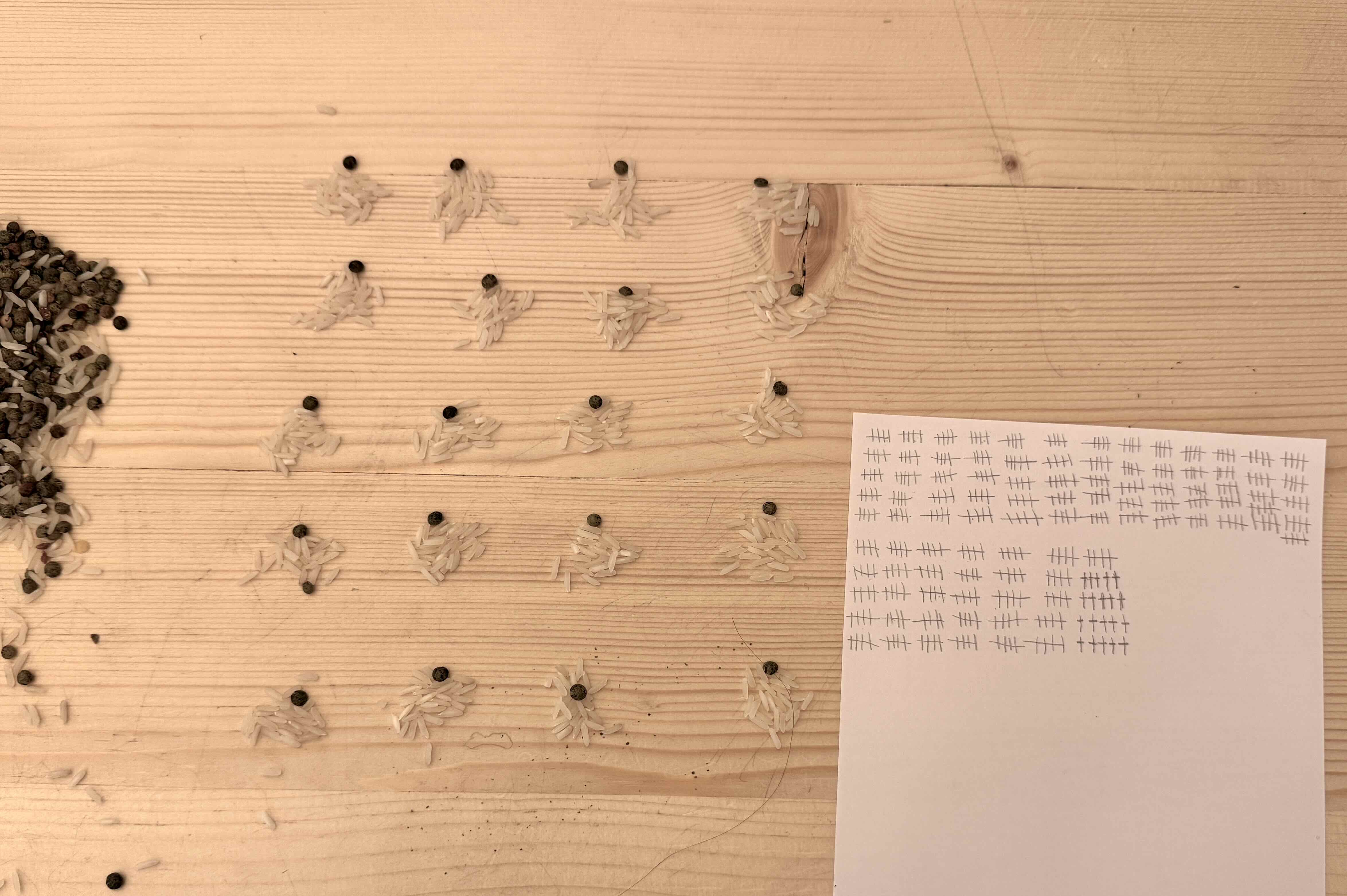
Bob did not have the same experience as I did. He is soon reading a book on his phone.
These two large textile pieces were quite interesting. The artist, Sidival Fila, cut, overlayed and recomposed the original tapestry. 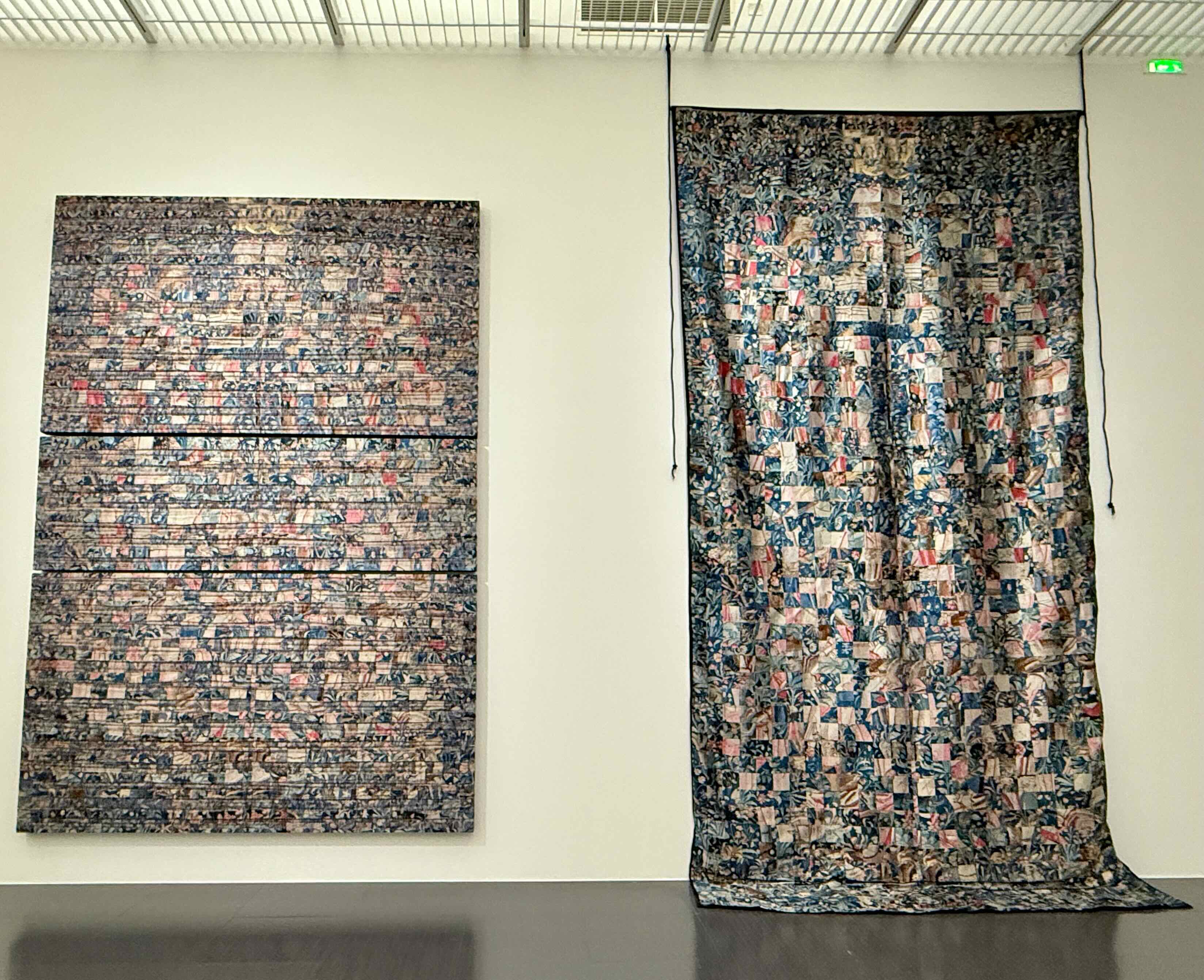
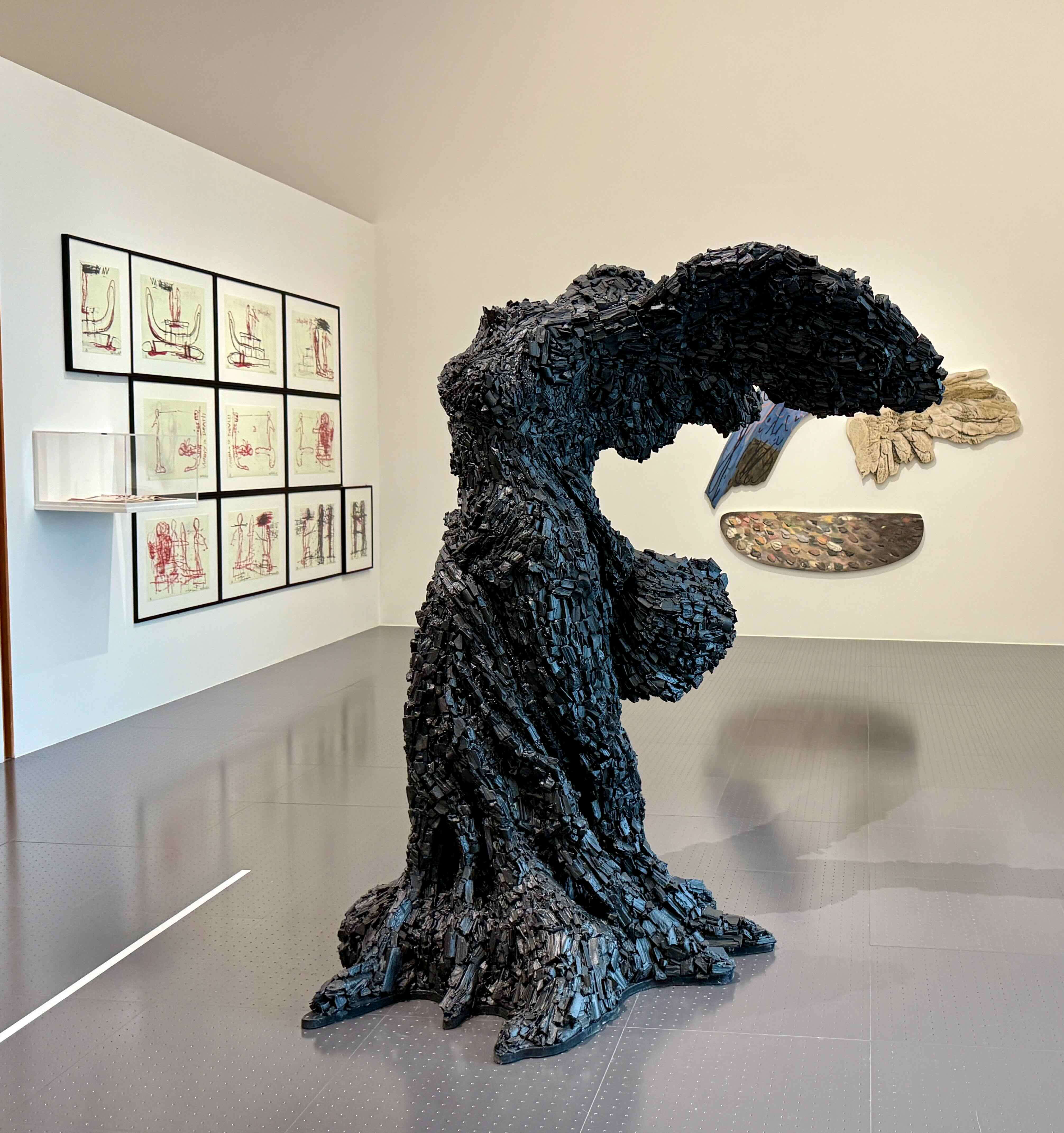
A close up of the piece on the left.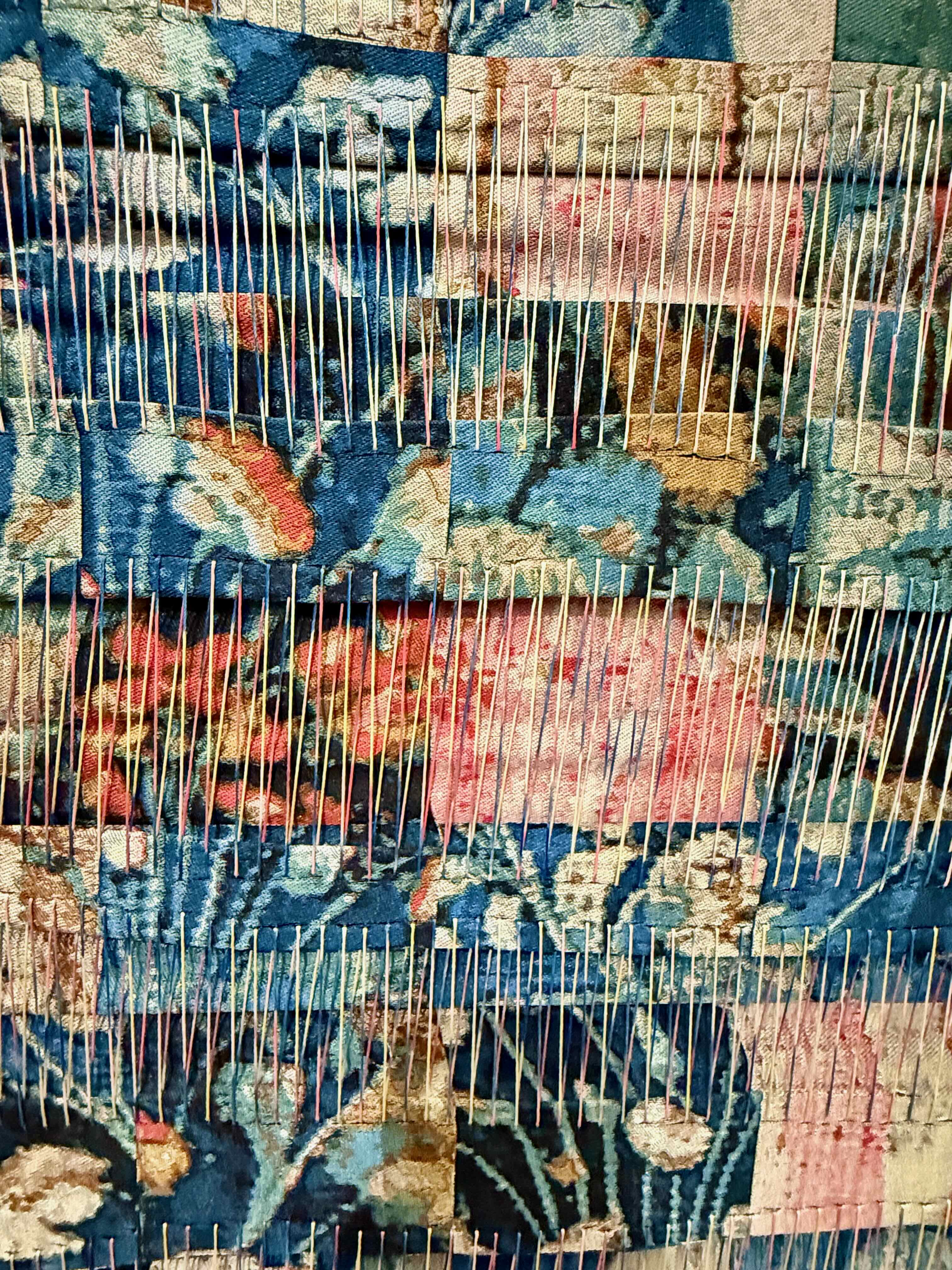 The next exhibition is Copyists. One hundred artist were invited to choose their favourite piece of art in the Louvre and use it as inspiration for their version of the work. Humberto Campana used charcoal to make this black charred version of the Victoire de Samothrace. This is a cry of alarm in the face of ecological and political crisis.
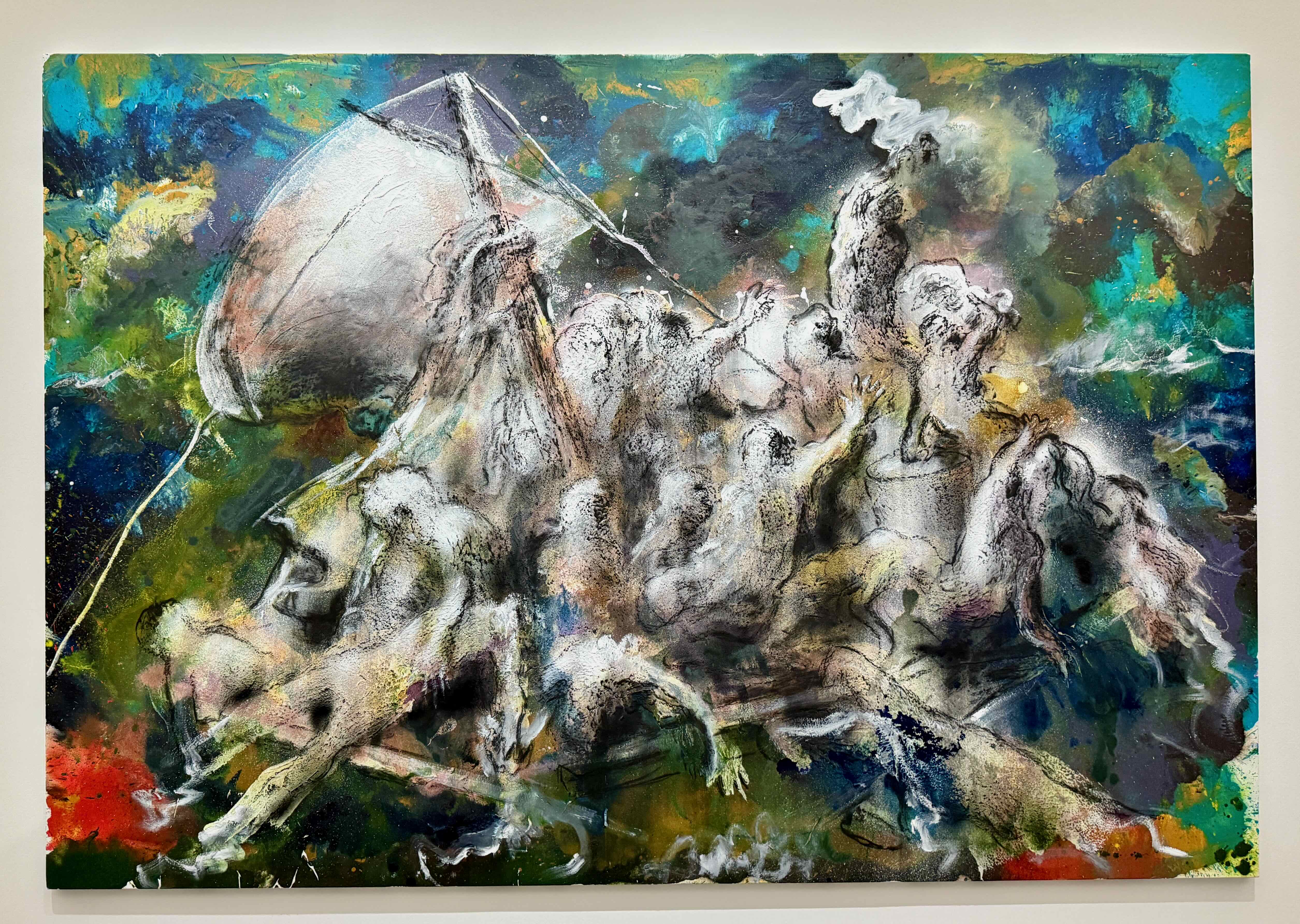
 Miquel Barcelo’s copy of Géricault’s Raft of the Medusa.
Dhewadi Hadjab’s copy of the Death of Marat becomes the death of a transgendered friend of the artist.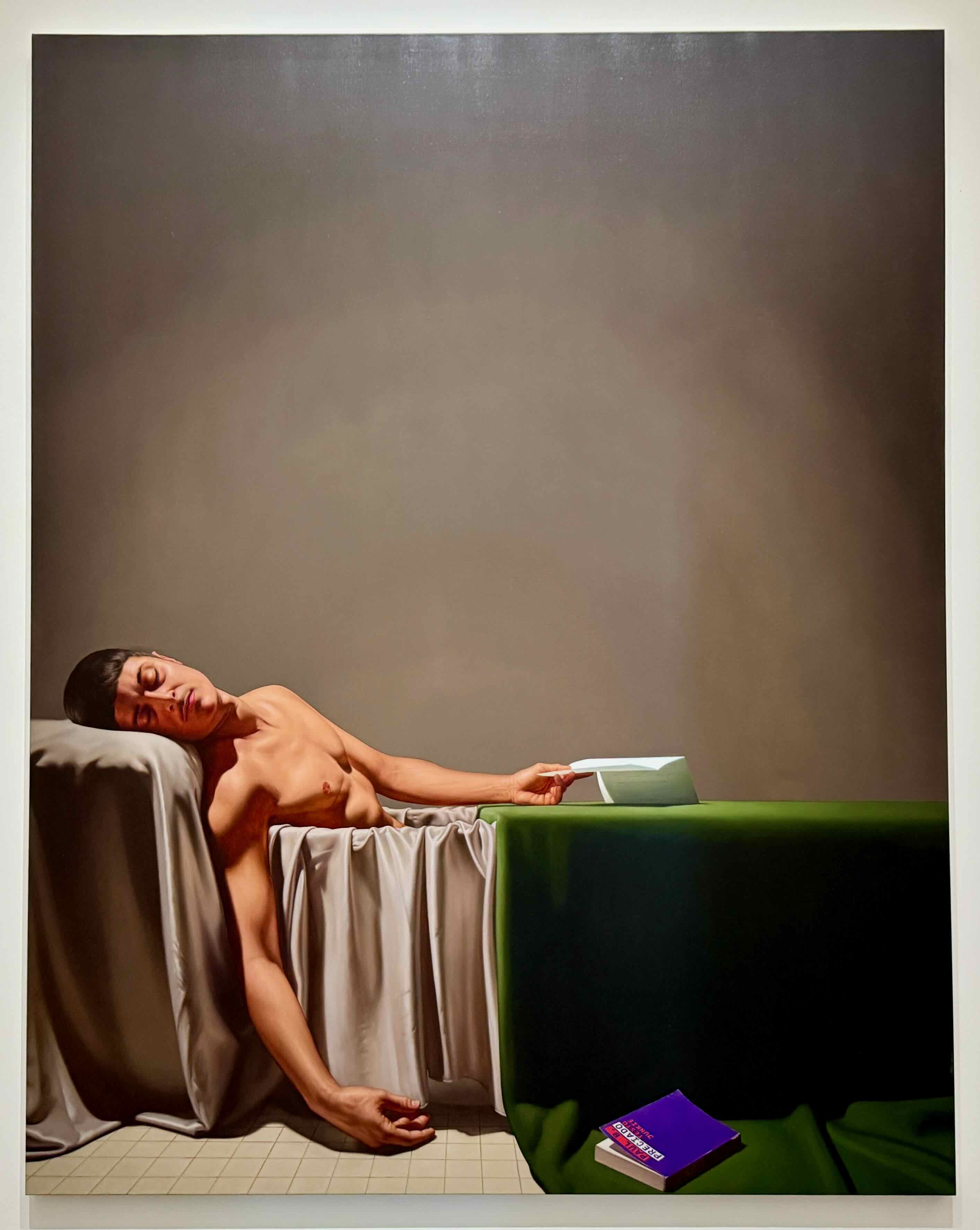
More of Maurizio Cattelan’s work. ‘Comedian’ is a fresh banana duct taped to a wall exactly 1.6 metres above the floor. The work includes a certificate of authenticity, along with detailed instructions for its proper display, for its owner to use when displaying the work. The banana and the duct tape can be replaced as needed. The Comedian sold for 6.2 million dollars! The purchaser later ate the banana on stage!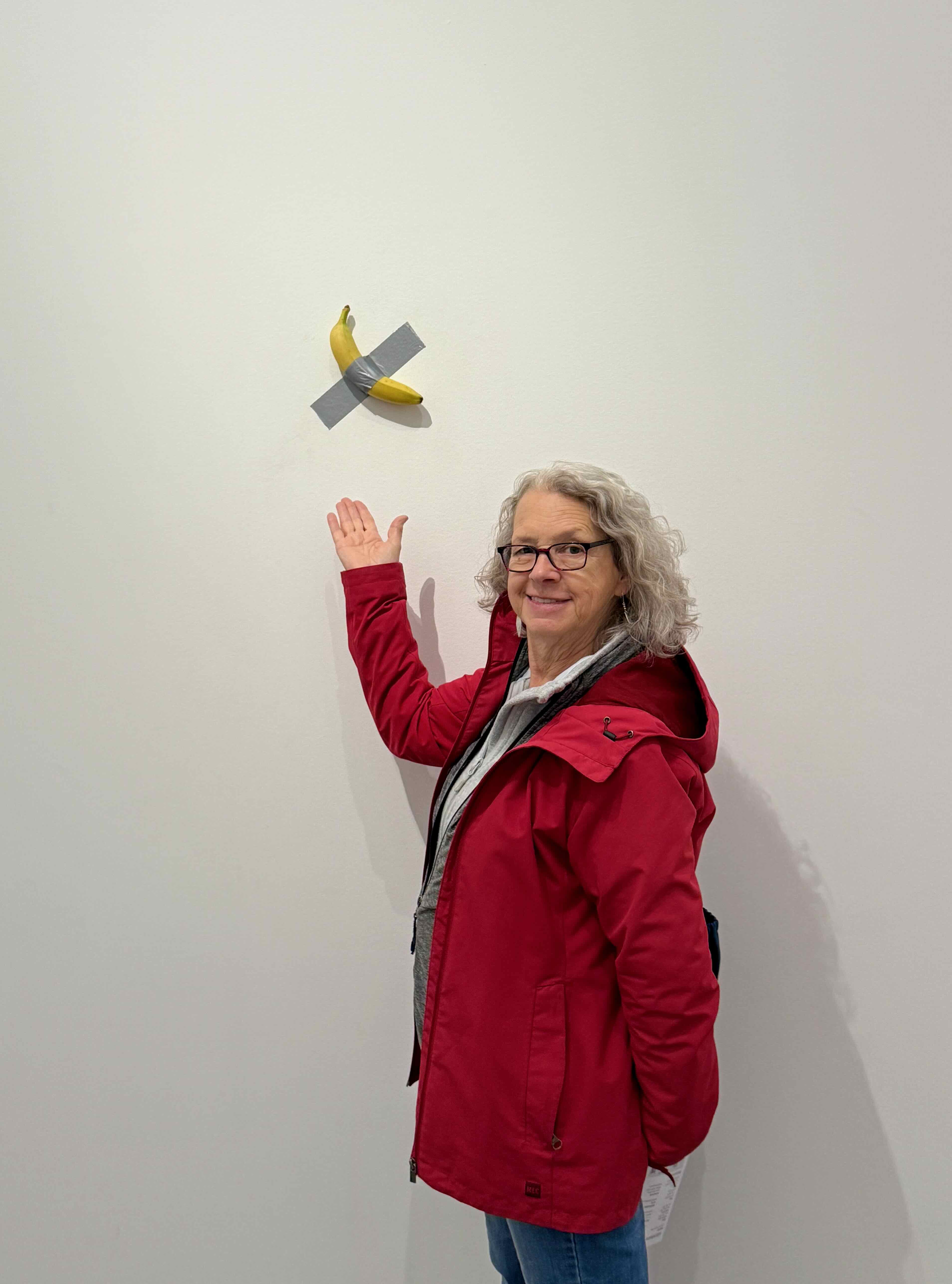
Cattelan’s ‘Shadow’ is a work representing Cattelan’s mother who died when the artist was young. 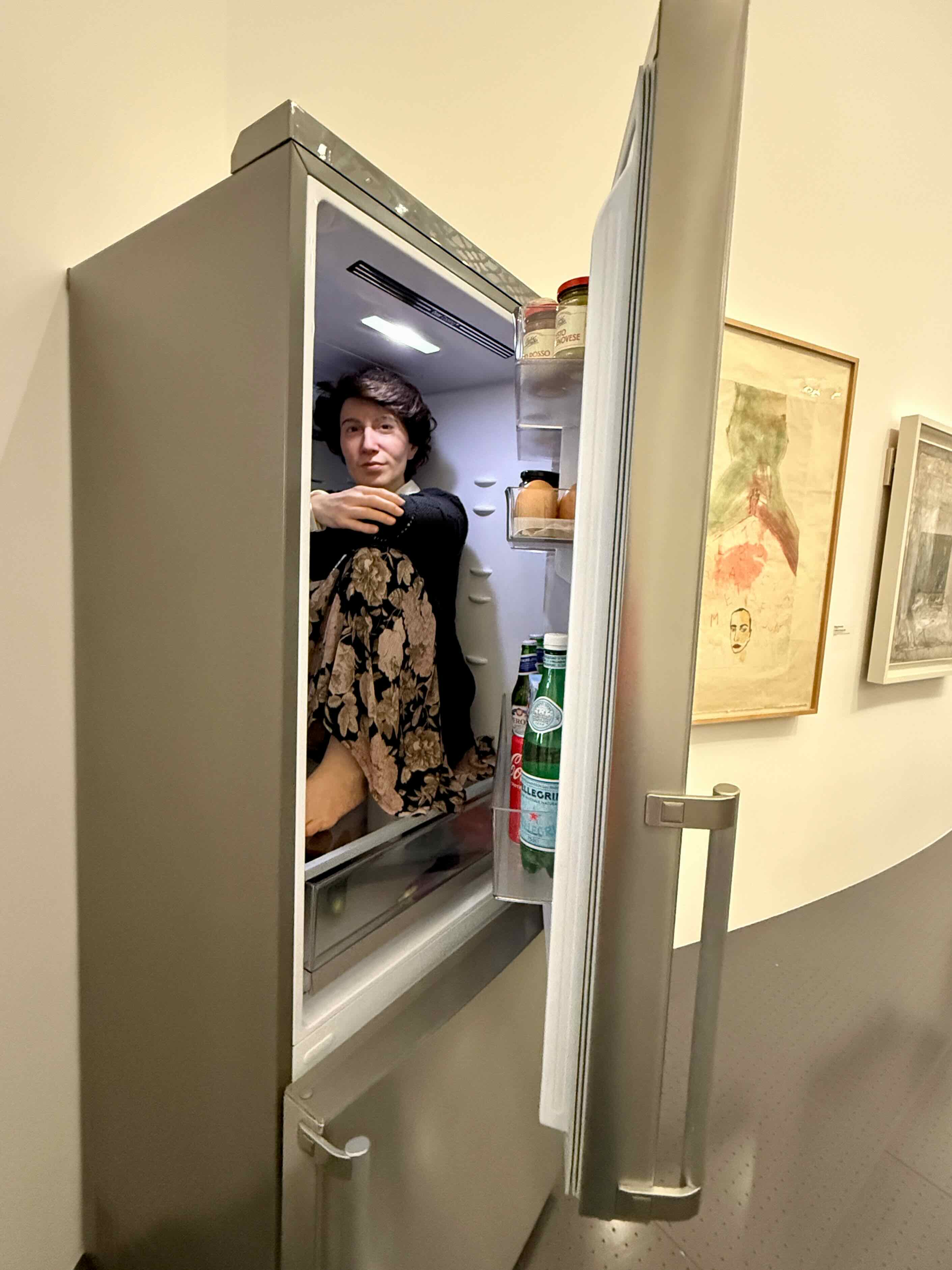
‘Sunday” invites the viewer to reflect on the economic inequality and the link between power and access to weapons. Cattelan riddled 24 carat gold plated stainless steel panels with hundreds of bullet holes.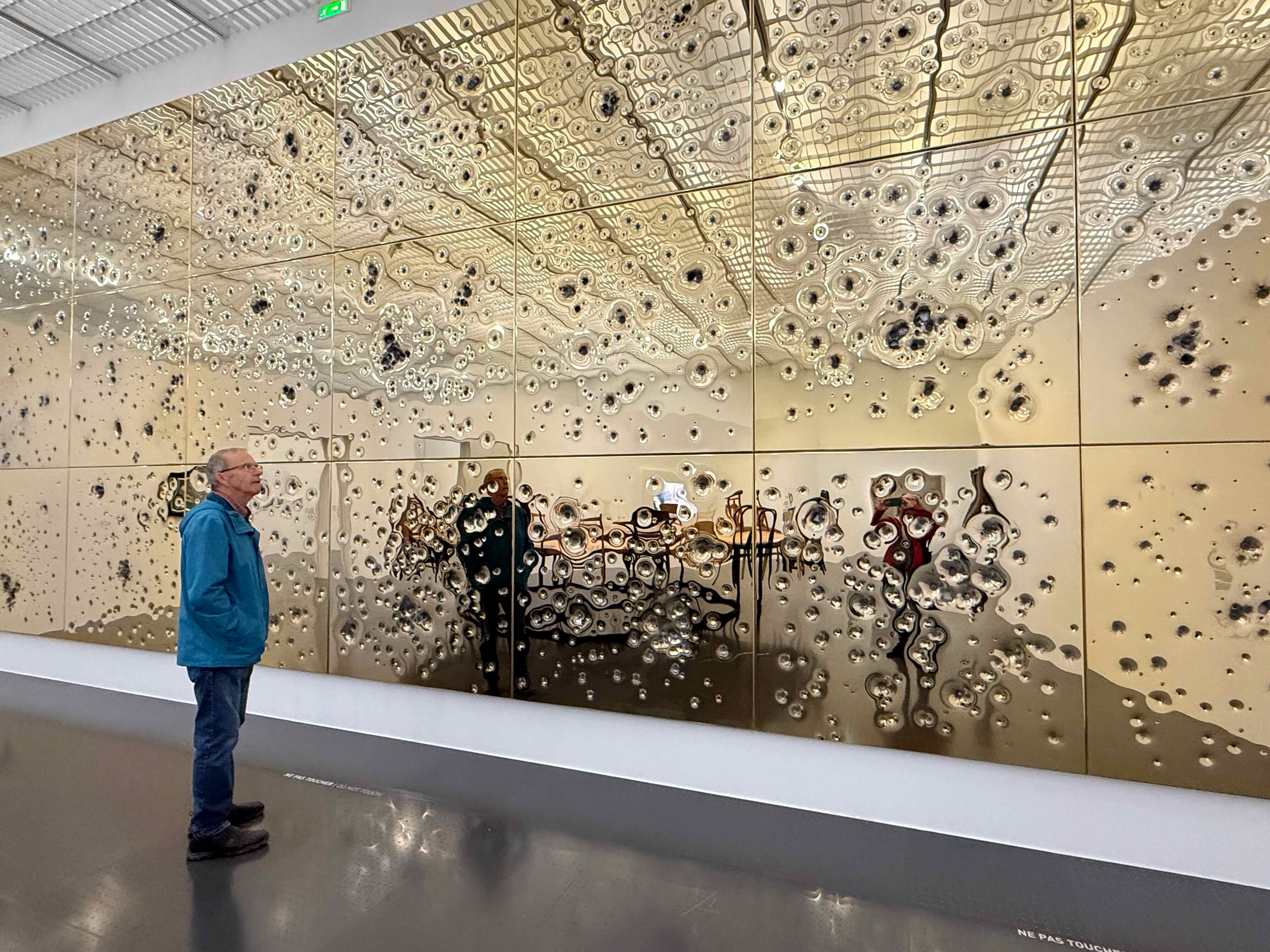
The photographer at Studio Shehrazade in Lebanon wrote…”These negatives were scratched because of a jealous husband from the Baqari family, who never let his wife go out by herself. He was upset to leam that she had come to be photographed in my studio without telling him. He came asking for the negatives. I refused to give them to him, because they were on a 35 mm roll. In the end we agreed that I would scratch the negatives of his wife with a pin, and I did so in front of him. Years later, after she had set herself on fire to escape her misery, he came back, asking for enlargements of those photographs, or other photographs she might have taken without his knowledge.”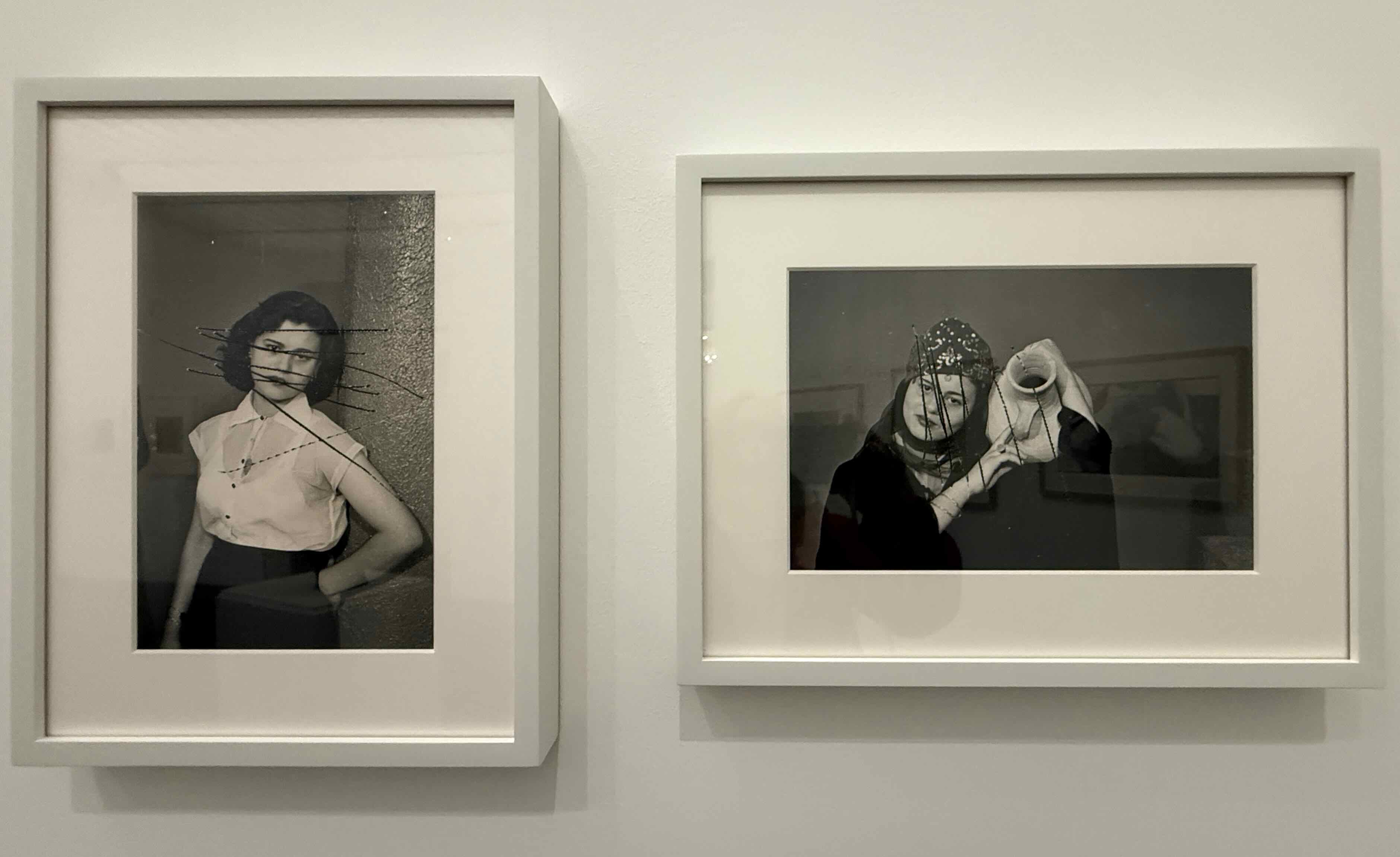
Chen Zhen invites viewers to sit at this table with 29 chairs gathered from five continents and different social classes, however they are embedded in the table and suspended from the floor…inaccessible. 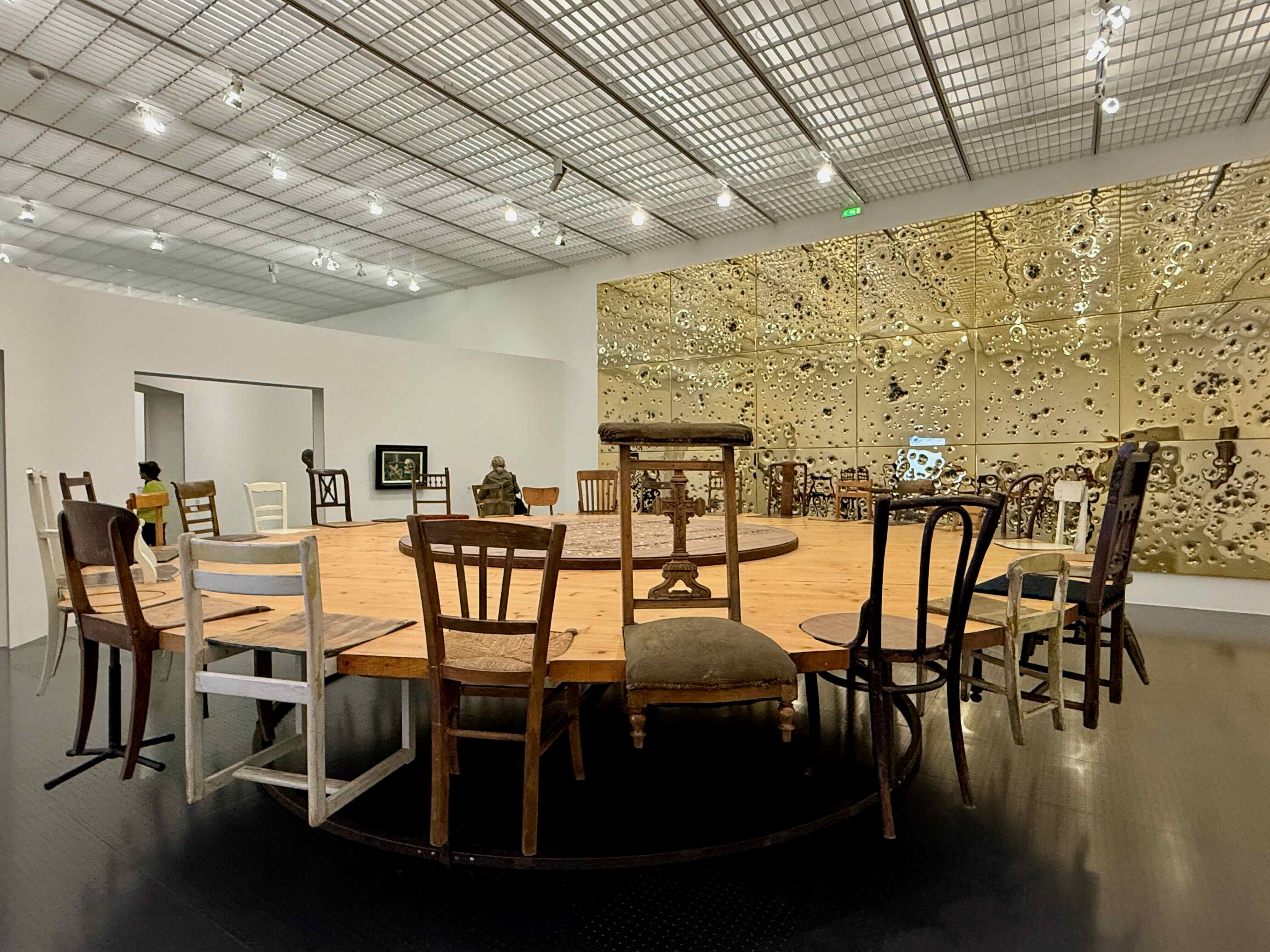
Bob like this chess “Good versus Evil” One side includes Martin Luther King Jr, the Virgin Mary and Snow White. The other side is Adolf Hitler, Cruella de Vil and Rasputin!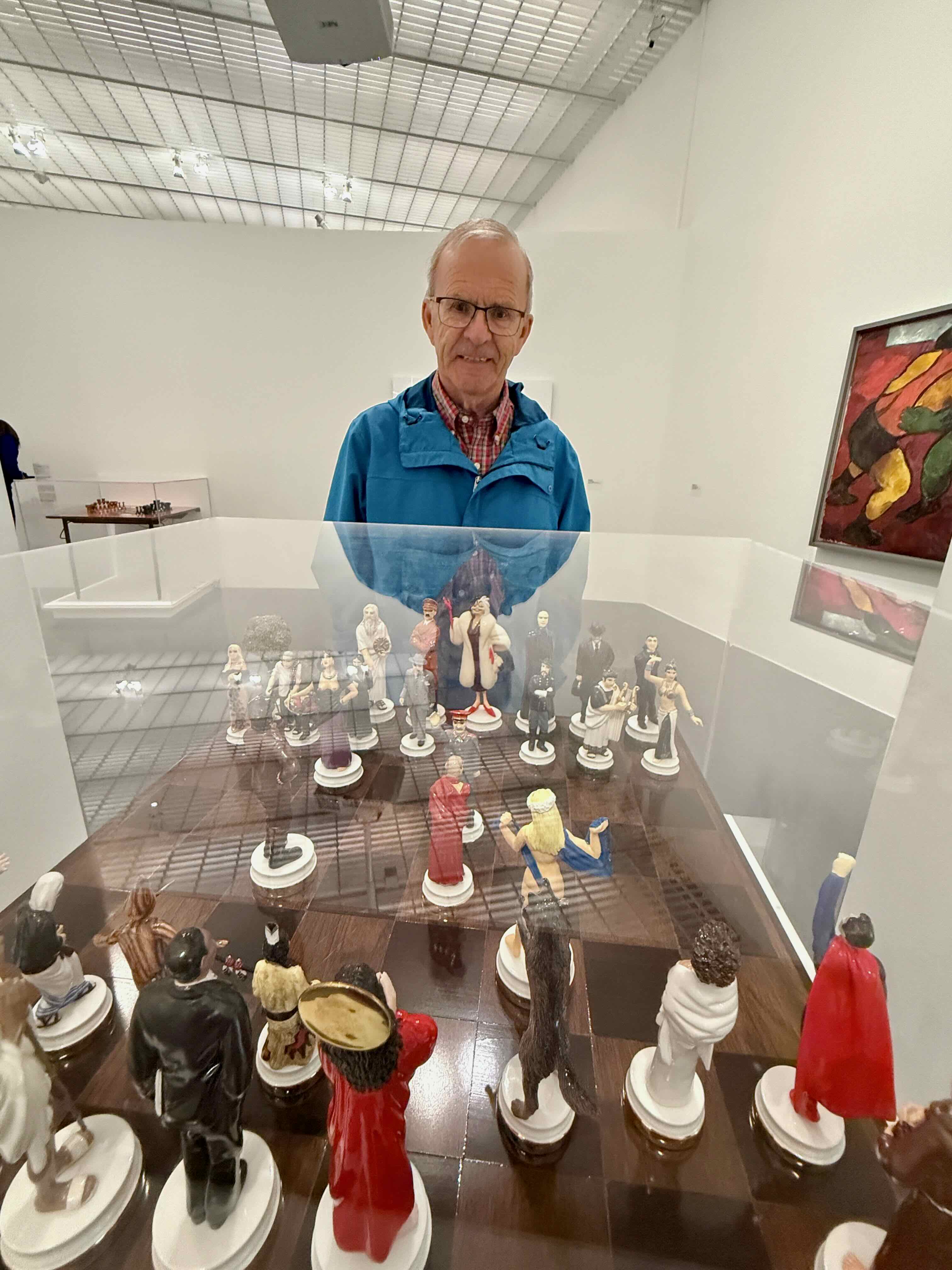
After leaving the Art Gallery we walk under these bright blue street decorations on our way to the Metz’s Notre Dame Cathedral.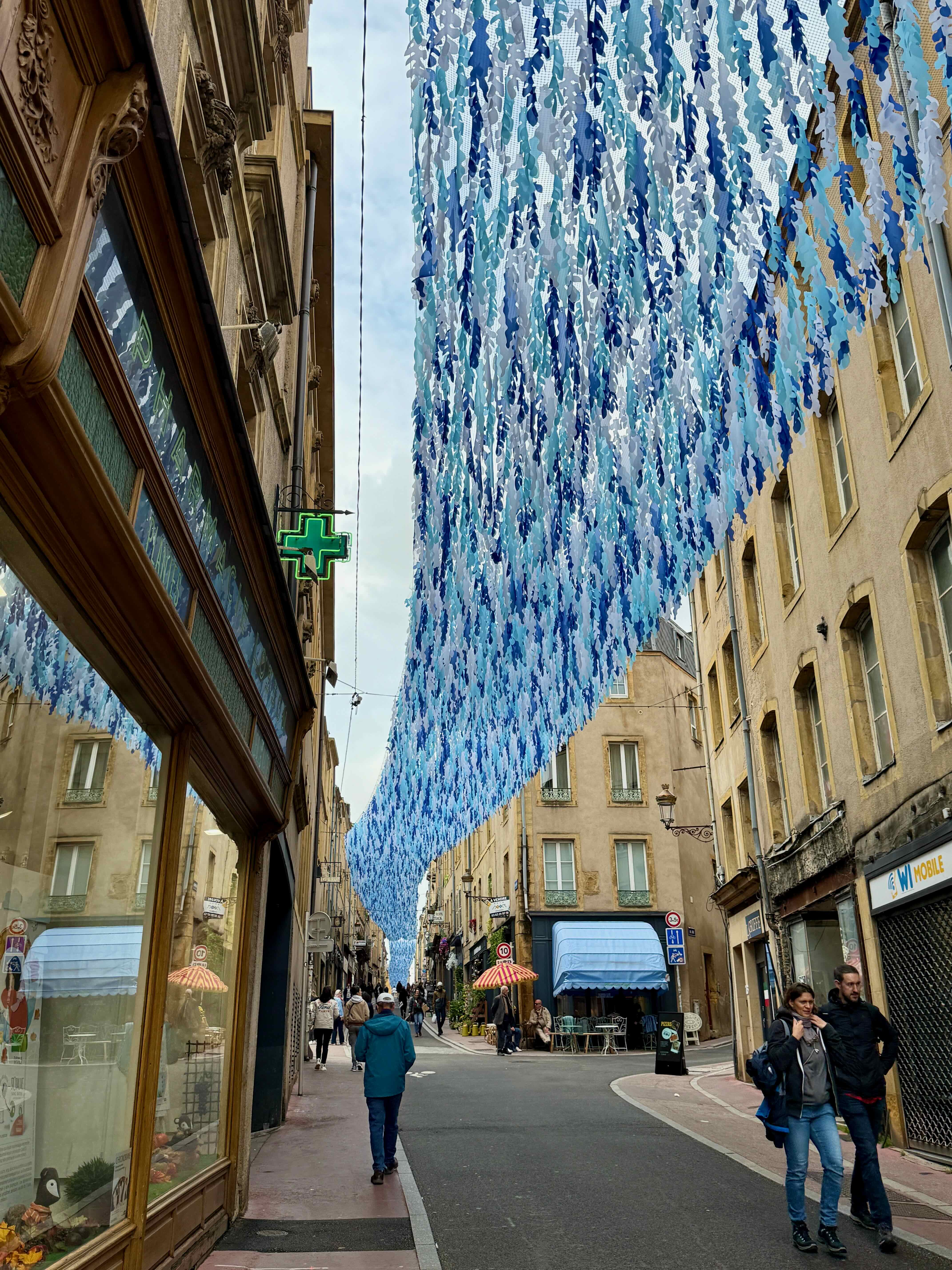
I wonder who would be interested in renting this storefront building?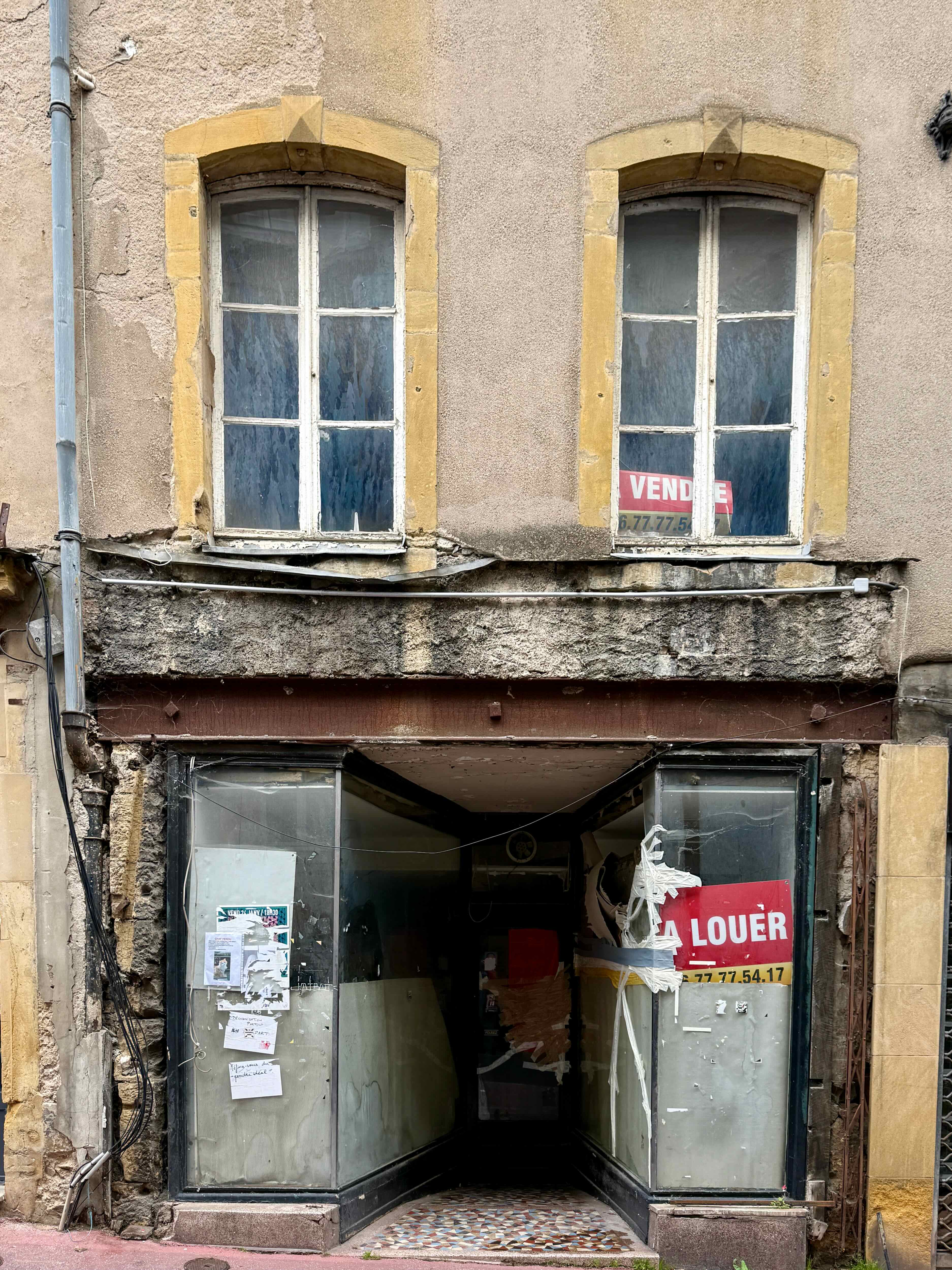
These cakes look delicious, but they are quite expensive. €37 is $60.50 Canadian!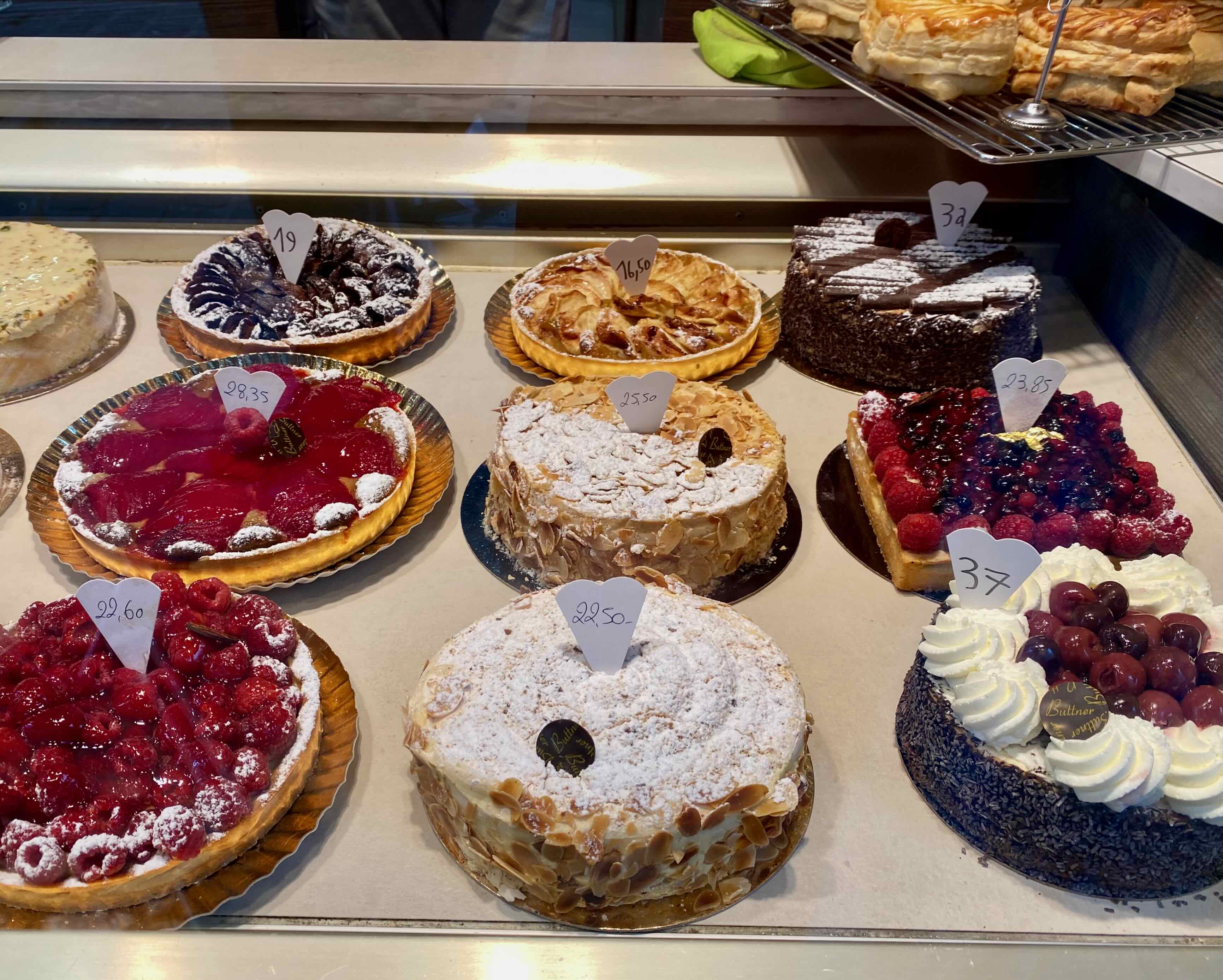
Metz’s Notre Dame Cathedral was begun in the early 14th century. This Cathedral has the third highest nave in France (41.41 meters or 135.9 ft), after the cathedrals of Amiens and Beauvais, both of which we visited earlier this month! 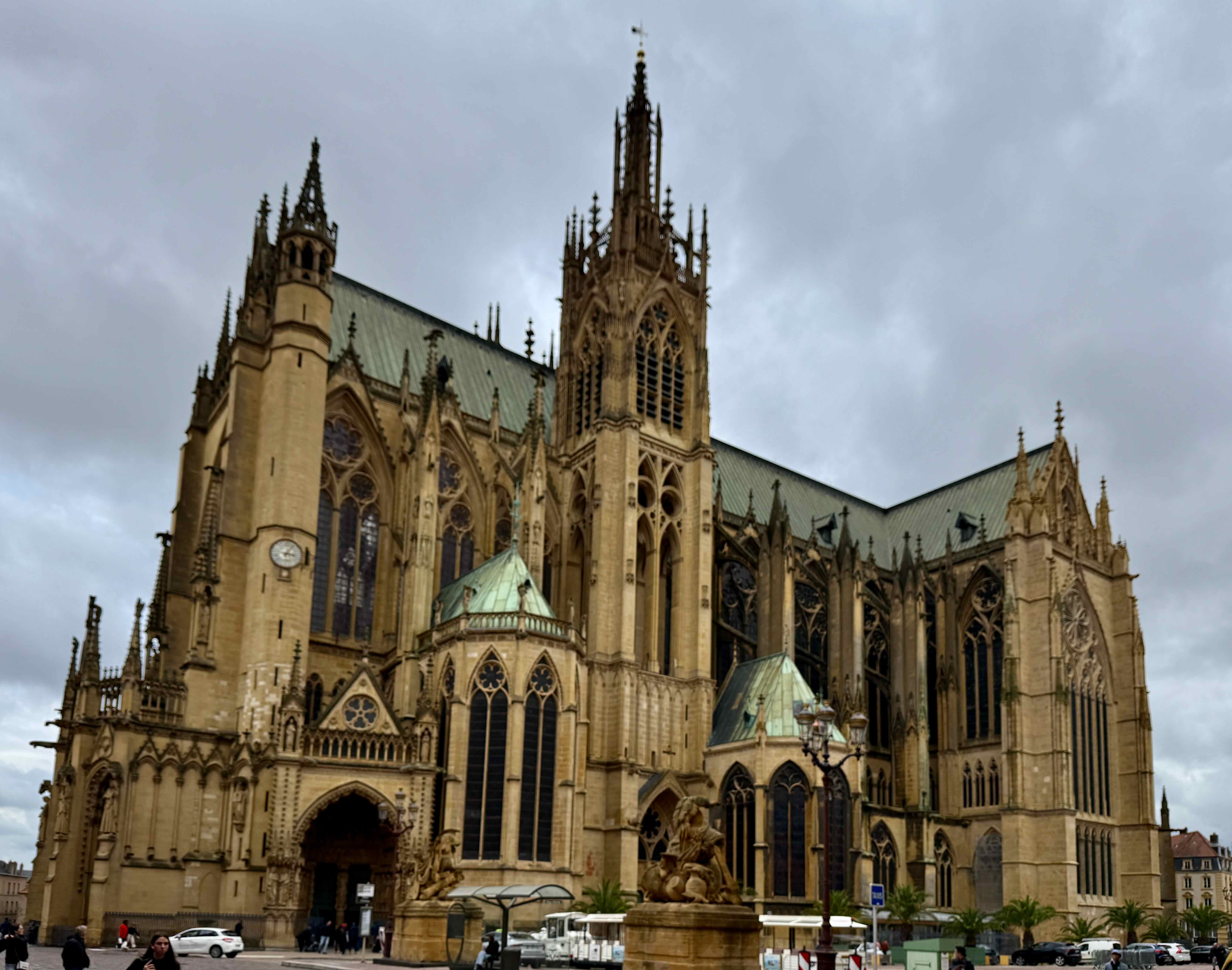
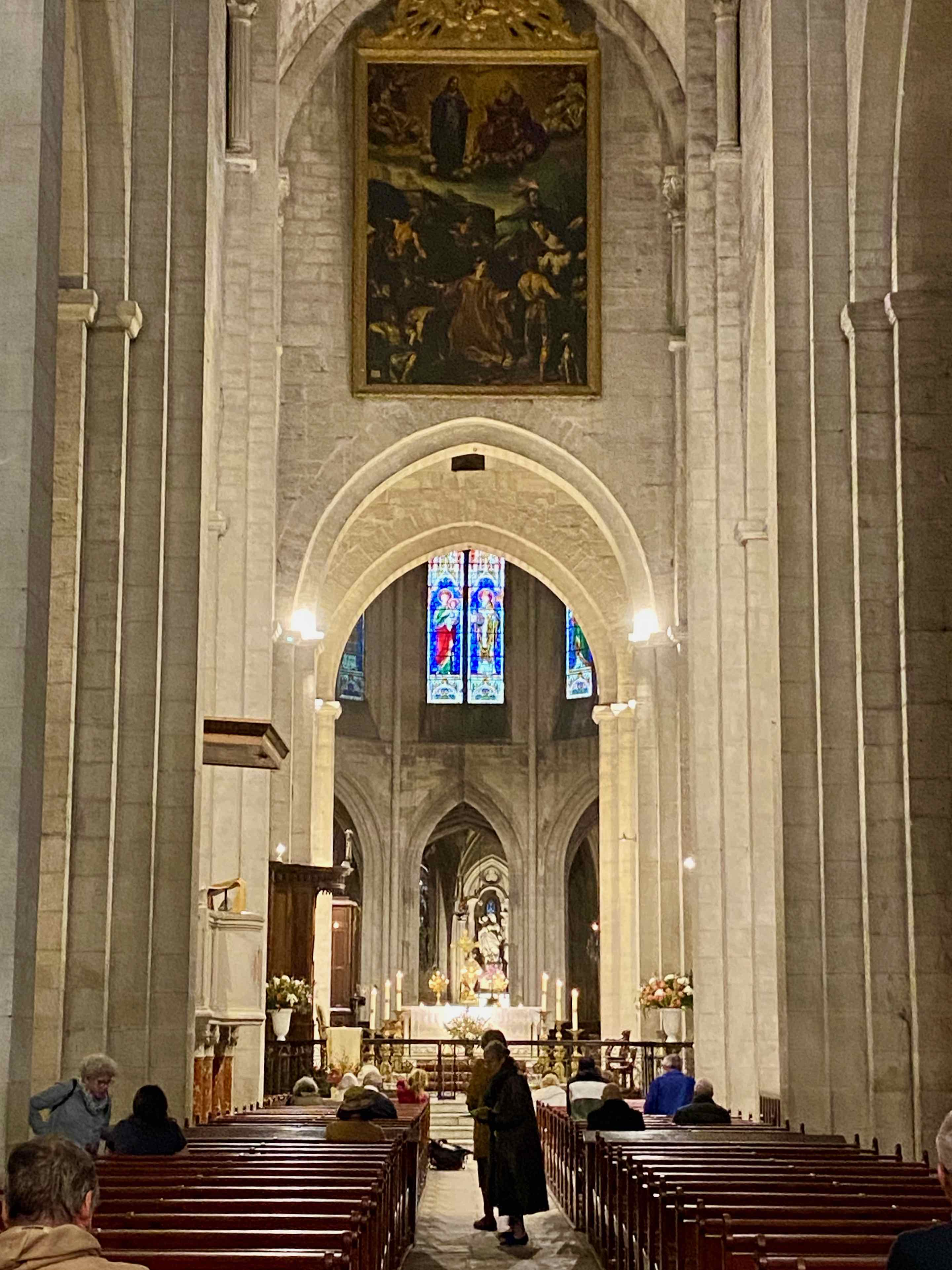
A few photos of the impressive interior. We have seen so many cathedrals but somehow we keep being drawn into seeing more. They are so different from one another and we never know what we will be seeing when we walk through the cathedral doors.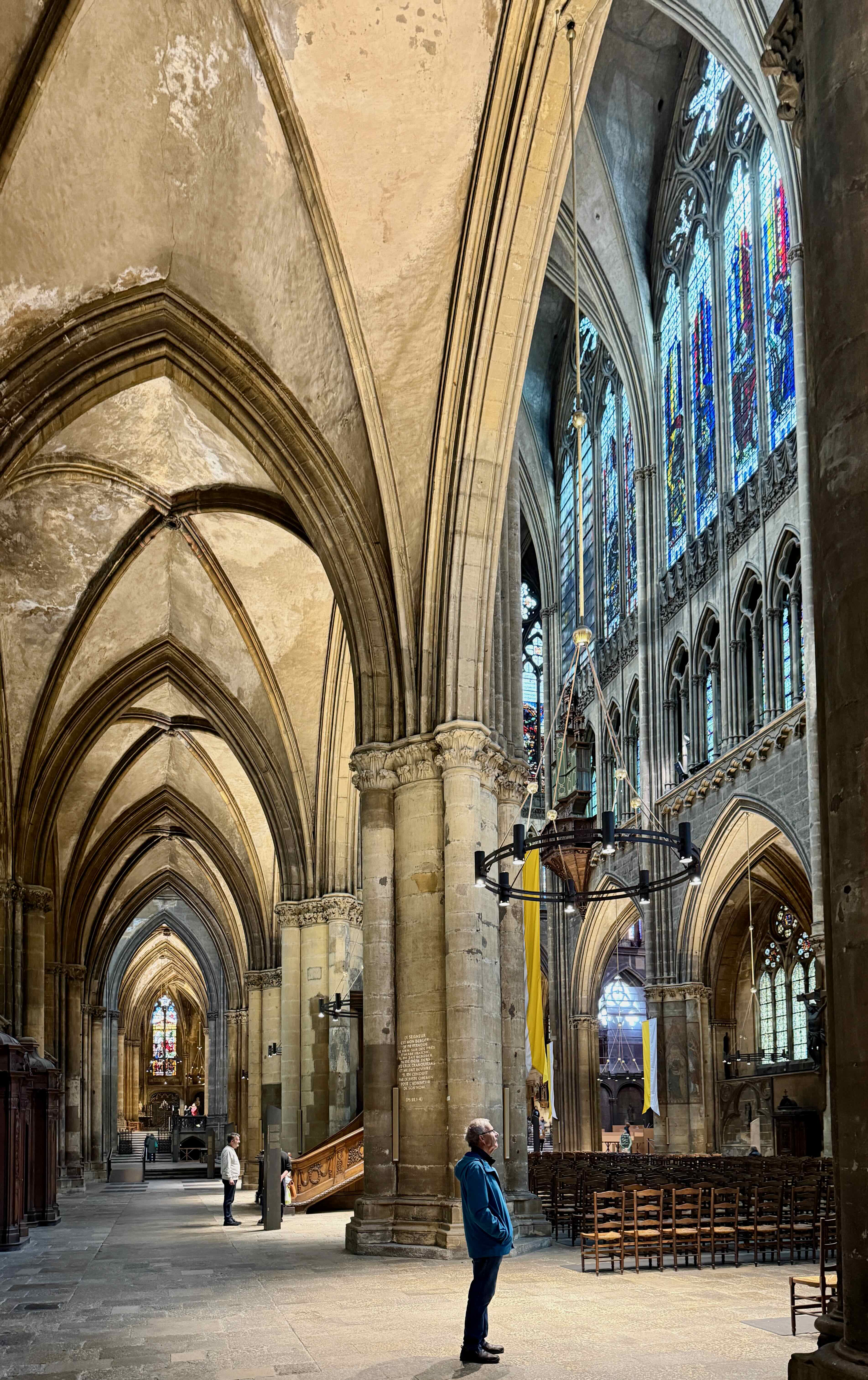
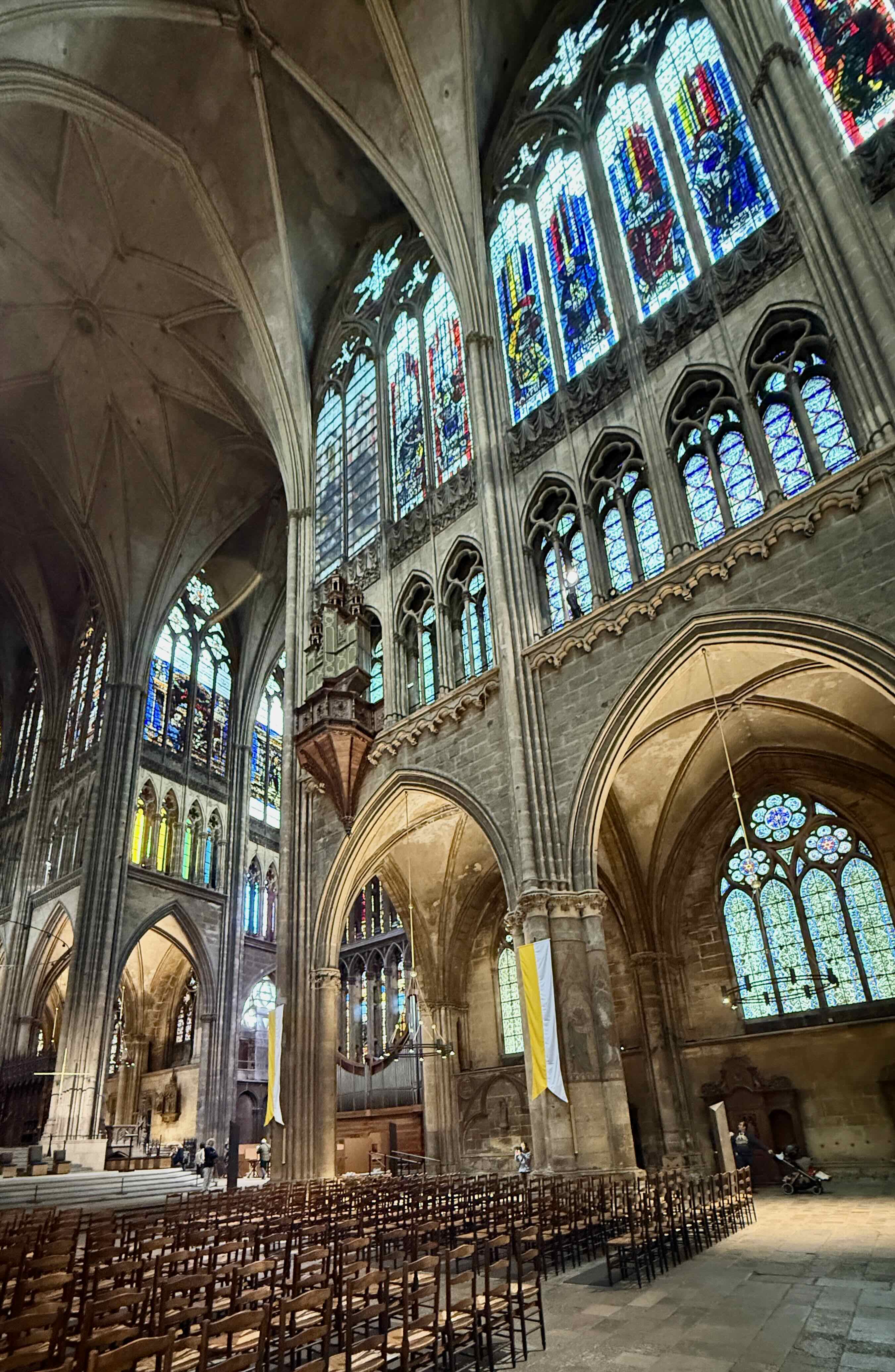
These stained glass windows were designed by Marc Chagall.
The cathedral’s Rose Window is very impressive.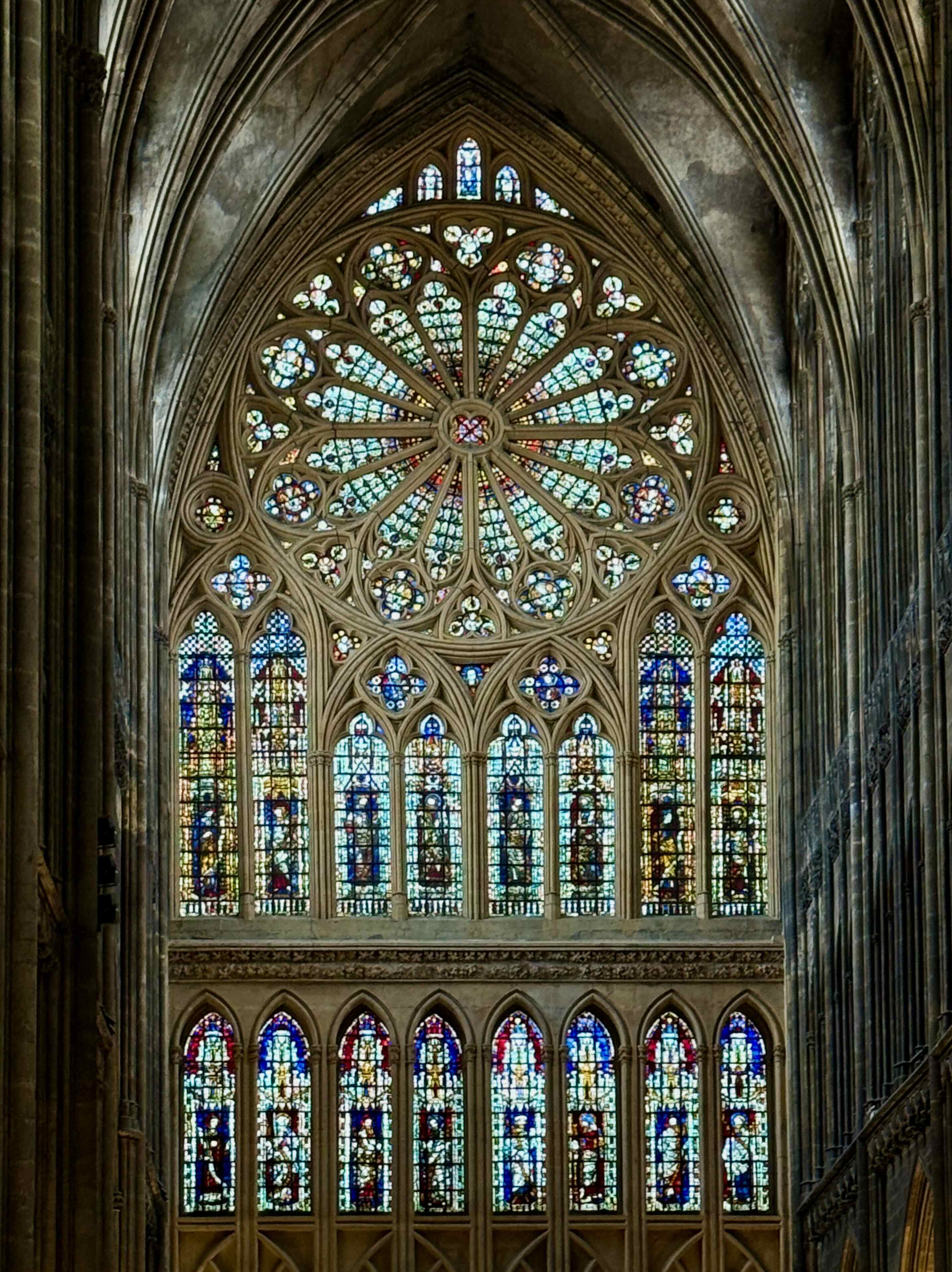
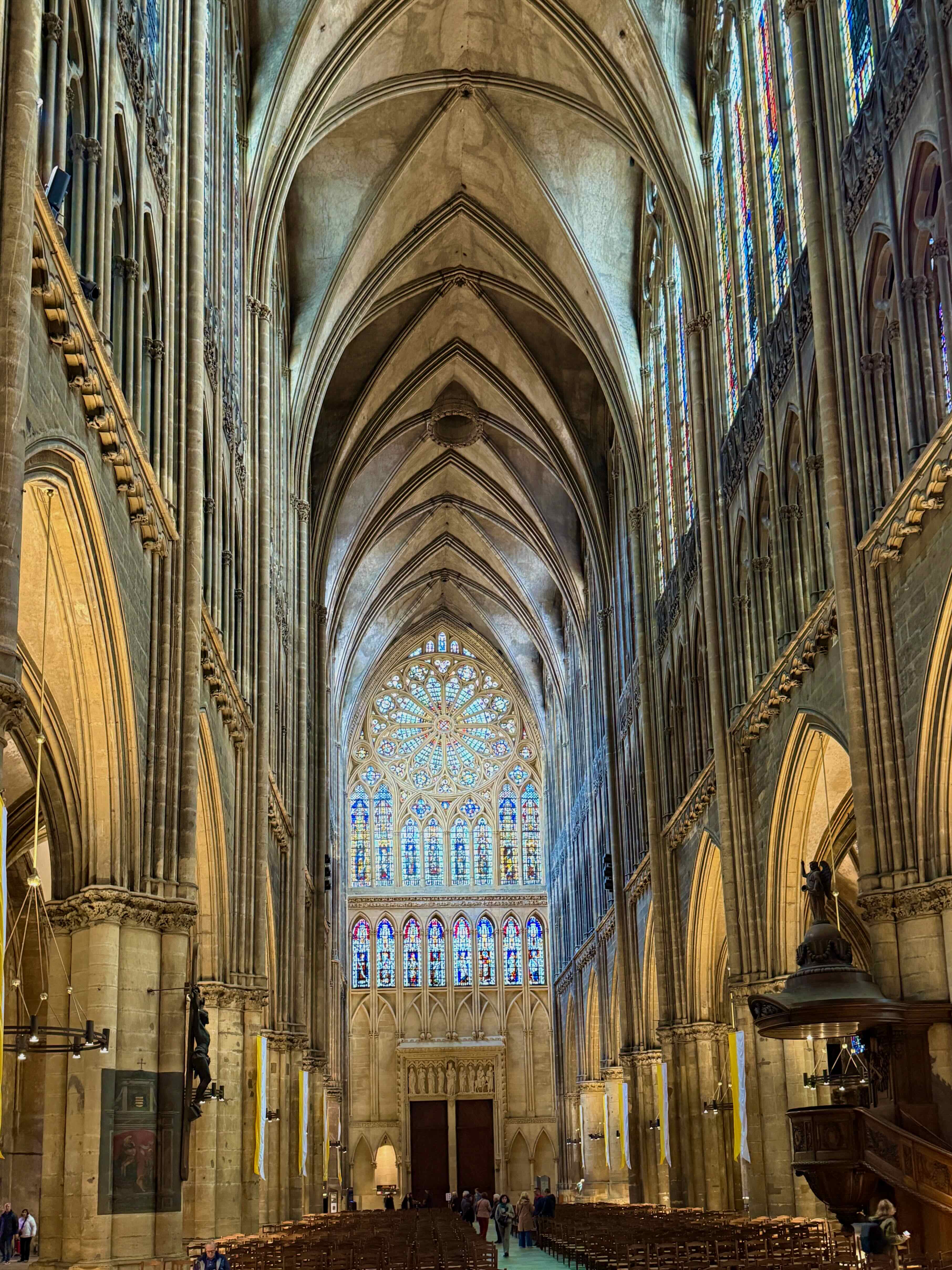
More modern stained glass windows by Jacques Villon completed in 1957.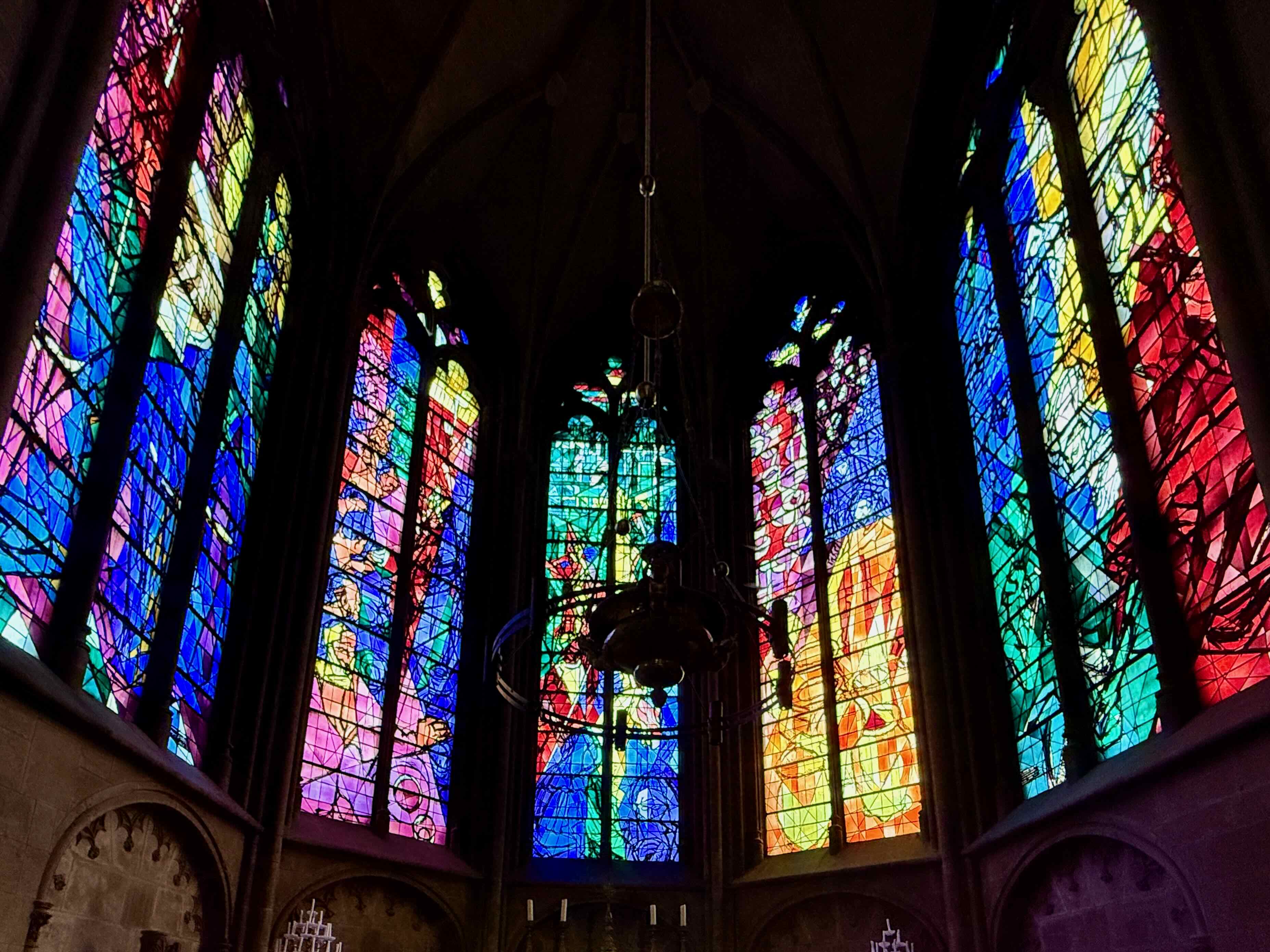
Next stop is the Musée de La Cour d’Or. It is a maze of rooms that covers 6,000 m² of exhibition space and 2,000 years of history in the city of Metz. This incredible onyx vase is a cremation urn from the 1st century B.C.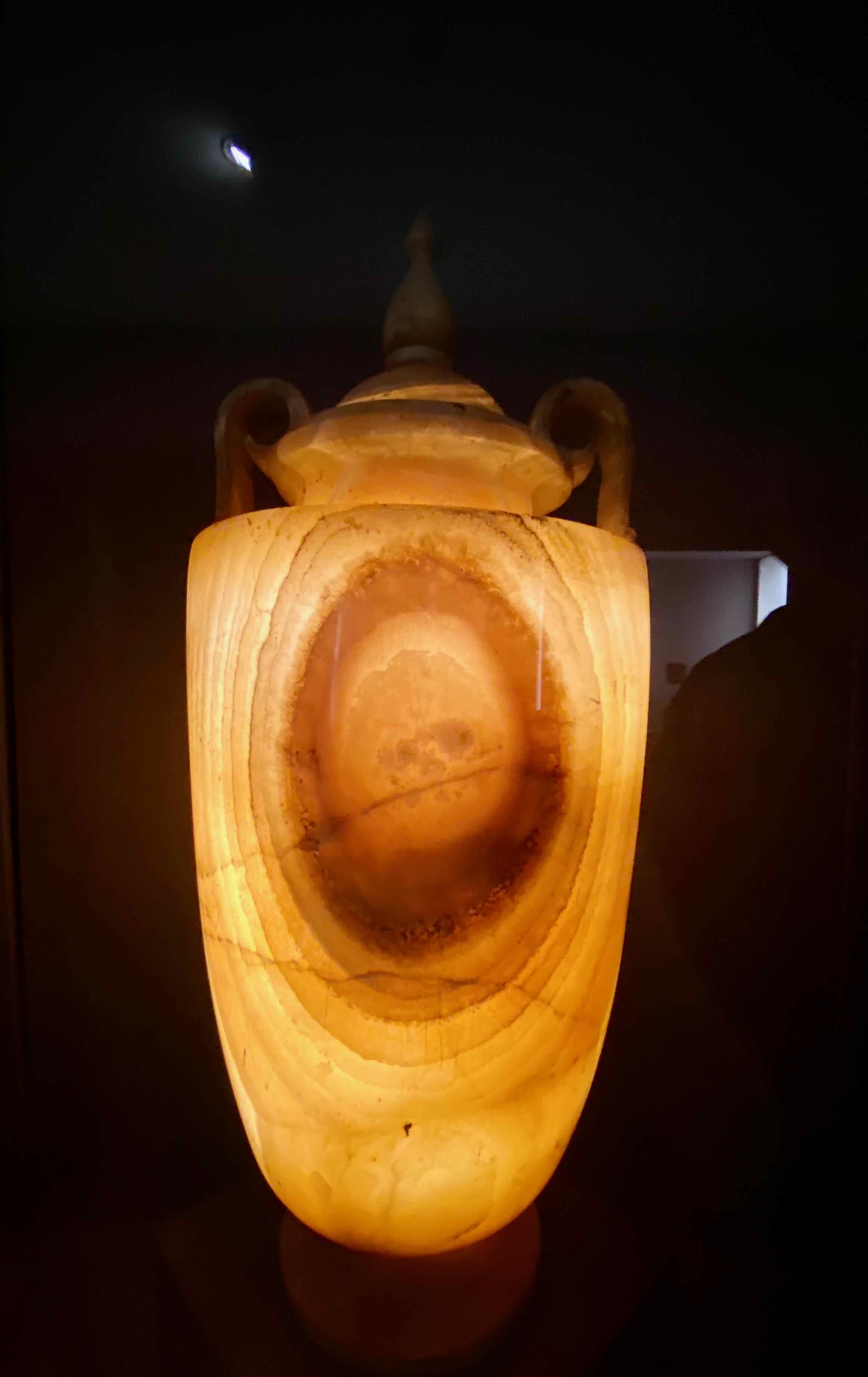
There is so much to see….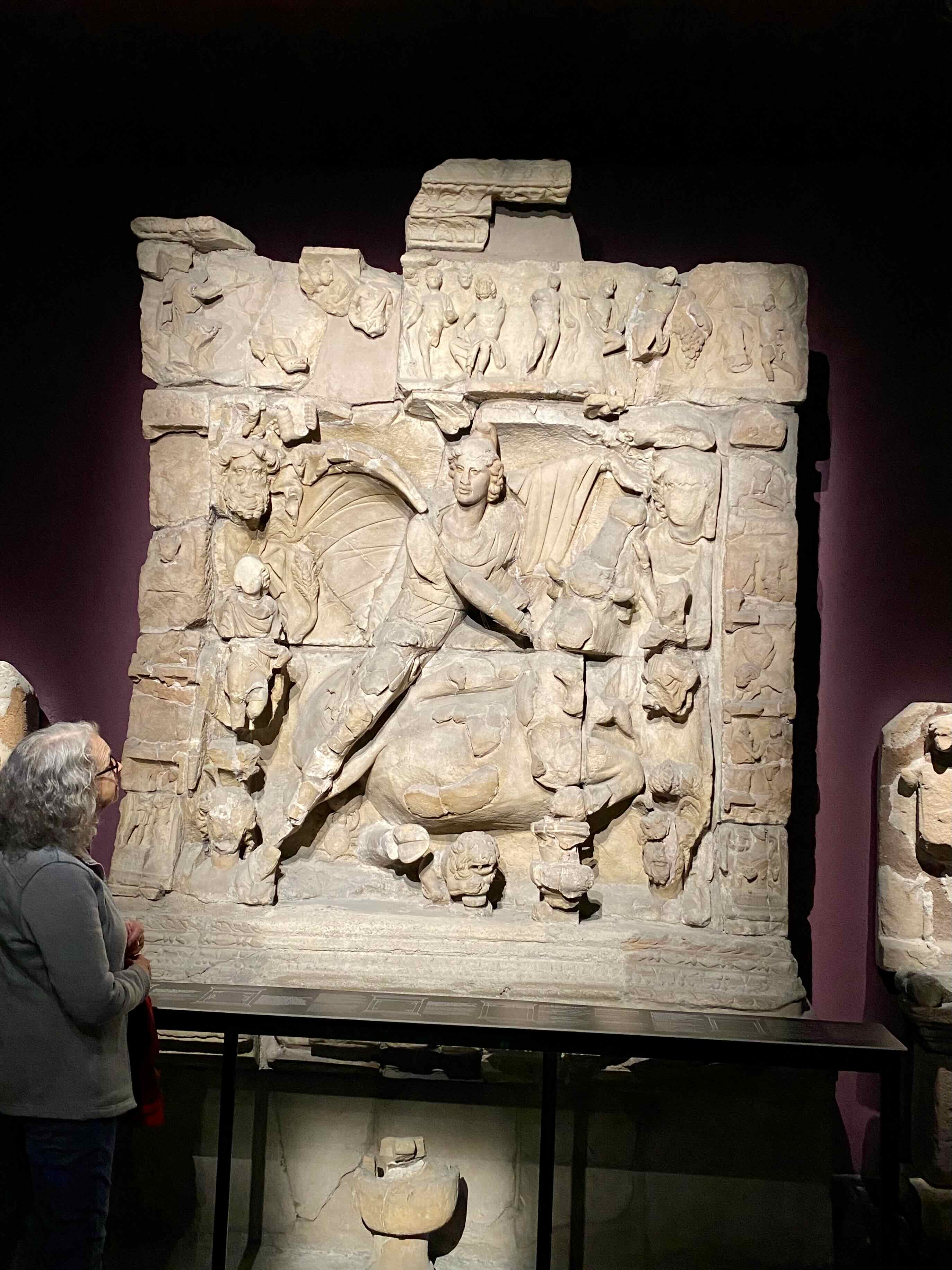
including this glass vase with a human face…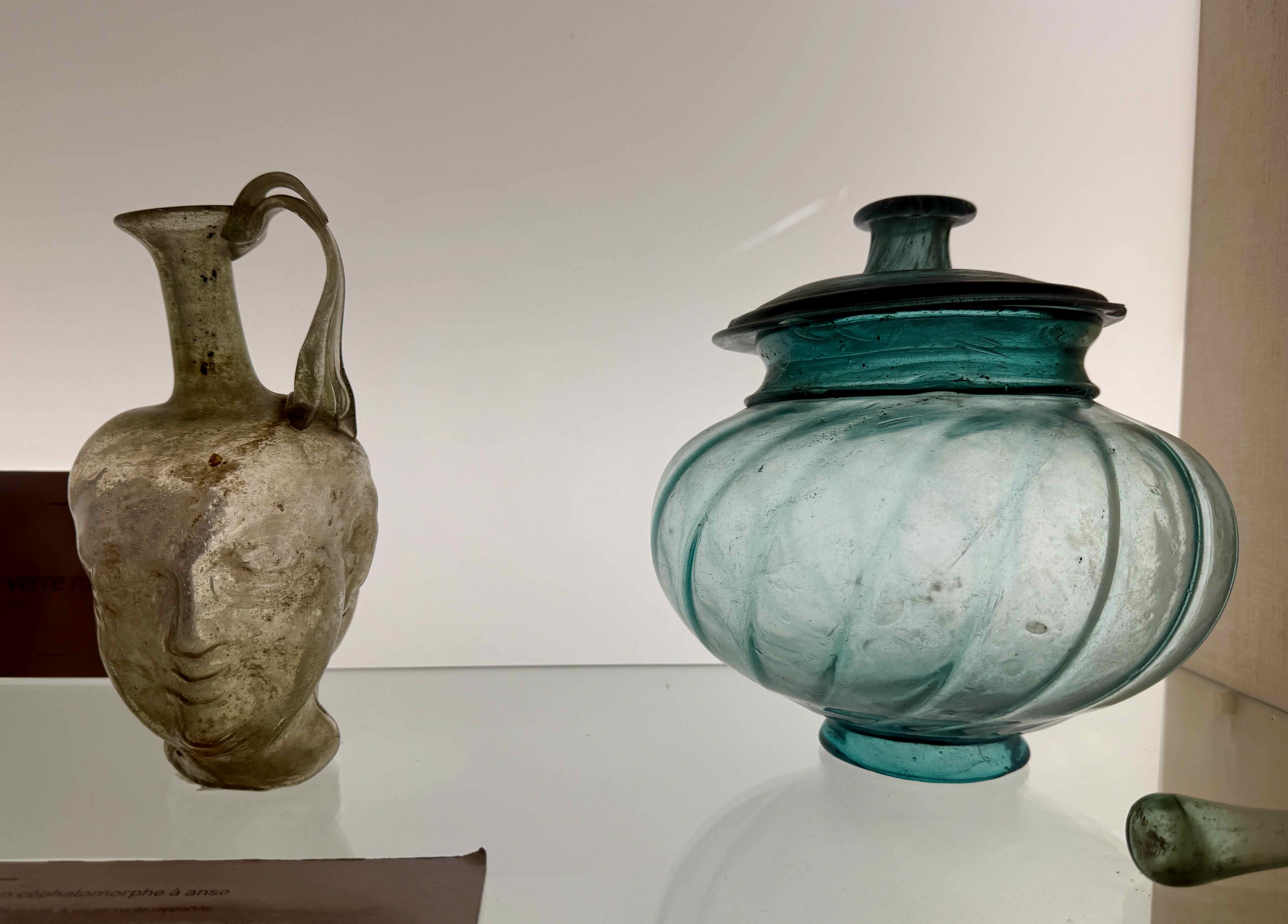
ancient locks,..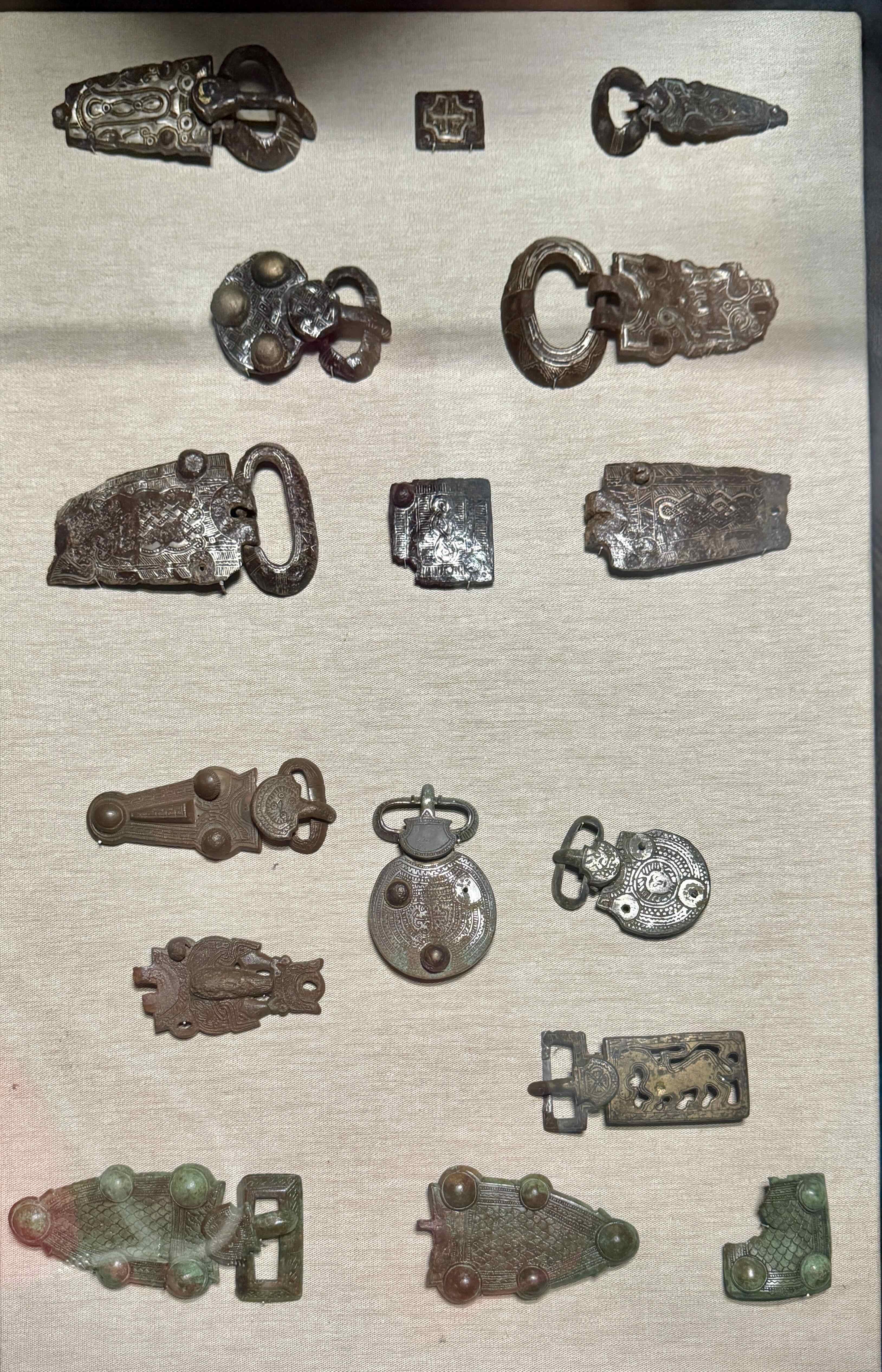
human skeletons…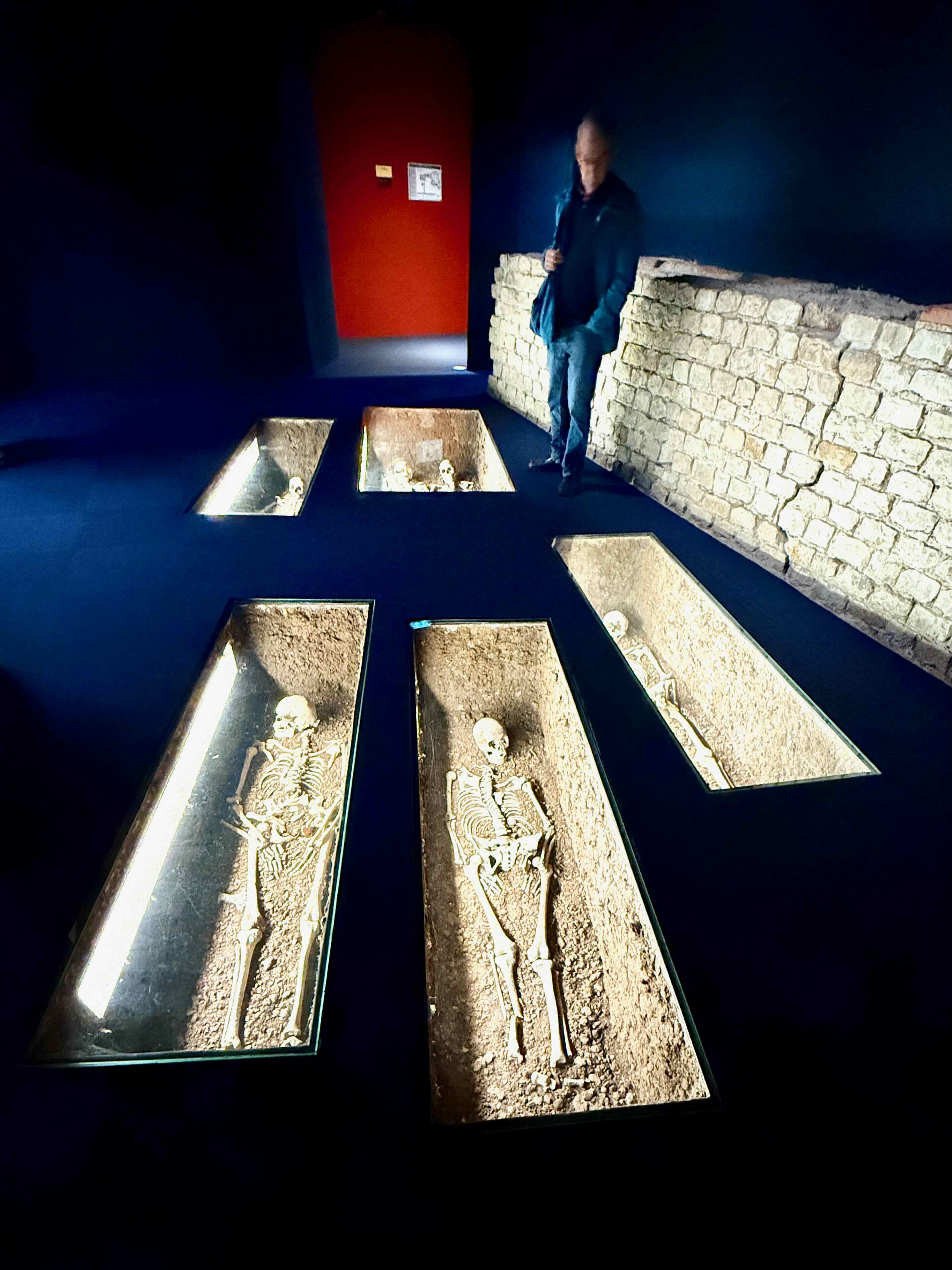
and a couple taking wedding photos!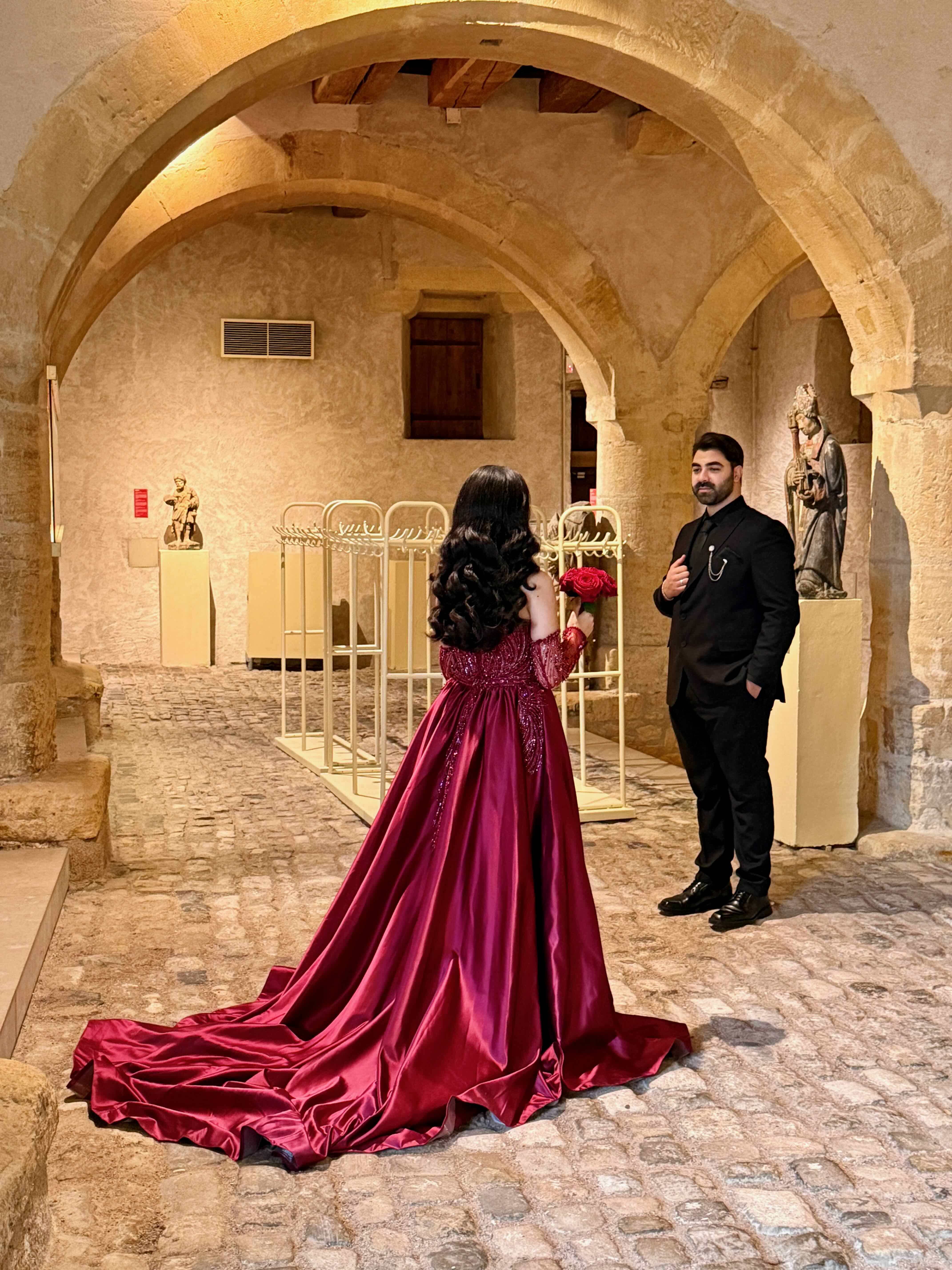
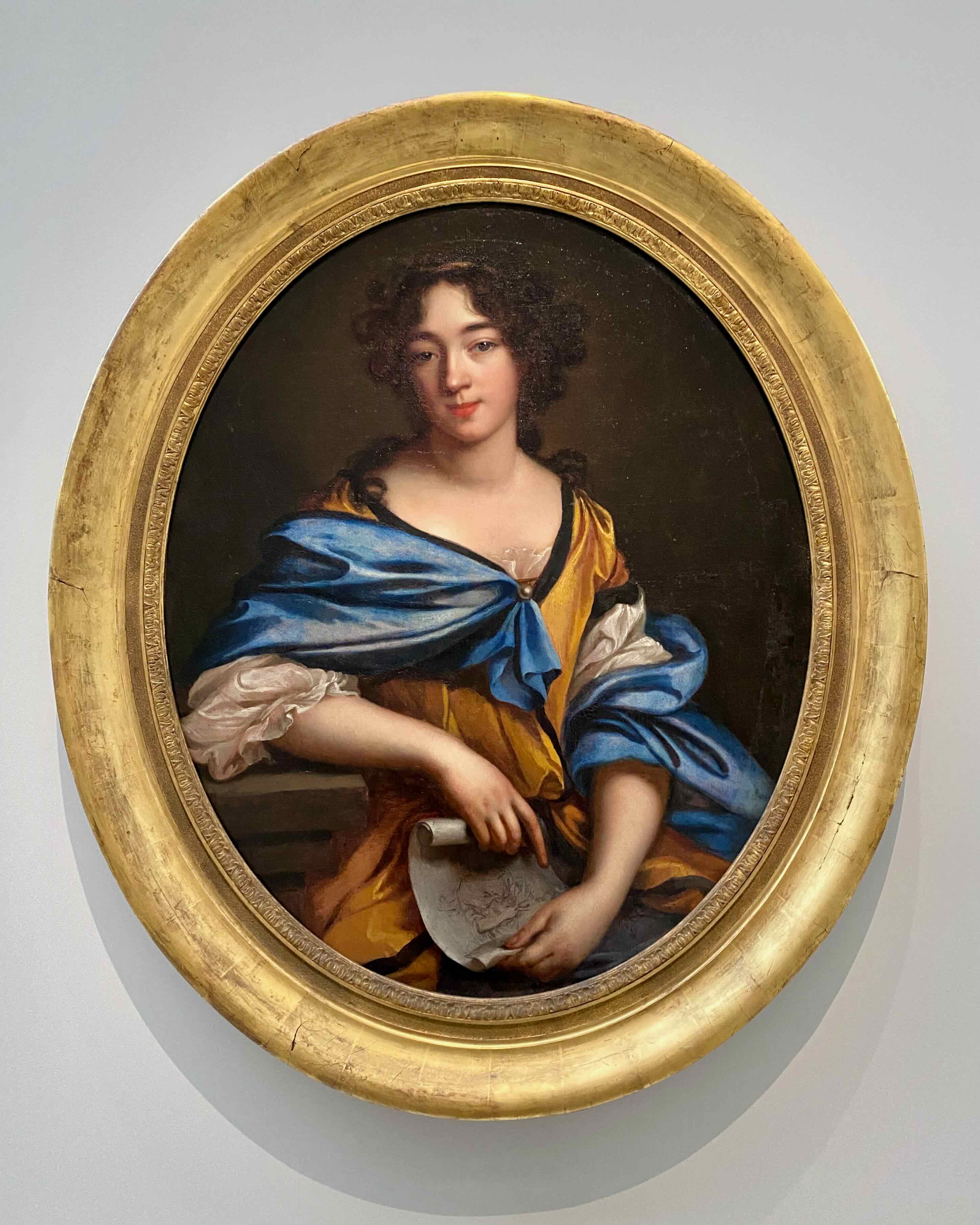
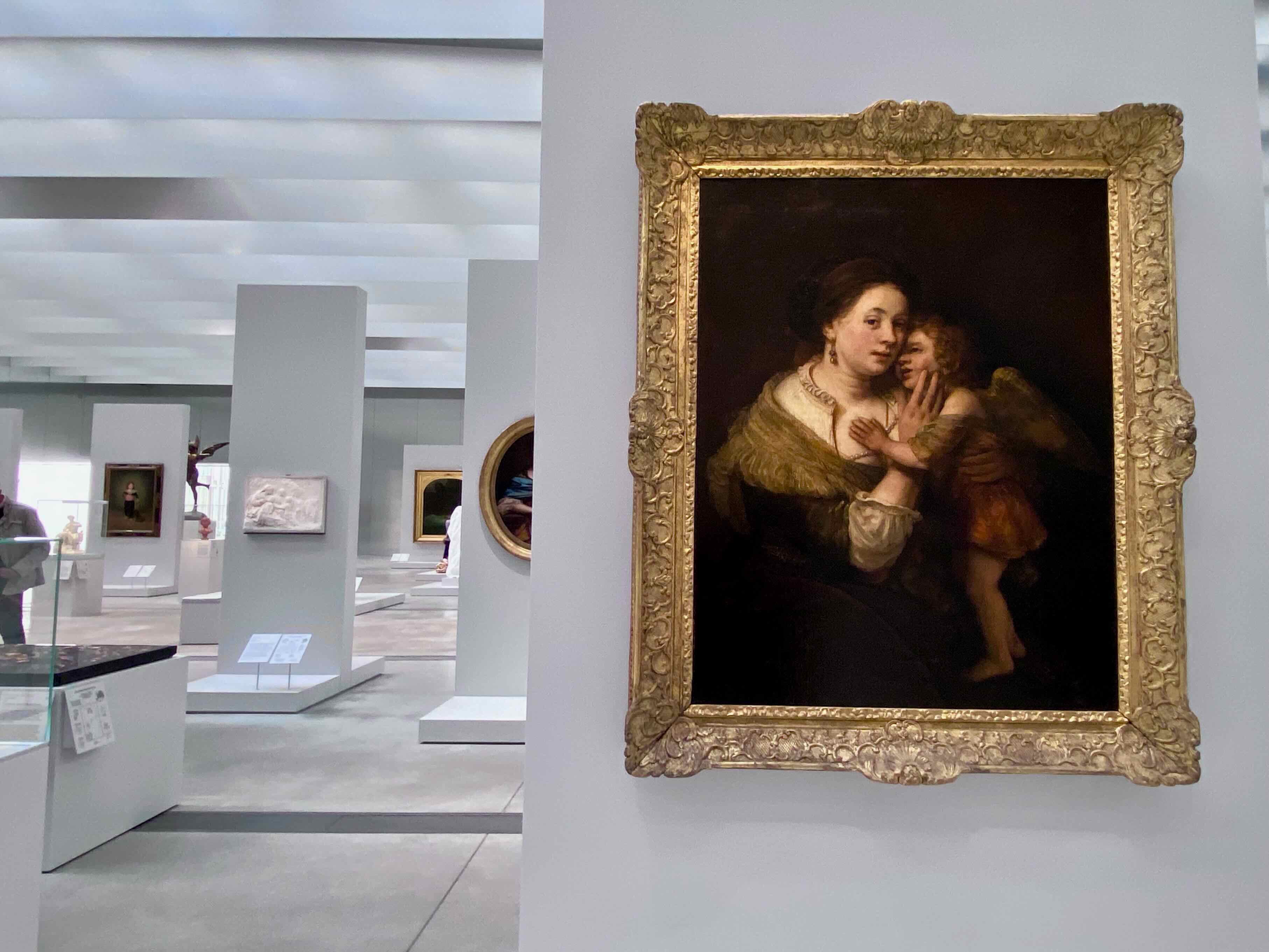
Both Bob and I took a photo of this Madonna and Child. Something about it spoke to both of us.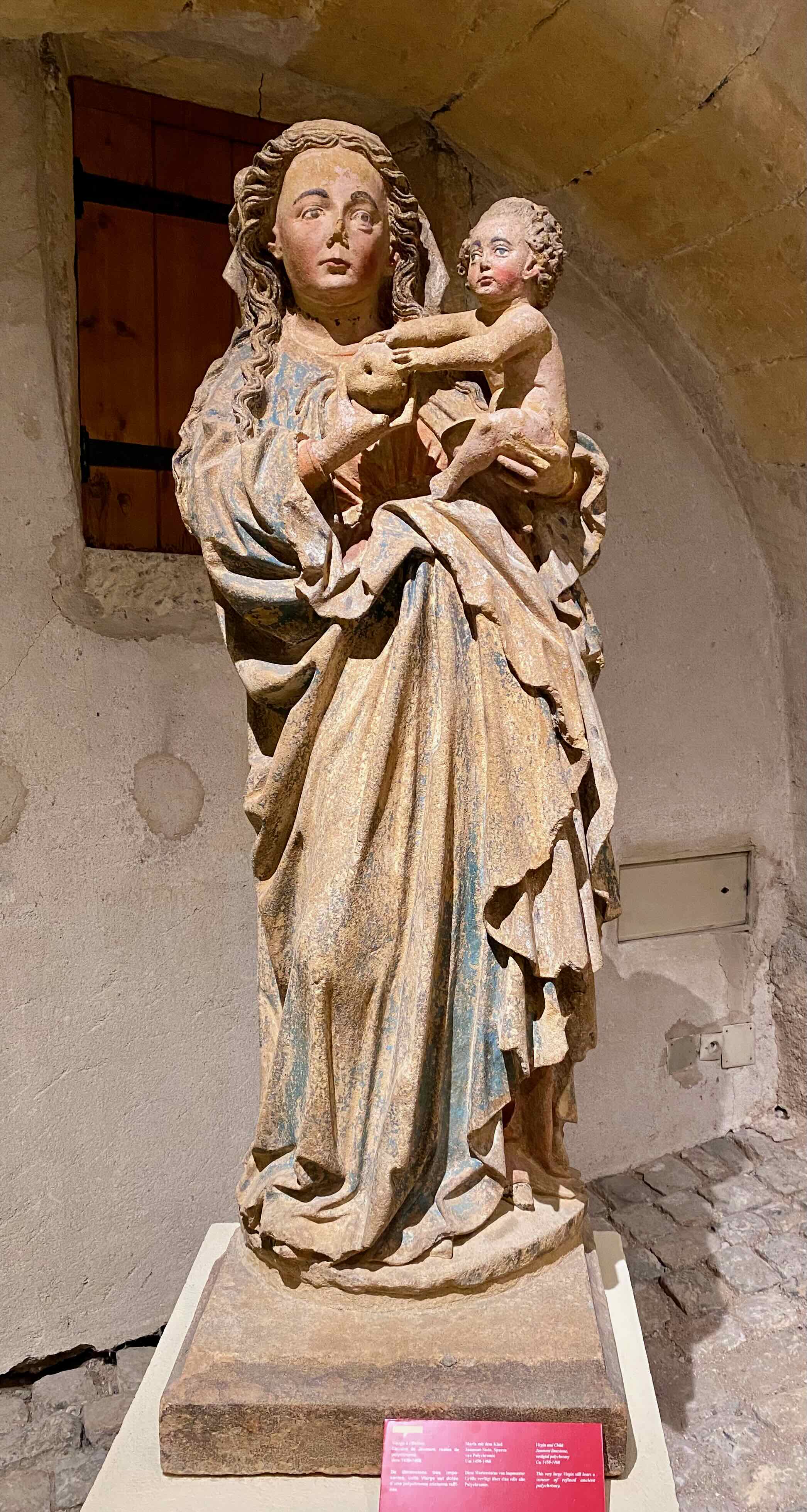
These painted ceiling panels were discovered when a house was being renovated. They are from trees that were chopped down in 1218-1219. This was determined by the thickness of the tree rings. They are the oldest preserved painted ceilings in Metz.
The rooms on the museum follow the chronological history of the city of Metz. It was interesting, but a lot to take in. Finally we are in the last room.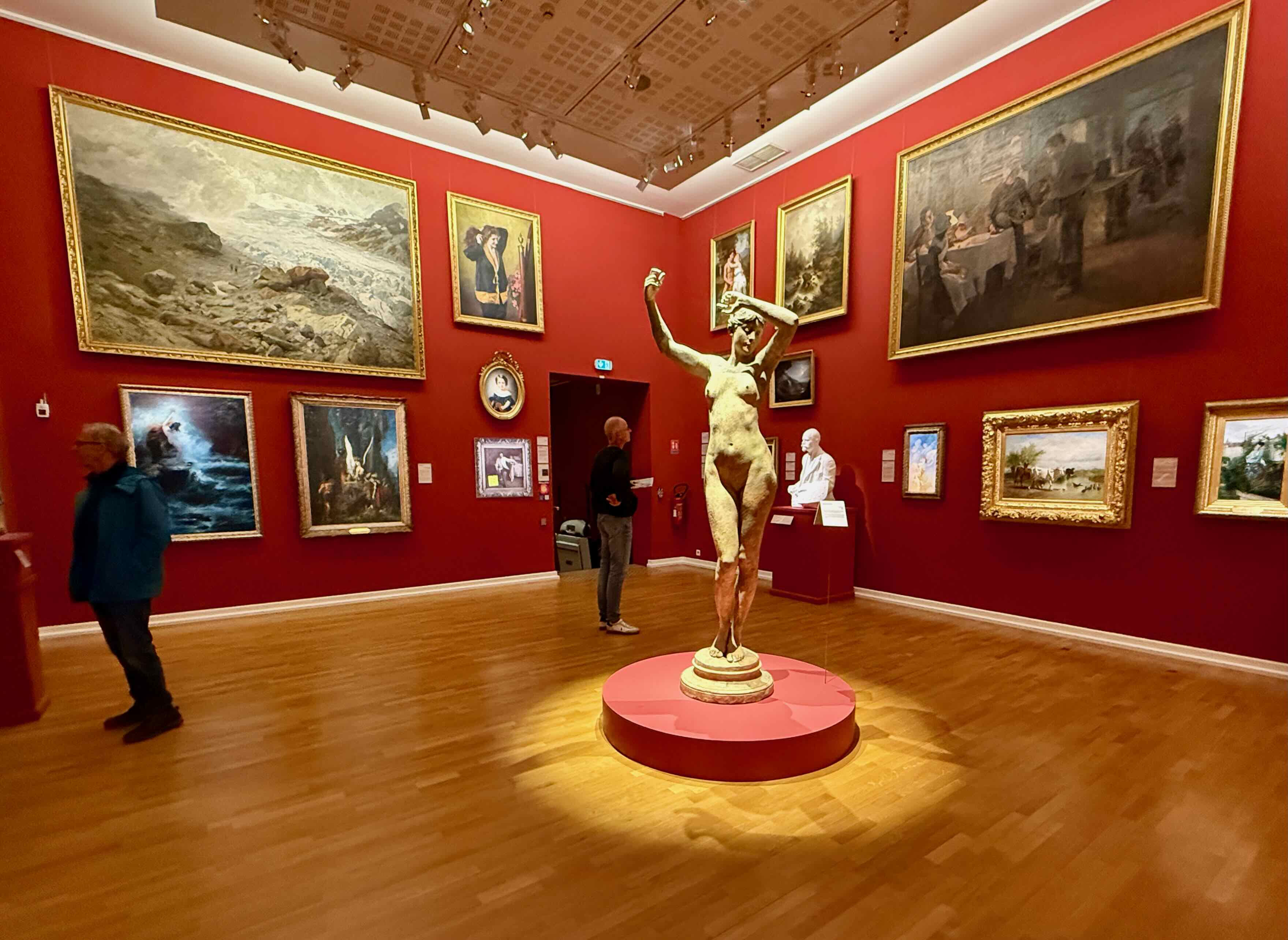
The entrance to the museum is located in what used to be a library. This is a photo of the room when it was a library, and…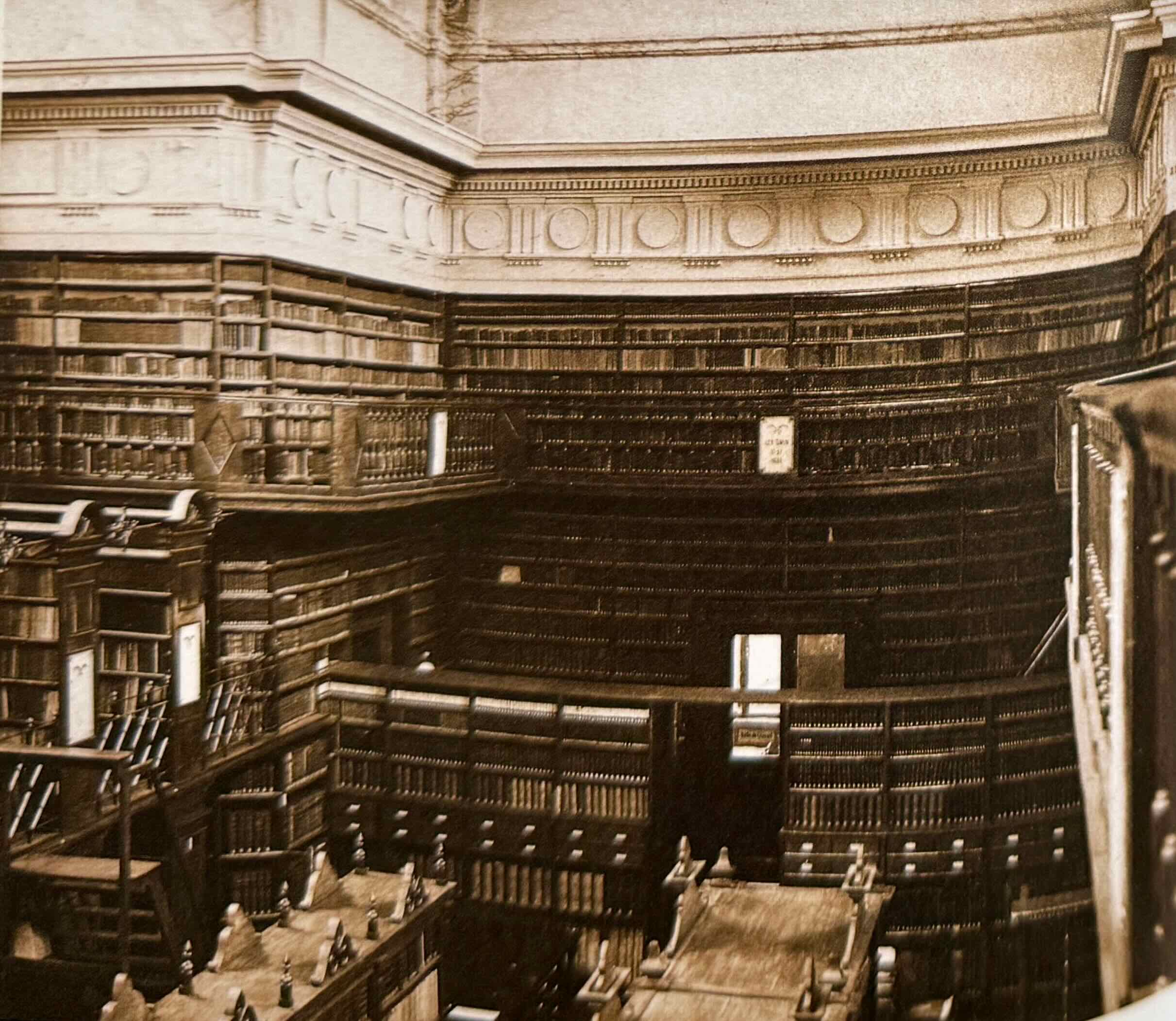
this is how it looks today.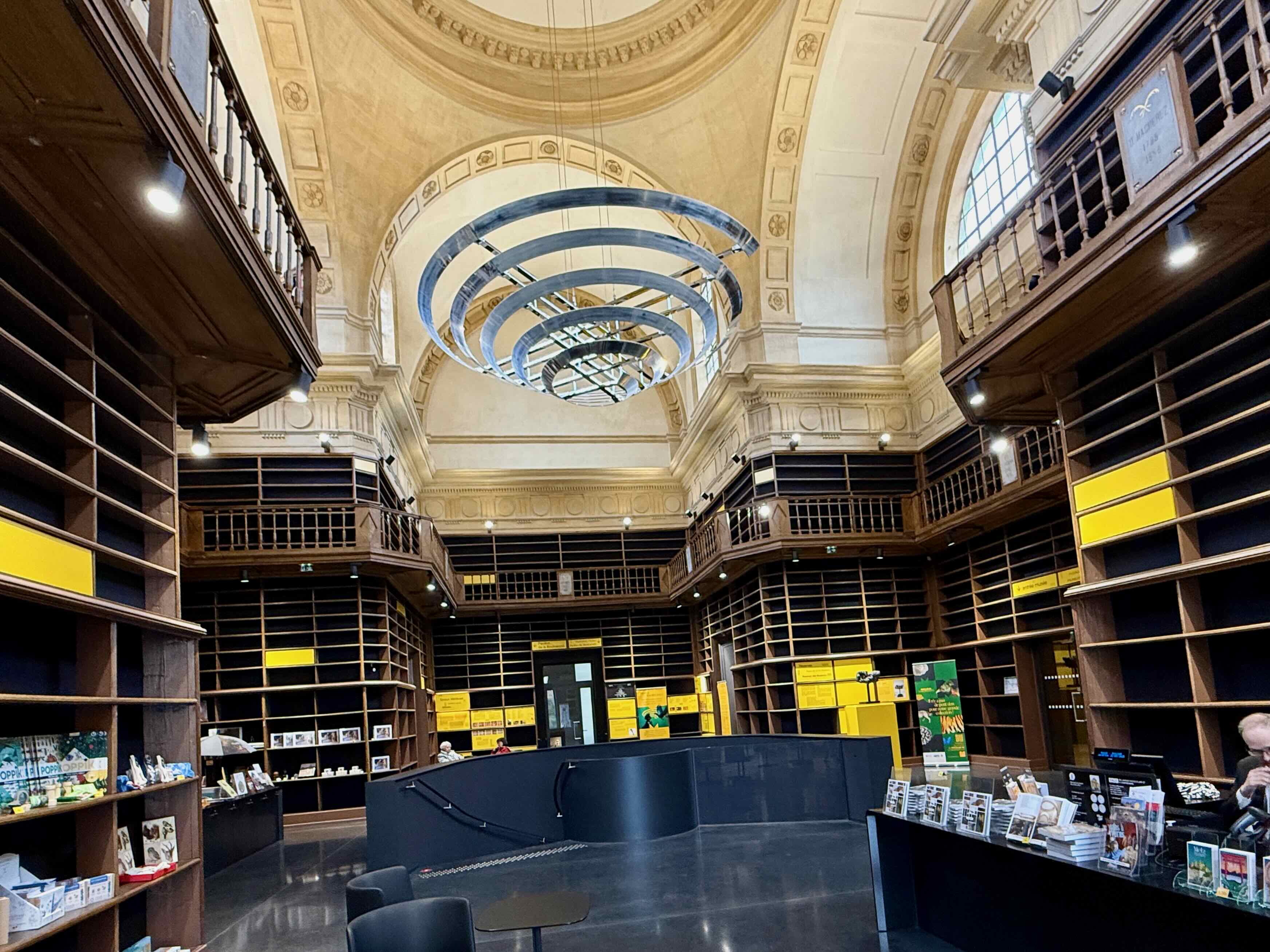
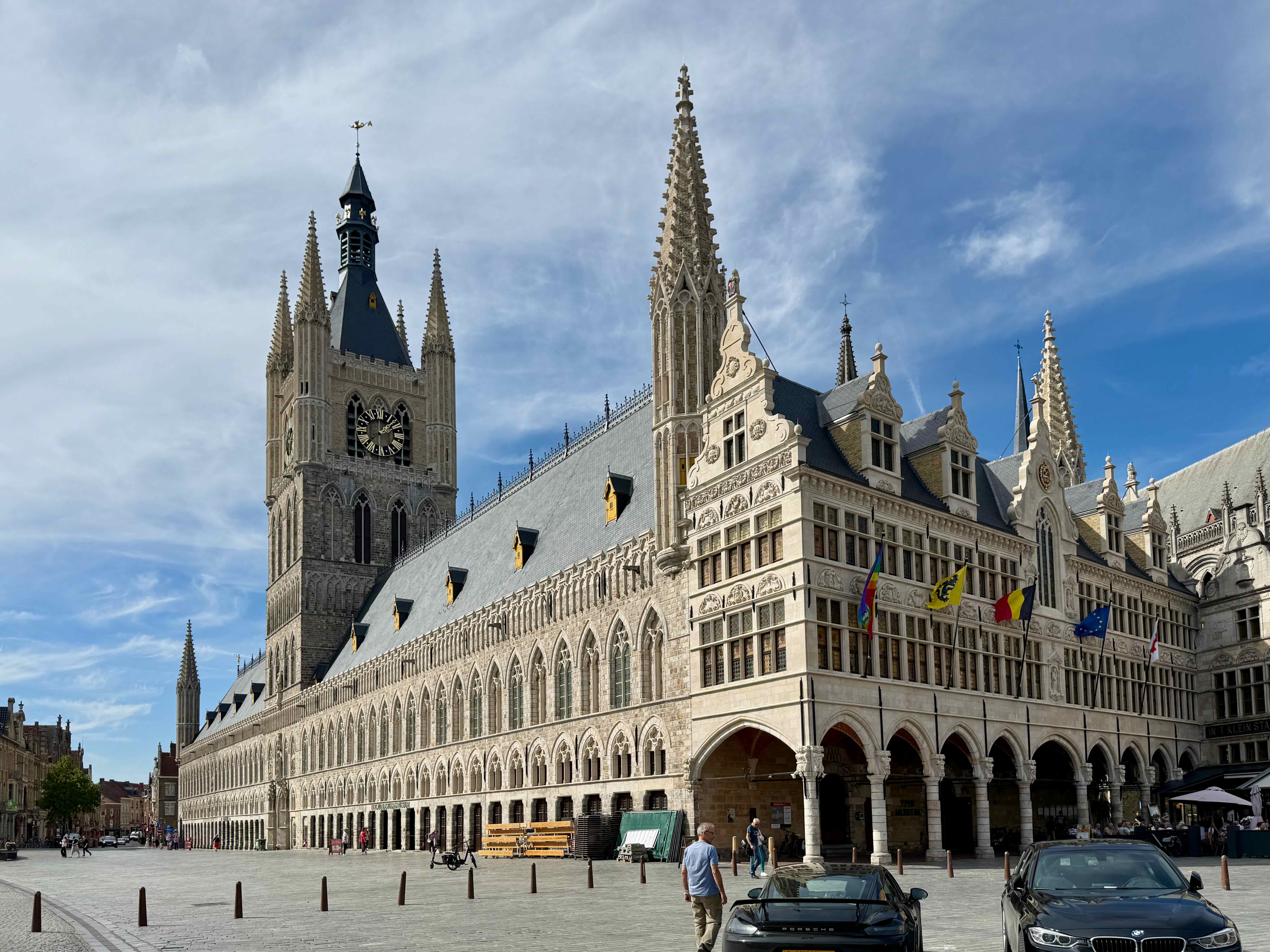
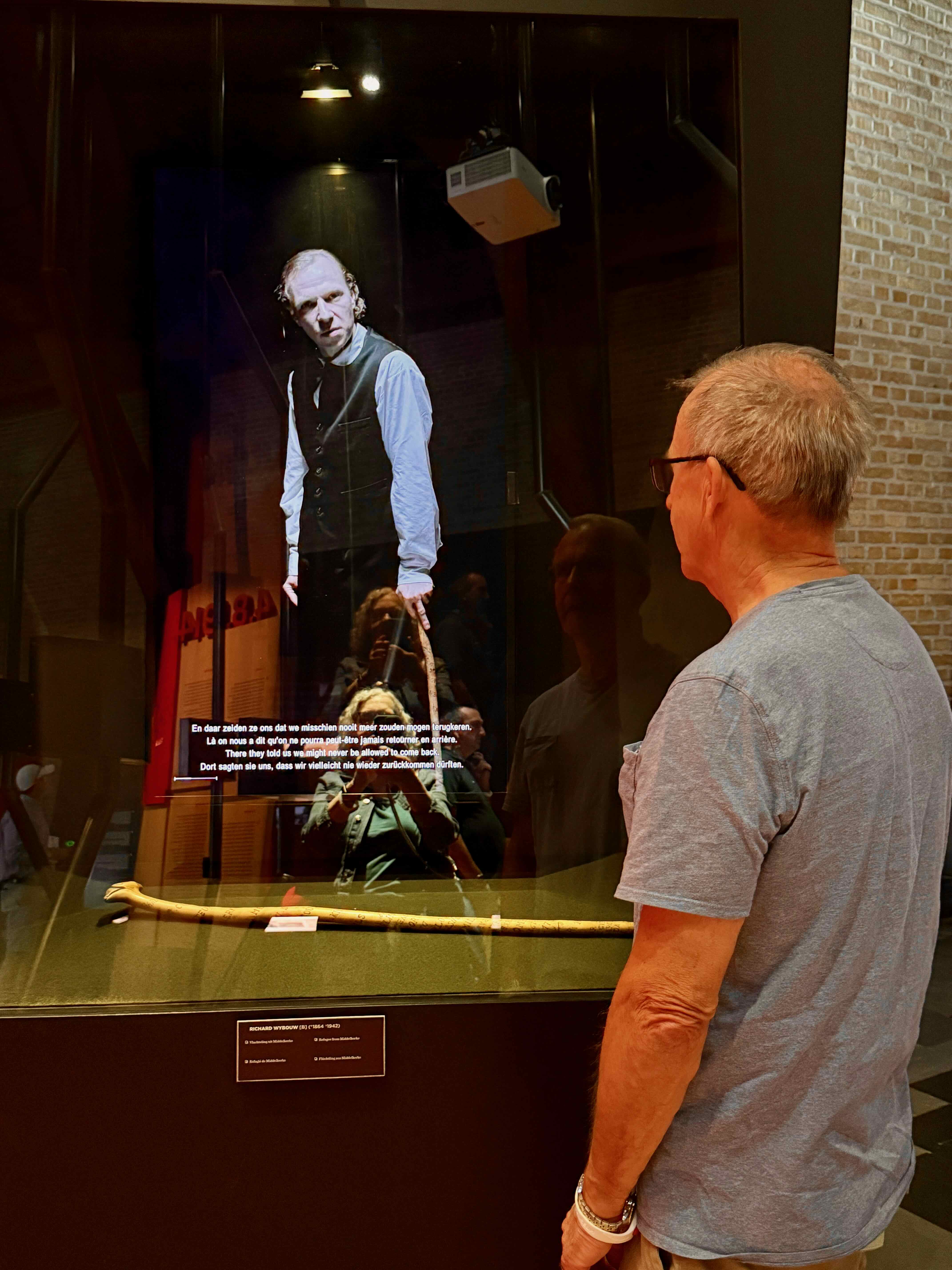
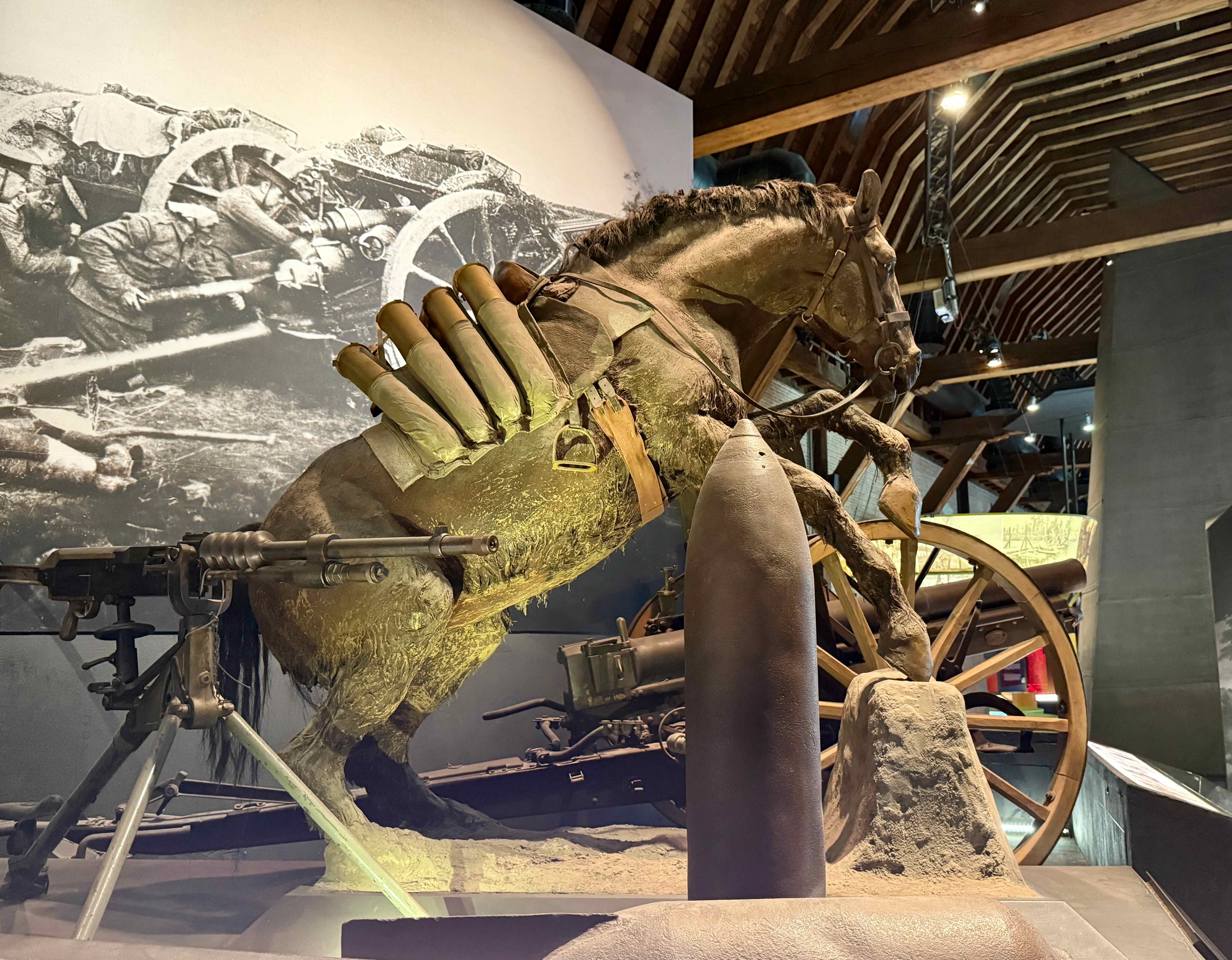

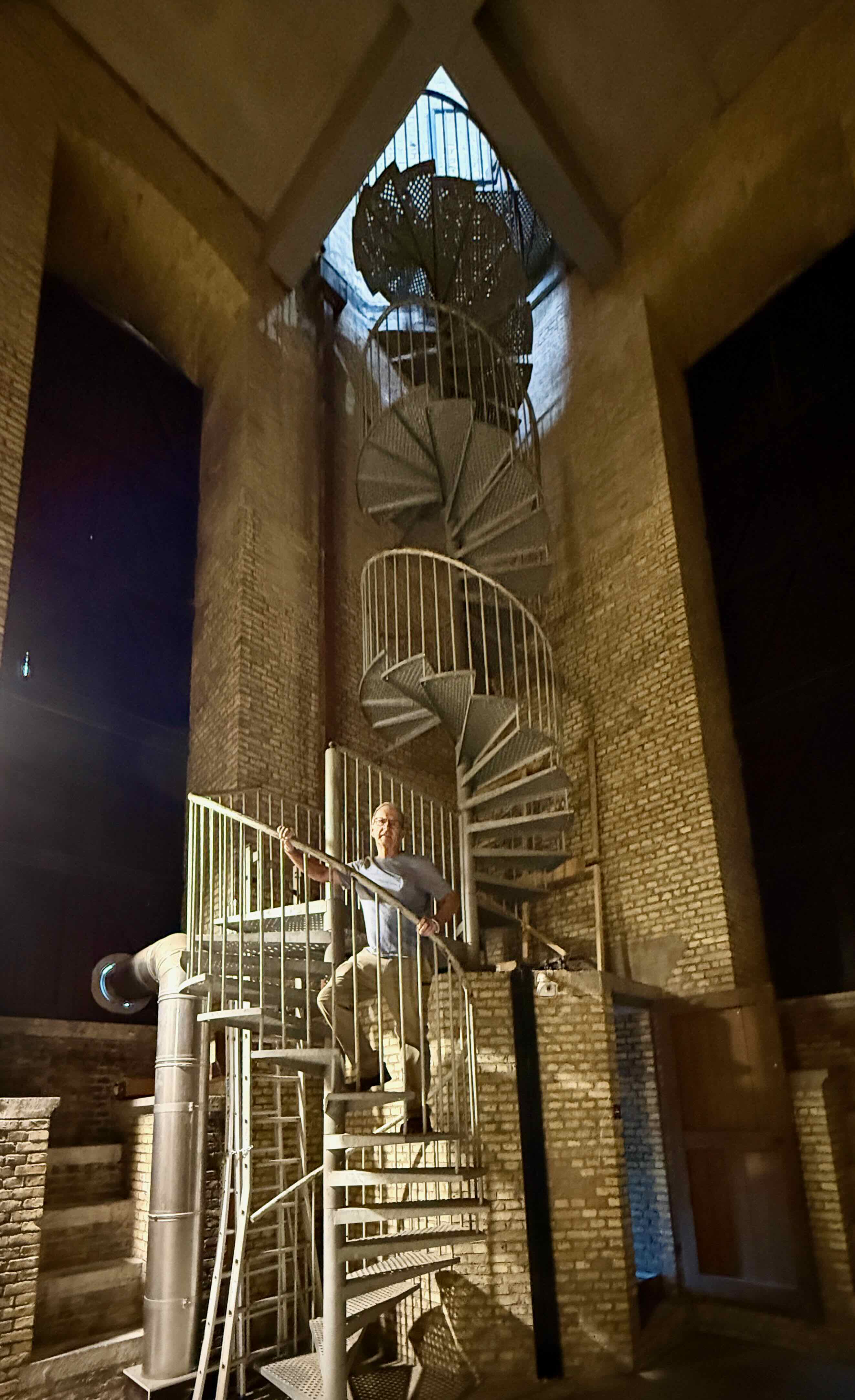
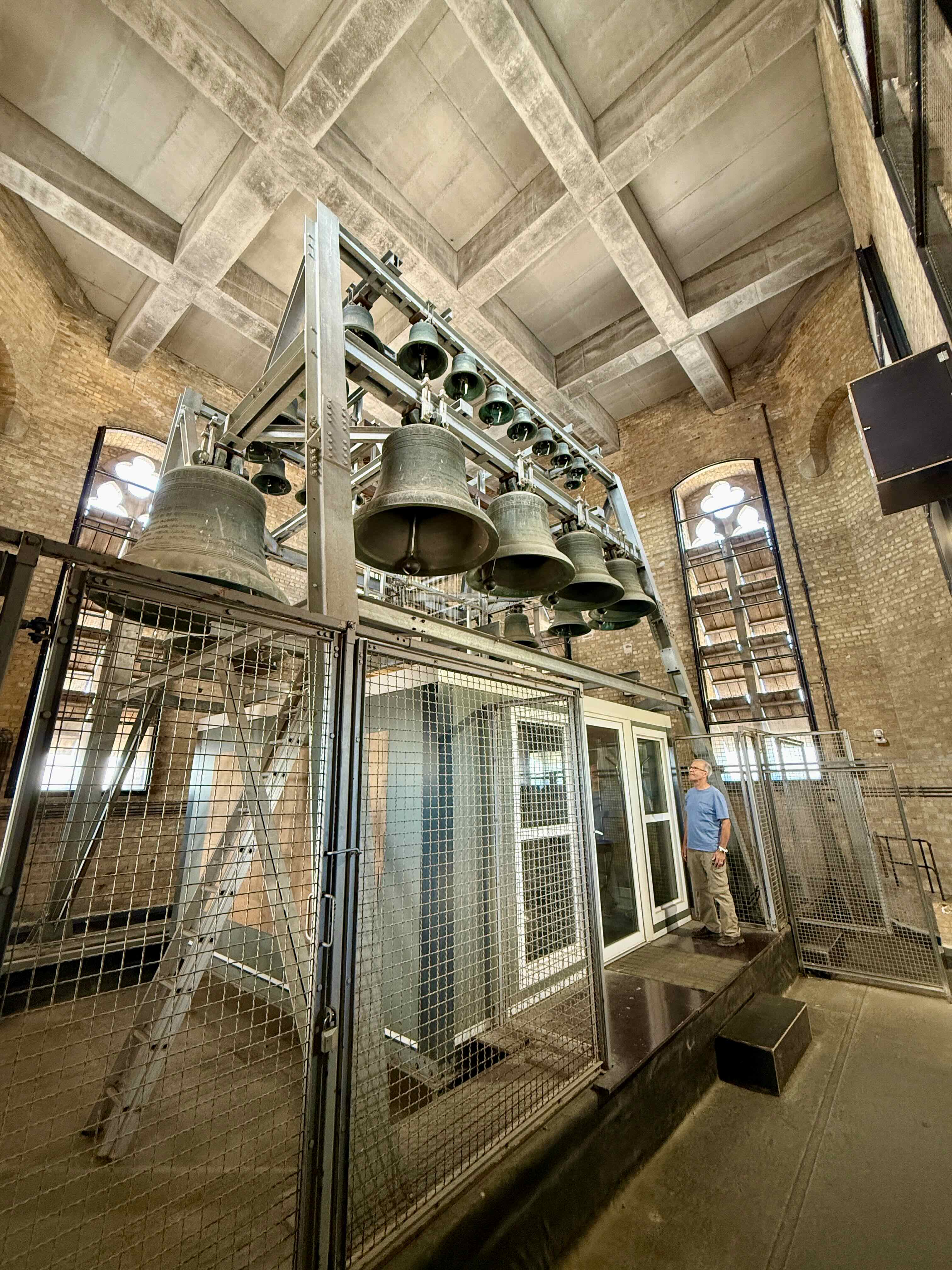
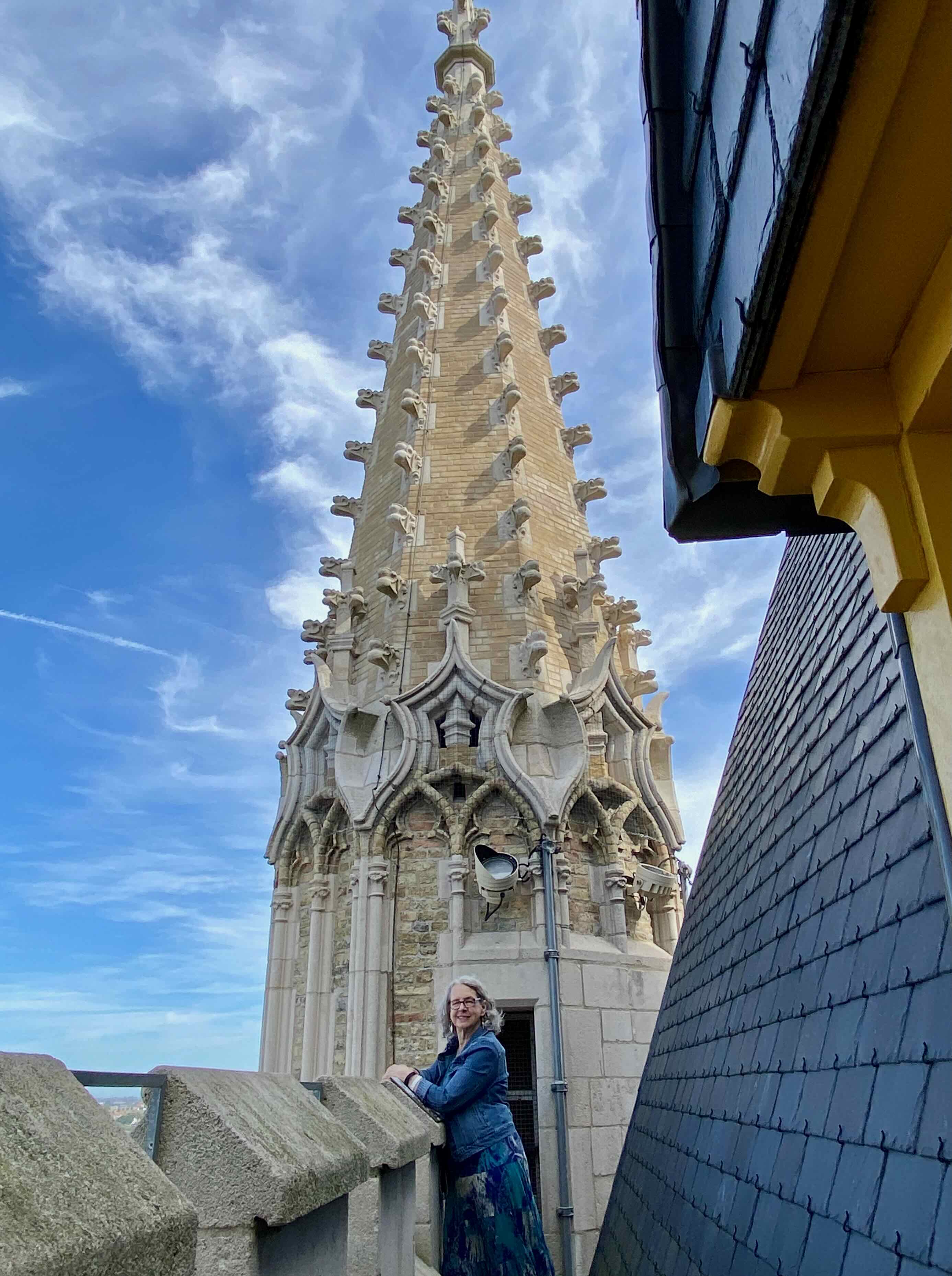
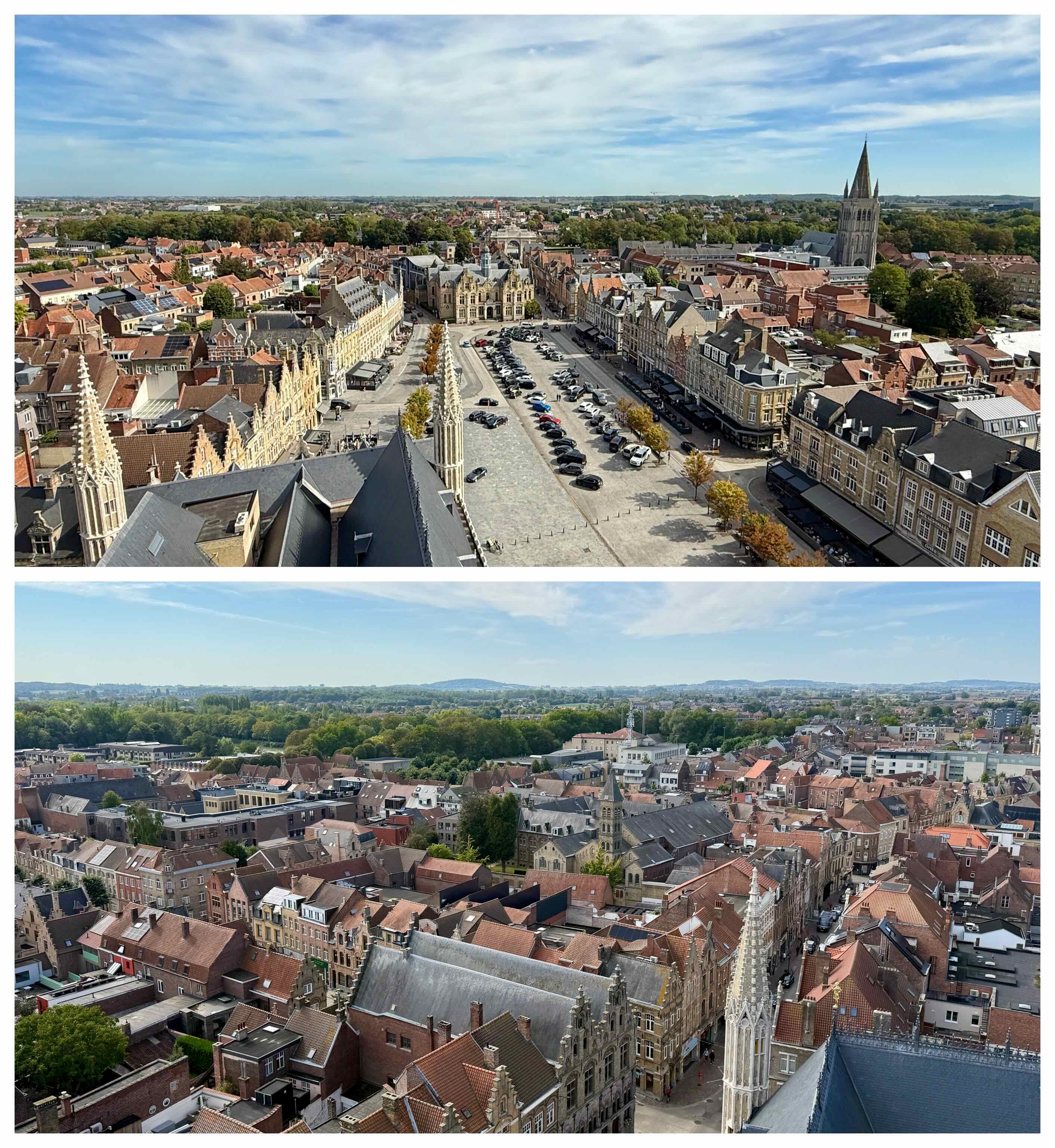

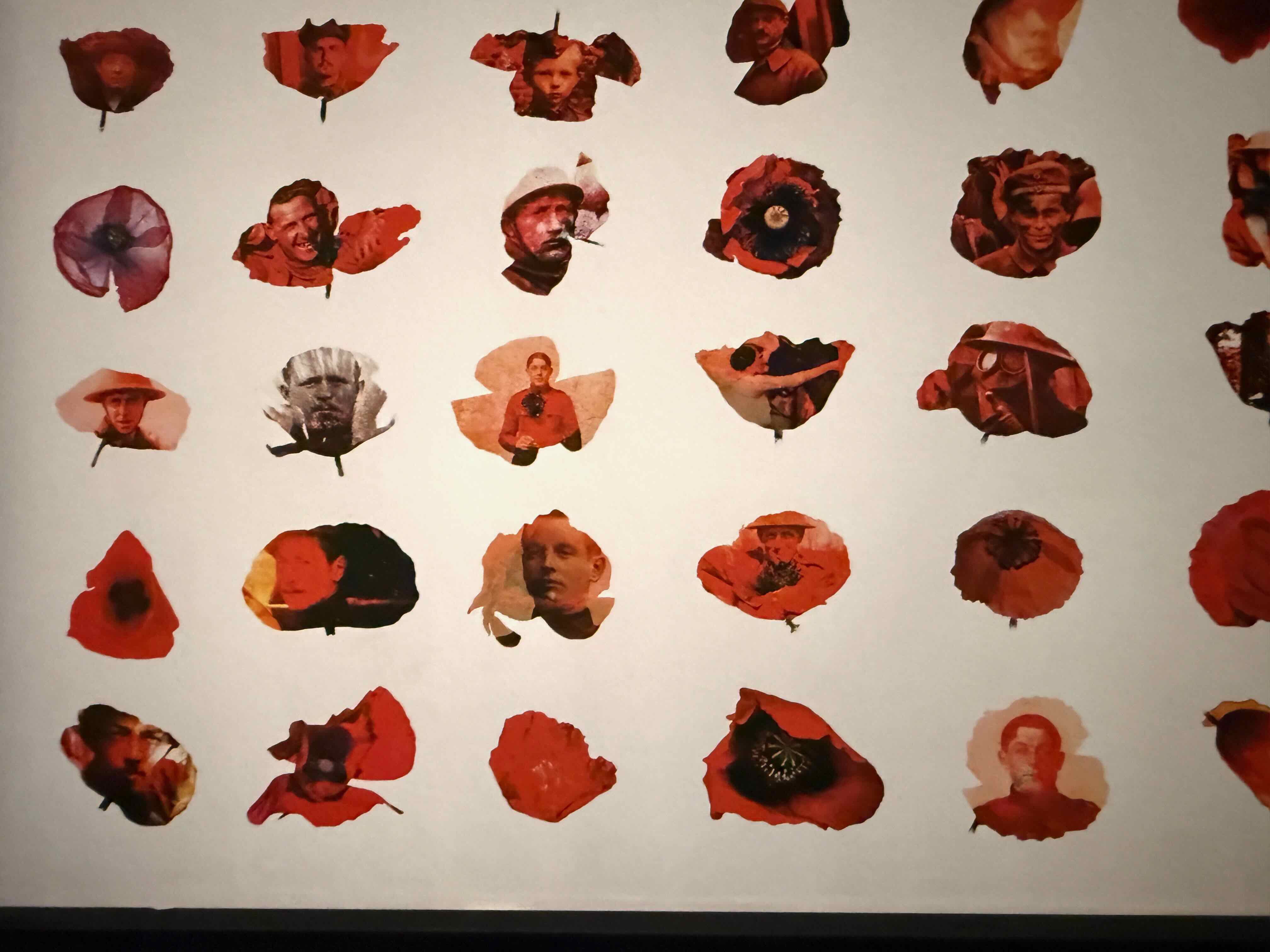
 These banners are for John McCrae’s poem “In Flanders Fields”.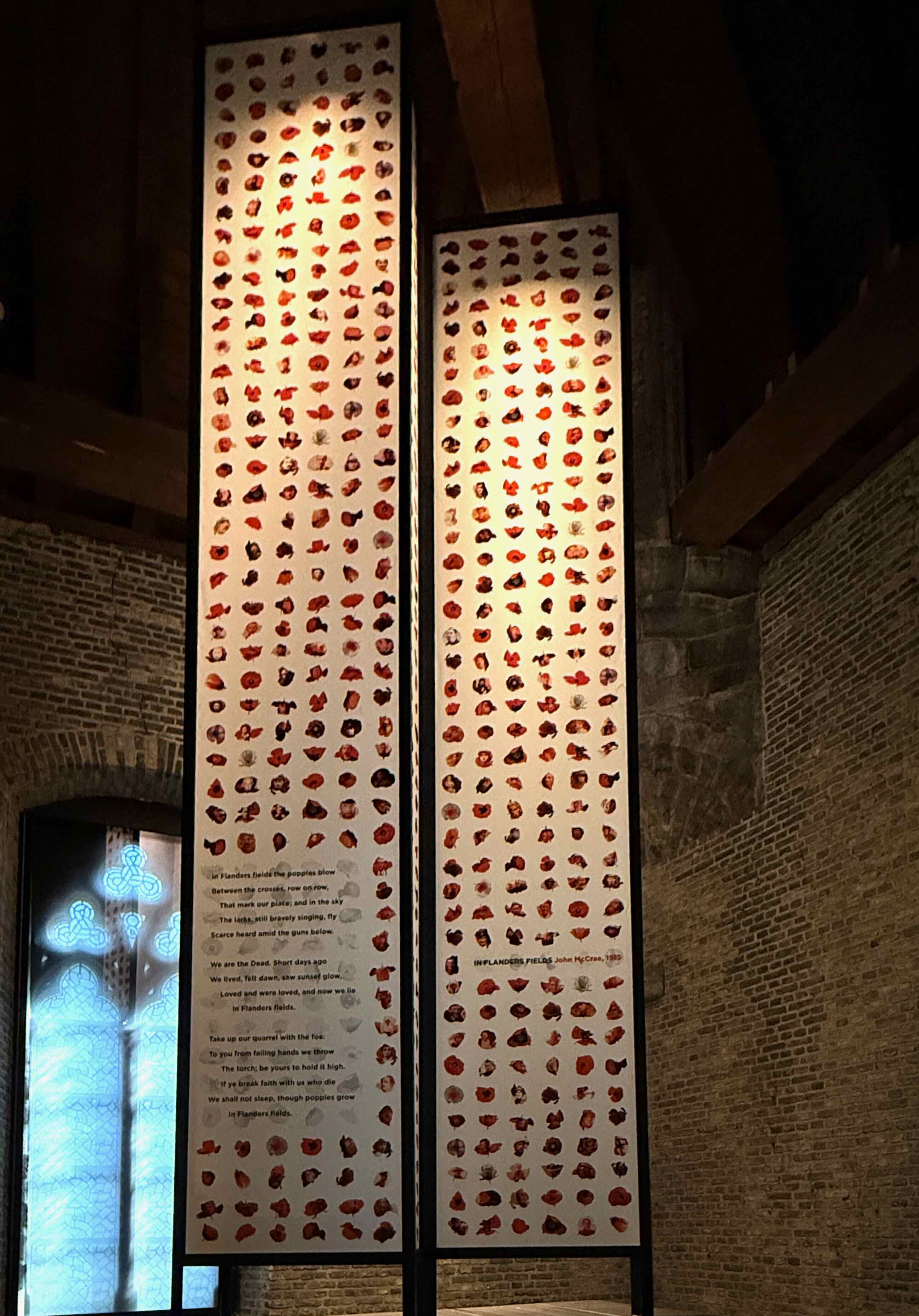
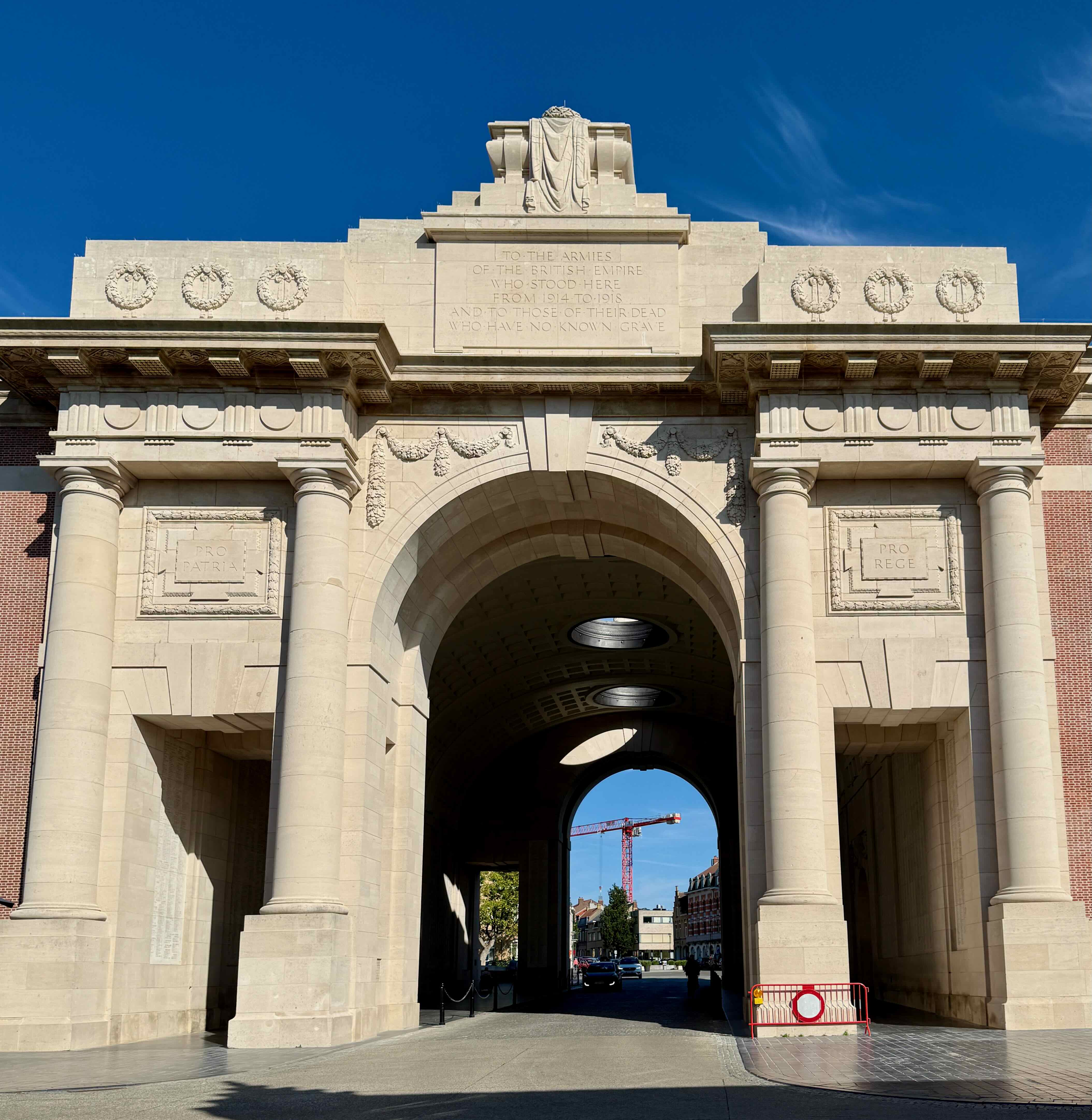
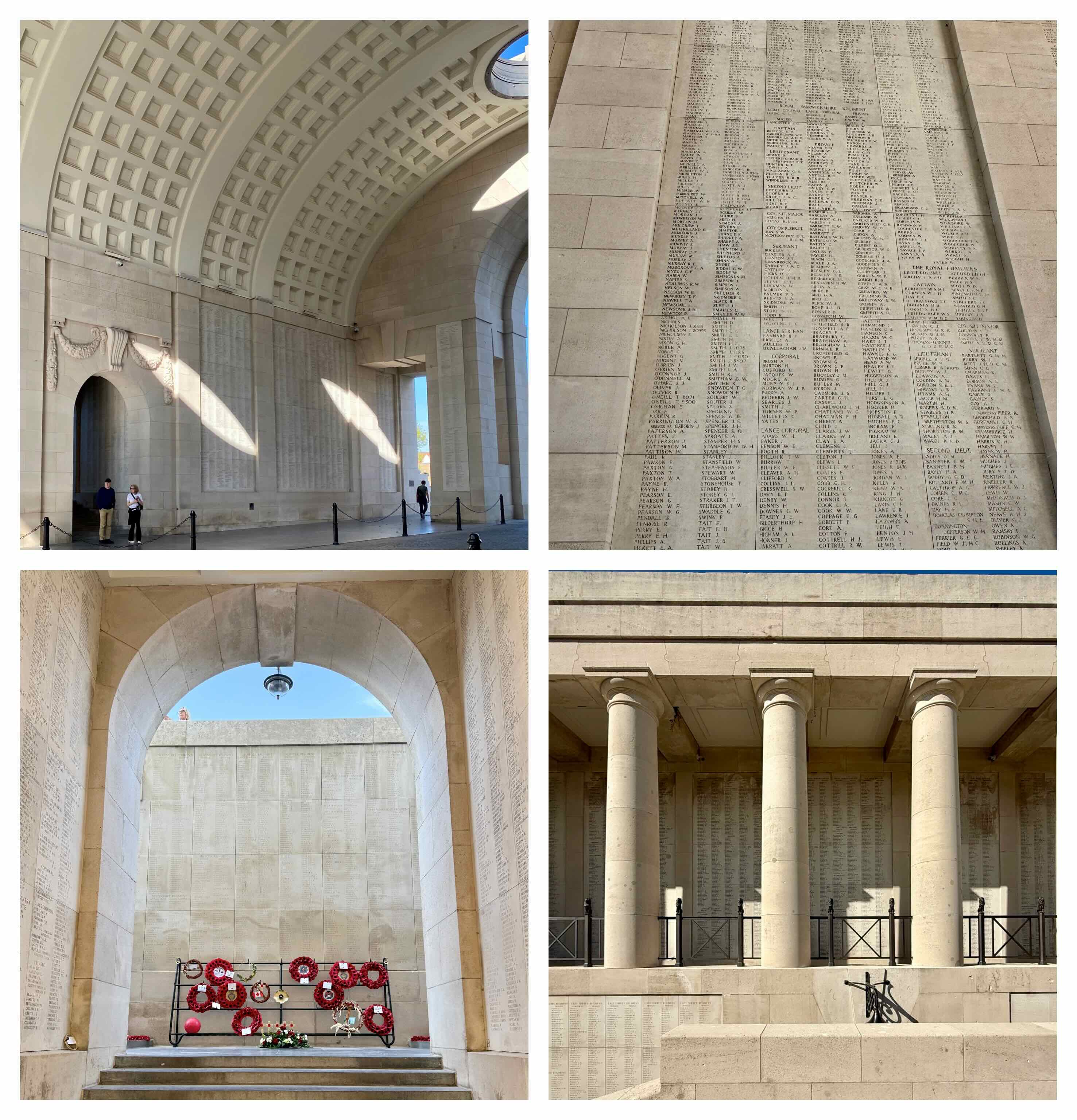
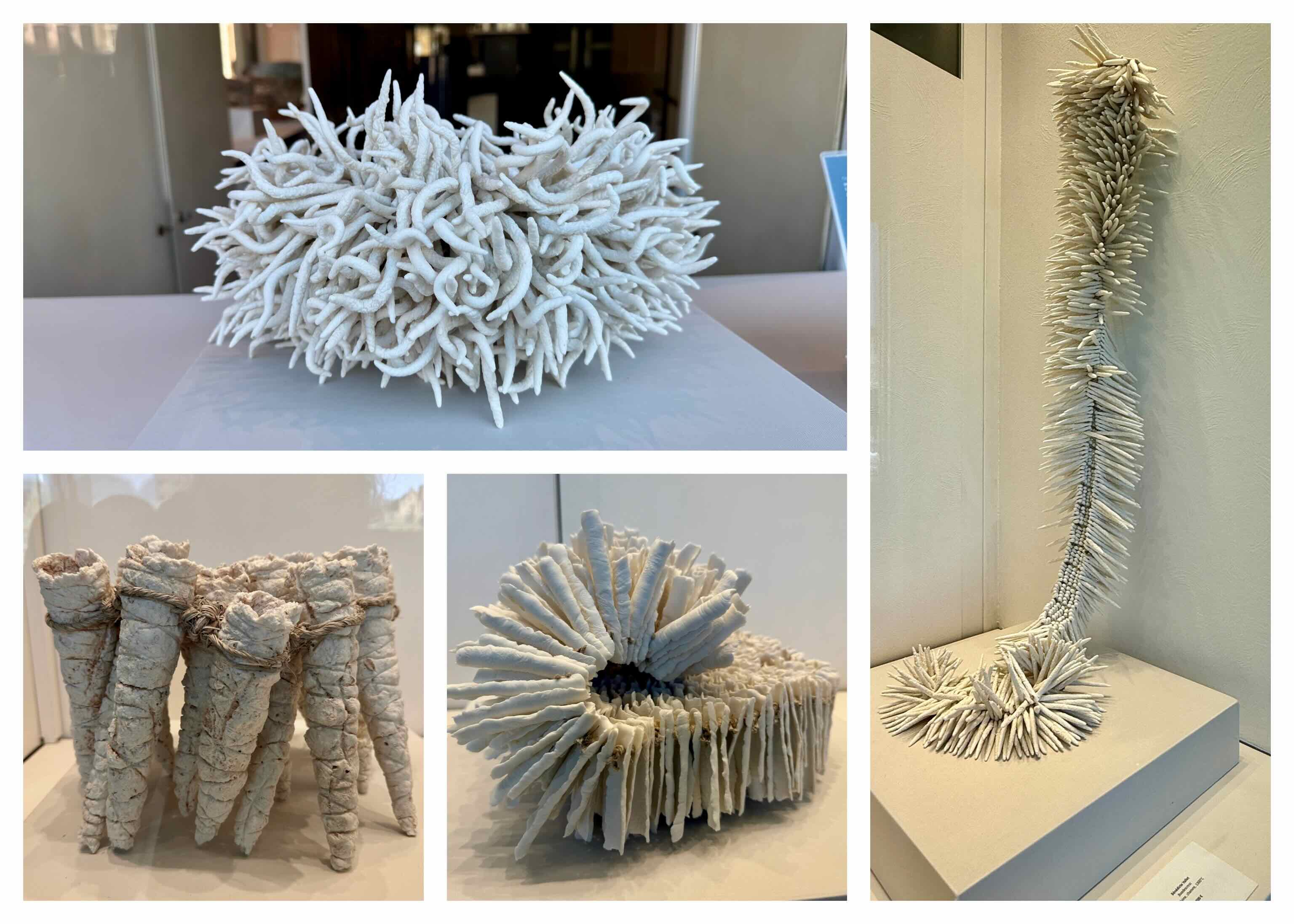
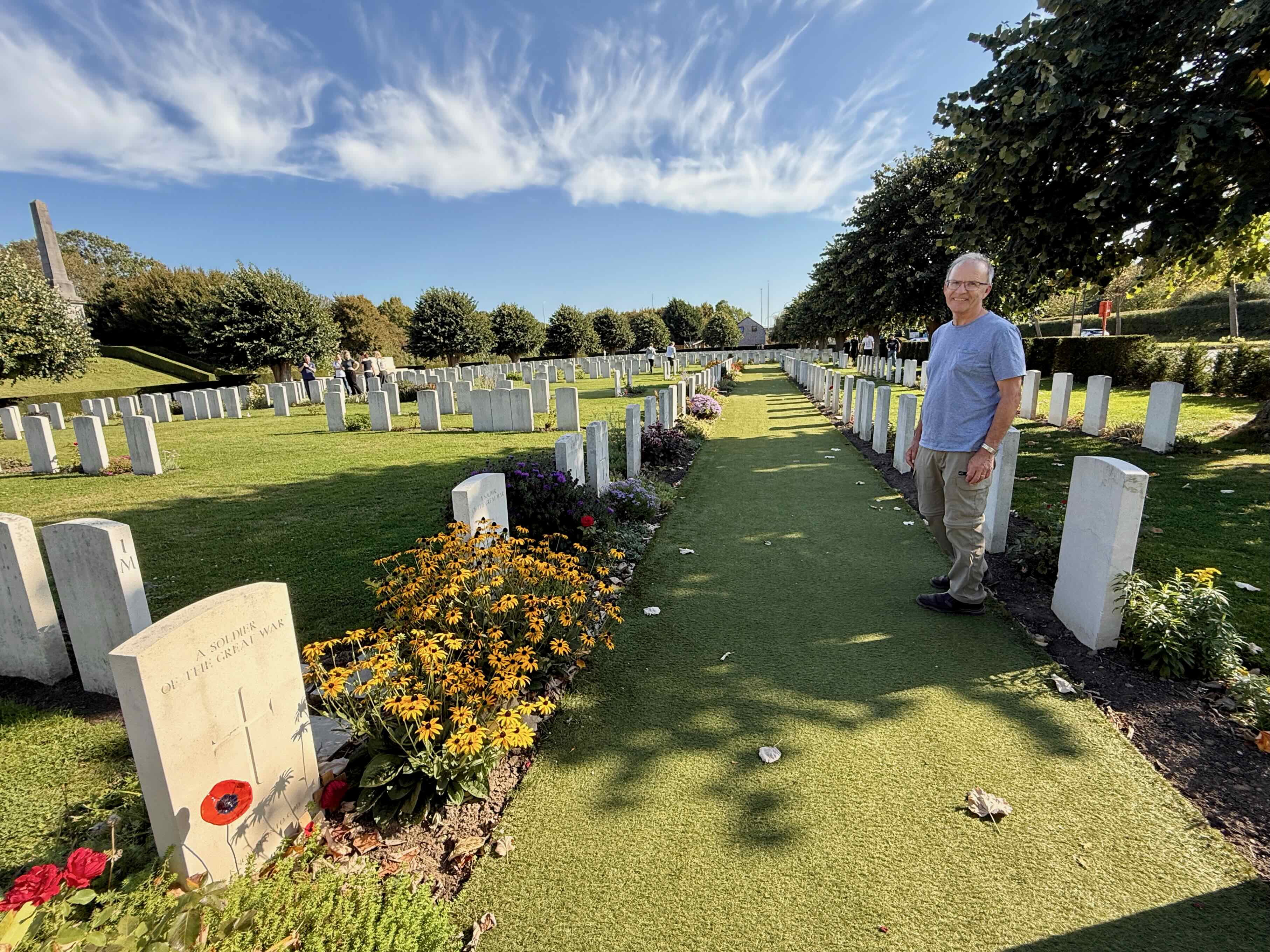 We pass some windmills on the way to the last cemetery we will visit on this trip.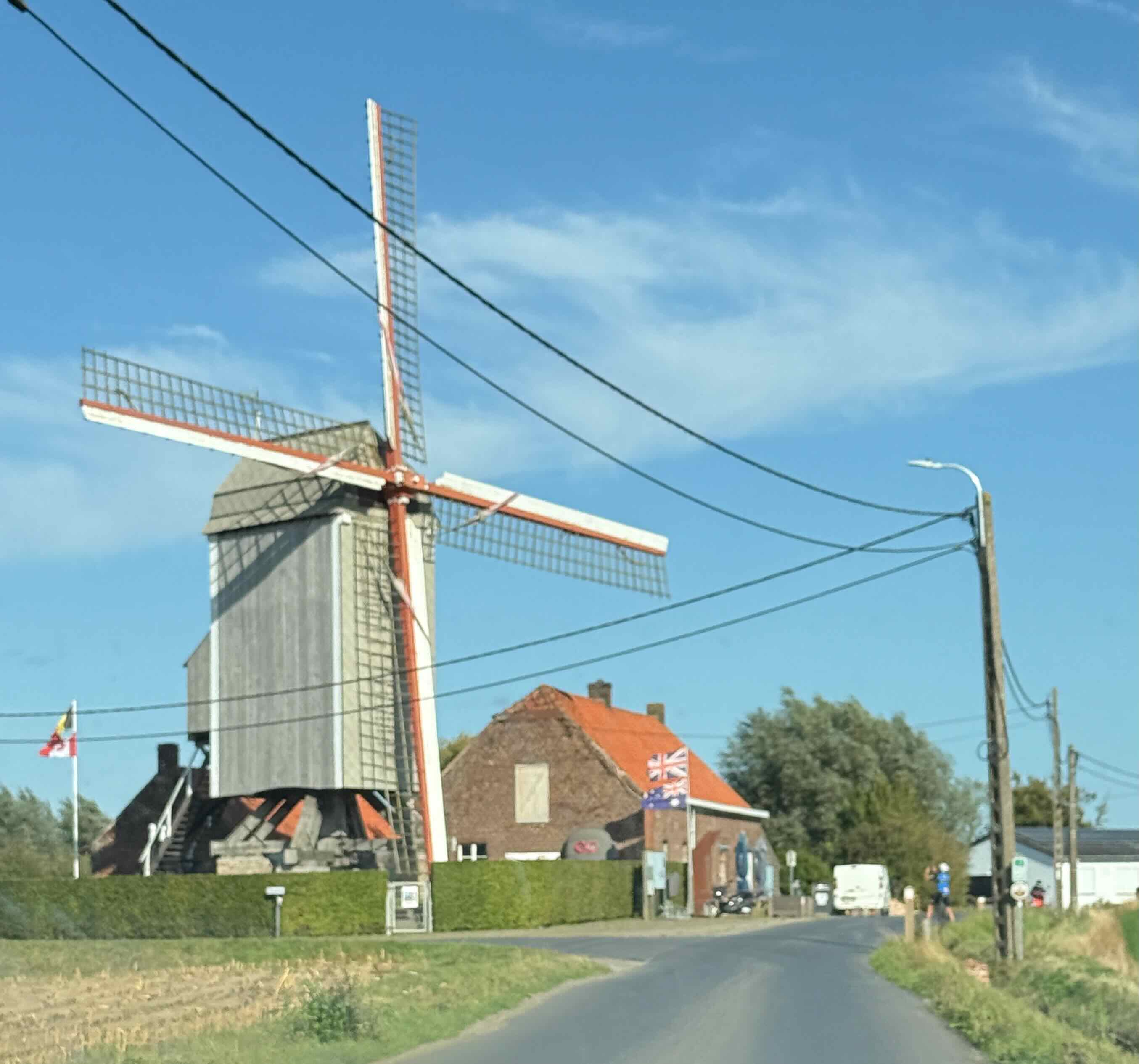
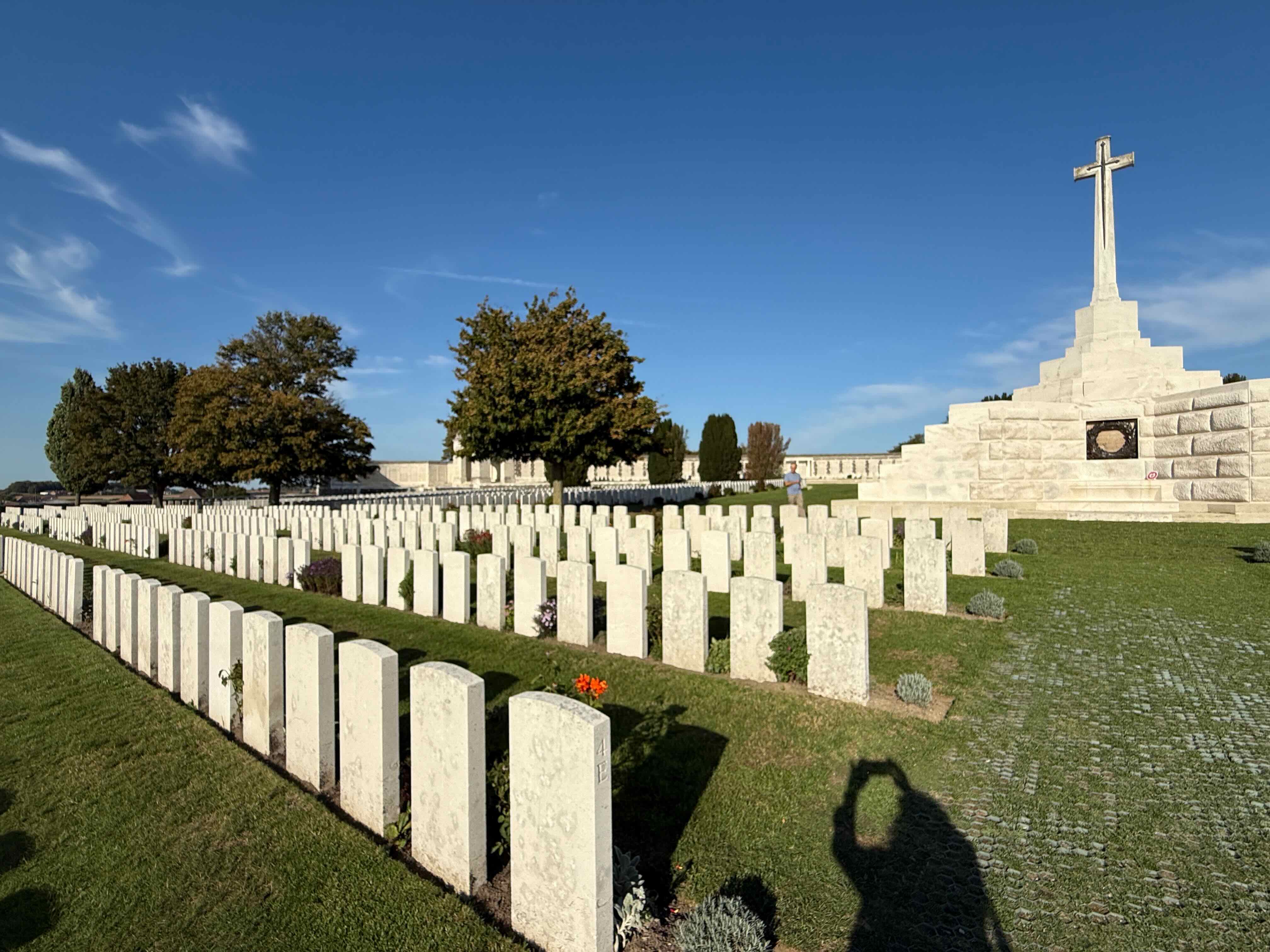
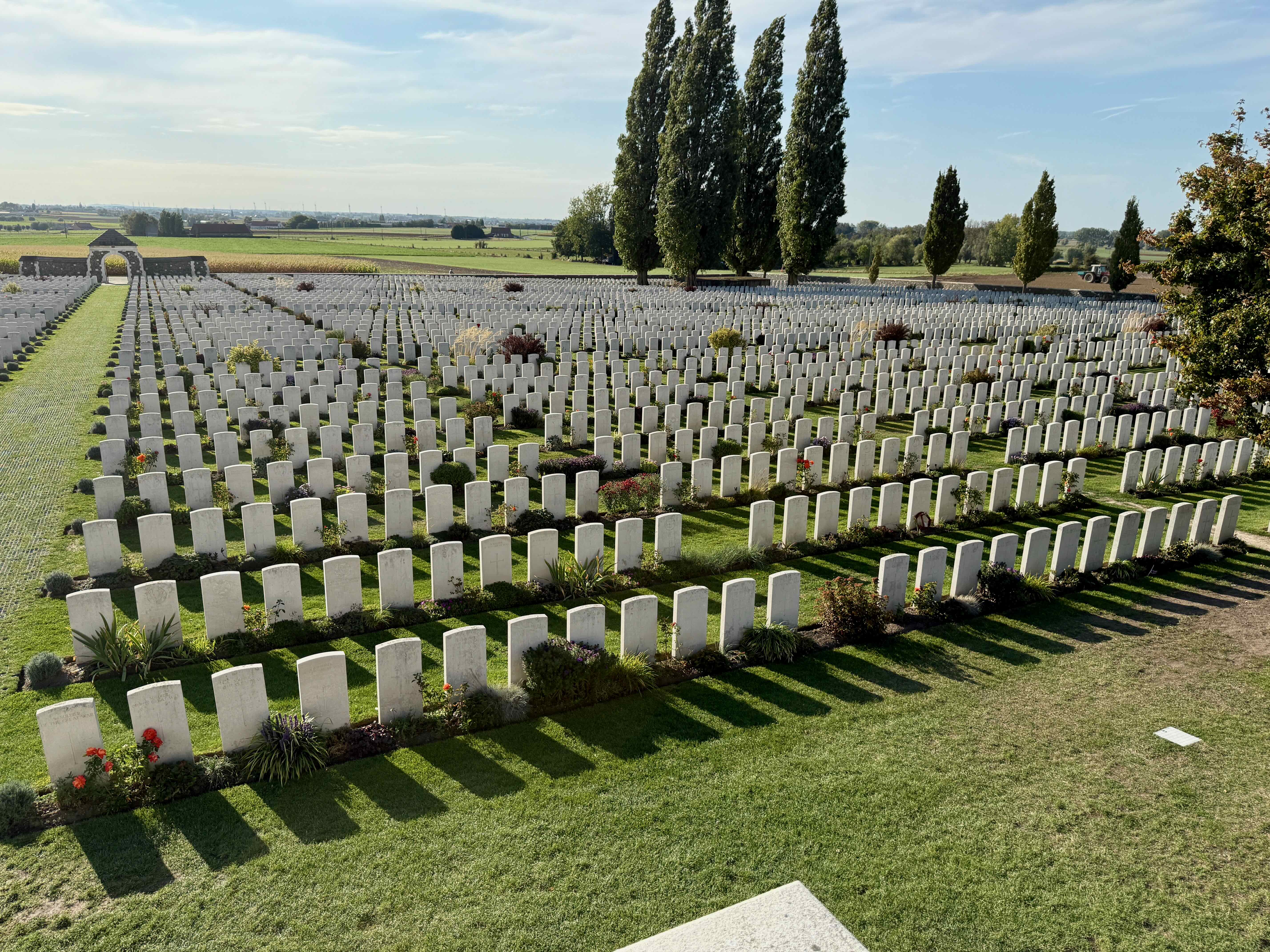
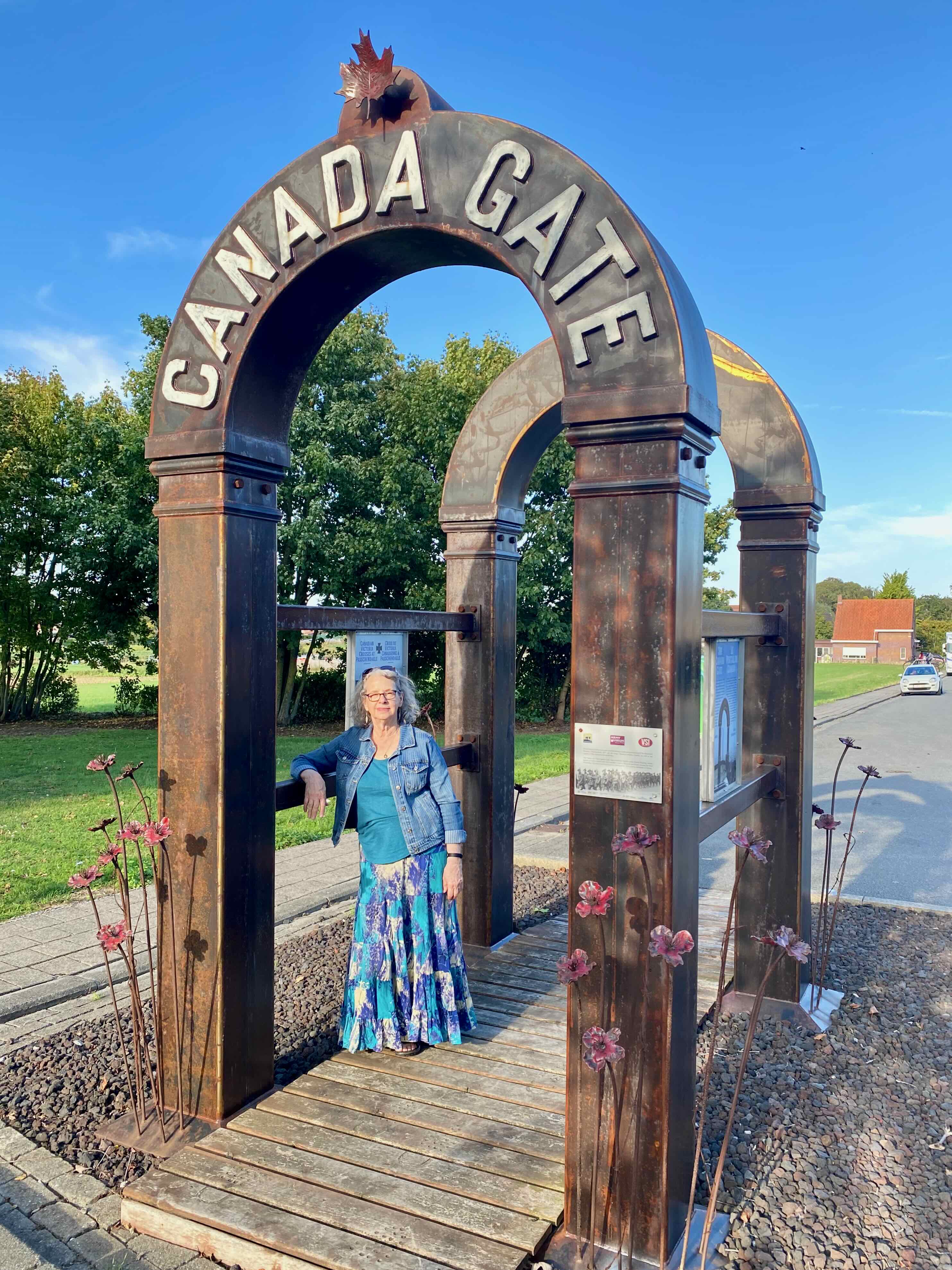
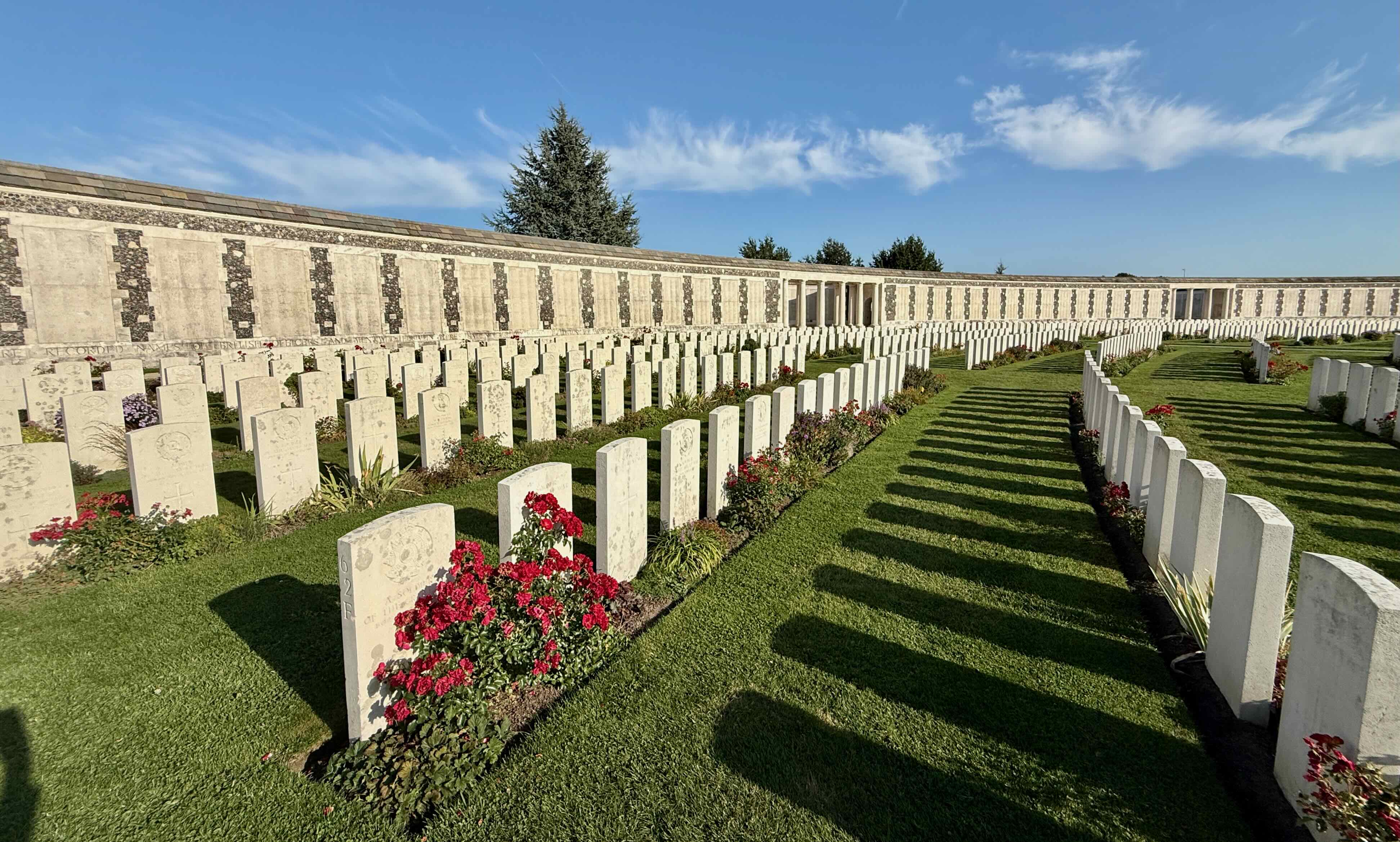 One last stop at the Canadian Memorial which commemorates the actions and sacrifices of the Canadian Corps during the First World War’s Battle of Passchendaele.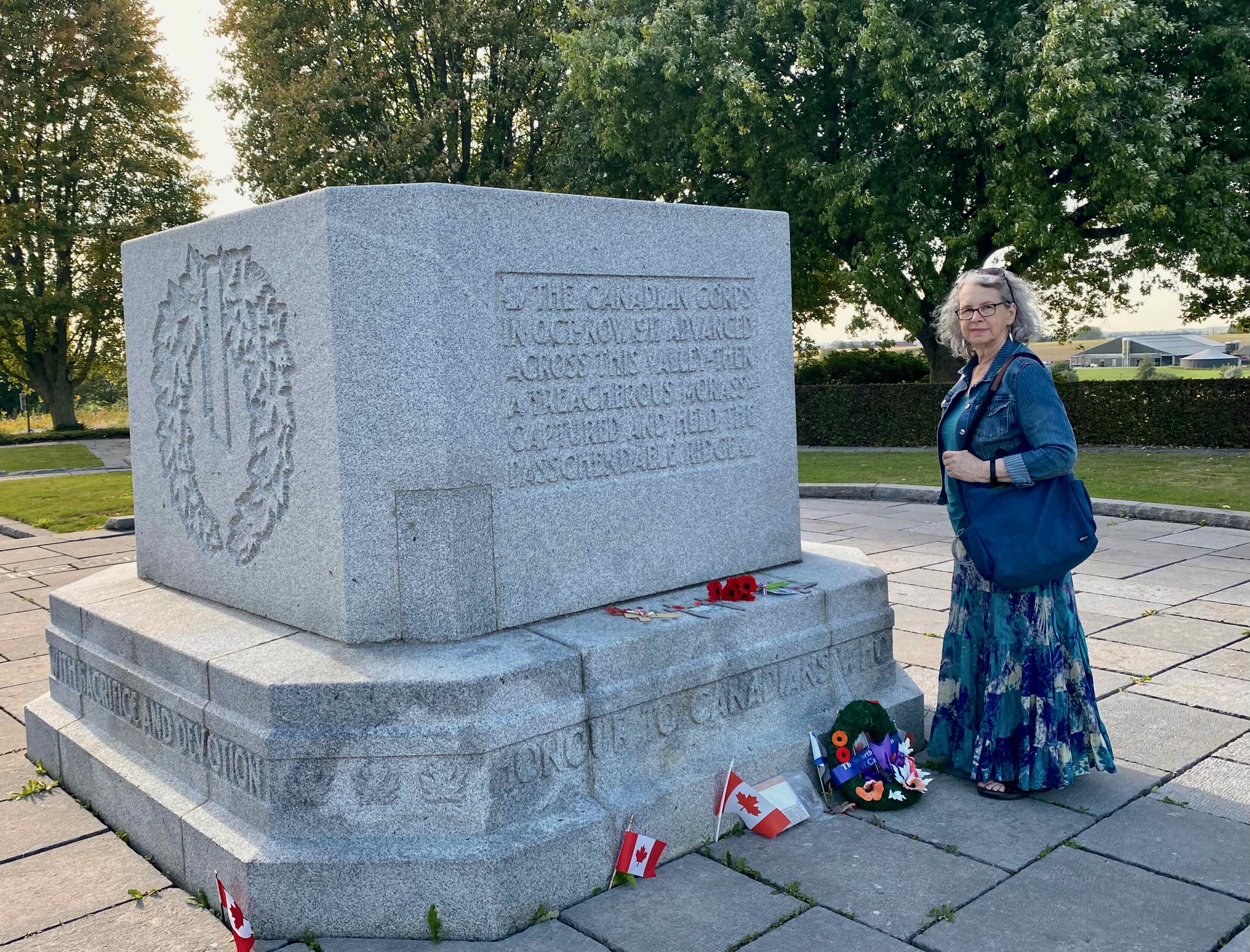
 Downstairs is an exhibit of Ukrainian Icons. Today the term «icon» refers primarily to paintings made with tempera (egg-bound pigments) on a prepared wood panel. Icons are also characterised by the use of gold leaf. Museums around the world are safekeeping artwork from the Uraine until the war ends. The Louvre-Lens has four of Ukraine’s Icon paintings on display. This is The Last Judgement by Theodore Poulakis, 1661.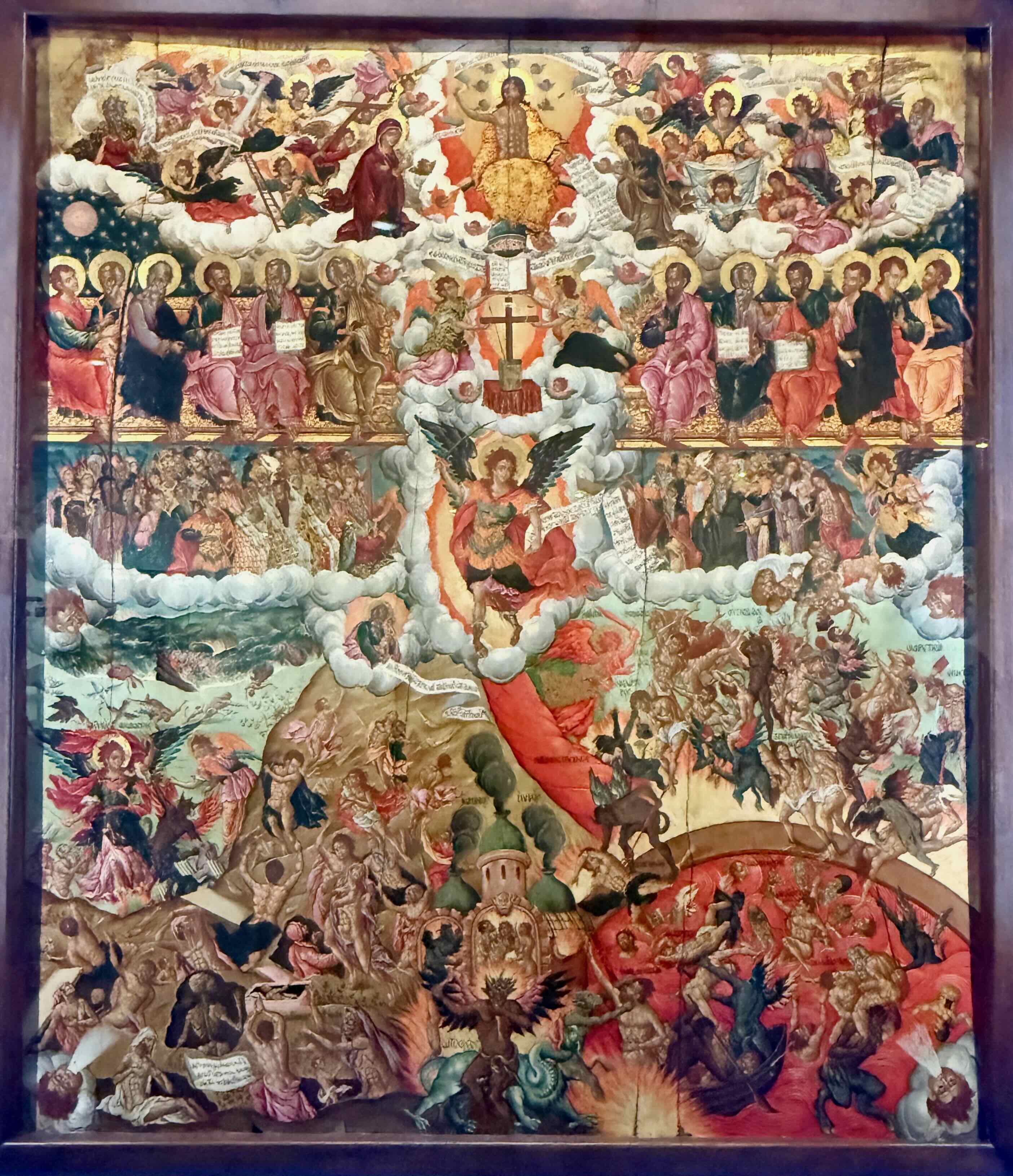
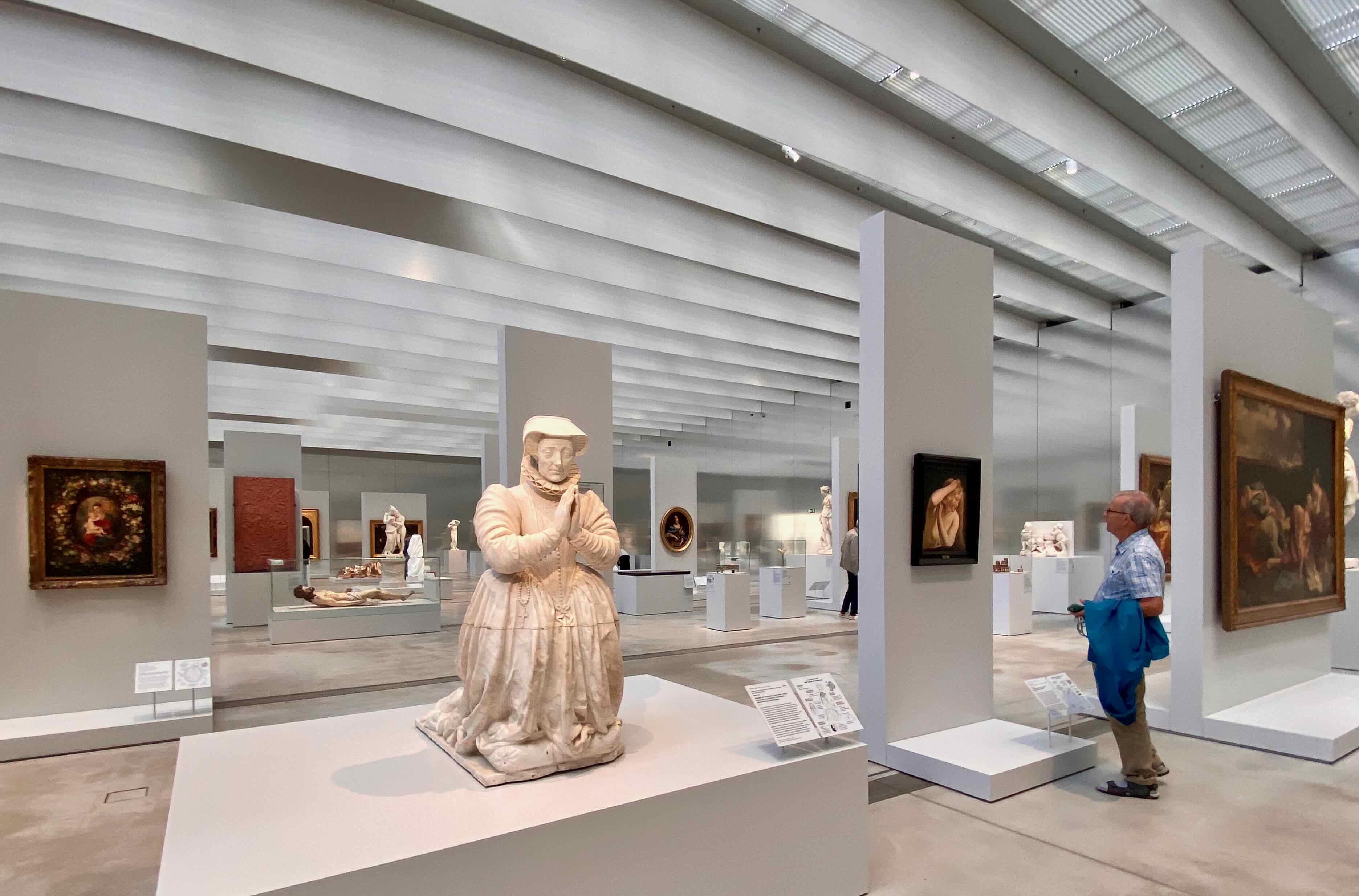
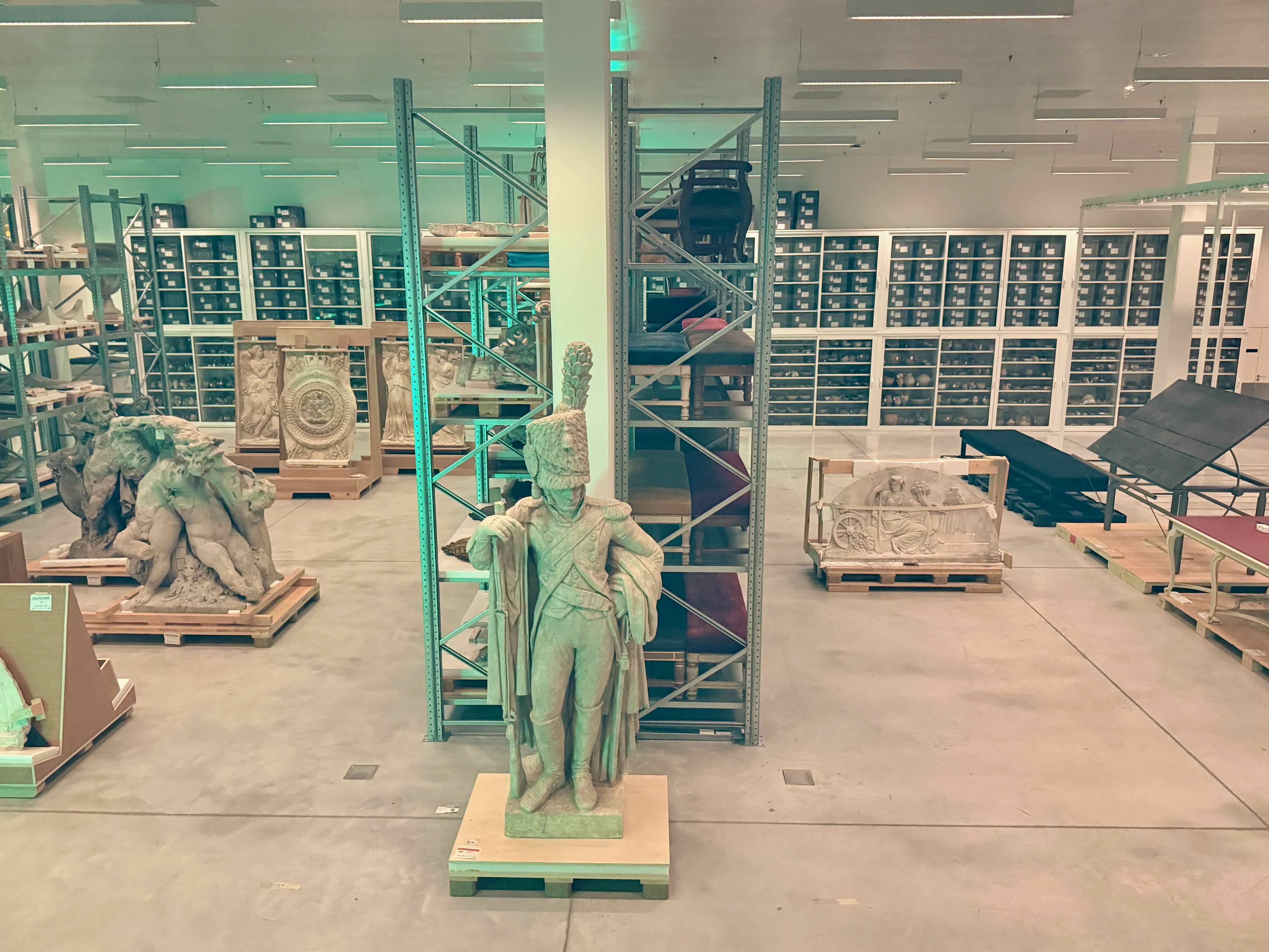 The main exhibit at the museum is The Gallery of Time.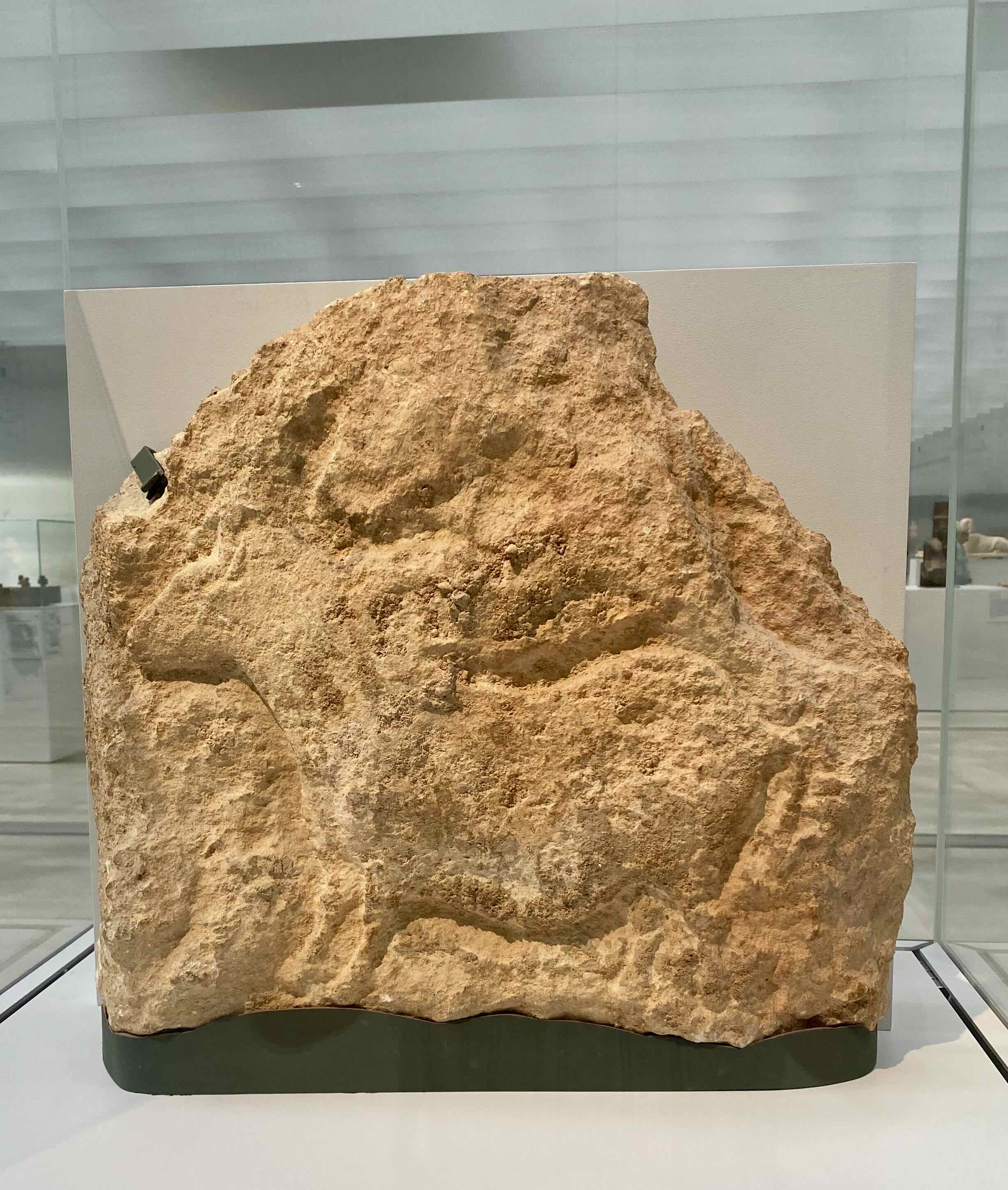


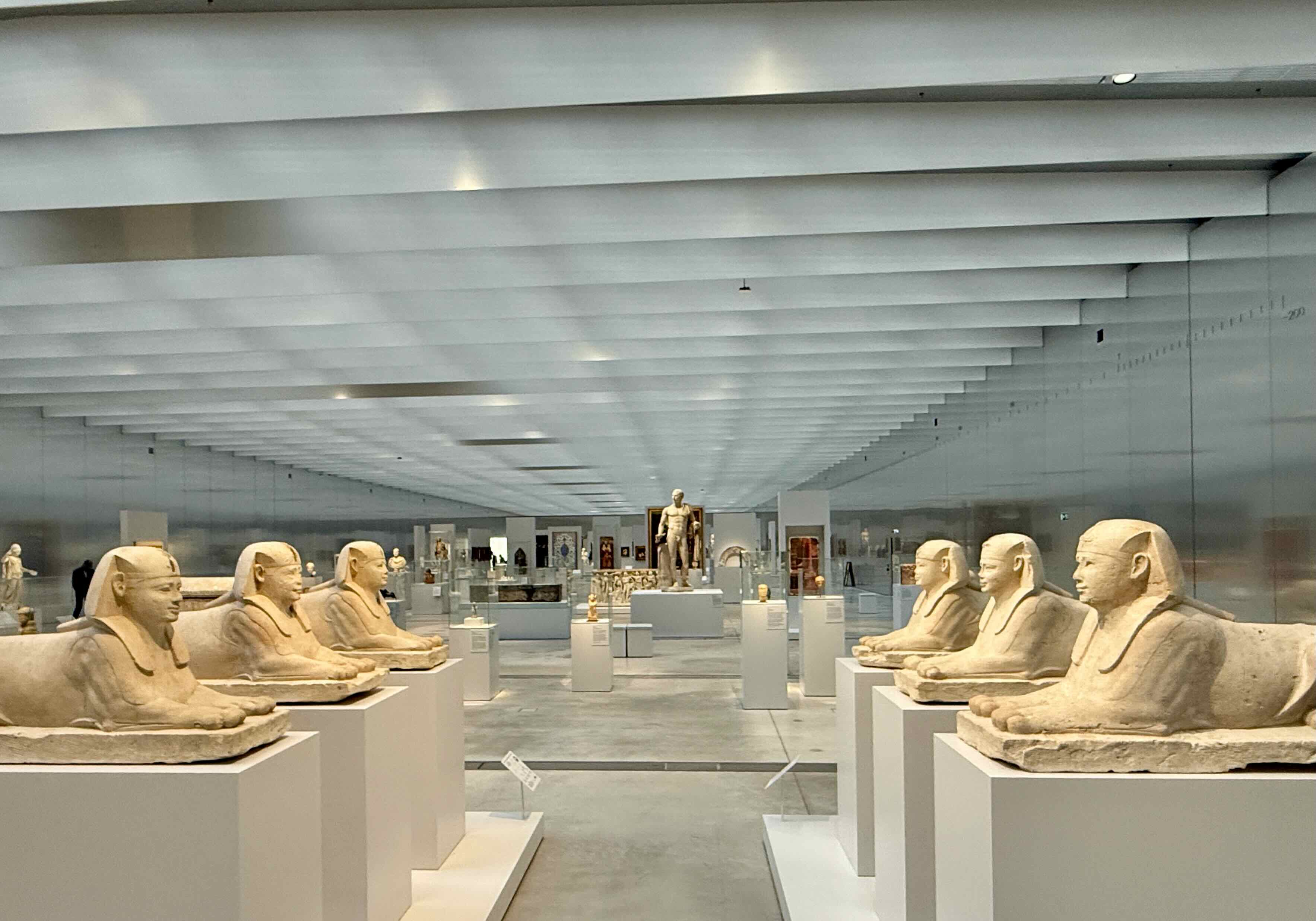
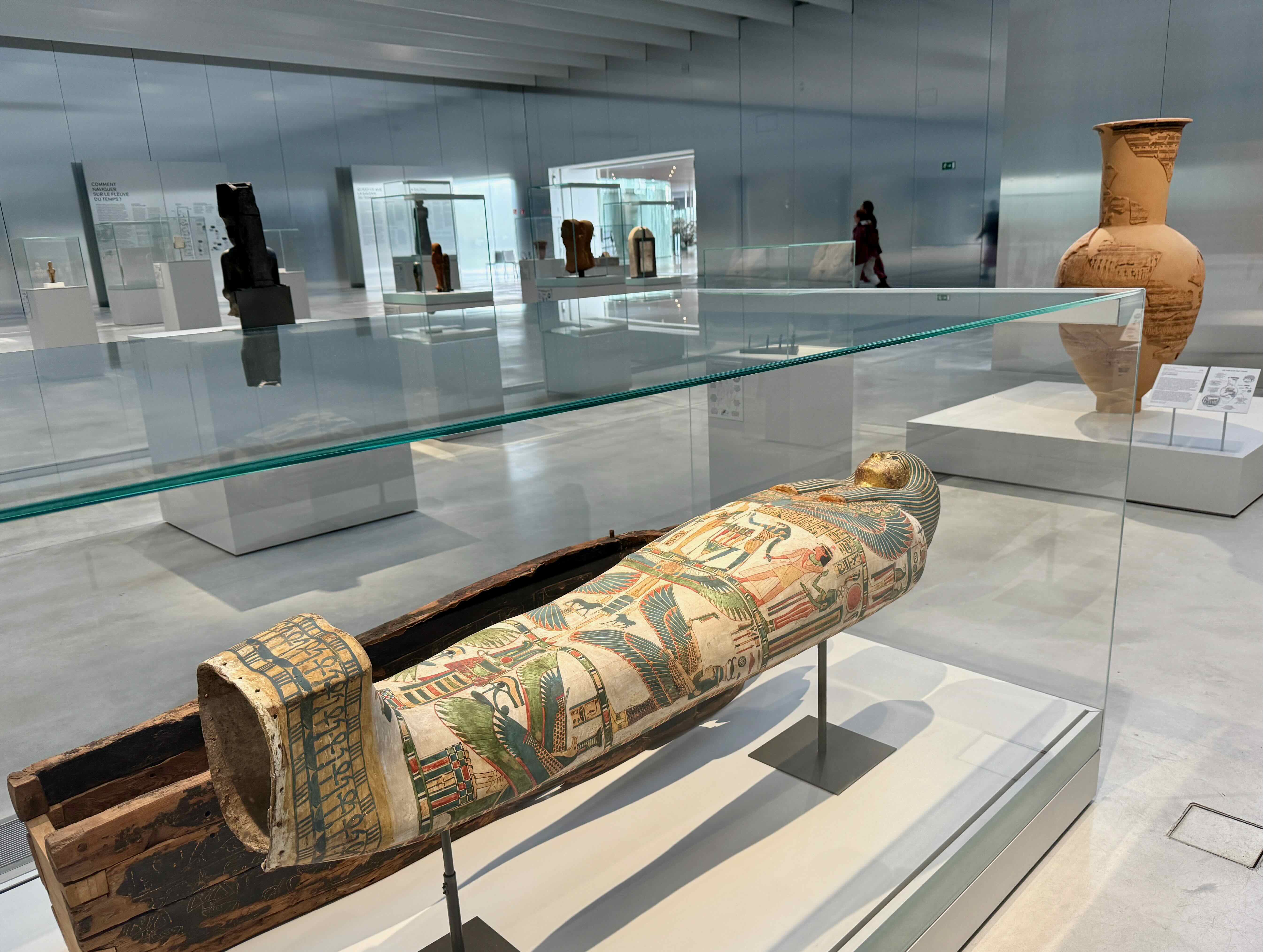
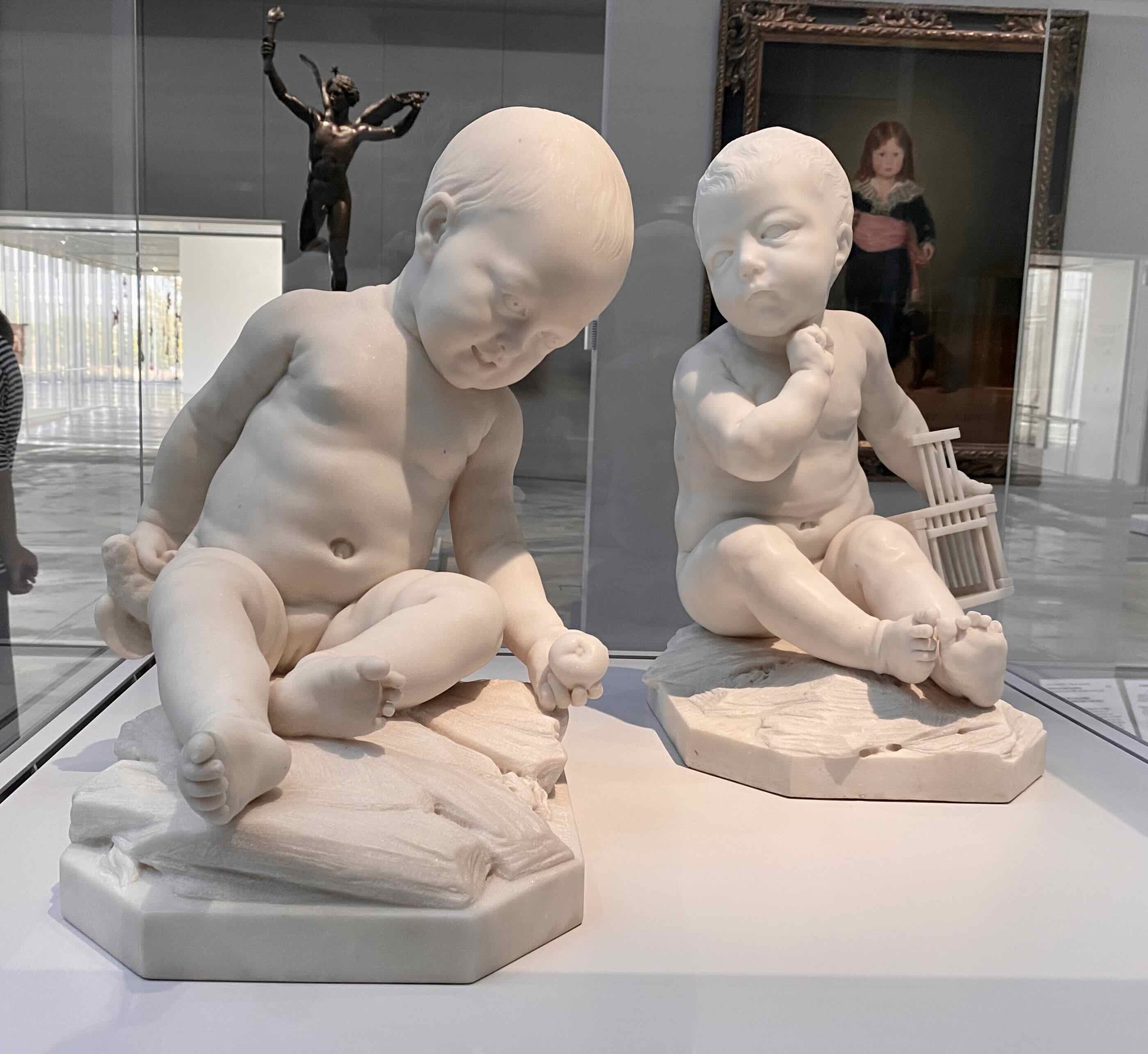
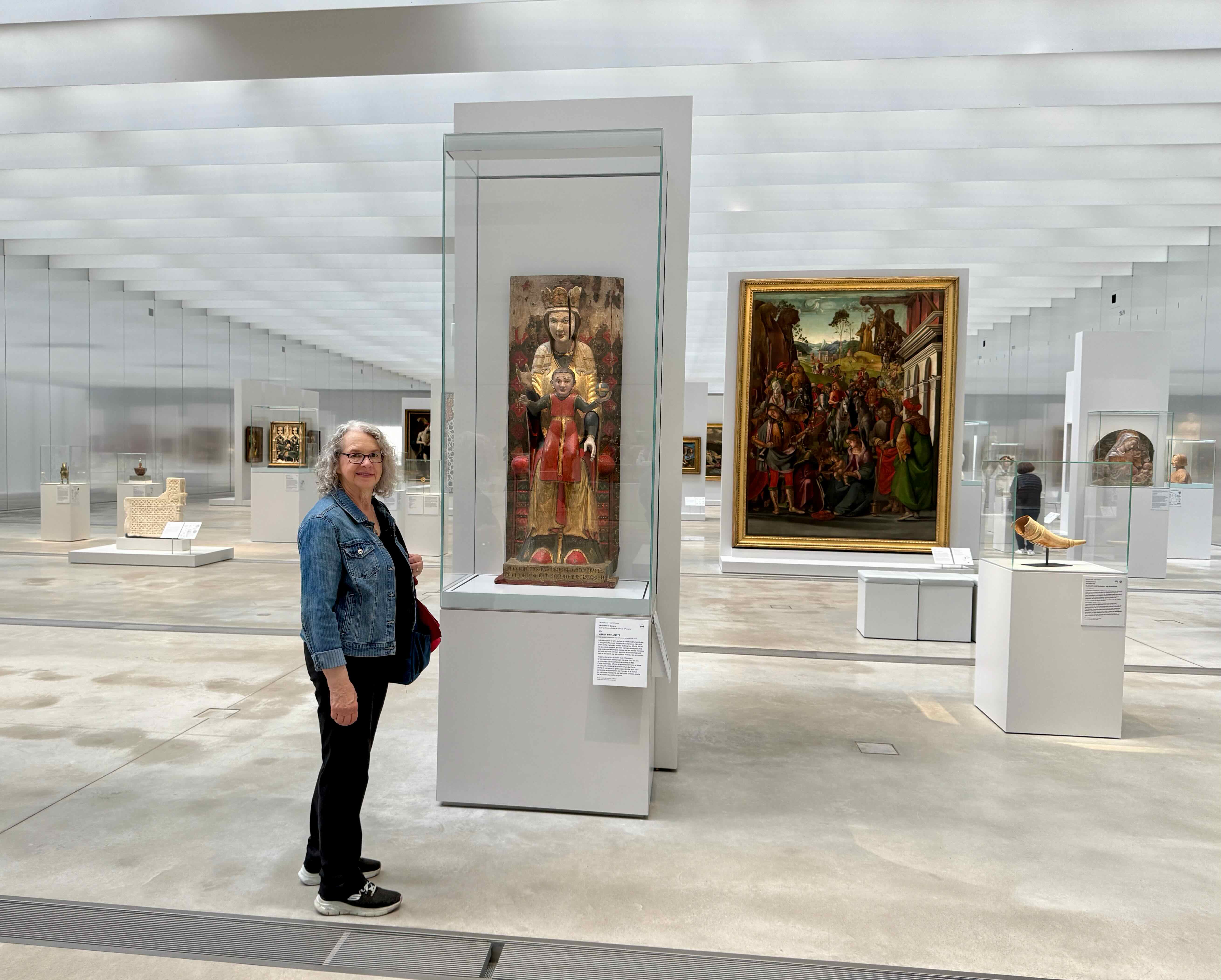 And here, in no particular order, are a few of the pieces that we found especially interesting.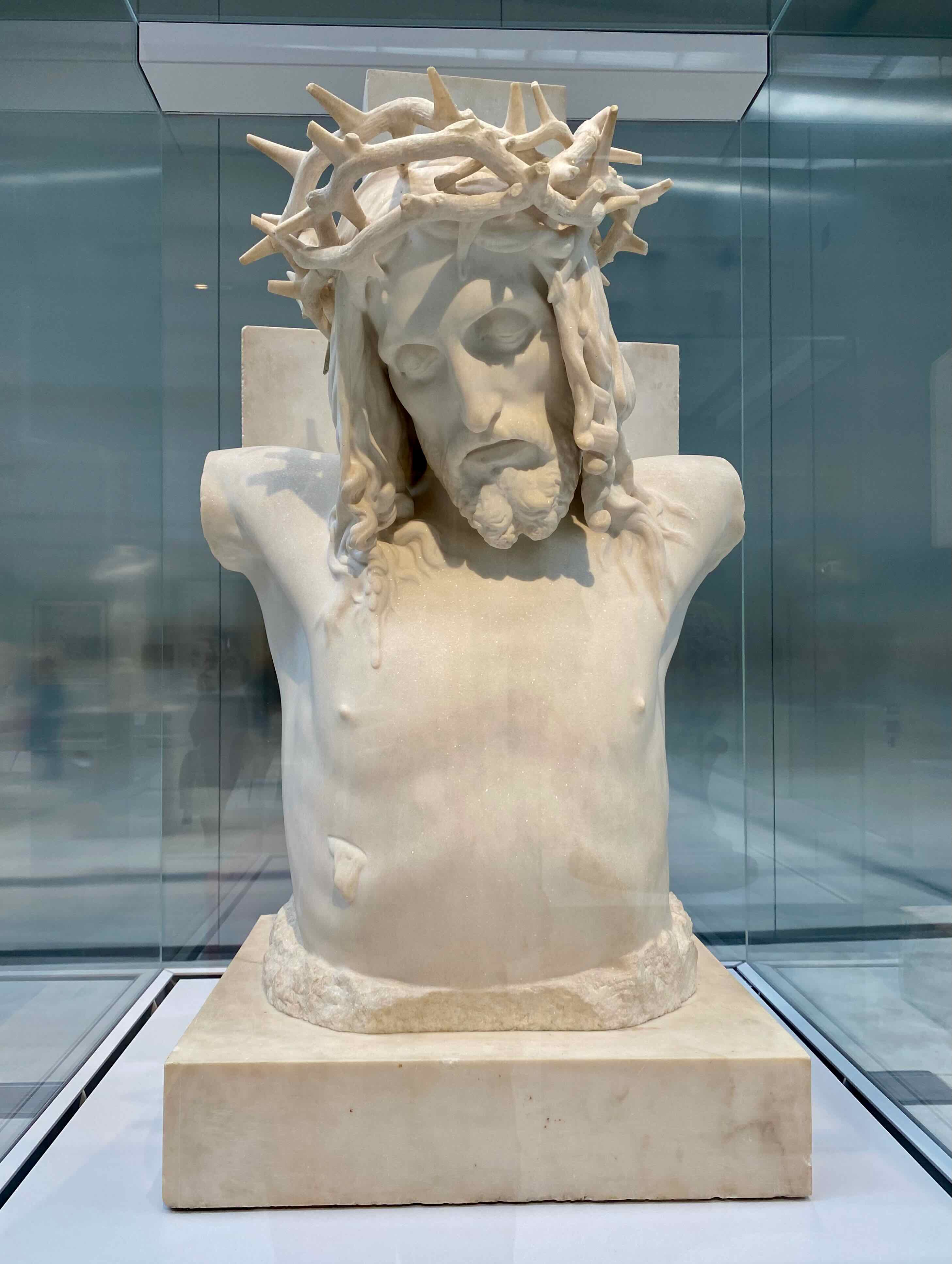
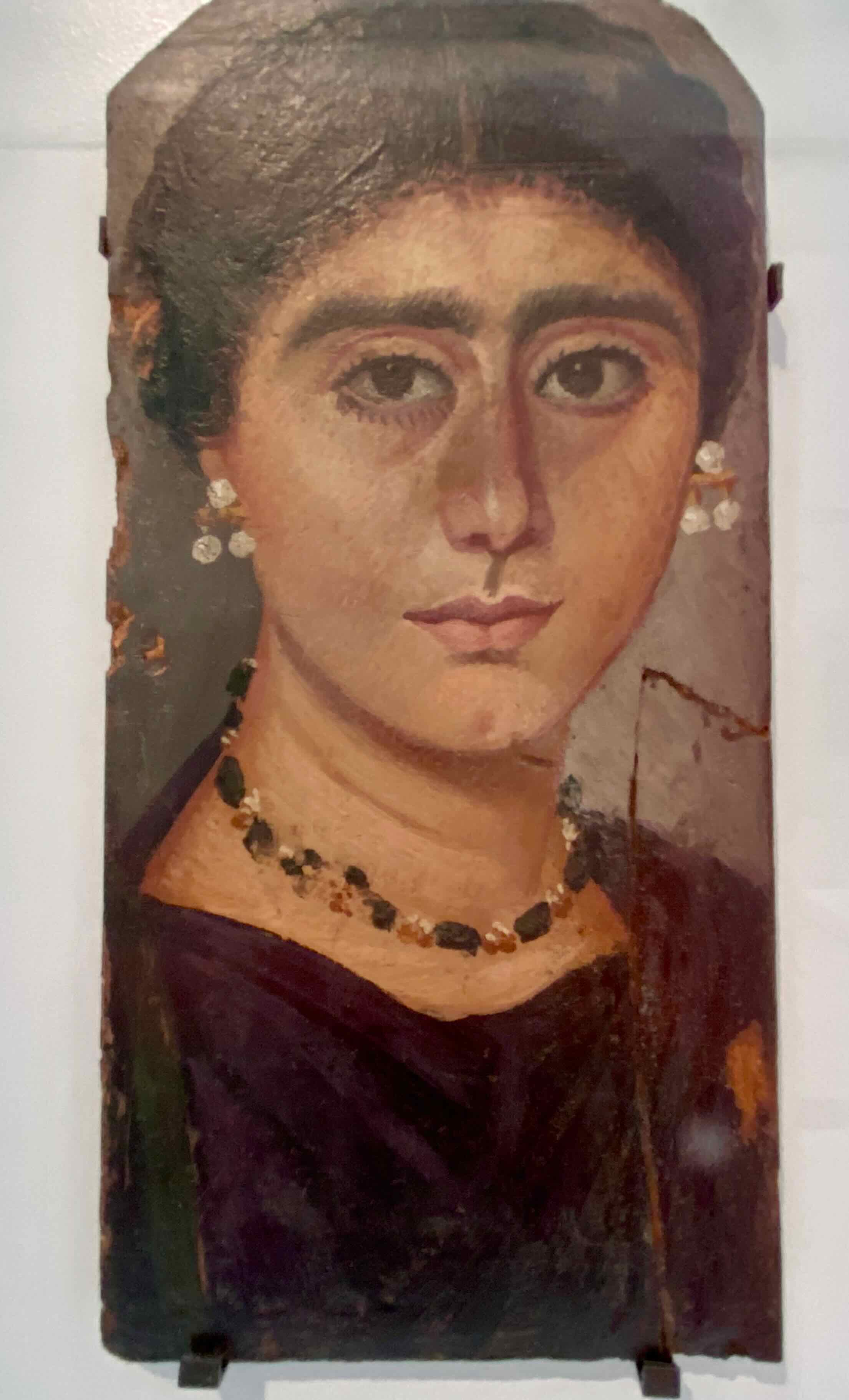
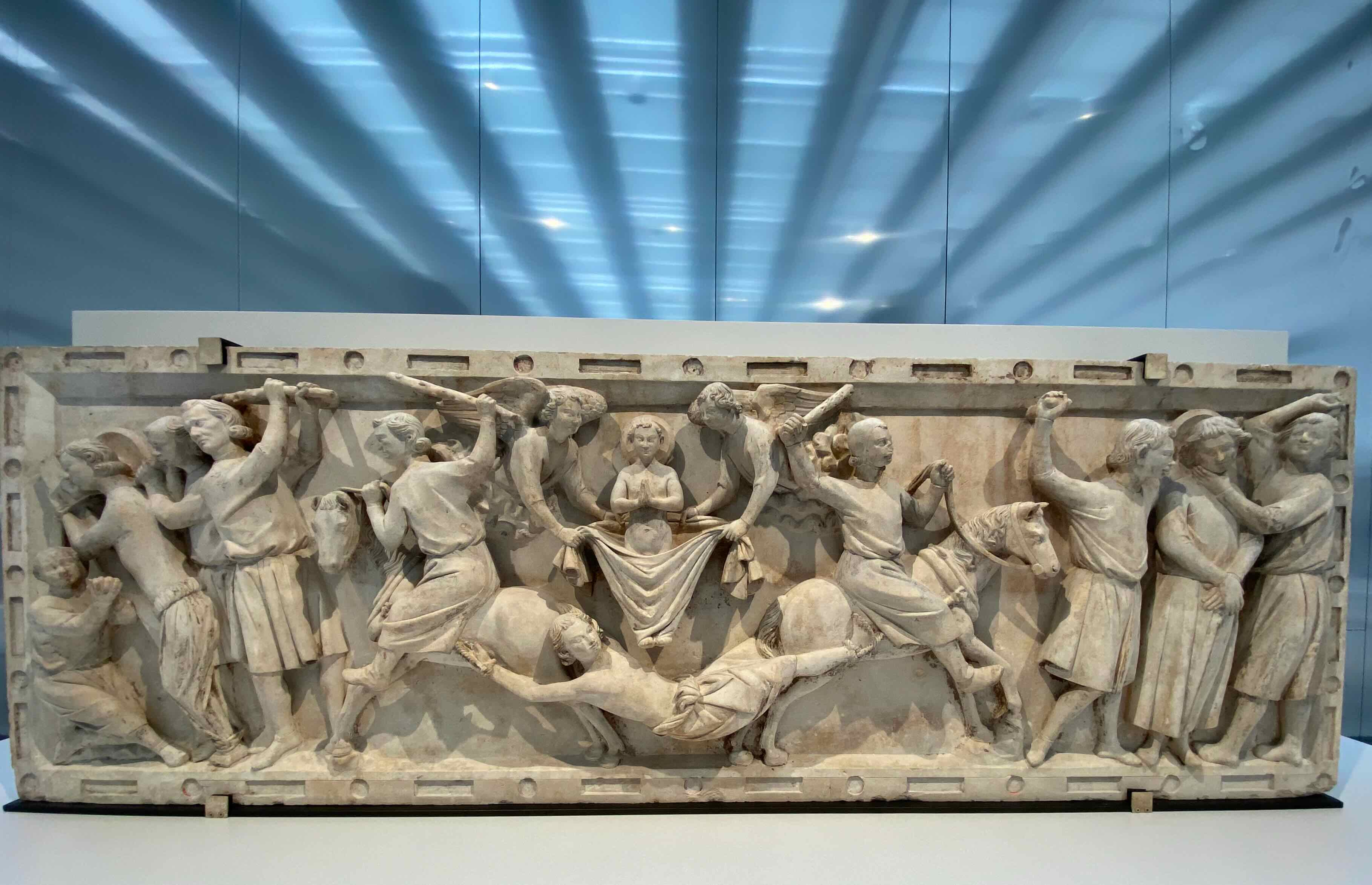 Egyptian Tomb Portrait of a Woman c. 150 AD. I love these tomb paintings. We saw several of them years ago when we visited Egypt.
  Pieter Boel, c.1669-1671 Triple study of an Ostrich.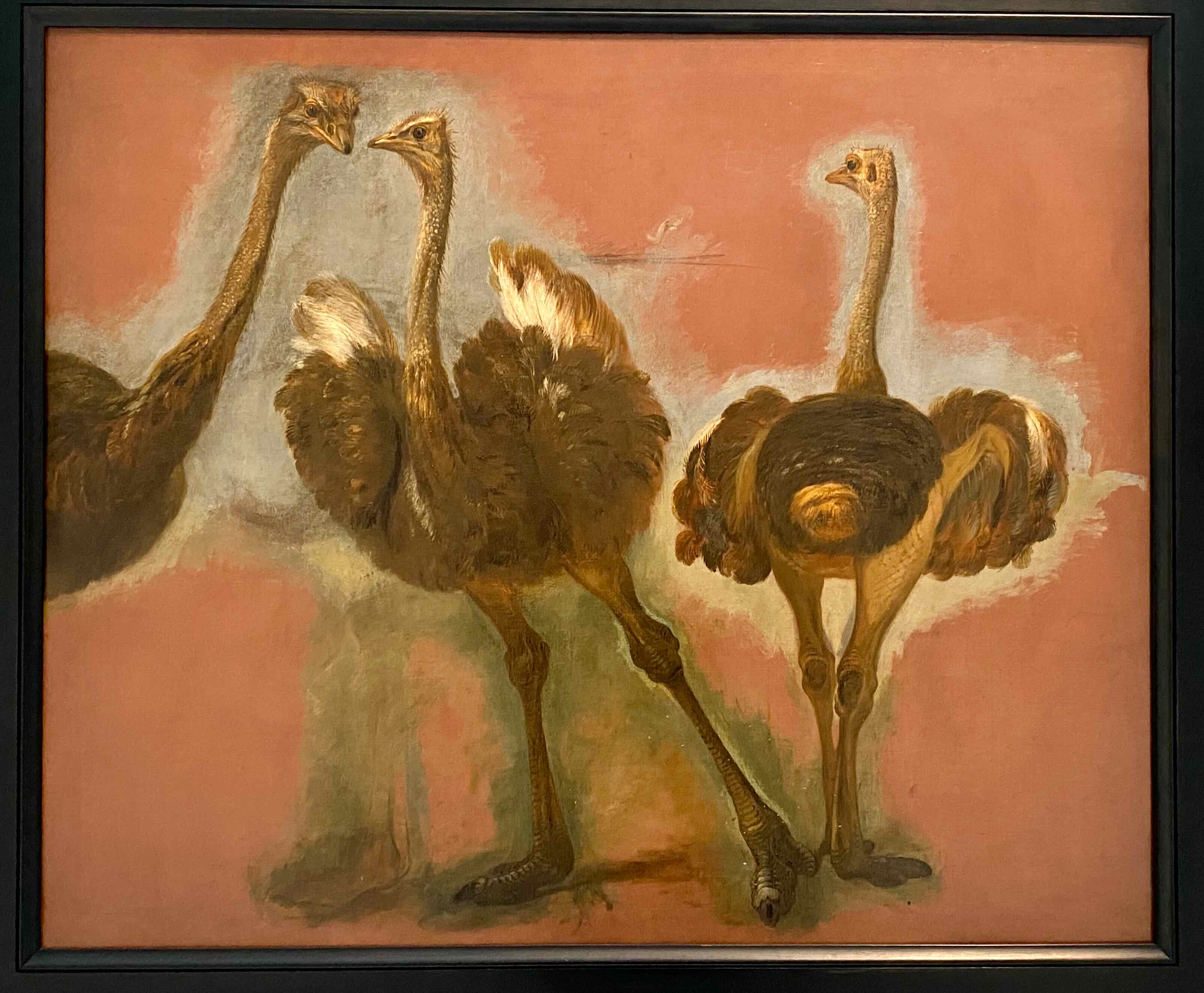
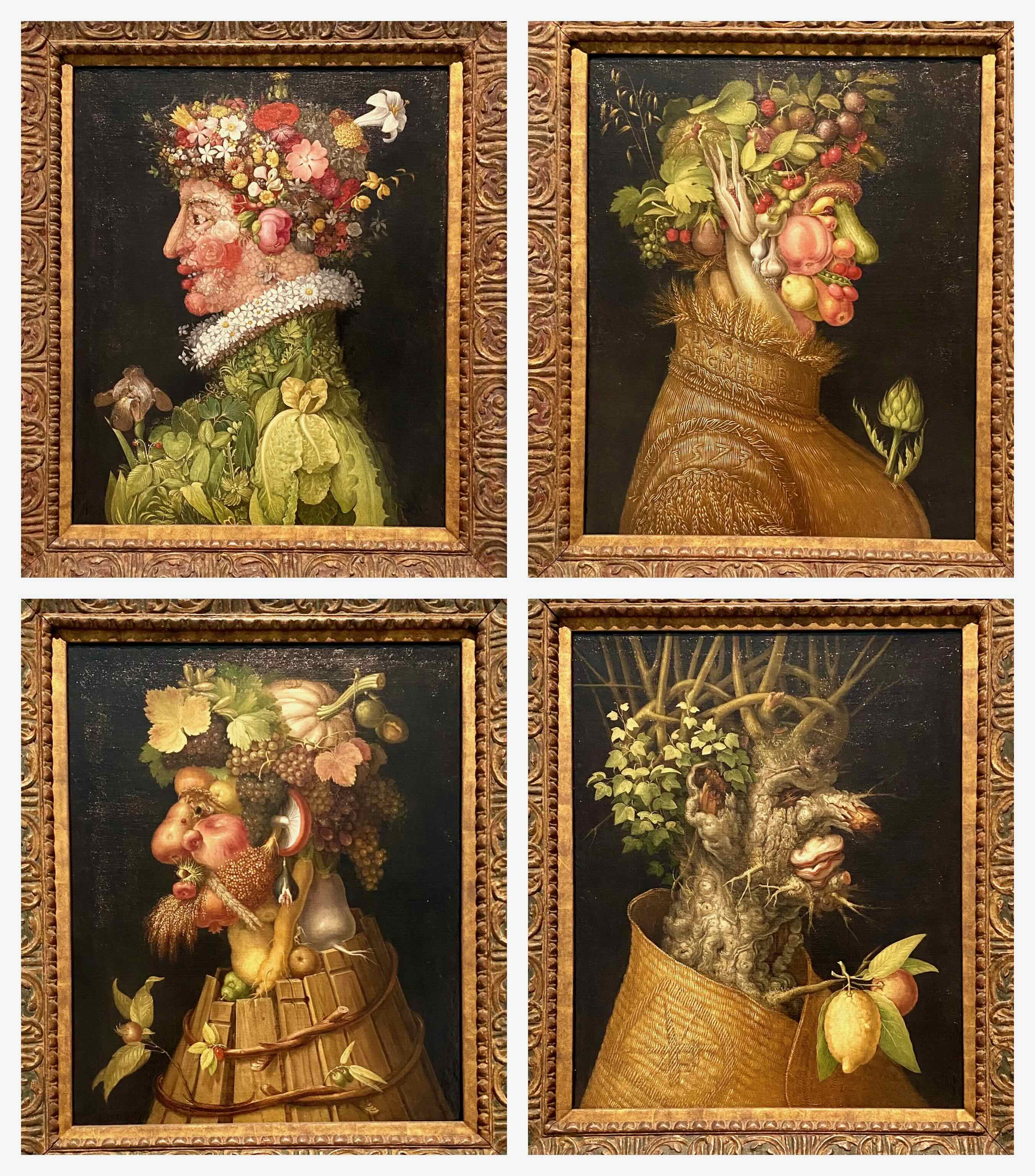
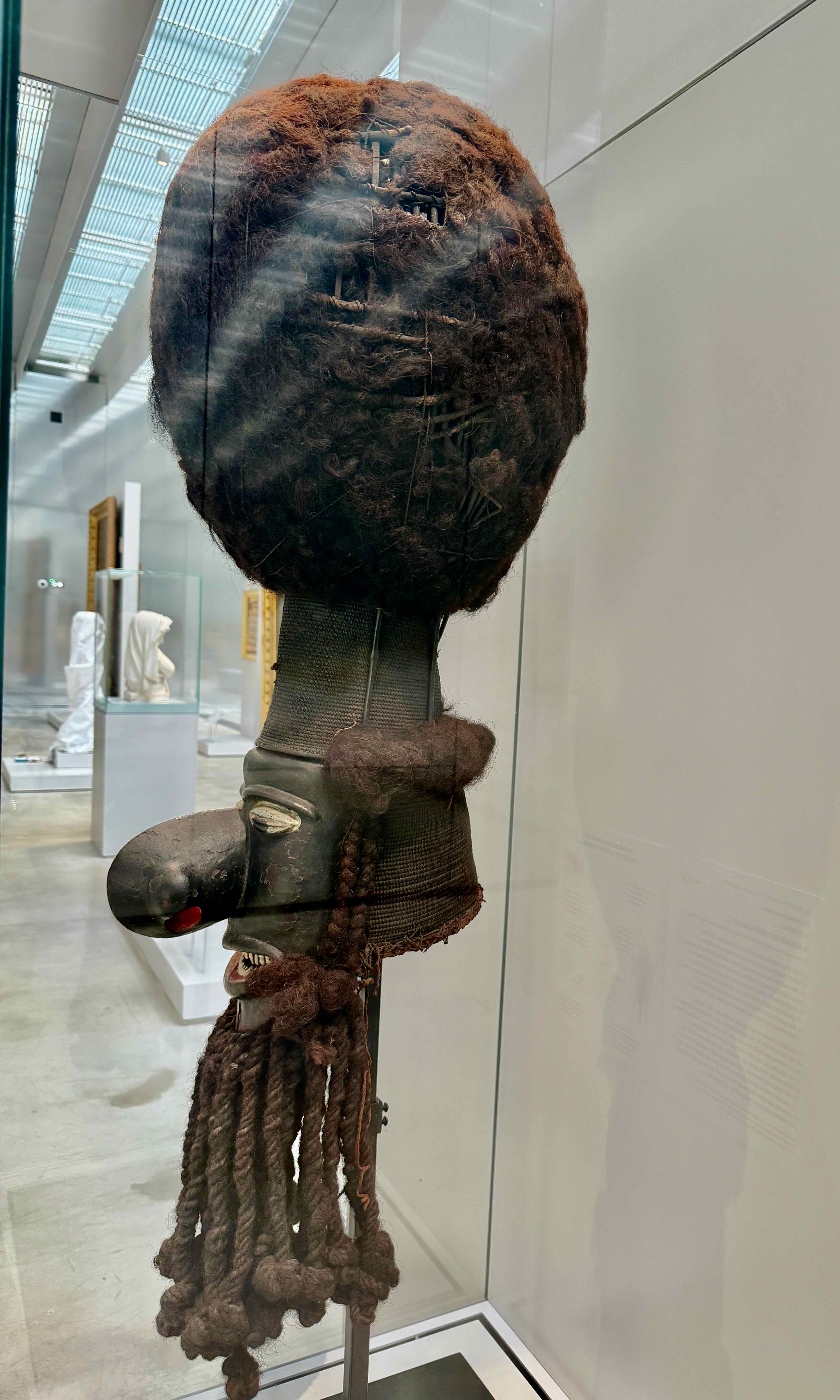
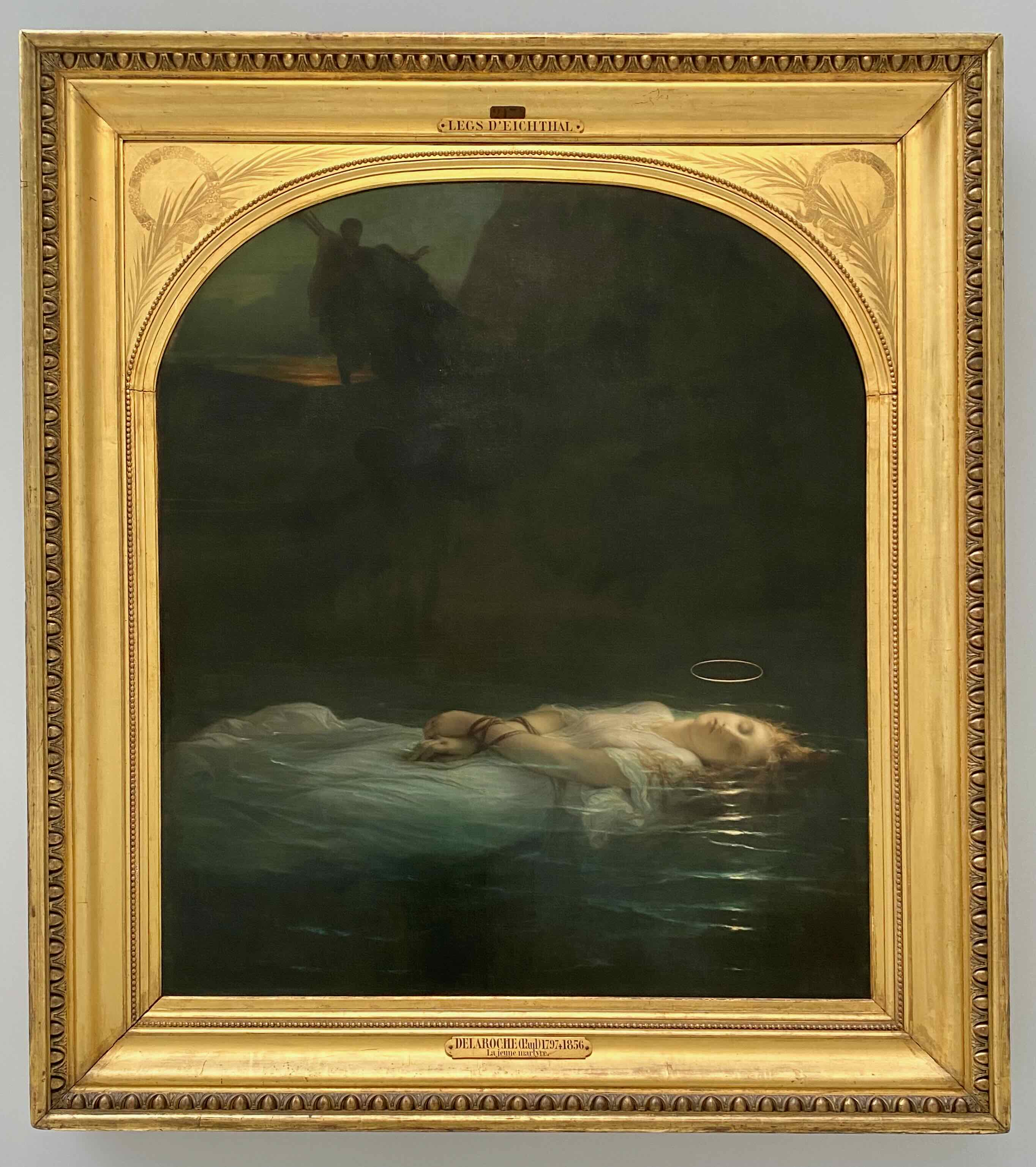
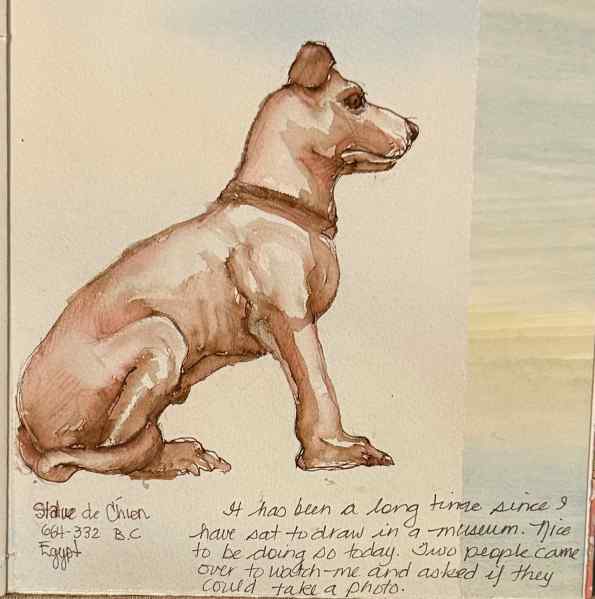
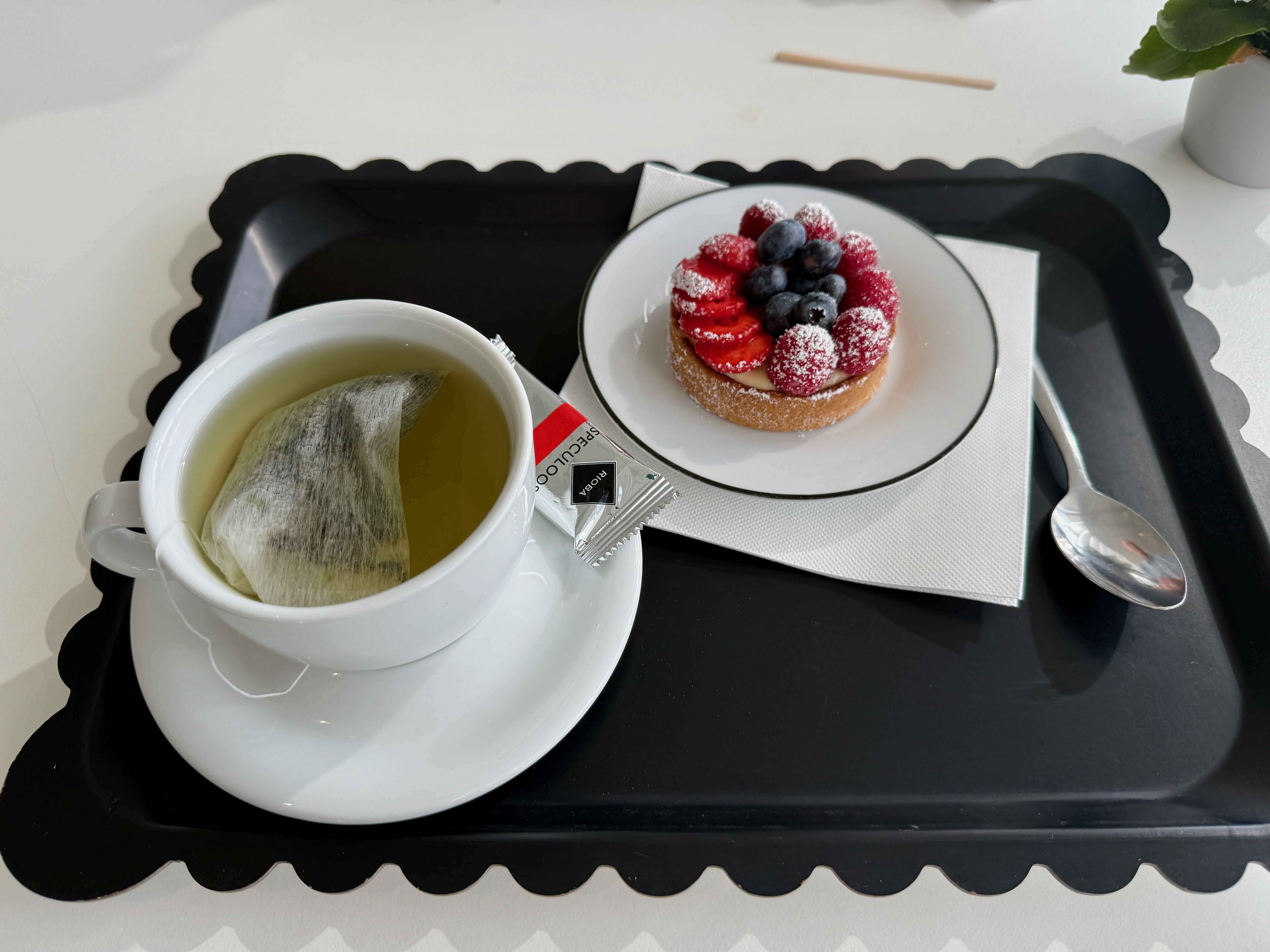 I asked how big the tea was and was assured that it was very big…well, this rather ‘very large” cup of tea was €5.50! Bob finds a spot to read and I go back to the gallery to do some sketching. They aren’t the best sketches but I had such an enjoyable time doing them. Two people asked if they could take a photo…people are always interested in what I am drawing.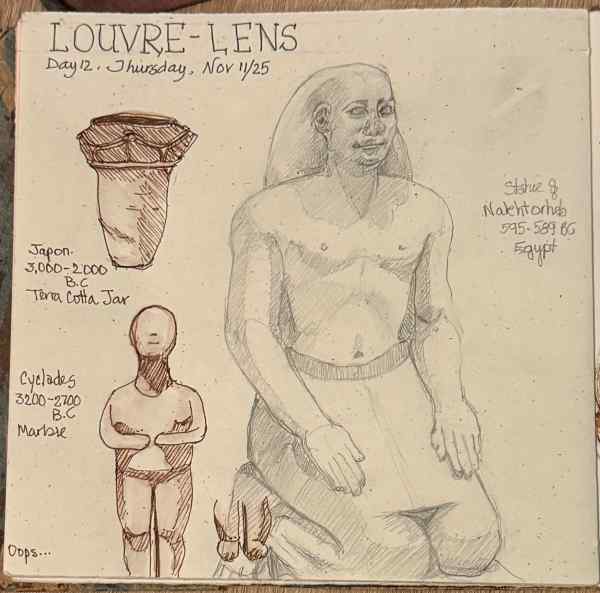

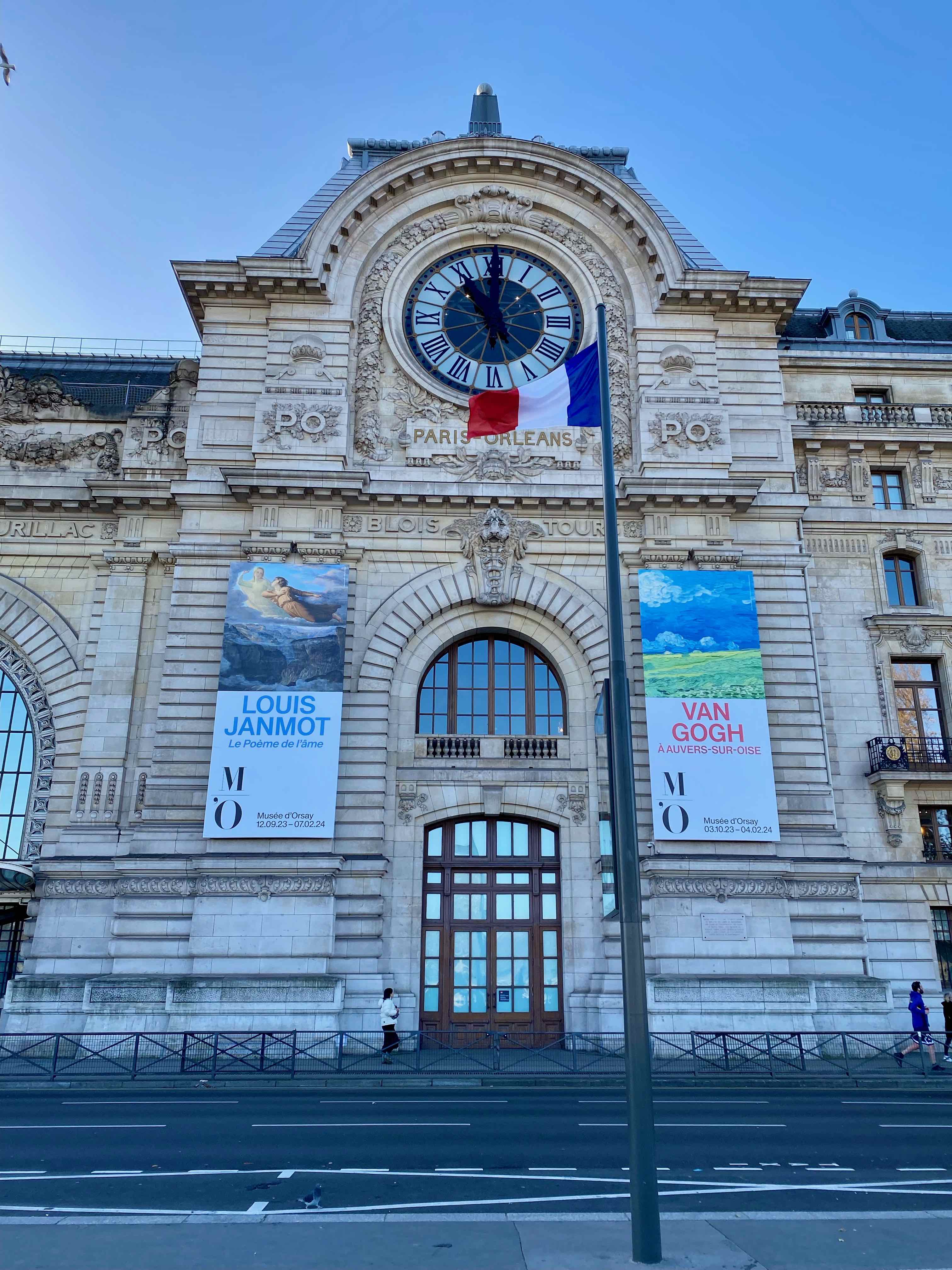
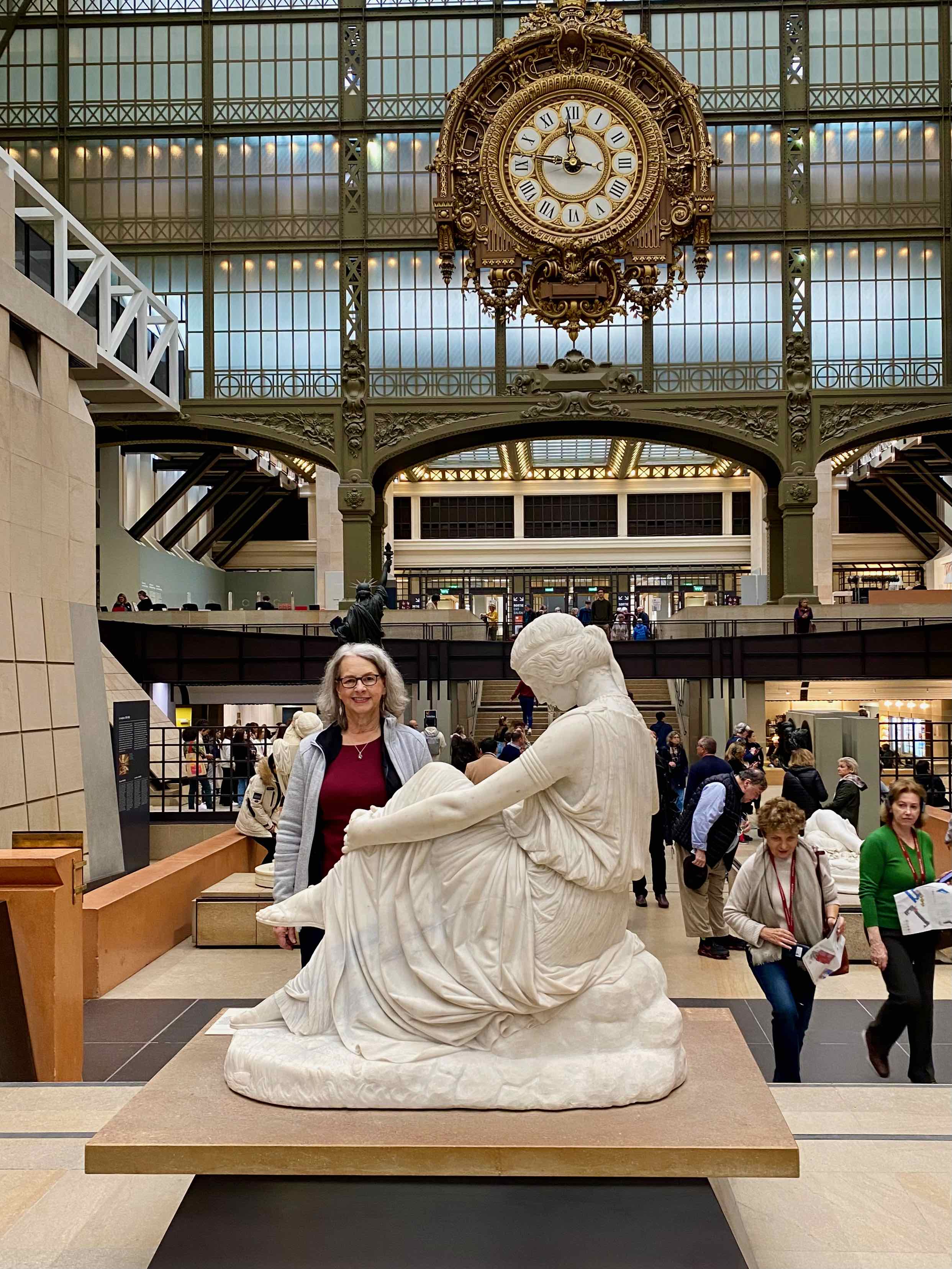
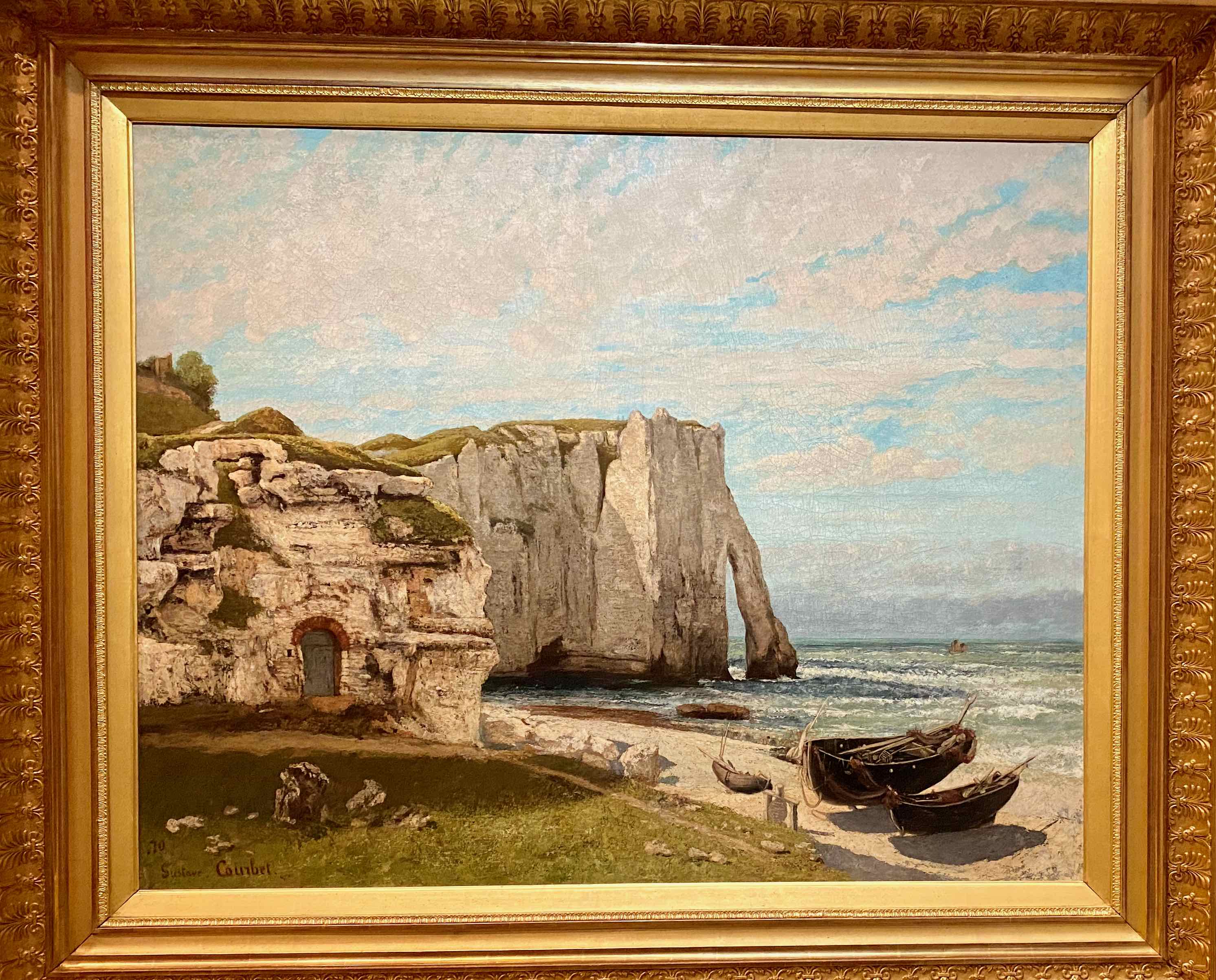
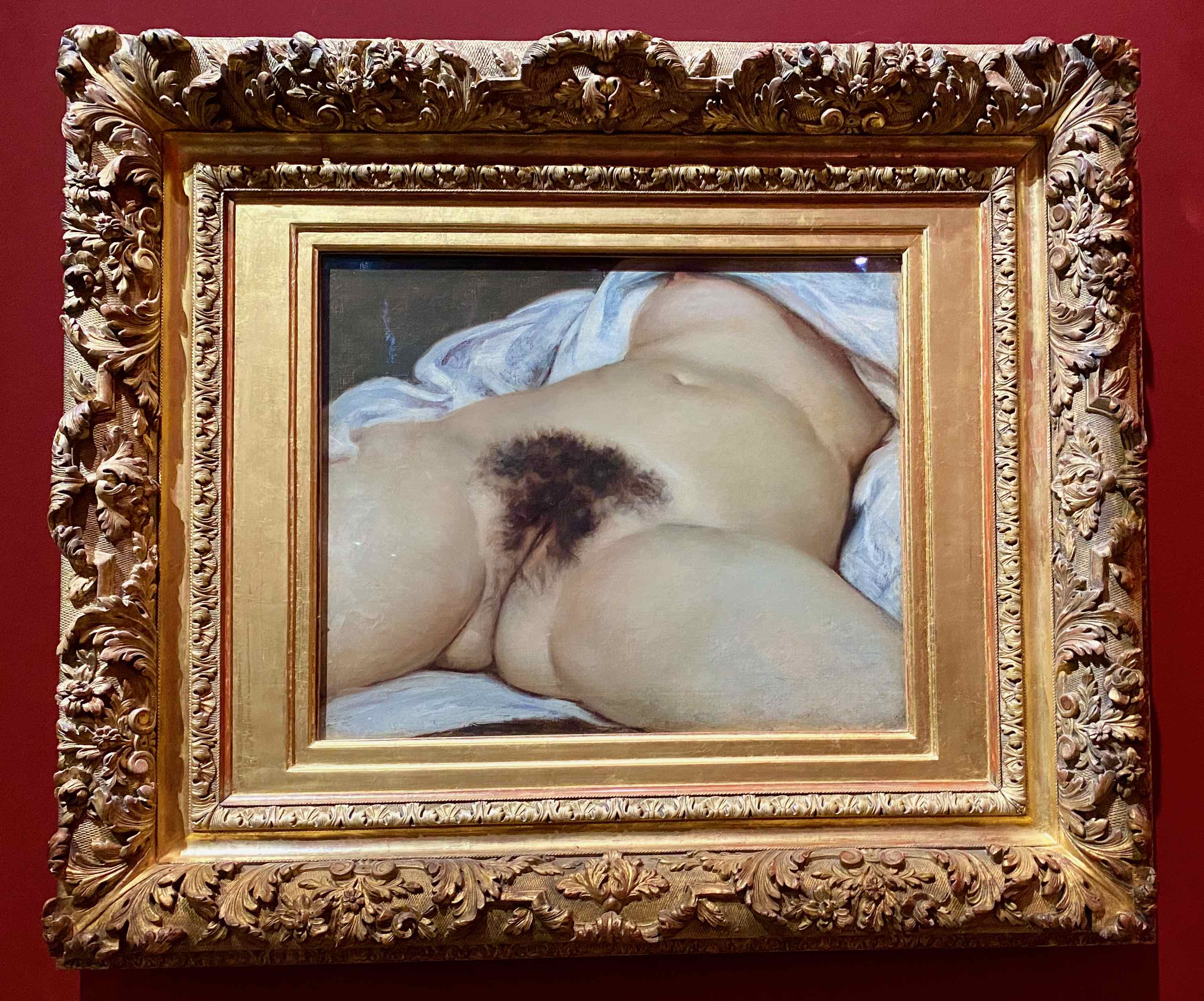

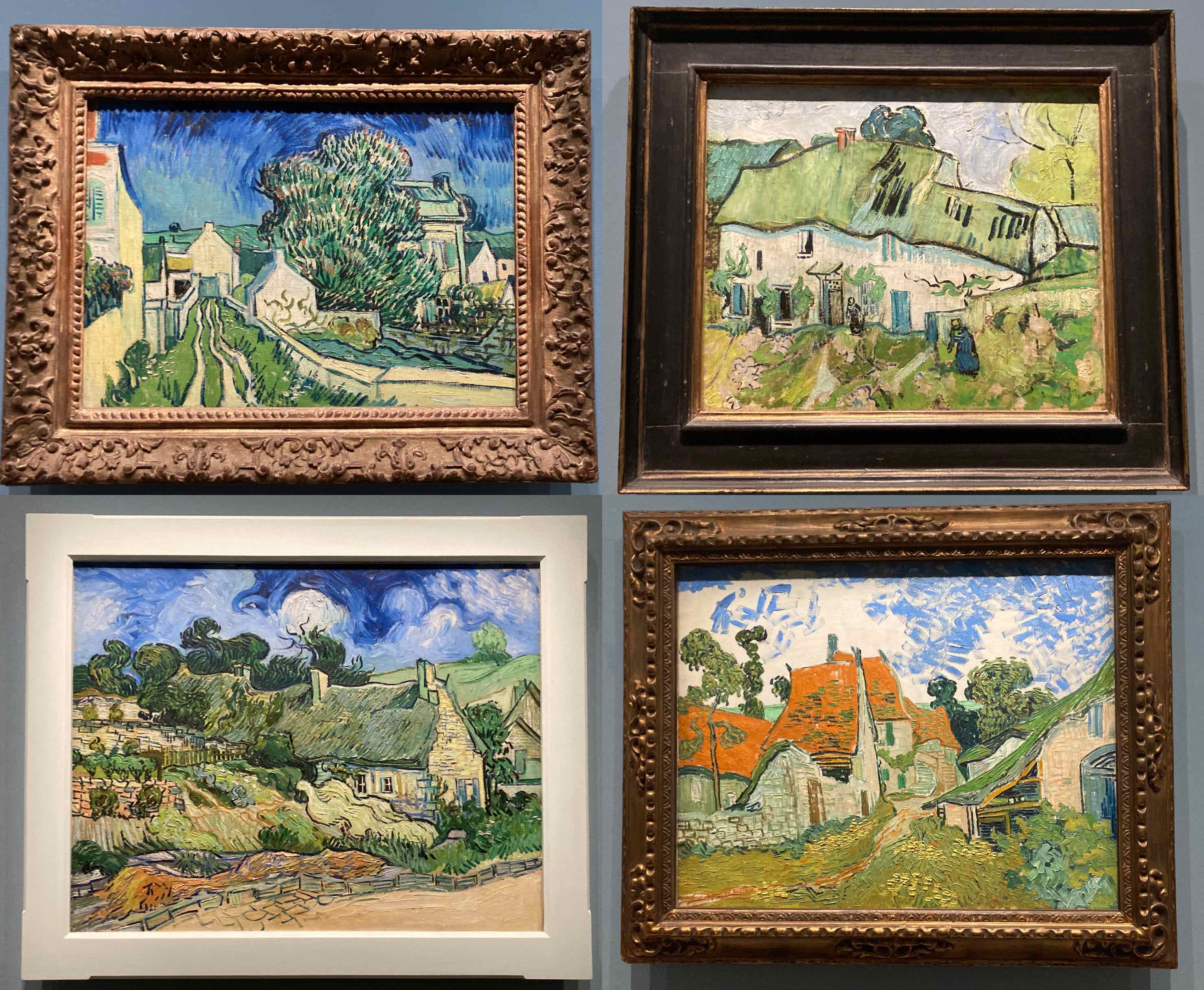
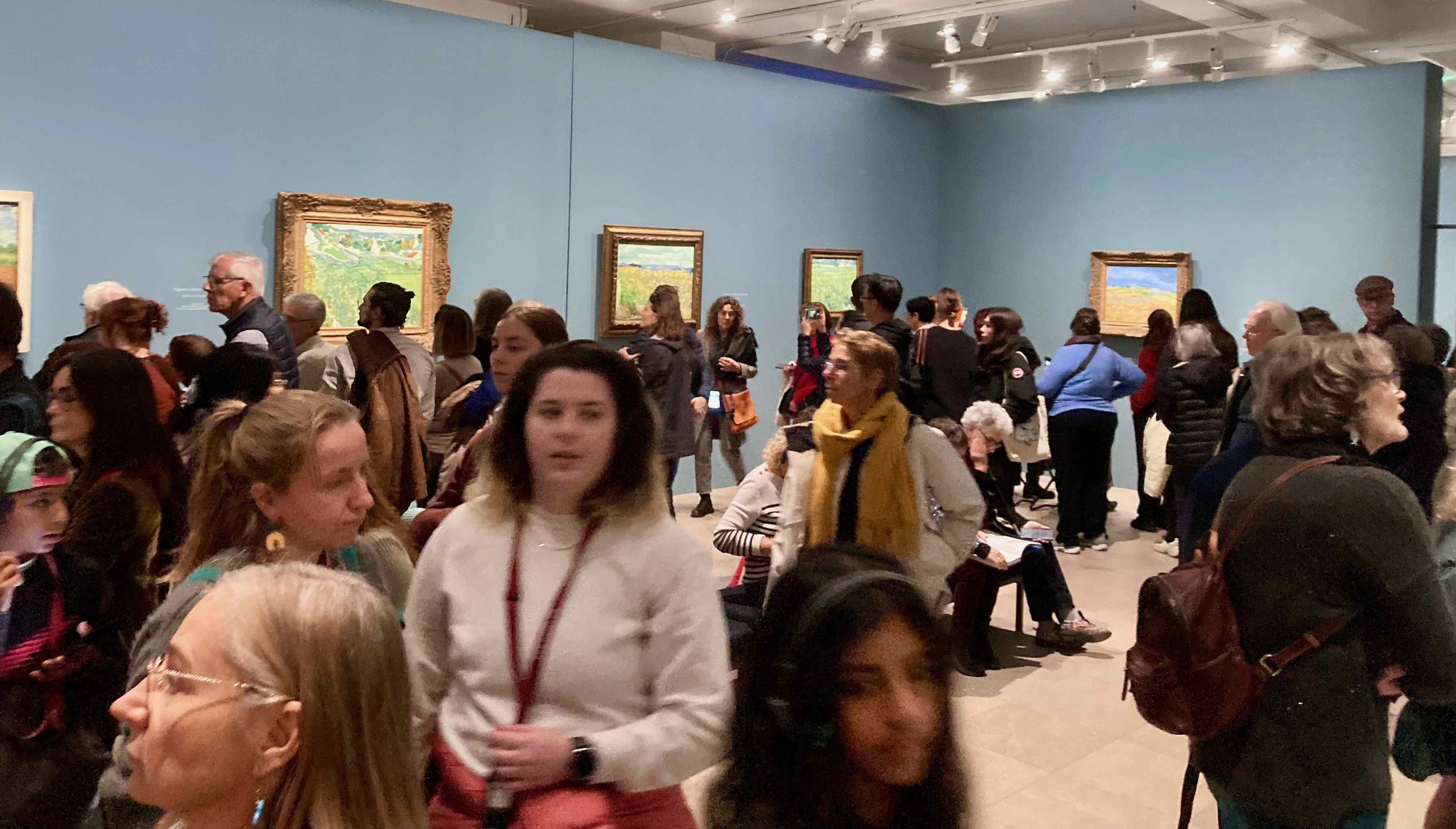
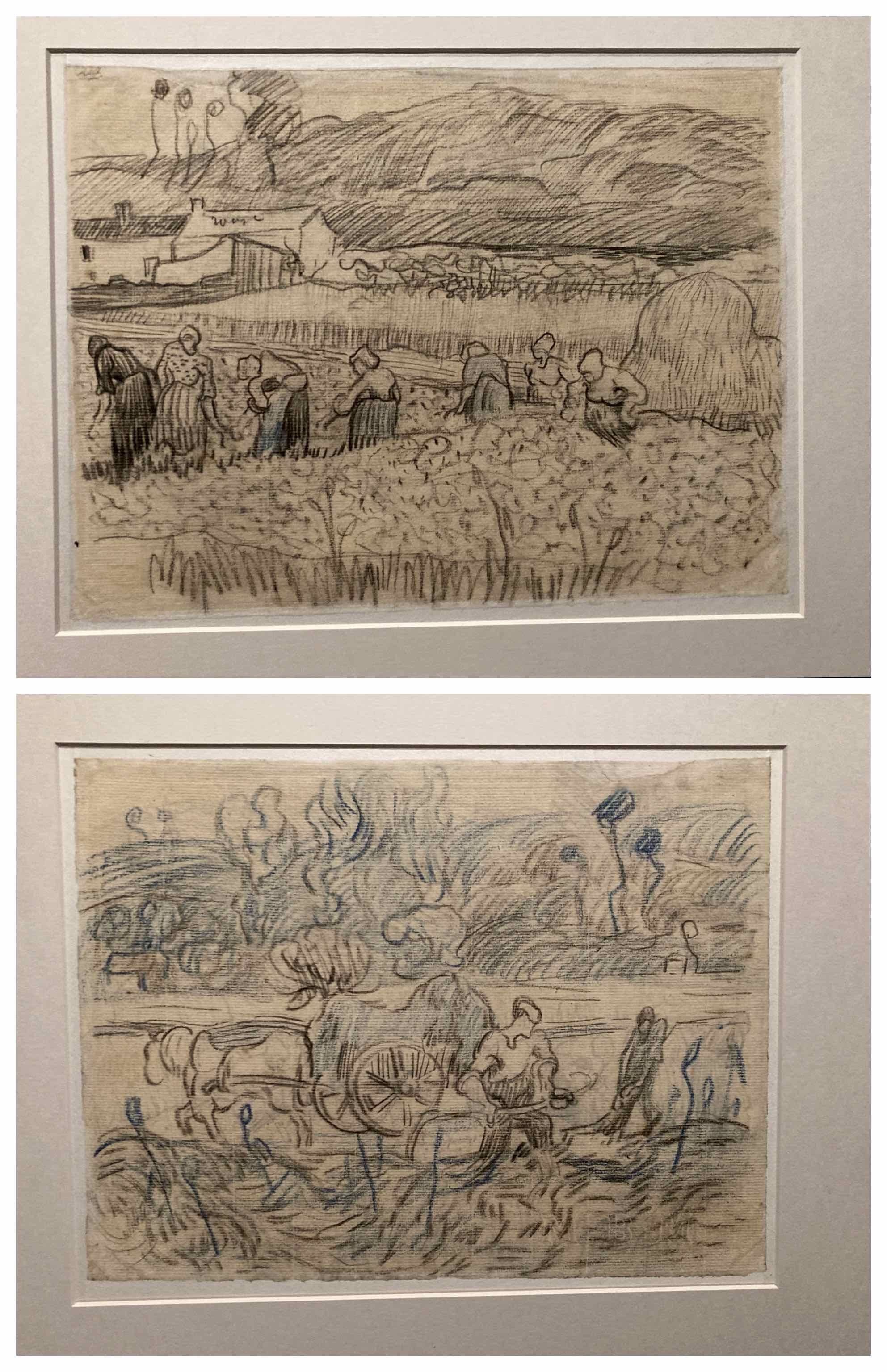
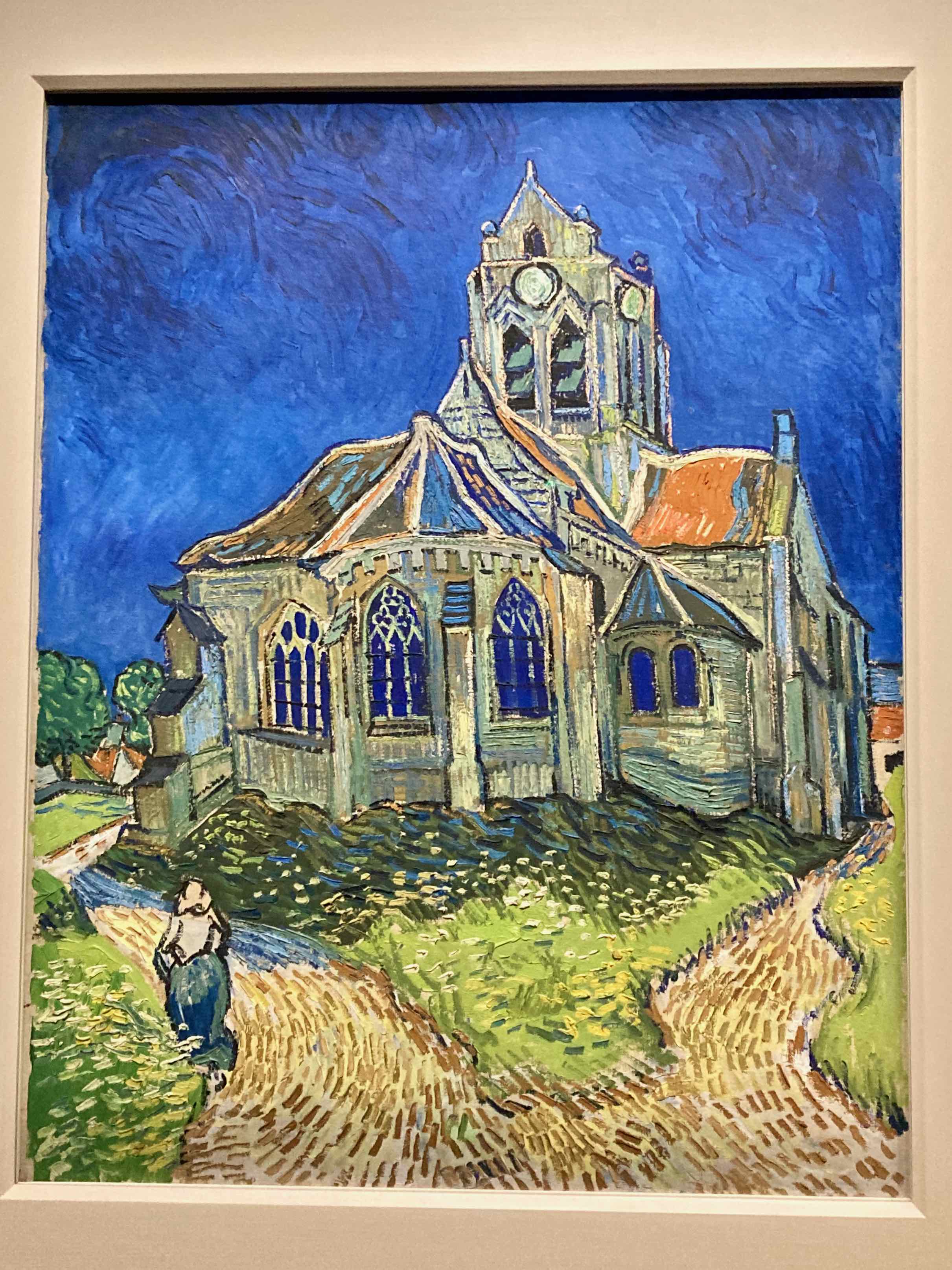
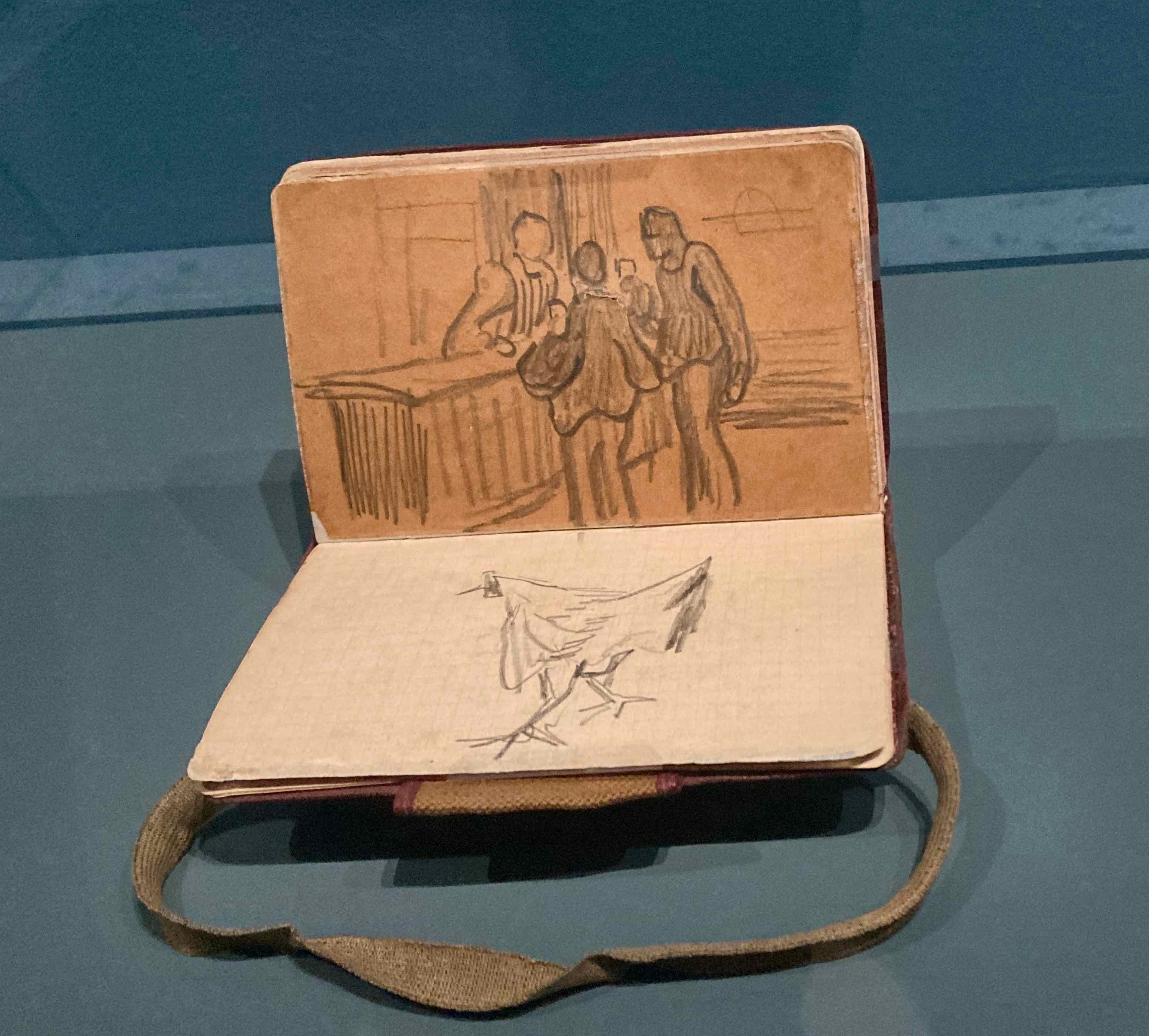


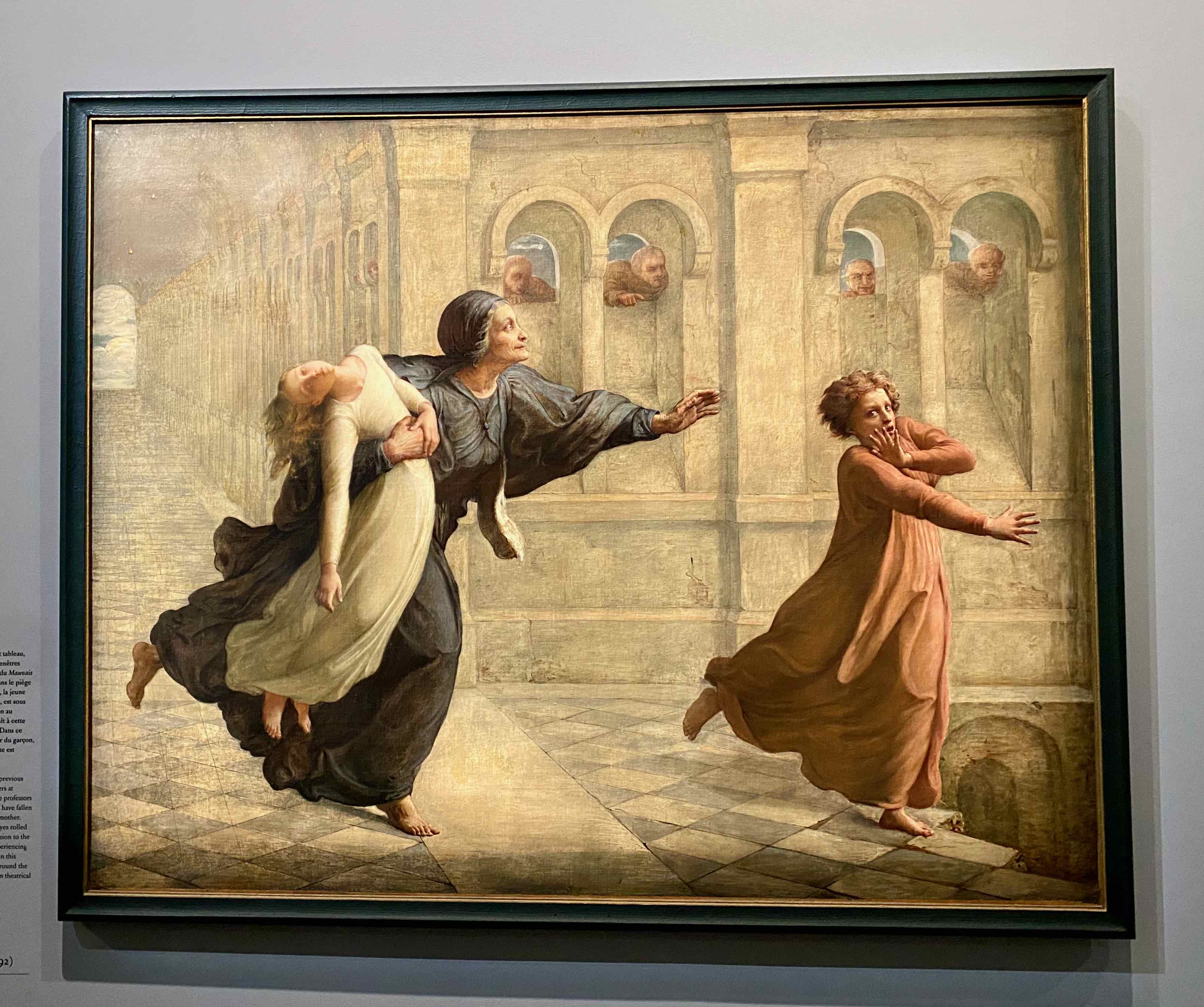
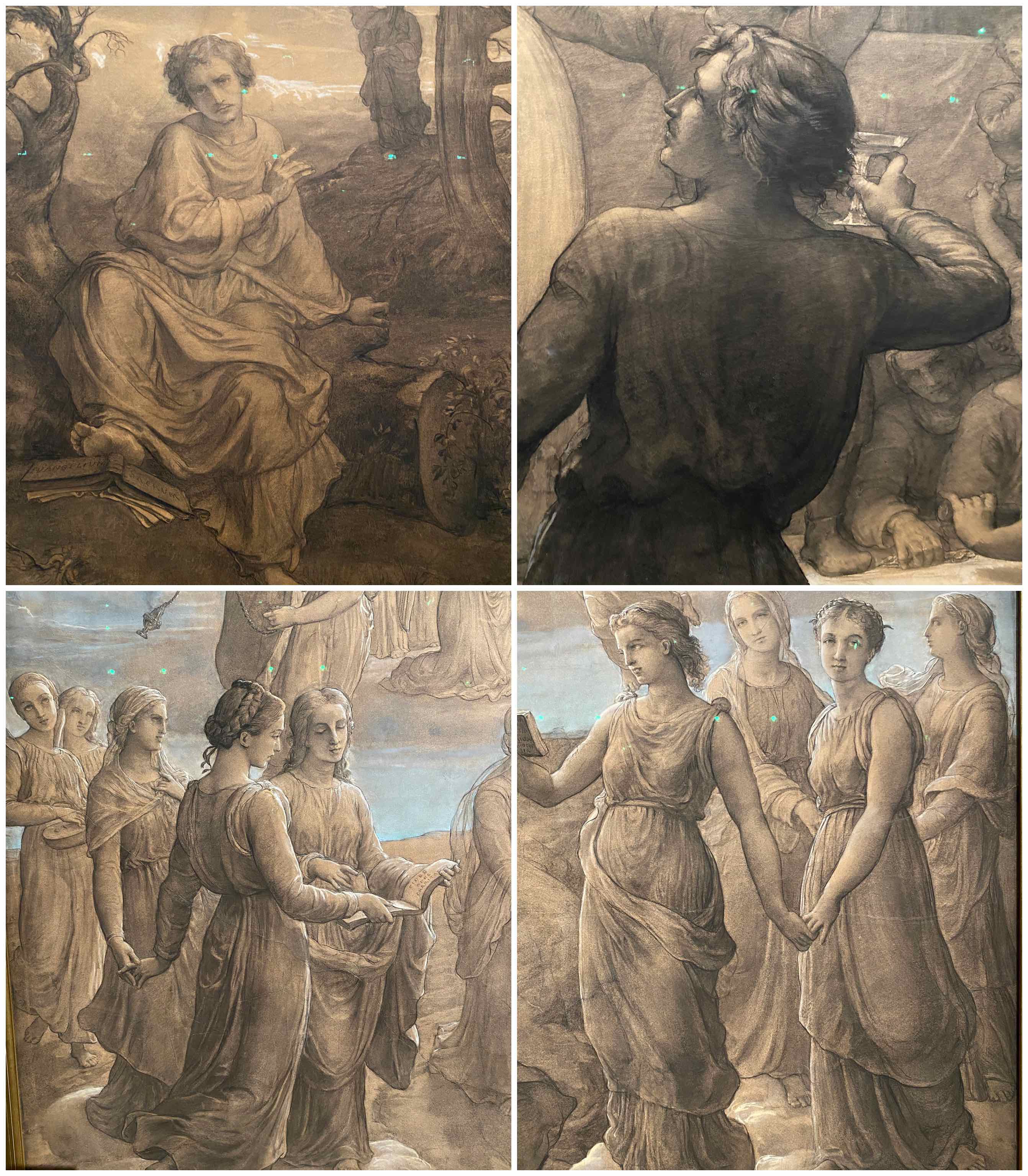
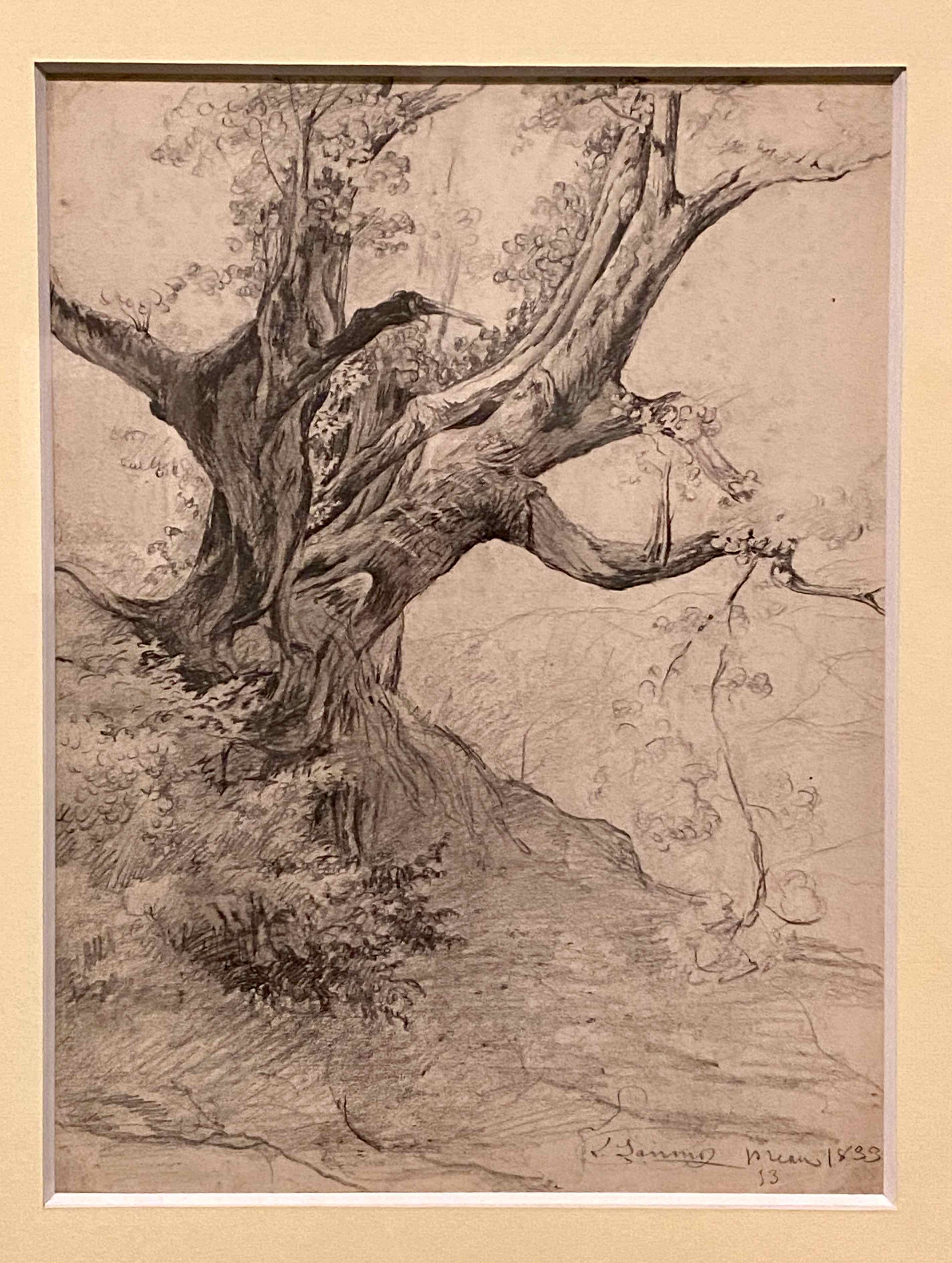
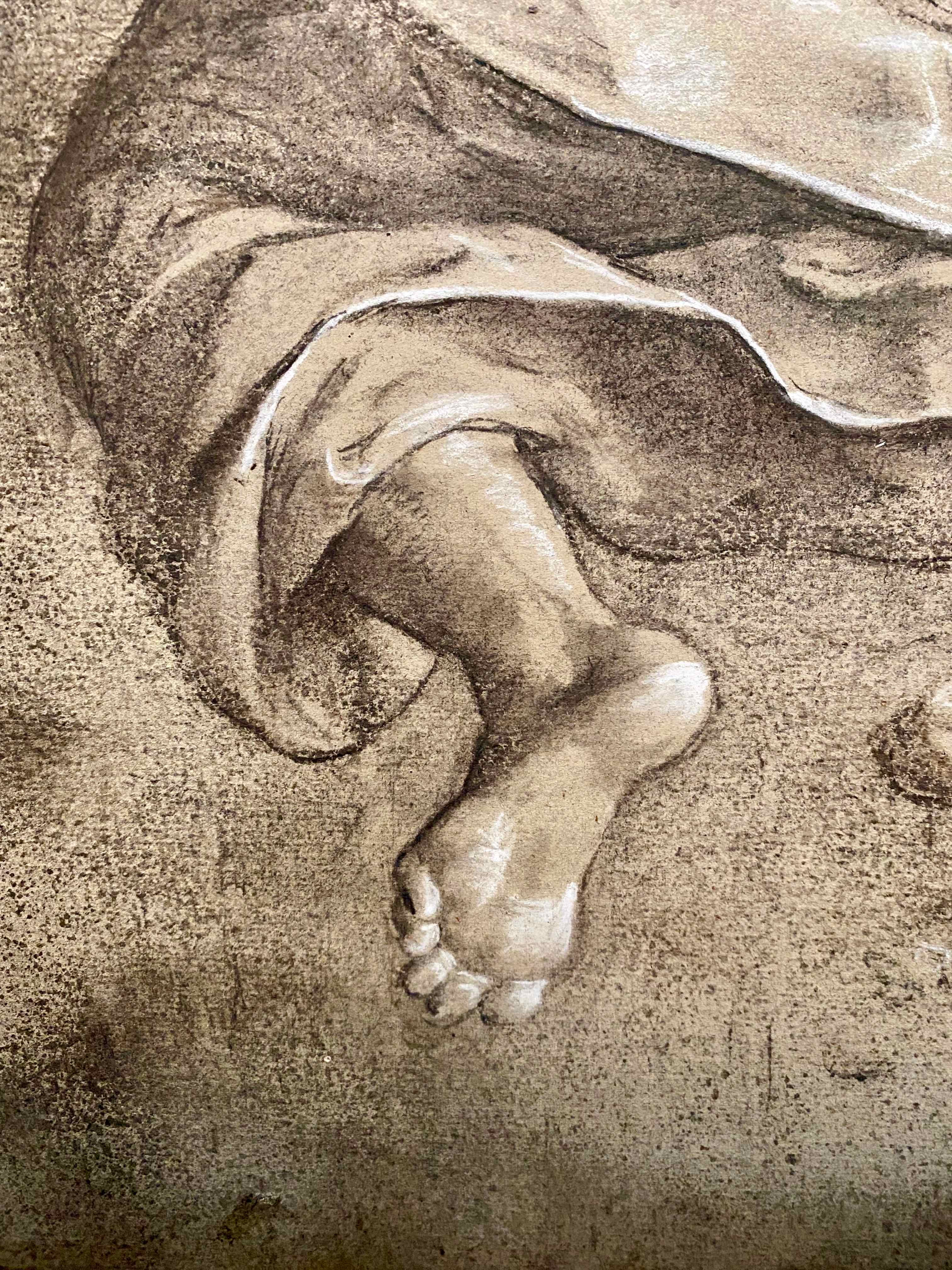 We decide it is time to find something to eat. This restaurant is behind one of the Musées famous clocks but it is quite expensive and has a long line of people waiting for a table. We do find a little cafeteria and we only have to wait about 15 minutes to get a table. We are tired and hungry and it is so good to sit and rest for a while. Museums are wonderful places to visit, but also very tiring.
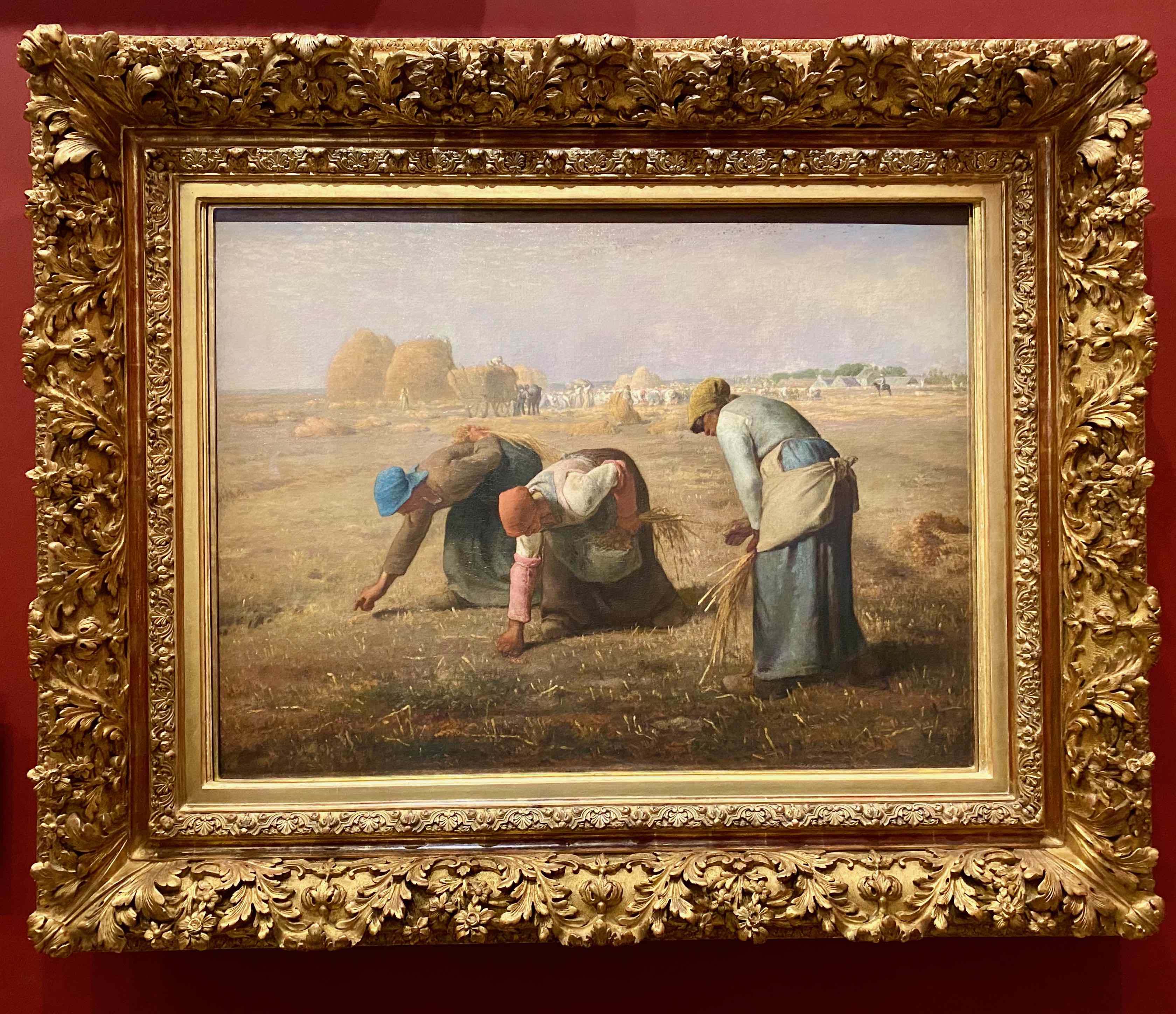
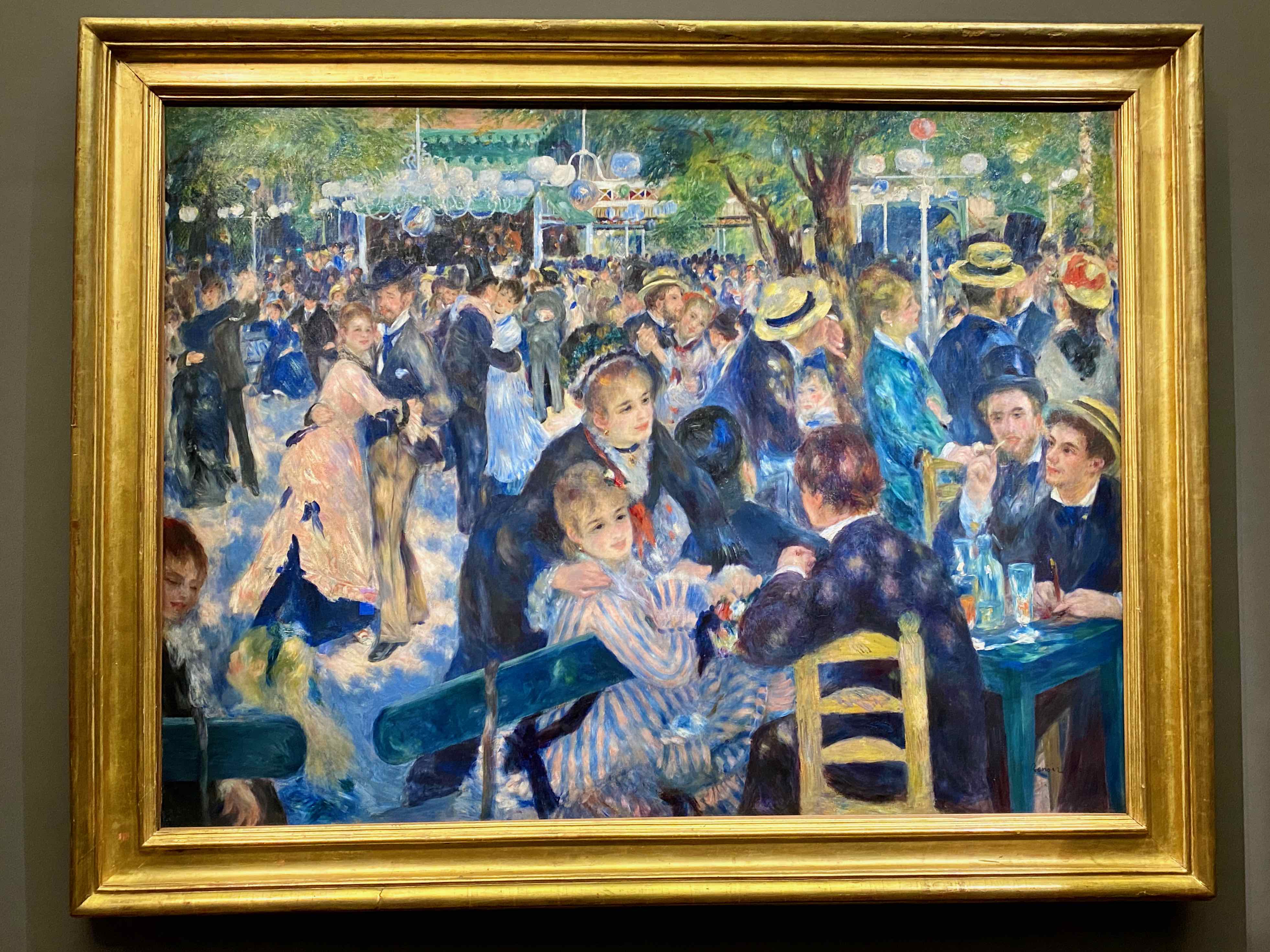
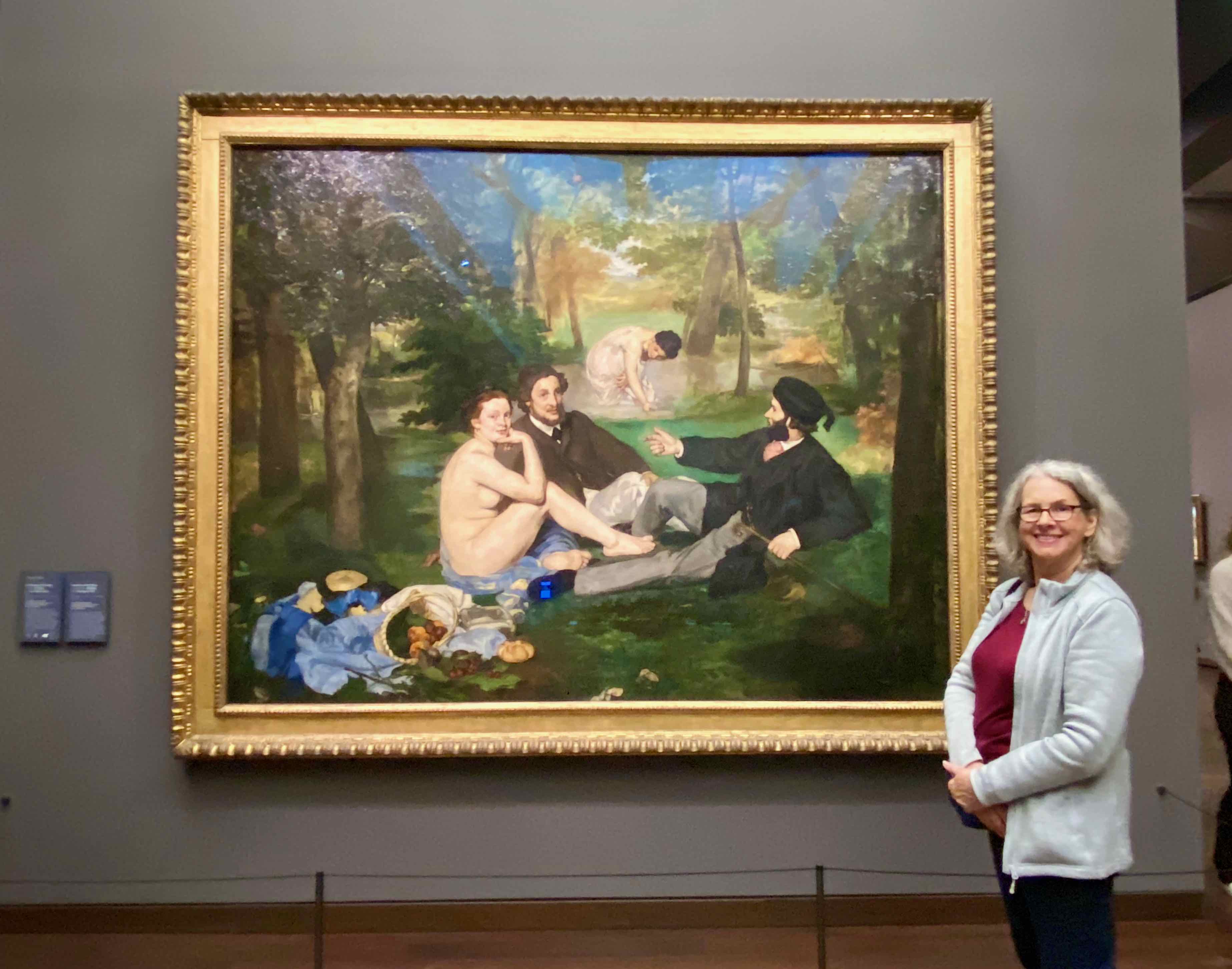
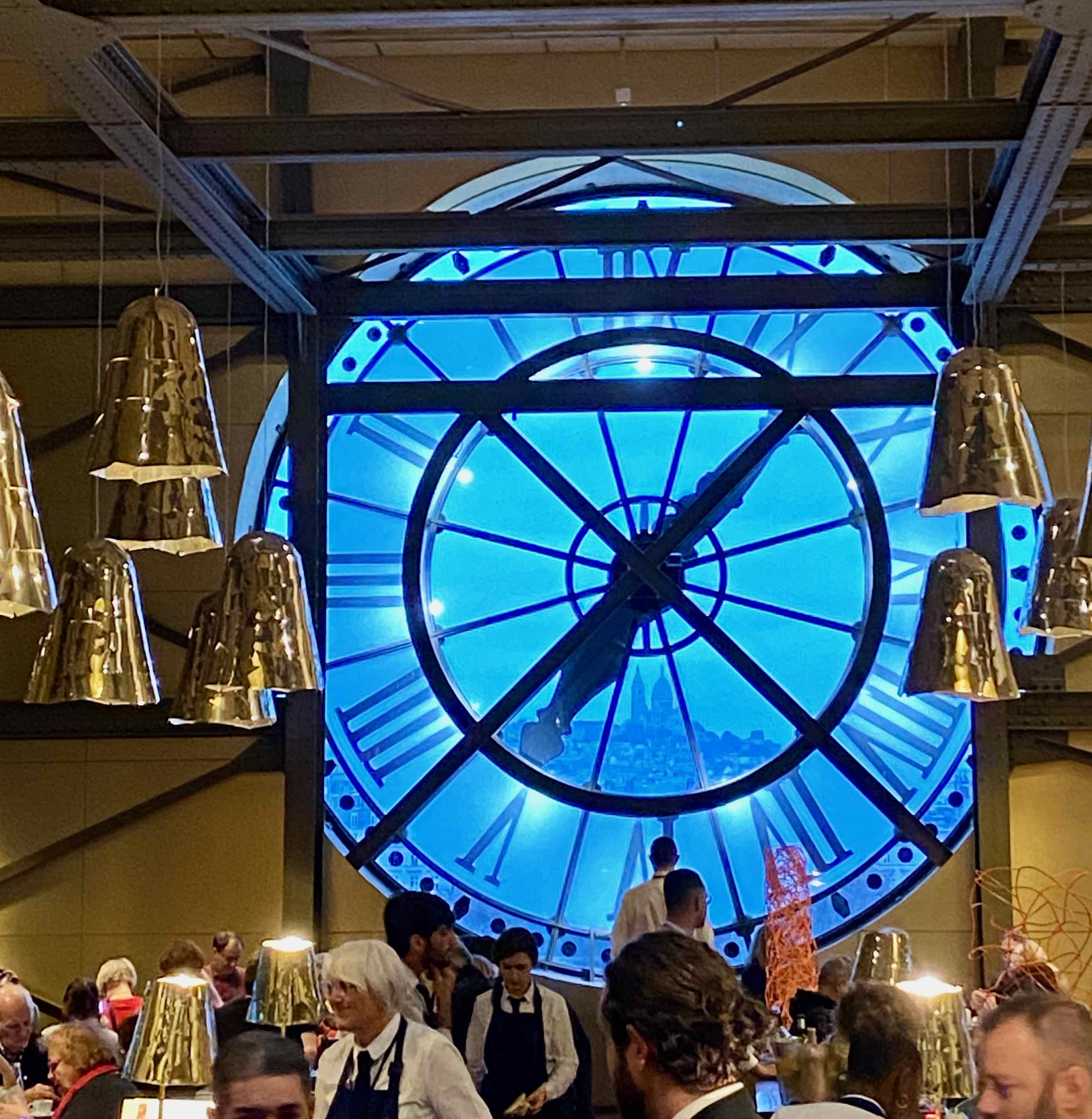 Refreshed, we head up to the top floor to see the permanent collection. So many famous impressionist and post Impressionist paintings! Cezanne’s ‘Still Life, Apples and Oranges’ and ‘The Card Players’, Berthe Morisot’s ‘The Cradle’ and ‘ The Dance Class’ by Edgar Degas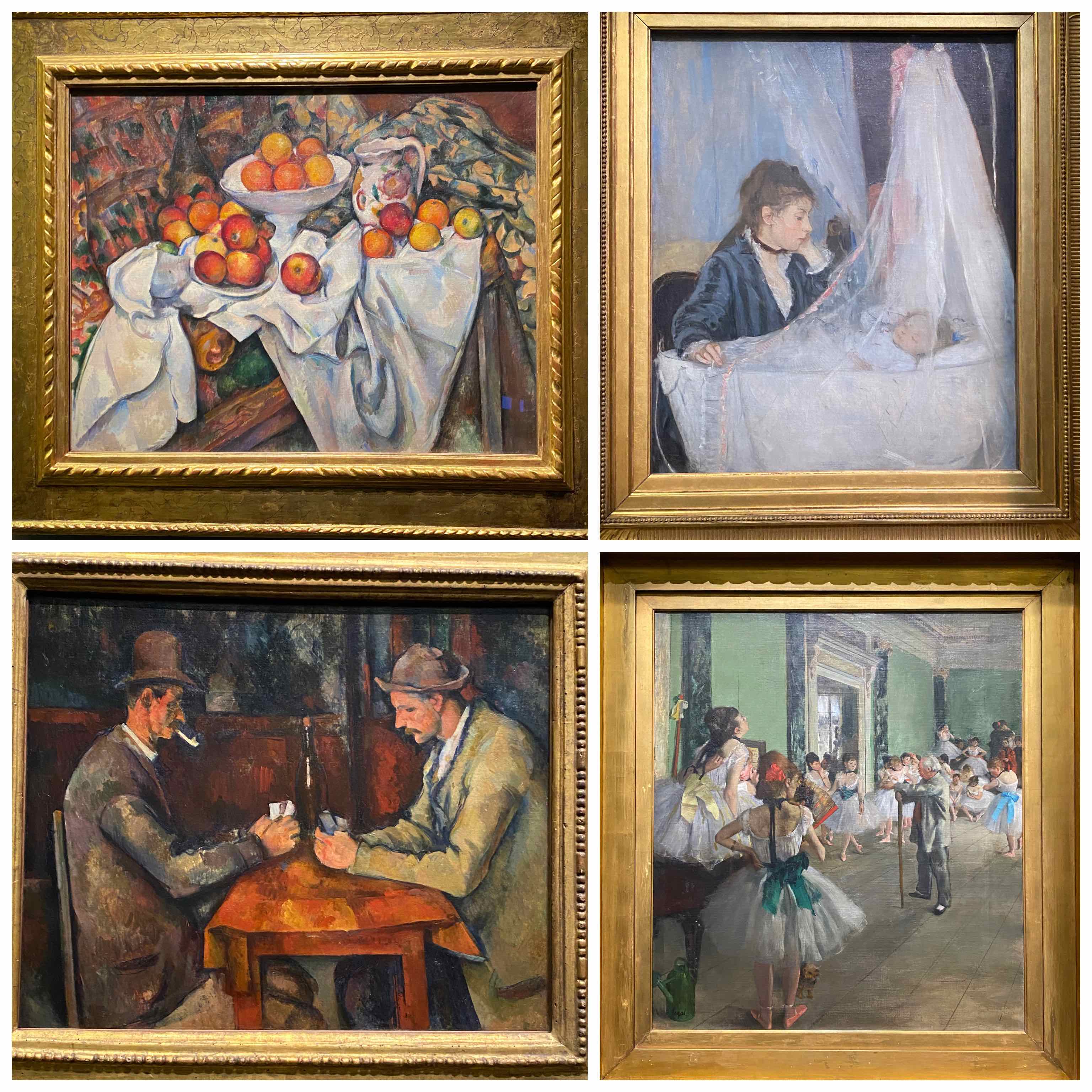
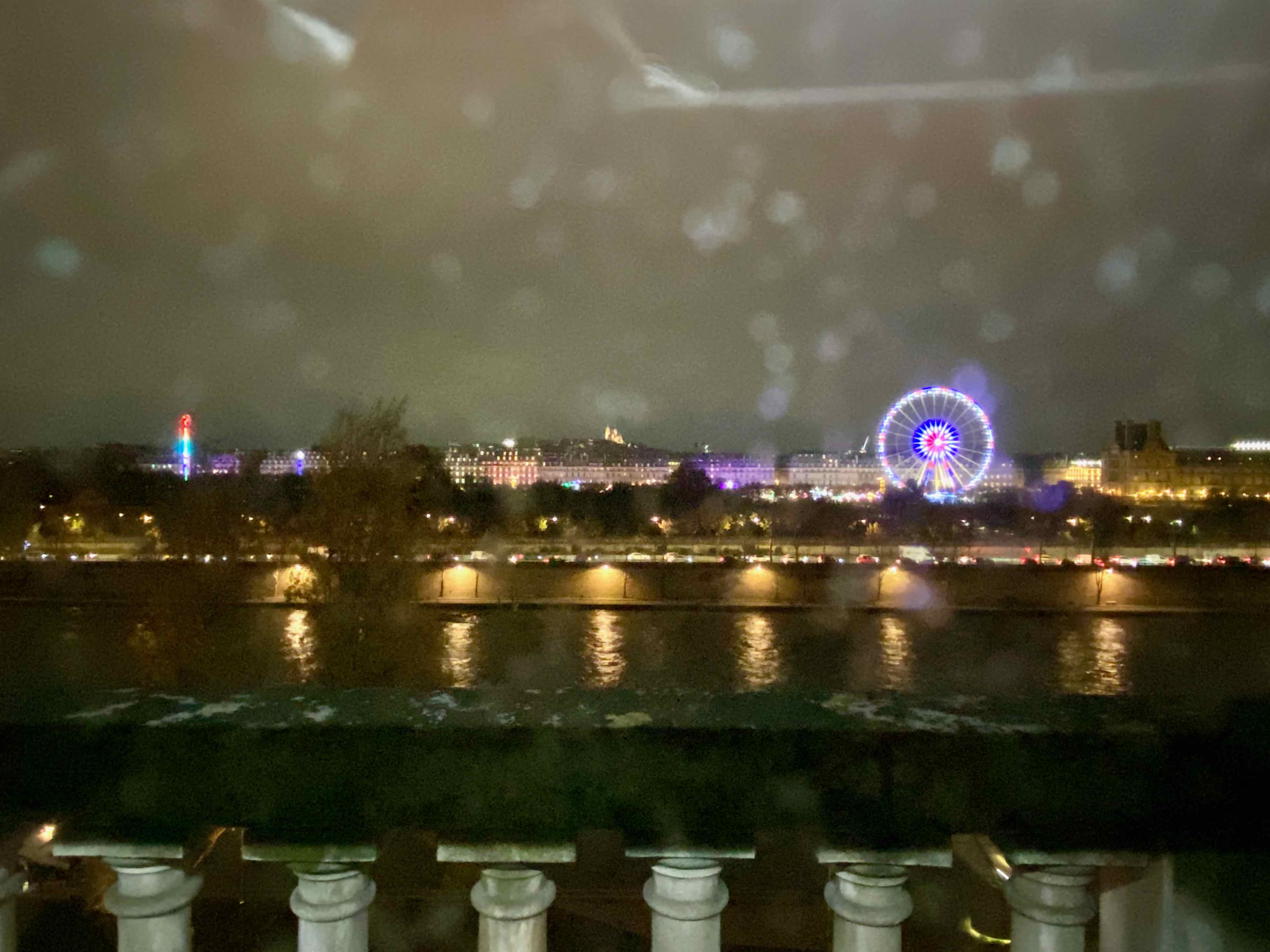
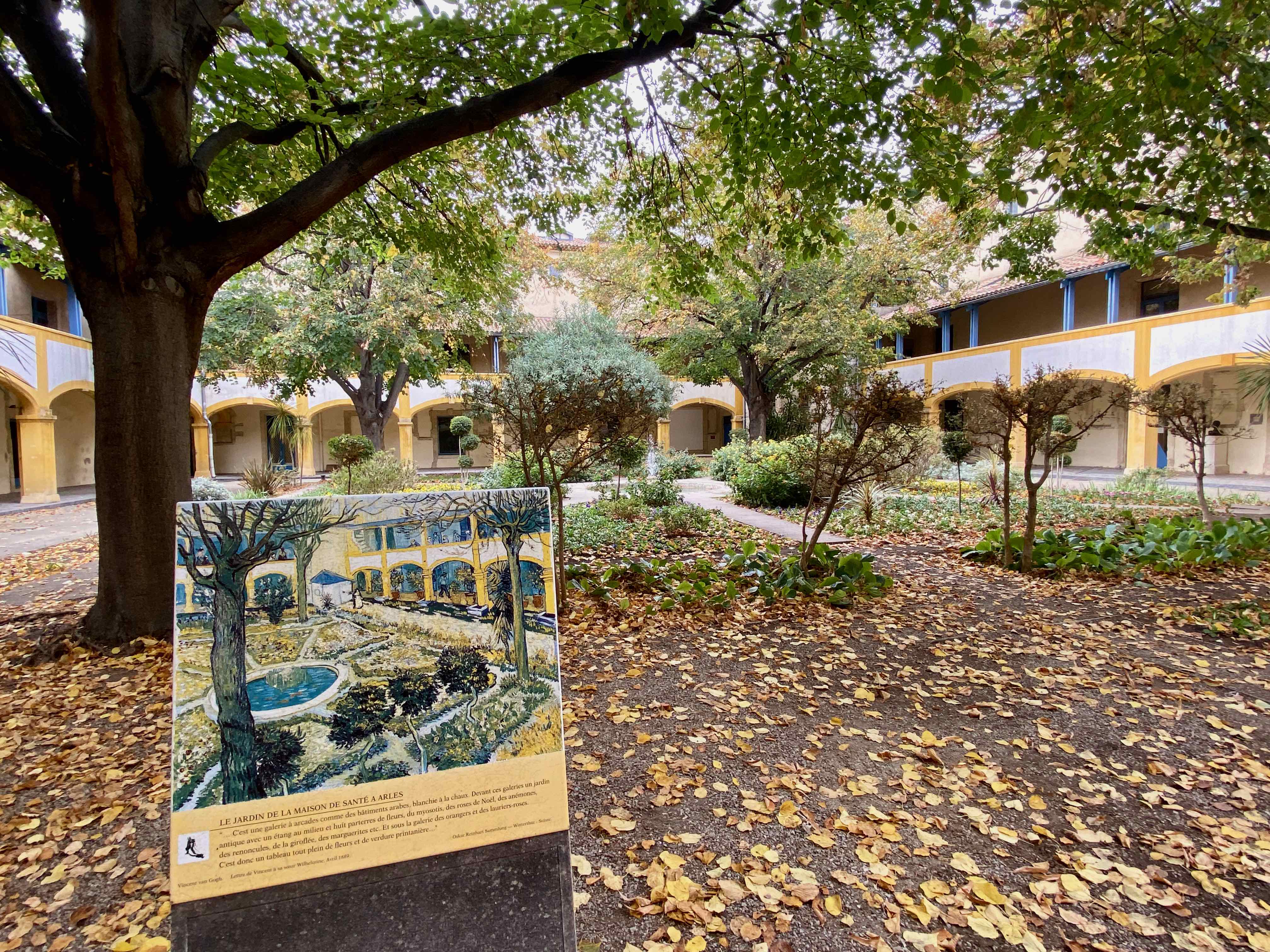
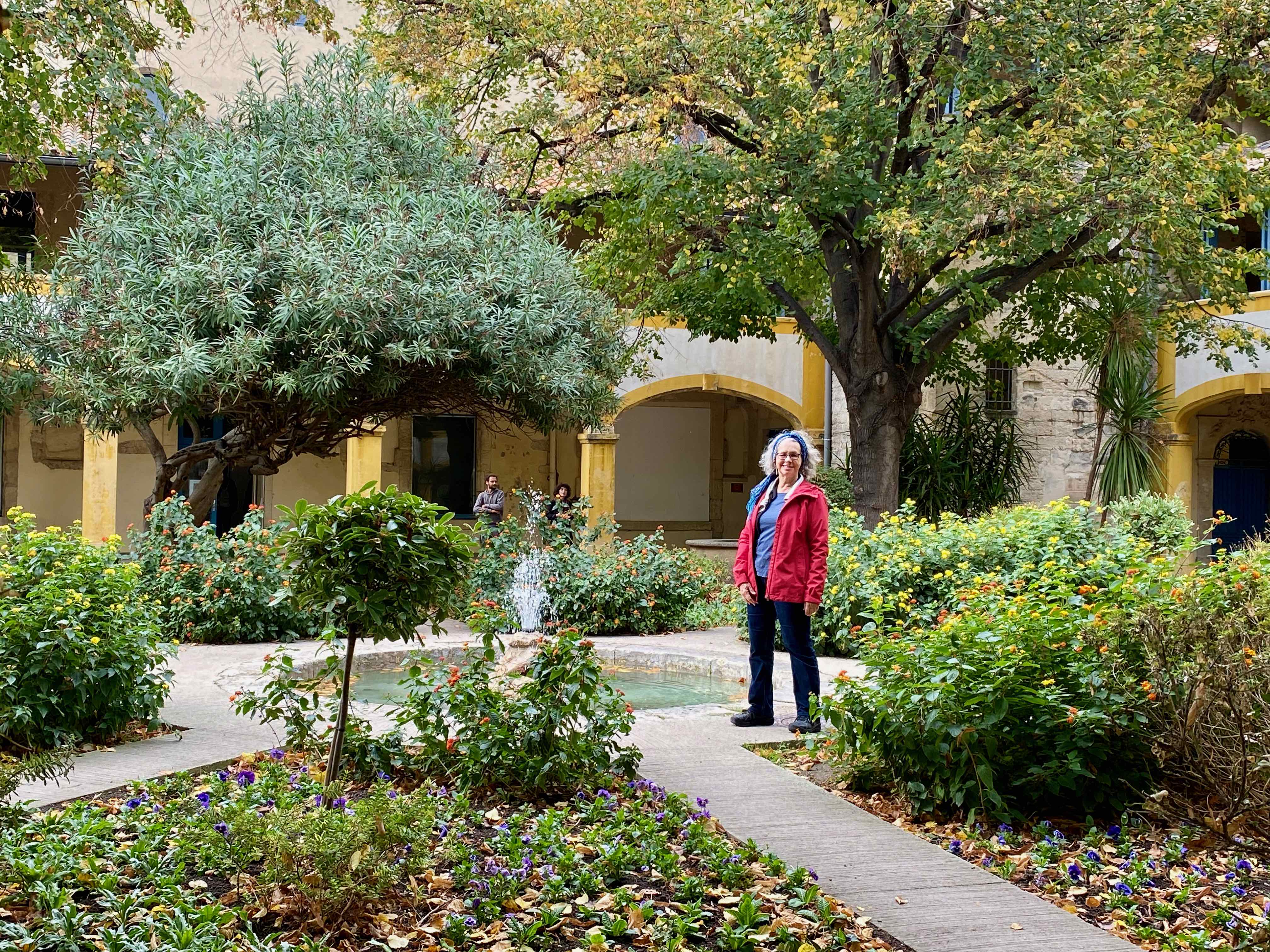
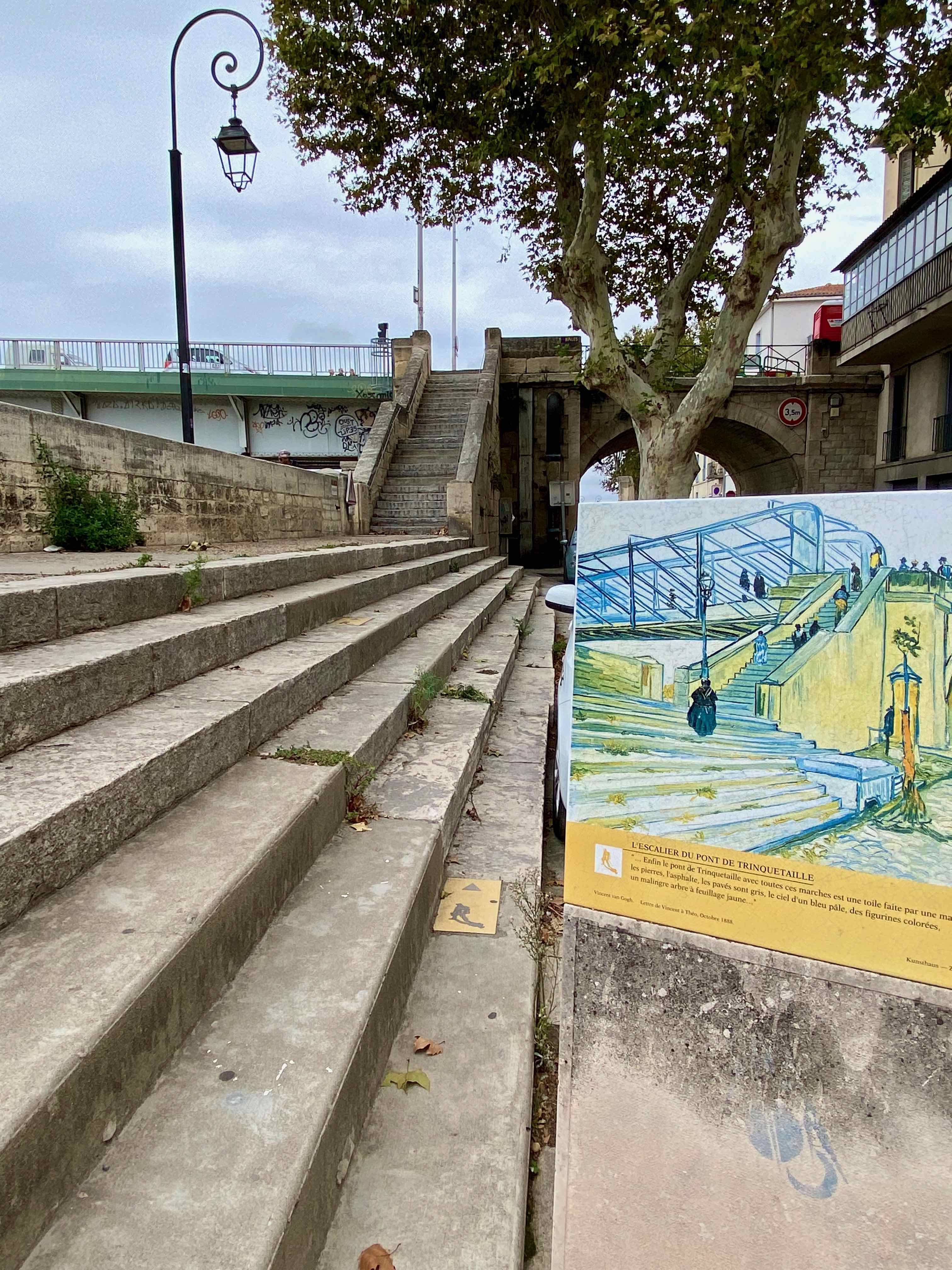
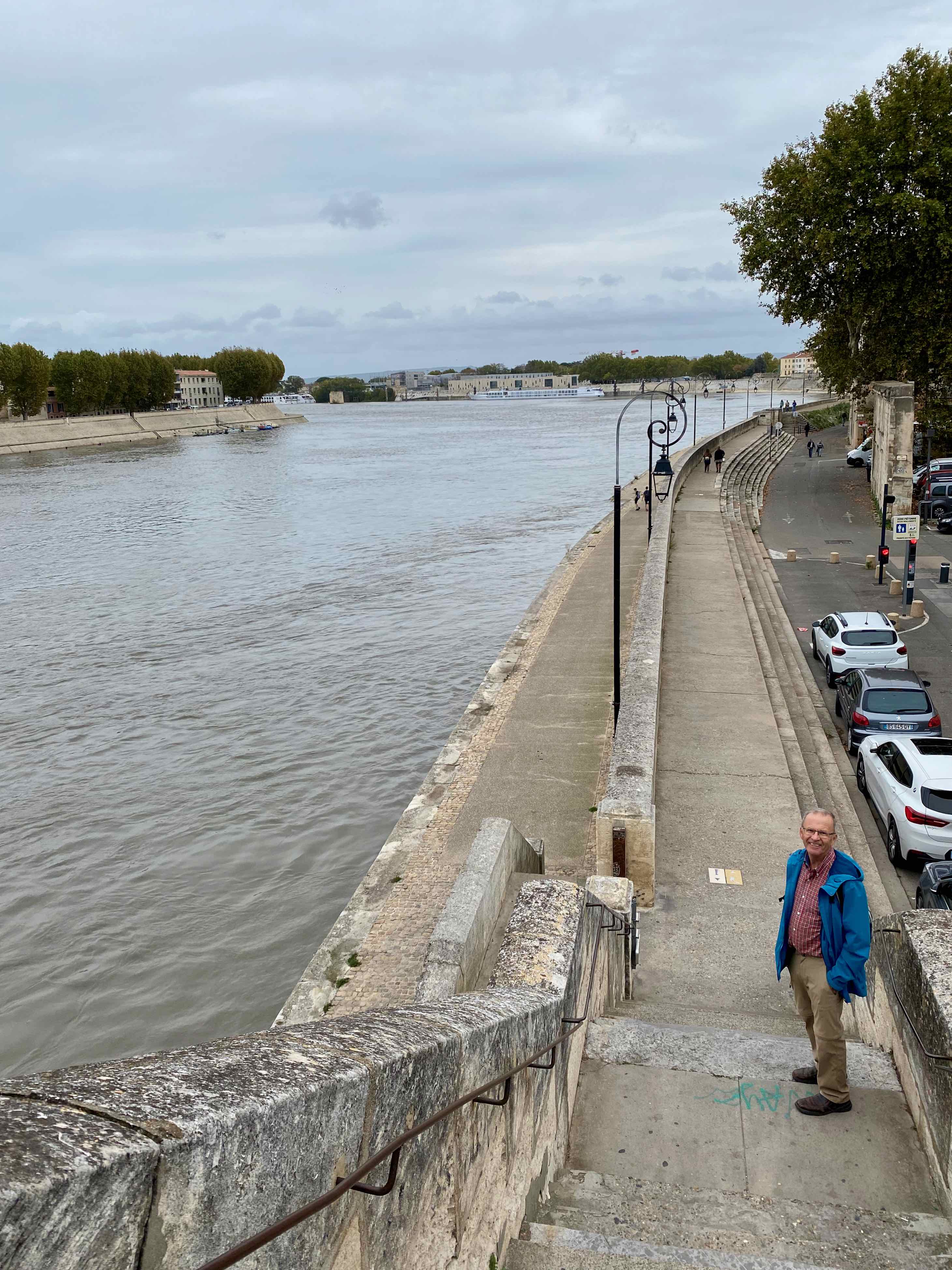
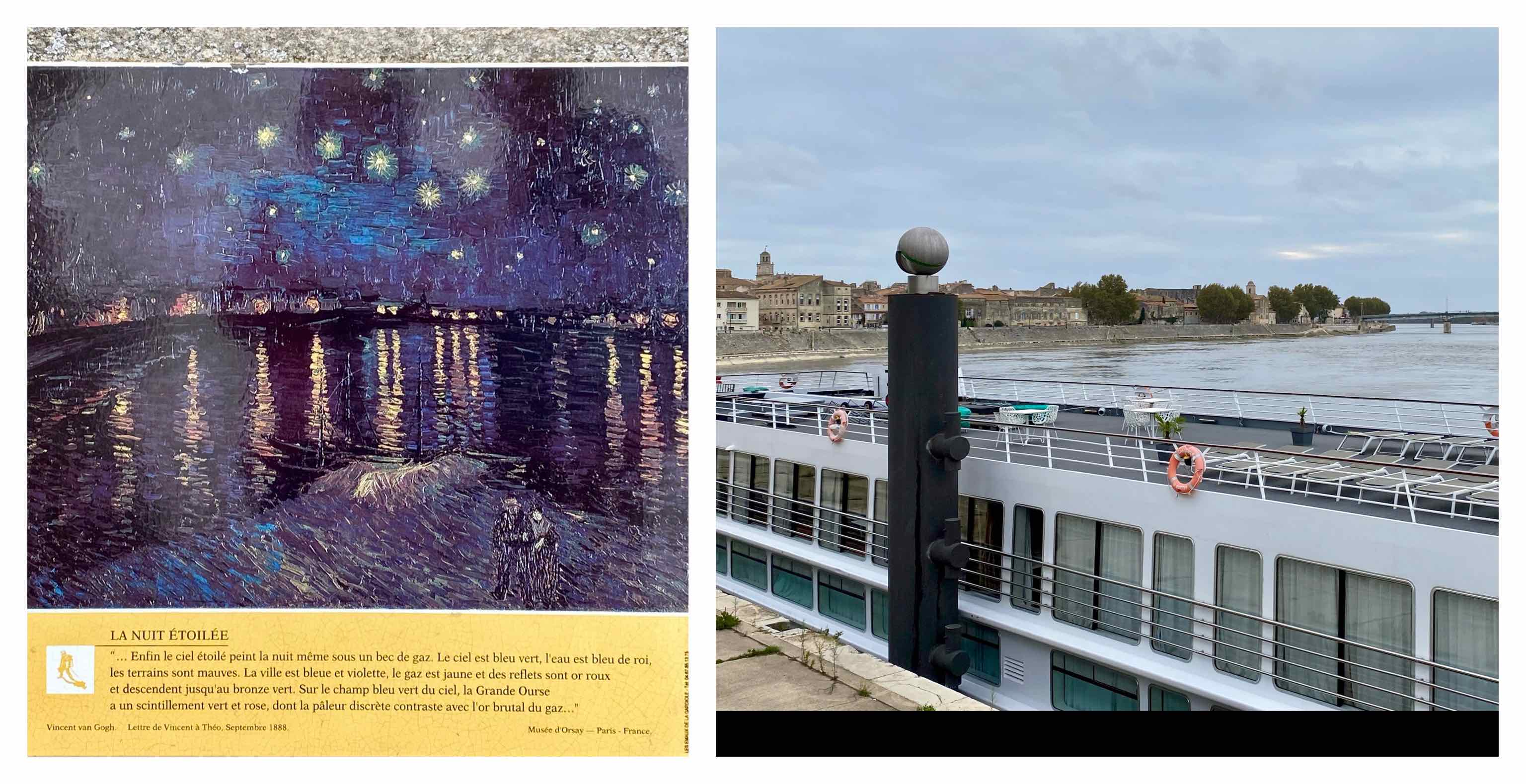
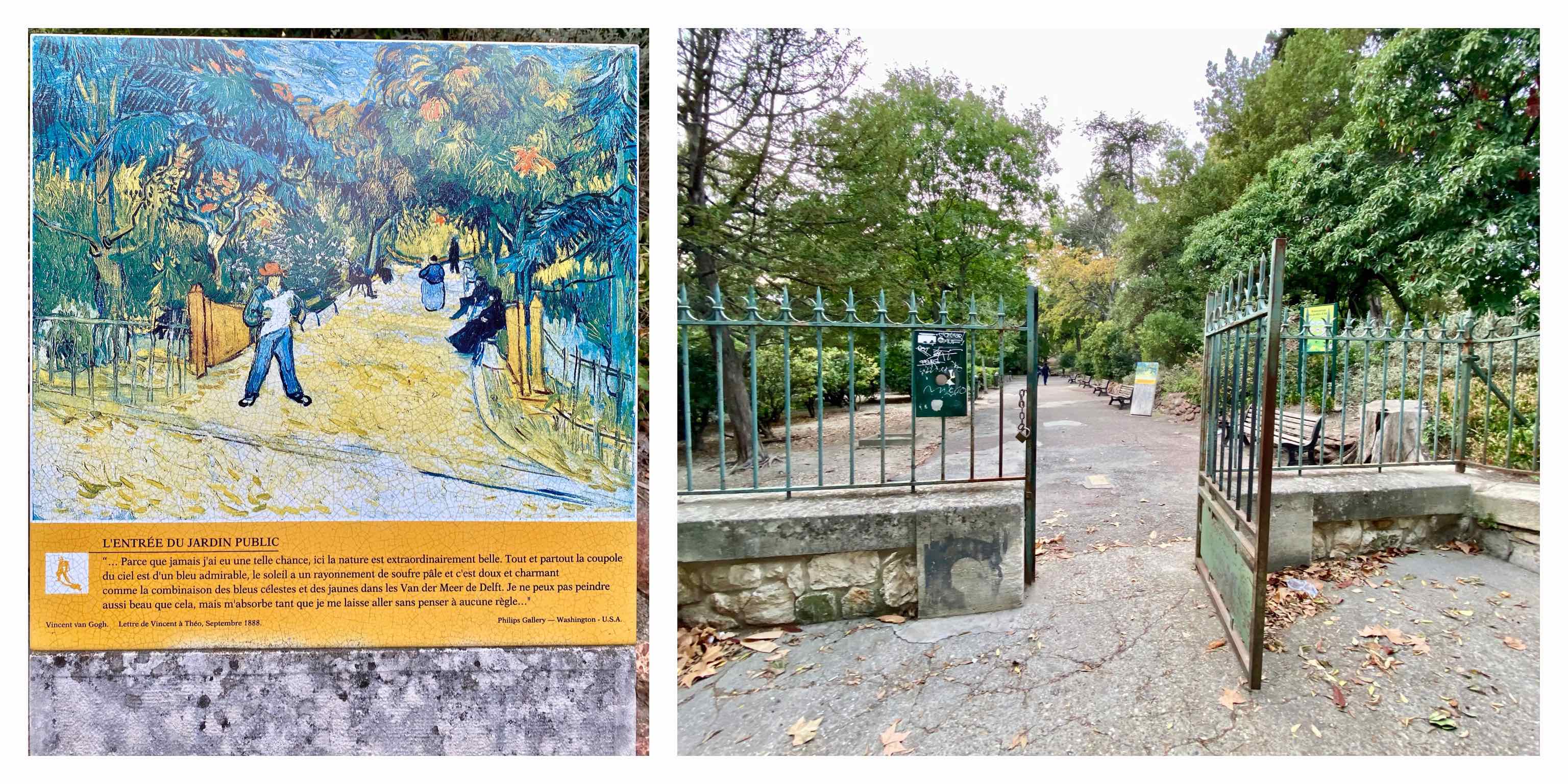
 VanGogh’s ‘Night Over the Rhone’. We stood in the exact location where Vincent stood when he painted this. Check out the post here.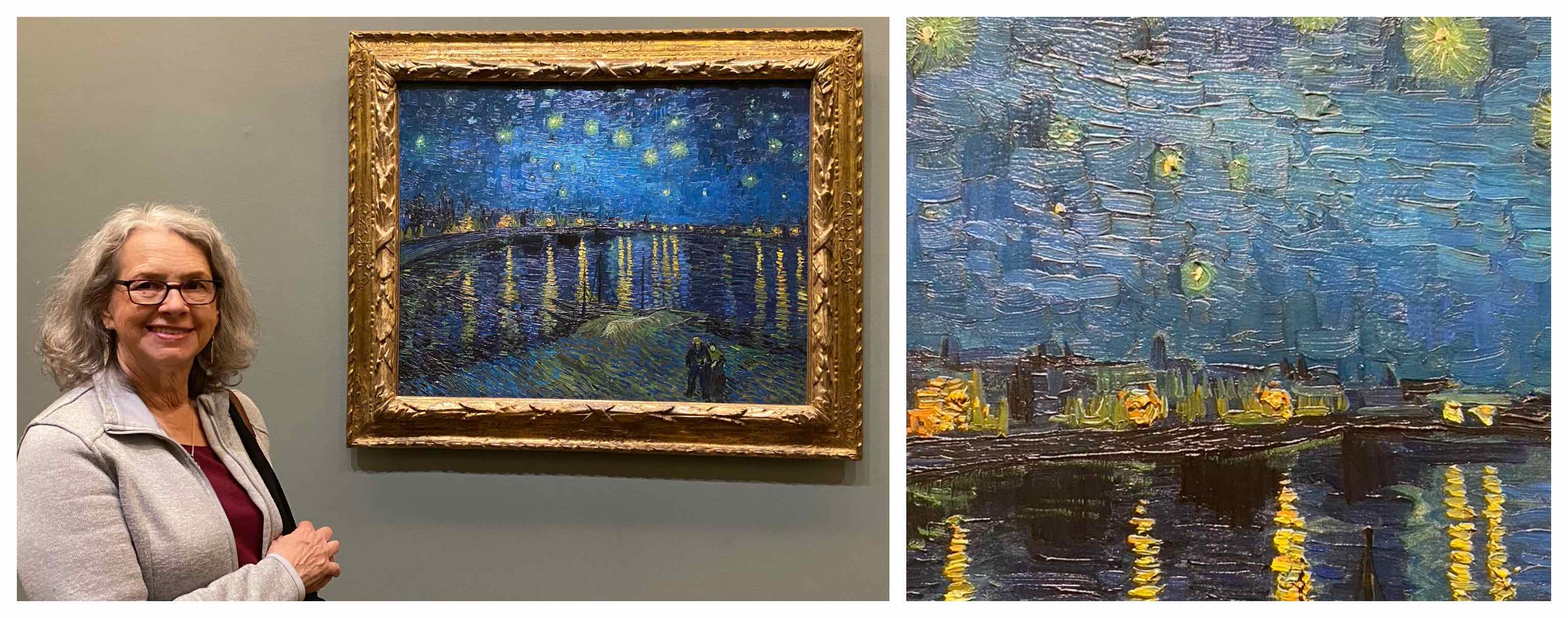
 Here are the screenshots of some of the other games…notice that one of them has a character named Bob.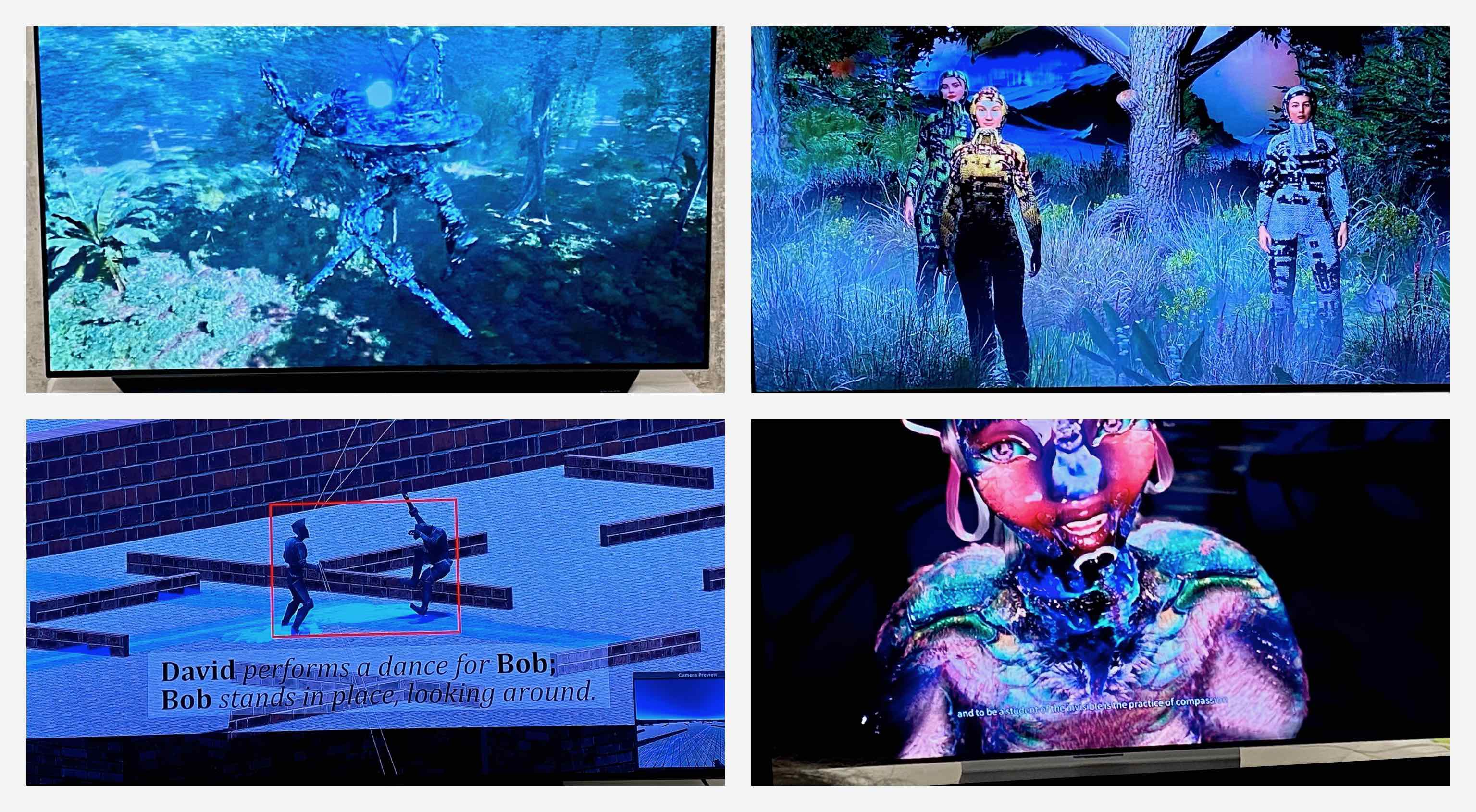
 Several young boys were hanging about and one of them, Leron (in the blue jacket) asked me to take his photo. They were fun.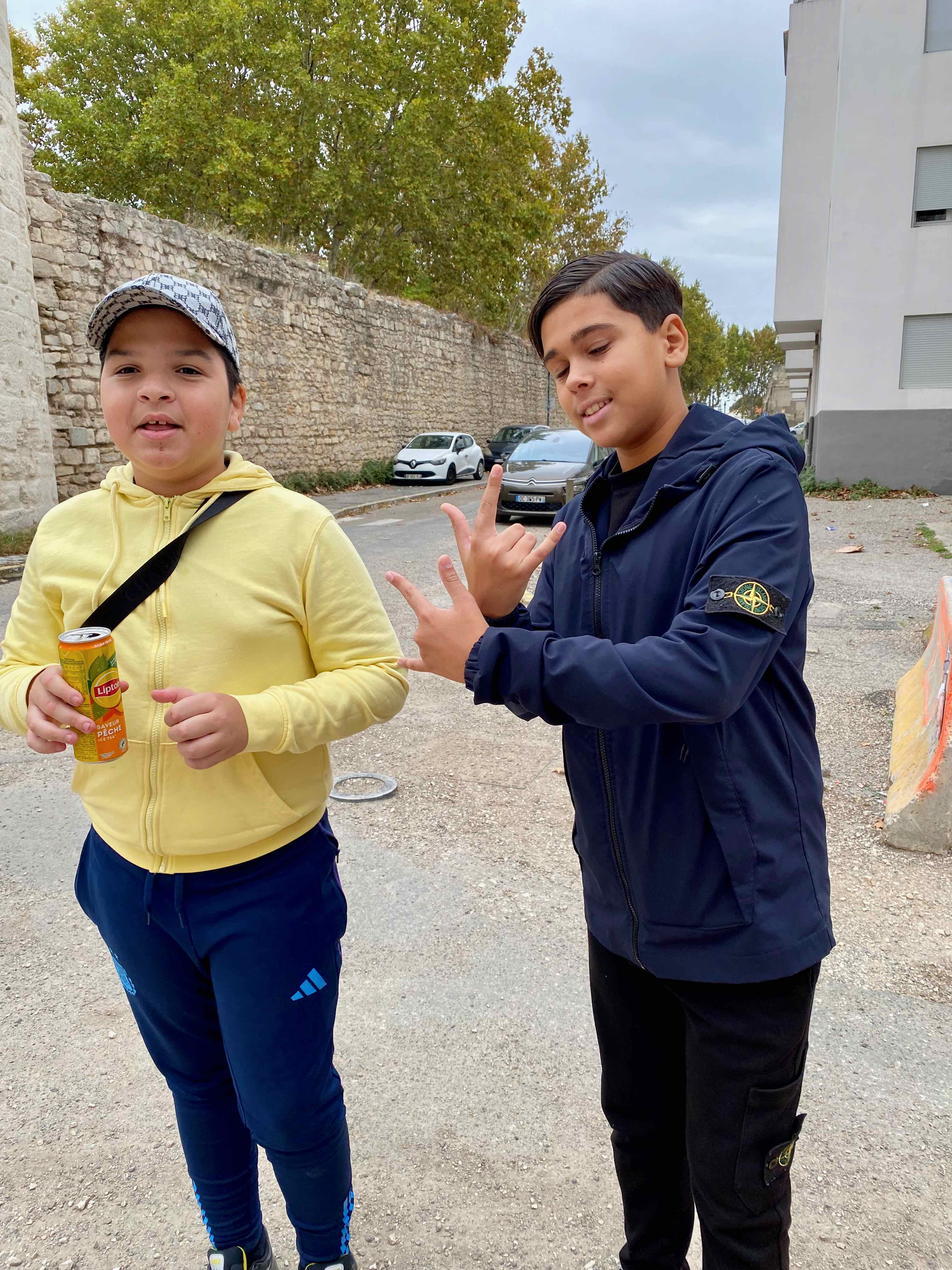
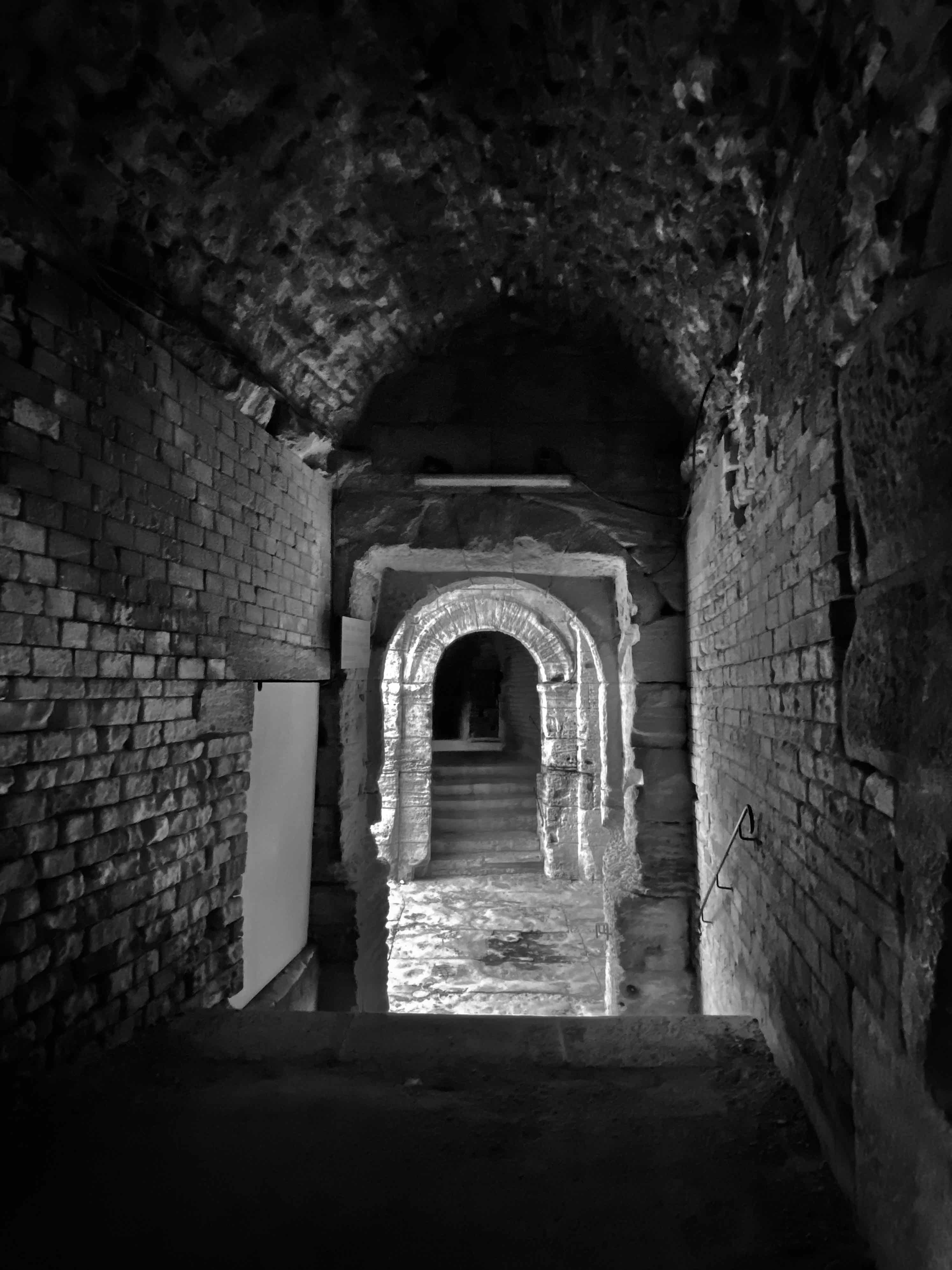
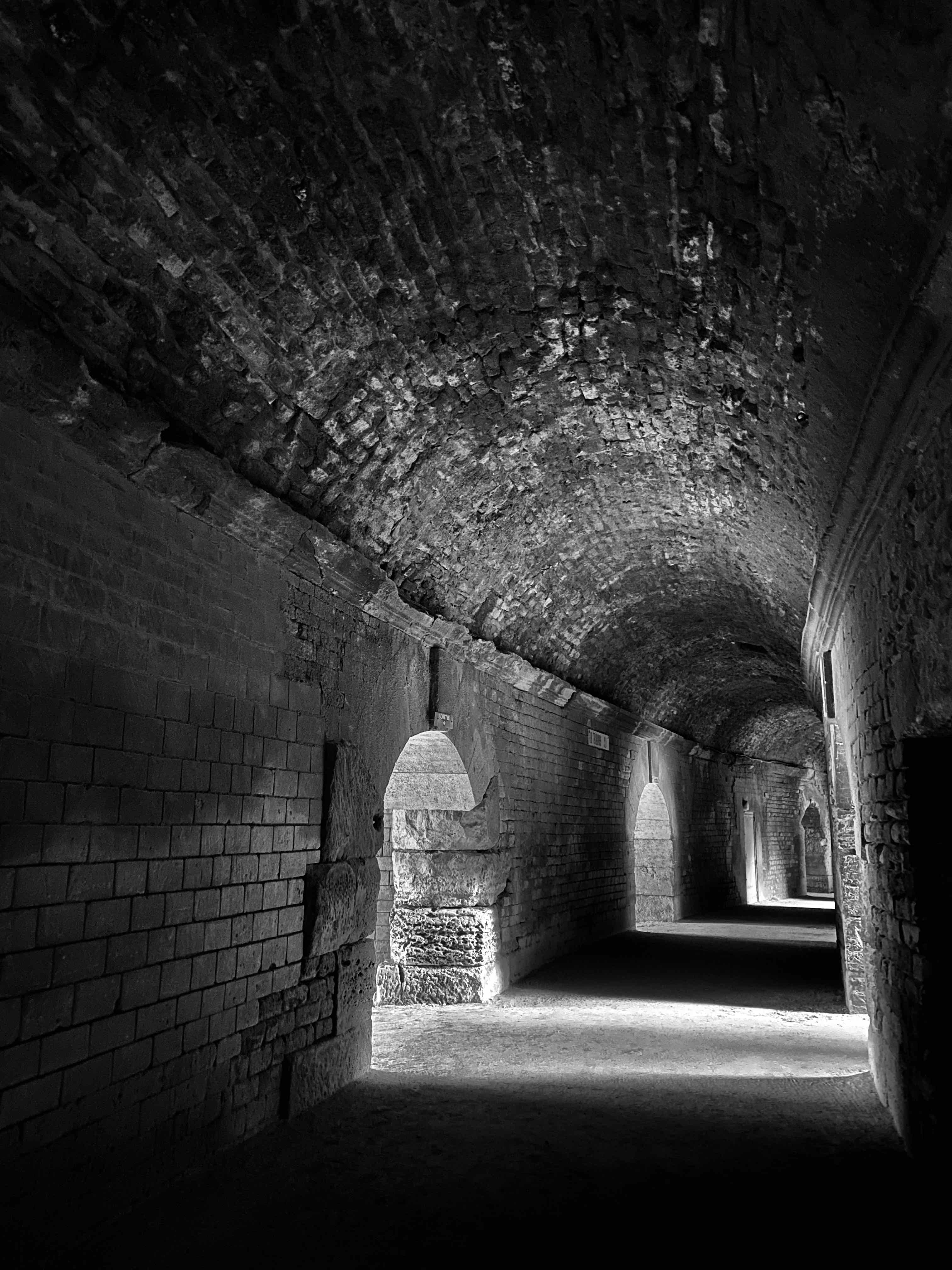
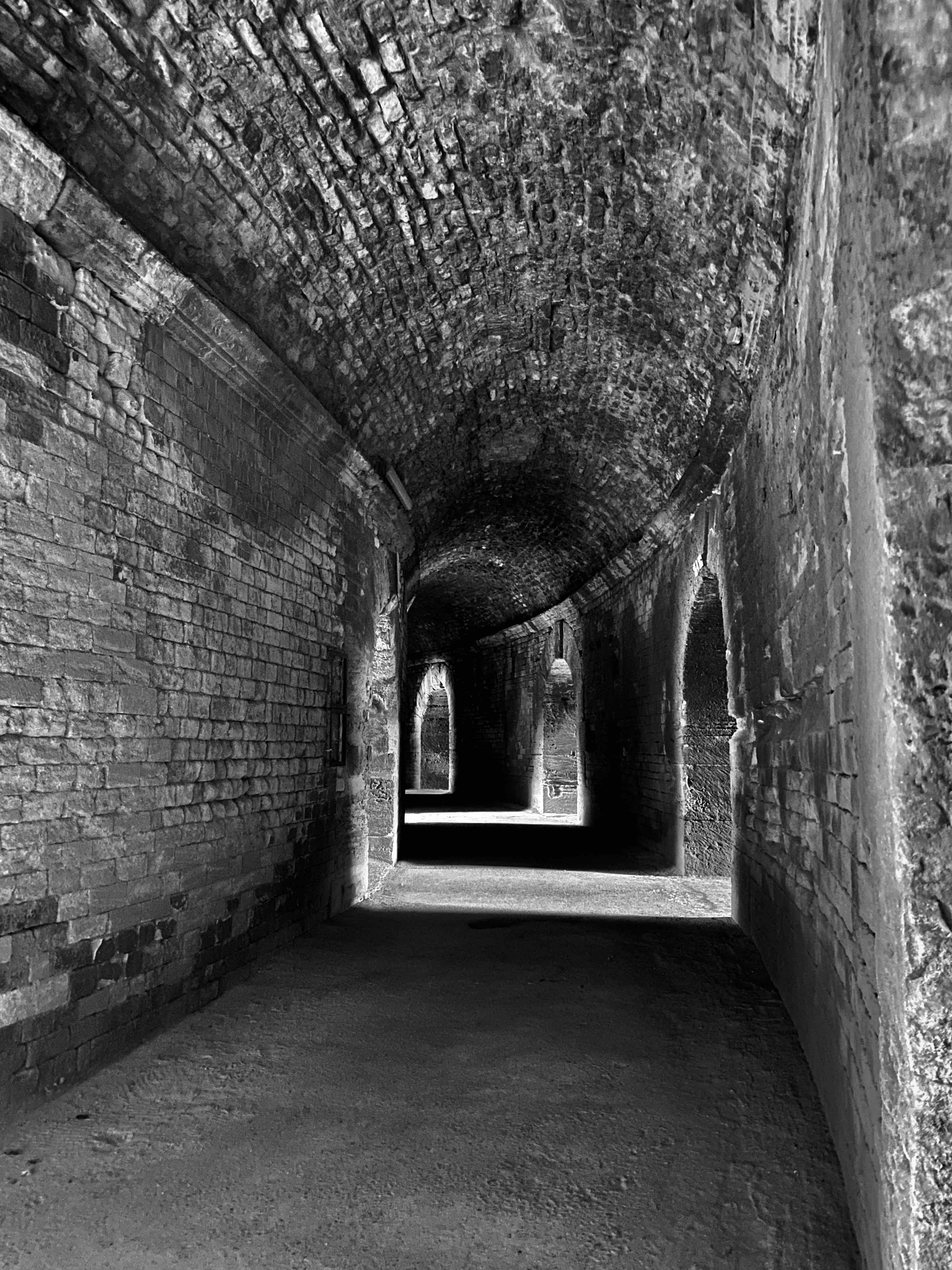
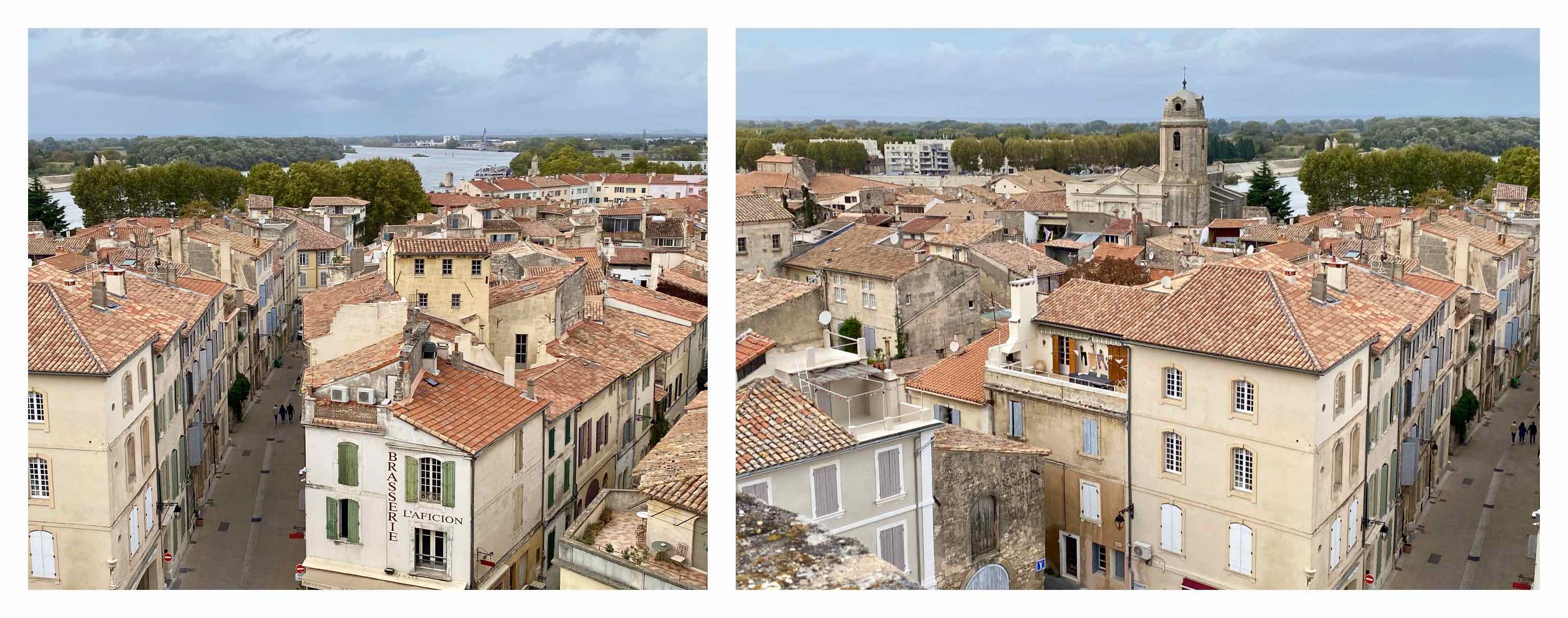
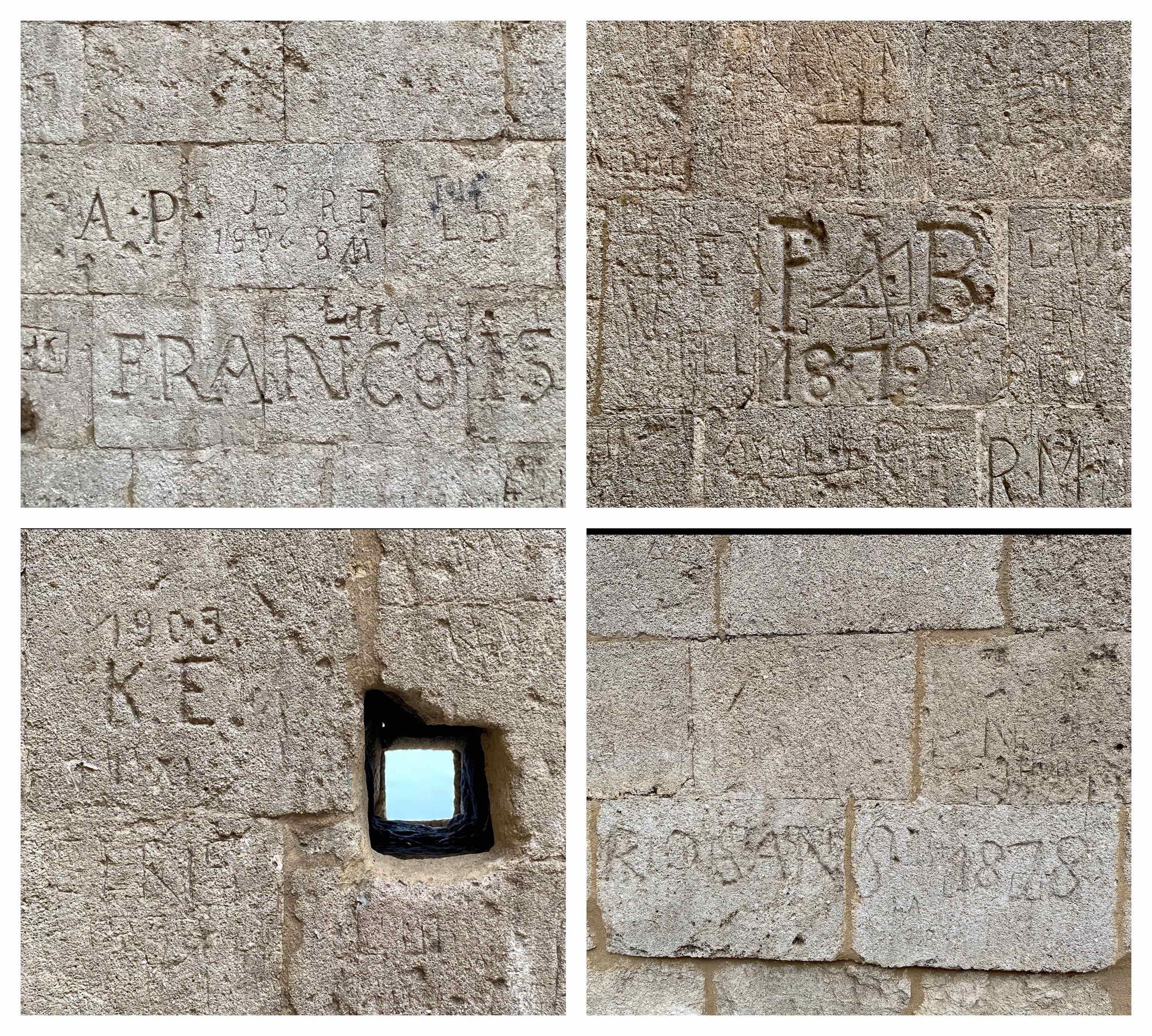
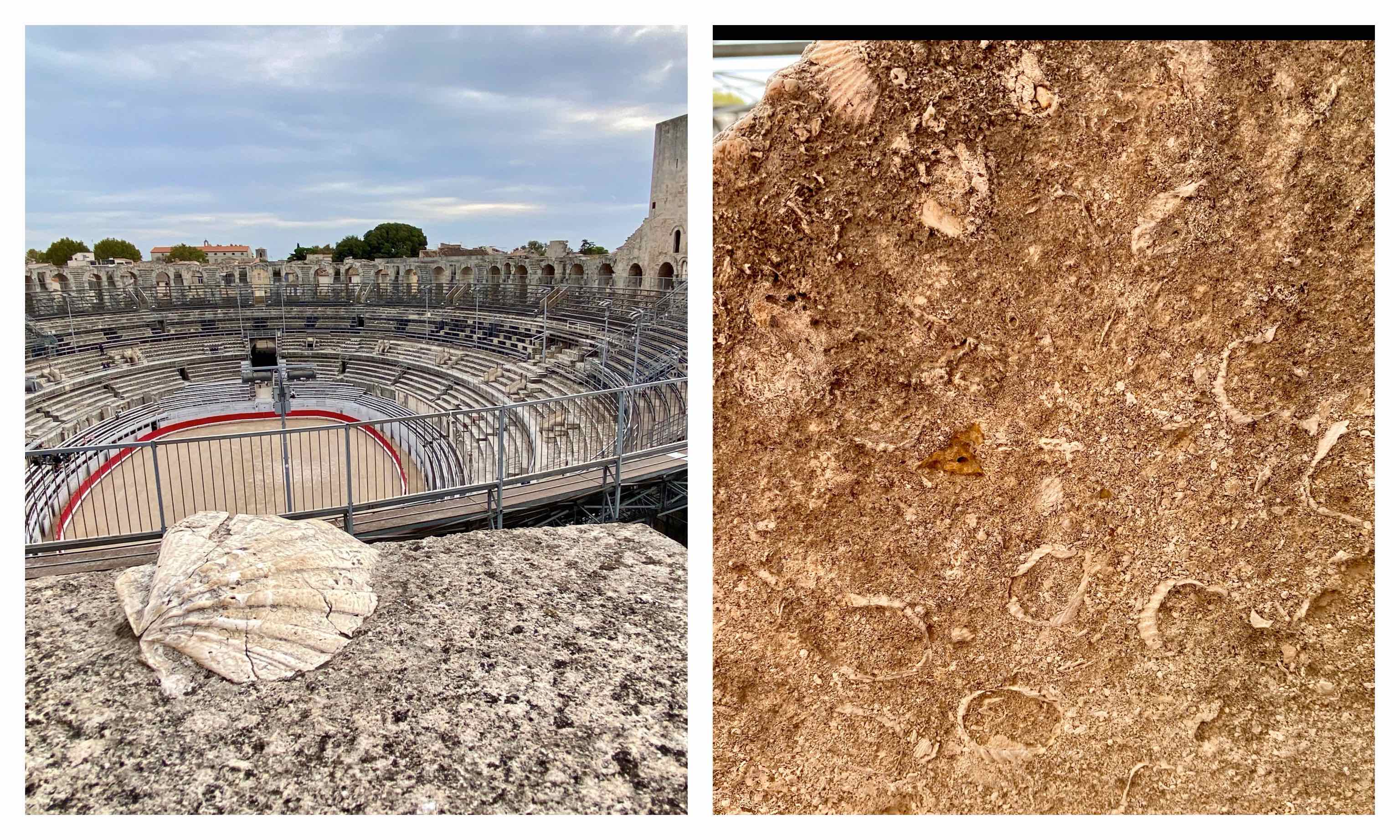
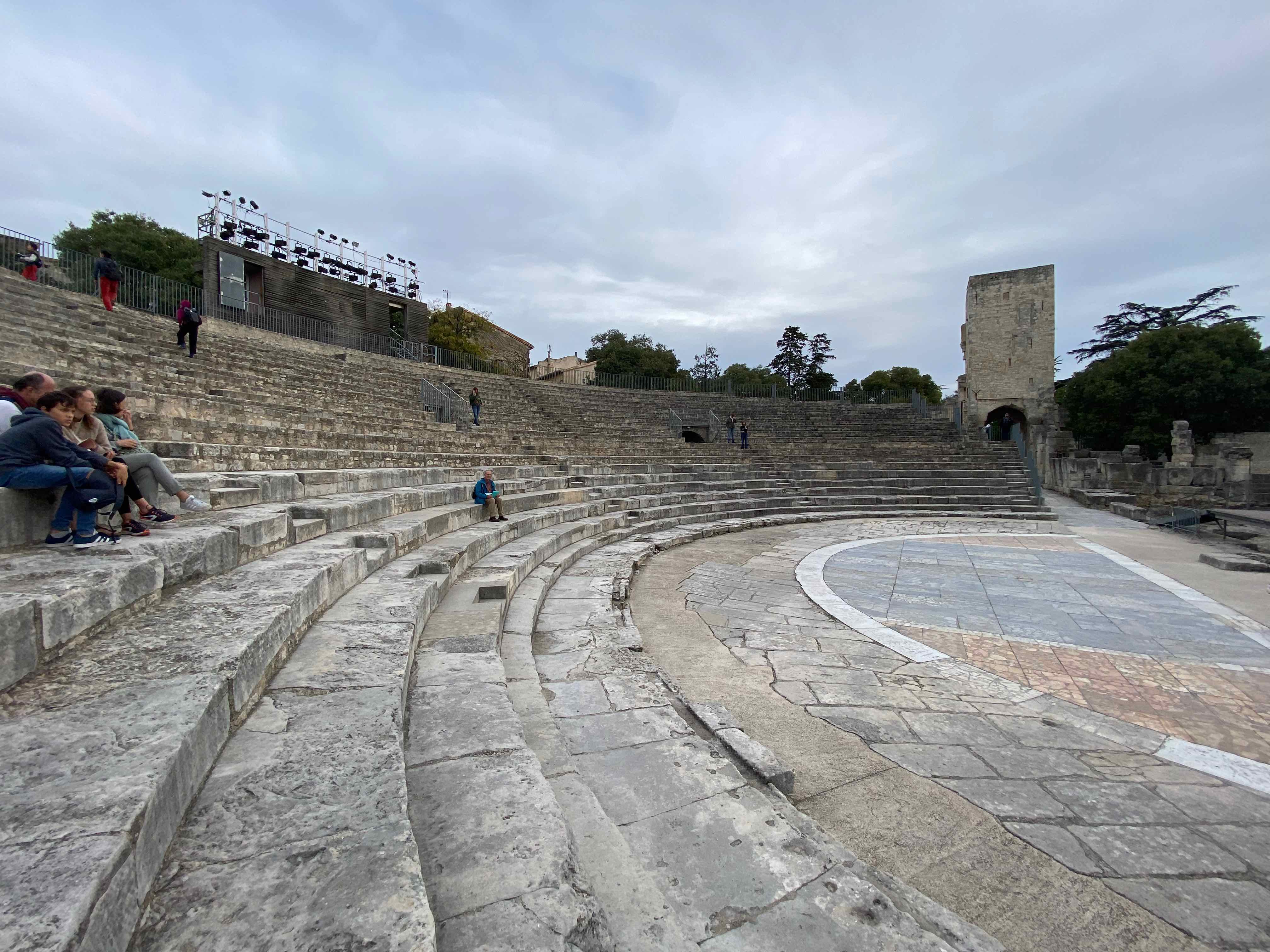
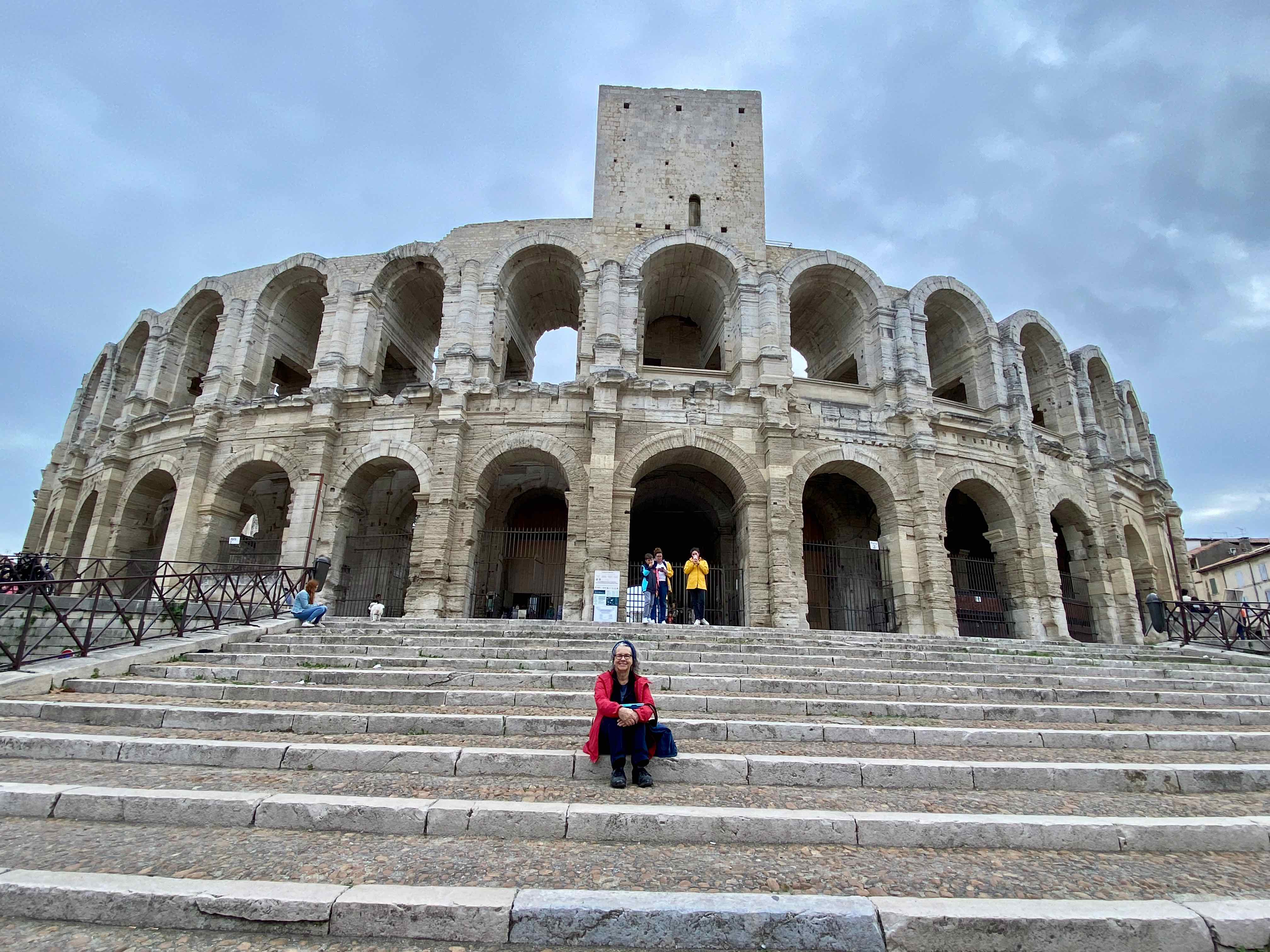 The Amphitheatre painting shows the arena full of people, but there aren’t many people here today.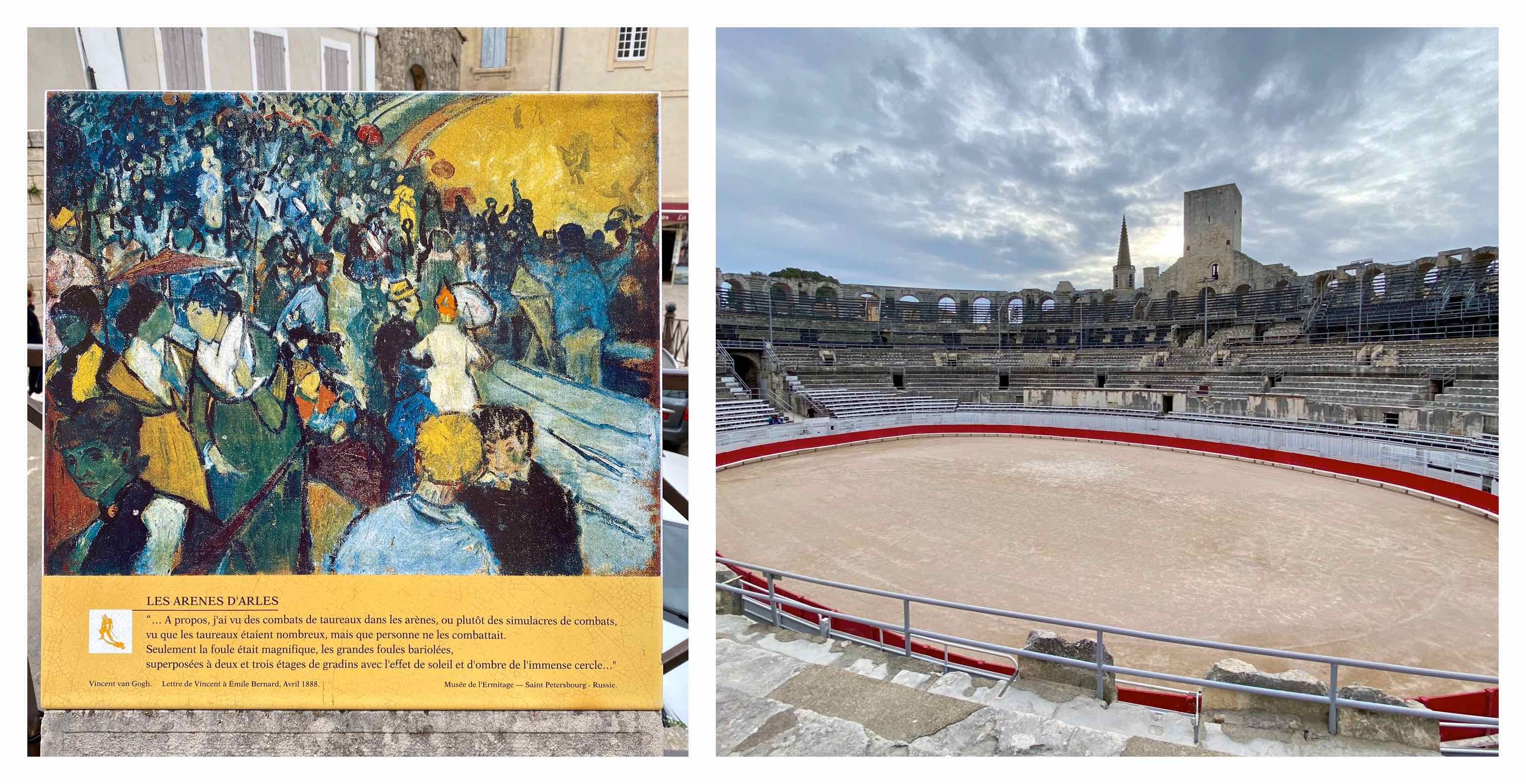
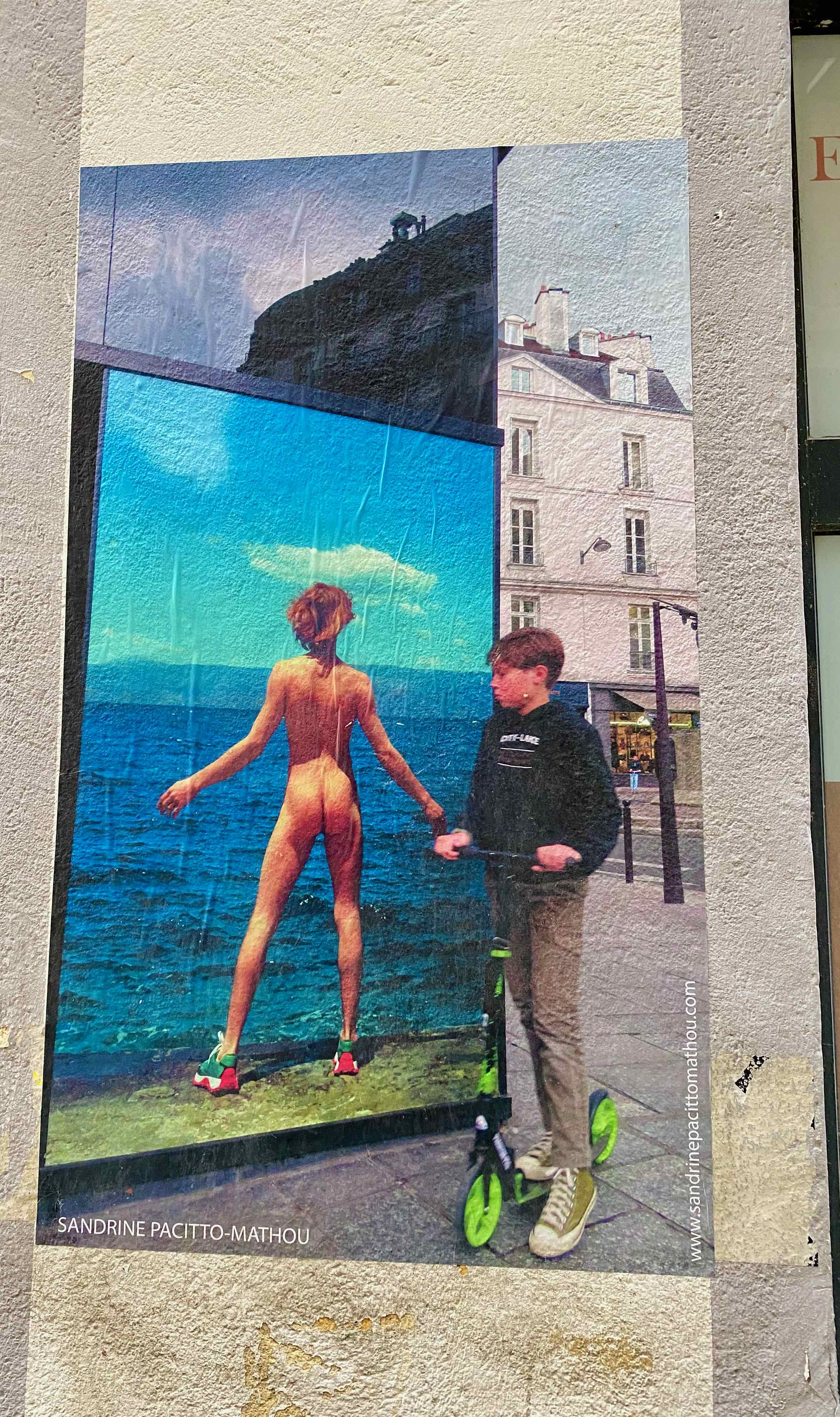
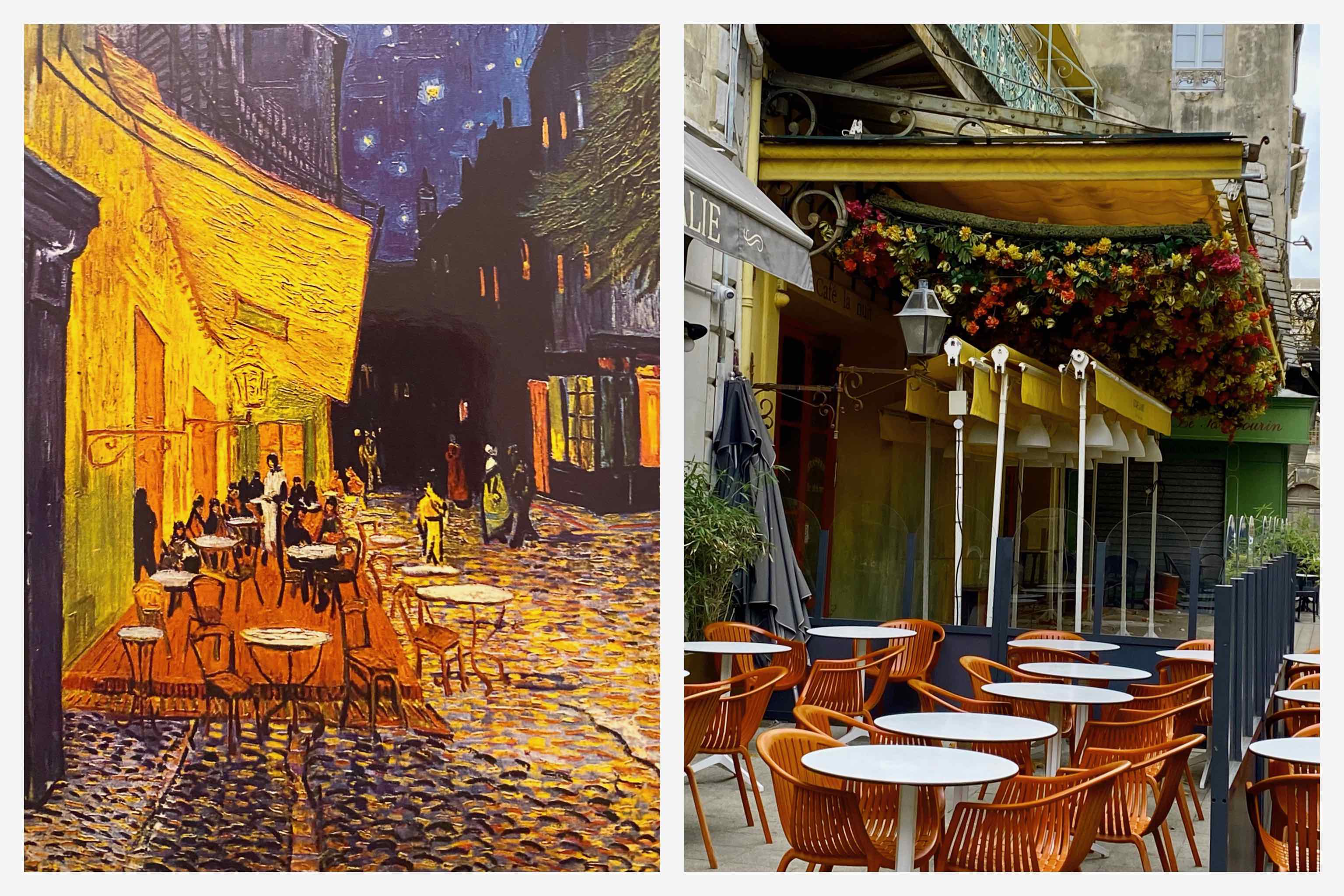
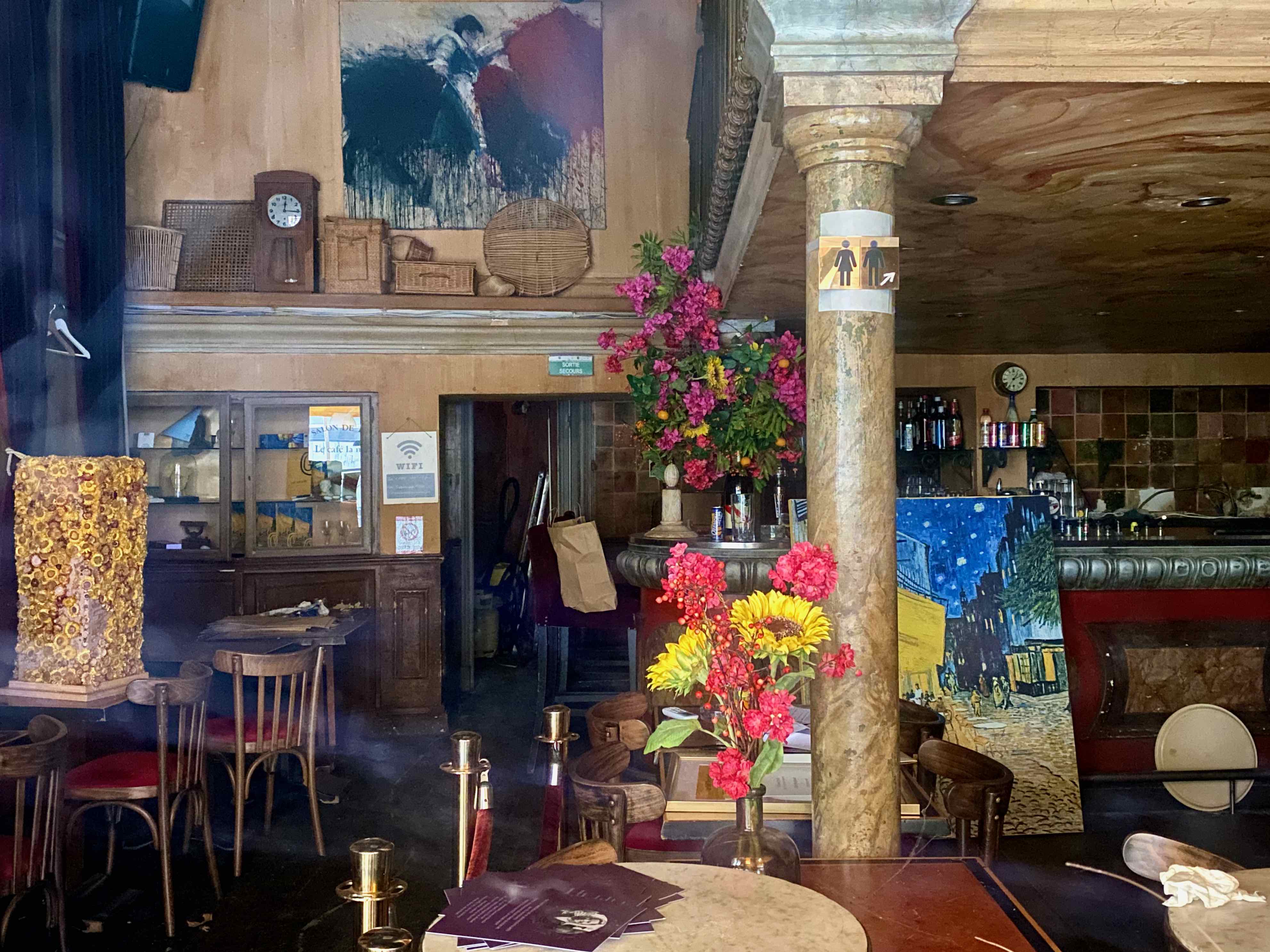
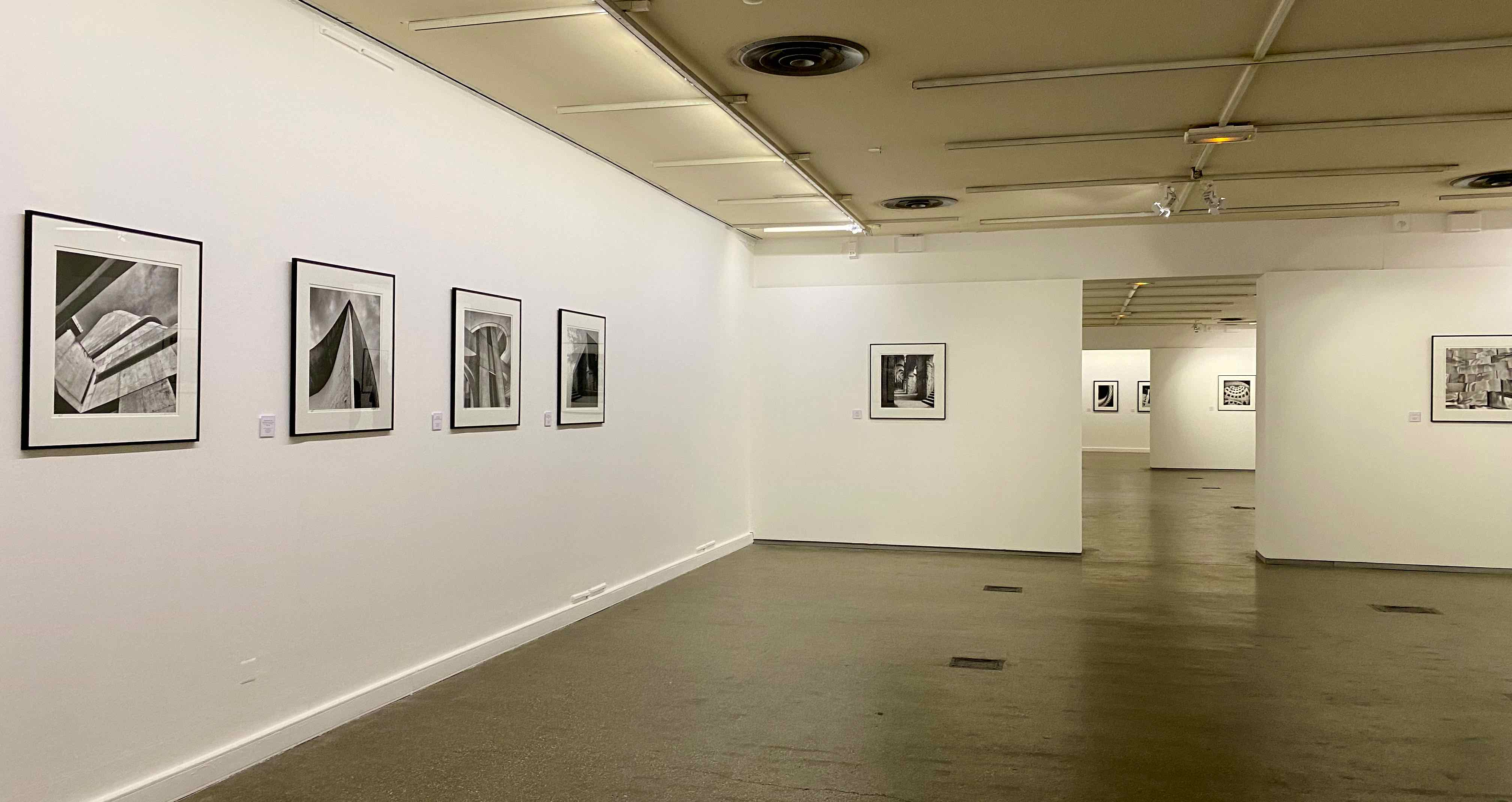
 Walking through this plaza I notice another photography exhibit but it is getting late and we still have one more painting spot to find, so we decide not to go in.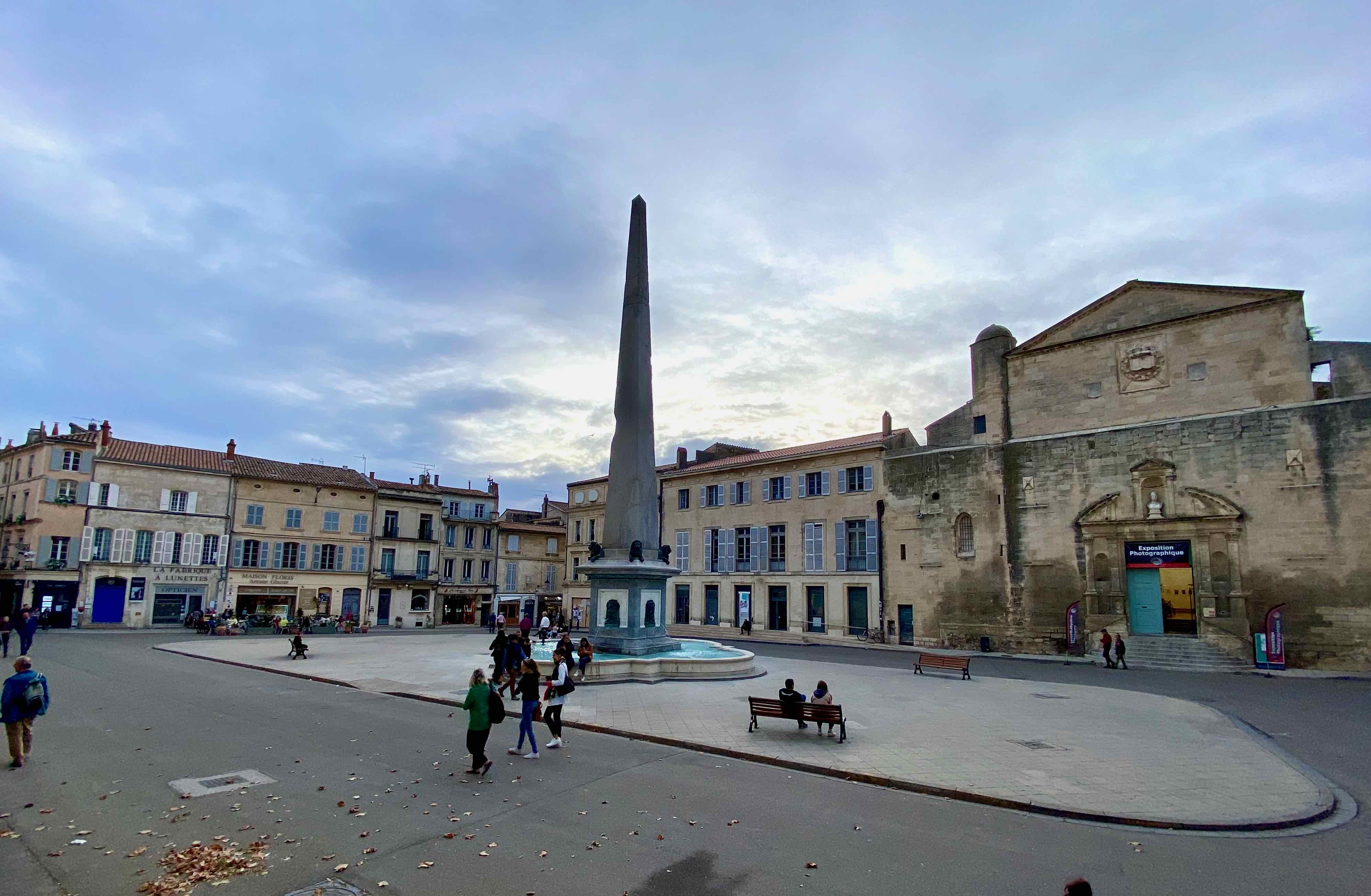
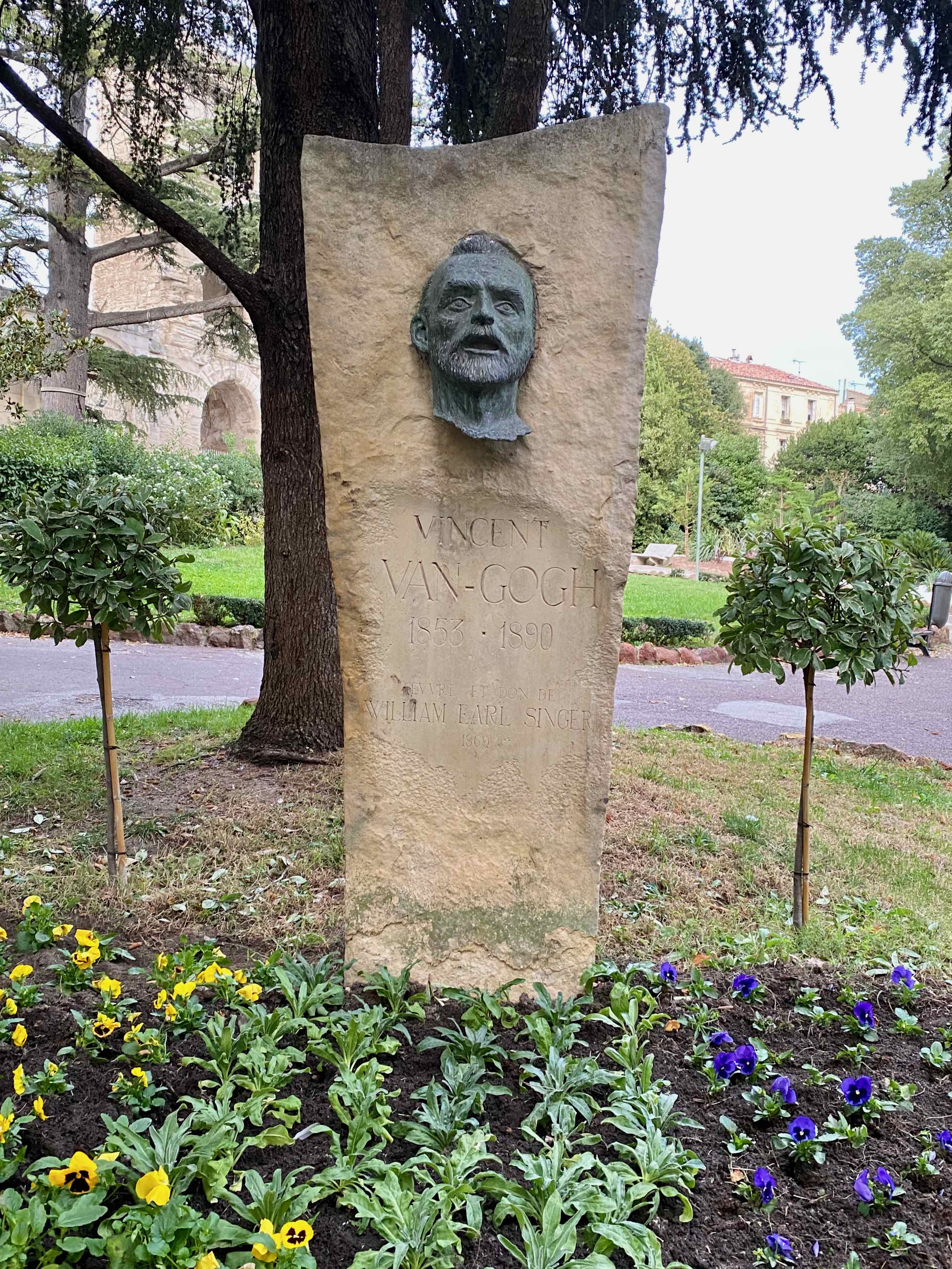
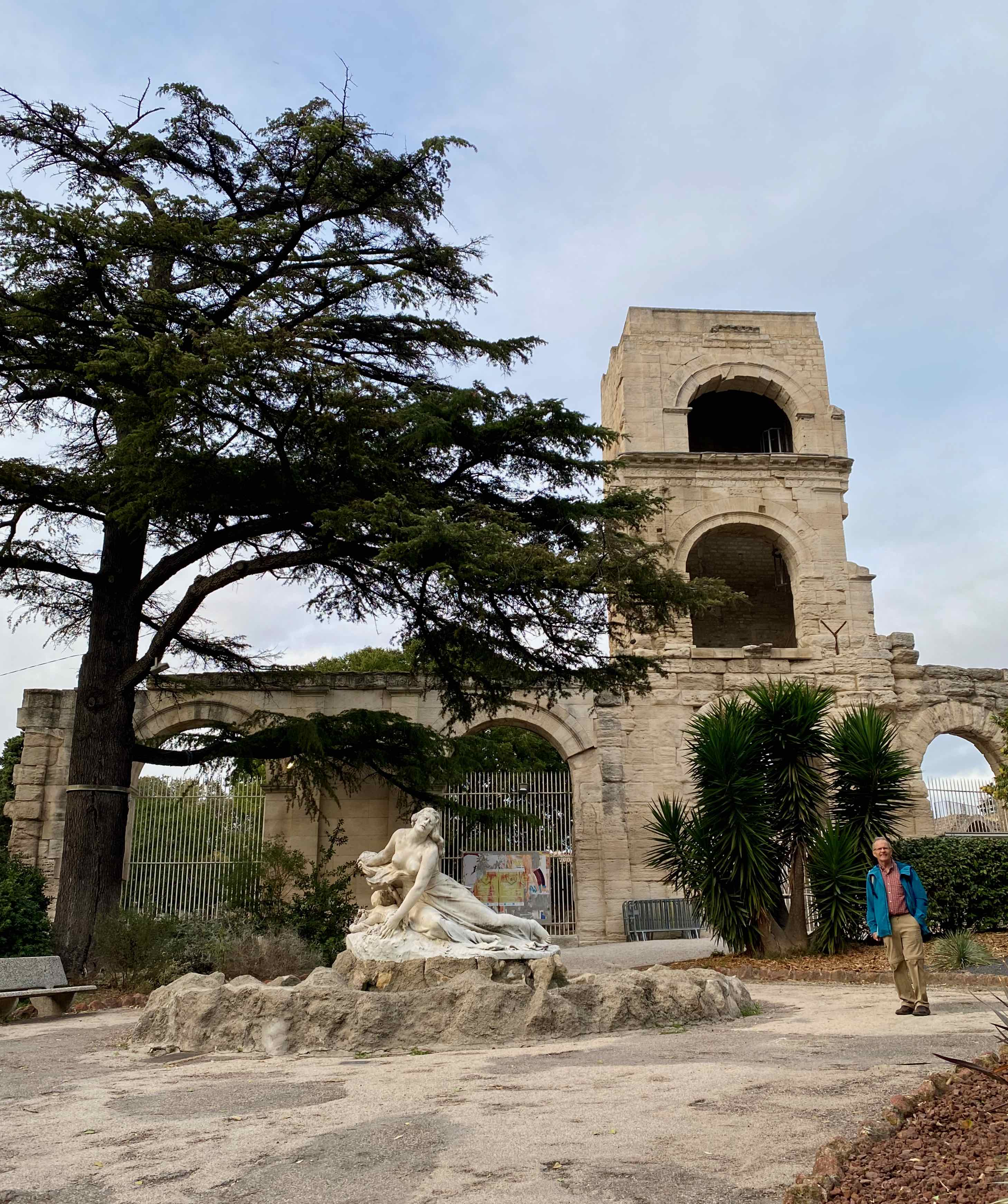

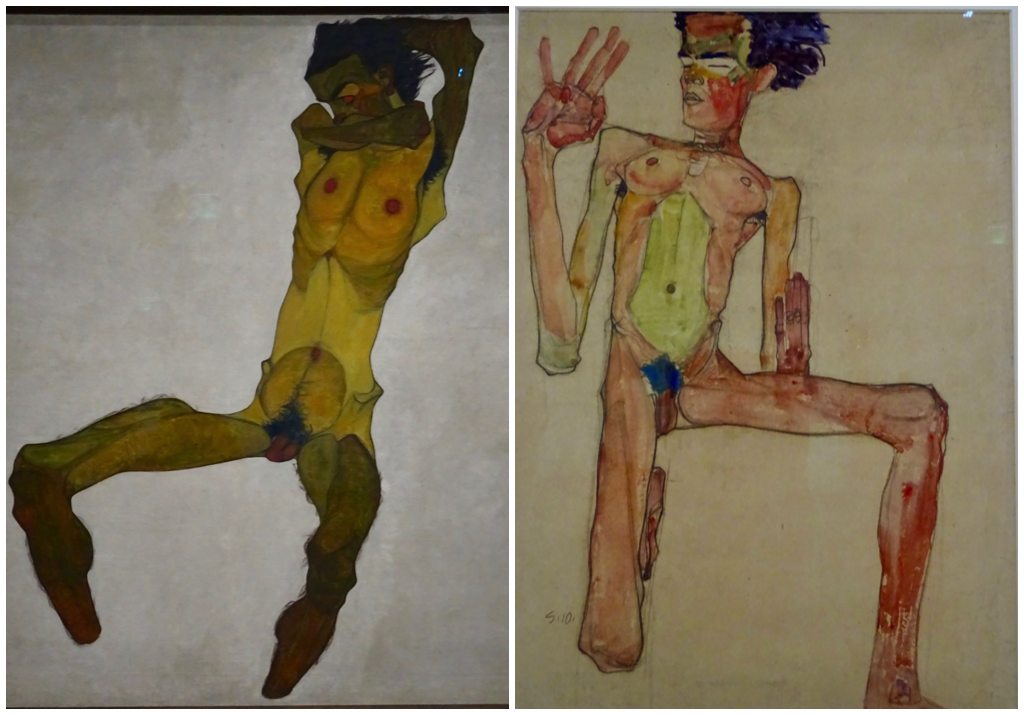

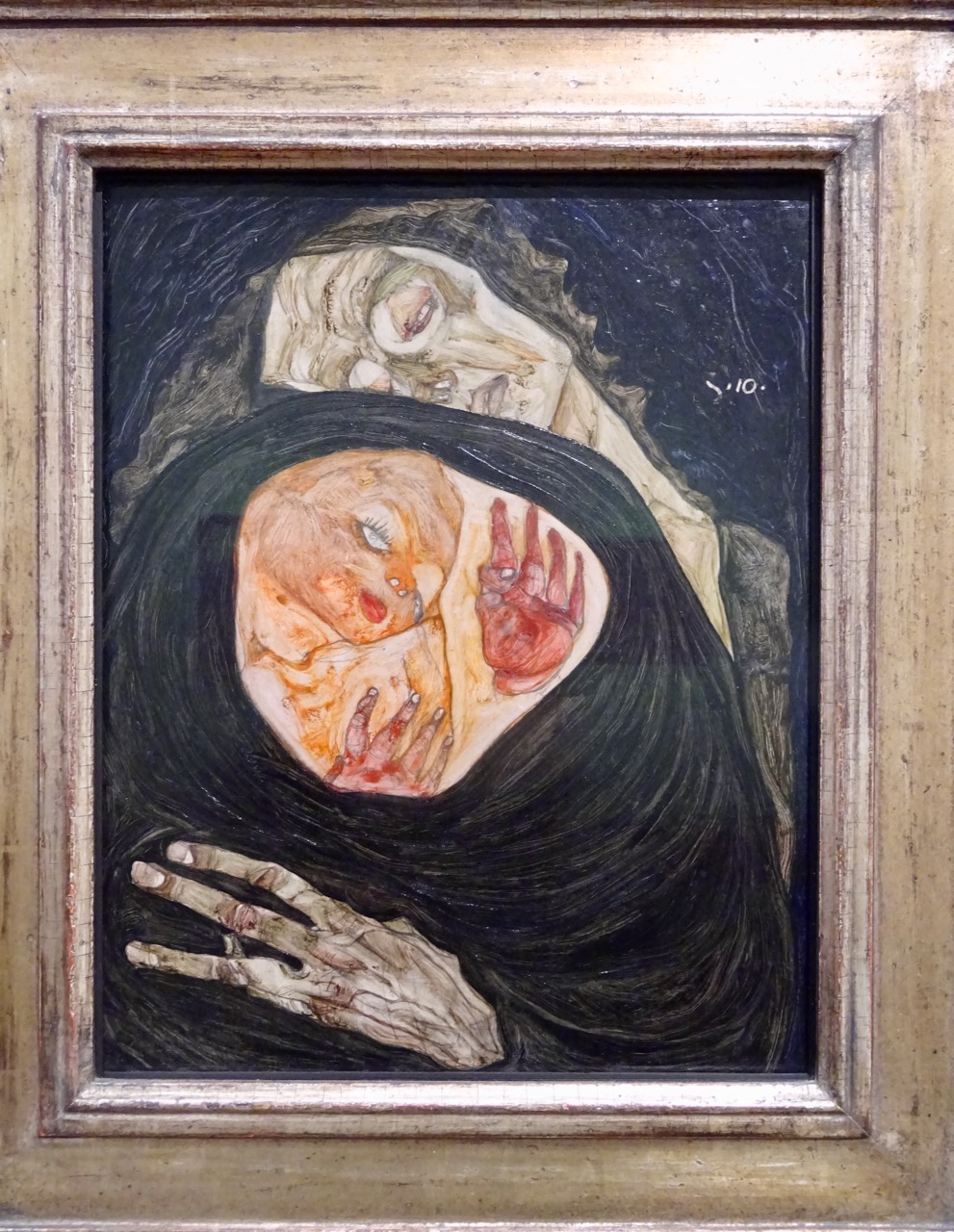
 ‘Mother and Child’ is a well known painting. I do love how expressive Schiele’s hands are.
 Schiele’s 1912 ‘Self Portrait with Chinese Lanterns’ was painted as a companion piece for the ‘Portrait of Wally Neuzil’ who was his muse and partner from 1911 to 1915. Both these paintings have a gentleness and sensitivity not found in all his work. I like these very much.
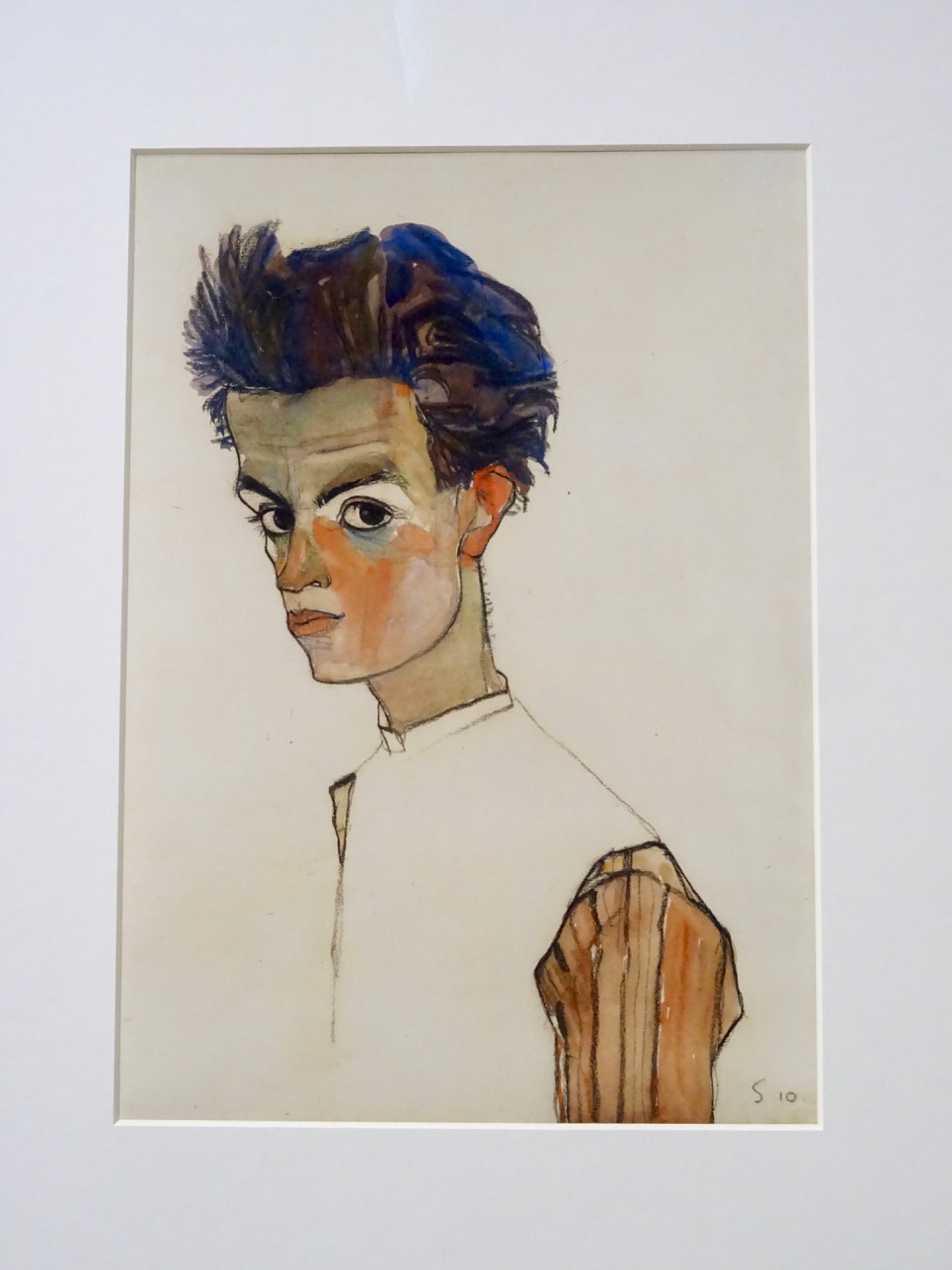
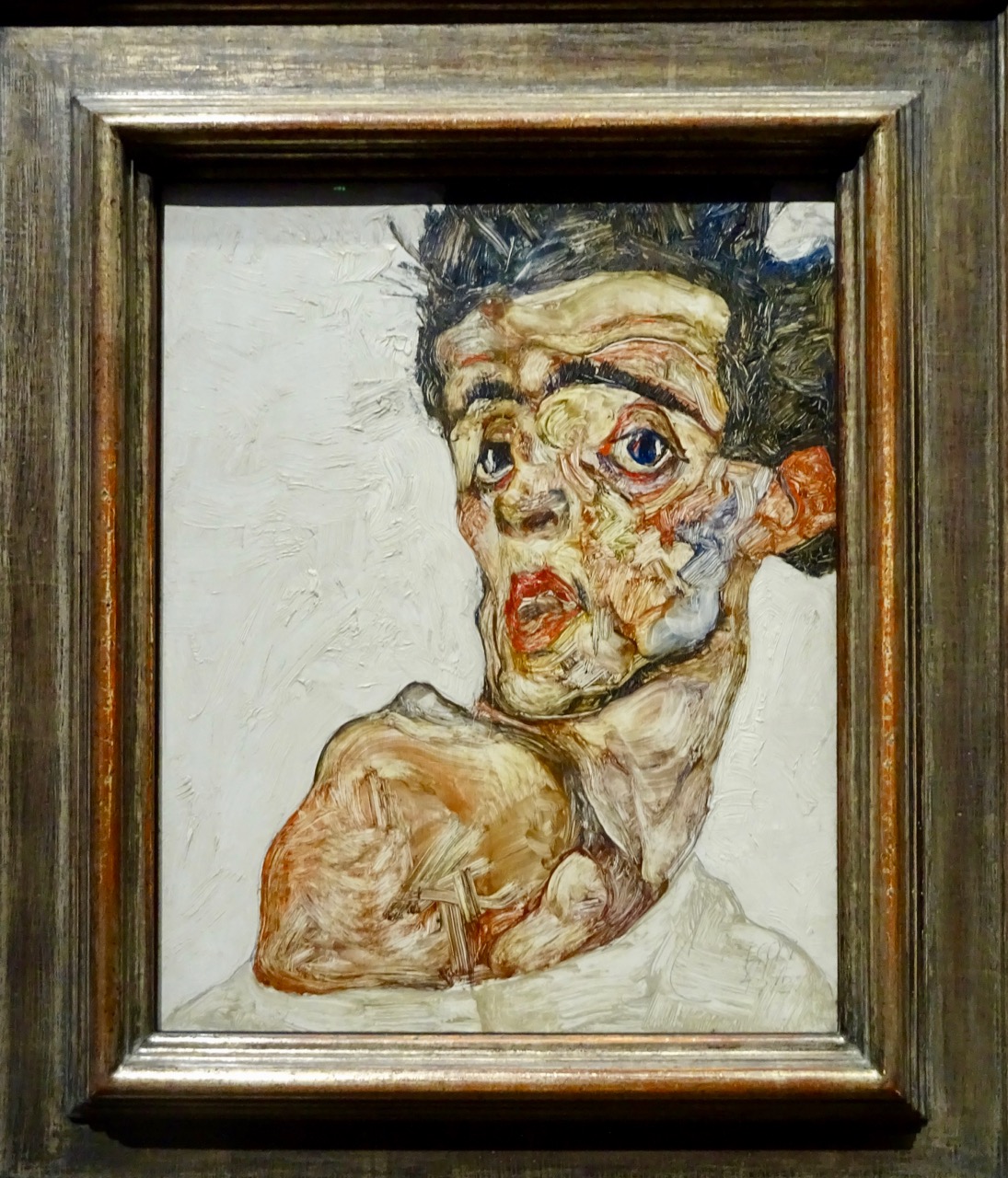
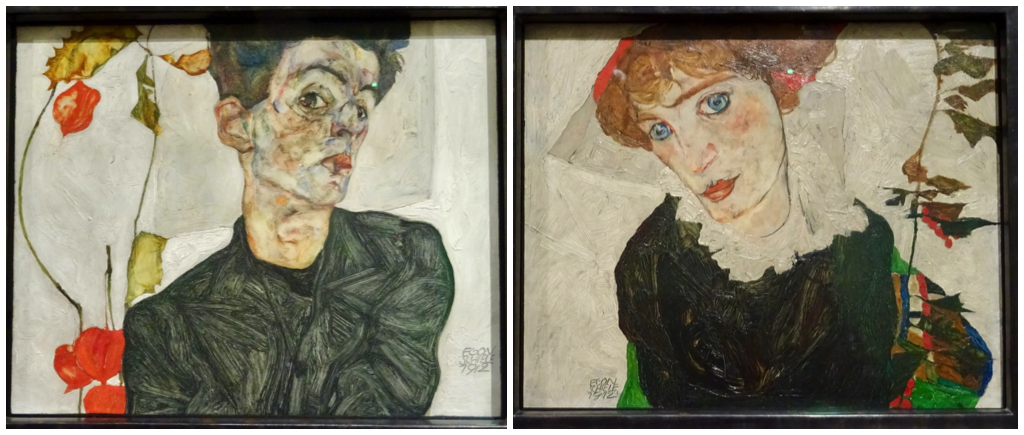 Quite different from this self portrait completed the same year. Schiele was born in 1890 and died in 1918. He was only 28 years old when he died, yet he created over 3,000 works on paper and around 300 paintings! I wonder what he would have accomplished if he had lived longer. He died during the Spanish Flu Epidemic, just three days after his six month pregnant wife Edith.
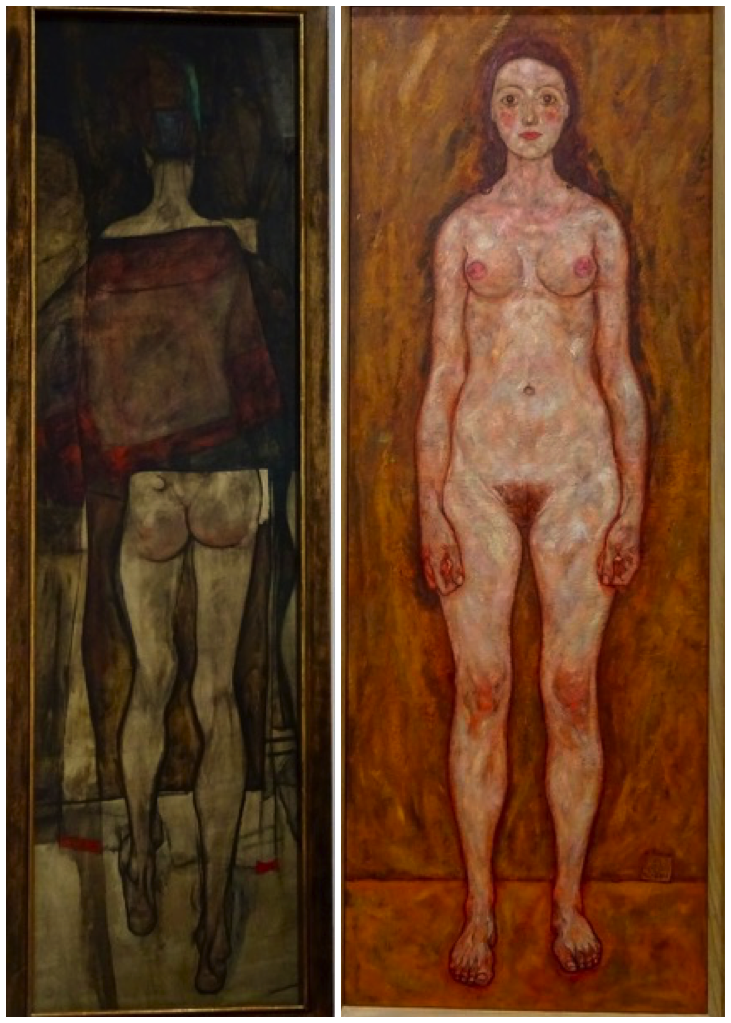
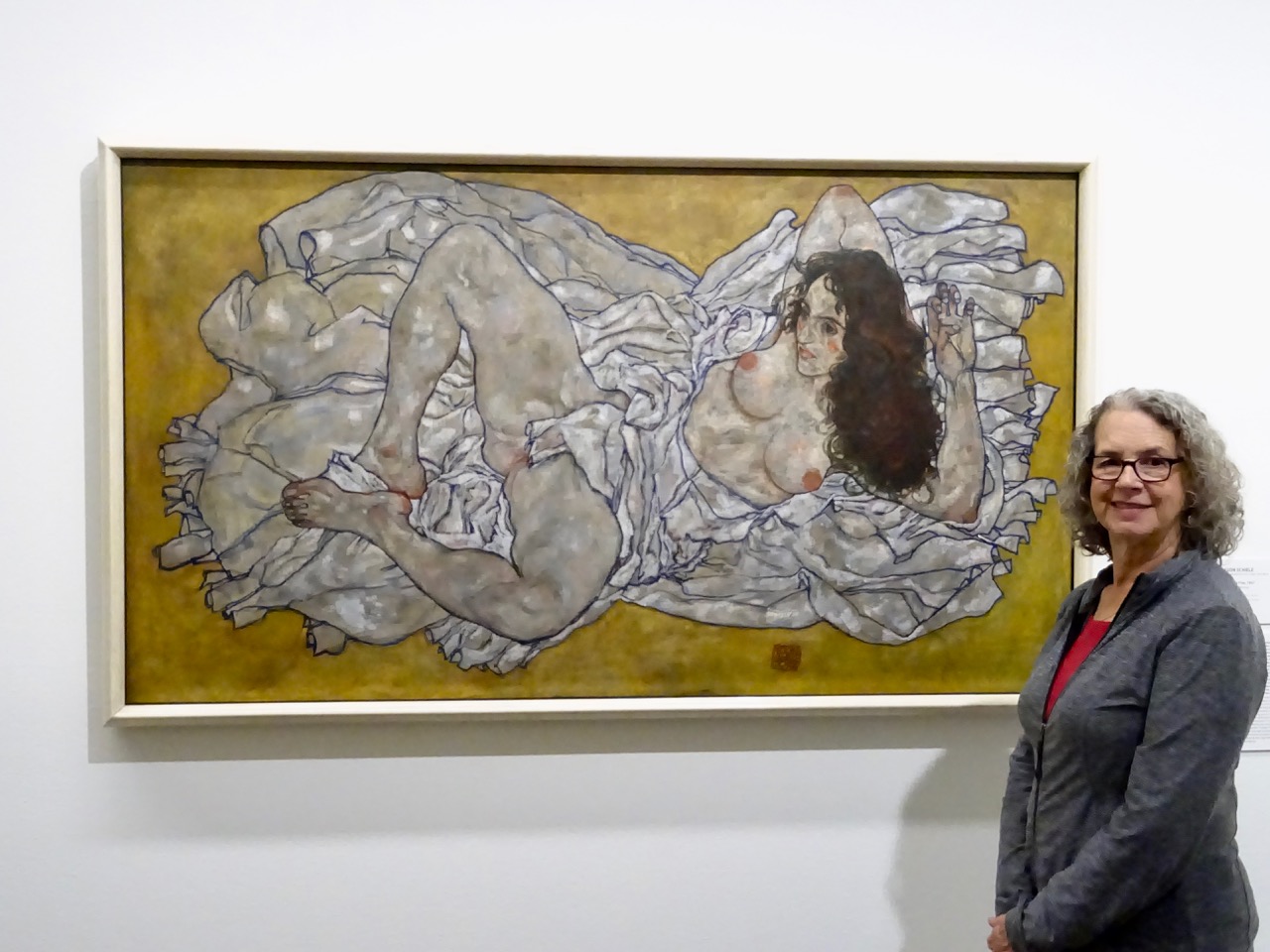
 ‘Reclining Woman’ was bigger than I expected. Originally the woman’s genitals were exposed but Schiele added the white cloth covering in order to be able to show the work at an exhibition in Vienna in 1918.
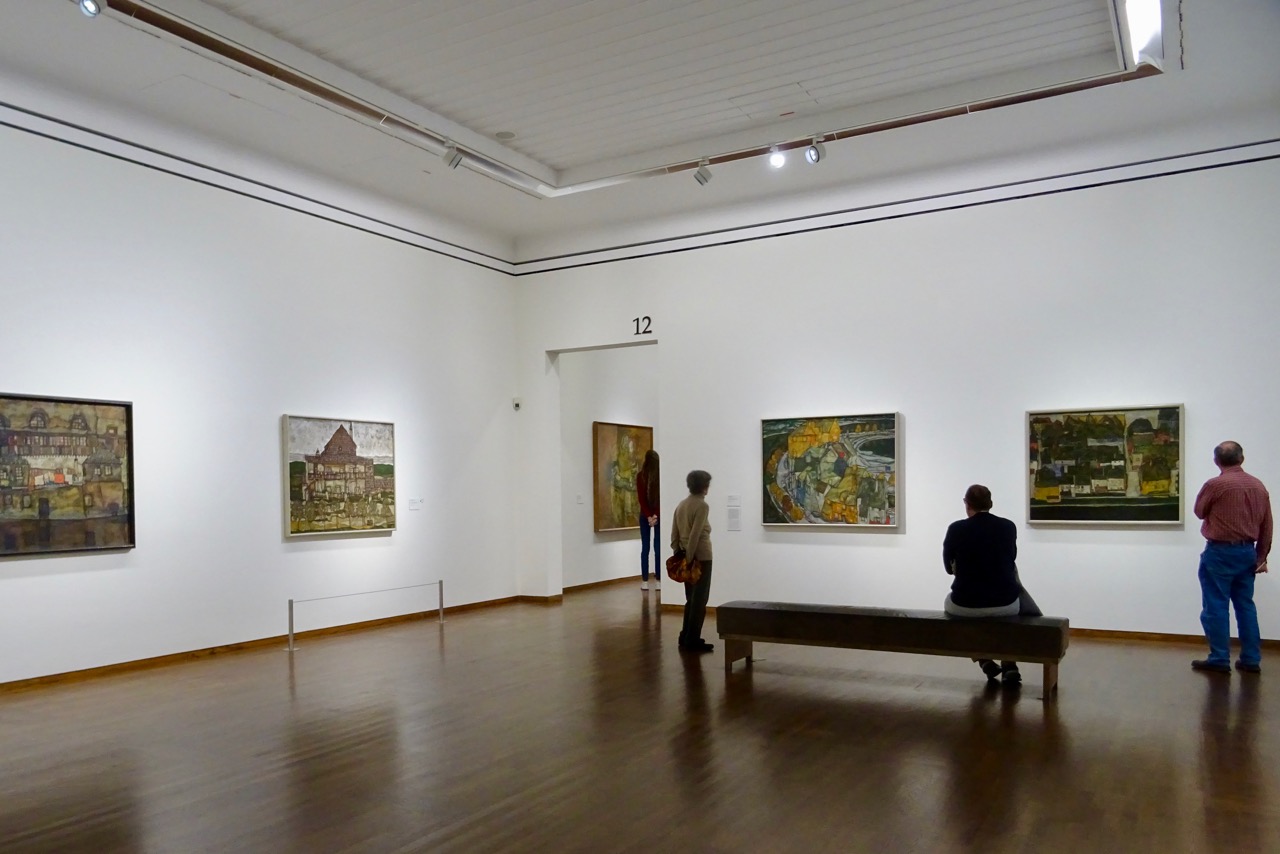
 There are several landscapes, and most of them are quite large.
 ‘The Small Town IV’…
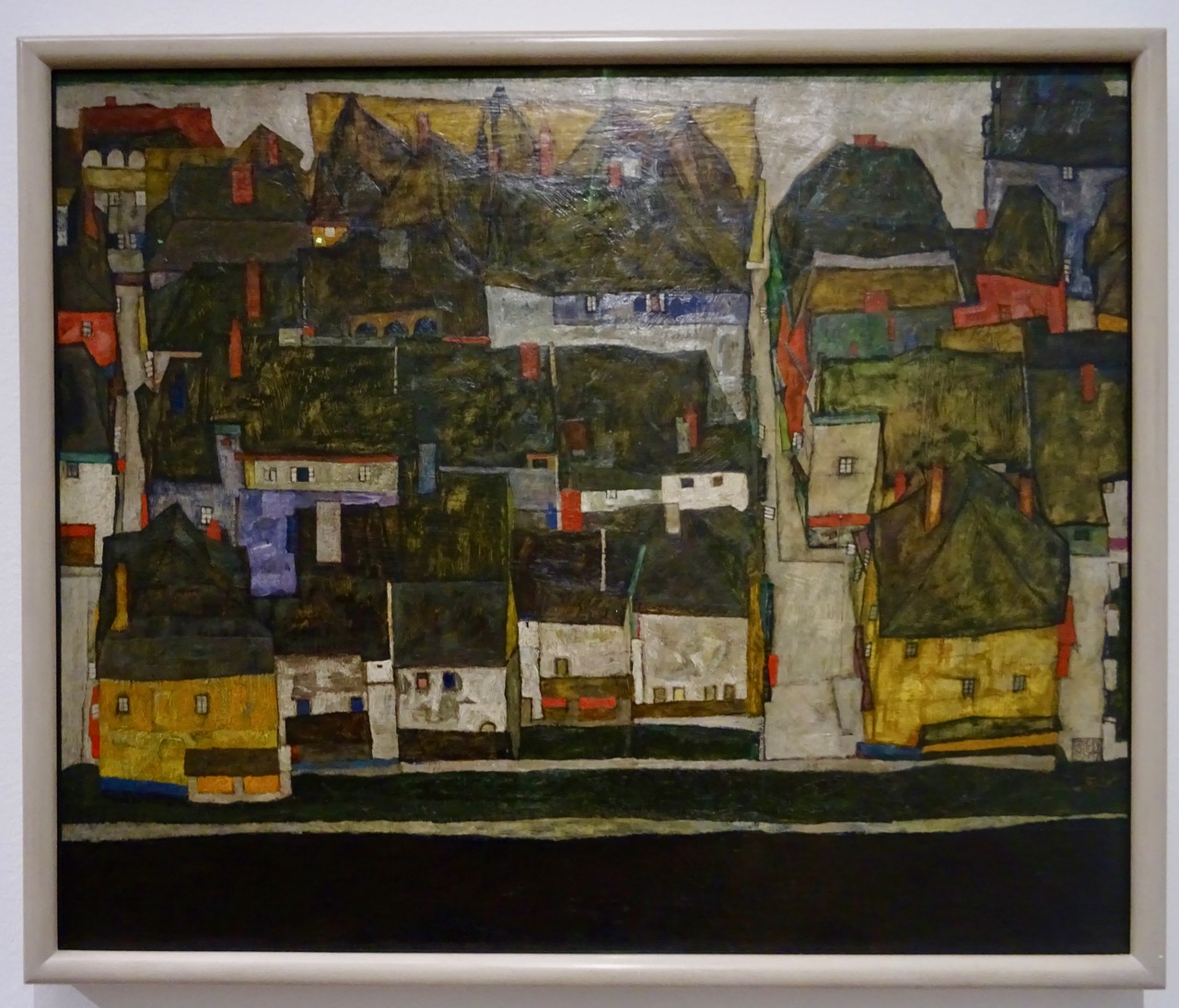 and ‘House With Shingled Roof’ were two that I particularly liked. Although Schiele only painted for such a short time, his work laid the foundations for the Viennese Expressionist movement as well as inspiring other future movements, such as Abstract Impressionism.
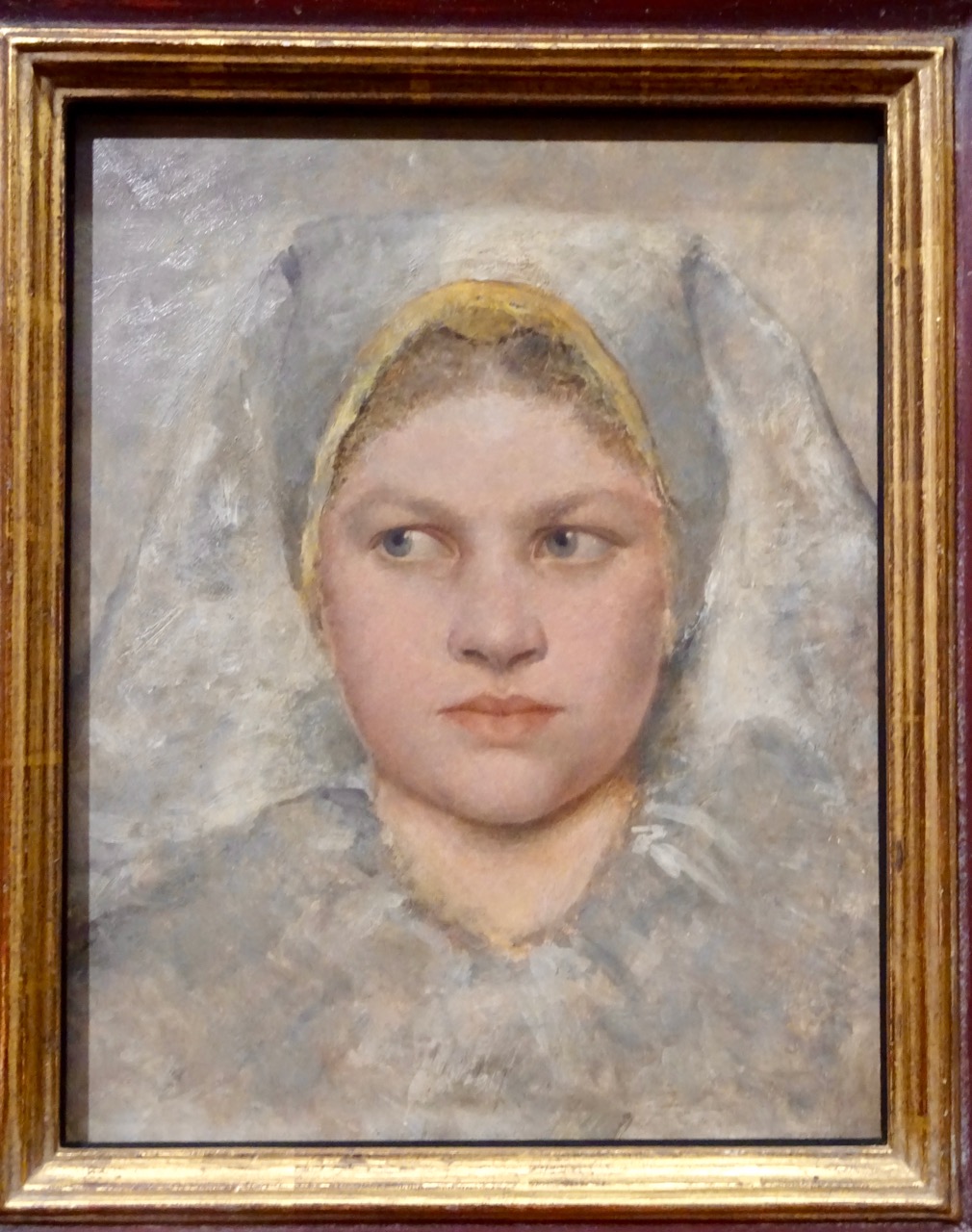 ‘The Blind Man’ was first exhibited in 1898.
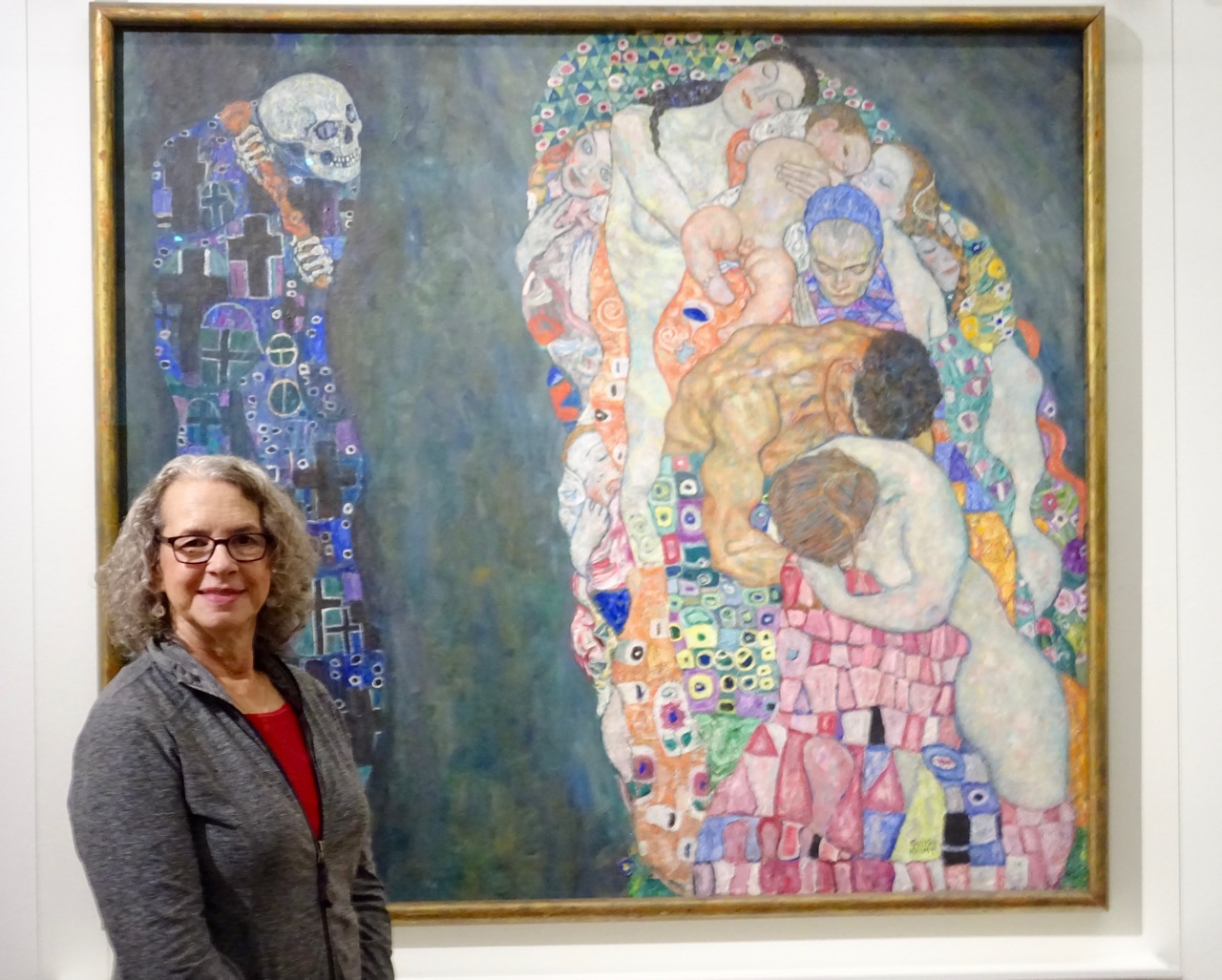
 ‘Death and Life’ won the Gold Medal at the 1911 International Art Exhibition in Rome. This painting and ‘The Kiss’, that I saw at the Belvedere, are two of Klimt’s most well known paintings. I feel very fortunate to have seen both of them in person, as well as all the other amazing works of art I have seen on this trip.
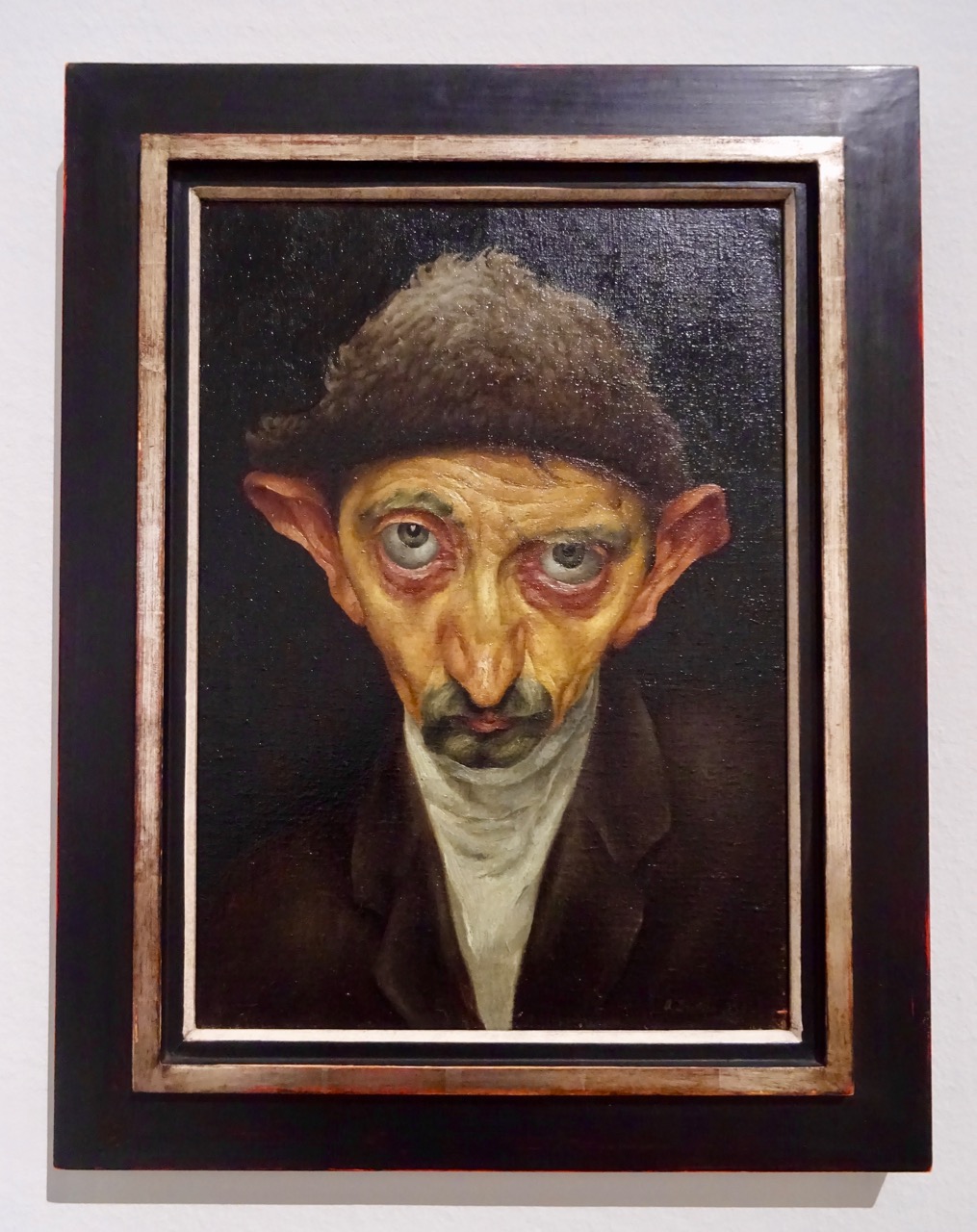
 As we are leaving the Leopold I notice this painting, which makes both of us laugh! It is by Albert Birkle and is titled ‘Man with Fur Cap’, or ‘My Brother the Animal’!
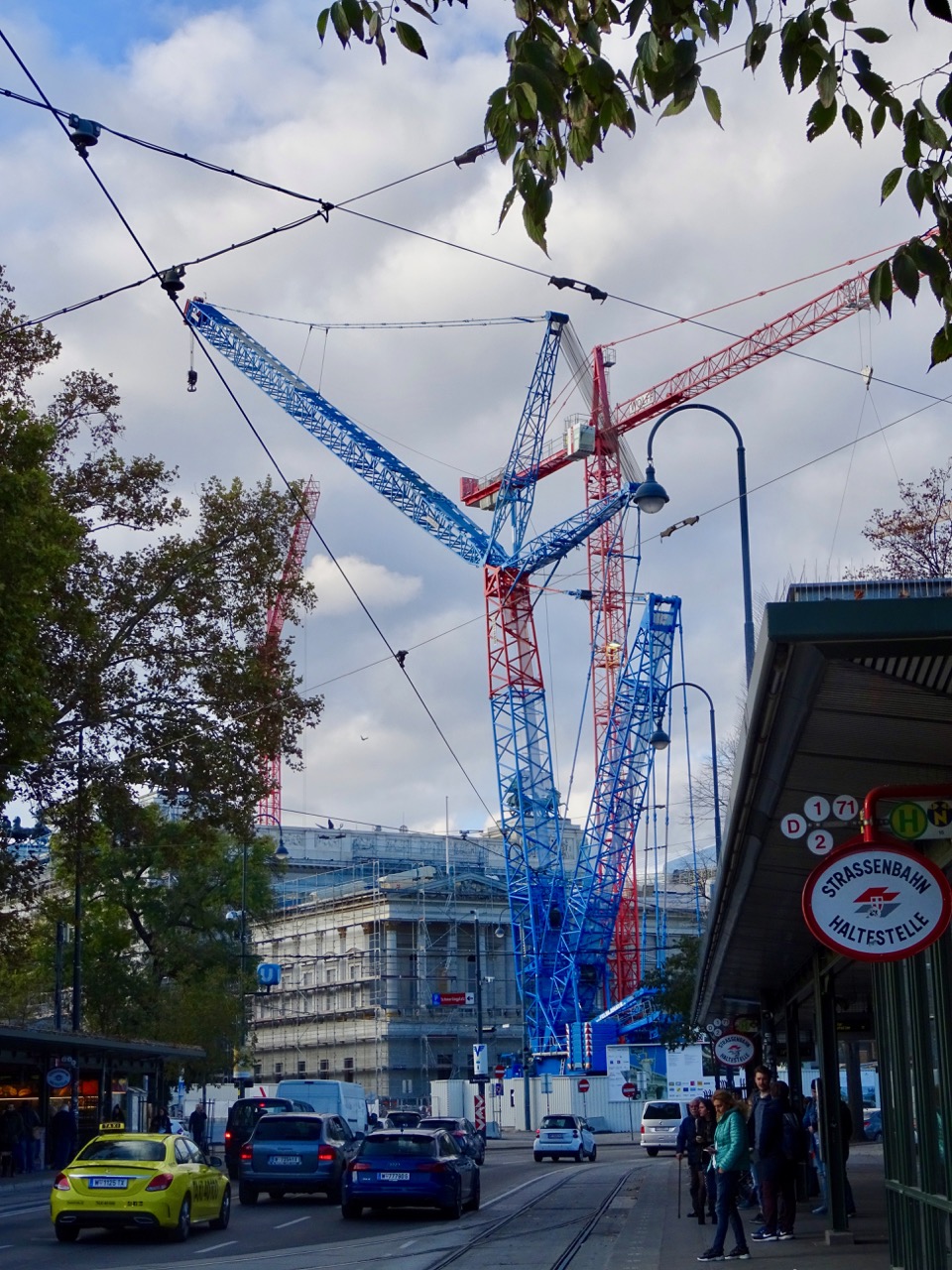
 Near the metro station Bob notices this crane which has just been erected. Neither of us have seen one with so many arms before.
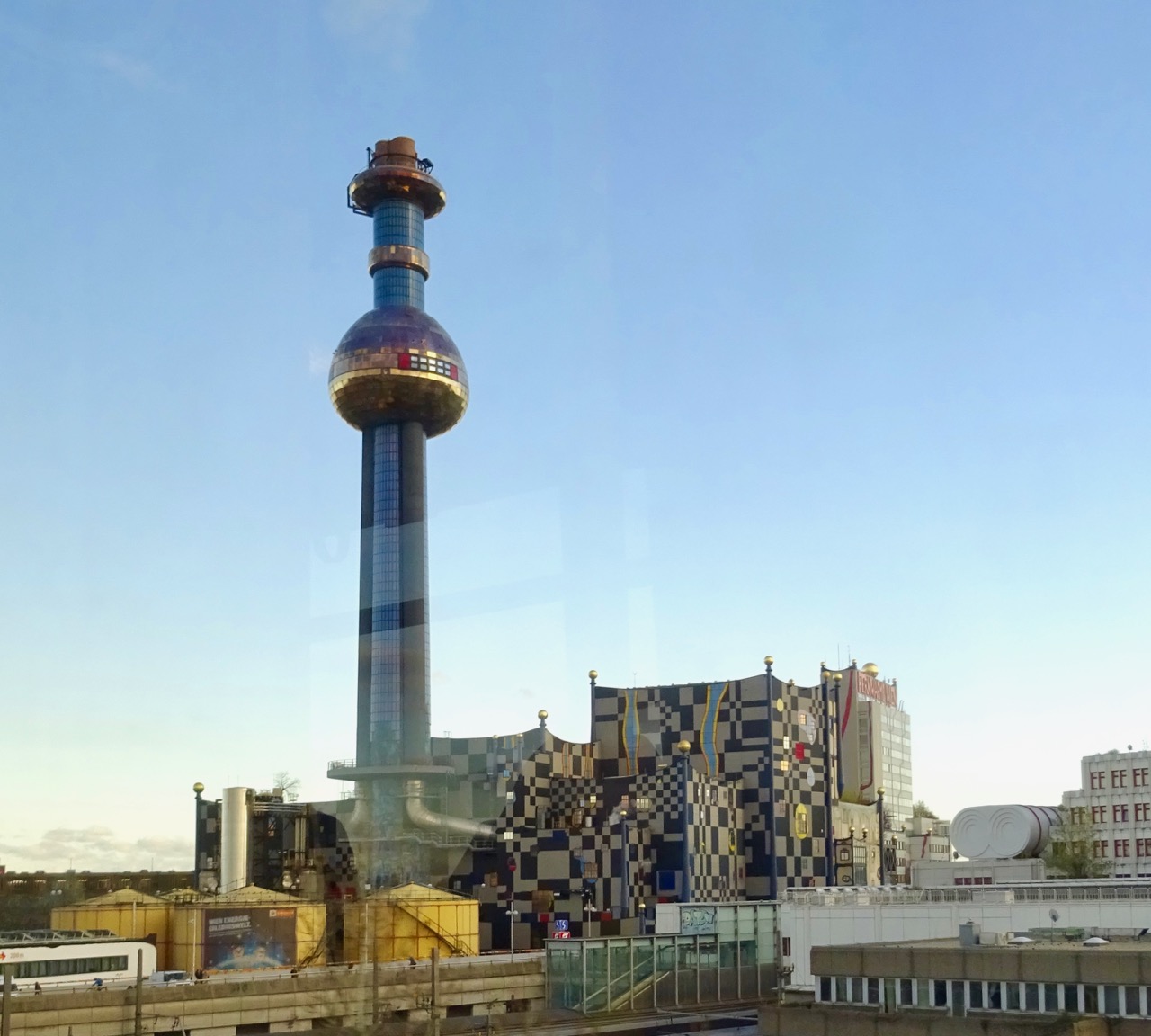
 When I saw this building our first day in Vienna I thought it was the Hundertwasser House but it wasn’t. Turns out that it was designed by Friedensreich Hundertwasser! It is the Spittelau Incinerator which is used to handle Vienna’s garbage. The environmentally friendly plant produces enough energy to heat more than 60,000 households in Vienna in a year.
 I have one more life drawing session tonight at Kaffeebar Quentin. I have attended many life drawing sessions in bars or pubs and the model is always at least partially clothed, so I was quite surprised when our model is completely nude. We are in the back of the bar, but the model is still in full view of all the other patrons as well as anyone who happens to look in the windows. Wish I had a scanner, as it would improve the quality of these photos, but I don’t think I can haul one around on holidays! These are all 5 minute poses.
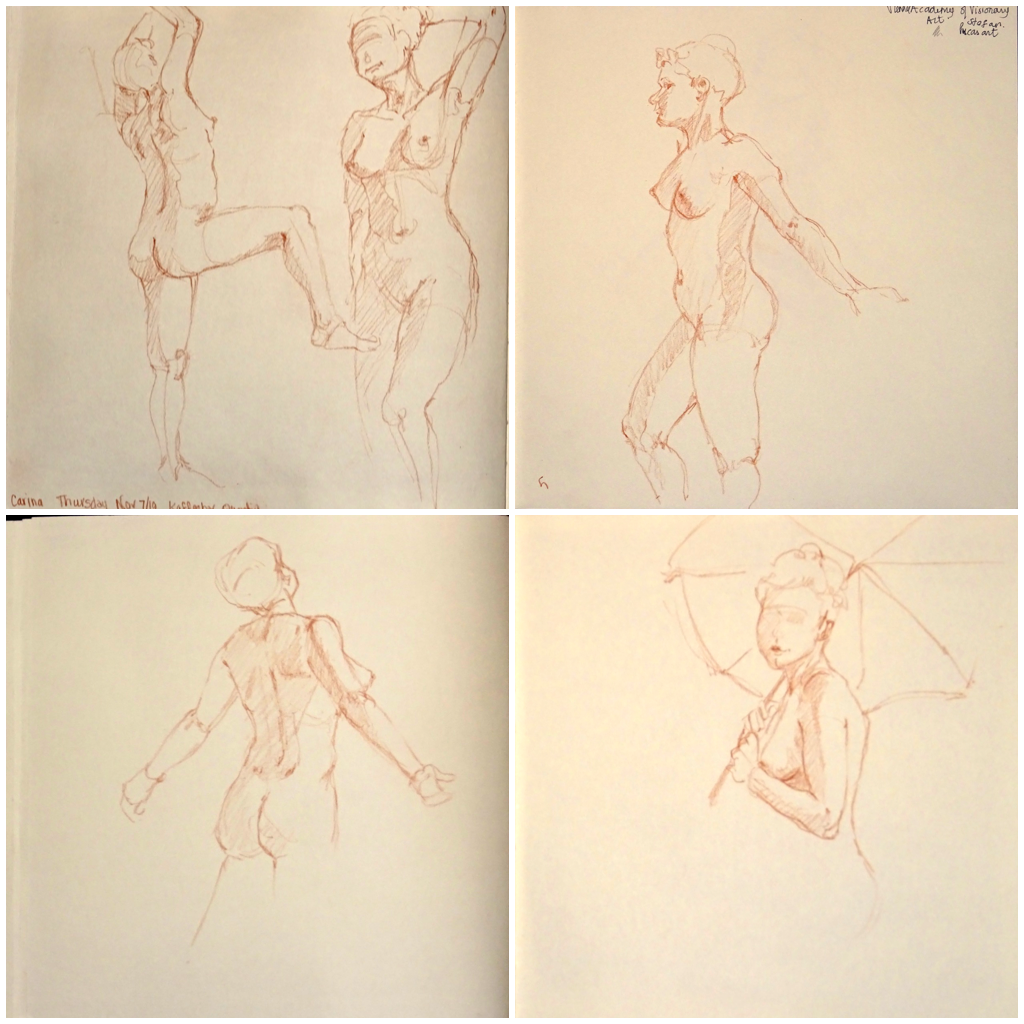 Two ten minute and one twenty minute drawing…
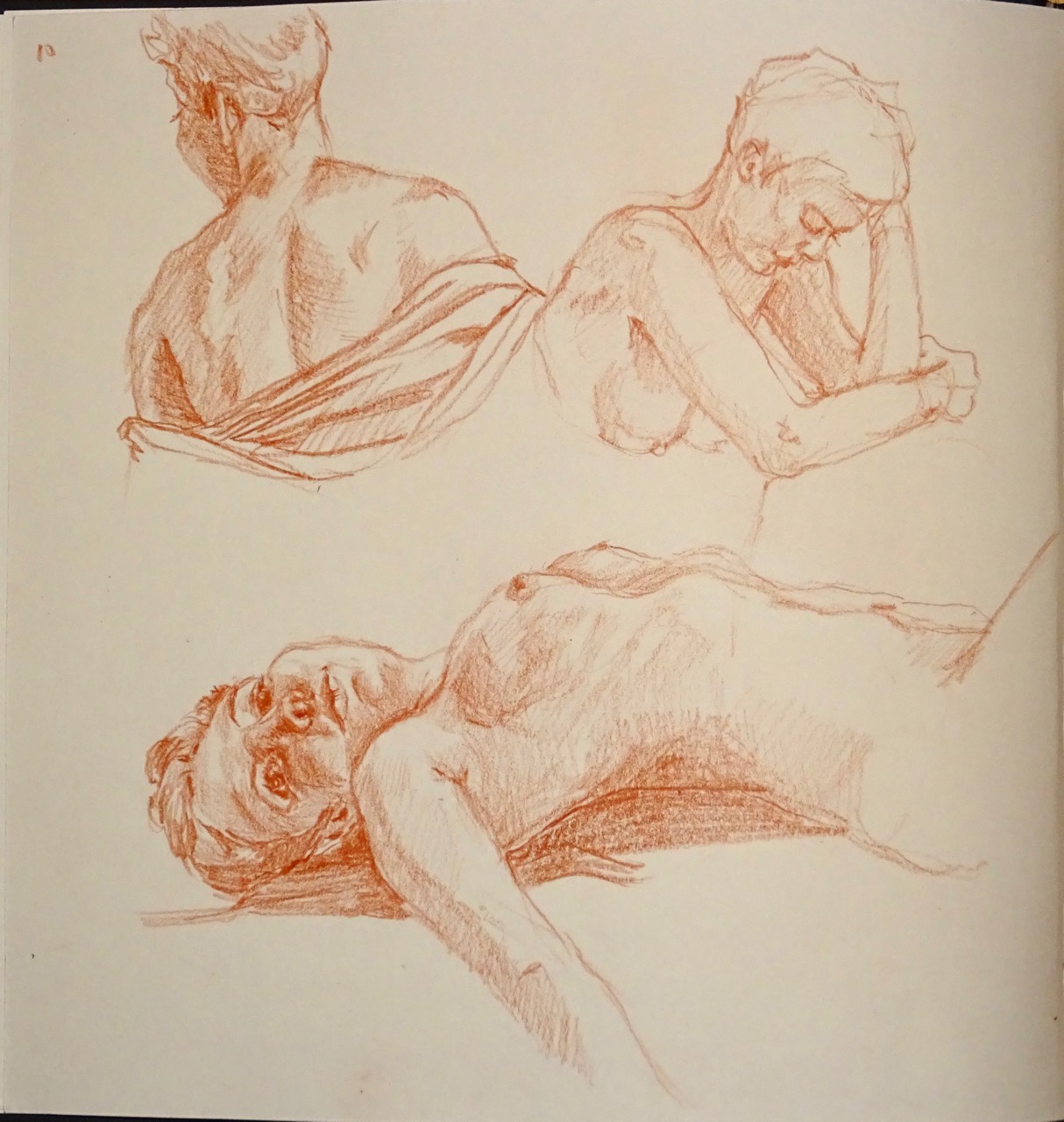 and we finished the evening with a twenty-five minute pose. The people at this session were very friendly and I had met some of them at the other two sessions this week. I will miss Vienna, they have so many life drawing opportunities. There is a session almost every day of the week, and lots of them have interesting themes.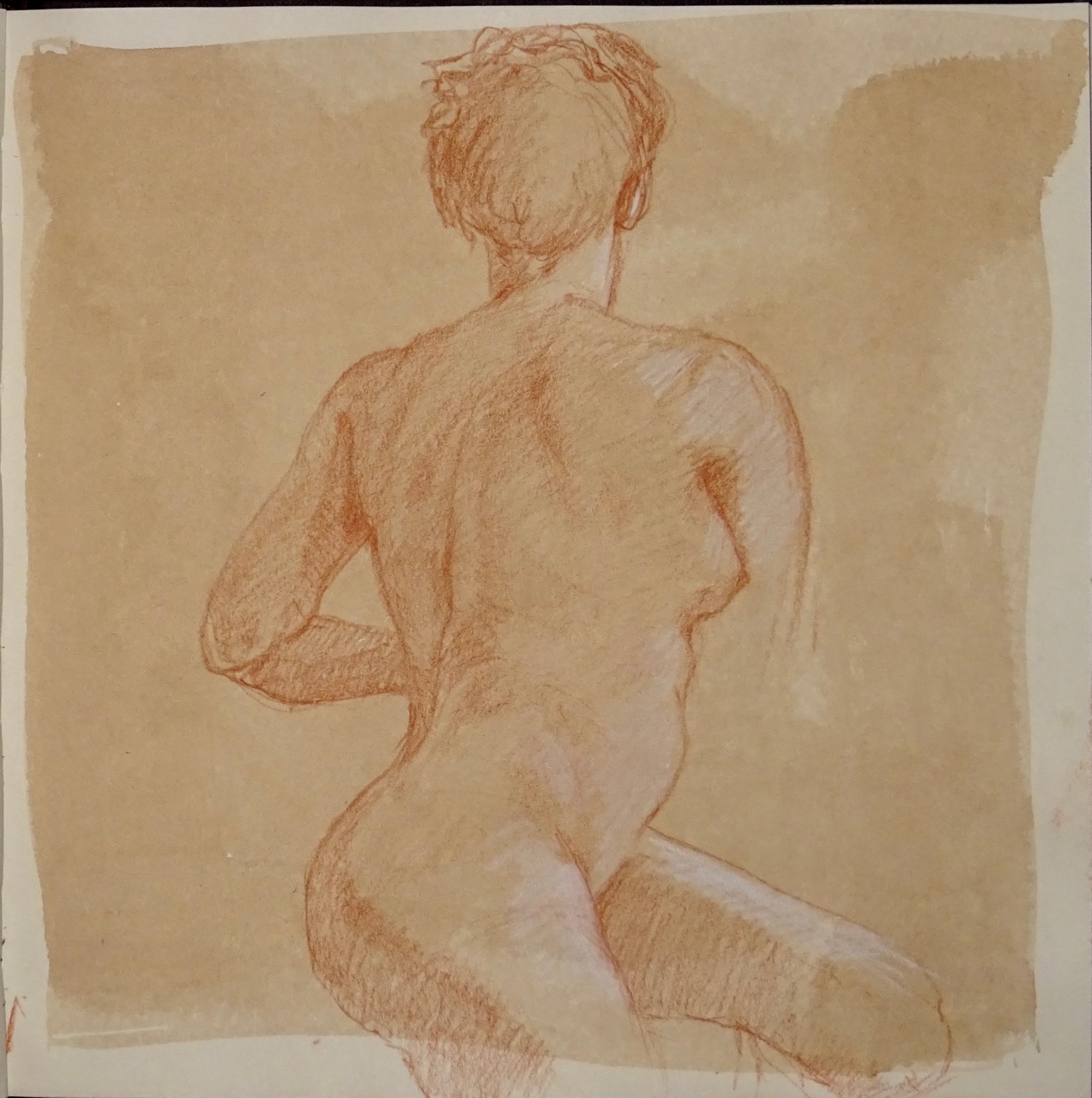
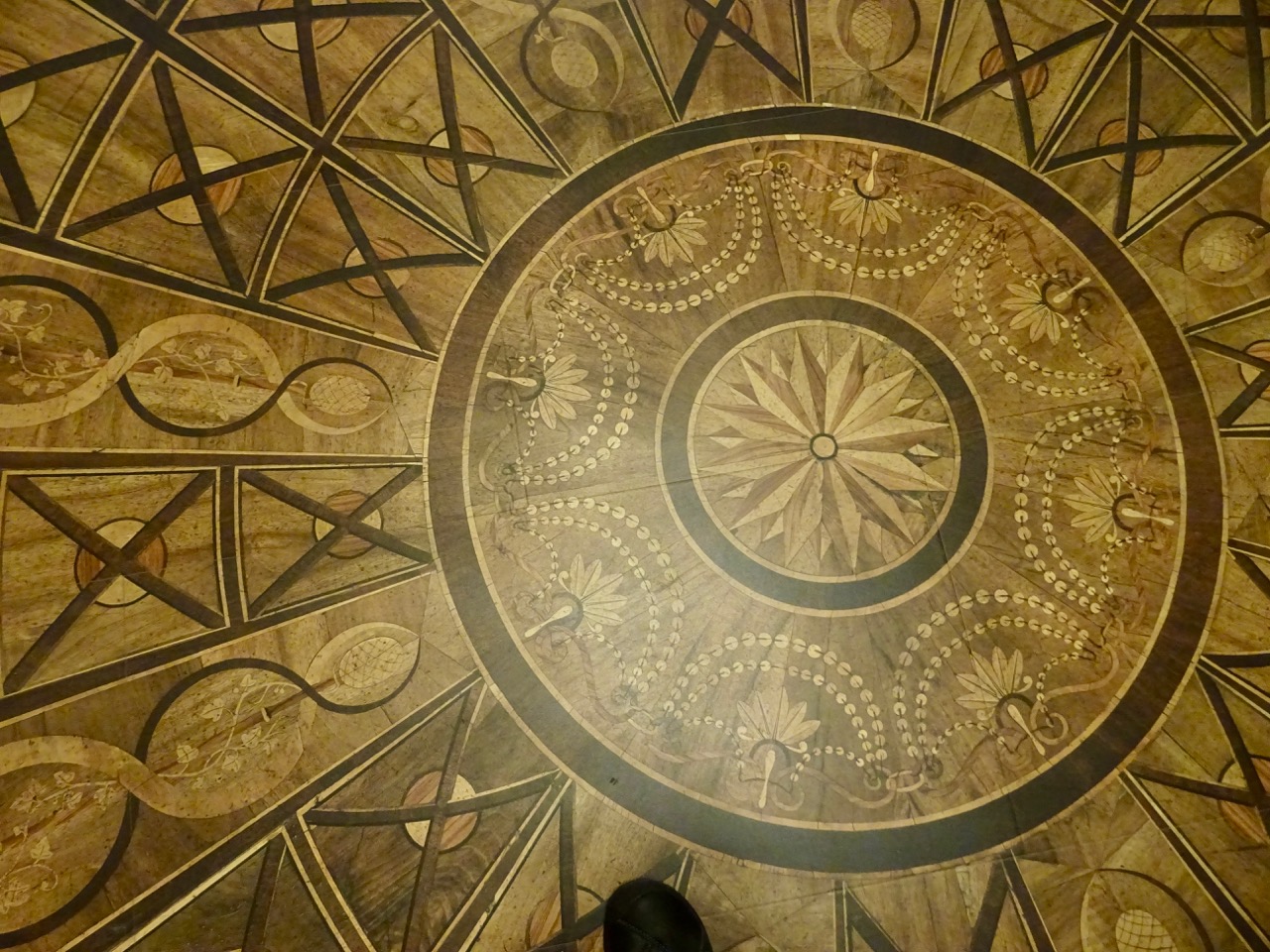
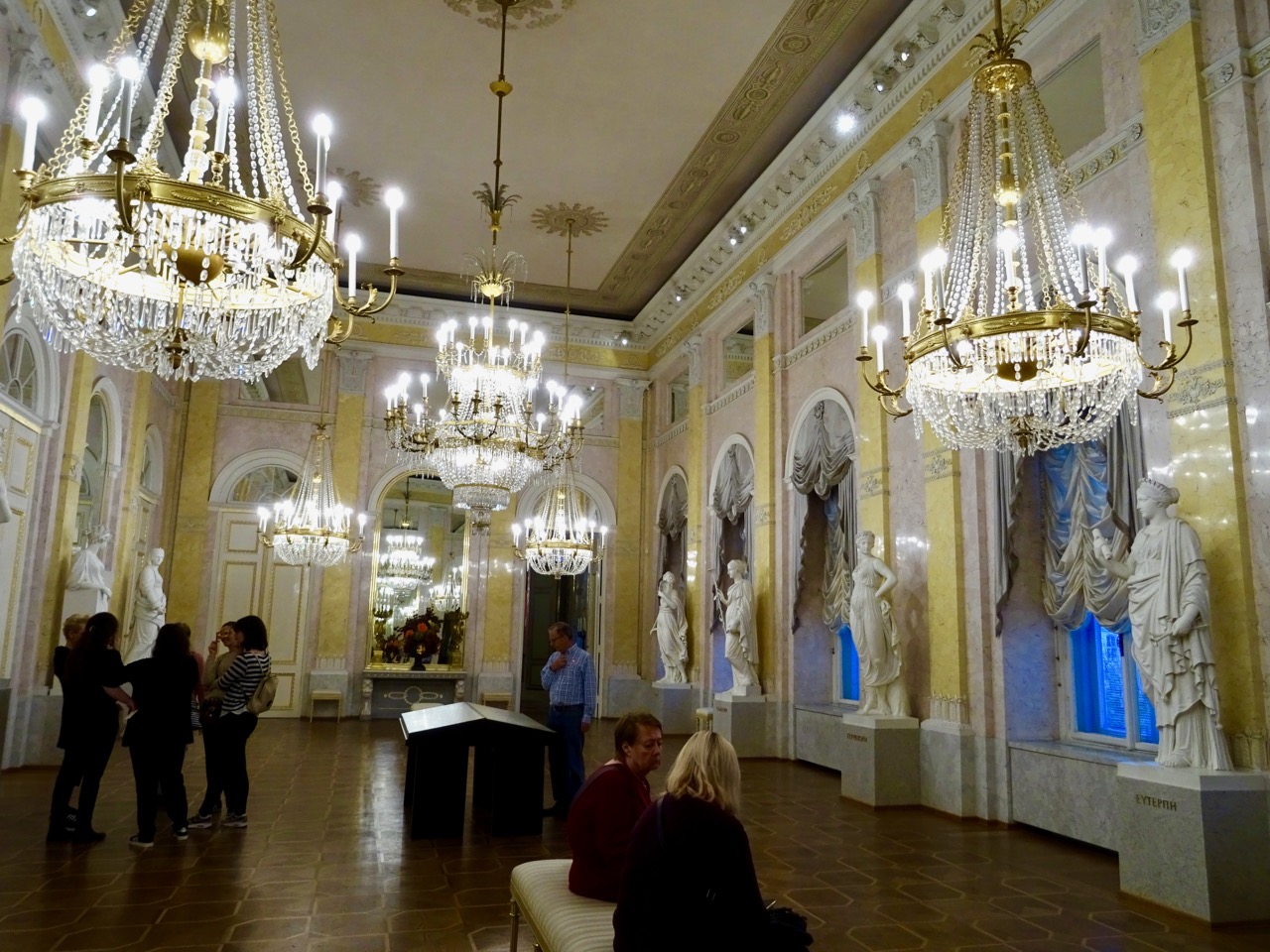
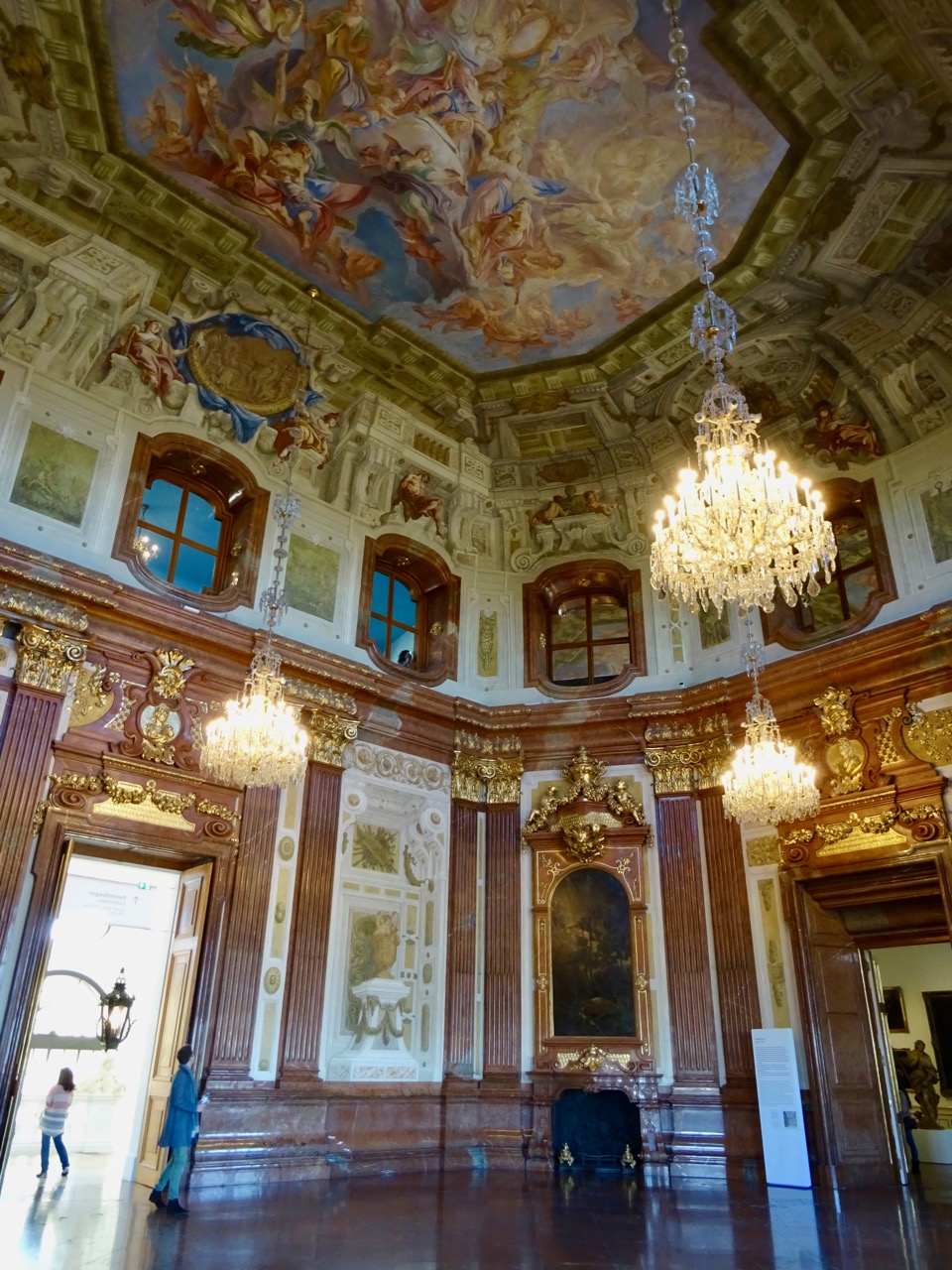
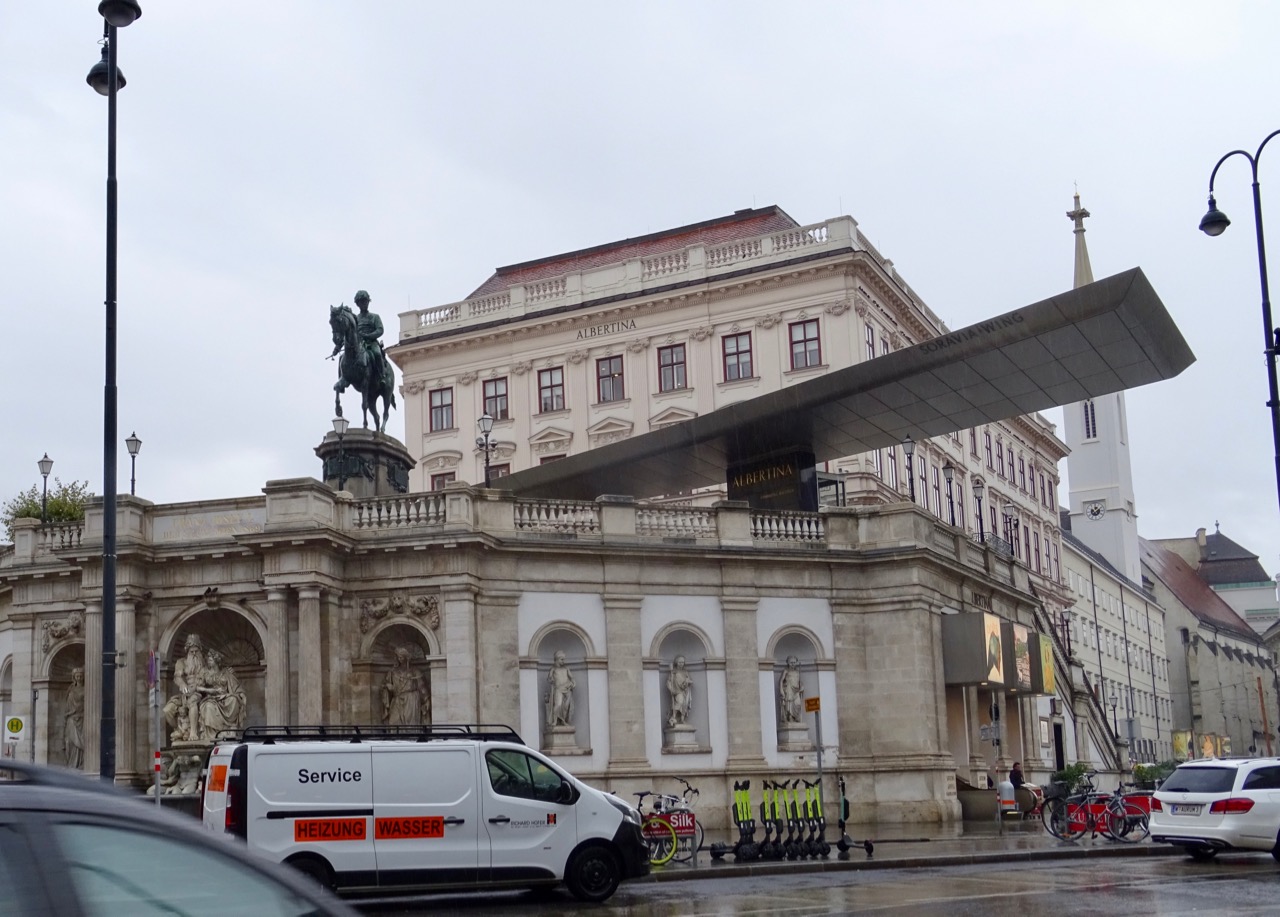 Before we see the Dürer exhibit we visit the other parts of the museum. There are 20 decorated and restored Habsburg State Rooms with precious wall coverings, chandeliers, fireplaces and stoves, inlaid floors,
  The chandeliers in this room were very beautiful.
 The most interesting thing in these rooms was the art exhibit on the walls. We have a print of this Hieronymus Bosch drawing at home. Unfortunately the drawings and prints are facsimiles. Very good ones, but facsimiles non-the-less. This is necessary as works on paper are fragile and can not be displayed for long periods of time.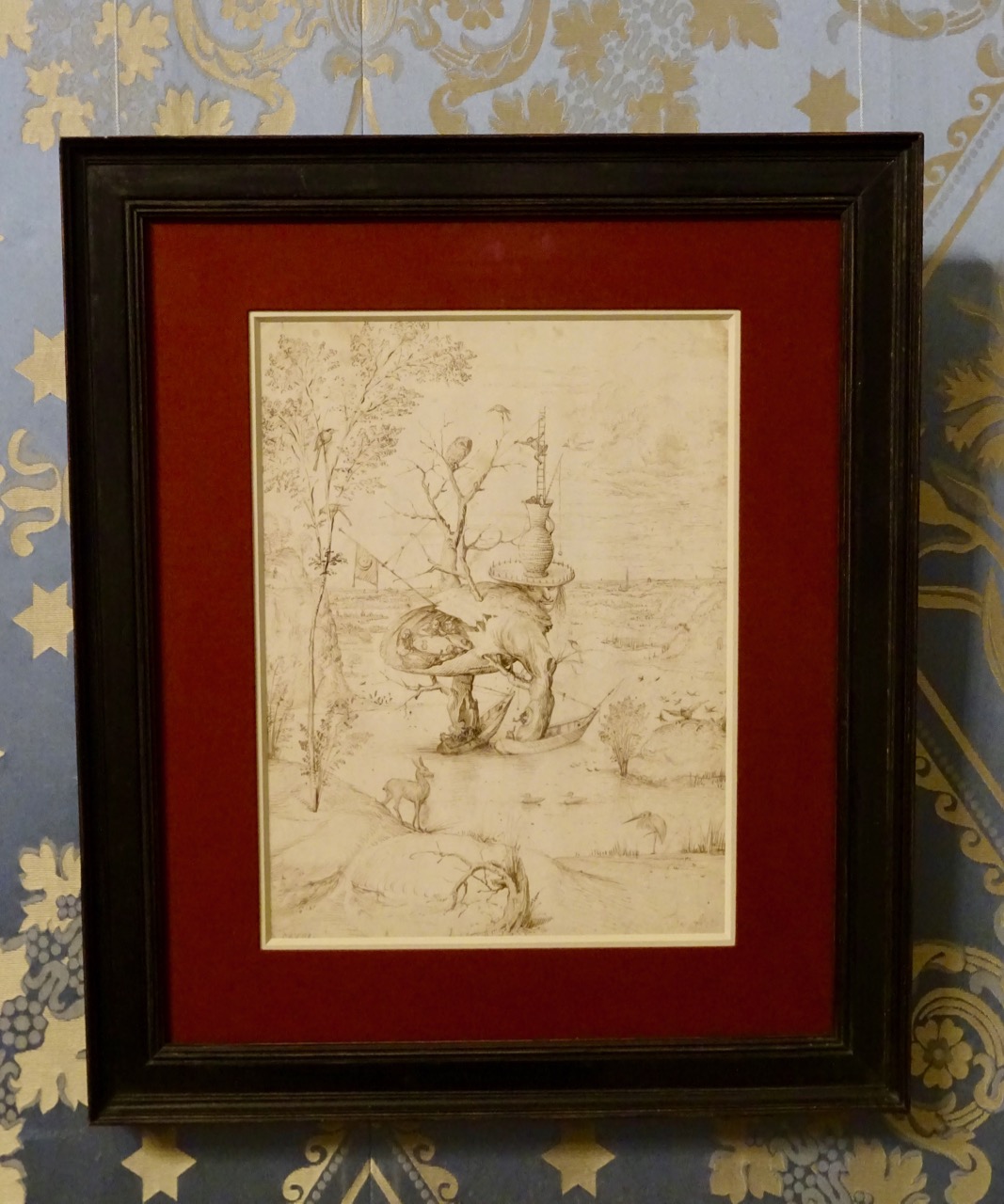
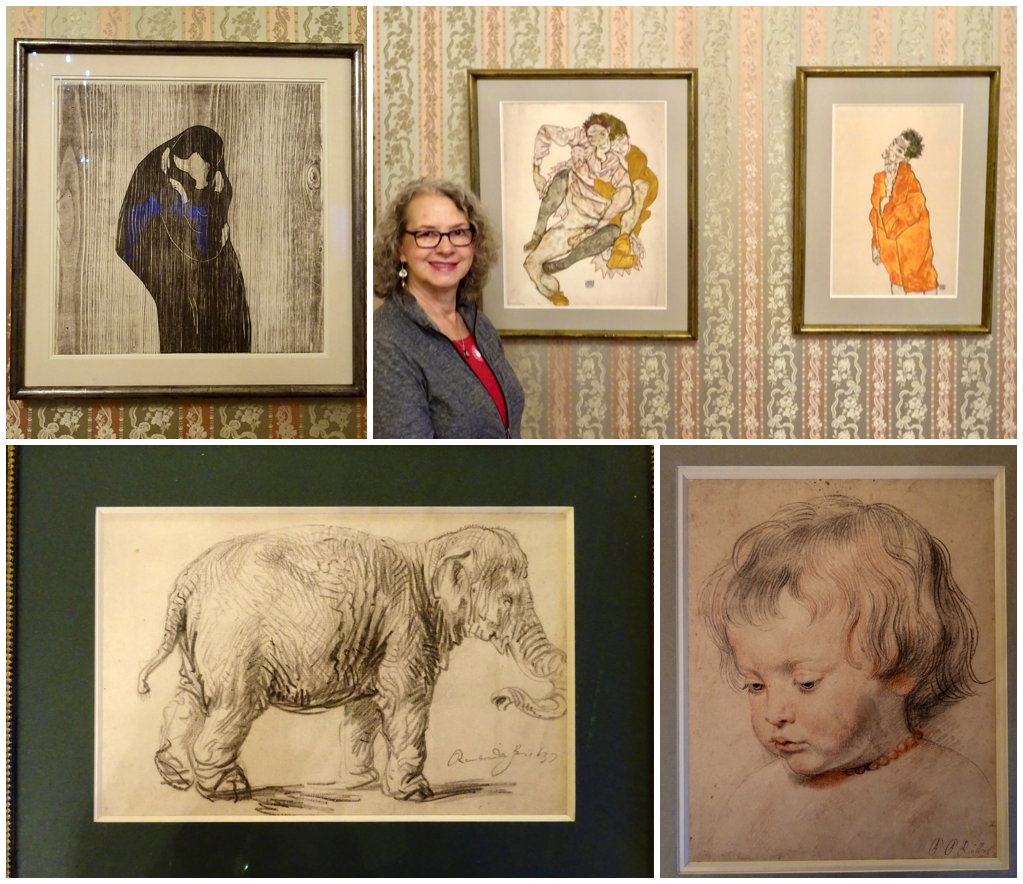 Now on to the main event!
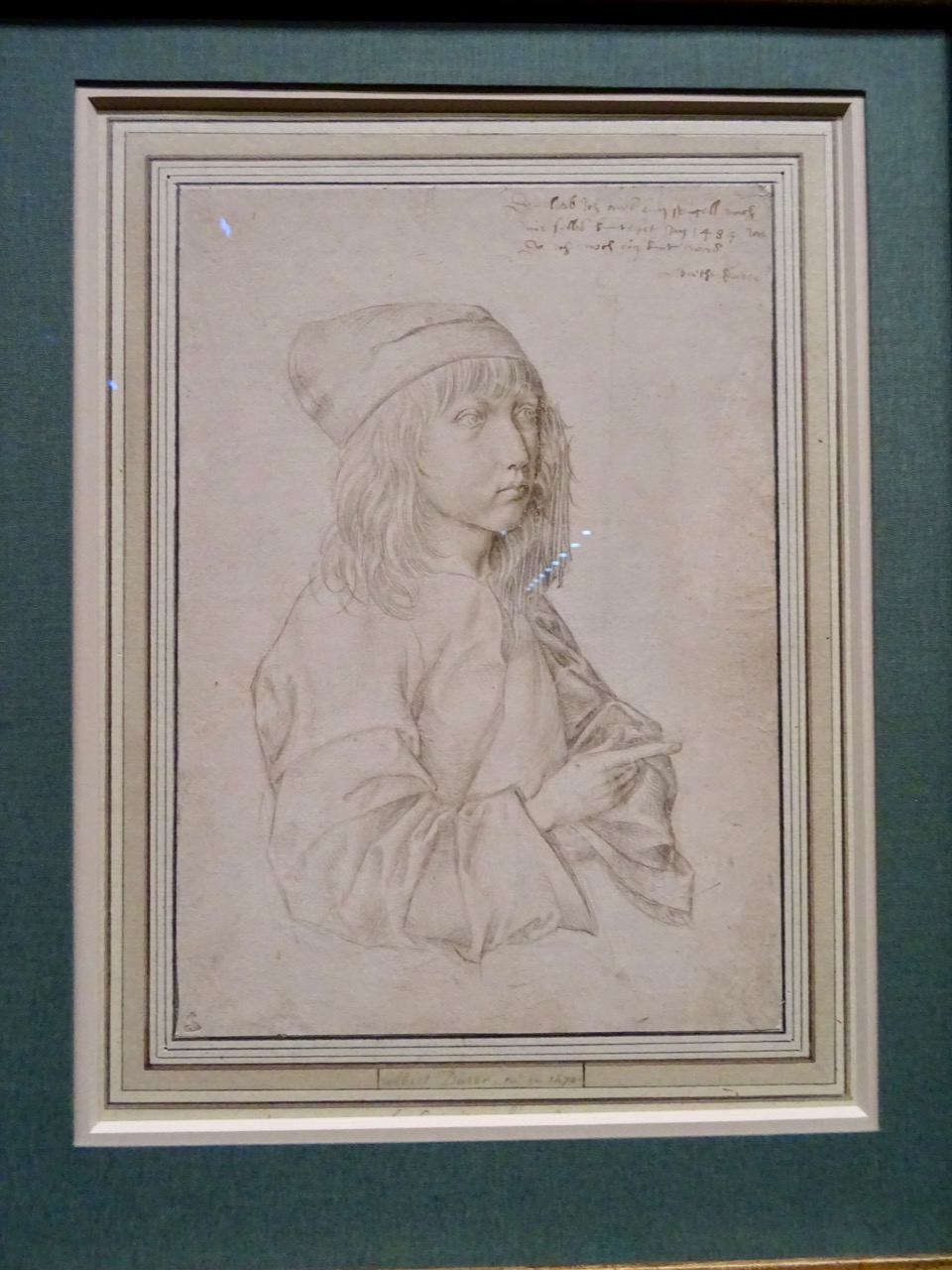 I took so many photos but have chosen just a few of my favourite ones for today’s post. Here is ‘Three Studies of Dürer’s Left Hand’ 1493/94. I like drawing hands and feet and there is much to learn from Dürer.
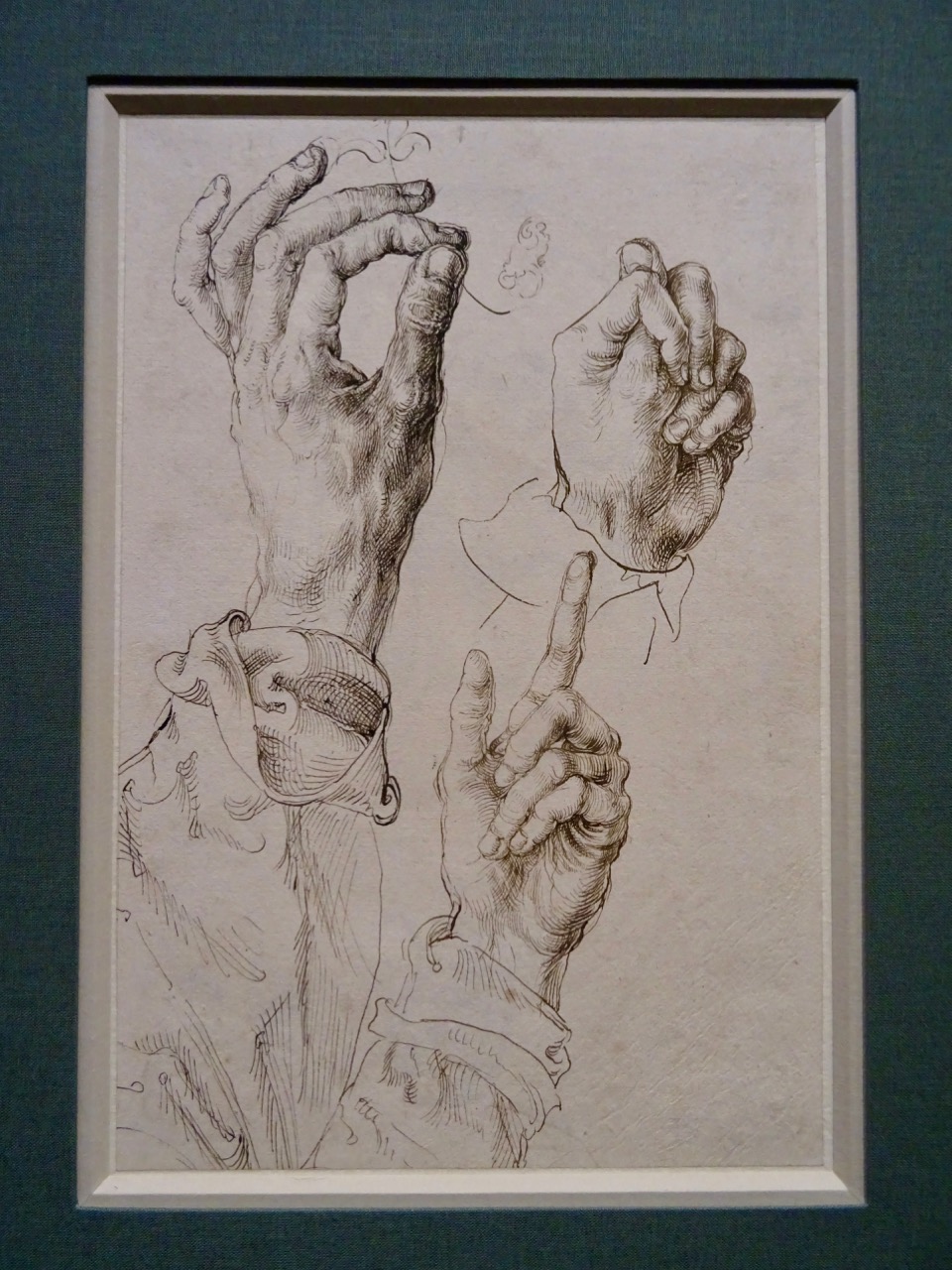 This page of studies was so interesting.
 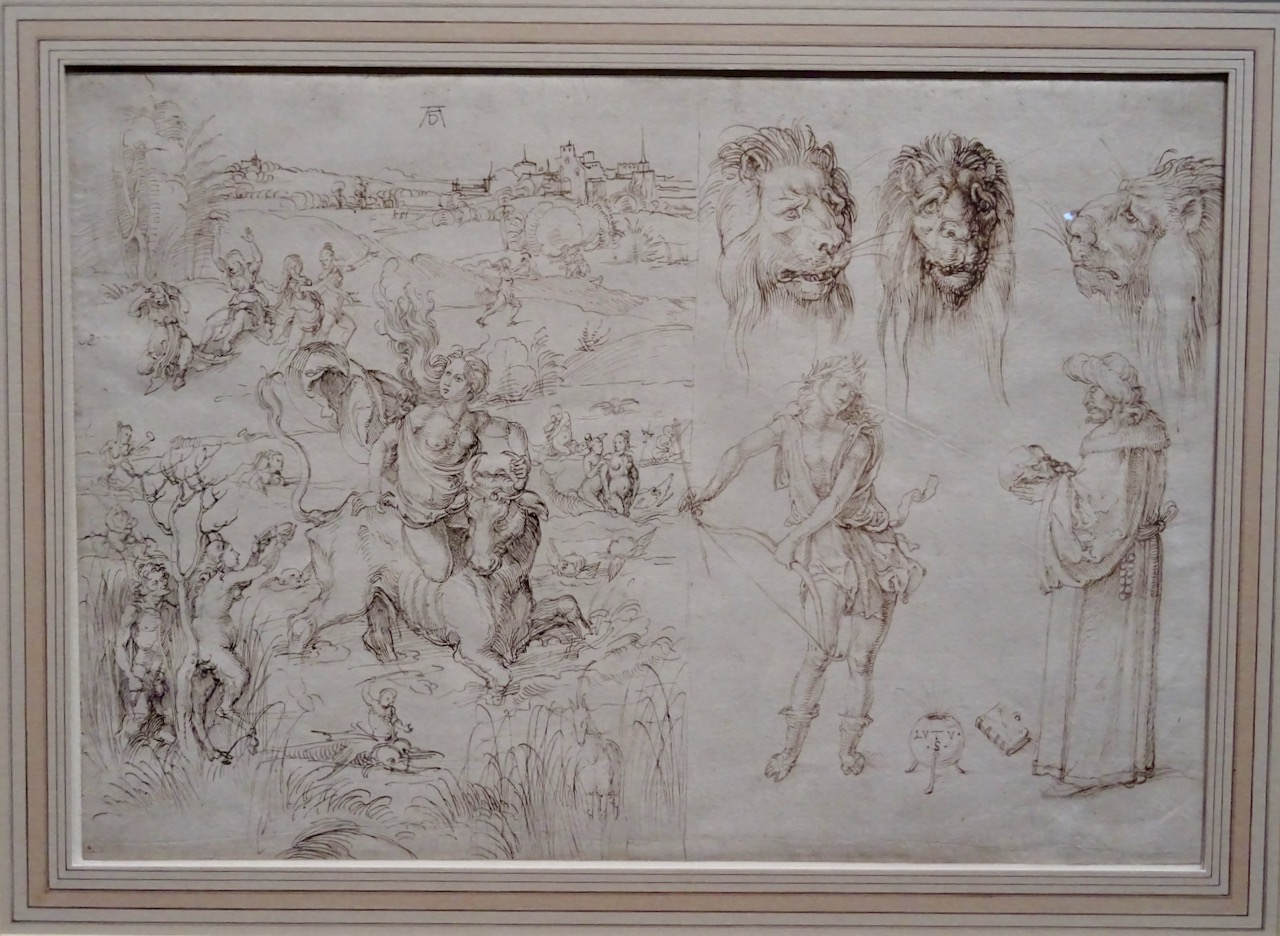 Here is another drawing I have seen so often in books.
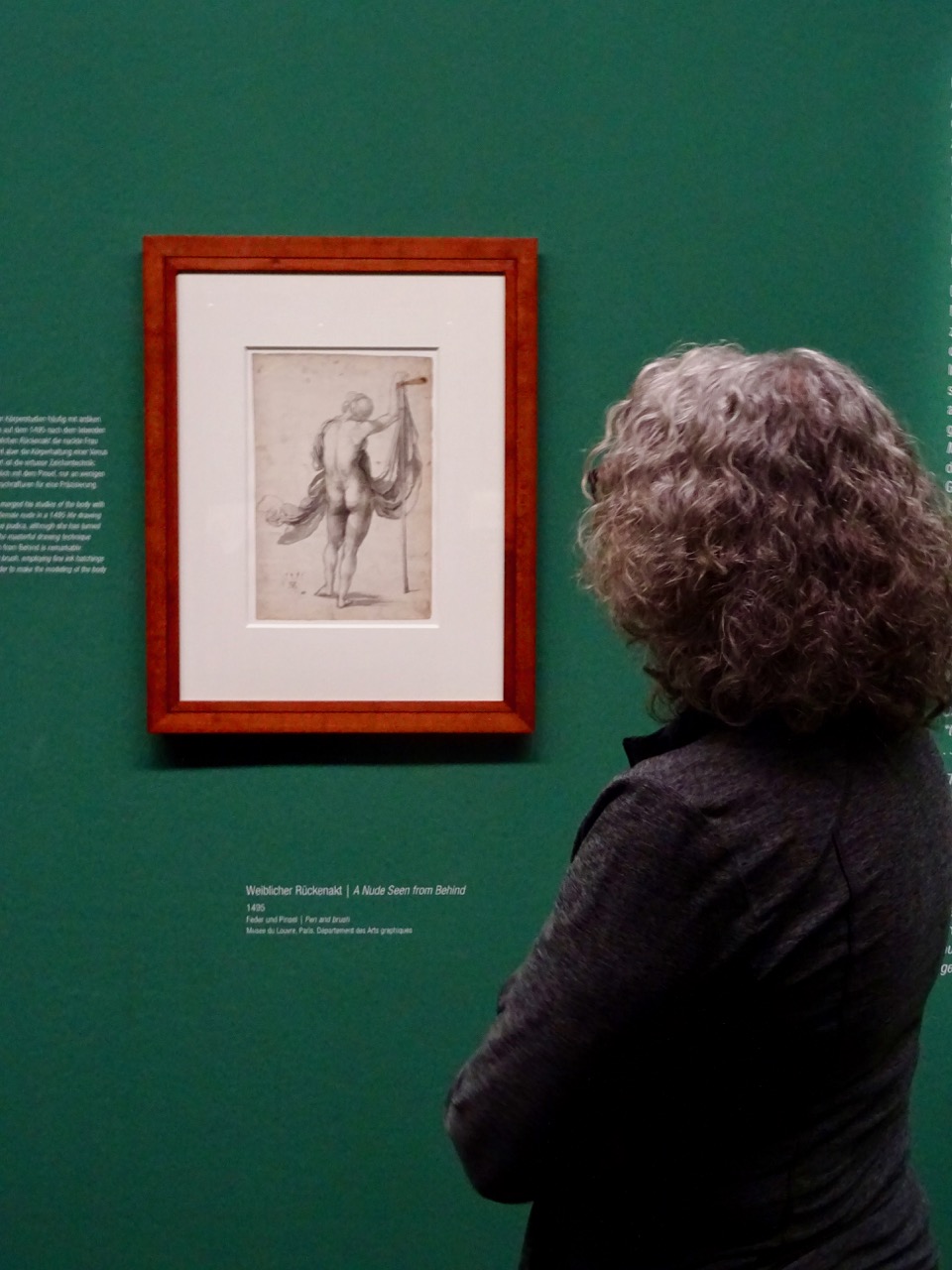 ‘The Woman’s Bath’ is a pen and ink drawing…
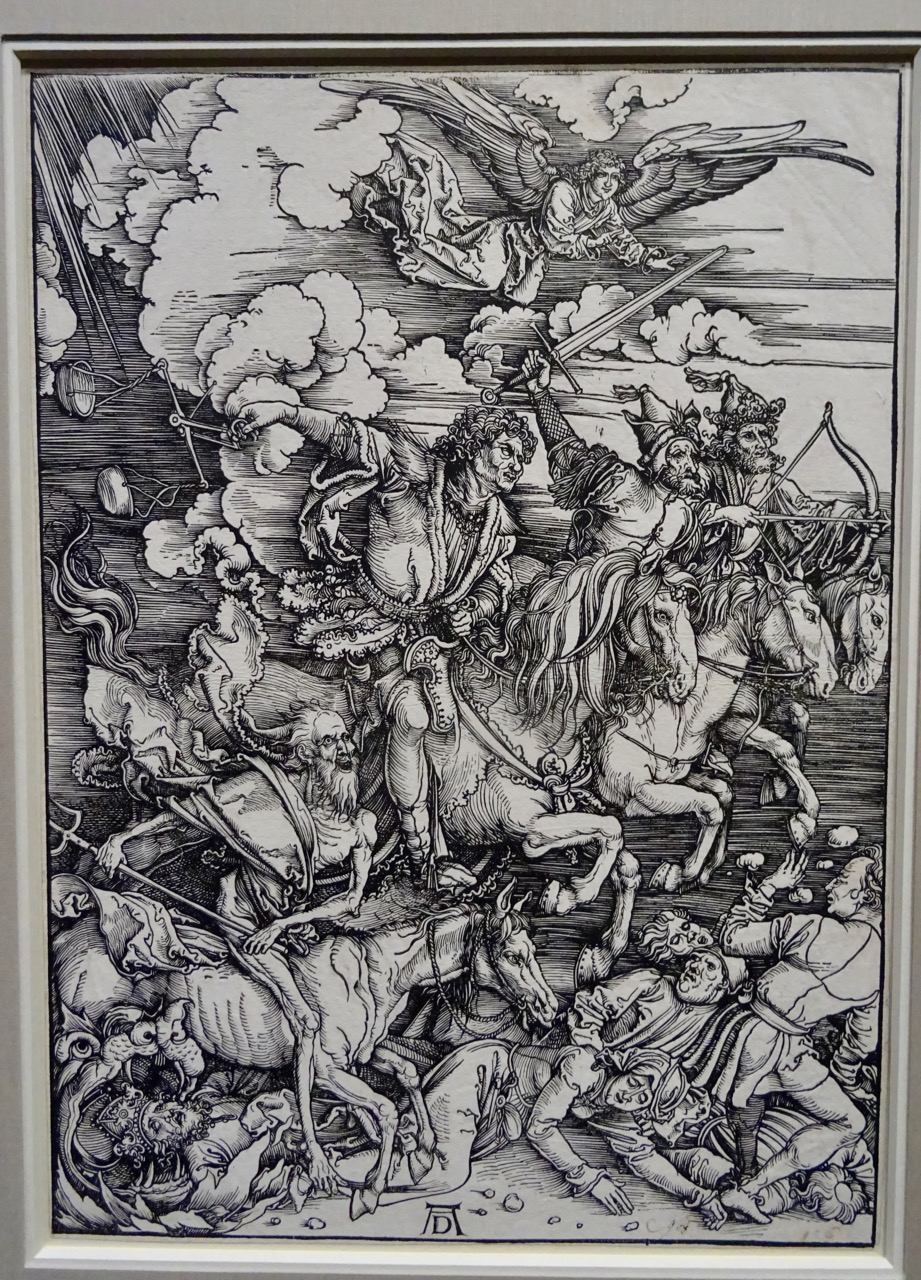
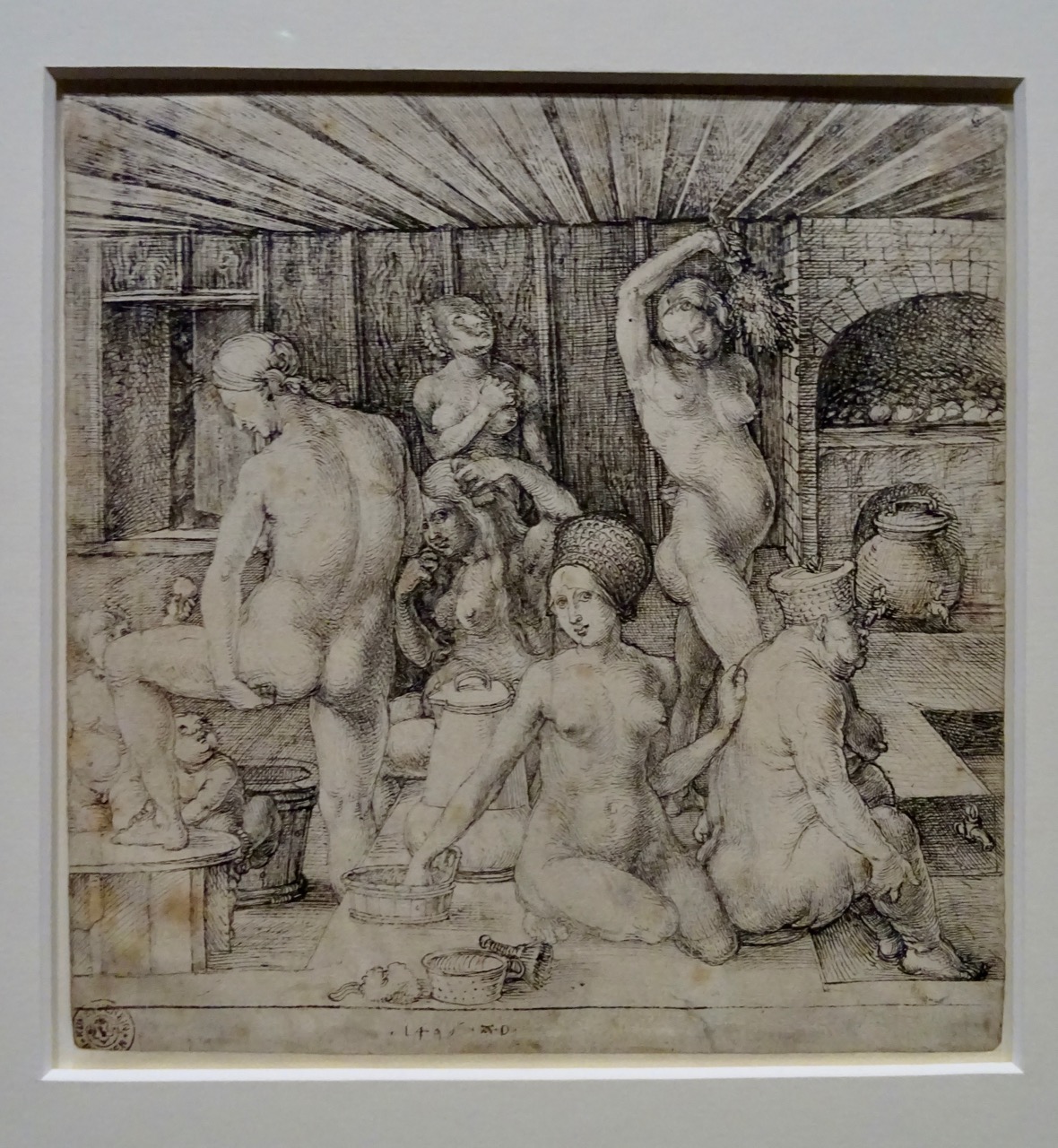 and this ‘Illustration for the Apocalypse’ is a woodcut. Dürer was a master of all mediums.
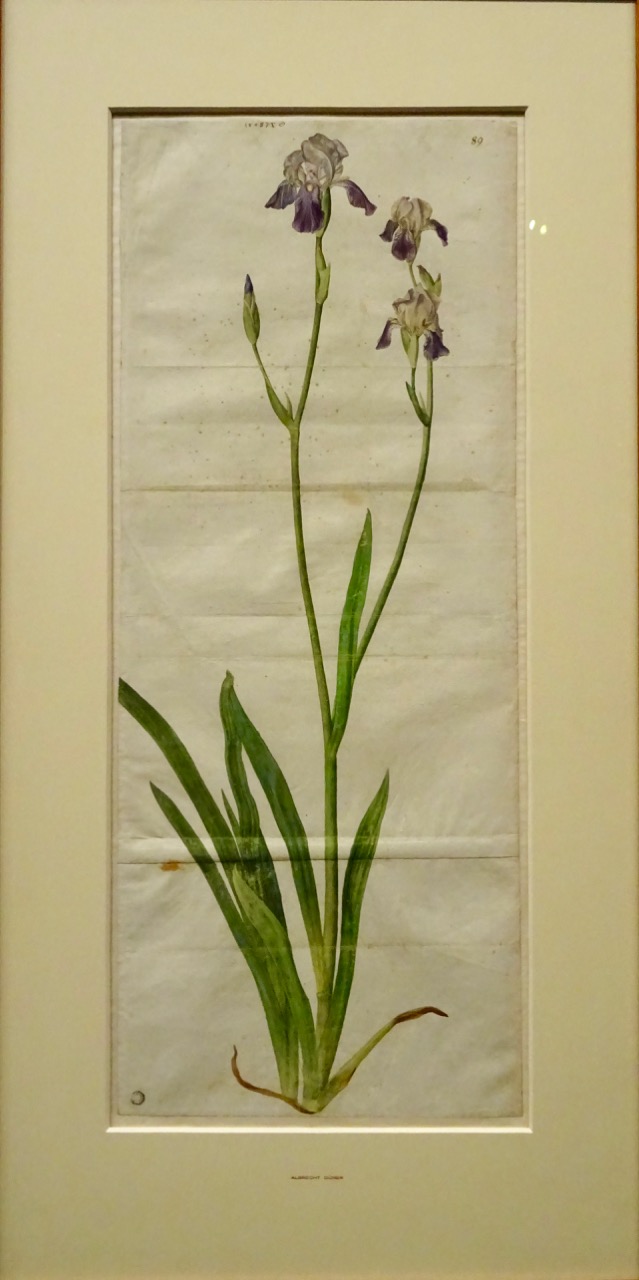
 Dürer’s watercolours are exquisite. This painting is simply titled ‘Iris’.
 A watercolour study of a ‘Blue Rolle’r from 1500.
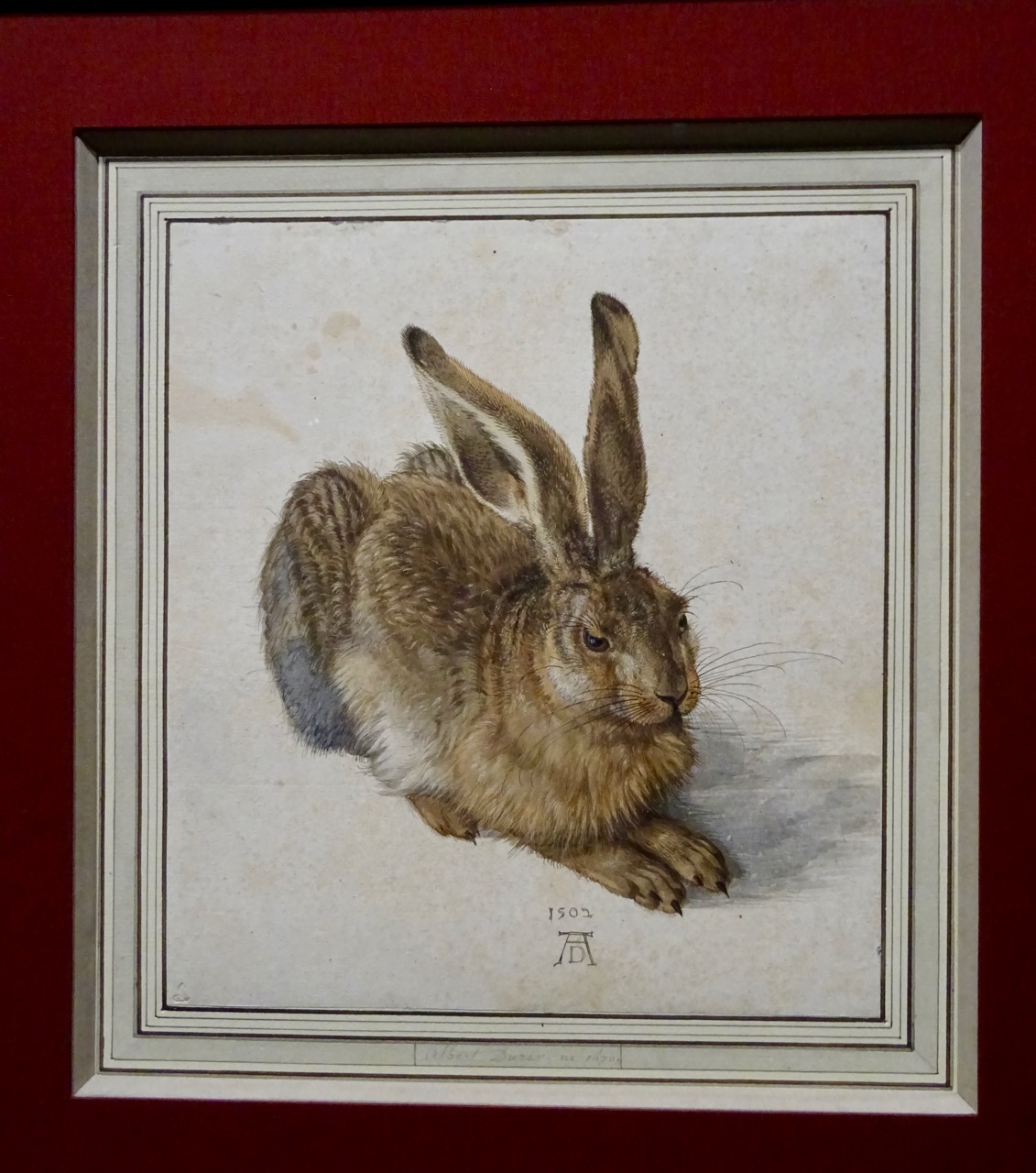
 We enter another room and there on the far wall are three famous works. Dürer’s ‘Young Hare’ is only exhibited once every five years for a period of no more than three months. It is just luck that it is on exhibit while we are here. This is another print that we have at home. Bob wishes it was the original!!
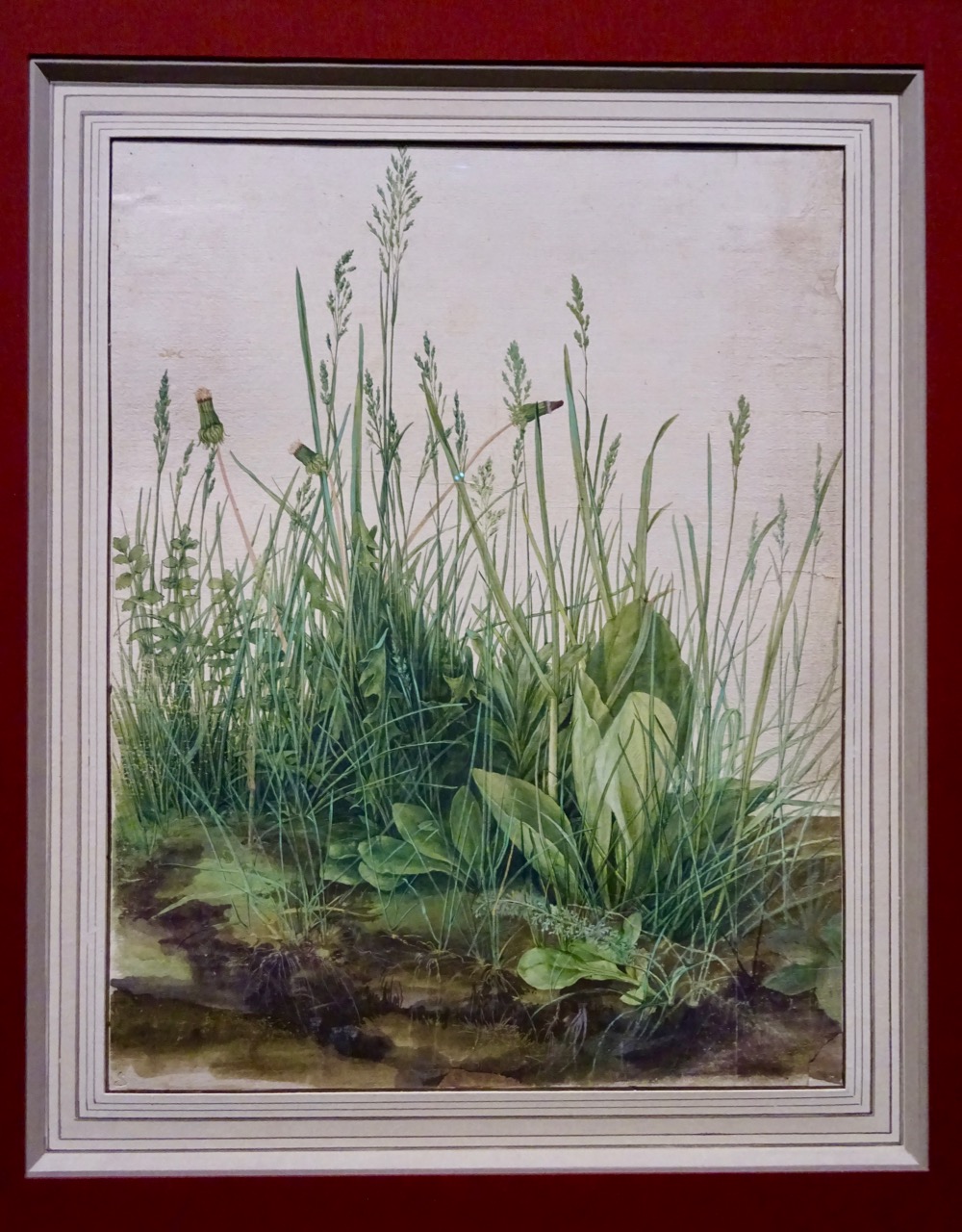
 ‘The Great Piece of Turf’ was painted on the largest piece of paper available at the time to portray the plants life sized.
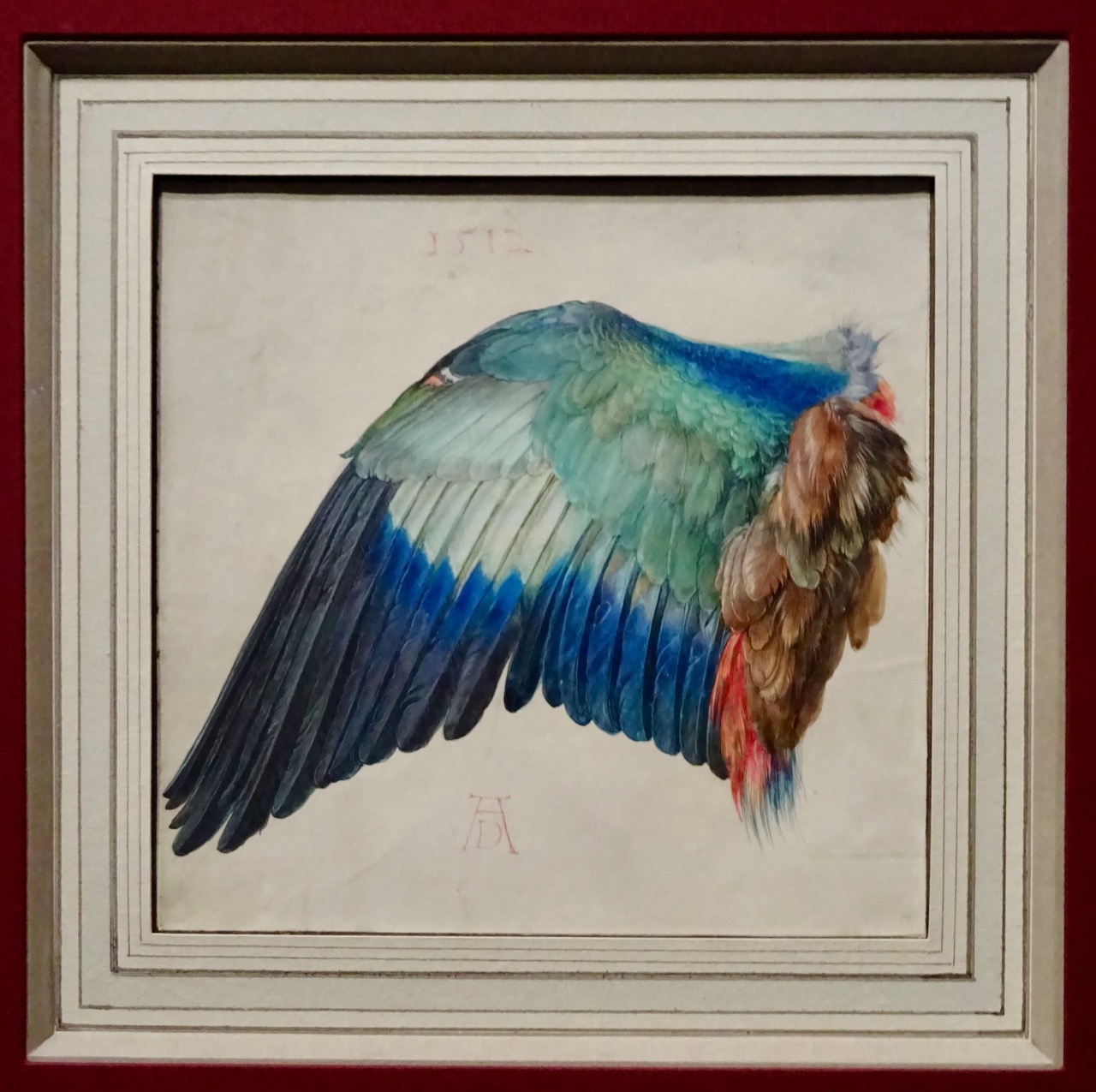
 ‘The Wing of a Blue Roller’ is quite amazing. This work is watercolour and body colour on parchment with fine gold lines on the breast plumage to enhance the iridescence of the feathers. There is no one telling visitors to keep a certain distance from the works, so my nose gets up very close!
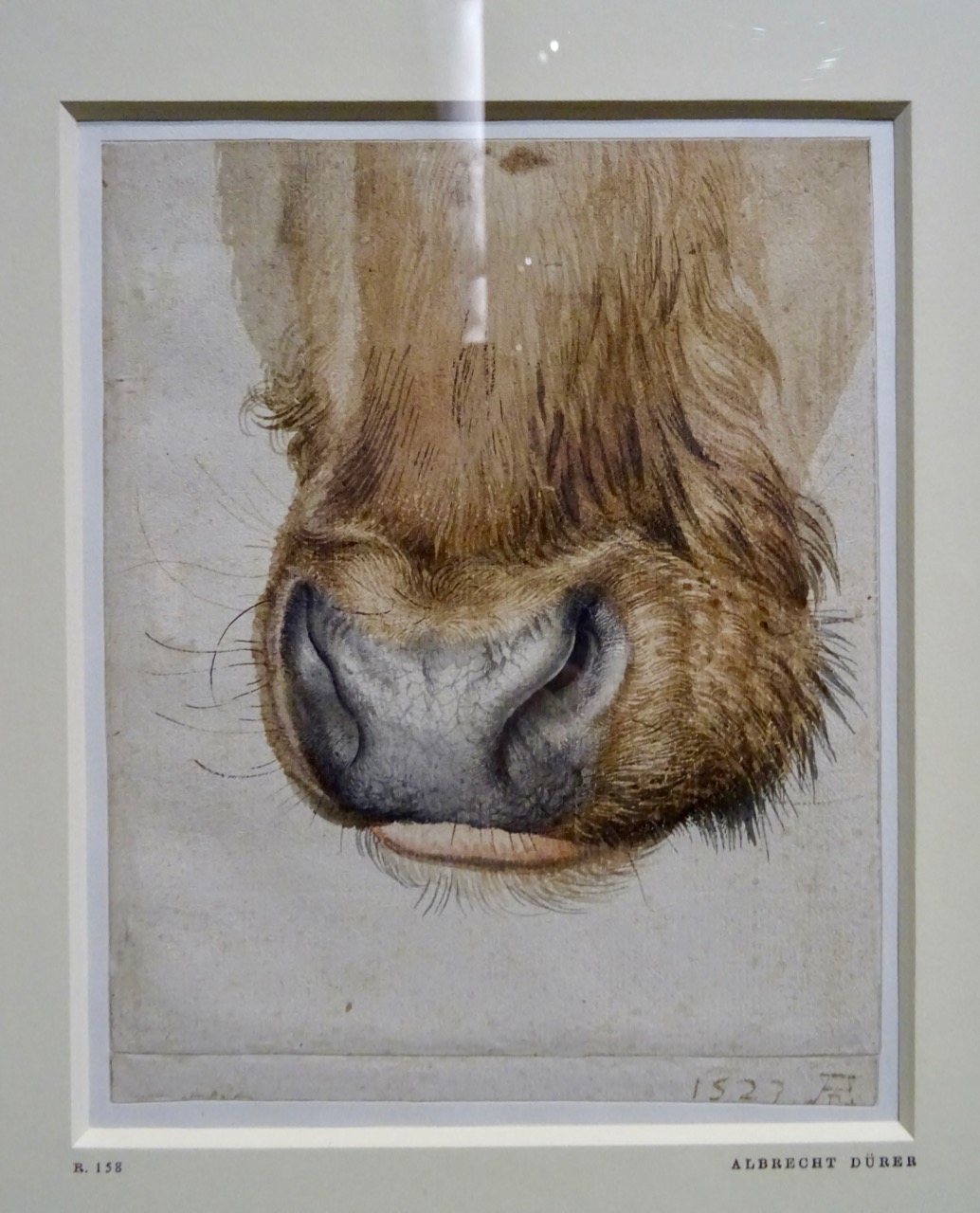
 I liked the study of a bull’s nose too…
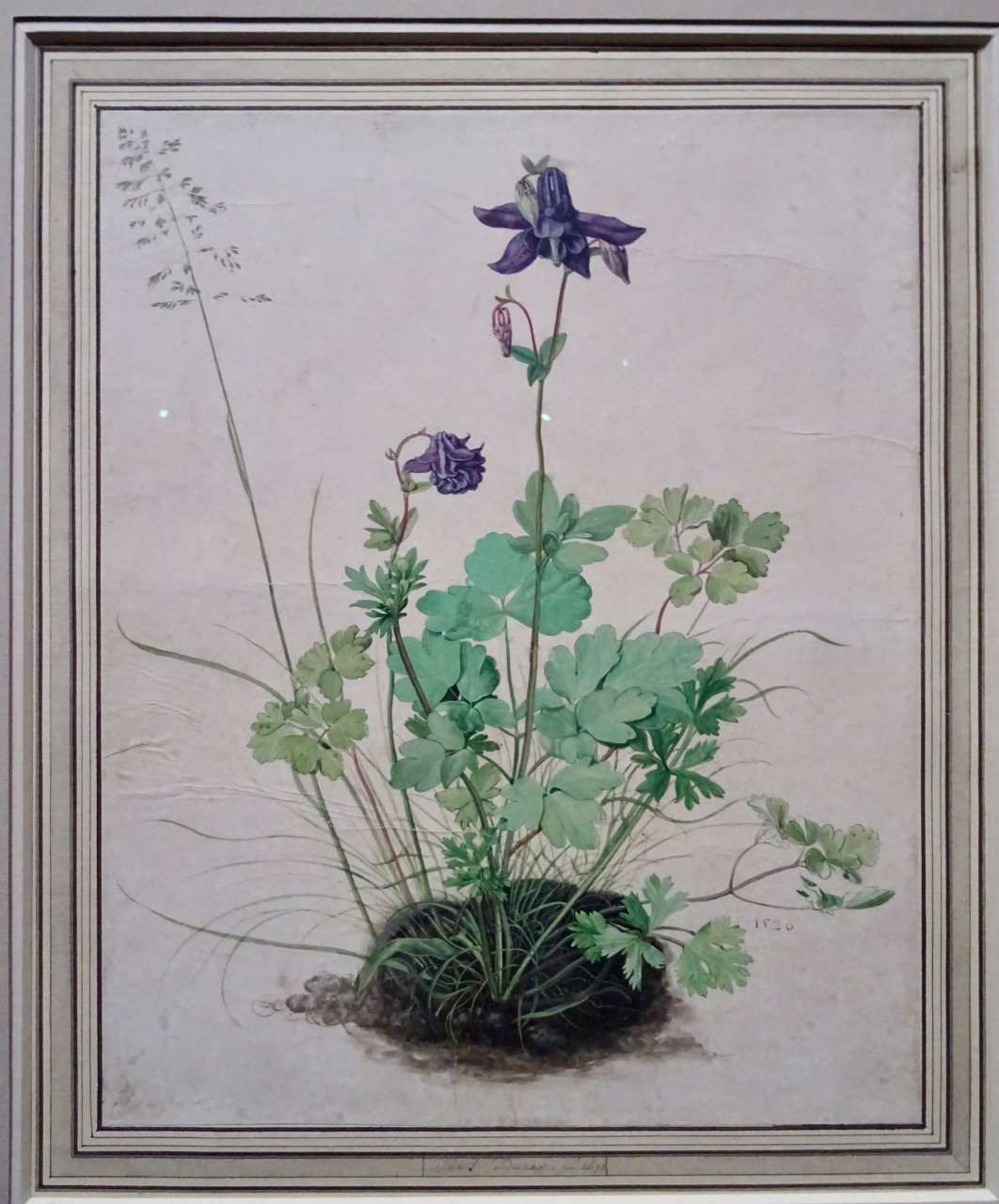
 and this ‘Columbine”…
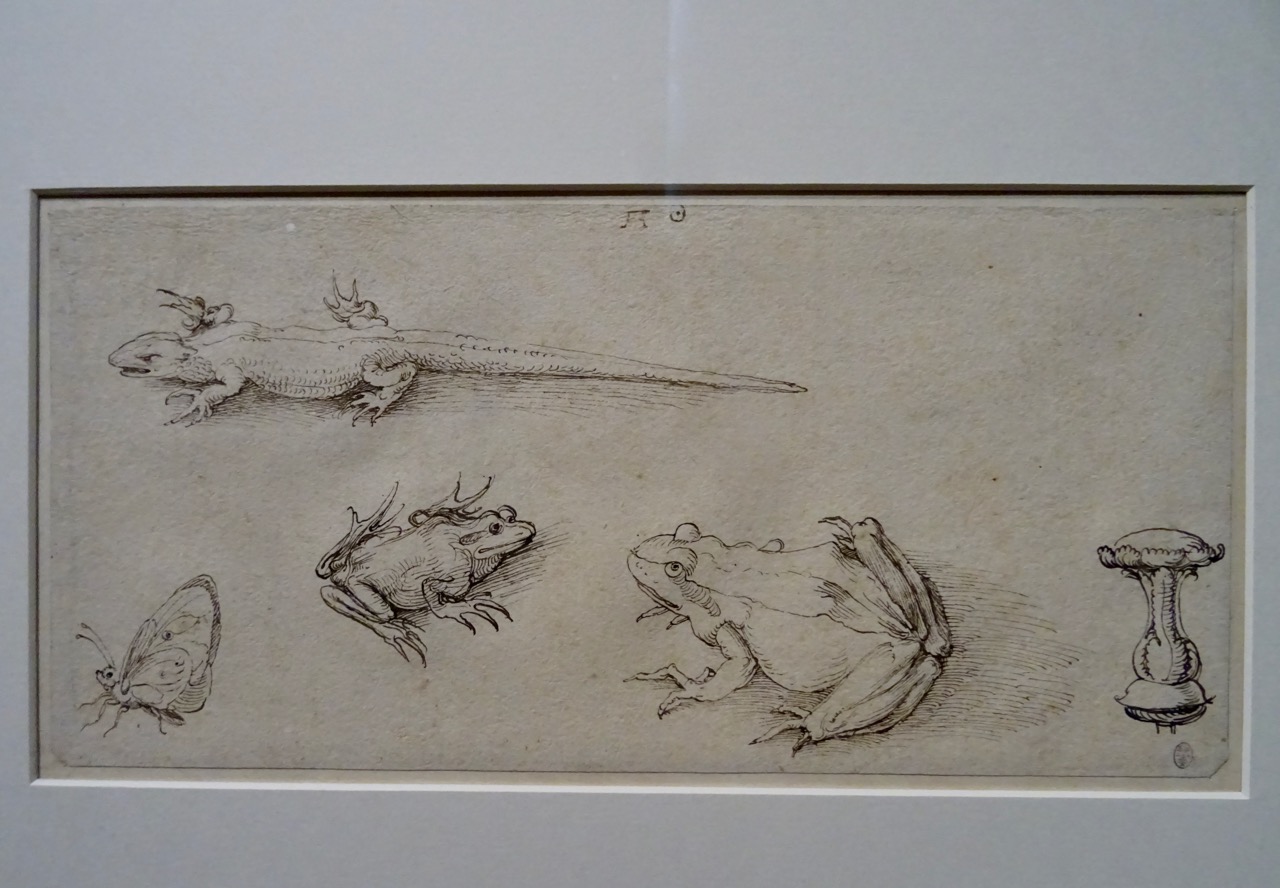
 and this page of studies.
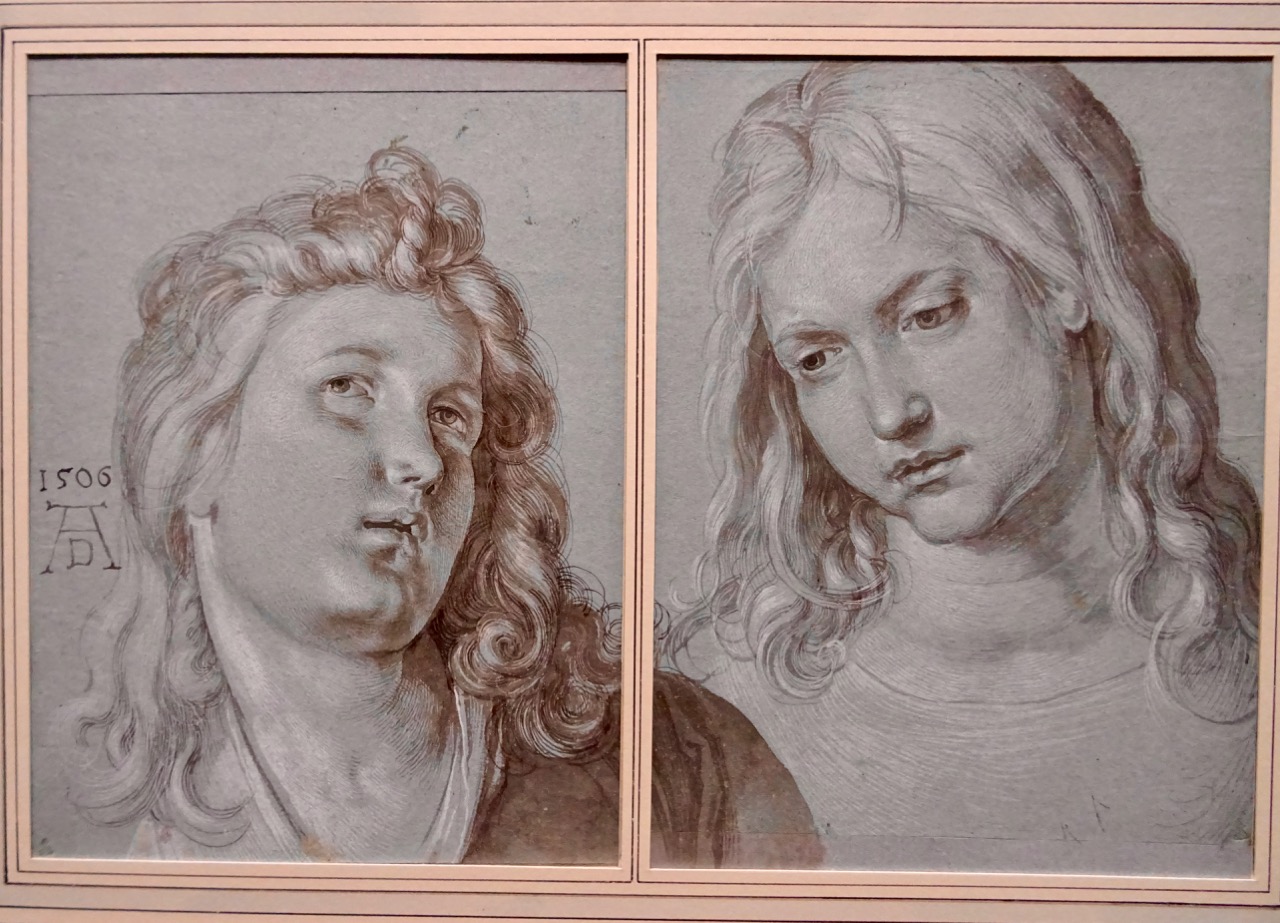
  OK. I love pretty much everything I see here! This head of an angel and head of twelve year old Jesus are studies for a larger painting …
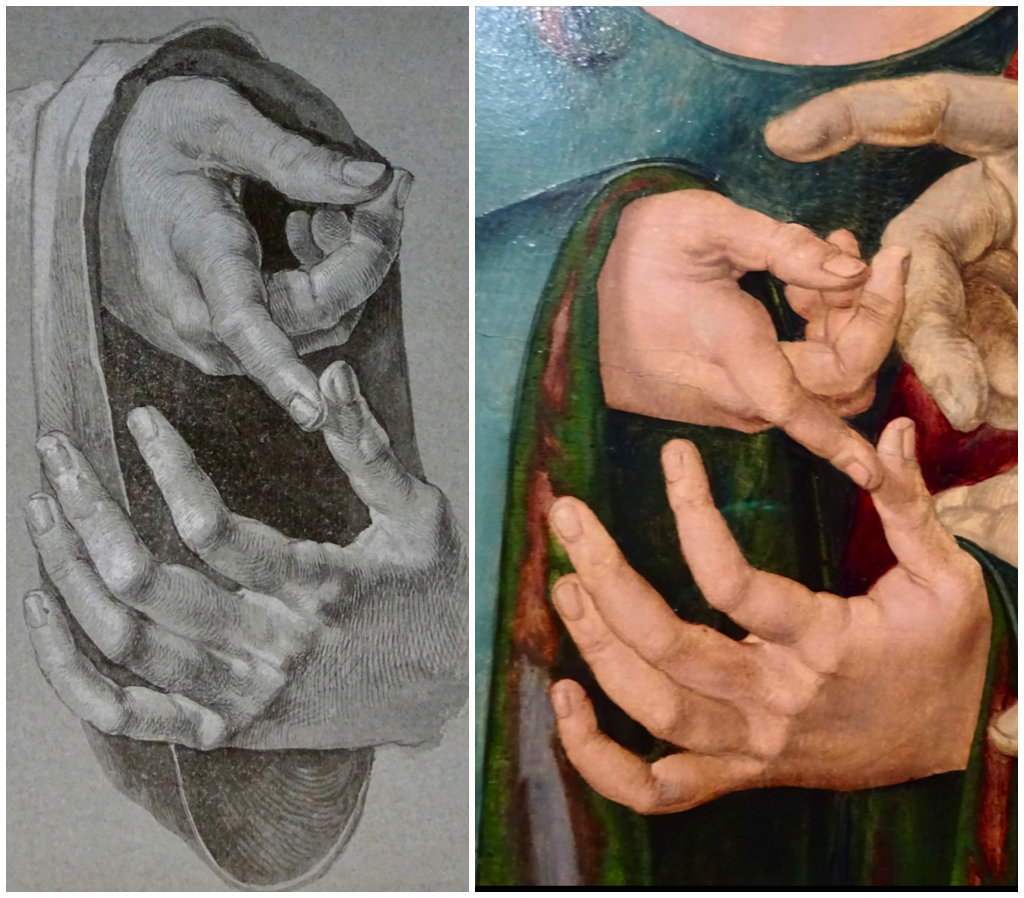
 as is this hand study. It is fascinating to see the studies and then the finished painting.
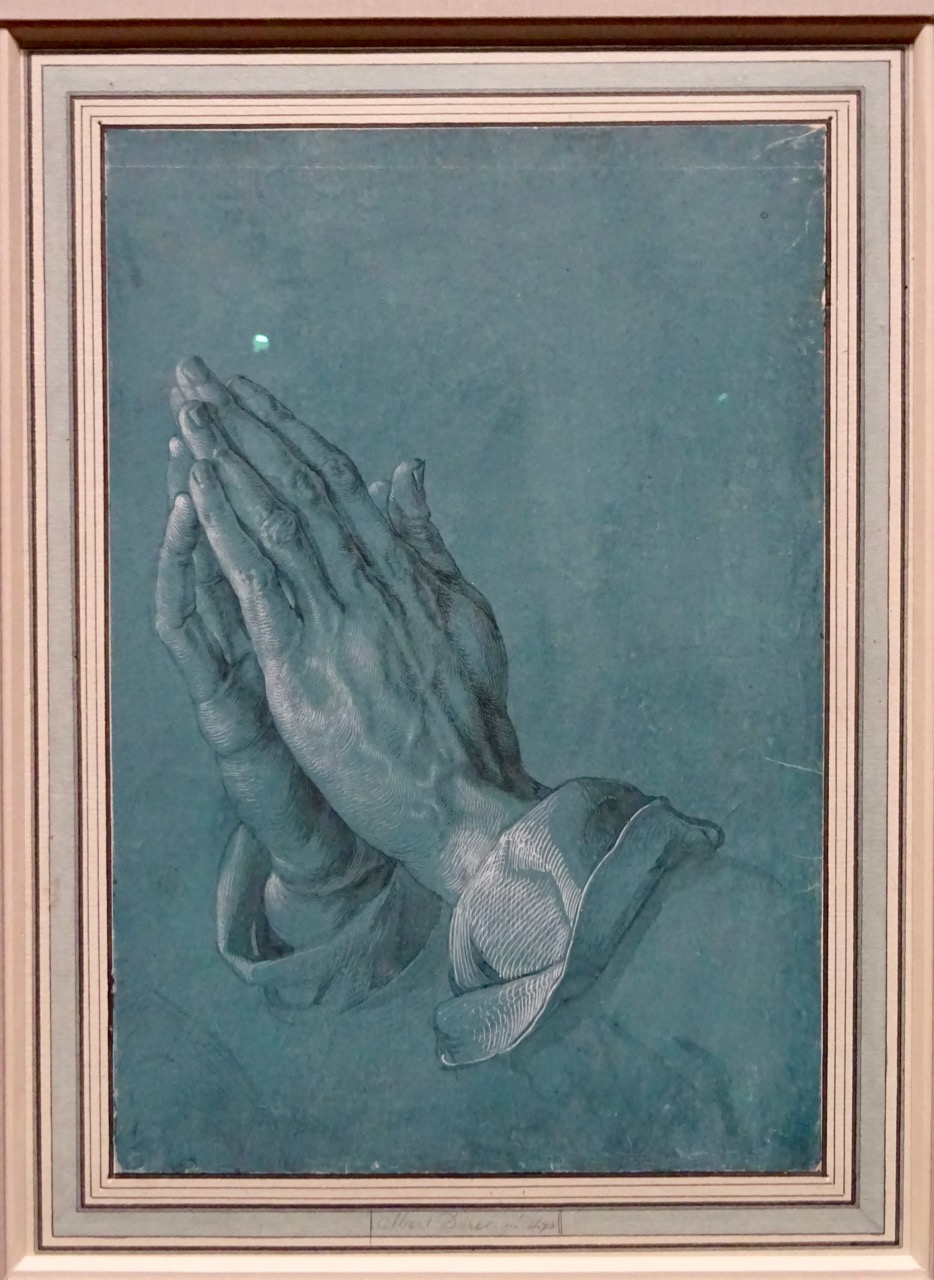
 ‘The Praying Hands’ is a well known Dürer image.
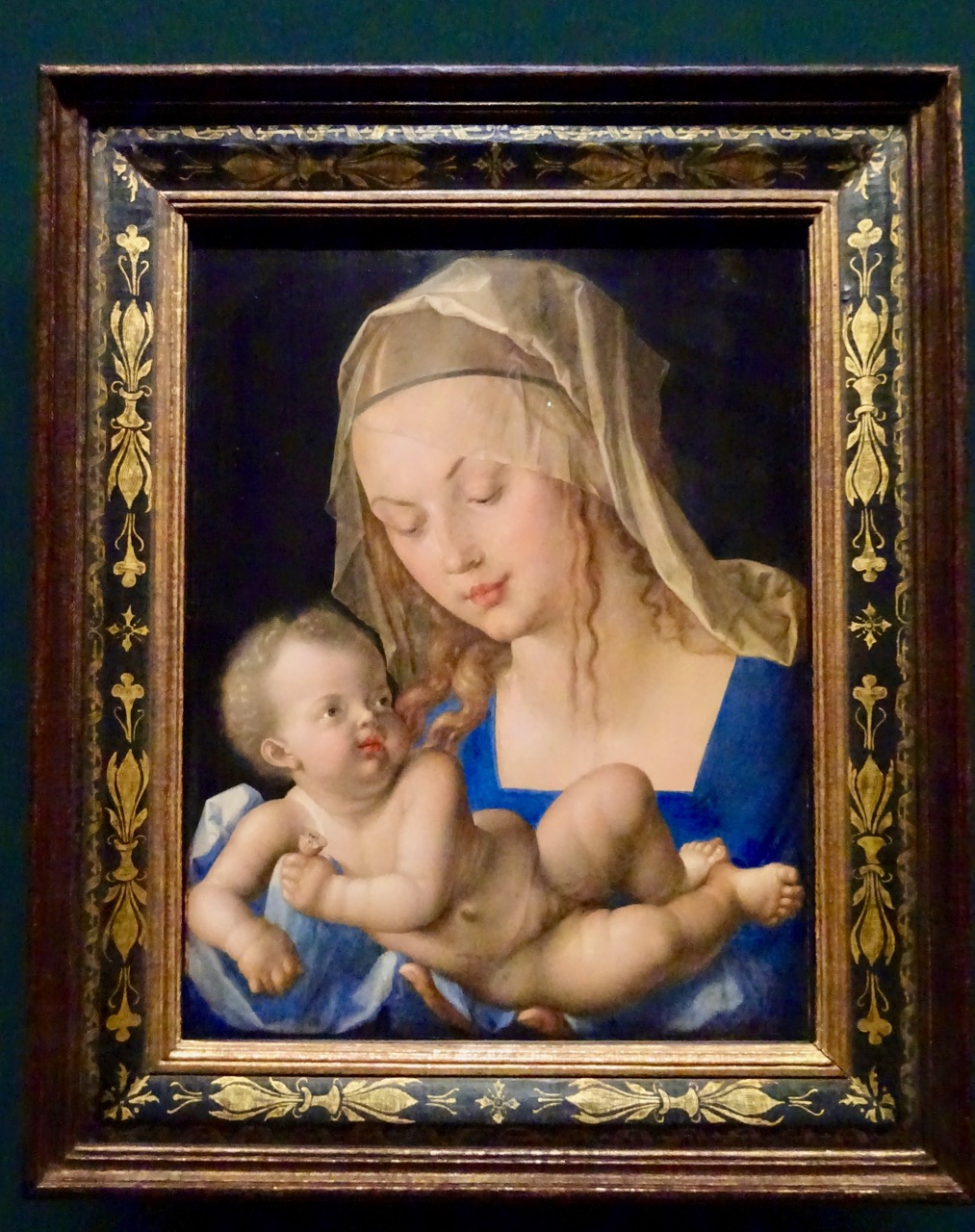
 I really didn’t know much about Dürer’s oil paintings. I particularly loved this one. The Madonna’s face is so beautiful.
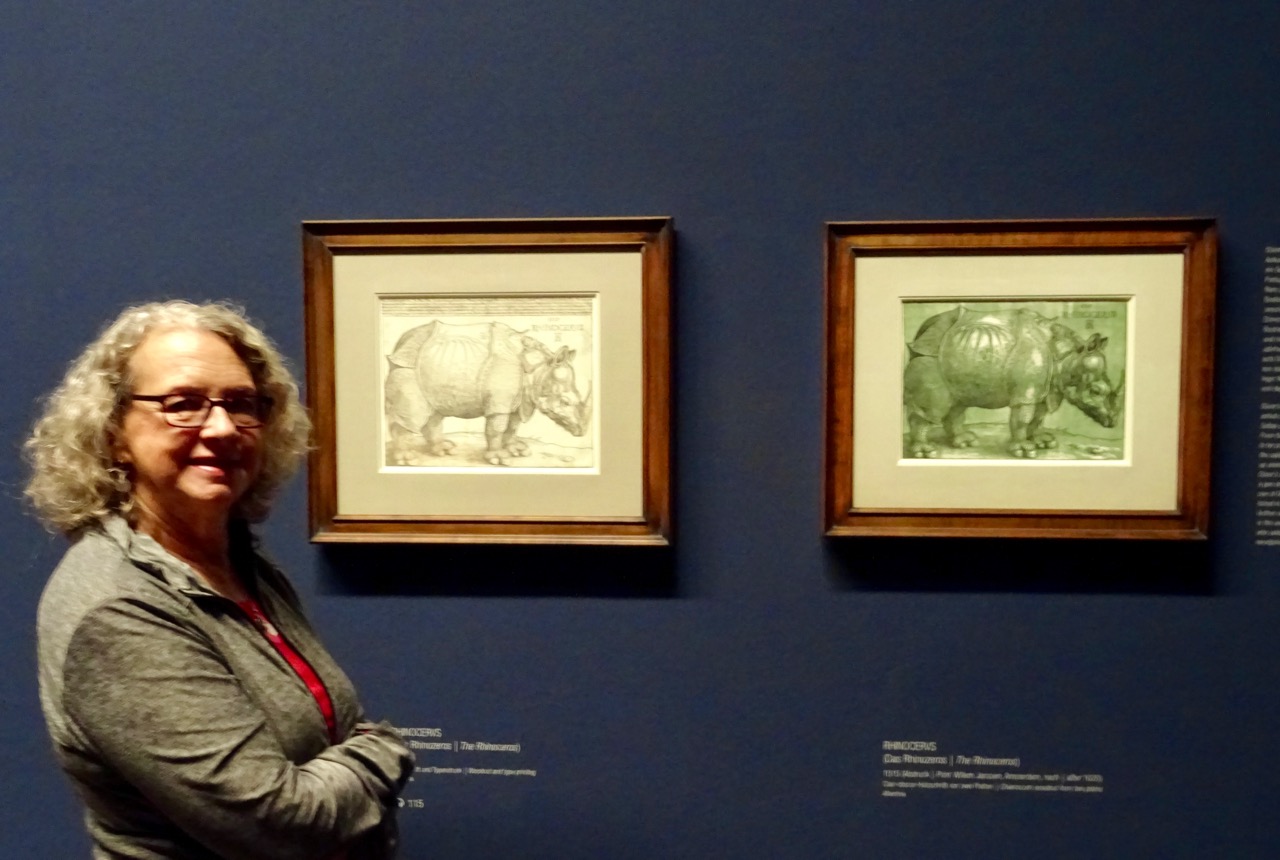
 Dürer drawing and woodcut of a rhino were made without his ever having seen a rhinoceros! He drew from a written description of the animal and his imagination.
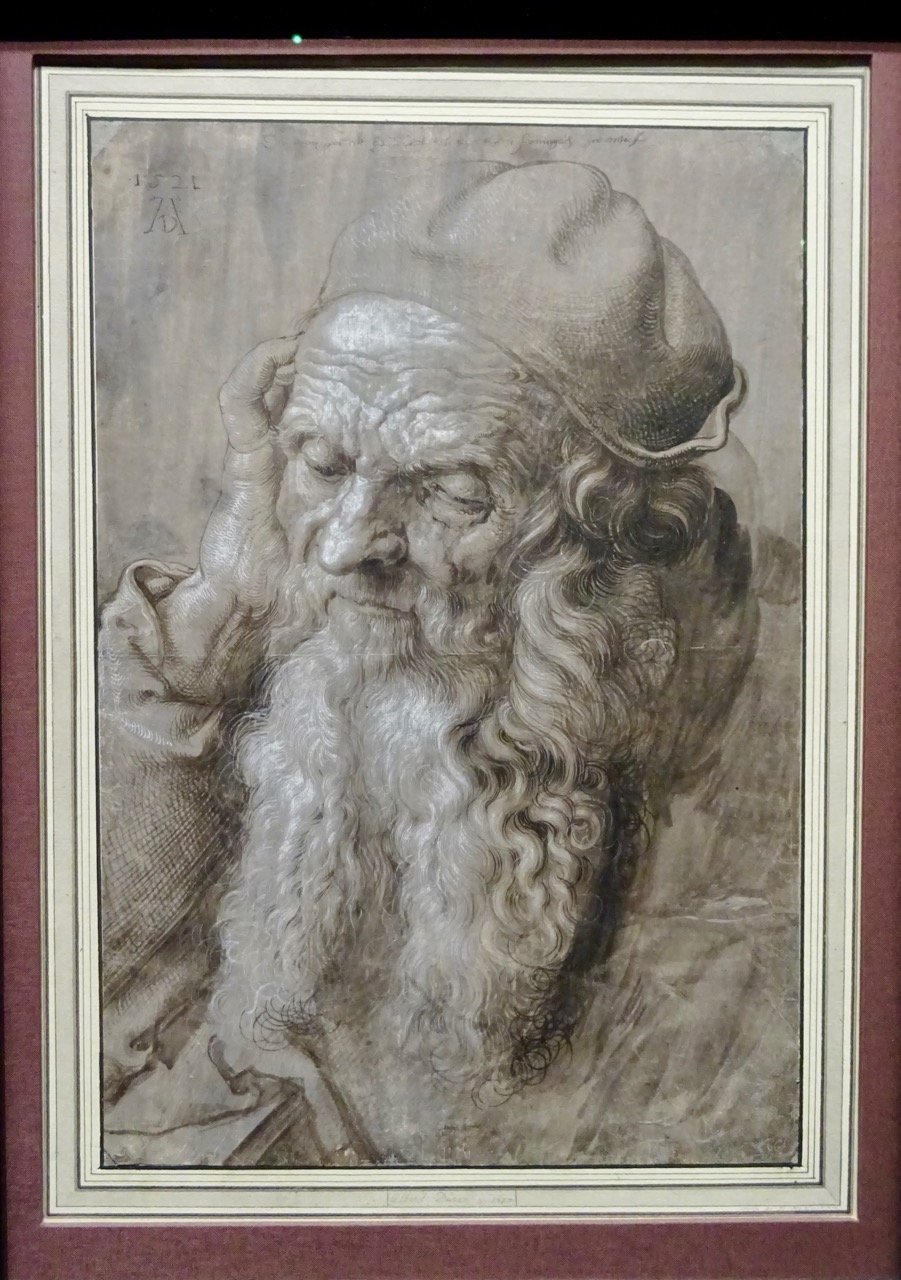
 I have always loved this ‘Portrait of a 93 Year Old Man’. I didn’t know it was done with a brush!
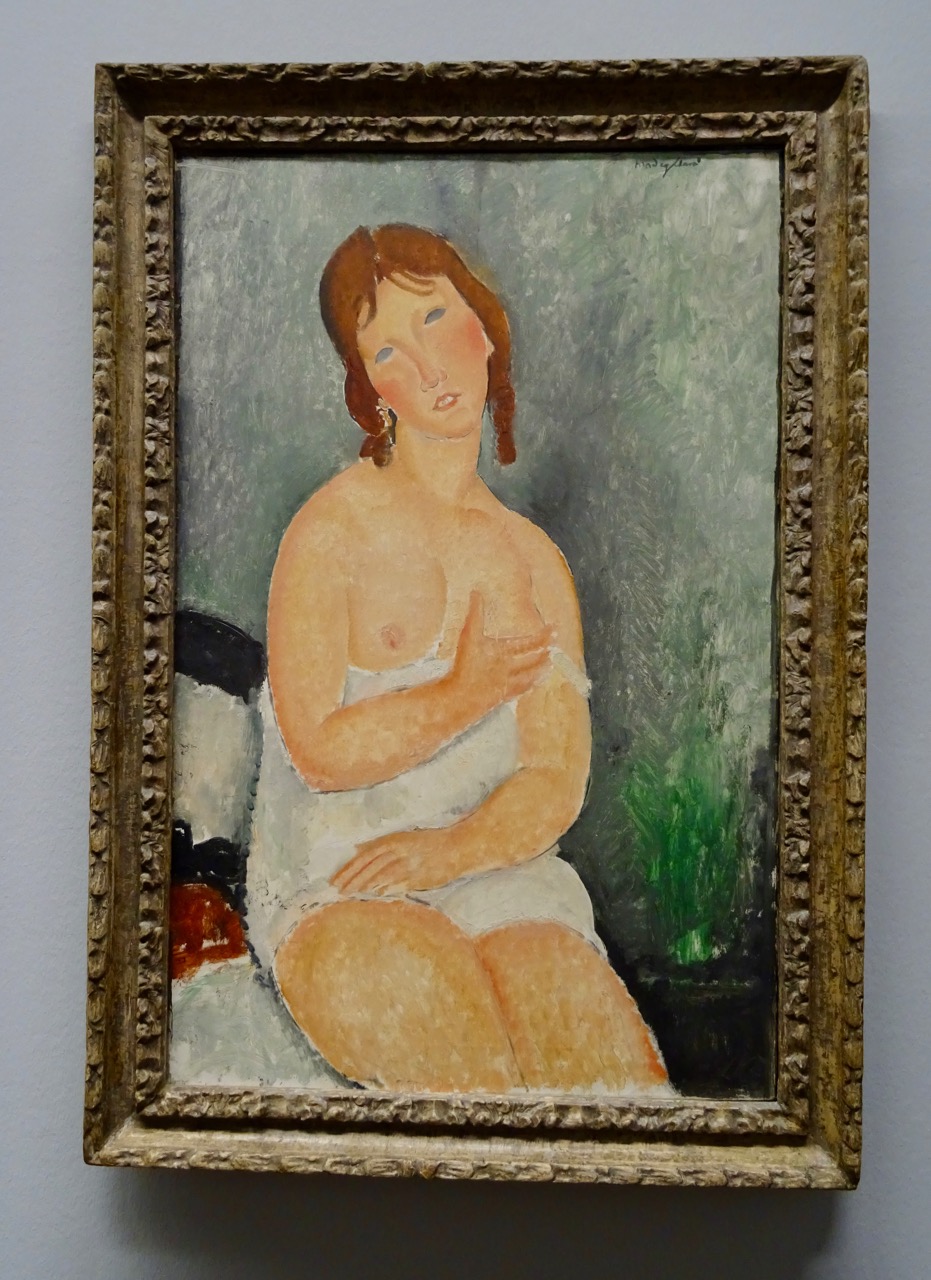
  As we are leaving the museum I see this Modigliani painting ‘Prostitute’. I have always liked Modigliani’s work but haven’t really see very many in person.
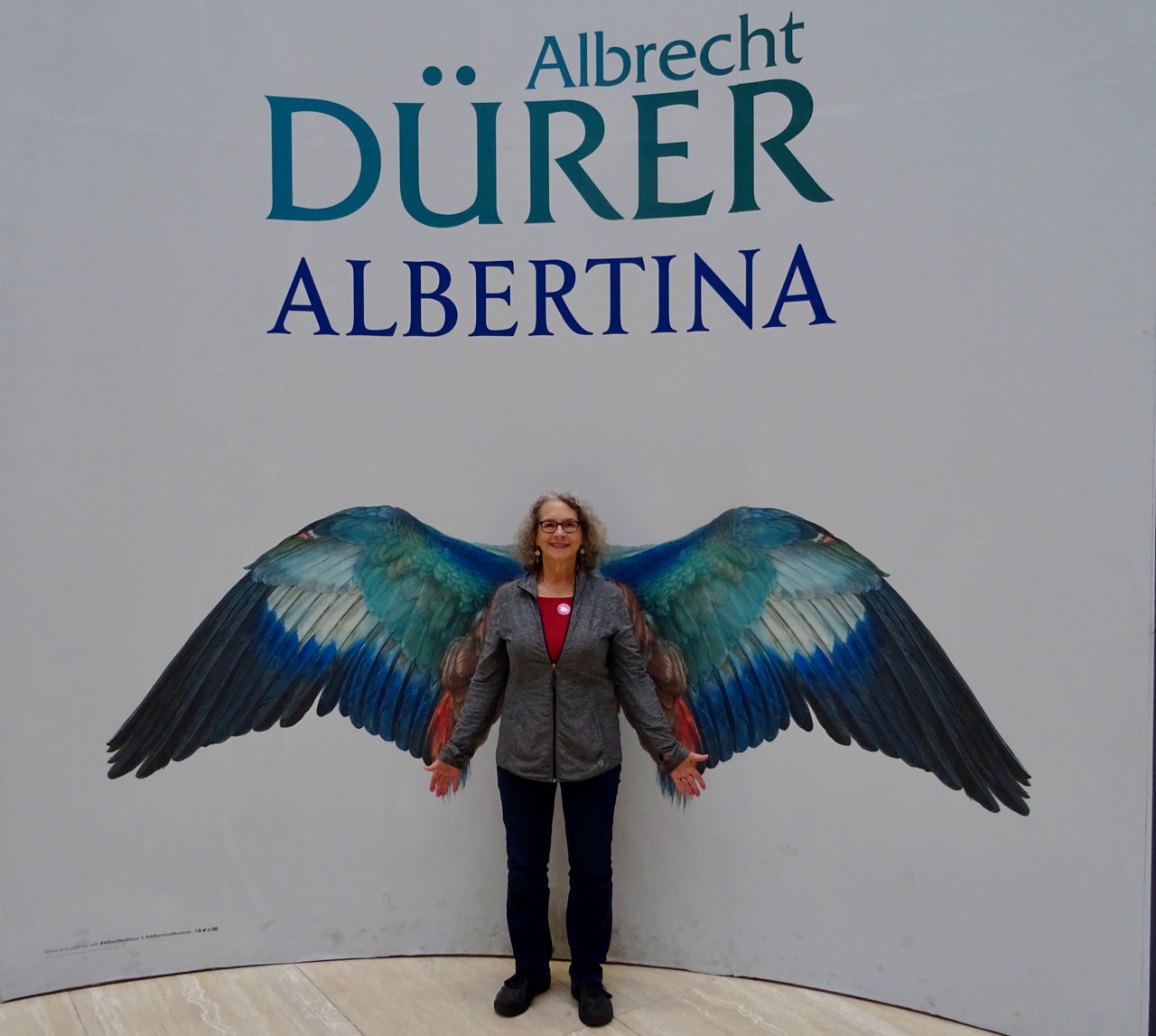
  One last photo at the Albertina. Seems I want to sprout wings this trip!
 We spent four hours here today and I could easily have spent much more time here but this will have to do. I bought the catalogue for the exhibit. It is huge, and weighs 6.6 pounds! Good thing we are near the end of our trip!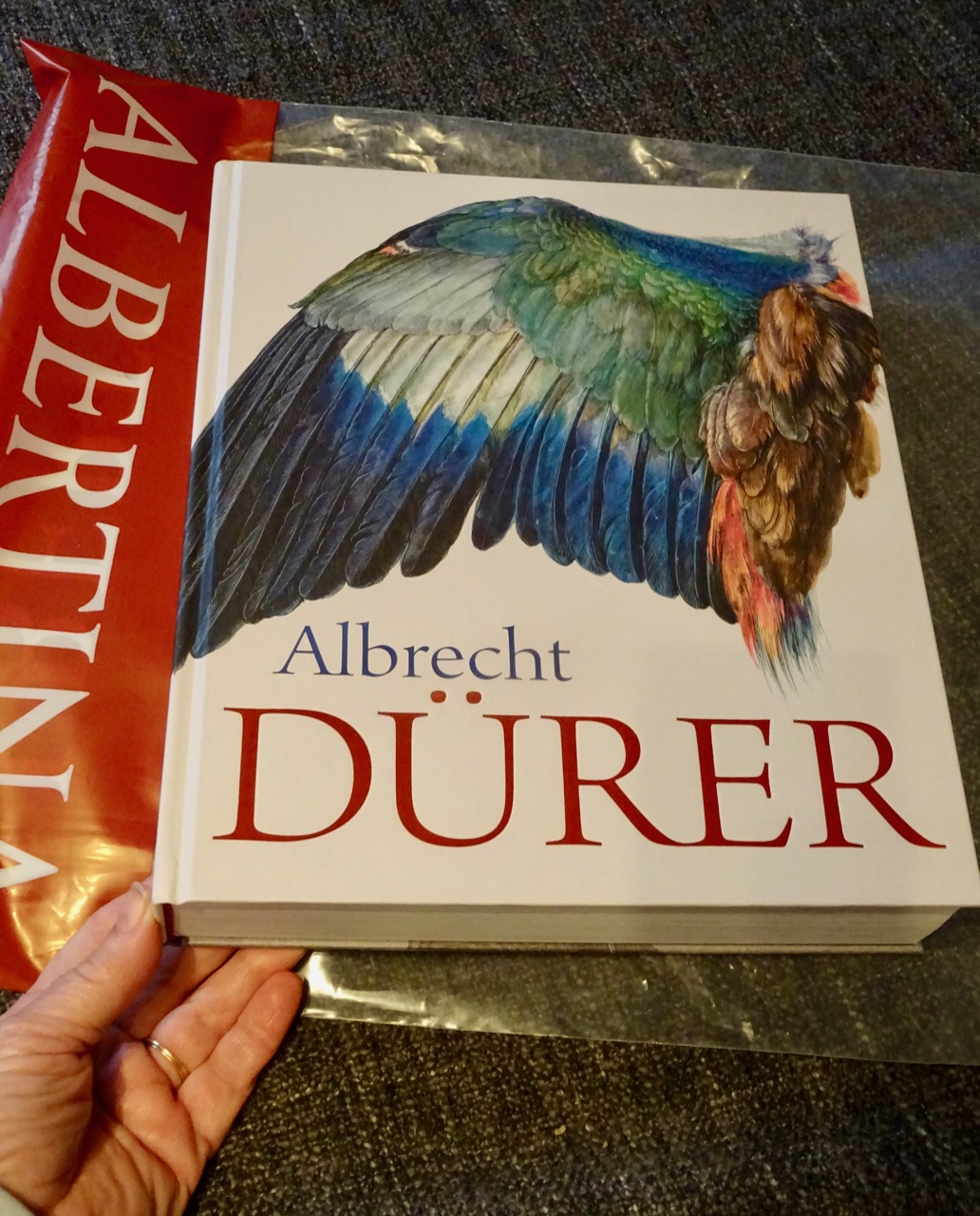
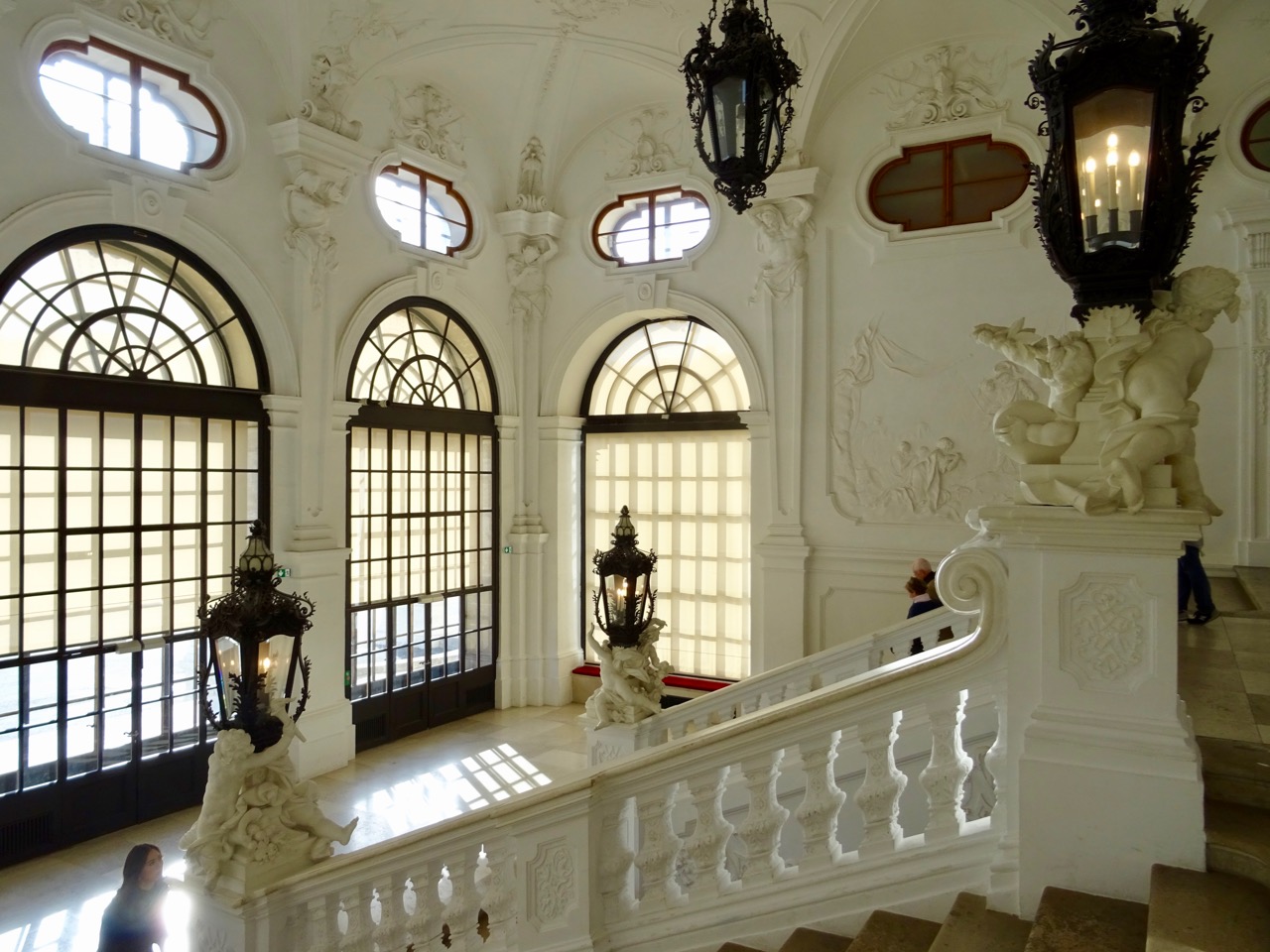 and the beautiful Marble Hall.
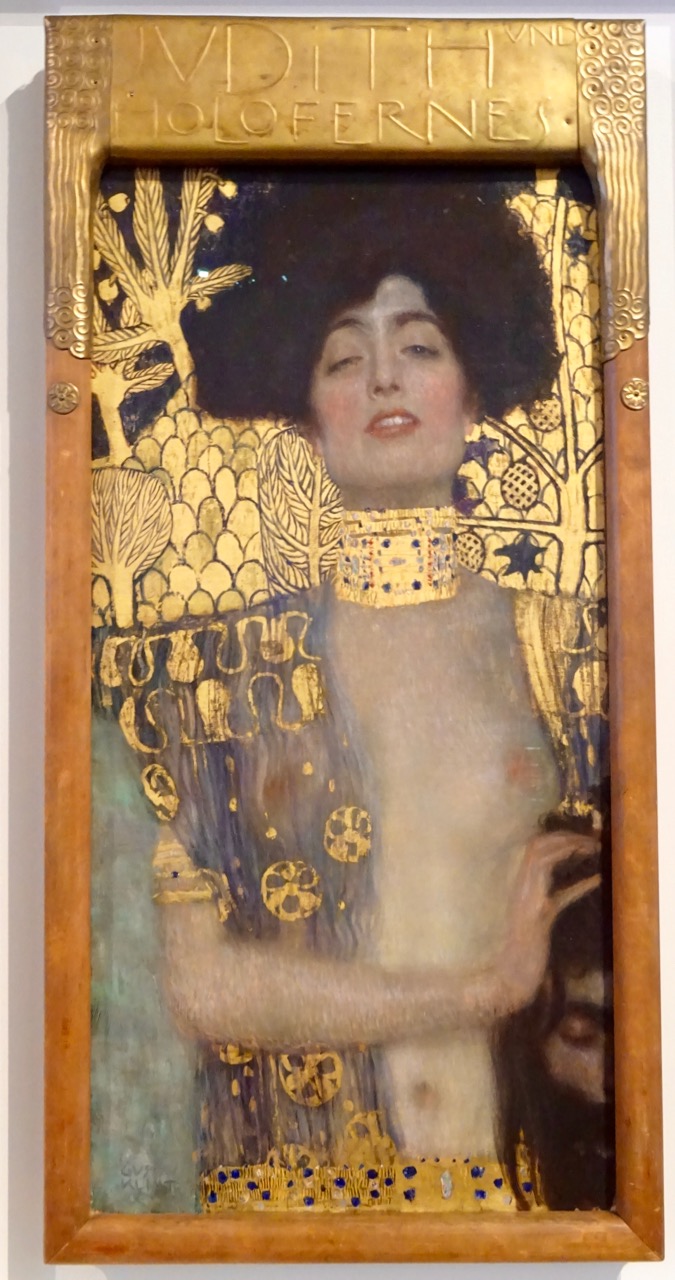
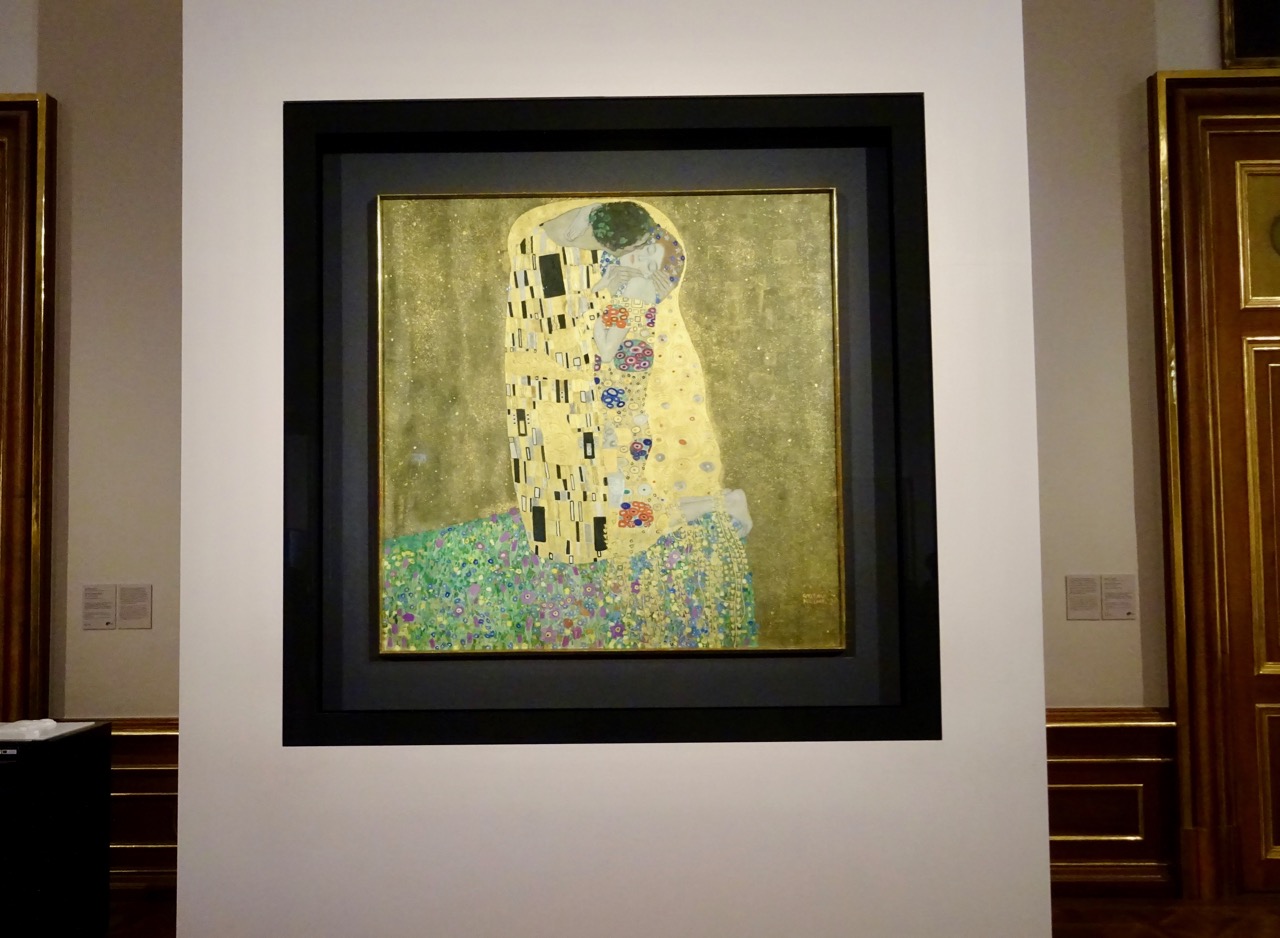
 I particularly wanted to see Gustav Klimt’s The Kiss, but was pleased to find his Judith painting here as well.
 The Kiss is one of Klimt’s most well known paintings. It is a large painting, 183 x183 cm.
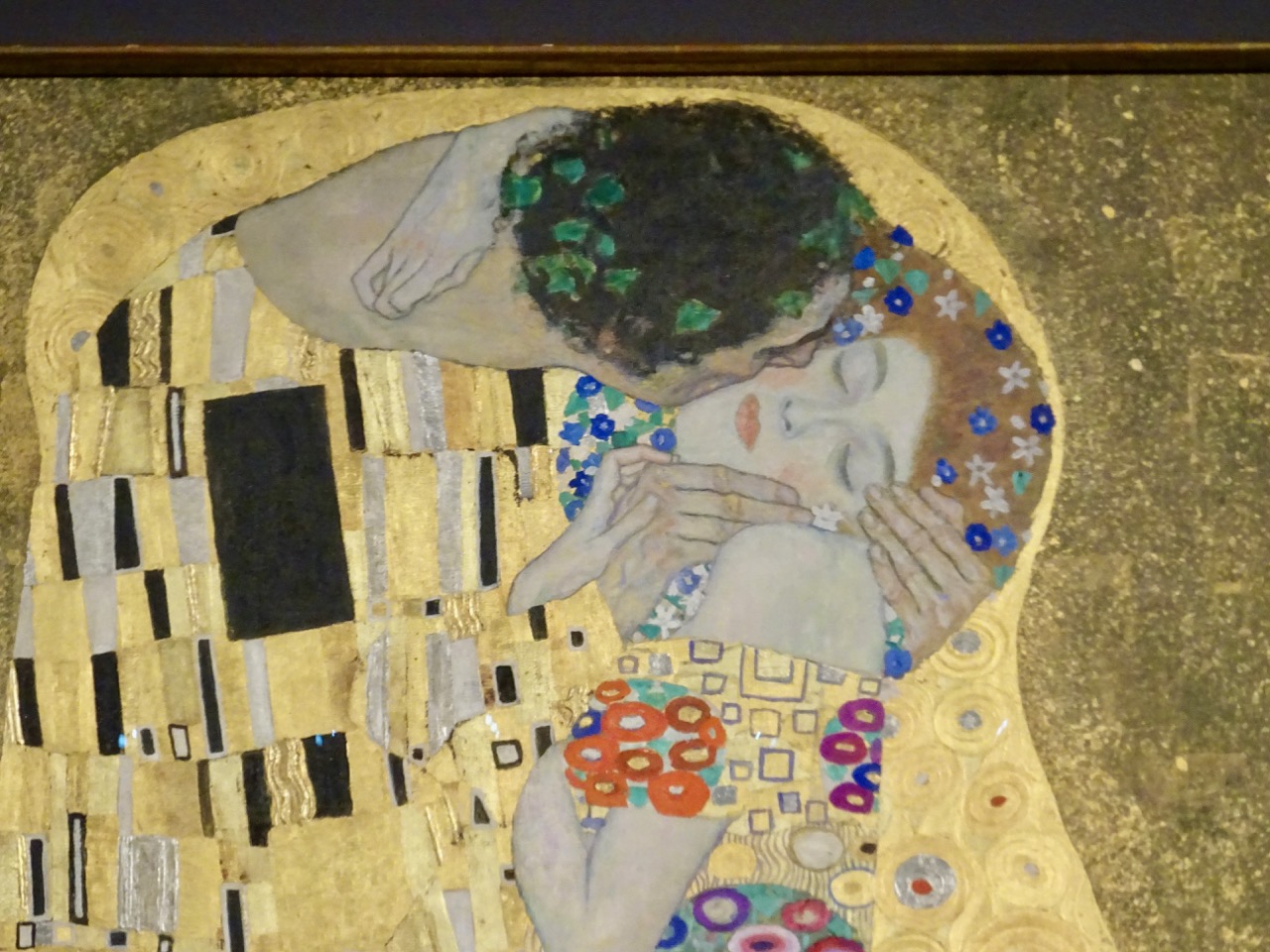
 It is nice to be able to see the painting details up close.
 I am also surprised by how many Egon Schiele paintings are on display. It is quite special to be able to see the original paintings of some of my favourite works by these two painters. I didn’t realize that these paintings were so large. Looking at reproductions in books can be deceiving. The Embrace and….
 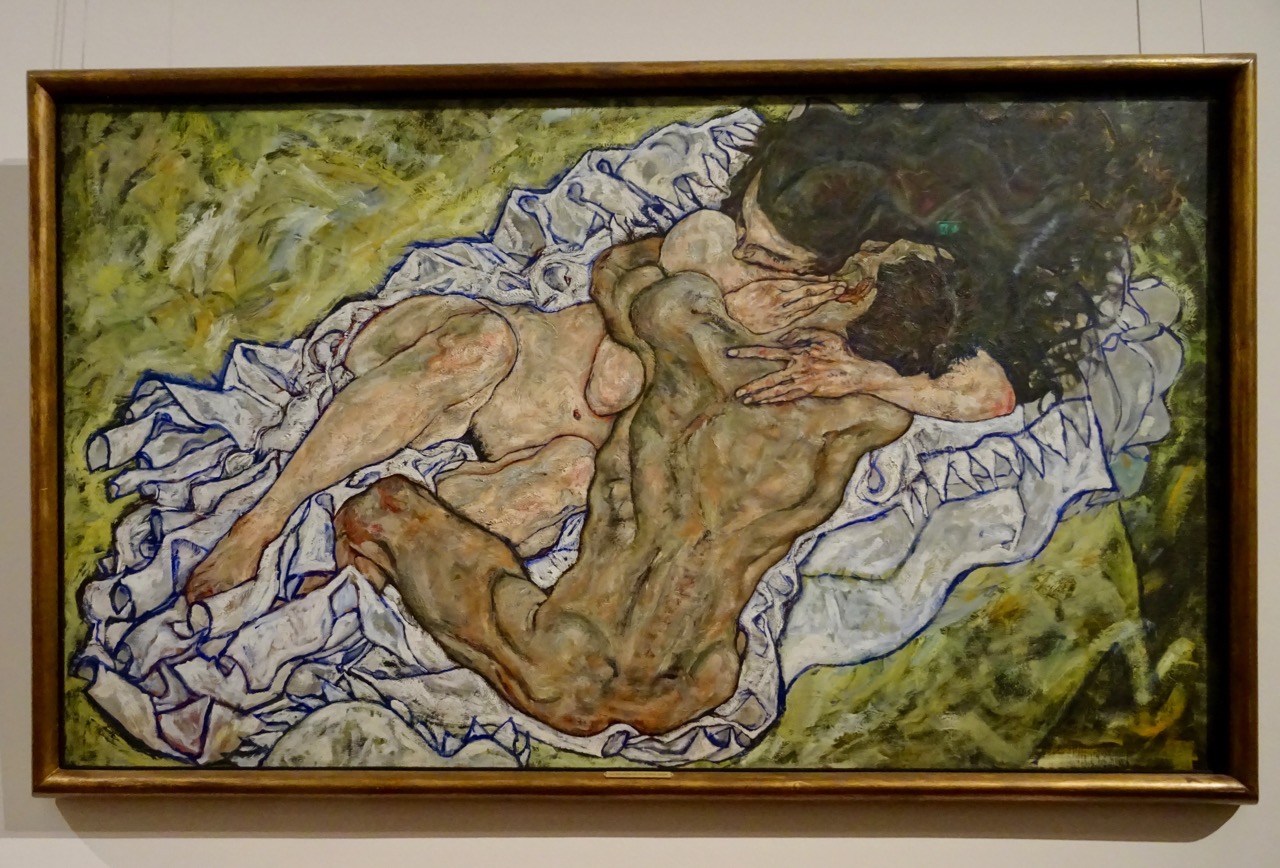 the Family are both much bigger than I imagined…
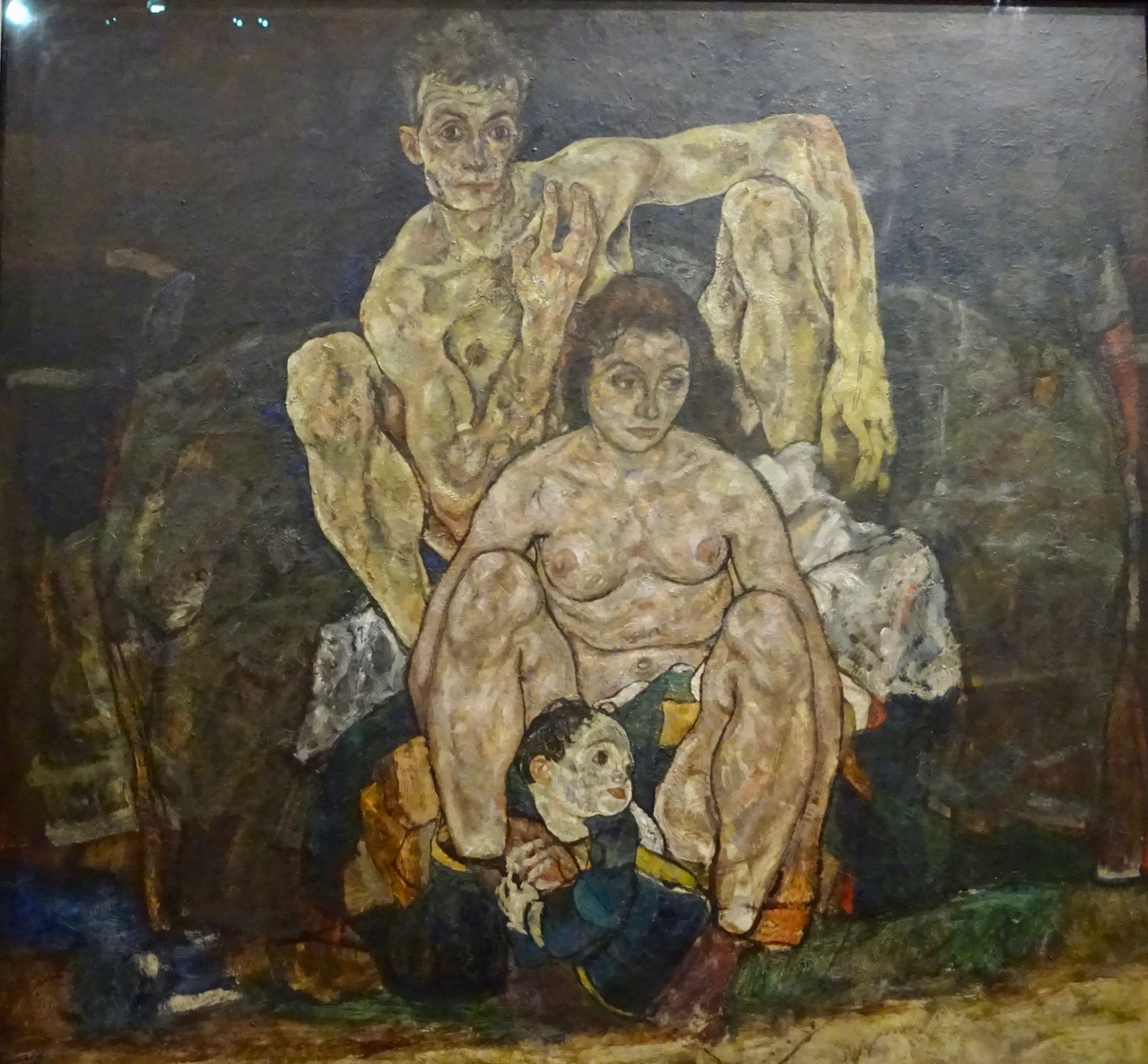 as are these paintings.
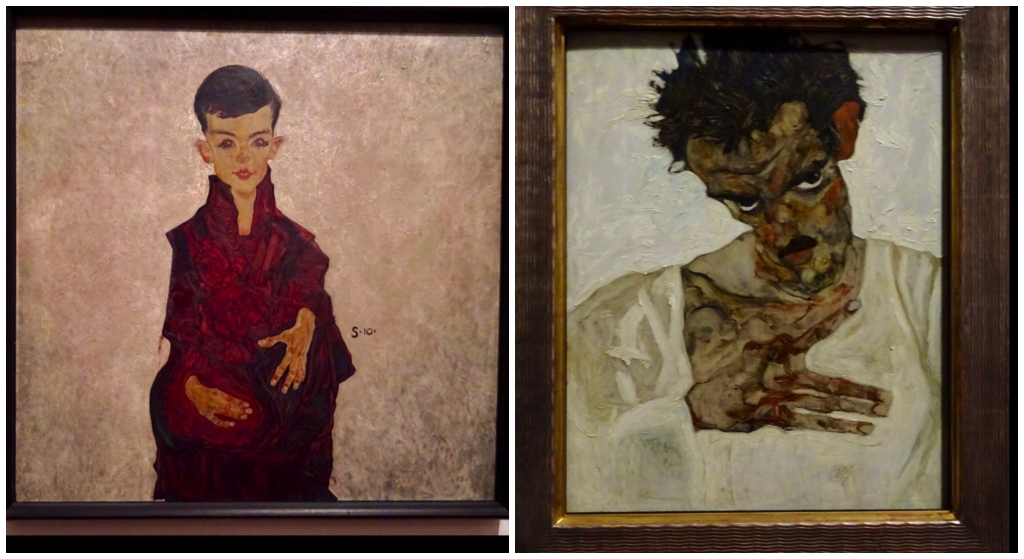
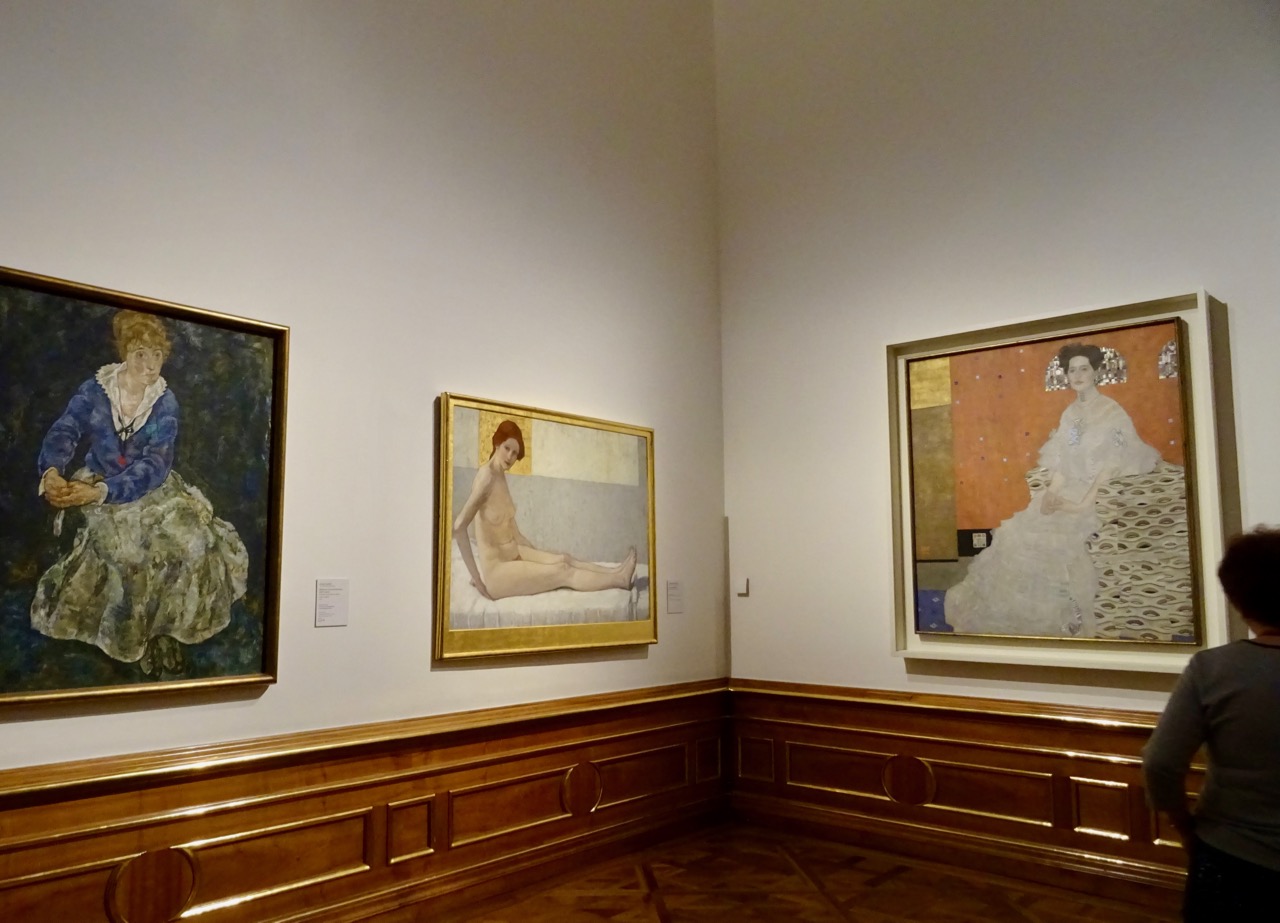 Schiele’s Self Portrait is the smallest painting, about 41 x 33 cm.
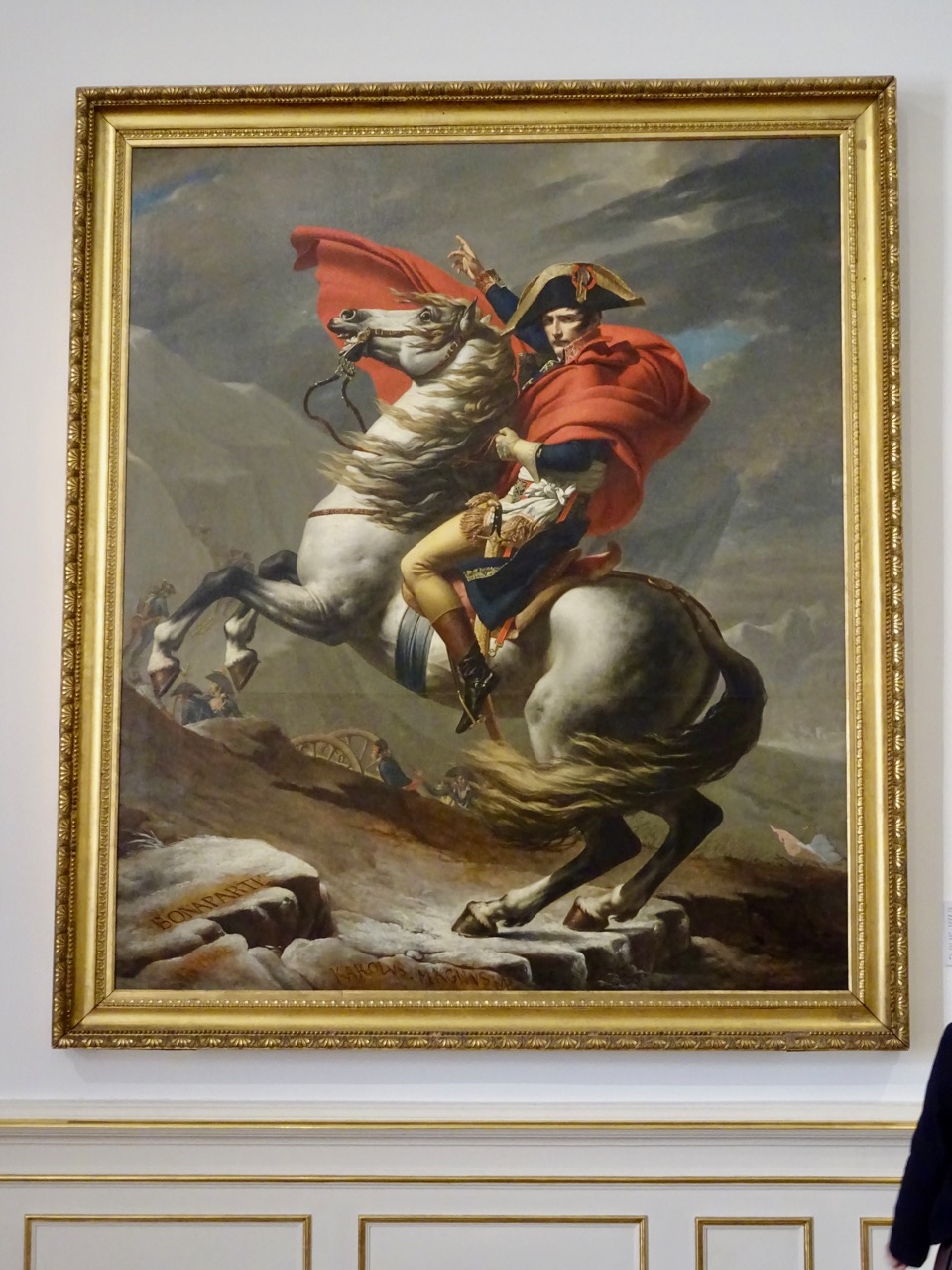
 I didn’t know Jacques-Louis David’s painting of Napoleon was here either. I am so glad I was able to visit this museum. This painting is enormous, 272 × 232 cm!
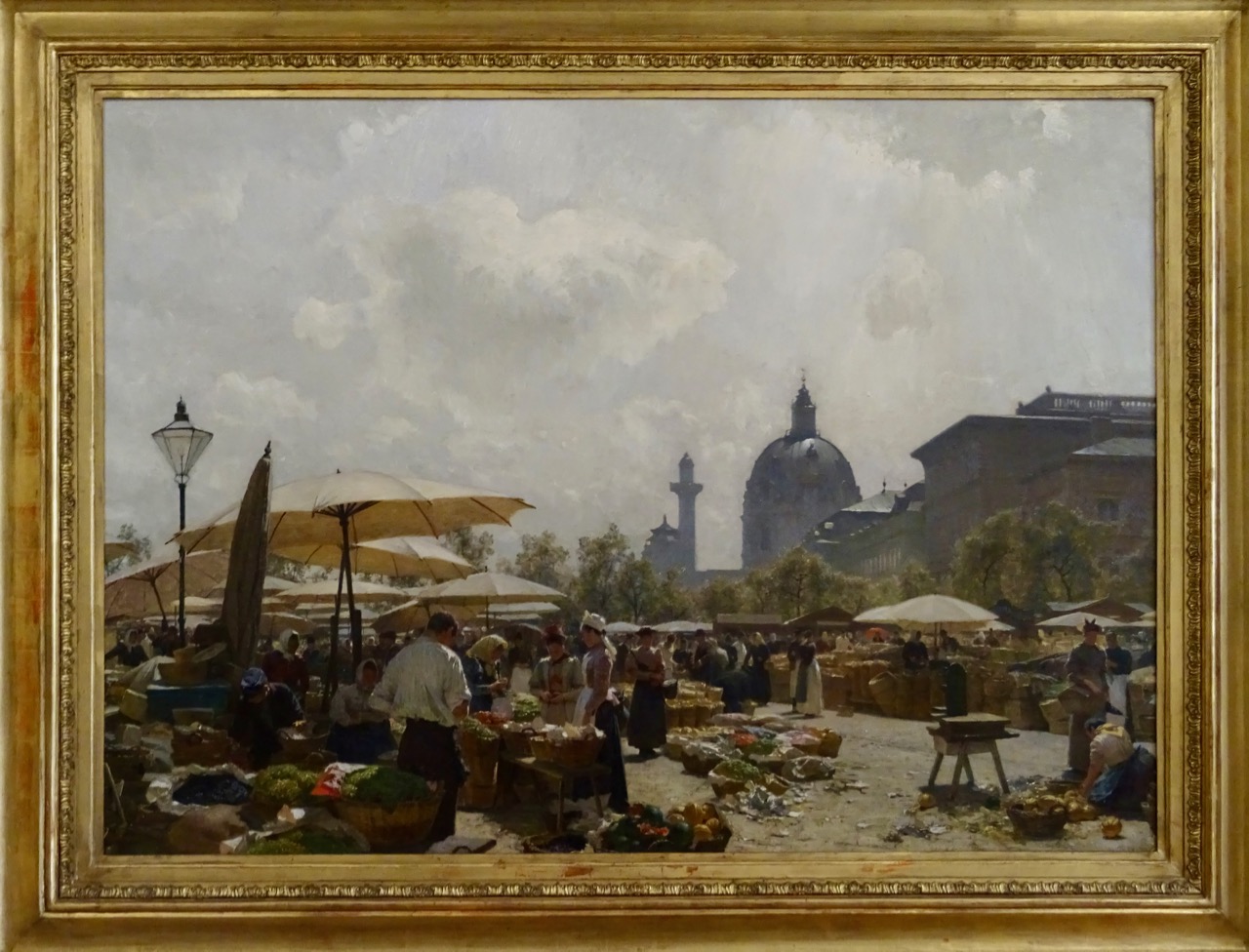
 This painting shows the Vienna Naschmarkt in 1894. It has changed a bit over the years!
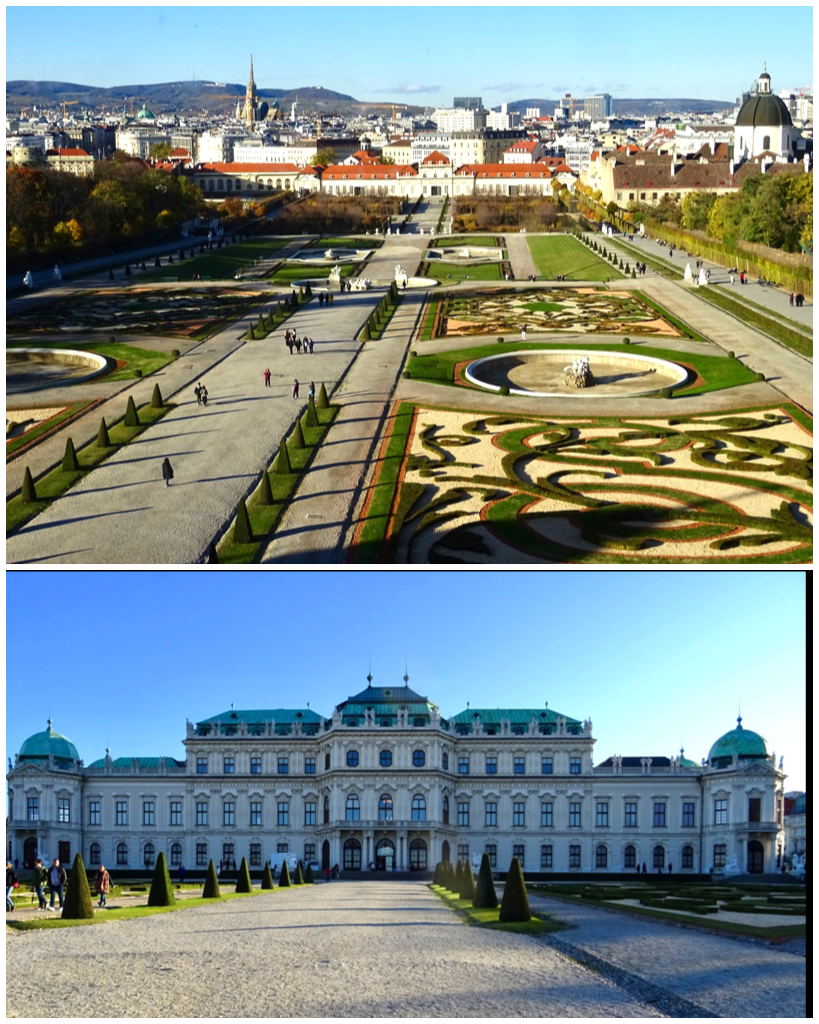
 We meet up in the gardens outside the Belvedere and then walk towards St. Charles Church.
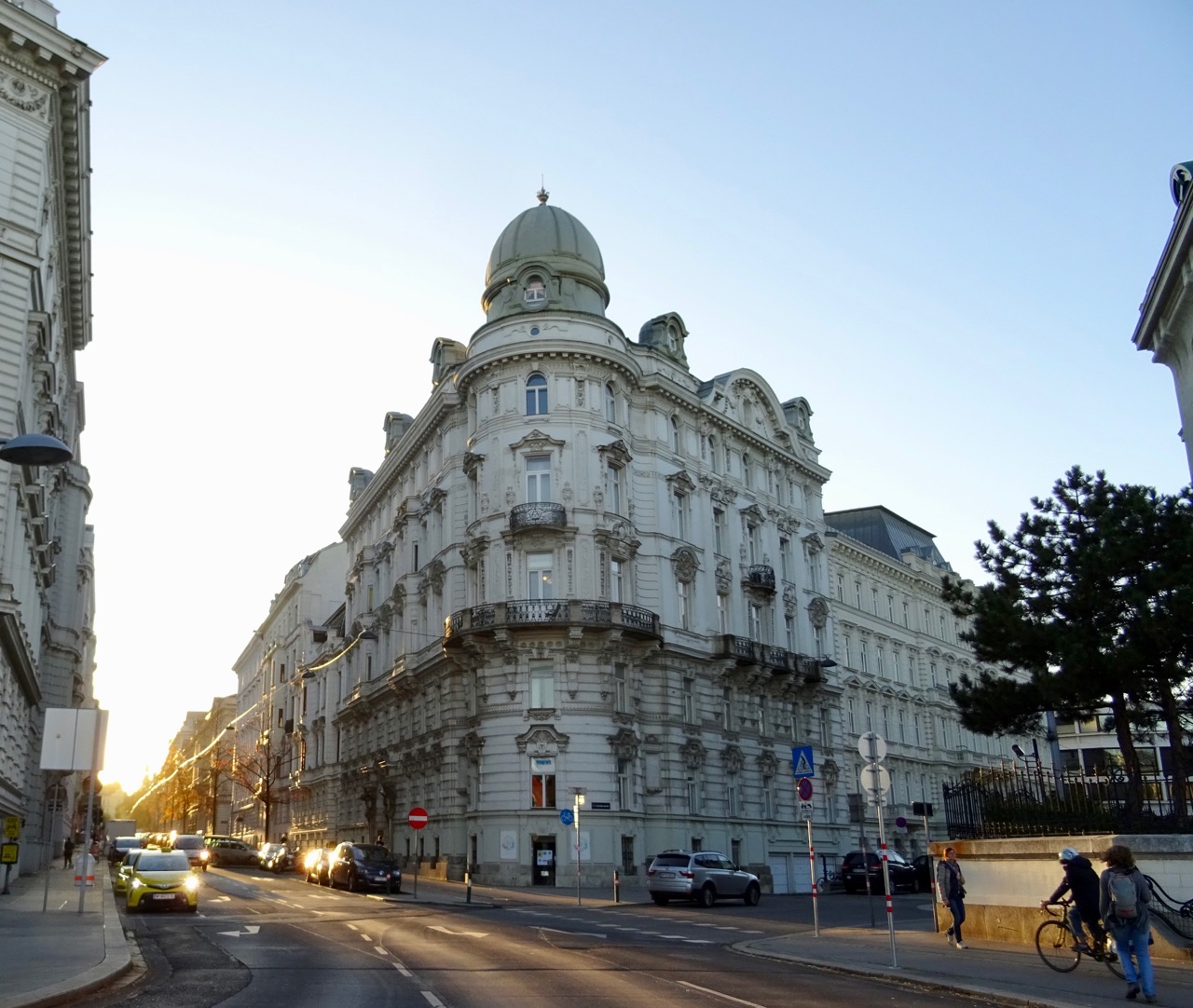
  There are so many interesting buildings along the way.
 We had a huge surprise when we entered St. Charles Church. Two enormous floating mirrored balls that reflected the church…
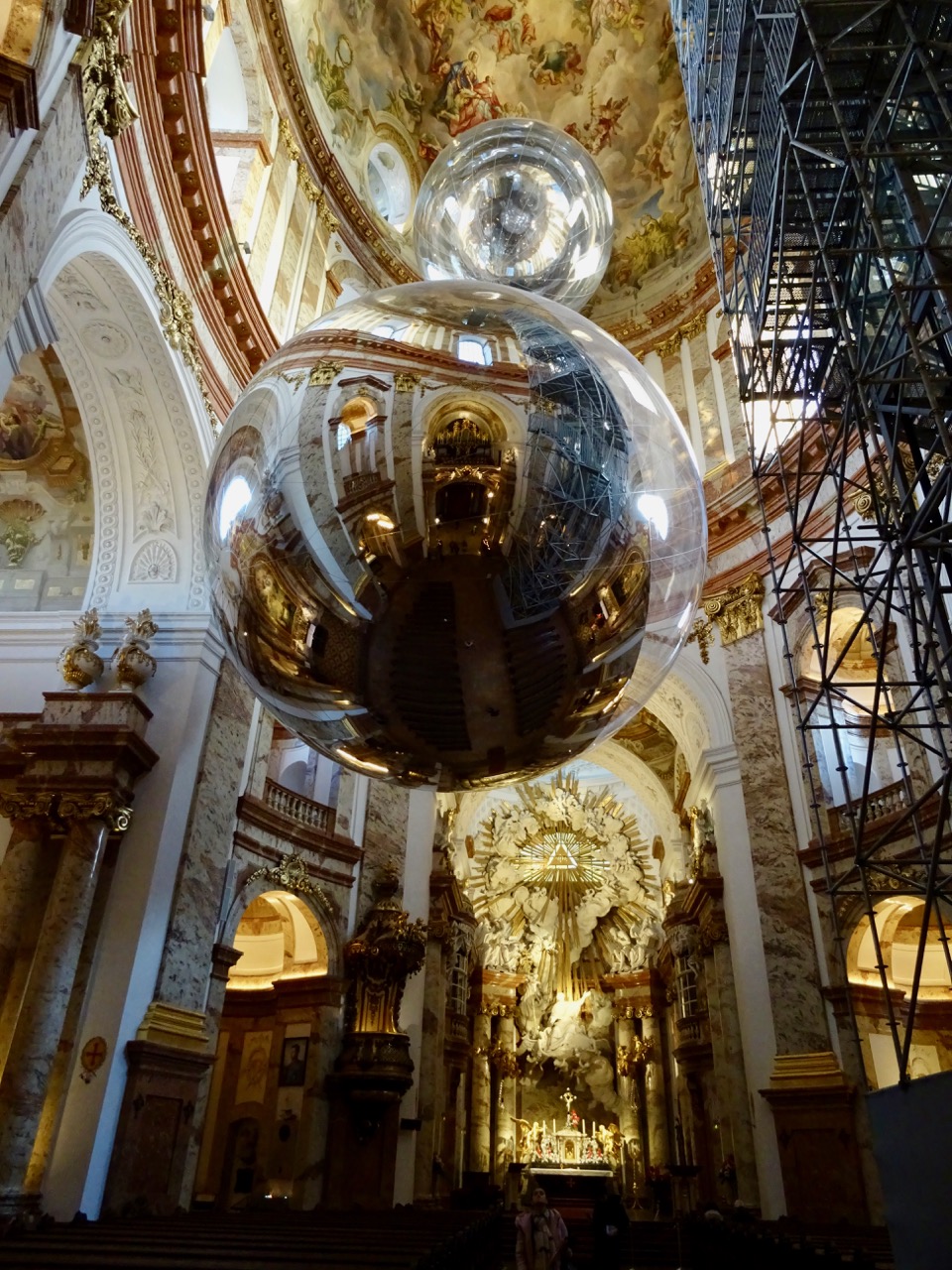 and us. We are almost in the centre of the reflection but we are very tiny. “Aerocene” is a contemporary art installation by Tomas Saraceno, an Argentinian artist who lives and works in Berlin. The floating reflective balls are 10 and 7 metres in diameter.
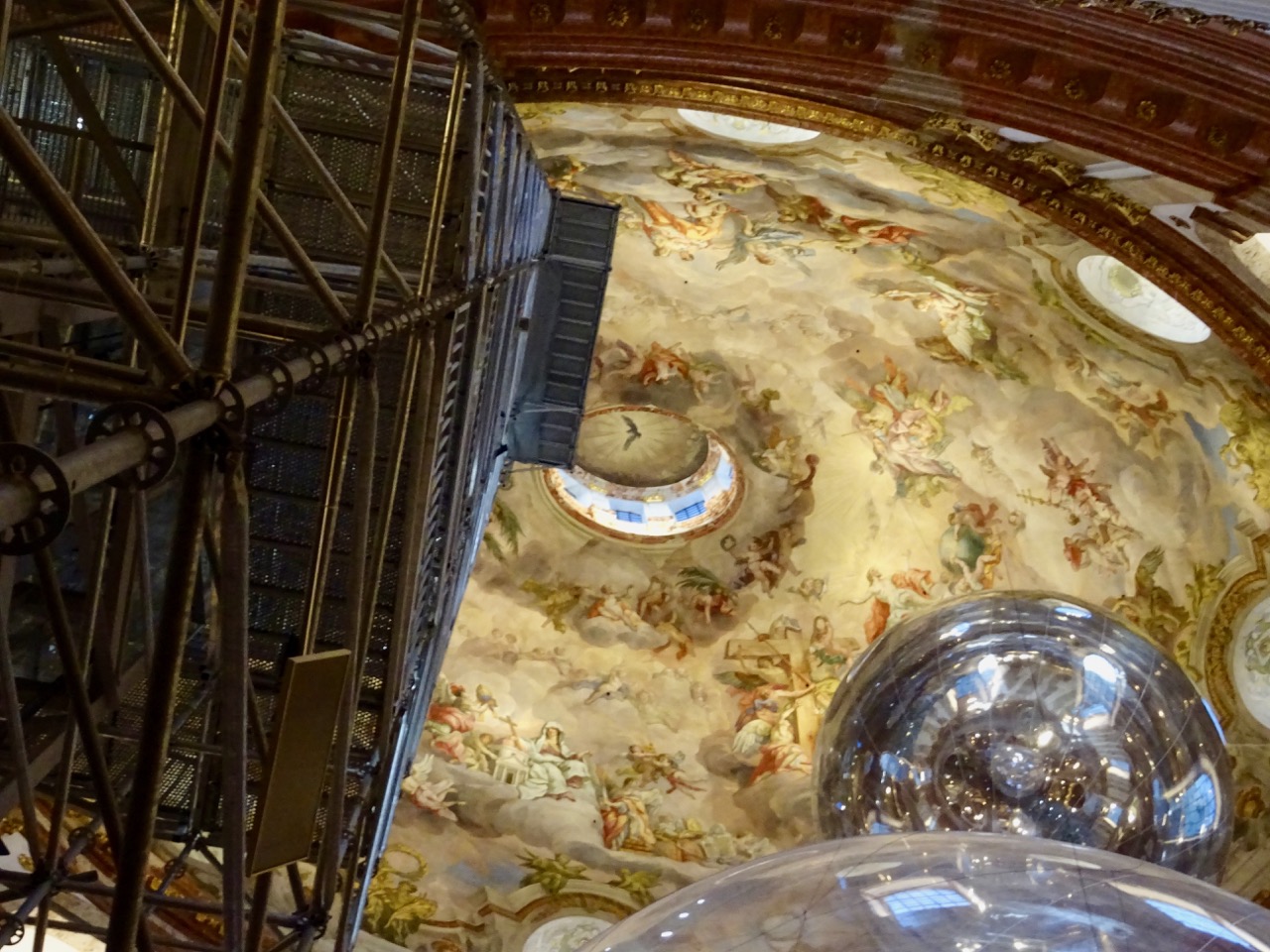
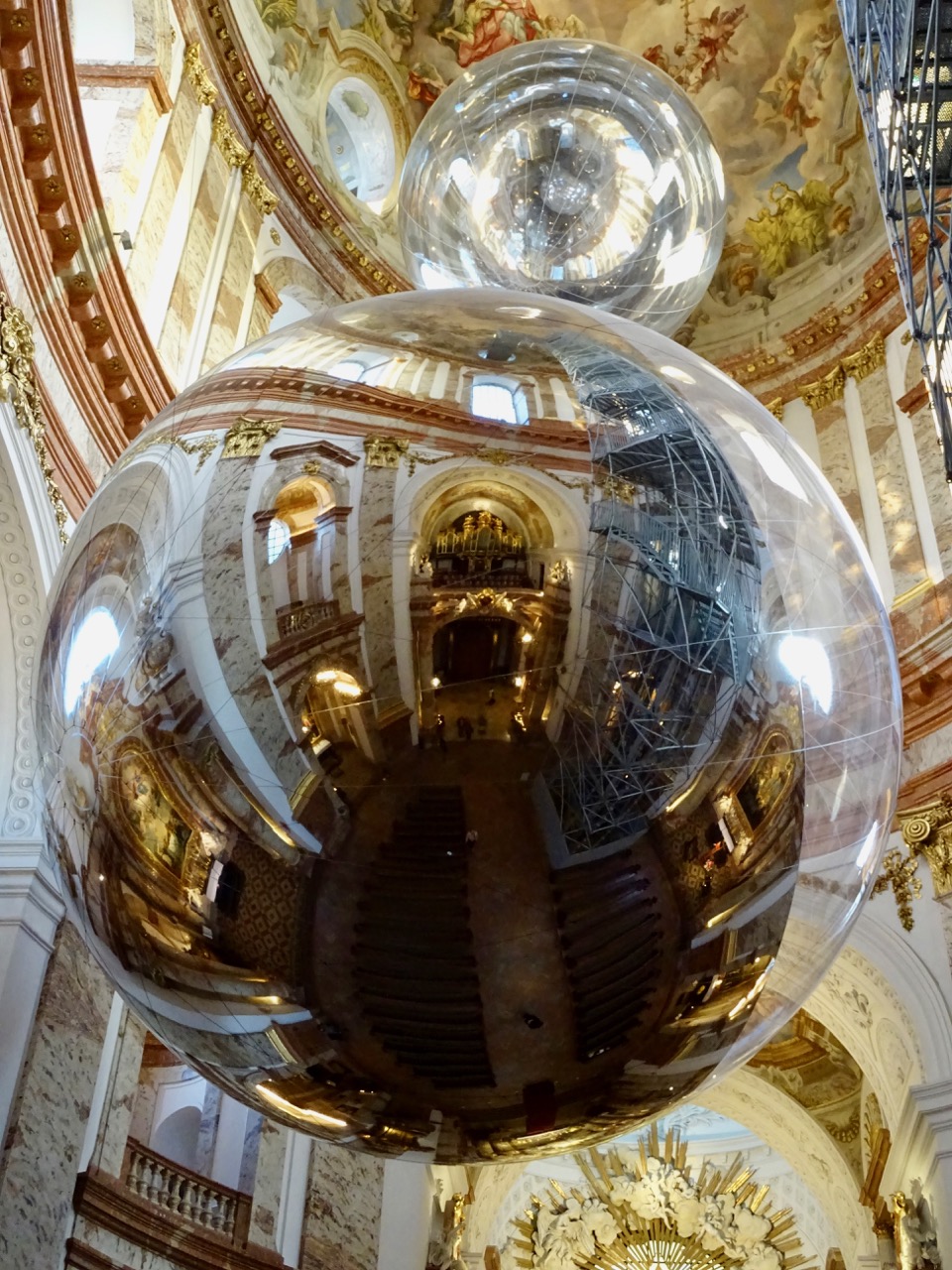 Then we notice the scaffolding that goes high up into the dome, and that is where we are going to go! We thought the elevator ride we got a ticket for would be inside a bell tower. Nope! We ride to the top of this scaffolding and then climb a bit further, onto that platform you see leading into one of the round windows in the dome!
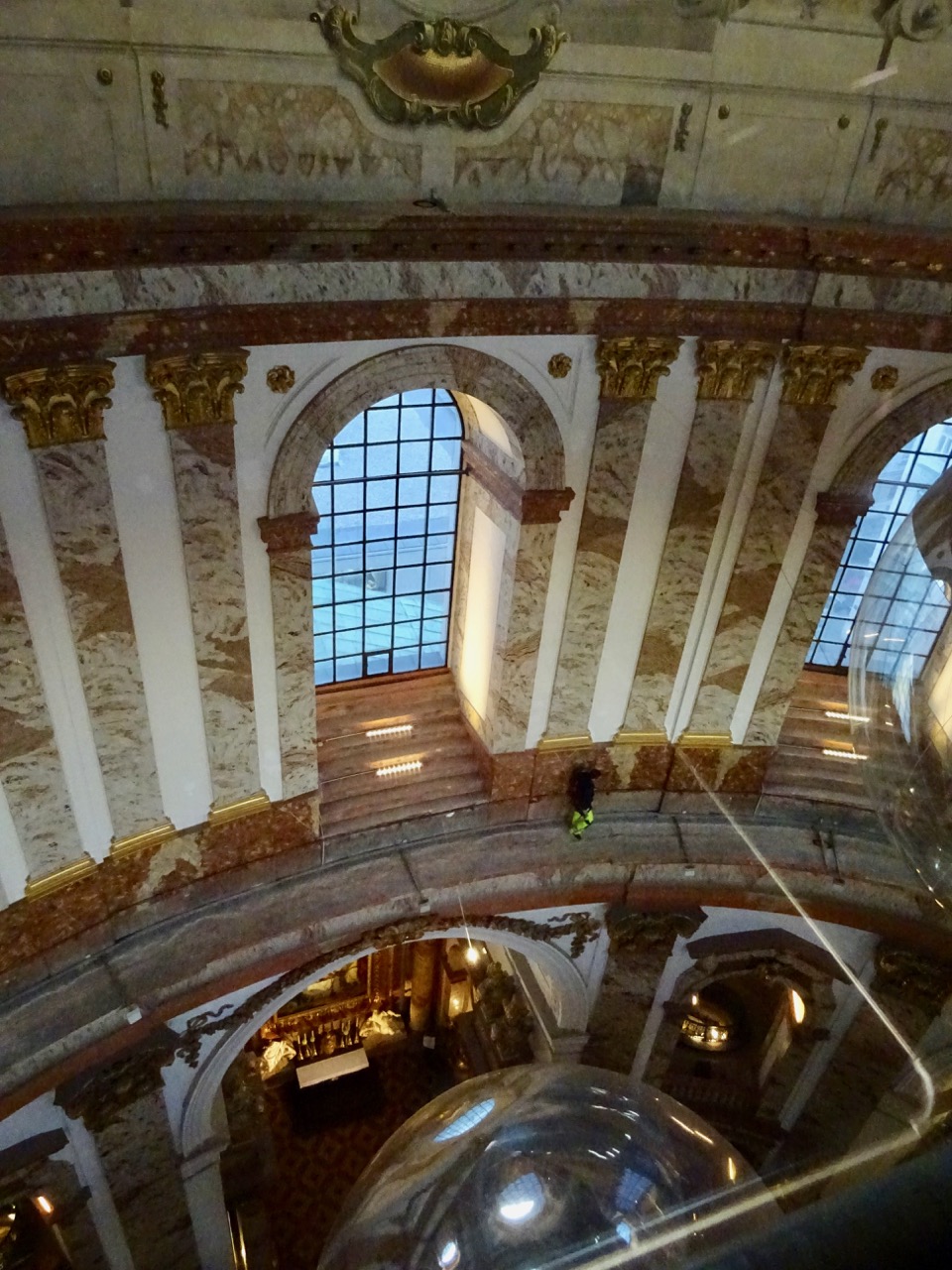
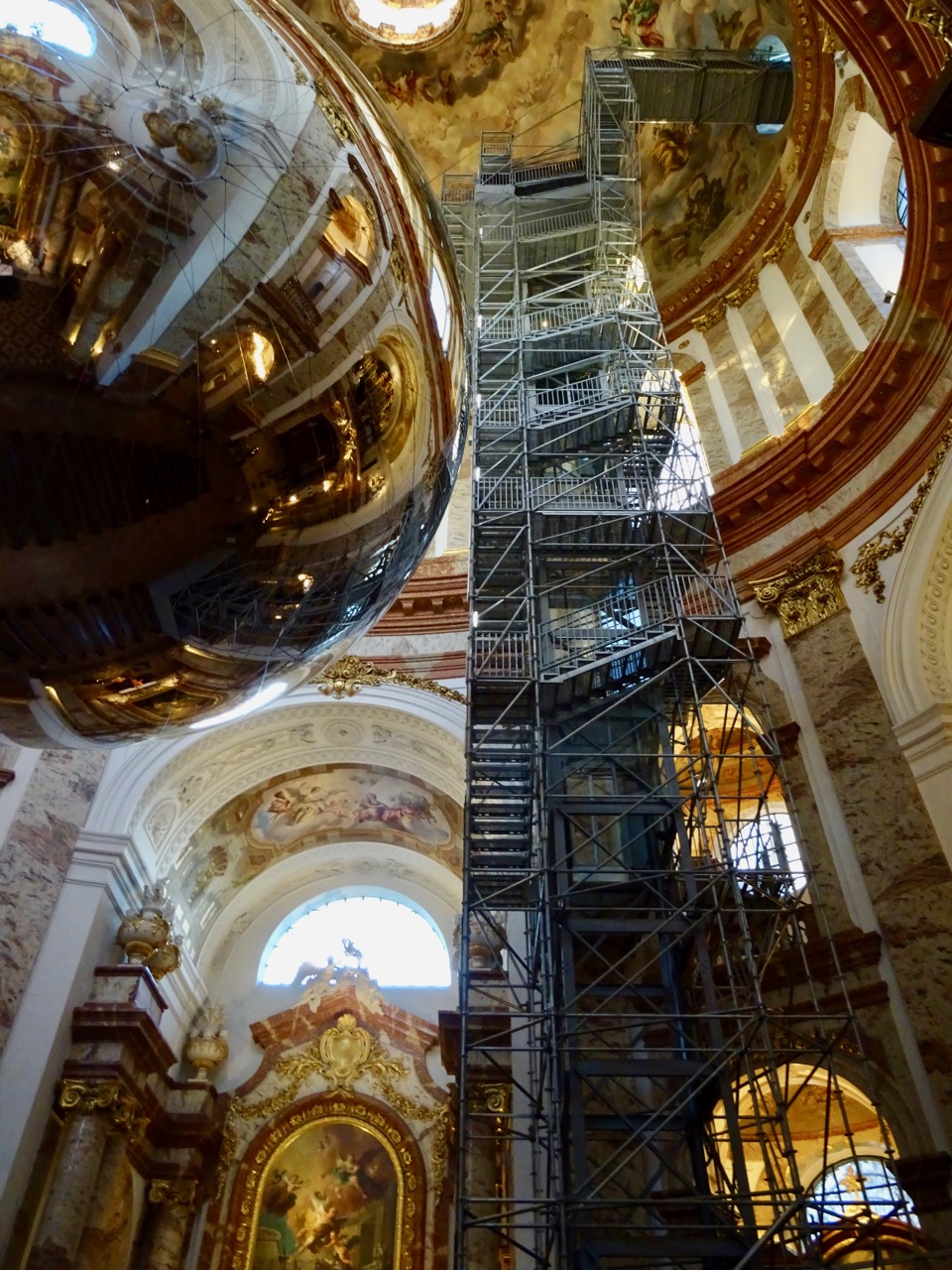 Looking down from the top of this ‘elevator’ we notice a workman adjusting lights high up in the dome, yet still far below us!
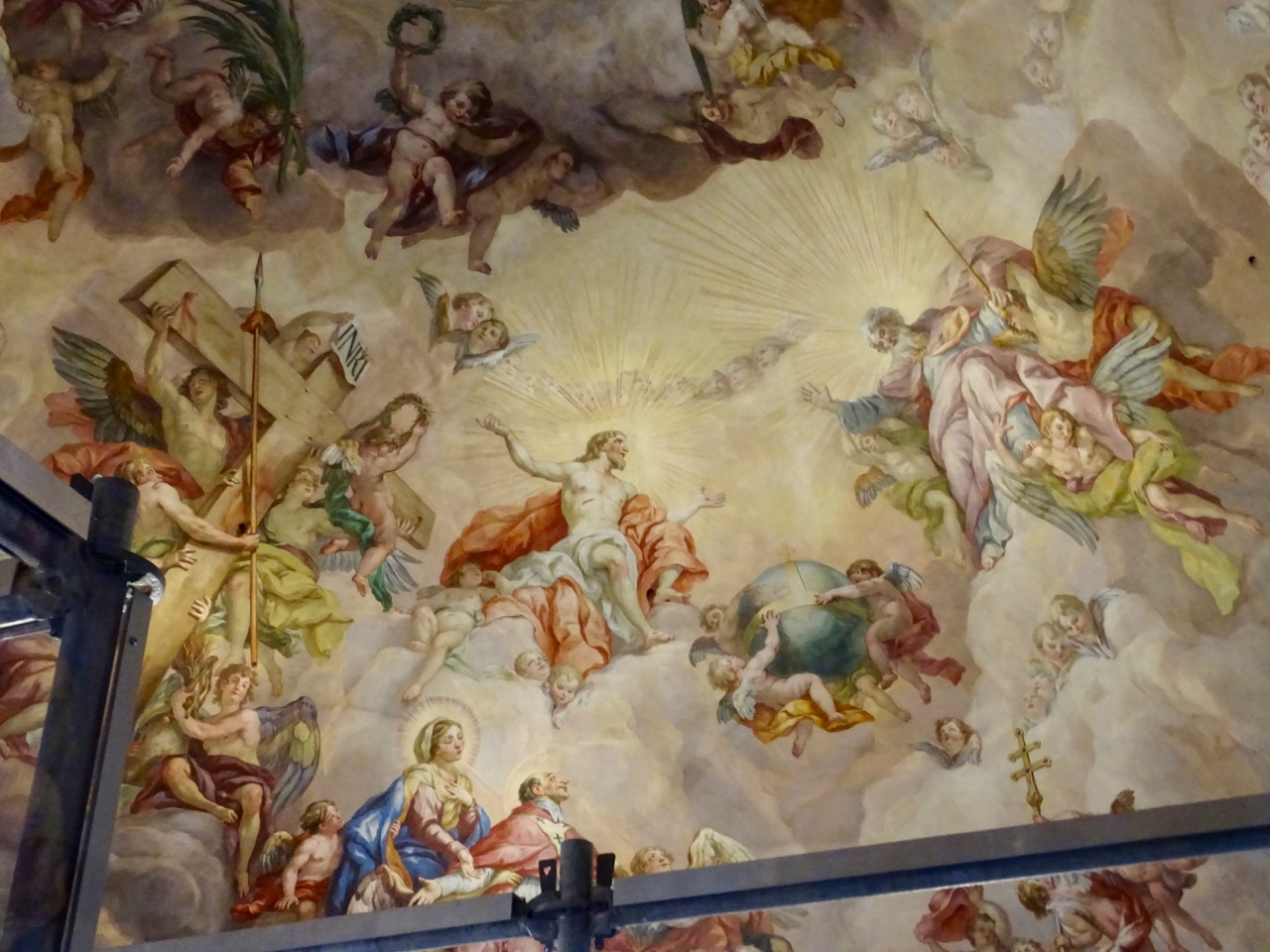
 We have a great view of the dome paintings. It is interesting the way the gold highlights look up this close…
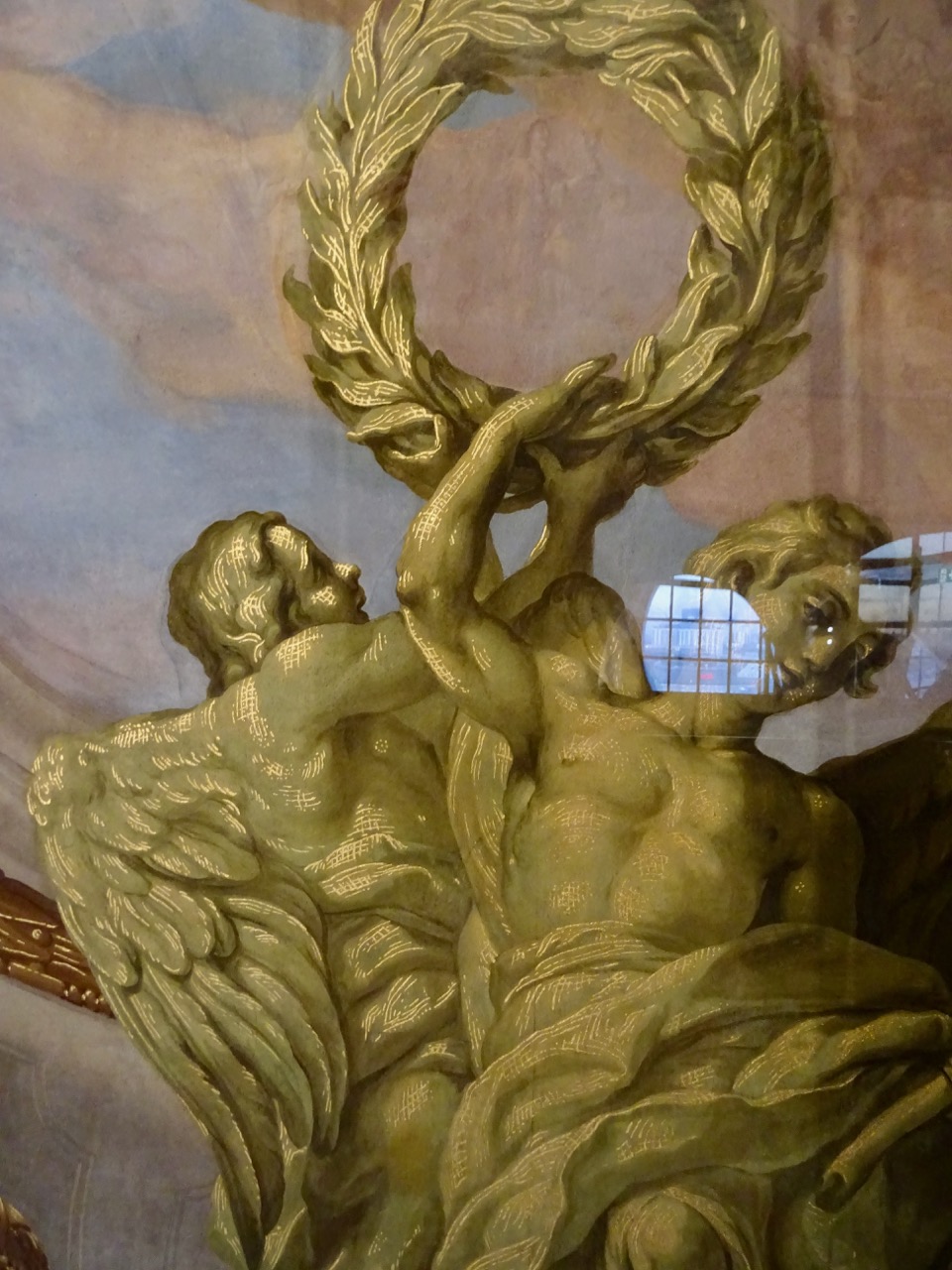 and we have a great view of the other dome paintings. We are crazy high up!
 Bob walks back down to this viewing platform so I can get a photo. Notice how he is suspended…nothing below him!
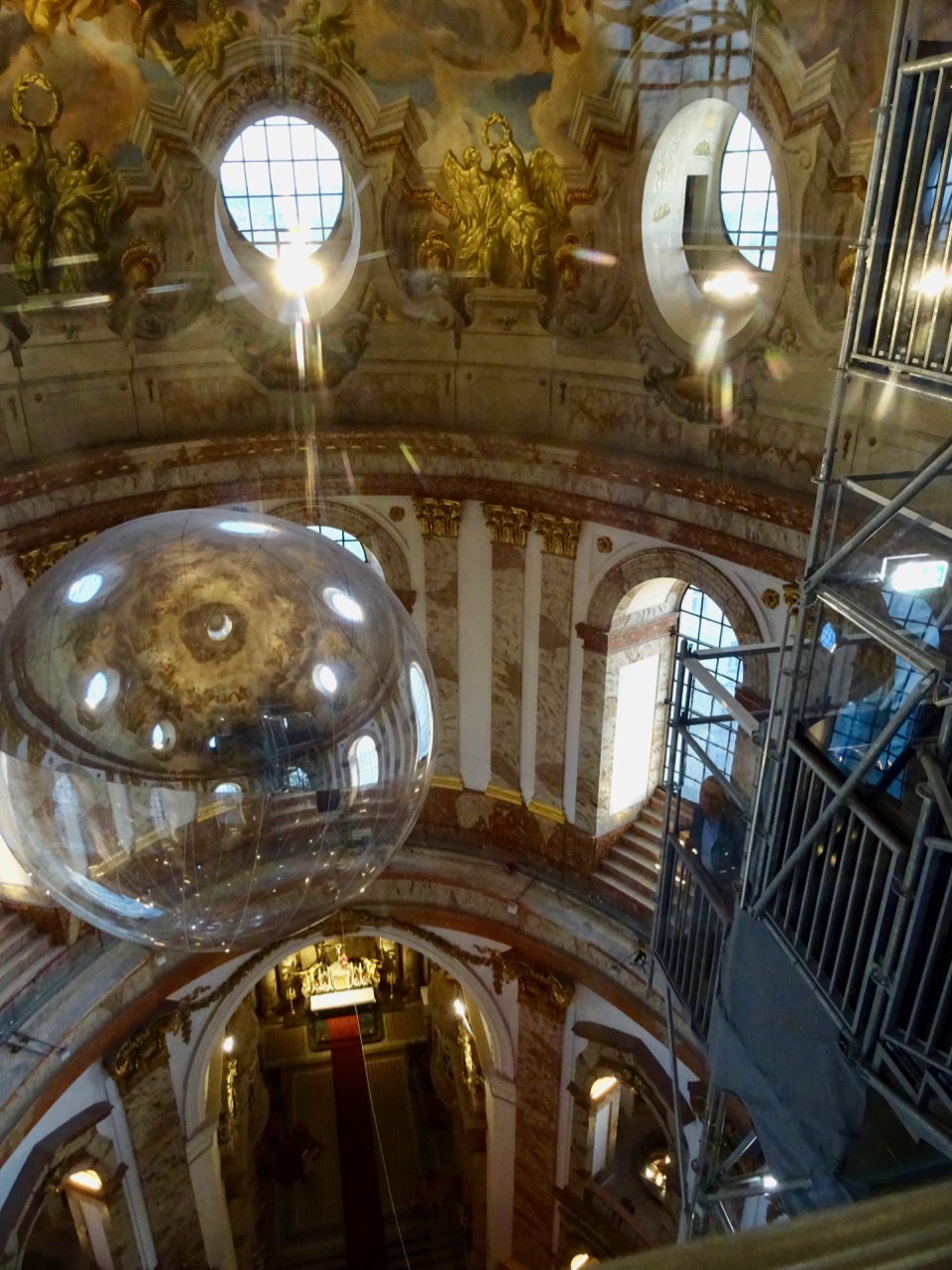 This photo shows the platform that Bob was standing on in the last photo.
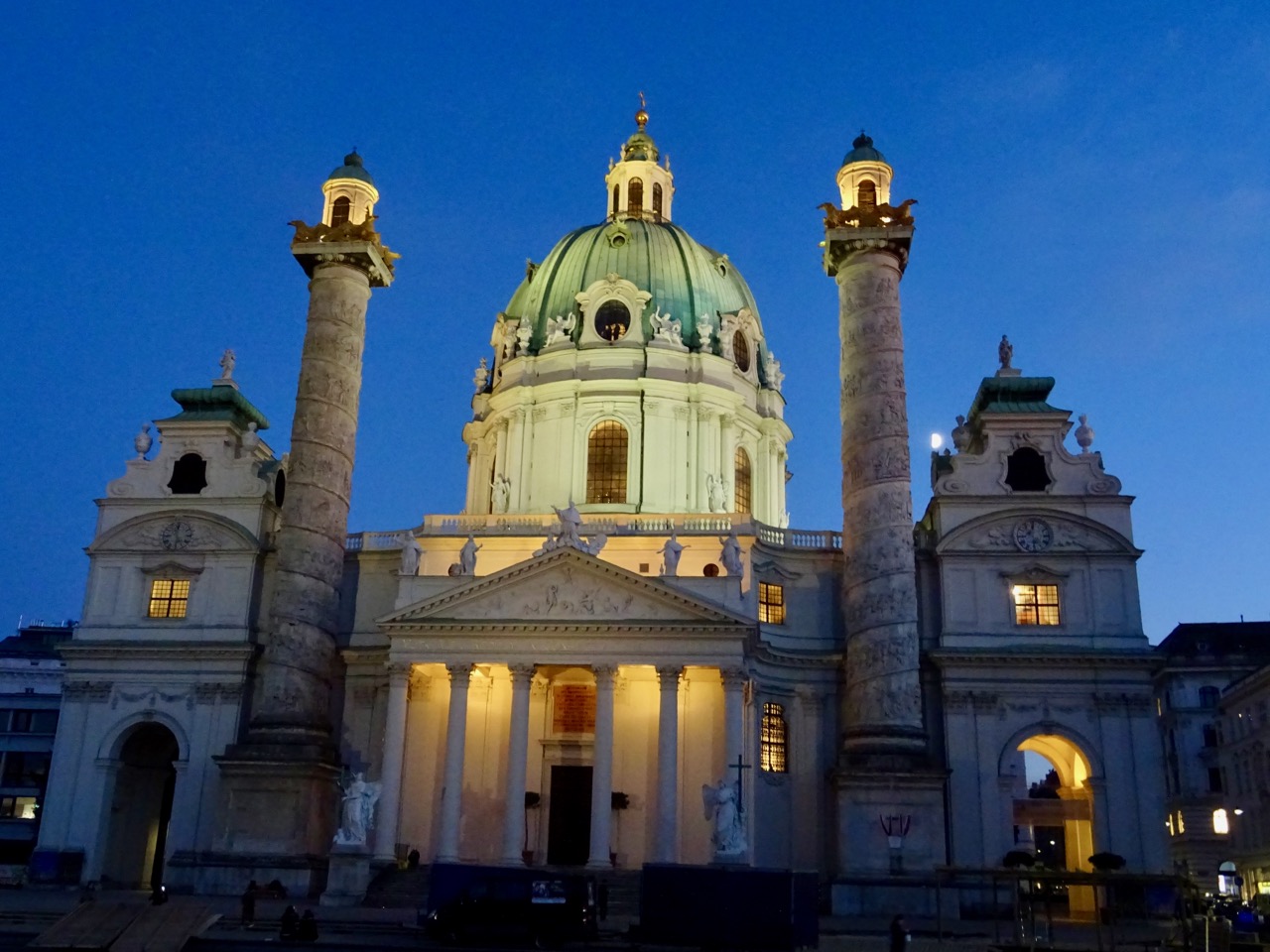
 We spent quite a lot of time way up there in the dome, and it is getting dark when we get outside. If you look closely you can see some people standing in the round window on the dome. That is the window we were standing in! What an amazing experience. There was restoration work carried out in the dome and the elevator is being kept for a while. The fee to ride up into the dome is a way to make more money for further restorations.
 Walking back towards the metro we pass the Opera House…
 and take photos of these performers from Tibet. They have a performance later tonight and were taking publicity photos outside the Opera House.
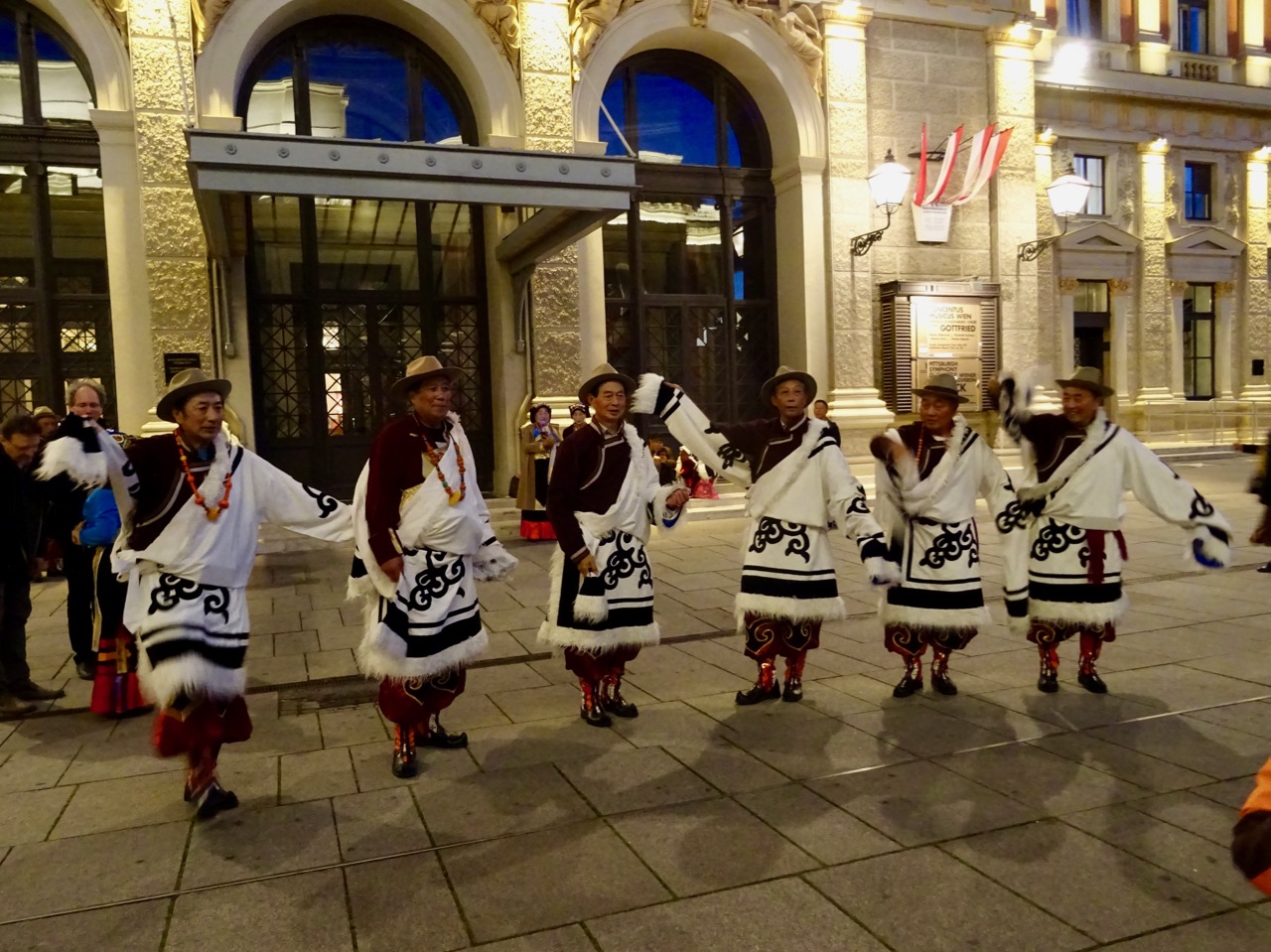 While the men posed, some of the women were busy applying their makeup.
  This is a a huge paper art installation we pass in a walkway near the metro.
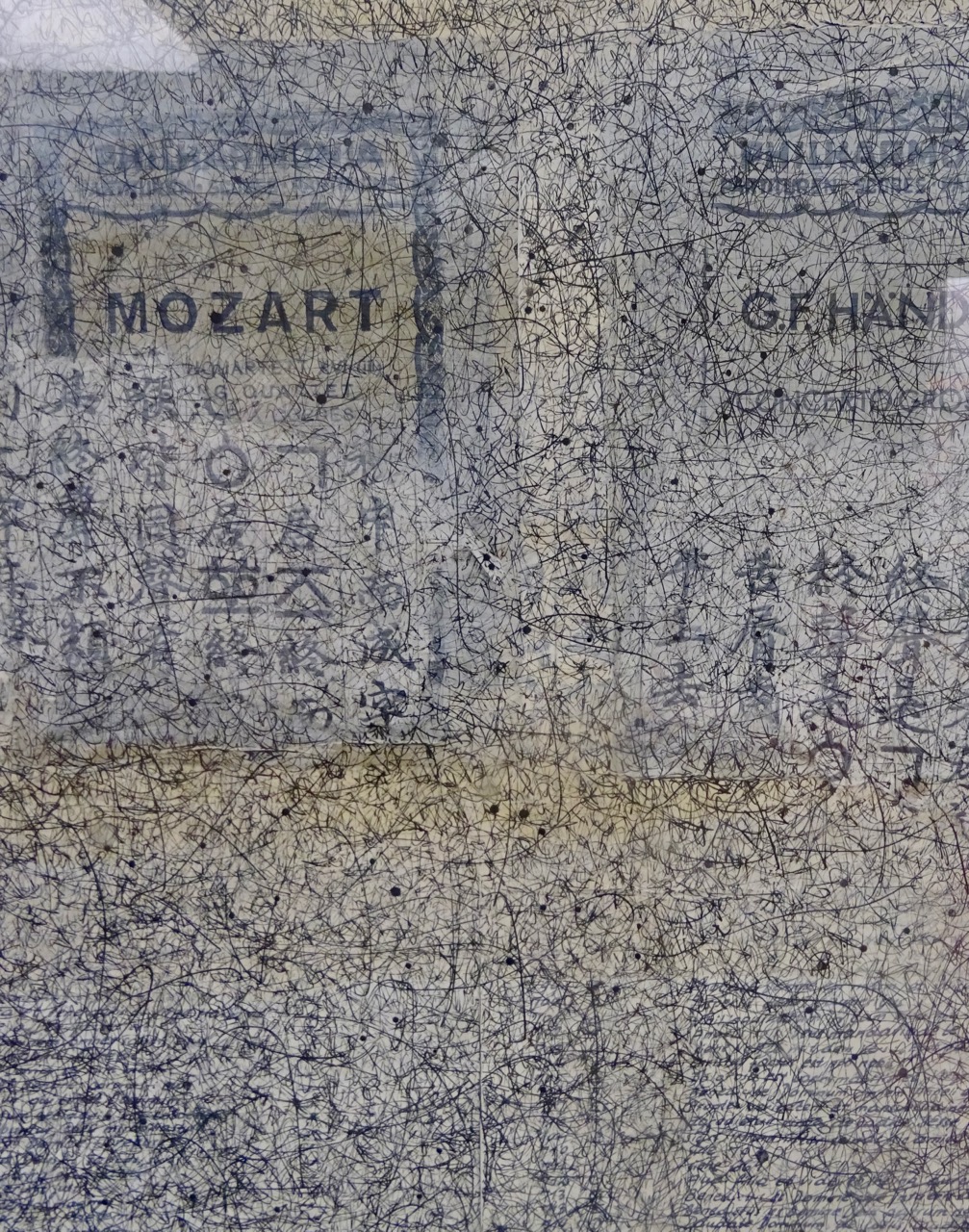
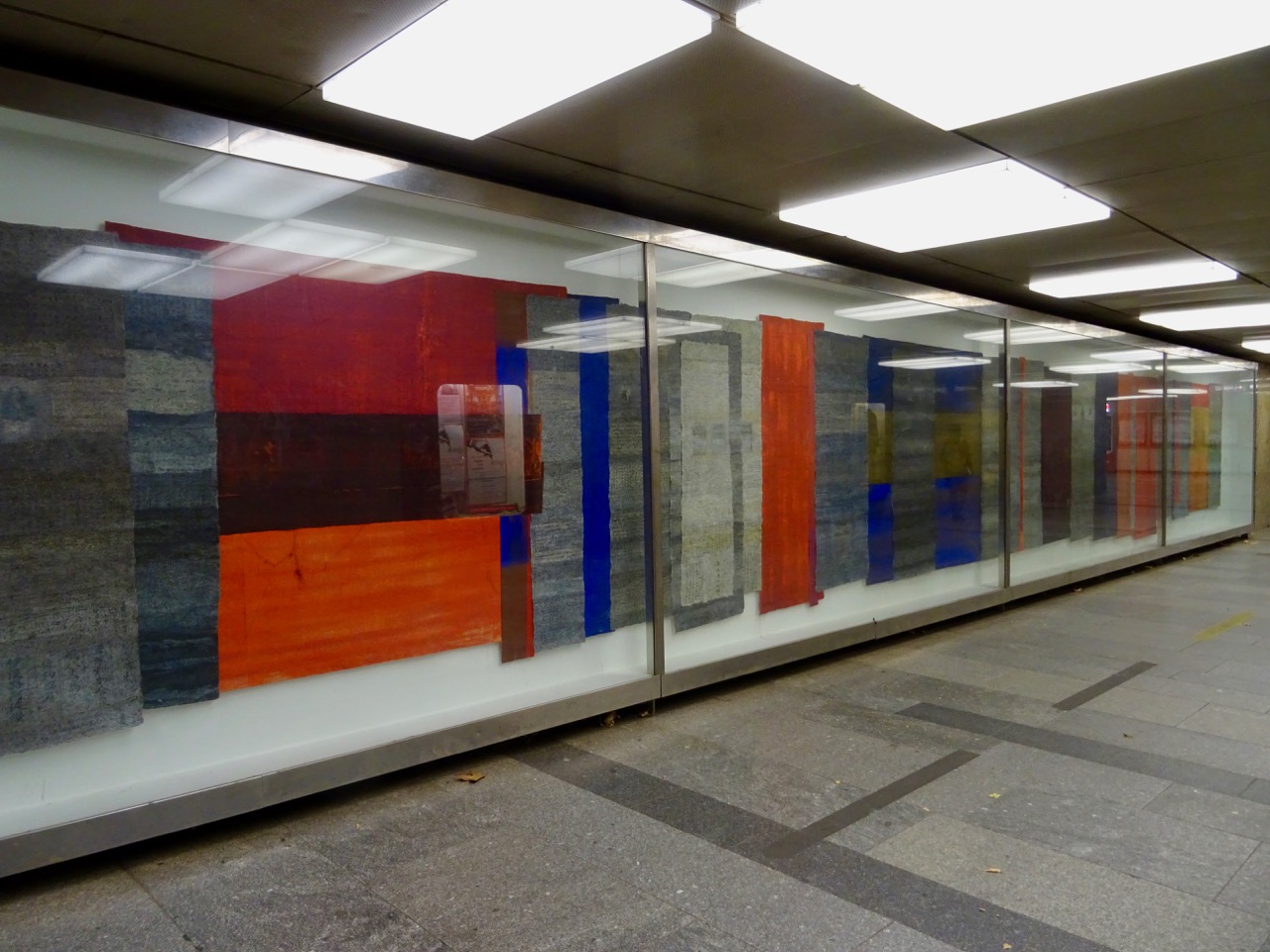 A close-up shows lots and lots of writing, musical notations and random marks.
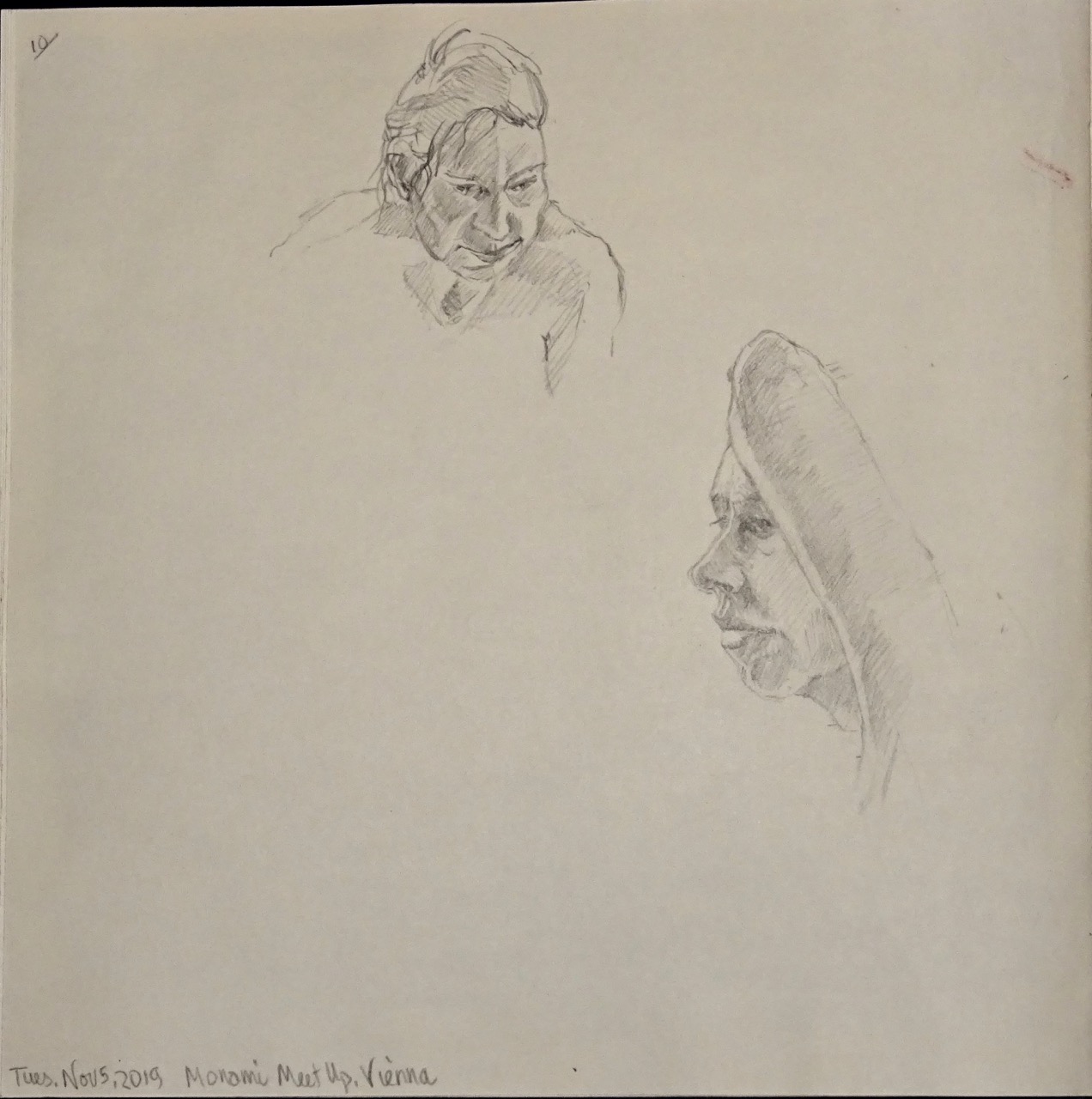
 We get home, have dinner, then I head off to a drop-in drawing session with a Meetup group at a pub called Monami.
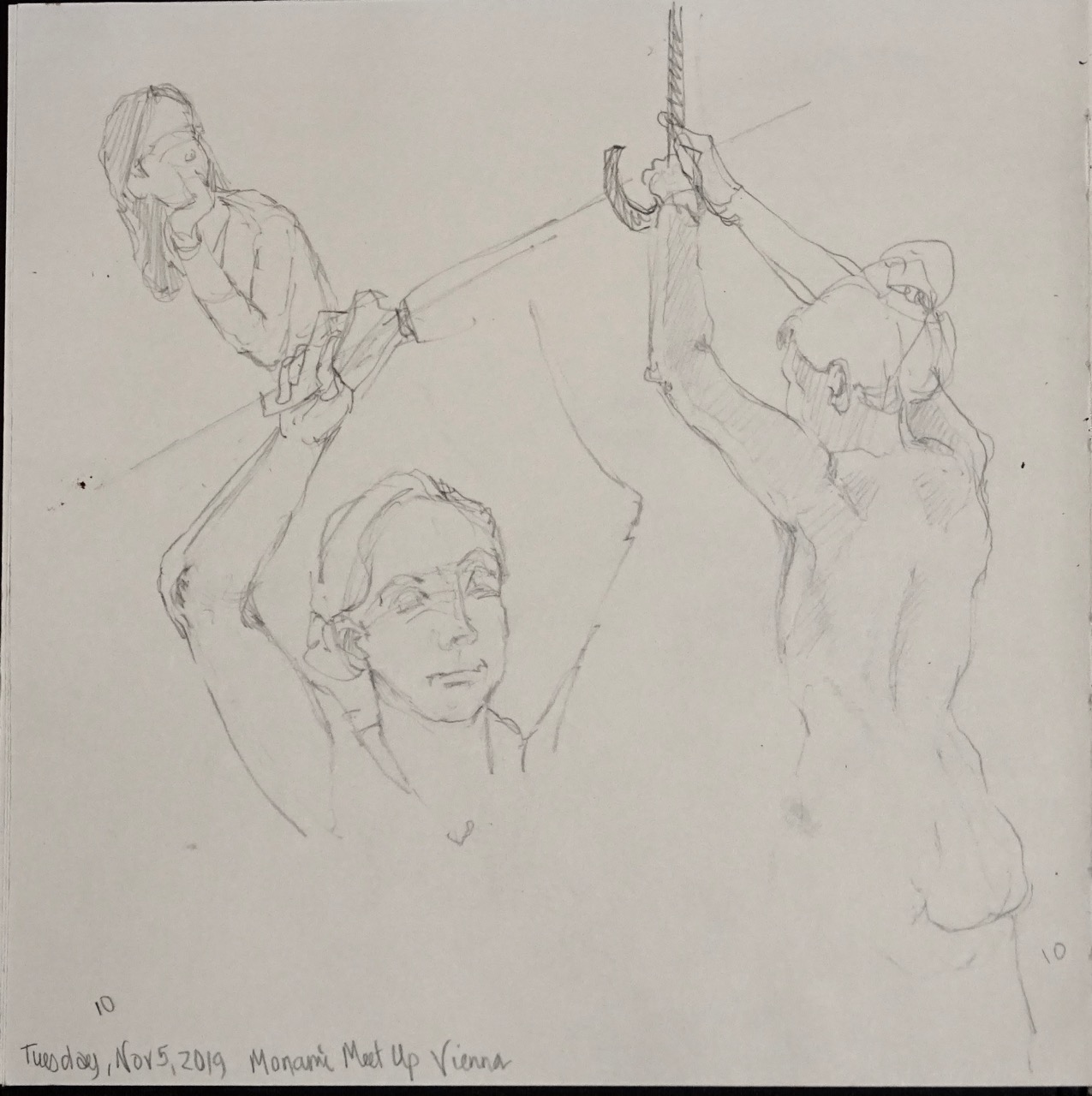 I had coloured some of the pages in my sketchbook at home before the session. Interesting to draw on but they don’t photograph very well.
 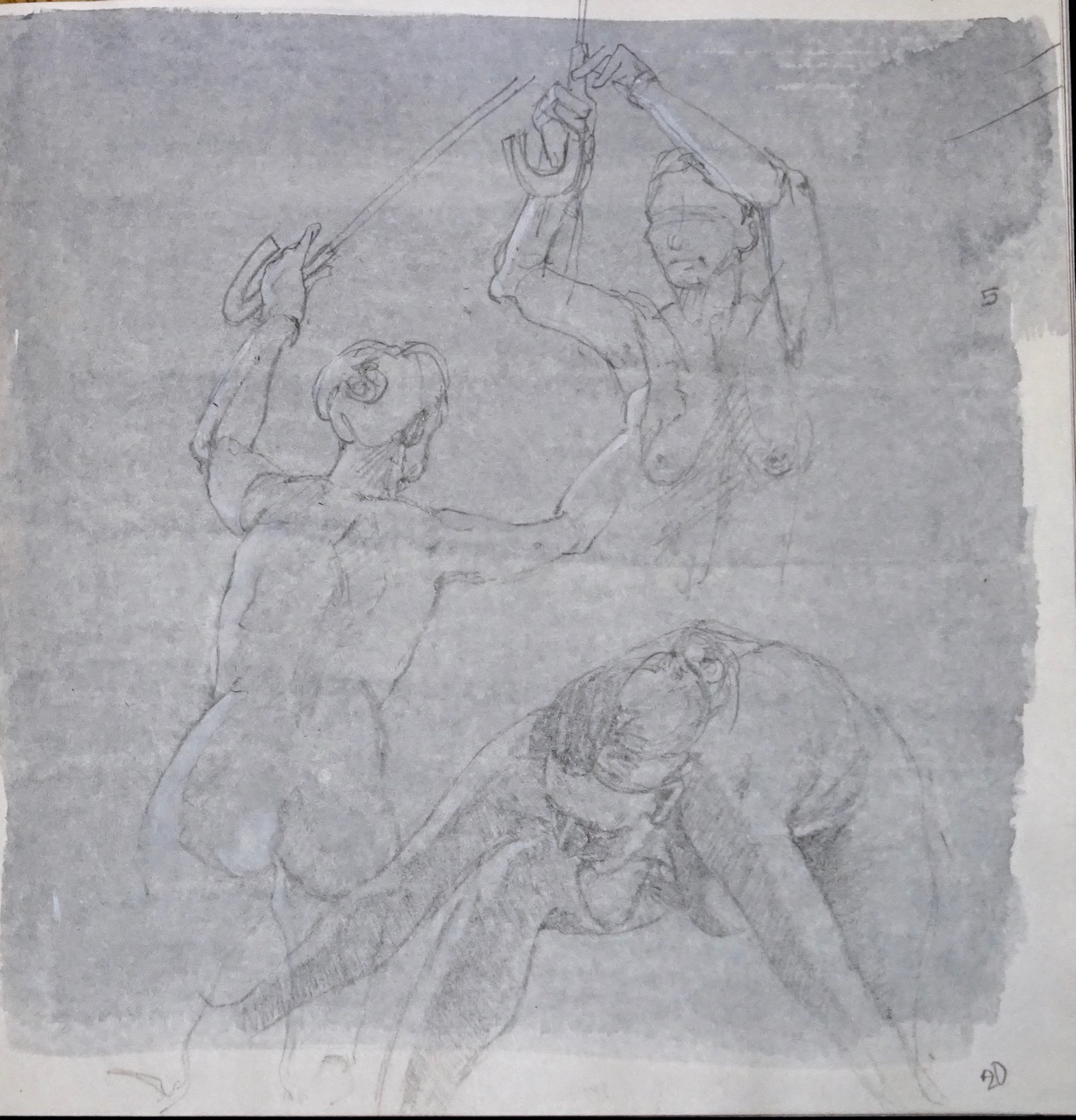 We were pretty much rubbing elbows as we drew and my views weren’t always great but it was lots of fun.
 I finished the session with a 20 minute leg study. I felt quite comfortable going out in the evening by myself. The metro is easy to navigate and there were lots of people about.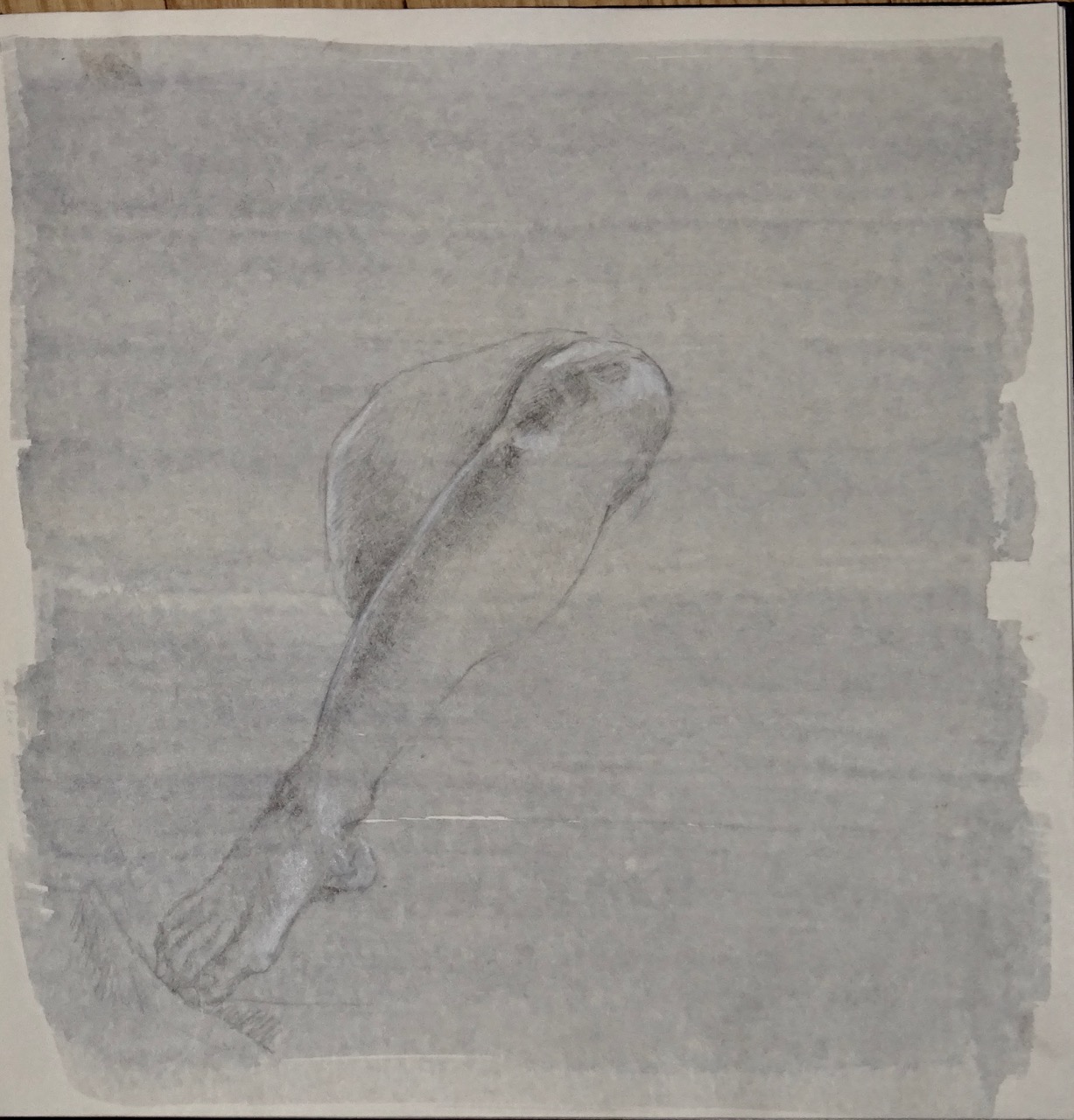
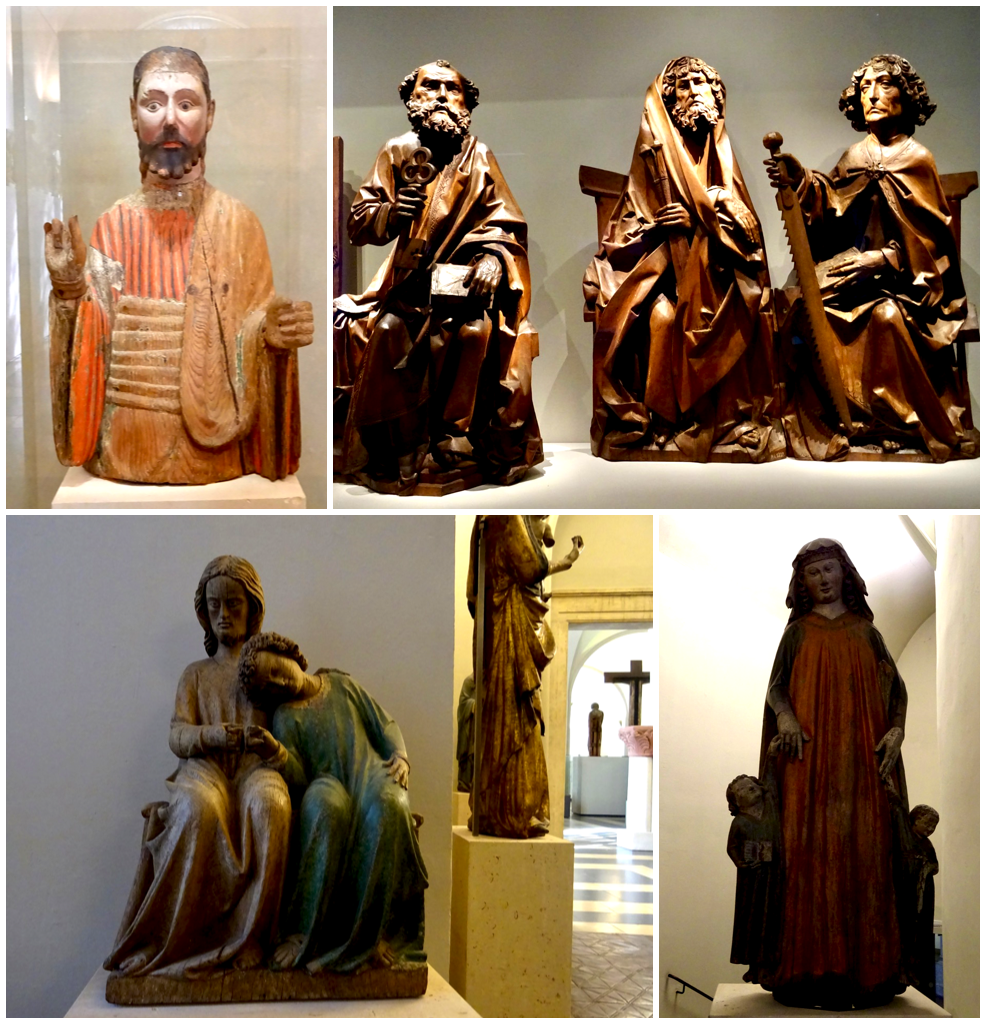
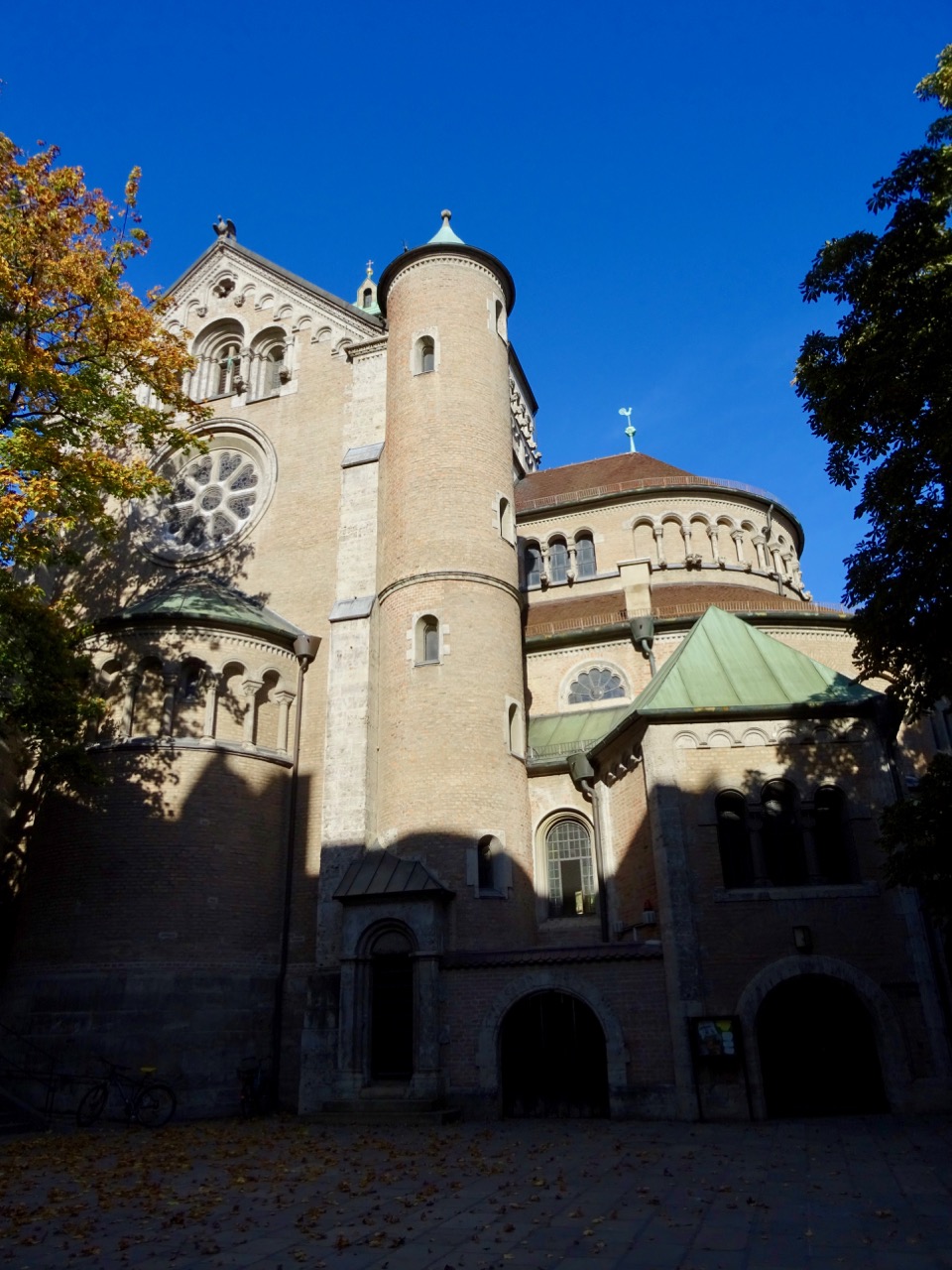 It is only one euro admission to the Bavarian National Museum on Sundays. The first rooms we enter have incredibly beautiful wooden sculptures, many of which still have their original painted colouring. The sculpture of Christ is from 1200, the Apostles are from 1505, and the woman with children is from1300. All the pieces are in amazing condition…it is hard to believe that they can be this old.
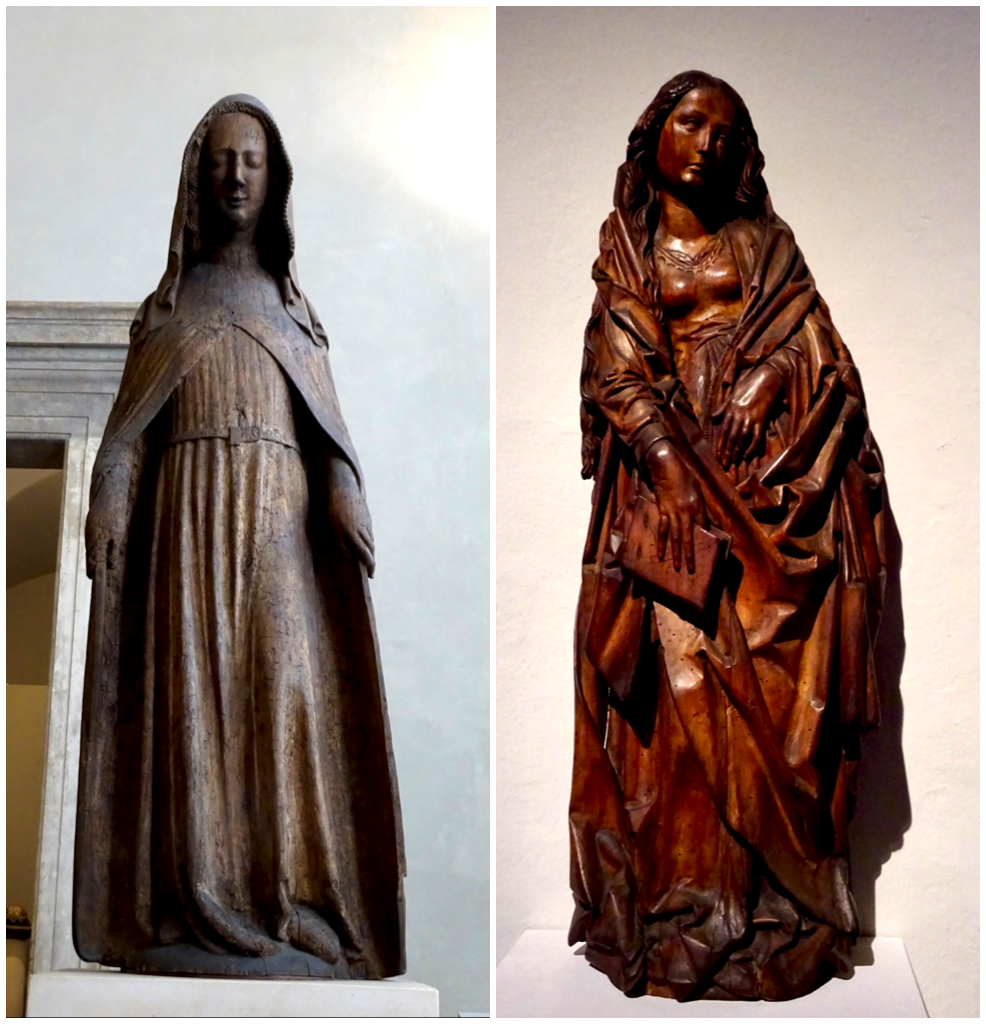
 These were two of my favourite pieces. The Mary on the left is from1300 and is larger than life size, while the second Virgin Mary is from 1500. Notice how her finger marks her place in the book she was reading when she is surprised by the angel. She is much smaller, probably about 30 ” tall. They were both exquisite.
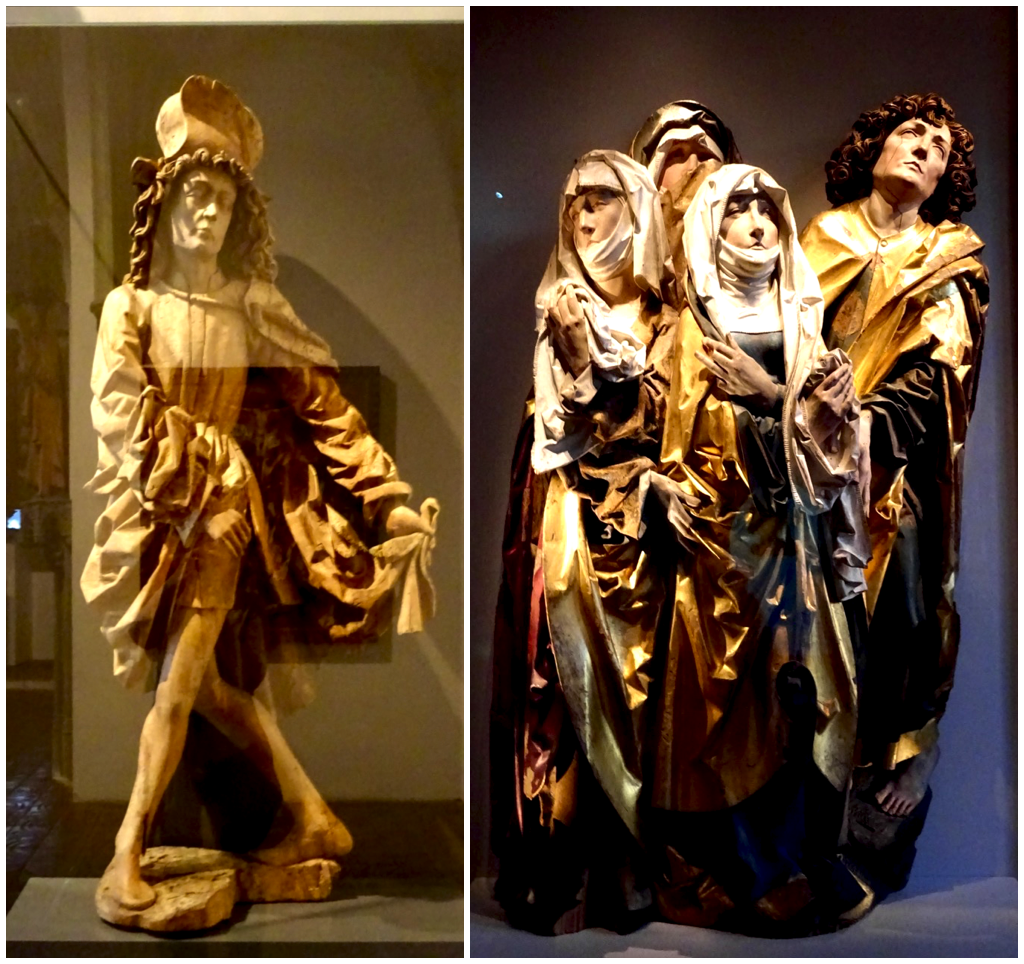
 This dancing fellow from 1490, is exceptionally animated for such an early carving. The detail of the hands and drapery in the group of figures was so beautifully done. I have a heck of a time drawing drapery, and I can’t imagine how anyone can carve it so well.
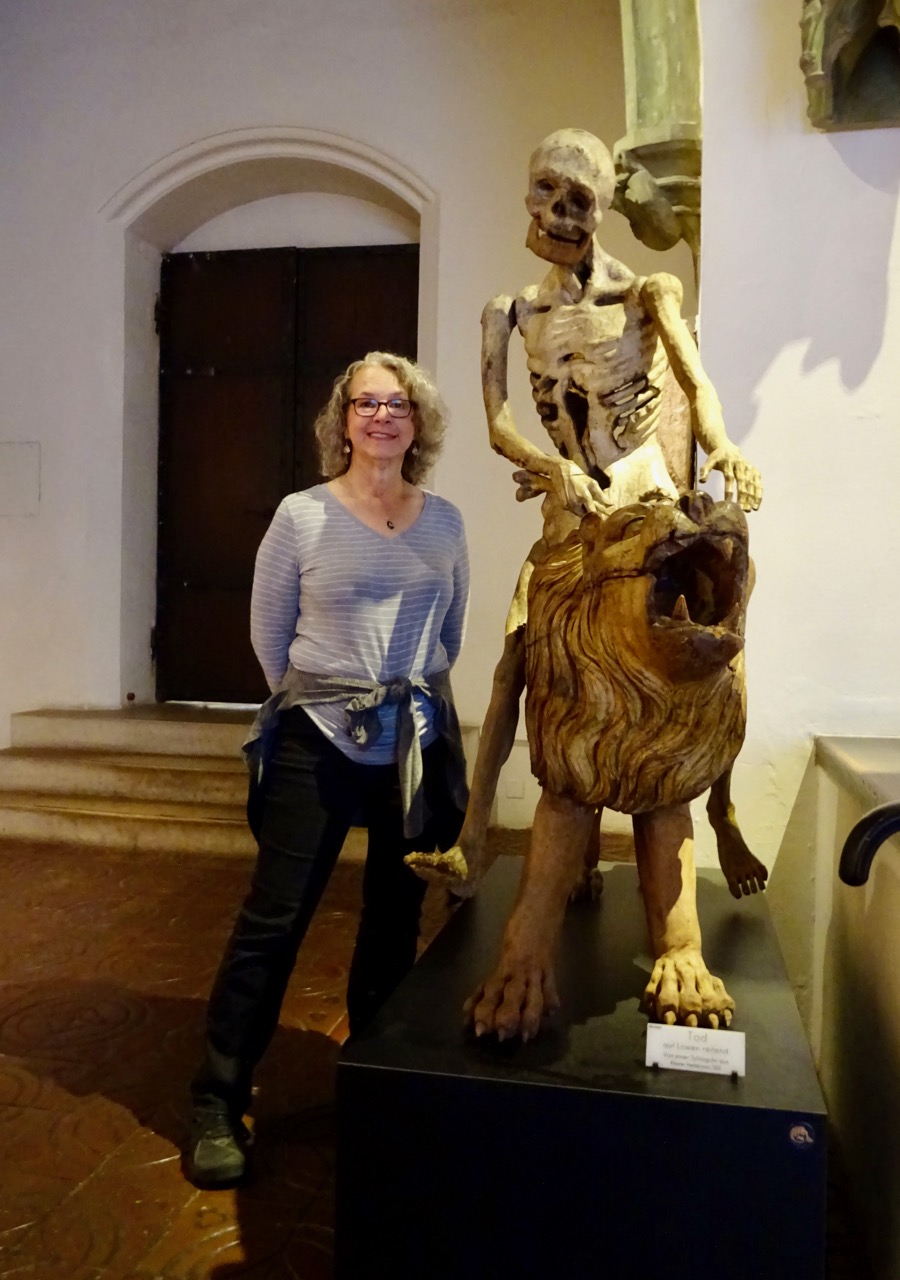
 We don’t know what this skeleton astride the lion is about but it was interesting. Unfortunately most of the signage is only in German,
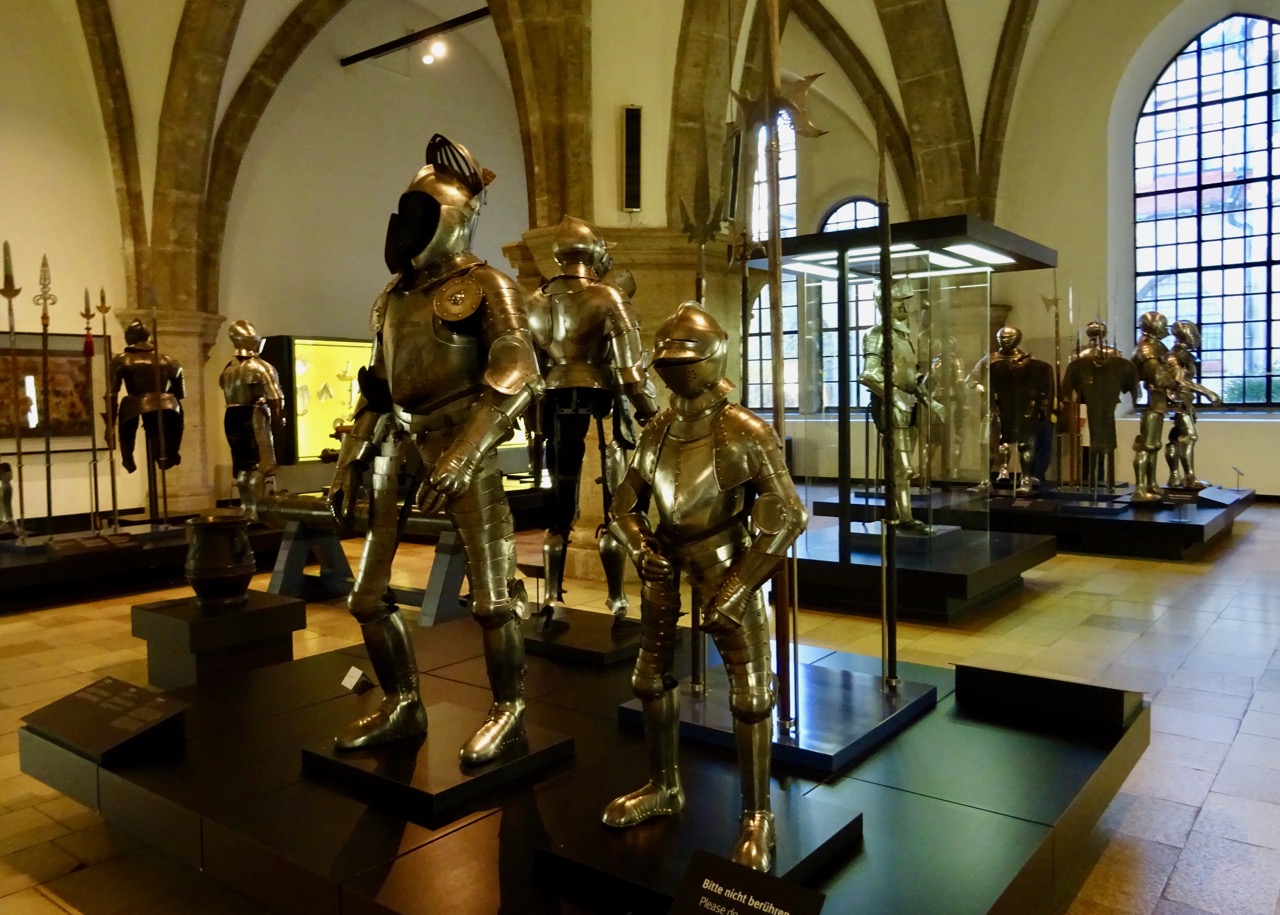
  There is a room full of armour…
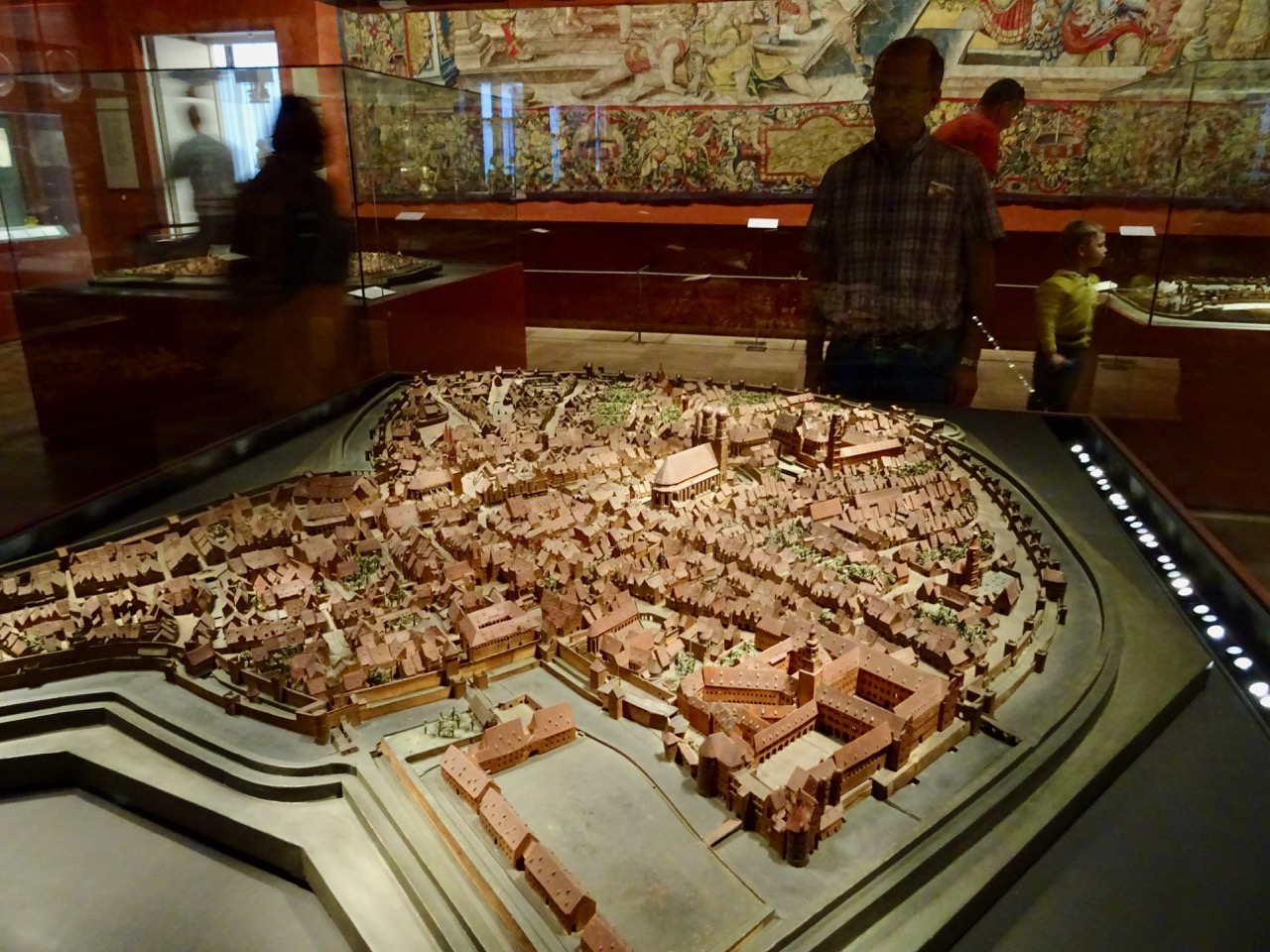
 and another room with models of many towns. This is Munich in 1580 and we are able to recognize some of the buildings that are still present in modern day Munich!
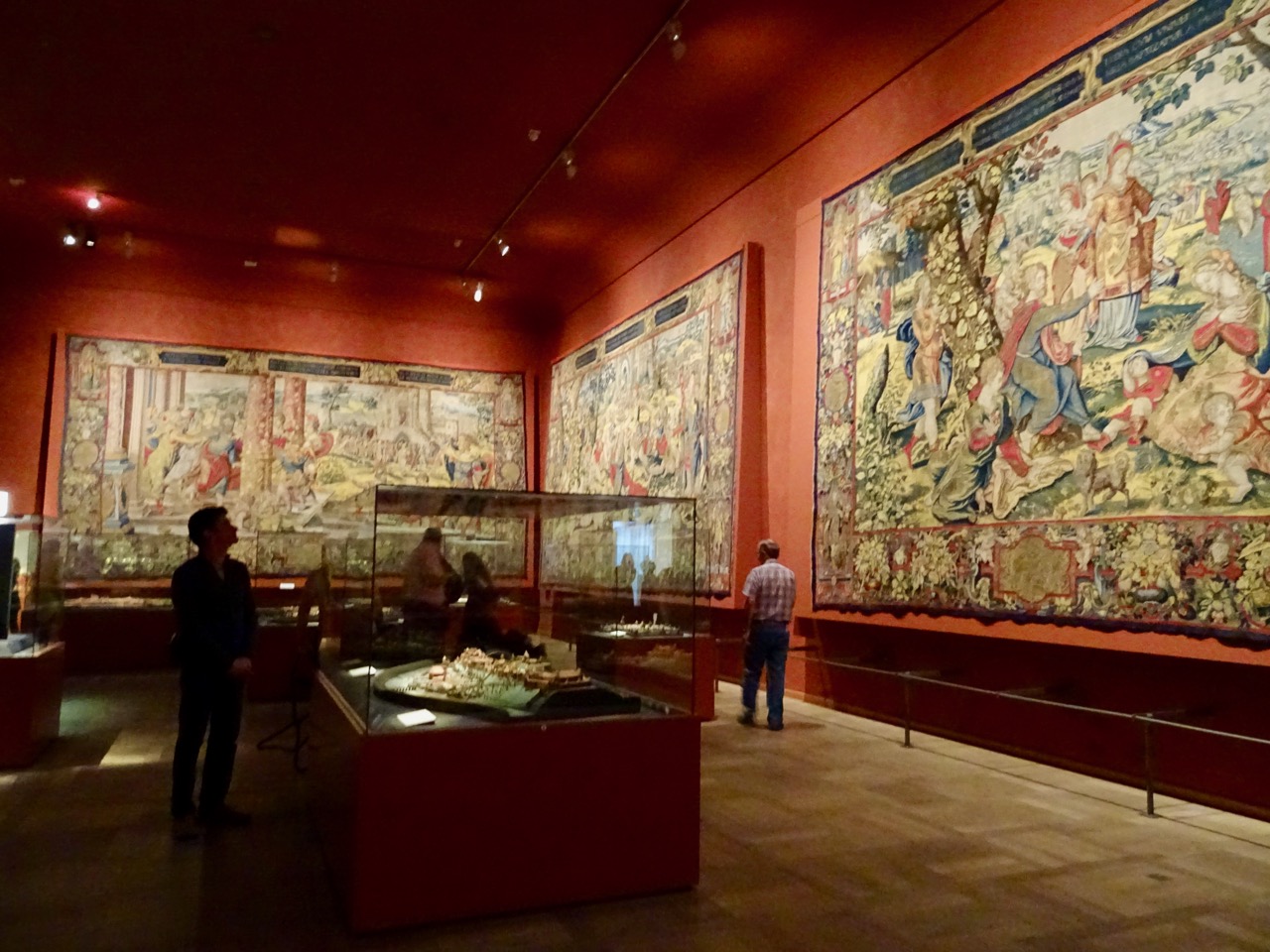
 There are enormous detailed tapestries on the wall. We are amazed at the excellent condition of these tapestries.
 This small panel from the mid 1500’s is only about 6″ tall and is made with intricately inlaid wood. It is incredibly detailed.
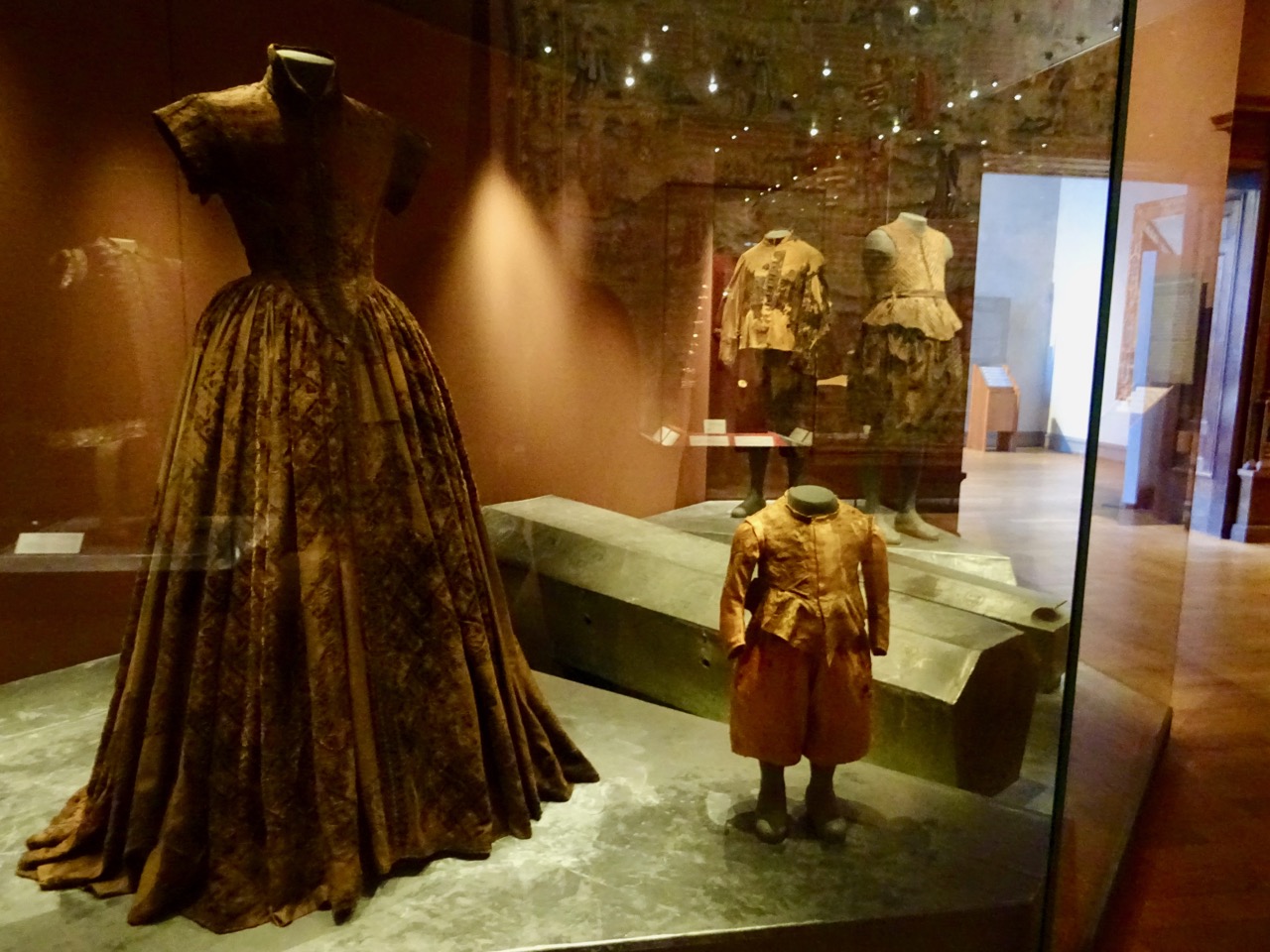
 The child’s outfit is from 1547 and the dress from 1630. I wonder how these have survived all these years. Their tiny hand sewn stitches are visible and there is some wear and tear but they are really very well preserved.
 The next room is filled with amazing cabinets. I love boxes and cabinets with lots of drawers, and I have never seen anything like these. The coin cabinet of Maximillian I was made for his collection of gold coins. Each of the rows is a shallow drawer with fitted spaces for the coins. It is made of ivory, lapis lazuli, silver and enamel, so of course it must have its own storage case! The case on the right hinges open in the middle so the cabinet can be inserted for safe keeping.
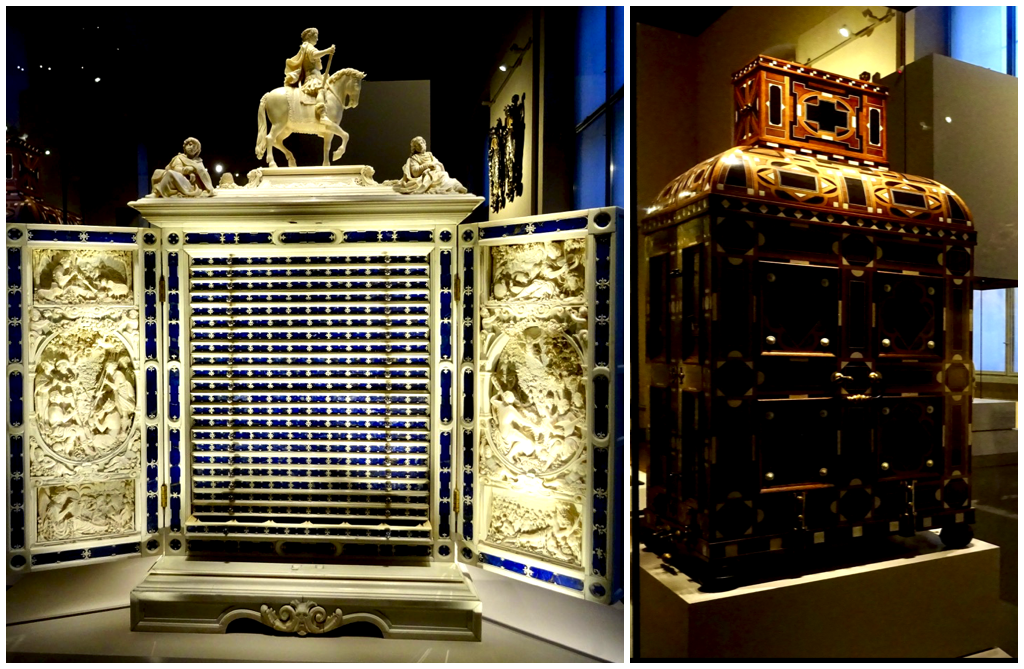 This cabinet was built for the Electress Maria Ana. The ivory cabinet is gorgeous with lapis lazuli panels, but then I walk around to the other side and it is even more beautiful, with silver and enamelling. This cabinet has 176 drawers and secret compartments for storing precious objects! Wow!
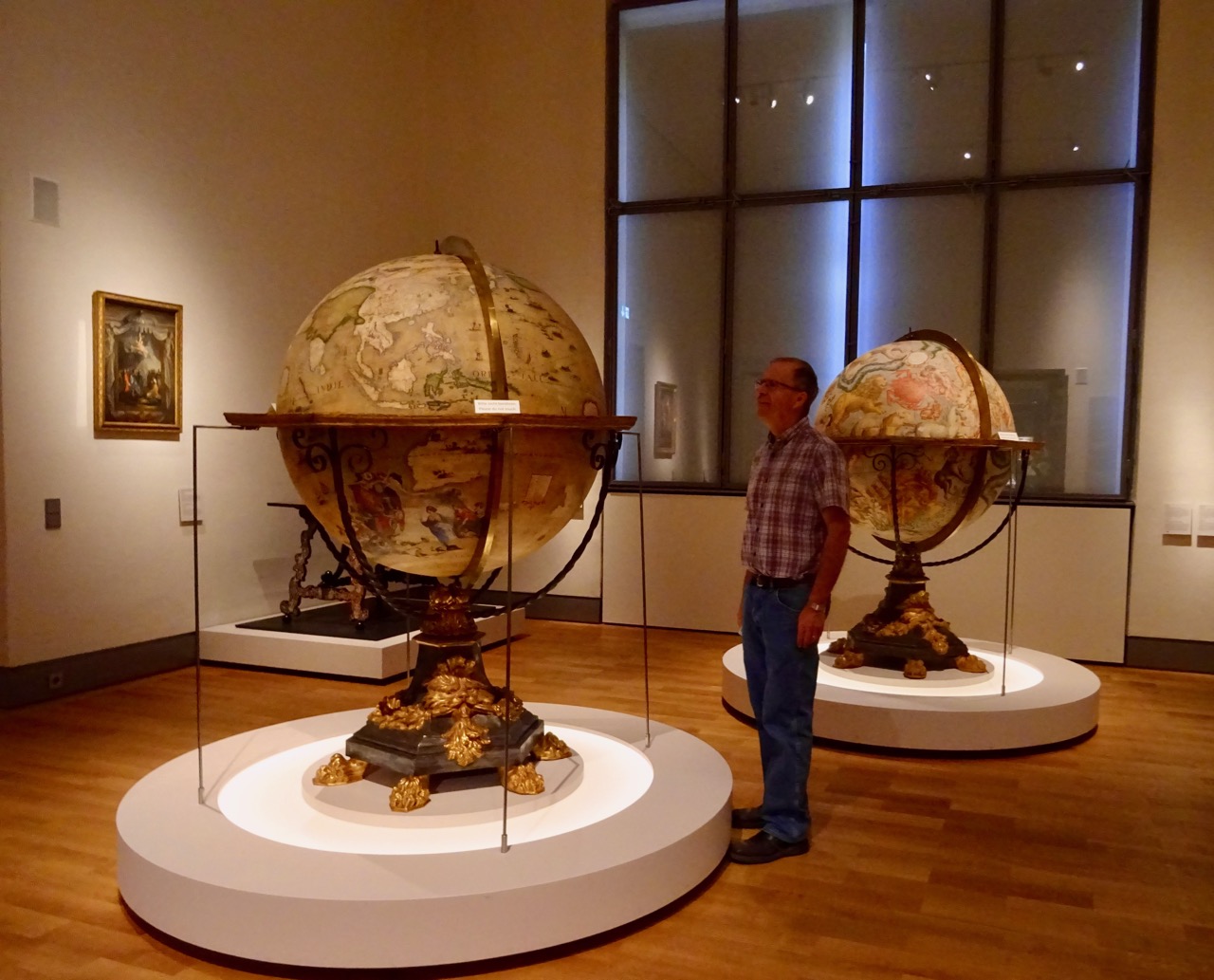
 These huge globes were interesting..
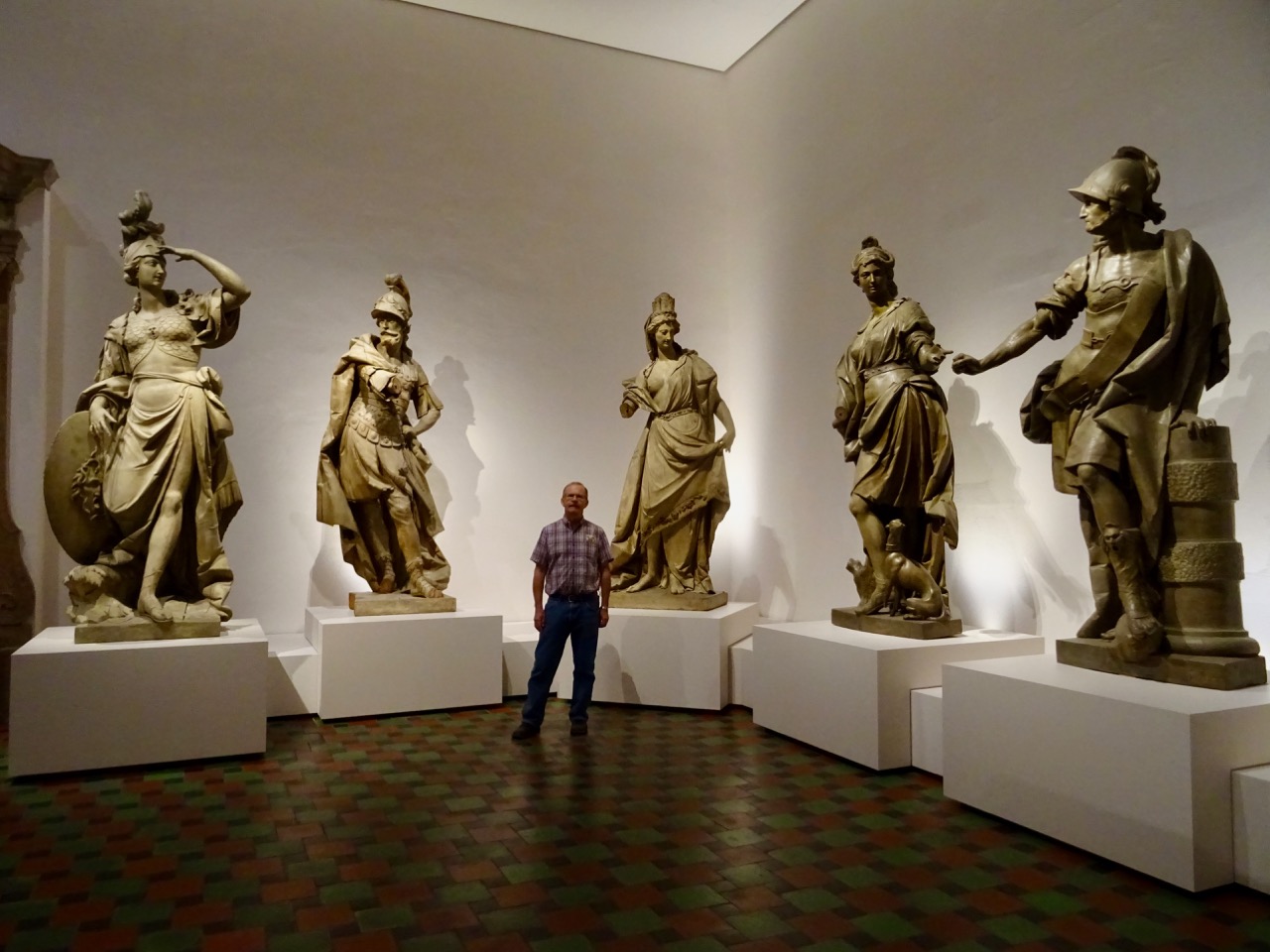
 and then we walked into the next room with these monumental wooden figures!
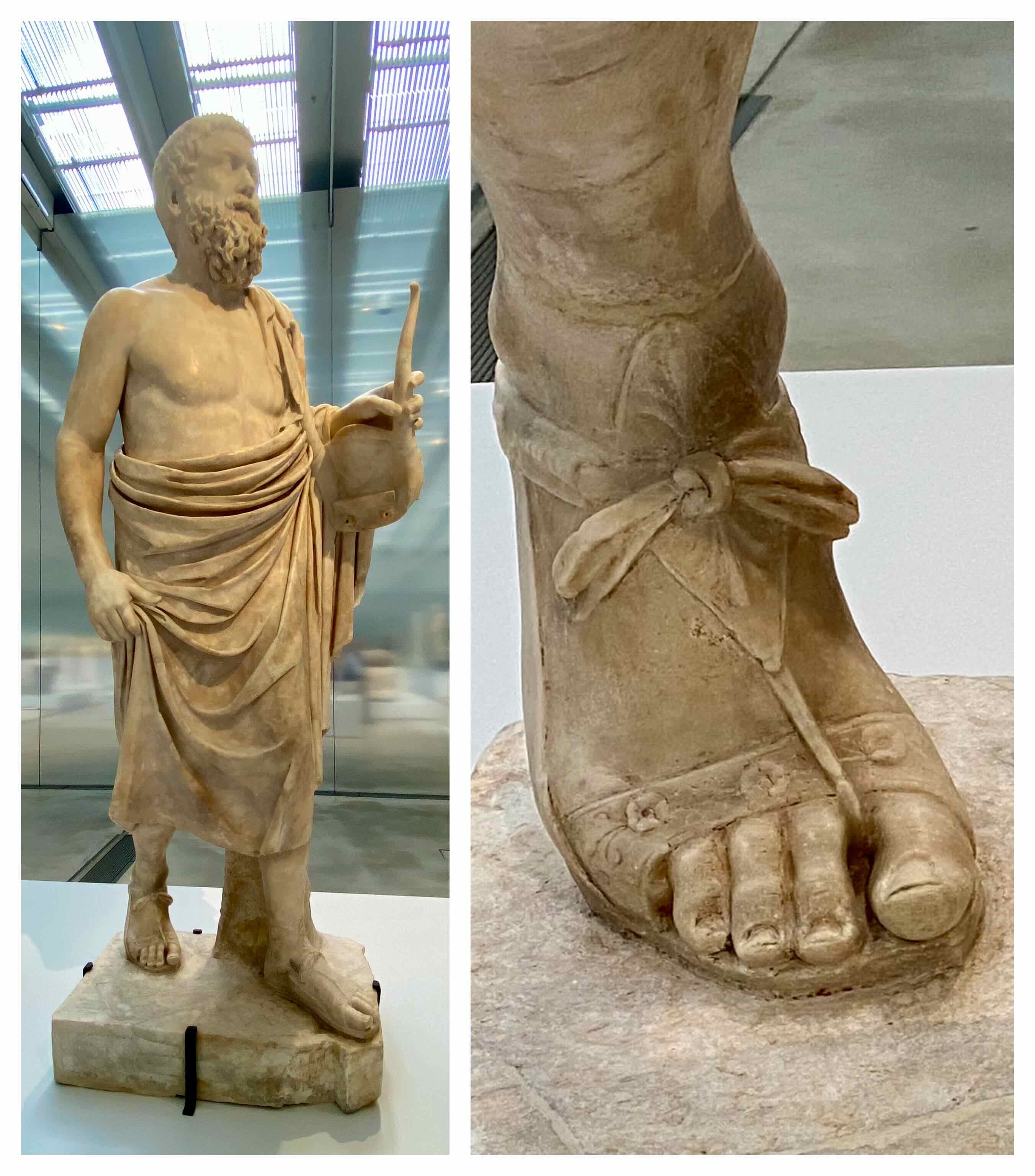
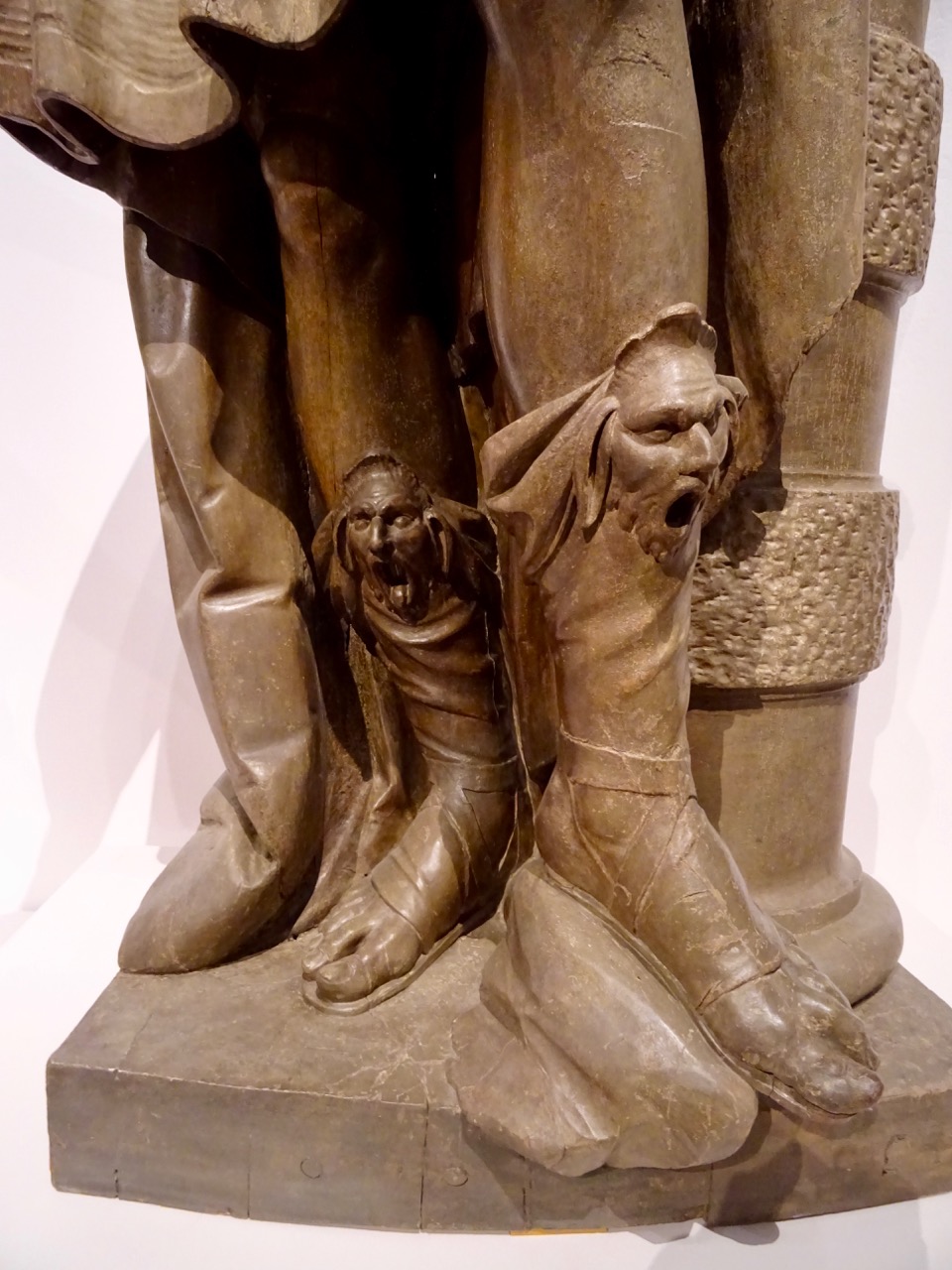
 Don’t you love the faces on these sandals?
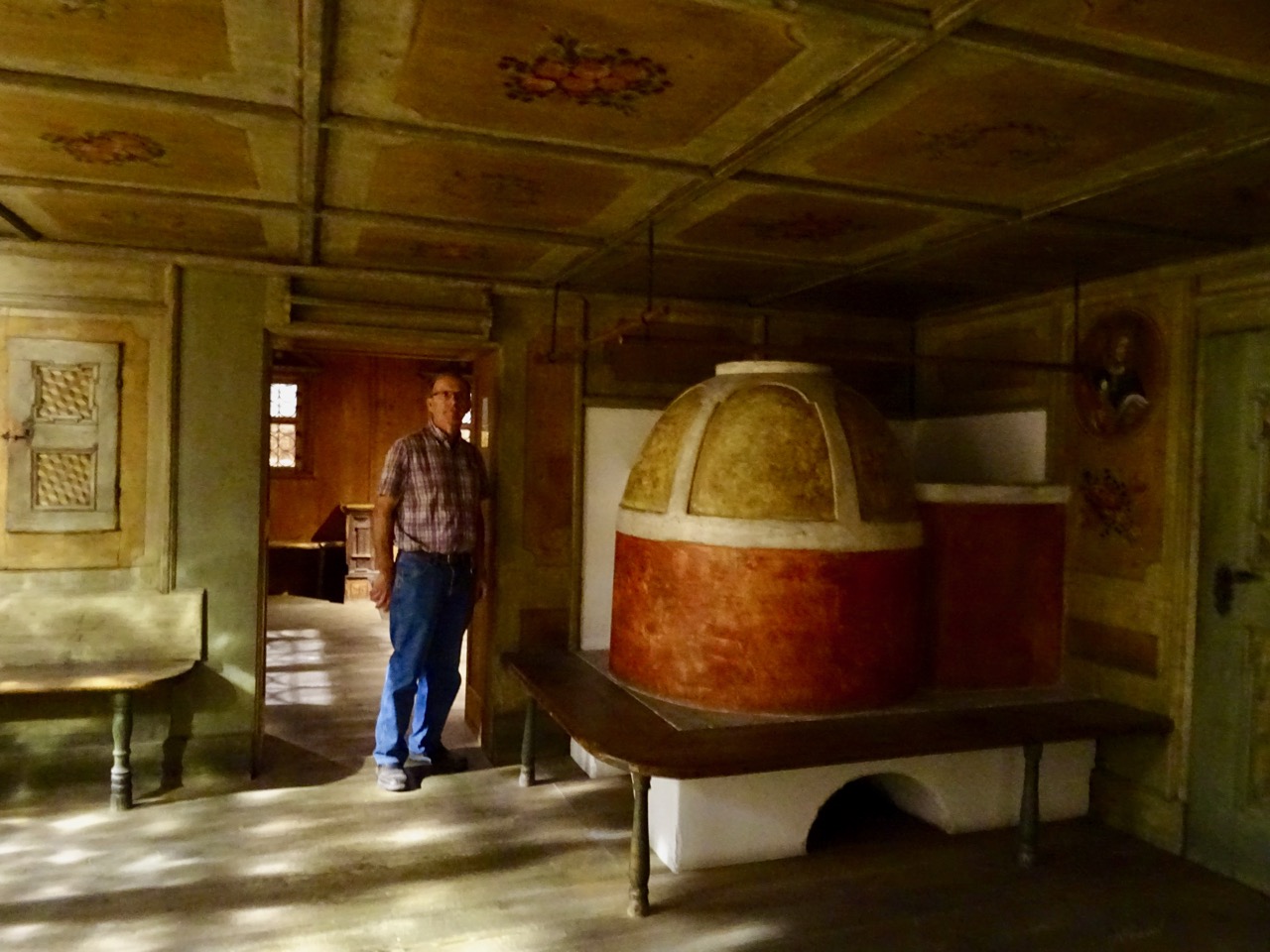
 Downstairs there are several rooms that appear to be taverns. We aren’t sure, because all the signage here is German. I think the domed object in the corner is a stove to heat the room.
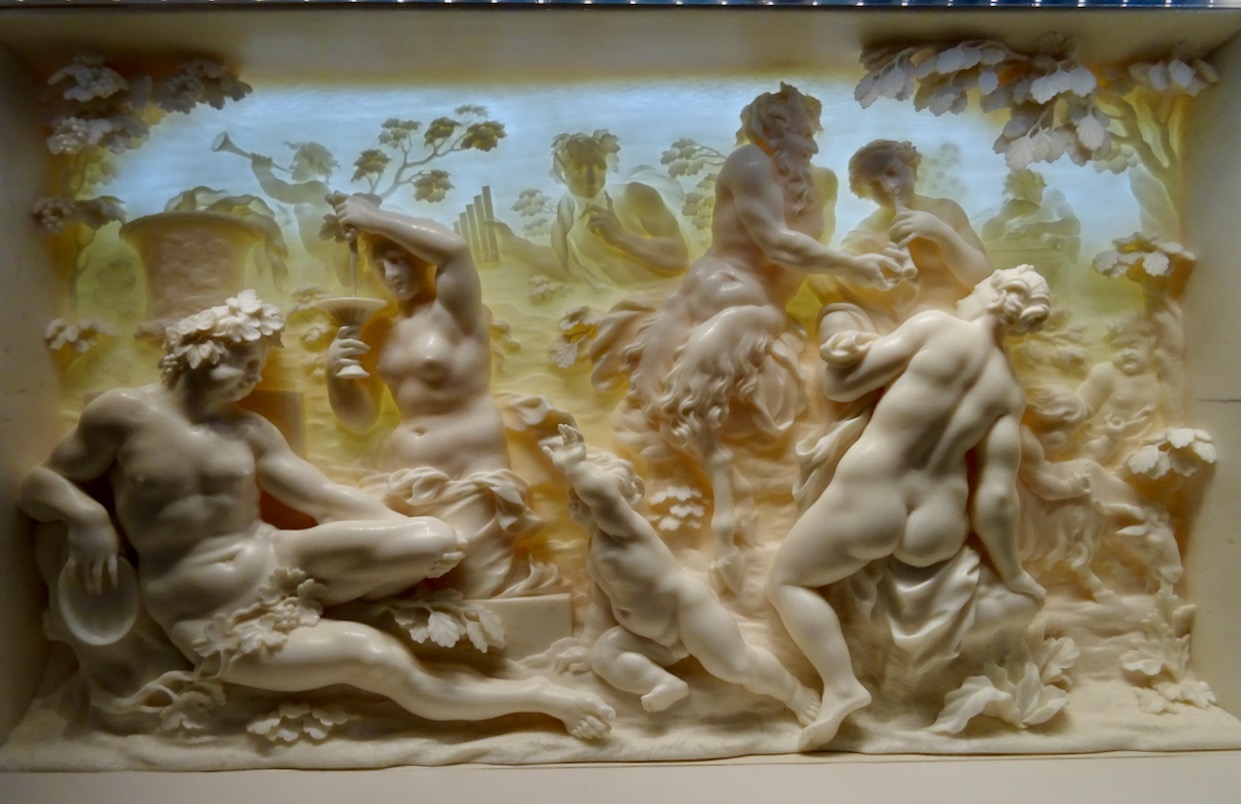
 Back upstairs, there is gallery of about 1,000 ivory objects and I wonder how many elephants died so these could be created? This ivory carving was one of fifty or so. The background sky is so thin that the light shines through it.
 The Rape of Proserpina on the left is carved in ivory, and the porcelain centrepiece on the right depicts Neptune being drawn by seahorse and tritons. They were both completed in the mid 1700’s.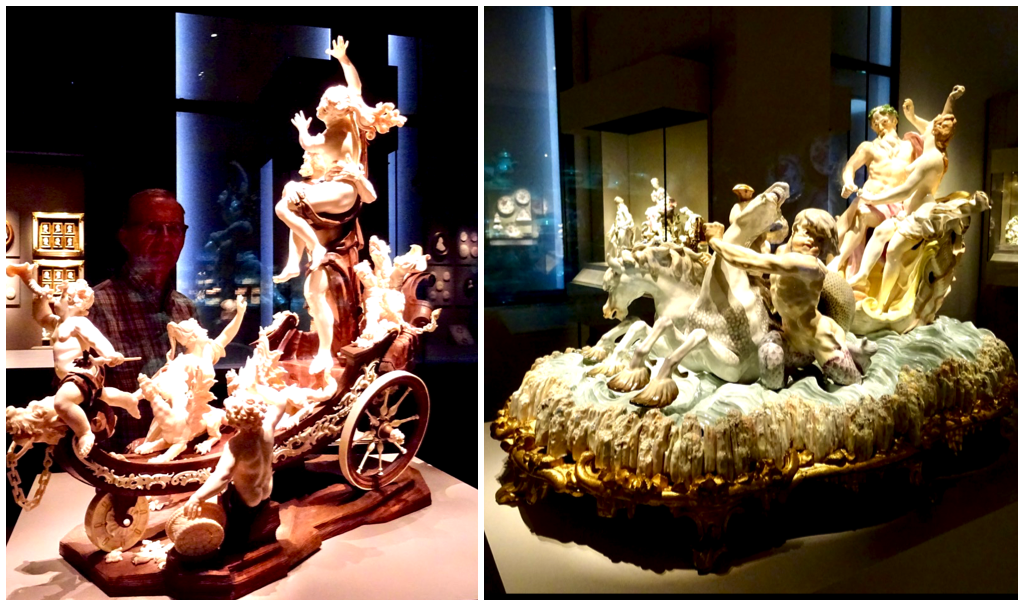
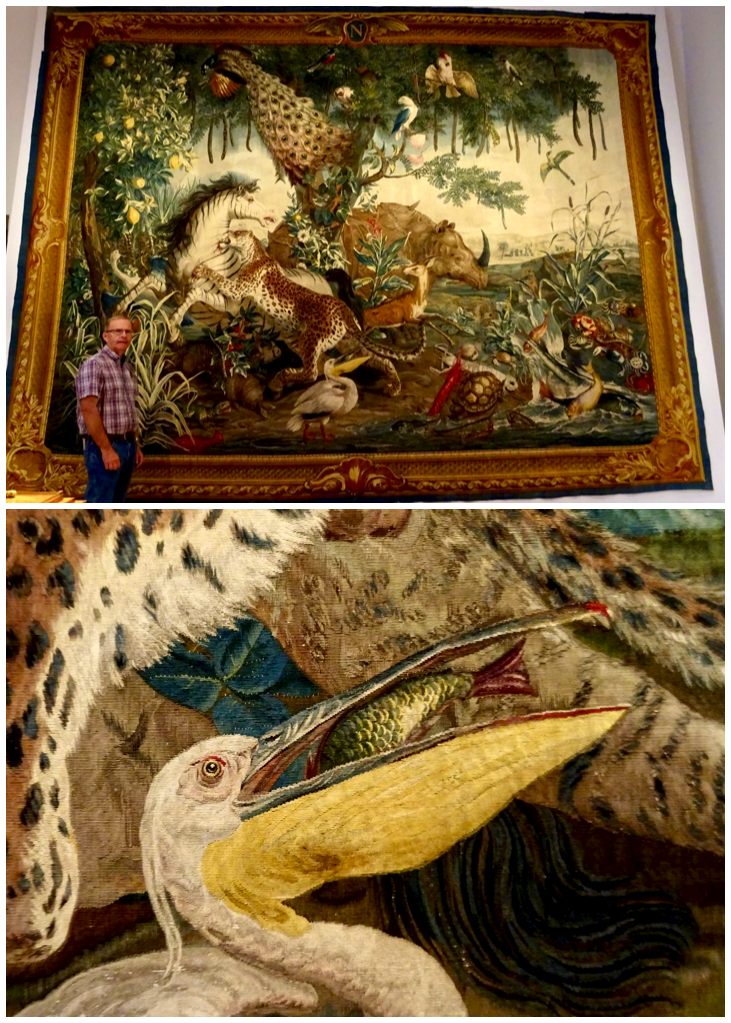
 I thought this tapestry was particularly colourful and beautiful. Notice the details in the close up of the pelican.
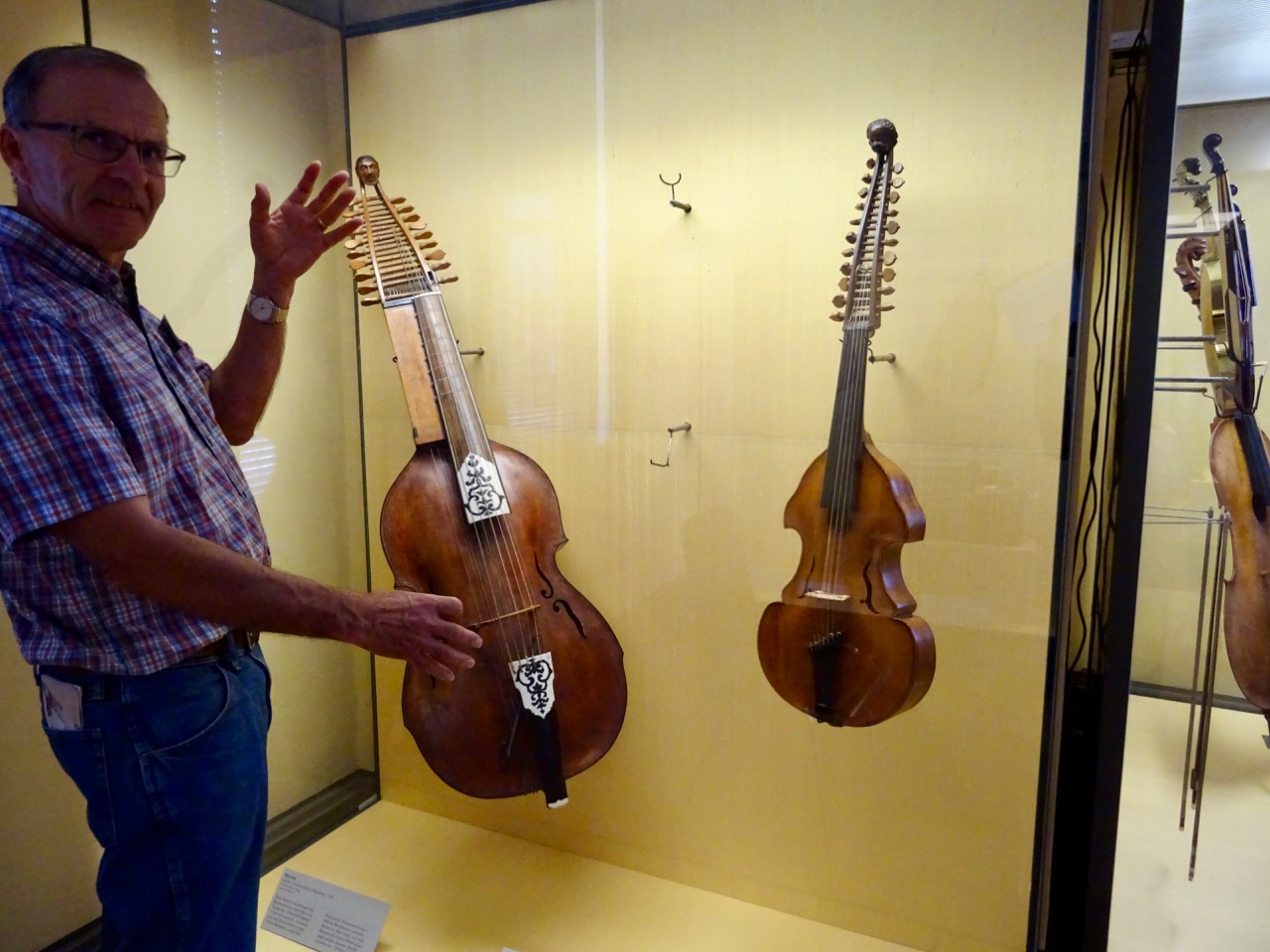
 Some of the musical instruments on display are rather strange. Bob is wondering how to play the double layer of 19 strings on this one…
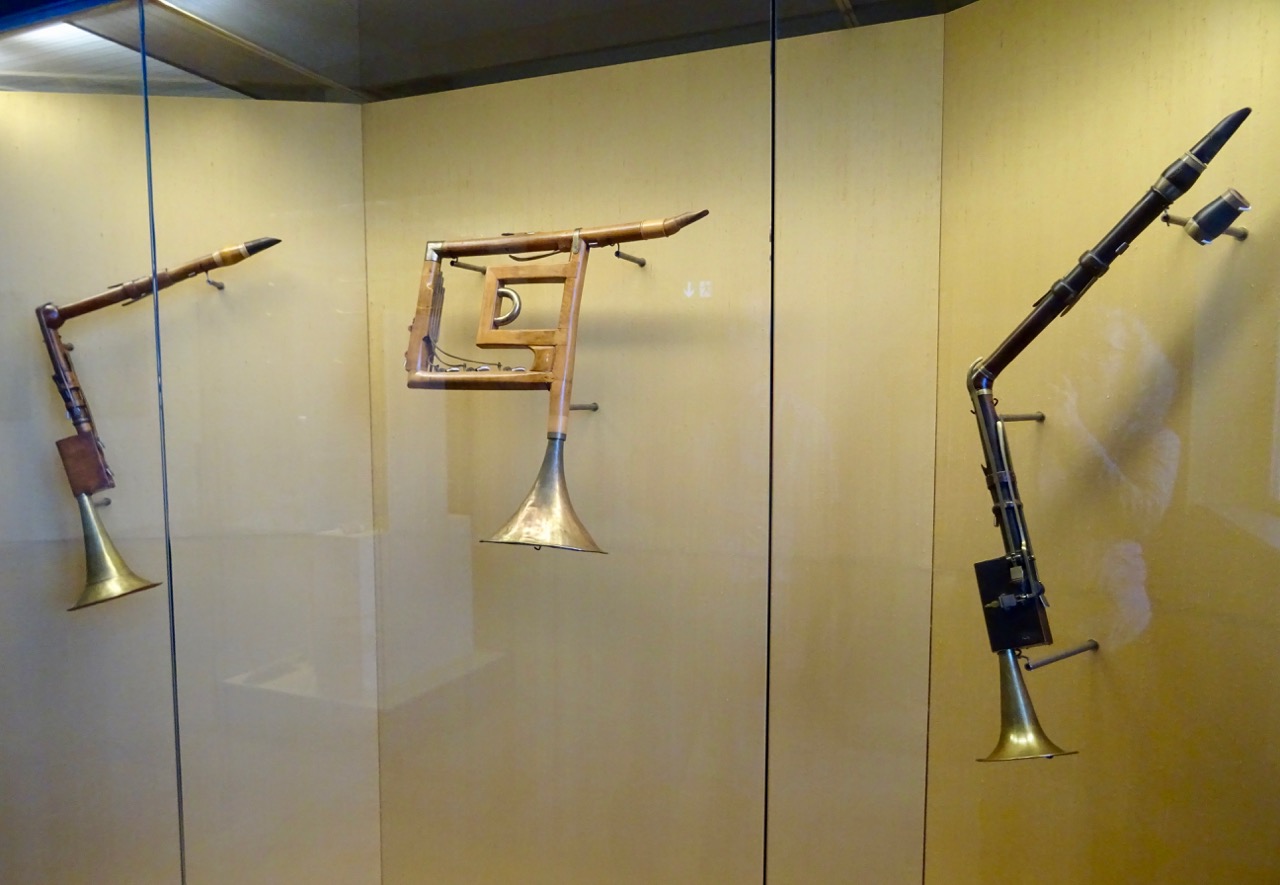
  and check out the crazy wind instruments.
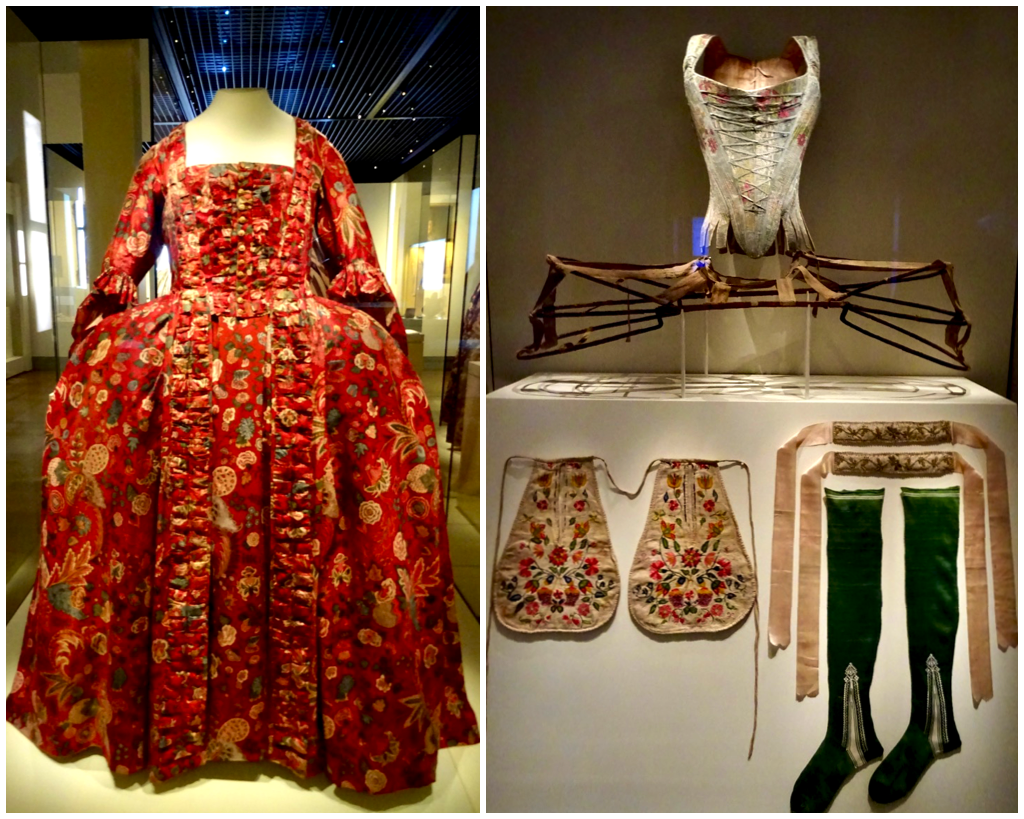
 There is a wonderful display of clothing from the mid 18th century. Even the pet monkey had stylish togs.
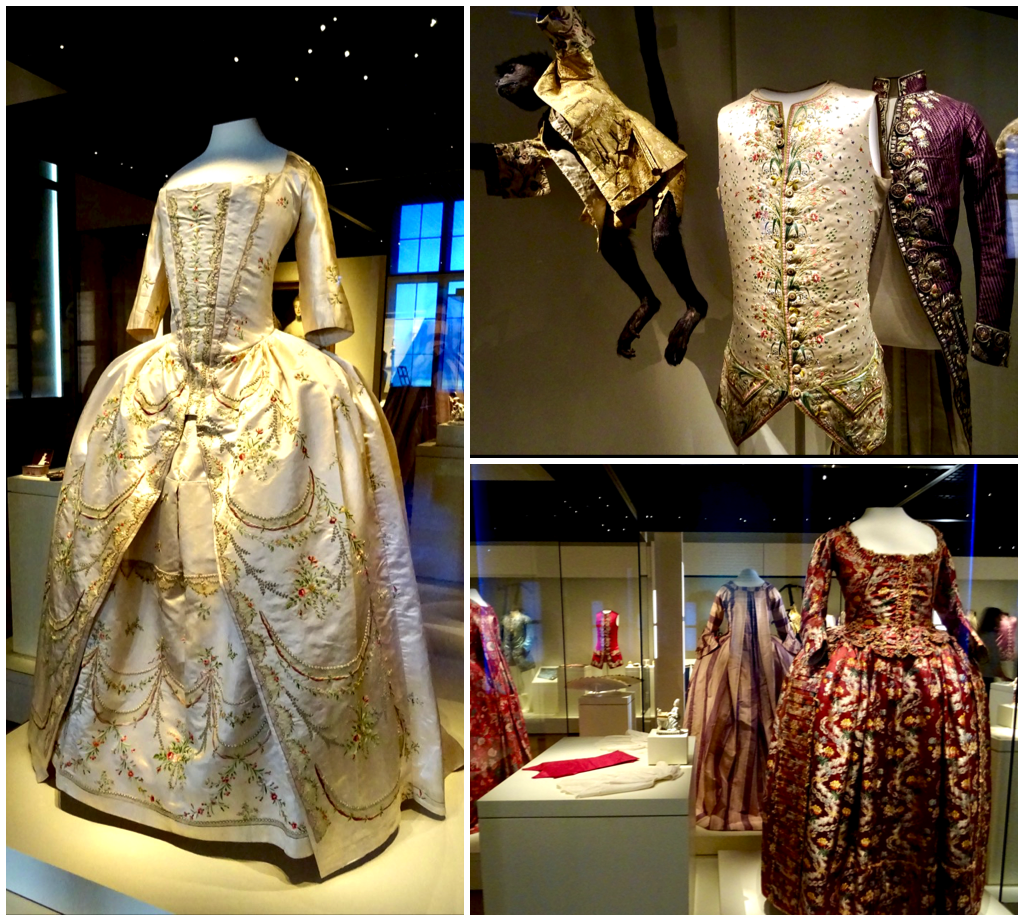 But take a look at the undergarments women wore!
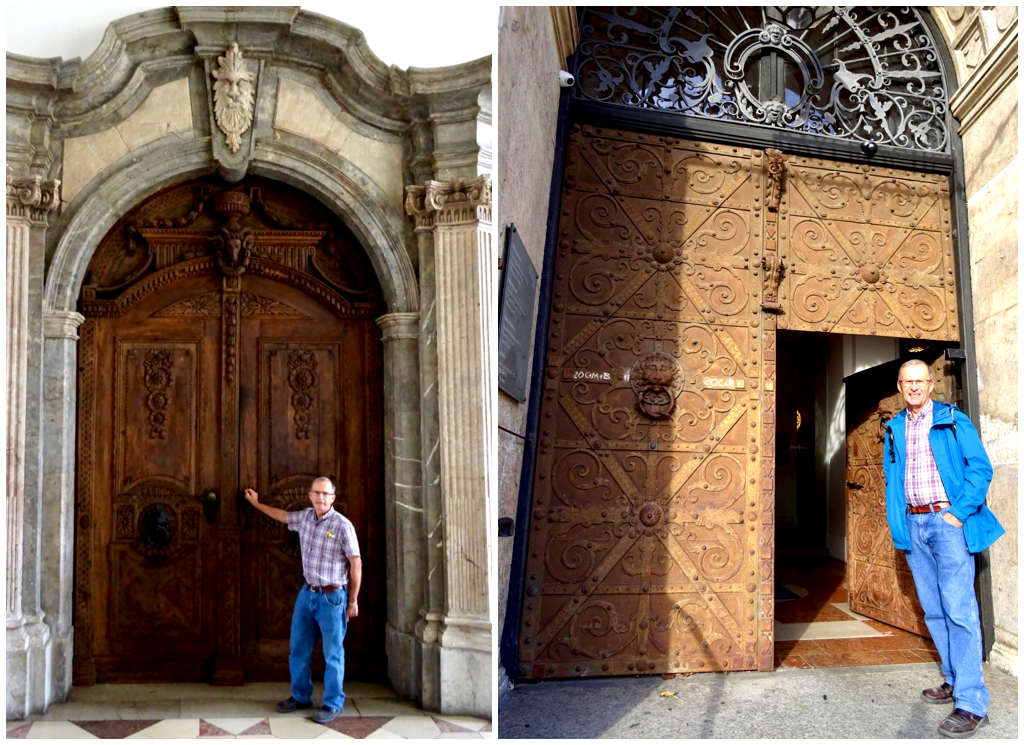
  I love doors and this museum has many. The front door opens automatically when we approach. Seems weird for such an ancient door.
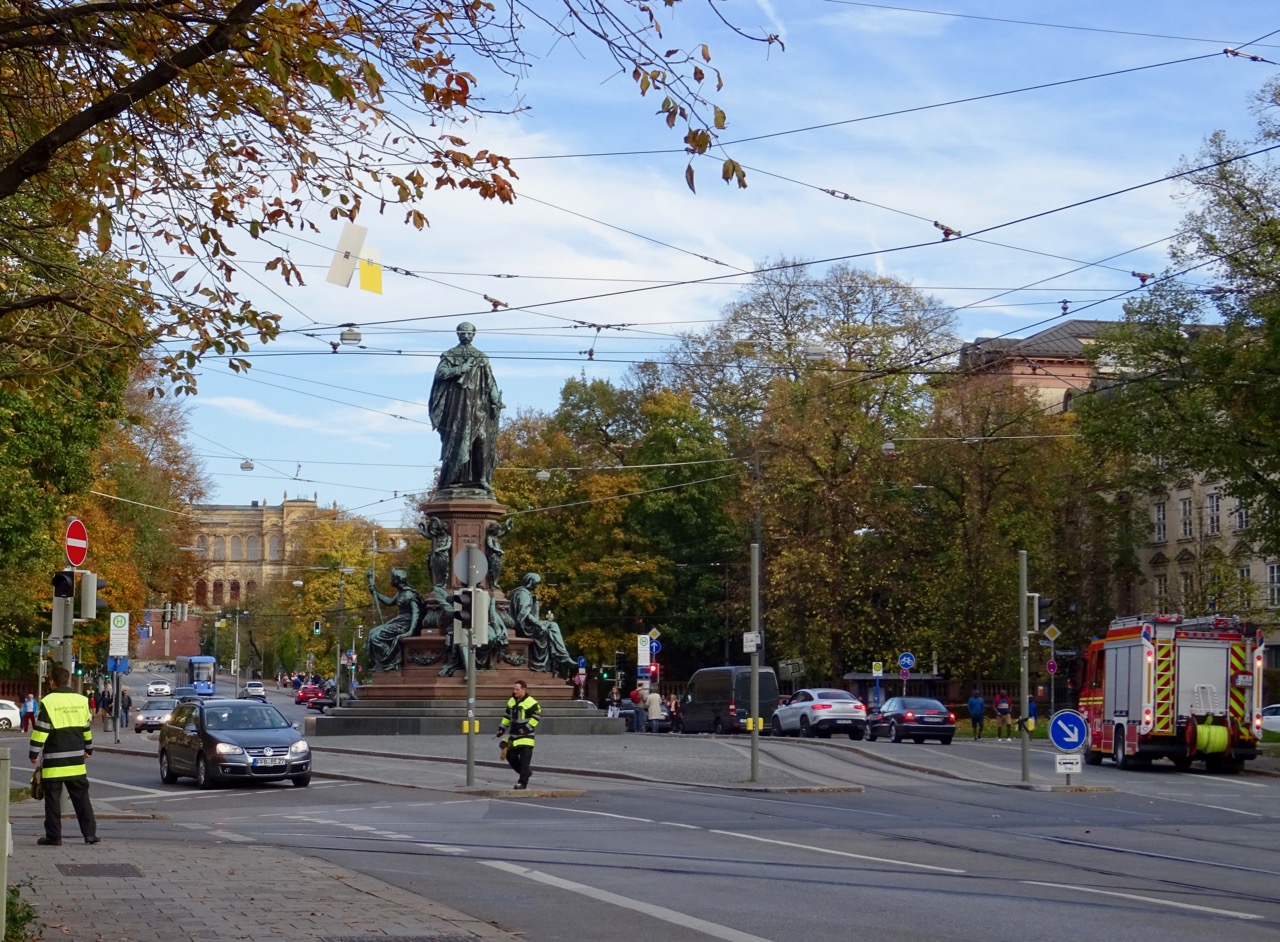
 We walk along the river on our way to Maximillianstrasse, where all the fancy expensive shops are located.
 On the way, a firetruck pulls up and the firemen check behind bushes and in garbage cans, then drive away. We wonder what they are looking for.
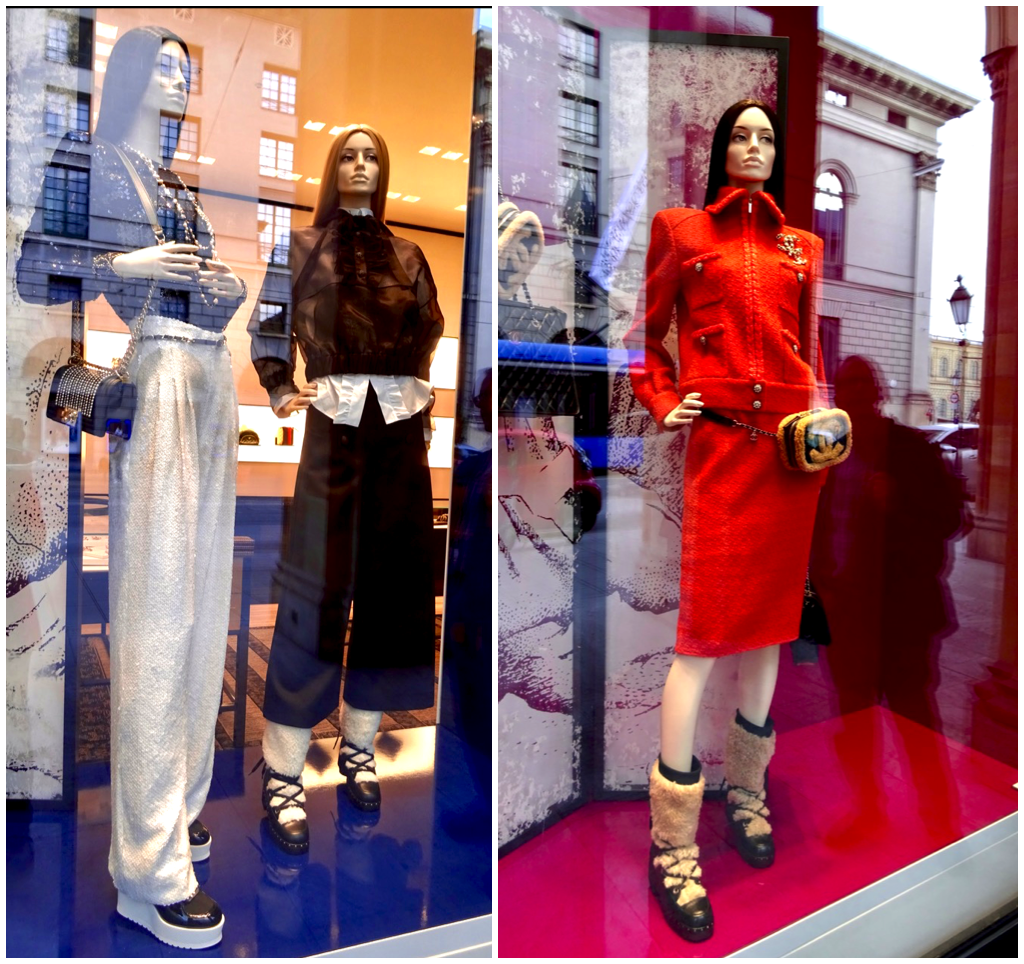
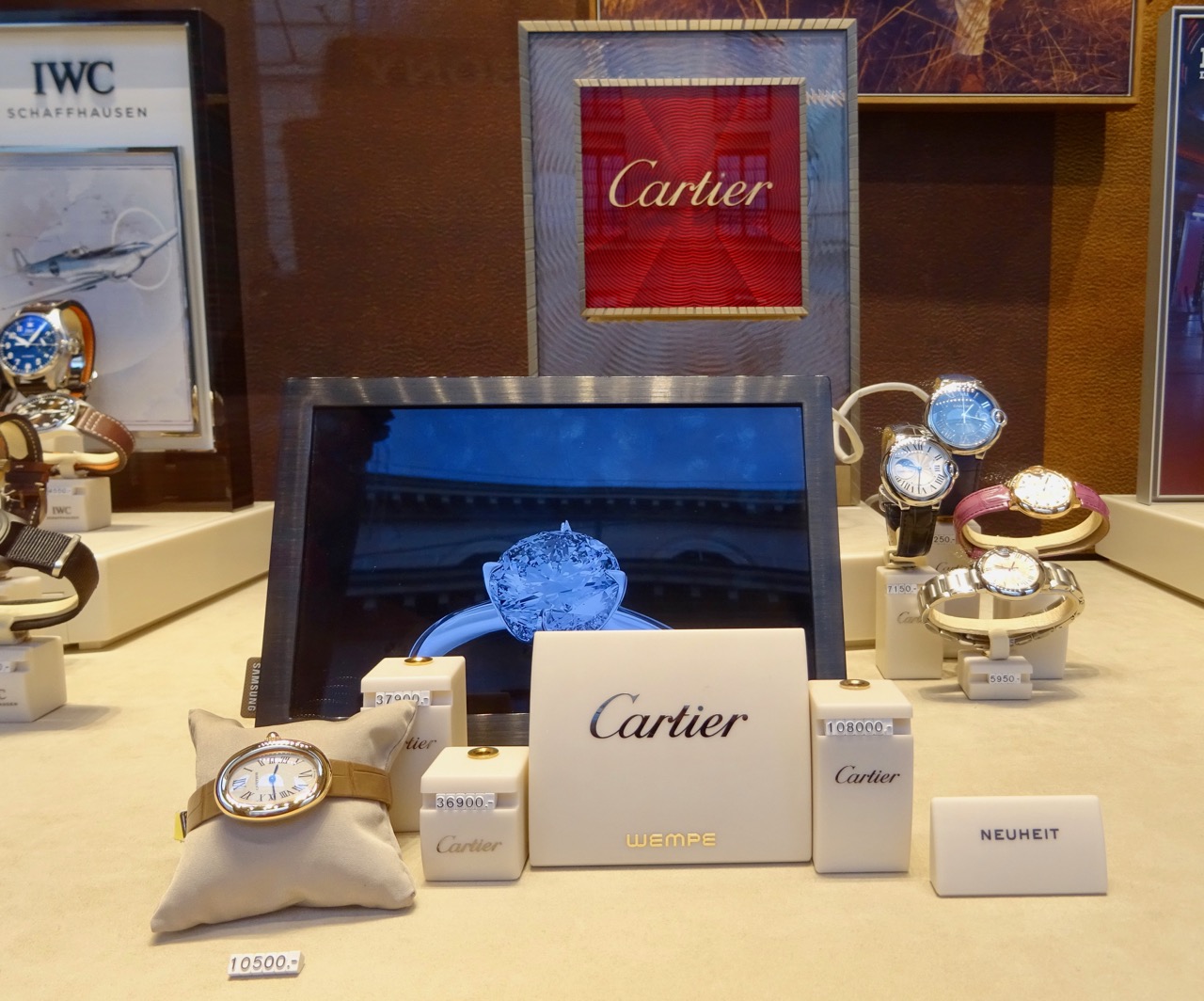
 We window shop where the wealthy people shop! The two outfits on the left are only 42,400.00 euros! The red outfit is only 26,300 euros! At today’s exchange rate that is over $100,
 The stores are closed so they only leave the ‘cheaper’ watches in the windows. Notice the empty stands for the more expensive ones.
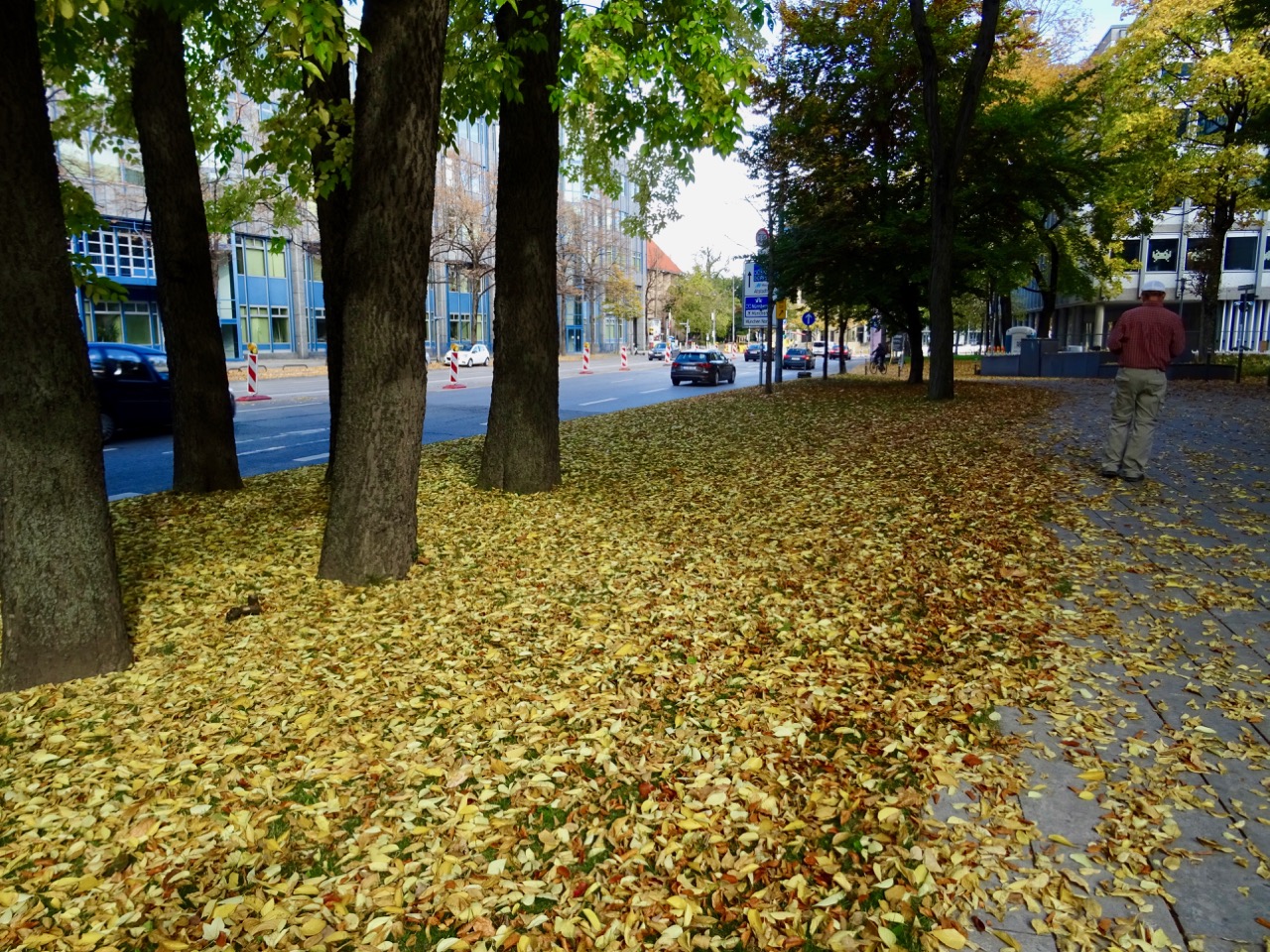
 We pass more very loud, very energetic Chilean protesters on our way home.
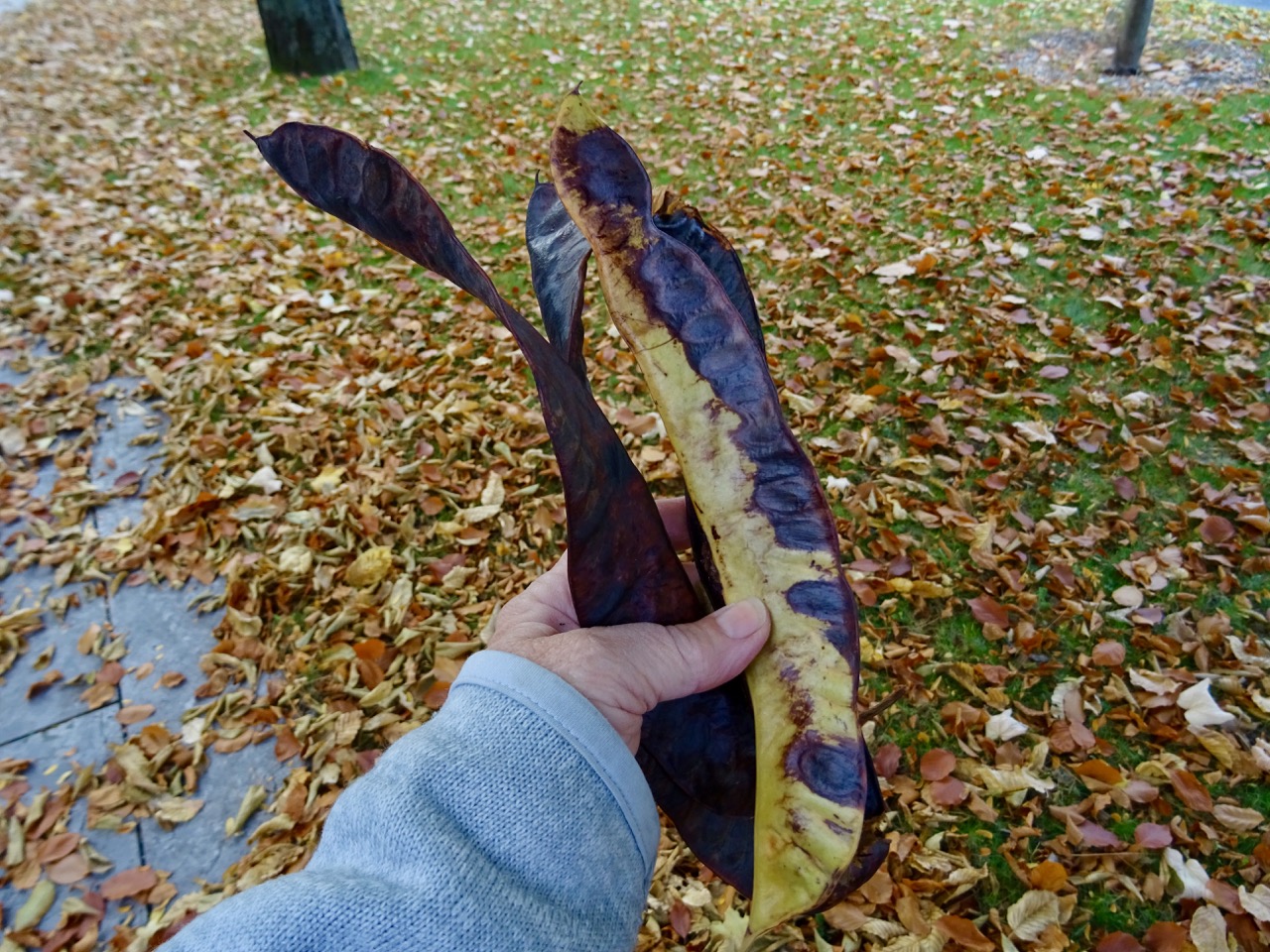
 No idea what kind of tree has these huge seed pods. Maybe someone can tell me?
 We go past a street of shops with rather expensive merchandise, but I really wonder about these colour combinations!
 The Alte Museum admission is only 1euro on Sundays! What a bargain. This is one half of the double staircase that leads to the exhibition rooms.
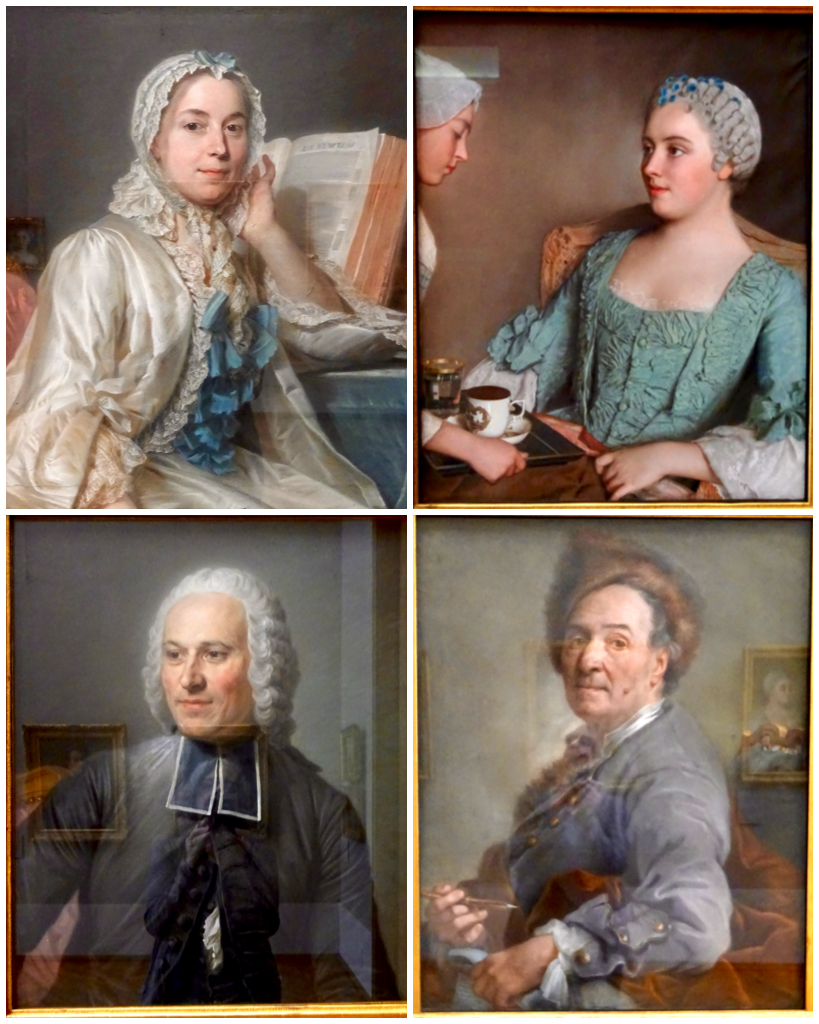
  We walk through the first door and I see these beautiful pastel paintings by Maurice Quentin La Tour, Jean-Étienne, Joseph Vivien and Rosalba Carriera! I need to find some books about these artists and study their paintings. Unfortunately there were lots of reflections in the glass covering these works. You can even see me in two of them!
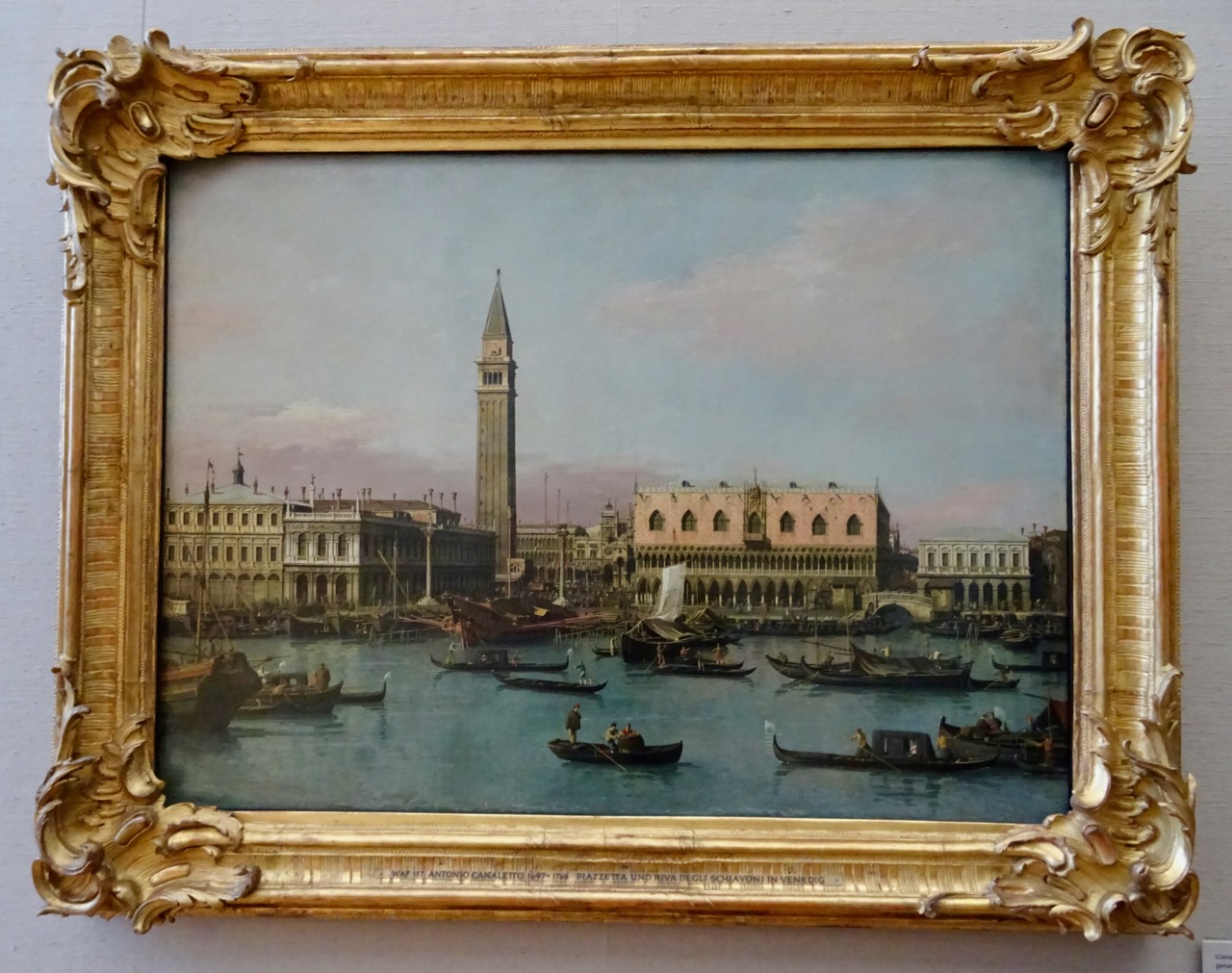
 One of the 46 rooms we visited today had lots of paintings of Venice, completed in the early 1700’s. I marvelled that Venice looked just the same then as it did when we visited a couple years ago. The only difference was the number of small boats in the canals and the clothing of the people in the paintings! There were another 13 rooms that were closed due to the installation of new exhibits.
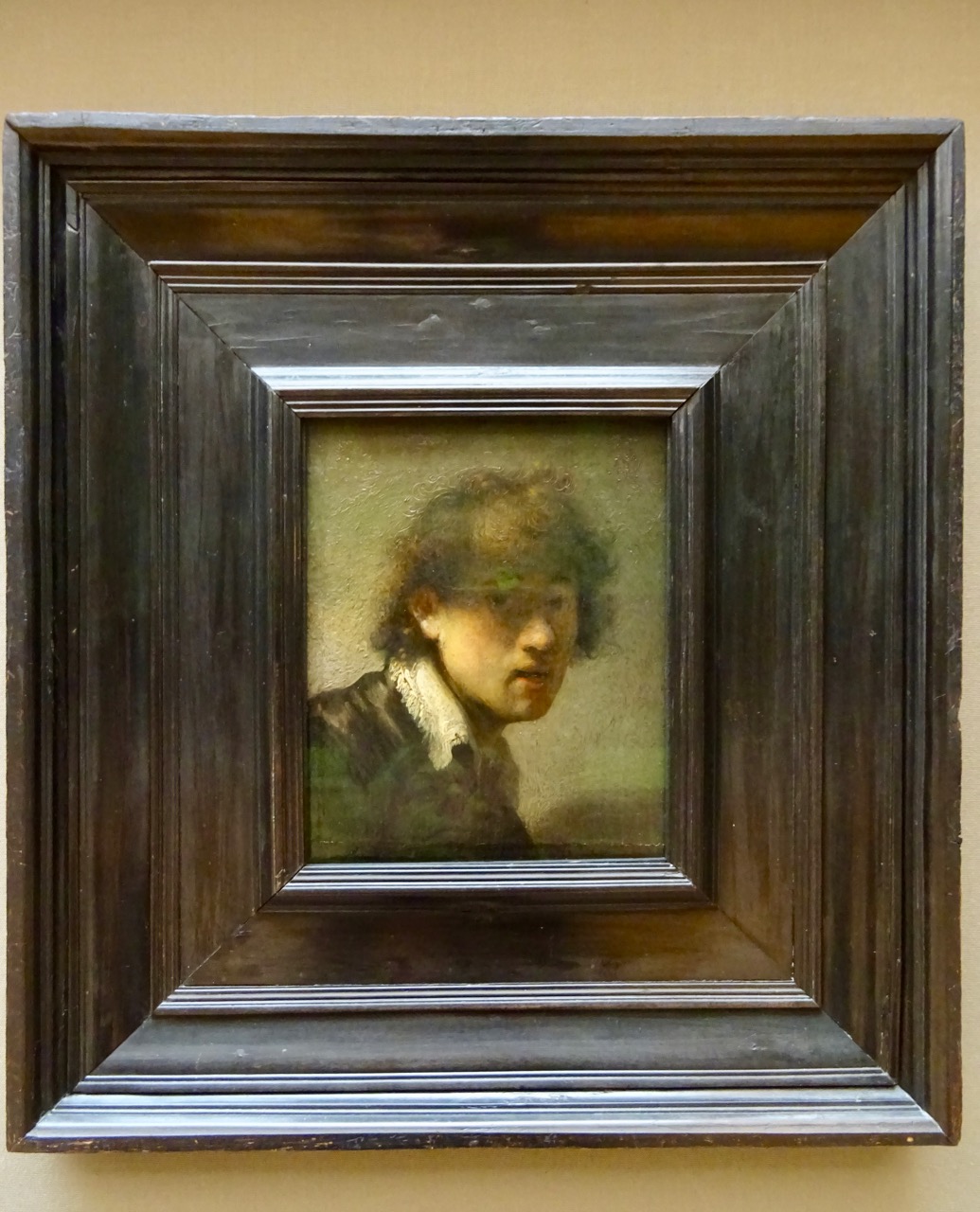
 This room was full of paintings by Rembrandt and Franz Hals…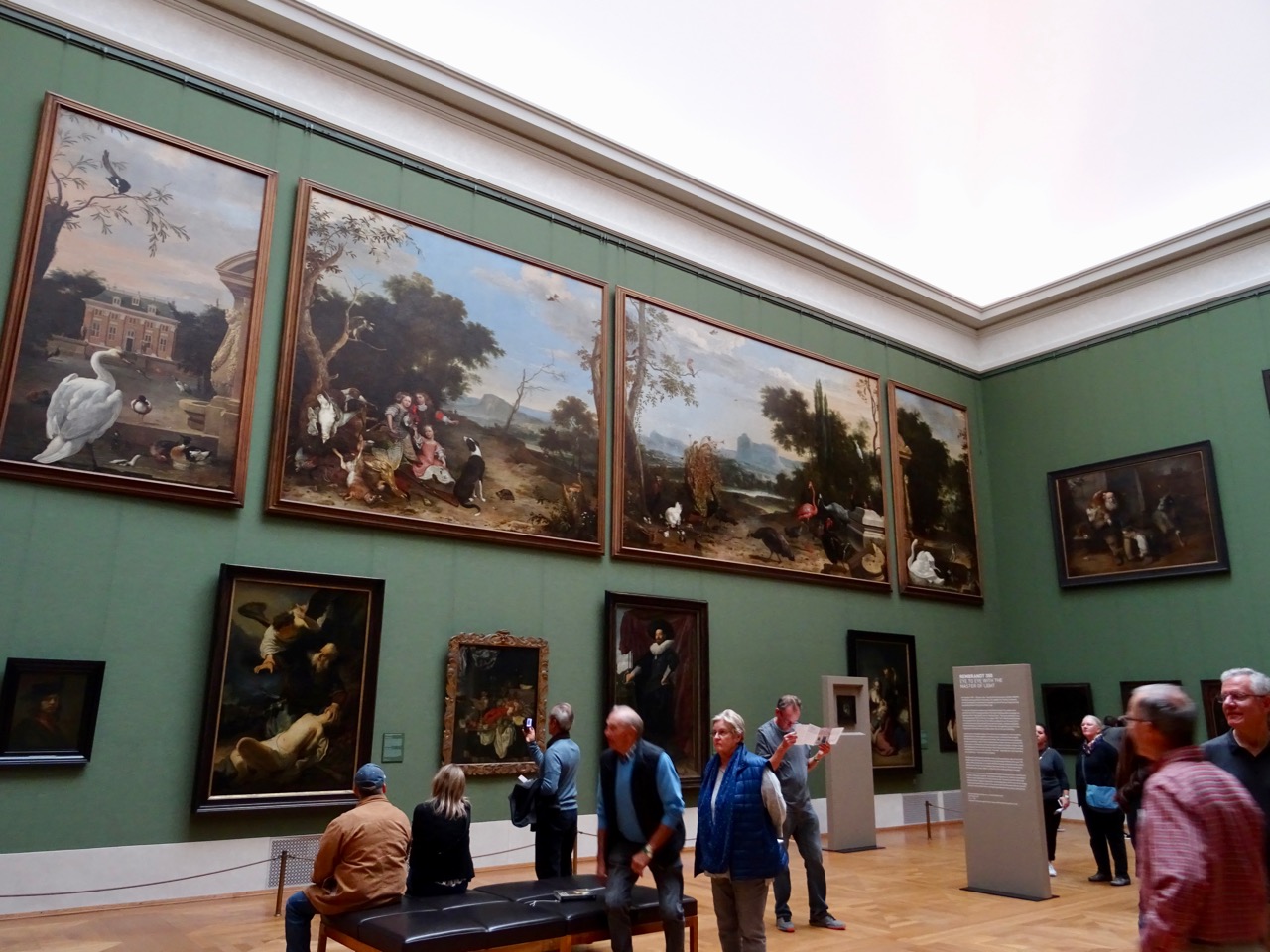
 I lost count of the number of rooms filled with work by Peter Paul Rubens…
 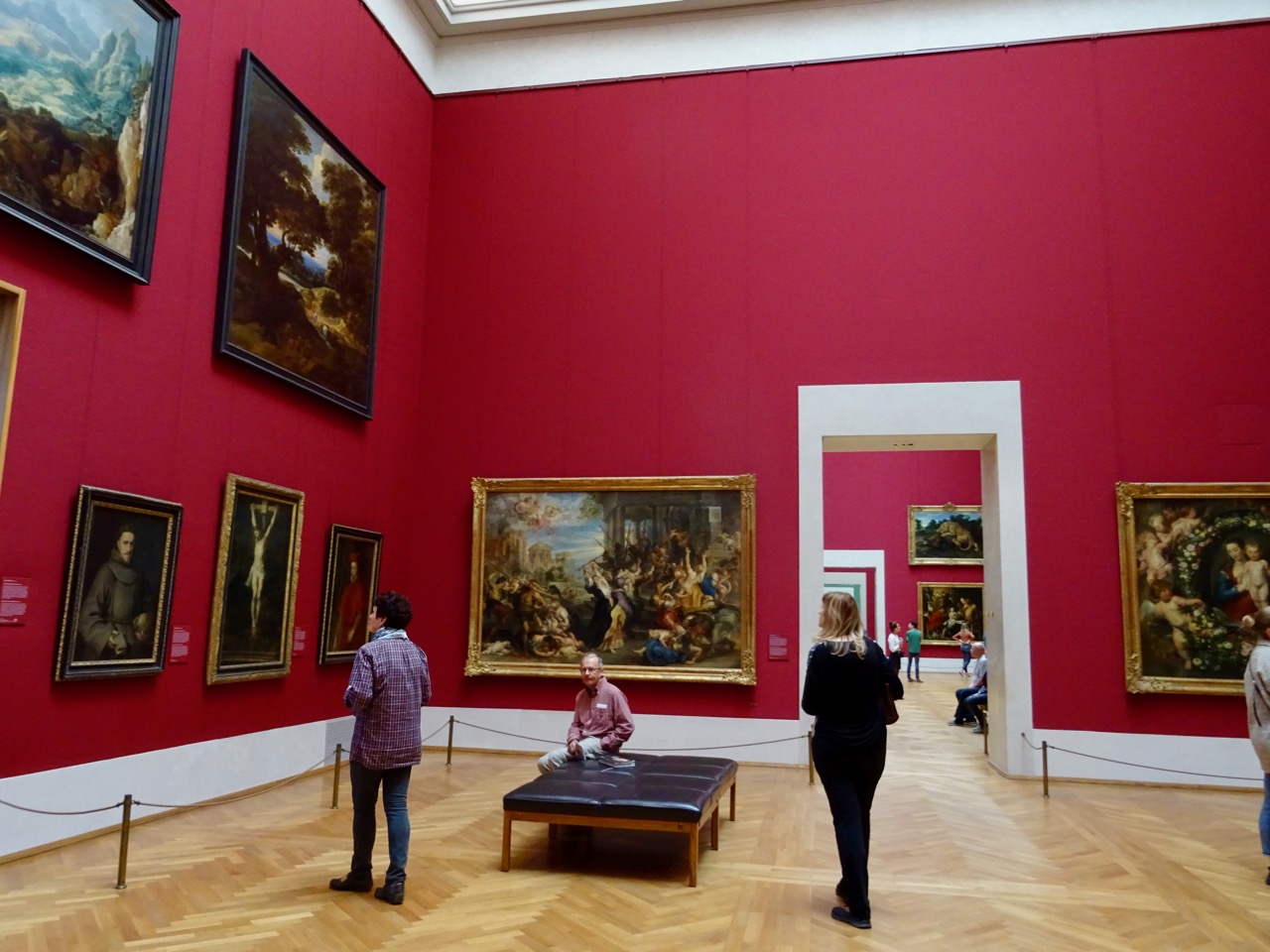 which Included a room with the huge painting of The Great Last Judgement.
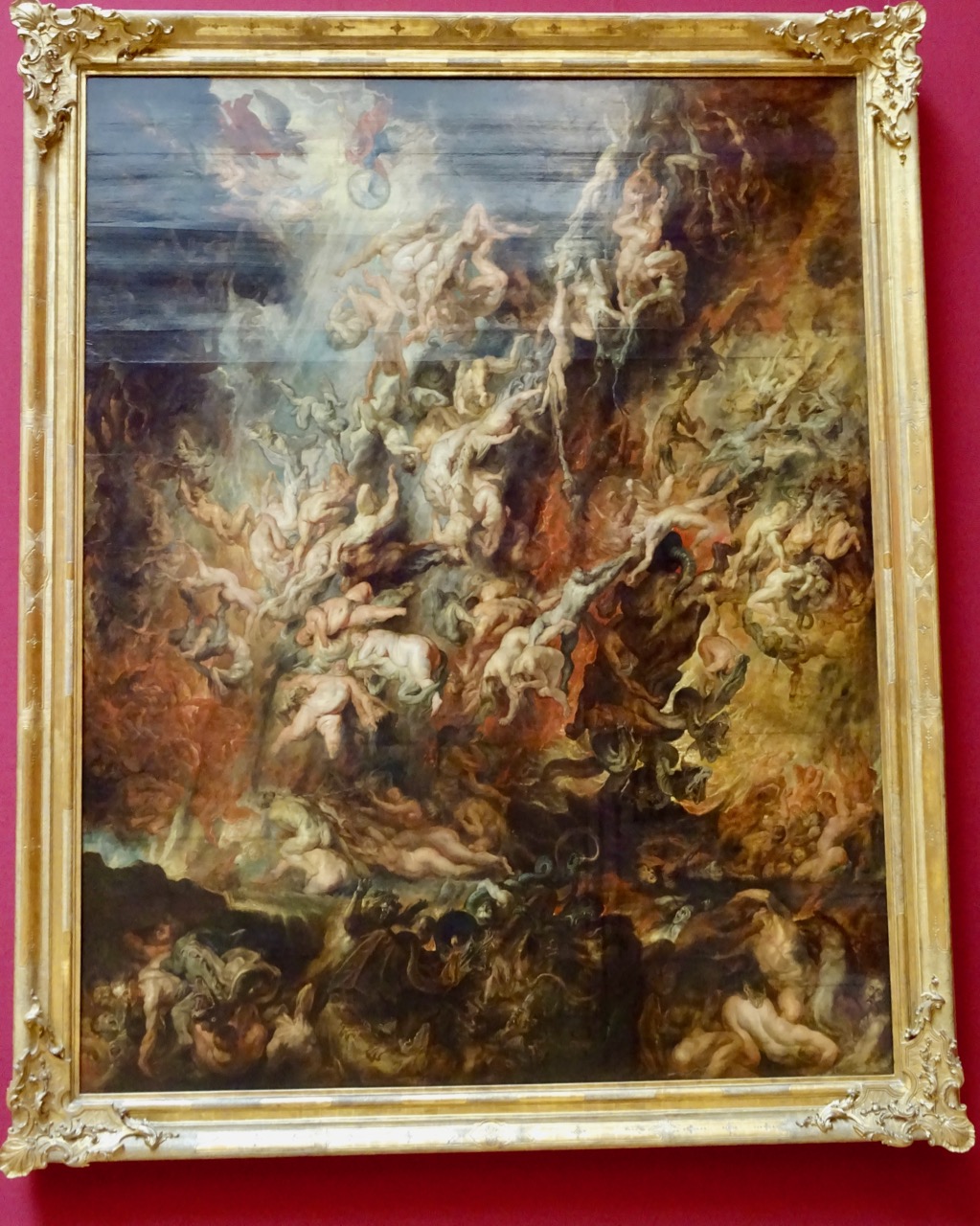
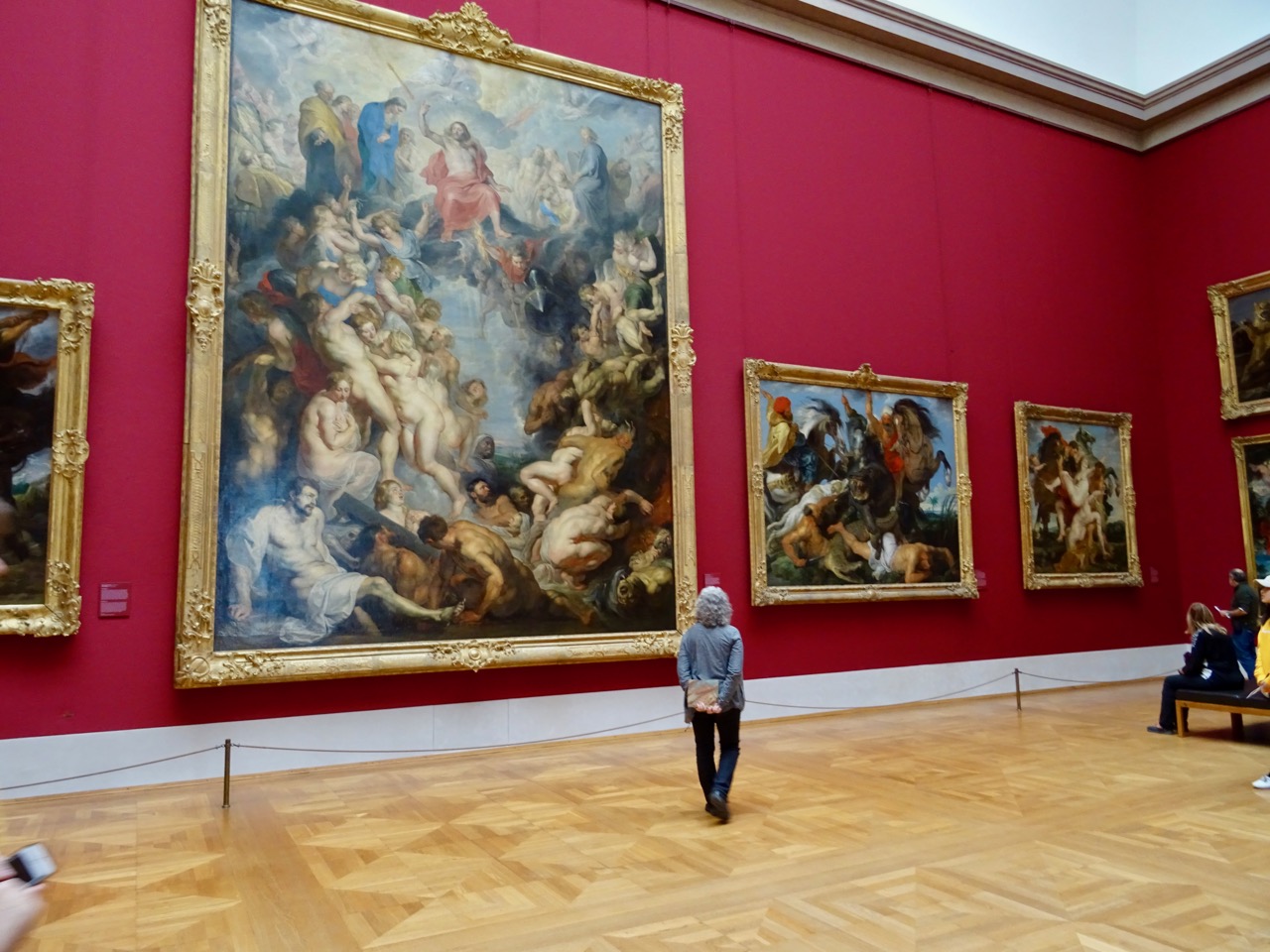 and another with The Fall of the Damned, which is also very large. Rubens was a very productive artist!
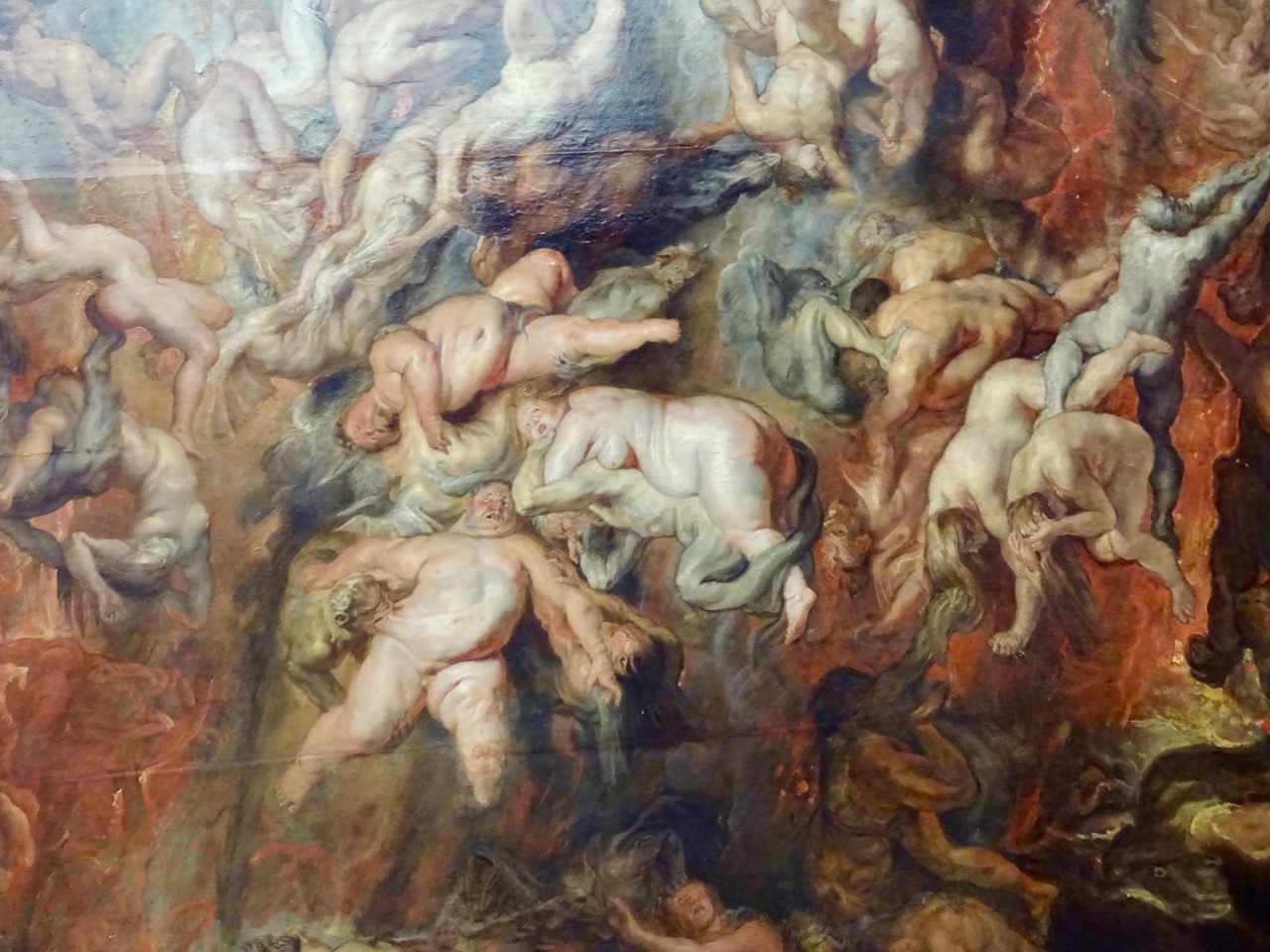
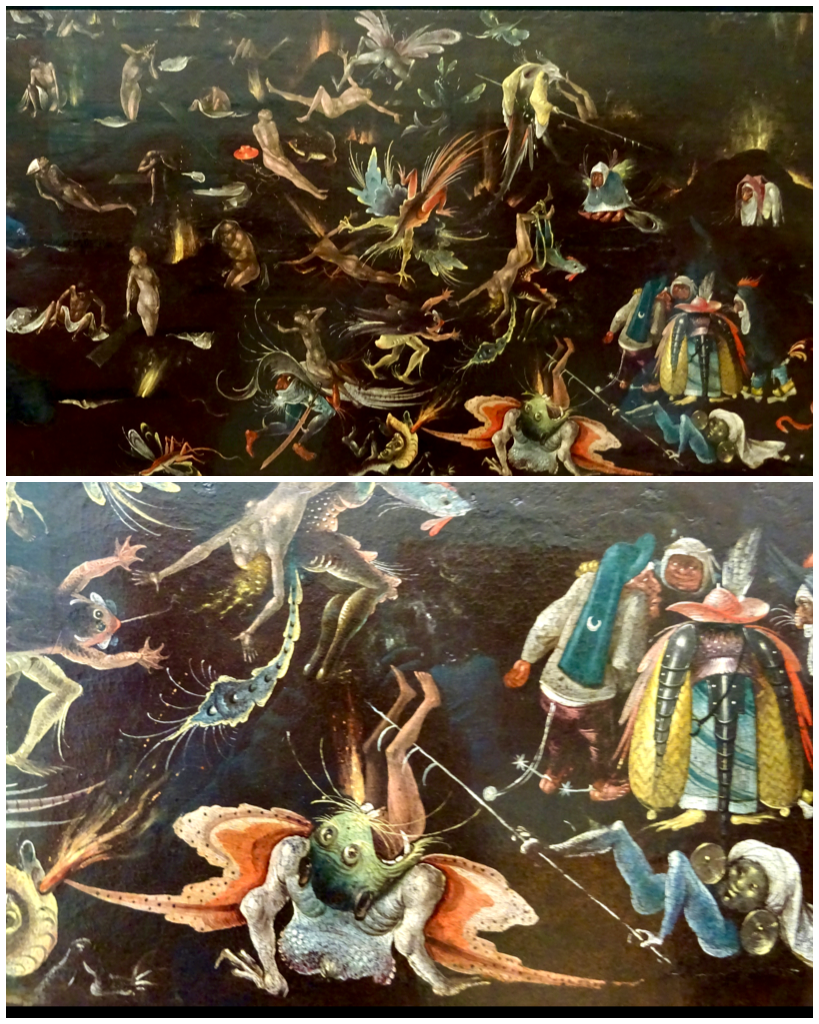
 Here is a close up of some of the damned souls.
 Looking through the doorway, you can see the many more rooms we have yet to explore. There are ten large galleries in a row along the length of the museum, with many smaller galleries off of these.
 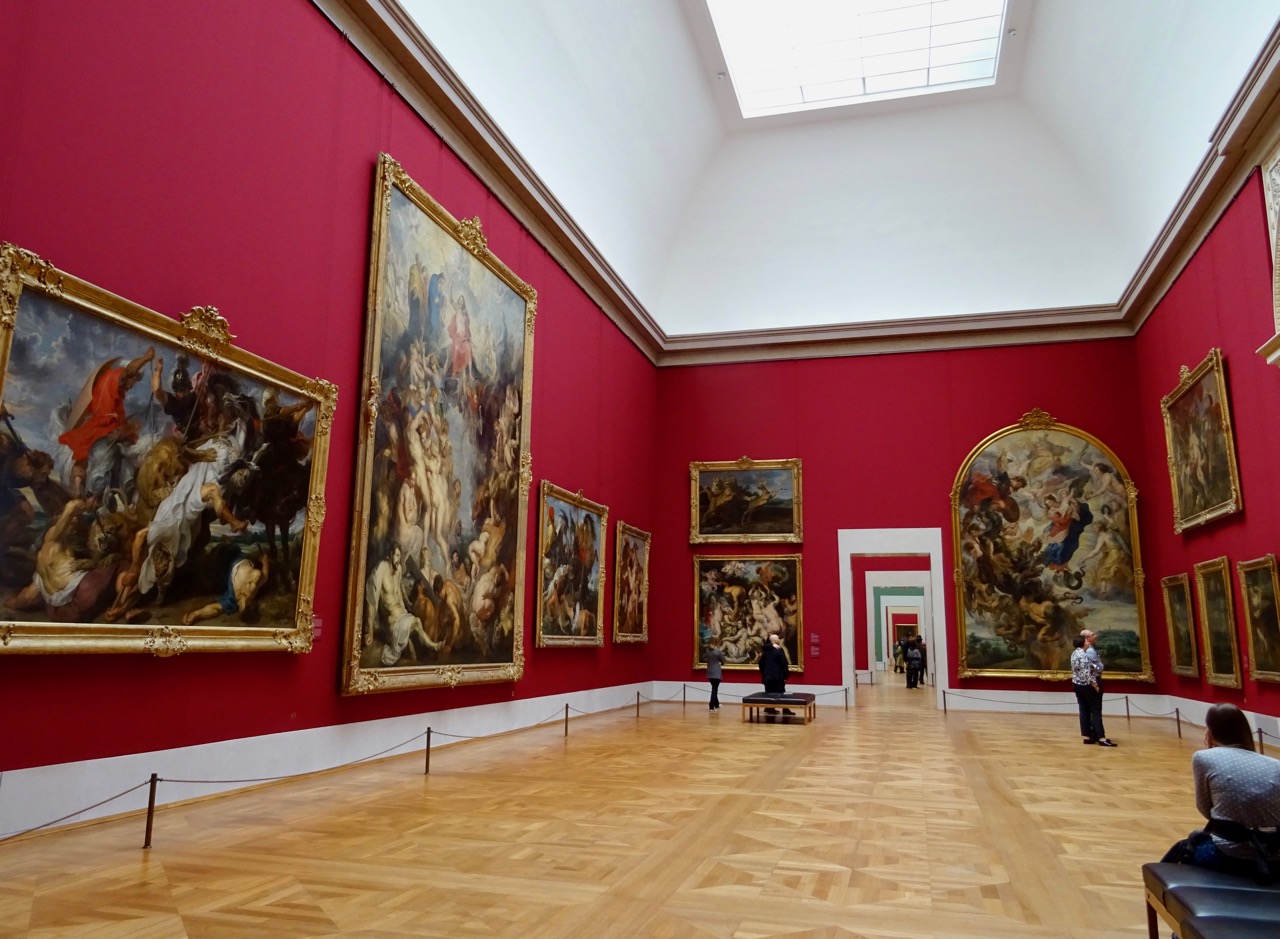 I liked how I could stand in front of the study for this Rubens painting and then look into the adjoining gallery and see the finished painting. There was a gallery full of studies, which I particularly liked. It is possible to see the way Rubens thought about and worked out his compositions.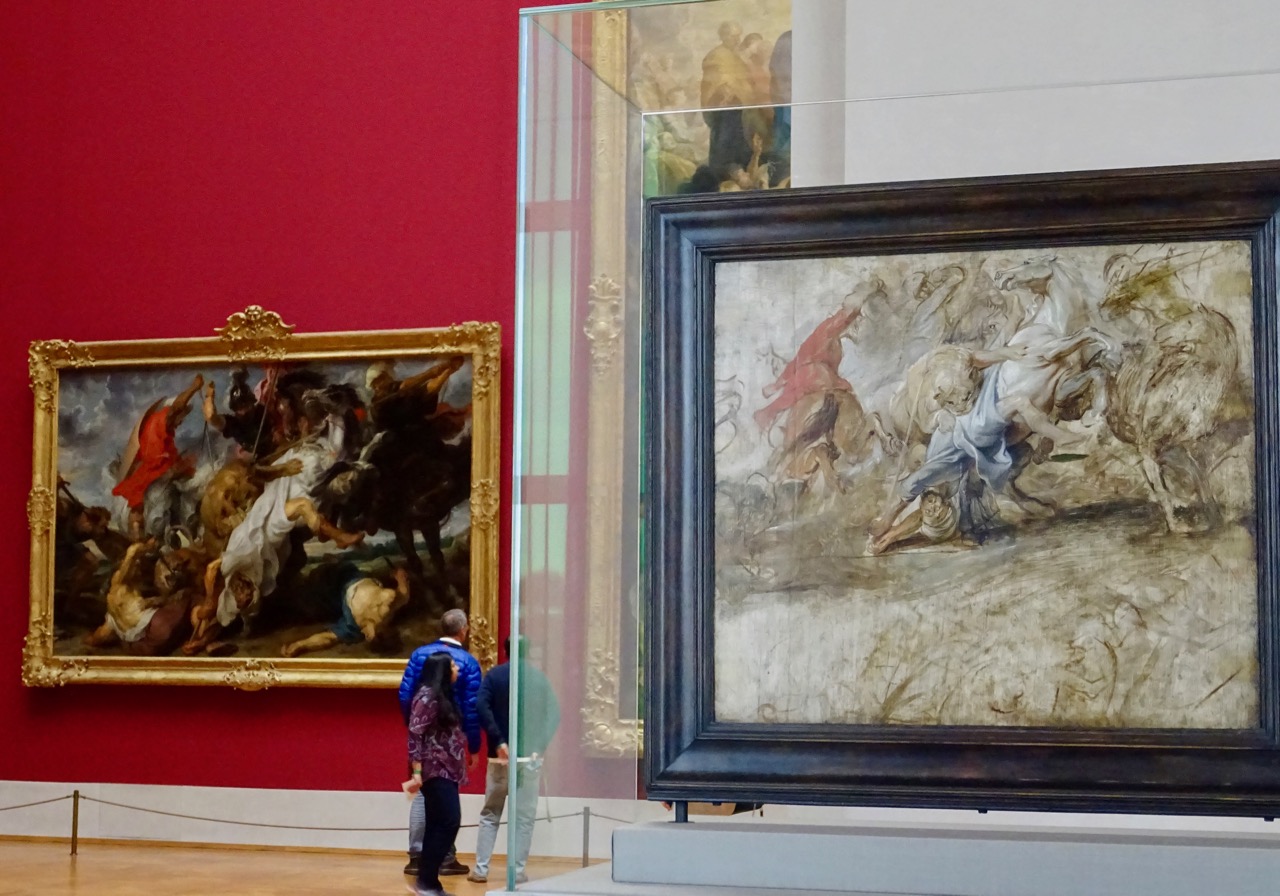
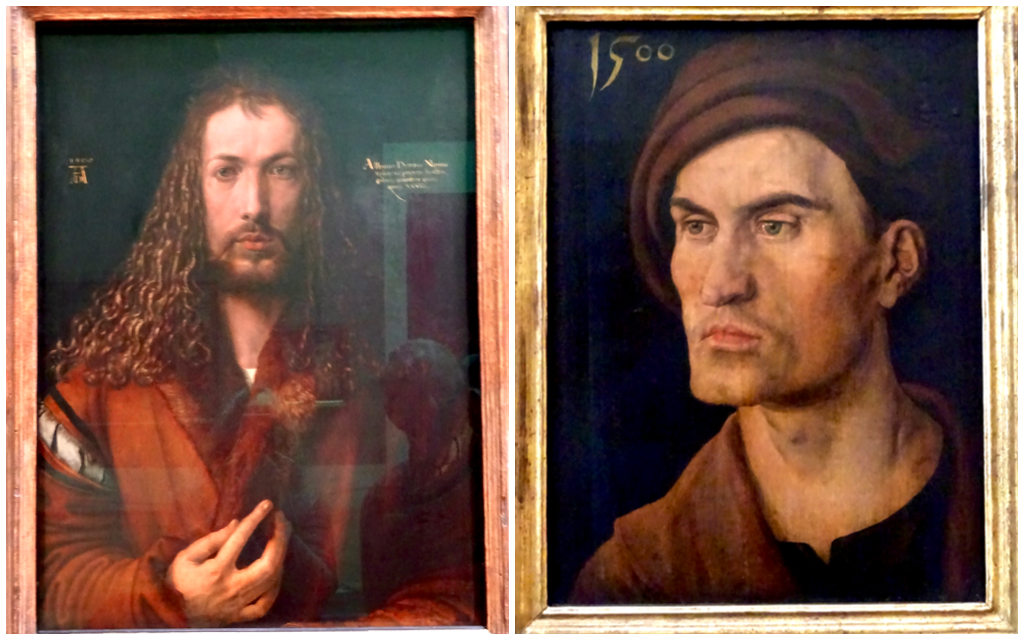 This is a painting done by Leonardo da Vinci when he was only 23. I don’t remember seeing it before (in books).
 And then there is Hieronymus Bosch with his very strange creatures, in this fragment of the Last Judgement. His works always has lots of details to examine closely.
 We saw paintings by so many other artists I am familiar with: Holbein, Raffael, Botticelli, Titian, Van Dyk, and Velázquez, as well as many new artists that I liked as well.
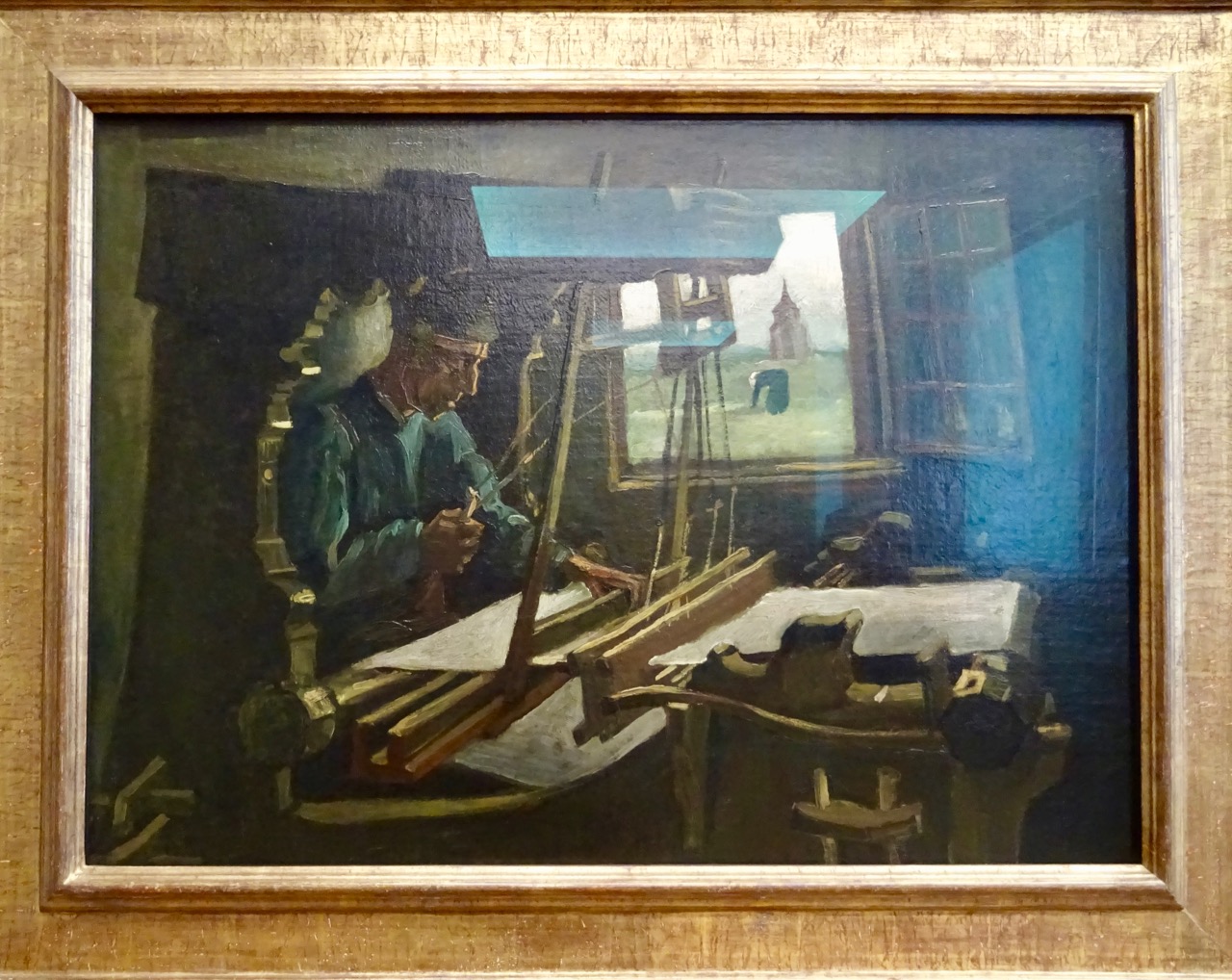 and works by Cézanne, Gauguin, and several more Van Gogh’s.
 A large painting by Ferdinand Hodler, TheTired of Life, really drew my attention. I will have to research this artist.
 There was a Klimt. I am looking forward to visiting the Klimt Museum when we return to Vienna.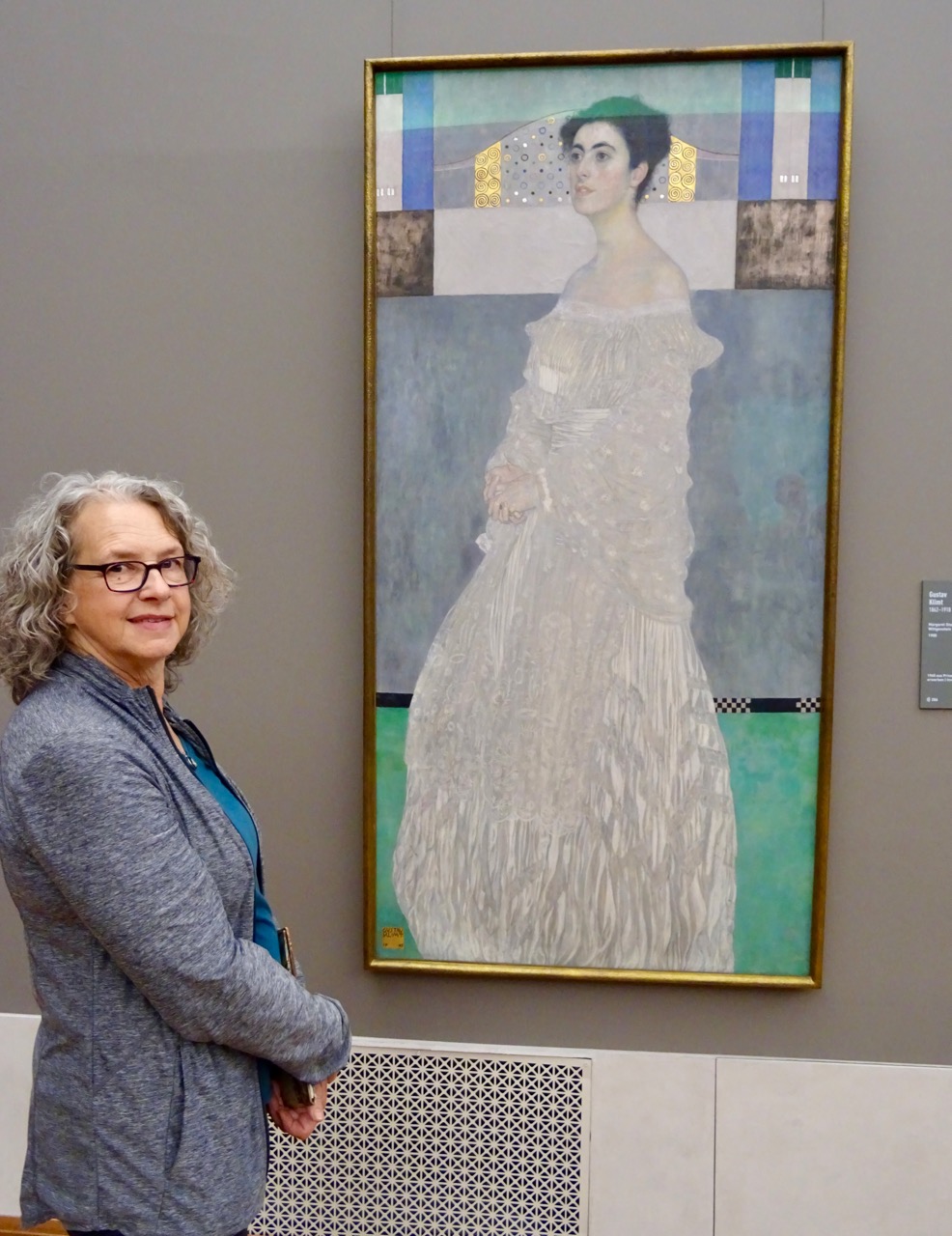
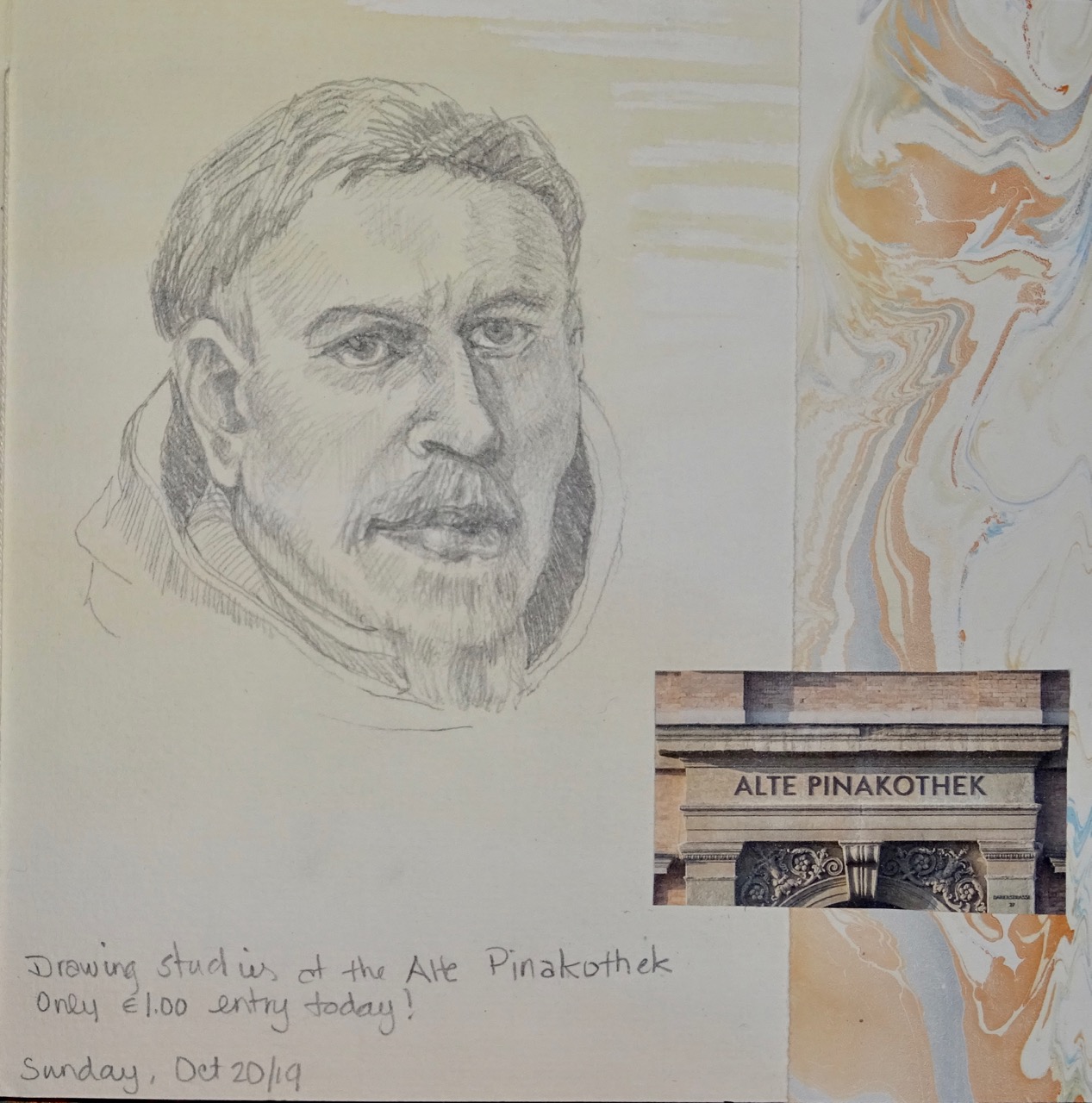
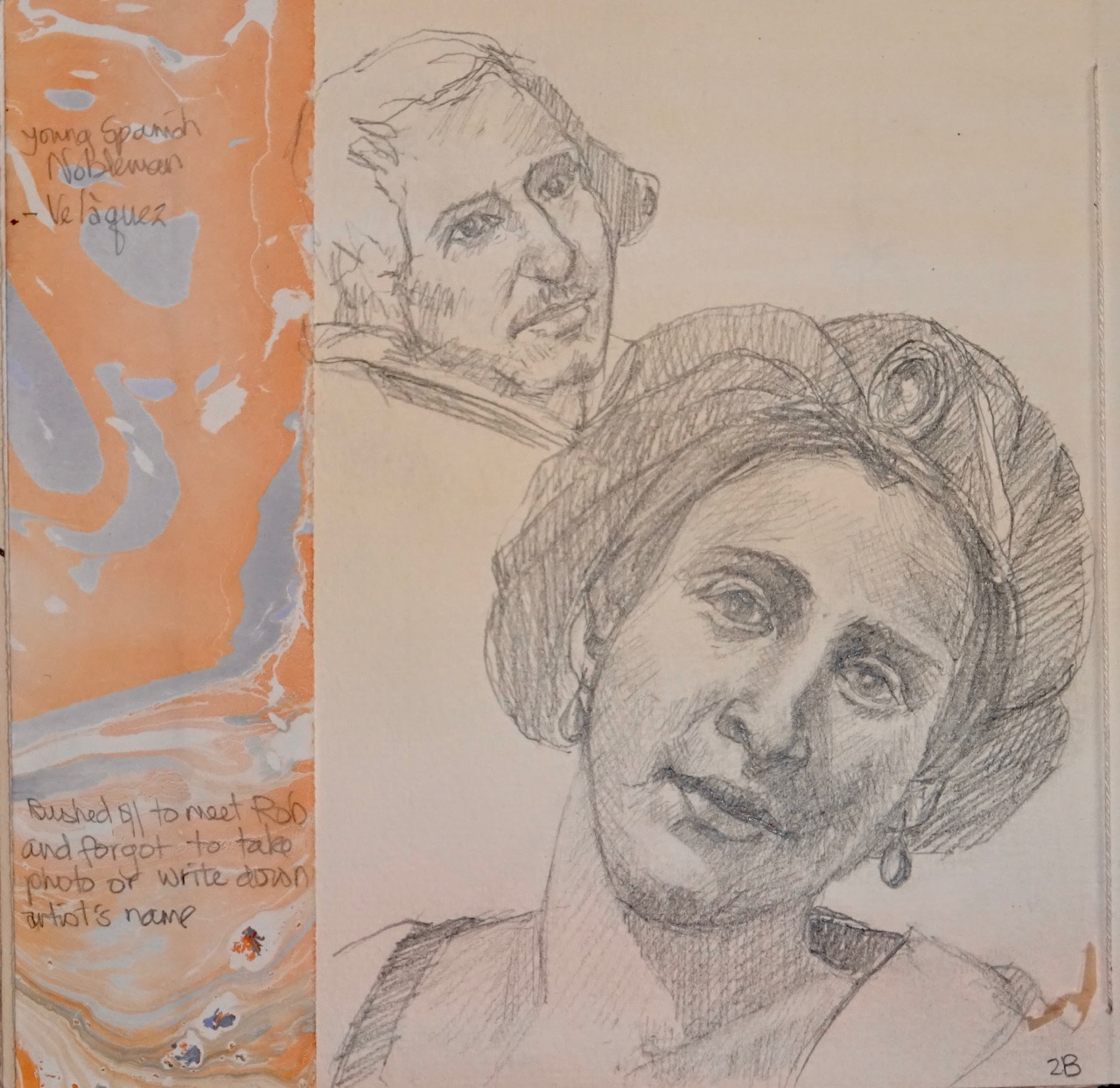
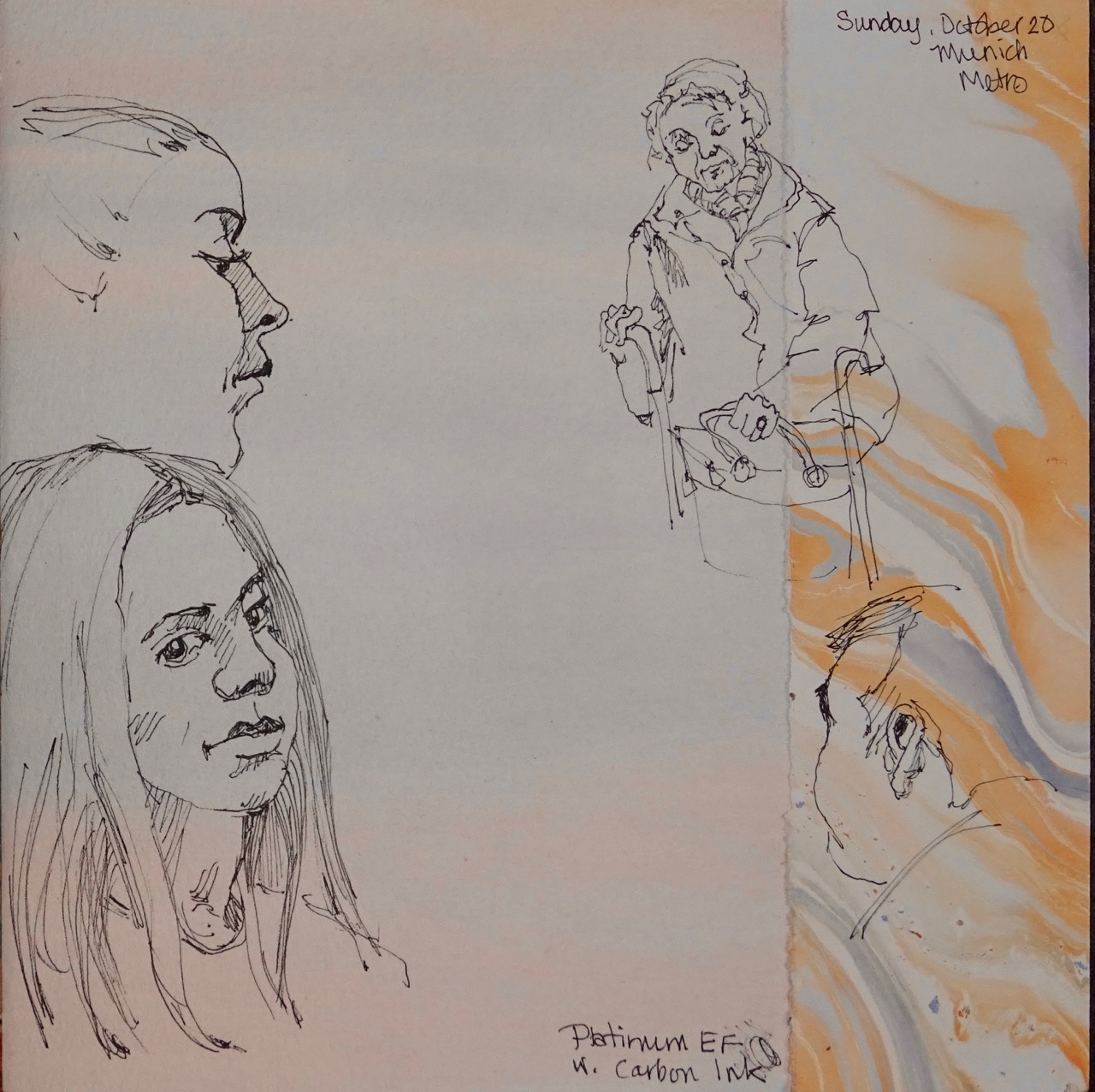
 Here are my metro drawing from today…
 and yesterdays drawings in the gardens we visited, which I forgot to post.
 trudymason.com