Day 60, Thursday, October 24, 2019
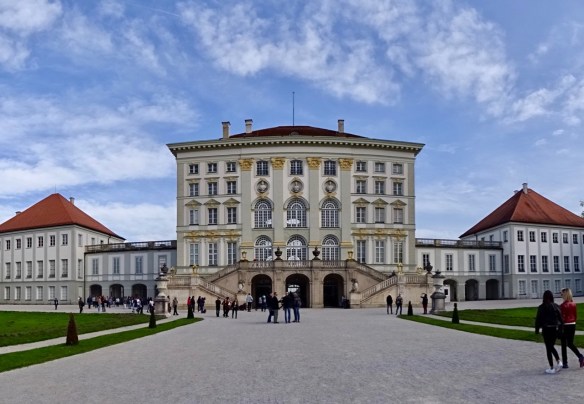
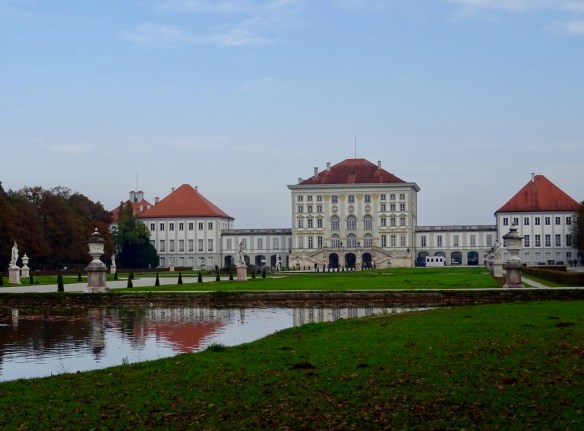
Nymphenburg Palace is one of the largest royal palaces in Europe. It sits on 490 acres of gardens and park land. This arial view was found online. The façade of the palace is almost 700 metres long! This central four-storey building was the beginning of the palace and was built in 1644. Over the years numerous additions were built until it reached its present configuration in 1776.
 The Nymphenburg Palace was originally a summer residence for the Bavarian rulers. This is the Great Hall. Musicians would entertain guests from the gallery.
 One of the many rooms with original furnishings.
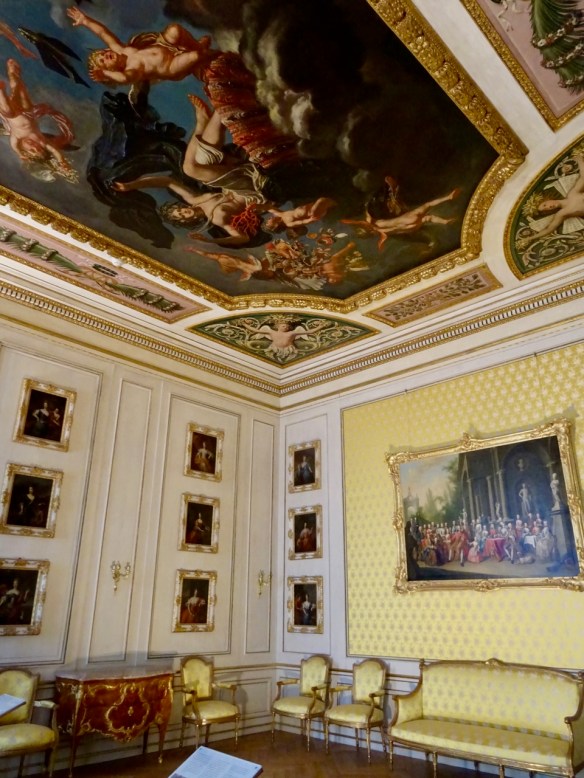 Many of the rooms are not that big and seem to serve as connecting passages to other larger rooms.
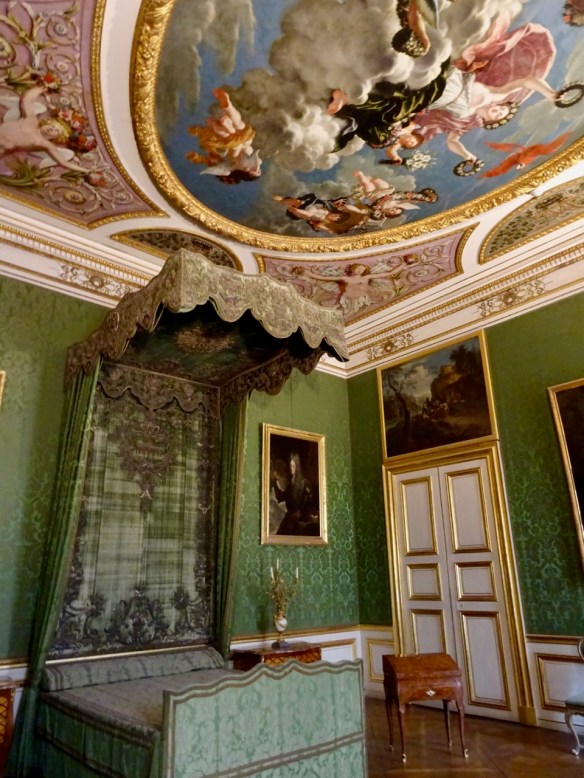
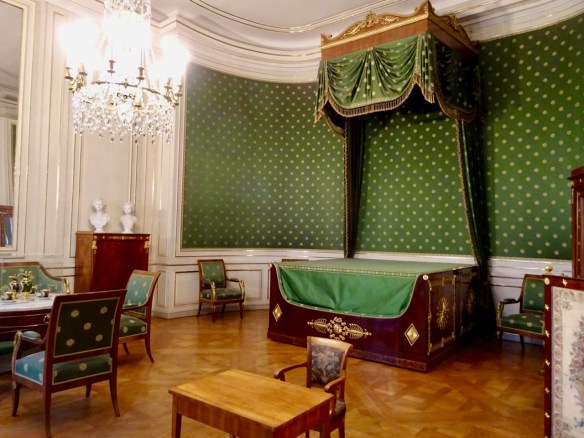
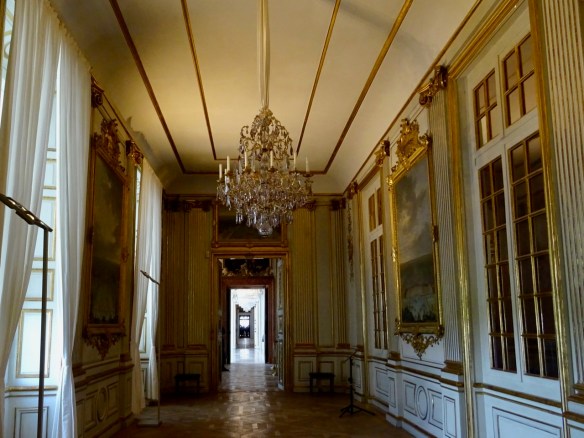 The south apartment bedroom of the Electress, who was the consort of the king.
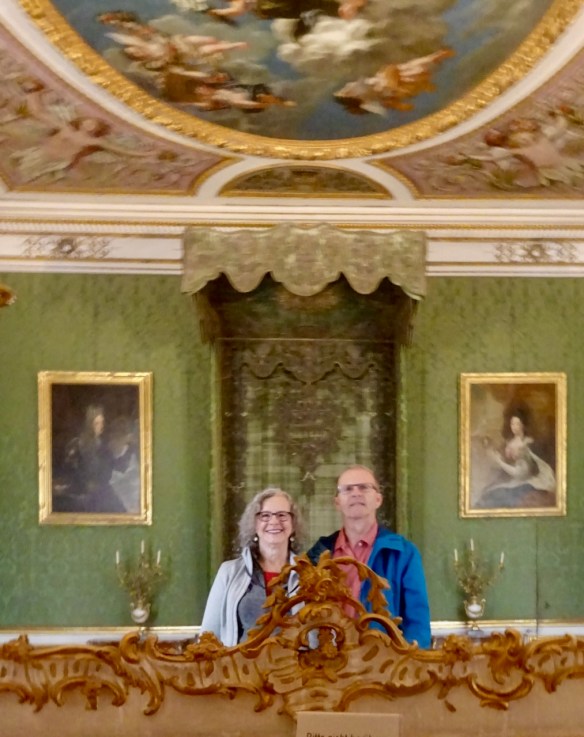
 Our reflection in the bedroom mirror.
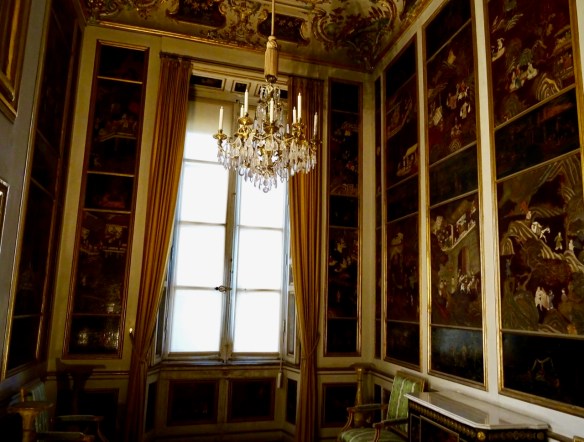
 Every palace has to have a Chinese inspired room.
 The audience room of Queen Caroline…
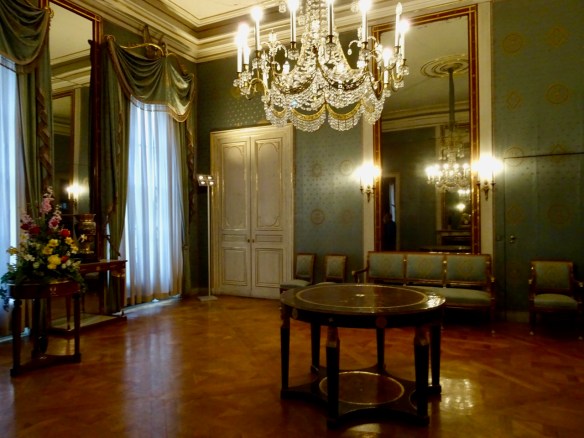 and her bedroom have their original furnishings. This room is where King Ludwig II was born in 1845. The bed is hidden by a cover on a high frame which was spread over the bed during the daytime.
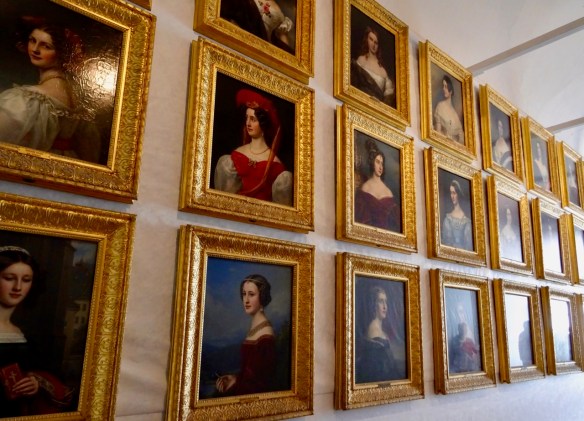
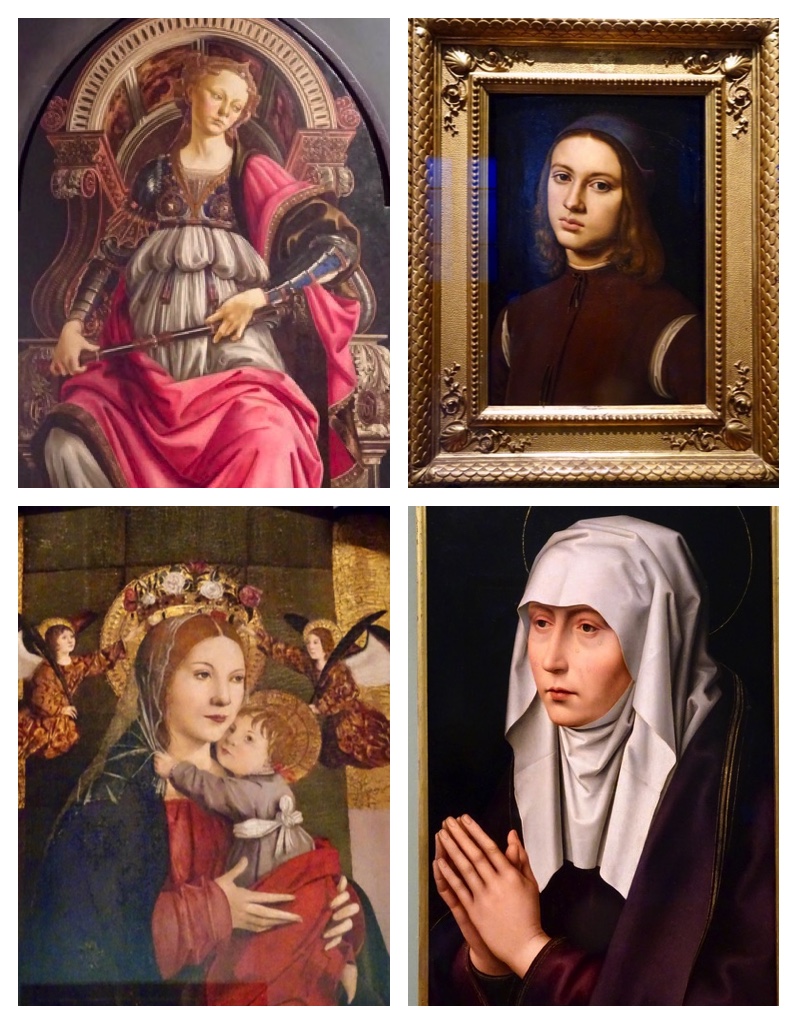
 The official Hall of Beauties is under restoration but the paintings are on display in a corridor. From 1826 to 1850 King Ludwig I had a series of 36 portraits painted of what he considered to be the most beautiful women. Beauty was considered to be an outward sign of moral perfection!
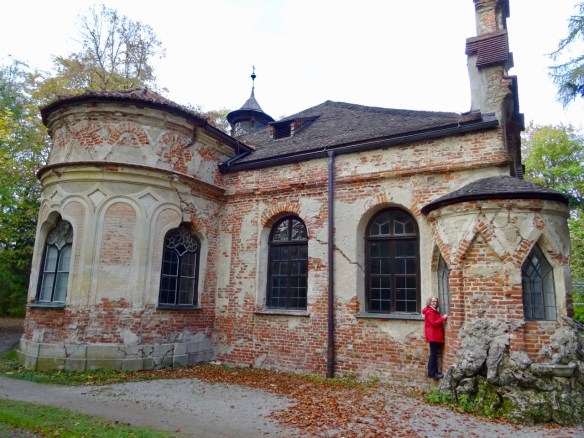
 We finish our tour of the palace rooms, and go explore the grounds. Unfortunately we realize that the park pavilions closed for the season a week ago. I do manage a peek inside the Magdalene Hermitage, which was a pavilion used for contemplation.
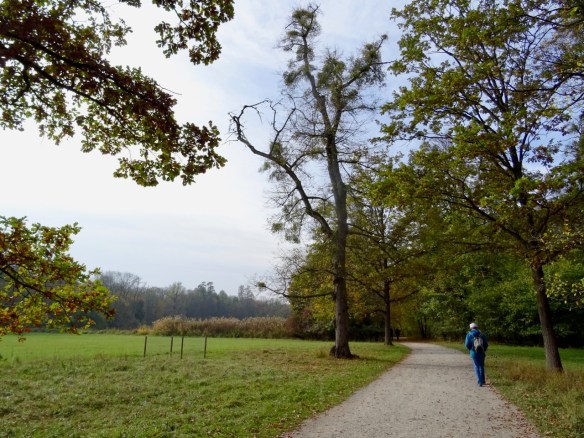
 Much of the grounds are in the style of an English park, with paths…
 and little bridges over water features.
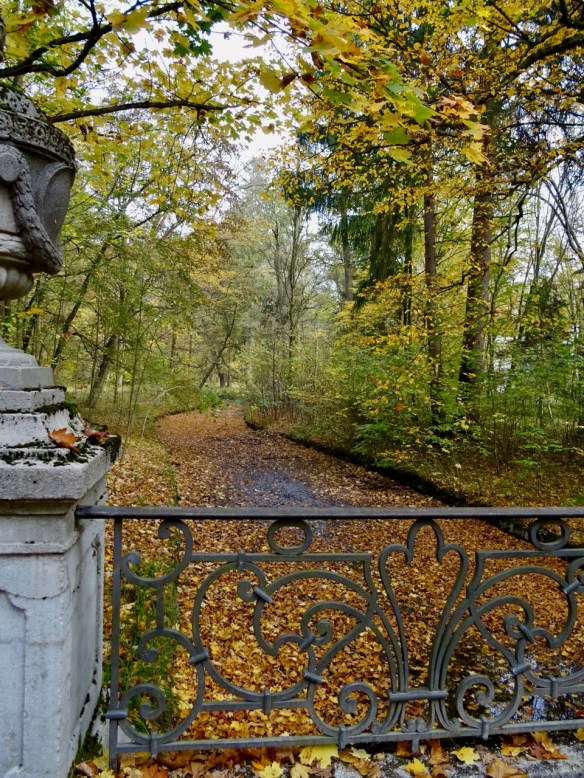
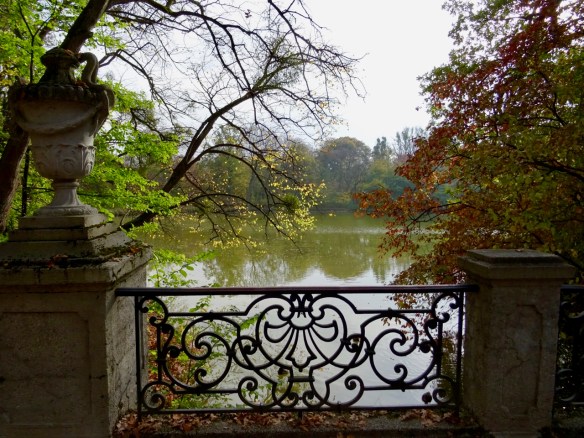 This creek was so covered with fallen leaves that the water was barely visible.
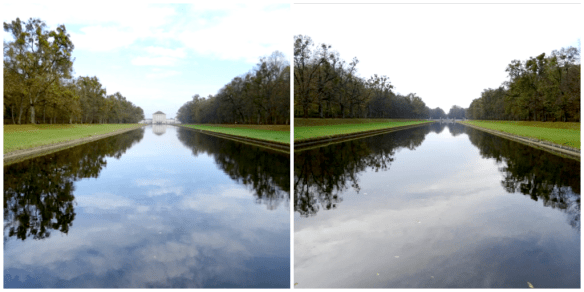
 This shows just how long the canal water feature is…looking towards and away from the palace on a bridge that crosses the canal. At one time gondolas sailedd these waters. Neat reflections too.
 Walking back towards the palace along a tree lined path.
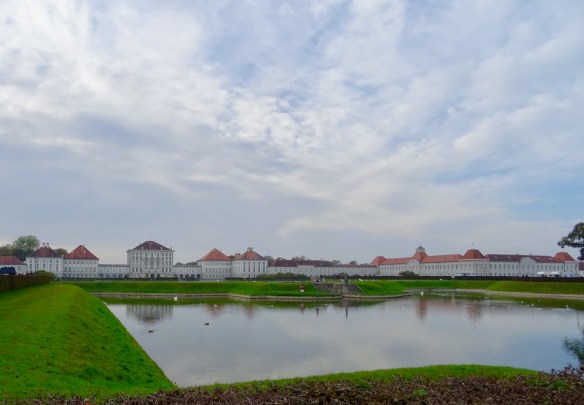
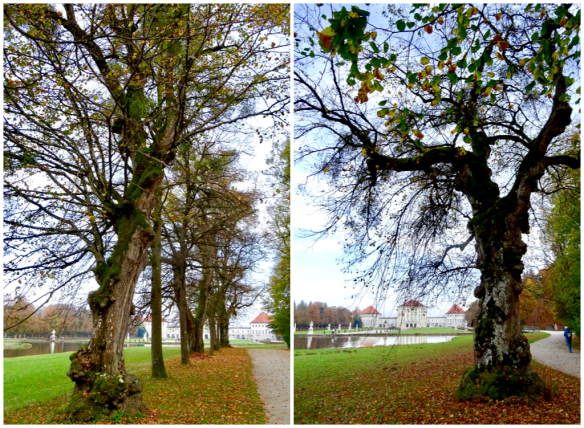 I liked the reflection of the palace in the water.
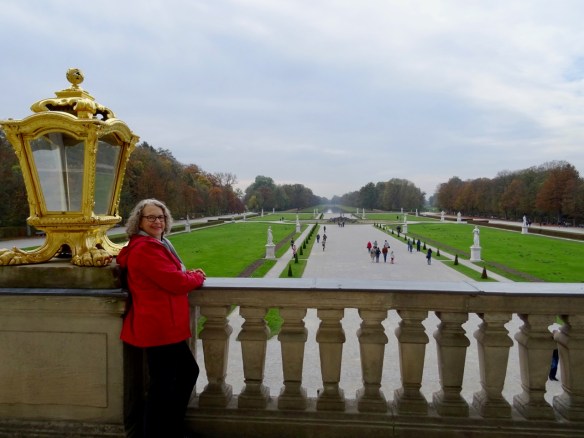
 Looking out towards the garden from the Palace steps.
 It is almost closing time, but we manage a quick peek inside the Carriage museum, which is one of the most important museums of court carriages, travel and equestrian culture in the world. The Coronation coach of Emperor Karl VII is here…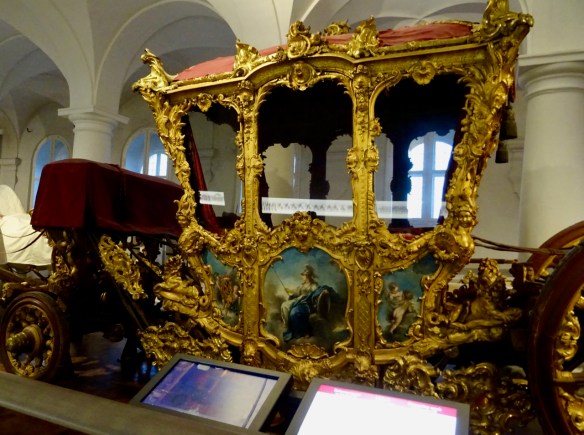
along with numerous over-the-top elaborate coaches built for King Ludwig II.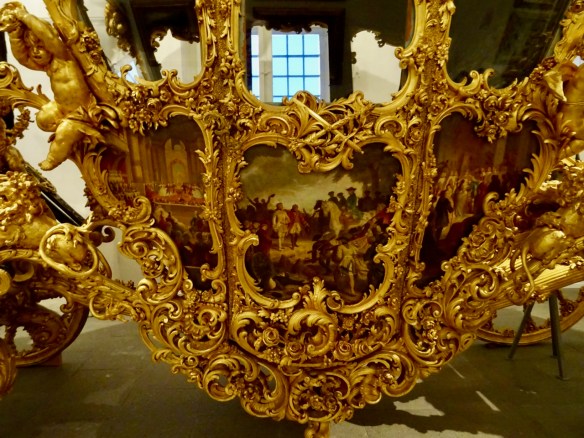 We can only begin to imagine how much these coaches cost!
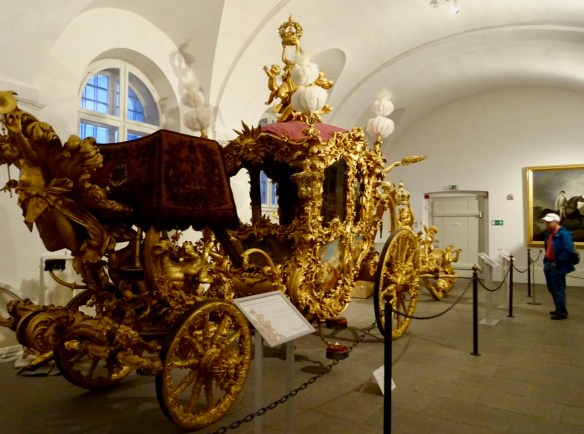 Besides dozens of coaches there are numerous sleighs on display.
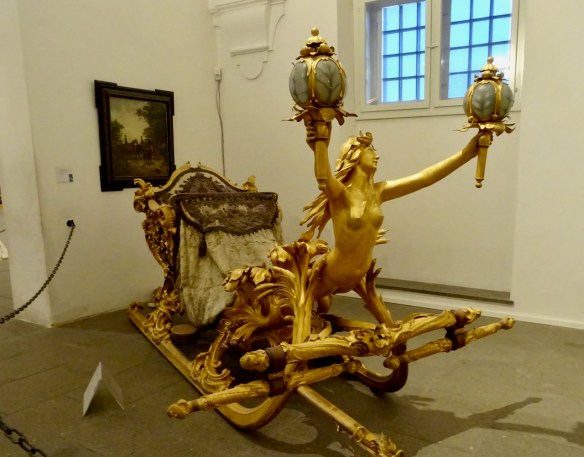 Parades and competitive games with these carousel sleighs were a popular winter amusement at court. Women would sit in front of a male driver and try to hit rings or paper maché figures with a lance or sword. Notice the rear view of the sleigh in the mirror.
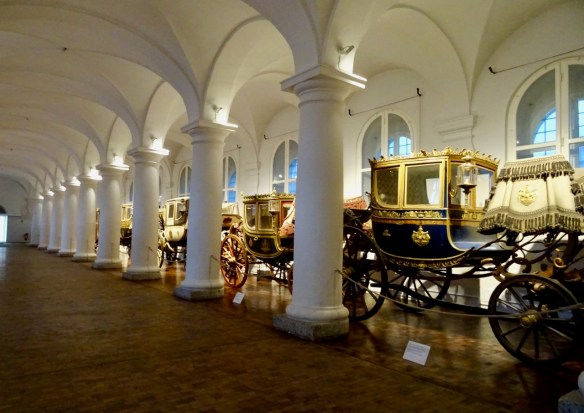
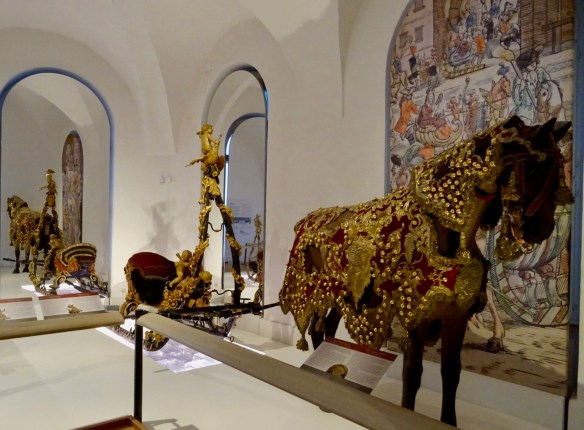 Just a few of the many coaches on display in one of the halls.
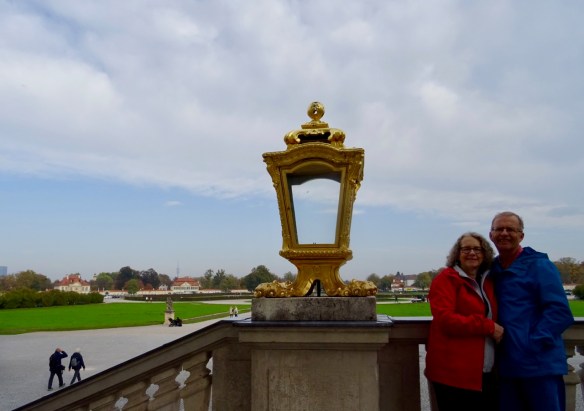
 One last selfie before we leave.
 and one last look back towards the front of the Palace…
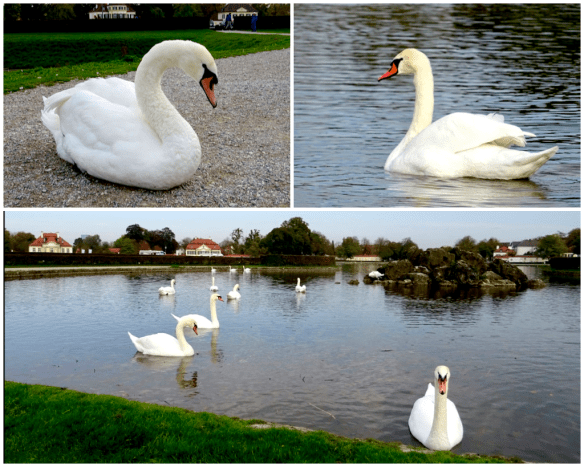
 with a photo stop at the swans.
 I have life drawing tonight, so we head toward the metro and after checking out my route, Bob heads for home and I head towards my drawing session. I have a bit of time so I sit at the Sheraton Hotel having a cup of tea and doing a bit of sketching.
My sketches from the bus this morning weren’t terribly successful; I was having difficulty getting proportions down accurately. That happens some days…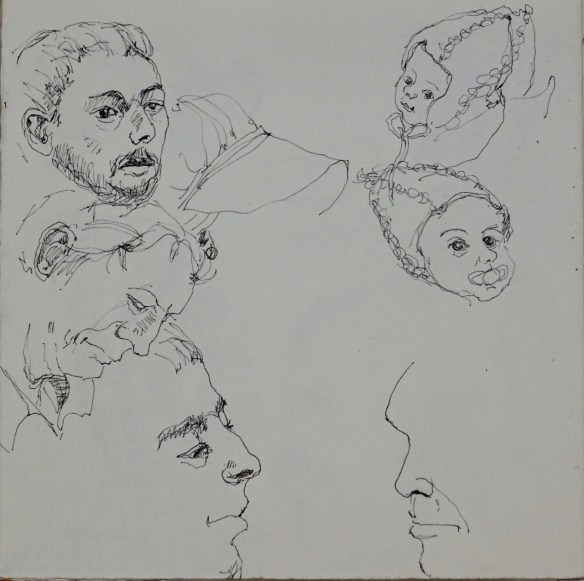 These were a bit better.
 Sketches from the Sheraton Hotel.
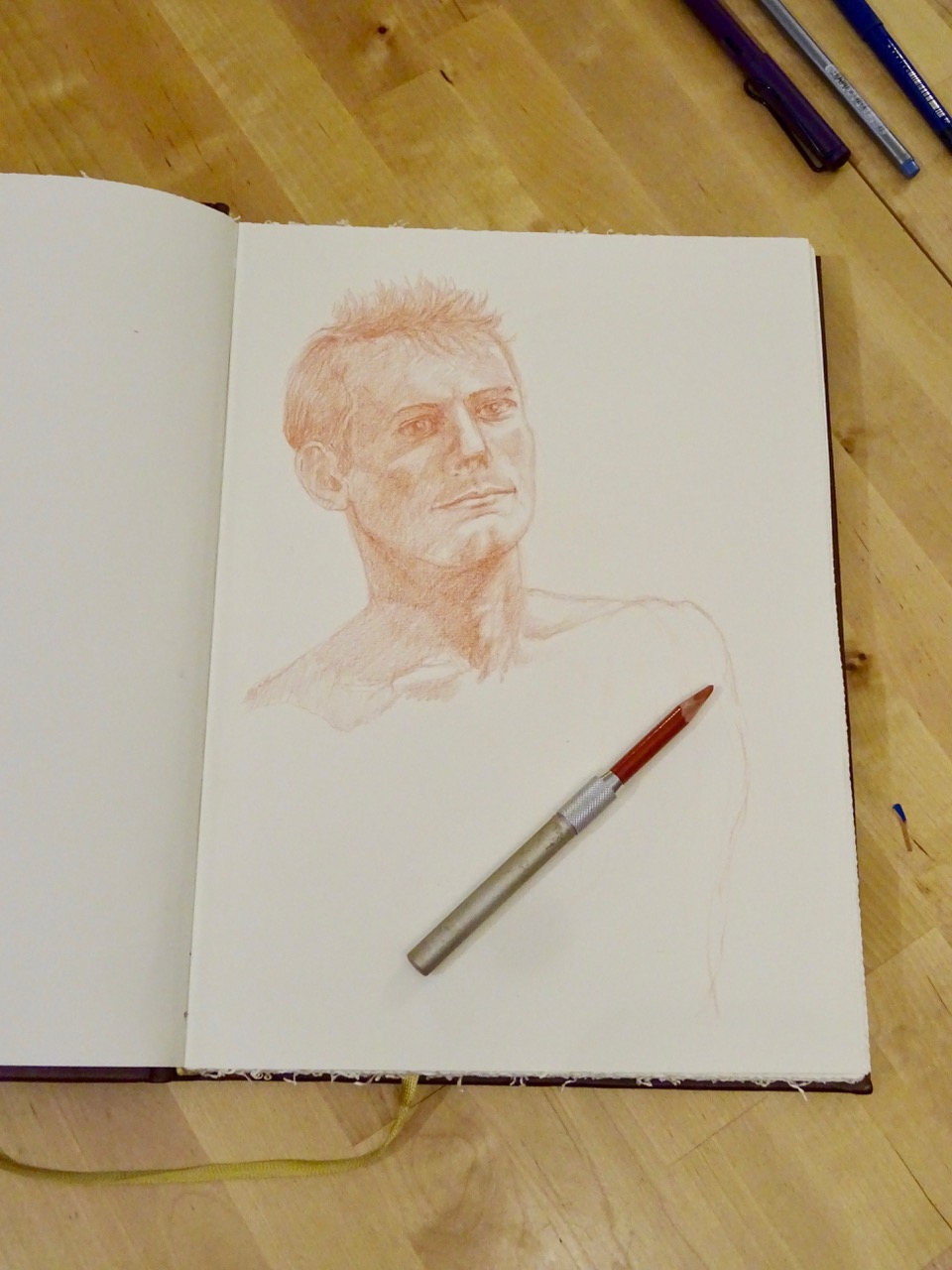
 My first drawing at the Meetup session. Still having some issues with proportions and the head placement in relation to the body.
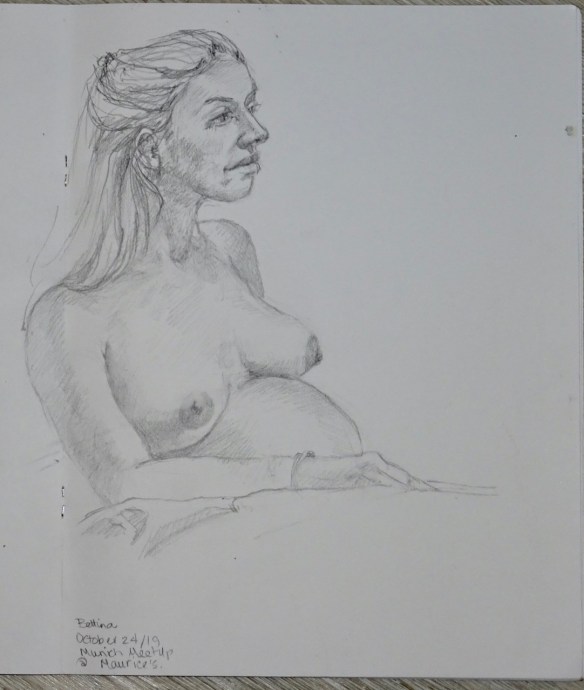 I started again after our break and did this portrait which was better. Bettina, our model, really liked it and said that it looked like her.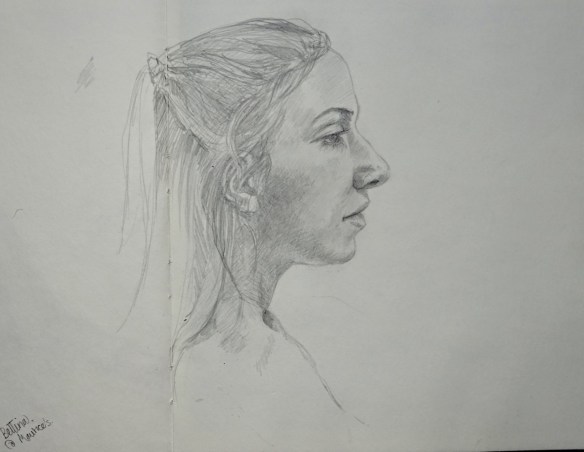
I managed to make two wrong turns on the way home, but retraced my steps and finally got back home near 11:00. Bob met me at the bus stop which was really nice. It was a good but very long day.
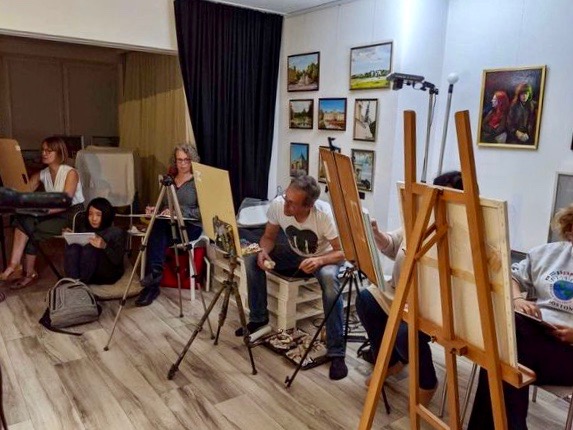 Here is our model, Bettina, she is very pregnant. How wonderful! It has been ages since I have had the chance to draw a pregnant model so this was an unexpected bonus.
 The drawing on the left is mine.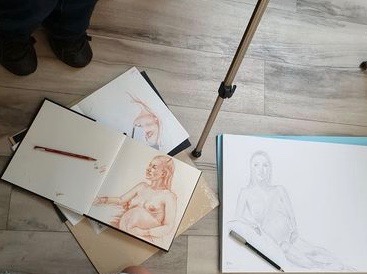
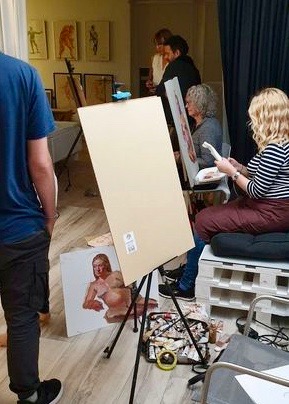 I did a couple sketches to warm up.
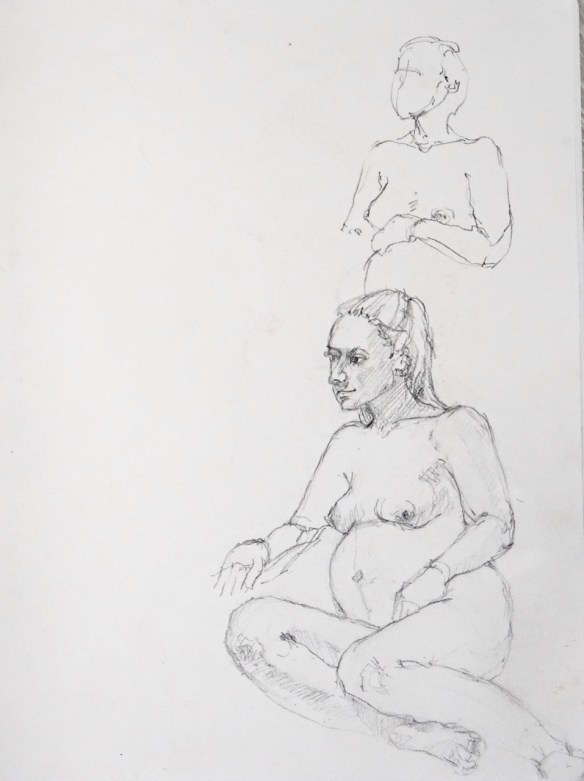 Then spent about two hours working on this drawing.
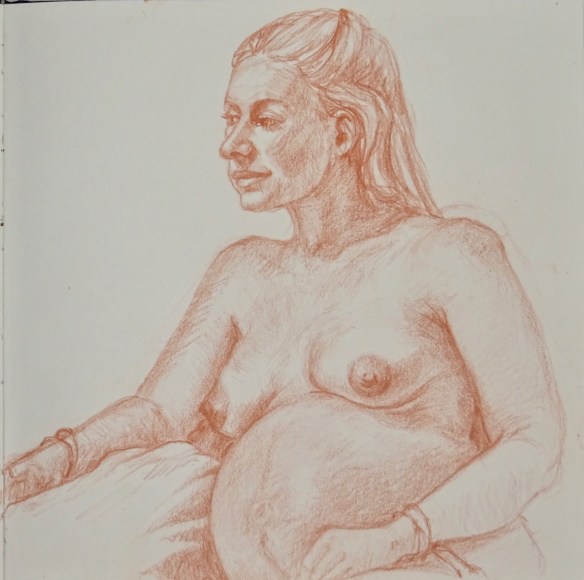 Bob came to pick me up after the session and on the metro ride home I did a bit more sketching.
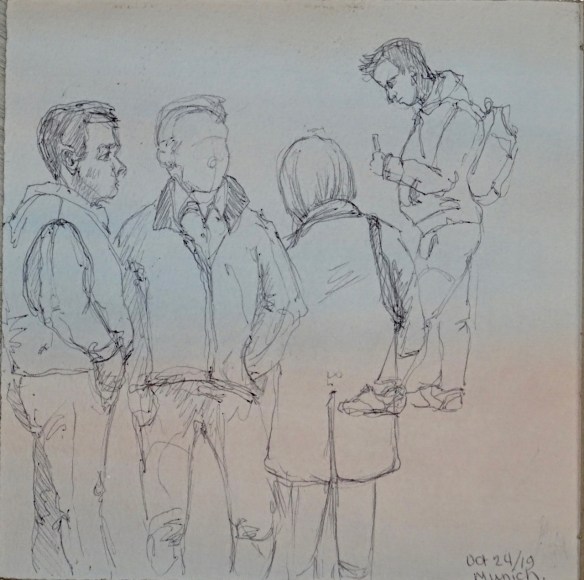
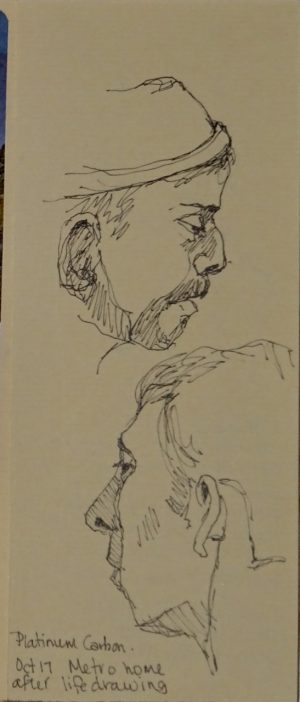 This was interesting, the older man with the facial hair was sitting right across the aisle from me and he was only on the metro for one stop so I sketched quickly hoped he didn’t notice that I was sneaking peeks at him. The young man with glasses did notice I was drawing him and he smiled at me, I smiled back and he tried not to smile as I continued sketching. As he got up to leave I showed him the sketch and he said something in German, then he smiled and said ciao, so I think he liked it.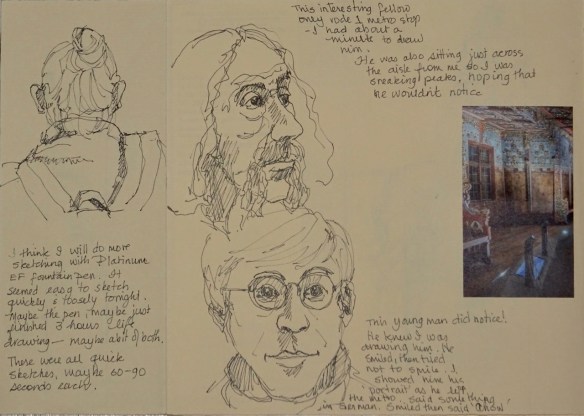
 We can see Hohensalzburg Fortress high on the hill above Salzburg. Tour guide Bob informs me we will visit there on Tuesday.
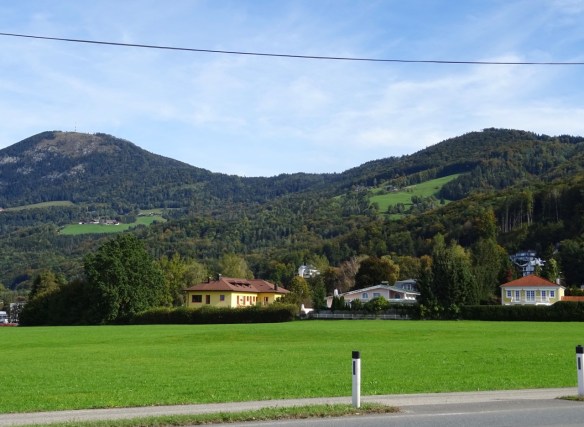
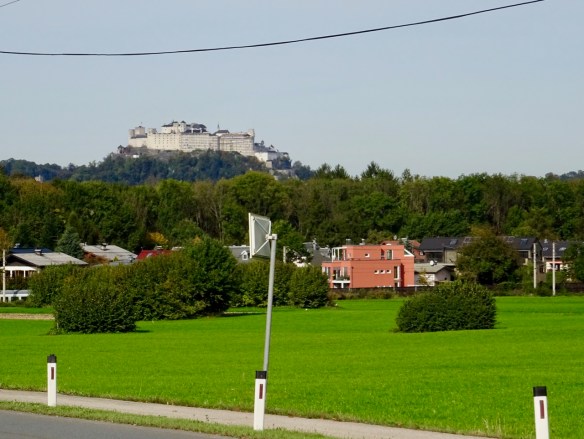 We can see beautiful green alpine meadows in the hills above Salzburg.
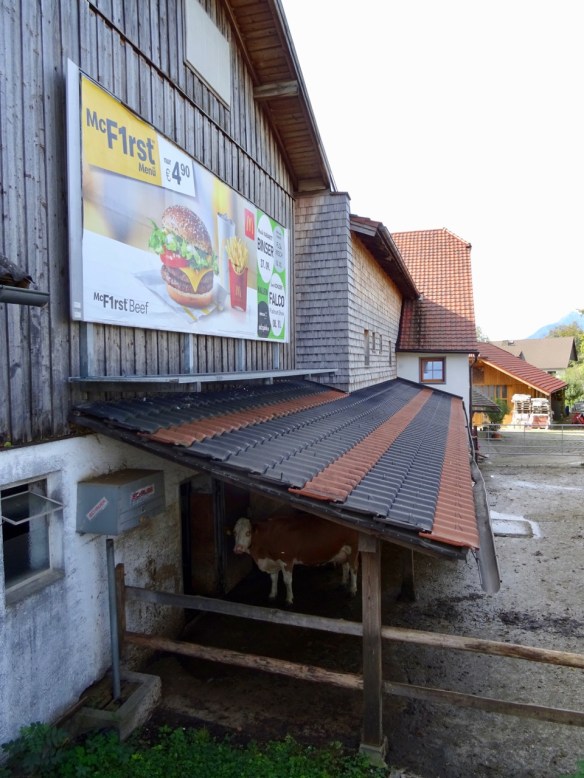
 We pass dairy cows right in town just a couple blocks from the train and bus station. The advertisement above the cows gave me a chuckle.
  We pop into a downtown church when we get off the bus. It looks like a community church from the outside, with big cheery murals on either side of the door. The inside is much less ornate than many of the churches we have visited and there is lots of information on community programs and events. Nice to see.
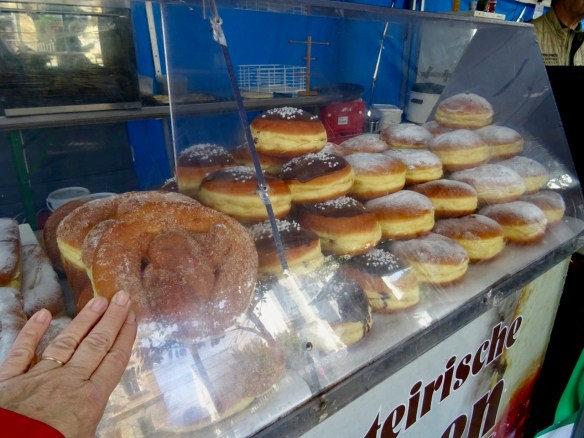
 We stop at some food stands selling wine and beer, and have a bit to eat. These giant doughnuts look interesting but we pass. They are as big as small plates!
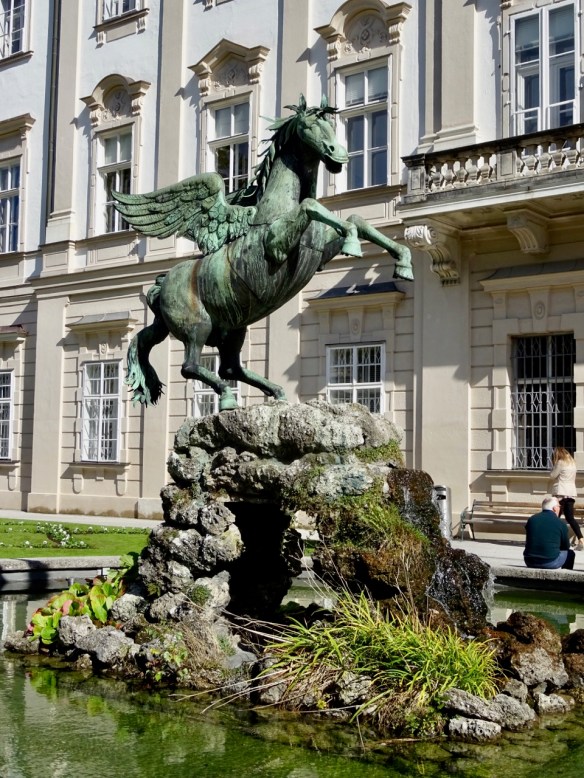
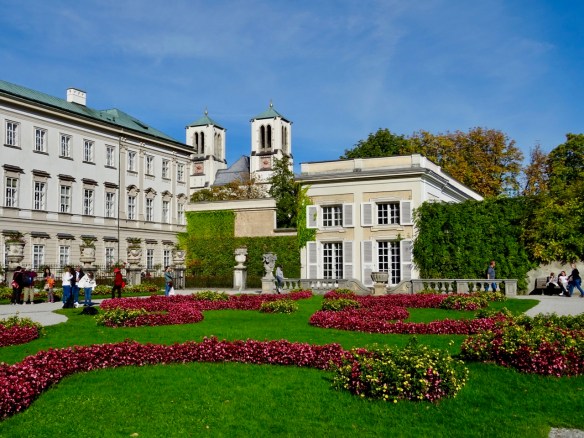
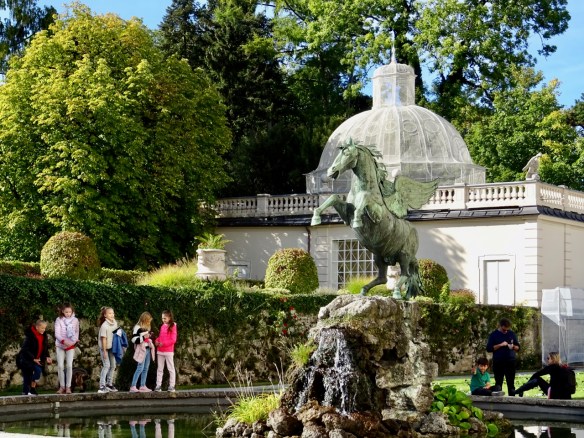
 The gardens around the Mirabell Palace are beautiful. In the movie ‘The Sound of Music’ Maria and the children dance around this Pegasus fountain and sing ‘Do Re Mi’.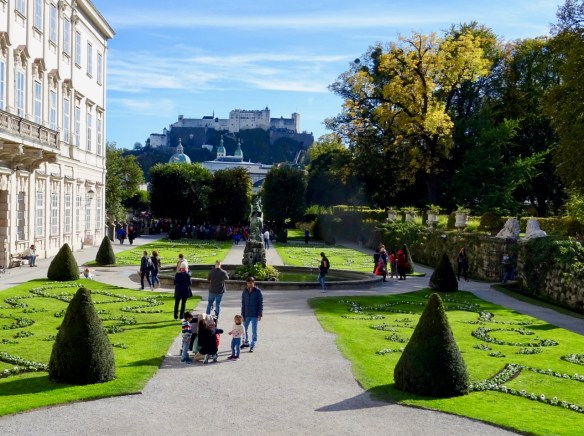
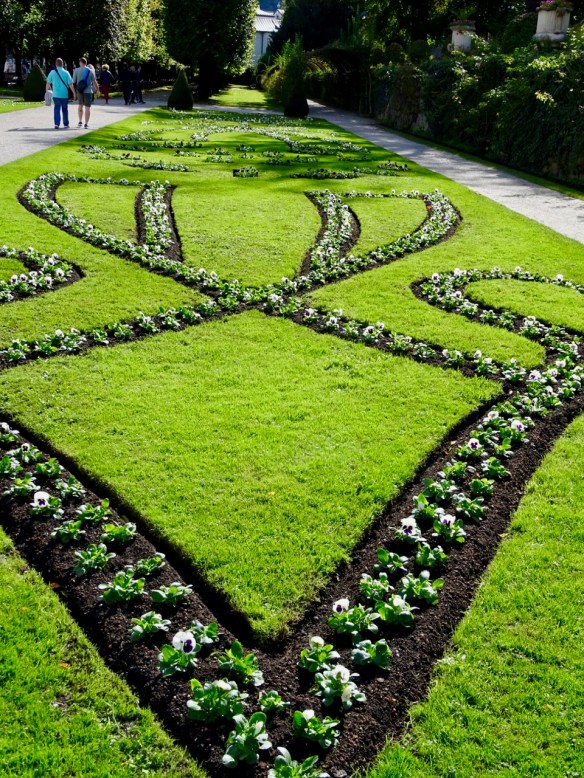
 The grass contains elaborate knot patterns decorated with flowers. These are freshly planted pansies, hundred of dozens of them!
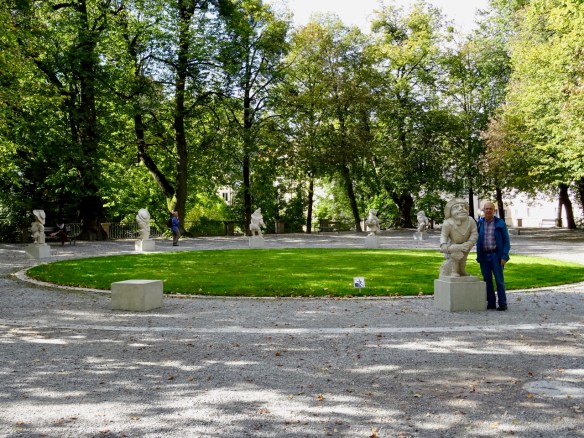
 The Zwergerigarten is a surprise. It is the oldest ‘Dwarf Garden’ in Europe and was built in 1695. Yes, a Dwarf Garden! We had no idea there was such a thing.
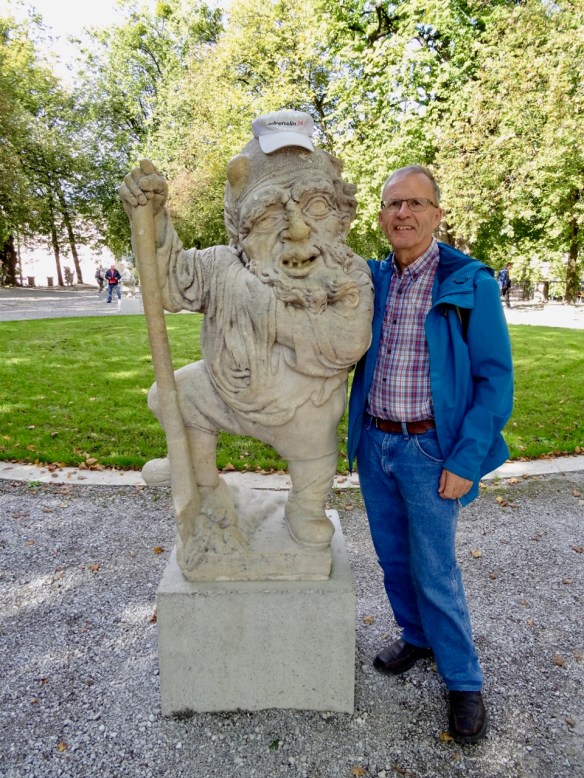
  This fellow insisted on trying on Bob’s baseball cap!
 The collection of 28 marble dwarf sculptures was sold at auction in 1811. 17 of the sculptures have been recovered and put back into the park in their original positions. Here are some of these curious sculptures.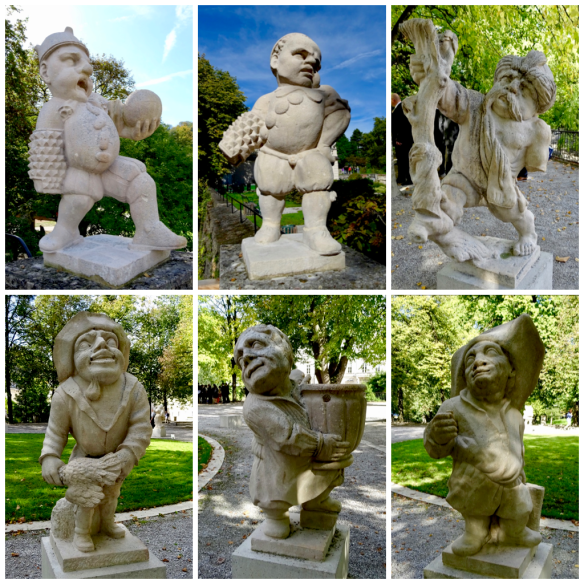
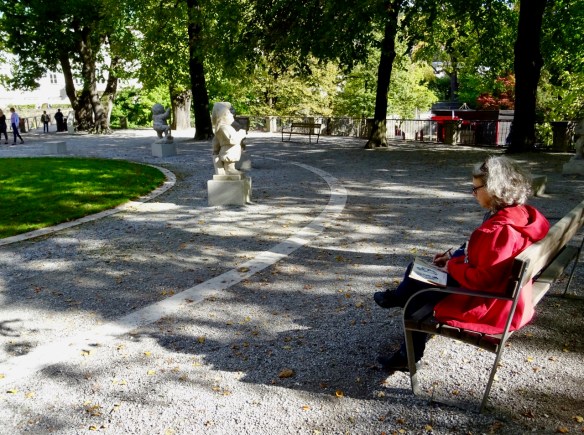
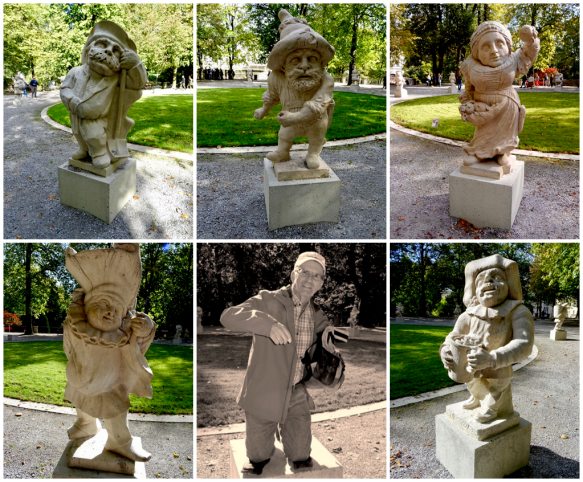 We have tea and cookies in the garden and then I draw for a while.
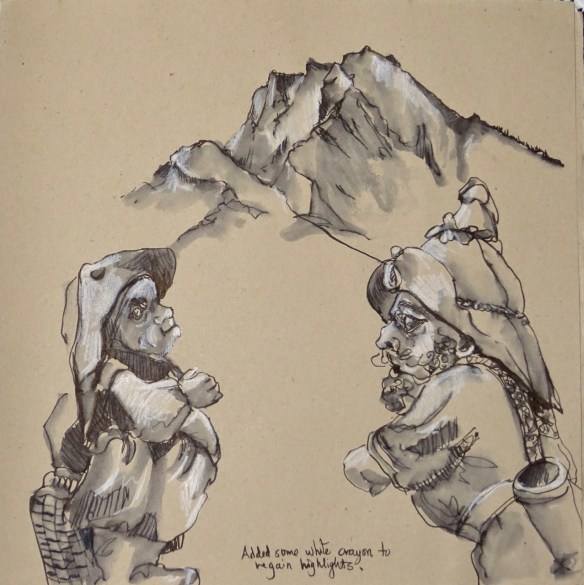
 I used a new brush pen that I got just before we left for holidays. I think it is going to take a while to get used to. I used a water brush to create value with the water based ink in the pen.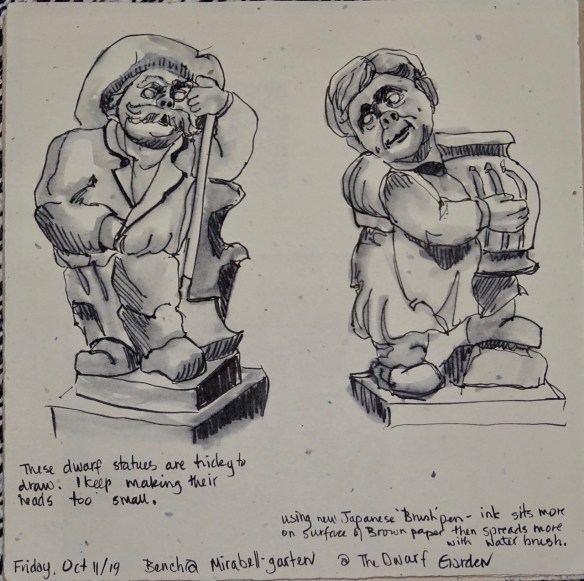
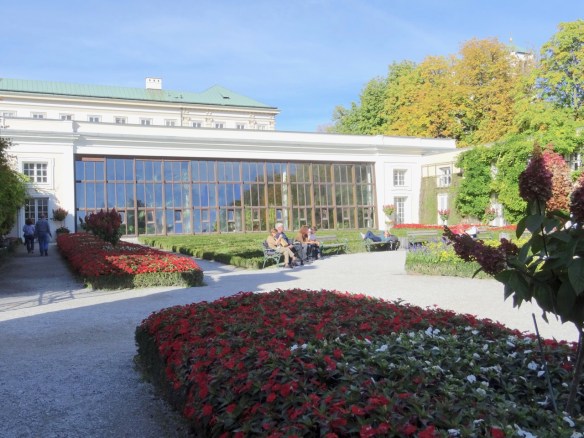
 Walking through the garden there are some more knot designs created with flowers in the grass.
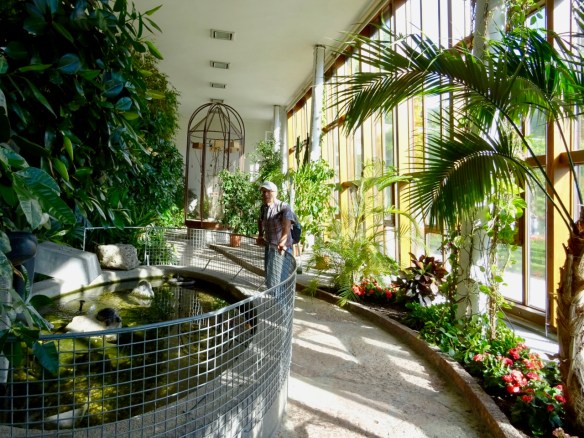
 There is a small Orangerie…
 with some goldfish, a turtle and a few birds.
 Looking back towards the Mirabelle Palace.
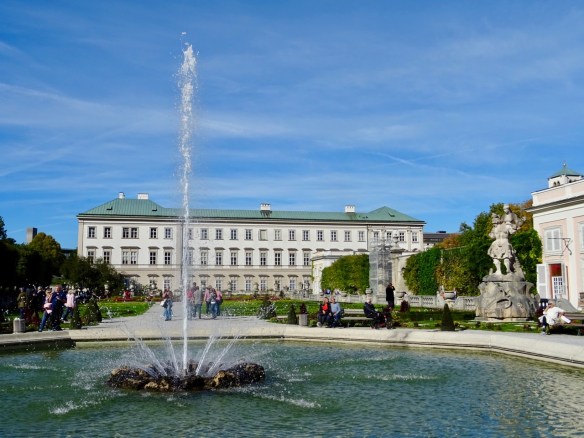 The two towers in the background belong to the church we visited earlier.
 These young girls were enjoying the Pegasus Fountain, and I enjoyed watching them.
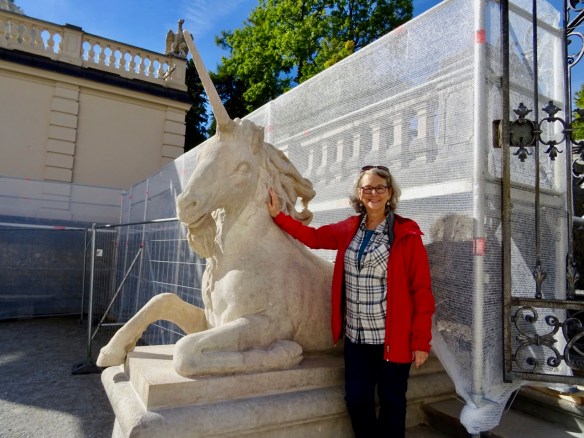
 There seems to be several unicorns here in Salzburg.
 I have time for a quick sketch of a beautiful enormous tree while waiting for Bob.
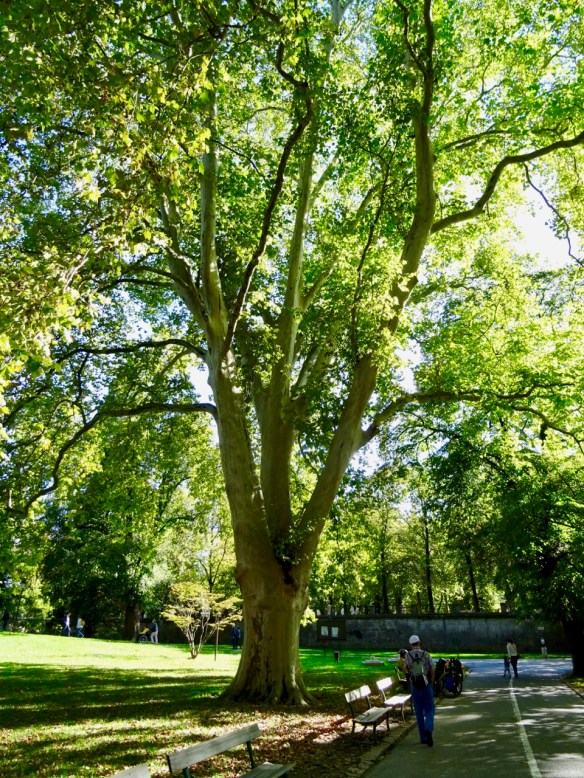
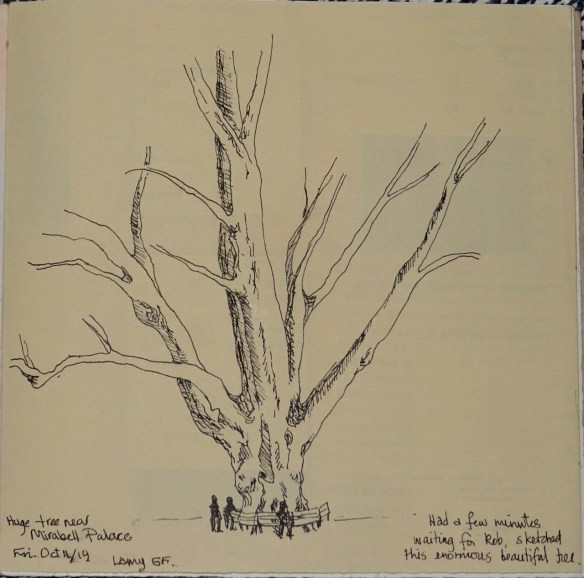 There are a lot of big trees here.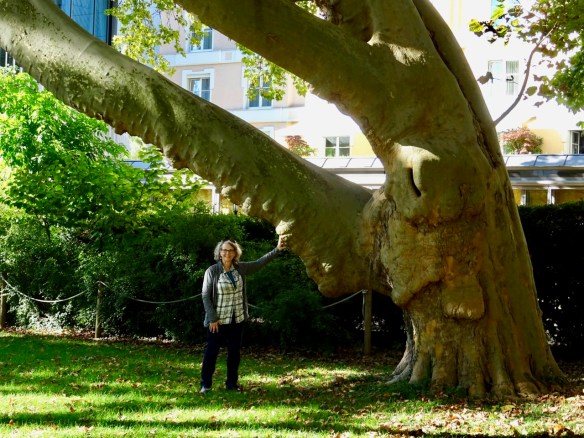
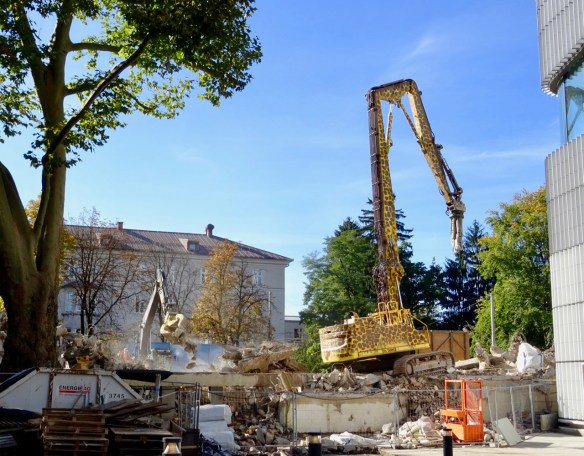
 We have never seen a giraffe quite like this before!
 We walk along the river heading towards the Old Town.
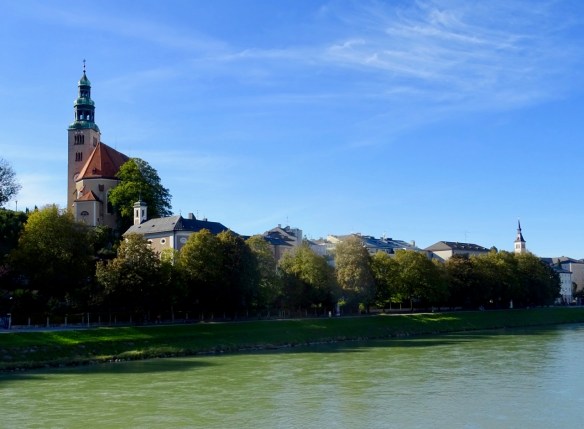 The Old Town and the Castle on the hill make a striking view.
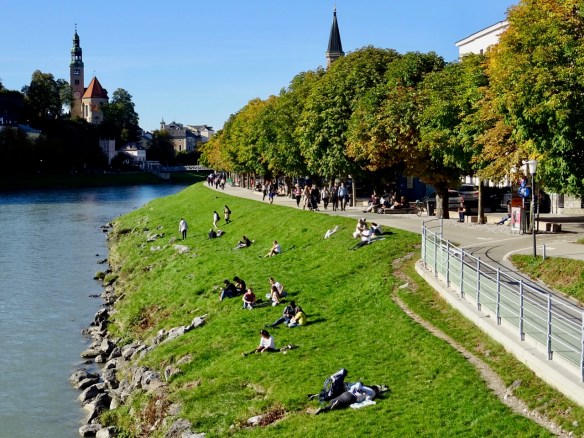
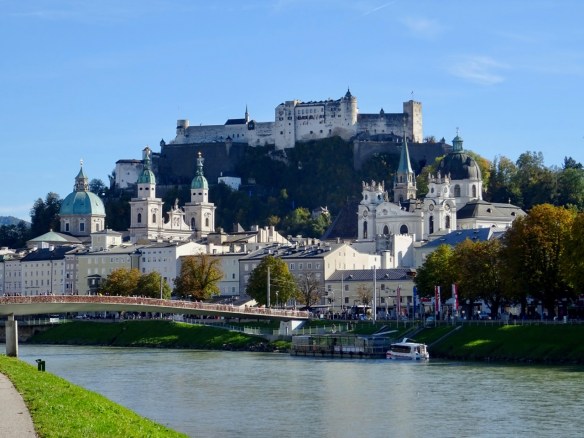 People are out enjoying the warm weather.
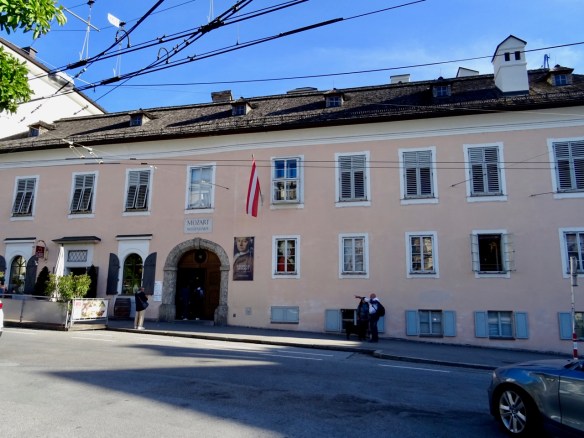
 This is the house that Wolfgang Amadeus Mozart lived in with his family until he moved to Vienna in 1781. His family occupied the entire top floor. We were looking for a free film and somehow ended up in the museum instead, so we had a quick look around.
 This street was the inspiration for the song ‘Silent Night’. It is a long street so no idea exactly where this inspiration transpired.
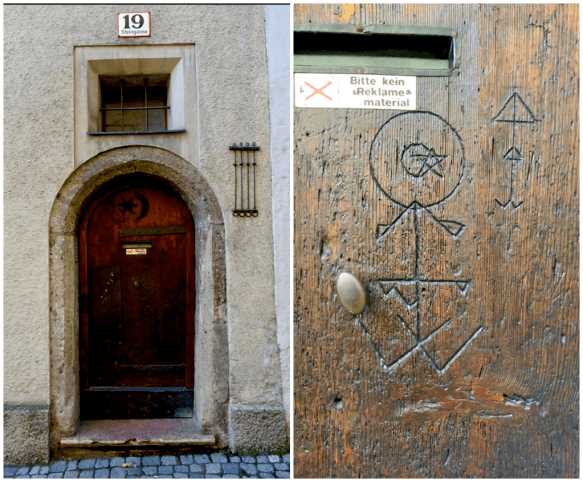
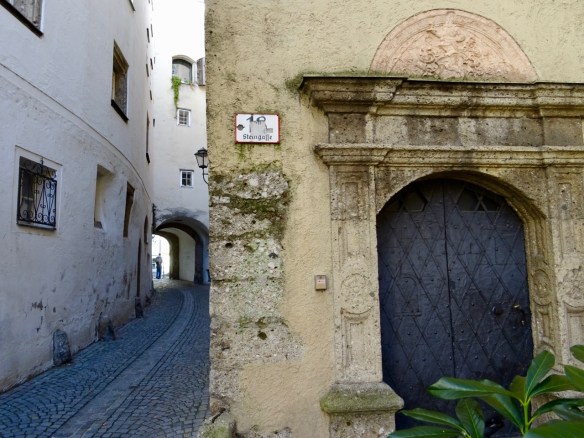 This door had interesting marks scratched on it that looks very old.
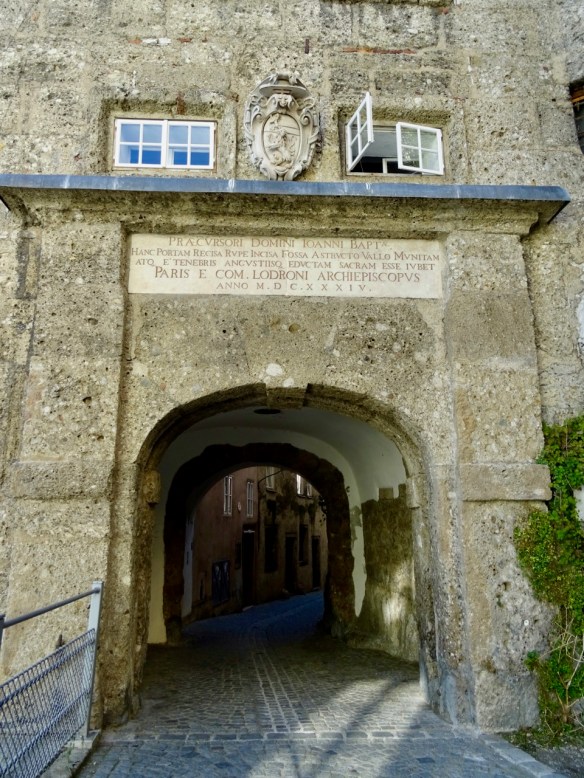
 Here is the entrance to the “Silent Night’ street.
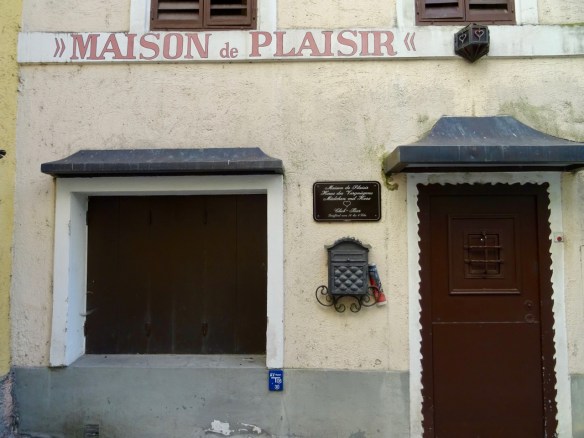
 As we explore some of the side streets, we pass this ‘House of Pleasure’, and yes, it seems to be that kind of pleasure!
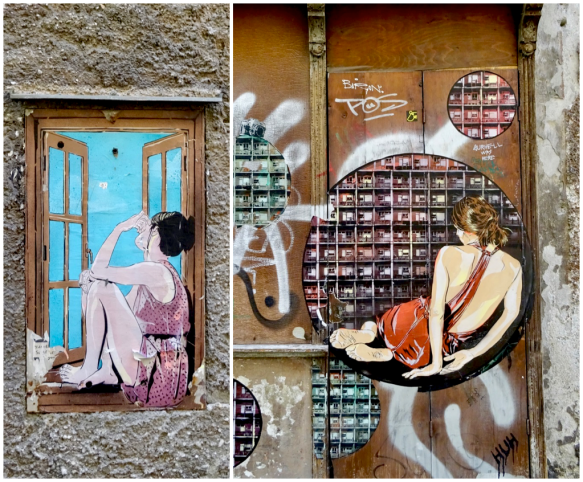
 We also see some graffiti that I quite like. Note how the little ledge is incorporated into the image. Very clever!
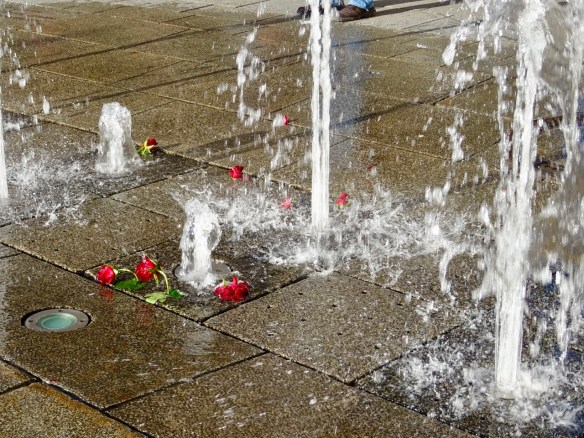
 This little sidewalk fountain had red roses stuck in small holes in the paving. I wonder why?
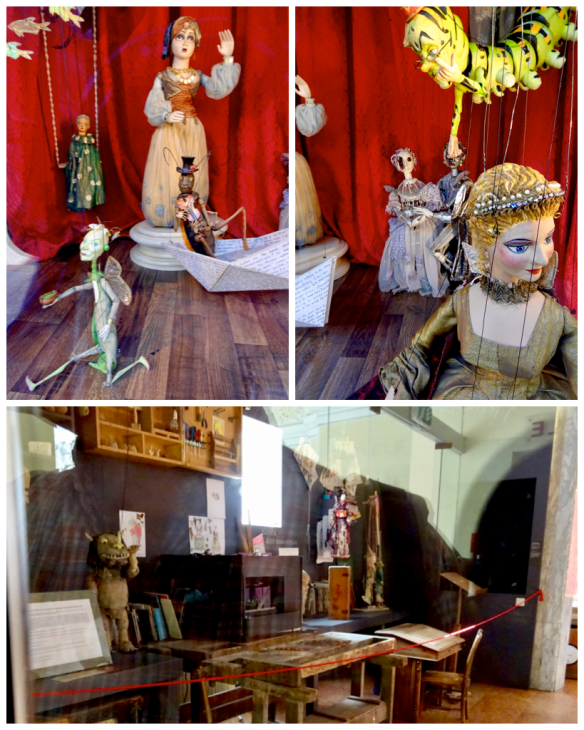
 We check out the Marionette Theatre, but unfortunately there are no performances while we are here.
 While we wait for the bus home I notice an empty store front where someone has written on the glass windows with a black felt pen. It is an interesting different sort of graffiti.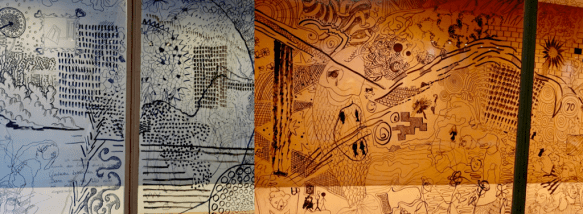
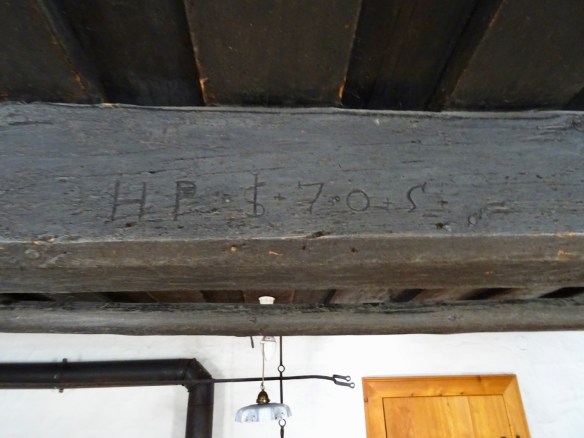
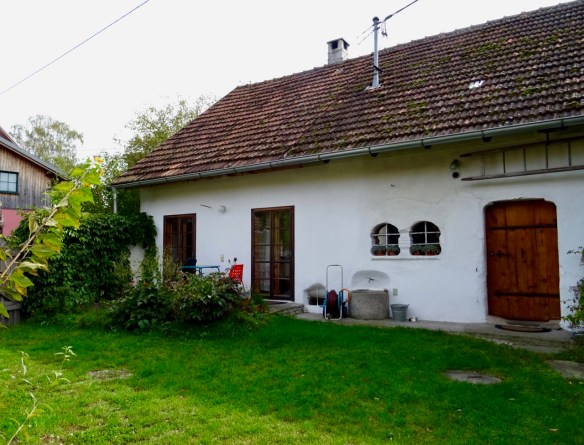
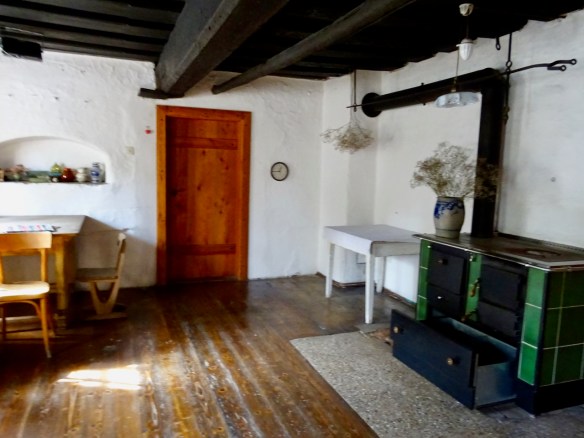 The date 1705 is carved in the ceiling beam, but Peter tells us that the cottage is actually 400 years old and was originally a fisherman’s cottage. He says this is a typical farmhouse. I never got a chance to ask him if the original fisherman’s house was always this big, or was it added on to over the years?
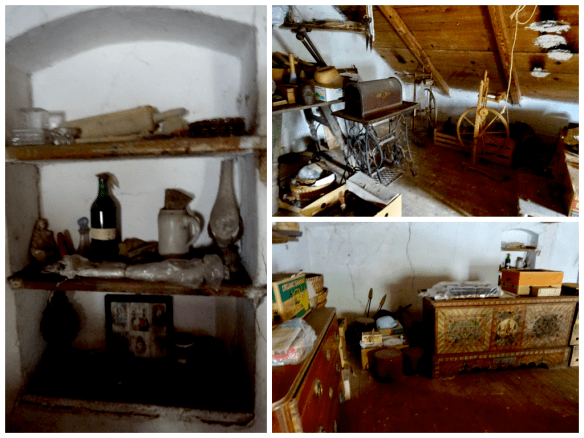
  I would love to be able to poke about in this attic! There are spinning wheels, a sewing machine, old chests and trunks, baskets, containers of all sorts, and lots of boxes filled with who knows what?
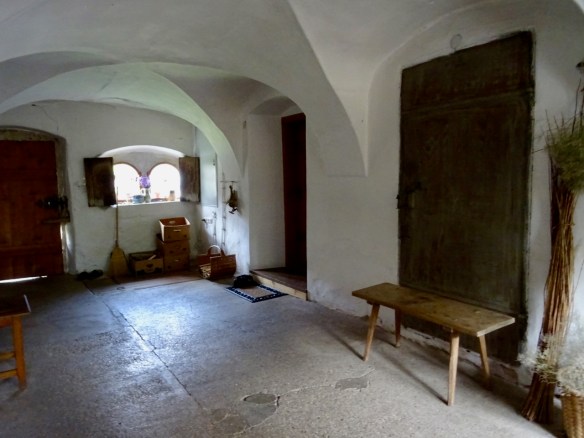
 The entry area between our apartment (which used to be a stable), and the living quarters has this big metal door behind the stool. Upstairs is another enormous attic that runs the length of the building.
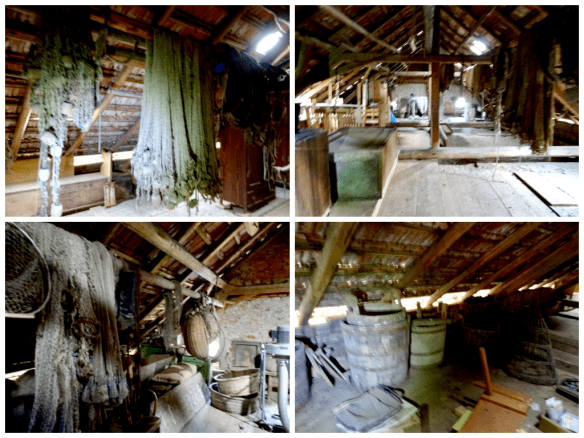
 Here there are even more interesting things: old fishing nets, more chests and trunks, old baskets and wooden buckets and vats, and all sorts of interesting things that have probably been there many years. Now I look at all the houses we drive by and wonder what is up in those attics! I wonder what treasures might be hidden away in all these old houses?
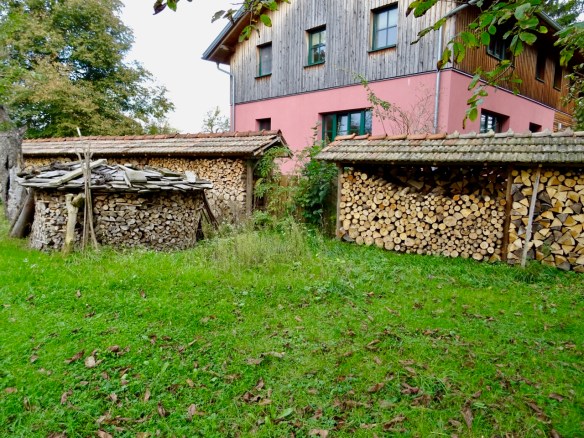
 This is only some of the huge woodpile Peter has cut and stacked, ready for the winter. We think that the air quality here must be very poor in the winter with all the wood burning that takes place. Most of the houses around here have enormous piles of stacked wood just like this.
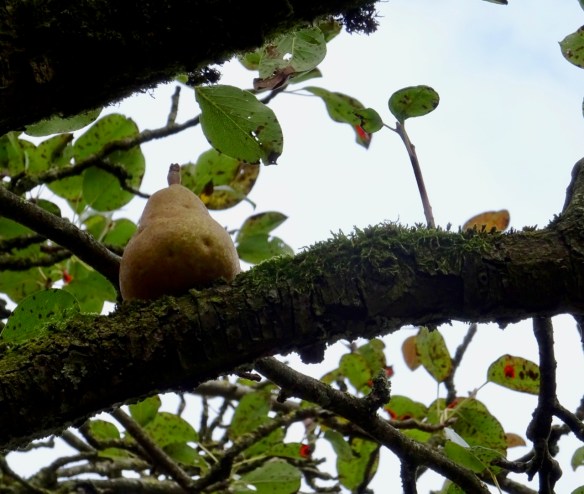
 I went out to pick a few apples to cook for dessert and noticed a pear tree. Most of the pears had fallen and weren’t good to eat but this one pear had landed on a branch and was sitting balanced there, just out of my reach!.
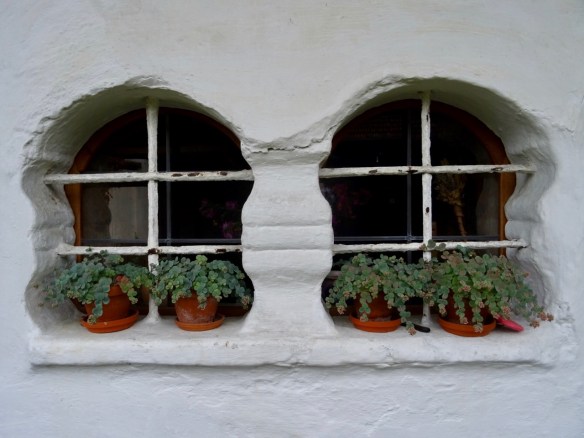
 One more view out a pretty window. Bob went for another bike ride this afternoon and I did a bit of blogging and relaxing. We are both finding it a nice change staying in the country. It is so quiet and peaceful. We have enjoyed our time in the cities, but this is a relaxing break from that routine.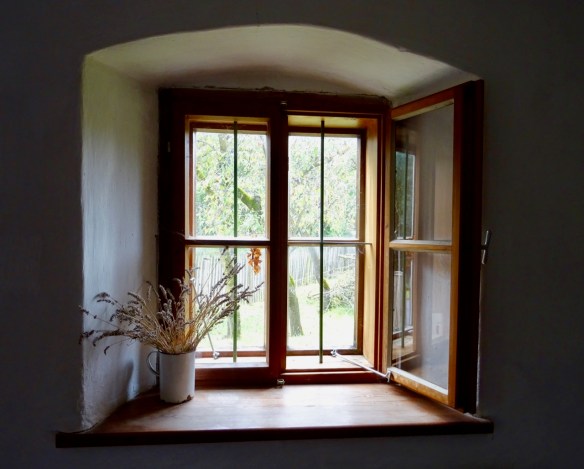
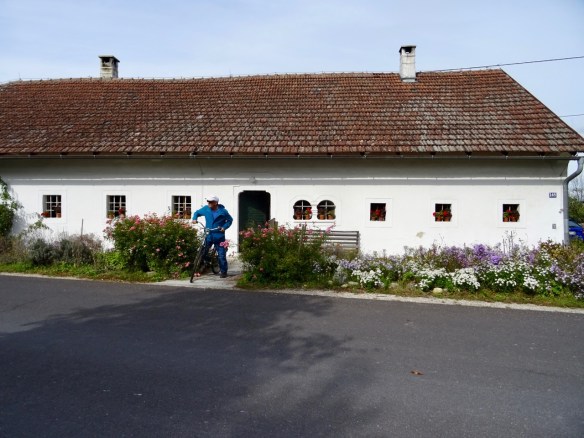
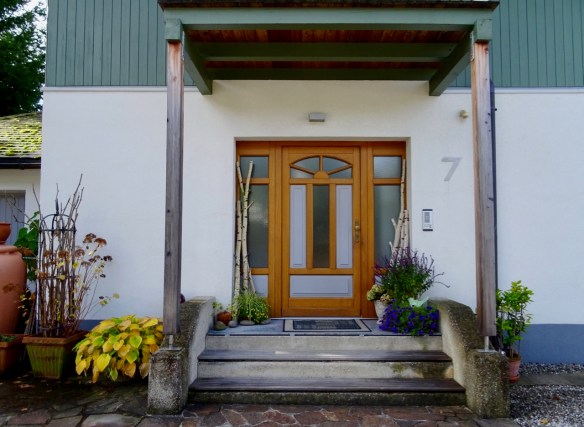
 Our bnb has a lovely wild flower garden out front and there was a little bouquet of the pink roses on our table inside. The green door leads into an entry area, and the three smaller windows are in our apartment.
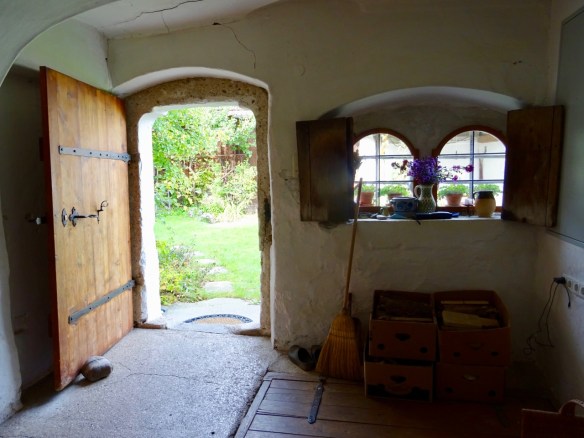
  The inside view of the two windows by the green door. I think the shutters must be original. The building is 400 years old and our apartment was originally a stable.
 This is the door opposite the green door, looking out to the back yard.
 The two big windows of our apartment from the back yard.
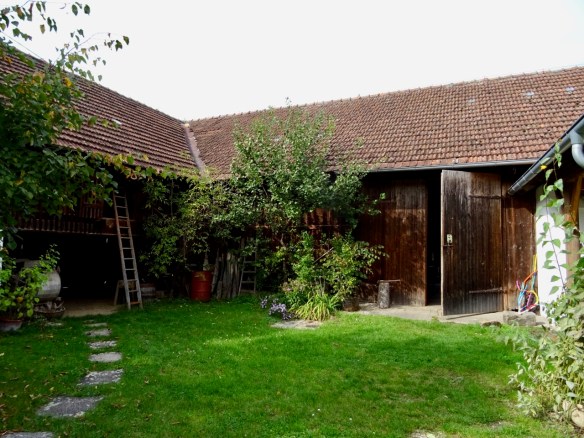
 The farm buildings are connected to the house. The buildings form a square with the interior yard area you see here. There is a short fence with a wide gate on one side of this yard.
 Everywhere I look there is something interesting.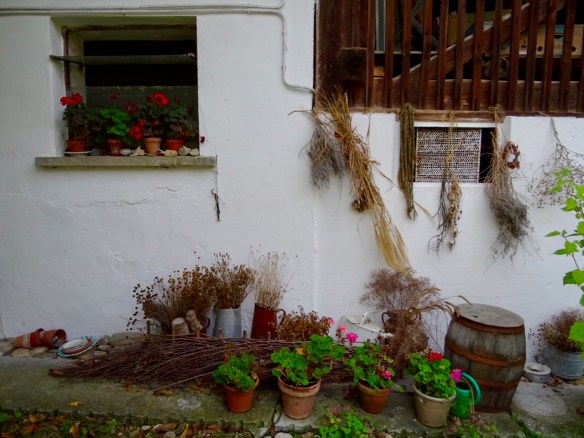
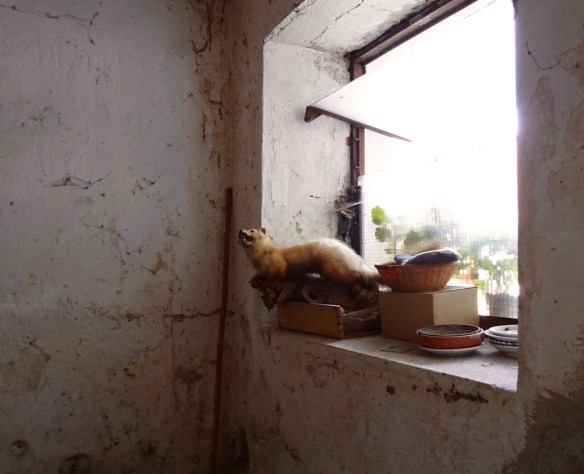
 I did get a bit of a shock meeting this fellow in one of the barns.
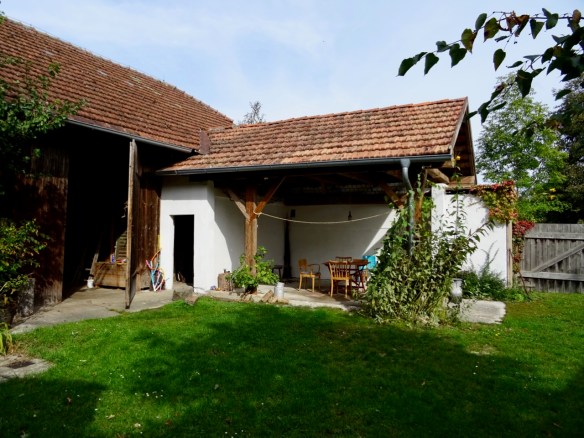
 There is a little sitting area if it gets warm enough for us to enjoy it.
 I spent the afternoon with my three new friends. It took a while for them to get used to me, but they love bread! A few slices helped convince them that I was pretty harmless.
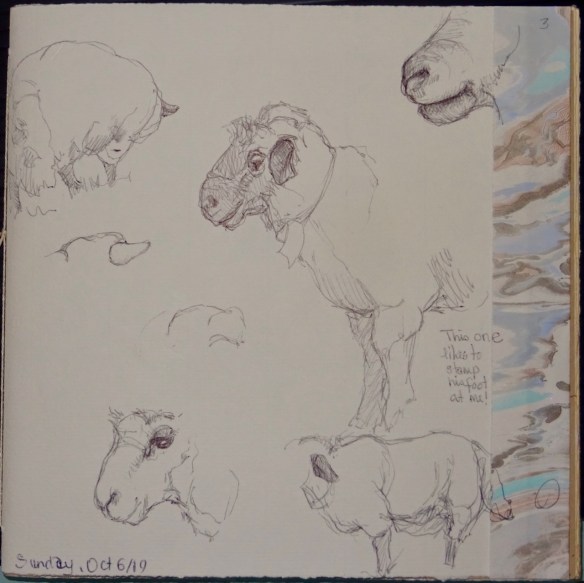
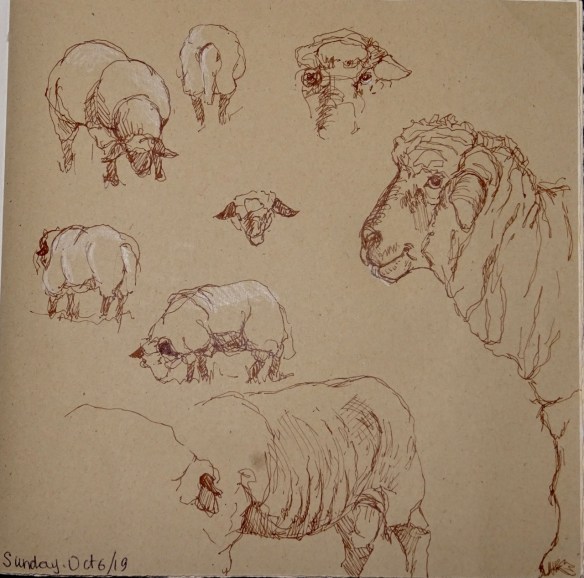
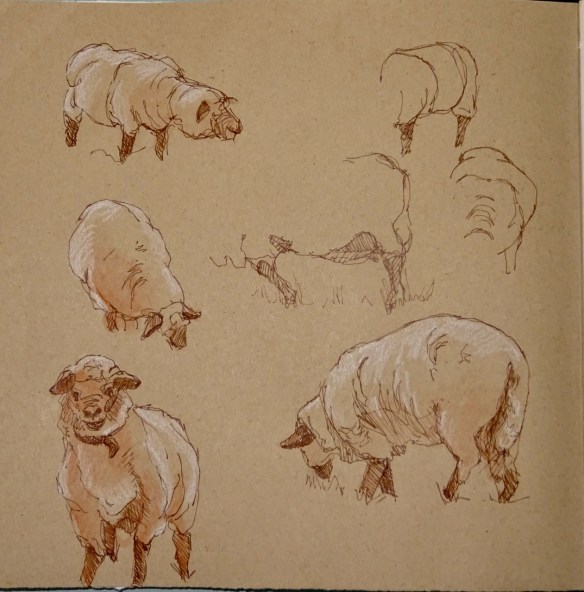
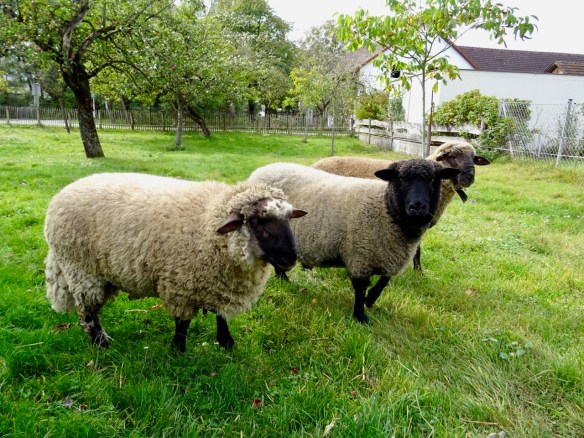 I spent a couple hours observing, drawing and taking lots of reference pictures. These sheep do not have wool that is useful for spinning. The fibres are too short, so they are raised for their meat. I had never seen sheep with undocked tails before. I had no ideas their tails were so long. At times they looked quite dog like. They are also very fidgety models!
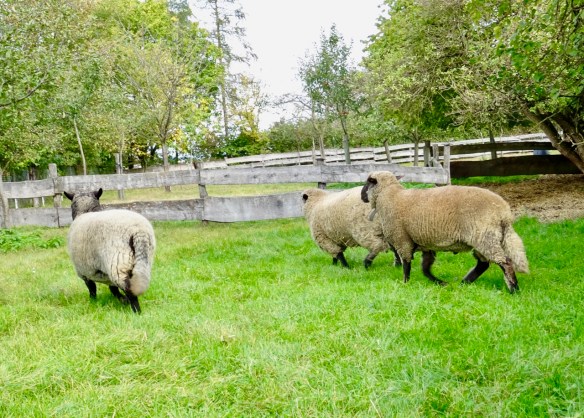 When Bob gets back from his ride he makes friends with this fellow but the other two want nothing to do with him. This sheep is nine months old and the poor guy doesn’t realize he will be butchered soon.
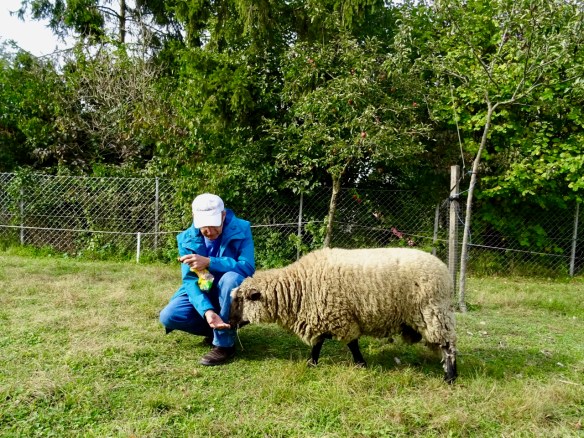 His new buddy follows Bob, hoping for just a bit more bread.
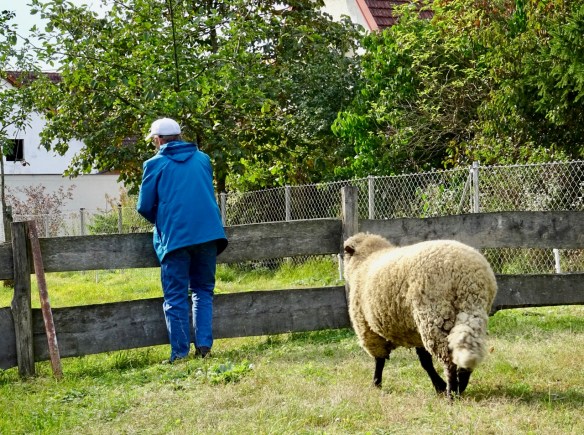 Years ago I found an old copy of Henry Moore’s Sheep Sketchbook and I have wanted to draw sheep ever since. I just had no idea how difficult they would be to sketch. Seems like my idea of what a sheep should look like just isn’t what these sheep actually look like!
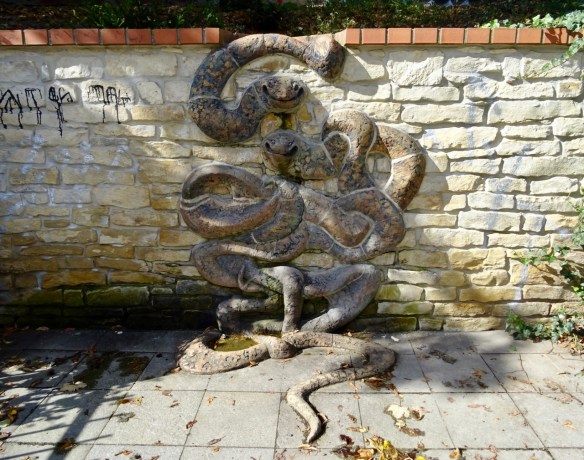
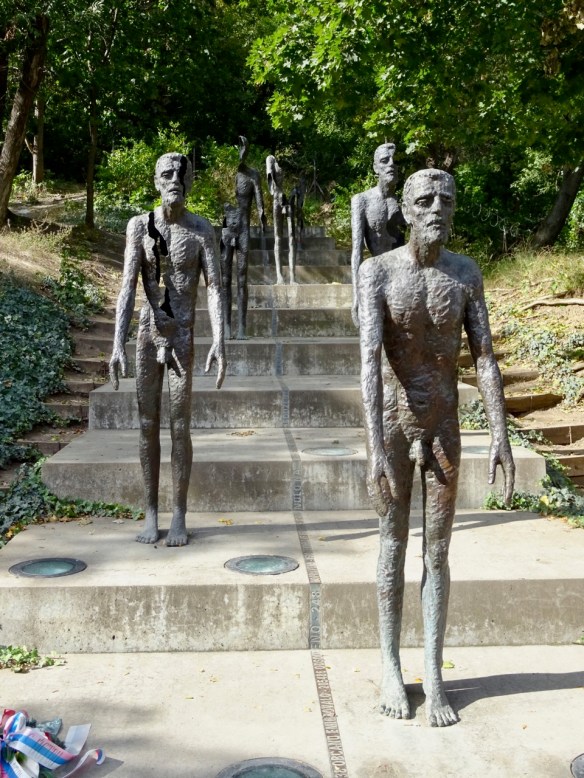 This sculpture makes us smile. It appears to have a dog drinking dish at its bottom.
 Peering into a church courtyard we see this crucifix right beside a gift shop. It seems strange to have an upscale gift shop in a church courtyard.
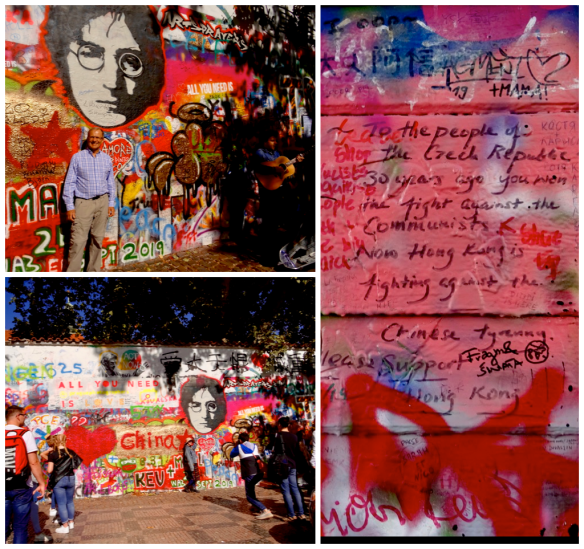
 Bob leads us down several little side streets to the John Lennon Wall. Since the 1980s it has been filled with John Lennon-inspired graffiti, pieces of lyrics from Beatles’ songs, and other designs relating to local and global causes.
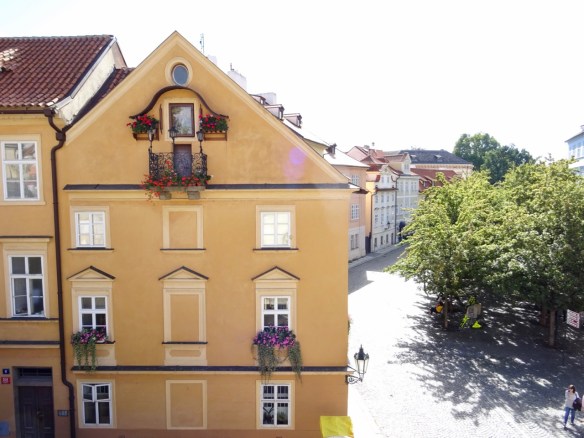
 We stop for a picnic lunch in this little park beside St. Charles Bridge…
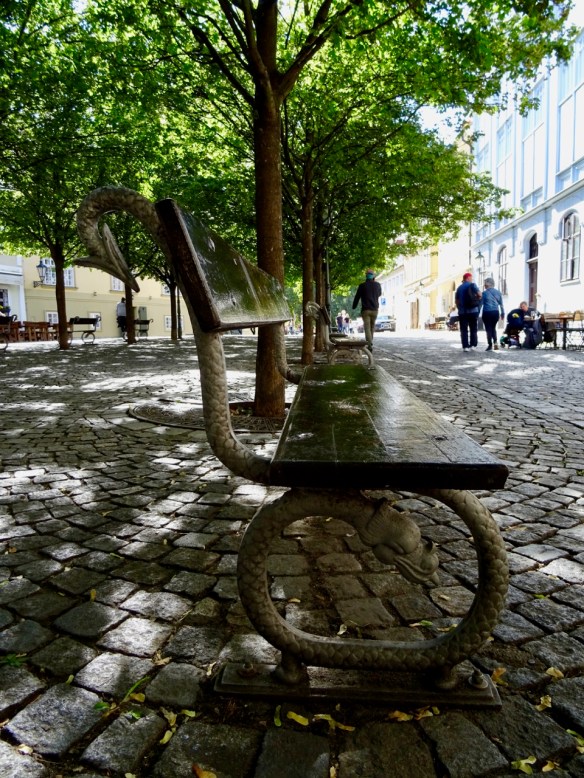
 and sit on a dragon bench.
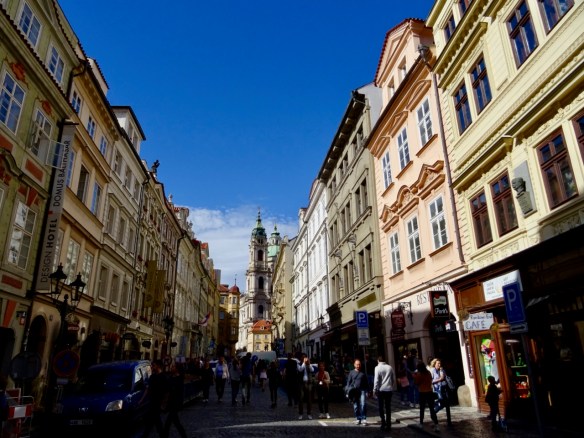
 The streets in Prague are busy no matter where we go. We wonder what they must be like during the summer months?
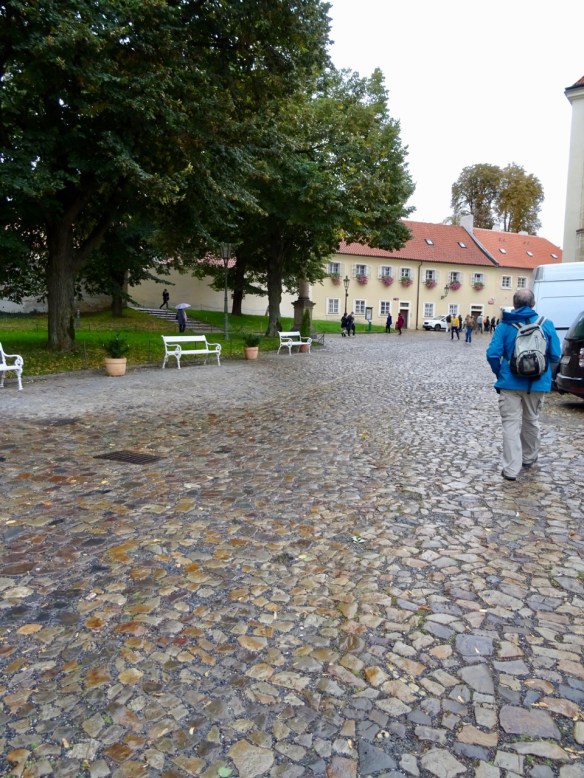
 It showers on and off as we arrive at the monastery. Note the cobbled road. All these uneven cobbled surfaces are quite hard on our feet and ankles.
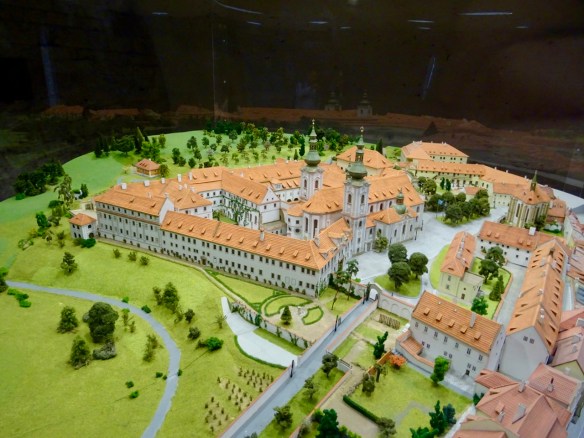
 The Strahov Monastery was founded in 1143 and has many buildings and extensive gardens.
 First stop is the Strahov Library and I am delighted to find that there is an exhibit of Cabinets of Curiosities!
 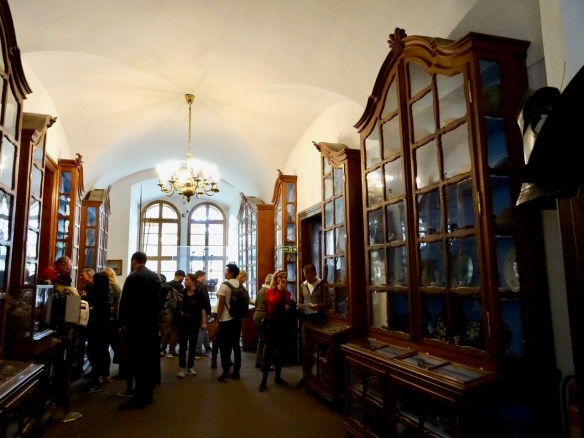 I love these cabinets and have several drawers at home with my own curiosities. Perhaps I need to make my own Cabinet of Curiosities?
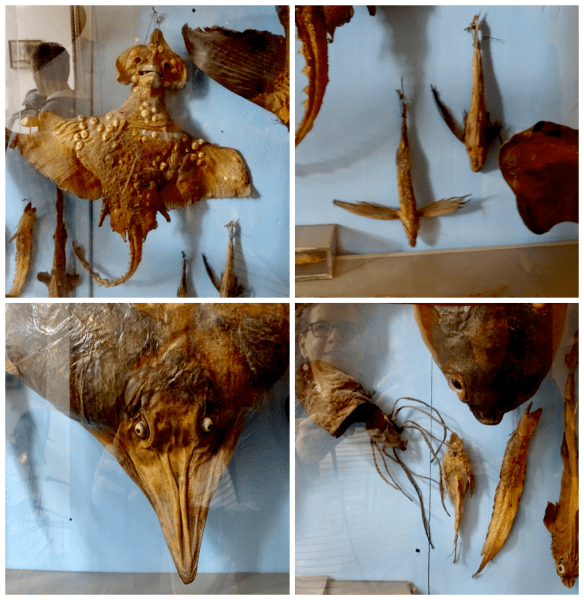
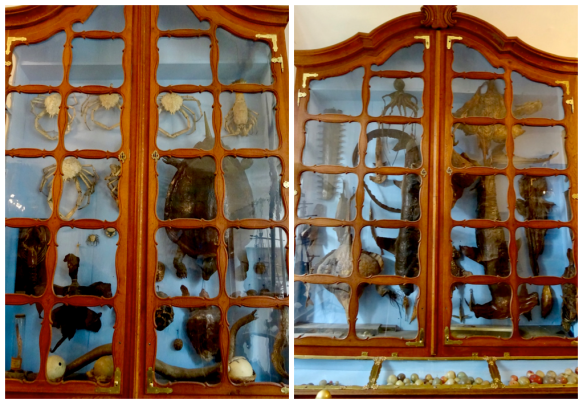 Some of the contents are rather strange.
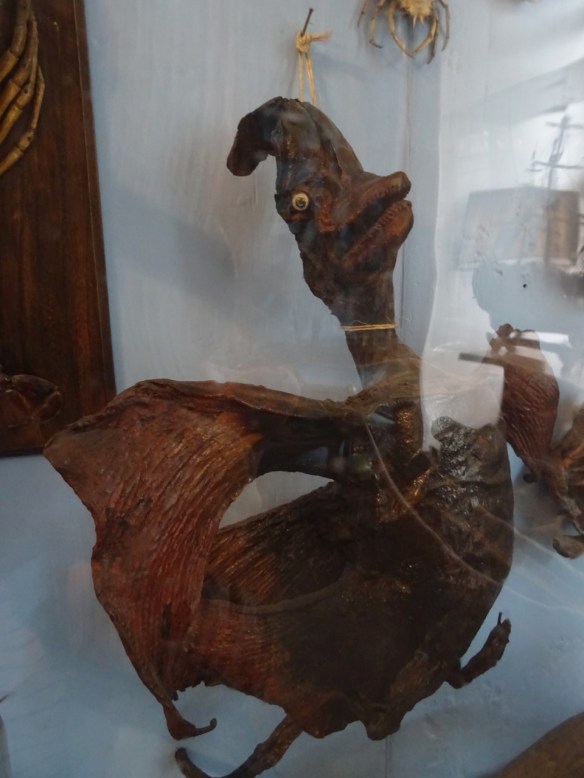
 We are told that this ‘might’ be a young dodo bird!
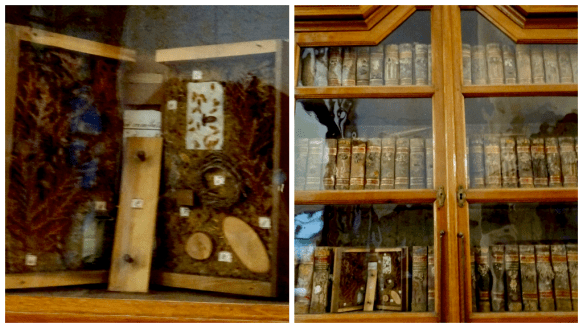
 These books are very unusual. This is a 68 volume Dendrological Library. Dendrology is the science and study of wooded plants. The covers of each volume are made of the wood of a particular tree, the spine has its name in Latin and German, and inside each volume are pieces of the roots, branches and twigs, as well as leaves, blossoms, fruit, and sometimes even insect pests. As a paper artist and bookmaker, I find these unusual volumes fascinating and inspiring.
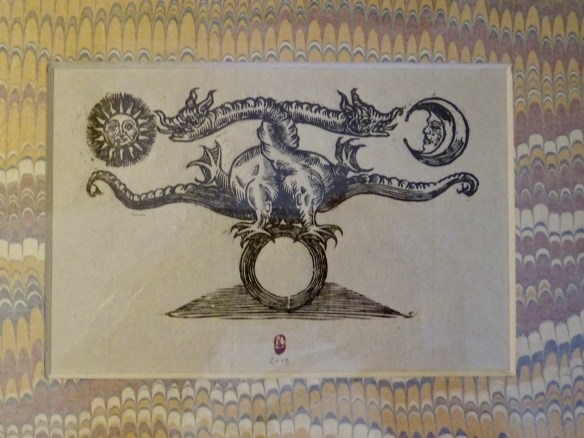
 Along the hallway between two magnificent libraries are display cases with very old volumes. This 1632 woodcut first appeared in a compilation of English Alchemical texts. This piece was printed by hand on Japanese hand made paper and the pass-partout, or mat, is covered in handmade marbled paper.
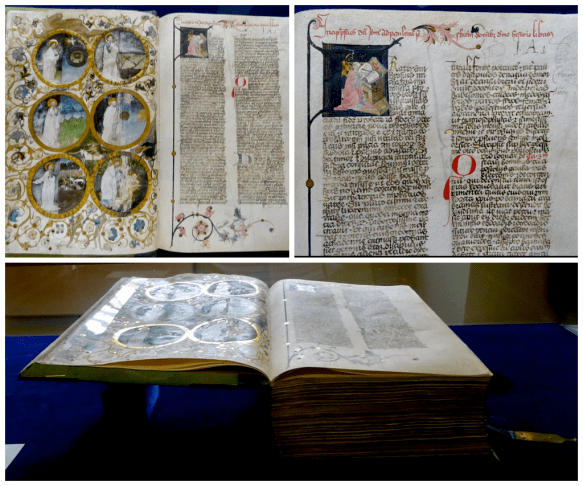
  The John of Šellmberk’s Bible preserves the oldest translation of the Bible into the Czech language and dates from the 1400’s. Notice how thick the volume is!
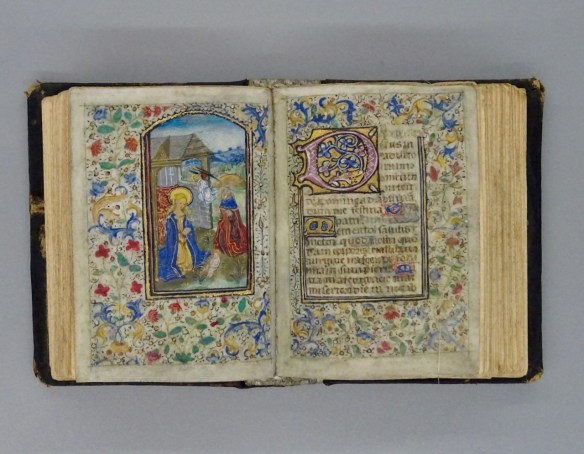
 This exquisite miniature book from the 15th century is only about 3″ x 4″ and would have belonged to a private citizen.
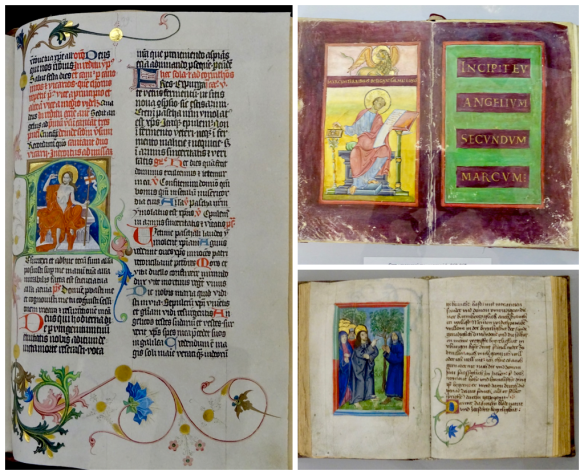
 A page from the Missale of Louka, 1483, illuminations from the Strahov Evangeliary, 860-865 AD and on the bottom right, a book for private use from the 15th century.
 The Theological Hall was built in the 1600’s and holds over 20,000 volumes. One whole wall is filled with various editions of the Bible, or its parts, in various languages.
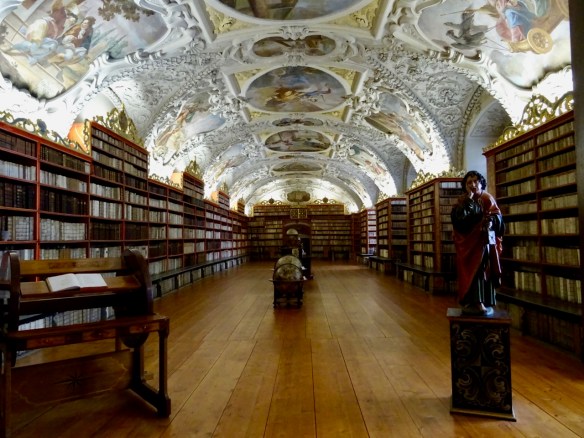 The ceiling depicts the life of the librarian.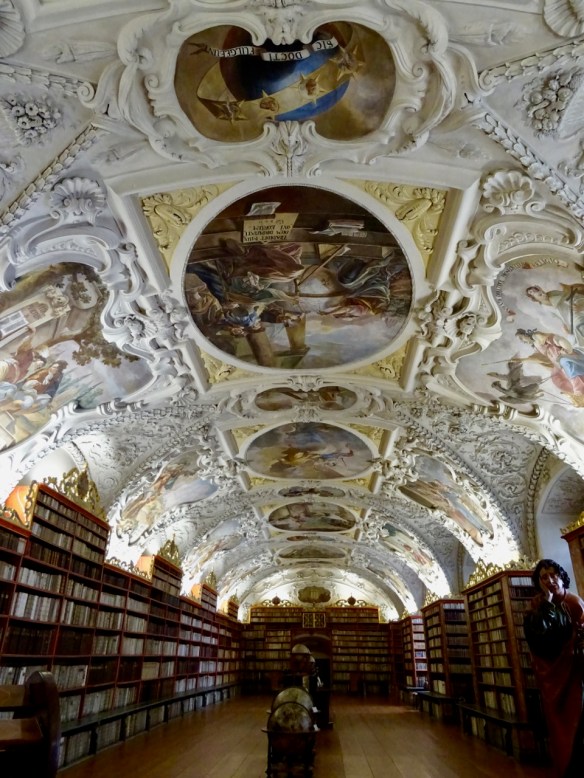
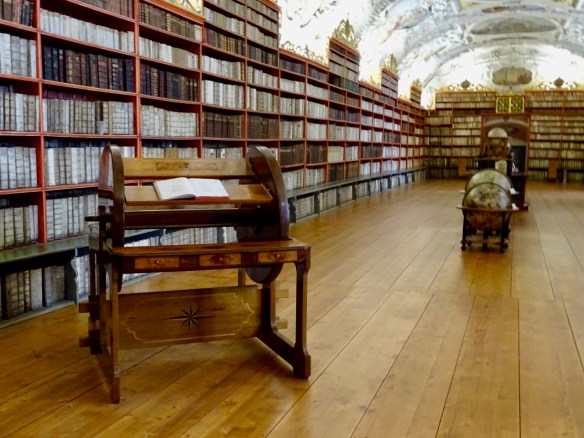
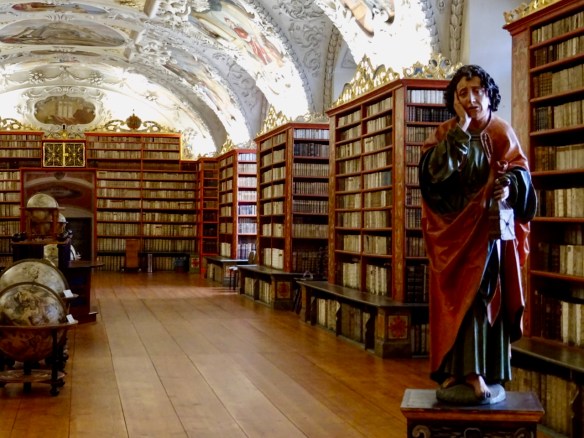 There are several globes, both terrestrial and astronomical, in the centre of the room and the interesting device on the left is a book wheel from 1678 for the study and compilation of books. The gear inside enabled the shelves to remain at the same angle when they are turned so that the books would not slide off the shelves.
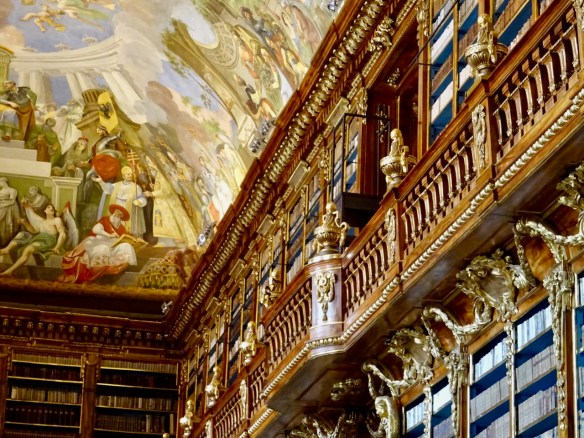
 As magnificent as the Theological Hall is I think that the Philosophical Hall is even more impressive. This library, finished in 1794, is 32 metres long, 10 metres wide and 14 metres in height. The ceiling painting, ‘The Spiritual Development of Mankind’, was created by a Viennese artist, and one assistant in just six months!
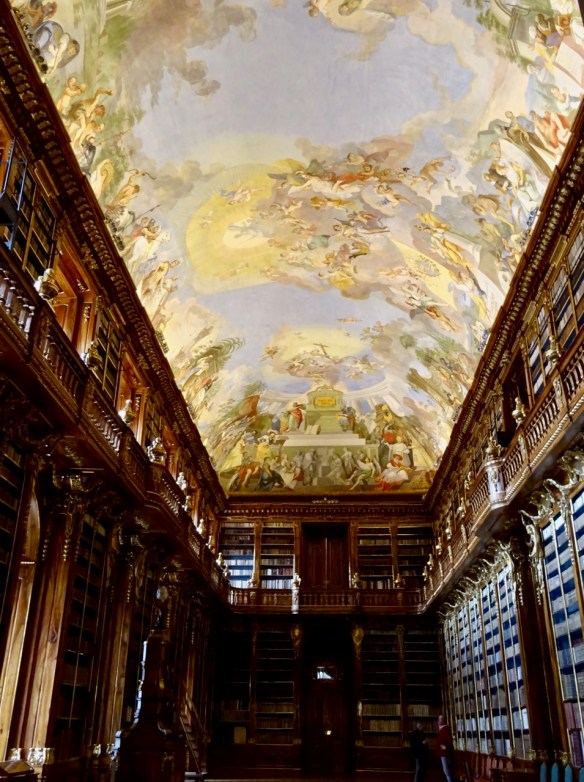 The shelves of books in the gallery are only accessible from hidden spiral staircases in both corners, masked by false book spines.
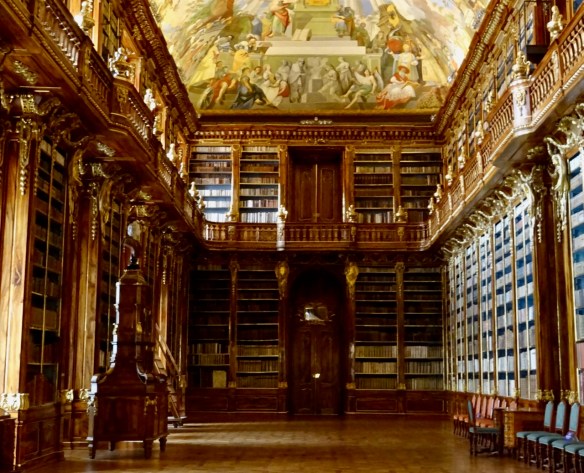 The books are shelved two deep. At one time tourists were allowed to walk through the library but this caused too much humidity and put the paintings and volumes at risk. Now we have to contend ourselves with peering in from the doorway. Too bad but it is still wonderful to see these incredible libraries.
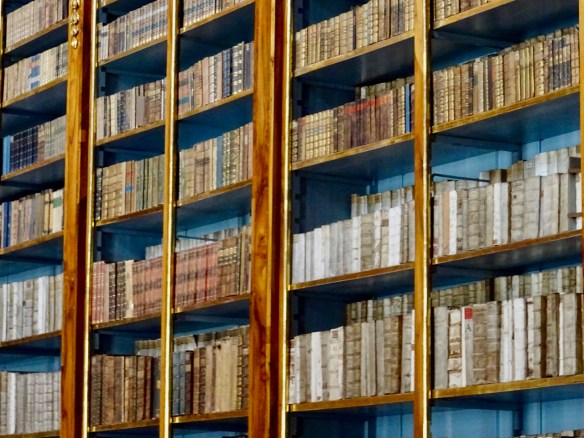 The Philosophical Hall contains more than 50,000 volumes on Philosophy, all the sciences, history, law, and natural sciences.
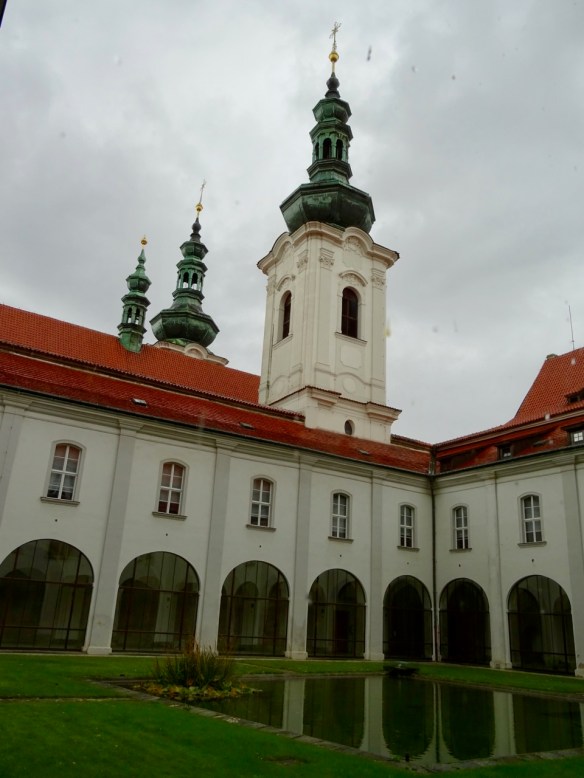
 Next we visit the Convent Building which has galleries on two floors around this cloister with its unusual trapezoid pool.
 There is an exhibit of large restored paintings depicting the life of St. Norbert but they were difficult to see. My neck got sore from looking up all the time.
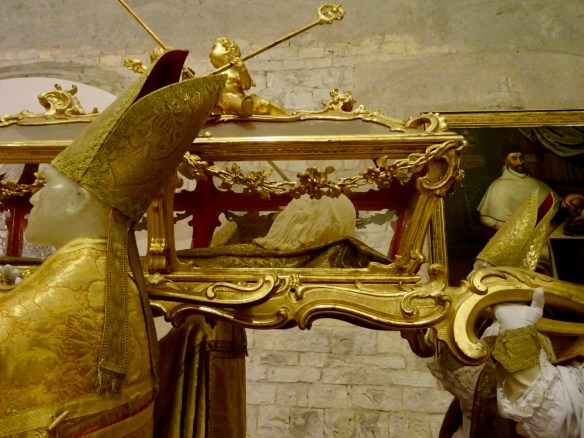
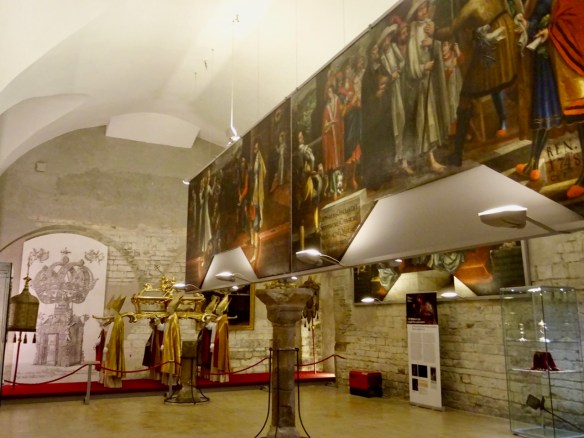 The ‘procession’ at the end of the room holds a reliquary with what appears to be part of St. Norbert’s skull.
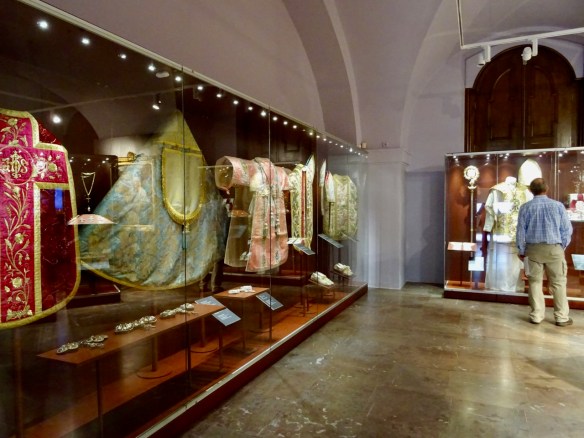
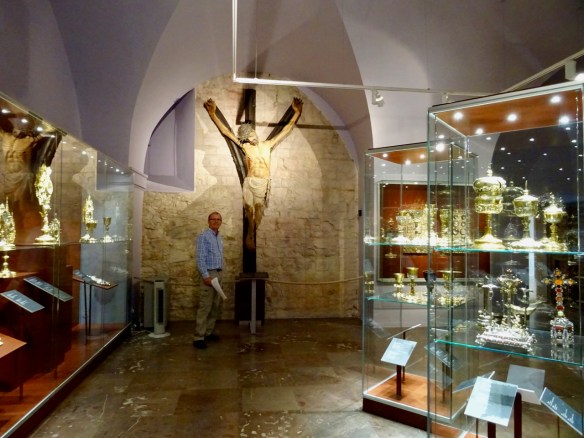
 Another room has exhibits of beautifully embroidered church vestments and other liturgical objects including heavily jewelled monstrances.
 It does make me wonder just how much money the Catholic Church has?
 The second floor has a gallery around three sides of the cloister.
 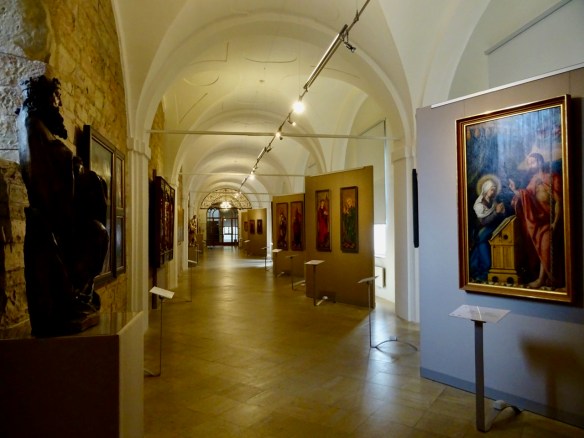 There were a few paintings I liked but most of them didn’t really impress either of us all that much.
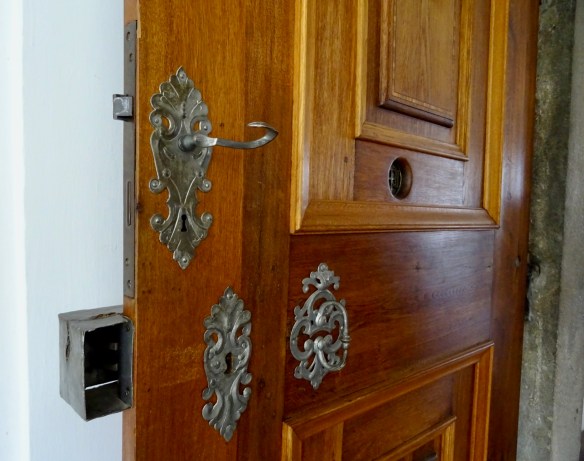
 Bob notices another ornate old lock.
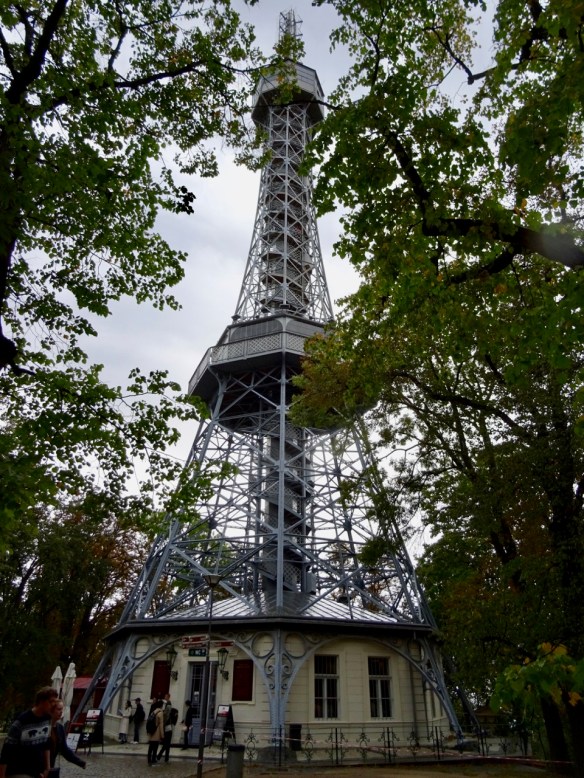
 As we leave the monastery grounds on our way to the Prague Funicular, we pass the 63.5 metre high Petrin Tower, which is reminiscent of the Eiffel Tower. This tower was built in 1891, and is used as an observation tower as well as a transmission tower.
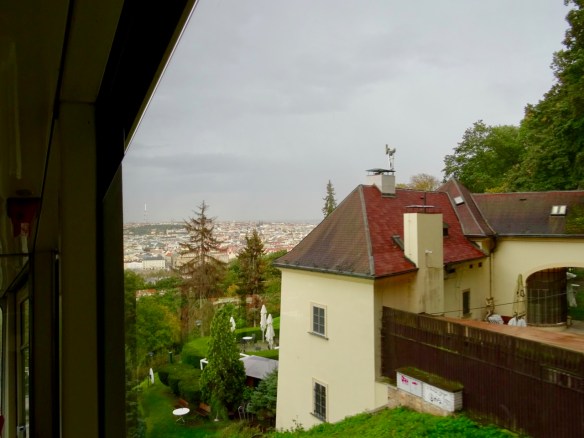
 The 383 metre long funicular takes us back down to Prague city streets. I didn’t get much of a view because some young people kindly jumped up to give me a seat, so instead of standing where I could see I sat all the way down! The hazards of having grey hair!
 It has been a full day and we are happy to be home. I had planned on going to life drawing again tonight, but we need to clean and pack for our trip to Vienna tomorrow so I decide not to go.
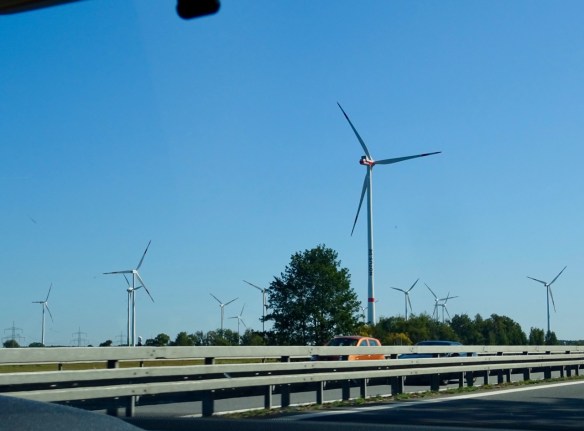
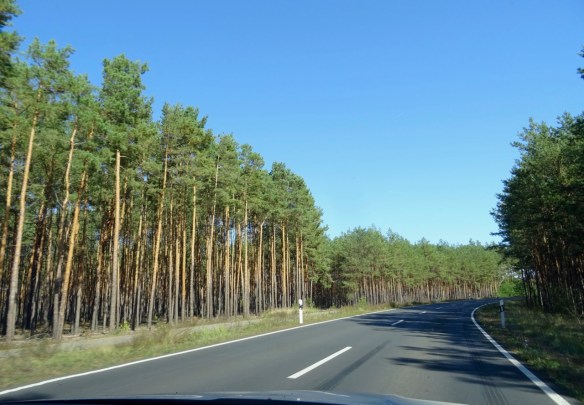 and lots of windmill farms.
 Our new apartment in Dresden is tiny!
 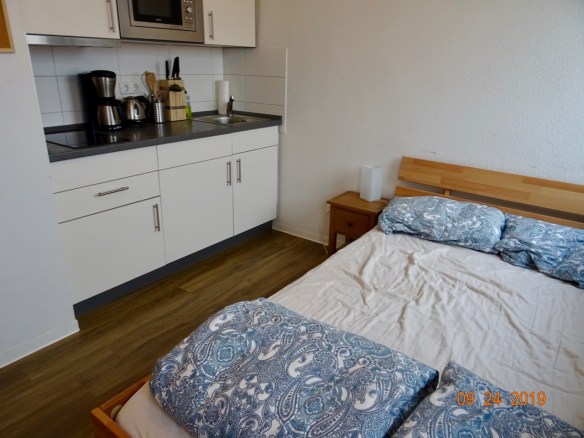 This is it, other than an equally tiny bathroom.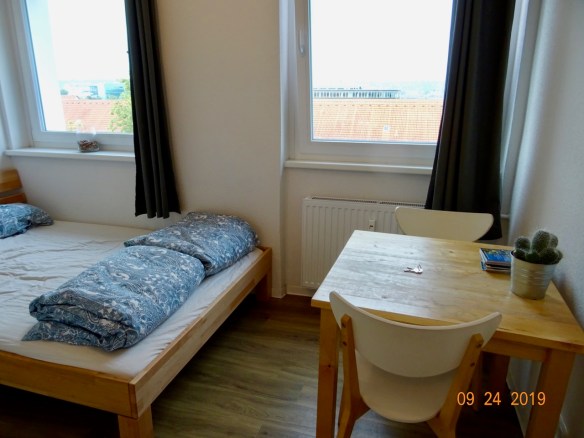
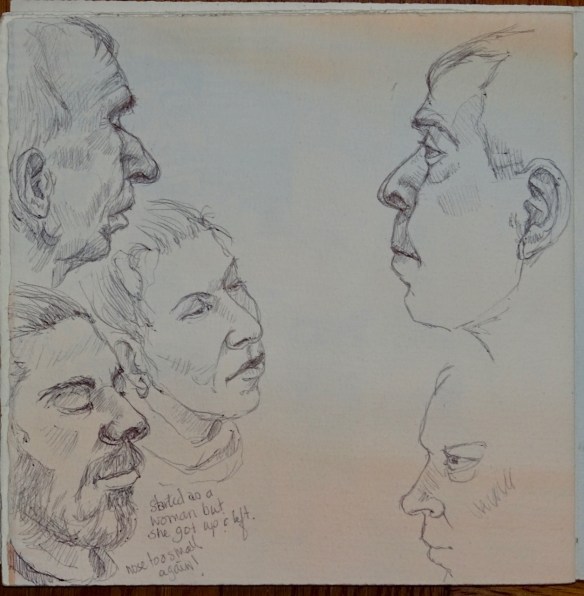
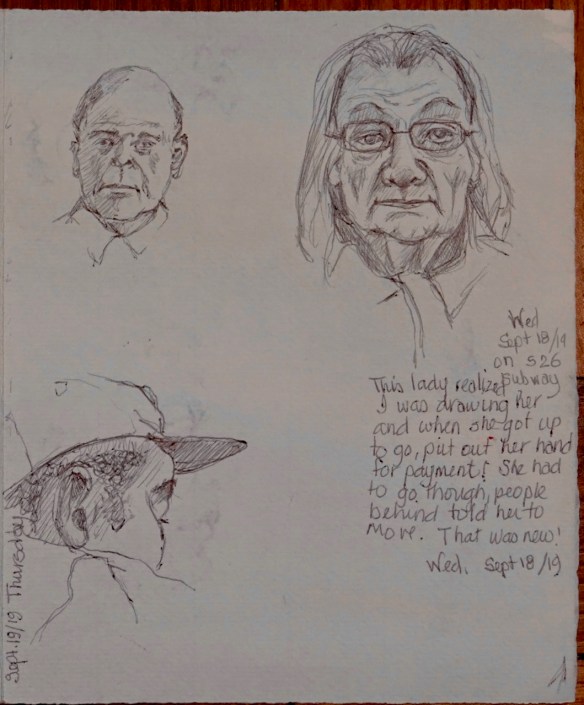
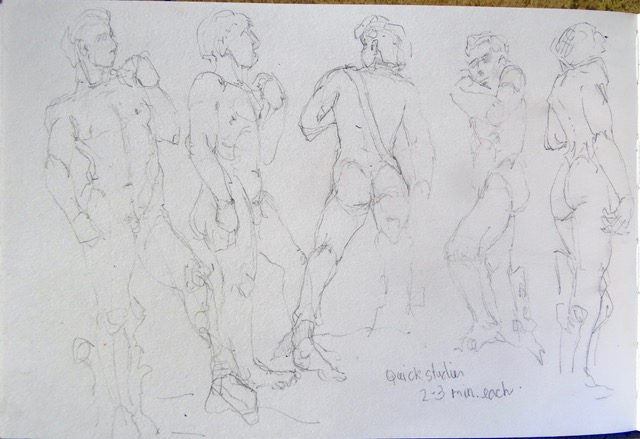
 Here are some metro sketches from Berlin that I forgot to post.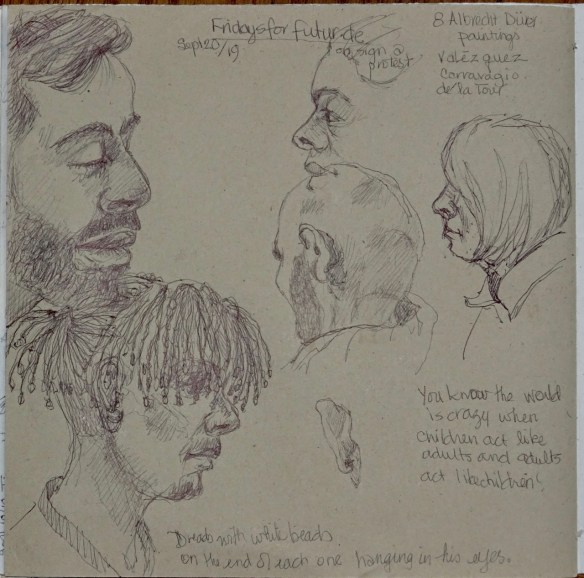



 trudymason.com