Day 33 Thursday, October 2, 2025
We take a train into Frankfurt. Once we had our tickets it was easy but once again we had problems using one of our credit cards. This trip has been a challenge with credit card, debit card and cell phone issues. I am beginning to think we are jinxed! It is so good to be traveling together. I think if either of us were trying to sort out these problems on our own it would be much more difficult. The saga continues as we find the Hertz car rental company in the train station. This trip we are told we need to extend our car rental contract every 30 days by simply checking in to any Hertz office. Well, it turns out that a Hertz office in Germany cannot extend contracts that was signed in another country. Sorting this out takes more than an hour and we are still not sure it actually will be taken care of. We will see.
We walk down the street across from the train station. I am struck by the contrast between the old and the modern buildings. I should have paid a bit more attention to the signs on the storefronts.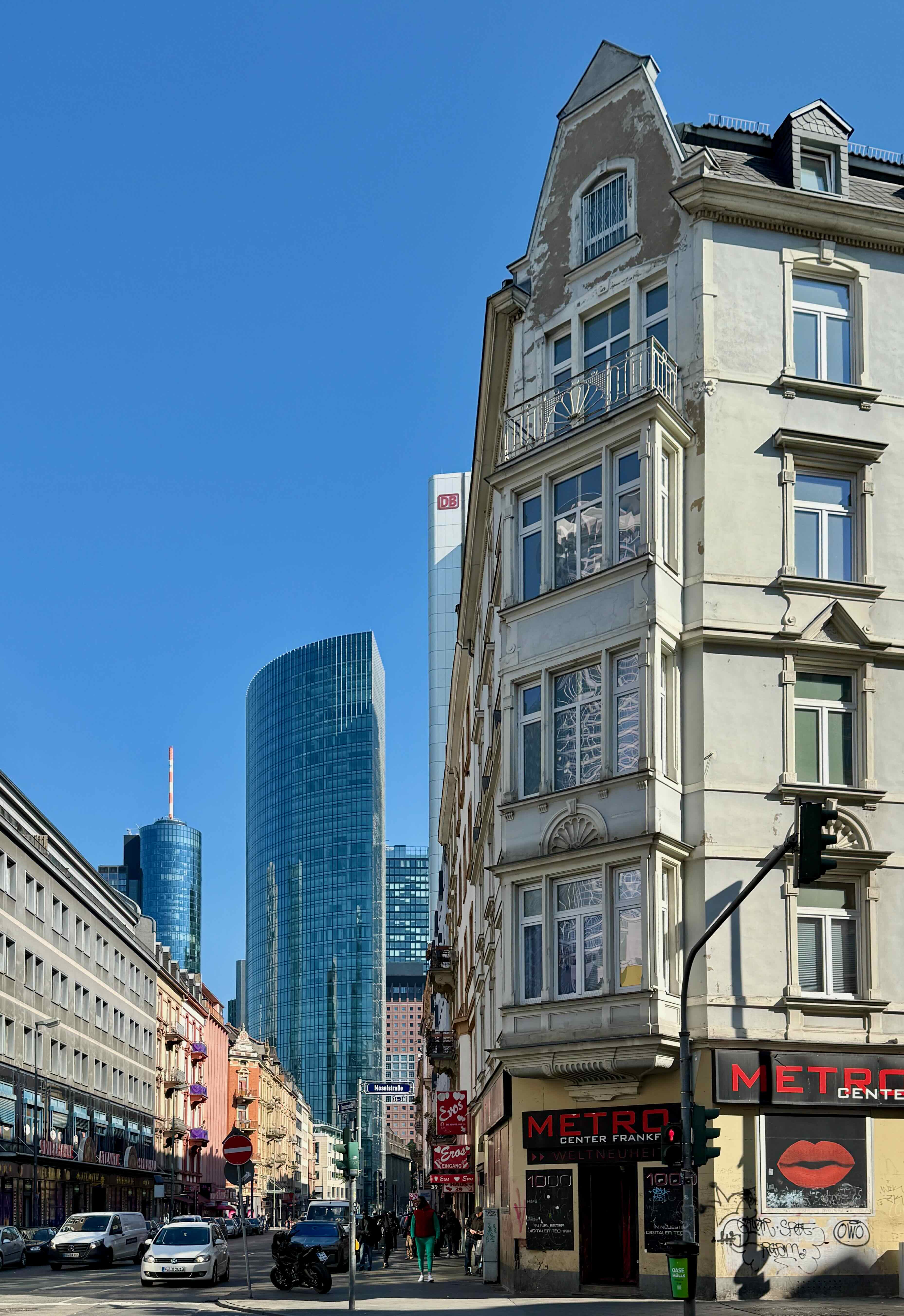
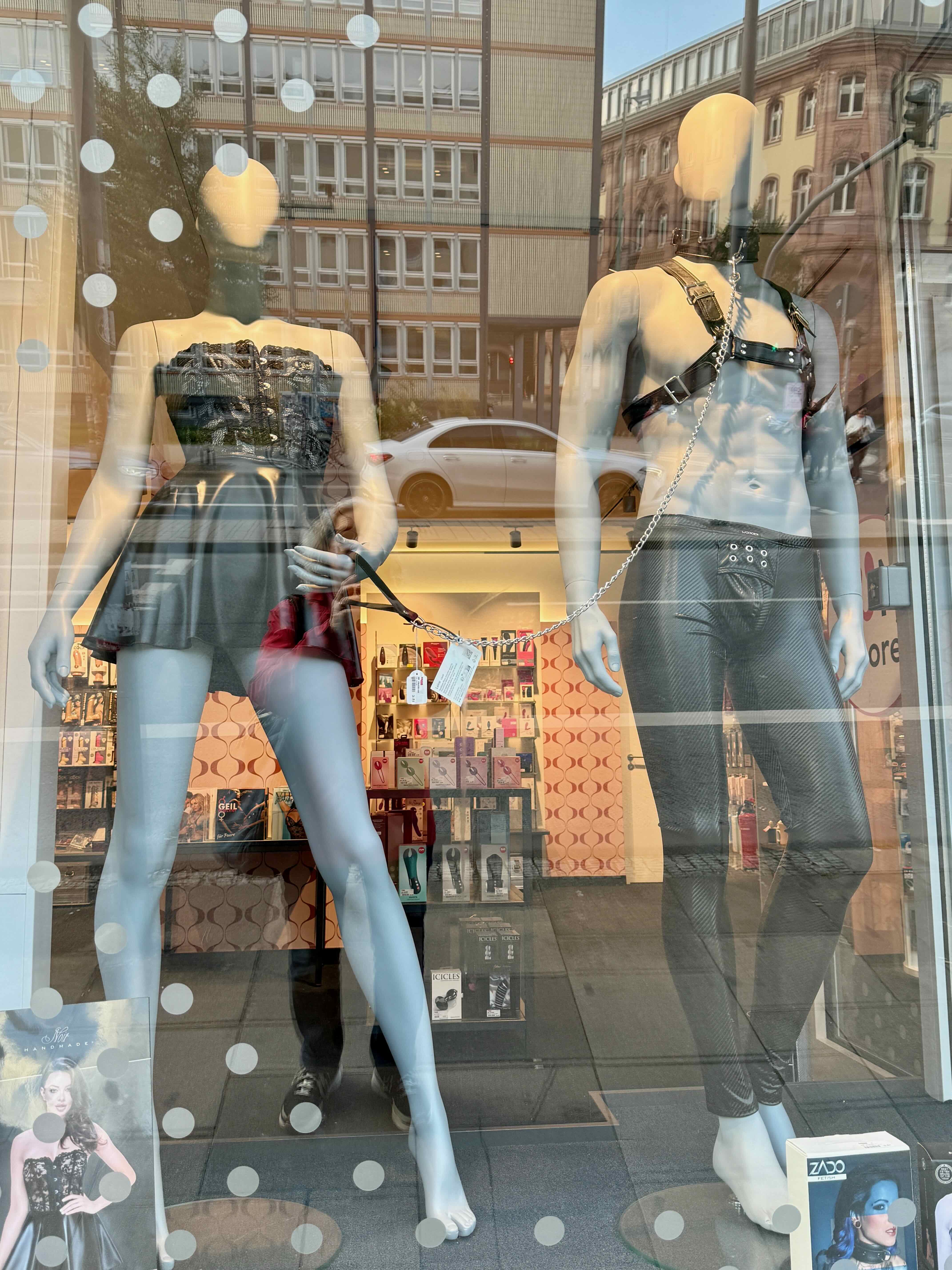
After a man and his lady friend propositioned me we noticed that we were walking through the red-light district! We had a bit of a chuckle!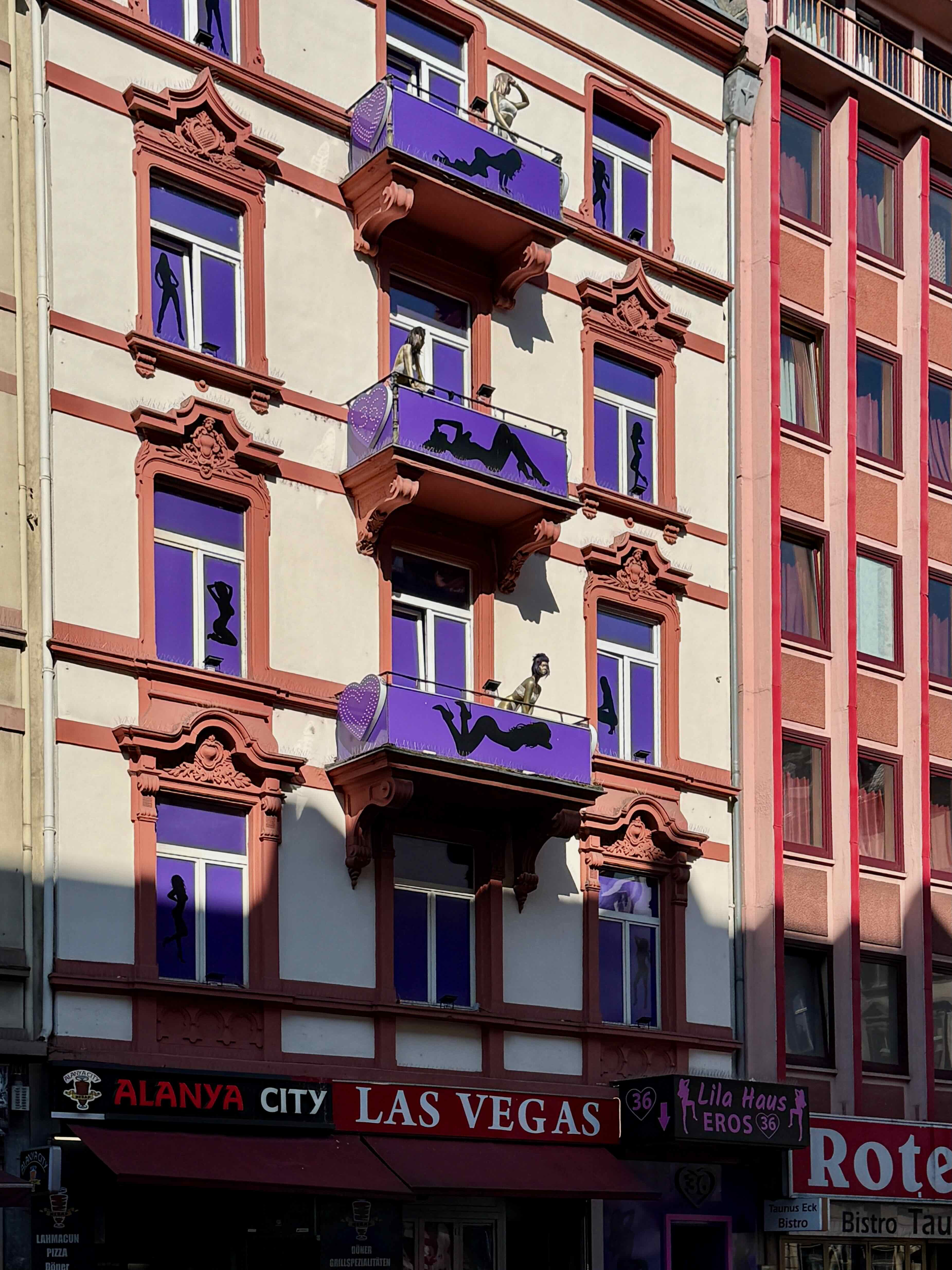
Nearly 70% of Frankfurt was destroyed during the Second World War but many of the buildings look older than they actually are.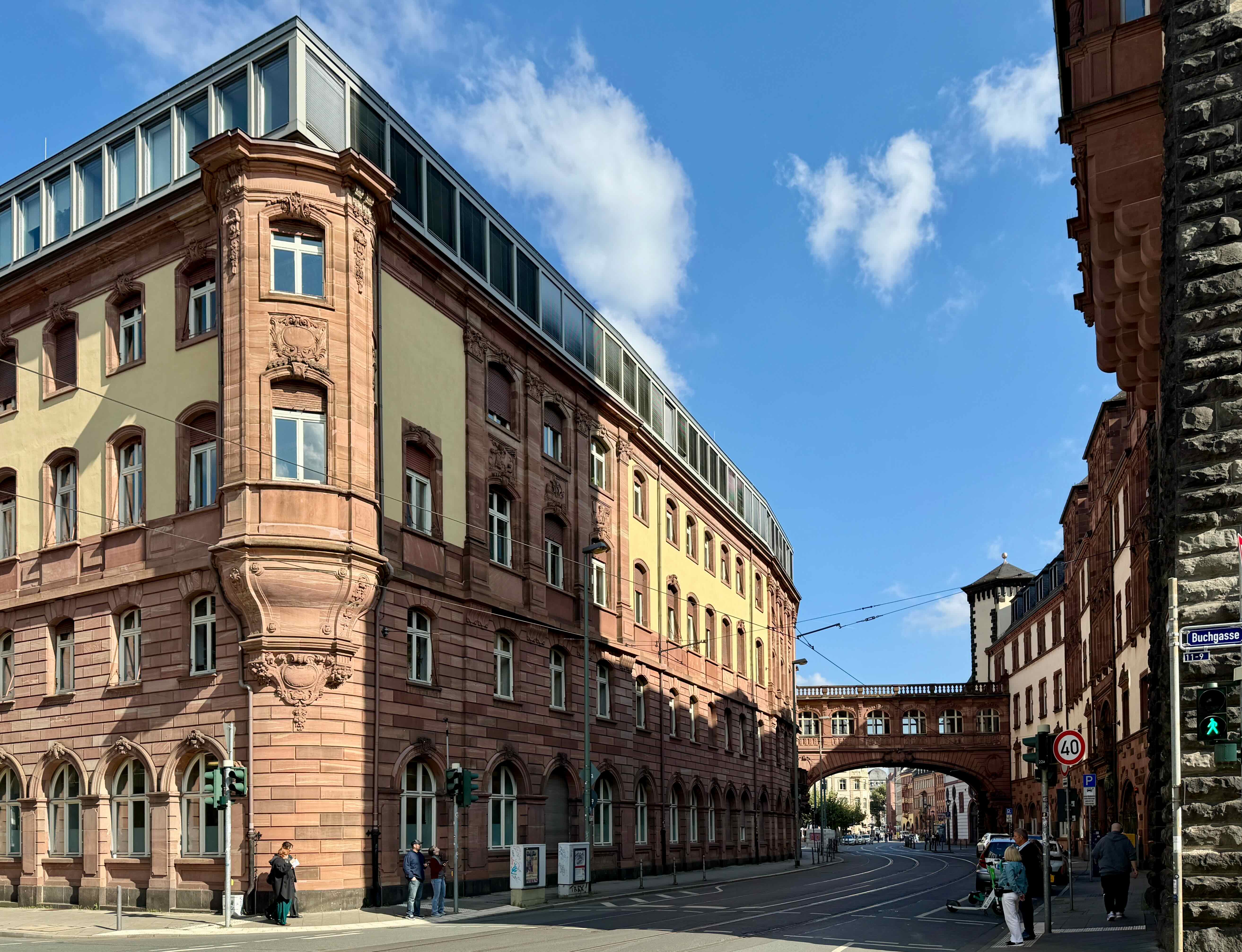
There were four of these massive sculptures supporting the bridge across the street in the above photo. 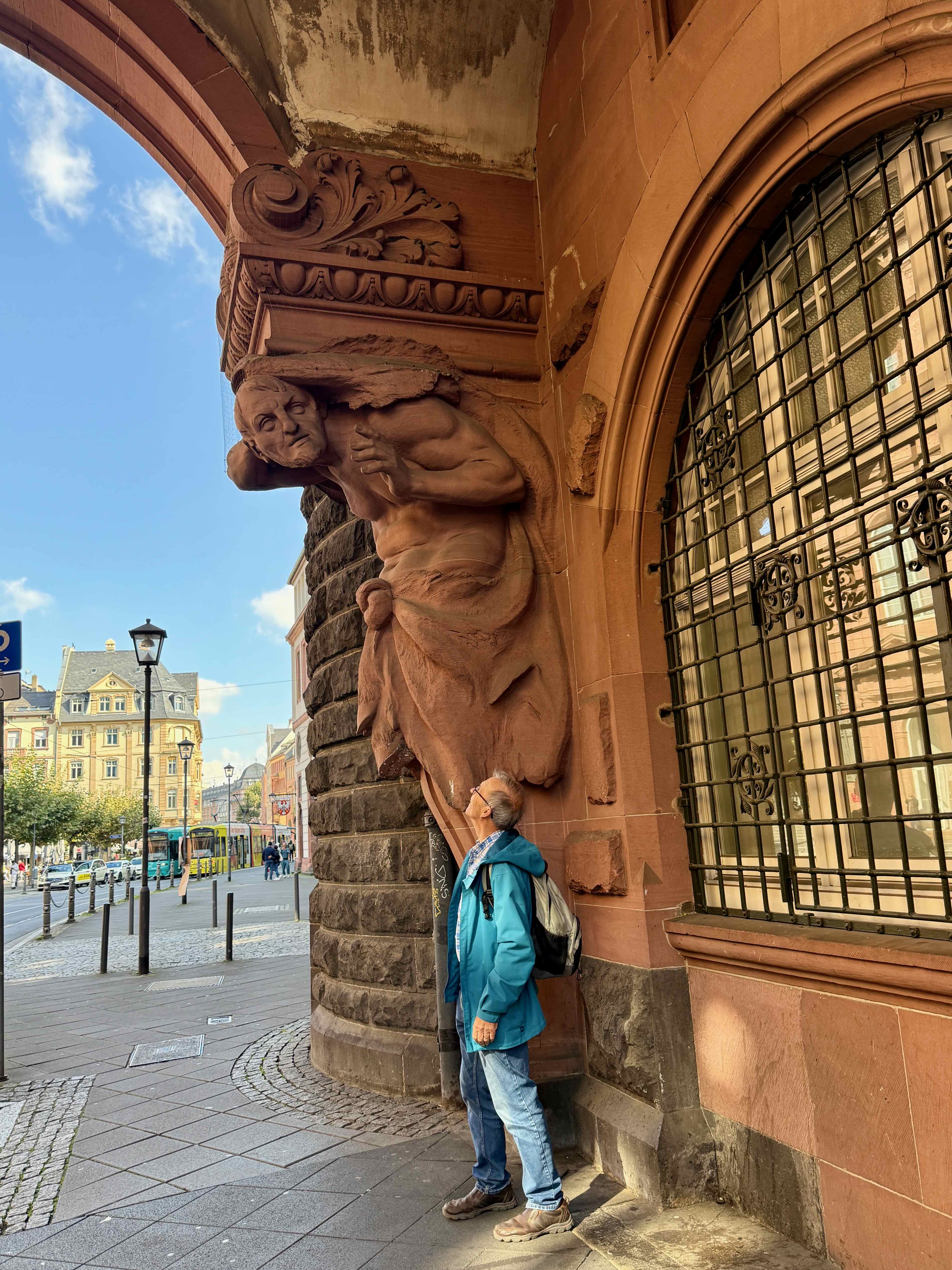
In1405, two houses were joined together to make Frankfurt’s City Hall. It is a striking building.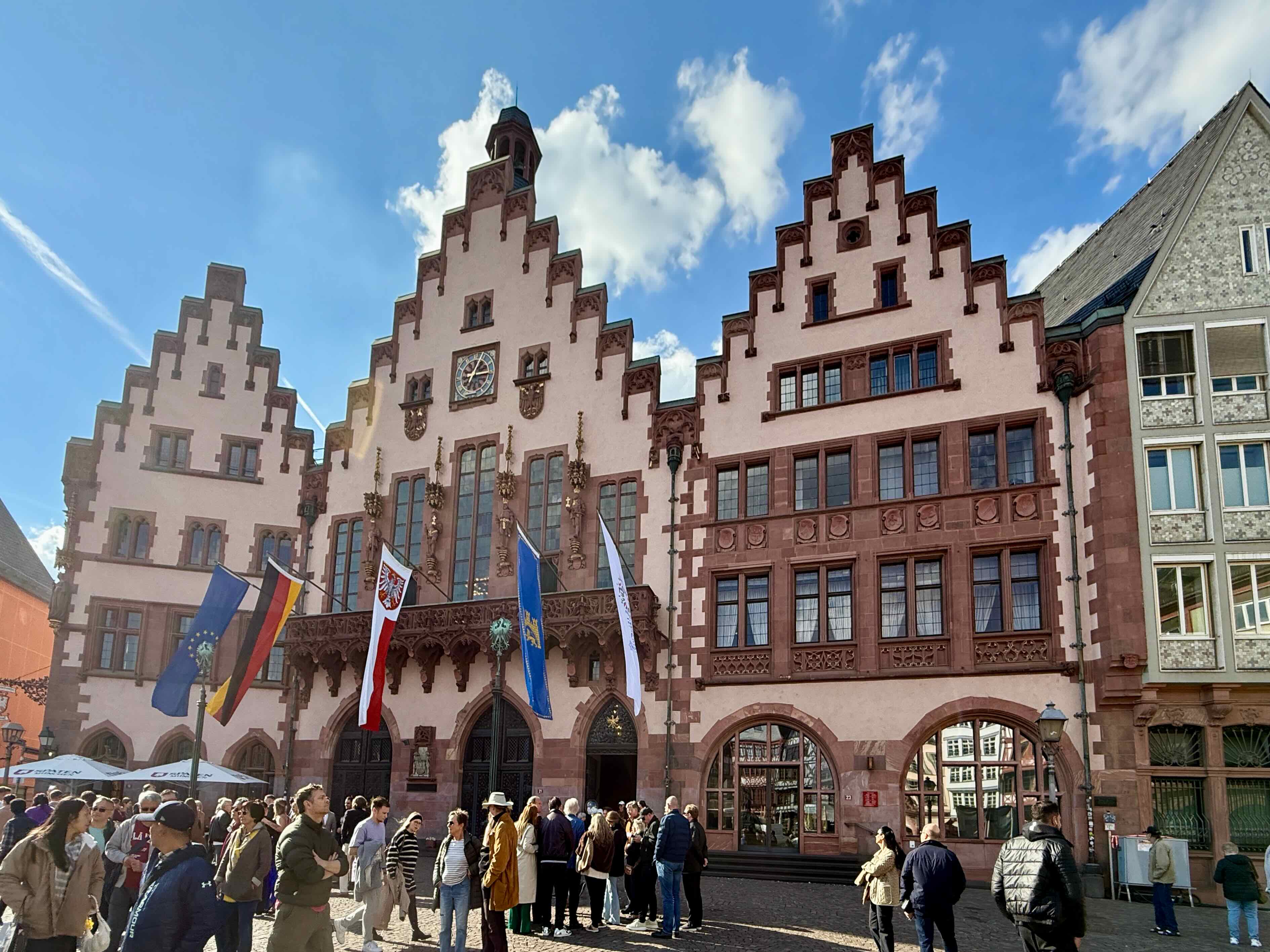
Saturday is a popular day to get married and there is a steady parade of weddings taking place. The bridal couple and their guests wait outside for their turn to be married. It seems strange to me but is perfectly normal here.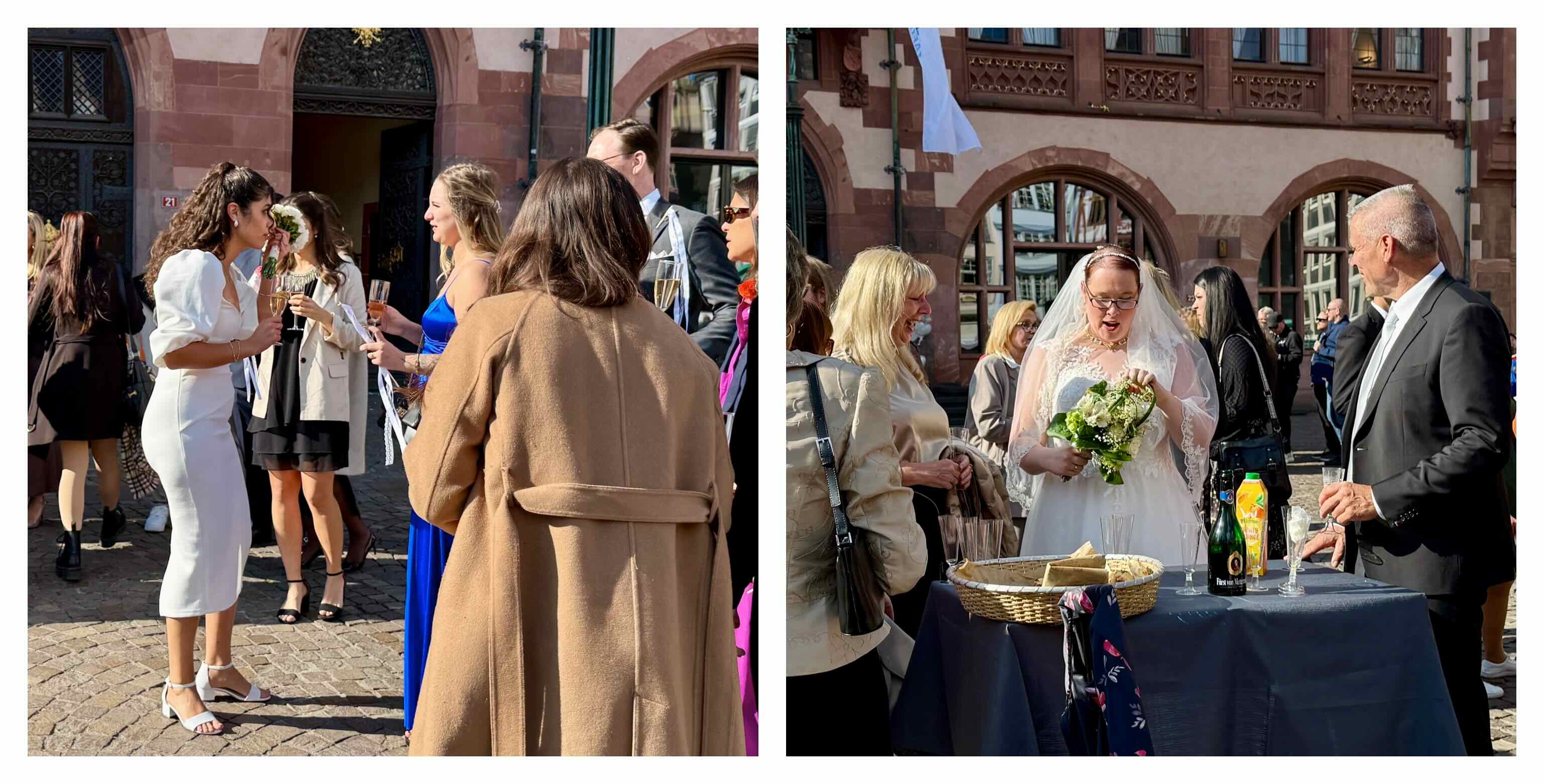
We have our picnic lunch on the banks of the Rhine River and then visit this pedestrian bridge. ‘Love locks’ are covering this bridge. I suspect that before long authorities will have to remove these locks before their weight begins to damage the bridge because of their weight like the bridge in Paris that was covered with locks.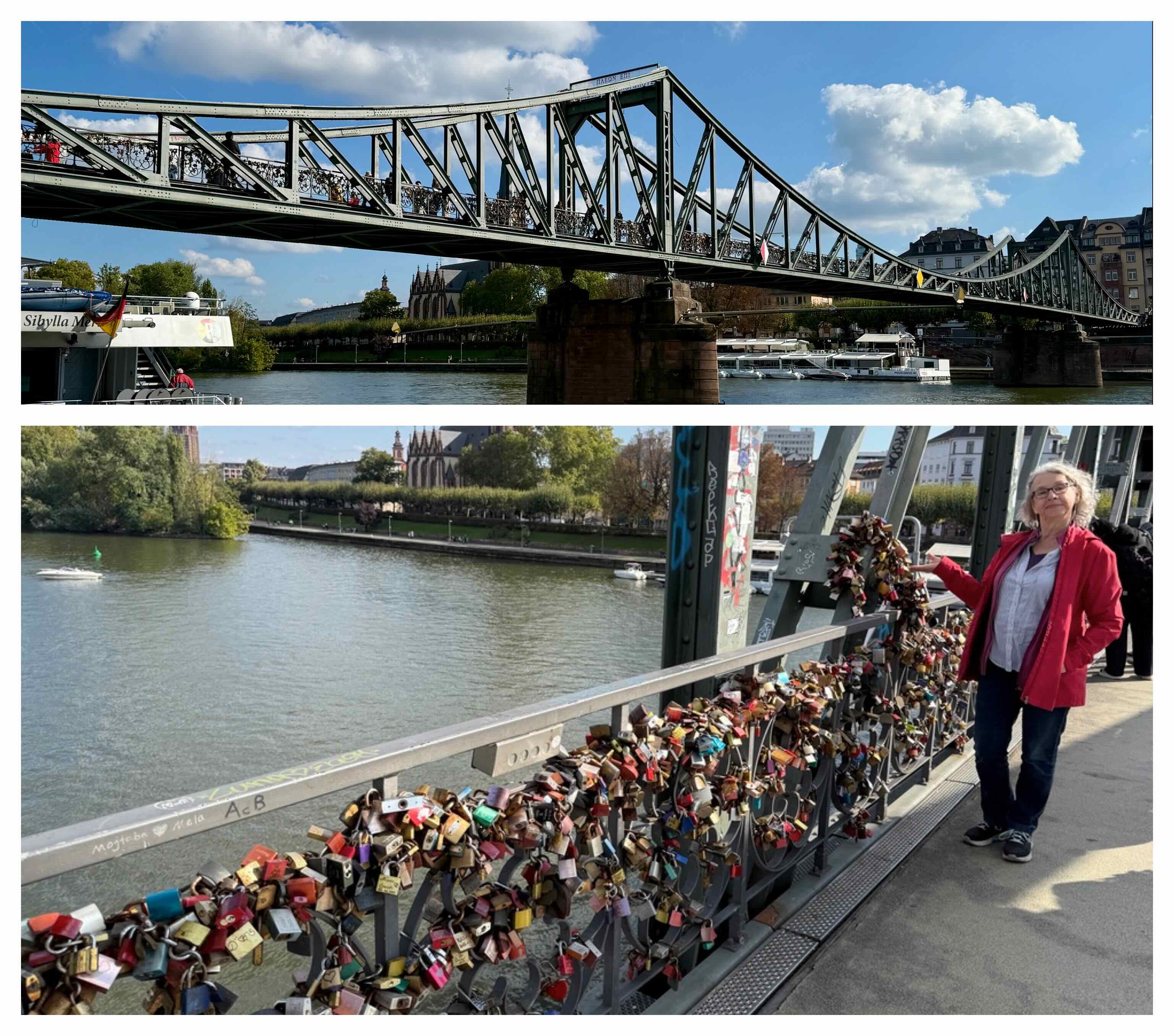
Saint Bartholomew Cathedral is the only church in Frankfurt that survived the bombing of WWII. Divine intervention?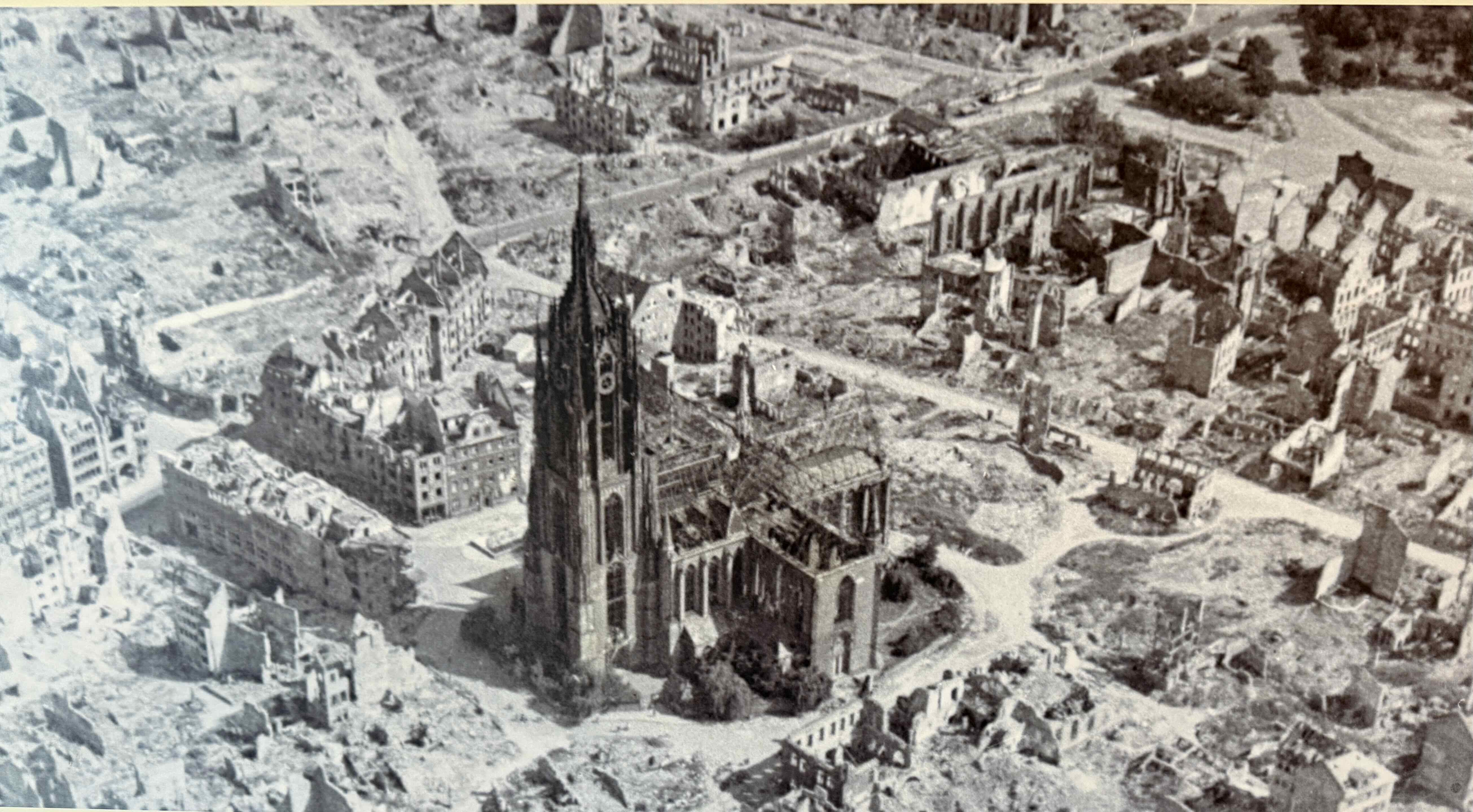
As we enter the church we see this group of sculptures depicting Christ being crucified on Calvary Hill. 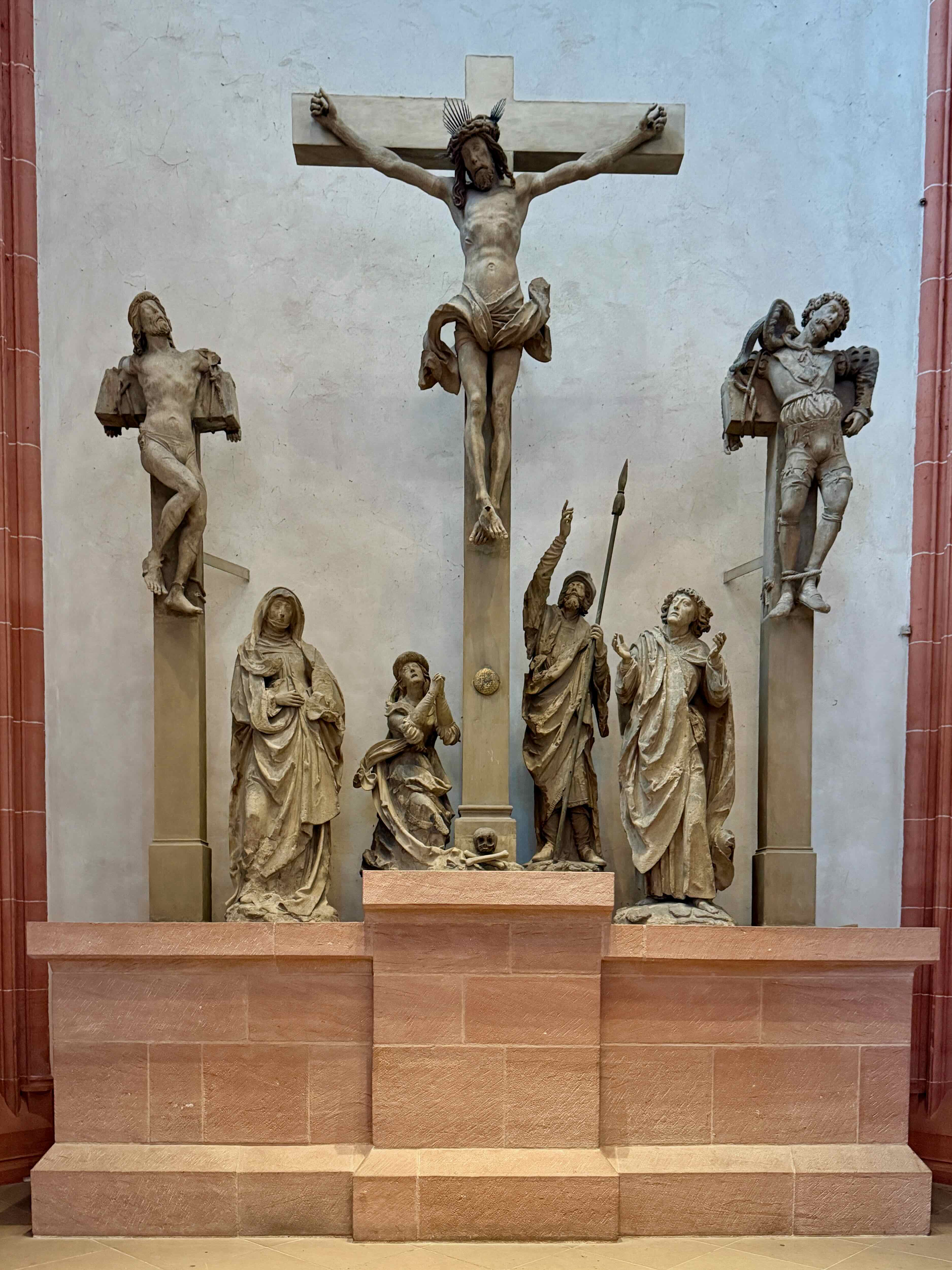
The cathedral was built in the Gothic style between 1315 and 1358, but suffered a fire in 1867 and then the bombing of Frankfurt in 1944. The reconstruction after these events changed parts of the church. Today it is a hall church with three naves. 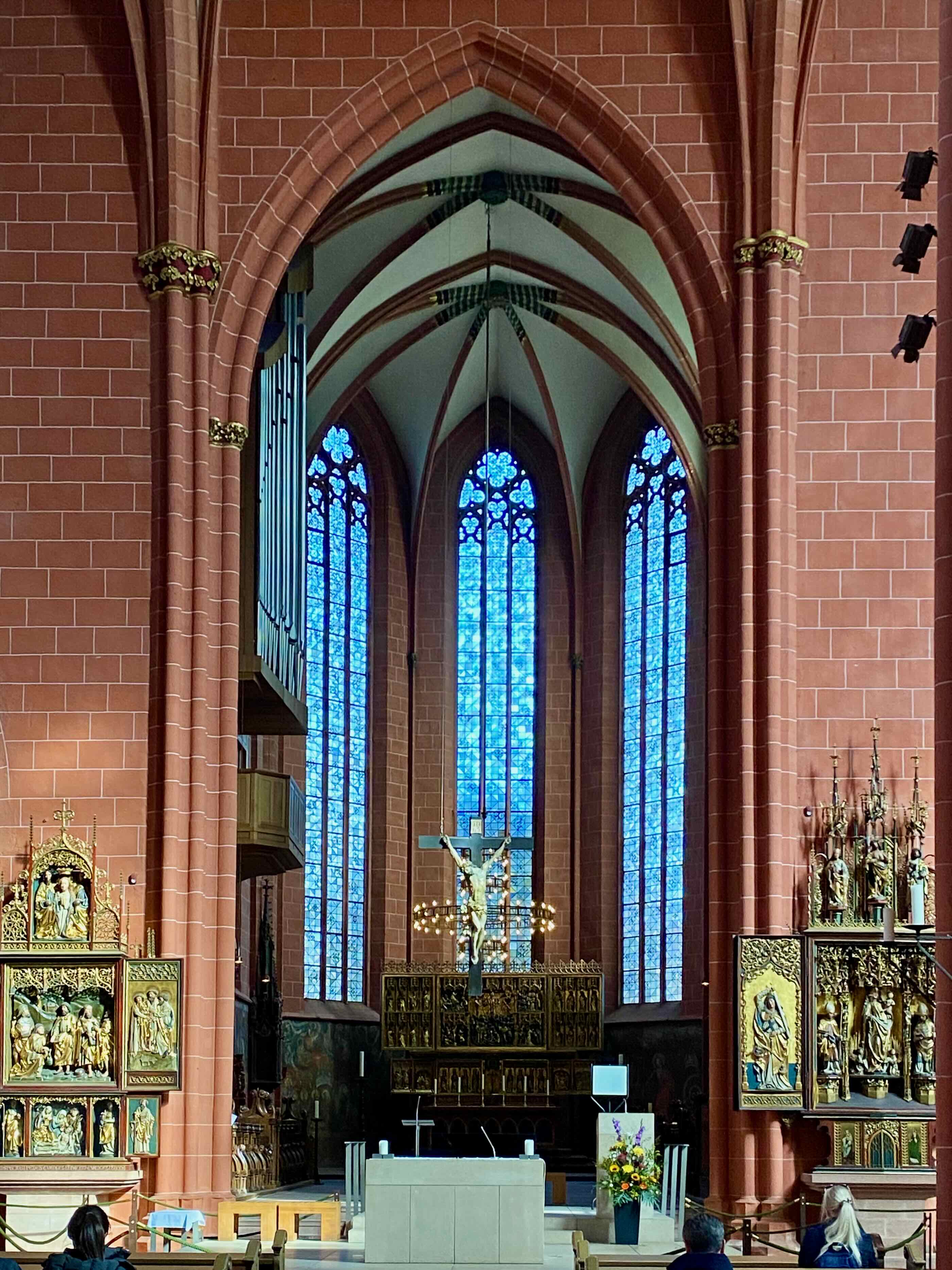 The cathedral’s organ is impressive and has a different layout of pipes.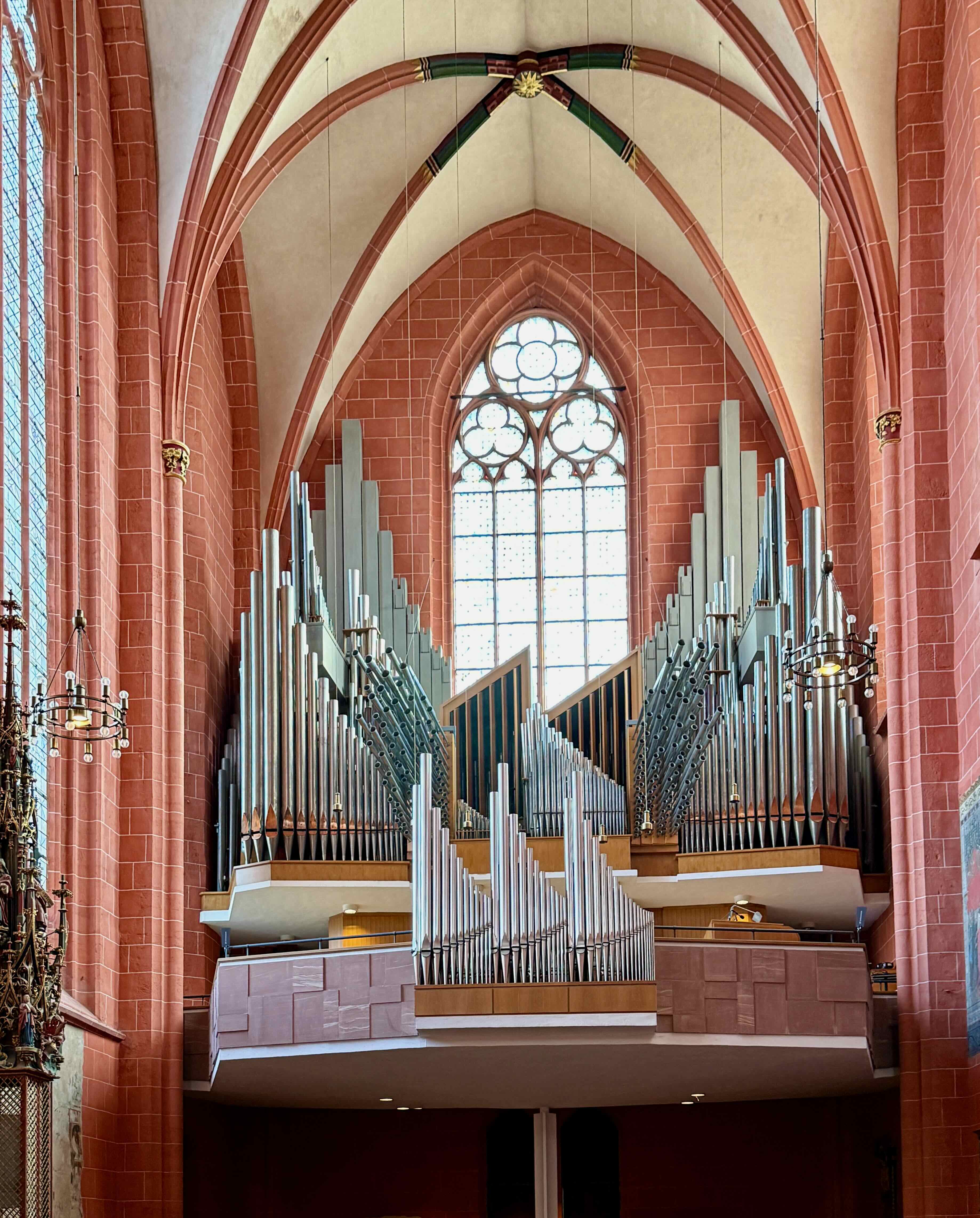
I saw two priests walking out of the church and hurried to take a photo. They look like they belong in another age and appear very intense. 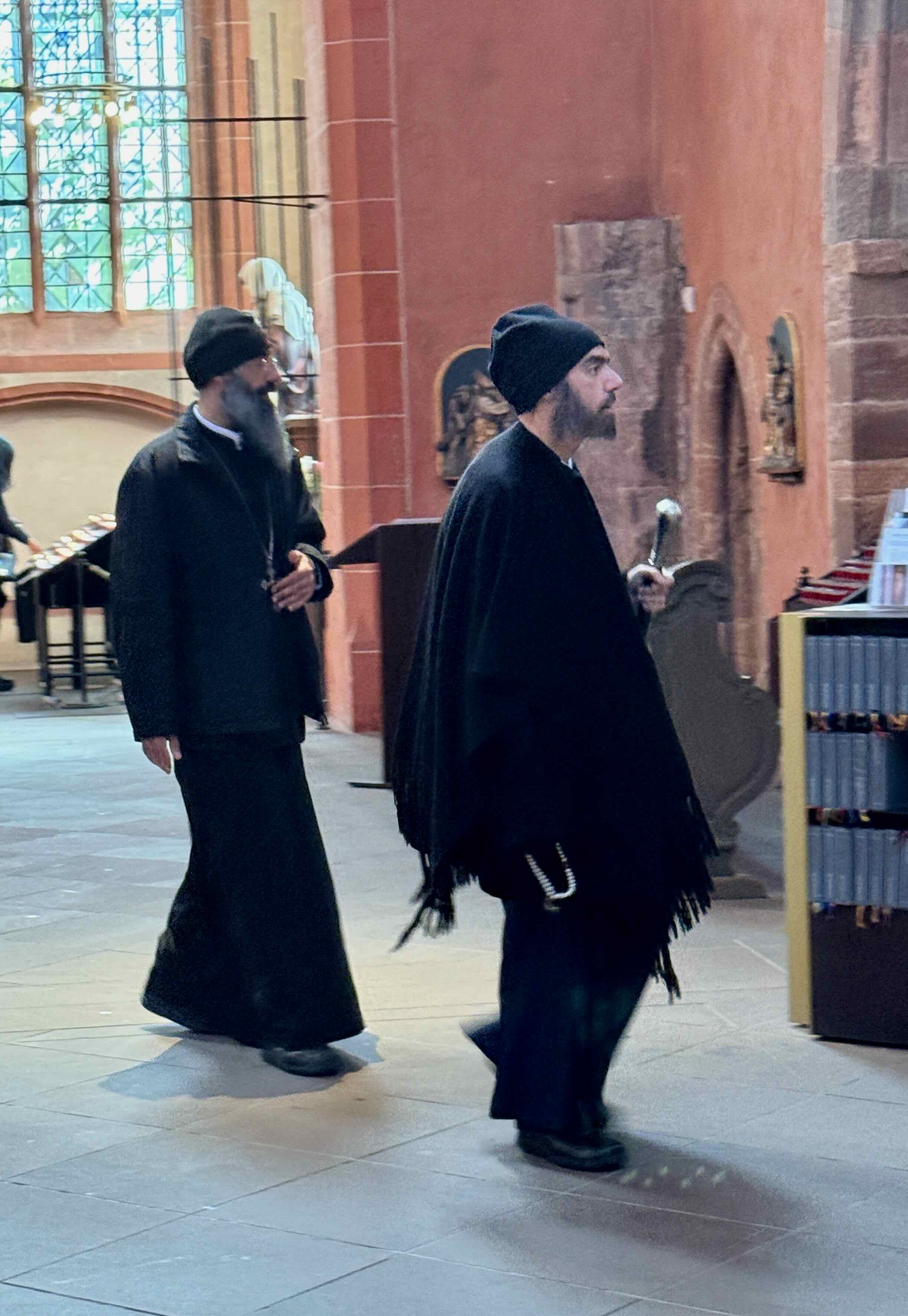
The cathedral’s bell tower has survived from the 15th century and we are climbing it. This is the view from about halfway up the 66 meter high tower.
We are above the gargoyles.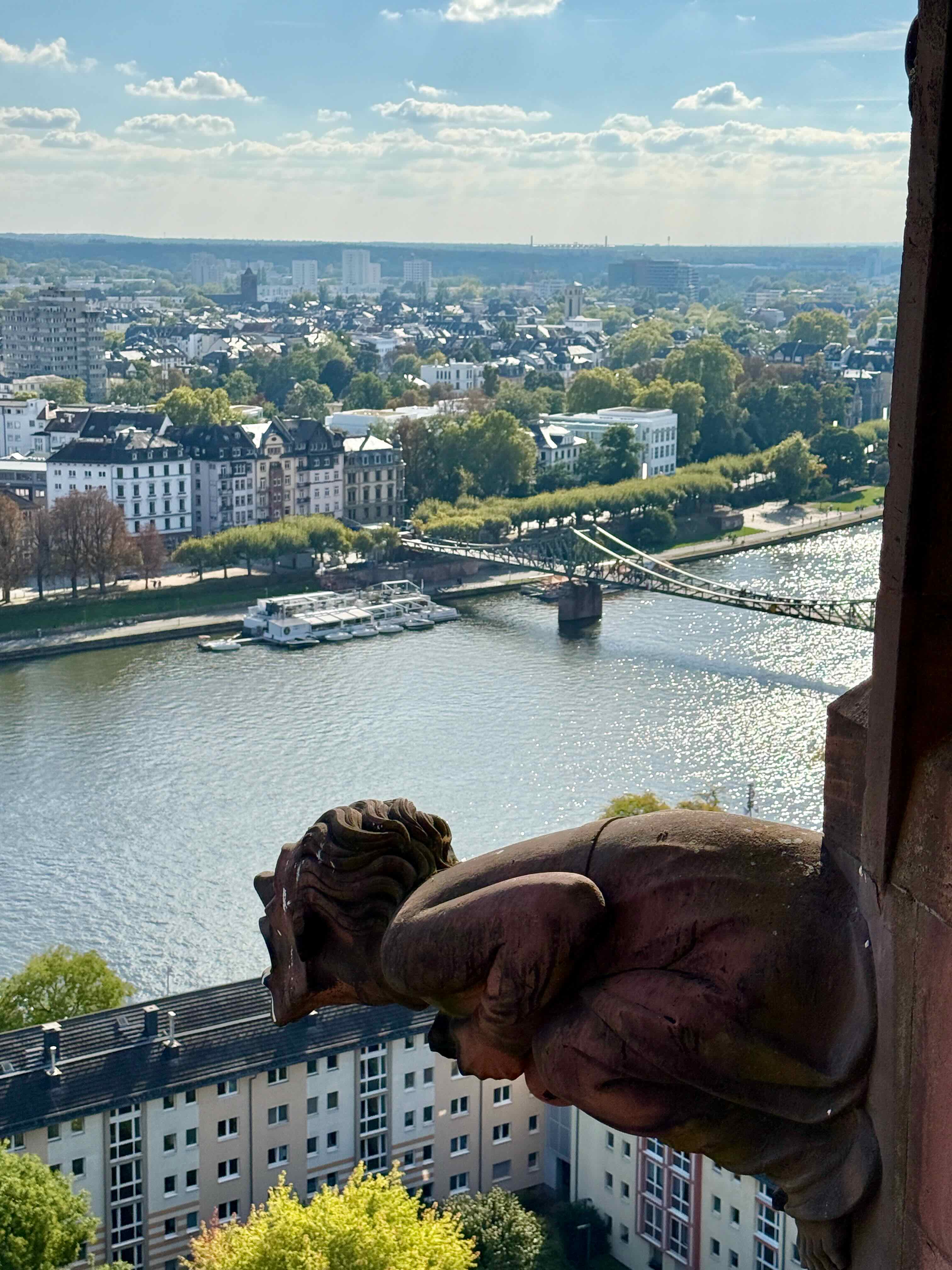
I will admit that I needed to stop and rest a few times as we climbed 328 steps to the viewing platform, although there were people much younger than me were who huffing and puffing more than I was! We had a spectacular view of Frankfurt.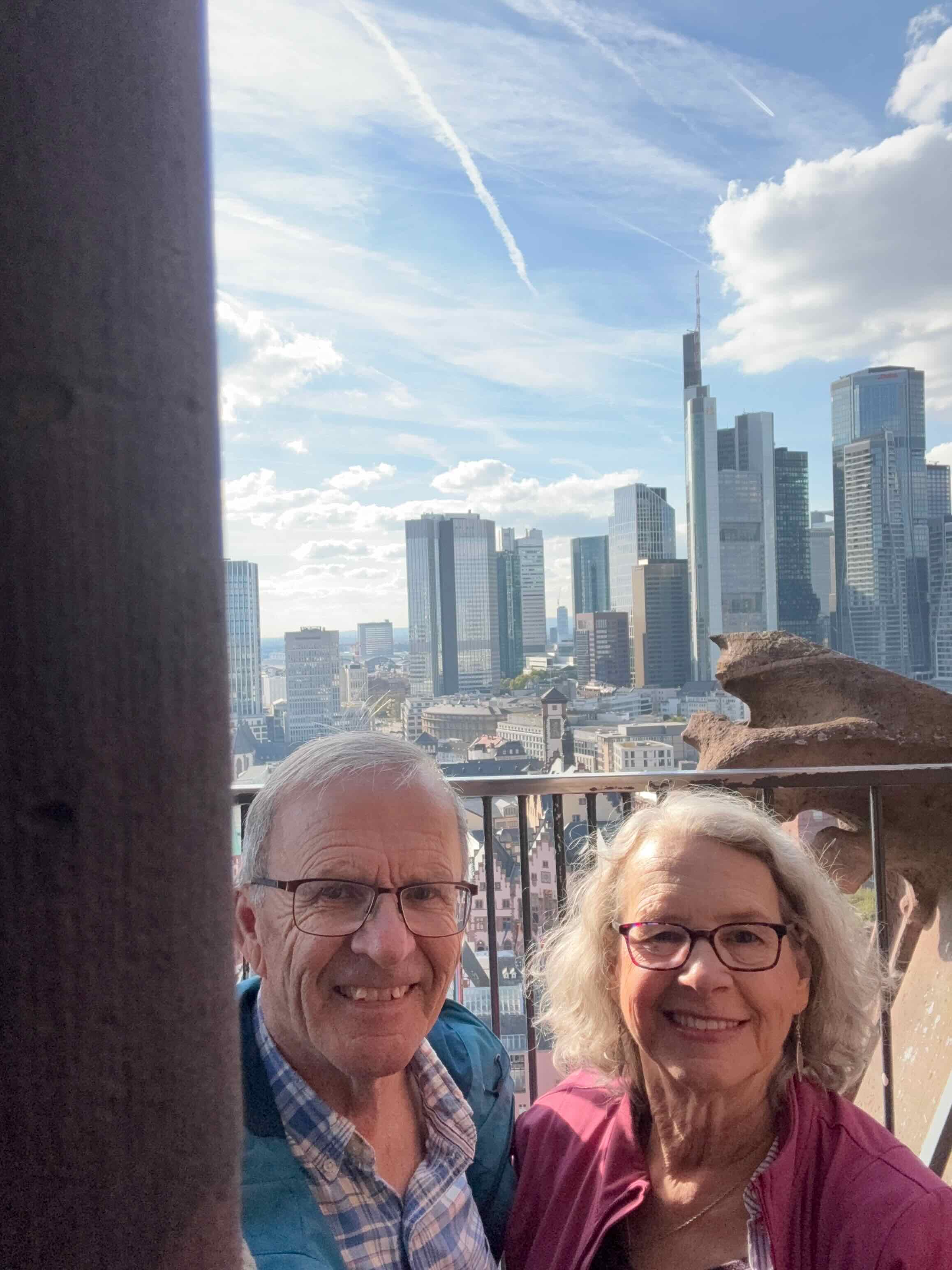
Some views from the tower.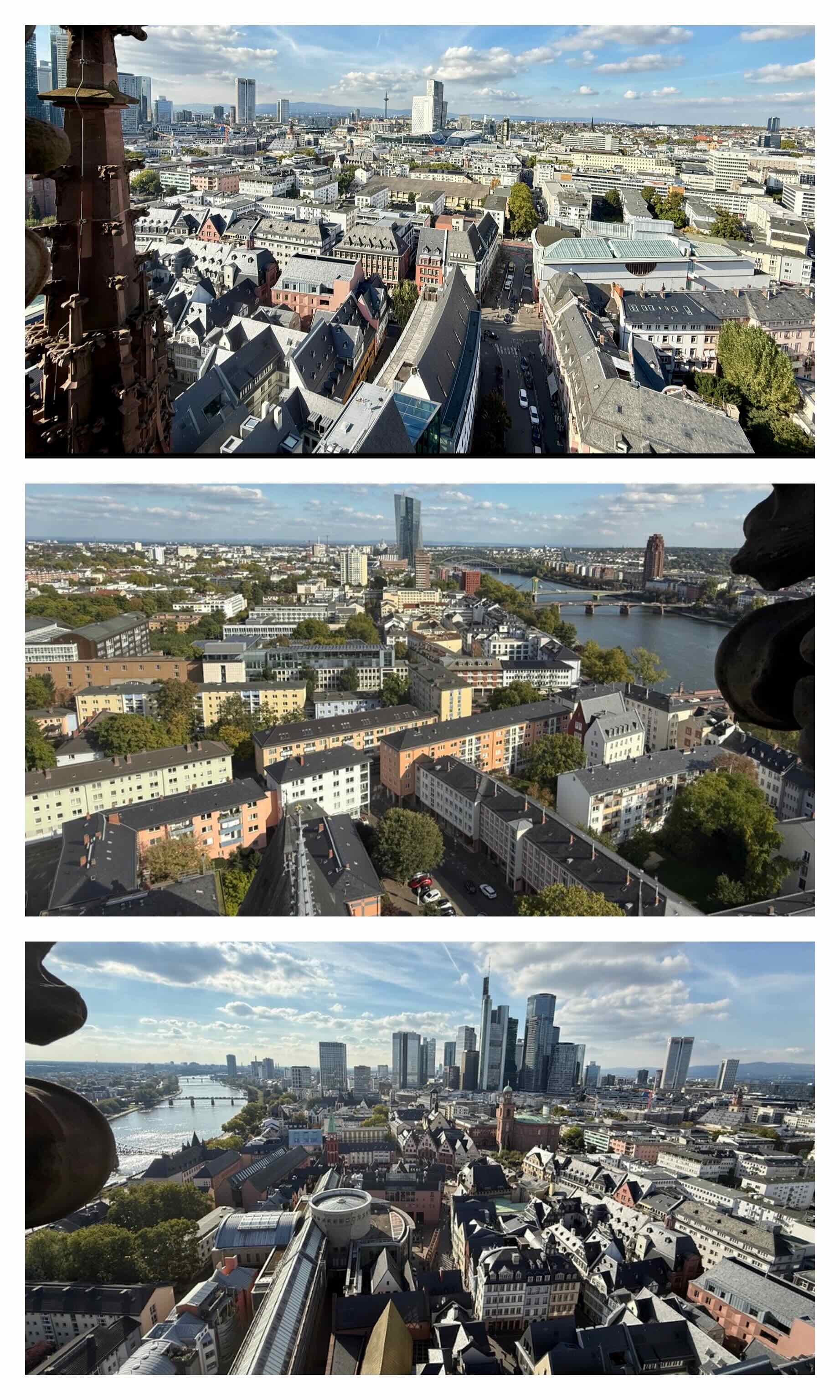
We walk around the platform several times. I wasn’t going to climb all those steps for one quick tour around the tower!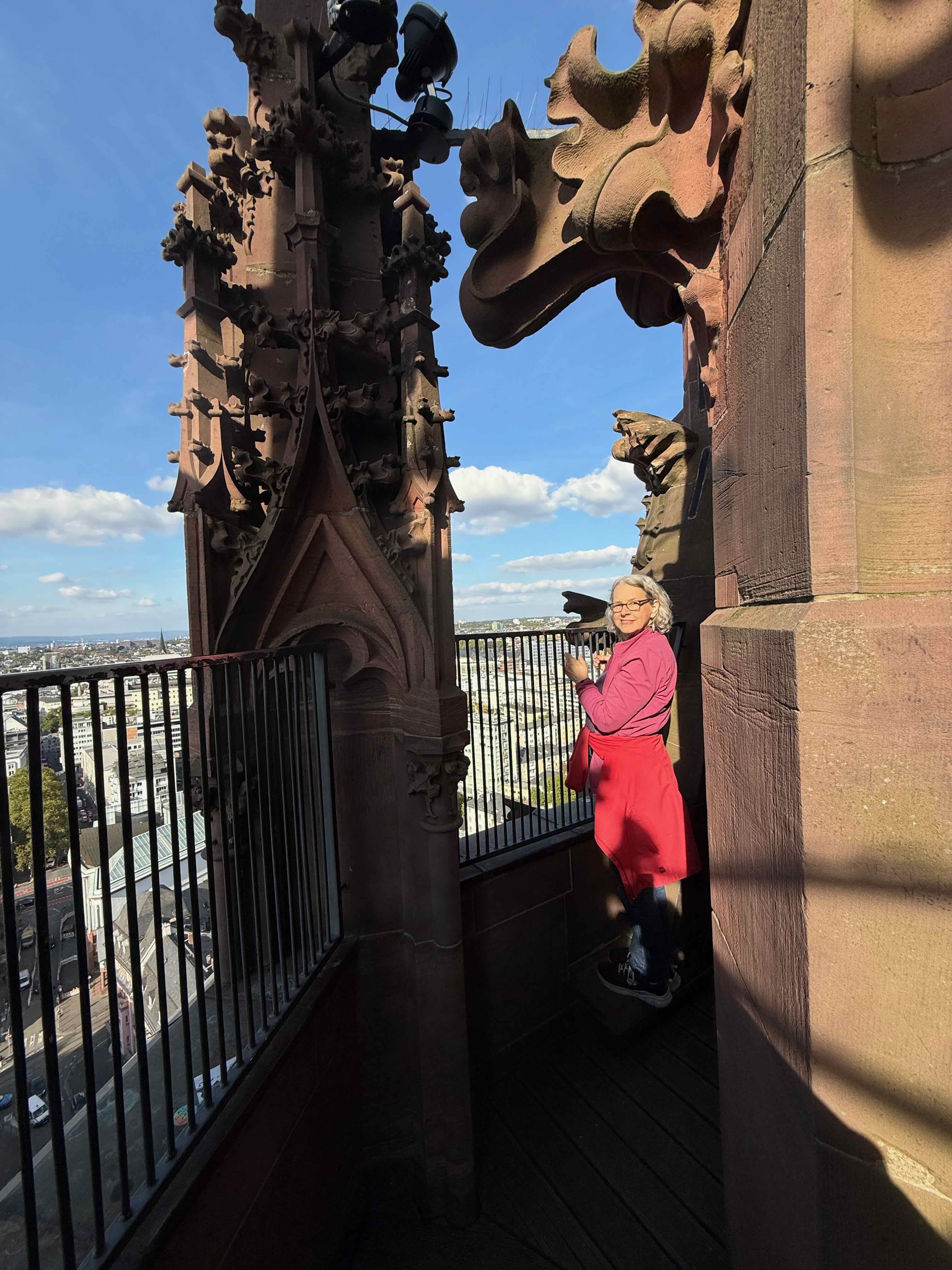
We begin our descent of those 328 steps. I am very thankful that they are solid stone and I don’t have to contend with see-through wire steps, specially as this is the only staircase to access the tower. We have to squeeze to the side when people pass us their way up the stairs. 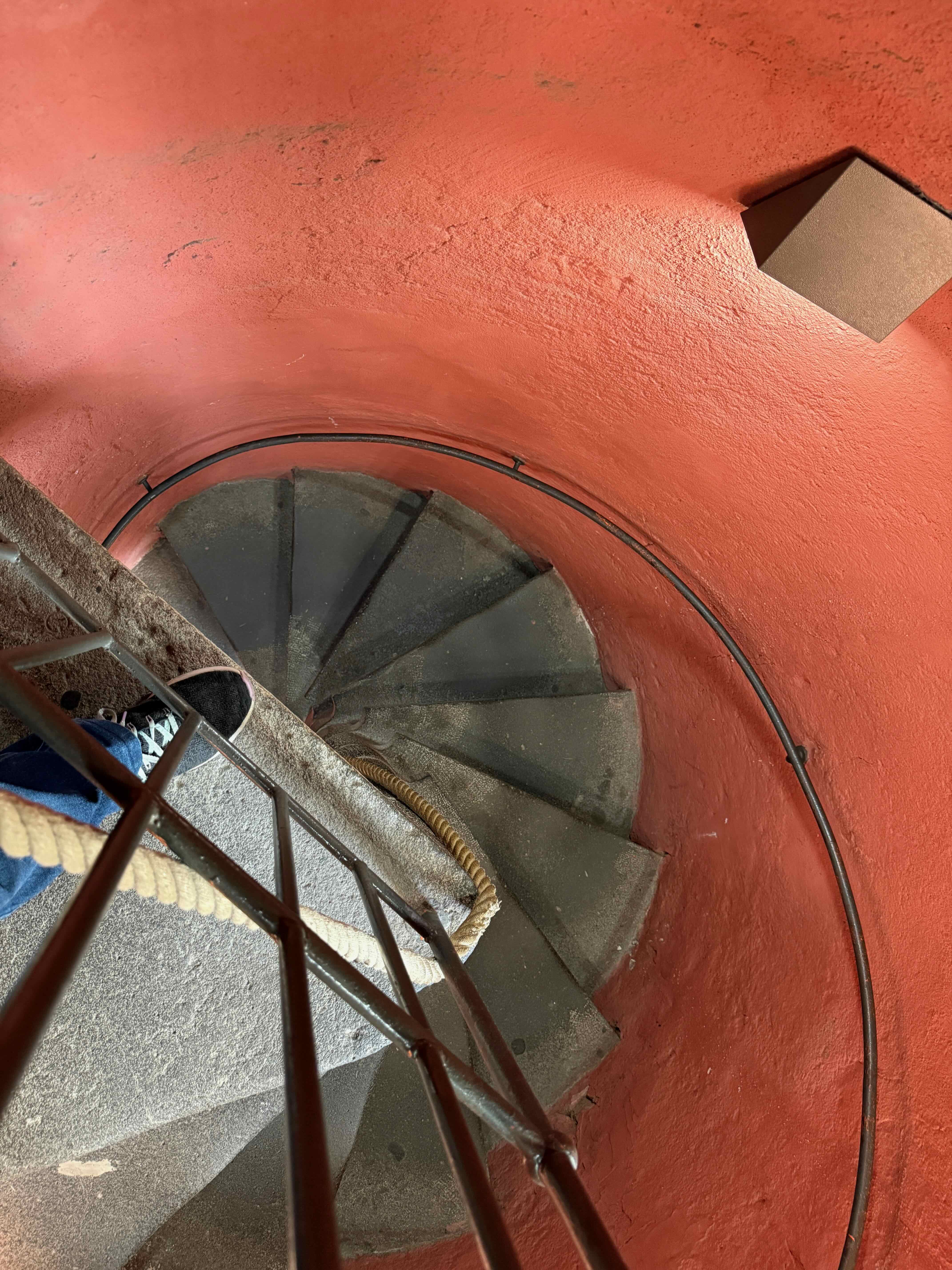
The view through a glass window in the stairwell.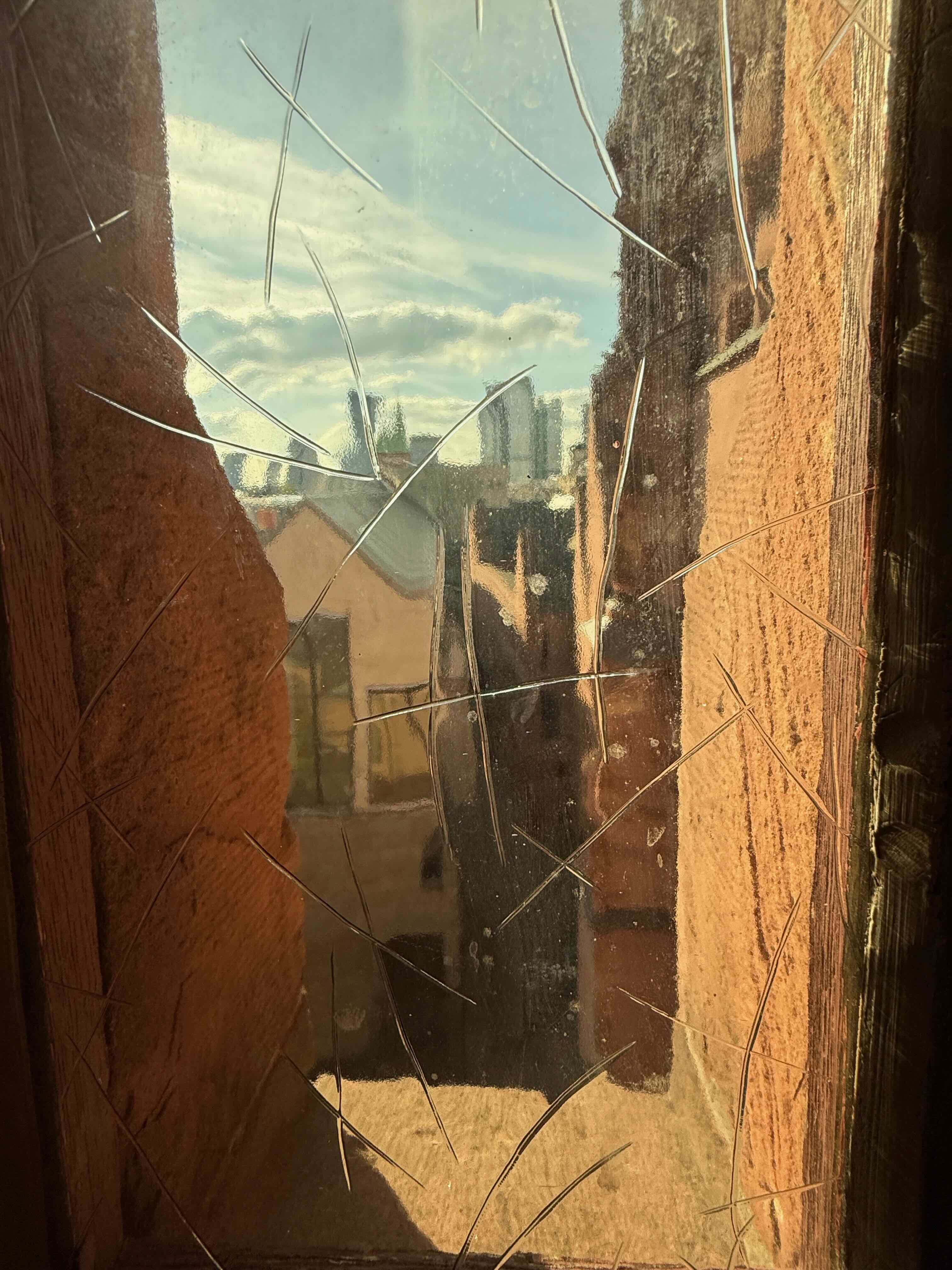
This is the tower…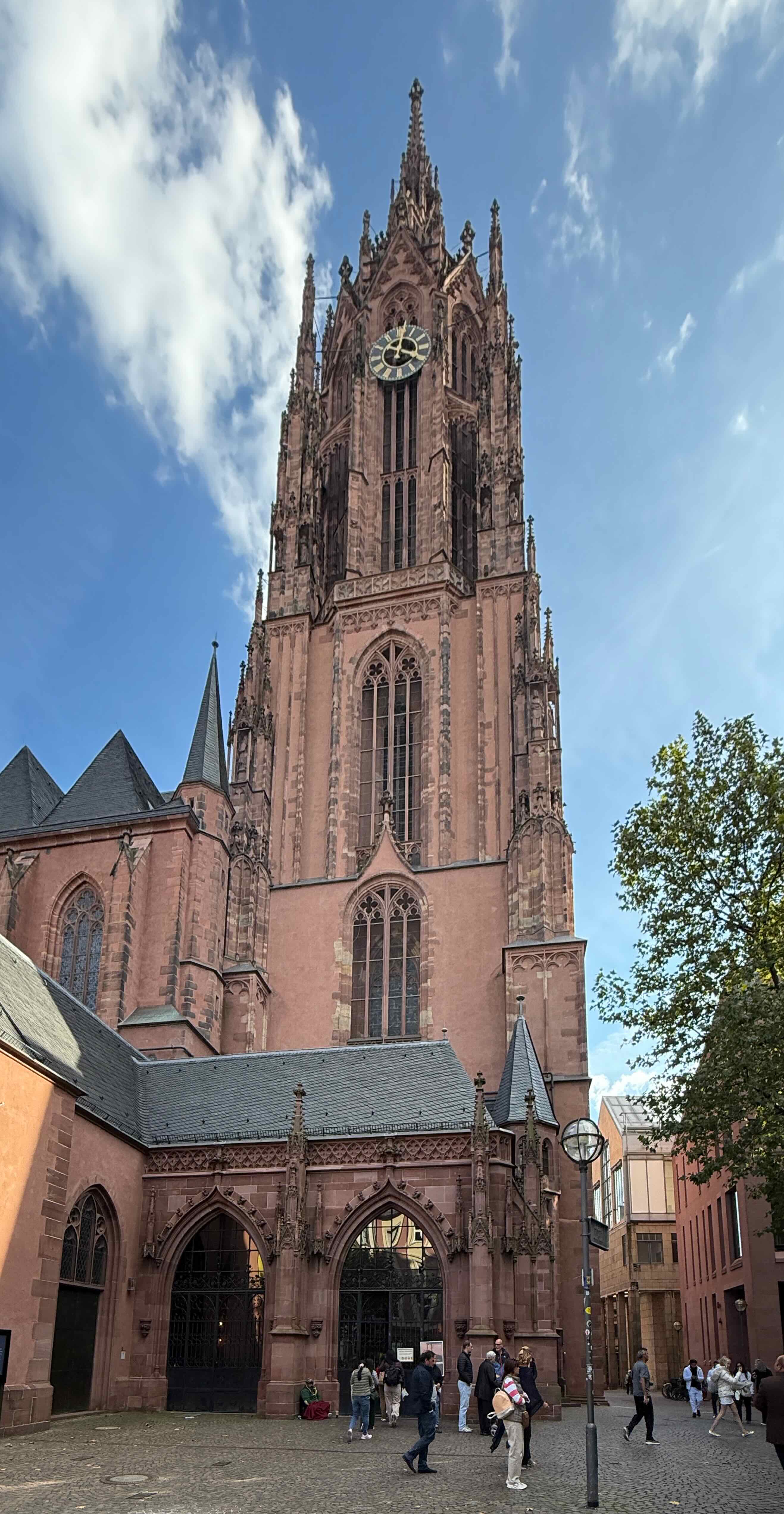
and here is the viewing platform above the clock! If you look closely you can see the platform railings.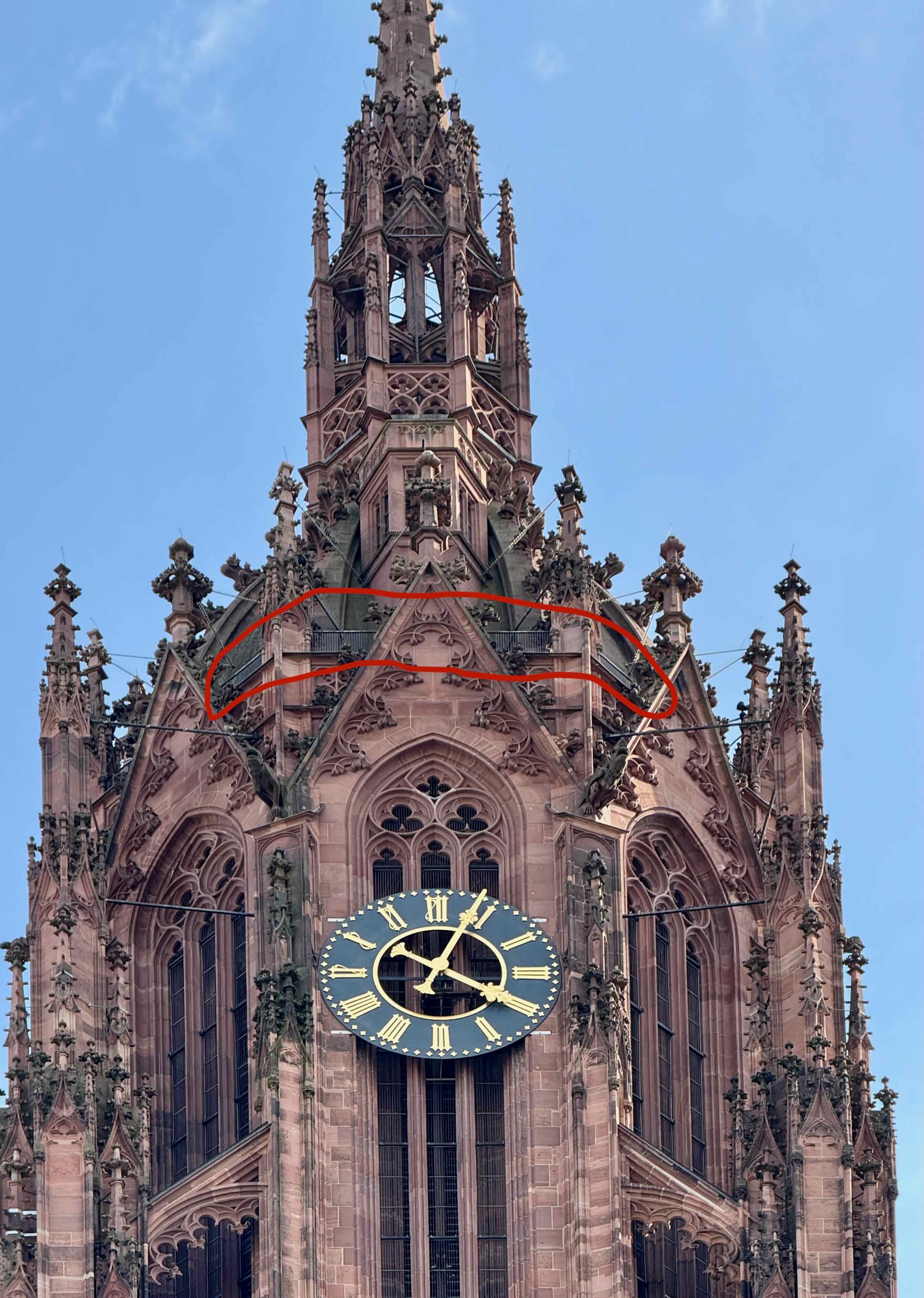
Next we visit the indoor market. I am so tempted to buy some flowers.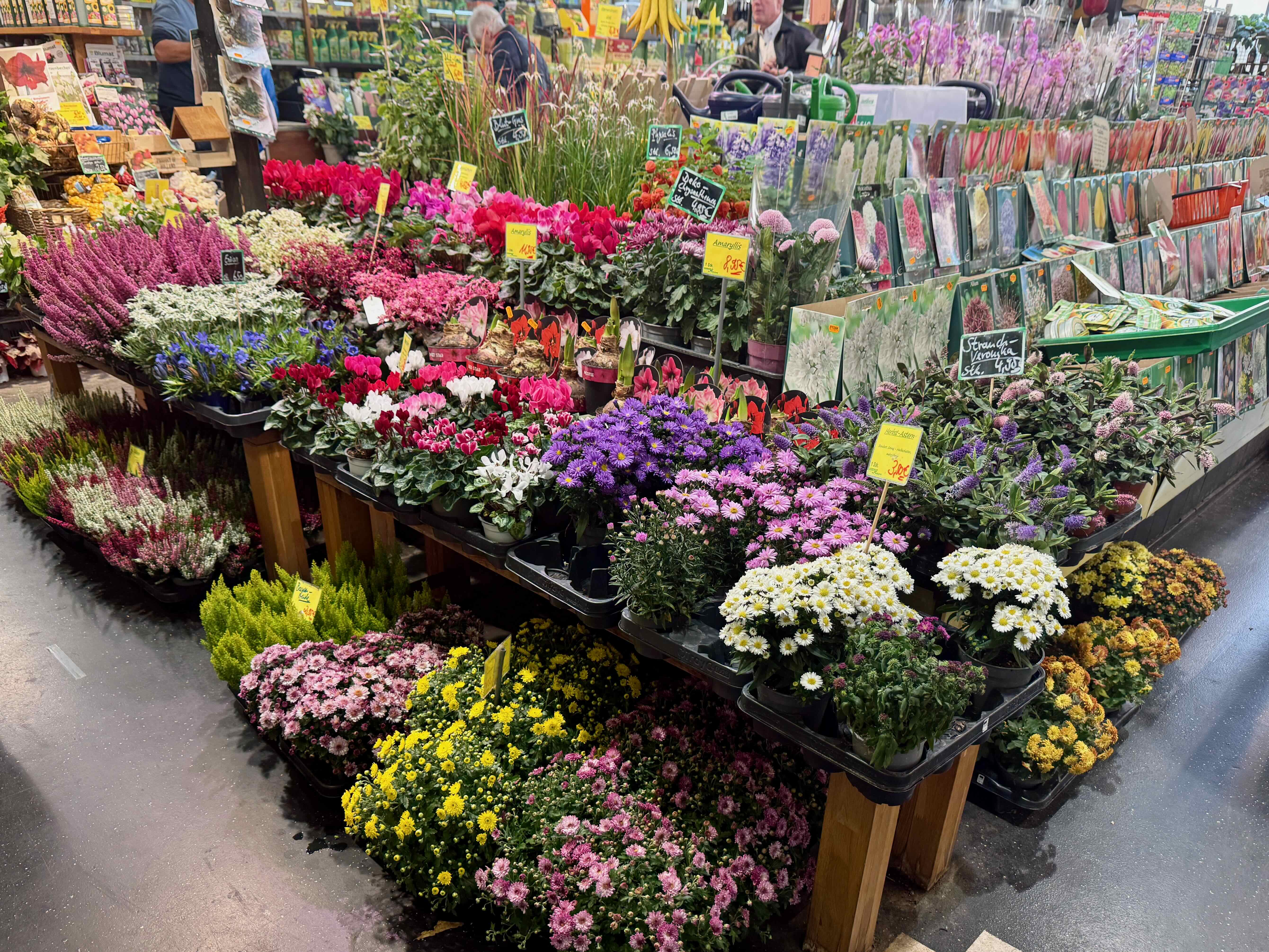
Edelweiss and Gentians, two of my favourite flowers.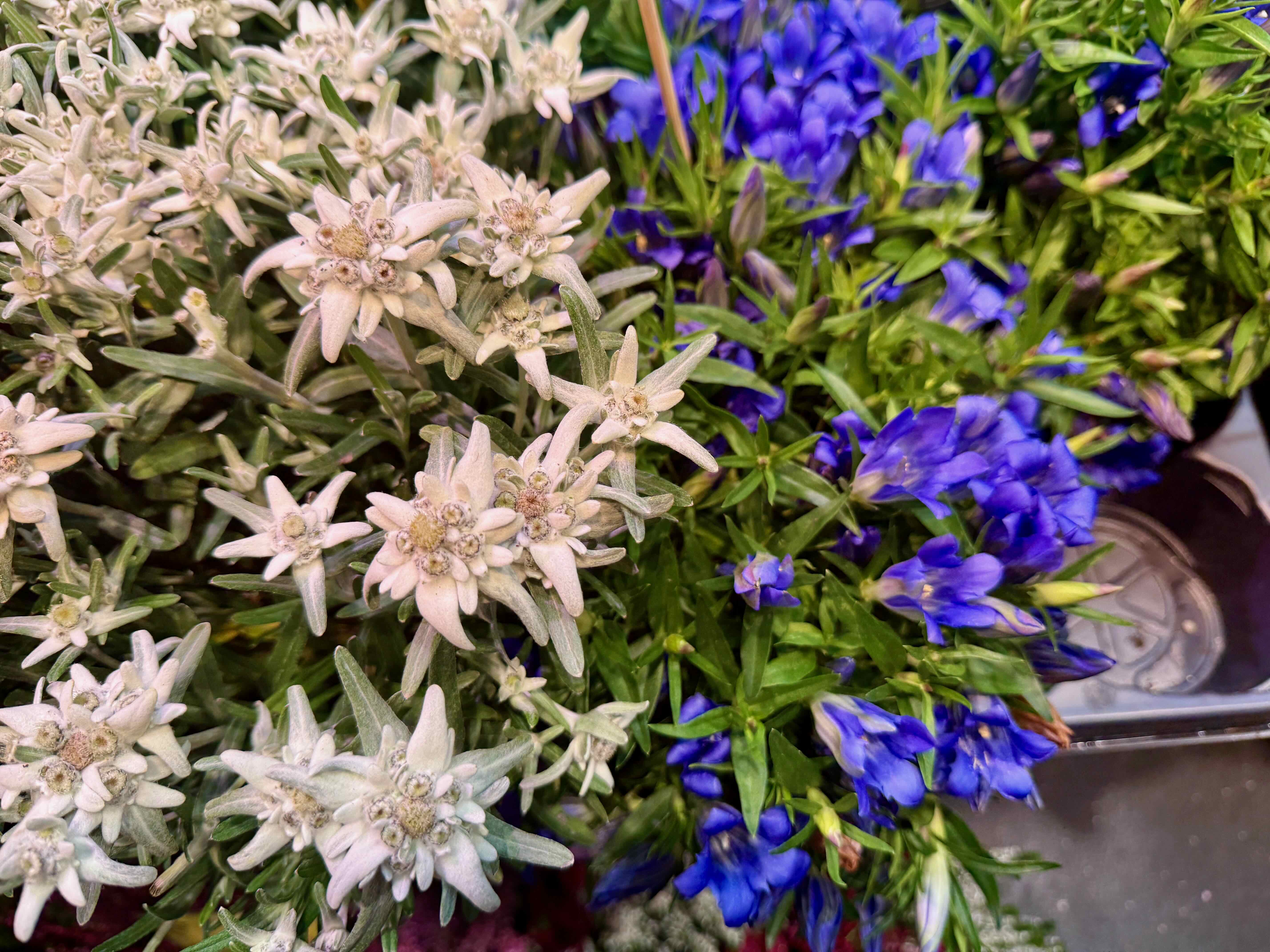
Everything is so colourful and looks delicious.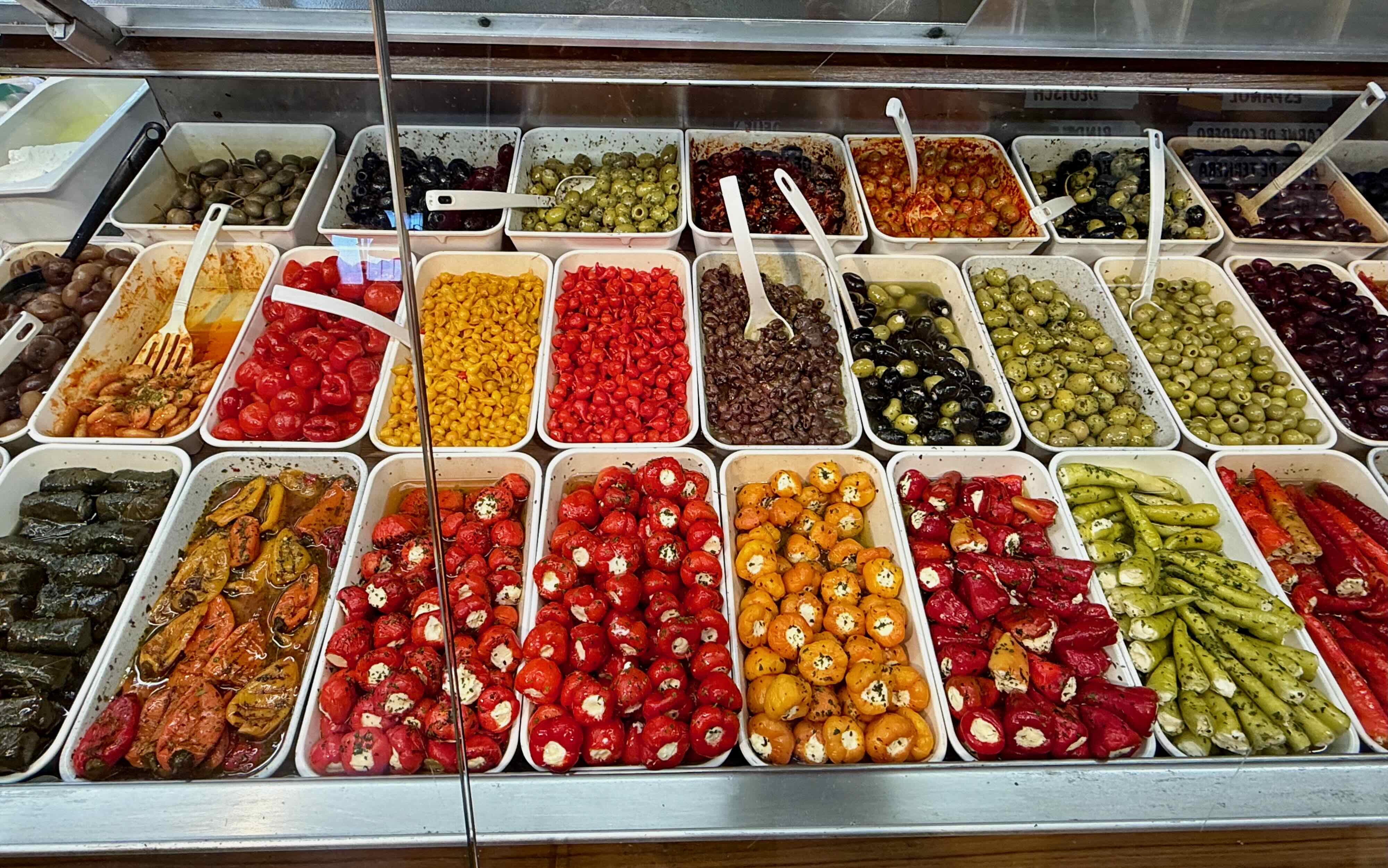
Produce doesn’t look this appealing at home.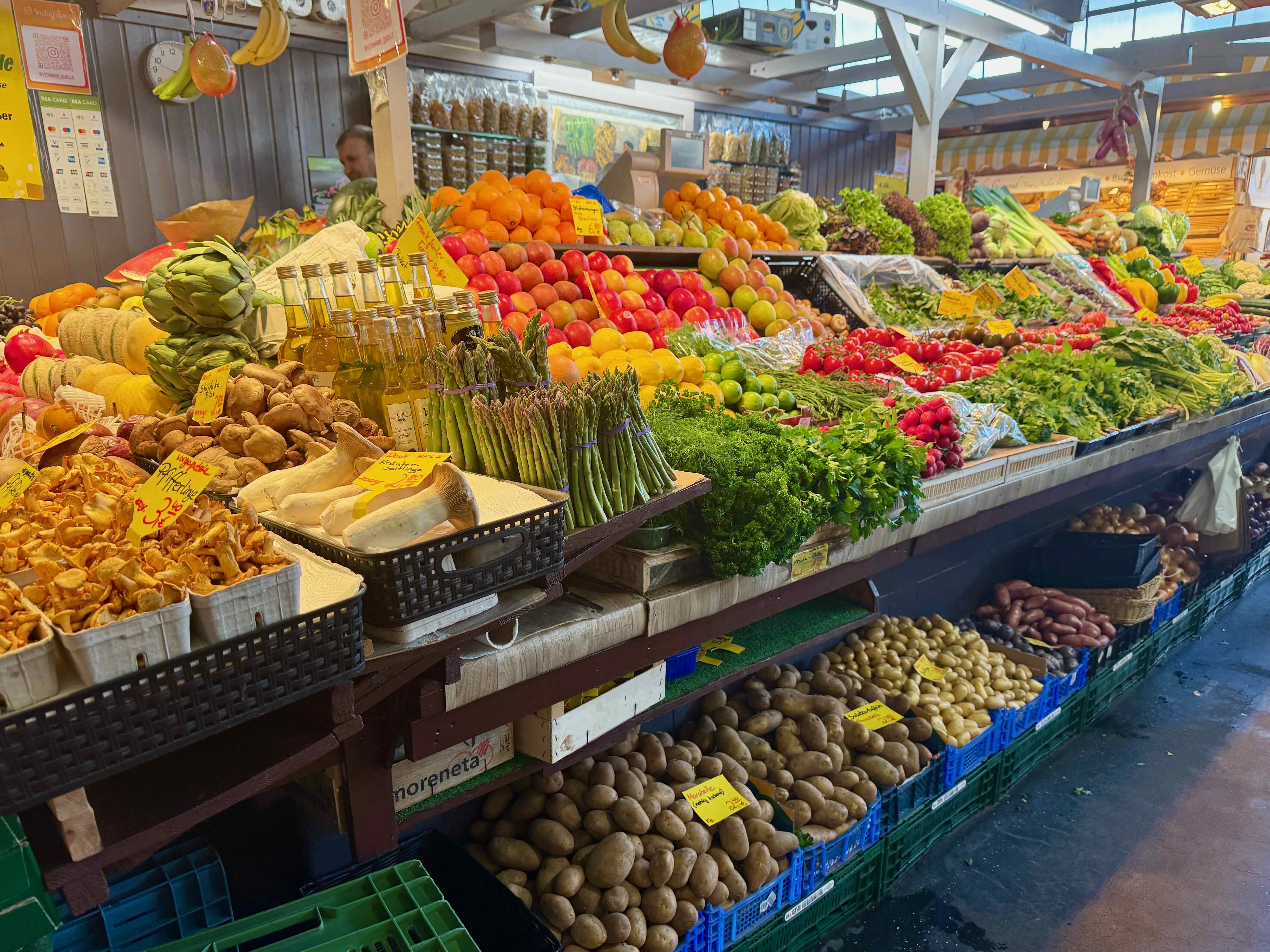
The leeks are enormous! We buy some pastry for a snack and I even find a slice of yummy gluten free apple cake.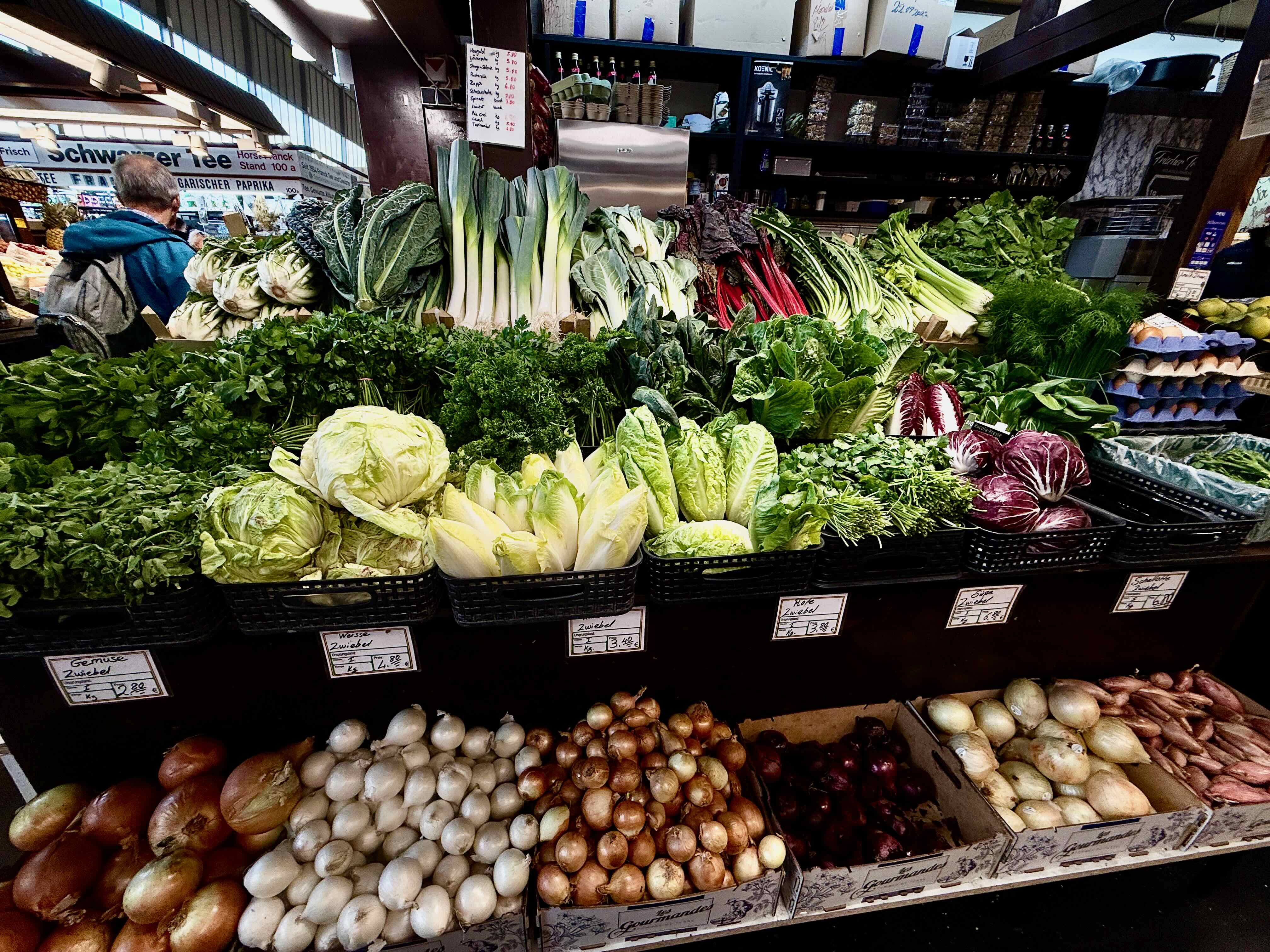
Heading back to the train station we do a bit of window shopping. We don’t buy souvenirs as a rule. It is just too difficult to carry purchases around during an extended trip.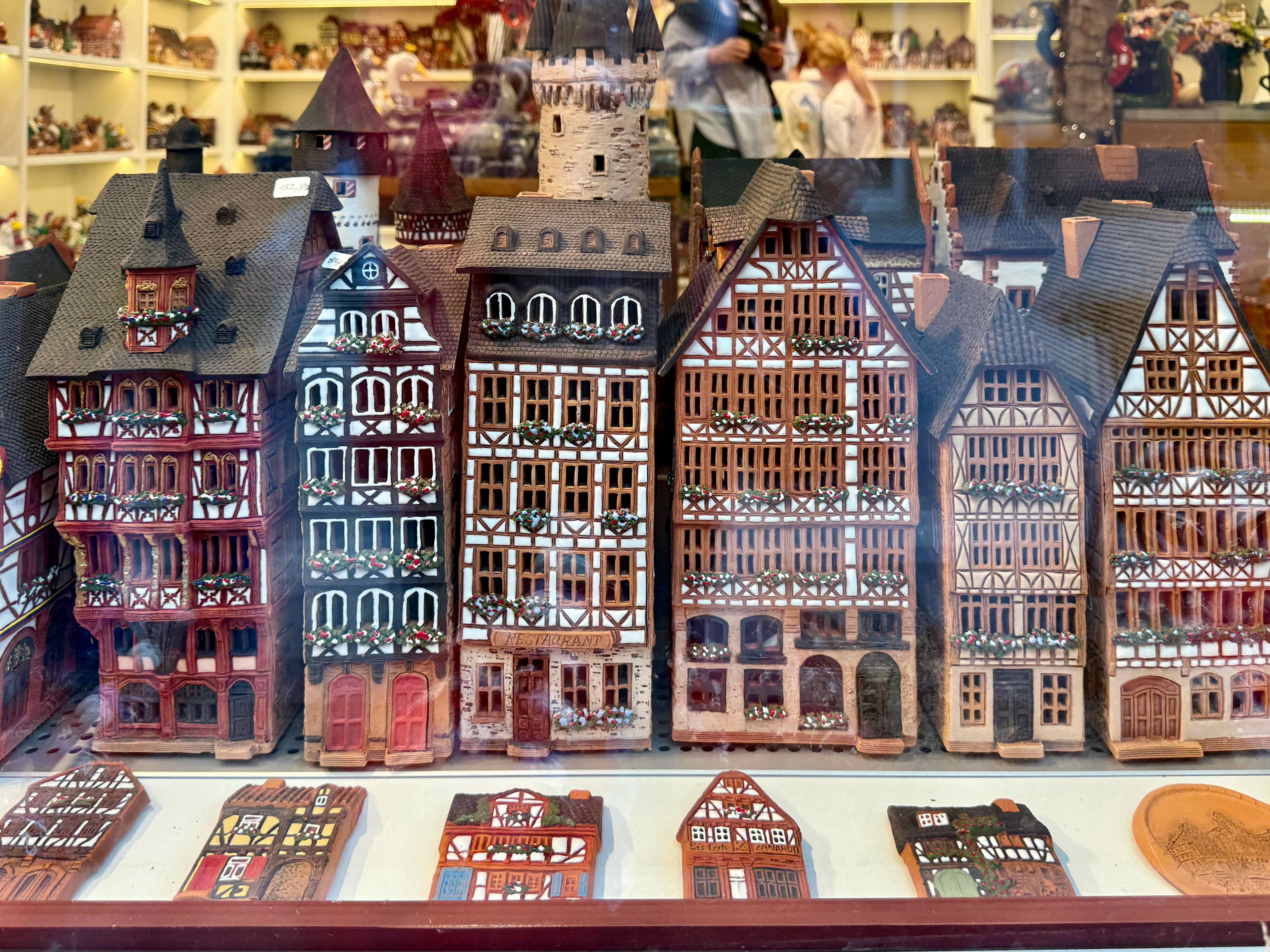
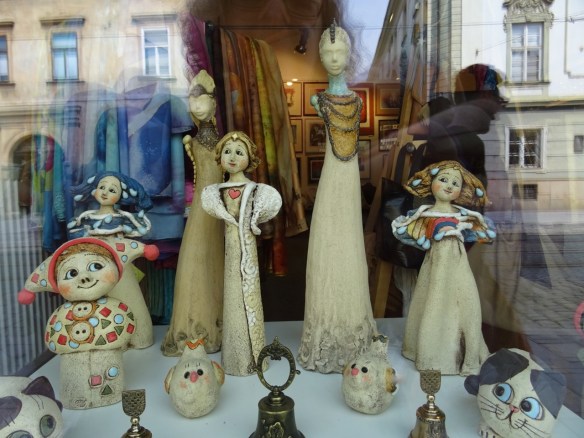
These characters made us laugh. This store carried some interesting merchandise.
I am always kind of shocked to see semi-automatic weapons and other guns on display in store windows! 
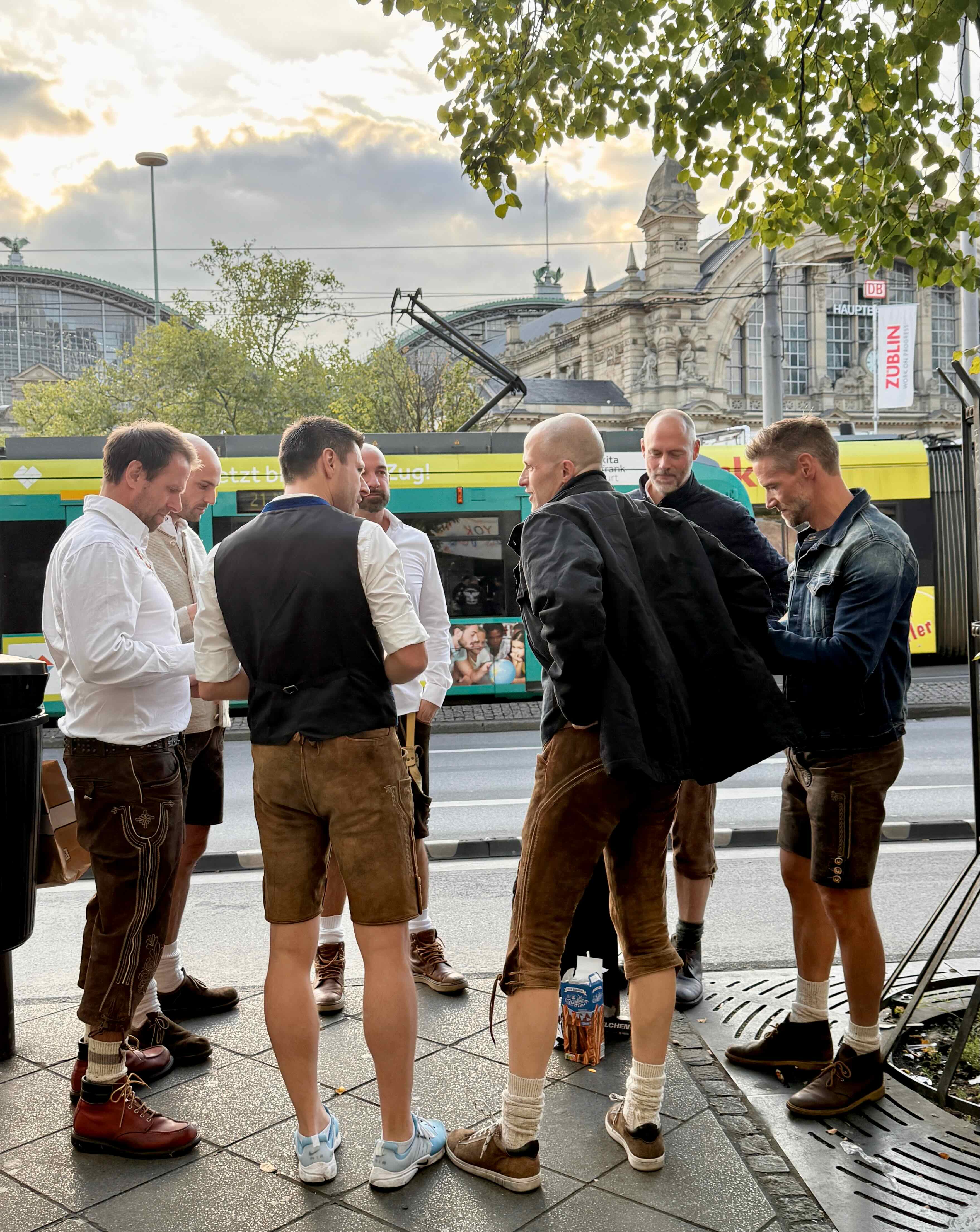
In front of the train station this group of friends are all wearing Lederhosen. I think it was for some special event as they were taking photos of themselves.
Back to the train station to head home. Another full day!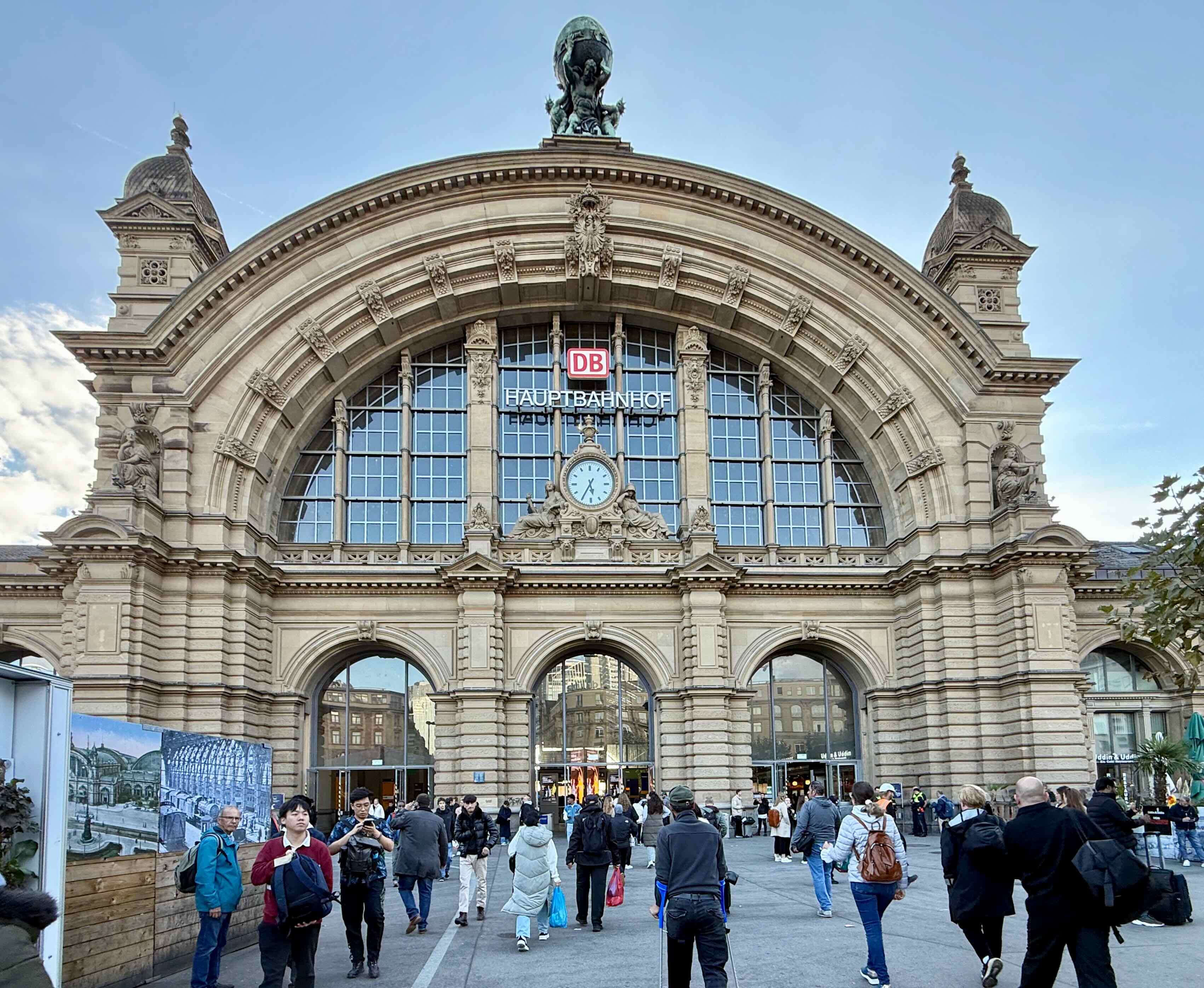
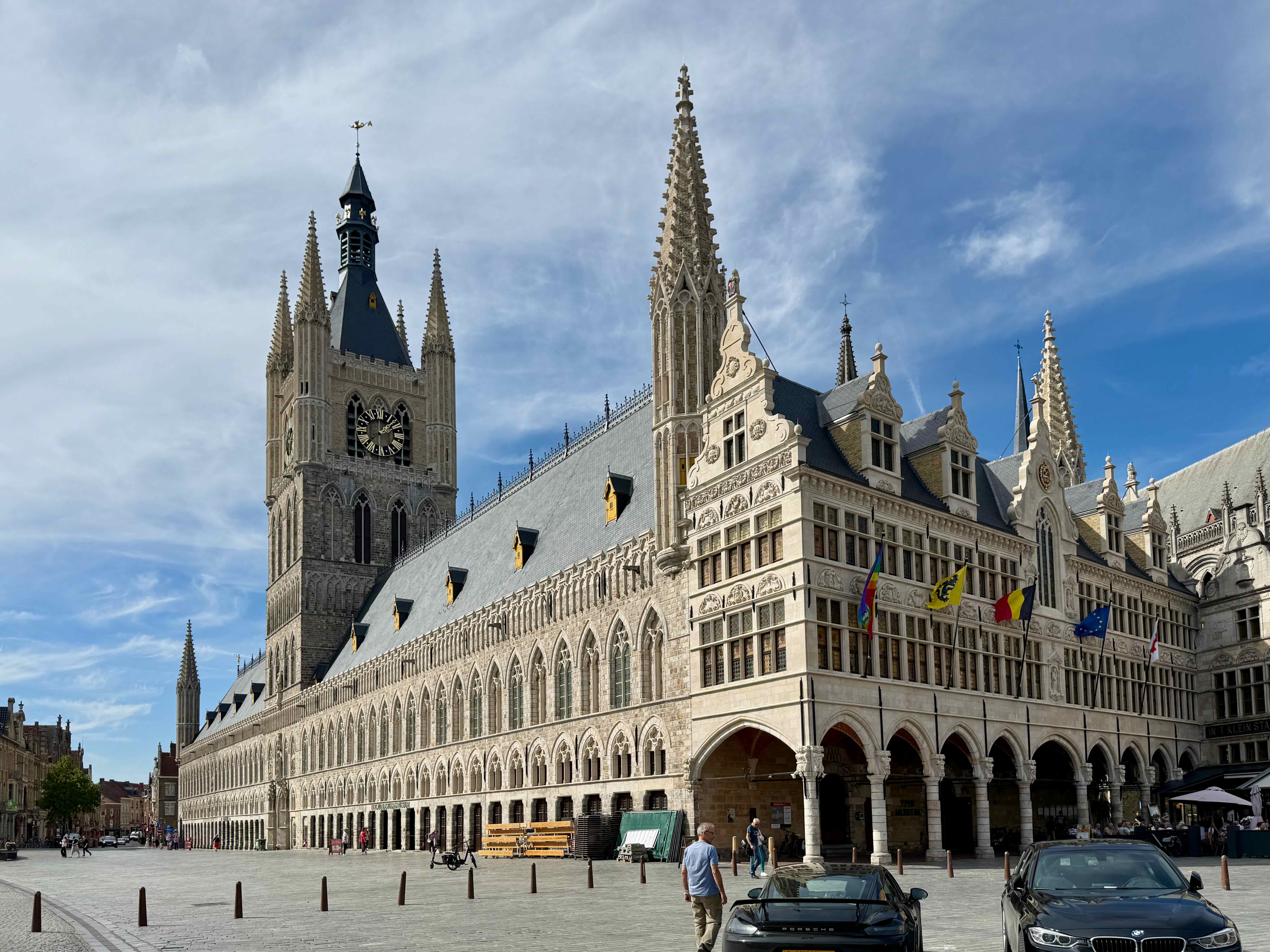
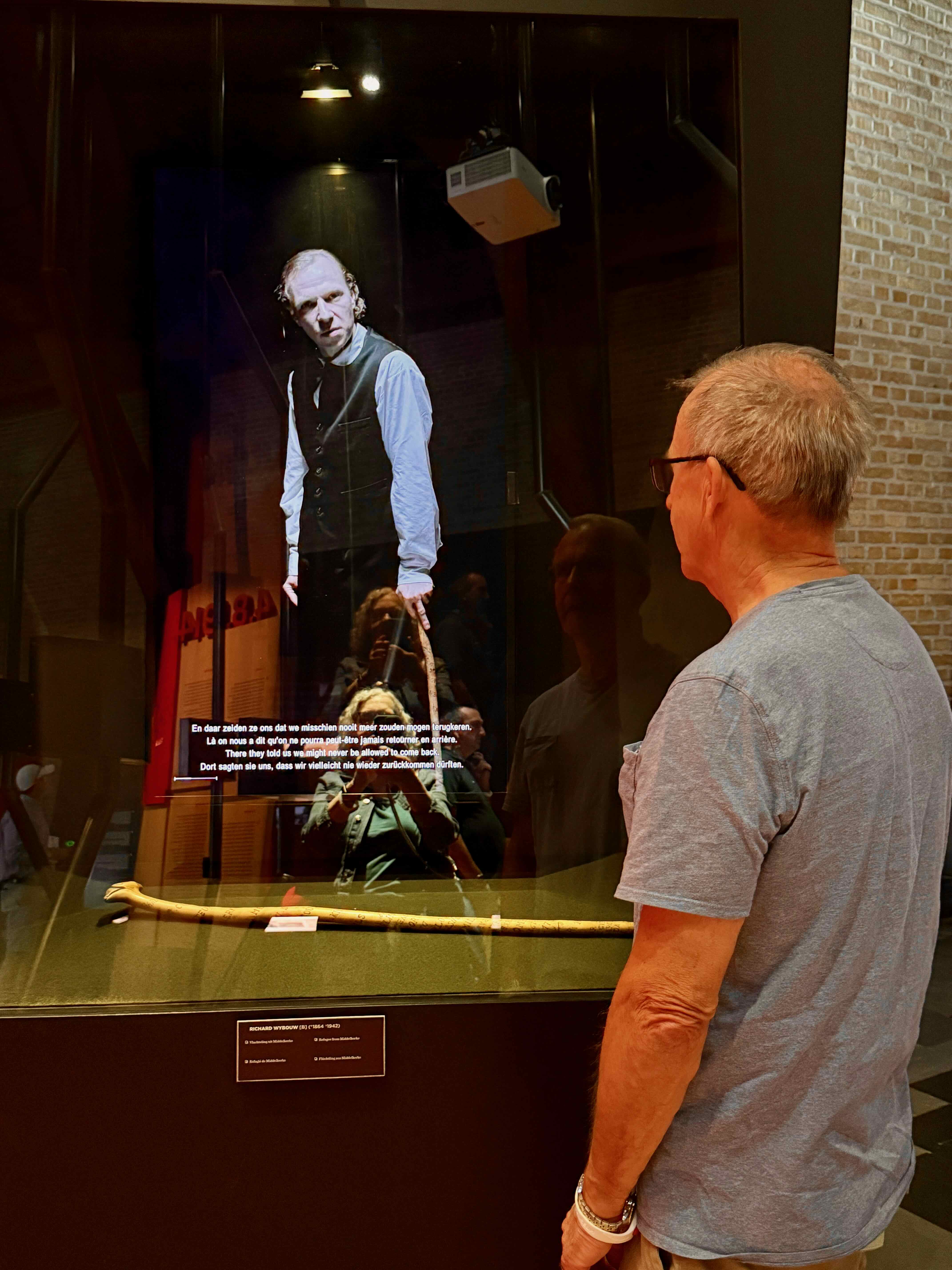
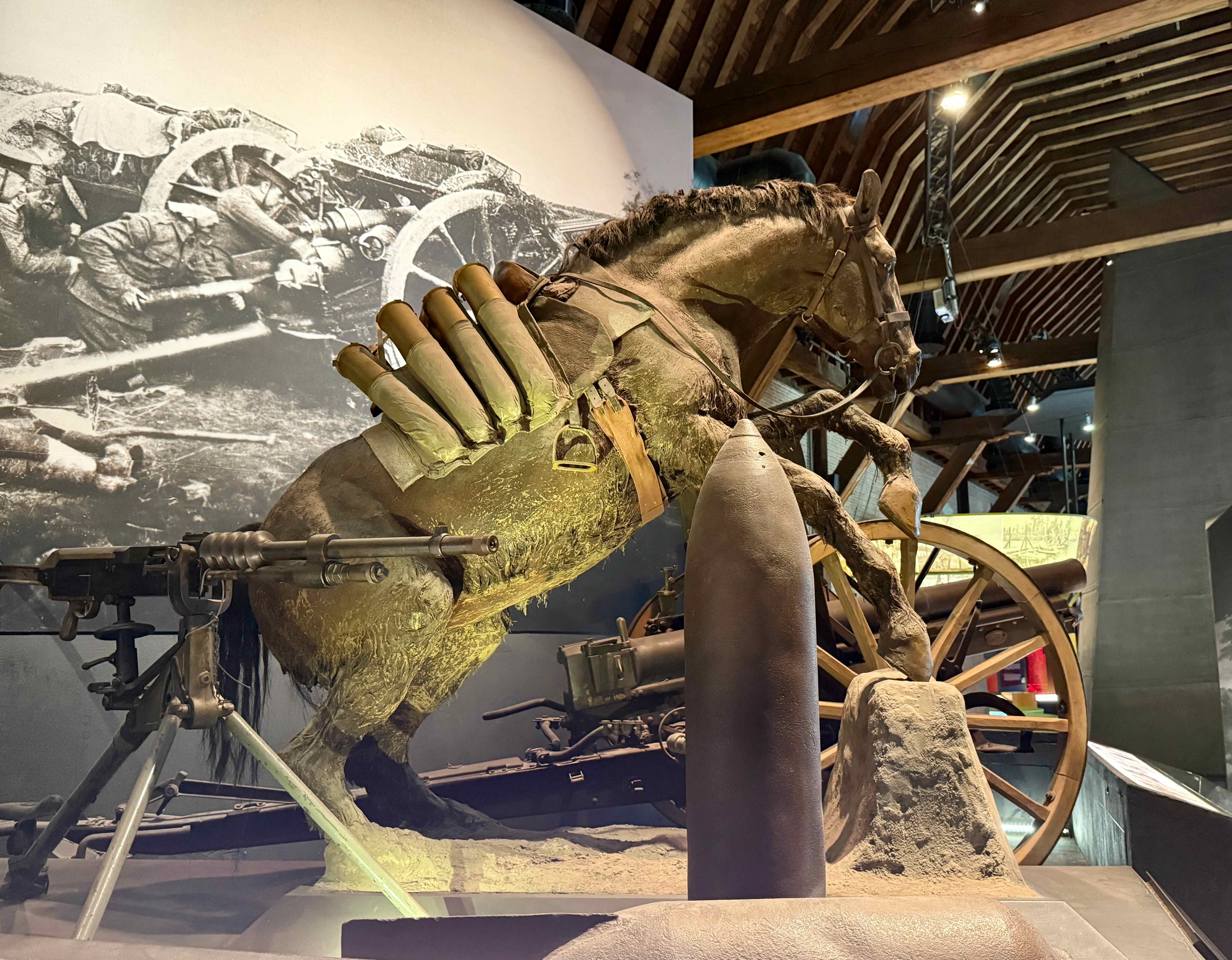

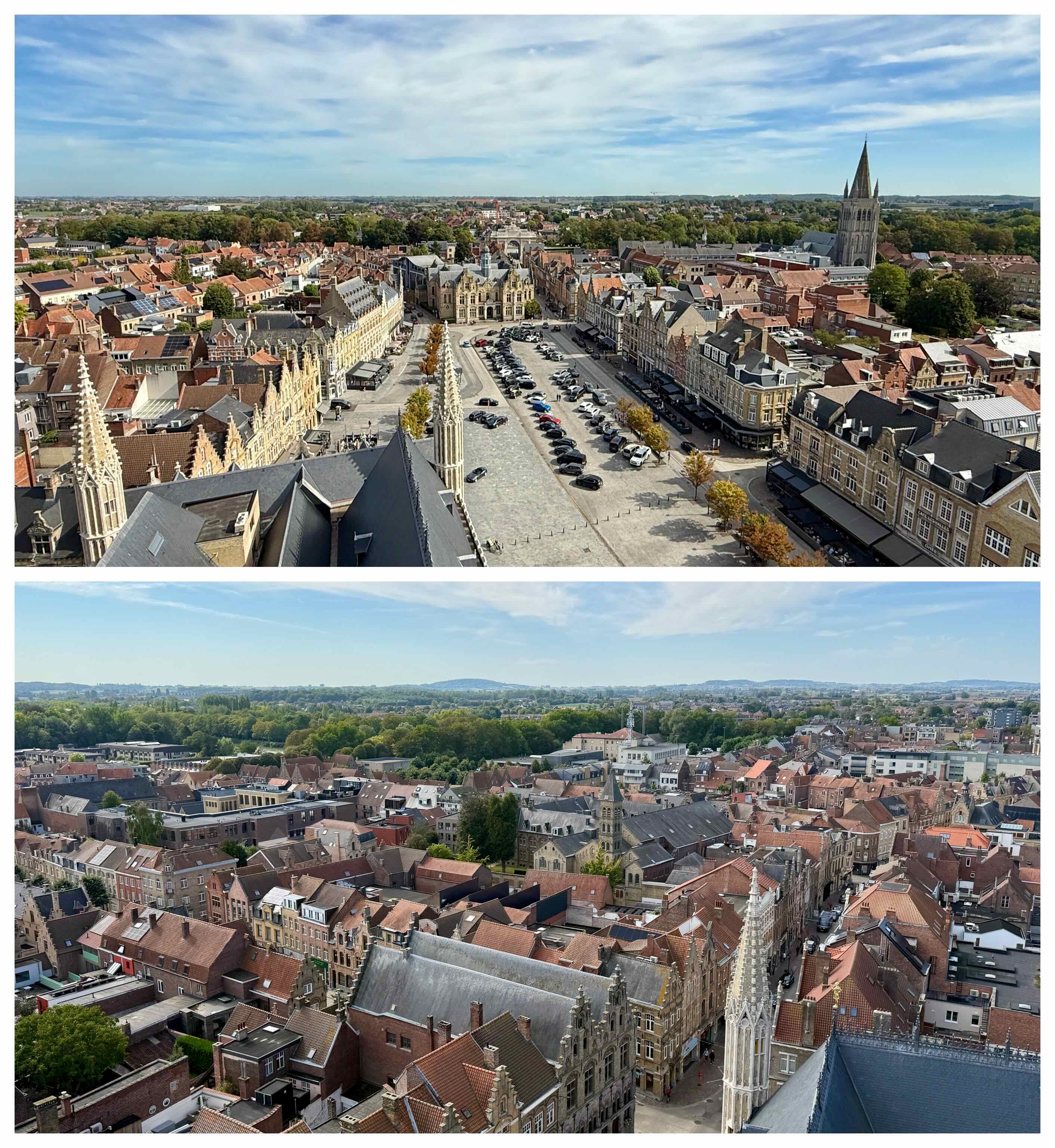

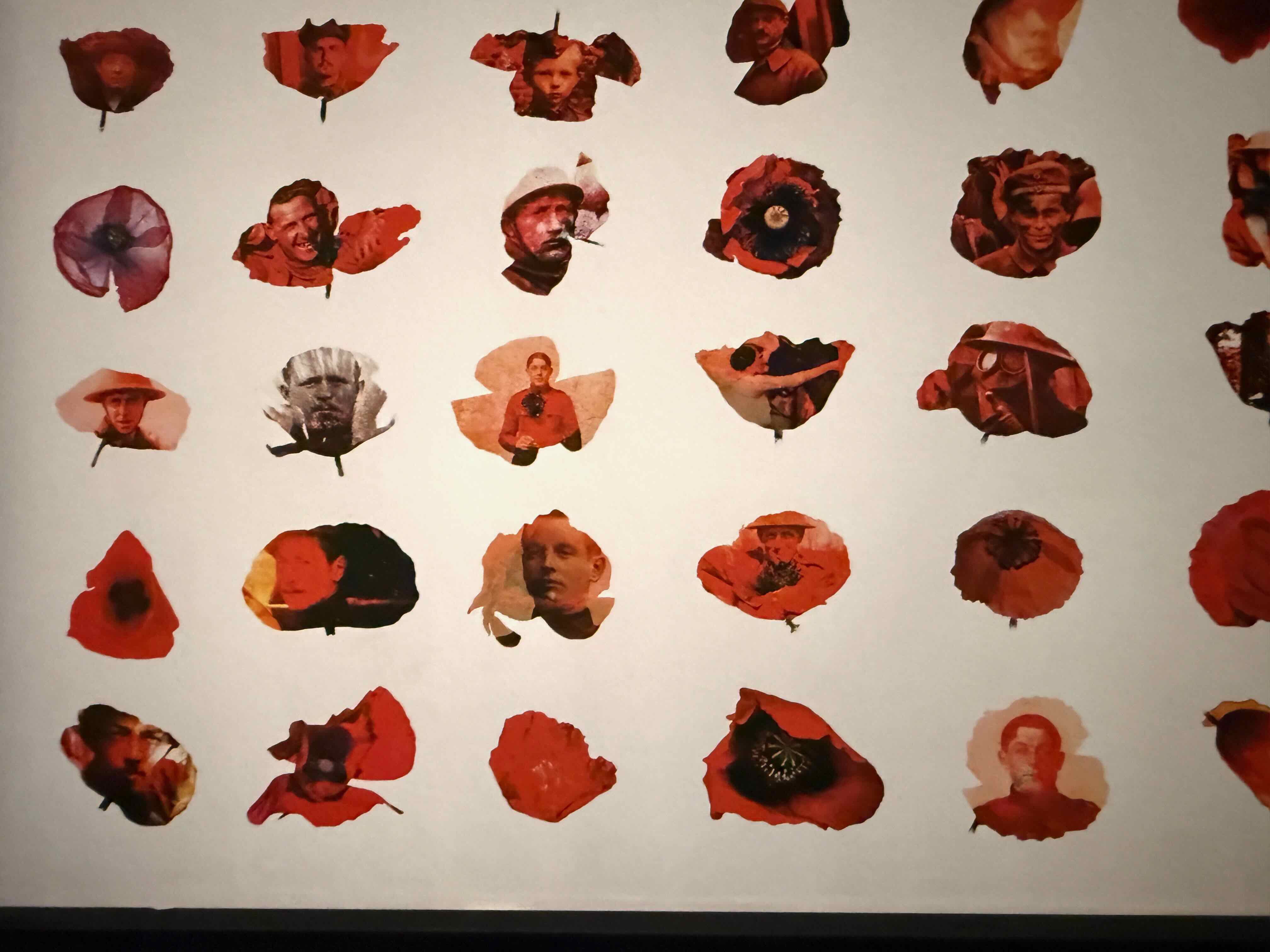
 These banners are for John McCrae’s poem “In Flanders Fields”.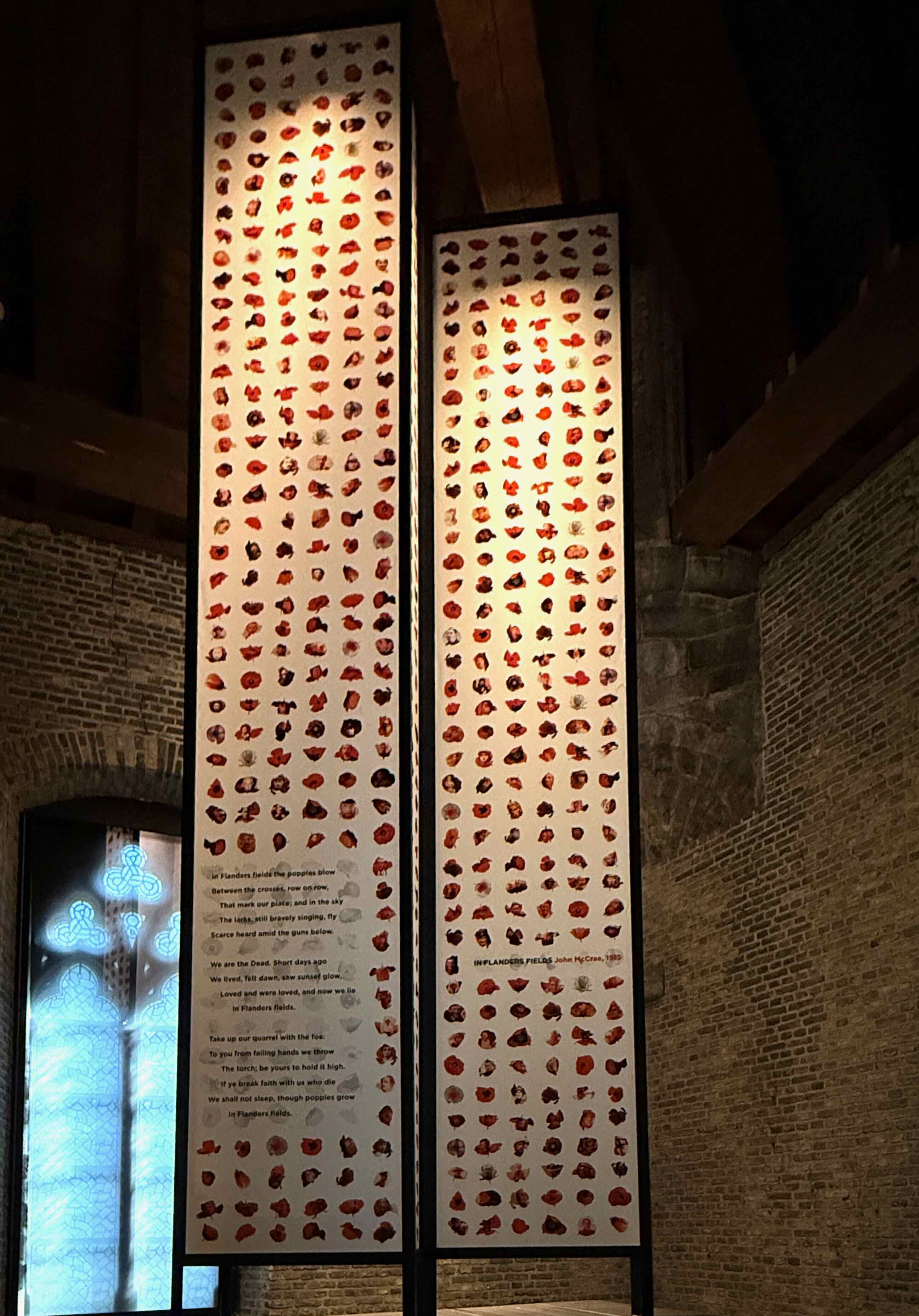
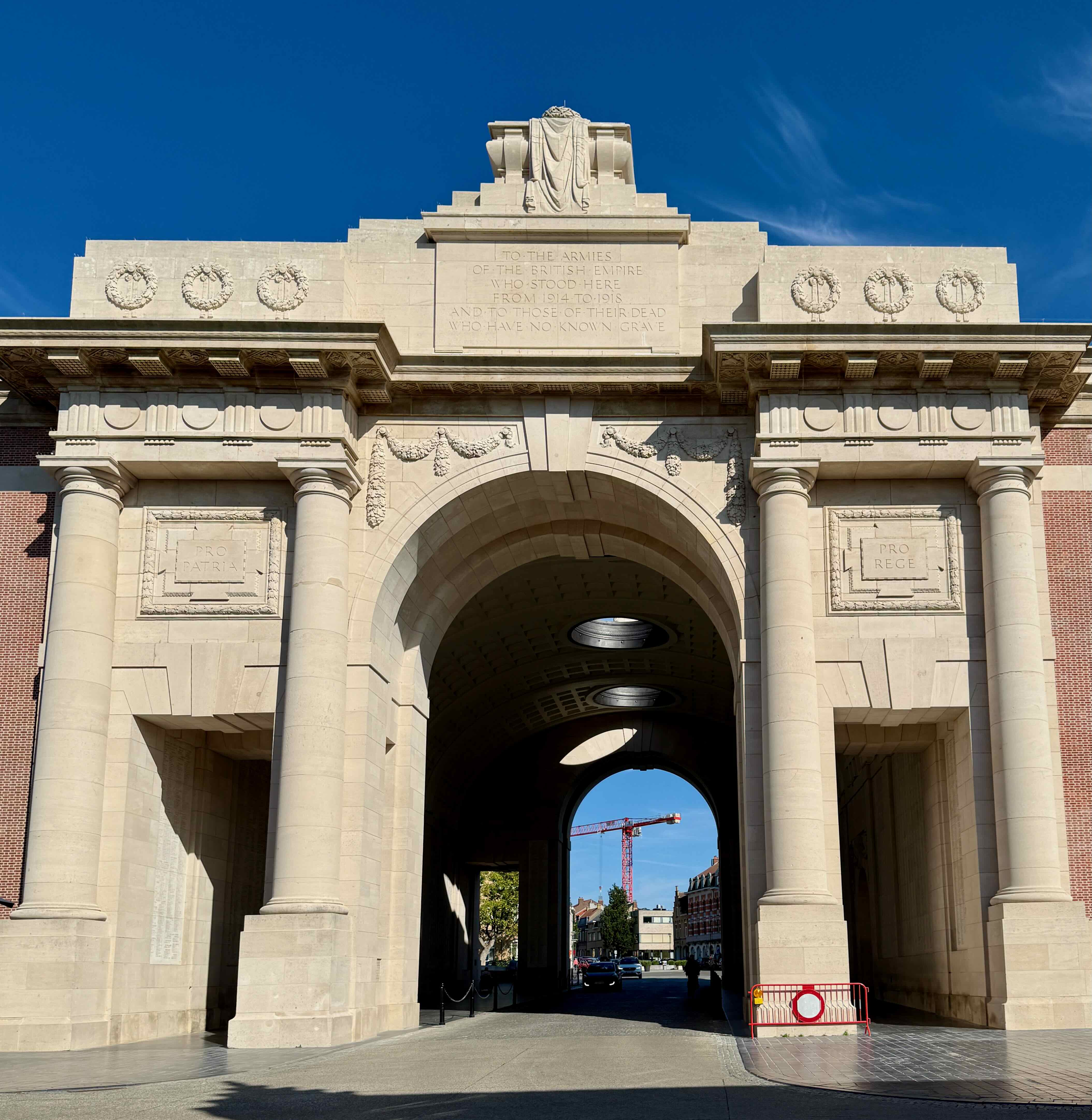
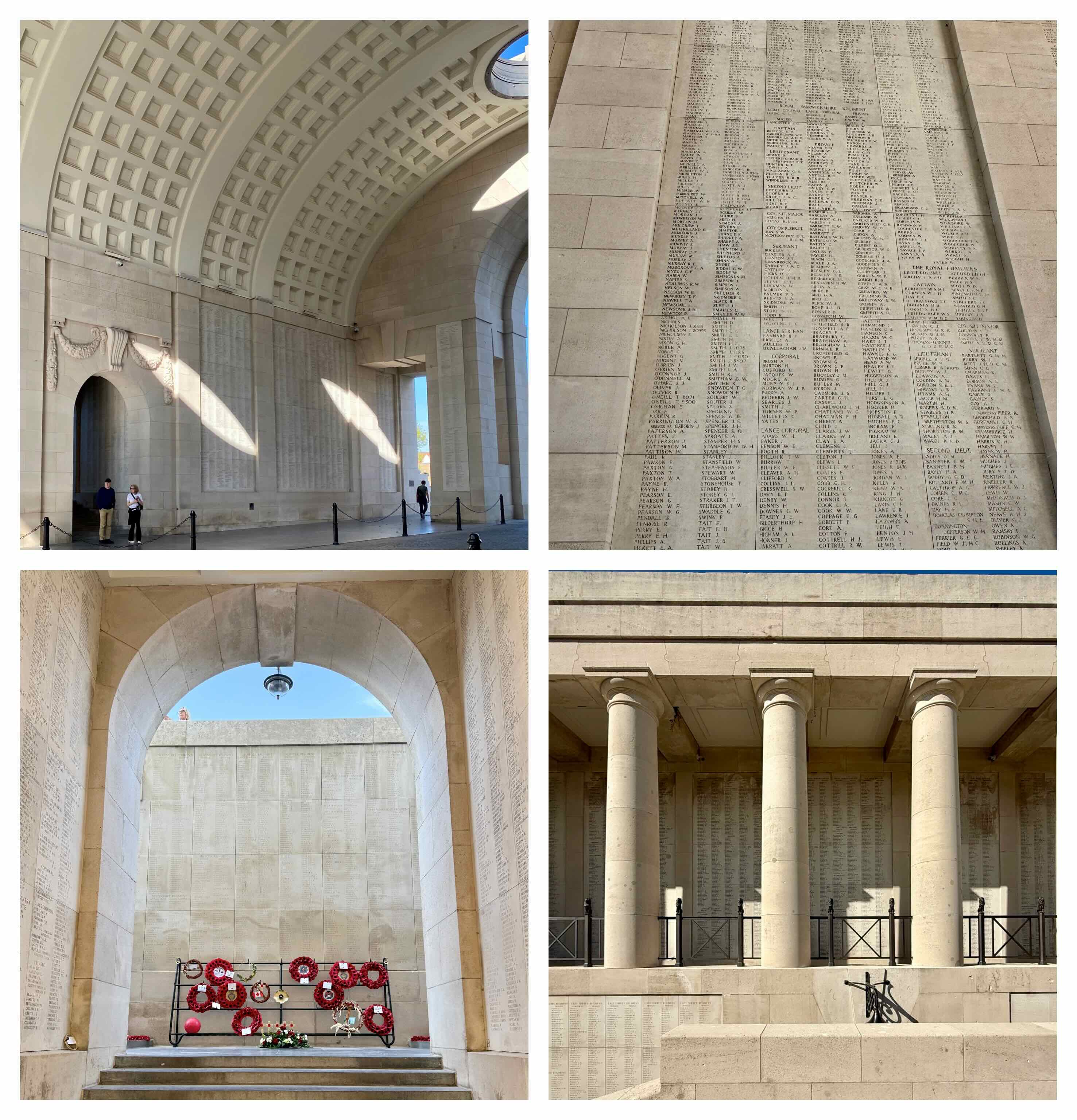
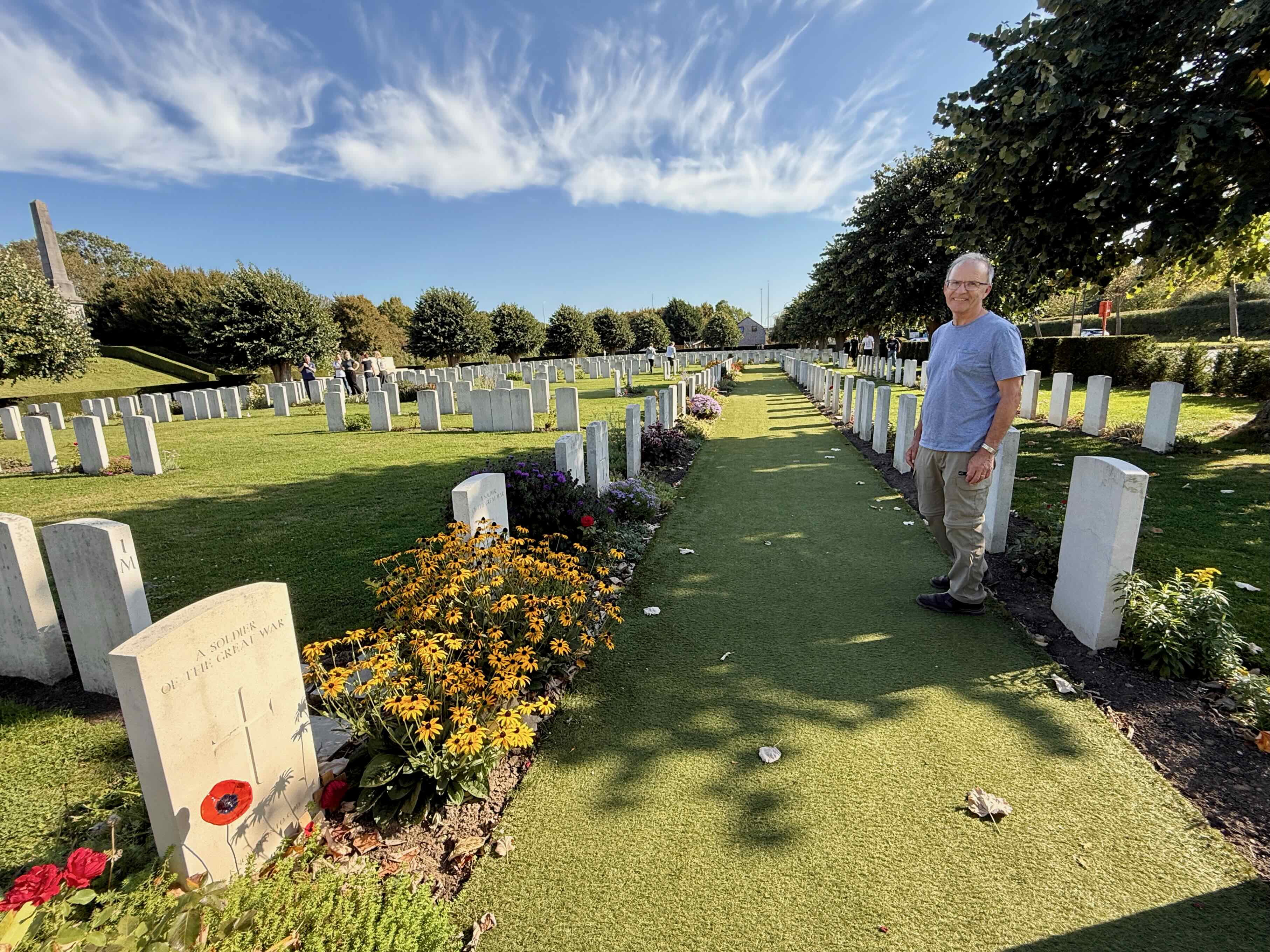 We pass some windmills on the way to the last cemetery we will visit on this trip.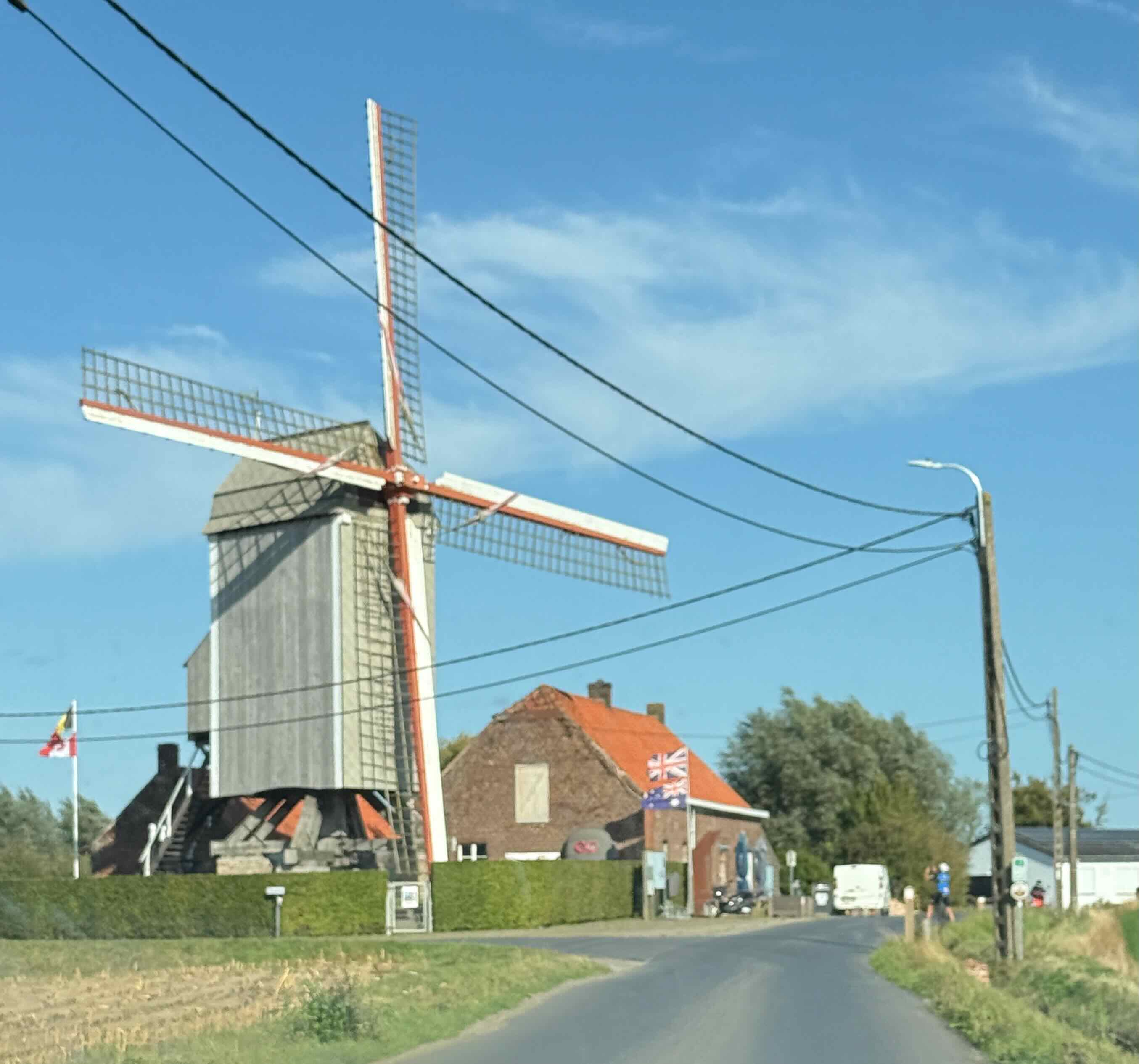
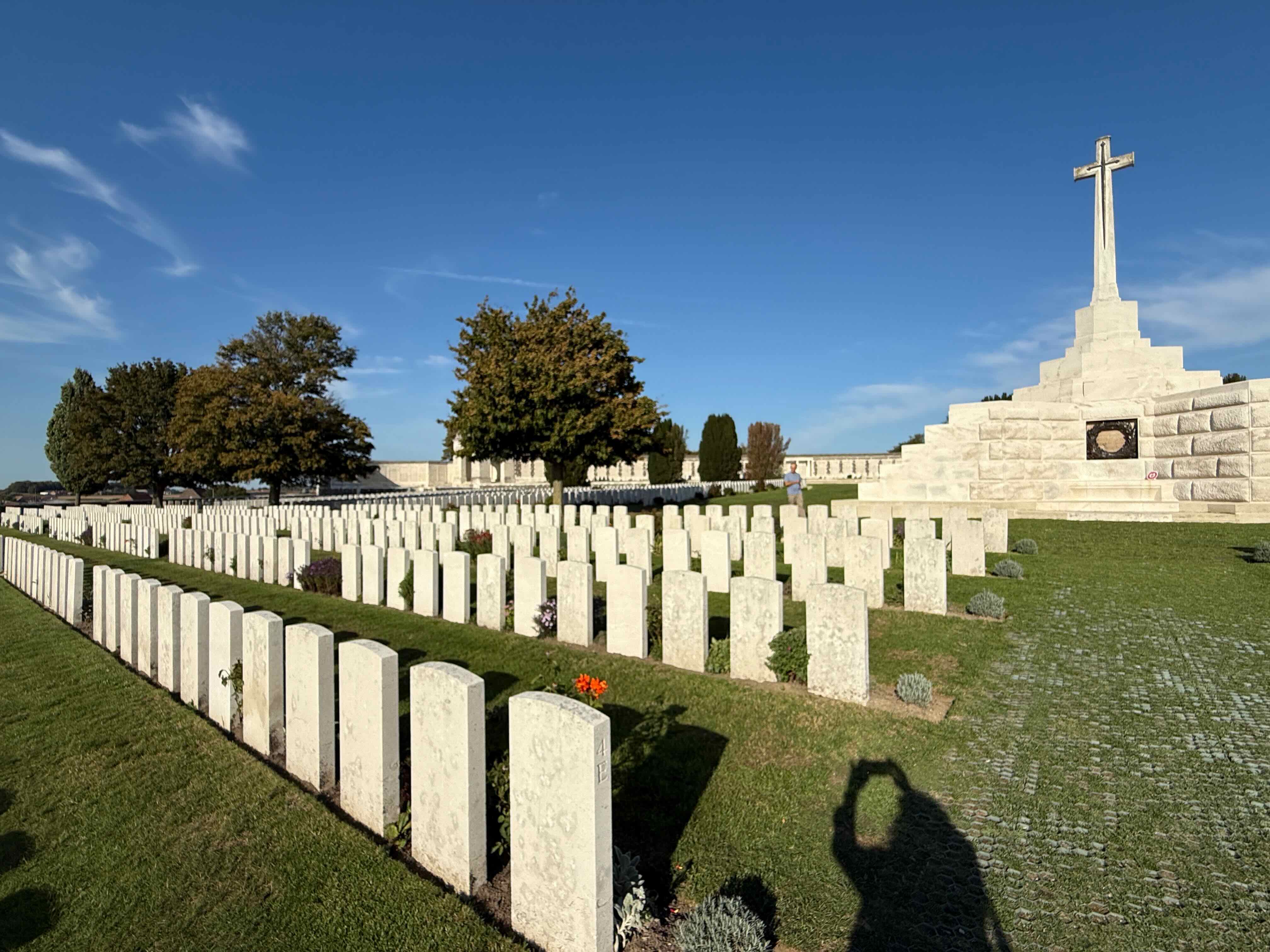
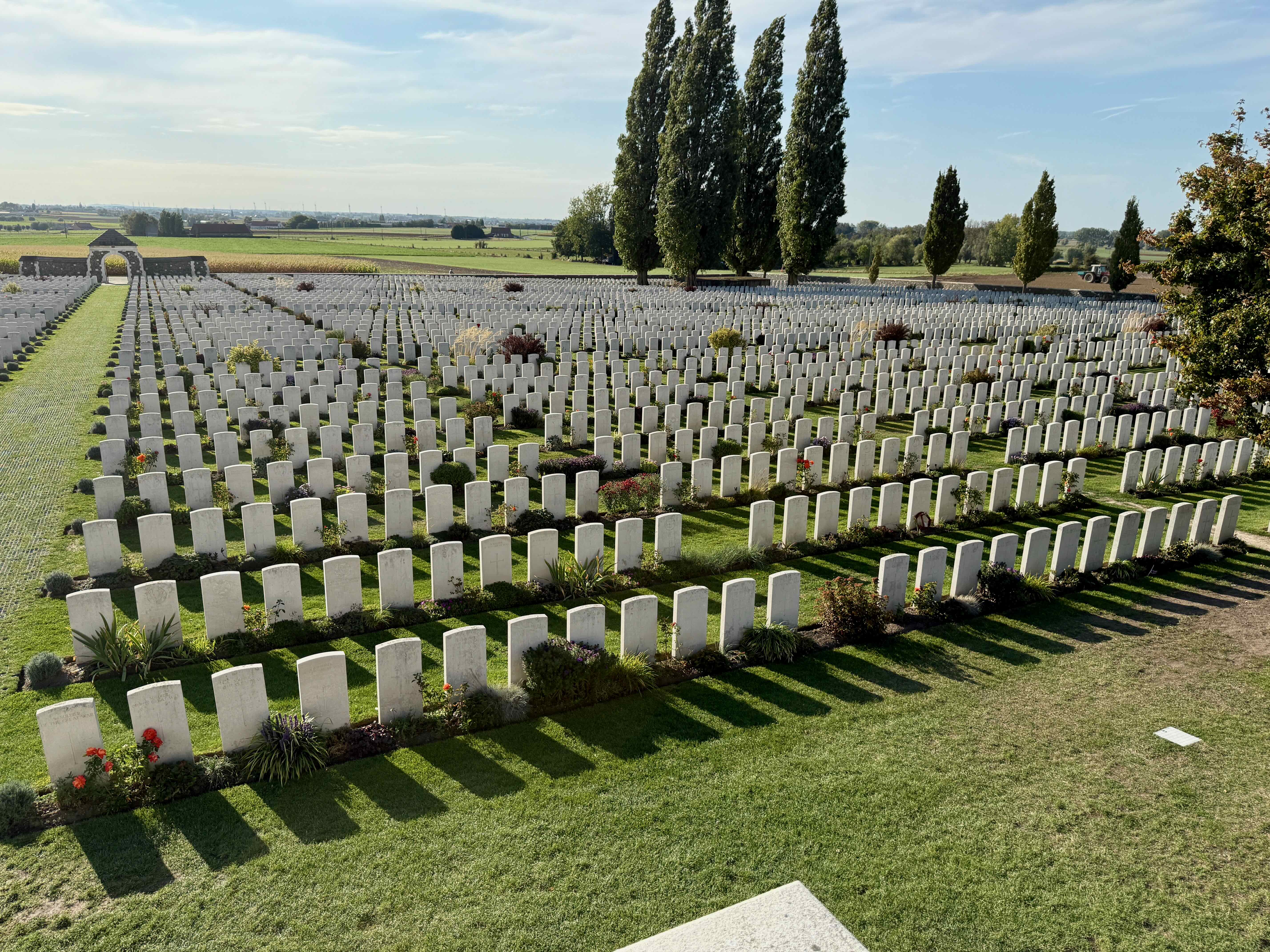
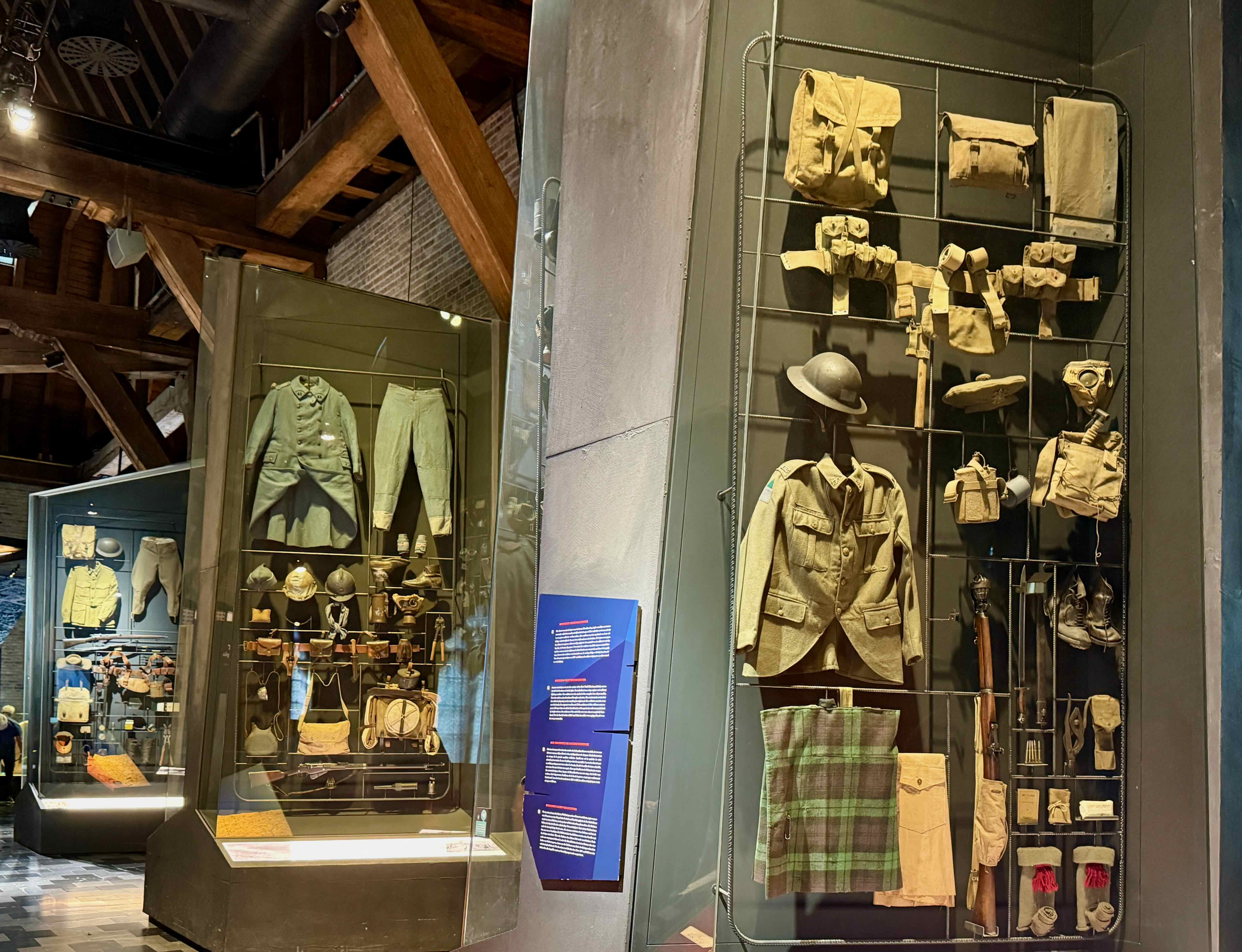
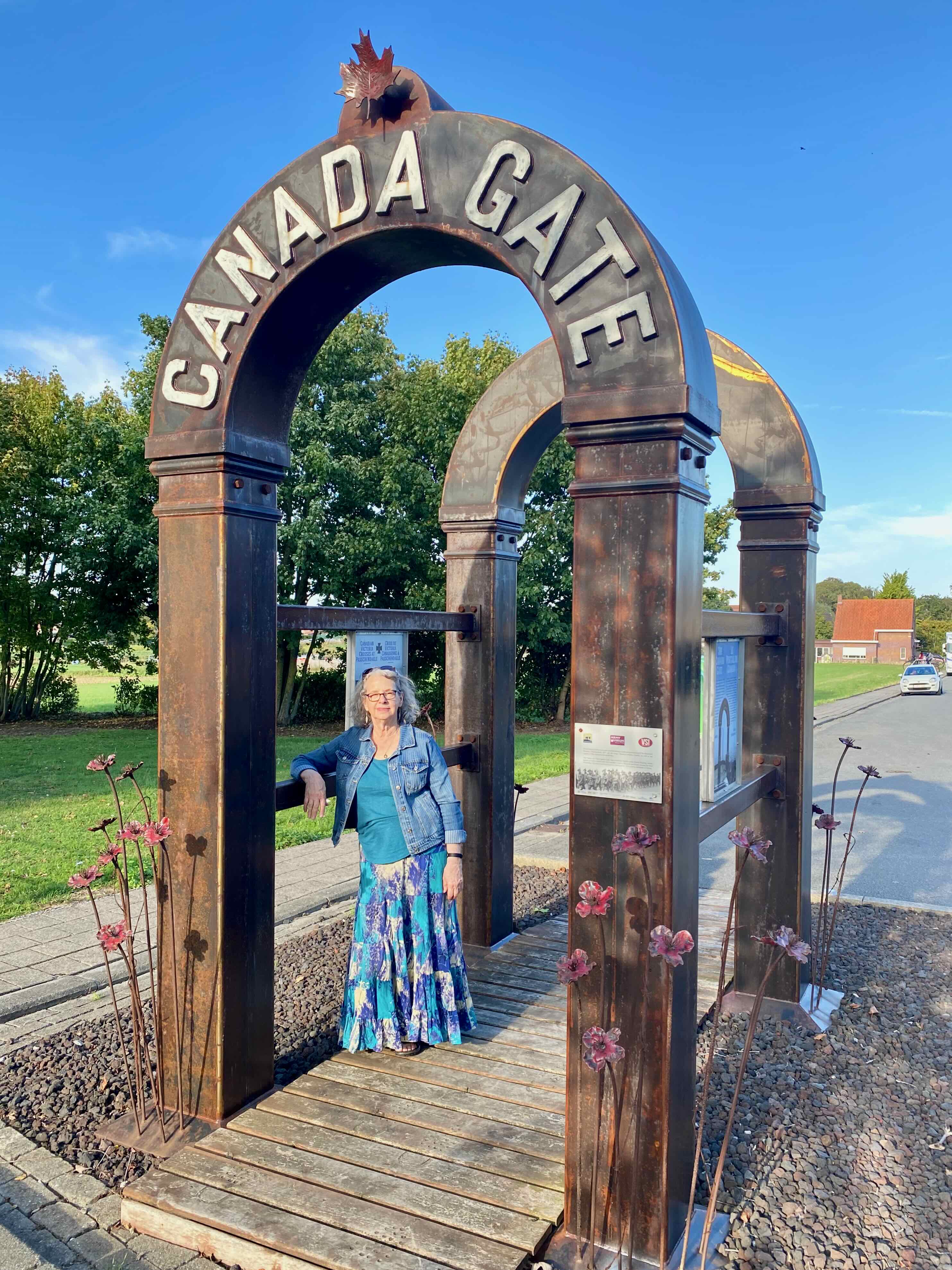
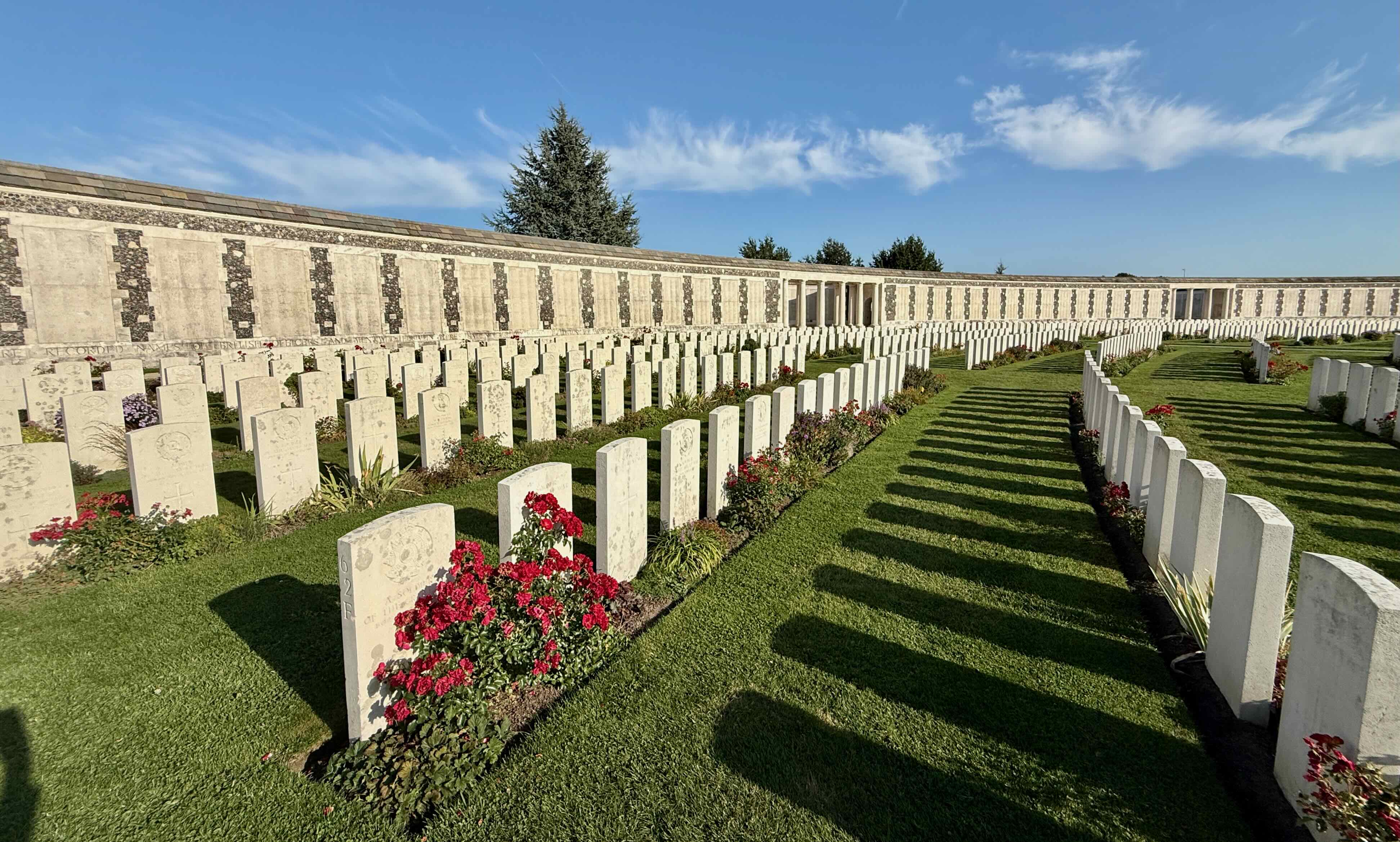 One last stop at the Canadian Memorial which commemorates the actions and sacrifices of the Canadian Corps during the First World War’s Battle of Passchendaele.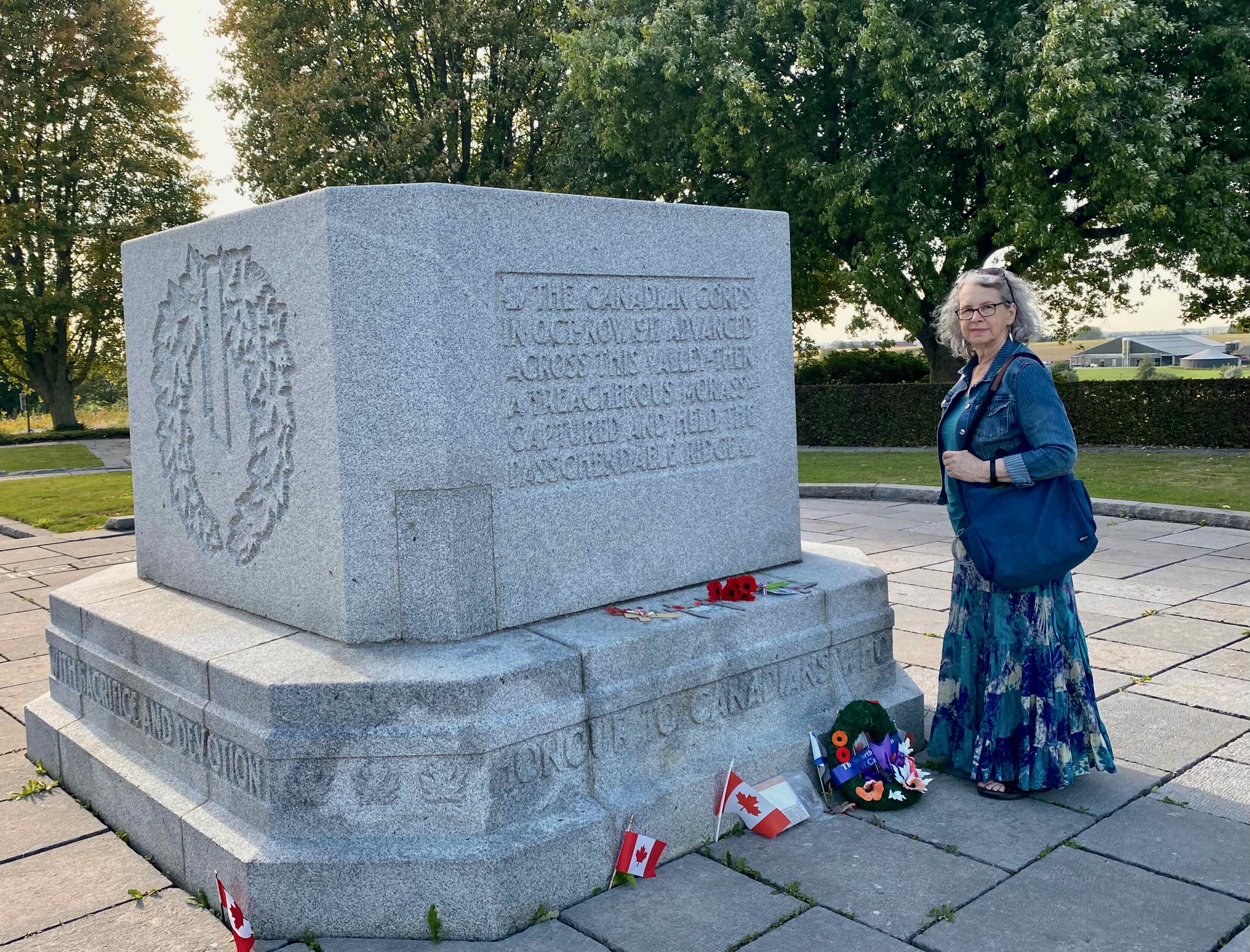
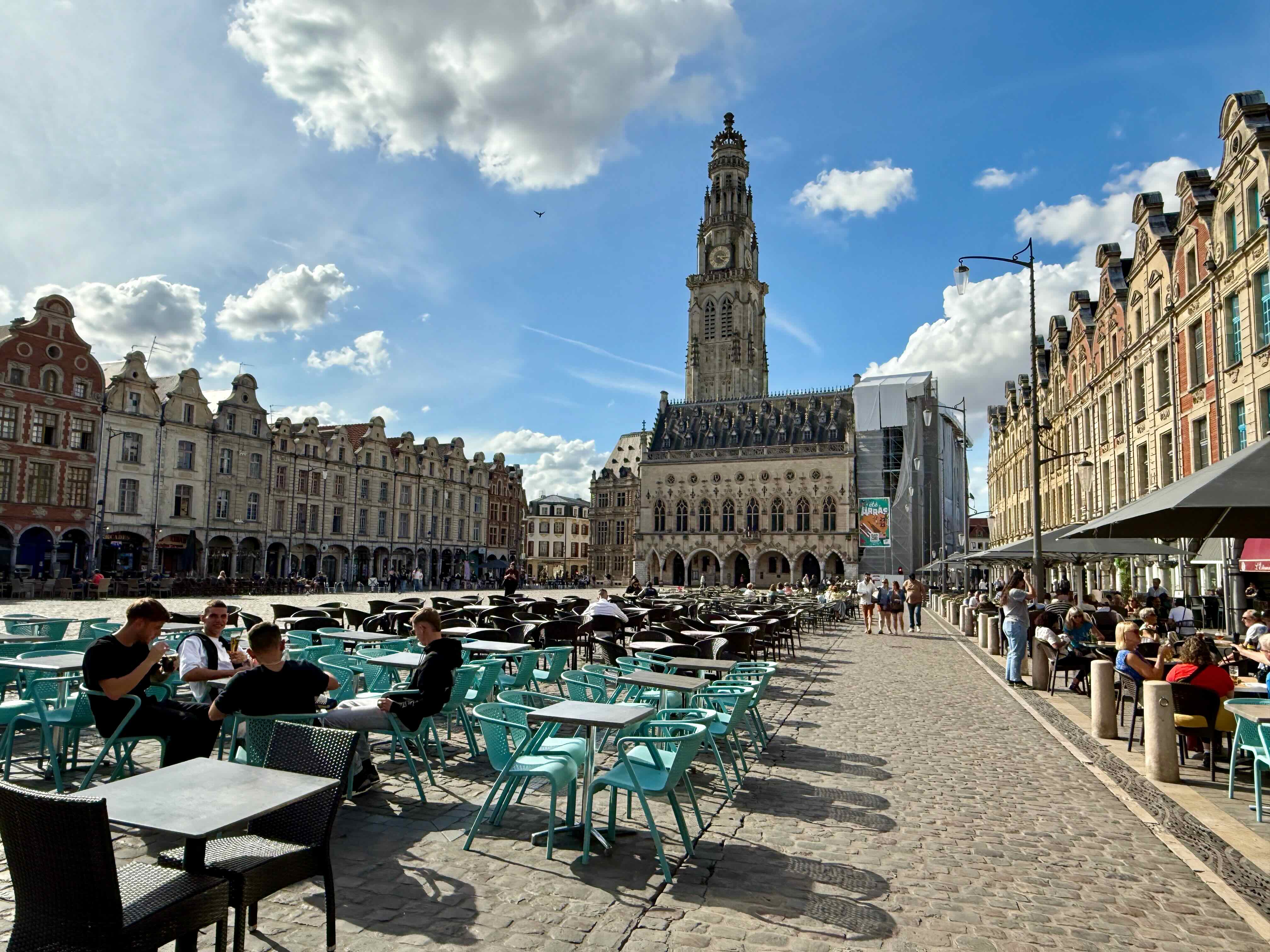
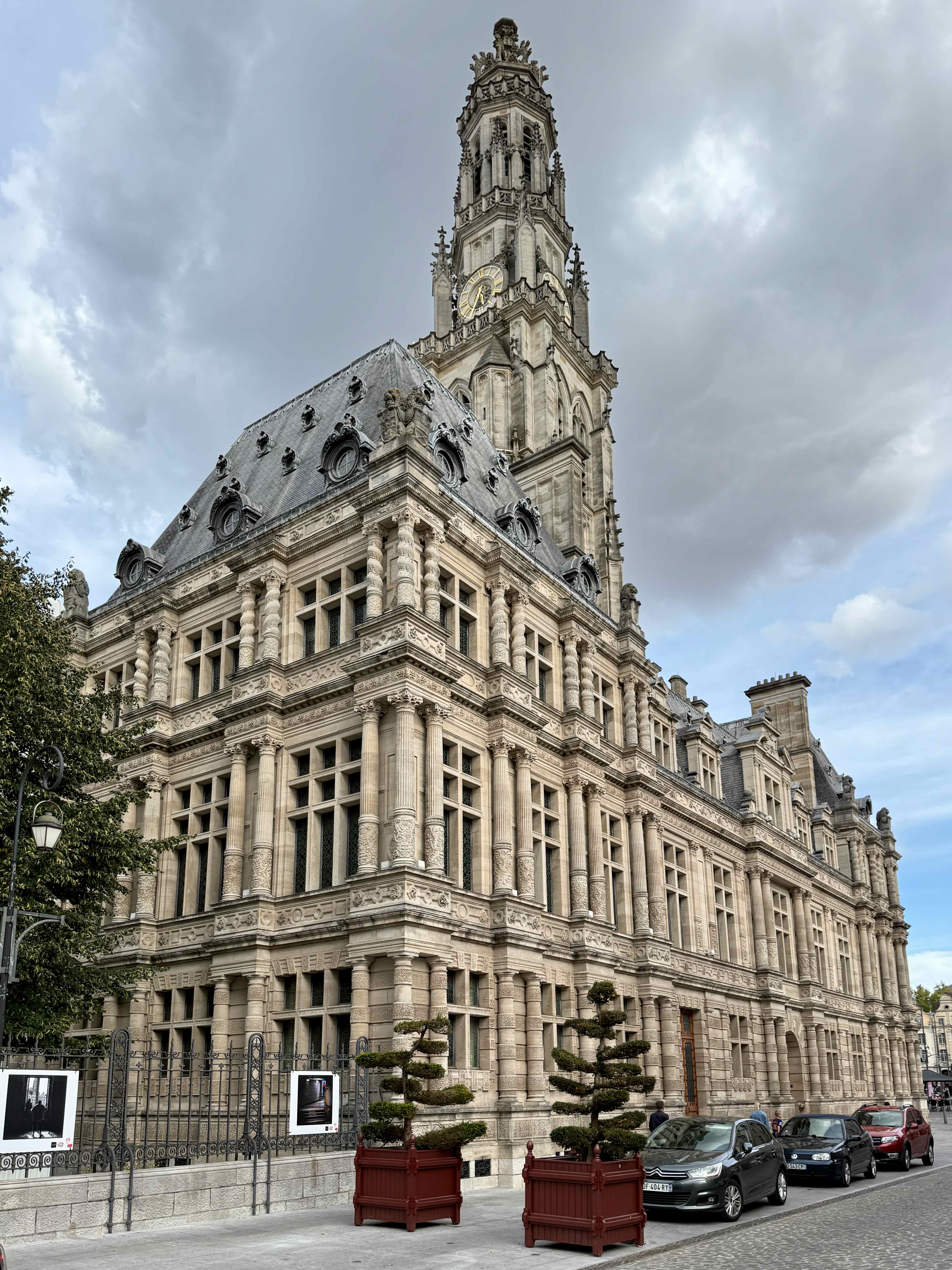
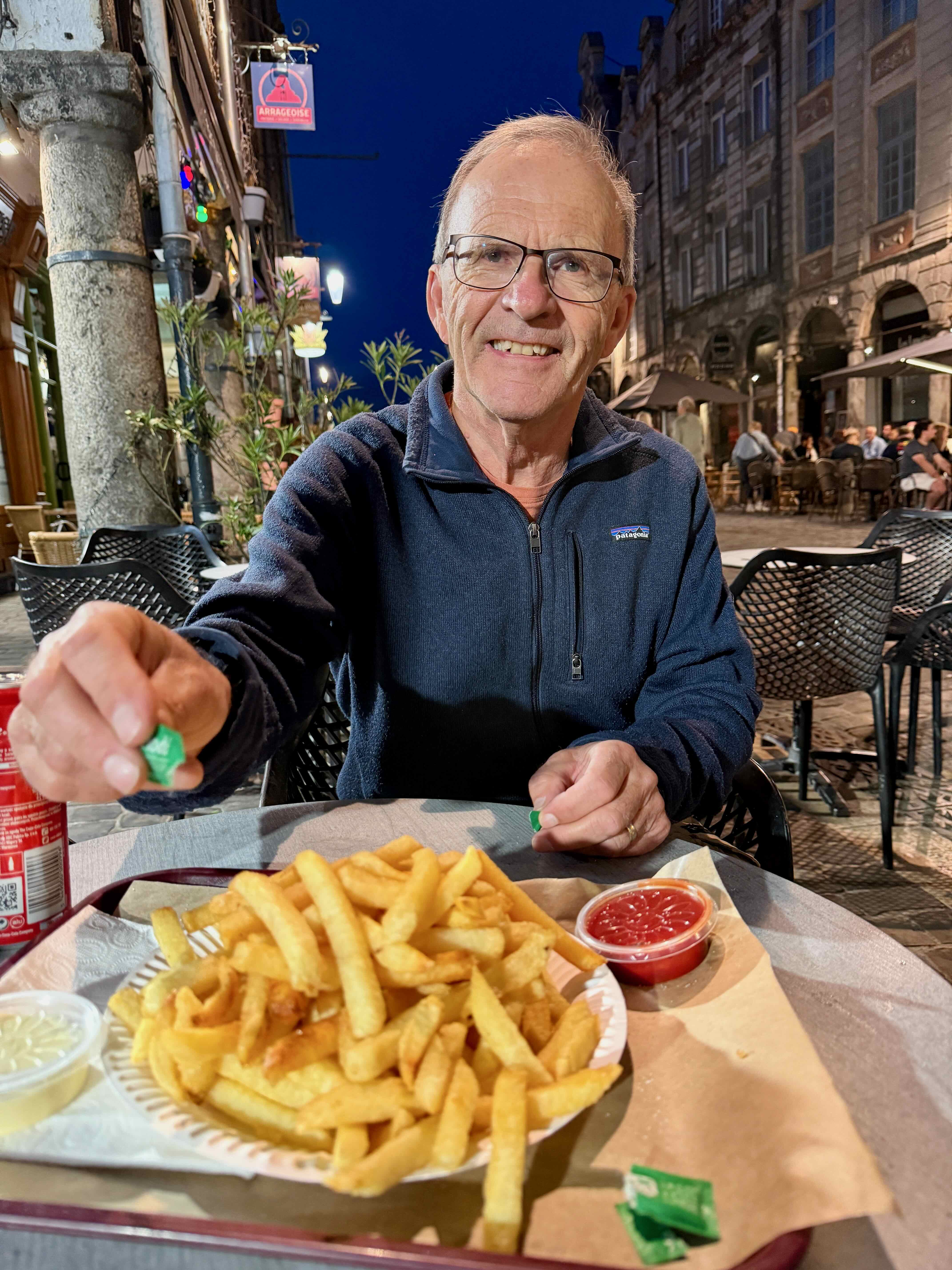
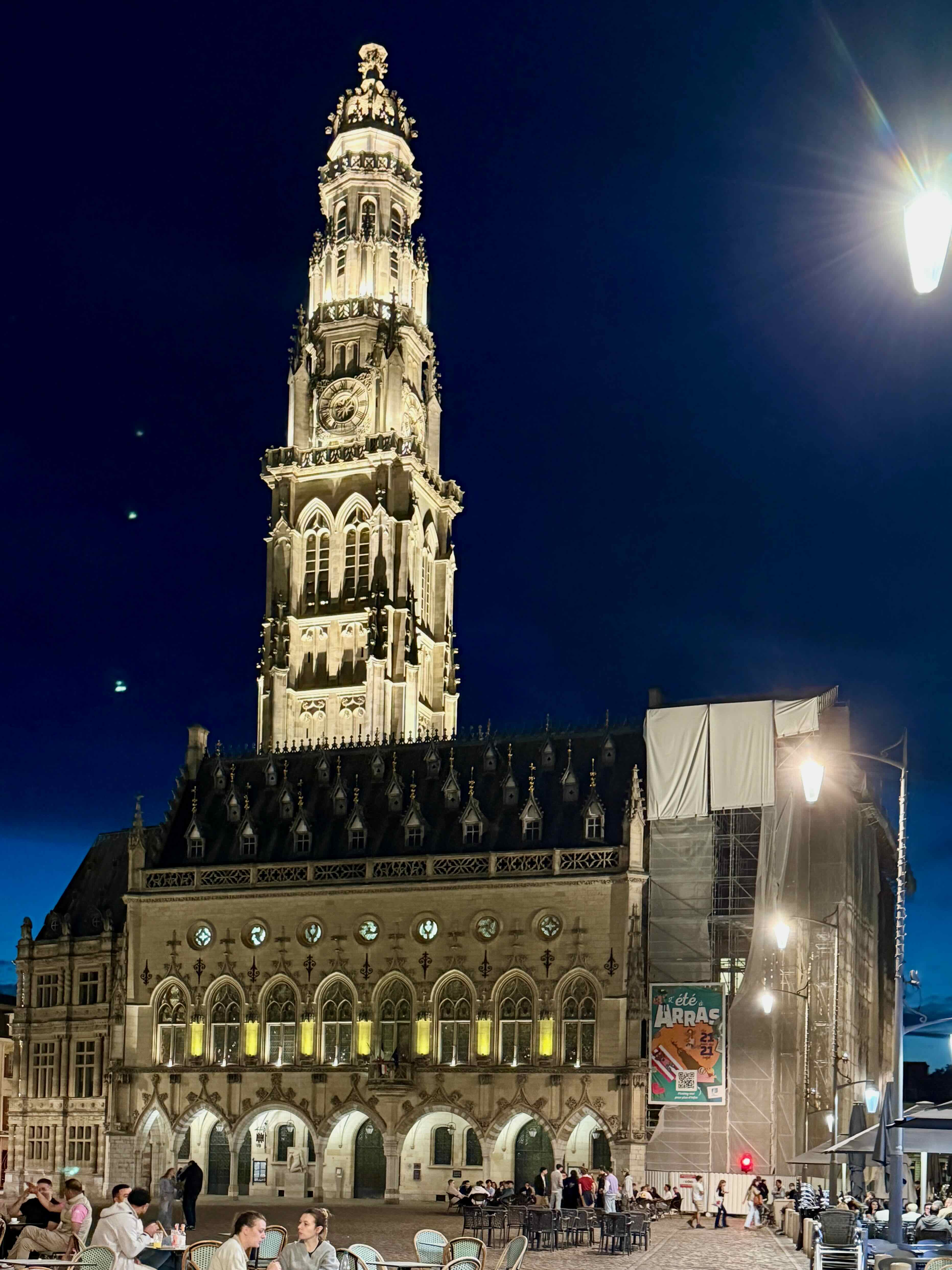
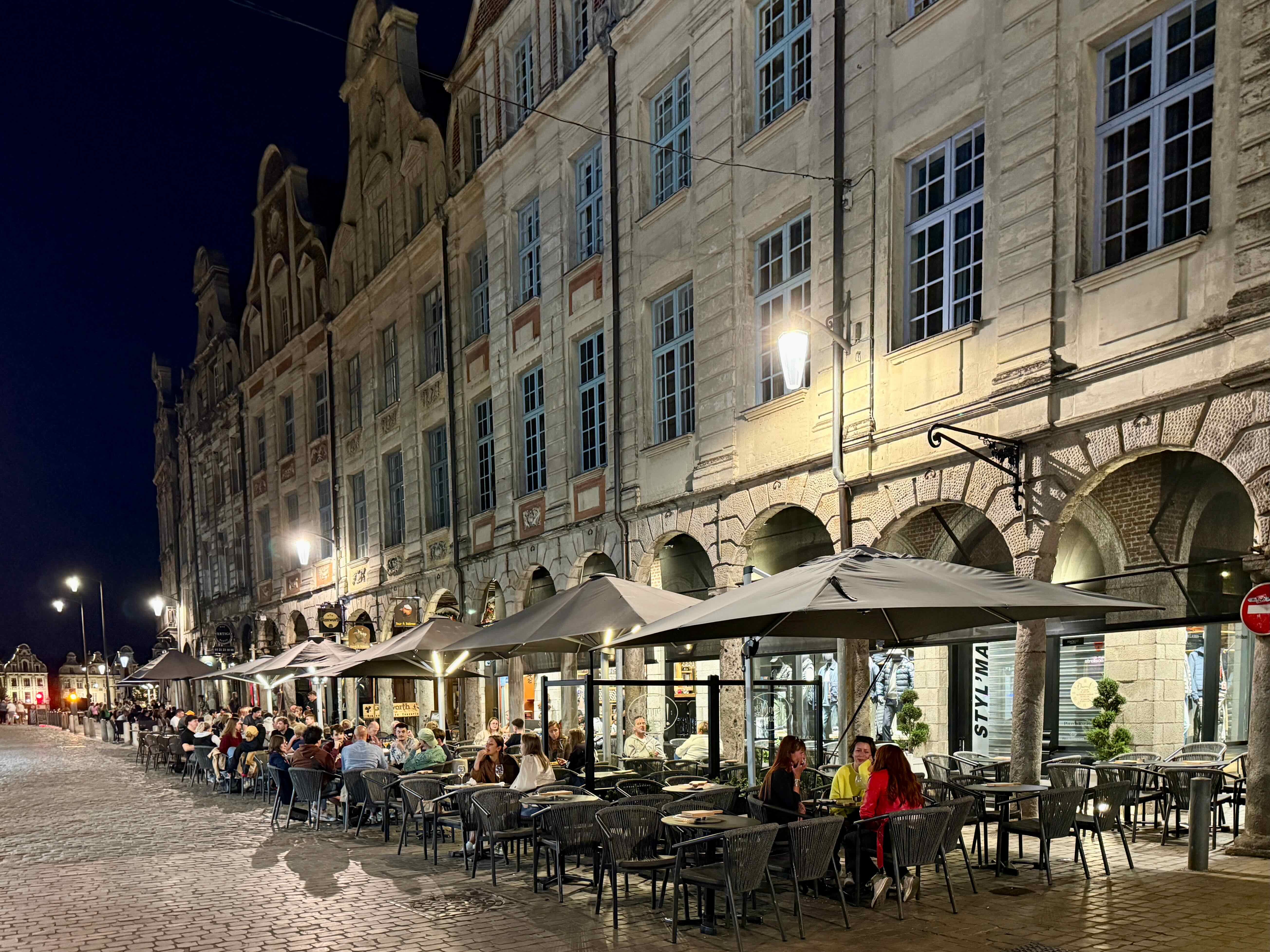
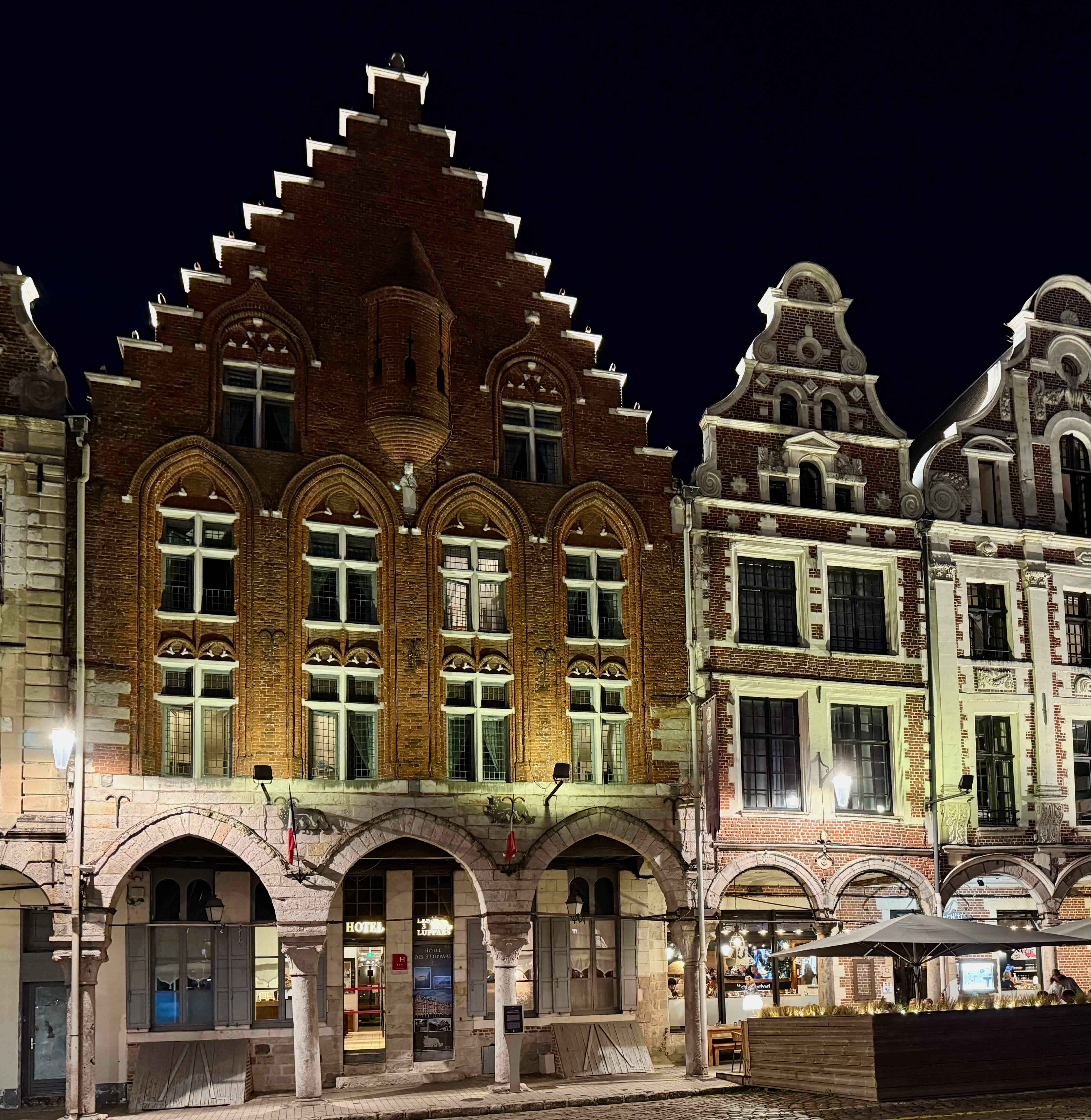
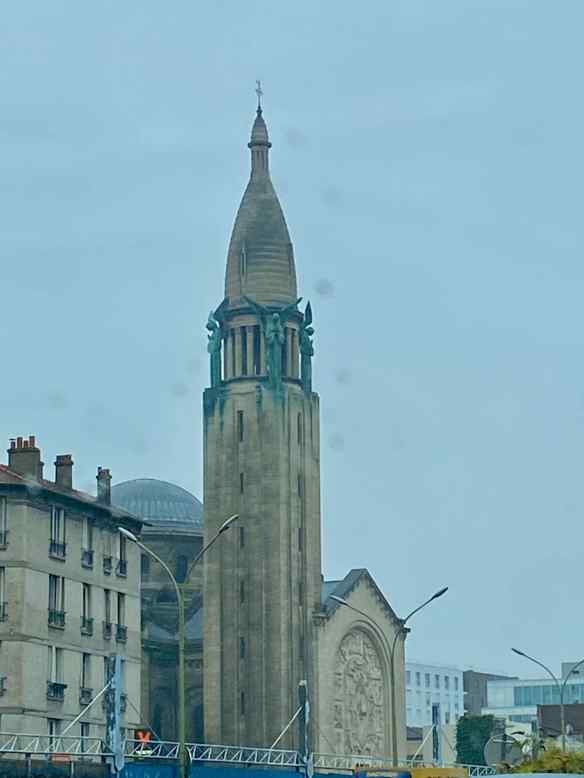


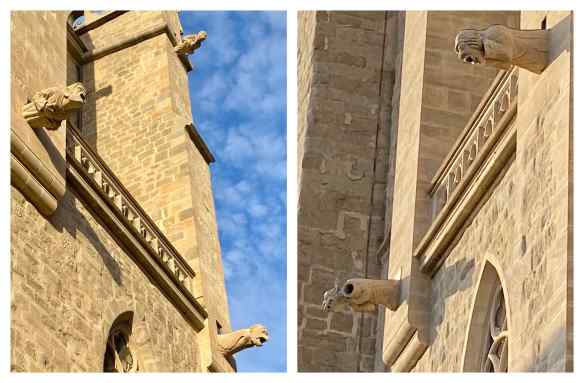
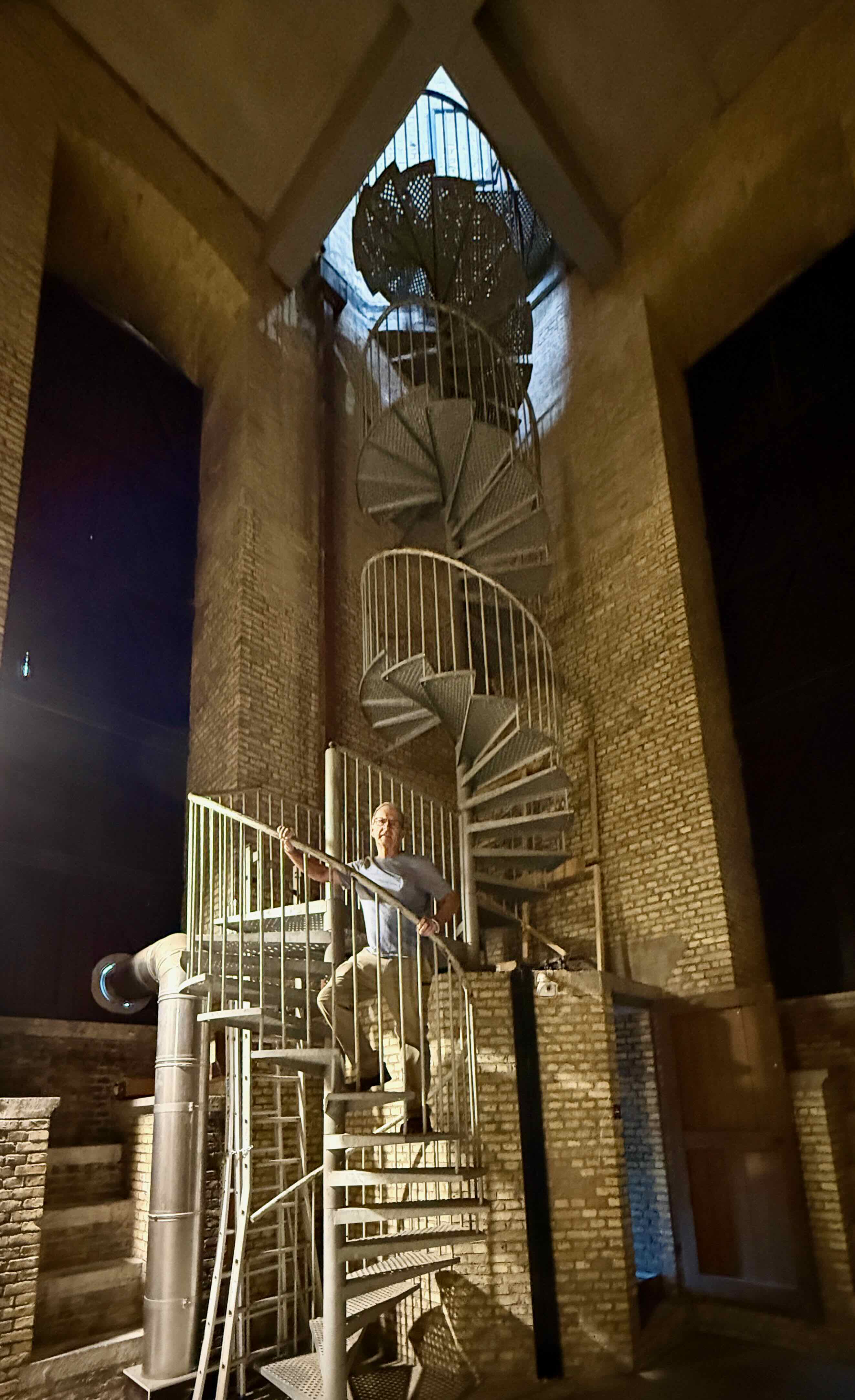
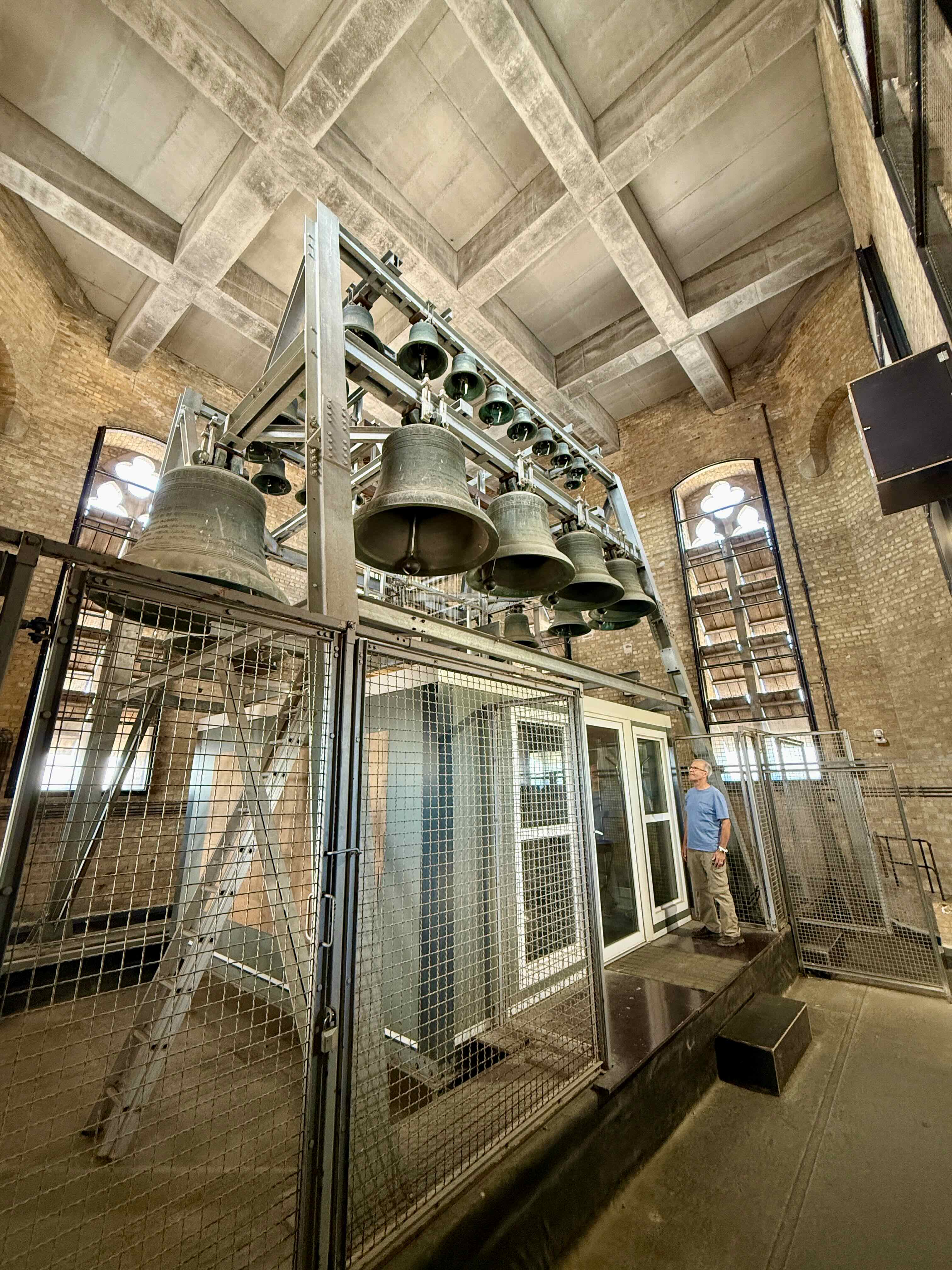
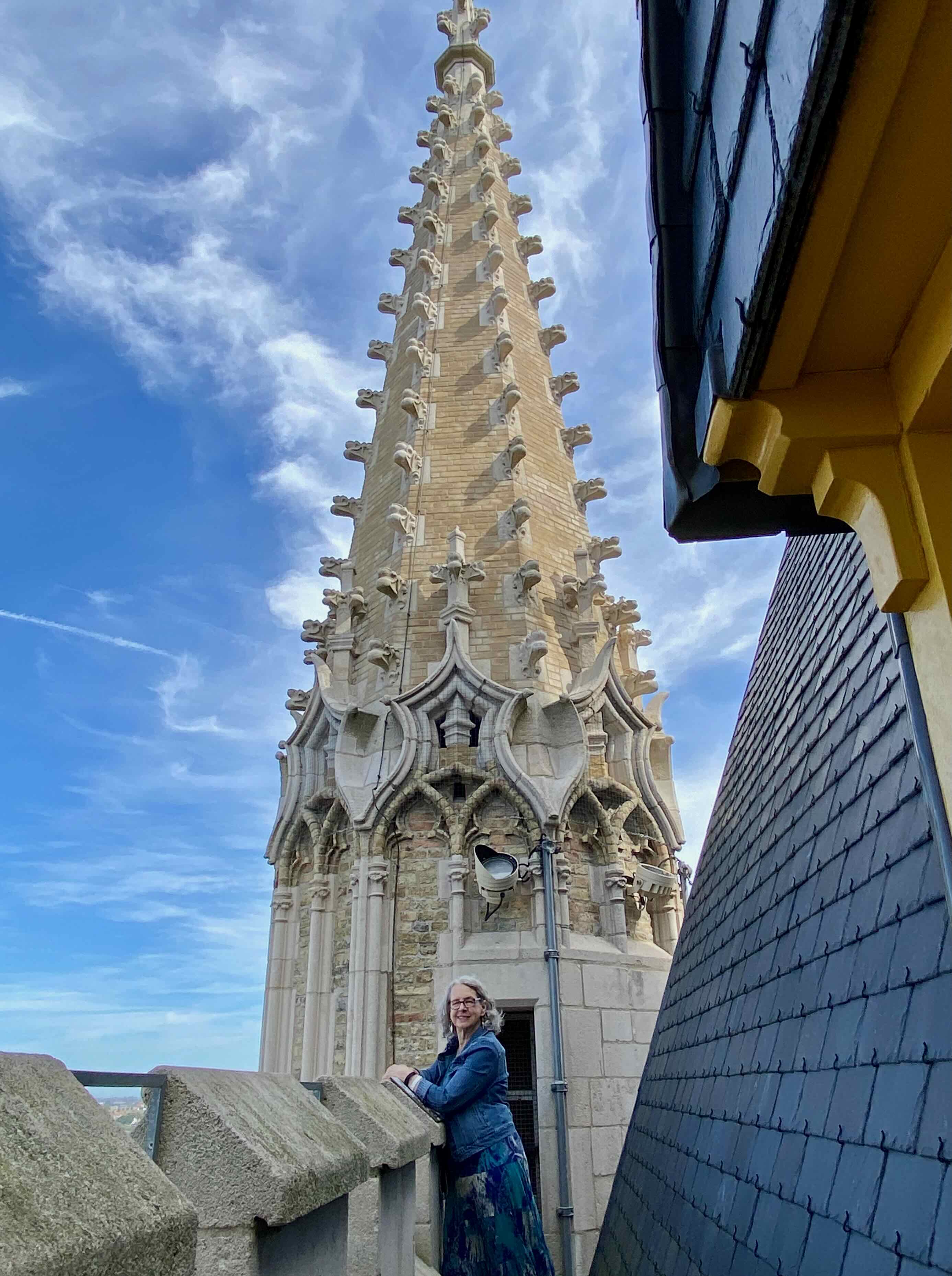
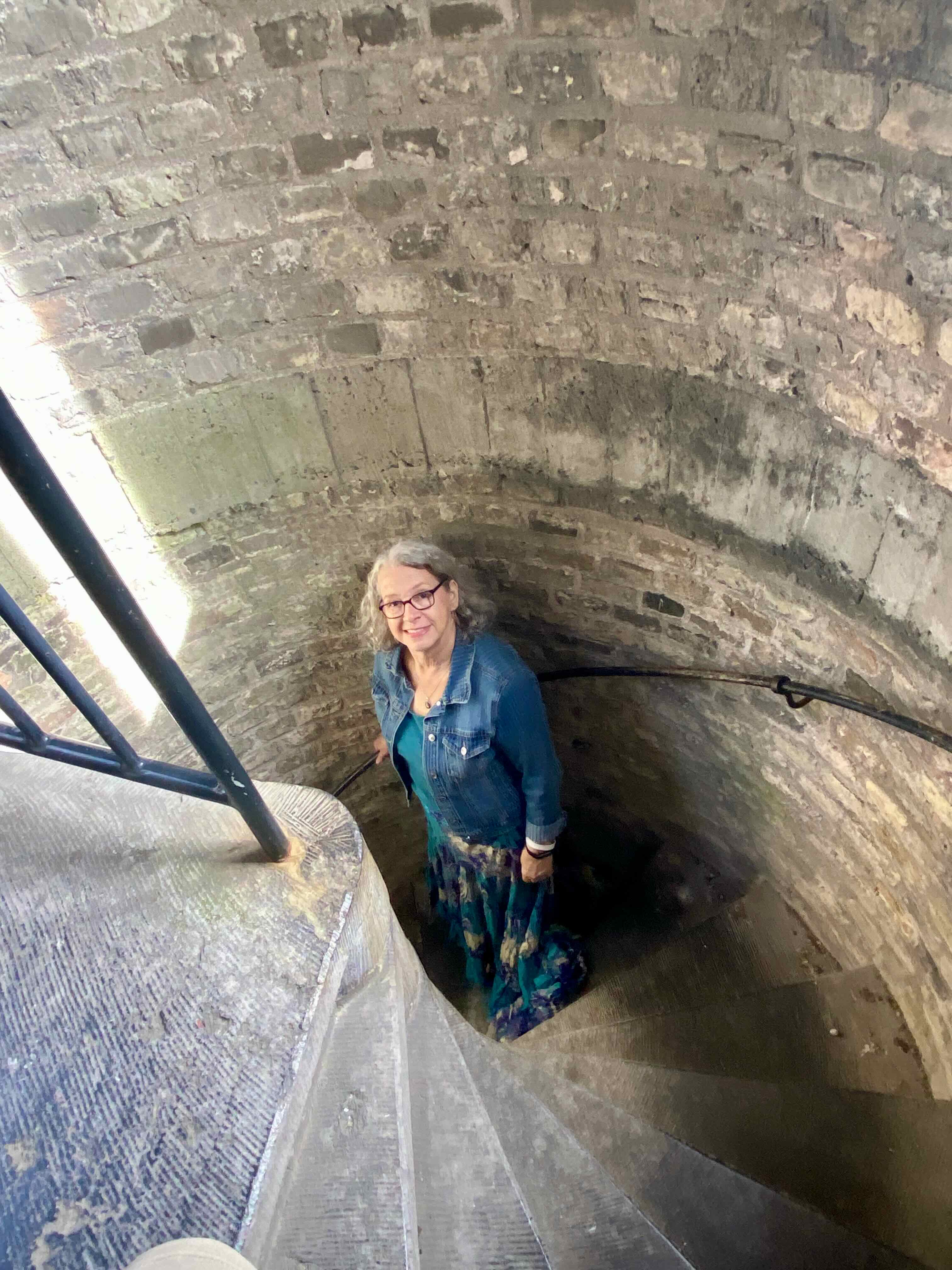
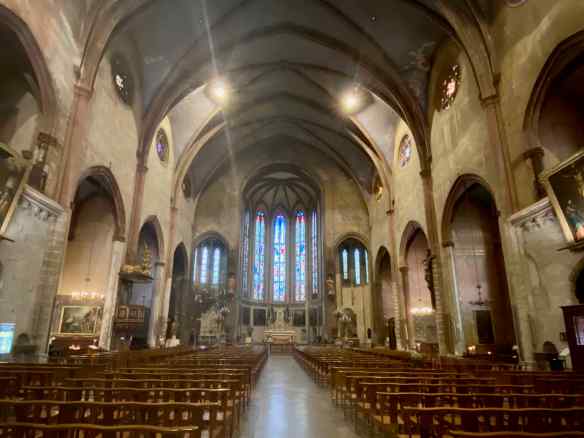 discover that we can climb the bell tower for just 2.5 euros! I’m not wanting to do it today but I hope we can get back another day. We have climbed a lot of bell towers on our other trips, but so far not a one this time.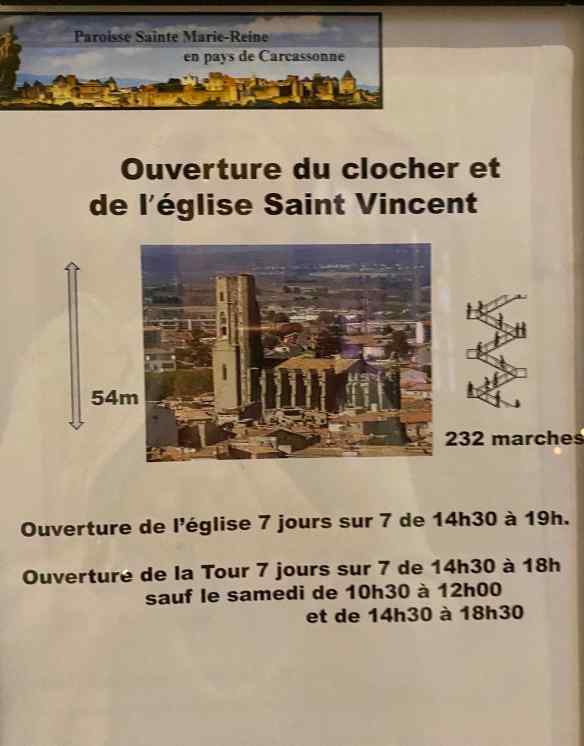
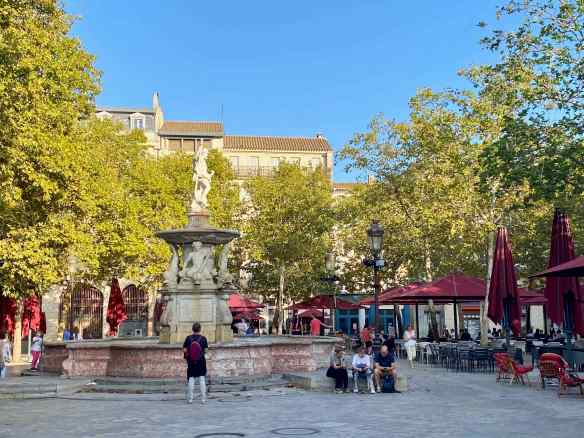
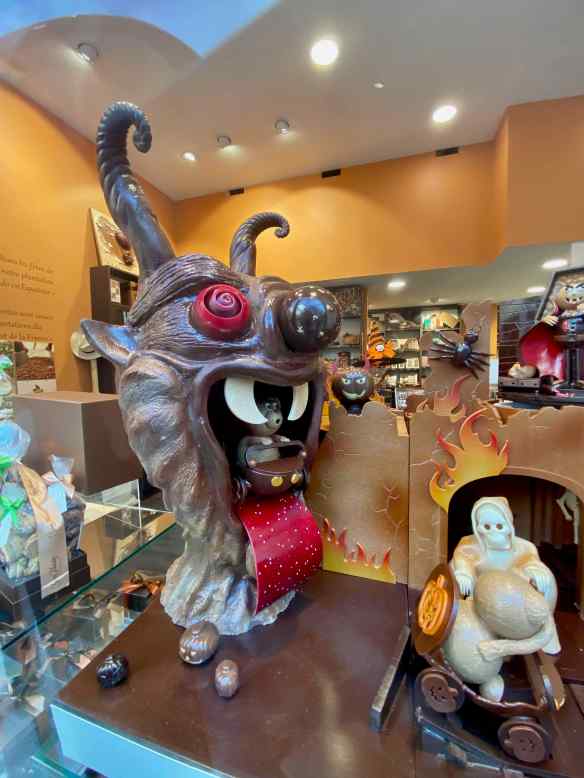
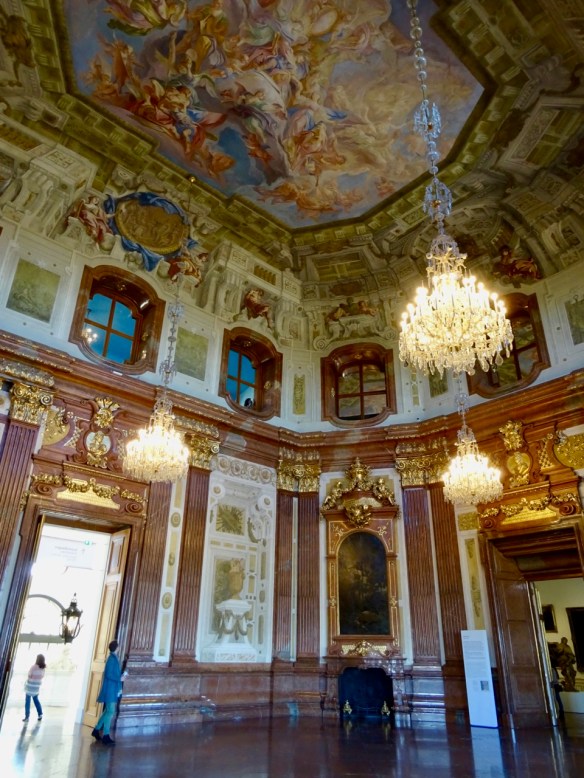
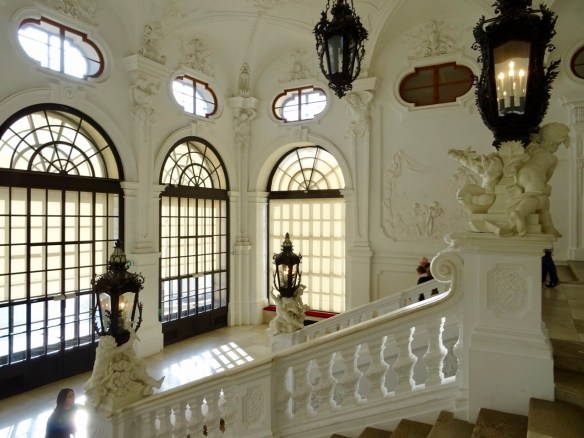 and the beautiful Marble Hall.
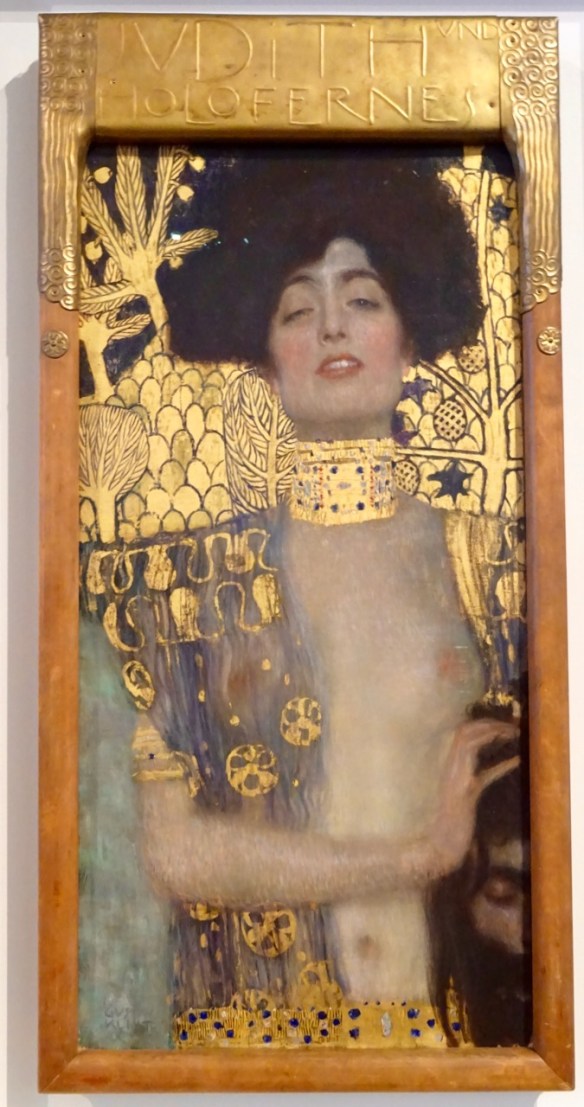
 I particularly wanted to see Gustav Klimt’s The Kiss, but was pleased to find his Judith painting here as well.
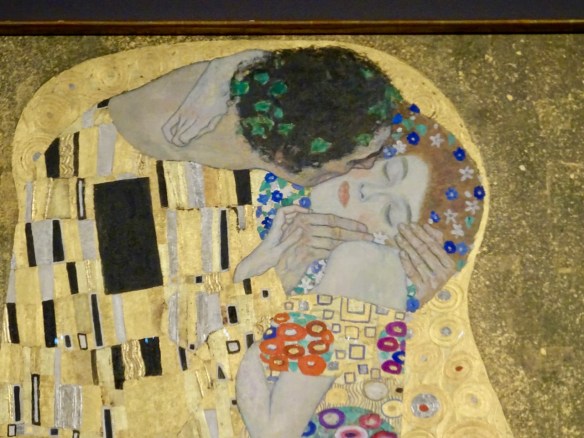
 The Kiss is one of Klimt’s most well known paintings. It is a large painting, 183 x183 cm.
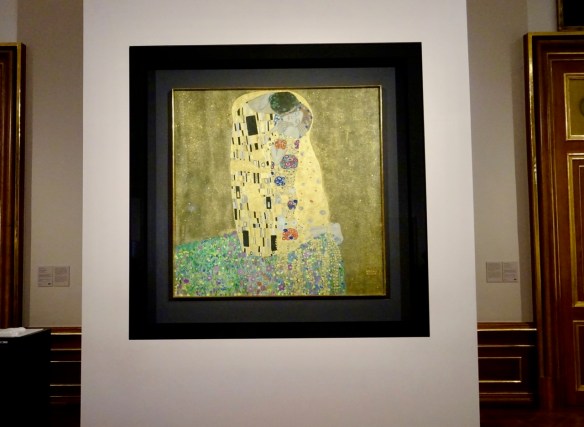 It is nice to be able to see the painting details up close.
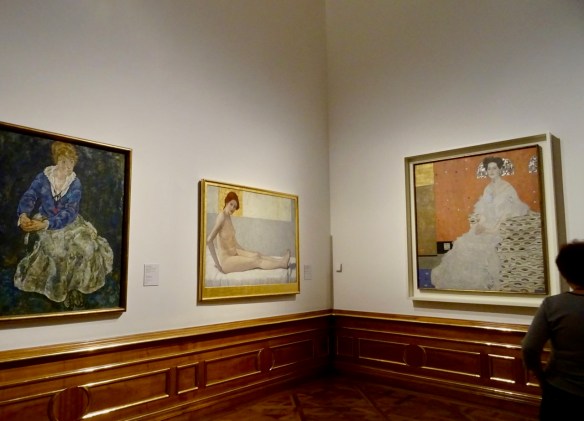
 I am also surprised by how many Egon Schiele paintings are on display. It is quite special to be able to see the original paintings of some of my favourite works by these two painters. I didn’t realize that these paintings were so large. Looking at reproductions in books can be deceiving. The Embrace and….
 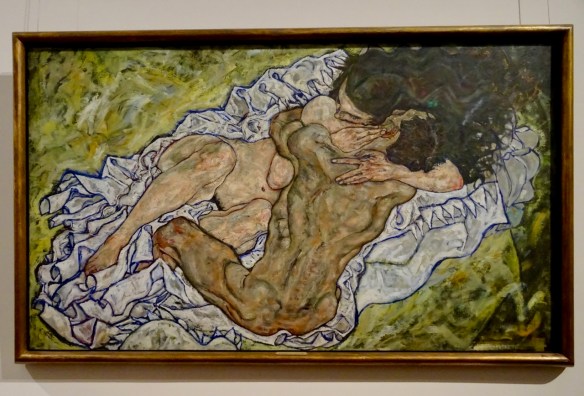 the Family are both much bigger than I imagined…
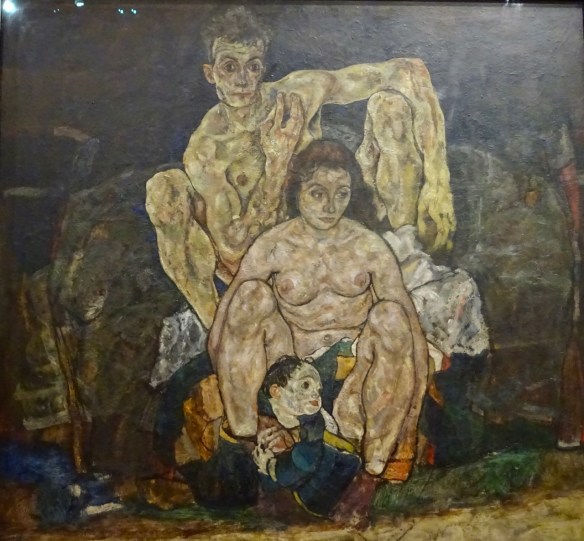 as are these paintings.
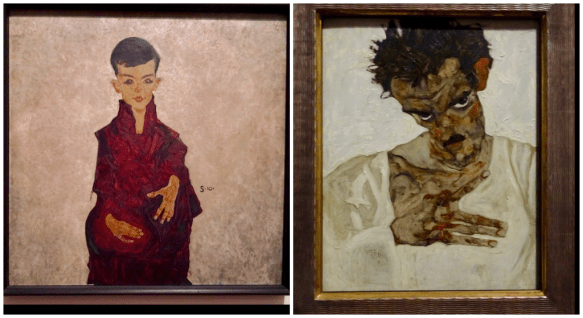
 Schiele’s Self Portrait is the smallest painting, about 41 x 33 cm.
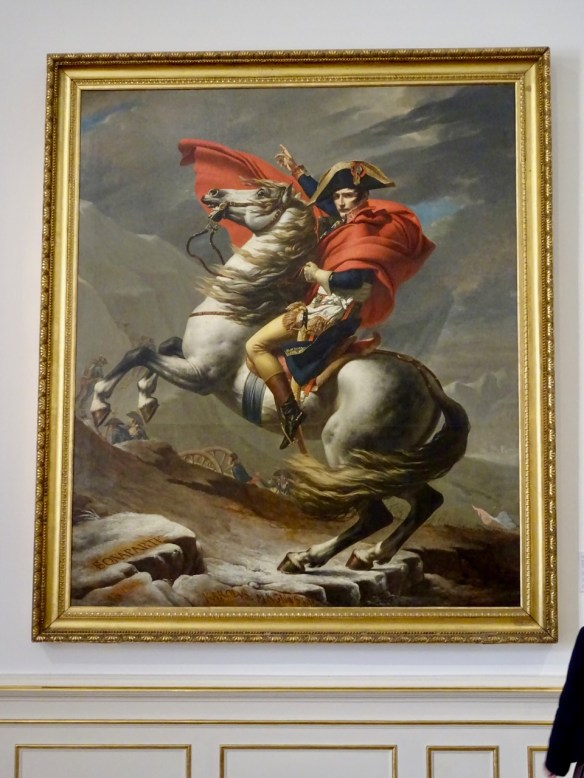
 I didn’t know Jacques-Louis David’s painting of Napoleon was here either. I am so glad I was able to visit this museum. This painting is enormous, 272 × 232 cm!
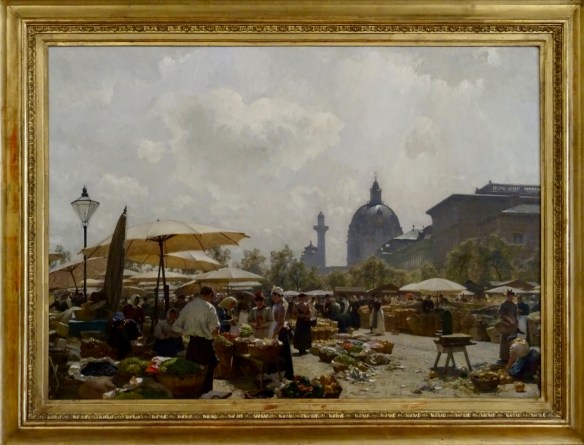
 This painting shows the Vienna Naschmarkt in 1894. It has changed a bit over the years!
 We meet up in the gardens outside the Belvedere and then walk towards St. Charles Church.
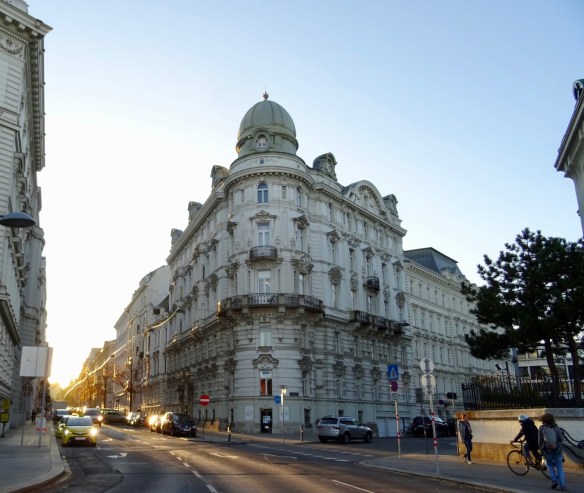
 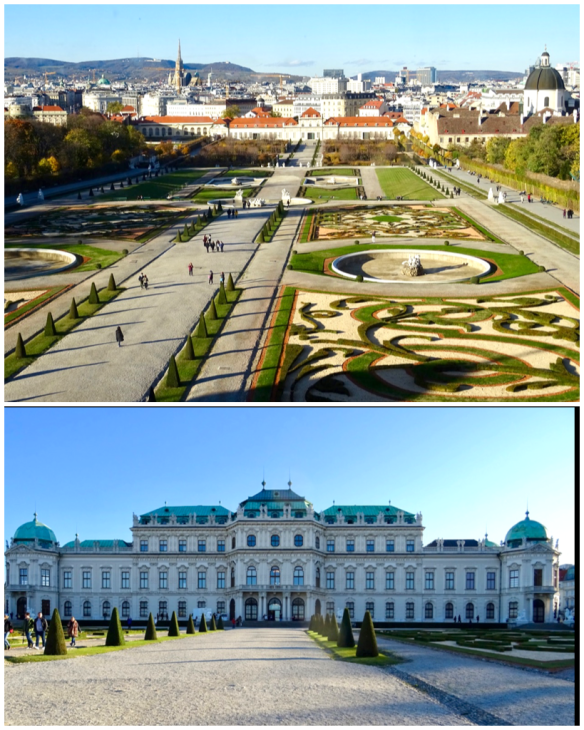 There are so many interesting buildings along the way.
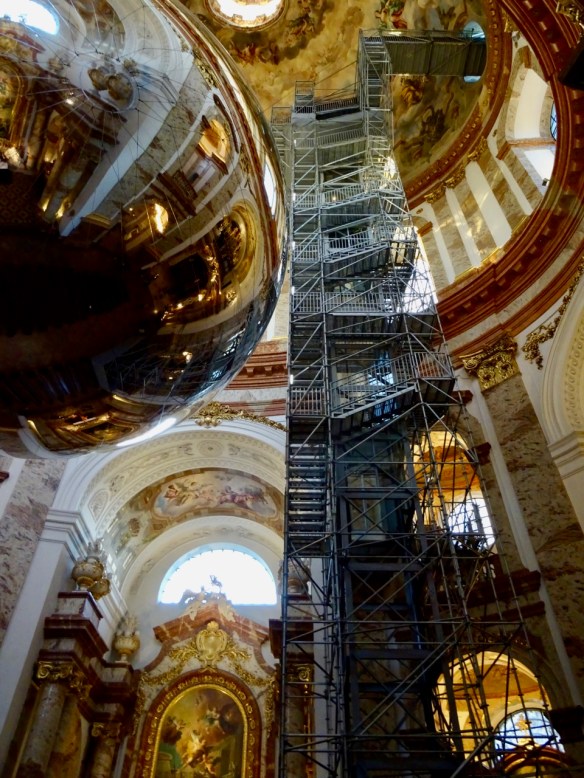
 We had a huge surprise when we entered St. Charles Church. Two enormous floating mirrored balls that reflected the church…
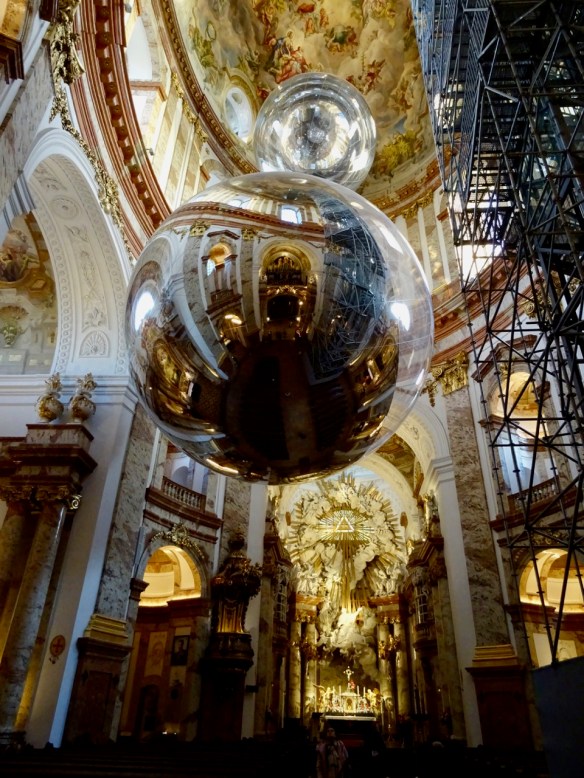 and us. We are almost in the centre of the reflection but we are very tiny. “Aerocene” is a contemporary art installation by Tomas Saraceno, an Argentinian artist who lives and works in Berlin. The floating reflective balls are 10 and 7 metres in diameter.
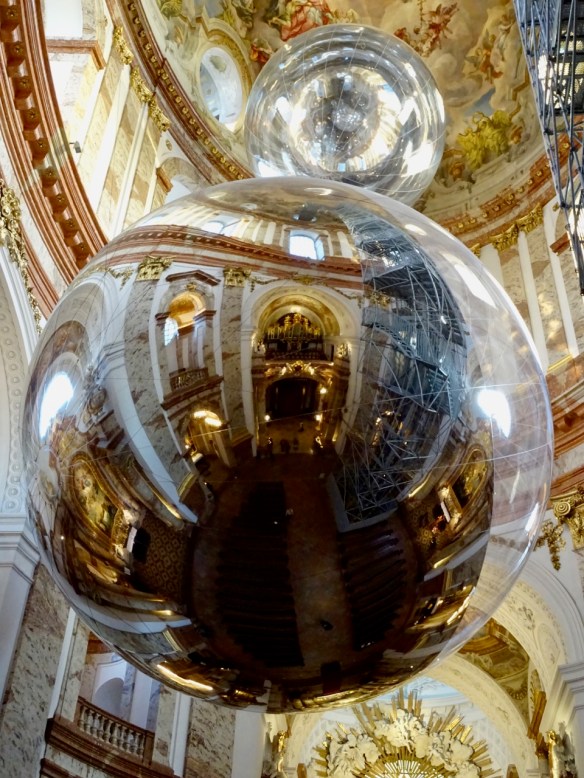 Then we notice the scaffolding that goes high up into the dome, and that is where we are going to go! We thought the elevator ride we got a ticket for would be inside a bell tower. Nope! We ride to the top of this scaffolding and then climb a bit further, onto that platform you see leading into one of the round windows in the dome!
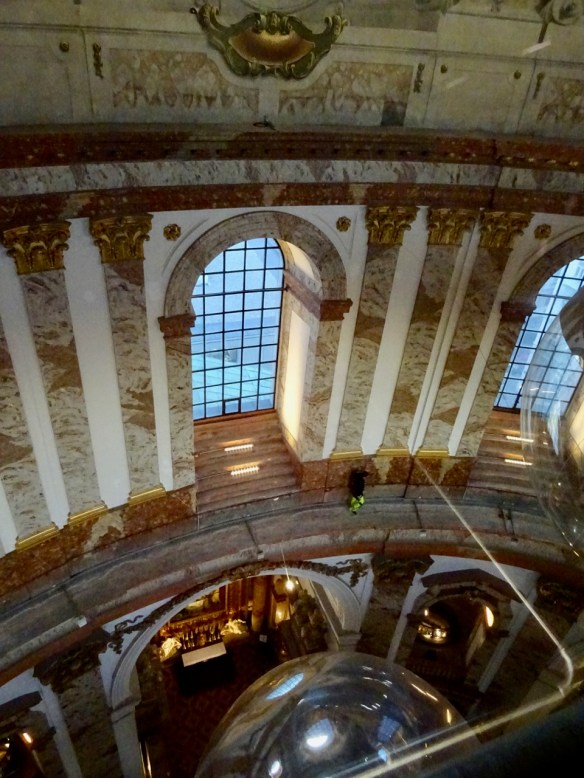
 Looking down from the top of this ‘elevator’ we notice a workman adjusting lights high up in the dome, yet still far below us!
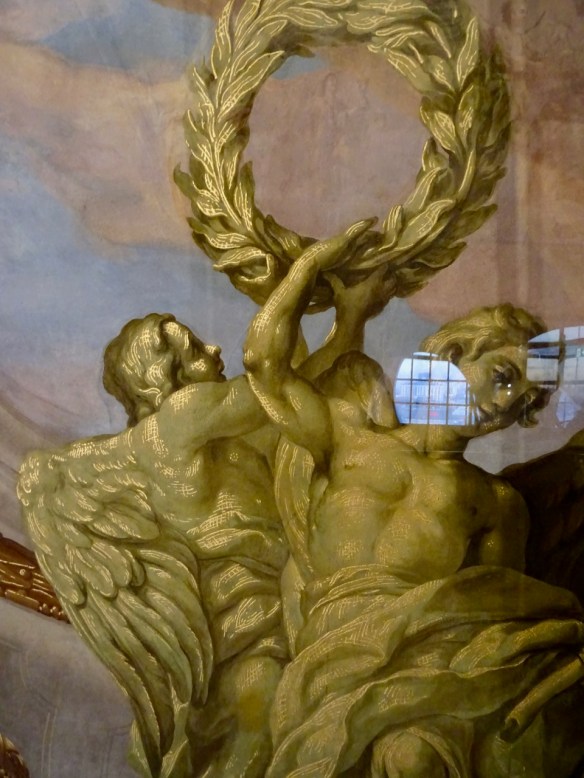
 We have a great view of the dome paintings. It is interesting the way the gold highlights look up this close…
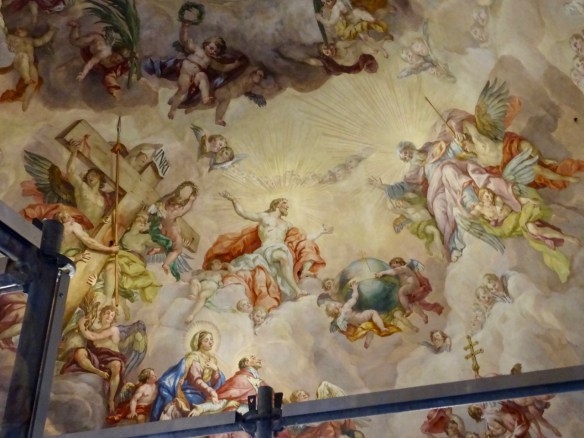
 and we have a great view of the other dome paintings. We are crazy high up!
 Bob walks back down to this viewing platform so I can get a photo. Notice how he is suspended…nothing below him!
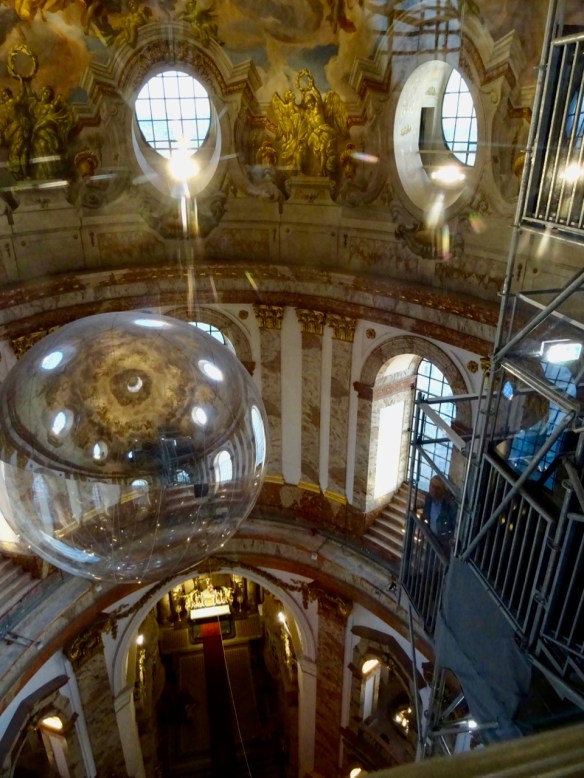 This photo shows the platform that Bob was standing on in the last photo.
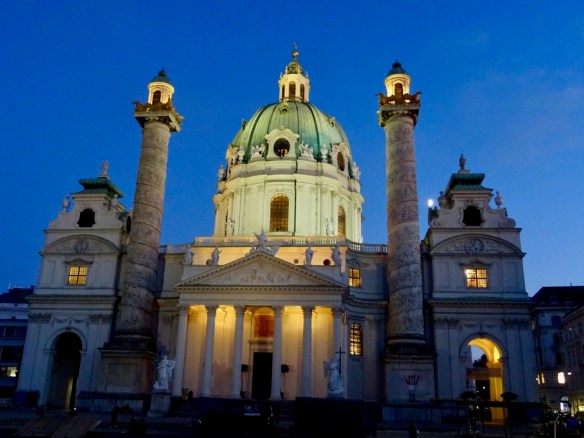
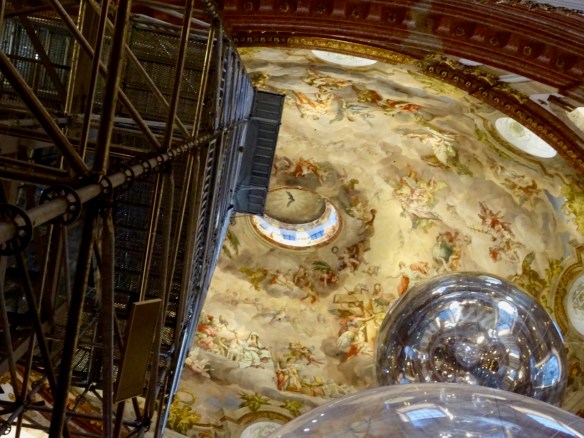 We spent quite a lot of time way up there in the dome, and it is getting dark when we get outside. If you look closely you can see some people standing in the round window on the dome. That is the window we were standing in! What an amazing experience. There was restoration work carried out in the dome and the elevator is being kept for a while. The fee to ride up into the dome is a way to make more money for further restorations.
 Walking back towards the metro we pass the Opera House…
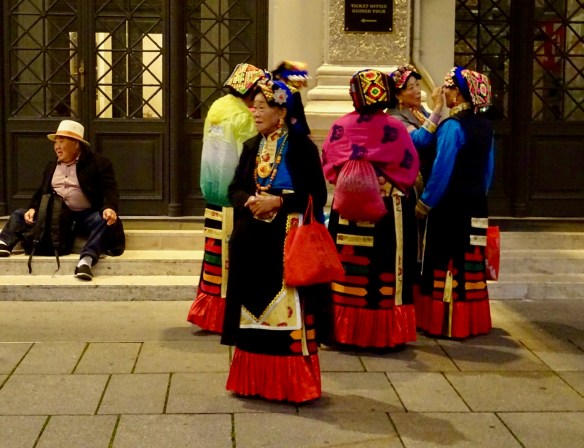
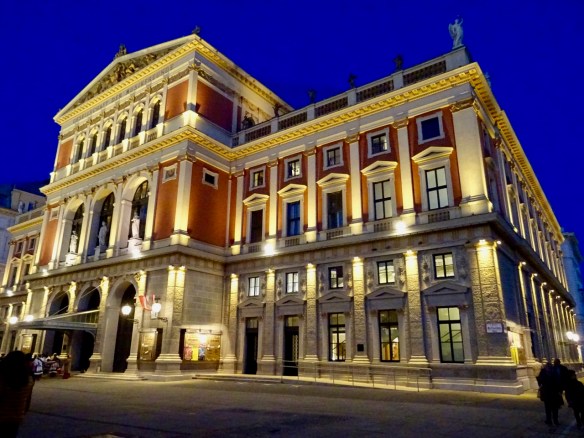 and take photos of these performers from Tibet. They have a performance later tonight and were taking publicity photos outside the Opera House.
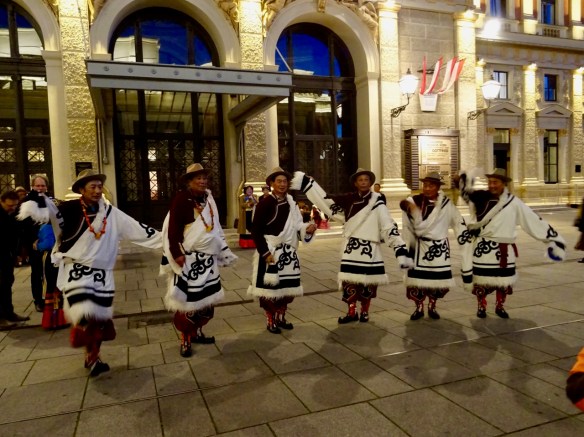 While the men posed, some of the women were busy applying their makeup.
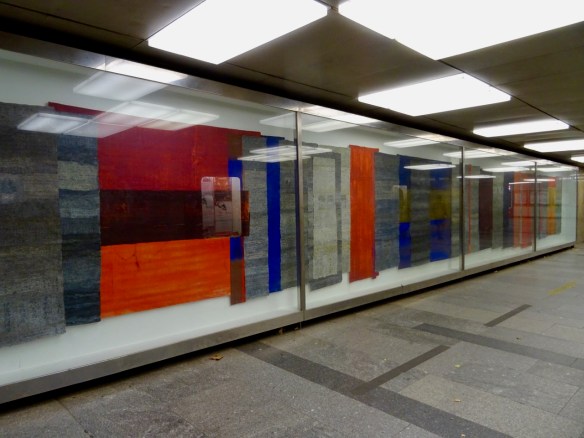
  This is a a huge paper art installation we pass in a walkway near the metro.
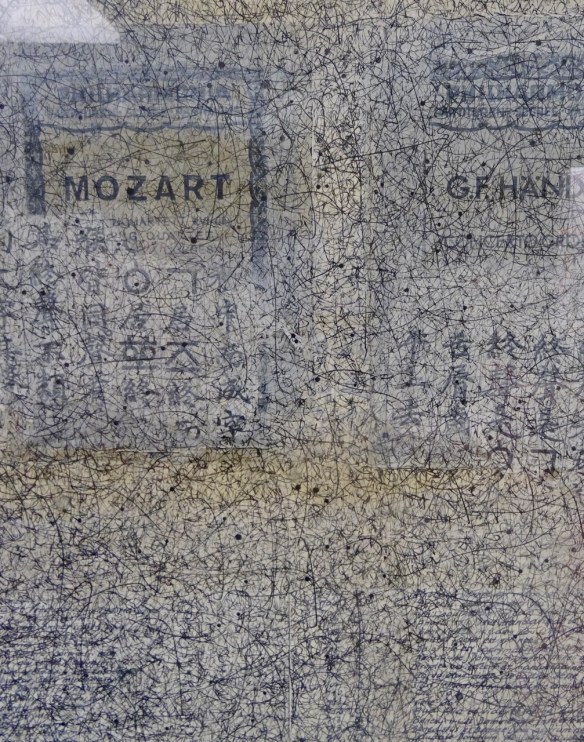
 A close-up shows lots and lots of writing, musical notations and random marks.
 We get home, have dinner, then I head off to a drop-in drawing session with a Meetup group at a pub called Monami.
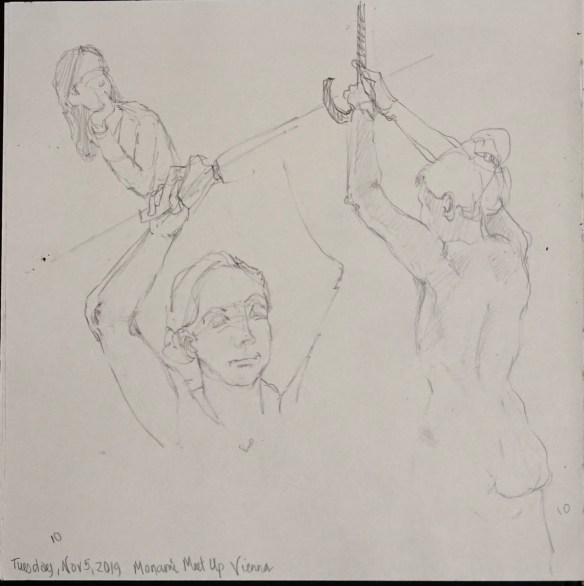 I had coloured some of the pages in my sketchbook at home before the session. Interesting to draw on but they don’t photograph very well.
 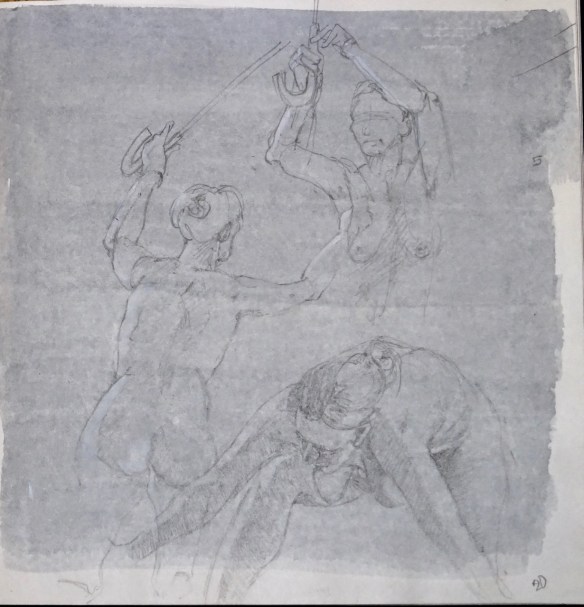 We were pretty much rubbing elbows as we drew and my views weren’t always great but it was lots of fun.
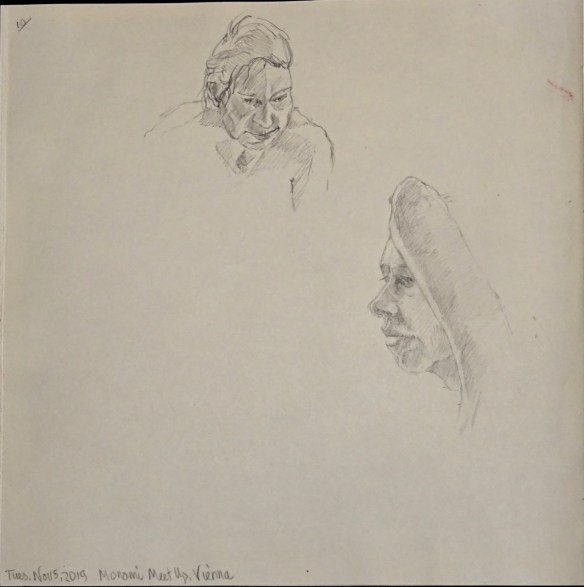 I finished the session with a 20 minute leg study. I felt quite comfortable going out in the evening by myself. The metro is easy to navigate and there were lots of people about.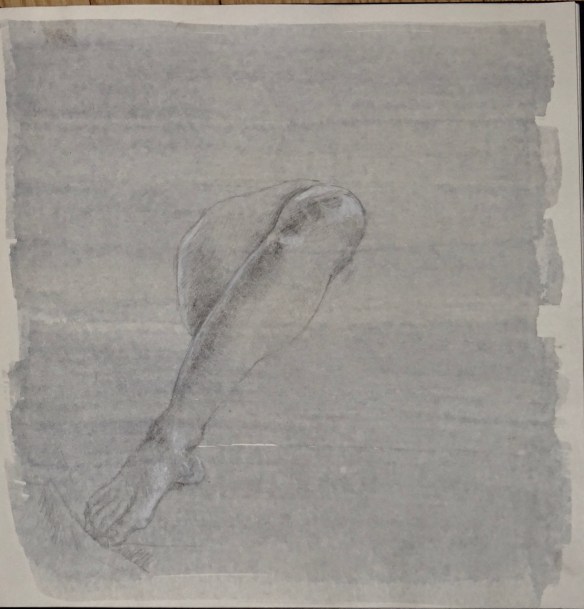
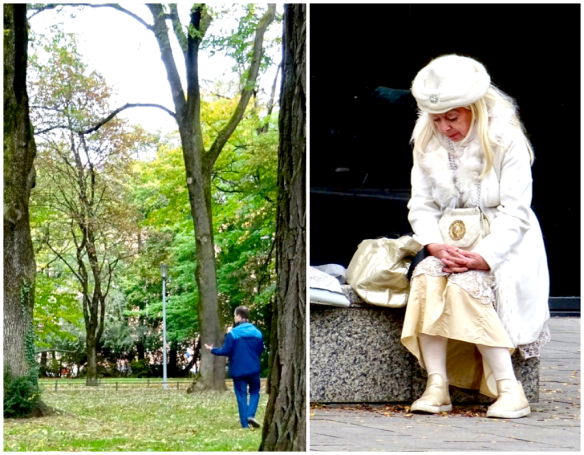
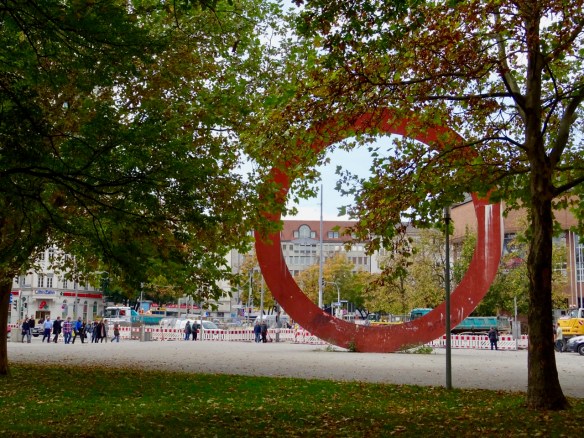 The Ring is right next to the entrance to the Old Botanical Garden where we have our lunch. We see lots of interesting people on our travels. The man below was ‘communing’ with a tree…he walked circles around it, with his hands out, making gestures towards the tree. Some police driving through the park stopped to talk to him but they let him be, guess they figured he was harmless. Nearby I spotted this lady dressed all in white. She looks like she belongs to a different place and time.
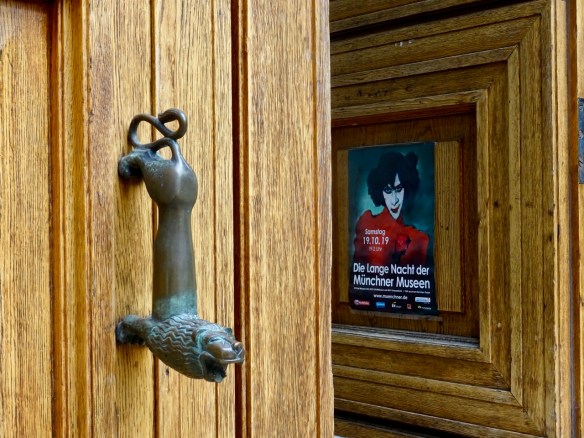
 There was a small gallery in the Botanical Gardens but they were changing exhibitions and not open. I liked both the door handle and the interesting poster, which reads, The Long Night of Munich Museums.
 First stop on our tour, why don’t you come along with us? The
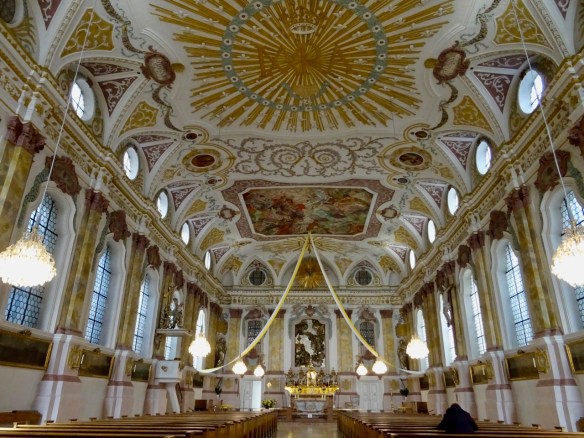
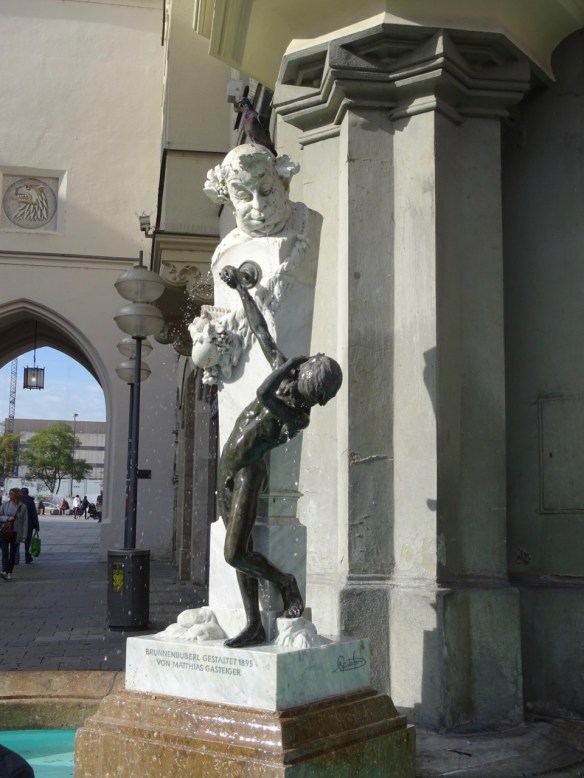 Citizen’s Hall Church was heavily damaged during WWII but it has been rebuilt and looks exactly like it did in the 1700’s. The basement contains the tomb of Rupert Mayer, a famous Jesuit priest who stood up to the Nazis occupation and died in a concentration camp..
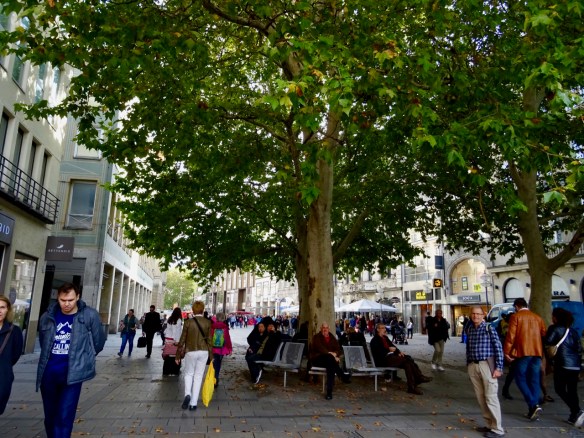
 Our walk continues down a broad pedestrian street with large trees.
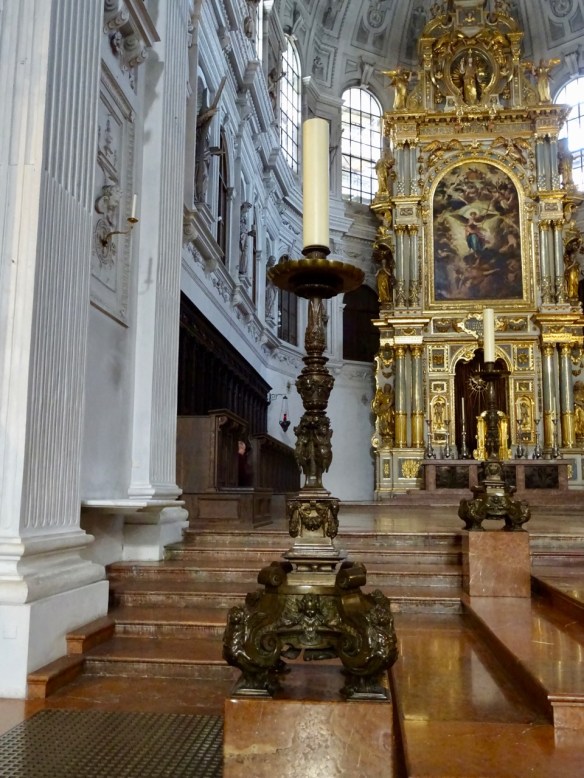
 St Michael’s Church. I liked the huge elaborate candle holders. The church contains The Royal Crypt which holds 40 tombs. The most famous of these is the tomb of “Mad” King Ludwig II. Ludwig was a big spender and built many lavish castles and palaces. We visited the Neuschwanstein Castle on our first trip to Europe almost 40 years ago. It is the castle that inspired Walt Disney’s Snow White castle.
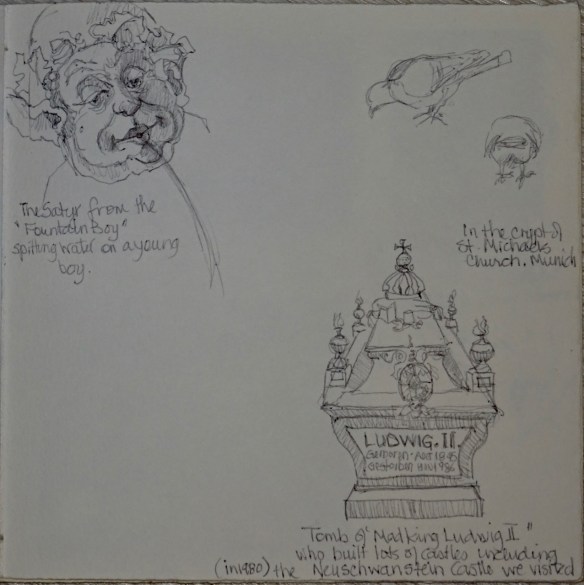
 No photos are allowed in the crypt so I did a quick sketch of King Ludwig’s tomb. No one ever seems to mind if I draw.
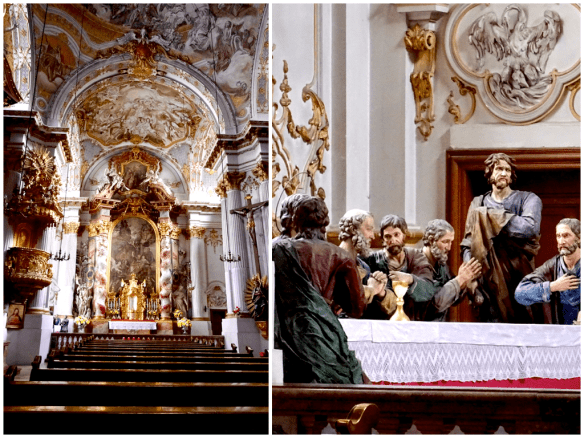
 There are a few churches on this tour! Each of them has its own distinctive feature. Saint Anna’s Church has had a chapel on this site since 1440. I thought I saw people inside, behind the locked gates, but when I zoomed in with my camera, I realized it was a life size sculpture of the Last Supper.
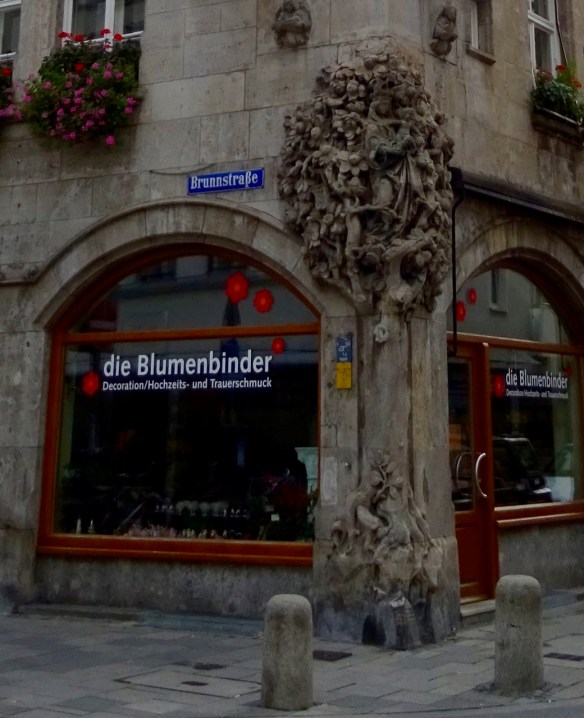
 We pass this tree sculpture on the corner of a building on our way to The Asamhof Passage.
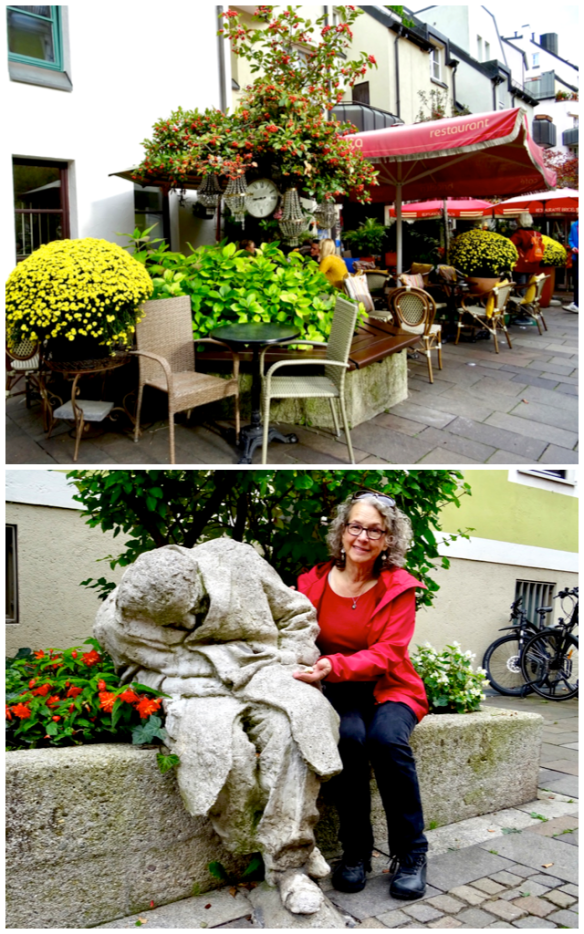
 Asamhof Passage is a little pedestrian street lined with restaurants, lots of flowers, and this poor fellow who needed my change more than I did!
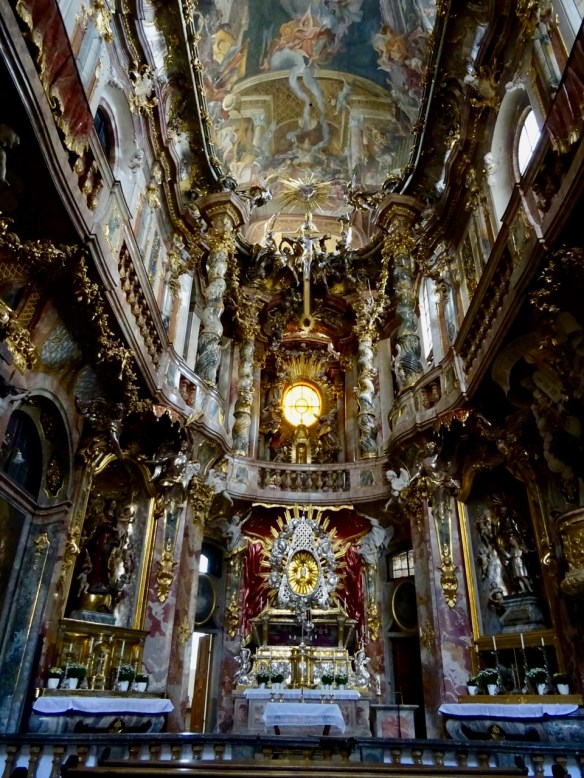
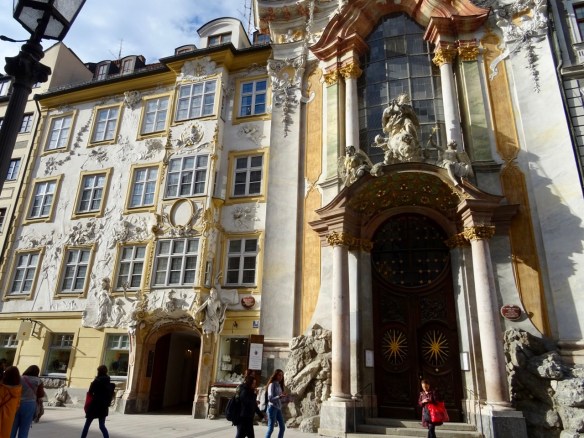
 Asamkirche was built by the Asam brothers as a showpiece for their church building skills. It is only 30 feet wide but it is so packed with over-the-top-Rococo decoration that we don’t know where to look! The entire focus of the interior leads the eye to a bright golden window meant to feel like the eye of God staring down at us.
 This is the exterior of the church and the brother’s house next door, which had bedroom windows looking onto the high altar in the church.
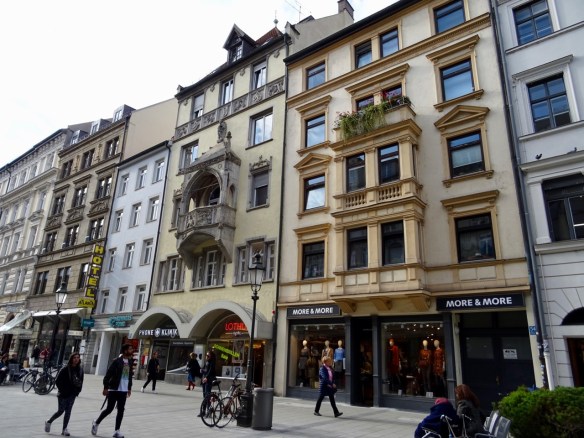
 There are lots of modern shops below the traditional apartments.
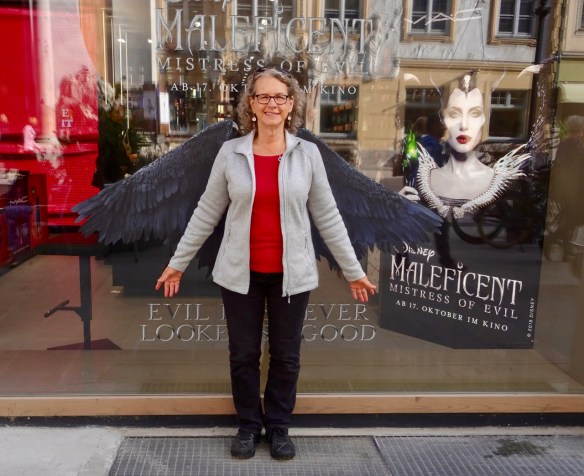
 I think I look OK with wings!
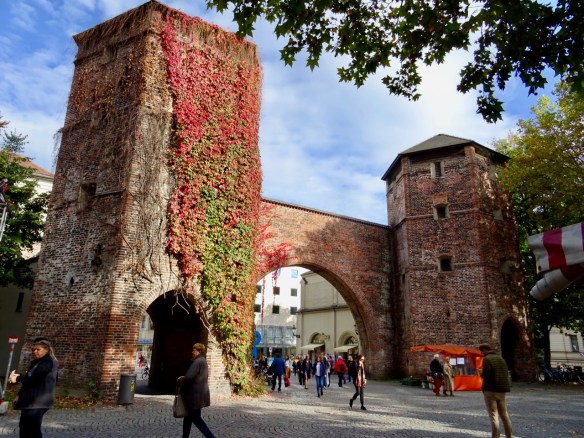
 The town gate, built in 1318 has two towers and is the oldest of the three city gates still standing in Munich.
 A view down the street from the town gate.
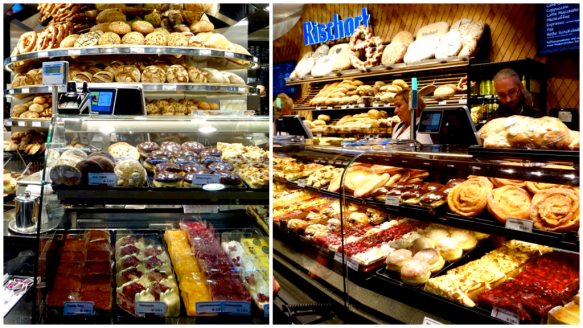
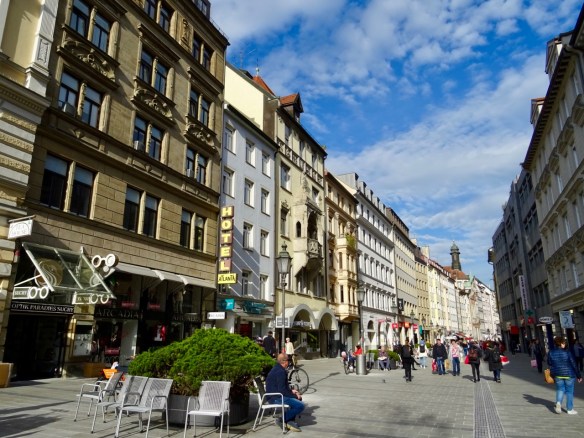 Walking back towards Marienplatz we walk through the Victuals Market (Viktualiemarkt). This is a tough place to be when you can’t eat gluten, dairy or eggs!
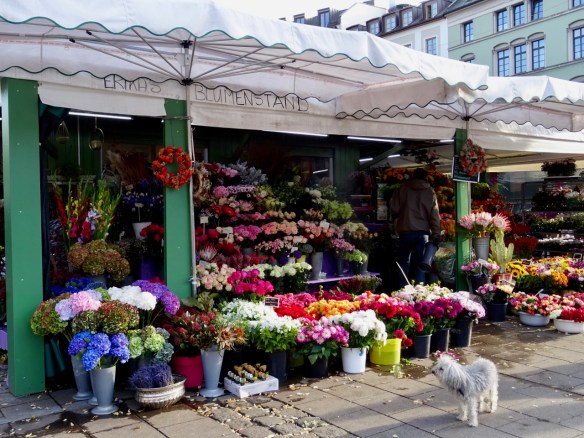
 There are lots of flower stalls. I particularly liked the little dog that seemed to belong to this one.
 This is the tallest May Pole we have ever seen!
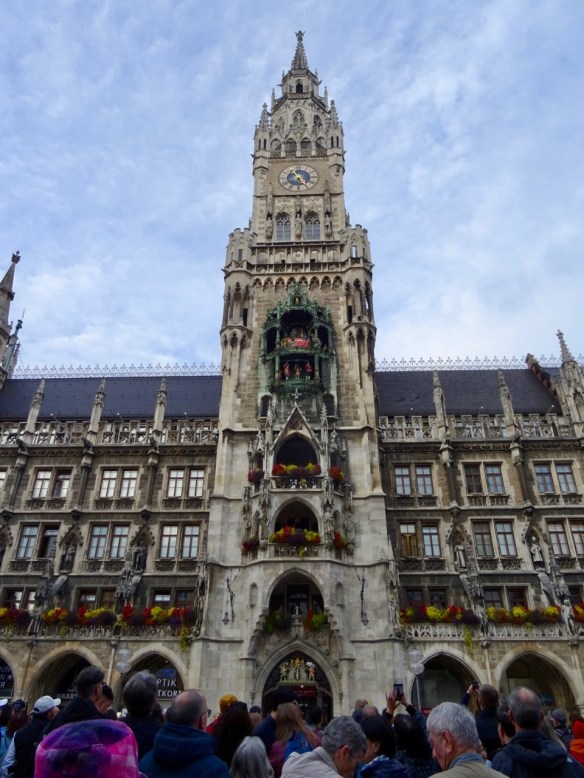
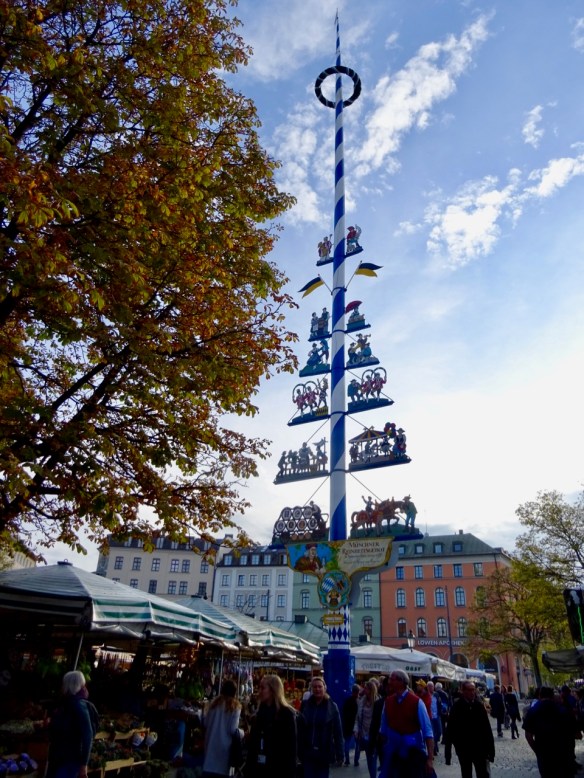 We can see the Glockenspiel Tower down a side street between two buildings.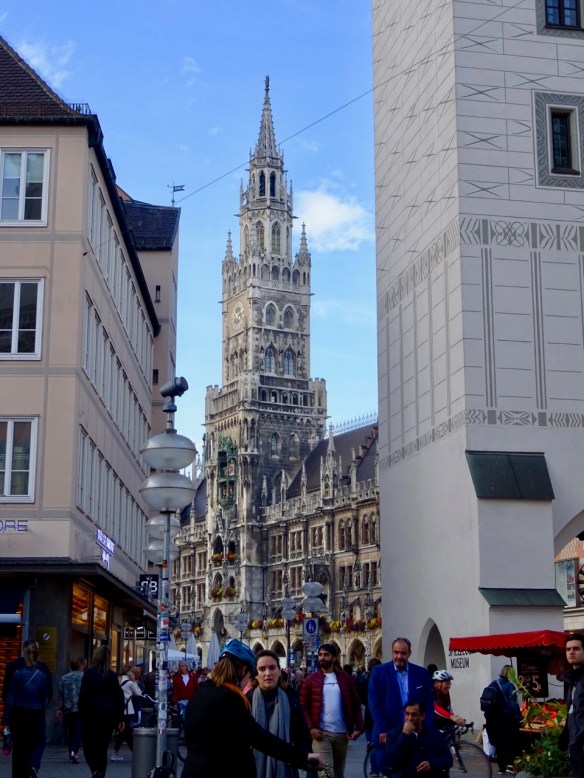
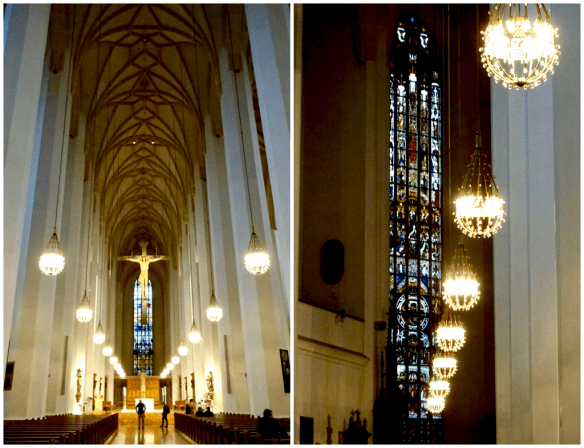
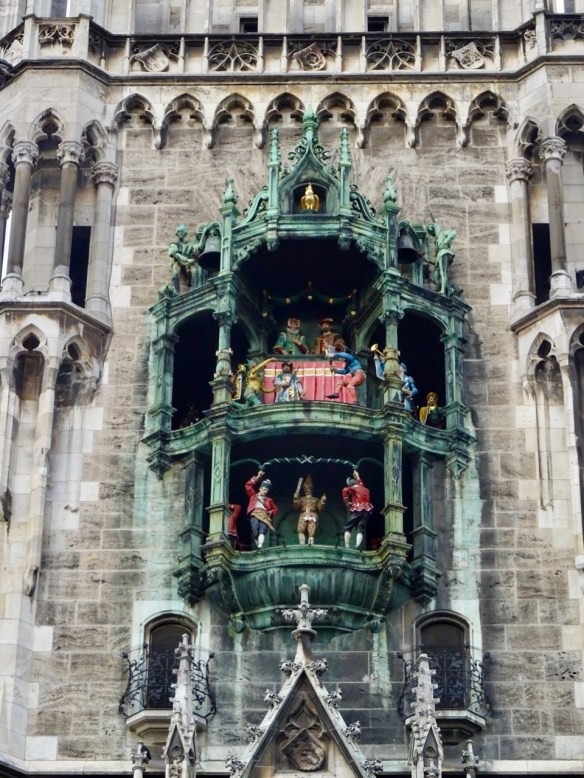
 The New Town Hall’s main attraction is the Glockenspiel. This chiming clock was added to the tower in 1907. At 11am, midday, and 5pm the Munich Glockenspiel recounts a royal wedding, a jousting tournament and a traditional dance with 32 life-sized animated figures in its 260 foot tower.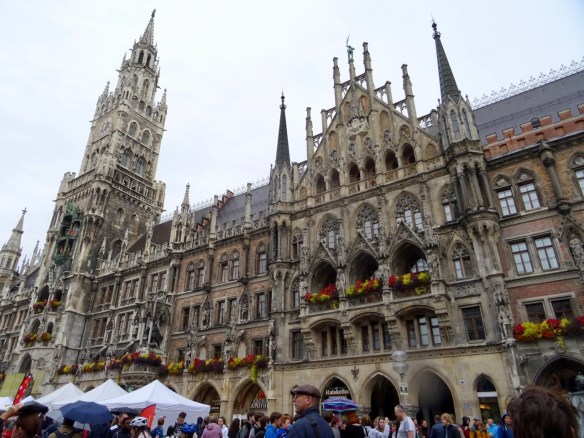
 The show lasts about ten minutes, followed by the ringing of church bells.
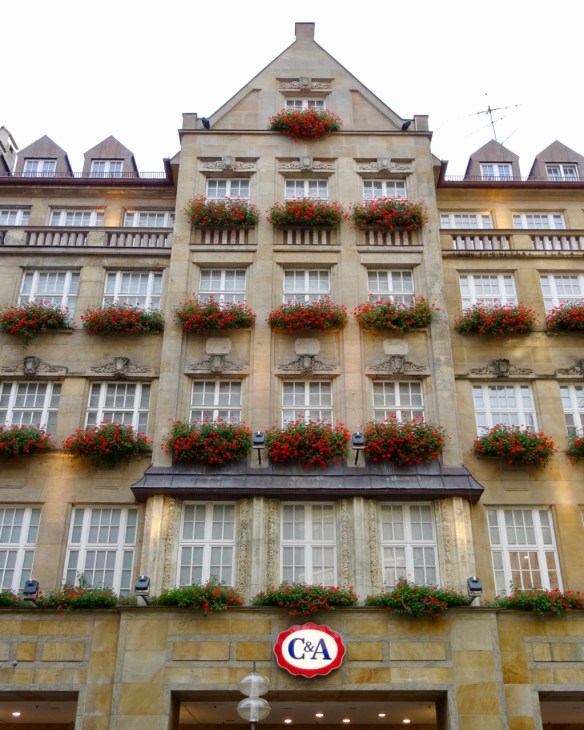
 Bob remembered the Beck Department store from our first visit to Munich almost 40 years ago! He said it was right next to the Glockenspiel and sure enough it was!
 Metro drawings from today. People kept getting off the metro before I was finished!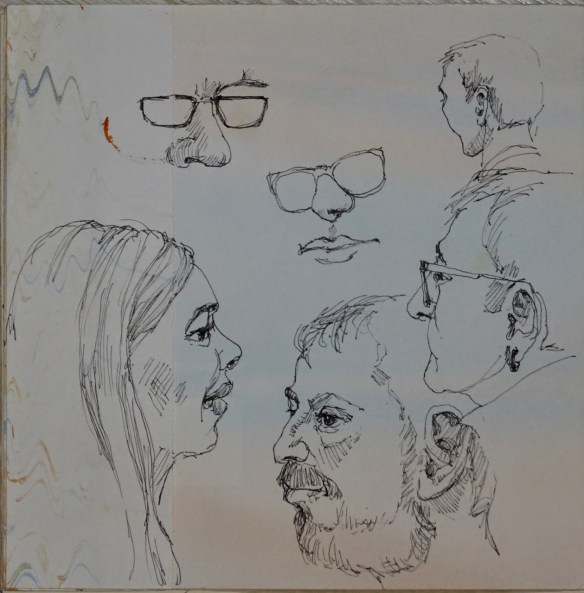
 The funicular makes short work of the steep climb to the fortress. The Hohensalzburg Fortress (Salzburg Fortress) was built in the 11th century by Archbishop Gebhard and is the largest unconquered fortress in Europe. The castle is 150 meters wide and 250 meters long, and the oldest part is over 900 years old.
  First stop at the Fortress is the top of one of the guard towers for a great view towards the mountains…
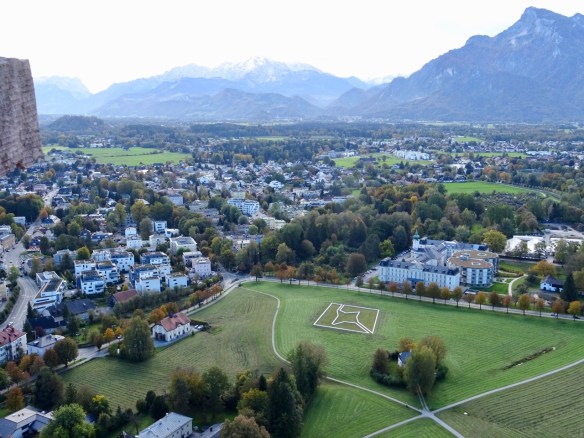 overlooking the fortress…
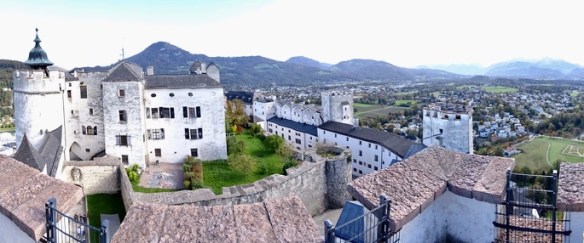 and of the old town of Salzburg. That big square is where the Bio Fest was held yesterday. You can see the golden globe with the man standing on top. Right behind the square is the Salzburg Cathedral with the big dome, where we went to hear the choir yesterday morning.
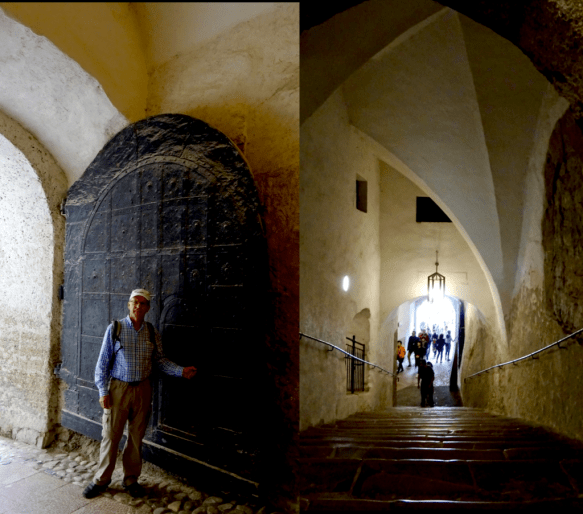
 There are lots of huge doors and interesting corridors in the fortress.
 This wheel was dropped on prisoners in order to break their bones and cause internal damage. If it didn’t kill them they were tied to it until they died an agonizing death.
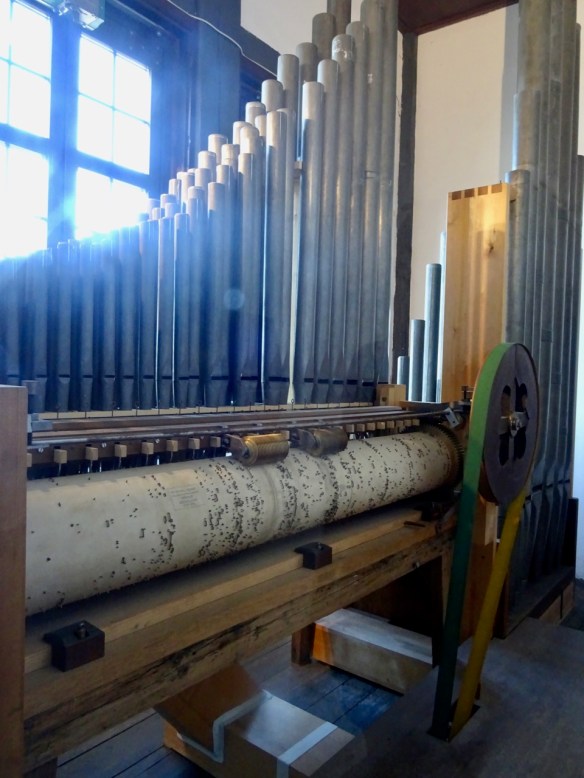
 The Salzburg Steir, or Salzburg Bull is a giant mechanical organ built in 1502. It still plays twice a day and is the last example of a Gothic organ to survive. The Stier is the oldest daily played automated musical instrument in the world. It plays melodies from Haydn and Mozart every day after the glockenspiel chimes.
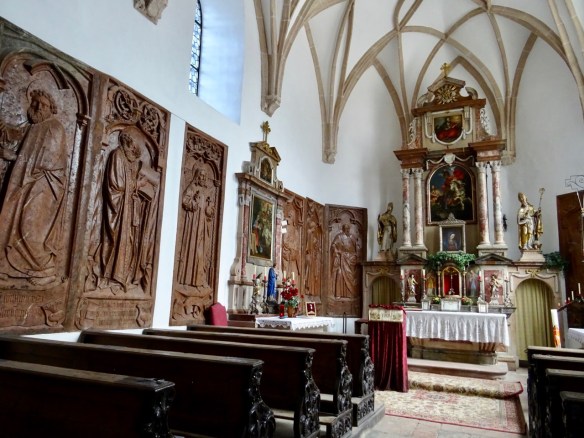
  St. George’s Chapel has reliefs of the Apostles, made from marble.
  We find a bench and have our lunch in the courtyard by the chapel.
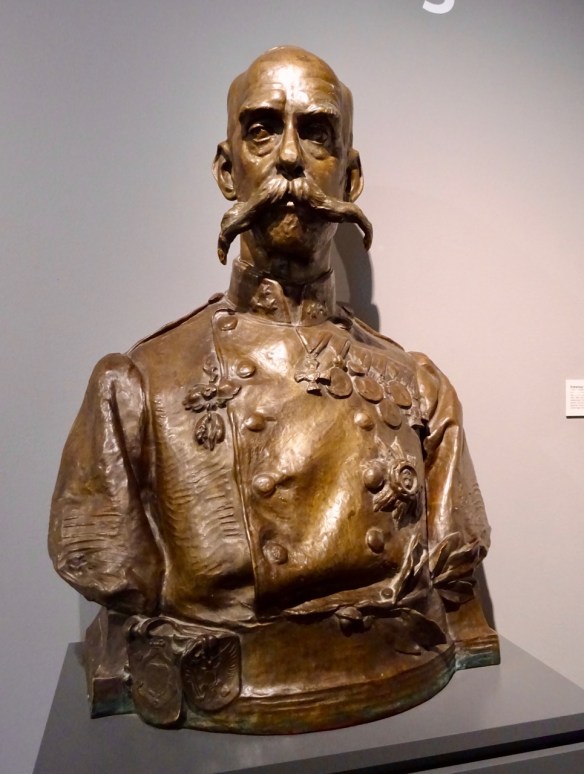
 The fortress served as a garrison for the Erzherzog Rainer Regiment in 1682. Erzherzog Rainer had quite the moustache!
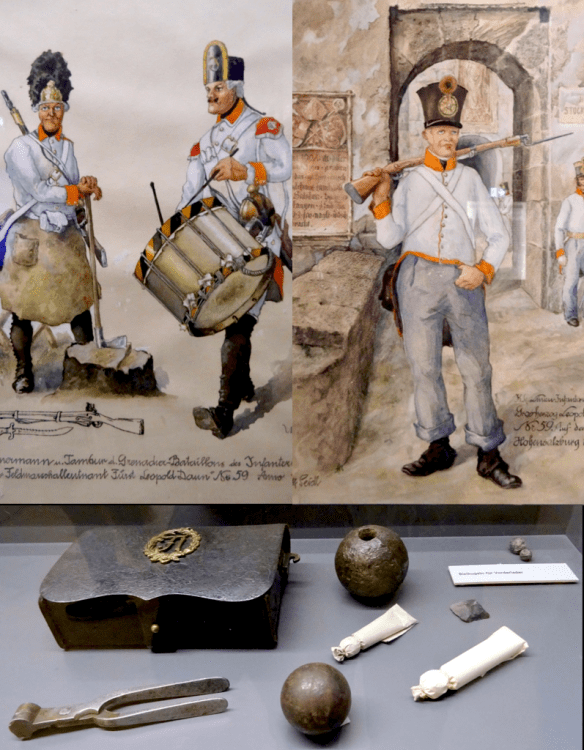
 There were watercolour paintings of the regiment over the years which I quite liked, and I thought the paper twists which held a musket ball and gunpowder were interesting.
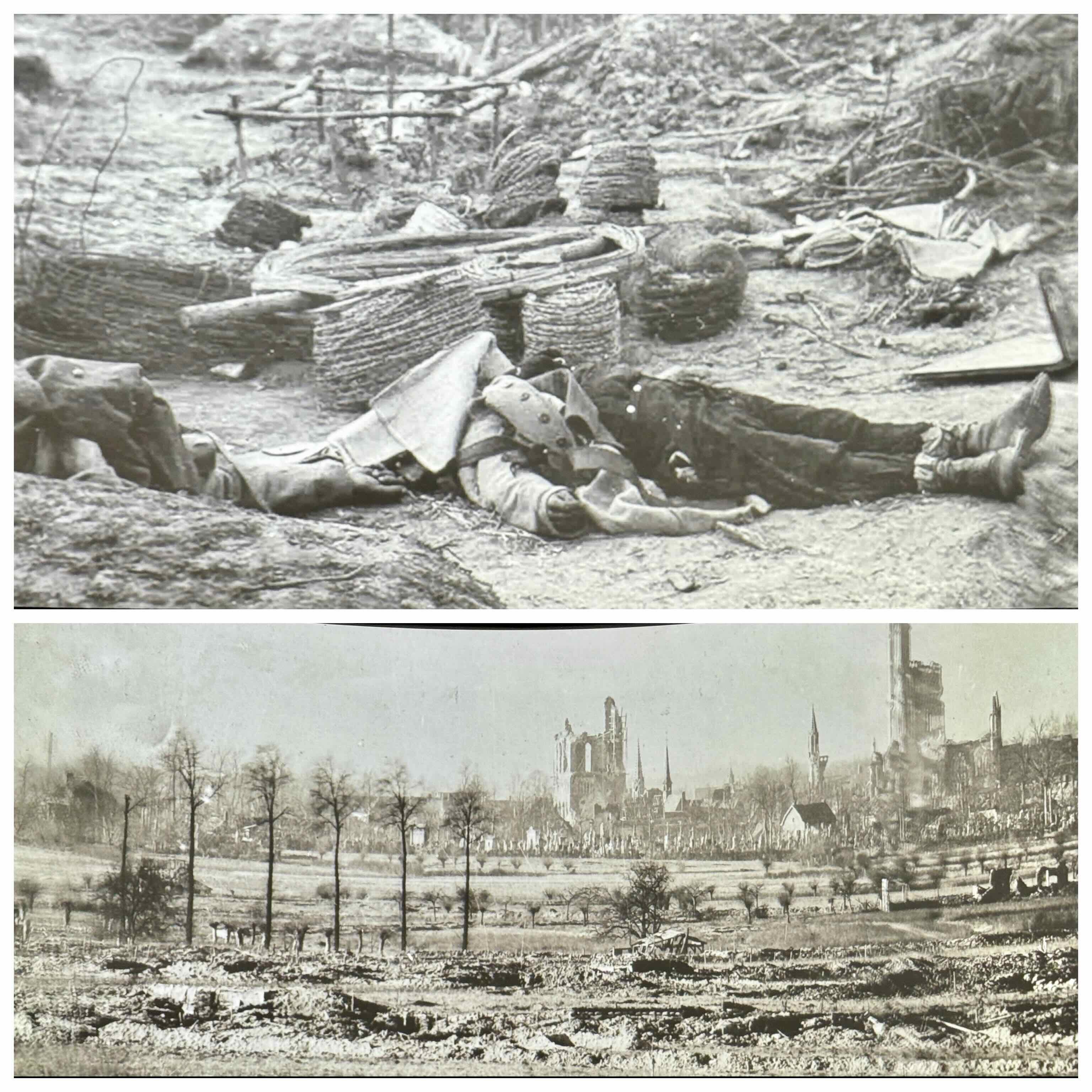
 War has always been brutal…
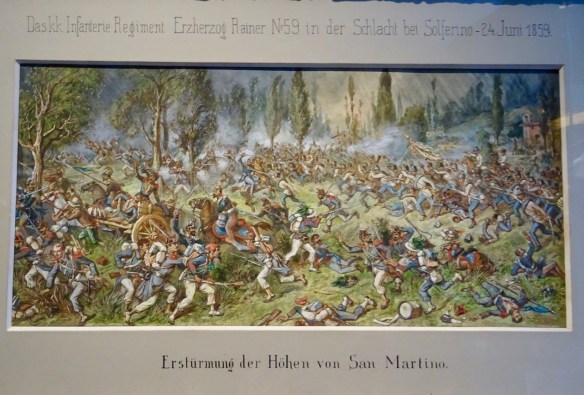 Austrian painter Karl Reisenbichler painted his fellow soldiers and portrayed images of death and suffering in WWI.
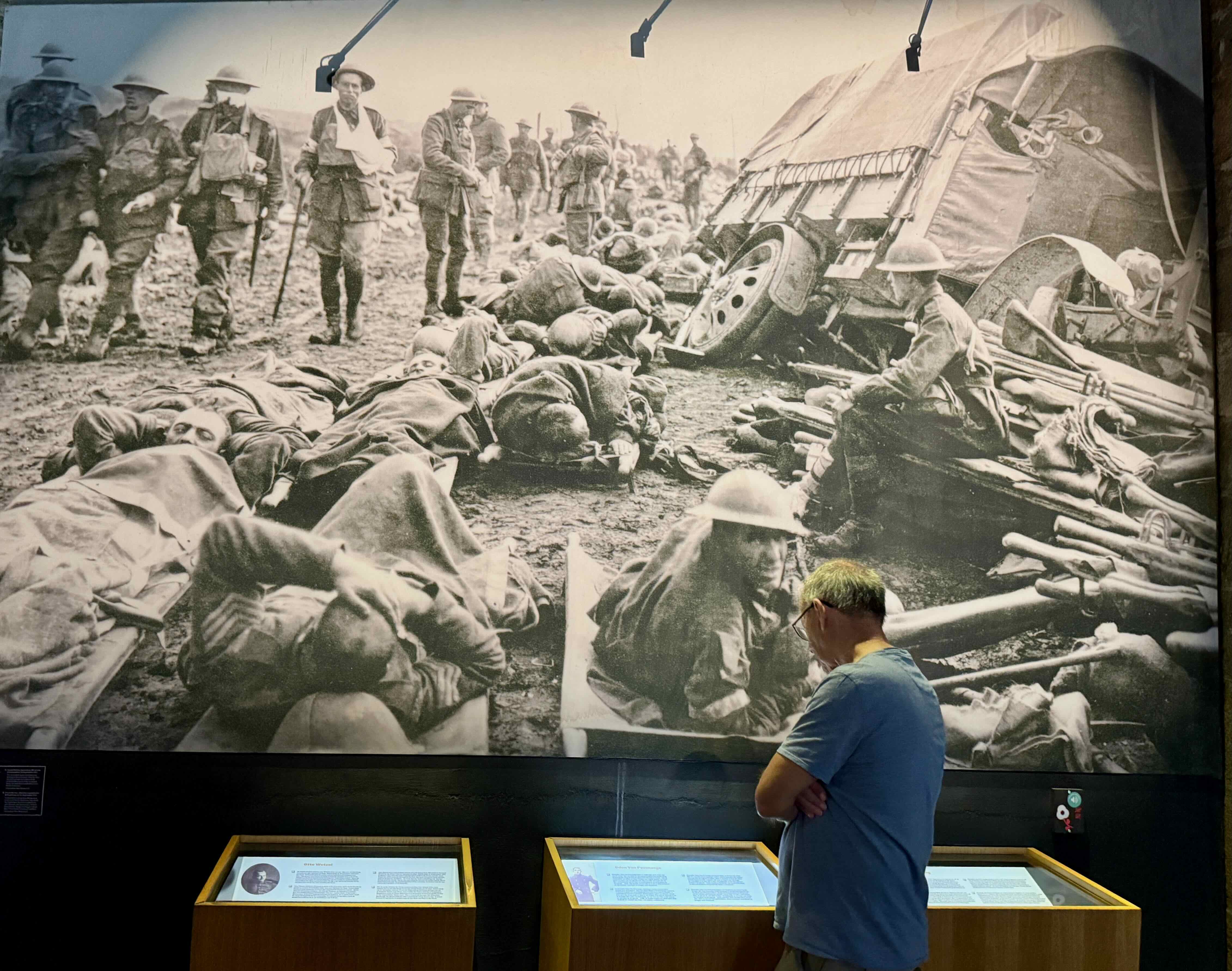
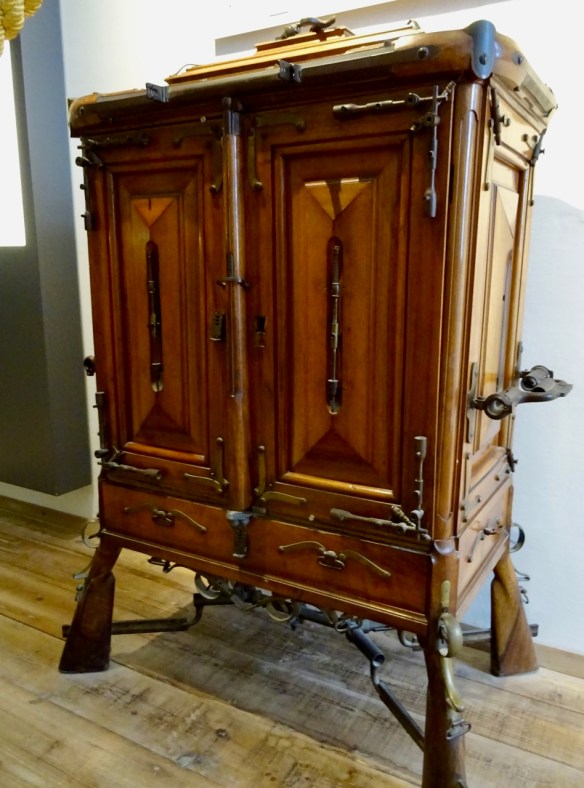
 We have seen a lot about war and death and suffering on this trip. I think that this cabinet is probably the best way to use rifles I have seen!
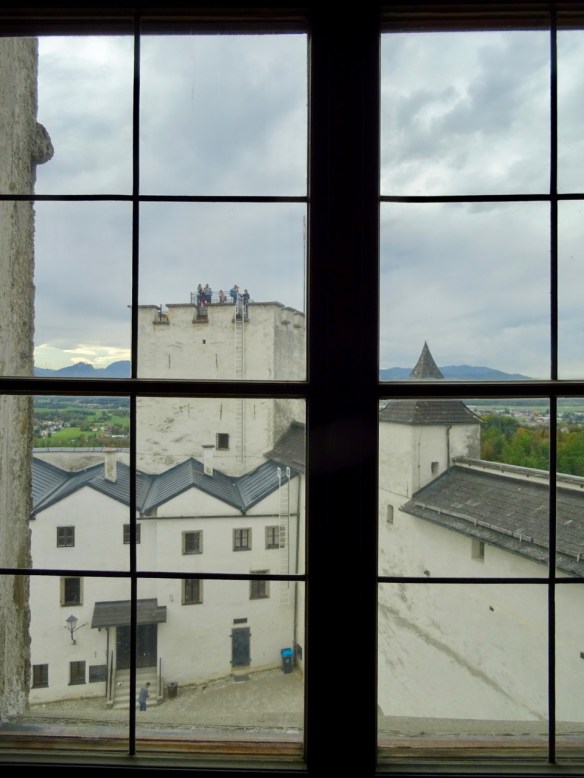
 This is a view of the fortress tower we climbed when we first arrived.
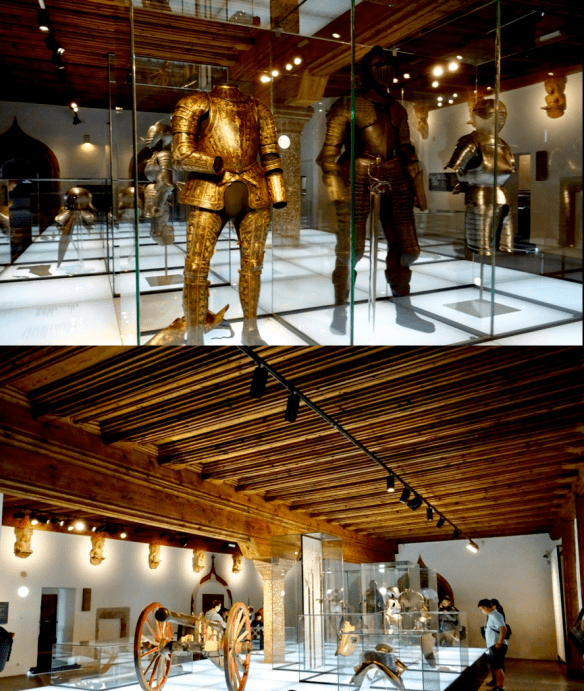
 These large fortress rooms with their huge timbered ceilings are now a museums for armour and other items used for fighting.
 This kitchen was reserved for food preparation for the Archbishop. Note the little round hole in the wall on the left that was used to throw out rubbish and drain water.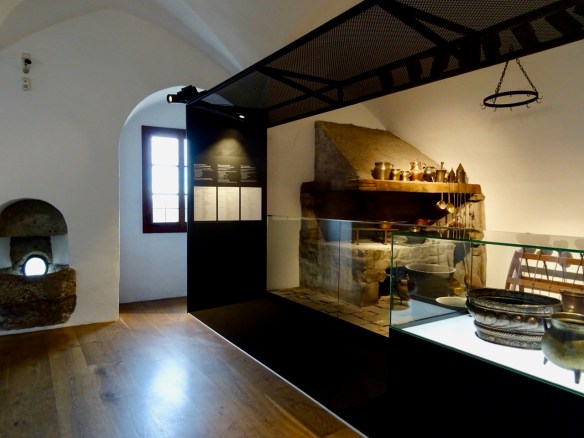
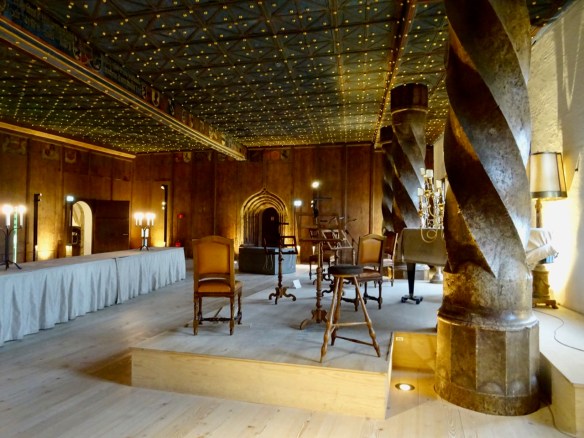
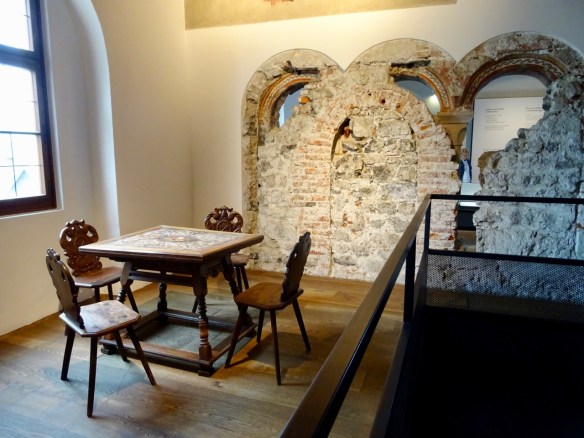 The Regency Rooms are spectacular. This is the Golden Hall with its ceilings painted blue and studded with golden balls to represent the sky and stars. It served as a ballroom and today is used for recitals.
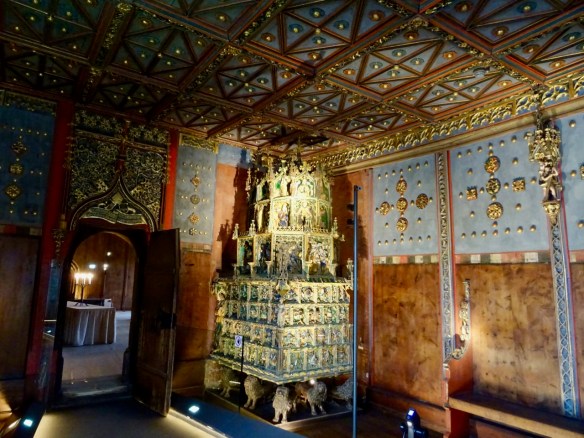
  The golden Chamber was a smaller sitting room with a small library behind the door in the corner.
 It has a magnificent medieval tiled stove that warmed this living space and reception room.
 Interestingly, the bedroom was not heated. We also learned that during the Middle Ages people slept in a semi-sitting position with many pillows because they believed that if they lay down they could suffocate. This position allowed them to have their weapons ready and attack any nighttime intruders. The doors were also low so that anyone coming in had to bend down when entering.
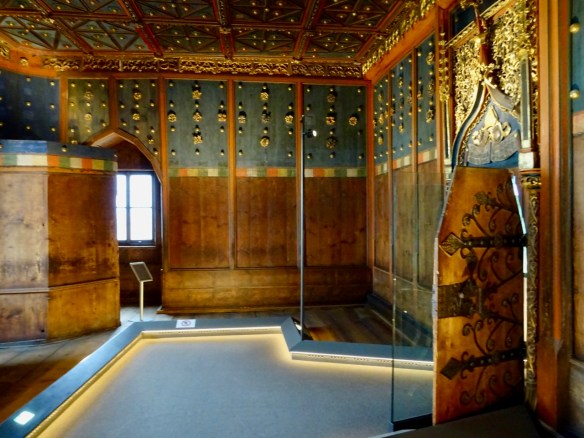 Behind this little door is the toilet, which was very modern for medieval times.
 As we leave the Fortress there is a small Marionette Museum. I love this collection of tiny feet and shoes, and thought that these two marionettes were the most beautiful, well crafted ones here.
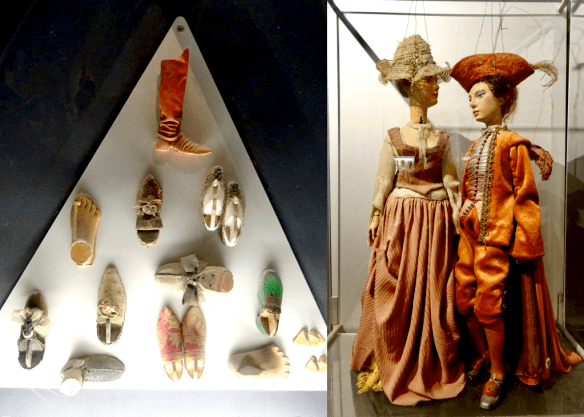 There is a wall of marionettes, and several dioramas…
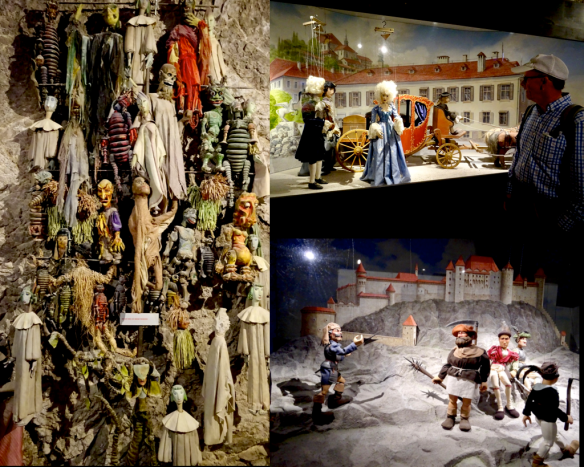 and of course, a Sound of Music scene.
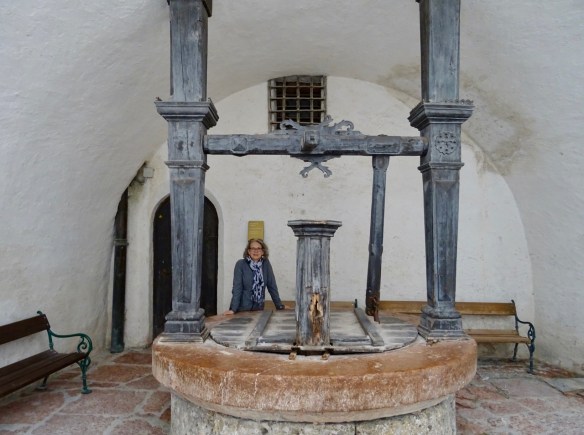
 I think this huge well was connected to the cistern that was built within the fortress walls. Now it is a giant wishing well.
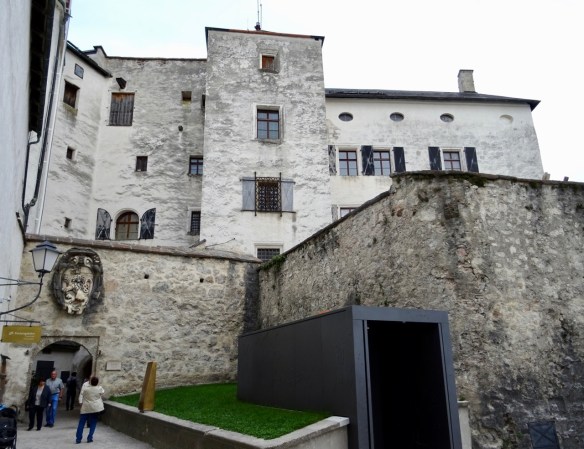
 This is the entrance to the oldest part of the fortress, adjacent to the newest addition, an elevator.
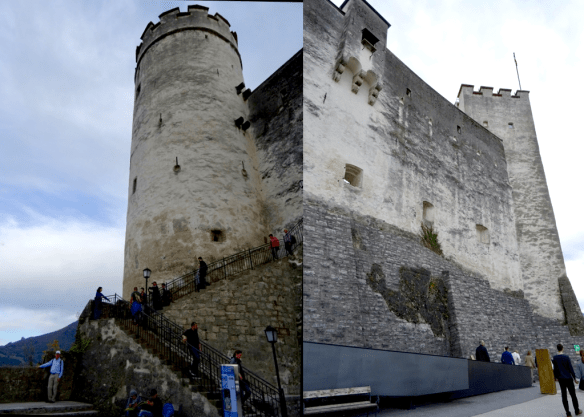
 As we exit the fortress beside the bell tower, we have a view of the watch tower we climbed at the beginning of out visit. From the top we could not look over the sides to see how high up we were.
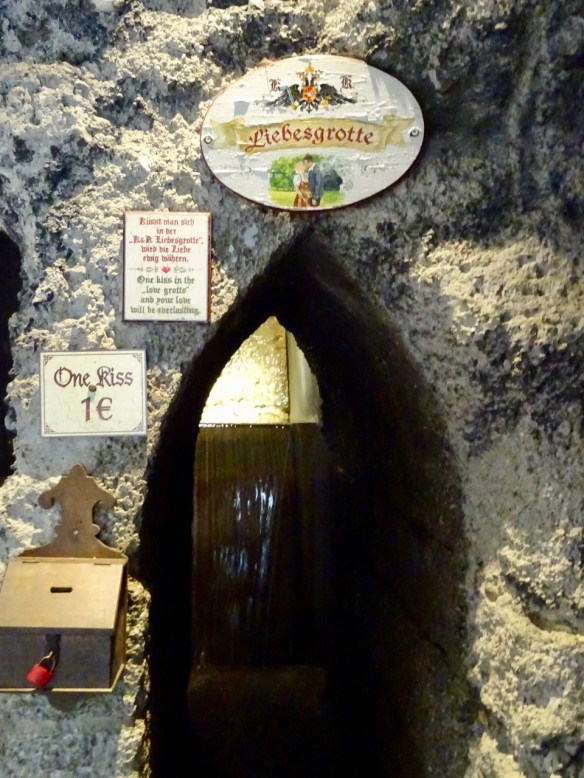
 At the bottom of the funicular we take advantage of the Love Grotto to ensure our love is everlasting!
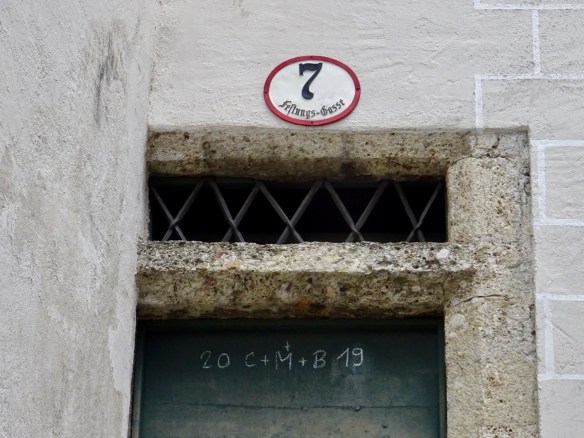
 We have seen these chalk markings on many houses, church doors, businesses and shops in Germany and Austria. I wondered what they meant. A quick search on my ‘magic library’ and I find this quote.
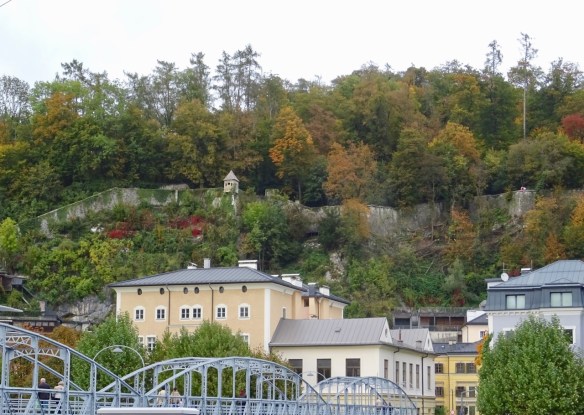
 On the bus home we can see the old medieval town walls.
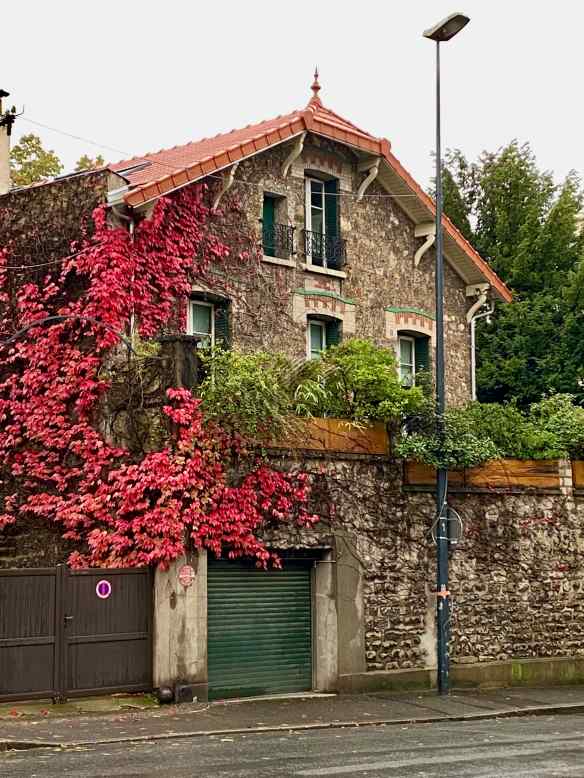
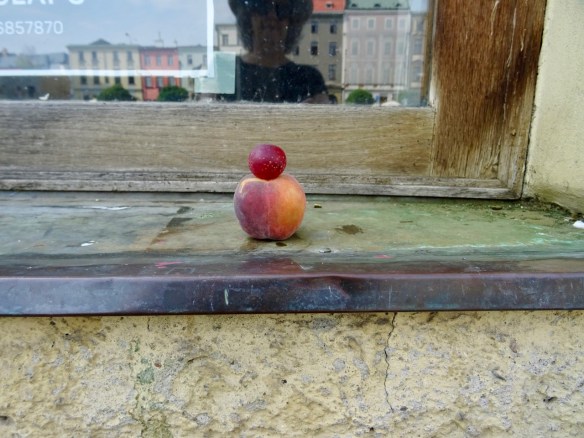
 The ivy on a wall on our walk home looks like a giant red creature.
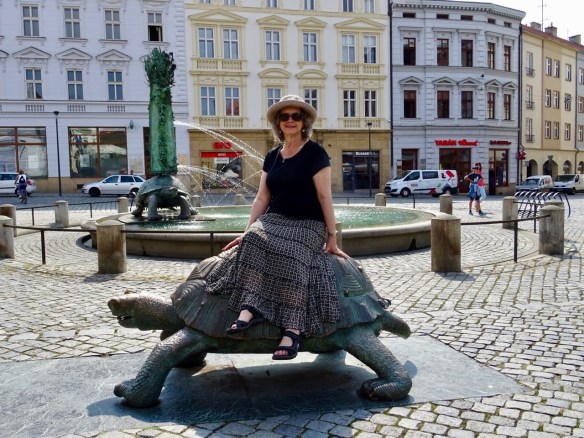
 Doesn’t everyone want to ride on a turtle? I almost went right over backwards when I climbed on!
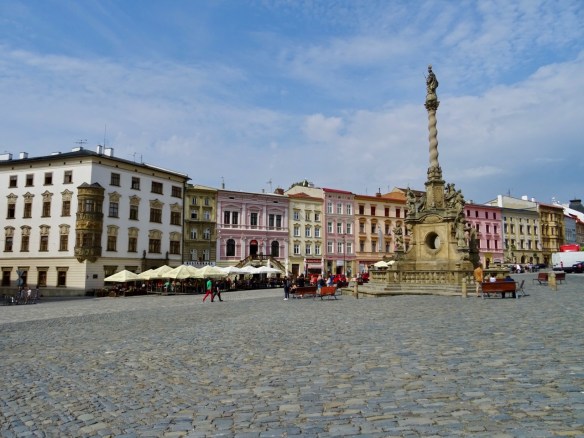
 The Holy Trinity Column dominates the town square. “The column is dominated by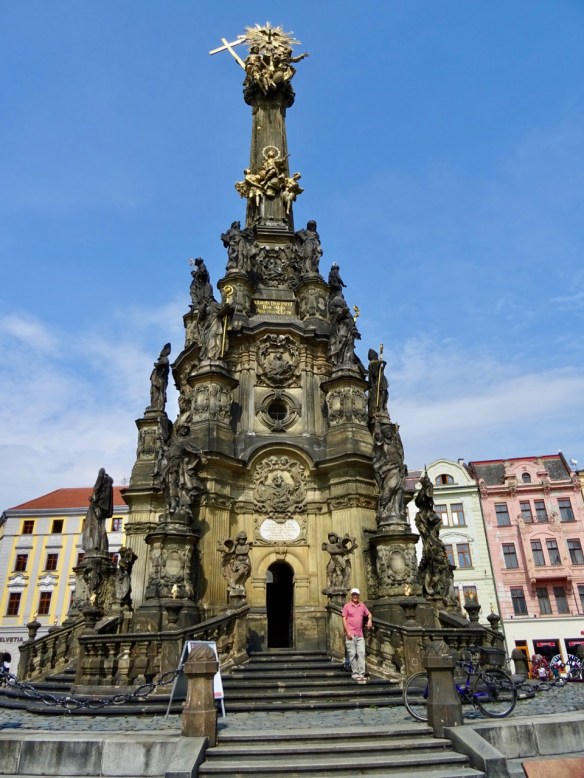
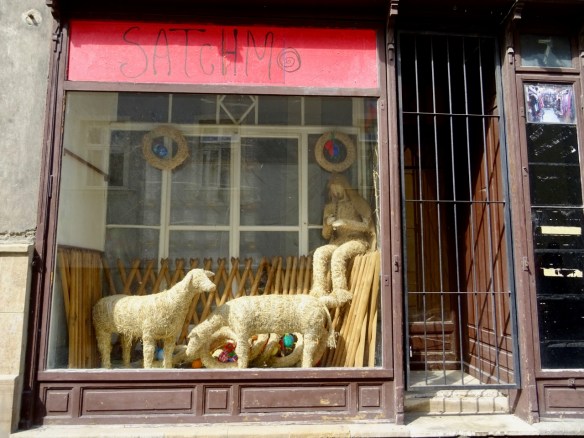
 We wonder what this shop sells? These figures were made out of straw. It was closed so we couldn’t go in to find out.
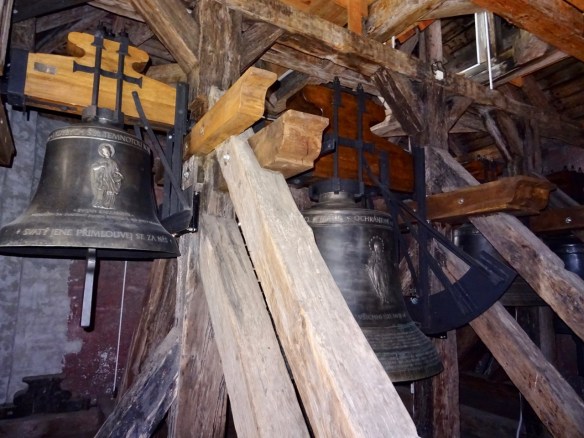
 We climb another bell tower in the Church of St. Michael just off the square. There wasn’t any place to see outside and get a view over the city, which was too bad.
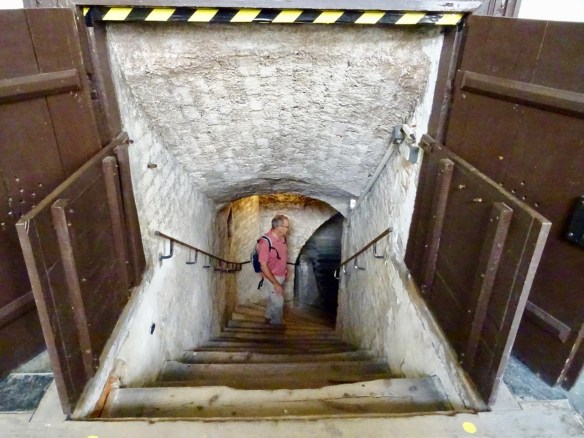
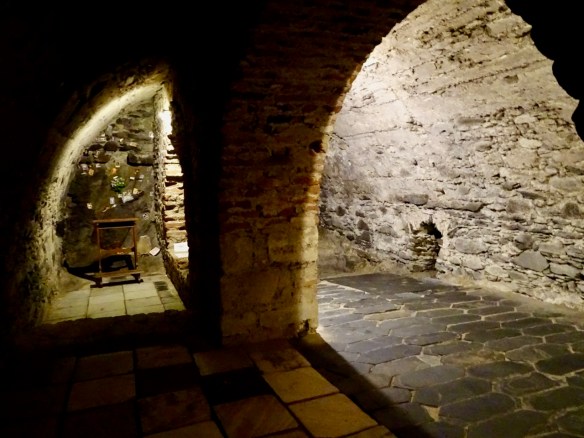
 The same church had steps to a crypt so we went to explore,..
 and we found this little shrine and a small pool of water.
 These ladies caught my eye.
  St. Wenceslas Cathedral was originally built in 1131 and was rebuilt in the second half of the 13th century. The facade was renovated in 1999-2008. It is very impressive.
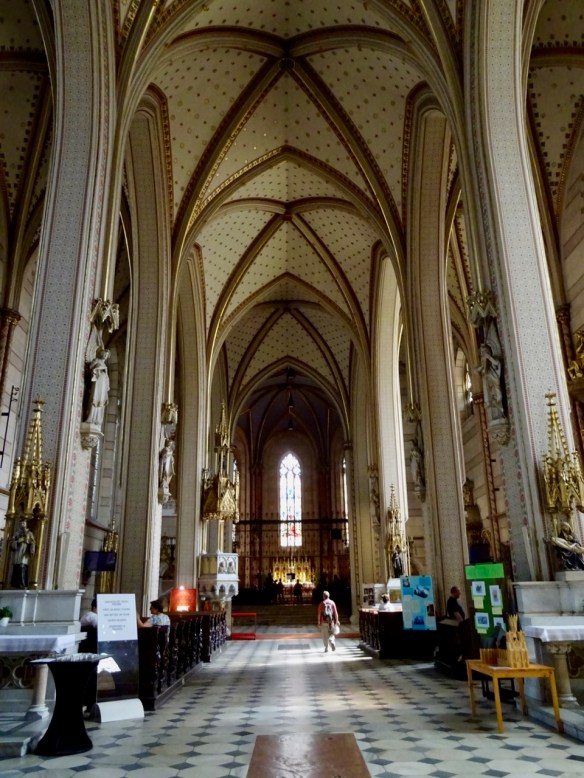
 Of course the interior is just as impressive.
 We visit
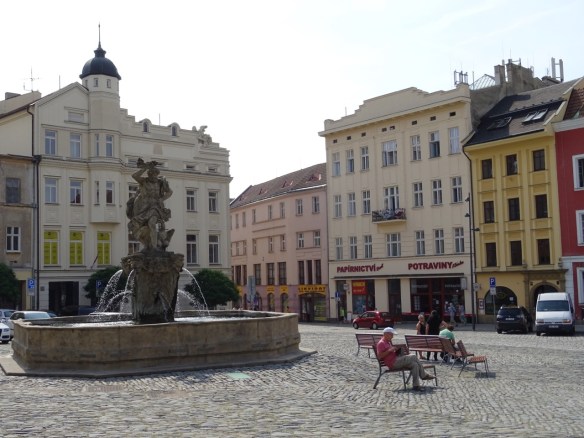
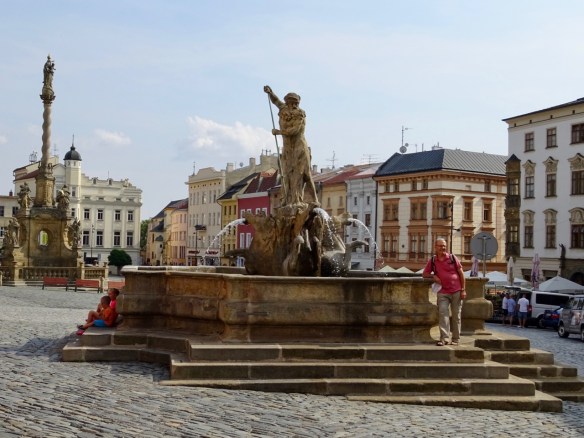
  More fountains in the town square as we make our way back to our car.
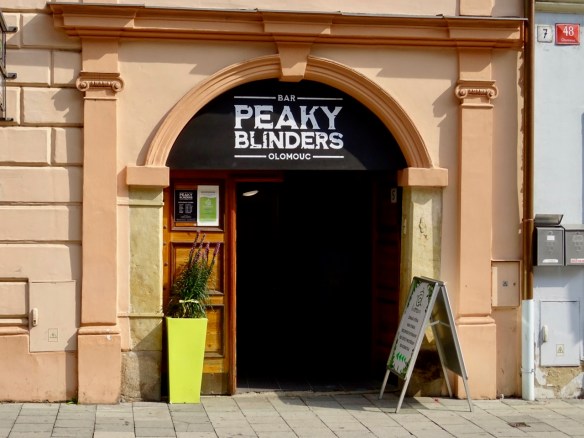
 This bar catches my eye. I am sure I know this name and look it up. Sure enough, it is the name of a show on Netflix about a gang in England in the early 1900’s.
 When we cross the border into Poland we are surprised that there is no indication that we were leaving one country and entering another. One of the interesting things about travelling is how different things are from home. Sometimes the differences are challenging and sometimes the differences make me smile. This is what I saw in the first bathroom I entered in Poland.
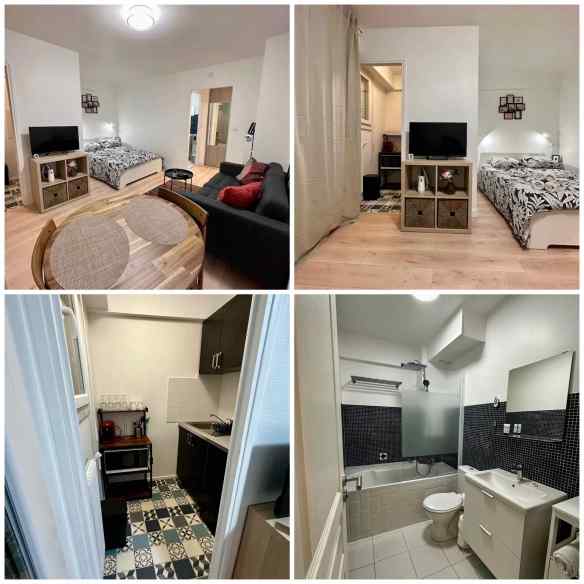
 We were frustrated when our SIM card stops working once we cross the border. We were told it would work in all the countries we were visiting. We finally find a MacDonalds so we can contact our bnb host, who is waiting to hear from us. It is late when we finally make it to our new apartment, which wasn’t very easy to find in the dark, but we are here, and tomorrow will be a rest day for us.

 trudymason.com