Day 13. Friday, September 12, 2025
It is an hour drive to Amiens from Arras where we will visit Jules Verne’s house, the largest cathedral in France, and take a unique boat ride.
We luck out and find a parking space right beside the Jules Verne museum. Parking downtown in French cities is very difficult, there are more cars than spaces available. We have our picnic lunch in a little park right by the museum but these chestnuts were falling and landing with a crash around us…the spikes on the green fruit are very sharp and we decide to move to a safer bench.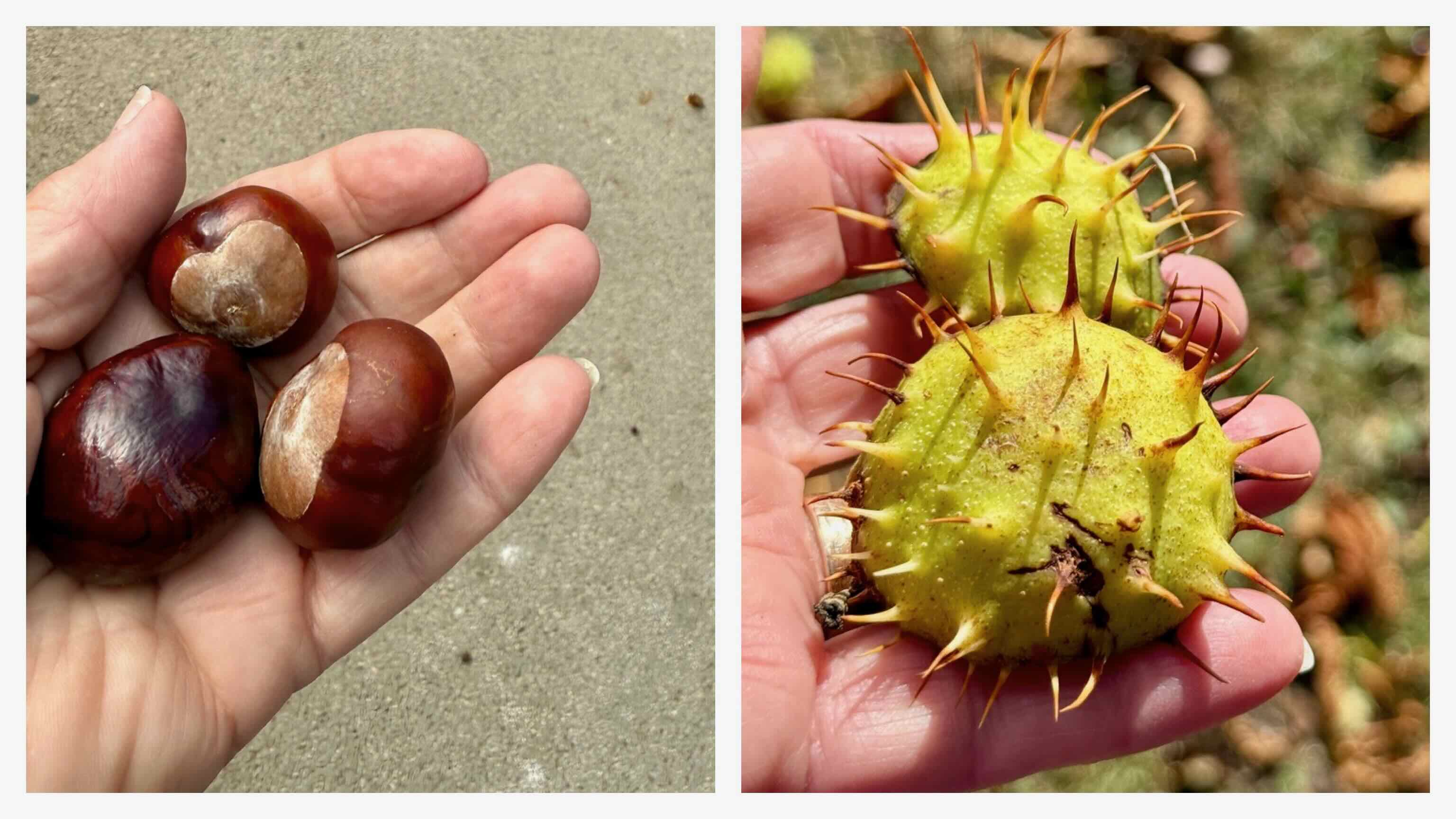
Jules Verne (1828-1905) was a French novelist, poet and playwright. Jules Verne is the second most translated author in the world, ranking below Agatha Christie and above William Shakespeare. His novel Around the World in 80 Days is printed in 18 languages.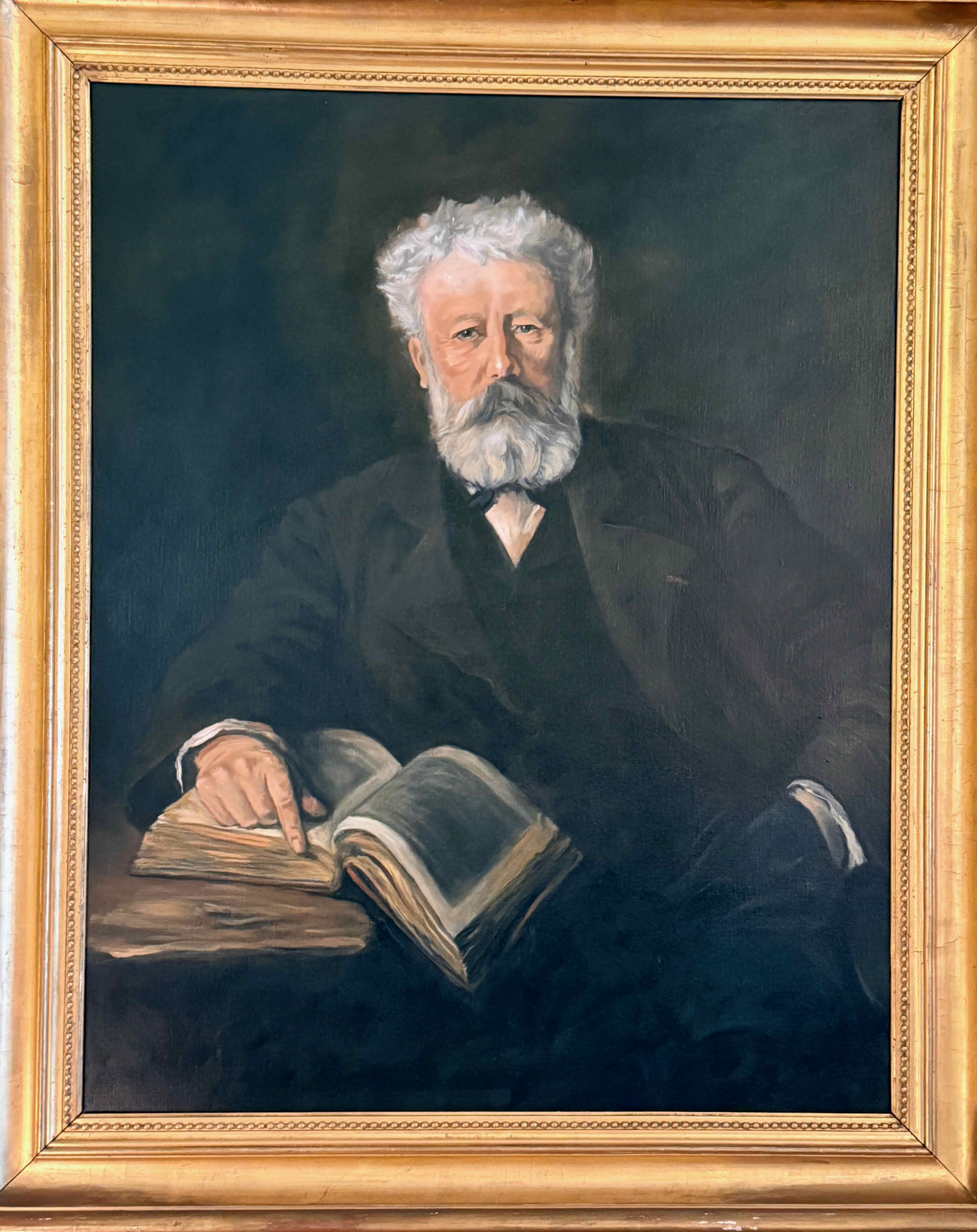
The winter garden was the original entrance to the Jules Verne house. Tropical garden plants were moved indoors here to spend the winter.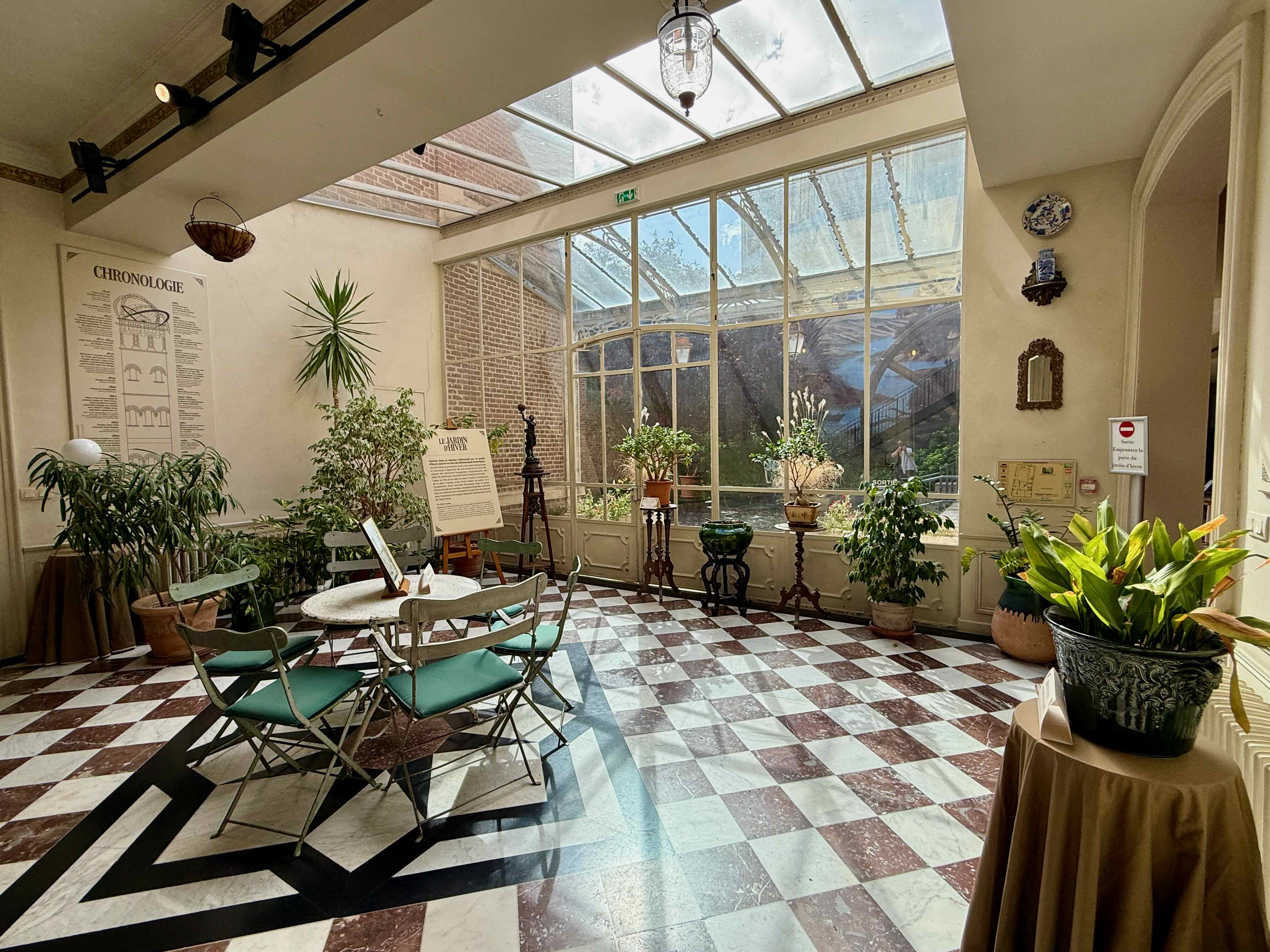
The dining room and salon on the main floor.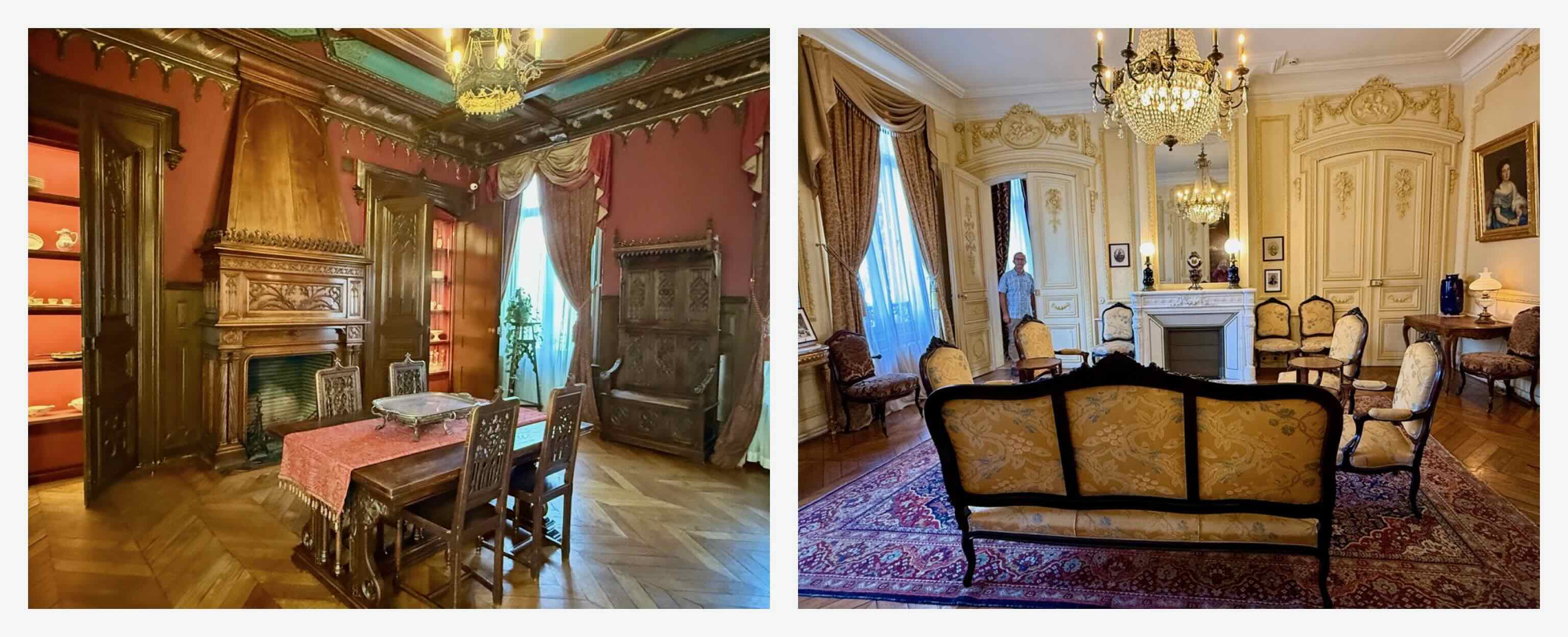
One of the second floor rooms was a reconstruction of his first boat. Jules Verne loved to sail and his first boat was a 9 metre long. His second boat was 20 meters in length and the third was 30 meters! 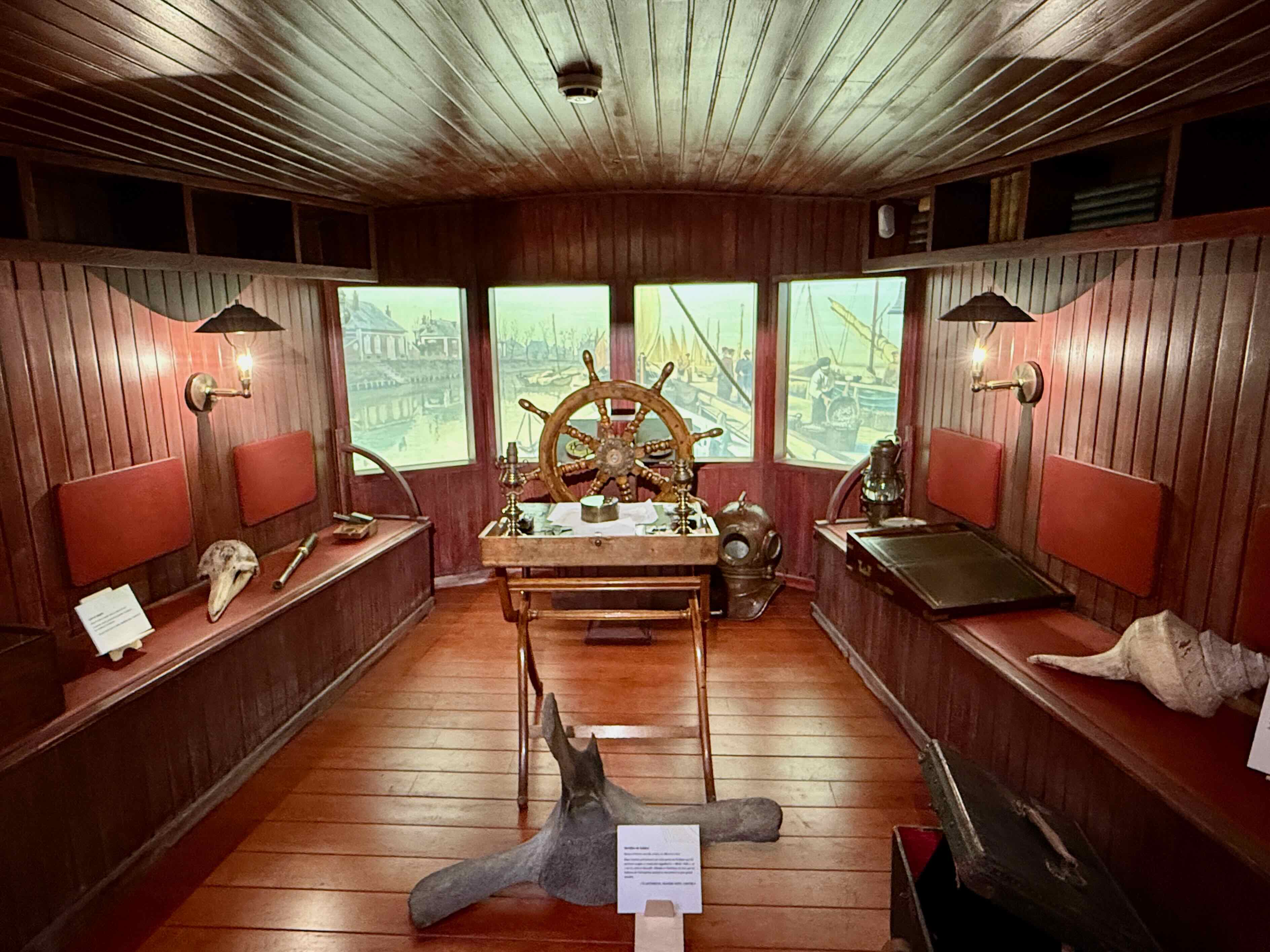
This second floor room was a library. The second photos shows the original library with over 12,000 books. When he read these books Jules Verne wrote notes on index cards to use as reference information for his novels.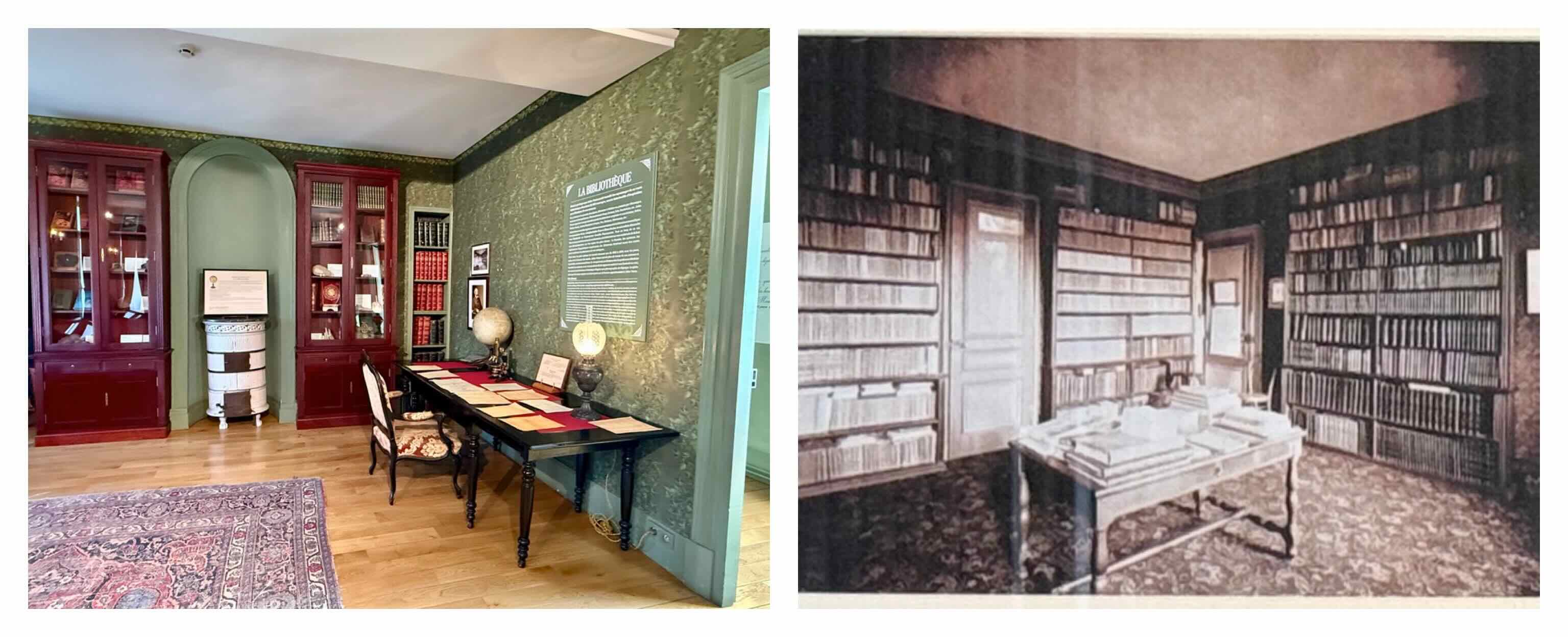
From 1882 to 1900 Jules Verne wrote every day from 5:00 am until 11:00 am in this little room.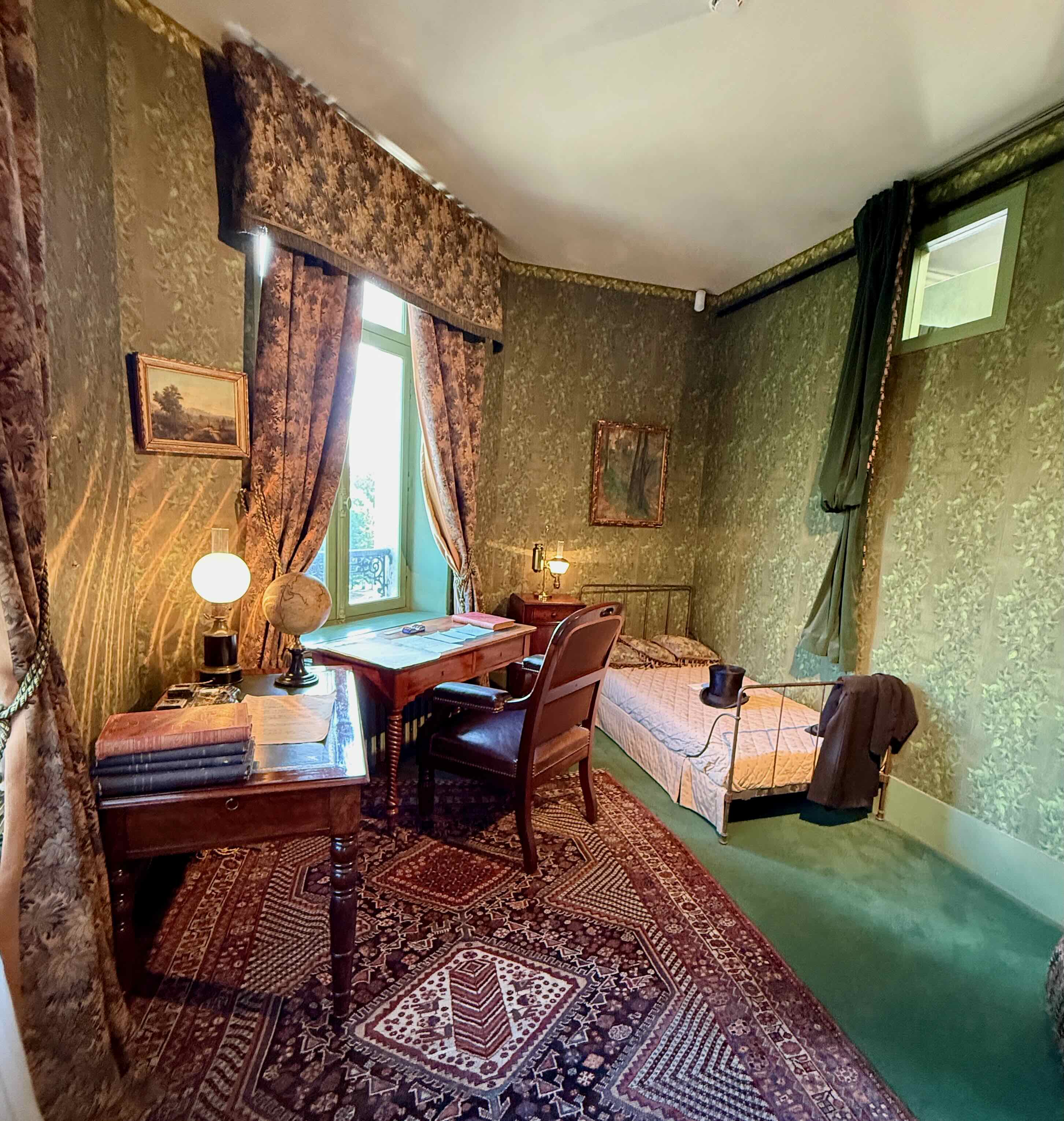
Climbing the tower which was added to the house by Jules Verne. It allows access to all three floors of the house.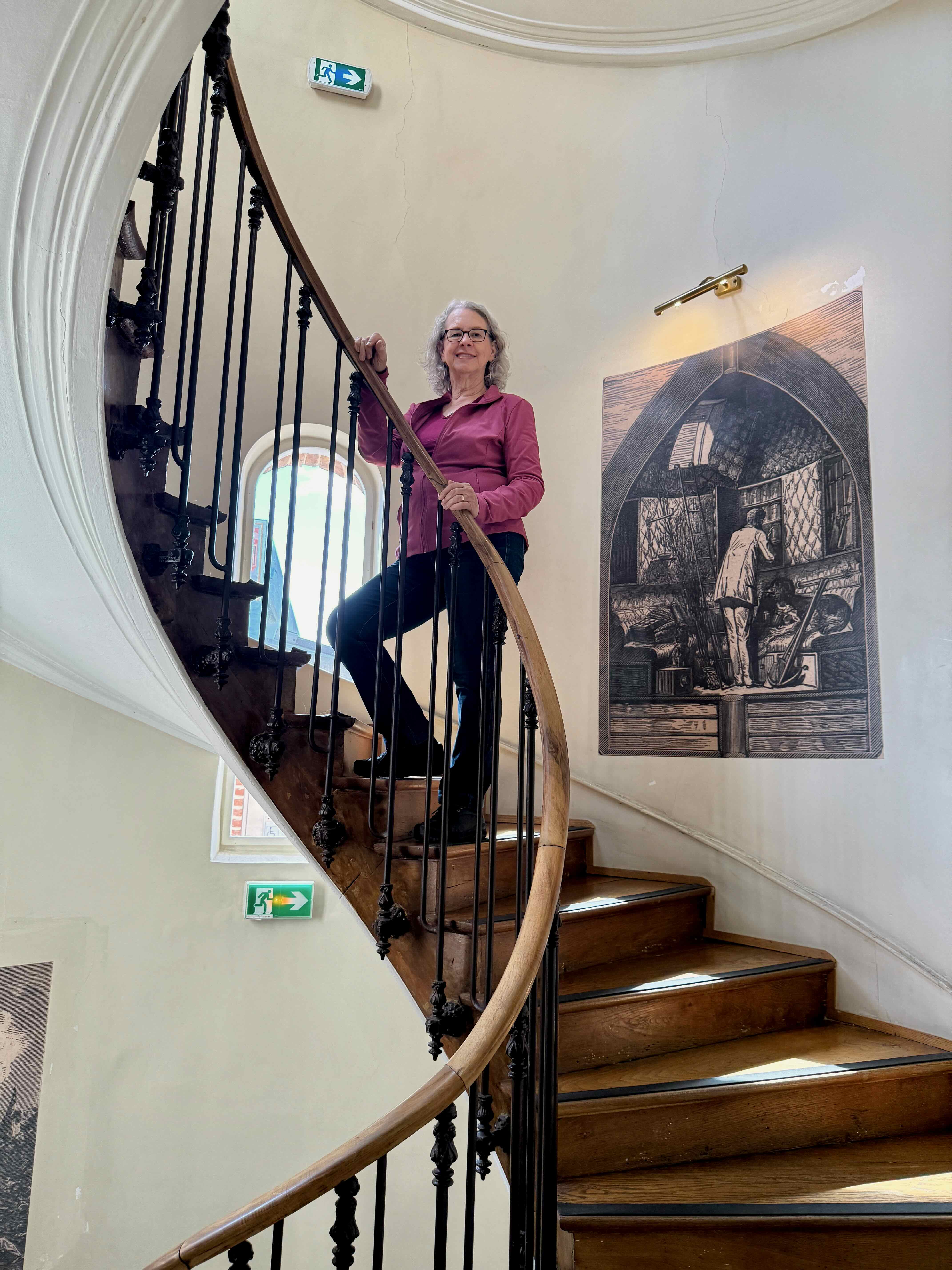
The third floor attic has a collection of original movie posters…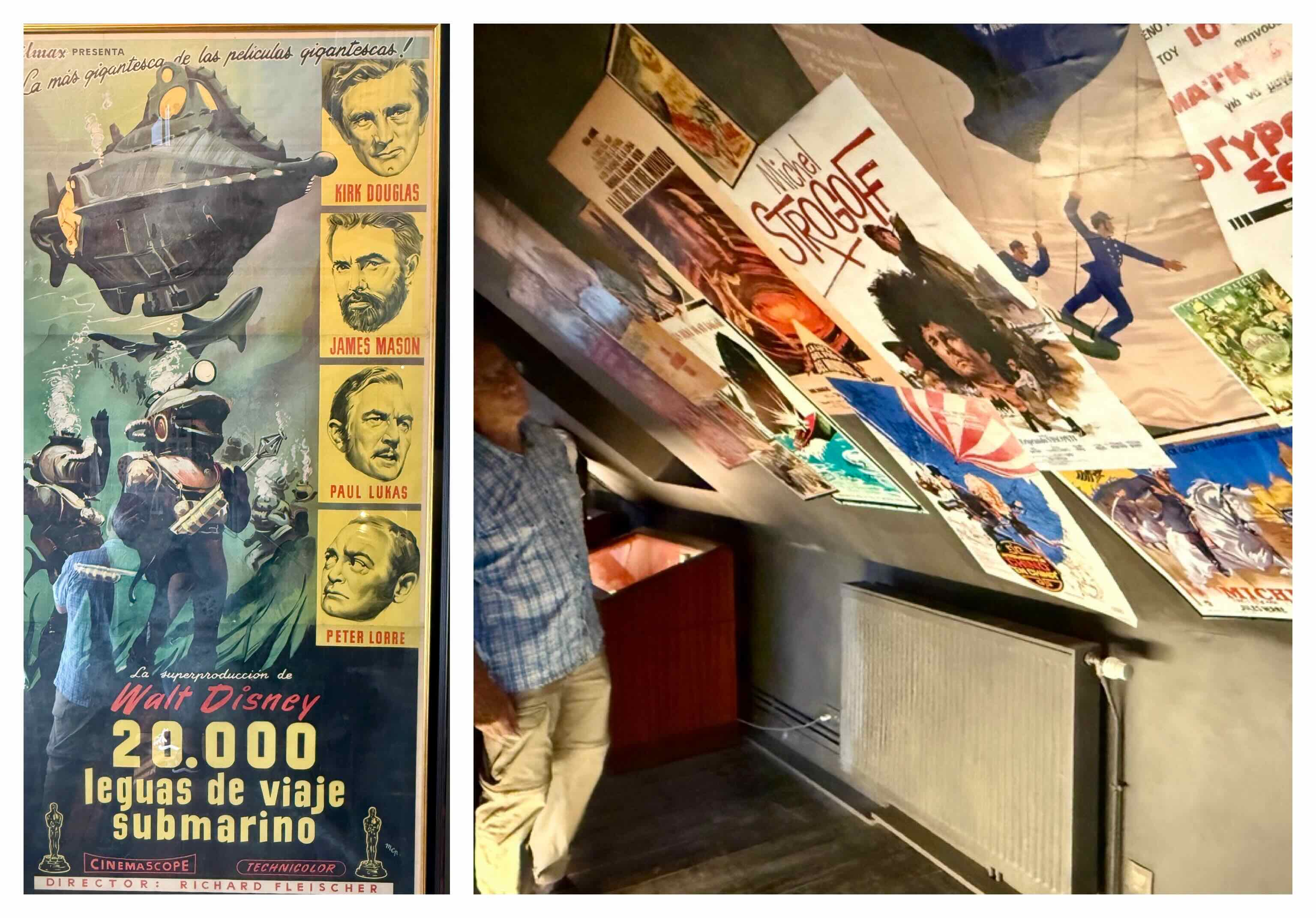
…and other memorabilia. I look like I am one of the exhibits!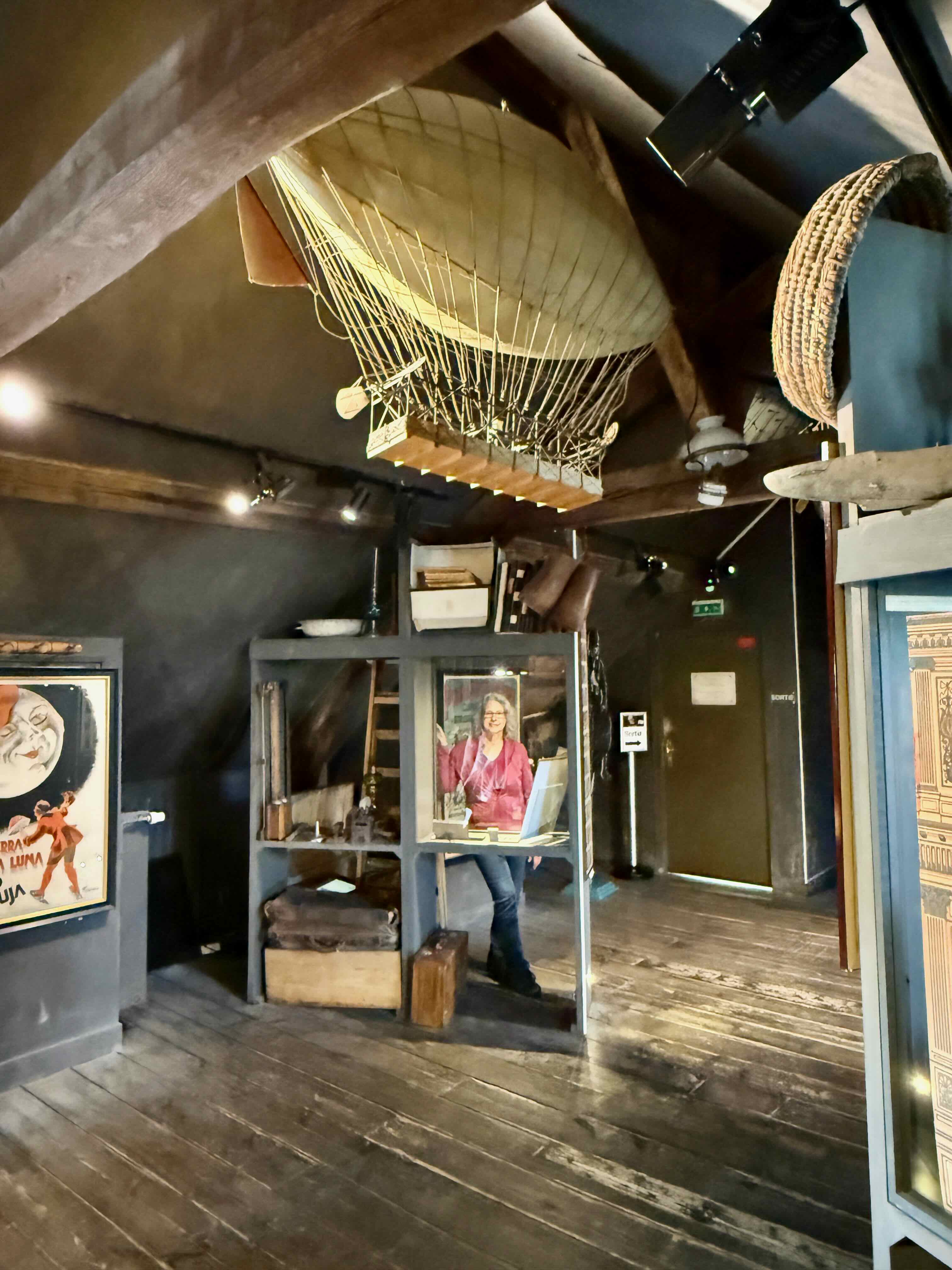
Bob and a fictional flying machine from one of Verne’s novels. 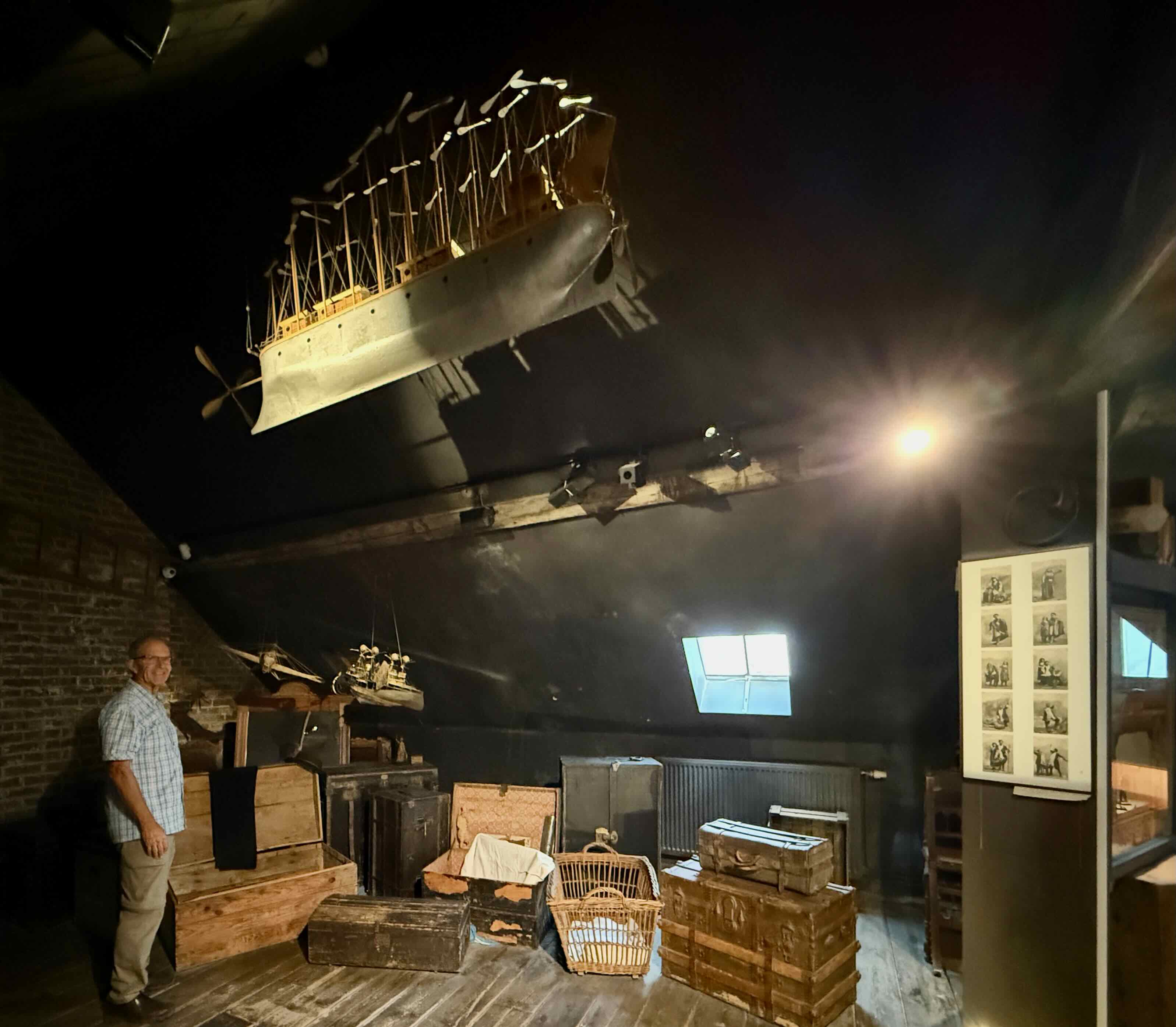 A view from the front of the house showing the winter garden.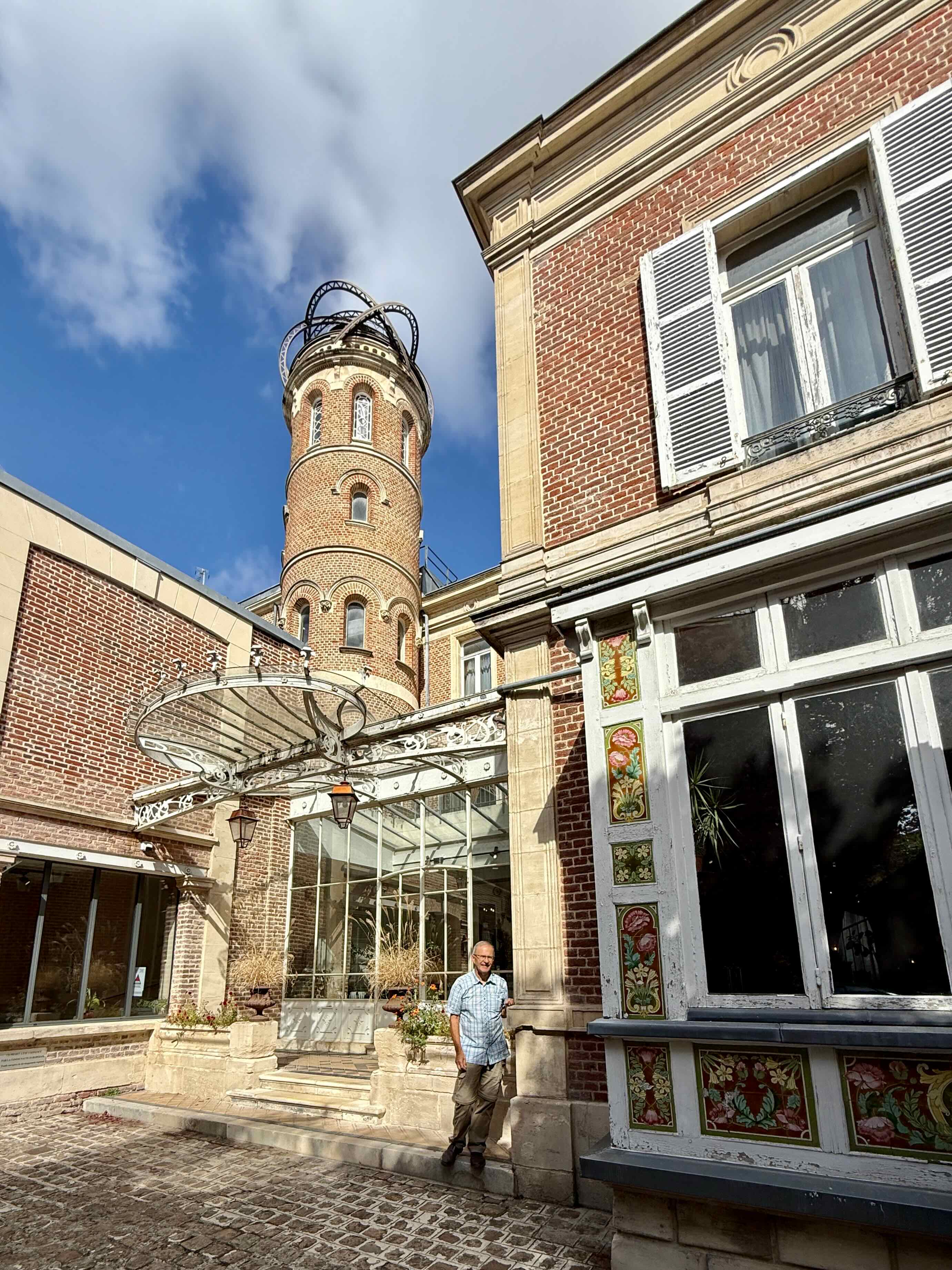
it is a short walk to the Amiens cathedral. Notre-Dame d’Amiens is the largest medieval cathedral in the world. It was built in 1269 and is twice the size of Notre Dame in Paris.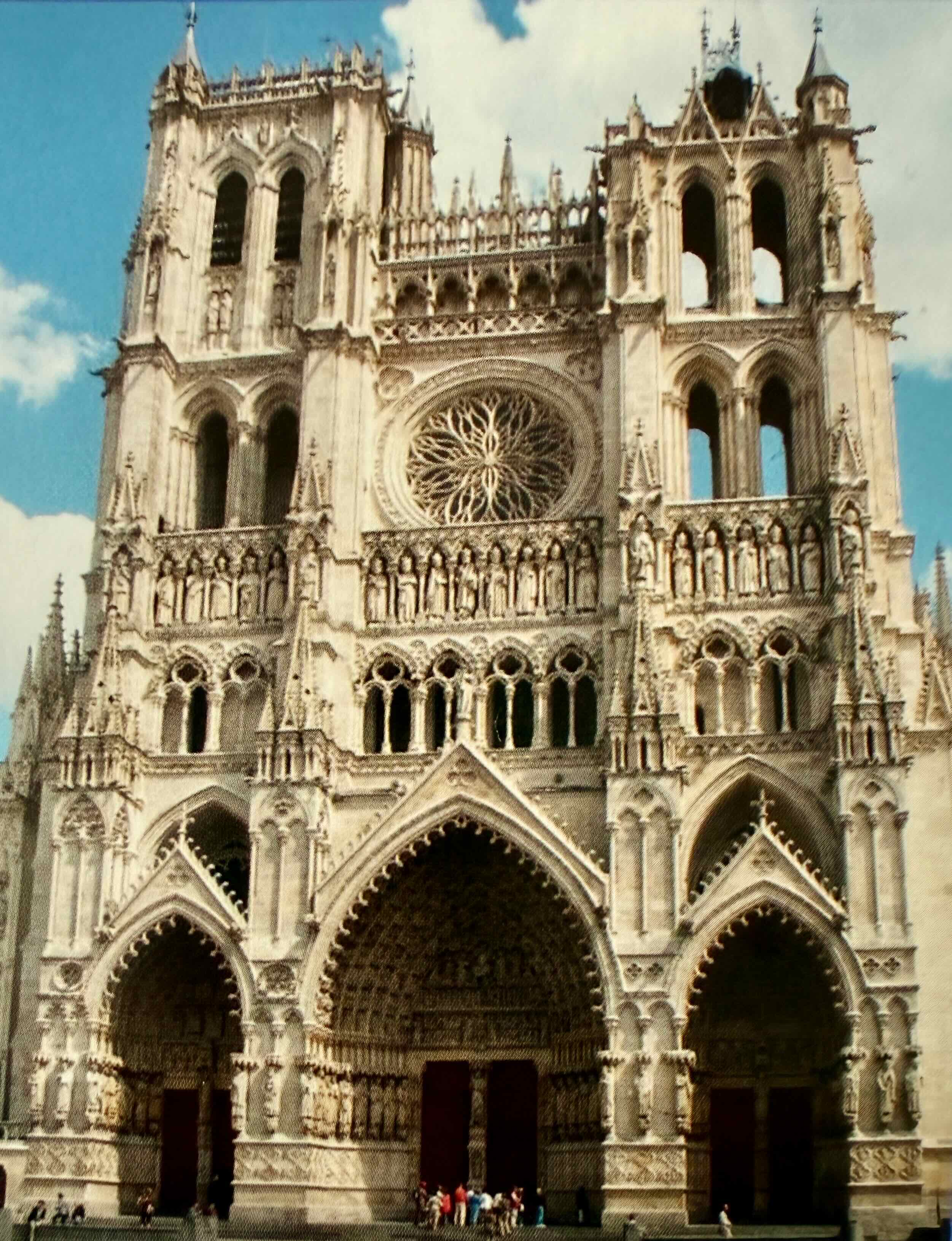
The sculpted decorations in the portals have survived in a remarkable state of preservation…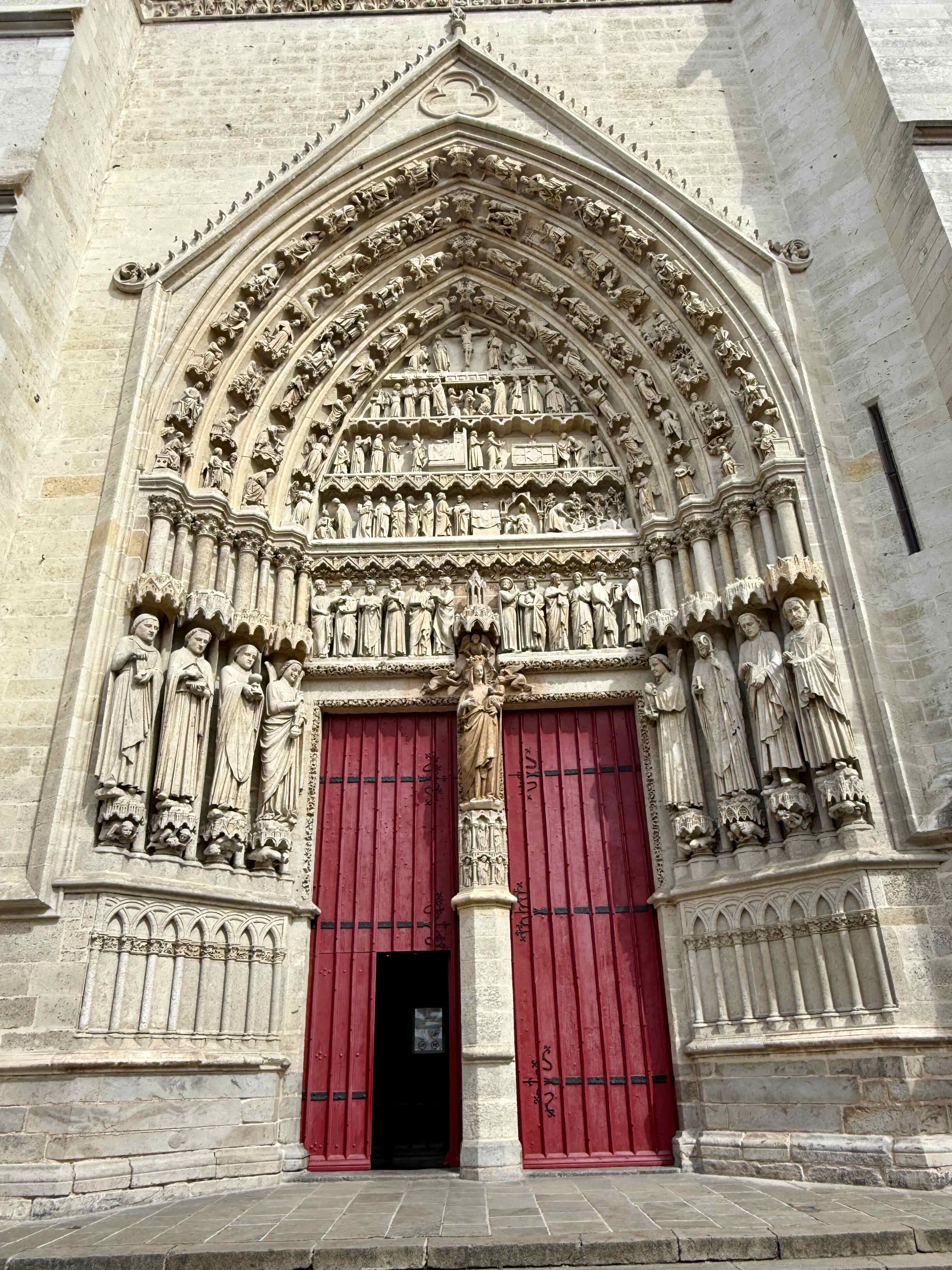
…and the 16th century wood carvings of the choir stalls are unique in the world. 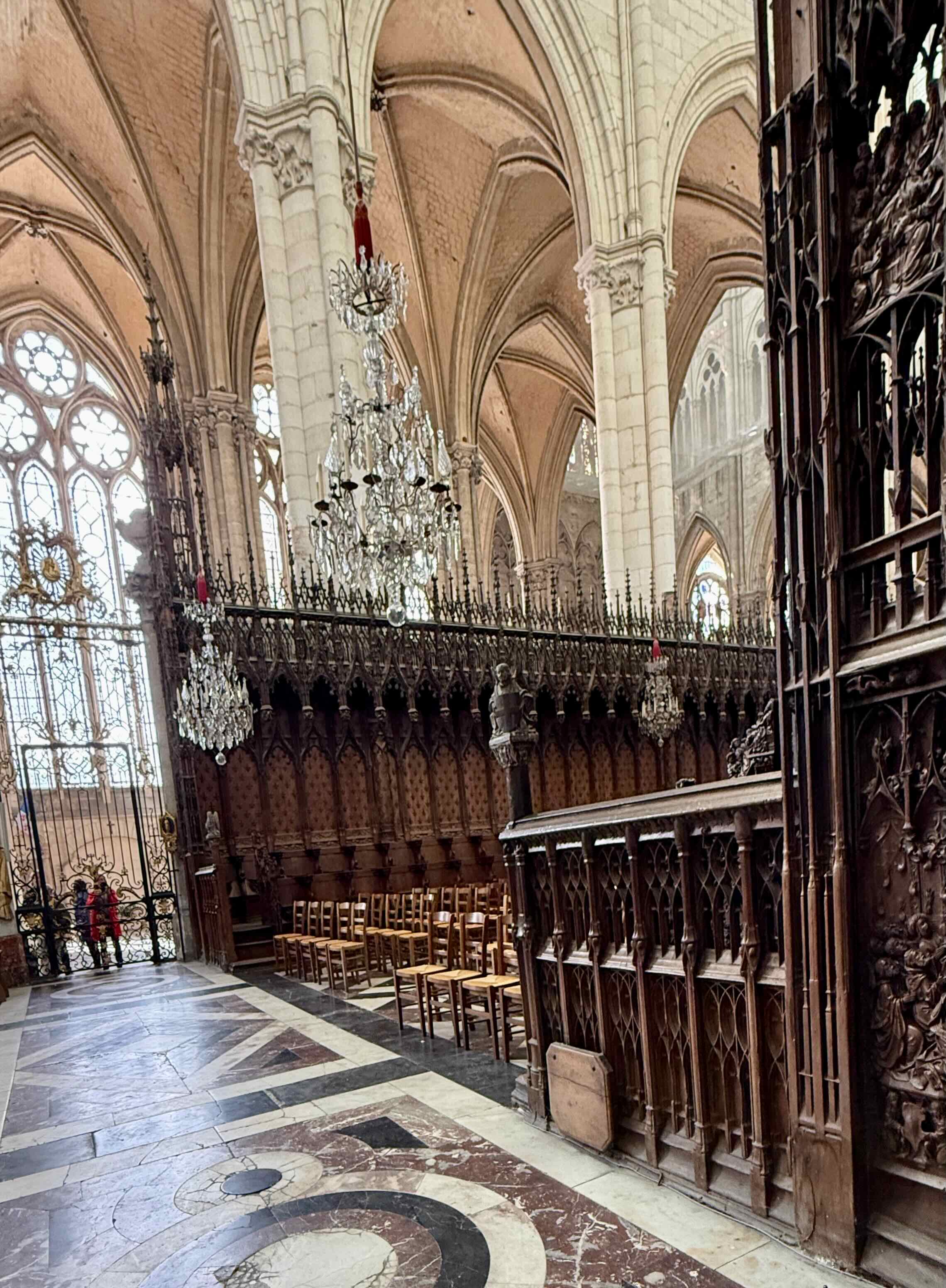
Sandbags were used to protect the exterior and interior of the church during WWI. The stained glass windows were removed and stored elsewhere. Unfortunately there was a fire and some of the windows were destroyed. A bomb did fall directly on the church but it did not detonate. Whether by faulty fuse, divine intervention or sheer luck, the cathedral stood unharmed. Info and photo~ church heritage.eu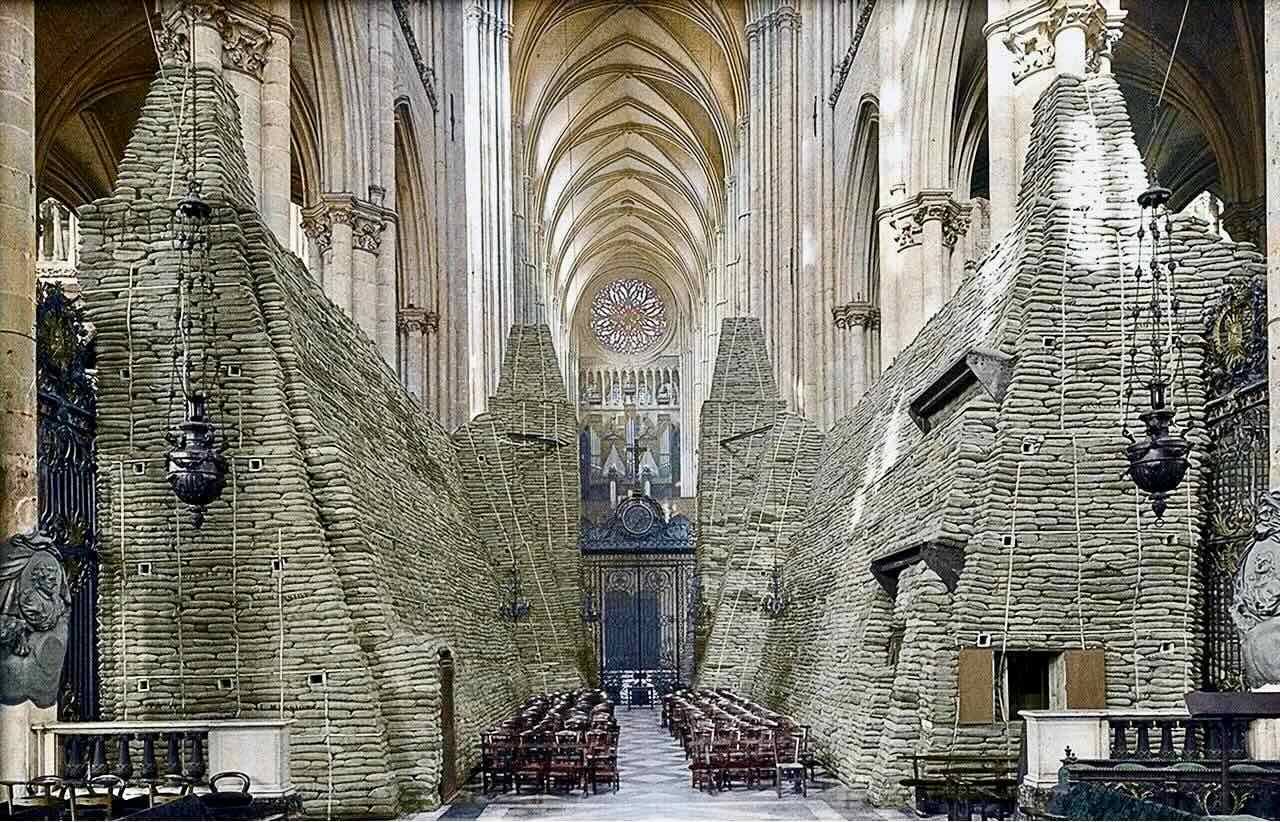
This is a massive cathedral…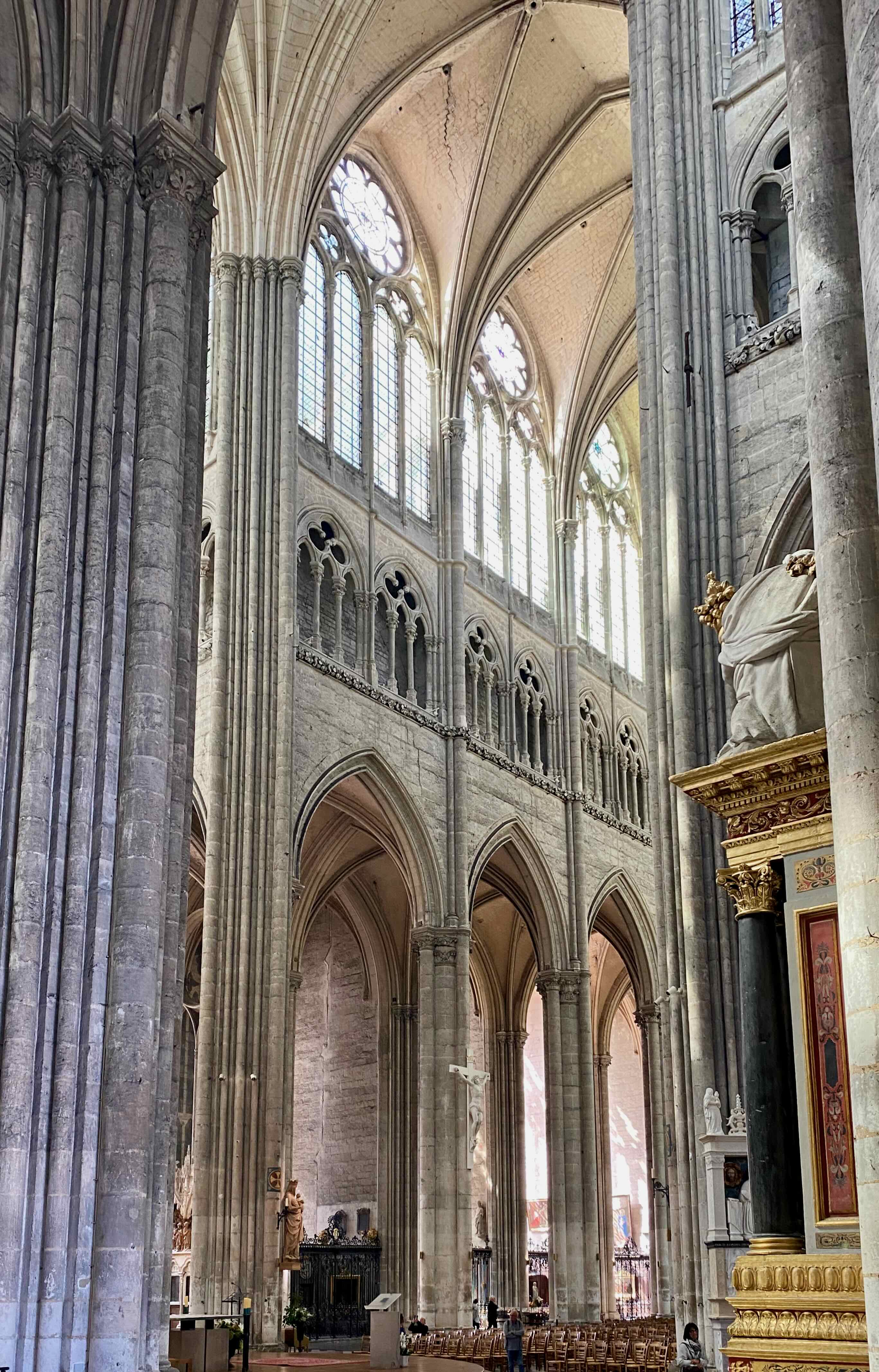
…with stunning stained glass windows.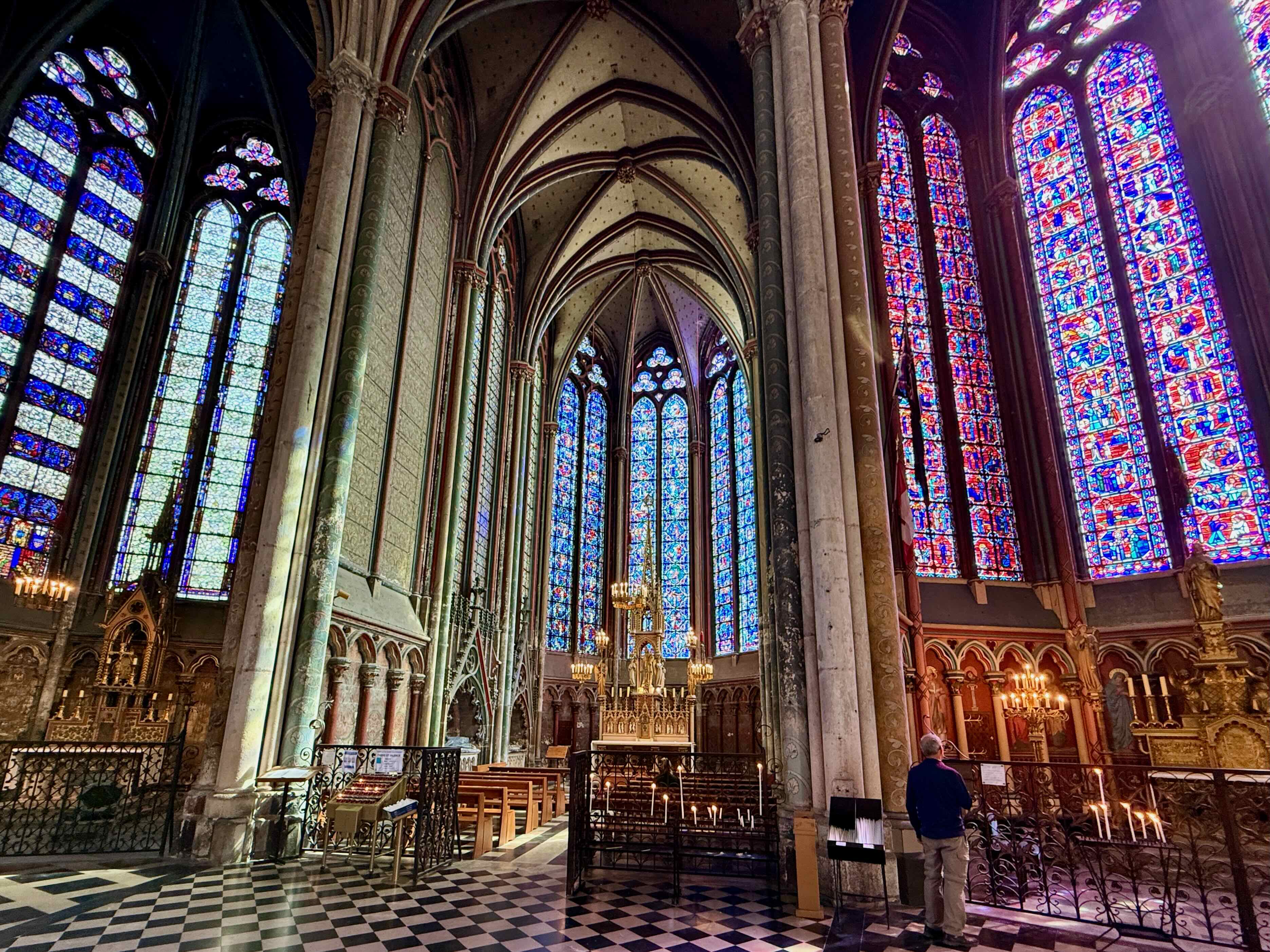
Do you see the people? They give a sense of scale.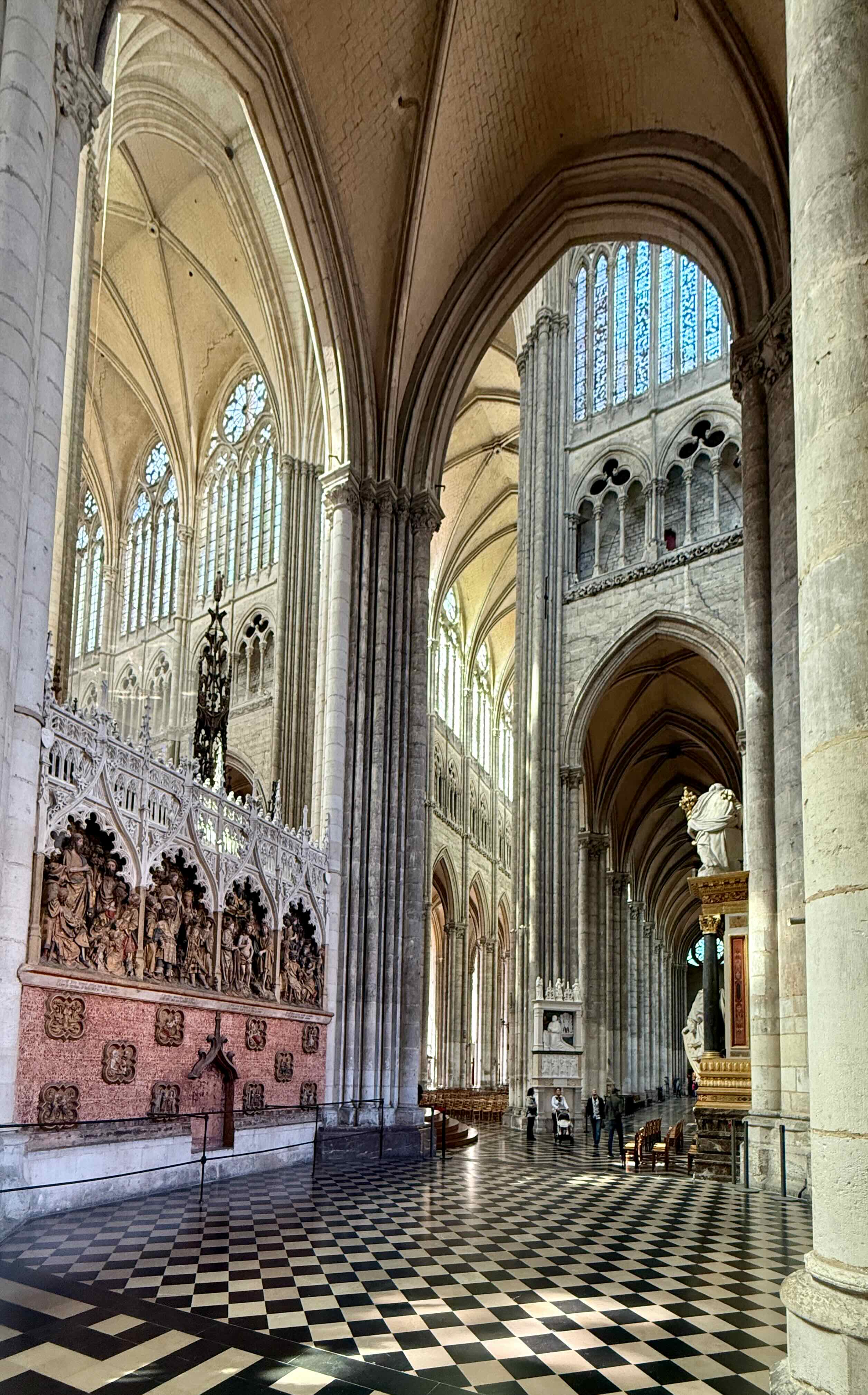
Looking towards the richly decorated altar…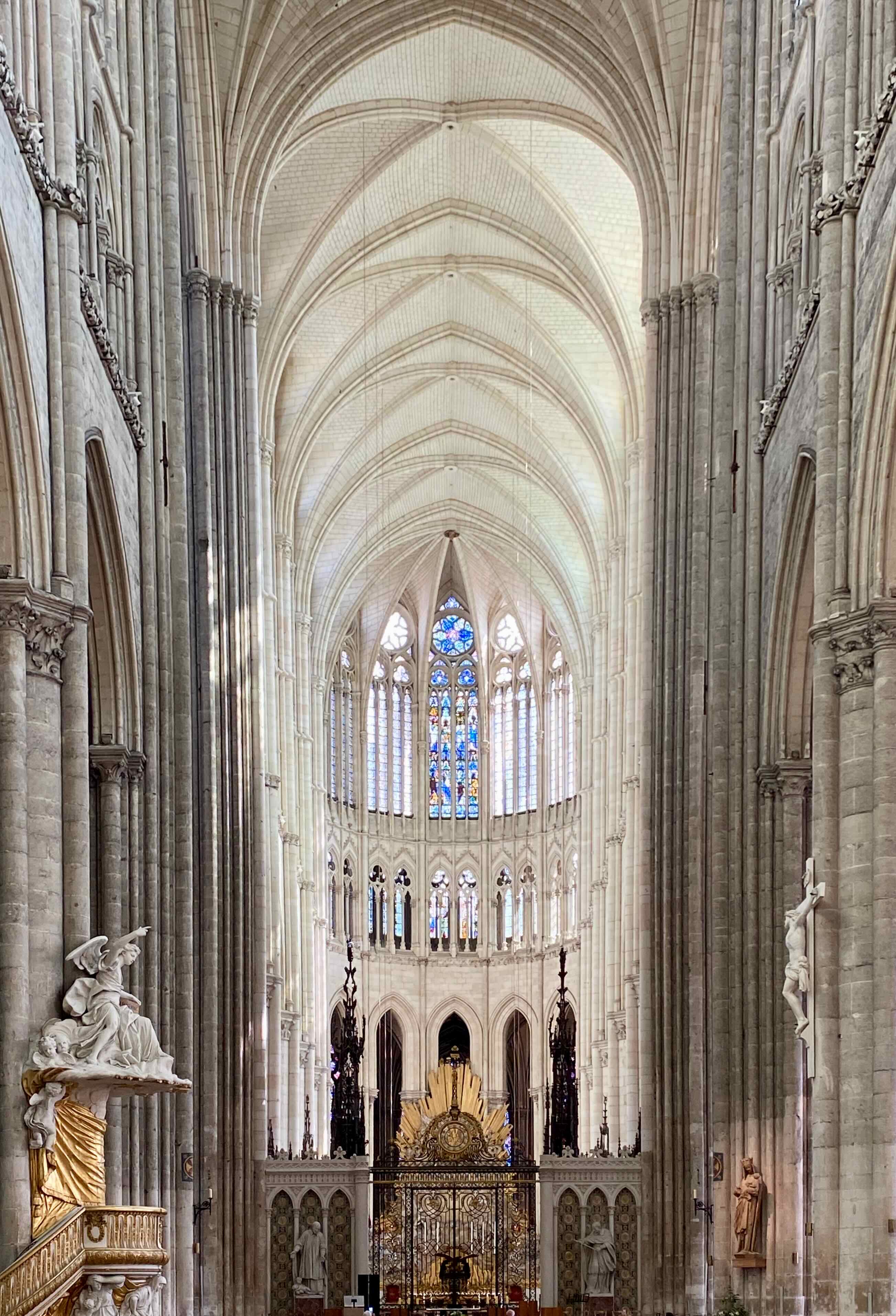
and in the opposite direction, the organ that was built in 1549…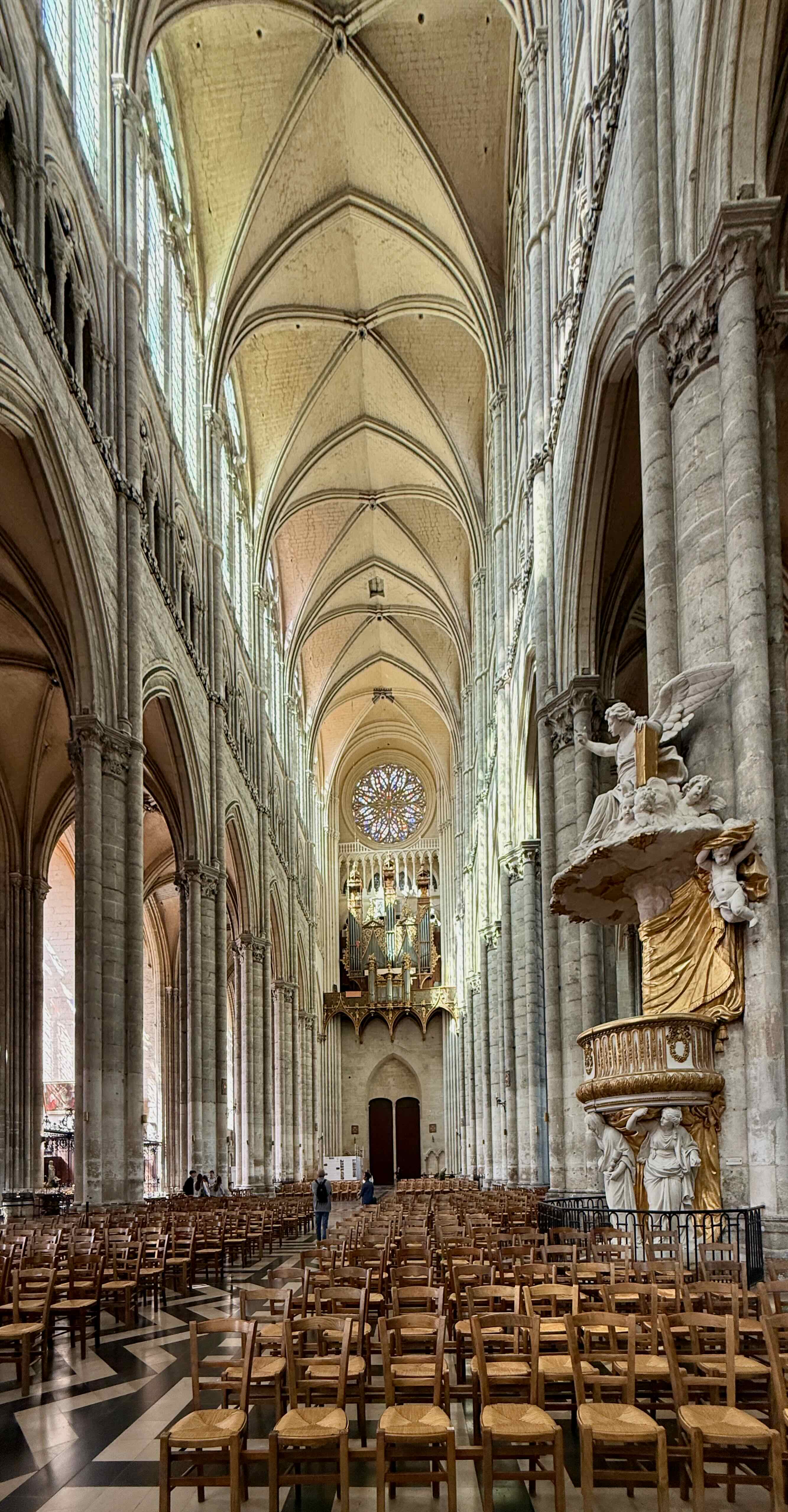
which has just been cleaned and restored.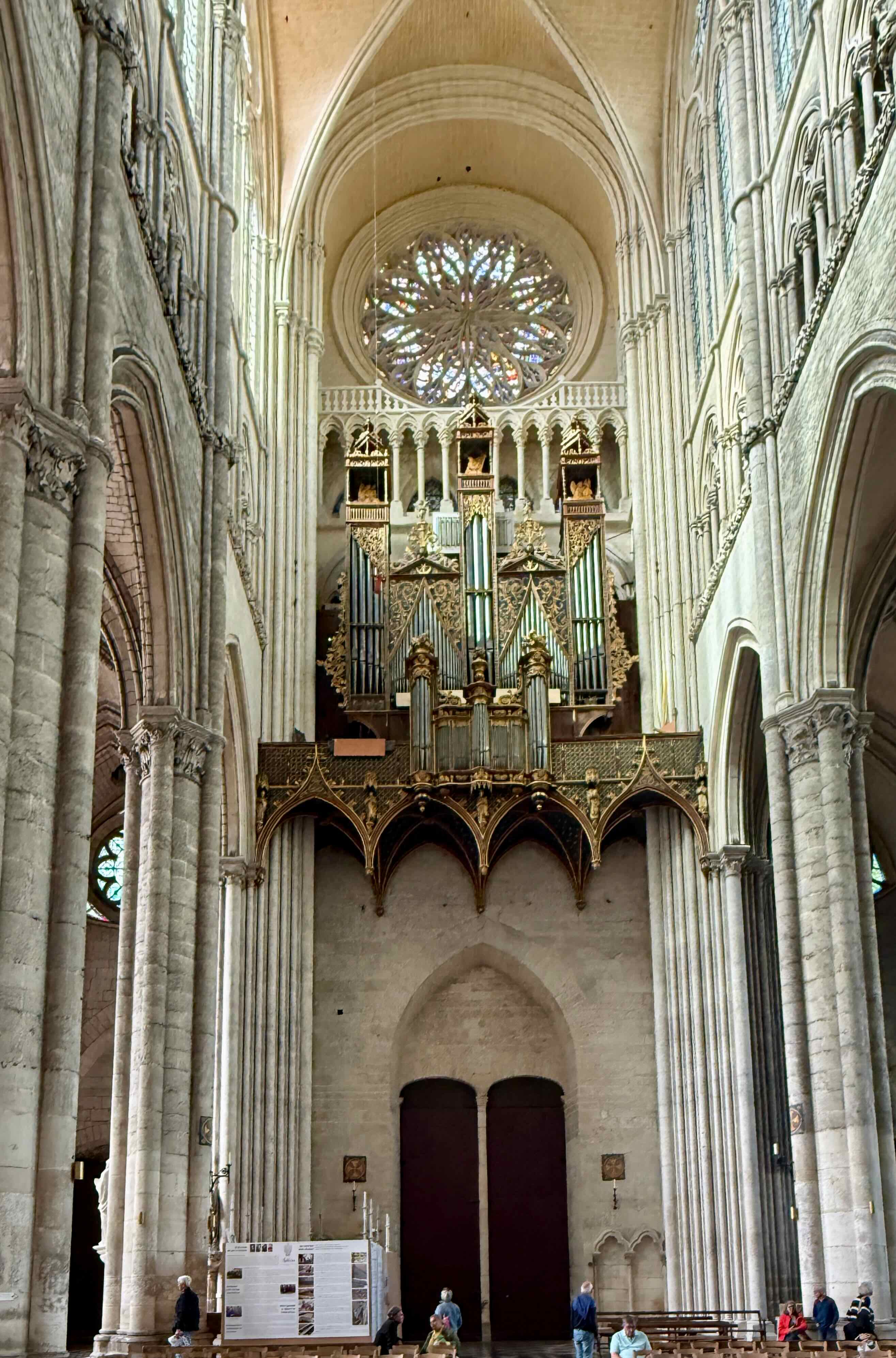
Love this statue of Joan of Arc.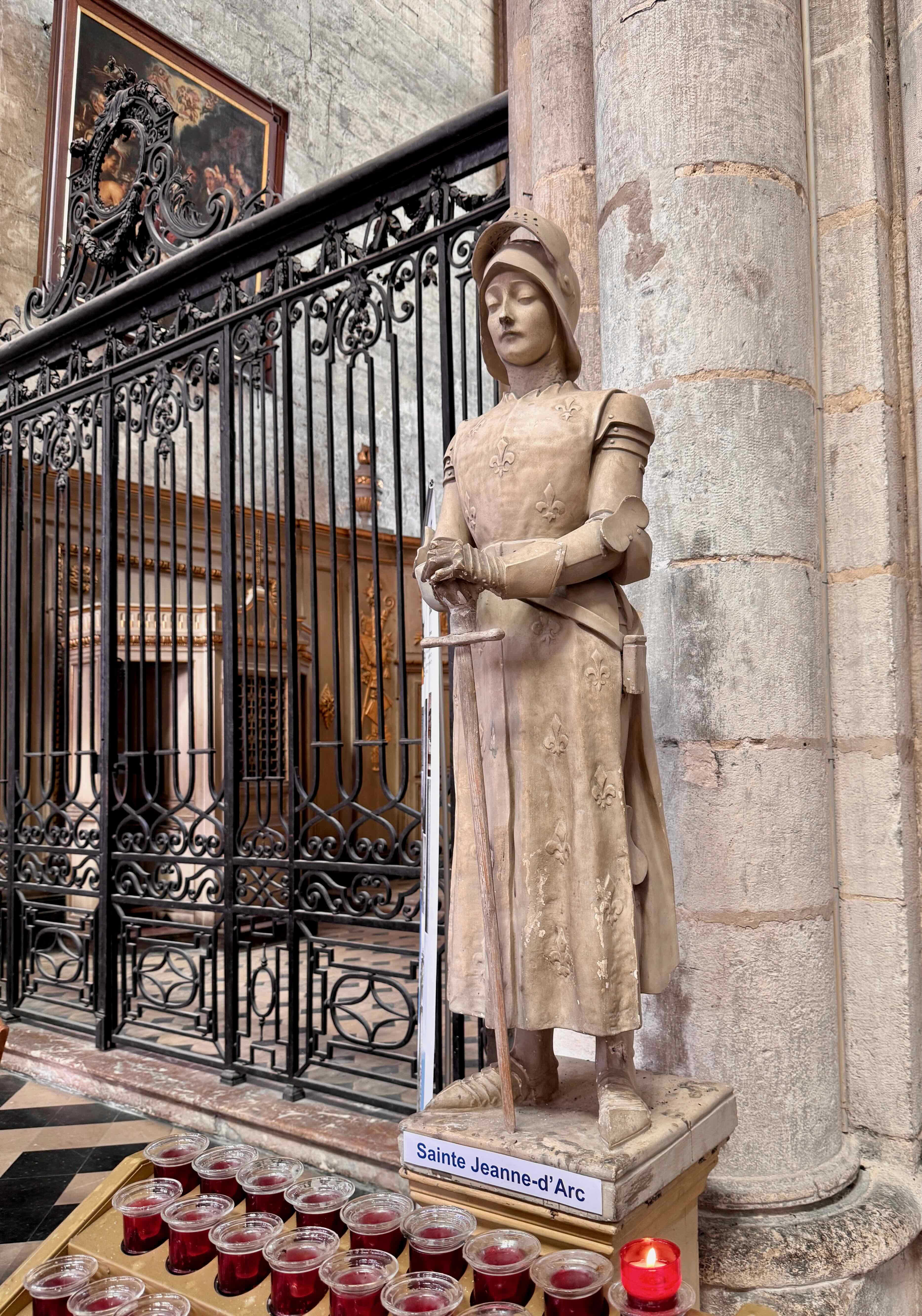
There is also a labyrinth from 1288.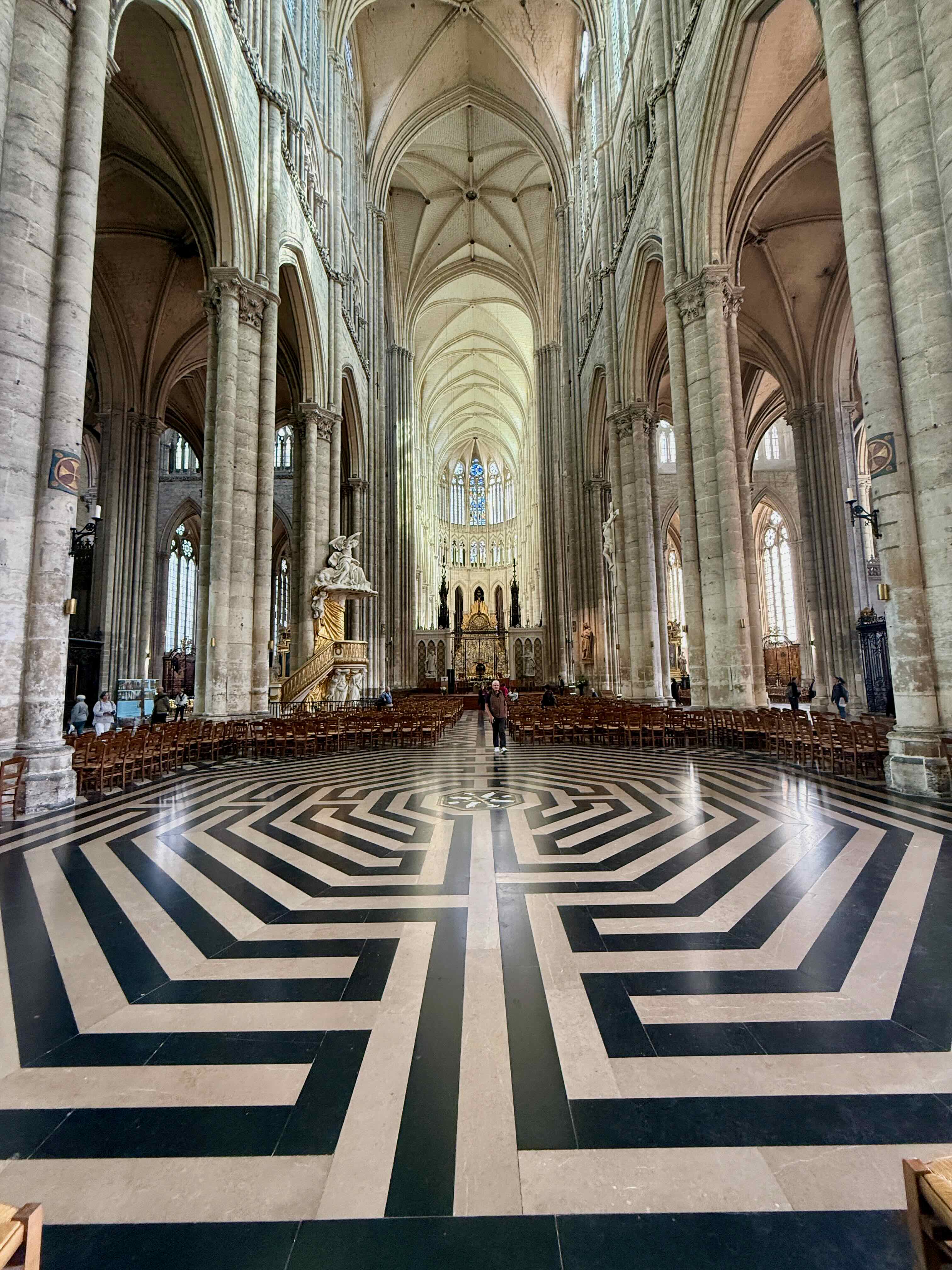 When we leave the cathedral, I look up and there are the gargoyles! I am very fond of gargoyles.
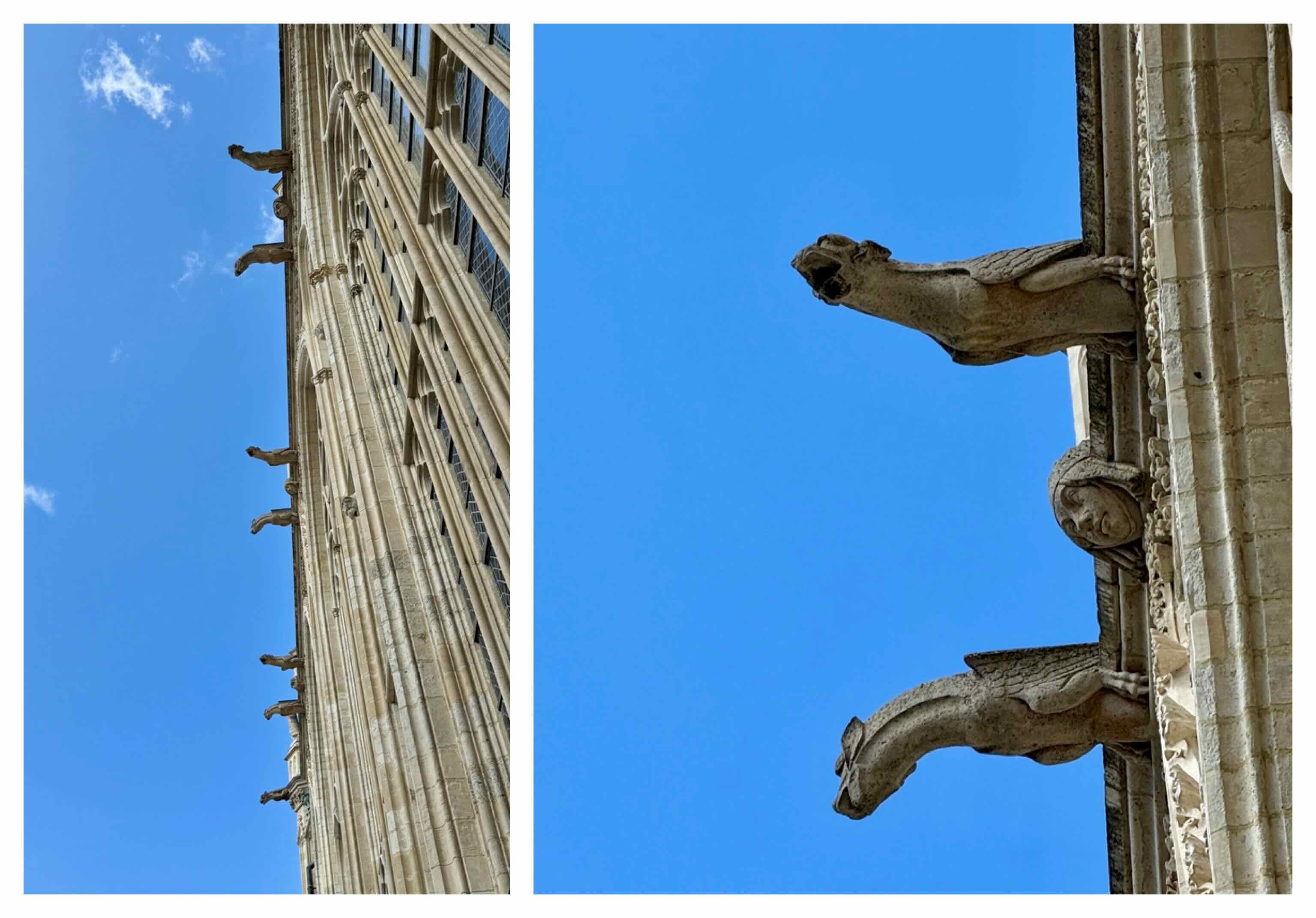 We have time to walk back to the car for tea and cookies and a little down time before we get ready for our boat ride at the Hortillonages.
Shaped by generations of market gardeners known as ‘hortillons’, this site is the only one of its kind in France. The Hortillonnages are made up of a multitude of small cultivated islets surrounded by water, accessible only by boat on a network of waterways
We spend a relaxing 45 minutes travelling these waterways. We see market gardens, private gardens, cottages and some islands that look very wild and unkept.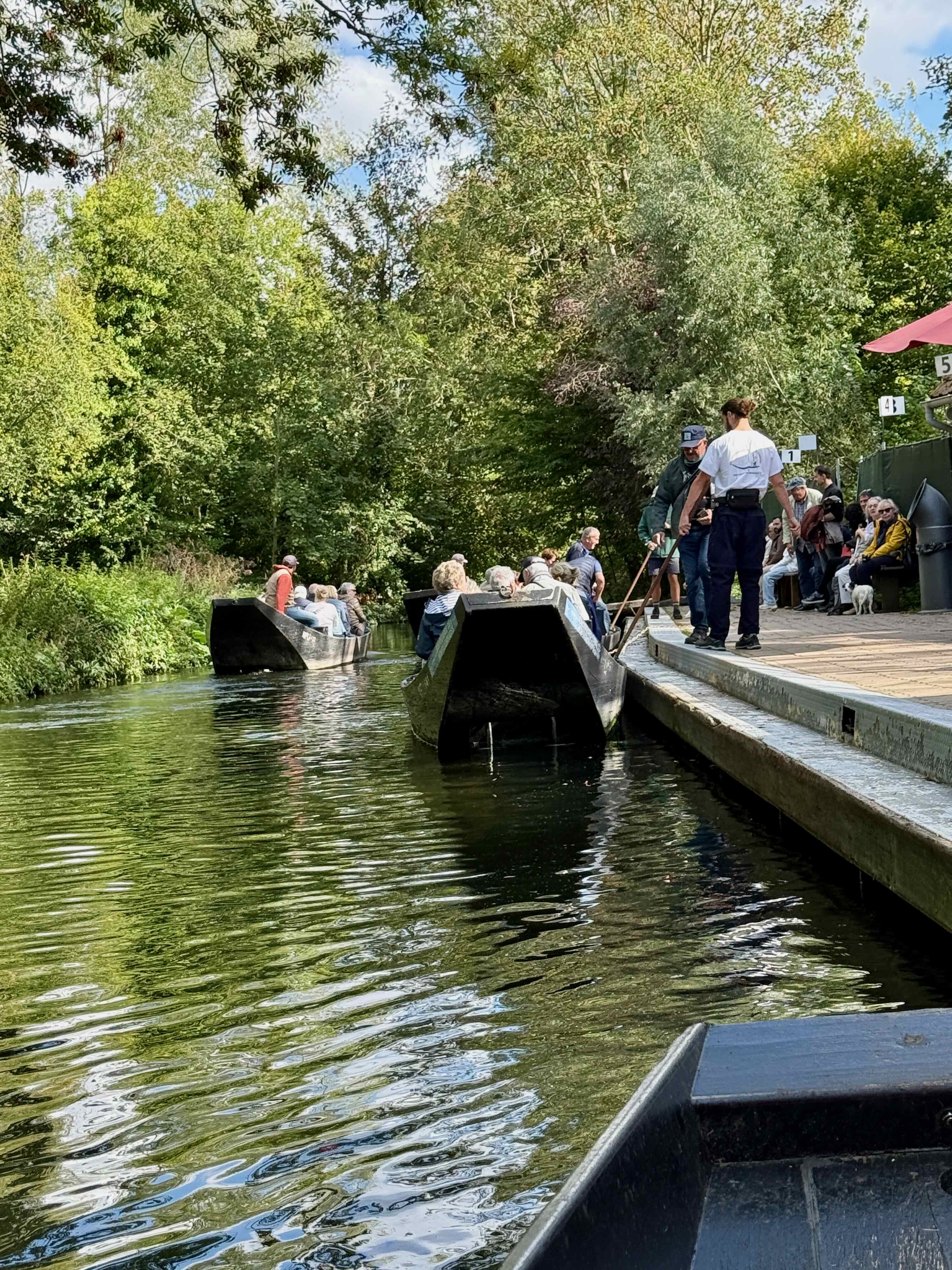
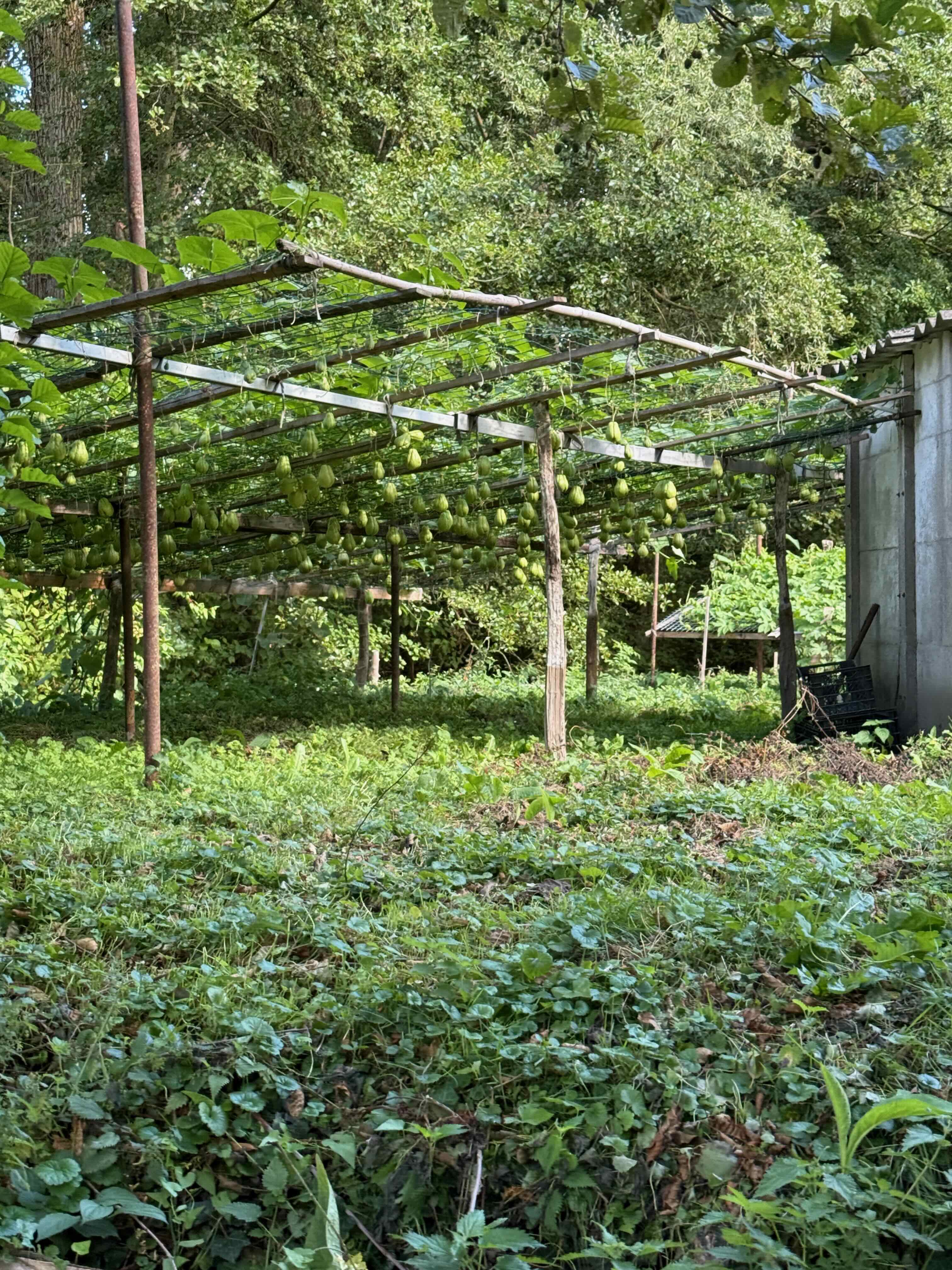
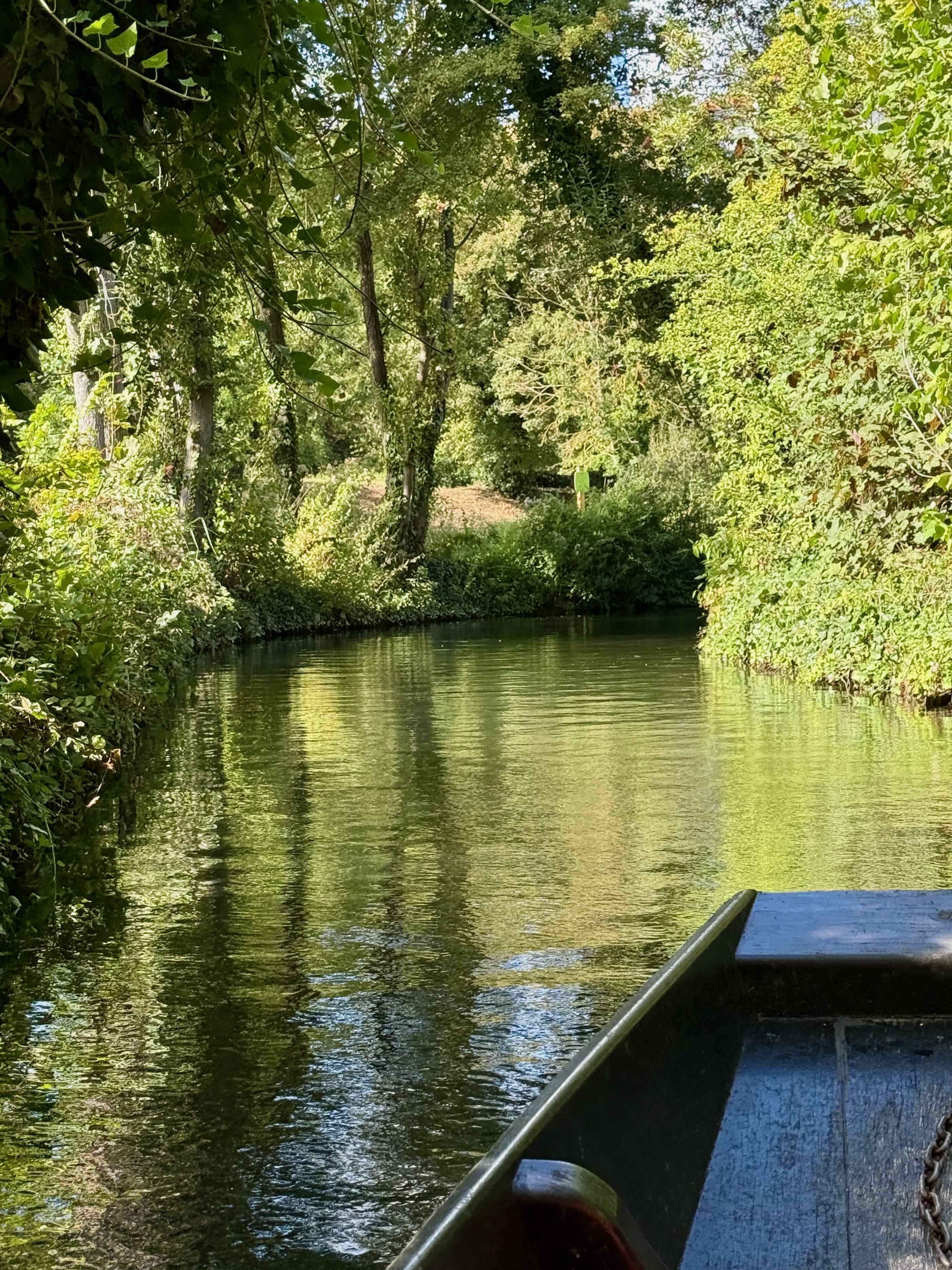
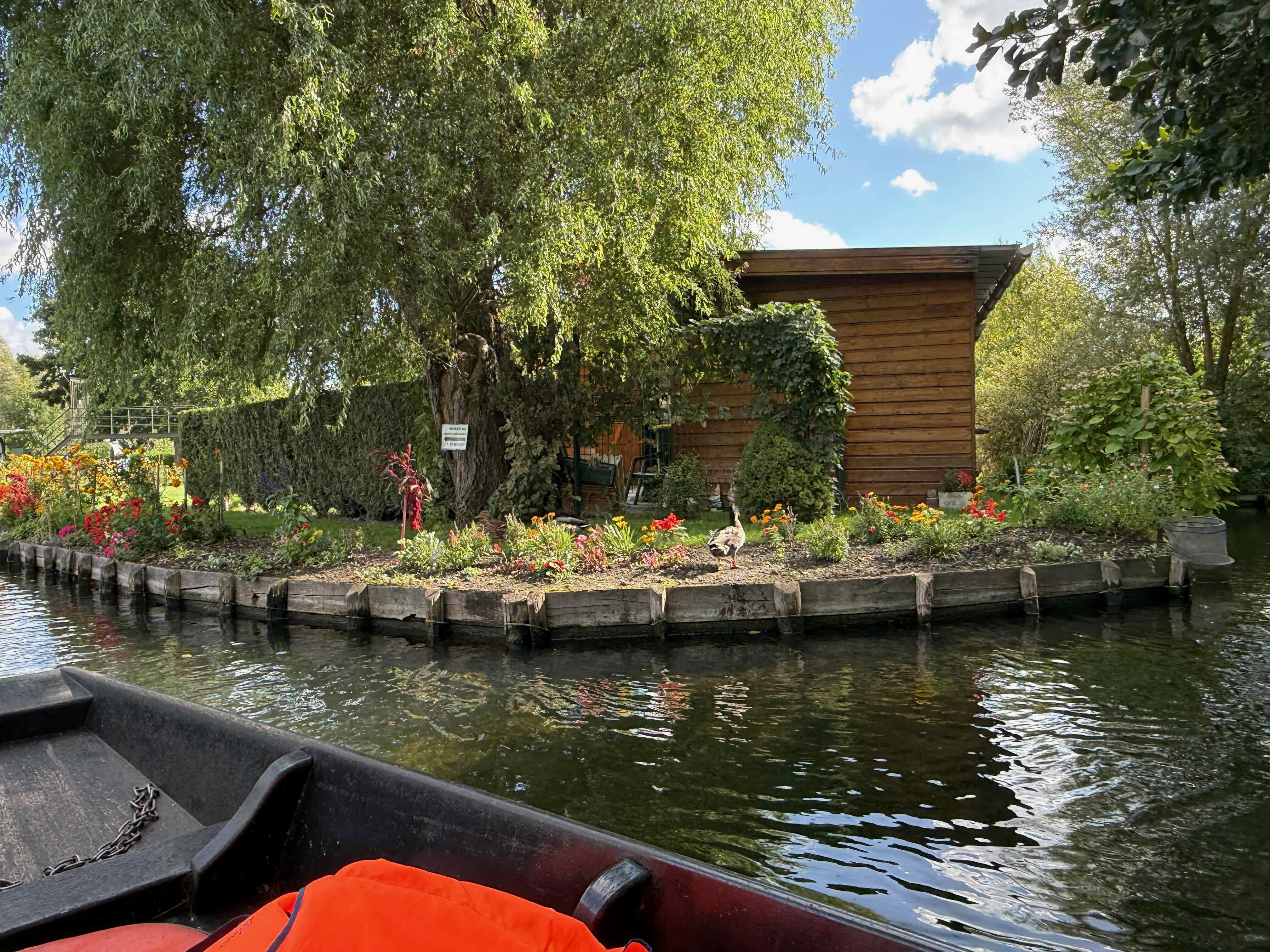
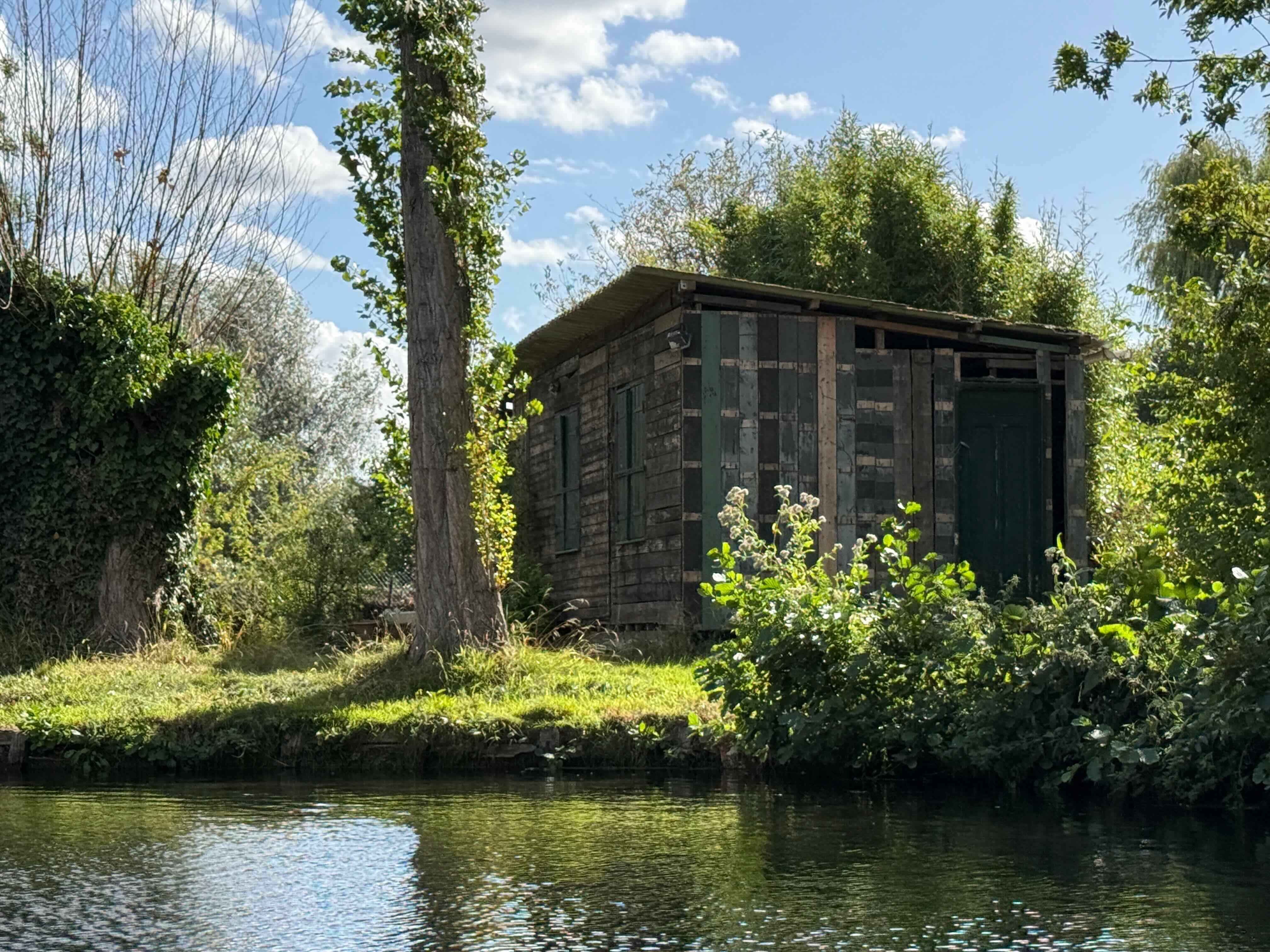
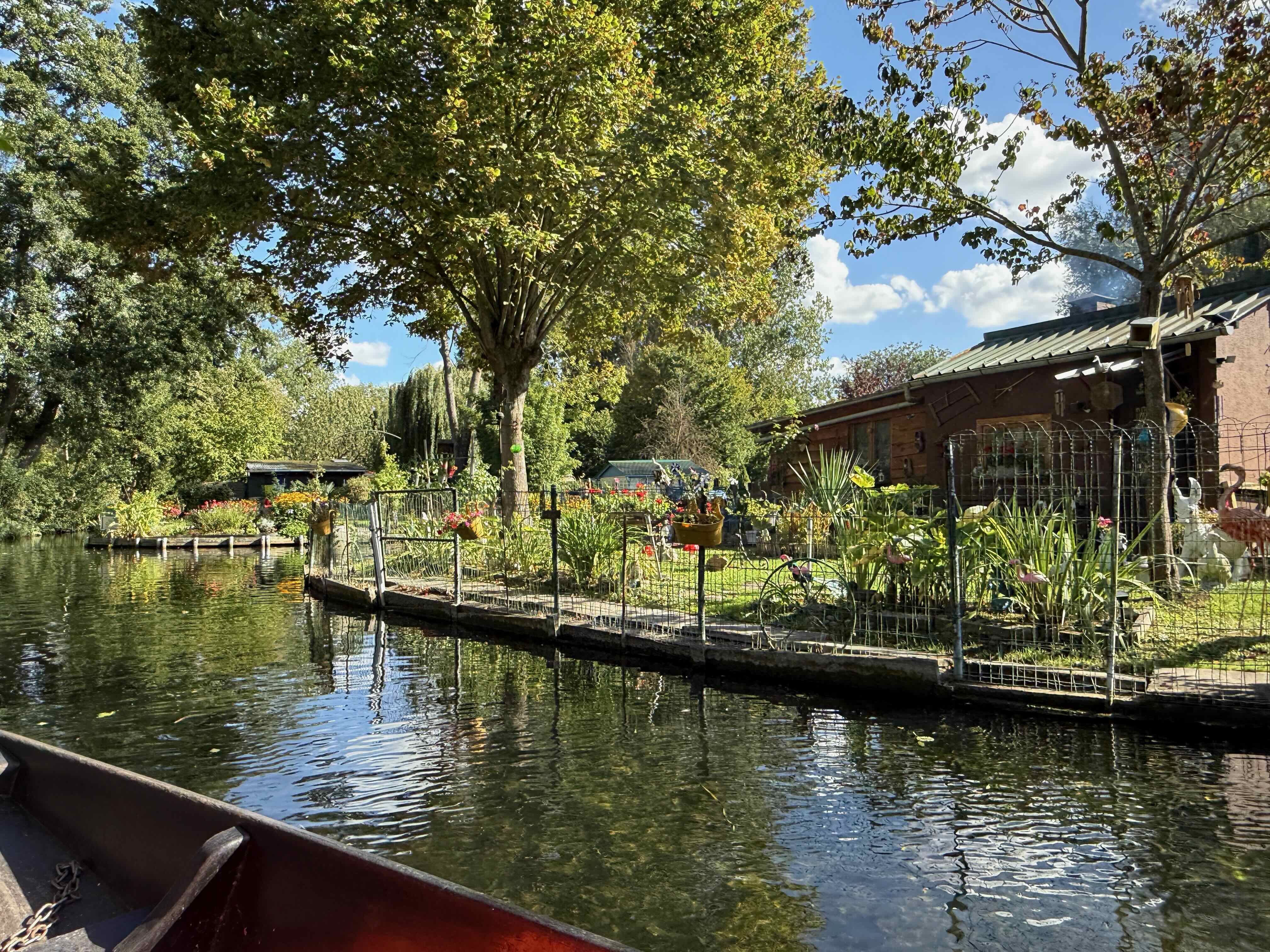
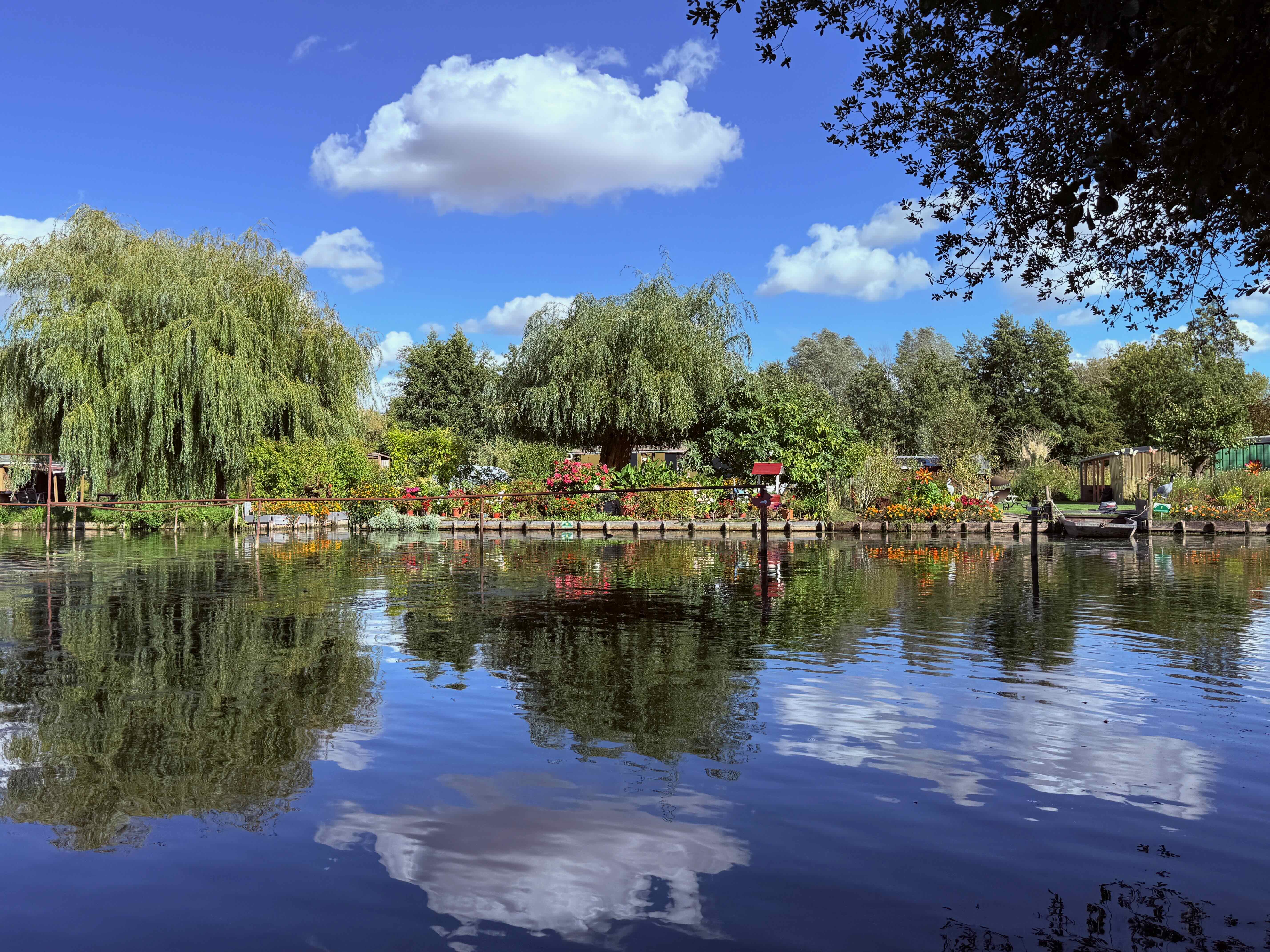
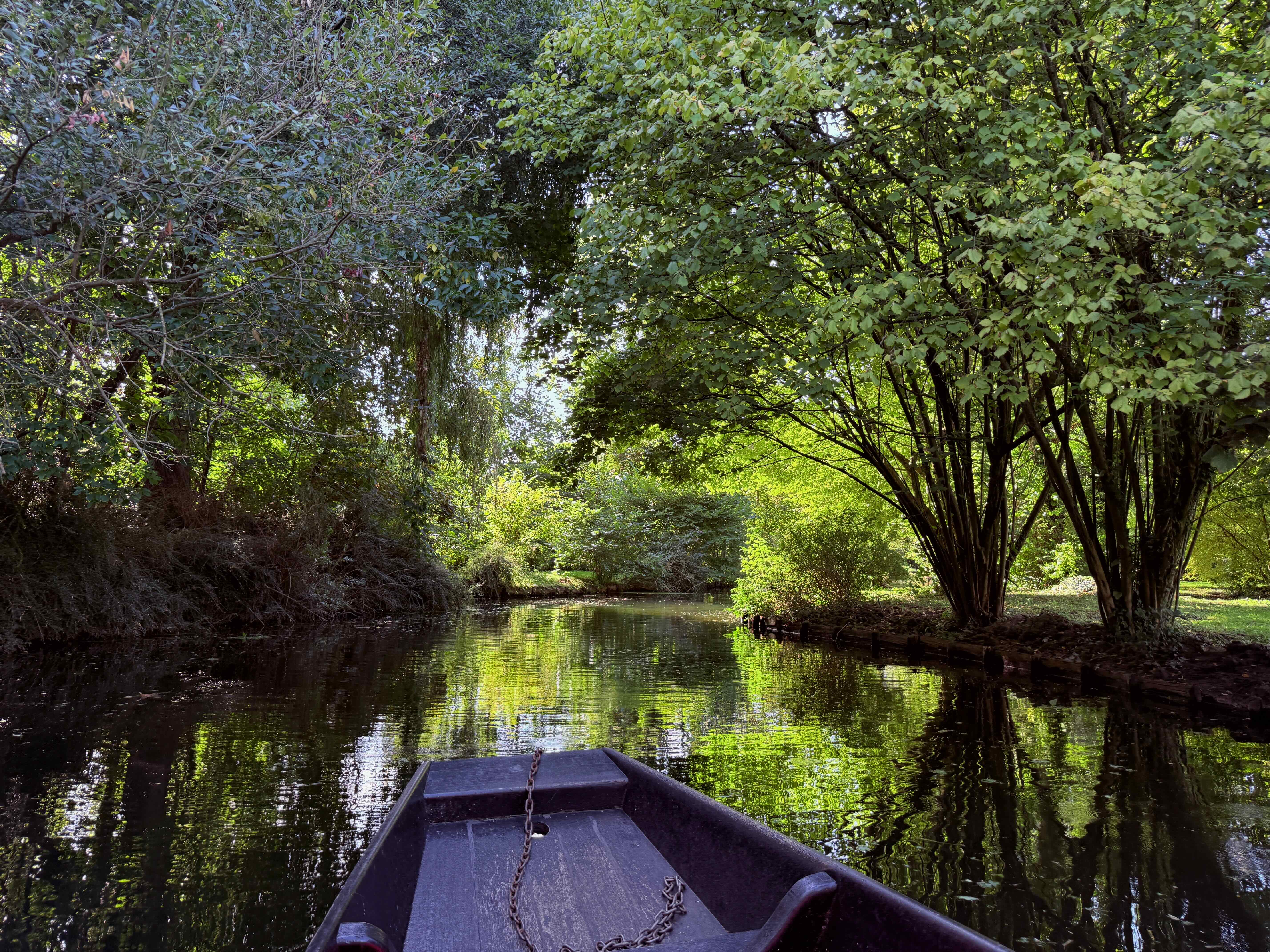
The Hortillonnages have been here since ancient times. They are located on the naturally marshy terrain of the old bed of the River Somme. The site’s name has its origins in the Latin ‘hortus’ meaning garden. Nowadays, the ownership of this 300-hectare site is shared by over 1000 individuals who use it for market gardening or leisure activities such as gardening, fishing, and observing nature.
Walking back to our car we pass yet another war memorial, a reminder of the war and those who fought and died for France. 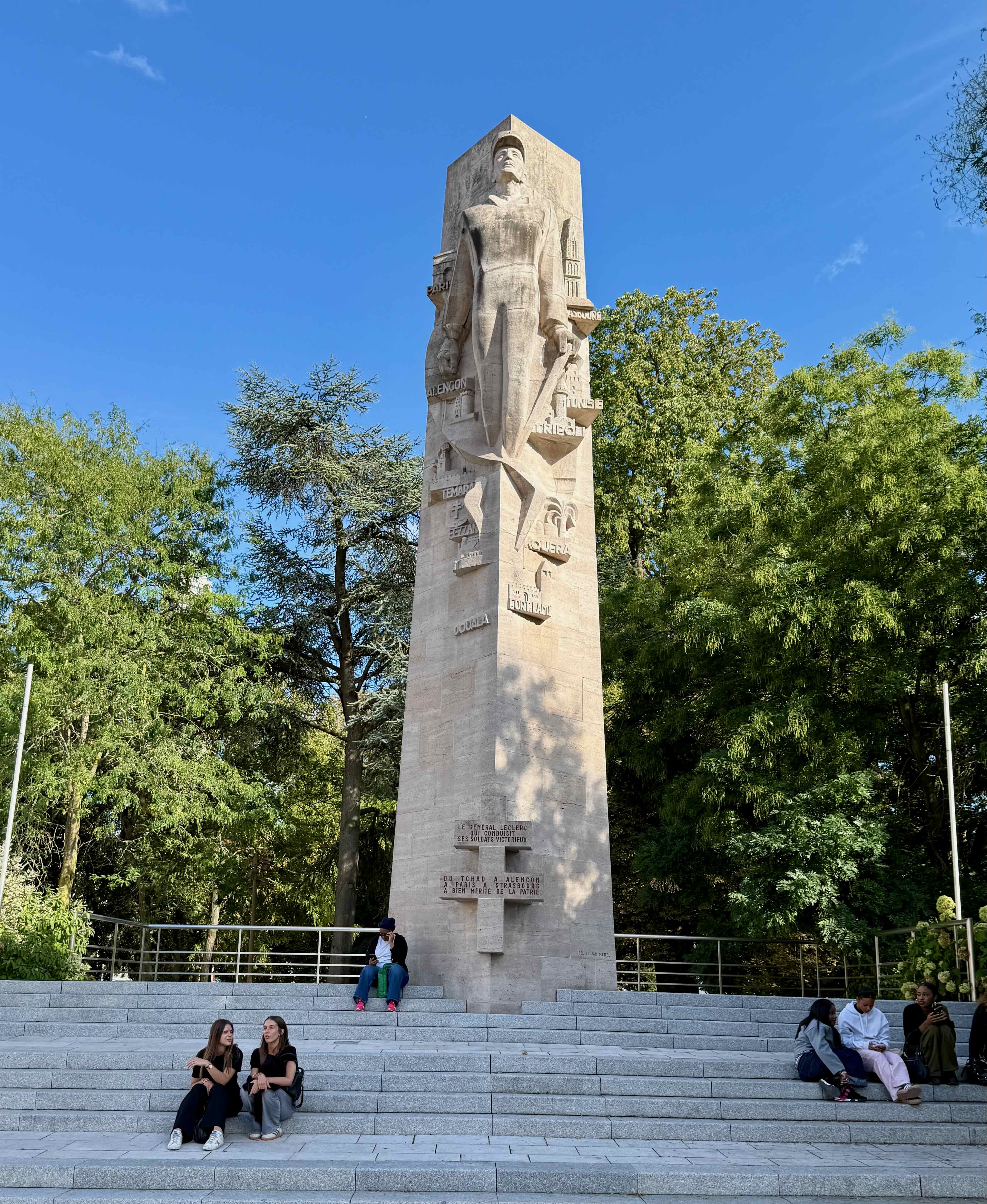

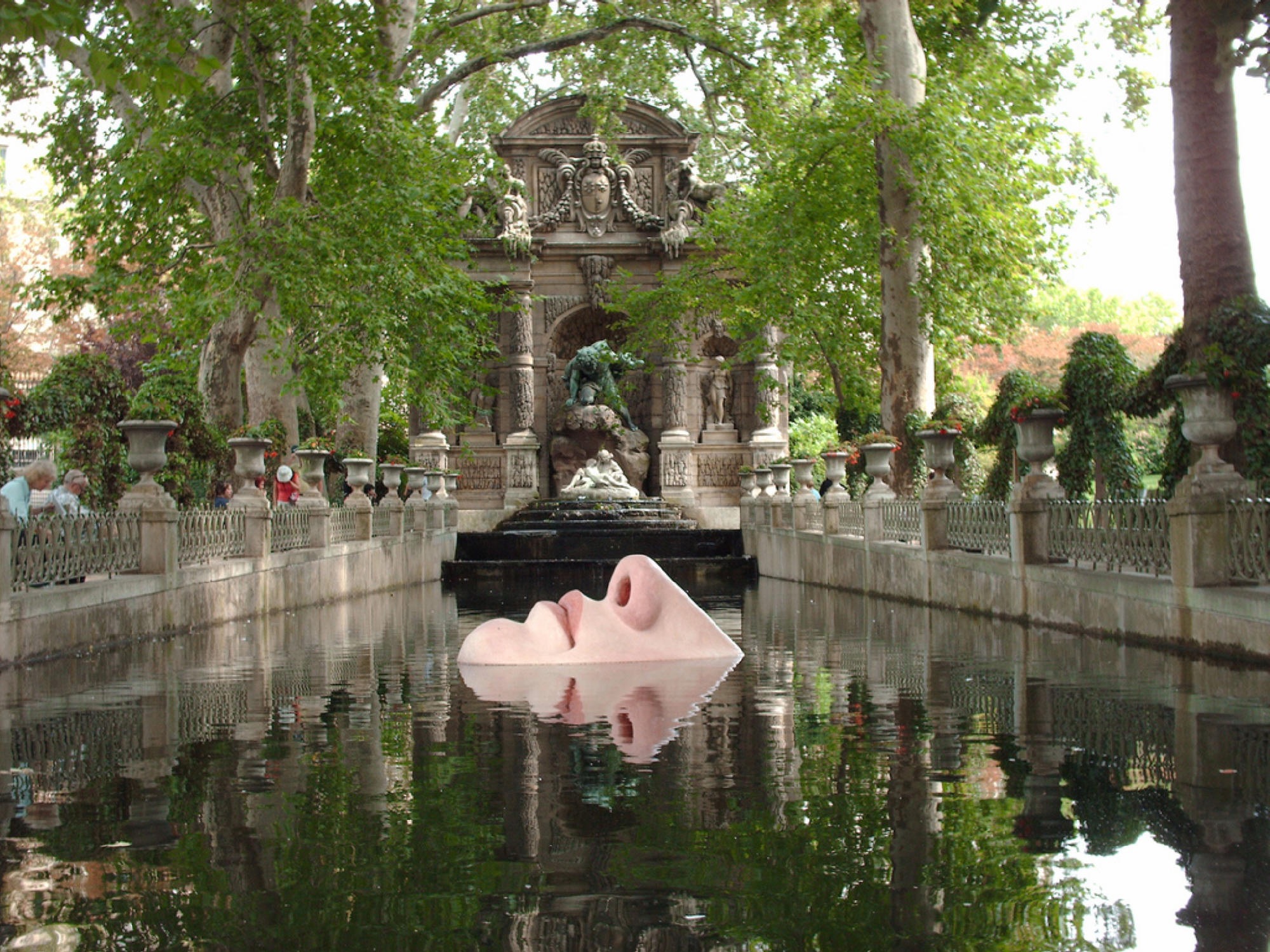
 The Medici Fountain is a monumental fountain in the Jardin de Luxembourg that was built in 1630.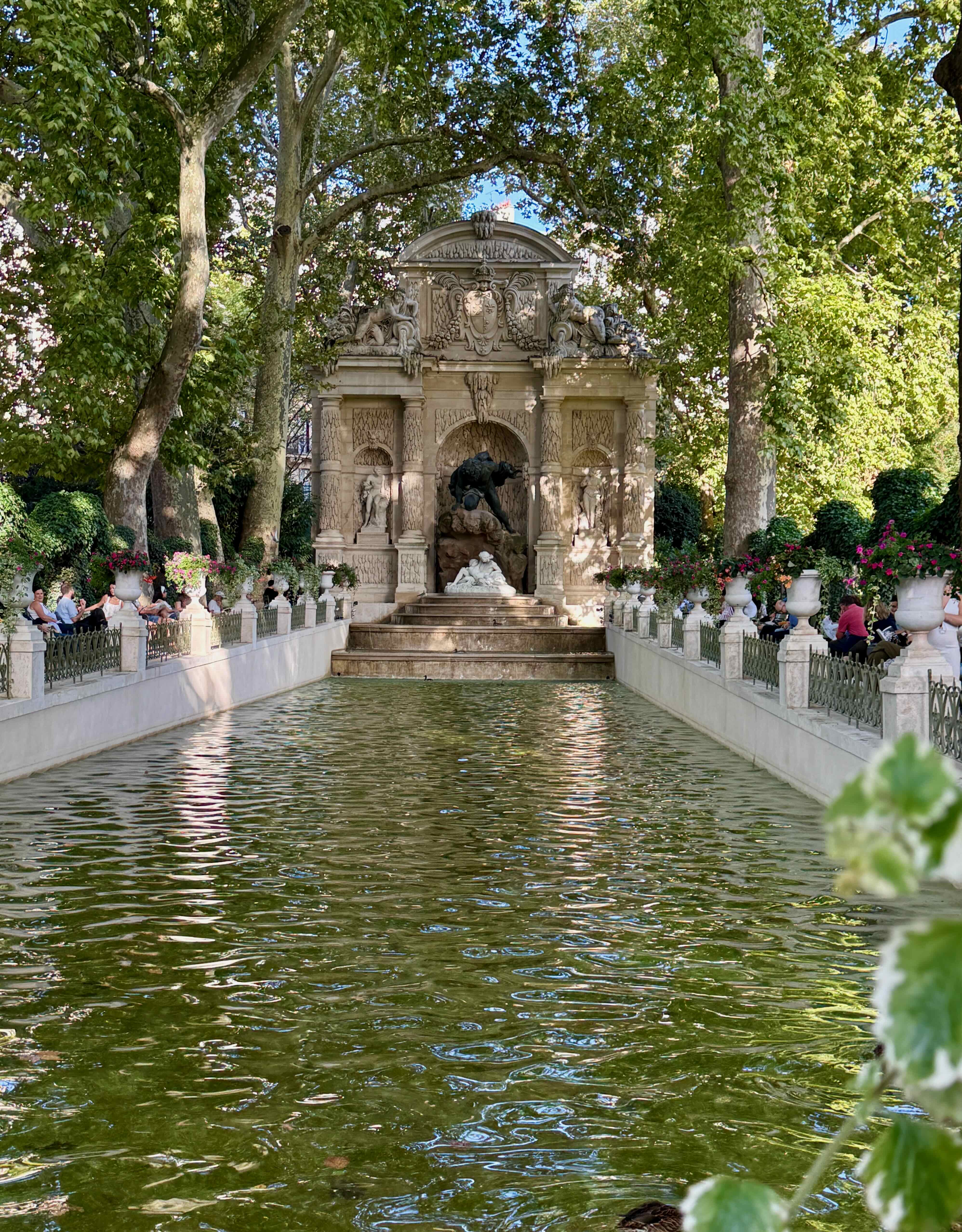
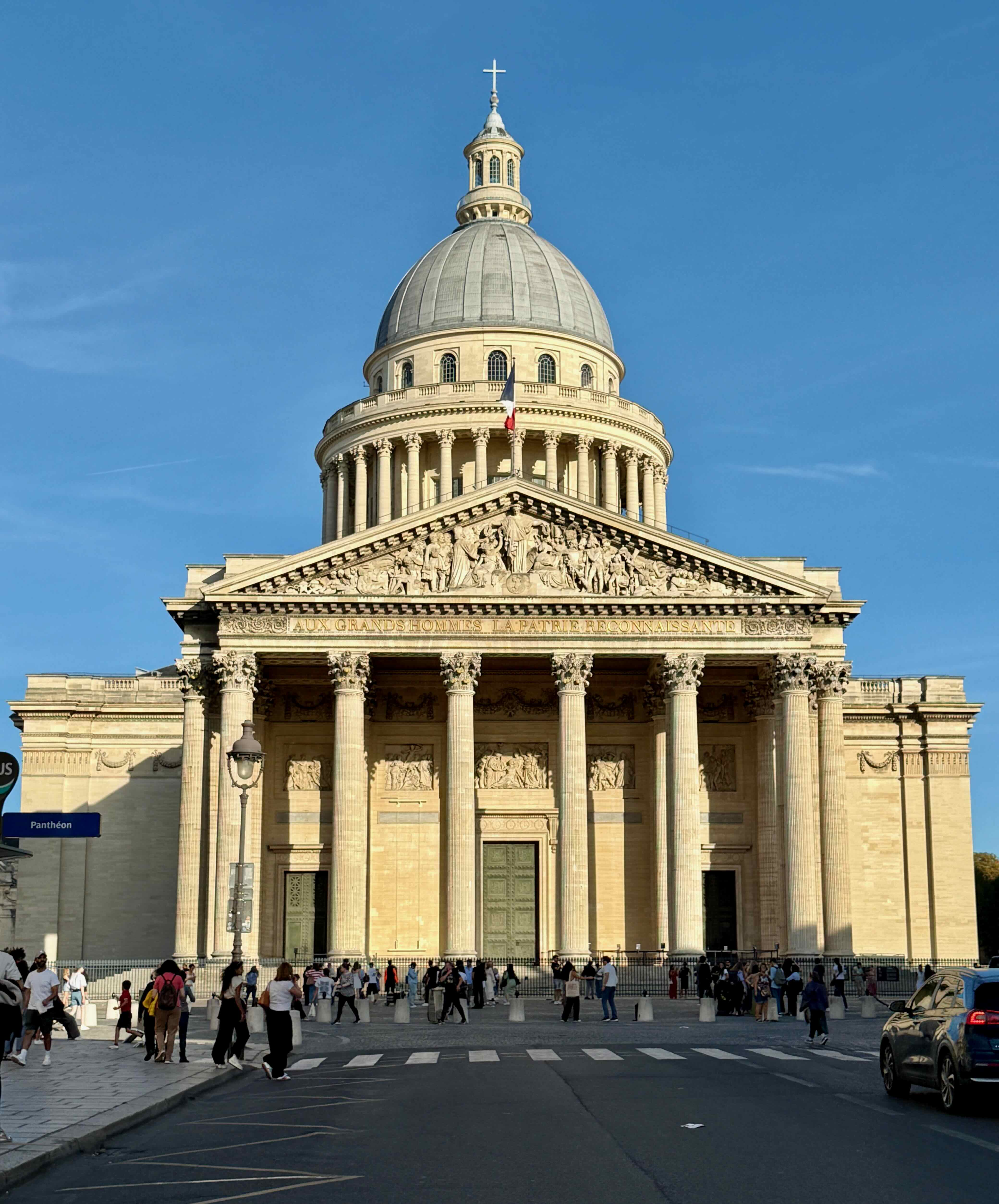 I do not miss eating out in Paris. Sitting check by jowl beside smokers is not my idea of fun. I much prefer the meals we prepare at home in our bnb’s.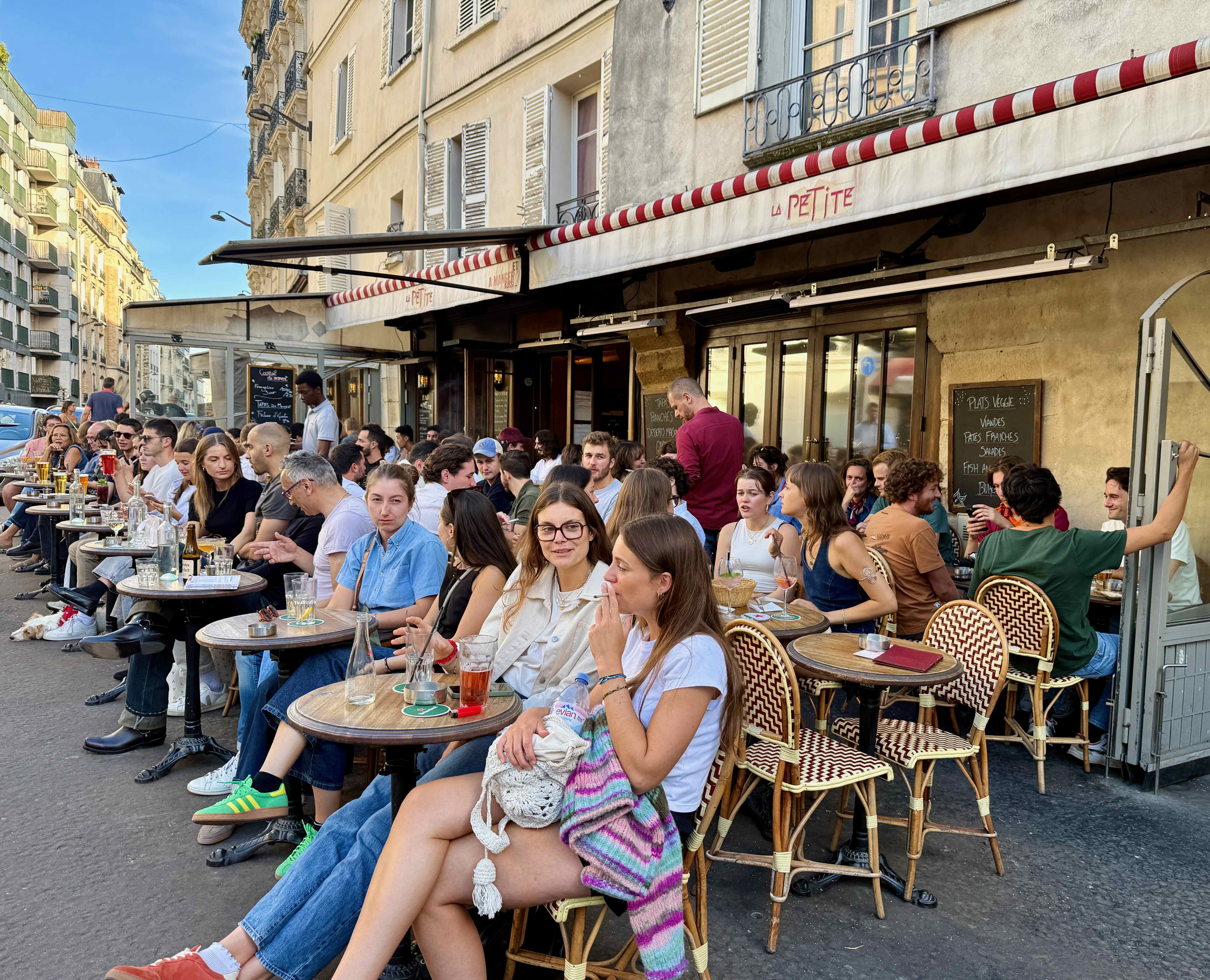
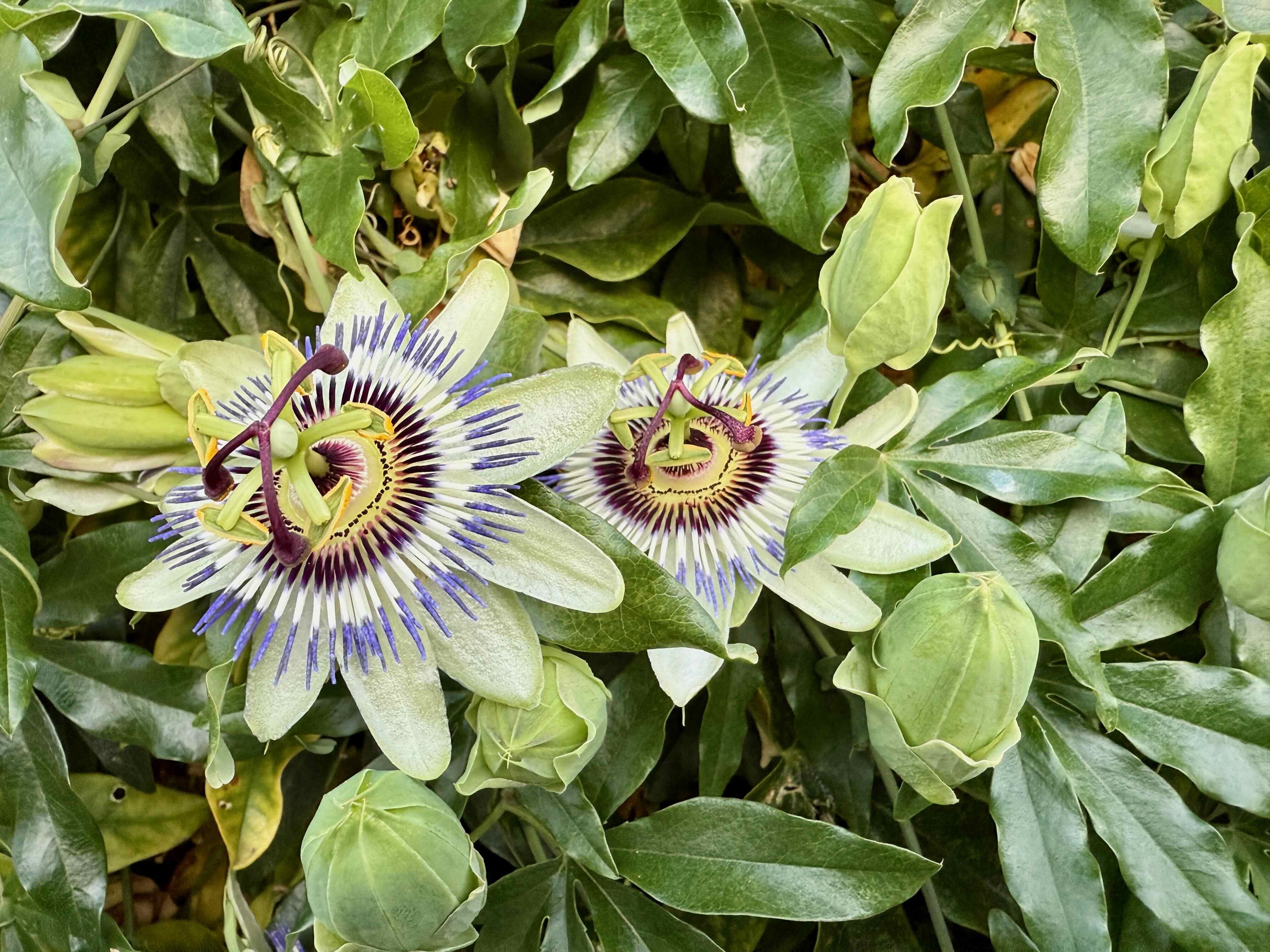
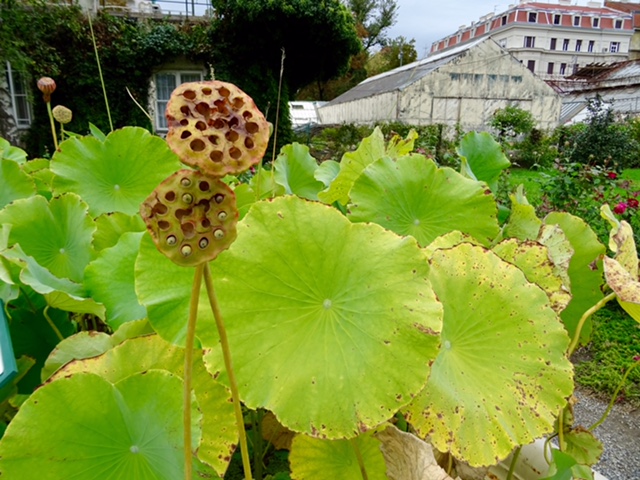
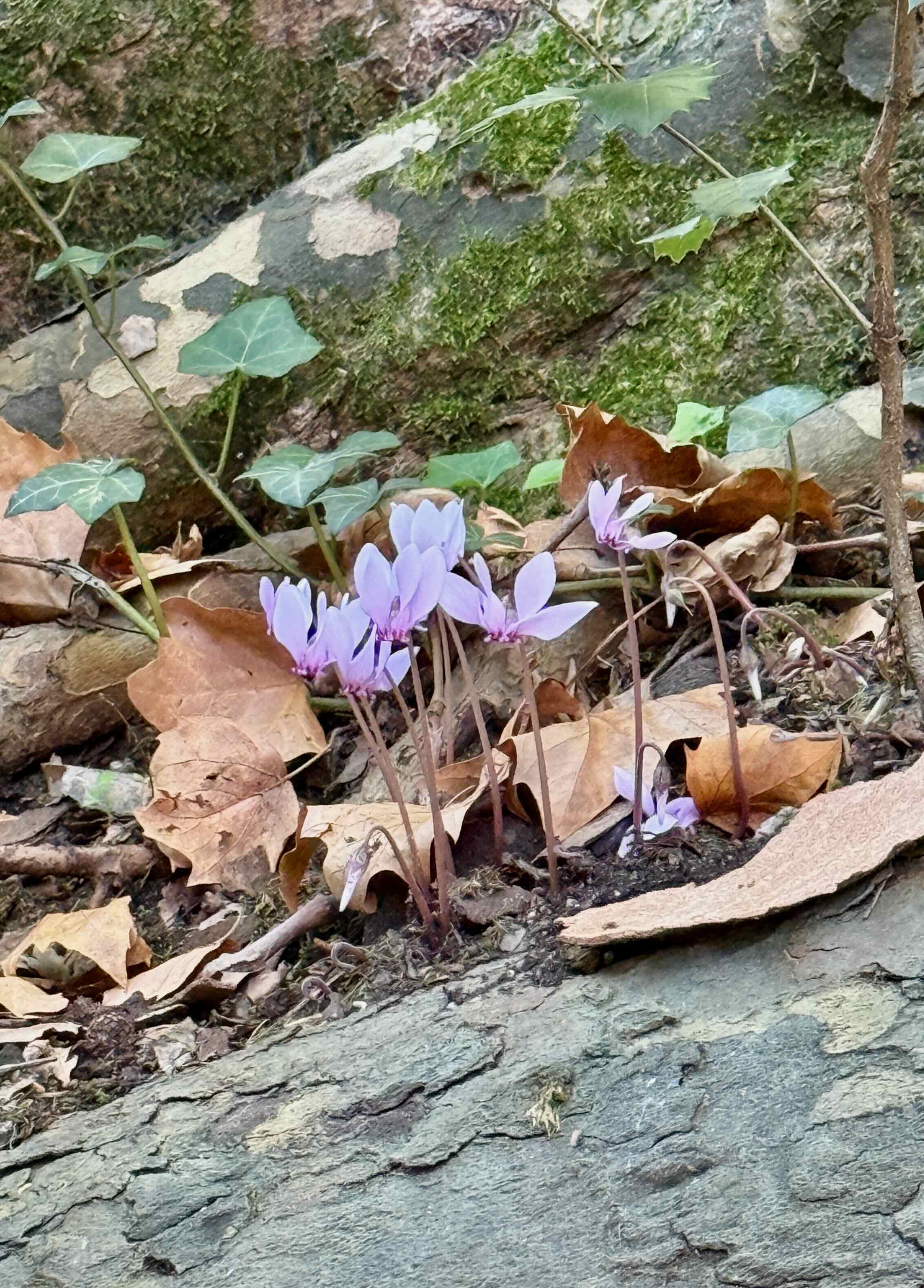 Sue loved this interesting flower and wanted a closer look.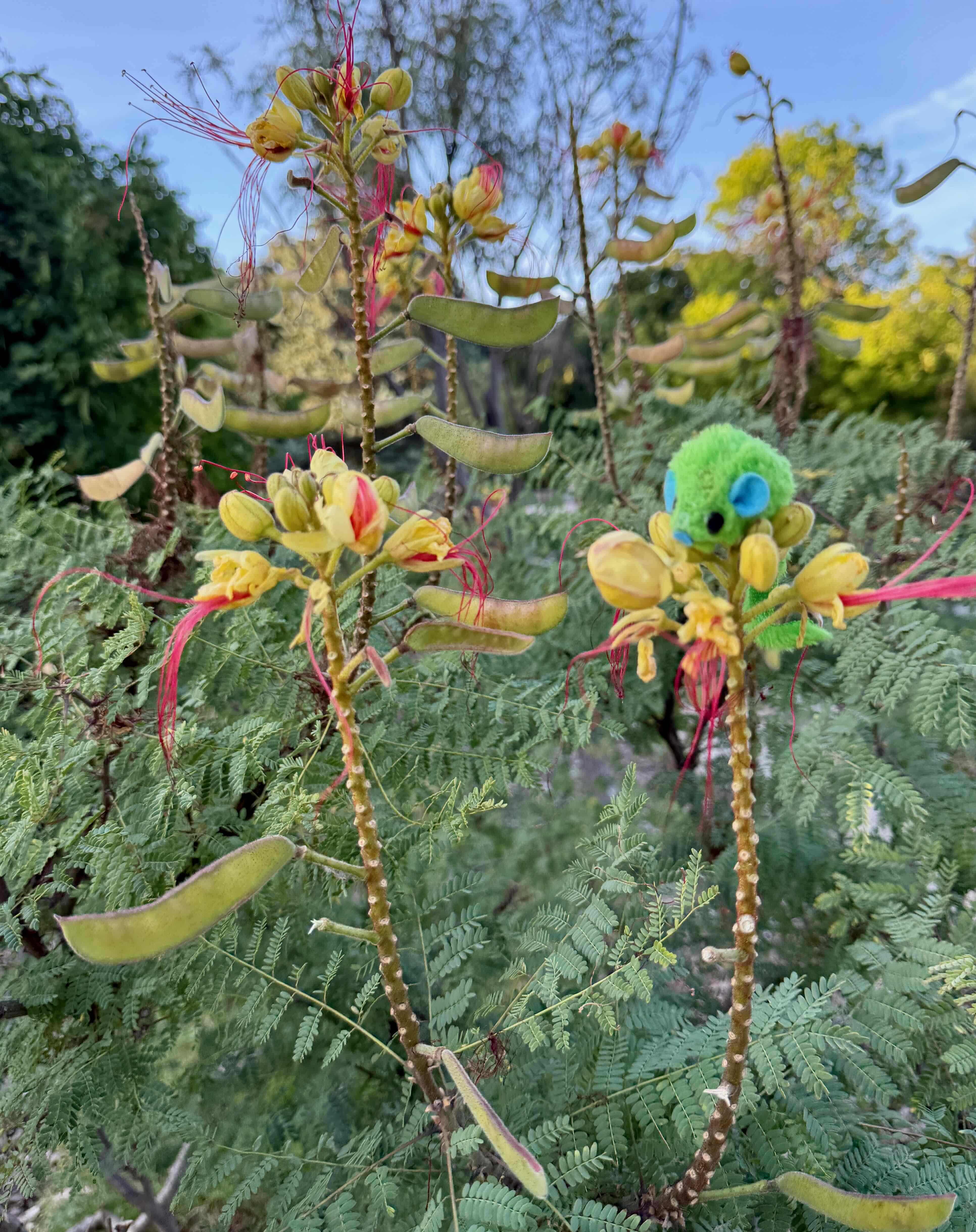
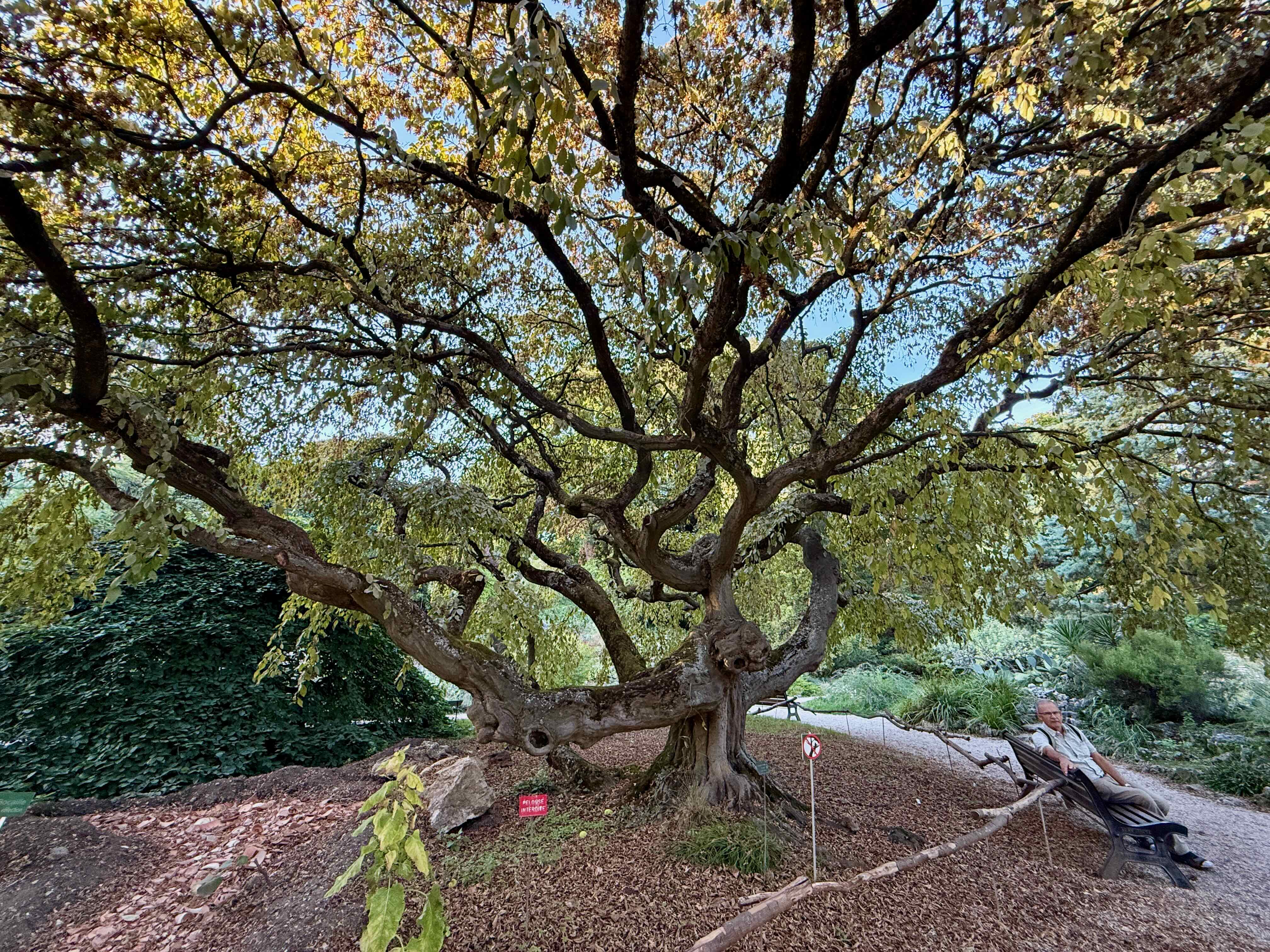
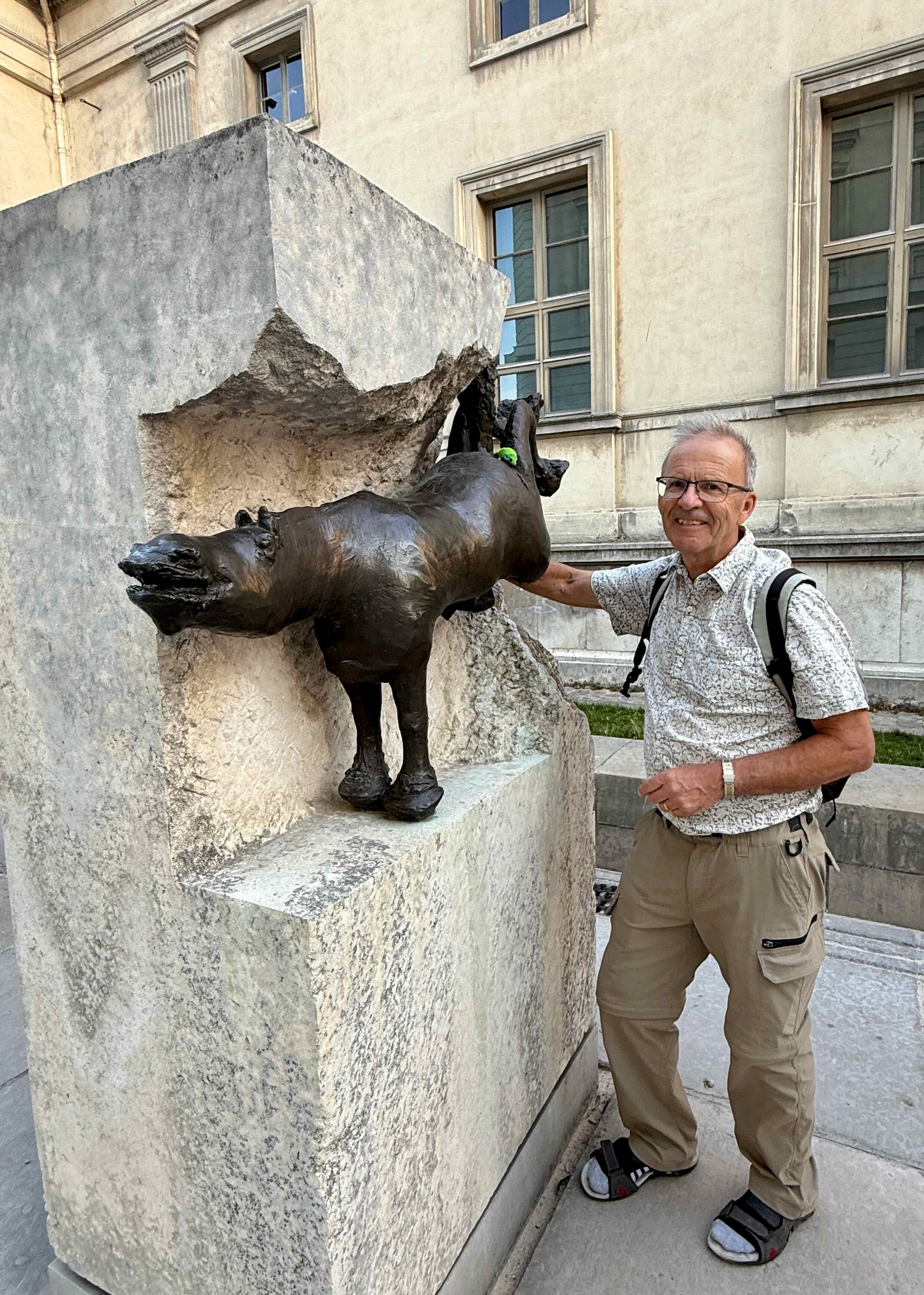
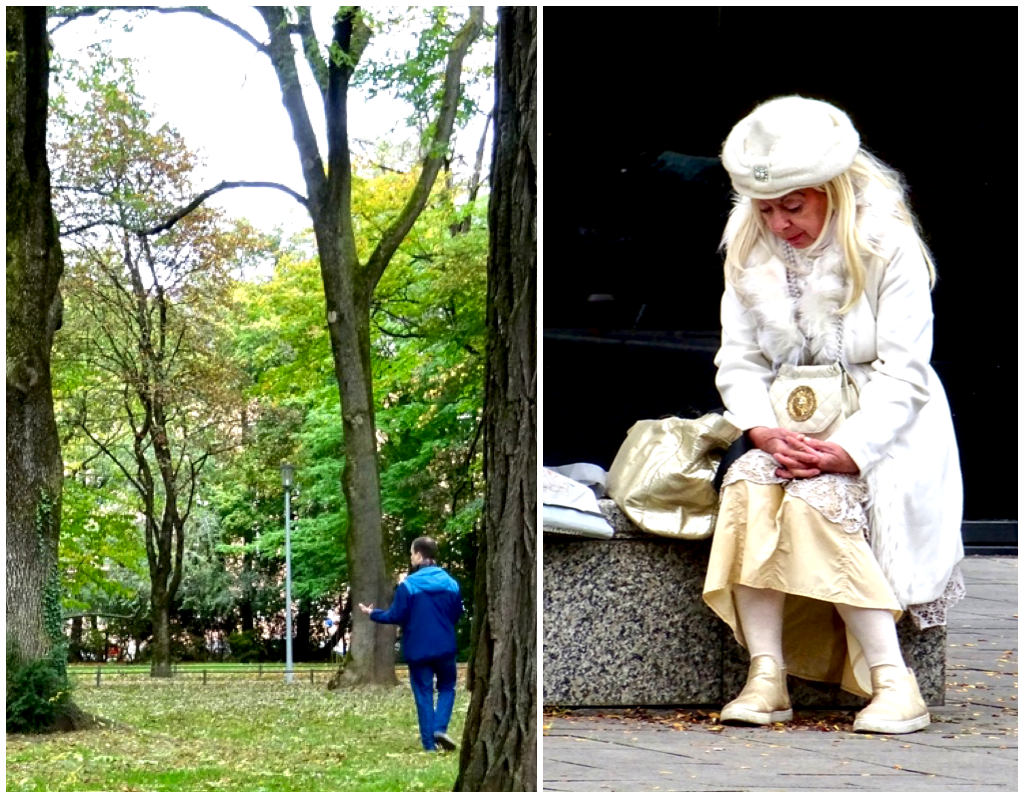
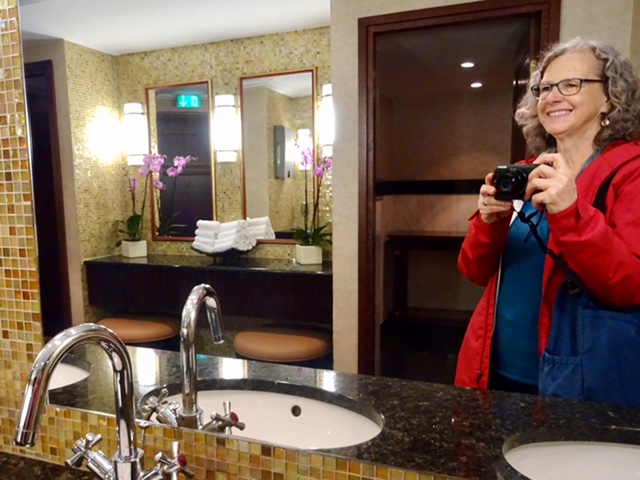
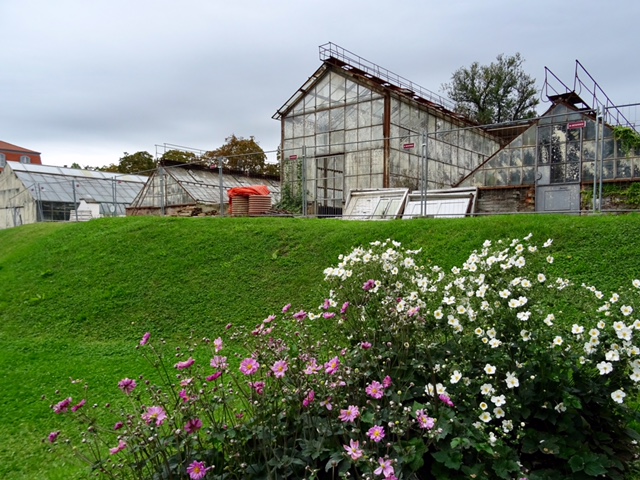
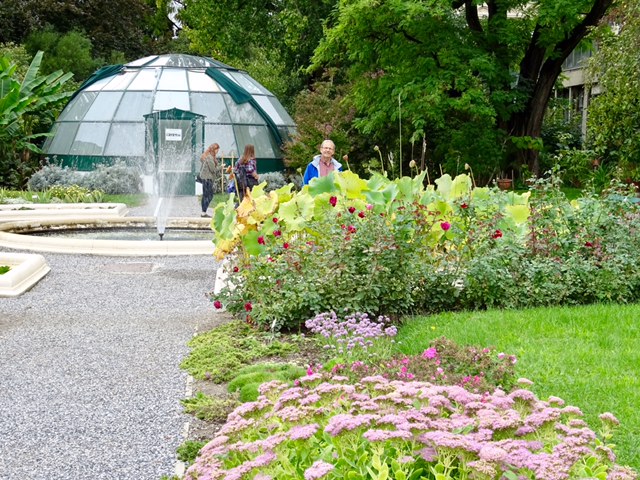
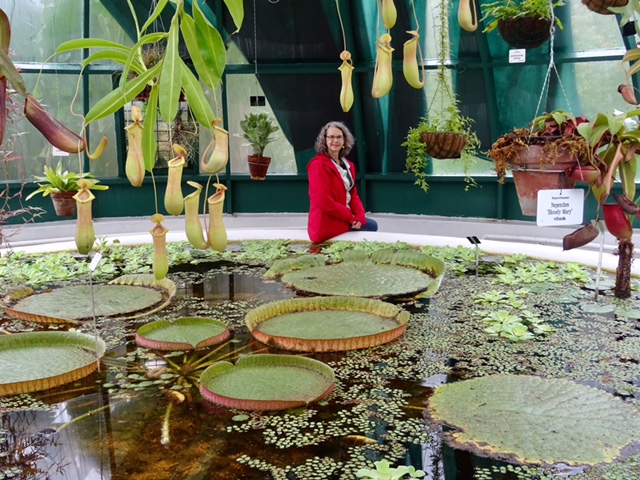
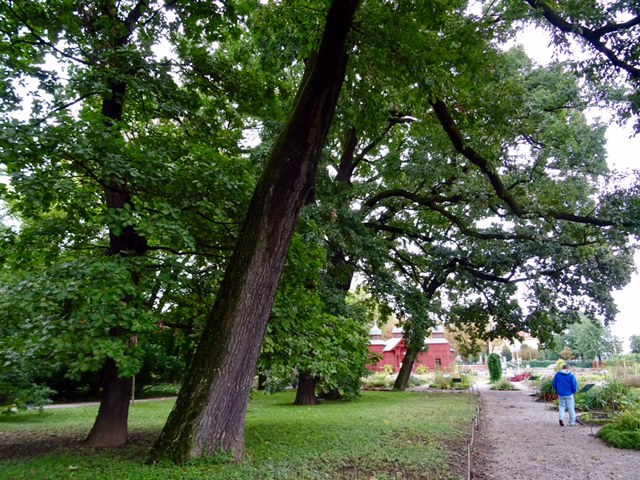
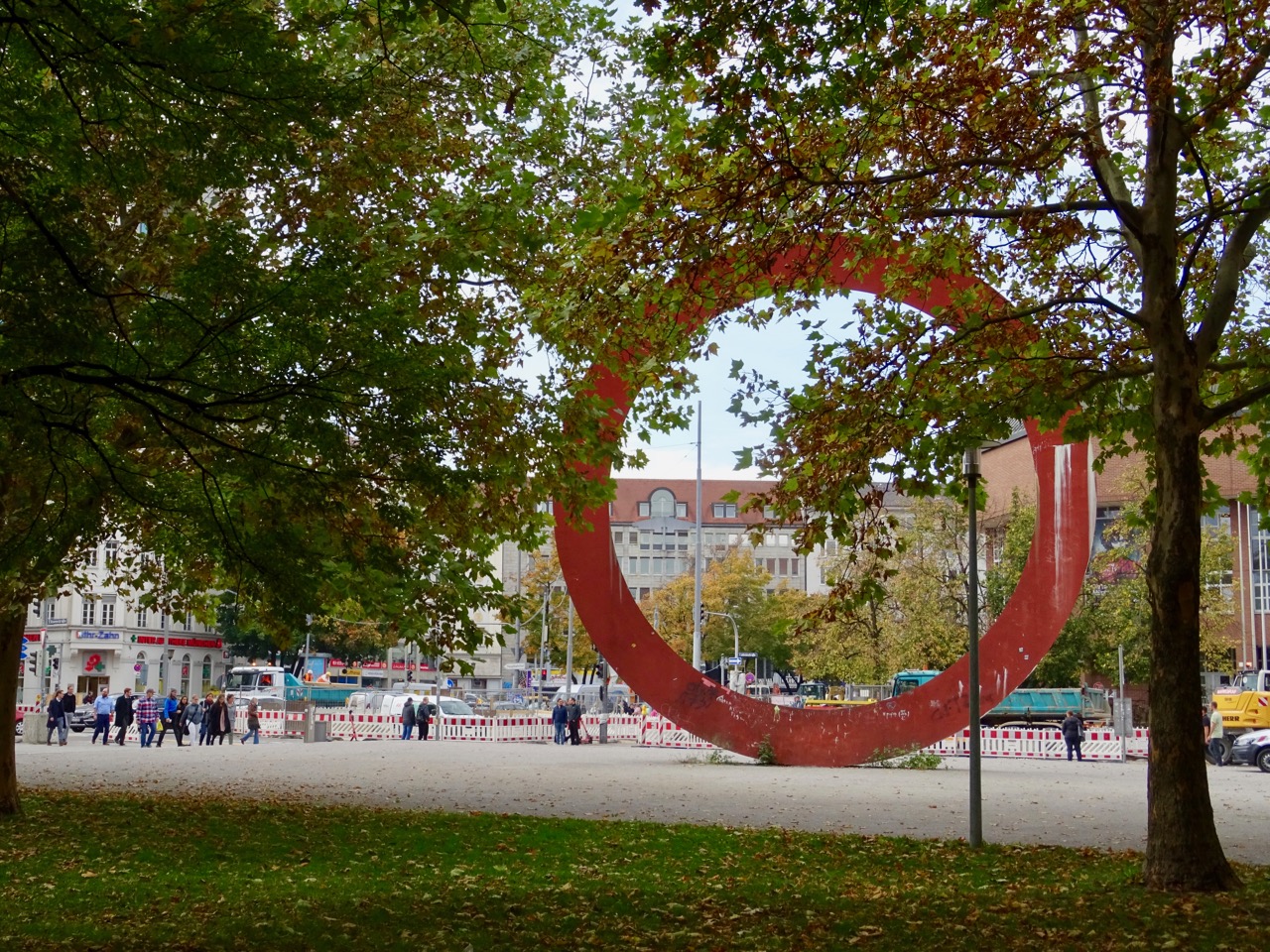 The Ring is right next to the entrance to the Old Botanical Garden where we have our lunch. We see lots of interesting people on our travels. The man below was ‘communing’ with a tree…he walked circles around it, with his hands out, making gestures towards the tree. Some police driving through the park stopped to talk to him but they let him be, guess they figured he was harmless. Nearby I spotted this lady dressed all in white. She looks like she belongs to a different place and time.
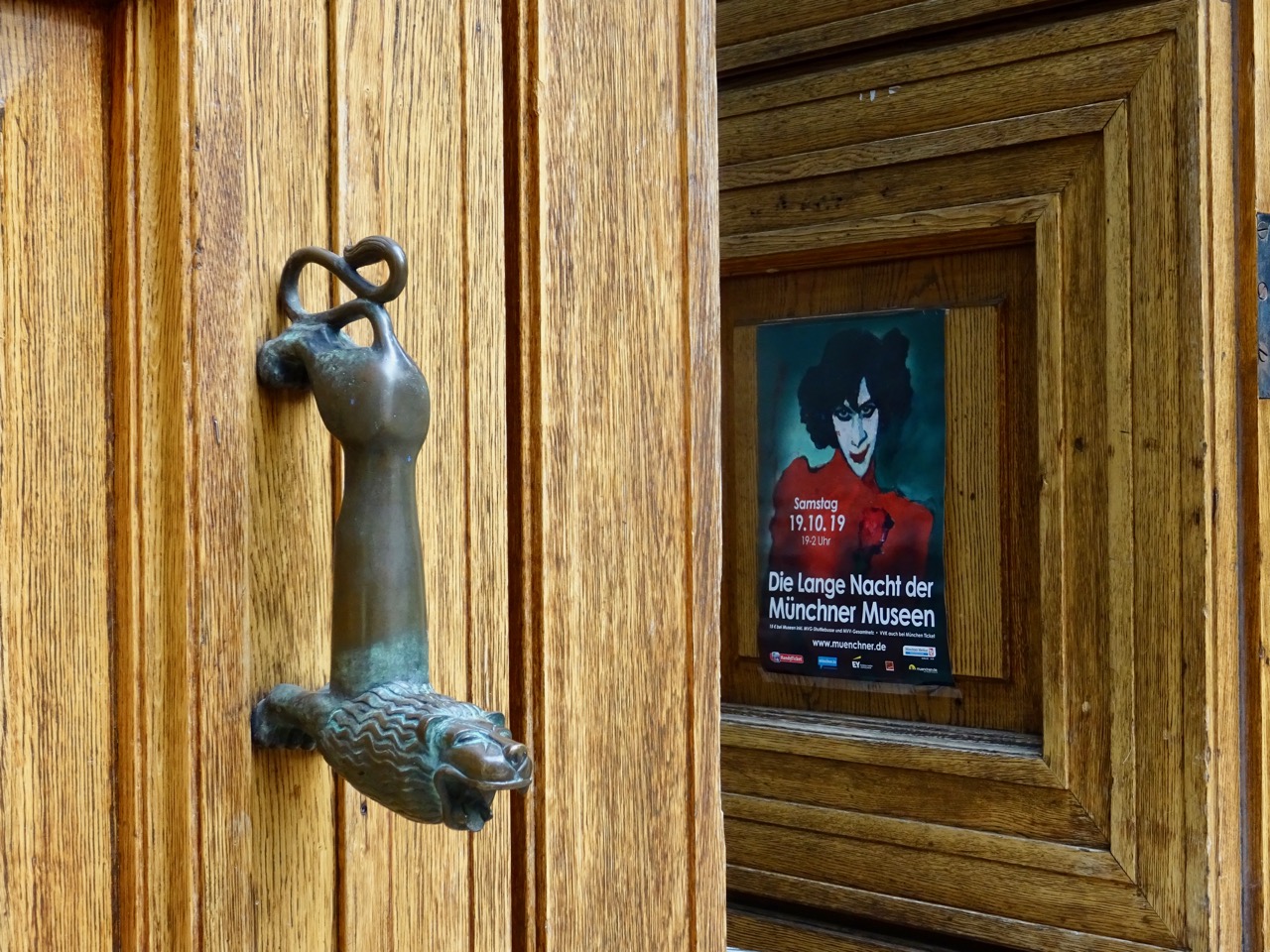
 There was a small gallery in the Botanical Gardens but they were changing exhibitions and not open. I liked both the door handle and the interesting poster, which reads, The Long Night of Munich Museums.
 First stop on our tour, why don’t you come along with us? The
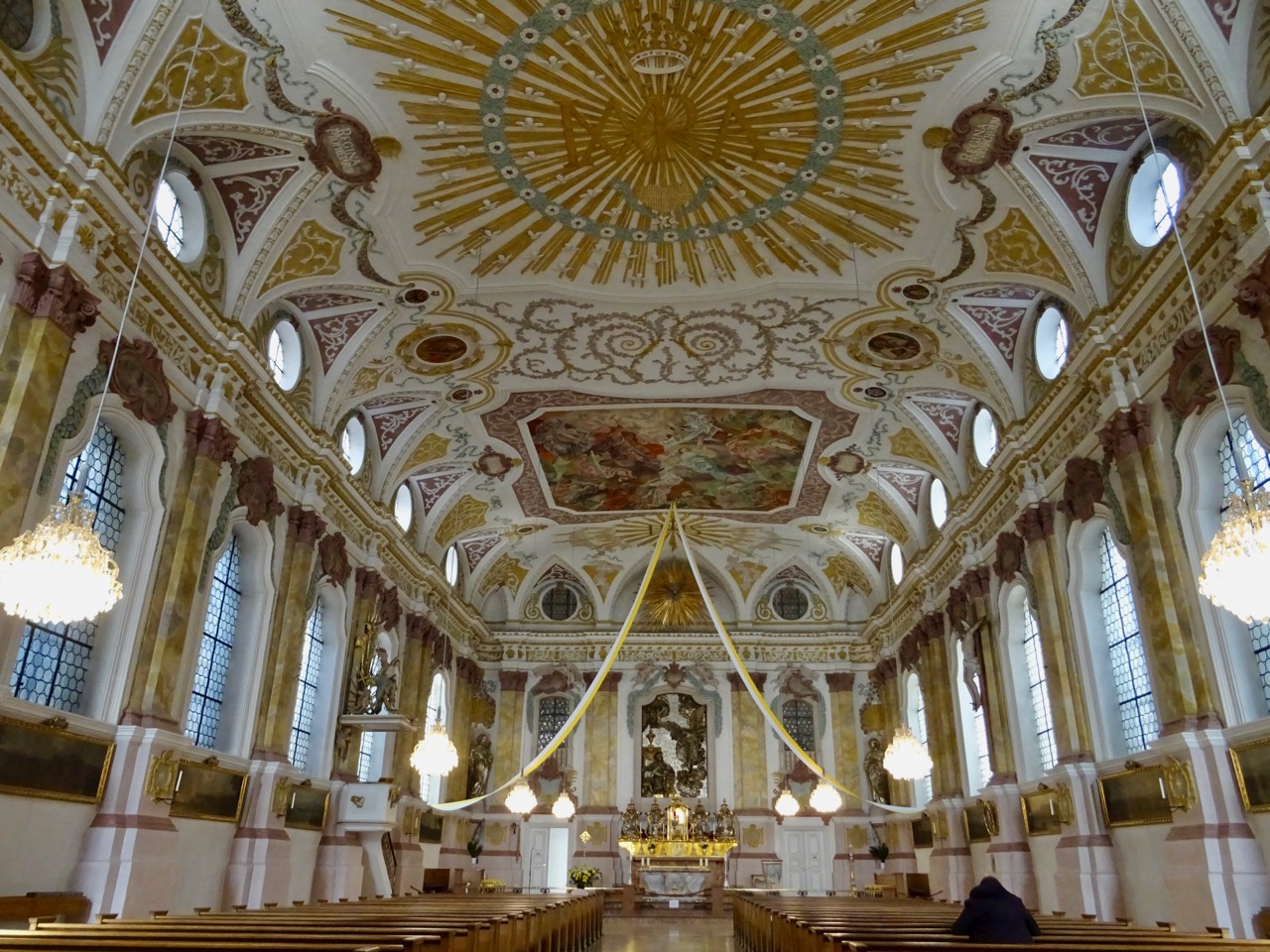
 Citizen’s Hall Church was heavily damaged during WWII but it has been rebuilt and looks exactly like it did in the 1700’s. The basement contains the tomb of Rupert Mayer, a famous Jesuit priest who stood up to the Nazis occupation and died in a concentration camp..
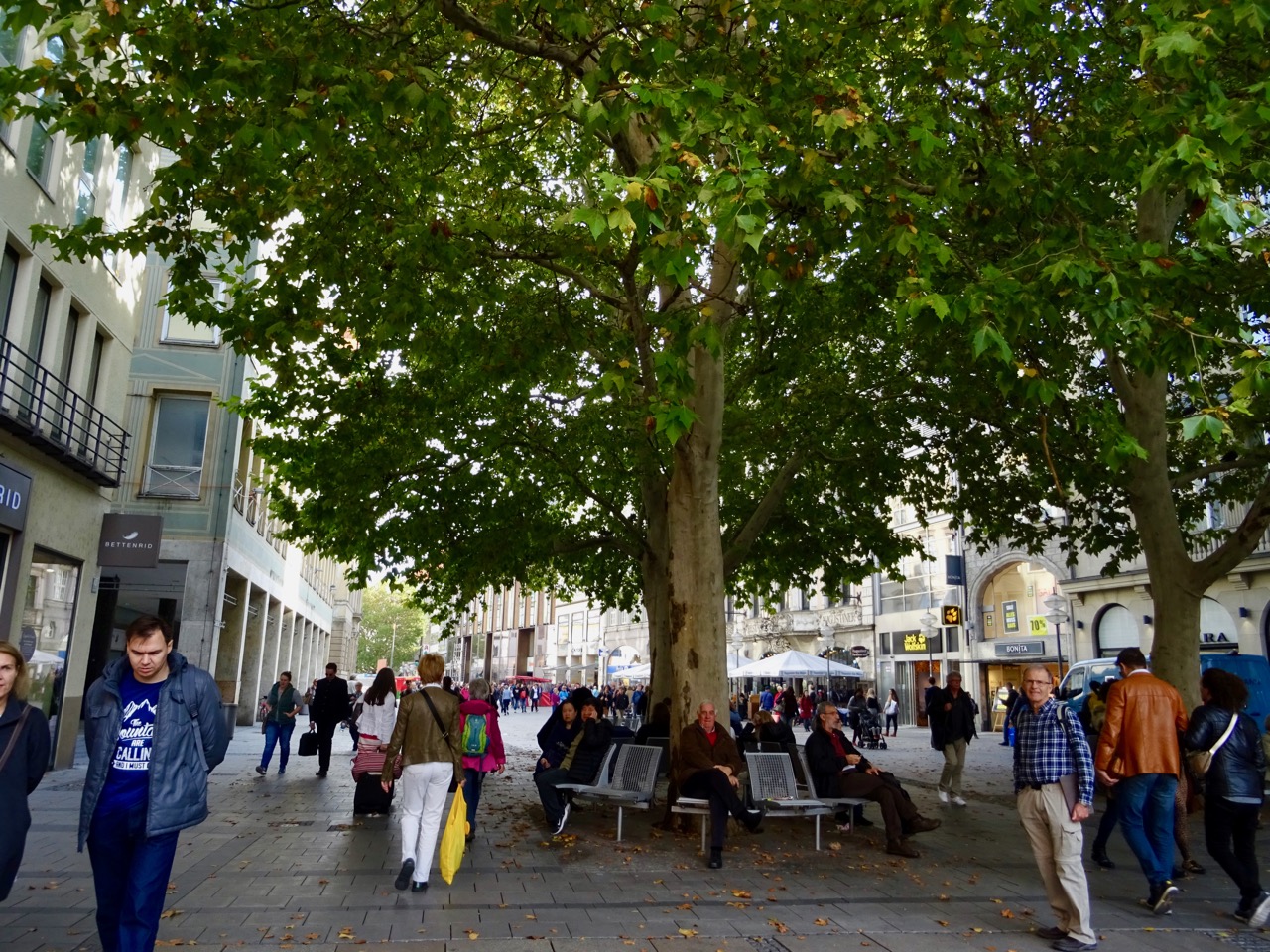
 Our walk continues down a broad pedestrian street with large trees.
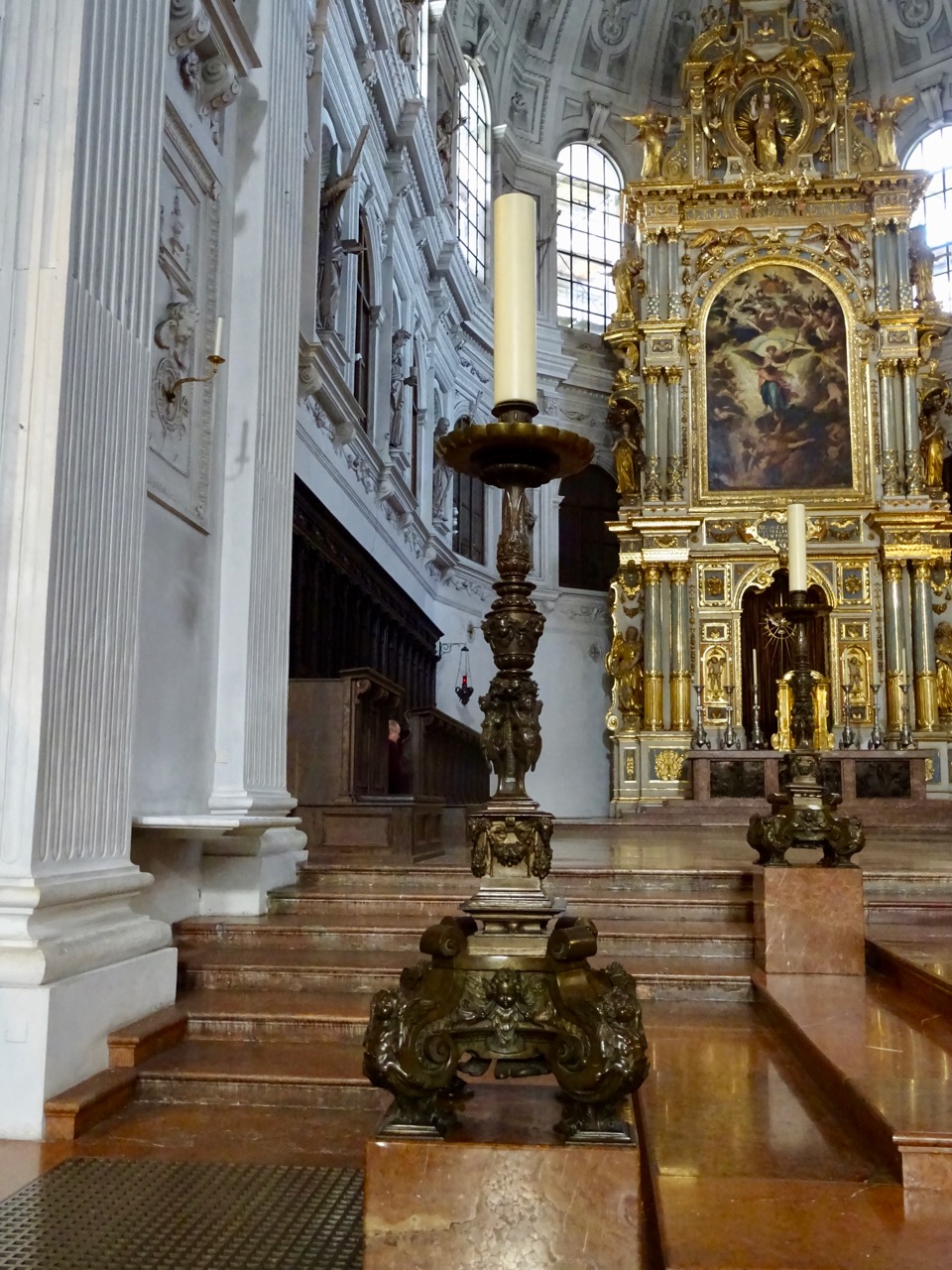
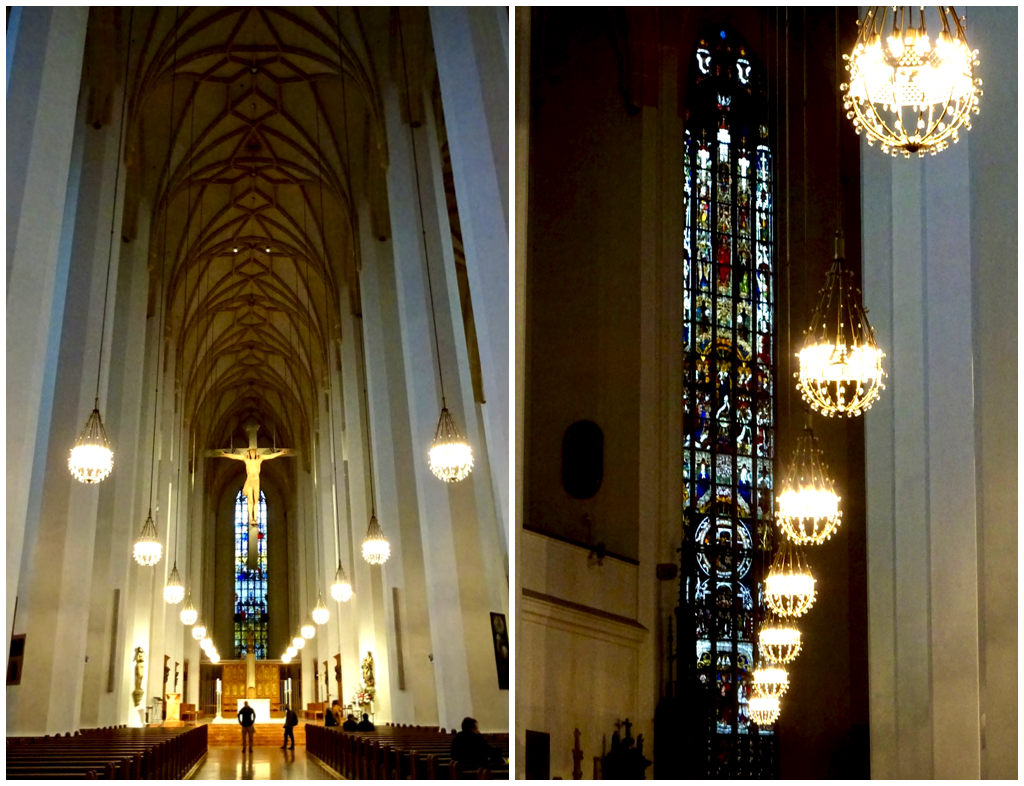
 St Michael’s Church. I liked the huge elaborate candle holders. The church contains The Royal Crypt which holds 40 tombs. The most famous of these is the tomb of “Mad” King Ludwig II. Ludwig was a big spender and built many lavish castles and palaces. We visited the Neuschwanstein Castle on our first trip to Europe almost 40 years ago. It is the castle that inspired Walt Disney’s Snow White castle.
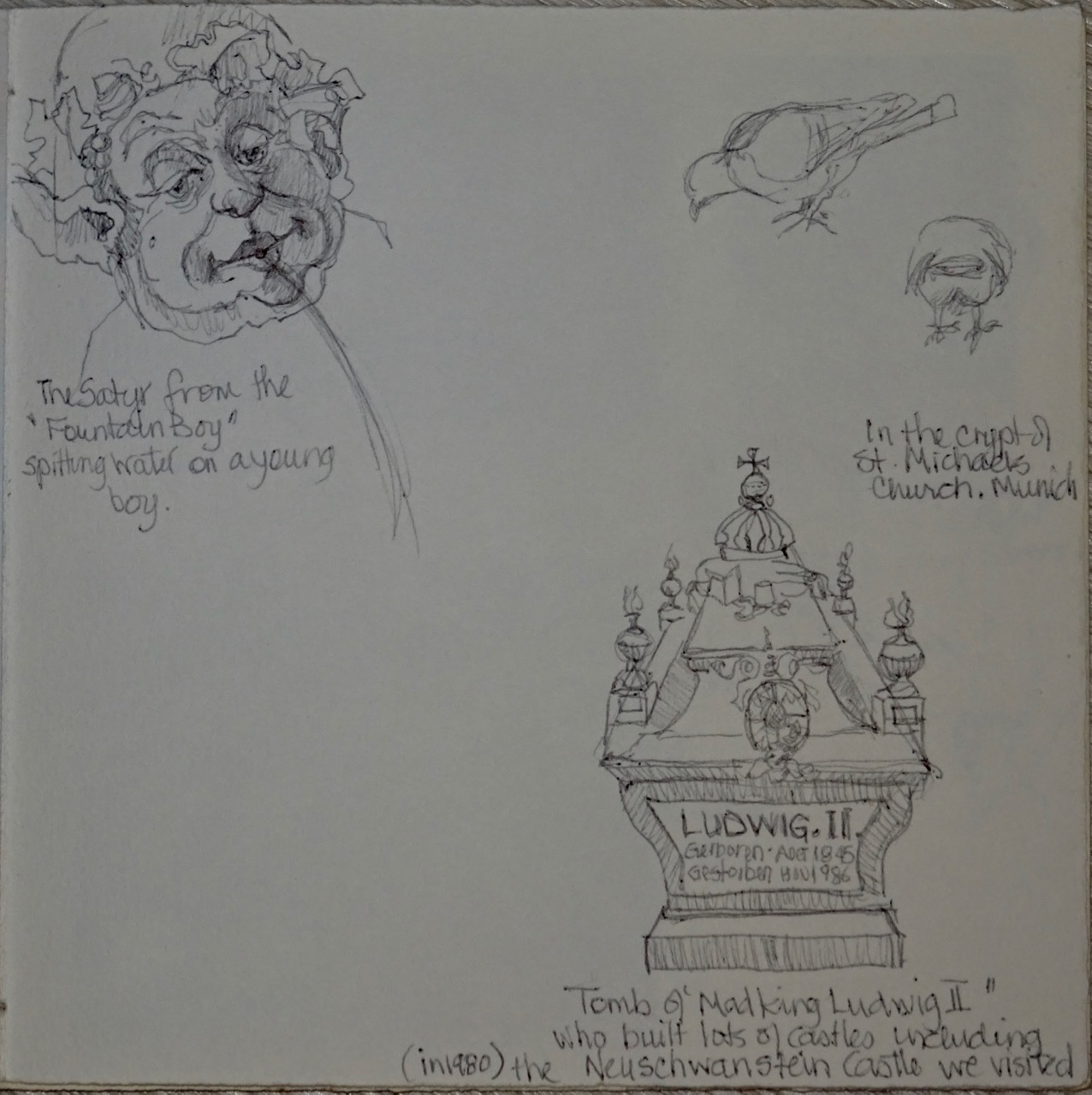
 No photos are allowed in the crypt so I did a quick sketch of King Ludwig’s tomb. No one ever seems to mind if I draw.
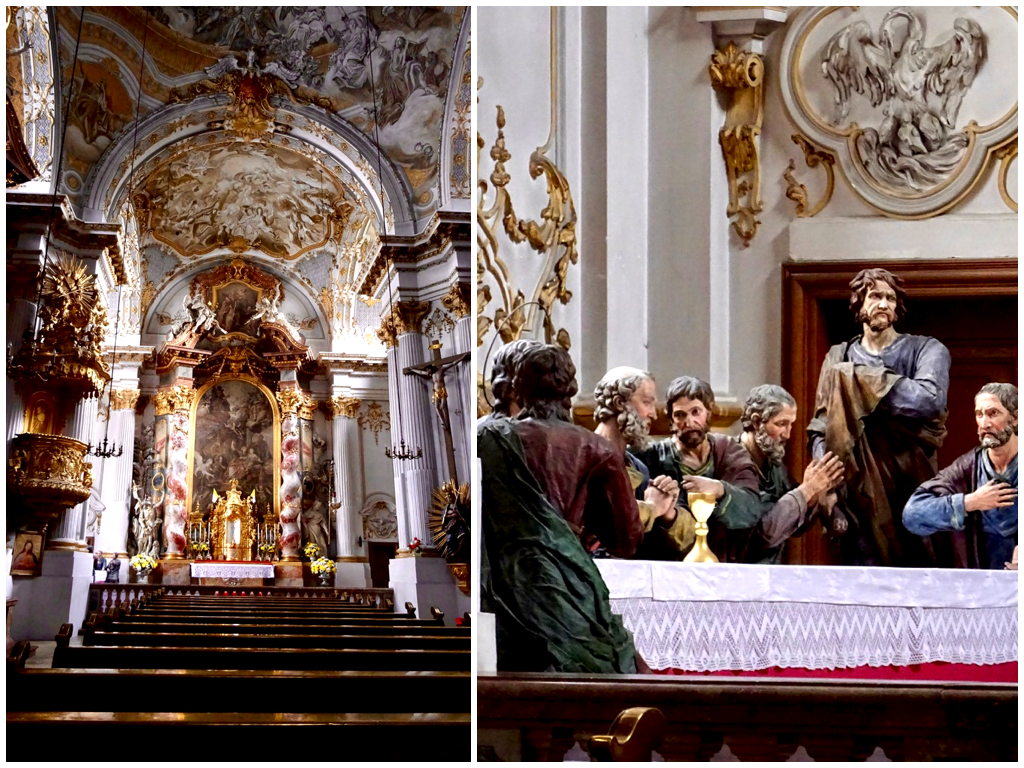
 There are a few churches on this tour! Each of them has its own distinctive feature. Saint Anna’s Church has had a chapel on this site since 1440. I thought I saw people inside, behind the locked gates, but when I zoomed in with my camera, I realized it was a life size sculpture of the Last Supper.
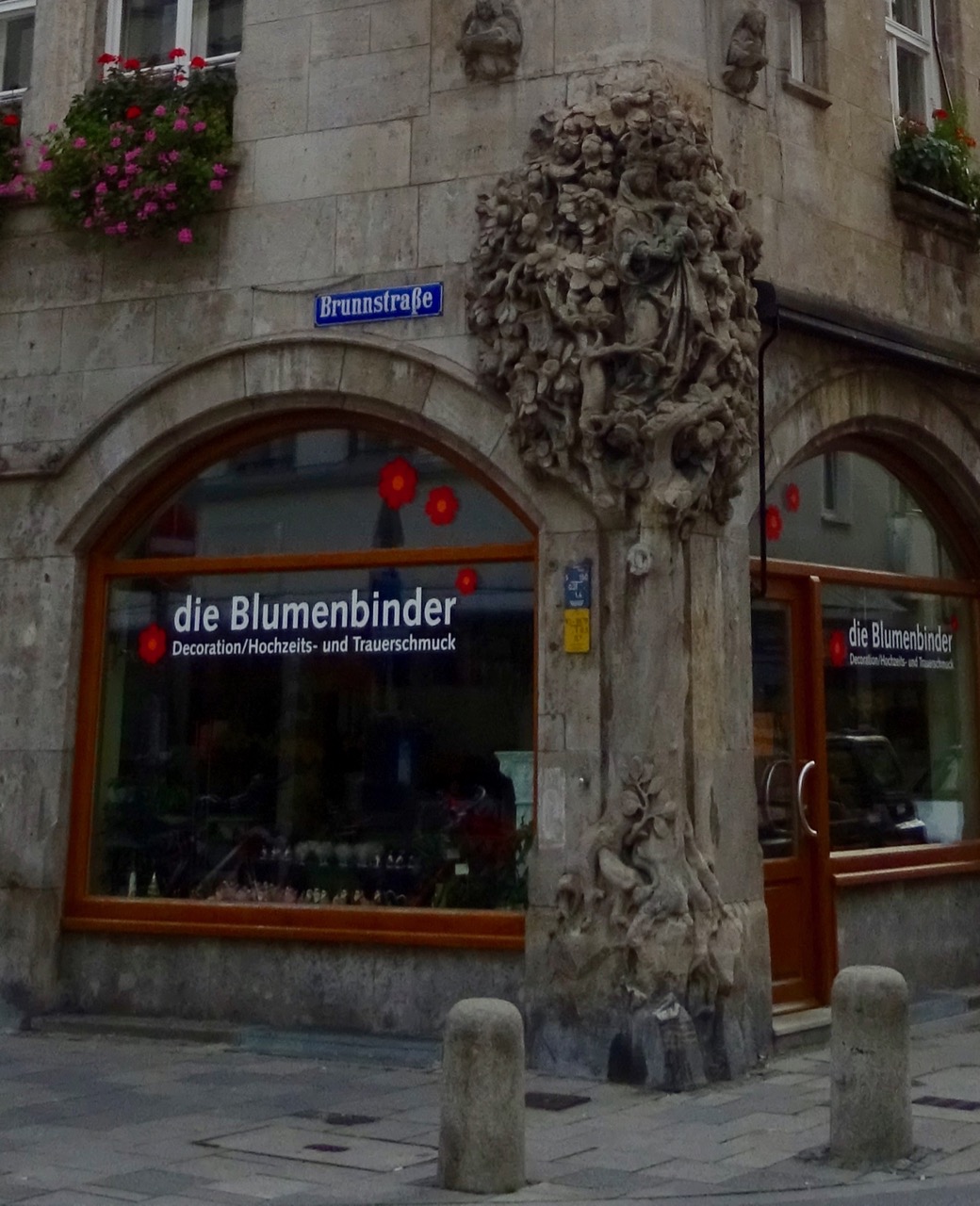
 We pass this tree sculpture on the corner of a building on our way to The Asamhof Passage.
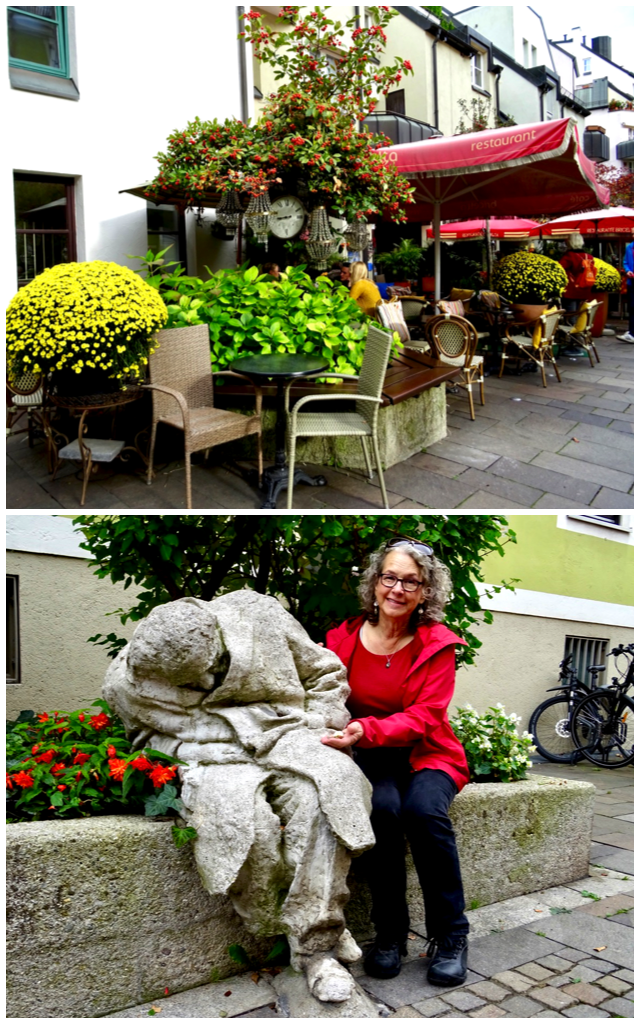
 Asamhof Passage is a little pedestrian street lined with restaurants, lots of flowers, and this poor fellow who needed my change more than I did!
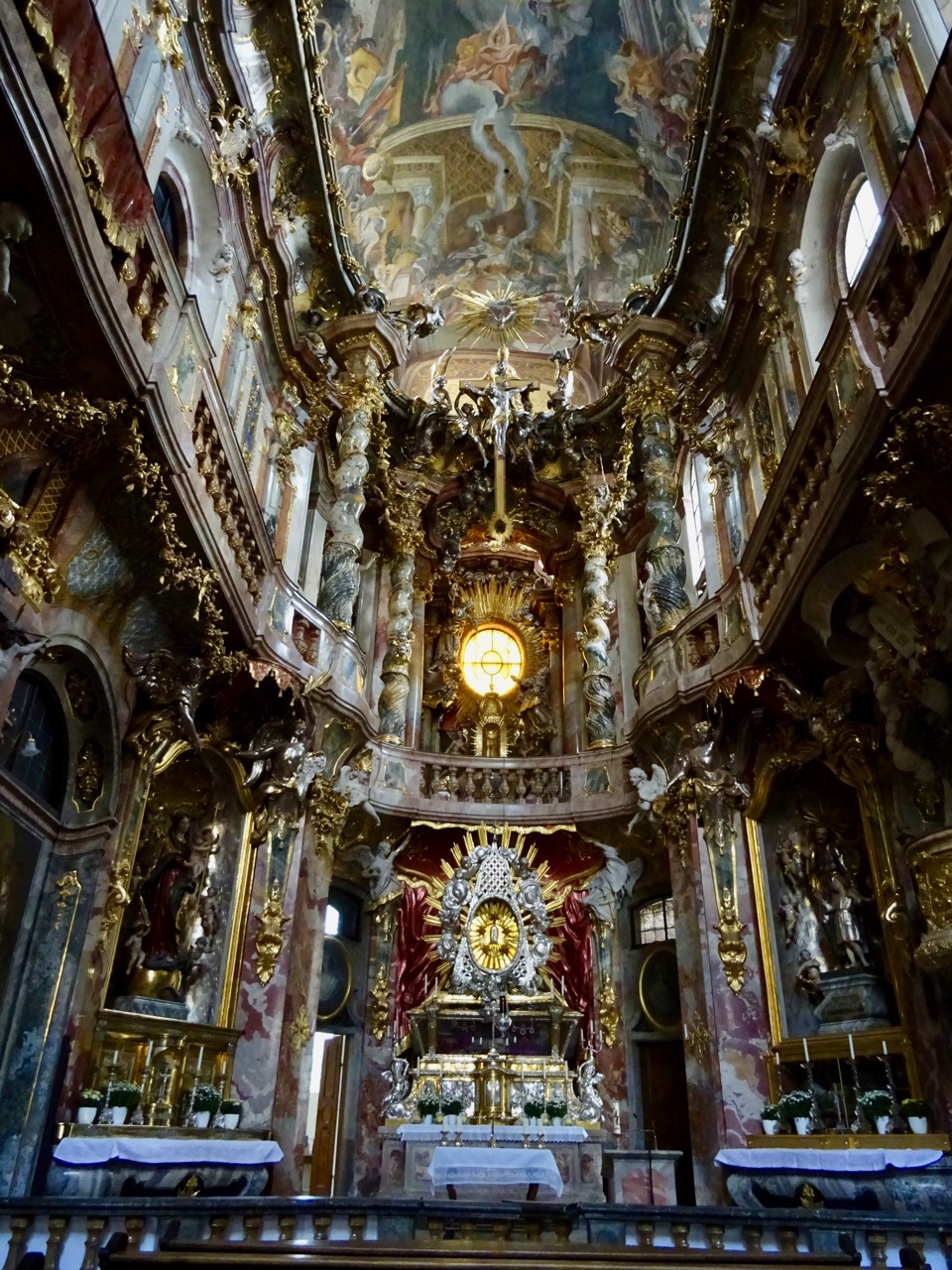
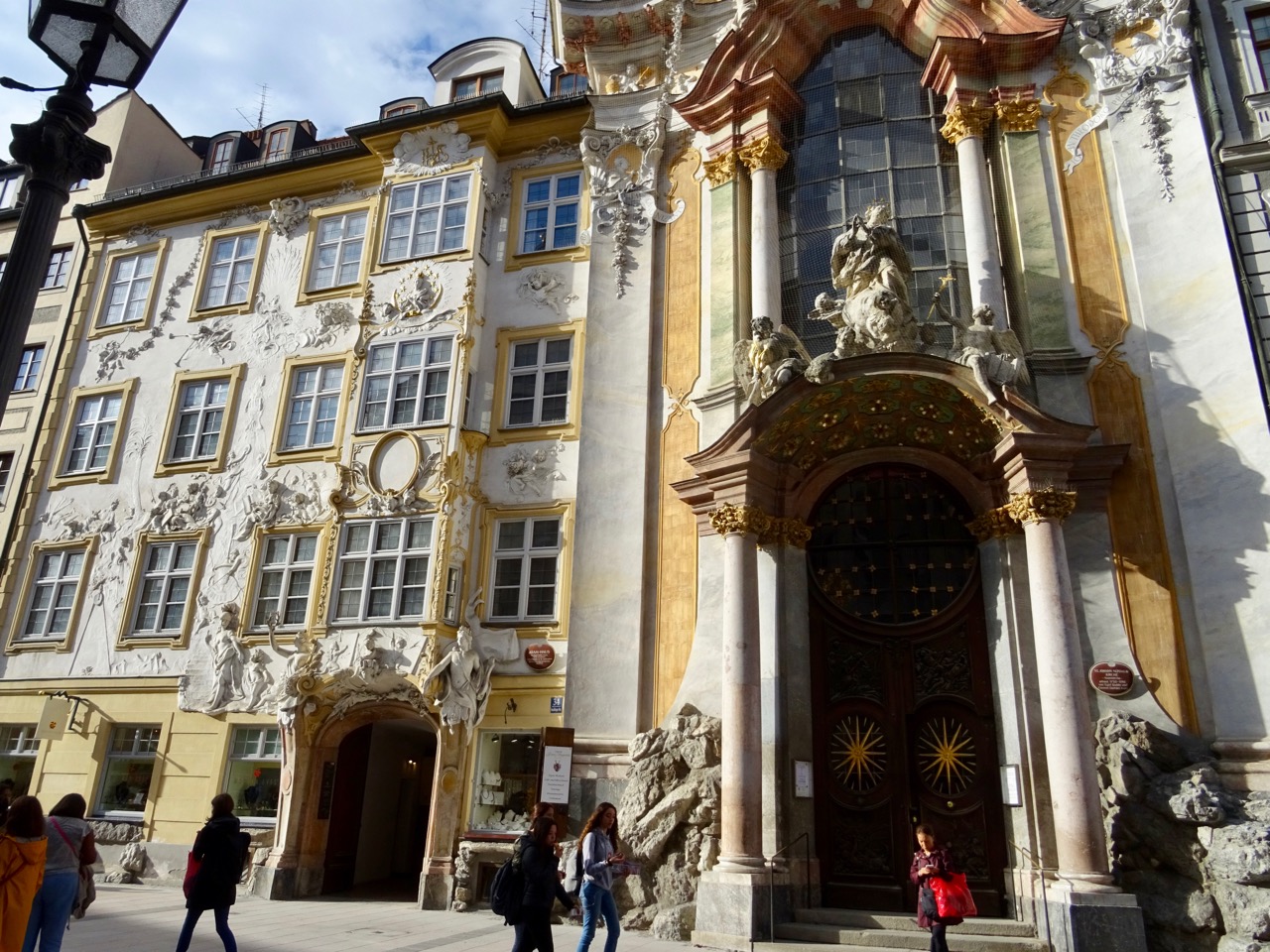
 Asamkirche was built by the Asam brothers as a showpiece for their church building skills. It is only 30 feet wide but it is so packed with over-the-top-Rococo decoration that we don’t know where to look! The entire focus of the interior leads the eye to a bright golden window meant to feel like the eye of God staring down at us.
 This is the exterior of the church and the brother’s house next door, which had bedroom windows looking onto the high altar in the church.
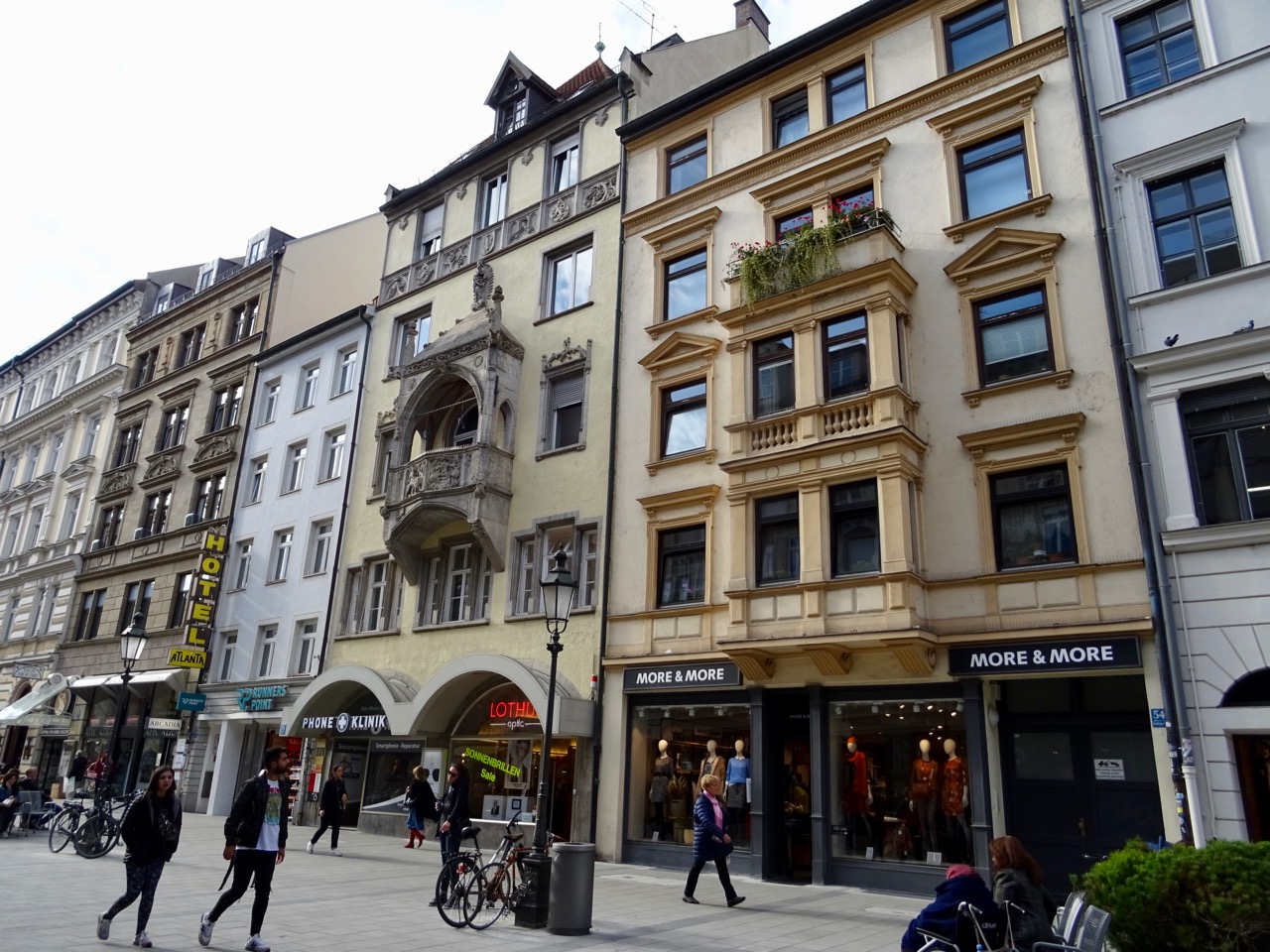
 There are lots of modern shops below the traditional apartments.
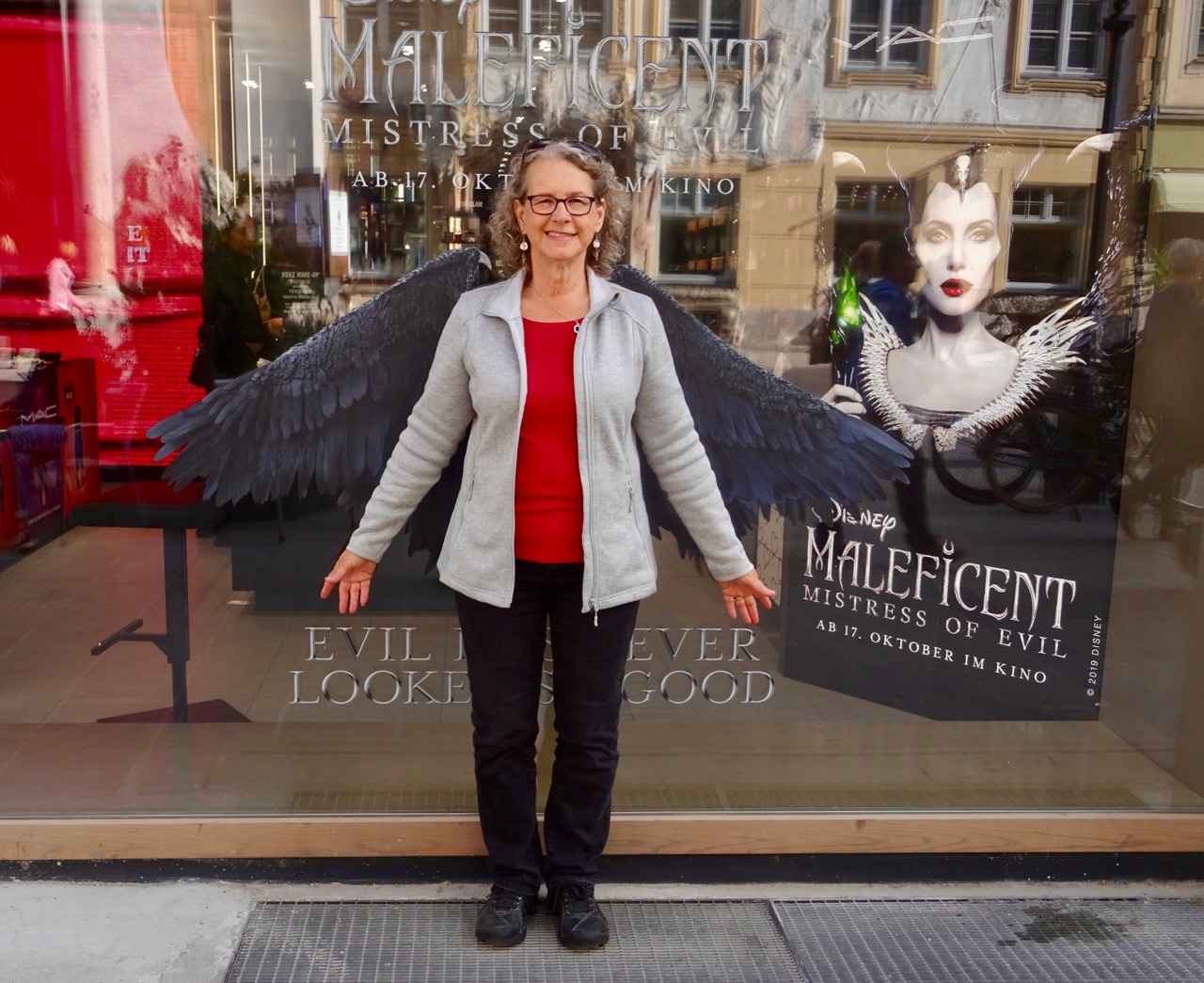
 I think I look OK with wings!
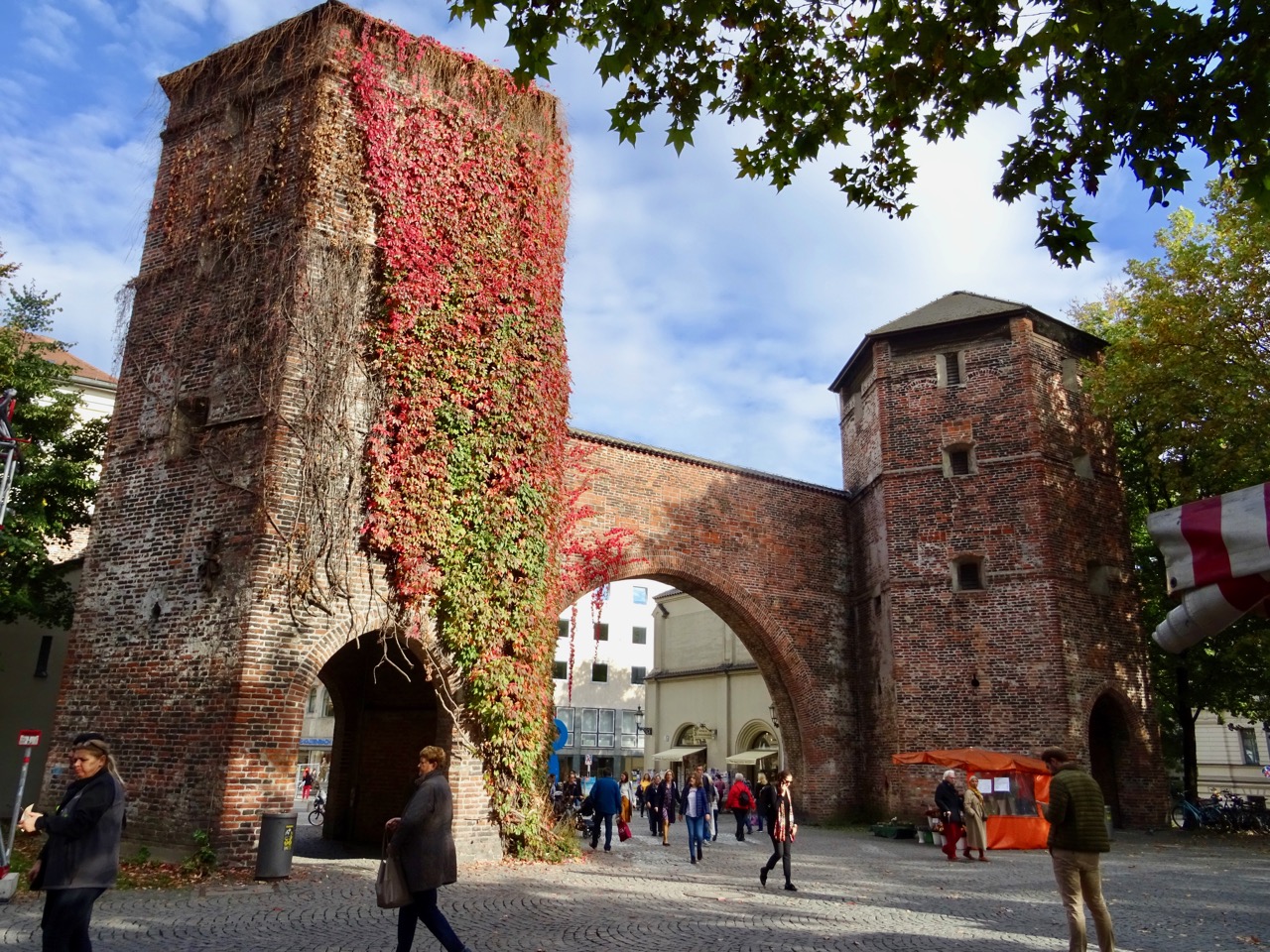
 The town gate, built in 1318 has two towers and is the oldest of the three city gates still standing in Munich.
 A view down the street from the town gate.
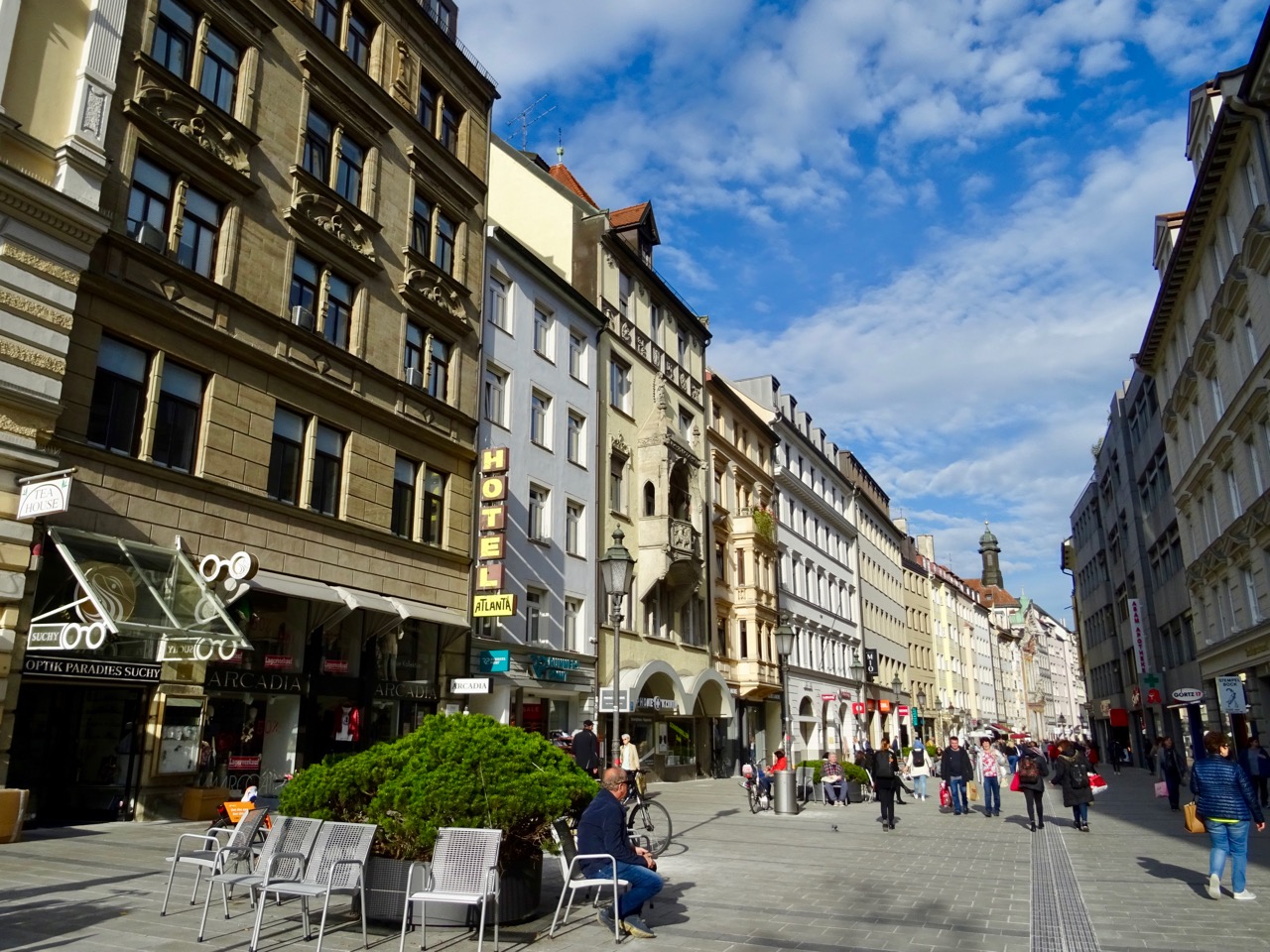 Walking back towards Marienplatz we walk through the Victuals Market (Viktualiemarkt). This is a tough place to be when you can’t eat gluten, dairy or eggs!
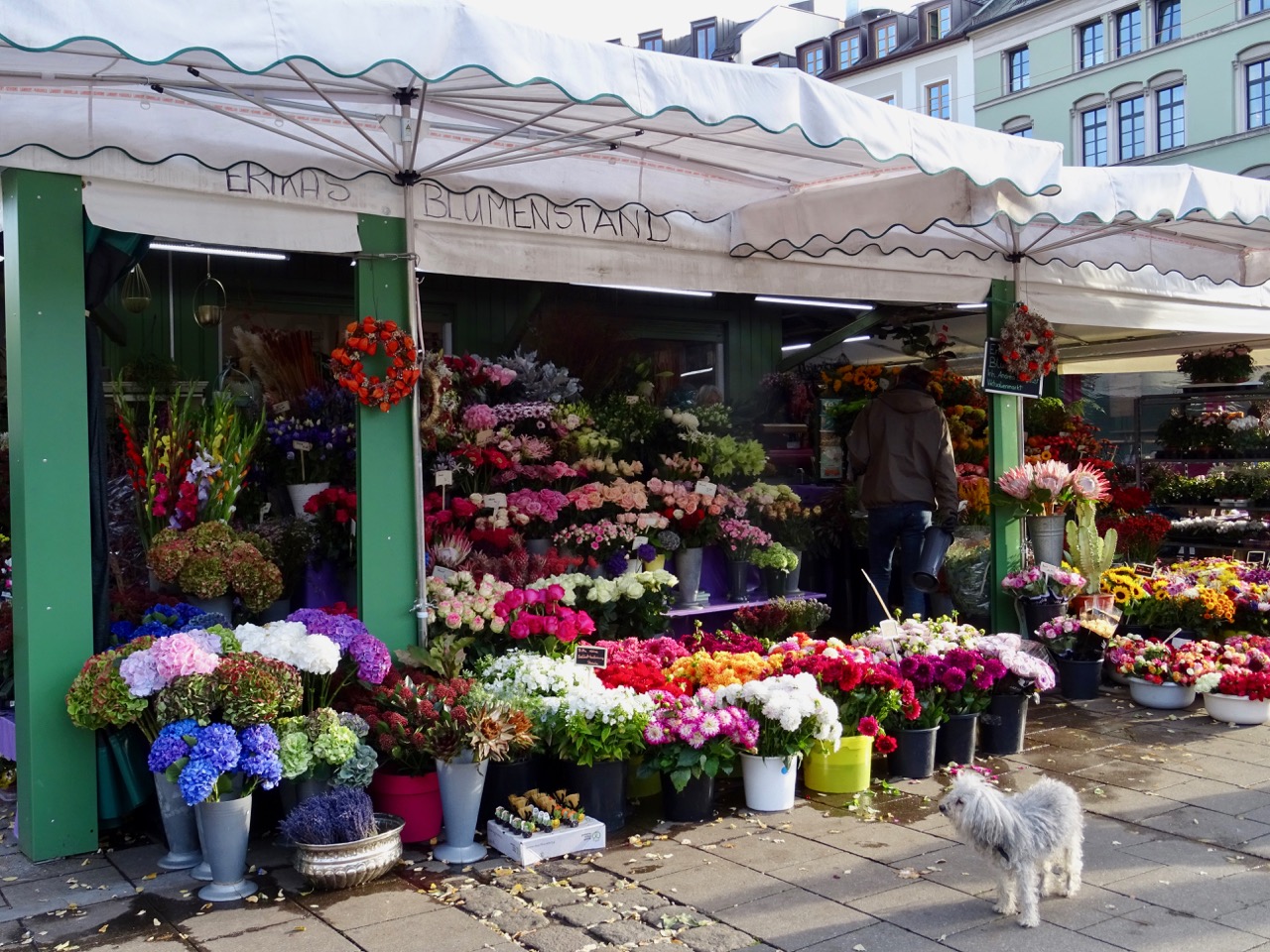
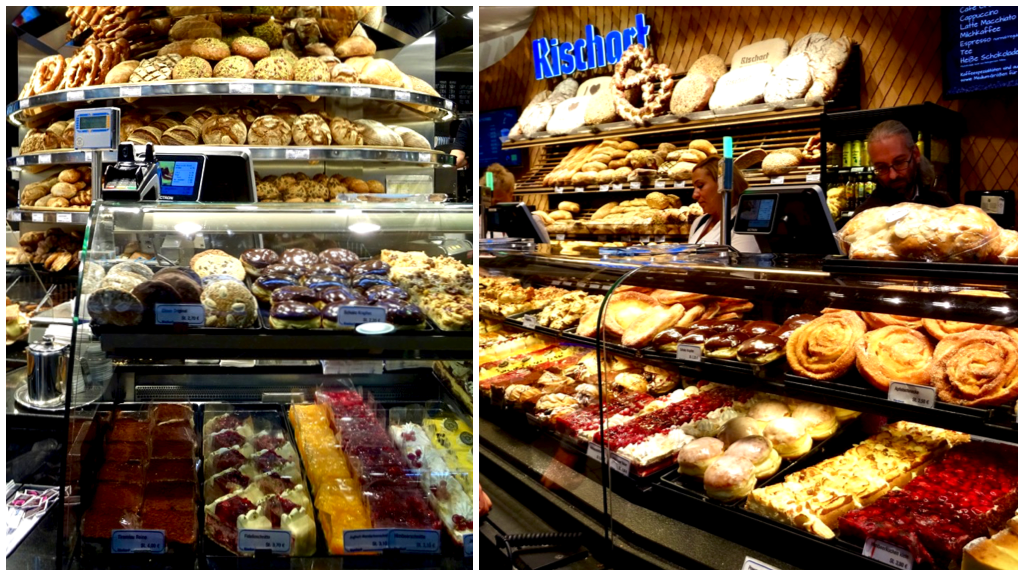 There are lots of flower stalls. I particularly liked the little dog that seemed to belong to this one.
 This is the tallest May Pole we have ever seen!
 We can see the Glockenspiel Tower down a side street between two buildings.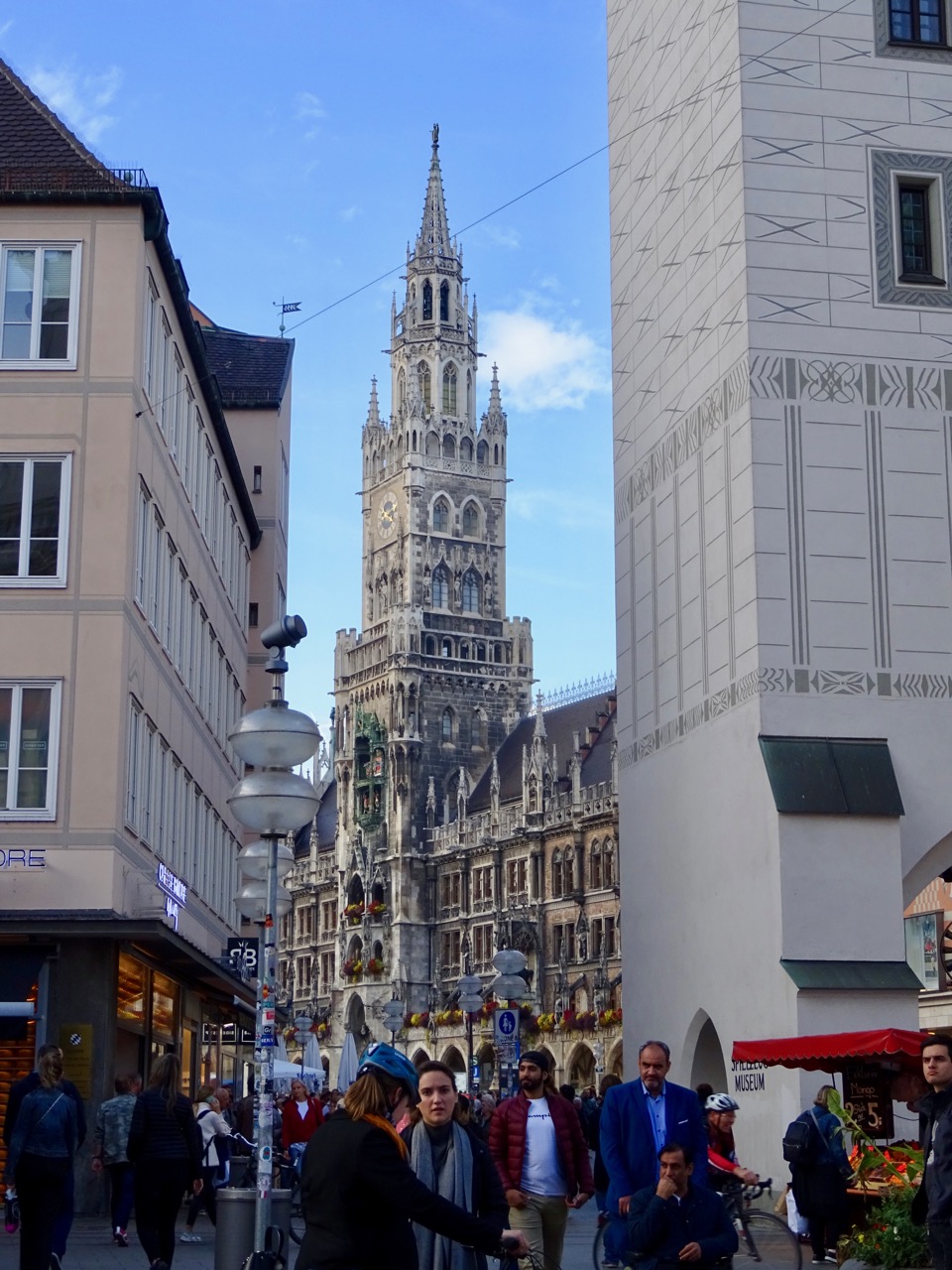
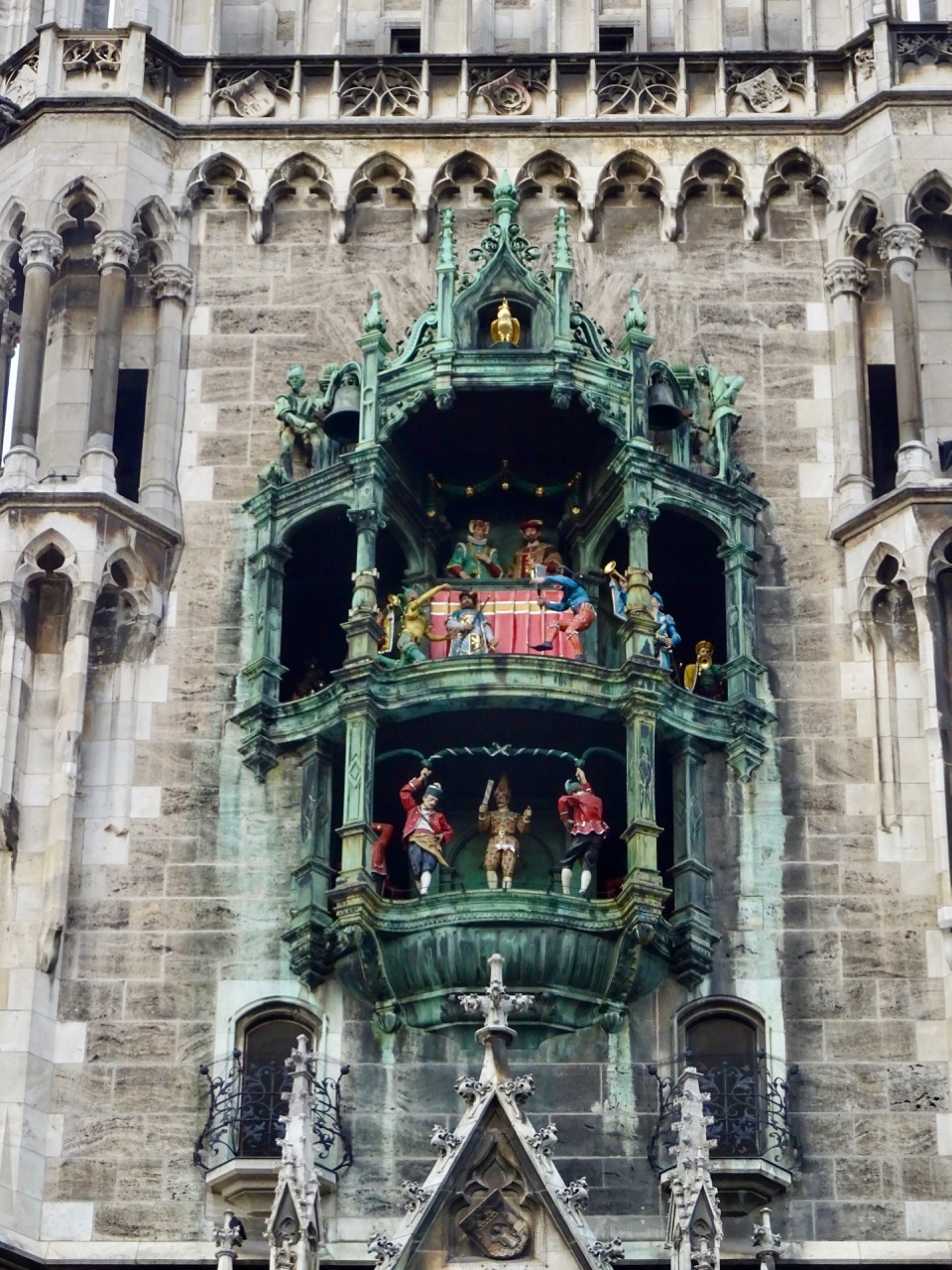
 The New Town Hall’s main attraction is the Glockenspiel. This chiming clock was added to the tower in 1907. At 11am, midday, and 5pm the Munich Glockenspiel recounts a royal wedding, a jousting tournament and a traditional dance with 32 life-sized animated figures in its 260 foot tower.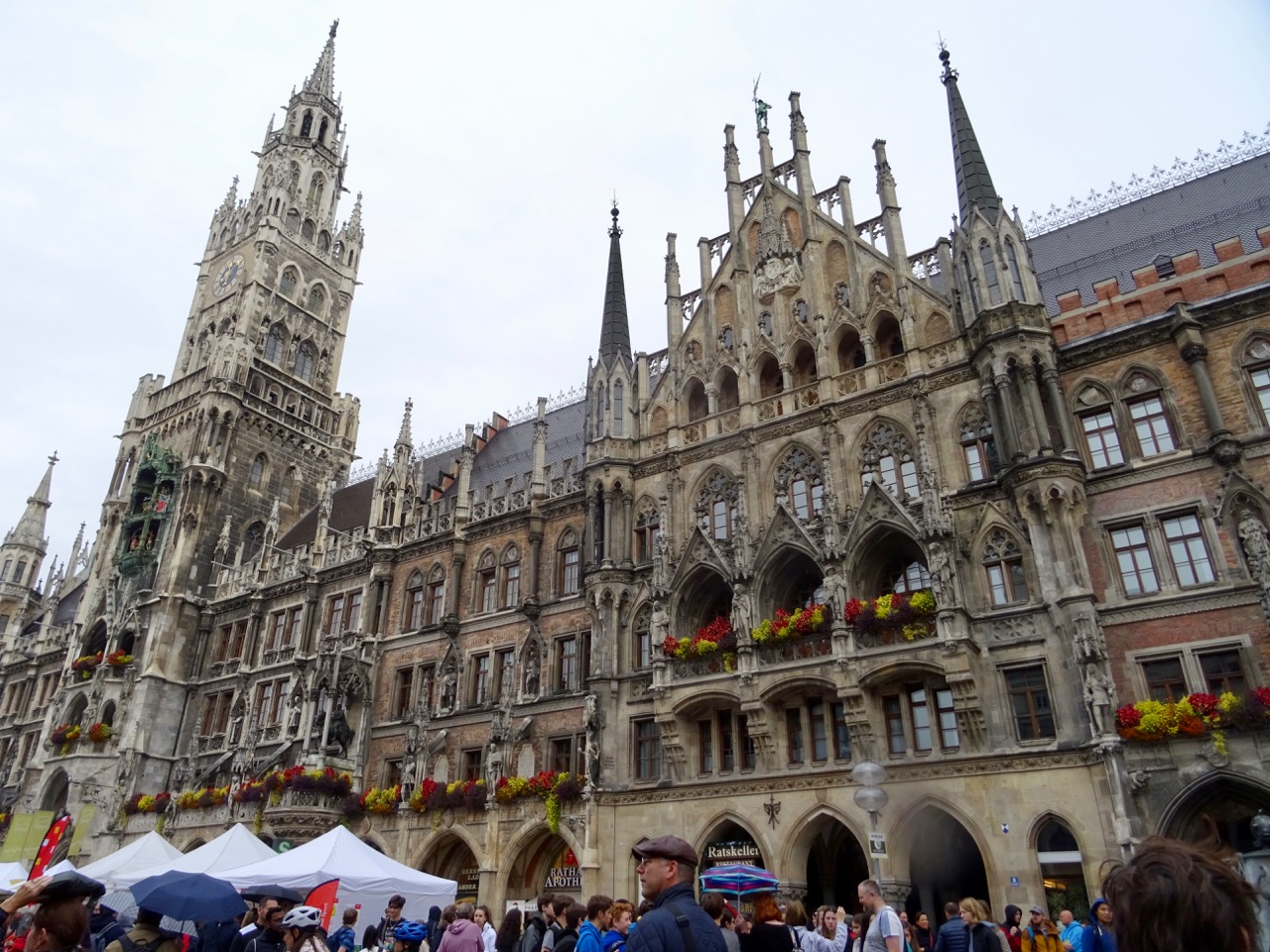
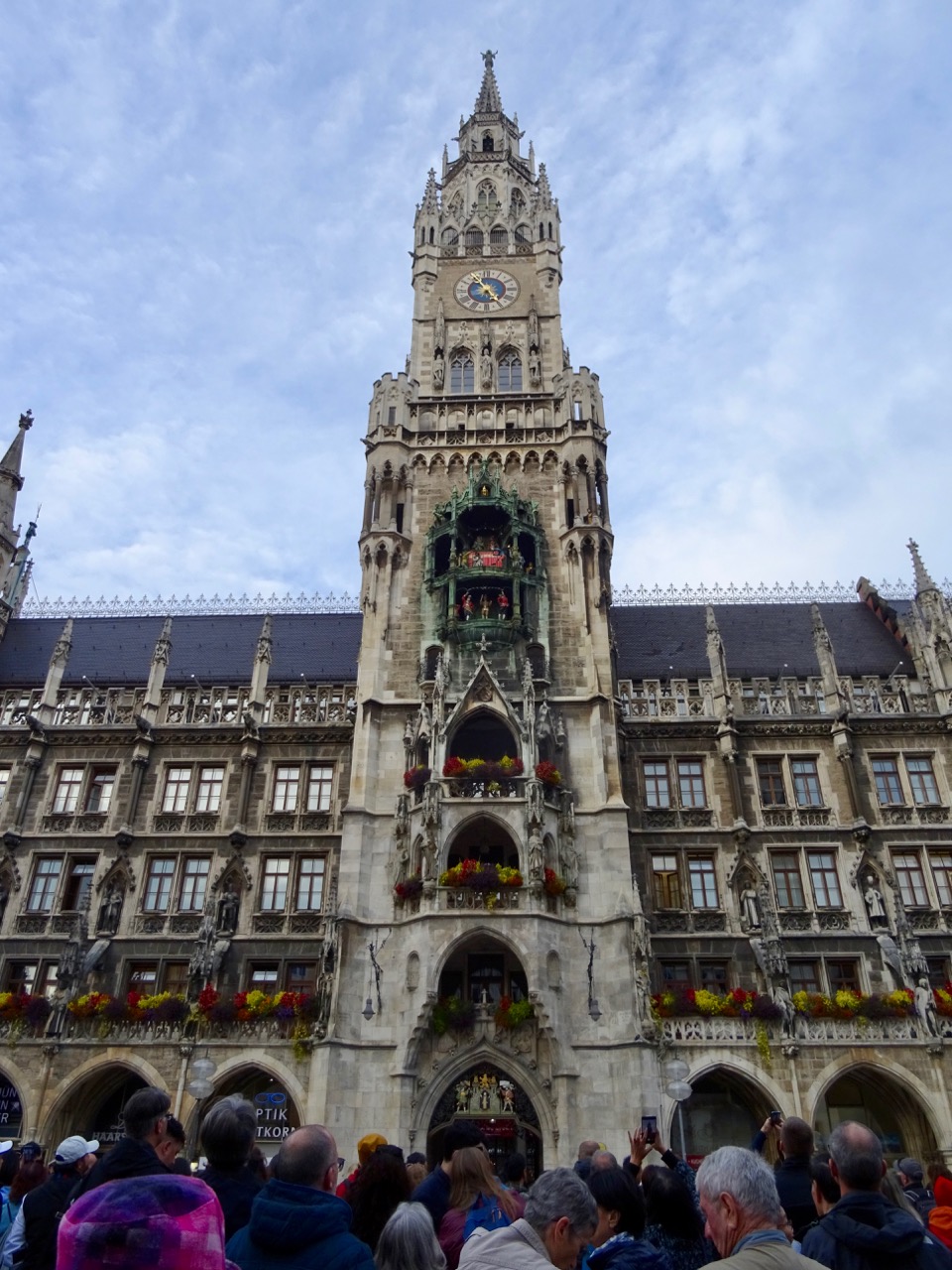 The show lasts about ten minutes, followed by the ringing of church bells.
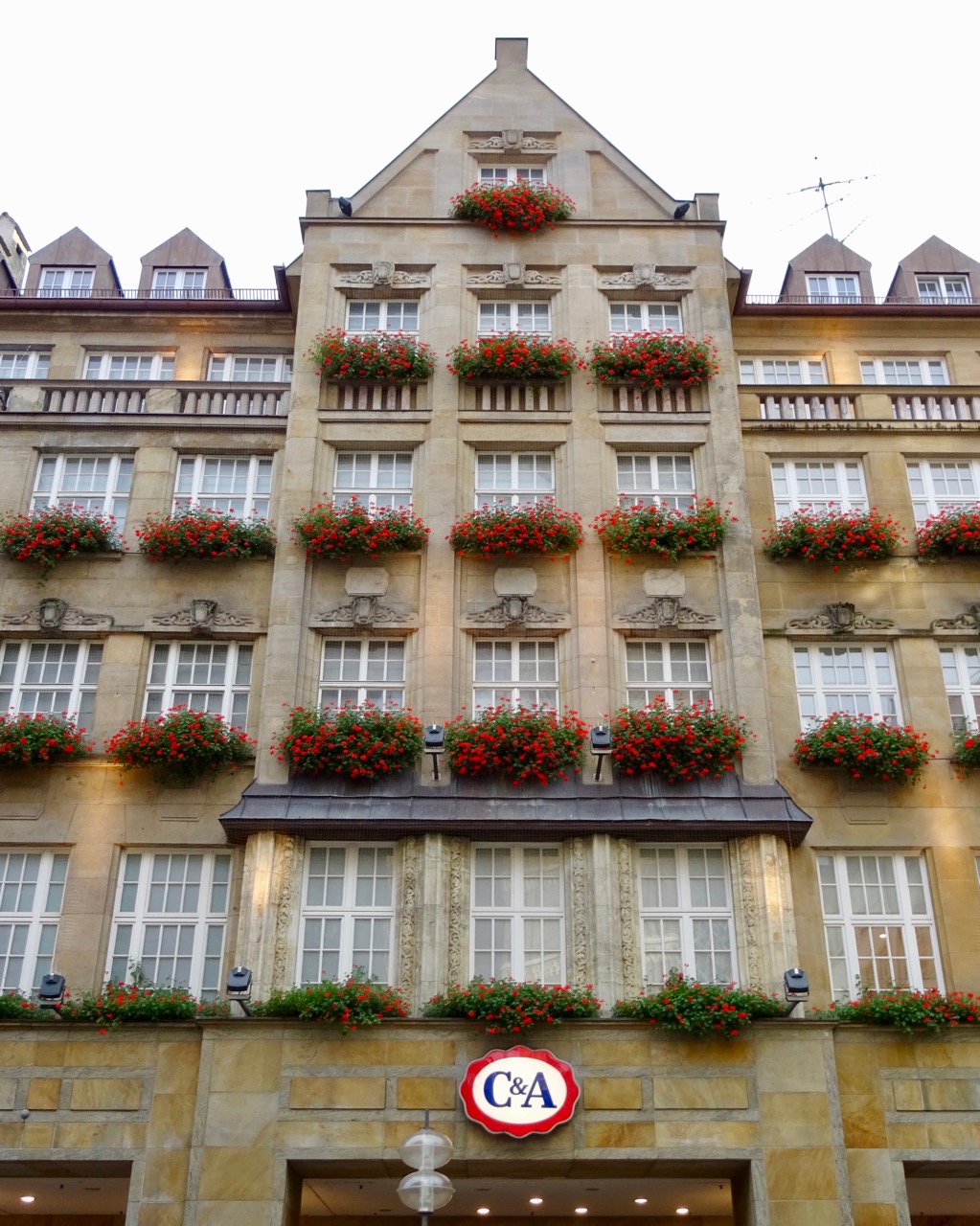
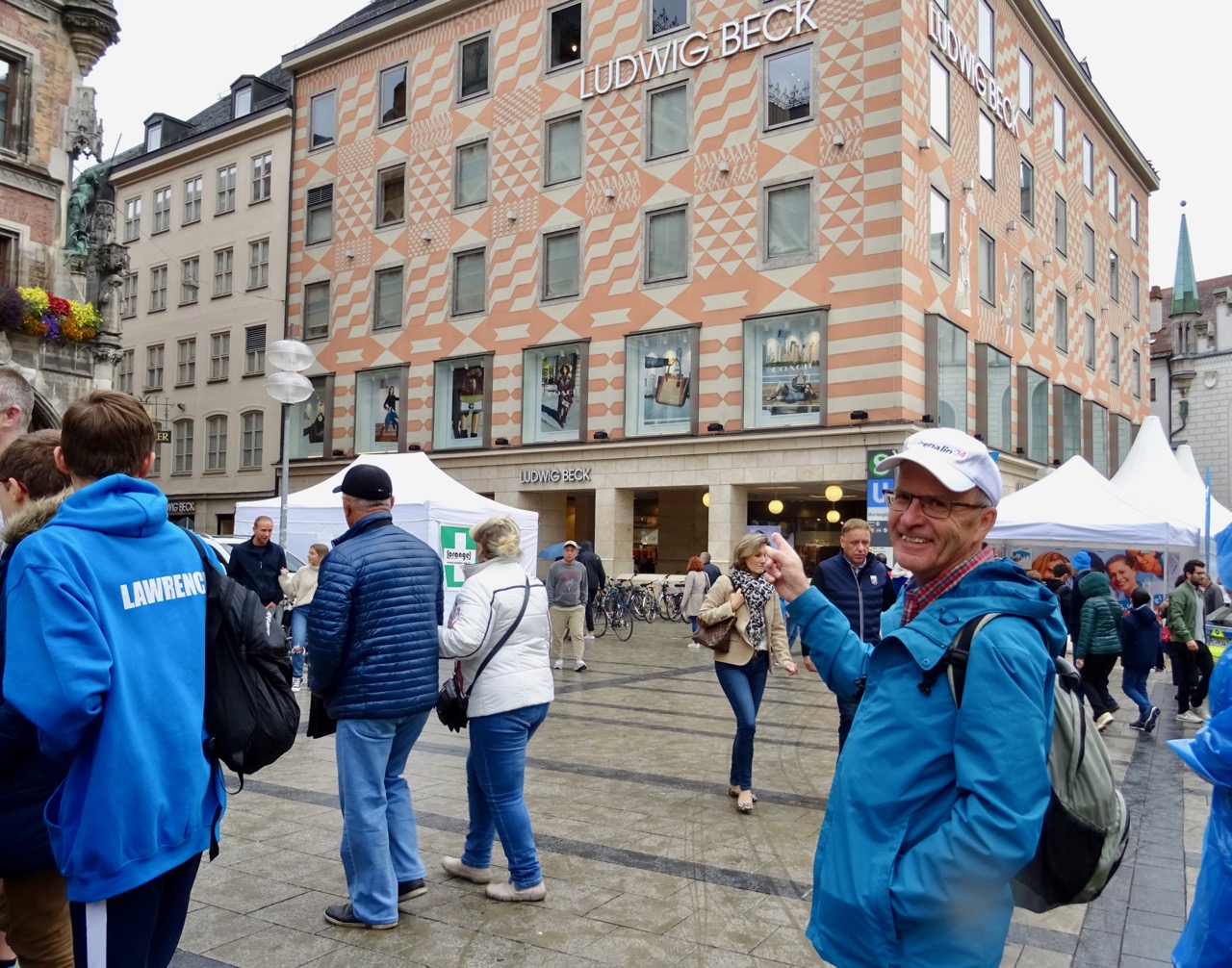
 Bob remembered the Beck Department store from our first visit to Munich almost 40 years ago! He said it was right next to the Glockenspiel and sure enough it was!
 Metro drawings from today. People kept getting off the metro before I was finished!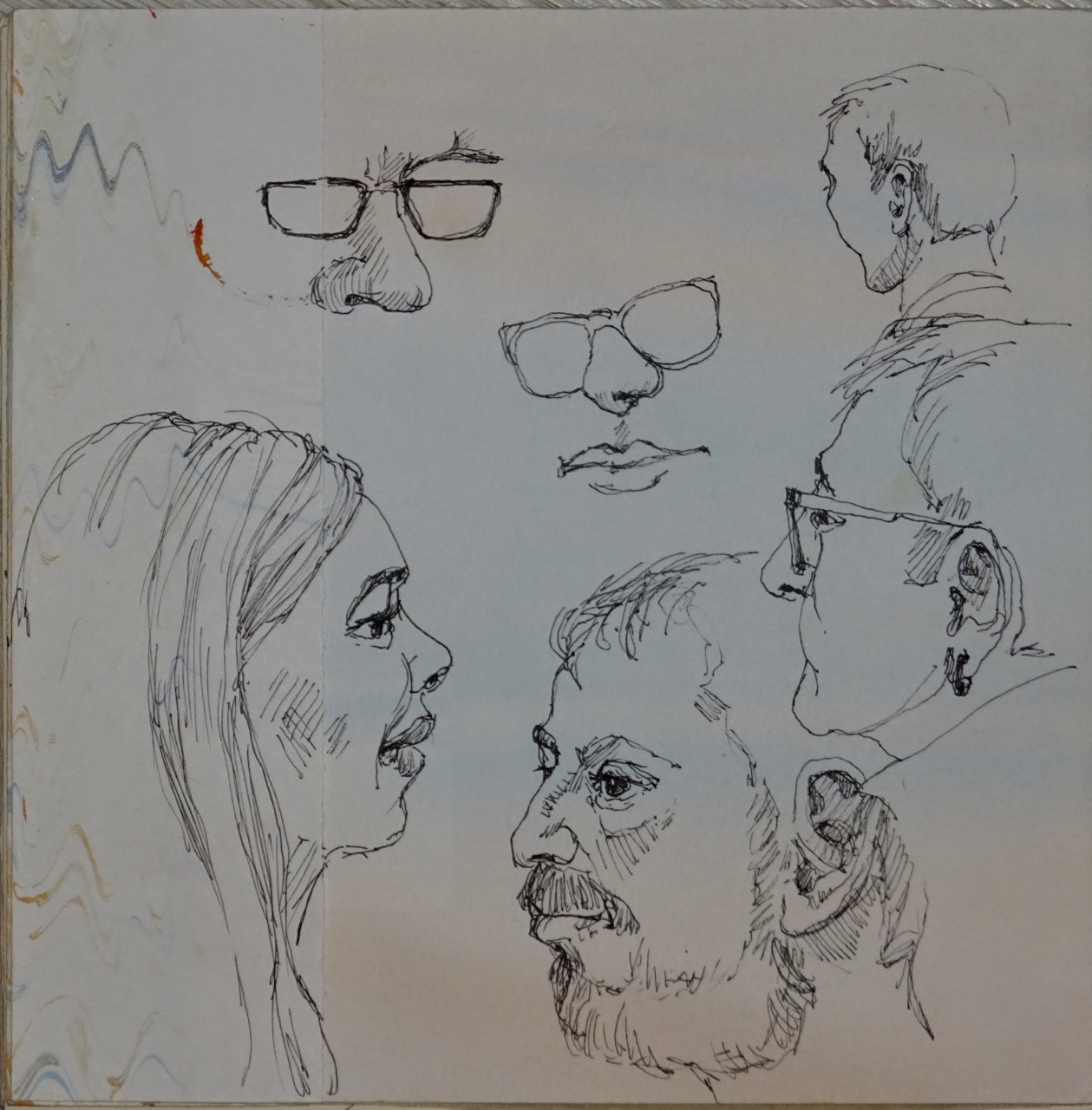
 The grounds in front of the palace. We have our picnic lunch and then visit the Bildergalerie.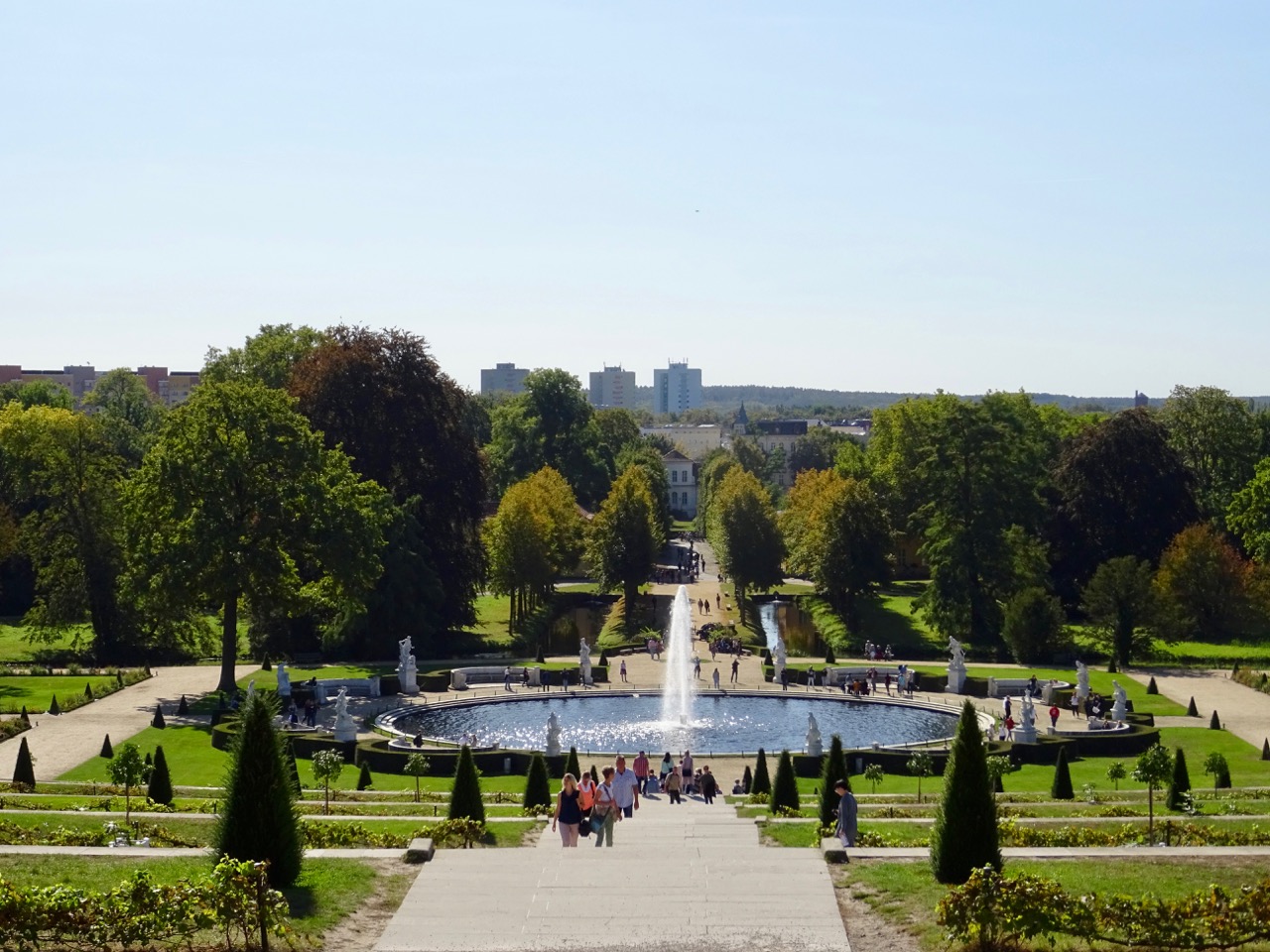
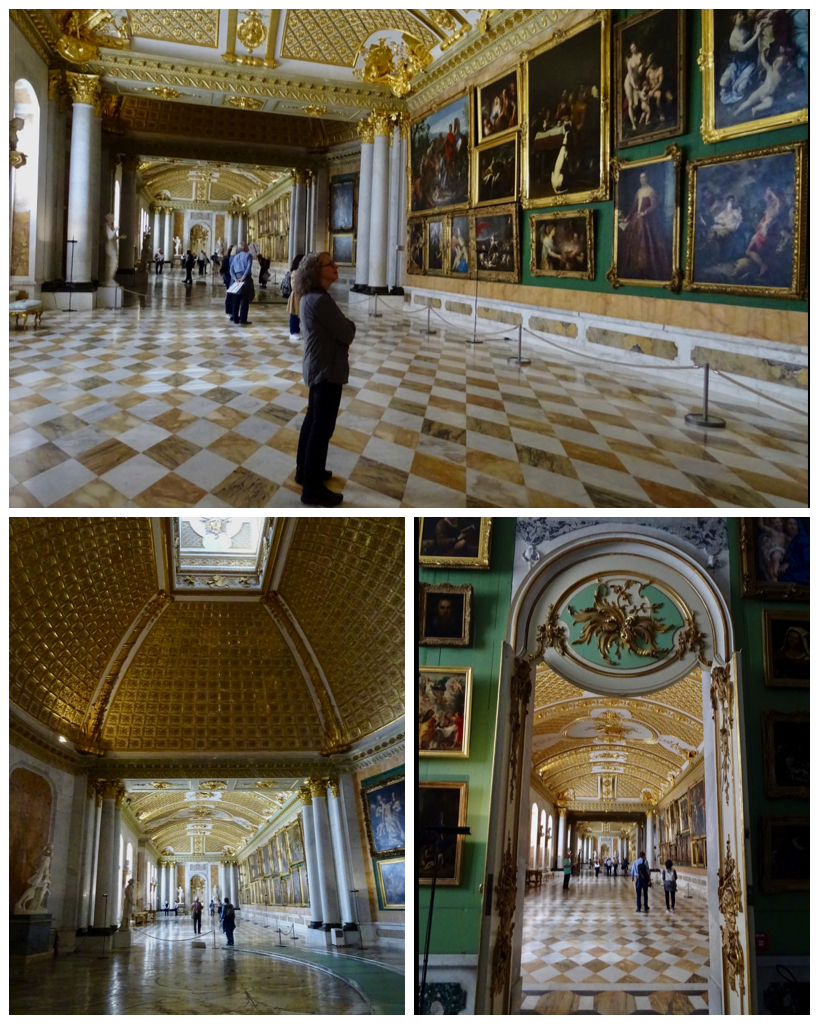
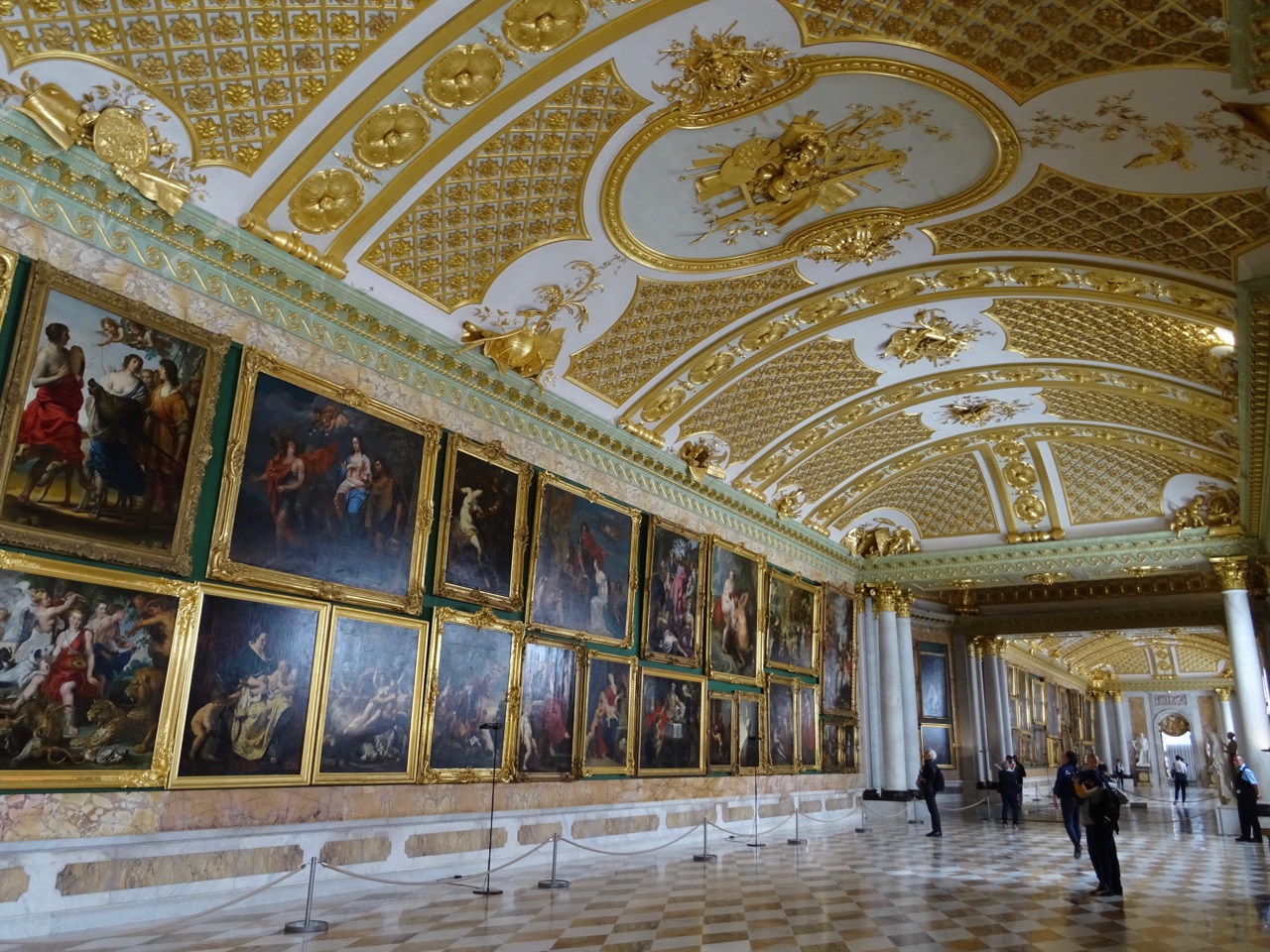 connected by a round room with a vaulted gold ceiling. At the far end there is a room for small paintings. The last photo is taken looking out from this room. There are a lot of beautiful paintings but they were a bit hard to see because of the glare from the windows on the opposite wall. I am surprised that they allow the much sunlight to enter the gallery, but it did make the space bright and very attractive.
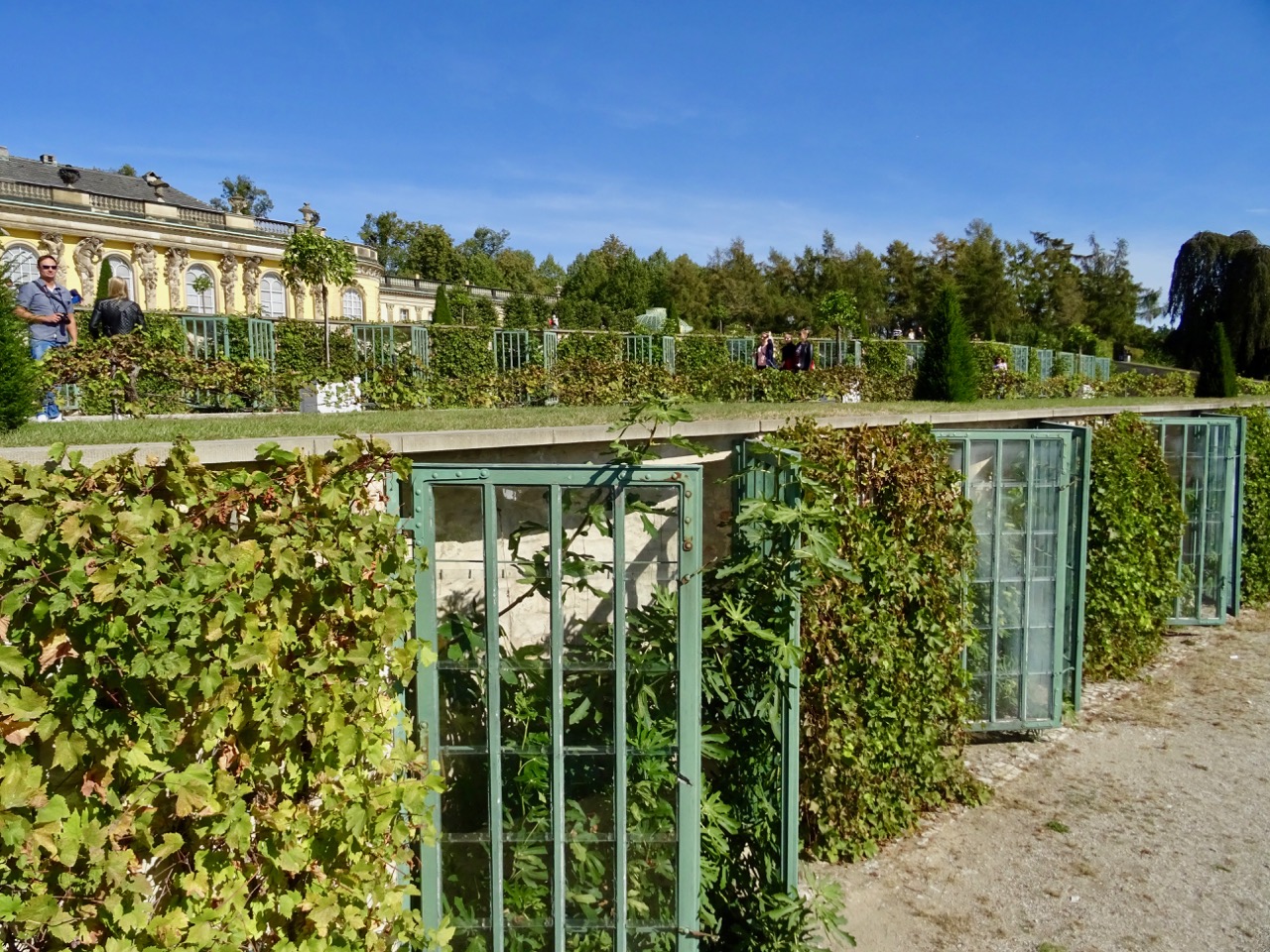
 We still had a bit of time before our palace visit so we walked down to the gardens. The layout here is reminiscent of Versailles in France, only on a smaller scale.
 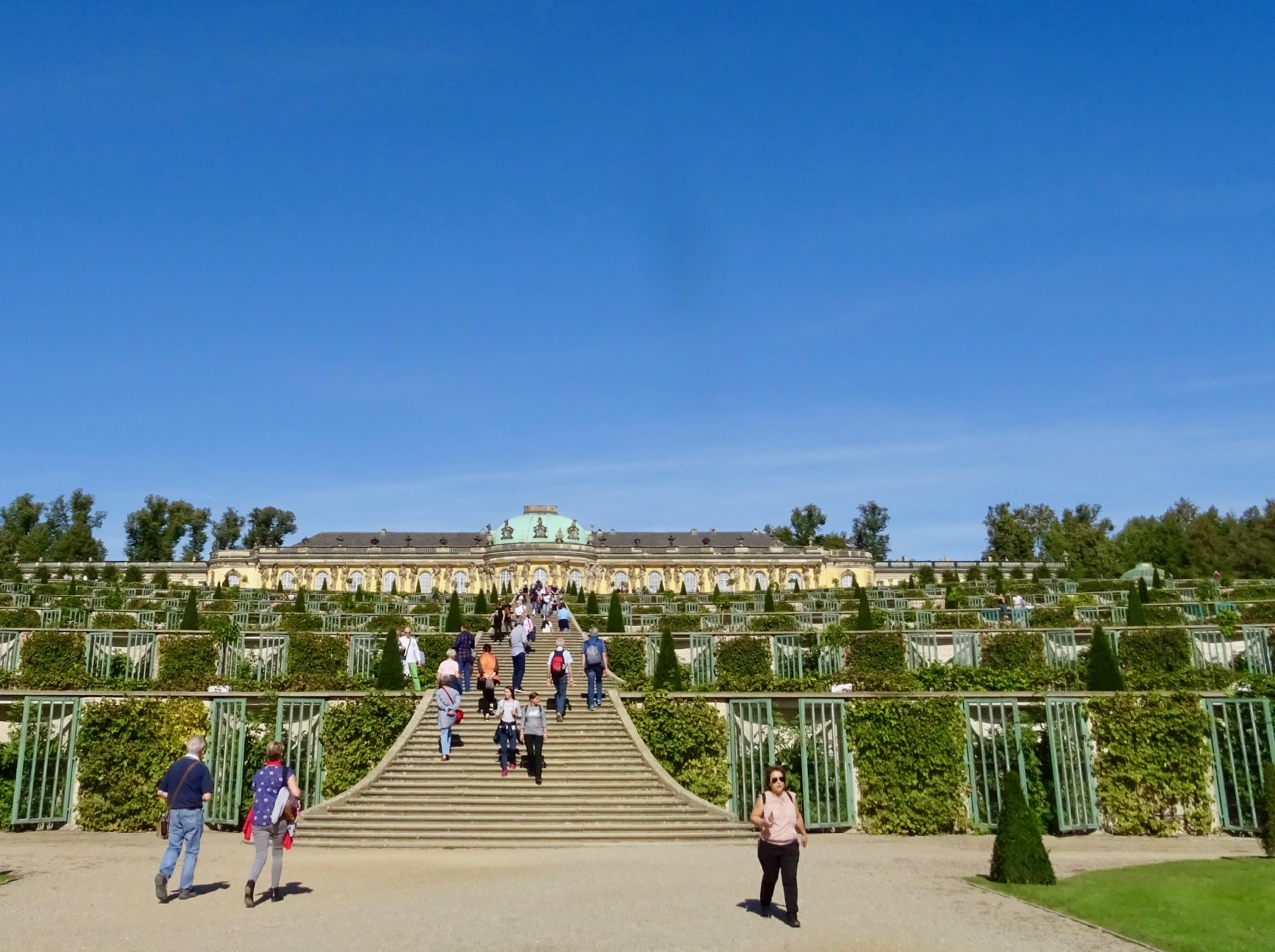 All the terraces have these nooks with glass doors that can close when cold to protect the plants. Frederich loved to garden and grow fruit trees and grapes.
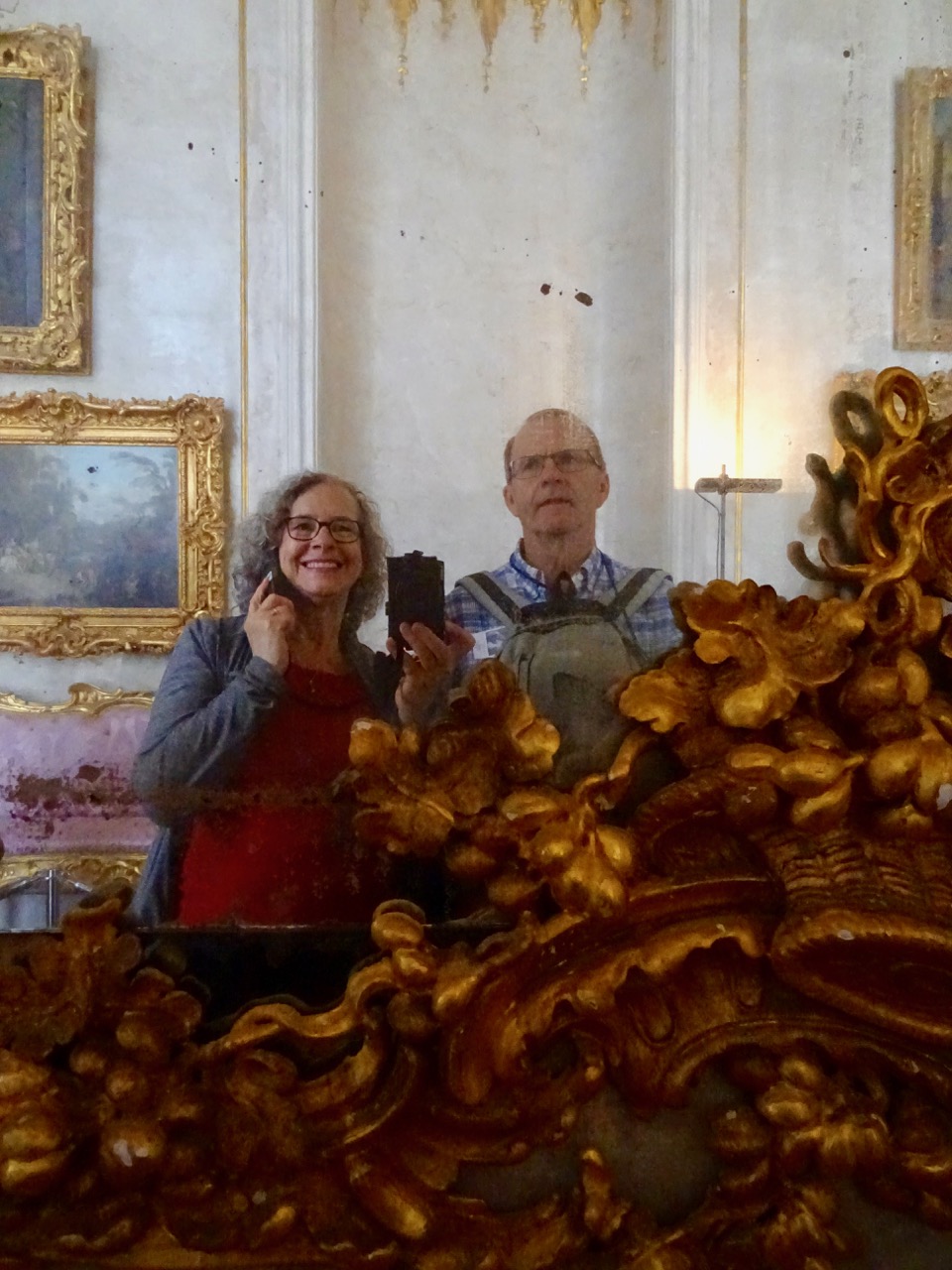
 We enter the palace and take this selfie in the first room. It contains artwork and is an entrance hallway, not very wide at all.
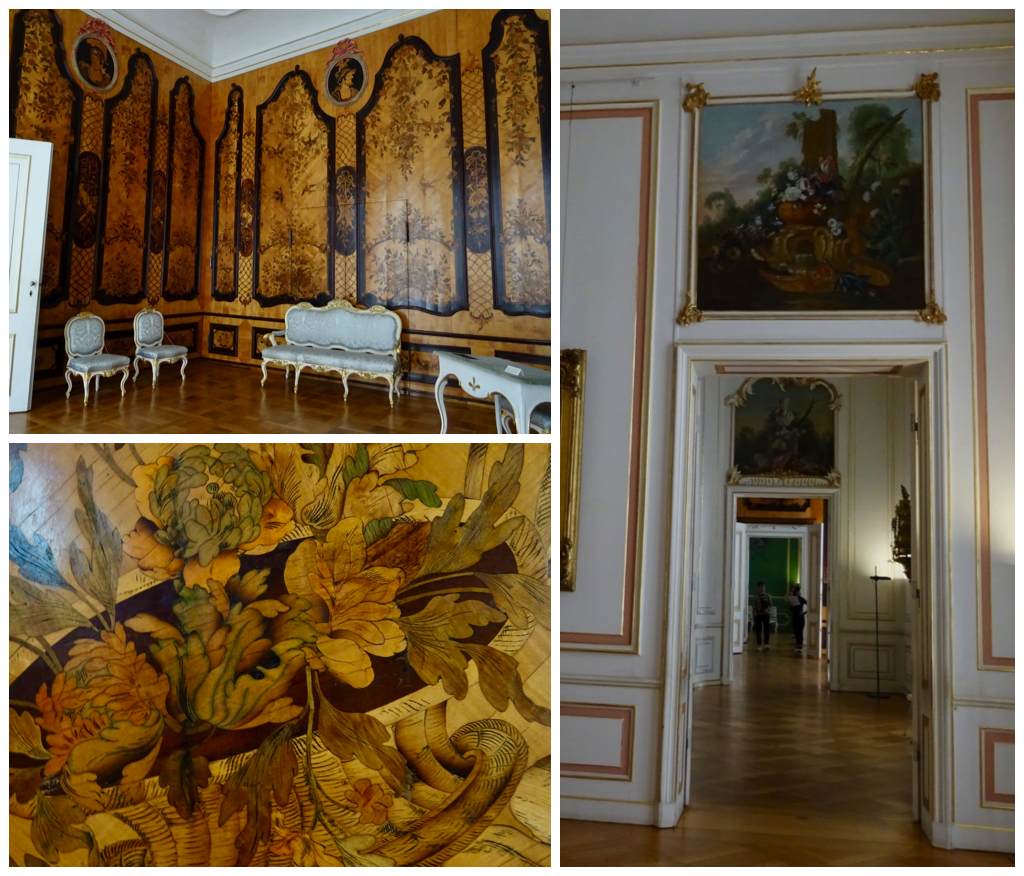
 The palace only contains twelve rooms. They are all connected by doors in a straight line that lead from one room to another. The room below is panelled in wood with inlaid botanical designs. They are very intricate.
 We walk through the rooms, each seeming to be a bit more elaborate than the next.
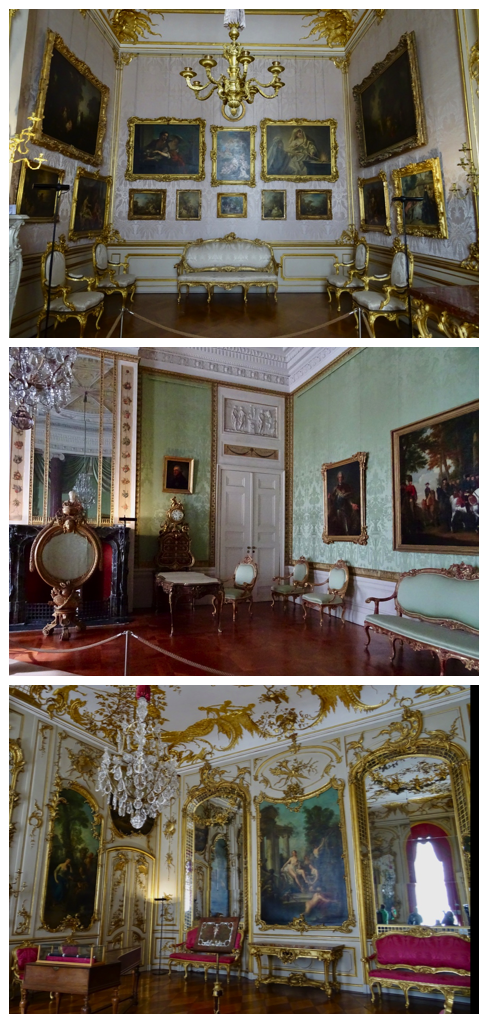 The green room above was Frederick’s study. He suffered from asthma, gout and other ailments and he often slept in the green chair below as it was too difficult to lie in a bed. He died in this chair when he was 74.
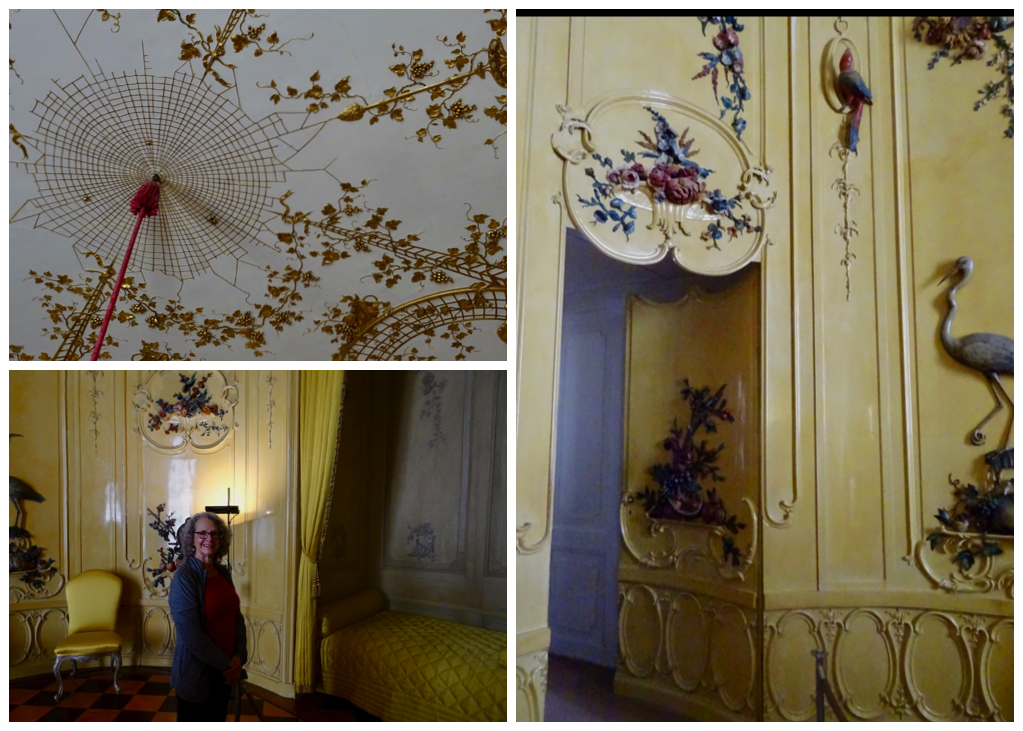
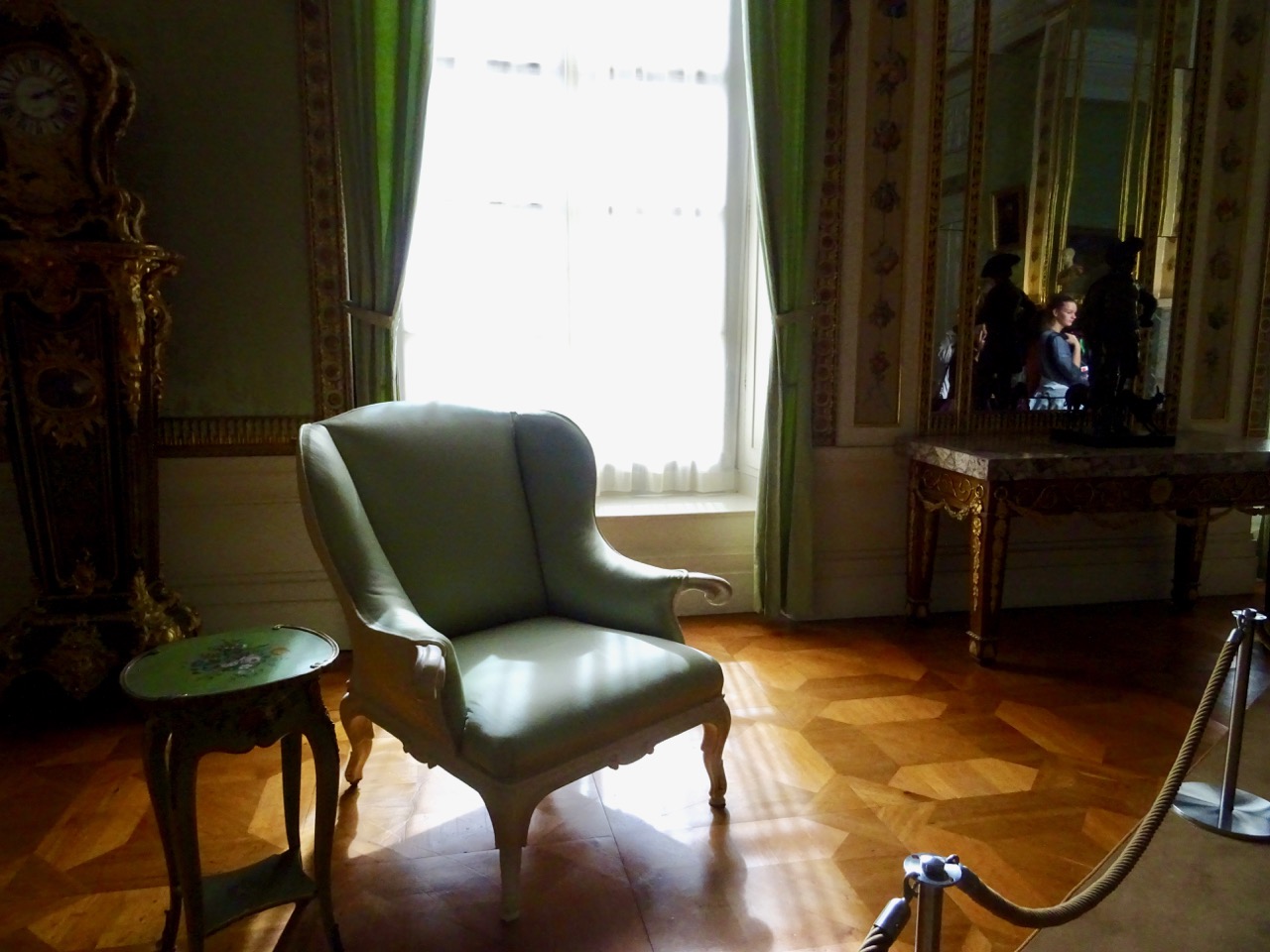 Frederick loved nature and the palace was decorated with botanical themes. The palace was his refuge and he lived there from April to October. Sanssouci is from the French “sans soucci”, which means “without worry”. Frederick was married but lived separately from his wife. He only married because his father threatened him with imprisonment if he did not comply. His father was very strict and made his Frederick’s life miserable. He had a miserable childhood as his father thought him effeminate and tried to change him. Frederick was gay and surrounded himself with male friends and companions at Sanssouci. Women were not welcome there. The yellow room below has raised carved decorations, and a sleeping nook for the bed, as did all the bedrooms. Notice the spiders on the ceiling decoration.
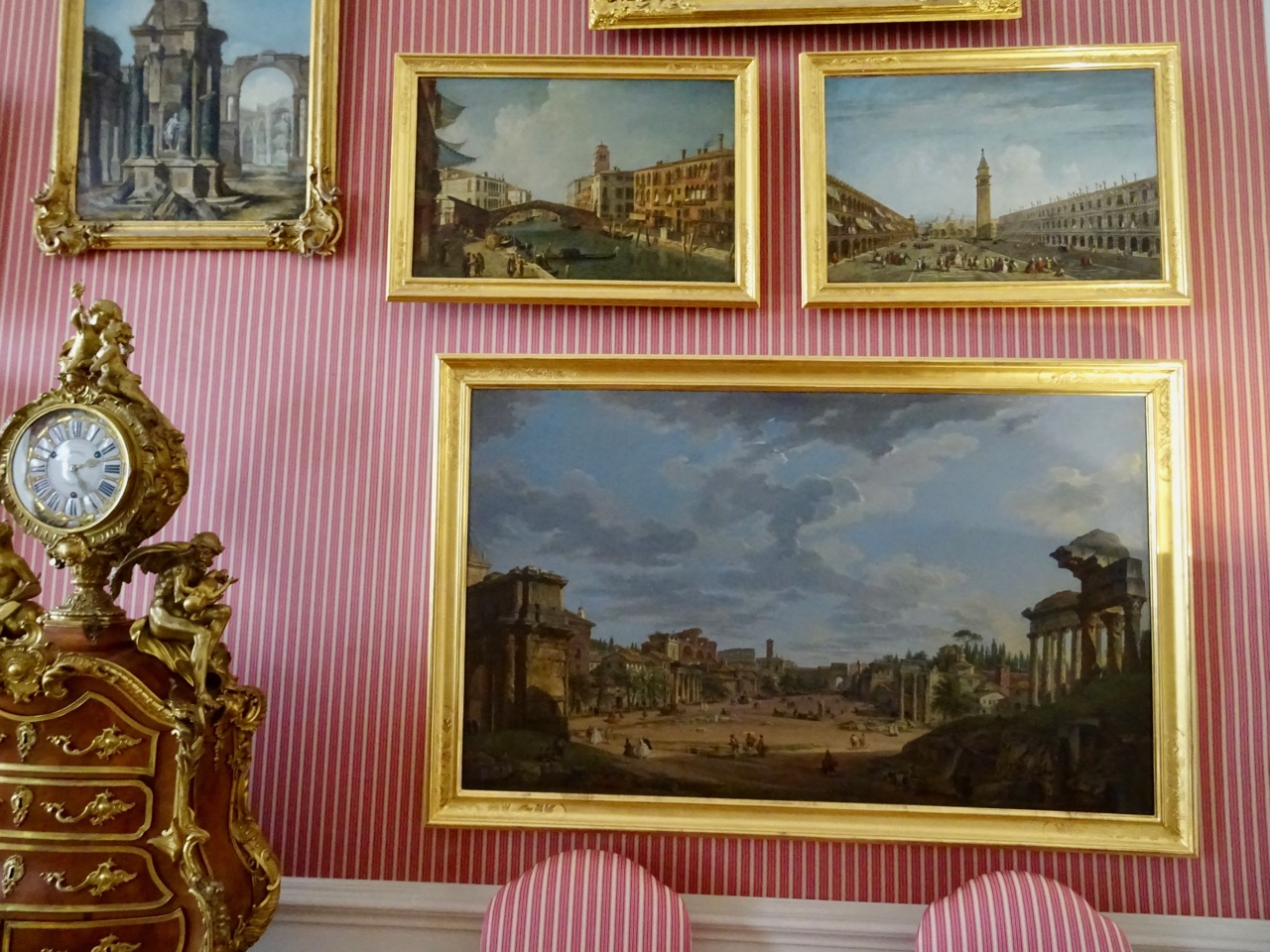
 Frederick was unable to travel to Rome and Venice but his palace had many paintings of these cities, which he greatly admired. I think how lucky we have been to visit these cities.
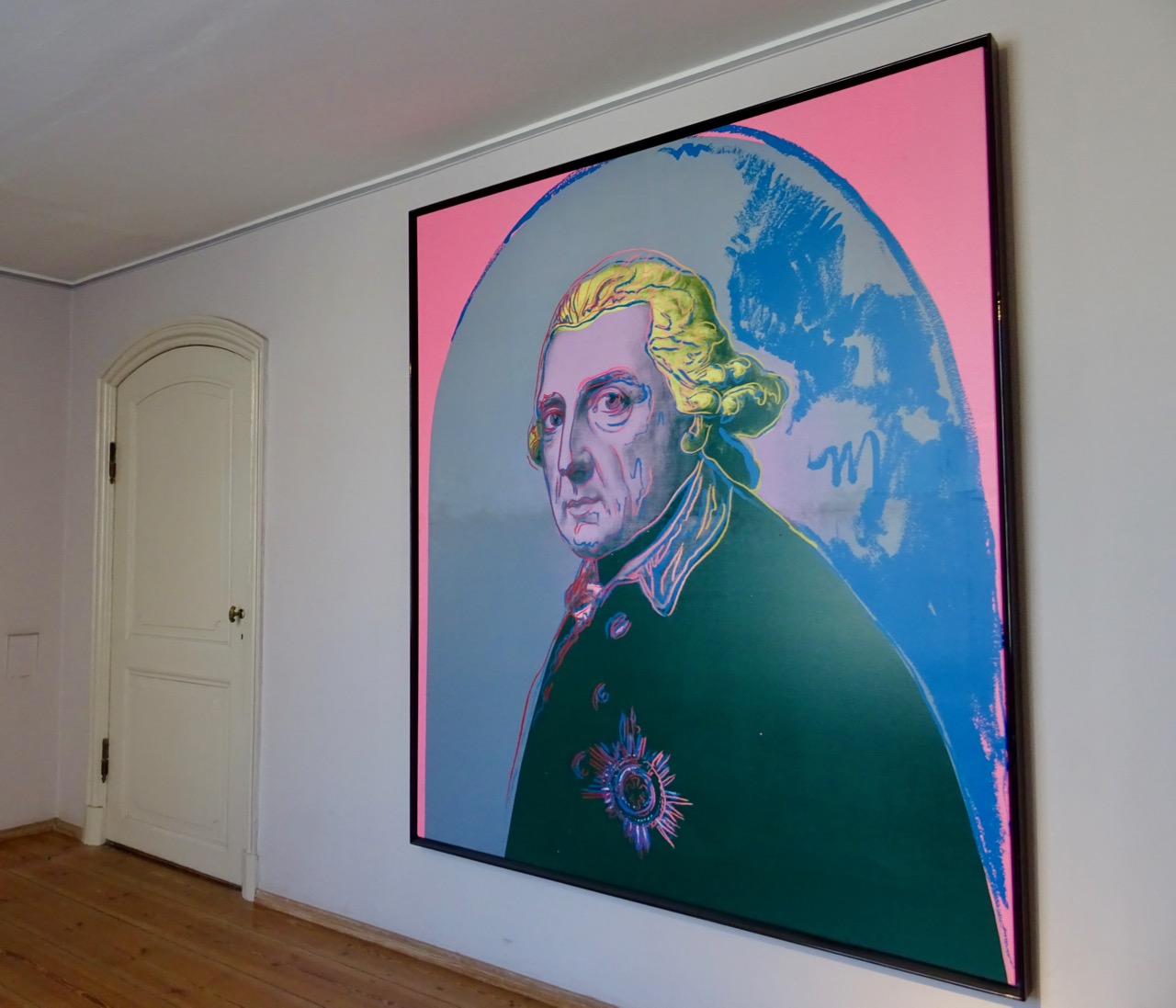
 As we exit the palace there is a huge painting of Frederick the Great by Andy Warhol. It is quite a dramatic change from the other artwork we have seen here.
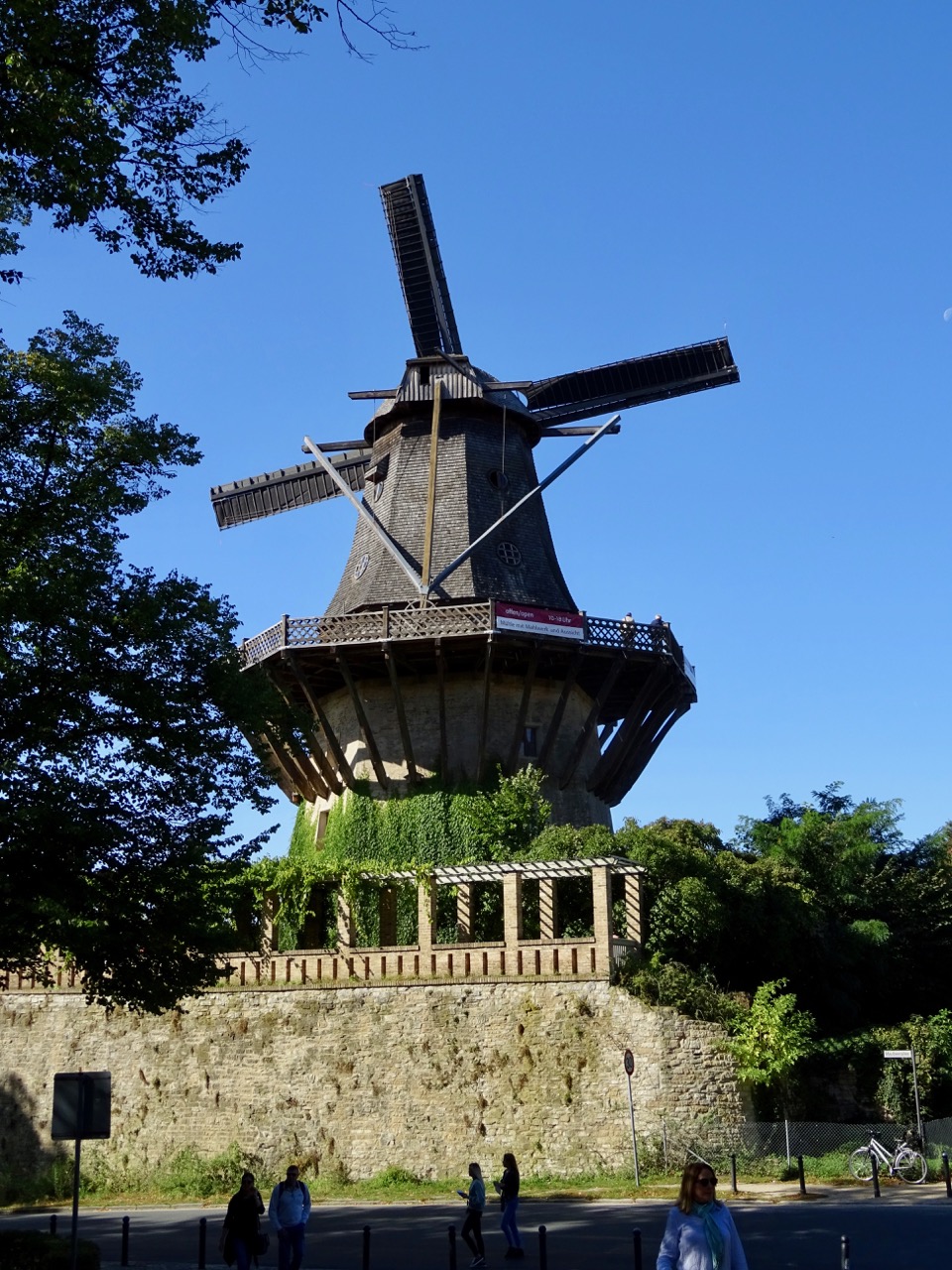
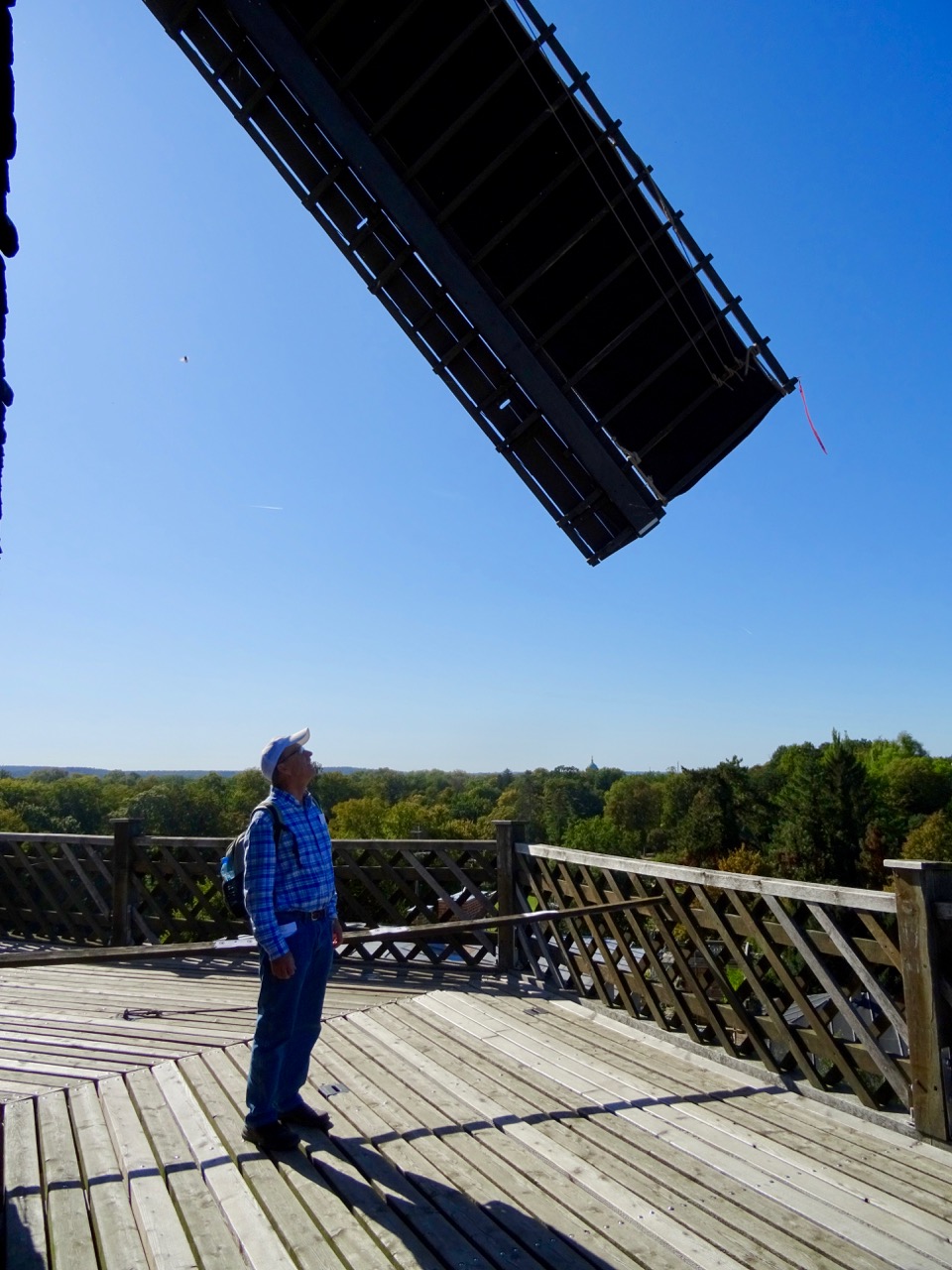
 We climb the interior of the windmill and step outside to check out the huge blades.
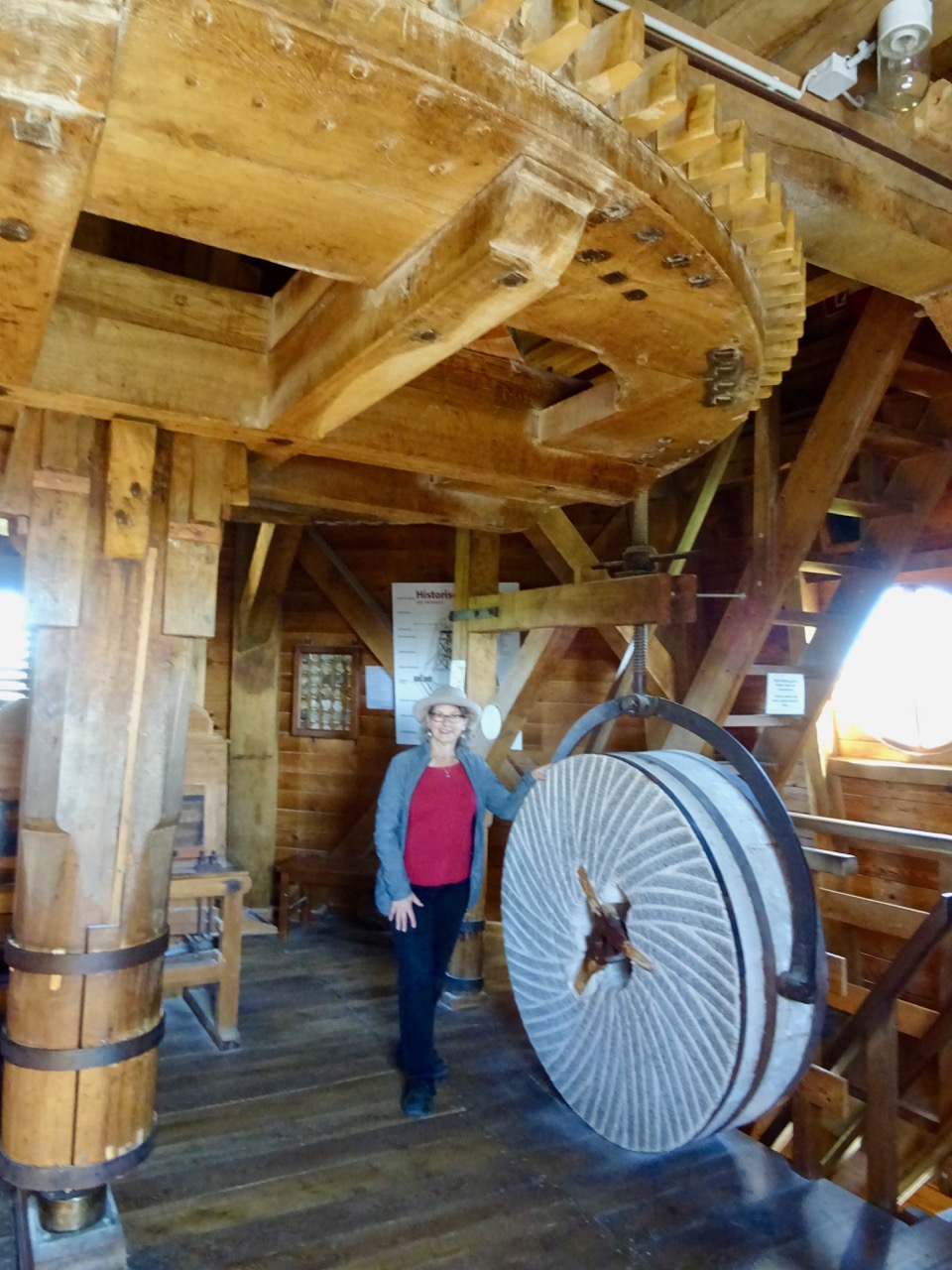
 This is still a working windmill. We are amazed at the size of the wooden wheels and cogs.
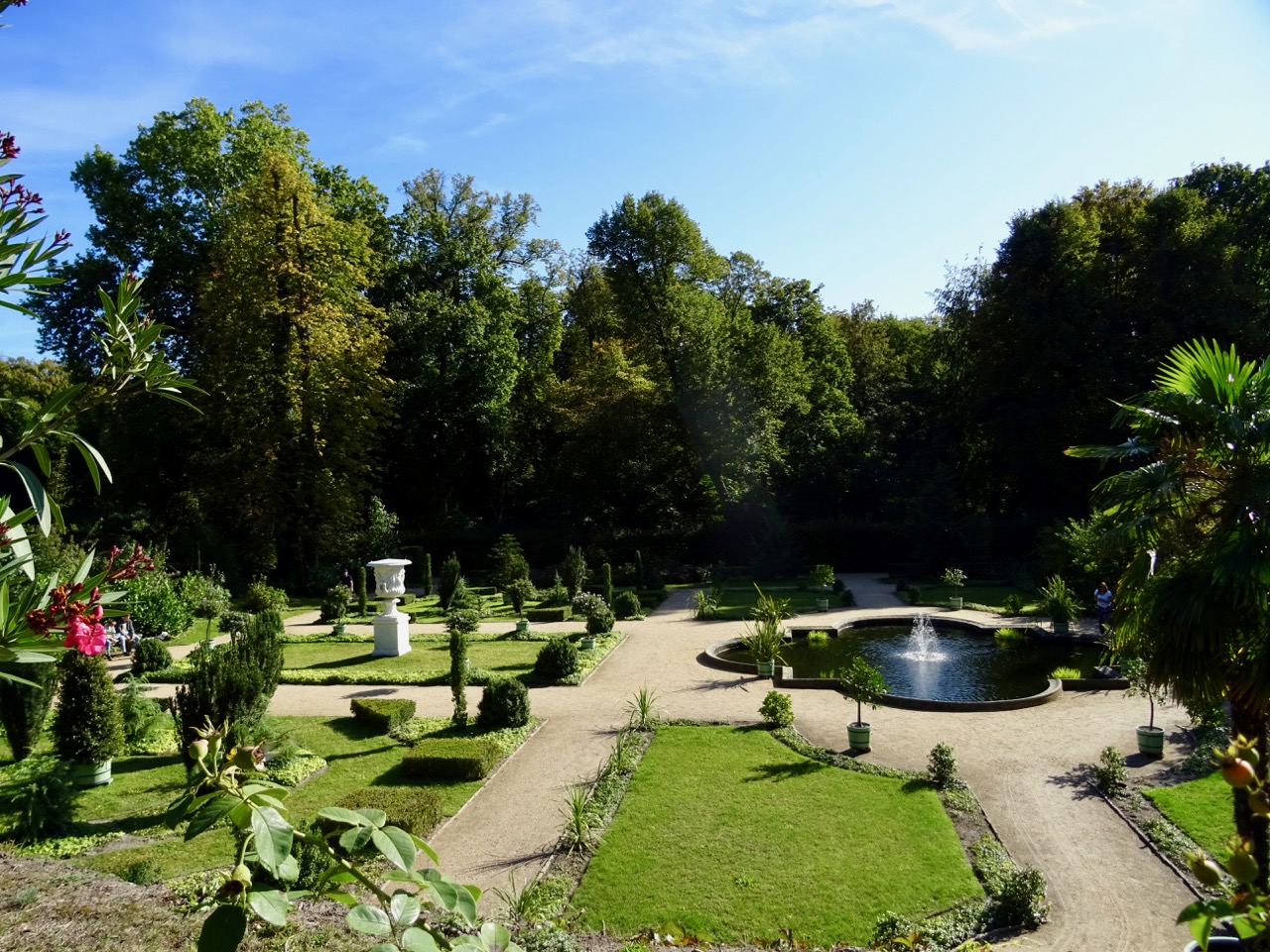
 We walk through the park with its gardens and fountains towards the Orangerie.
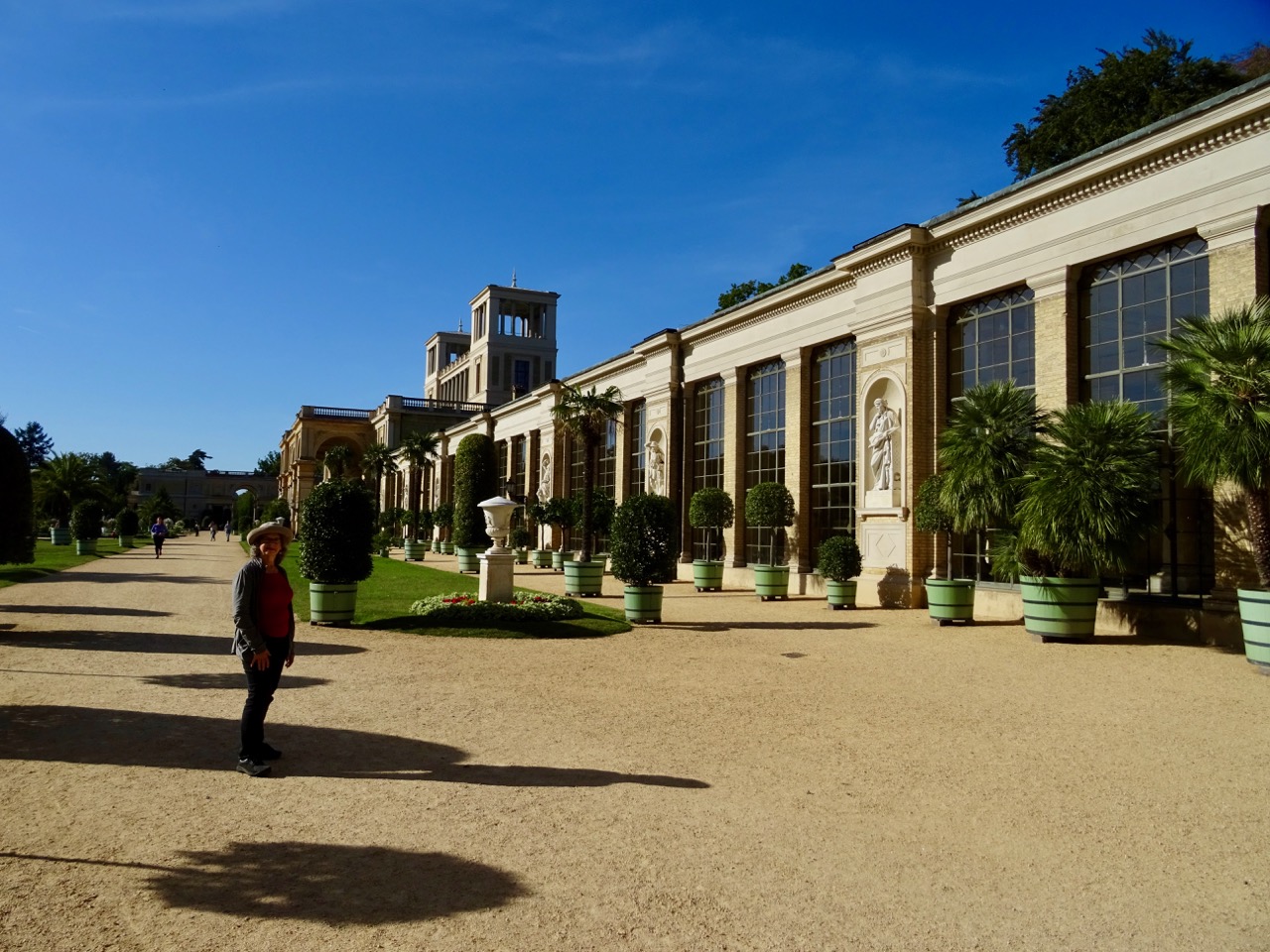
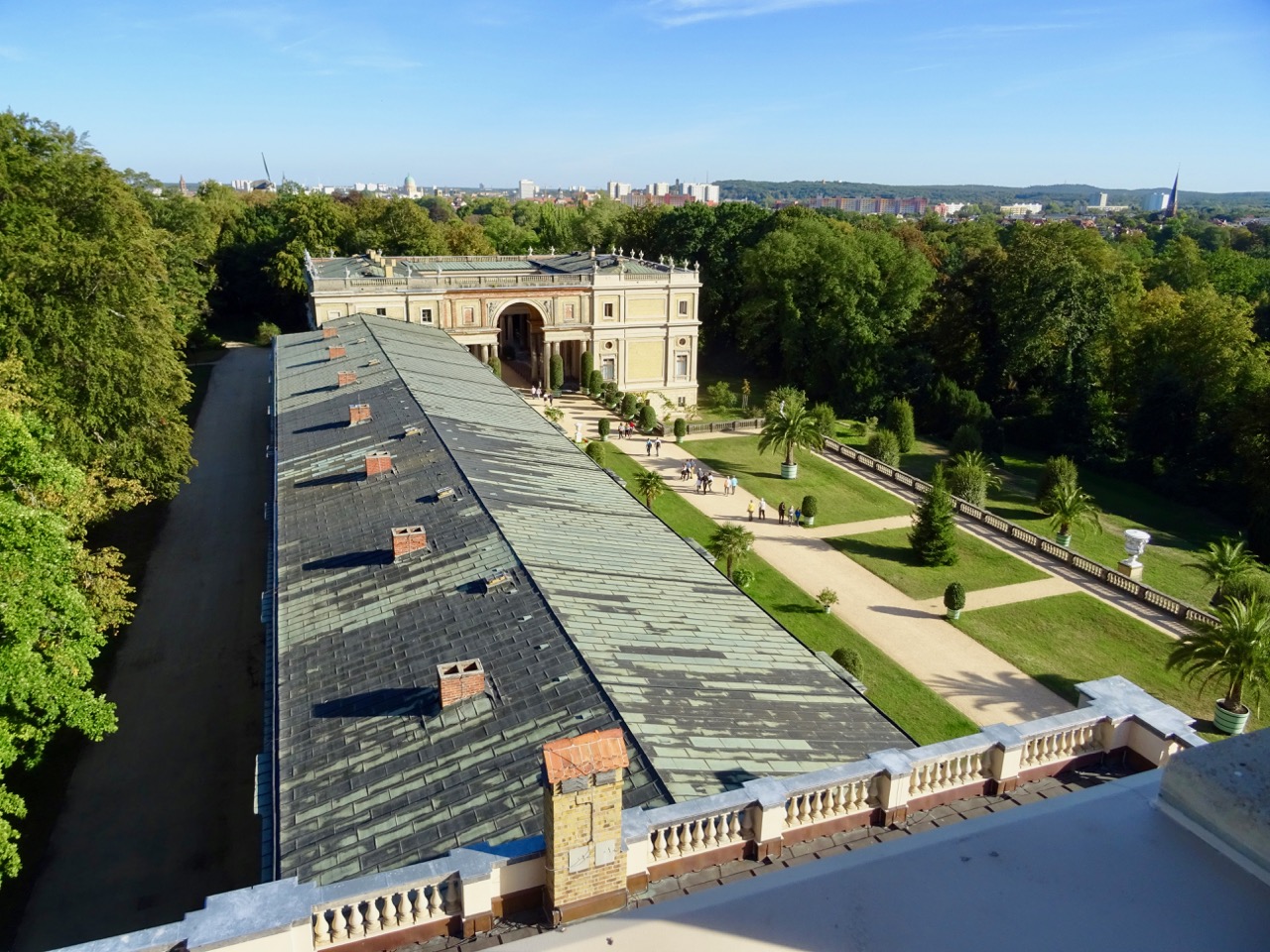
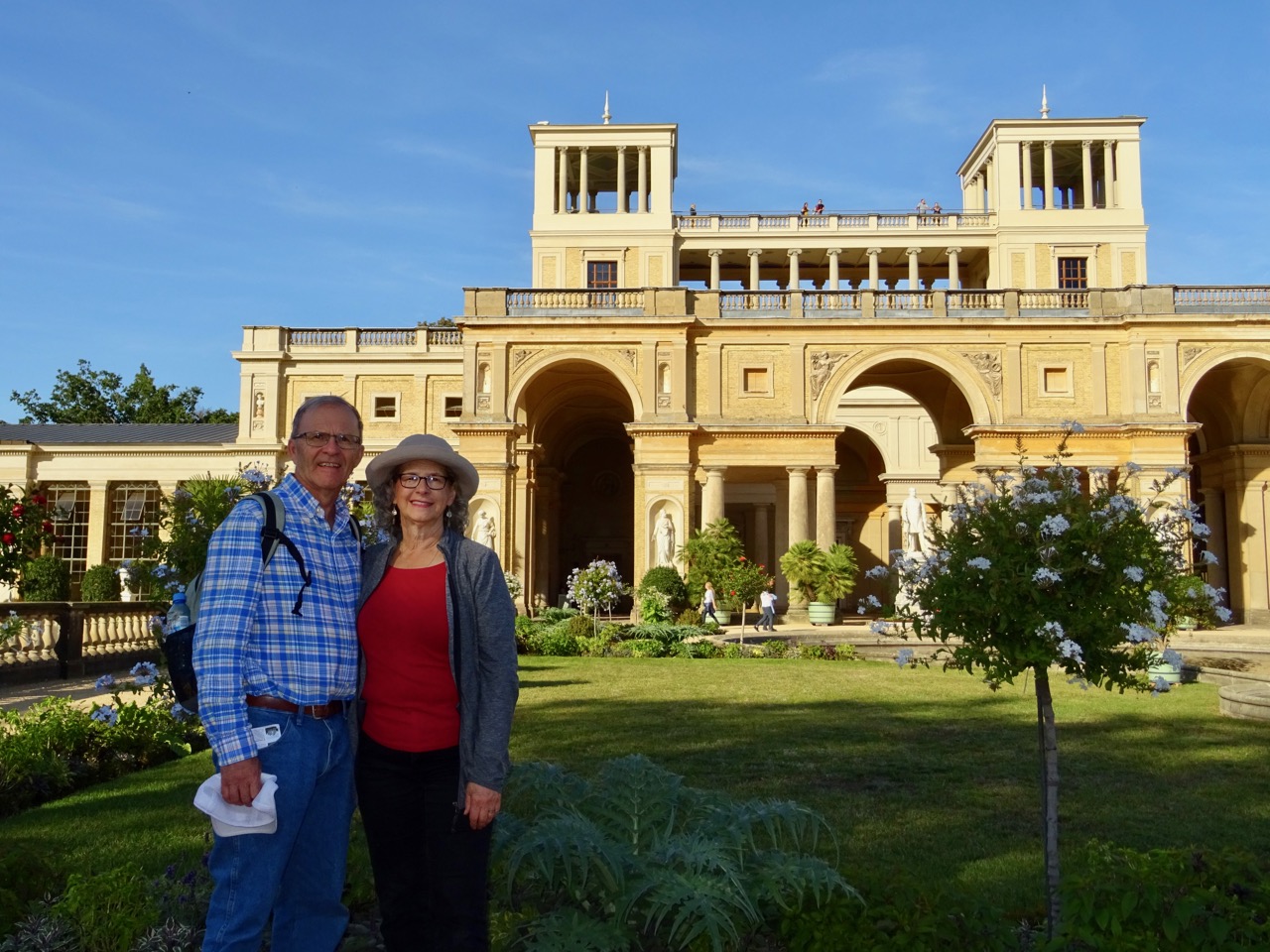
 Wow! We have never seen an orangerie this large. It is enormous! This photo shows one wing and the entrance behind me. There is another wing just as long on the other side of that entrance. This Orangerie was built by Frederich William IV in 1851-1864. It is 300 meters long.
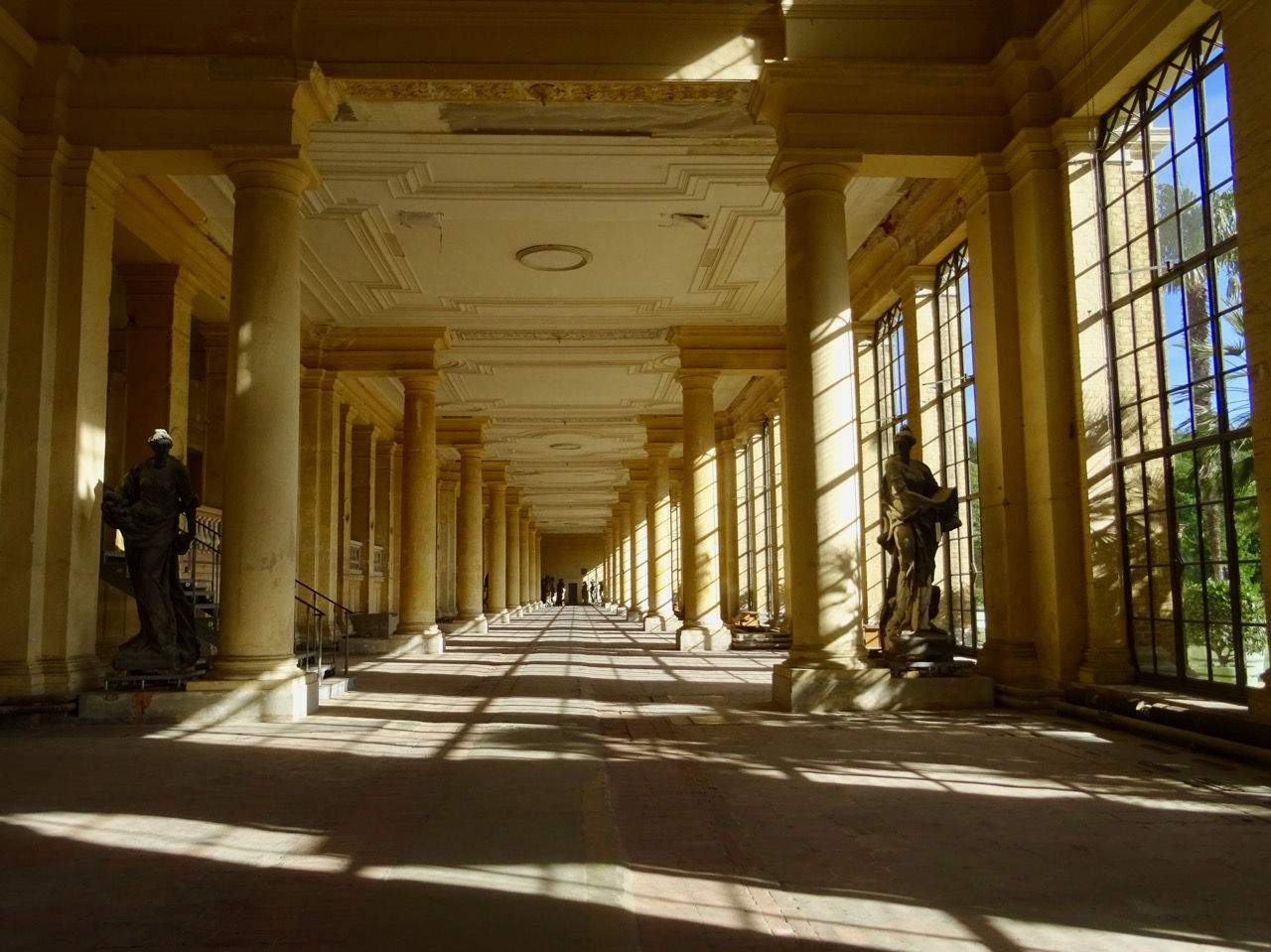
 Looking inside one of the wings of this huge orangerie. This is where all the potted plants that would not survive winter temperatures are kept. Like the potted plants in the photo above,
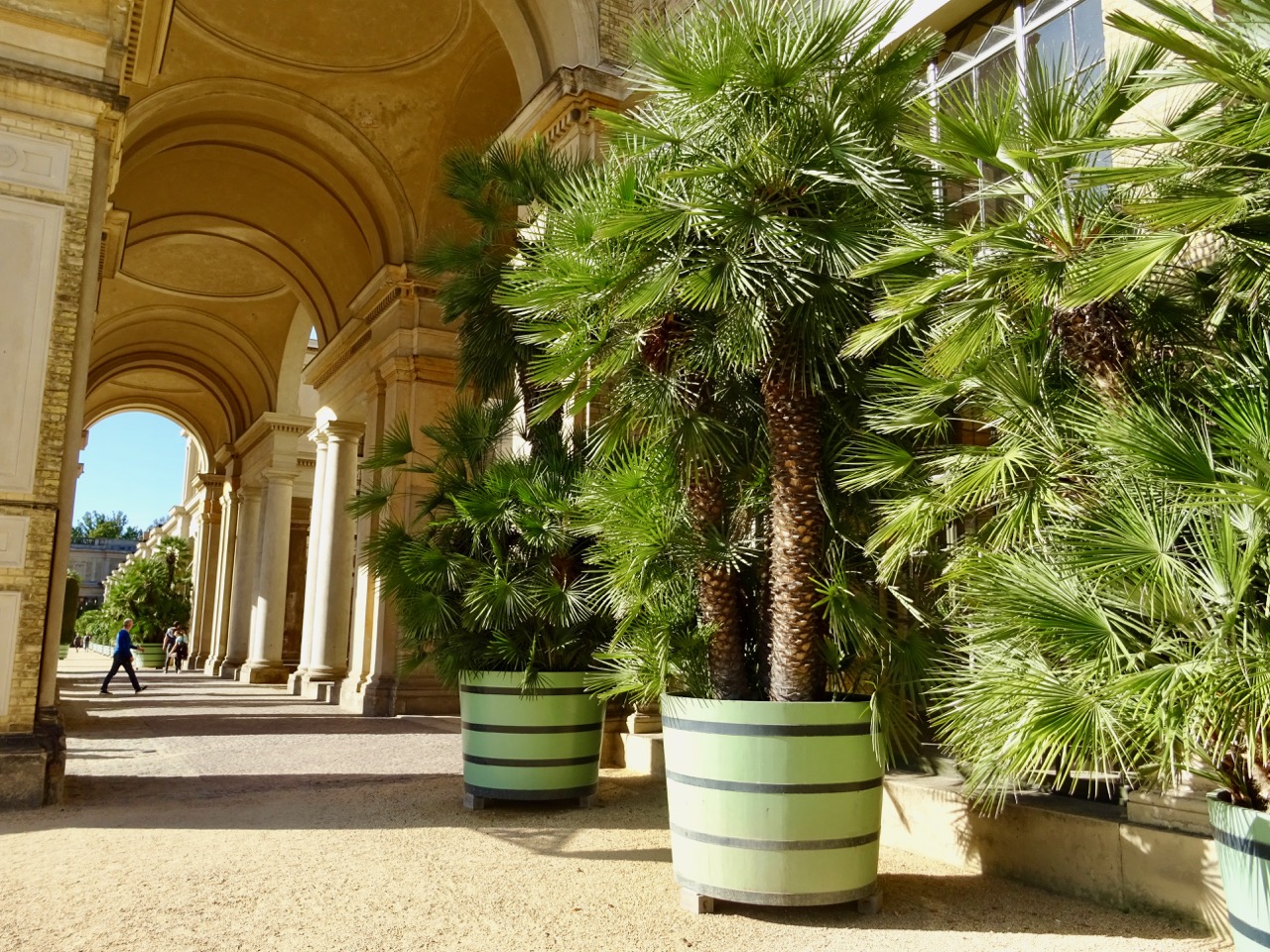
 Some of the plants are huge. These large potted palms definitely need a fork lift to be moved. No idea how they ever transplant them when needed? The pots are almost as tall as I am!
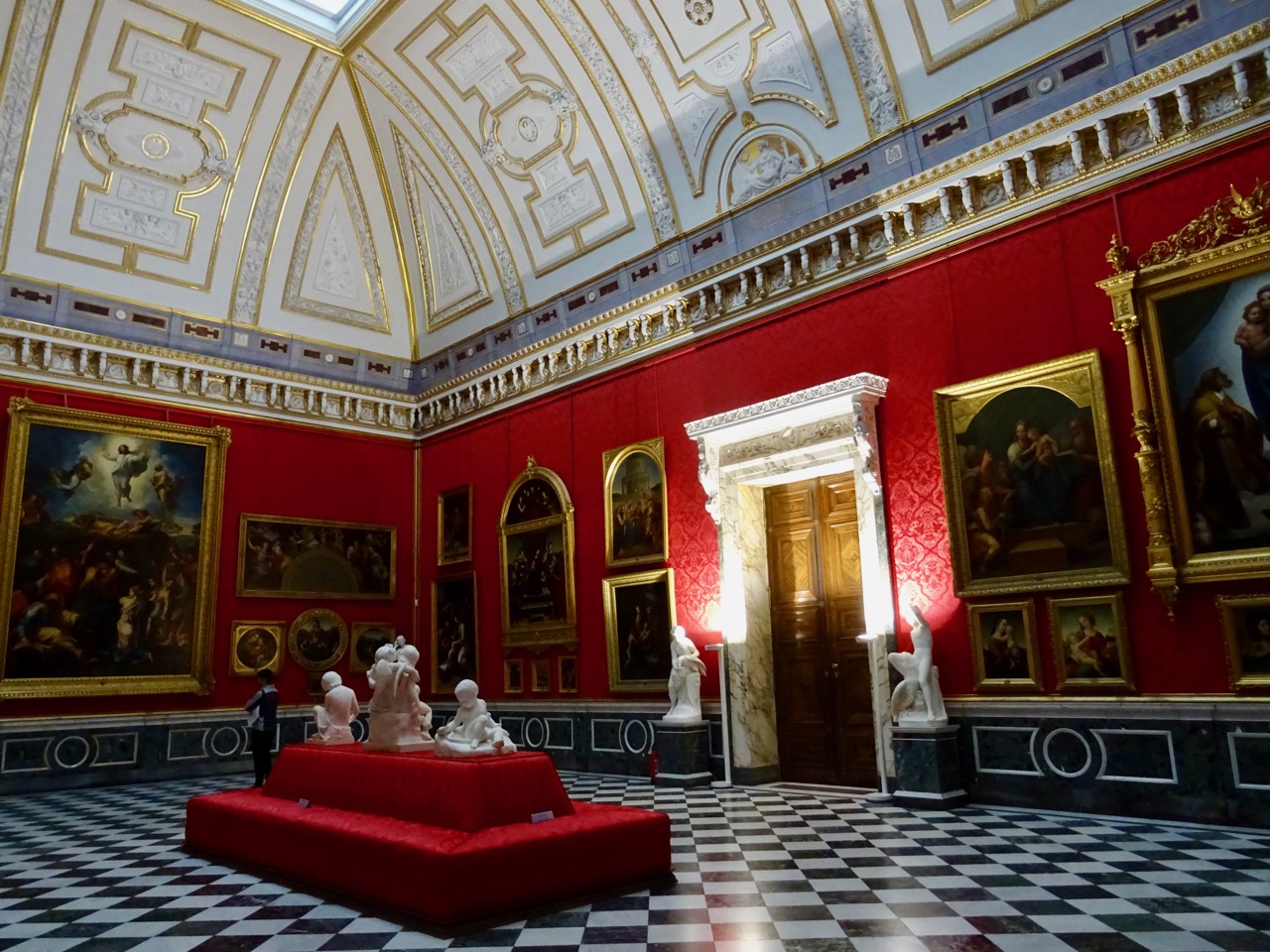
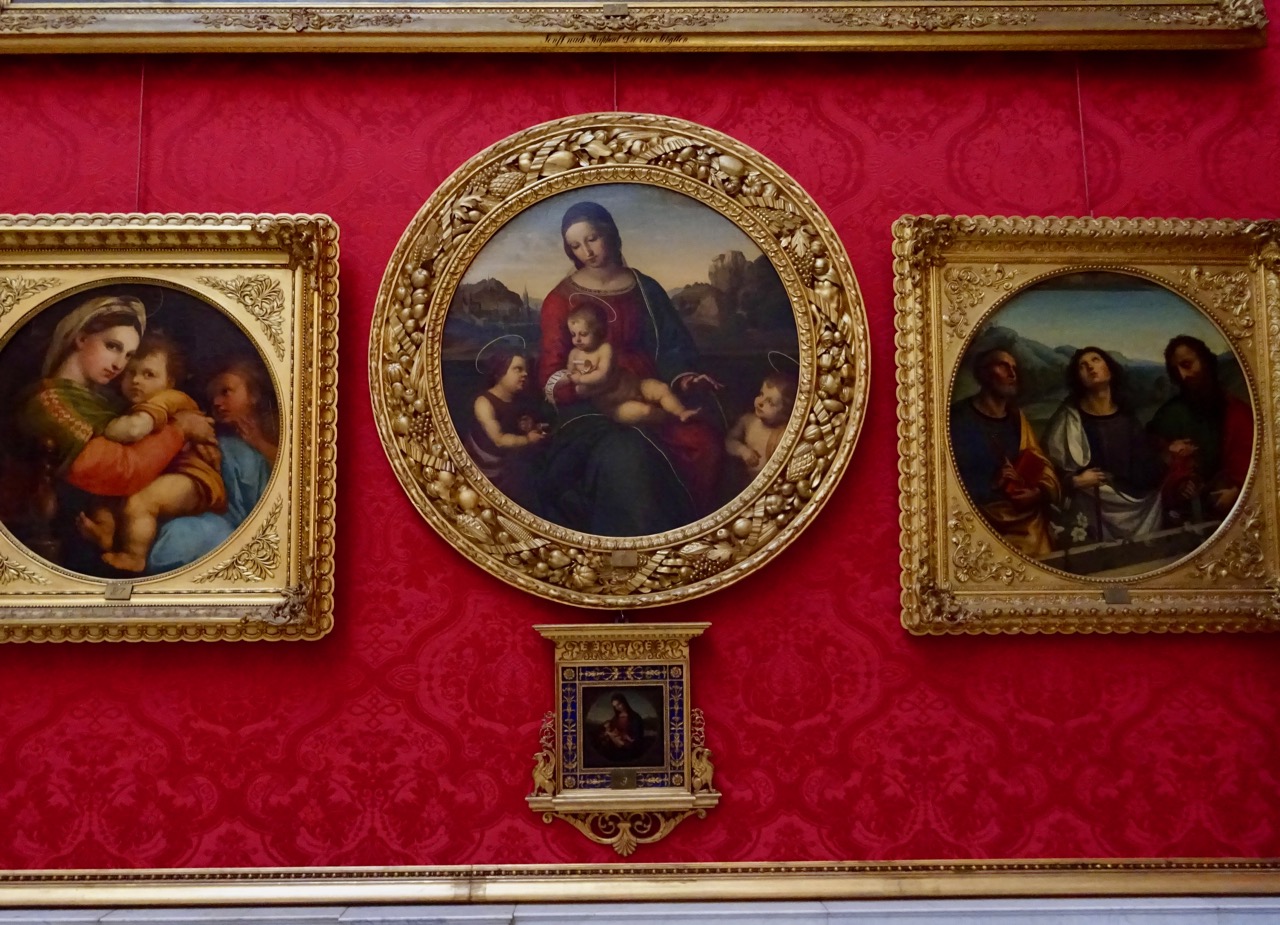
 We are surprised to find more furnished rooms and another art gallery in the Orangerie. The Raphael Hall has over 50 copies of Renaissance paintings.
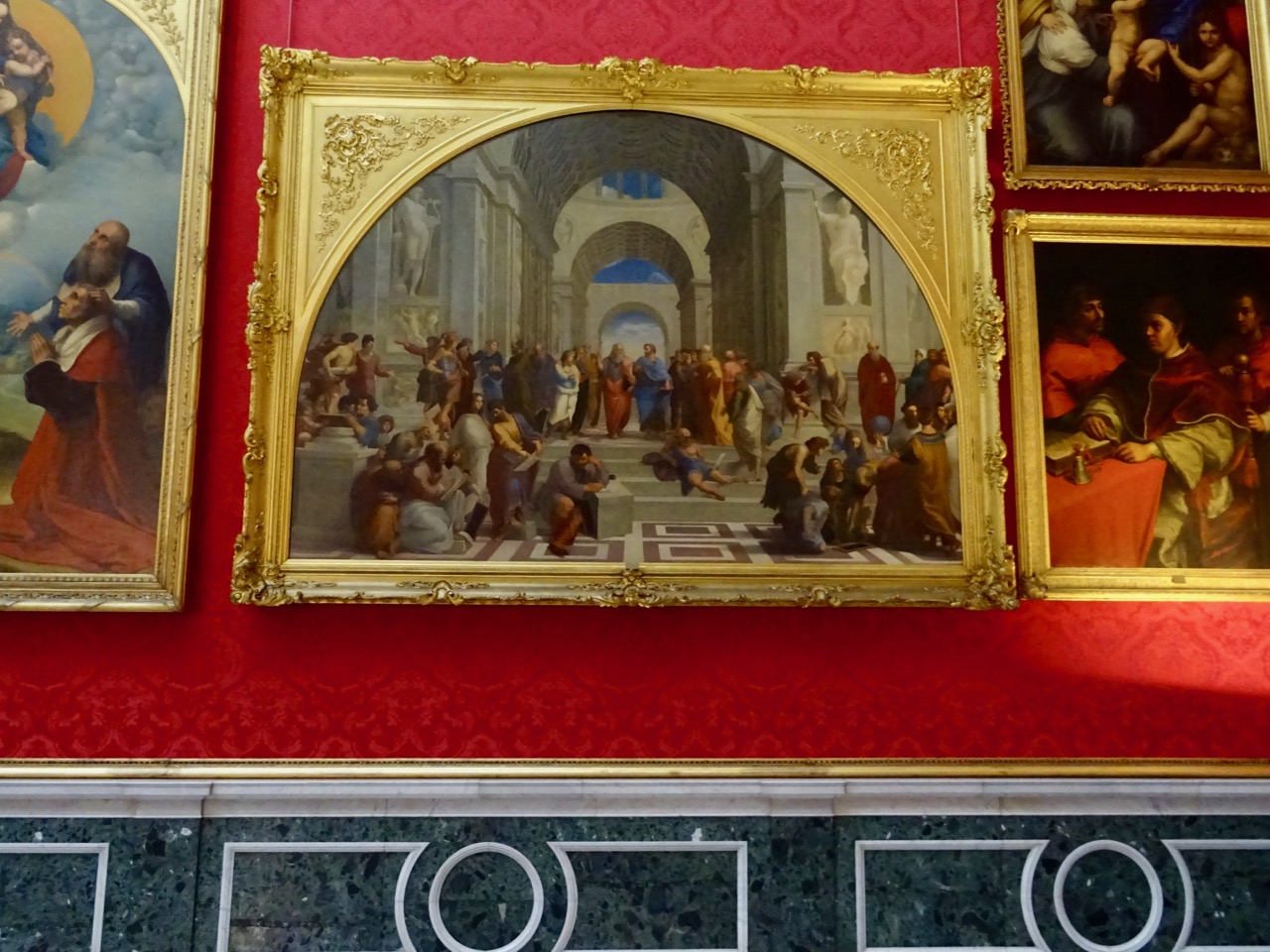
 We saw the original of this painting in Italy at the Vatican.
 Do you recognize the tondo by Raphael that we saw at the Gemäldegalerie earlier this week? Interesting how copying famous artworks was such a common accepted practice. Today I think it would be called forgery.
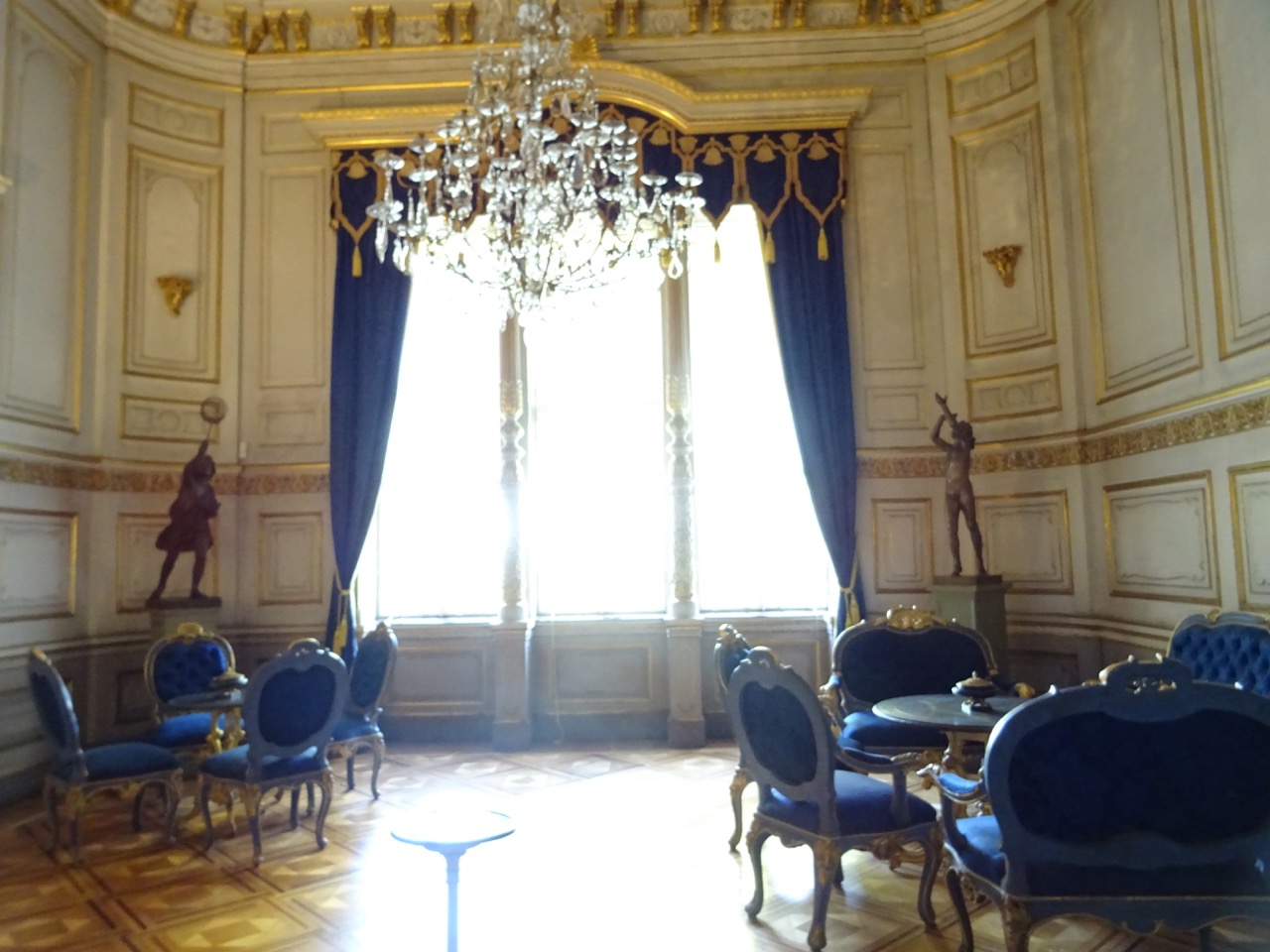
 Another room in the Orangerie Palace.
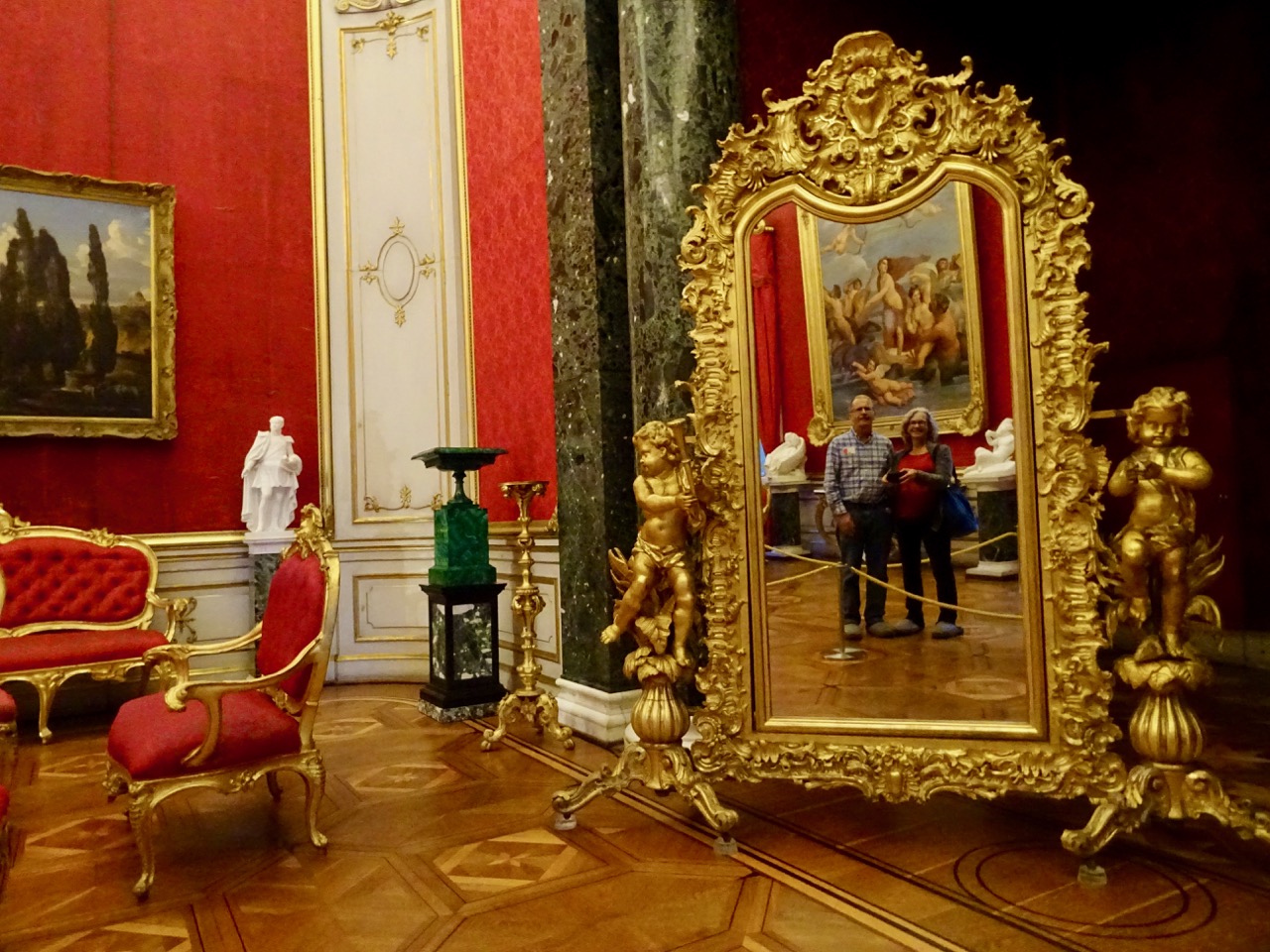
 And another selfie reflection in a very ornate mirror. Notice our big slippers!
 These are some of the stairs we climb to the top of the Orangerie.
 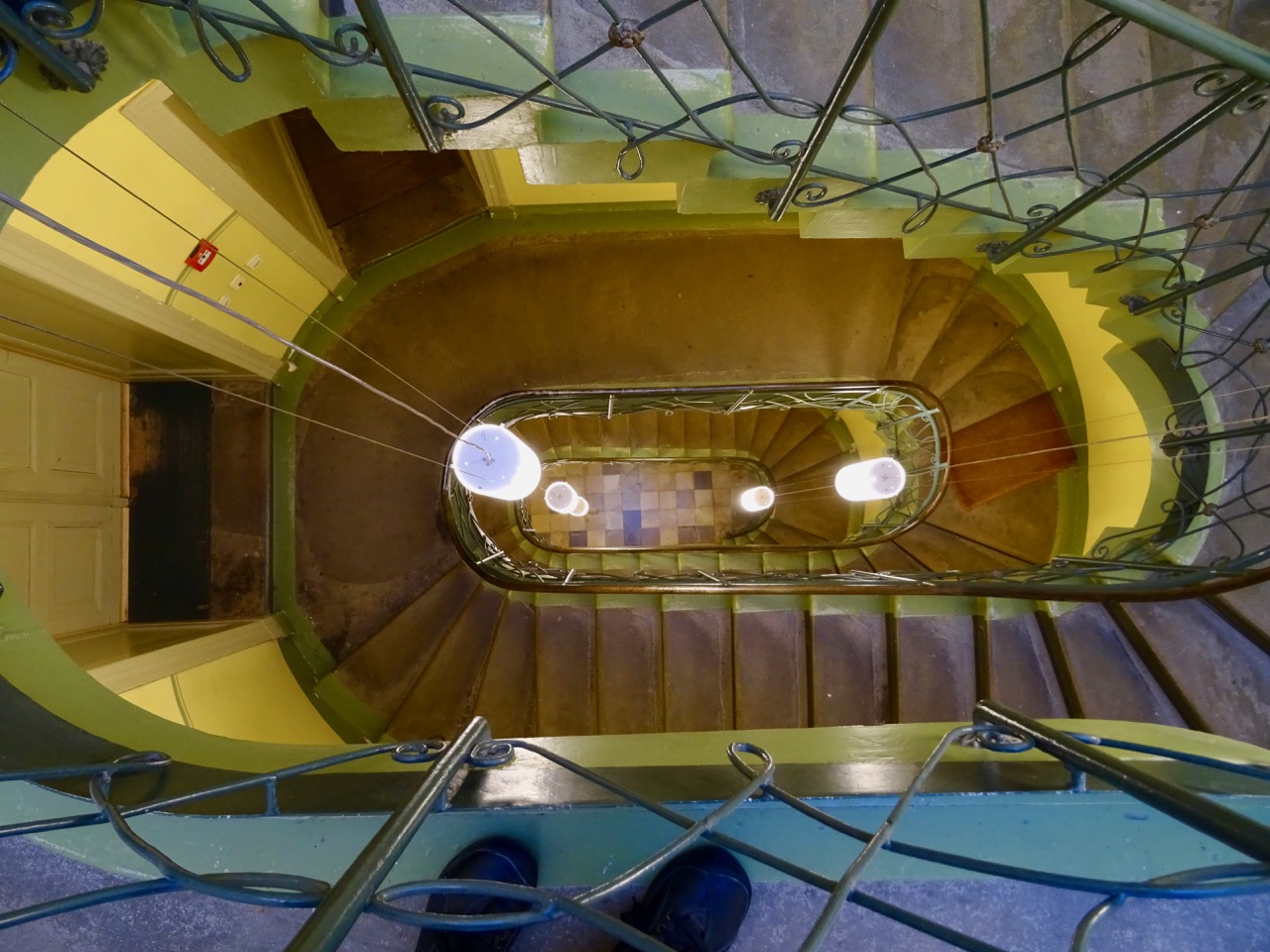 And more stairs…
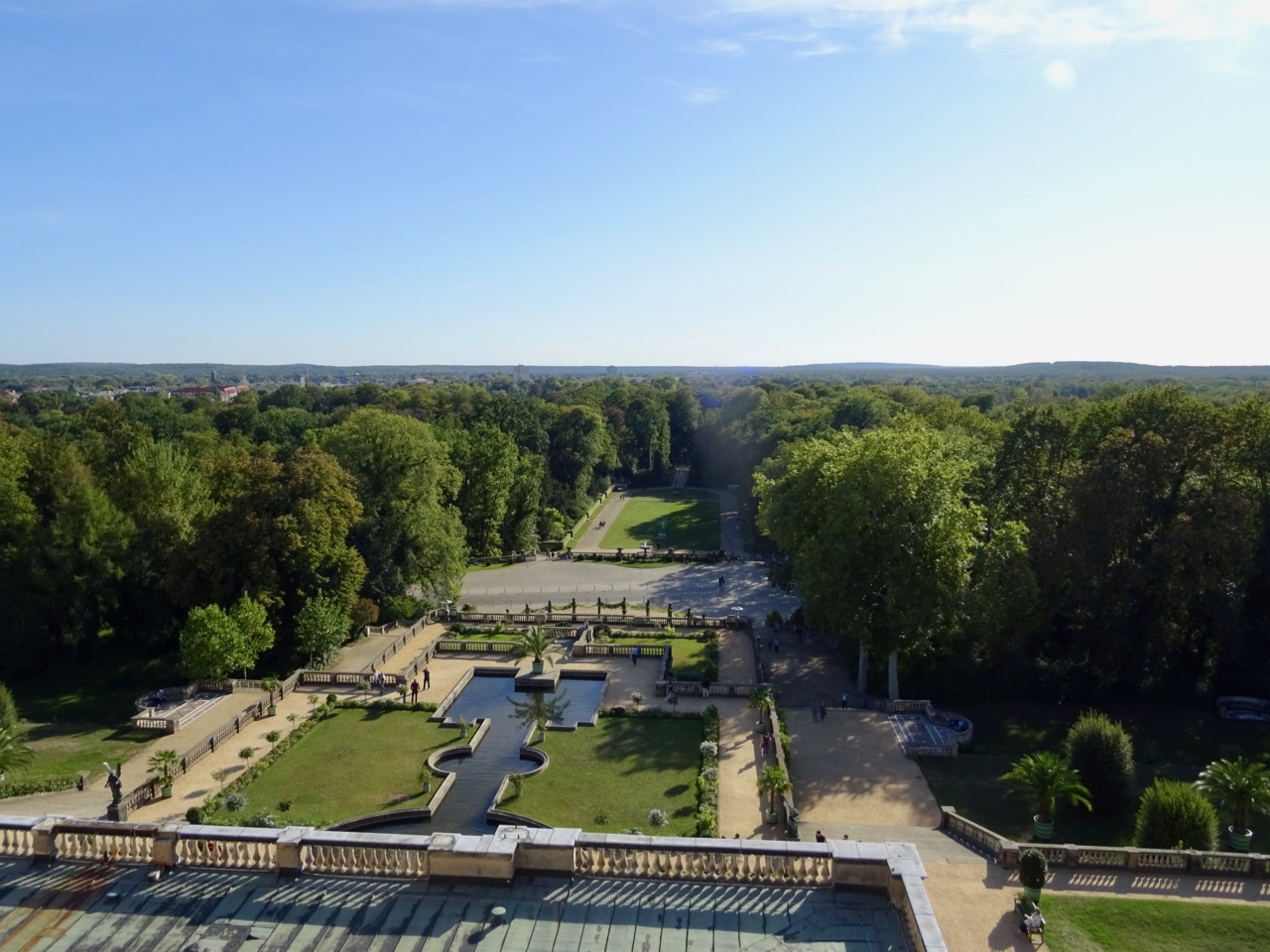
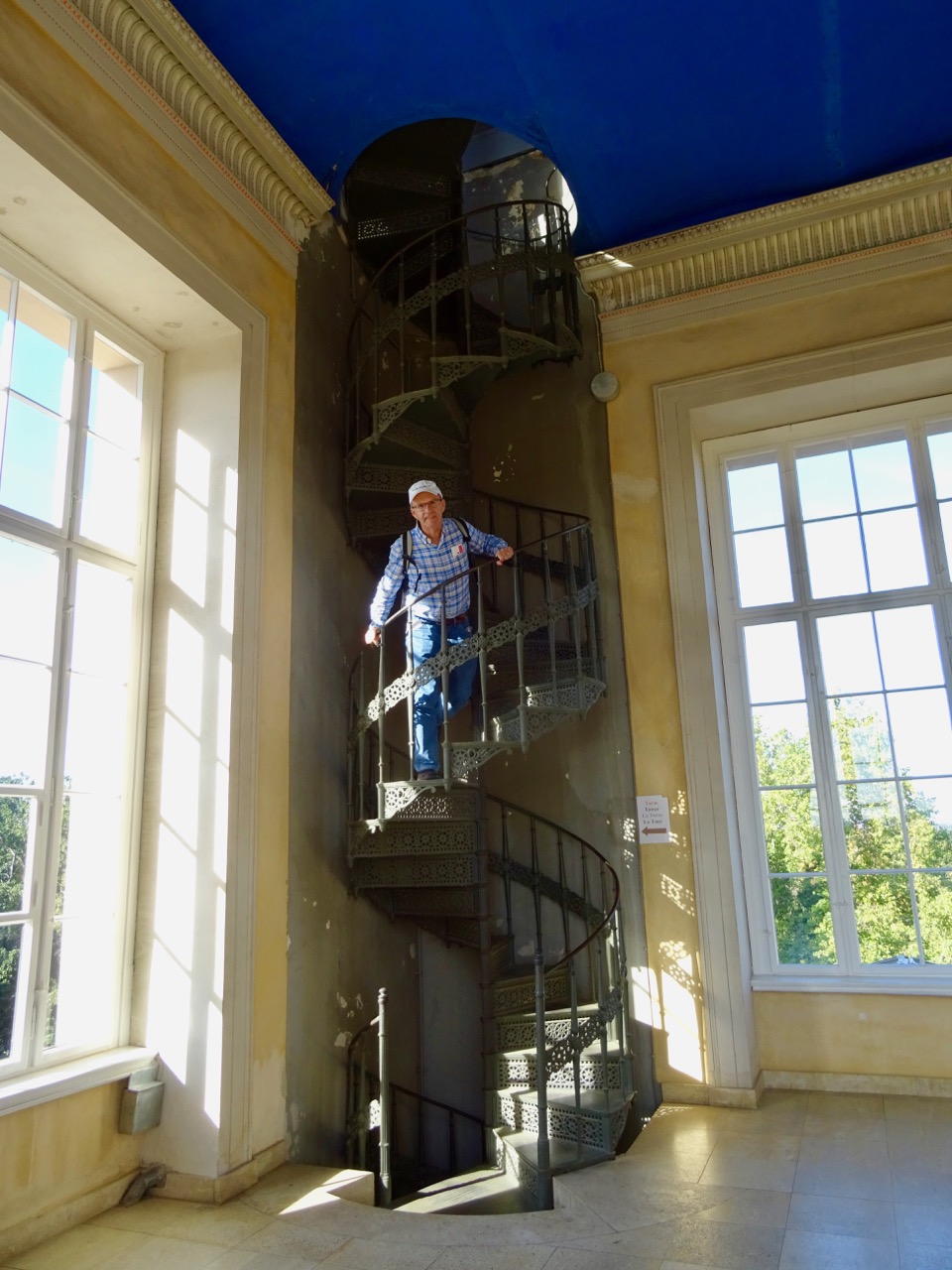 to get this view.
 There is the East wing of this enormous building.
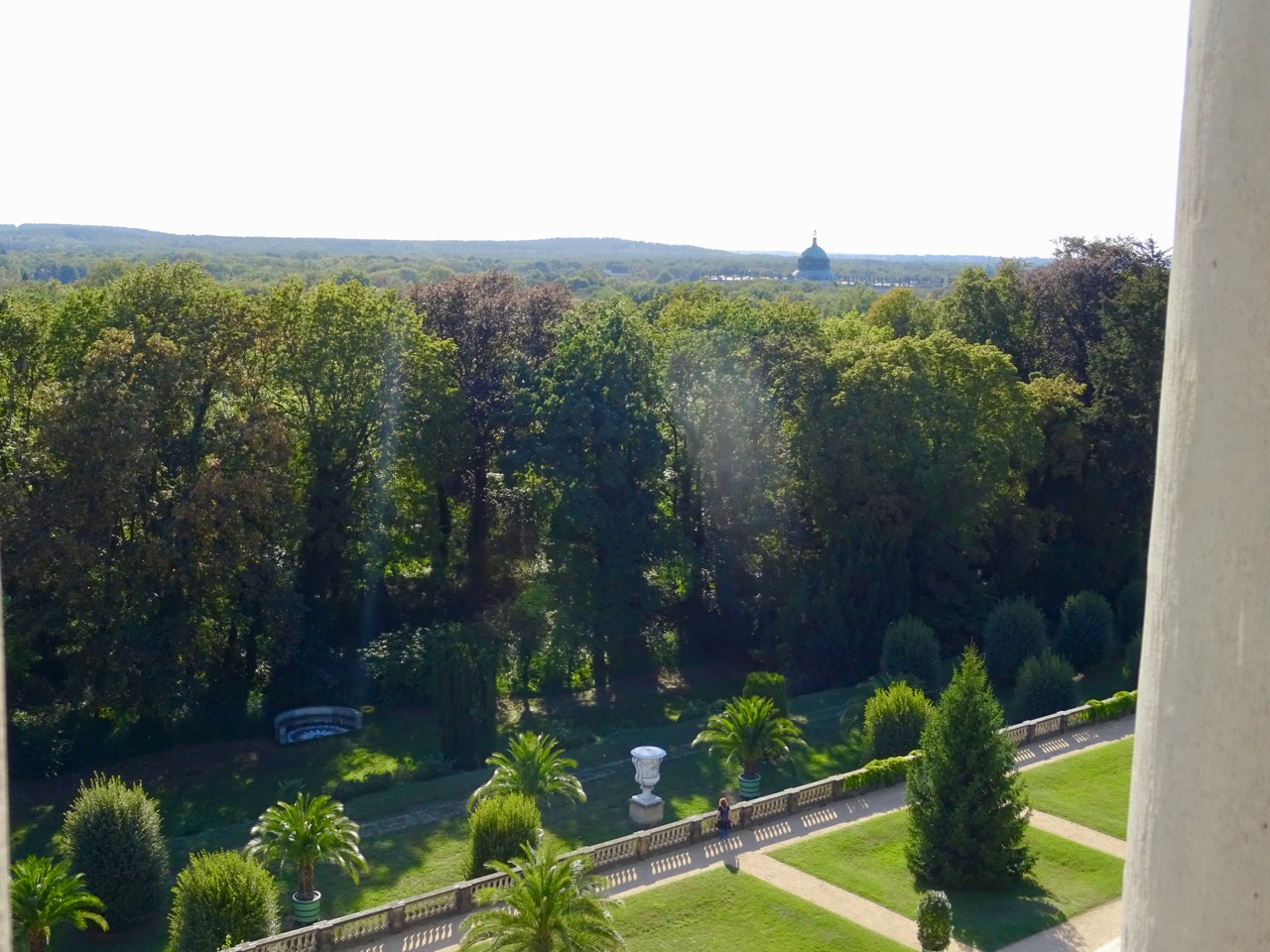
 That dome way in the distance is another palace. The New Palace, built by King Frederick, is the largest and most impressive complex at Sansoucci, but it is way too far of a walk for us today and the park is closing soon.
 In front of the Orangerie.
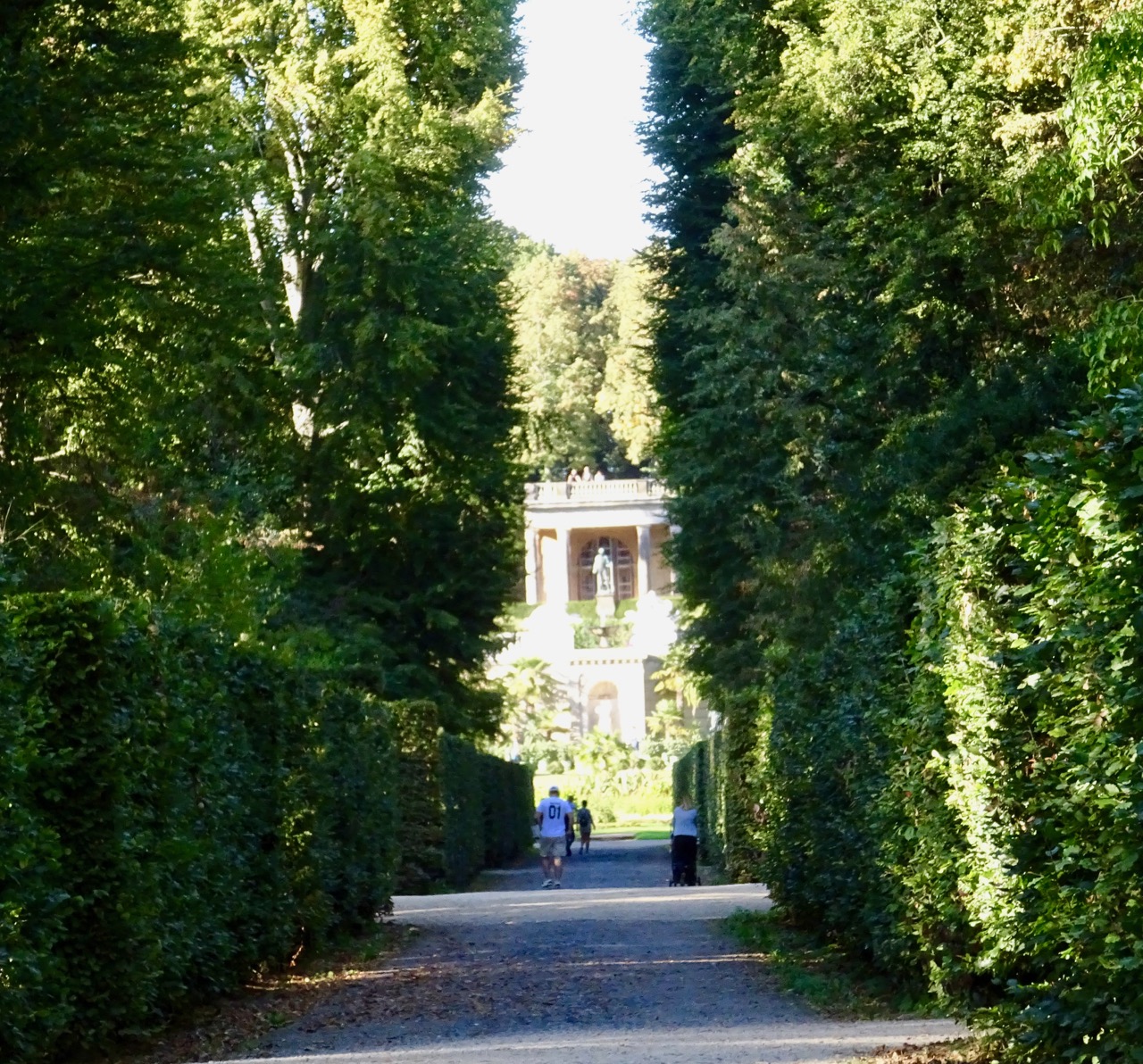
 Every path here has a view at the end of it…something to entice you to walk and explore.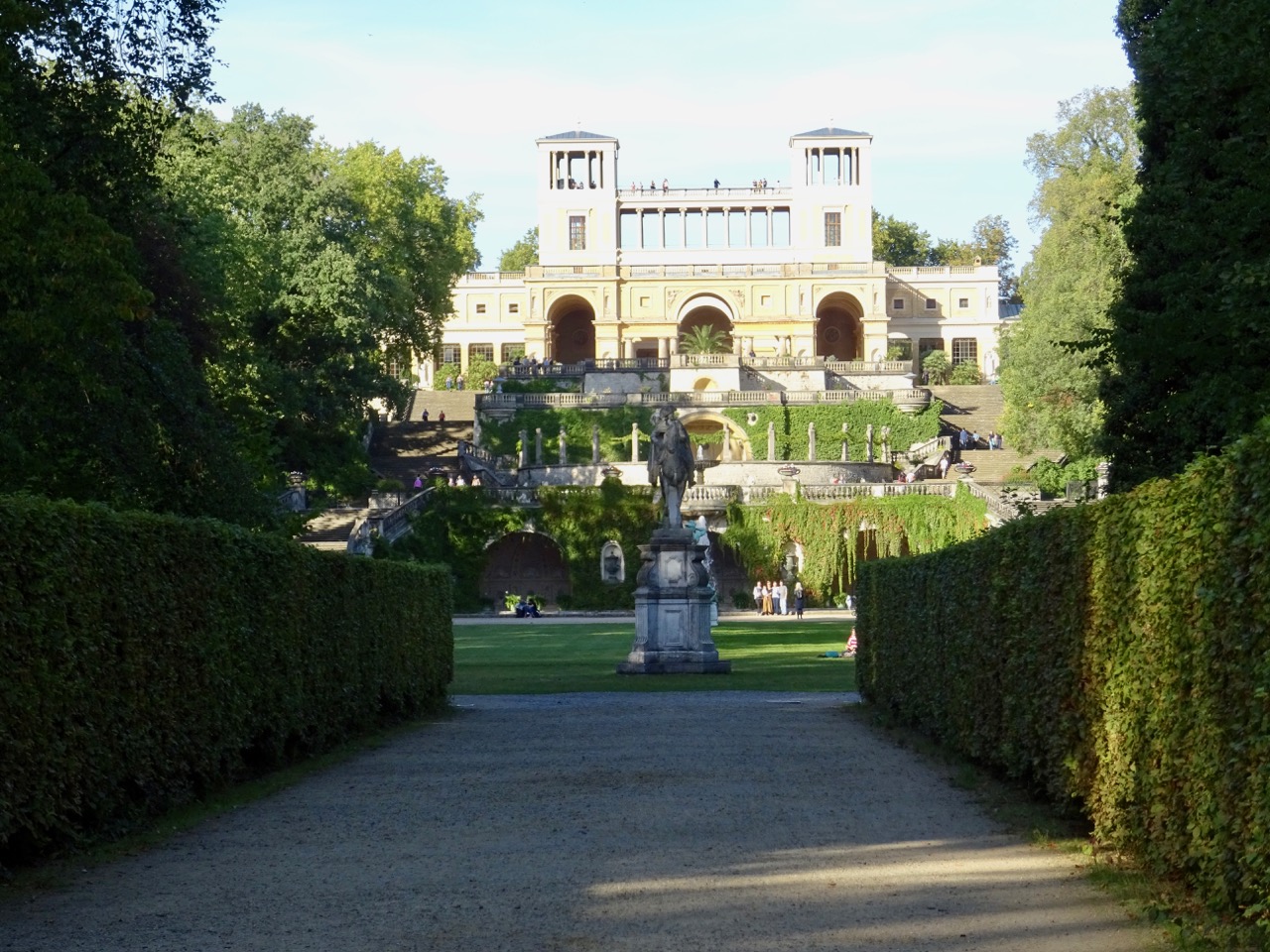
 We find the Chinese House which Frederick had built to enhance his flower and vegetable gardens and we can imagine elaborate picnics here in the summer. We make our way to the main gate just as Sanssouci is closing and catch the metro home. We had a beautiful warm day for our time here. A perfect day really.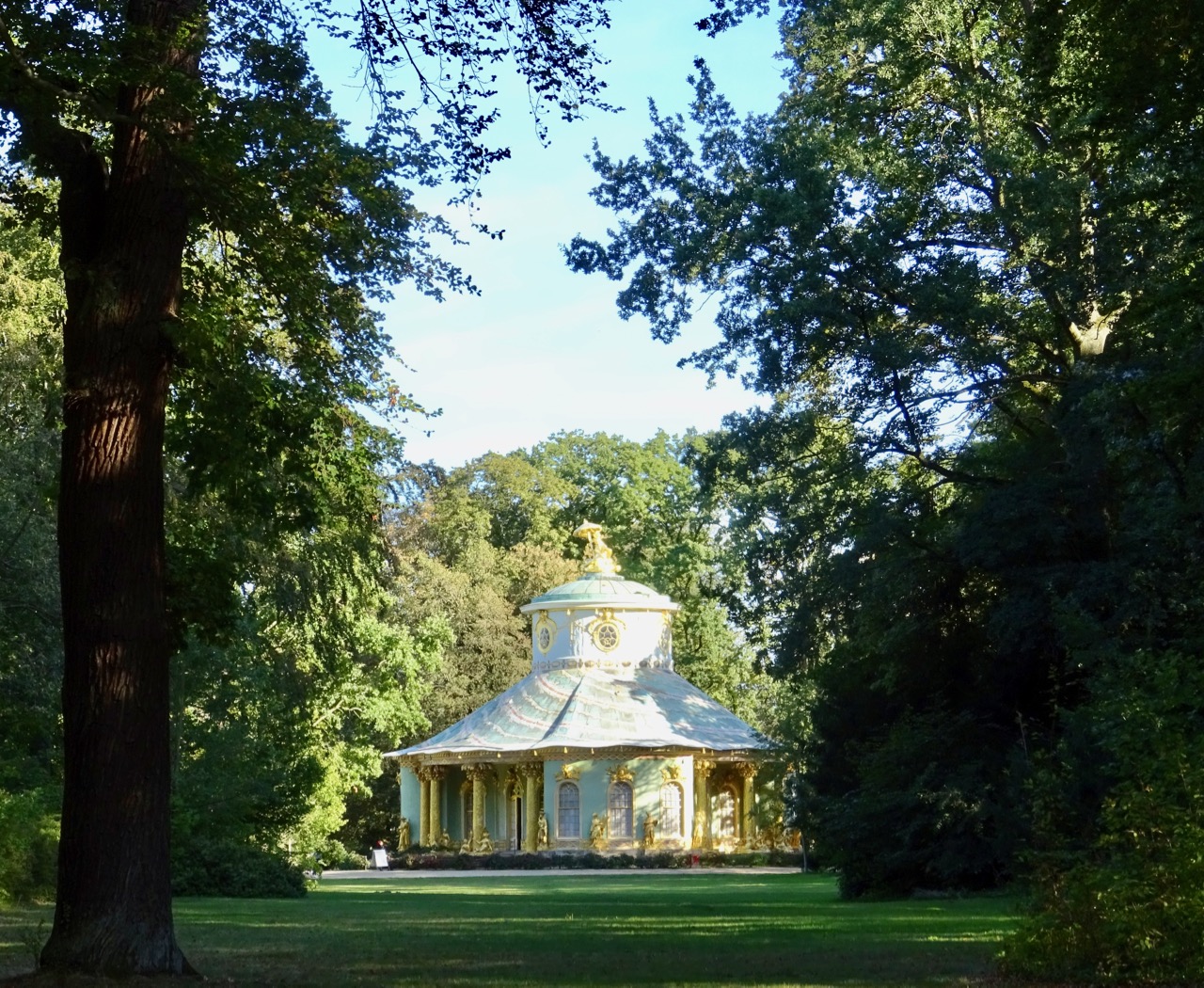


 trudymason.com