Day 37 Monday, October 6, 2025
On our drive to Stuttgart we stop at Worms, Germany. Worms is pronounced Vurmz. We passed through this huge gate on the bridge over the Rhine River.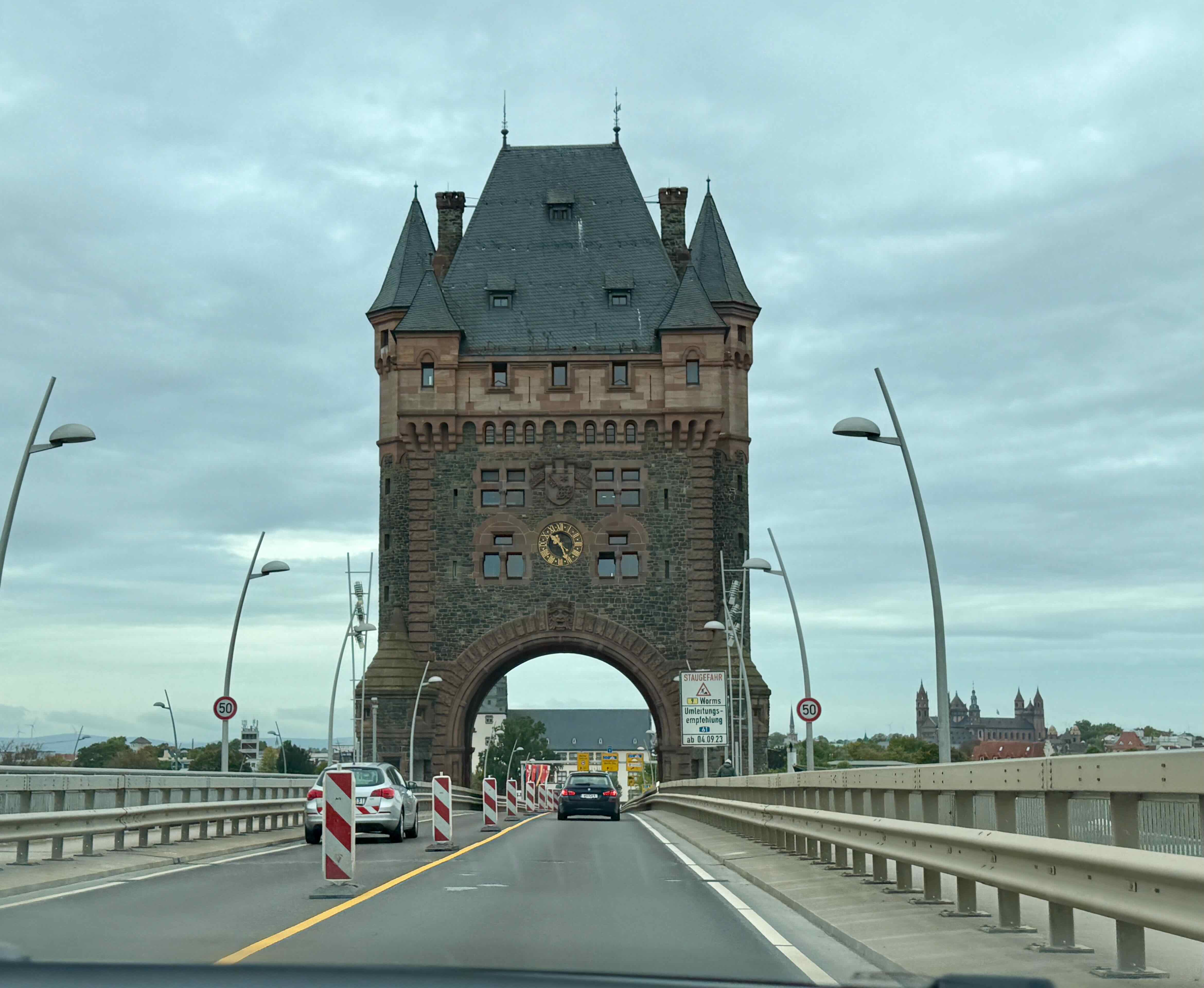
We find a place to park on the street but have to move to a parkade because the street machine won’t take our euros…big surprise! St Peter’s Cathedral is our first stop but we can’t find the door to get inside! 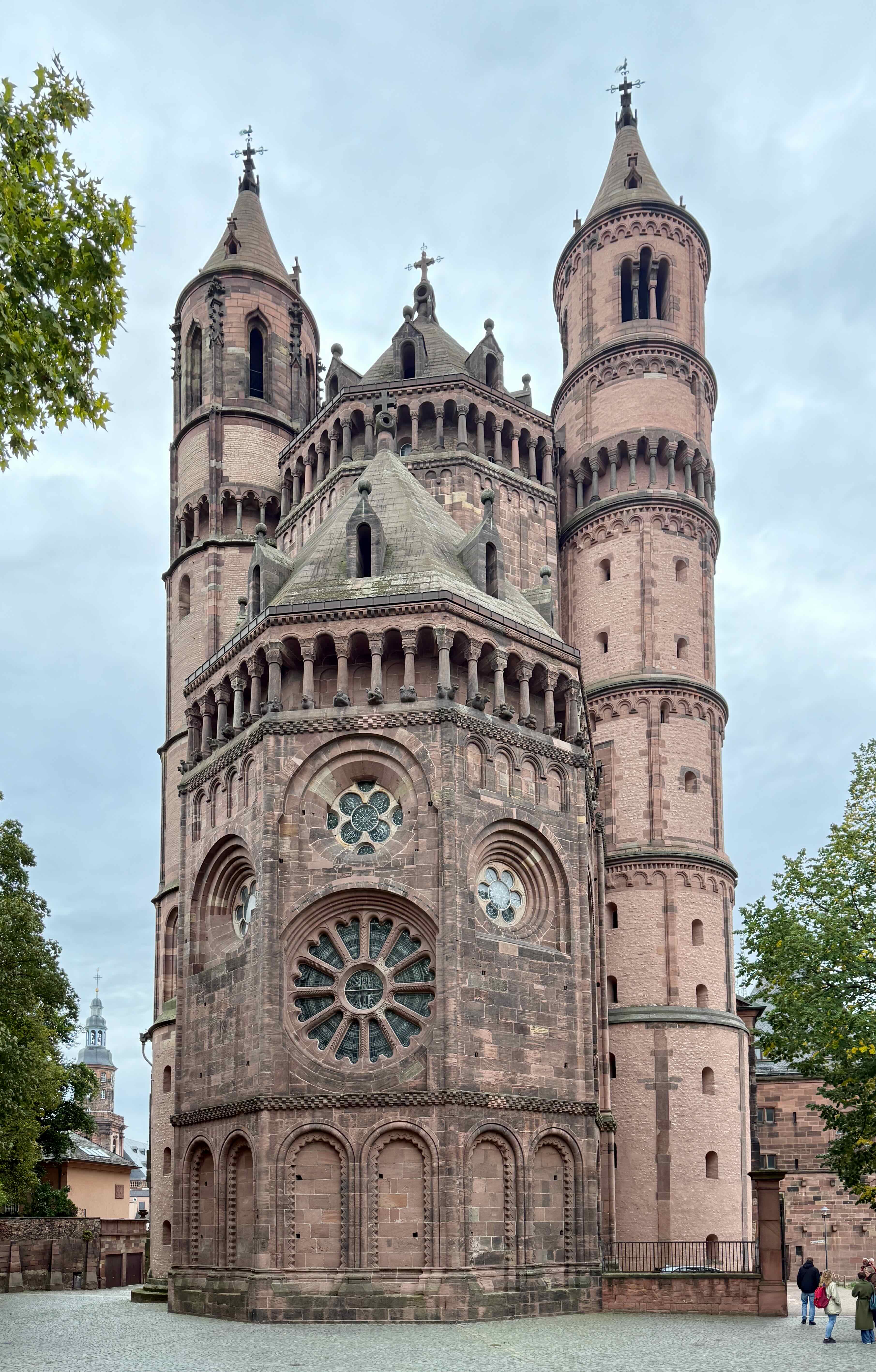
In our walk around the church I see steps leading into what looked like a private area, but I take a look anyways and it is actually a public garden so we go inside. When I see something like this I am so curious. I wonder what it is, why it is there and where does it lead to? 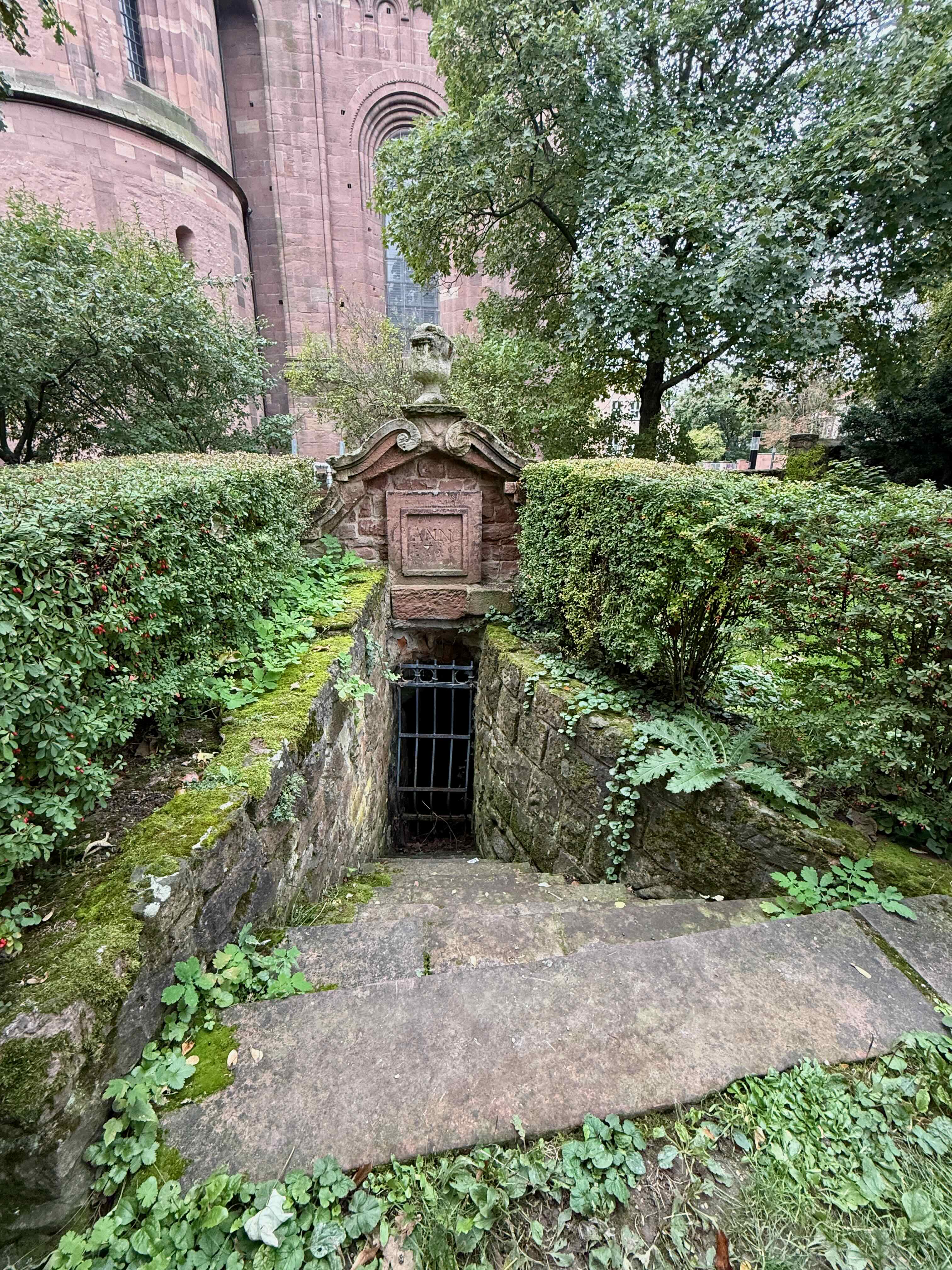
Turns out this garden marks the location where Martin Luther refused to recant his beliefs at the Diet of Worms in 1521. This was the beginning of the Protestant Church and its split from the Catholic Church. These large bronze shoes in Worms’ Heylshof Park shoes are part of a 2017 memorial sculpture, which allows visitors to symbolically “step into Luther’s shoes” at the spot where he stood and defended his doctrines.
A ‘Diet’ was an assembly or meeting of authorities to make decisions on important matters. The Diet of Worms of 1521 was convened to determine how political and religious authorities should respond to Martin Luther’s teachings. Because the Diet was held in Worms, it is know as the Diet of Worms which still makes me smile because of course I think of eating worms.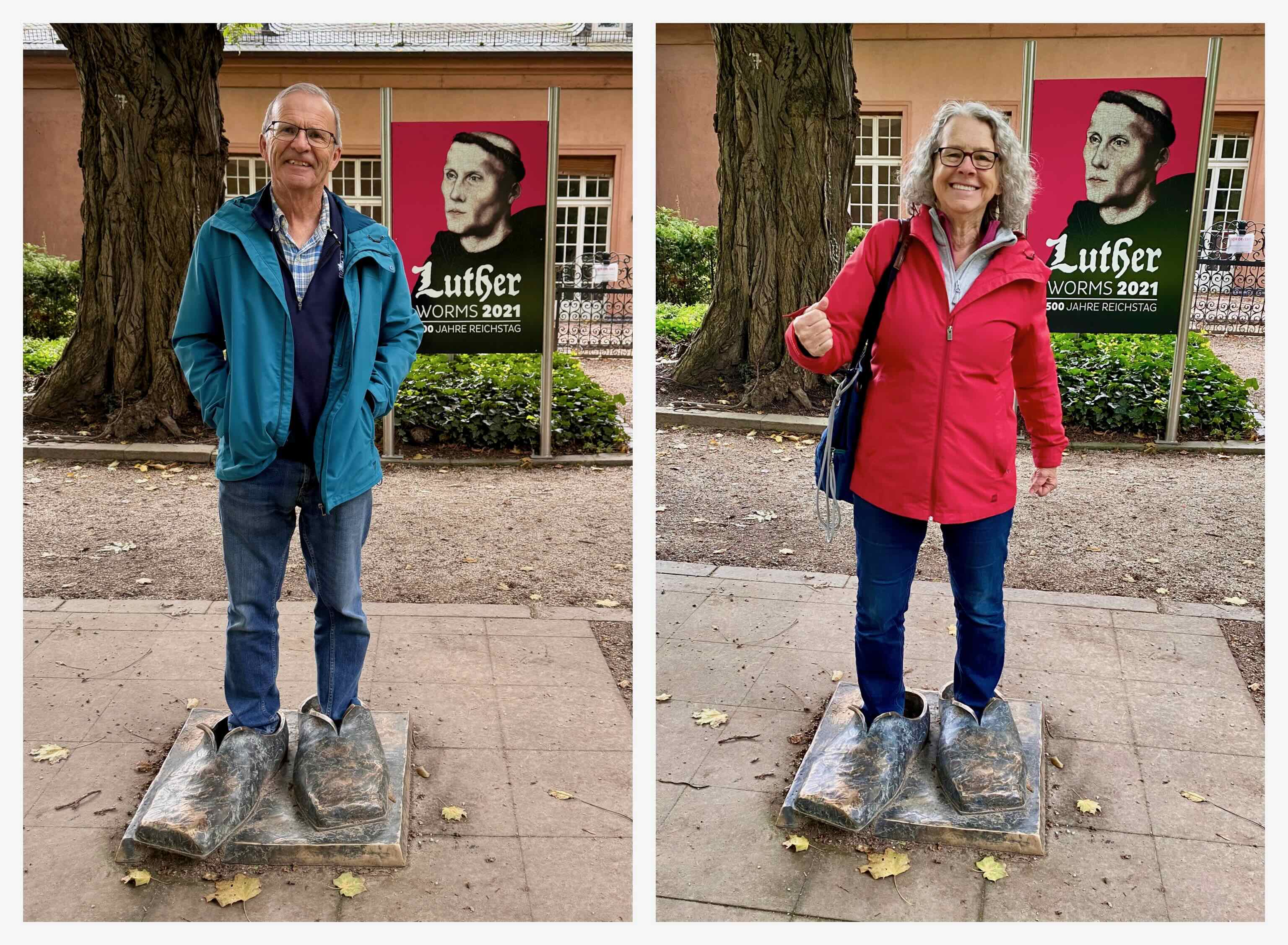
We leave the garden and go back to the church, passing a kindergarten with this colourful mosaic mural.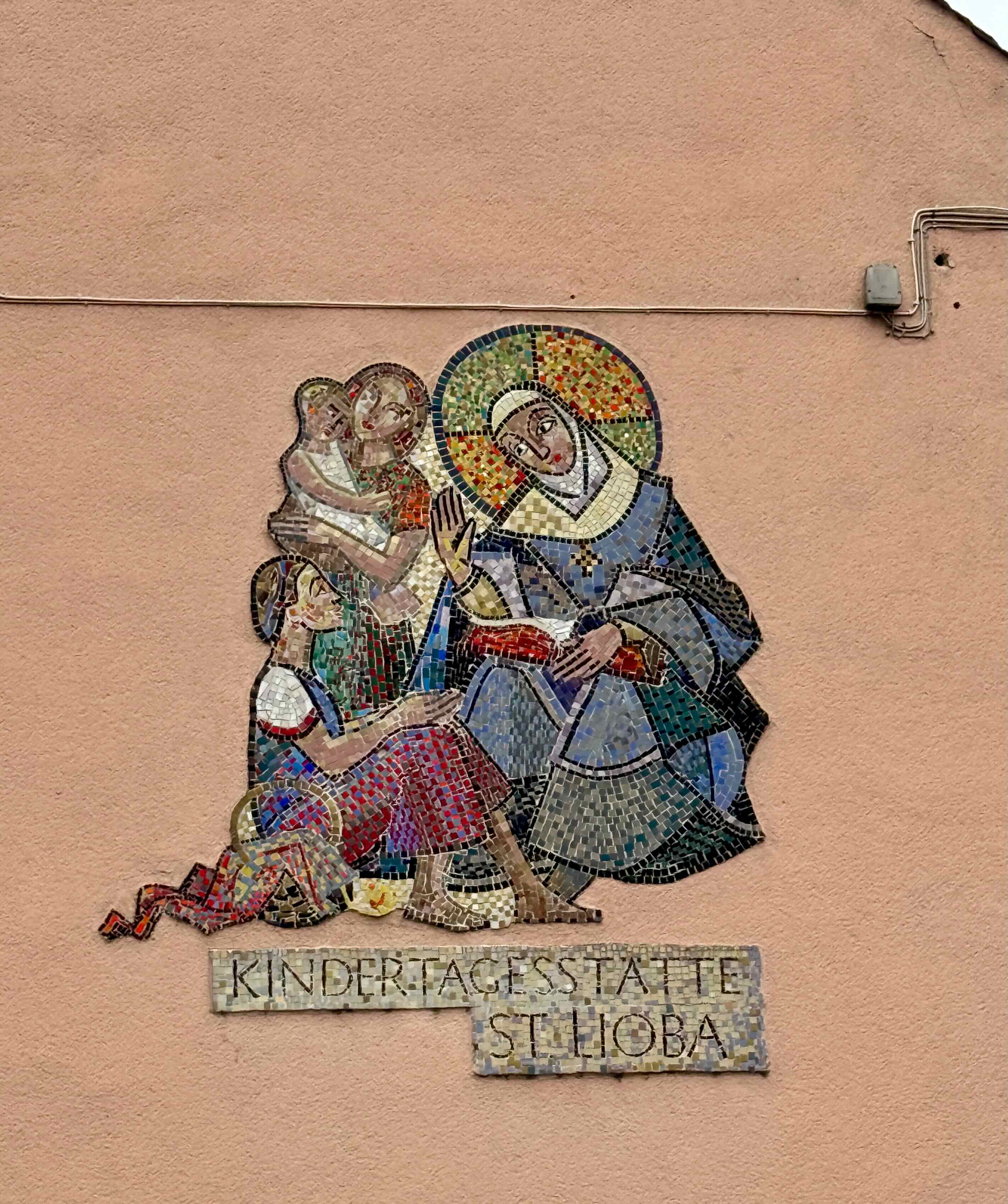
St Peters Cathedral is another cathedral that escaped destruction during the war. Curious, I did a bit of of research and learned that the high belltowers and steeples of cathedrals were used by the Allies as navigational landmarks and that sometimes military planners made conscious efforts to protect major cultural and religious sites. So perhaps not divine intervention after all?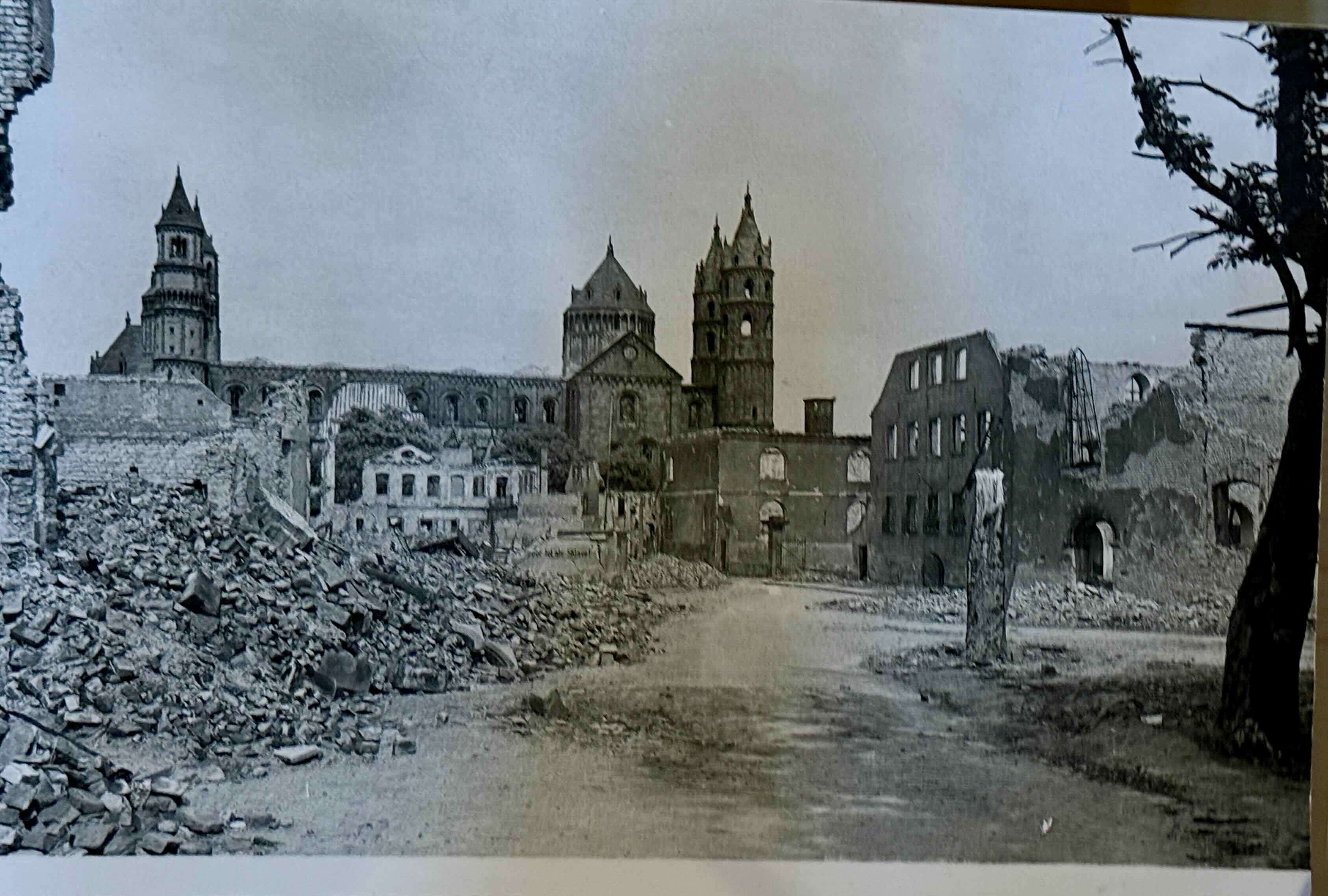
We do finally find small side door that allows us entrance to the church. There is an art display in the cathedral by a group called Atelierblau. There are some really interesting pieces. Unfortunately I couldn’t find the names of the artists or the works they created. Here are a few of them.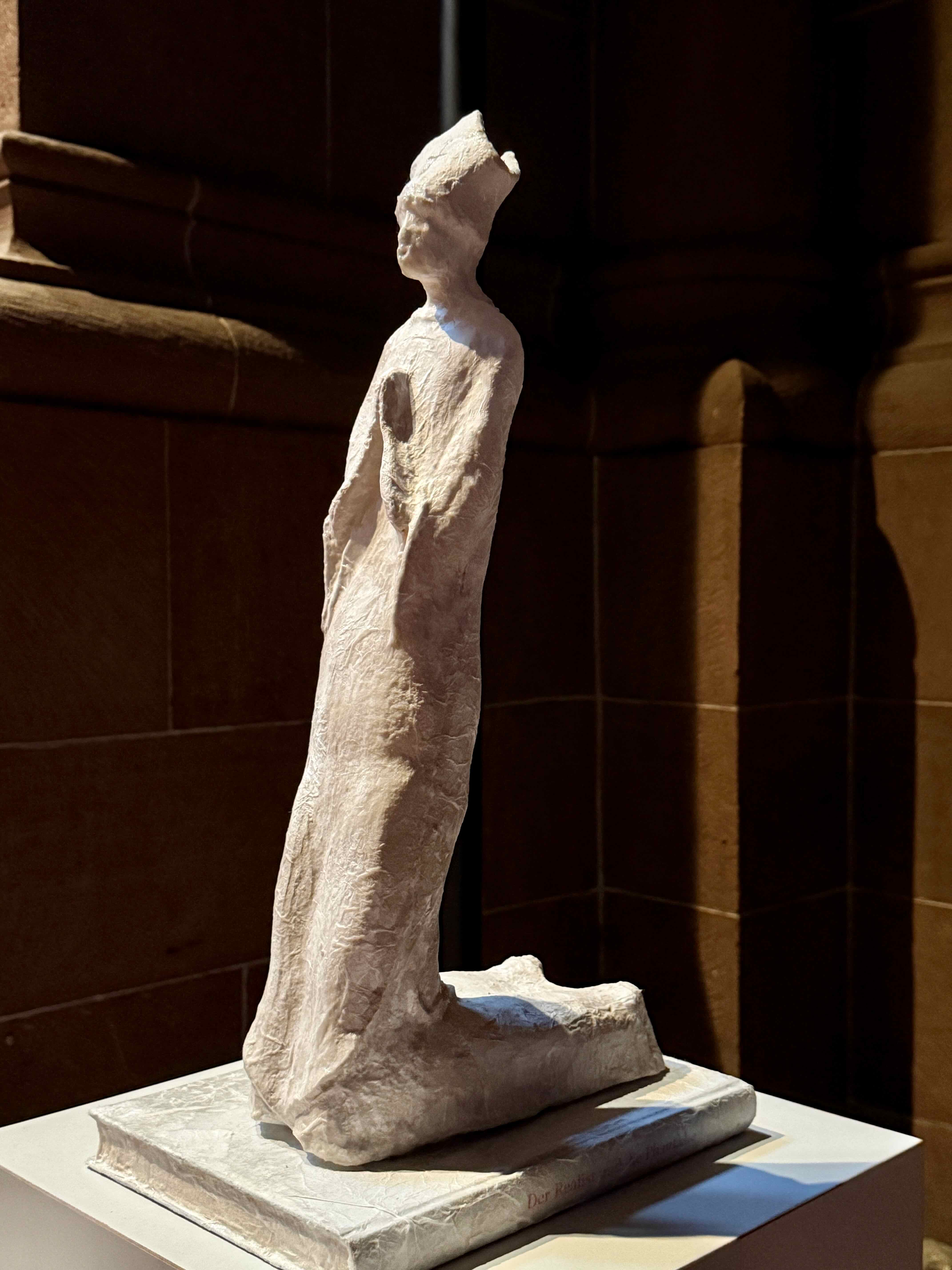
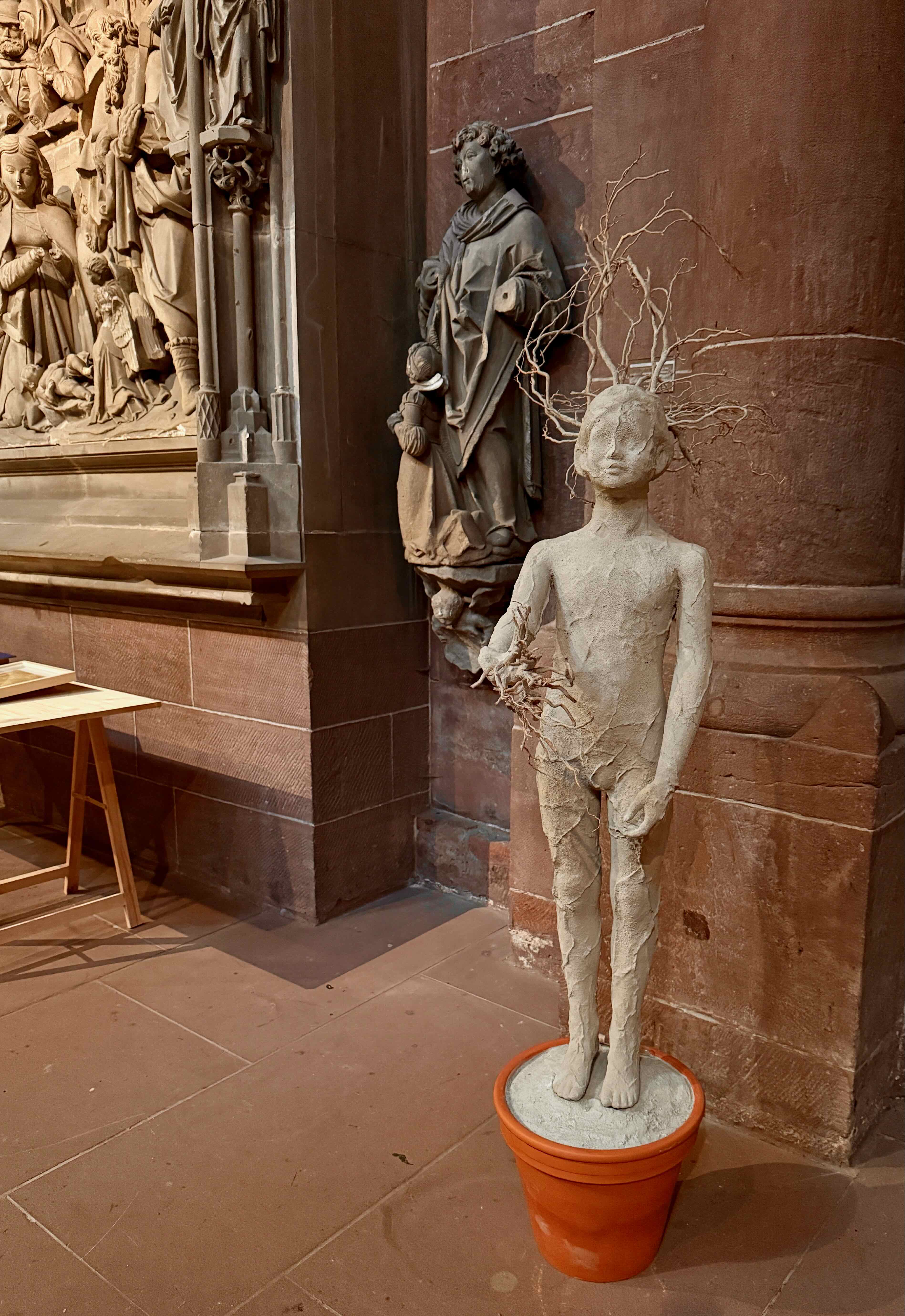
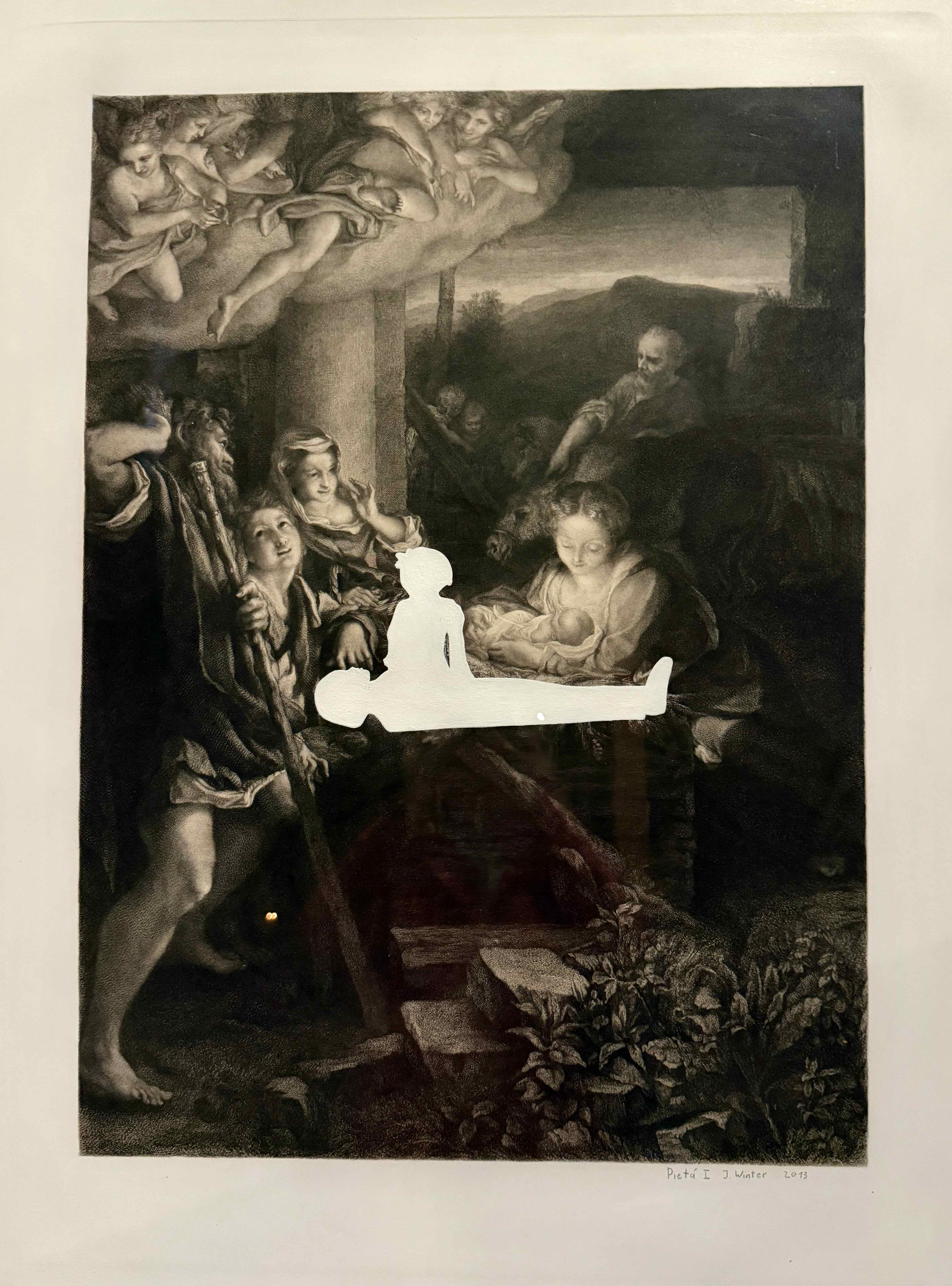 The sign on the trunk reads “A thousand roses for a thousand lives”.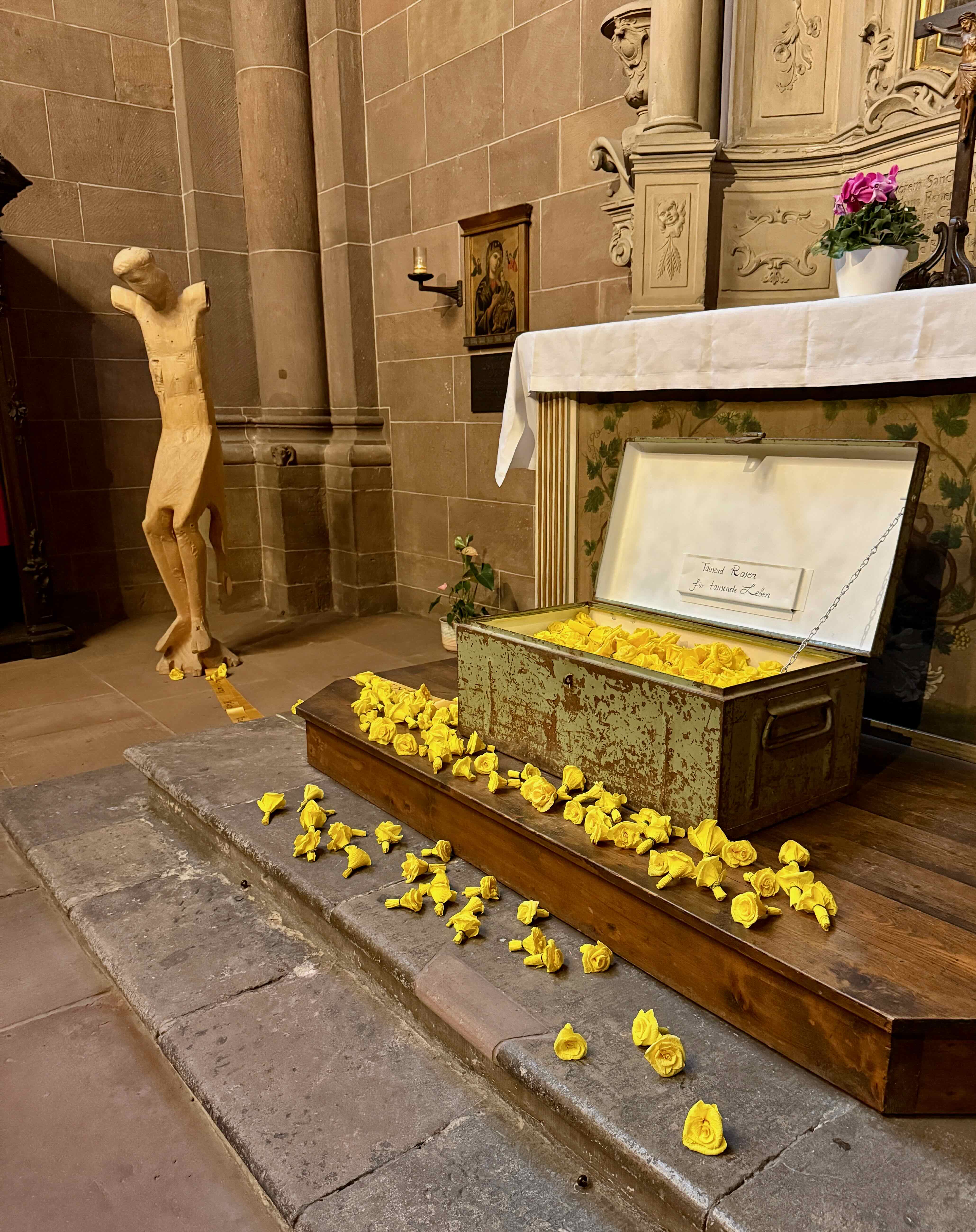
There are several large sculptural pieces that are from the church cloister. I think they were placed inside the church as a method of keeping them safe from damage.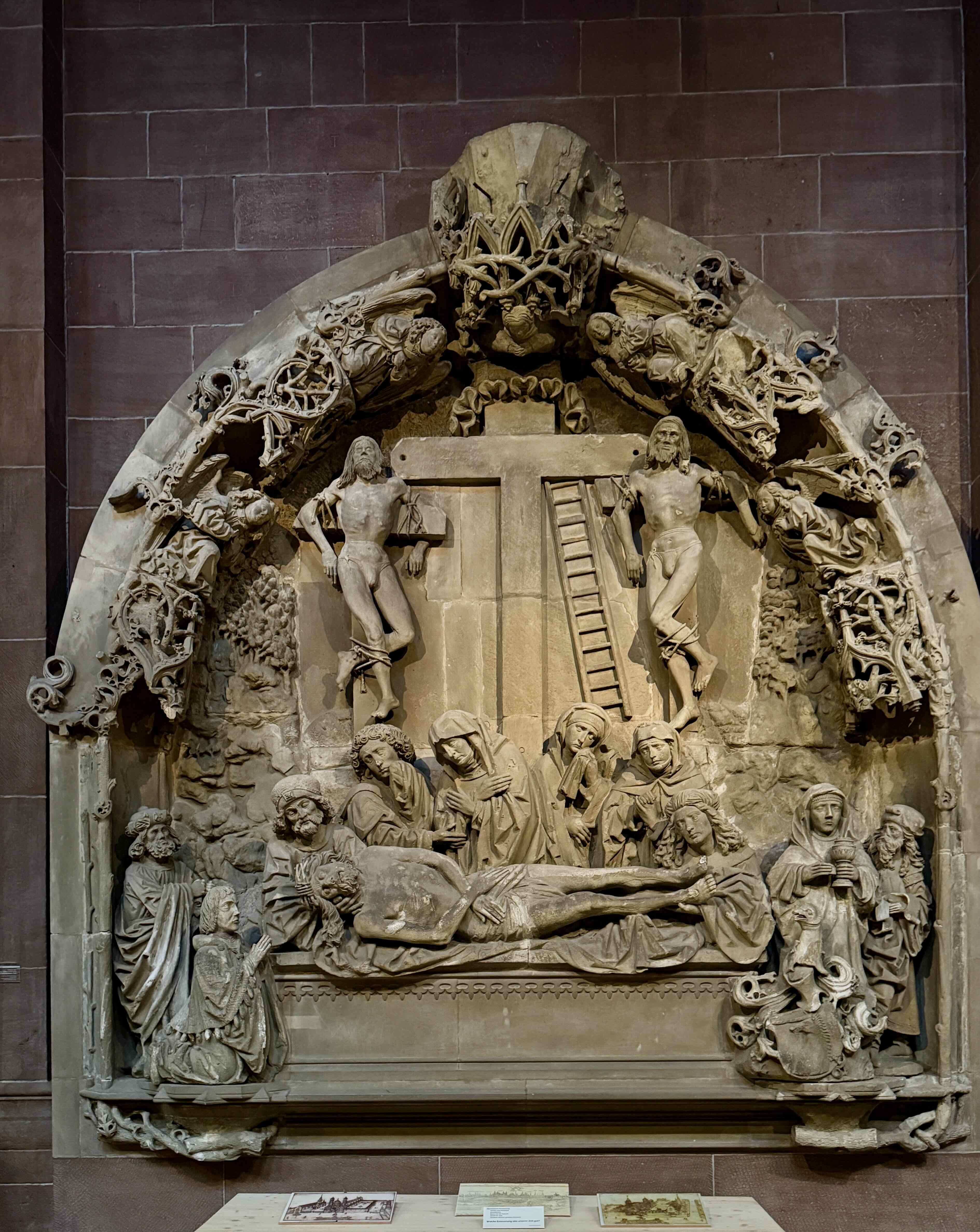
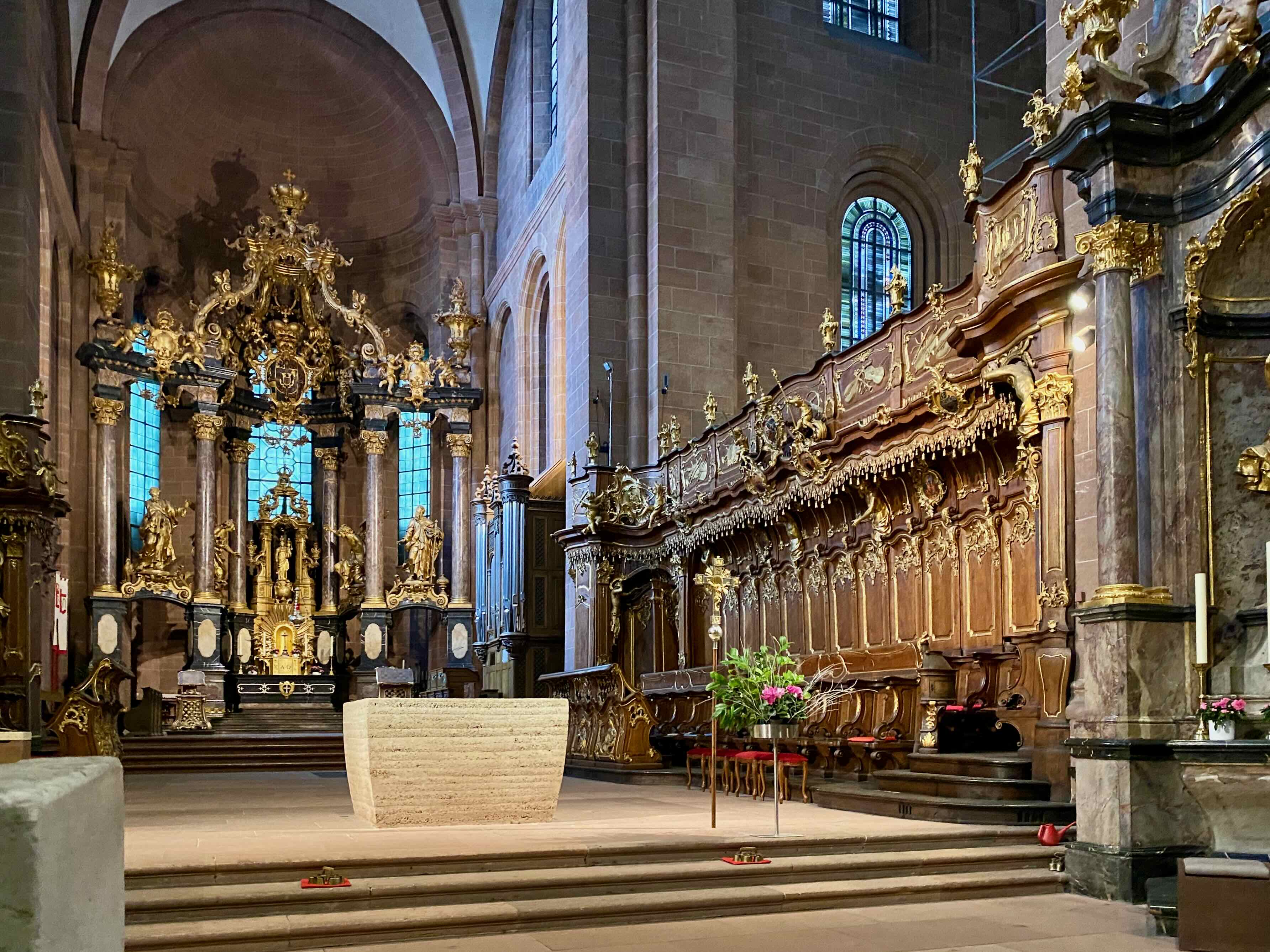
Built with red sandstone between the years 1130 and 1181, the church has a relatively simple interior…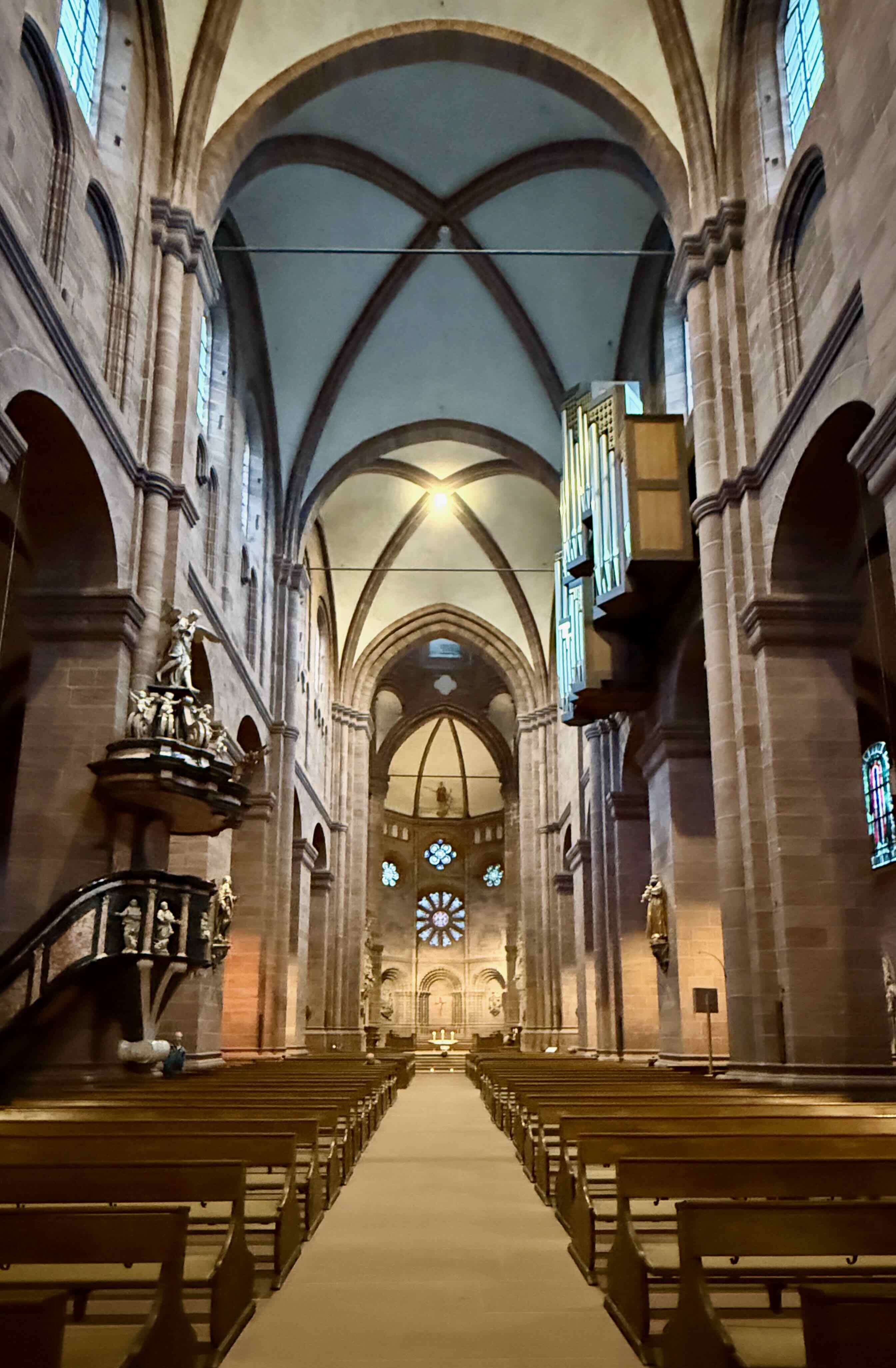 …except for the choir and altar.
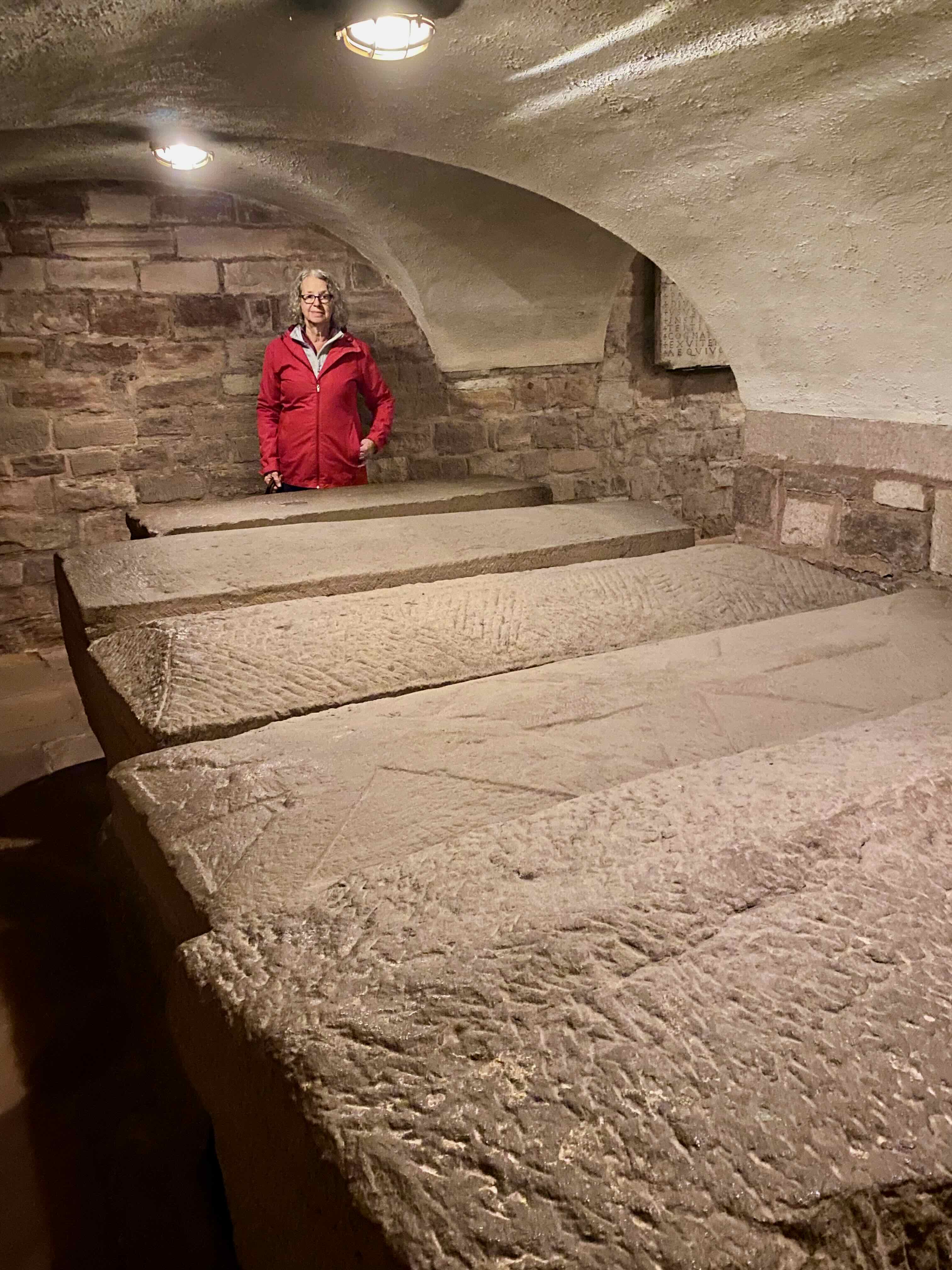
 Bob noticed a side entrance to the crypt which contains the tombs of early rulers from 990 to 1040 AD.
 Outside I see what appears to be ancient graffiti.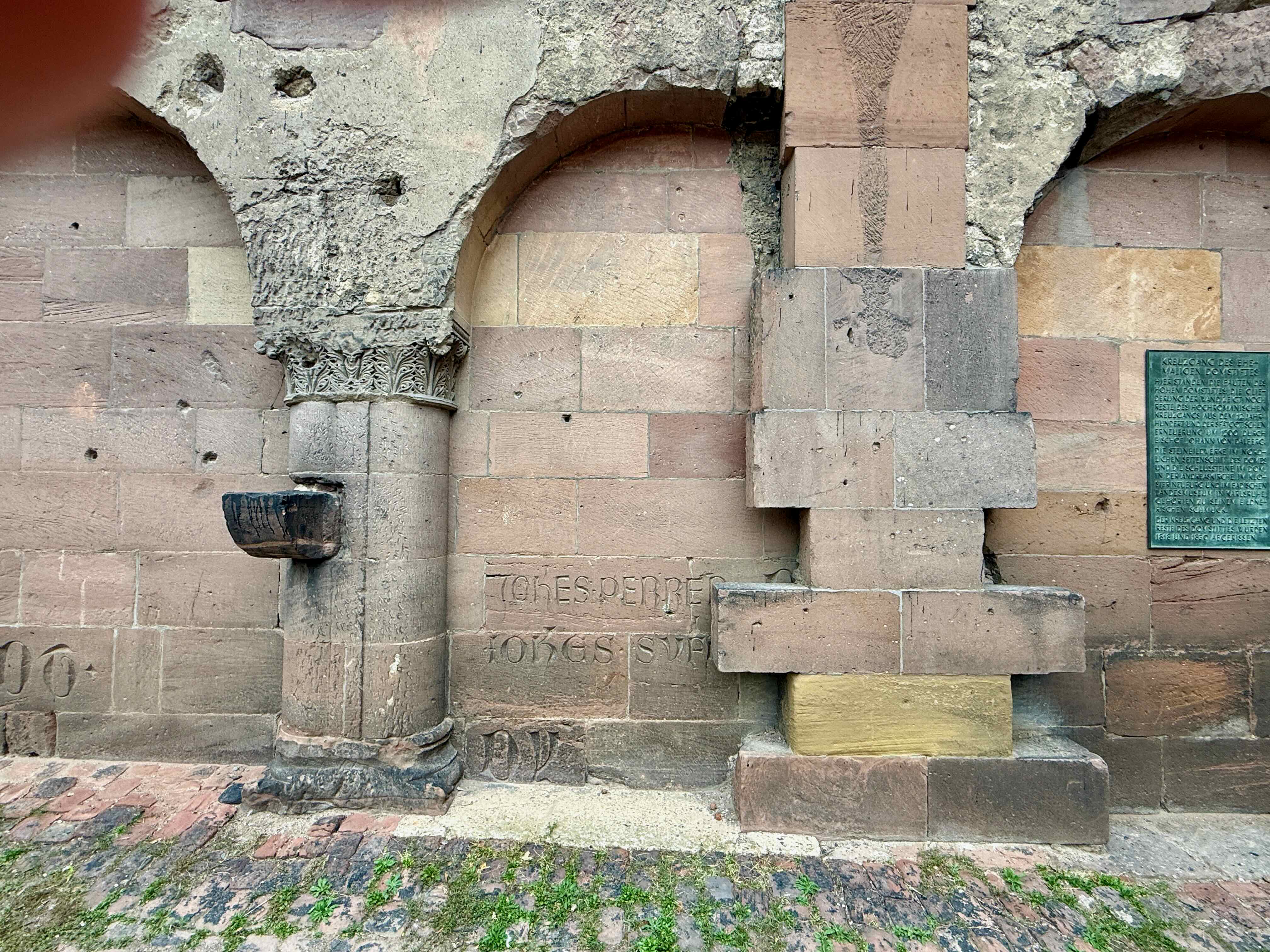
This fountain is at the end of part of the old town wall.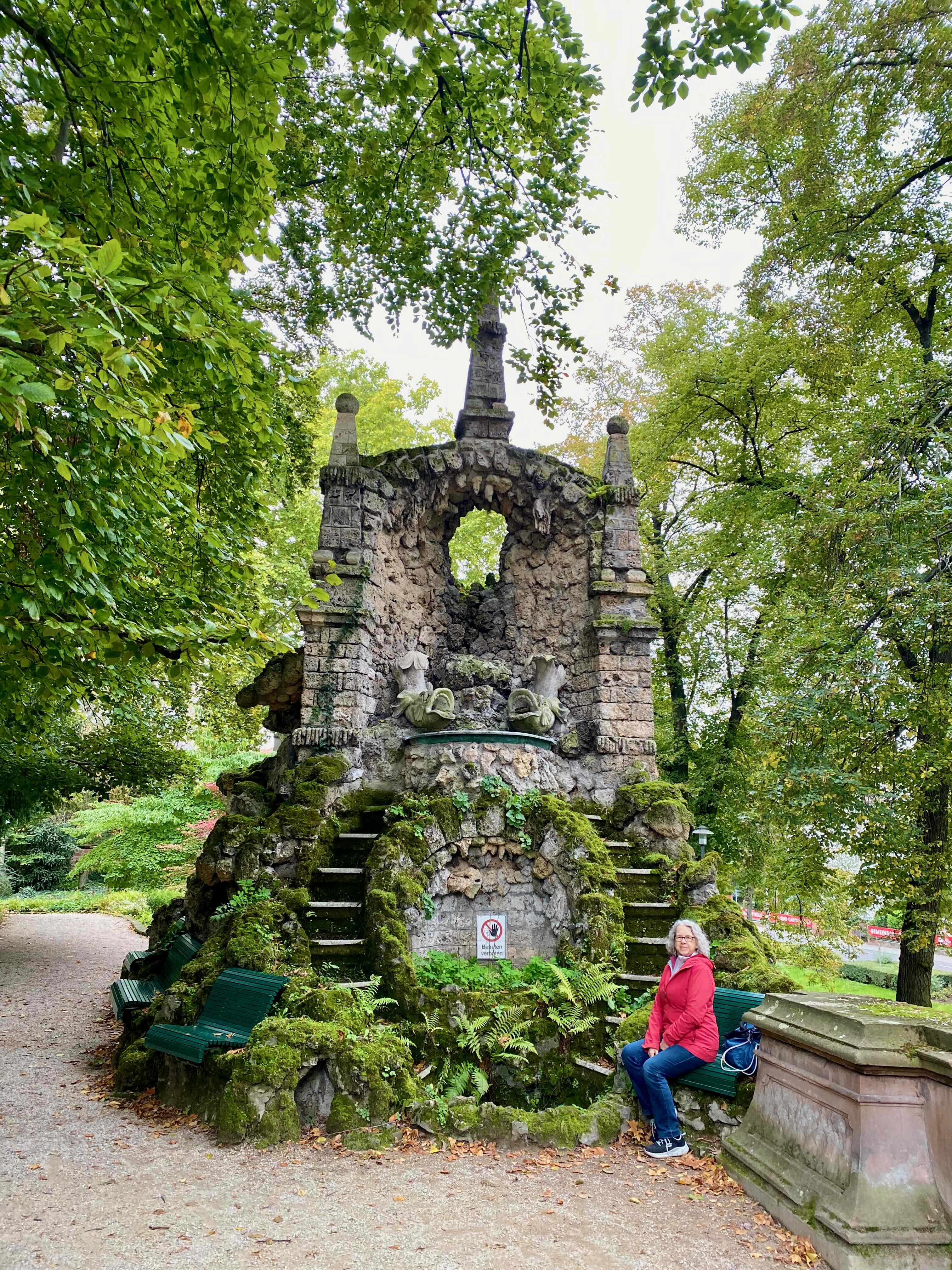
More graffiti, only on a tree this time.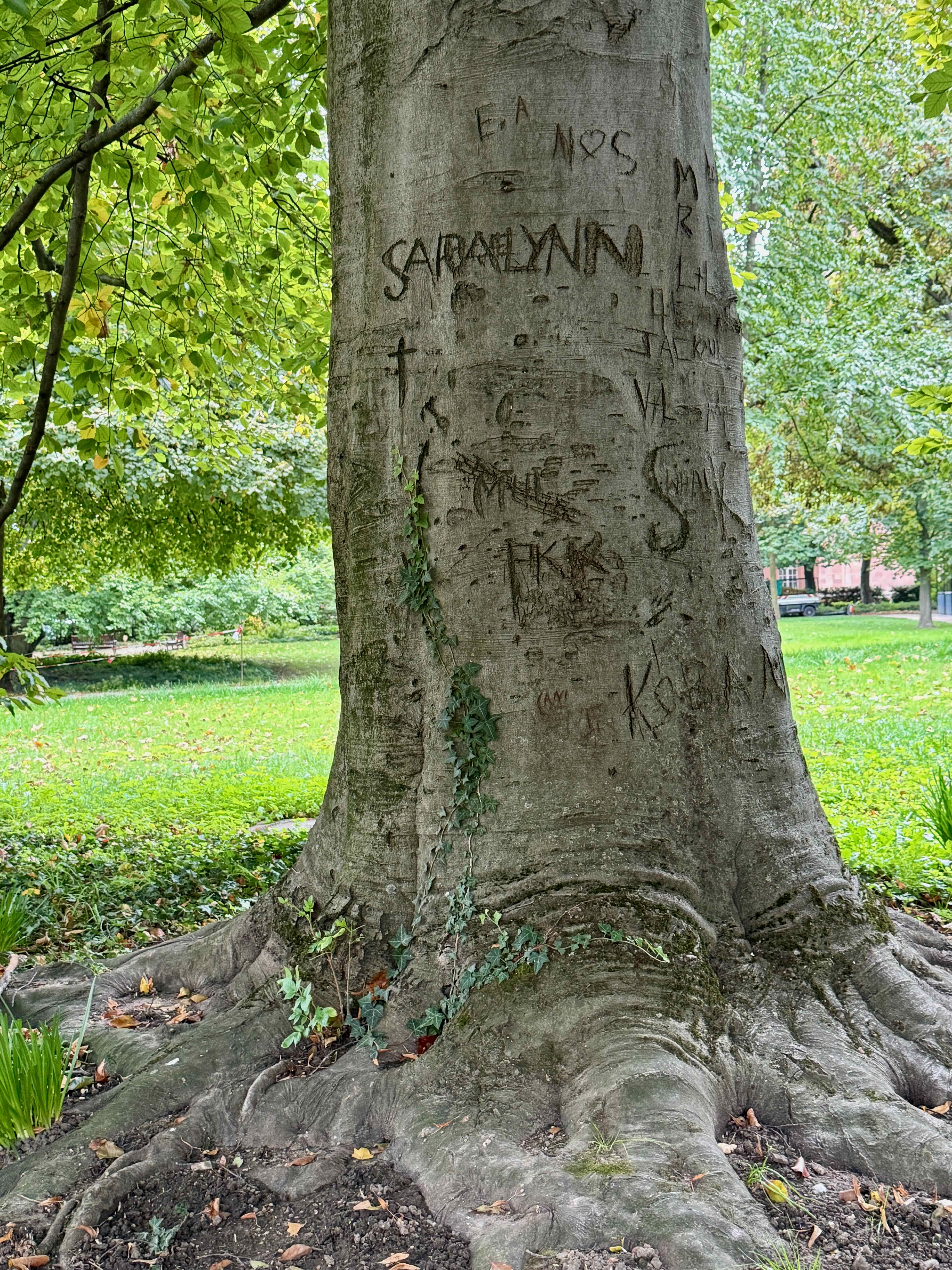
This little bird sculpture with its huge beak, ragged wings and stubby body caught our eye…we both really liked it.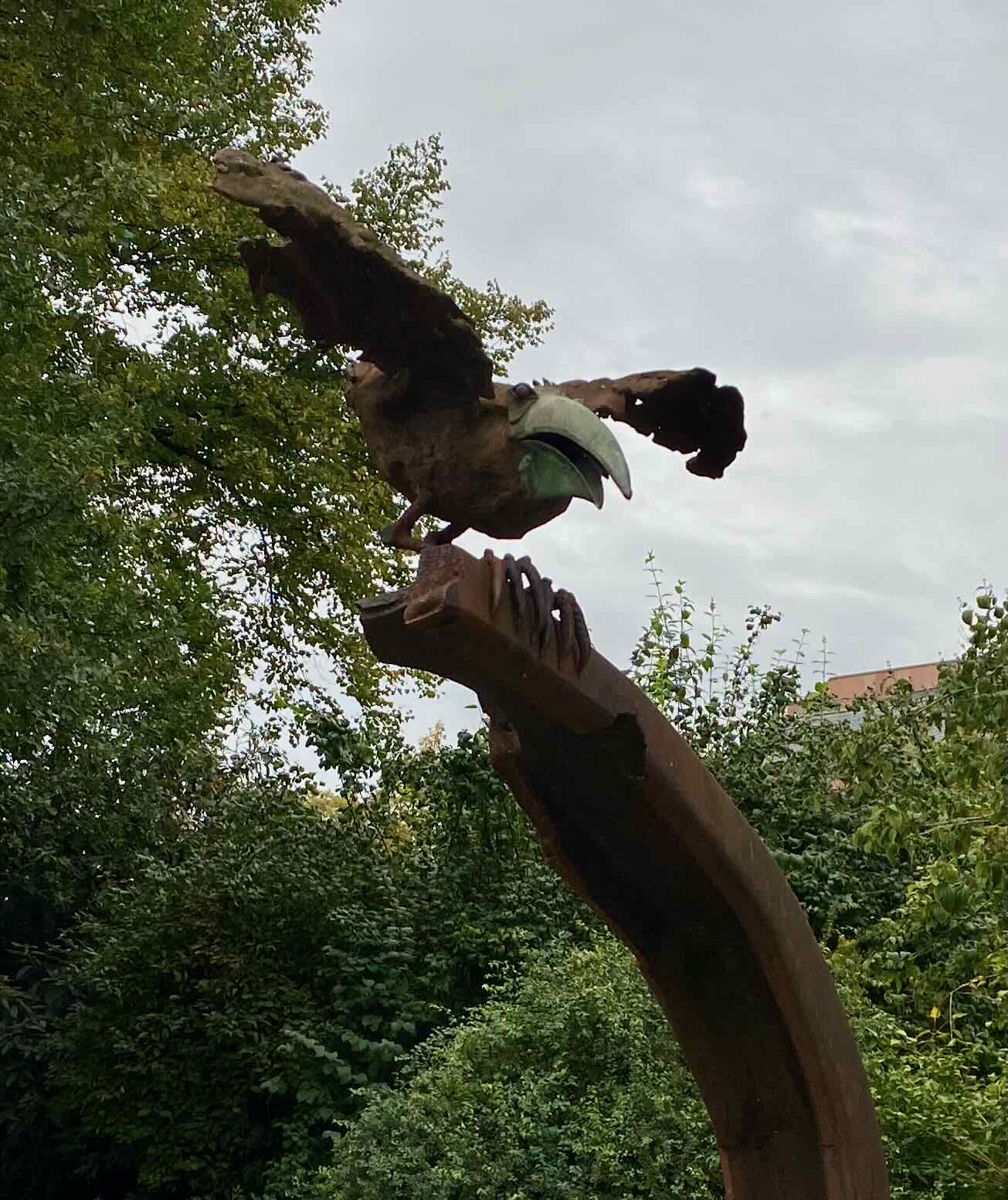
The Luther Monument is a group of statues. Martin Luther stands surrounded by bronze statues of the individuals that supported him. Plaques of the towns that supported Luther and the Protestant Reformation are placed on the walls of the monument.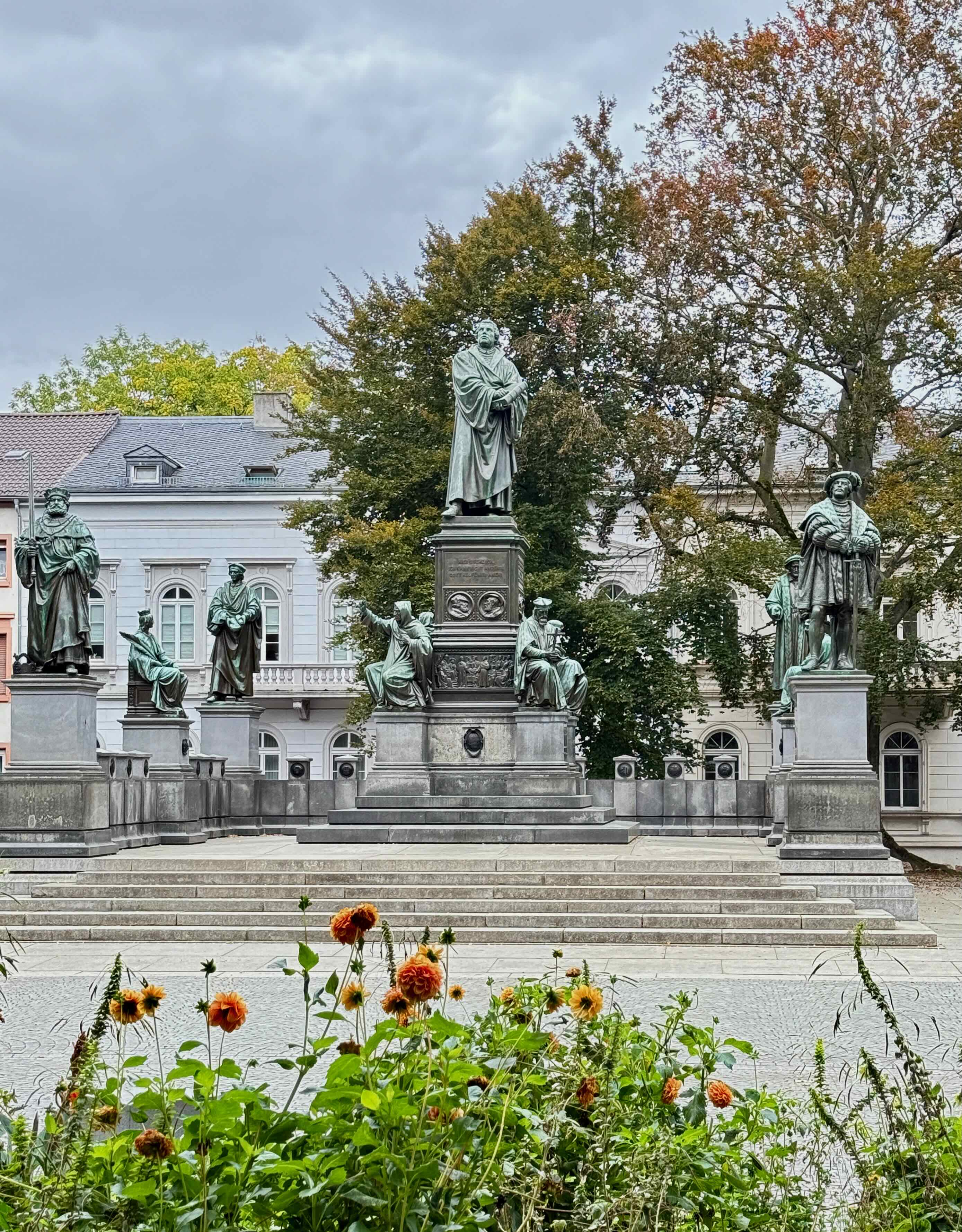
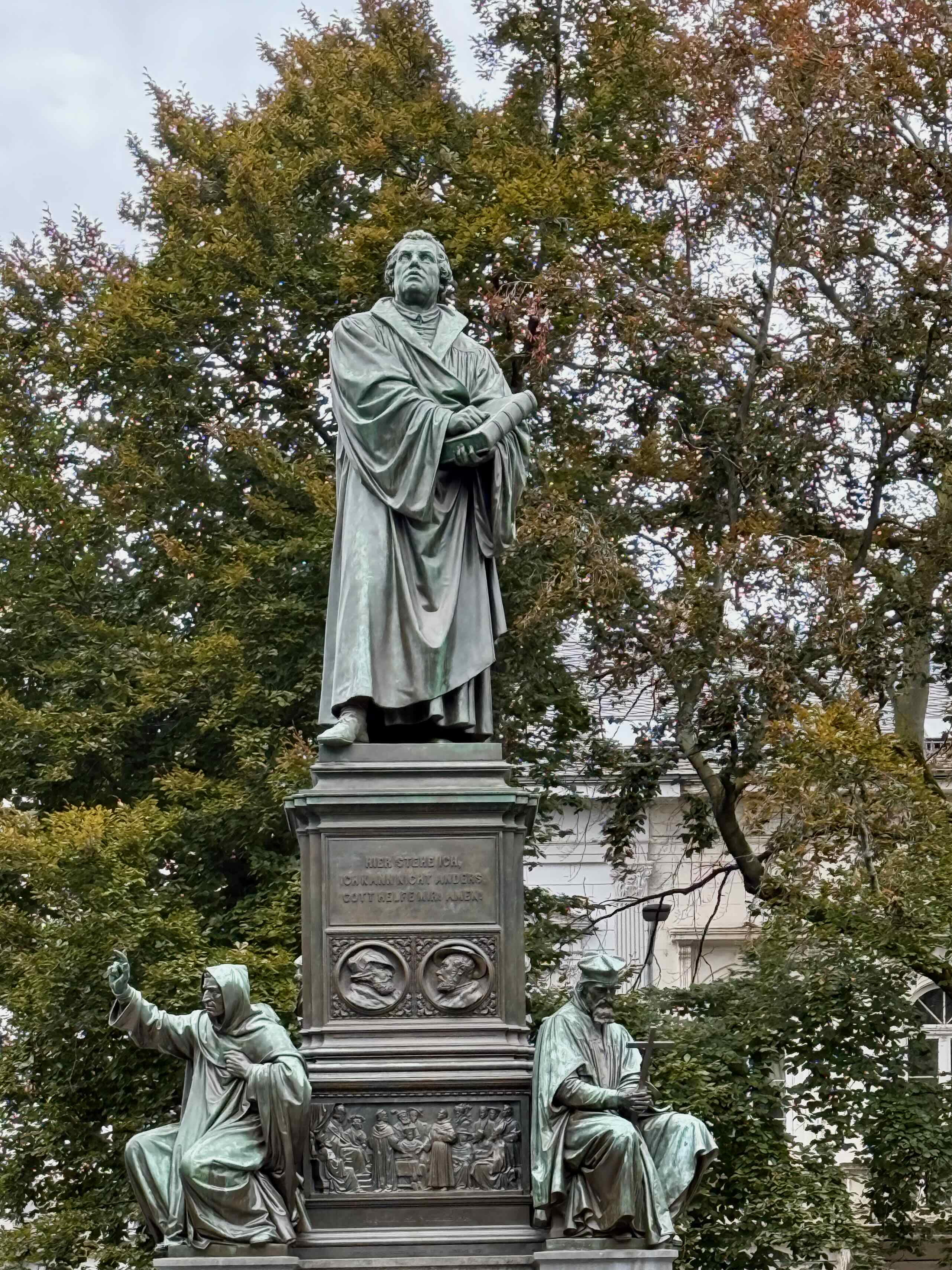
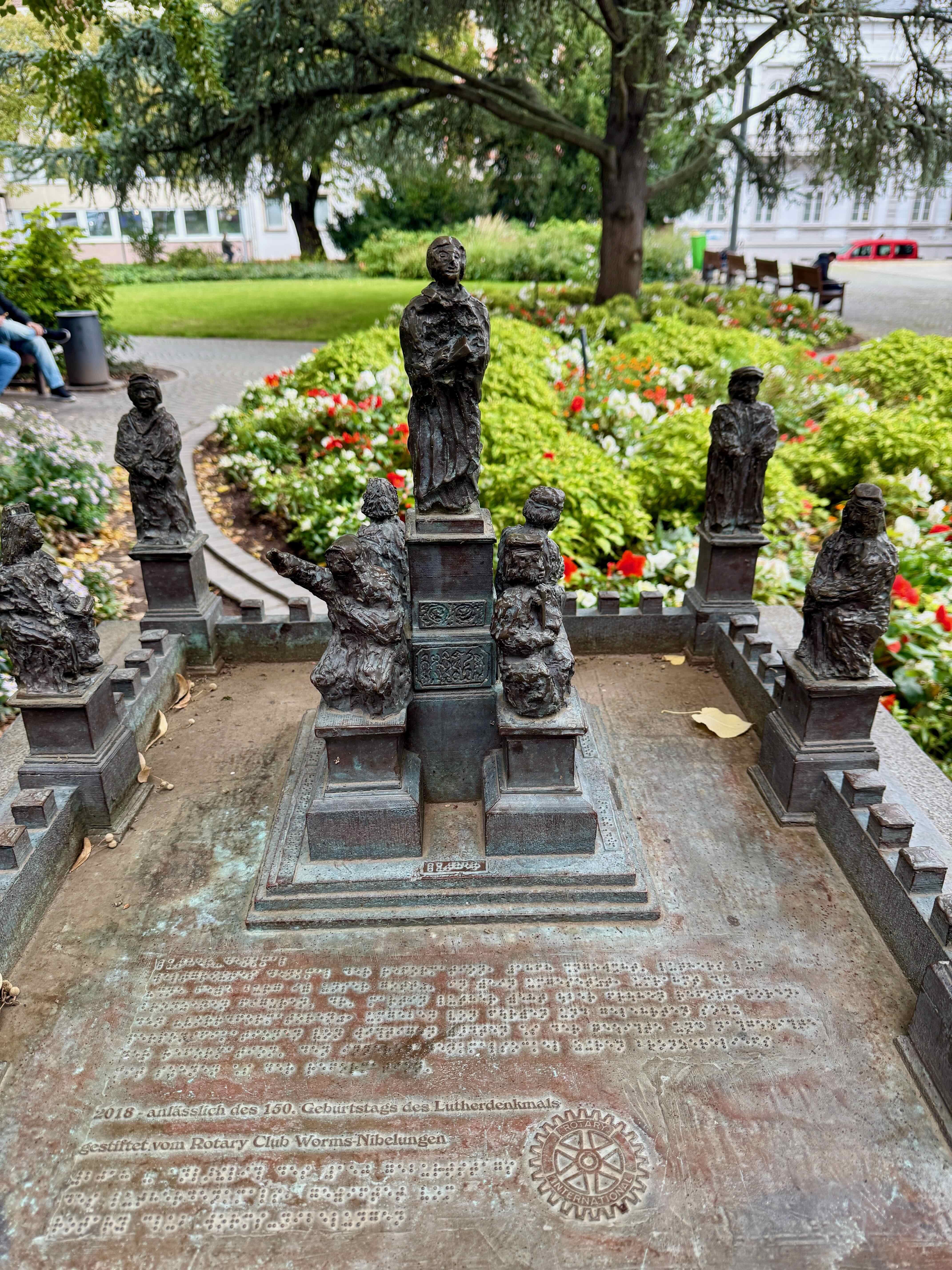
This monument is in a lovely park near the Cathedral.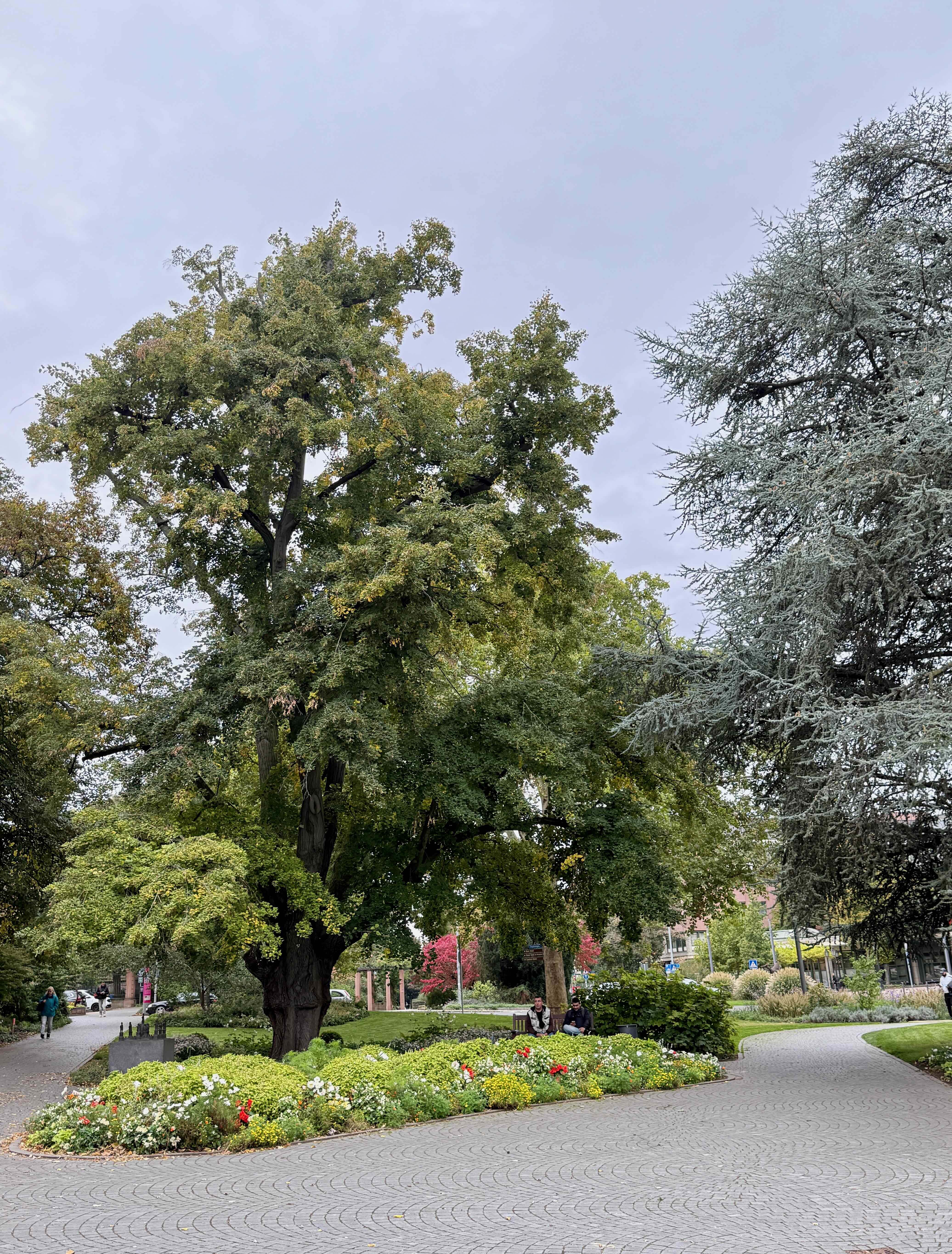 There is a model of the statue with information in Braille, which was unique.
 Back on the road I finally manage to get a photo of the Ausfahrt sign…which simply means Exit. I remember that we found this quite hilarious on our first trip to Germany with our daughter many years ago.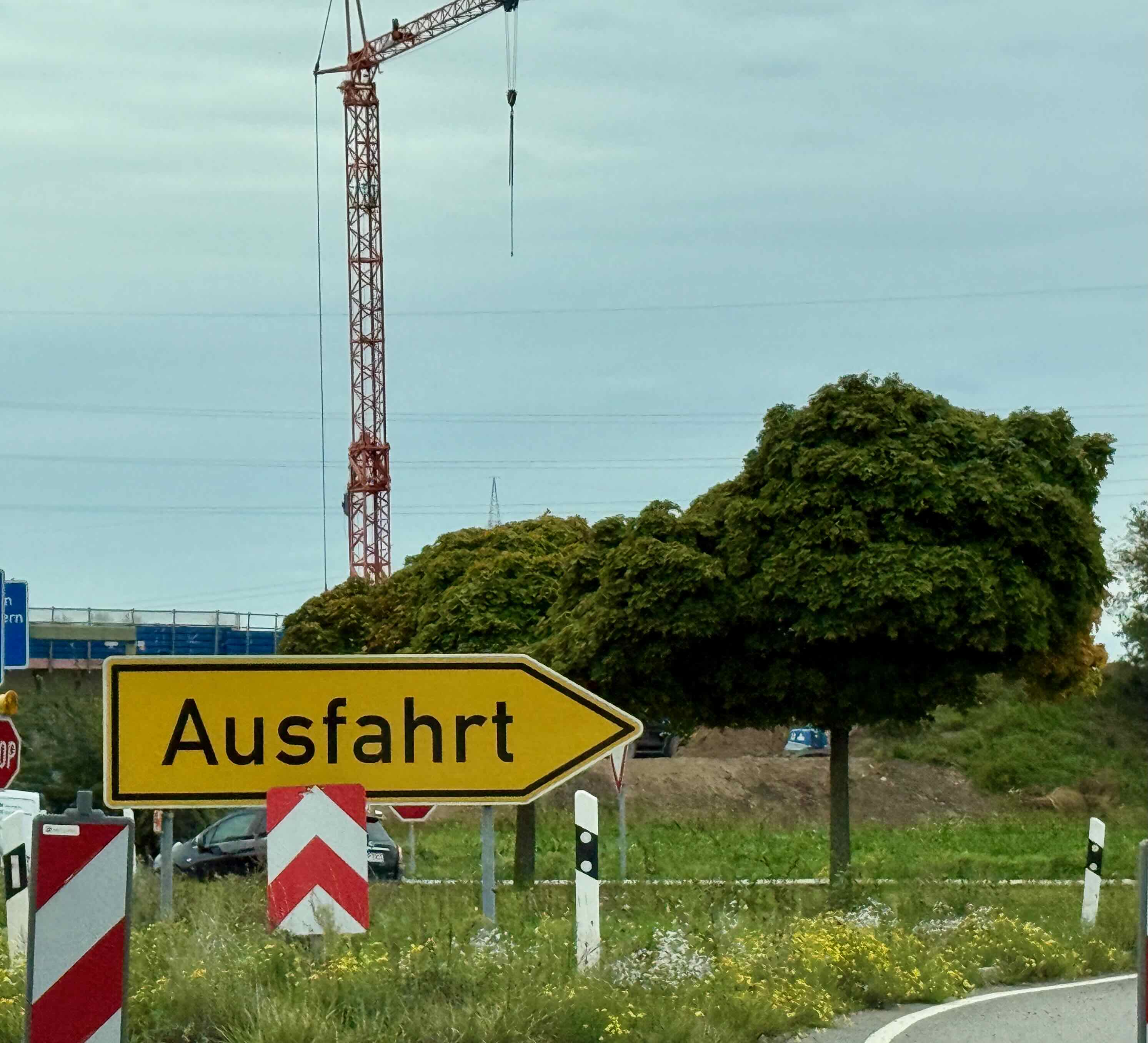
Next stop is Heidelberg where we are going to visit Heidelberg Castle that Bob says is like Versailles. We have a hard time finding the entrance to the funicular, even using Google Maps! Finally I notice a small picture of a train on the wall of what looks like the entrance to a mall…we only walked past it two times! The part of the journey we take is all underground.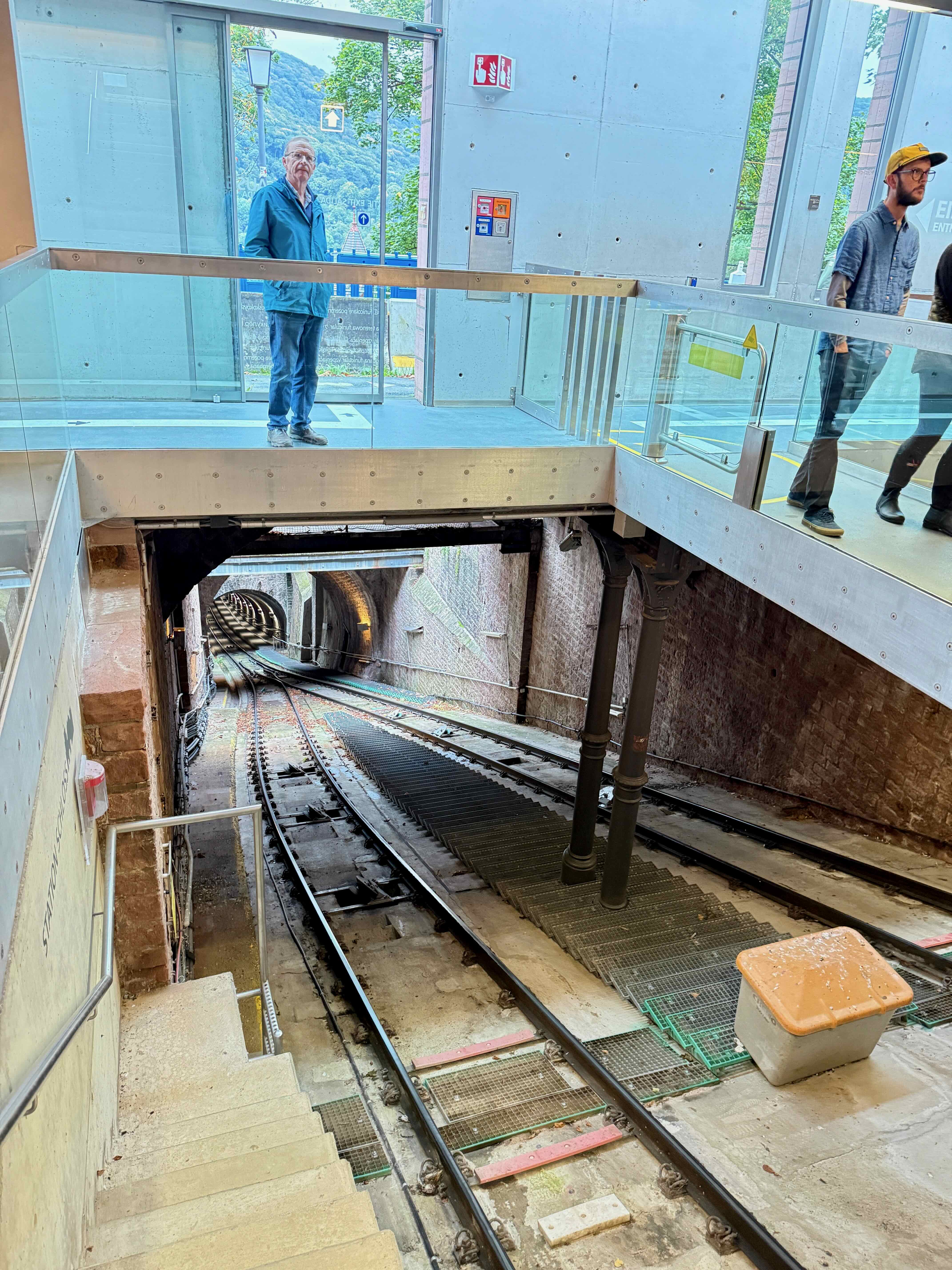
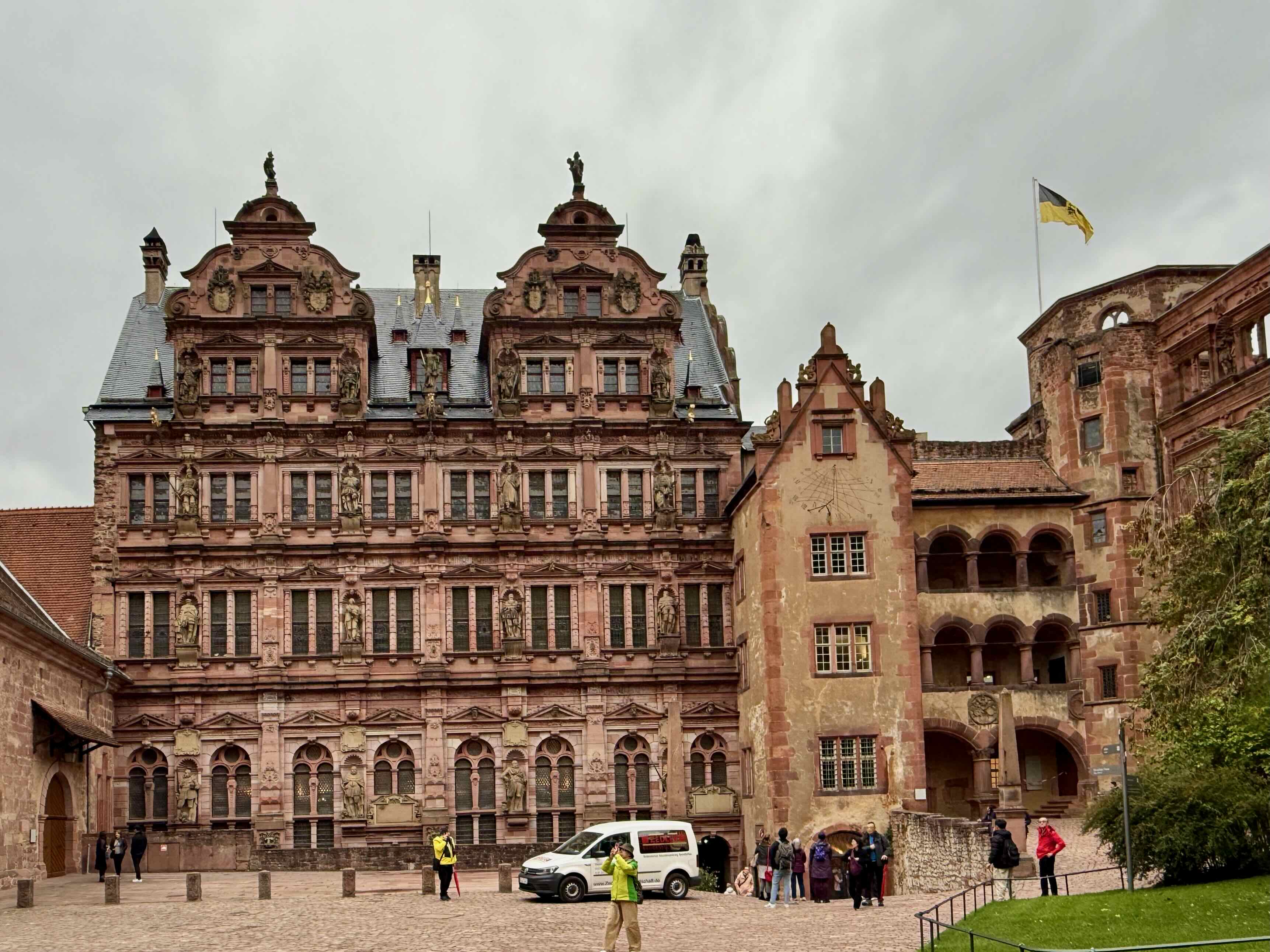
We walk to the castle but all we see is ruins…turns out Bob mixed up his castles! It is fine though as this looks interesting anyways. There is an in depth tour through the ruins in an hour and a half but we decide to just wander and see what we can. This gate was built in one night by King Frederick V for his wife as a birthday present.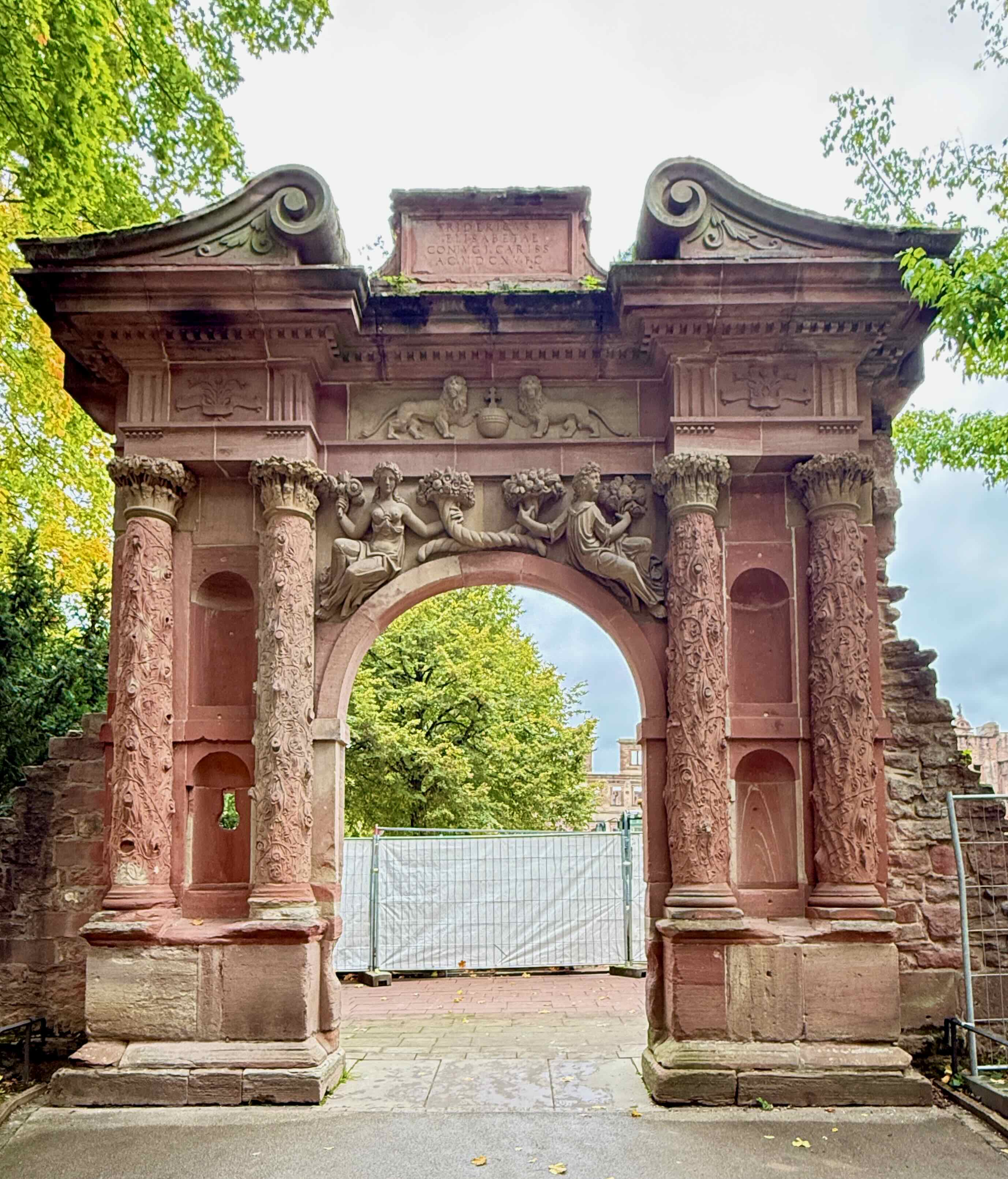
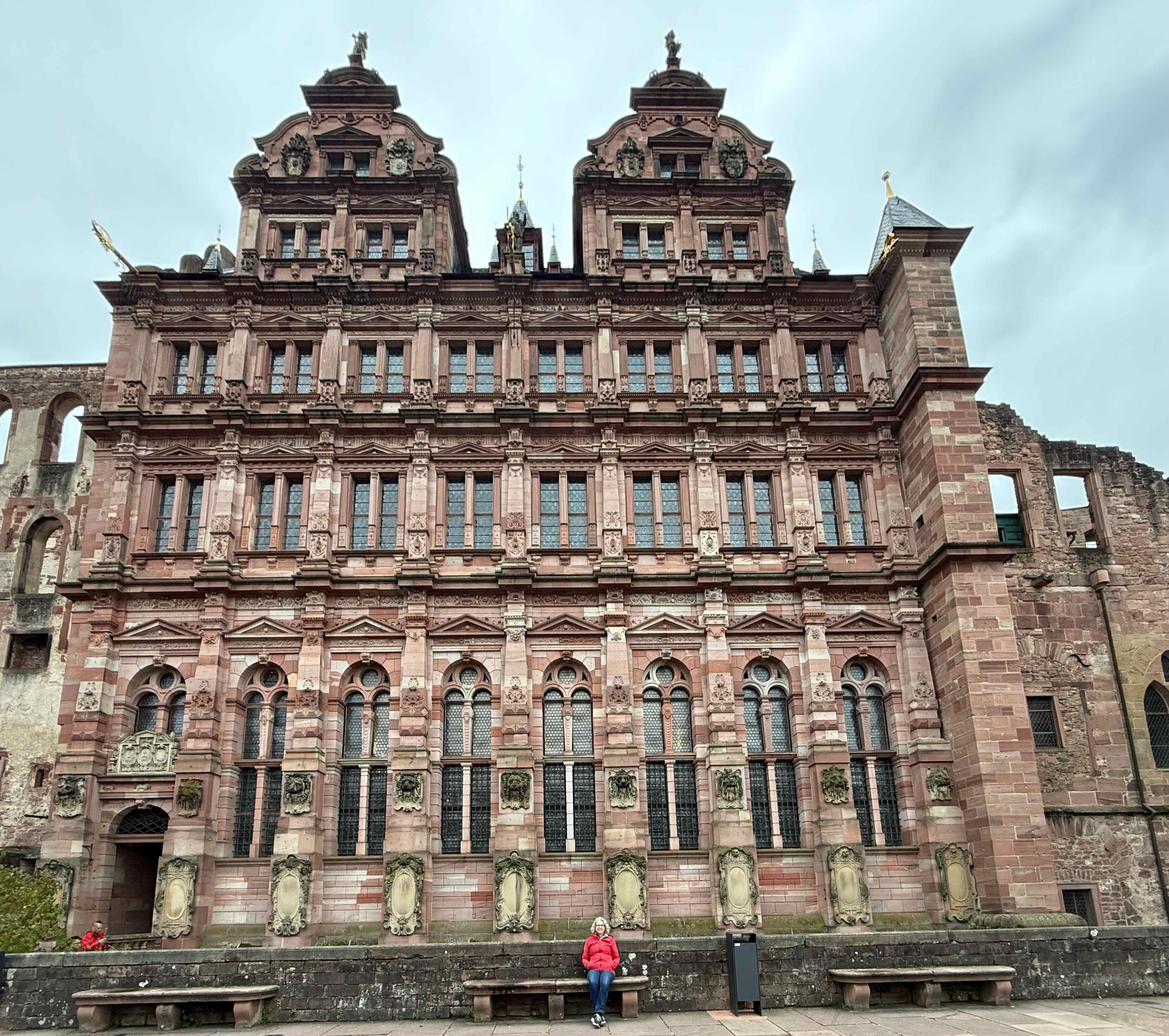
Our funicular ticket gives us access to the courtyard, the German Pharmacy Museum, and the Big Wine Barrel. We walk through the gate to the courtyard…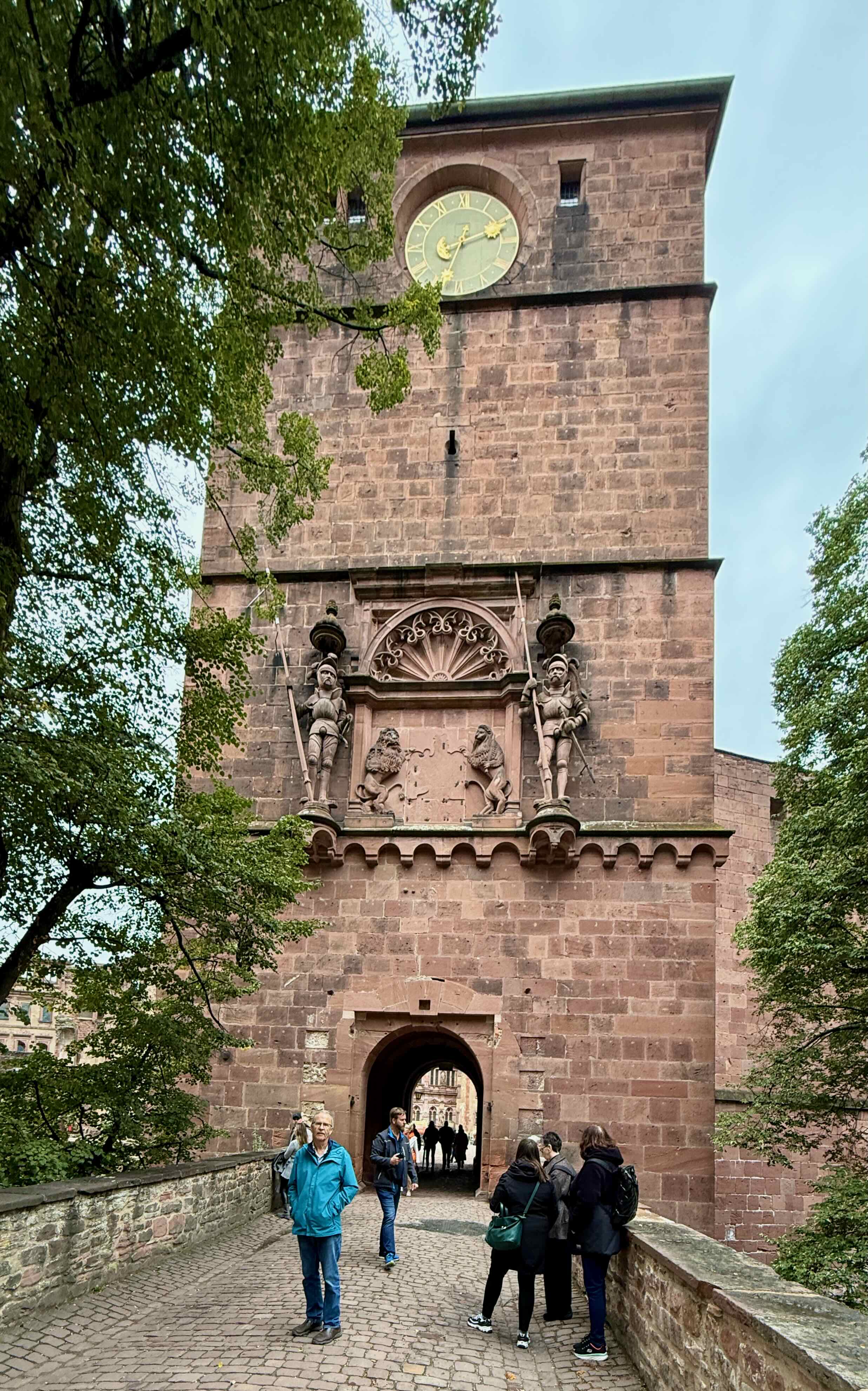
…and we are greeted with views of the ruins of what must have been a very impressive castle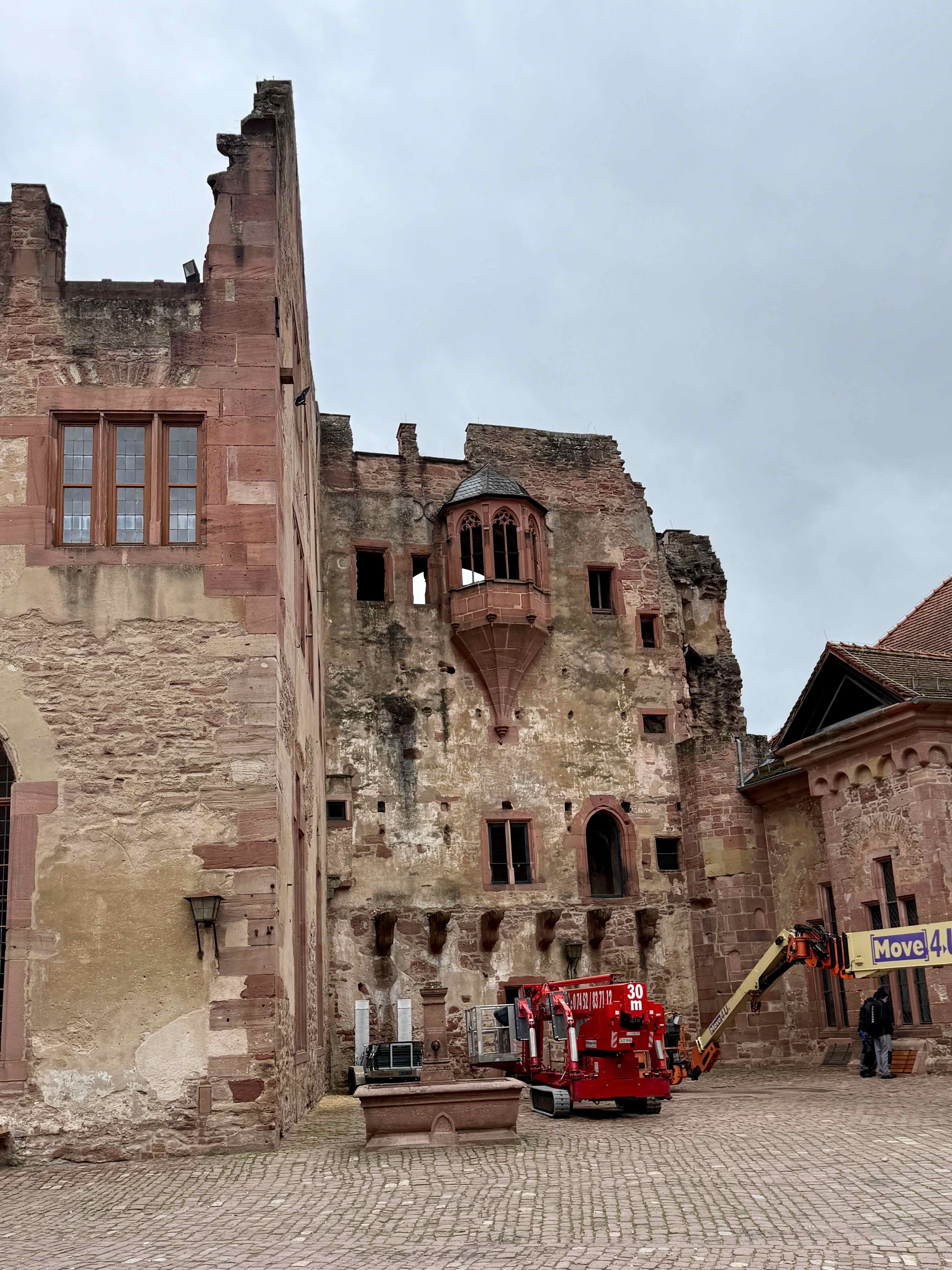
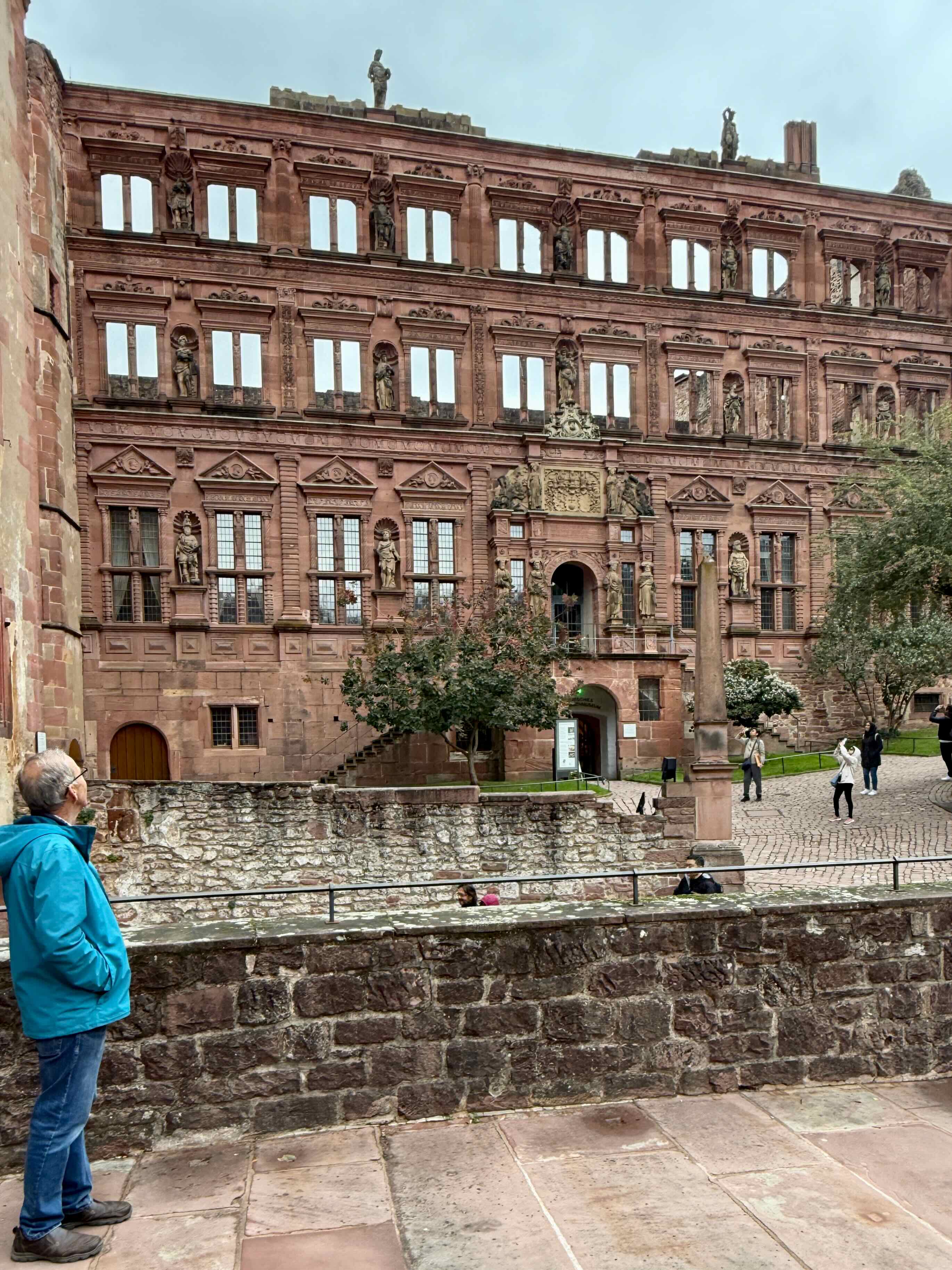
Walking through the doorway in the above photo we arrive on a huge balcony overlooking the Rhine River with views of Heidelberg below.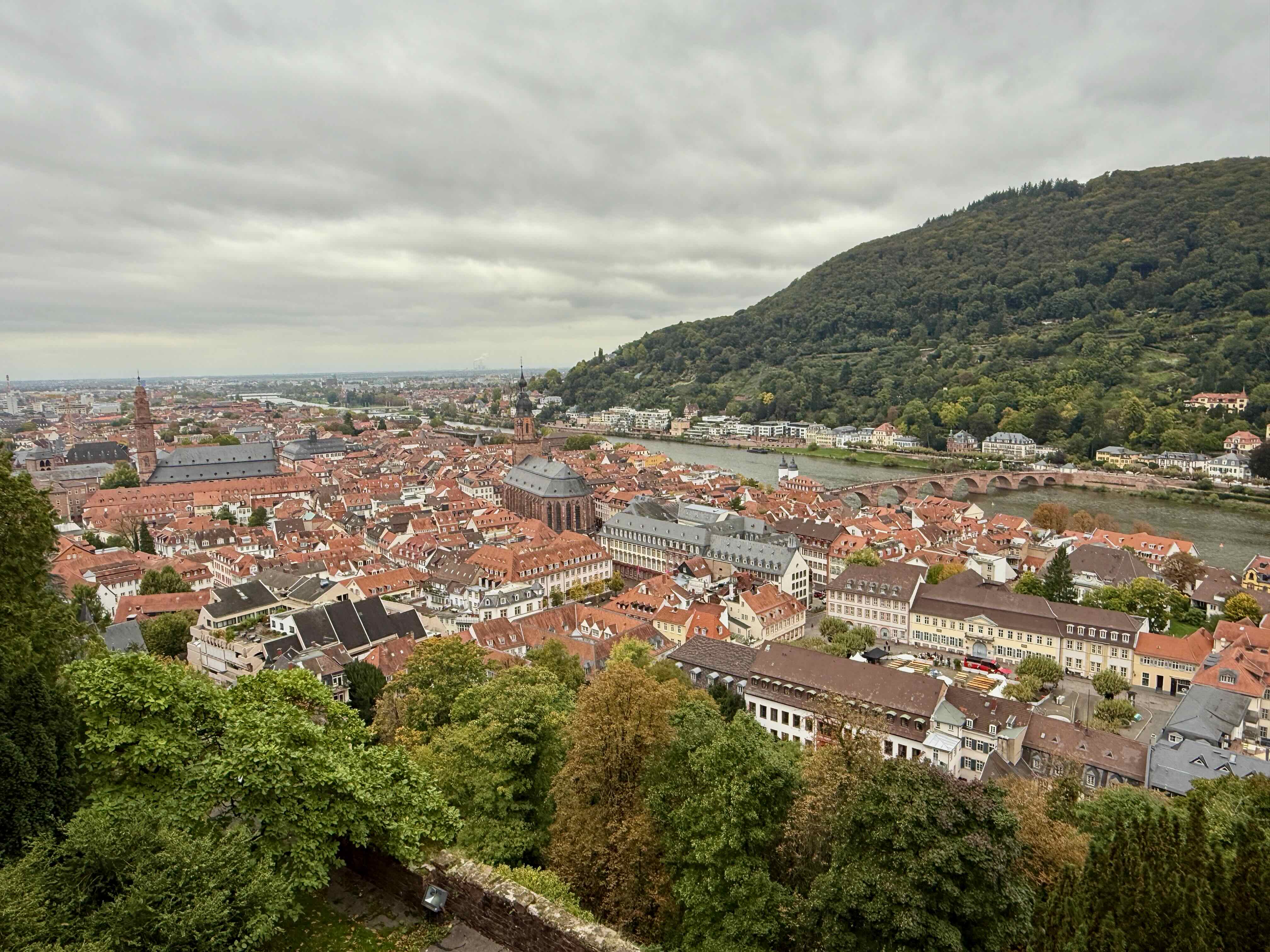 A view of the ruins as seen from the balcony.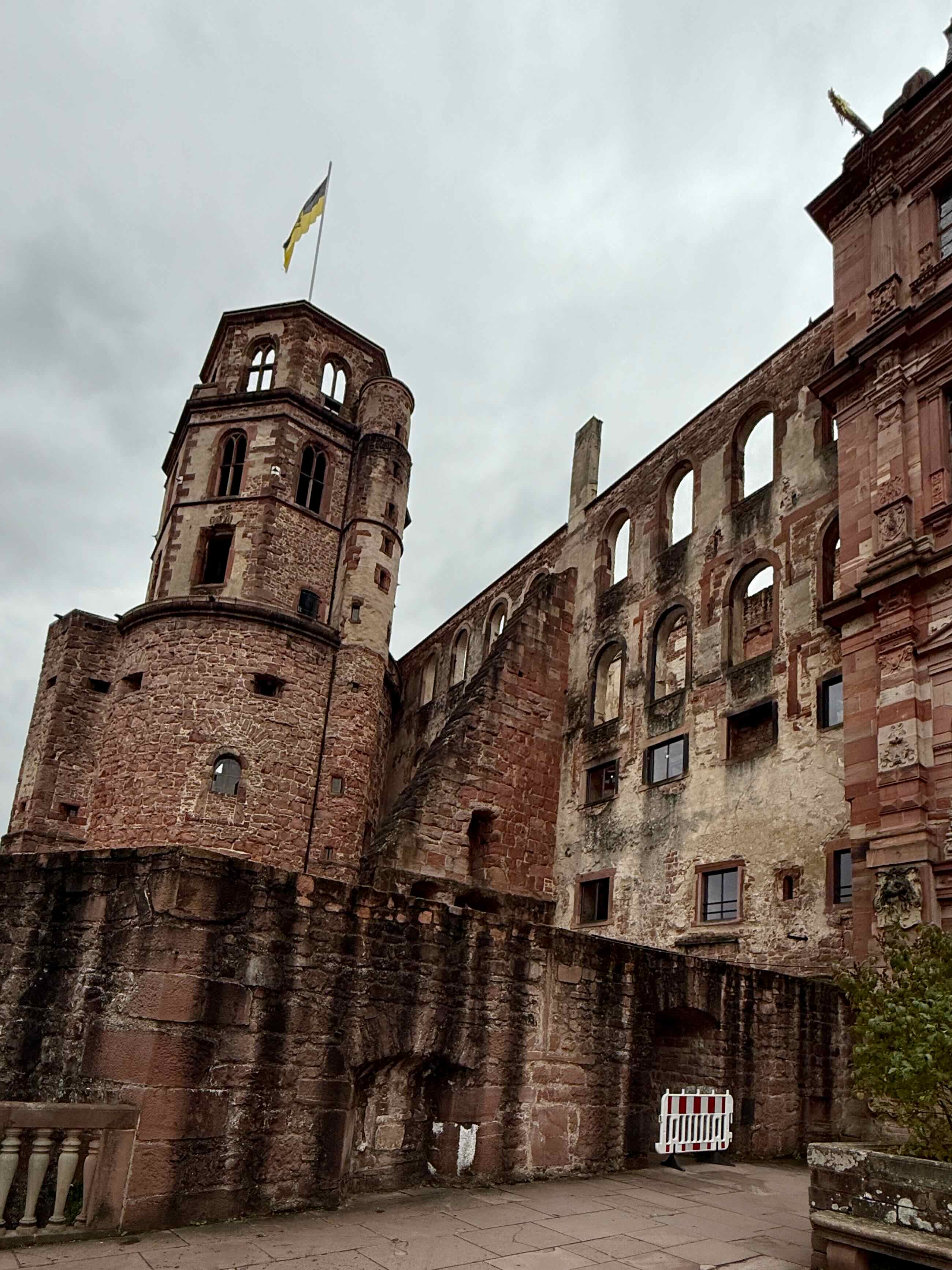
It is cold out so we go inside to see the Big Wine Barrel. It is pretty impressive and I take this photo and then walk around the corner while Bob is inspecting the barrel. I come back and tell him “You need to come and see the BIG Wine Barrel!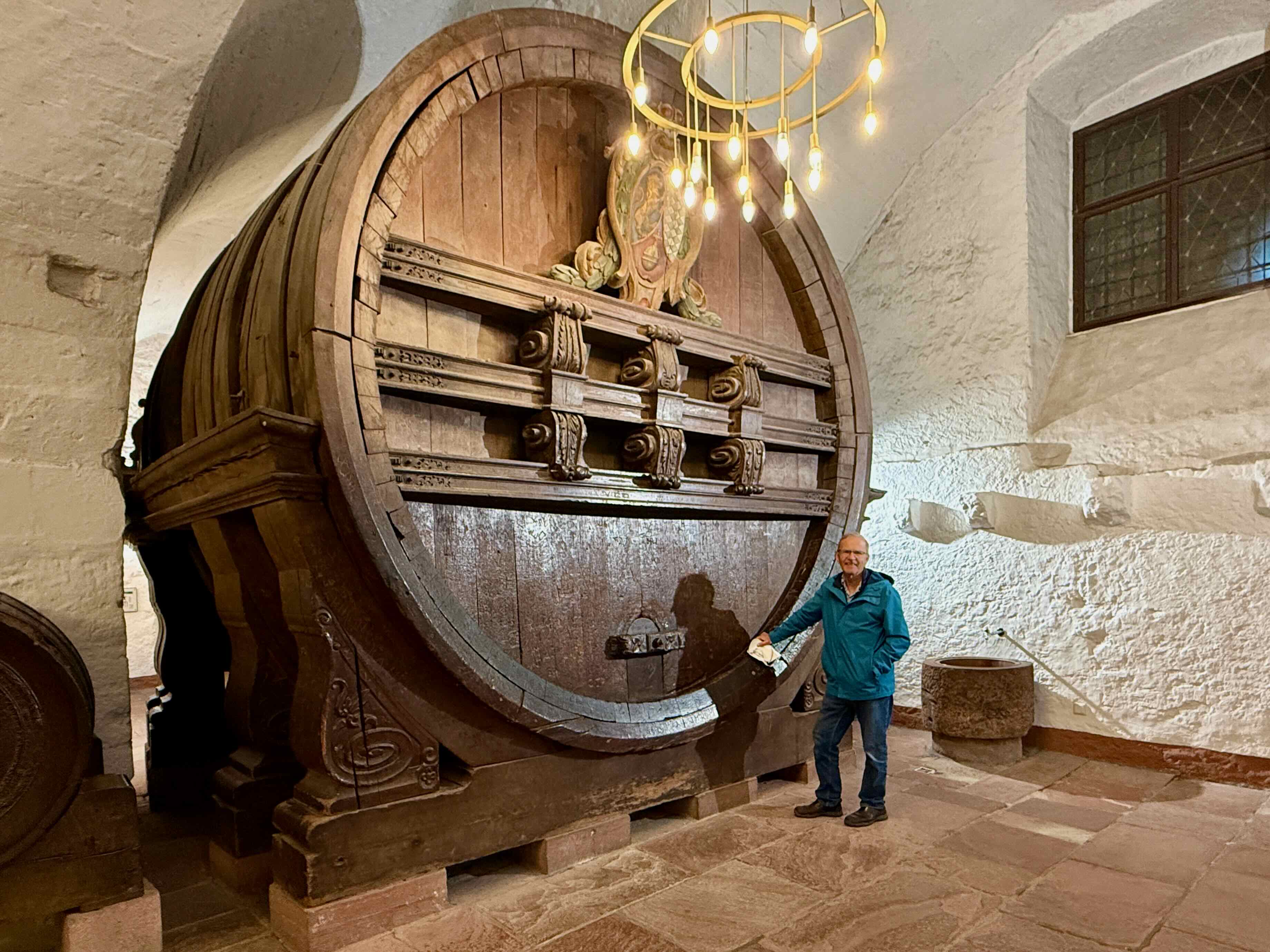
Here it is!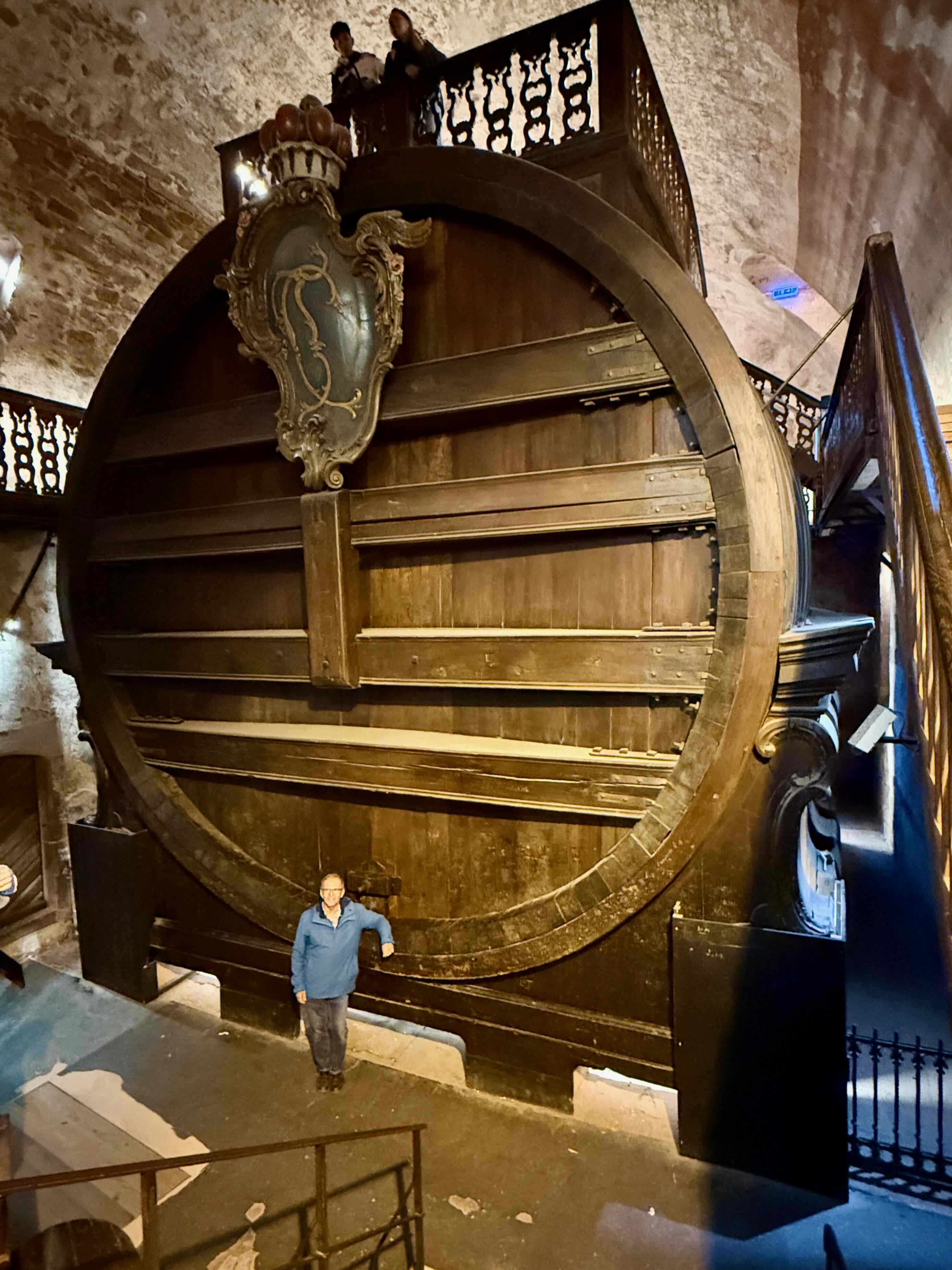
This wine barrel held 220,000 liters of wine. The stairs I am standing on lead to a platform above the barrel that was likely used as a dance floor! 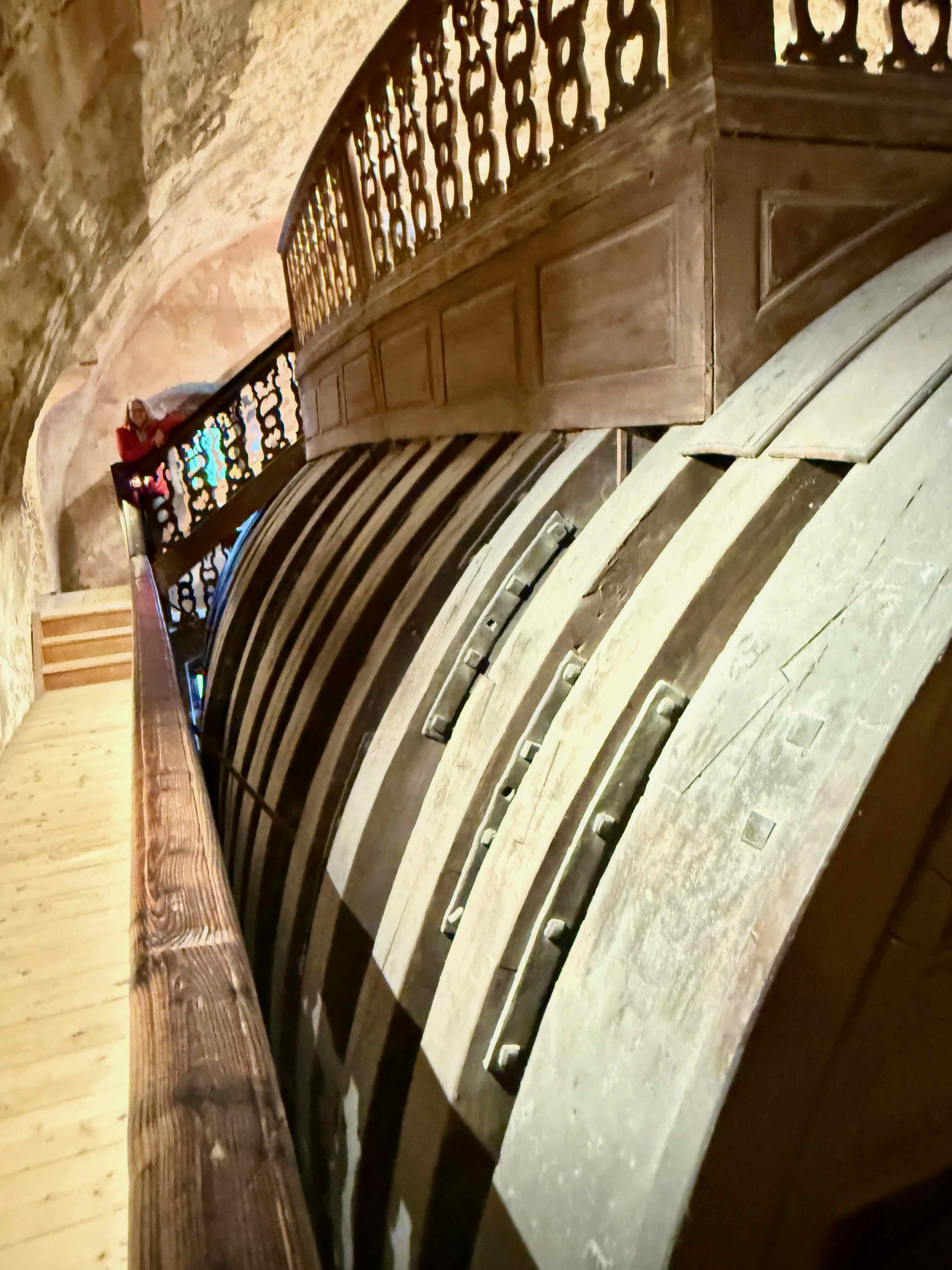
Last stop is the German Apothecary Museum. It is warm inside, which I really appreciate. Aspirin was a commercially sold product in 1889. 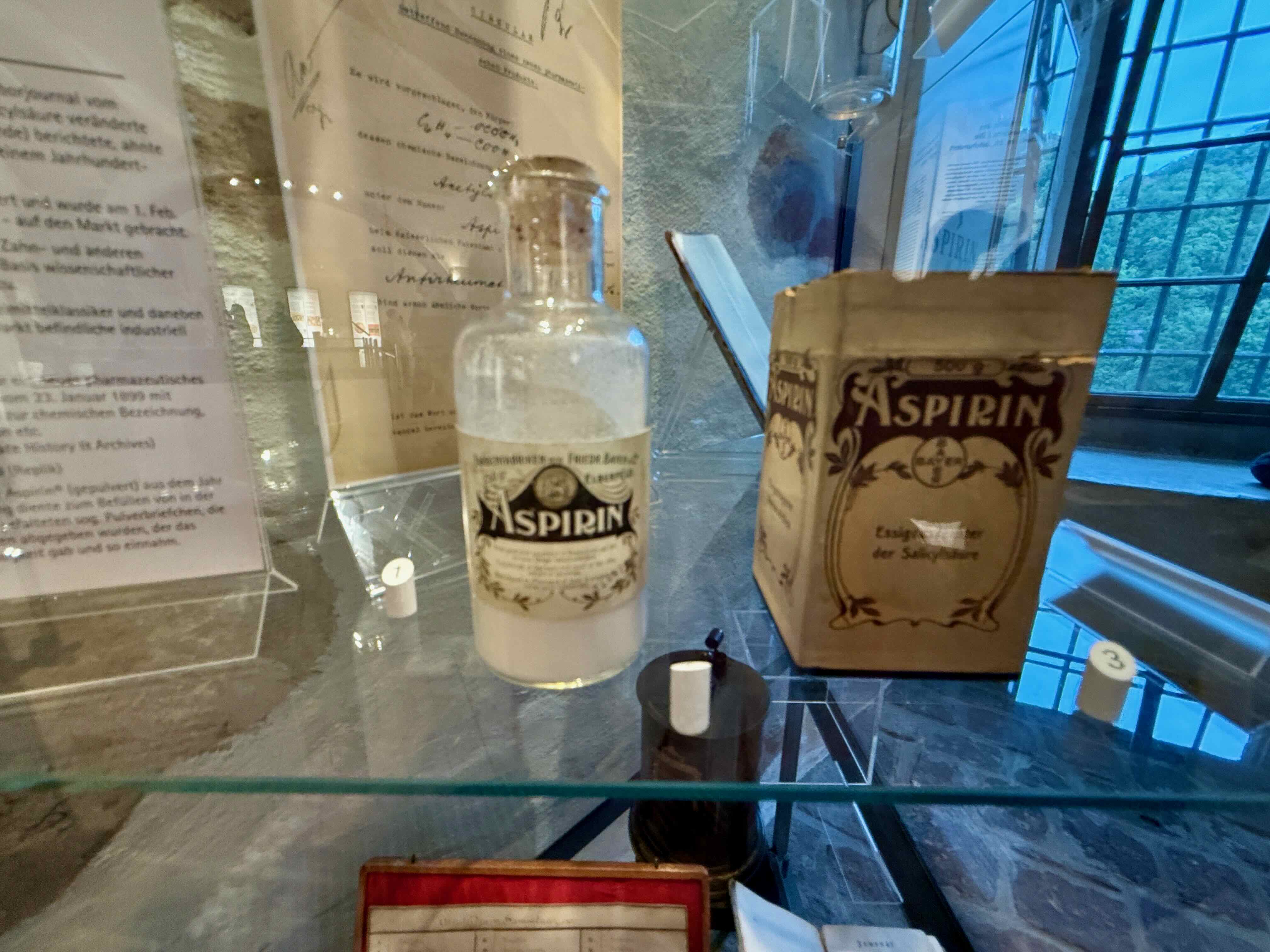
This chest of homeopathic medicines from 1890 contains 312 vials of homeopathic remedies.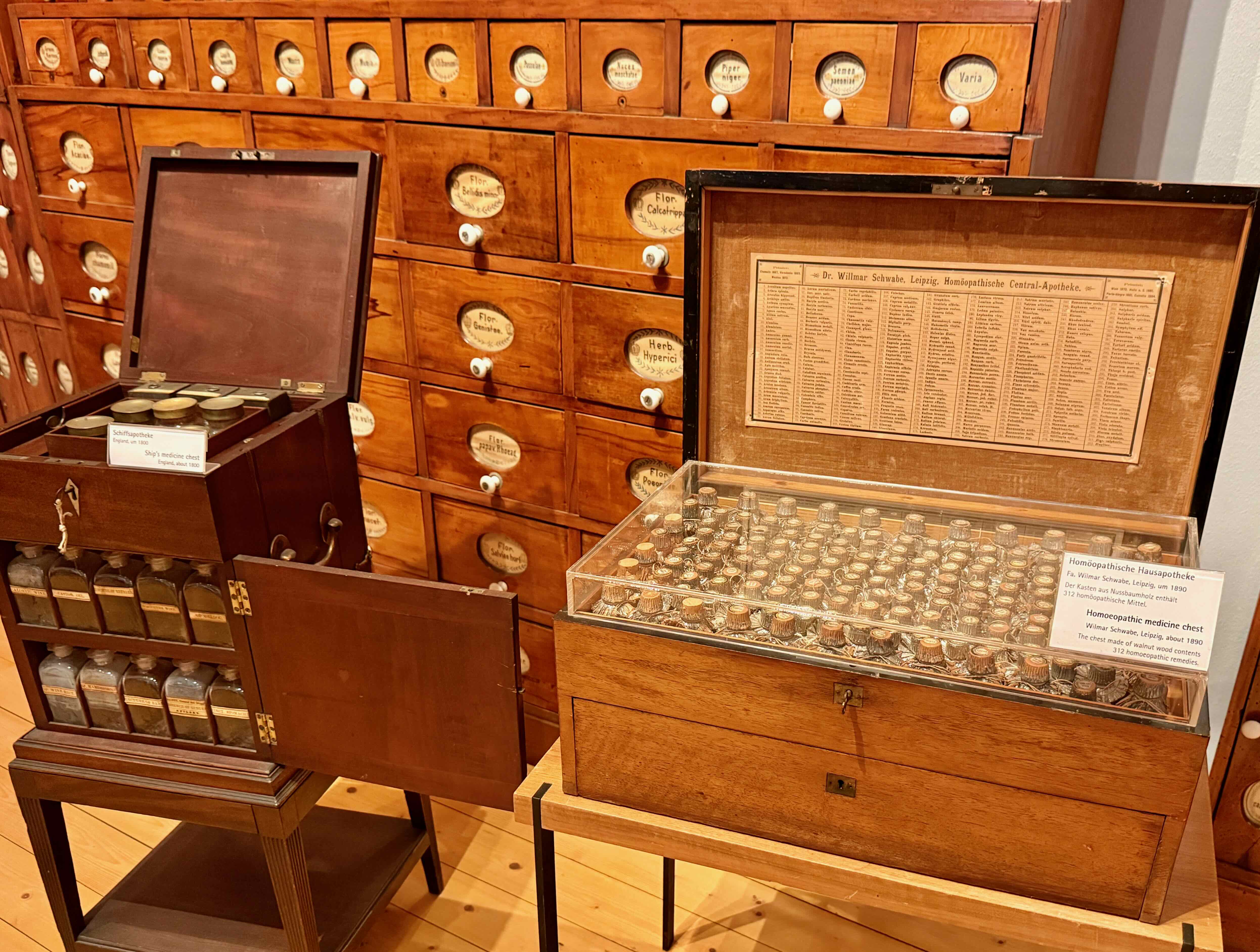
What is it about chests with lots of little drawers that I find so appealing?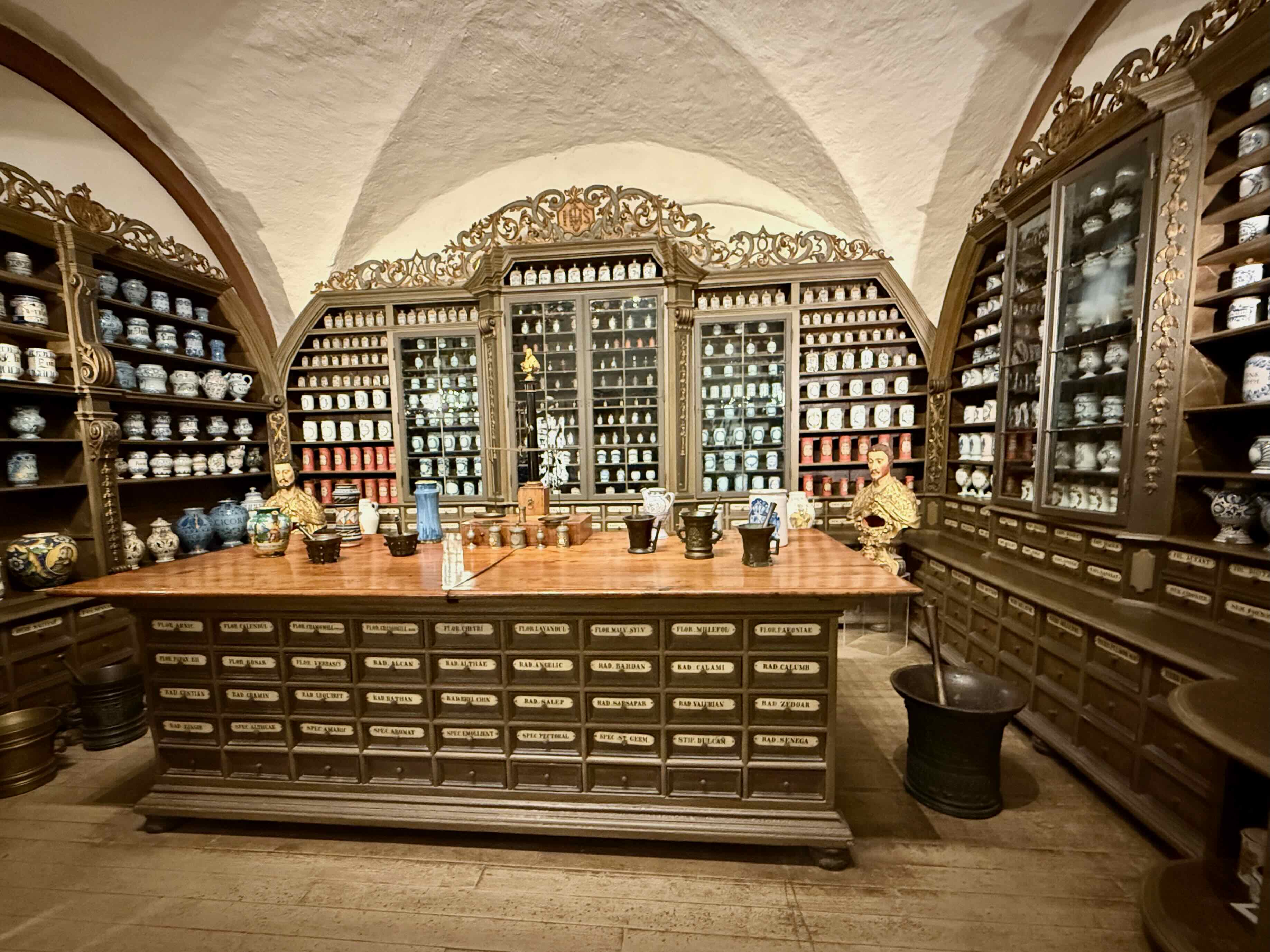
Of course, ground unicorn horns were in big demand as a cure for ailments such as fever, plaque, poisoning convulsions and epilepsy! Unicorn horns were just long tusks from narwhals or other animals but they were an expensive medication reserved for royalty and the very rich. 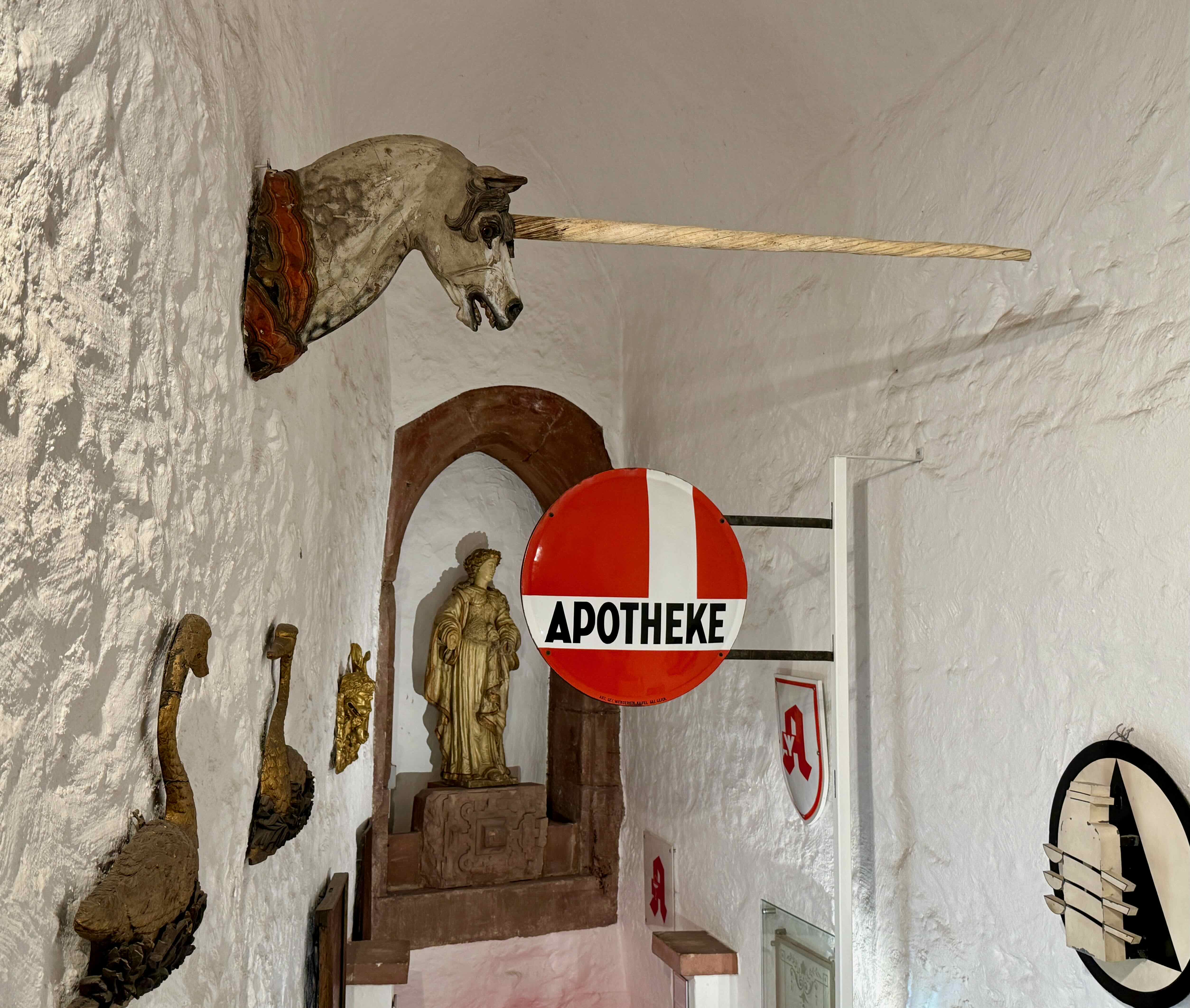
An early distillery…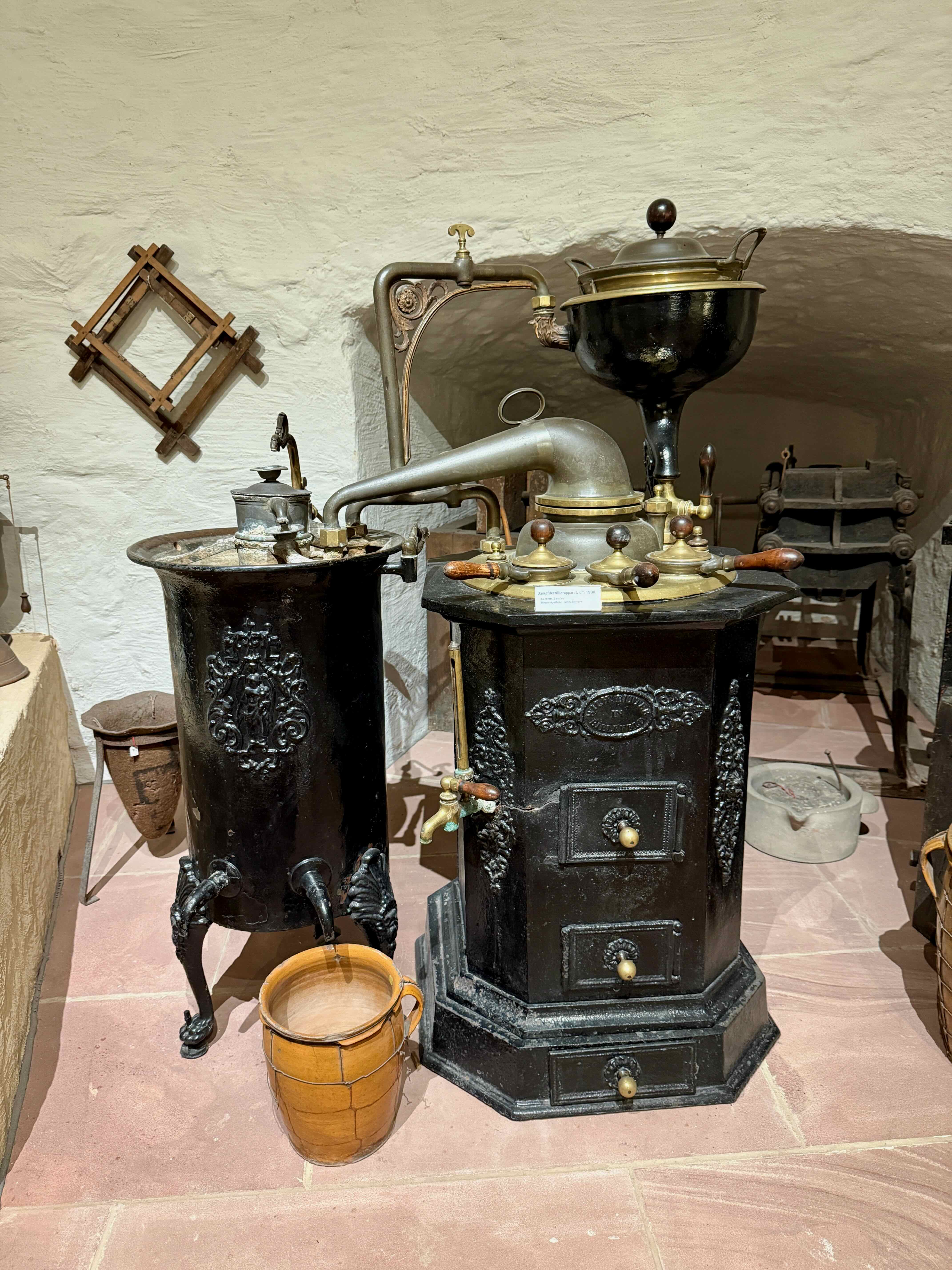
…bunsen burners and a telescope from 1780.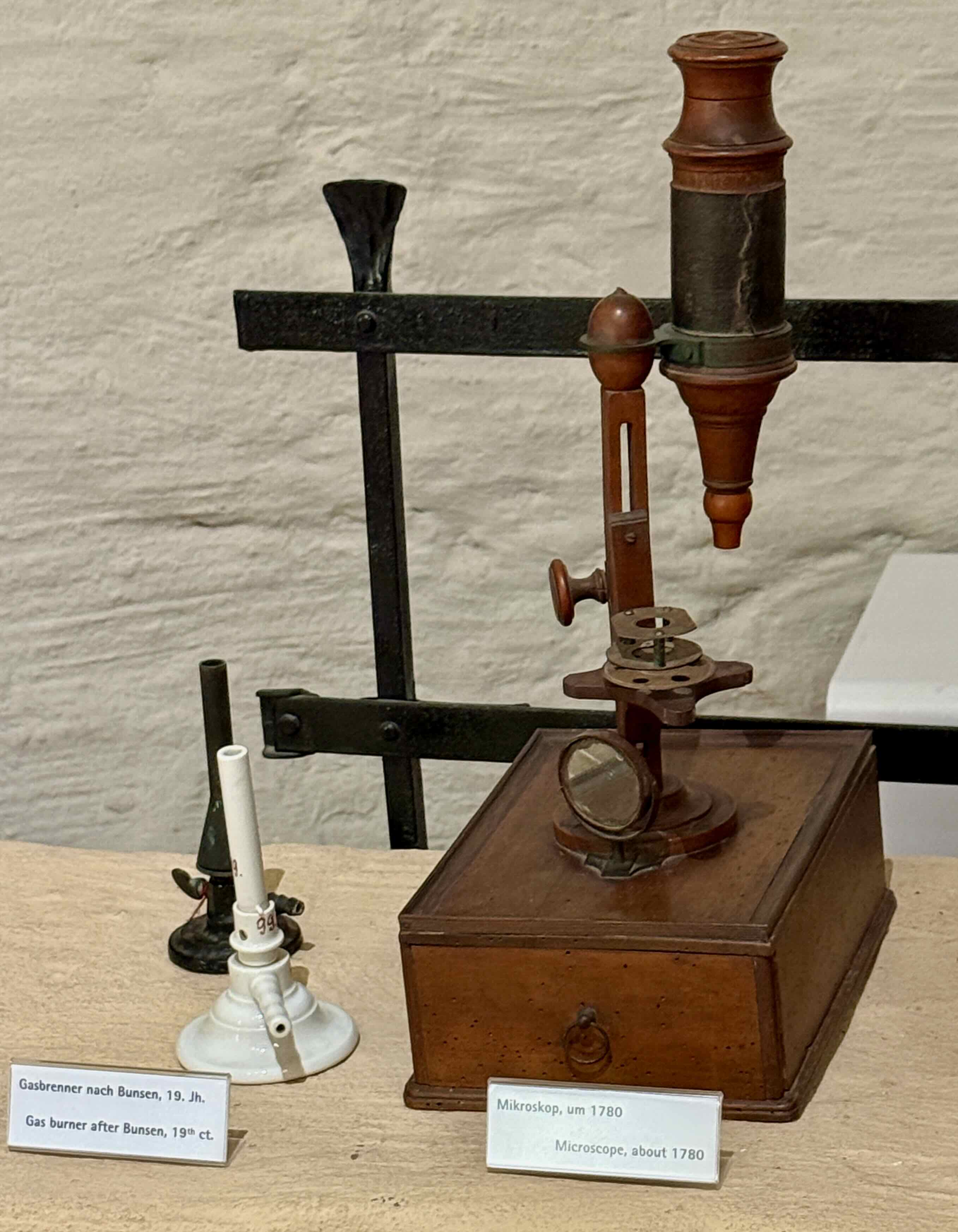 We had such a hard time finding the entrance to the funicular and wondered where this castle was located…well, on our way back to the parkade I Iooked up…and there it was! We both laughed, but then we couldn’t find the entrance to the parkade! We looked everywhere and finally walked down the out ramp, and there was the door to the exit. We checked it out and the stairs outside were right beside the ramp we just walked down…no sign or markers though!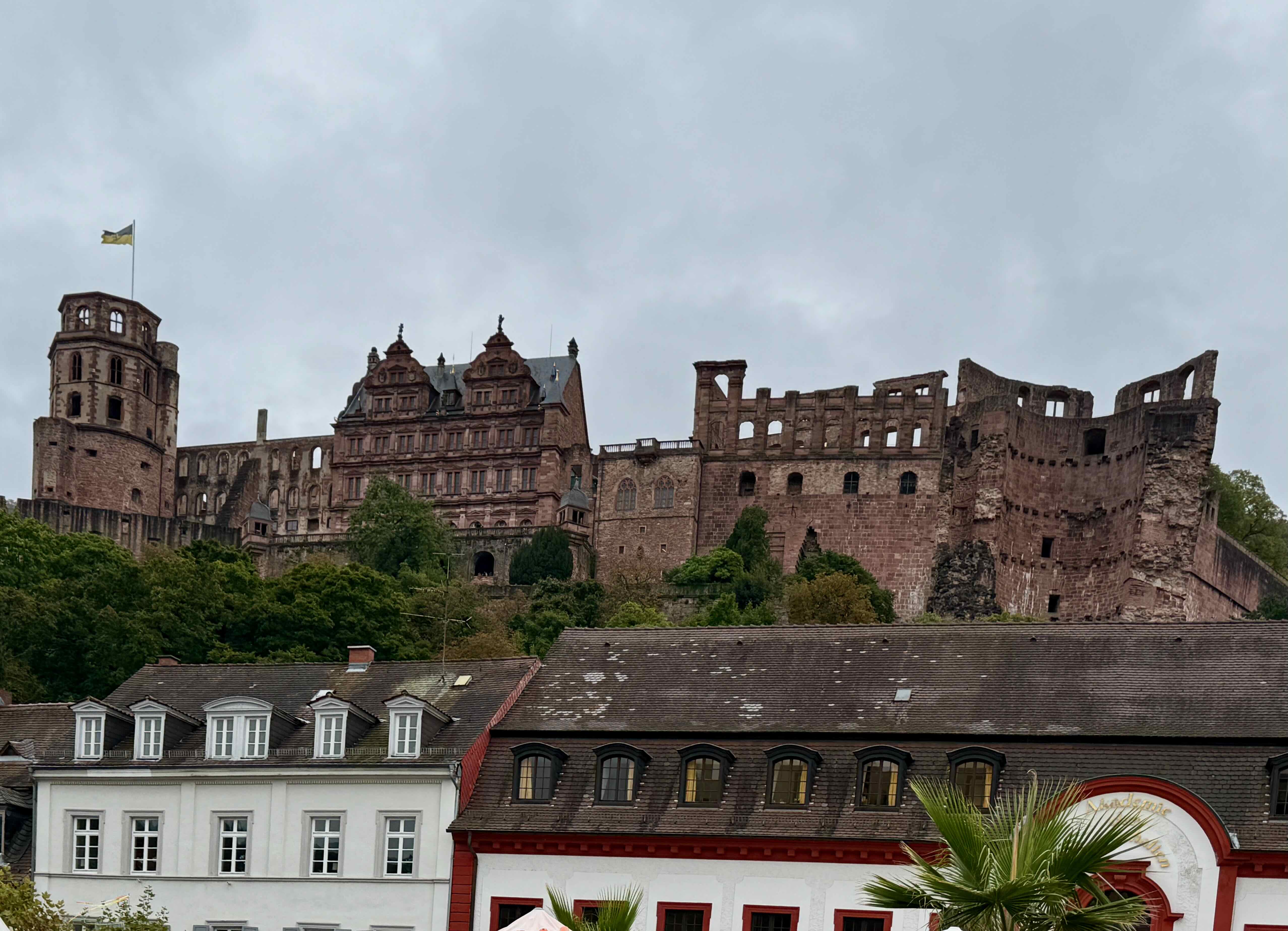
Back on the road to stuttgart…and it is raining again.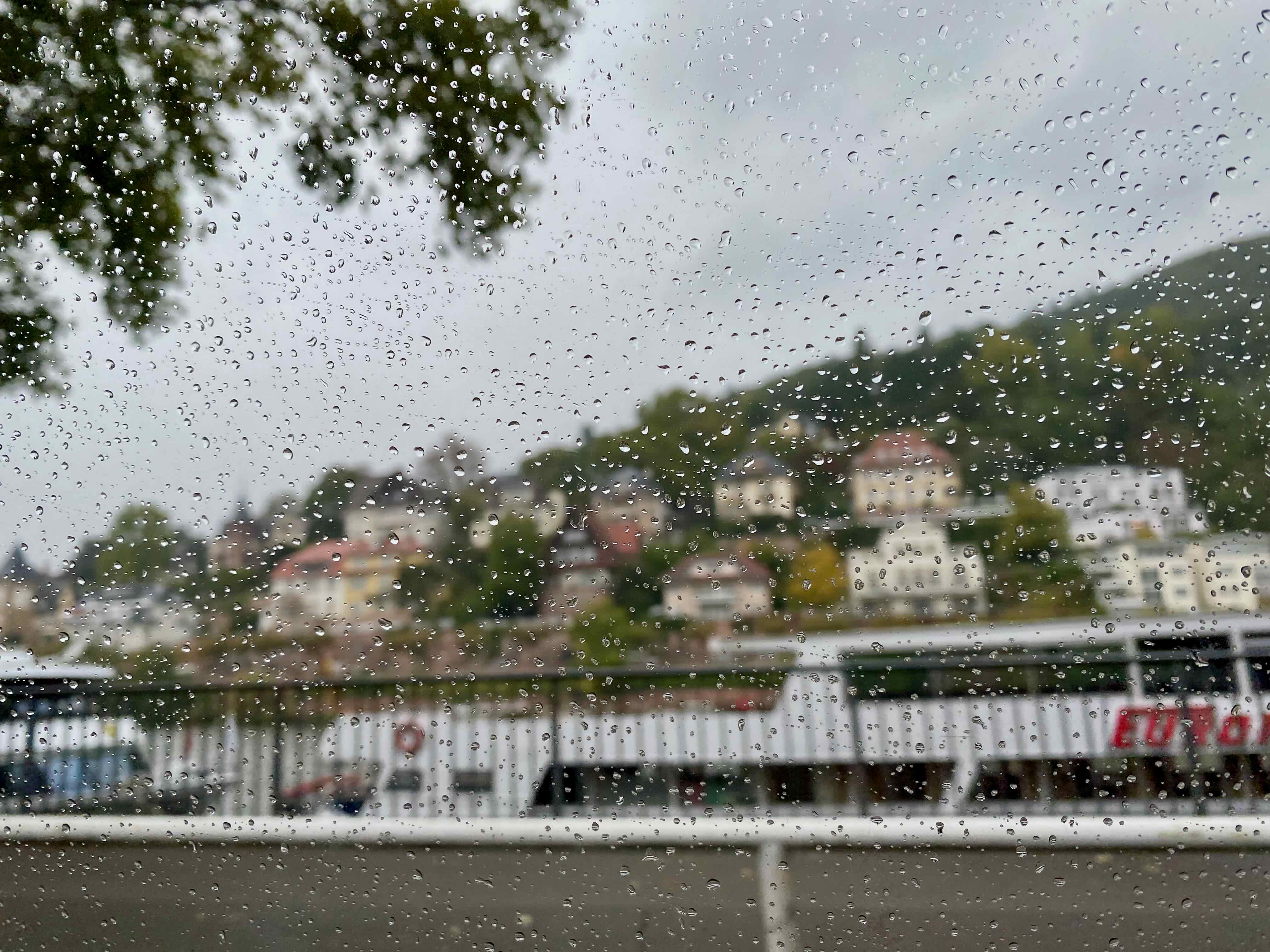
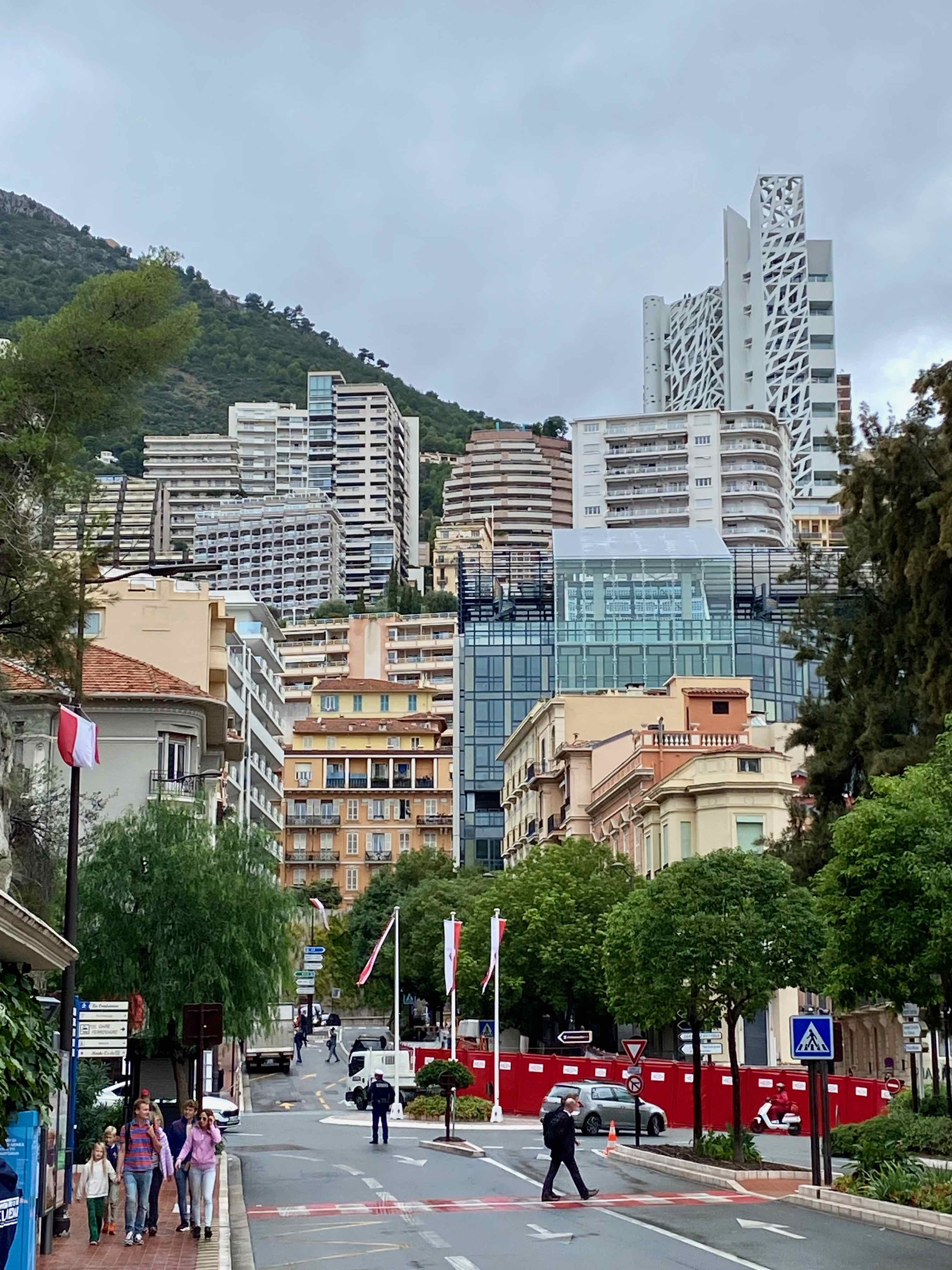
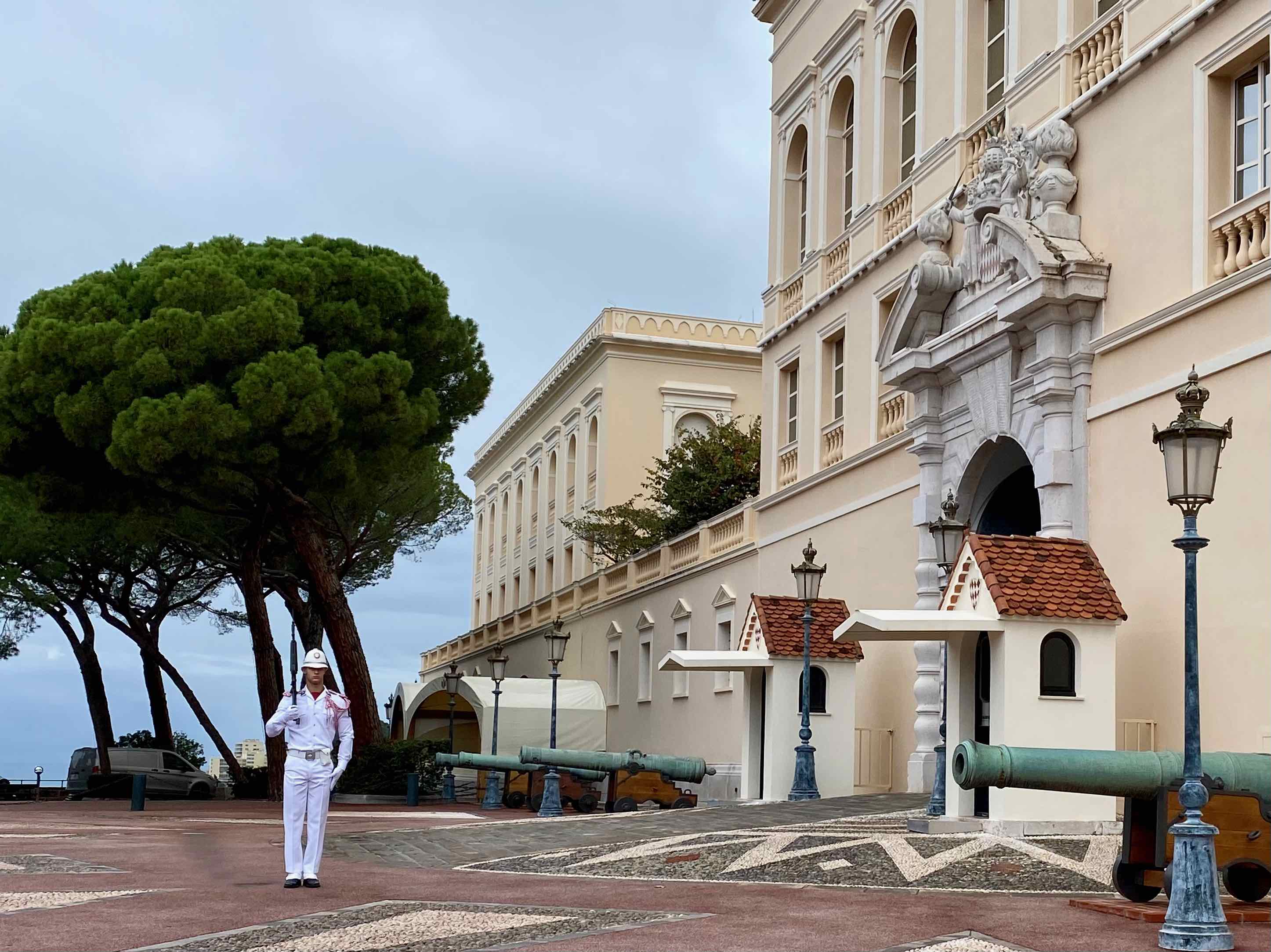


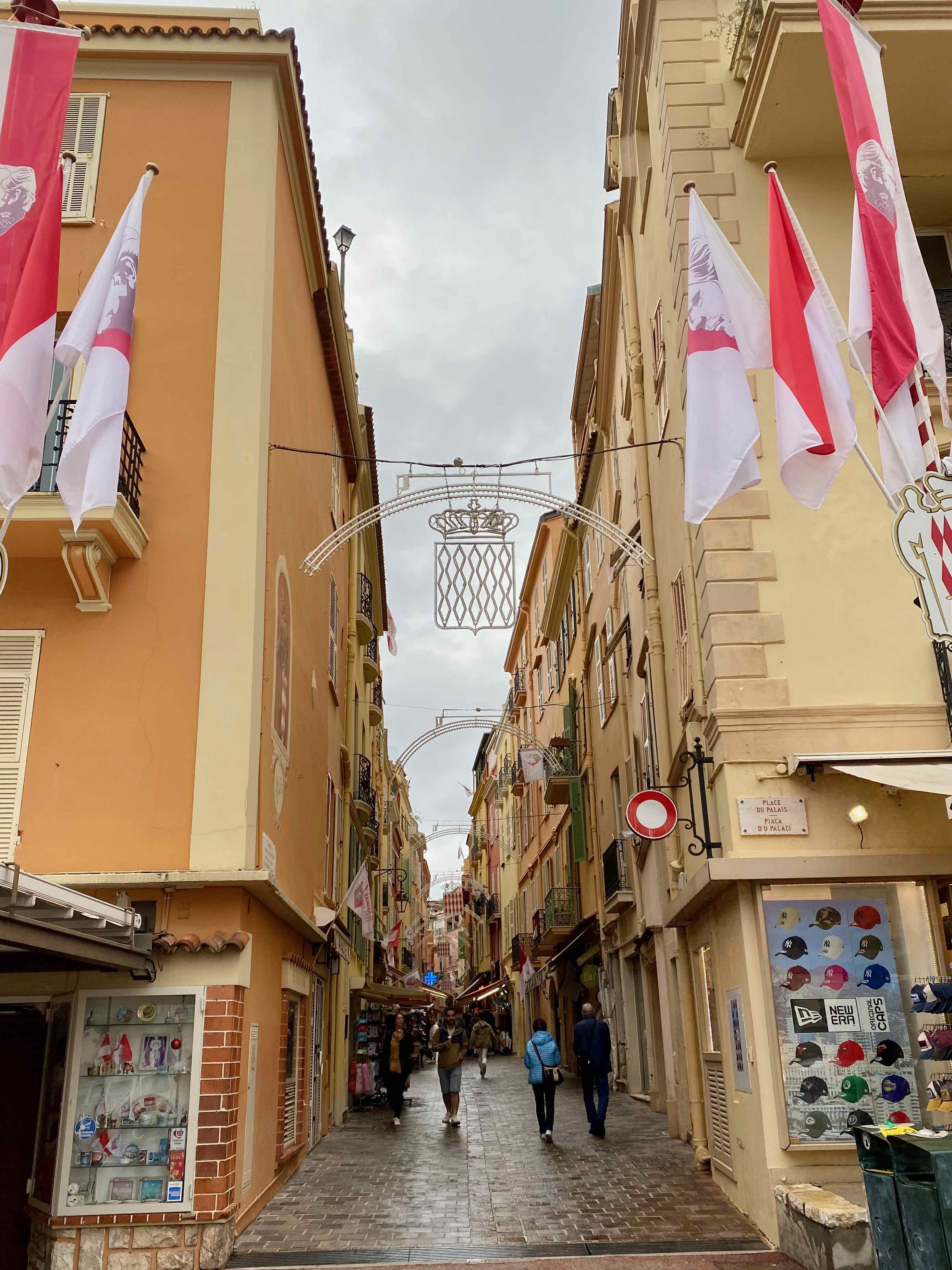


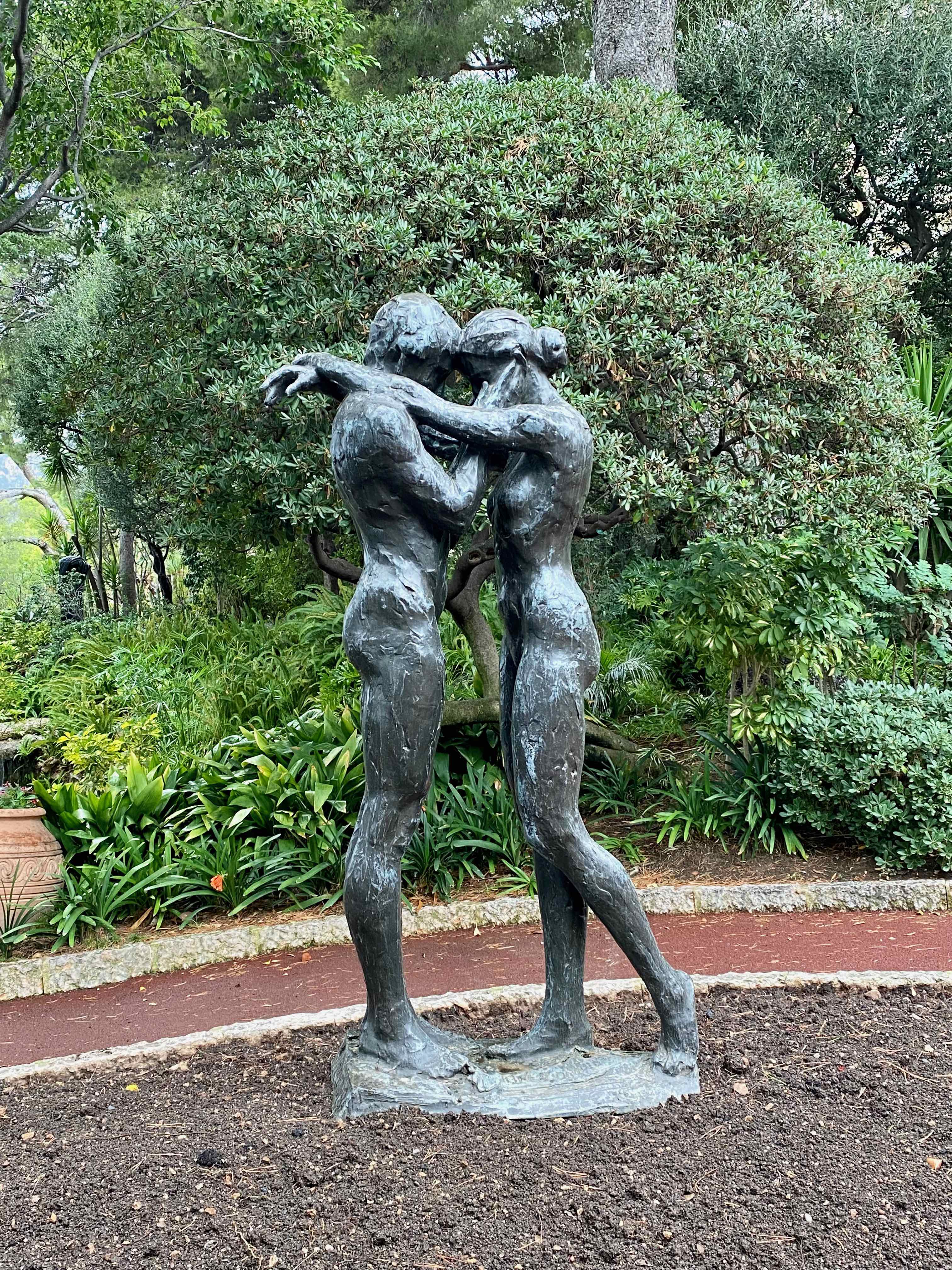
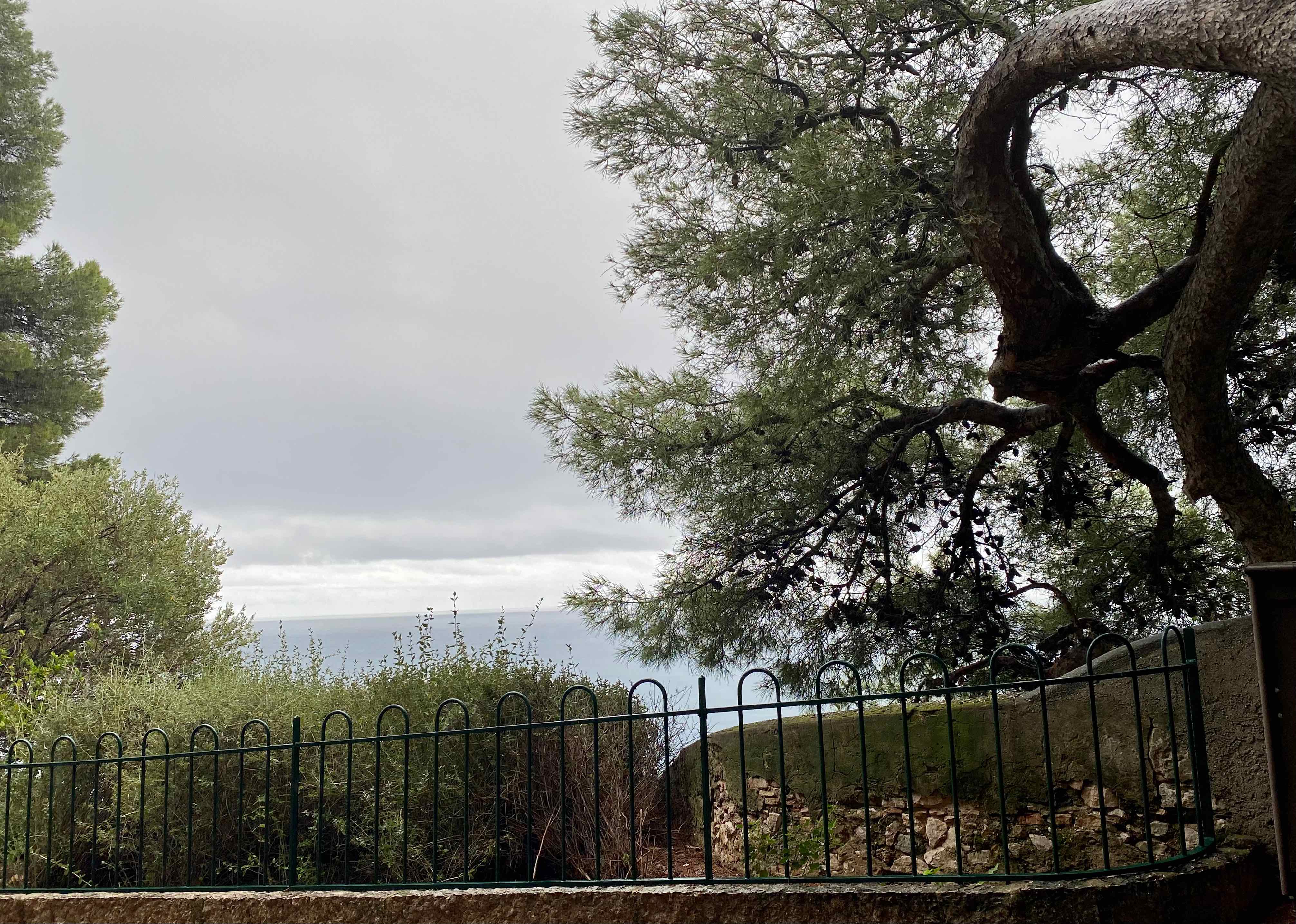 but this sculpture nearby gives a more accurate portrayal of the weather!
 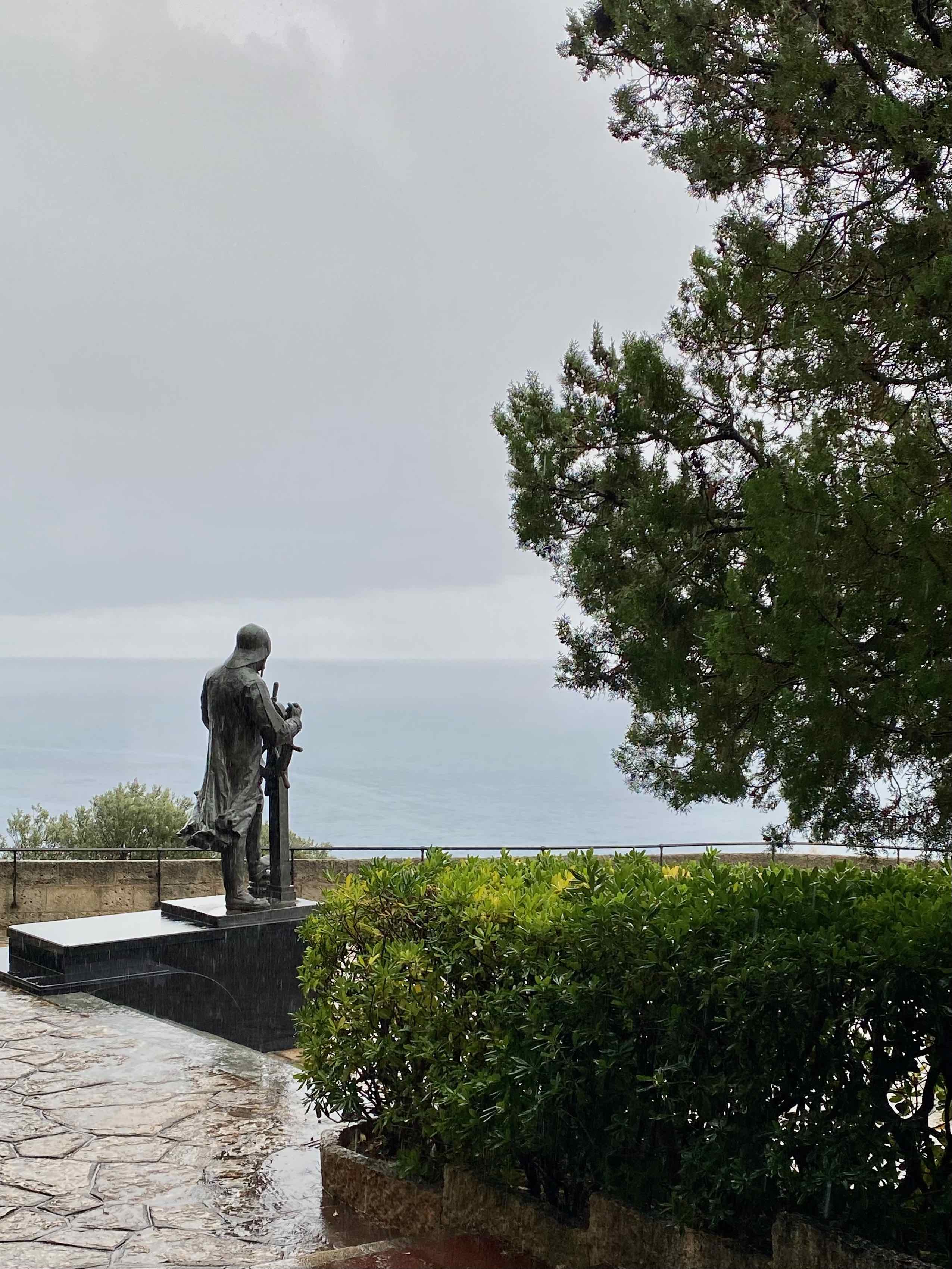 We saw this statue “The Cloak of Conscience” elsewhere on one of our trips, but I don’t remember where. The artist, Anna Chromy studied at the Academy de la Grande Chaumiere in Paris, my favourite life drawing studio! She is another interesting artist I read about today. I did not know that this sculpture was also carved in marble and stands over 15 feet tall! This website has some amazing photos of its creation..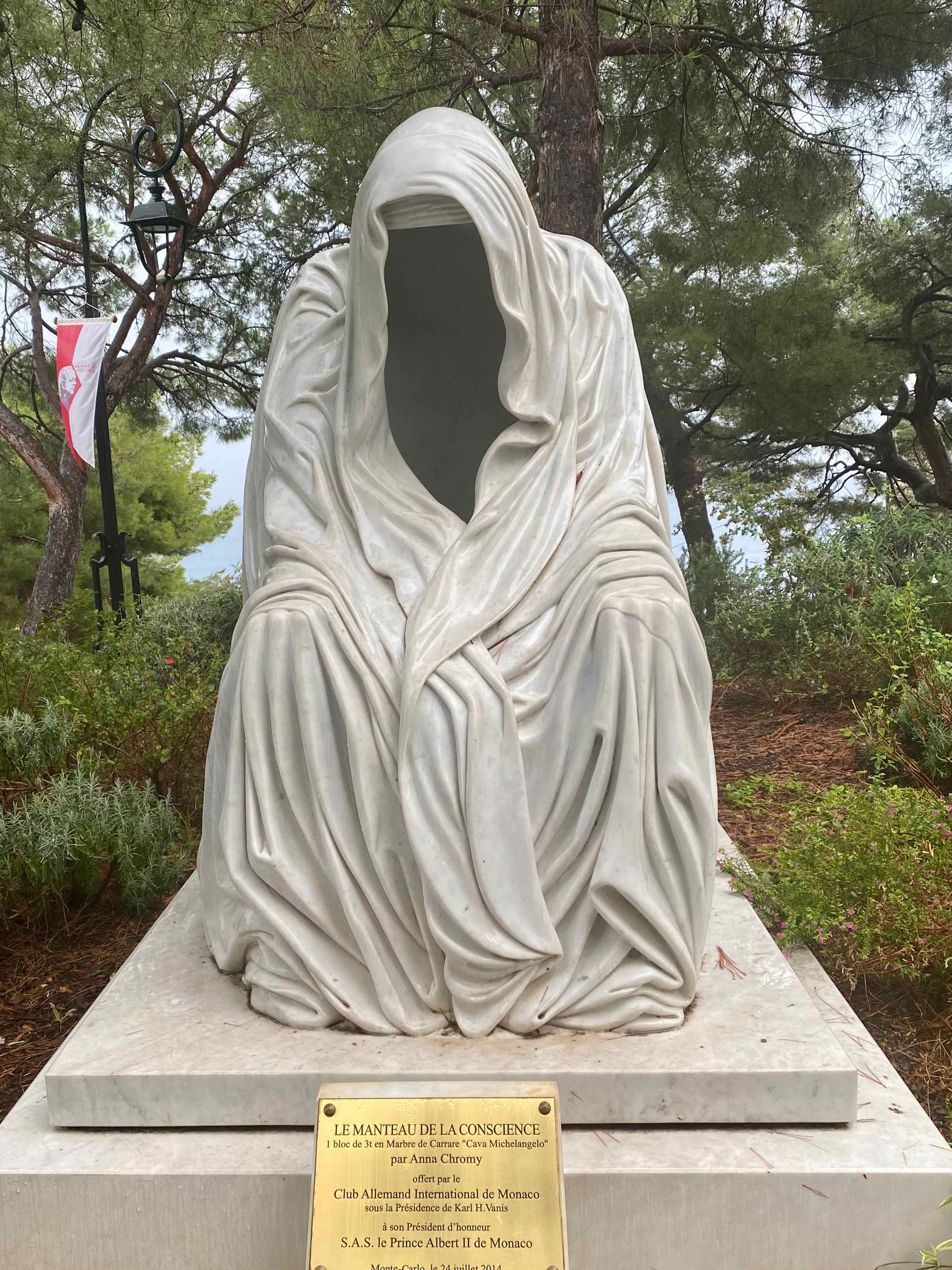
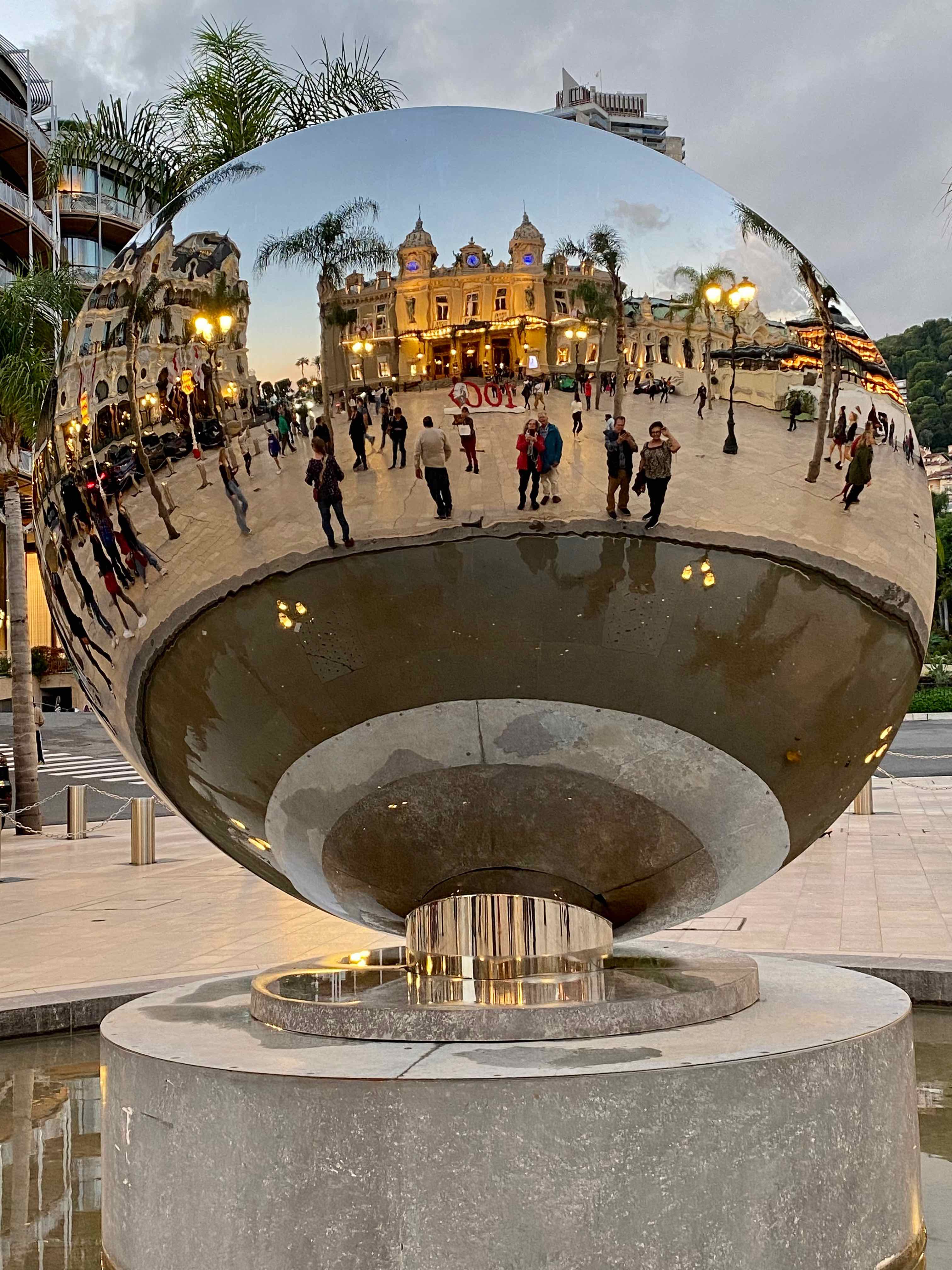

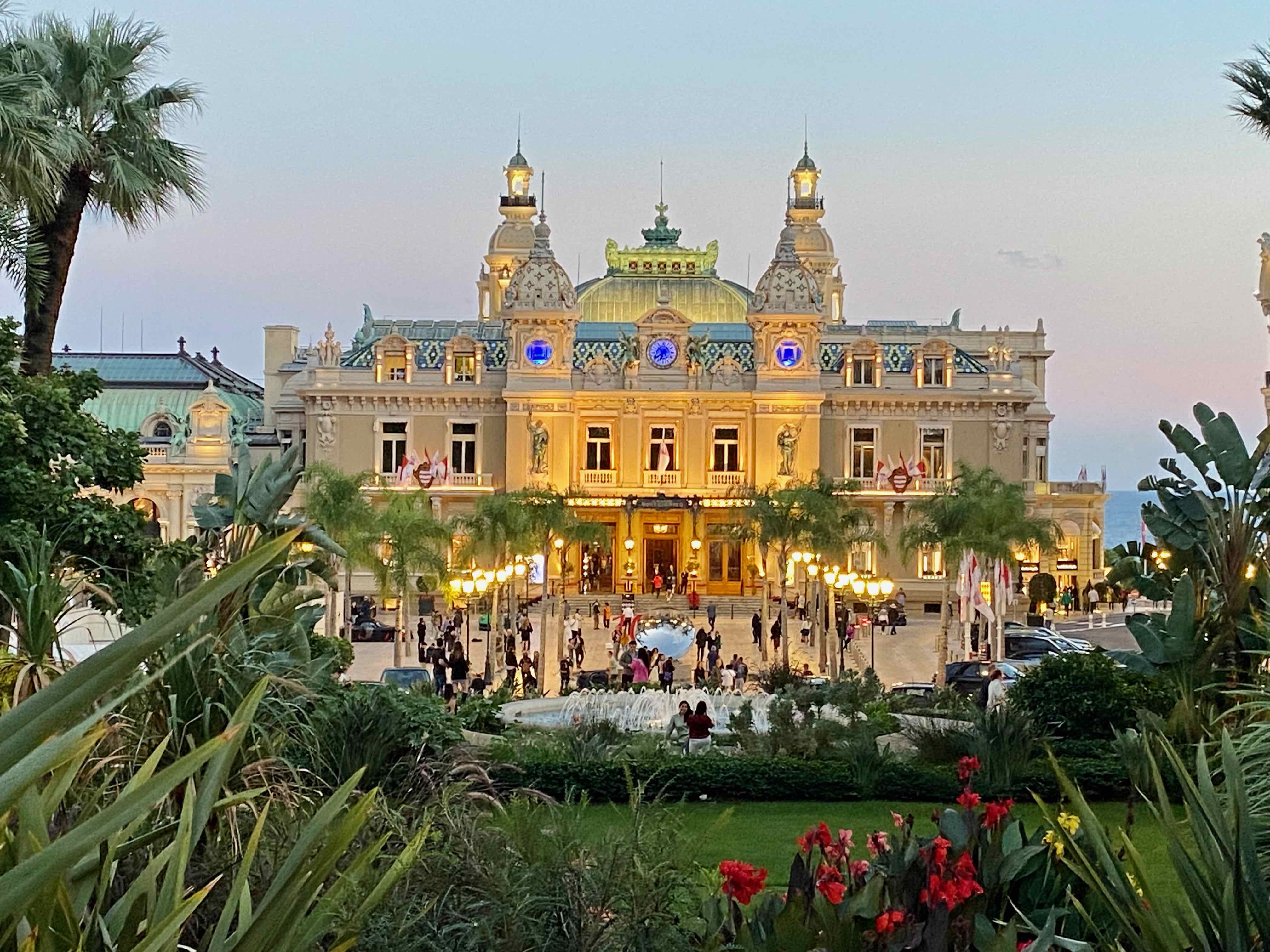
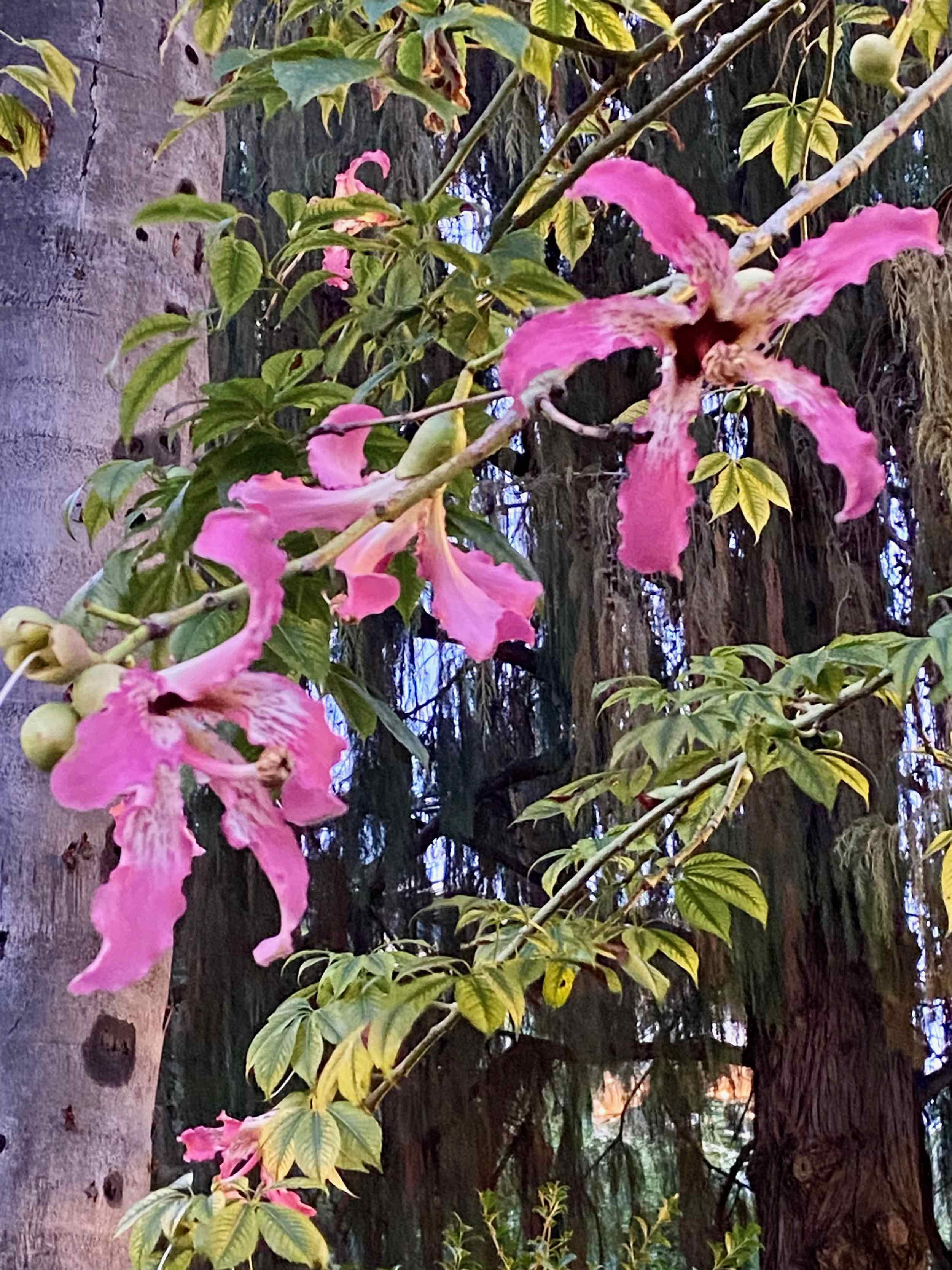 and another big flowering Brugmansia.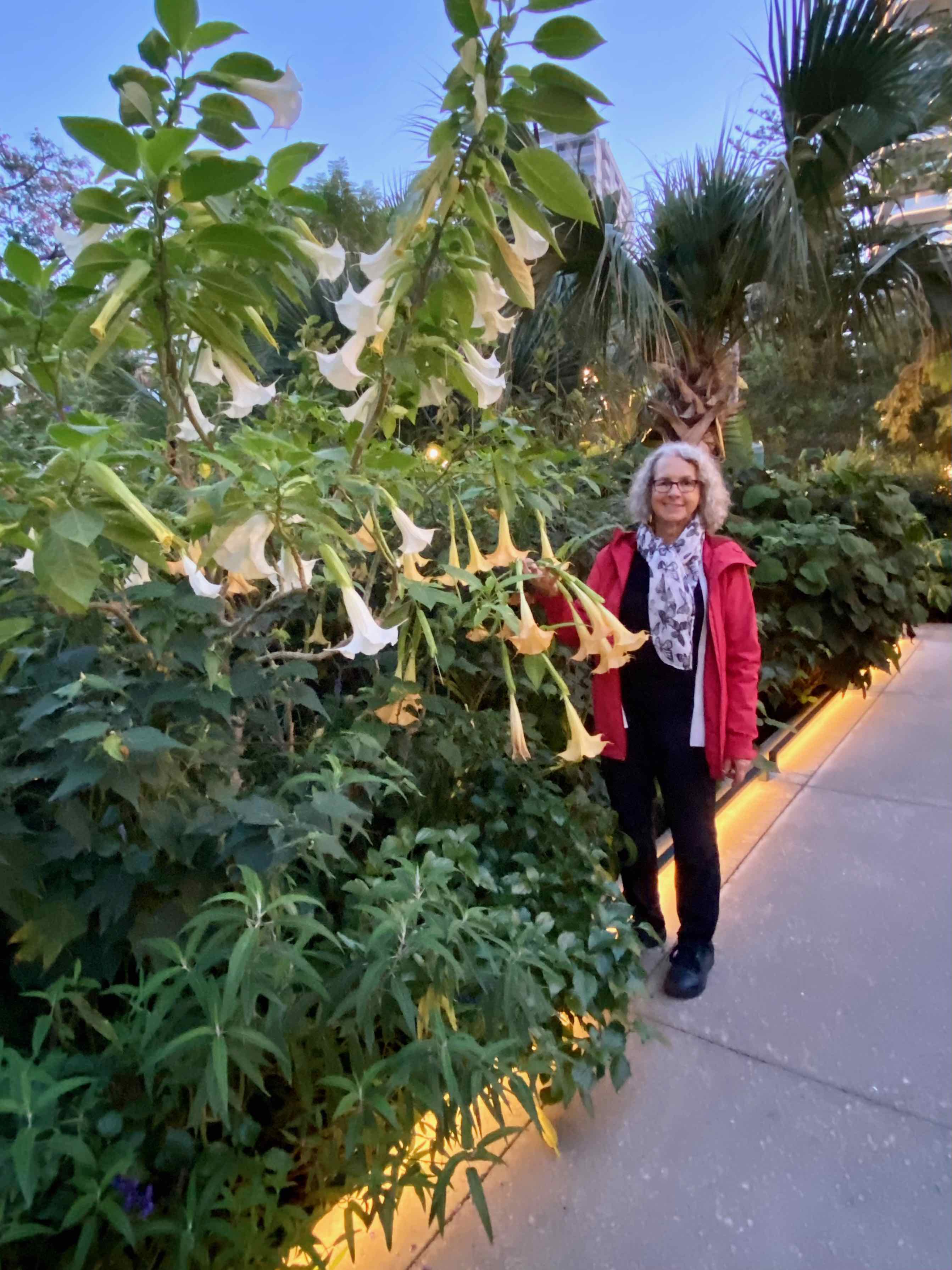
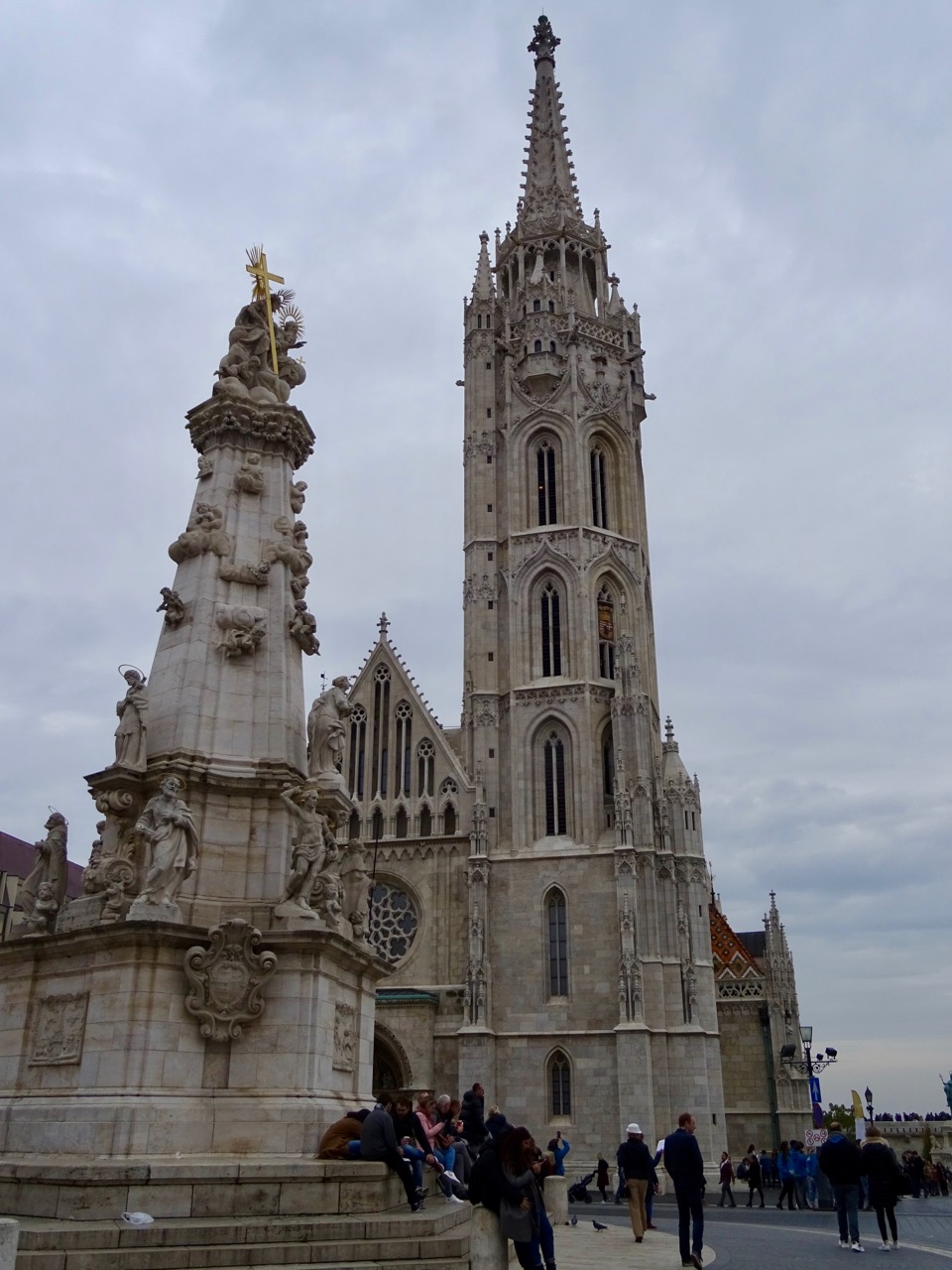
 We visit the Buda side of Budapest today. First stop is the Matthias Church, located in the Holy Trinity Square in front of the Fisherman’s Bastion. It has a beautiful tiled roof and a 60 metre tall bell tower.
 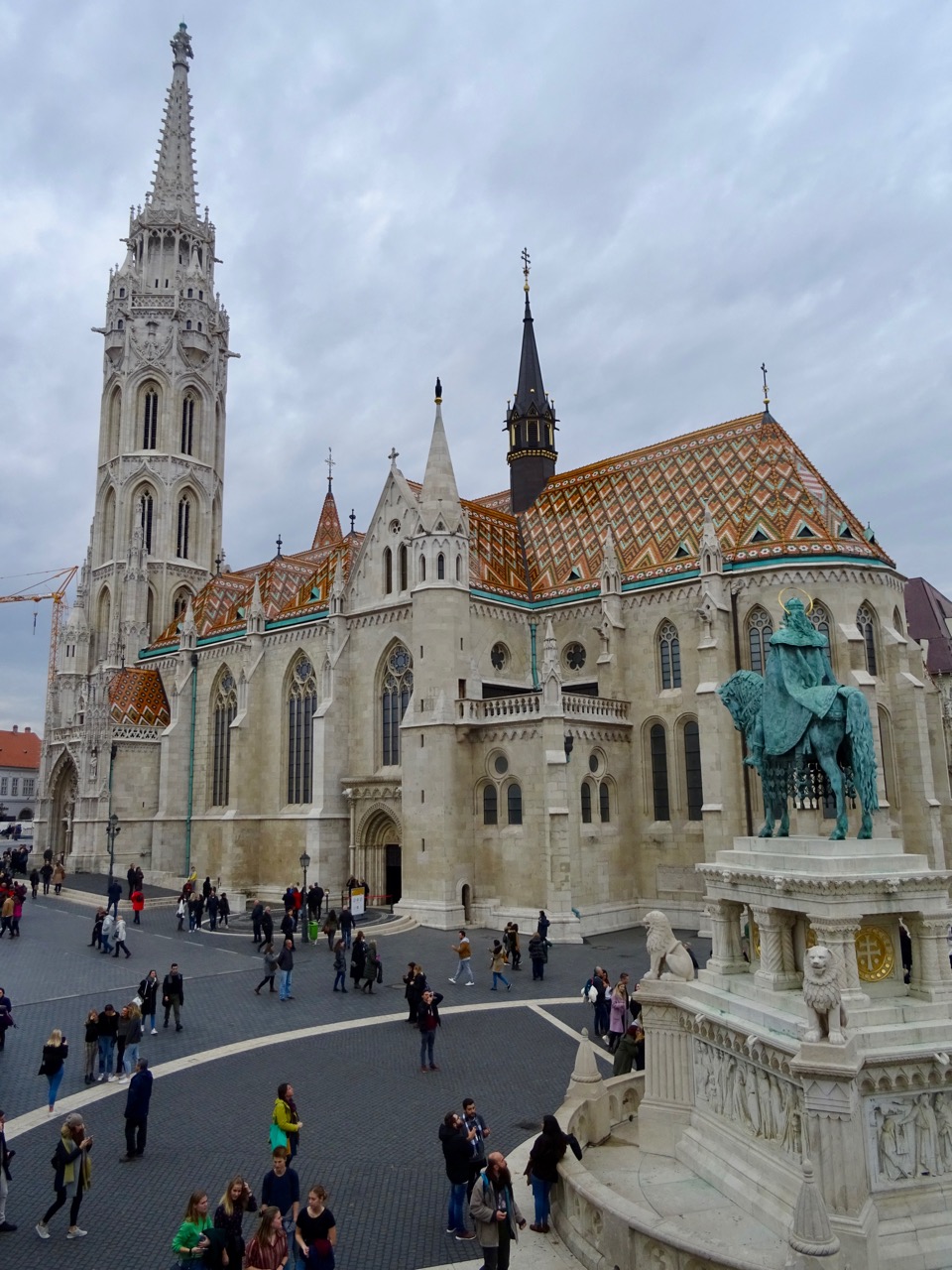 There are a lot of people here.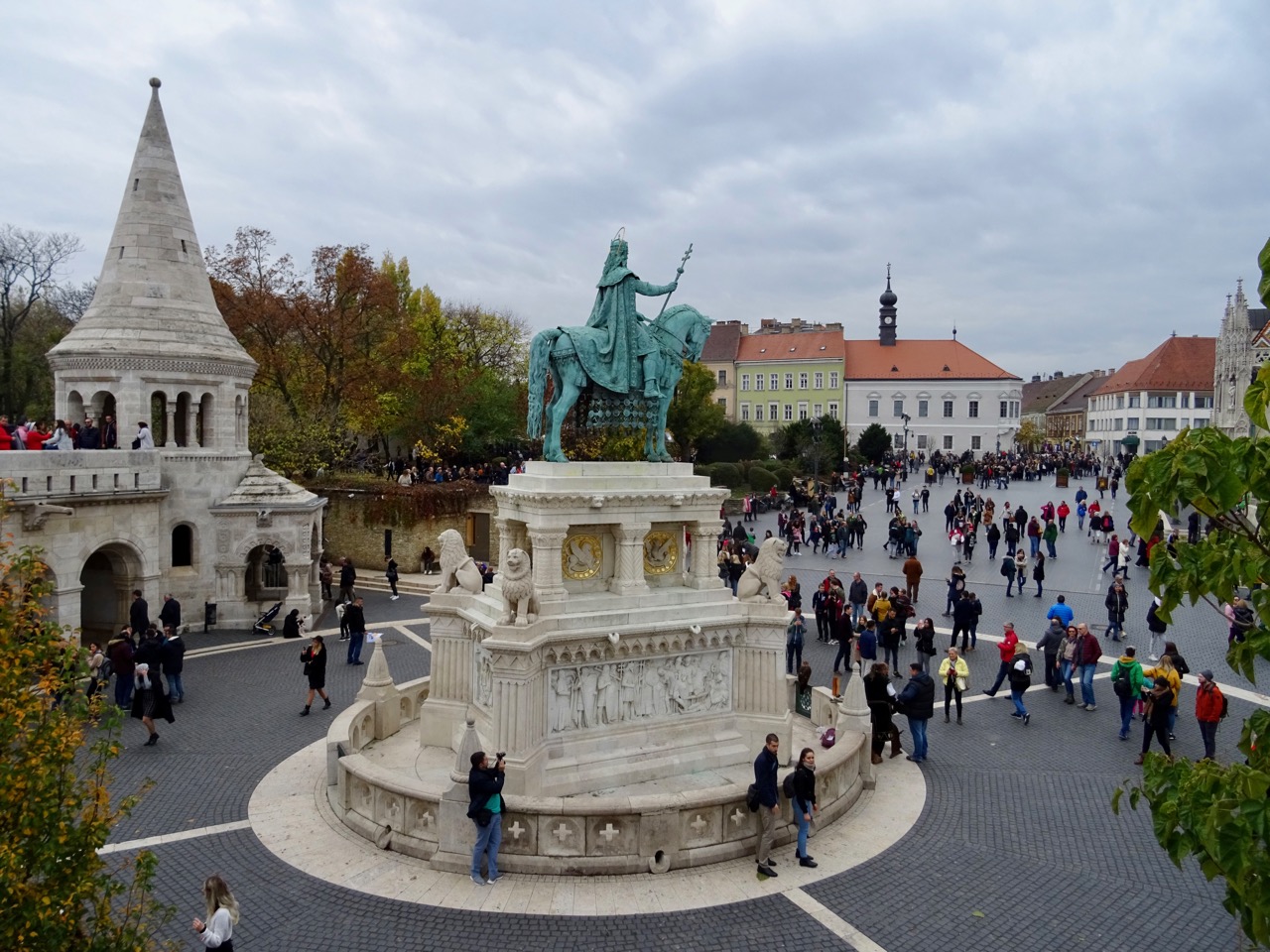
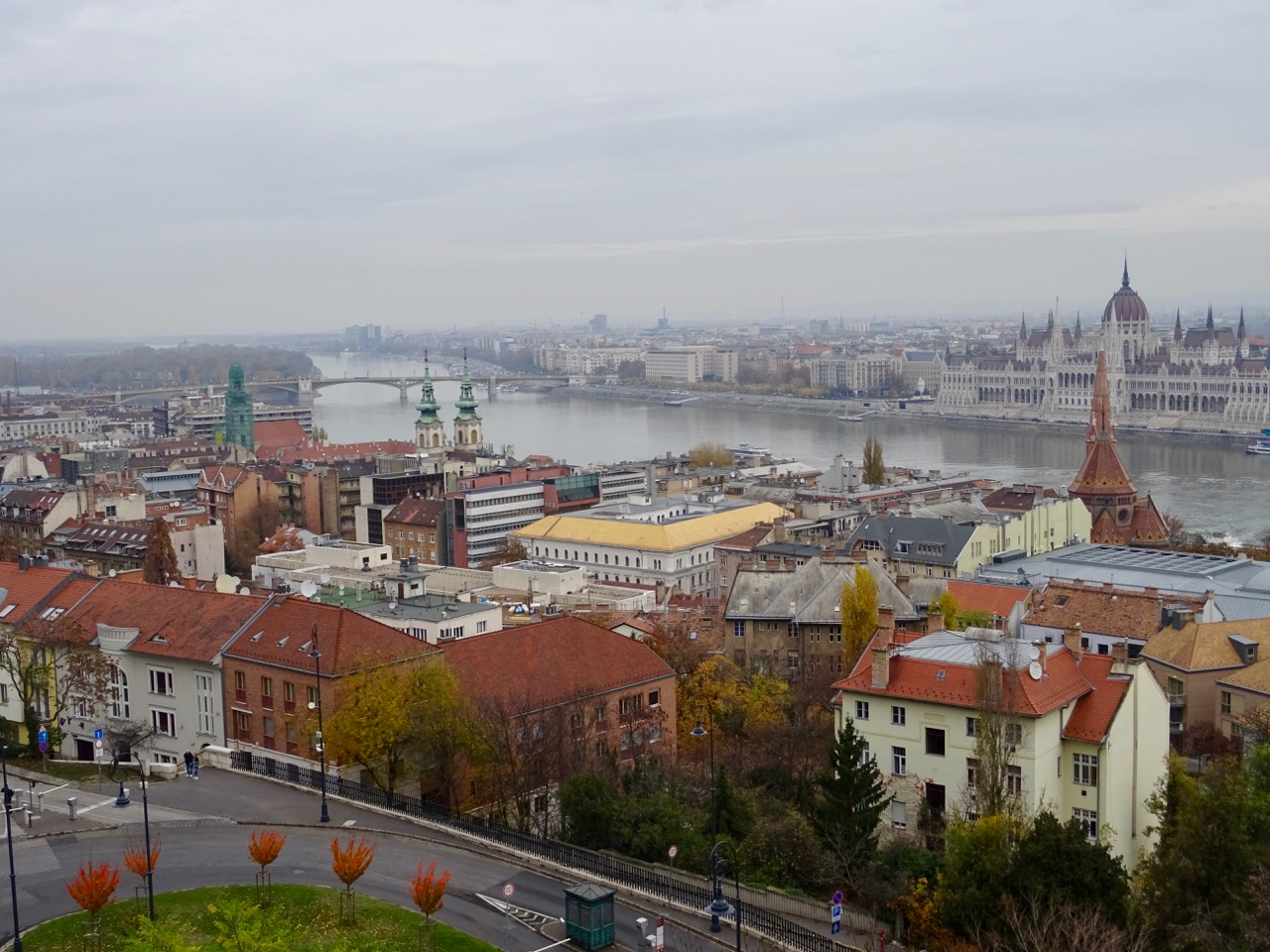
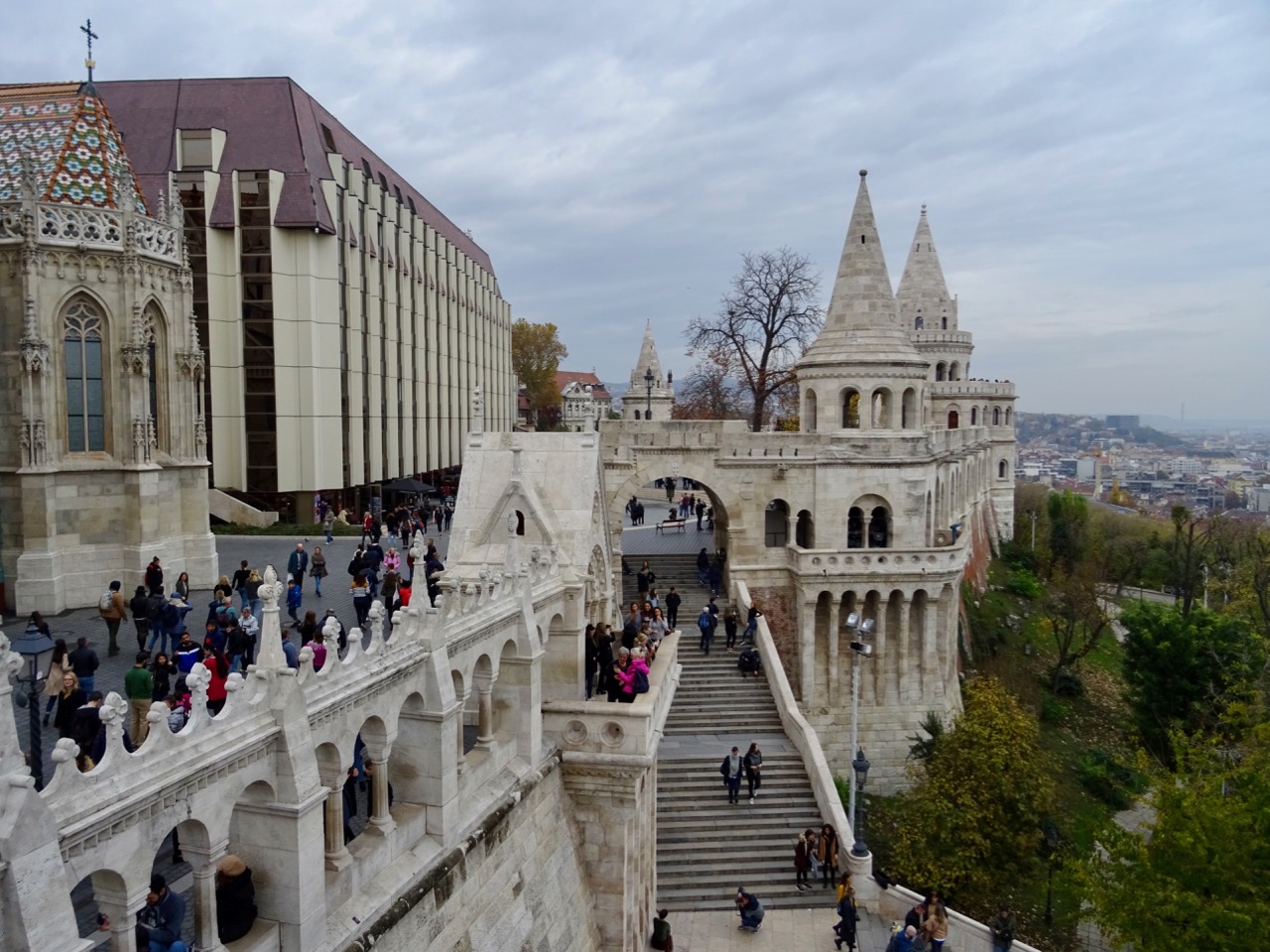 One of the many great views from the Bastion.
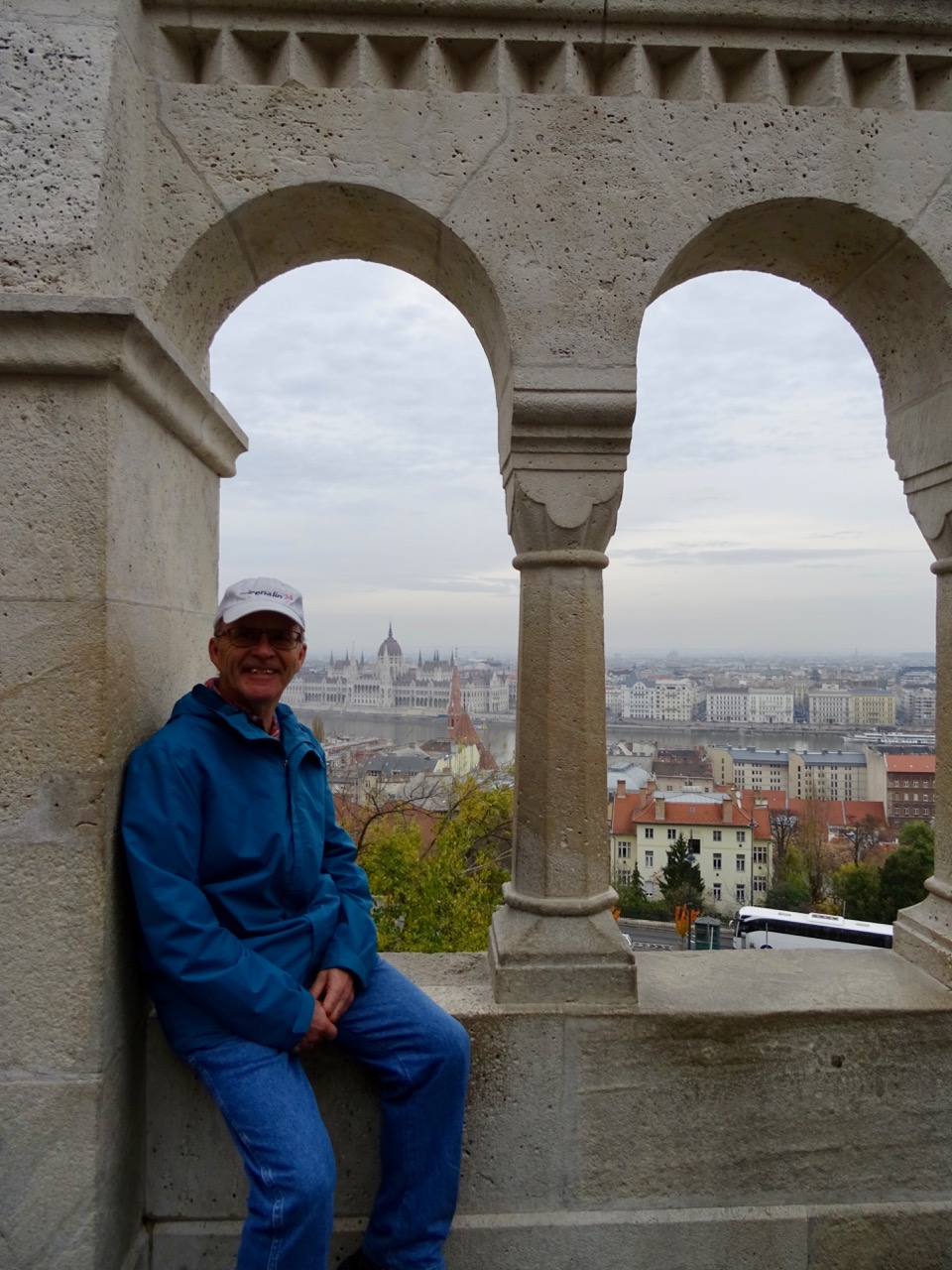
 We had to wait a bit to find an arch not filled with other tourists. It often takes a while before I can get a decent photo, which involves deciding where I can get the best view and waiting until vehicles and other people are not in my picture frame. Bob is very patient, waiting for me to take photos. I probably take at least 5 or 6 photos for every one I use in this blog.
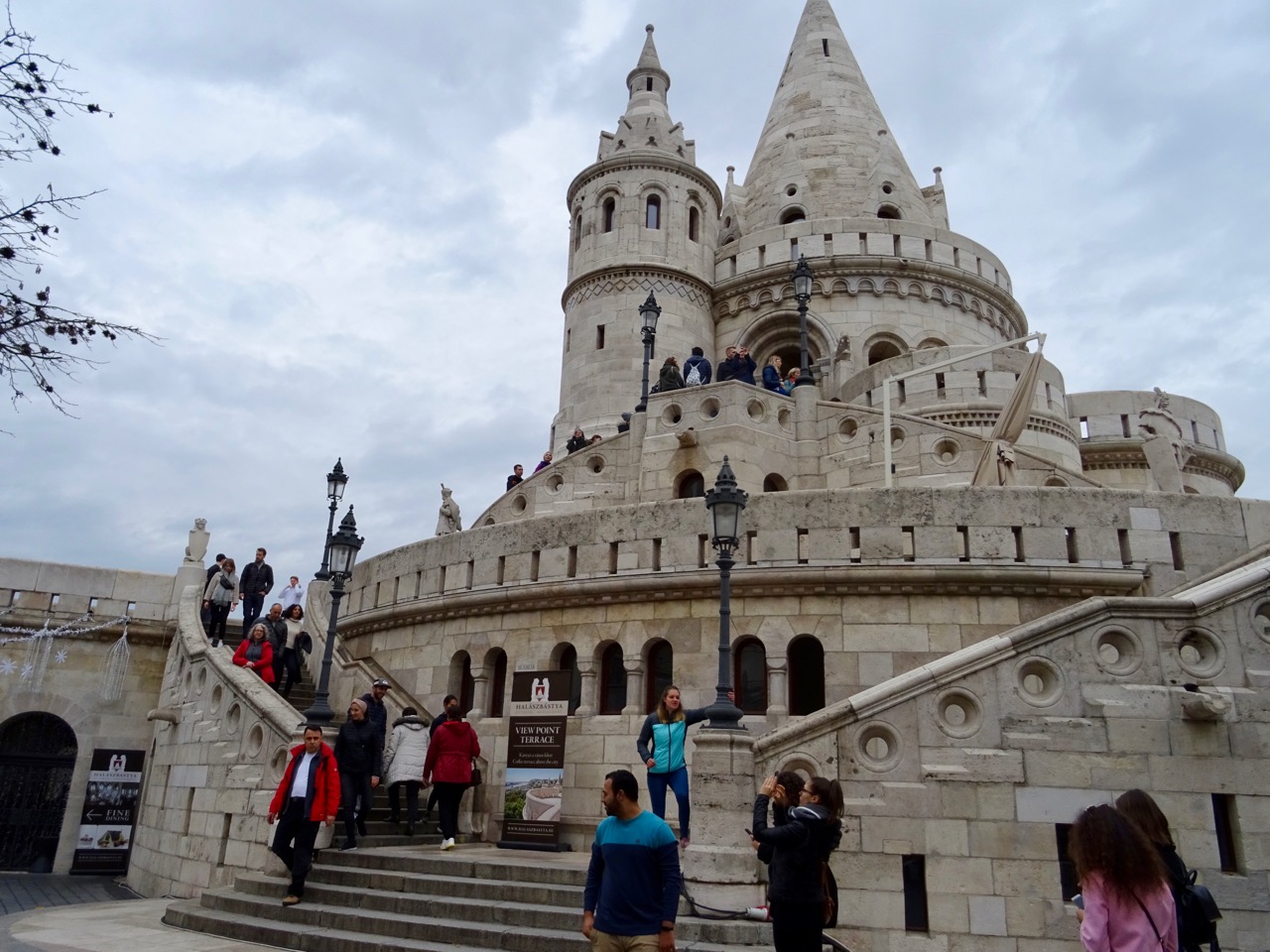
 The Bastion was inspired by the architectural style of the early medieval times. It has many towers and was meant to feel like a fairy tale castle, as it wasn’t built for defence.
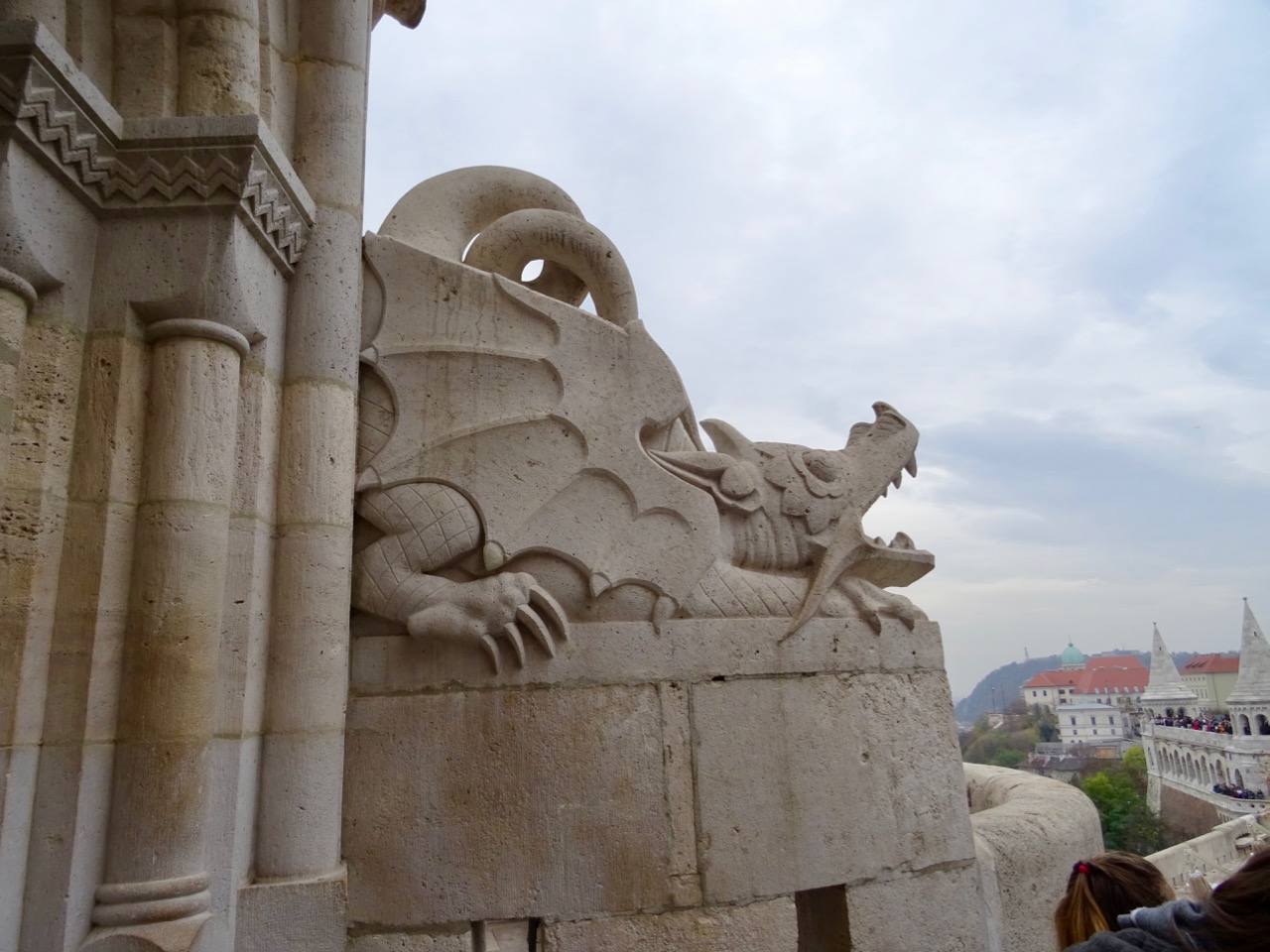
 I am always happy when I find a dragon!
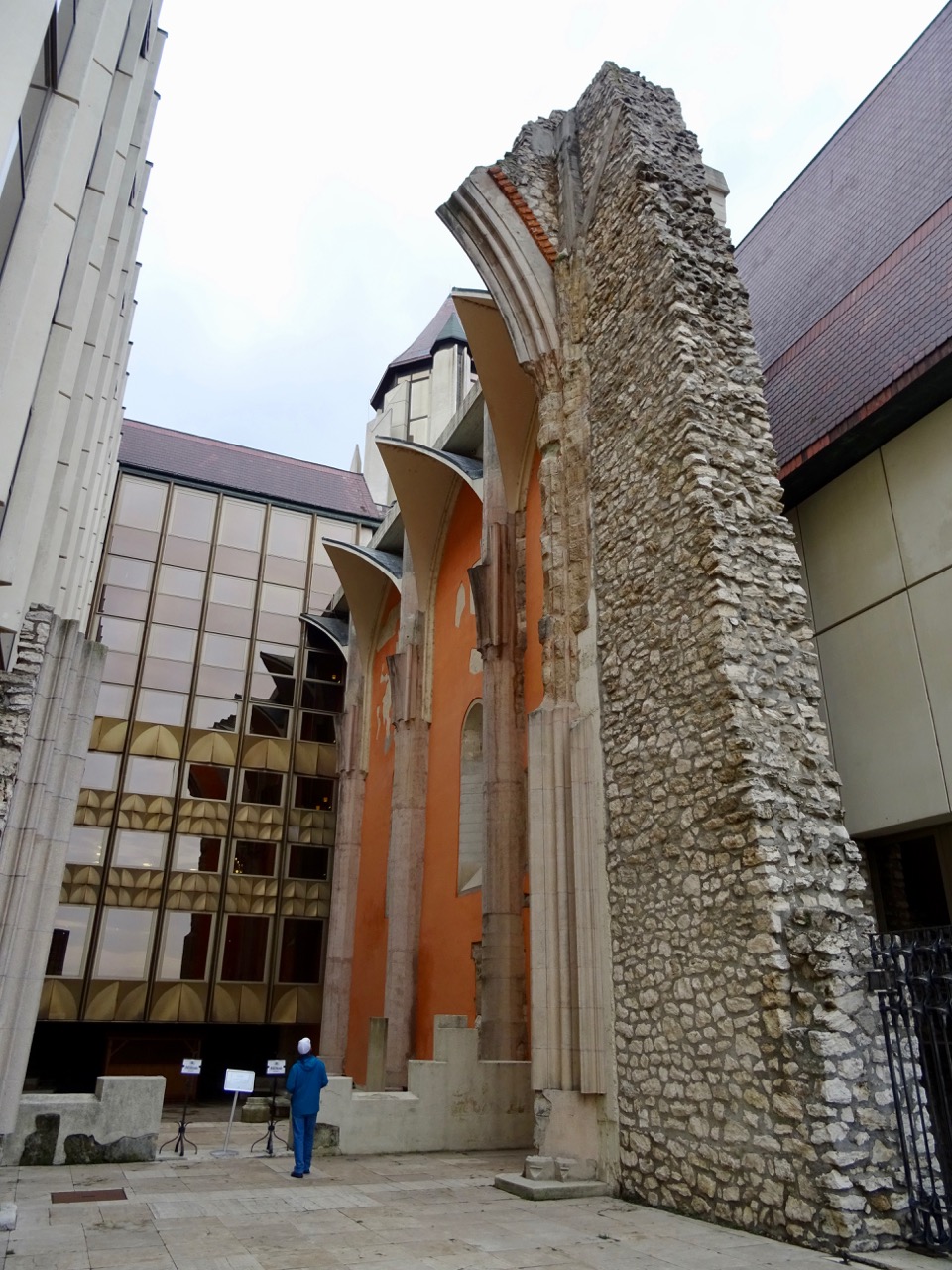
 These medieval church ruins were built into the modern Hilton Budapest Hotel.
 The Black Plague caused the death of 30-60% of Europe’s total population in 1691 and 1709. People believed that erecting a column would protect them from the plague. The carving on the top of the column represents the Holy Trinity. Below this the whole column is decorated with smaller statues depicting angels, and saints. The central sculpture shows King David praying to God to let his people avoid the outbreak of a plague. Residents believed the Holy Trinity Column did its job, as the plague never returned after 1709.
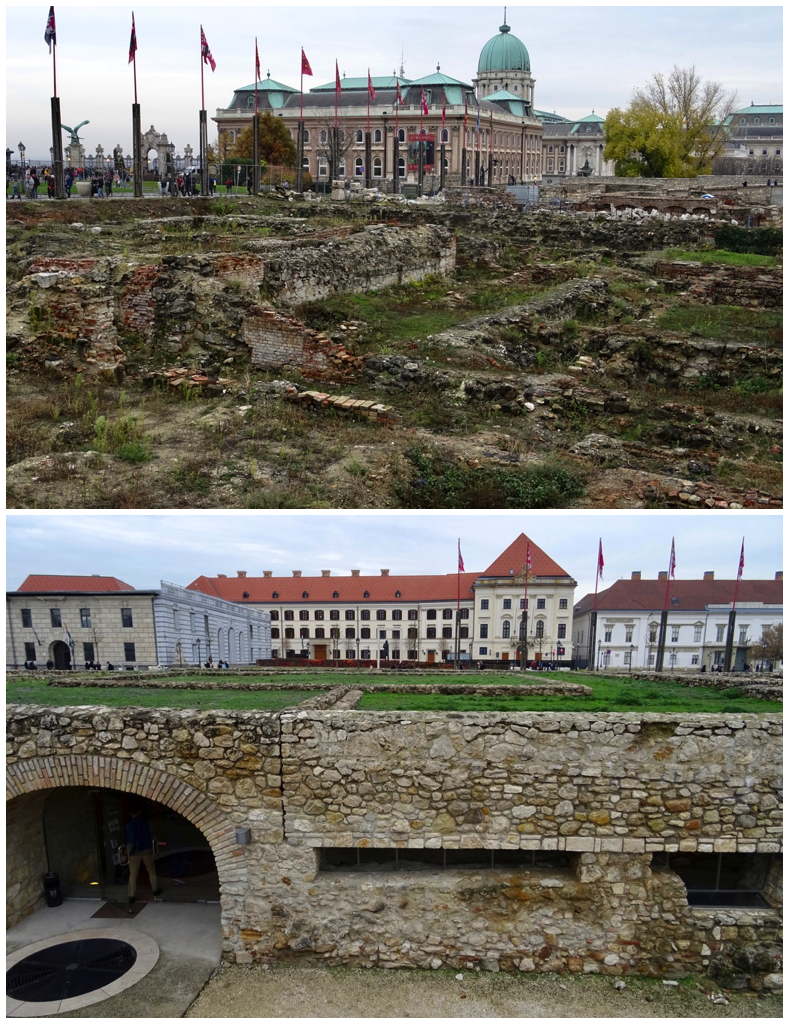
 On our walk to the nearby Buda Castle we pass these Medieval ruins. Beneath some of the ruins there is a wine cellar which offers wine tastings. It is located below the remains of a 13th century Dominican Cloister, which is part of a huge labyrinth system underneath the Castle Hill.
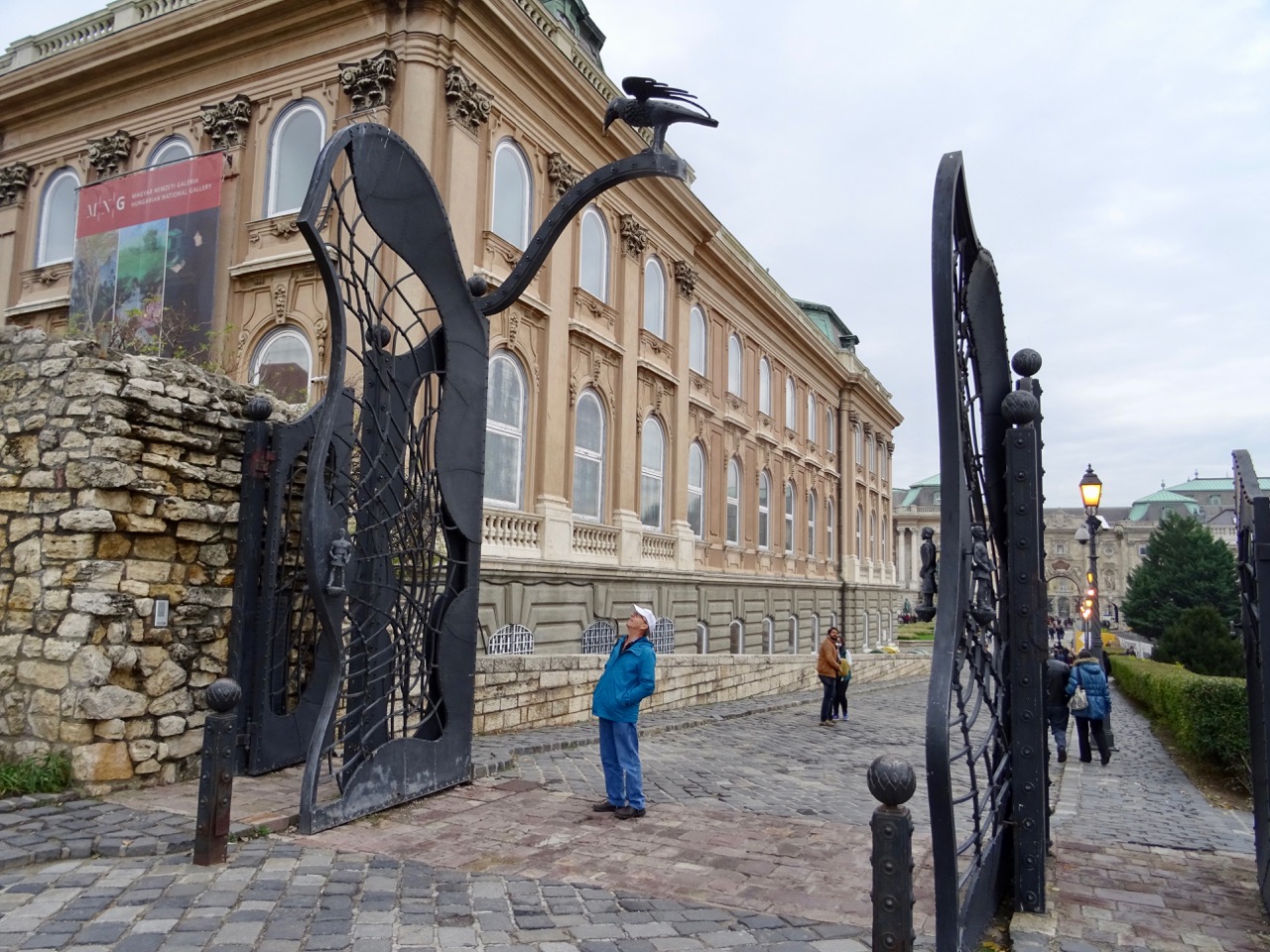
  King Matthias (1457-1458) adopted the crow as his heraldic emblem after catching one of them stealing a ring, and killing it to get his ring back. These gates are topped with a crow with a ring in its mouth. The gates are very bizarre, almost creepy looking.
 This is the back side of the Buda Castle…
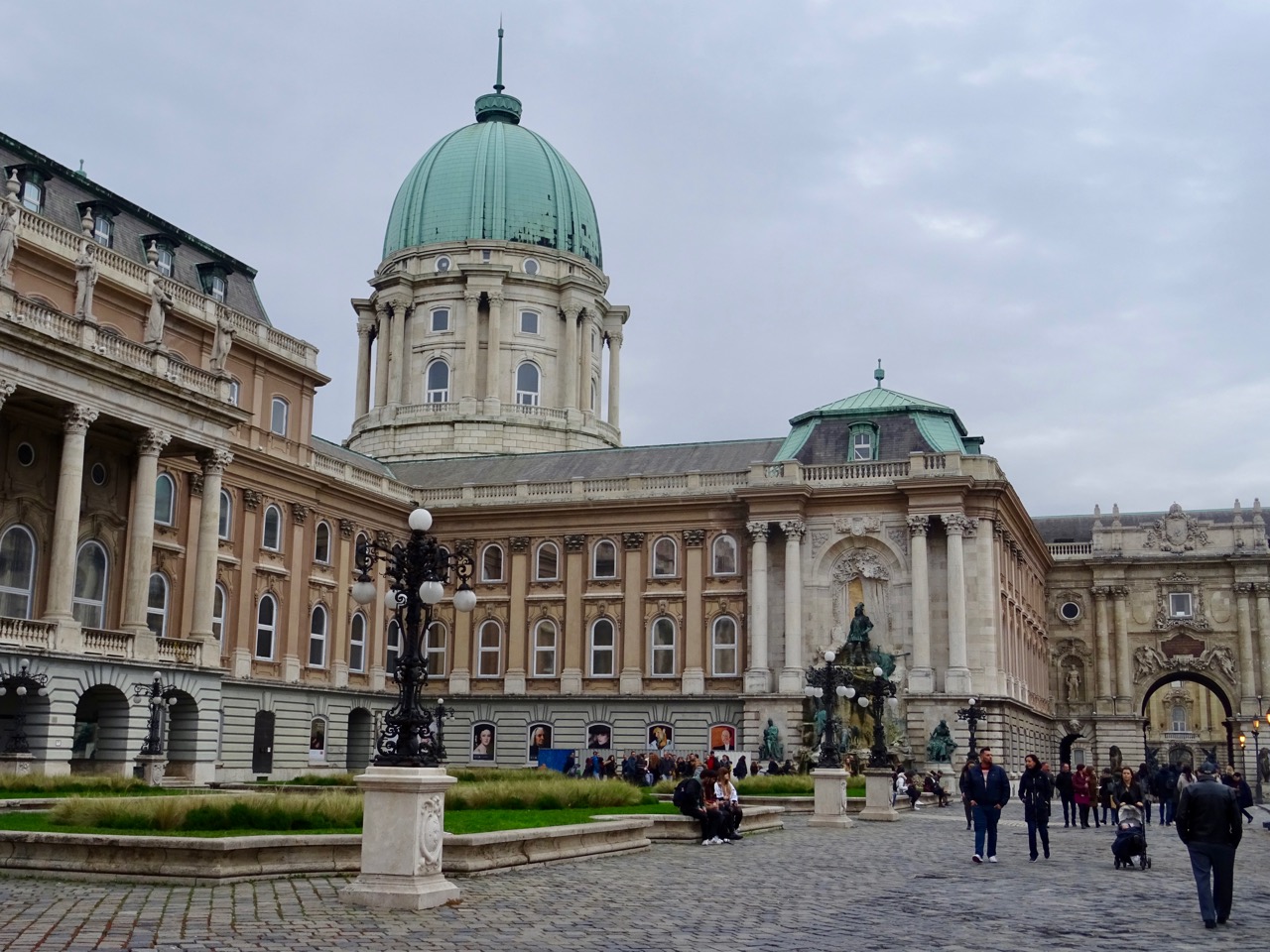 and here is a close up of its fountain. Too bad the water in all the fountains in Budapest has already been turned off for the winter.
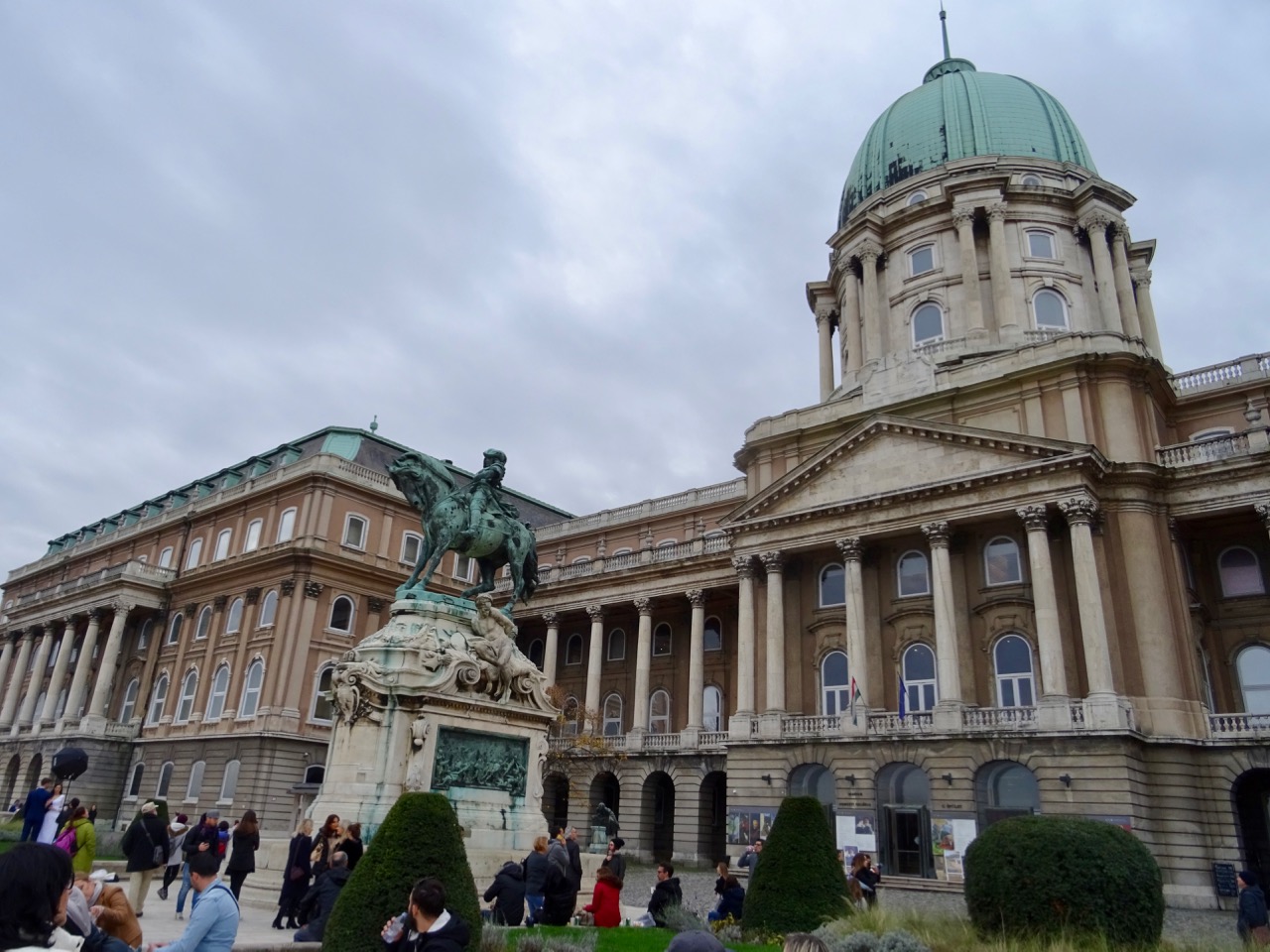
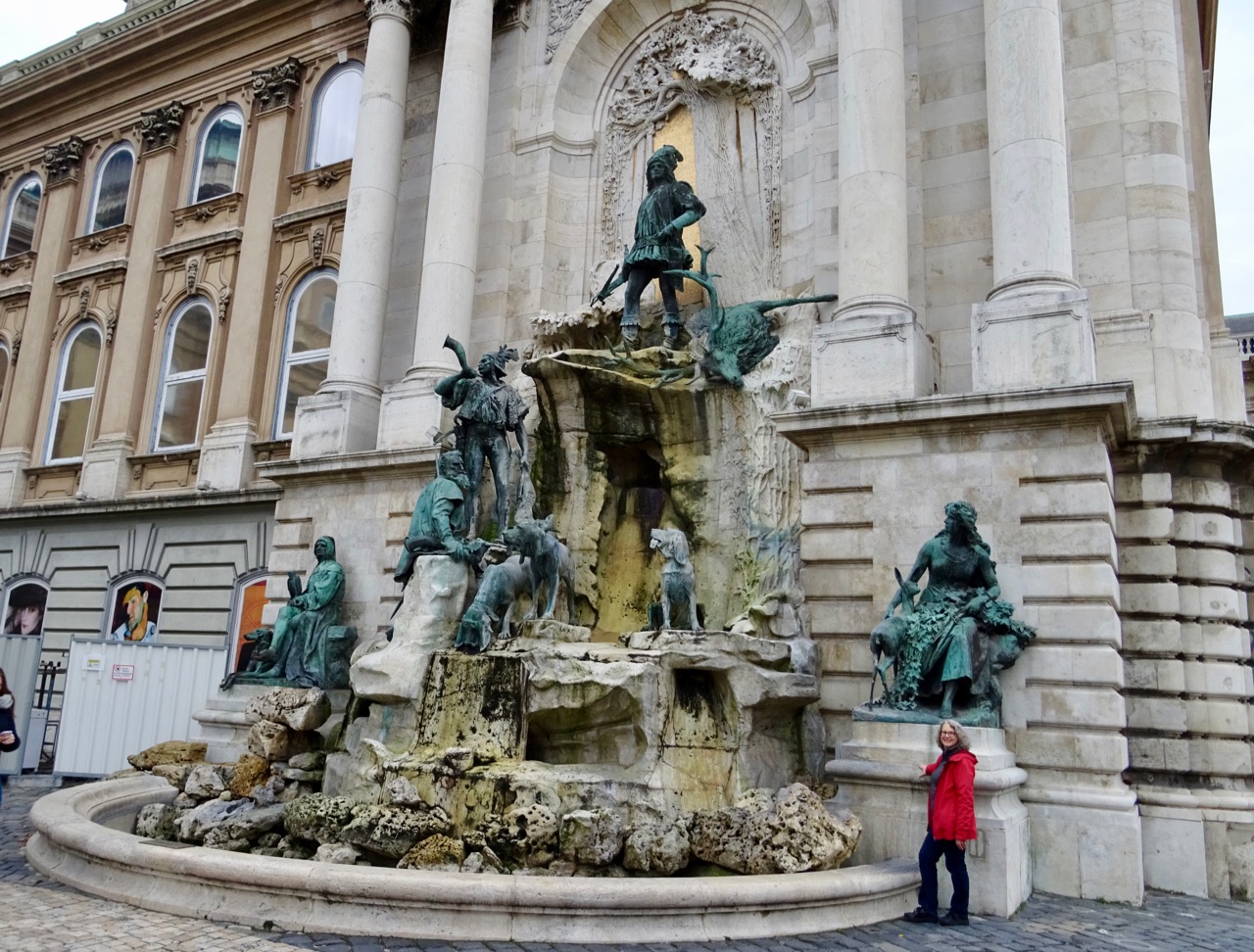 The front of the Buda Castle with lots of tourists…
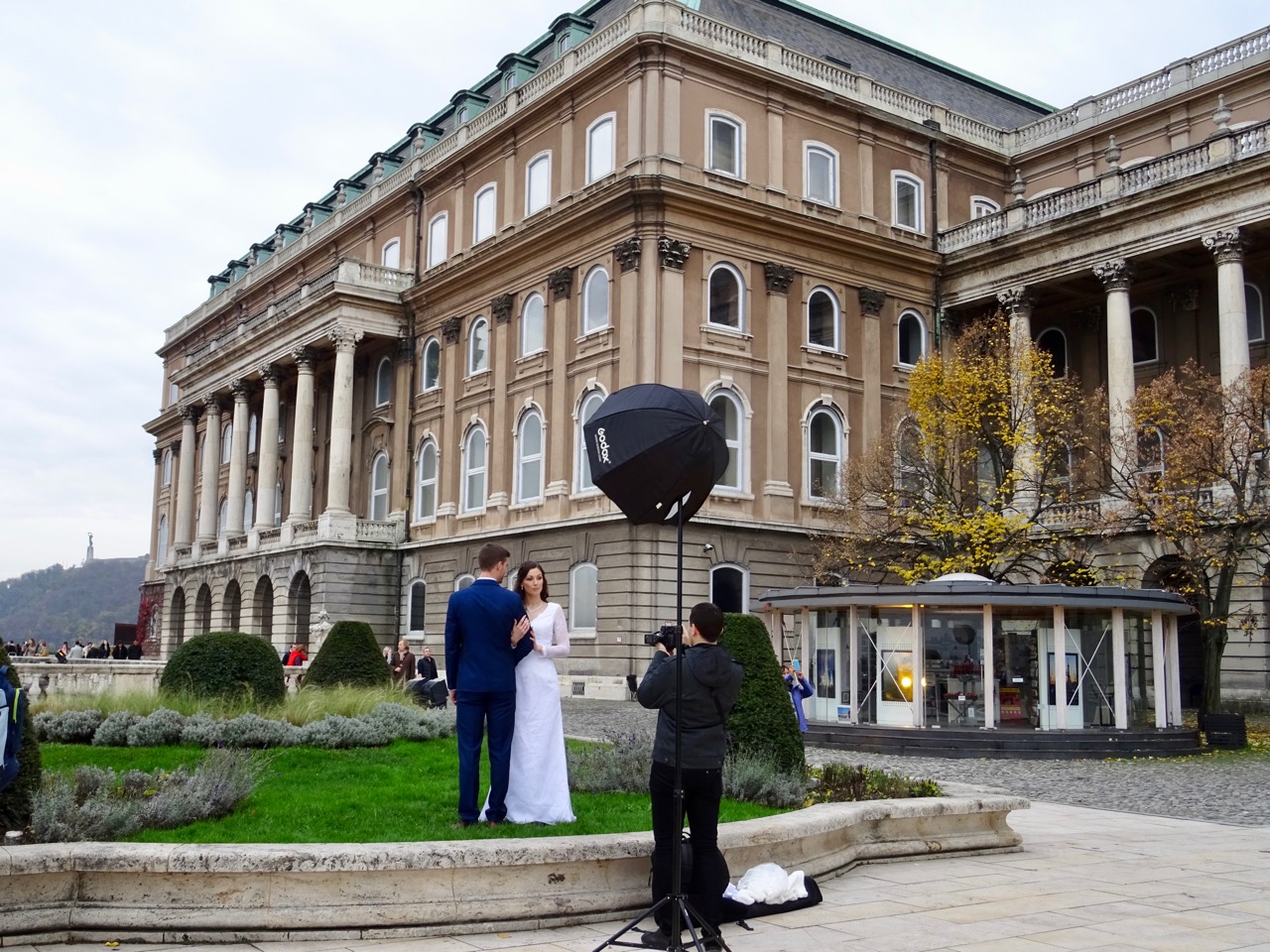
 and a bride and groom taking their wedding photos. I wonder if the photographer has to photoshop out all the tourists?
 We see a large river cruise ship o the Danube.
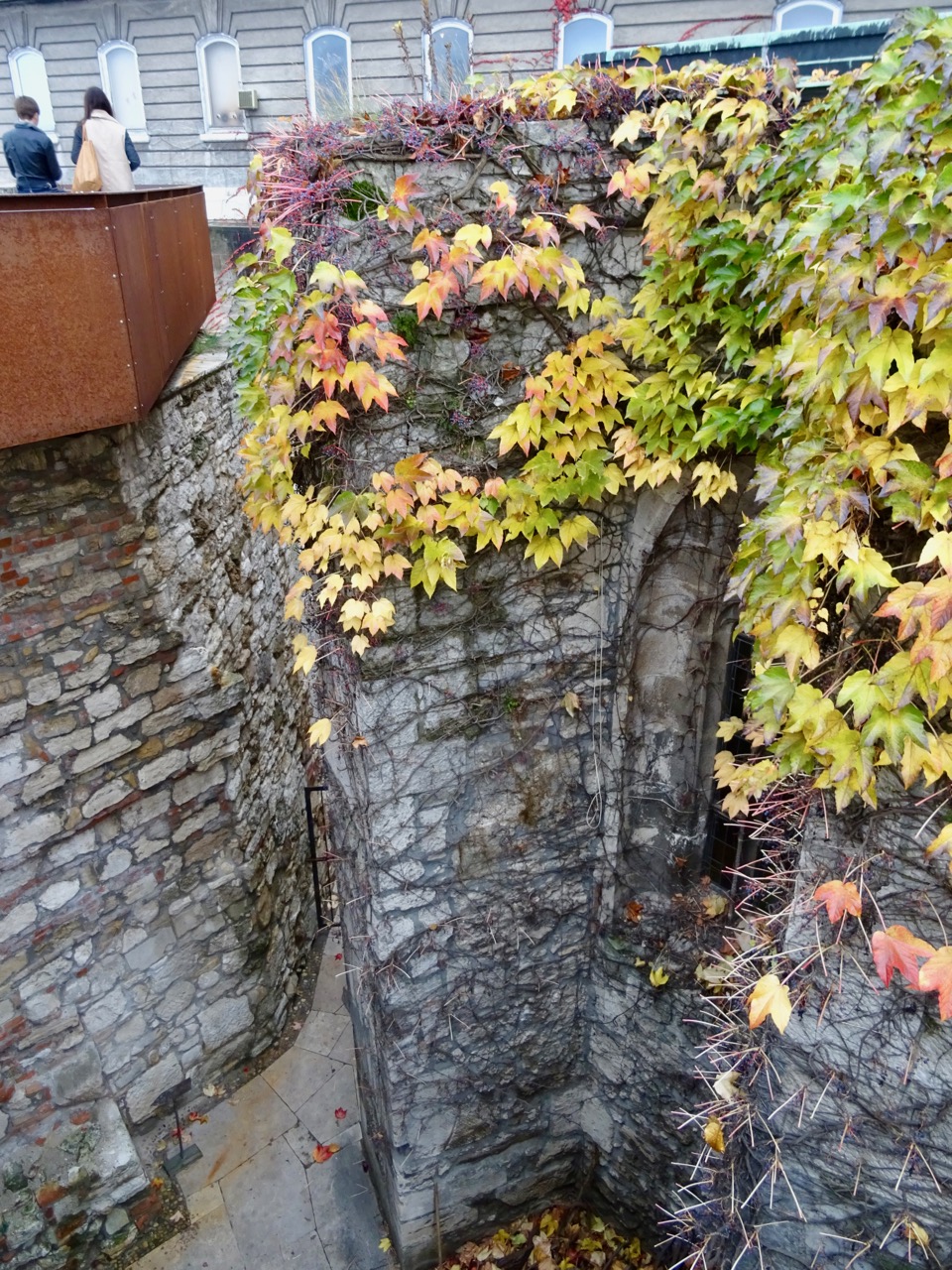
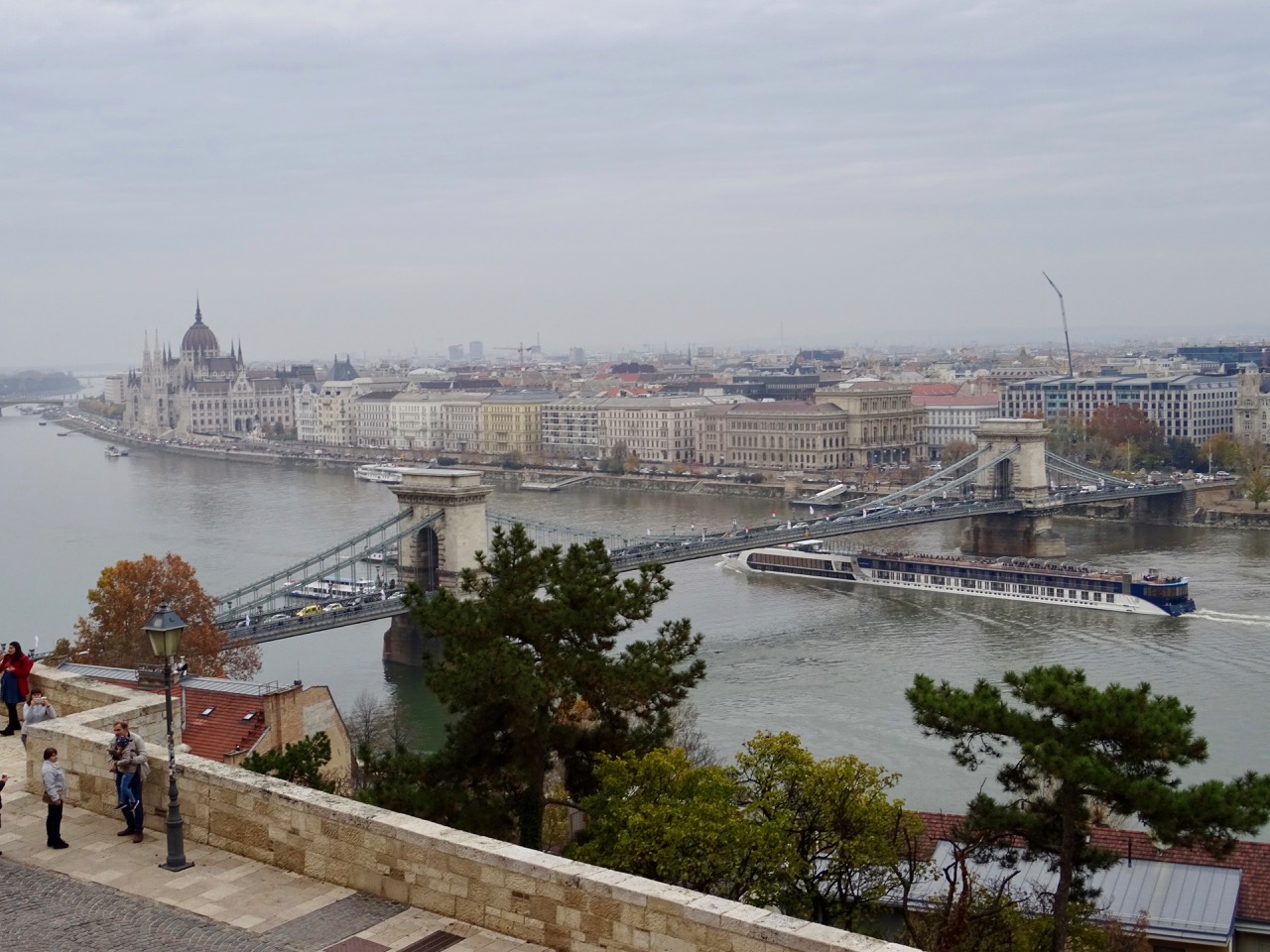 There are walkways high above Medieval walls.
 We walk down a flight of stairs below a statue of the Madonna and baby Jesus.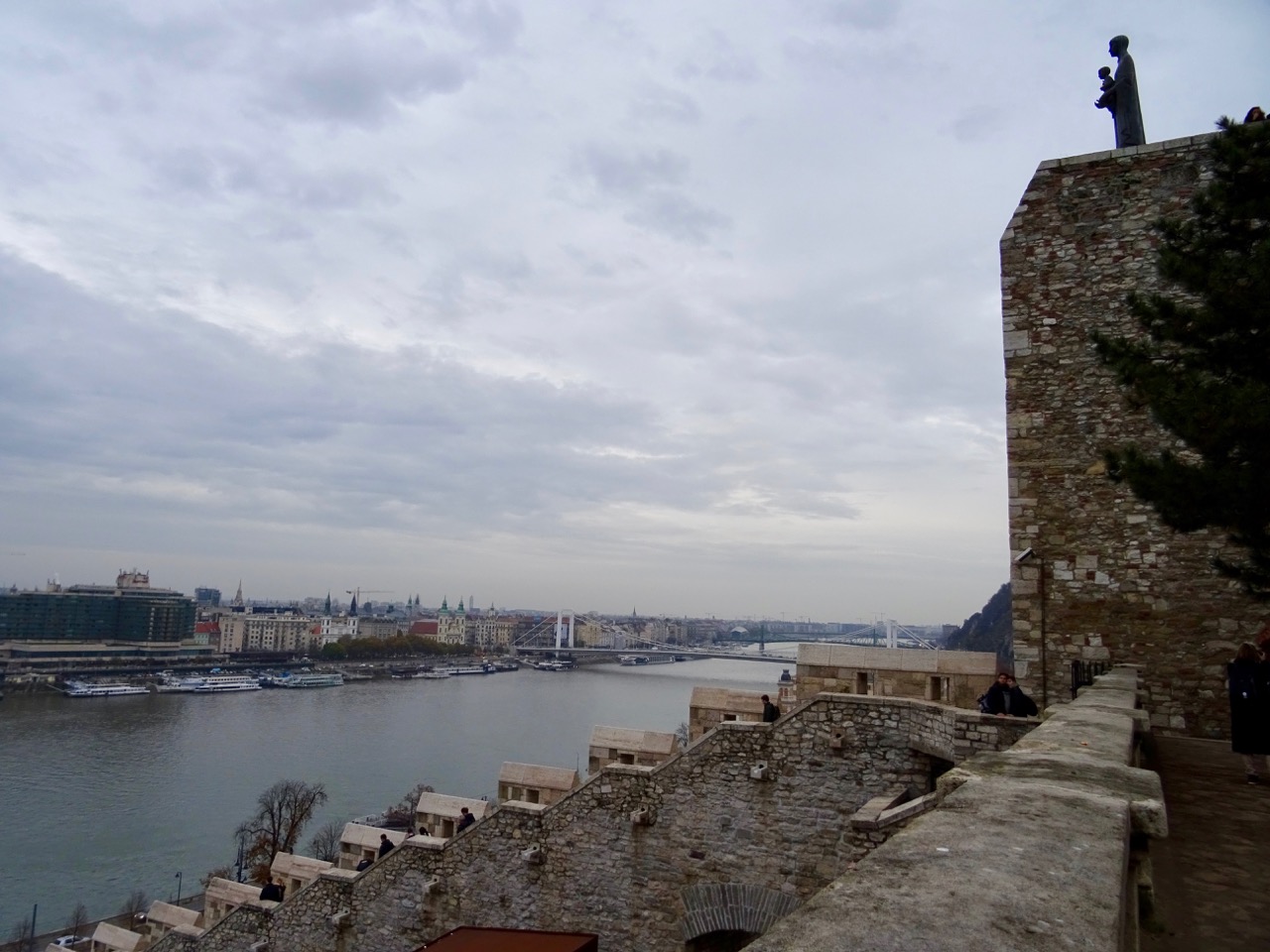
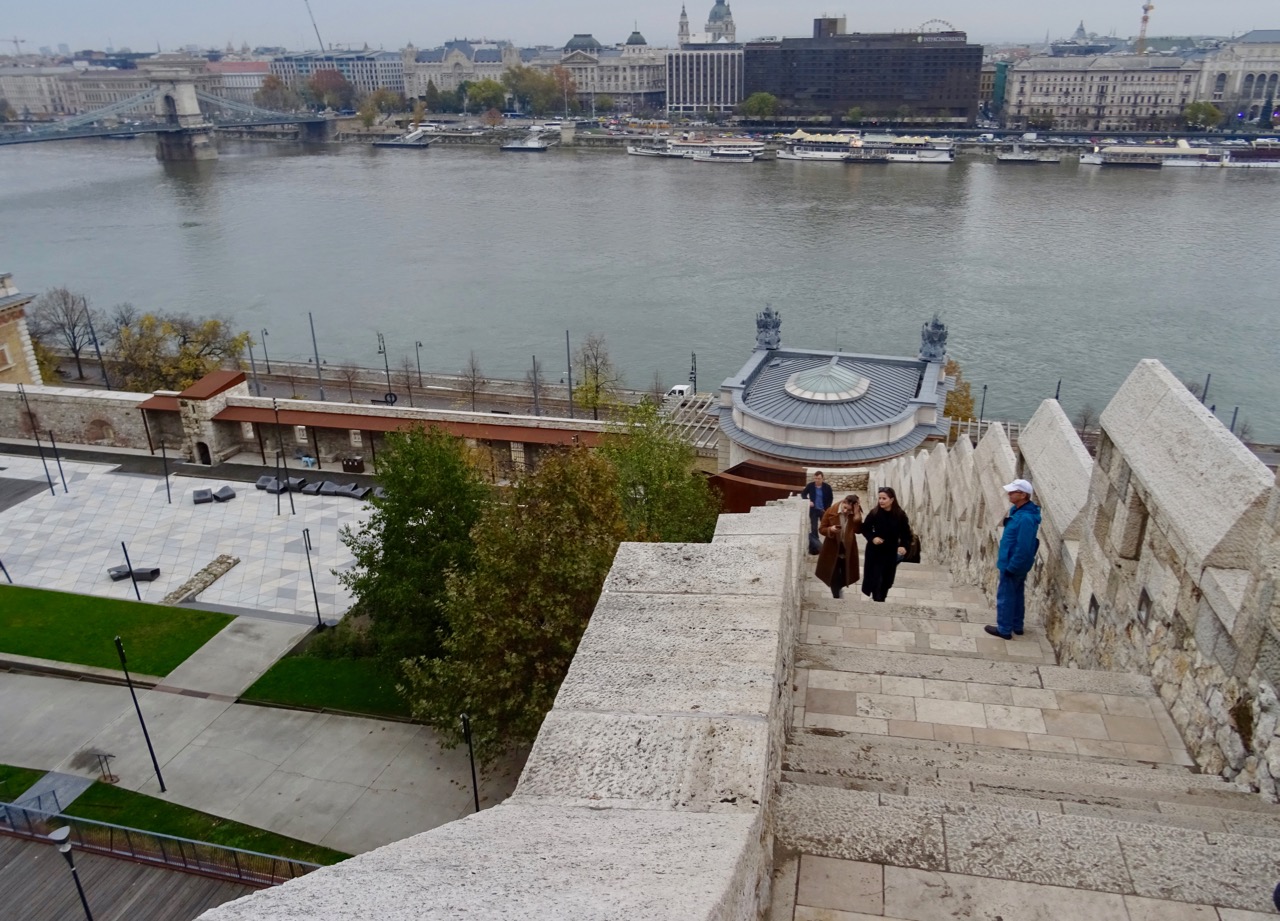 When we walk across this bridge we can see these same stairs on the far left side of this photo.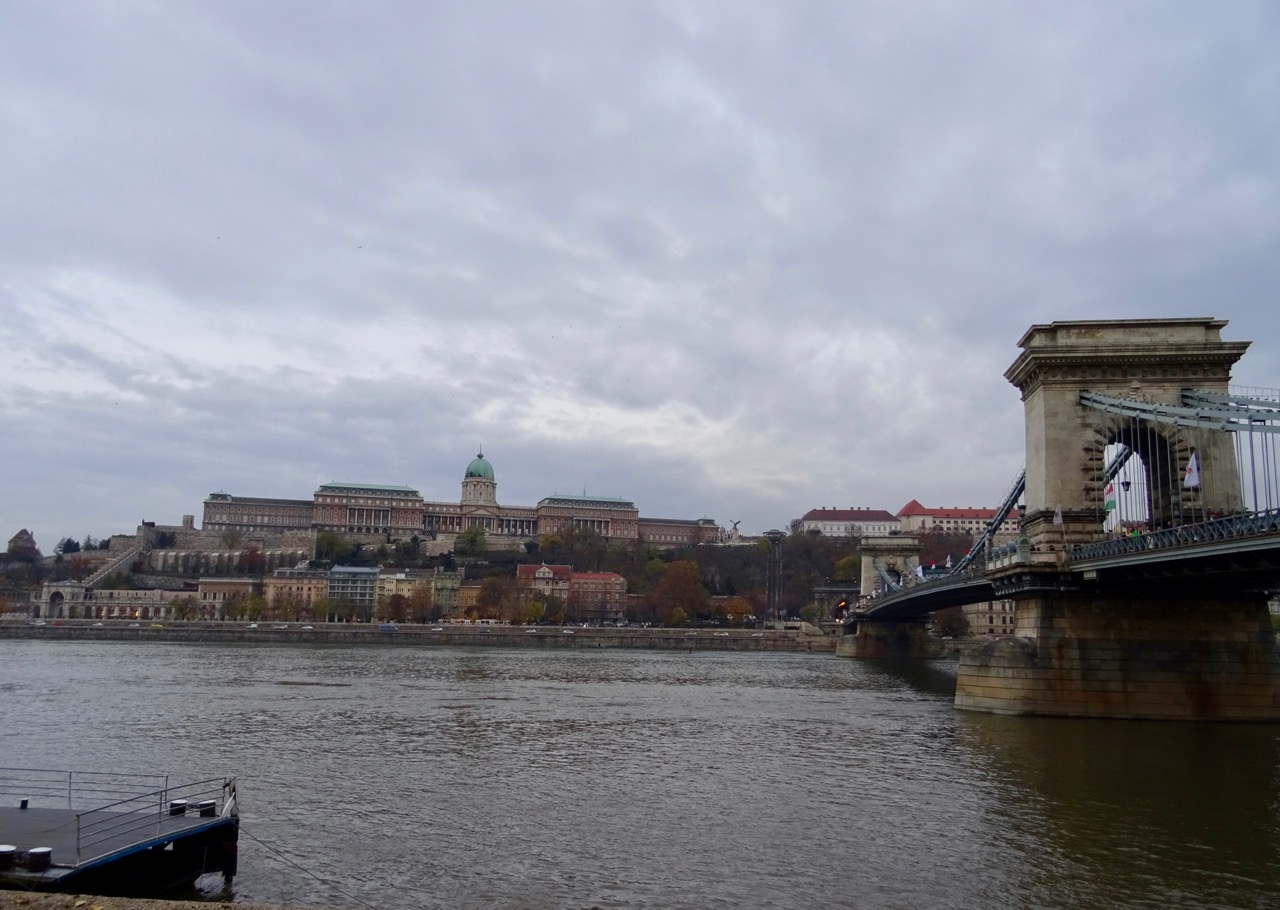
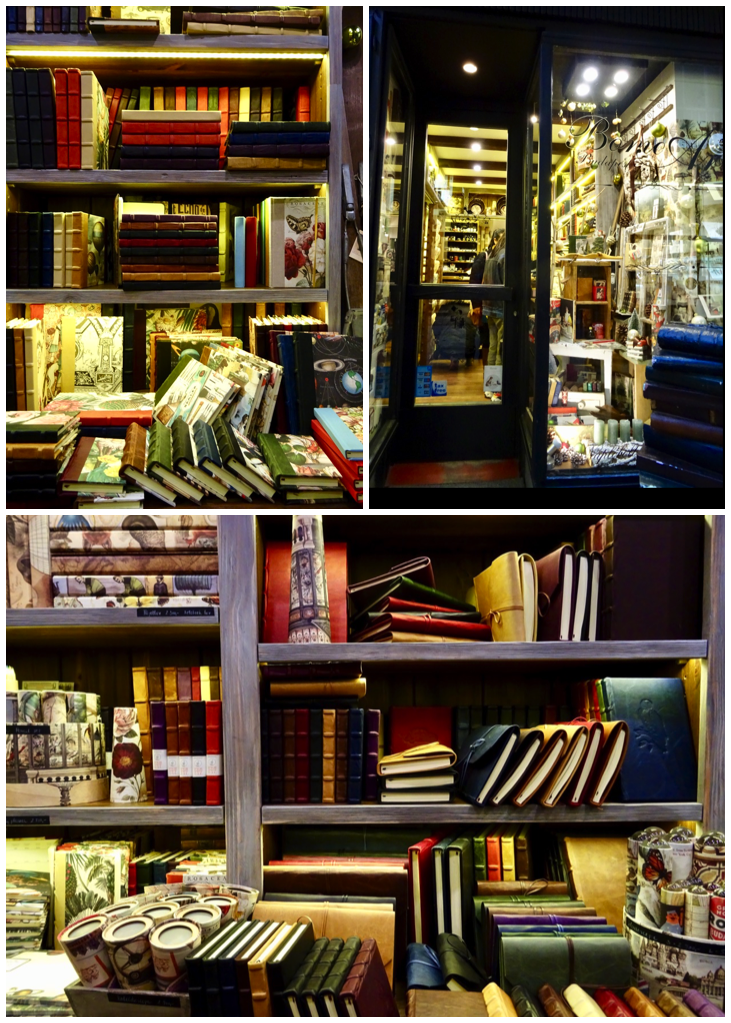
 We are walking to this little bookstore that sells handmade journals. Bomo Art is a tiny store, less than 2 metres wide! It didn’t have any larger sketchbooks with good paper for drawing. Too bad, or maybe it was good. My suitcase is already pretty heavy with the two sketchbooks I bought in Linz, and the huge Dürer book I got in Vienna.
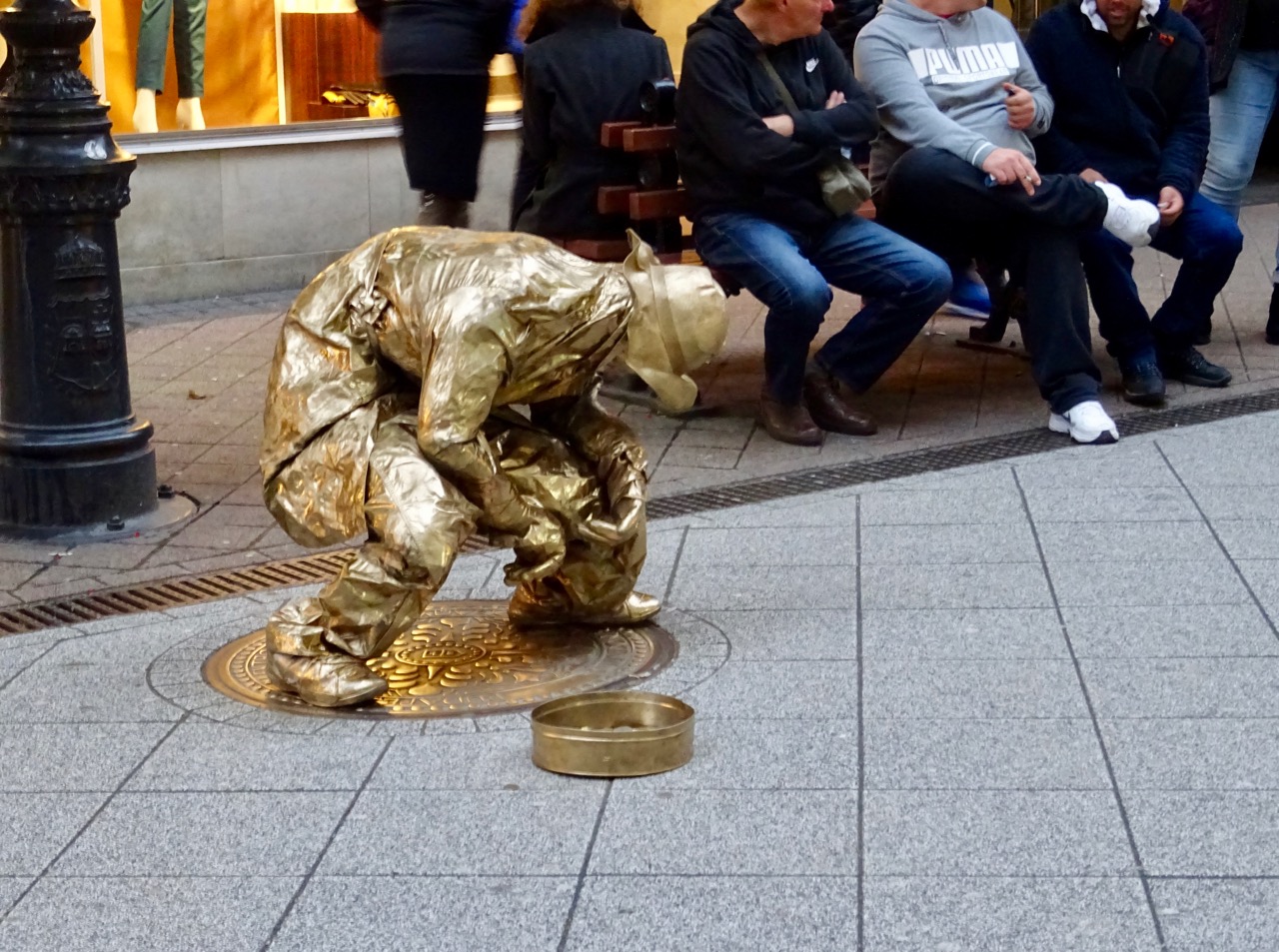
 We watched this street performer for a while and wondered how he was able to hold this difficult pose. We later saw him in a different position but when we walk by again we see a guy lean heavily on him and to our surprise he crumples! Turns out he is a mechanical man! People were putting lots of coins into his can, trying to get him to move. They had no idea they were being tricked into thinking this was a man in costume.
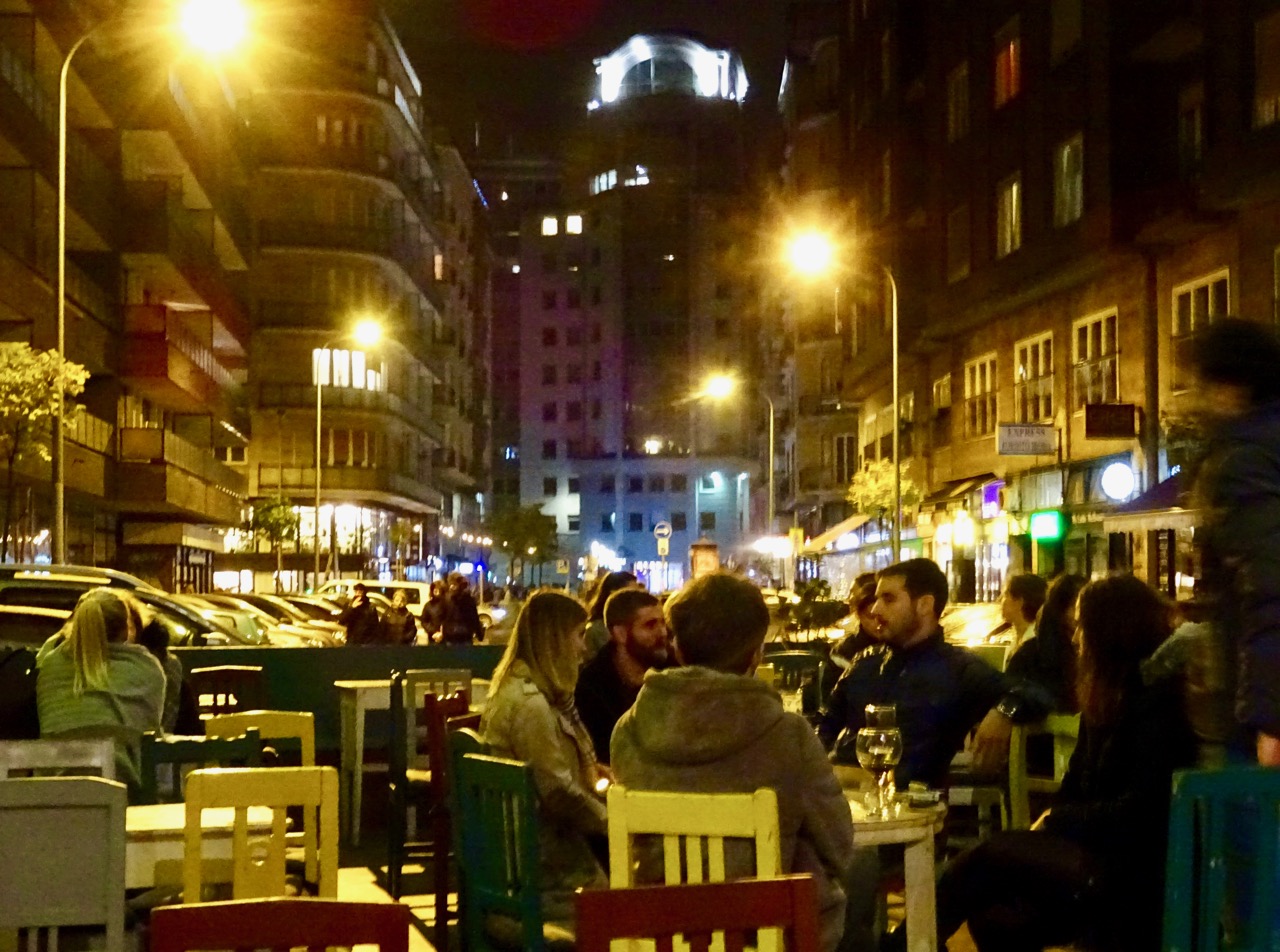
  It is quite cool at night but it doesn’t stop people from sitting outside drinking beer.
  One last walk down the decorated street towards the Christmas Market. There are so many more people out on the streets tonight.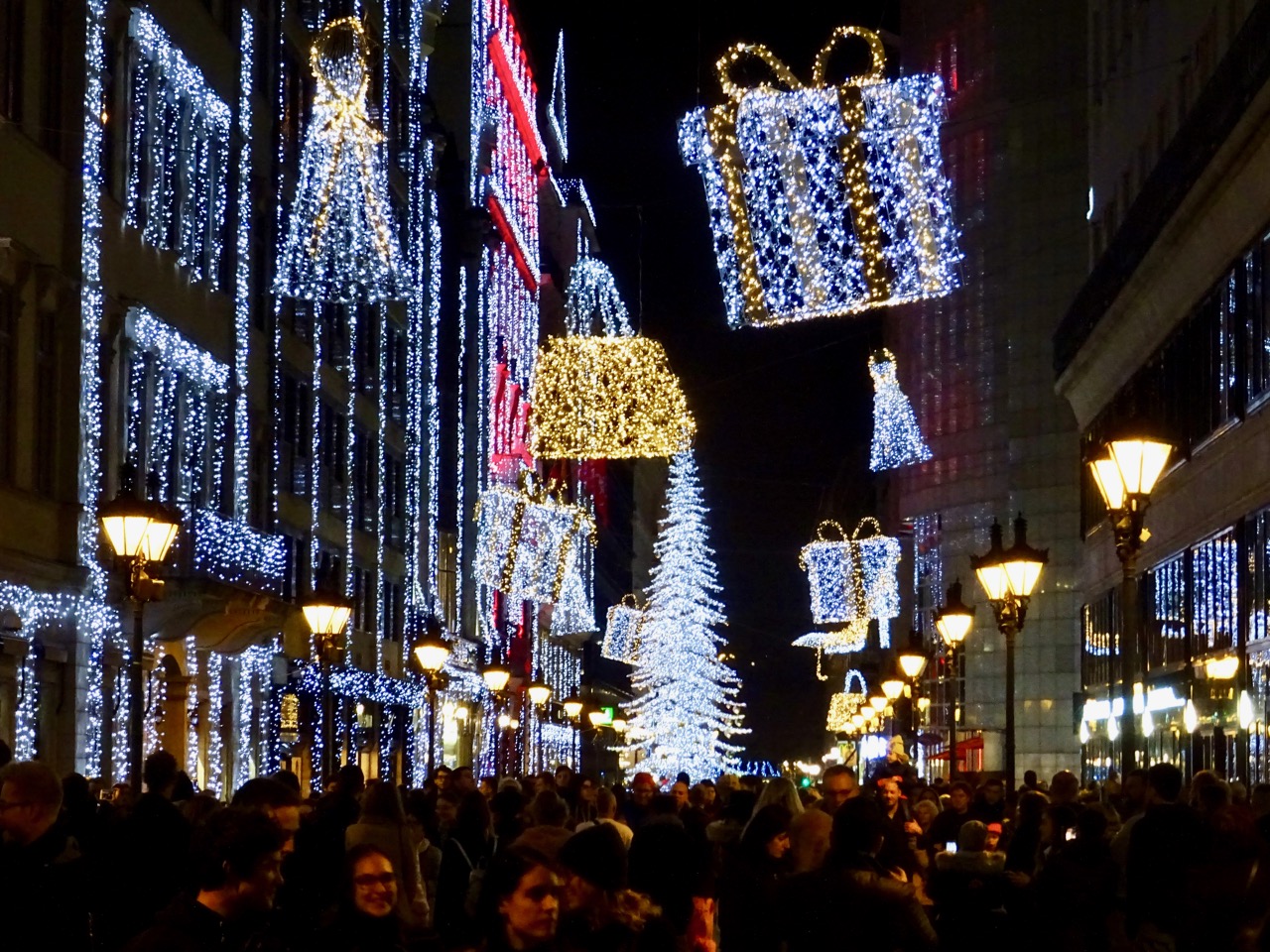
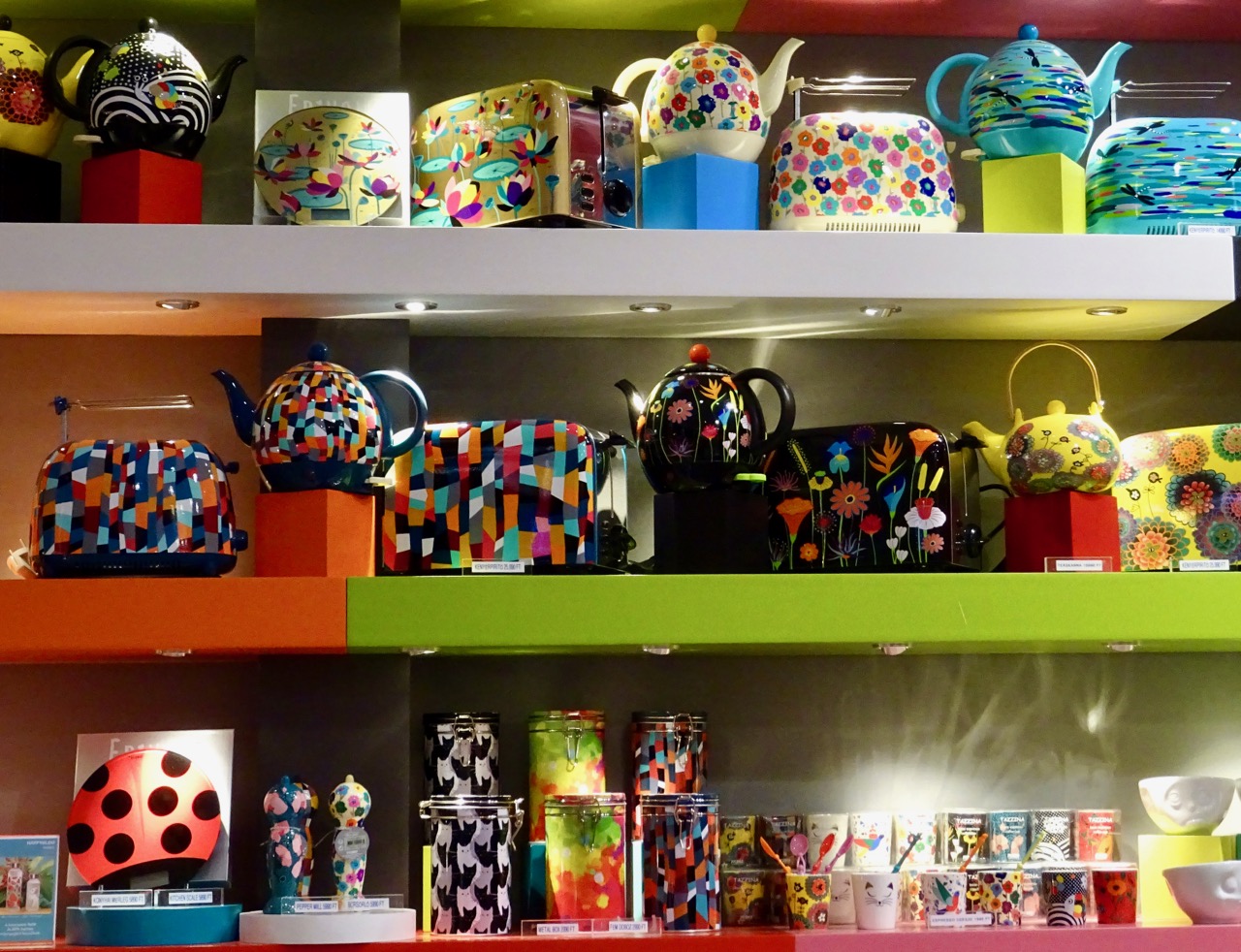 We stop at one of the stalls and I buy a couple small gifts I have been eyeing every time we walk by.
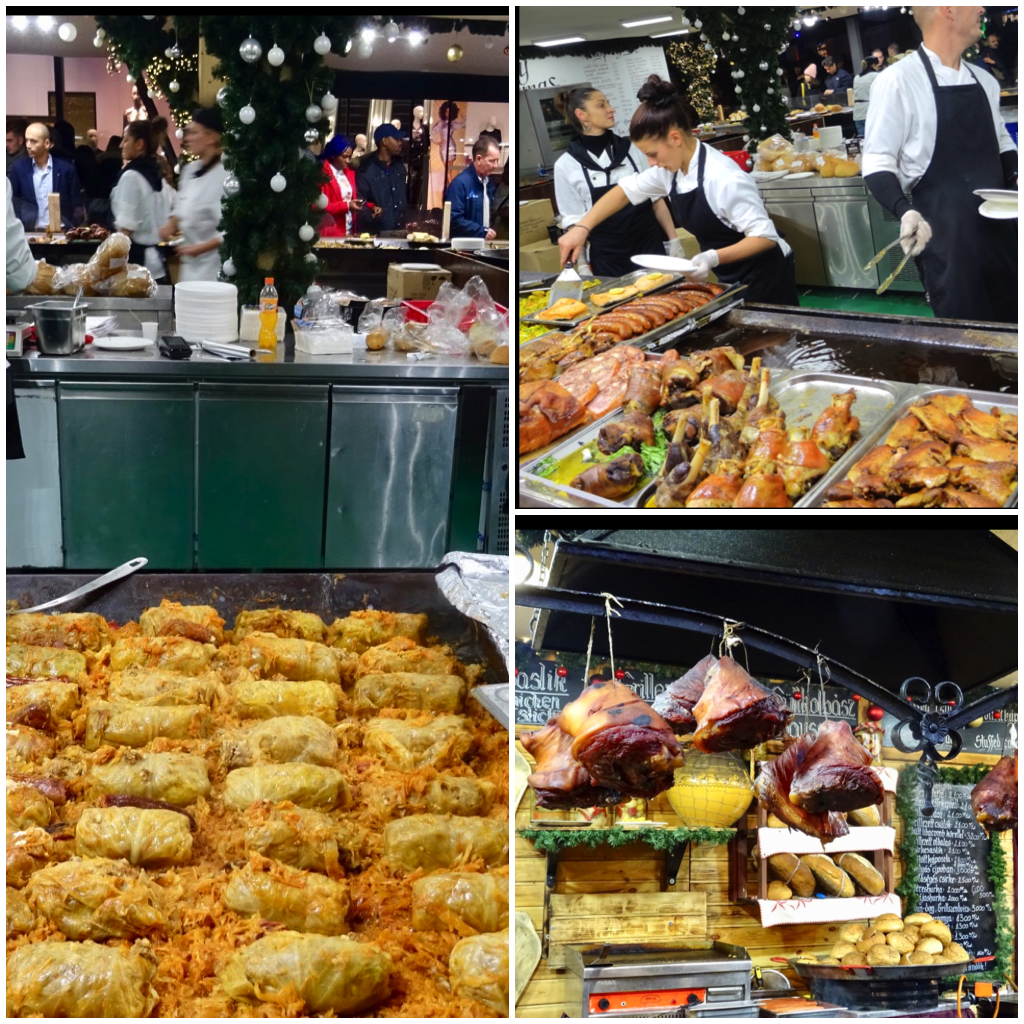
 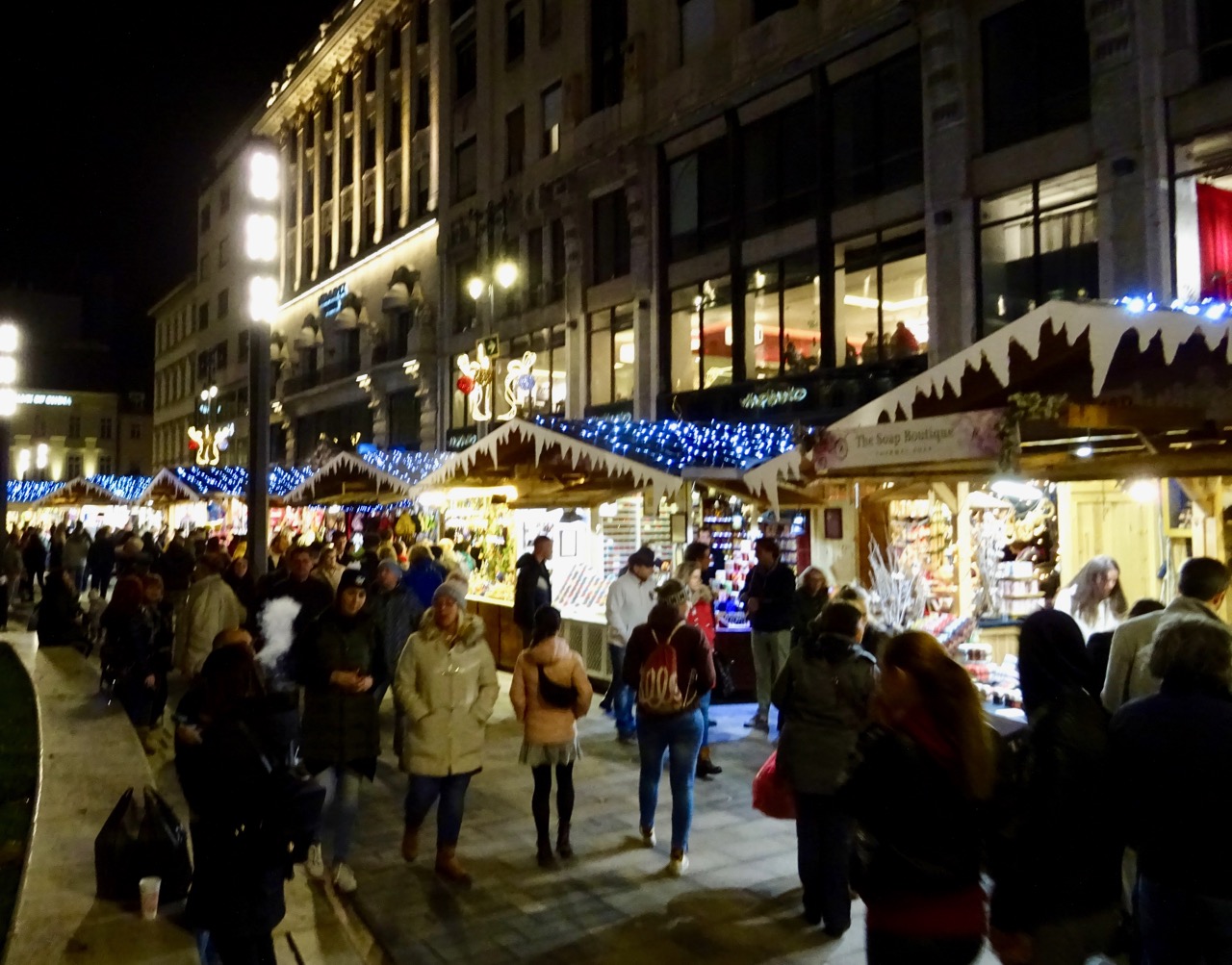 I also took photos of the food stands. Pork hocks are a big item here! We were going to buy a meal here a few days ago but quickly changed our minds when we discovered that one cabbage roll, albeit a big one, would cost us 5,000 Forints, the equivalent of $25 Canadian! A small plate with a sausage and two small helpings of side dishes was $35.00! We were rather shocked at how expensive it was. We saw other tourists change their mind and refuse to purchase what they had ordered when they realized the price.
 I saw lots of these sparkling balloons and thought they were so pretty. They were even nicer in person than in the photo. We spend the rest of the evening tidying the apartment and packing for our drive to Croatia tomorrow. Oh, and the puppet show we saw ws ‘Coraline’.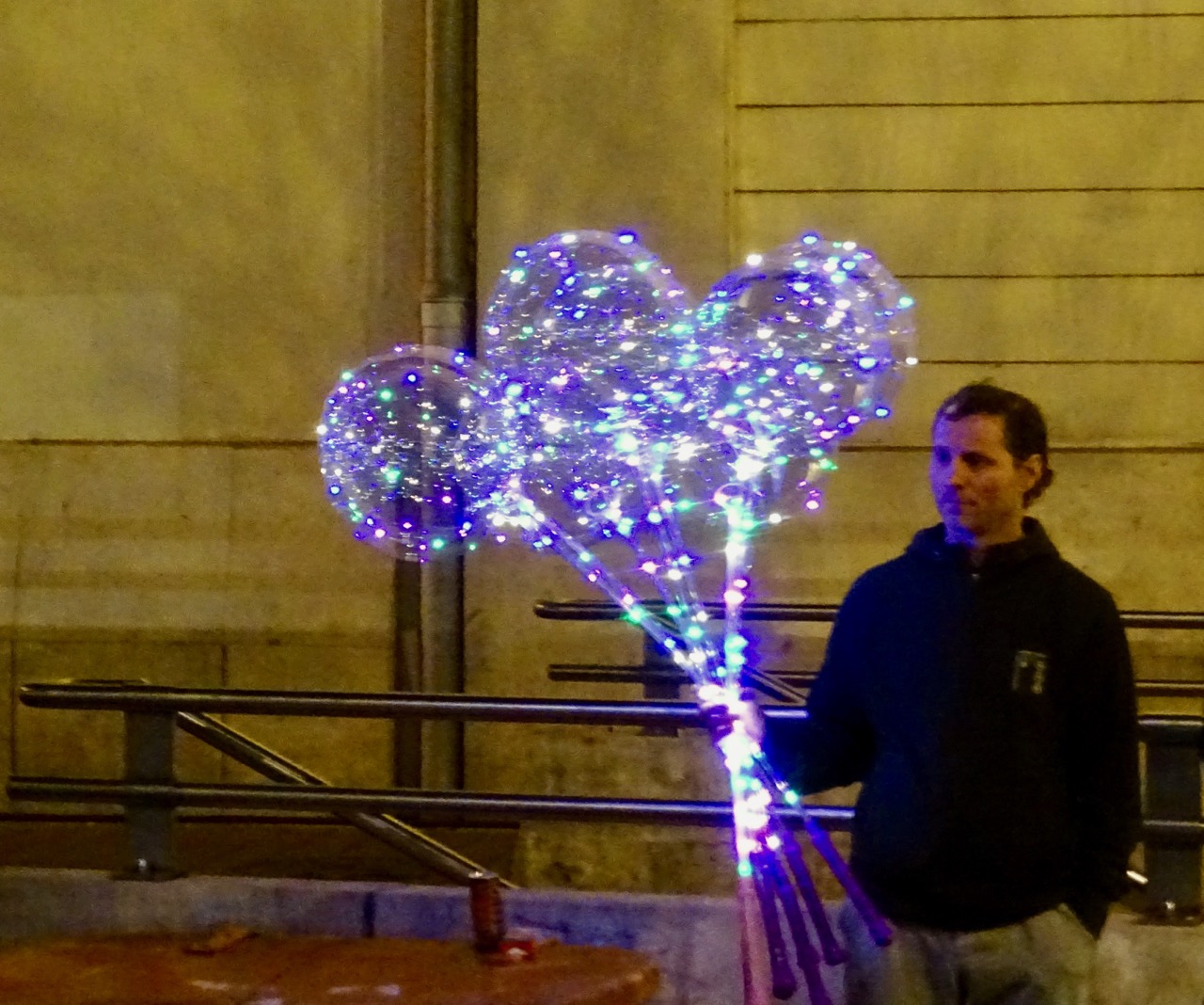
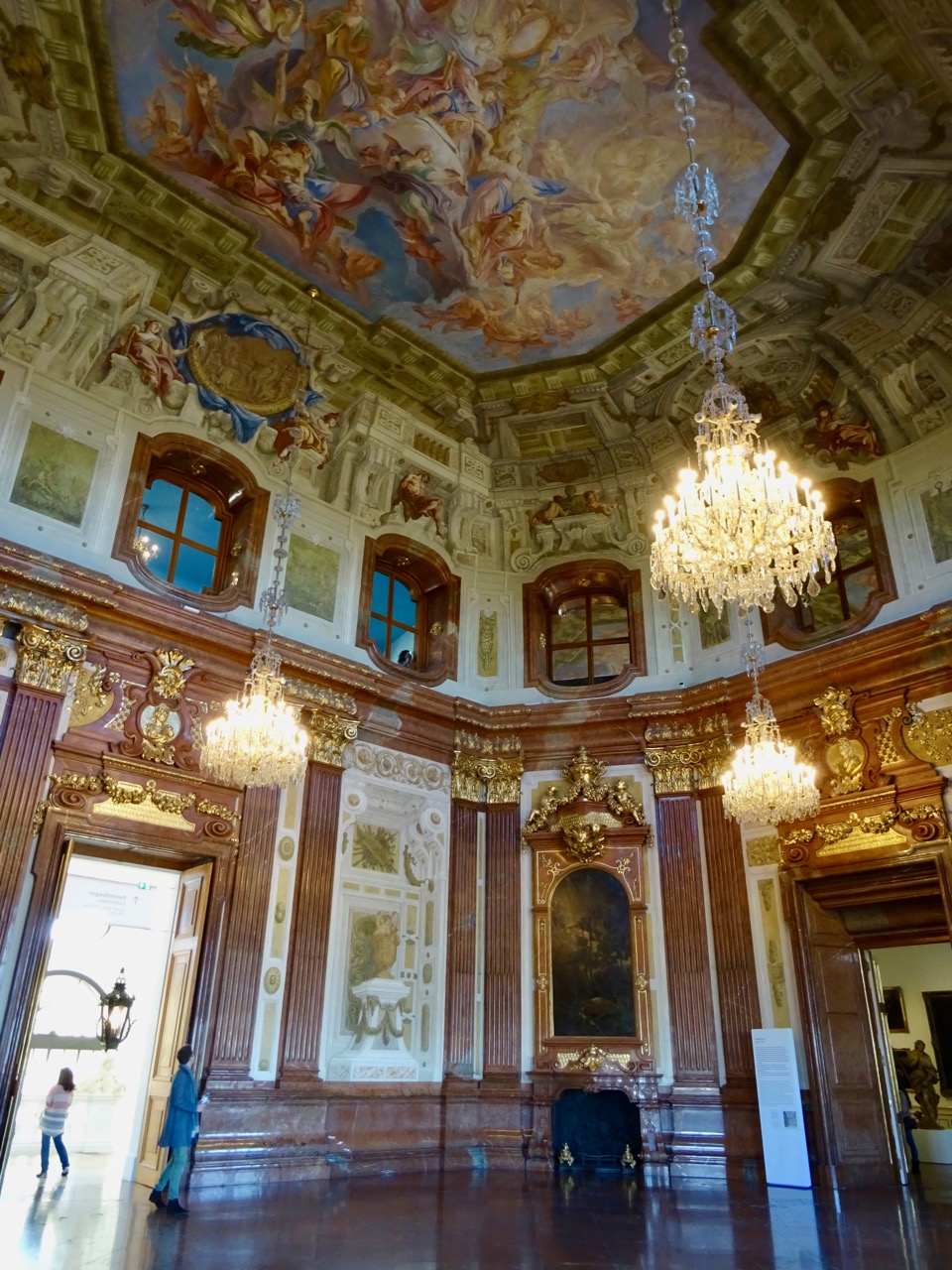
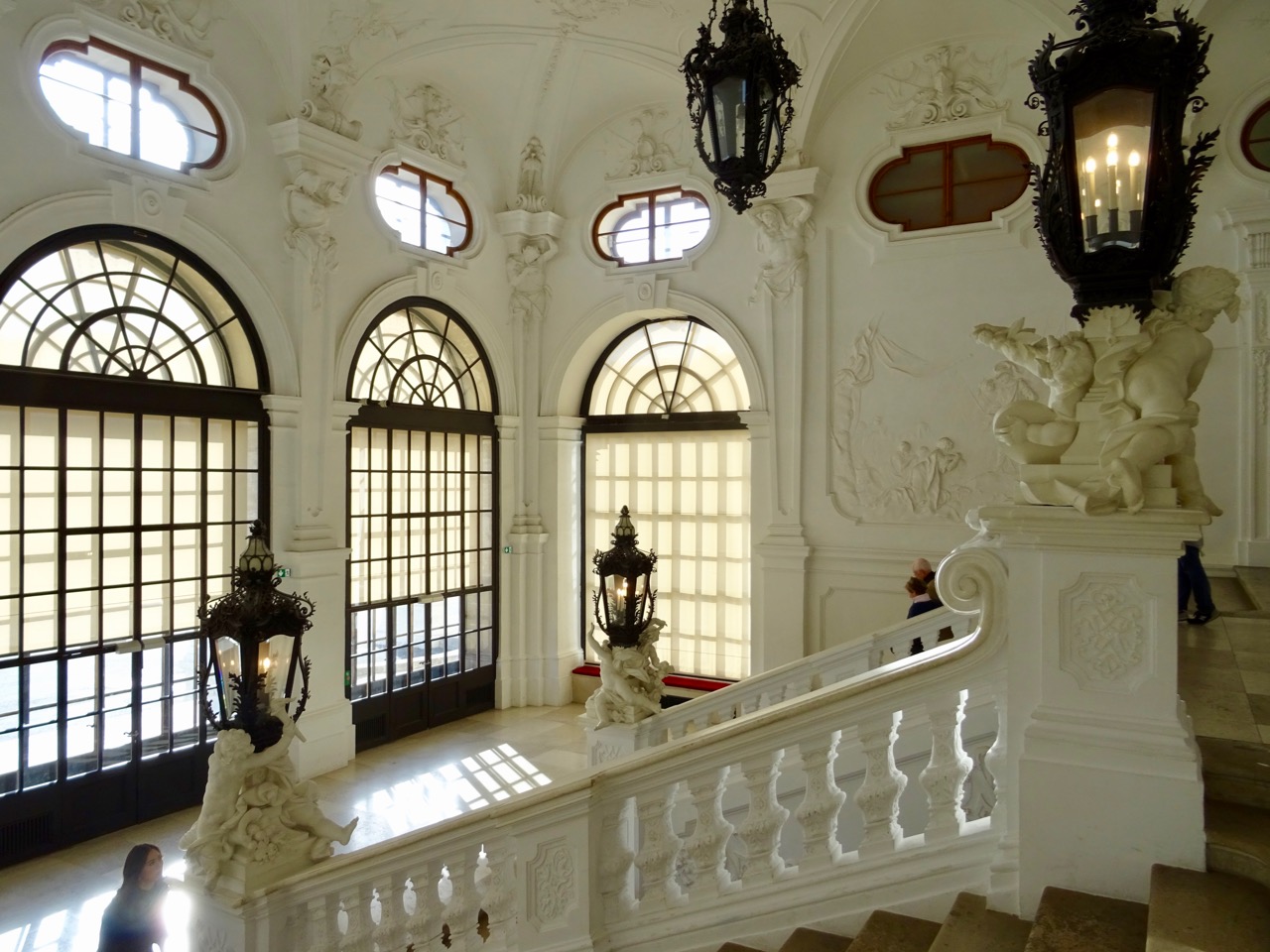 and the beautiful Marble Hall.
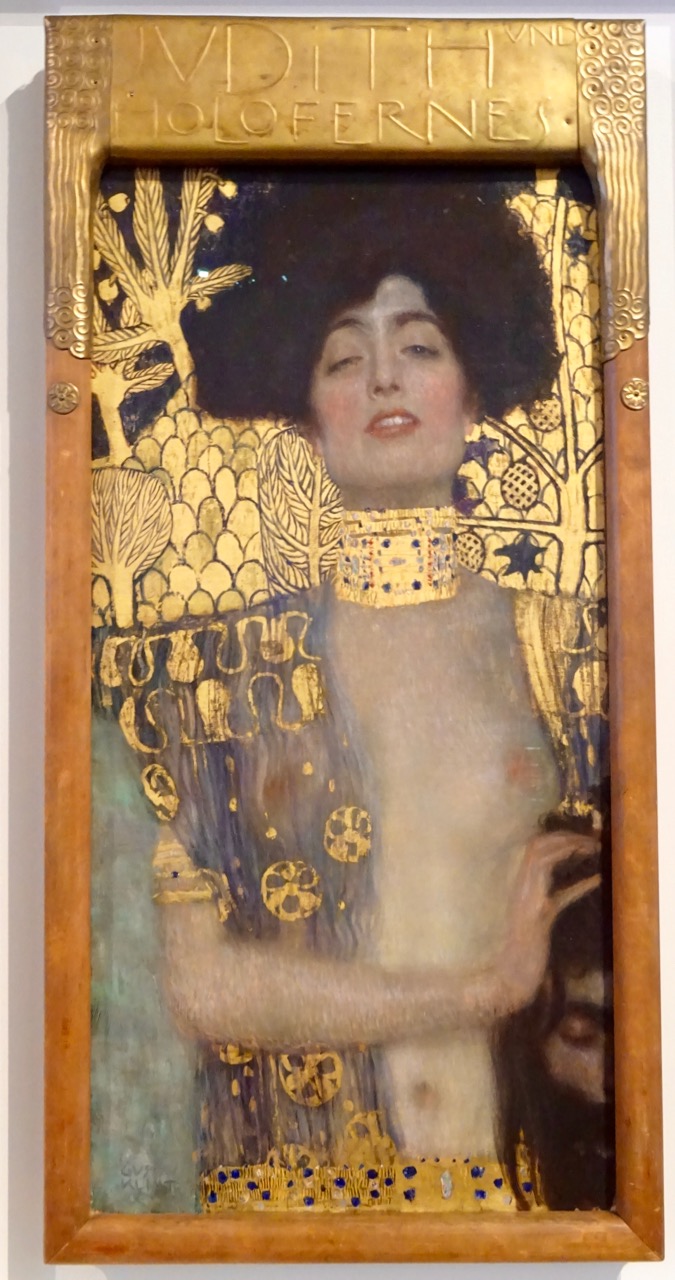
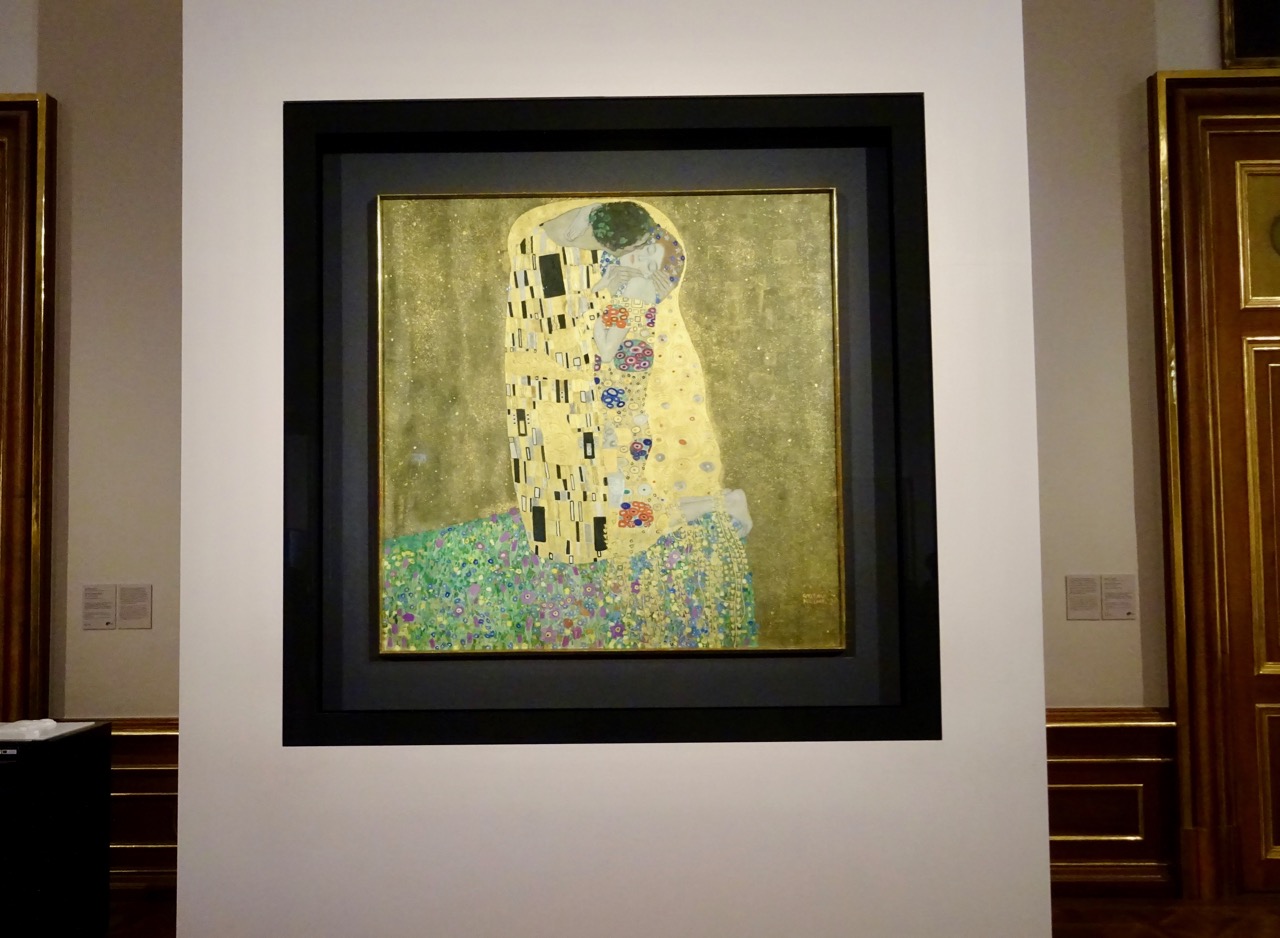
 I particularly wanted to see Gustav Klimt’s The Kiss, but was pleased to find his Judith painting here as well.
 The Kiss is one of Klimt’s most well known paintings. It is a large painting, 183 x183 cm.
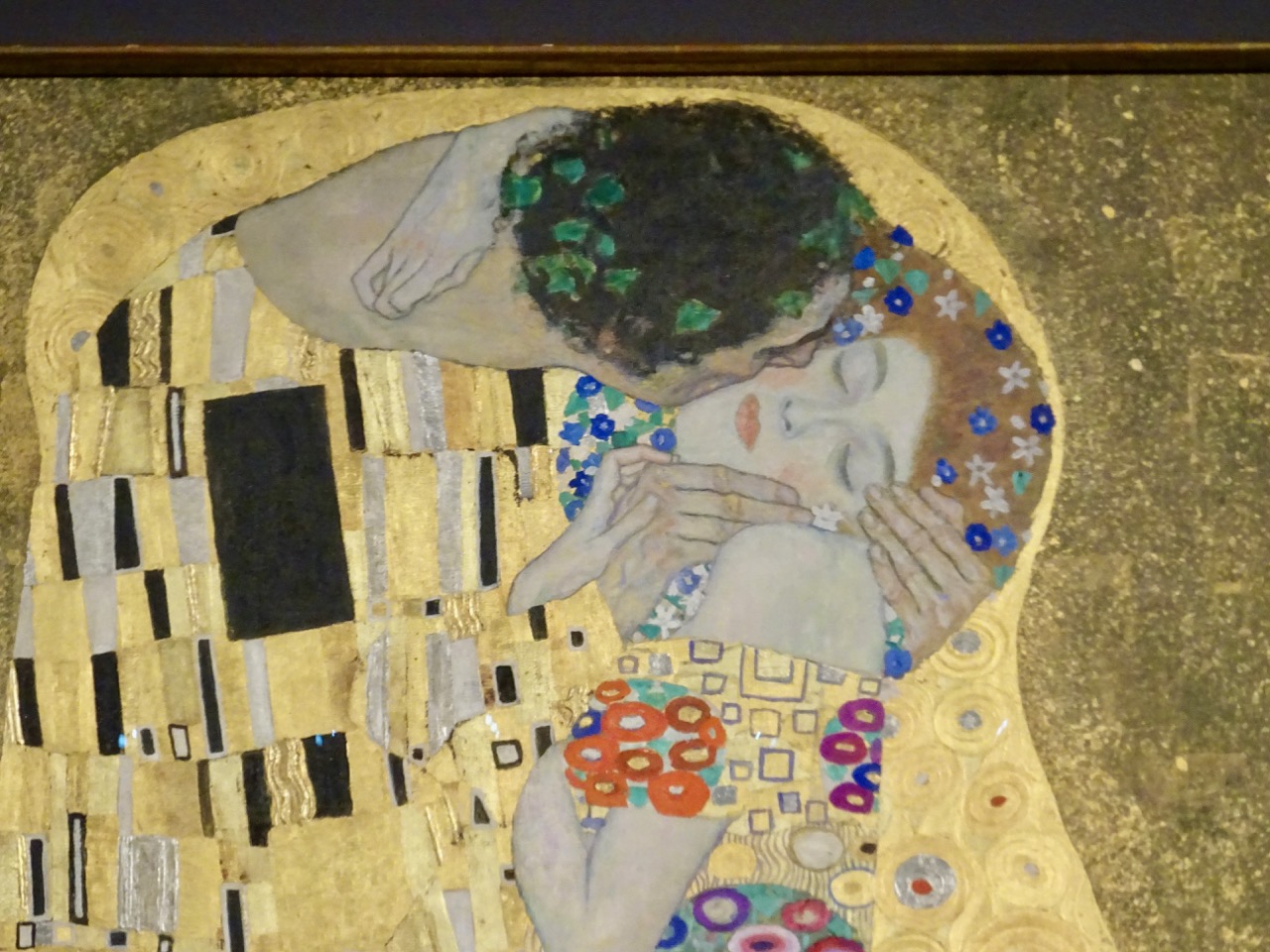
 It is nice to be able to see the painting details up close.
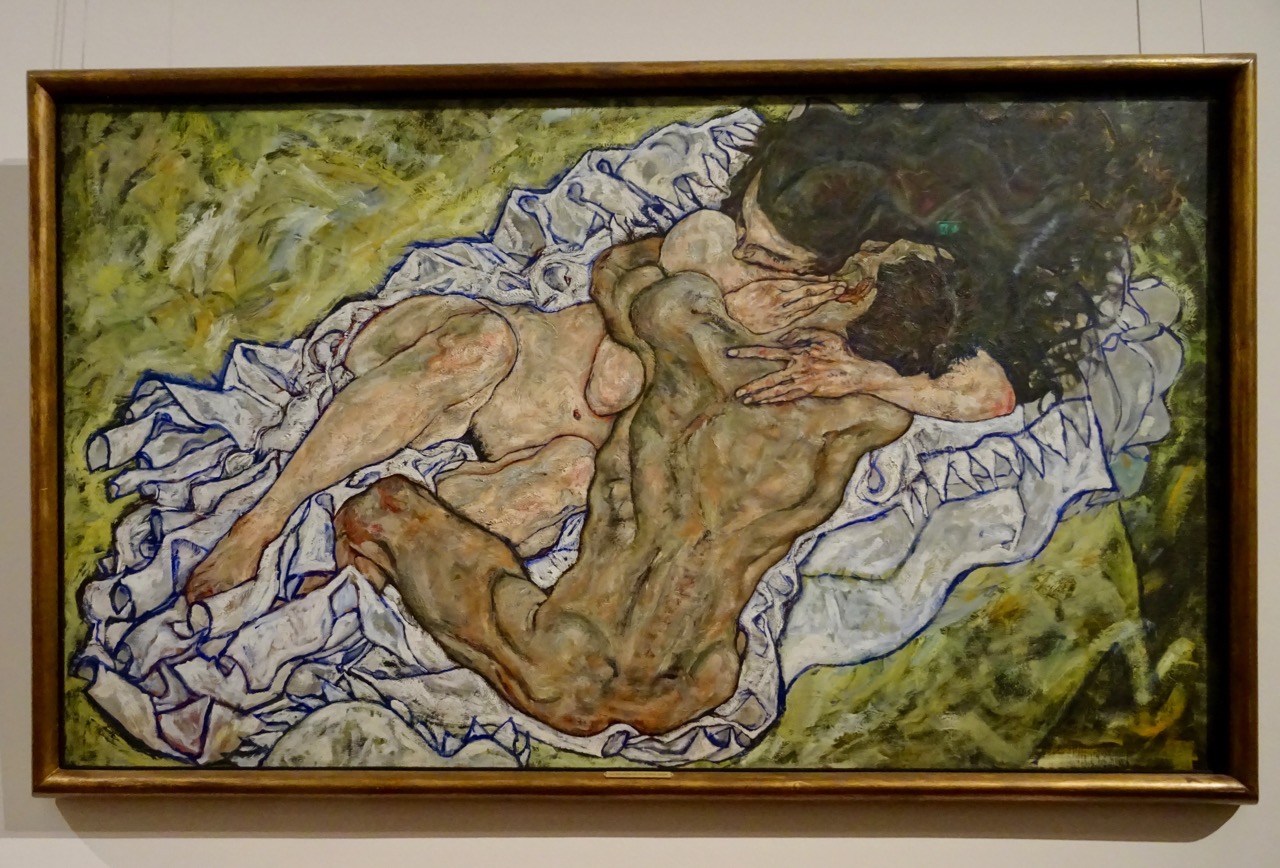
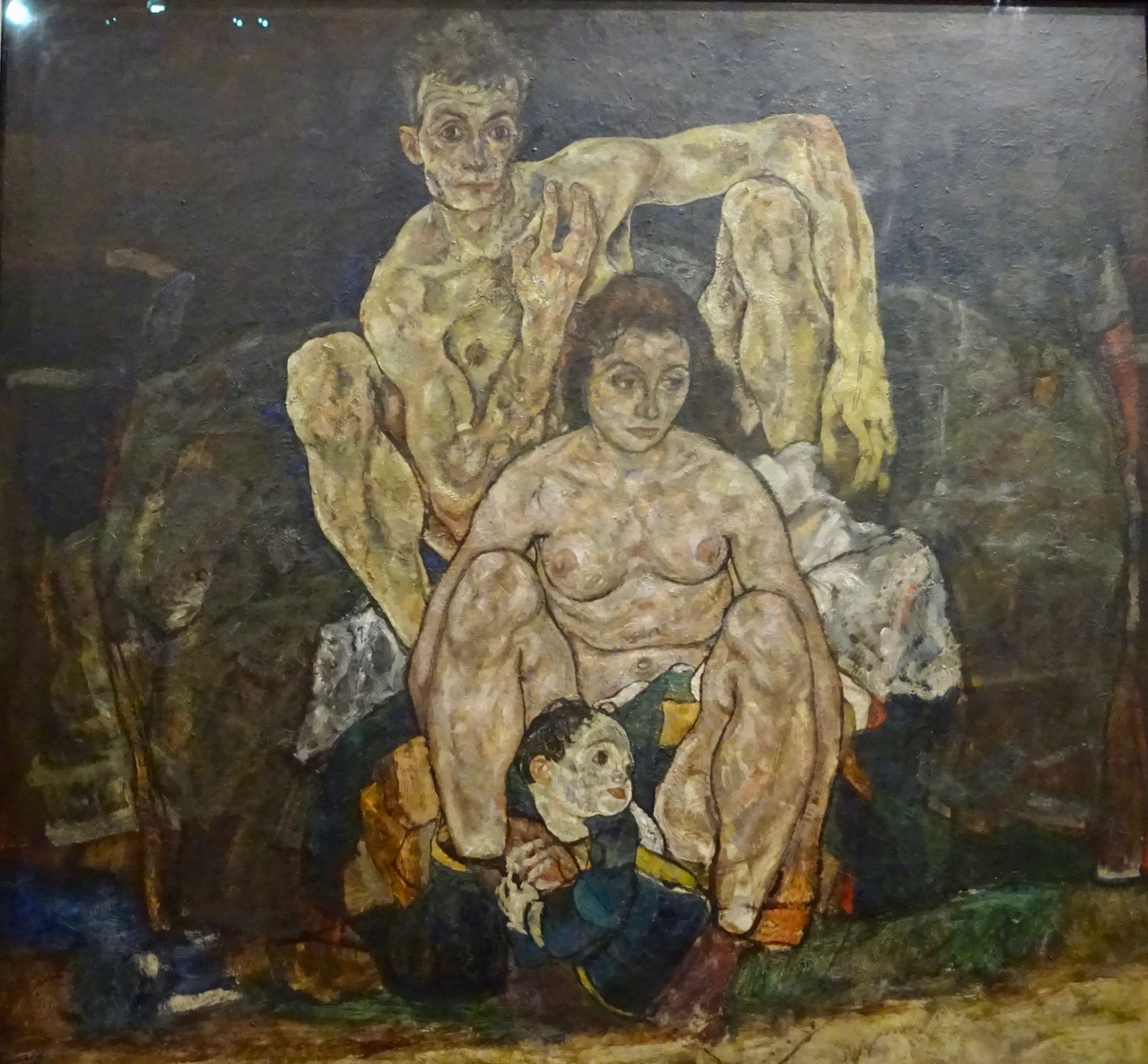
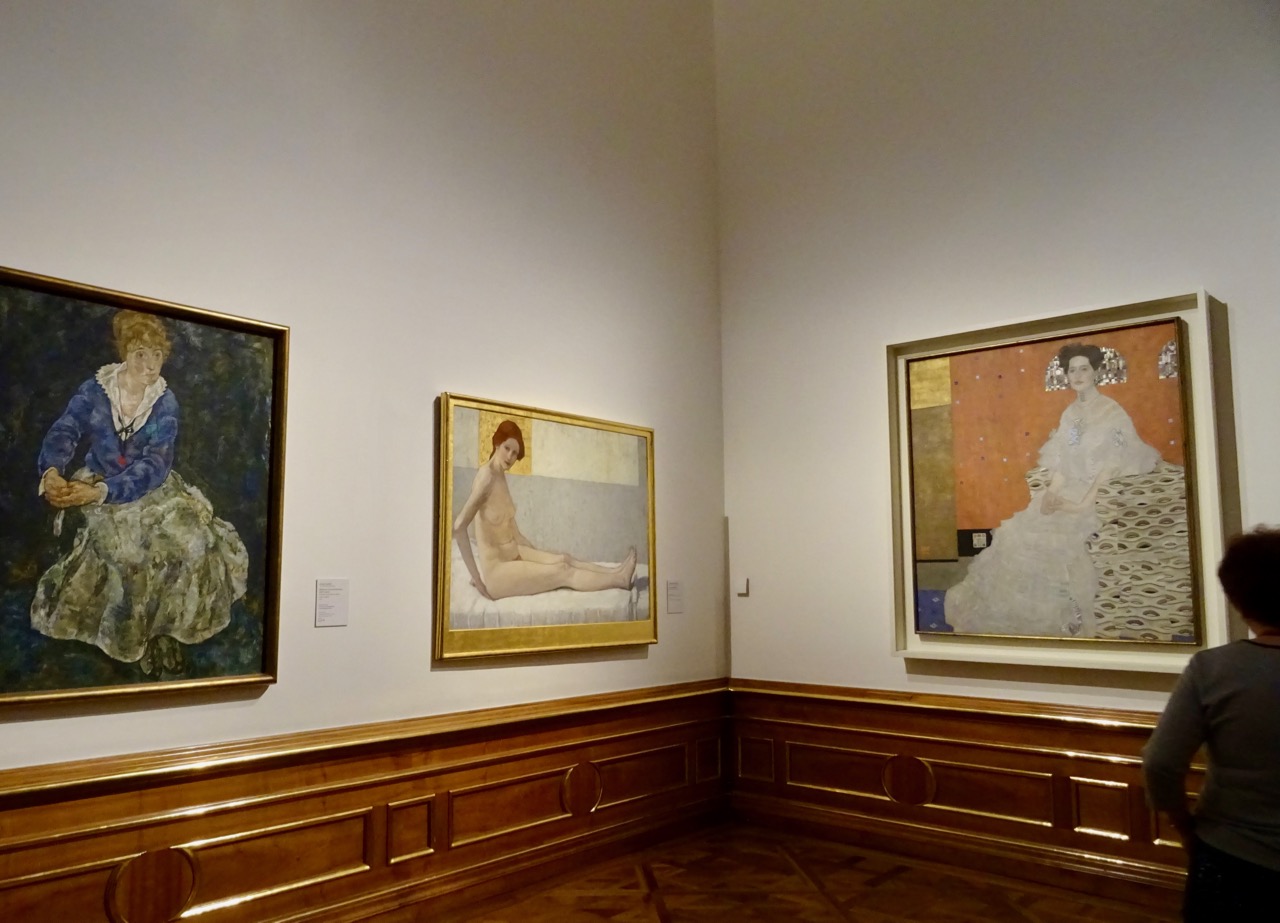
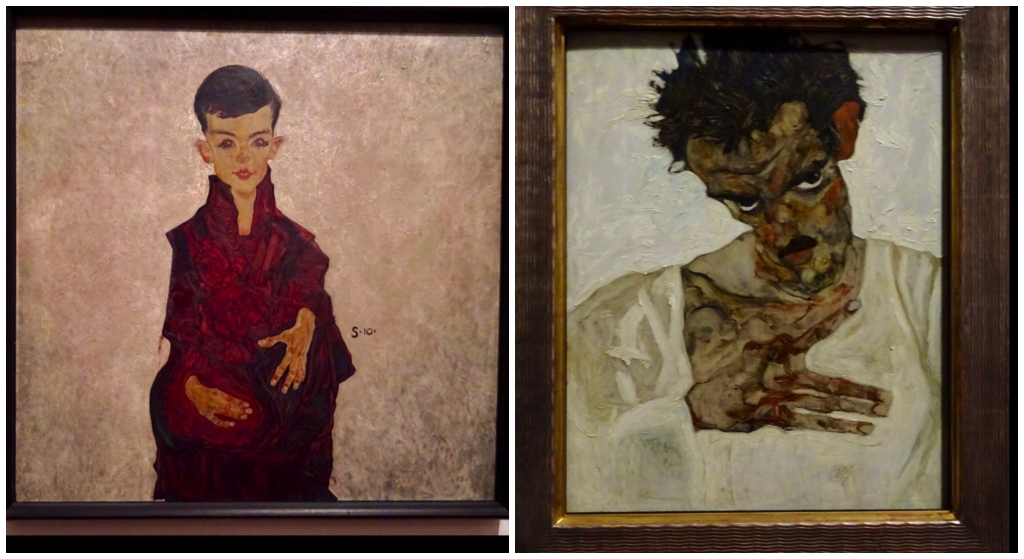
 I am also surprised by how many Egon Schiele paintings are on display. It is quite special to be able to see the original paintings of some of my favourite works by these two painters. I didn’t realize that these paintings were so large. Looking at reproductions in books can be deceiving. The Embrace and….
  the Family are both much bigger than I imagined…
 as are these paintings.
 Schiele’s Self Portrait is the smallest painting, about 41 x 33 cm.
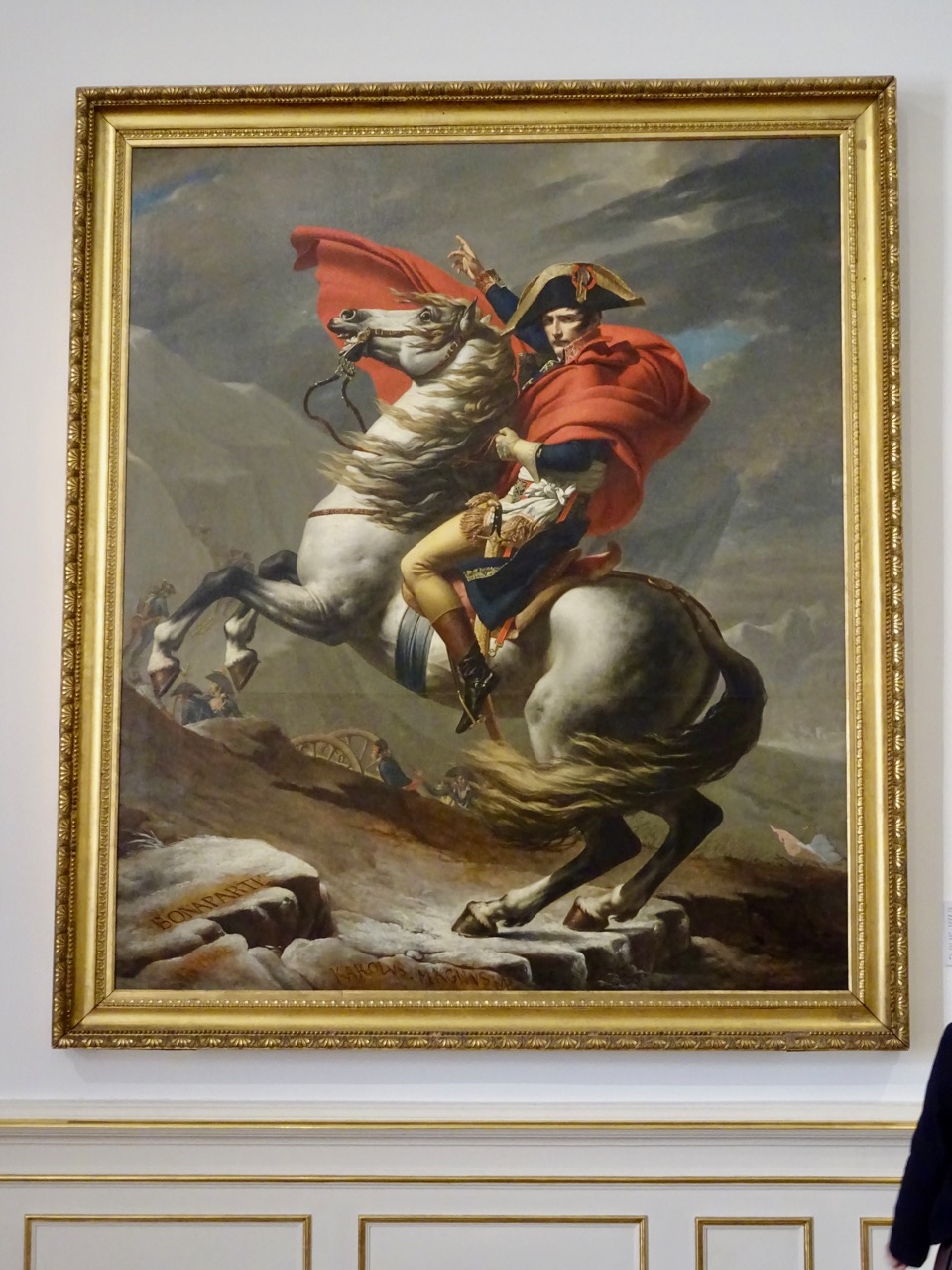
 I didn’t know Jacques-Louis David’s painting of Napoleon was here either. I am so glad I was able to visit this museum. This painting is enormous, 272 × 232 cm!
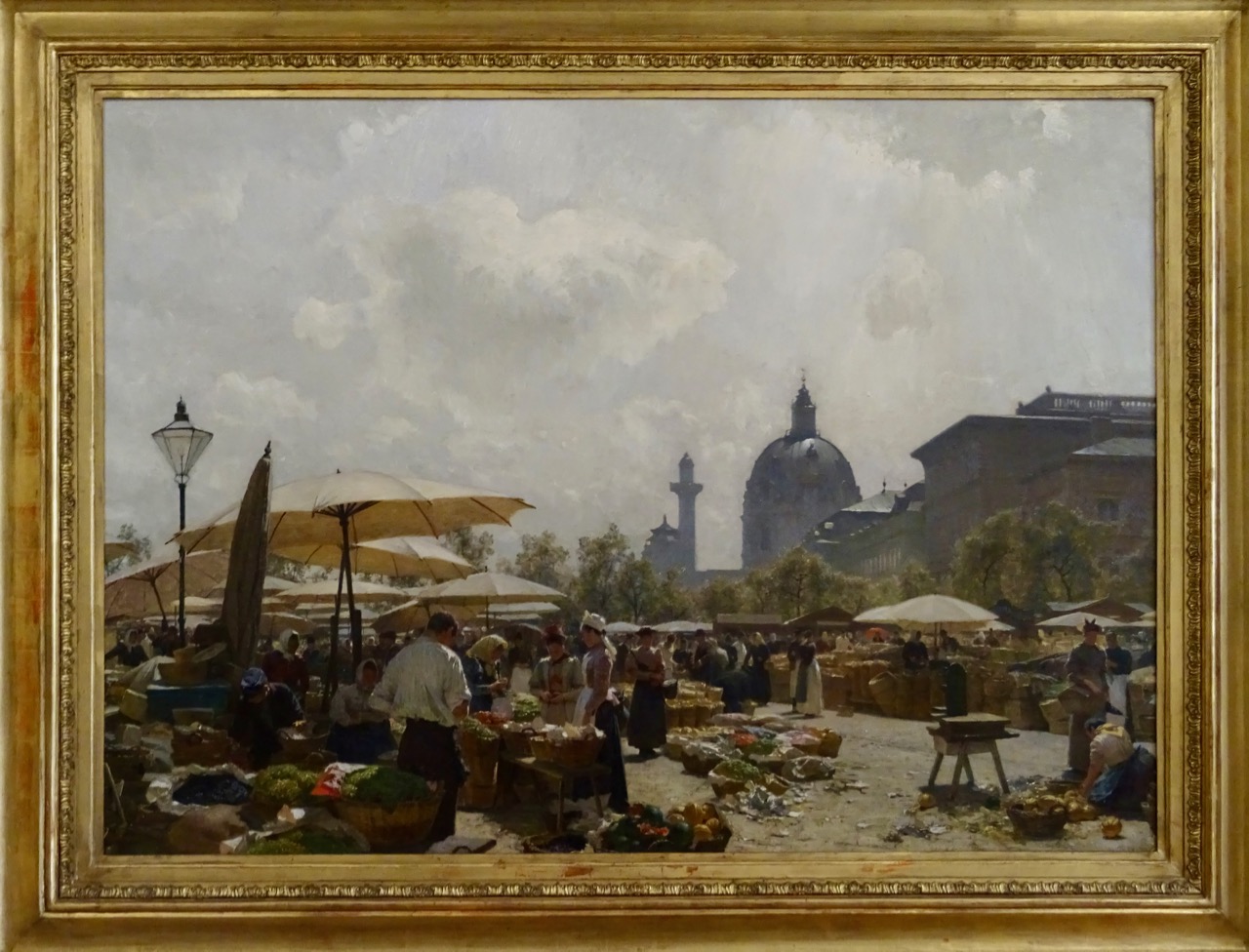
 This painting shows the Vienna Naschmarkt in 1894. It has changed a bit over the years!
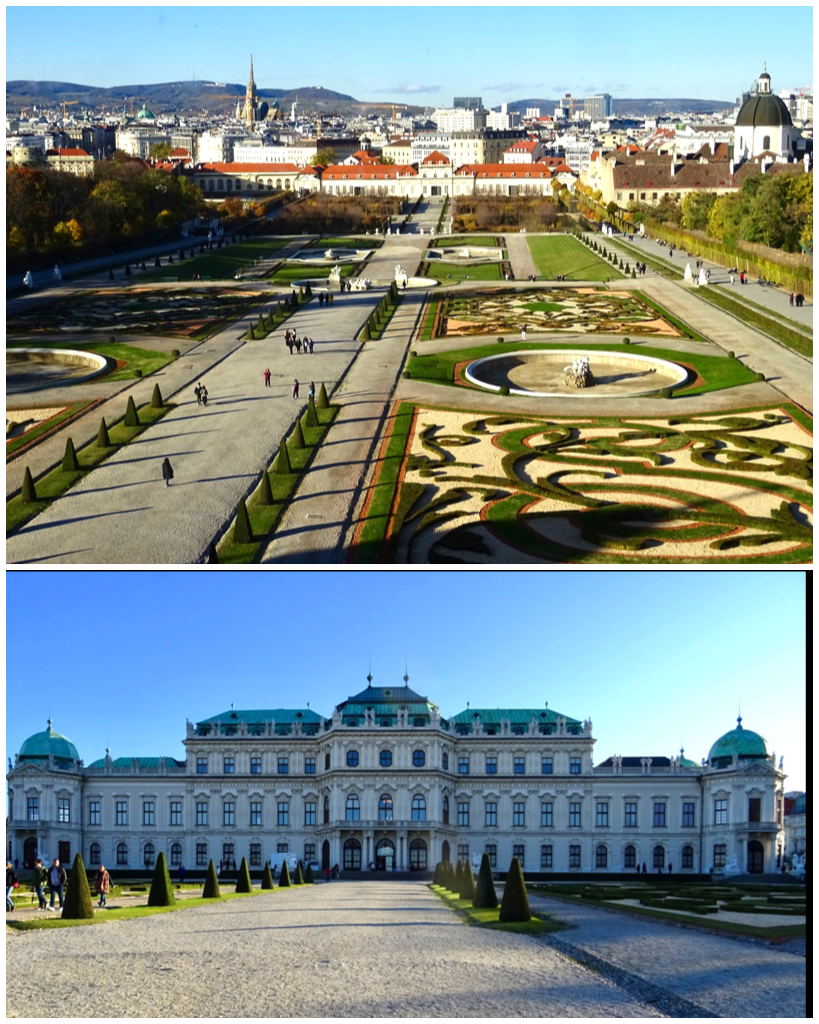
 We meet up in the gardens outside the Belvedere and then walk towards St. Charles Church.
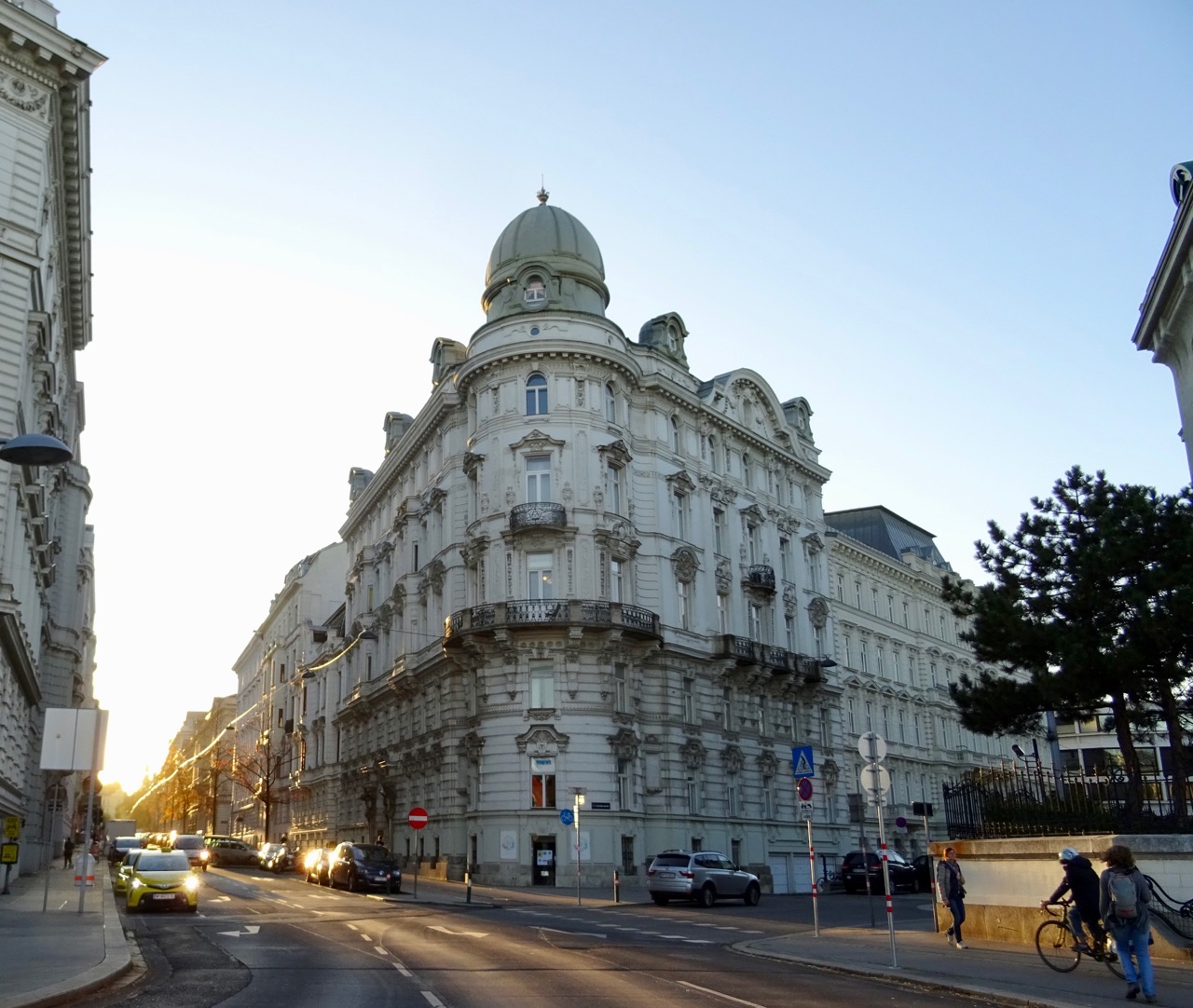
  There are so many interesting buildings along the way.
 We had a huge surprise when we entered St. Charles Church. Two enormous floating mirrored balls that reflected the church…
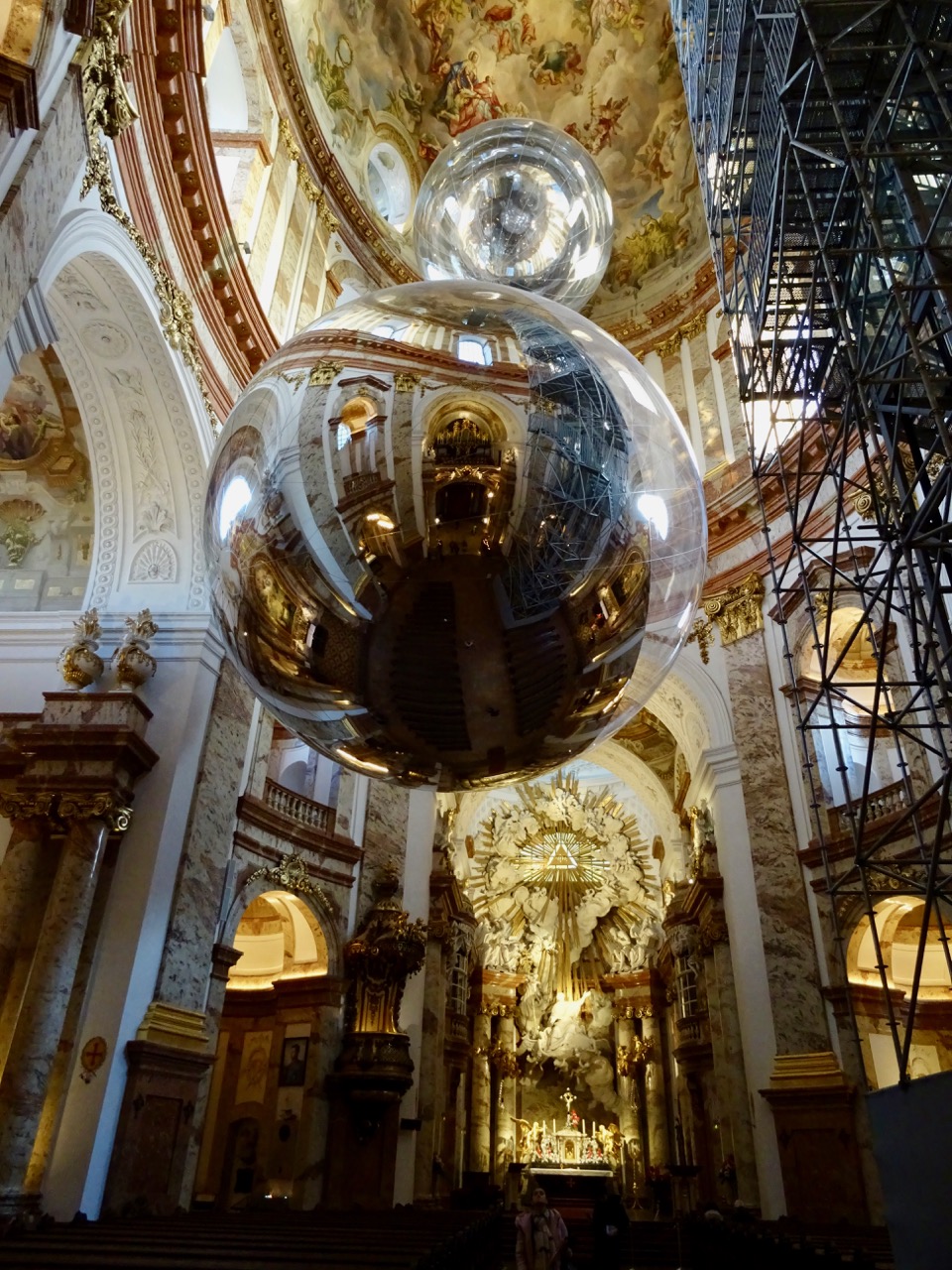 and us. We are almost in the centre of the reflection but we are very tiny. “Aerocene” is a contemporary art installation by Tomas Saraceno, an Argentinian artist who lives and works in Berlin. The floating reflective balls are 10 and 7 metres in diameter.
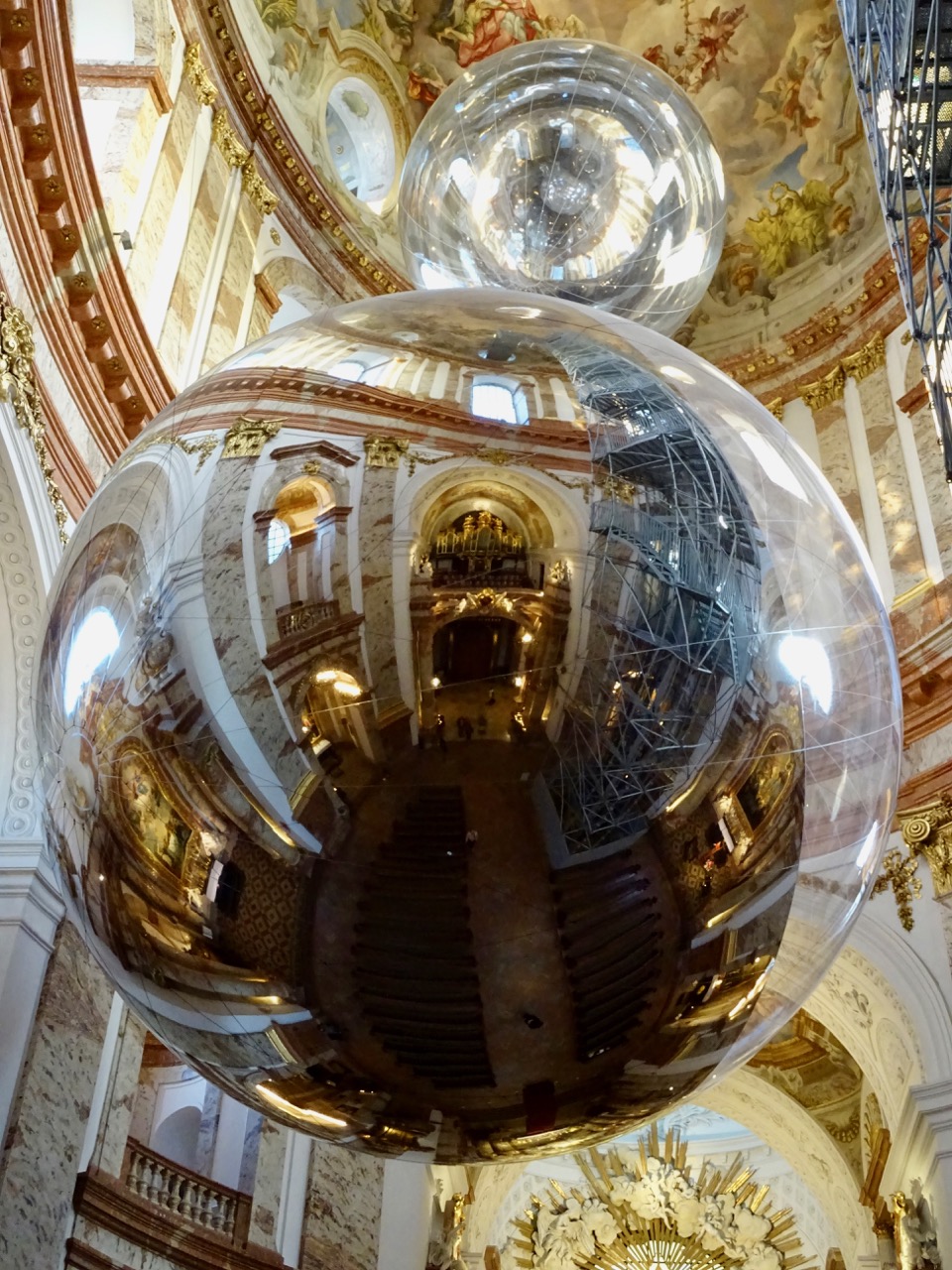 Then we notice the scaffolding that goes high up into the dome, and that is where we are going to go! We thought the elevator ride we got a ticket for would be inside a bell tower. Nope! We ride to the top of this scaffolding and then climb a bit further, onto that platform you see leading into one of the round windows in the dome!
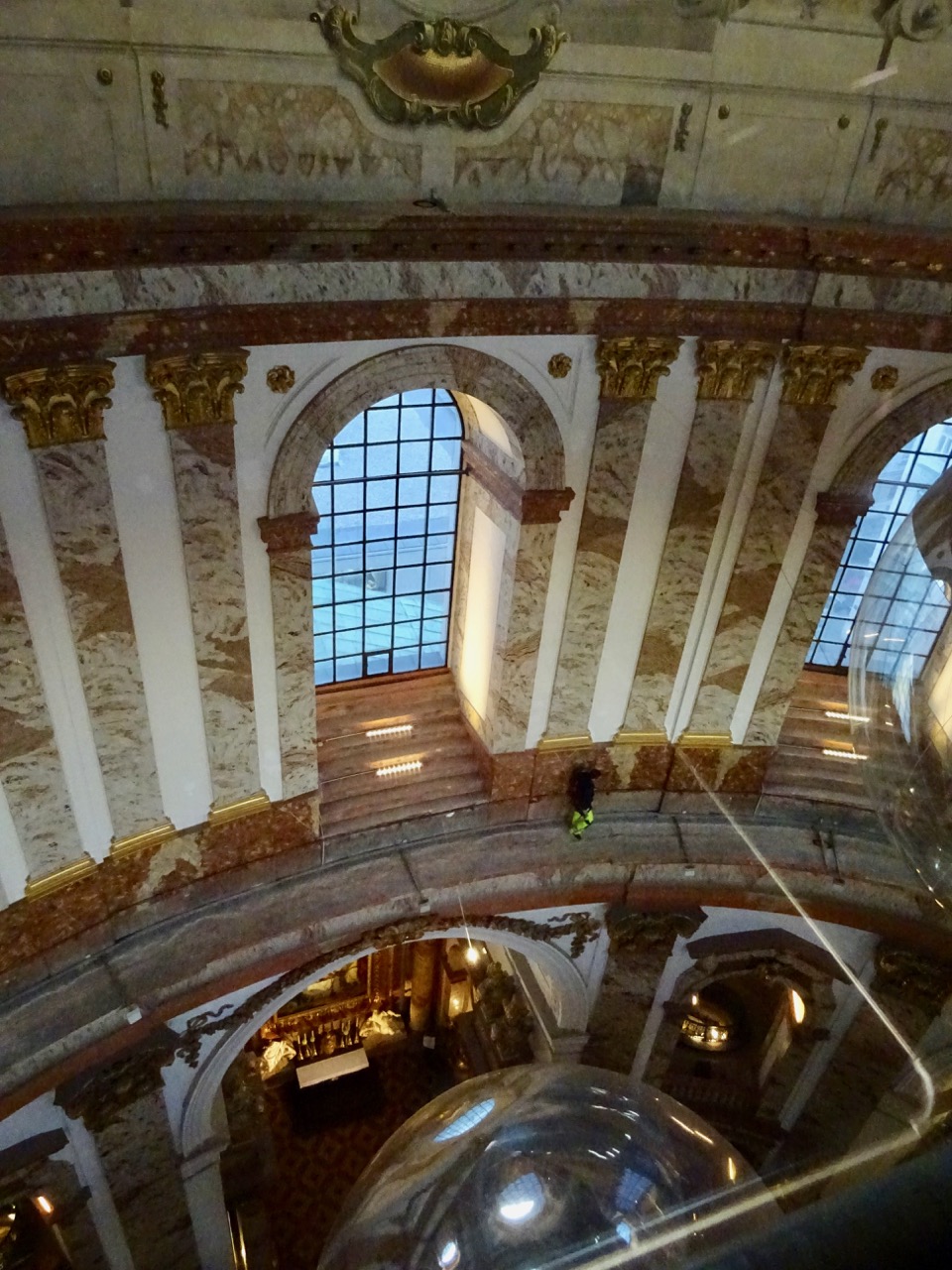
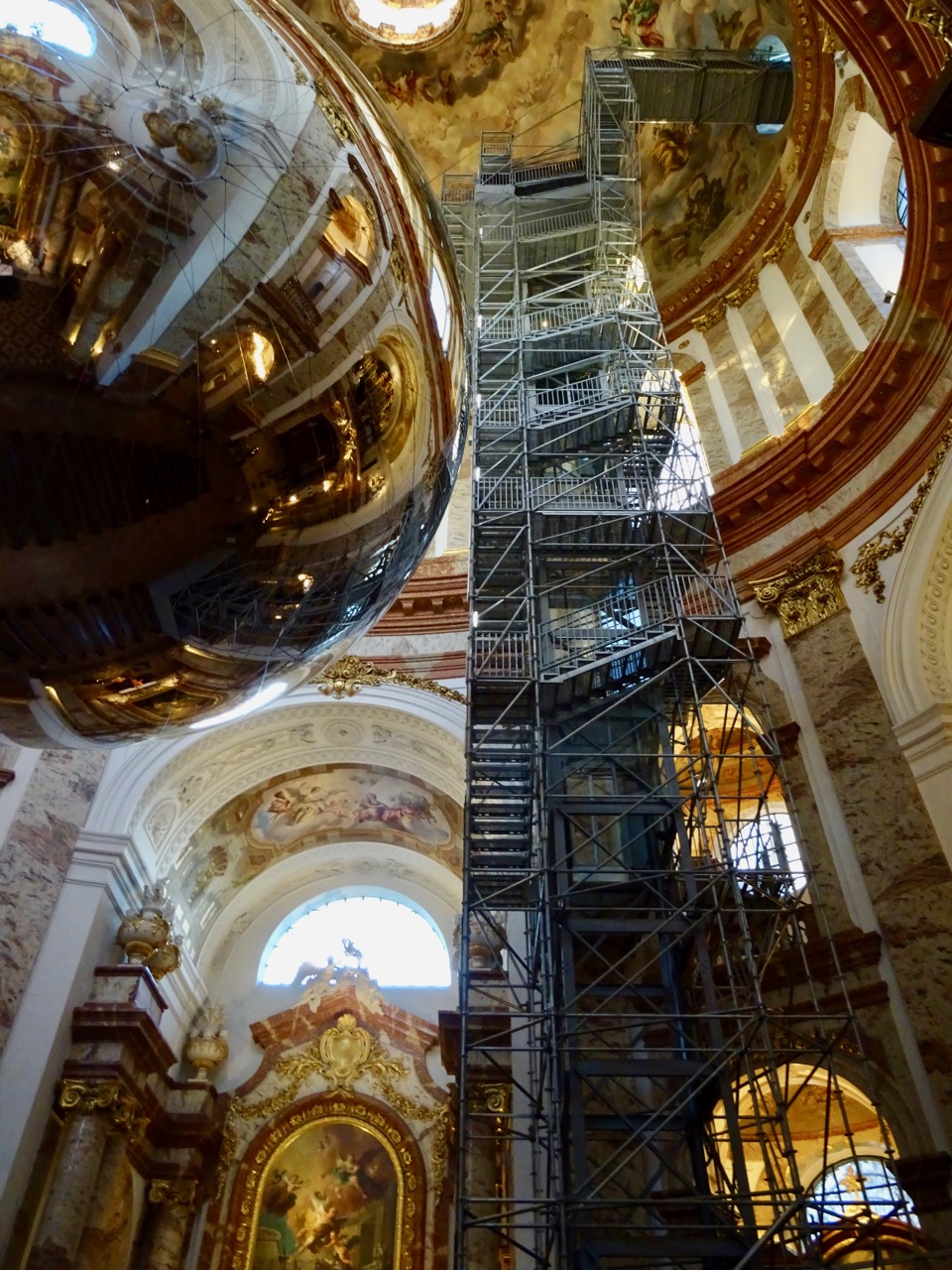 Looking down from the top of this ‘elevator’ we notice a workman adjusting lights high up in the dome, yet still far below us!
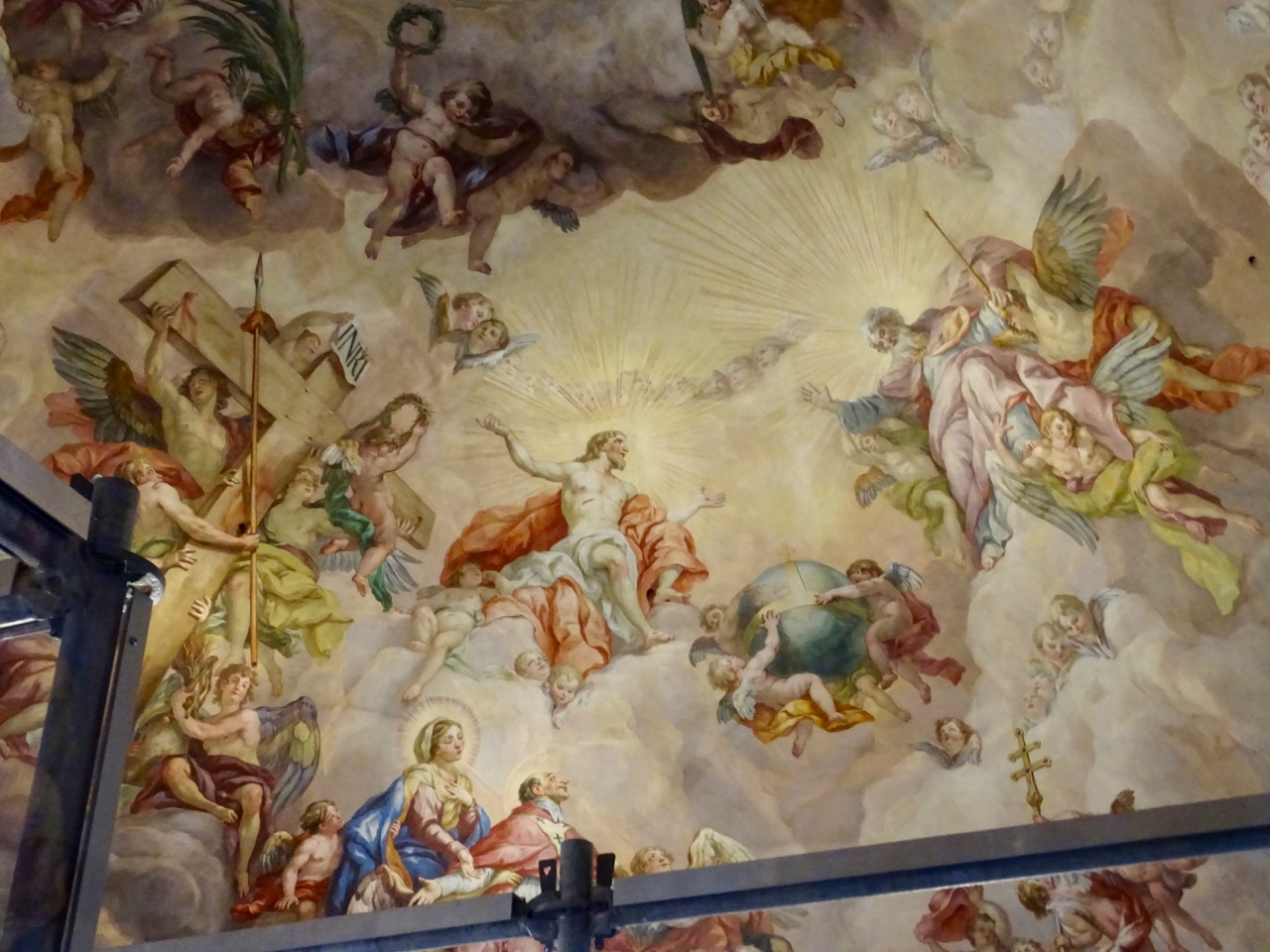
 We have a great view of the dome paintings. It is interesting the way the gold highlights look up this close…
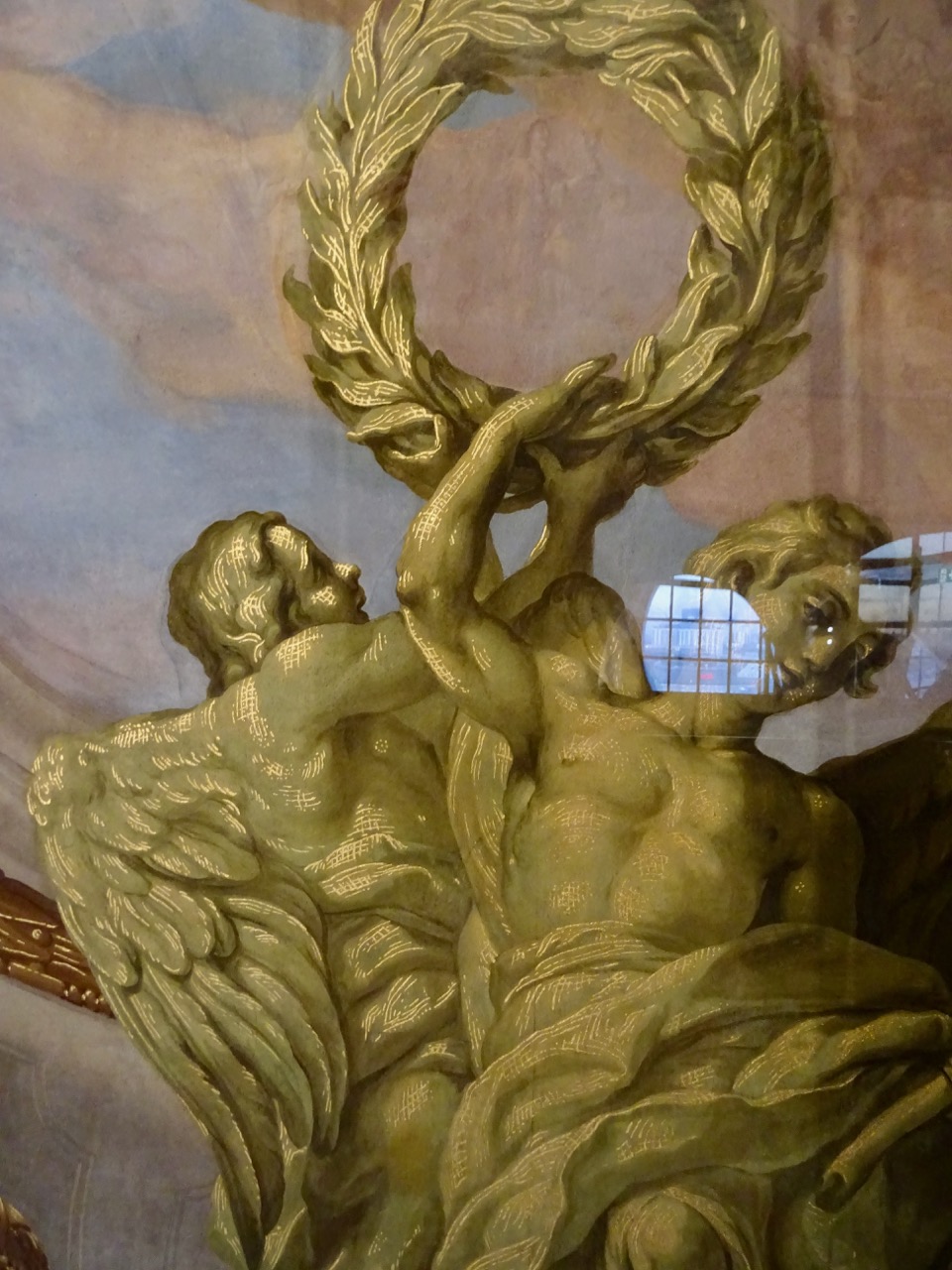 and we have a great view of the other dome paintings. We are crazy high up!
 Bob walks back down to this viewing platform so I can get a photo. Notice how he is suspended…nothing below him!
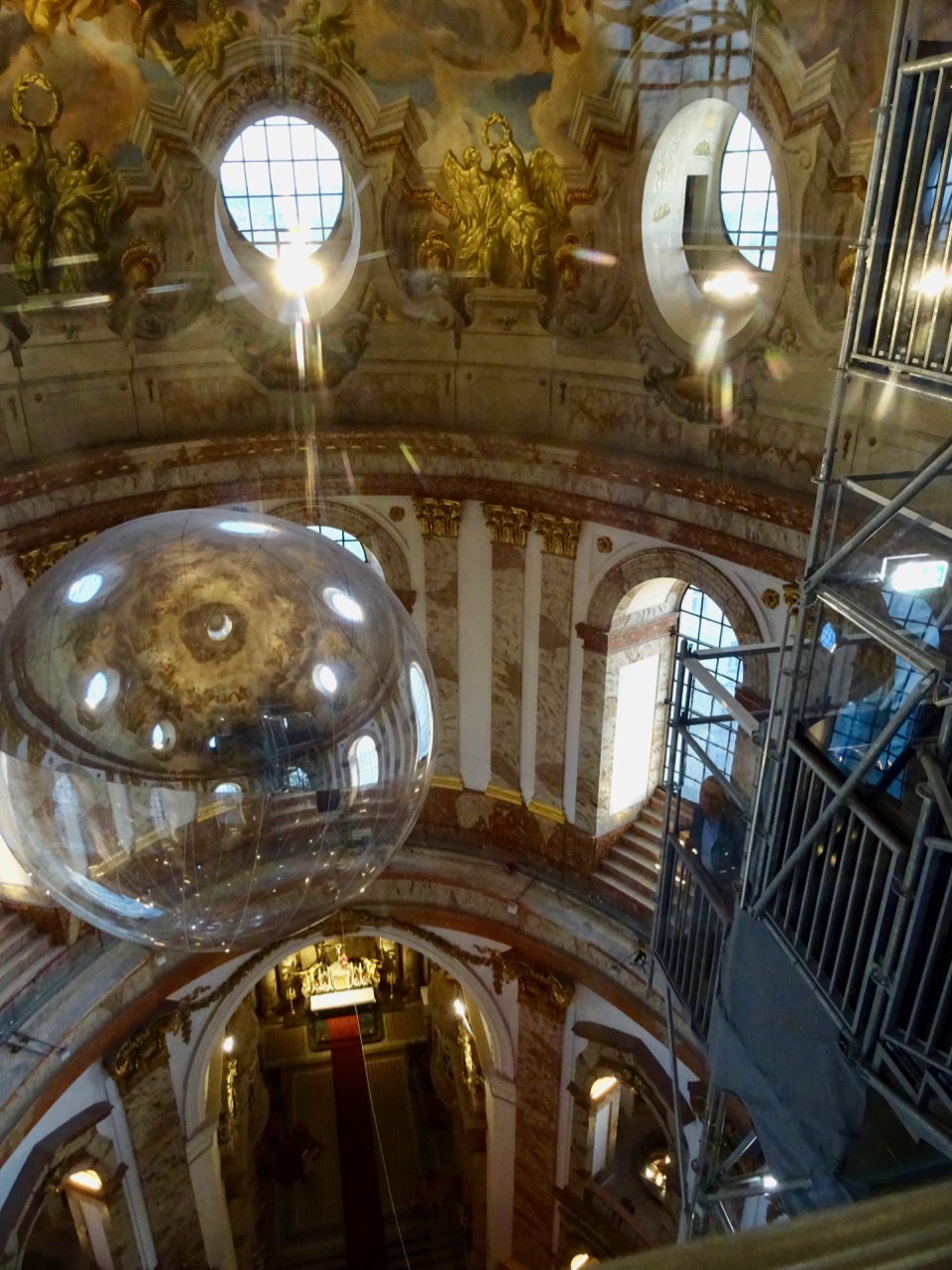 This photo shows the platform that Bob was standing on in the last photo.
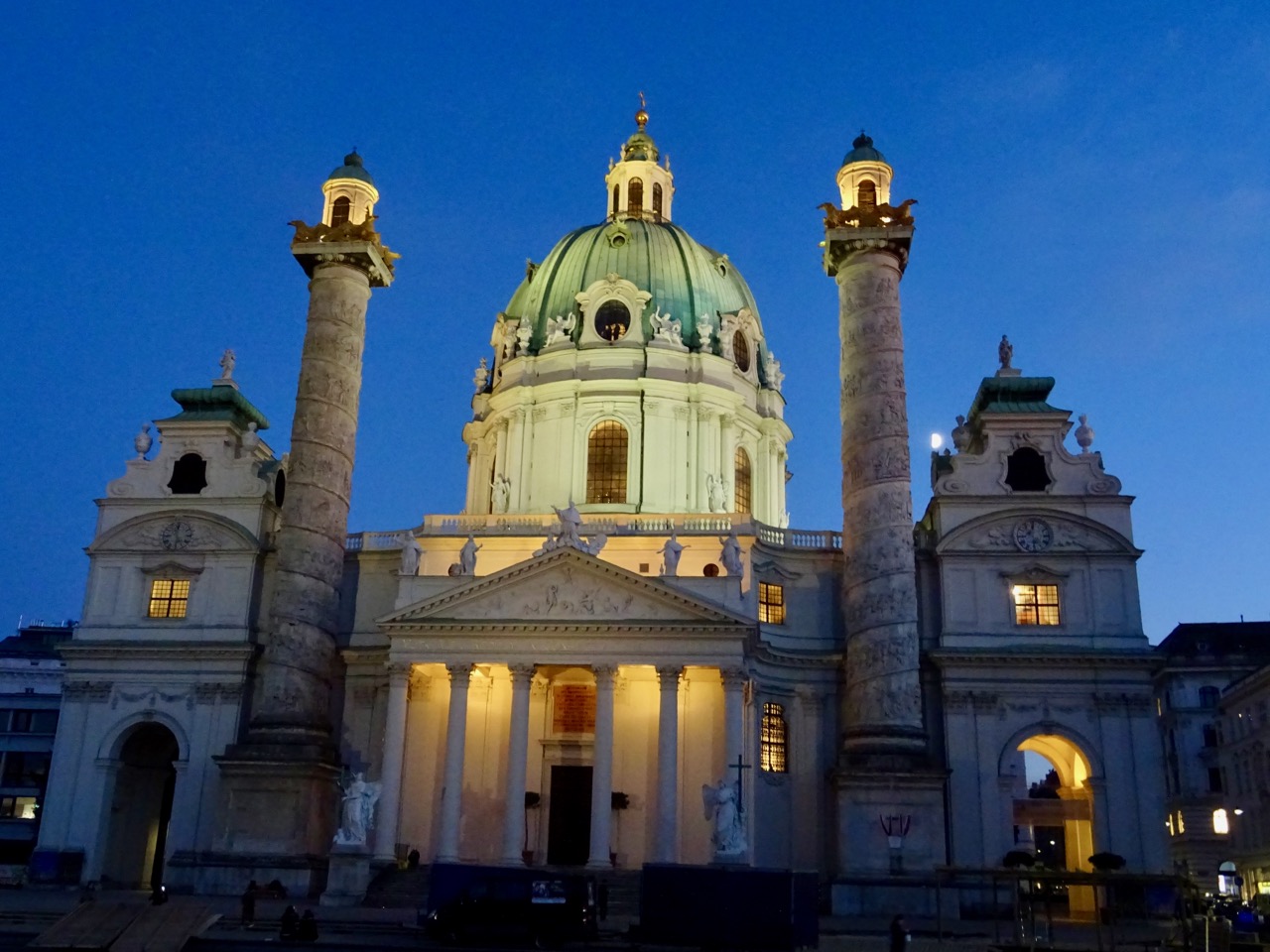
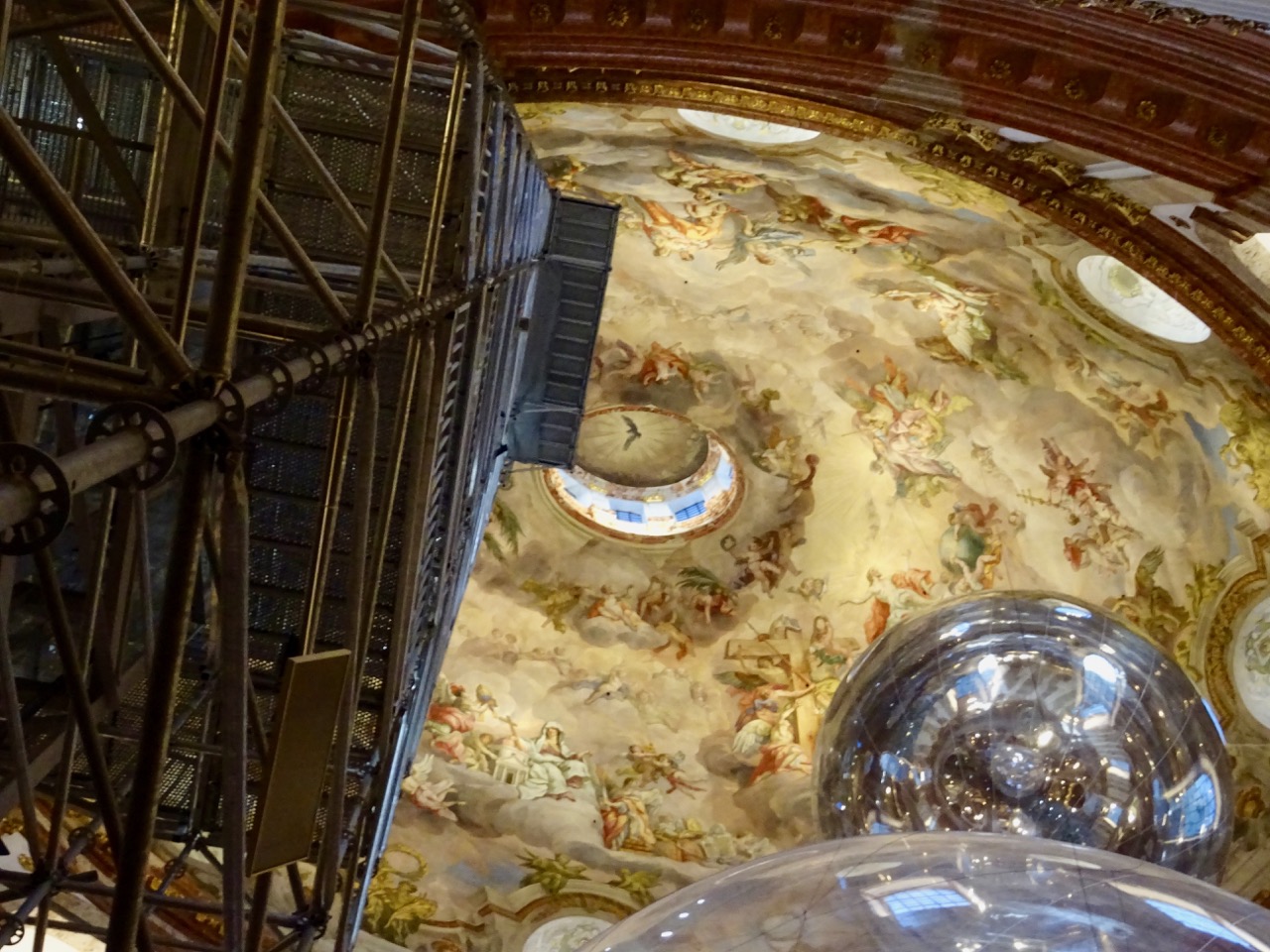 We spent quite a lot of time way up there in the dome, and it is getting dark when we get outside. If you look closely you can see some people standing in the round window on the dome. That is the window we were standing in! What an amazing experience. There was restoration work carried out in the dome and the elevator is being kept for a while. The fee to ride up into the dome is a way to make more money for further restorations.
 Walking back towards the metro we pass the Opera House…
 and take photos of these performers from Tibet. They have a performance later tonight and were taking publicity photos outside the Opera House.
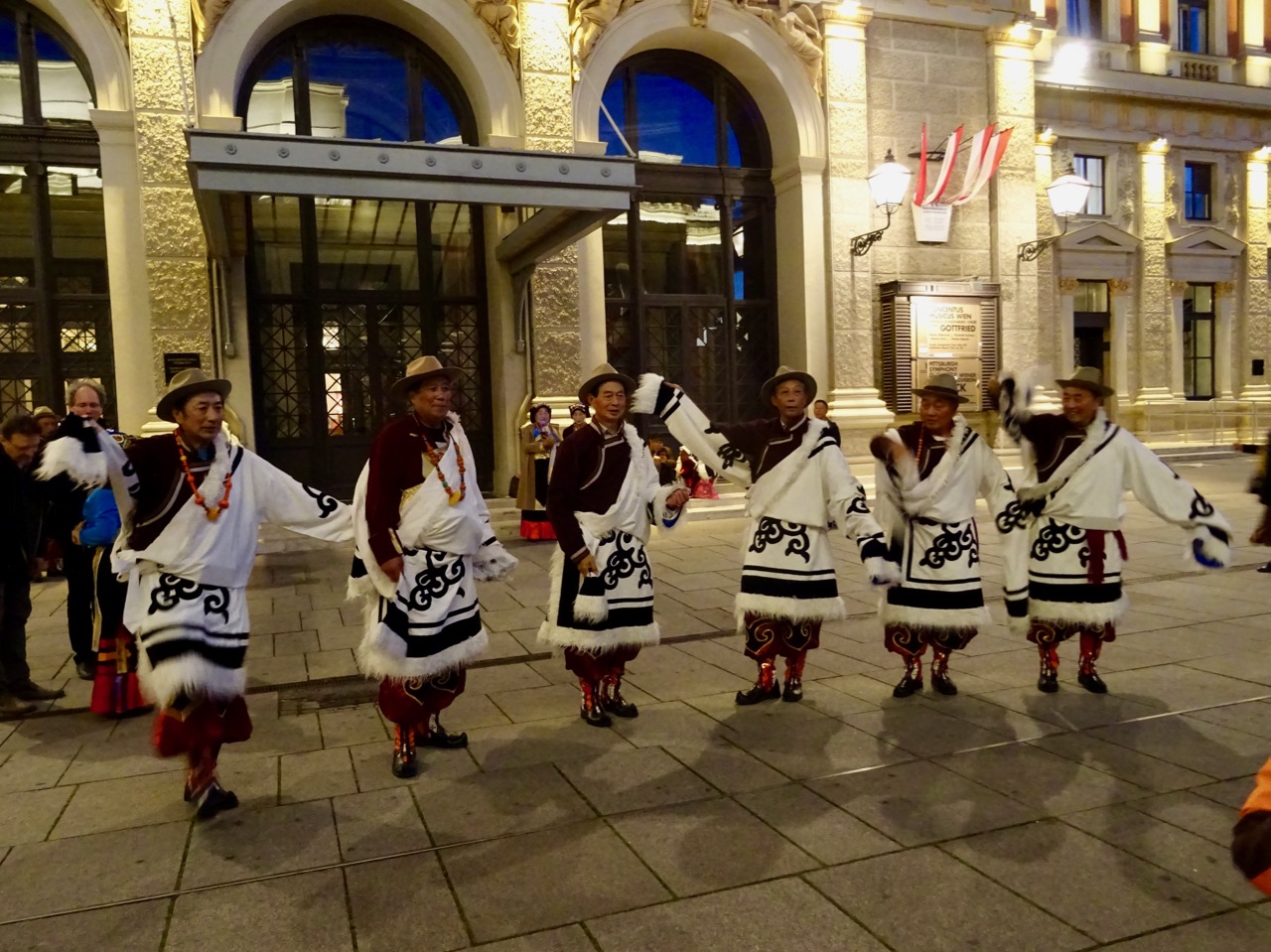 While the men posed, some of the women were busy applying their makeup.
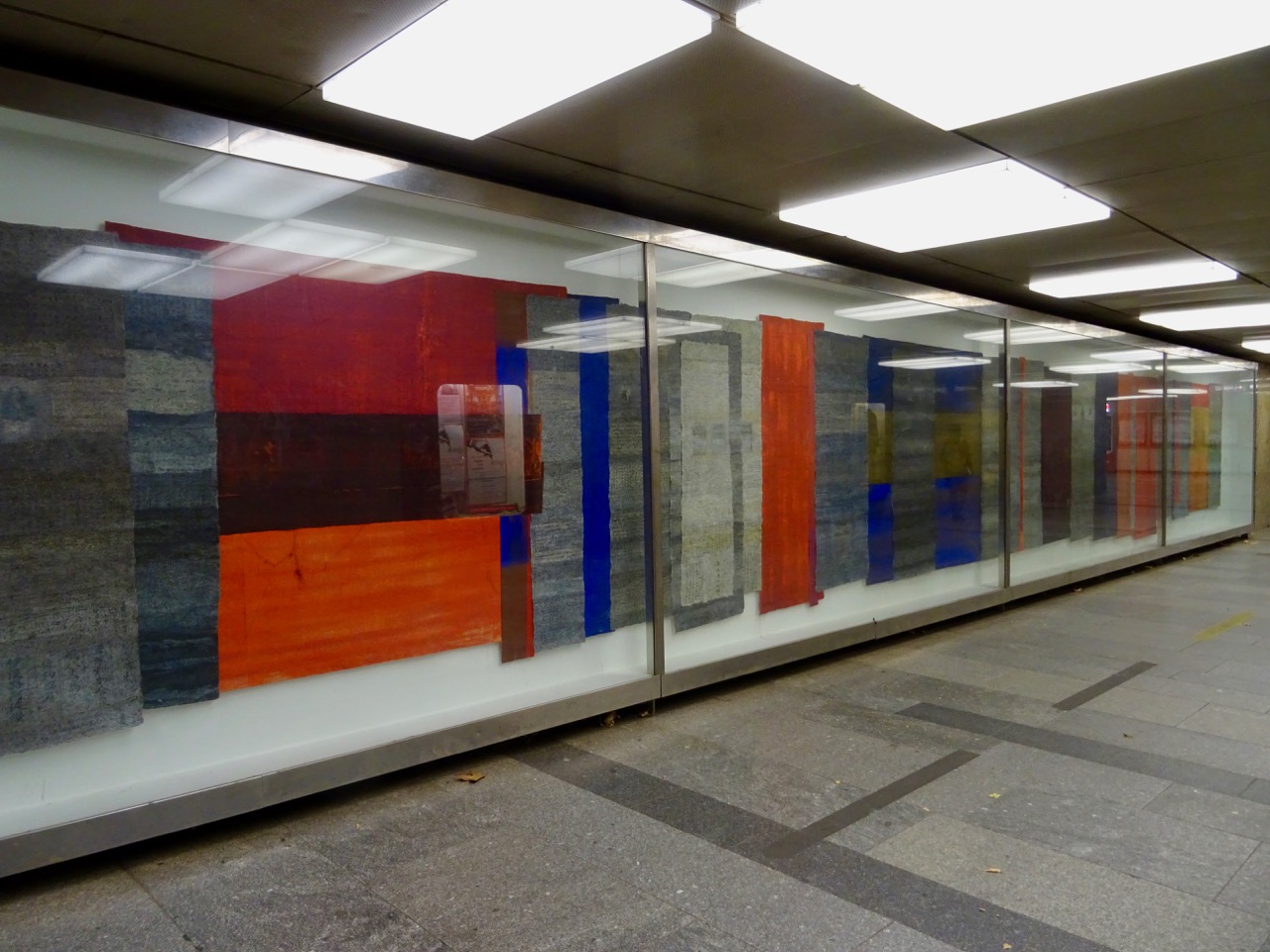
  This is a a huge paper art installation we pass in a walkway near the metro.
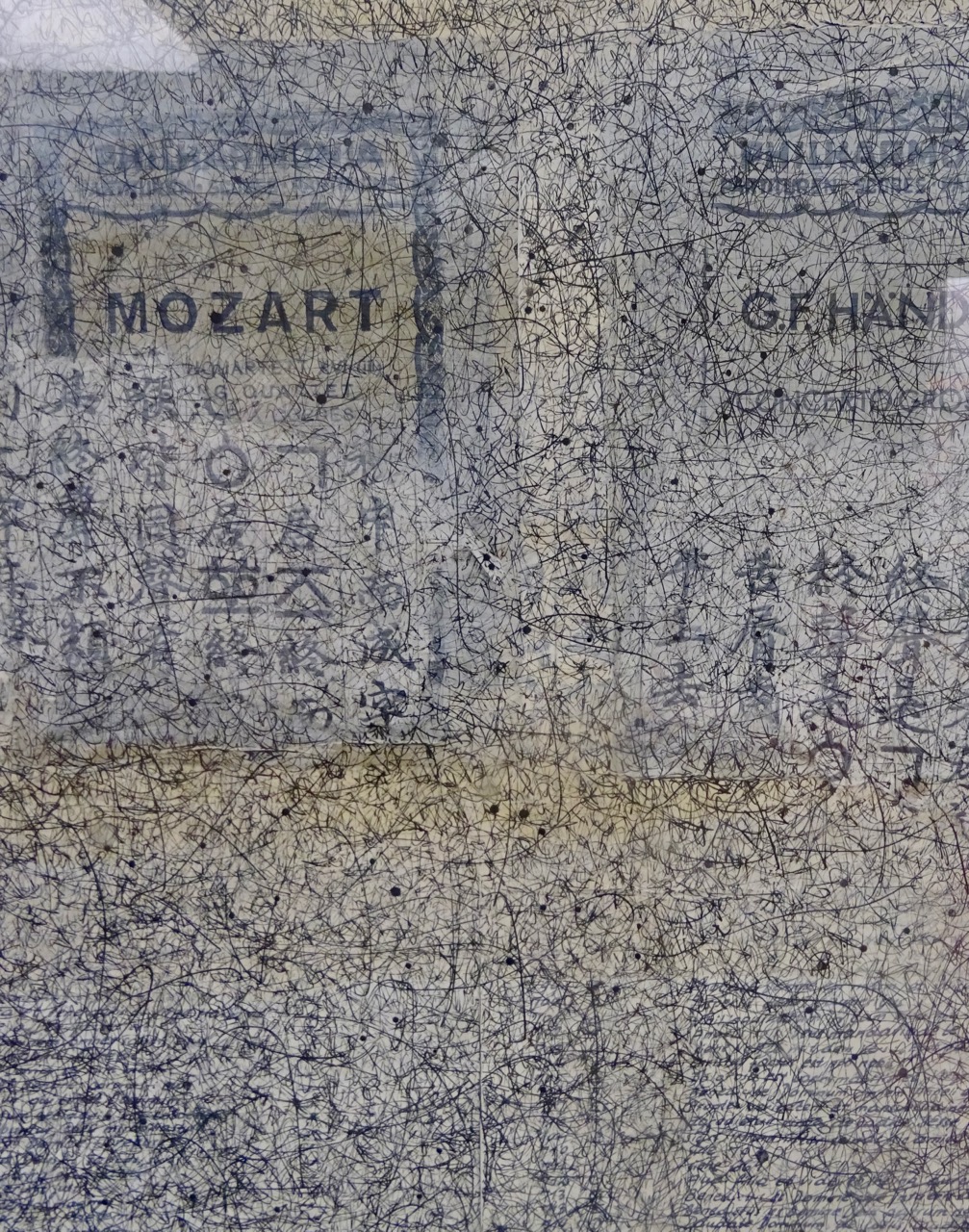
 A close-up shows lots and lots of writing, musical notations and random marks.
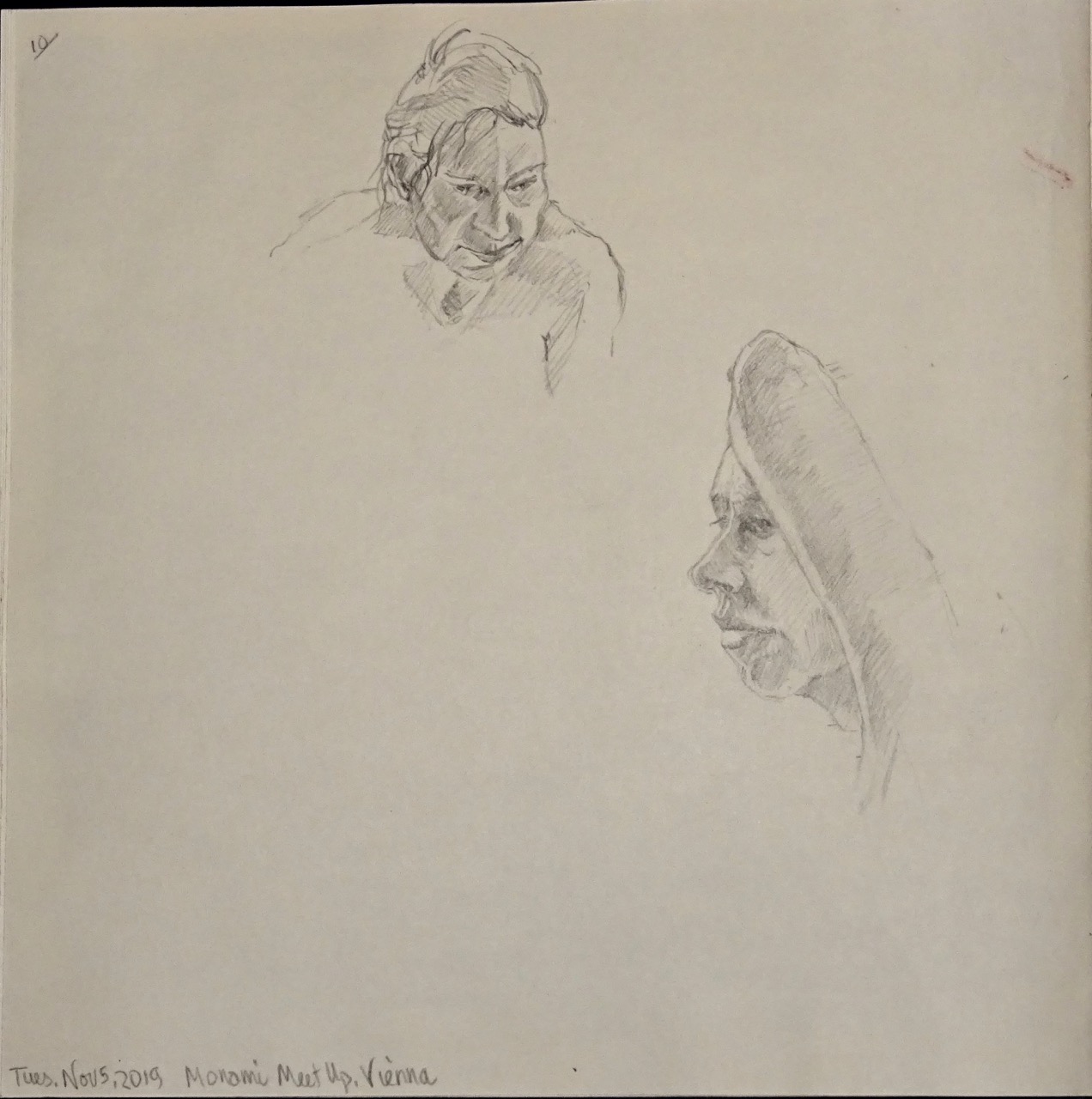
 We get home, have dinner, then I head off to a drop-in drawing session with a Meetup group at a pub called Monami.
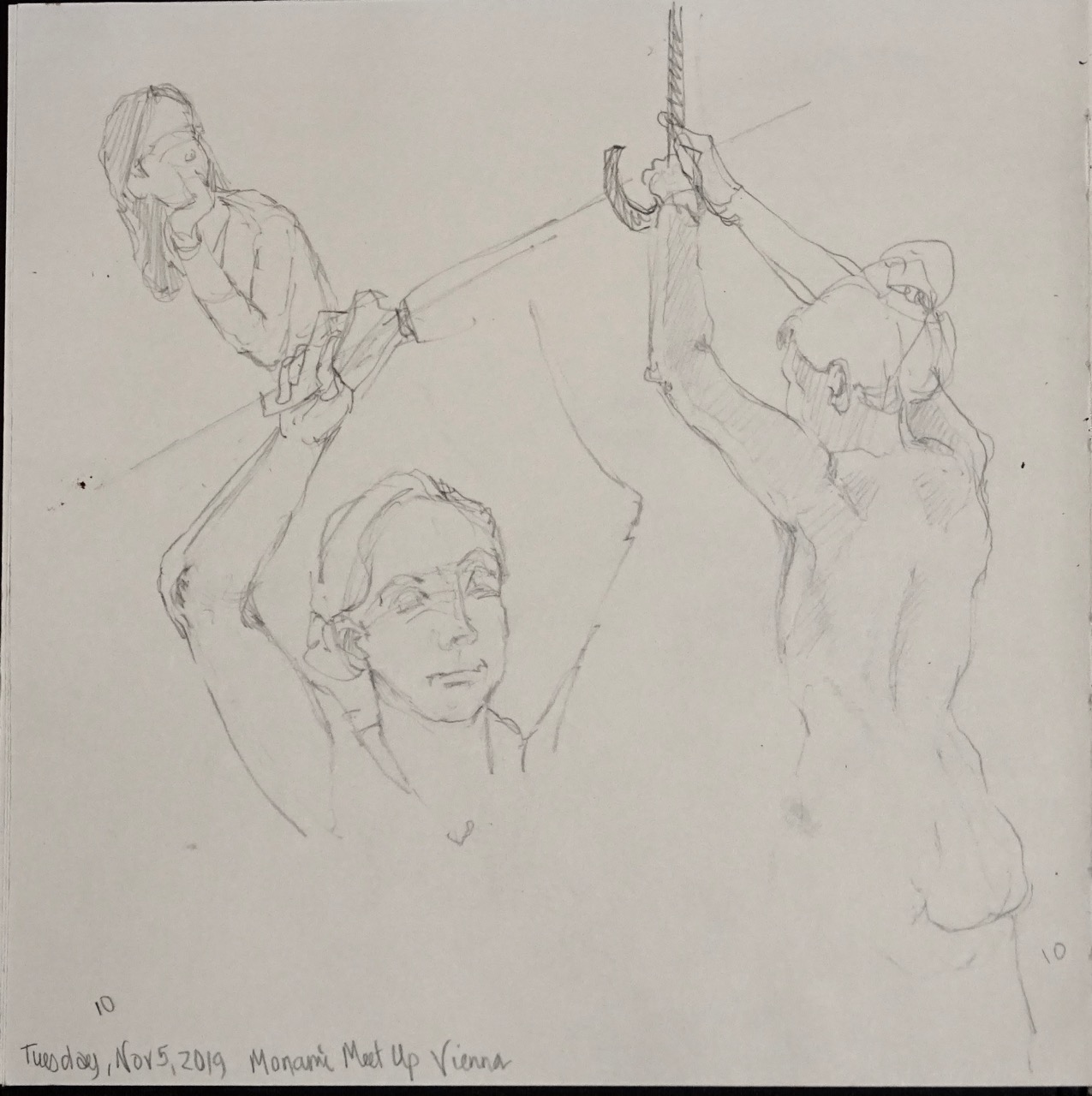 I had coloured some of the pages in my sketchbook at home before the session. Interesting to draw on but they don’t photograph very well.
 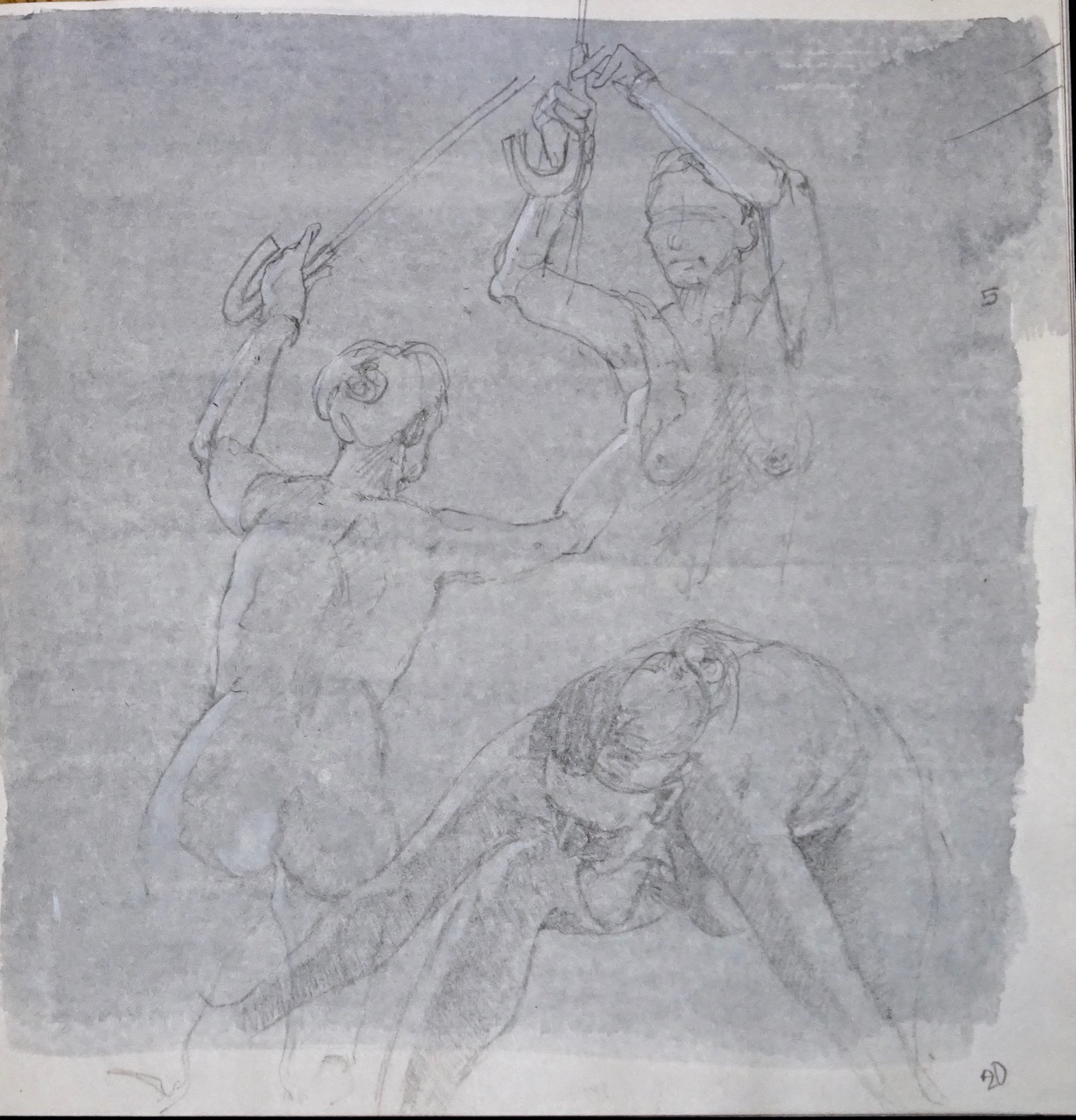 We were pretty much rubbing elbows as we drew and my views weren’t always great but it was lots of fun.
 I finished the session with a 20 minute leg study. I felt quite comfortable going out in the evening by myself. The metro is easy to navigate and there were lots of people about.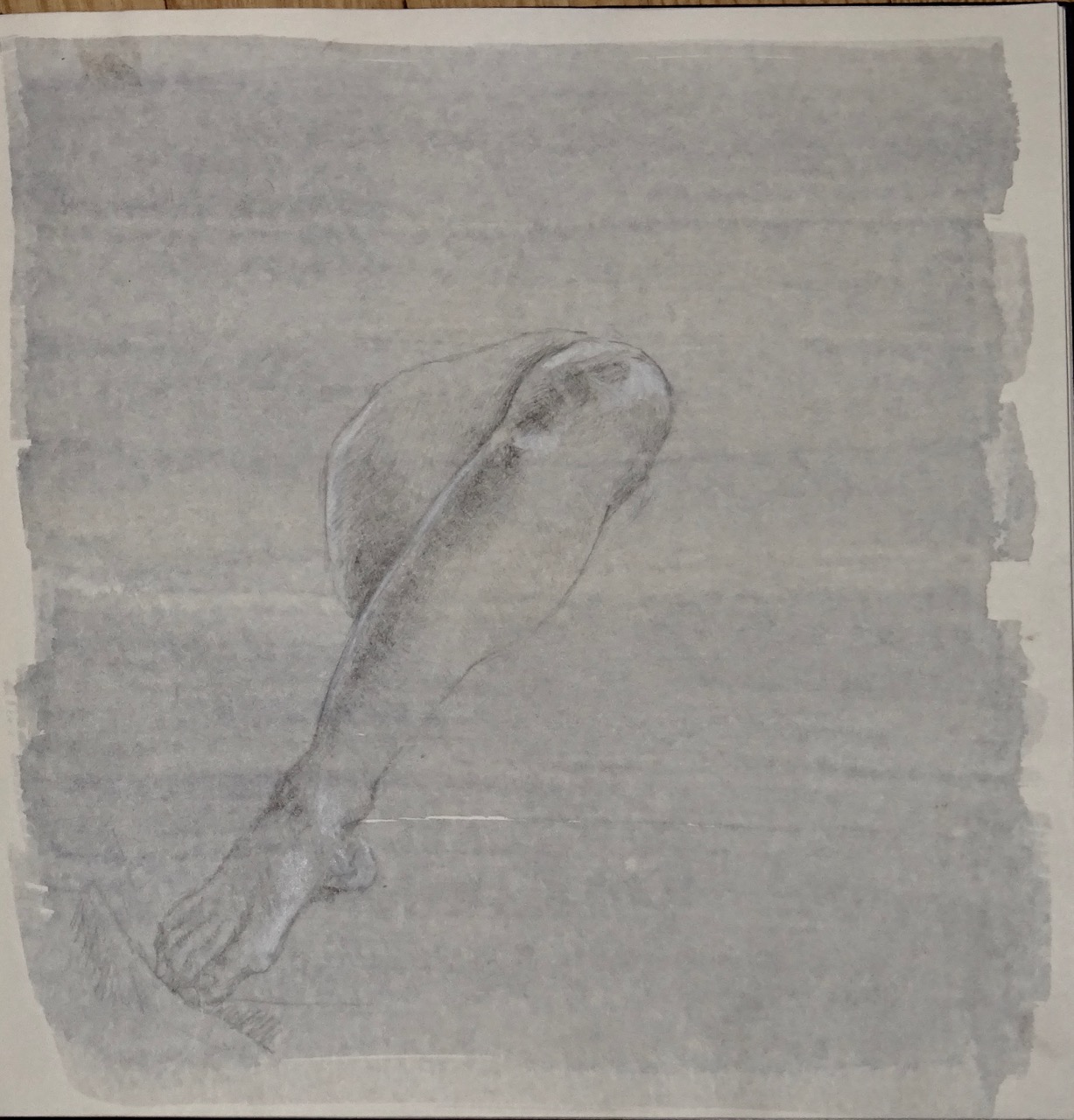
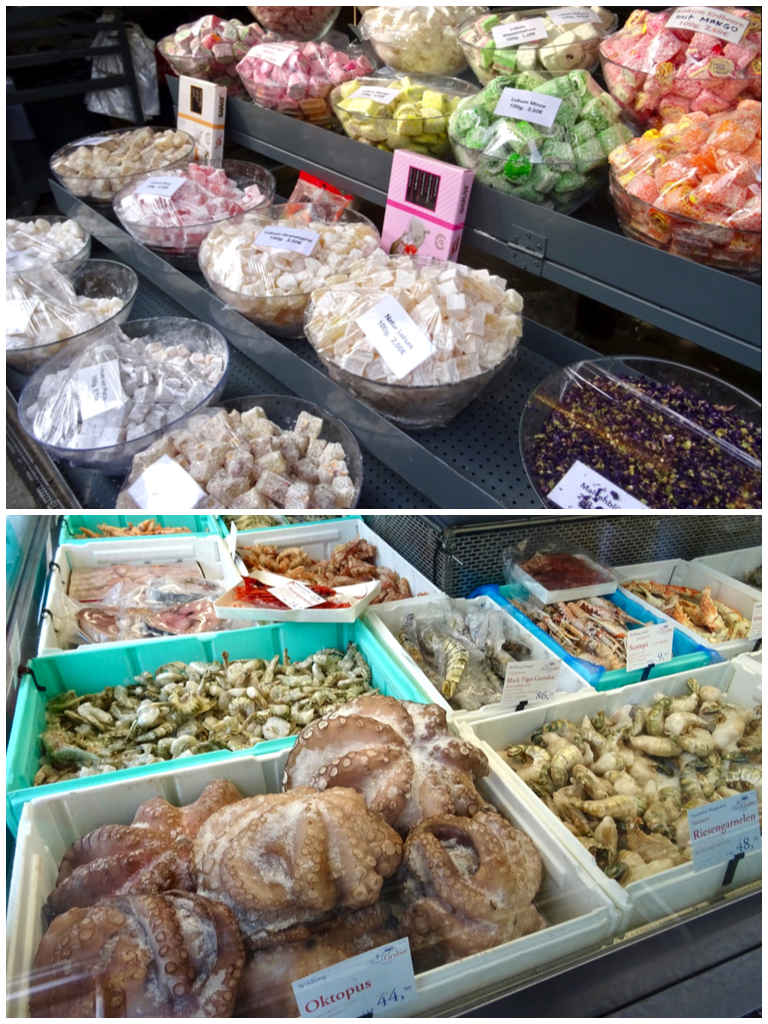
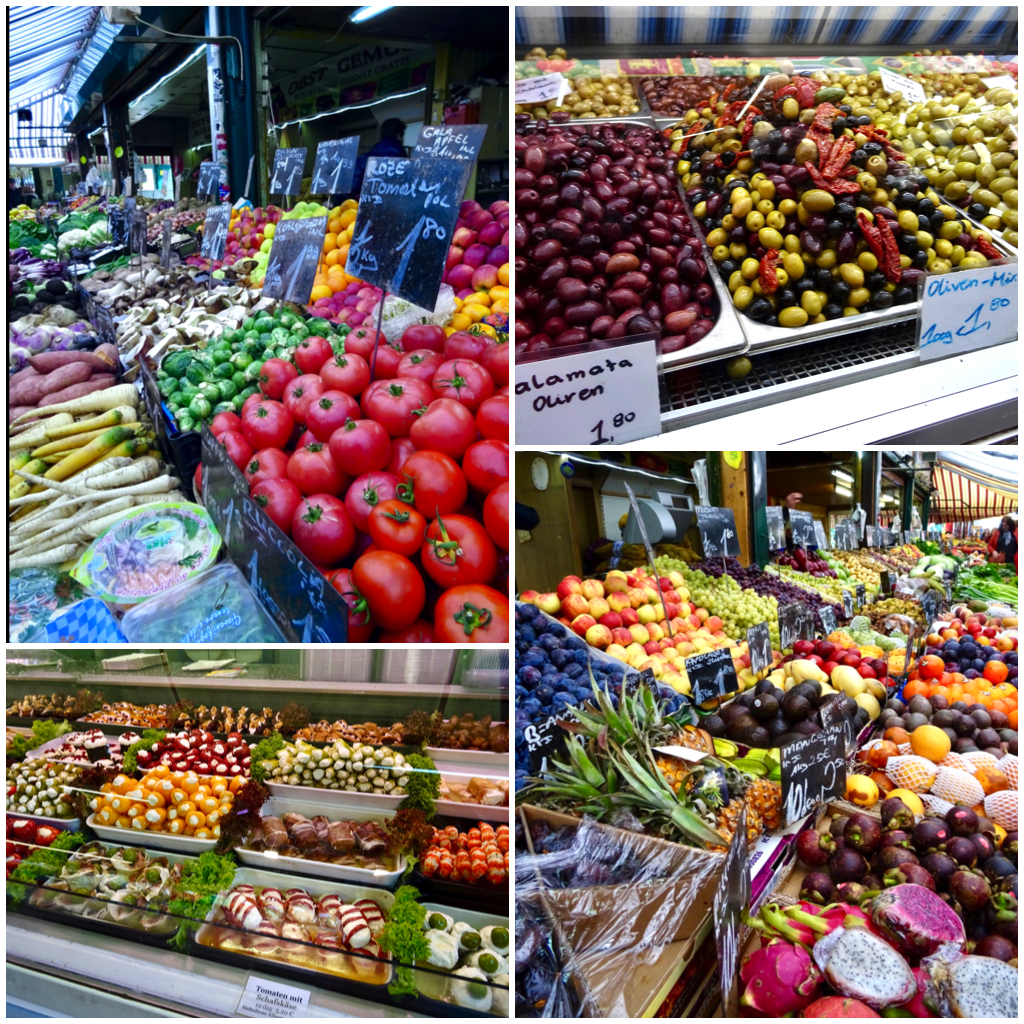 as well as all sorts of candies, dried fruits and some rather exotic looking products in the fish market section.
 Near the Naschmarkt we find this interesting tribute to the Orson Wells movie, The Third Man. It is possible to tour the sewers, right under our feet, where part of the movie was filmed, but we pass on that today.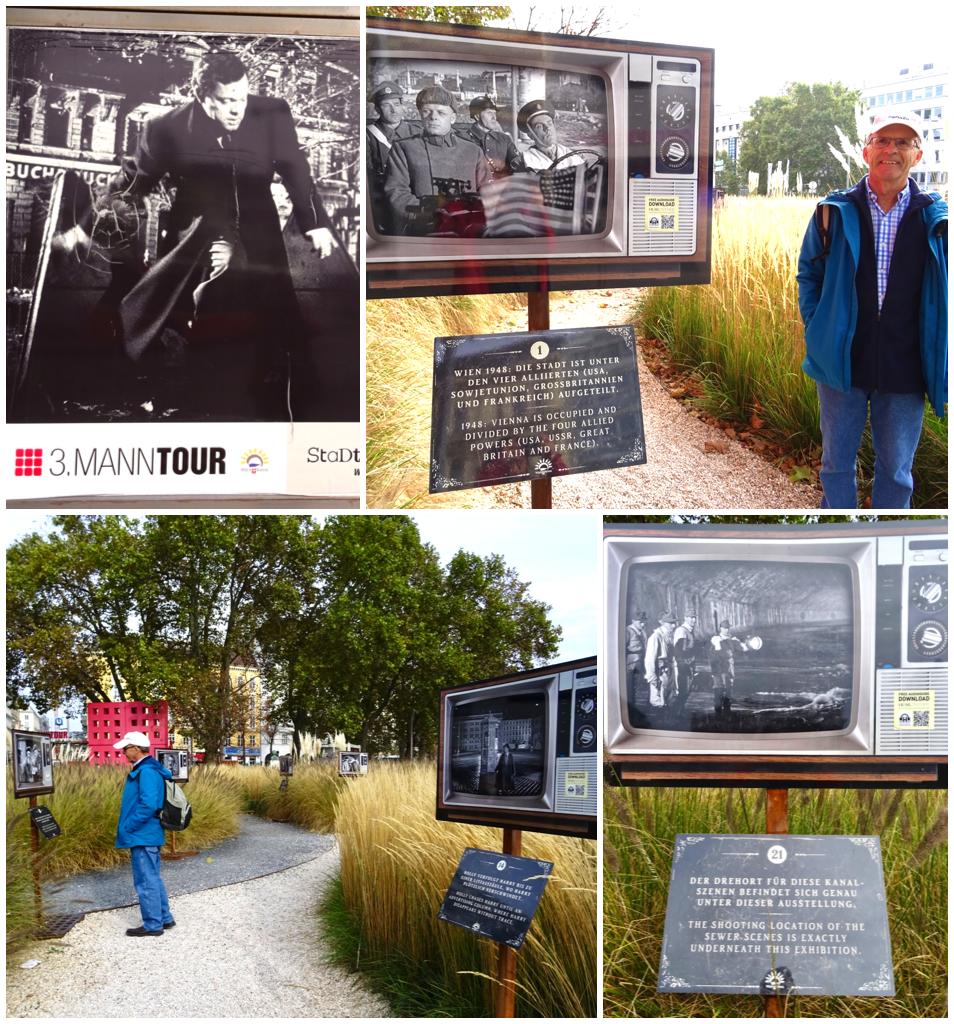
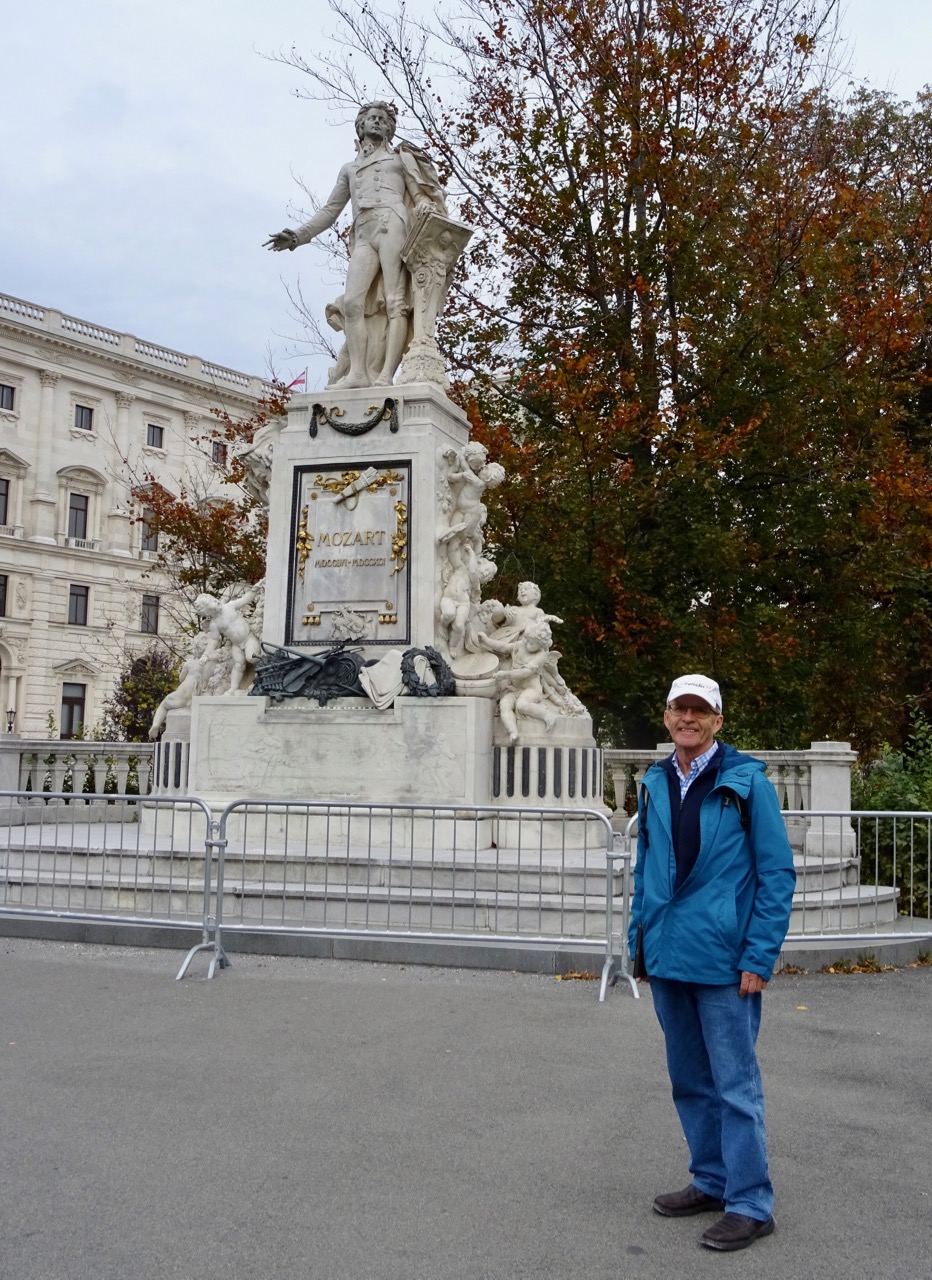
 There is a statue of Mozart, right beside a Hop On Hop Off bus station. We sit and have our picnic lunch and watch tourists jump off the bus, snap a photo from quite a distance, and then jump back on the bus to get to the next destination. This sure isn’t the way we do it! We sight-see very slowly and leisurely, stopping often to look at the sights, people watch and just enjoy where we are and what we are seeing. We are very slow tourists!
 This equestrian statue of Emperor Joseph II, erected in 1795 is the oldest equestrian statue in Vienna.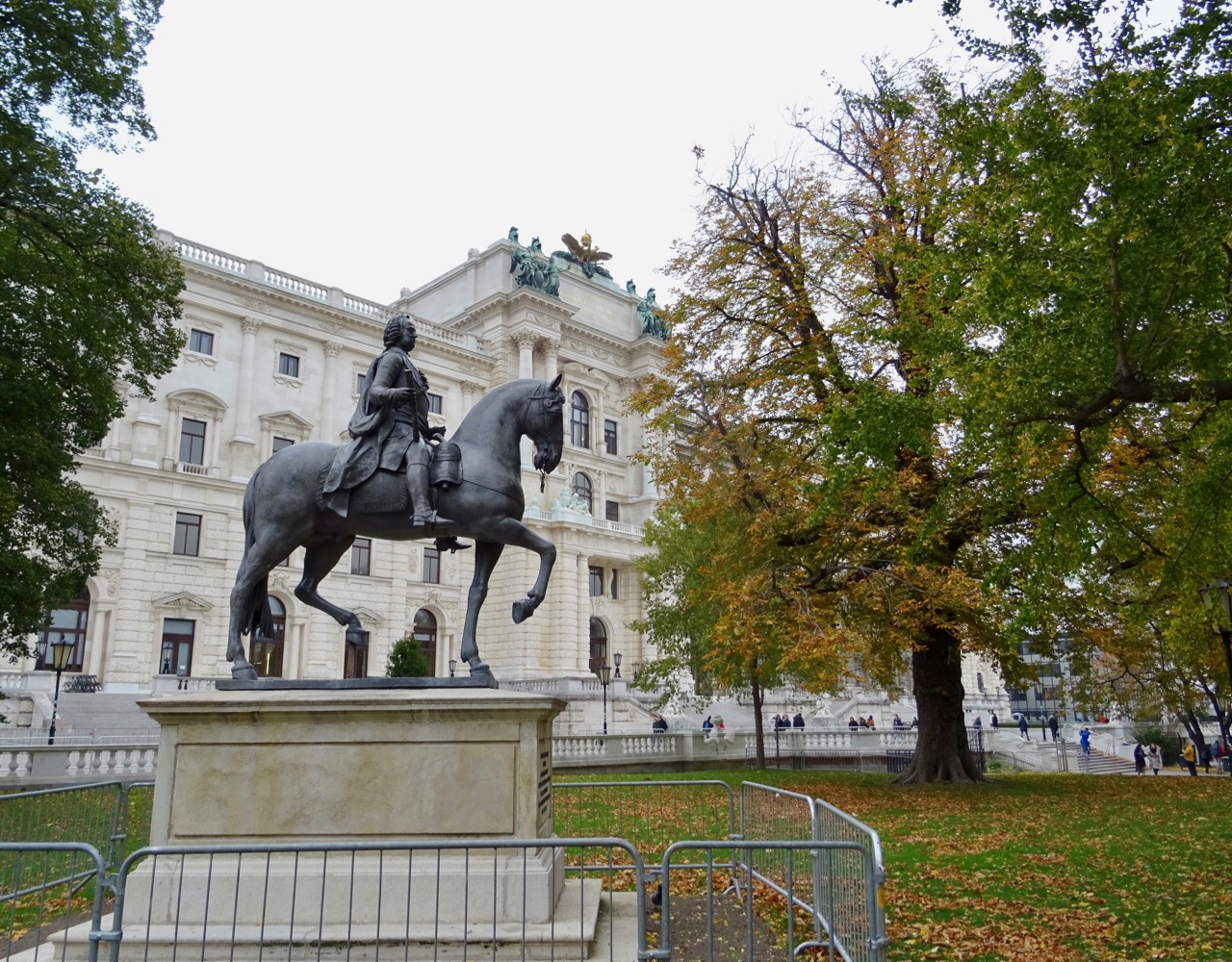
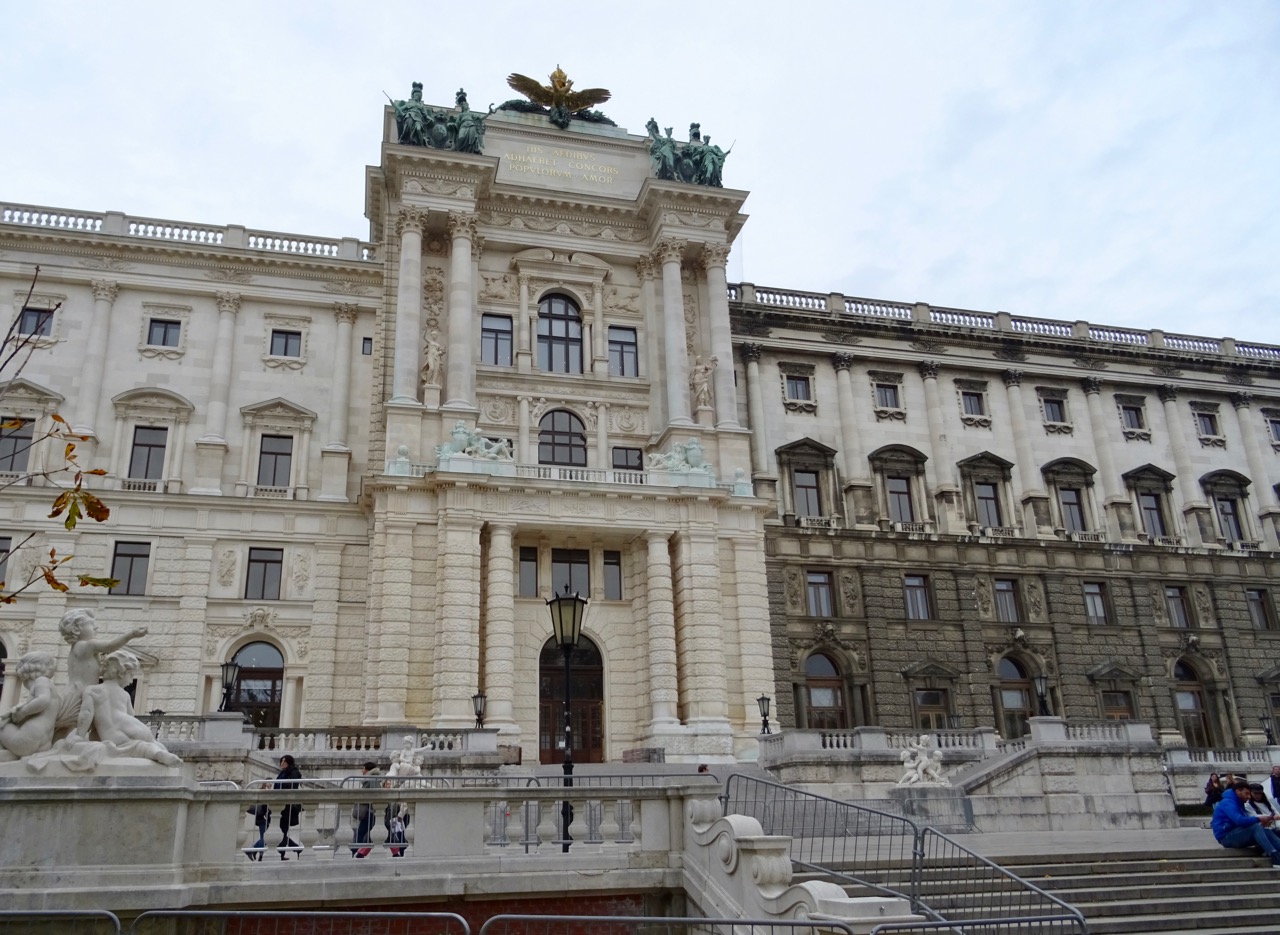 We make our way to the Albertina Museum, which we will visit another day. There is a Durer Exhibit I am looking forward to seeing. This is a street view from a corner of the Albertina.
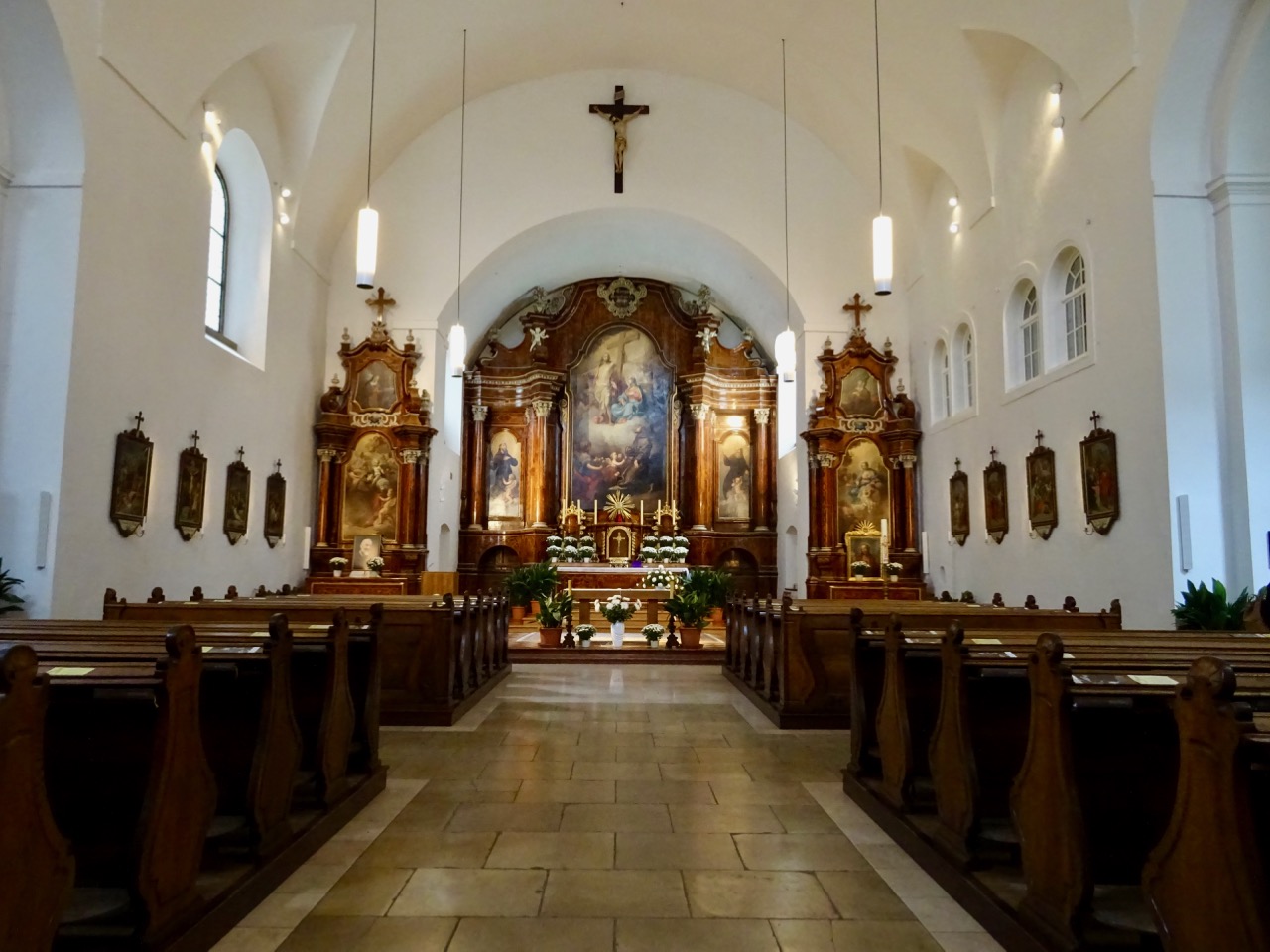
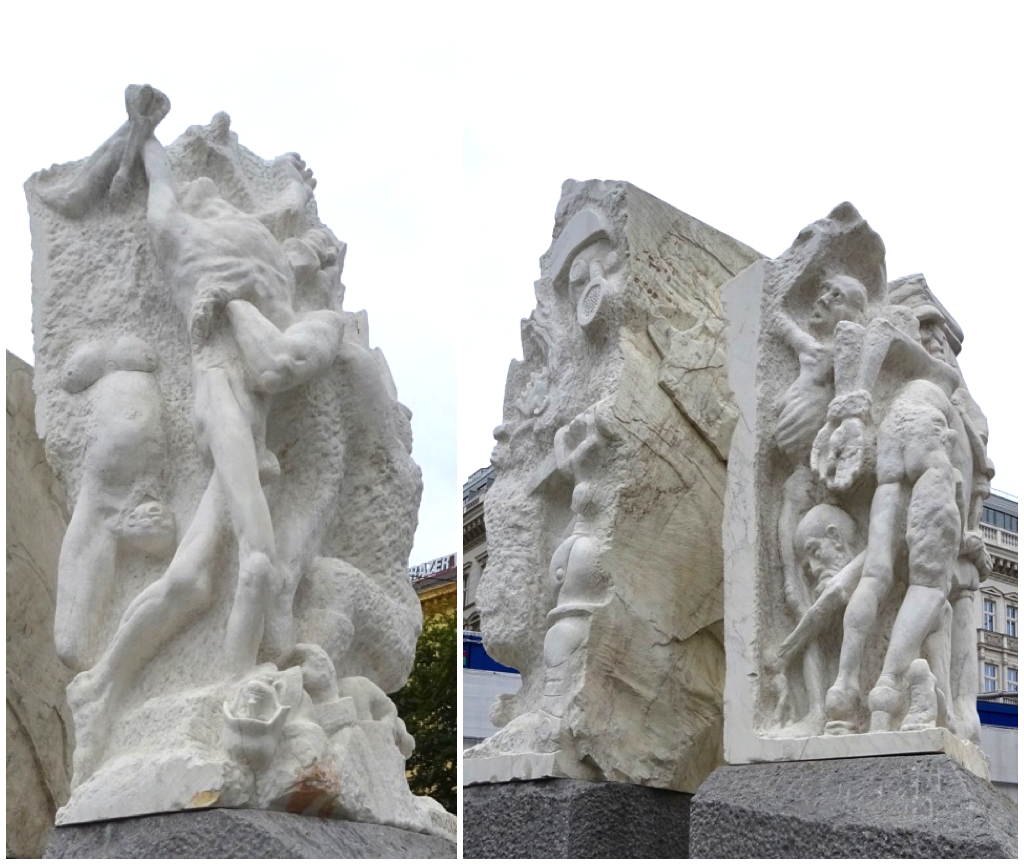 Of course there are several churches on our walk, and we visit all of them!
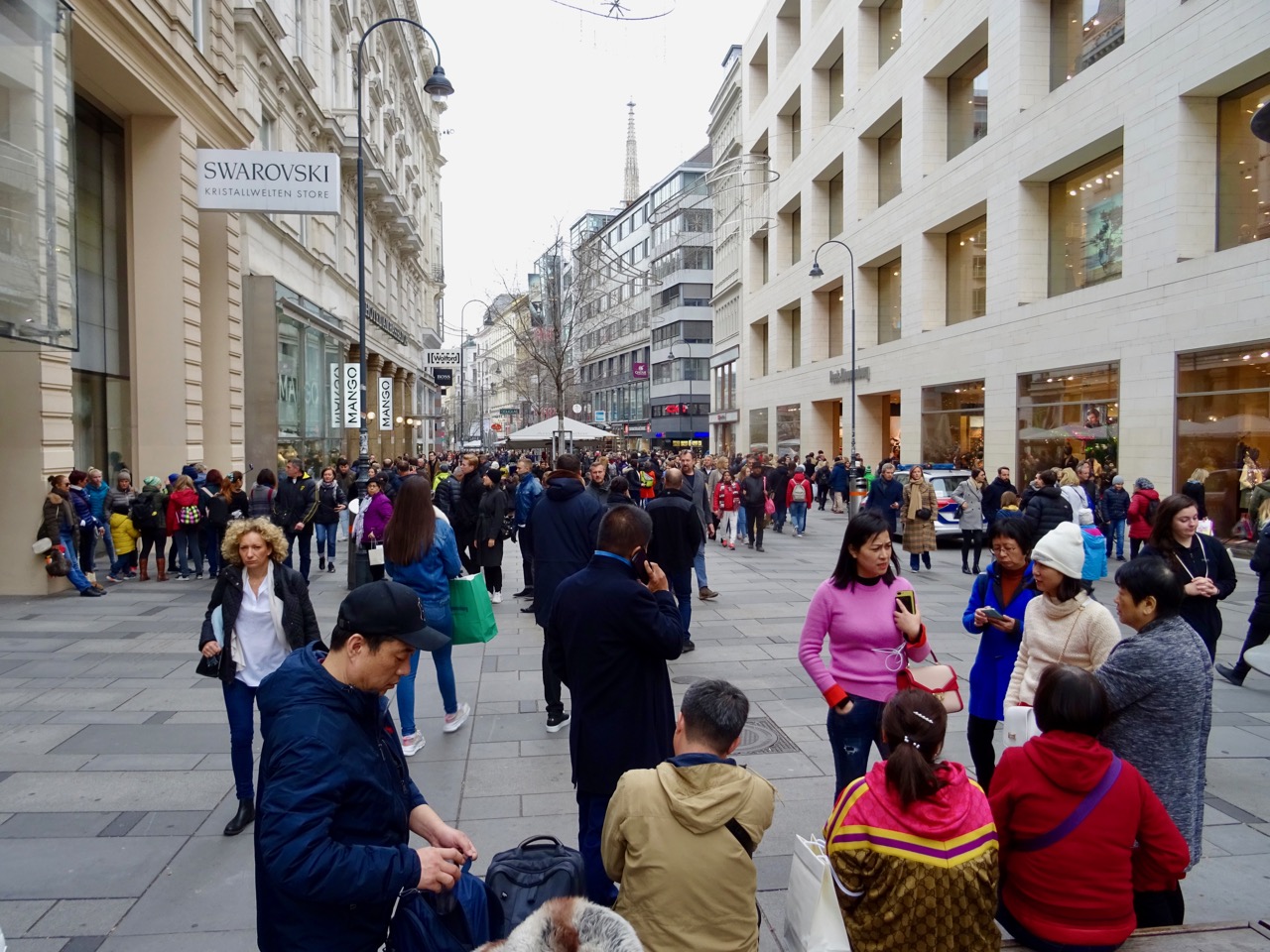
 This broad pedestrian Kärntner Strasse is packed with people and lined with shops and places to eat. This road dates to 97AD when it was a Roman road that went from Vienna to the border of Italy and Slovenia, and eventually all the way to St. Petersberg, Russia!
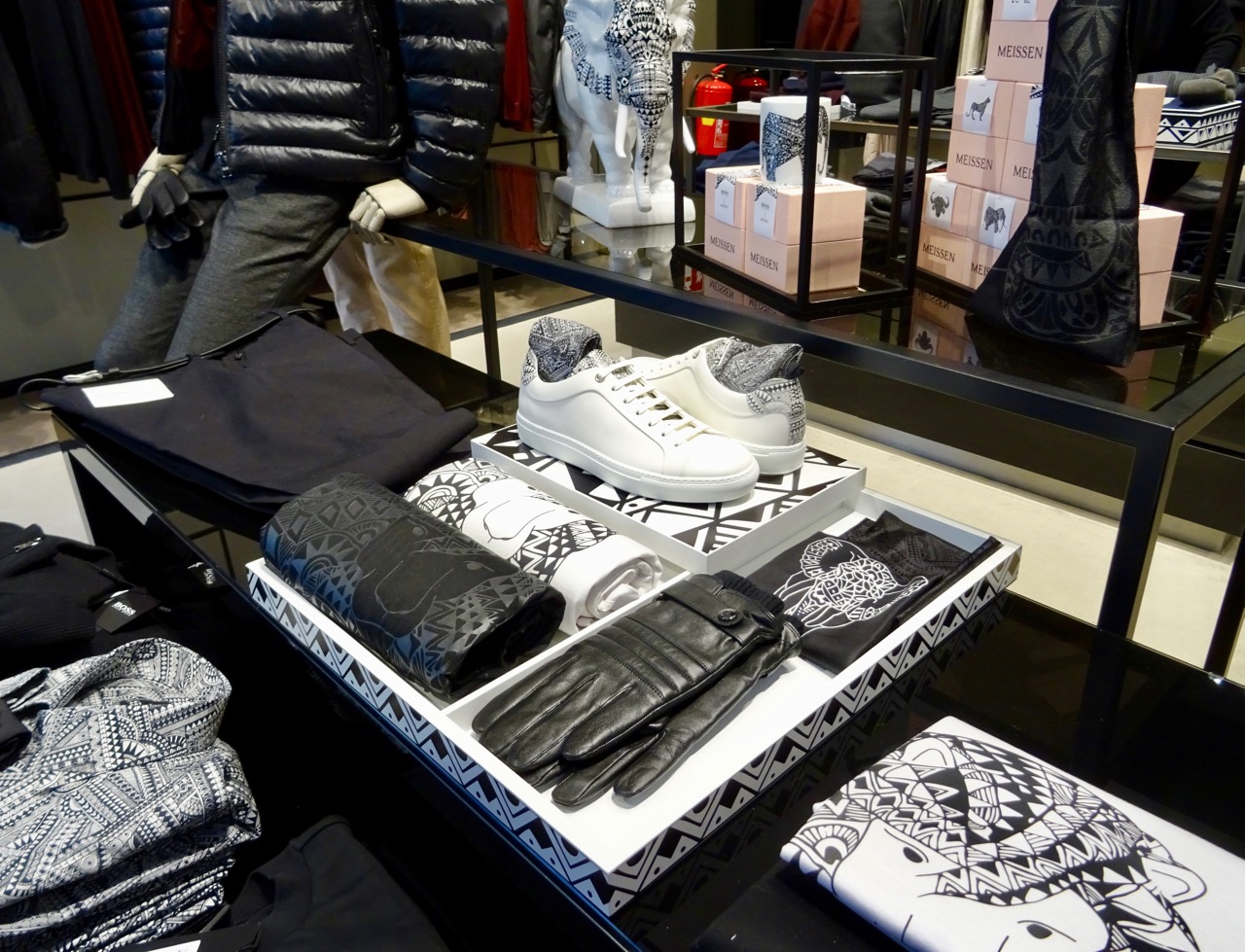
 I thought that the Zen-Doodle like designs on the clothing in this shop were interesting.
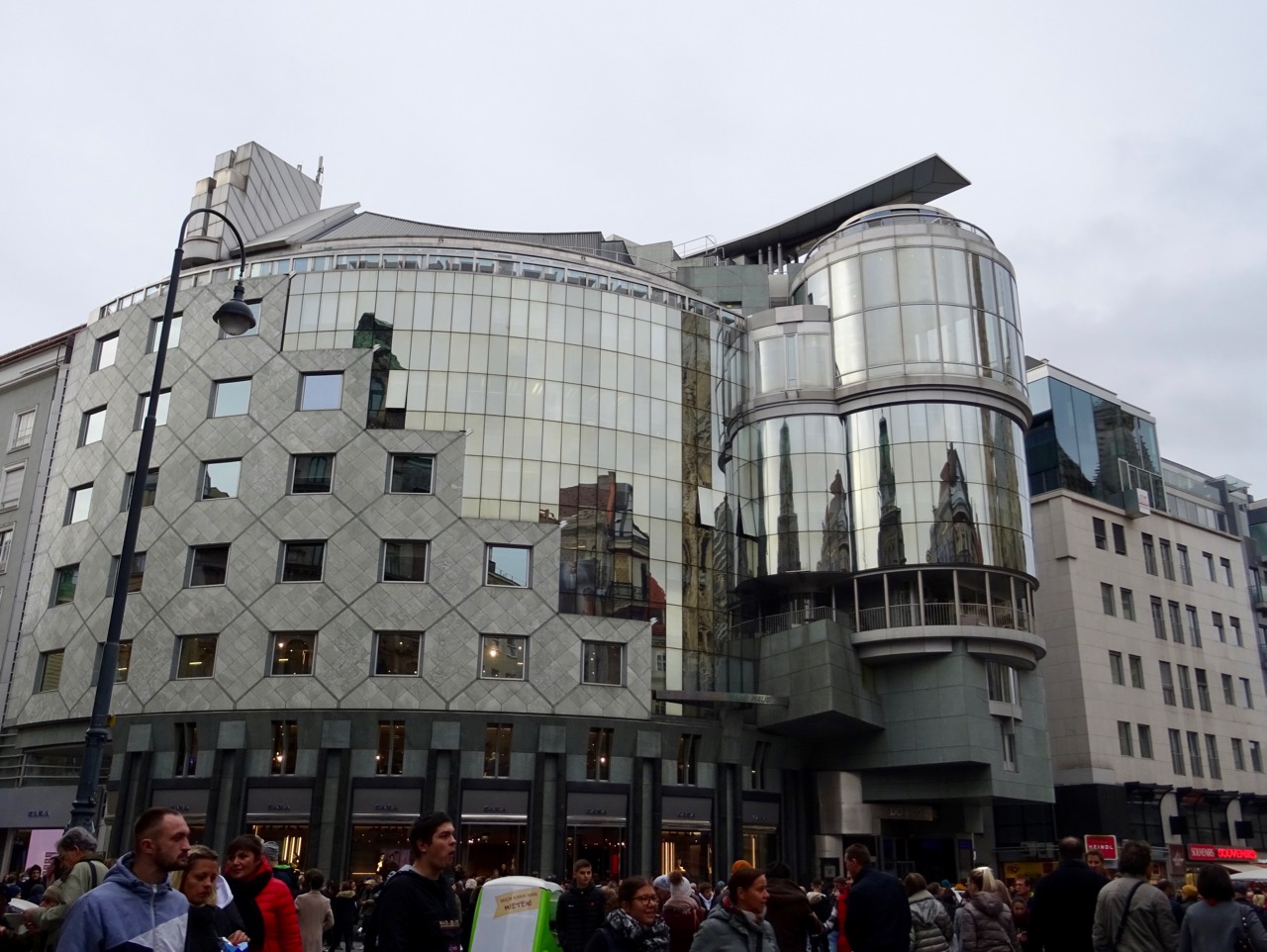
  The modern Haas House offers interesting reflections of St. Stephen’s church.
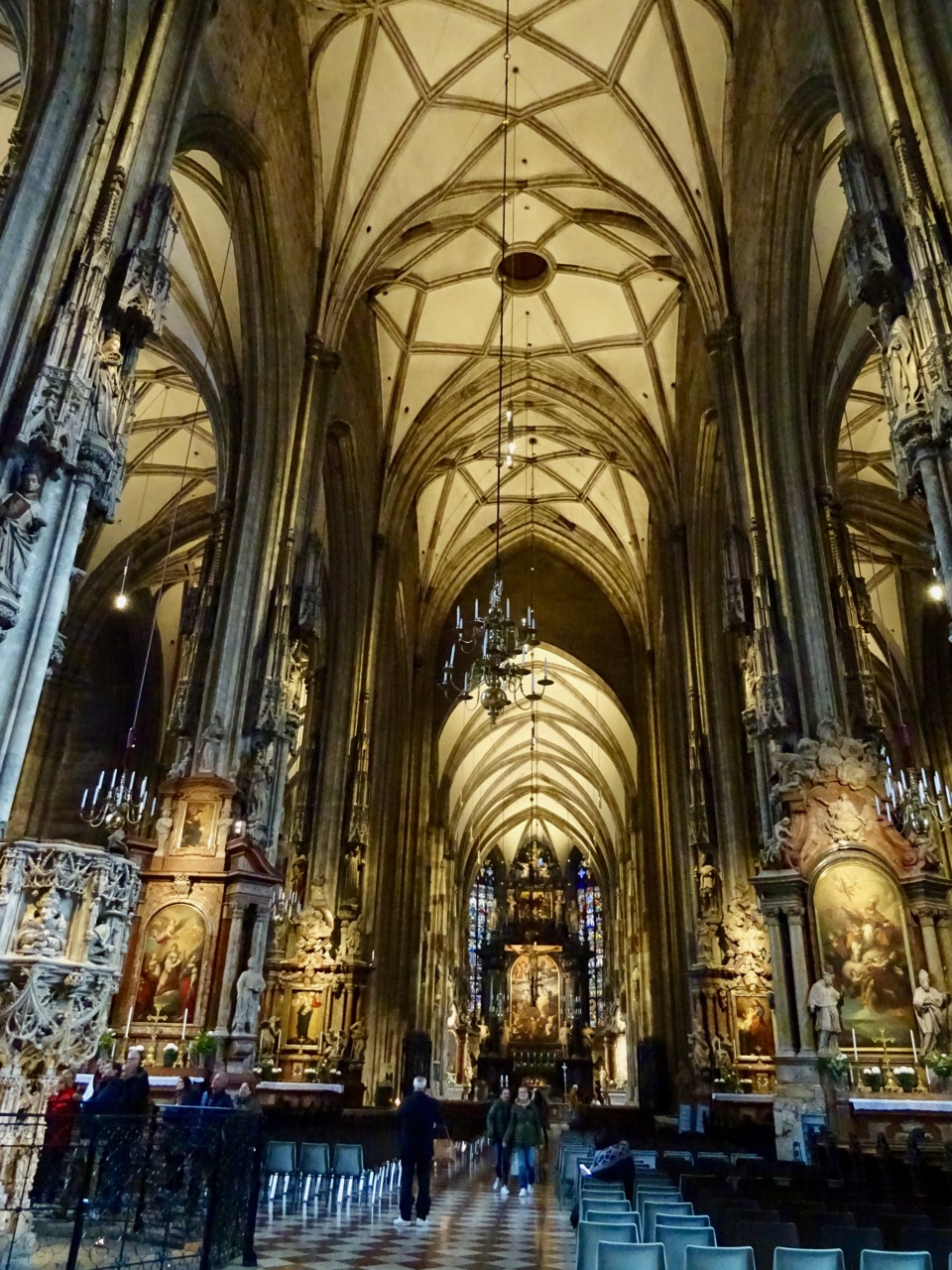
 The St. Stephen’s Cathedral is huge, and ornately decorated, outside…
 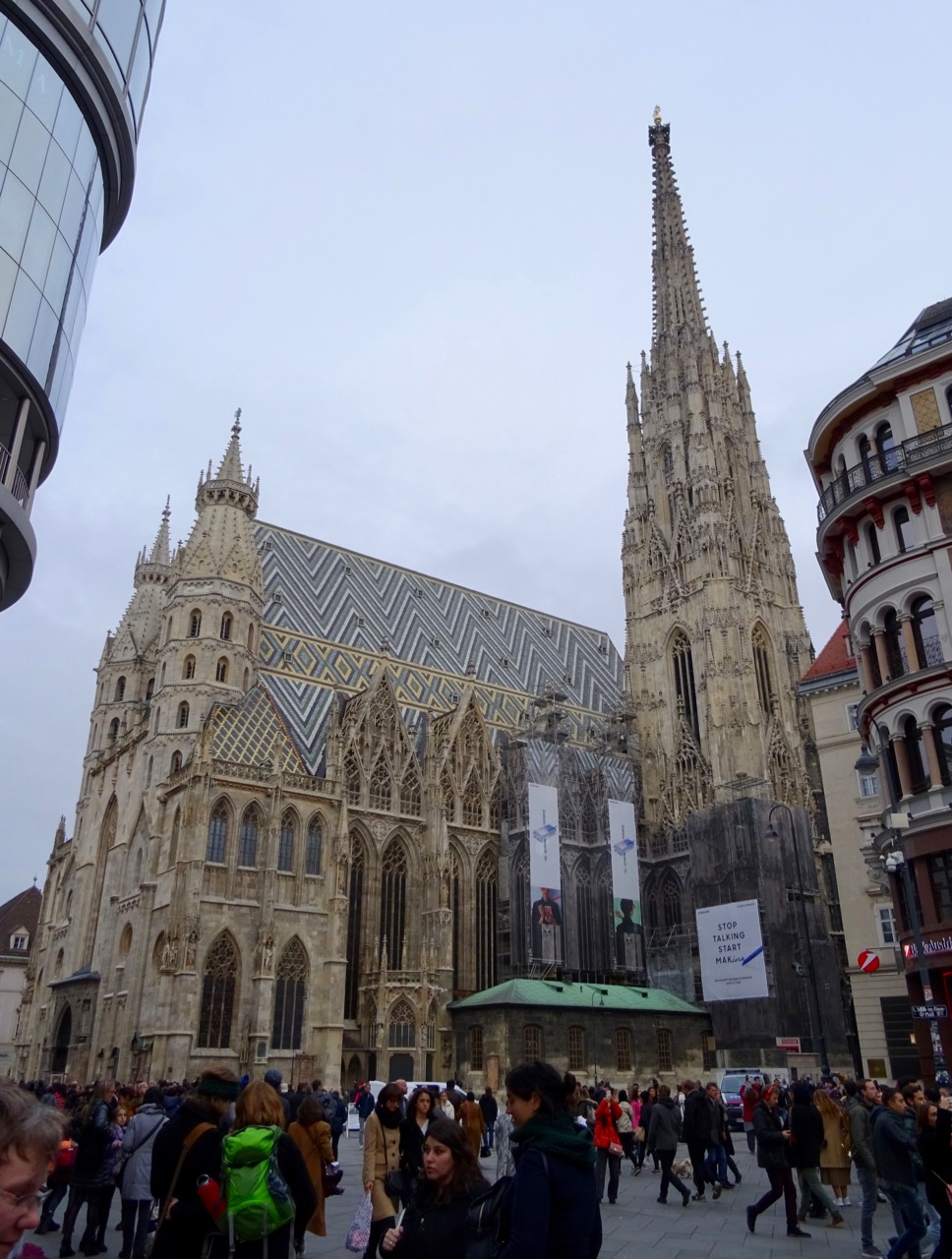 and inside.
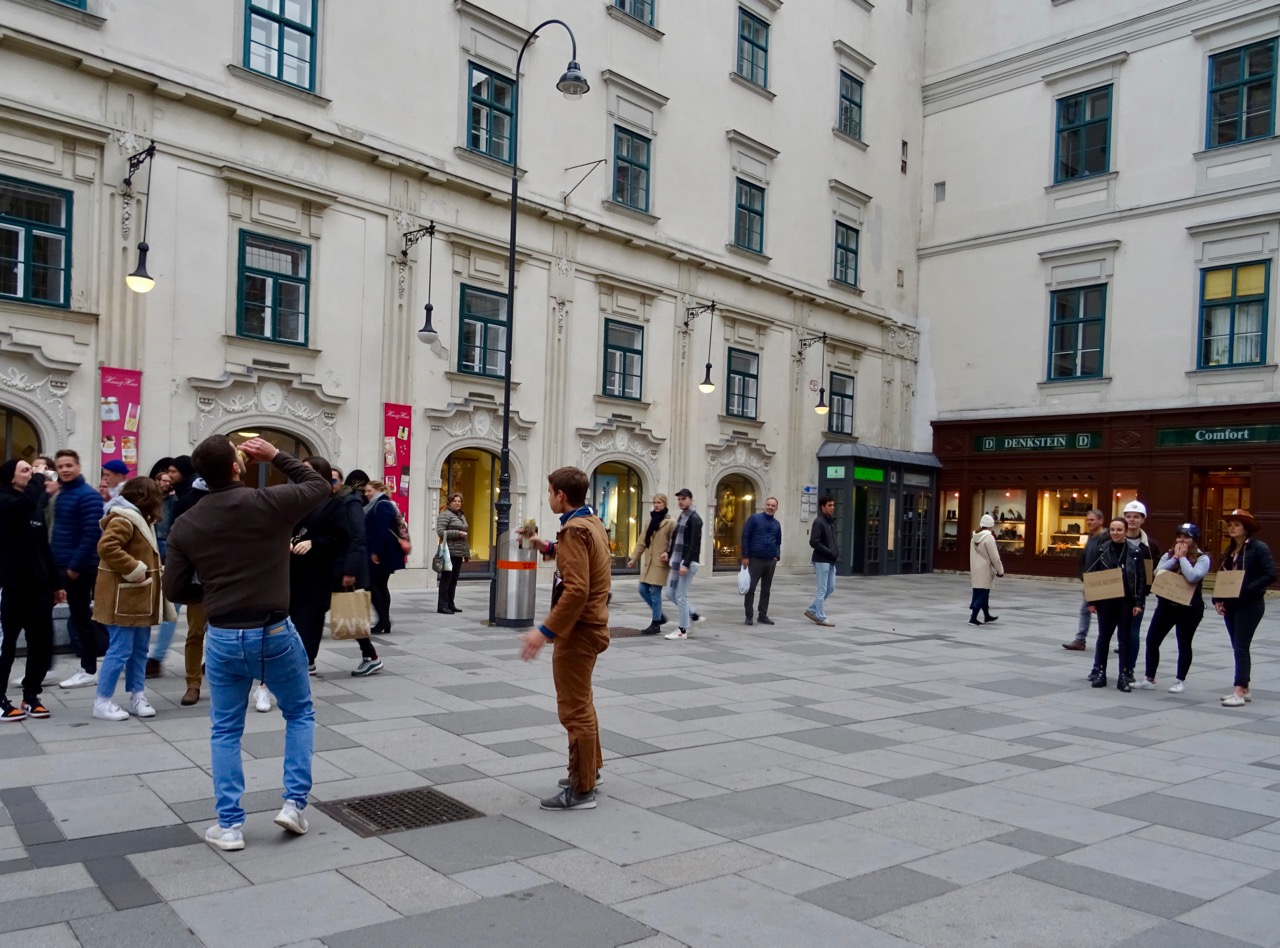
 Just behind the cathedral we see a group of people taking part in a drinking game. The guy in the blue jeans drank his big can of beer twice as quickly as the guy dressed in brown!
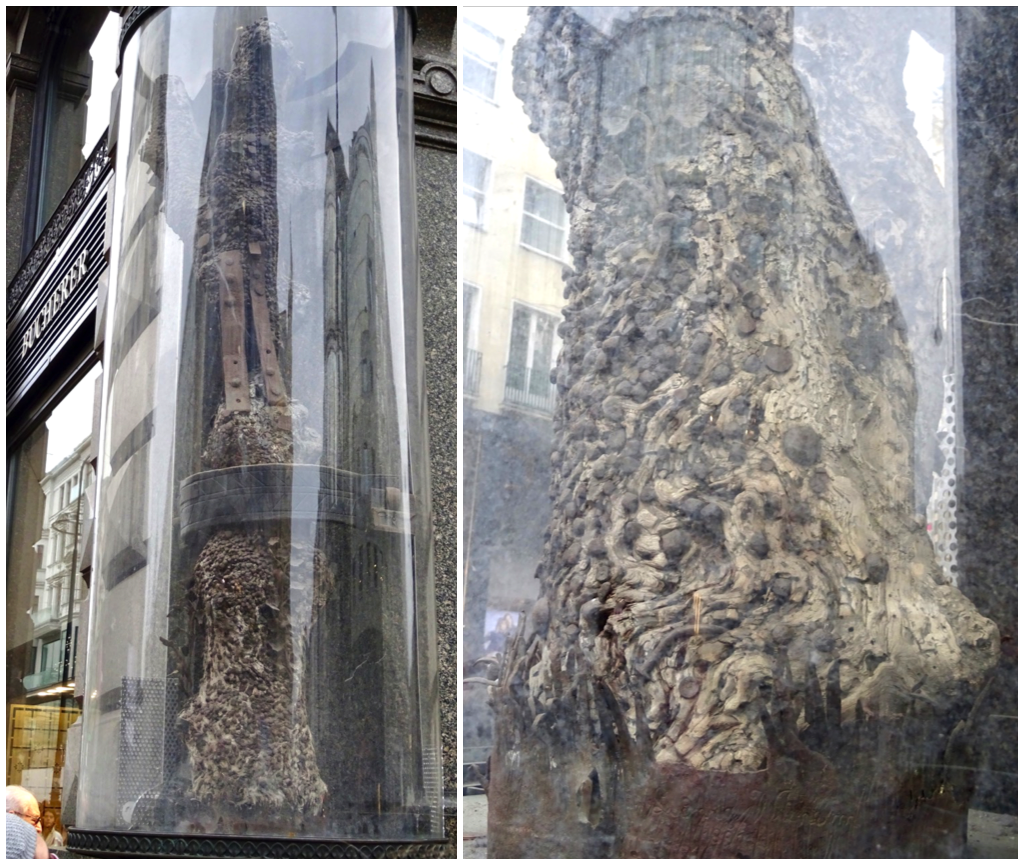
 The Stock im Eisen is part of a tree that has hundreds of iron nails pounded into it and dates from 1440. No one is sure why the nails were pounded in but it is thought that is was for good luck. It is located on the corner of a building and is protected behind plexiglass.
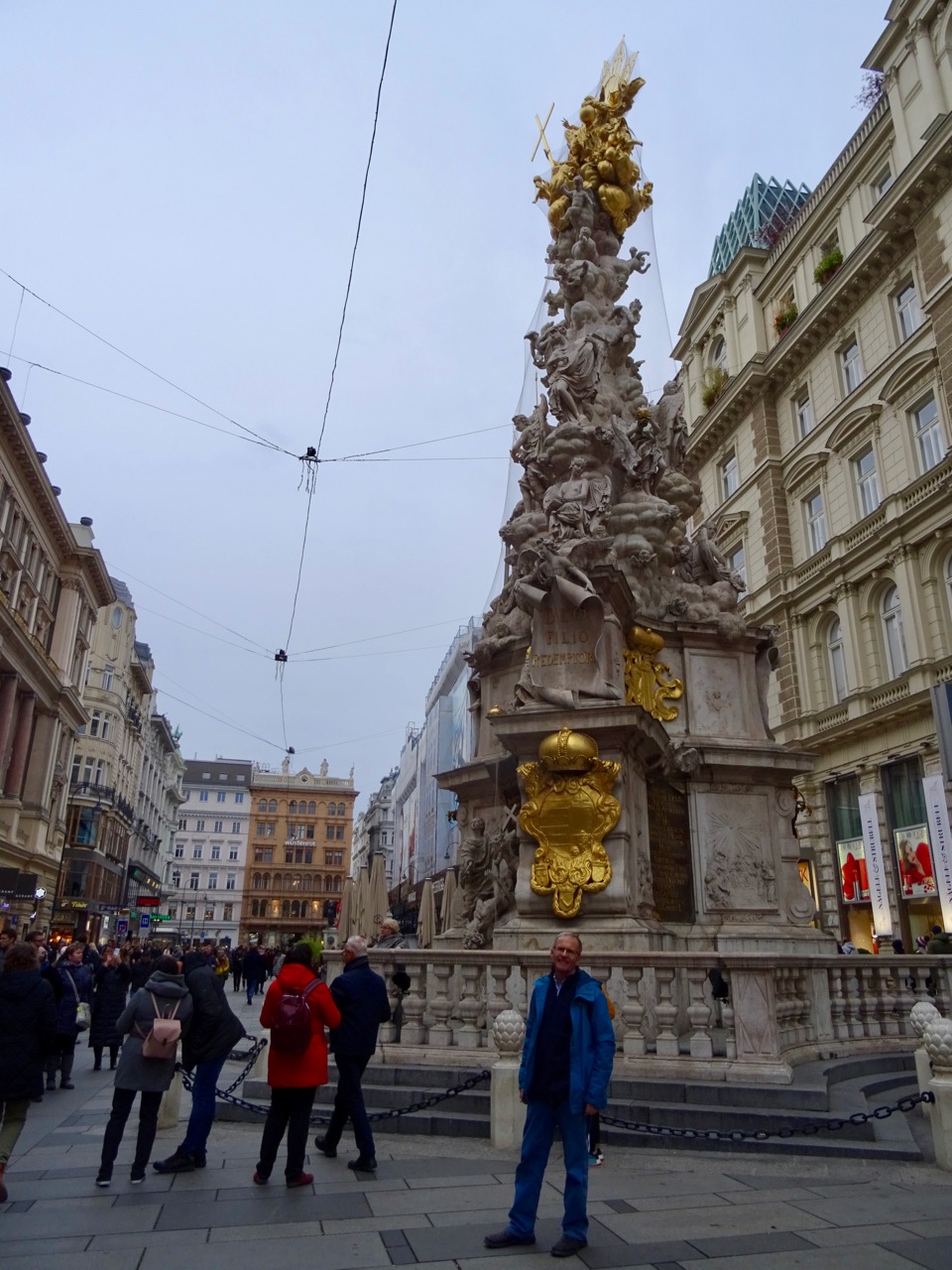
 The Holy Trinity Column, located on a street in the inner city of Vienna, was erected after the Great Plague epidemic in 1679. It is one of the most well-known sculptural pieces of art in the city.
 S
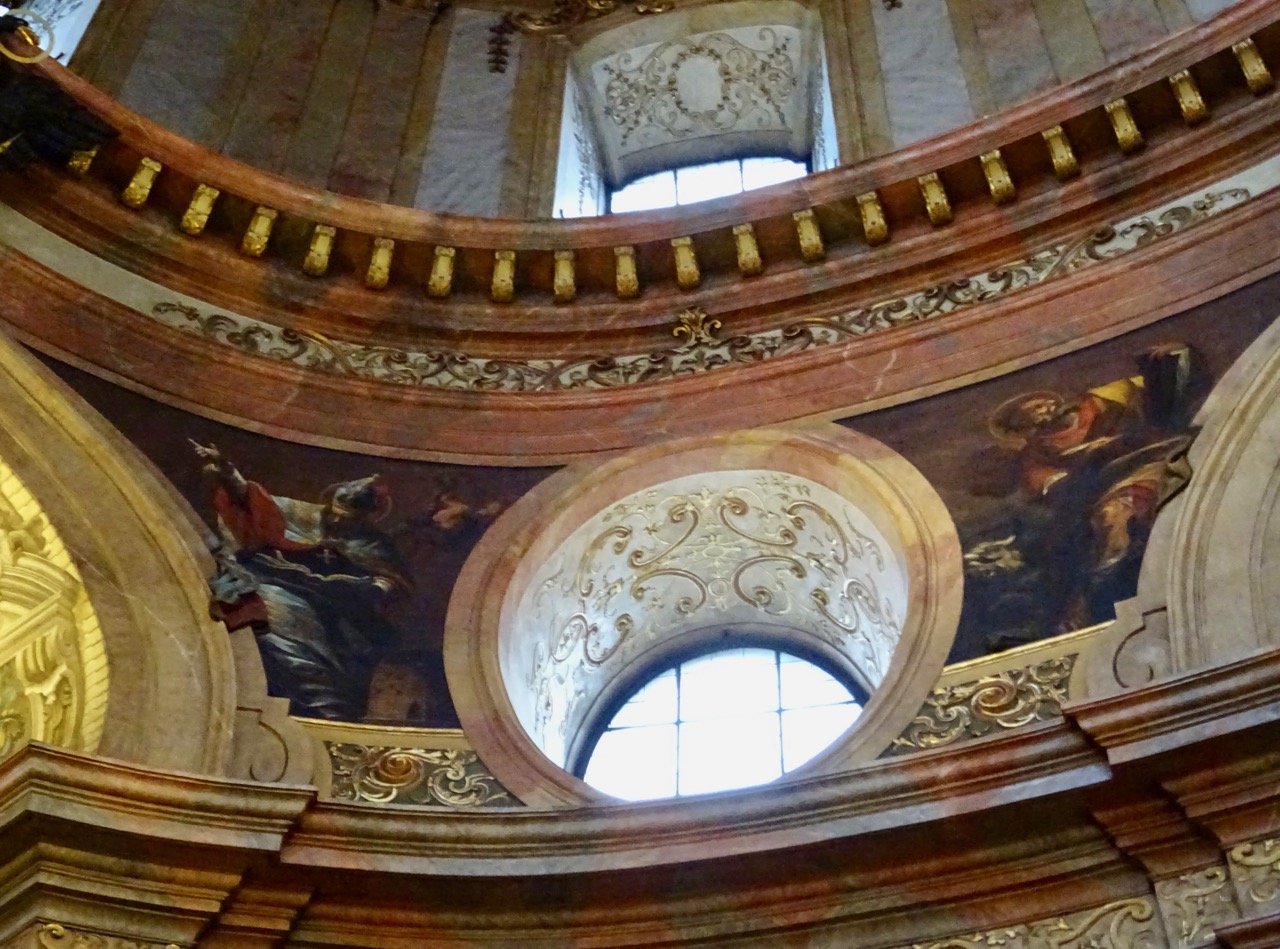
S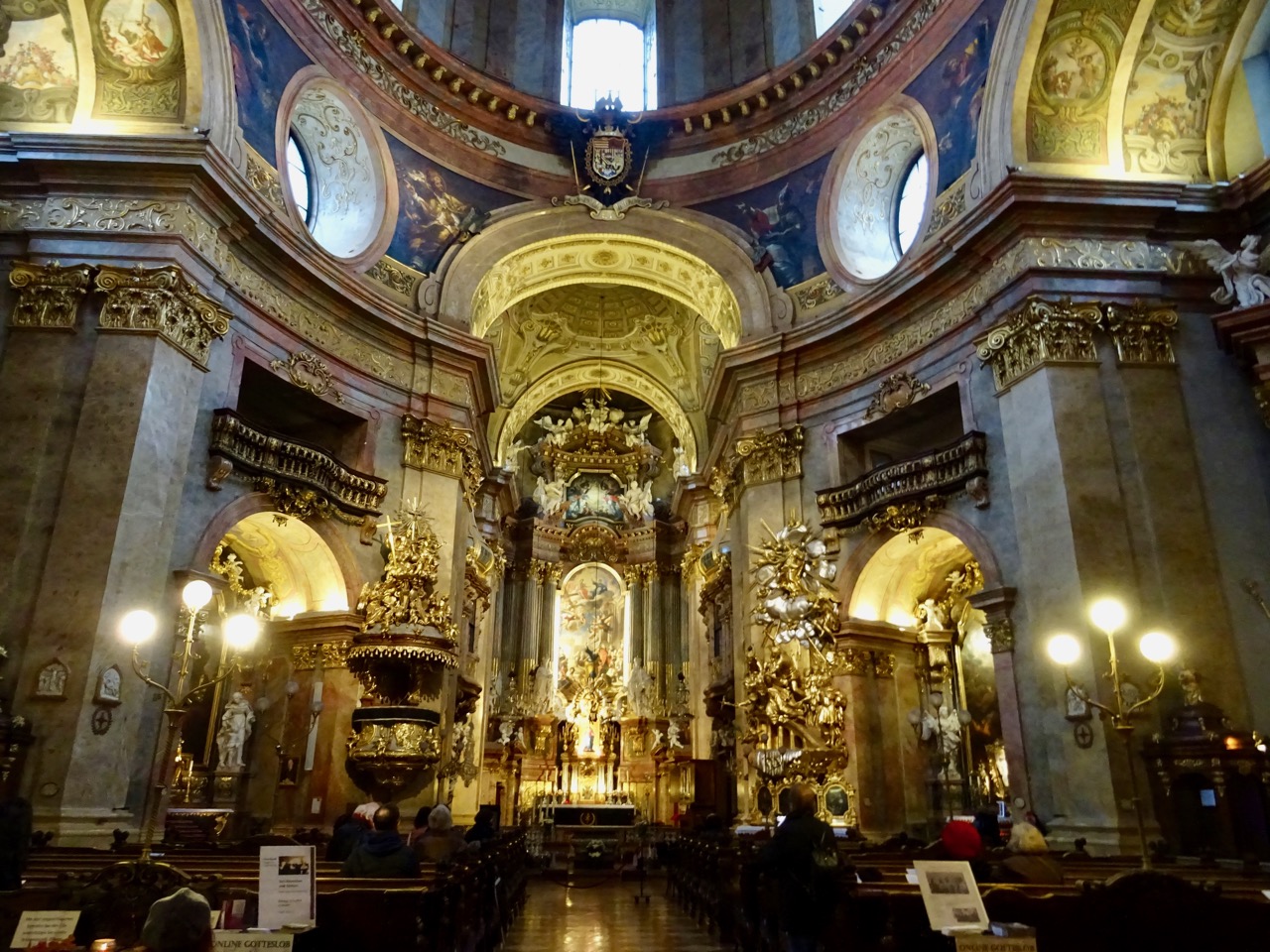 I thought it interesting the way the paintings on the dome extended over the sculptural trim around the round windows.
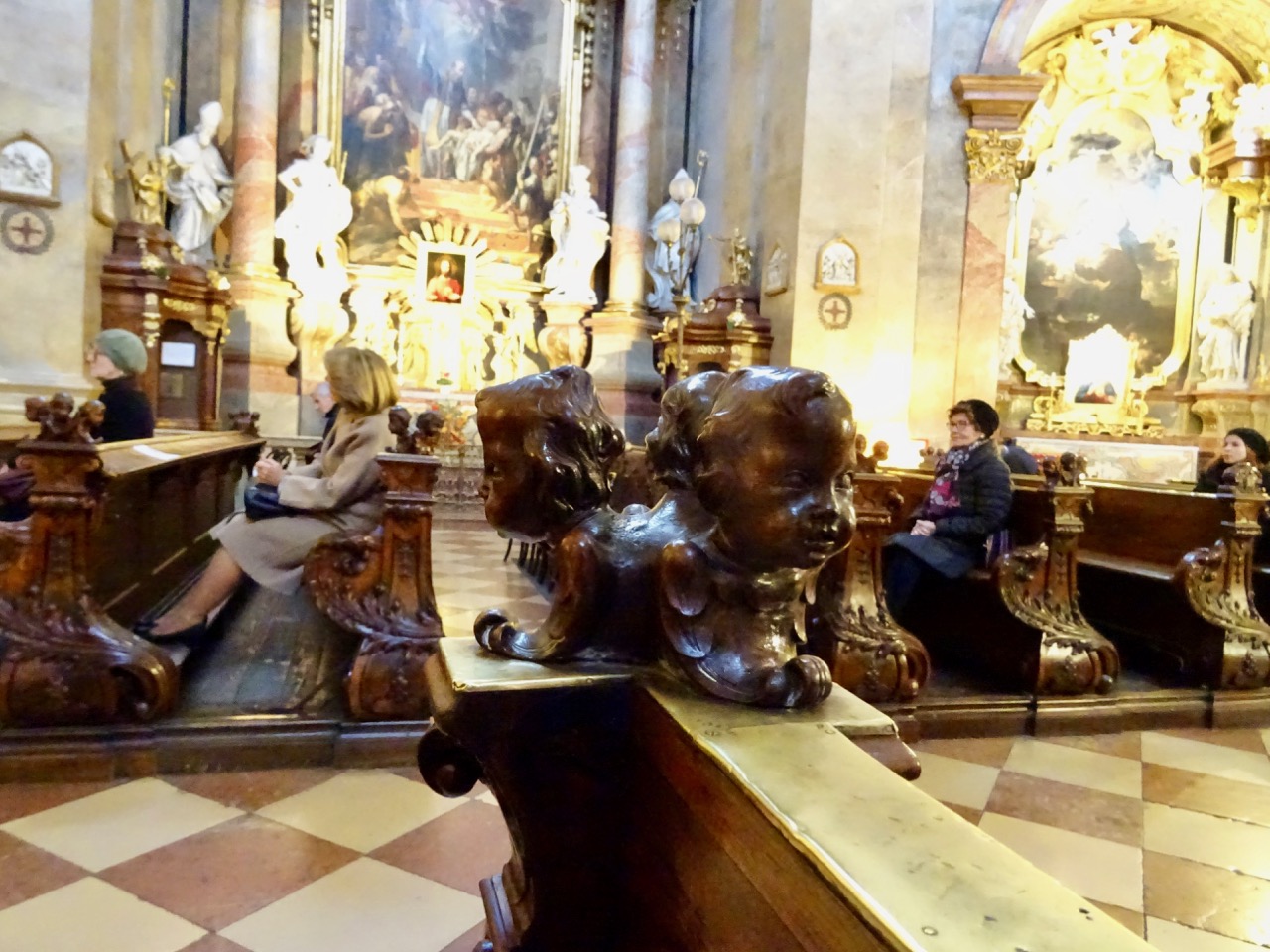
 The end of each pew is beautifully carved with different finials of three children’s heads. We sat for quite a while listening to the choir practicing.
  Back outside, there are interesting details everywhere I look, like these sculptures holding up balconies.
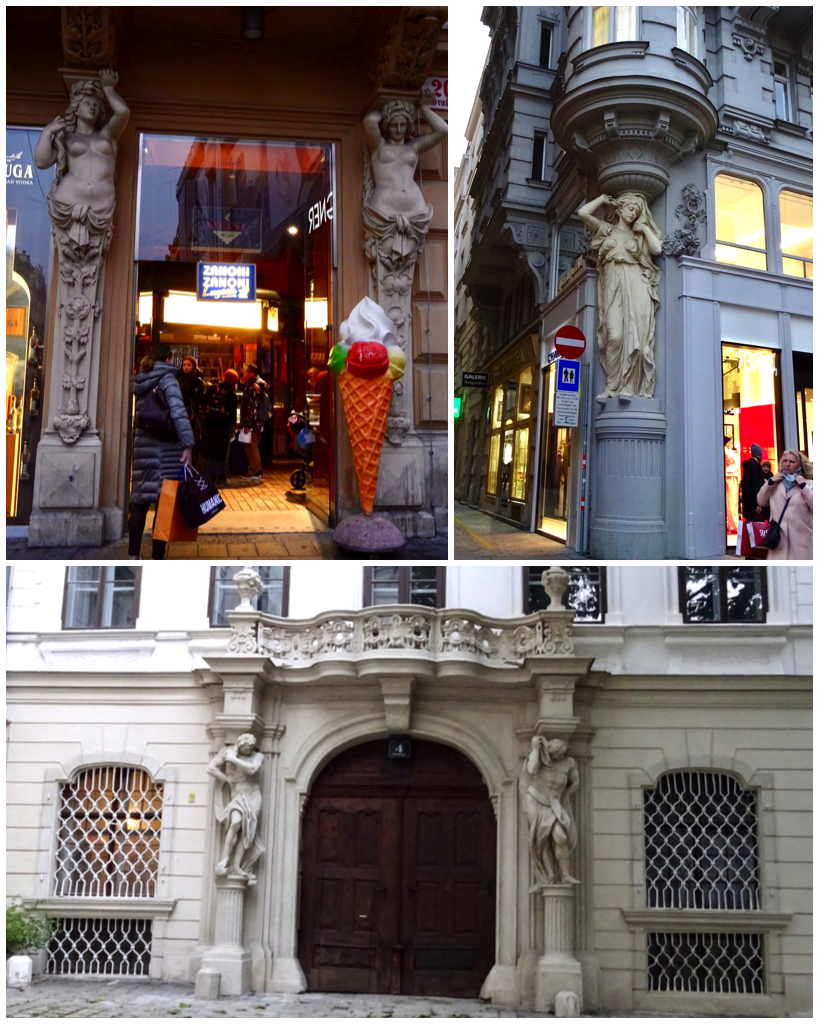 I loved this building. It looks like a castle. I wouldn’t mind living here!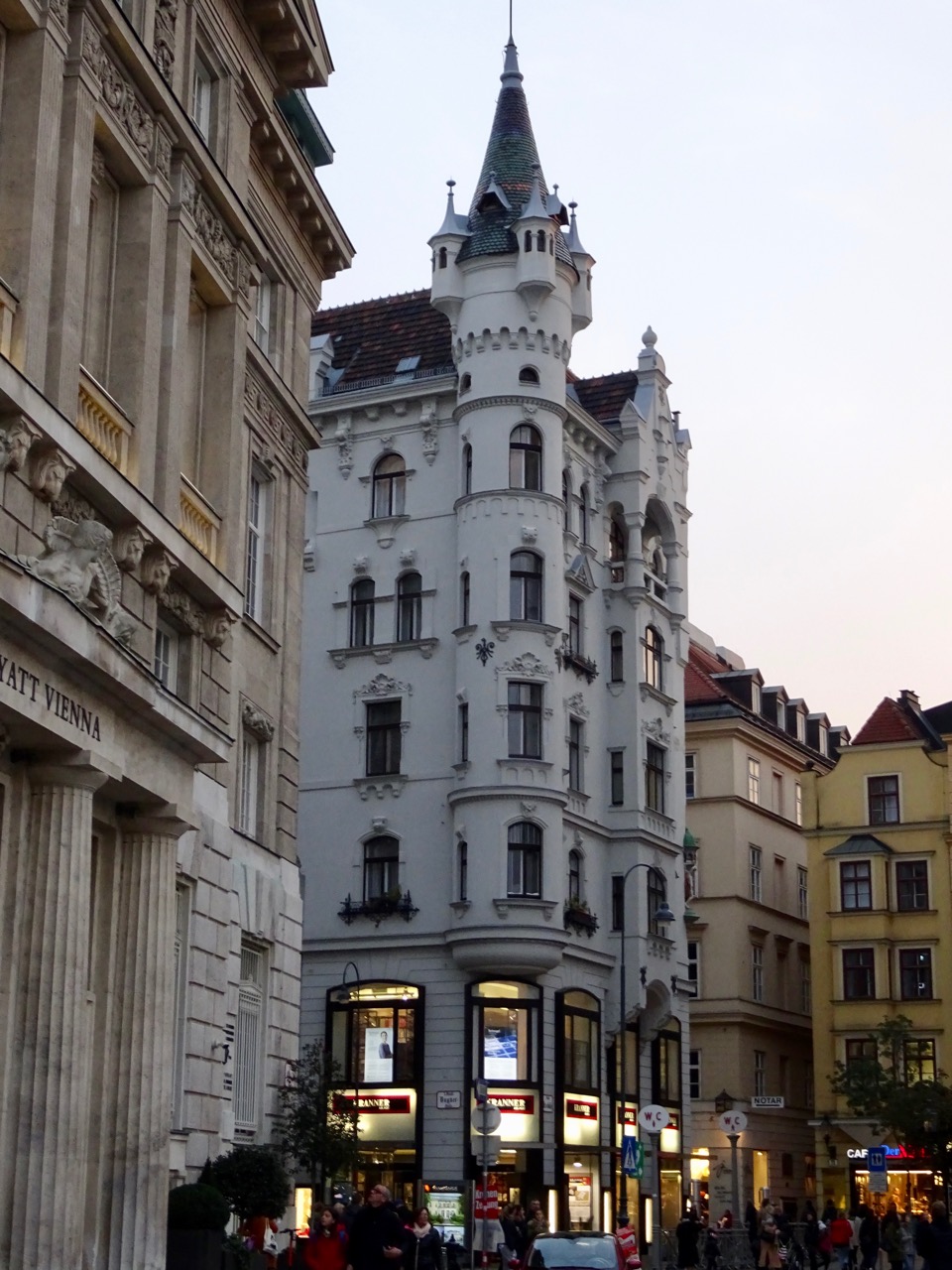
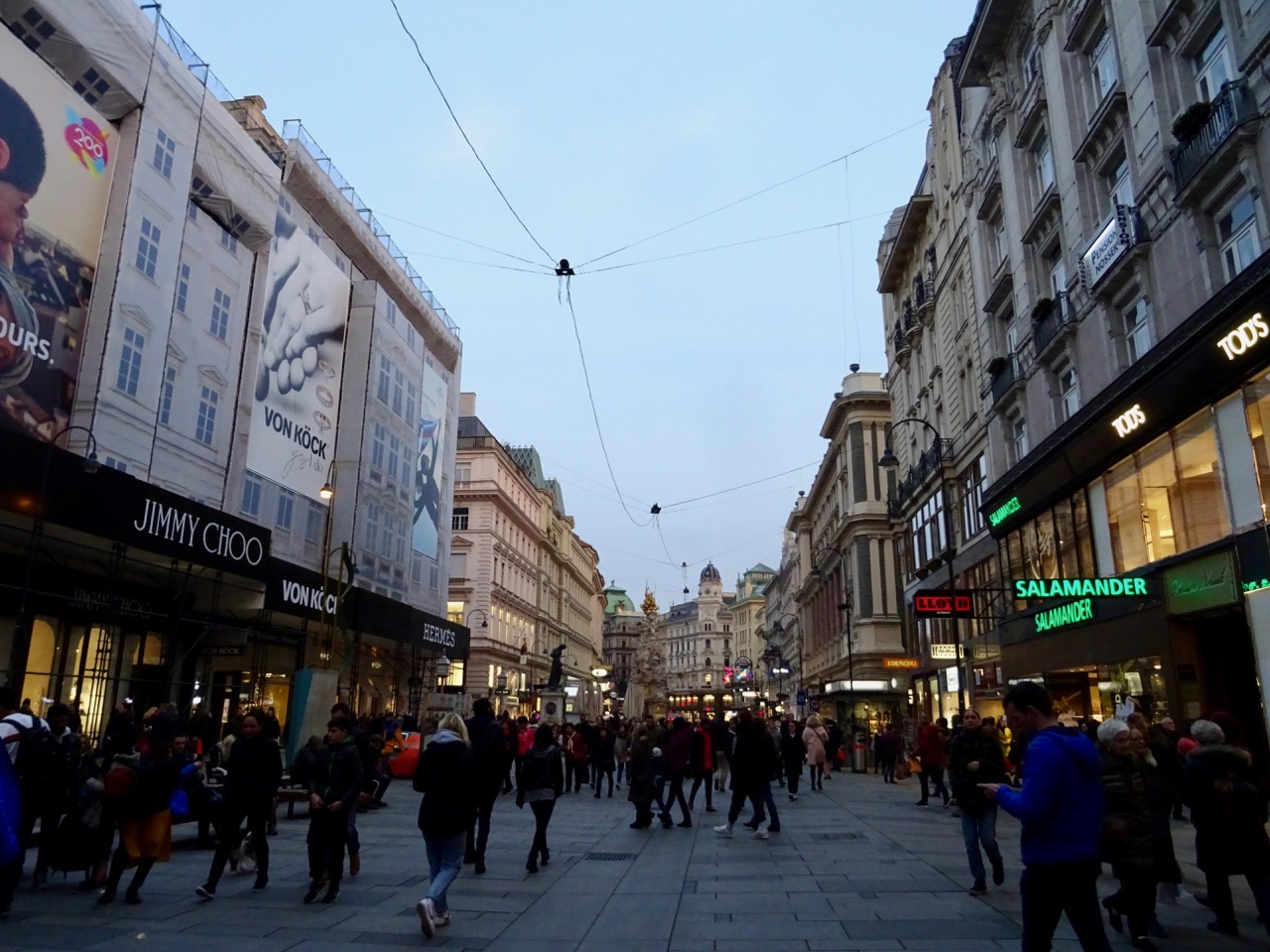 where the customers are served champagne as they shop! Sigh…an experience I am sure I will never have!
 There are Roman ruins…
 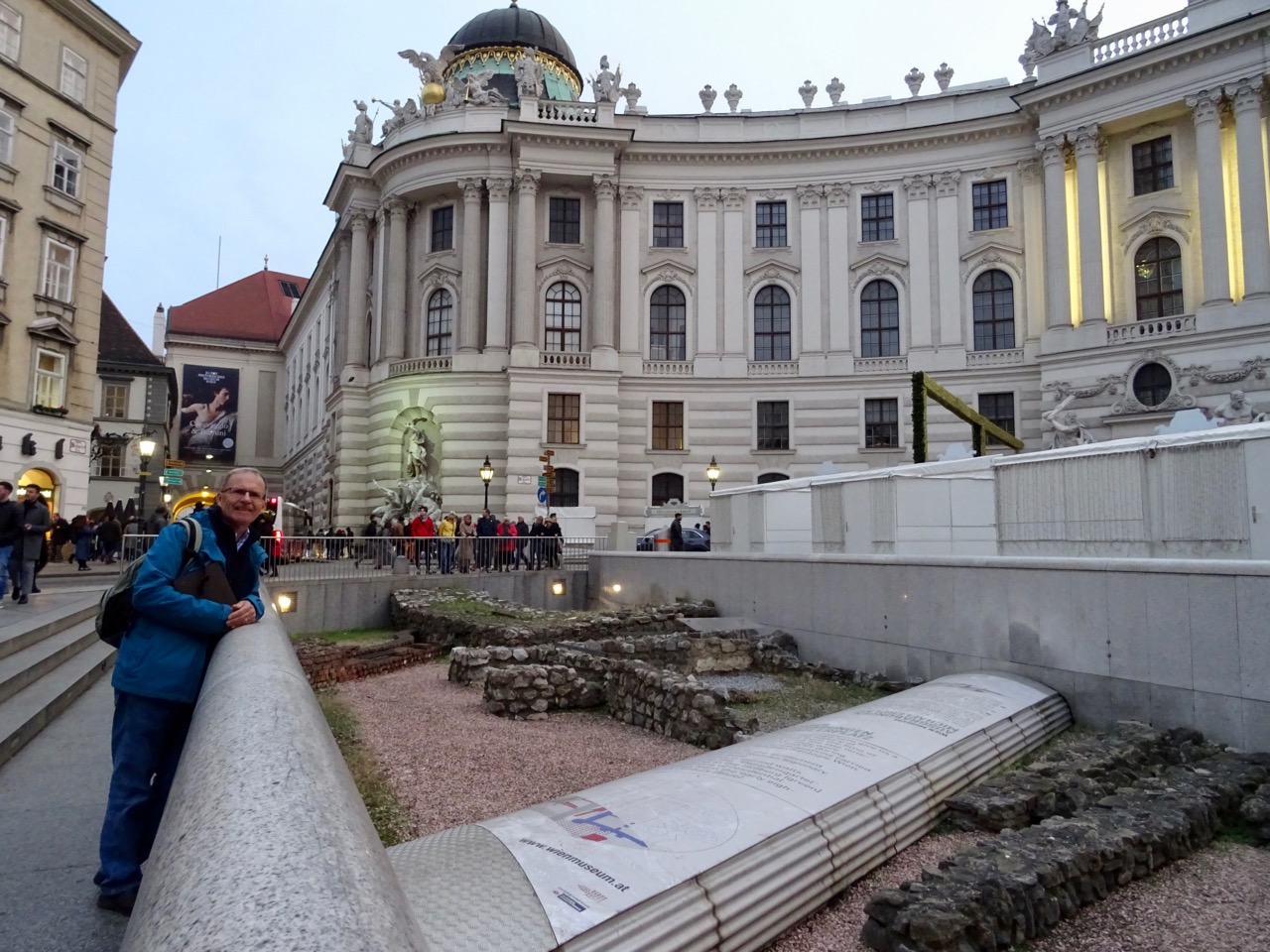 and beautiful statues on the corners of buildings.
 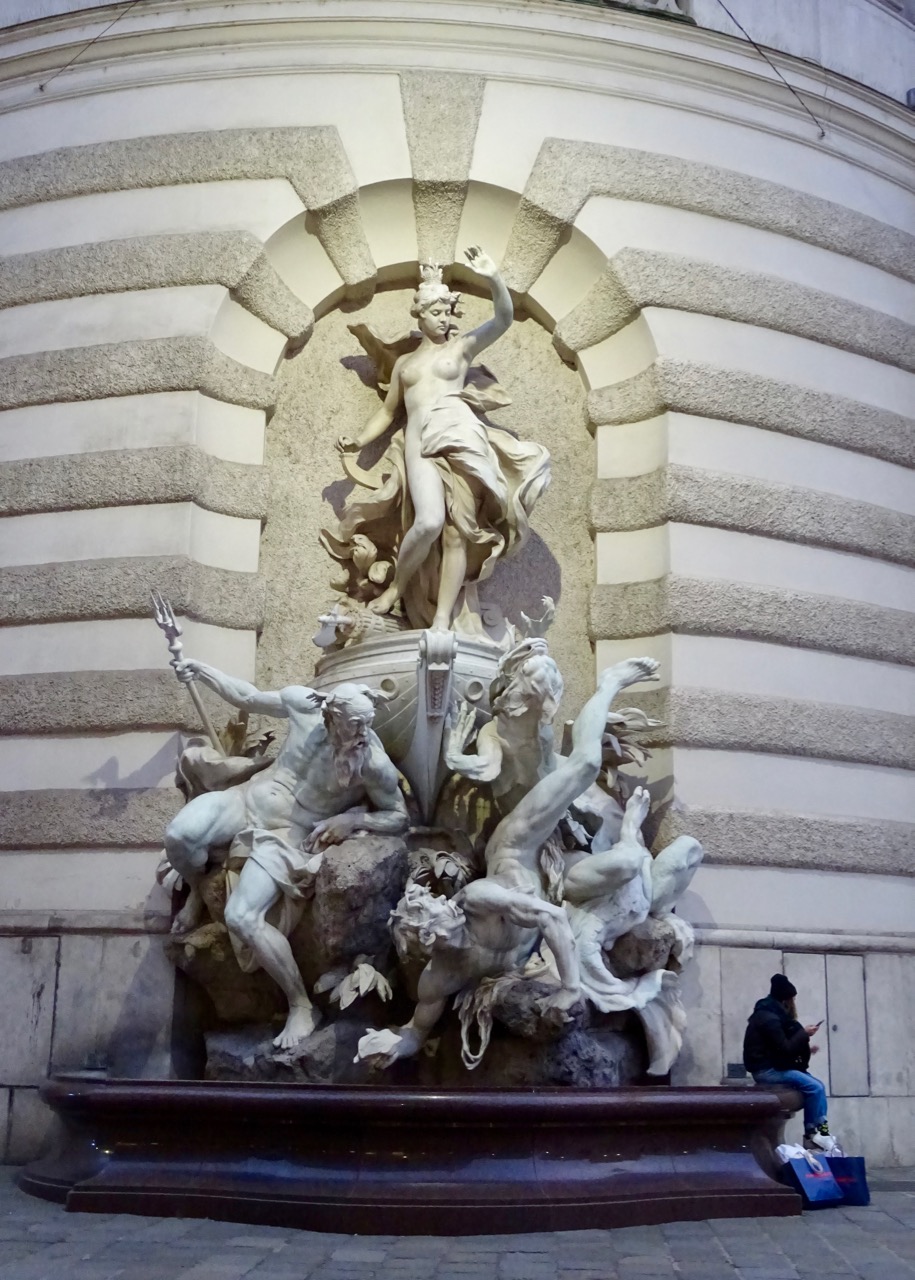 This is the building that houses the Austrian National Library, the Österreichische Nationalbibliothek, as well as the Spanish Riding School with the world famous Lipizzaner stallions. We will visit both of these on another day,
 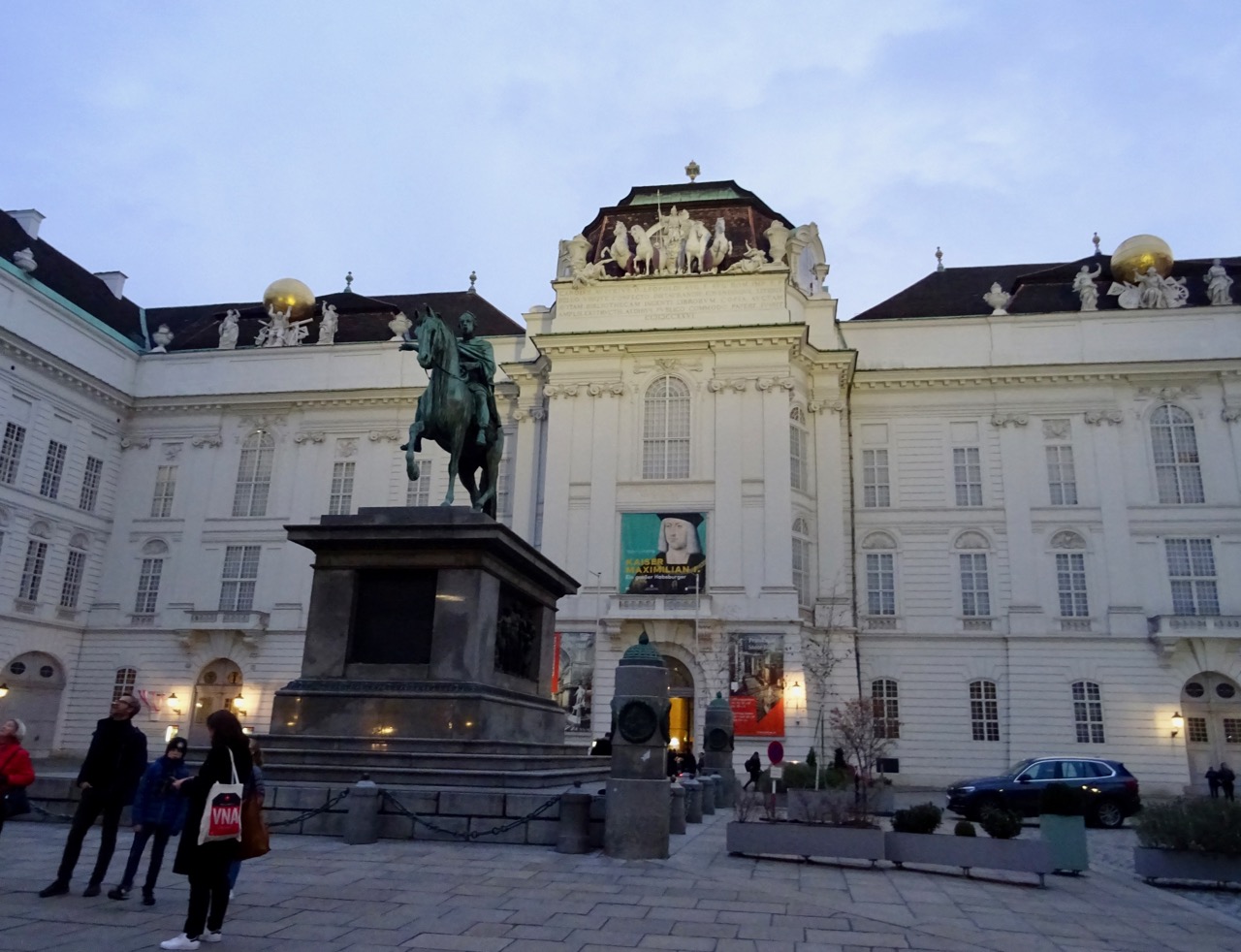 It gets dark earlier now, at about 5;30. The buildings look pretty all lit up. This is the other side of the Neue Burg Wing of the Hofburg Palace. We saw the backside earlier in the day.
 Time to head home. This subway station has colourful murals. Our apartment is very well located on the U6 subway line, so it takes less than a half hour to get home. Somehow even our ‘easy’ days end up being quite long. We left before noon and it will be after 7:00 by the time we get home.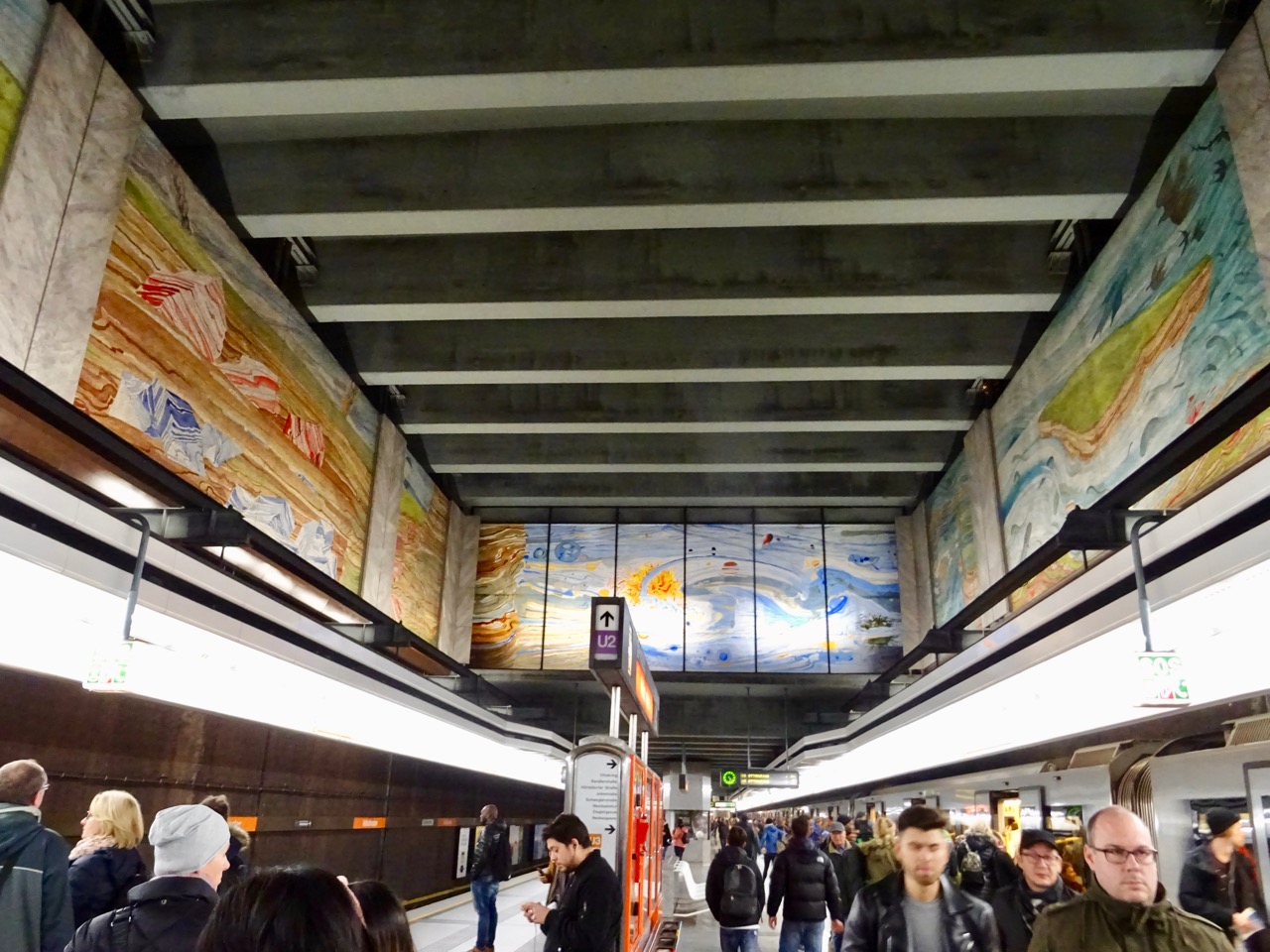
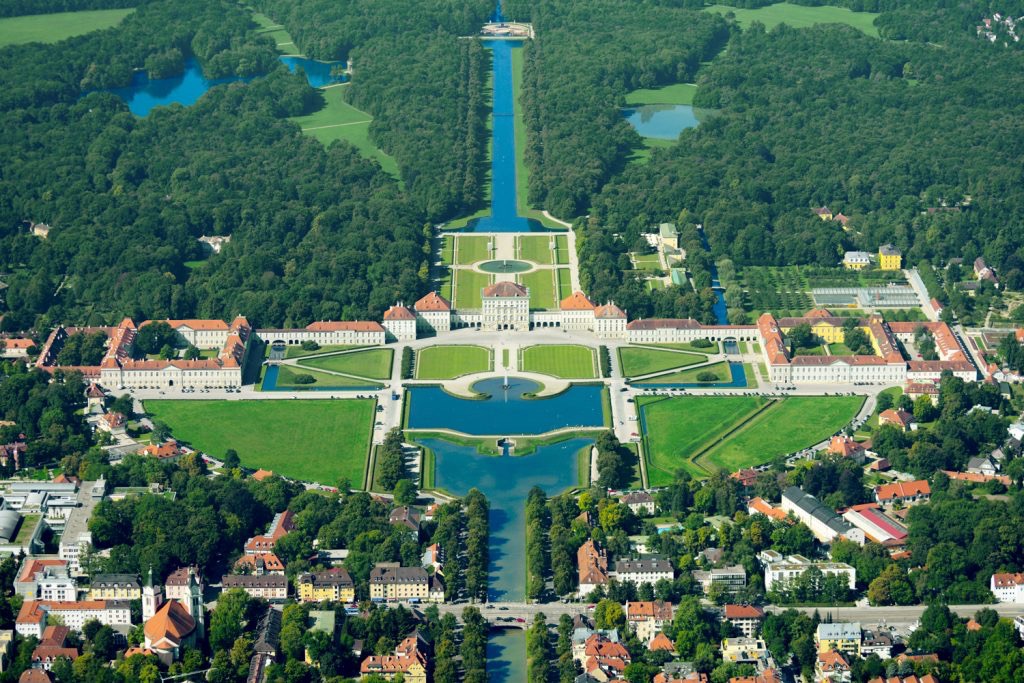 This central four-storey building was the beginning of the palace and was built in 1644. Over the years numerous additions were built until it reached its present configuration in 1776.
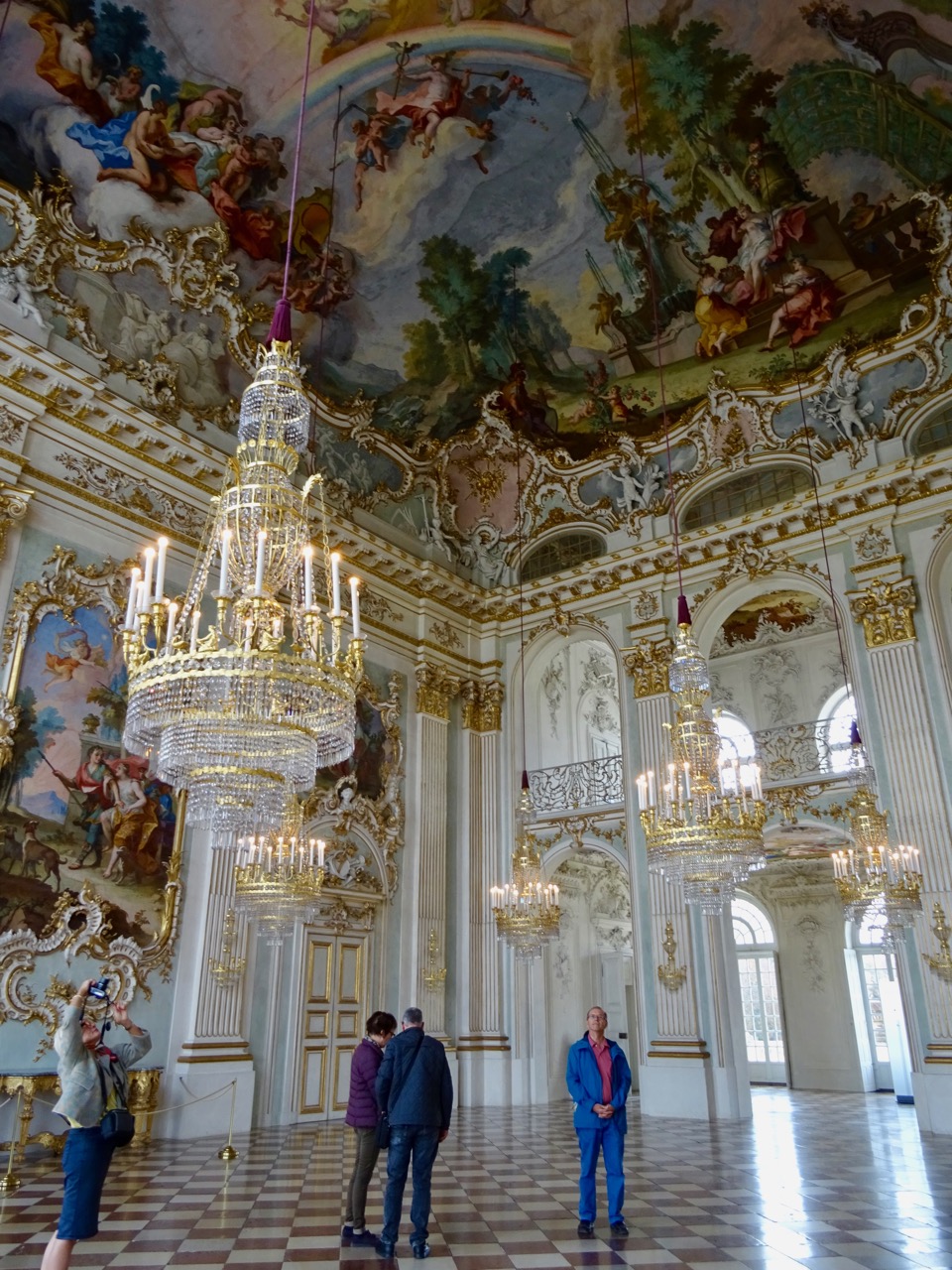
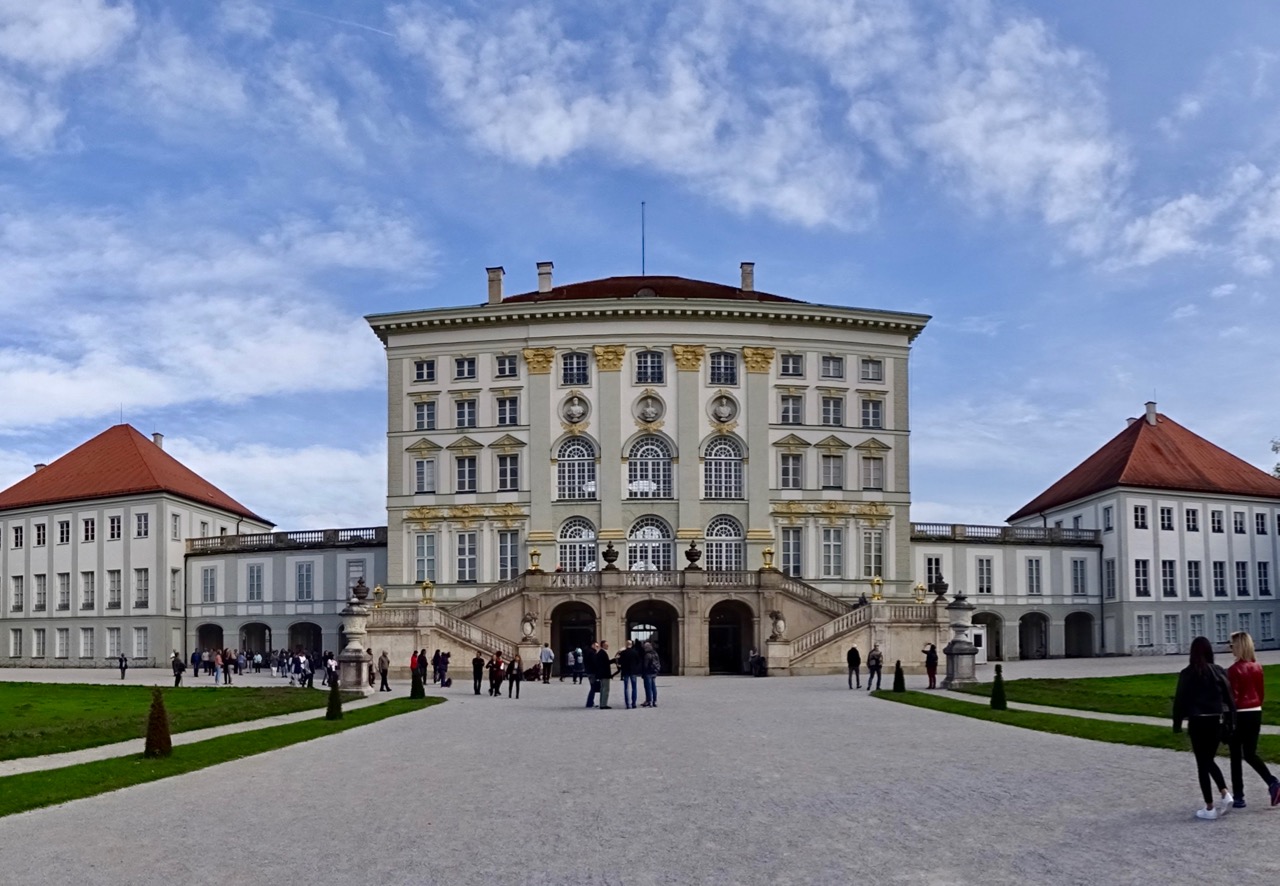 The Nymphenburg Palace was originally a summer residence for the Bavarian rulers. This is the Great Hall. Musicians would entertain guests from the gallery.
 One of the many rooms with original furnishings.
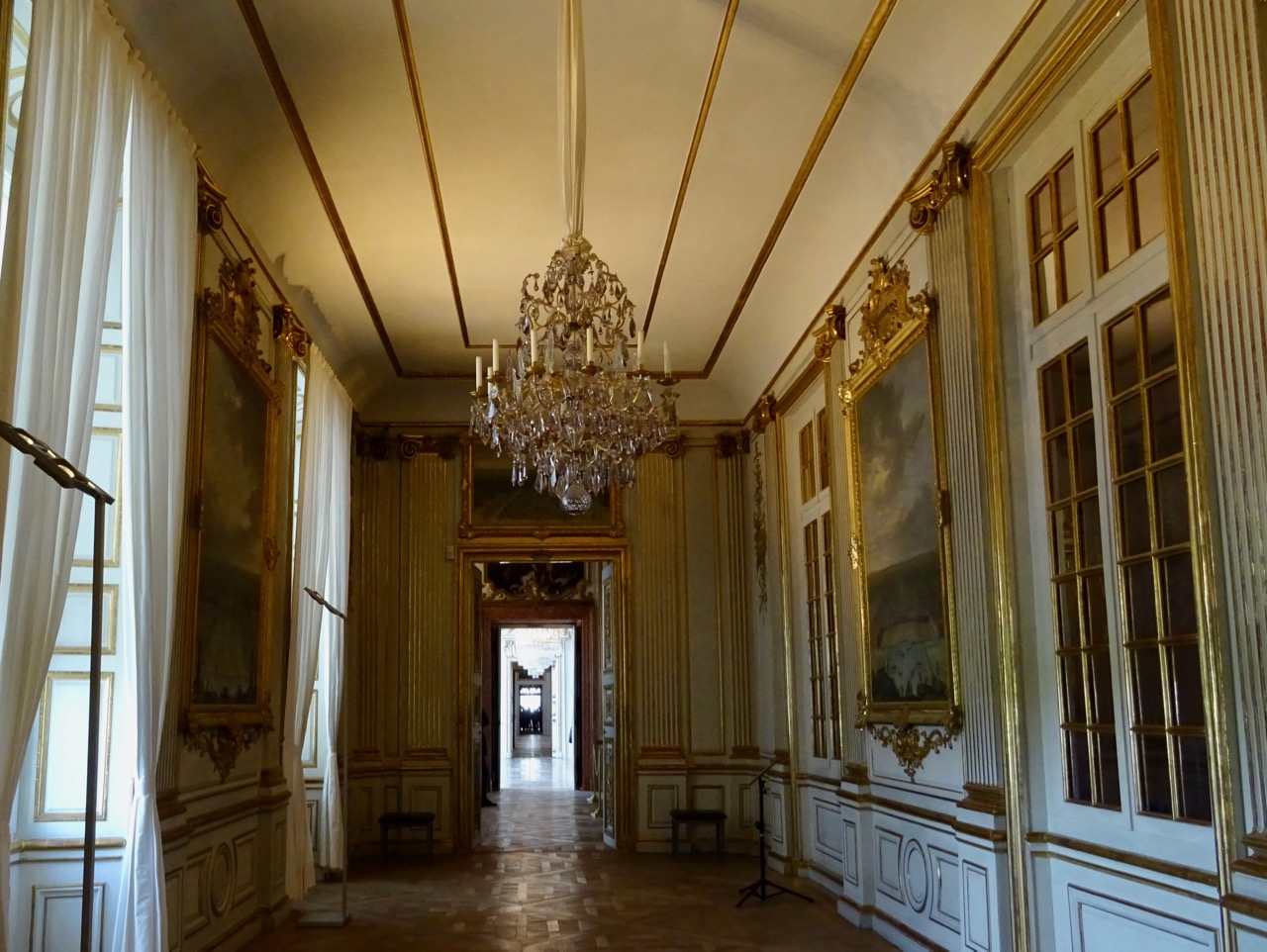
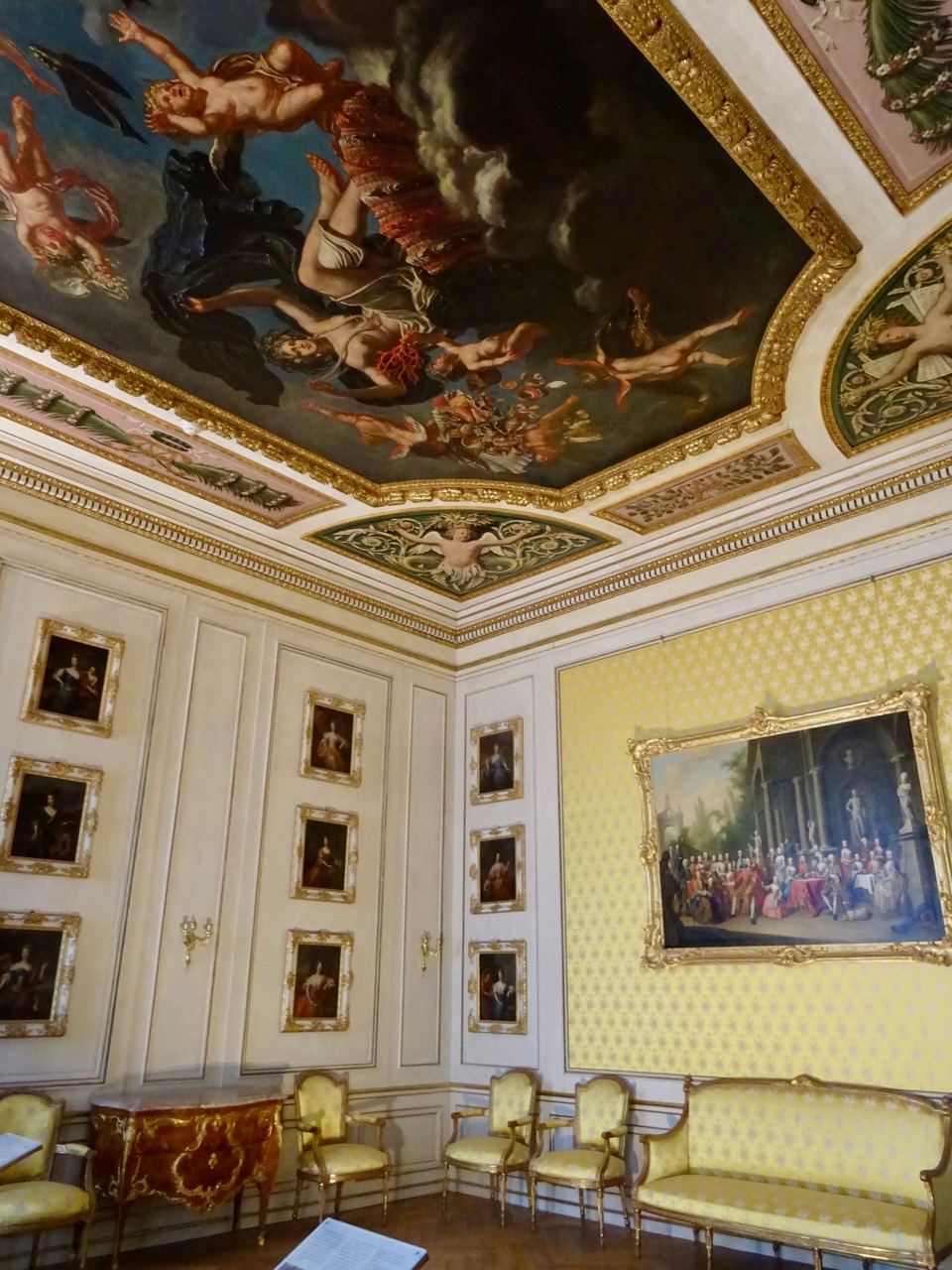 Many of the rooms are not that big and seem to serve as connecting passages to other larger rooms.
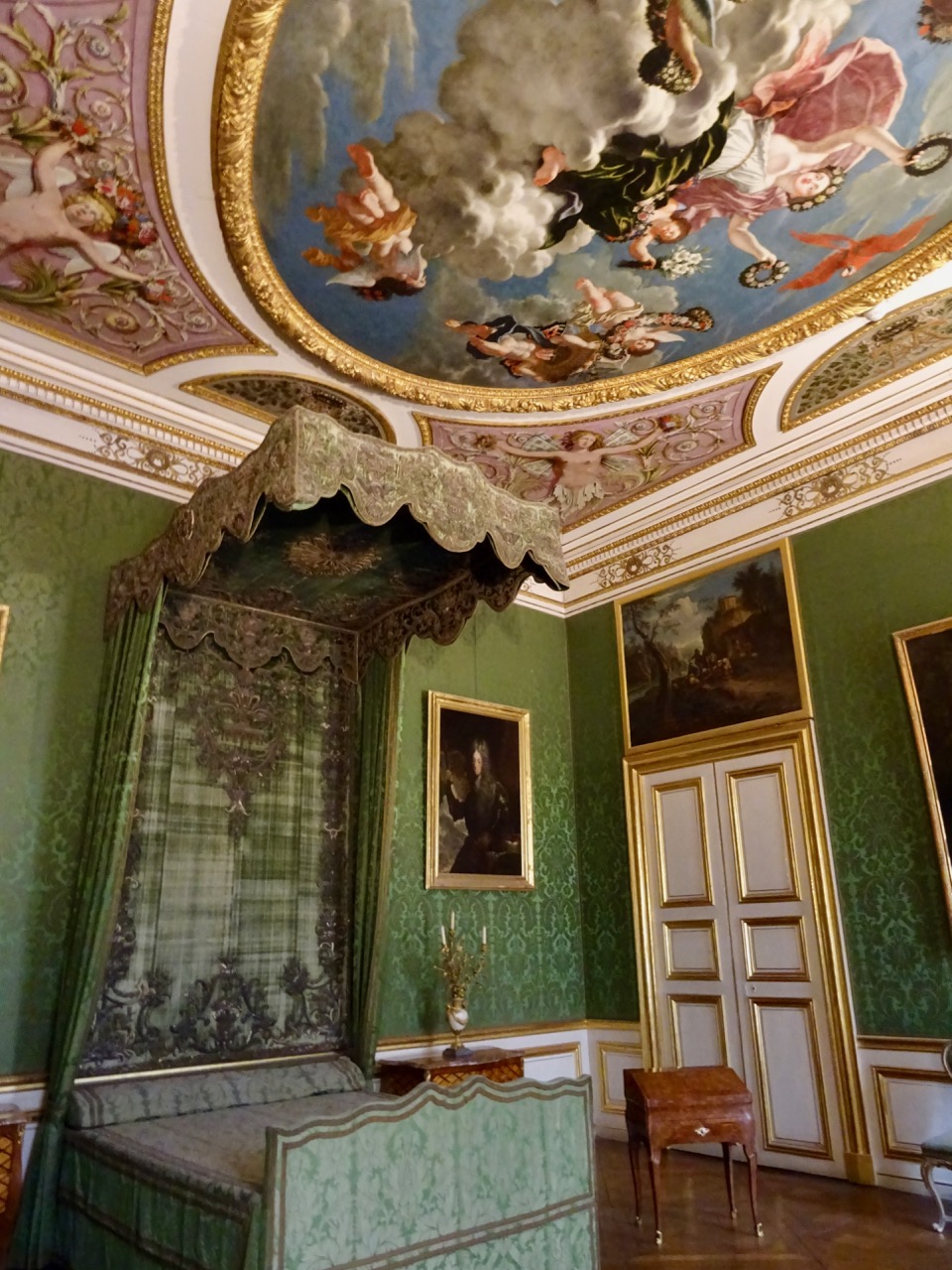
 The south apartment bedroom of the Electress, who was the consort of the king.
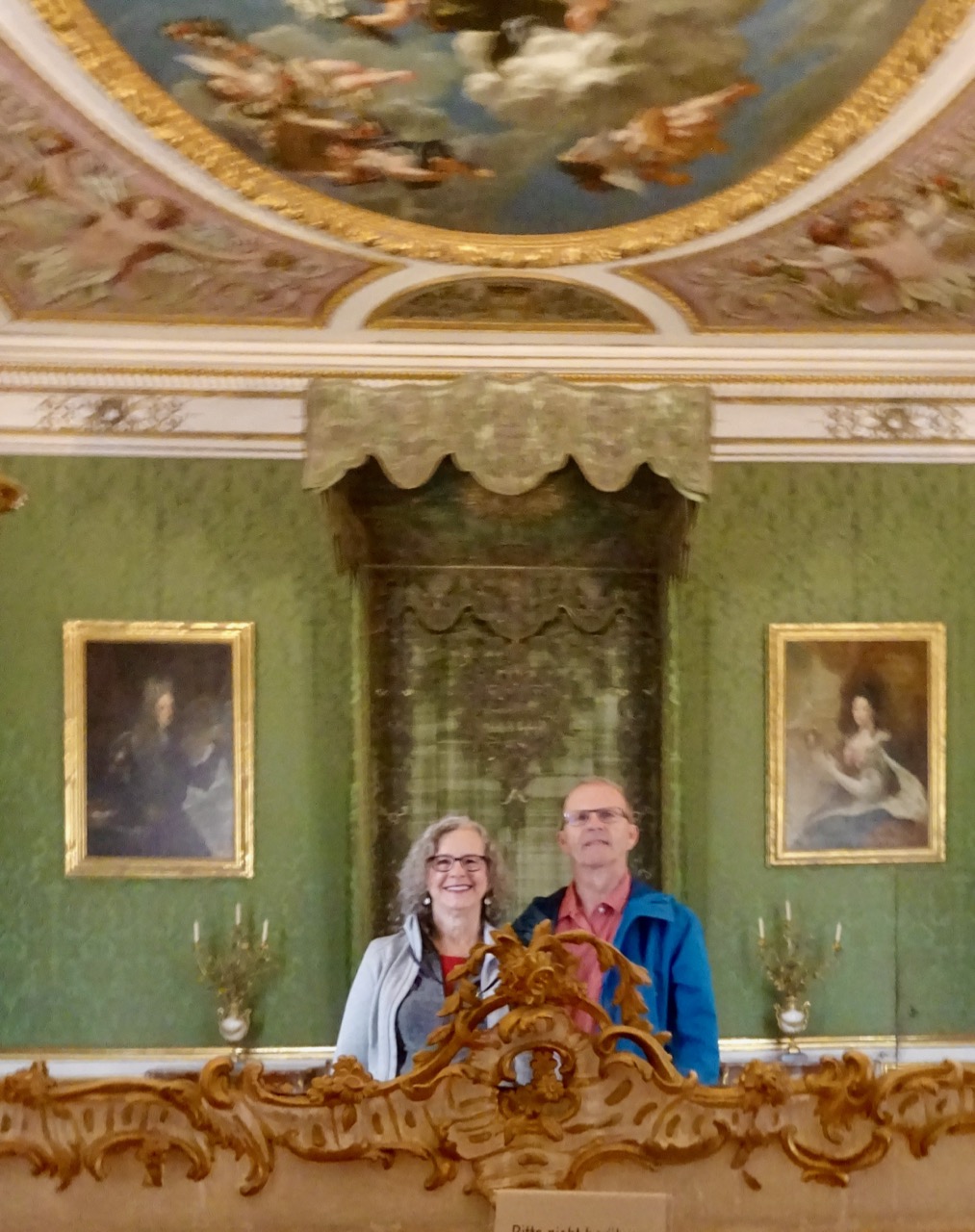
 Our reflection in the bedroom mirror.
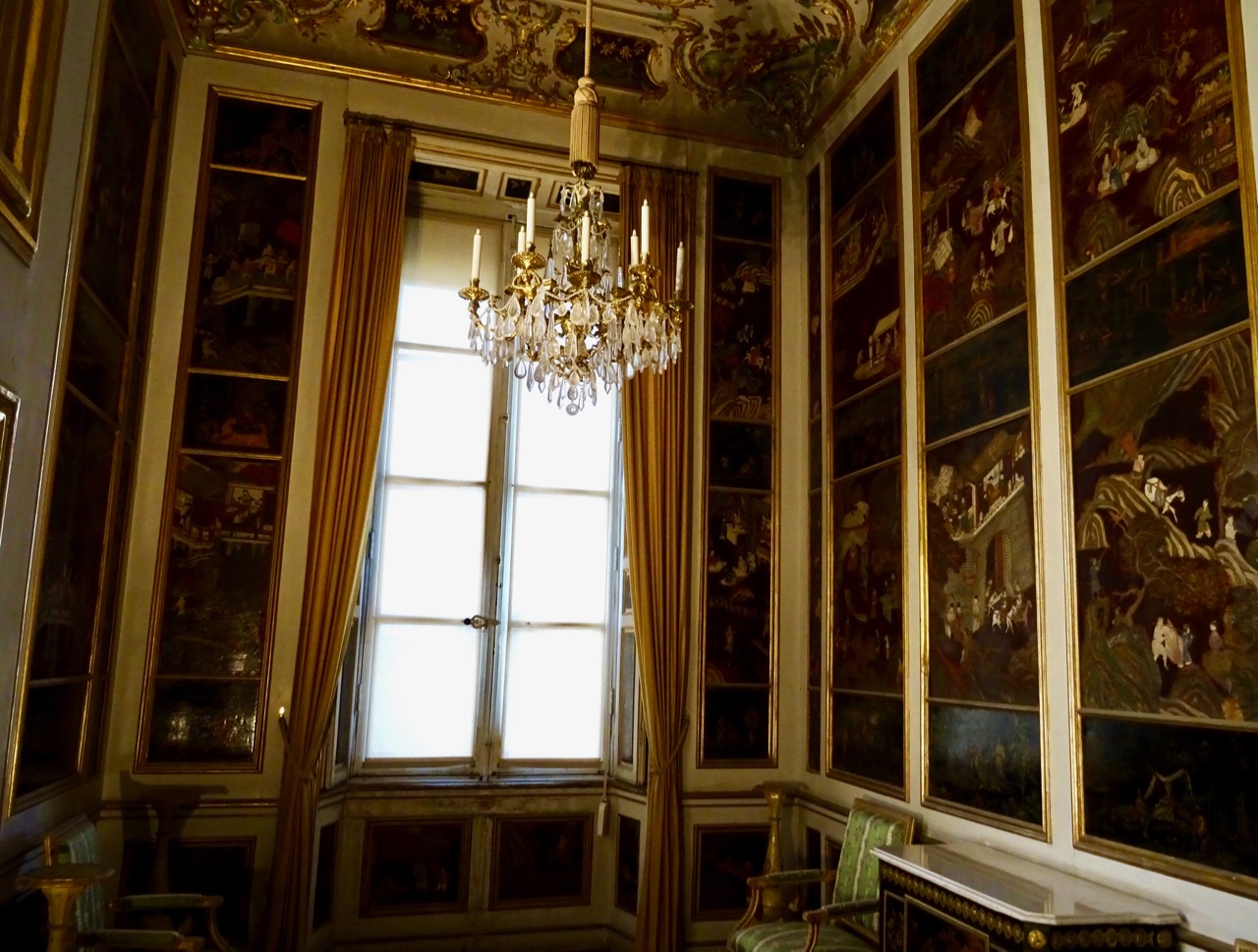
 Every palace has to have a Chinese inspired room.
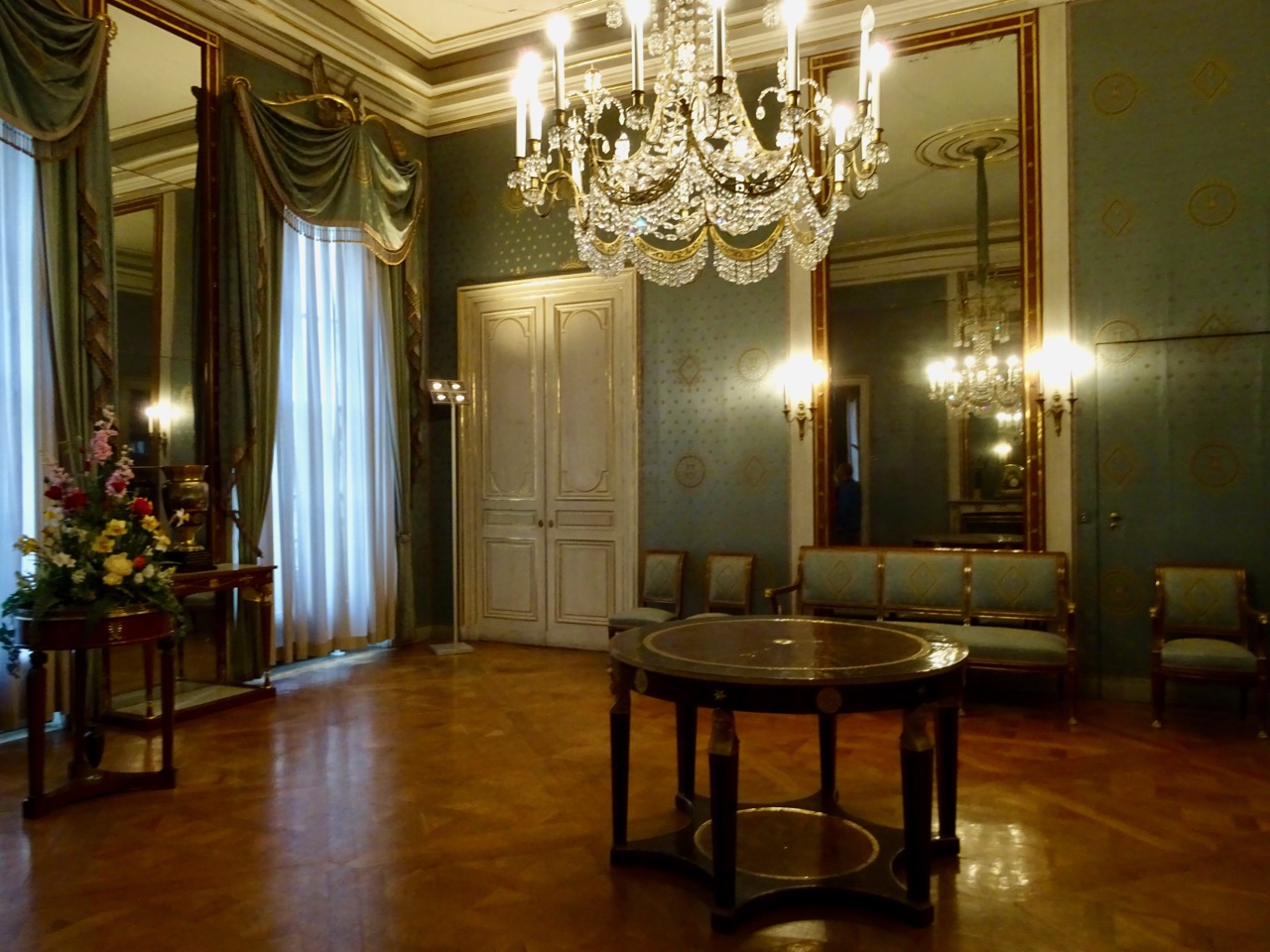
 The audience room of Queen Caroline…
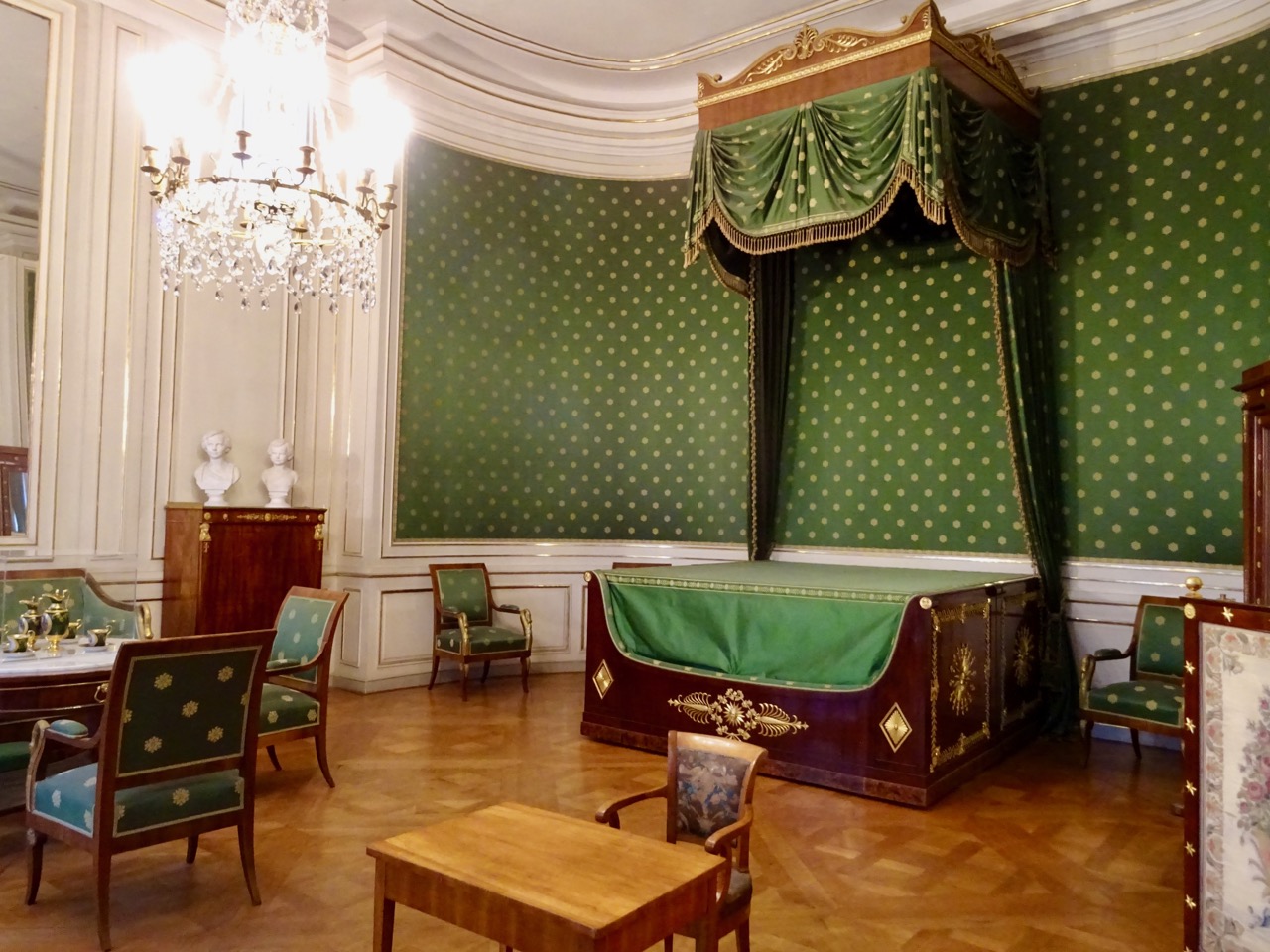
 and her bedroom have their original furnishings. This room is where King Ludwig II was born in 1845. The bed is hidden by a cover on a high frame which was spread over the bed during the daytime.
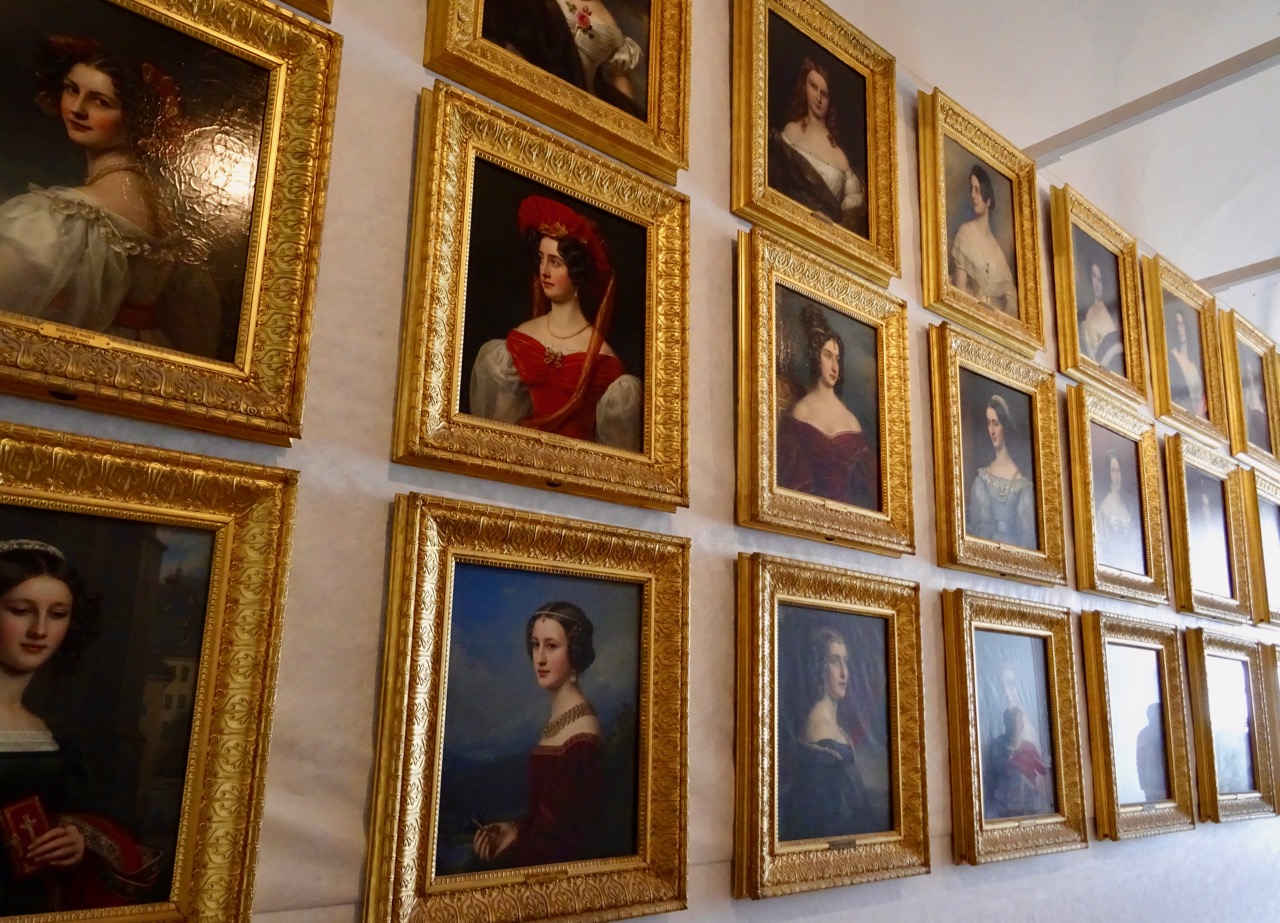
 The official Hall of Beauties is under restoration but the paintings are on display in a corridor. From 1826 to 1850 King Ludwig I had a series of 36 portraits painted of what he considered to be the most beautiful women. Beauty was considered to be an outward sign of moral perfection!
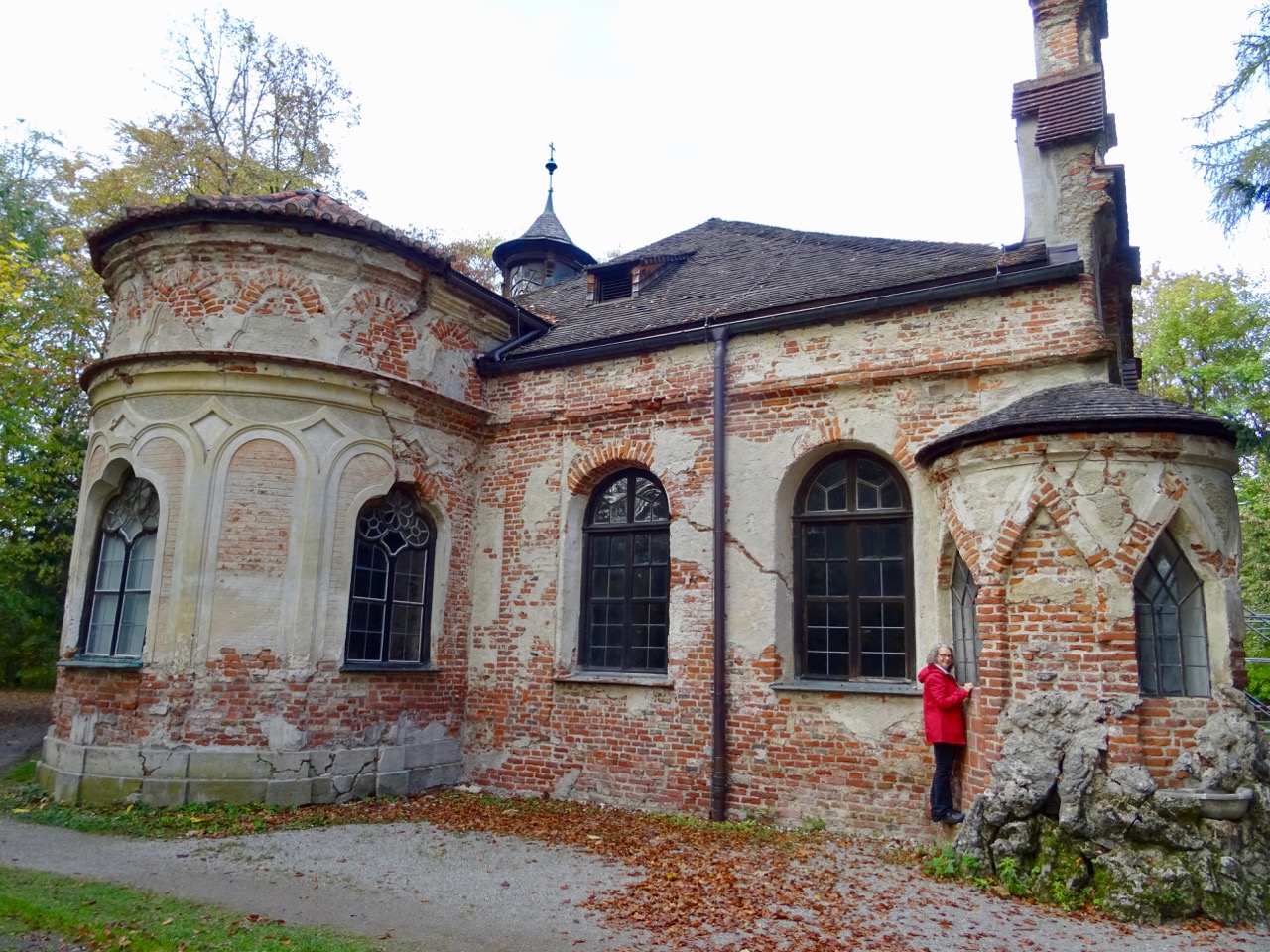
 We finish our tour of the palace rooms, and go explore the grounds. Unfortunately we realize that the park pavilions closed for the season a week ago. I do manage a peek inside the Magdalene Hermitage, which was a pavilion used for contemplation.
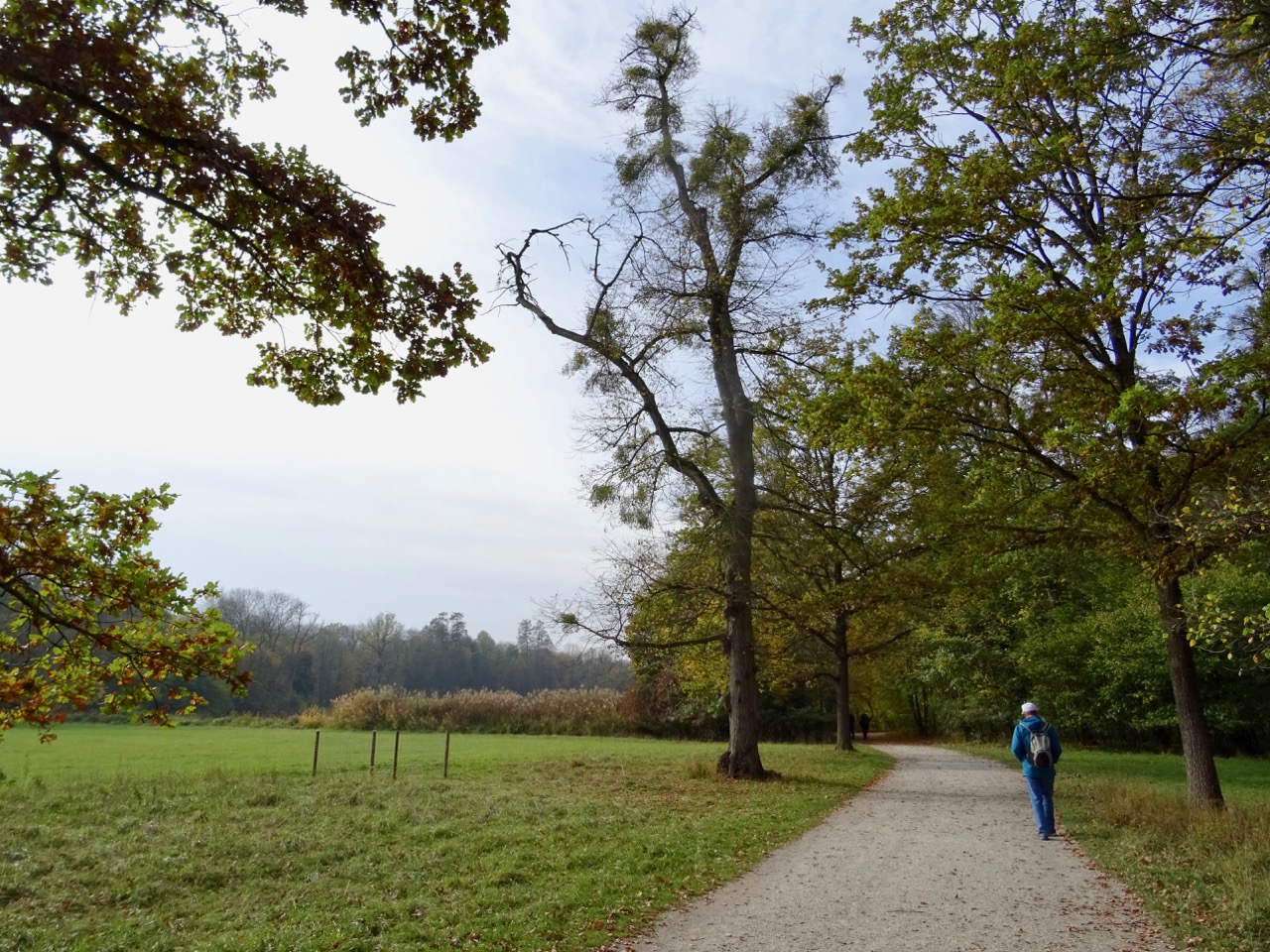
 Much of the grounds are in the style of an English park, with paths…
 and little bridges over water features.
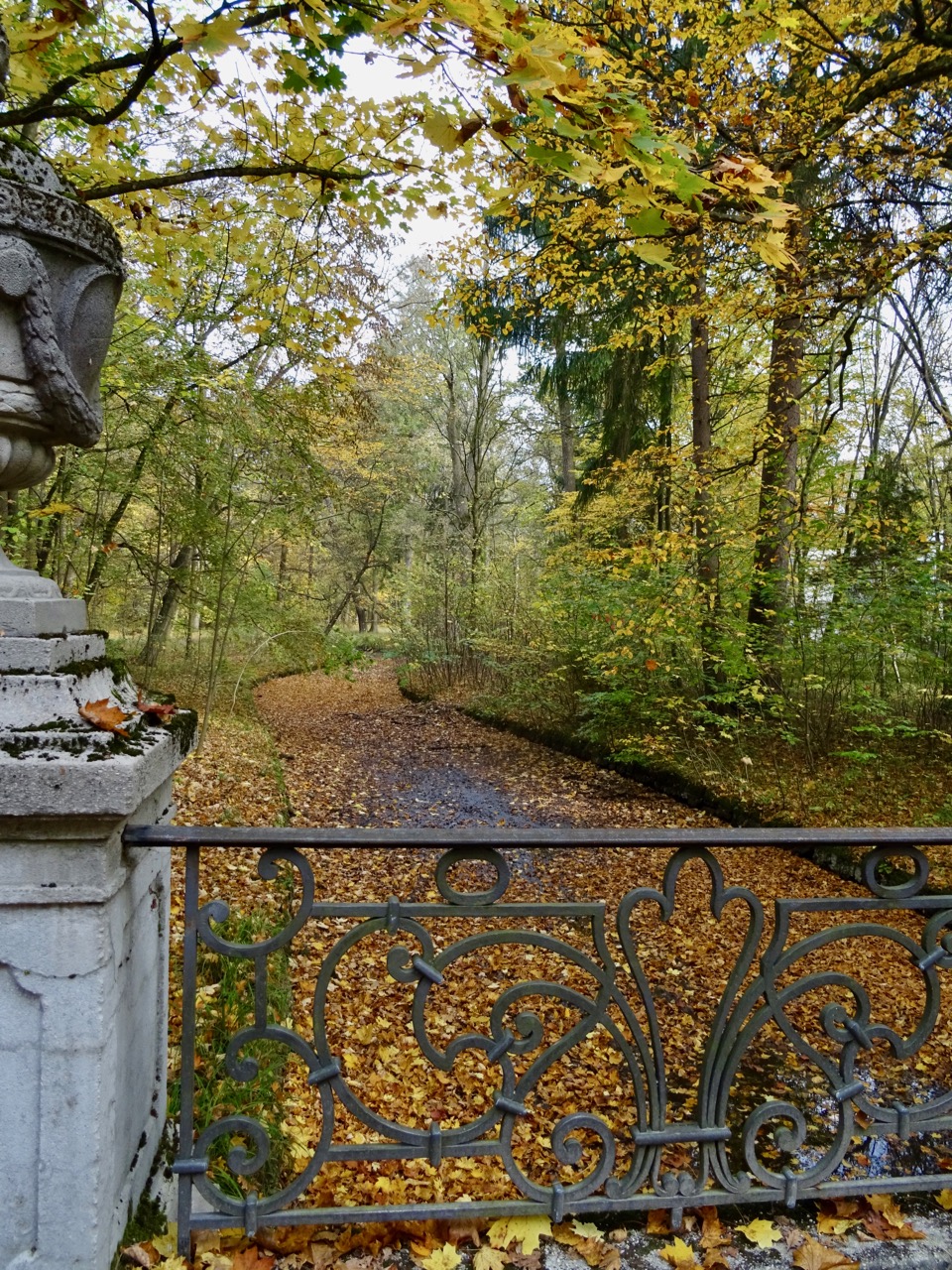
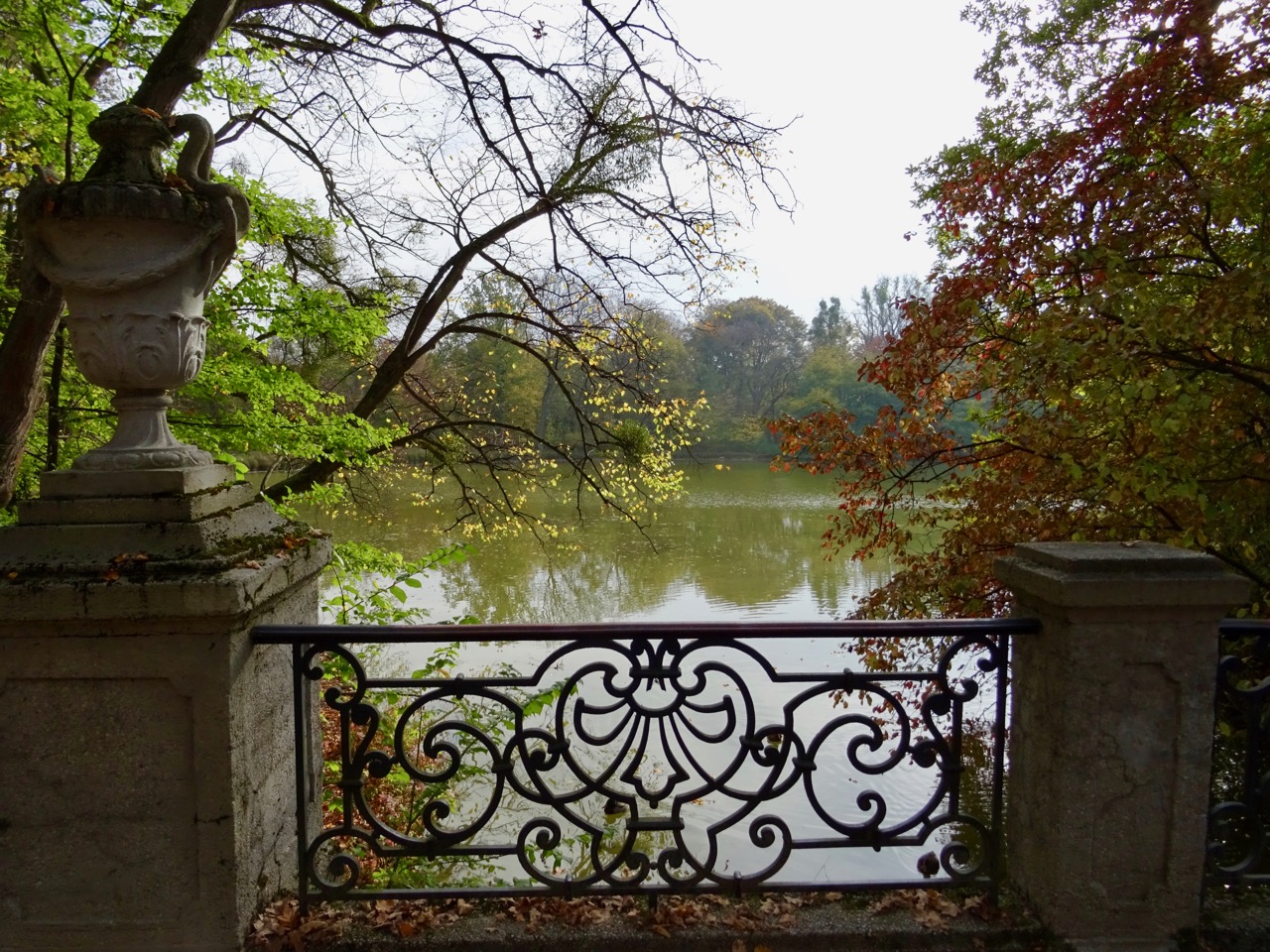 This creek was so covered with fallen leaves that the water was barely visible.
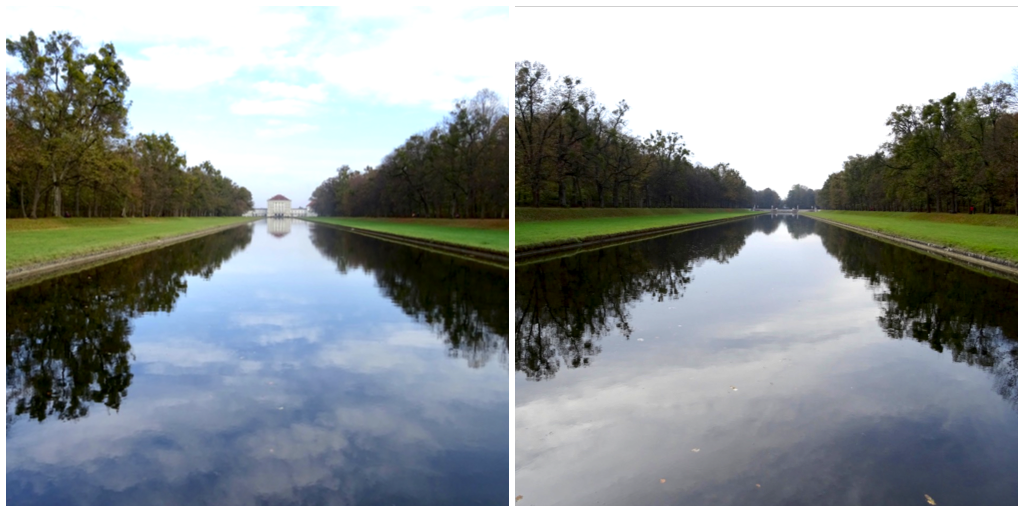
 This shows just how long the canal water feature is…looking towards and away from the palace on a bridge that crosses the canal. At one time gondolas sailedd these waters. Neat reflections too.
 Walking back towards the palace along a tree lined path.
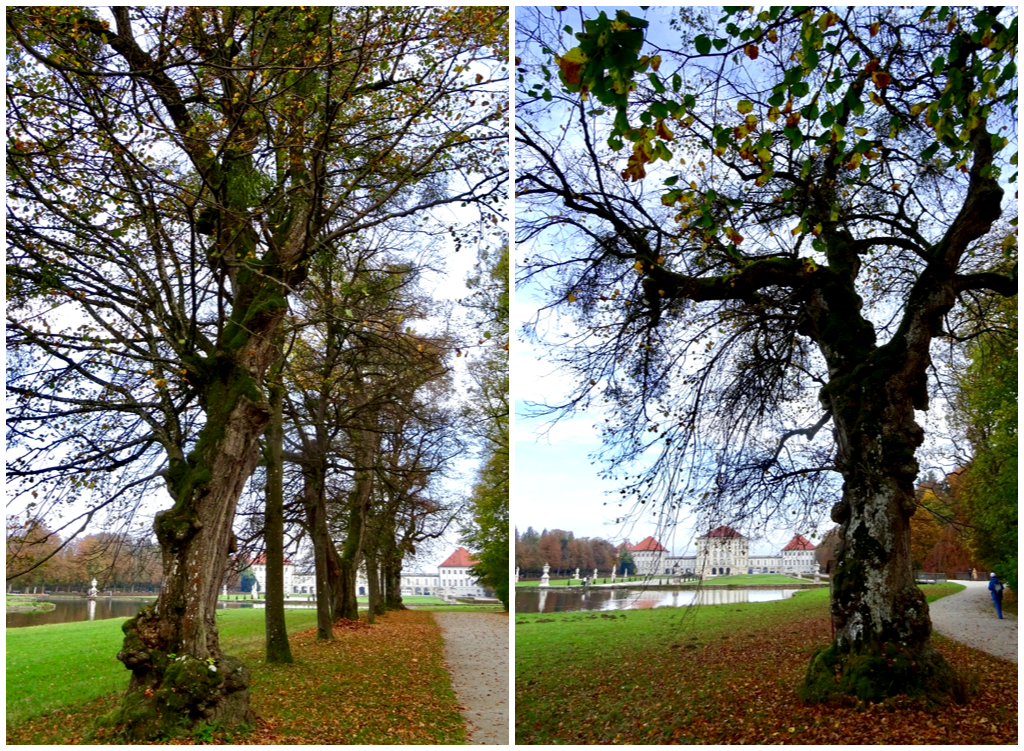 I liked the reflection of the palace in the water.
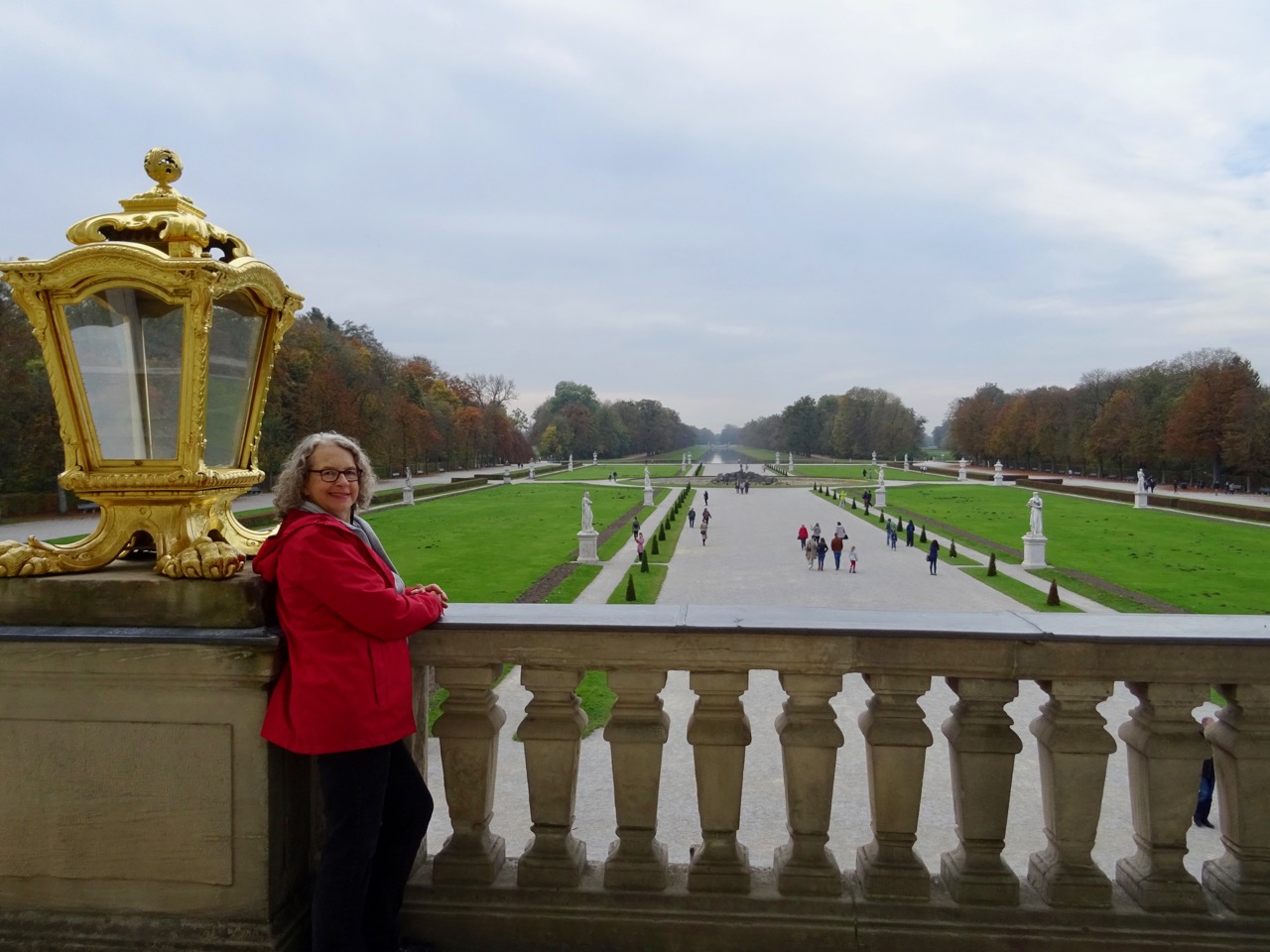
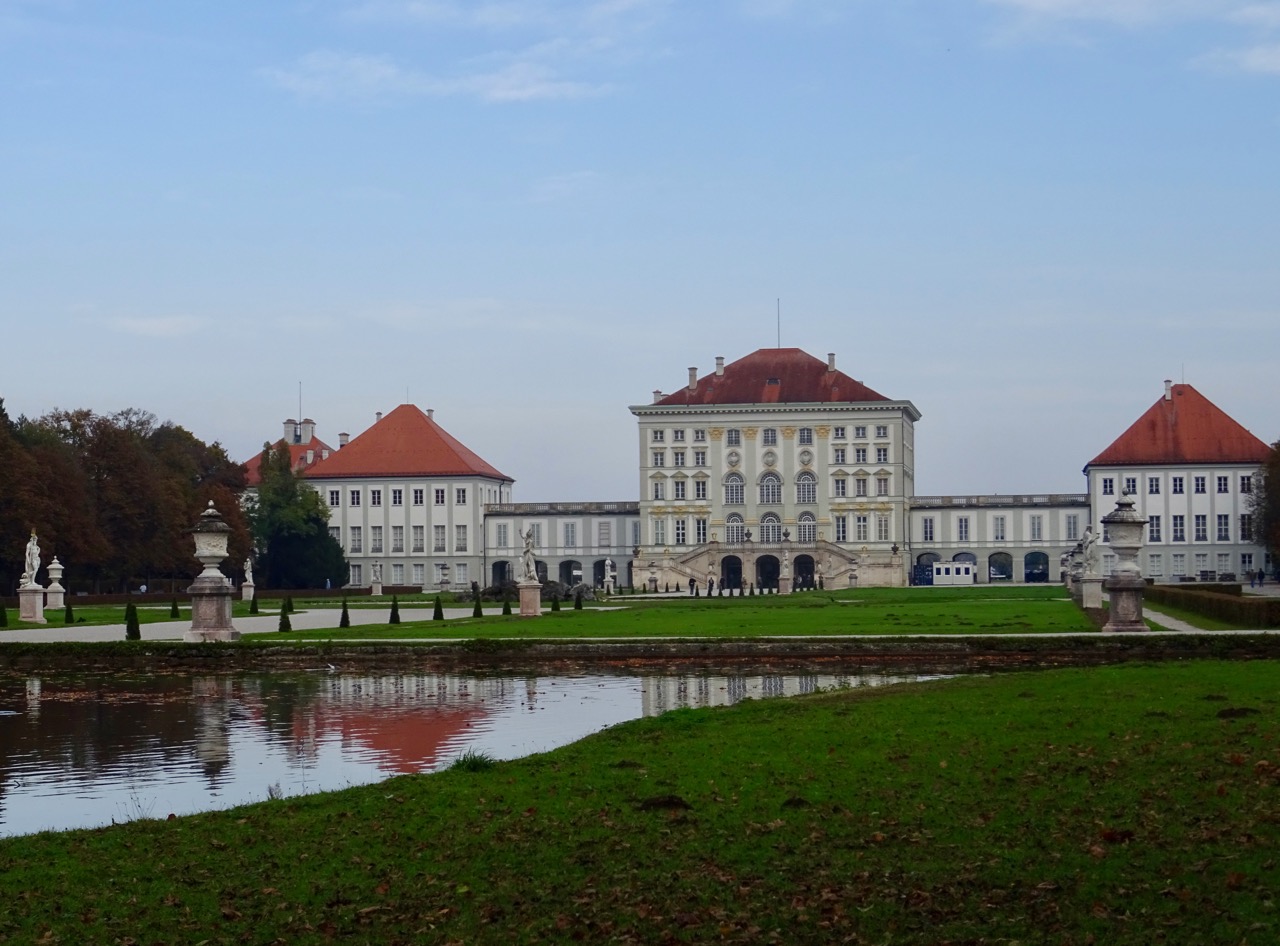 Looking out towards the garden from the Palace steps.
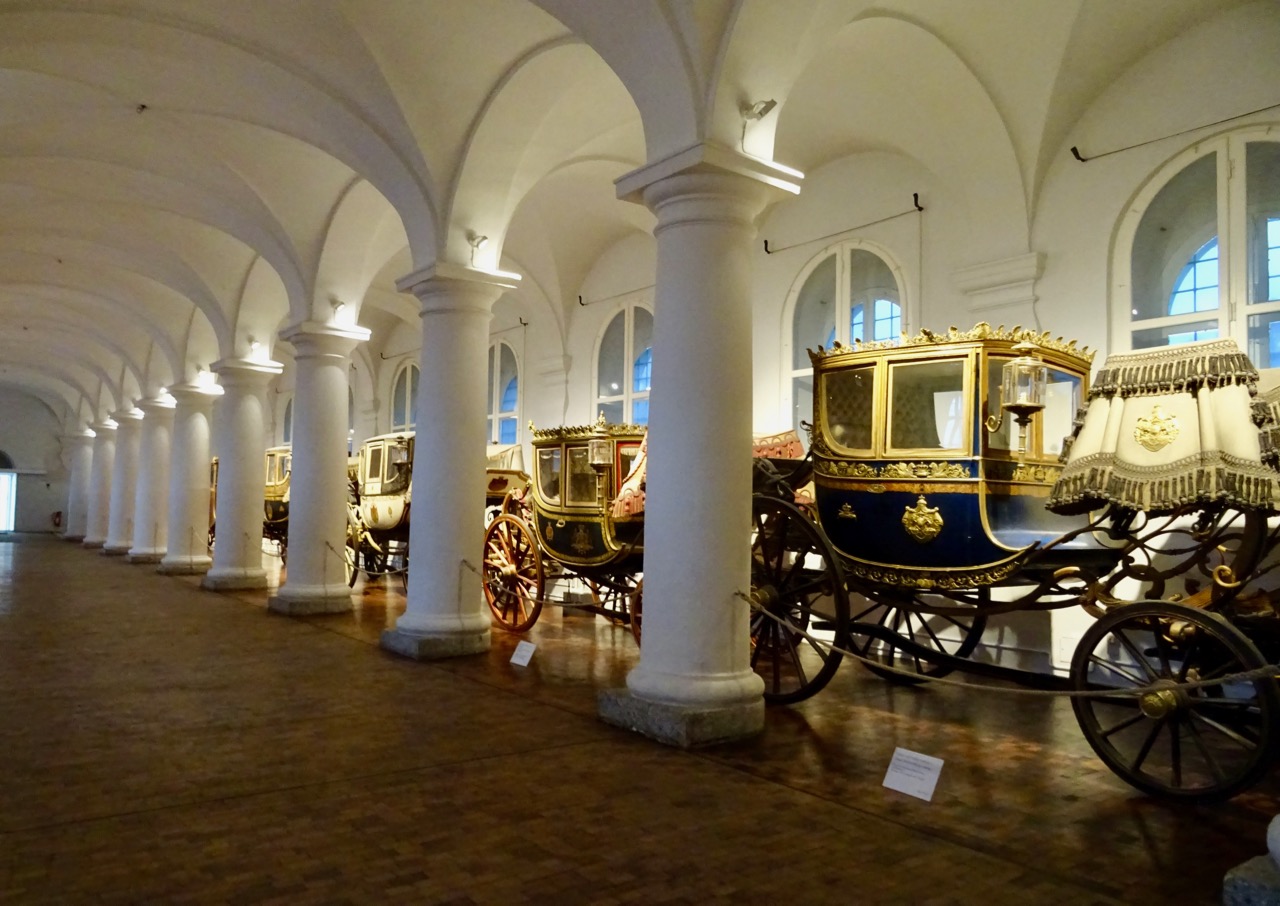
 It is almost closing time, but we manage a quick peek inside the Carriage museum, which is one of the most important museums of court carriages, travel and equestrian culture in the world. The Coronation coach of Emperor Karl VII is here…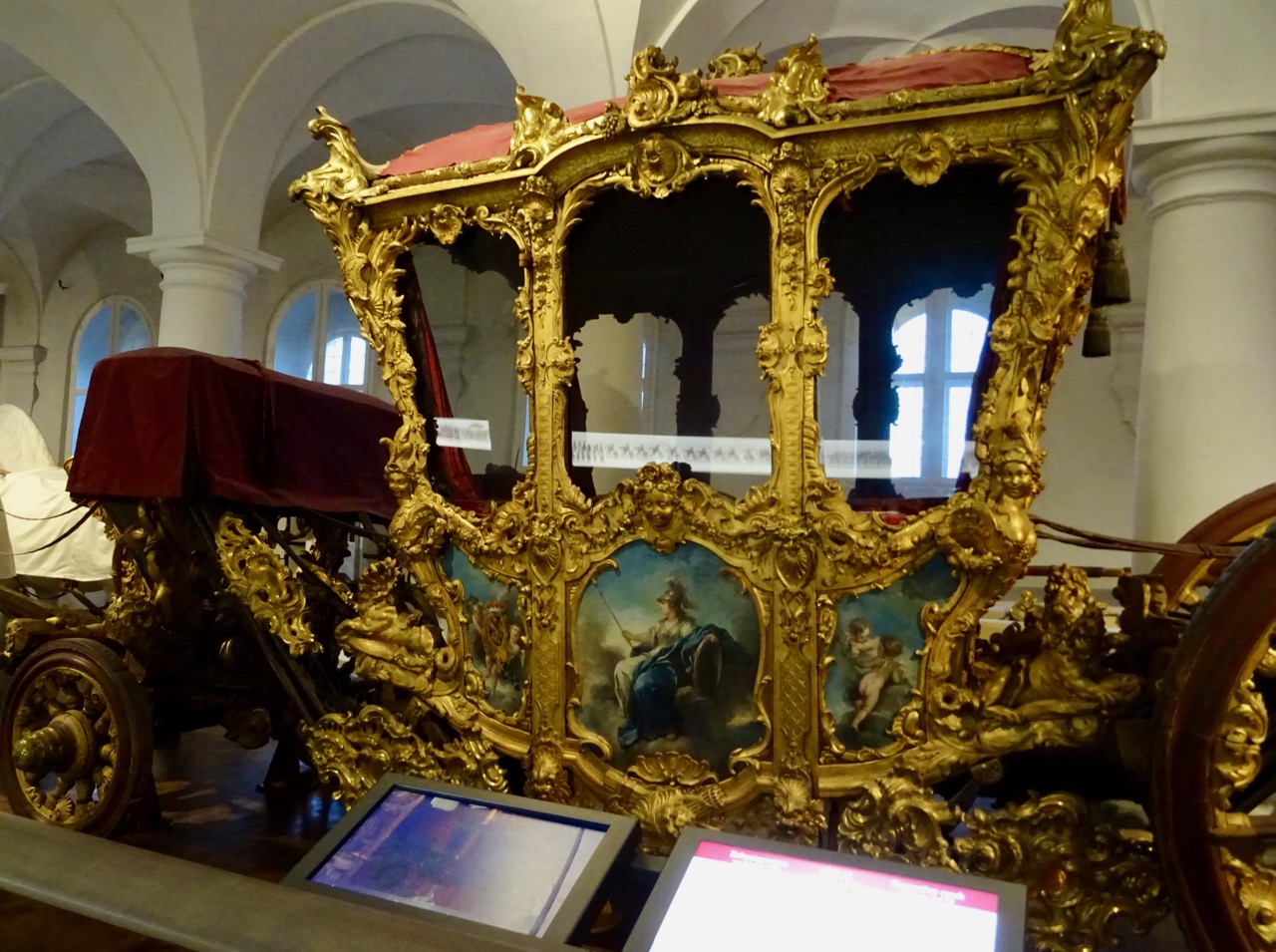
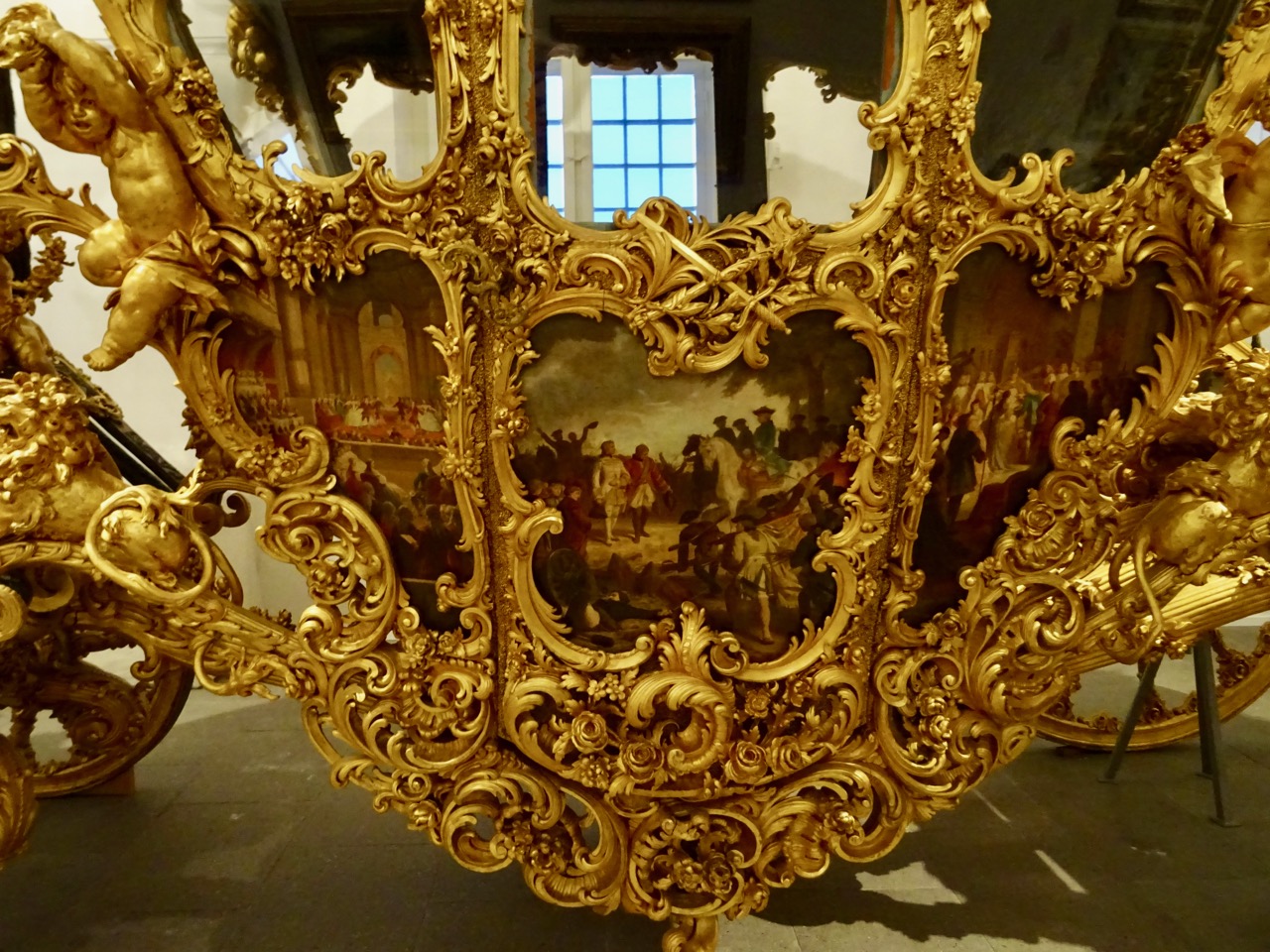 We can only begin to imagine how much these coaches cost!
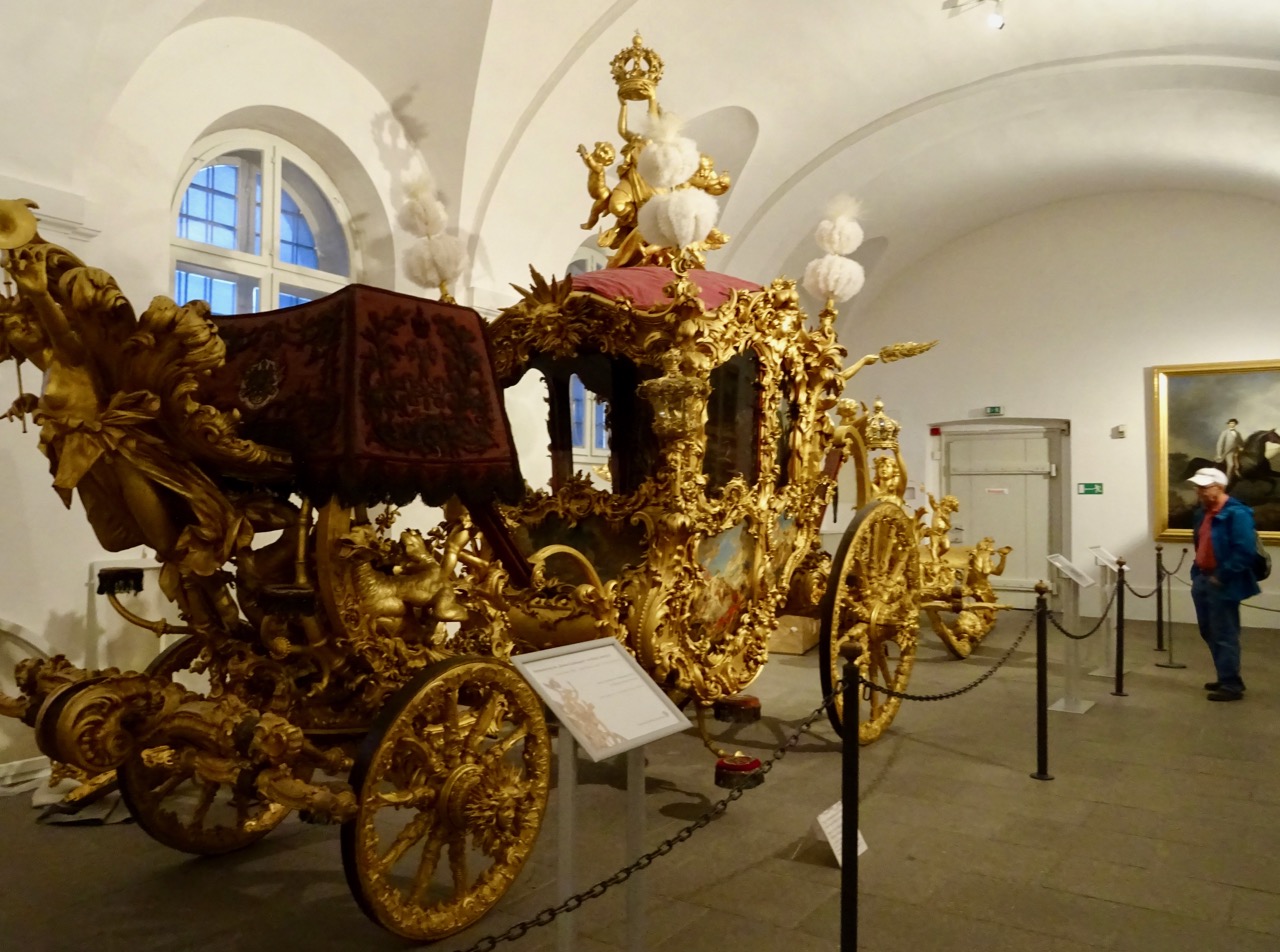 Besides dozens of coaches there are numerous sleighs on display.
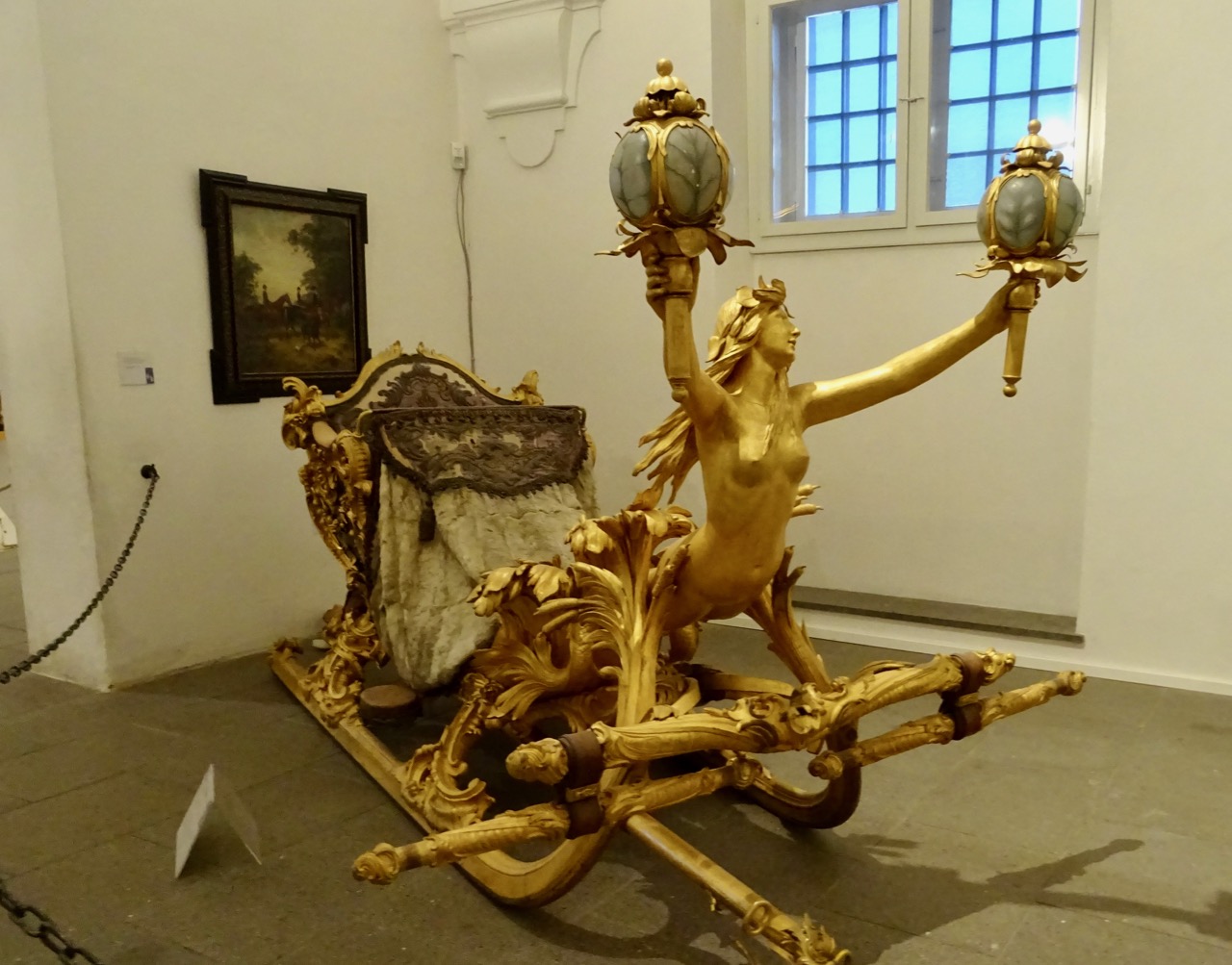 Parades and competitive games with these carousel sleighs were a popular winter amusement at court. Women would sit in front of a male driver and try to hit rings or paper maché figures with a lance or sword. Notice the rear view of the sleigh in the mirror.
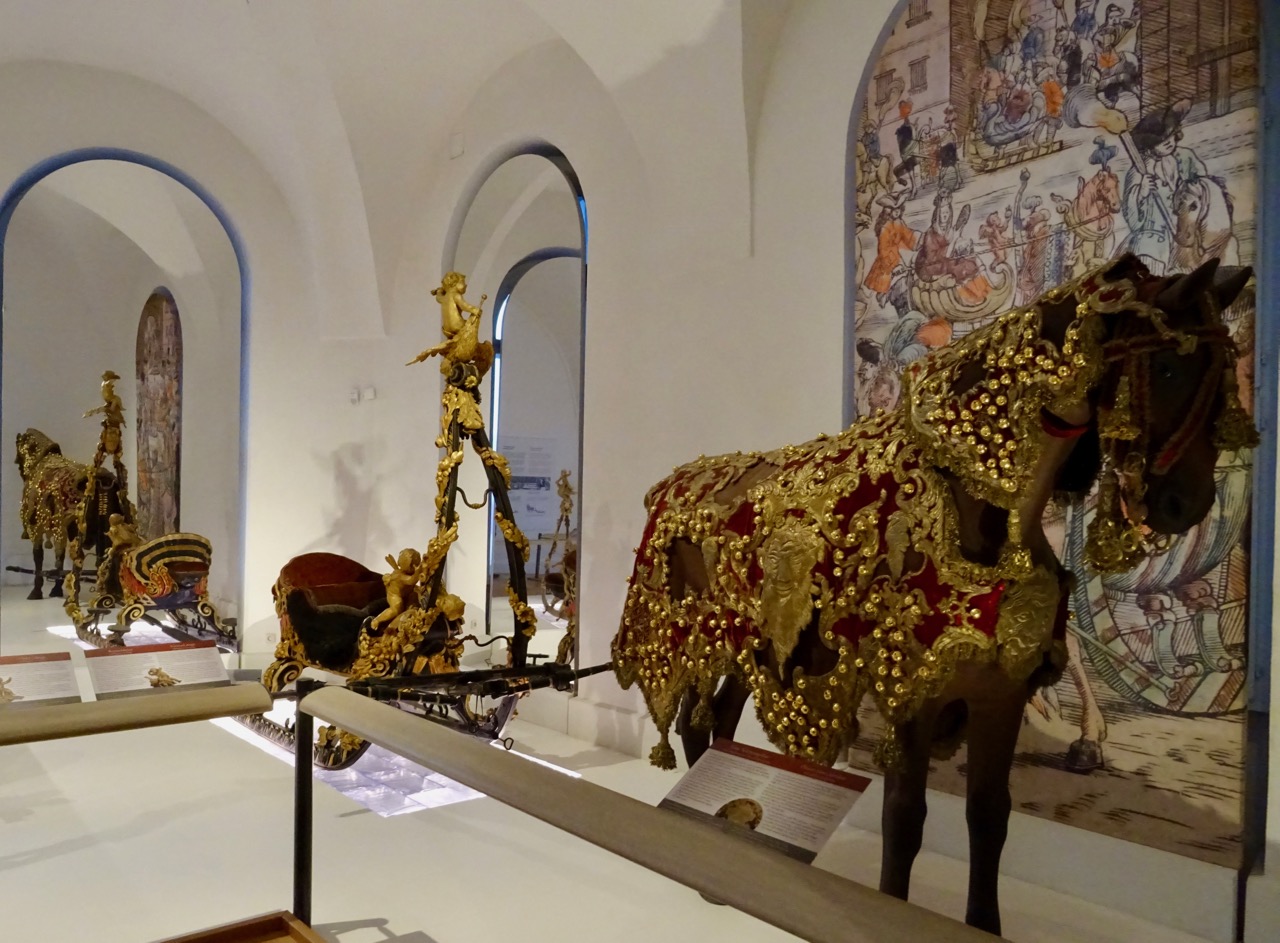 Just a few of the many coaches on display in one of the halls.
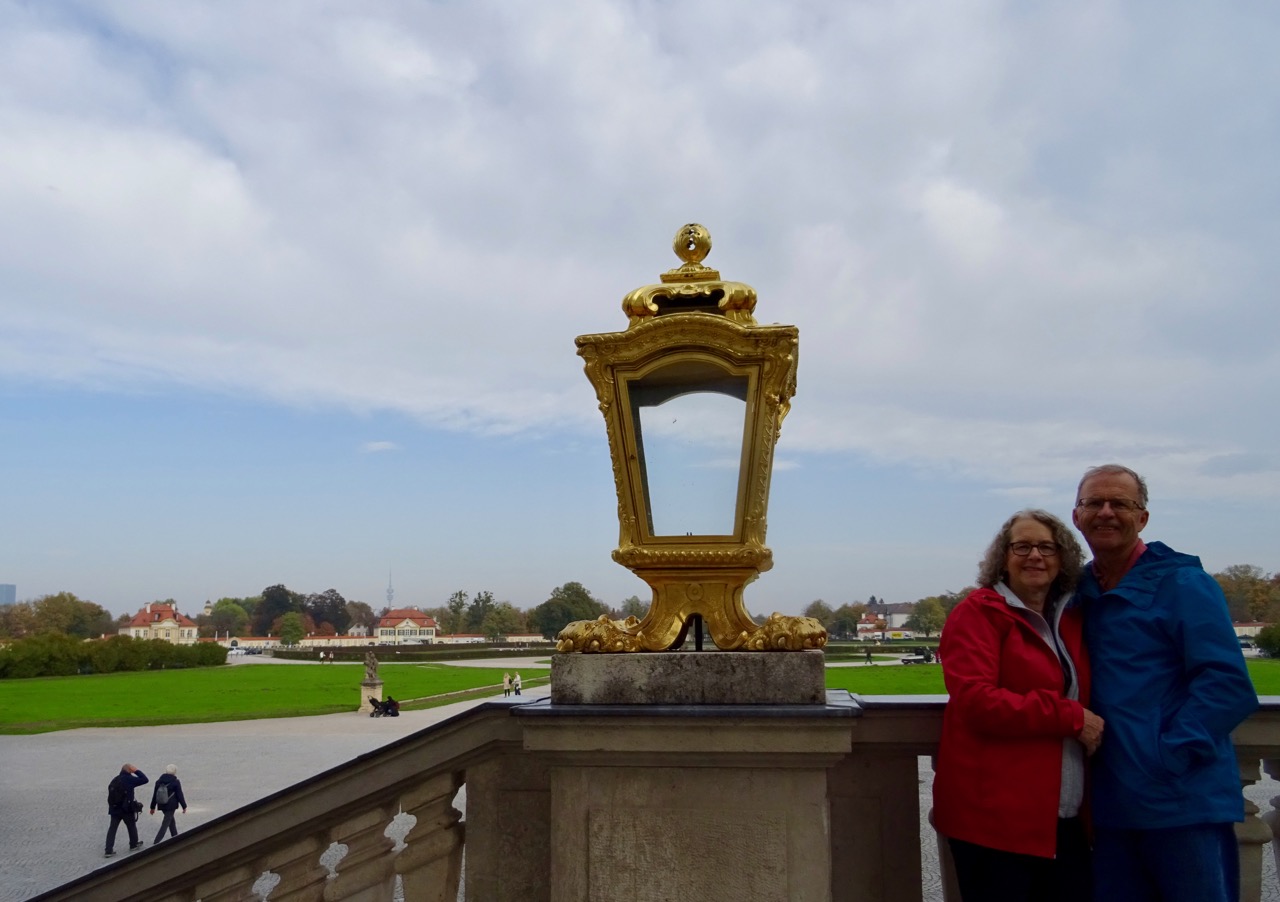
 One last selfie before we leave.
 and one last look back towards the front of the Palace…
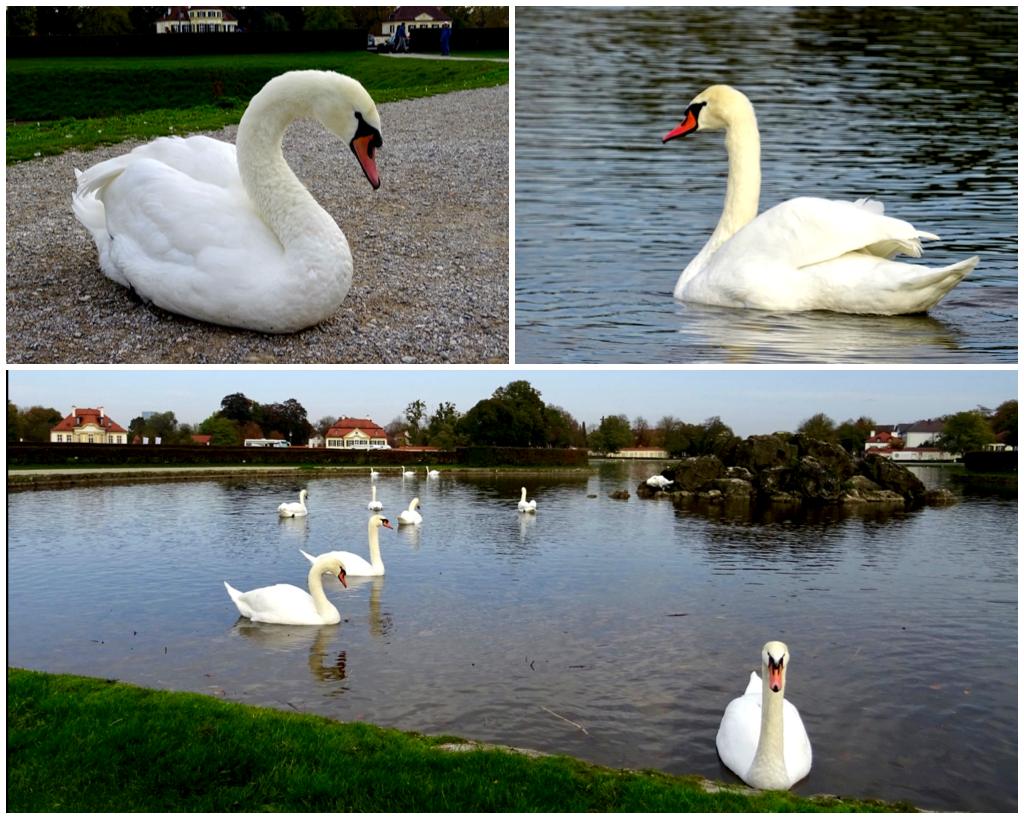
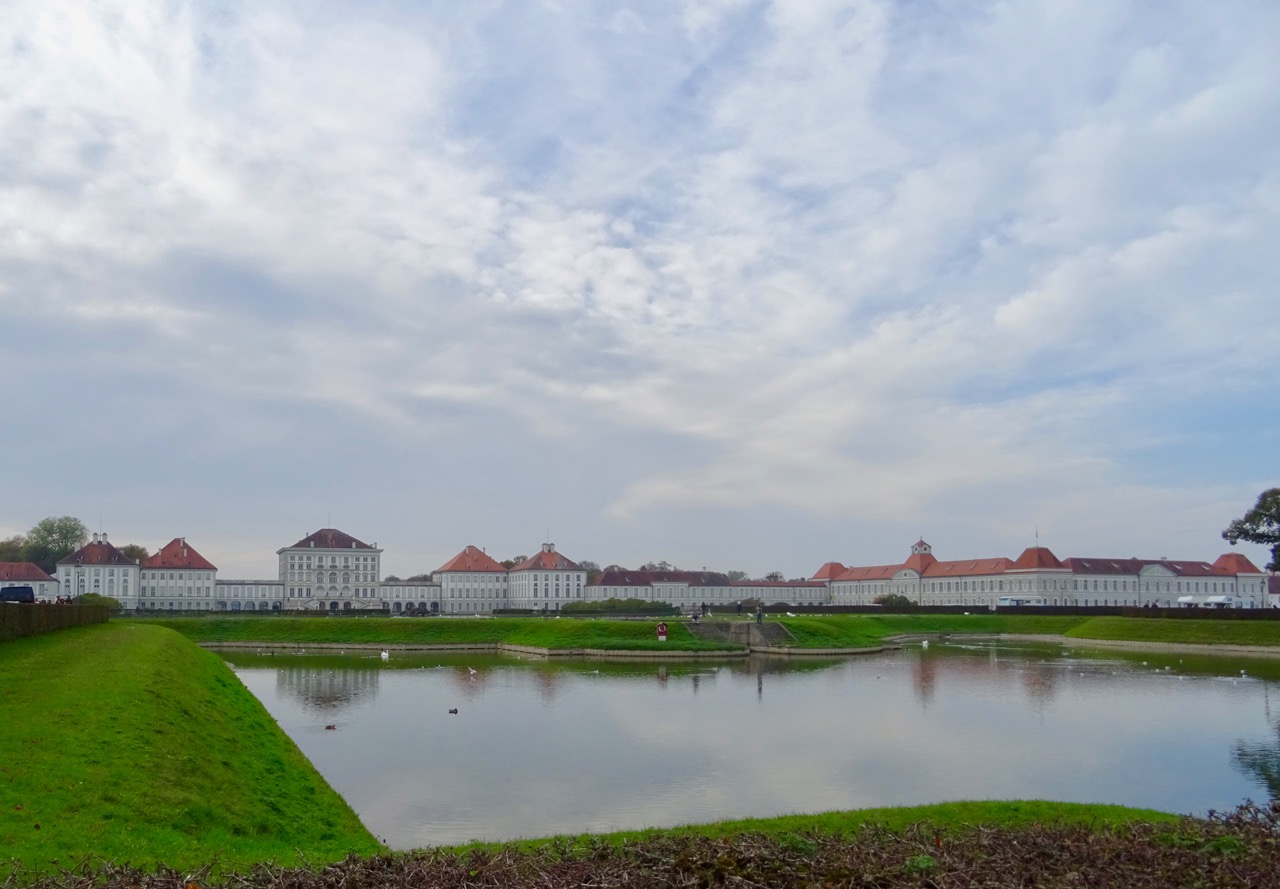 with a photo stop at the swans.
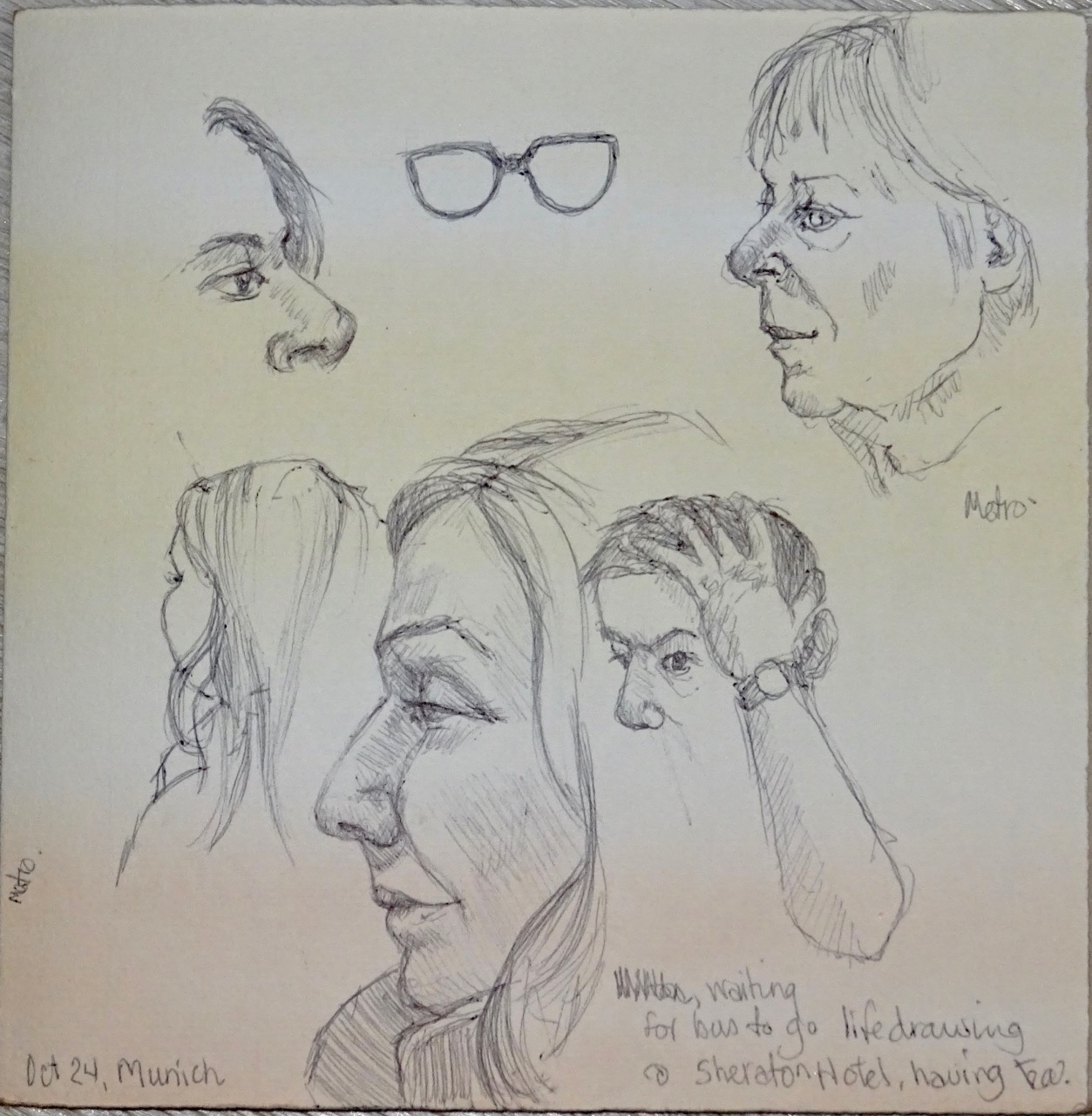
 I have life drawing tonight, so we head toward the metro and after checking out my route, Bob heads for home and I head towards my drawing session. I have a bit of time so I sit at the Sheraton Hotel having a cup of tea and doing a bit of sketching.
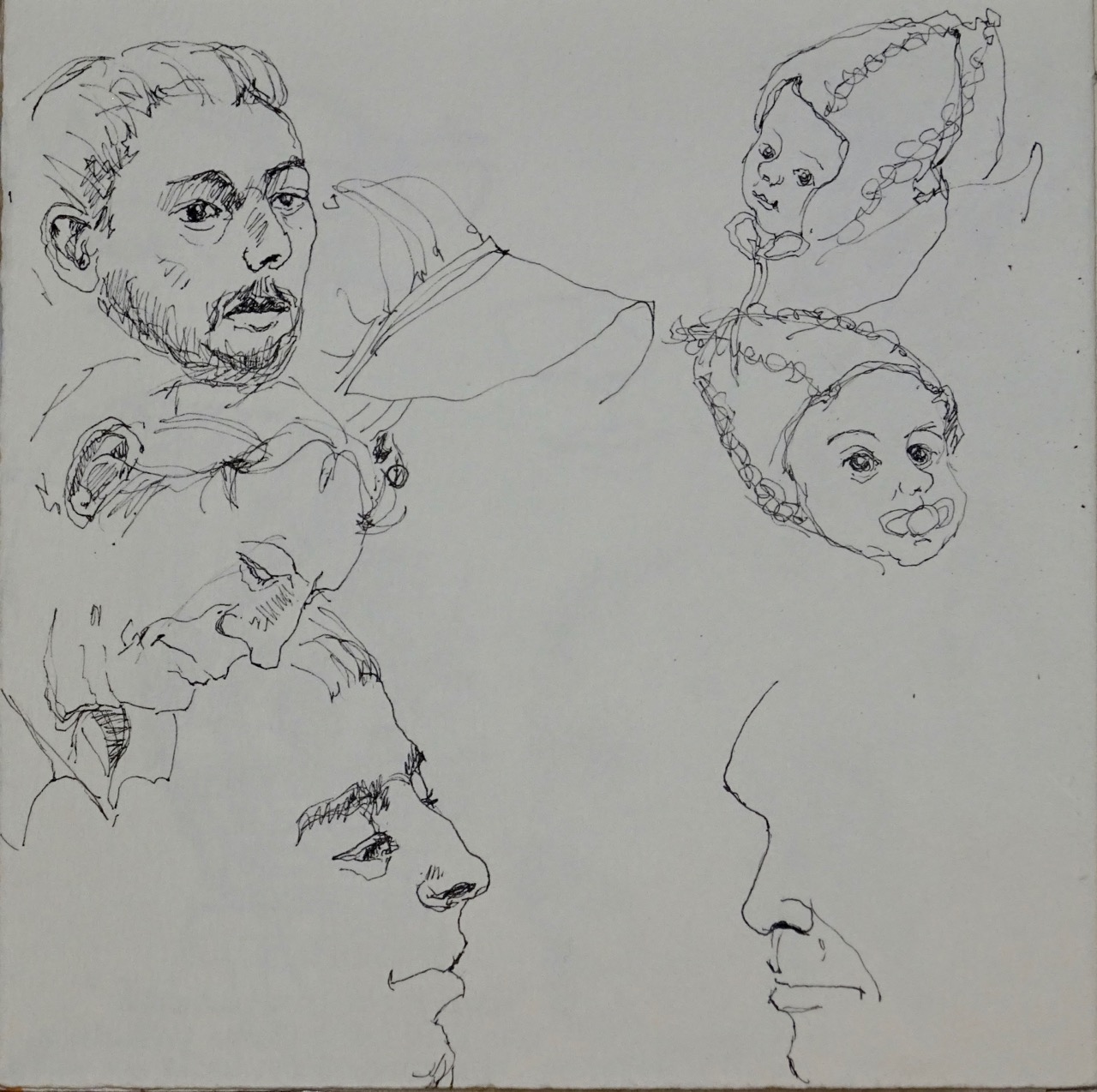 These were a bit better.
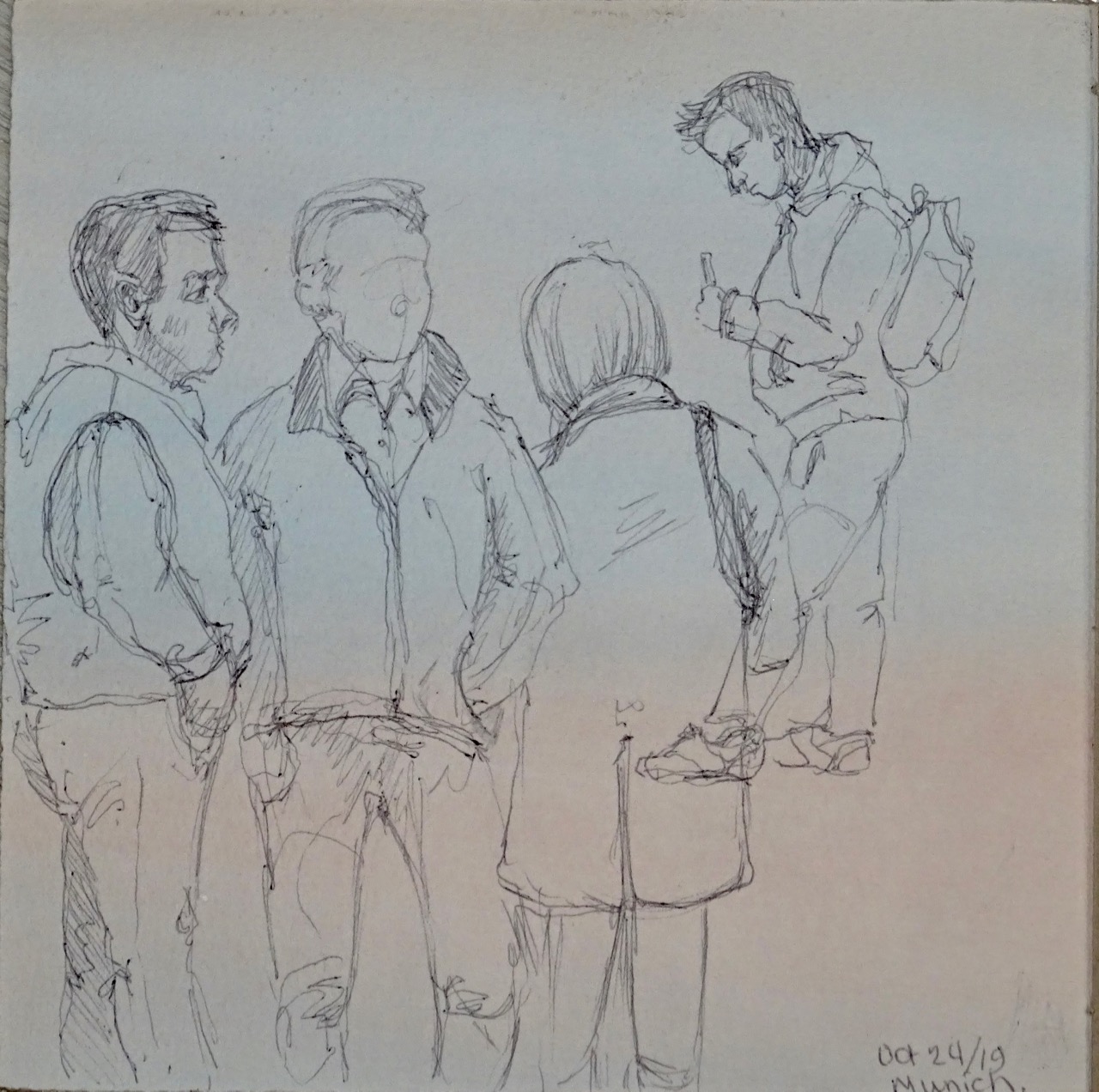 Sketches from the Sheraton Hotel.
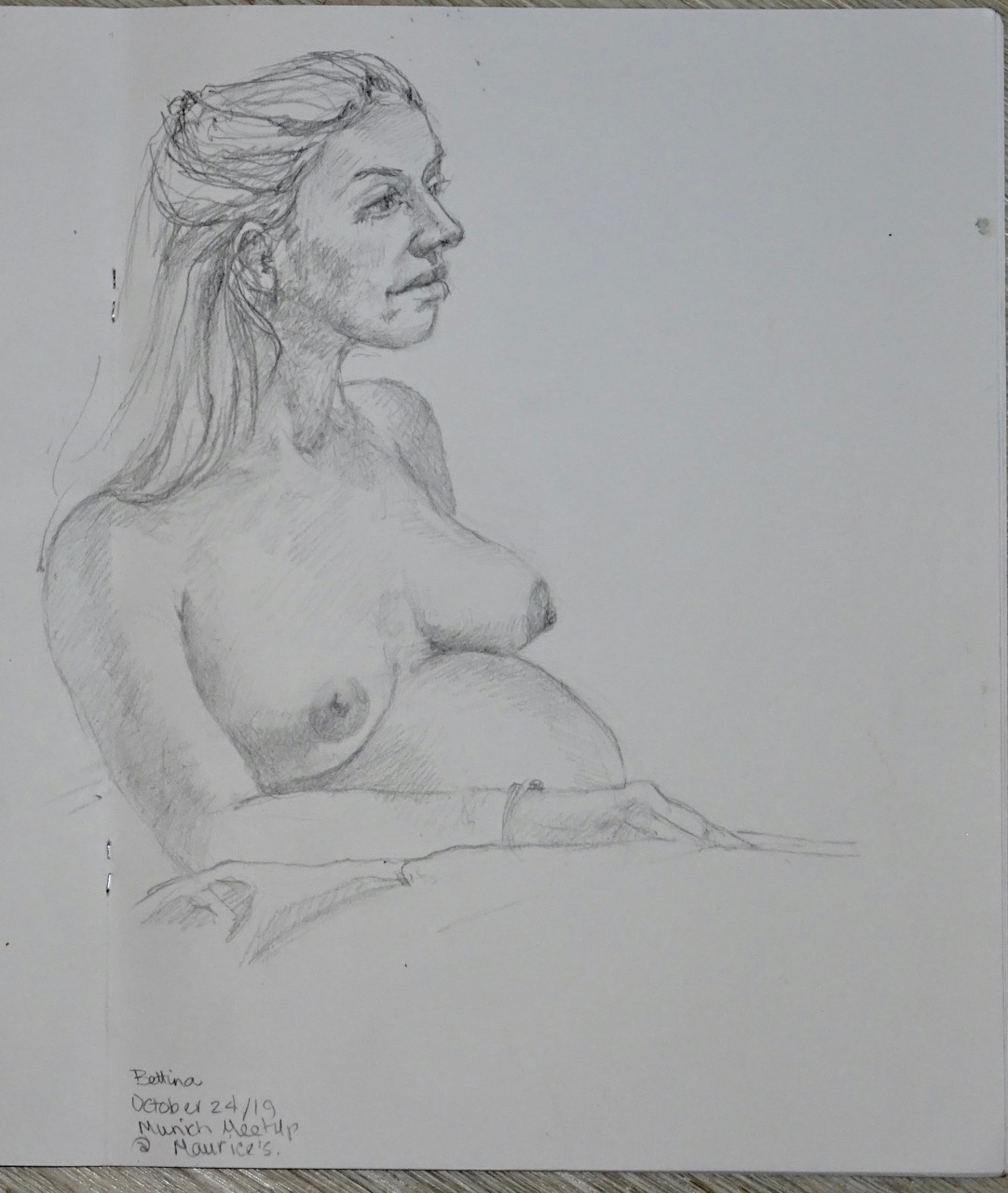
 My first drawing at the Meetup session. Still having some issues with proportions and the head placement in relation to the body.
 I started again after our break and did this portrait which was better. Bettina, our model, really liked it and said that it looked like her.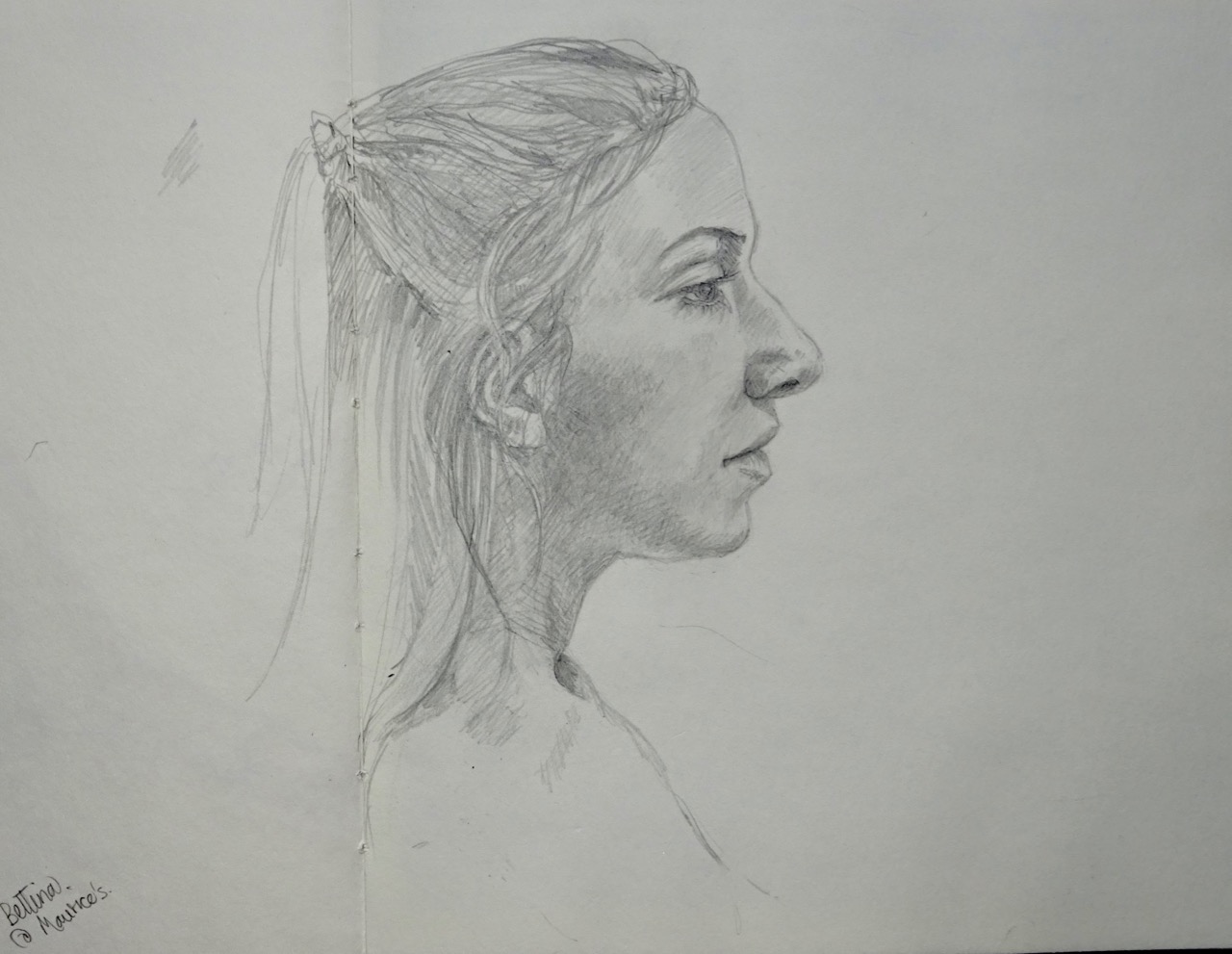
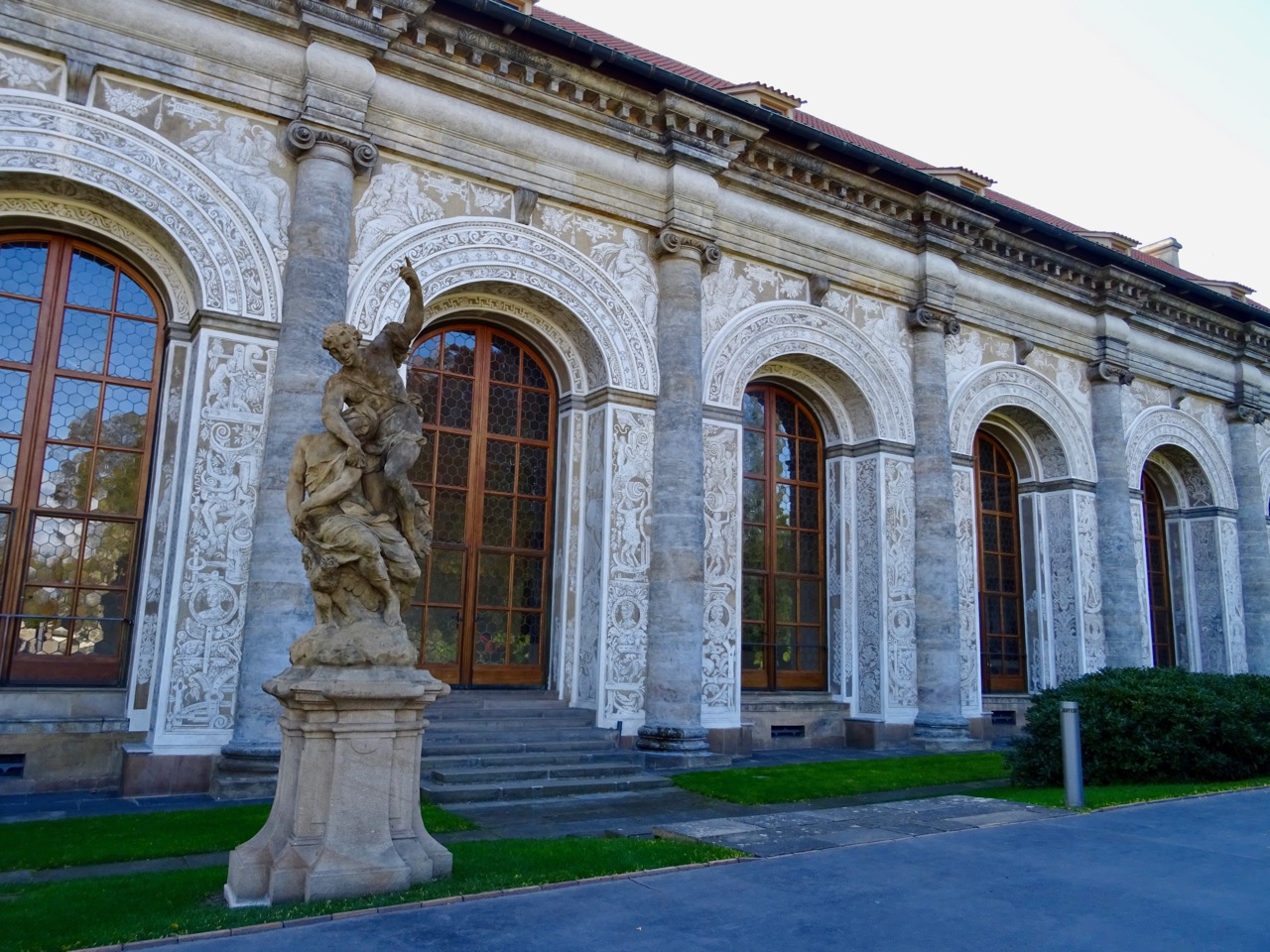 We had a good laugh. Bob thought that the two guards in the guard-boxes were wax mannequins. They were so motionless!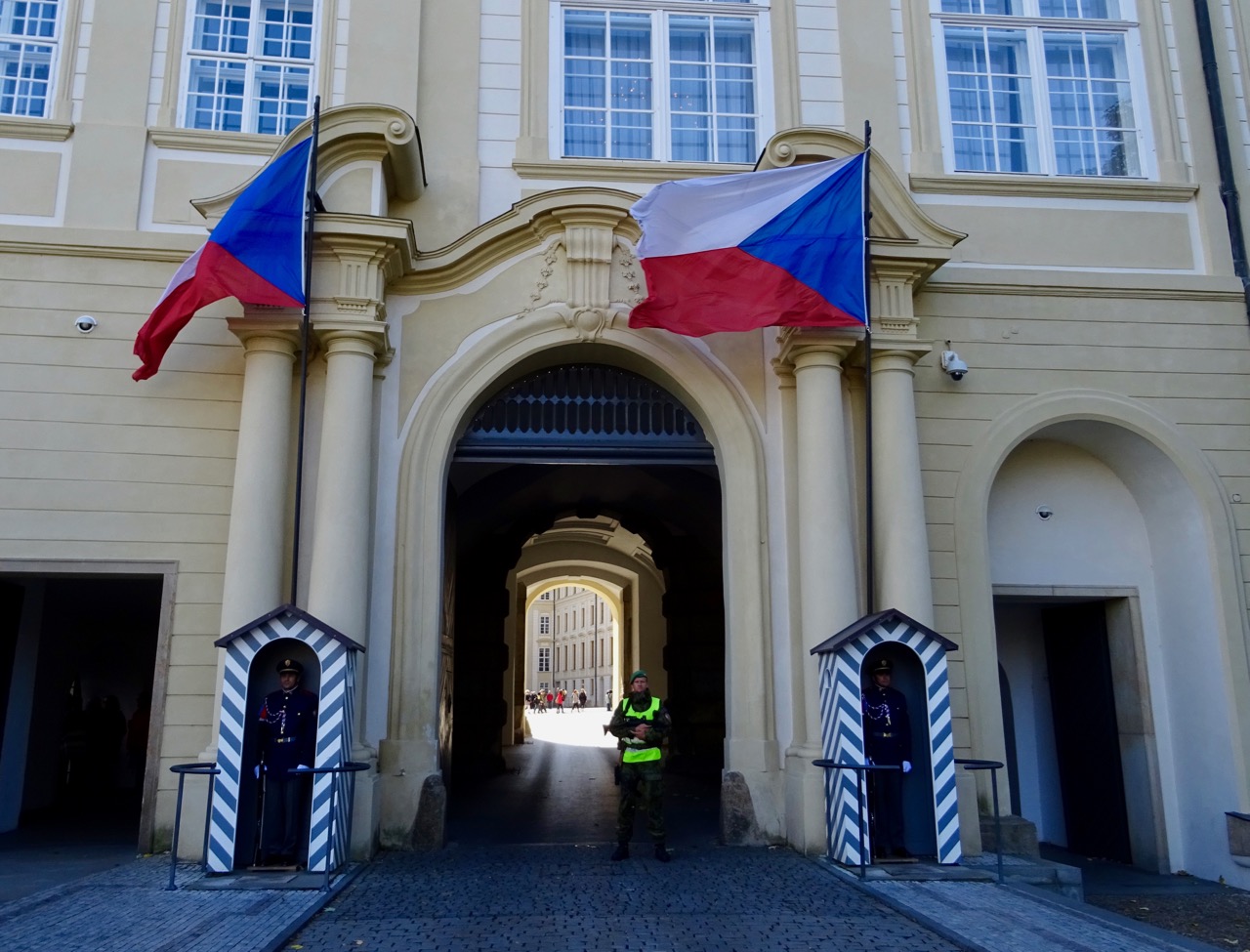
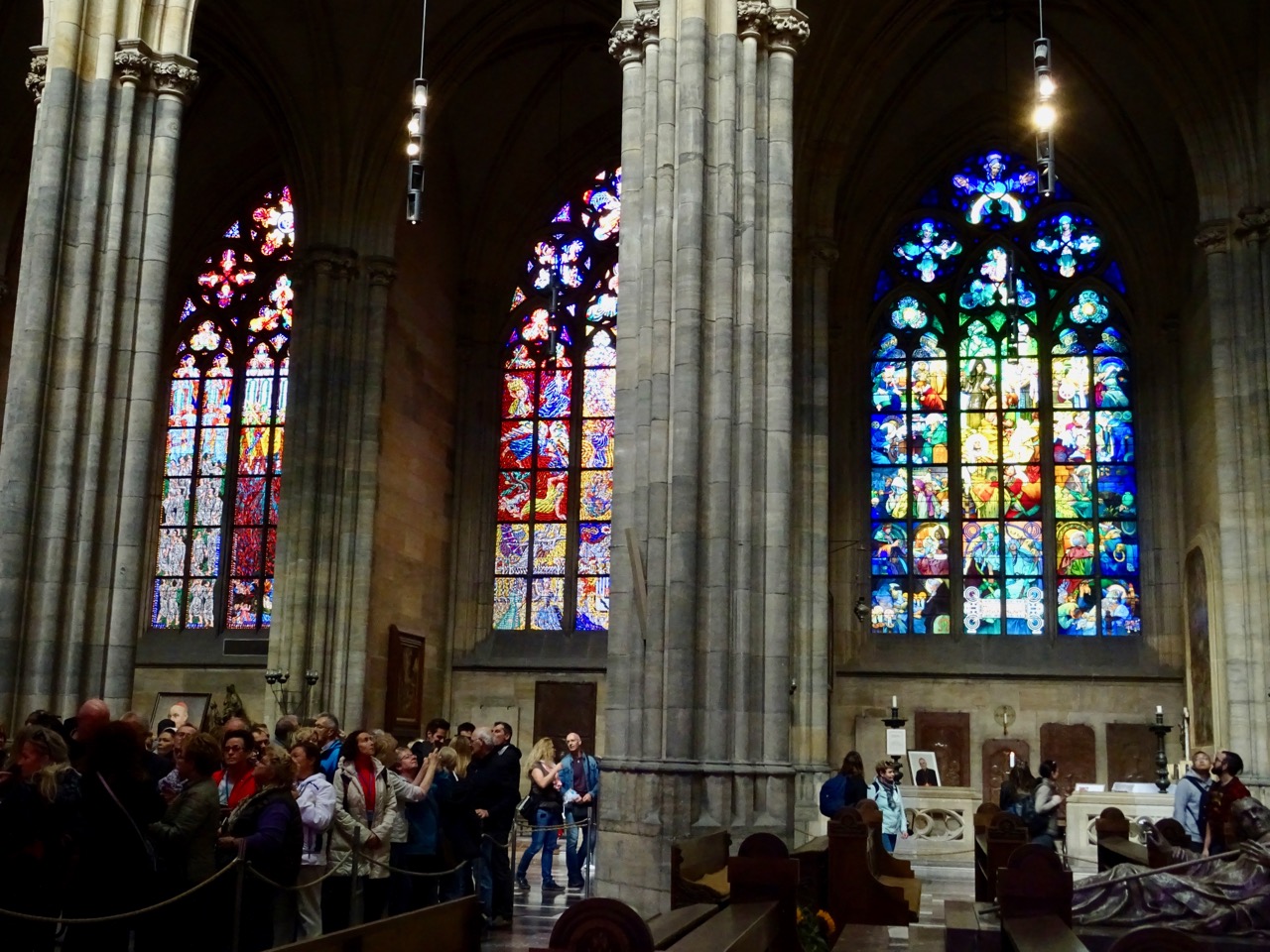
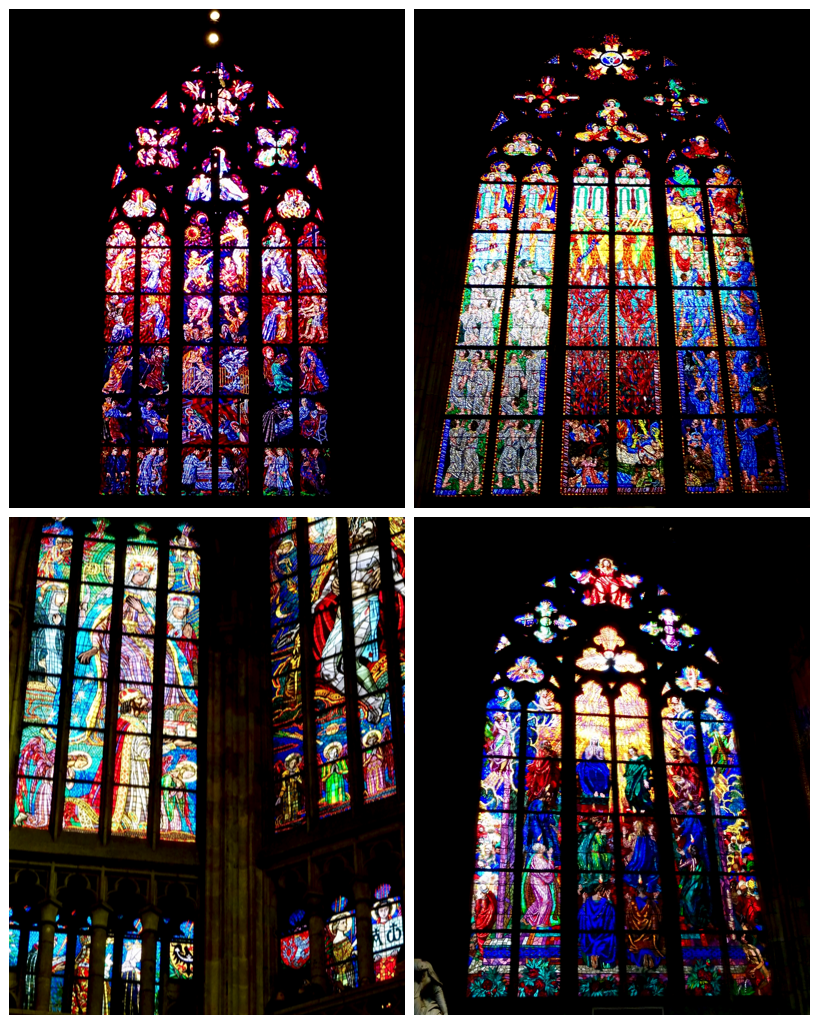
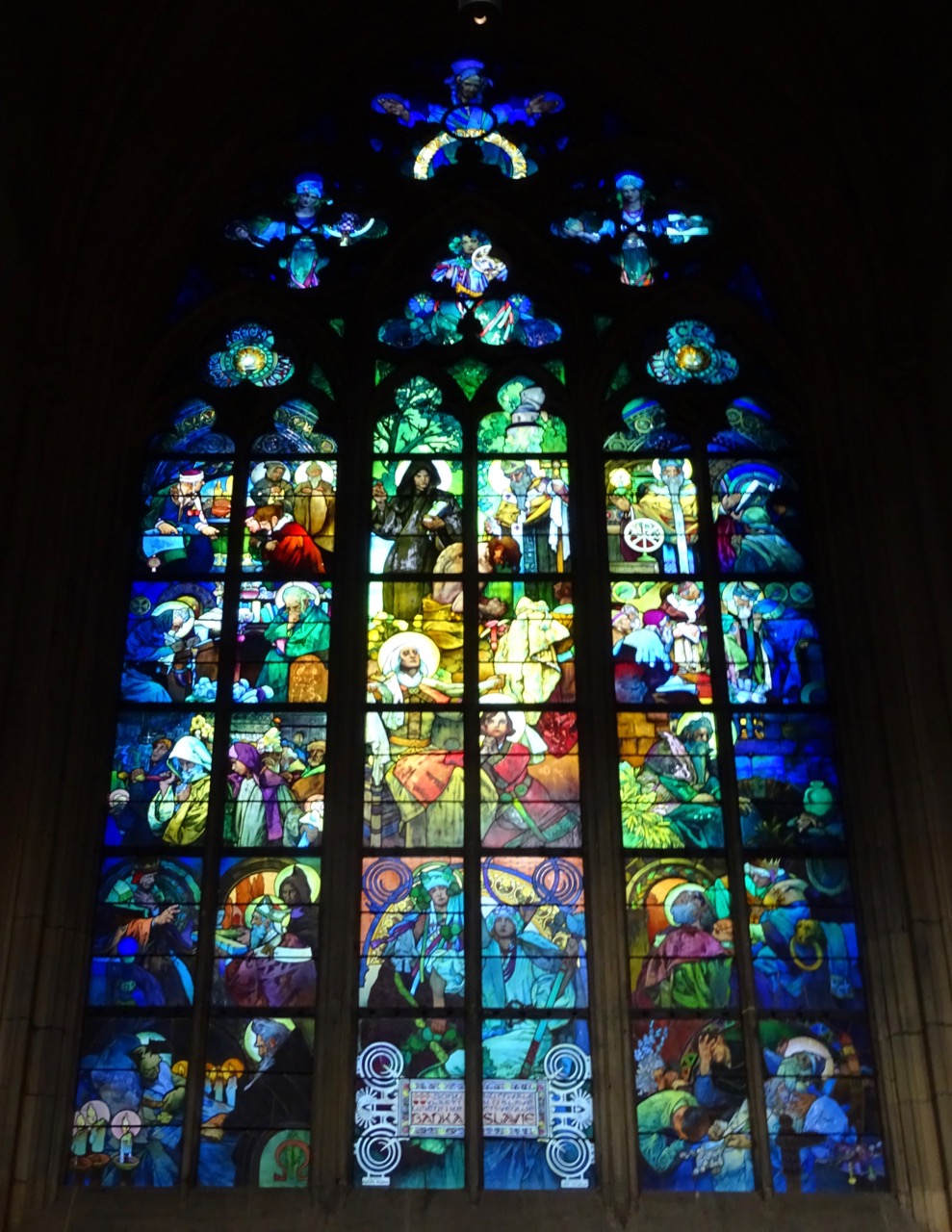
 Perhaps my favourite is the window designed by Alphonse Mucha. You may remember we saw his design drawing for this window at the Mucha Museum yesterday.
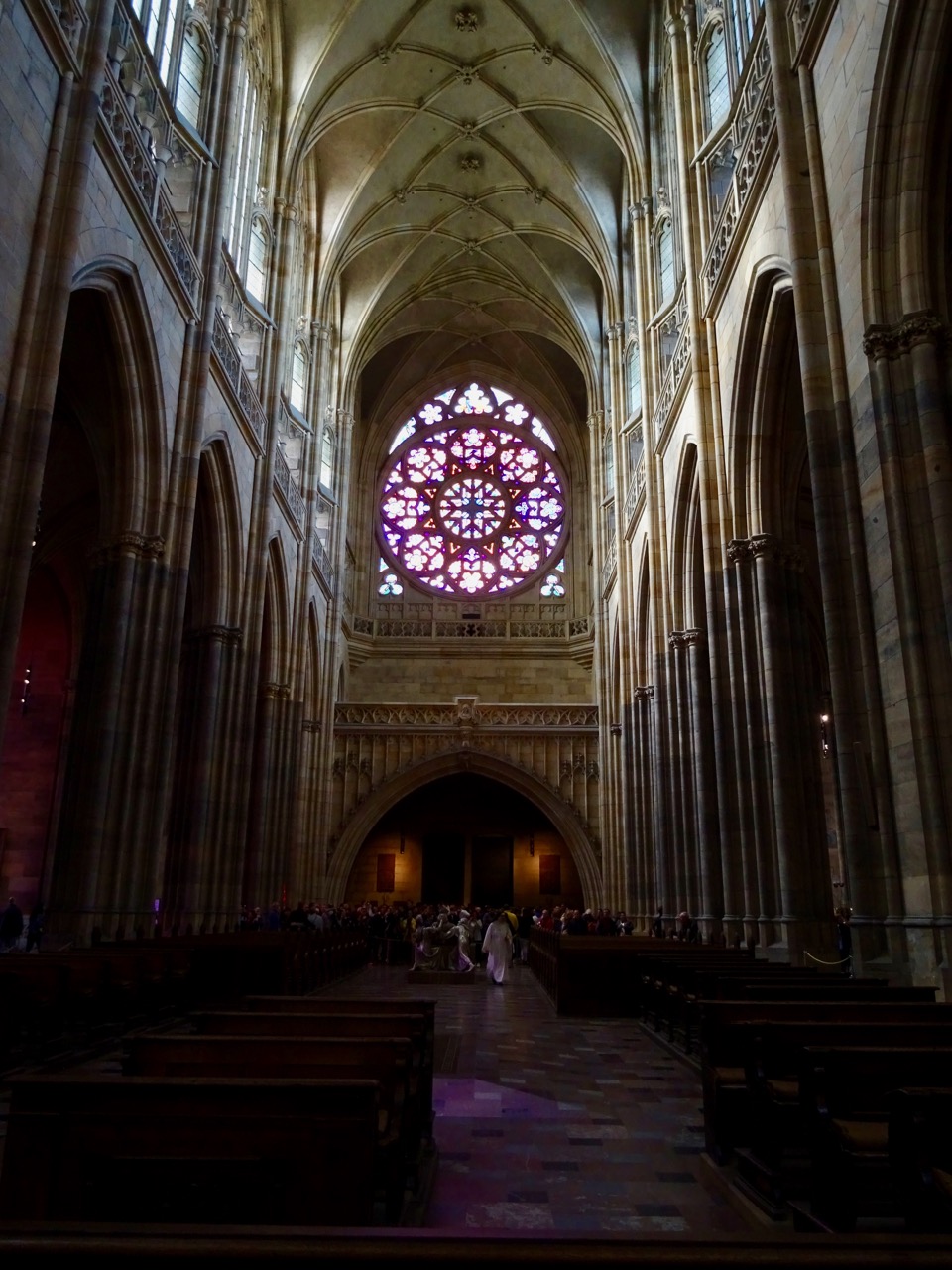
 The beautiful rose window on the entrance wall of the cathedral was completed in 1925 and took two years to complete. The inscriptions on the stained glass tell the story of Creation as told in the Bible.
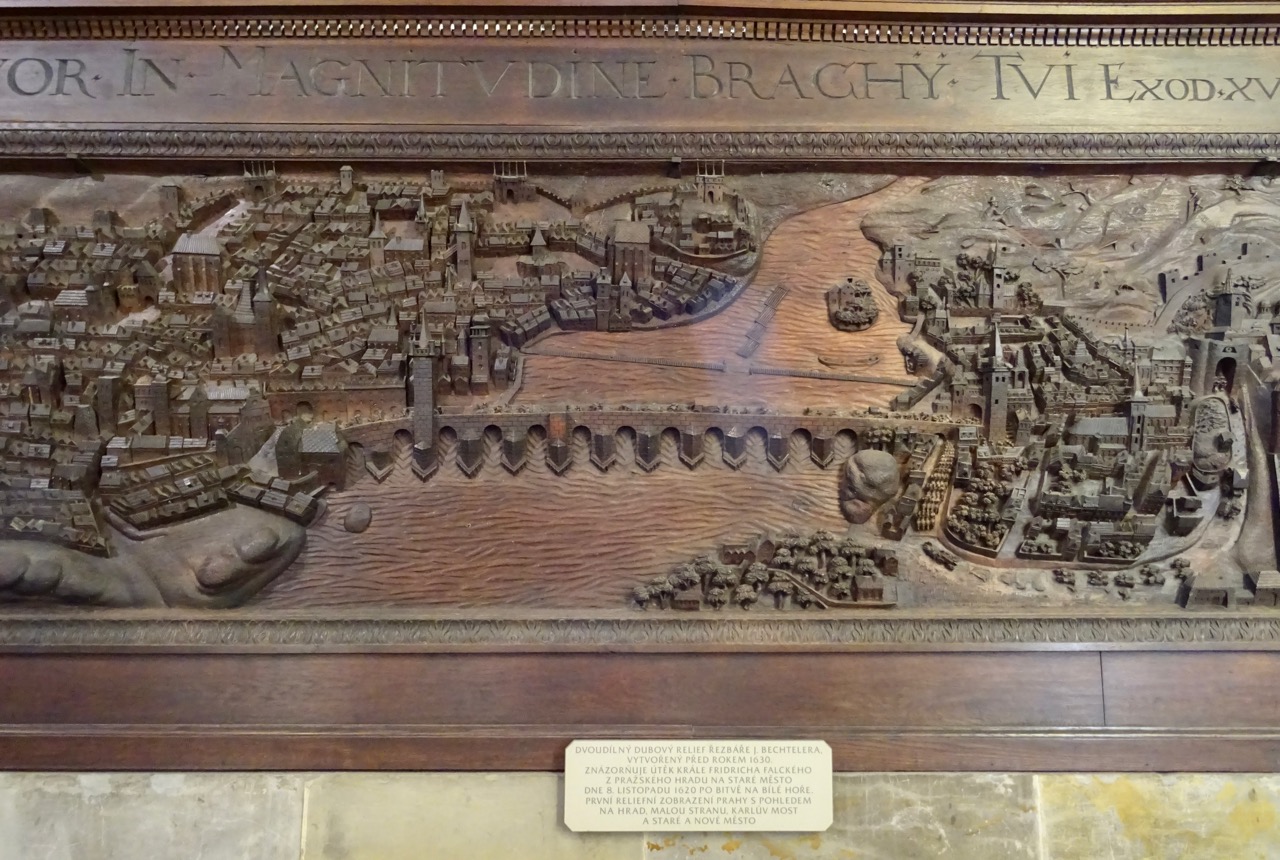
  This wooden panel from 1630 shows the St. Charles Bridge, built in 1403, that we visited on Saturday. The city doesn’t really look all that different, does it?
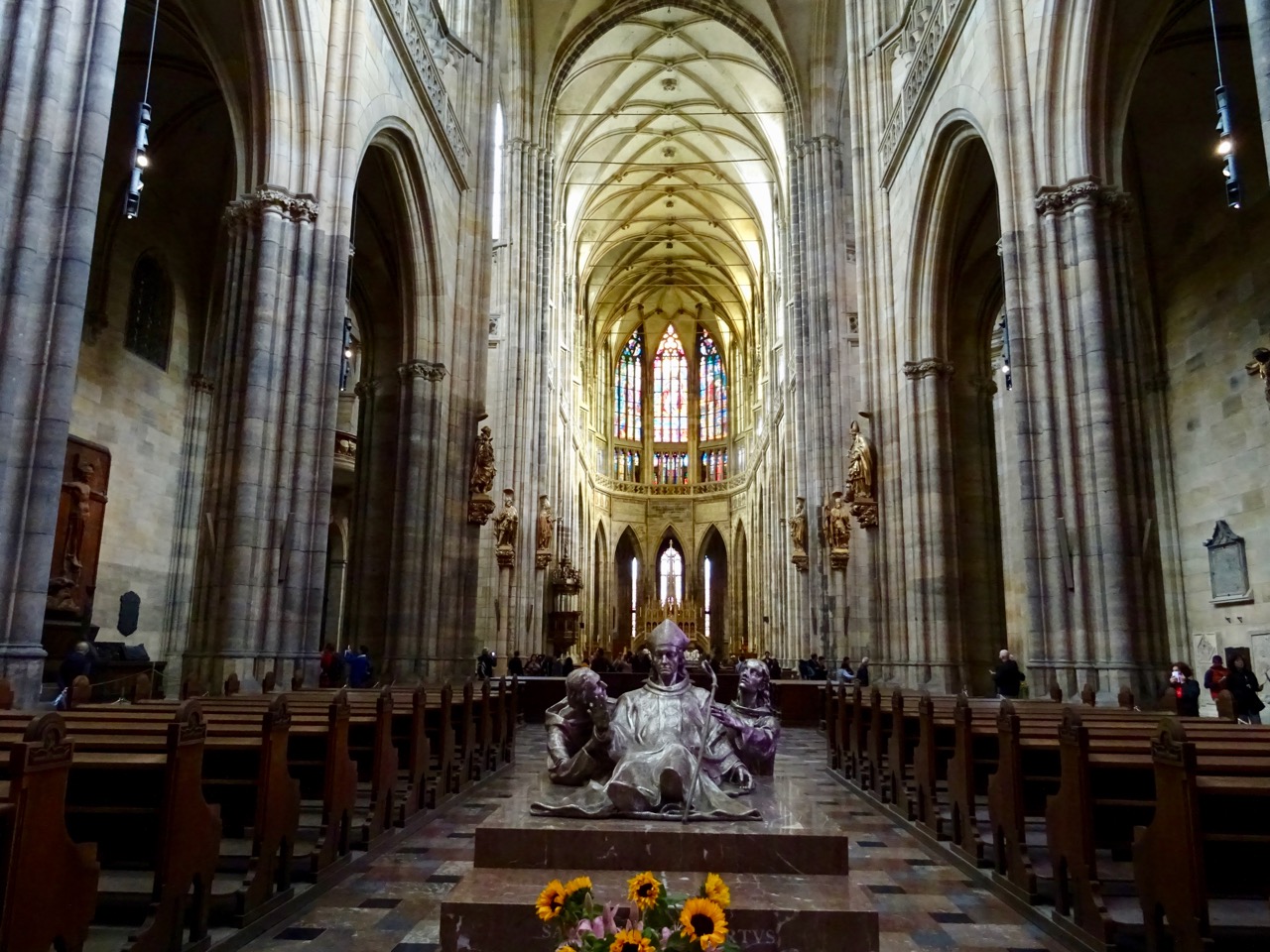
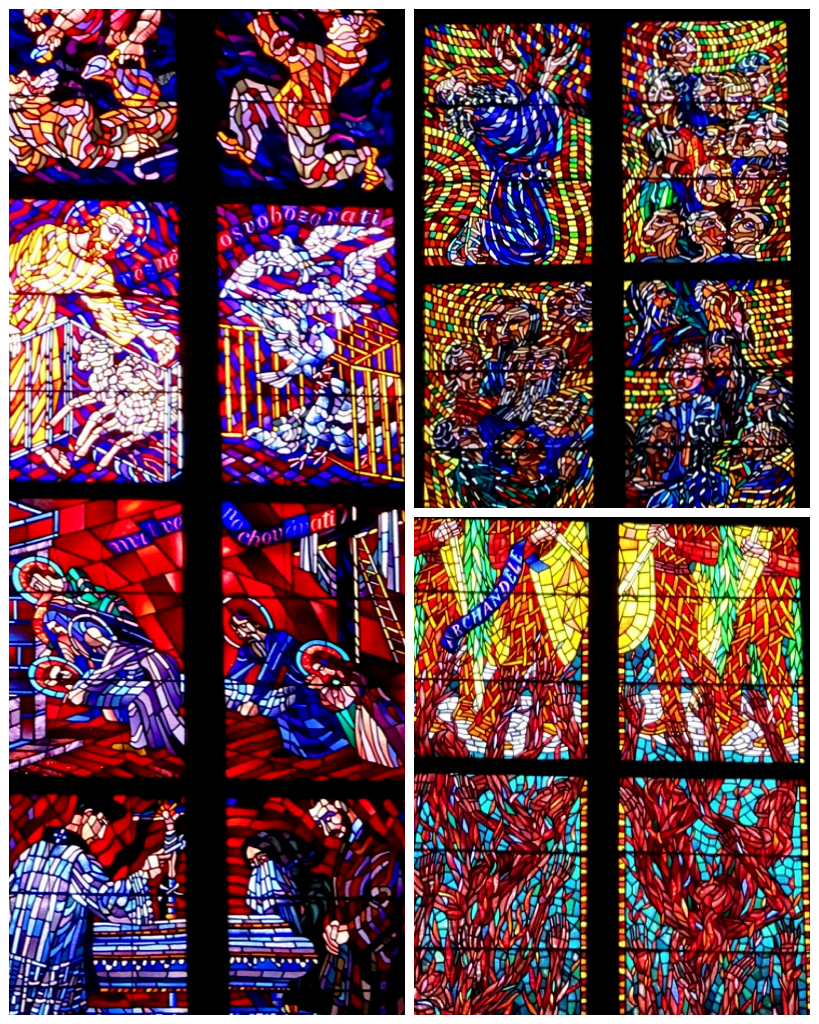
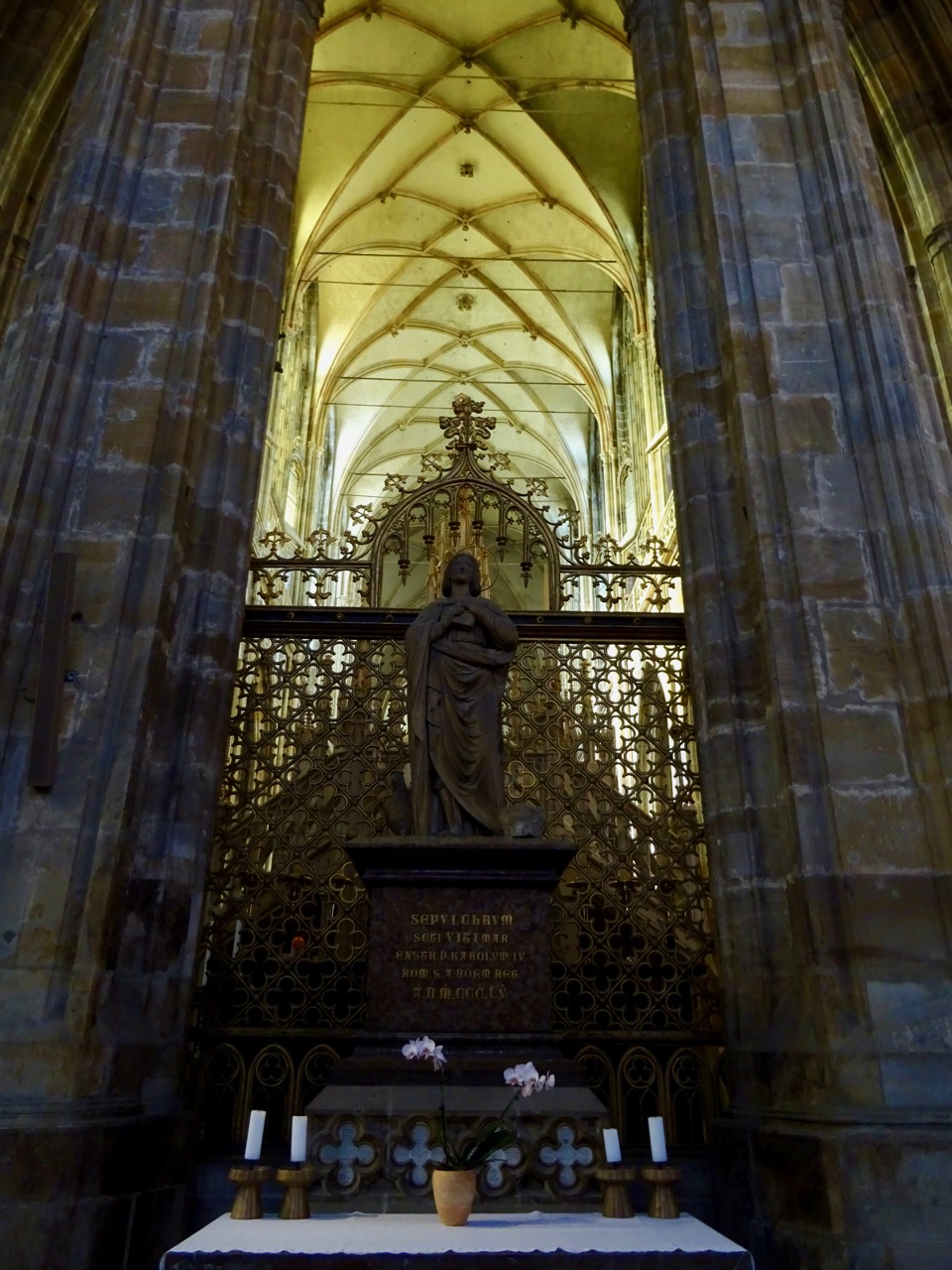
 St. Vitus is portrayed with a rooster by his side, because he was boiled to death in a pot with a rooster! These saints all seem to have had horrible tortuous deaths. St. Vitus never actually even visited this cathedral, but a relic, or pieces of his body, was brought here and the Cathedral was built to honour him.
 St John of Nepomuk’s tomb is an elaborate baroque silver tomb with angels supporting a draped canopy. It is said to contain two tonnes of silver. St. John is the patron saint of the Czechs. There are so many people visiting this cathedral that I had to take this photo looking back towards the tomb to get a decent shot.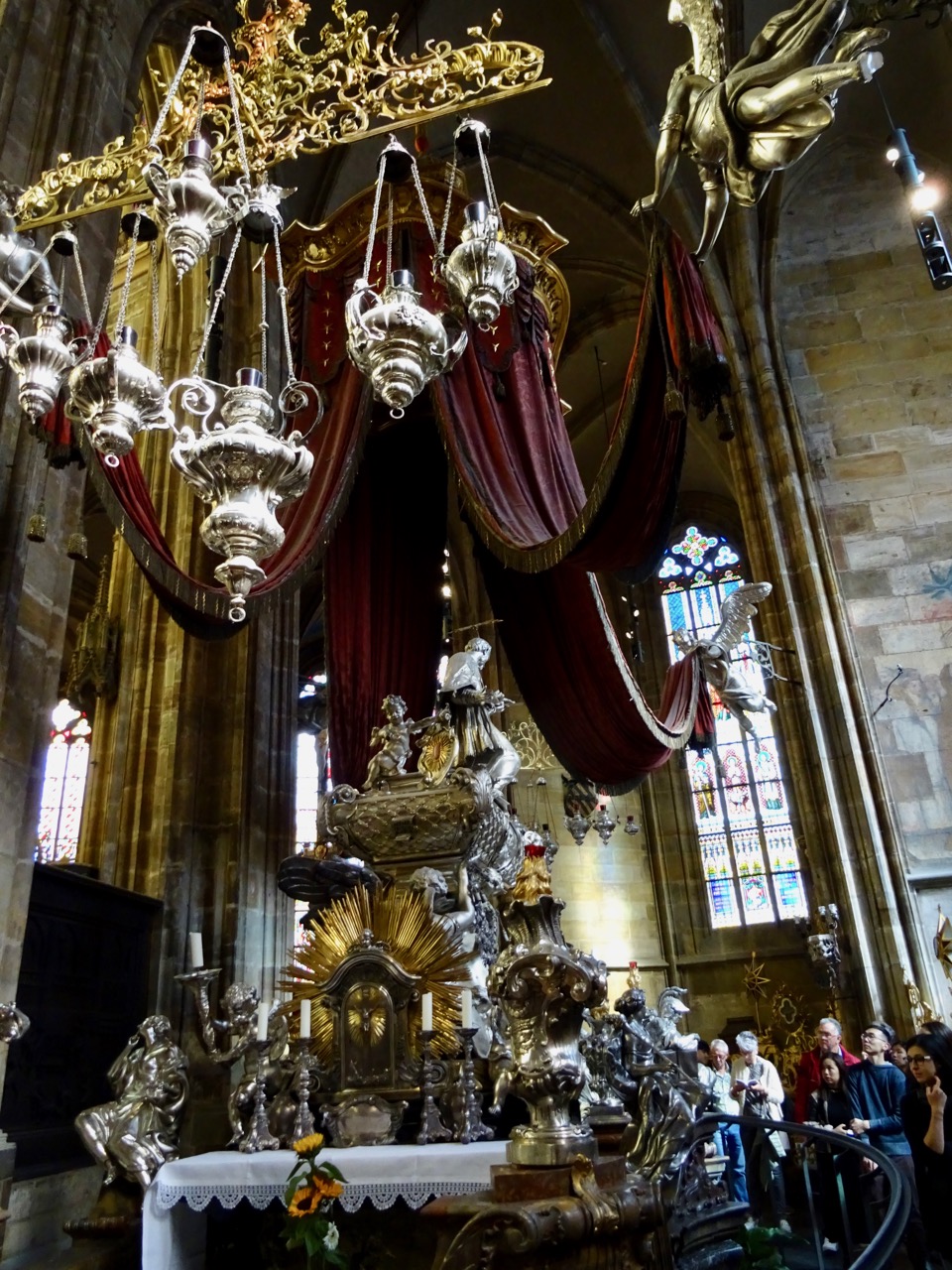
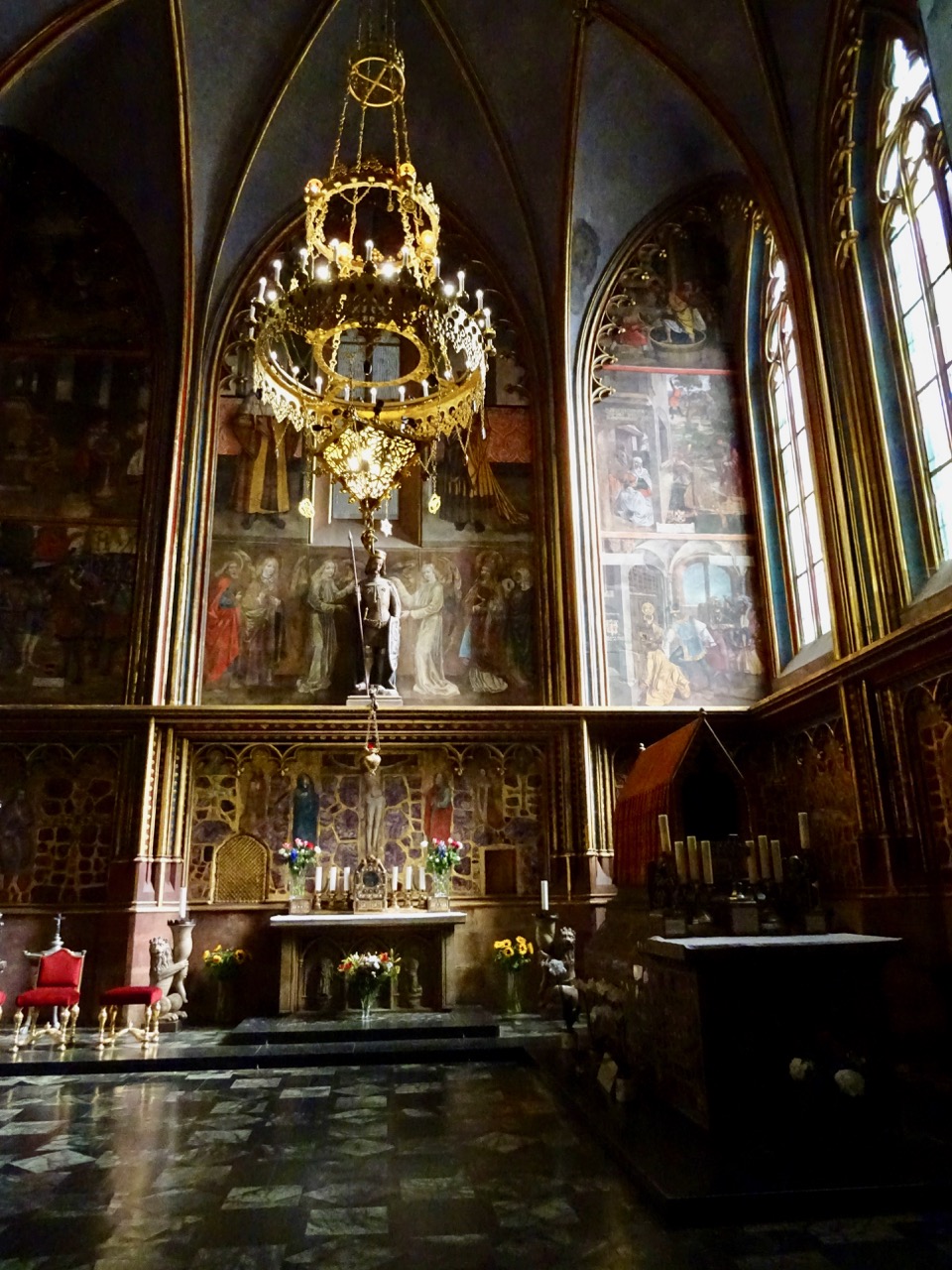
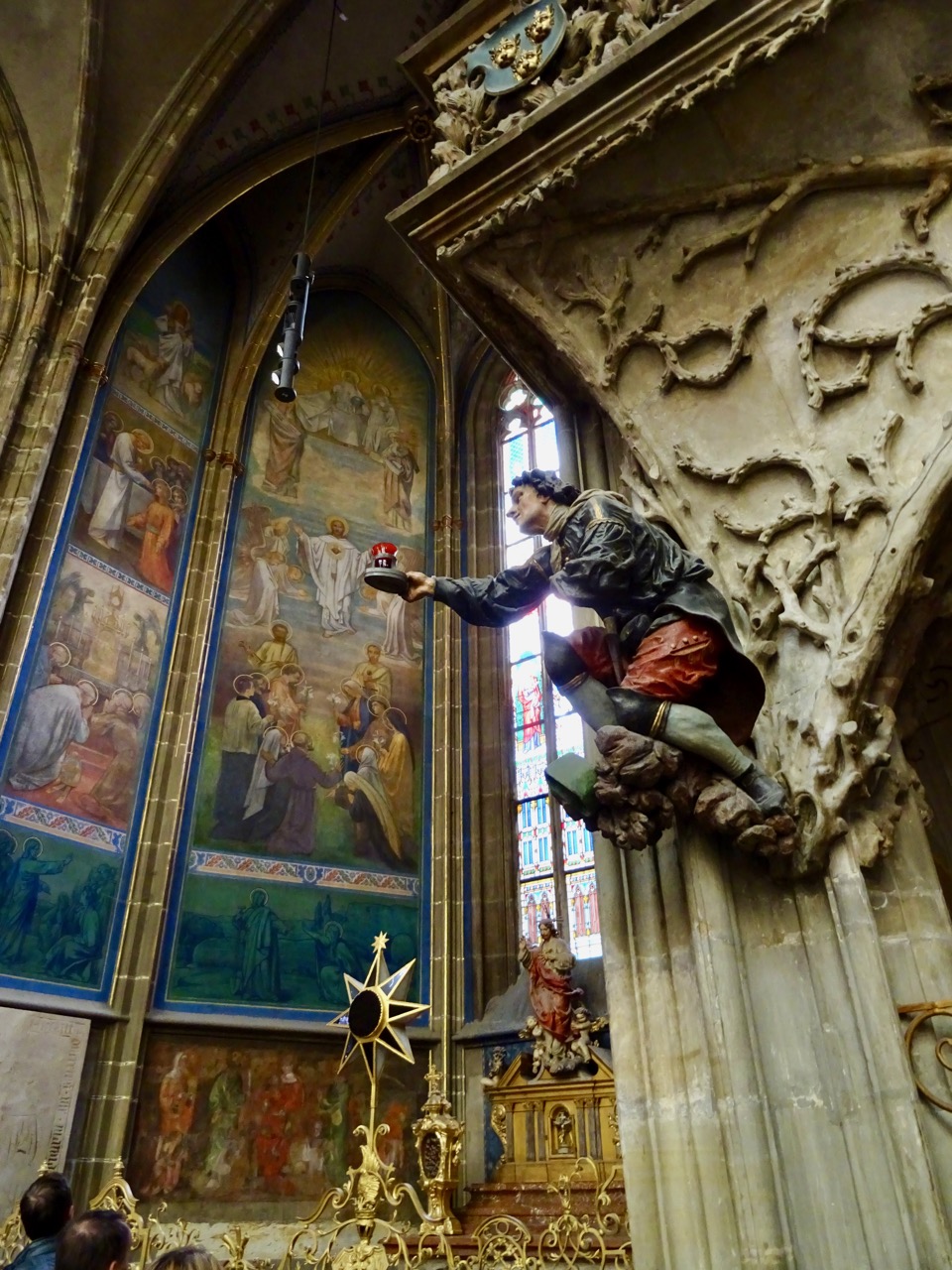 This is the chapel dedicated to St. Wenceslas, the king and patron saint of all the Czech lands. The lower part of the walls are decorated with more than 1300 gems and the joints between them are covered with gold. The walls are covered in frescoes and the relics of St. Wenceslas are kept in the red draped case.
  As we are leaving, the sun comes out for a bit and shines through the stained glass windows casting coloured light into the cathedral. Note the lady posing behind Bob. We seem to see her everywhere we go today and she is always posing ‘just so’ for a photo. I’m not sure her and her husband are even looking at the cathedral as anything but a backdrop for her photographs.
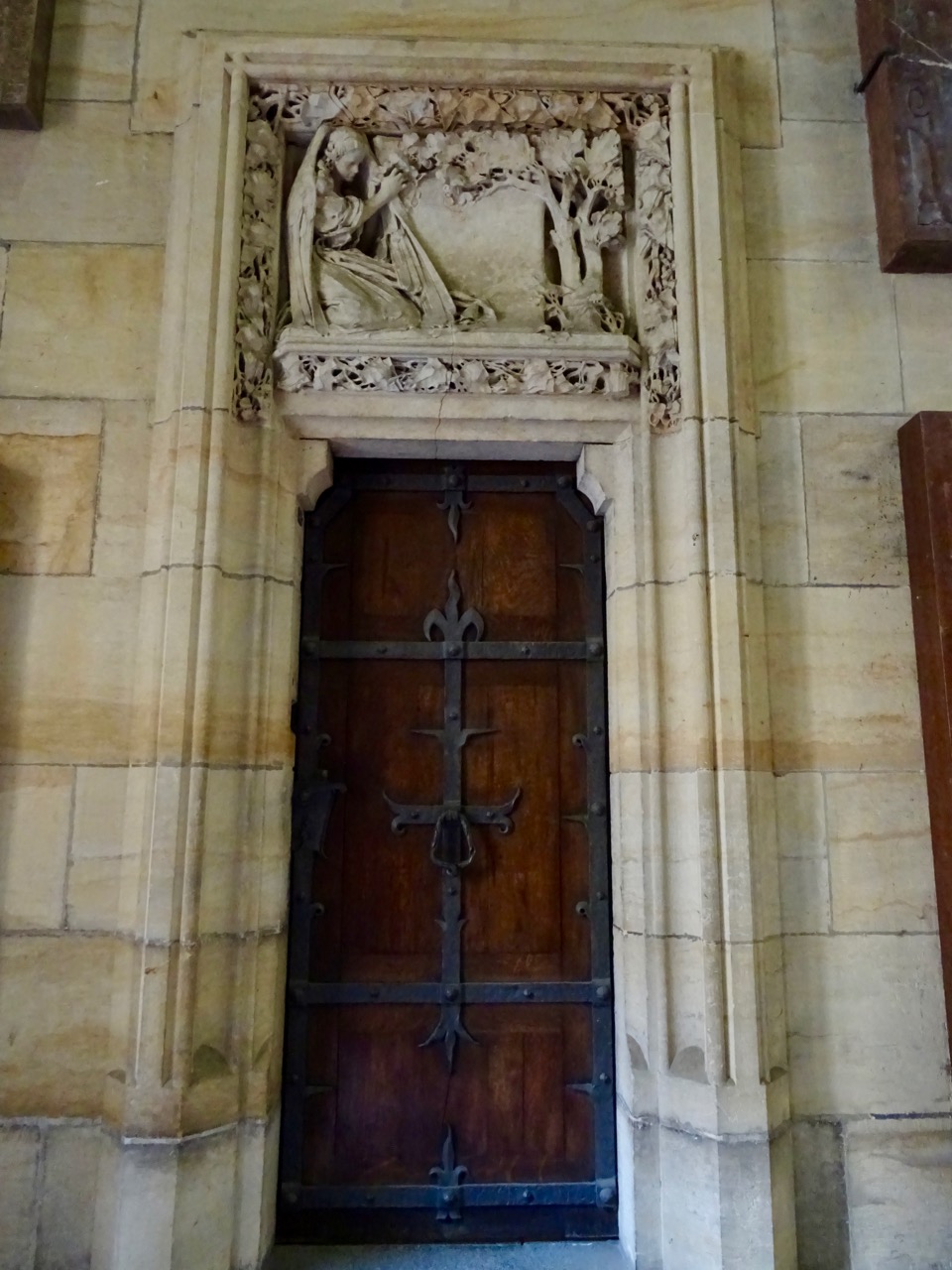
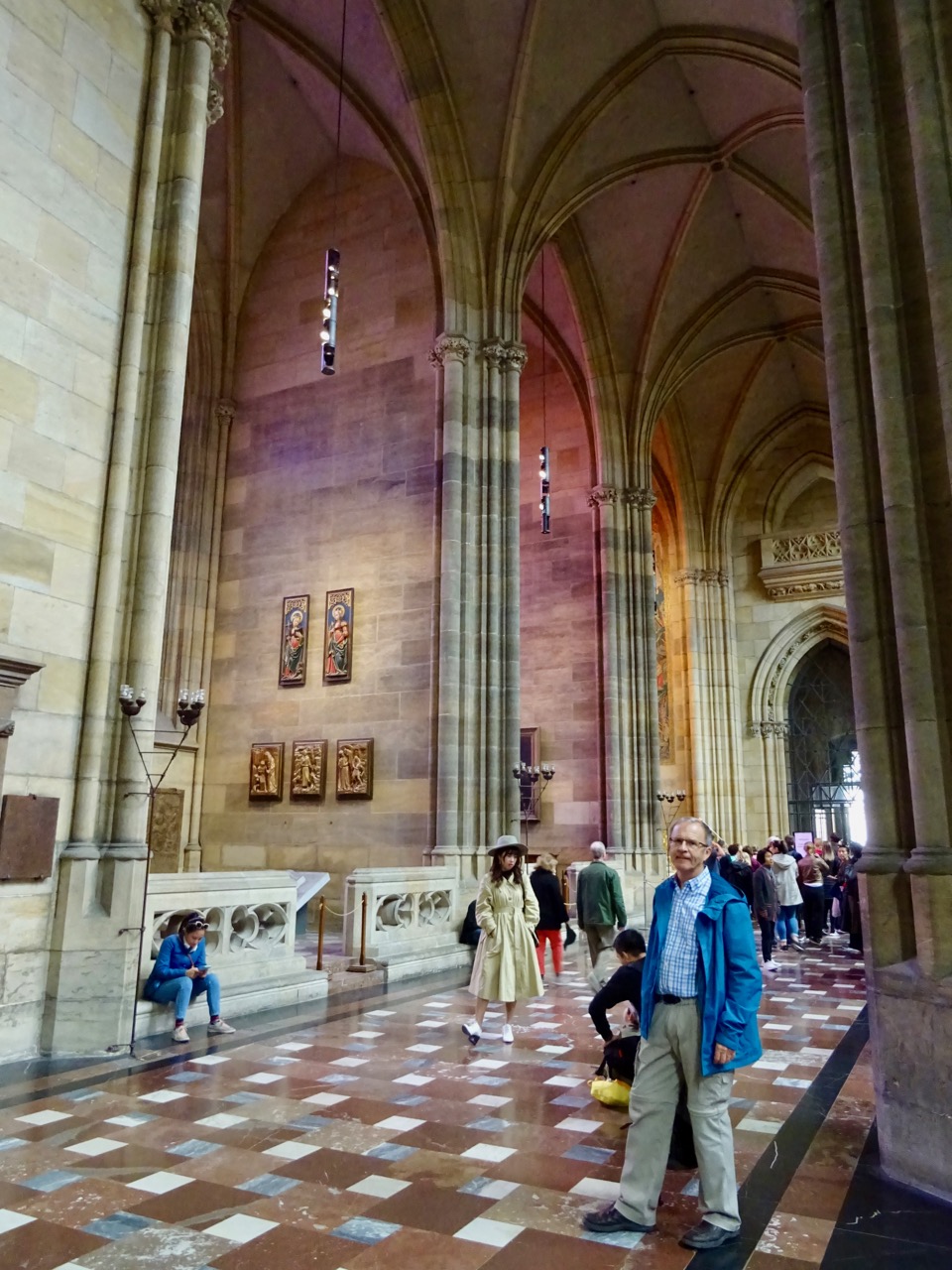 As beautiful as this cathedral is, I still love some of the simpler details that are easy to overlook with all the grandeur surrounding us.
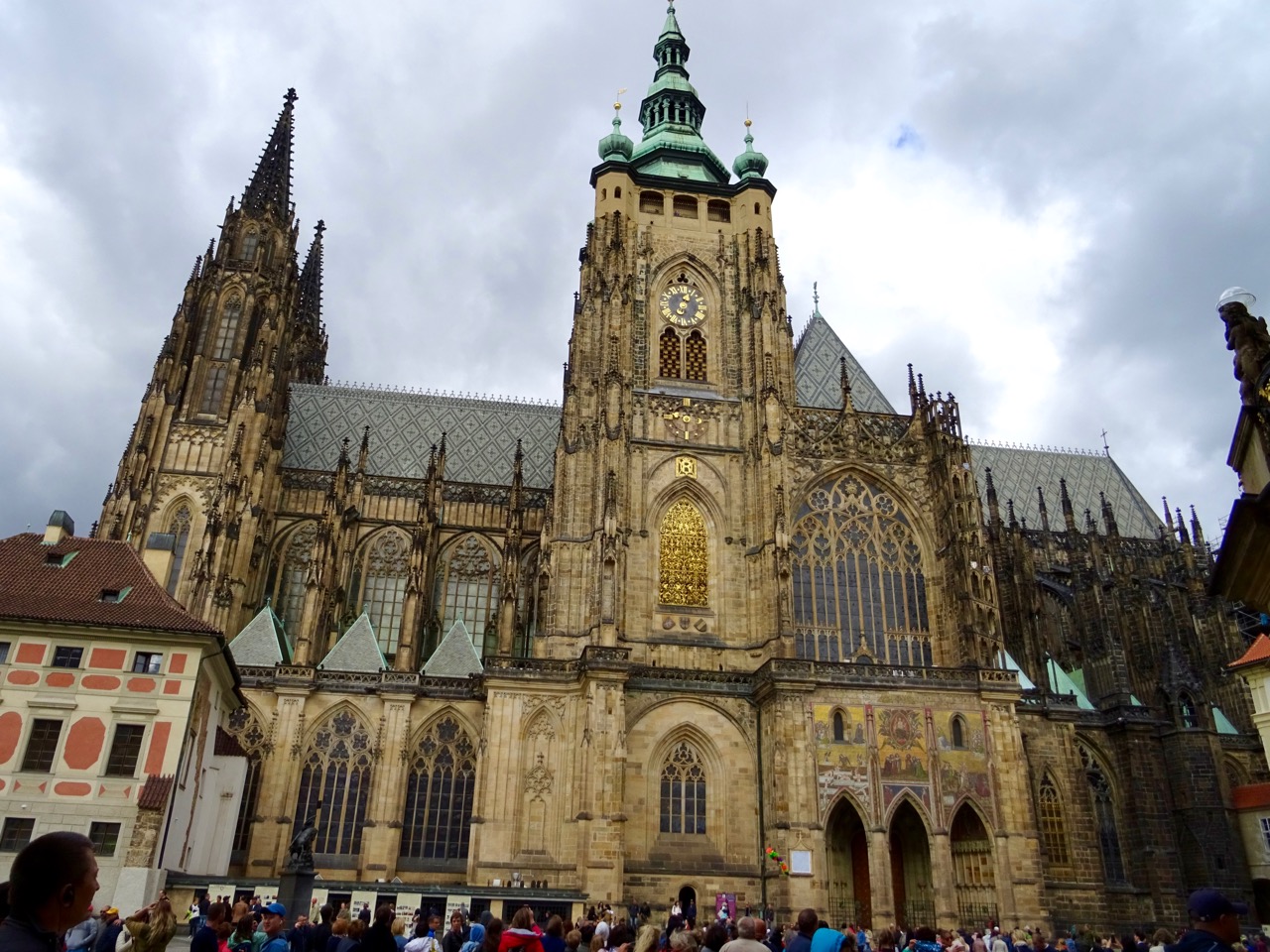
 A view of the Cathedral. This front entrance isn’t used by tourists, we entered on the end of the cathedral behind the building with orange panels.
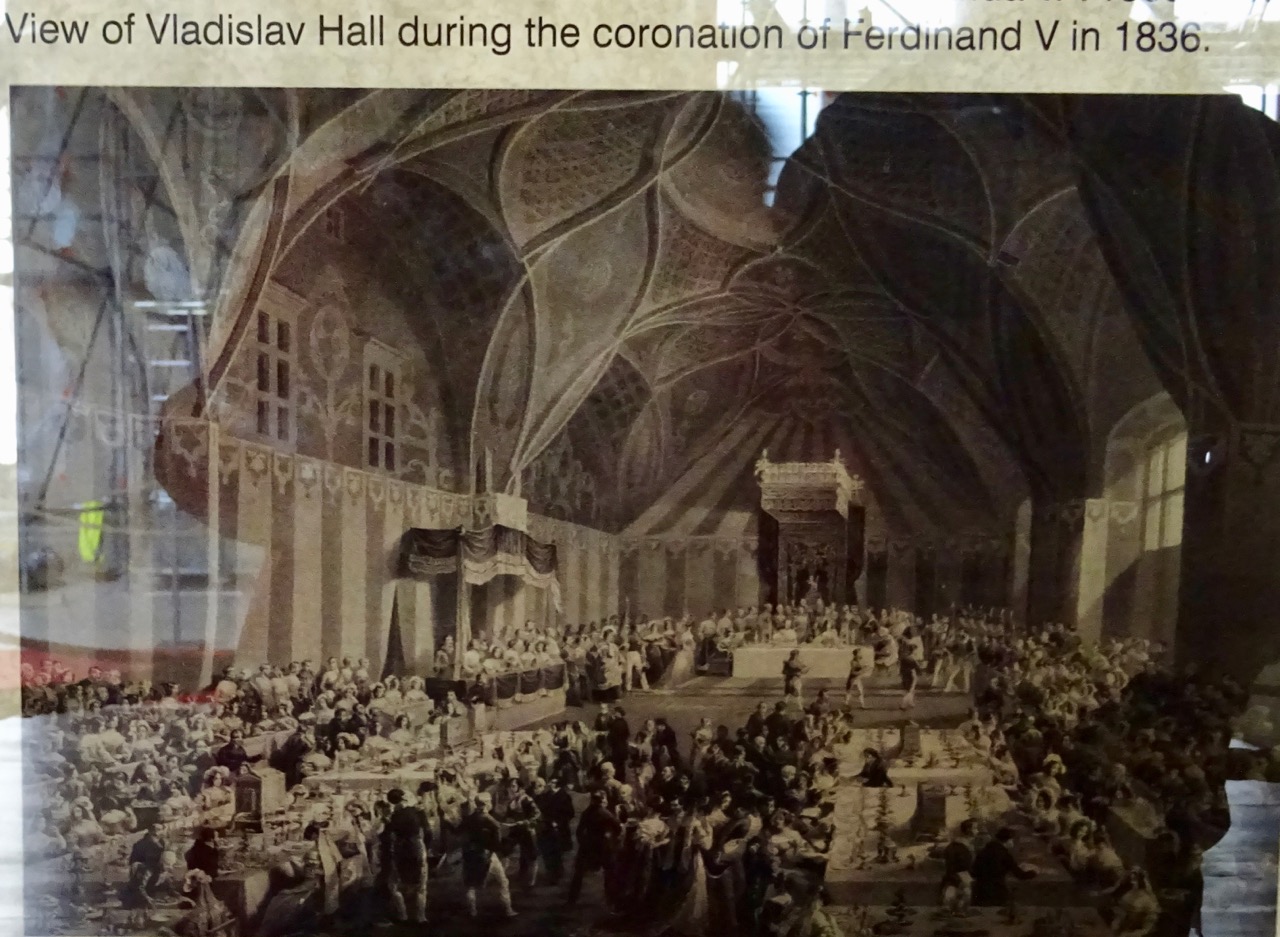
 since the 16th century, the Vladislav Hall in the Old Royal Place, was used for coronation festivities and banquets, knights’ tournaments and markets for luxurious goods. The Vladislav Hall still is used for state functions. It is an enormous room.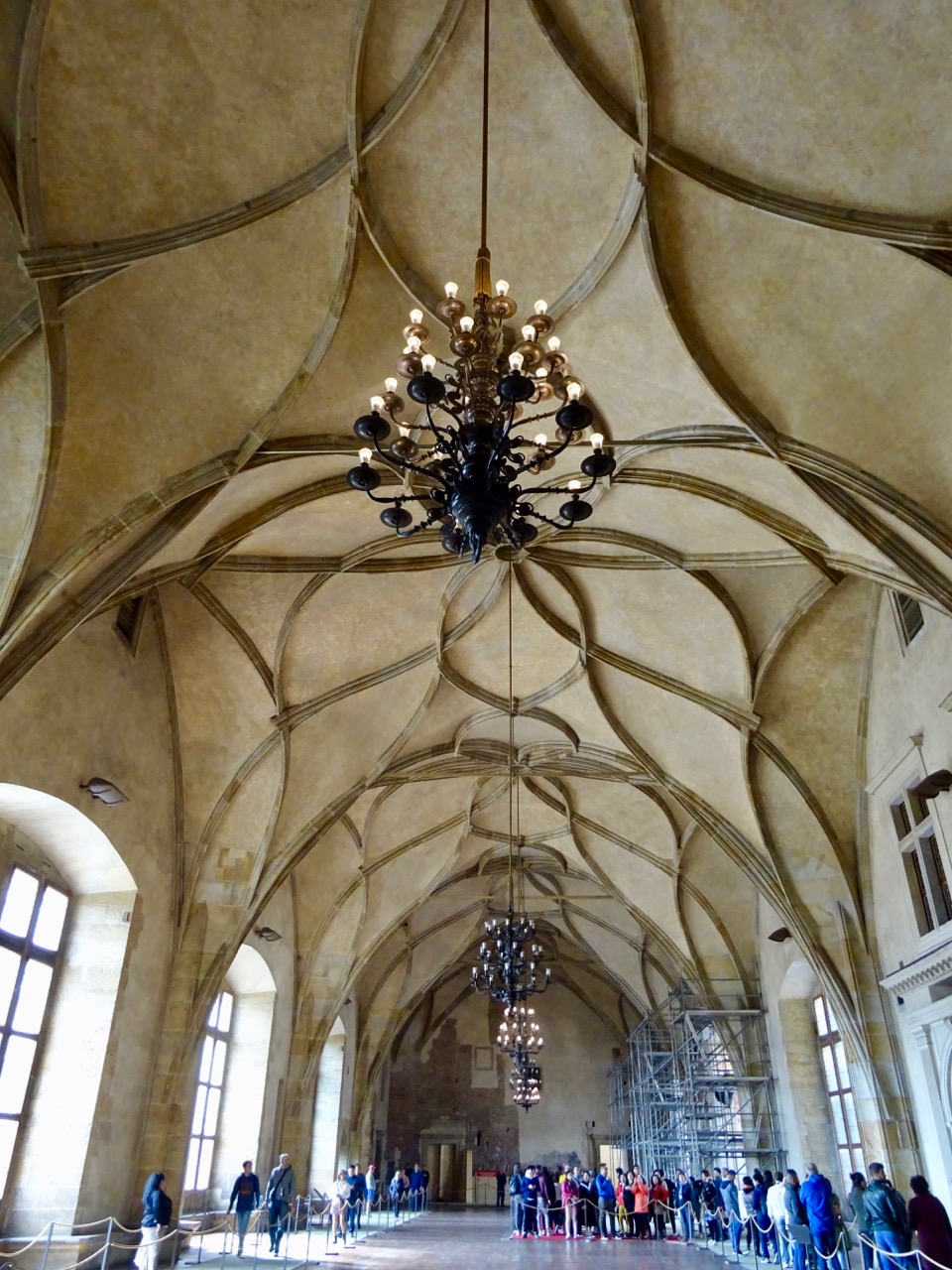
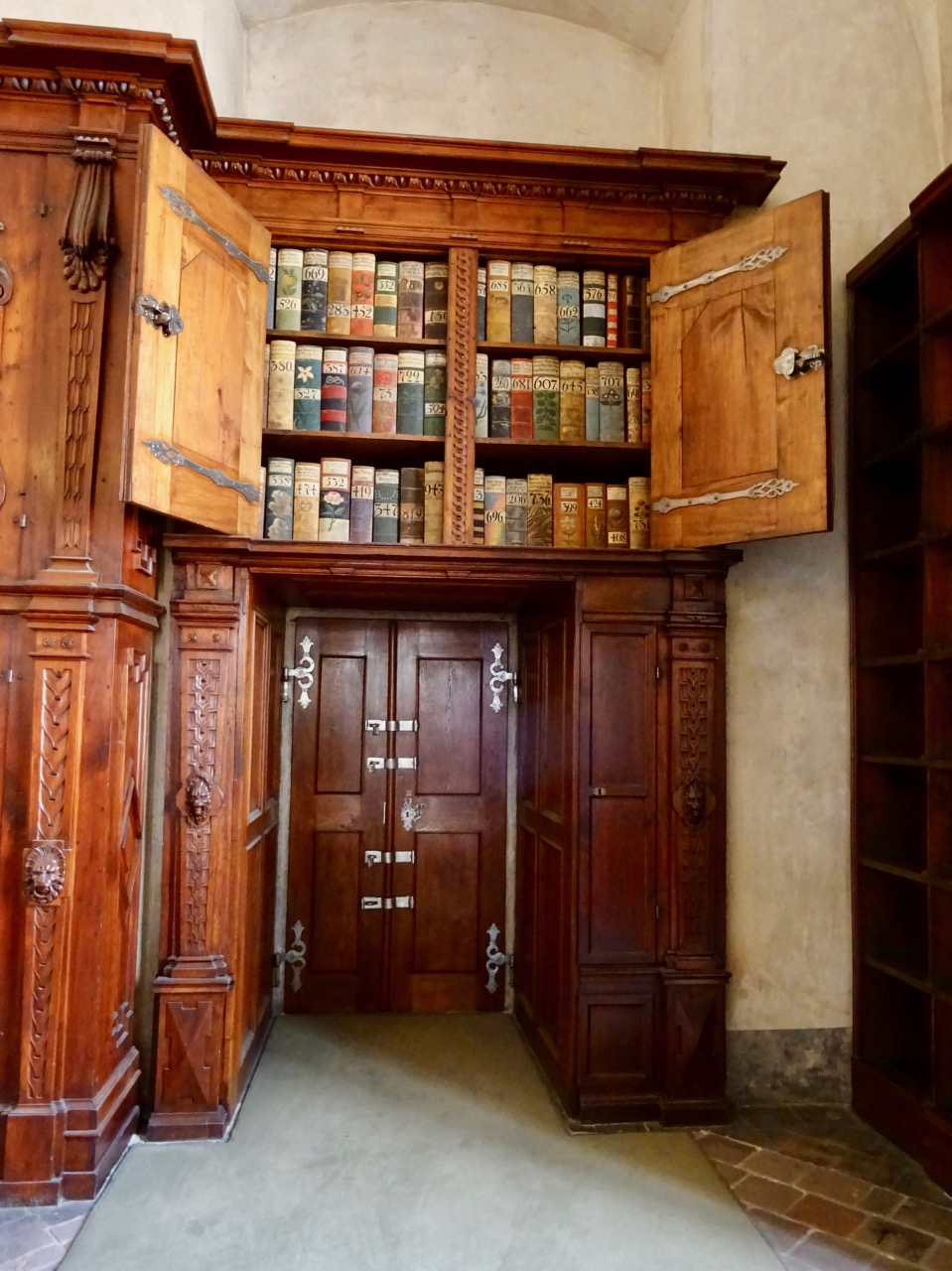
 The Old Palace contained the Land Rolls, where all matters regarding property rights and criminal law were recorded.
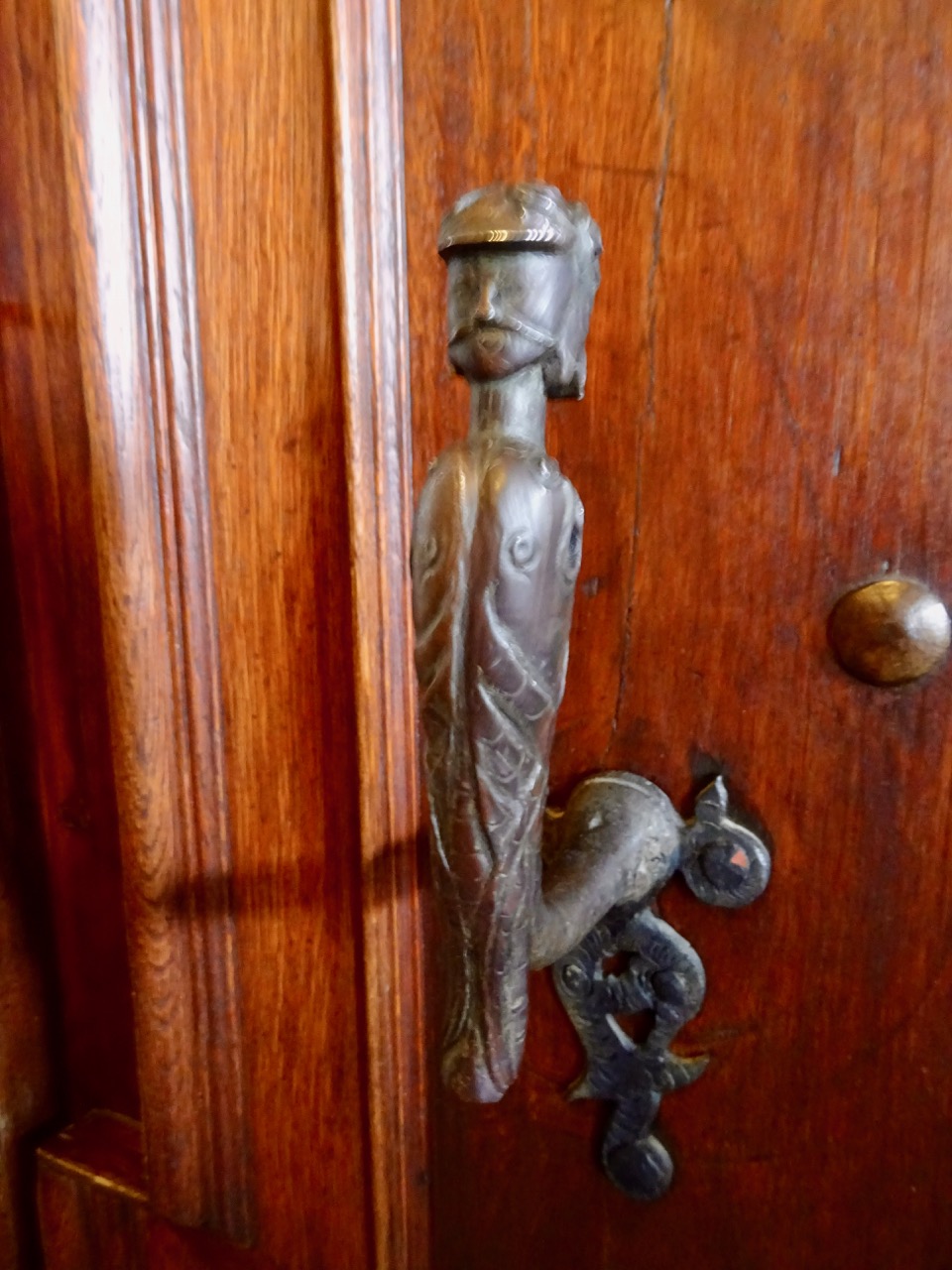
  An interesting door handle.
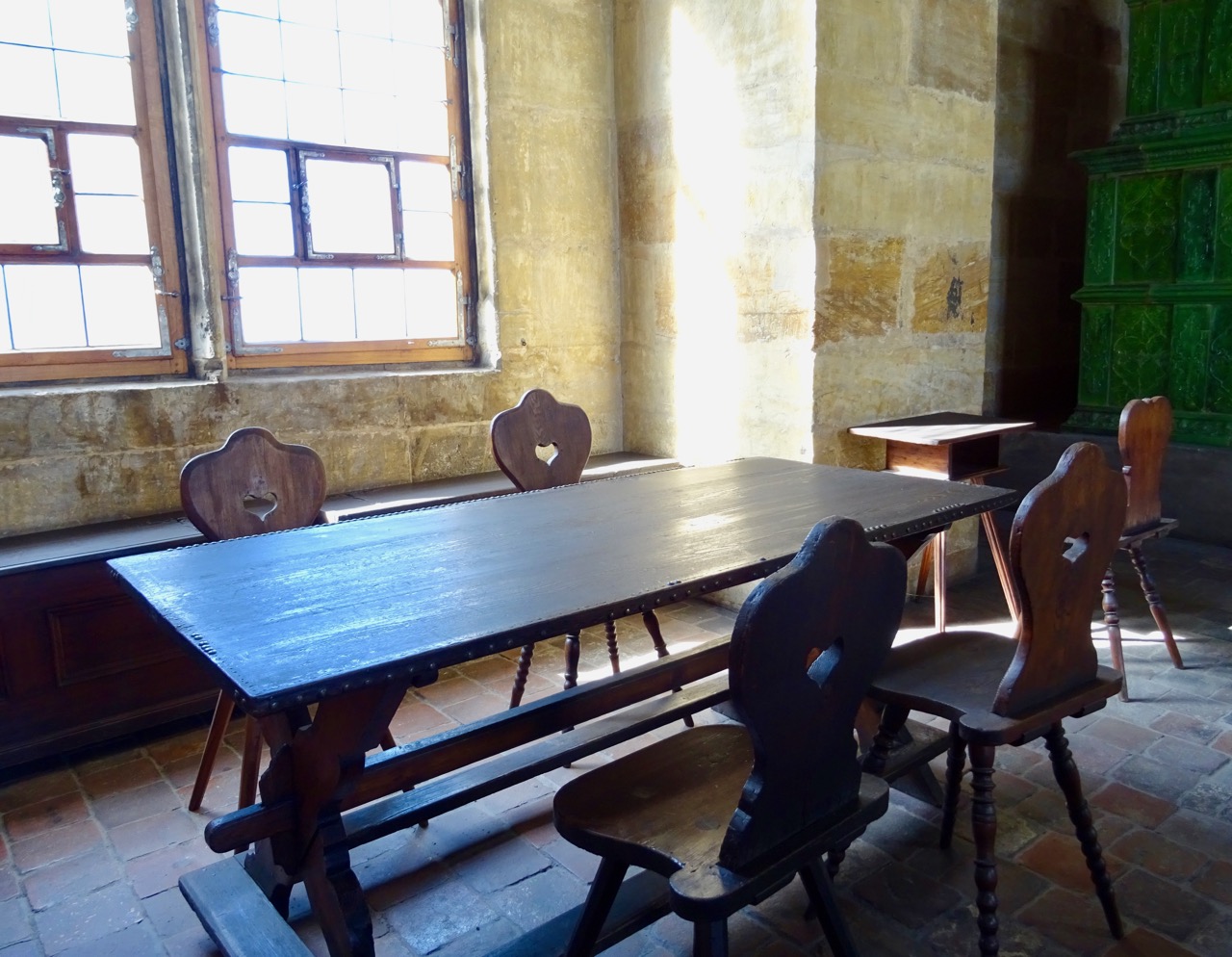
 One room had chairs which are almost the same as the ones my Swiss grandfather used to make, only he put more carving and decoration on his.
 The present day appearance of St. George’s Basilica dates to the reconstruction after a devastating fire in 1142. Now it is used for short-term art exhibitions.
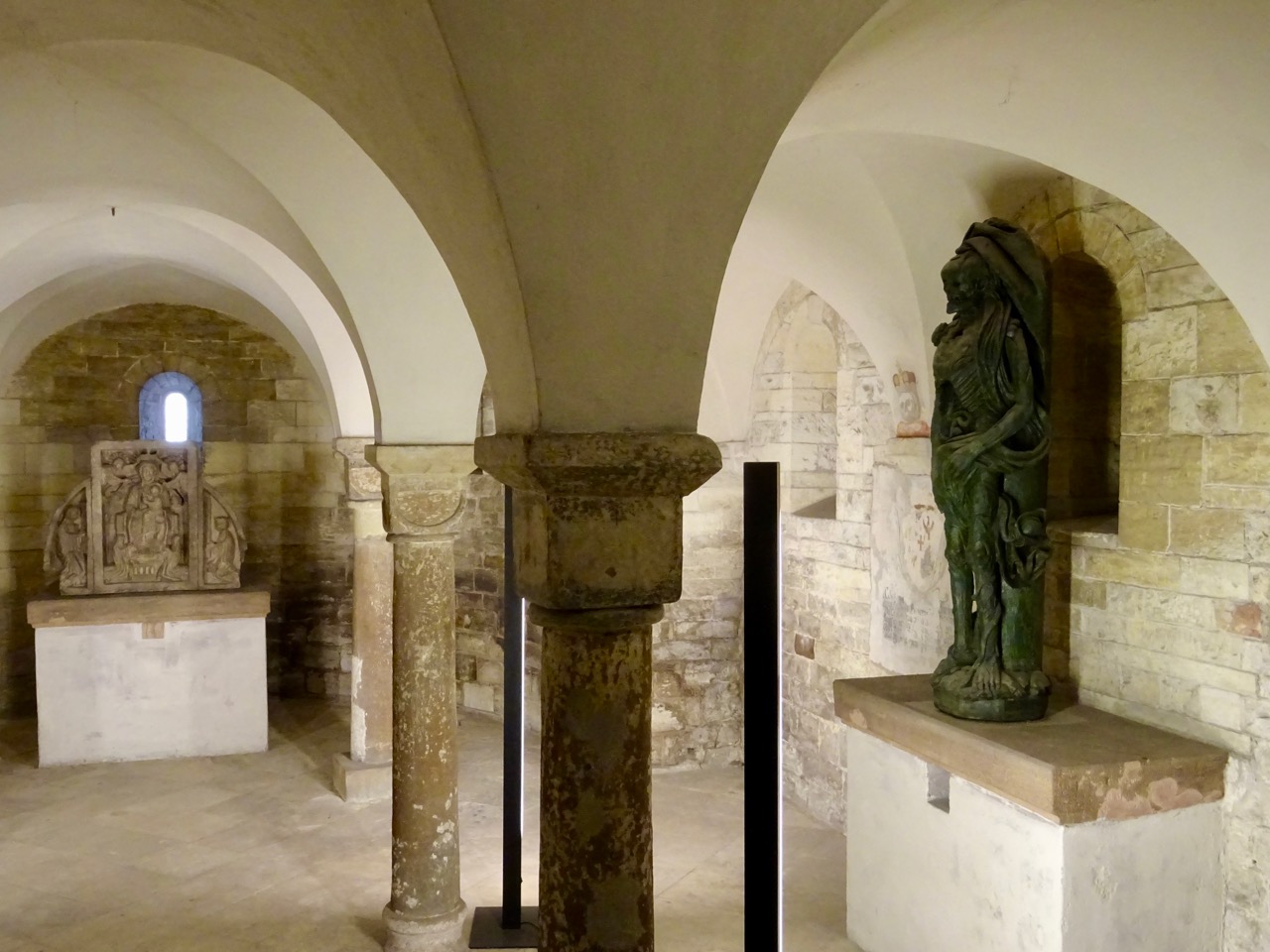
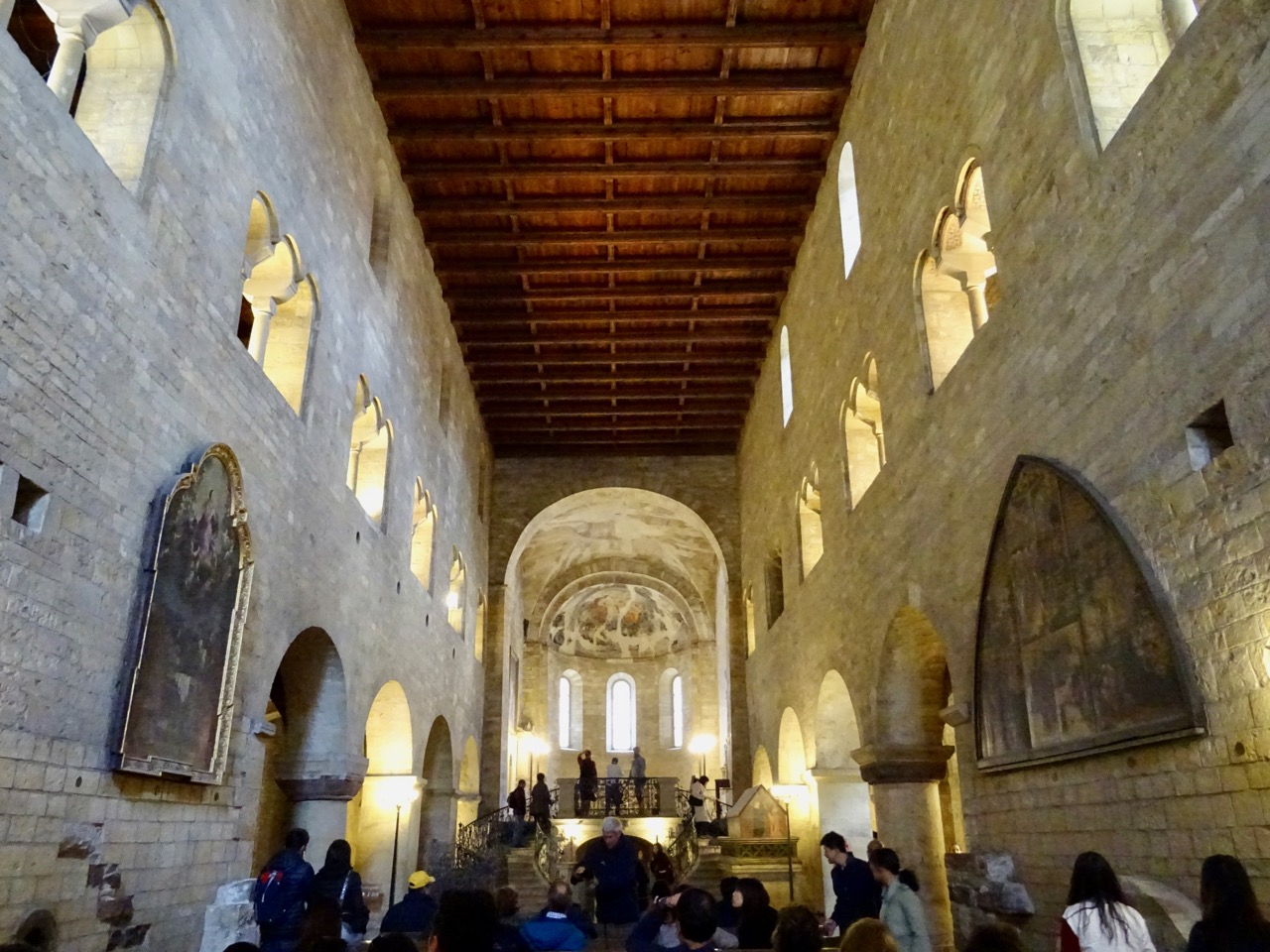 We visit St. Georges 12th century crypt and see this rather bizarre sculpture. I did some research and discovered that it is “a Late Gothic Statue of Brigita, representing a dead and decaying girl´s body. It is a symbol of impermanence. A legend says that it was made by a sculptor, who killed his girlfriend and wanted to create her statue before he was executed. However, he was only able to make it as a dead body, because of his despair.” ~.www.prague.cz
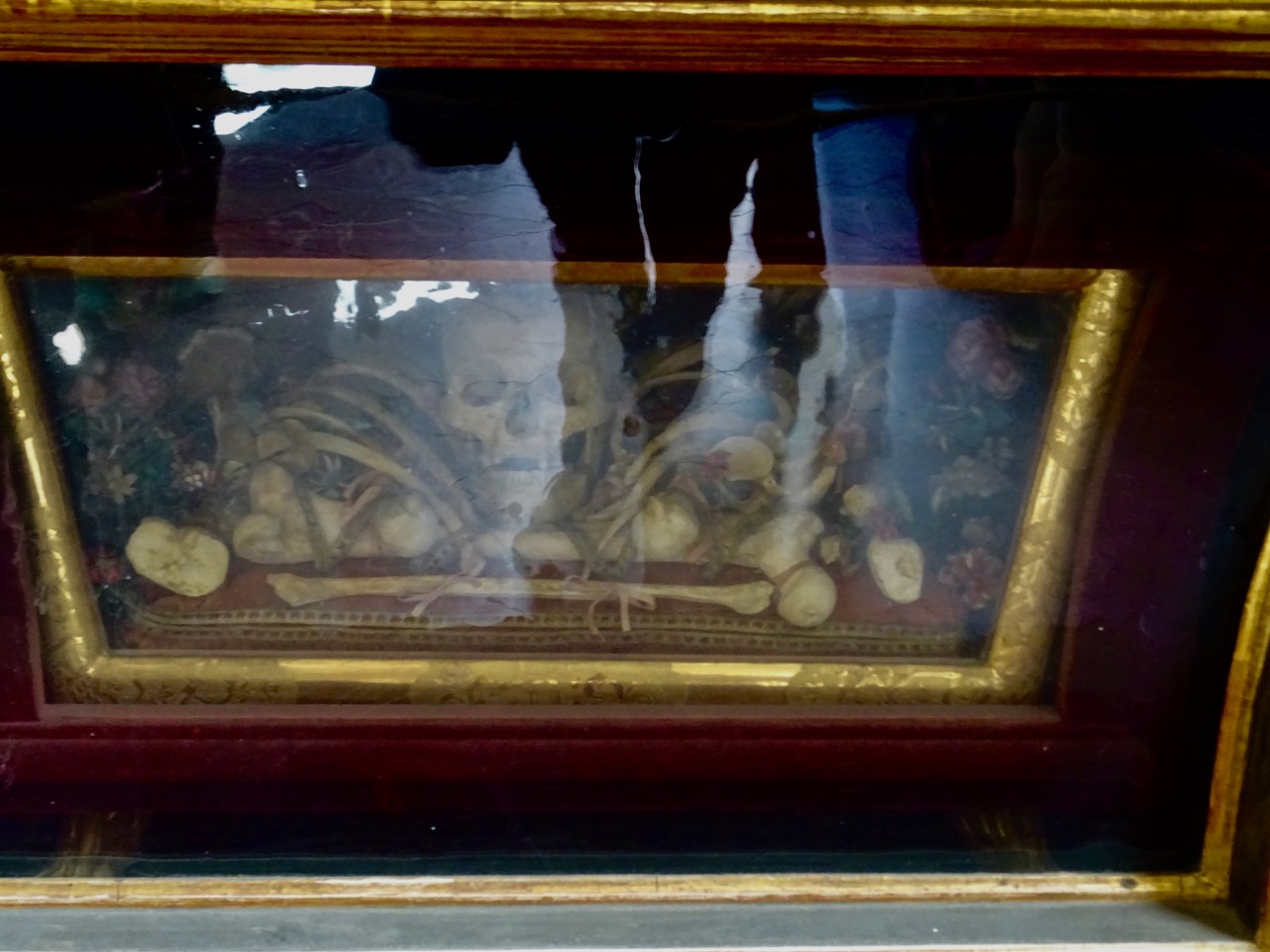
  On the way out we see this collection of relics, but have no idea who they are. These relics seem a bit bizarre. Not only was the poor person usually tortured and killed but then their bones were carted off, often to several different locations and put on display. Hmmm.
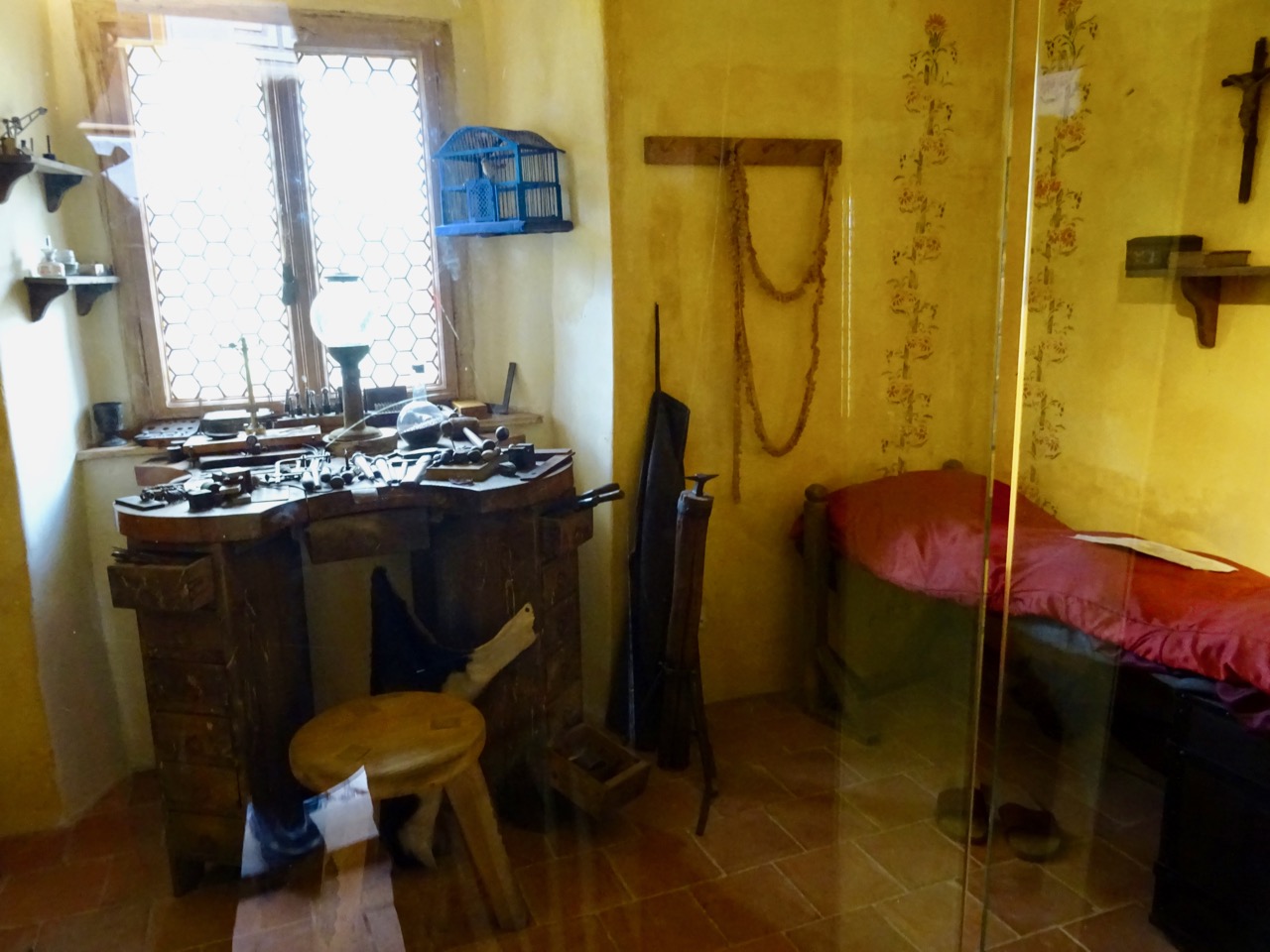
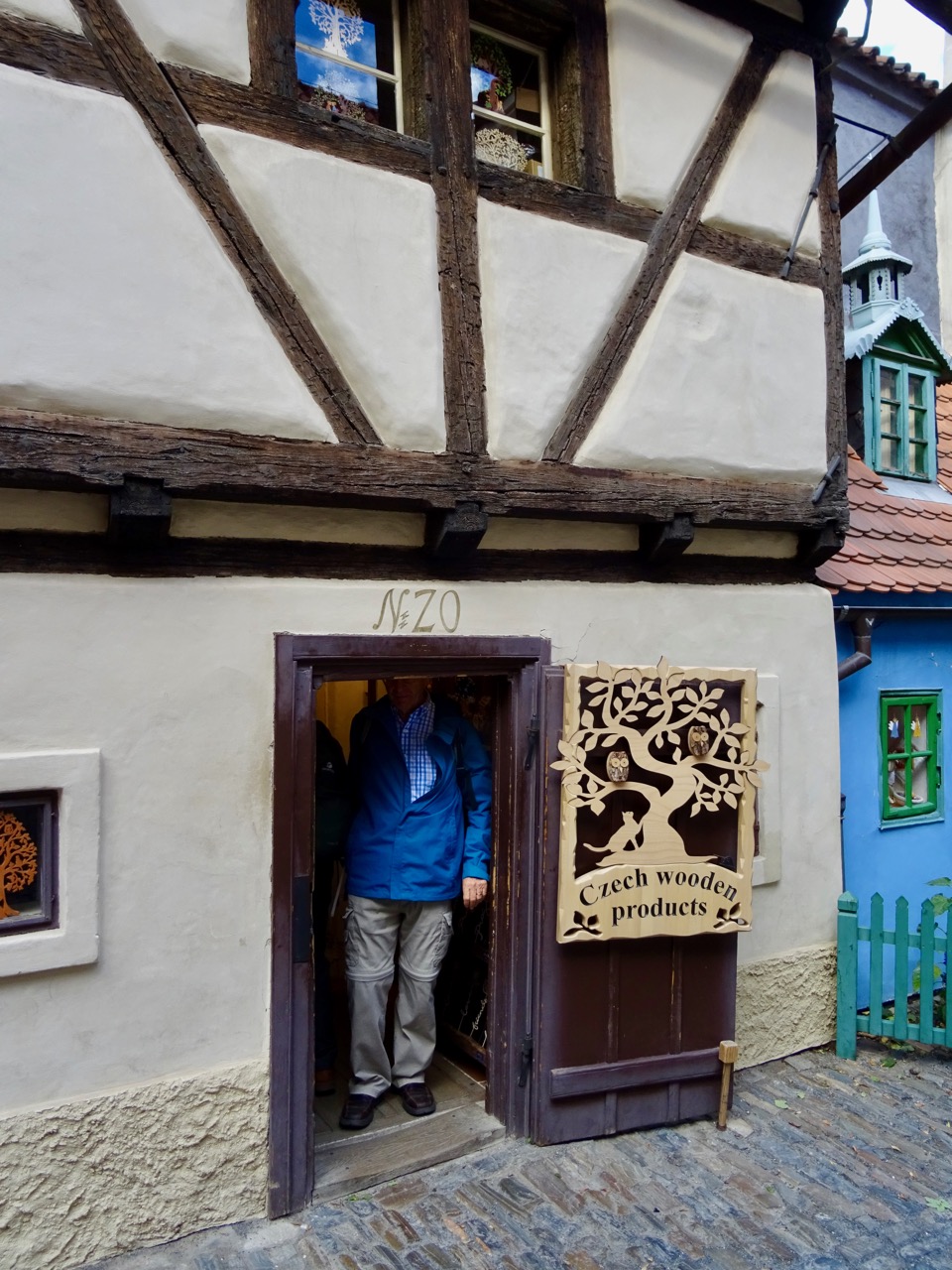
 This is the Golden Lane. This lane of tiny houses was built against the northern wall of the castle. These tiny houses were occupied until World War II and have been preserved so that the character of this lane has not changed. From 1916 to 1917 house No. 22 was inhabited by the writer Franz Kafka.
 The name of the Lane is derived from goldsmiths who used to live there. I struck up a conversation with a gentleman who told me that he and his father were both goldsmiths and that the tools have not changed at all. He also said his father died young and that he quit because some of the processes involved are very toxic.
 The houses are tiny and have tiny doors.
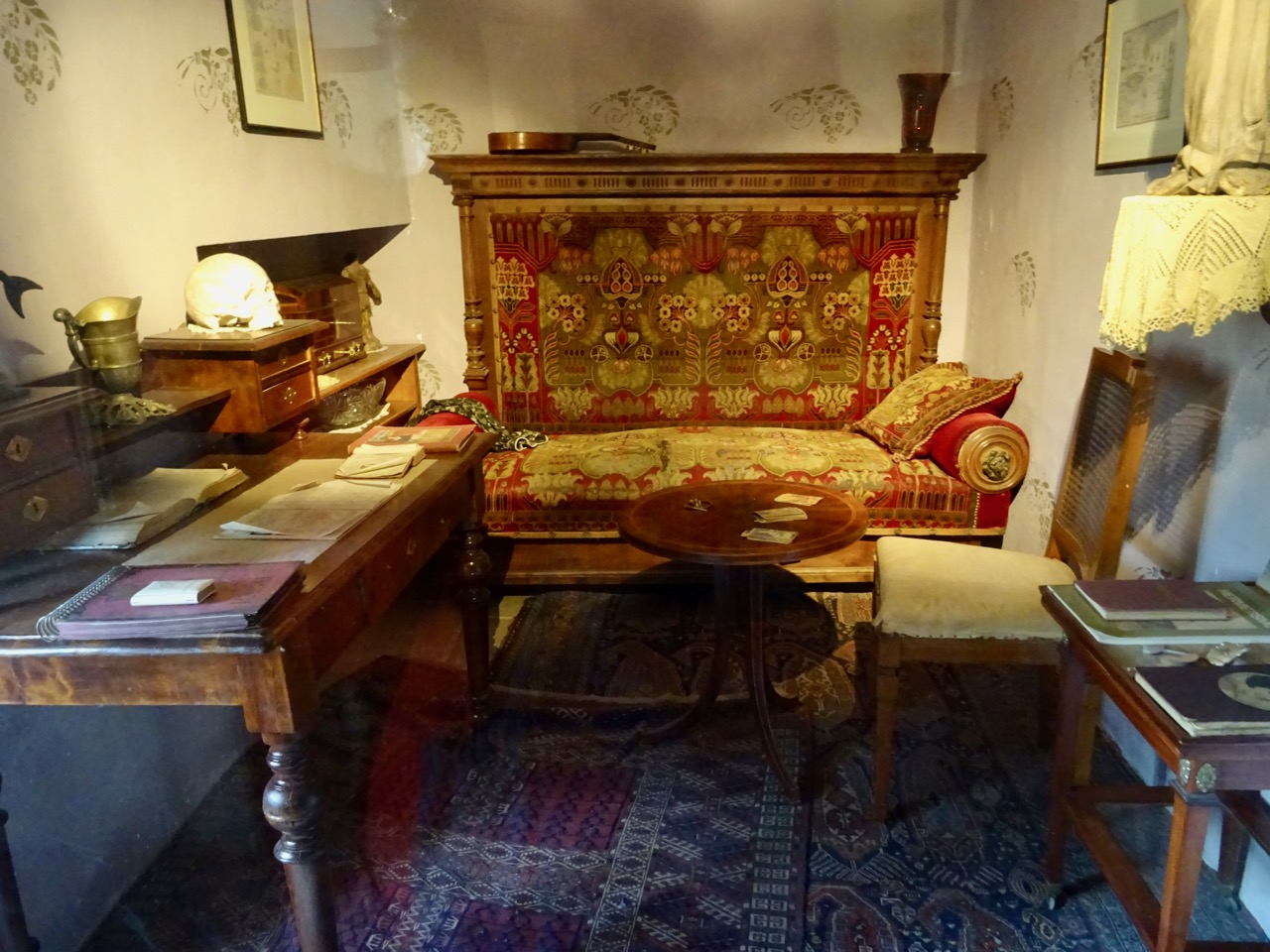
 This was a fortune teller’s house whose predictions about the early fall of the Third Reich resulted in her being arrested and tortured to death by the Gestapo.
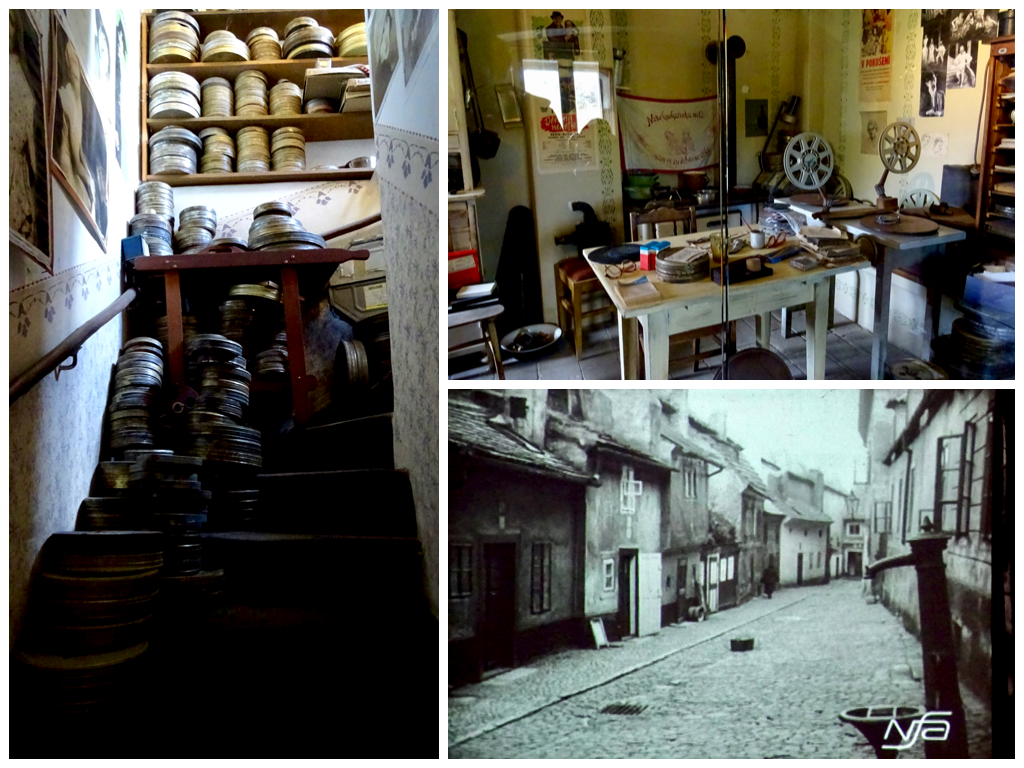
 An amateur historian who saved many copies of old films that were intended for disposal during the Second World War lived here. We watch one film that showed scenes of Prague and this Golden Lane. It looks much like it does today.
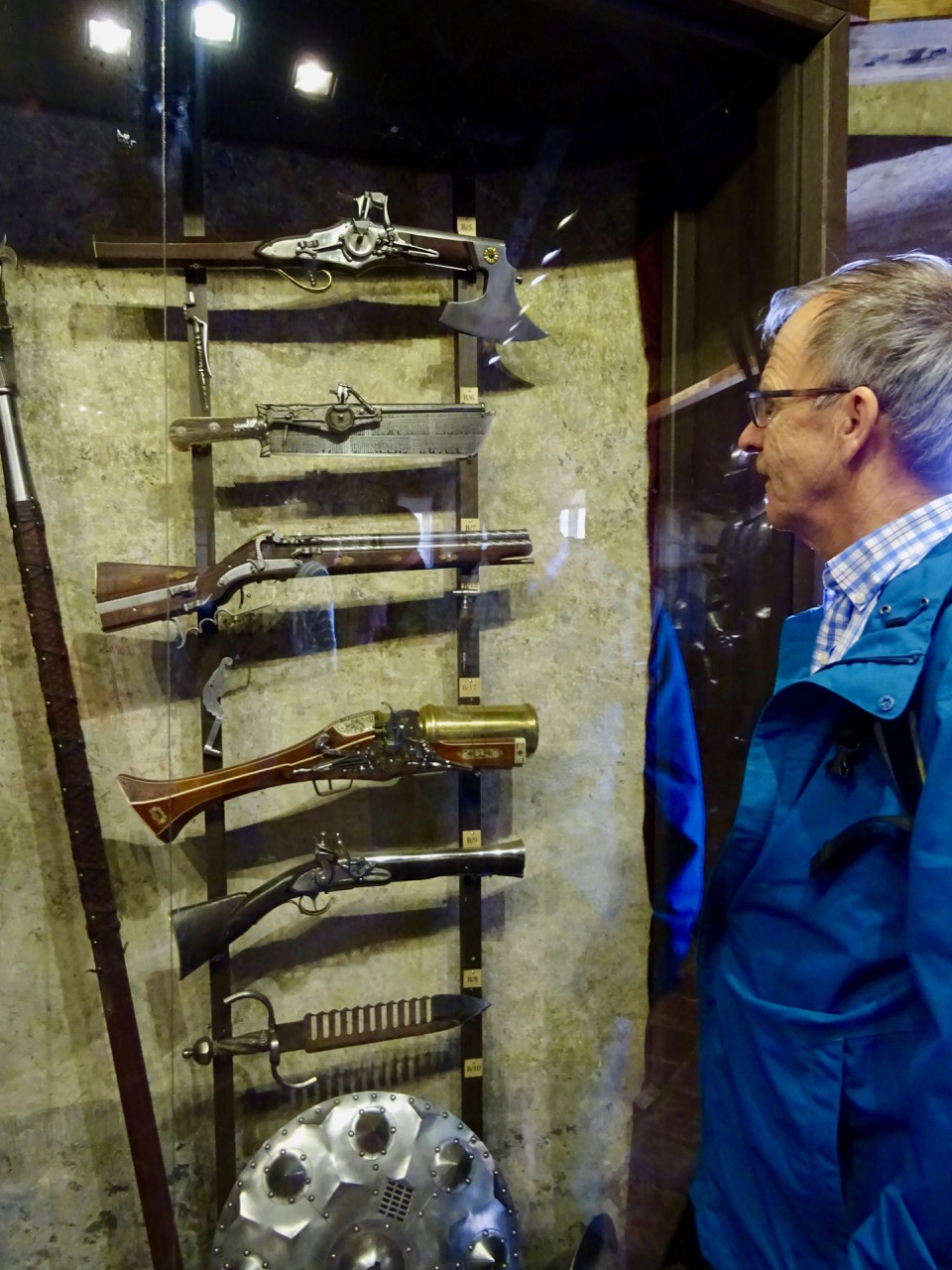
 We almost missed seeing a huge display of old armaments and armour. It was quite interesting. Some the swords have pistols built into them, or axes attached!
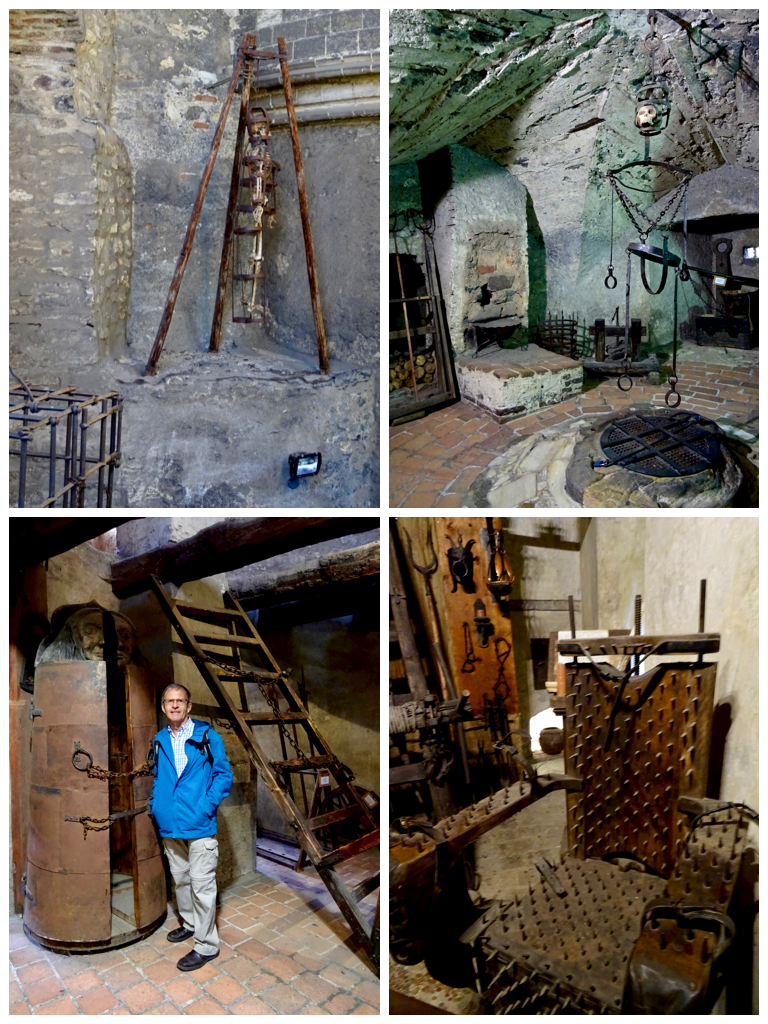
 And then there is the torture chamber. These places give me the creeps. It is just so hard ot think of people subjecting each other to such pain and terror. Bob is standing beside an Iron Maiden, which has spikes inside just long enough to pierce the body and make sure that the person inside dies a slow painful death. There are two spikes placed so that they will pierce the eyes of whoever is placed inside, and take a look at that chair! It is enough to give me nightmares.
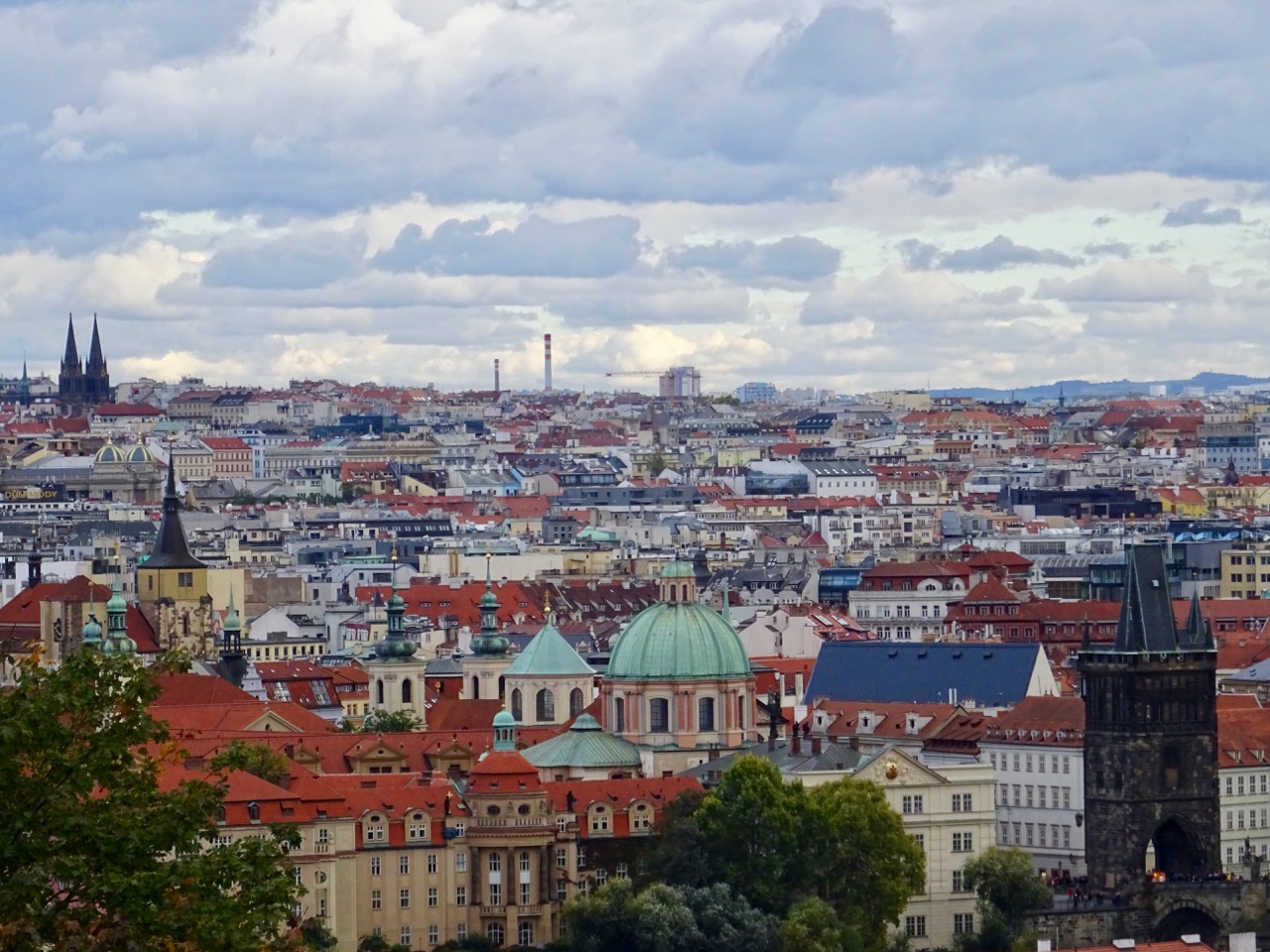
 After the torture chamber we see some great views of Prague…
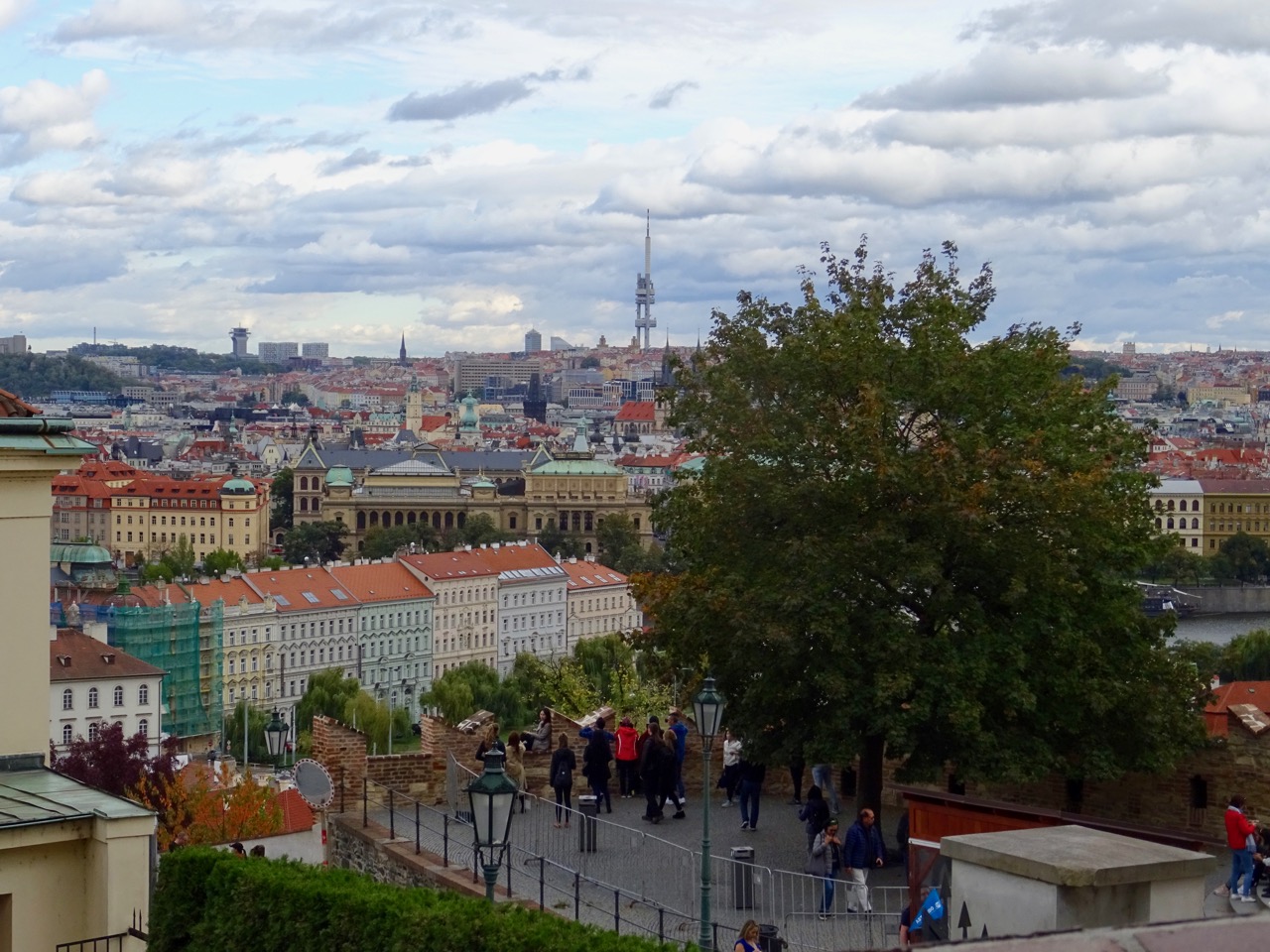
 can you spot our TV Tower? It is hard to miss.
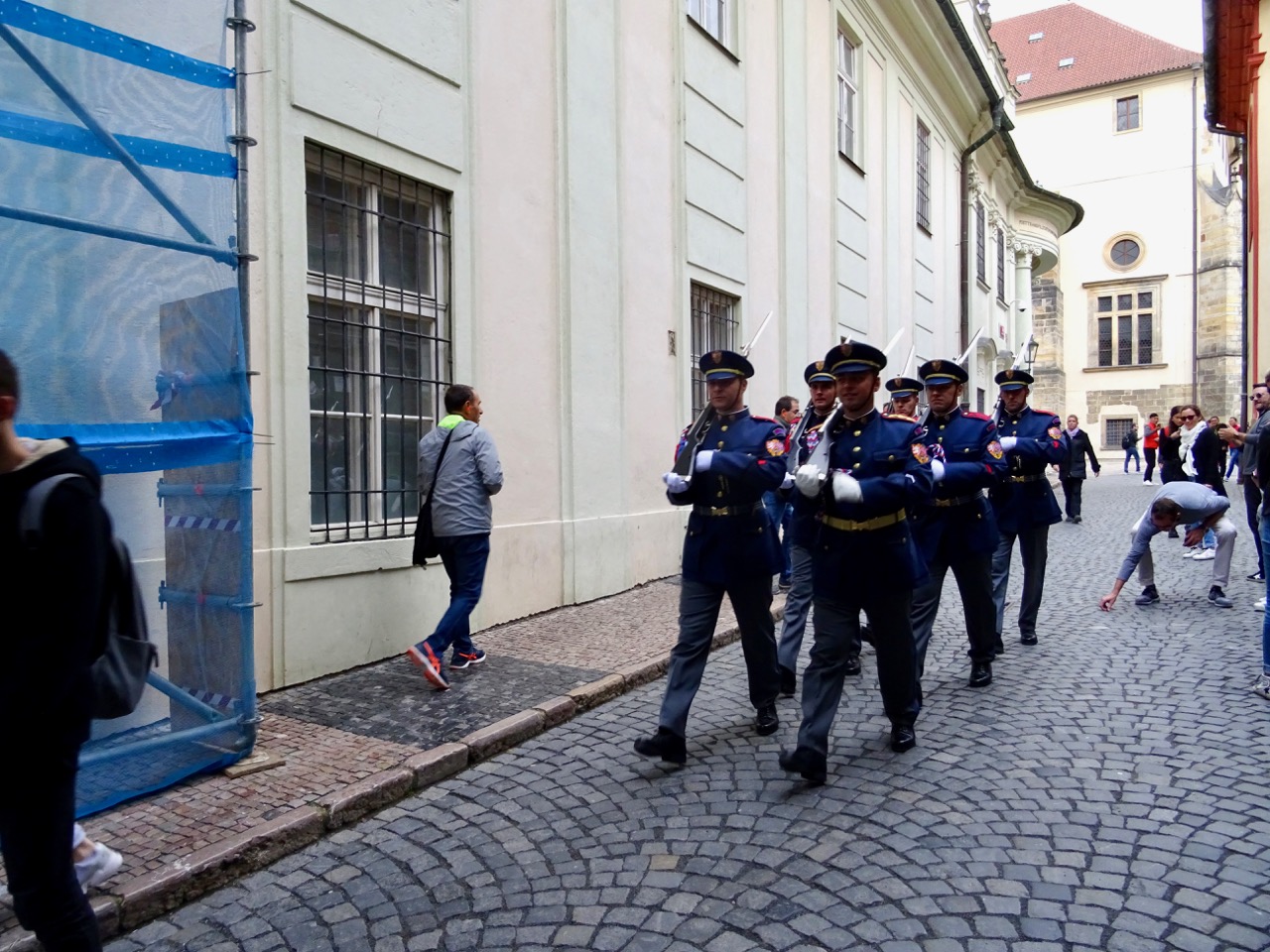
 As we leave the castle the changing of the guards marches past. A couple of the guards have their hats blown off by the wind but they just keep marching, although they did smile! It was crazy windy today and a bit cold so it was a good day to be inside.
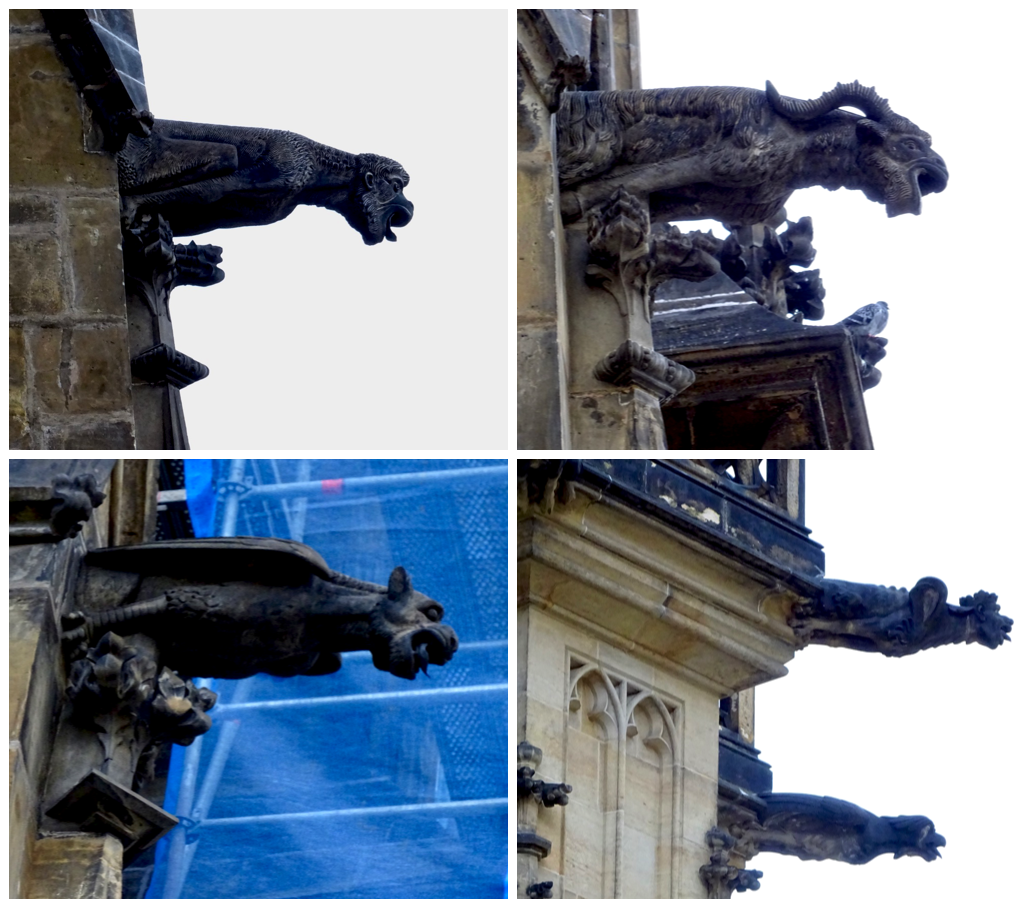
 Walking past the Cathedral towards the exit I thought to look up, and yes, there were gargoyles! I love gargoyles, in case you didn’t know.
 This shrub was near the exit. I have no idea what it is and wonder if anyone else might know?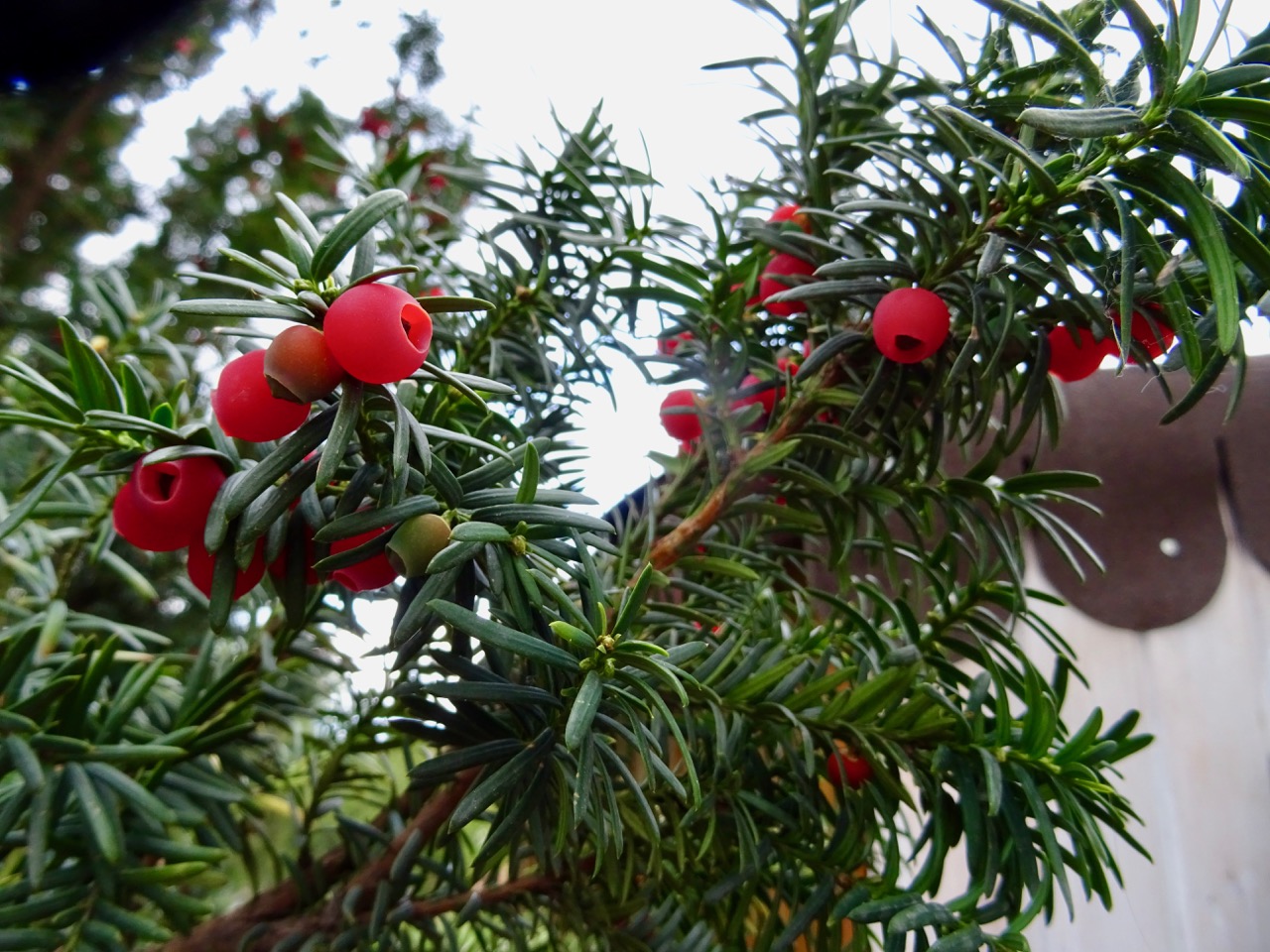
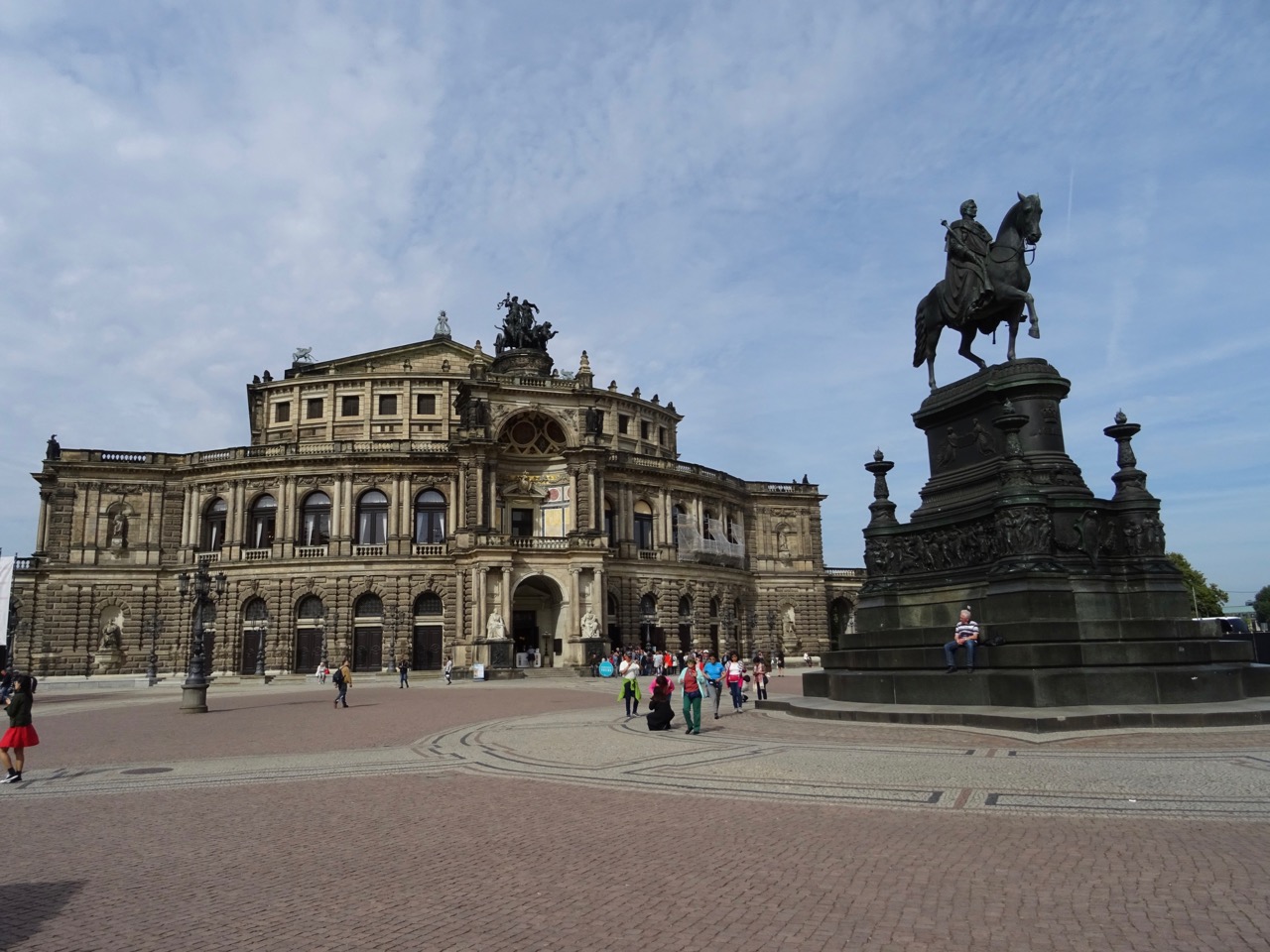
 We walk through the Zwinger Palace grounds.
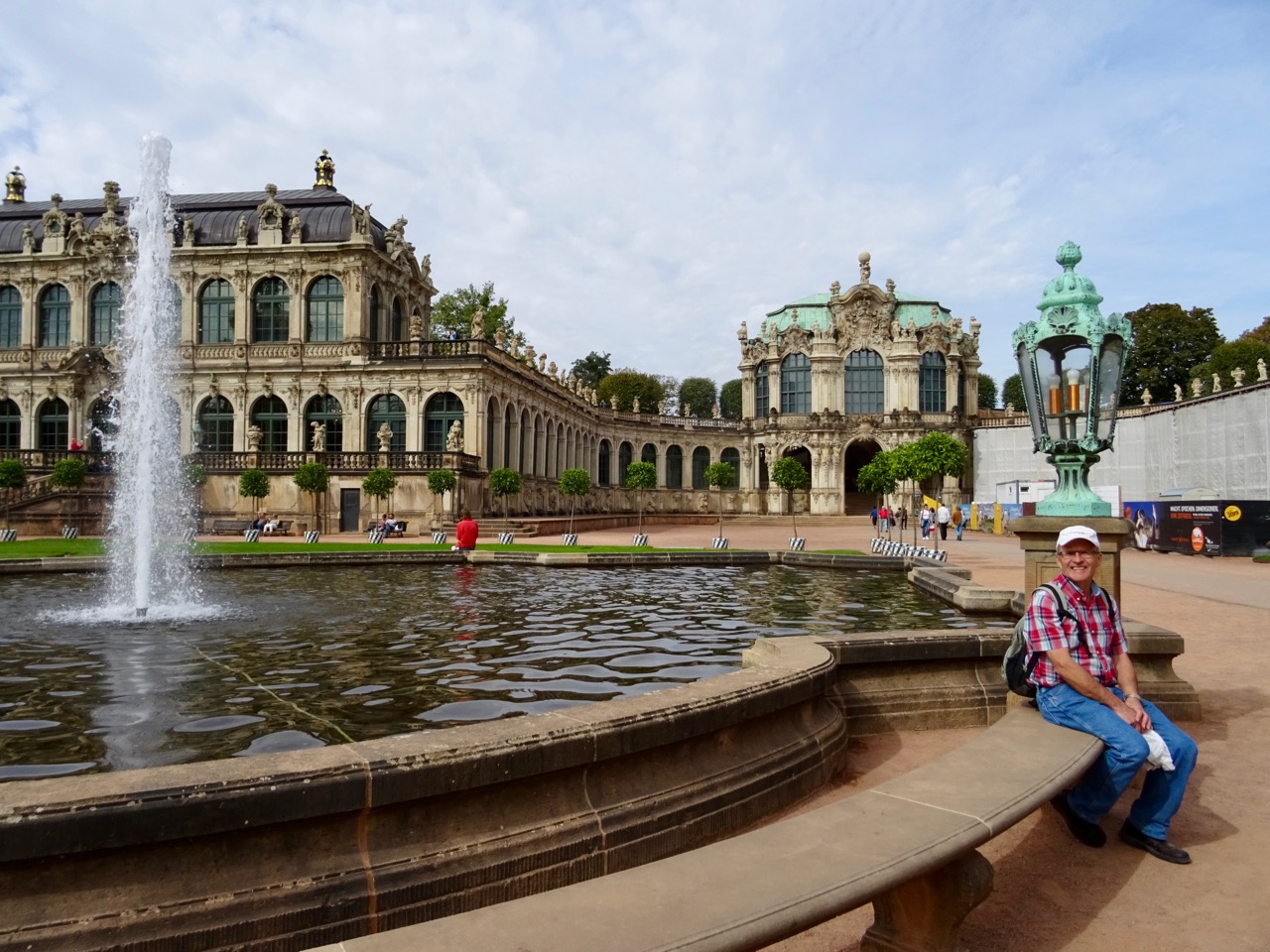 There are a lot of beautiful buildings here, which is surprising because Dresden was heavily bombed during the Second World War.
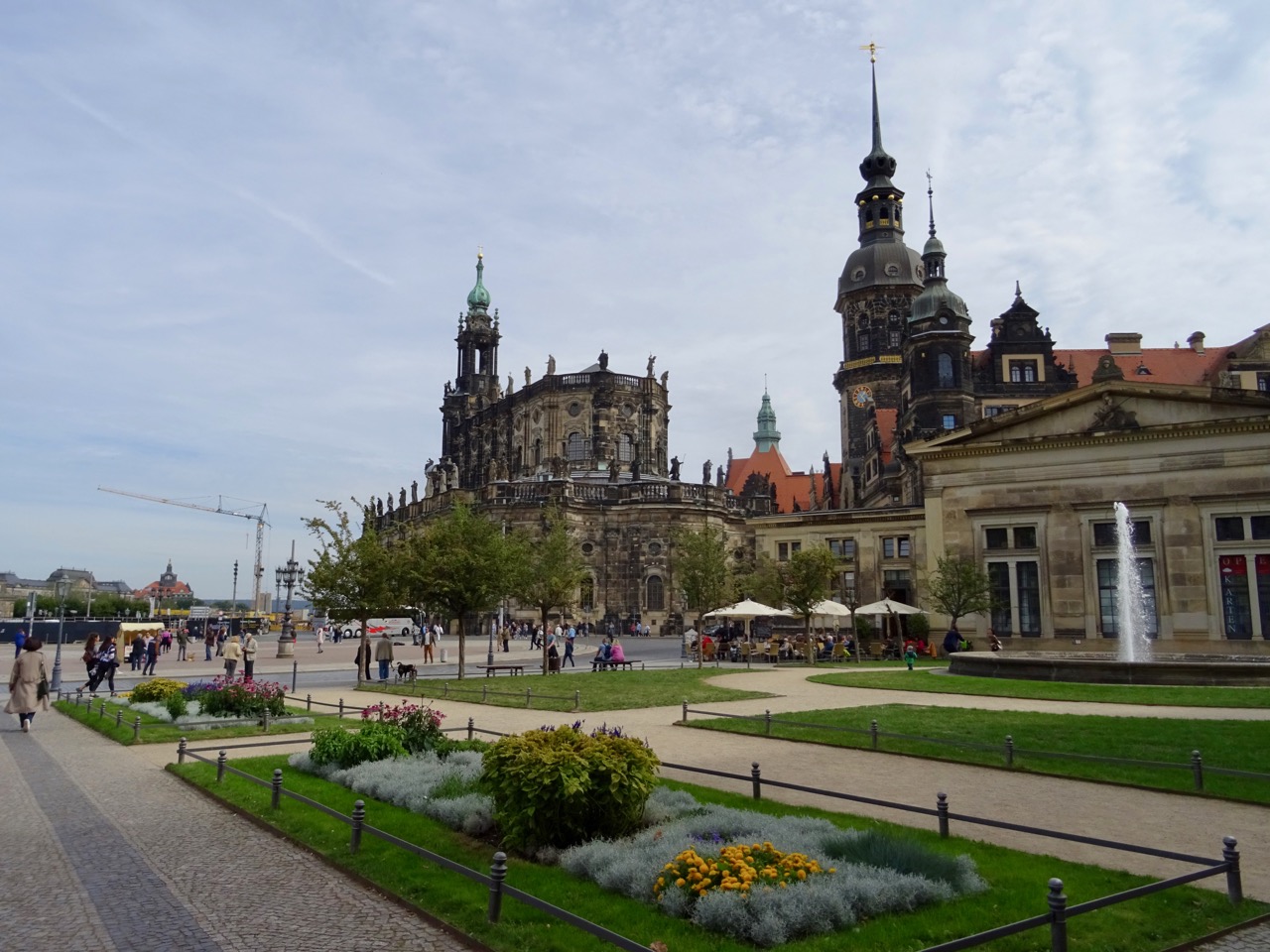 I don’t know what these buildings are but we enjoyed walking about and looking at their exteriors.
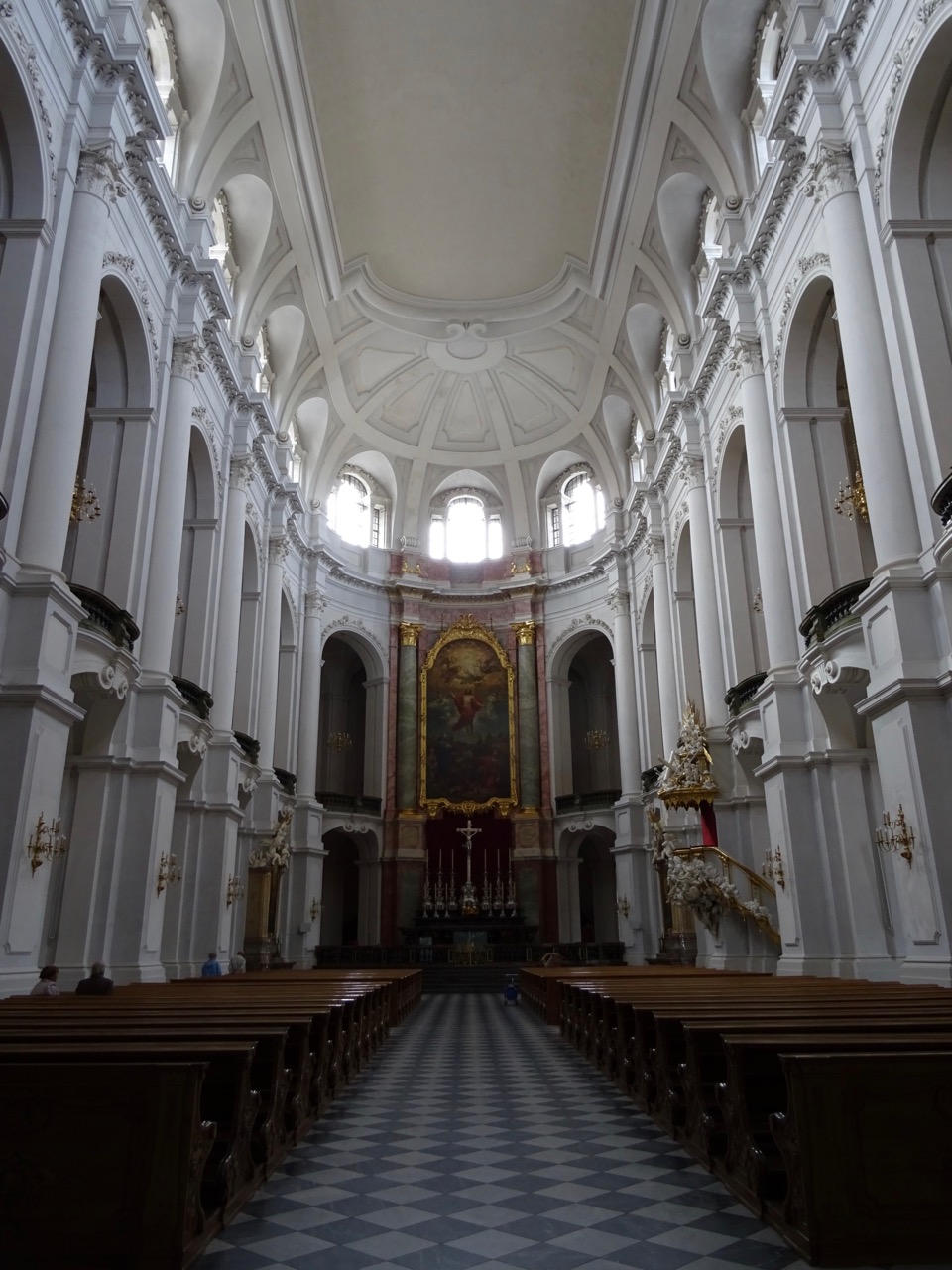
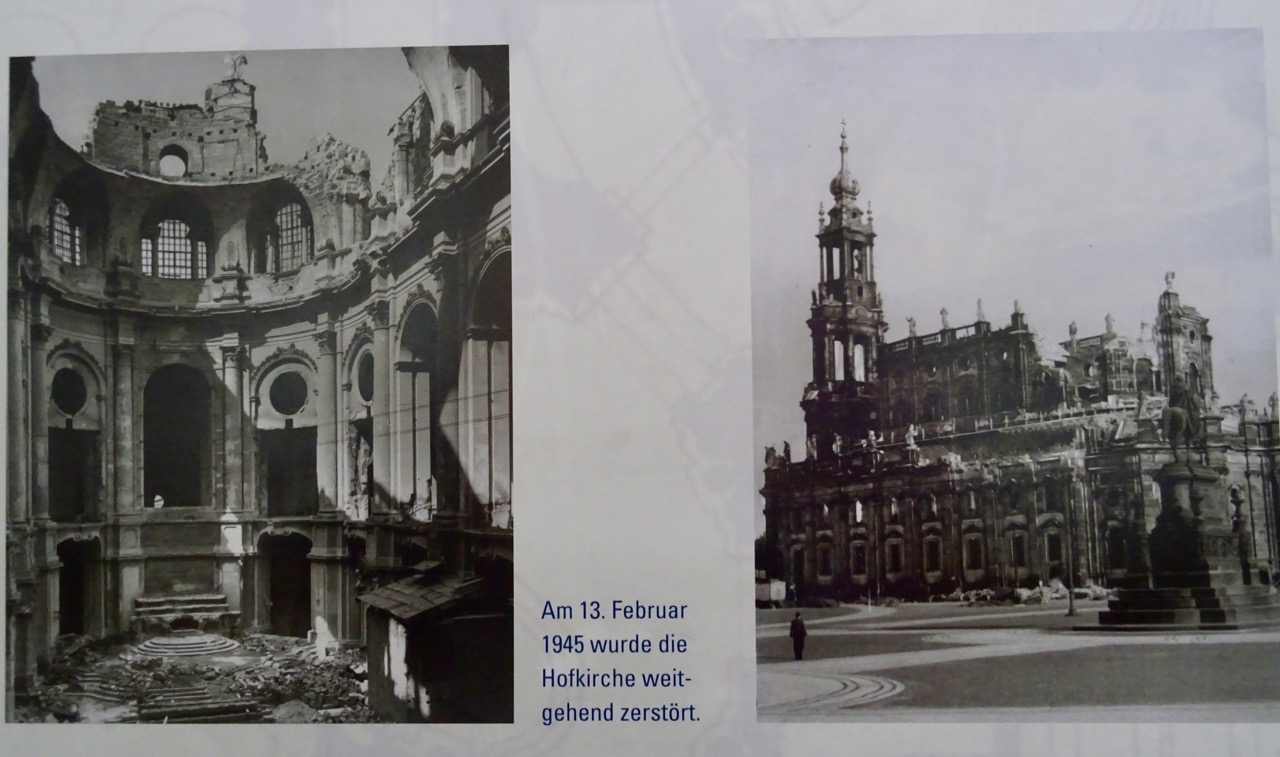
 We go inside the Dresden Cathedral, which was heavily damaged during war but was restored by 1962.
 Here are photos showing the damage caused by the bombing.
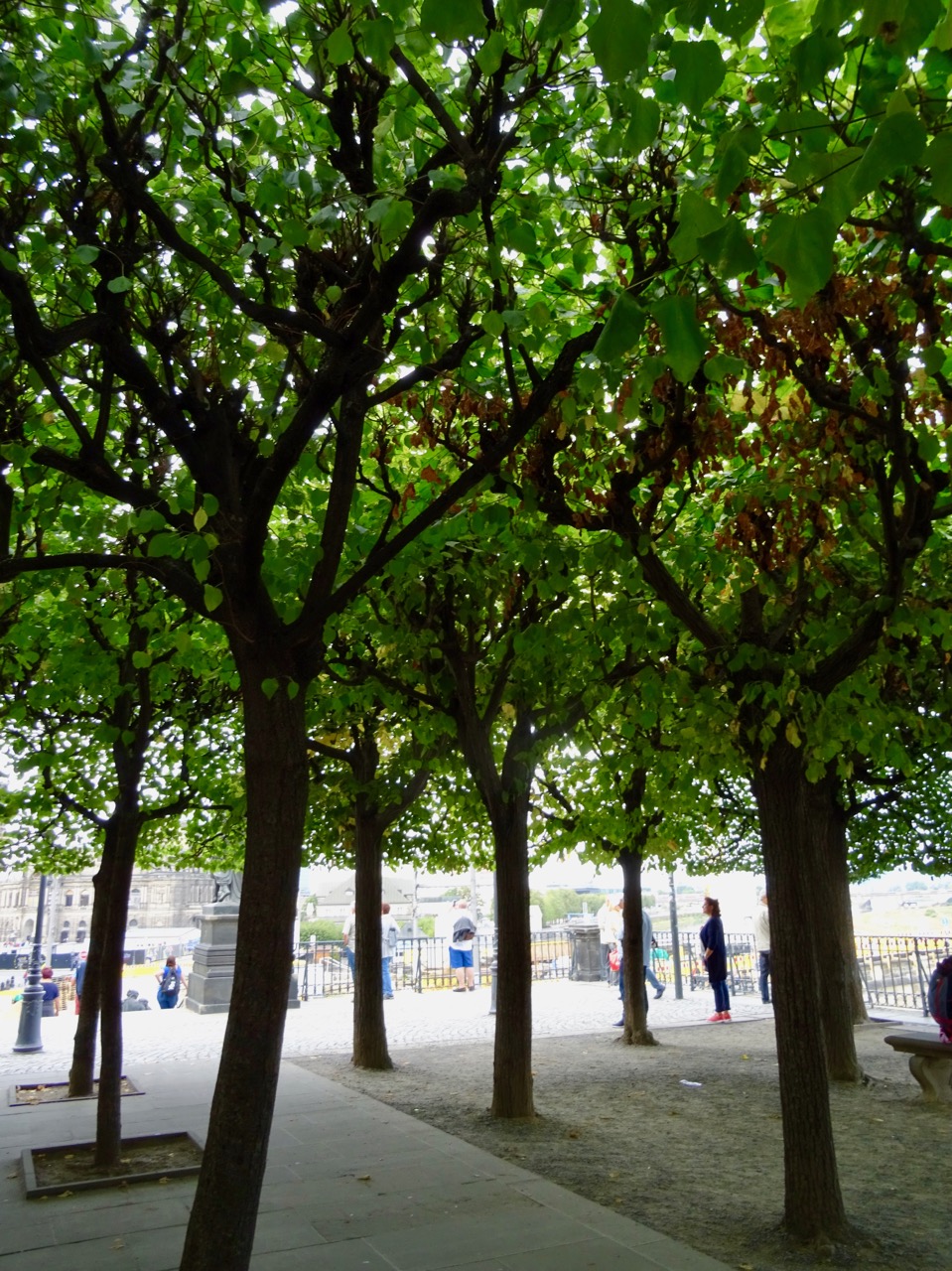
 We walk along the Elbe River, looking for a bathroom, or WC as they are called here. They are few and far between! We do find this lovely terrace where the trees form a canopy over the whole area.
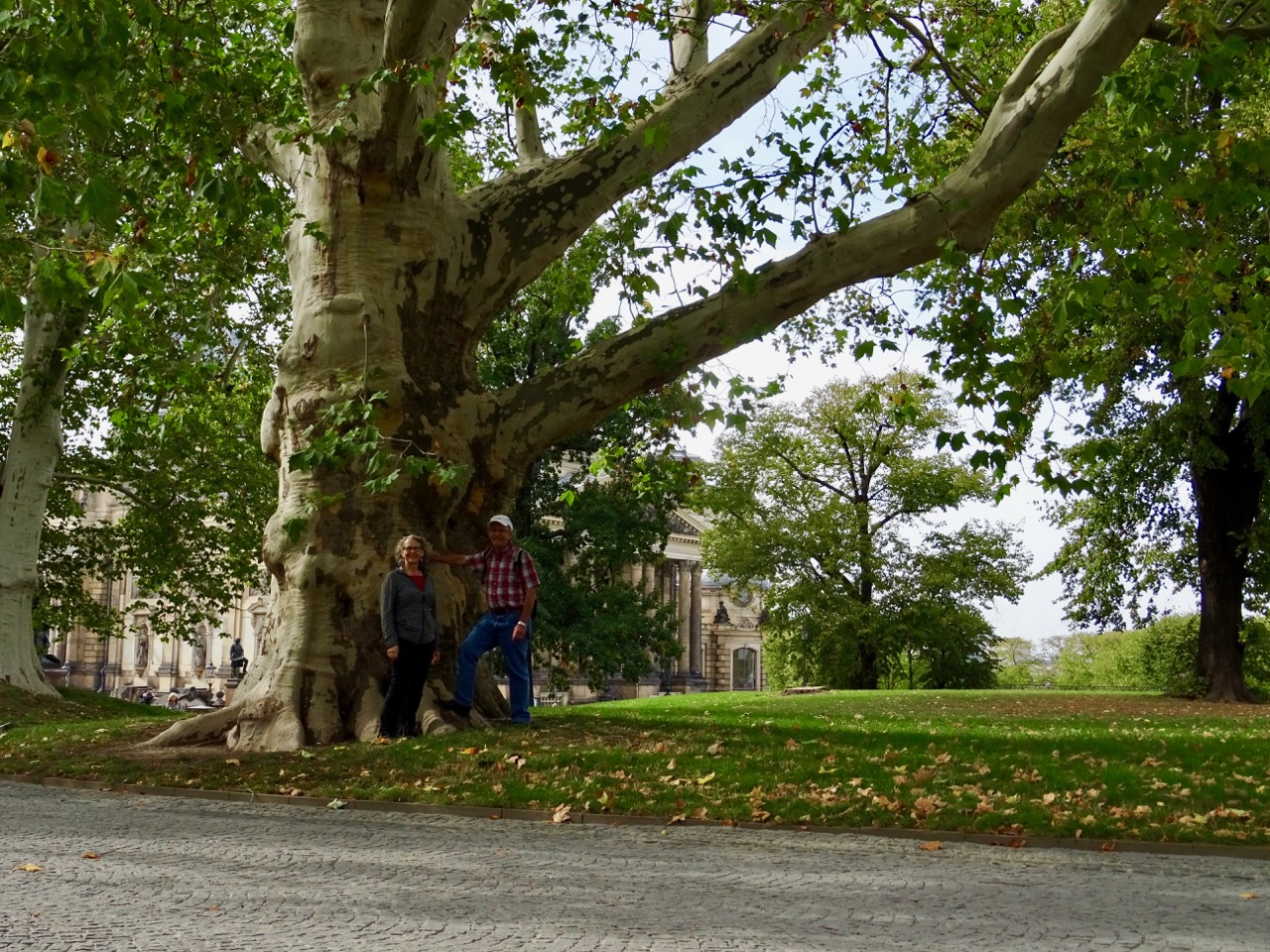
 While we were still looking for the elusive WC’s, that were marked on our map but didn’t seem to be anywhere to be found, we discover this beautiful big tree that begged us to take its photo.
 The Frauenkirche Dresden, or Church of Our Lady is a Luthern Church that was almost completely destroyed during the war. Only parts of its crypts remained intact. The interior is very beautiful with luminous pastel colours and lots of light.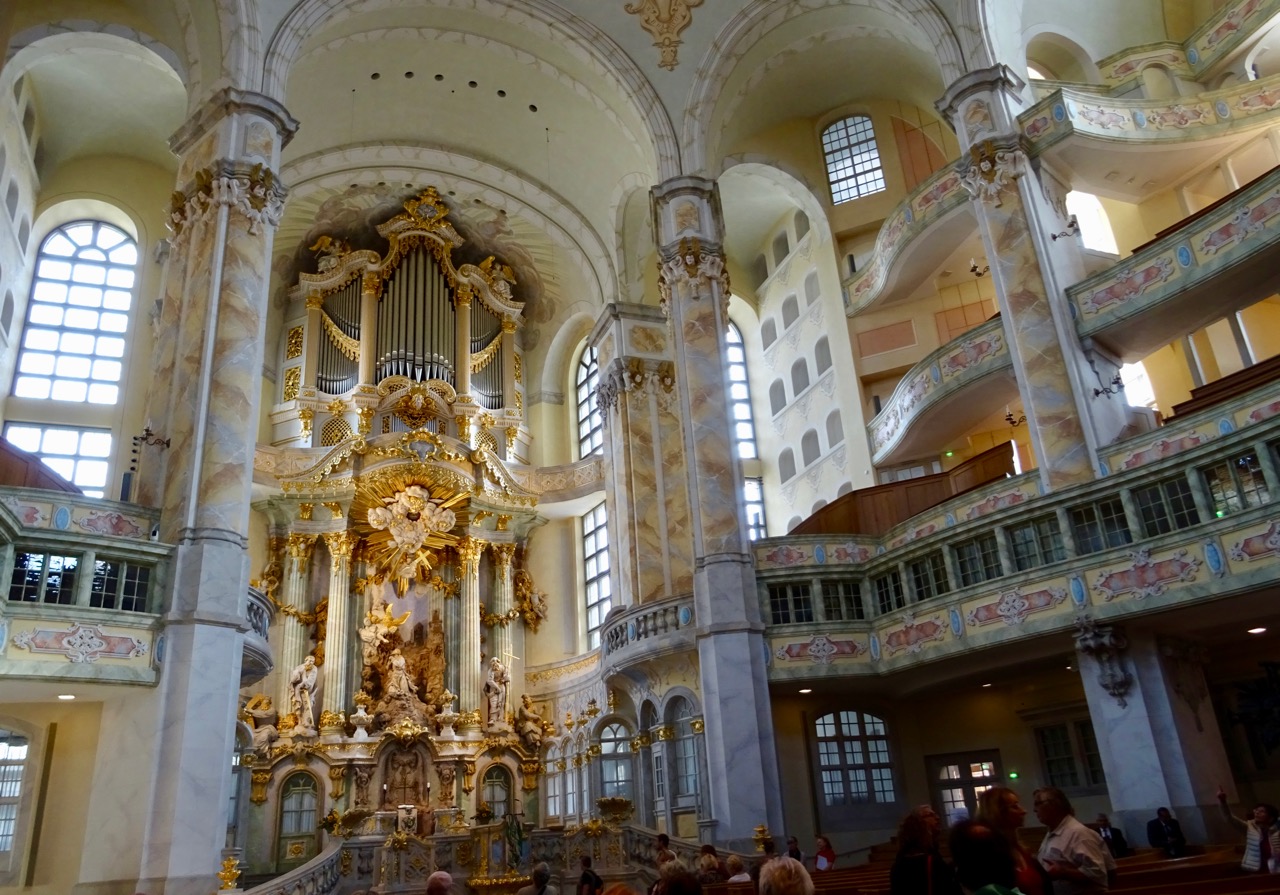
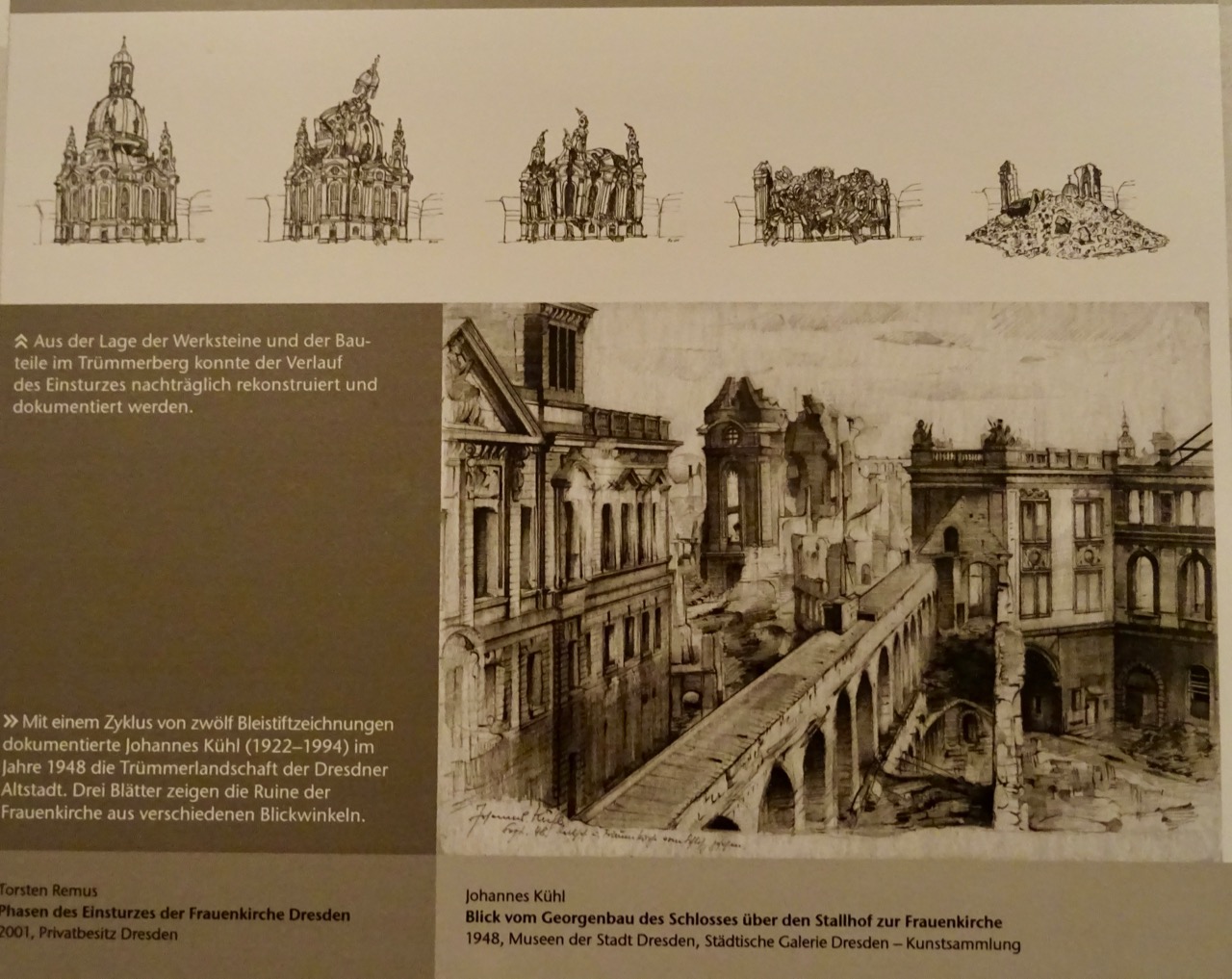 The crypt was huge, not what we were expecting at all. There were modern sculptures displayed here. This one shows ‘Construction’ and ‘Destruction’ opposite each other.
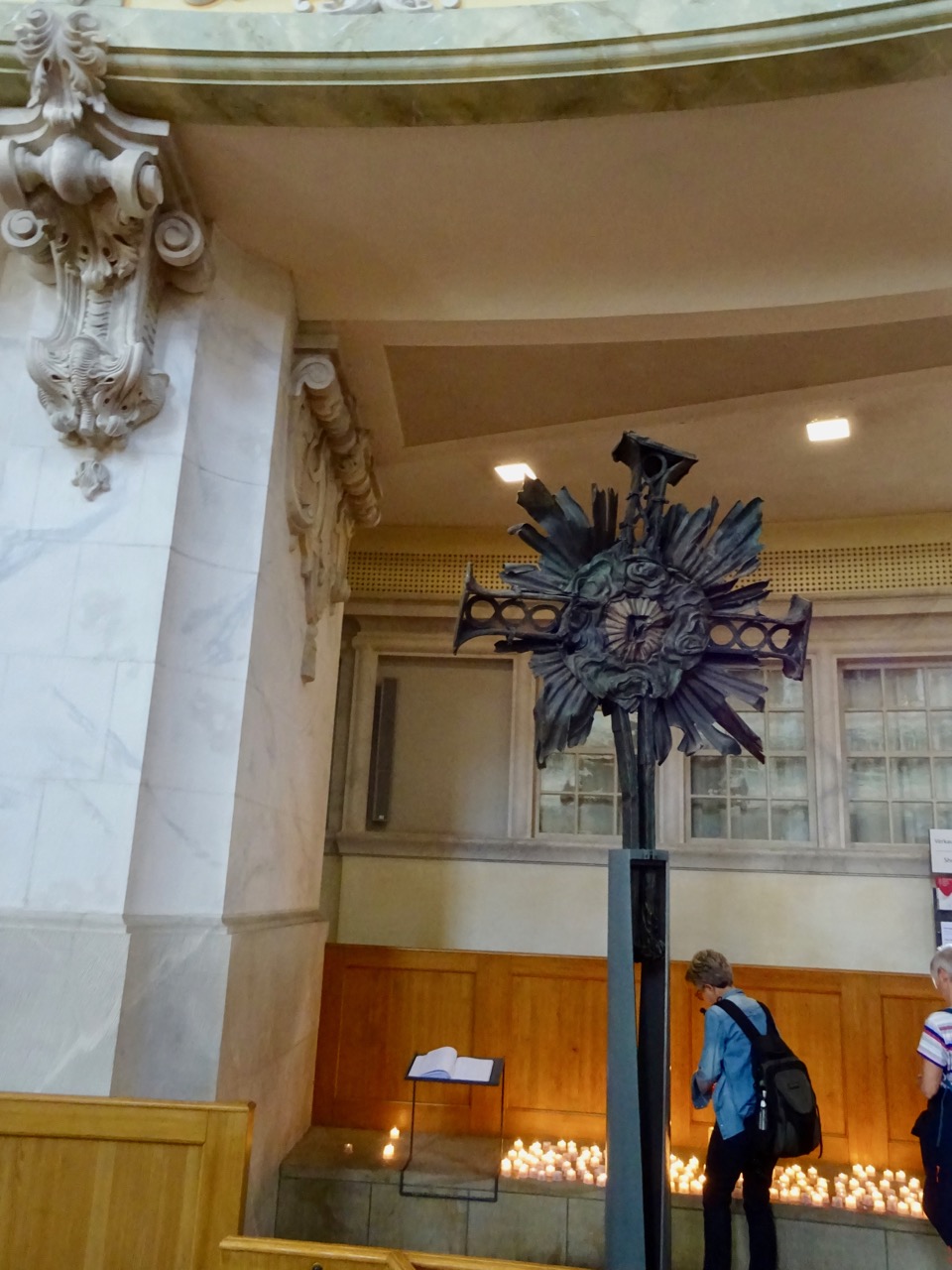
 This burned and twisted cross is from the original church.
 Here is the church from our vantage point in the square outside. The dark stones are the ones that were from the original church.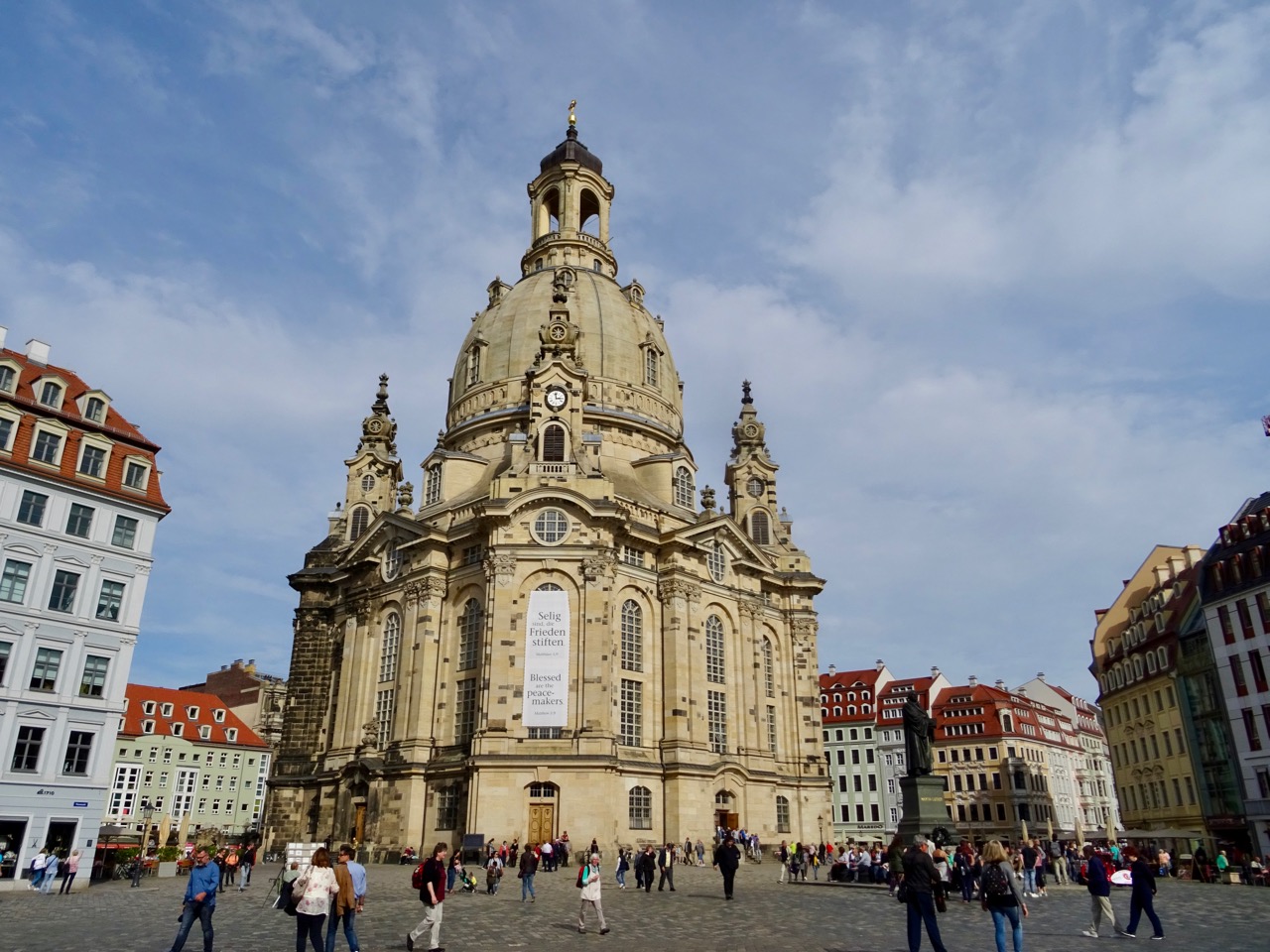
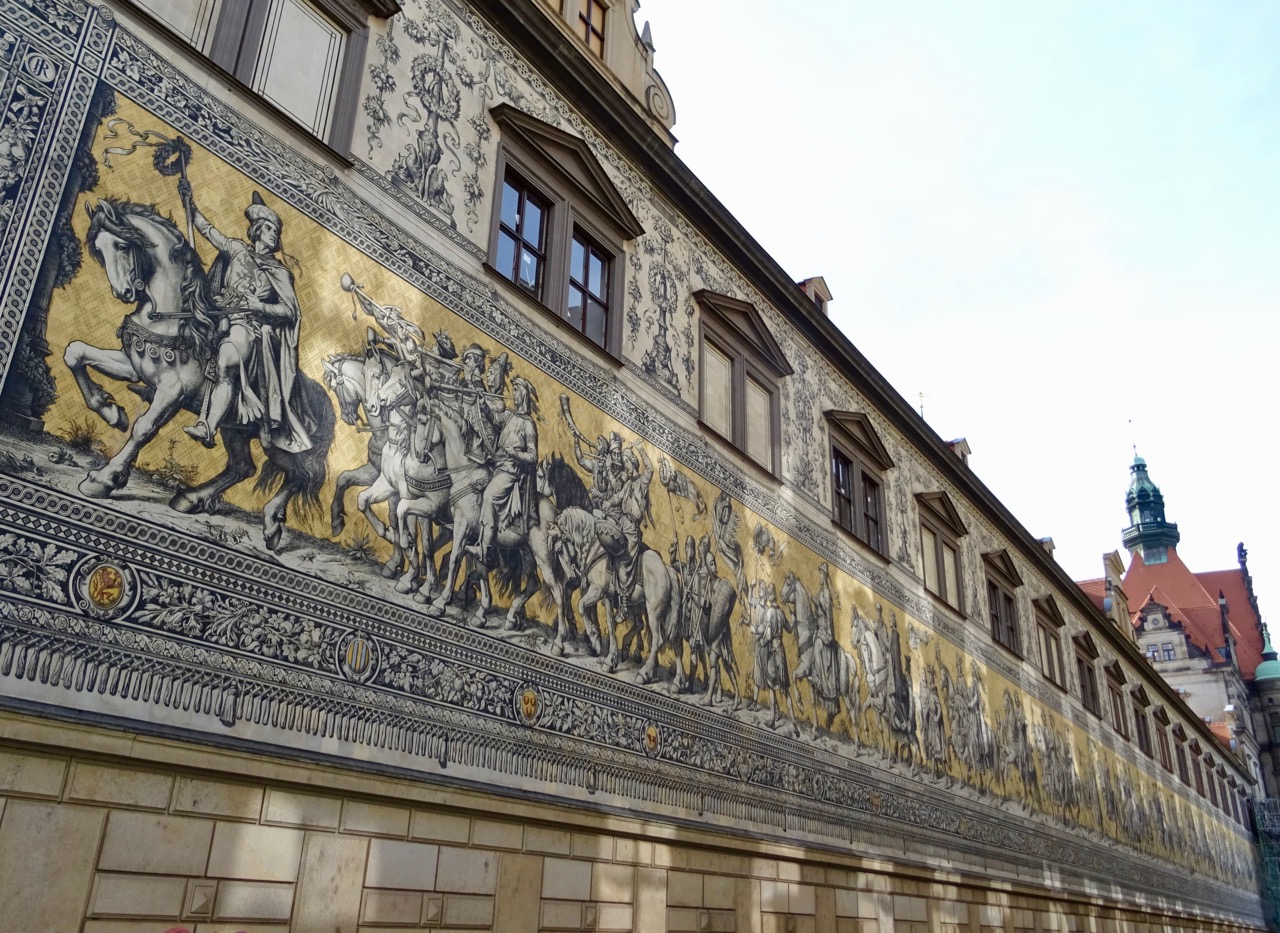
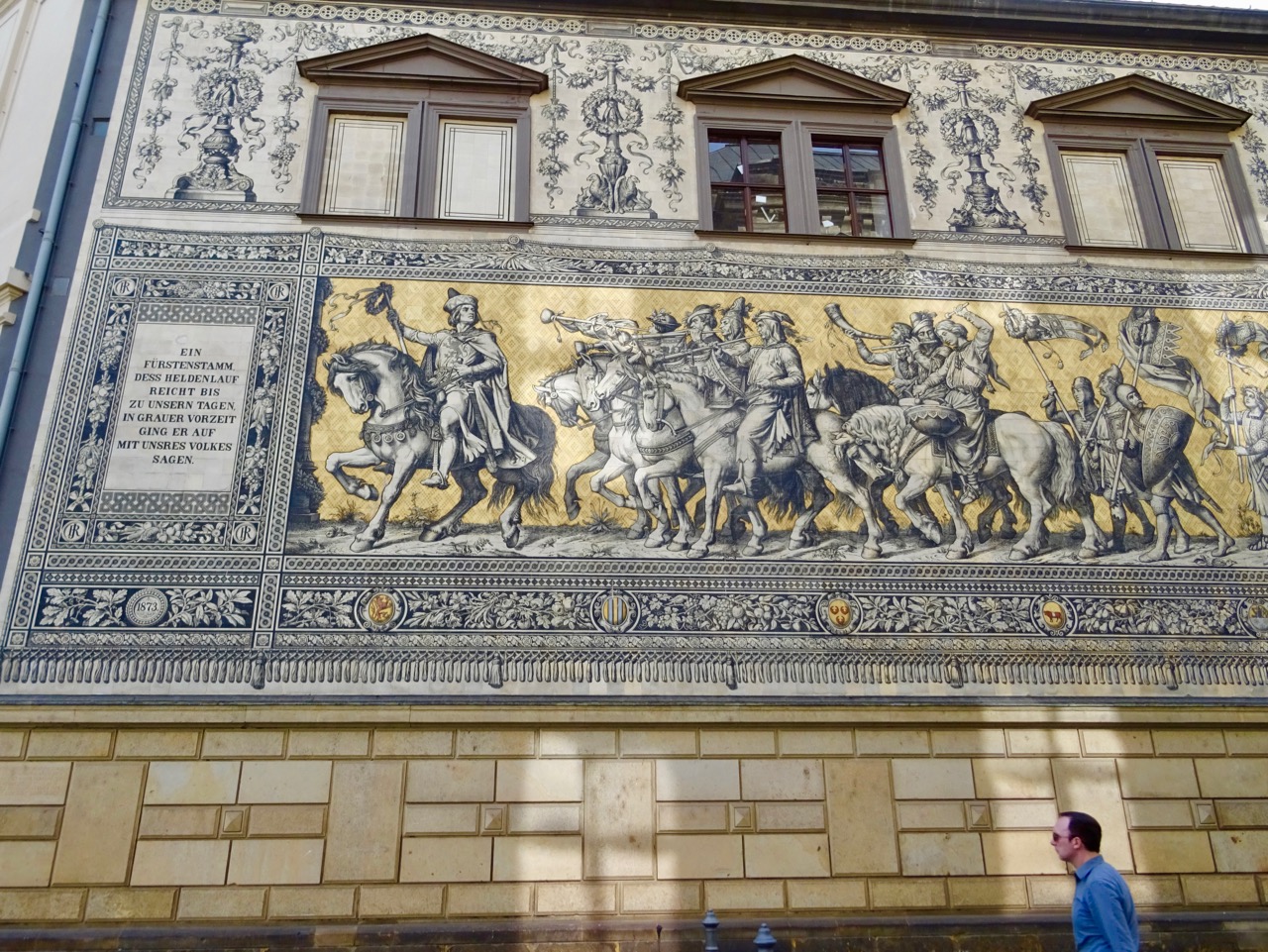 This is an impressive sight, and the detail is amazing. It is also amazing that this mural survived the bombing of Dresden with minimal damage.
 We notice a doorway…looks like Bob is ‘walking towards the light’!
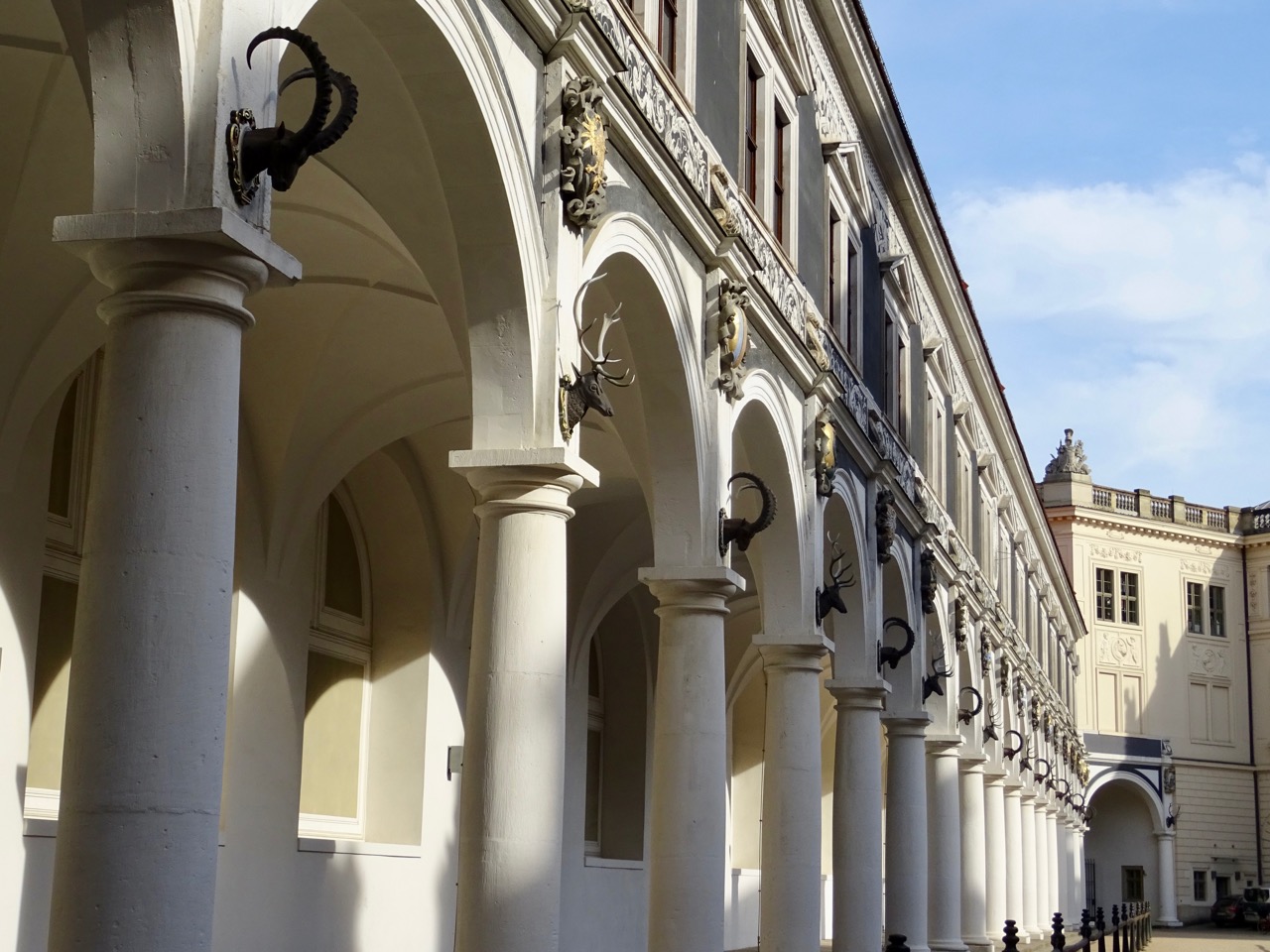
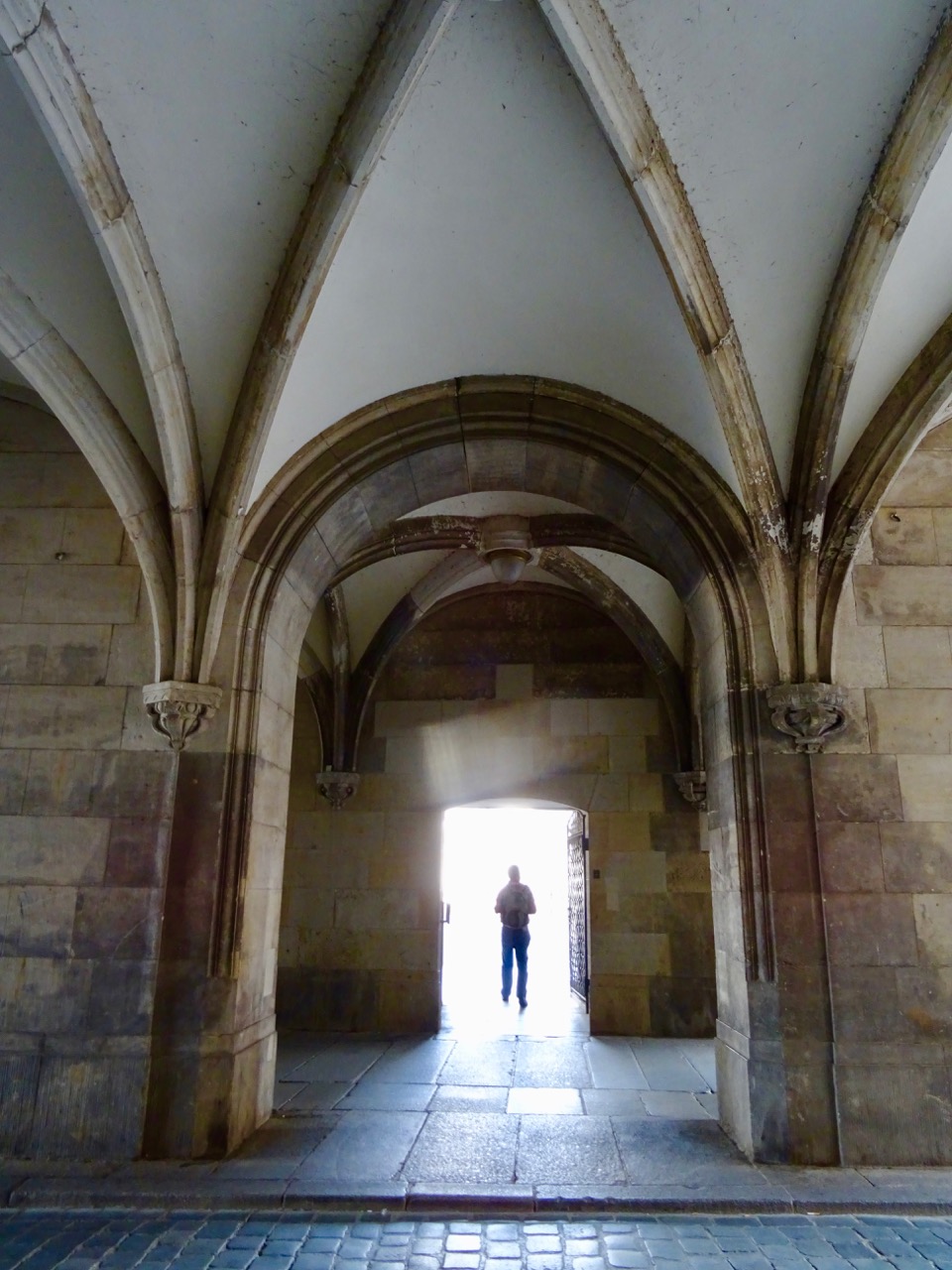 The doorway opens on this courtyard with a different horned animal on each pillar. I think someone liked hunting?
 Back to the Zwinger Palace and Bob discovers that we can walk up to the elevated walkway for some great views of the palace and its grounds.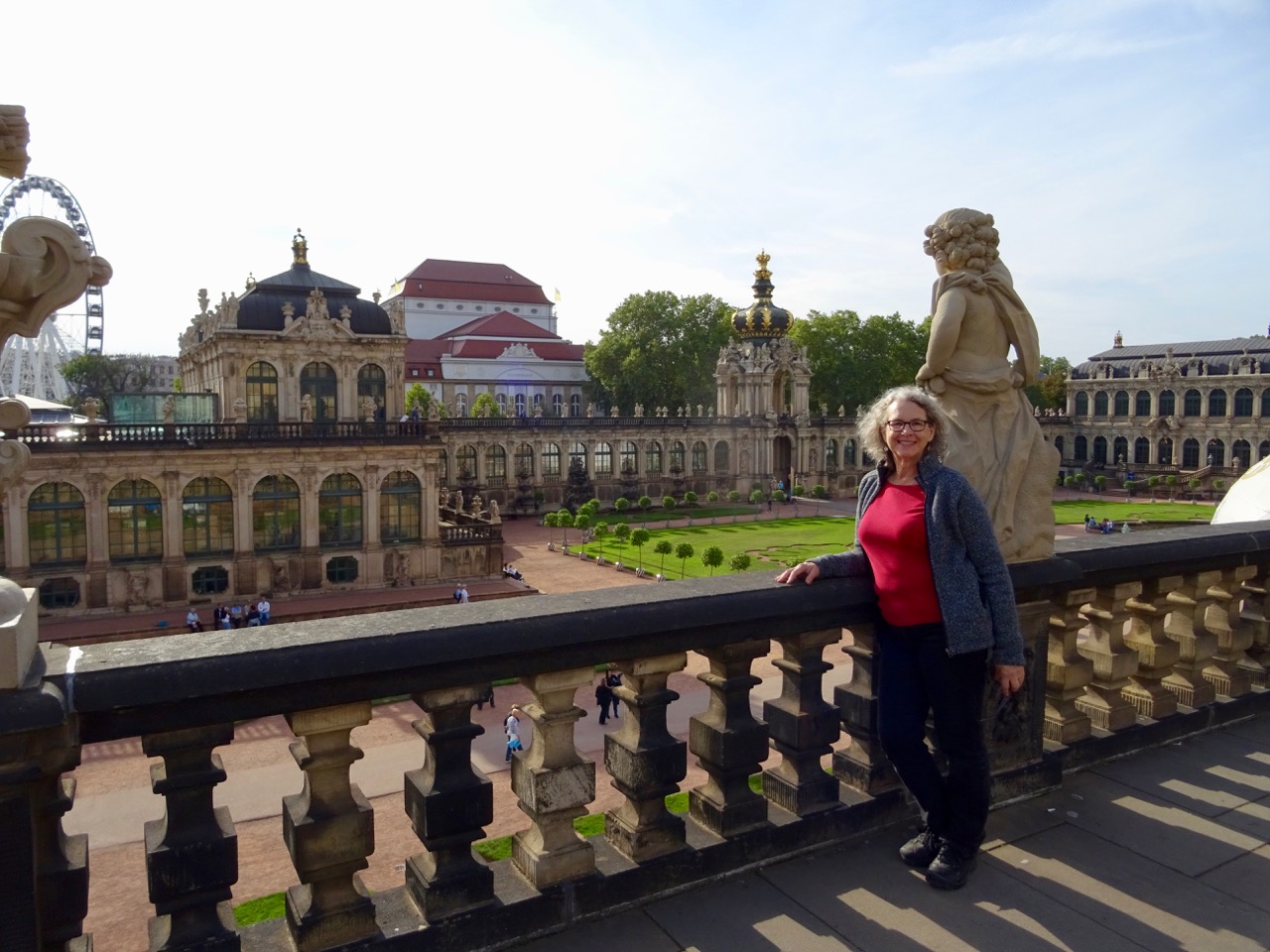
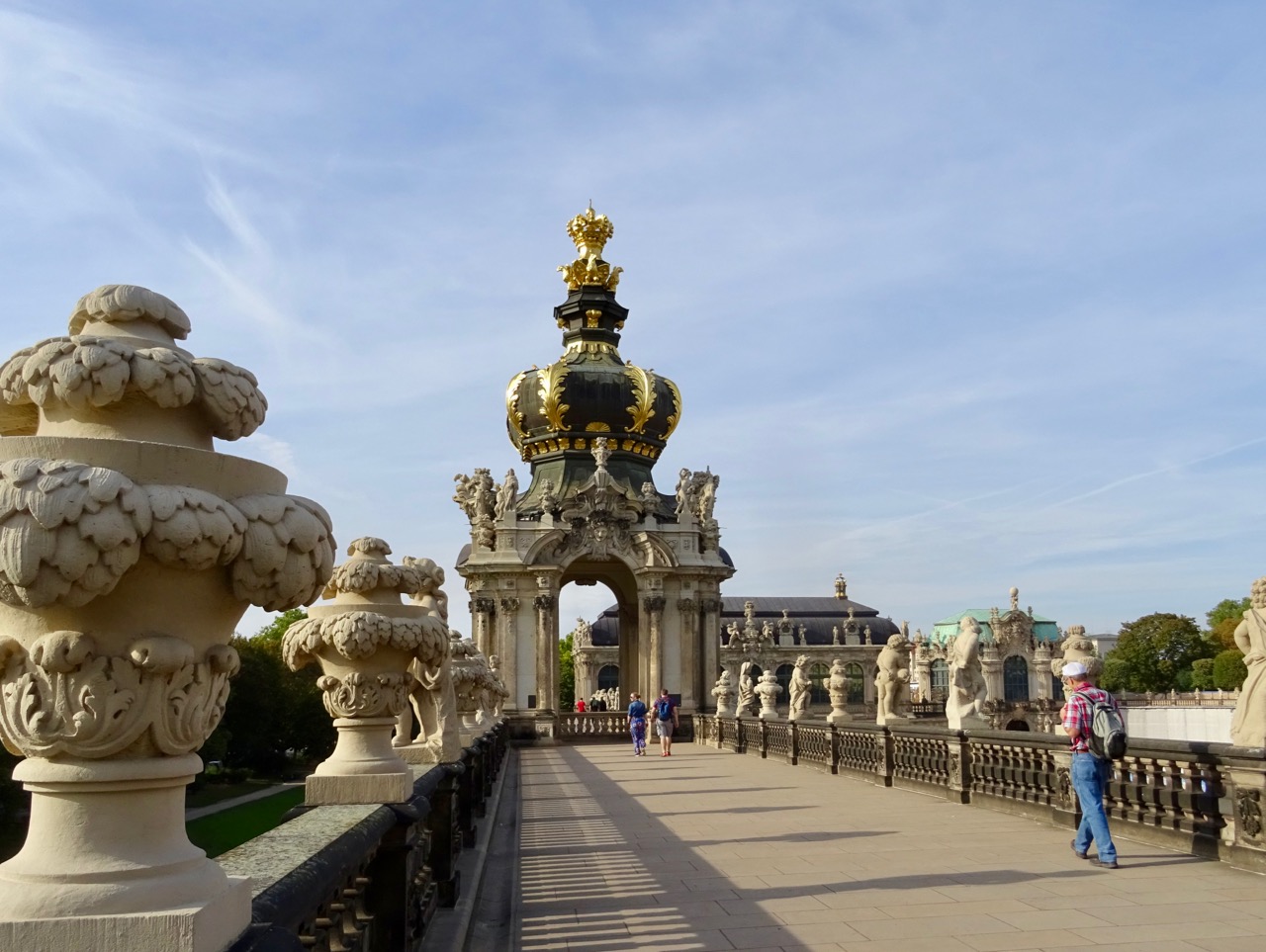
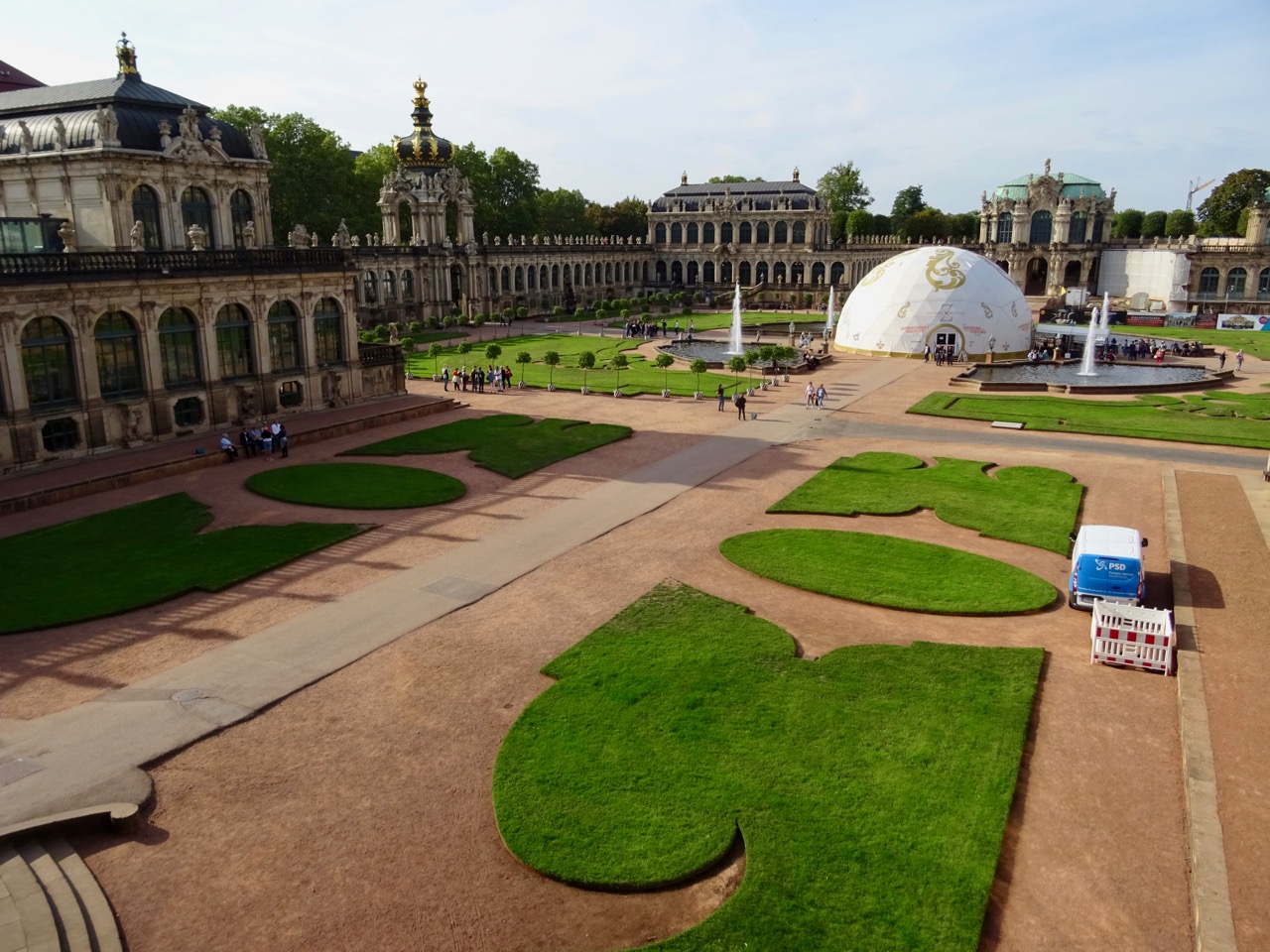 Statues line the walkway and this dome is over the entrance to the grounds.
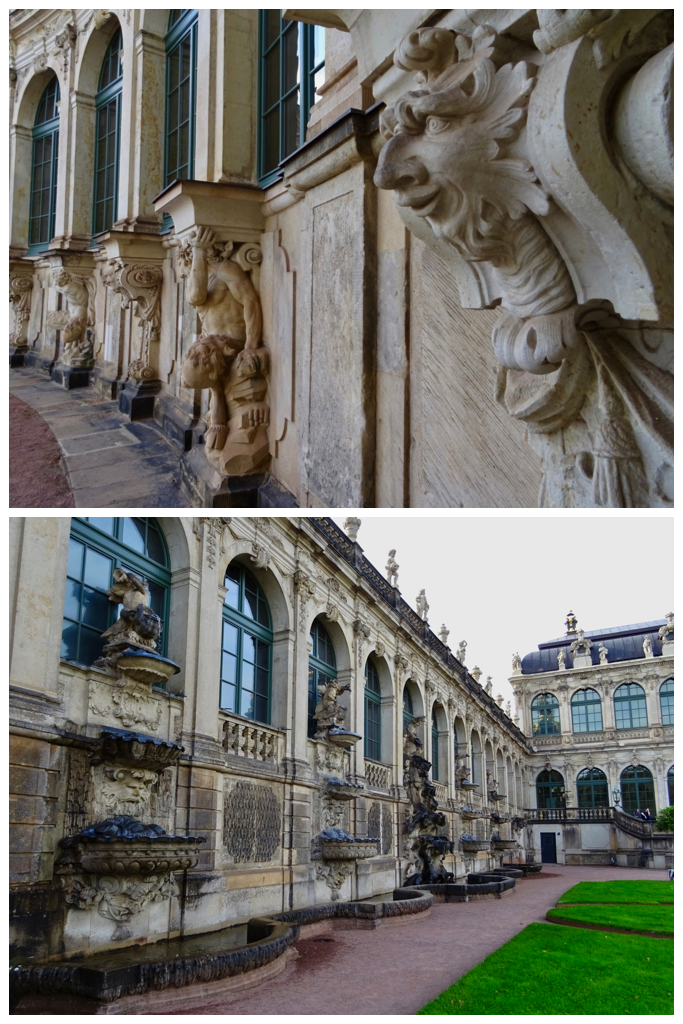
 There are some interesting sculptures on the interior walls of the palace and one of the walls has fountains all along its length.
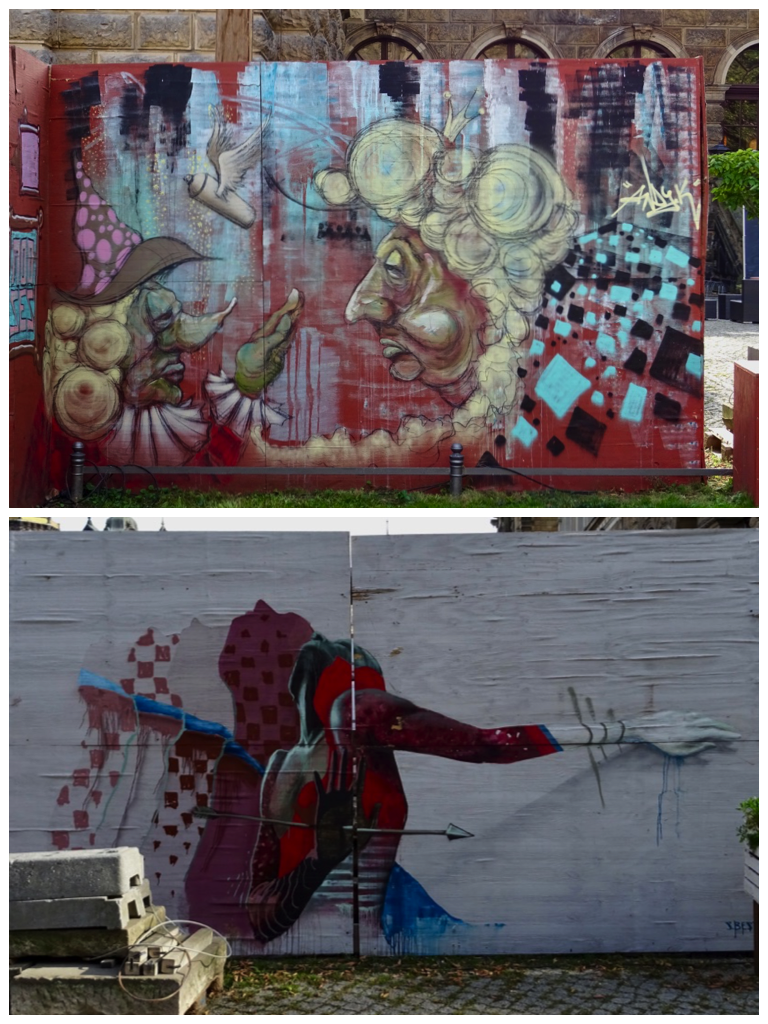
 There is some work taking place on the outside wall of the palace and I really liked the graffiti on the construction barricades.
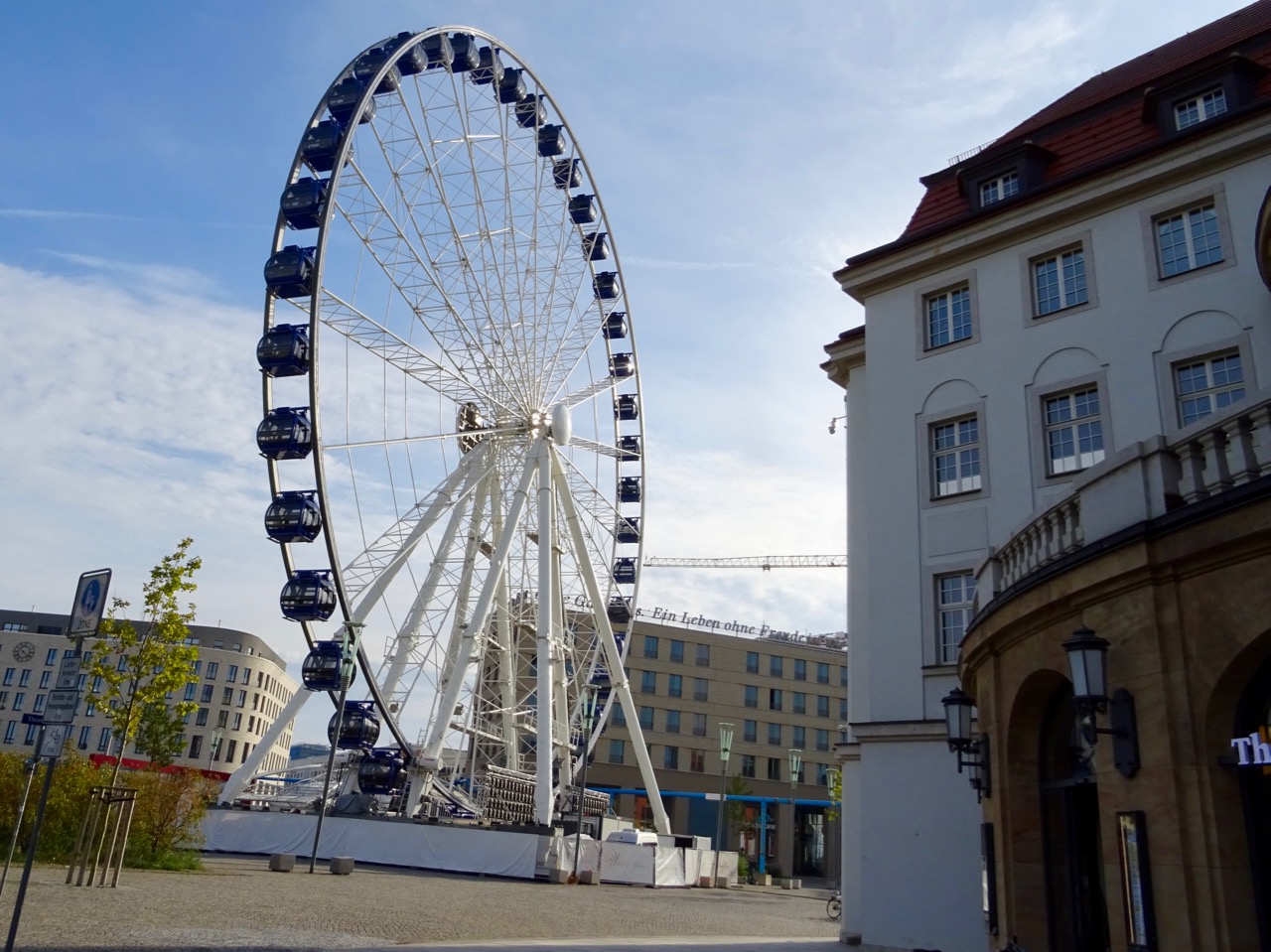
 We end our day with a ride on the ferris wheel. It has been many years since we were last on a ferris wheel.
 Here are some views from the top of the ferris wheel. The people and cars below are very tiny!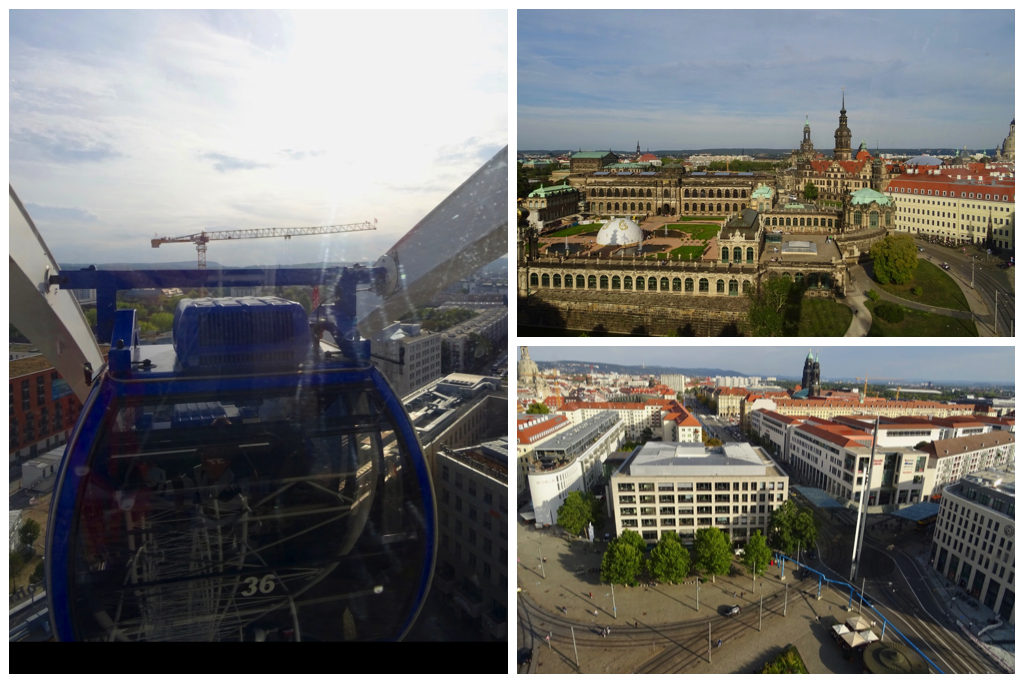
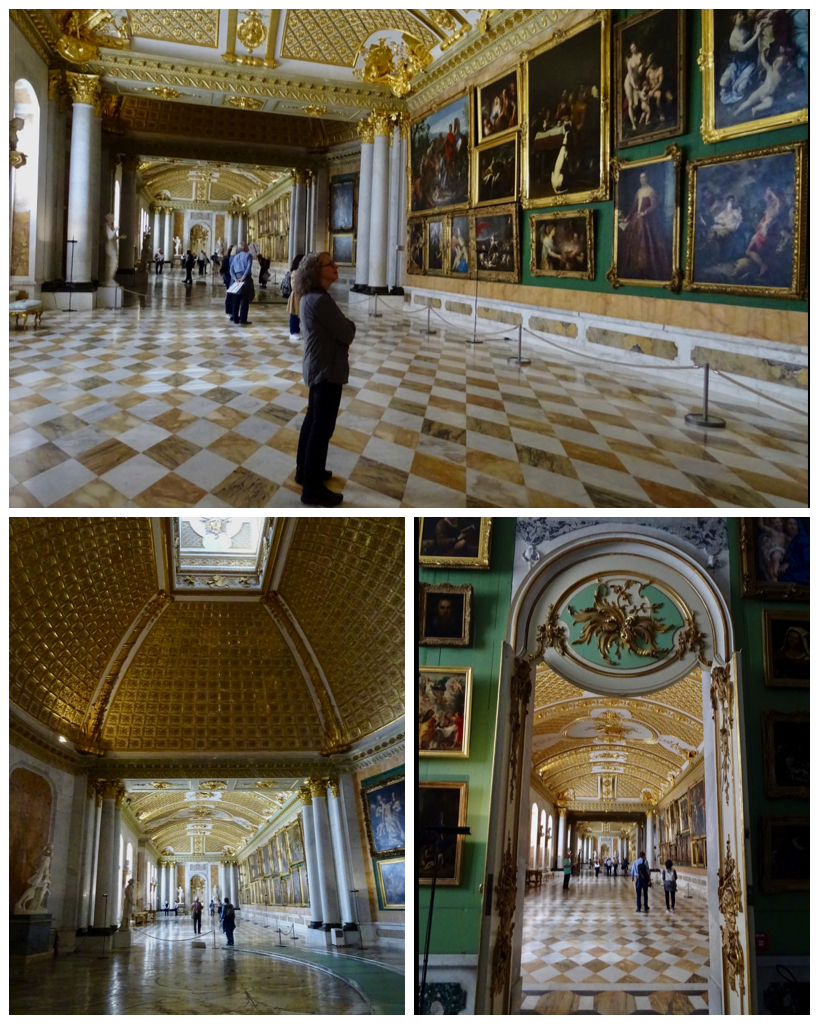
 The grounds in front of the palace. We have our picnic lunch and then visit the Bildergalerie.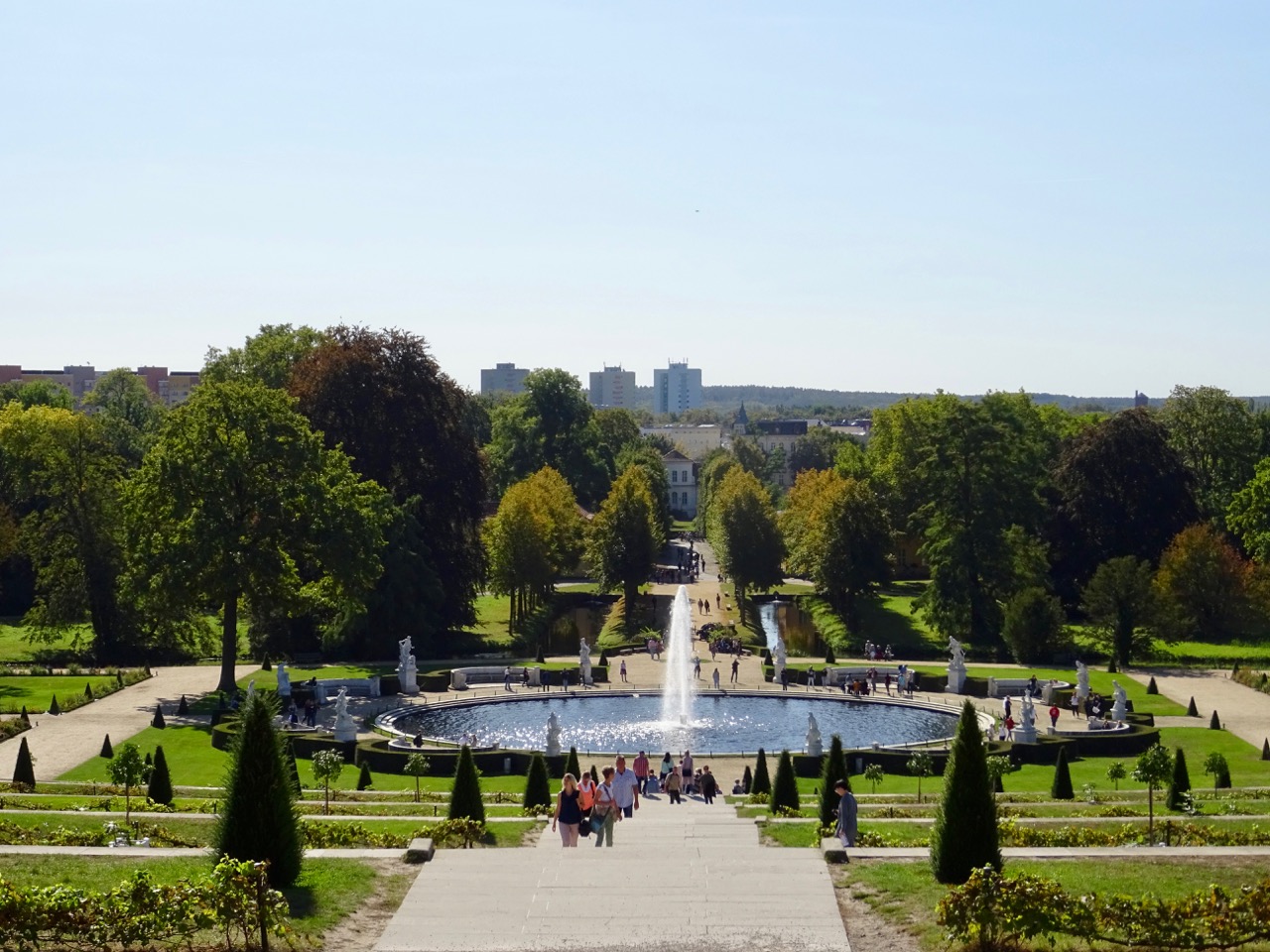
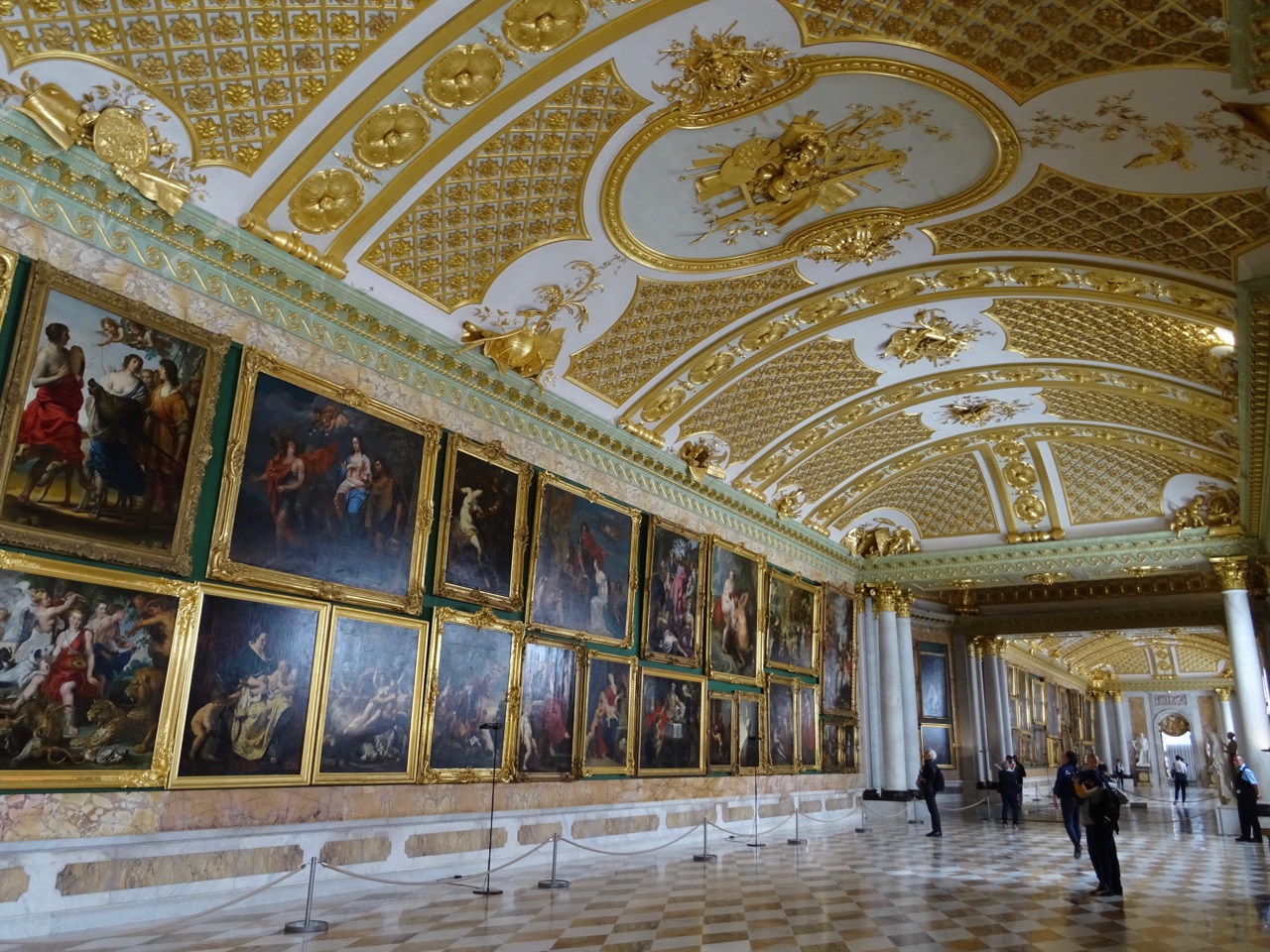 connected by a round room with a vaulted gold ceiling. At the far end there is a room for small paintings. The last photo is taken looking out from this room. There are a lot of beautiful paintings but they were a bit hard to see because of the glare from the windows on the opposite wall. I am surprised that they allow the much sunlight to enter the gallery, but it did make the space bright and very attractive.
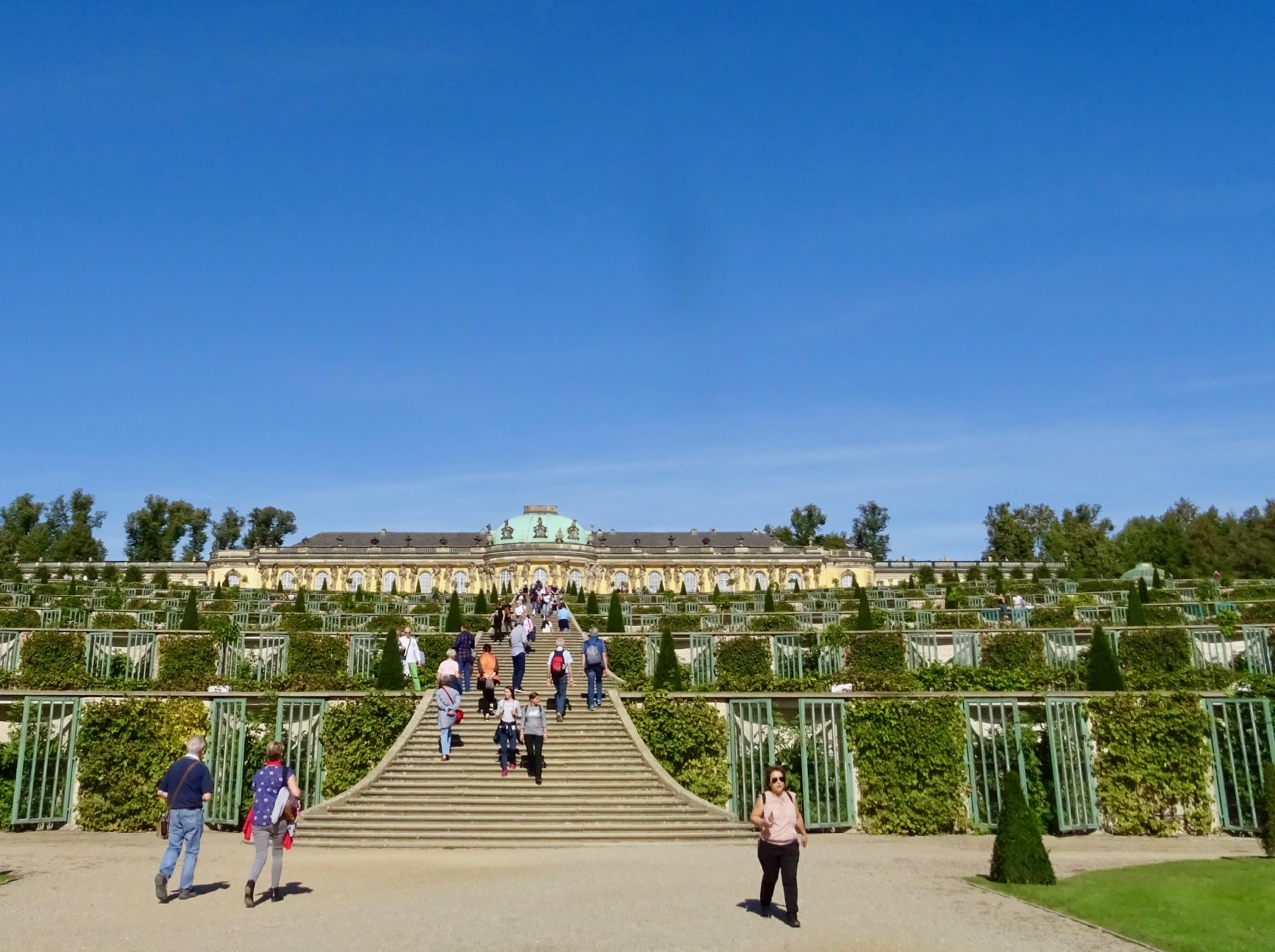
 We still had a bit of time before our palace visit so we walked down to the gardens. The layout here is reminiscent of Versailles in France, only on a smaller scale.
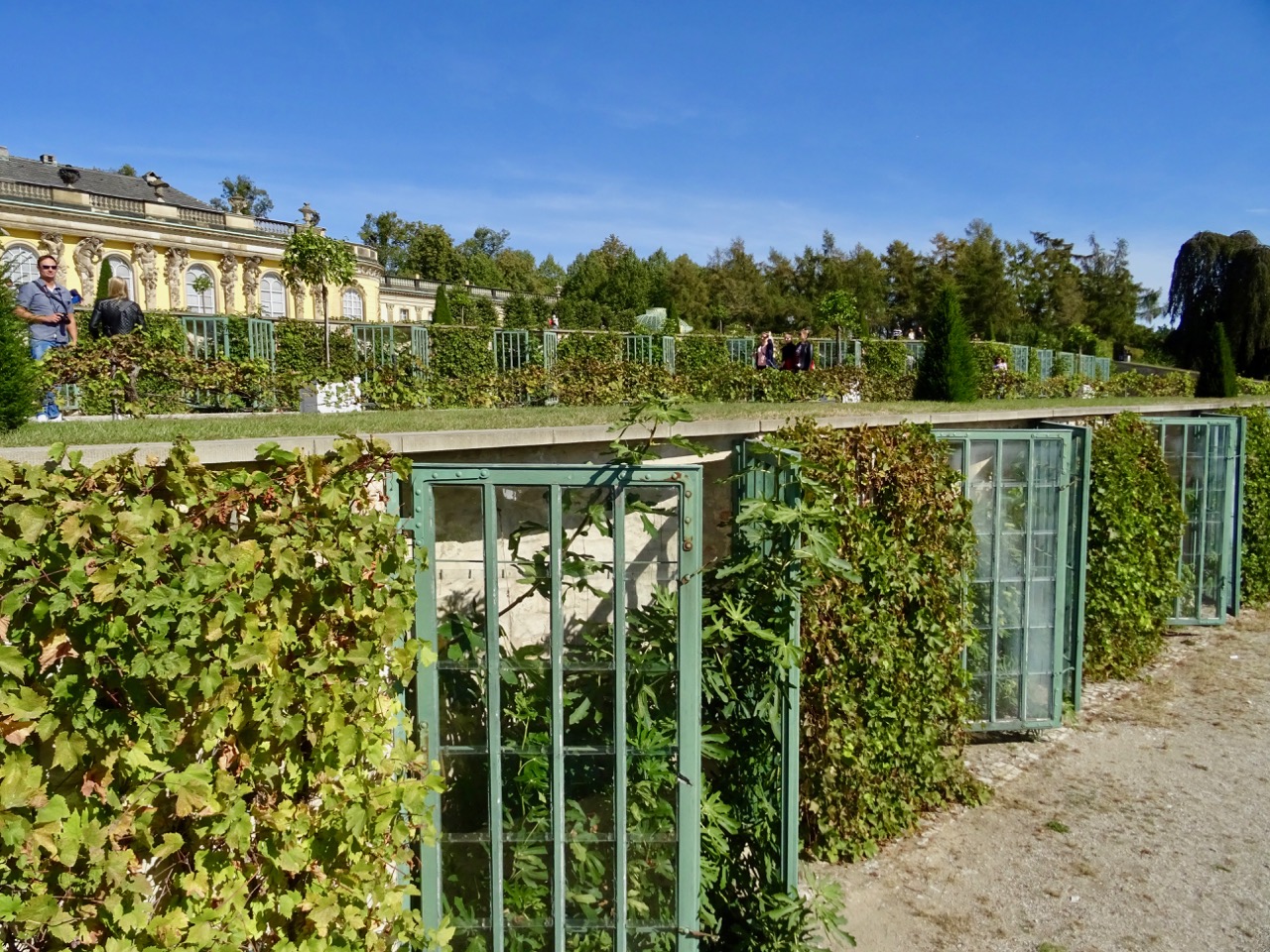
  All the terraces have these nooks with glass doors that can close when cold to protect the plants. Frederich loved to garden and grow fruit trees and grapes.
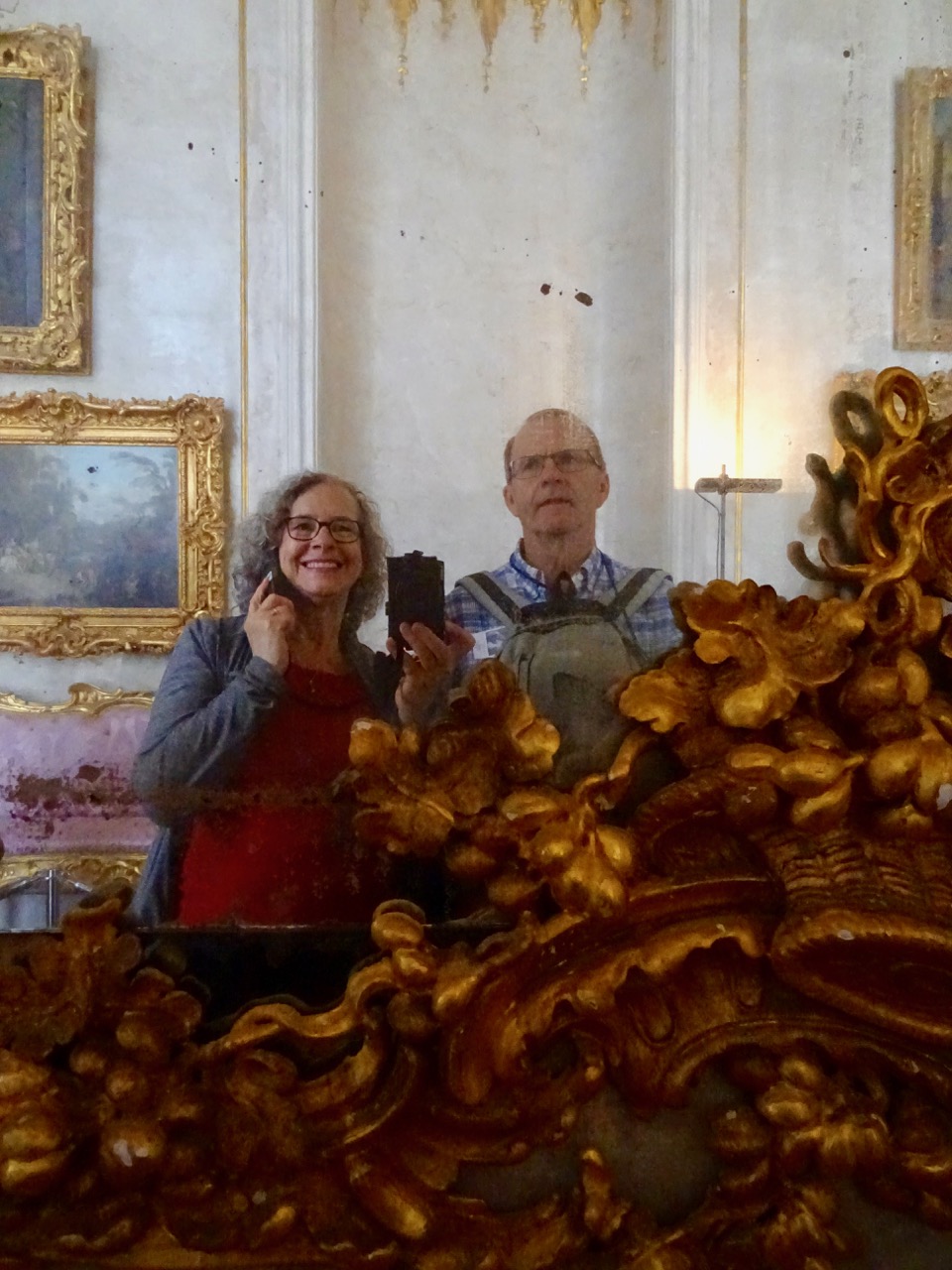
 We enter the palace and take this selfie in the first room. It contains artwork and is an entrance hallway, not very wide at all.
 The palace only contains twelve rooms. They are all connected by doors in a straight line that lead from one room to another. The room below is panelled in wood with inlaid botanical designs. They are very intricate.
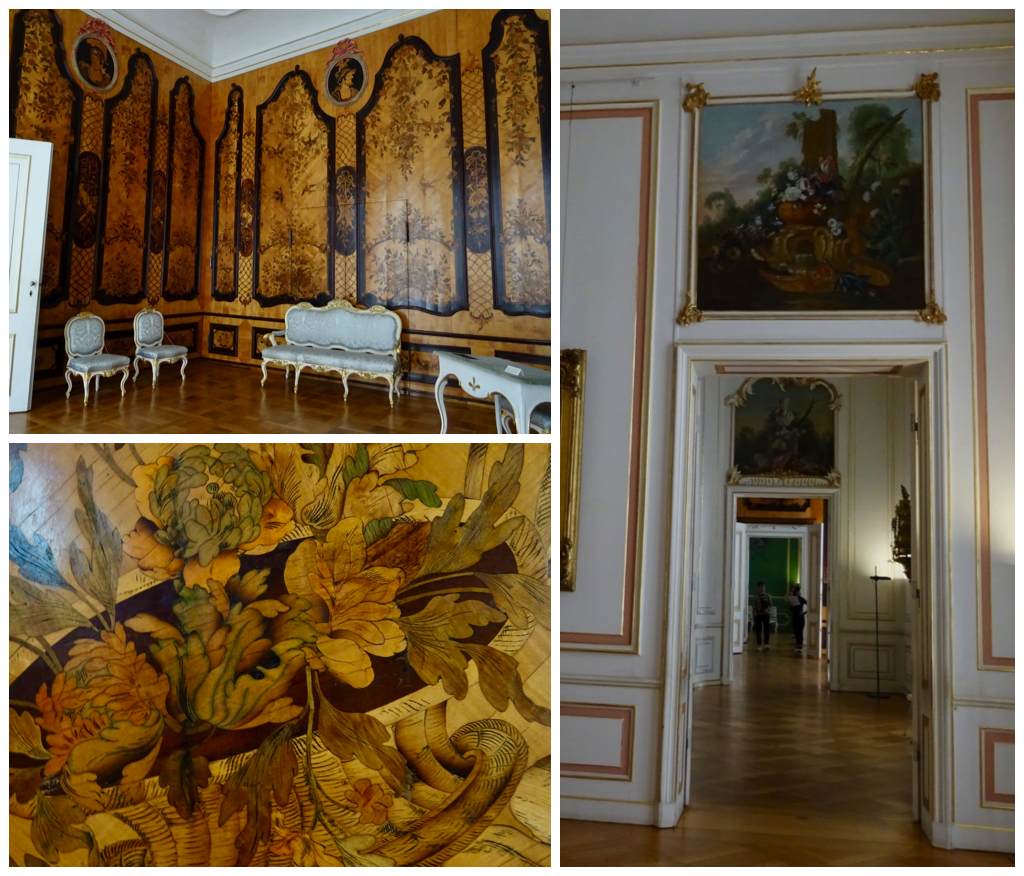 We walk through the rooms, each seeming to be a bit more elaborate than the next.
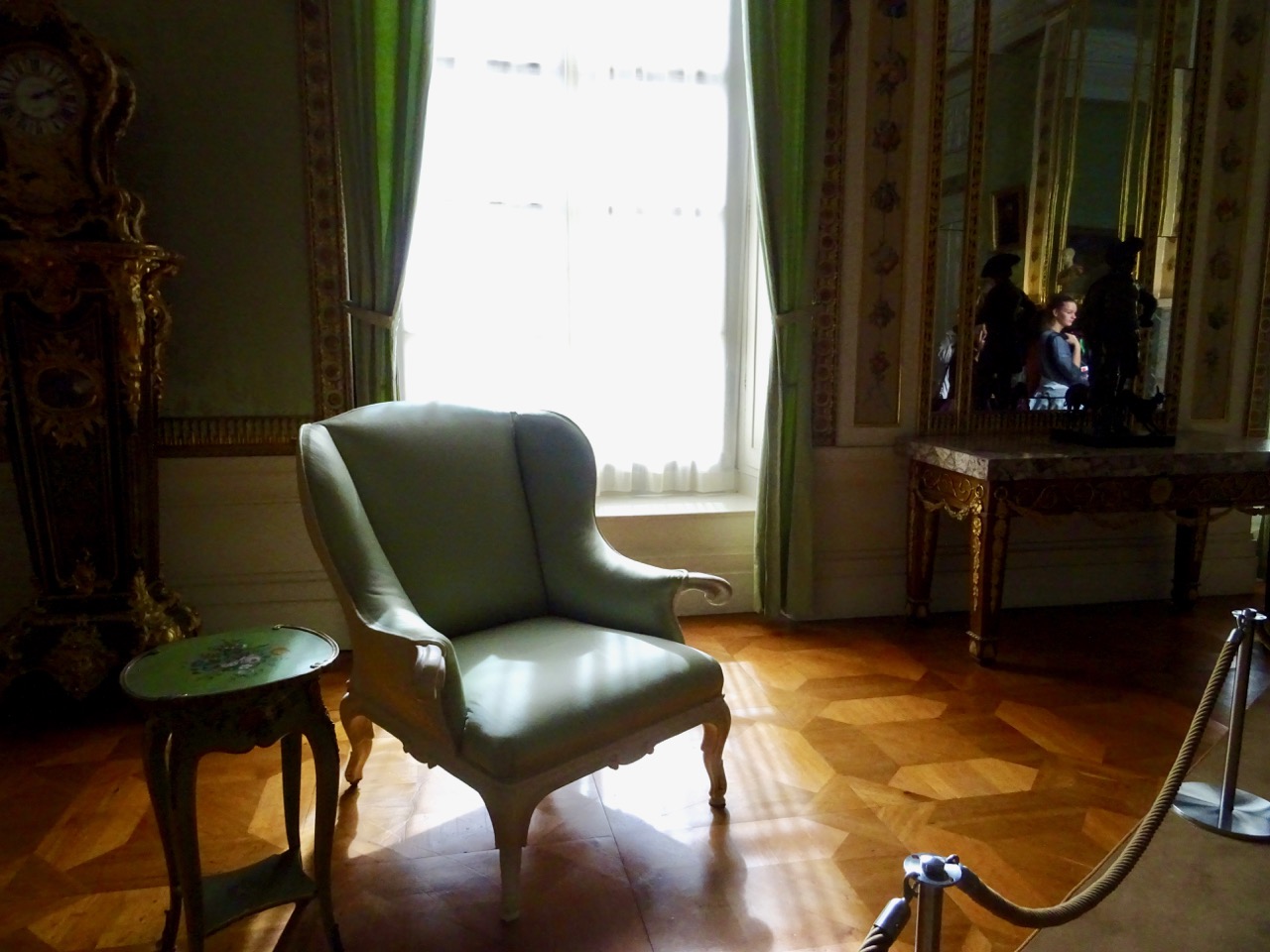
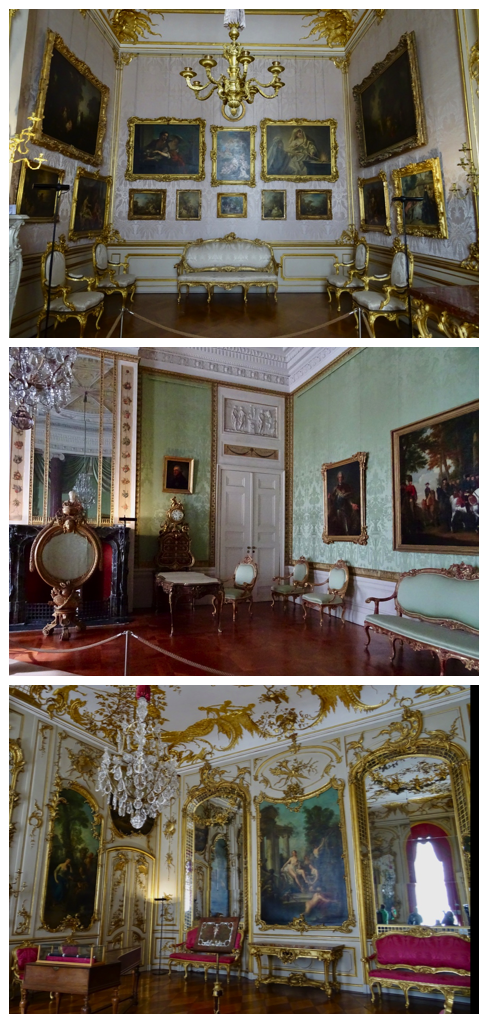 The green room above was Frederick’s study. He suffered from asthma, gout and other ailments and he often slept in the green chair below as it was too difficult to lie in a bed. He died in this chair when he was 74.
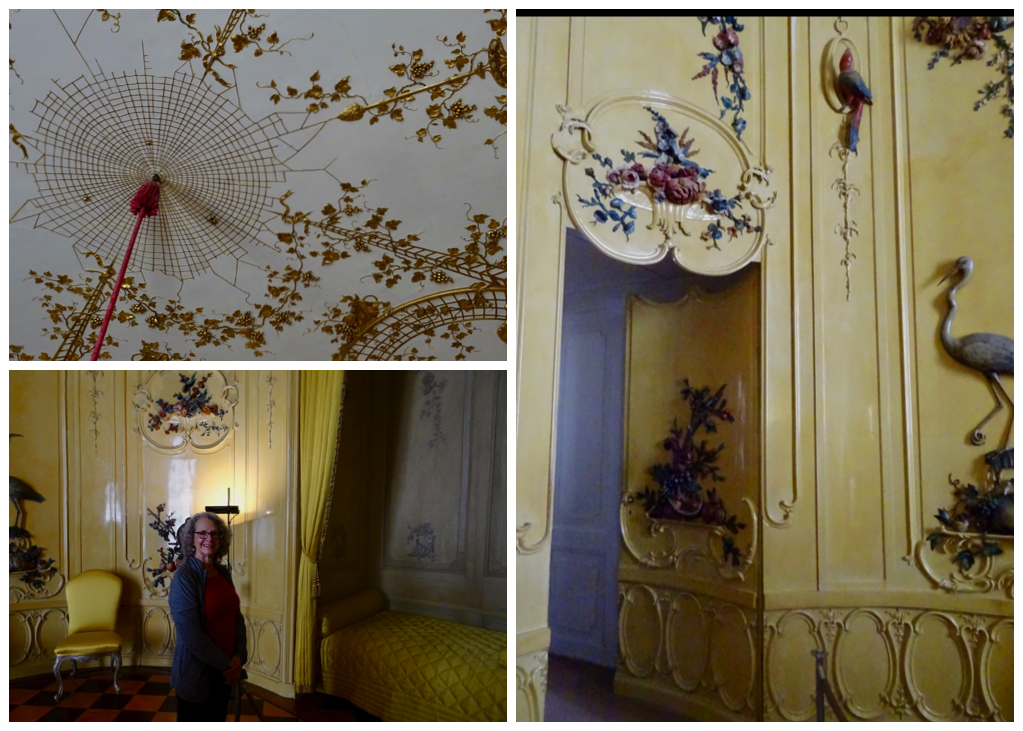
 Frederick loved nature and the palace was decorated with botanical themes. The palace was his refuge and he lived there from April to October. Sanssouci is from the French “sans soucci”, which means “without worry”. Frederick was married but lived separately from his wife. He only married because his father threatened him with imprisonment if he did not comply. His father was very strict and made his Frederick’s life miserable. He had a miserable childhood as his father thought him effeminate and tried to change him. Frederick was gay and surrounded himself with male friends and companions at Sanssouci. Women were not welcome there. The yellow room below has raised carved decorations, and a sleeping nook for the bed, as did all the bedrooms. Notice the spiders on the ceiling decoration.
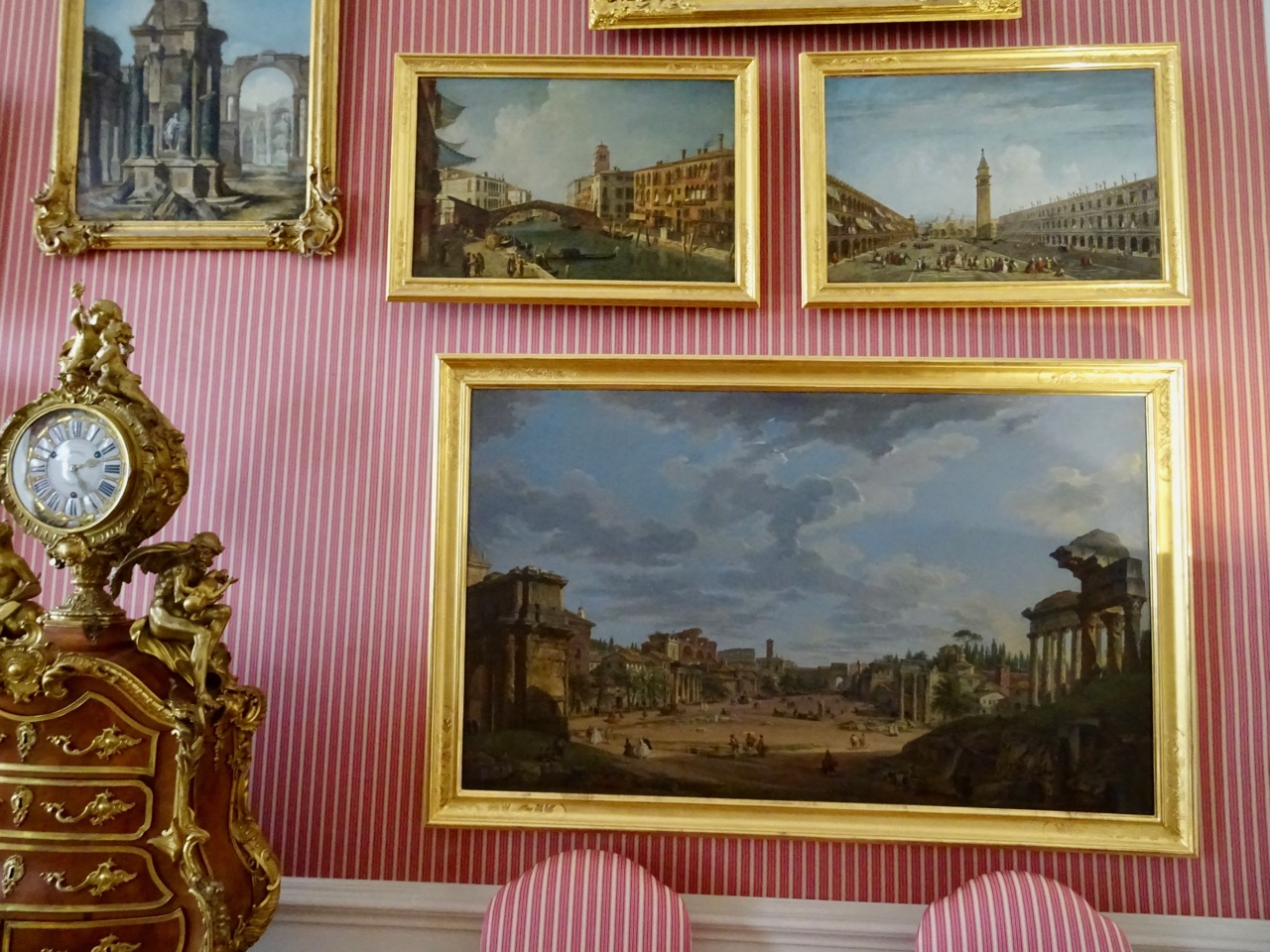
 Frederick was unable to travel to Rome and Venice but his palace had many paintings of these cities, which he greatly admired. I think how lucky we have been to visit these cities.
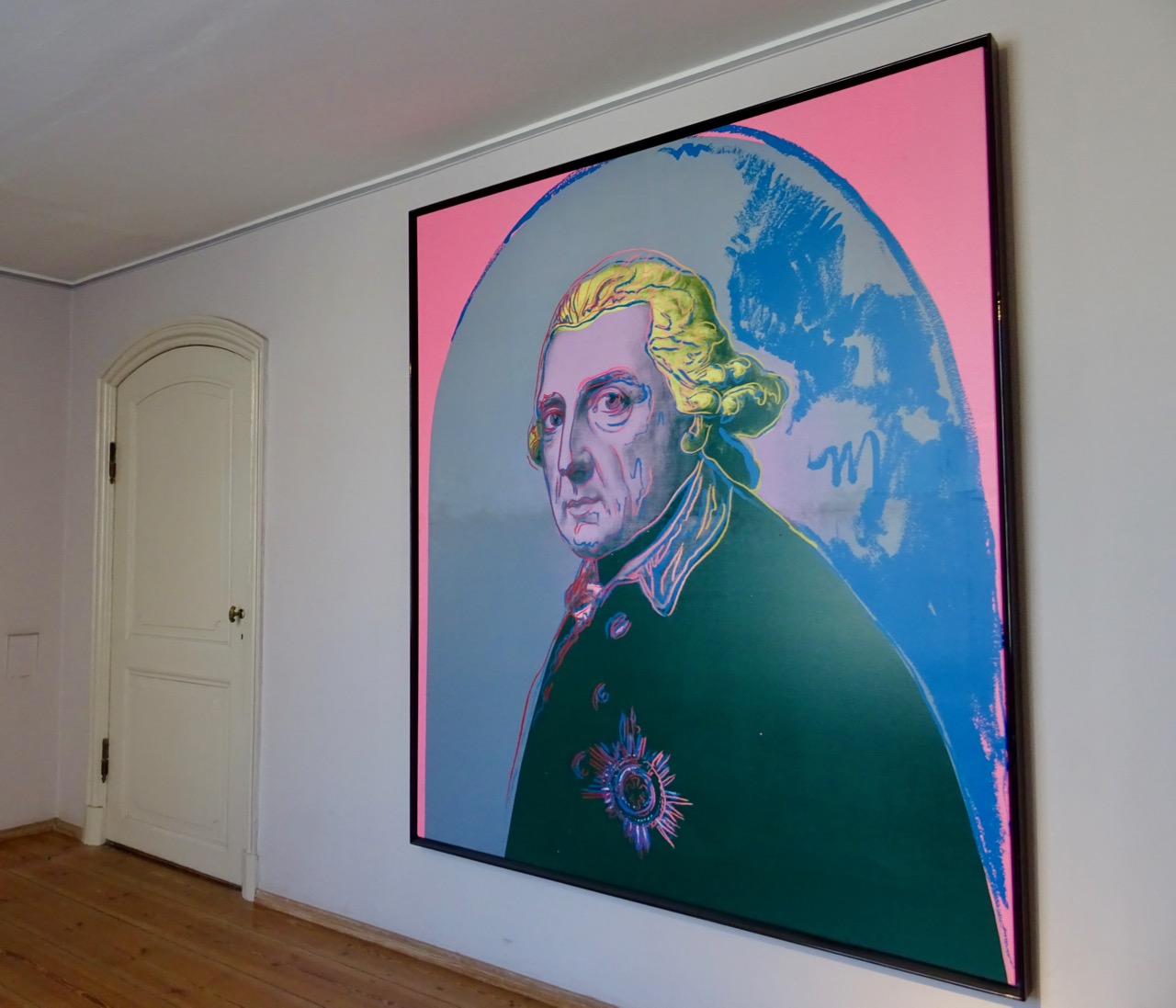
 As we exit the palace there is a huge painting of Frederick the Great by Andy Warhol. It is quite a dramatic change from the other artwork we have seen here.
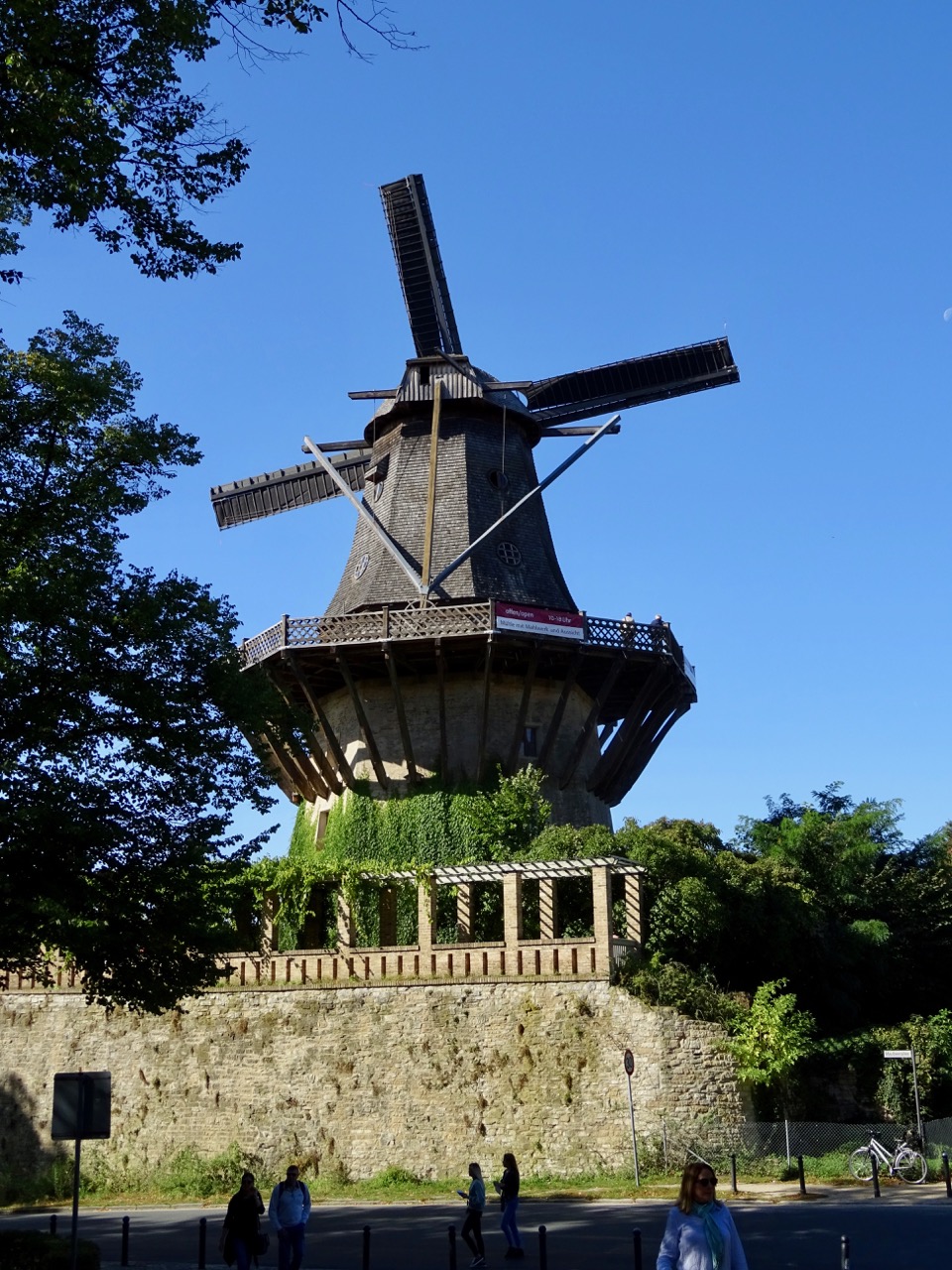
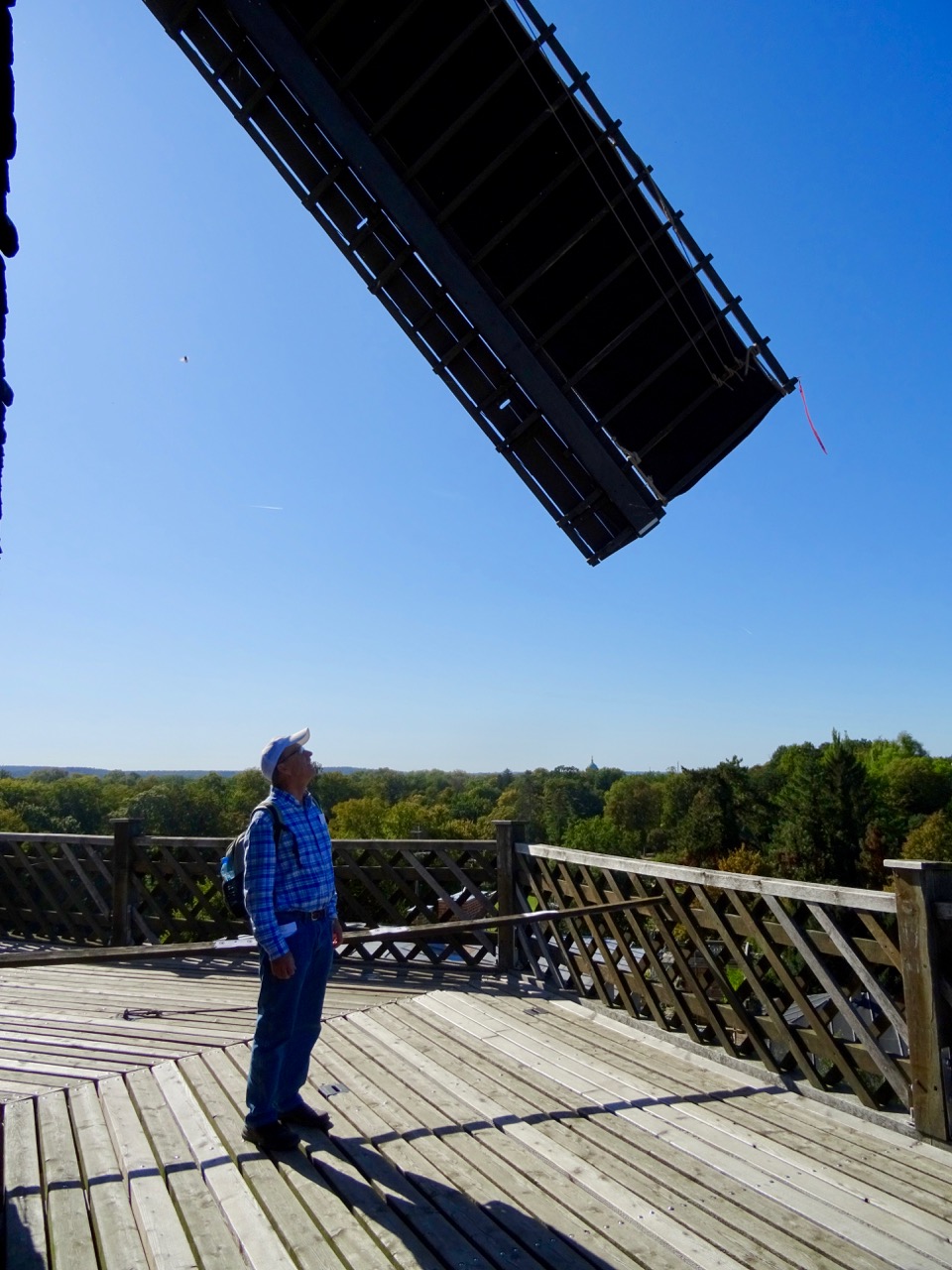
 We climb the interior of the windmill and step outside to check out the huge blades.
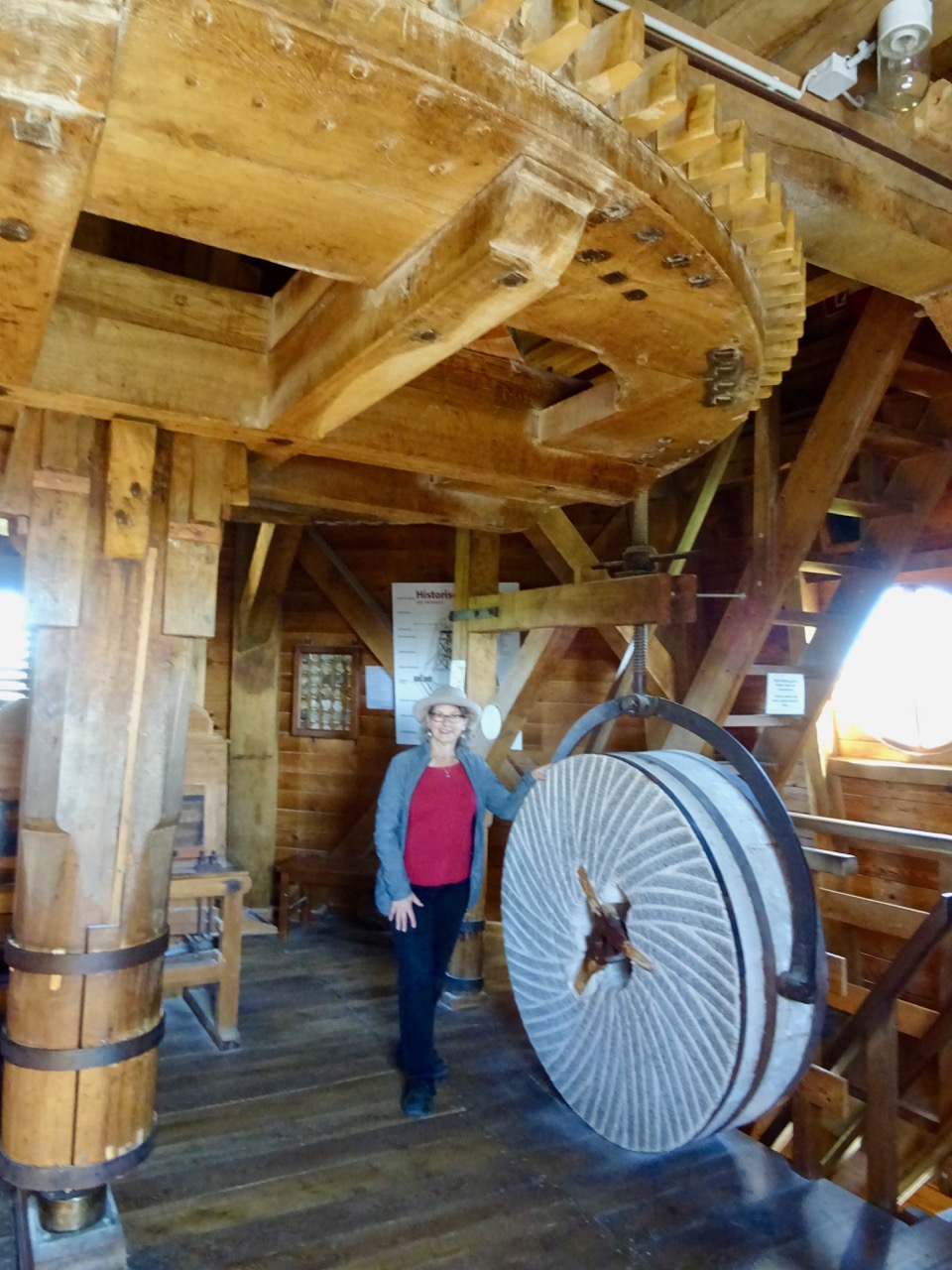
 This is still a working windmill. We are amazed at the size of the wooden wheels and cogs.
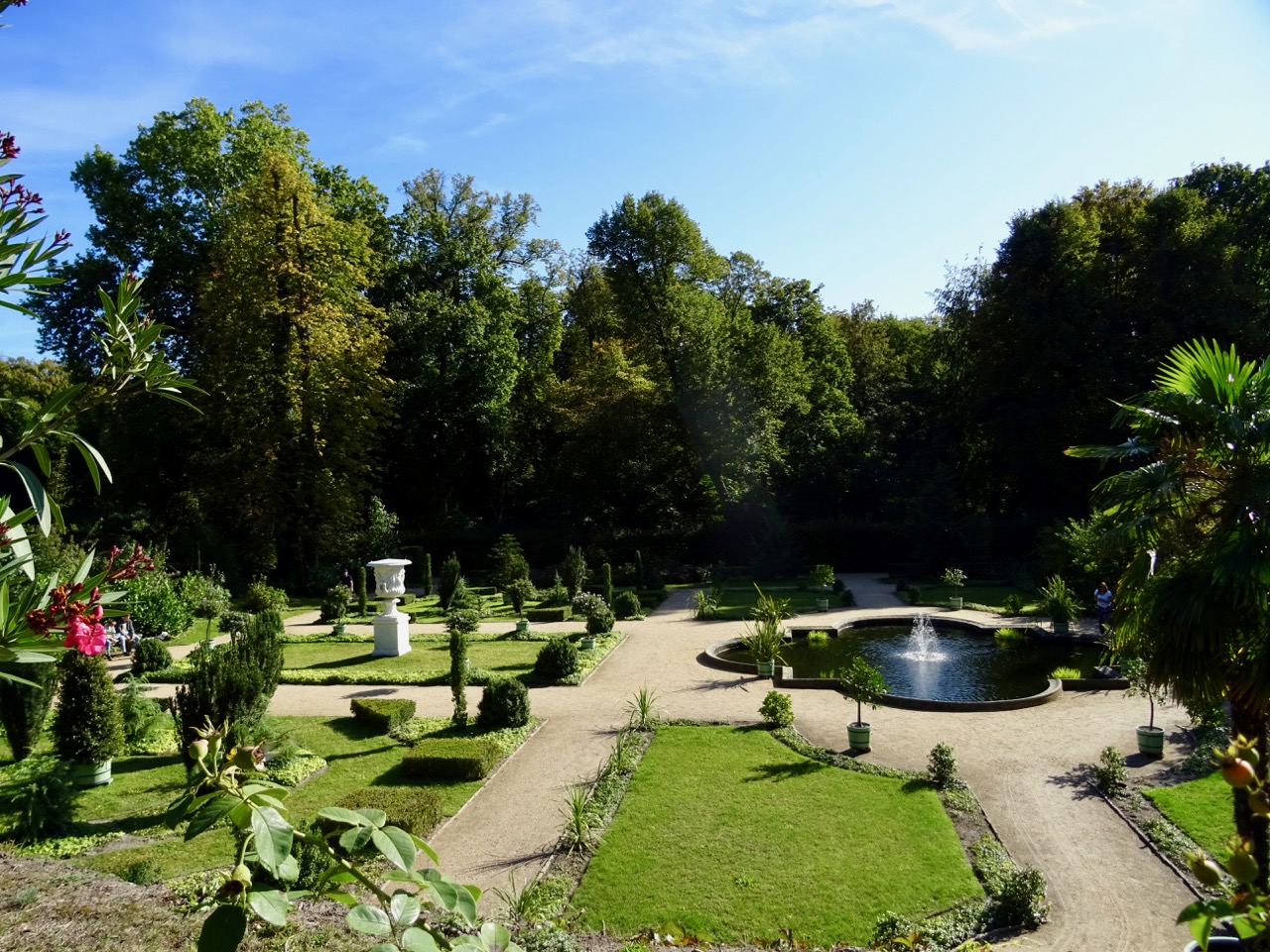
 We walk through the park with its gardens and fountains towards the Orangerie.
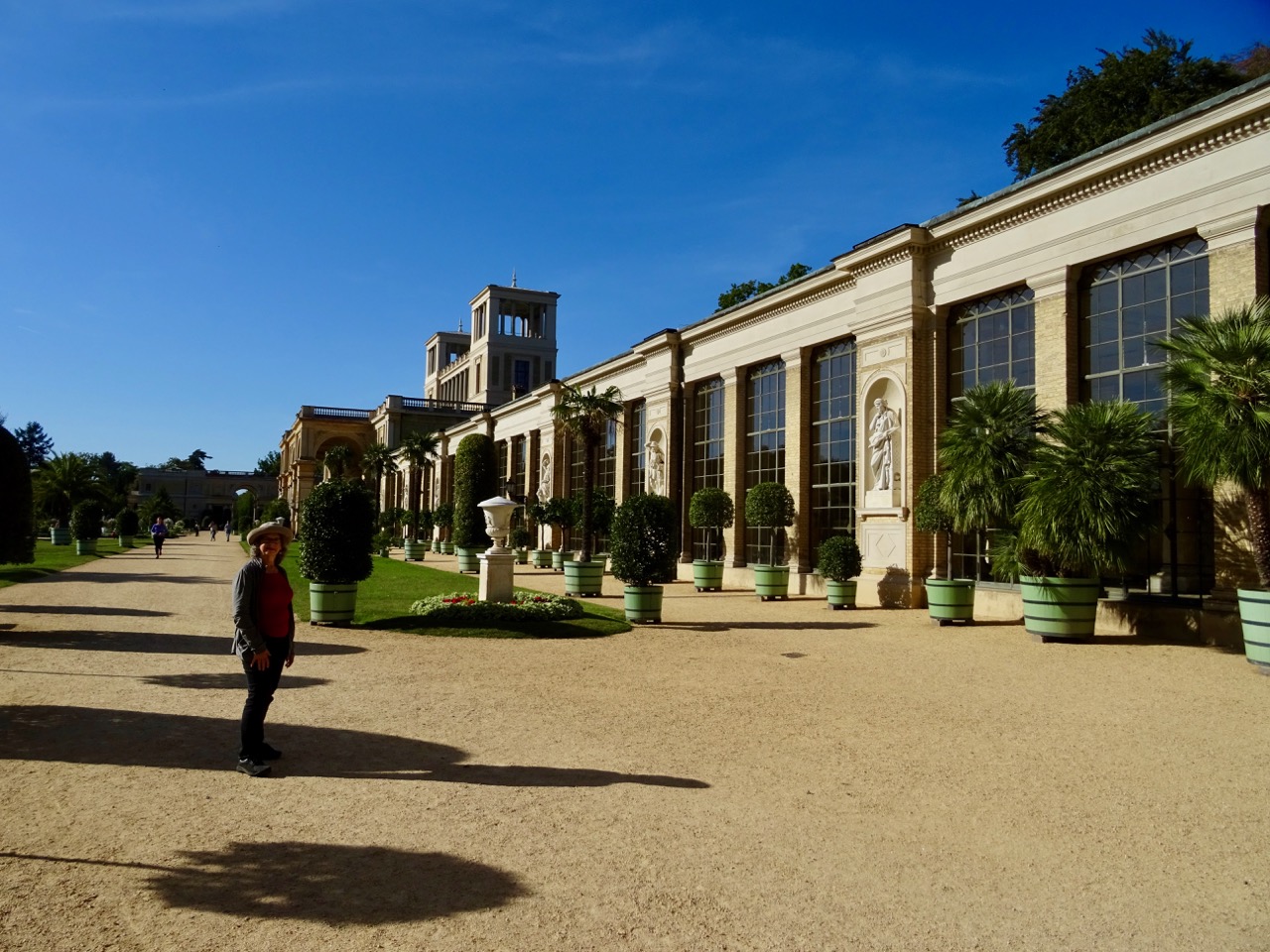
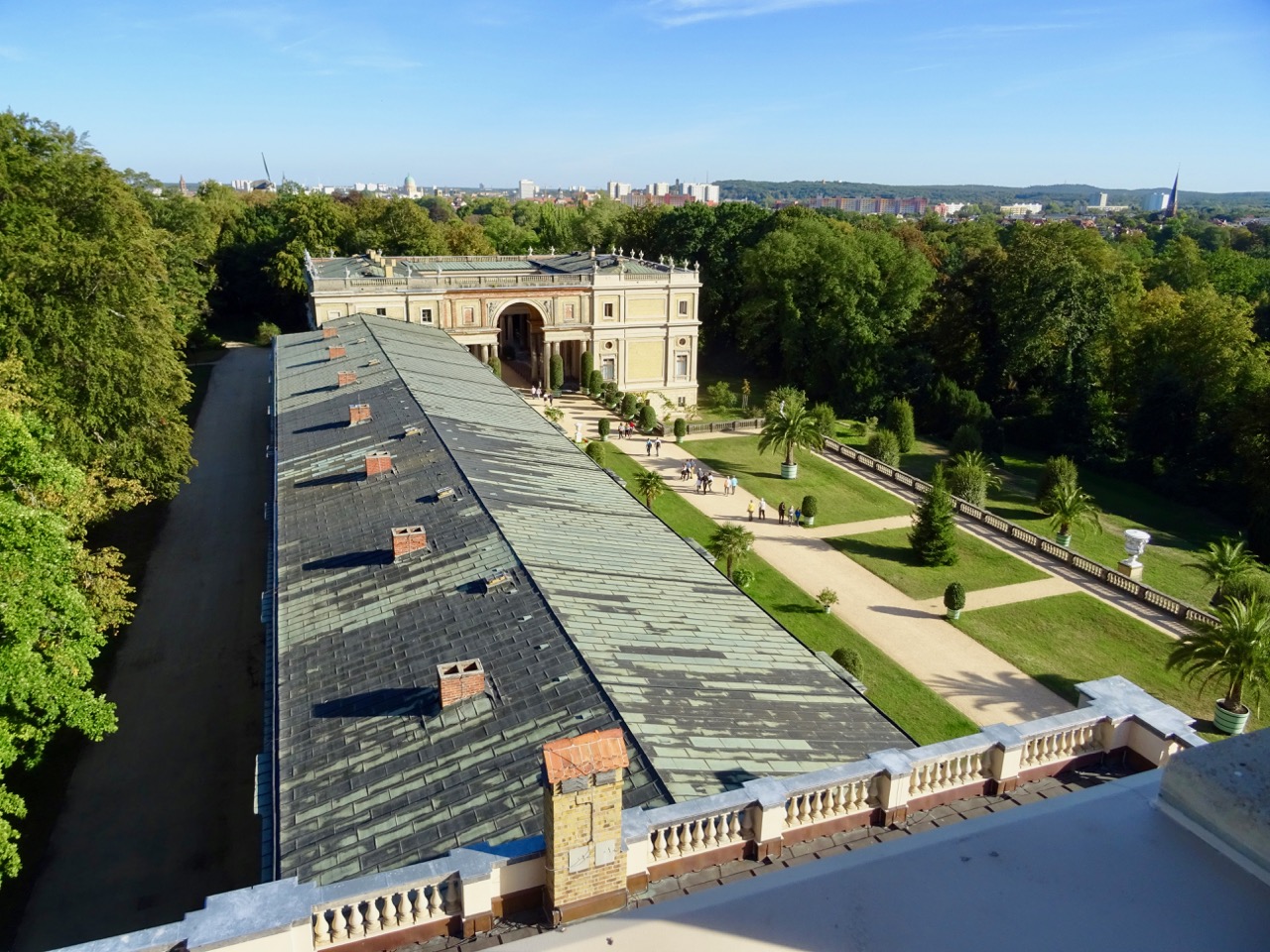
 Wow! We have never seen an orangerie this large. It is enormous! This photo shows one wing and the entrance behind me. There is another wing just as long on the other side of that entrance. This Orangerie was built by Frederich William IV in 1851-1864. It is 300 meters long.
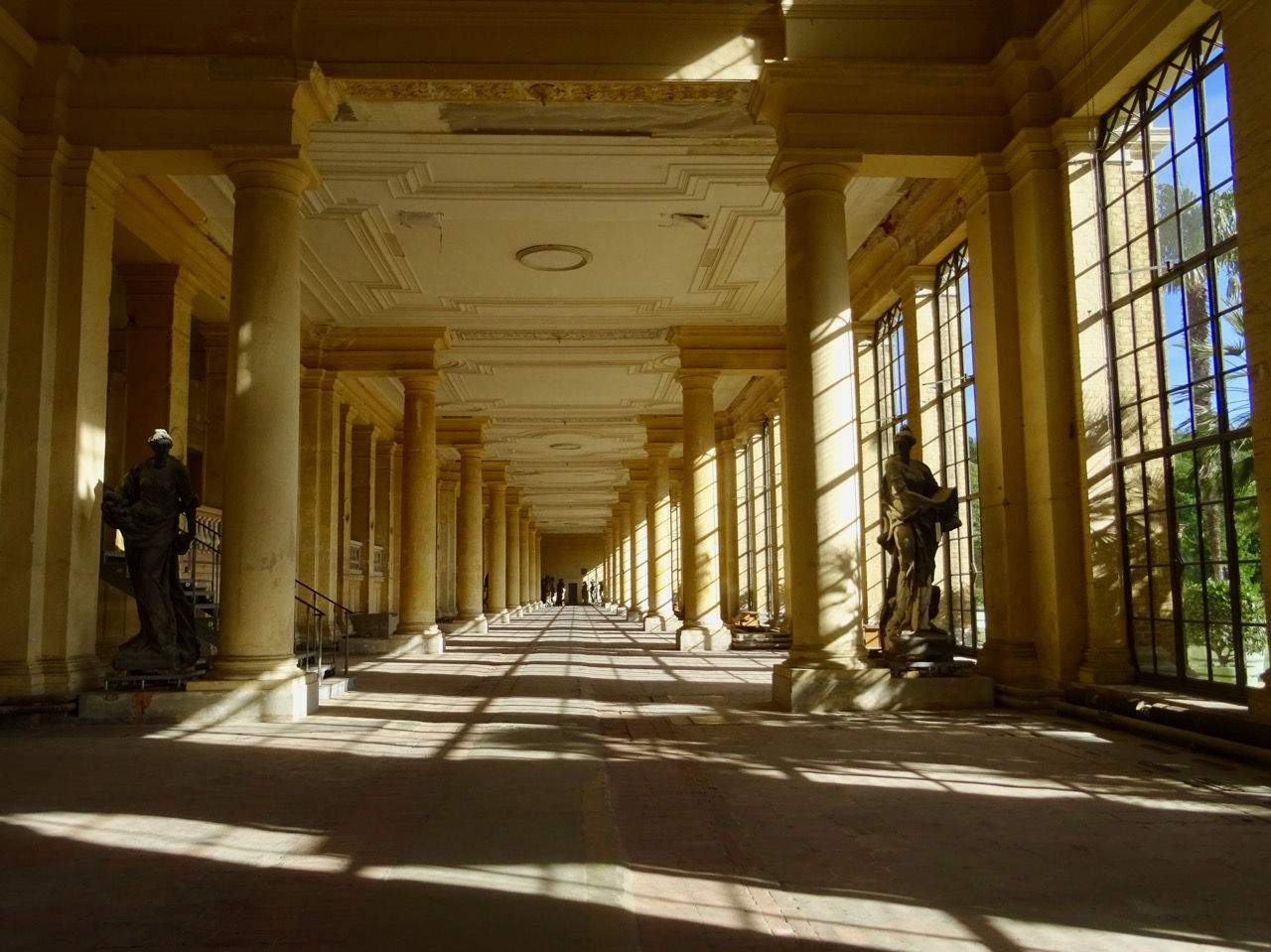
 Looking inside one of the wings of this huge orangerie. This is where all the potted plants that would not survive winter temperatures are kept. Like the potted plants in the photo above,
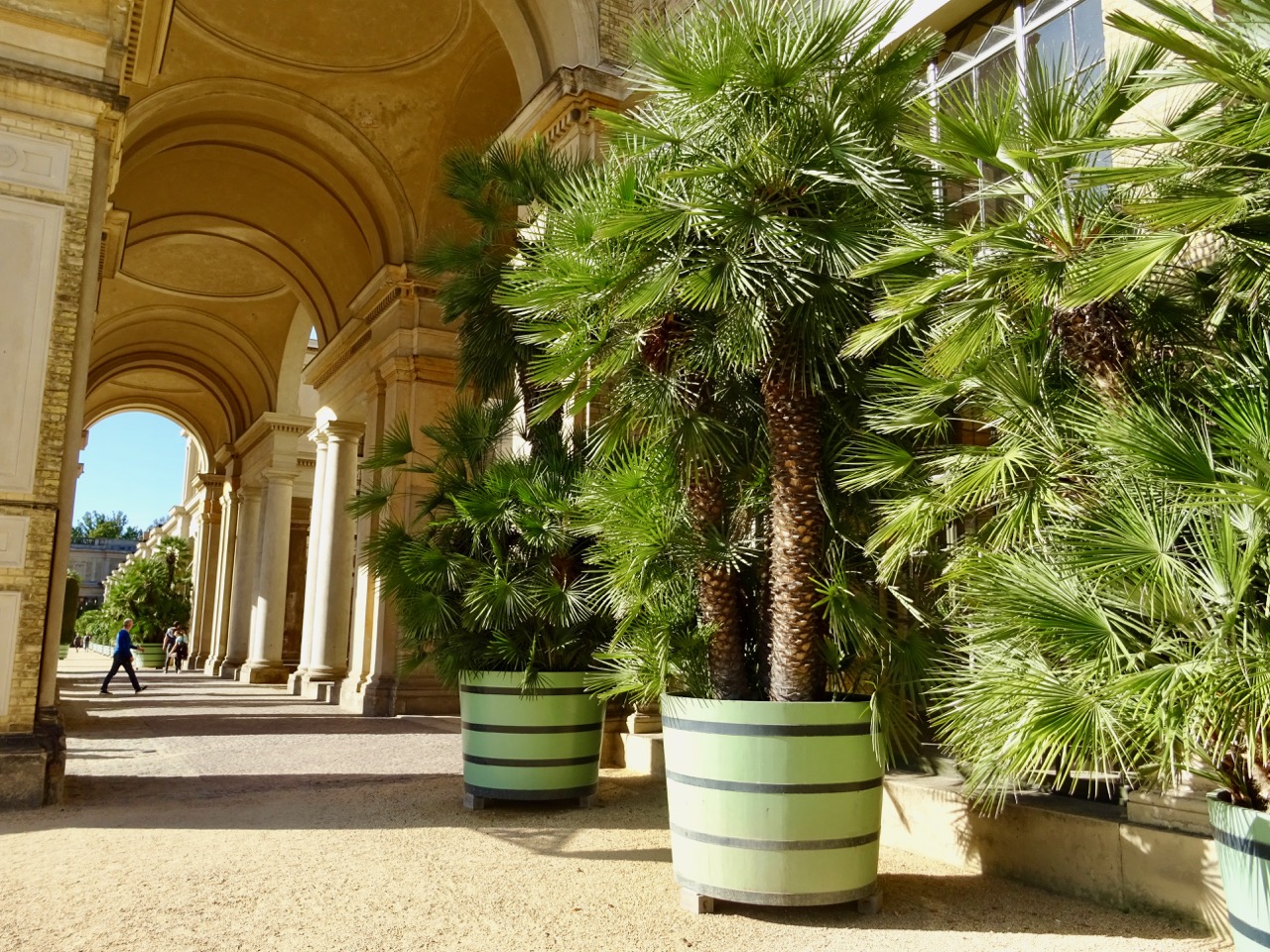
 Some of the plants are huge. These large potted palms definitely need a fork lift to be moved. No idea how they ever transplant them when needed? The pots are almost as tall as I am!
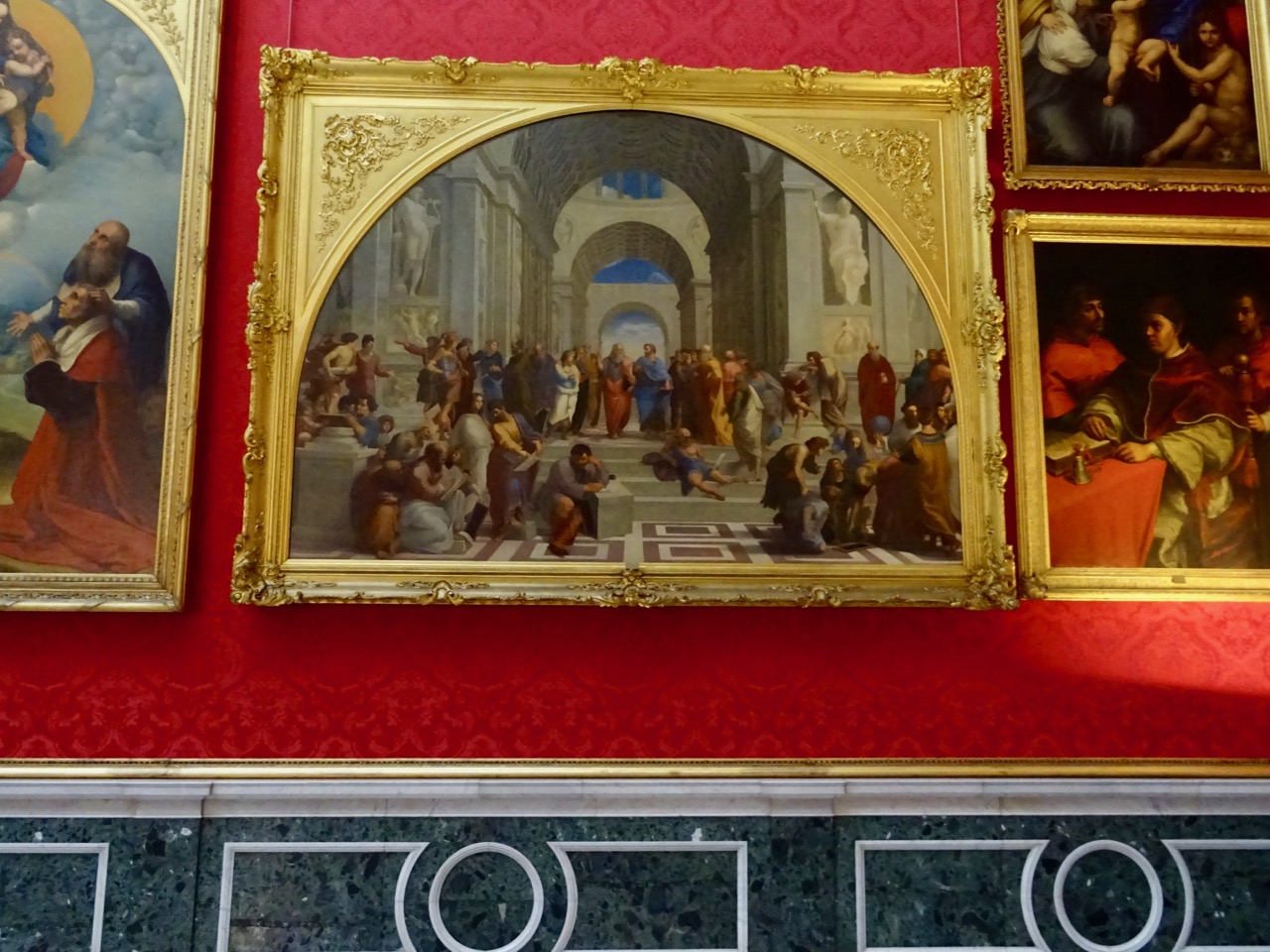
 We are surprised to find more furnished rooms and another art gallery in the Orangerie. The Raphael Hall has over 50 copies of Renaissance paintings.
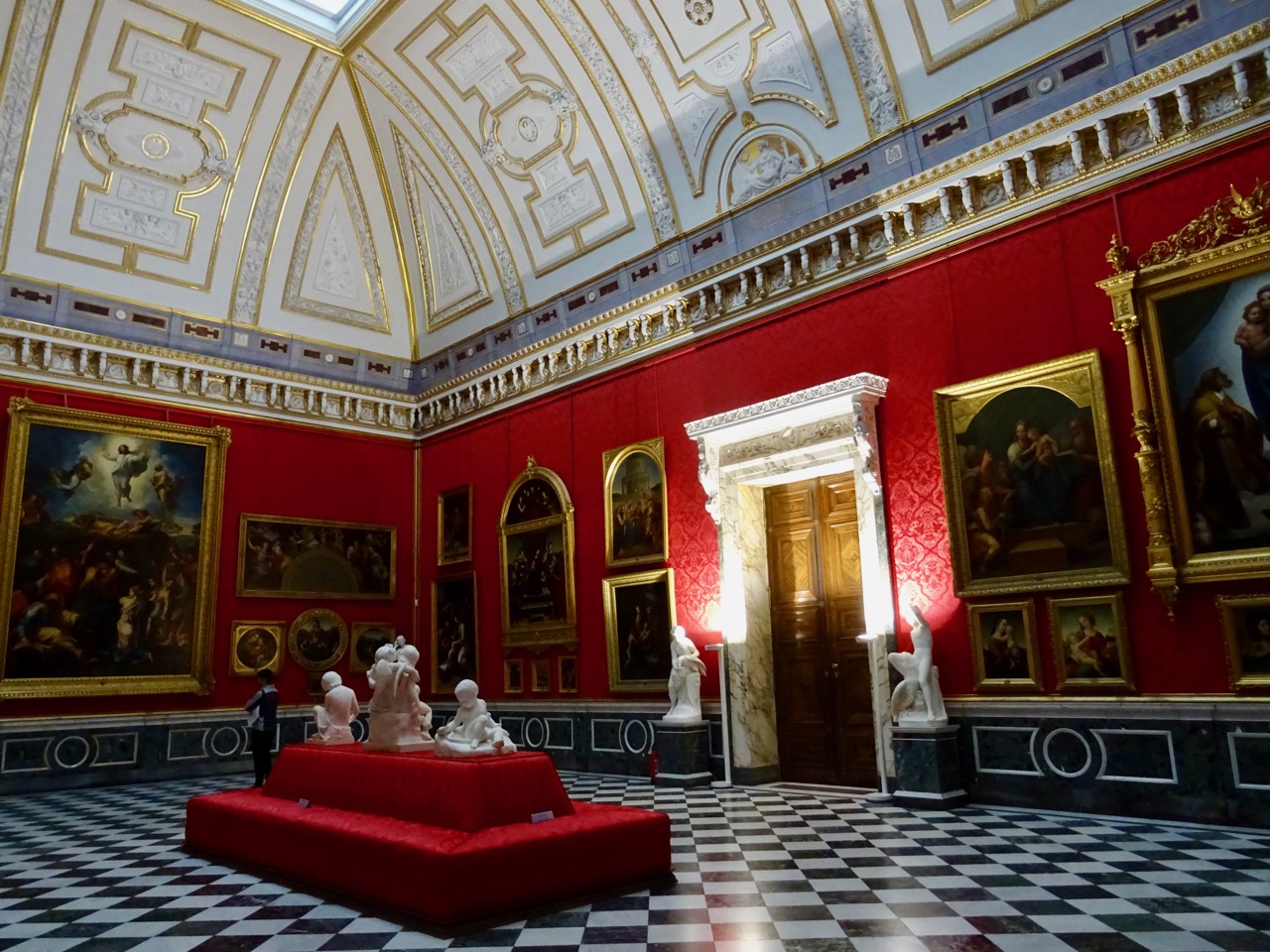 We saw the original of this painting in Italy at the Vatican.
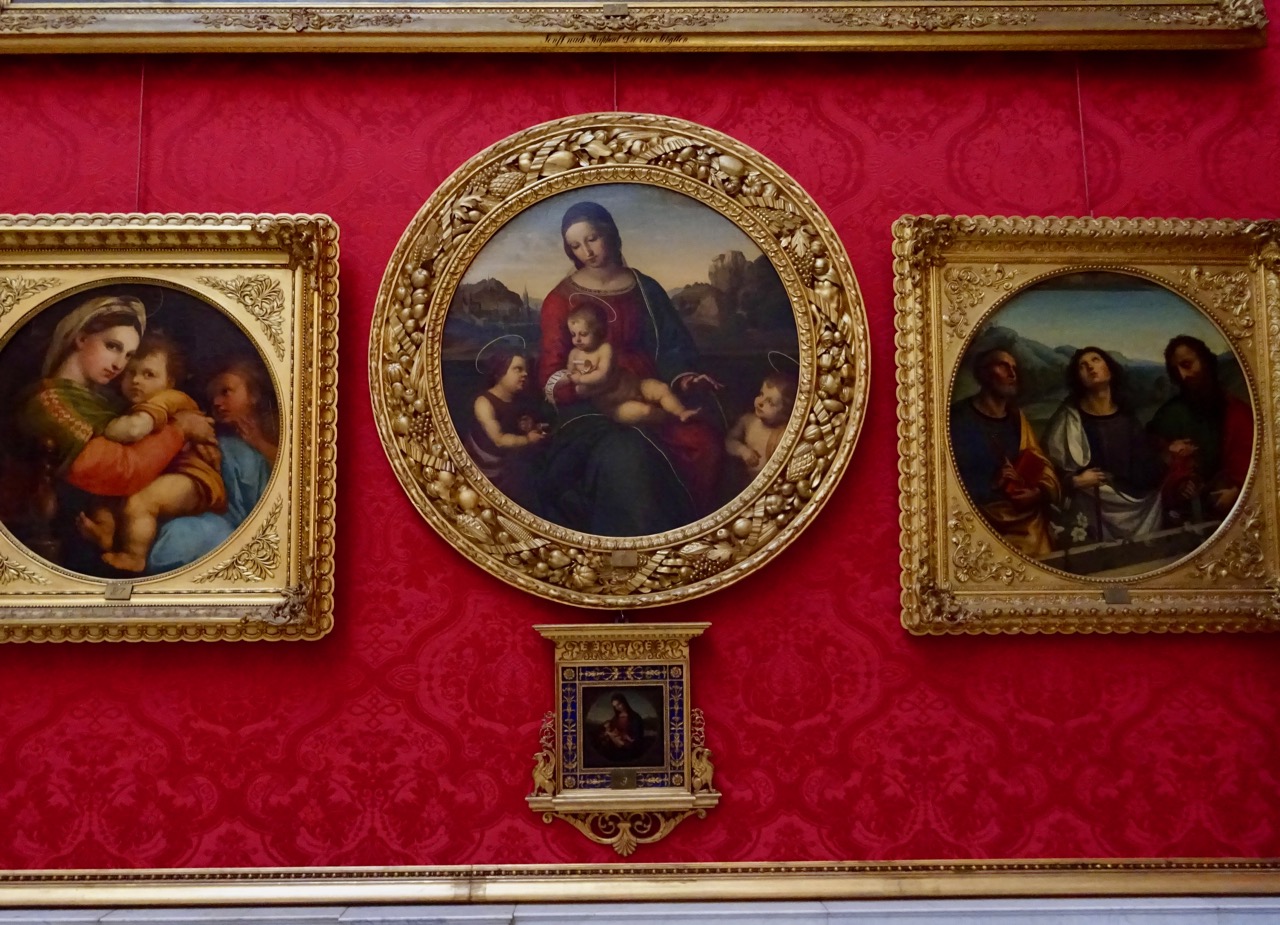
 Do you recognize the tondo by Raphael that we saw at the Gemäldegalerie earlier this week? Interesting how copying famous artworks was such a common accepted practice. Today I think it would be called forgery.
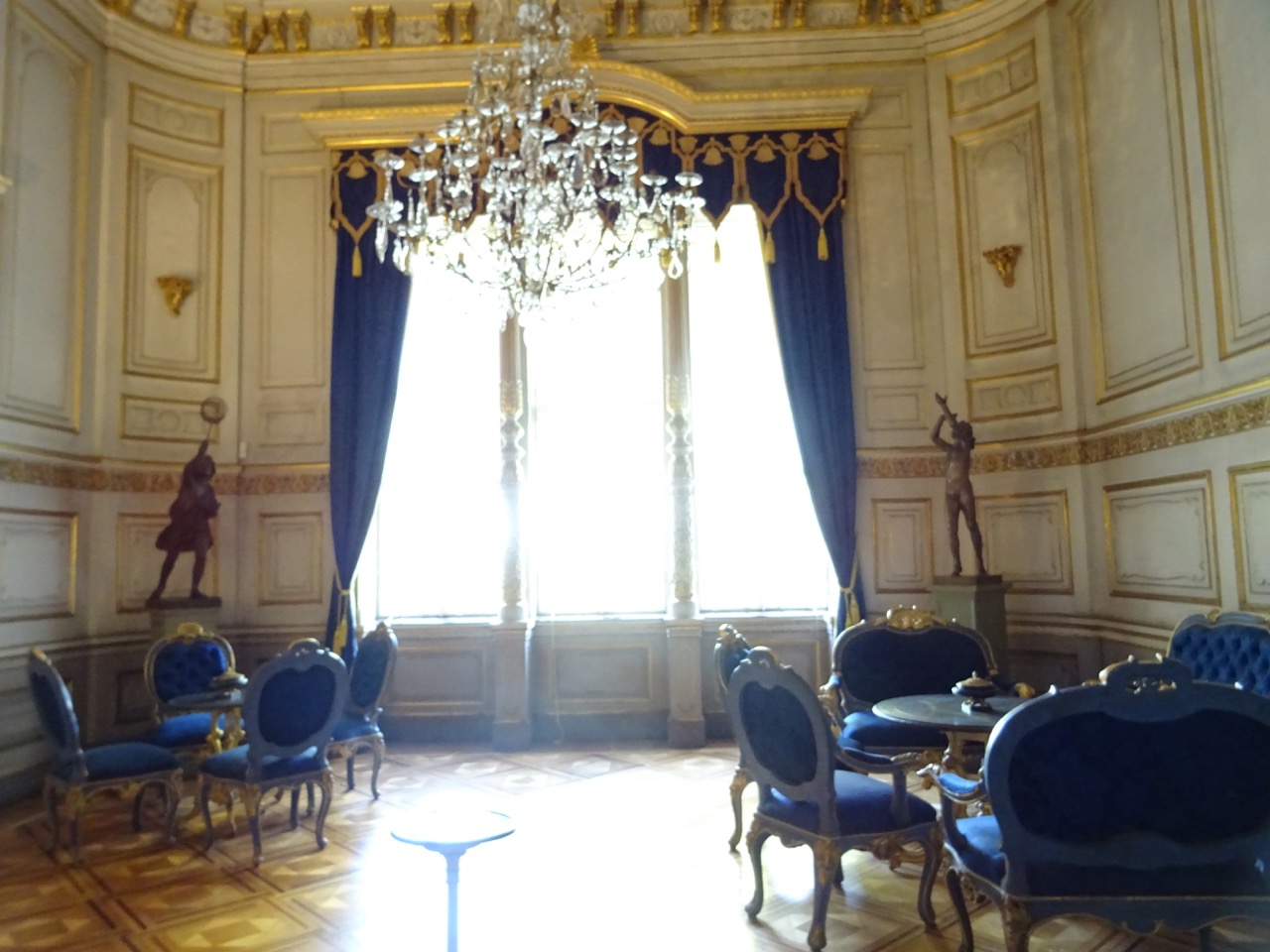
 Another room in the Orangerie Palace.
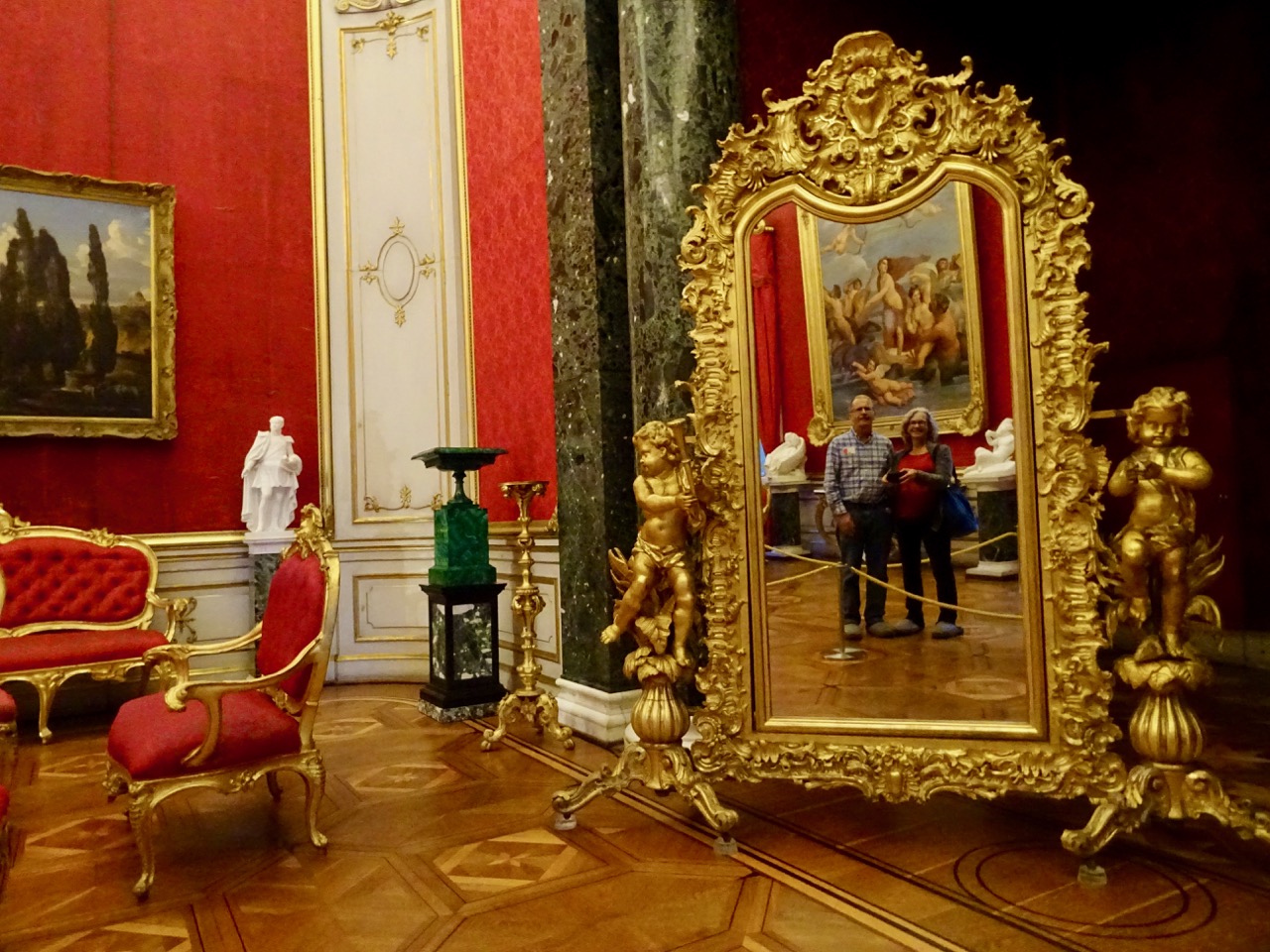
 And another selfie reflection in a very ornate mirror. Notice our big slippers!
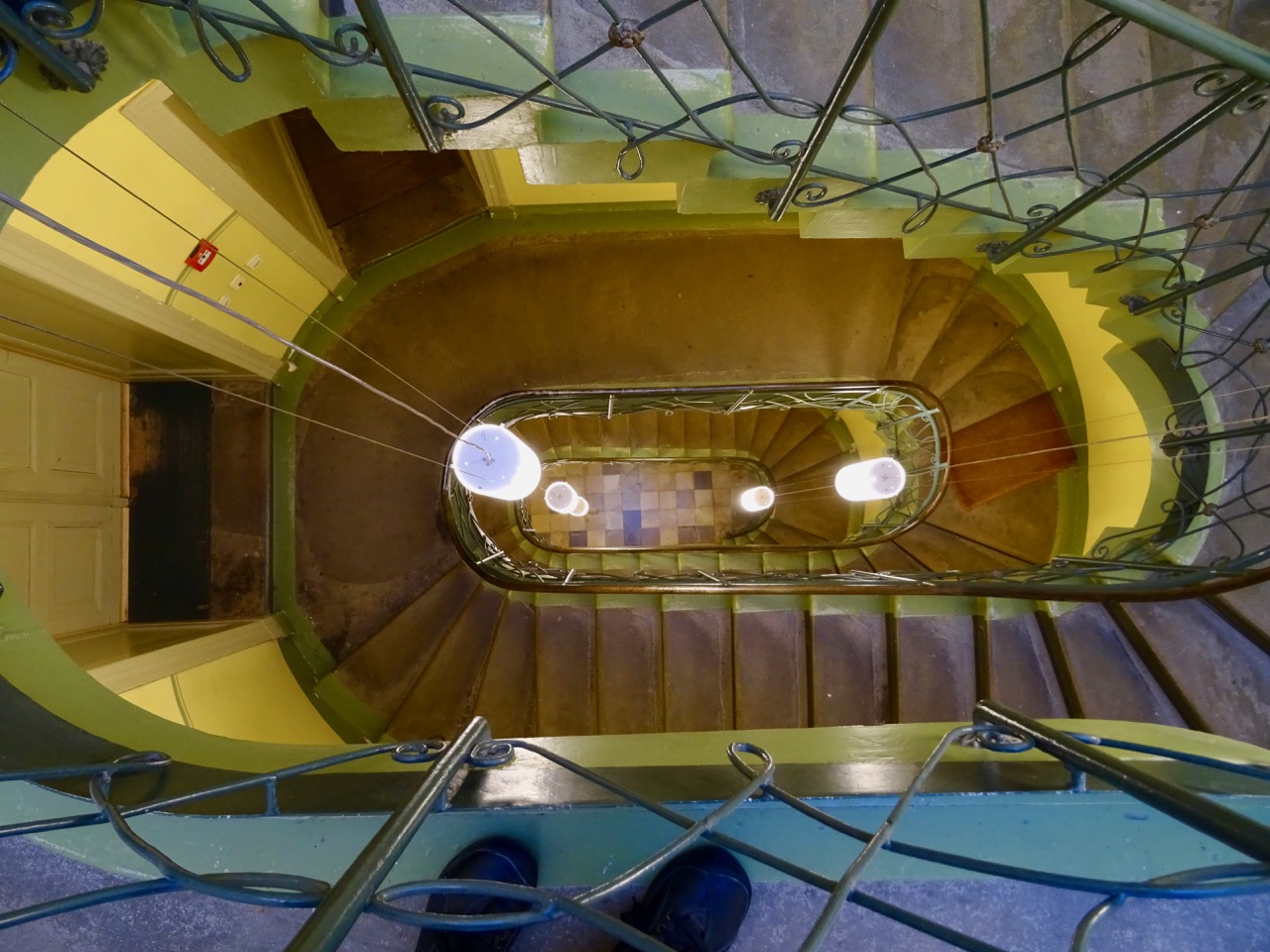
 These are some of the stairs we climb to the top of the Orangerie.
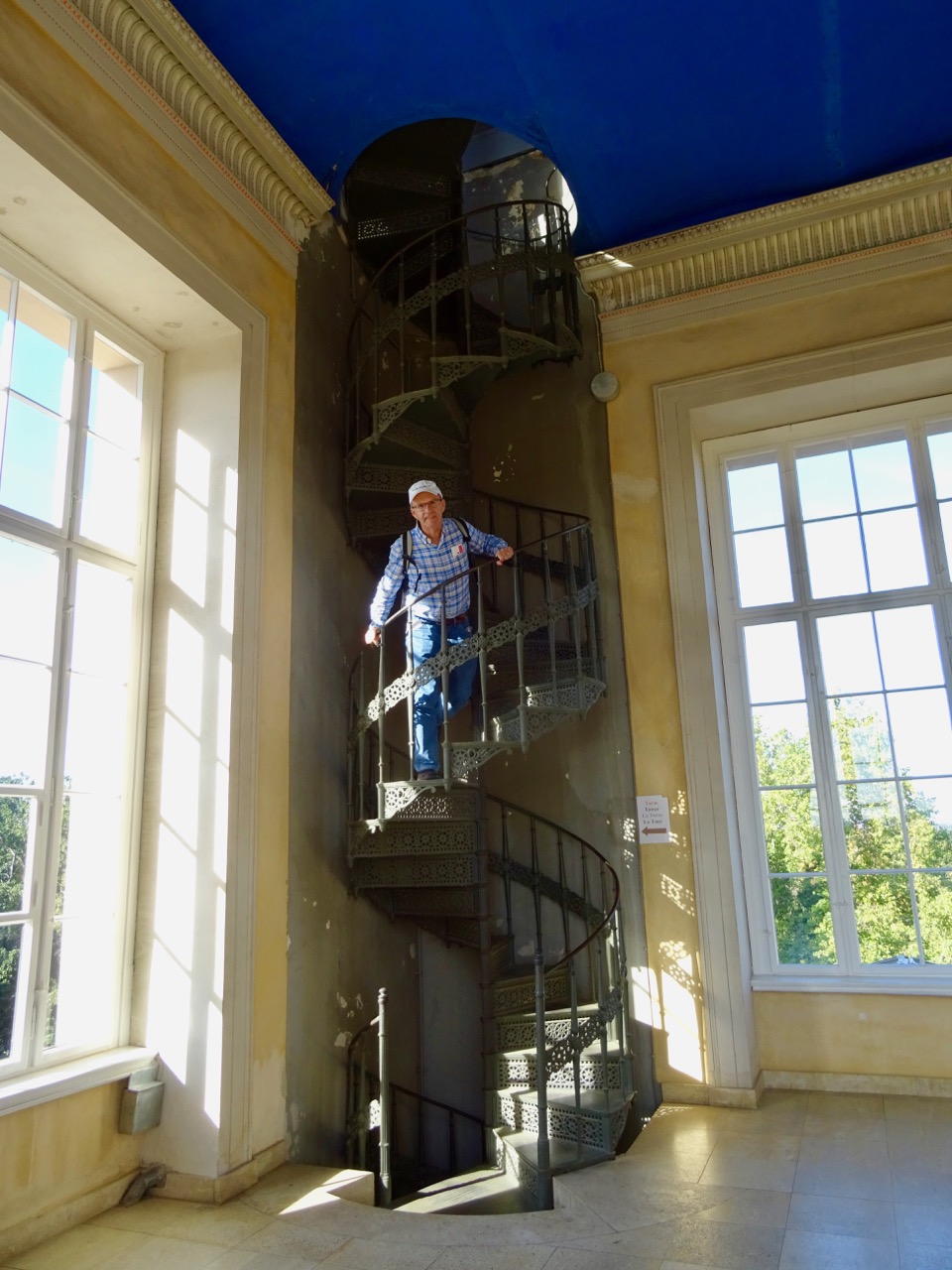
  And more stairs…
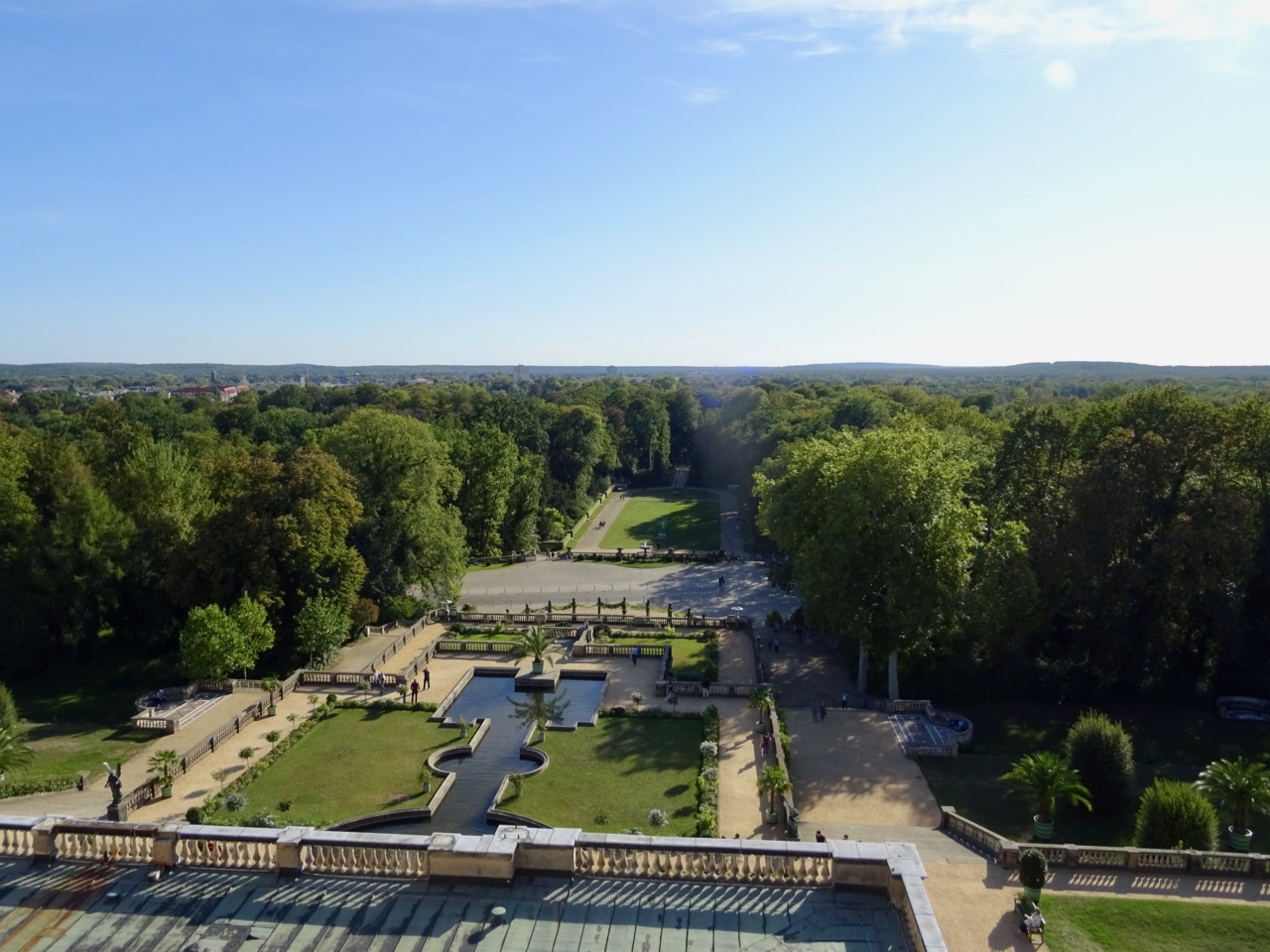
 to get this view.
 There is the East wing of this enormous building.
 That dome way in the distance is another palace. The New Palace, built by King Frederick, is the largest and most impressive complex at Sansoucci, but it is way too far of a walk for us today and the park is closing soon.
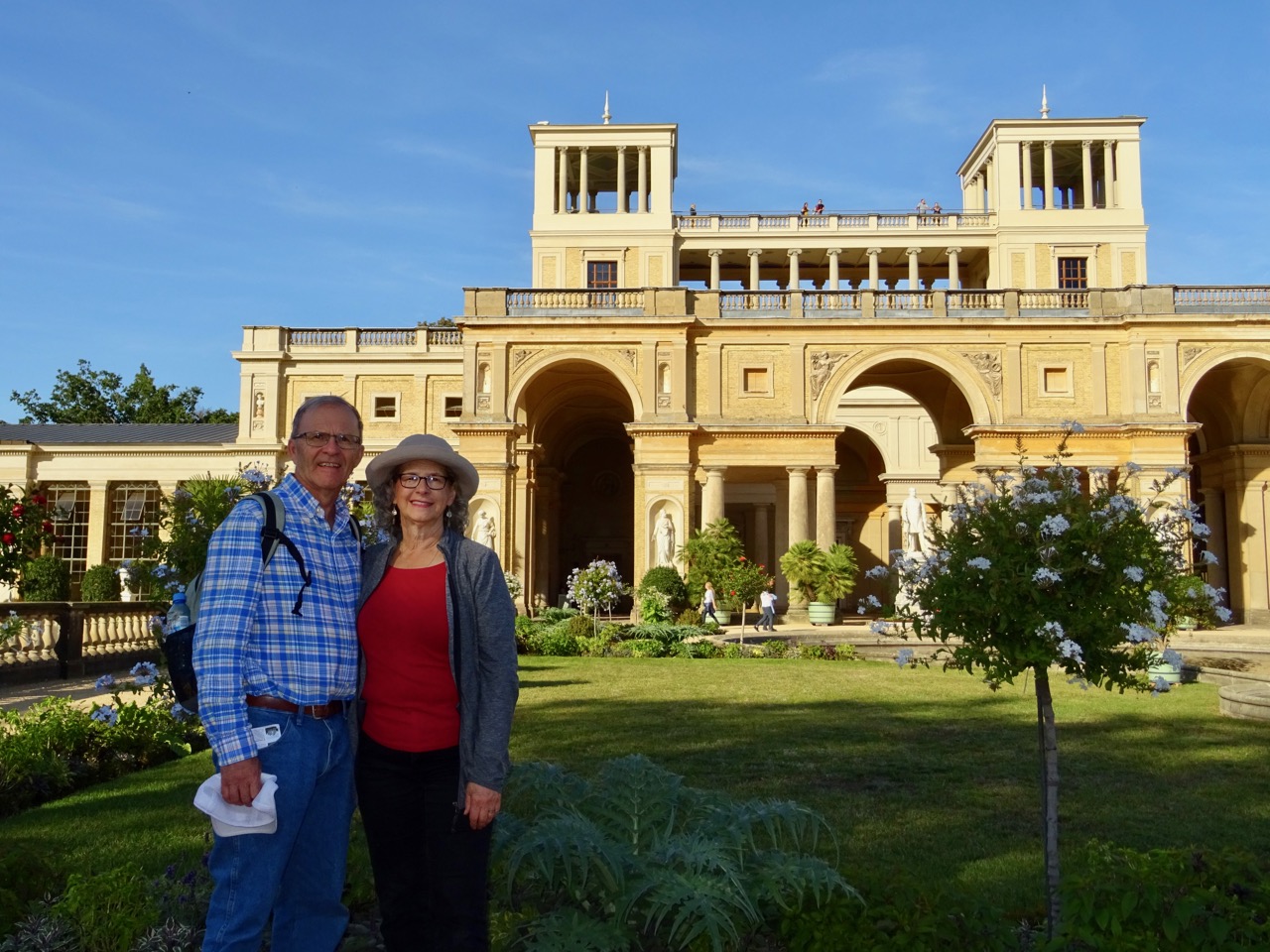
 In front of the Orangerie.
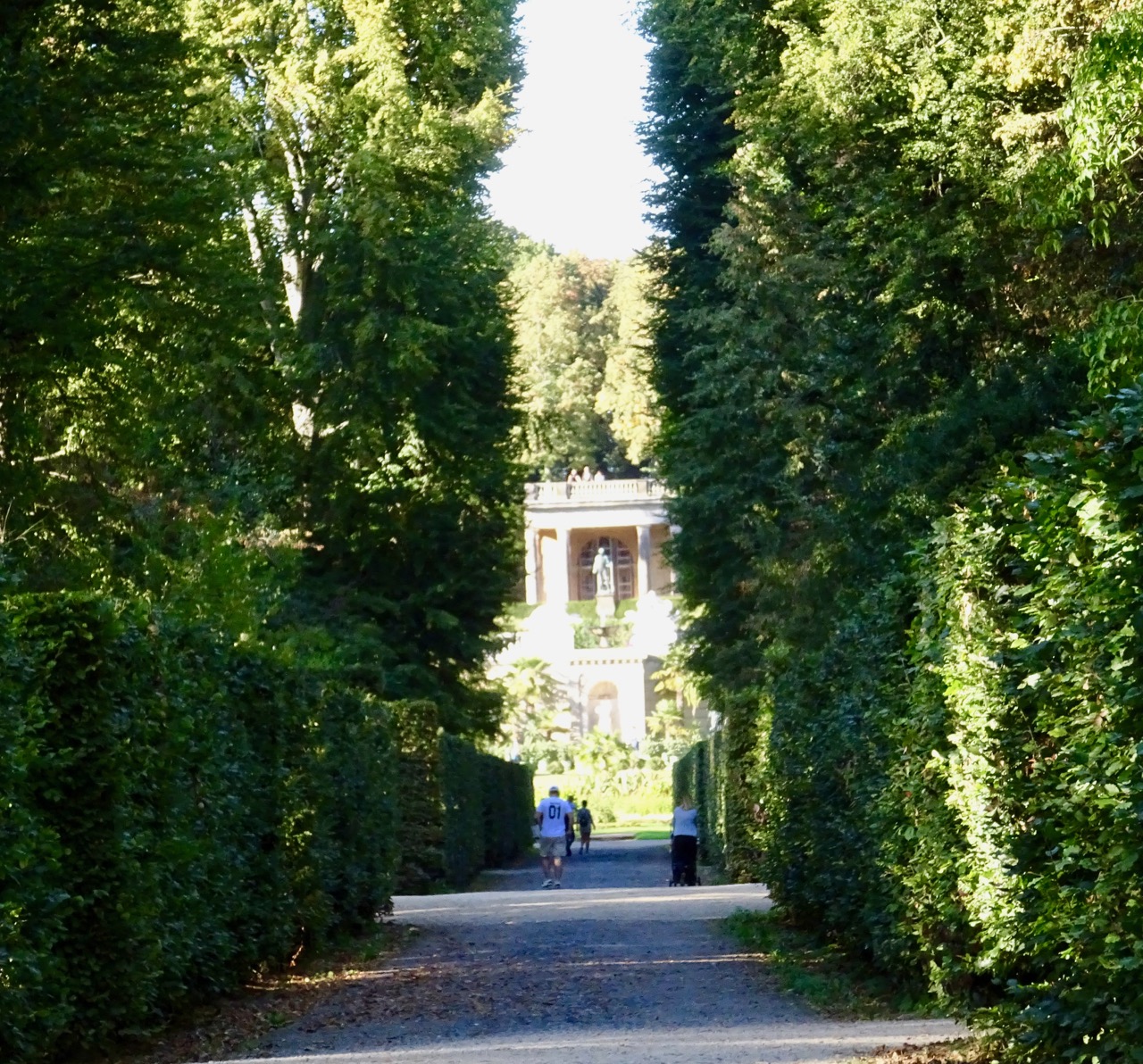
 Every path here has a view at the end of it…something to entice you to walk and explore.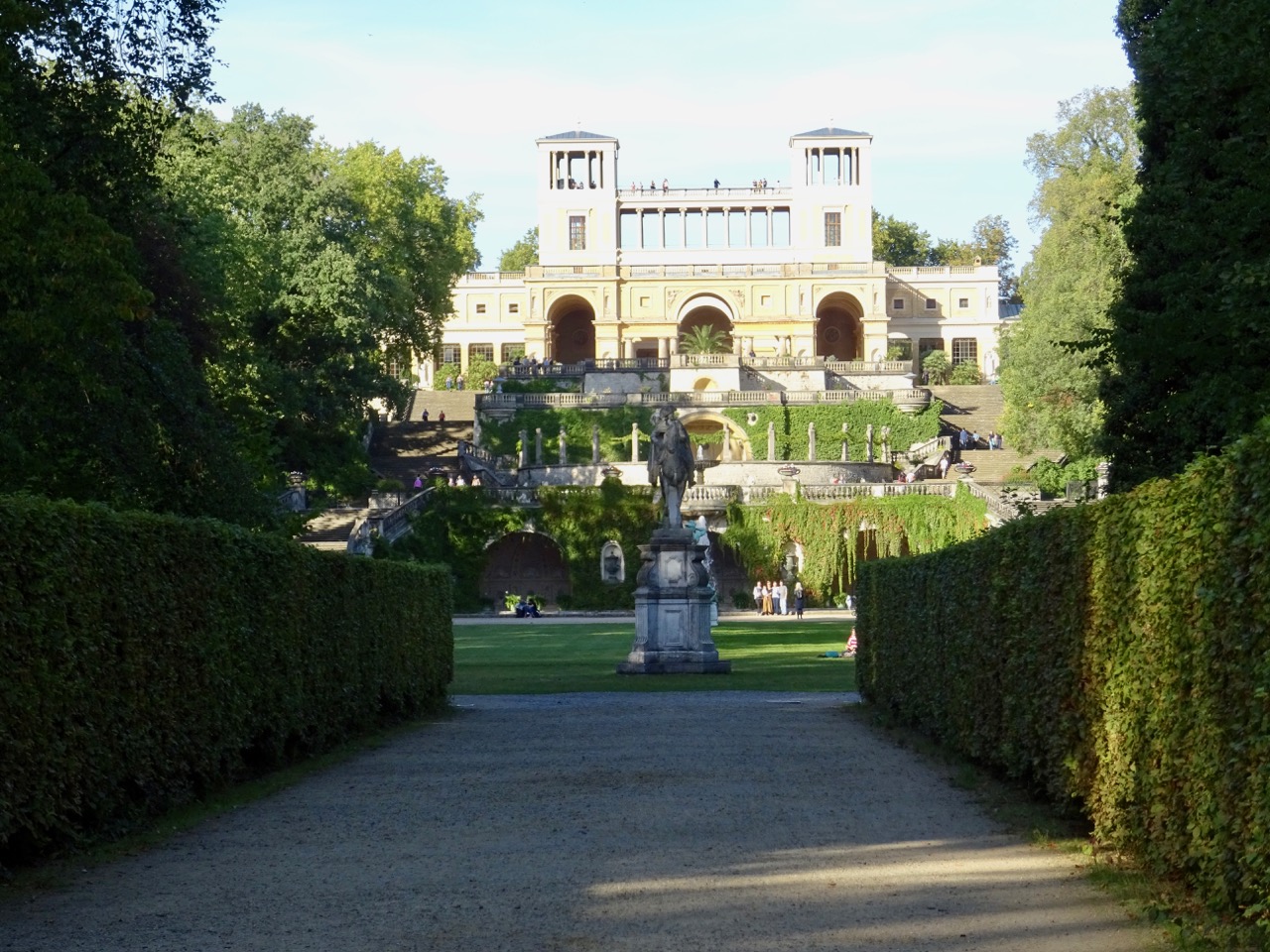
 We find the Chinese House which Frederick had built to enhance his flower and vegetable gardens and we can imagine elaborate picnics here in the summer. We make our way to the main gate just as Sanssouci is closing and catch the metro home. We had a beautiful warm day for our time here. A perfect day really.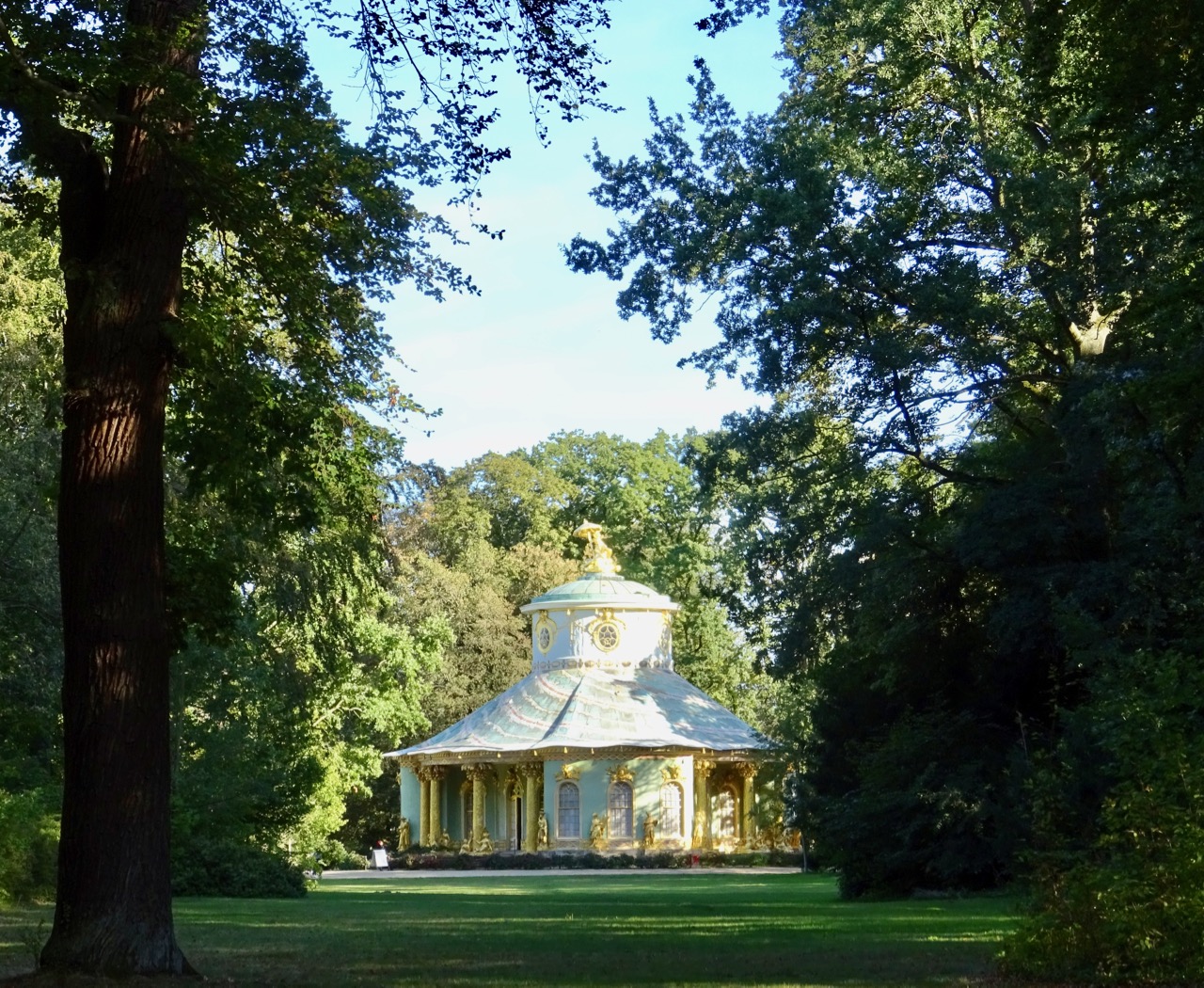
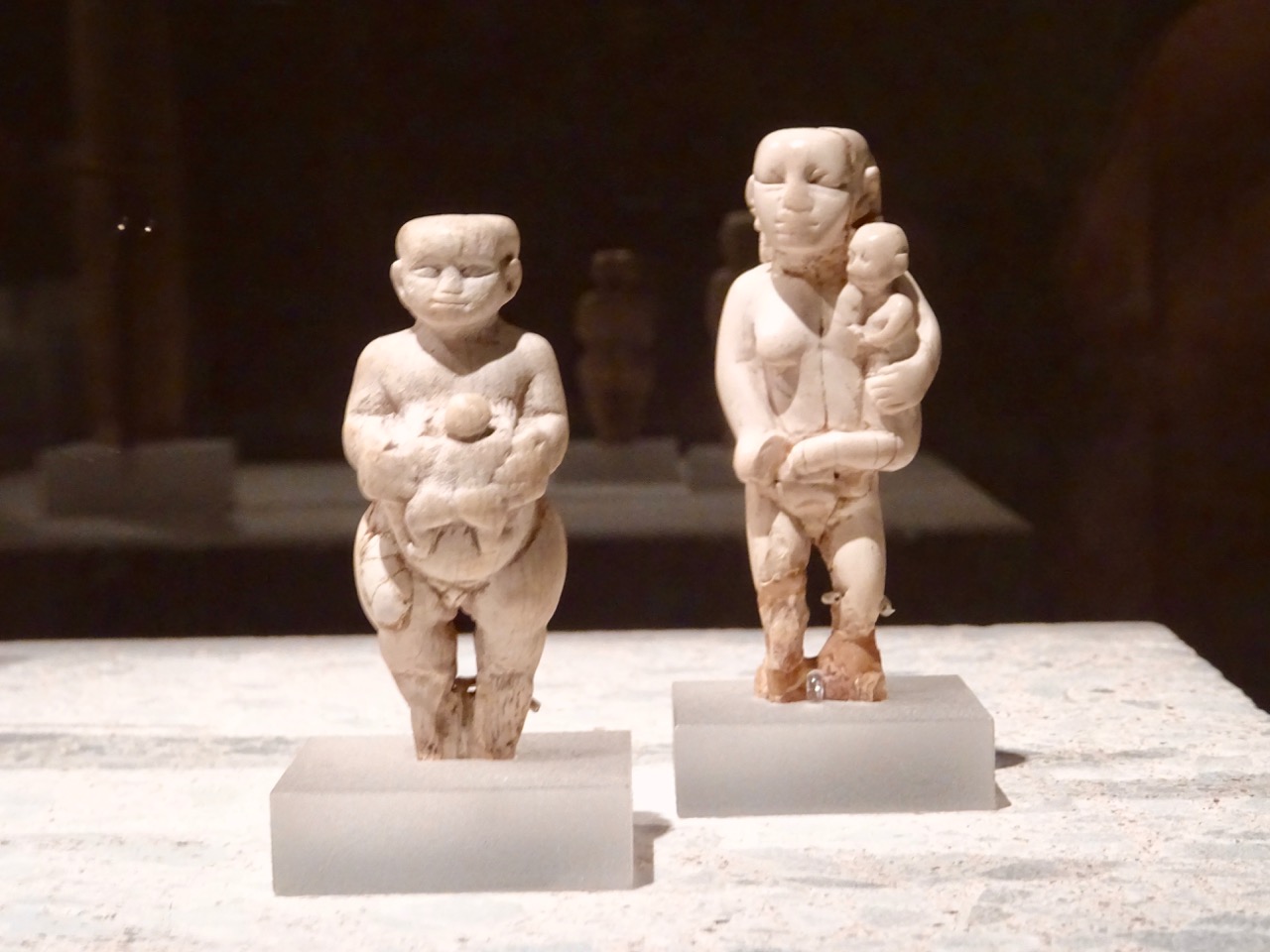
 I am often most drawn to small items in these exhibits, like these tiny ivory figures of mothers and their children, only about 3-4″ tall from 3000 BC. I think they are incredibly detailed and beautiful.
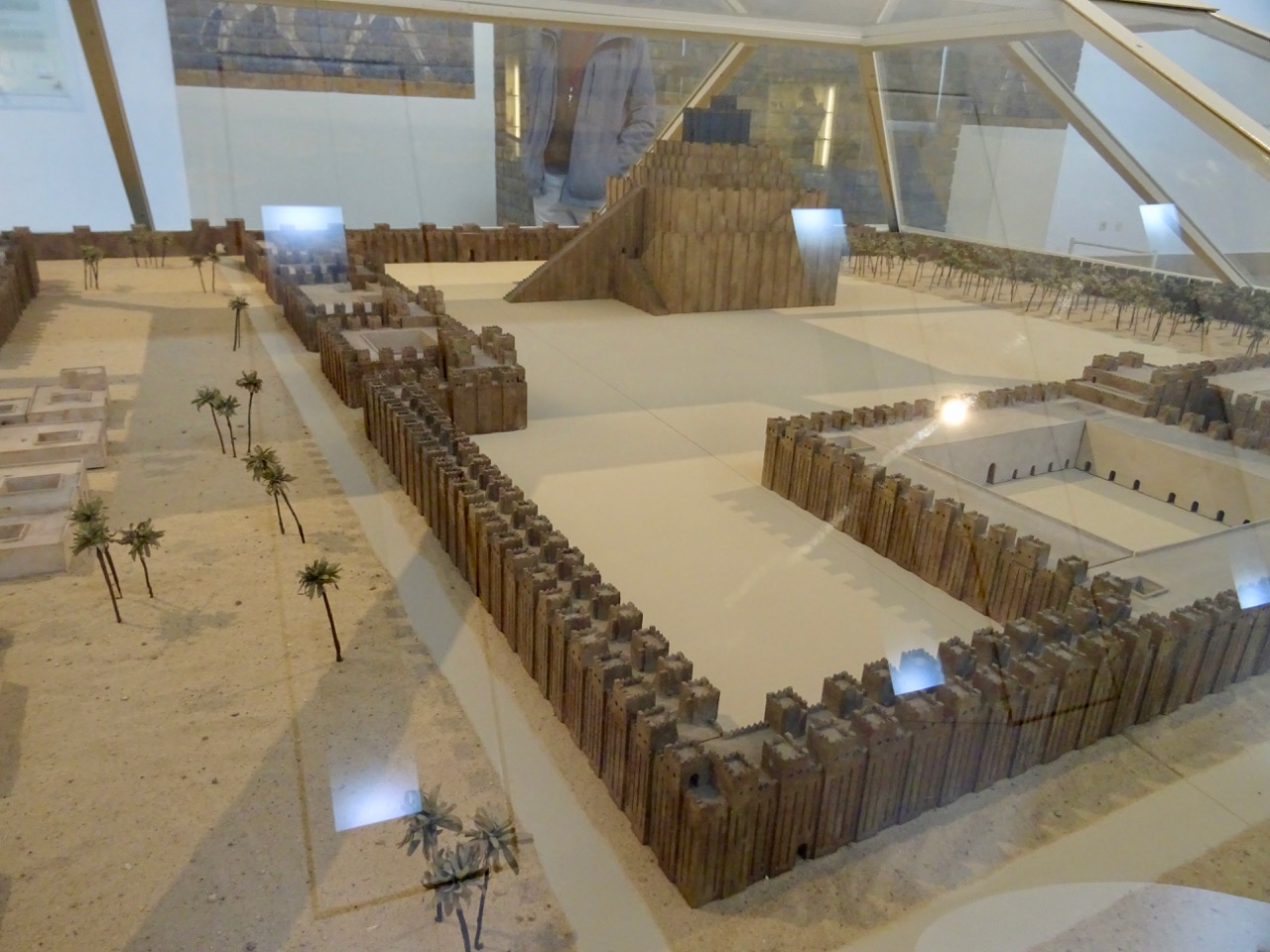
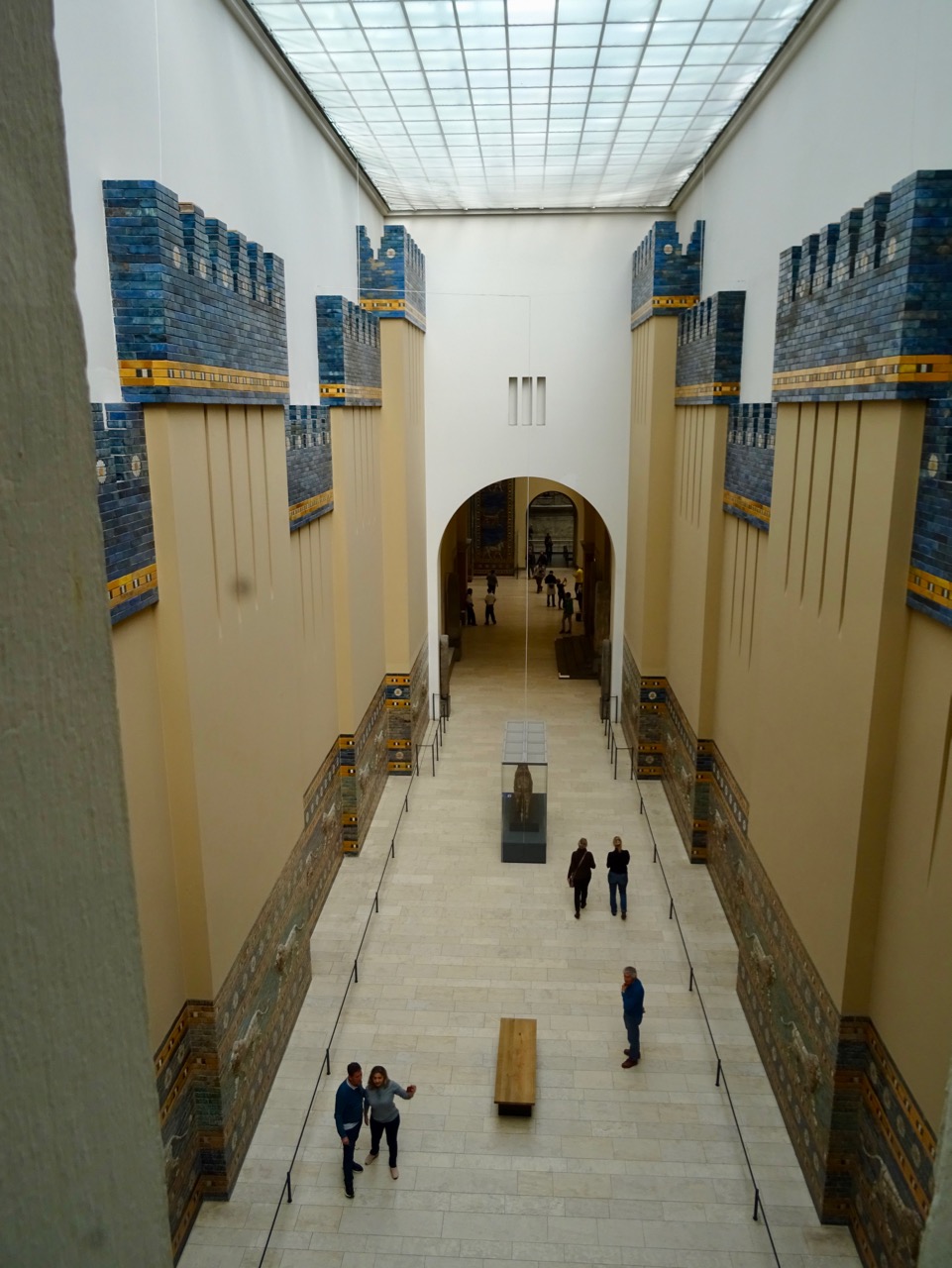
 This is the processional way which led towards the 6th Century BC Ishtar Gate of Babylon. It is very impressive.
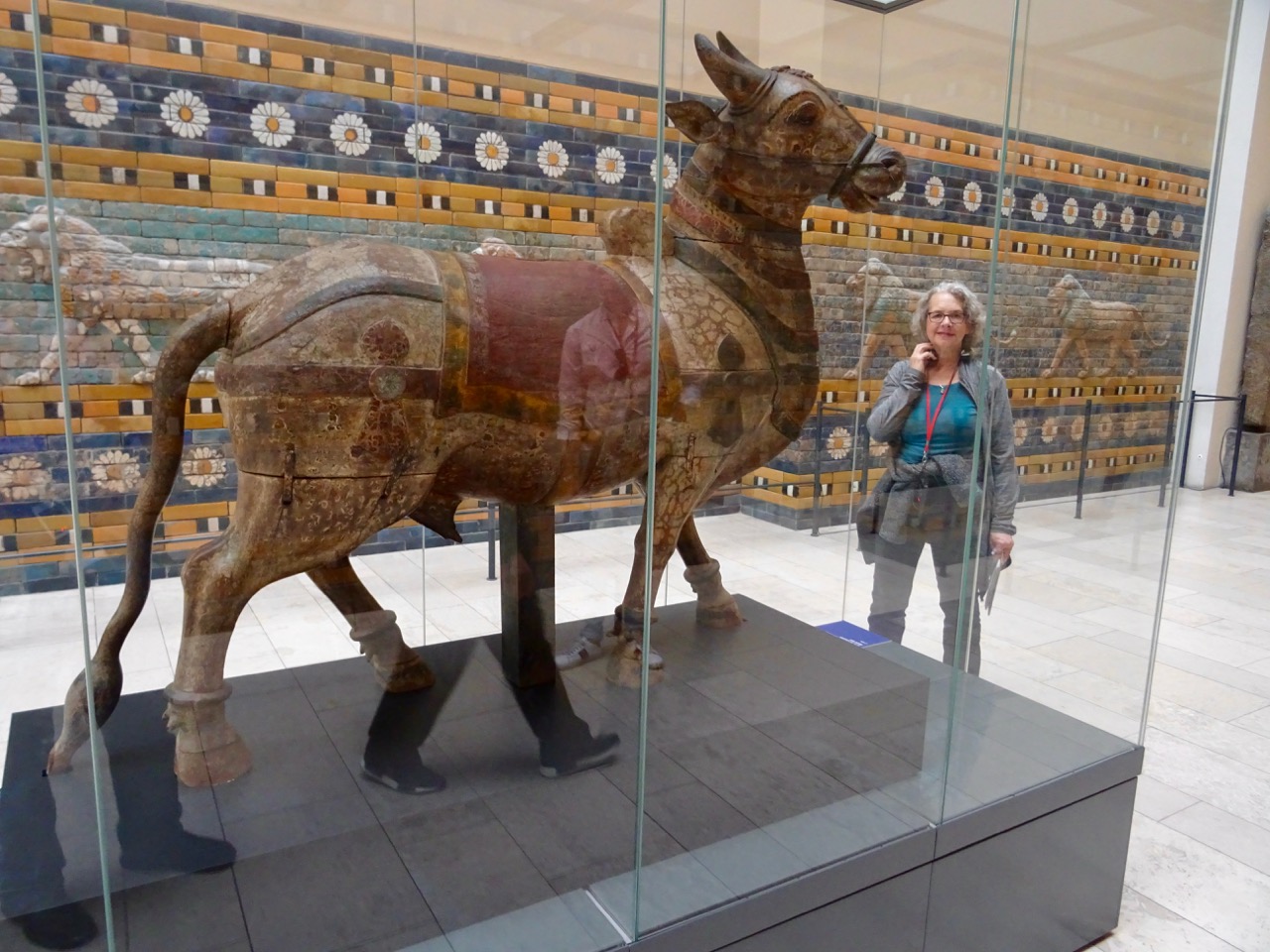
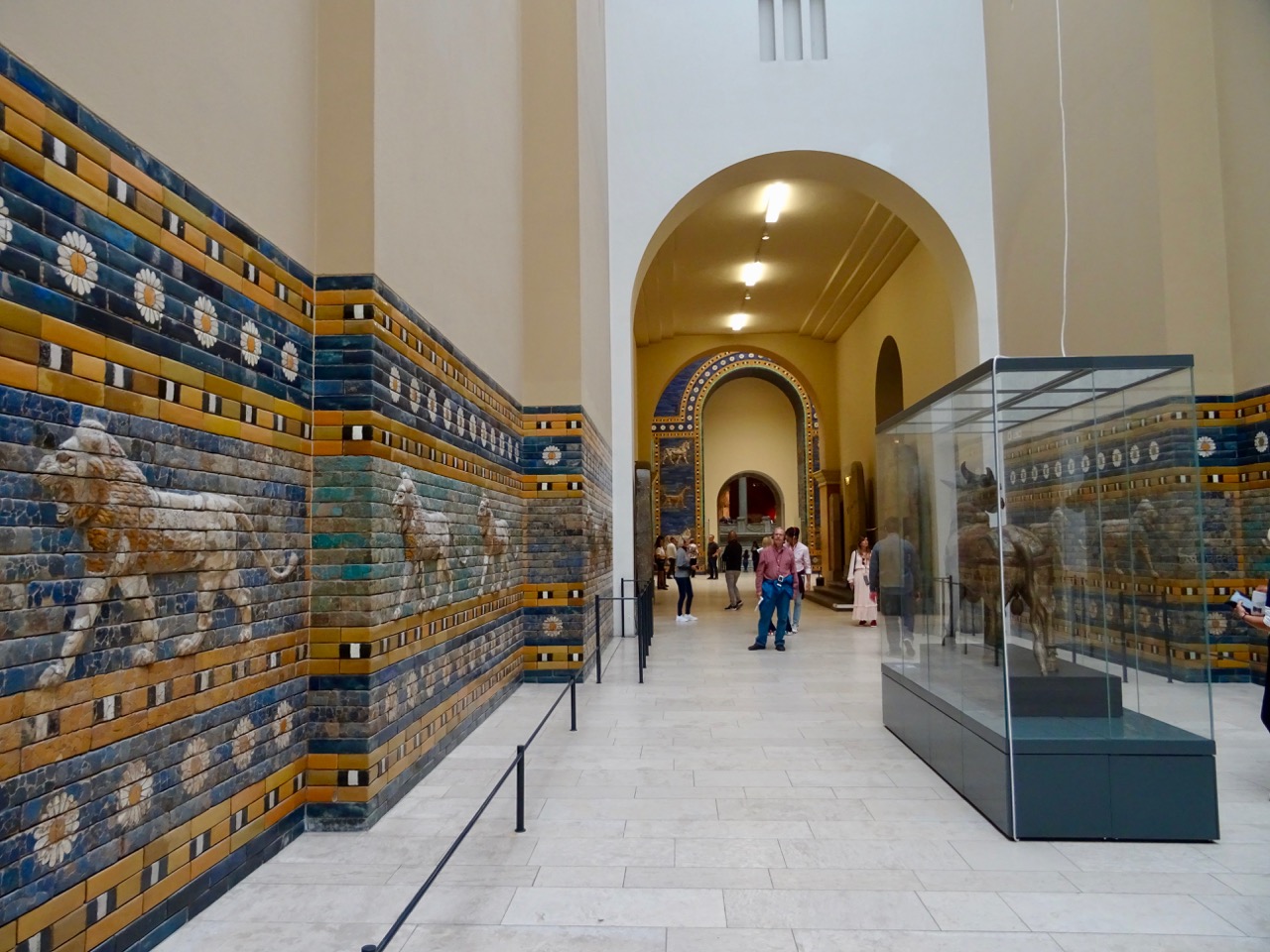 I loved this wooden sculpture.
 Here is another view of this approach that gives a better idea of the size..
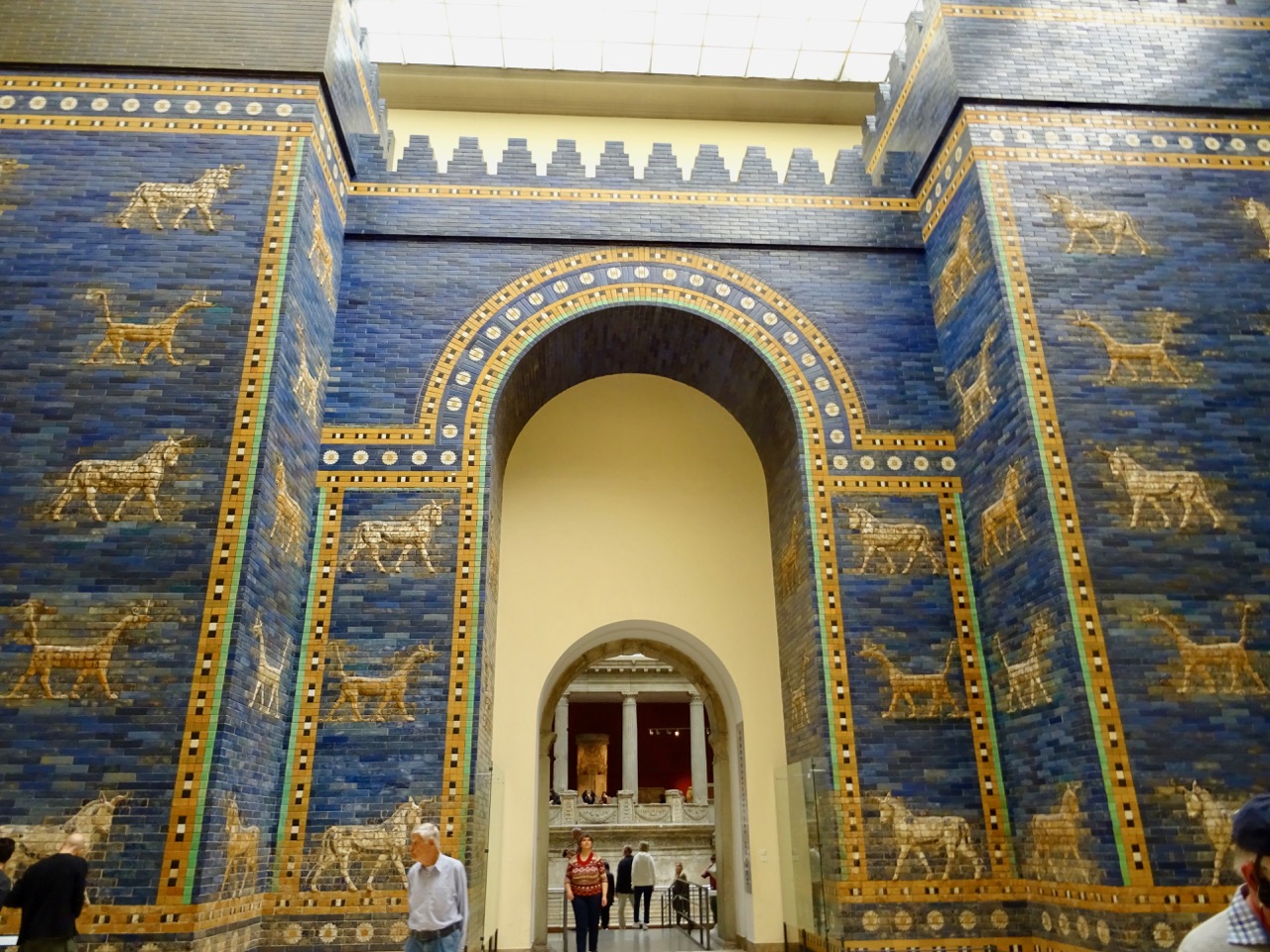
 The reconstruction of the gate has original tiles around the animals. This is only a part of the gate, as the museum ceiling would have to be more than twice as high for the whole gate to fit.
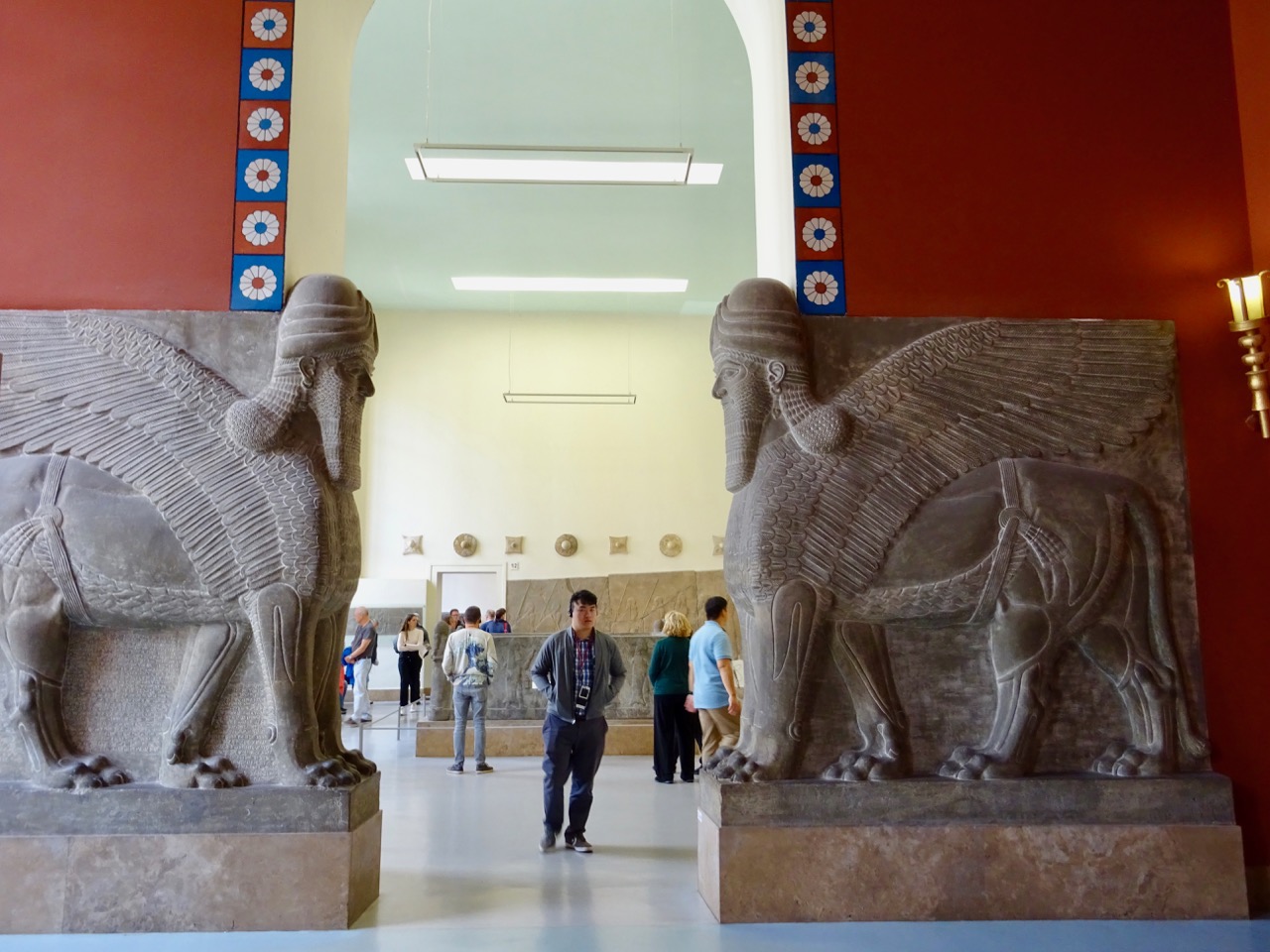
 These two creatures guarded the Assyrian King in 883 BC. These are casts from the originals in the British Museum, which were each carved from a single piece of alabaster. No idea who the guy is…it was impossible to get a photo without some stranger in the middle of it!
 Times were tough for women. Take a peek at these laws from 3000 years ago.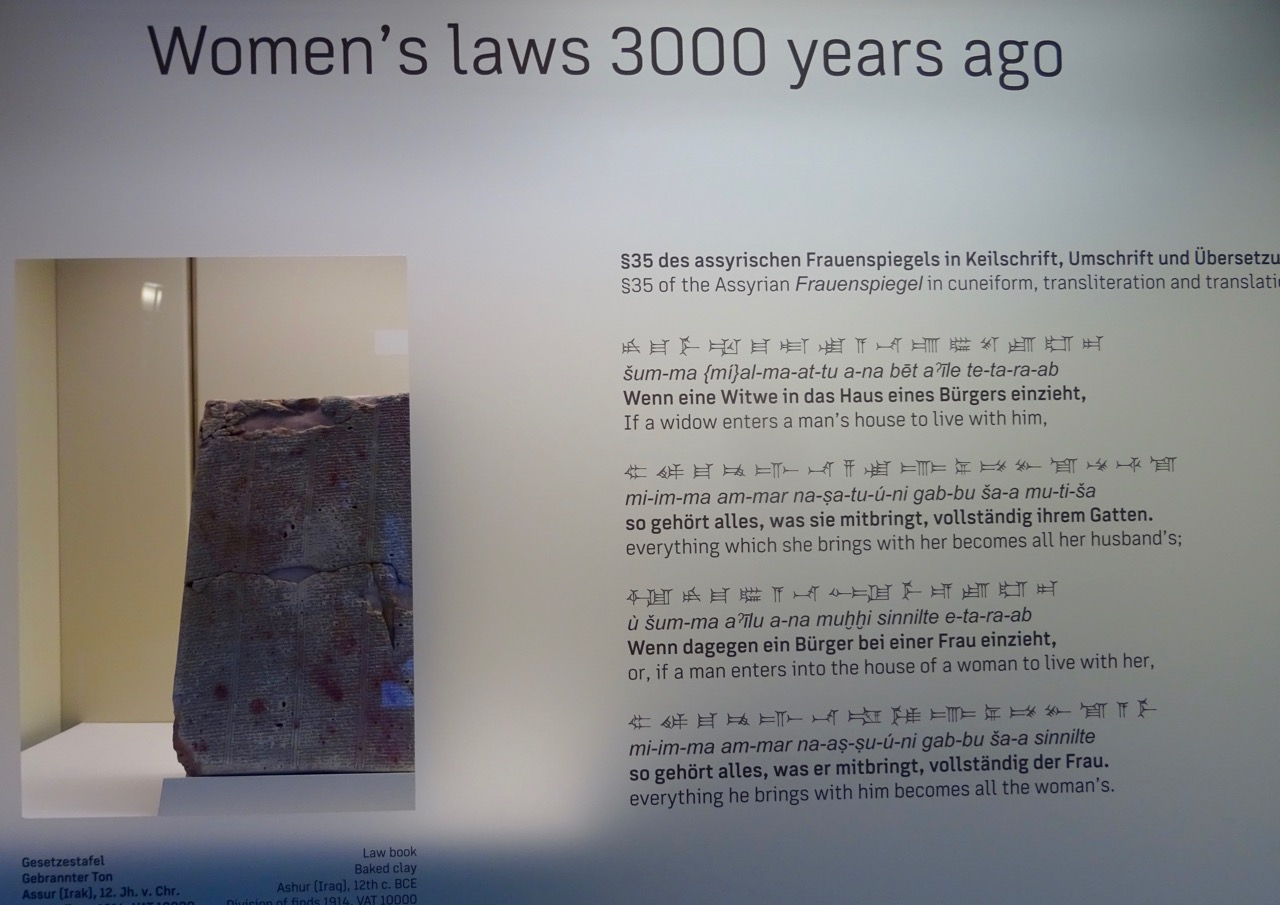

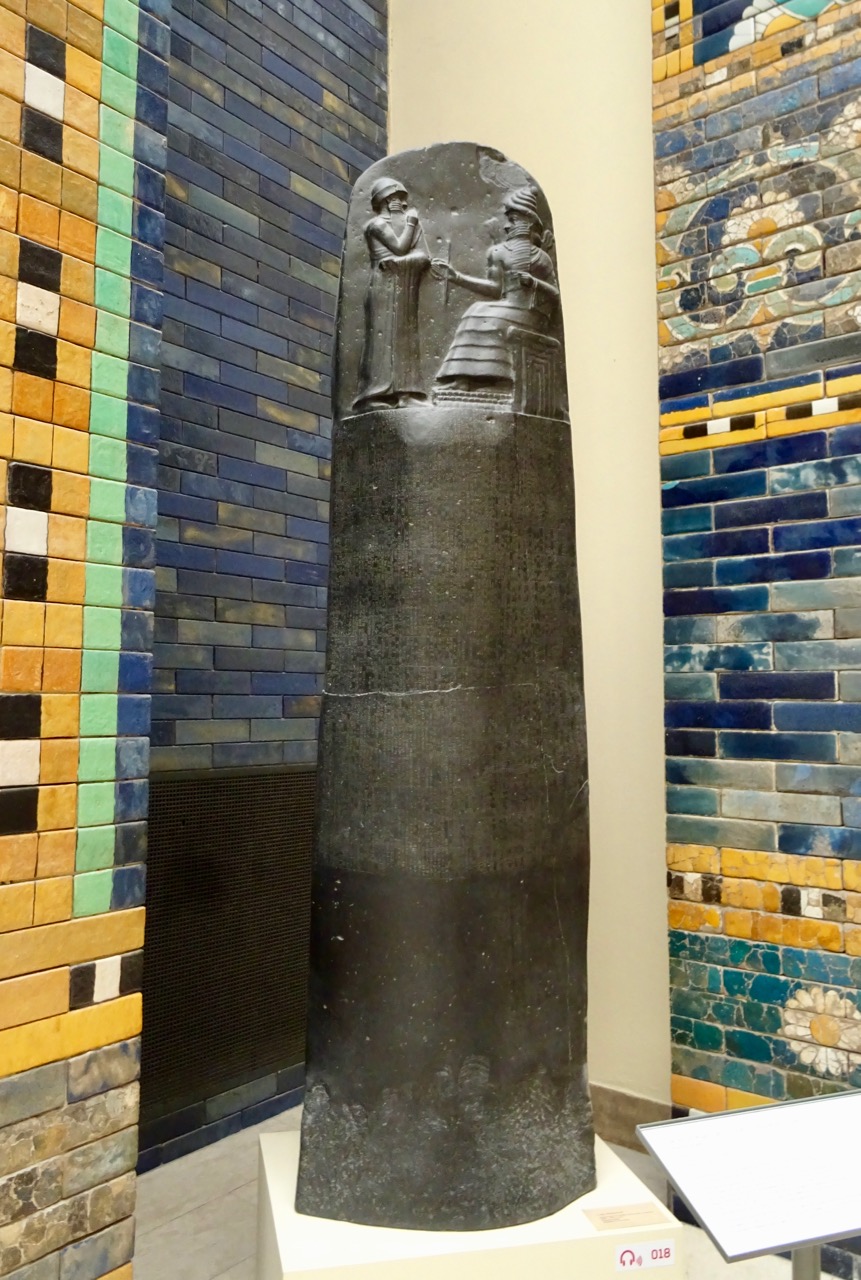 This close up of one of the lions from the Ishtar Gate shows how the original pieces of tile were reassembled.
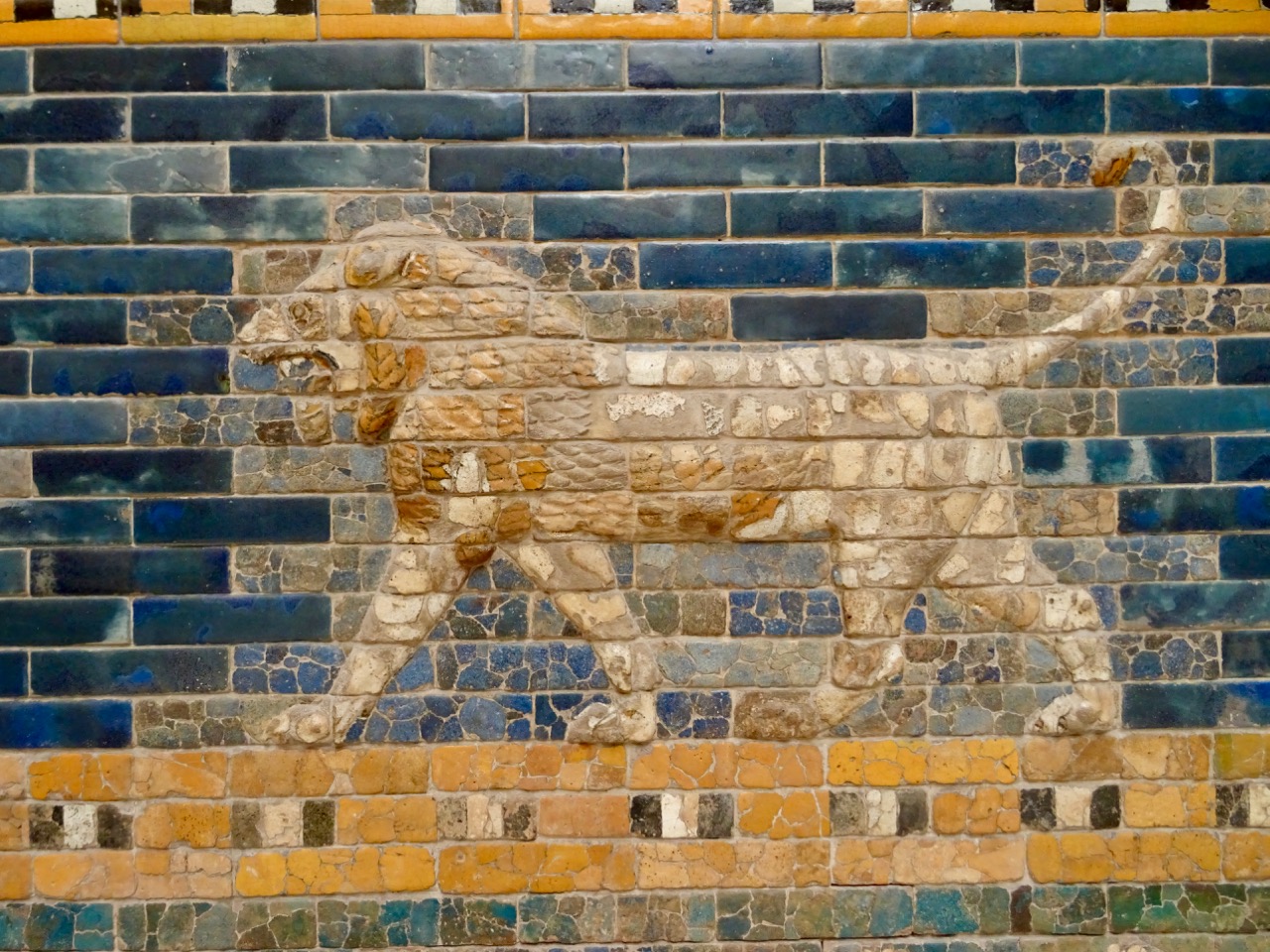 This is the condition of the tiles when they were unearthed. Can you imagine trying to piece these thousands of bits together?
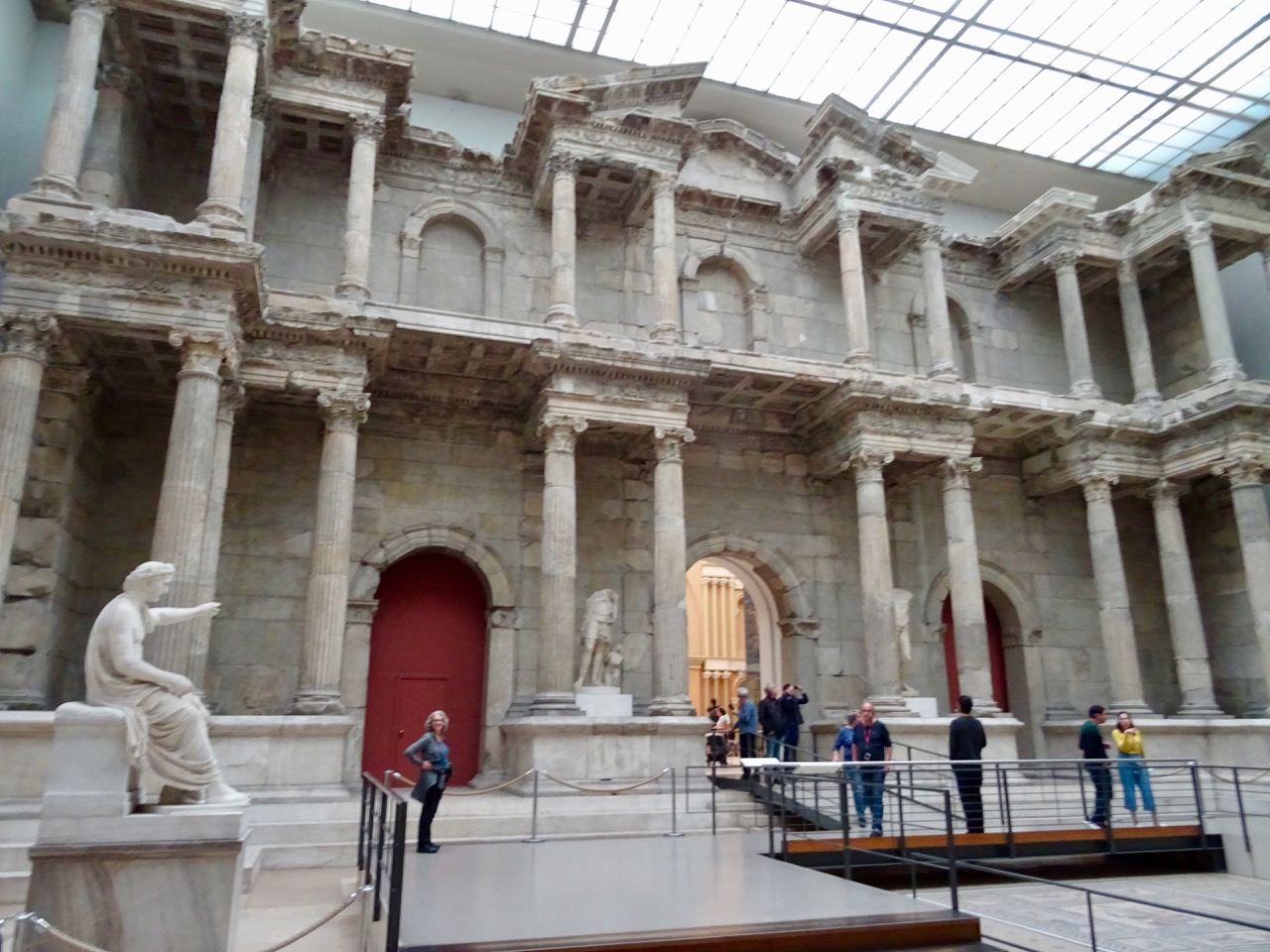
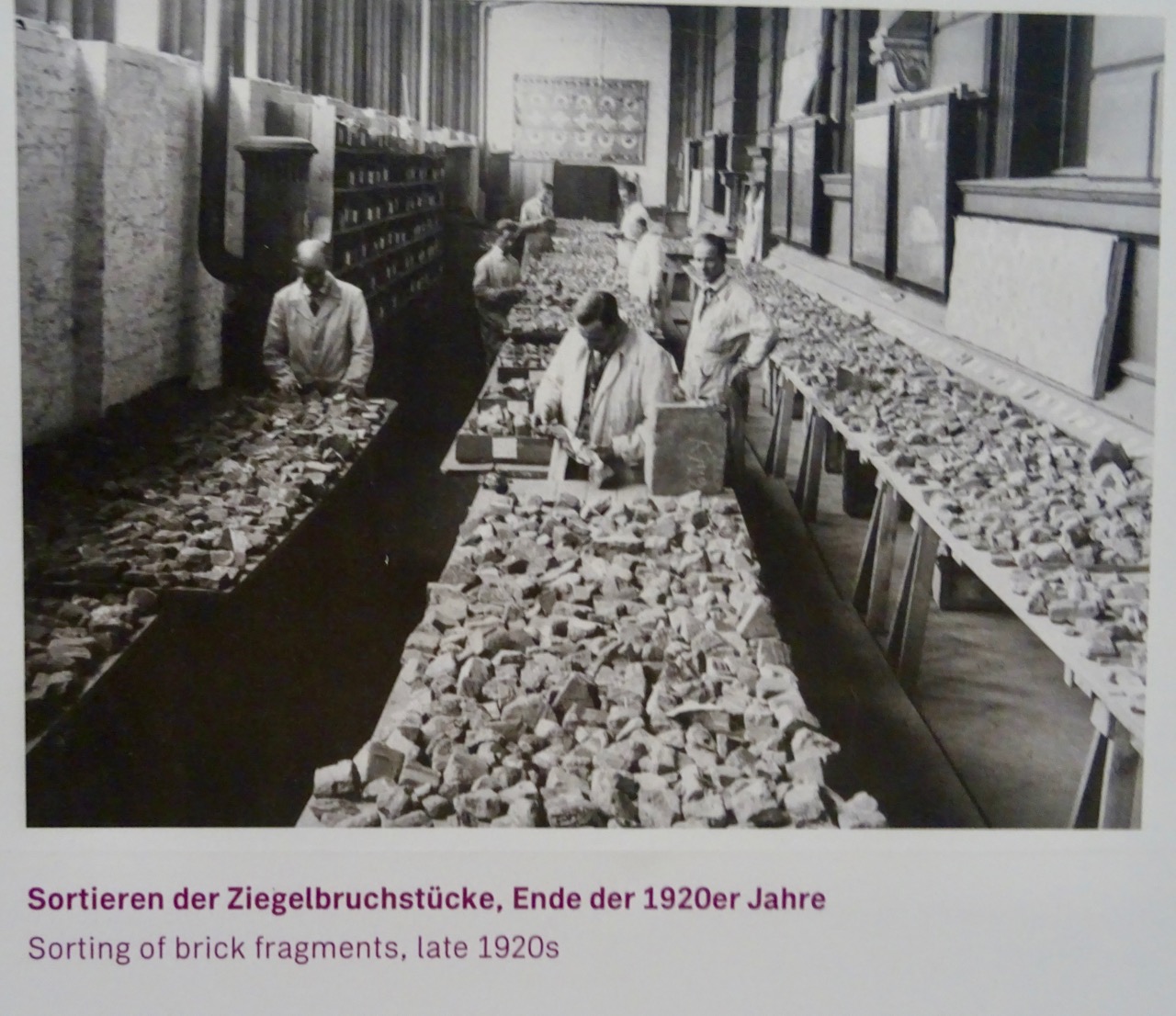 Another huge structure in the museum is the 2nd Century AD Market Gate from Miletus. This is the largest historical monument that has been reconstructed indoors. It is about 30 meters wide and 16 meters tall. This grand structure was only the entrance to a marketplace, although it looks more like a palace.
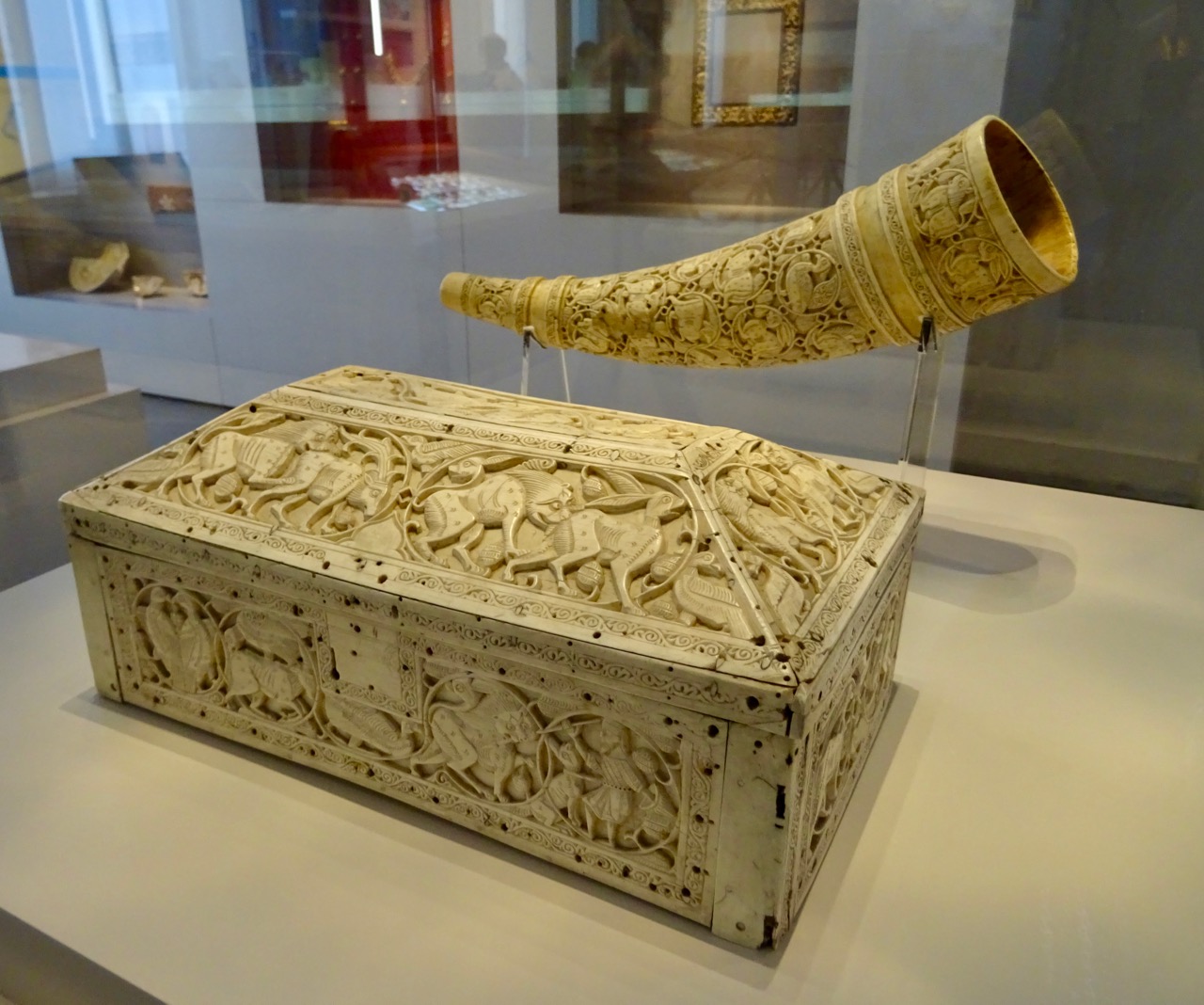
 This ivory box and horn were covered with intricate carvings. There were so many things to see and marvel over.
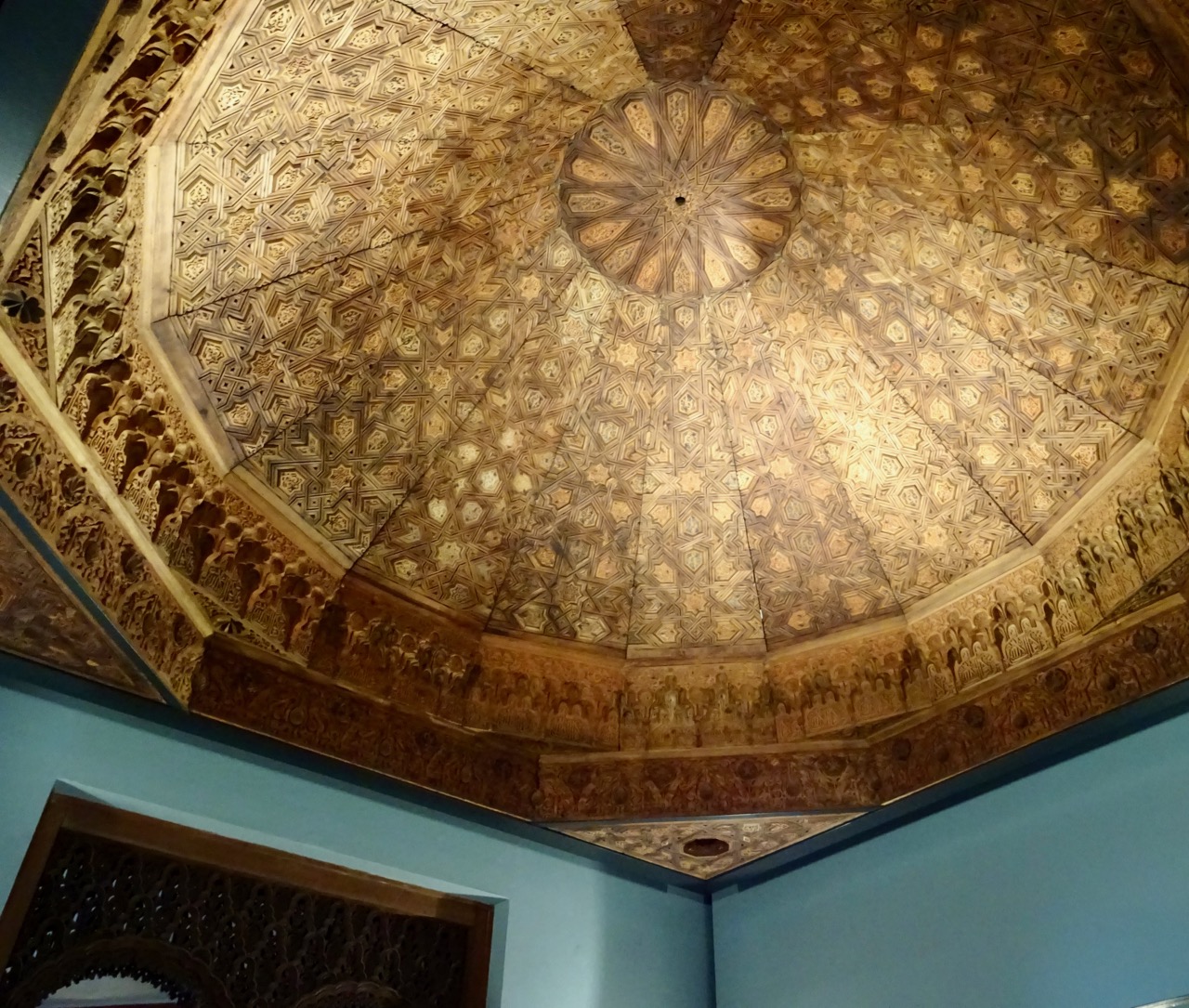
 This intricately carved ceiling is from the Alhambra in Spain. We saw other ceilings like this when we visited there a few years ago.
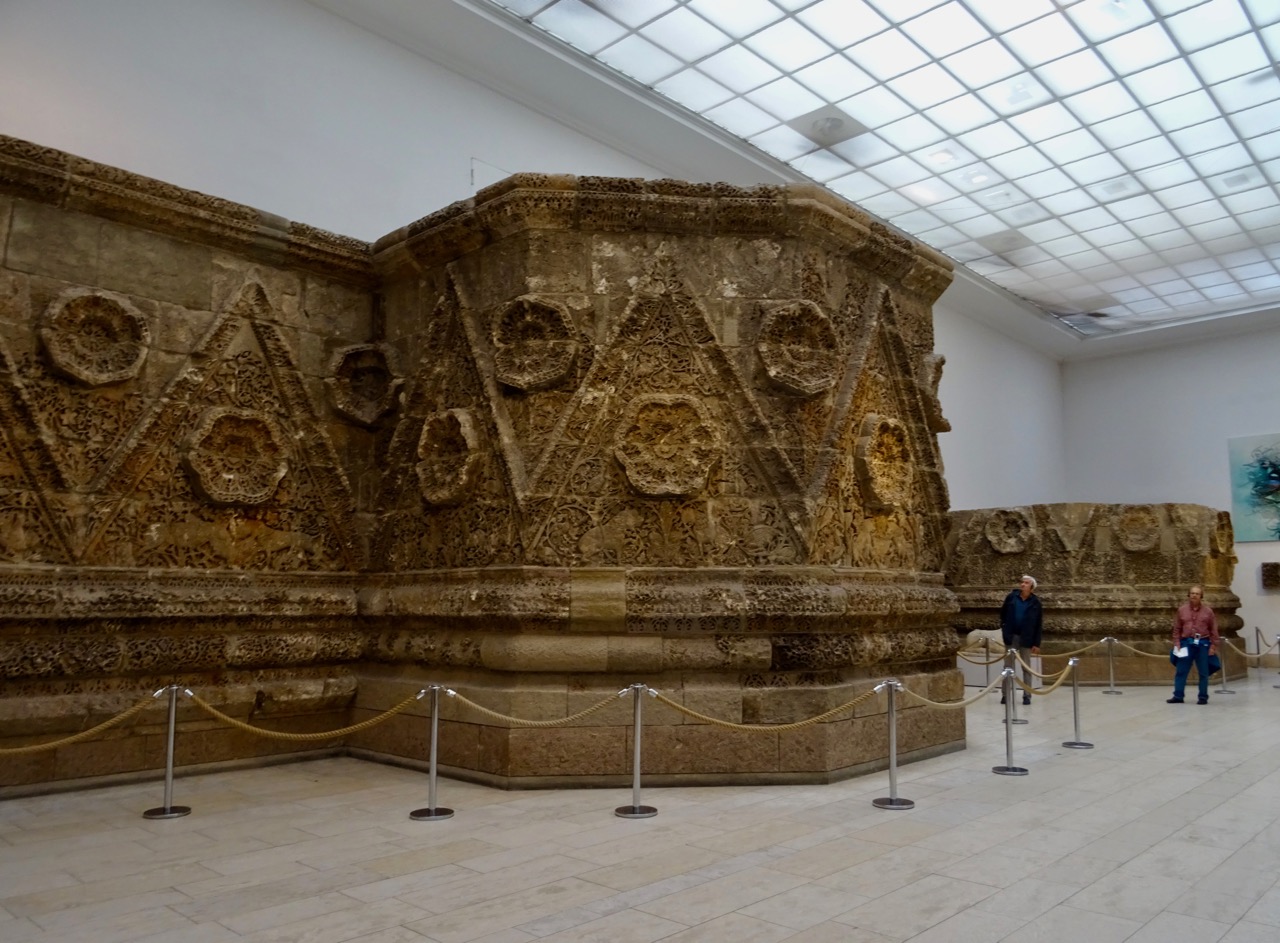
 The 8th Century Mshatta Facade is 33 metres long and 5 metres high with two towers and part of a central gateway. This
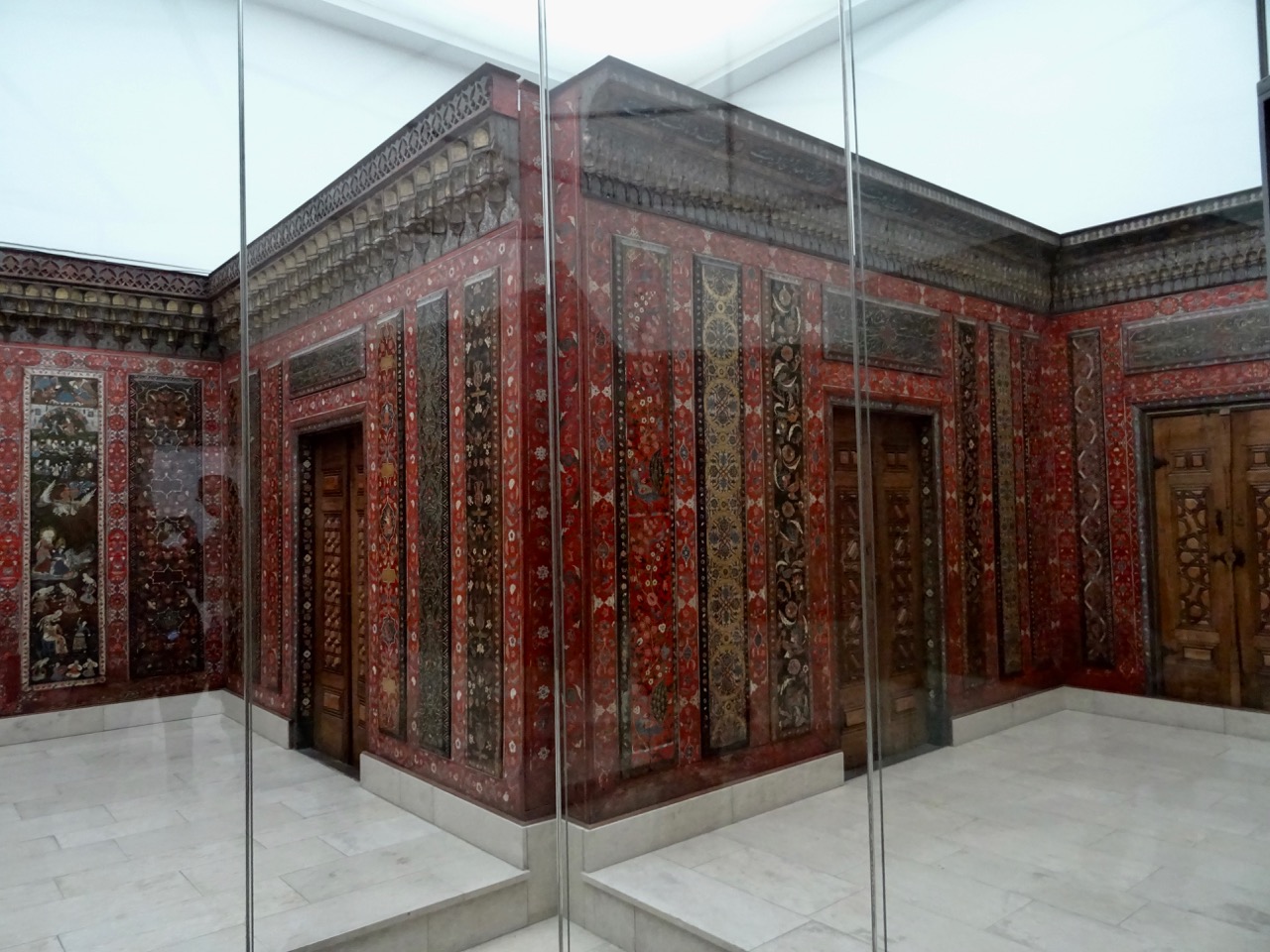
  The Aleppo room was built as a reception room by a wealthy Christian merchant in Aleppo. The paintings Illustrate Islamic floral and geometric designs, scenes from the Old and New Testament, and Persian book illustrations.
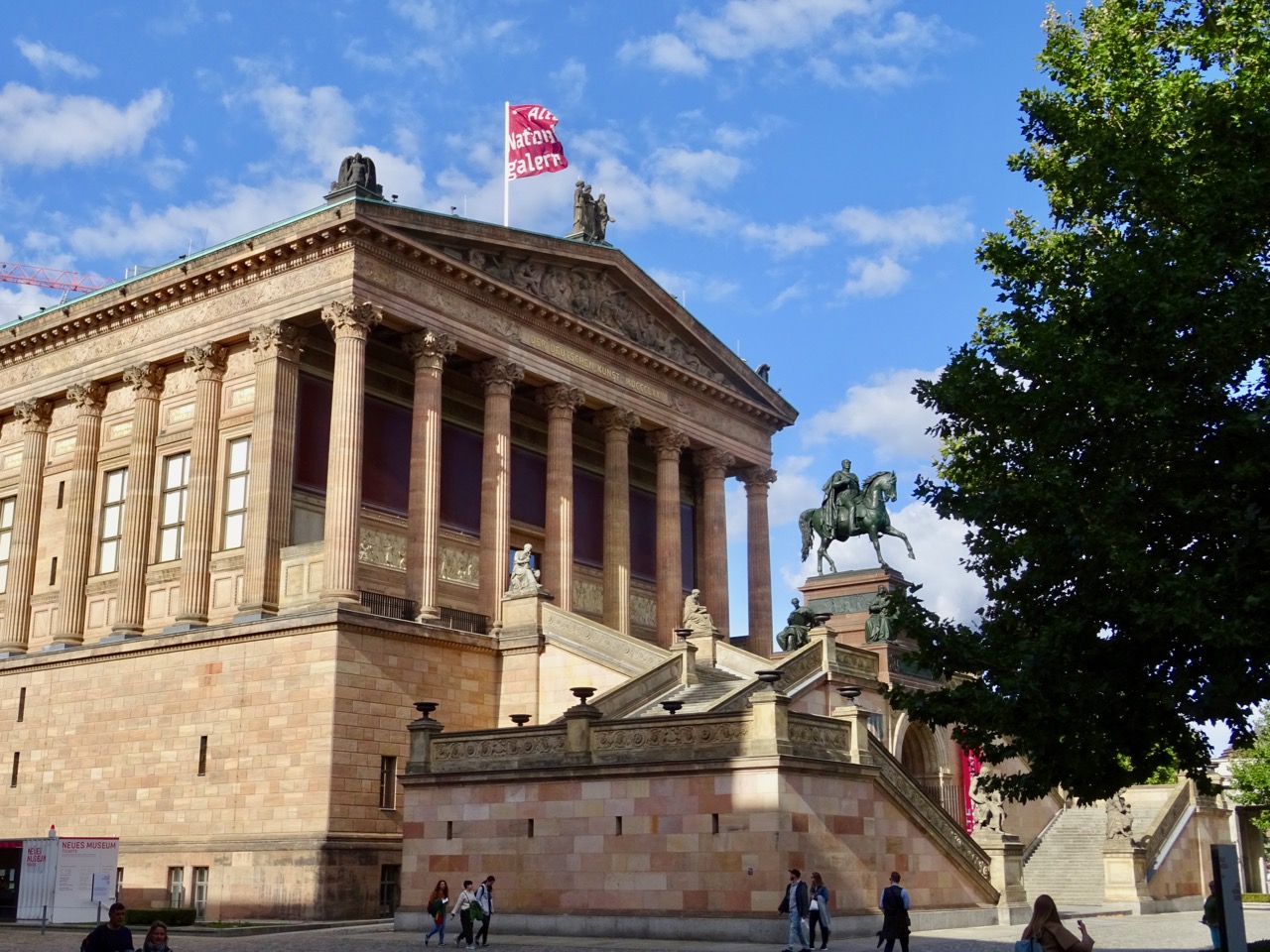
 A view of the Alte National Gallery we visited yesterday.
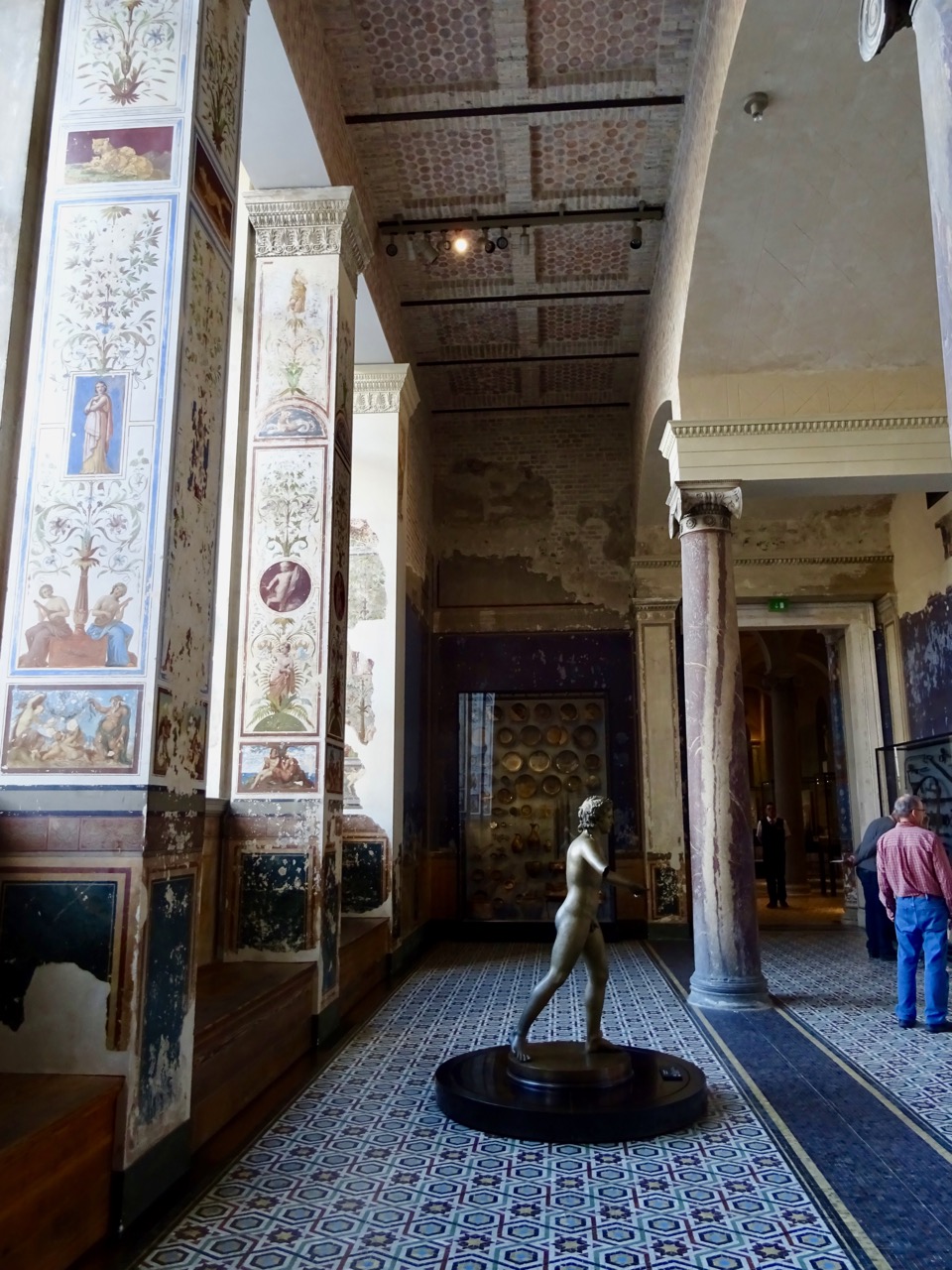
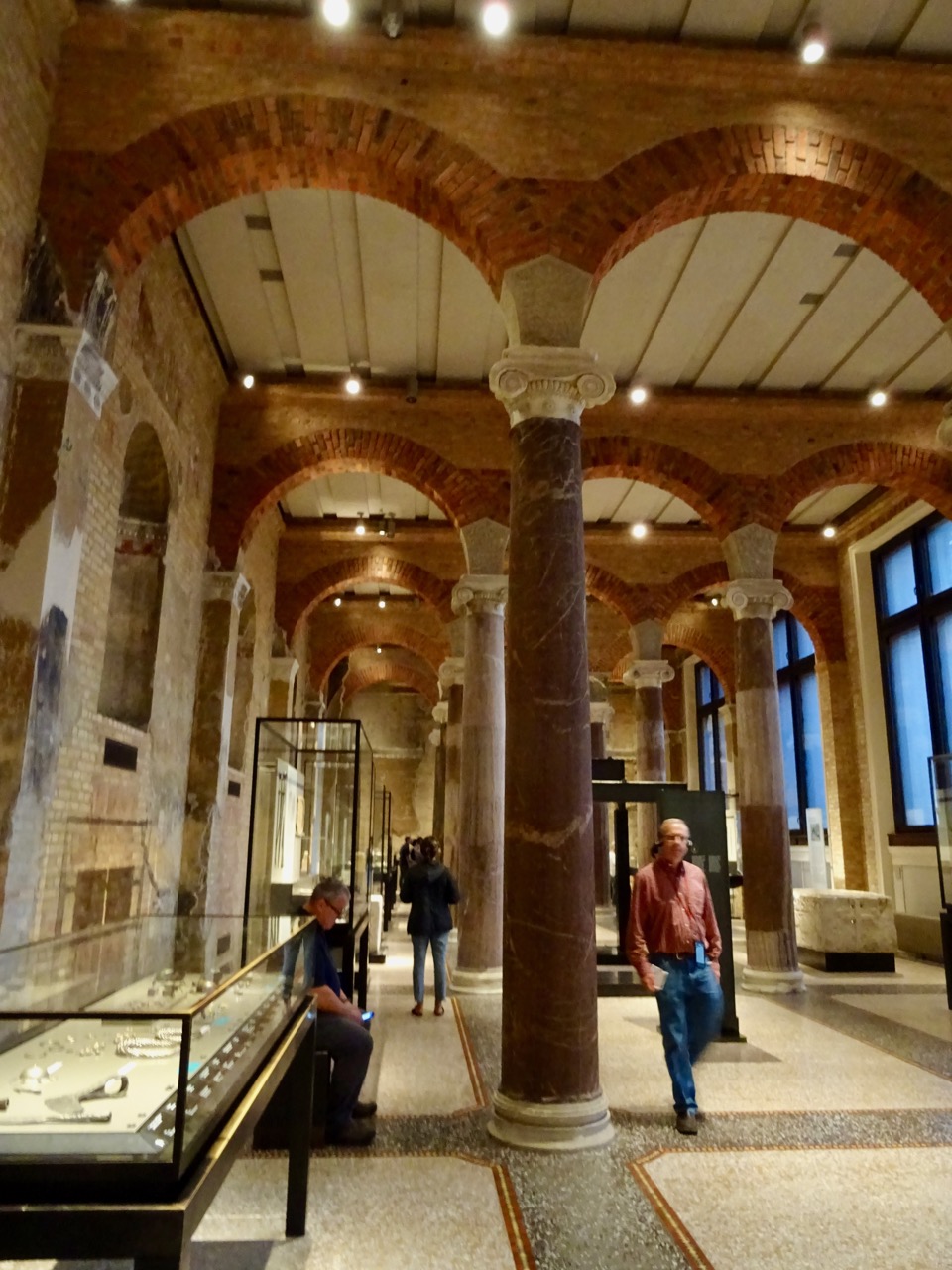
 Next we visit the Neues Museum. This building suffered severe damage during the Second World War. In 2003 work began to restore the building without erasing the traces of past damage. We see evidence of this damage throughout the museum. Note the bullet and shrapnel holes in the pillars…
 and damaged areas in this room.
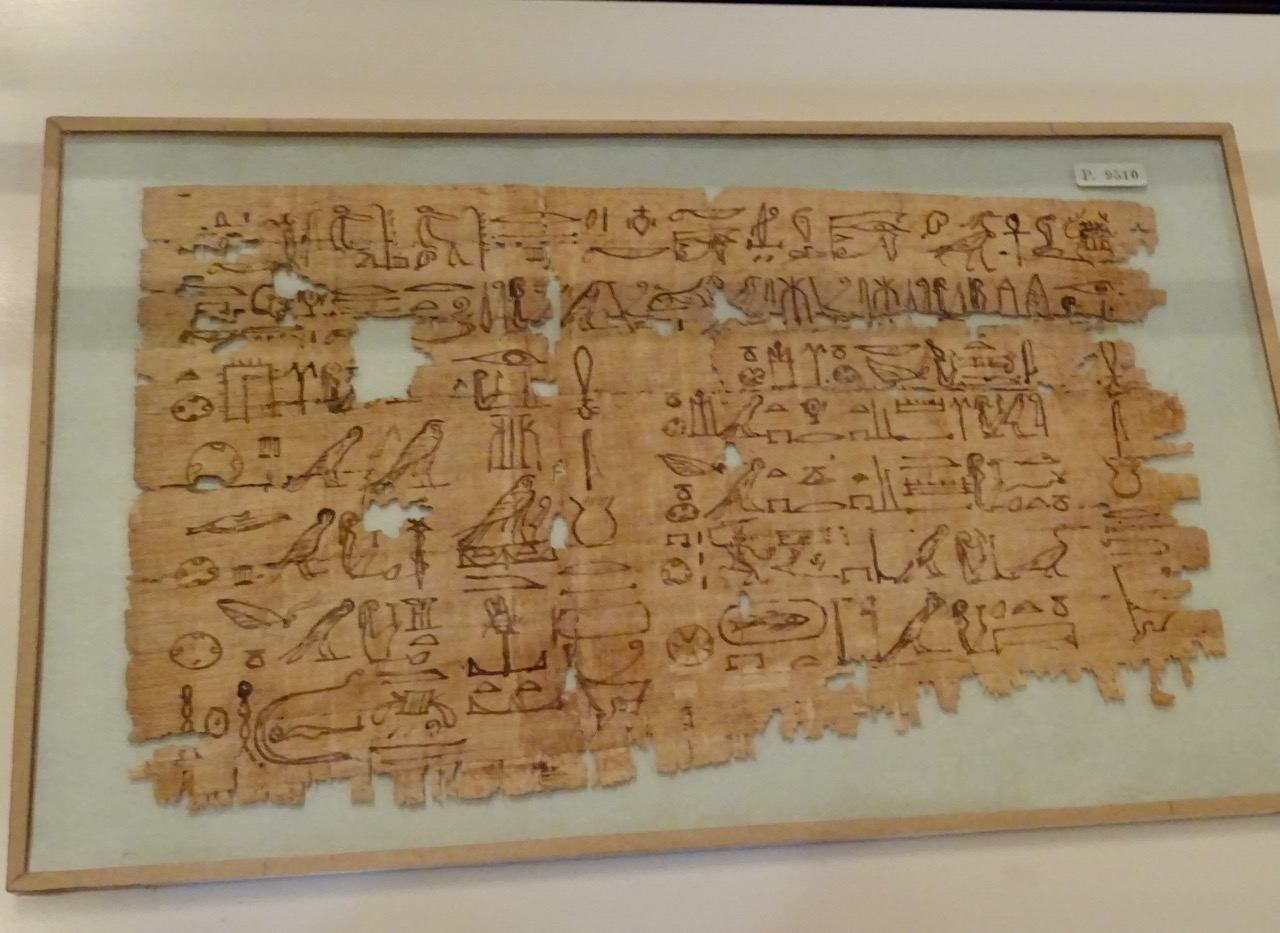
 There were many pieces of ancient papyrus from the 4th Century BC. I find it astounding that these fragile documents have survived.
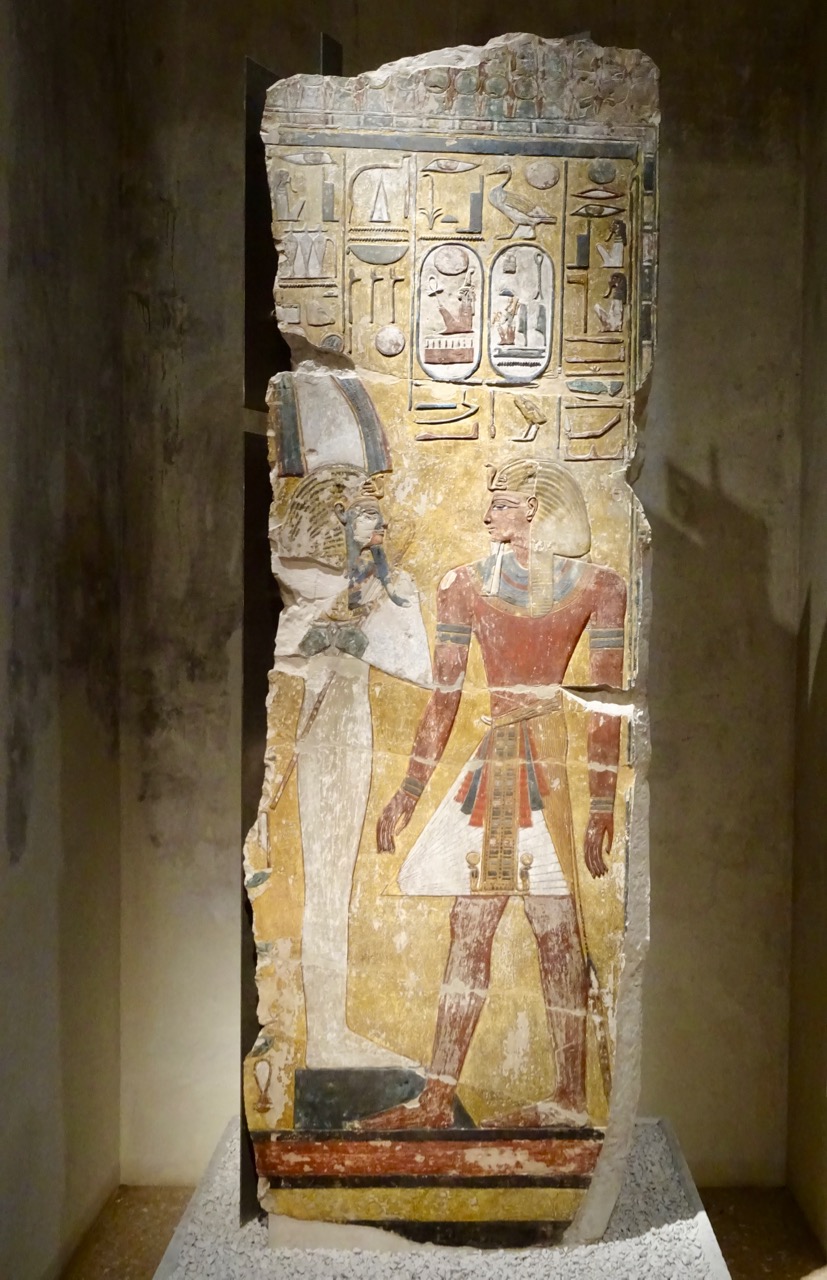
 Original paint remains on some of the Egyptian sculptures from 1290 BC!
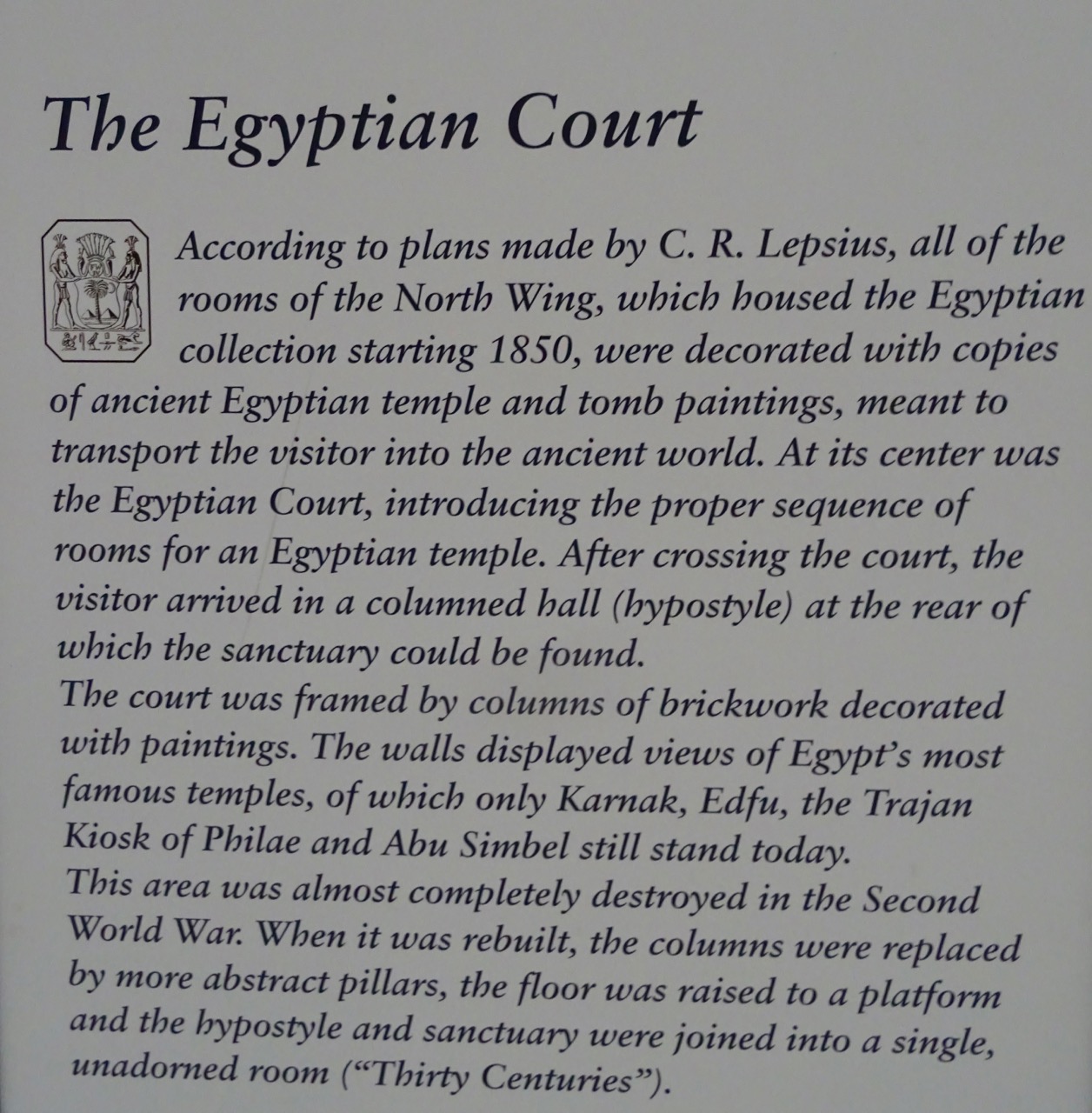
 This is a room that was heavily damaged during the war. These three panels are all that is left of twelve panels that were on the walls of this courtyard. We actually visited the three Egyptian temples depicted on these walls during our trip there in 2011.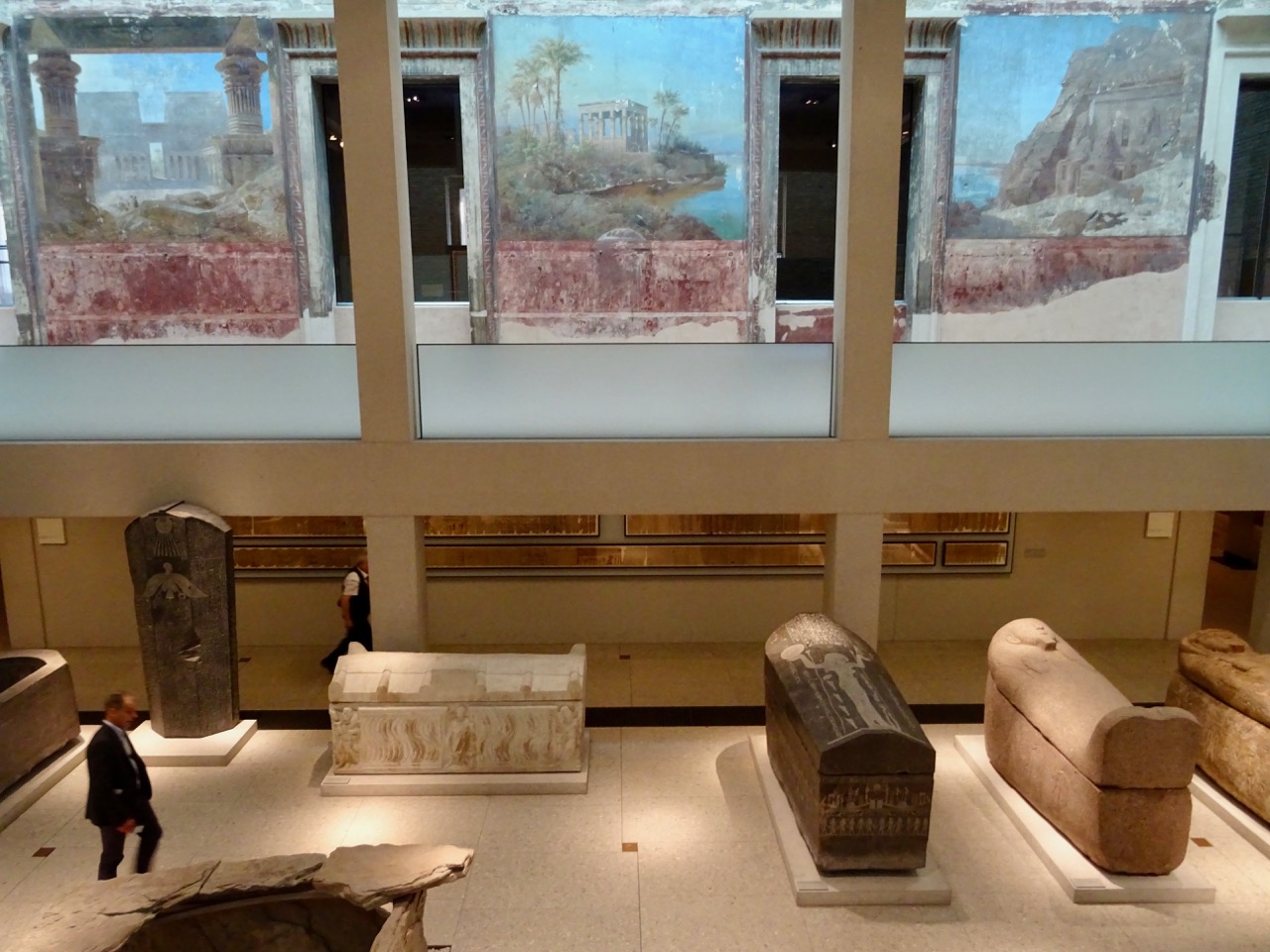
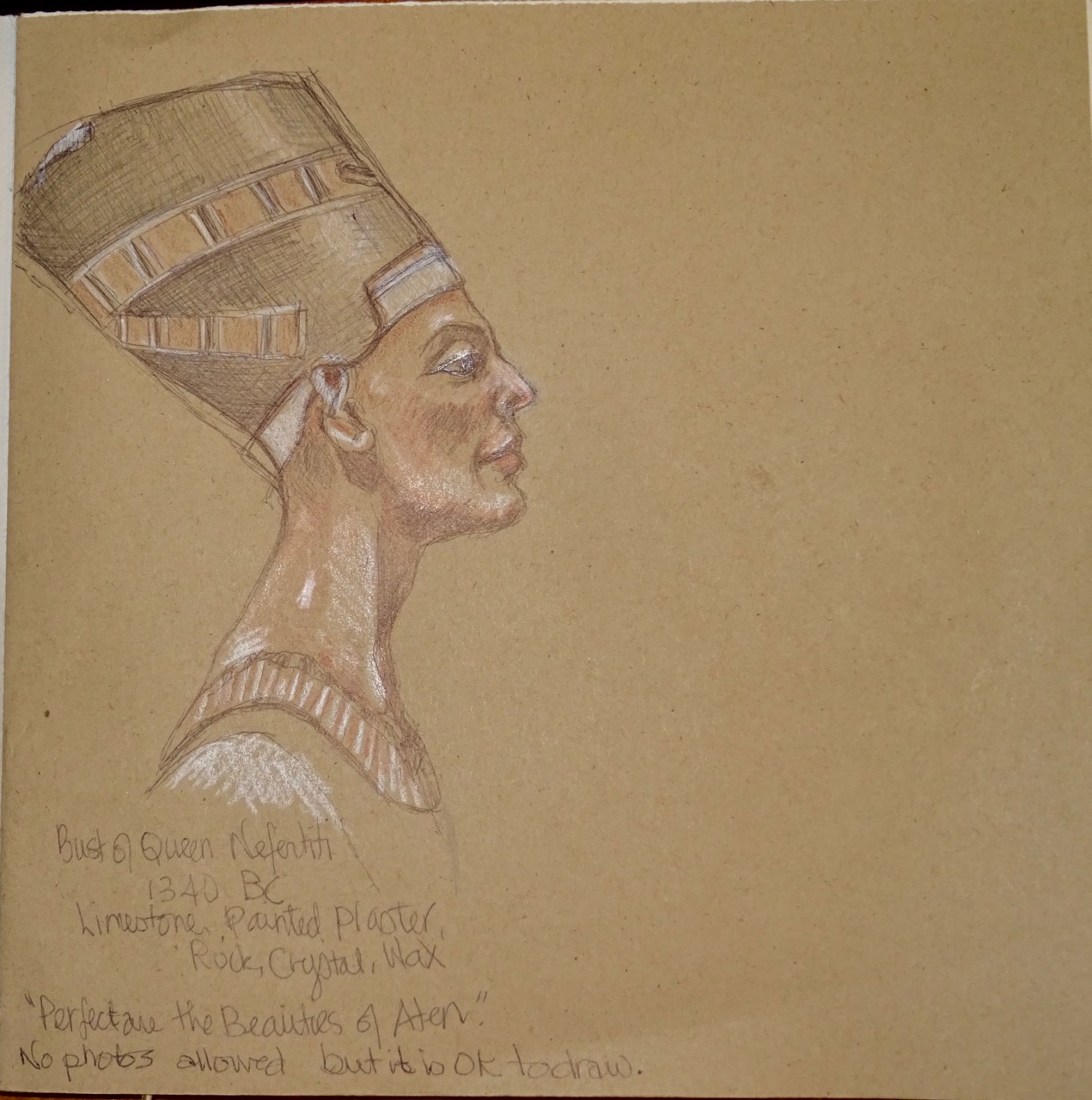 There are so many rooms filled with so many treasures. It can be a bit overwhelming.
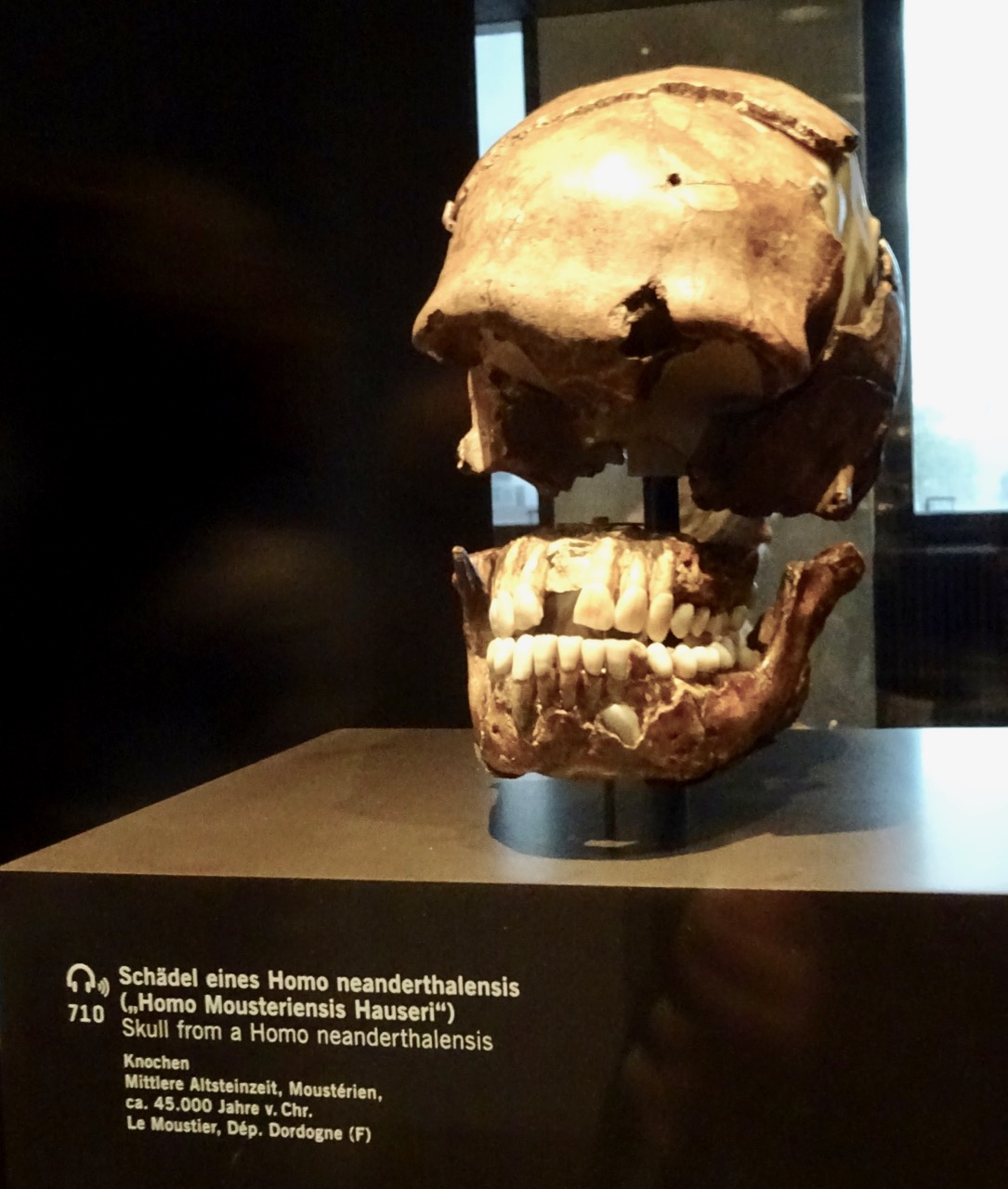
 I thought the teeth on this Homo Neanderthalensis were astonishingly white and cavity free!
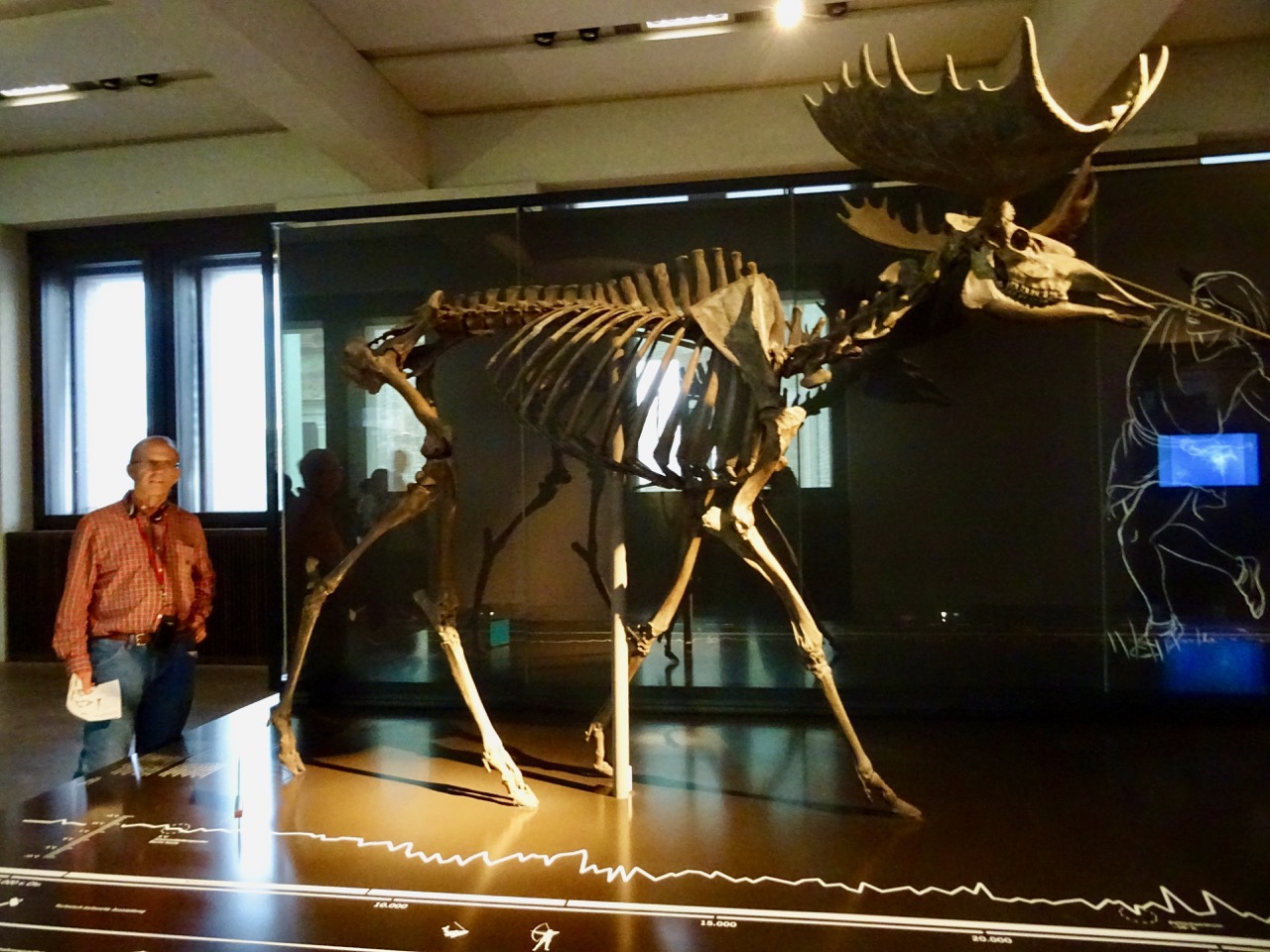
 This elk from 10,700 BC was discovered during construction of one of the Berlin underground subways in 1956.
 I forgot to post these sketches form the Altes Museum yesterday.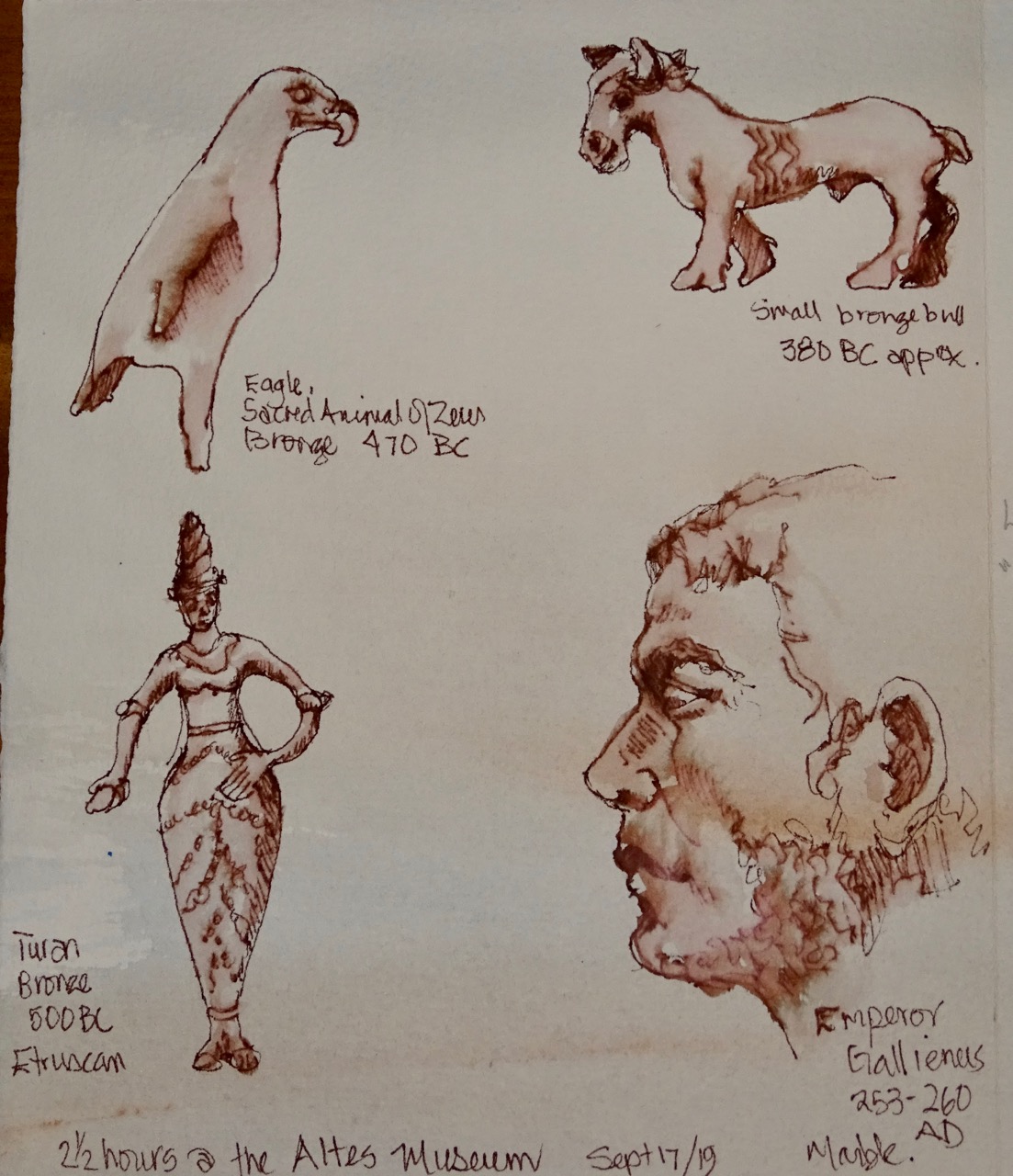
 trudymason.com