Day 14, Sunday, September 8, 2019
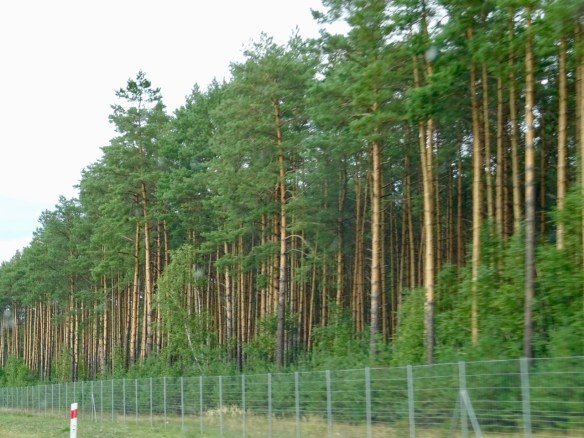
We were both tired last night so we left our packing and cleaning until this morning. By noon we are on our way to Berlin. We stop at truck stop just before the Polish border to get lunch at a KFC and spend what Polish money we have left. I have never seen so many trucks in one place! There are nine rows of trucks like this parked here. There are lots and lots of trucks on Polish highways!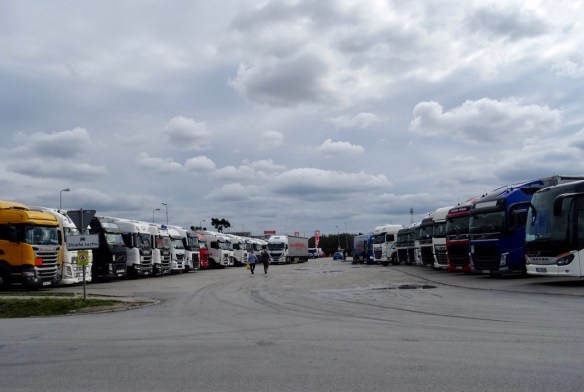 We pass by lots of trees that appear to be grown for timber. Their lower branches have been trimmed so that the trunks grow straight.
 Not far into Germany we stop at Slawenburg Raddusch, which is a reconstruction of a fort built by Slavic people in the 9th and 10th Centuries. It is surrounded by a moat for added protection.

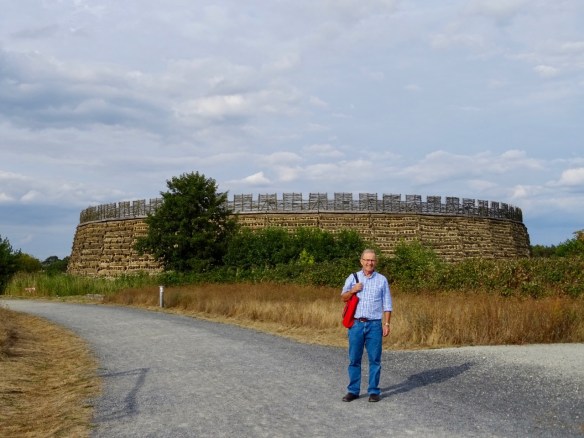
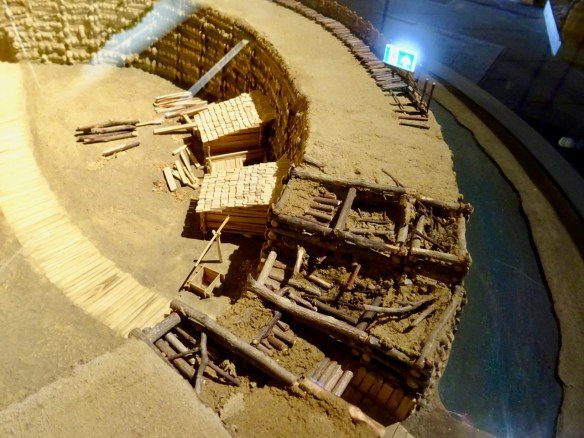
We find this huge fellow on our walk to the fort.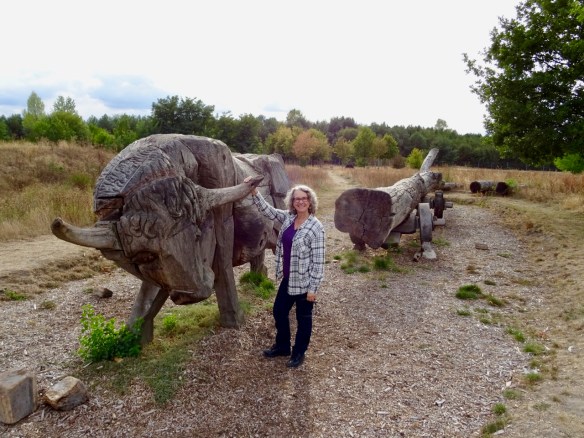 A 10 m wide wall was built in a circle. Long oak beams were alternately stacked in a criss-crossed direction and the spaces between the logs were filled with earth and stones. The almost circular inner surface with a diameter of 36 m. originally contained a few small houses and four wells.
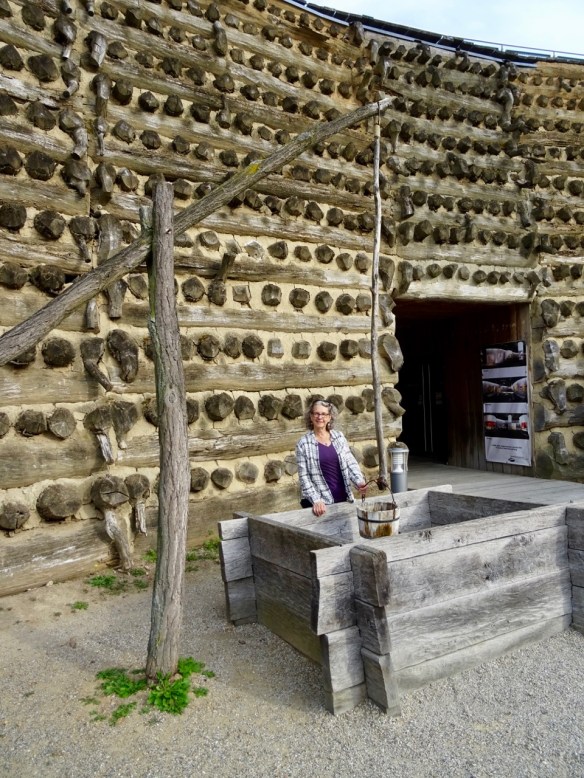
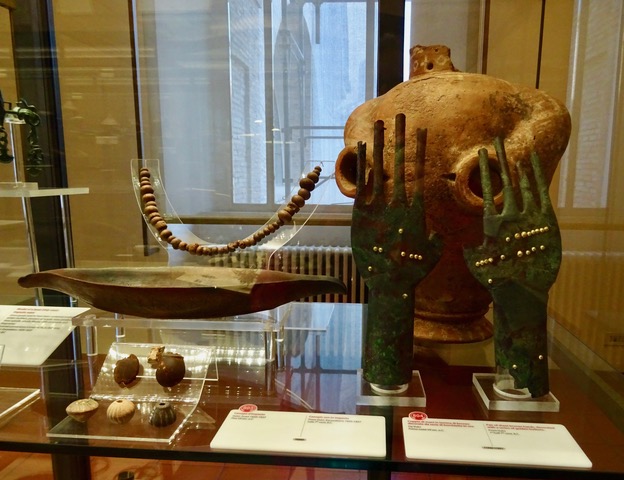
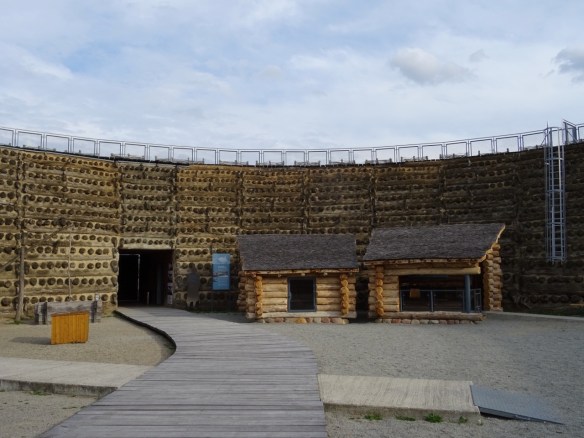 This well is 40 feet deep. In the wells were found: ceramic fragments, knives, lance tips, whetstones, sledgehammers, bone skates, wooden mallets, spades and a rare, valuable brass bowl. The walls of this reconstructed fort use concrete, so the interior of the walls is a museum where the artifacts found in this area are on display.
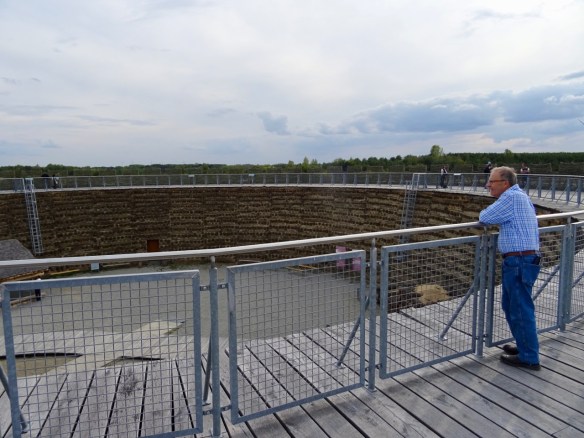
 We climb to the top of the wall which offers a great view of the surrounding landscape. In the 1980s, this area was strip mined for coal. Before the giant excavators ate their way through the landscape, archeologists found that the Slavs were not the first settlers in this place. Under the wall, Germanic remains from the 5th / 6th century were found. The earliest findings, however, date back to 2200 -800 B.C. Unfortunately the strip mining destroyed most of the archaeological remains in the area along with 50 villages that were here before the mining started. Imagine displacing all those people to mine coal!
 This model shows what the original fort would have looked like…
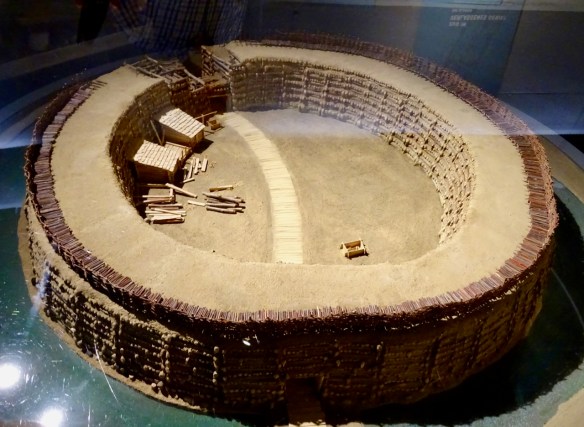 and how it was constructed. The dirt used to fill the walls came from around the base of the fort and created the moat.
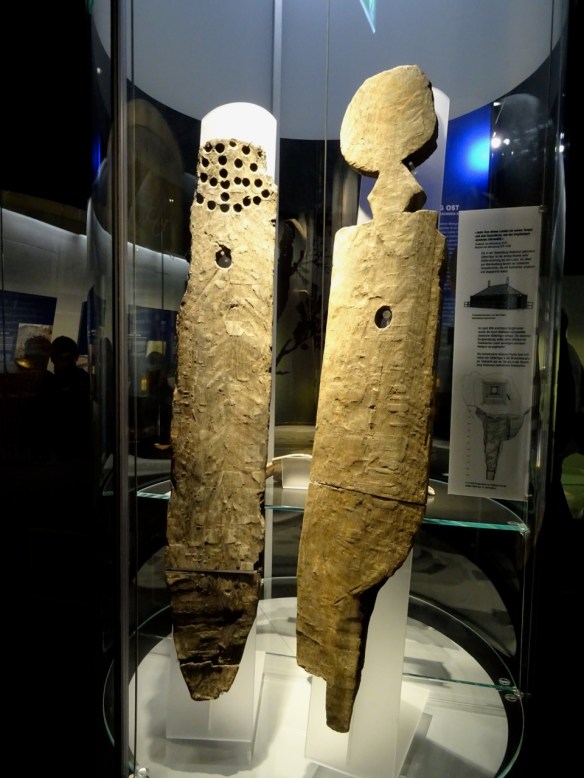
 The “Götze von Raddusch”, an idol from 926 A.D.,made from an oak split-beam with a head-like finish and a perforation in the chest area was found in the excavation of the youngest well. This was a rare find.
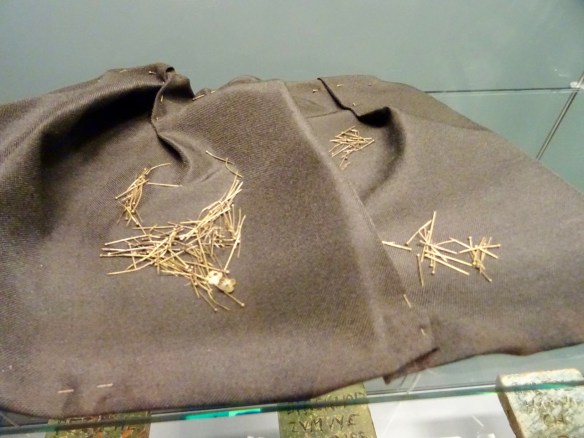
 I thought these straight pins for sewing were pretty amazing, considering they are so ancient.
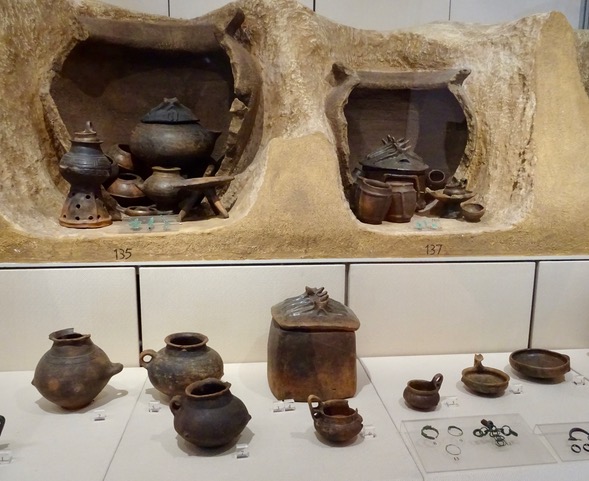
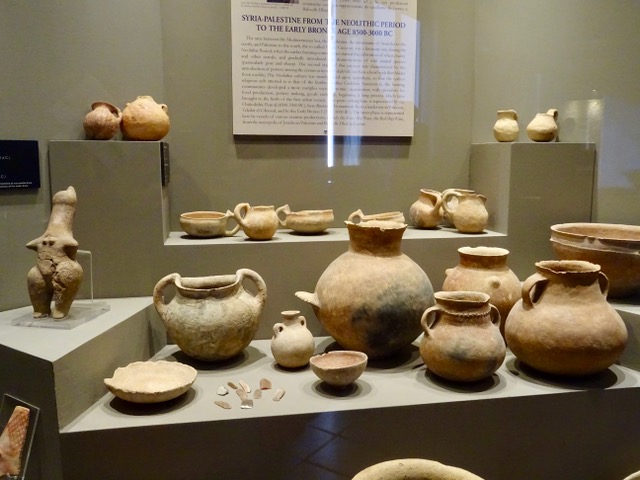
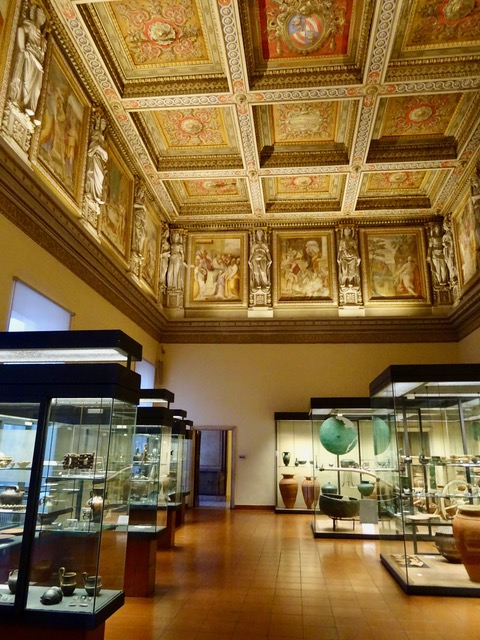
 Here is a view of part of the museum with its large display of pottery,,,
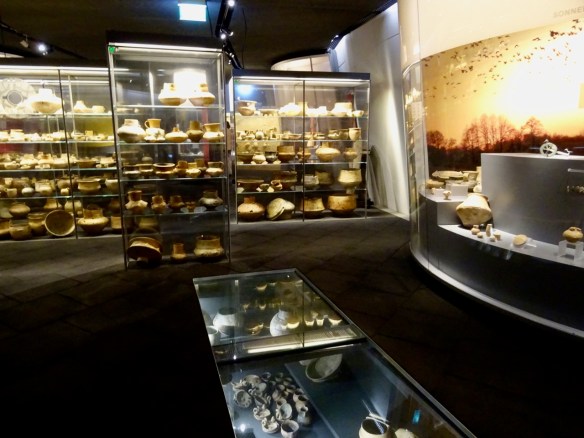 and burial pits, where cremated remains were placed along burial gifts for the deceased.
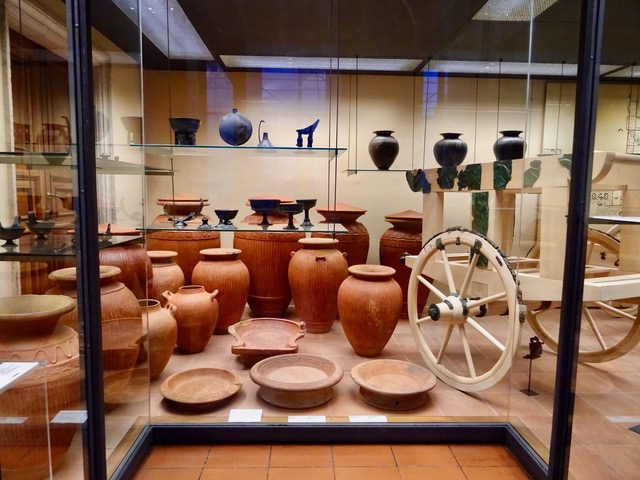
 I was intrigued by the shapes of some of the pottery. All the pottery was made by hand without the aid of a potter’s wheel.
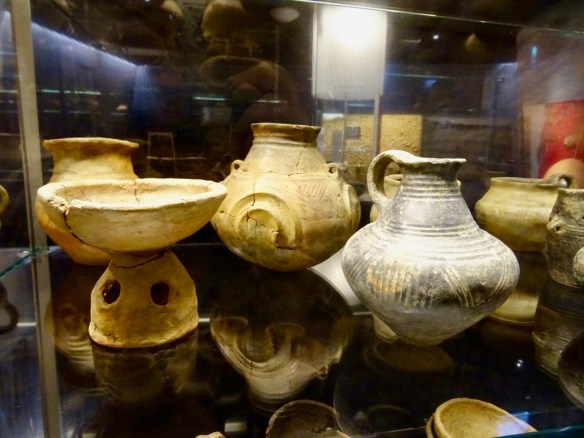 I wonder what these pots were used for?
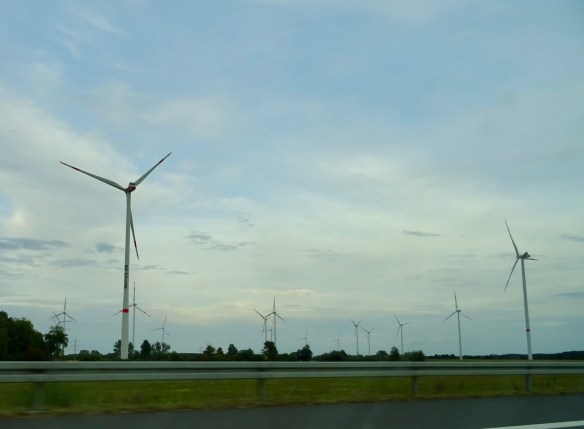
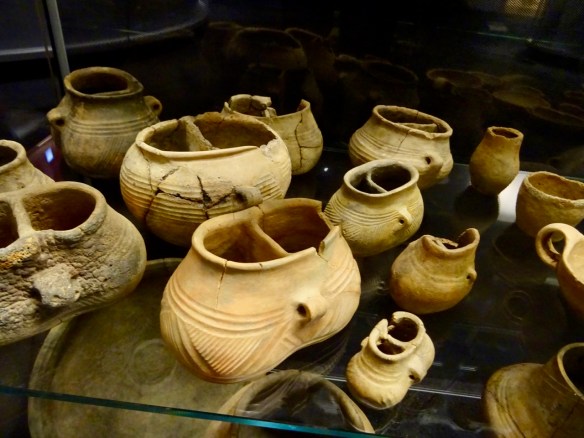 The tour was great. We rented an audio guide for €1.5 and it was very well done. We got so much more out of the display because it. We managed to finish our visit through the museum just as it was closing at 6:00 pm. We see lots of wind-farms on our way to Berlin. We arrive in Berlin as it is getting dark and check into our home for the next two weeks.
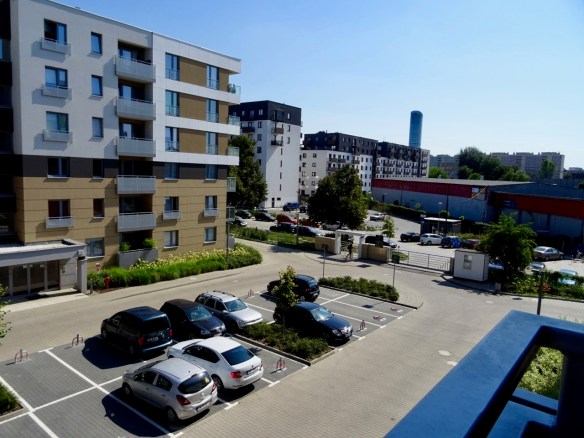
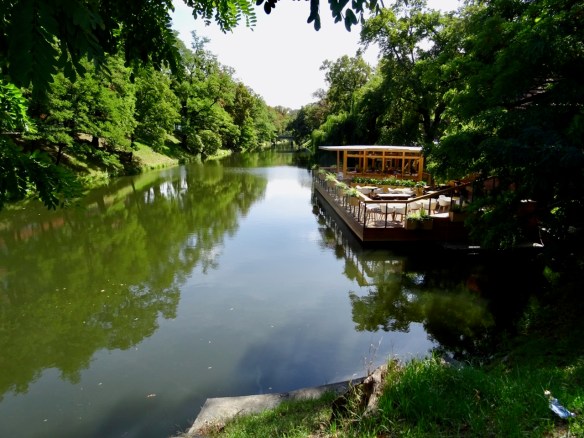
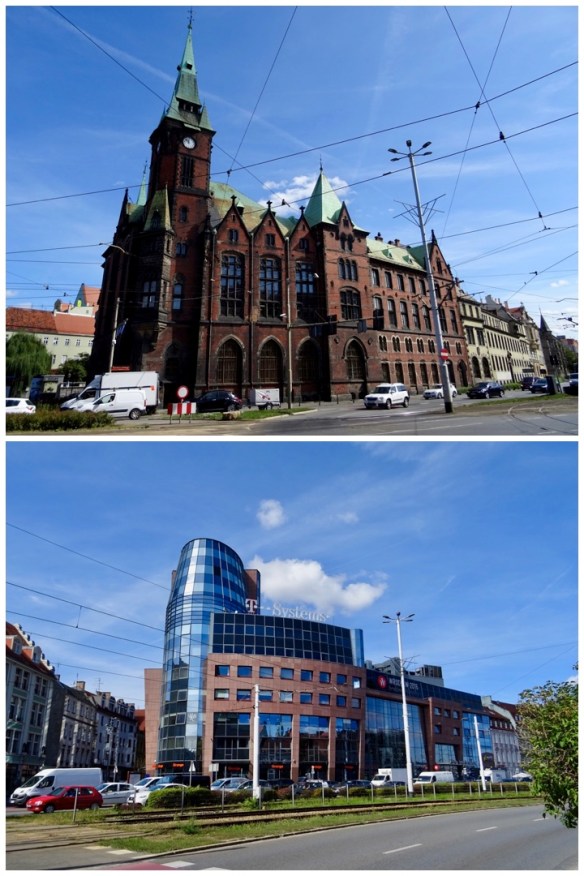 Here’s how big items get delivered!
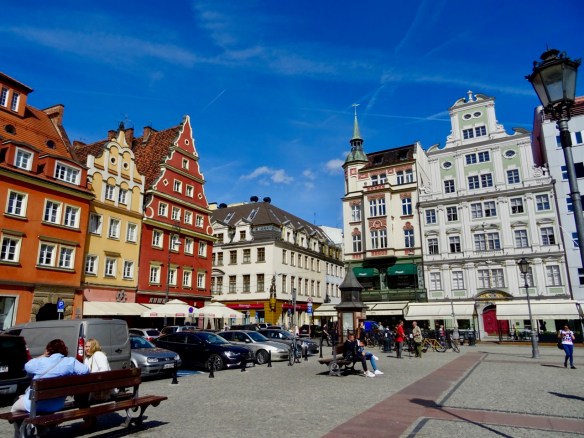
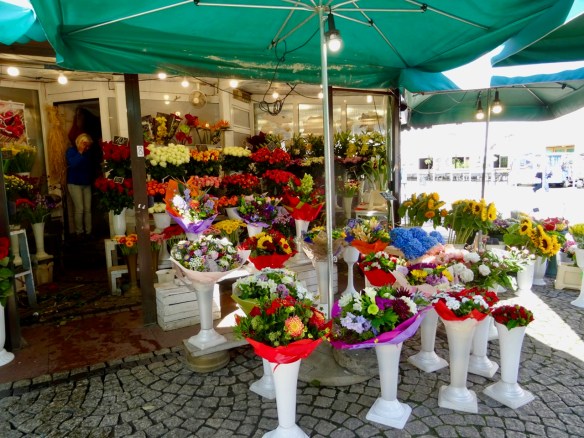 Wroclaw has an ever growing populations of gnomes. In fact, our guidebook states “the little buggers are currently rumoured to be running rampant to the score of over 300 making it literally impossible for us to try to keep track of them!” I think they are delightful and I am happy to make their acquaintance .
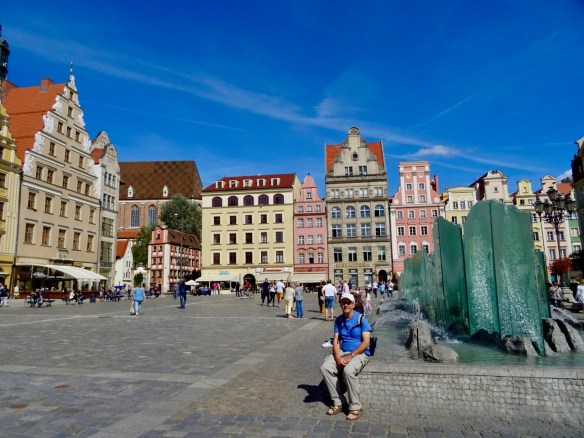 and more tenement houses in the town square.
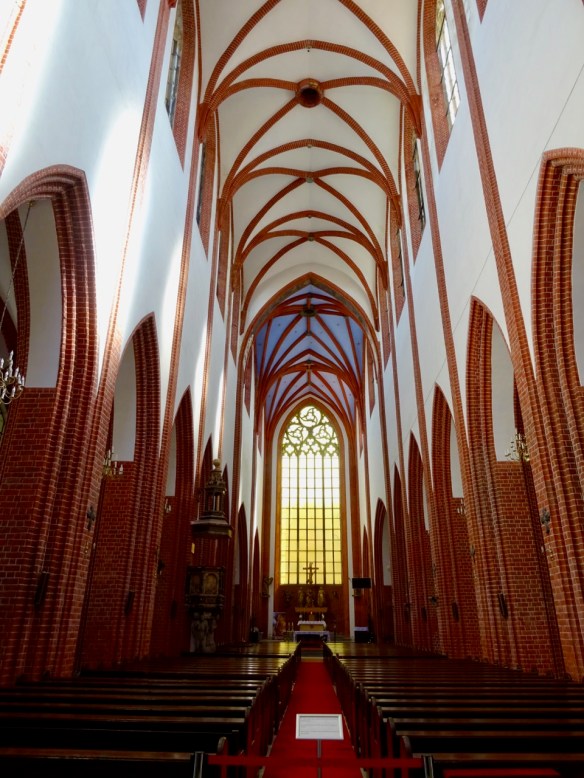
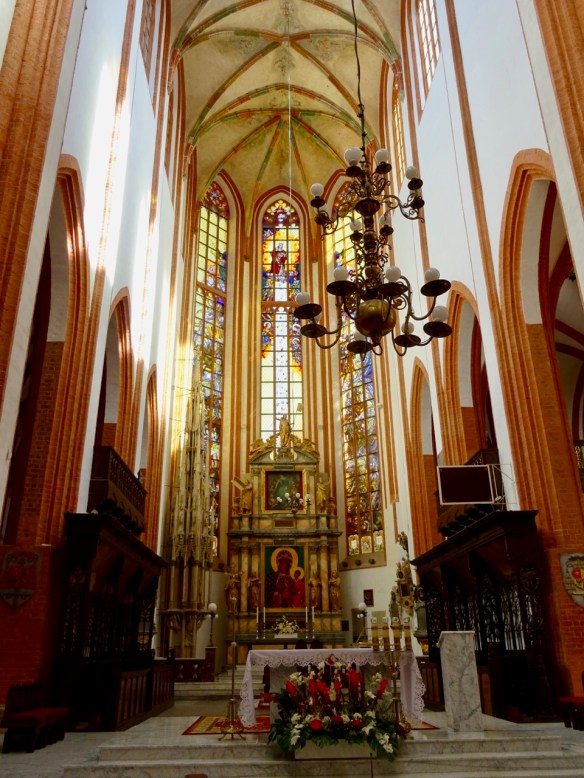
 The interior of St. Mary Magdalene’s Church which dates from 1330.
 We climb 147 steps up to the walkway between the two towers. In times past women suspected of being witches were forced to cross this walkway (there were no railings then) and if they made it across safely they were branded as a witch. If they fell to their death, then they were innocent of the crime of being a witch! You certainly didn’t want to be accused of witchcraft! I am very glad there are railings now and I meet another couple of gnomes.
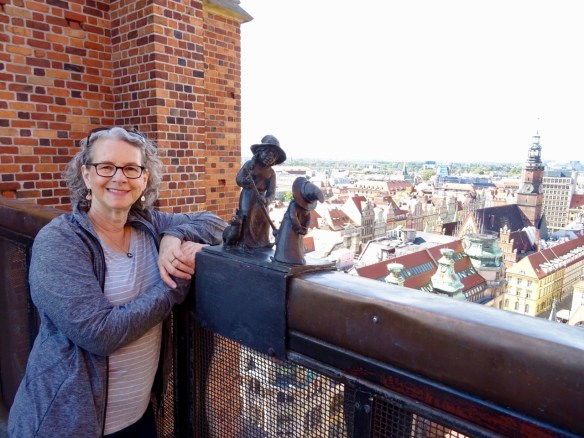 We have great views of the city from up here.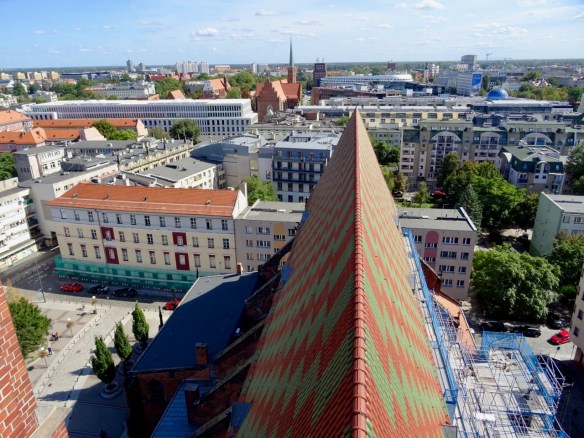
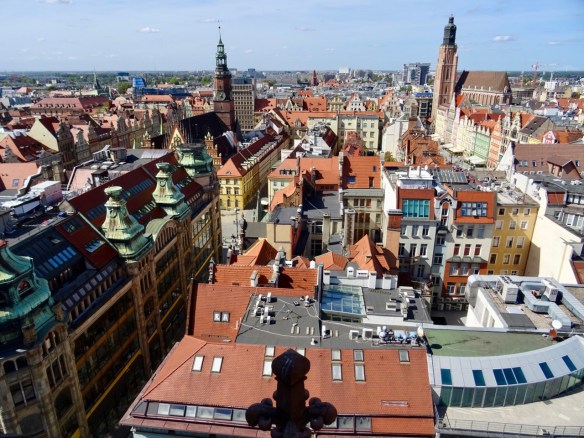 Here is a view of the walkway, way up there between the two towers.There were steeples on these at one time, not sure if they were destroyed during the war?
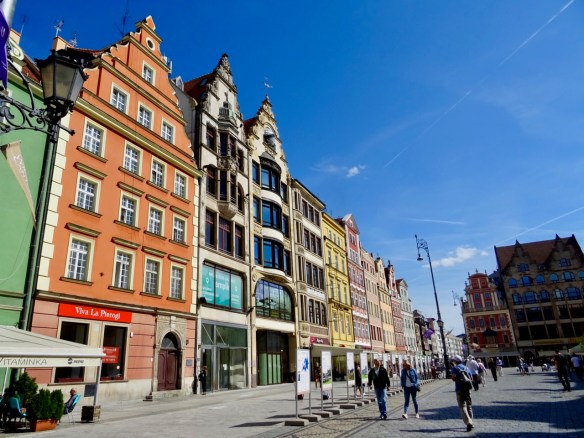
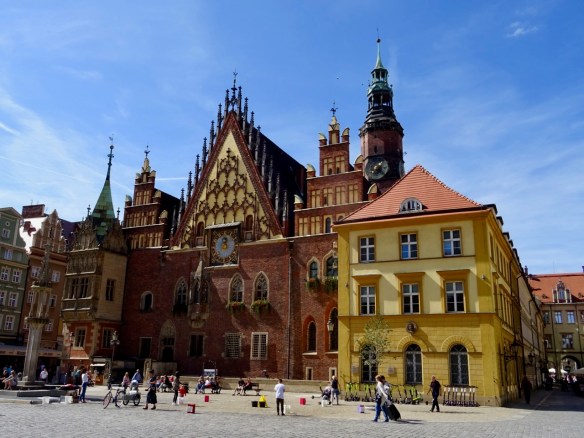
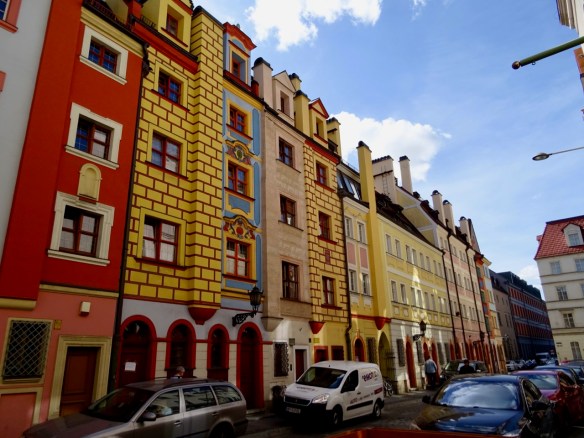
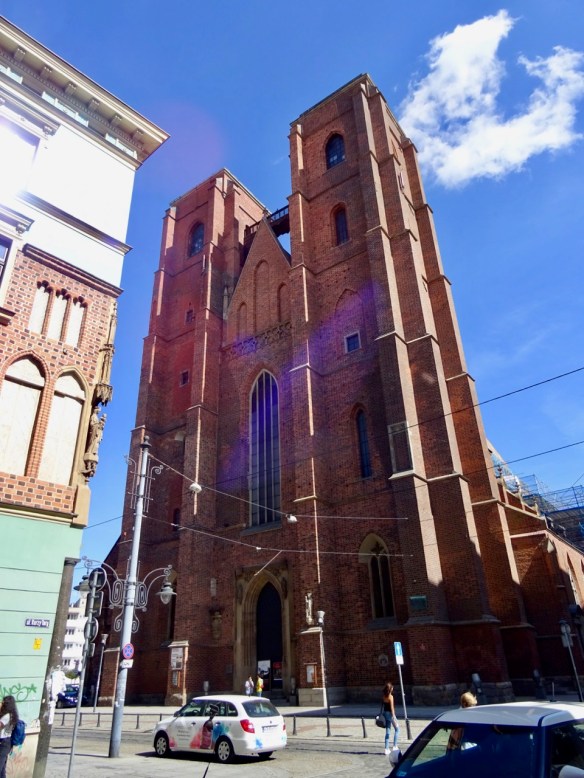 More ornate colourful buildings.
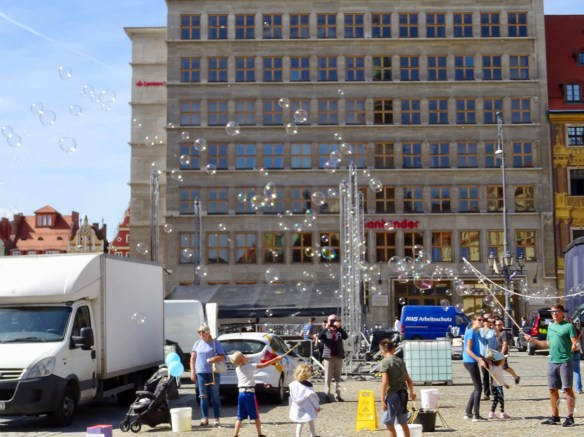
 I wish I knew the recipe for the bubble mixture this guy was using! He made hundreds of bubbles at a time with his string between two sticks. Kids had such fun chasing all the bubbles.
 We found quite a few more of these little fellows, on doorsteps, or tucked into corners.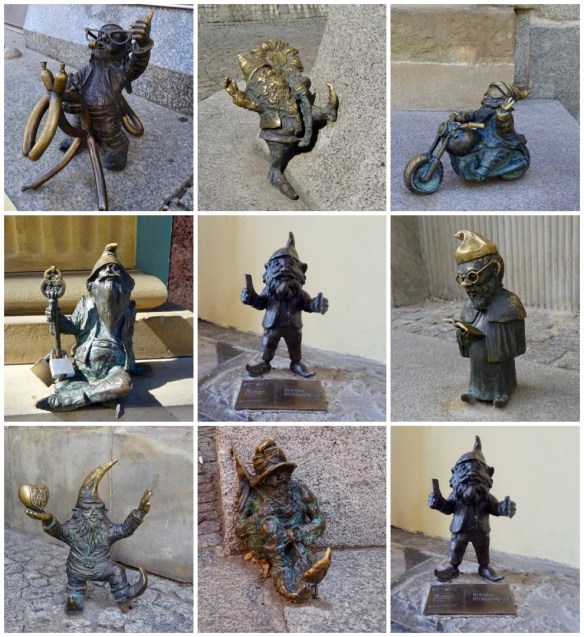
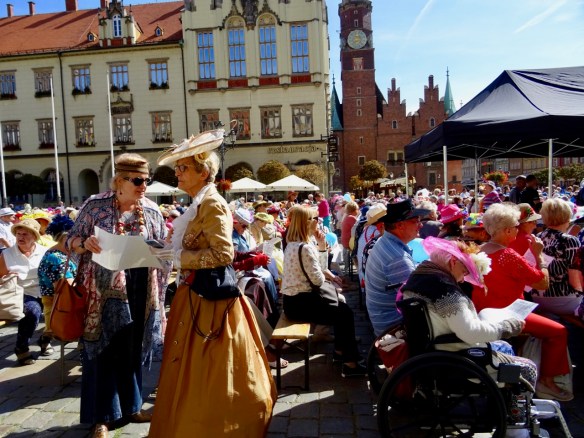
 The two little houses in the corner called Hansel and Gretel are the only two houses left of streets that used to surround a cemetery. The cemetery closed in 1773. I wonder where the graves went?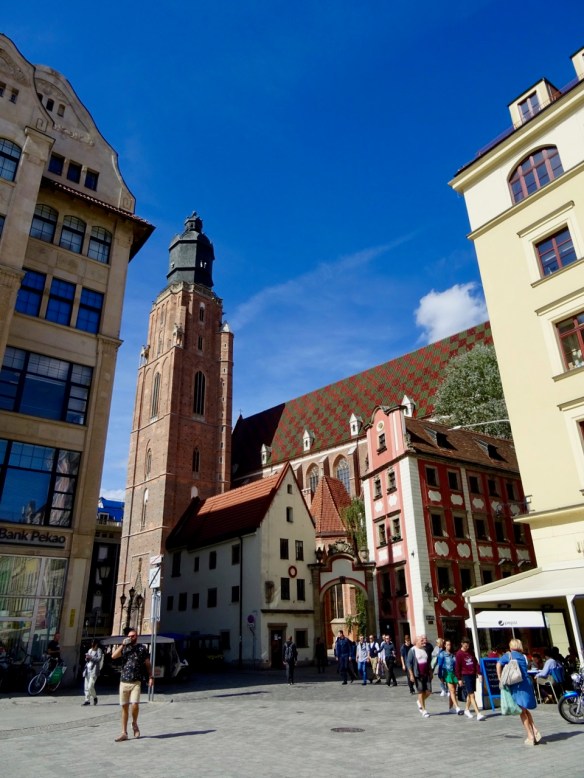
 and more busy gnomes.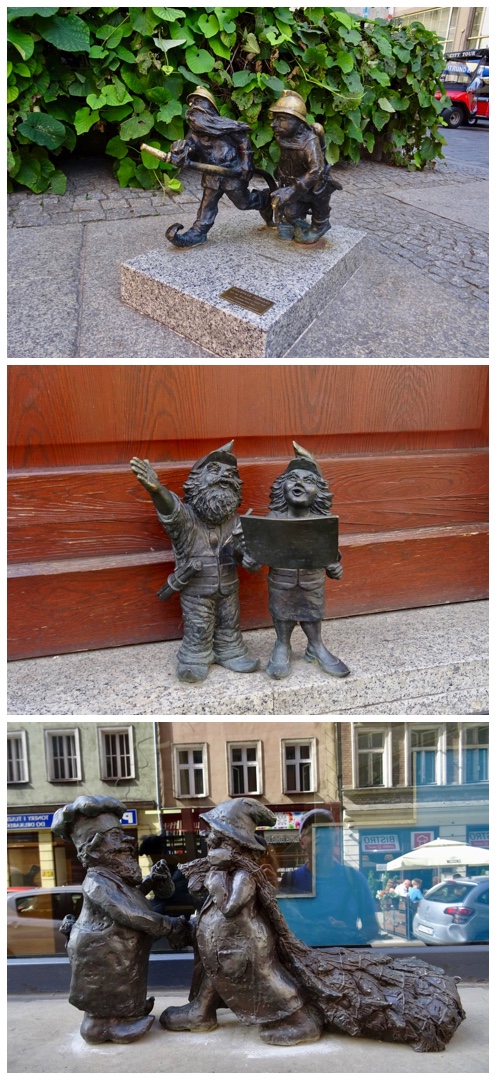
 and an interesting collection of artifacts. This is a chart for determining eye colour.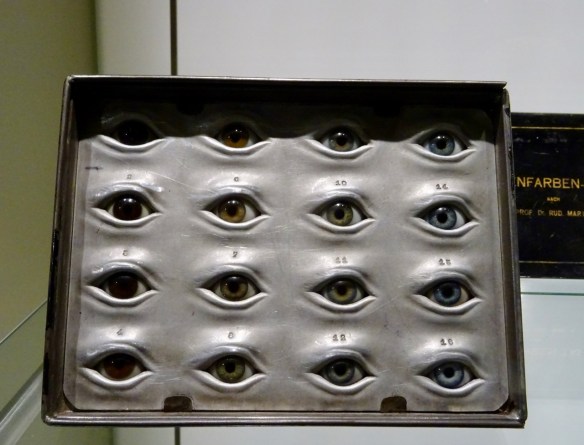
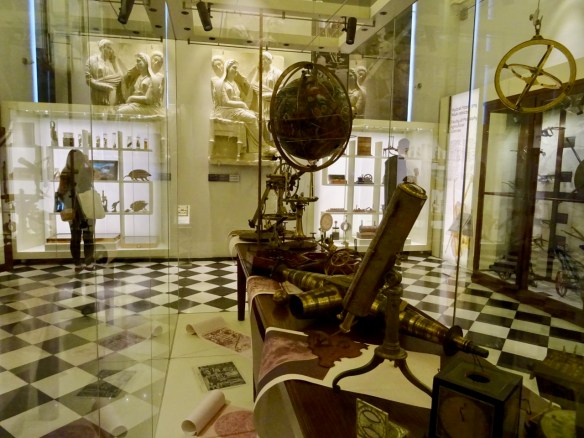
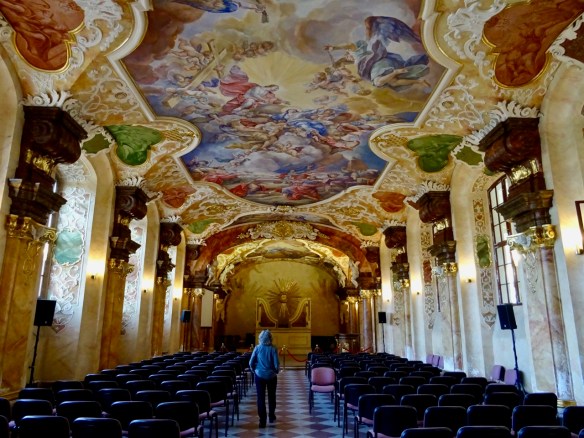
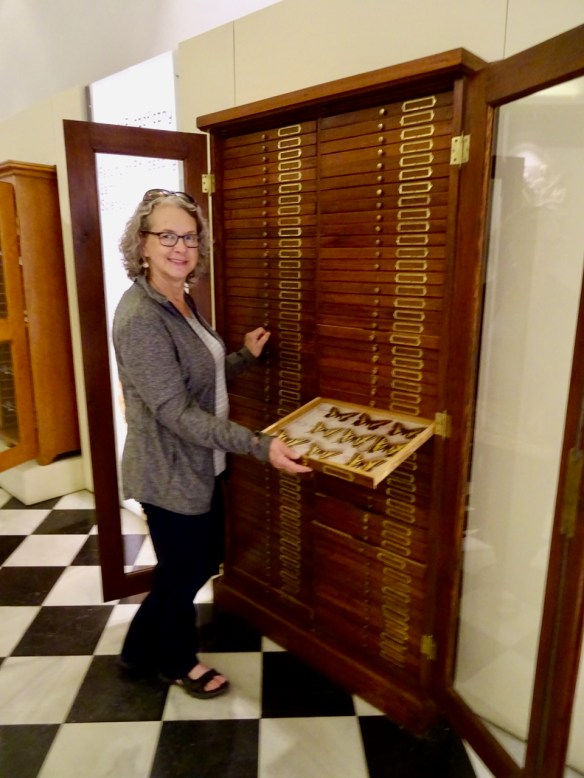 The Music Hall is under restoration but we are allowed a peak inside.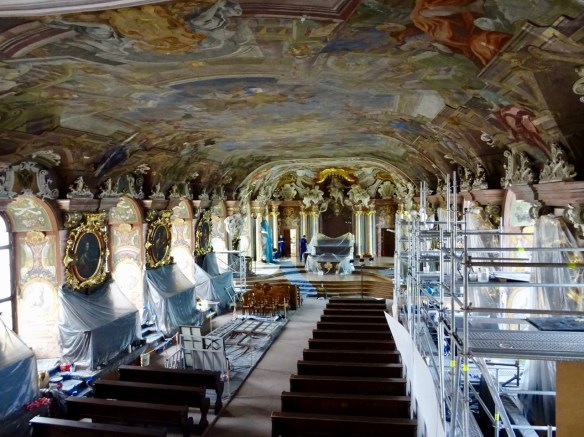
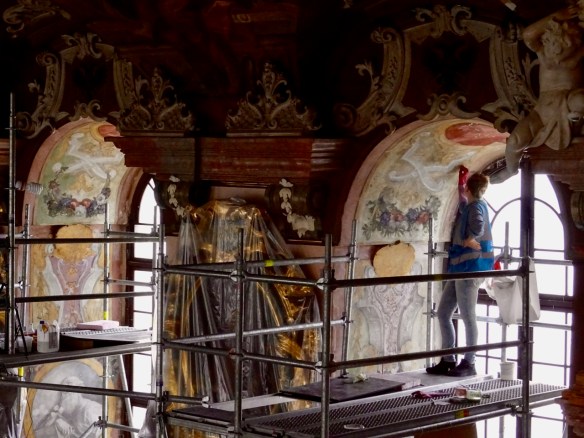 We. climb another 203 steps up the Math tower, which has displays along the way.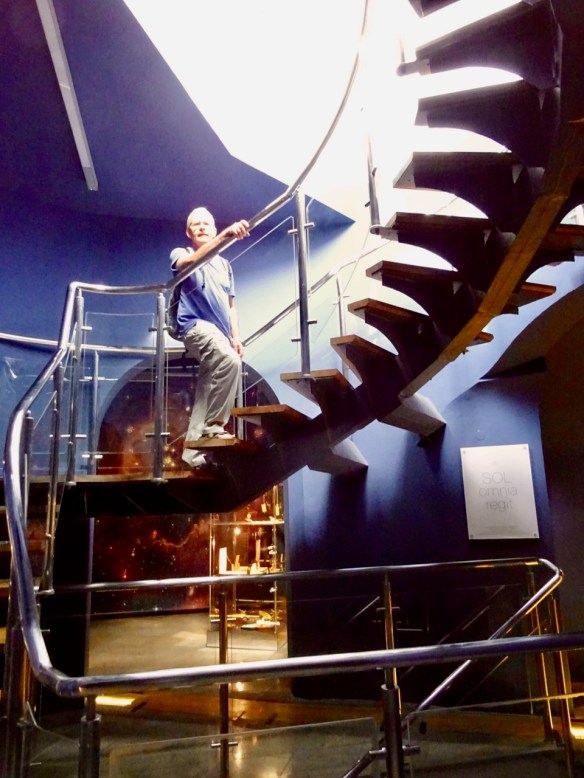
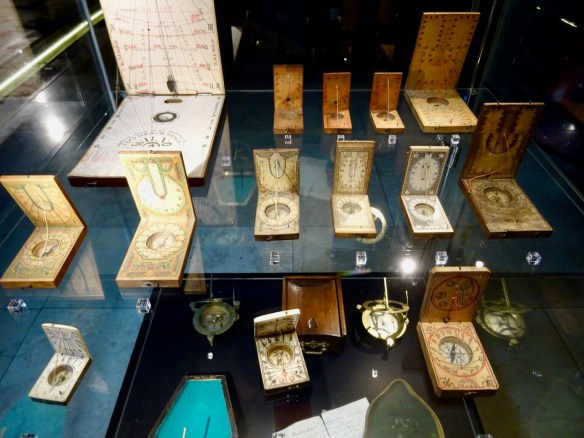
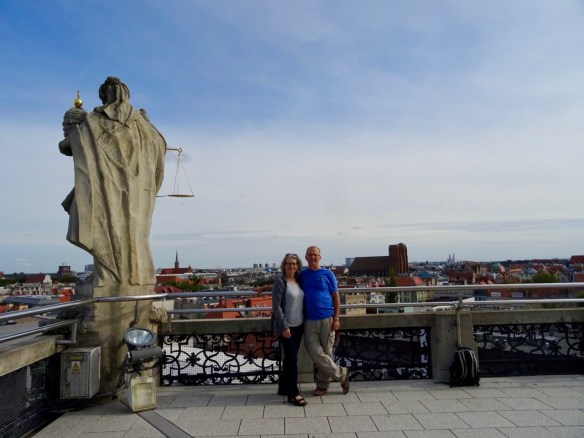 and the views. Notice the very modern looking tower among the old.
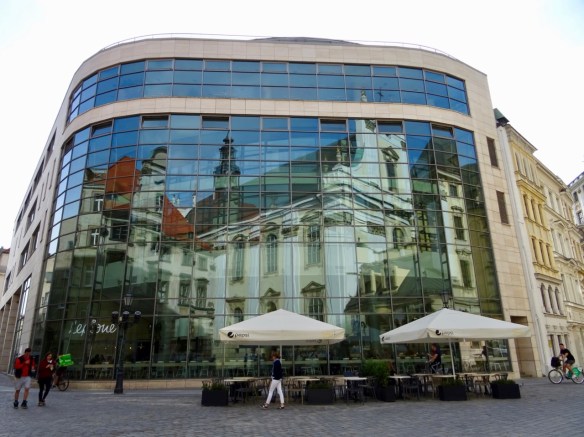
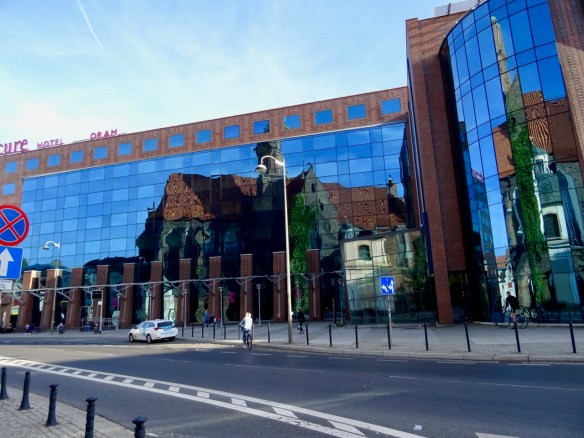
 I just love all the reflections of the old buildings in the glass walls of the modern new buildings!
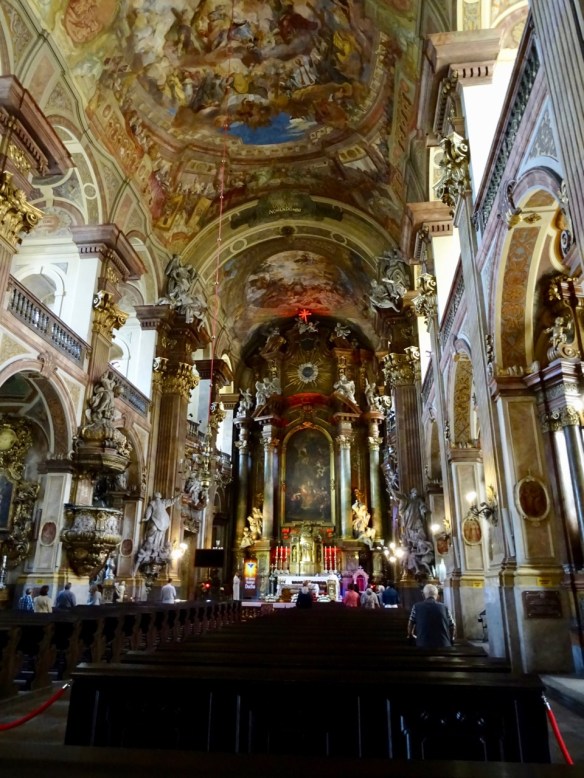
 Churches here are either very ornate…
 or look like this. The late afternoon sun was shining through the windows casting everything in a lovely olden glow.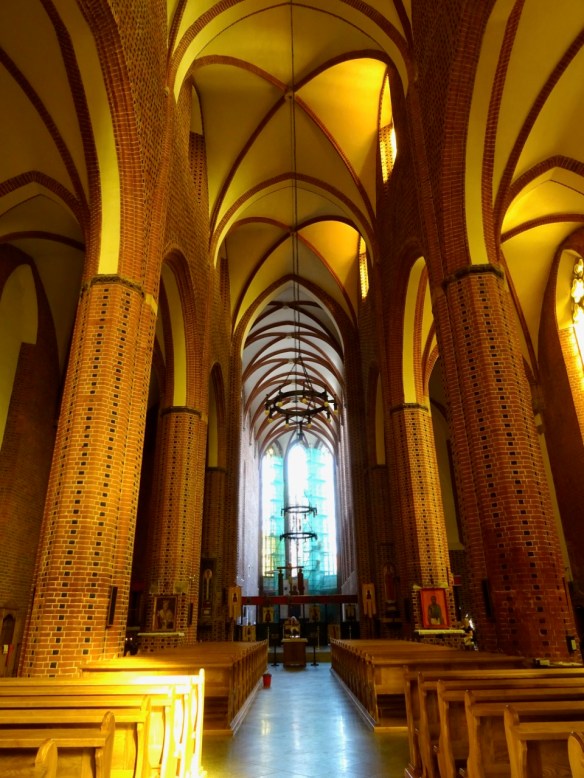
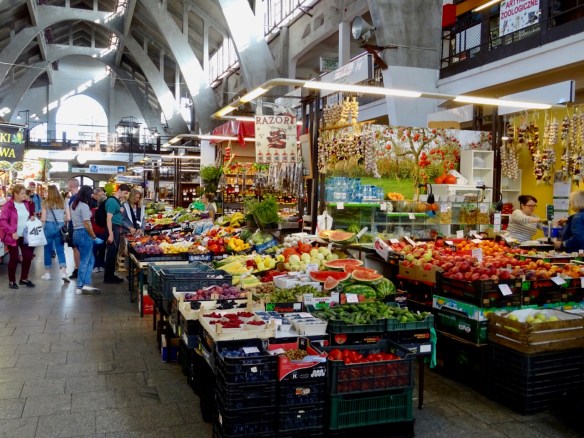
 Then we visit the market and buy some fruit. Food prices are very reasonable here.
 More reflections.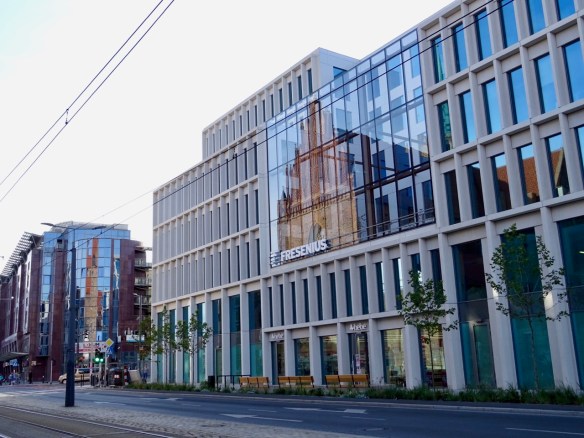
 We catch a trolley bus home. We haven’t seem many paved streets or sidewalks here. Most of the streets and sidewalks here are cobbled in one fashion or another. All the uneven footing is hard on the feet and ankles. We walked 16,700 steps today and climbed the equivalent of 31 floors!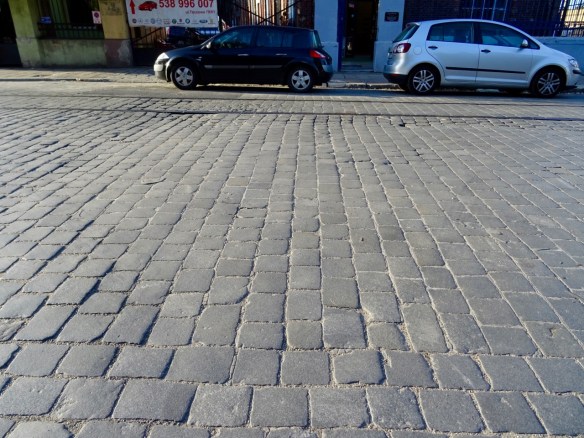
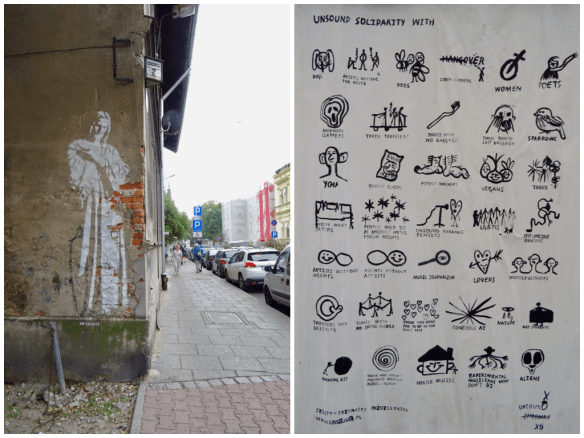
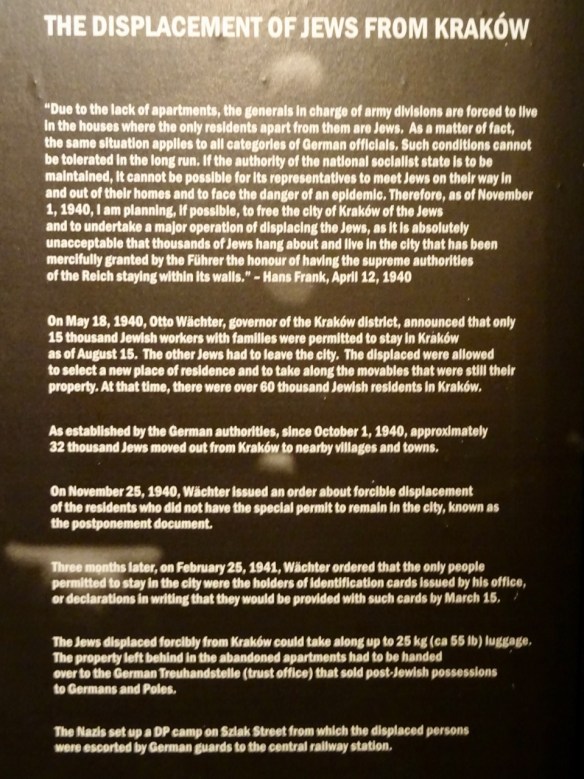 Jewish people were hung along the train tracks for all to see.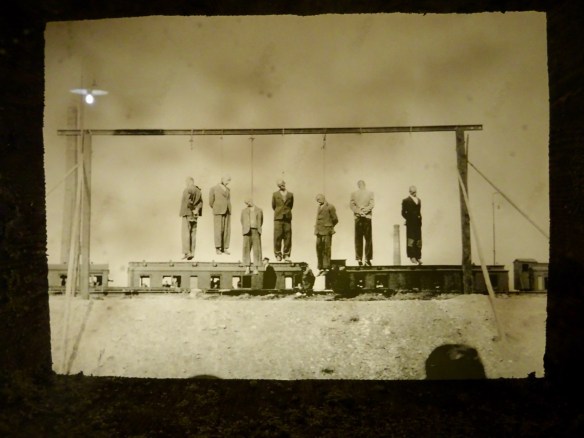
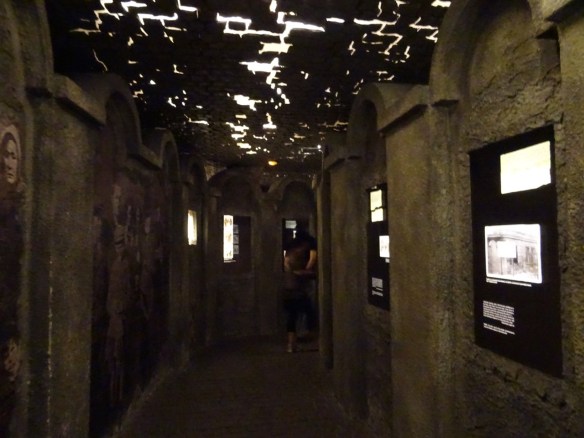
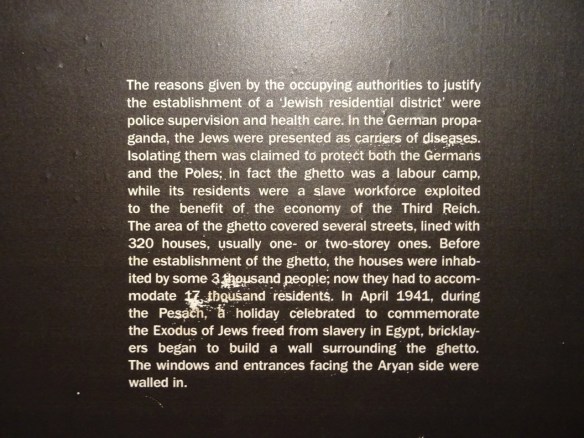 Walking through this dark exhibit about the wall around the ghetto.
 It was thought that starving the Jewish people was an effective way to weaken and destroy the morale of the Jewish population, especially the young people.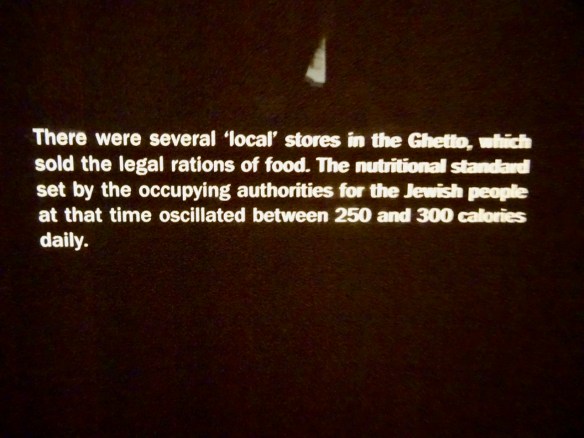
 The corridors are covered in articles and photographs. There is so much to see and read.
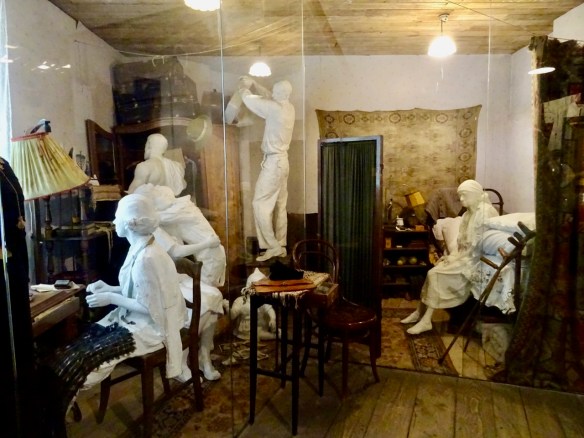
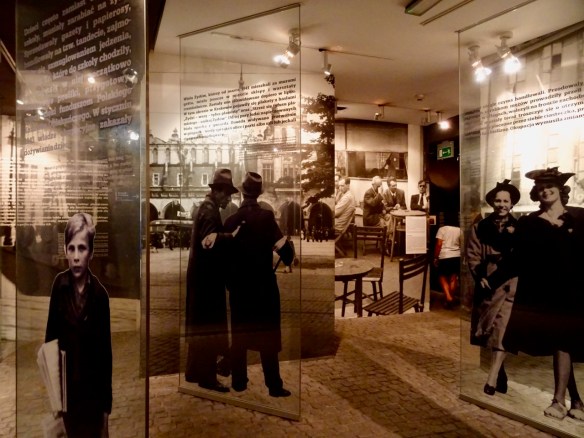
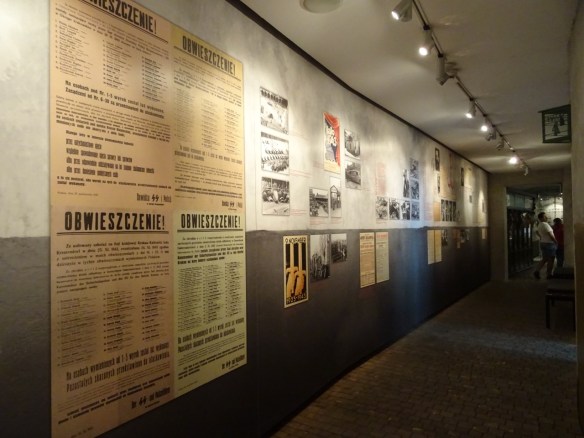 More exhibits, this one of everyday life in Nazi occupied Krakow. …notice the armband that Jewish people had to wear so they could be identified as Jews.
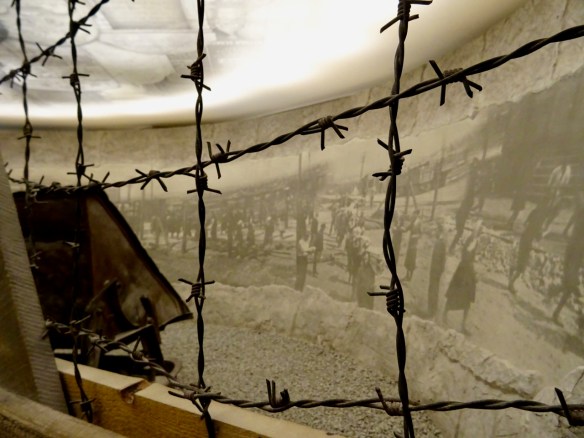
 One of the camps.
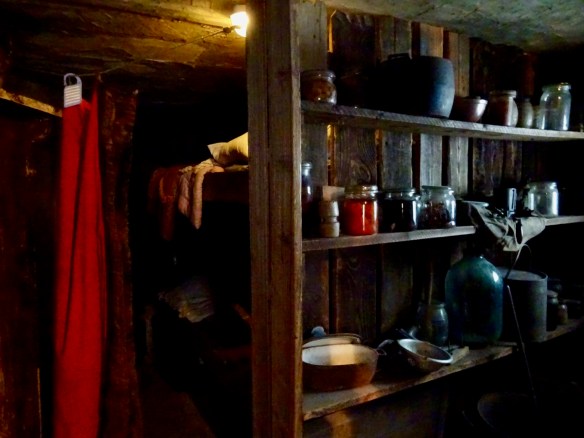
 A hiding place in the cellar of a house in Krakow. Even though it meant death for anyone found helping a Jew, by hiding them or even offering food or assistance of any kind. many of the Polish people did exactly that.
  Oskar Schindler was one of these people. He really wasn’t a man of great character, he lied, cheated and stole what he could, but he was instrumental in saving the lives of 1200 Jews. He also treated the Jews working at his factory better than in any other factory or work camp. There are videos of survivors talking about their experiences during this time.
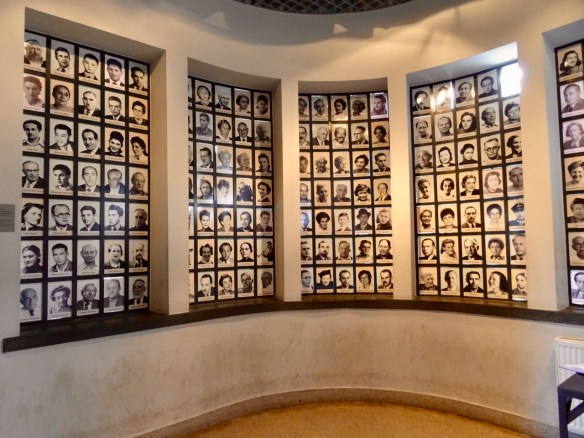
  Some of the people that were saved by Oskar Schindler. Two of the survivors became doctors and one became a Supreme Court judge. Everything in this museum is difficult to watch and listen to, but we need to know and remember what happened. I have heard it said that we need to do this so history will never be repeated, but I wonder. There is so much hatred and racism in the world today that I can no longer believe that something like this will never happen again. It is frightening wondering what the future will bring.
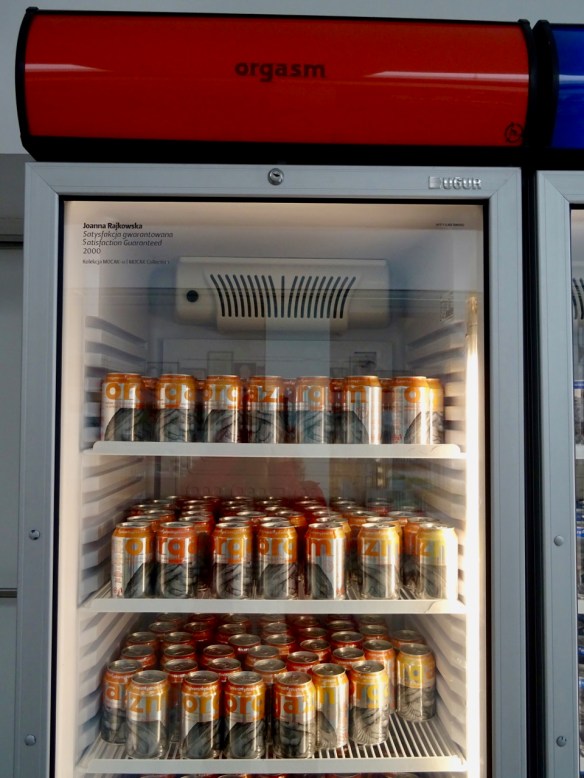
 We stop for tea at the Modern Art Museum cafe. It gives us a chance to recover form the heavy content of the Schindler Museum. On the way out I notice this vending machine. Notice the name of the drink it dispenses.
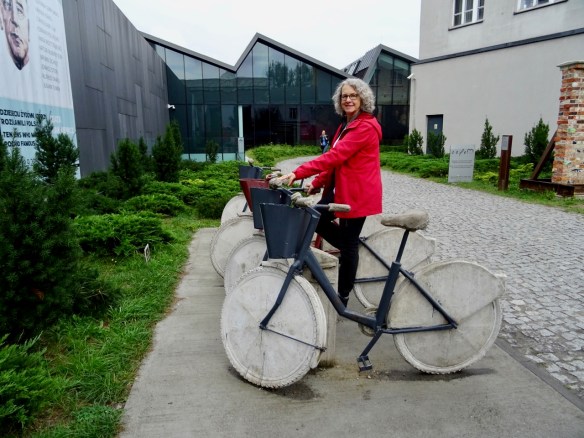
  I try out the cement bicycles…
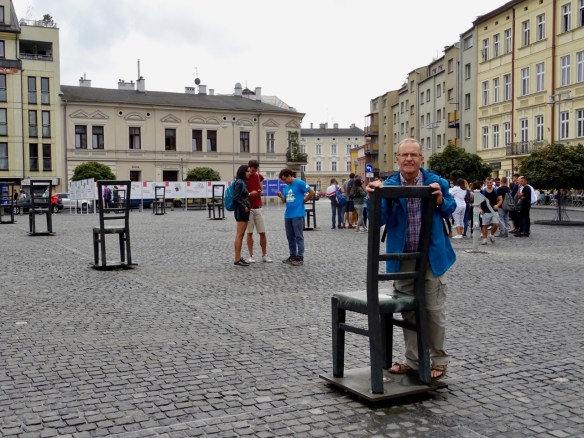
 and Bob checks out an installation in a town square.
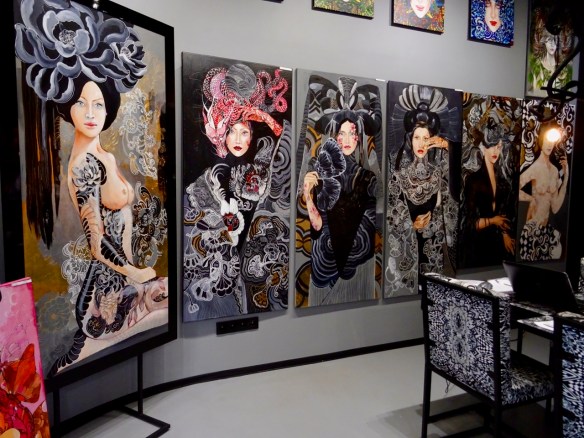
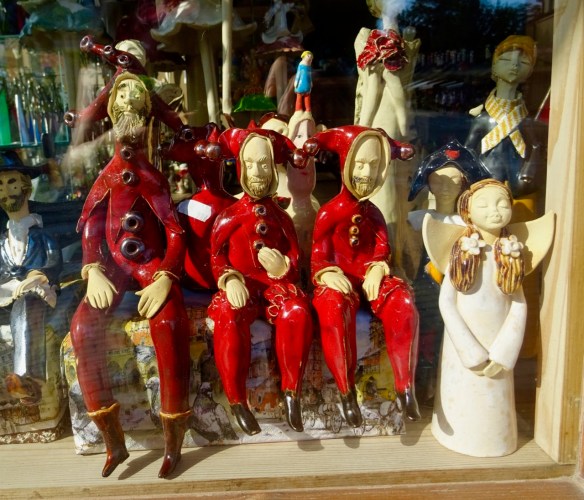
  Interesting artwork in one of the shops we pass.
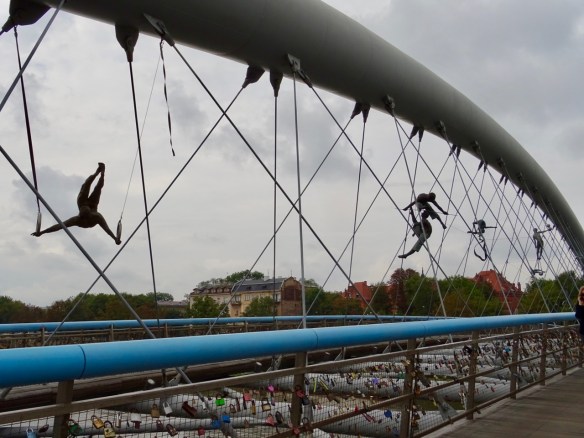
 We cross this pedestrian bridge over the river and we cannot decide how these sculpture stay right upright. They appear to be balancing on cables with no support wires yet somehow manage to stay right side up. We just can’t figure it out.
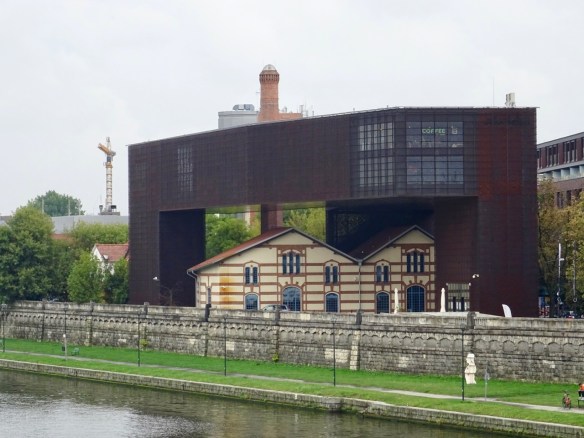
 Here is an interesting way to keep an old building while erecting a new modern one!
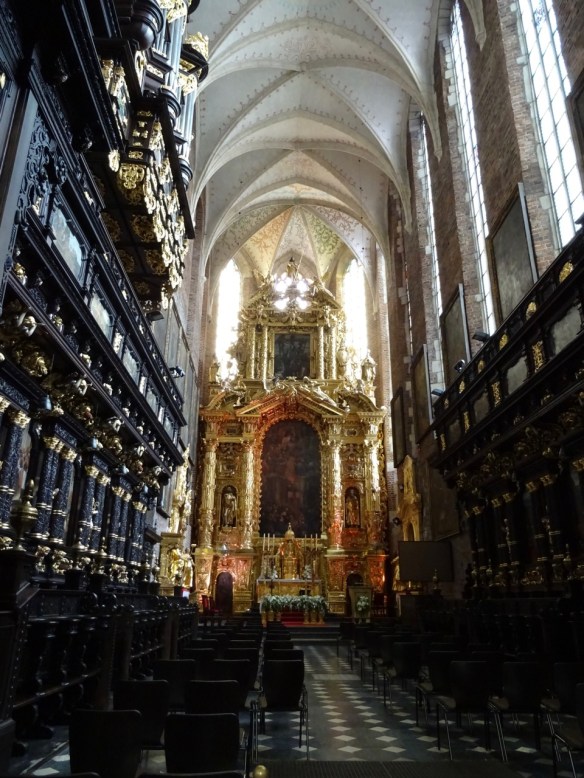
  We stop in at a basilica near the old town which has a very impressive altar. I wonder if it is real gold on all these altars? OK, just did a bit of research and it appears that real gold foil is used.
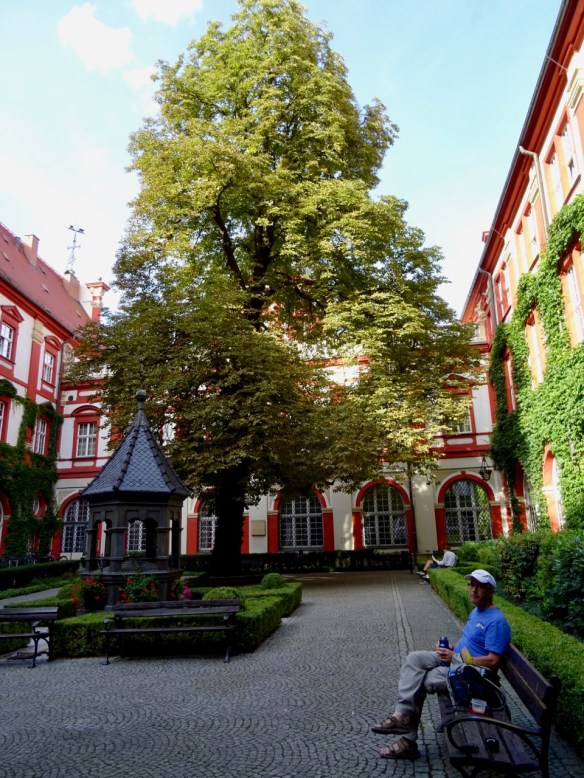
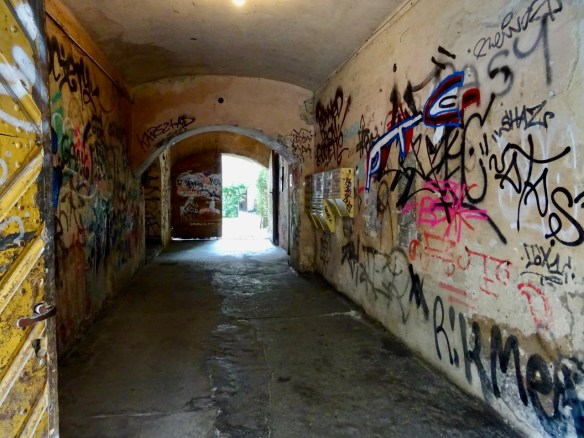
 I always peak into open doorways. They are often not very attractive doors but they sometimes open on beautiful interior courtyards and gardens.
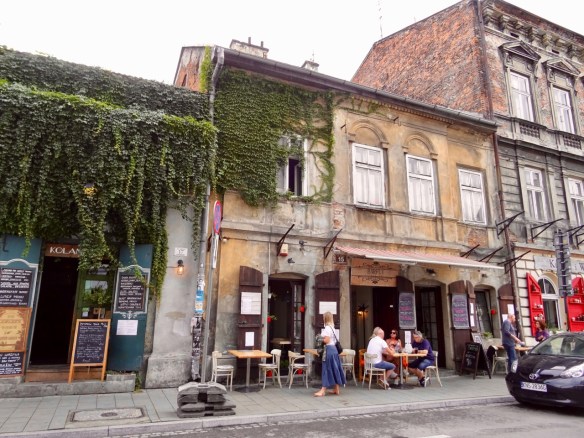
 A typical street side restaurant on our walk back to our apartment.
 More street art on the way home.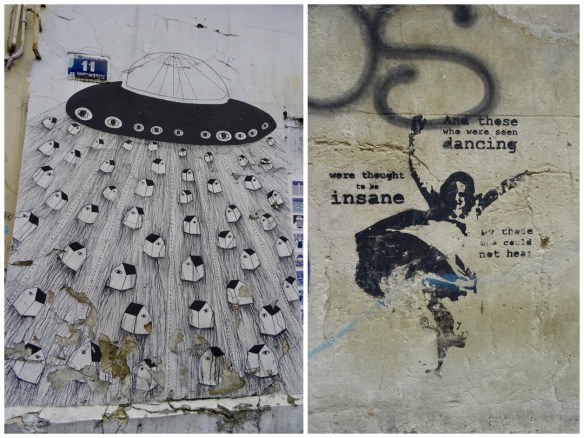
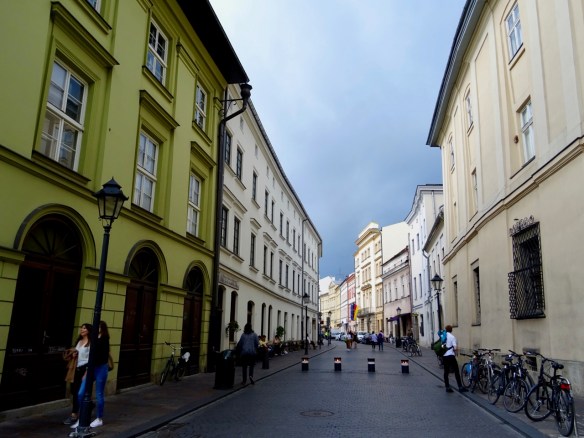 This church has one of the most impressive altars in all of Poland but there is a service happening so we are not allowed in.
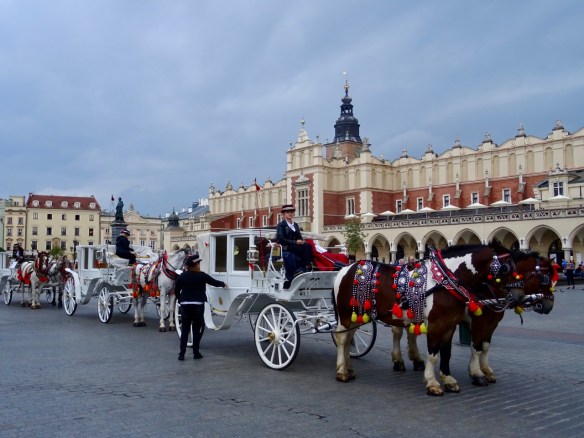
 There are lots of horse drawn carriages for hire. I was tempted but it really felt like the rain was coming.
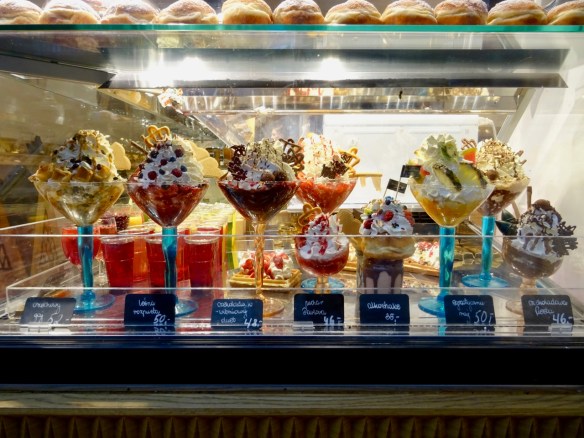
 These are enormous, about a foot high and cost between $14 and $20 each!
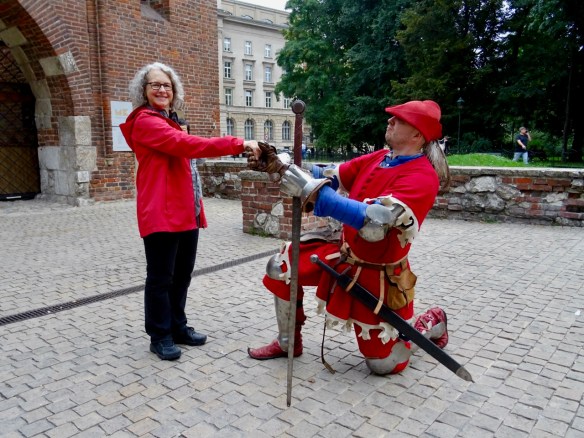
 This guy tried to challenge Bob to a fight, but no luck, so…
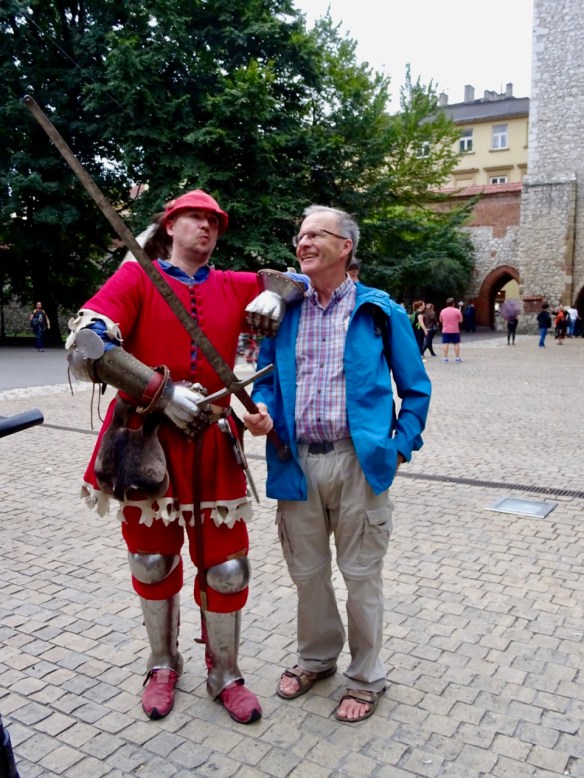 He tried to win me over!
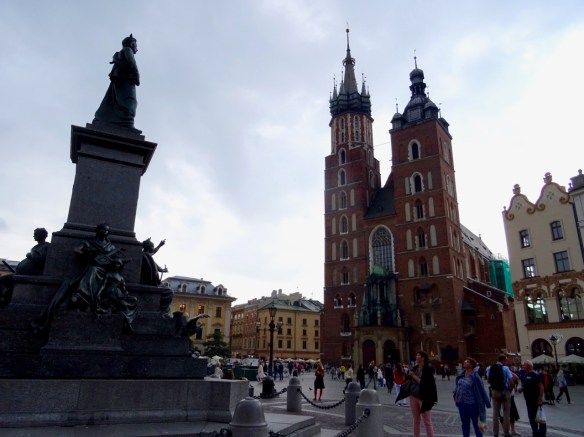
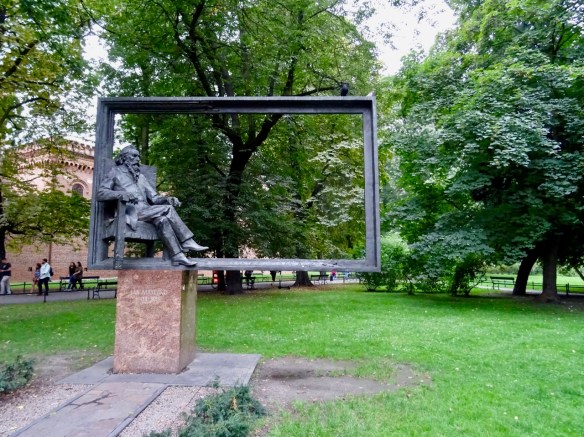
  An interesting sculpture of Jan Matejko who was a 19th-century painter native to Kraków. He is renowned for his large oil-on-canvas paintings of historical events in Poland.
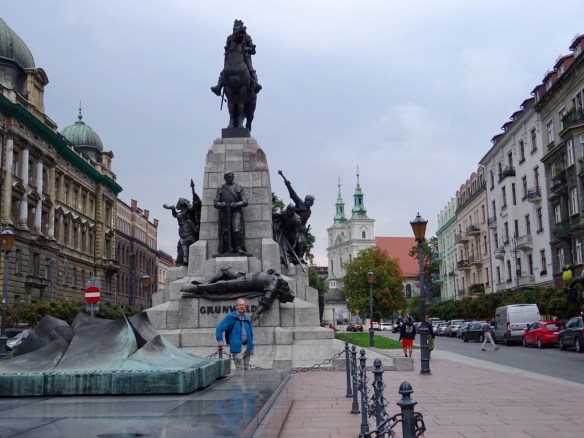
  This street leads towards the train station with its huge attached shopping mall.
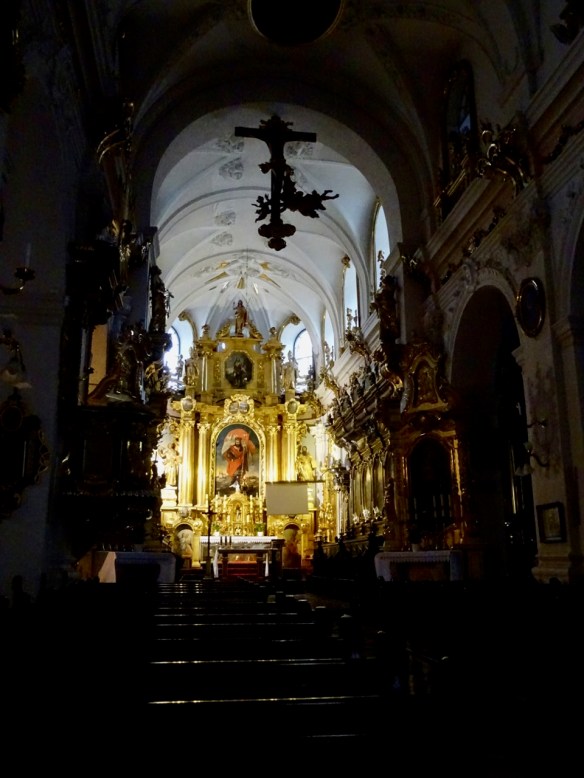
 One more church on the street just before the train station. It was dark inside except for the light shining on the altar.
 A typical building in Krakow old town…
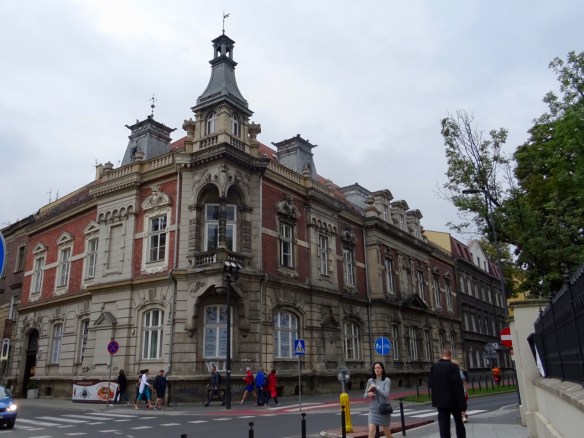 Juxtaposed with the interior of the train station shopping areas. It is huge, three floors with hundreds of very modern shops.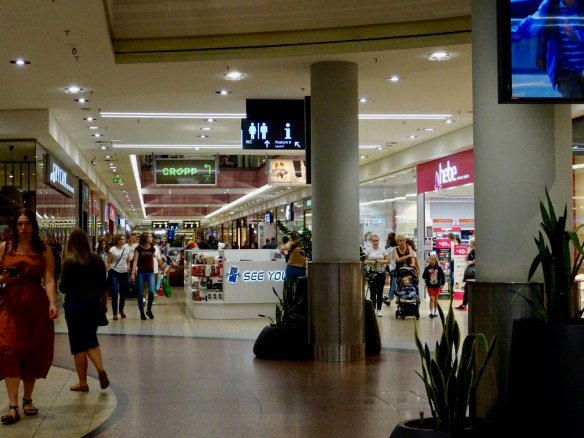
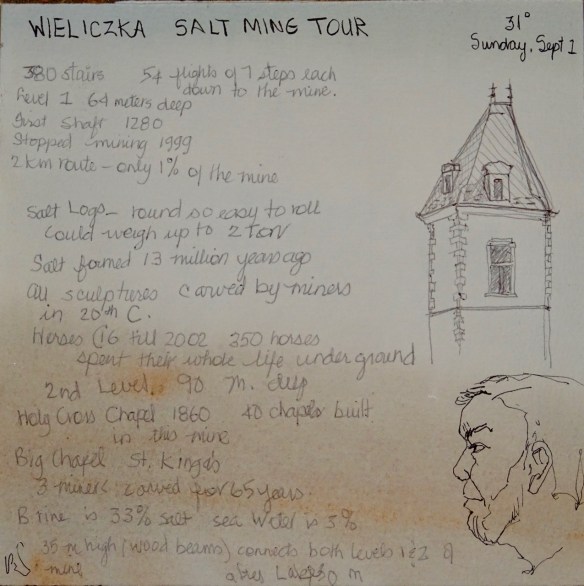
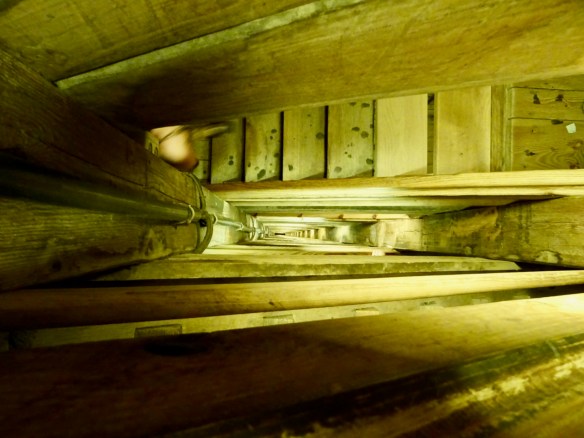 There are dioramas showing some of the old mining techniques and machinery. These men are lifting ‘salt logs’ which weighed between 200 kg and 2 tonnes. The first shaft was sunk in 1280 and salt is still mined here today. The salt was formed 13 million years ago by an inland sea.
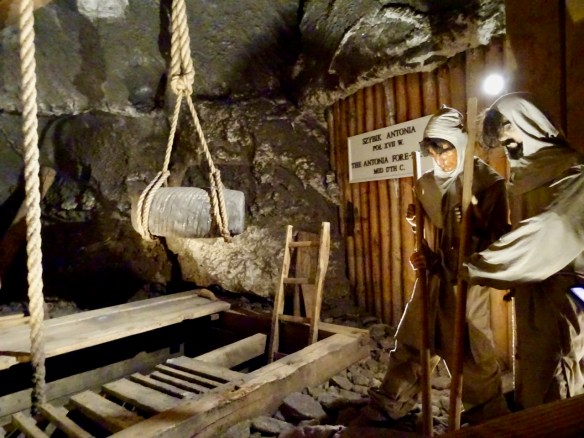 The salt preserves the logs that are used for reinforcement. These are newer ones but we see others that are hundreds of years old.
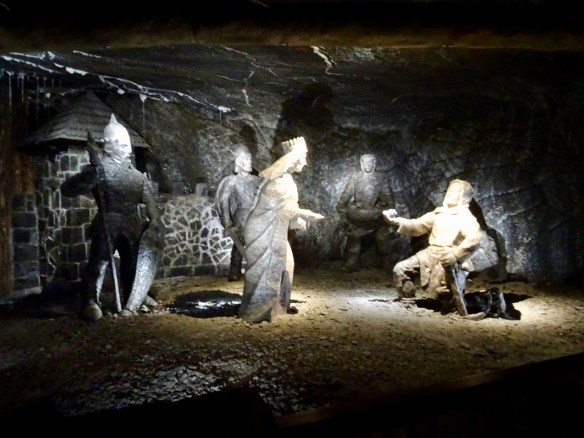
 These sculptures are carved out of salt by the miners in the 20th century. These figures illustrate the legend of how the salt mines were discovered in Poland.
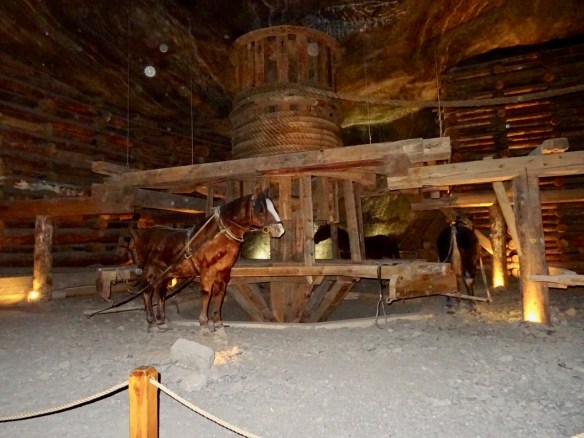
 Horses were used in the mines from the 16th century until 2002. Up to 350 horses worked and spent their whole lives underground. Interestingly, they did not go blind being in the darkness most of their lives.
 These horses operated a machine that moved the salt logs from one level to another. There are nine levels and 2 km of shafts and tunnels but we only visit about 1% of the mine.
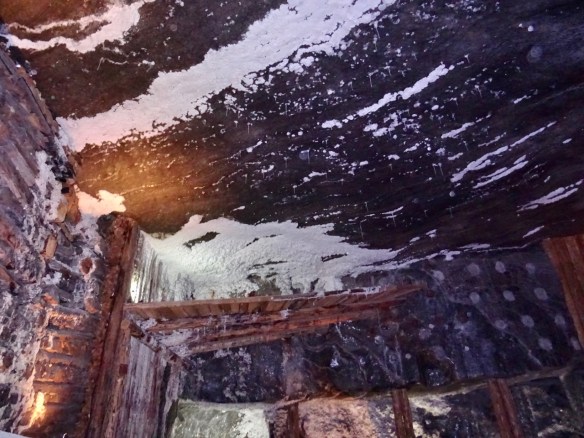
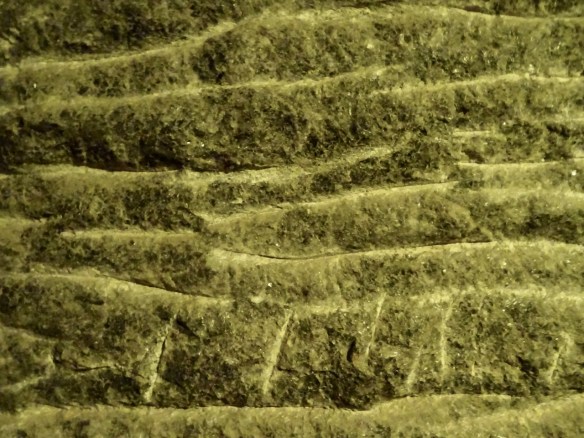
 There are white seams of almost pure salt in some places. Most of the salt mined was between 80-90% pure.
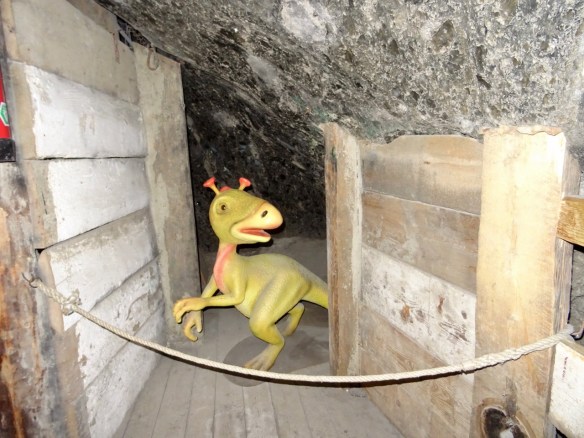
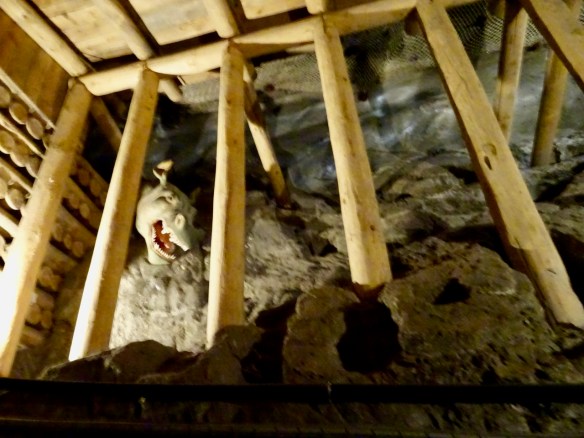
  There are some strange creatures living in this mine.
 Stairs go down and down and down…there are 800 steps that we descend in all!
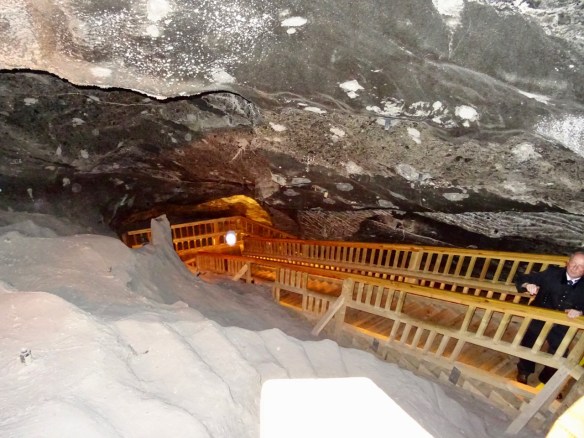 Apparently gnomes make good miners!
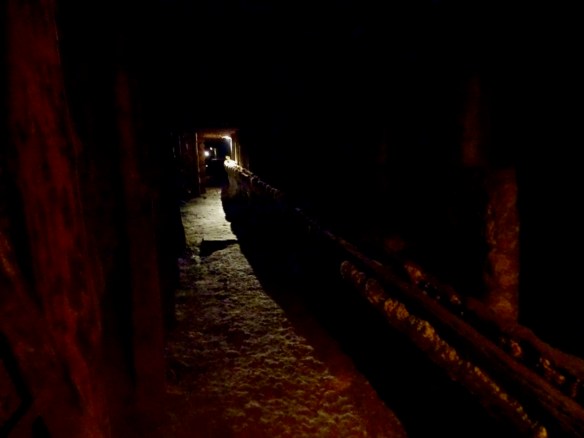
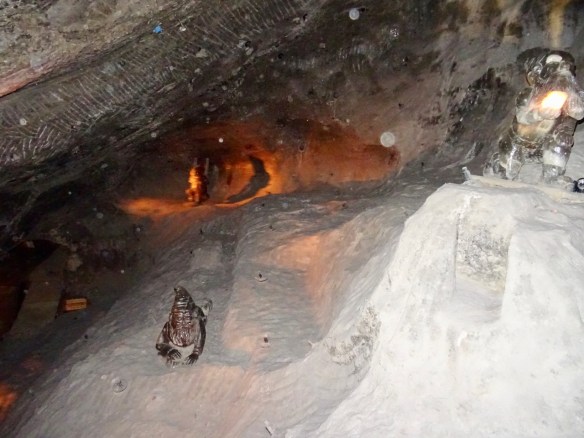 Looking down one of the long tunnels that we are not allowed to enter.
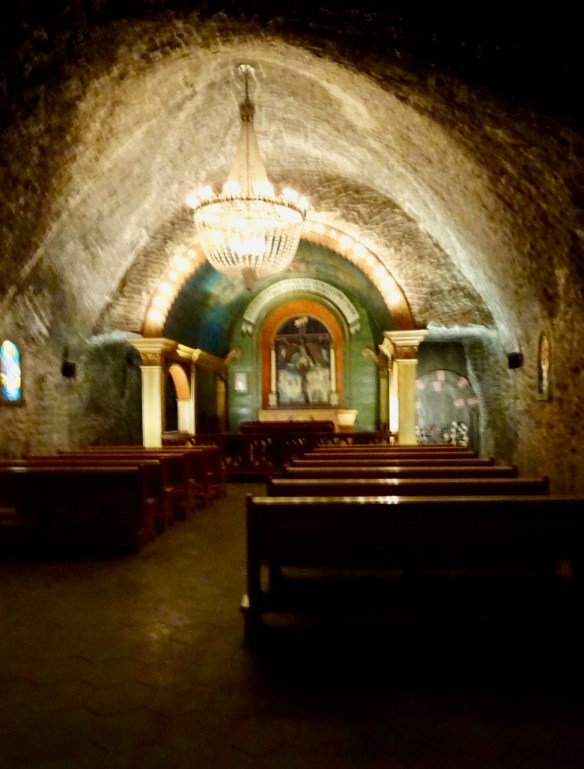
 Wow! This is St. Kinga’s Chapel. It is entirely constructed from the salt in the mine. Most of the stairs on our route are made of wood, but these two staircases we walk down are made of salt.
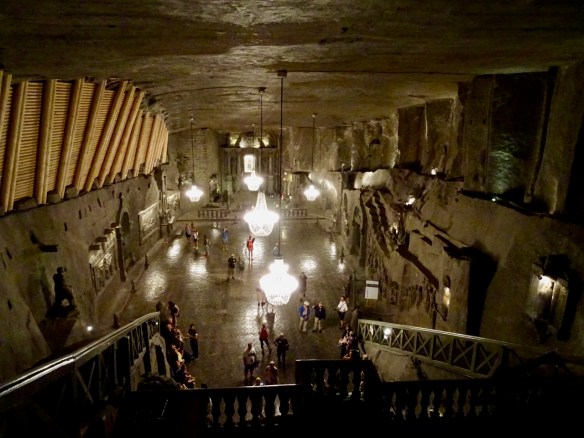 The miners built over
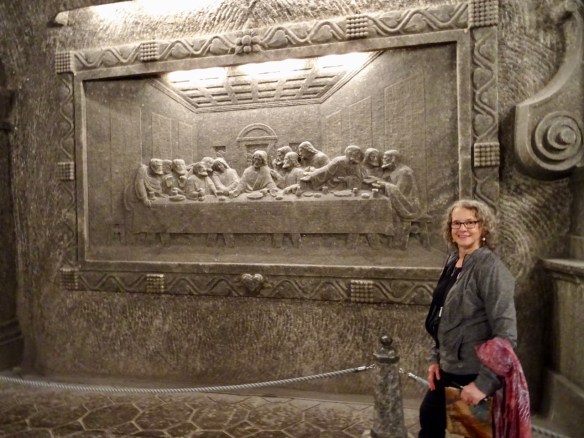 all the sculptures…
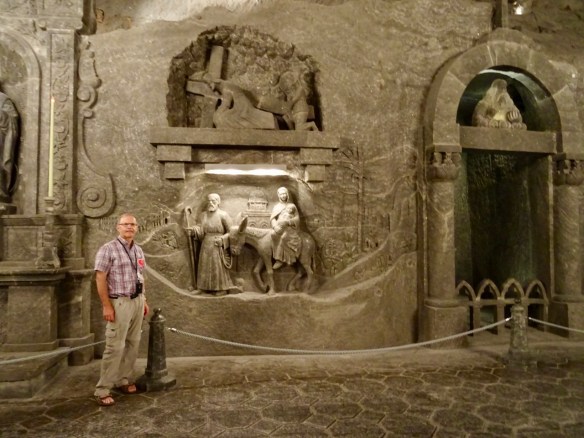 the main altar. Even the chandeliers are made of salt crystals!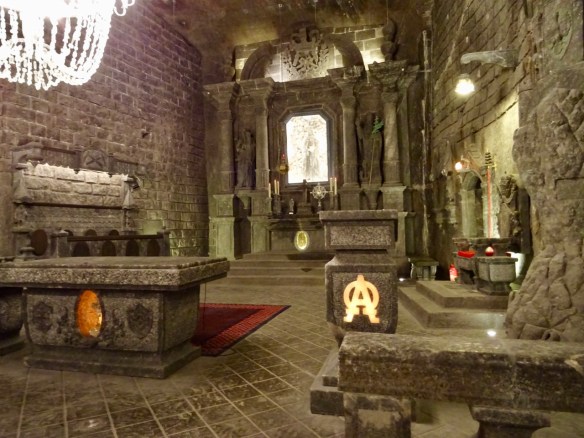
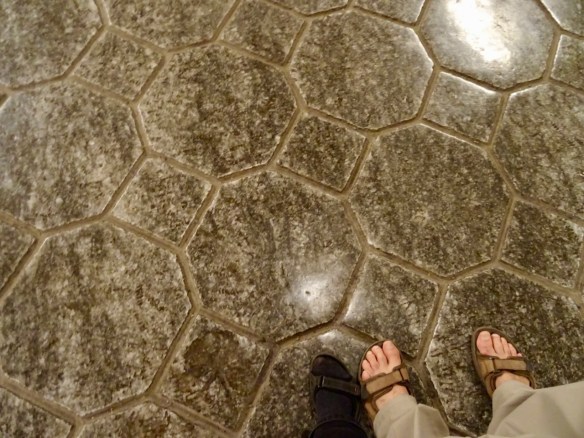
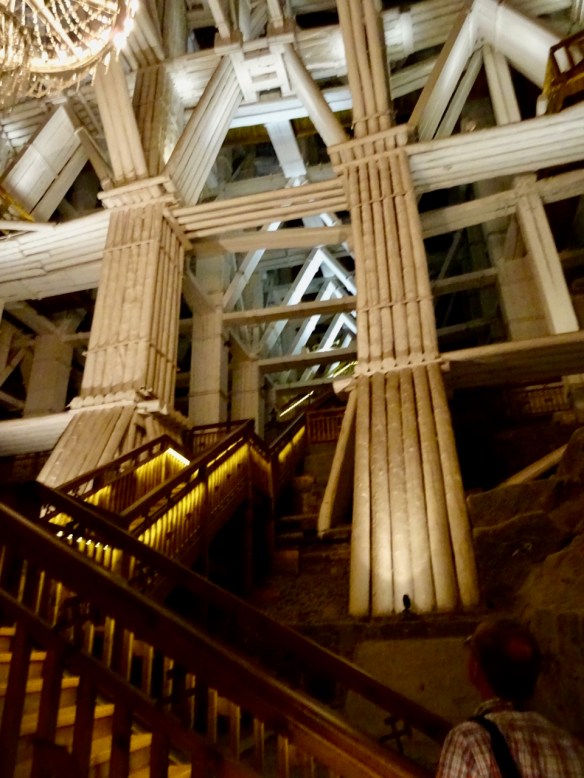
 This chamber connects the two levels of the mine and is 35 m. high. Because the roof is so high it needed to be strongly reinforced with all these high timbers.
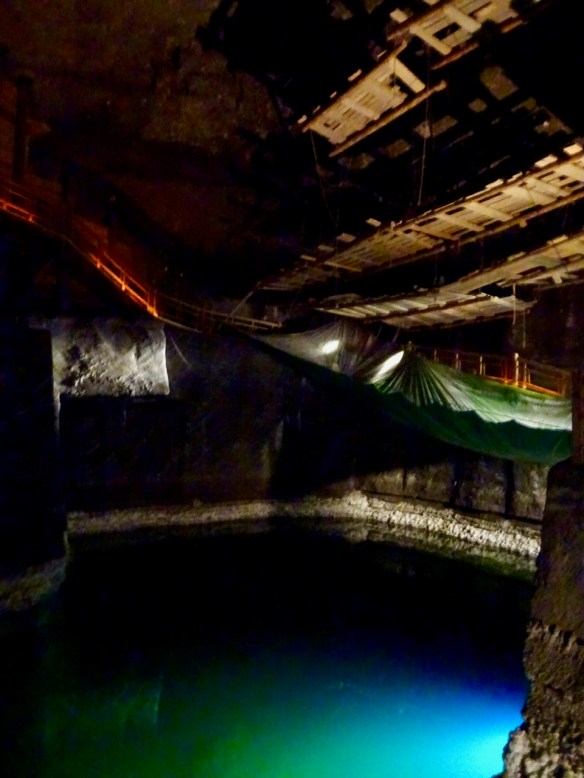
 Another underground brine lake. The water in these lakes is 33% salt. Ocean water is only 3% salt. Luckily we do not climb this set of stairs! They disappear in to the darkness at the top of this chamber.
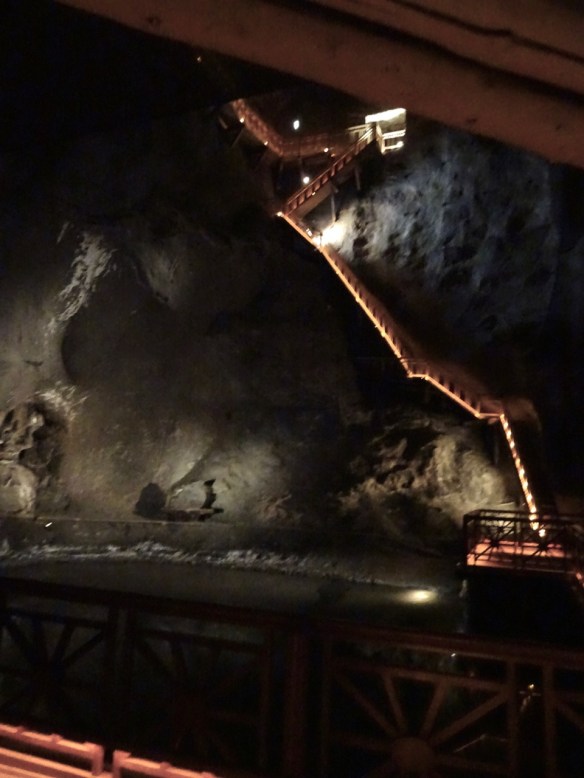 One of the many long tunnels we walk through.
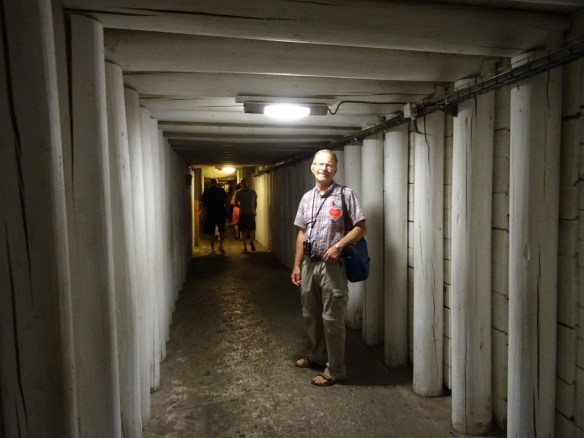 At one time visitors rode boats through this part of the mine and were treated to a fireworks display 90 meters underground! Today the mine has over 1.5 million visitors a year so it is impossible to still offer this experience.
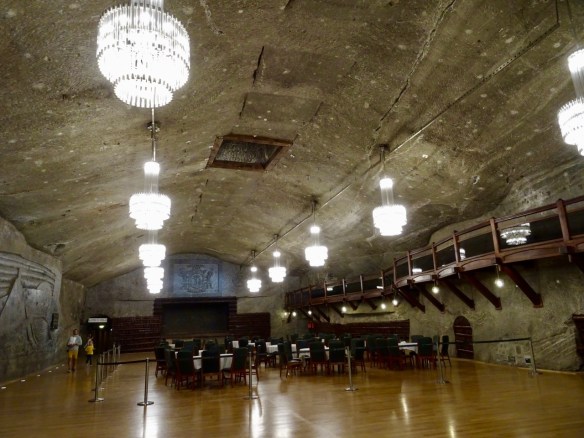
 There is an underground banquet hall and restaurant.
 Another of the chapels we visited.
 A close up of the mine walls. We were invited to lick the walls, and taste the salt. We only licked our fingers and then touched the wall so we could taste the salt. I didn’t relish the thought of actually licking the walls!
 This enormous chamber is 135 meters below ground on the third of nine levels. The entire mine occupies about a 5 km x 5 km area. The ceiling here is 36 meters high and a Guinness World record was set here for an underground hot air balloon flight!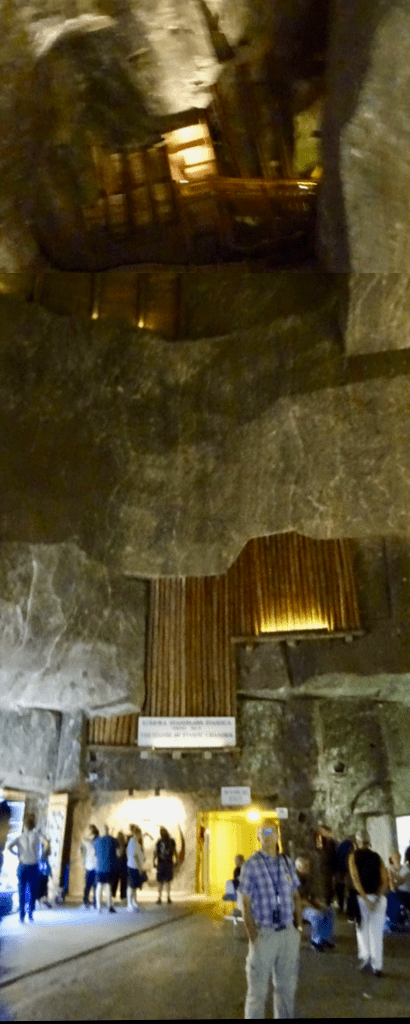
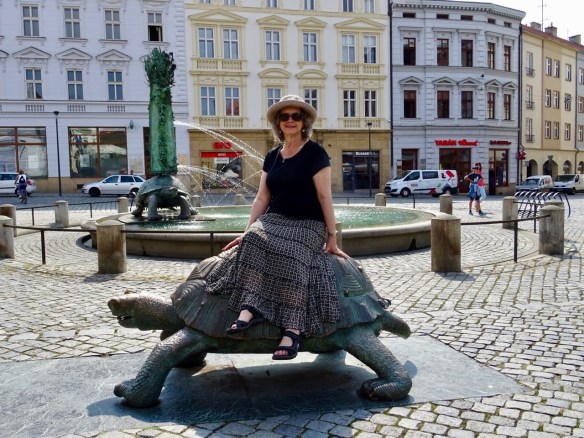
 Doesn’t everyone want to ride on a turtle? I almost went right over backwards when I climbed on!
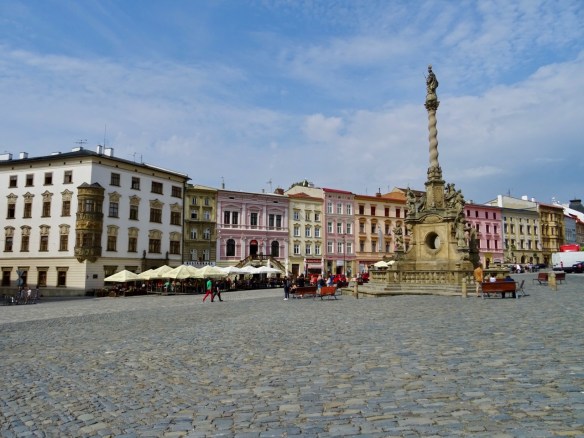
 The Holy Trinity Column dominates the town square. “The column is dominated by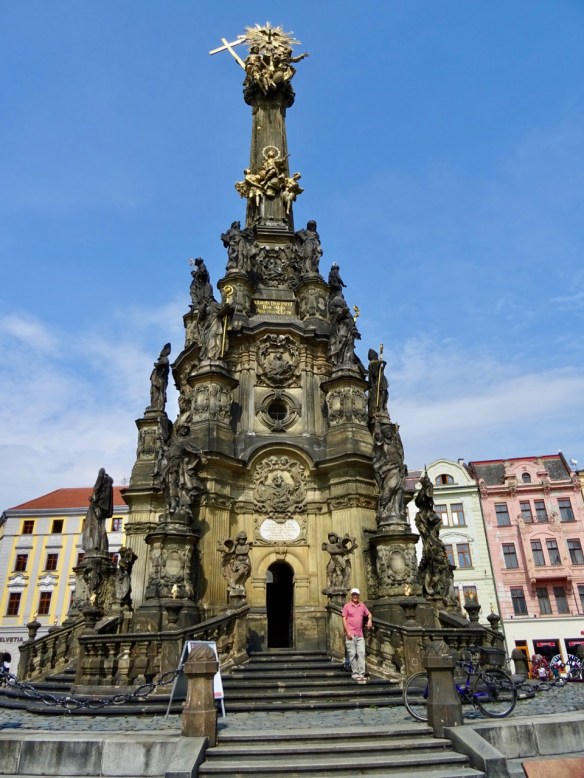
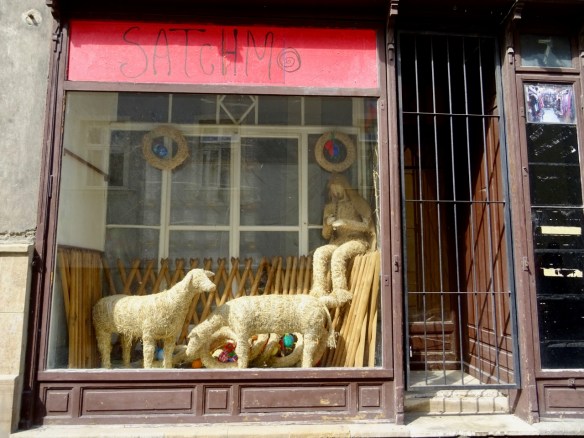
 We wonder what this shop sells? These figures were made out of straw. It was closed so we couldn’t go in to find out.
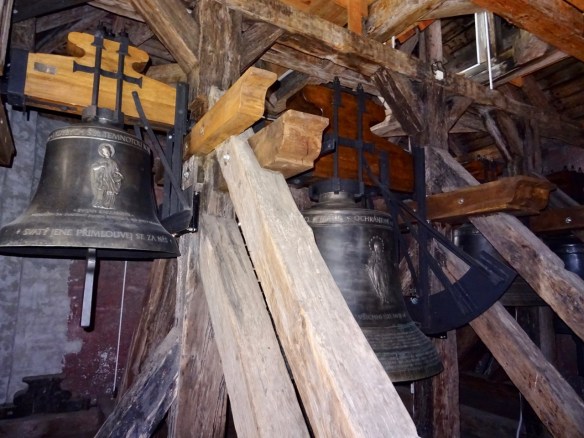
 We climb another bell tower in the Church of St. Michael just off the square. There wasn’t any place to see outside and get a view over the city, which was too bad.
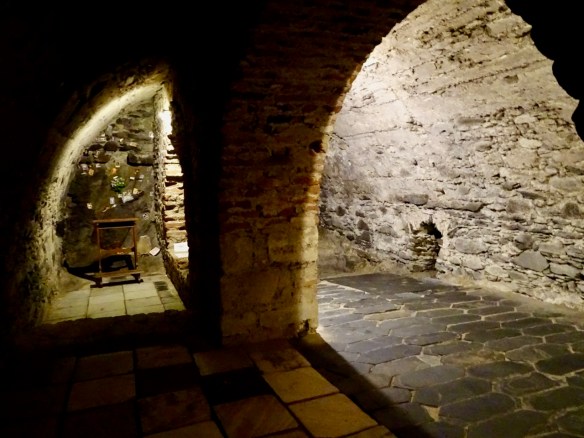
 The same church had steps to a crypt so we went to explore,..
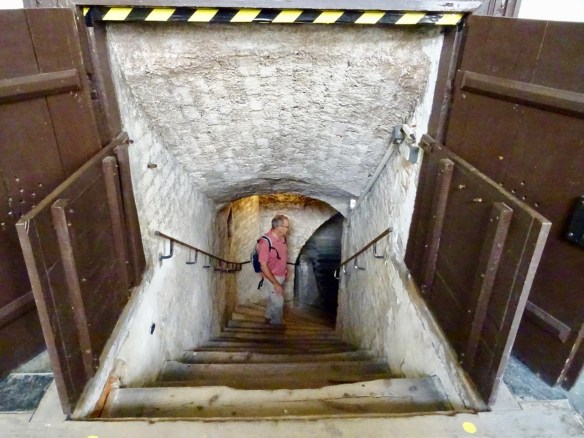 and we found this little shrine and a small pool of water.
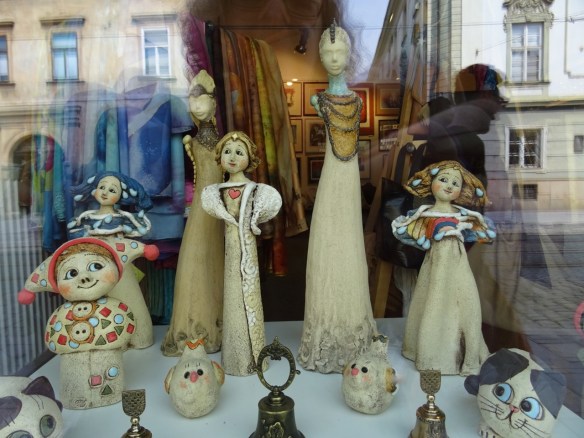
 These ladies caught my eye.
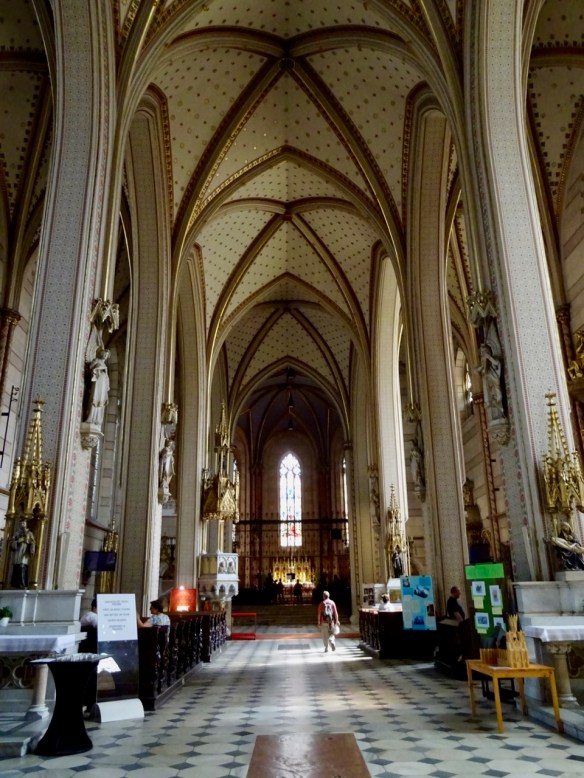
  St. Wenceslas Cathedral was originally built in 1131 and was rebuilt in the second half of the 13th century. The facade was renovated in 1999-2008. It is very impressive.
 Of course the interior is just as impressive.
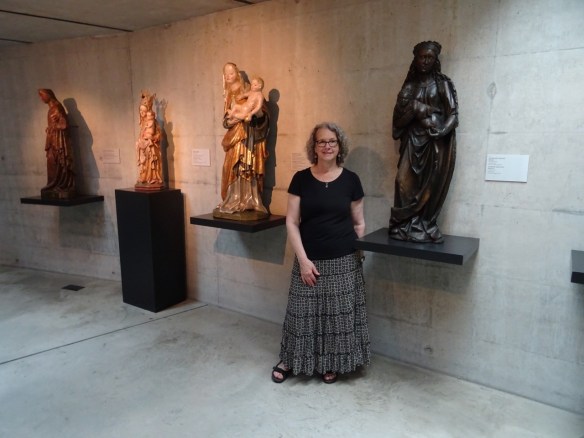
 We visit
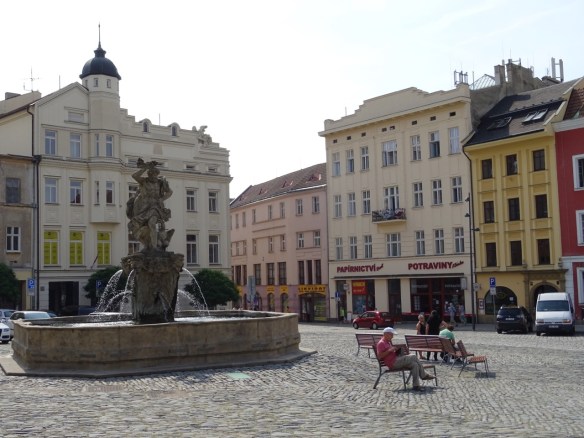
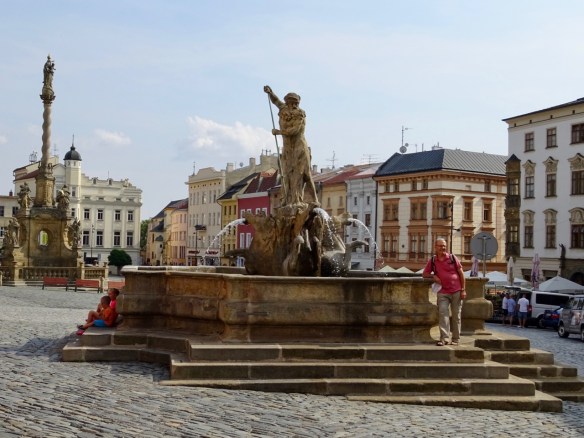
  More fountains in the town square as we make our way back to our car.
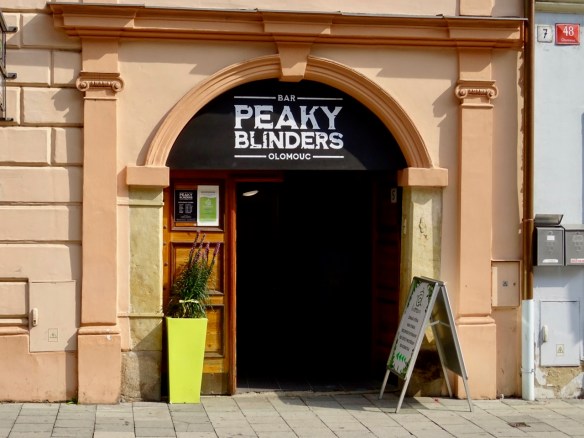
 This bar catches my eye. I am sure I know this name and look it up. Sure enough, it is the name of a show on Netflix about a gang in England in the early 1900’s.
 When we cross the border into Poland we are surprised that there is no indication that we were leaving one country and entering another. One of the interesting things about travelling is how different things are from home. Sometimes the differences are challenging and sometimes the differences make me smile. This is what I saw in the first bathroom I entered in Poland.
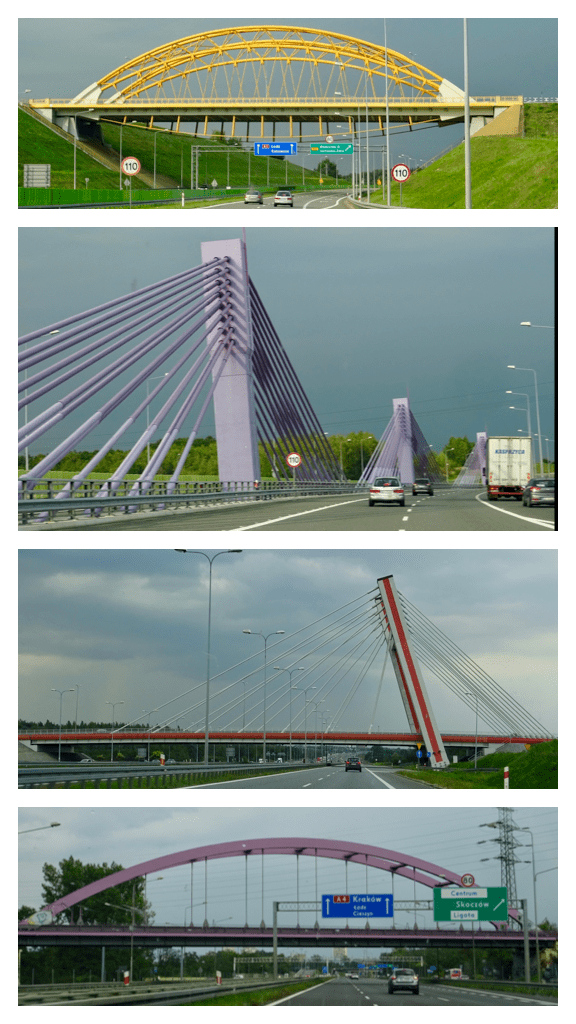 We were frustrated when our SIM card stops working once we cross the border. We were told it would work in all the countries we were visiting. We finally find a MacDonalds so we can contact our bnb host, who is waiting to hear from us. It is late when we finally make it to our new apartment, which wasn’t very easy to find in the dark, but we are here, and tomorrow will be a rest day for us.
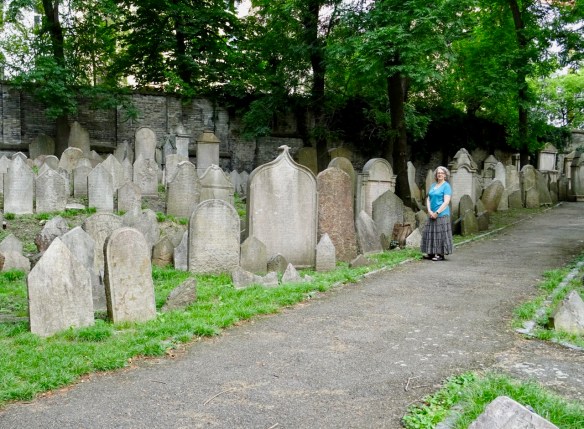
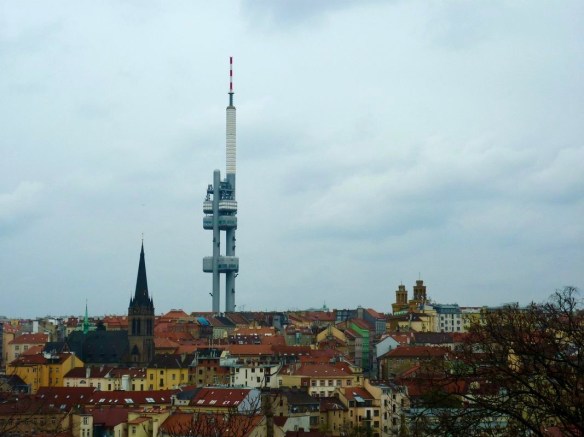 If you look down in the lower right corner you can just make out some of the headstones of the old Jewish Cemetery which located beneath all the trees in the bottom of this photo.
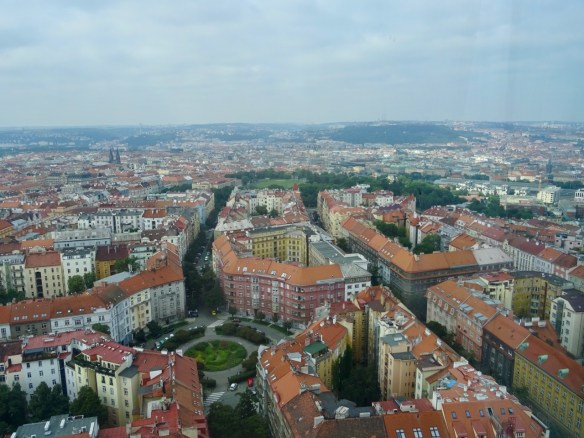
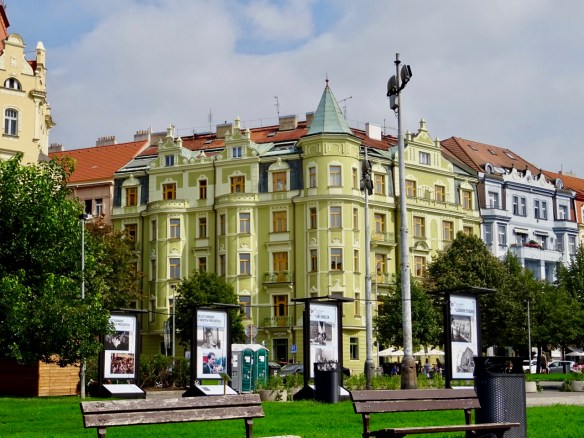
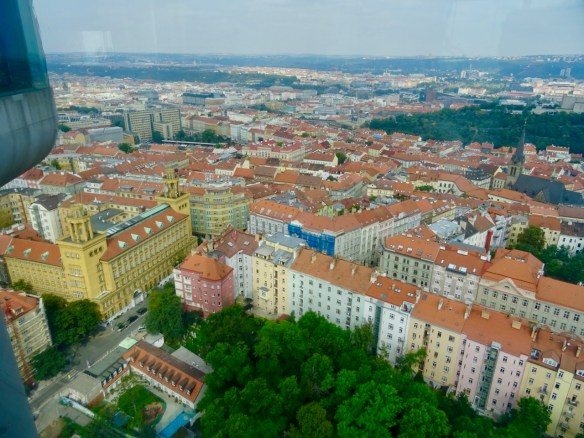 Prague is a pretty city with lots of parks and green spaces.
 The old
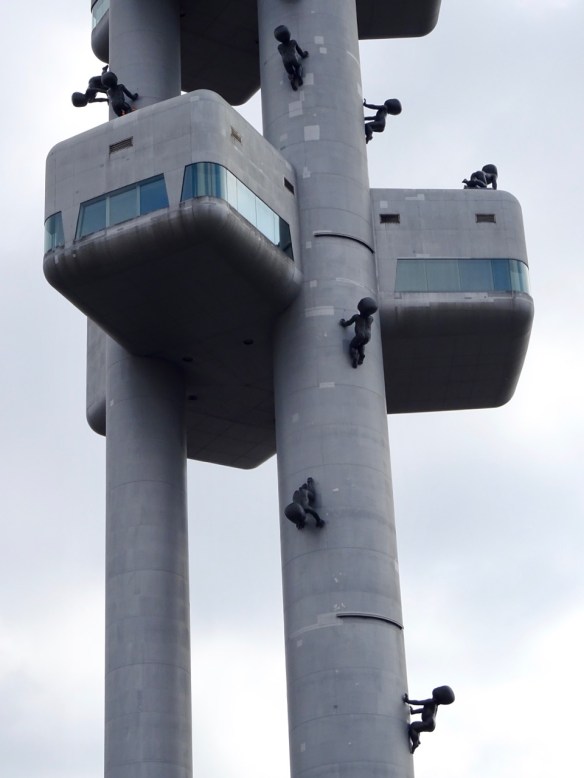
  There are ten six foot tall babies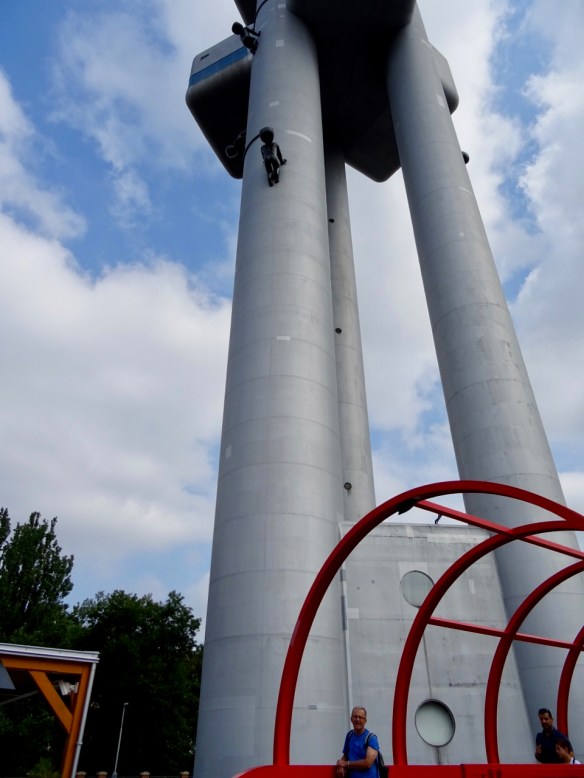
 We go home to pack for the beginning of our road trip tomorrow through the Czech Republic, Poland and Germany, .












 .
. trudymason.com
