Day 73, Thursday, November 9, 2023
Our bnb host kindly sent me information for a nearby doctor and I was able to make an online appointment for this afternoon. Bob goes out exploring and visits the Museum of the Sacred Heart in the morning, and I stay home. Here is his post……
The Musée D’Art Sacre (Sacred Art) is installed in a Monastery Church and contains Catholic religious sculptures, paintings and gold works from the 12th to 20th century. There are many varied representations of the Virgin Mary. This wooden sculpture is from the 15th Century. 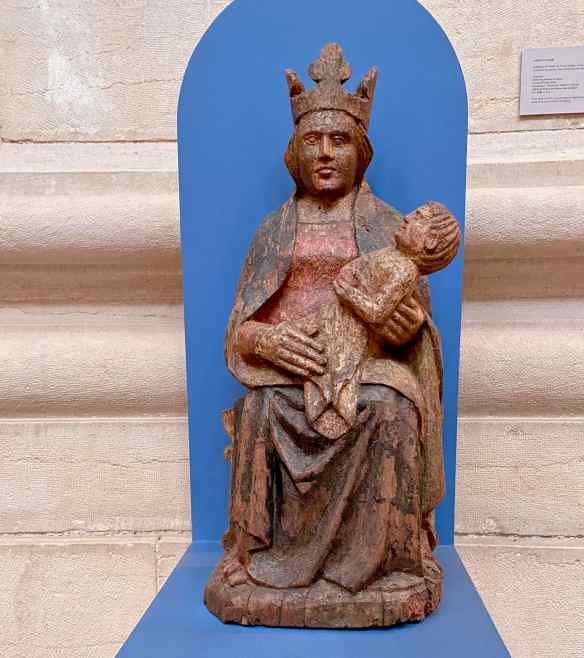
A 16th Century depiction of Saint Sebastien who lived in the 3rd Century and is called upon to fight plagues and epidemics. A 15th Century painting of the Seven Sorrows of the Virgin Mary, the swords are symbols of the sorrow she endured while witnessing her son’s crucifixion.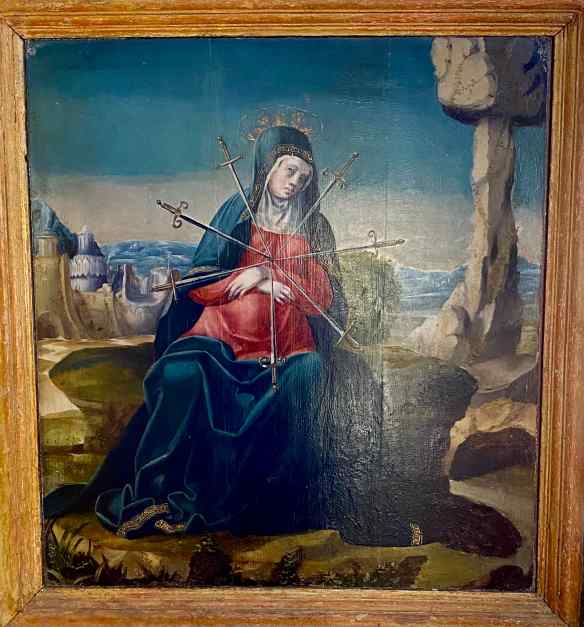
A 15th Century wood sculpture of Saint George the dragon slayer. I find it interesting that Saint George was a legend, yet was worshipped by the Church.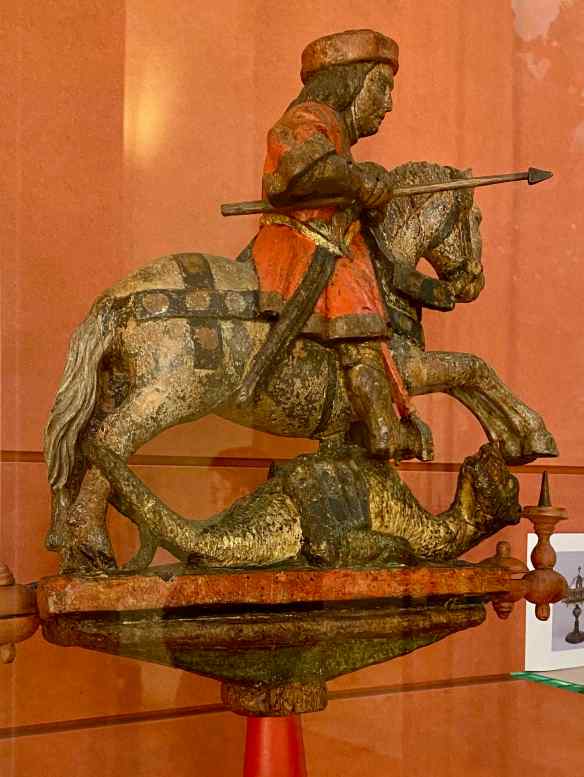
A 16th Century depiction of John the Baptist. Notice how the young girl is not the same proportional size as the others.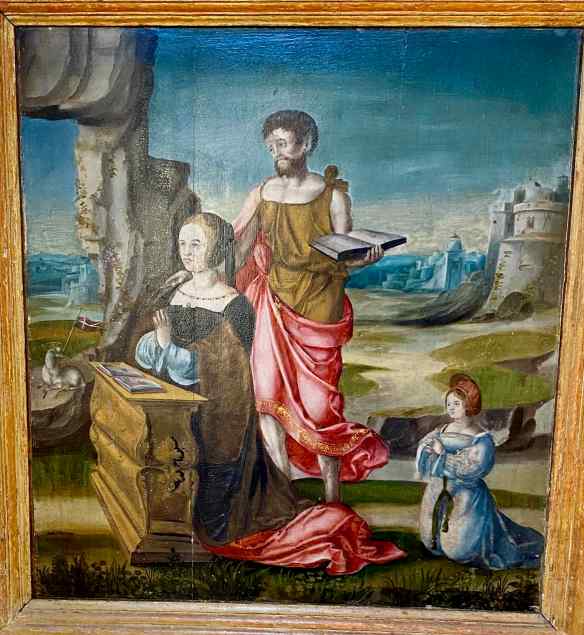
Trudy here now…We walk to the doctor’s for my appointment. It is only three blocks away and surprise, no waiting. I sit down and within minutes I was called into the doctor’s office. All I really wanted was a prescription for Otrivin, but I was very surprised to find out that it is against the law for any doctor in France to prescribe decongestants for anyone who has Covid! Go figure…apparently it can cause permanent loss of smell, which is interesting because on the internet in North America, decongestants are recommended for nasal congestion caused by Covid. So instead of a little bottle of nasal spray I walk out of the doctor’s office with four prescriptions! Methylprednisone pills for the Covid, some other pills to protect the stomach from the Methylprednisone as it is hard on the stomach, a nasal spray that has cortisone in it and Paracétamol for aches and pains and headache! The good news is that all only cost less than 20€. I am already starting to feel a bit better than I did the last two days , so I wonder about taking all this?
On the walk home we pass this mural…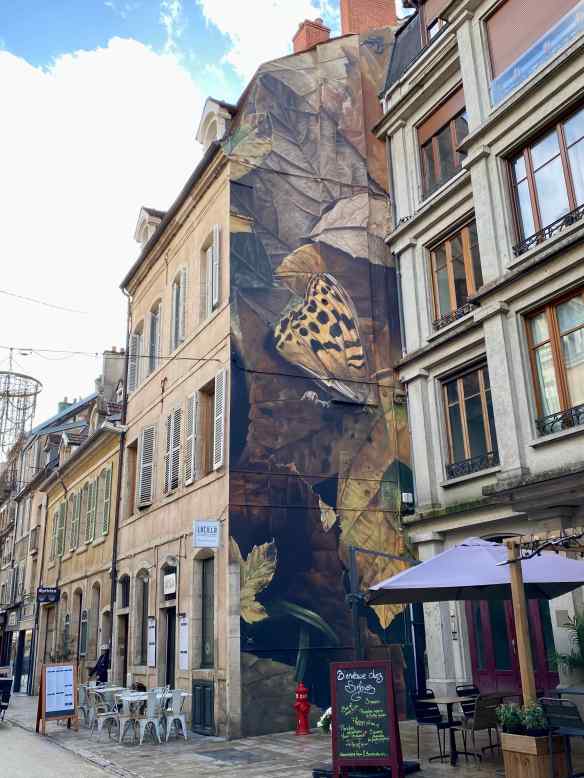
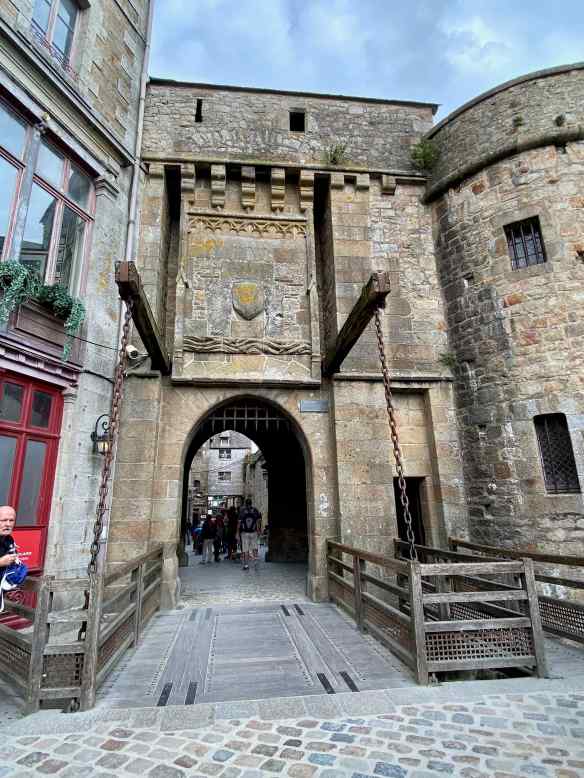
and very old buildings still in use.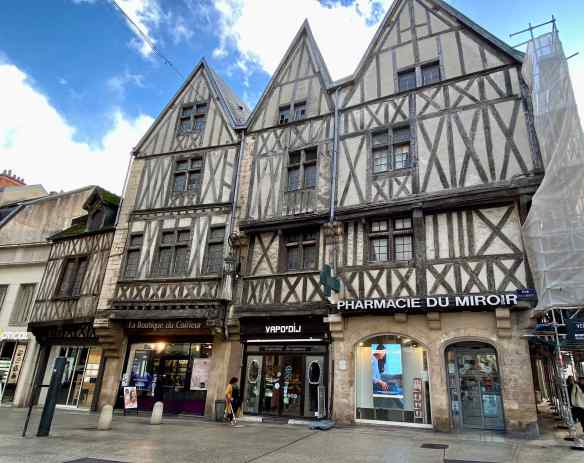
These half timbered houses are from the 15th century…and they are still in use today!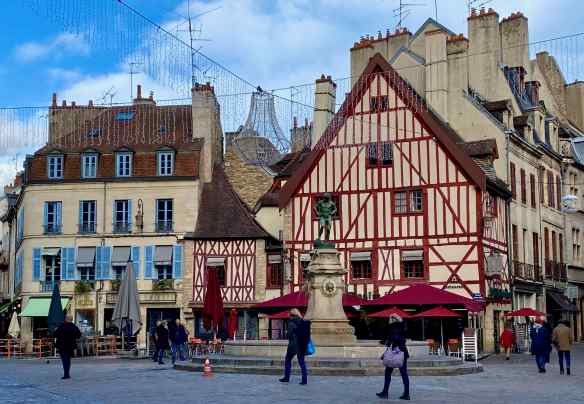 The Notre Dame church of Dijon is just around the corner from our apartment. The interior has beautiful stained glass…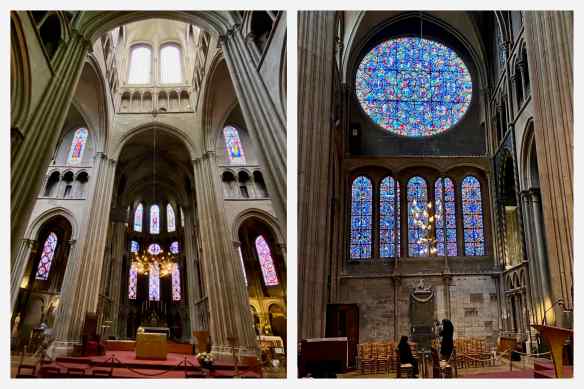
but it is the front of the church with its 51gargoyles, or grotesques, that catches my attention. 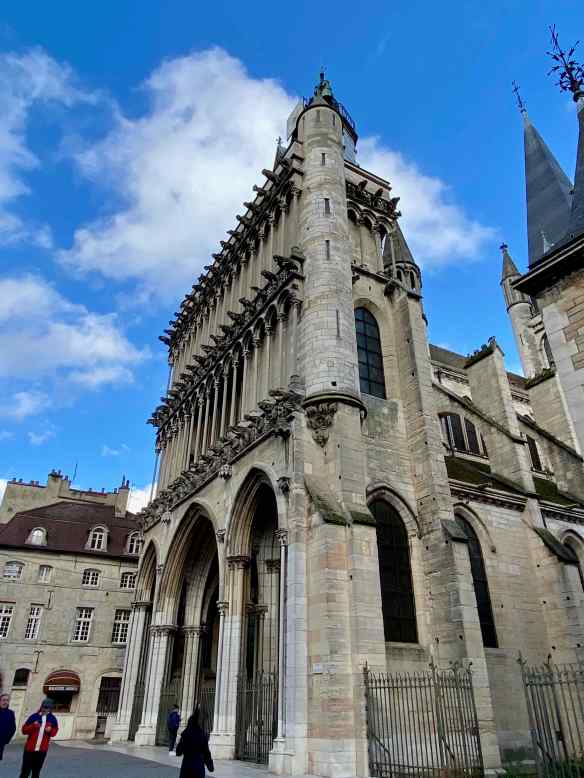
I love gargoyles and this church is loaded with them, although the ones on this side of the church are decorative rather than water spouts.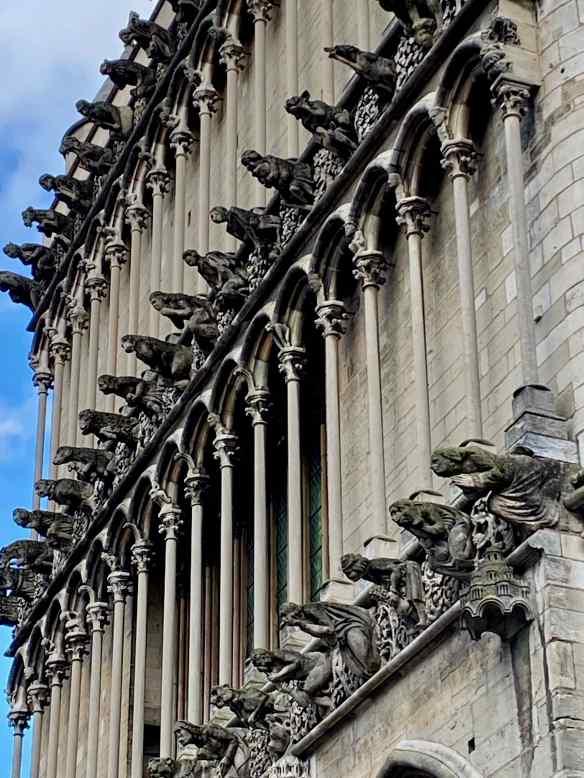
The owl is very important in Dijon, there are even owl cookies. More on this later.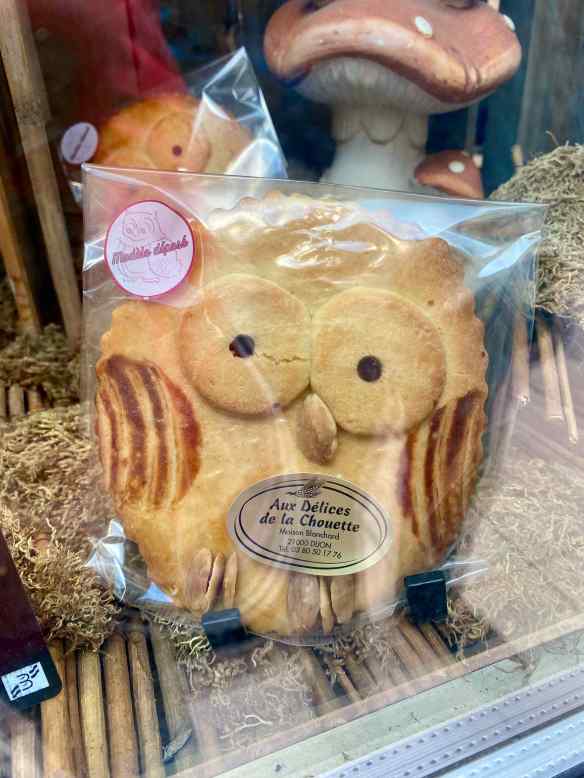 I go home to rest and Bob goes out to explore a bit more. Dijon is a very pretty city, very walkable and our apartment is only a block away from the old town. I hope I feel well enough to be able to see more of it.
Back to Bob…In the afternoon I visit a heritage museum (Musée de la Bourguignonne) which displays the community and culture of Dijon from 1880 to 1930. Objects of daily life reflect the agricultural and urban history and traditions of the times. Surprisingly there is little mention of Dijon Mustard.
A typical home with a 4 poster bed to help trap the heat.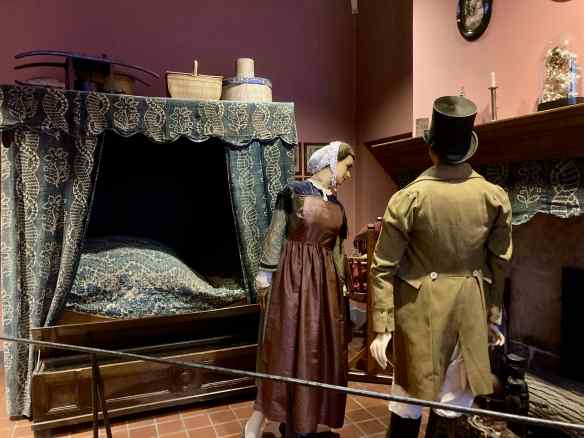
A 19th Century clock that is about a metre tall.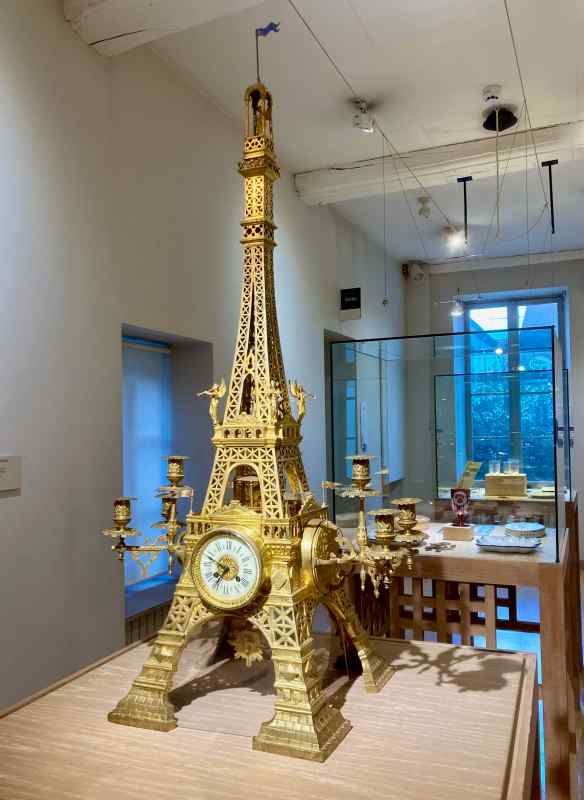
Marionettes for the children’s theatre in the 1890’s. They are about 10 inches tall.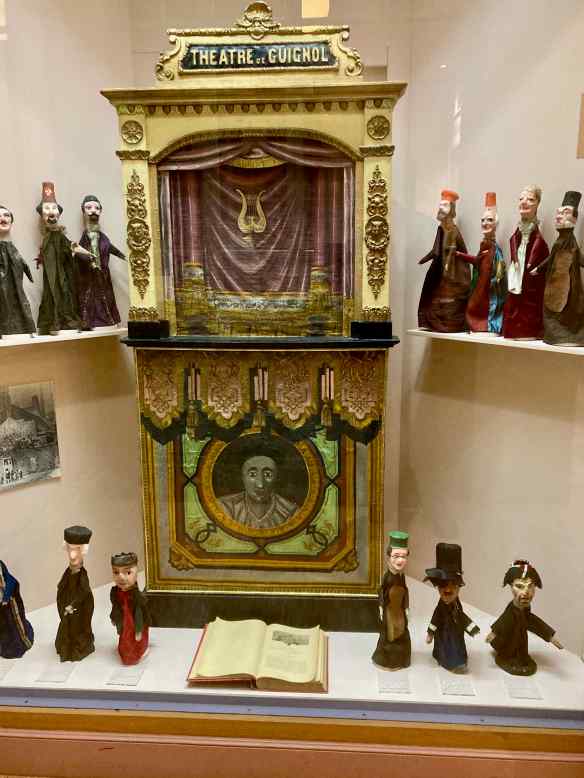
The Charite Hospital had a wing for the Daughters of Sainte-Anne. They are girls who, “having an infirmity (not explained) cannot be placed in the countryside”. The charter states “we will carefully try to raise these girls to fatigue, and in a way that makes them fit for the functions of the household and families”. Not sure what this means, and there were no pictures of these girls displayed, so I am not sure how successful their rehabilitation program was.
These ornate walking sticks were related to the La Mere Folle festival where 20 foot versions of this larger character were paraded through town.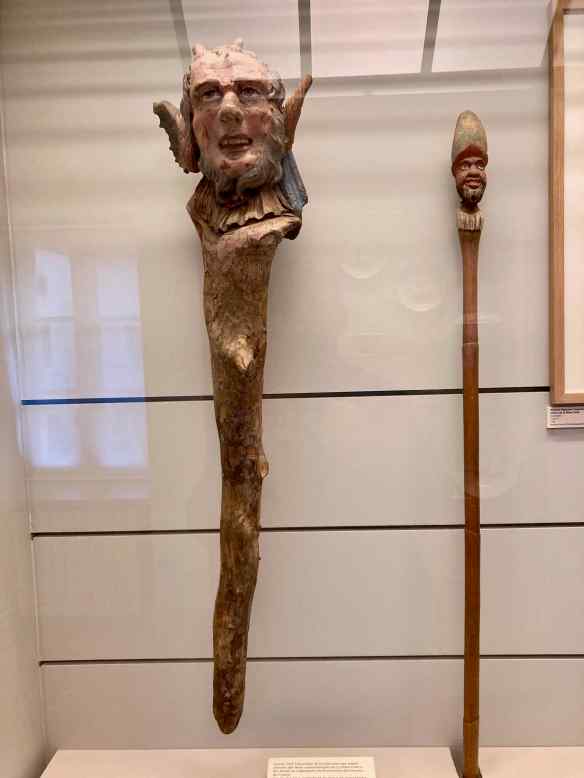
A 1920’s beauty salon that sold wigs tied to the status and age of the wearer.
I don’t understand why such a small clock face has such a big wind mechanism. It must have run for days without needing winding.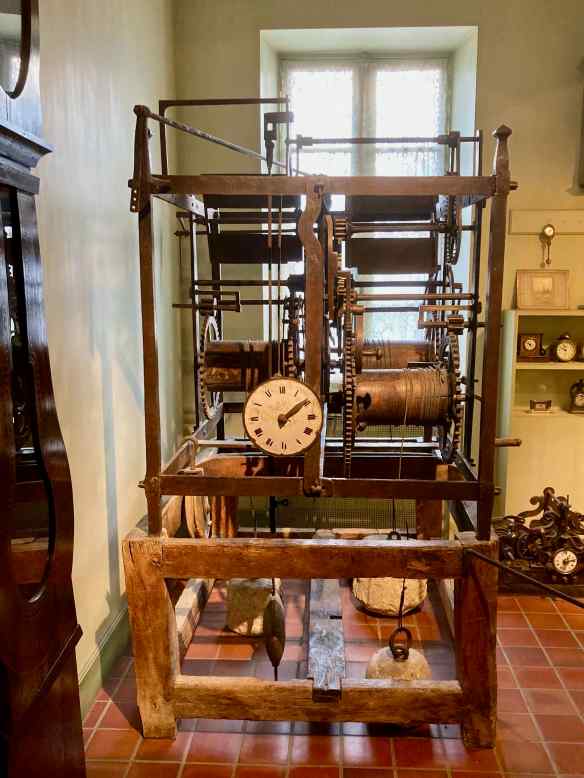
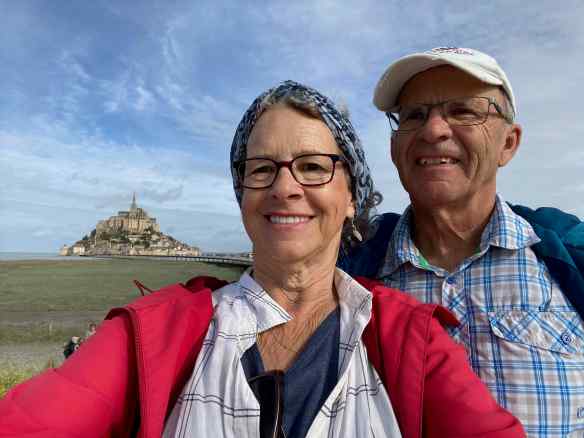
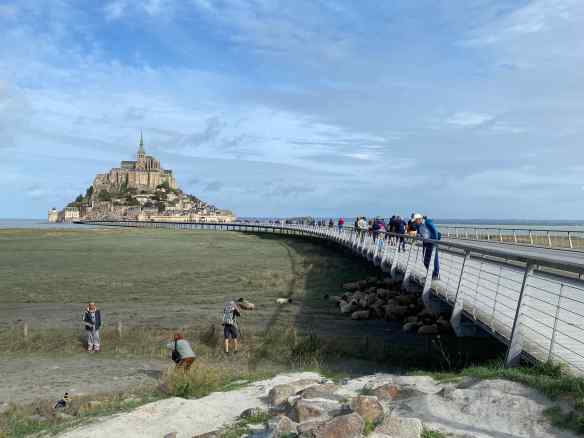
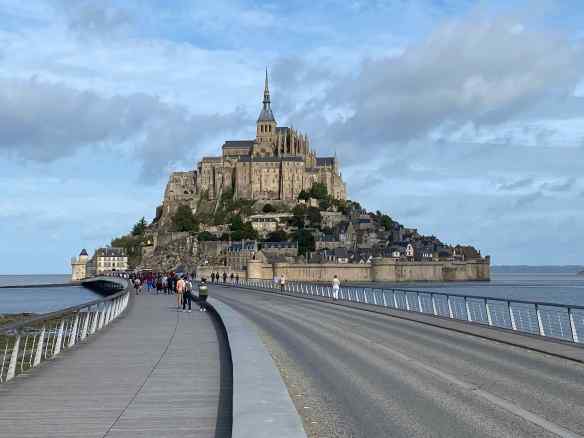
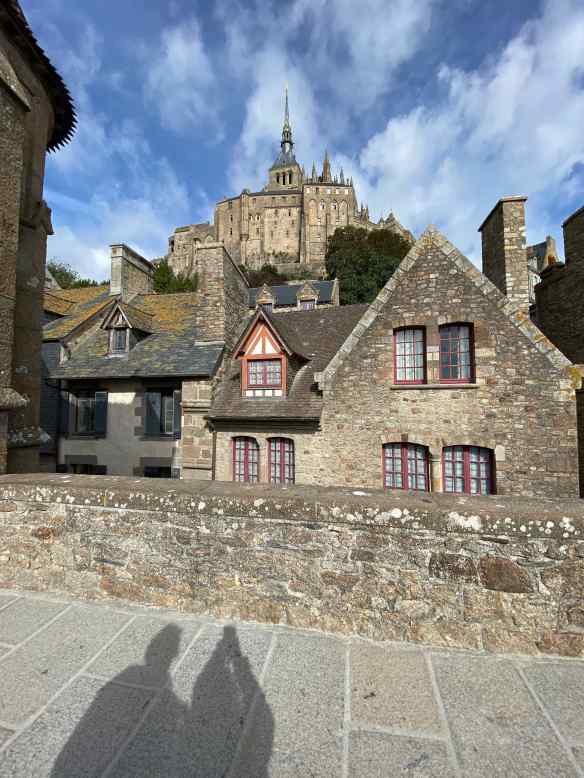

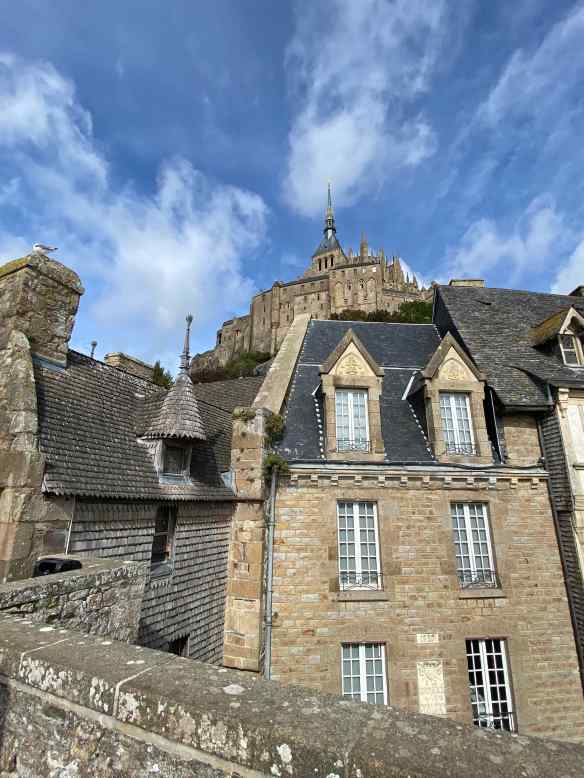
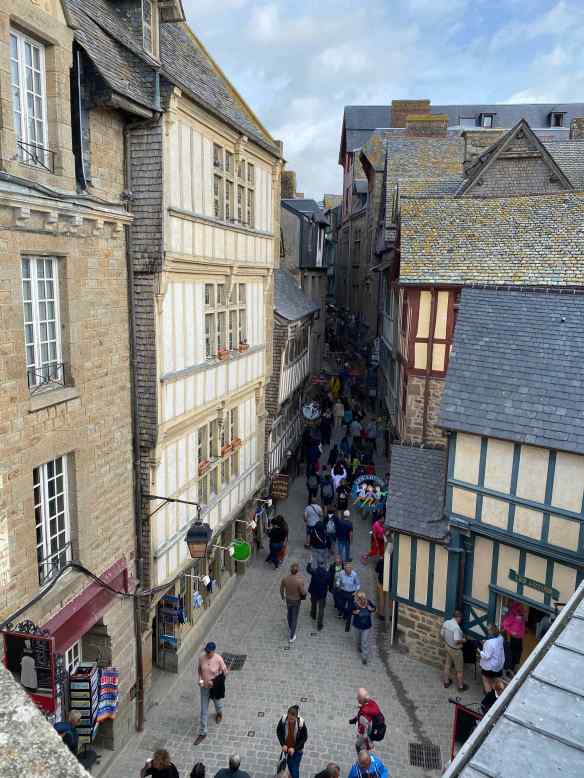
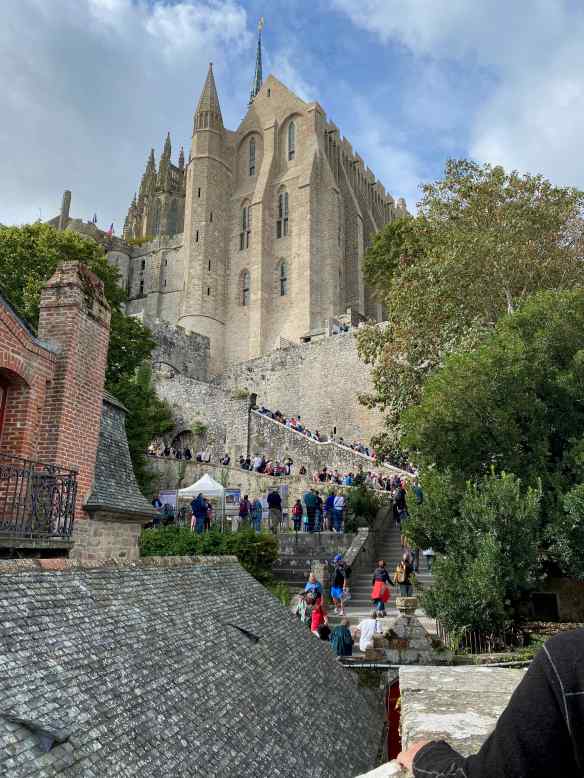
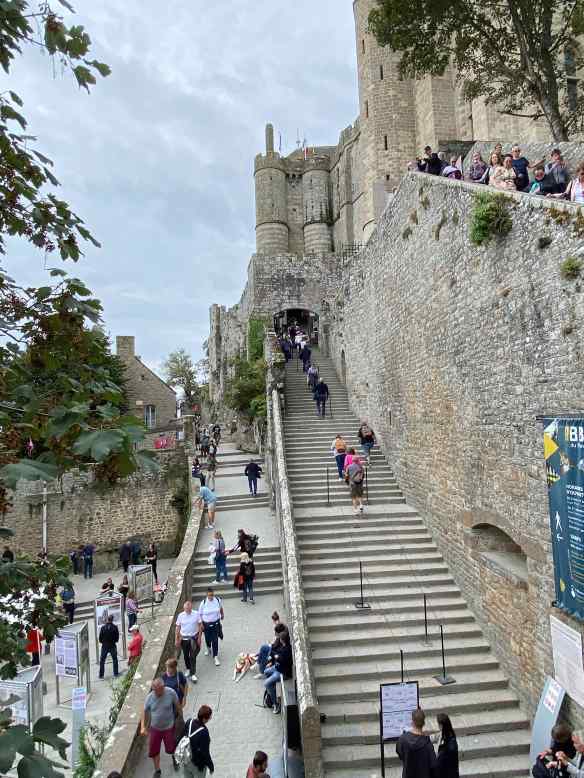
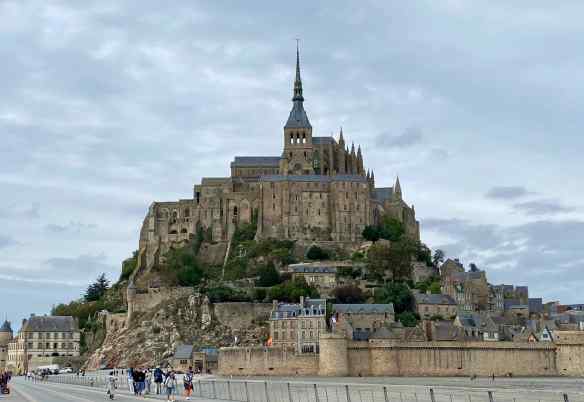
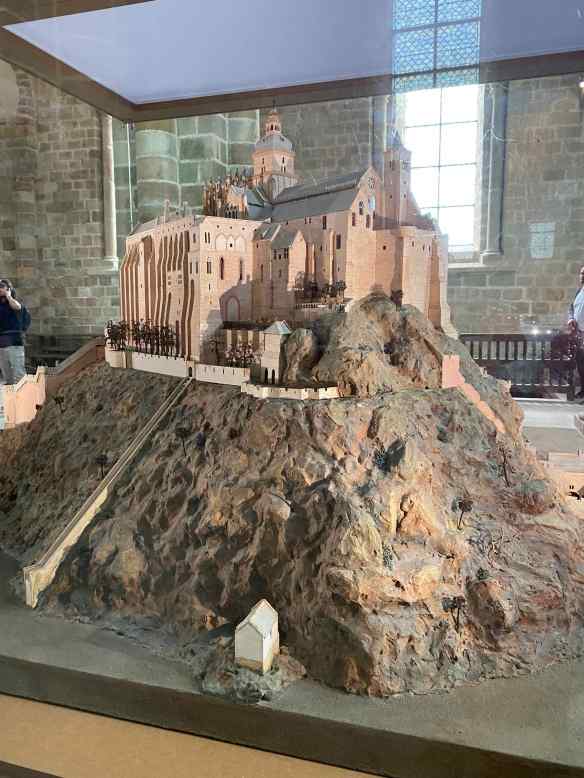 There are usually 5 monks and 7 nuns who live at the abbey and there are only 25-30 people who actually live on Mont Saint Michel. We sat and listened to part of the mass, from the side of the church. The singing was really lovely and I found it interesting that the nuns and the priest sat on the floor of the church during the service.
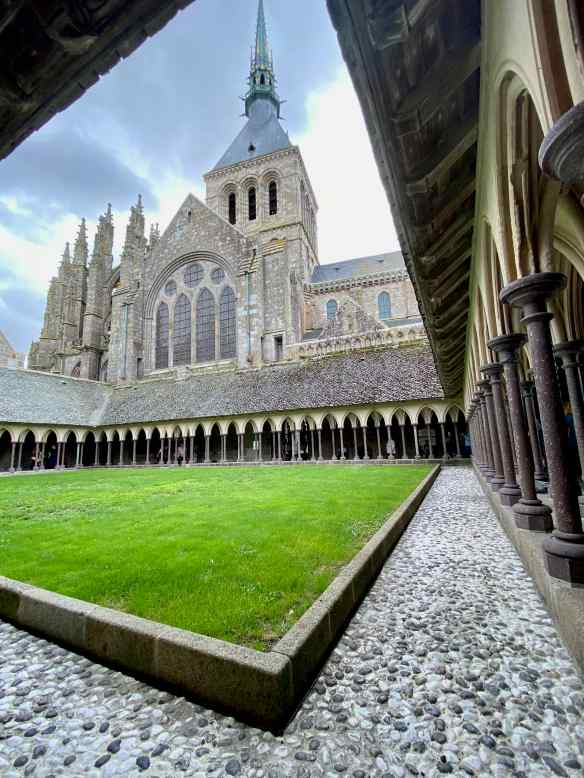
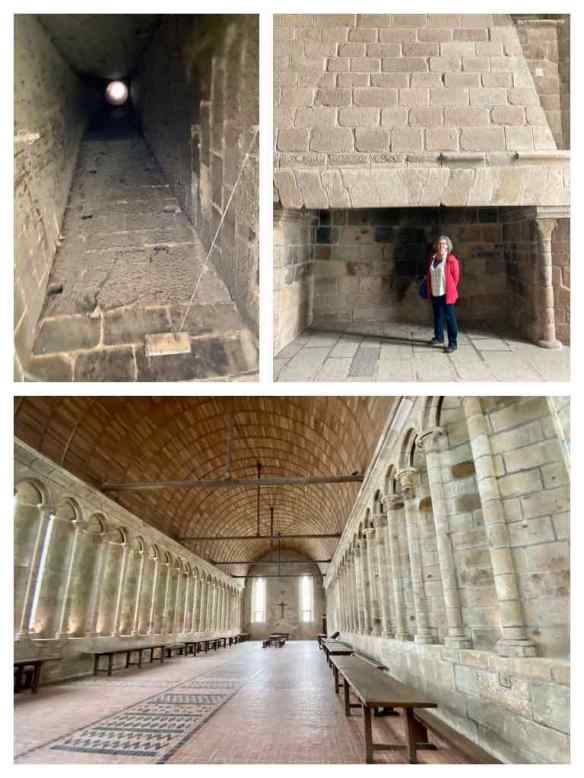
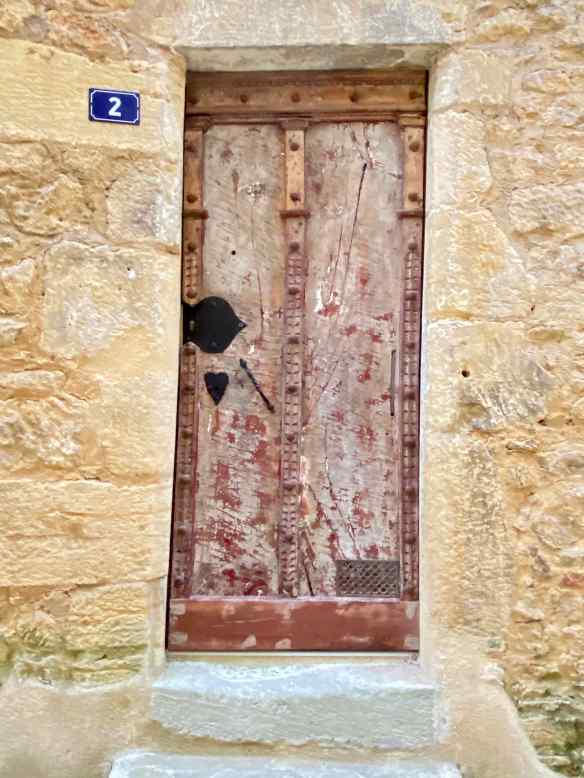
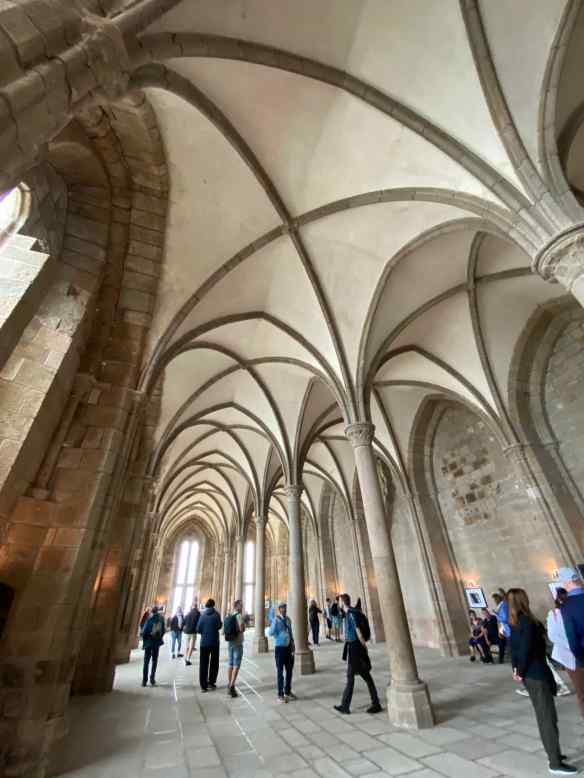 There are so many interesting doors in this abbey.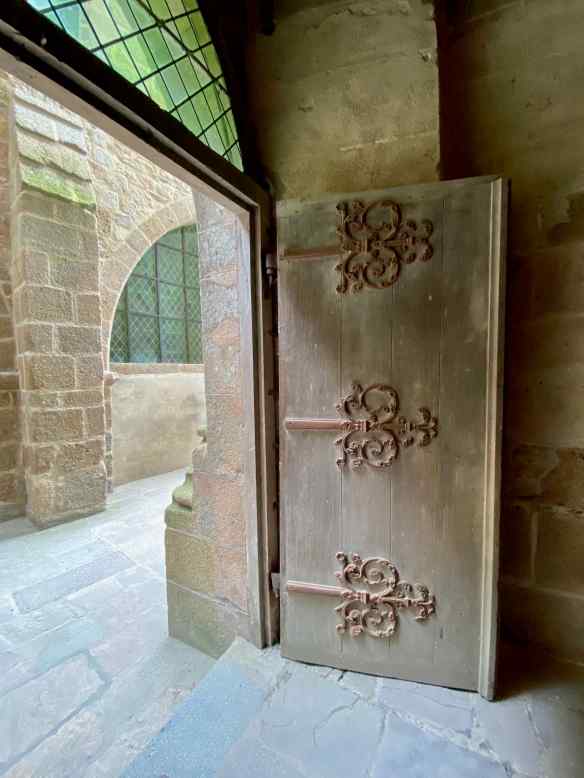
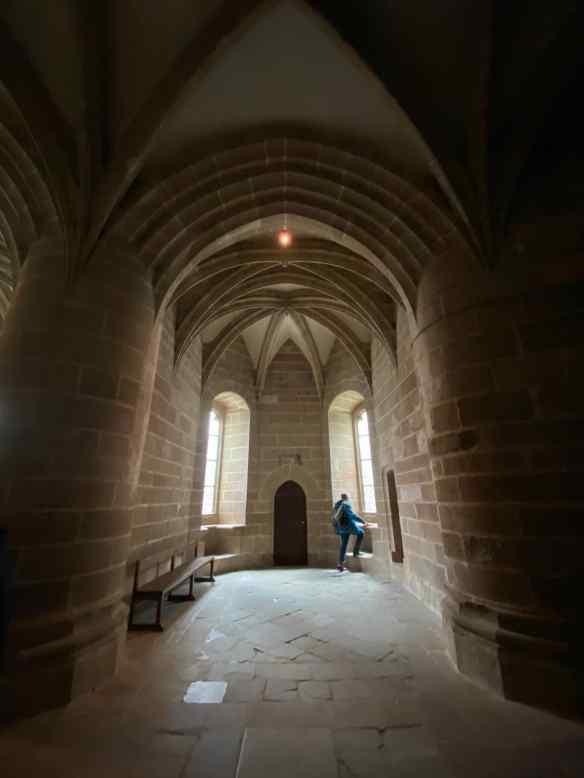
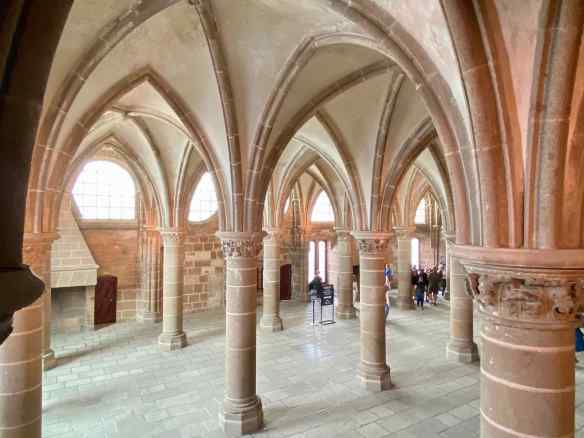
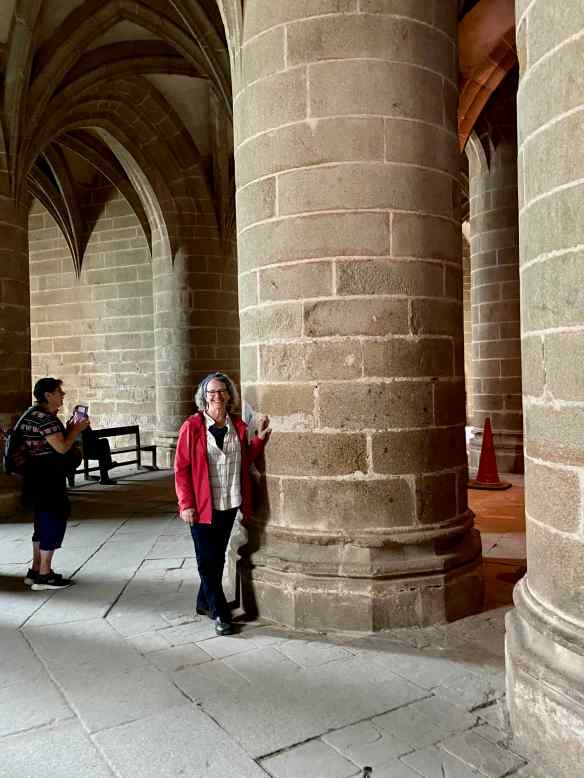 There are so many smaller rooms and interesting spaces to be explored. This one is off the side of the crypt.
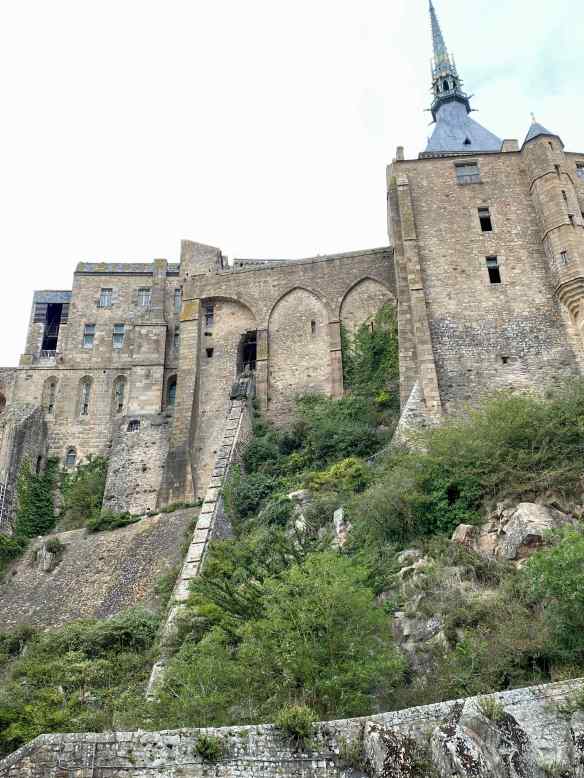
 When the Abbey was used solely as a prison in the 1800’s, this huge wheel was was used to haul supplies up to the abbey. Prisoners walking inside the wheel were able to raise and lower a cart along a stone ladder inclined along the rock wall.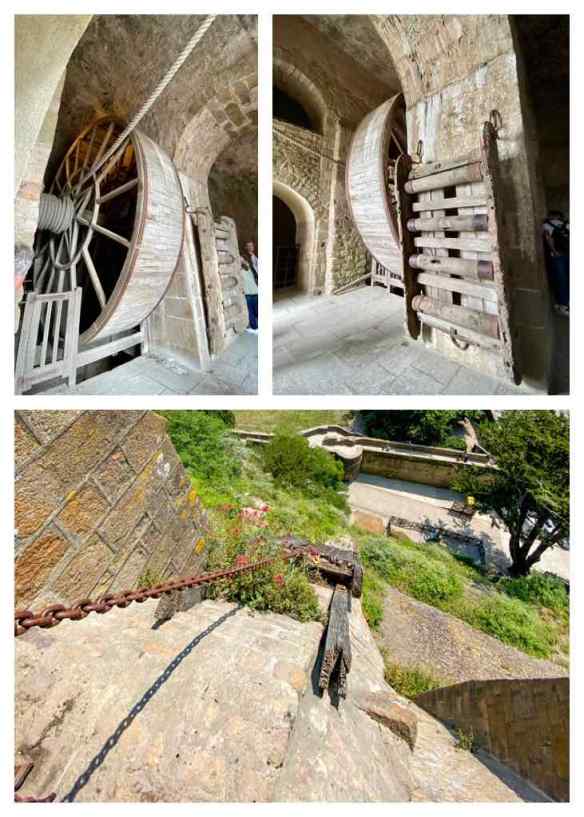
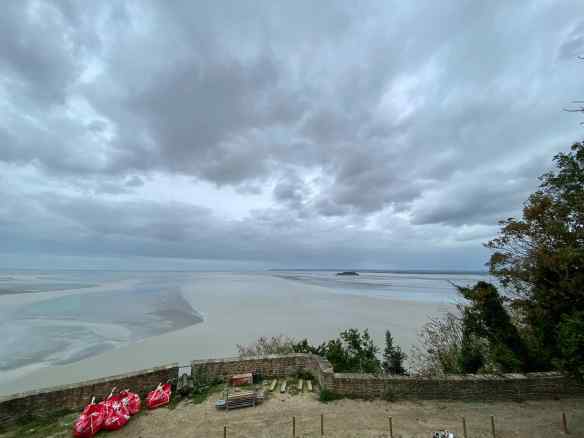 We hear shrieks and peals of laughter and realize that is is coming from the people out walking on the sands now that the tide is out. Some of them are thigh deep in the water! There are a lot of people out there, some of them way off in the distance. Thanks, but I am happy to pass walking in mud and cold water.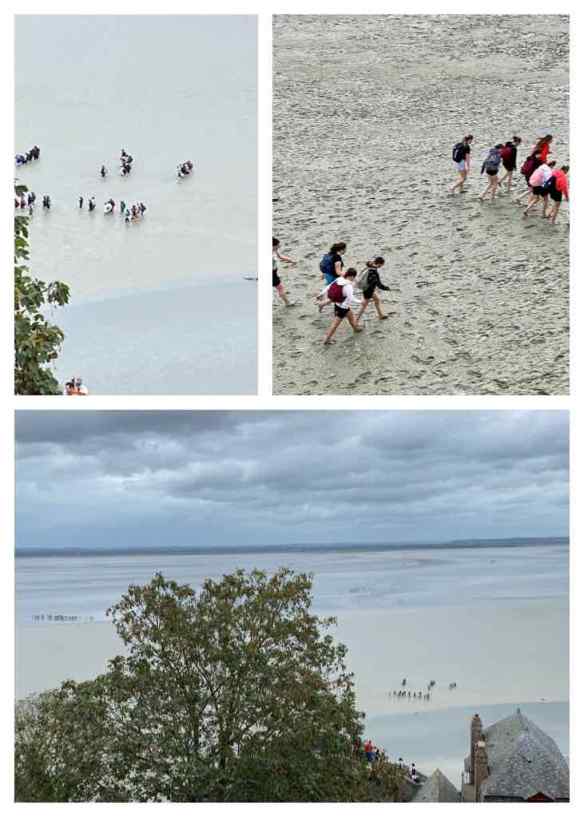
 Bob took interesting photos of the inside and outside view of these two stained glass windows.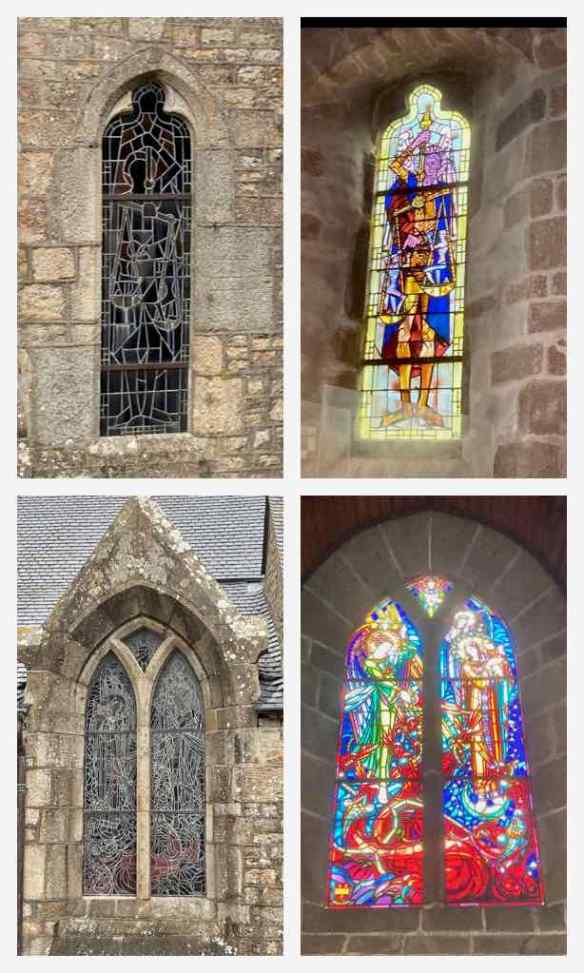

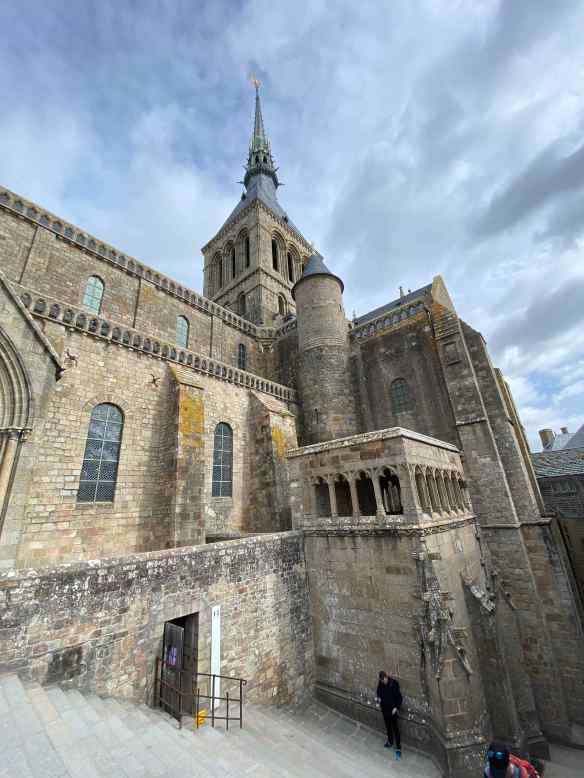
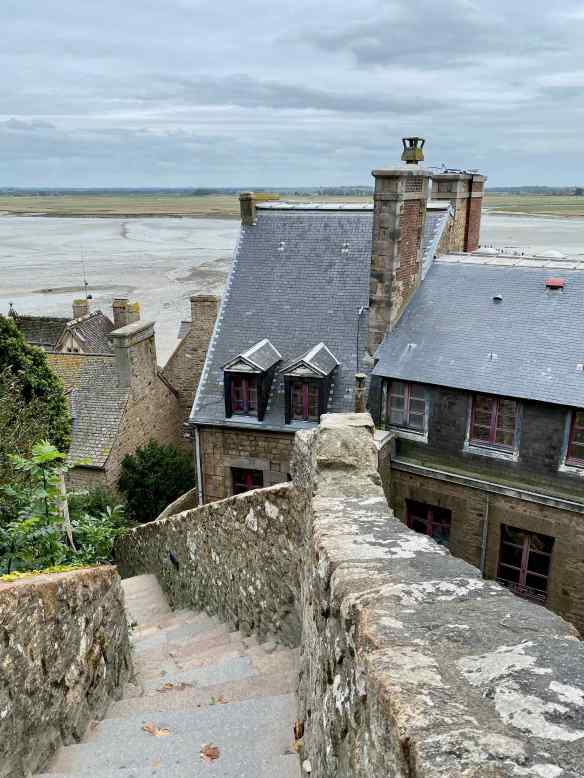 …interesting details…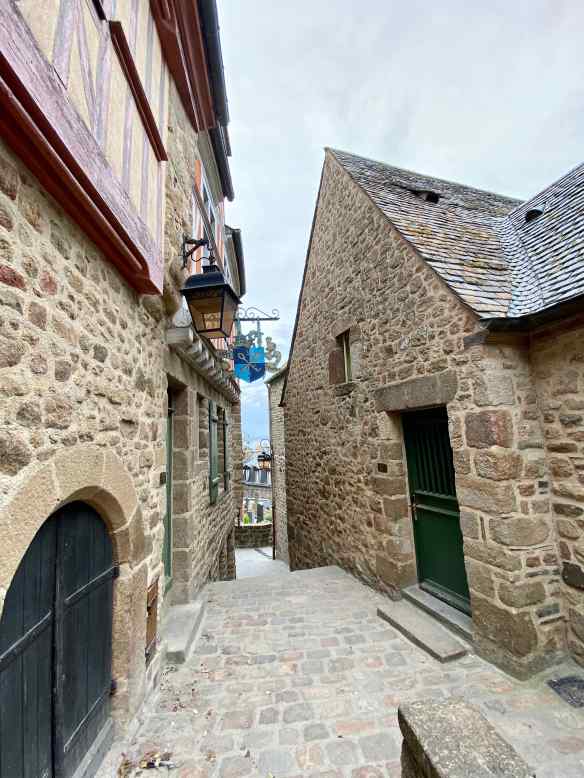
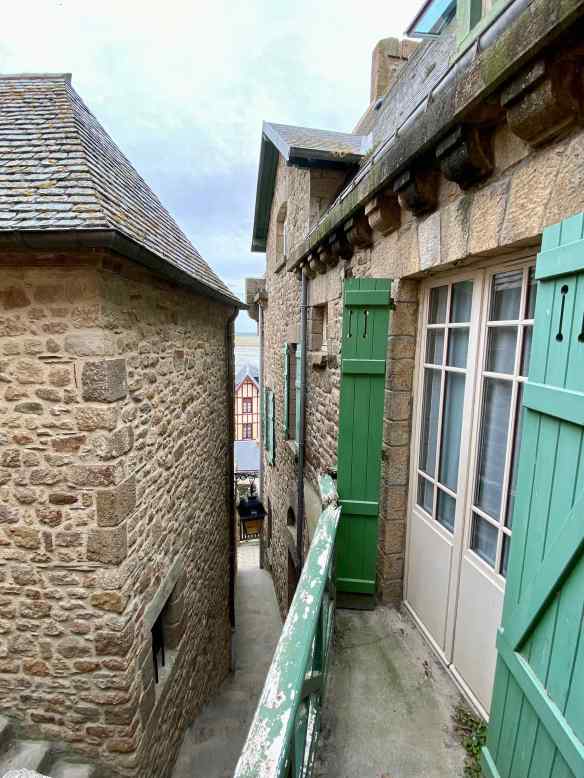 …crooked roof lines…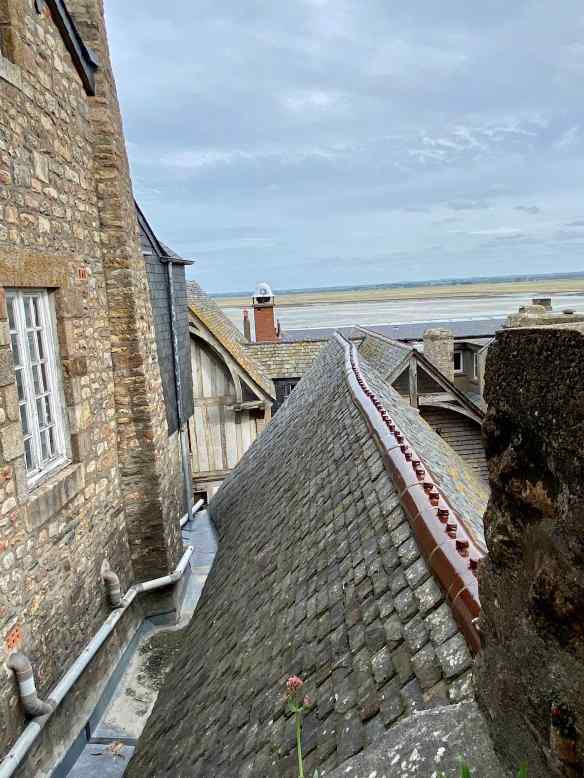
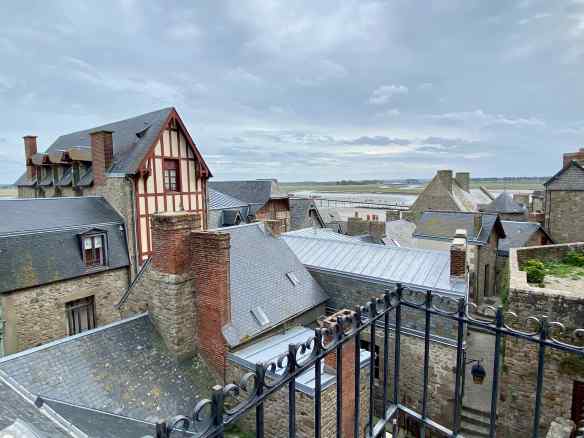
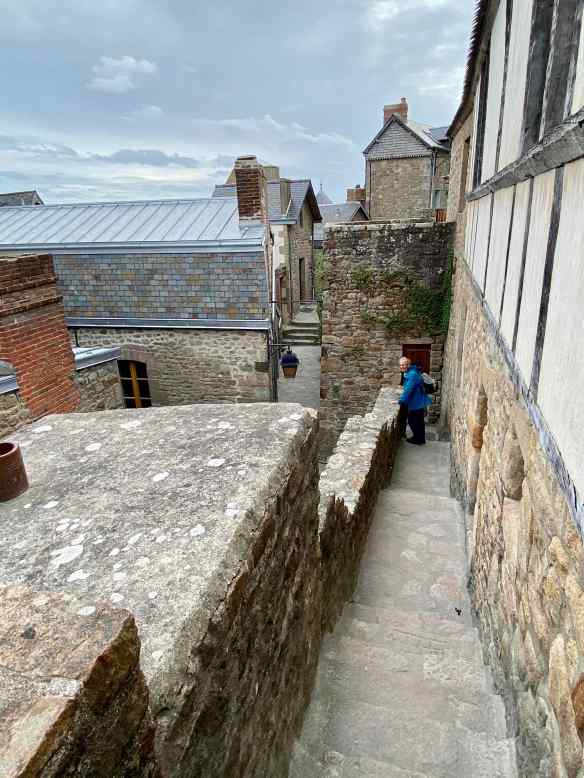
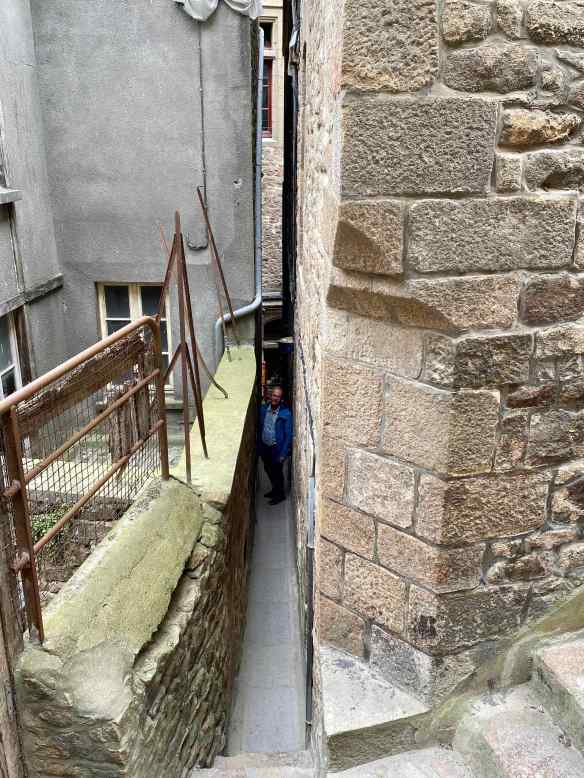
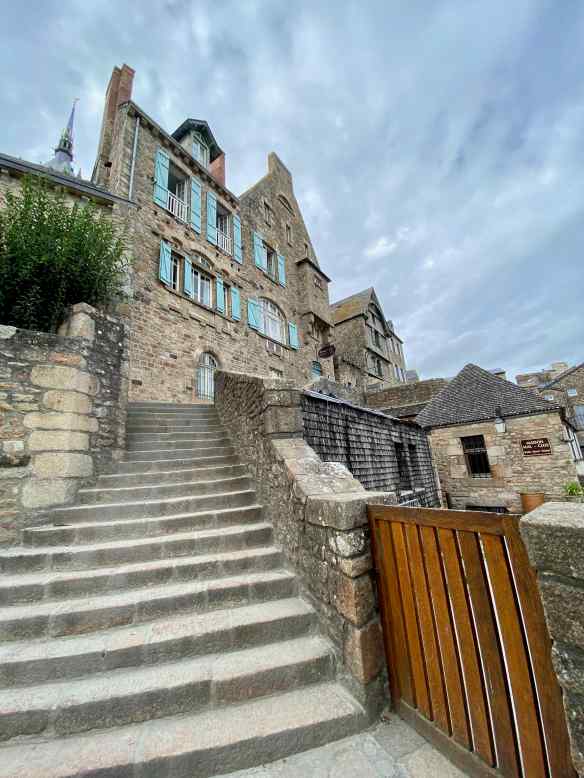
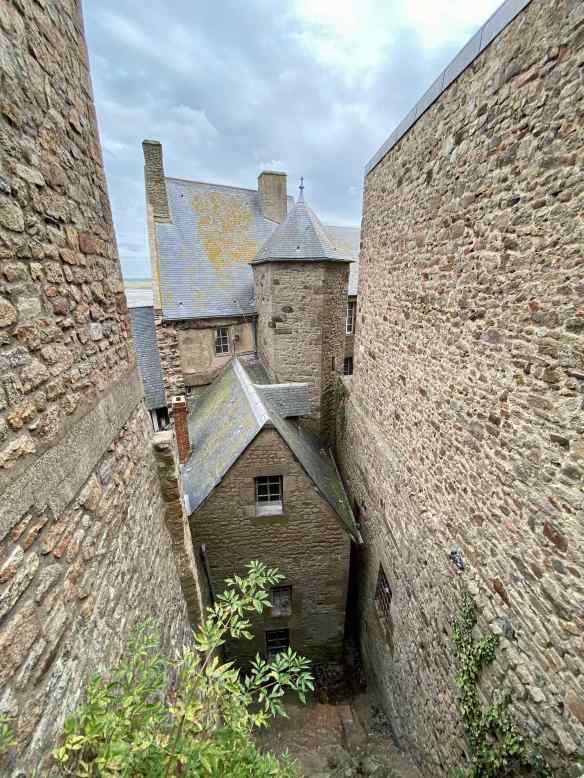
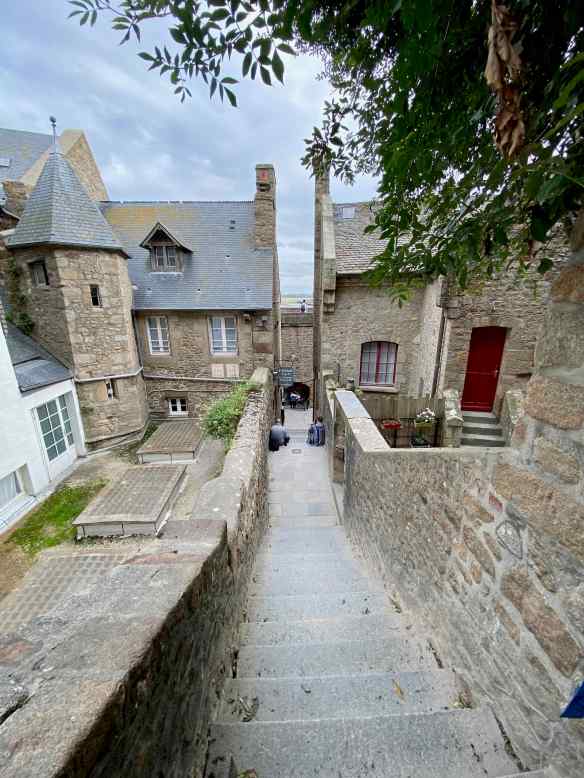
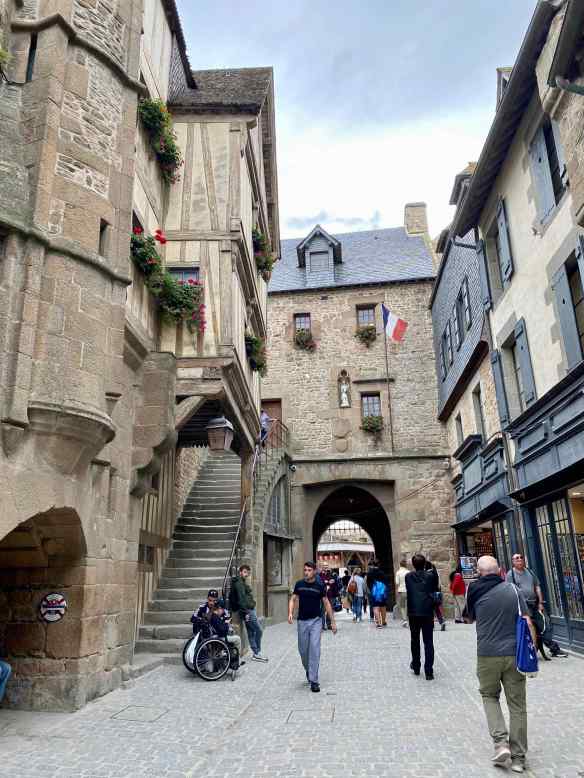
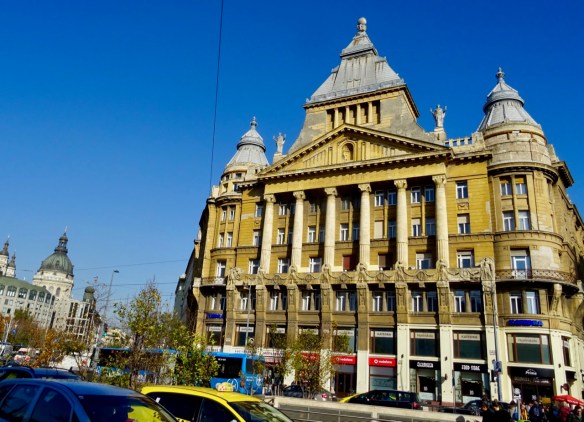
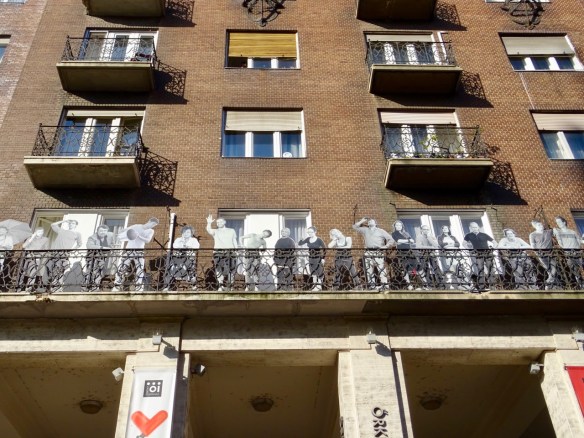 We are staying in the Old Jewish Quarter and the roads are very narrow and crowded. As we leave this area, the roads widen and there are many pedestrian-only roads and big plazas. This large ornate building is the first large building I see on the main Street near our apartment.
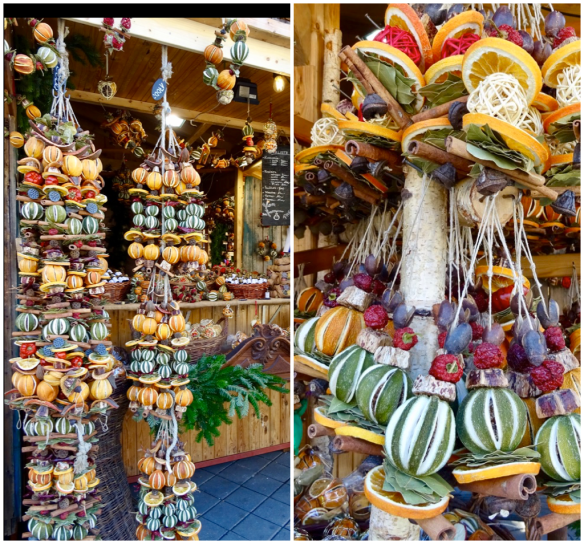
 We walk towards the nearby Christmas Markets. There are lots of small wooden ‘cabins’ filled with beautiful crafts. I loved these dried fruit ornaments, but I am sure that I wouldn’t be allowed to bring these through Canadian Customs. Too bad, they are lovely and smell wonderful.
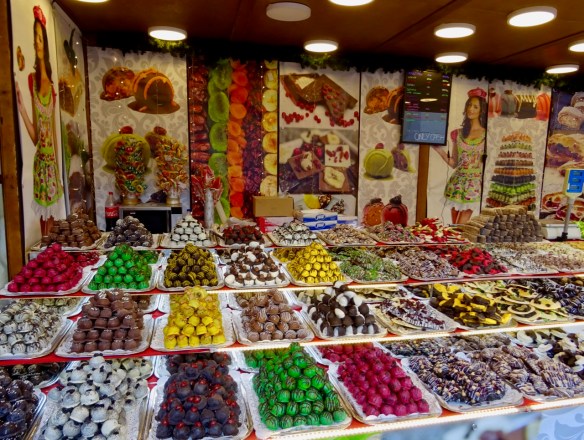
 There are several stands with all sorts of candies…
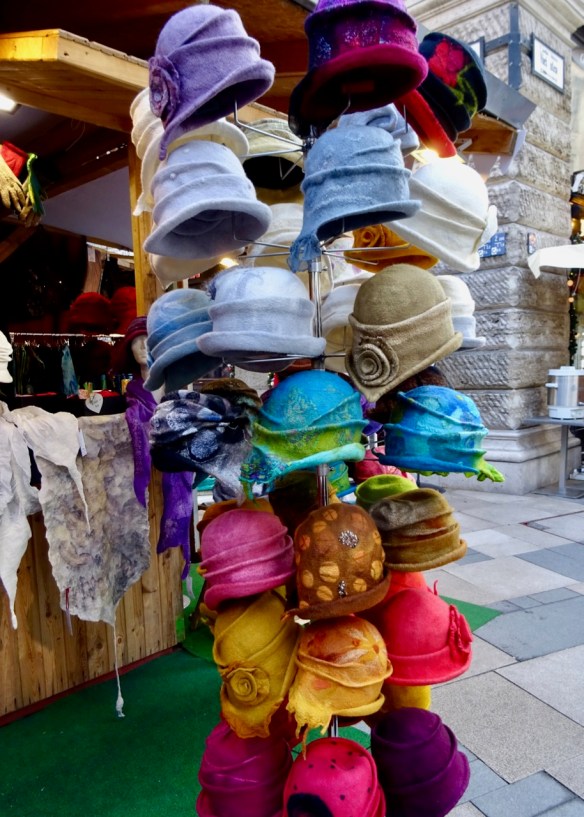
 beautiful felted hats, that are priced starting at $150.00 CAD.
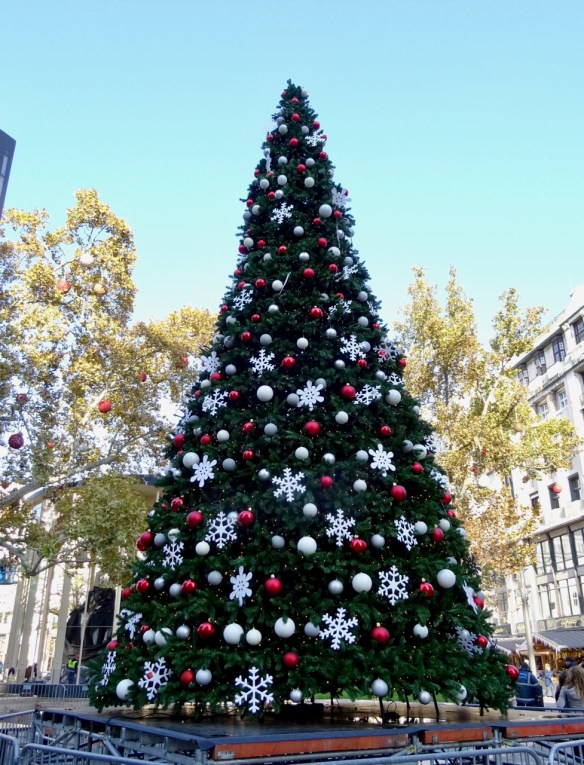
 This our first Christmas tree of the year.
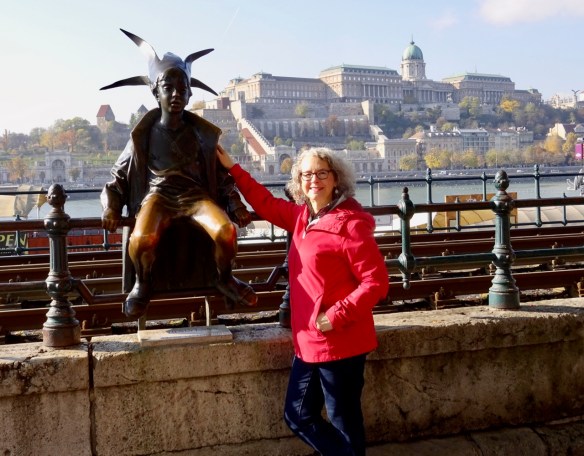
 This ‘Little Princess’ is the first of many statues we see on the streets of Budapest.
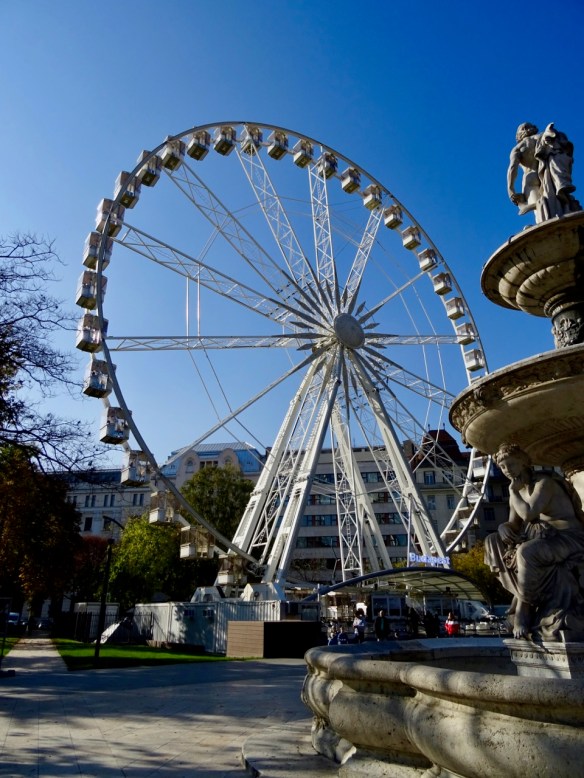
 Another ferris wheel, but we decide to pass on riding this one.
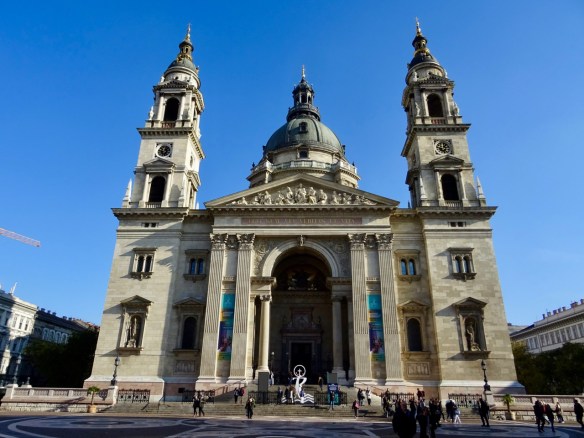
  St. Stephen’s Basilica is in the centre of Budapest.
 The inside off the church has lots of gilded ornamentation and a beautiful dome.
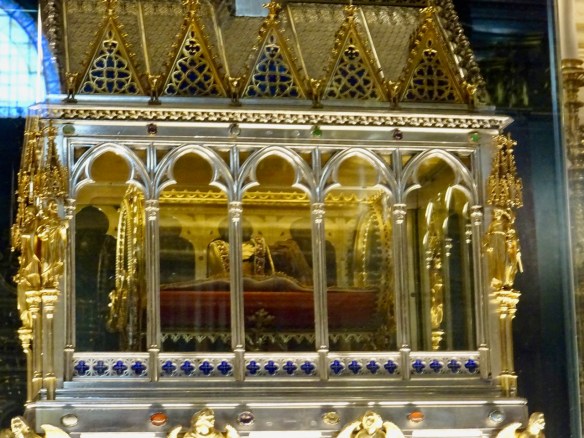
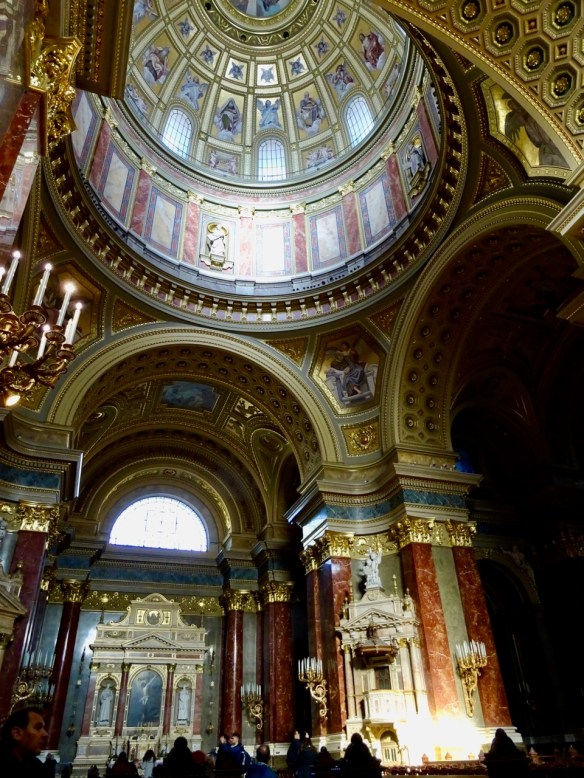 The main attraction in this church is the thousand year old mummified right hand of King Stephen. If you want to see this relic, deposit a coin and a light comes on to view the hand.
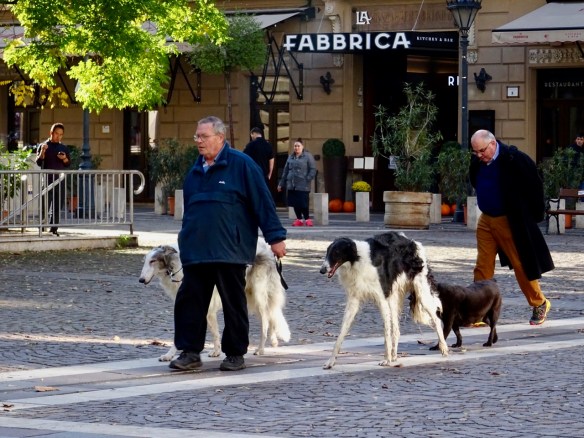
 These two borzoi dogs looked like they needed a bath and brushing. There are lots of dogs here and they live their lives on pavement. I kind of feel sorry for them.
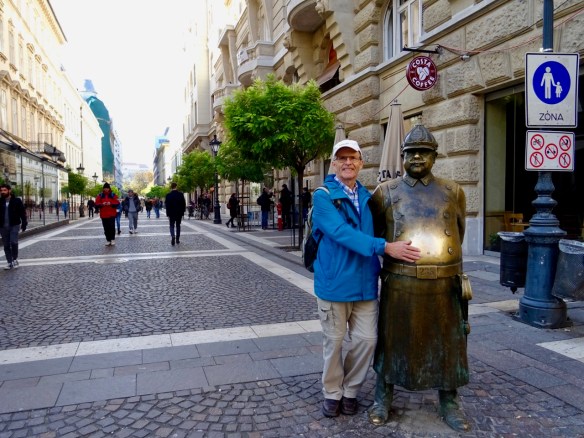
 The Fat Policeman Statue represents how hearty the Hungarian foods are, and rubbing his tummy is supposed to bring good luck. There are many ‘good luck’ statues on the streets of Budapest.
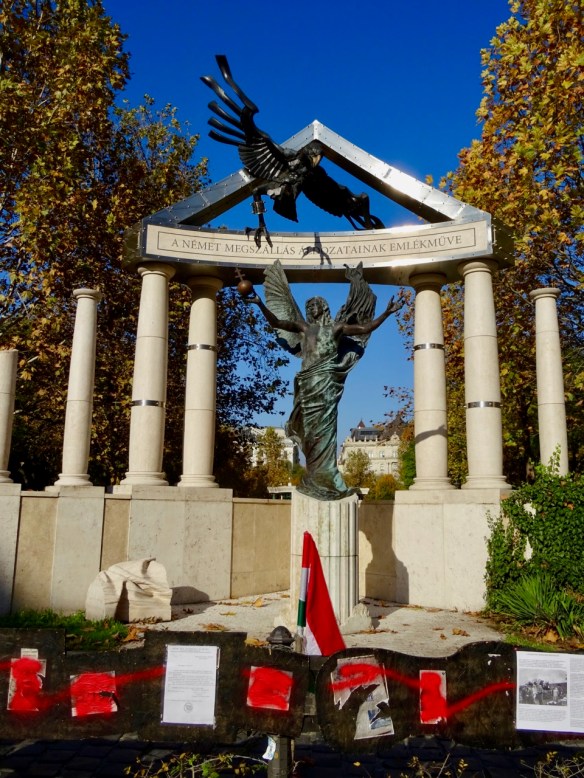
 The Hungarian government erected the ‘Memorial for Victims of the German Occupation’ statue in the middle of the night in July 2014.
 Some seed pods from one of the trees near this statue are interesting.
 There is a statue of Ronald Reagan in this plaza as well because of his efforts to end the Cold War.
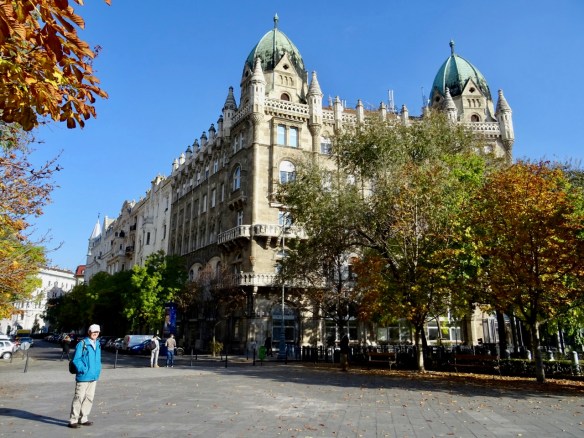
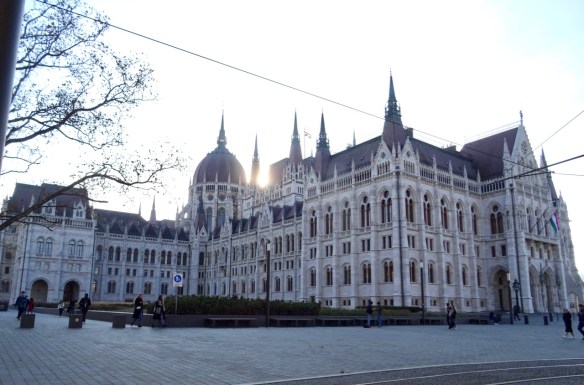
 There are so many ornate buildings here…
 like the Parliament Building! It is so big I can’t get it all into one photo.
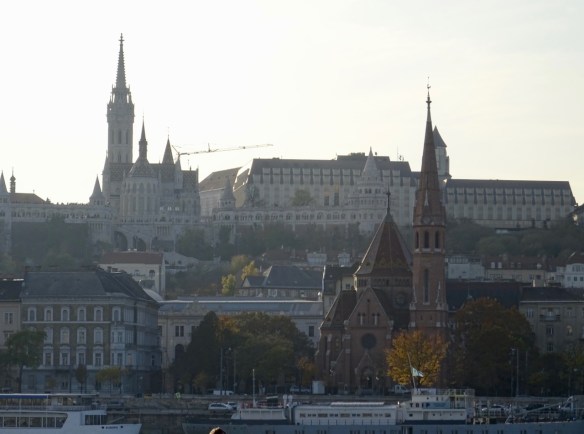
 Across the river we can see the Buda Castle.
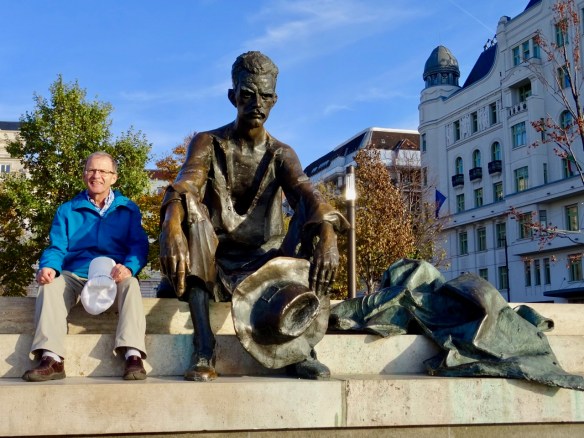
 Bob takes a moment to sit with the Hungarian poet Attila József…
 and then we walk onto the Chain Bridge with its guardian lions for a view of Budapest from the river.
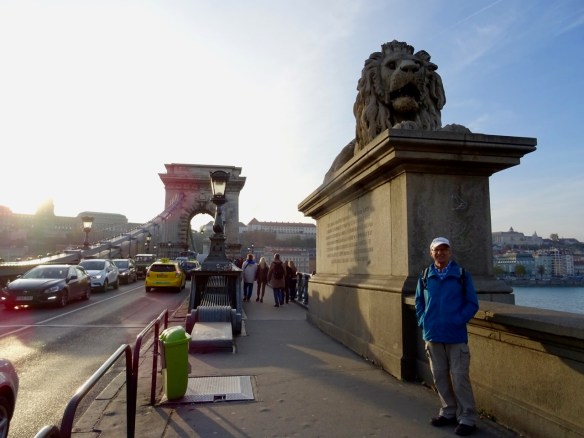 This is the Pest side of the river, the side our apartment was on…
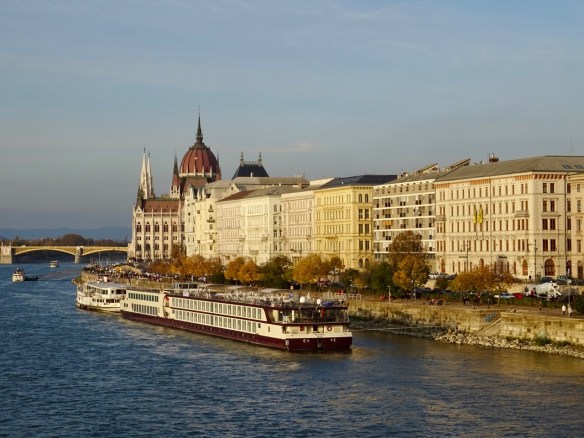 and this is the Buda side. These two cities were united in November 1873, and the name ‘Budapest’ was given to the new capital.
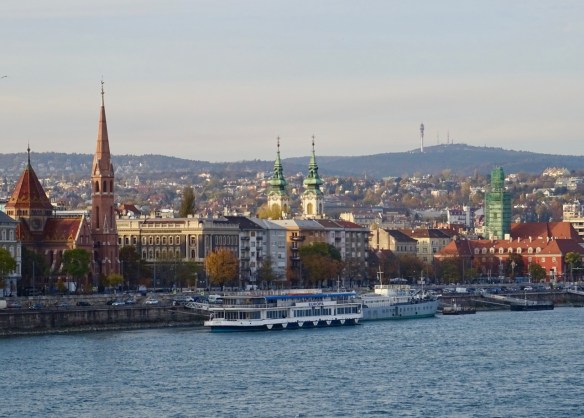 I don’t know what this building is but it had delicate golden trim that sparkled in the late afternoon sun.
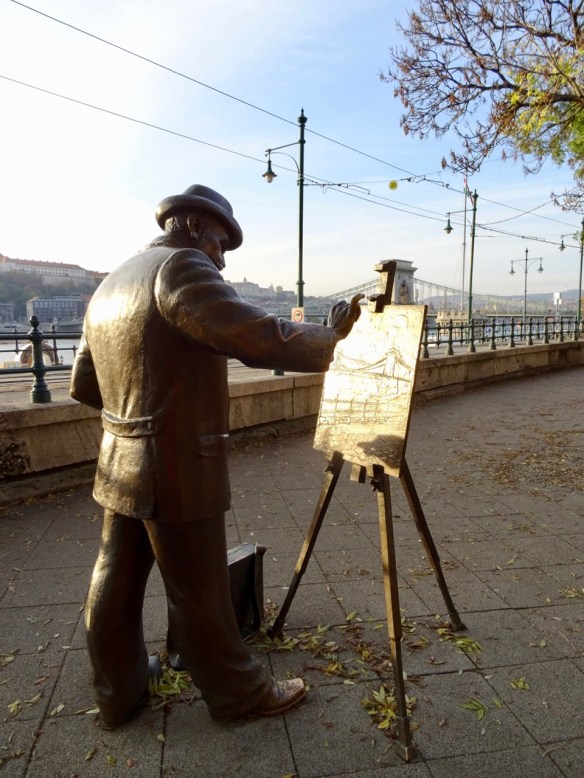
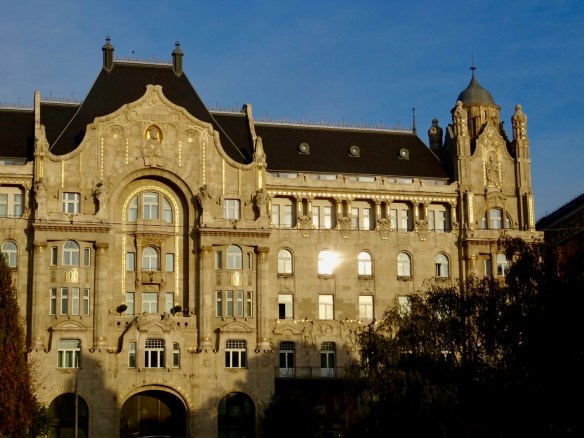 We find a statue of Roskovics Ignác, a famous Hungarian painter, on our walk along the Danube River.
 Walking through the Christmas Market on our way home I notice this jar of pickled onions! They made me laugh!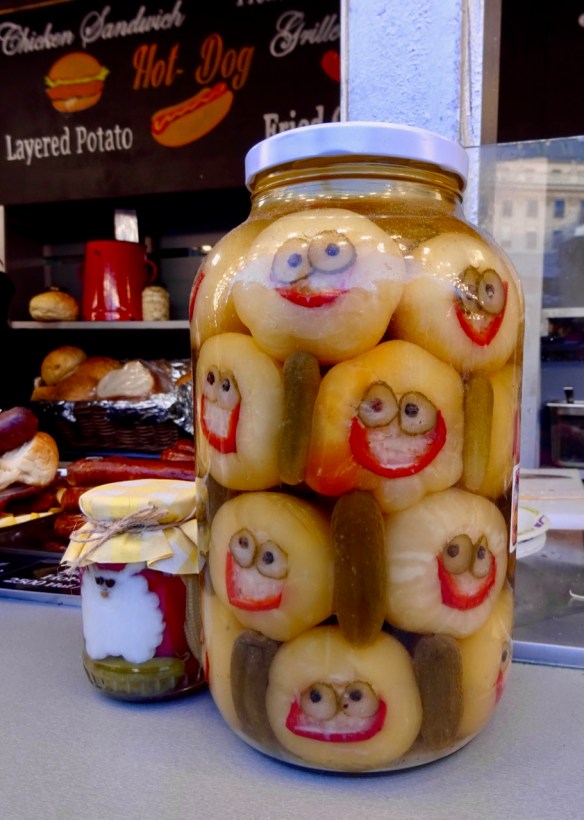
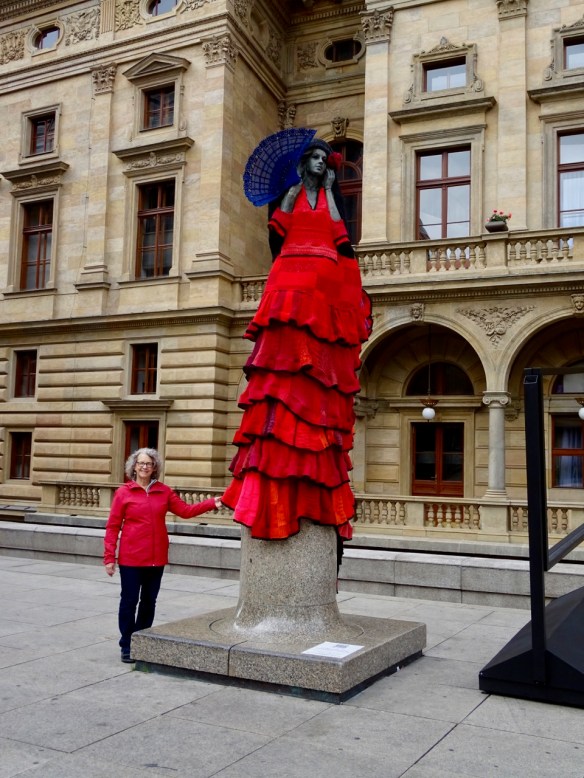
 This knitted sculpture ‘Carmen’ is the creation of Eva Blahová, an artist and scenic designer living in Prague. 33 knitters from all over the Czech Republic were involved in this project and they knit over 50 meters of red ruffles to dress an existing sculpture. It is pretty impressive.
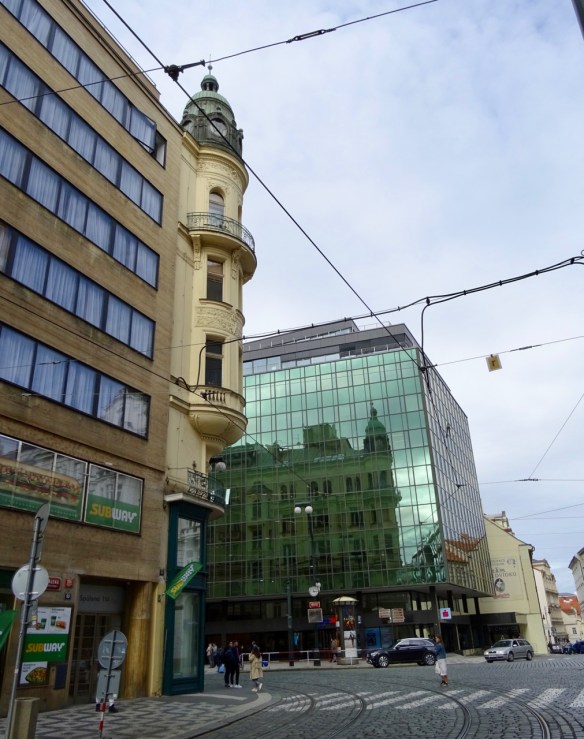
 Walking towards the “Dancing House’ we pass beautiful Art Nouveau buildings with very grand entrances.
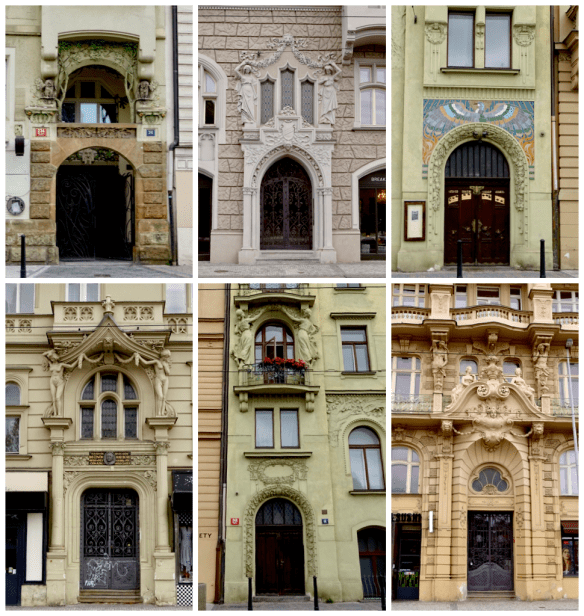 These entrances are on this block of buildings. Although Prague was bombed in World War II it did not suffer the catastrophic damages of Berlin and Dresden. There are so many beautiful buildings with lots of carved decorations here.
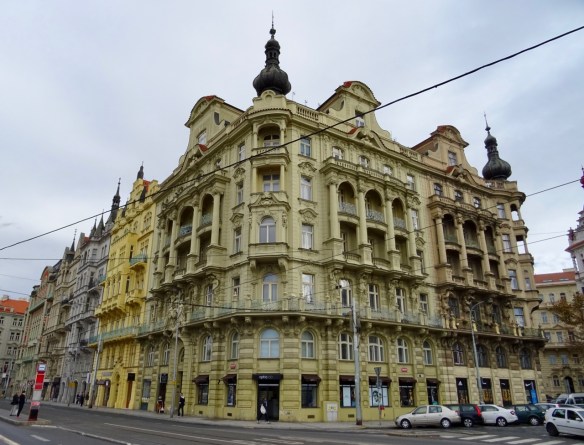 The Dancing House, or Fred and Ginger, as it is nicknamed, was built in place of a building that was destroyed during the war. We think we know which is Fred and which is Ginger. What do you think?
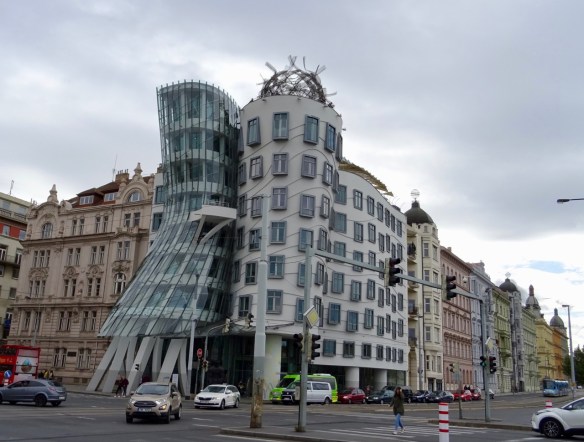 We crossed this bridge and had our picnic lunch in a little park with this view. Prague has lots of trees and parks.
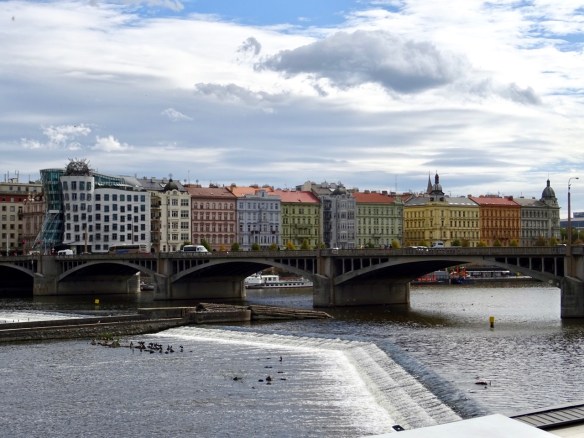 Here ae some more pastel coloured buildings we see on our walk along the river.
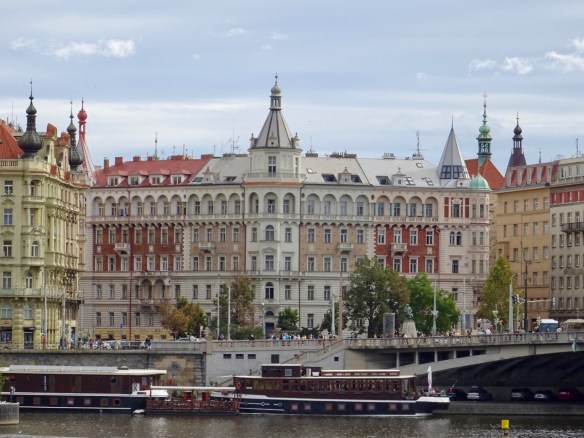 These statues holding up a balcony are quite wonderful.
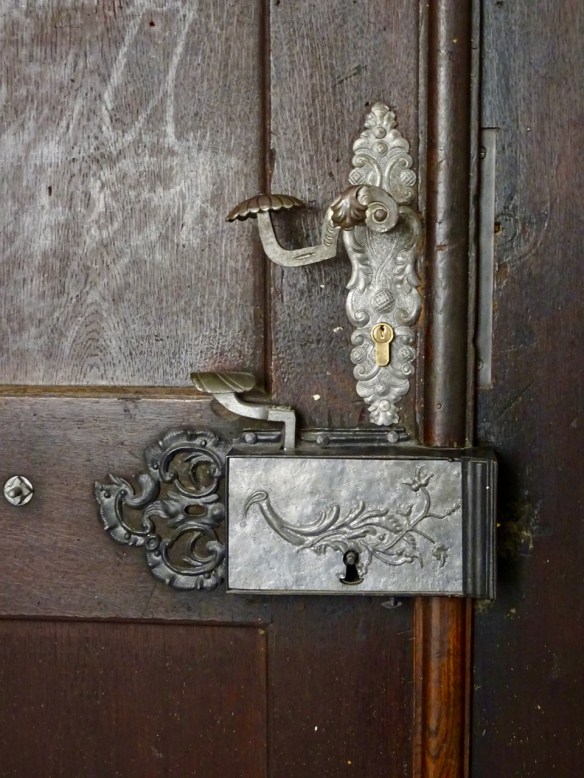
  I think Bob might have been a locksmith in another life. He is always noticing interesting locks.
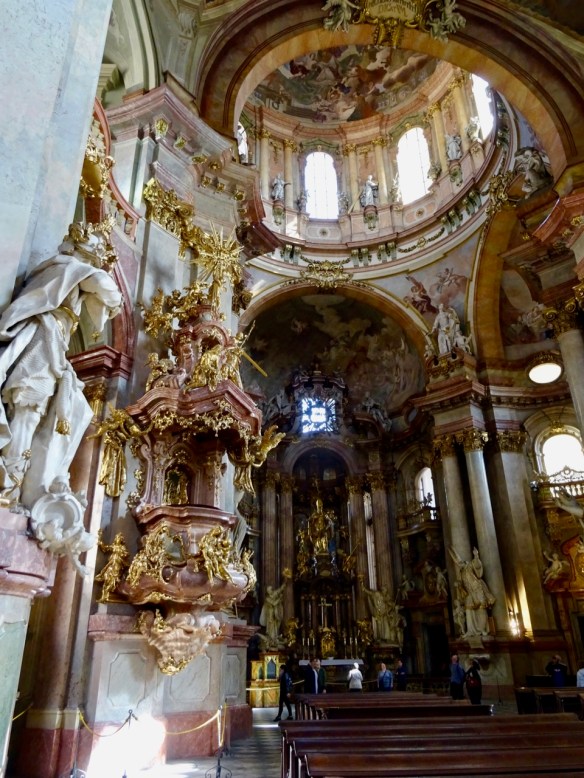
 We arrive at the most famous Baroque church in Prague, St. Nicholas Church, at Old Town Square. The dome has a diameter of 20 m, with a height of over 49 m, making it the highest interior in Prague. The church was completed in 1735, replacing a parish church dating back to 1273. There is so much history everywhere we visit. Canada is such a young country in comparison.
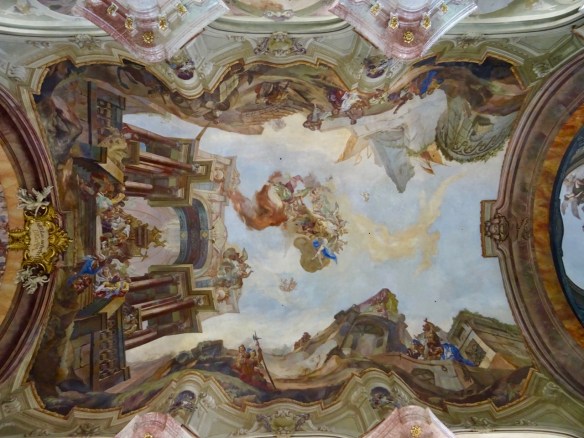
 The ceiling fresco is over 1500 square metres in size and is one of the largest in Europe.
  We climb to the second floor balcony for some great views of the church.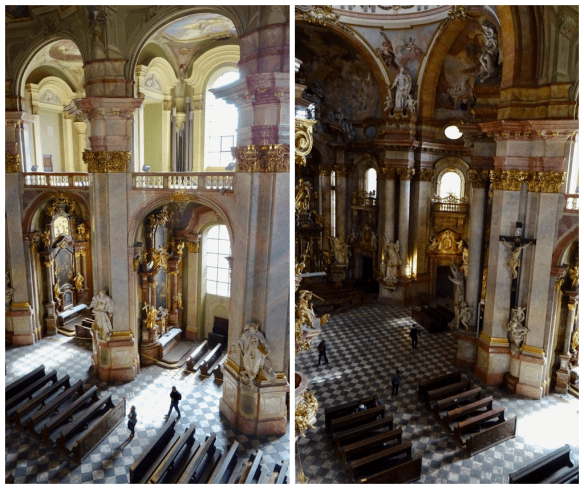
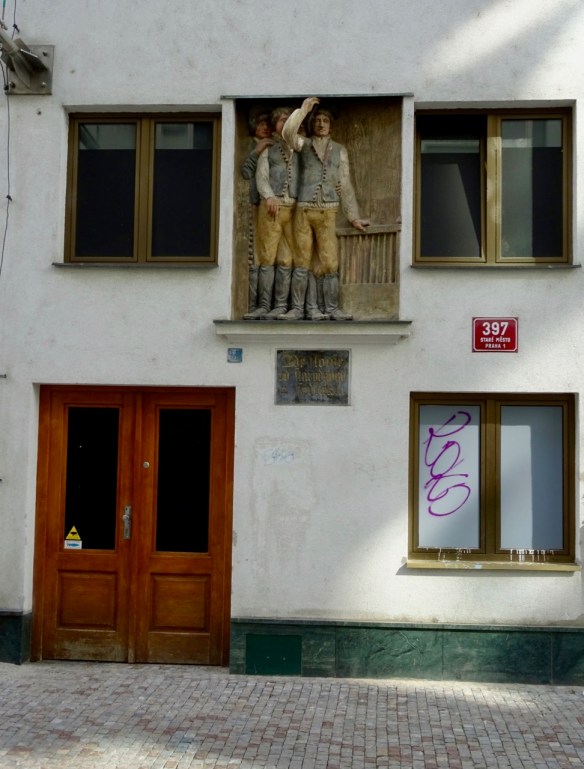
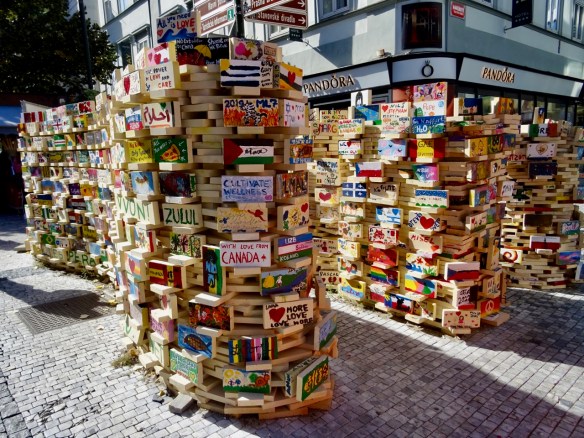
 These painted blocks are a fundraising project for disabled people. You pay for a brick and then get to paint it. We didn’t have time today but I see that someone from Canada contributed a brick.
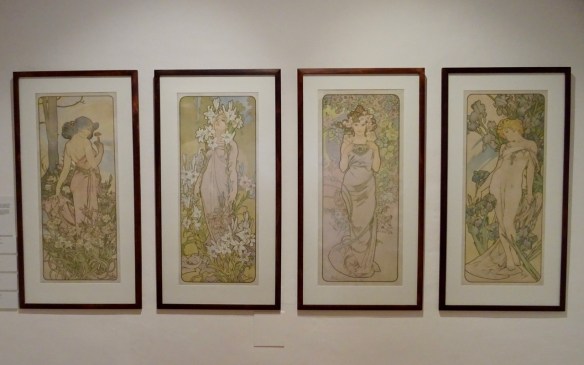
 At the Mucha Museum I learn the Alphonse Mucha’s name is pronounced mooka, not moosha as I thought. We see many of his lithograph works that I am familiar with. The Four Flowers..
 Evening Reverie…
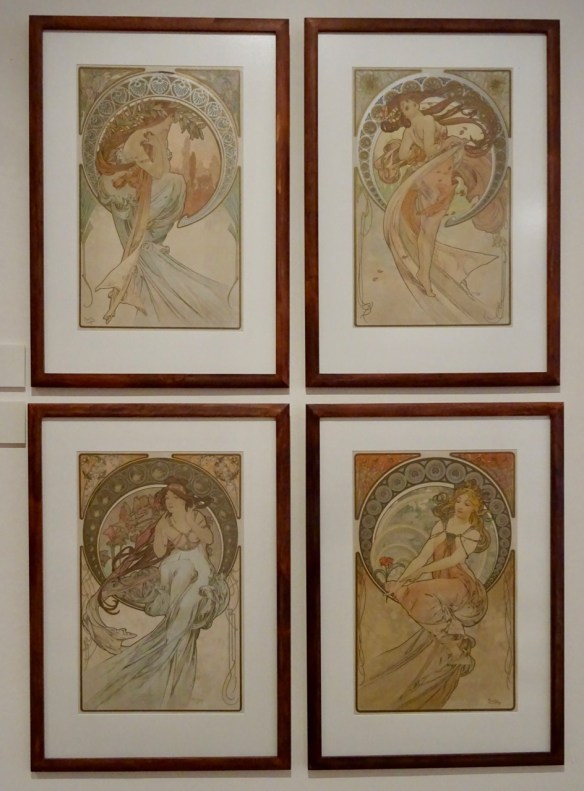
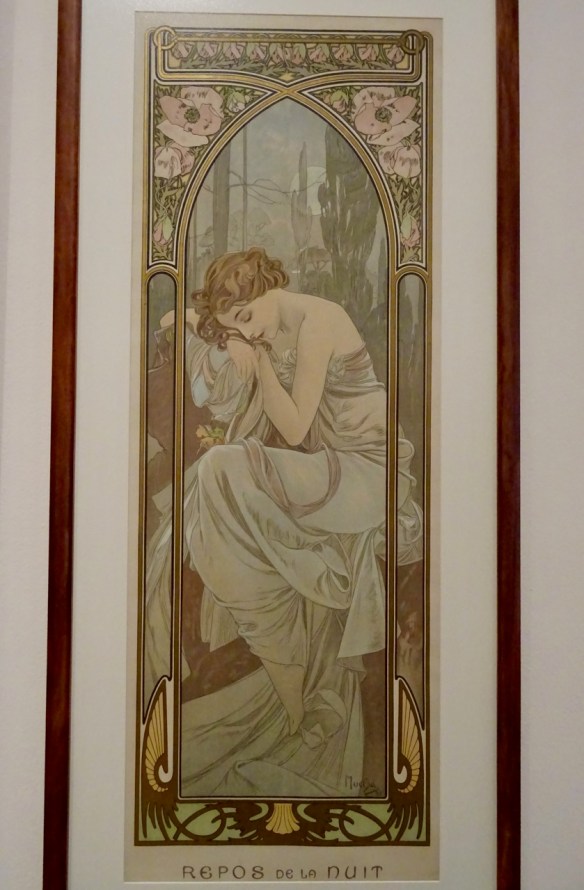 and the Four Arts, which celebrate Dance, Painting, Poetry and Music.
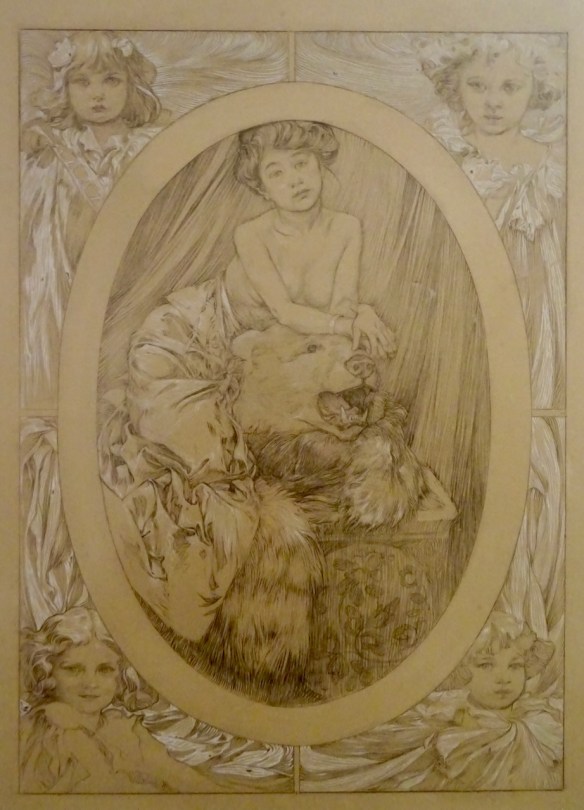
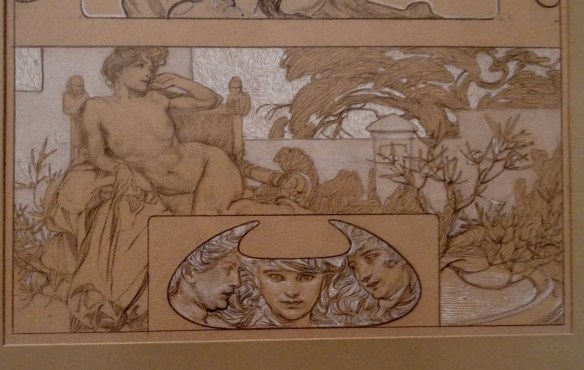
 I particularly loved being able to get close up to some of Mucha’s drawings. Woman on a Bear Skin is drawn with a pencil and a white crayon on a brown ground. It is amazing. A photo does not even begin to do it justice. It was also behind non-glare glass which does not photograph the best.
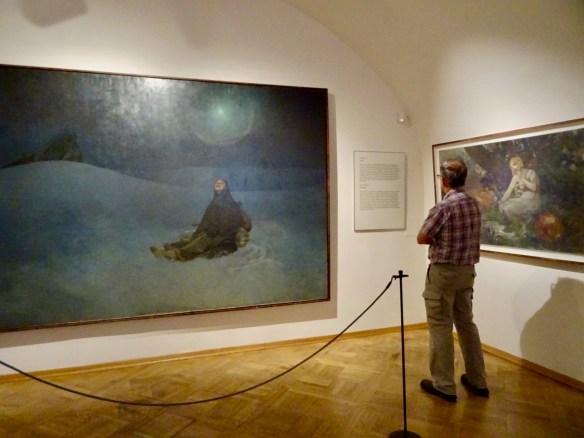
 Winter Night, or Siberia, may have been Mucha’s response to the terrible suffering of the Russian people after the Bolshevik Revolution. There was a famine that killed millions of people. It is difficult to see, but in the upper left of the painting there is a pack of wolves. The peasant woman seems to have resigned herself to her fate. I was not aware of Mucha’s large oil paintings. He completed a series of very large canvases called the Slav Epic, a series of 20 enormous canvases that show the ethnic roots of the Czech people. Unfortunately we weren’t able to visit the Czech National Gallery of Modern Art to see these paintings as it was under renovation.
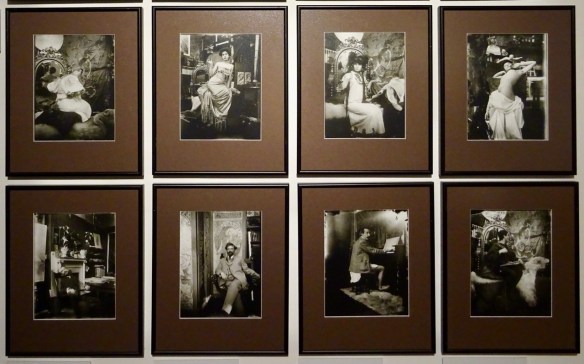
  This collection of photographs was interesting. It showed some of Mucha’s models, and the bottom two middle photos are Mucha in his studio and Gaugin playing the piano…without any trousers!
 Pages of his sketchbooks are on display. I love seeing artist’s sketchbooks. It is a way of understanding how they think about their art.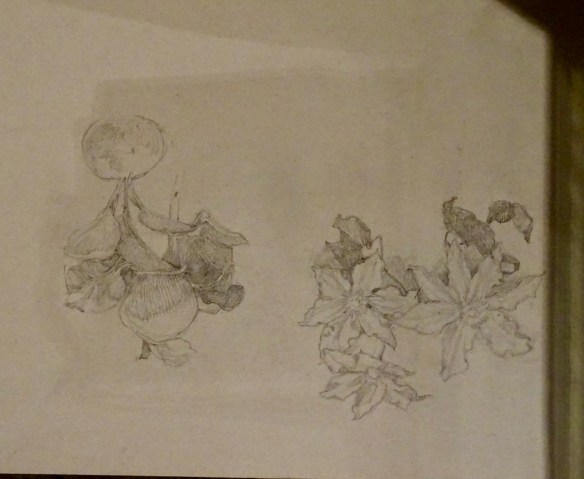
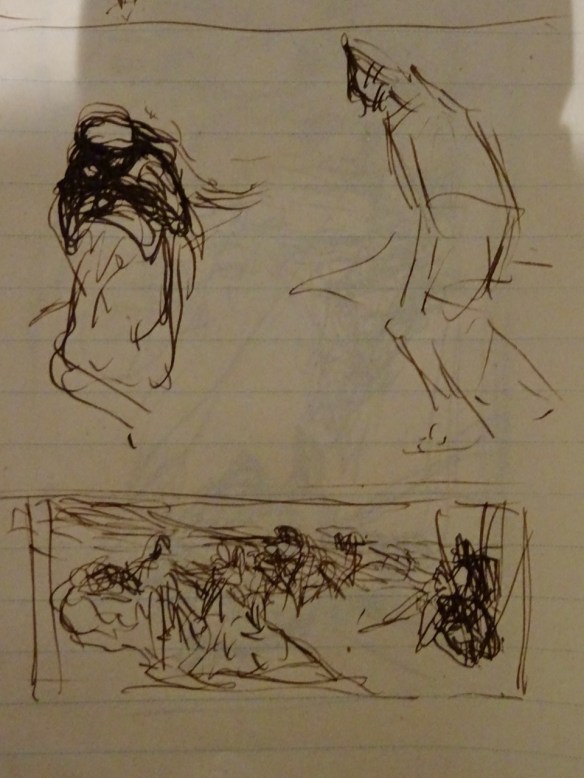
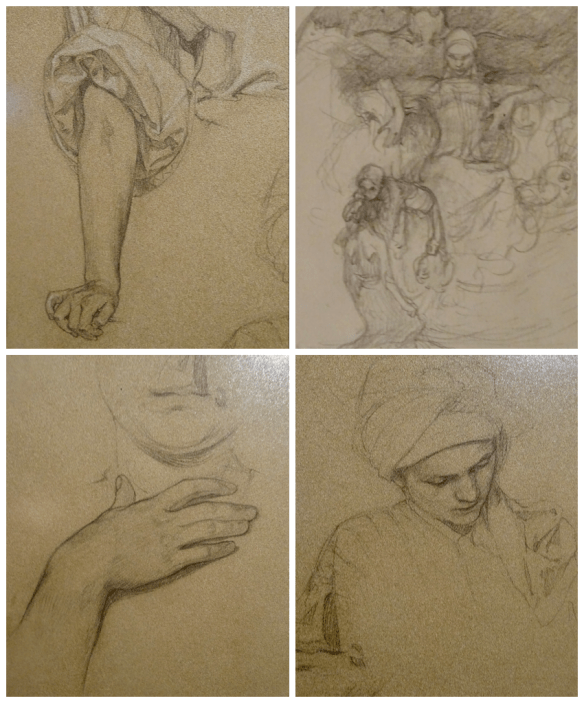 Not all the sketches are detailed drawings. There are some quick gestural studies as well.
 Another study using pencil and white crayon on brown paper. Just gorgeous!
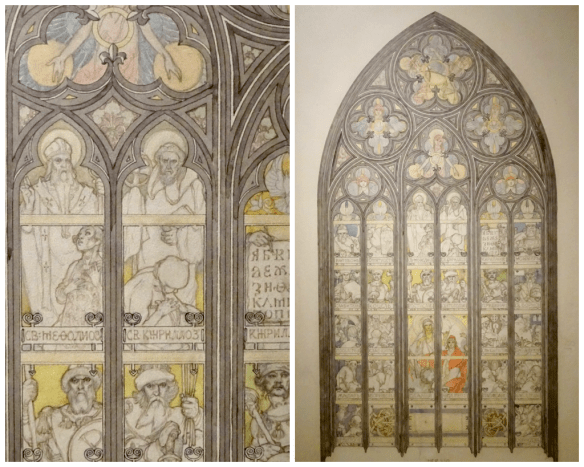
 This is a study for the stained glass window in St. Vitus Cathedral. Mucha was skilled in many areas of artistic expression.
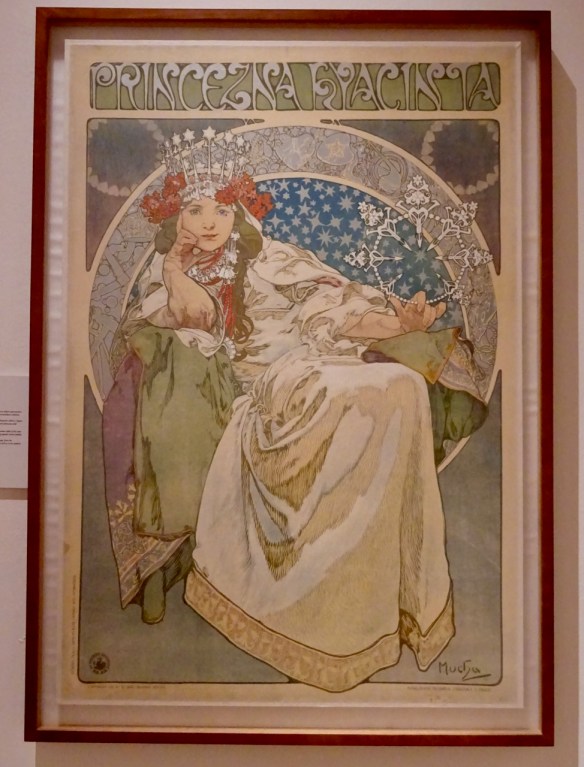
 Mucha created this famous poster for the ballet named Princess Hyacinth. I was happily snapping photos when near the end of our visit a docent told me that photos were not allowed. I was surprised as we have been able to take photos, without a flash, every where else we have been. I am very happy she didn’t see me until near the end of our visit!
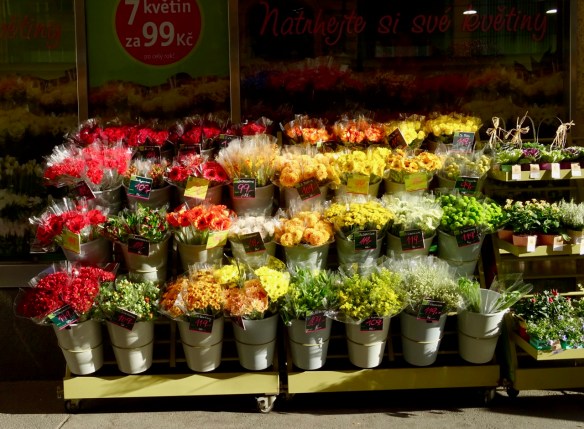
 One of many flower stands in the city. I often see both men and women carrying bouquets of flowers.
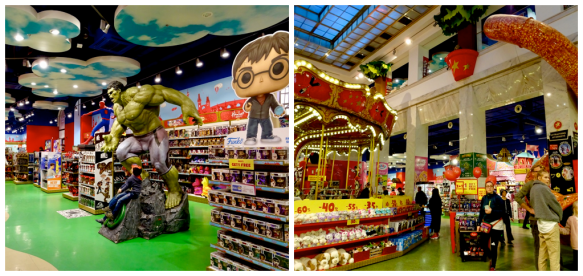
 We saw a toy store so took a peek inside. OMG! it was huge, very noisy and had a full size carousel!
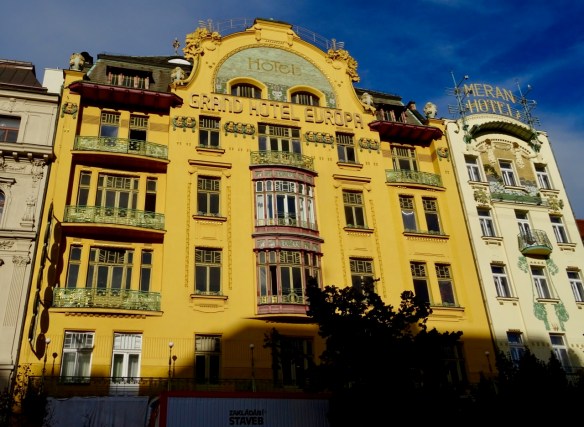
  This made us think of the Hotel Europa we stayed at in Egypt a few years ago. It certainly was not grand and it wasn’t a pleasant experience at all!
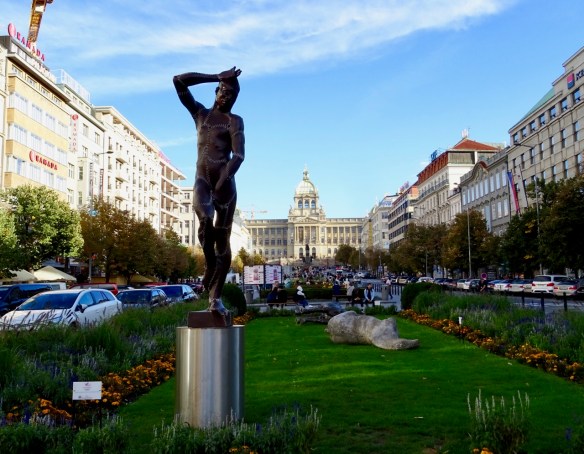
 Walking back along Wenceslas Square I notice that someone has knocked over the horse sculptures we saw earlier. I like this statue, all covered in sewn leather, with his hands sewn to his head and groin. Not sure what it is supposed to represent but it does make viewers pause and contemplate.
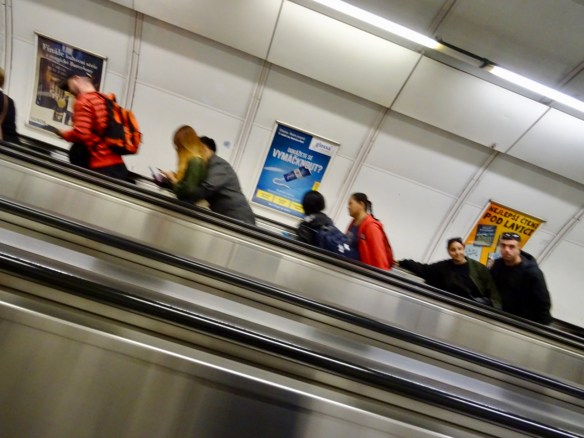
 I keep trying to get a photo that shows how strange people look on these long metro escalators. There is an optical illusion that happens and everyone appears to be either leaning forward or backwards, depending they are going up or down the escalators. Somehow it just doesn’t show that well in a photo. The camera doesn’t see things the same way as our brain does. It is very curious and I comment every time we ride these crazy, long, steep fast escalators.
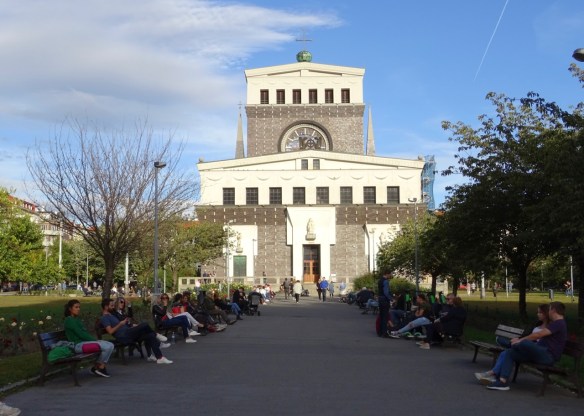
 This church is in the park right beside the metro stop near our apartment. We were curious to see inside but it is under renovation and the doors are locked. We sat and had tea in this park the day after our flight into Prague over a month ago.
 I wanted to get a photo or two showing how people drink alcohol walking down the street, in the parks, and even on the metro (although they aren’t really supposed to drink on public transit). We see that in Prague and it was especially prevalent in Berlin. People walked around with their bottle of beer everywhere. Not what we are used to seeing at home.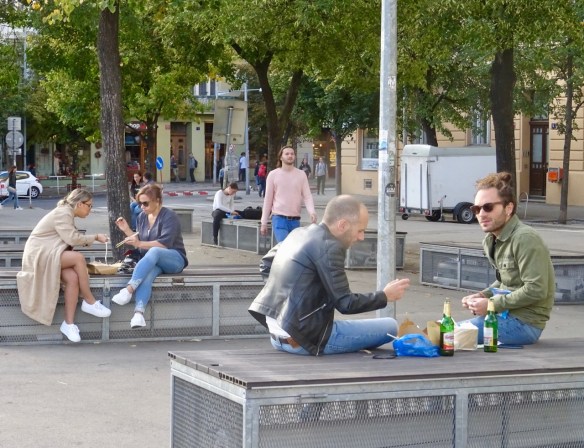
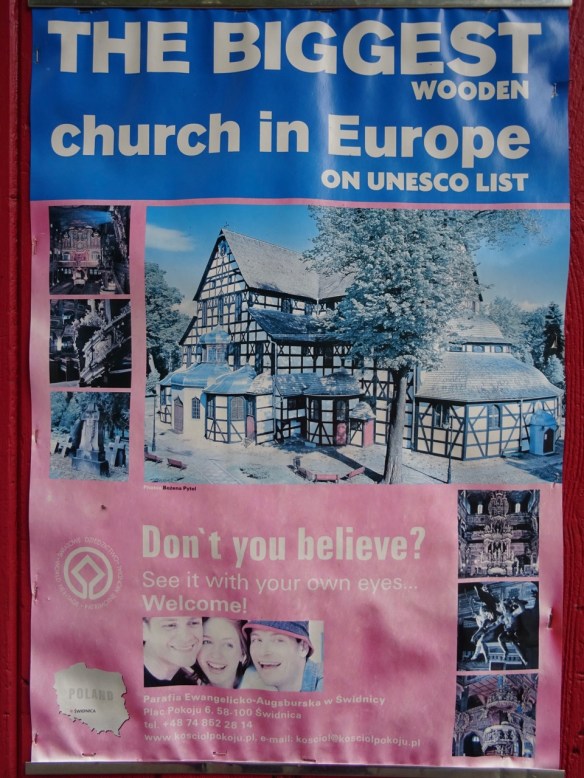
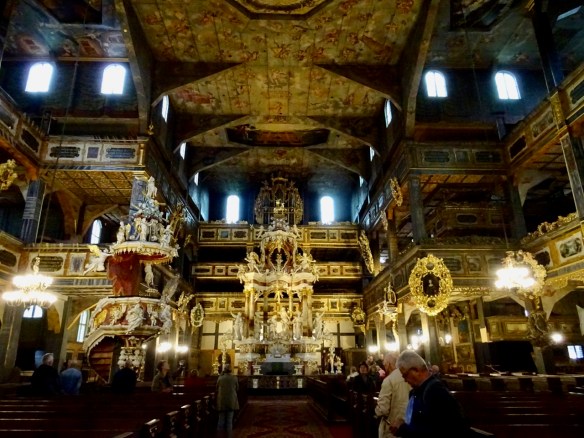
 We walked into this church and we were amazed at the size and ornateness of the interior. This photo is looking towards the altar. The walls and ceilings are decorated with painted panels added after the construction of the church was completed in 1657.
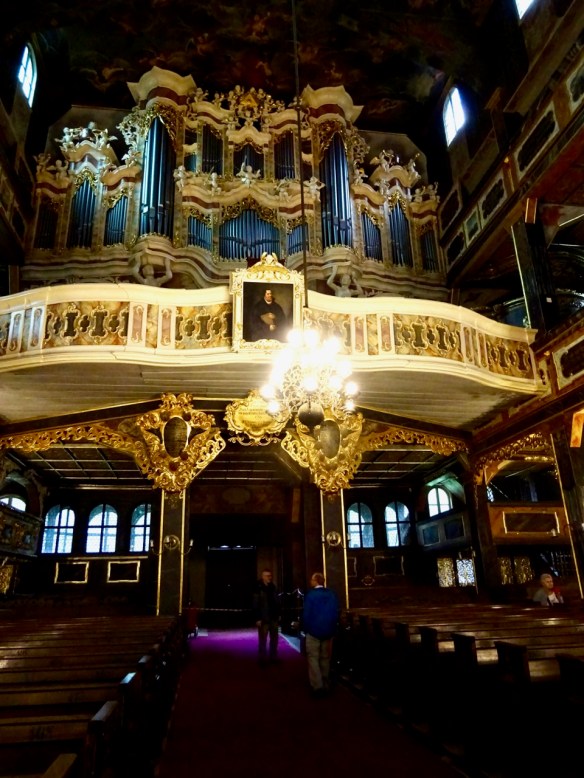
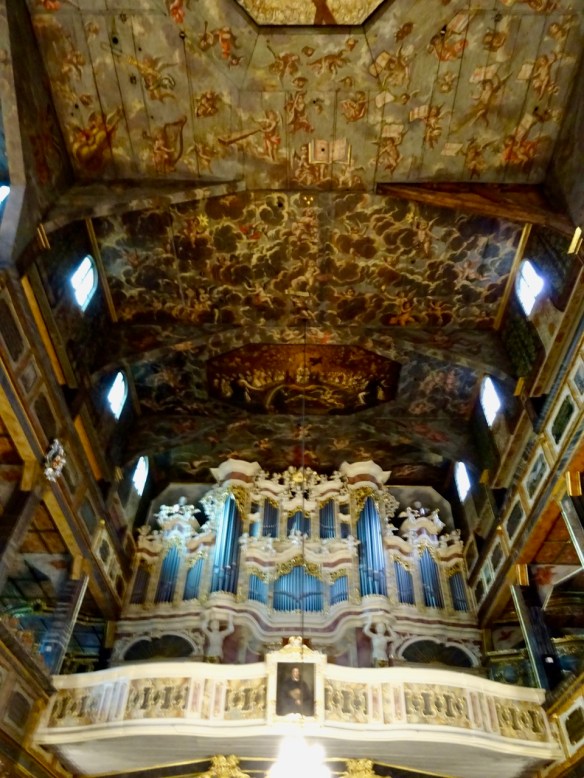
 The back wall with the organ.
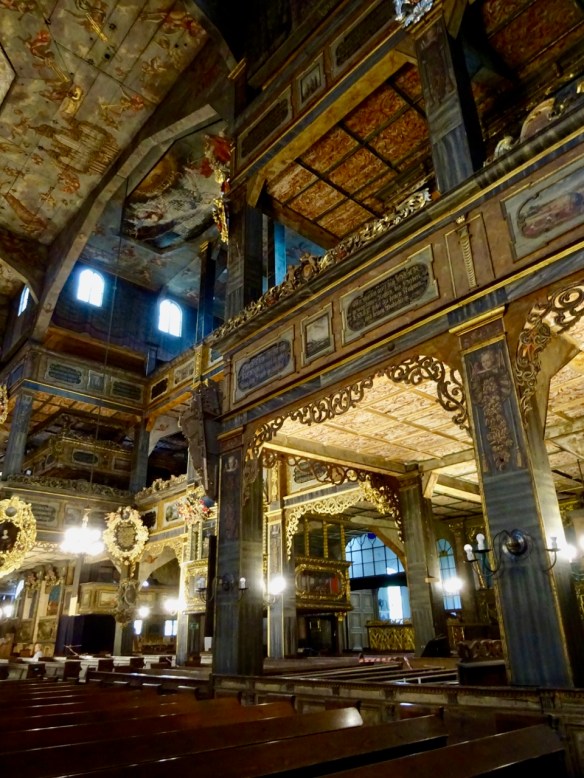
 A view of one of the sides of the church with it’s two tiers of balconies. The spaces between the wall timbers were filled with clay and wattle.
 The pulpit is extremely ornate.
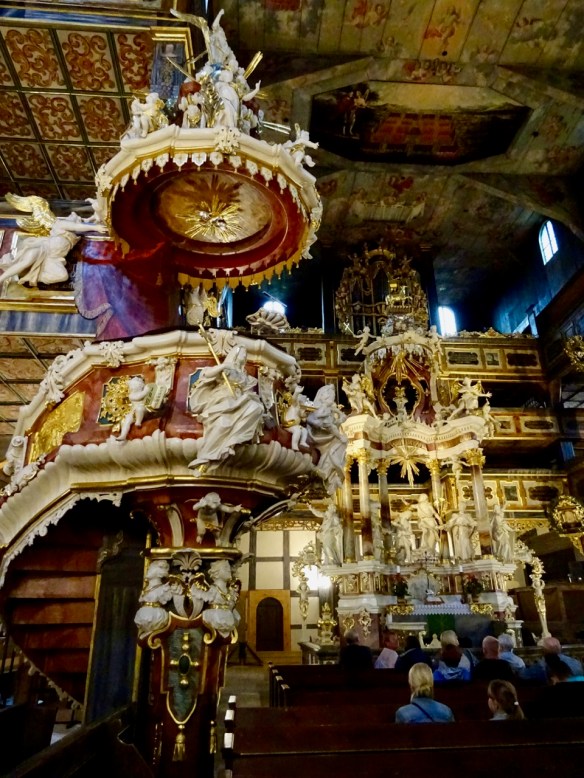 A view of part of the painted ceiling.
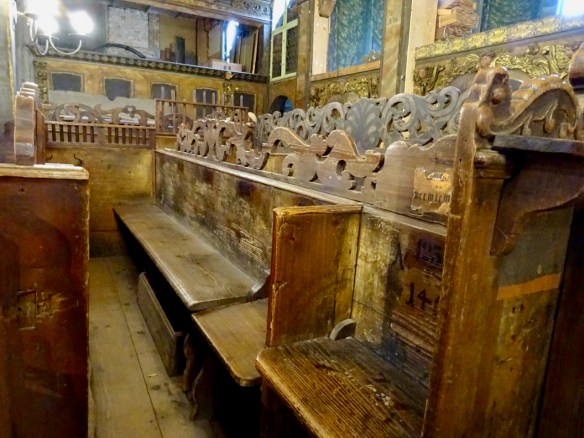
 I loved the old pews with their carved backs and worn seats.
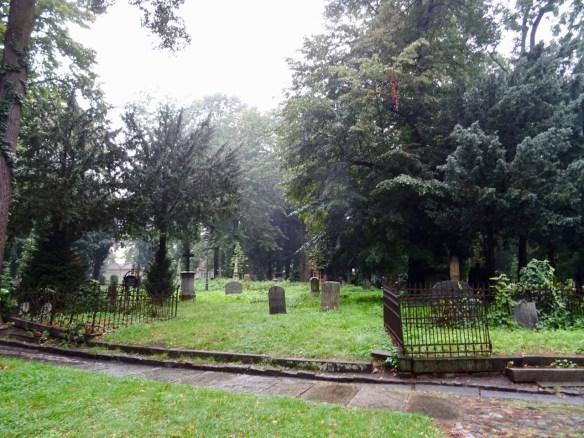
 There is a cemetery surrounding the church.
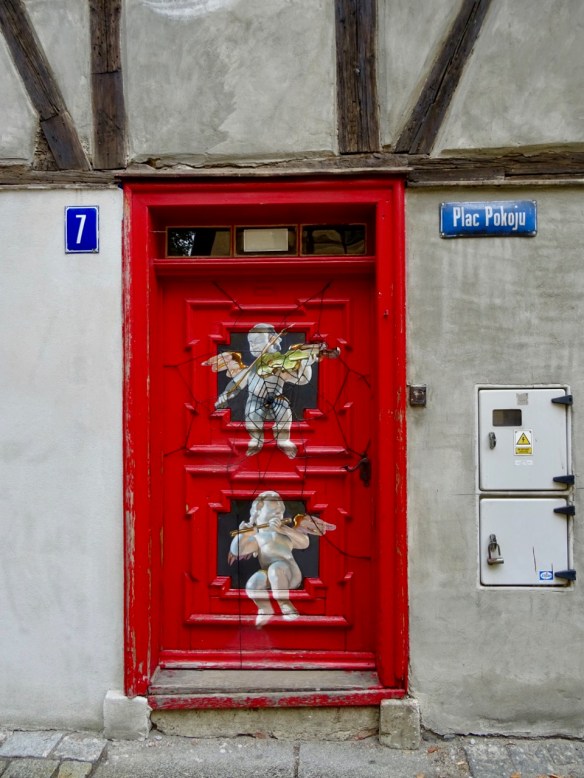
 As we walked back to our car we passed this interesting door. Makes me curious about who lives here.
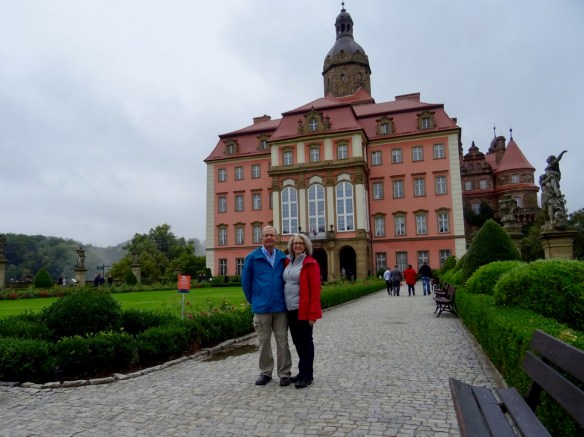
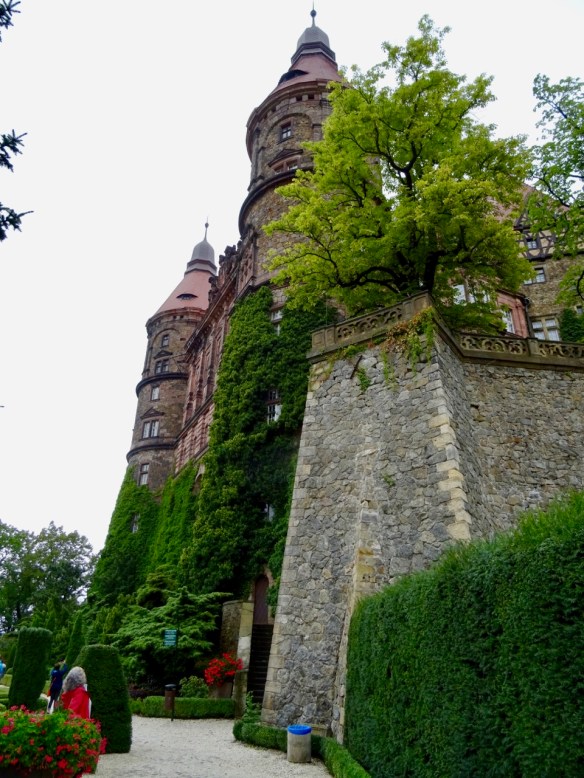
 Next stop on our day trip is the Książ Castle, the third largest castle in Poland which dates from the 13th century.
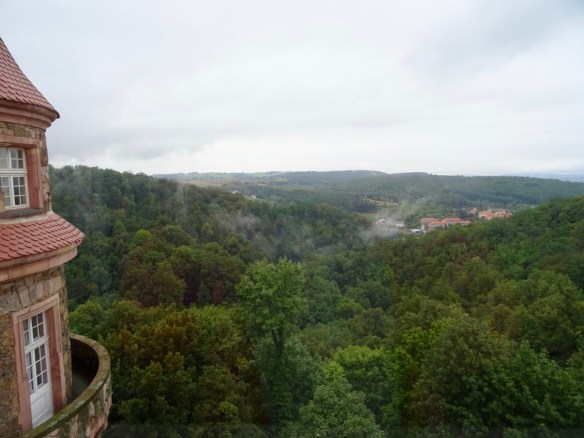
  One of the the views from inside the castle.
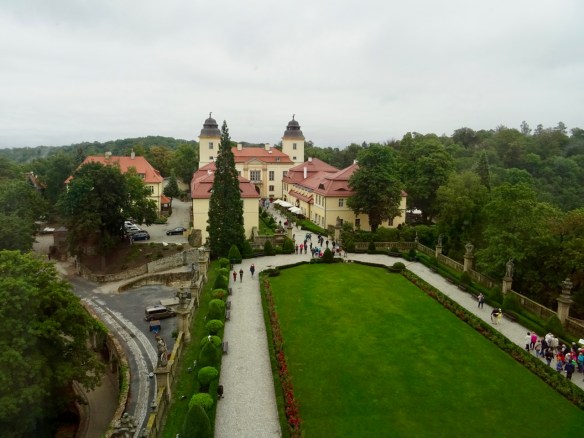
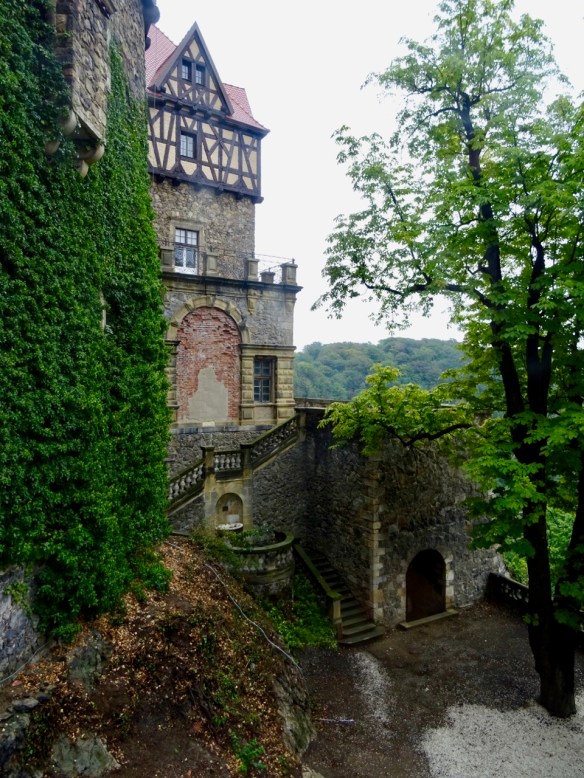
  The entrance buildings and front grounds of the castle.
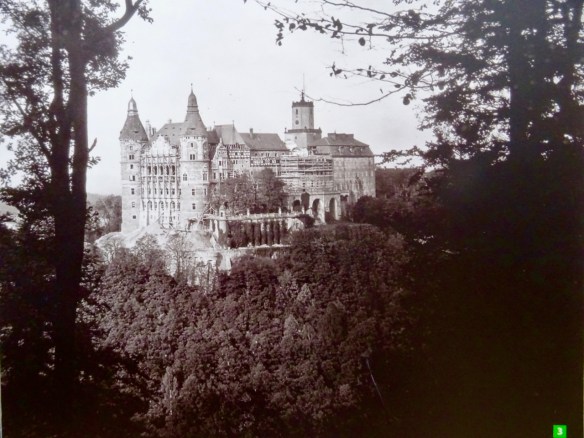
 An old photo showing the castle atop an impressive rock cliff. It has been destroyed and rebuilt and expanded various times and in different styles (from Gothic to Baroque and neo-Classical). The latest family to reside there, was the Hochberg family, one of the richest and most influential families in Prussia. In the 14th century they transformed the original defensive castle into one of the most beautiful residences in this part of Europe. The Hochbergs lived there for many generations, until 1941, when it was confiscated by the Nazis.
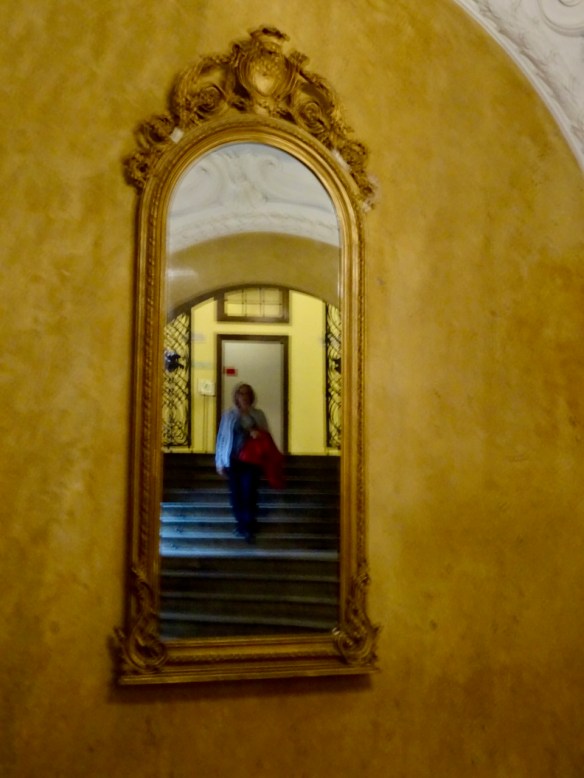
 Bob caught my reflection in this old mirror.
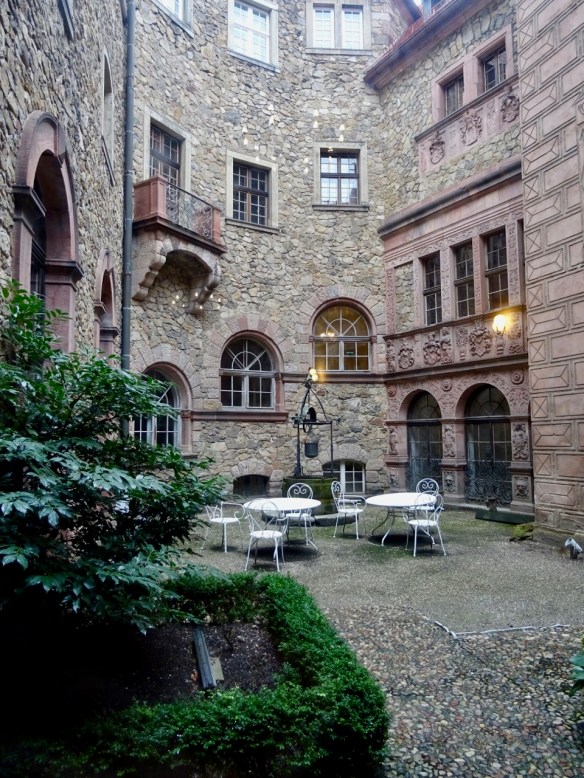
 The Black Courtyard is decorated with the coats of arms of the castles many owners.
 We walked through many halls, some simple…
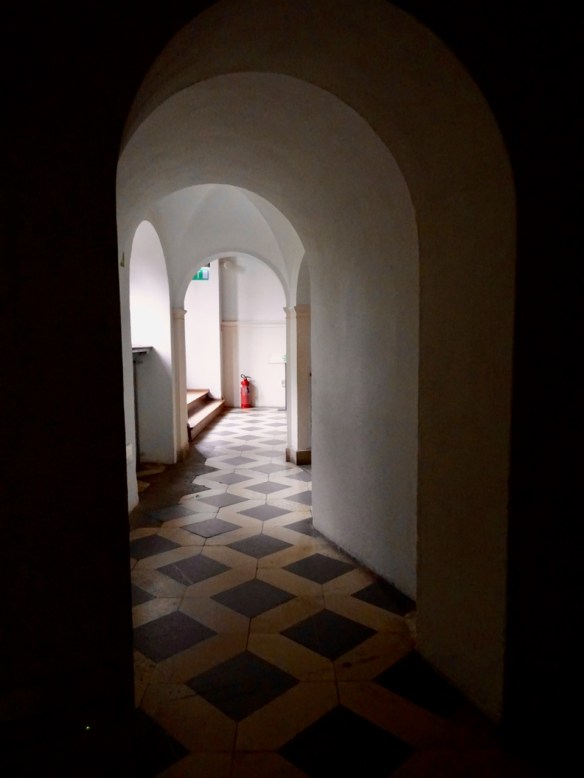 and some very ornate. I suppose a castle with over 400 rooms needs lots of hallways and stairs, and we did climb lots of stairs.
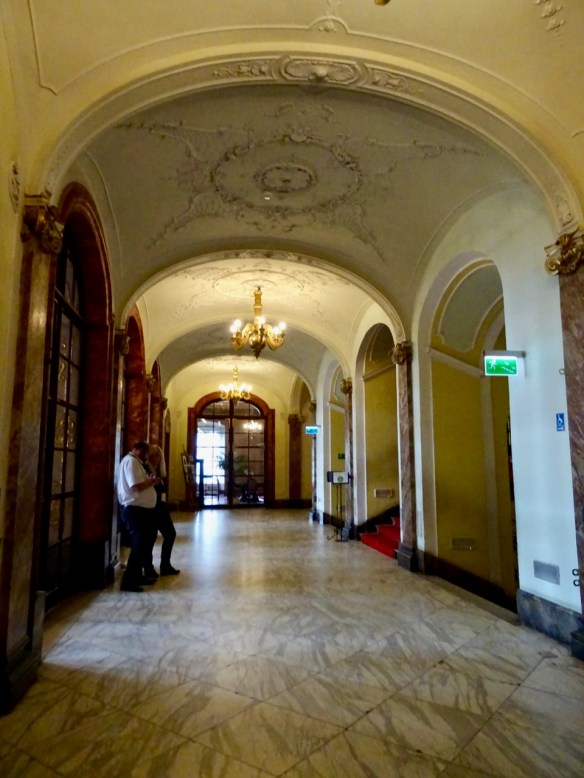 Another view out one of the castle windows of the Chestnut Terrace with four large chestnut trees.
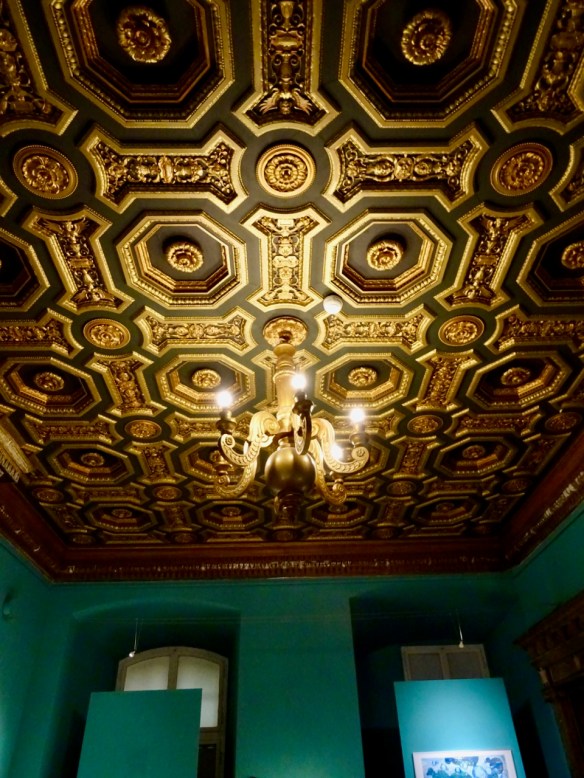
 As always, we must remember to look up. So many of the ceilings are ornately decorated.
 There was an exhibit of blown glass in some of the rooms and another view down one of the many hallways.
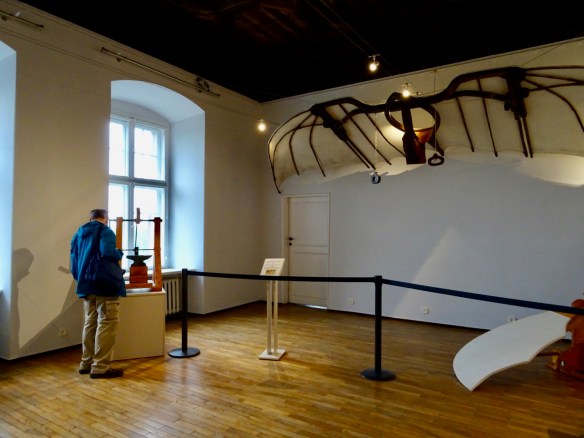
 We weren’t able to see the Last Supper when we were in Italy two years ago (we didn’t know you had to buy tickets far in advance) but there is a Da Vinci exhibit here in the castle with a replica. Not as good as the real thing but interesting none the less.
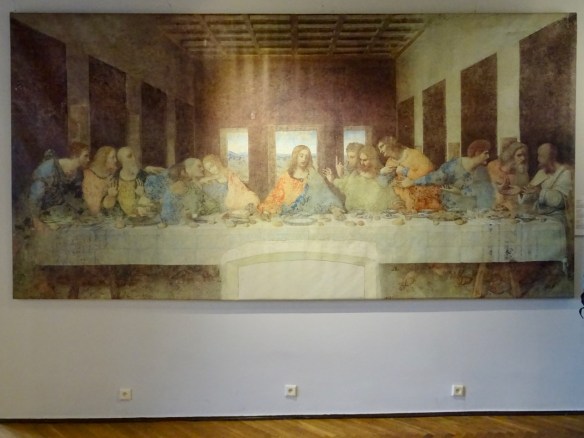 There were replicas of many of Da Vinci’s paintings, including the Mona Lisa, and models of some of his inventions.
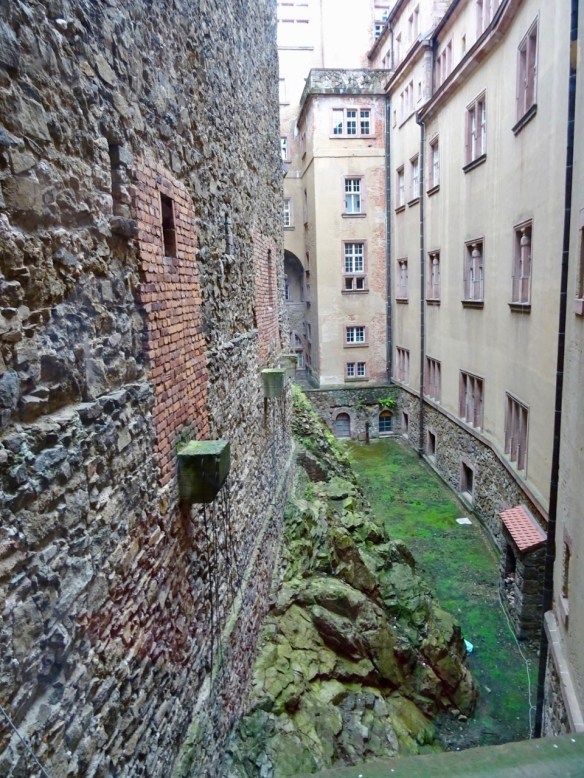
 Looking out one of the windows we get an idea of some of the renovations and reconstruction that has taken place over the centuries. It is quite a convoluted building.
 One of the restored and decorated rooms. The Nazis stripped the castle of its furnishings and paintings and it is just now being restored.
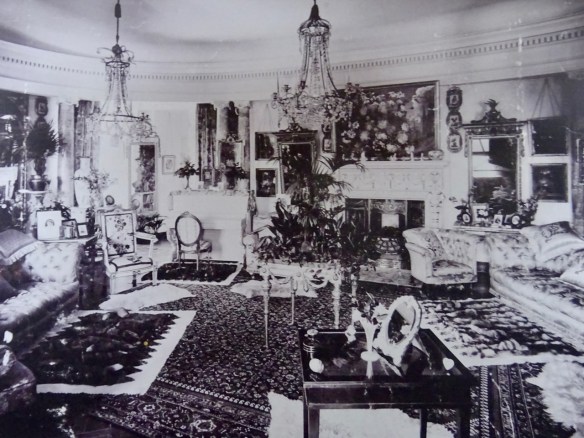
 A photo showing a much more elaborately decorated room than we see today.
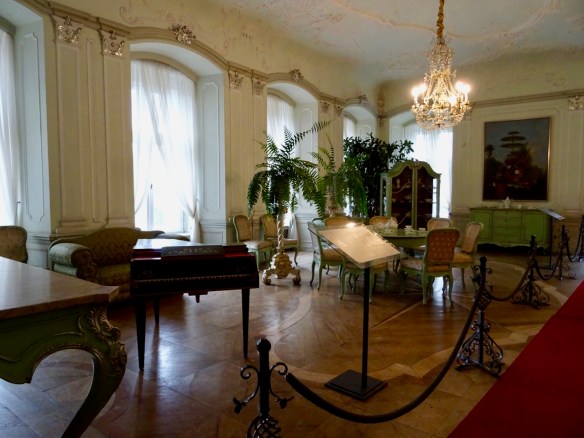
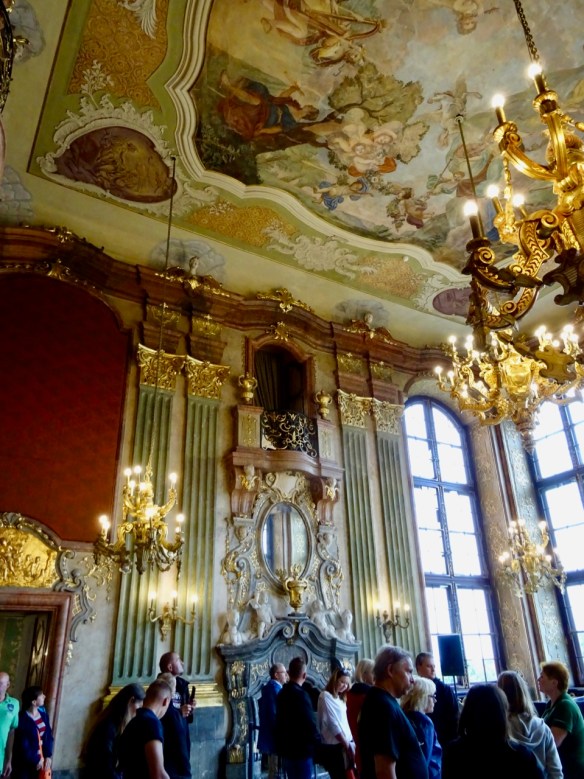
 The Maximilian Room has been restored to its former glory. There is a balcony on either side, one for the prince’s apartments and one for the princess’s apartments, that overlook this elegant room.
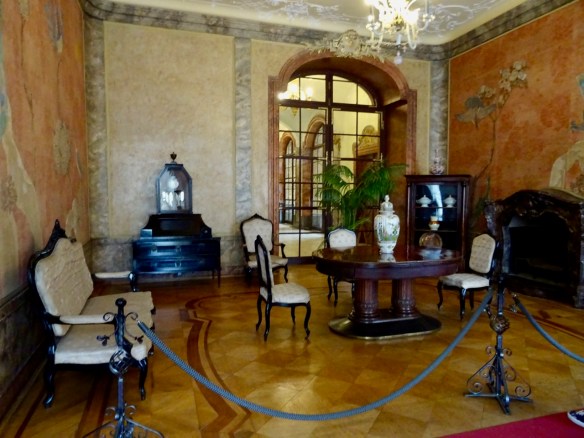
 And what castle would be complete without a Japanese influenced room. They were very popular.
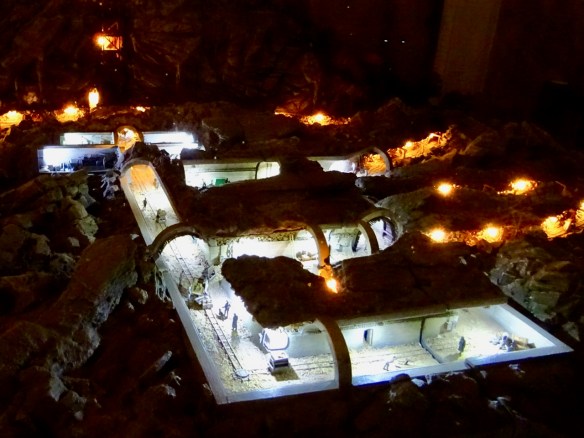
 “The castle became an important part of the
  As we finish the tour of the castle, we are led out to the gardens and terraces surrounding the castle.
 The grounds are beautifully maintained.
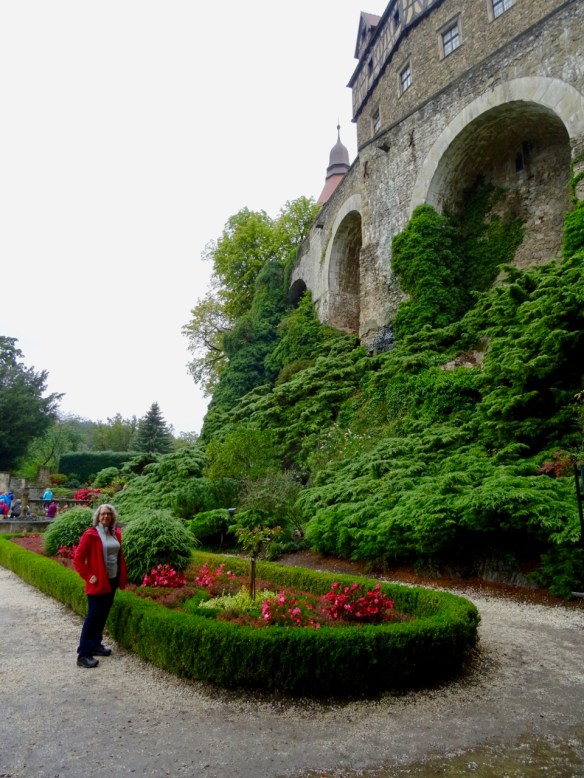 An interesting view of the castle.
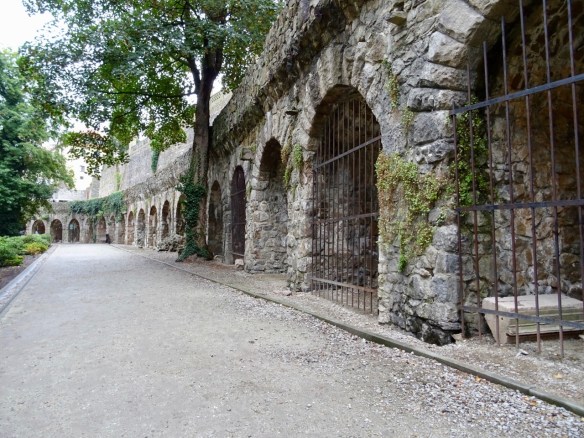
 We have no idea what all these small arched nooks with their iron grates are.
 As we walk back to our car we pass a pond with blooming water lilies.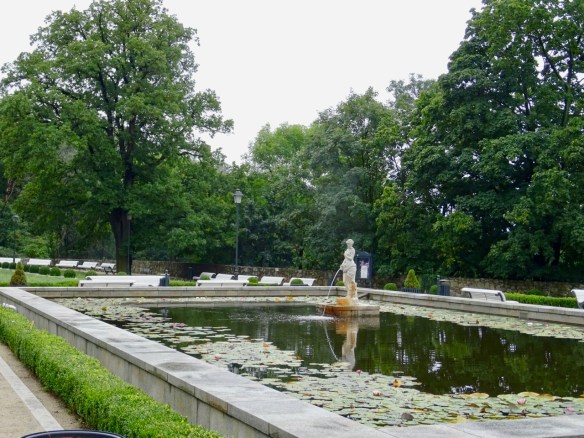
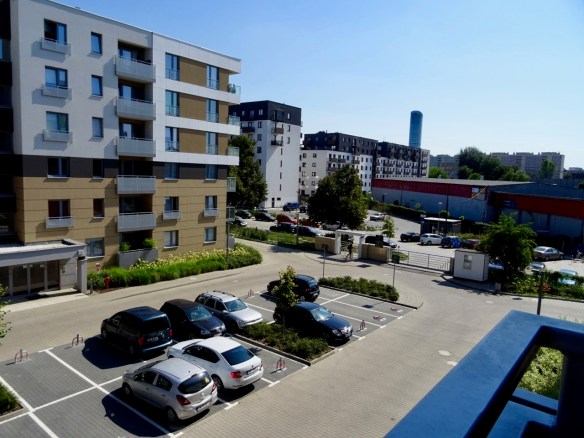
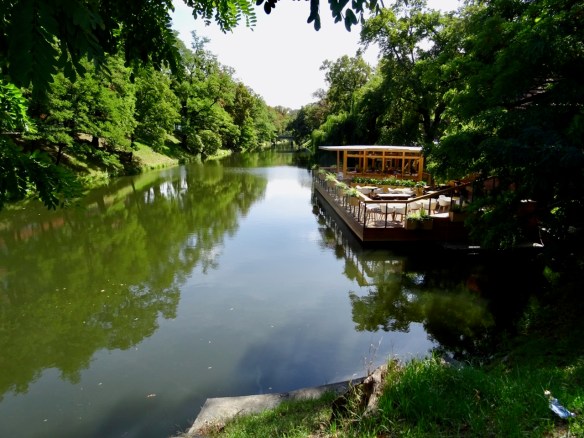
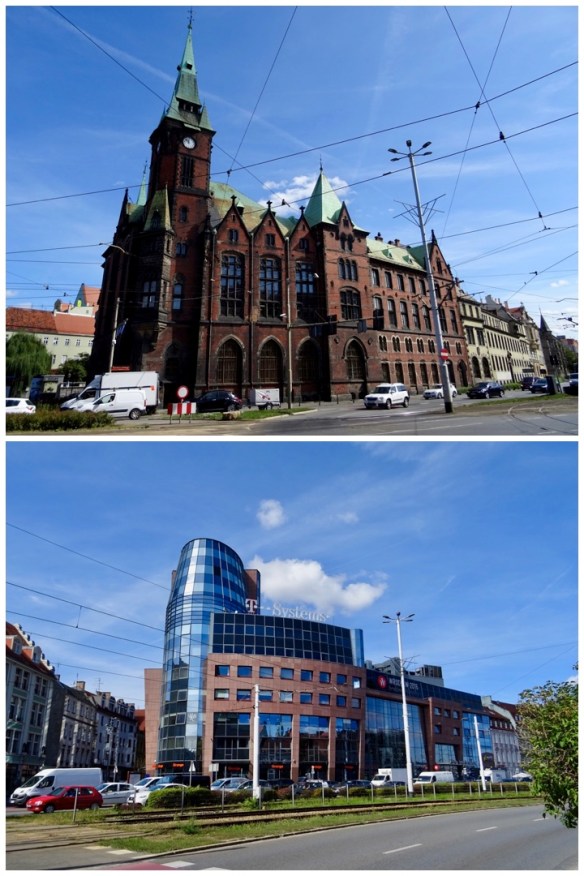 Here’s how big items get delivered!
 Wroclaw has an ever growing populations of gnomes. In fact, our guidebook states “the little buggers are currently rumoured to be running rampant to the score of over 300 making it literally impossible for us to try to keep track of them!” I think they are delightful and I am happy to make their acquaintance .
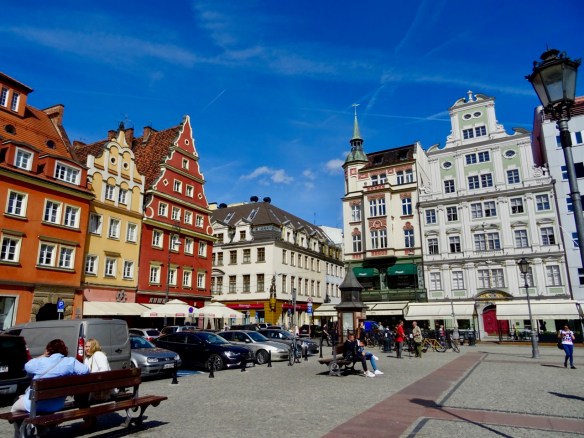
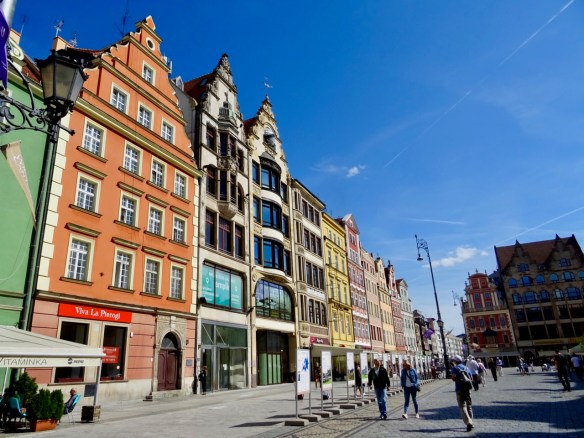
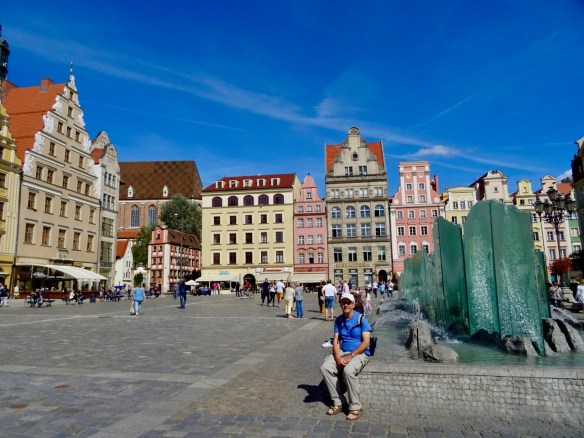 and more tenement houses in the town square.
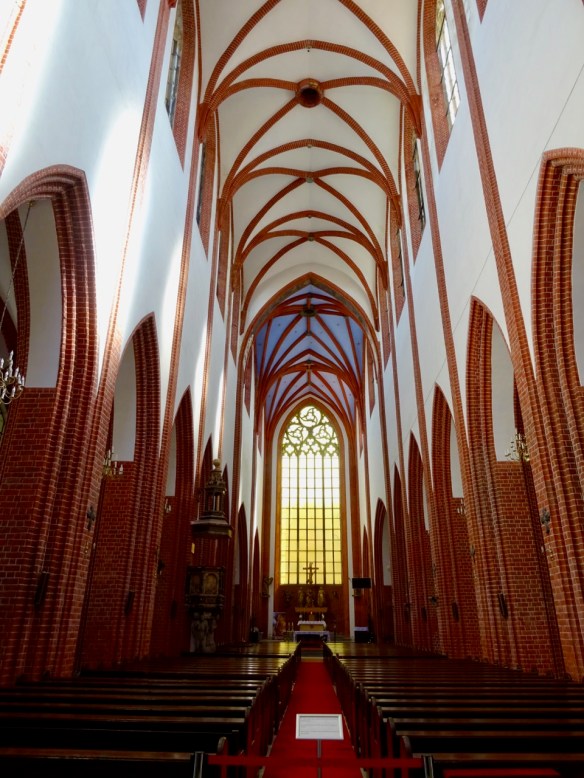
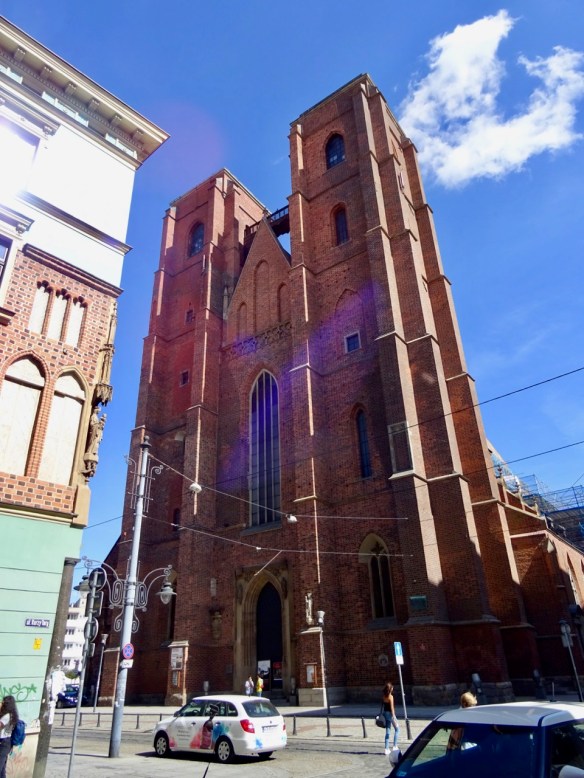
 The interior of St. Mary Magdalene’s Church which dates from 1330.
 We climb 147 steps up to the walkway between the two towers. In times past women suspected of being witches were forced to cross this walkway (there were no railings then) and if they made it across safely they were branded as a witch. If they fell to their death, then they were innocent of the crime of being a witch! You certainly didn’t want to be accused of witchcraft! I am very glad there are railings now and I meet another couple of gnomes.
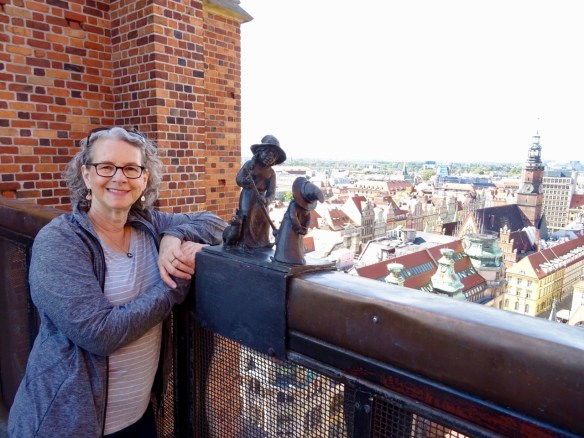 We have great views of the city from up here.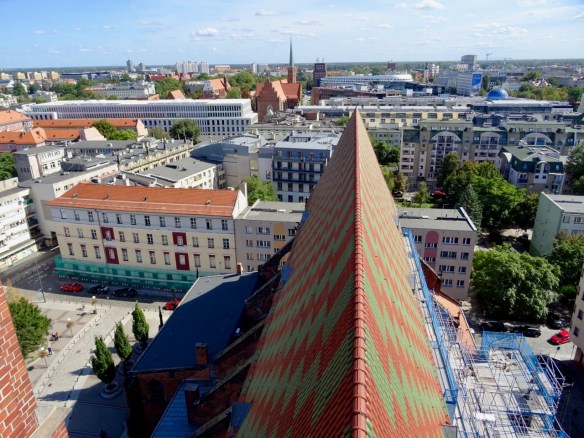
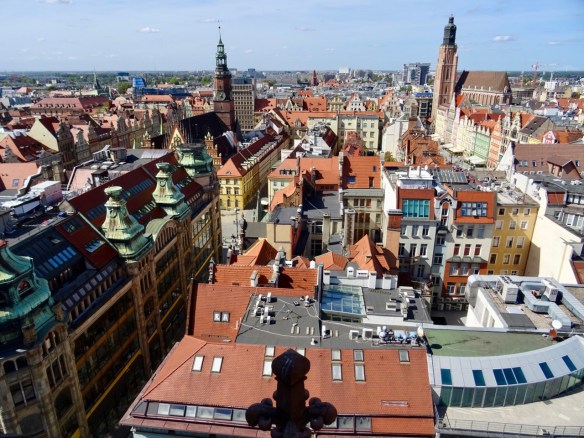 Here is a view of the walkway, way up there between the two towers.There were steeples on these at one time, not sure if they were destroyed during the war?
 More ornate colourful buildings.
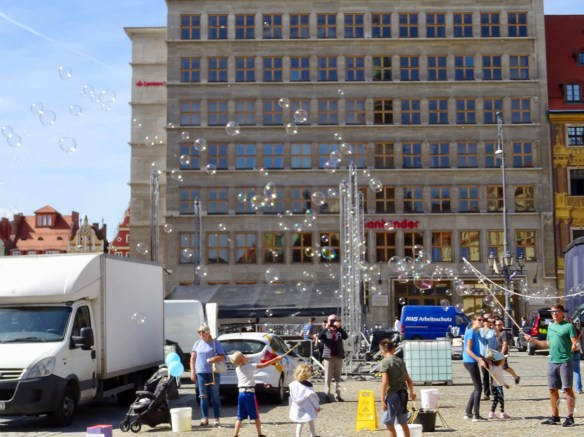
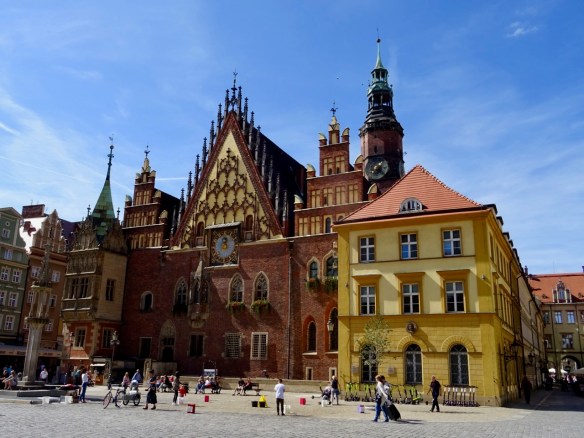 I wish I knew the recipe for the bubble mixture this guy was using! He made hundreds of bubbles at a time with his string between two sticks. Kids had such fun chasing all the bubbles.
 We found quite a few more of these little fellows, on doorsteps, or tucked into corners.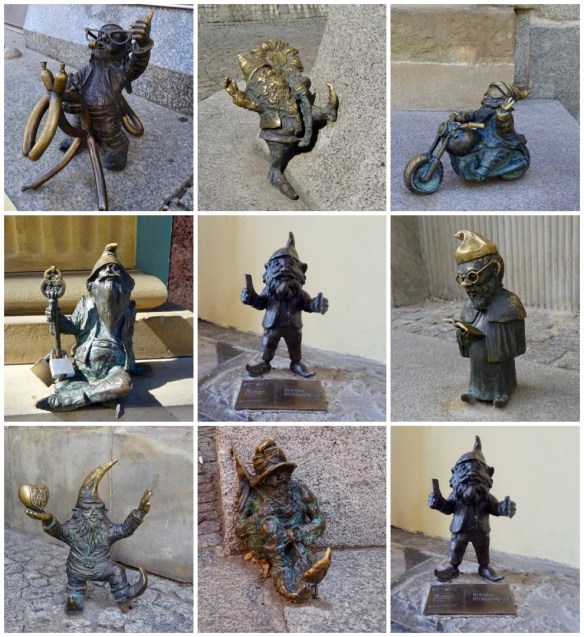
 The two little houses in the corner called Hansel and Gretel are the only two houses left of streets that used to surround a cemetery. The cemetery closed in 1773. I wonder where the graves went?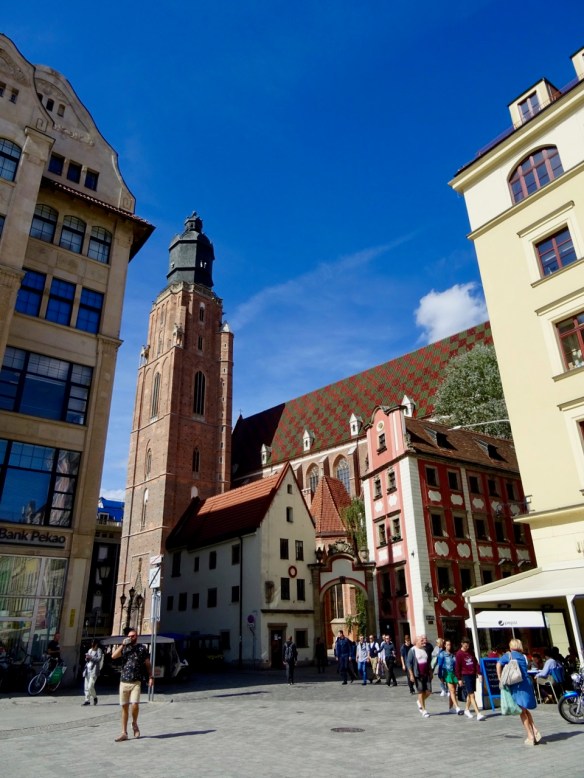
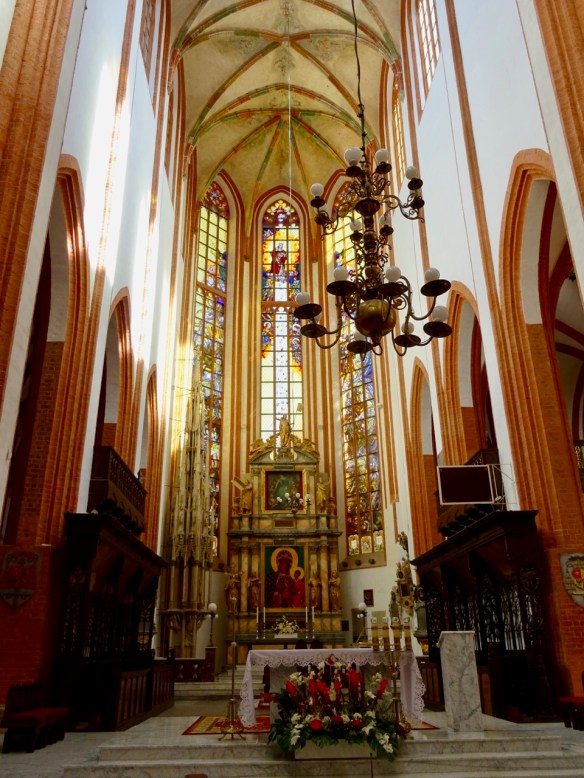
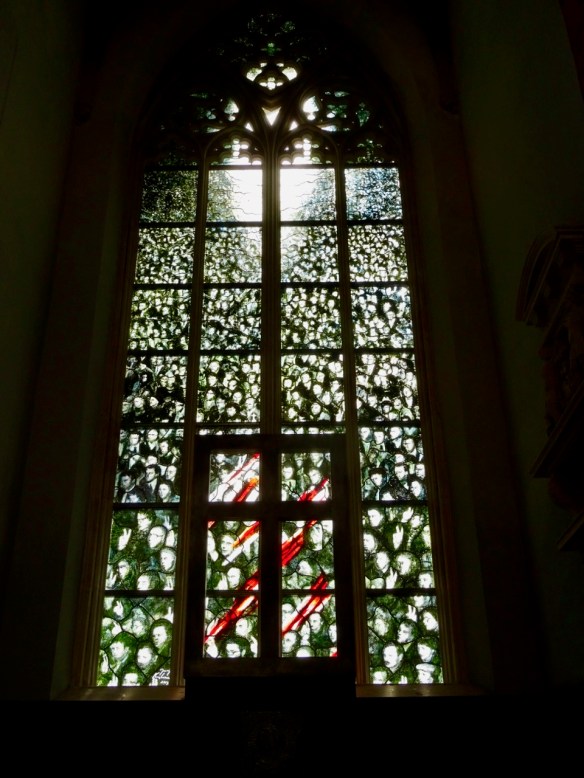
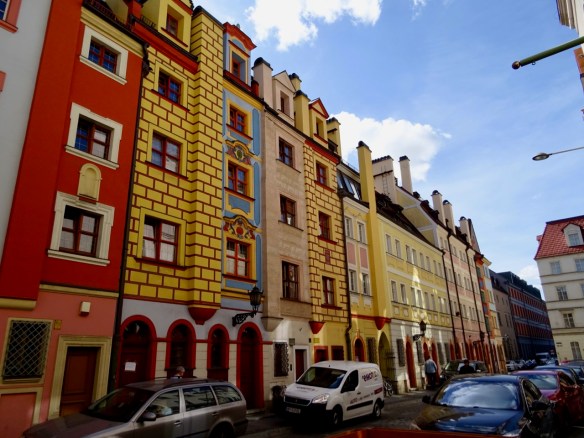 and more busy gnomes.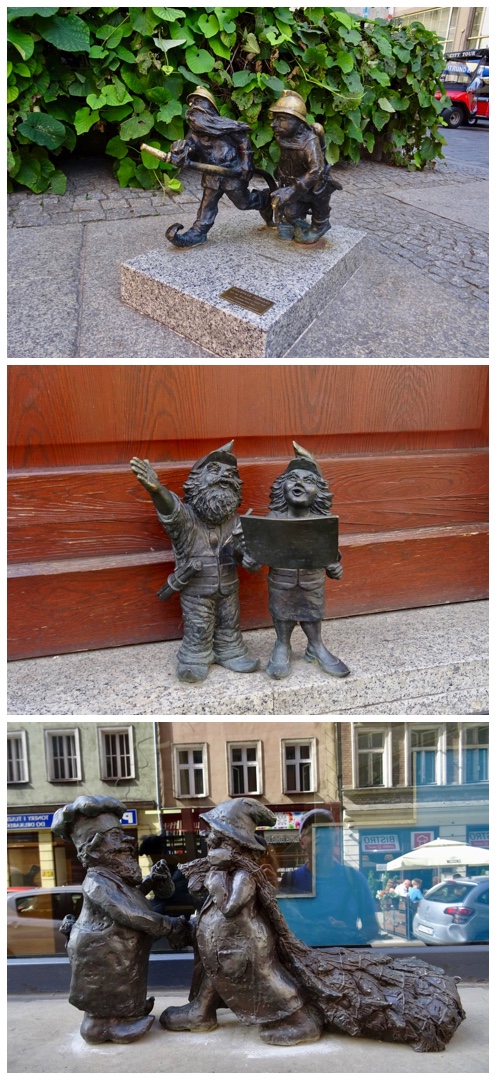
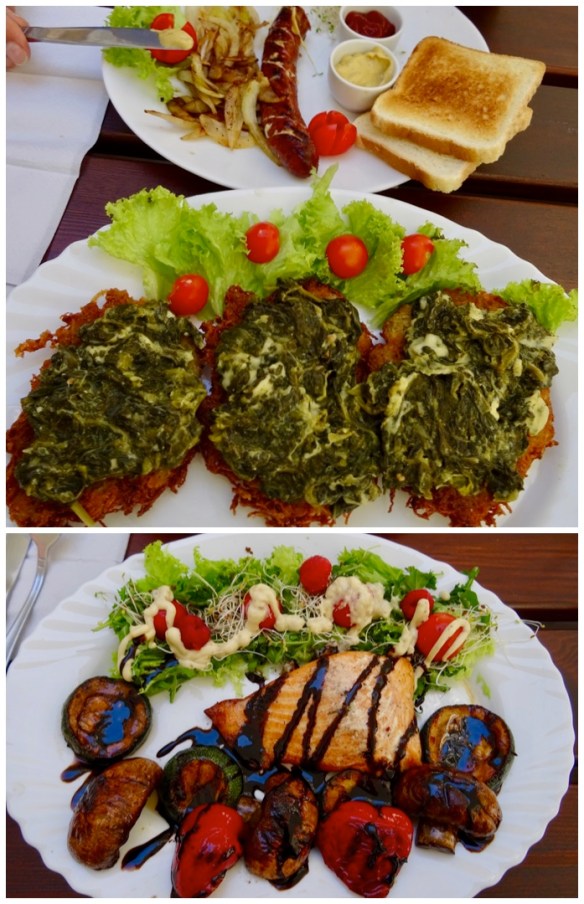
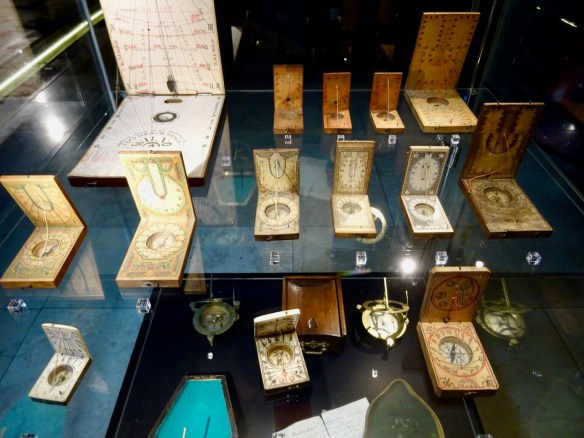
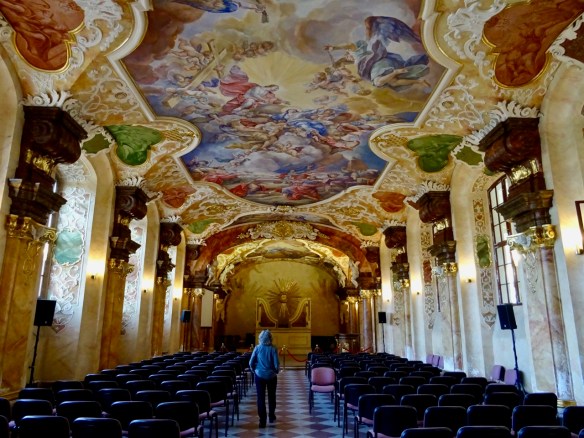 and an interesting collection of artifacts. This is a chart for determining eye colour.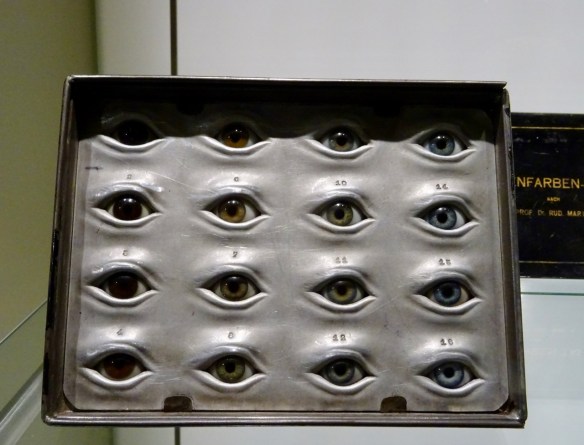
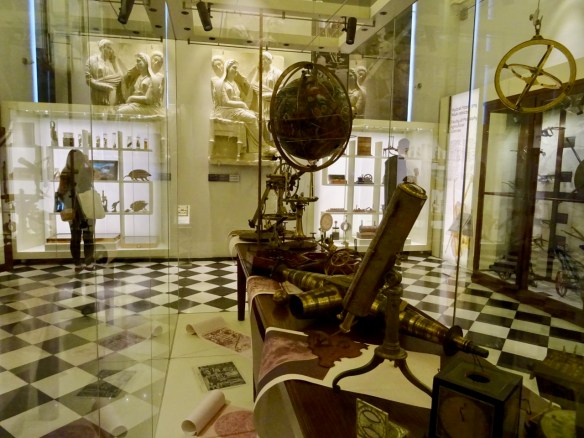
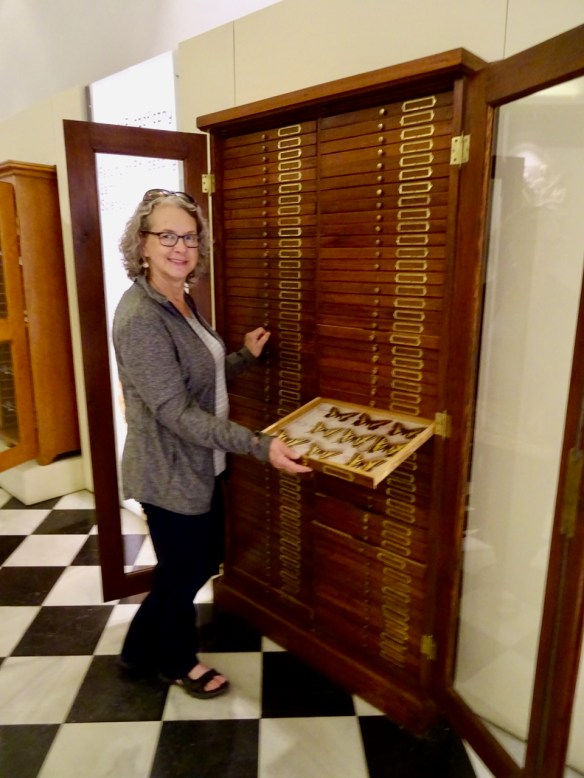 The Music Hall is under restoration but we are allowed a peak inside.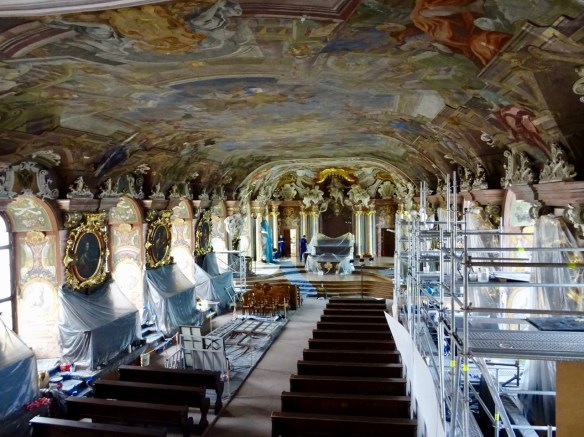
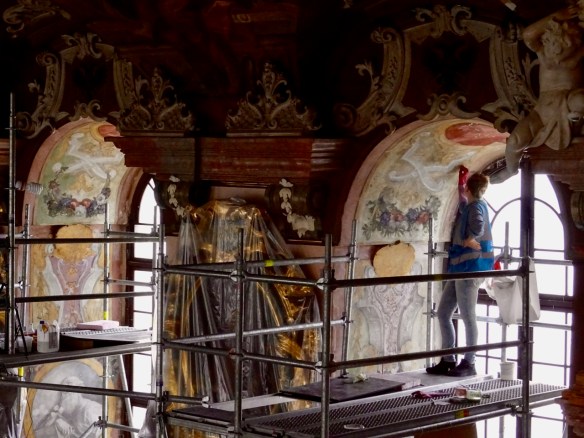 We. climb another 203 steps up the Math tower, which has displays along the way.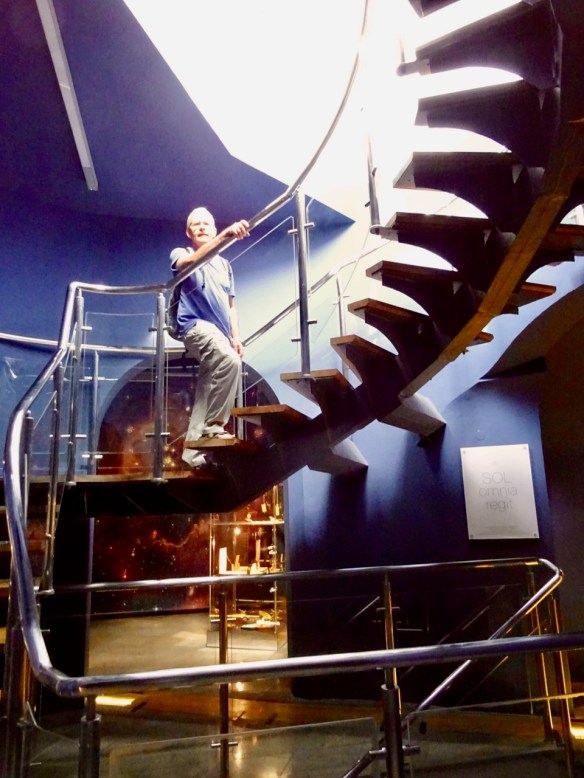
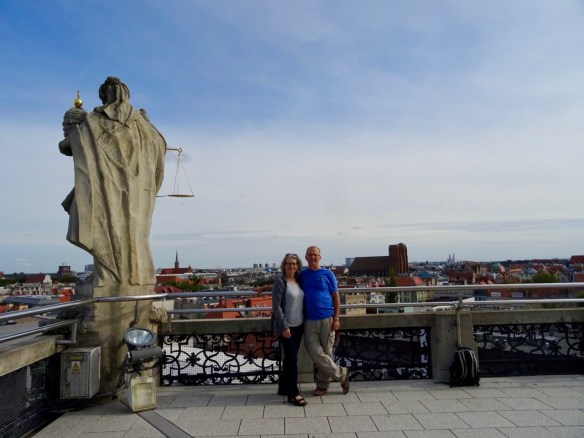 and the views. Notice the very modern looking tower among the old.
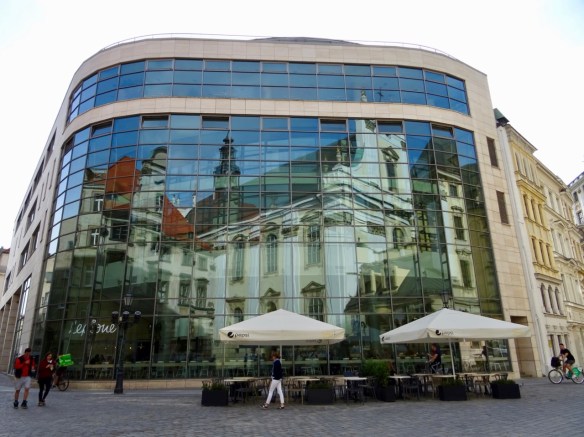
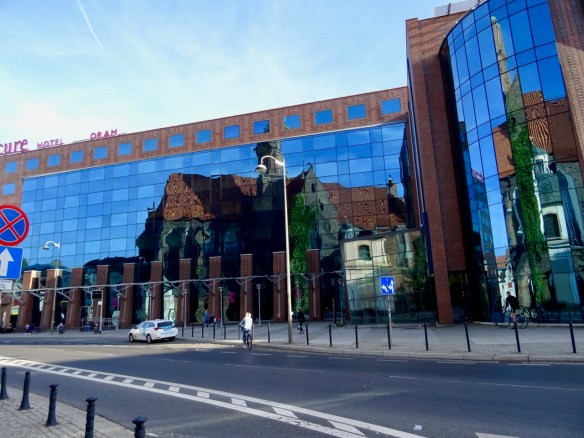
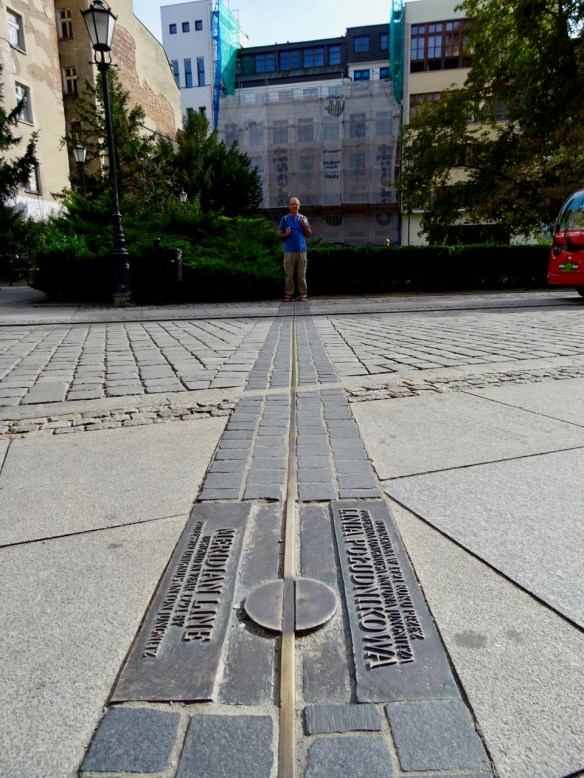 I just love all the reflections of the old buildings in the glass walls of the modern new buildings!
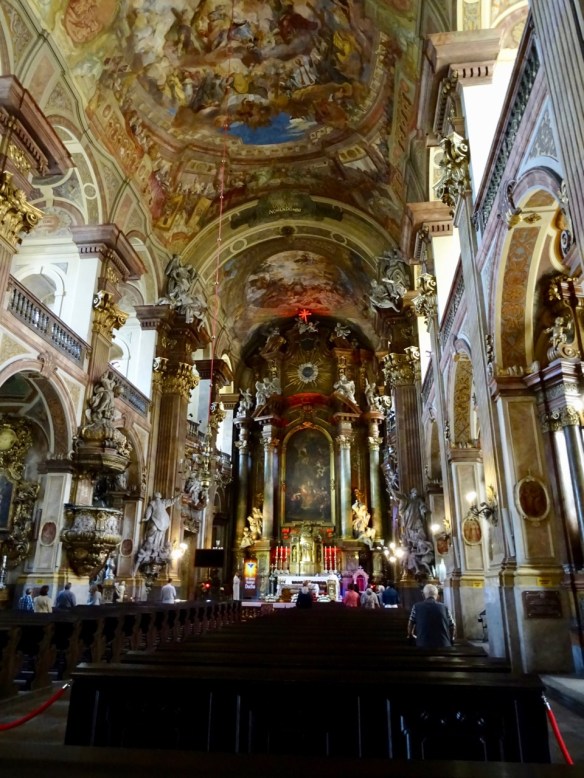
 Churches here are either very ornate…
 or look like this. The late afternoon sun was shining through the windows casting everything in a lovely olden glow.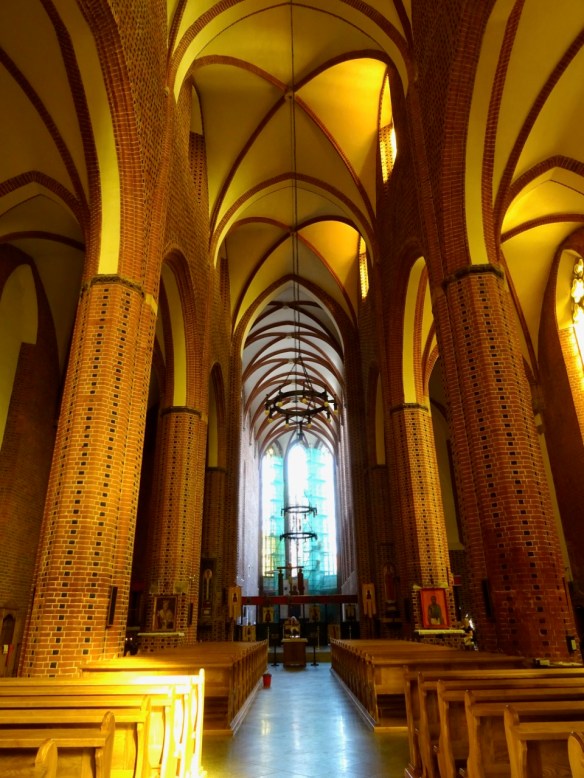
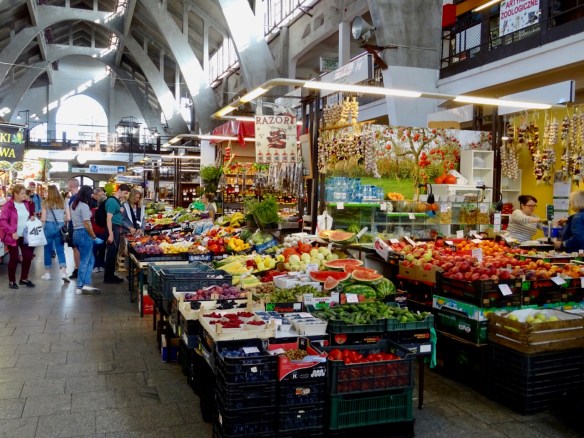
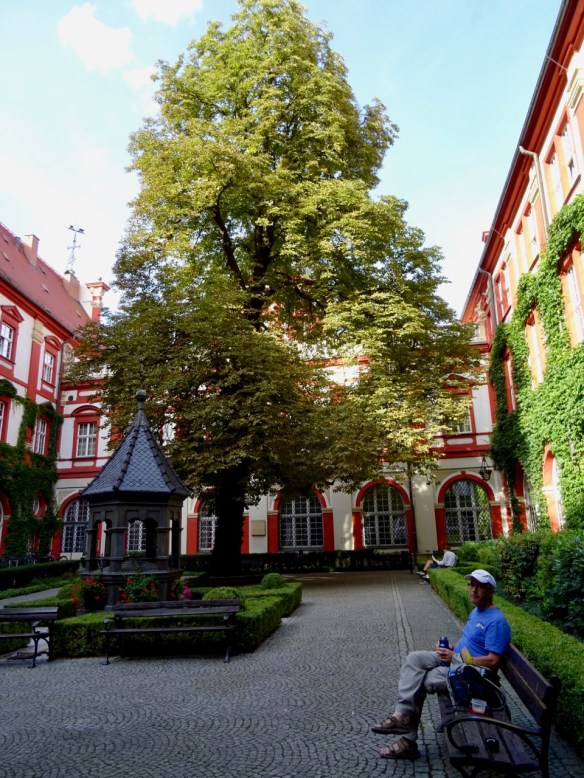 Then we visit the market and buy some fruit. Food prices are very reasonable here.
 More reflections.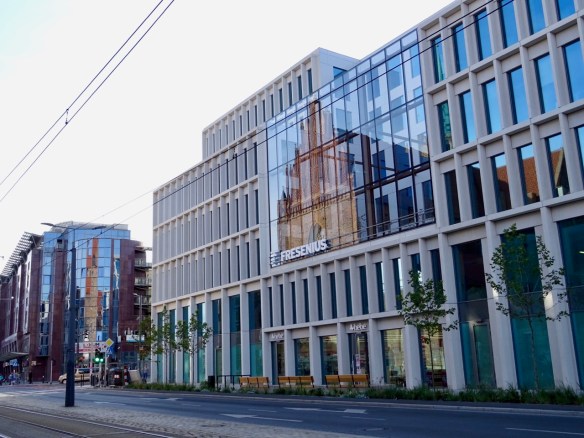
 We catch a trolley bus home. We haven’t seem many paved streets or sidewalks here. Most of the streets and sidewalks here are cobbled in one fashion or another. All the uneven footing is hard on the feet and ankles. We walked 16,700 steps today and climbed the equivalent of 31 floors!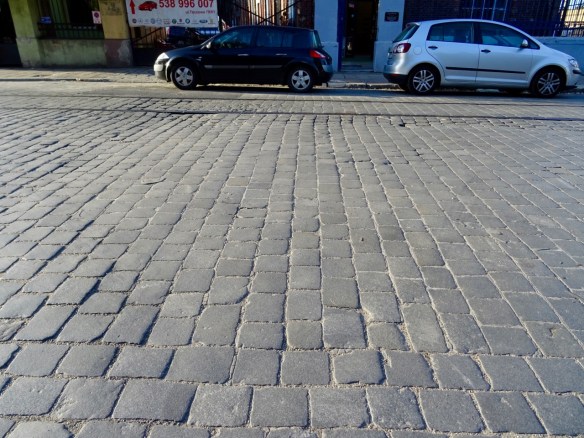
 trudymason.com