Day 61, Saturday, October 28, 2023
Today we are going to visit another UNESCO World Heritage Site to see the oldest prehistoric cave paintings known to date in the world! The cave is an hour and a half drive from Nîmes, so we leave early. The drive to the caves is interesting as the countryside is constantly changing.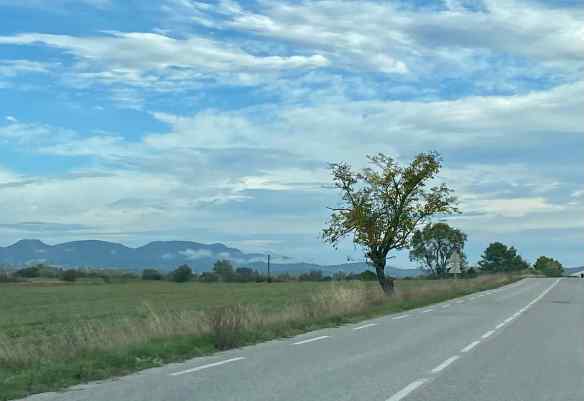 The Sycamore/ Plane trees are starting to show their fall colours.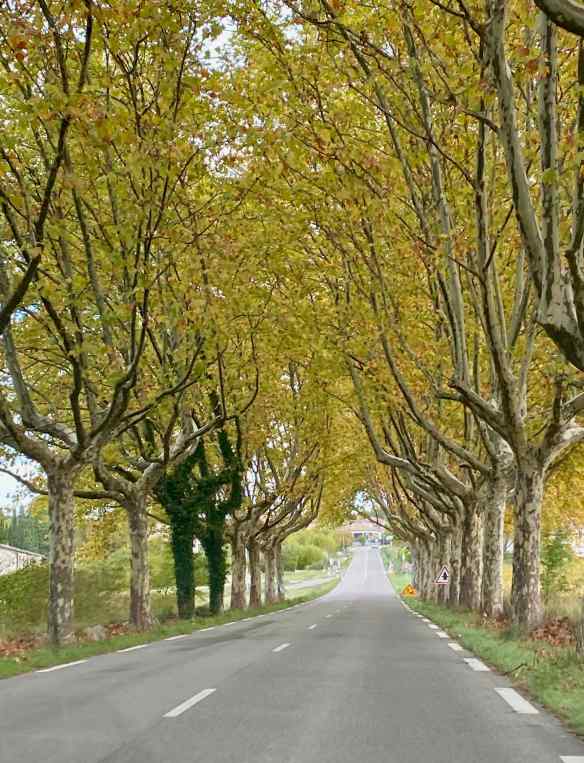
As we drove into the hills it got foggy…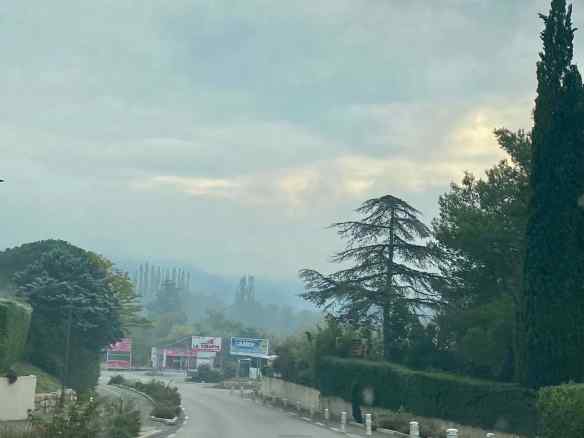
and we were soon below the clouds.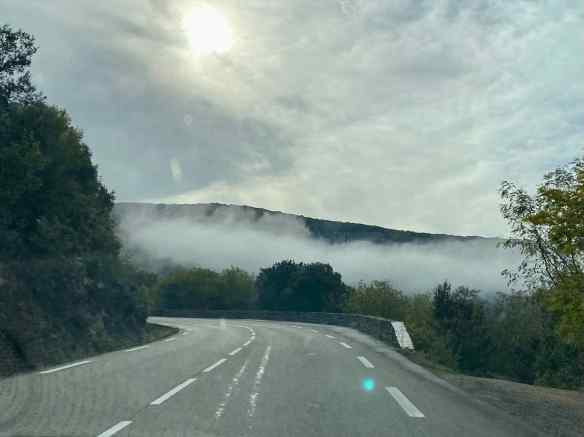
The Chauvet cave, or Caverne du Pont d’Arc contains exceptionally high-quality paintings dating back 36,000 years. It was discovered in 1994 and has never been open to the public. Only a very small number of scientists are allowed to visit each year to study the Chauvet cave. The lessons learned at the Lascaux caves helped prevent any damage being done to the amazing art discovered in the Chauvet Cave.
Construction on the replica cave began in October 2012 and it was opened to the public in 2015. Chauvet II is located 9.5 km from the original cave.
All the photos of the building and the inside of Chauvert II, Caverne du Pont d’Arc are by Patrick Aventurier and can be found on the Chauvet II website. https://en.grottechauvet2ardeche.com/history/
An arial view of Chauvet II.
The building that holds the replica cave. It has a viewing platform on the top of the building.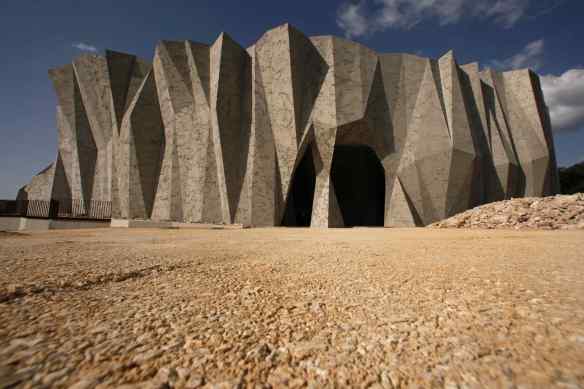 This is the view from the top of the building.
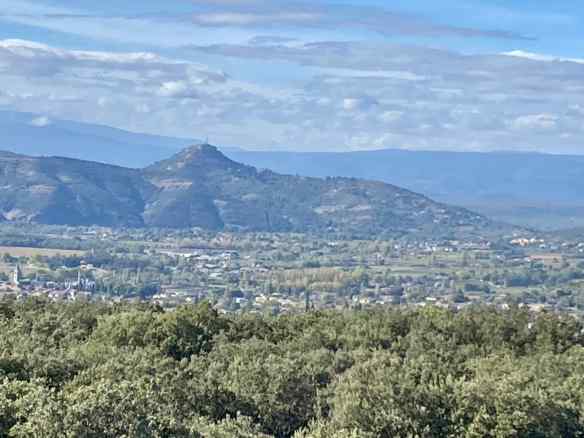 We have time to watch an immersive sound and light experience called ANIMAL before our cave tour begins.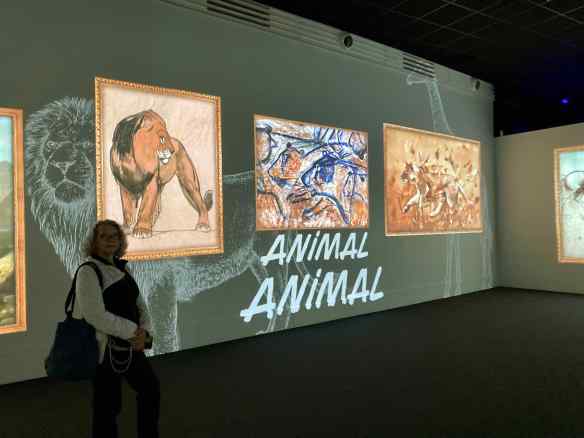
Here are two videos I took during the show. I don’t know how to edit videos, but they are not long, one is just over 2 1/2 minutes and the other is 3 minutes long. It really was a spectacular show.
Before we enter the cave our guide asks us not to ask questions about the construction of the replica cave until after our tour, to help us feel as though we are in the real cave.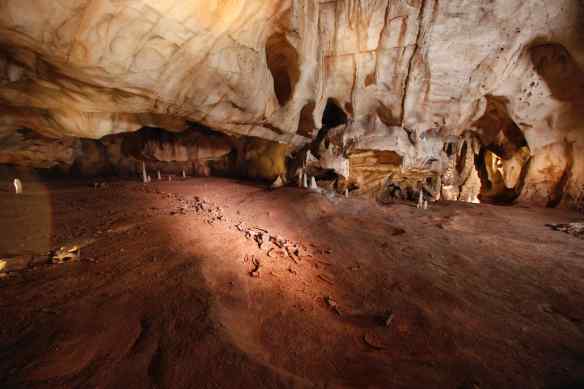
The Chauvet caves contain a masterpiece…the oldest known artwork in the world. They are over 36,000 years old…that is 18,000 years older than the Lascaux Cave we visited earlier. These handprints tell us that the right hand of the artist had a crooked little finger, perhaps it was broken at one time and didn’t heal properly?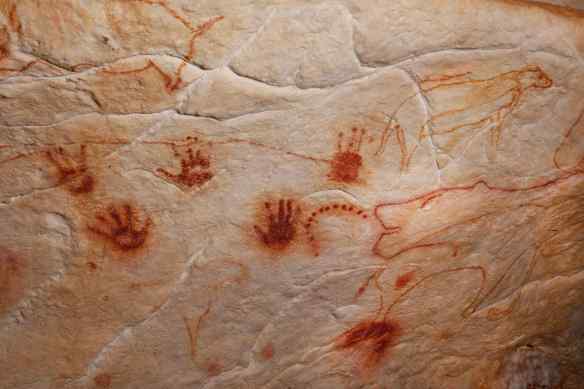
These red dots are palm prints. If you look closely you will see that there are a few prints that show the fingers and the little finger of the right hand is crooked. These palm prints were done by the same artist as the previous handprints!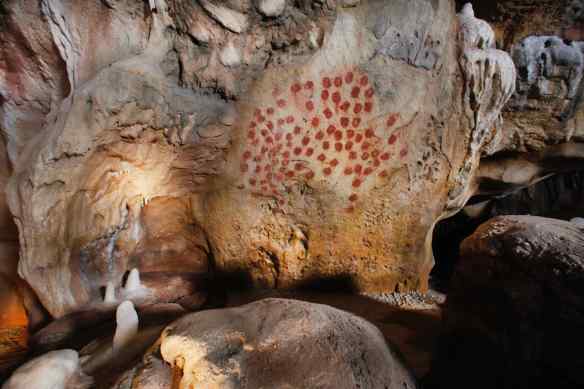
One of the first charcoal drawings that we see. Because charcoal was used the paintings were able to be carbon dated to determine their age.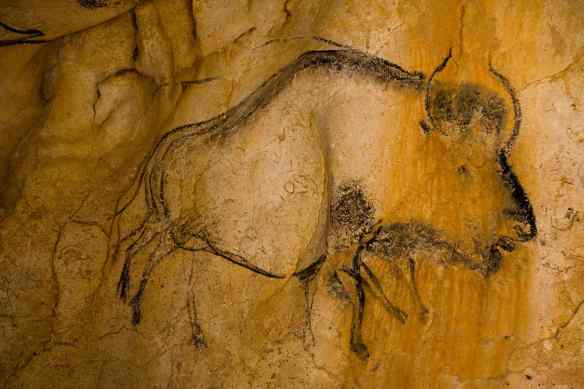
Some of the engravings were made by pressing into the soft mud walls of the cave with the artist’s fingers.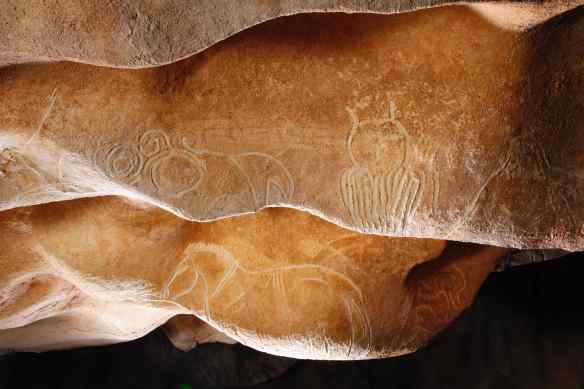 There are very few owl depictions in prehistoric cave art. We get to see one here.
As we walk further into the cave there are more animals on the walls. 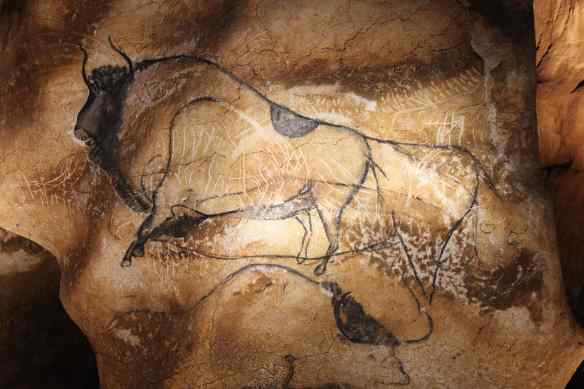
The next four photographs are all part of a panel showing the largest collection of animals in the cave and it was located in the very deepest part of the cave.
We are in front of the Lion Panel: a12 metre-long fresco of a lion hunt that takes my breath away! We stand in awe, as the flickering lights reveal these drawings.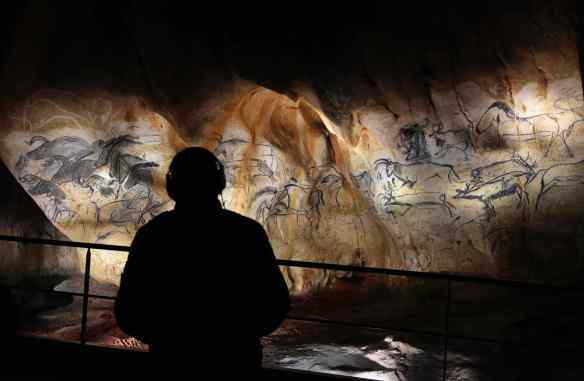
The lighting mimics flickering firelight and the animals almost appear to move.
Of course the lighting is set on a timer and all too soon it is finished. I tell our guide that our time here is too short and I don’t want to leave… she asks if we would like a bonus viewing and when I say yes, she turns the lights on again. We all got an extra 20 minutes in front of these magnificent paintings!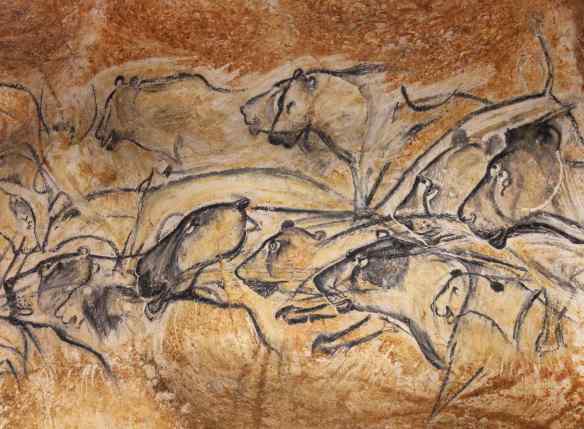
The Aurignacian Gallery is a complementary area to discover on our own after the cave visit. There are life size replicas of prehistoric animals. Wooly mammoths, Megaloceros , the huge deer in the background, …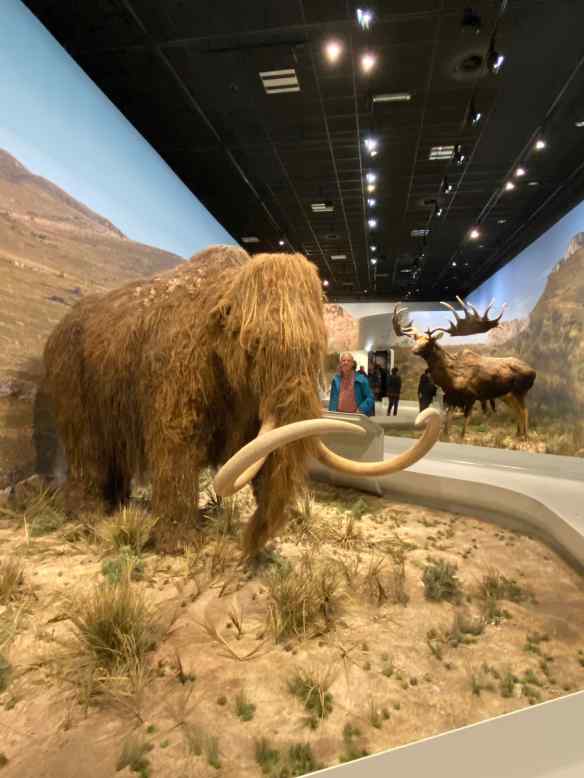
Aurochs…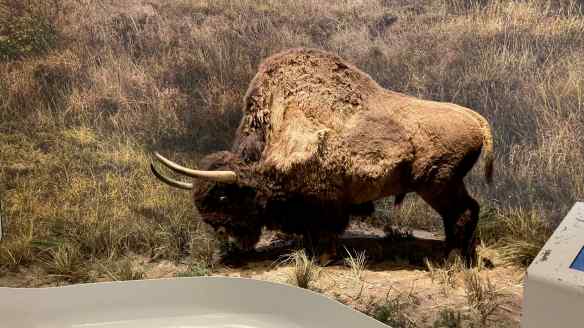
Cave Bears and Cave Lions…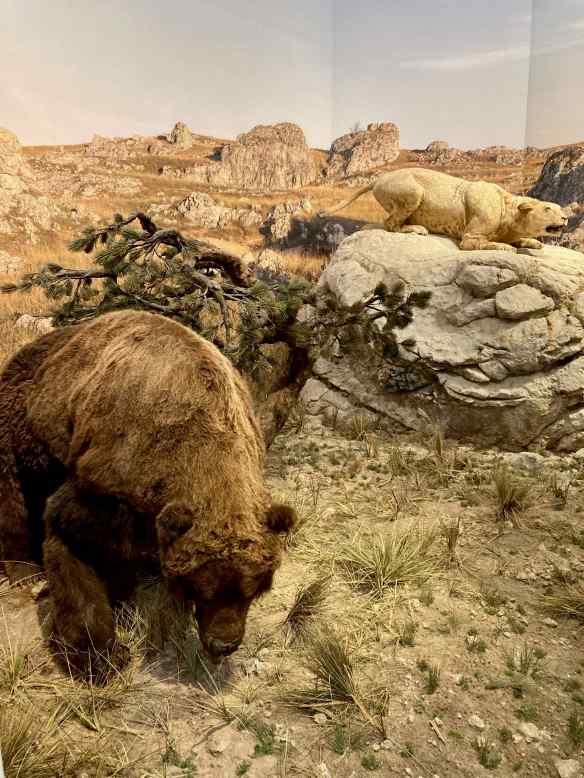 and Bob’s favourite, the Wooly Rhinoceros.
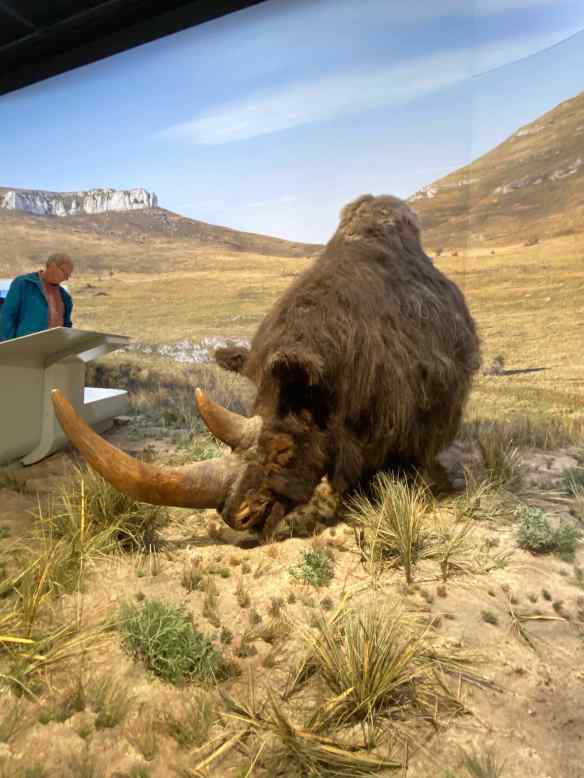
There are interesting interactive panels, including this photo of a baby wooly rhinoceros that was found in a mine in Russia in 2007…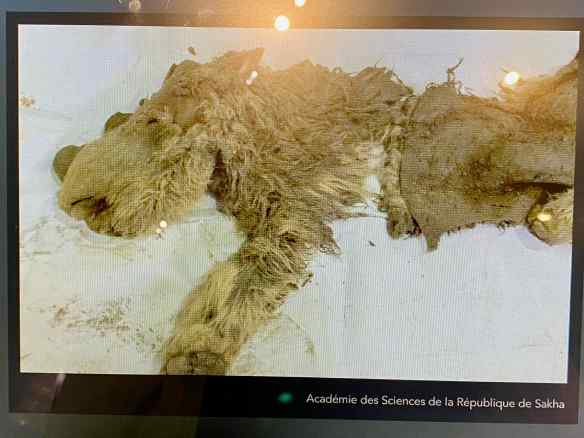
and one of this steppe bison found in Alaska in 1979.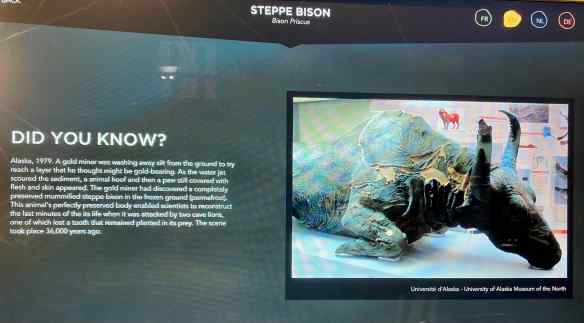
Something I didn’t know before this trip and all the caves we have visited is how like us Prehistoric Cro Magnons were. They were hunter gatherers and were anatomically very similar to modern man “but more robust, having larger brains, broader faces, more prominent brow ridges, and bigger teeth. They were well renowned for creating a diverse array of artistic works, including cave paintings, Venus figurines, perforated batons, animal figurines, and geometric patterns. They also wore decorative beads, and plant-fibre clothes dyed with various plant-based dyes. For music, they produced bone flutes and whistles, and possibly also bullroarers, rasps, drums, idiophones and other instruments. They buried their dead, though possibly only people who had achieved or were born into high status.” ~Wikipedia 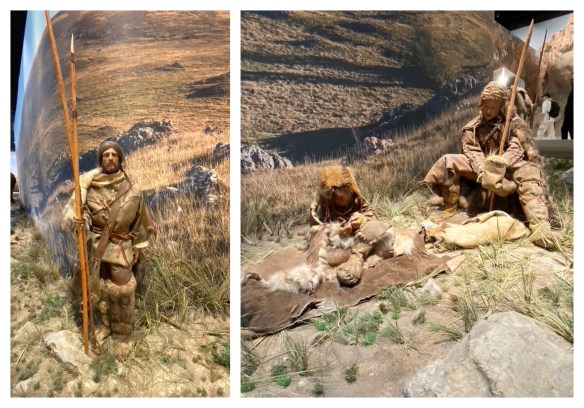
After our visit at Chauvet II we drive to the location of the original cave along this narrow road with lots of tunnels.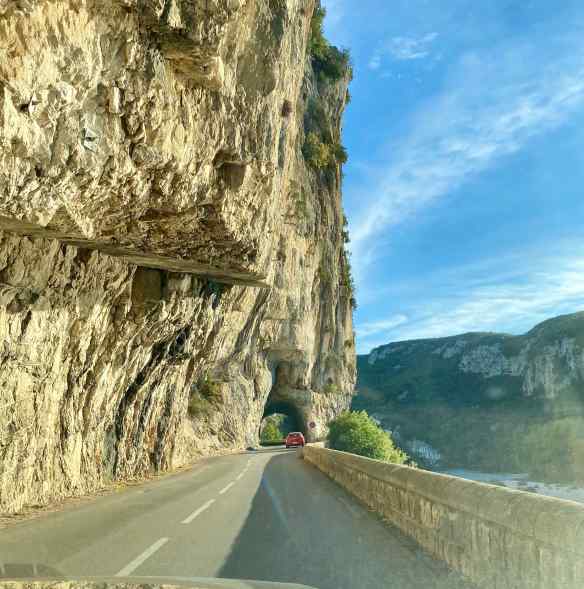
It was quite the experience.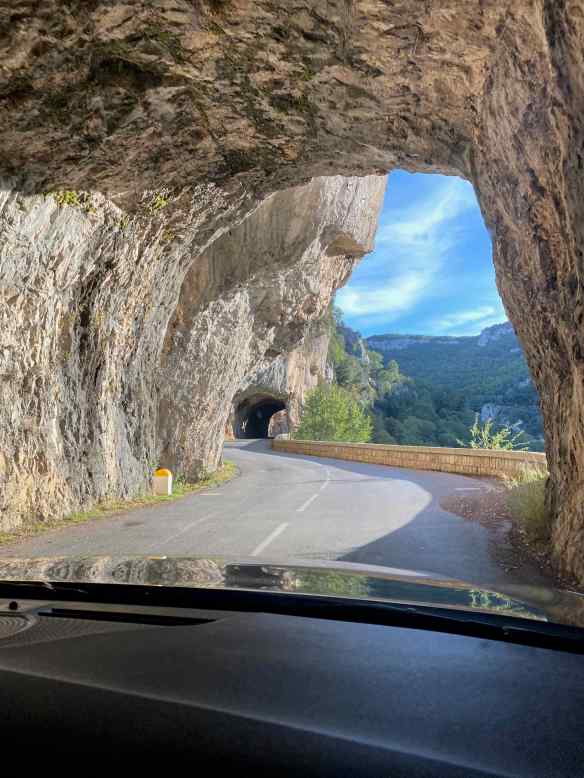
We park and this is our view.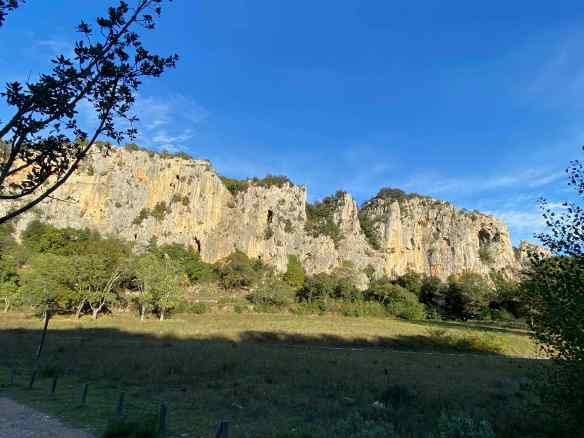
The cave was located near the Pont d’Arc, a natural stone bridge. We would have liked to walk up to the location of the original cave, but it is getting late and we still have an hour and a half drive before us. Too bad but we don’t want to be driving home in the dark.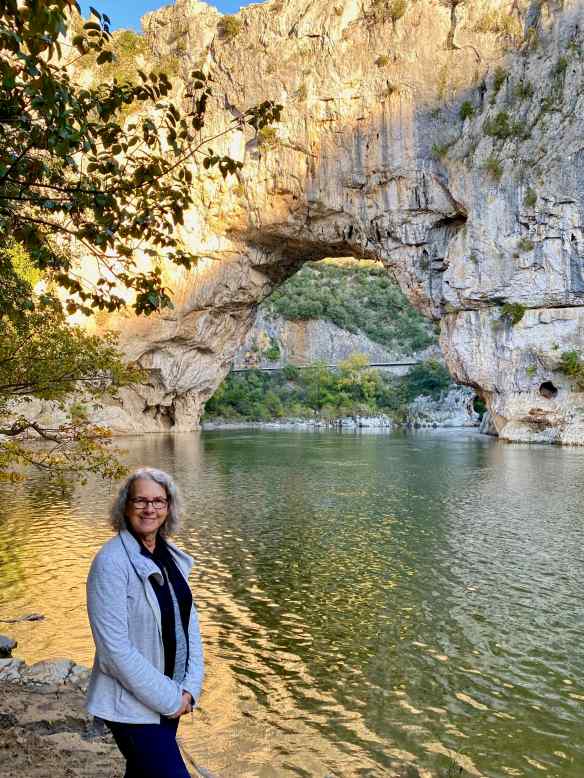
The cliffs here are full of what appear to be cave openings, and there is a sandy beach alongside the river that is a popular spot for families.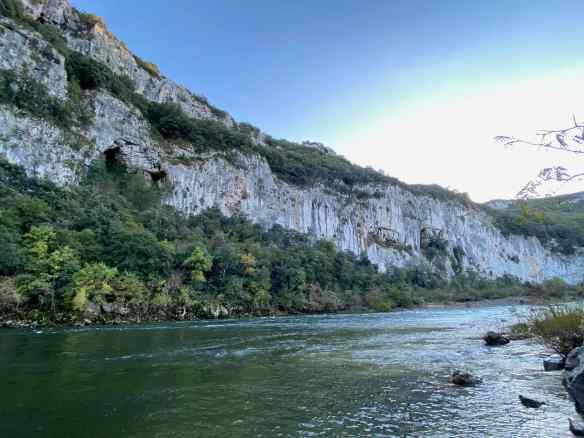
Bob spots this rock formation in the distance that looks like a horse’s head. He is good at finding rock formations that look like people or animals.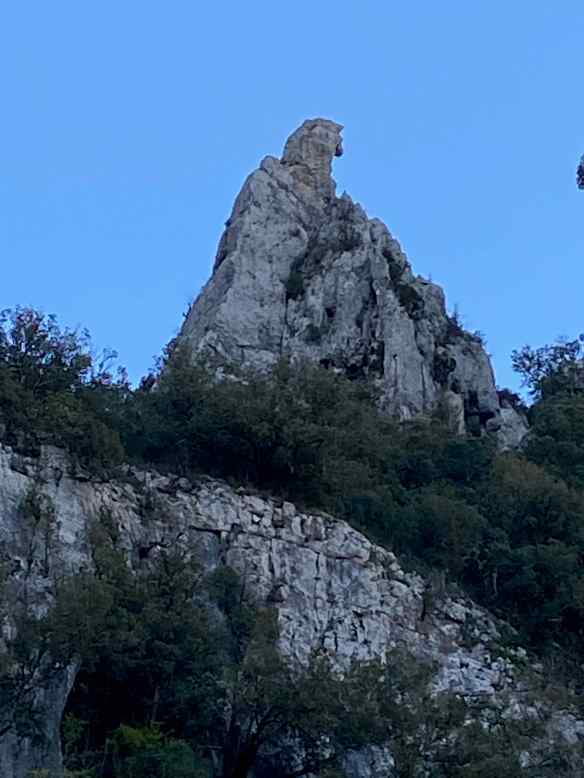 More tree lined roads on the way home…the leaves look golden in the setting sun.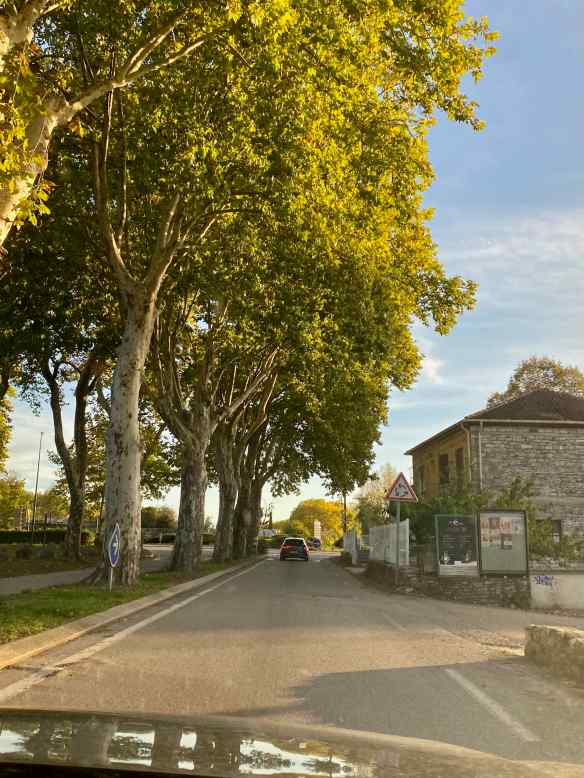
All too soon the sun sets…and we are driving in the dark, but only for the last half hour or so which isn’t too bad.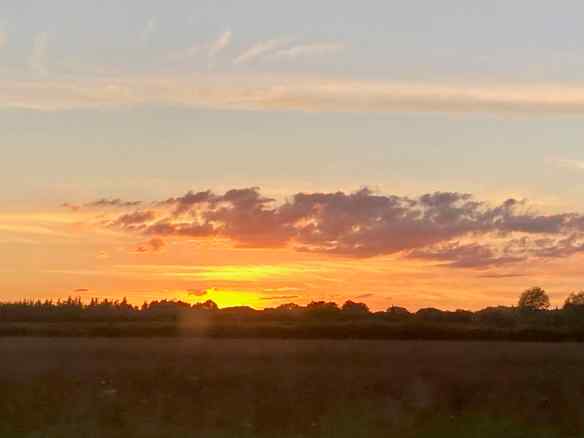
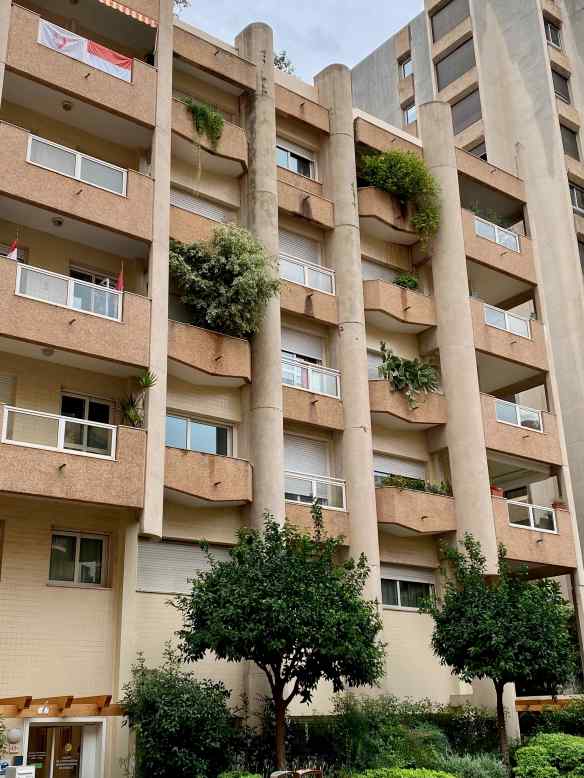
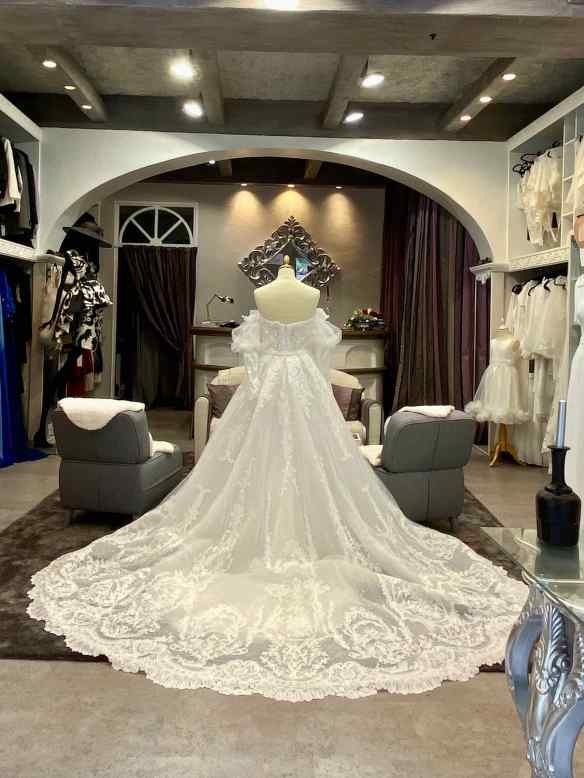
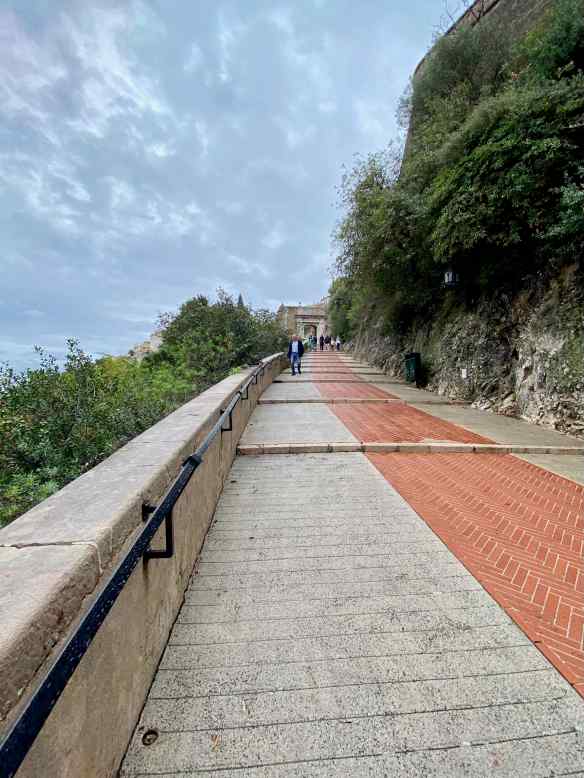
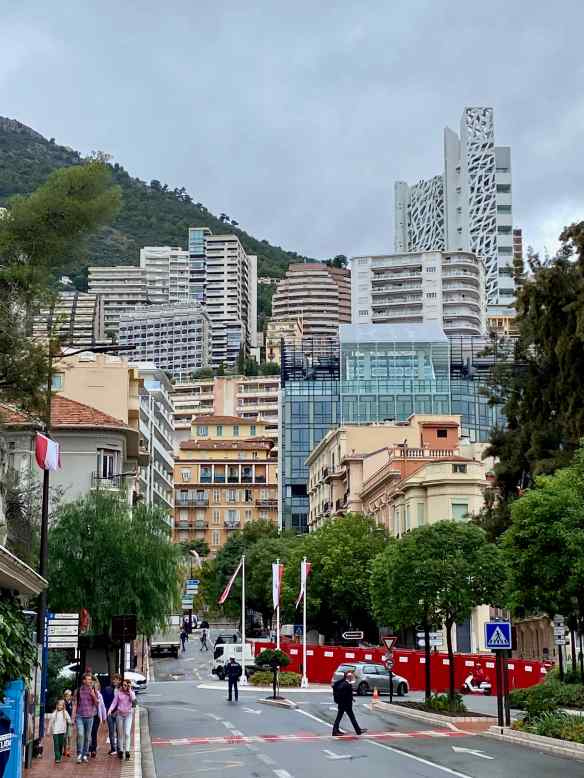
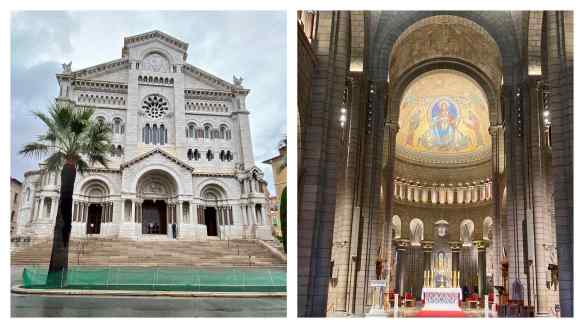
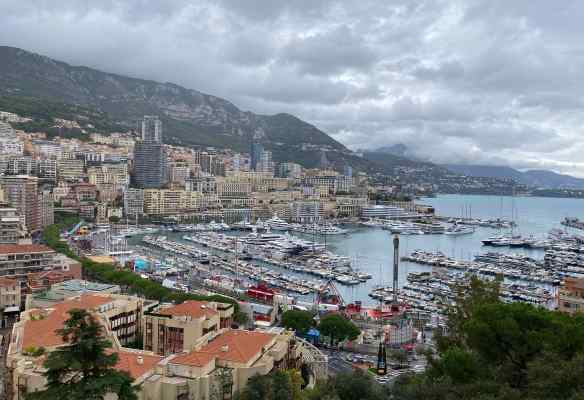
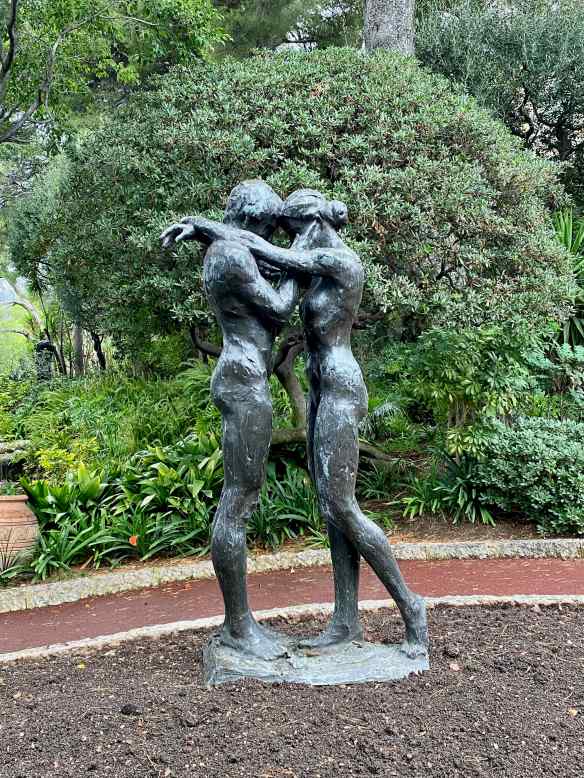
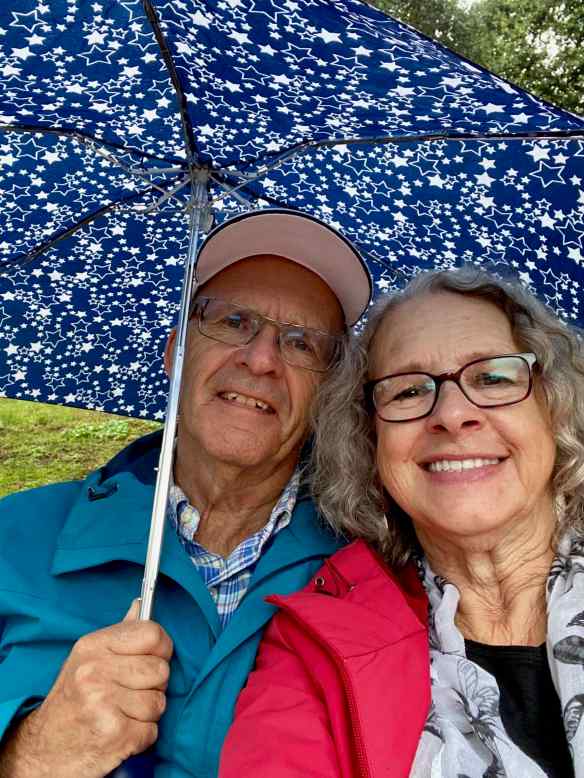
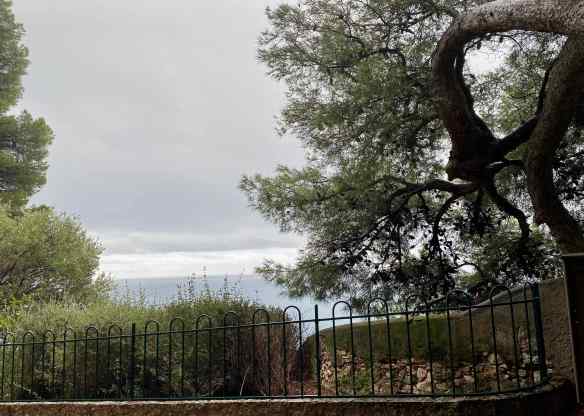 but this sculpture nearby gives a more accurate portrayal of the weather!
 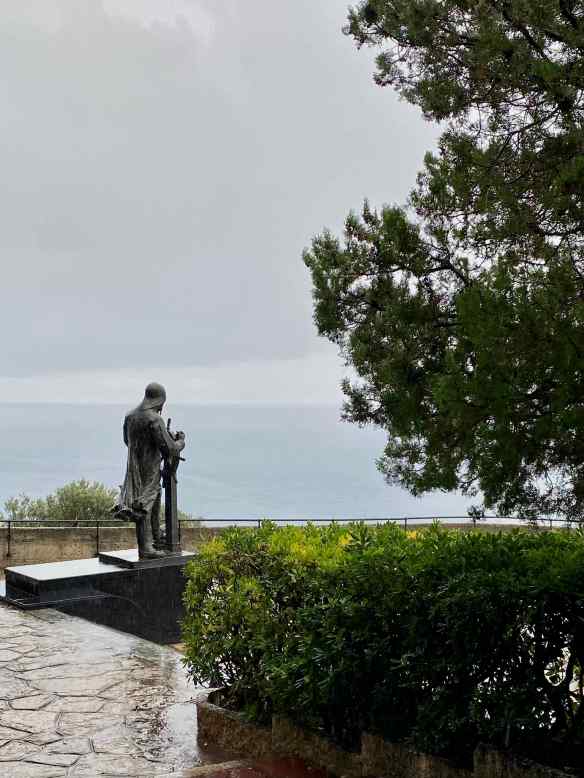 We saw this statue “The Cloak of Conscience” elsewhere on one of our trips, but I don’t remember where. The artist, Anna Chromy studied at the Academy de la Grande Chaumiere in Paris, my favourite life drawing studio! She is another interesting artist I read about today. I did not know that this sculpture was also carved in marble and stands over 15 feet tall! This website has some amazing photos of its creation..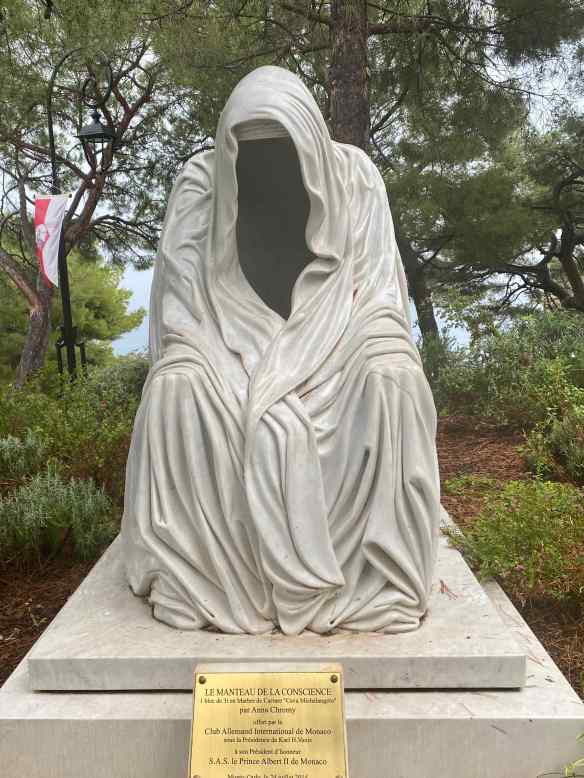
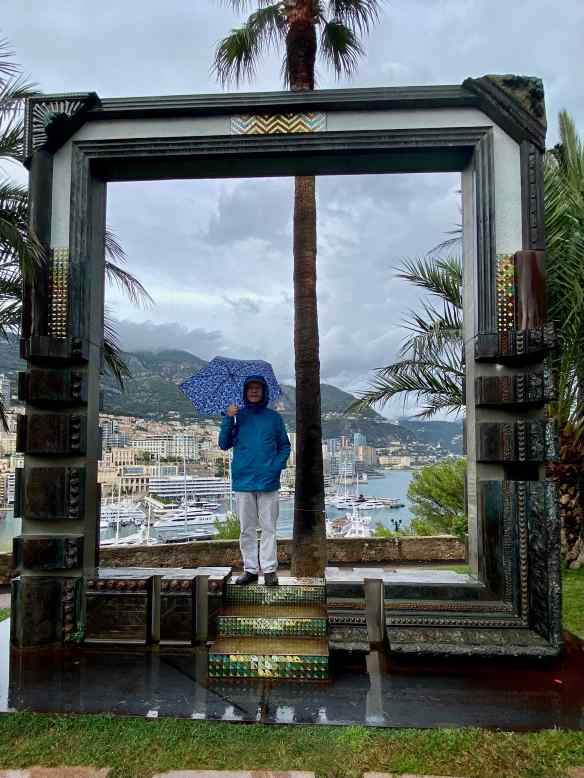


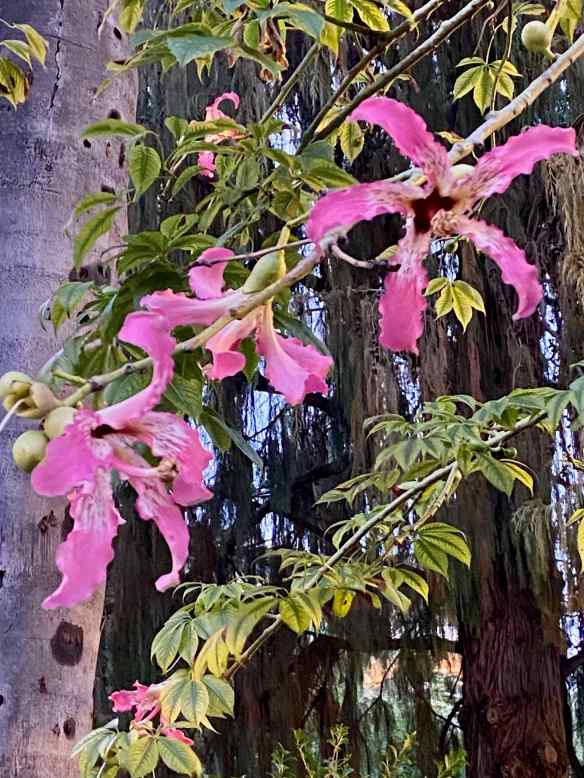 and another big flowering Brugmansia.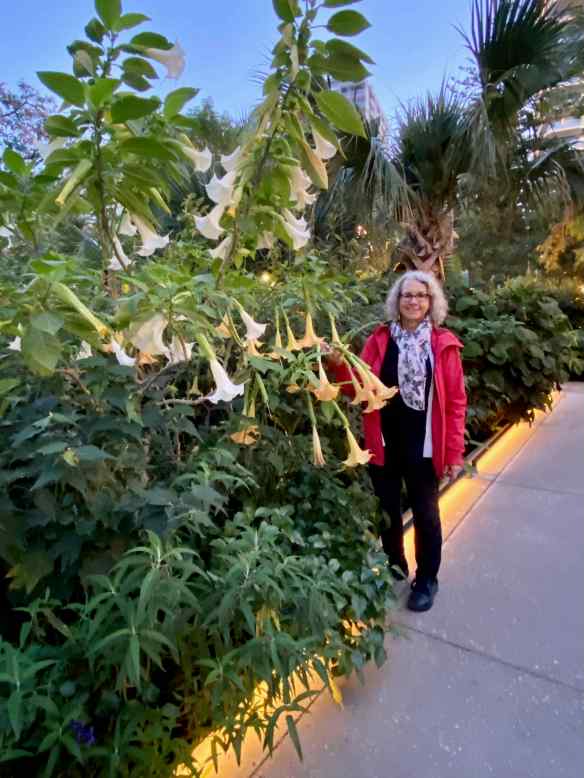
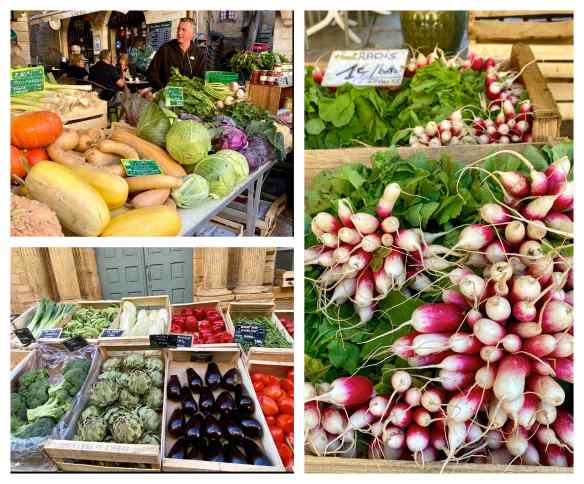
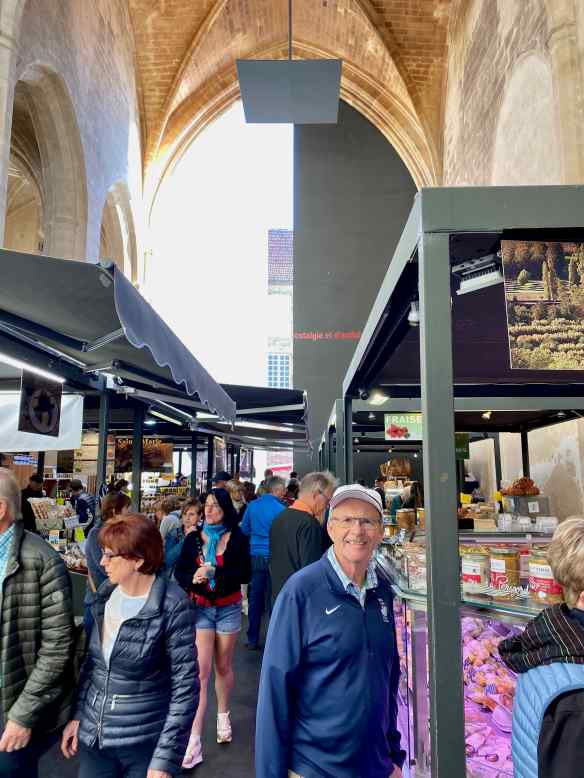
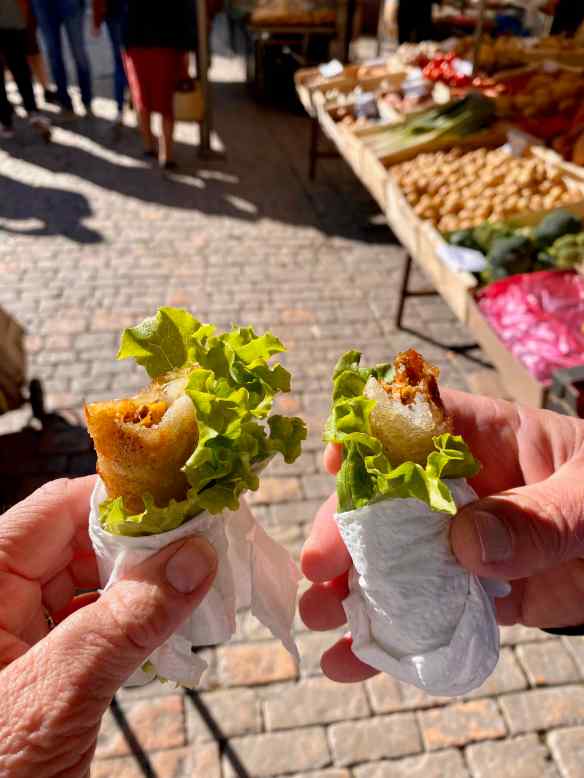
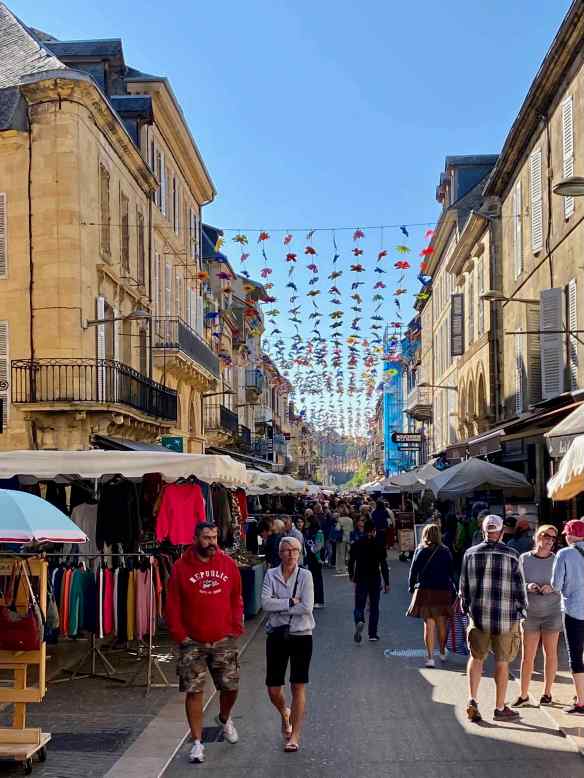
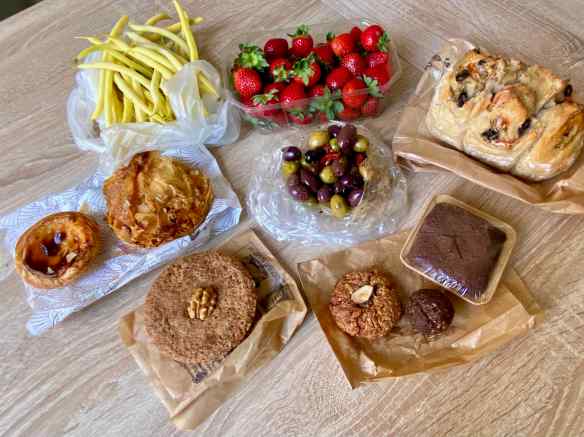
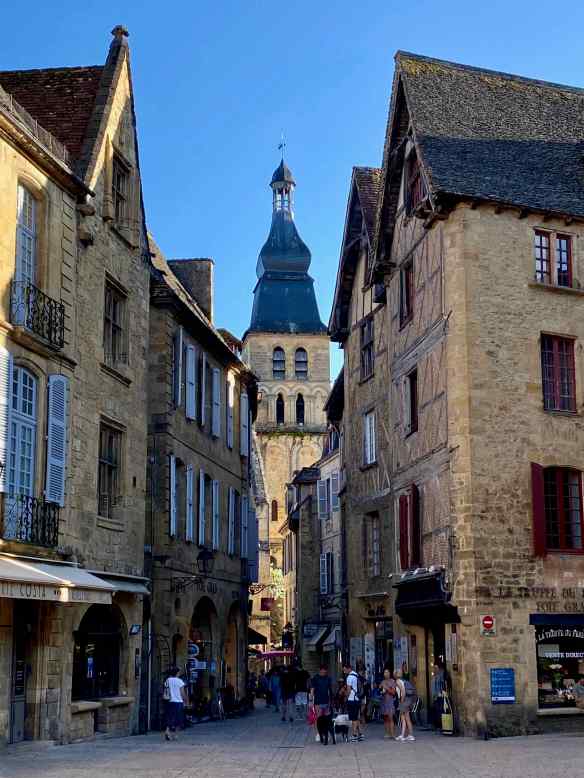
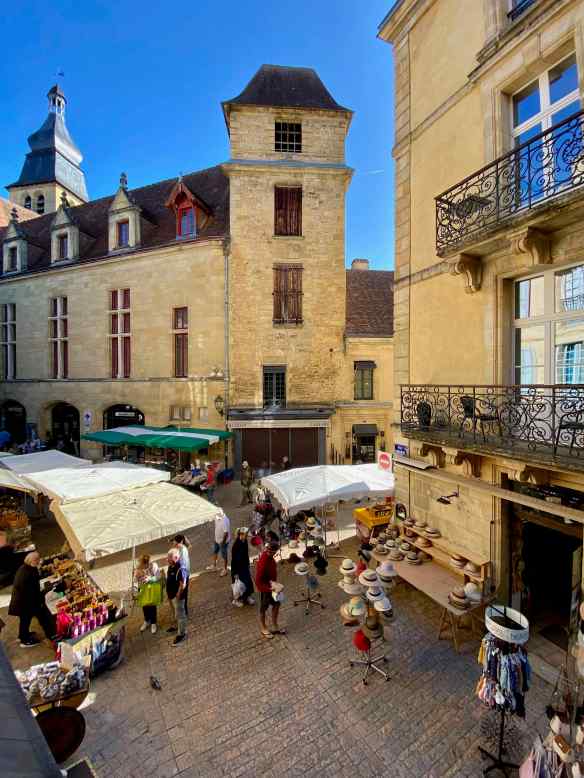 After breakfast we go check out the market. The streets are crammed with vendors…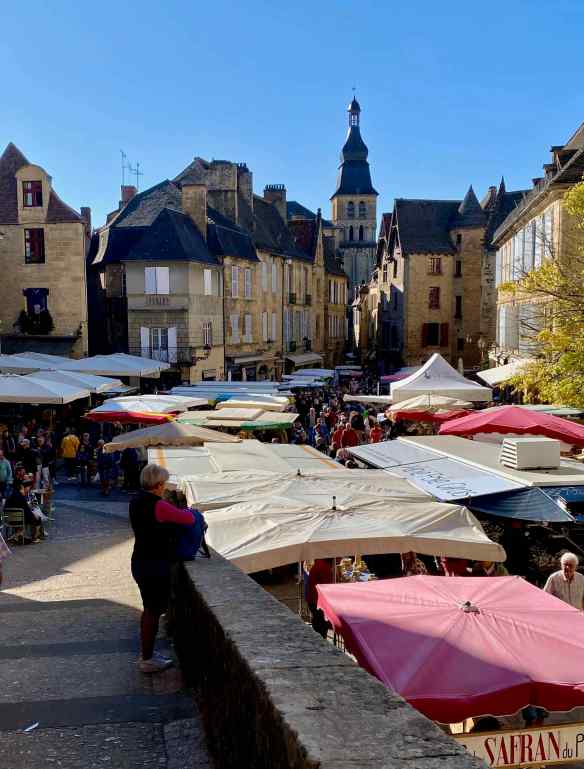
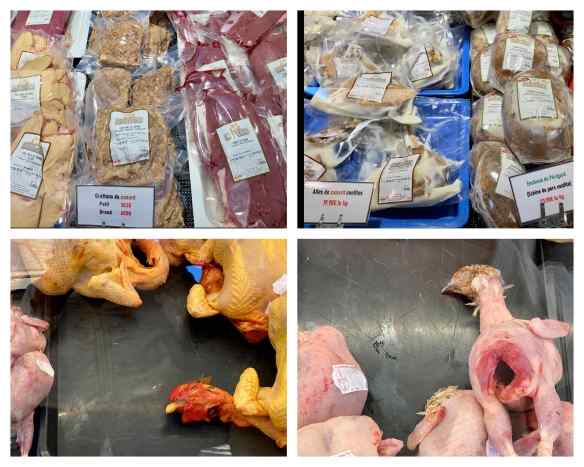
 However there are many more vendors selling a variety of meats and foie gras. I’m afraid we weren’t tempted by these stalls.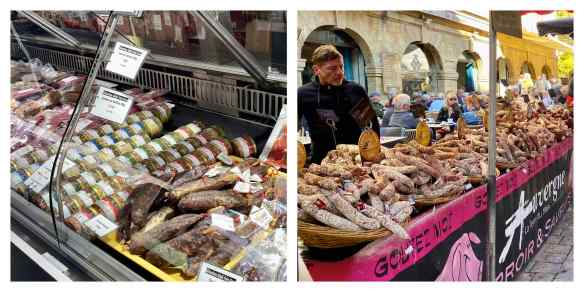
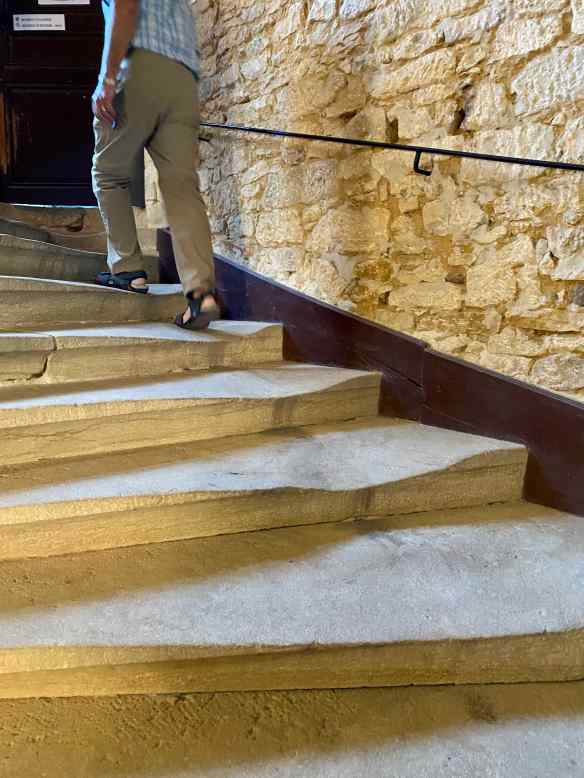
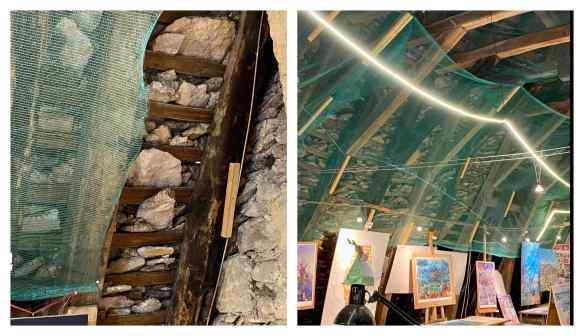
 We visit the Hotel de Maleville which has an artist’s studio on the top floor attic.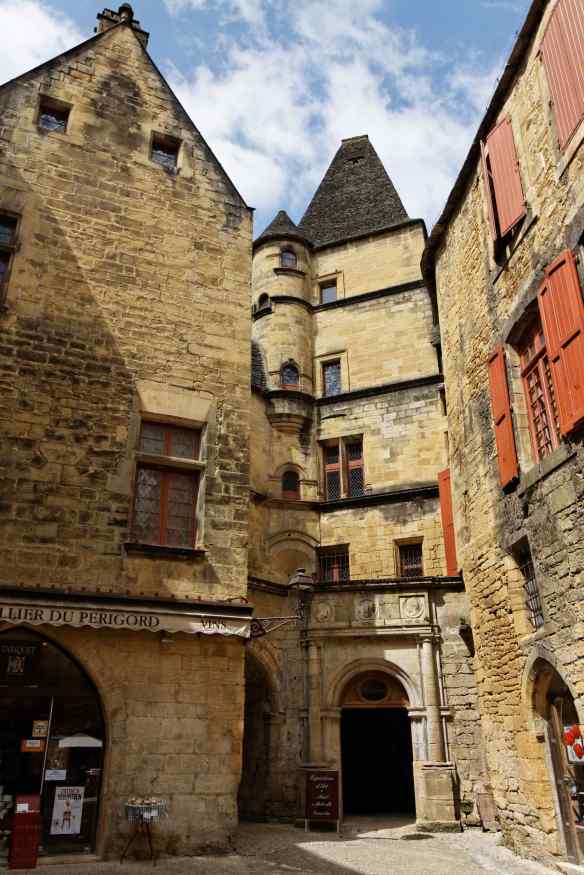
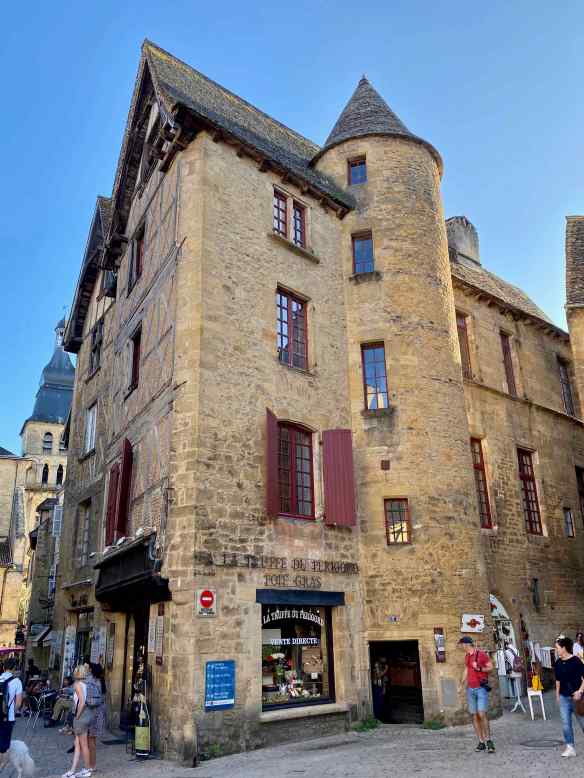
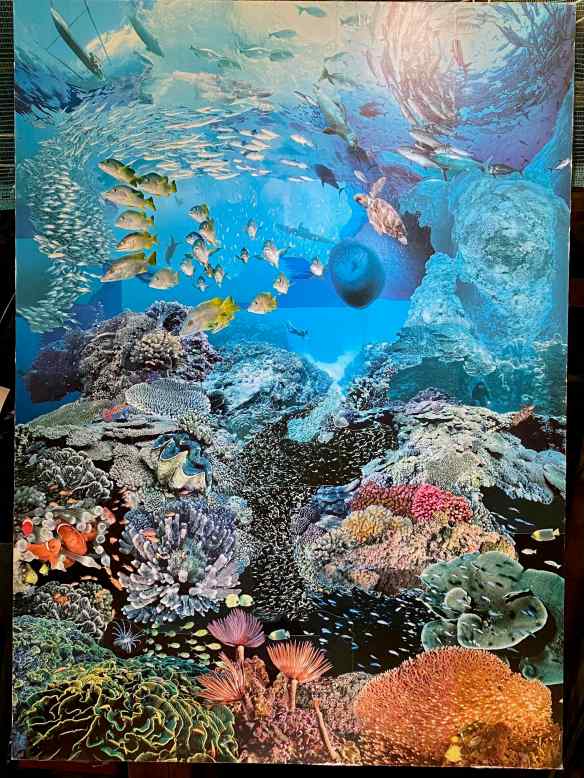
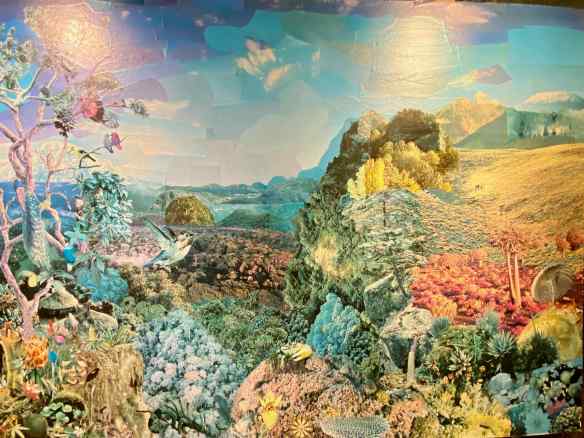
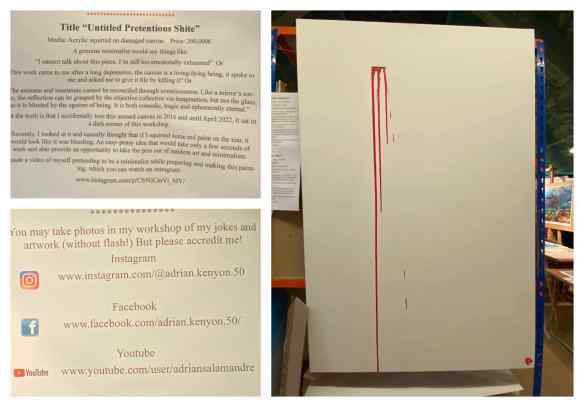 Here is another beautiful old building, the house of Etienne de La Boétie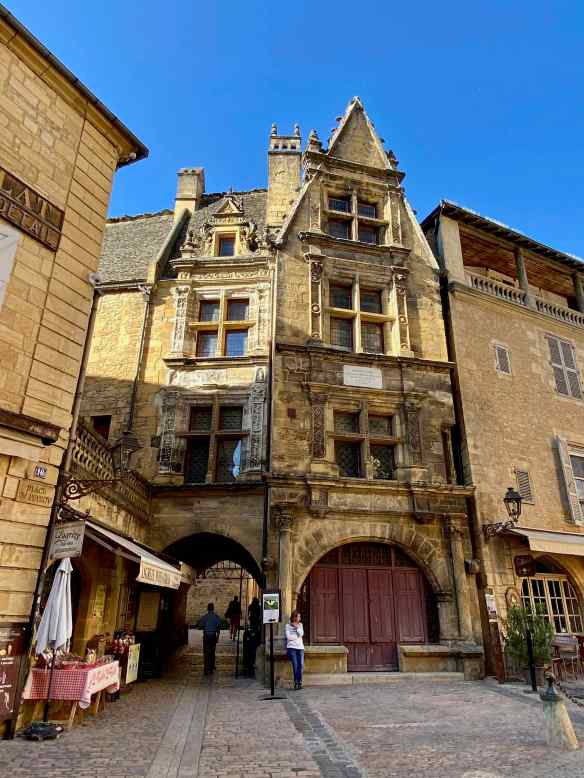
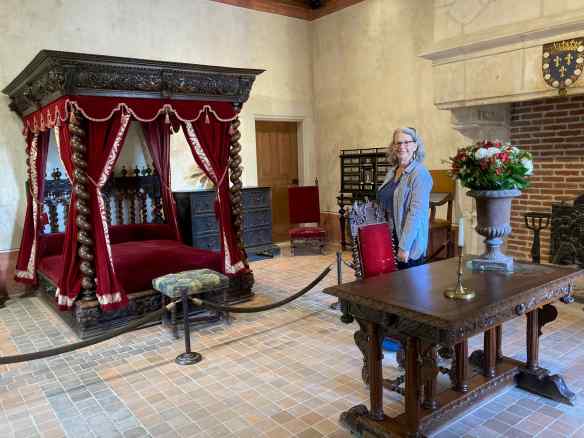
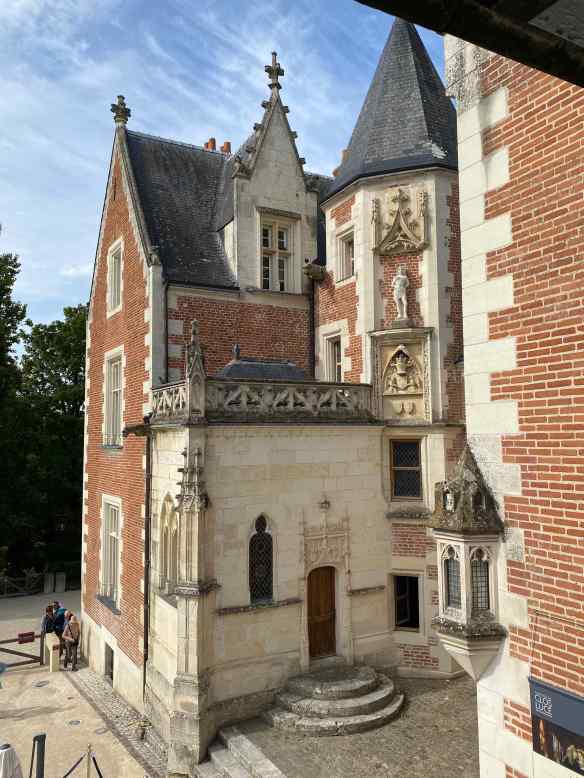 This is Leonardo’s bedroom. I am standing in the room where Leonardo da Vinci slept!
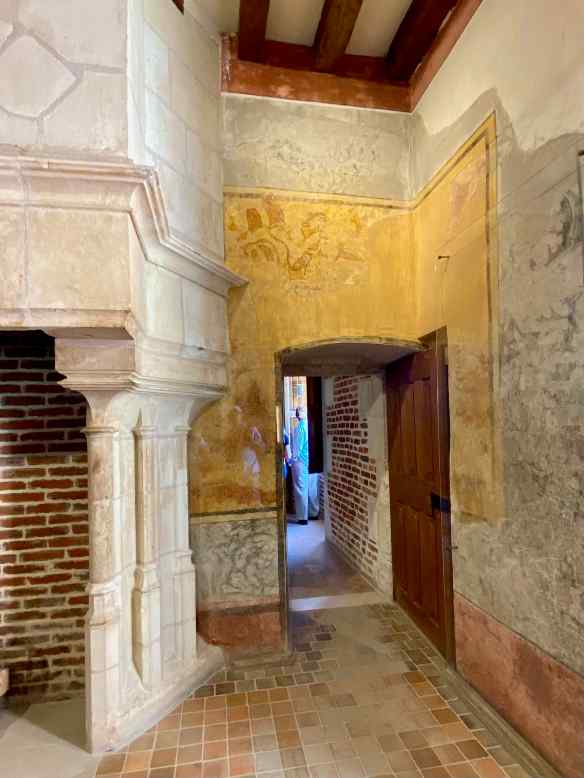
 At one time the walls were decorated, but little of it remains.
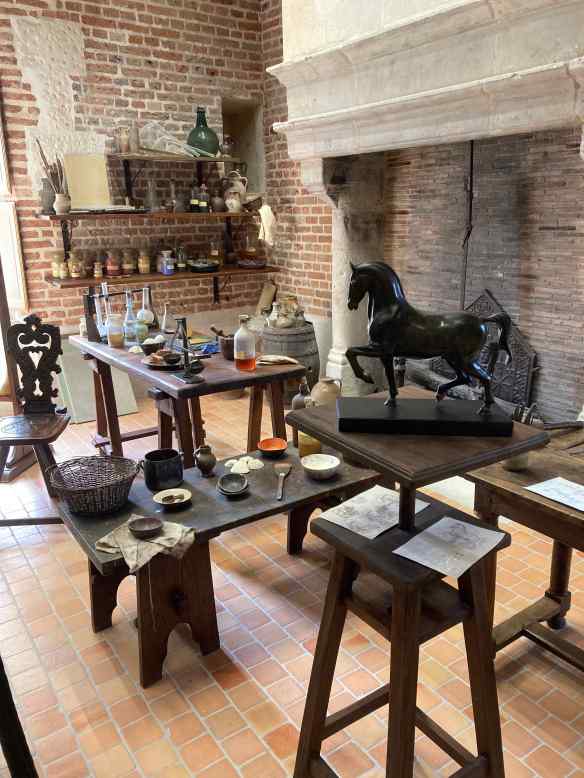
 The adjoining room is his studio, where he painted…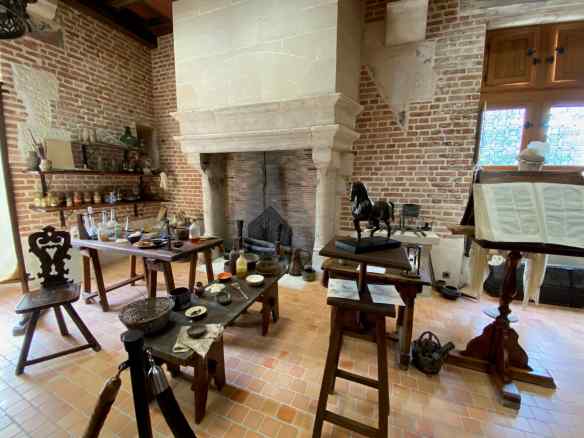
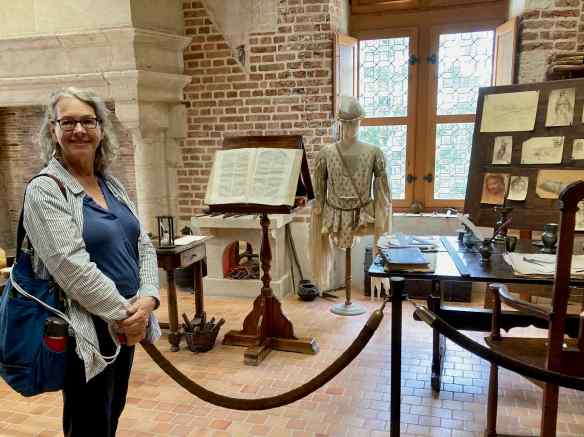
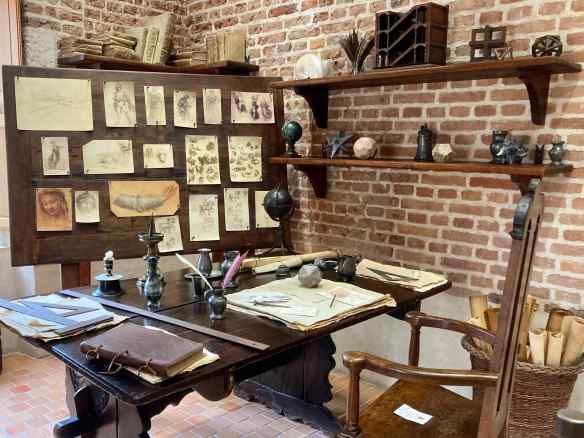
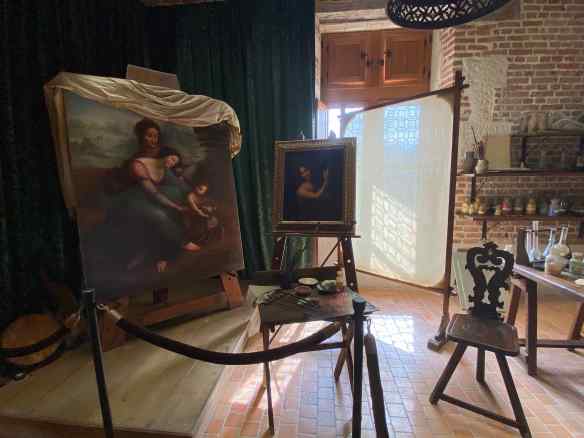
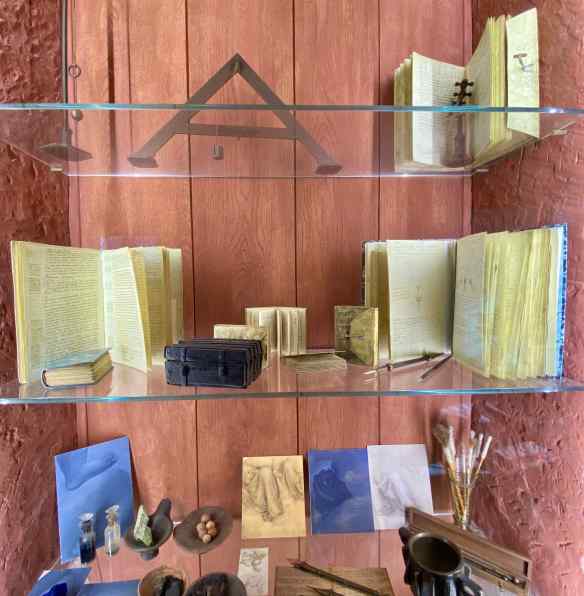
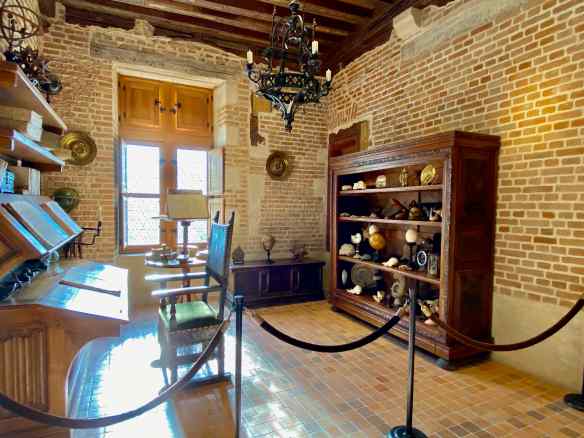
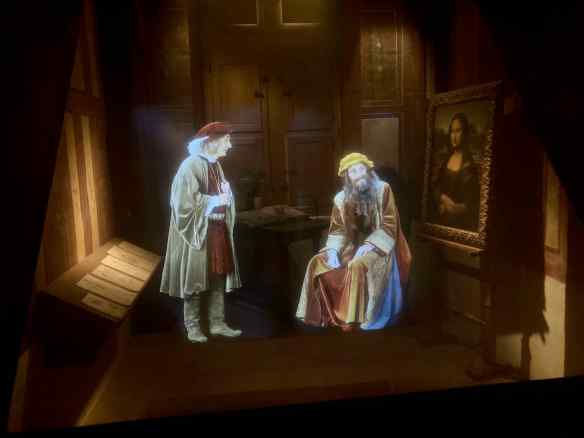
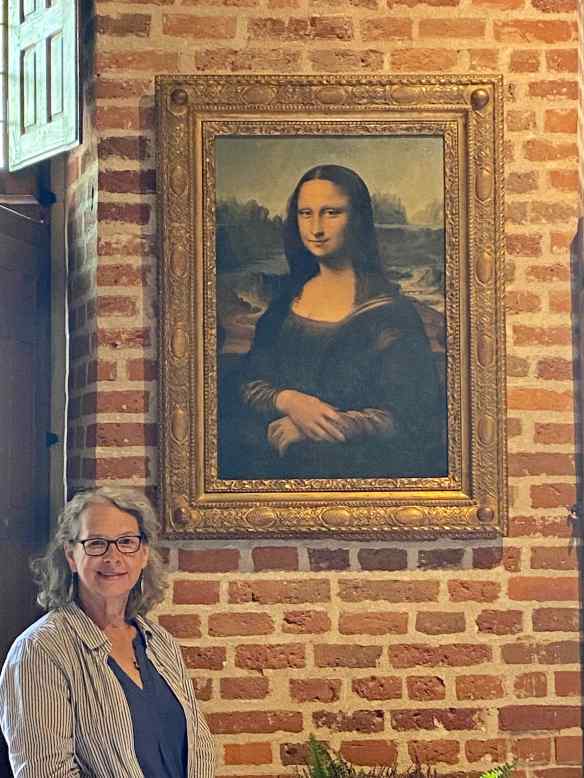
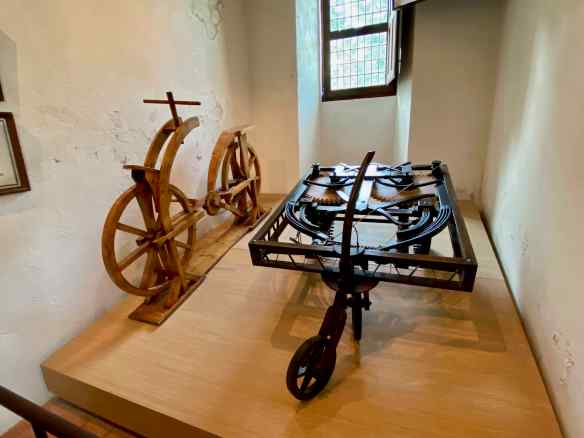
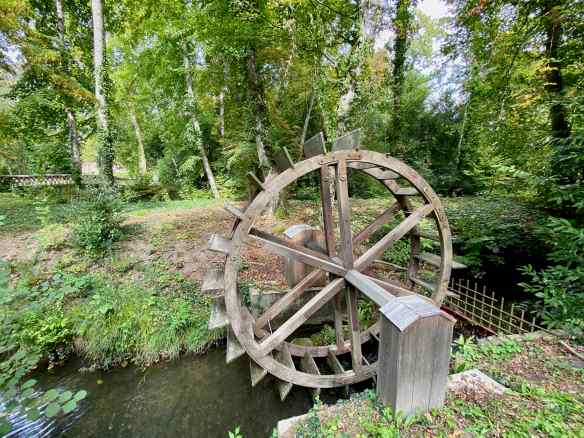
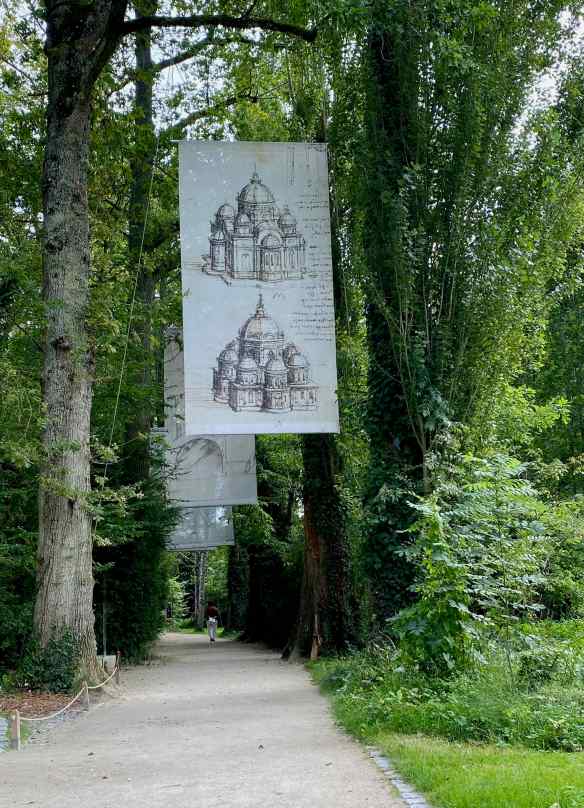
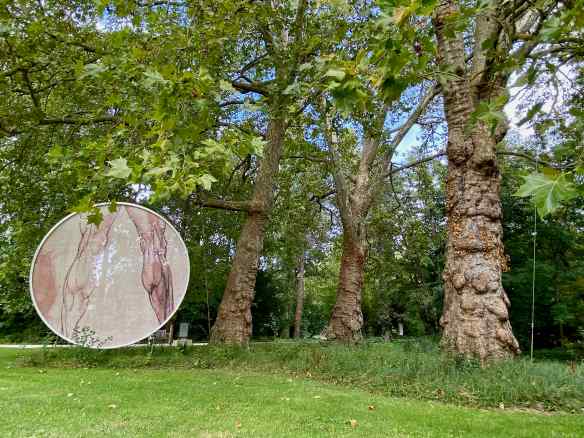
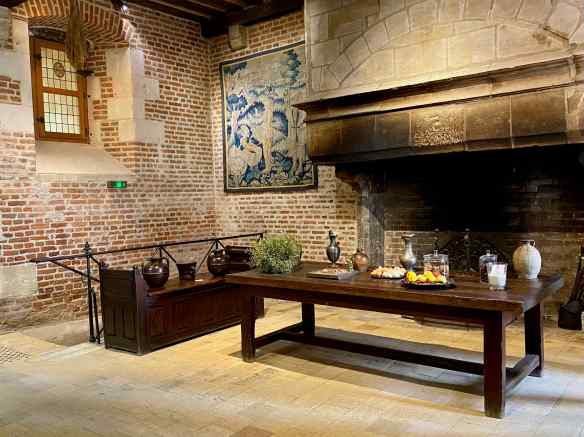 Downstairs there is a display of 40 of his inventions, recreated from his drawings by IBM. He was truly a genius. Among his many inventions are life preservers, ballbearings, cam shafts that are used in modern engines, and this screw wrench that is still in use today in plumbing.

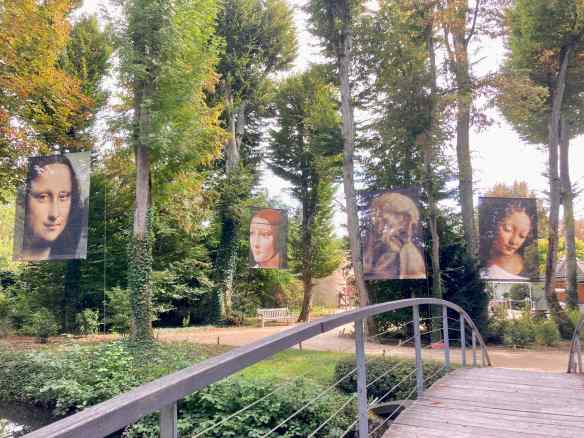
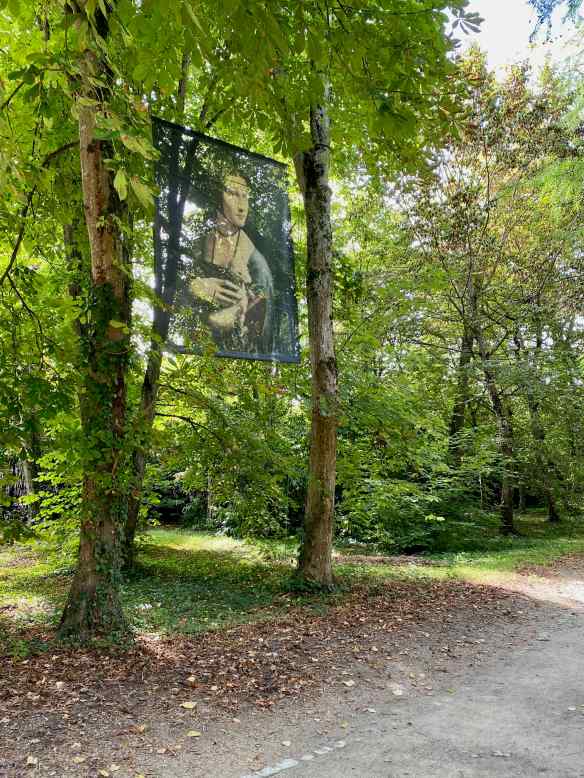
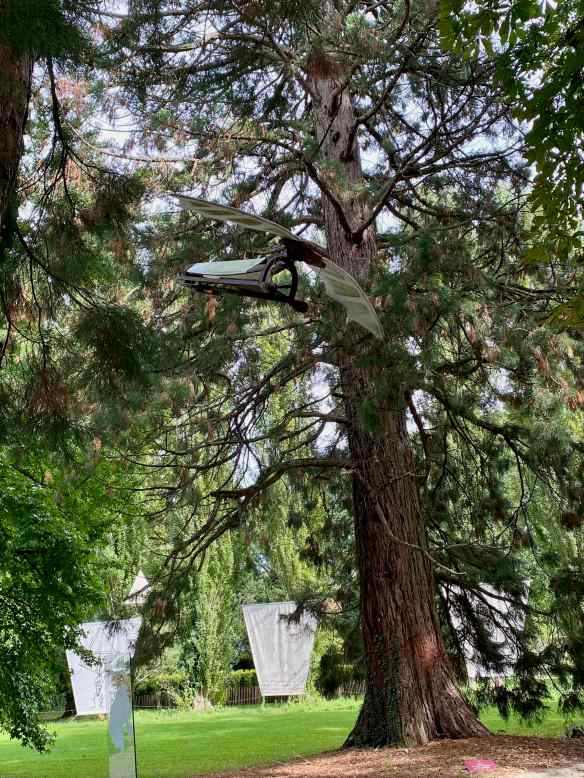
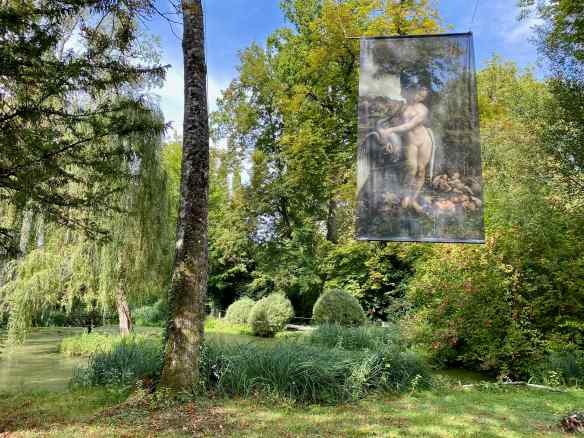
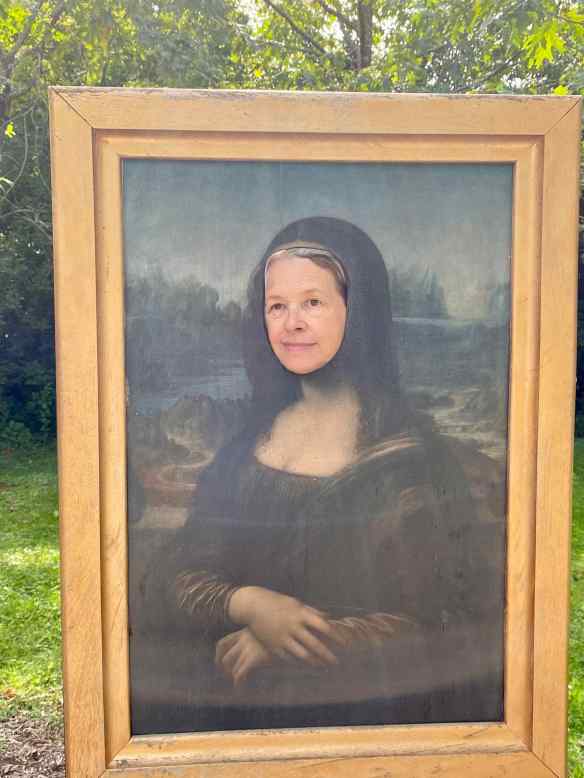
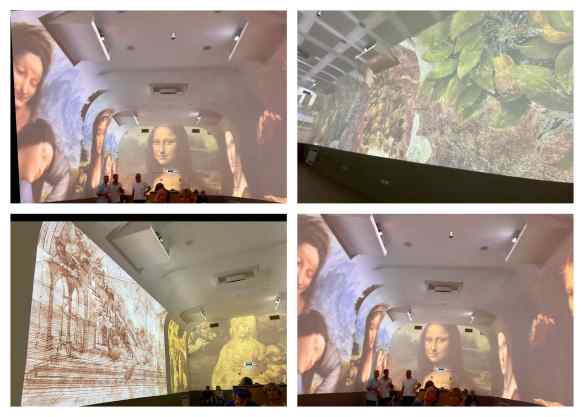 We are so fortunate to have seen most of these paintings in museums during our travels. The one we missed is the Last Supper. We didn’t realize that we needed to book way in advance so we were out of luck. We do see the Last Supper here, projected with larger than life details and preparatory sketches. It isn’t the real thing but it was pretty wonderful anyways.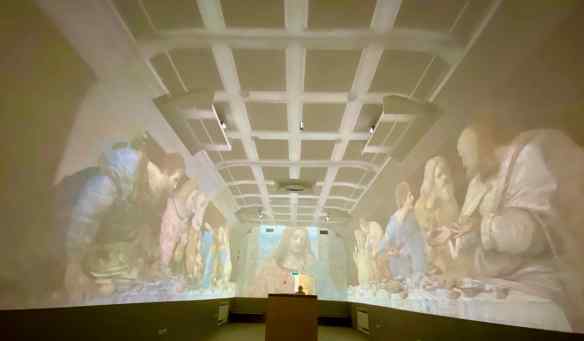

 Finally after asking several people for directions a delivery man tells me that we need to go upstairs and cross the street. Voila! Success. They do have our reservation but we have to wait 45 minutes for them to clean the car. Once in the car we discover that our Peugeot does not have plug ins for USB’s, only some other strange looking plug. Luckily a Hertz employee was walking by and I asked him for help. Another 15 minute wait and he brings us a device that plugs in to the cigarette lighter that has two USB ports. We are finally on our way, heading to Chartres to visit the cathedral. We do amazingly well getting out of Paris and to Chartres, My navigation skills are still pretty good and Bob did a great job driving.
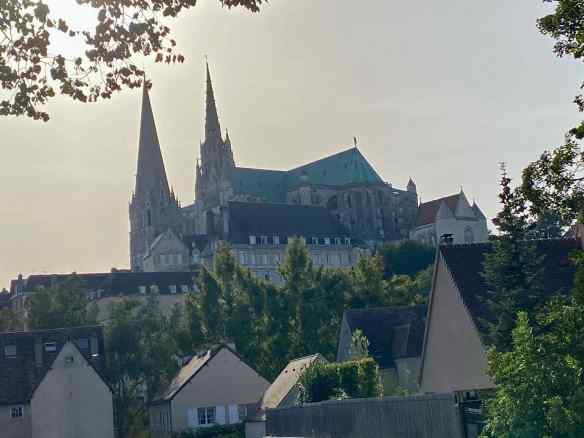
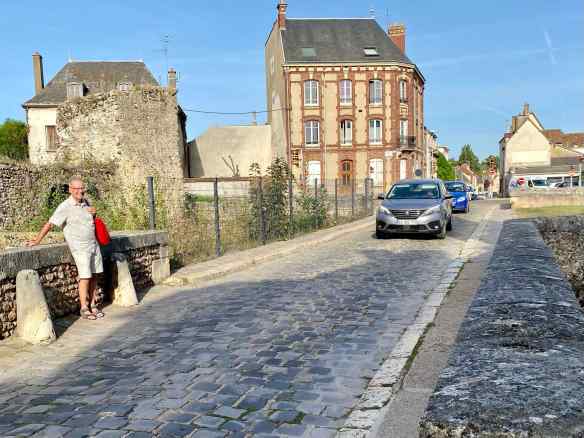
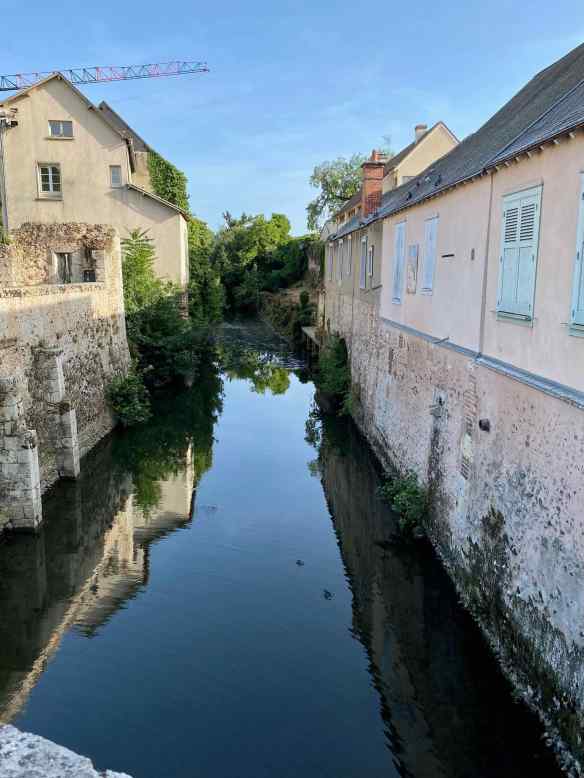
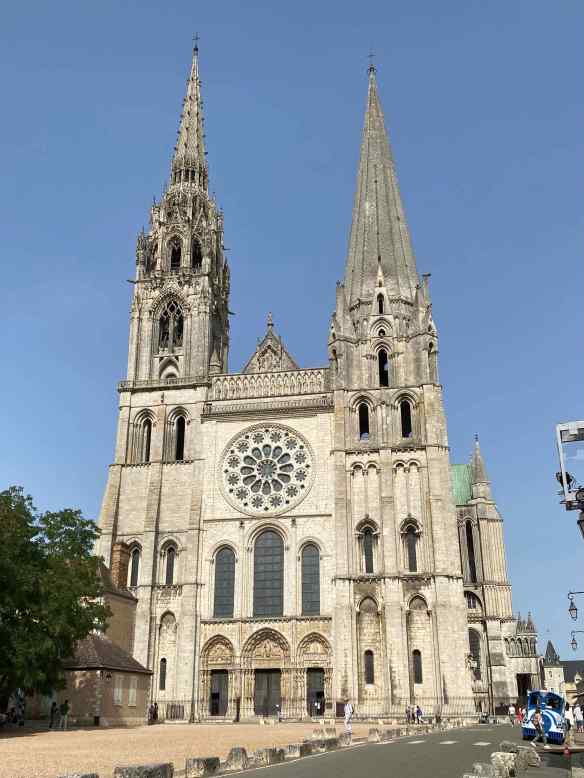 The view towards the altar. We took several photos of the stained glass but it kept looking very washed out…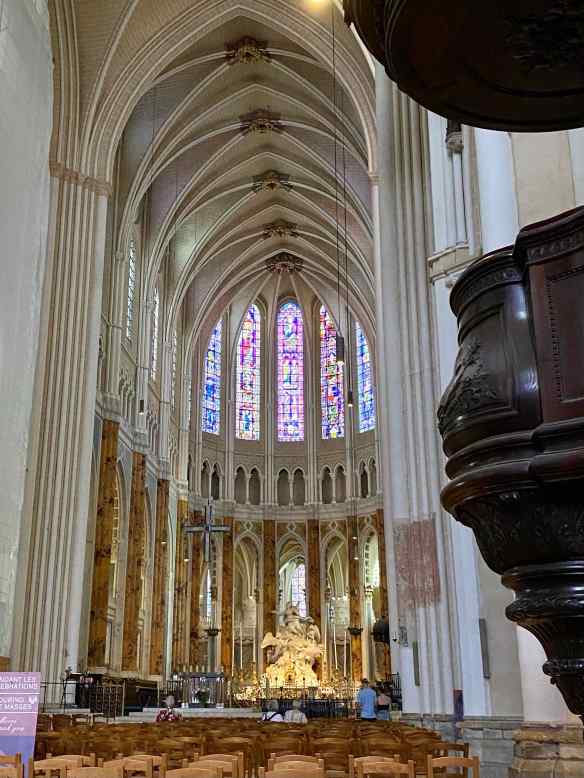
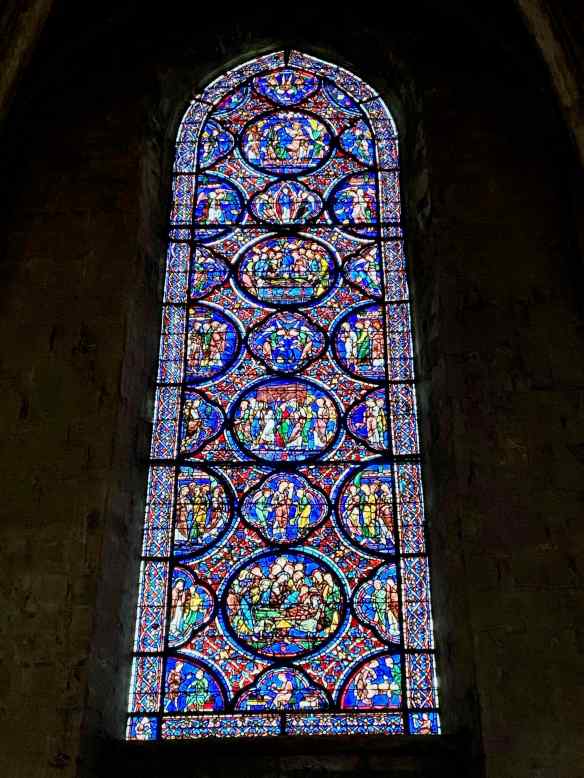
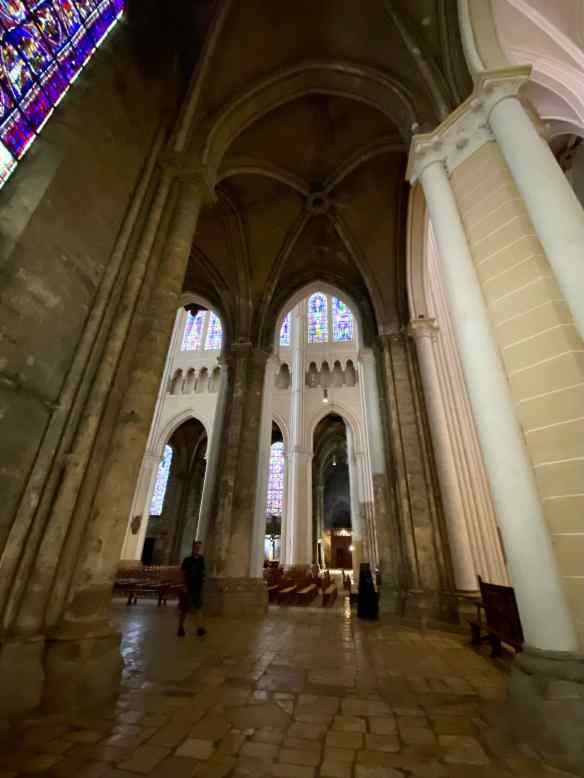 The wall of the sanctuary is absolutely amazing. The detail of the carving is incredible. The screen has forty niches along the ambulatory filled with statues telling the life of Christ. I particularly love the donkey.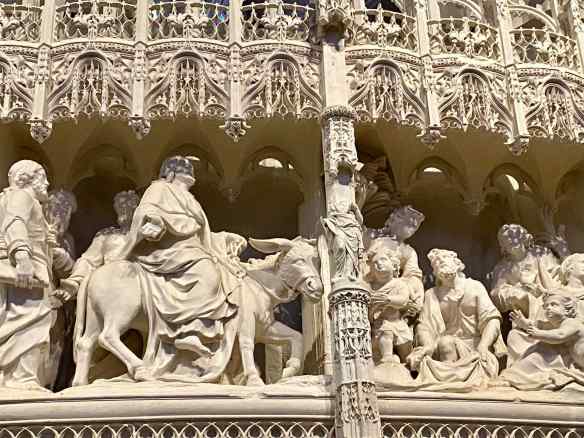
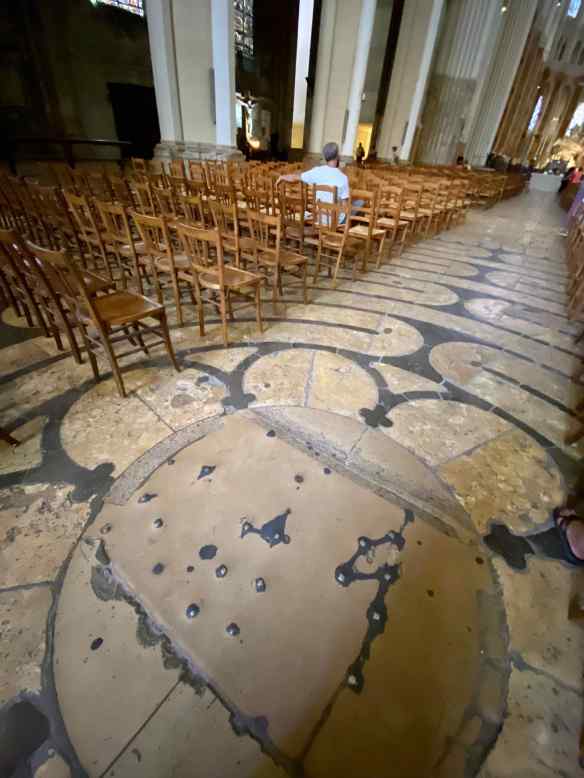 One more view of this enormous cathedral, before we head back to Paris.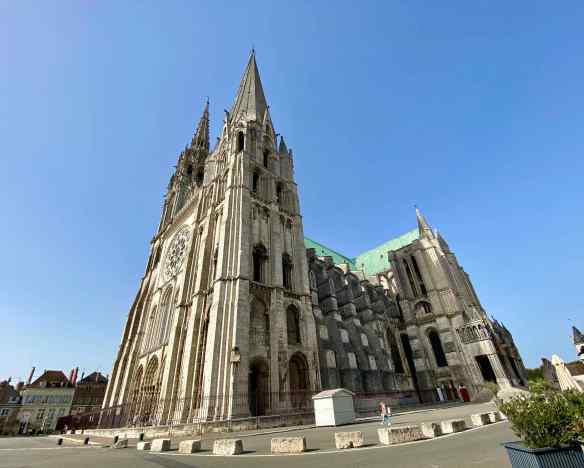
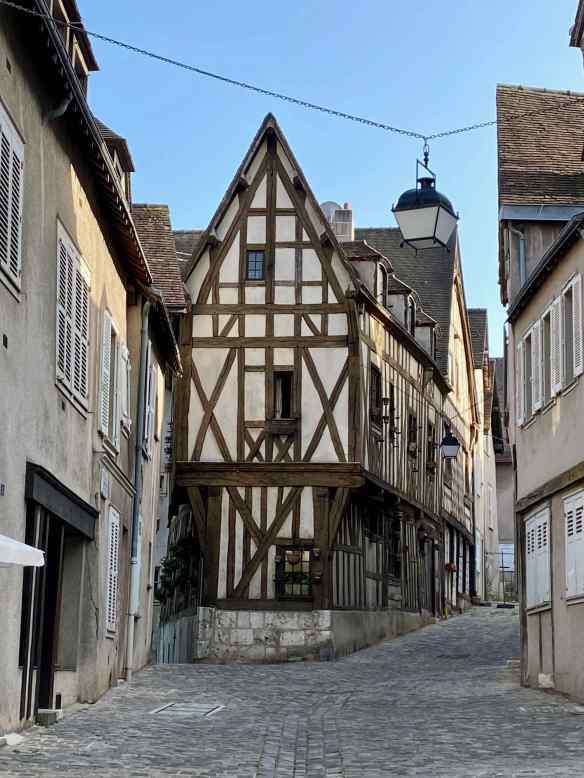 And although some of them are in really bad shape, I have no doubt that they will be repaired rather than demolished.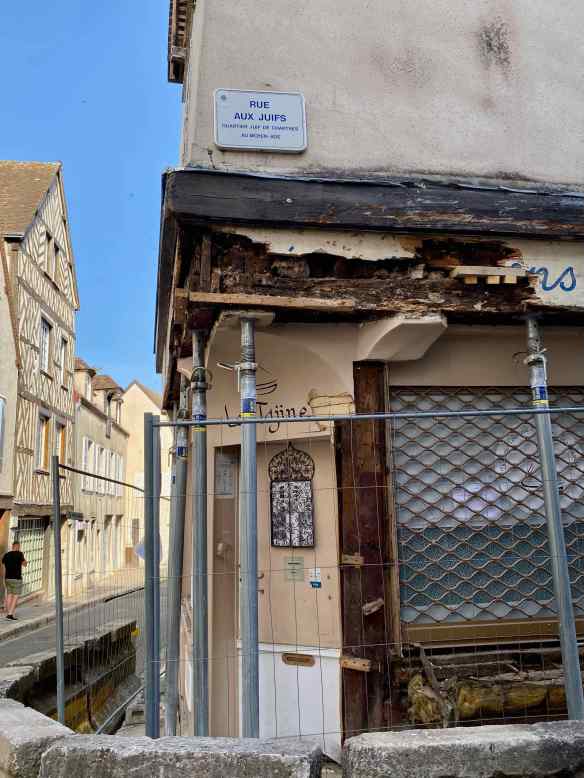
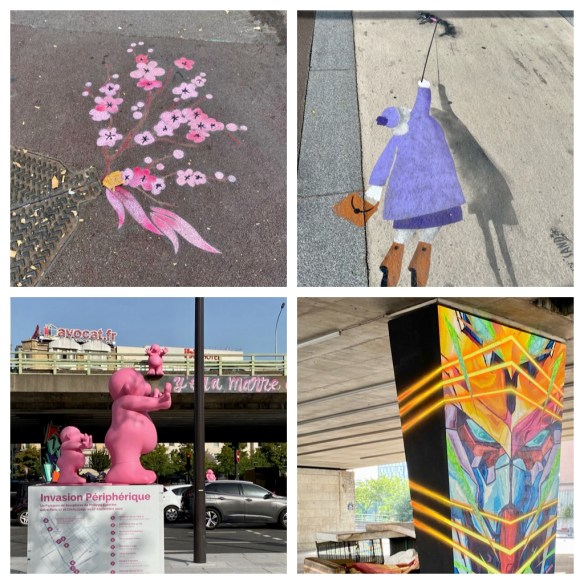
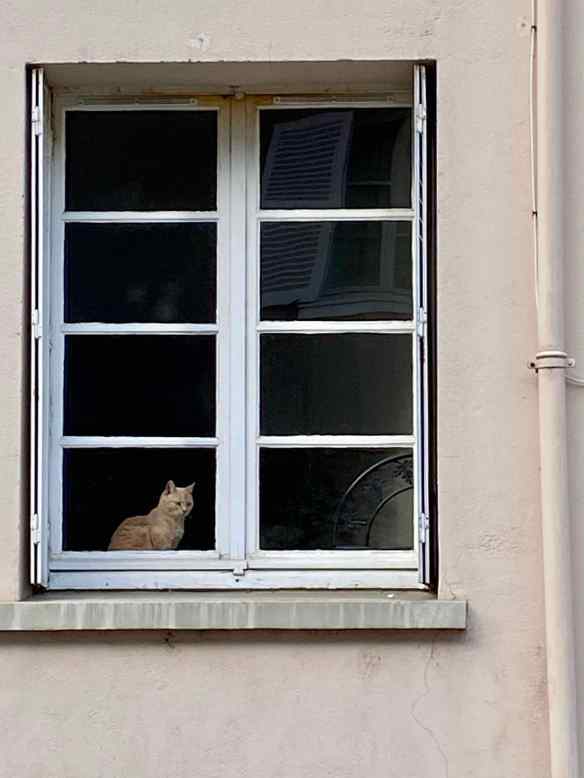 As we leave I notice another example of street art. I saw another walking back to the car and I thought it looked like a Banksy, and this one could be too? Turns out there is an exhibit of Banksy’s work here in Chartres. We missed that too.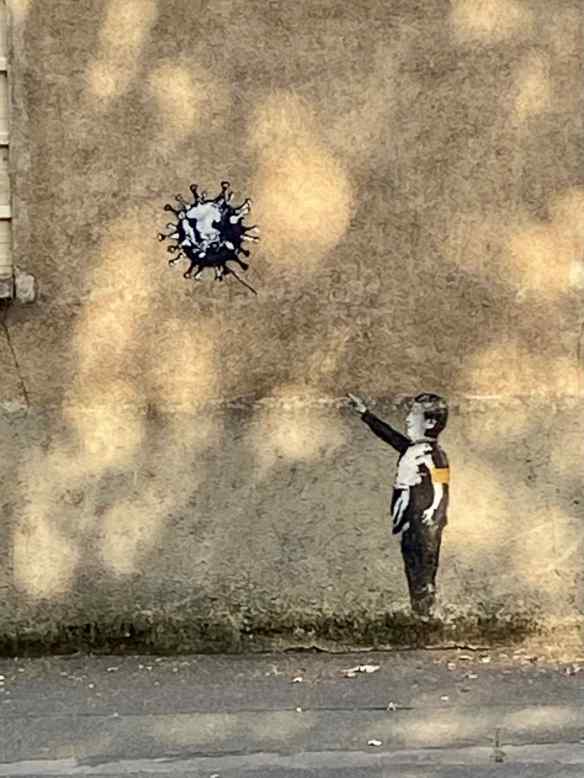
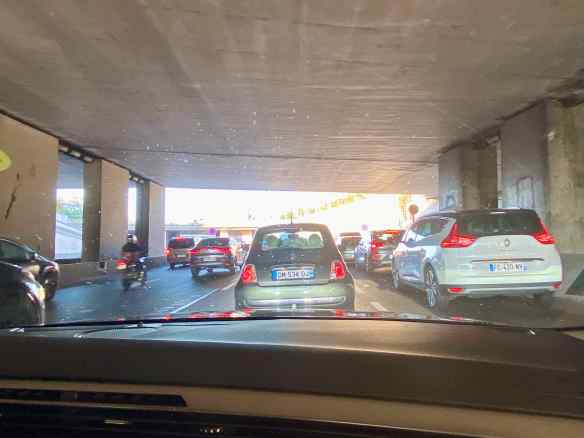 It is busy when it takes 11 minutes to go just over 2 1/2 kilometres! We are both happy to get home and glad our first day with the car went so well.

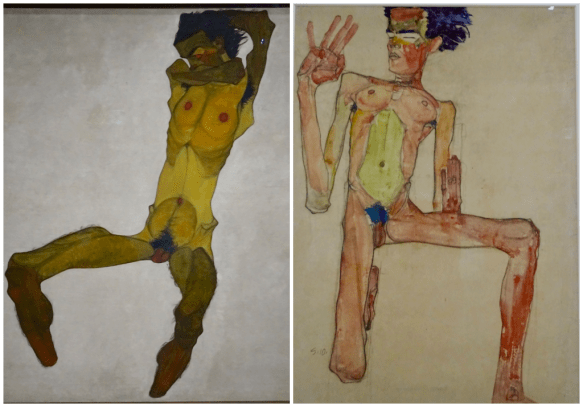
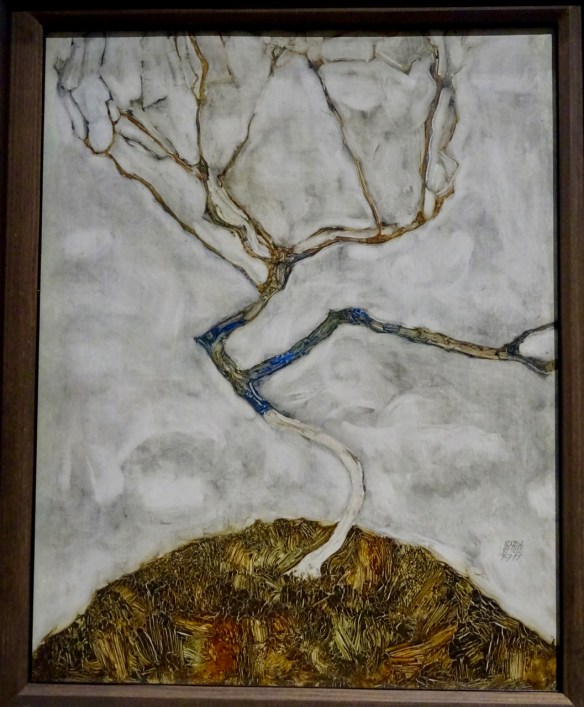
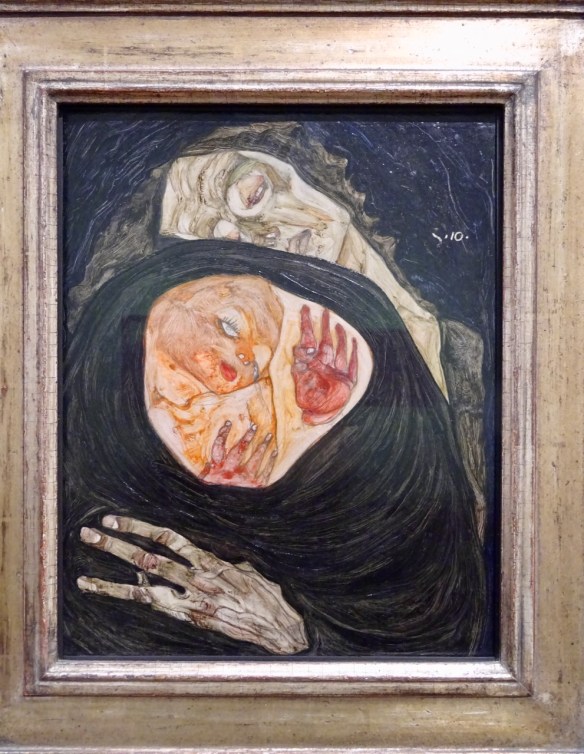
 ‘Mother and Child’ is a well known painting. I do love how expressive Schiele’s hands are.
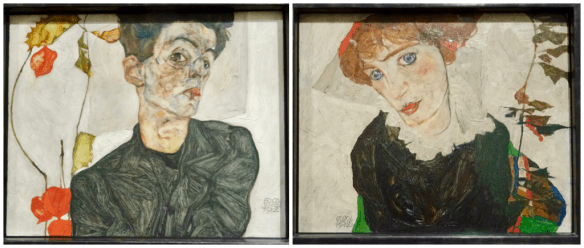
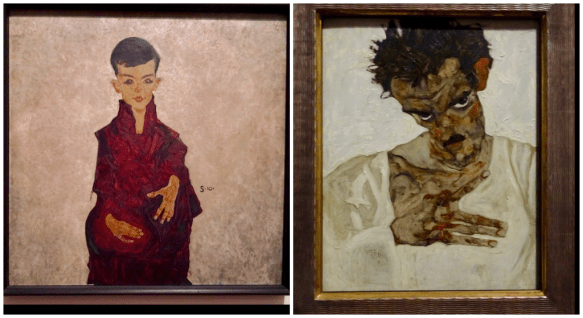
 Schiele’s 1912 ‘Self Portrait with Chinese Lanterns’ was painted as a companion piece for the ‘Portrait of Wally Neuzil’ who was his muse and partner from 1911 to 1915. Both these paintings have a gentleness and sensitivity not found in all his work. I like these very much.
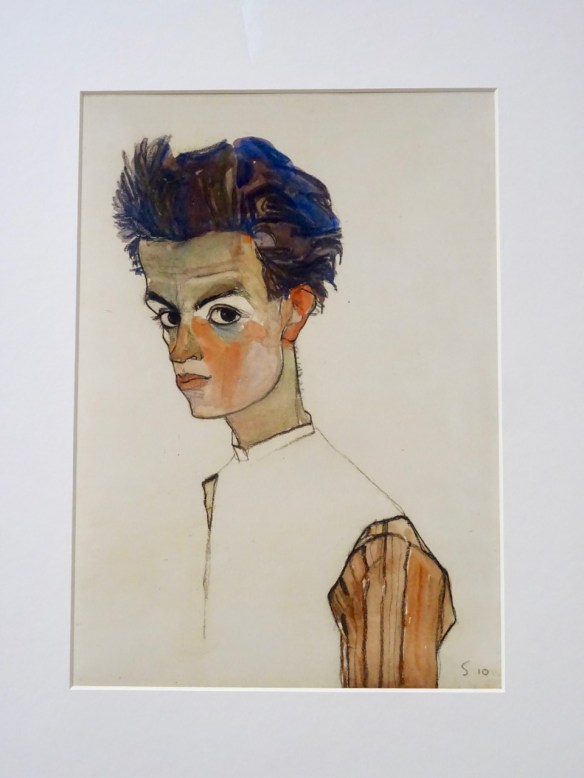
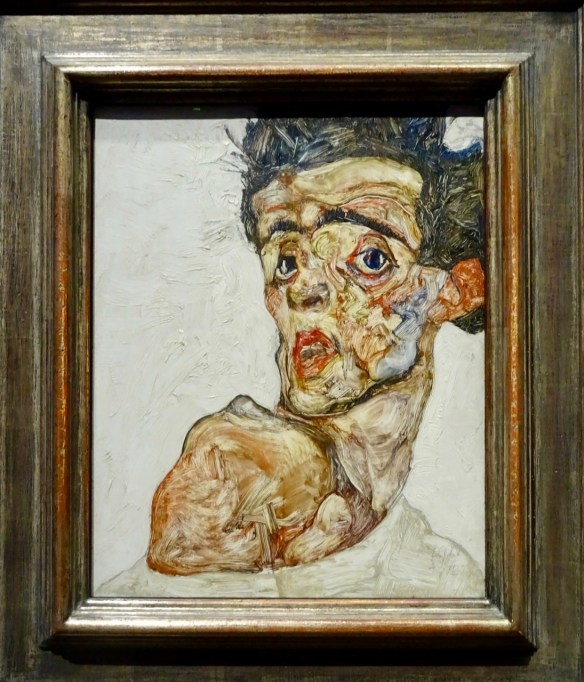
 Quite different from this self portrait completed the same year. Schiele was born in 1890 and died in 1918. He was only 28 years old when he died, yet he created over 3,000 works on paper and around 300 paintings! I wonder what he would have accomplished if he had lived longer. He died during the Spanish Flu Epidemic, just three days after his six month pregnant wife Edith.
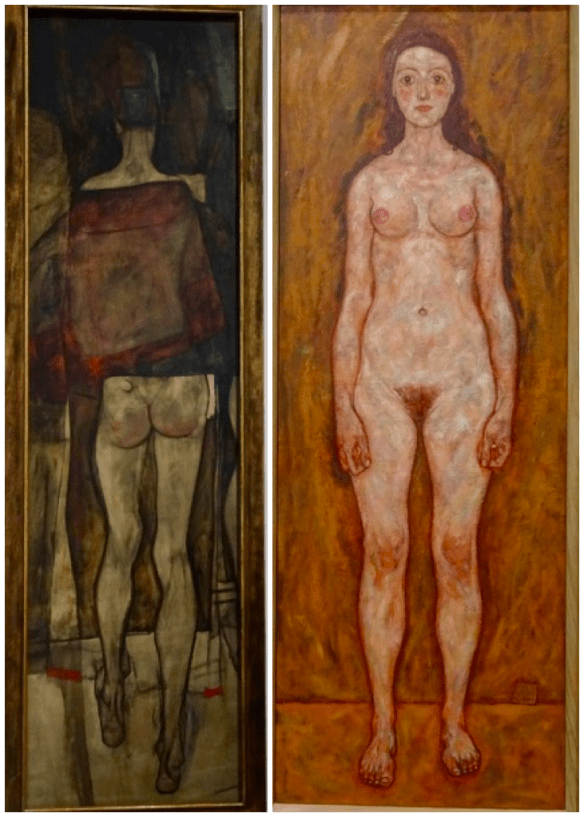
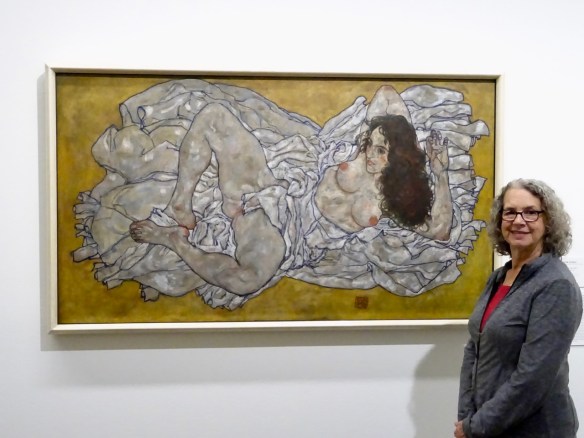
 ‘Reclining Woman’ was bigger than I expected. Originally the woman’s genitals were exposed but Schiele added the white cloth covering in order to be able to show the work at an exhibition in Vienna in 1918.
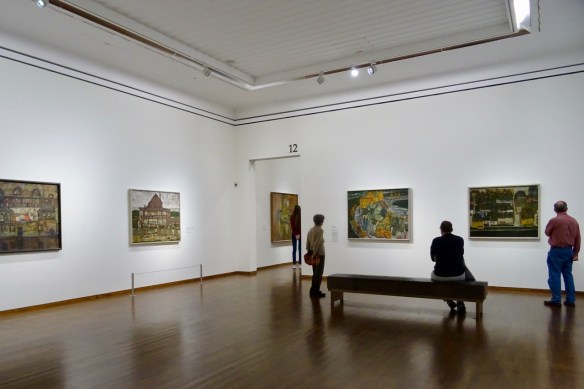
 There are several landscapes, and most of them are quite large.
 ‘The Small Town IV’…
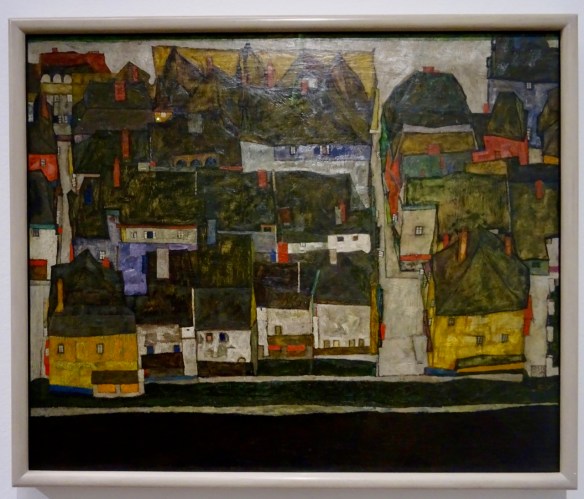 and ‘House With Shingled Roof’ were two that I particularly liked. Although Schiele only painted for such a short time, his work laid the foundations for the Viennese Expressionist movement as well as inspiring other future movements, such as Abstract Impressionism.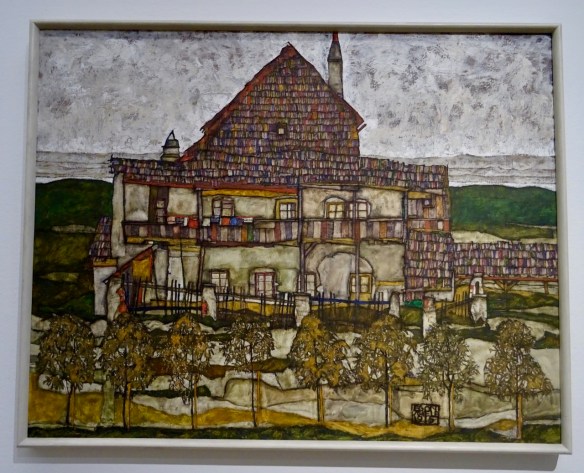
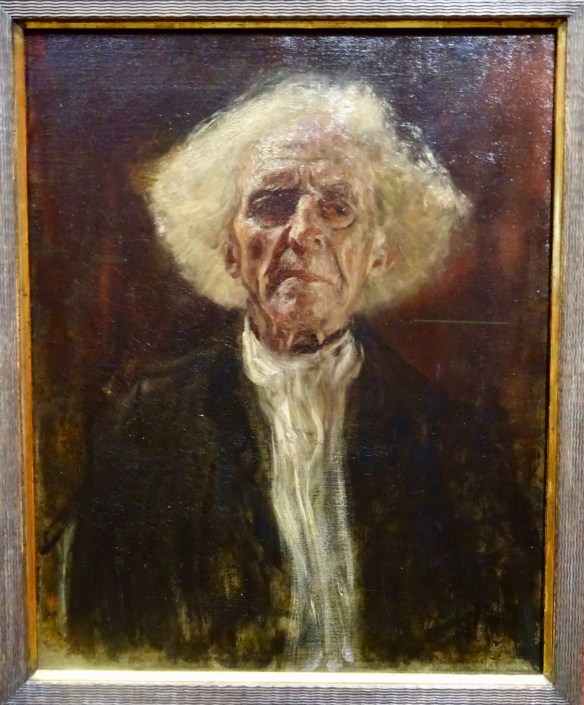
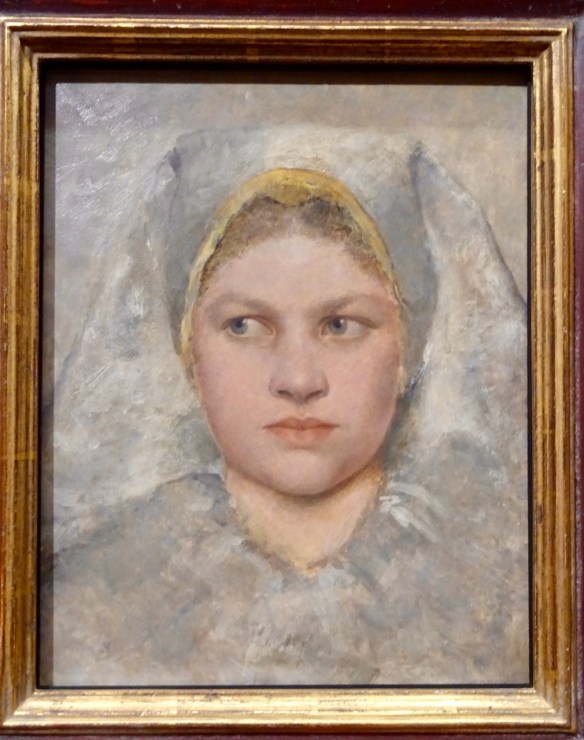 ‘The Blind Man’ was first exhibited in 1898.
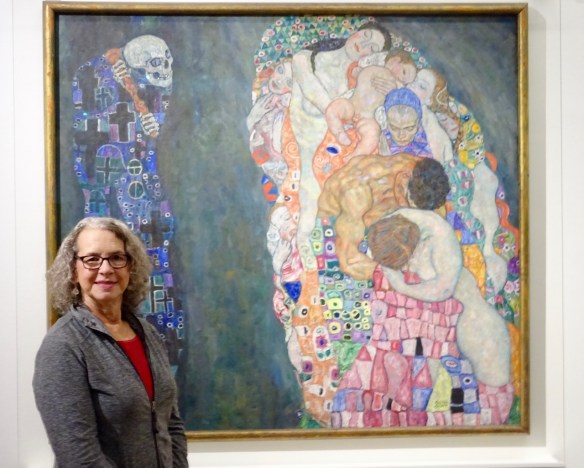
 ‘Death and Life’ won the Gold Medal at the 1911 International Art Exhibition in Rome. This painting and ‘The Kiss’, that I saw at the Belvedere, are two of Klimt’s most well known paintings. I feel very fortunate to have seen both of them in person, as well as all the other amazing works of art I have seen on this trip.
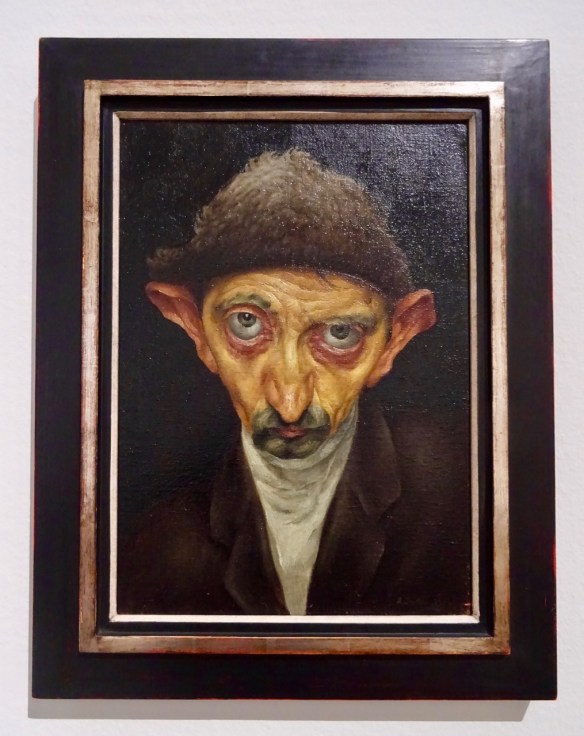
 As we are leaving the Leopold I notice this painting, which makes both of us laugh! It is by Albert Birkle and is titled ‘Man with Fur Cap’, or ‘My Brother the Animal’!
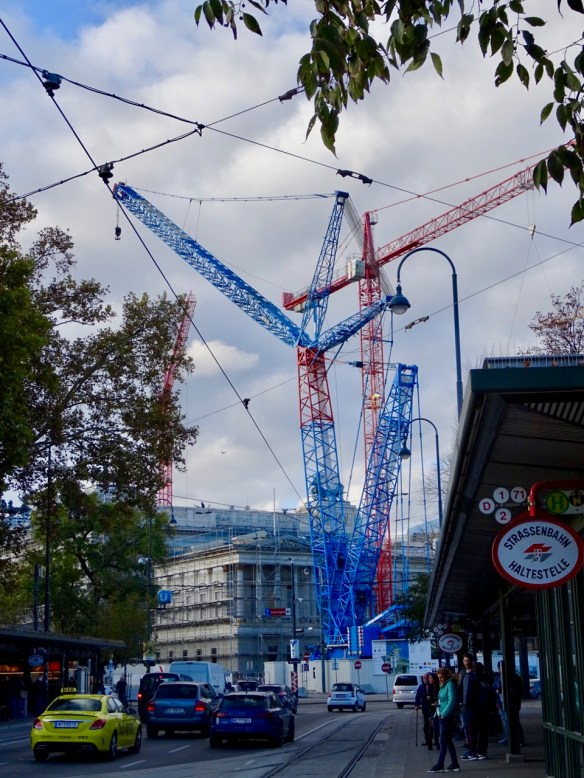
 Near the metro station Bob notices this crane which has just been erected. Neither of us have seen one with so many arms before.
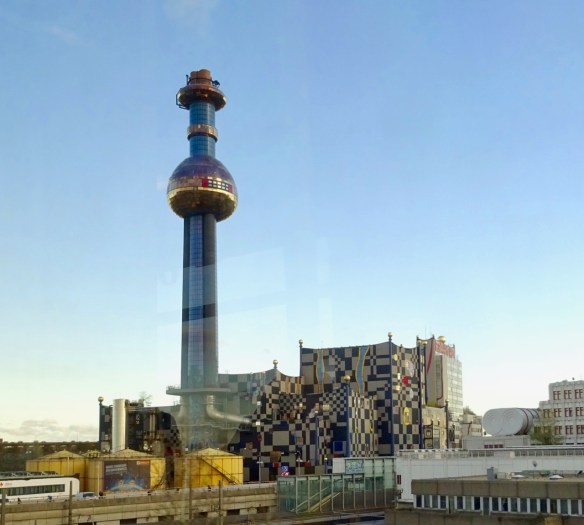
 When I saw this building our first day in Vienna I thought it was the Hundertwasser House but it wasn’t. Turns out that it was designed by Friedensreich Hundertwasser! It is the Spittelau Incinerator which is used to handle Vienna’s garbage. The environmentally friendly plant produces enough energy to heat more than 60,000 households in Vienna in a year.
 I have one more life drawing session tonight at Kaffeebar Quentin. I have attended many life drawing sessions in bars or pubs and the model is always at least partially clothed, so I was quite surprised when our model is completely nude. We are in the back of the bar, but the model is still in full view of all the other patrons as well as anyone who happens to look in the windows. Wish I had a scanner, as it would improve the quality of these photos, but I don’t think I can haul one around on holidays! These are all 5 minute poses.
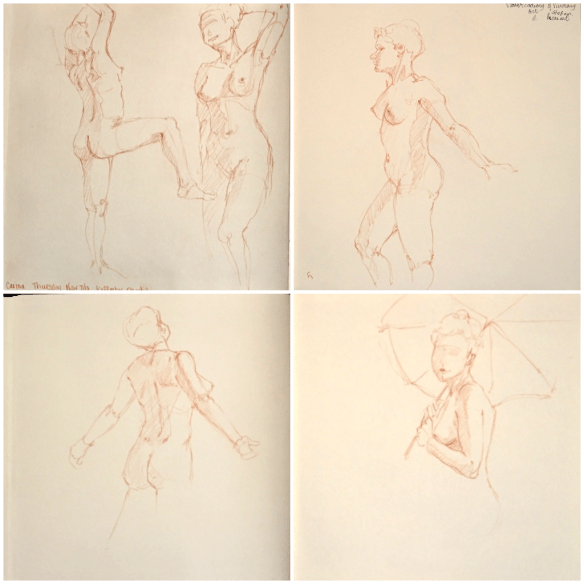 Two ten minute and one twenty minute drawing…
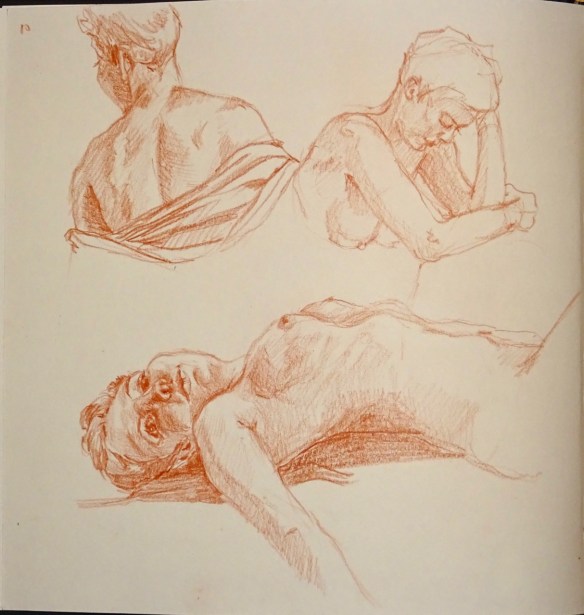 and we finished the evening with a twenty-five minute pose. The people at this session were very friendly and I had met some of them at the other two sessions this week. I will miss Vienna, they have so many life drawing opportunities. There is a session almost every day of the week, and lots of them have interesting themes.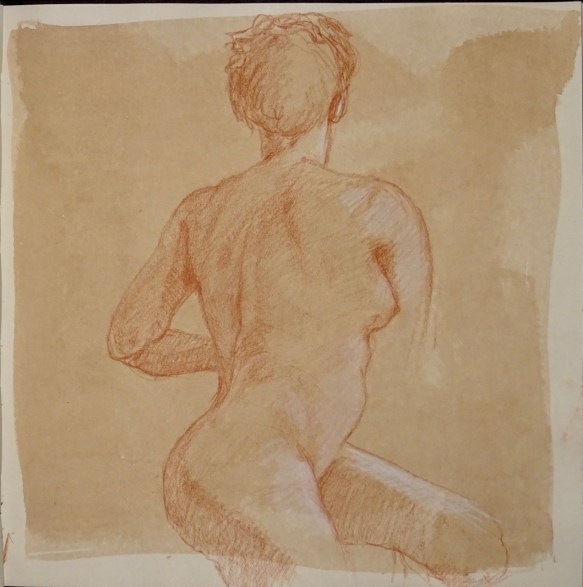
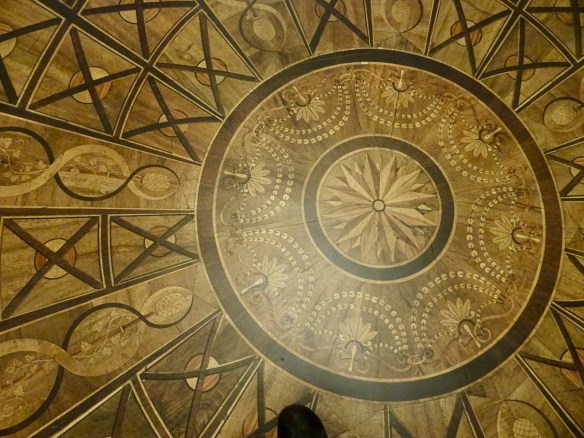
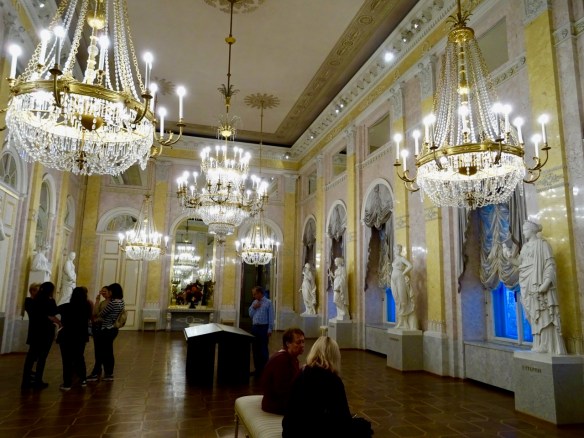
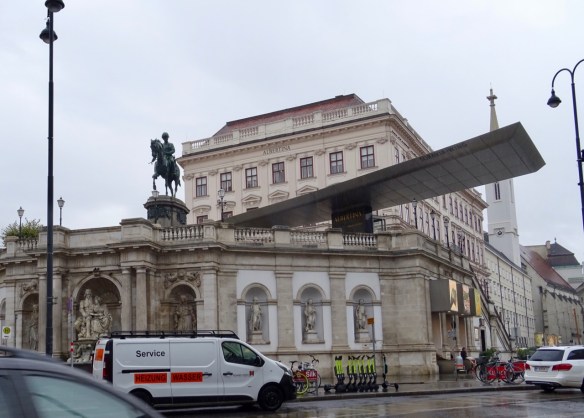 Before we see the Dürer exhibit we visit the other parts of the museum. There are 20 decorated and restored Habsburg State Rooms with precious wall coverings, chandeliers, fireplaces and stoves, inlaid floors,
  The chandeliers in this room were very beautiful.
 The most interesting thing in these rooms was the art exhibit on the walls. We have a print of this Hieronymus Bosch drawing at home. Unfortunately the drawings and prints are facsimiles. Very good ones, but facsimiles non-the-less. This is necessary as works on paper are fragile and can not be displayed for long periods of time.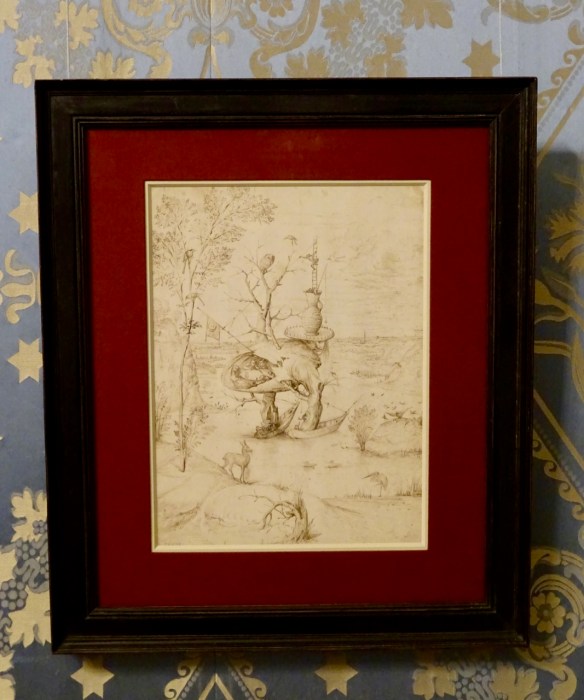
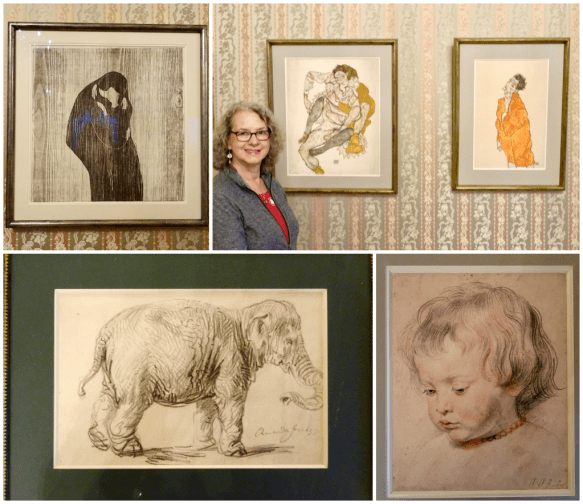 Now on to the main event!
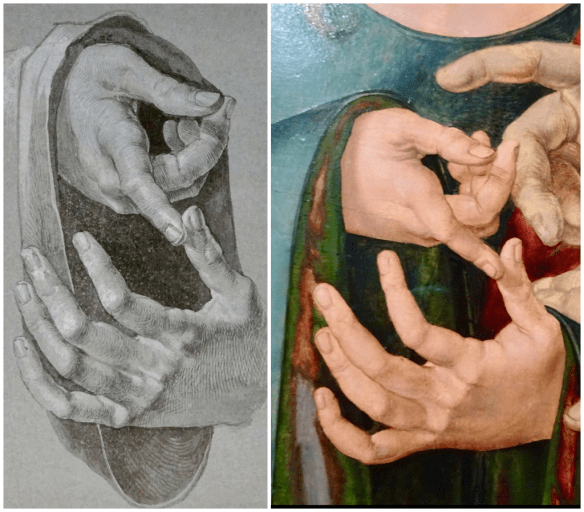
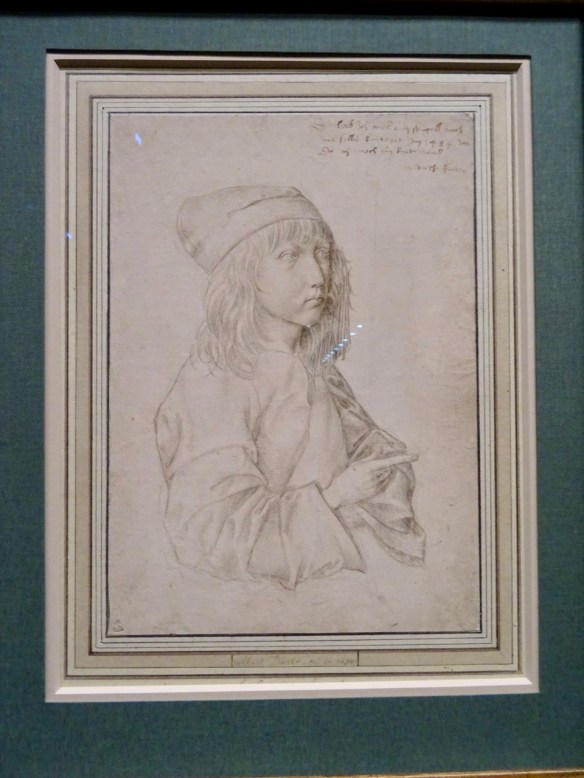 I took so many photos but have chosen just a few of my favourite ones for today’s post. Here is ‘Three Studies of Dürer’s Left Hand’ 1493/94. I like drawing hands and feet and there is much to learn from Dürer.
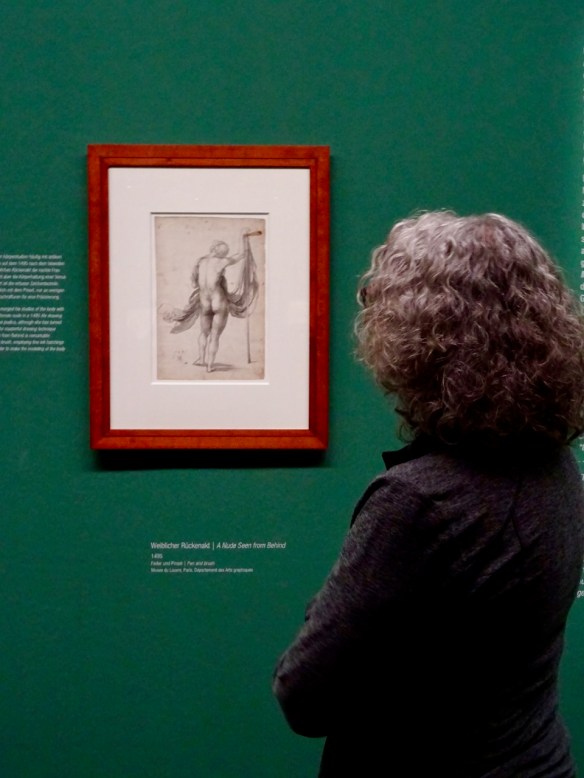
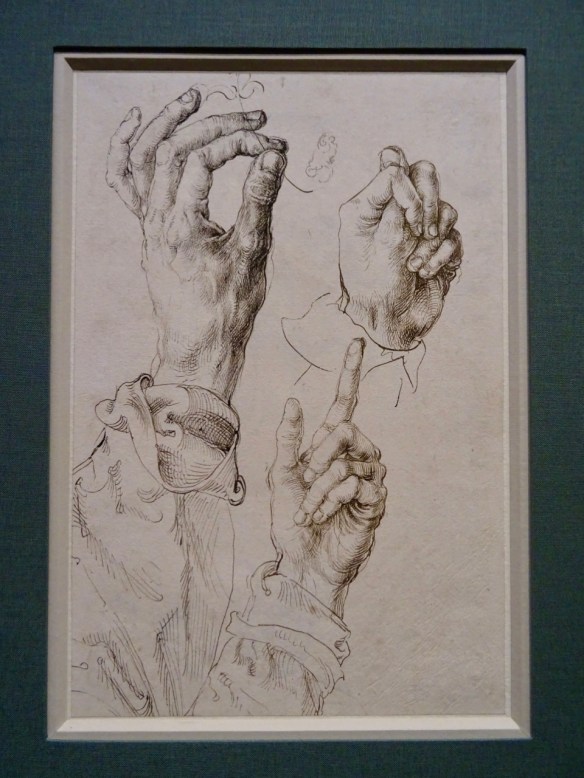 This page of studies was so interesting.
 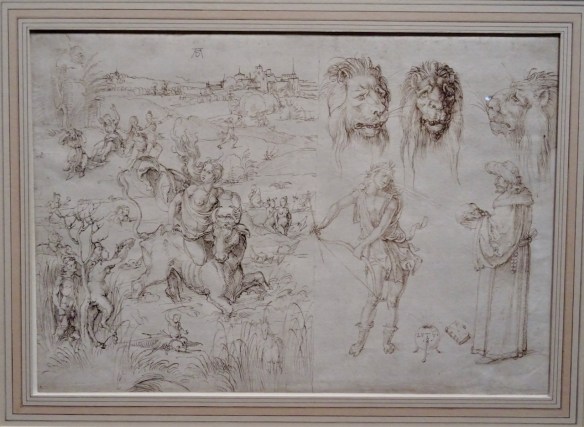 Here is another drawing I have seen so often in books.
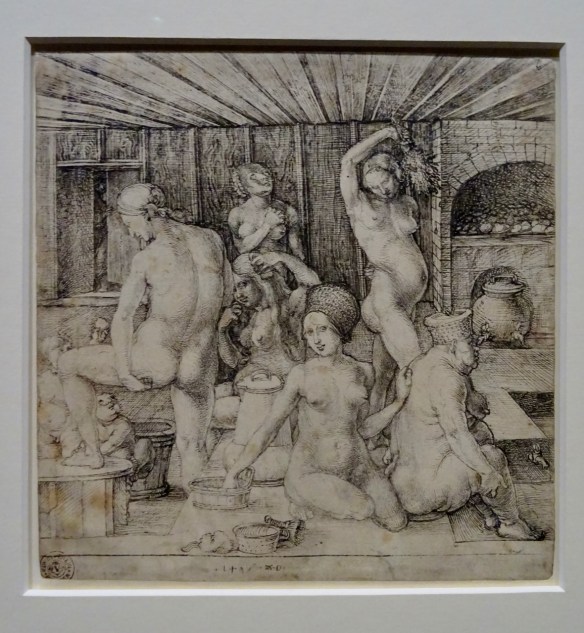
 ‘The Woman’s Bath’ is a pen and ink drawing…
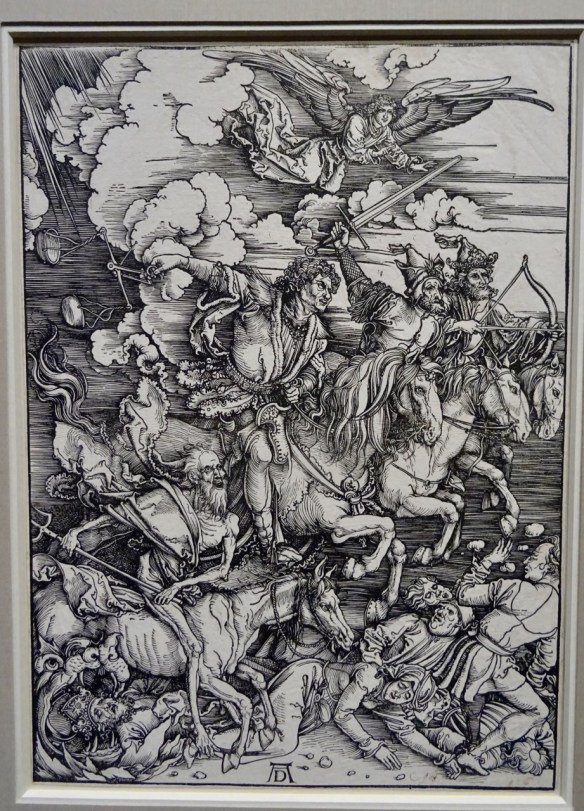
 and this ‘Illustration for the Apocalypse’ is a woodcut. Dürer was a master of all mediums.
 Dürer’s watercolours are exquisite. This painting is simply titled ‘Iris’.
 A watercolour study of a ‘Blue Rolle’r from 1500.
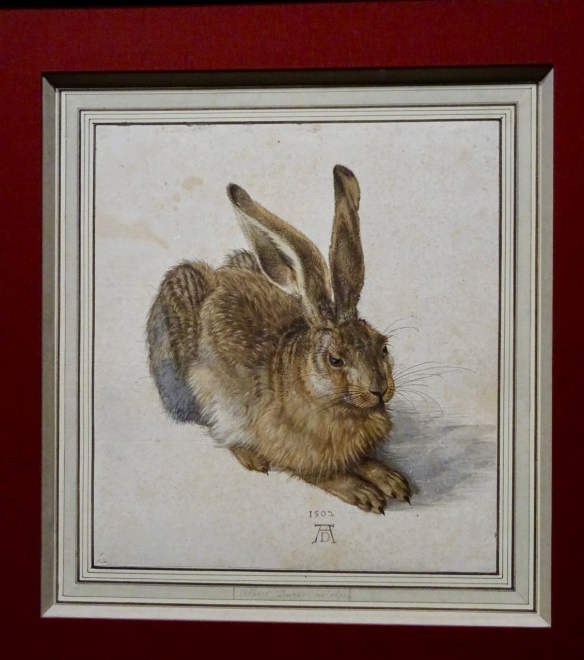
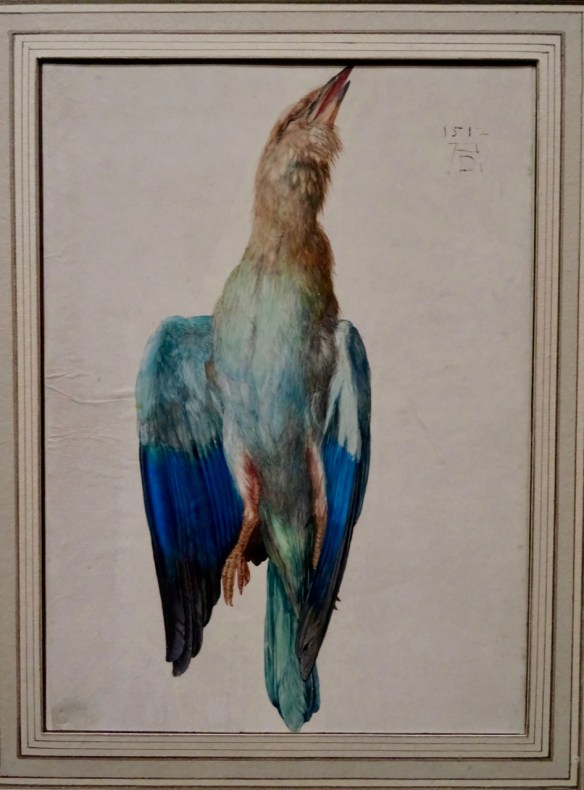 We enter another room and there on the far wall are three famous works. Dürer’s ‘Young Hare’ is only exhibited once every five years for a period of no more than three months. It is just luck that it is on exhibit while we are here. This is another print that we have at home. Bob wishes it was the original!!
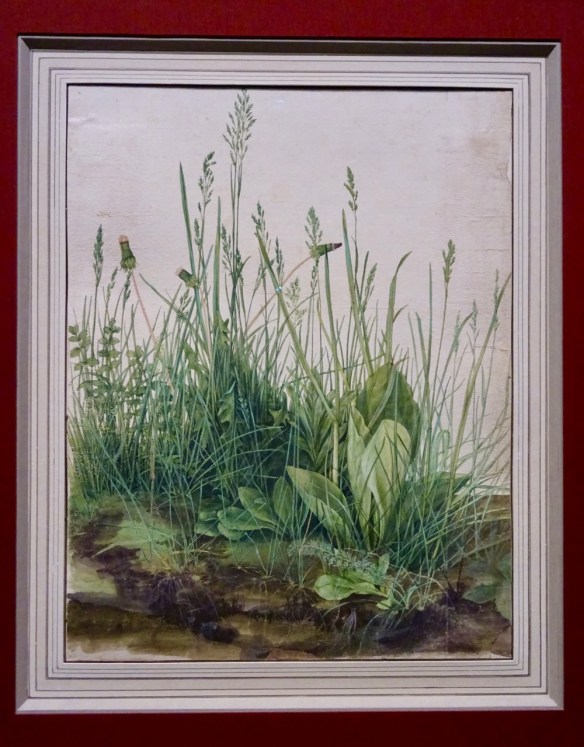
 ‘The Great Piece of Turf’ was painted on the largest piece of paper available at the time to portray the plants life sized.
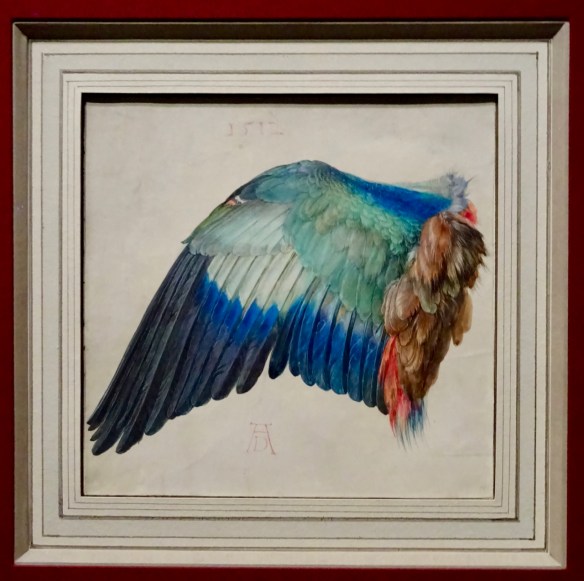
 ‘The Wing of a Blue Roller’ is quite amazing. This work is watercolour and body colour on parchment with fine gold lines on the breast plumage to enhance the iridescence of the feathers. There is no one telling visitors to keep a certain distance from the works, so my nose gets up very close!
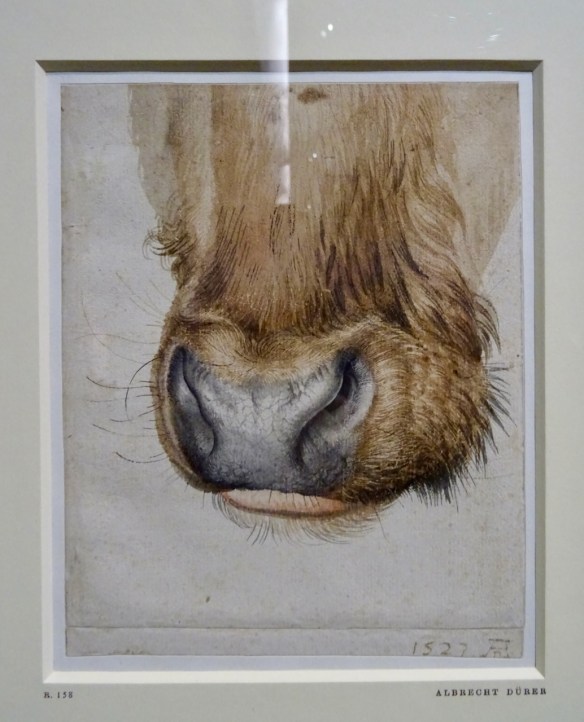
 I liked the study of a bull’s nose too…
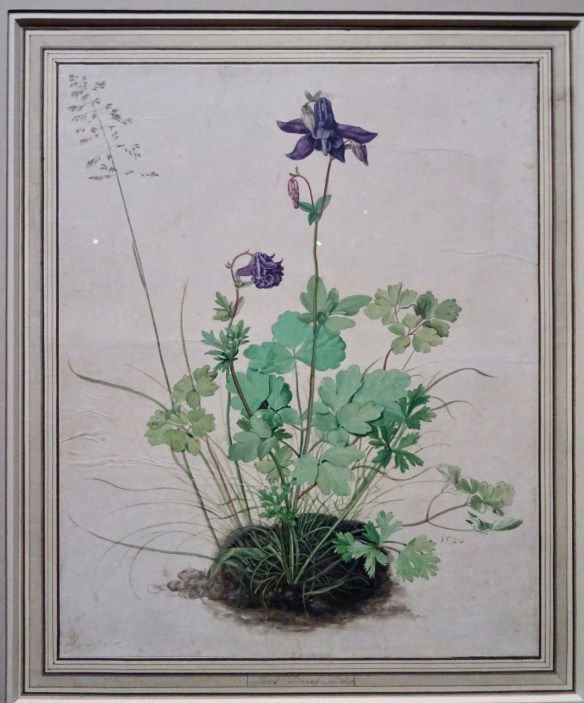
 and this ‘Columbine”…
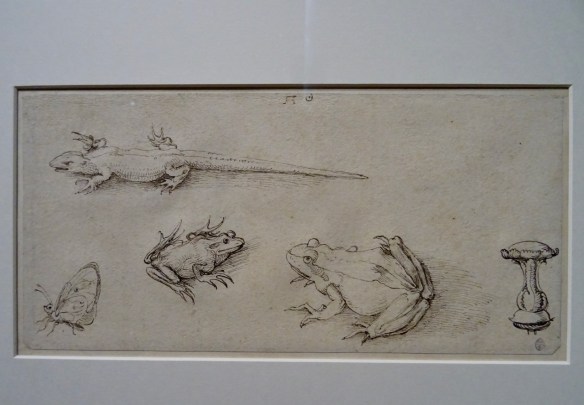
 and this page of studies.
  OK. I love pretty much everything I see here! This head of an angel and head of twelve year old Jesus are studies for a larger painting …
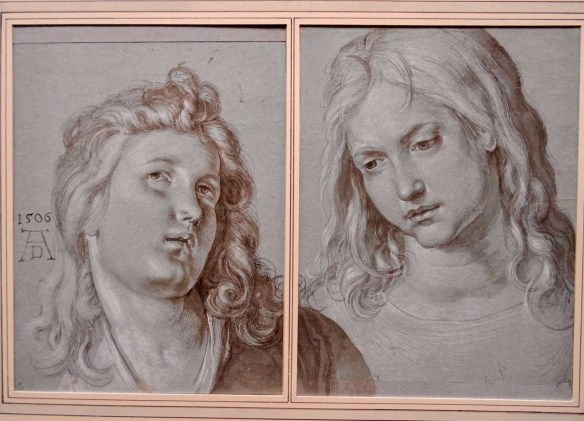 as is this hand study. It is fascinating to see the studies and then the finished painting.
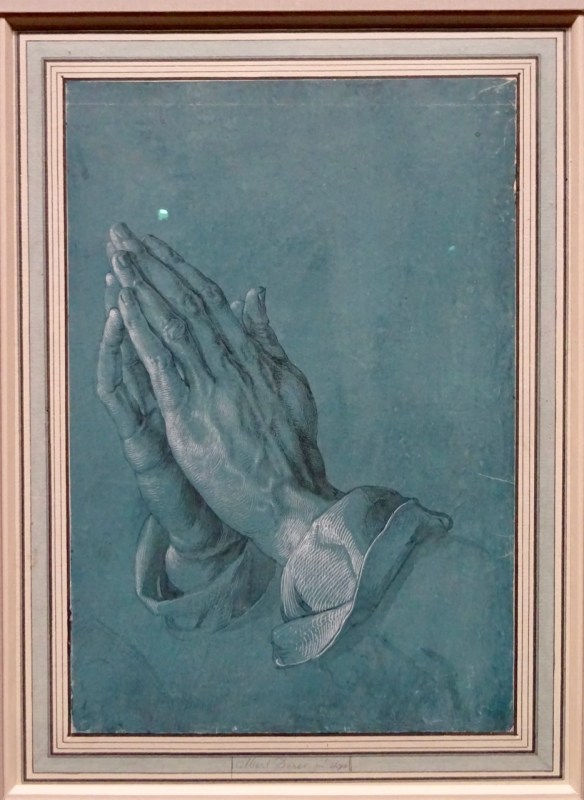
 ‘The Praying Hands’ is a well known Dürer image.
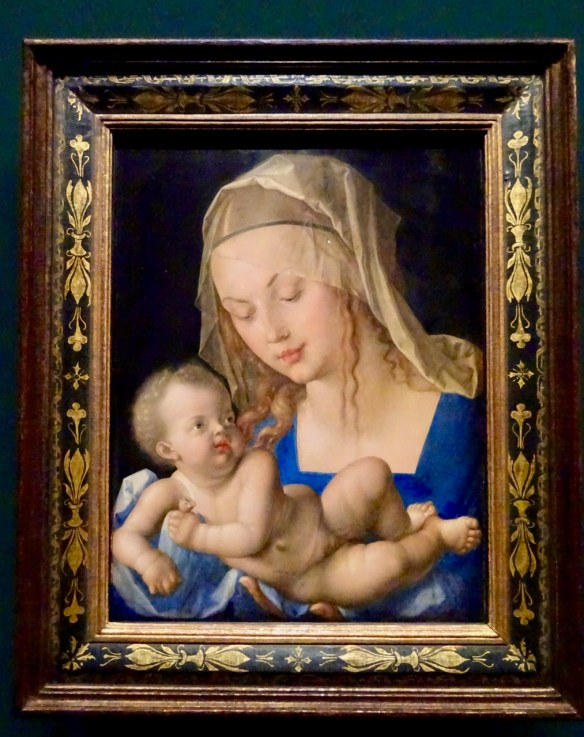
 I really didn’t know much about Dürer’s oil paintings. I particularly loved this one. The Madonna’s face is so beautiful.
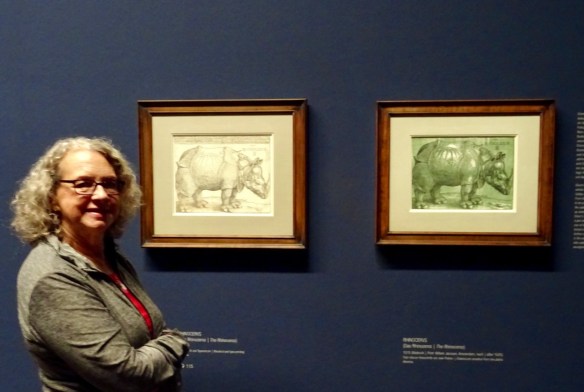
 Dürer drawing and woodcut of a rhino were made without his ever having seen a rhinoceros! He drew from a written description of the animal and his imagination.
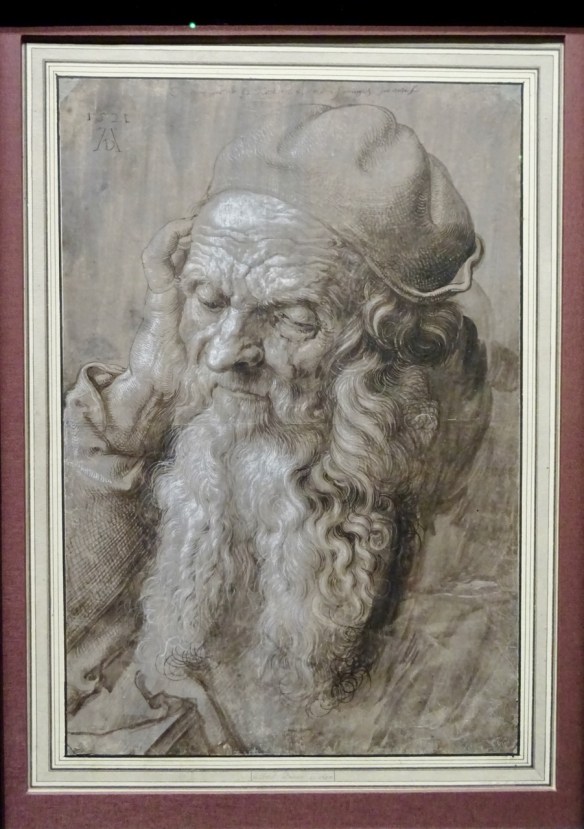
 I have always loved this ‘Portrait of a 93 Year Old Man’. I didn’t know it was done with a brush!
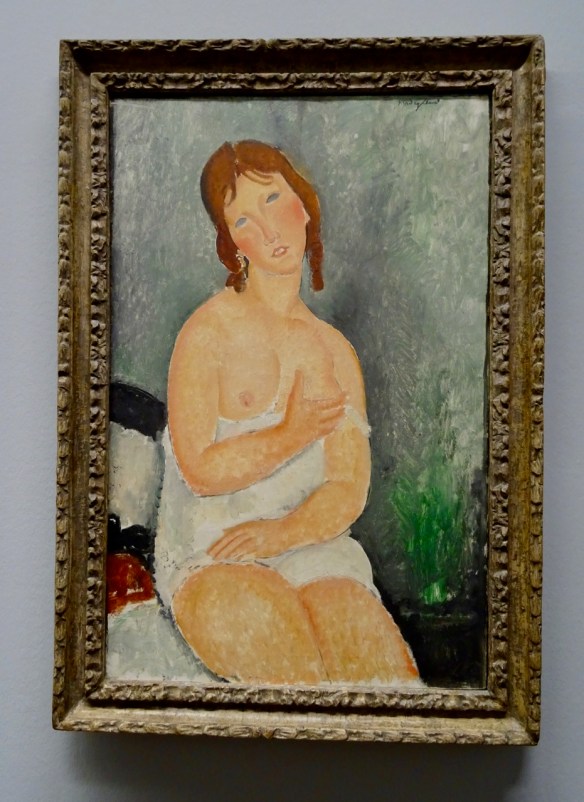
  As we are leaving the museum I see this Modigliani painting ‘Prostitute’. I have always liked Modigliani’s work but haven’t really see very many in person.
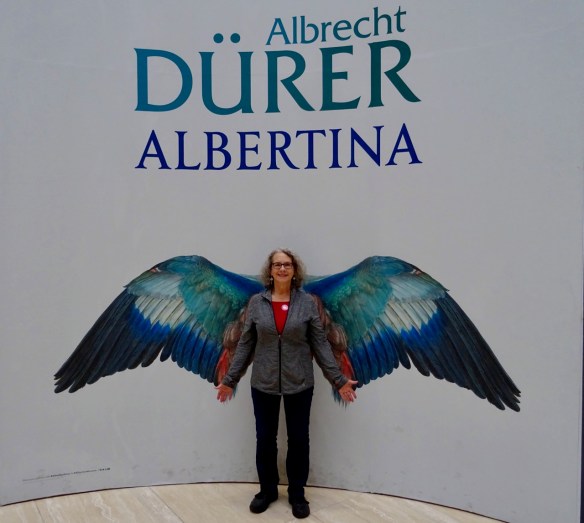
  One last photo at the Albertina. Seems I want to sprout wings this trip!
 We spent four hours here today and I could easily have spent much more time here but this will have to do. I bought the catalogue for the exhibit. It is huge, and weighs 6.6 pounds! Good thing we are near the end of our trip!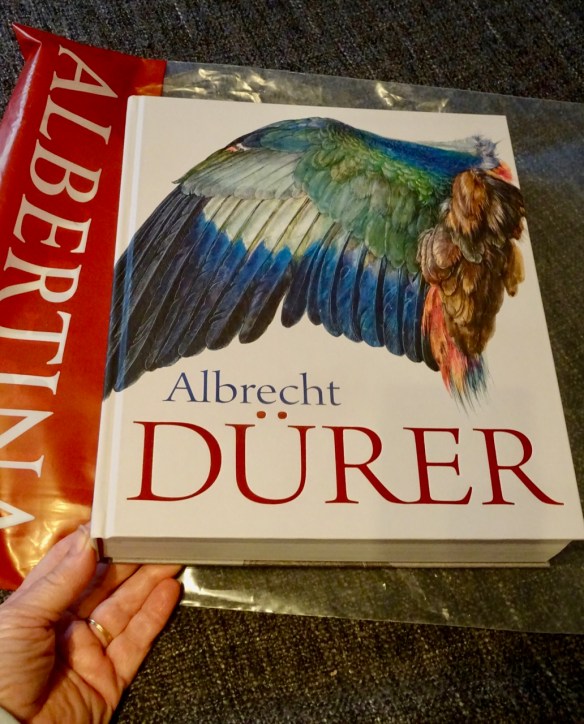
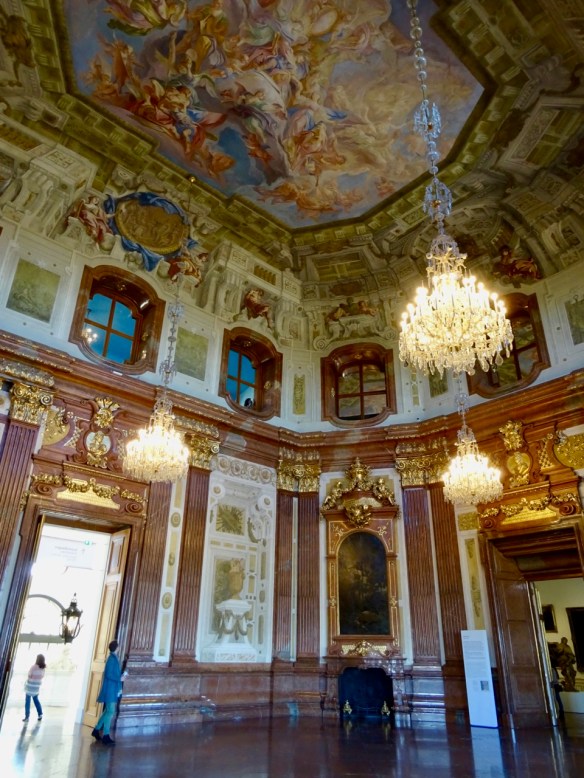
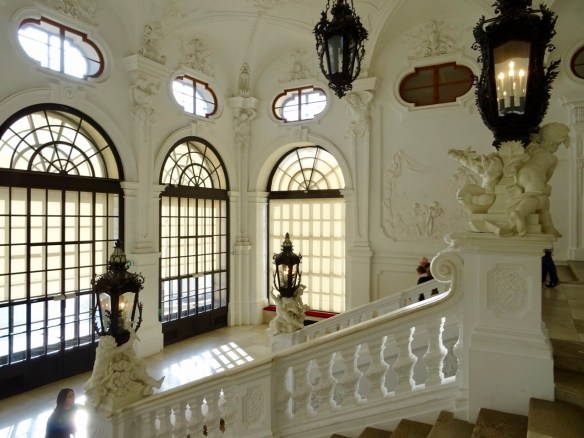 and the beautiful Marble Hall.
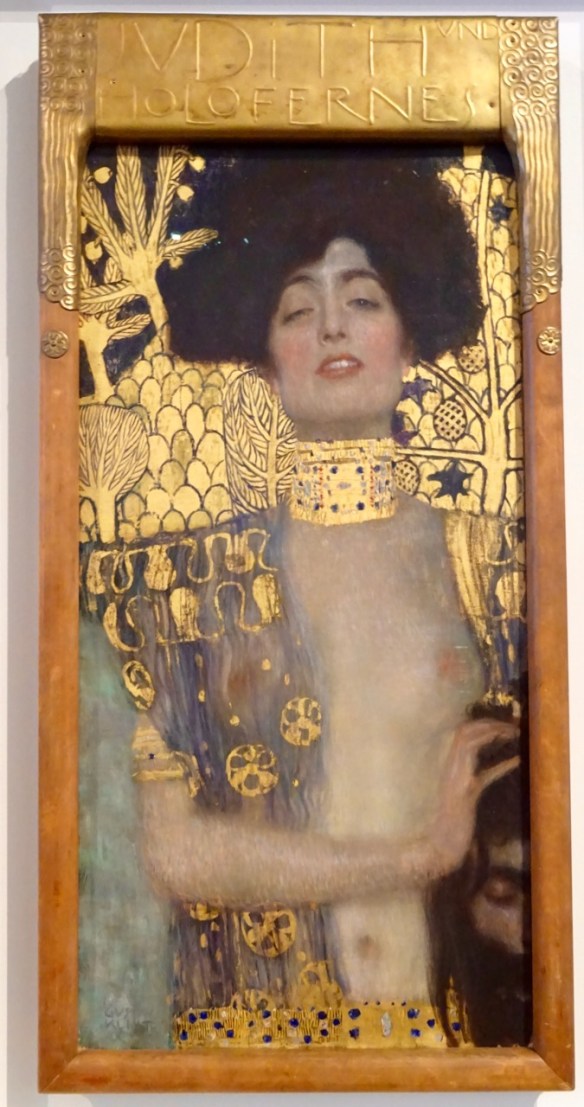
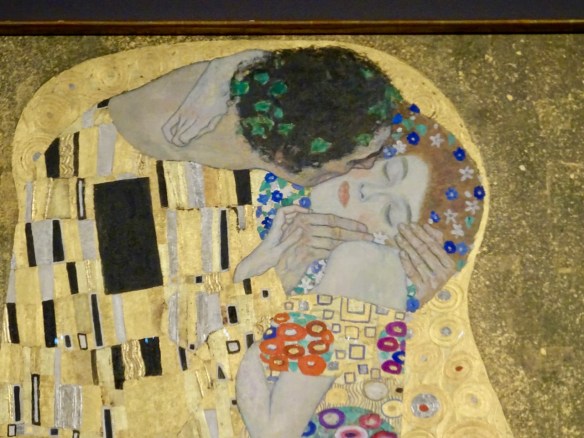
 I particularly wanted to see Gustav Klimt’s The Kiss, but was pleased to find his Judith painting here as well.
 The Kiss is one of Klimt’s most well known paintings. It is a large painting, 183 x183 cm.
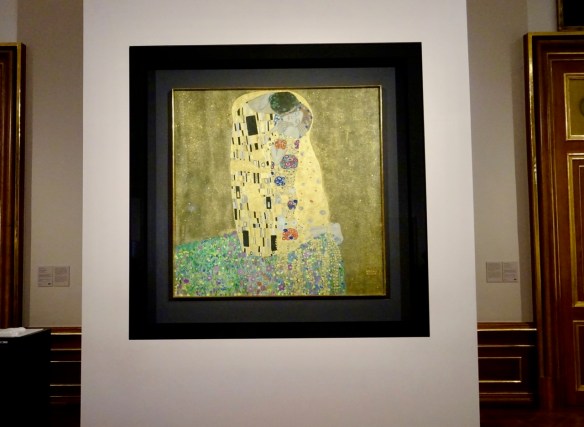 It is nice to be able to see the painting details up close.
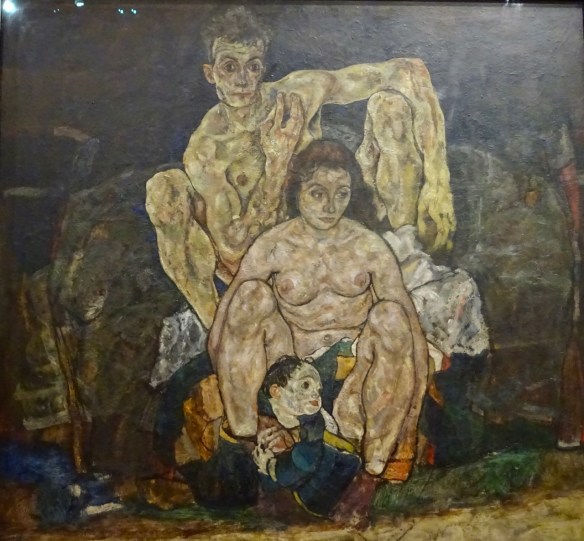
 I am also surprised by how many Egon Schiele paintings are on display. It is quite special to be able to see the original paintings of some of my favourite works by these two painters. I didn’t realize that these paintings were so large. Looking at reproductions in books can be deceiving. The Embrace and….
 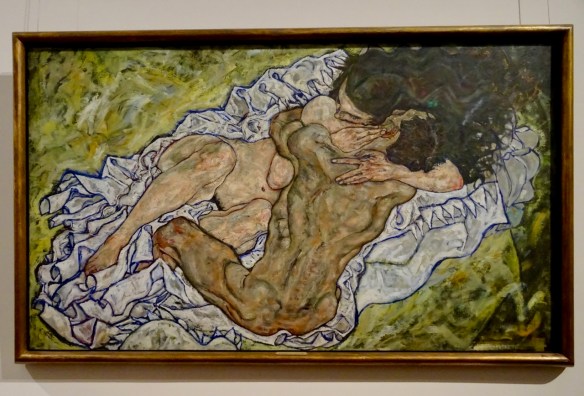 the Family are both much bigger than I imagined…
 as are these paintings.
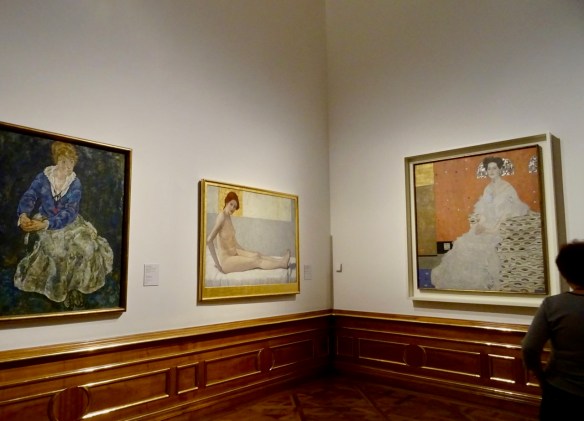 Schiele’s Self Portrait is the smallest painting, about 41 x 33 cm.
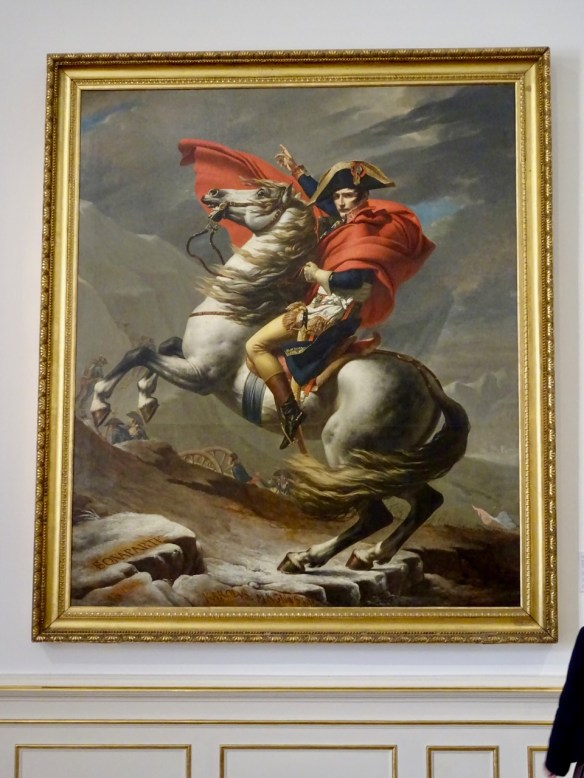
 I didn’t know Jacques-Louis David’s painting of Napoleon was here either. I am so glad I was able to visit this museum. This painting is enormous, 272 × 232 cm!
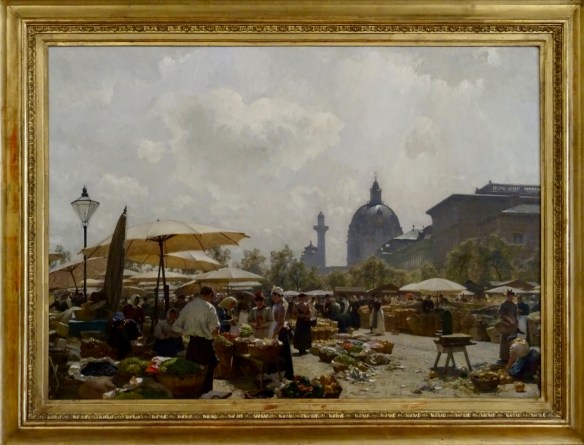
 This painting shows the Vienna Naschmarkt in 1894. It has changed a bit over the years!
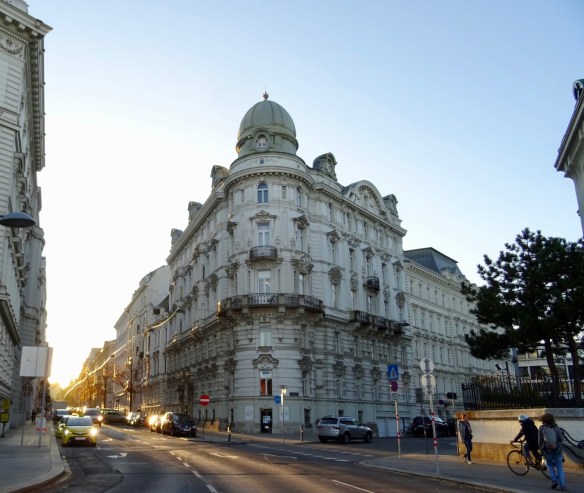
 We meet up in the gardens outside the Belvedere and then walk towards St. Charles Church.
 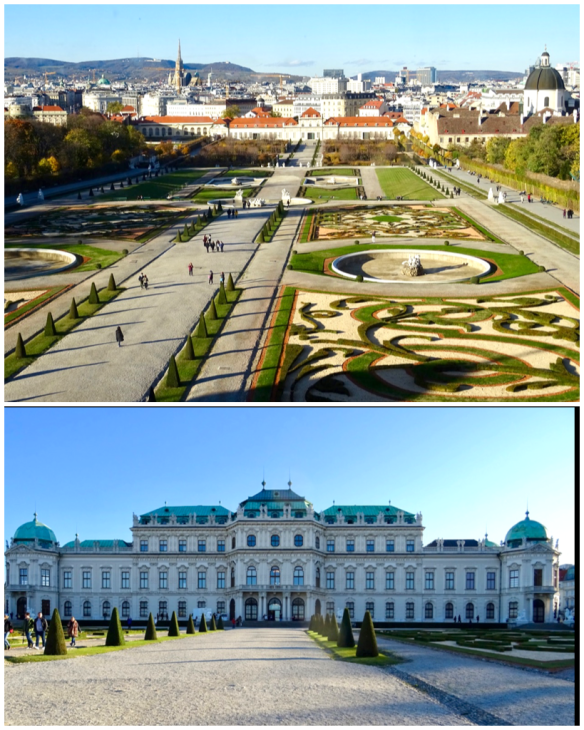 There are so many interesting buildings along the way.
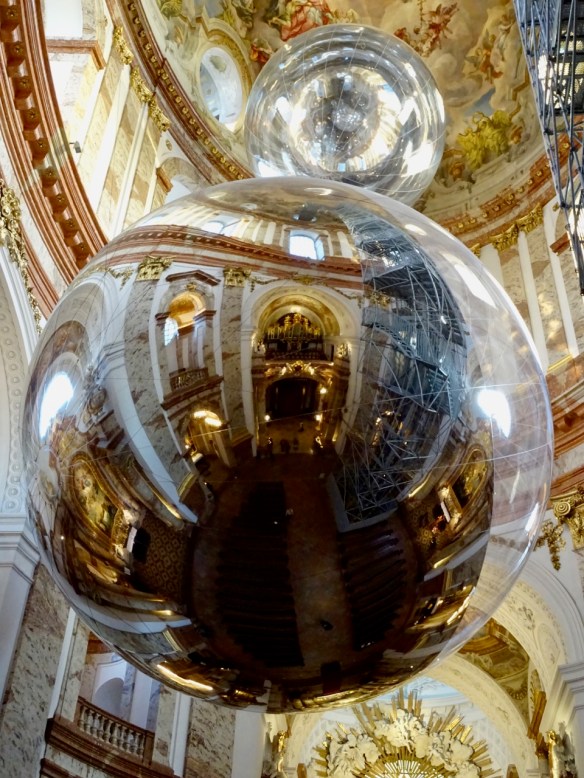
 We had a huge surprise when we entered St. Charles Church. Two enormous floating mirrored balls that reflected the church…
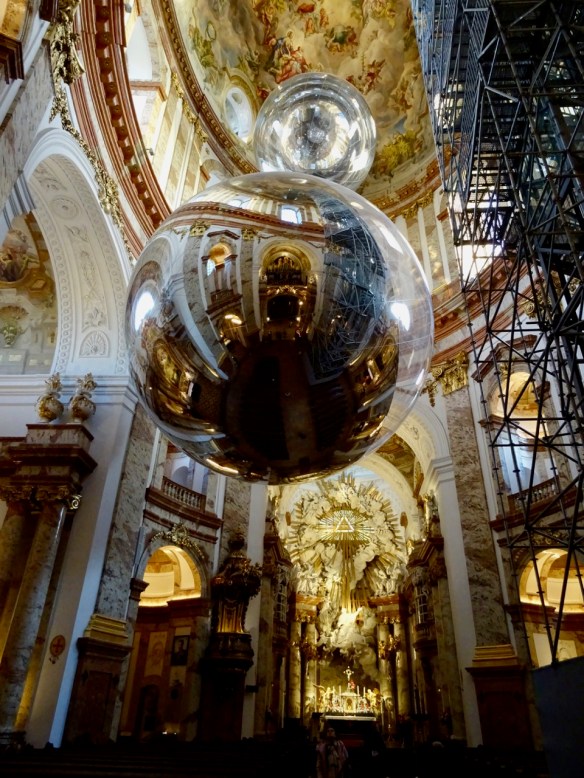 and us. We are almost in the centre of the reflection but we are very tiny. “Aerocene” is a contemporary art installation by Tomas Saraceno, an Argentinian artist who lives and works in Berlin. The floating reflective balls are 10 and 7 metres in diameter.
 Then we notice the scaffolding that goes high up into the dome, and that is where we are going to go! We thought the elevator ride we got a ticket for would be inside a bell tower. Nope! We ride to the top of this scaffolding and then climb a bit further, onto that platform you see leading into one of the round windows in the dome!
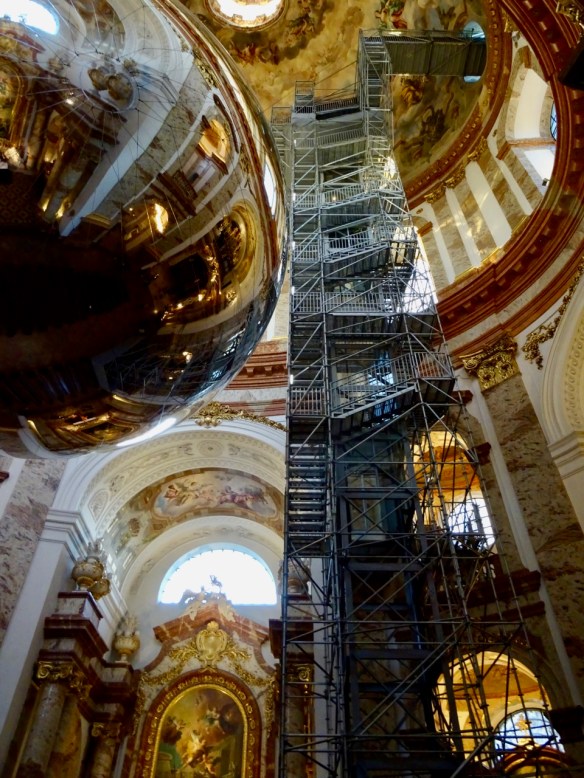 Looking down from the top of this ‘elevator’ we notice a workman adjusting lights high up in the dome, yet still far below us!
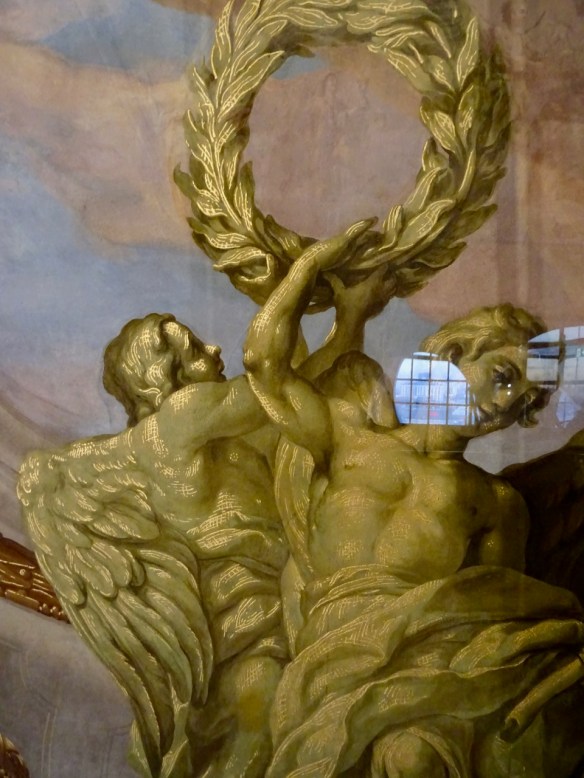
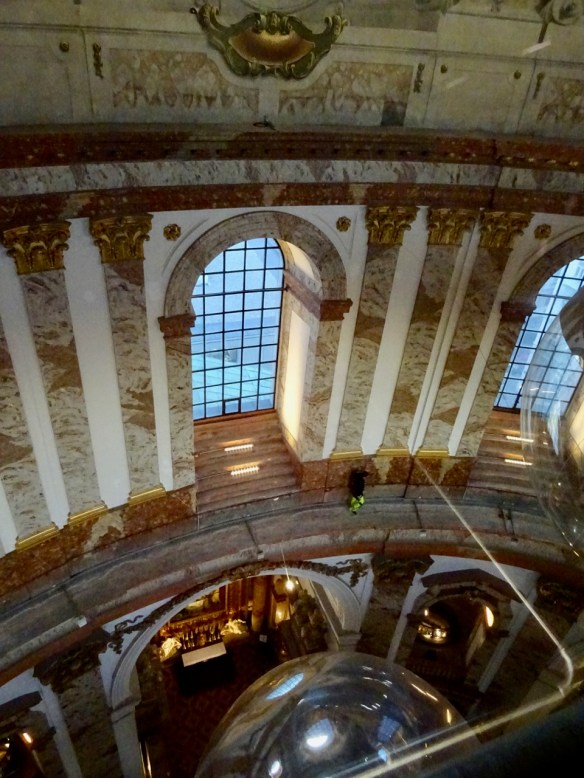 We have a great view of the dome paintings. It is interesting the way the gold highlights look up this close…
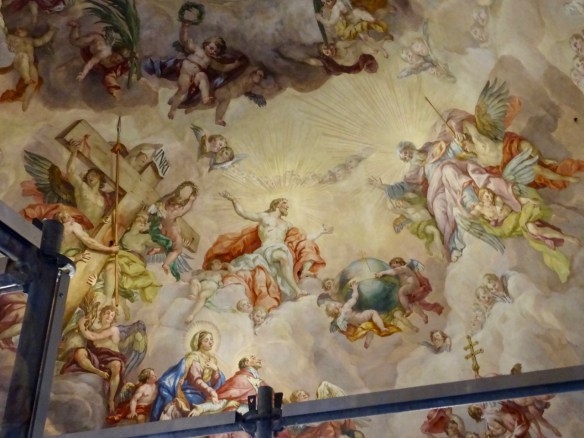
 and we have a great view of the other dome paintings. We are crazy high up!
 Bob walks back down to this viewing platform so I can get a photo. Notice how he is suspended…nothing below him!
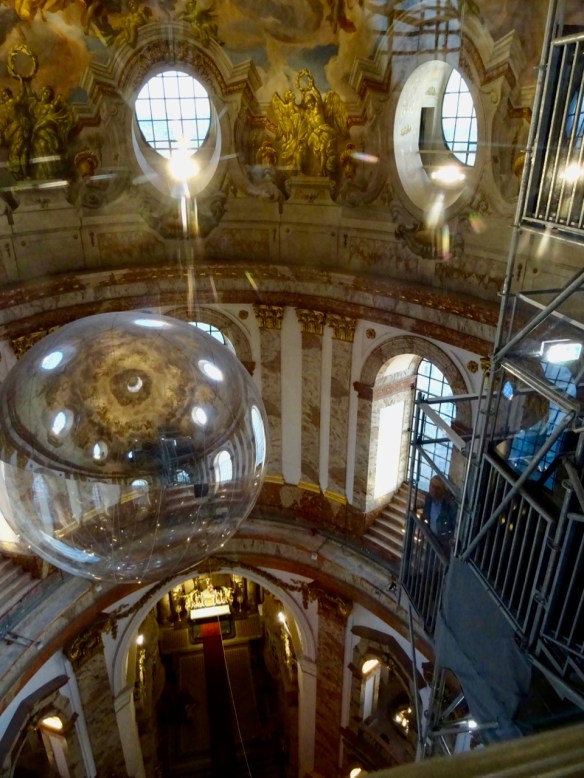 This photo shows the platform that Bob was standing on in the last photo.
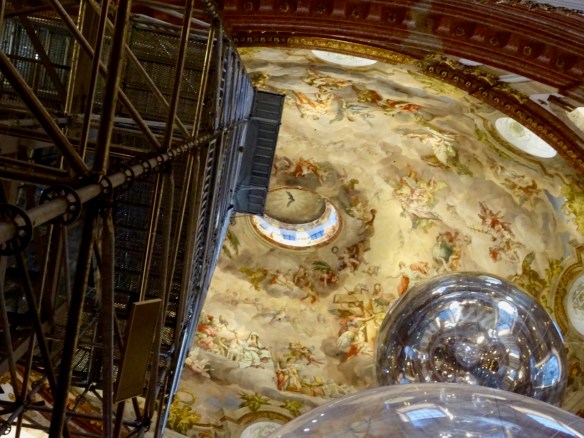 We spent quite a lot of time way up there in the dome, and it is getting dark when we get outside. If you look closely you can see some people standing in the round window on the dome. That is the window we were standing in! What an amazing experience. There was restoration work carried out in the dome and the elevator is being kept for a while. The fee to ride up into the dome is a way to make more money for further restorations.
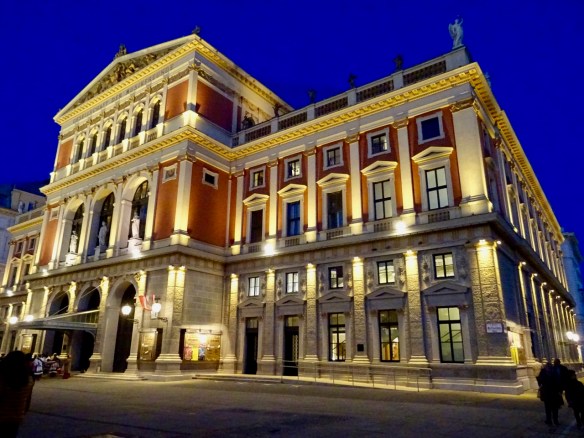
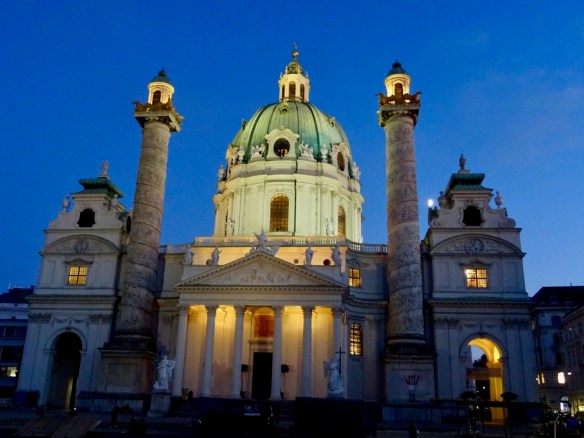 Walking back towards the metro we pass the Opera House…
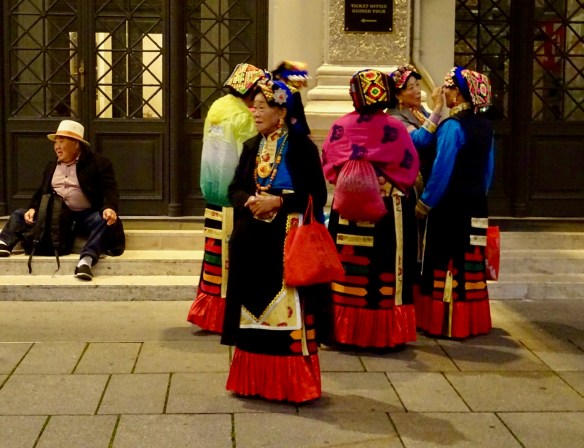
 and take photos of these performers from Tibet. They have a performance later tonight and were taking publicity photos outside the Opera House.
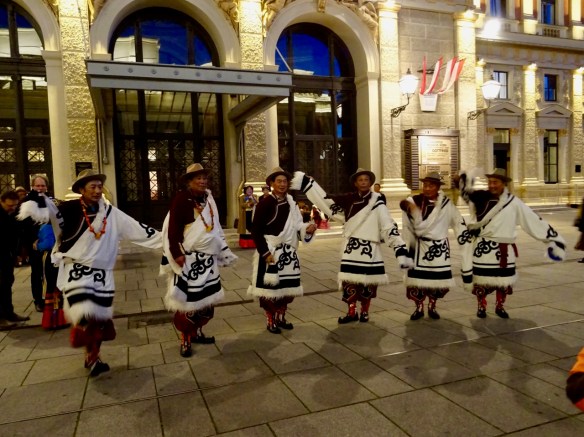 While the men posed, some of the women were busy applying their makeup.
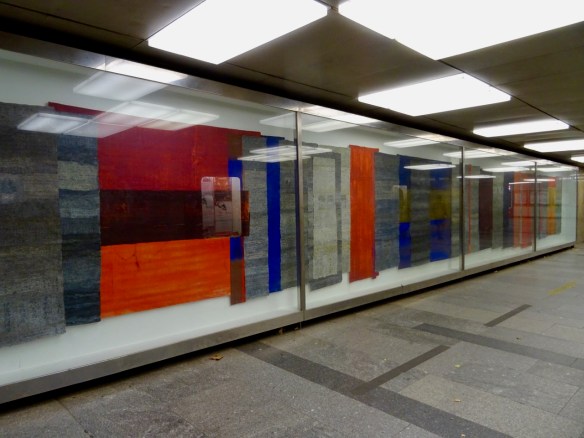
  This is a a huge paper art installation we pass in a walkway near the metro.
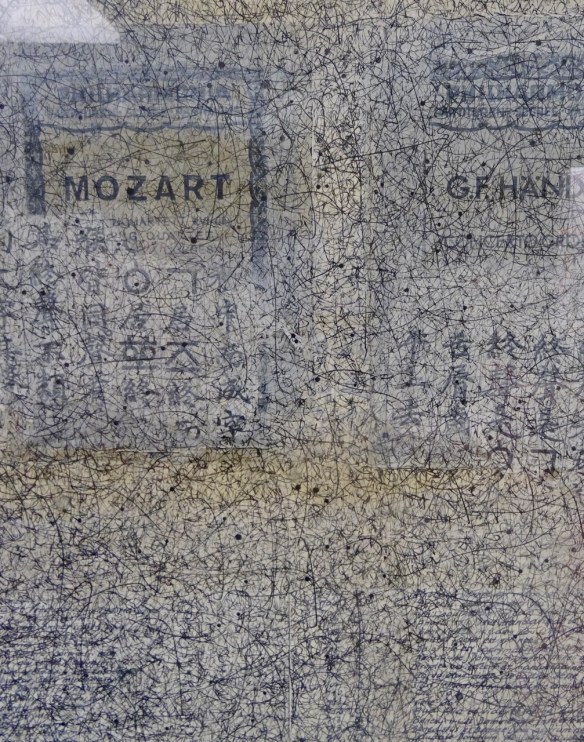
 A close-up shows lots and lots of writing, musical notations and random marks.
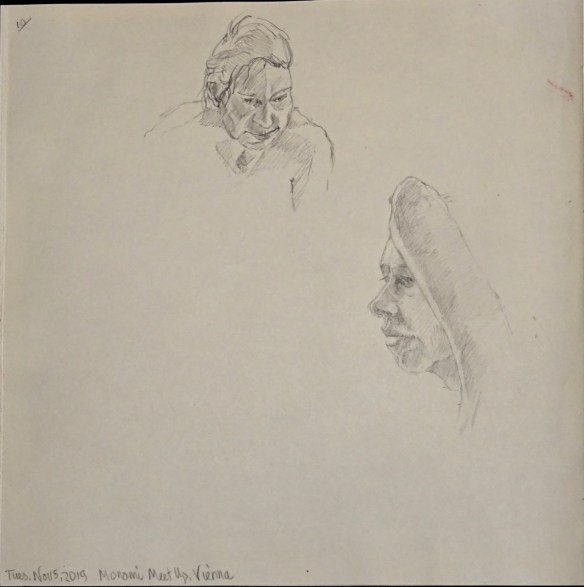
 We get home, have dinner, then I head off to a drop-in drawing session with a Meetup group at a pub called Monami.
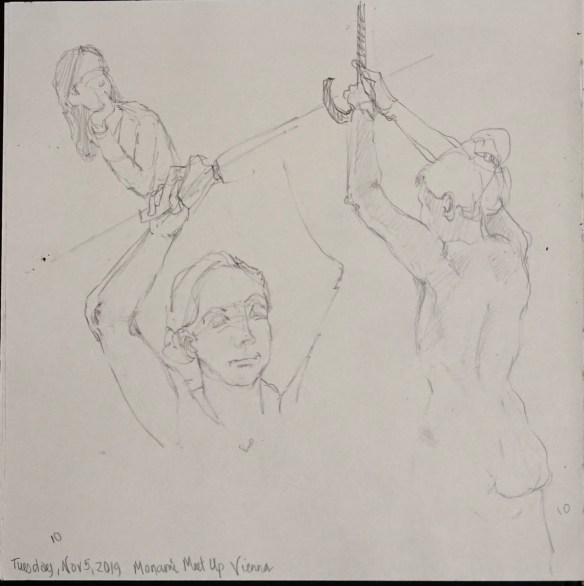 I had coloured some of the pages in my sketchbook at home before the session. Interesting to draw on but they don’t photograph very well.
 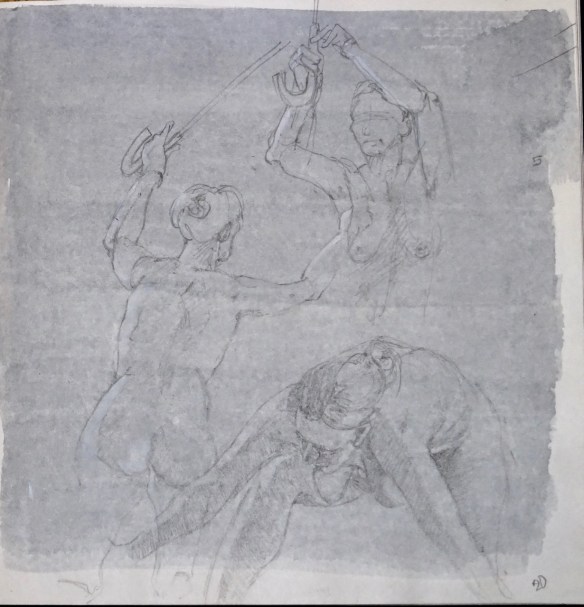 We were pretty much rubbing elbows as we drew and my views weren’t always great but it was lots of fun.
 I finished the session with a 20 minute leg study. I felt quite comfortable going out in the evening by myself. The metro is easy to navigate and there were lots of people about.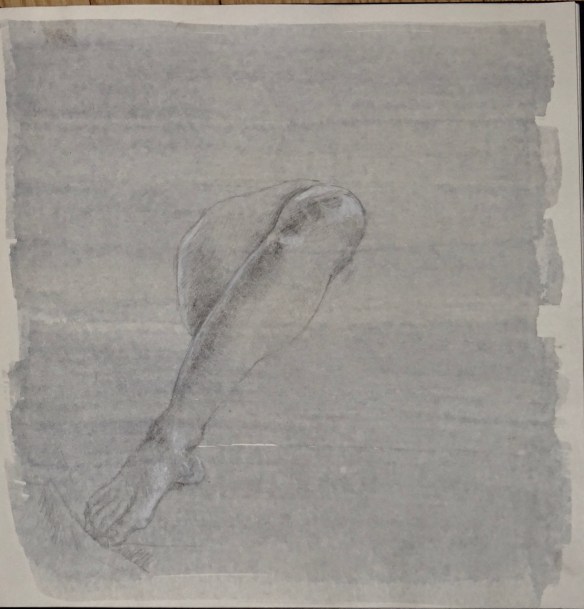
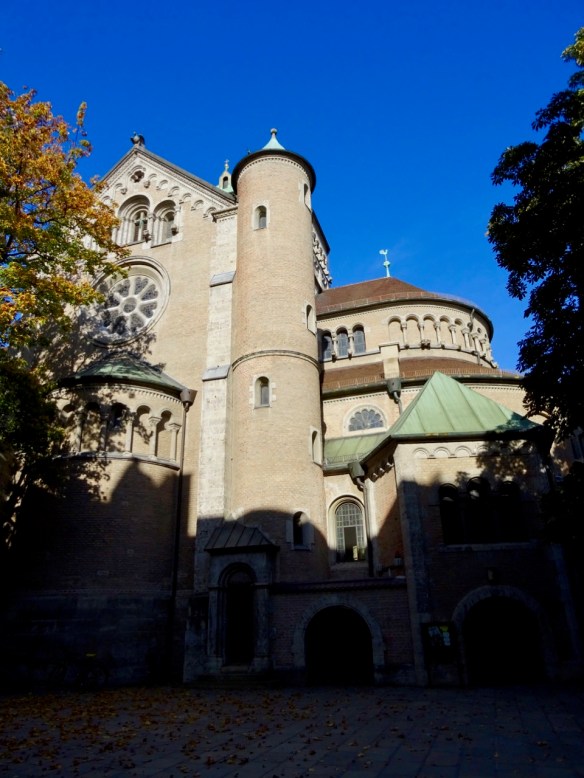 It is only one euro admission to the Bavarian National Museum on Sundays. The first rooms we enter have incredibly beautiful wooden sculptures, many of which still have their original painted colouring. The sculpture of Christ is from 1200, the Apostles are from 1505, and the woman with children is from1300. All the pieces are in amazing condition…it is hard to believe that they can be this old.
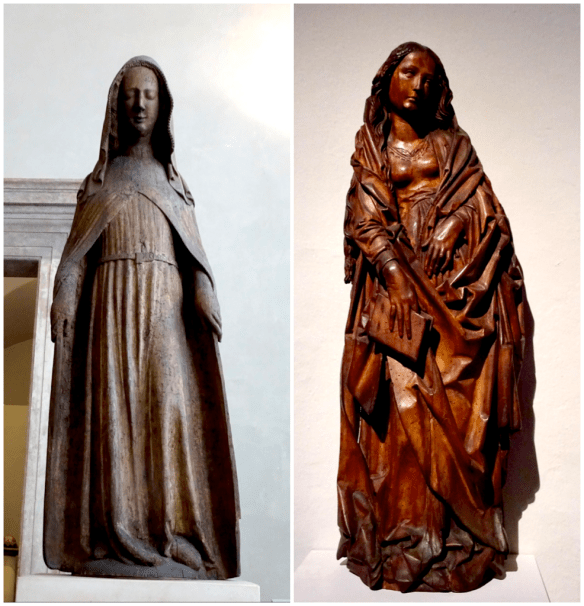
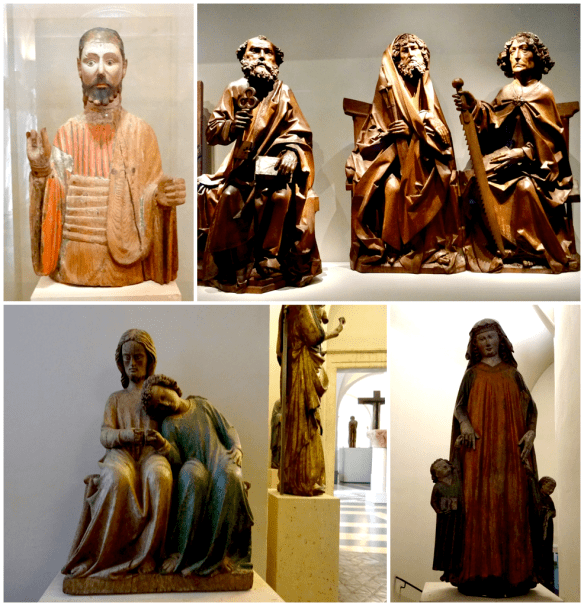 These were two of my favourite pieces. The Mary on the left is from1300 and is larger than life size, while the second Virgin Mary is from 1500. Notice how her finger marks her place in the book she was reading when she is surprised by the angel. She is much smaller, probably about 30 ” tall. They were both exquisite.
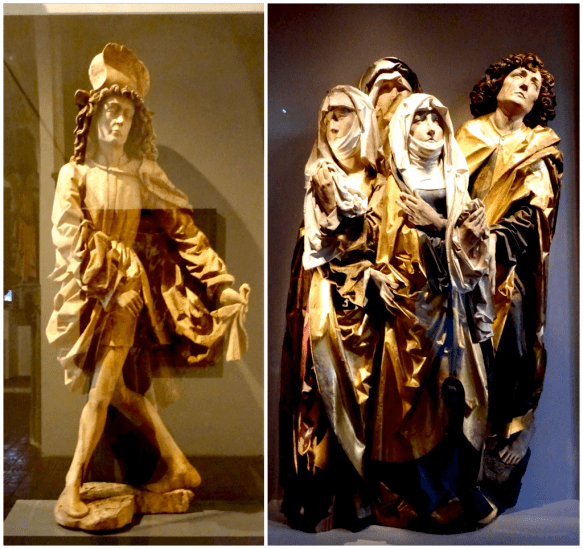
 This dancing fellow from 1490, is exceptionally animated for such an early carving. The detail of the hands and drapery in the group of figures was so beautifully done. I have a heck of a time drawing drapery, and I can’t imagine how anyone can carve it so well.
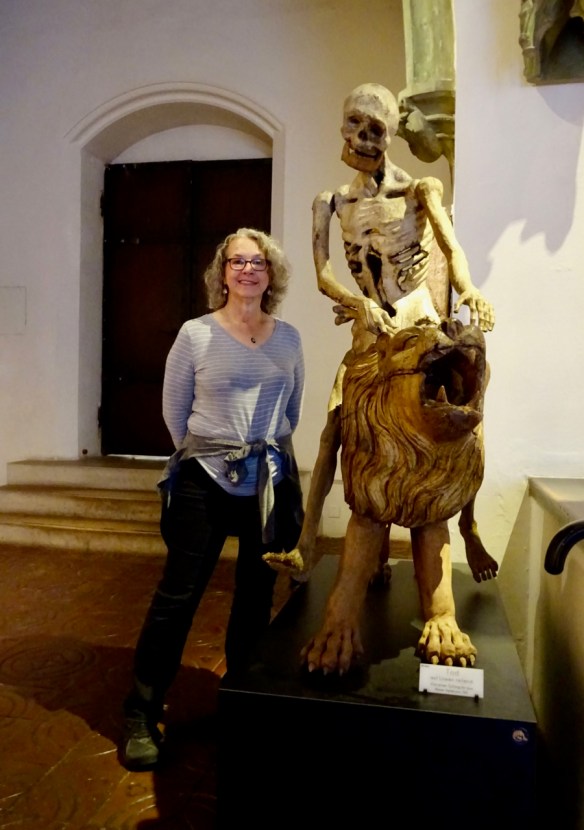
 We don’t know what this skeleton astride the lion is about but it was interesting. Unfortunately most of the signage is only in German,
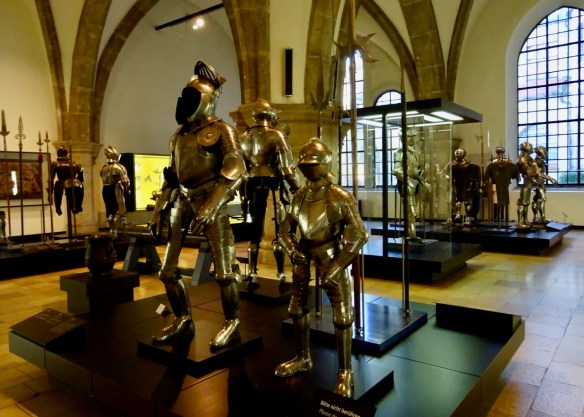
  There is a room full of armour…
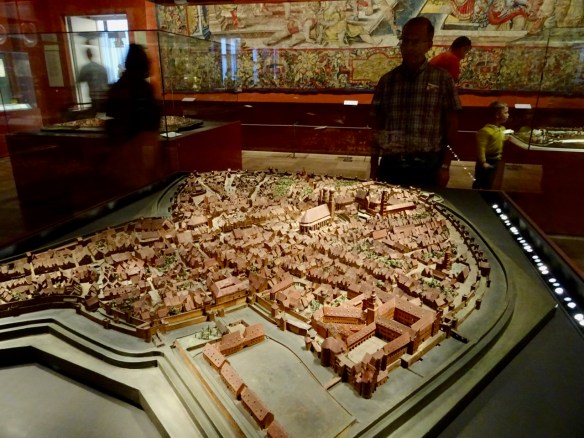
 and another room with models of many towns. This is Munich in 1580 and we are able to recognize some of the buildings that are still present in modern day Munich!
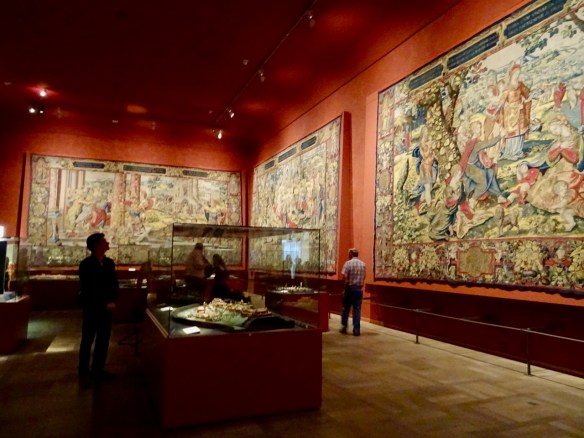
 There are enormous detailed tapestries on the wall. We are amazed at the excellent condition of these tapestries.
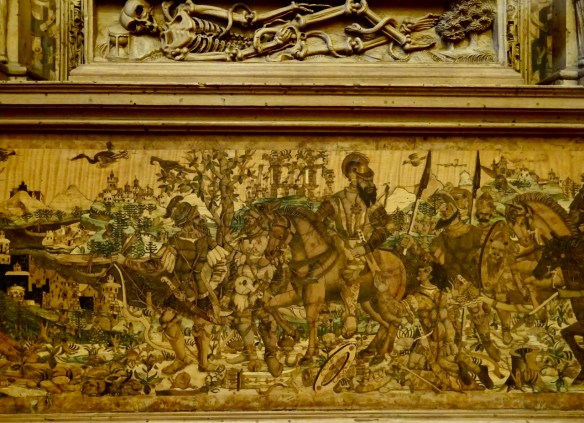
 This small panel from the mid 1500’s is only about 6″ tall and is made with intricately inlaid wood. It is incredibly detailed.
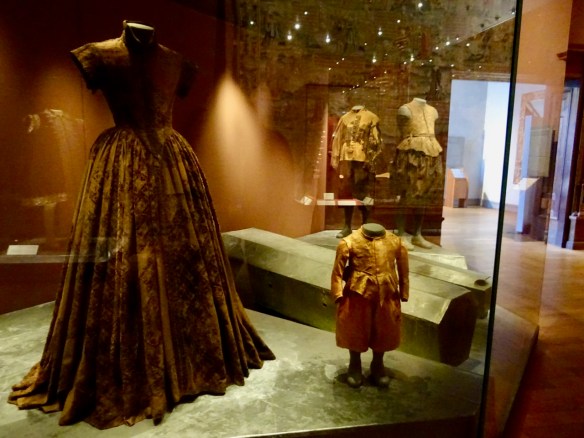
 The child’s outfit is from 1547 and the dress from 1630. I wonder how these have survived all these years. Their tiny hand sewn stitches are visible and there is some wear and tear but they are really very well preserved.
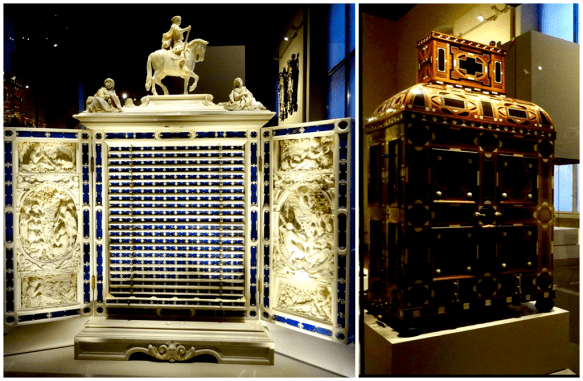
 The next room is filled with amazing cabinets. I love boxes and cabinets with lots of drawers, and I have never seen anything like these. The coin cabinet of Maximillian I was made for his collection of gold coins. Each of the rows is a shallow drawer with fitted spaces for the coins. It is made of ivory, lapis lazuli, silver and enamel, so of course it must have its own storage case! The case on the right hinges open in the middle so the cabinet can be inserted for safe keeping.
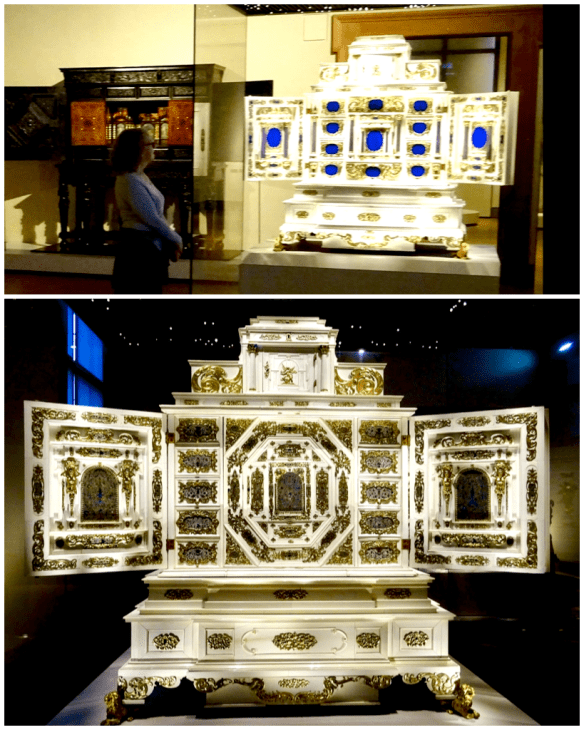
 This cabinet was built for the Electress Maria Ana. The ivory cabinet is gorgeous with lapis lazuli panels, but then I walk around to the other side and it is even more beautiful, with silver and enamelling. This cabinet has 176 drawers and secret compartments for storing precious objects! Wow!
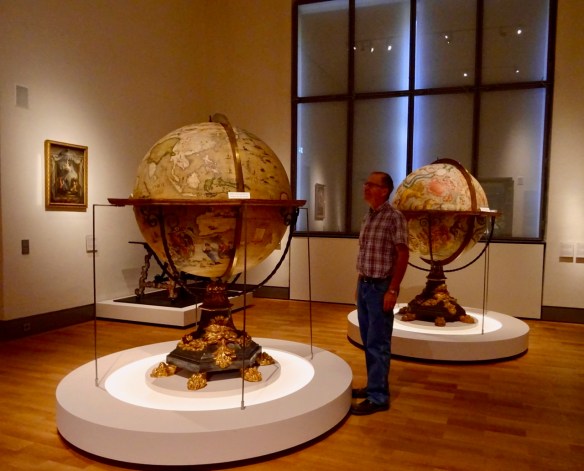
 These huge globes were interesting..
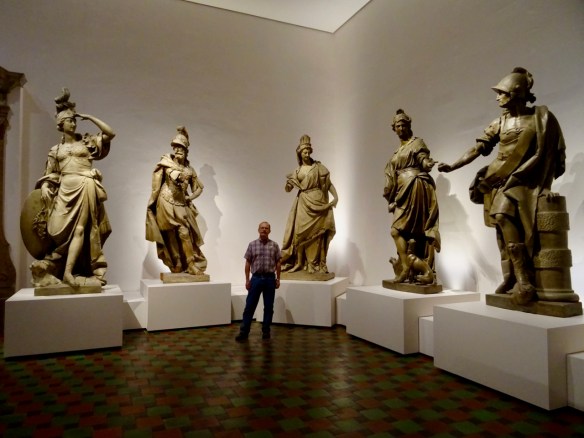
 and then we walked into the next room with these monumental wooden figures!
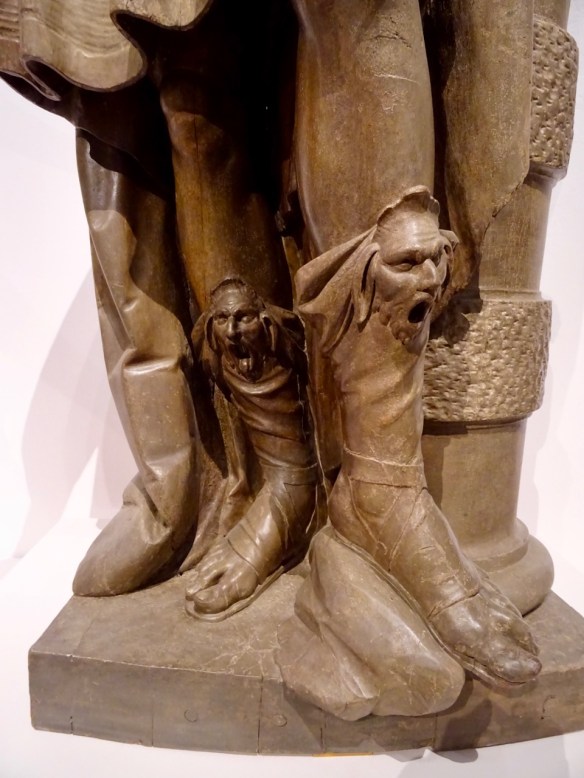
 Don’t you love the faces on these sandals?
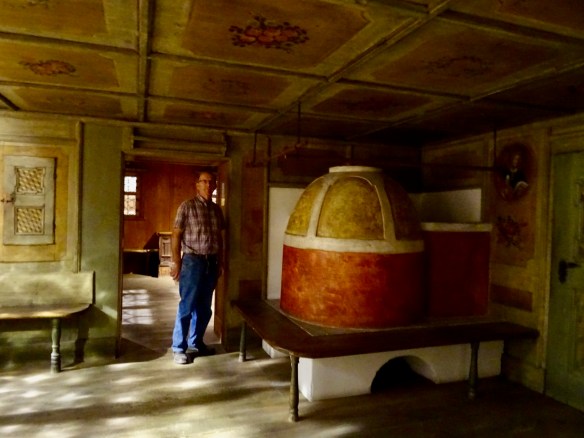
 Downstairs there are several rooms that appear to be taverns. We aren’t sure, because all the signage here is German. I think the domed object in the corner is a stove to heat the room.
 Back upstairs, there is gallery of about 1,000 ivory objects and I wonder how many elephants died so these could be created? This ivory carving was one of fifty or so. The background sky is so thin that the light shines through it.
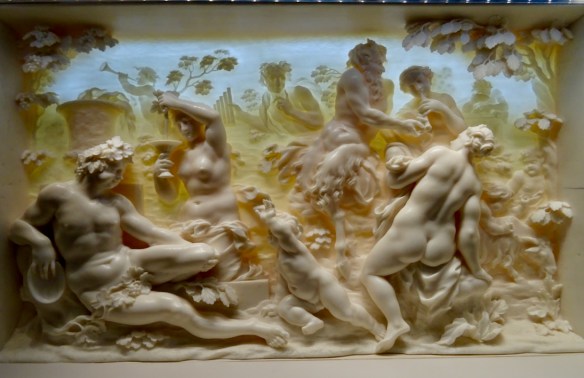 The Rape of Proserpina on the left is carved in ivory, and the porcelain centrepiece on the right depicts Neptune being drawn by seahorse and tritons. They were both completed in the mid 1700’s.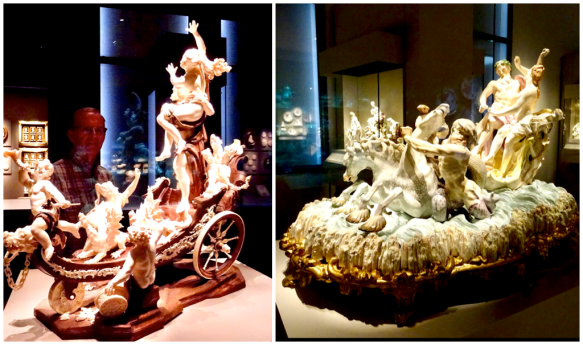
 I thought this tapestry was particularly colourful and beautiful. Notice the details in the close up of the pelican.
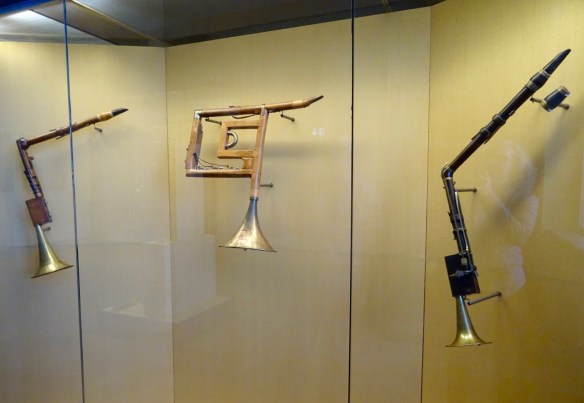
 Some of the musical instruments on display are rather strange. Bob is wondering how to play the double layer of 19 strings on this one…
  and check out the crazy wind instruments.
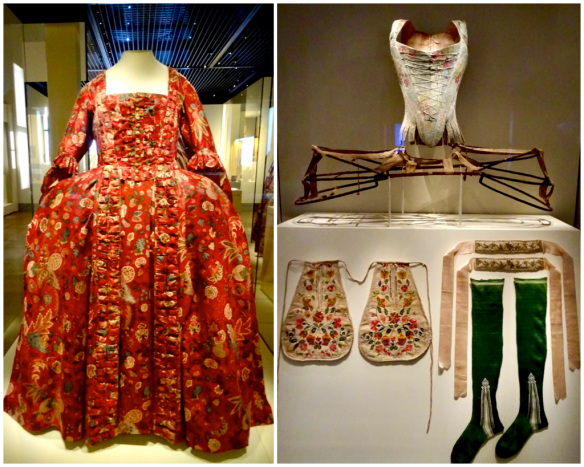
 There is a wonderful display of clothing from the mid 18th century. Even the pet monkey had stylish togs.
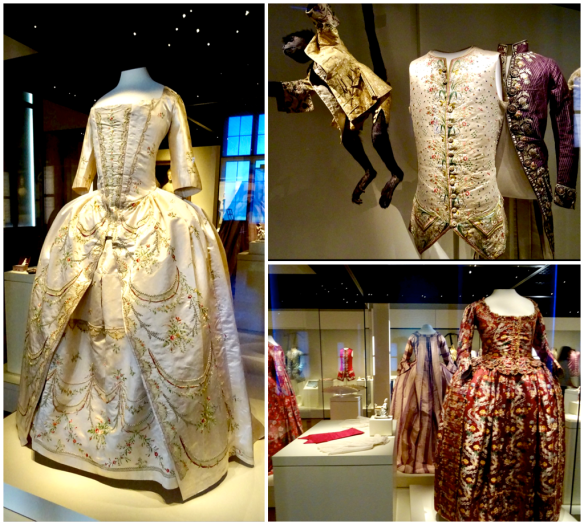 But take a look at the undergarments women wore!
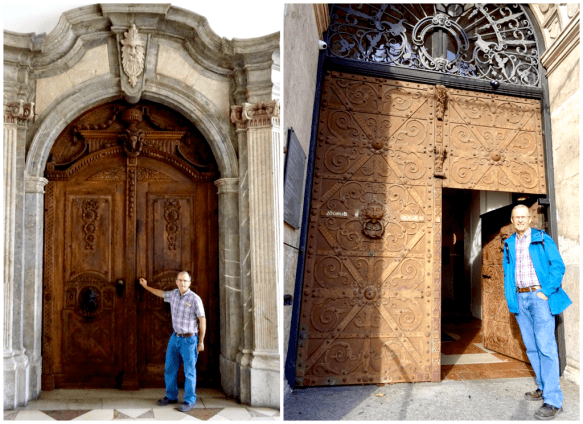
  I love doors and this museum has many. The front door opens automatically when we approach. Seems weird for such an ancient door.
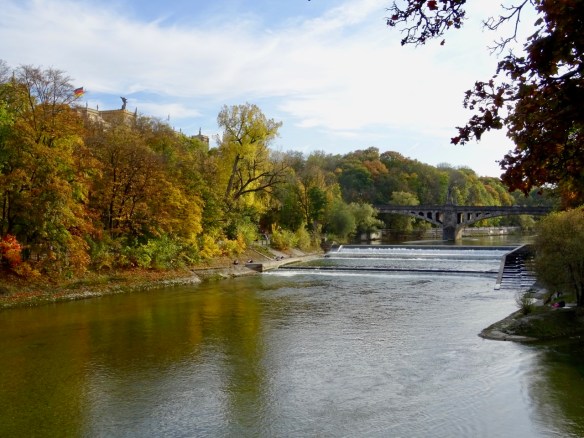
 We walk along the river on our way to Maximillianstrasse, where all the fancy expensive shops are located.
 On the way, a firetruck pulls up and the firemen check behind bushes and in garbage cans, then drive away. We wonder what they are looking for.
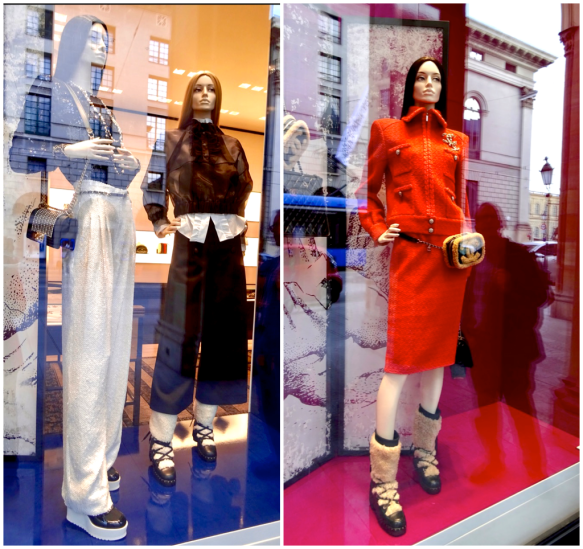
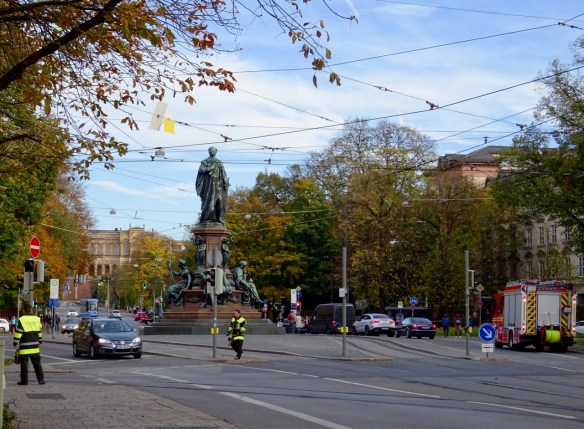 We window shop where the wealthy people shop! The two outfits on the left are only 42,400.00 euros! The red outfit is only 26,300 euros! At today’s exchange rate that is over $100,
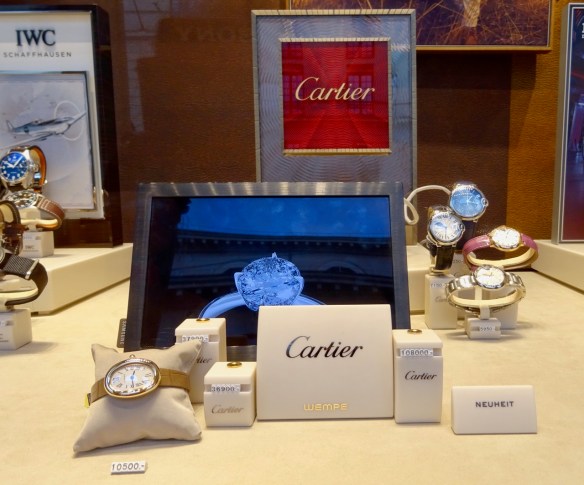
 The stores are closed so they only leave the ‘cheaper’ watches in the windows. Notice the empty stands for the more expensive ones.
 We pass more very loud, very energetic Chilean protesters on our way home.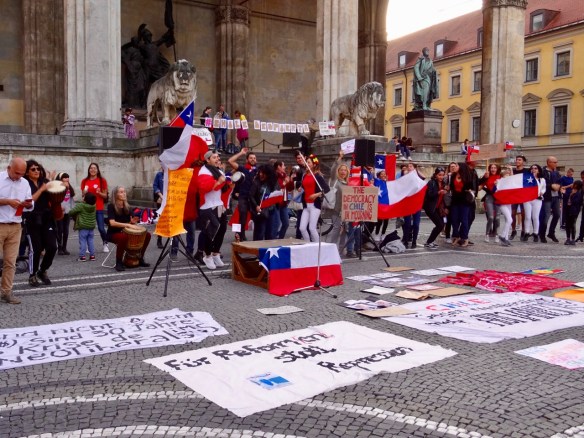
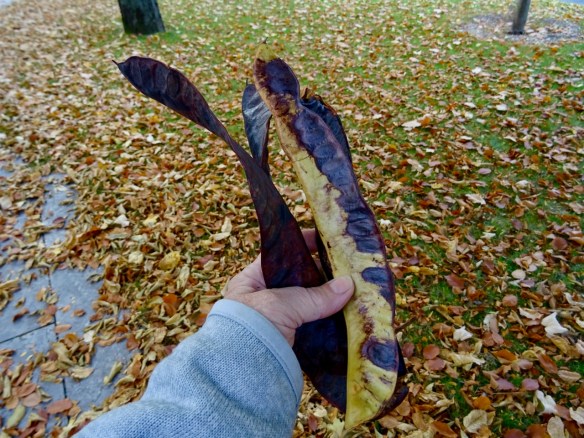
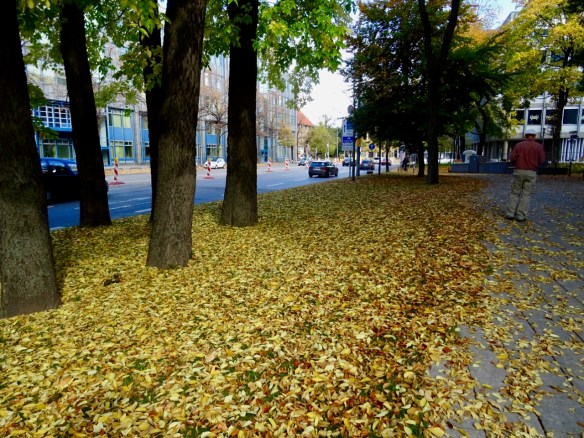 No idea what kind of tree has these huge seed pods. Maybe someone can tell me?
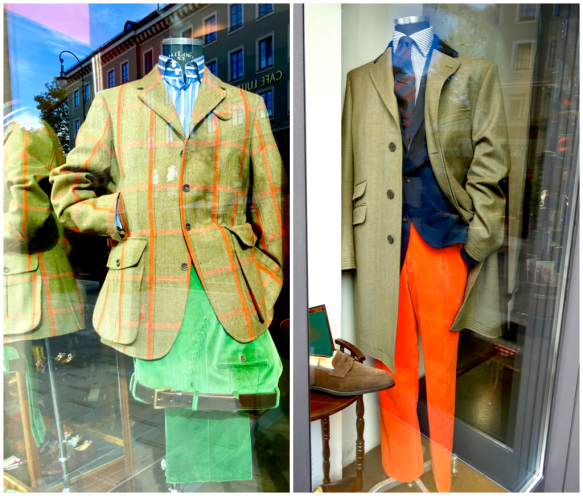
 We go past a street of shops with rather expensive merchandise, but I really wonder about these colour combinations!
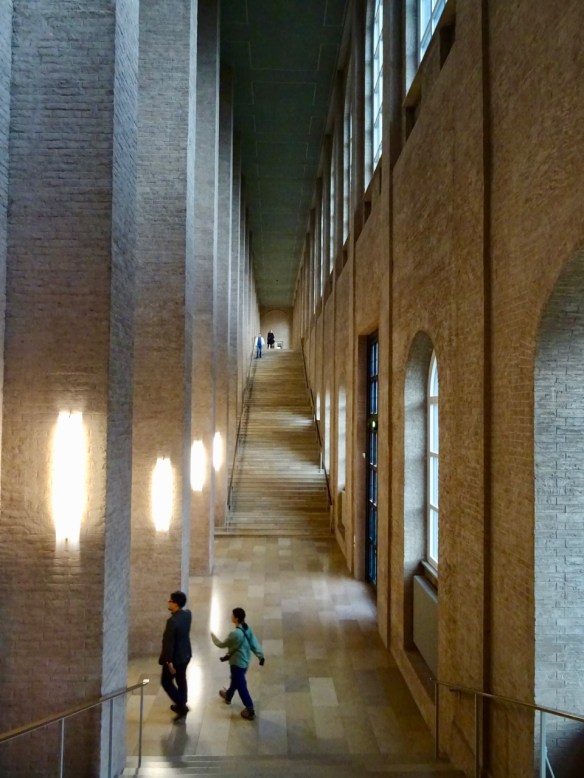
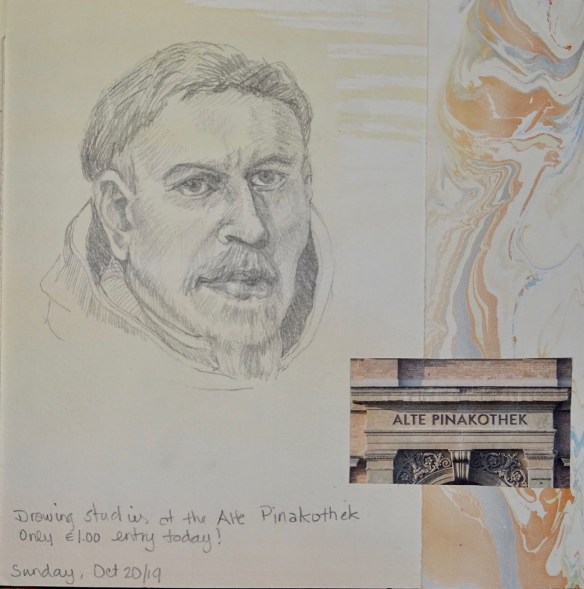
 The Alte Museum admission is only 1euro on Sundays! What a bargain. This is one half of the double staircase that leads to the exhibition rooms.
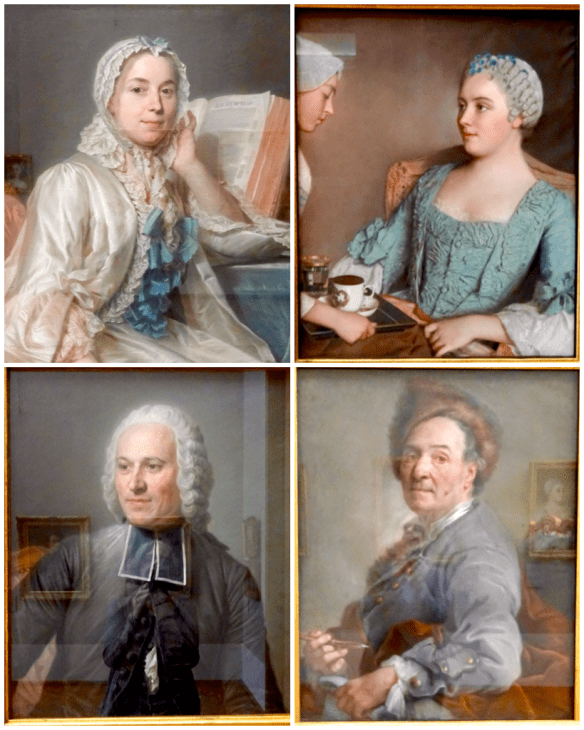
  We walk through the first door and I see these beautiful pastel paintings by Maurice Quentin La Tour, Jean-Étienne, Joseph Vivien and Rosalba Carriera! I need to find some books about these artists and study their paintings. Unfortunately there were lots of reflections in the glass covering these works. You can even see me in two of them!
 One of the 46 rooms we visited today had lots of paintings of Venice, completed in the early 1700’s. I marvelled that Venice looked just the same then as it did when we visited a couple years ago. The only difference was the number of small boats in the canals and the clothing of the people in the paintings! There were another 13 rooms that were closed due to the installation of new exhibits.
 This room was full of paintings by Rembrandt and Franz Hals…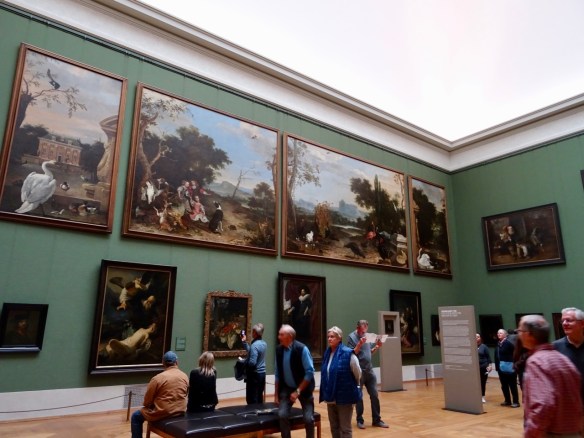
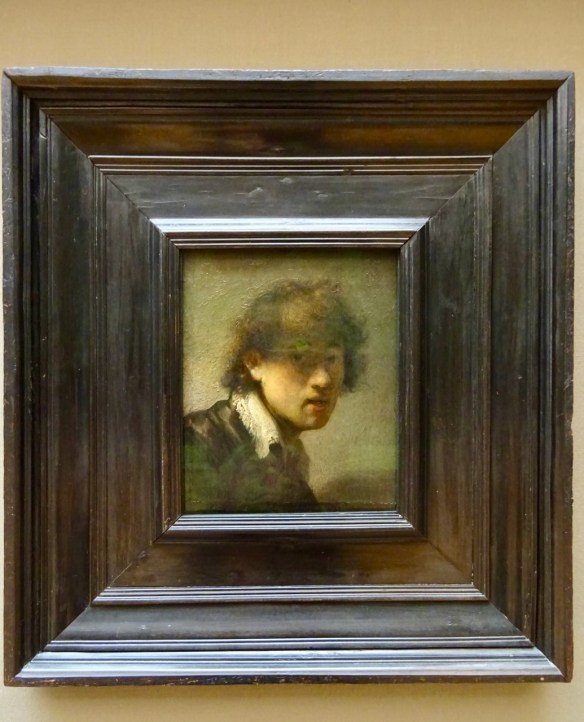 I lost count of the number of rooms filled with work by Peter Paul Rubens…
 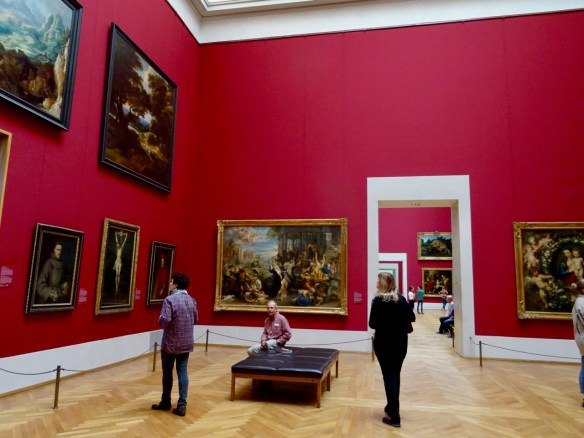 which Included a room with the huge painting of The Great Last Judgement.
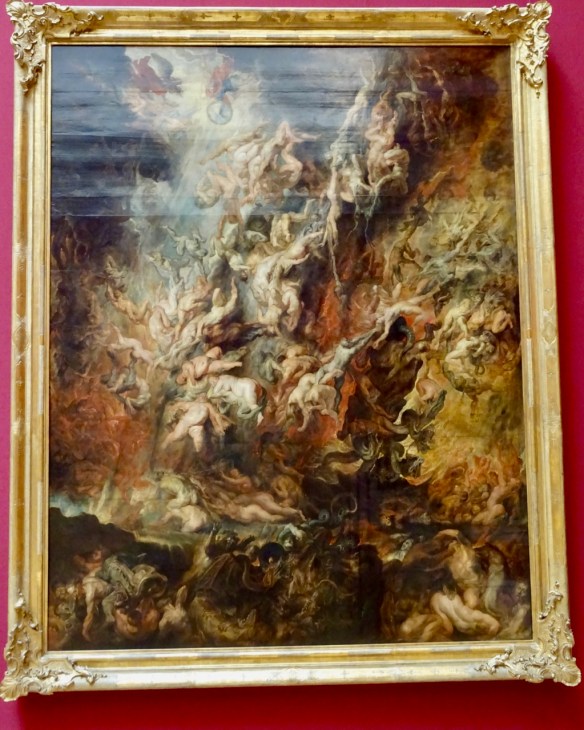
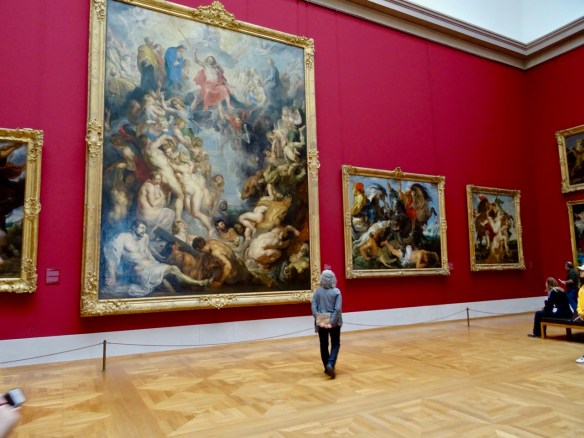 and another with The Fall of the Damned, which is also very large. Rubens was a very productive artist!
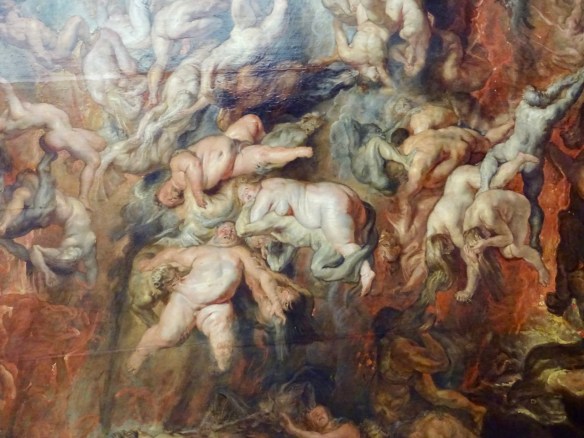
 Here is a close up of some of the damned souls.
 Looking through the doorway, you can see the many more rooms we have yet to explore. There are ten large galleries in a row along the length of the museum, with many smaller galleries off of these.
 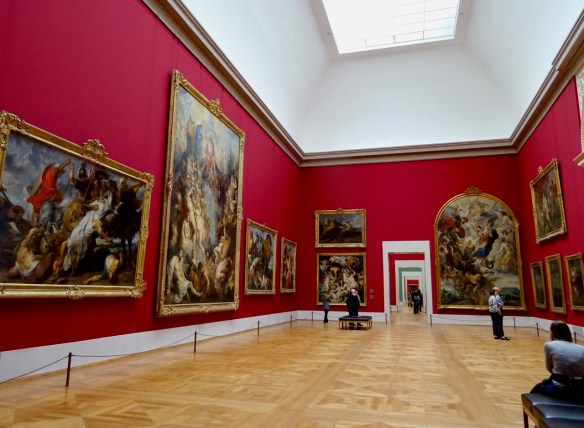 I liked how I could stand in front of the study for this Rubens painting and then look into the adjoining gallery and see the finished painting. There was a gallery full of studies, which I particularly liked. It is possible to see the way Rubens thought about and worked out his compositions.
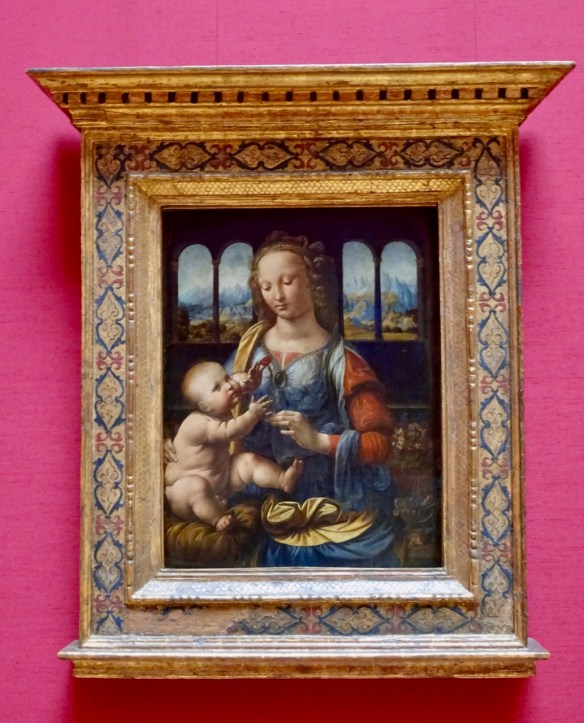
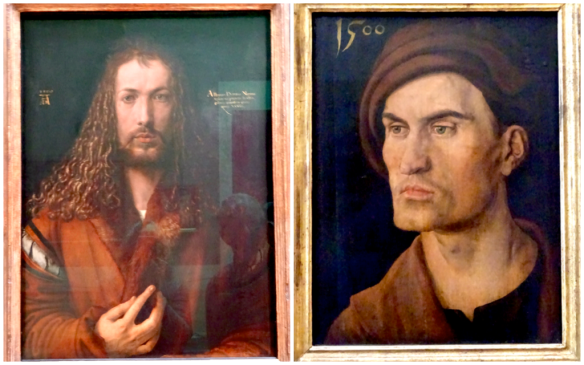 This is a painting done by Leonardo da Vinci when he was only 23. I don’t remember seeing it before (in books).
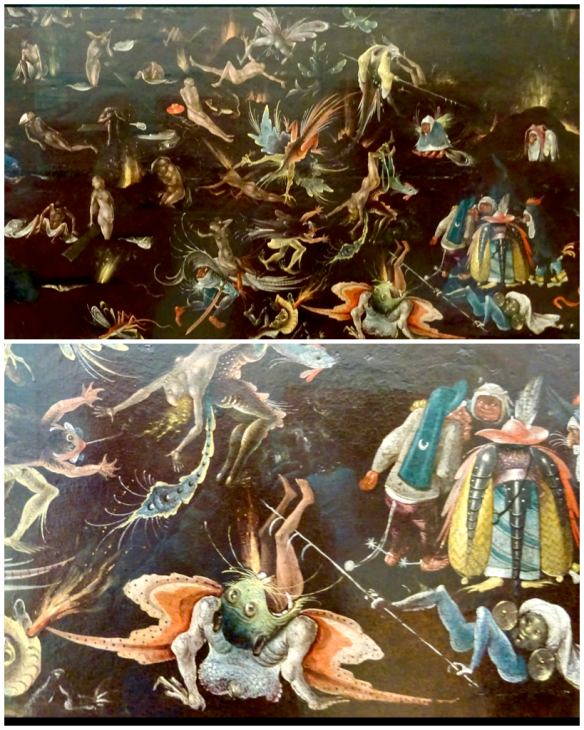
 And then there is Hieronymus Bosch with his very strange creatures, in this fragment of the Last Judgement. His works always has lots of details to examine closely.
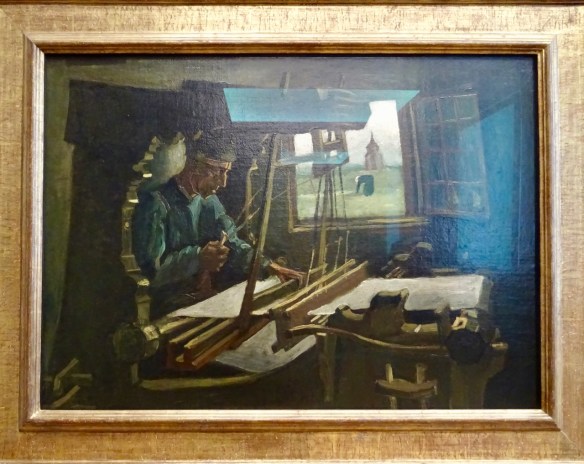
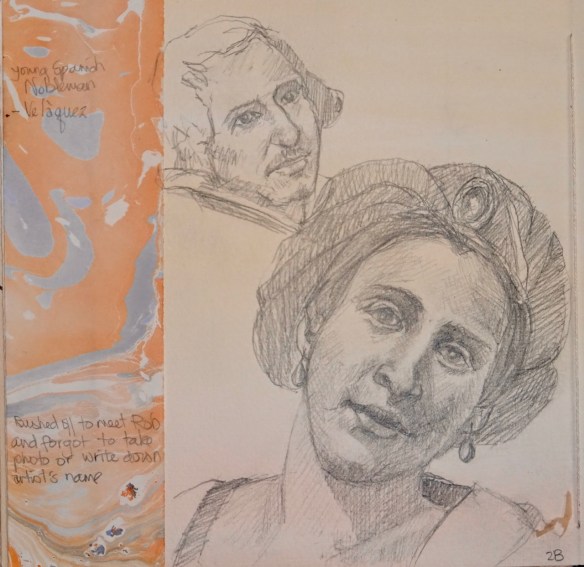
 We saw paintings by so many other artists I am familiar with: Holbein, Raffael, Botticelli, Titian, Van Dyk, and Velázquez, as well as many new artists that I liked as well.
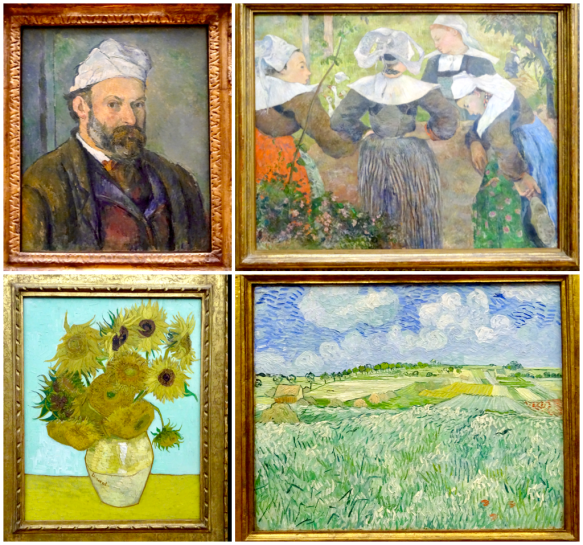
 and works by Cézanne, Gauguin, and several more Van Gogh’s.
 A large painting by Ferdinand Hodler, TheTired of Life, really drew my attention. I will have to research this artist.
 There was a Klimt. I am looking forward to visiting the Klimt Museum when we return to Vienna.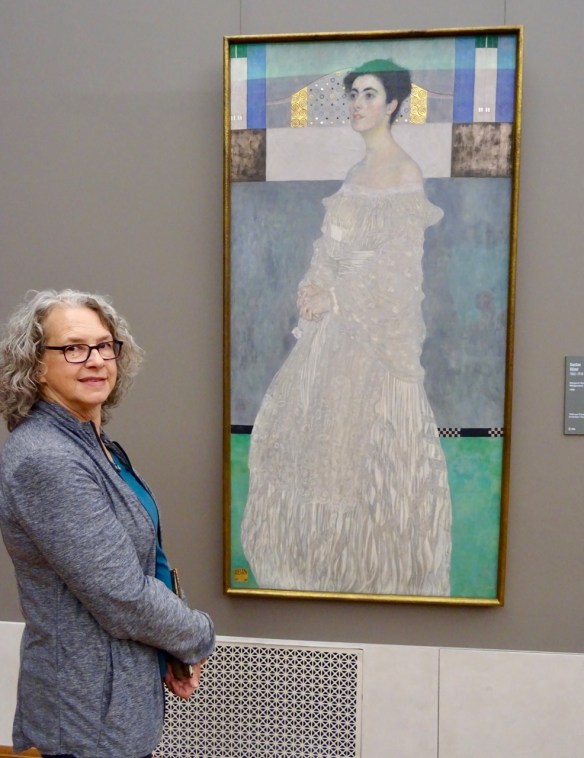
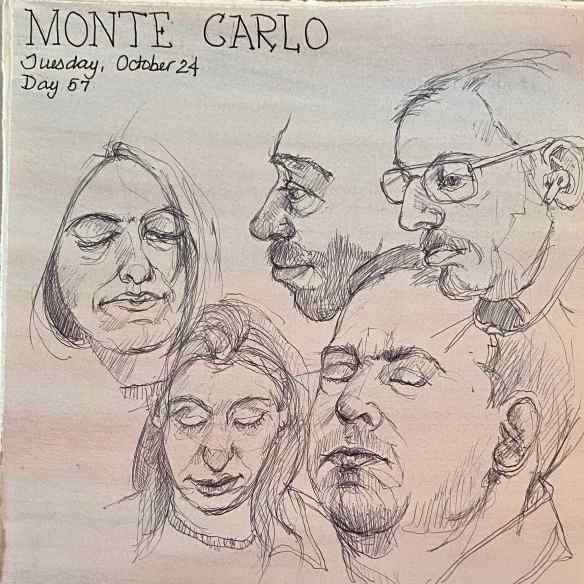
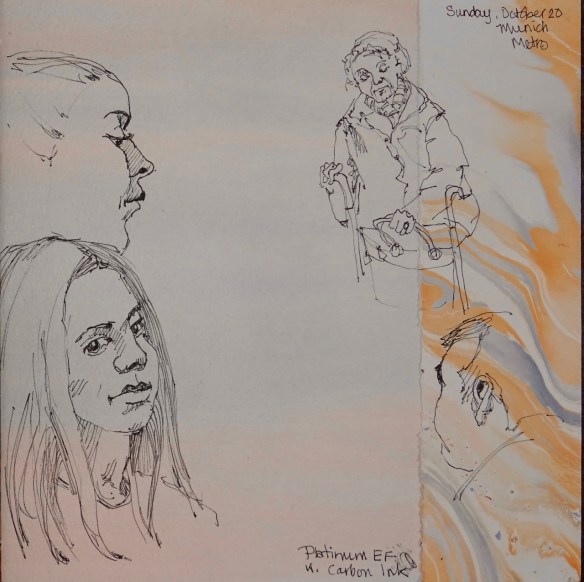
 Here are my metro drawing from today…
 and yesterdays drawings in the gardens we visited, which I forgot to post.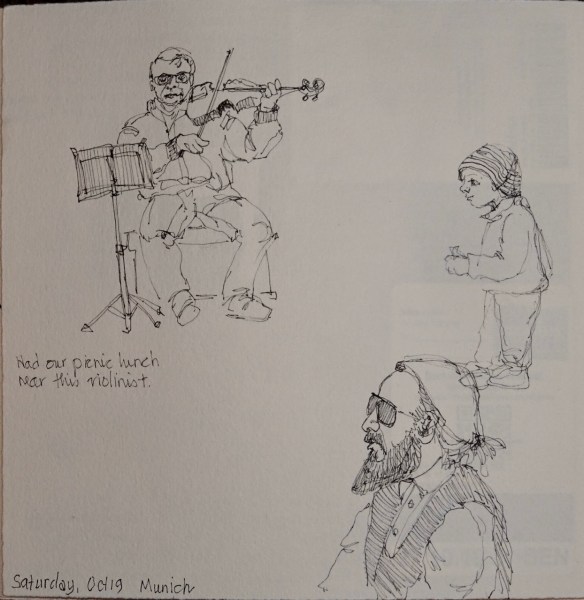
 trudymason.com